True Origin™ premium dog food & snacks contain only real ingredients with no fillers.
True Origin™ premium dog food & snacks contain only real ingredients with no fillers.
No Corn, Wheat or Soy
No Artificial Preservatives No Artificial Flavors
AVAILABLE EXCLUSIVELY AT
Discover more food, snacks & toys from hundreds of national
Discover more food, snacks & toys from hundreds of national brands in our pet aisle! No Corn, Wheat or Soy No Artificial Preservatives No Artificial Flavors
AVAILABLE EXCLUSIVELY AT pet medications
Discover more food, snacks & toys from hundreds of national AVAILABLE EXCLUSIVELY pet medications
Looking for something we don’t carry in-store? Browse meds, specialty food & more for your furry family members.
Looking for something we don’t carry in-store? Browse meds, specialty food & more for your furry family members.
• Earn perks on your purchases that add up to FREE gas & groceries
• Earn perks on your purchases that add up to FREE gas & groceries
Looking
•
•
• Get FREE shipping to your home on purchases of $49+
Published by All Life Media, LLC. Pittsburgh PetConnections was created in 2012. Our mission is to publish a high quality, informative publication focused on the HumanAnimal Bond. We support local businesses and also assist local non-profit businesses for pets and people, to give back to our great Pittsburgh communities.
FROM THE PUBLISHER
Welcome to our Winter-Holiday Edition 2023 Volume 11 Issue 2
NEWS & EVENTS:
We are excited this year to be launching our new website and Instagram page, @petconnectionsmagazine. Soon you will be able to upload your events yourself on our website, and also directory listings. Please email events to pghpetconnections@gmail.com to have them published.
From The Publisher
Our directory listings for your business start at $99 per year! Contact our sales team or email us for more information on directories and advertising.
Thank you to all who participated in DogtoberFEST 2023, including our attendees, vendors and of course our sponsors, Giant Eagle Waterfront, Brutus Bone Broth, Asgard Raw Pet Food, Certified Carpet Distributors, Denise Marasco Howard Hanna, T-Mobile, Kenny Ross Subaru, UPMC, and Wags n’ Wine! The event was a huge success, and the weather was a lot better this year! See our event section for the winners of this year’s DogtoberFEST!
News
Welcome to our Winter 2019 issue!
Winter events are here!
Stay tuned on our website, www.petconnections.pet for the final schedule of events. Check out our event page for upcoming events!
THIS ISSUE:
We welcome Ease Animal Massage, Buzzy Photography, and O2 Derm Pet Topical Gel to our supporting advertisers!
Introducing our new sister publications coming out in March, Integrative Healing magazine for people (and, of course, a pet section!)
We are also pleased to announce some fun new things that we have in the works for PetConnections!
April writes about the various roles service dogs play for their humans. Rachel McMichael, certified trainer, submitted a wonderful article on how to manage your dog’s stress during the holidays. Deanna Taylor, CVT, of Blue Pearl writes about what happens with your pet during radiographic procedures.
PITTSBURGH PETCONNECTIONS QUARTERLY
MAGAZINE PUBLICATION STAFF
Carla Mader, Publisher
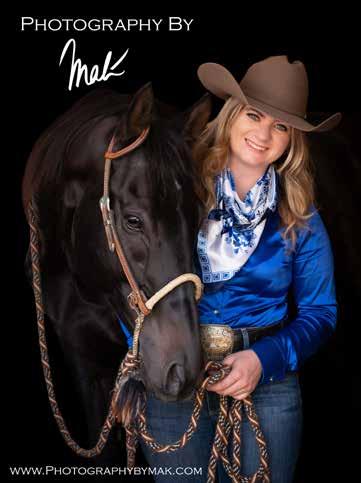
Photography by MAK
Buzzy Photography, Photography
Fran Sherman, Creative Director
Cristian Iancu, Graphic Designer
Published by: Pittsburgh PetConnections, LLC. Pittsburgh PetConnections LLC. was formed in 2012. Our mission is to publish a high quality, informative publication focused on the Human-Animal Bond. We support local businesses and also assist local non-profit businesses for pets and people, to give back to our great Pittsburgh communities.
ADVERTISING SALES
Robin Reinfeld, Director of Sales
412.780.2254
We will be publishing pictures of your pet from winners of our new weekly social media photo contests! Also new, our membership sign-up button on our Facebook page, where you can receive news about events and contests, special discounts from our advertisers, discount event tickets, join our PetConnections Birthday Club for Pets, submit your story to be published in our Human-Animal Bond section or Remembrance, and more!
Our Aquarium Adventures article this month is about Betta Fish. Dr. Becky writes about how to help Community Cats in the Cold. Bernadette Kazmarski offers tips on adopting senior cats. Kristin Hermann reviews the basics of Dressage, and our Remembrance section features Letters form Heaven, a wonderful new service.
Events
OUR SAP PARTNER: We are working with our licensing partner dvm360TM magazine to pair great content! The partnership will mean online national and global exposure for PetConnections magazine!
MAGAZINE PUBLICATION STAFF
Chartiers Custom Pet Cremation’s Healing Hearts Pet Loss Grief Seminar, Animal Friends’ and CARMAA’s highlighted in our event section.
This Issue
Carla Mader, Managing Editor
Kara Jones Photography, Photography
MARKETING DIRECTOR AND SALES
Candace Curphey
512.554.7573
CONTRIBUTING
Kristin Hermann
April Minech
Edward R. Moats
Bernadette Kazmarski
Dr. Becky Morrow, DVM
“dvm360 TM is the veterinary profession’s No. 1 print resource for news, product resources, tools, and practice solutions. dvm360TM captures the voice of the profession and delivers relevant, real-world coverage while meeting the everyday clinical needs of small animal and equine veterinarians.”
Kelli Koladish, Graphic Designer
Edward R. Moats, Content Editor
Carla Mader, Sales & Distribution Manager
Edward R. Moats, Media Account Manager
WRITERS
ADVERTISING SALES
Our cover features Manon Farm’s Princess Showcase riding show! See the Equine Affairs section article inside, April Minech! Also, a reader, Ruth Maloy-Carter submitted her heart-warming story, “Great to be Ginger”, Animal Bond section! Edward Moats continues his avian nutrition articles, with more great tips, in Feathered Also, we are revisiting Integrative Healing for Pets with Dr. Doug, in our Pet Holistic section.
PetConnections is published quarterly as follows: March, June, September, and special Holiday issue in early December! Our print copy distribution sites will be replenished every 6 weeks. Our online presence has always been much greater than in print with now over 400,000 impressions! To subscribe to your own personal copy of PetConnections, please contact us below.
Our rescue section features Nate’s reptile Rescue. PVSEC/BluePearl’s article about winter safety for pets. Our Korner has Homeless Cat Management Team has spay and neuter info, by Bernadette Kazmarski. Equine Hermann writes about Learning from Source.
Robin Reinfeld, Director of Sales, Pittsburgh 412-780-2254 | rrcd@aol.com
CONTRIBUTING WRITERS
Did you know? PetConnections has evolved into a full-service specialized pet media company, providing services for advertising in print and digital marketing platforms to help our sponsors grow their businesses. Contact us below for information on advertising or sponsoring!
PetConnections is published quarterly as follows: Early February, May, August, and November. Our distribution sites will be replenished every 6 weeks. Our online presence has always been much greater print with now over 350,000 impressions this year. To subscribe to your own personal copy of PetConnections, please contact us below.
Rachel McMichael CBCC-KA Pittsburgh Veterinary Specialty & Emergency Center
Thank you for picking up this copy of PetConnections. Be well and we wish you a safe and joyful holiday season with your family and pets!
Did you know? PetConnections has evolved into a full-service specialized pet media company, providing services for advertising in print and digital marketing platforms to help our sponsors grow their businesses. Contact us below for information on advertising or sponsoring!
Kristin Hermann
April Minech
Bernadette Kazmarski
Edward R. Moats
Thank you for picking up this copy of PetConnections.
Warmly,
Warmly,
Carla Mader Publisher
Please submit any correspondence to: pghpetconnections@gmail.com
Carla Mader Publisher
Please check us out on the web & subscribe at: www.petconnections.pet Follow and “Like” us on Facebook! http://www.facebook.com/PetconnectionsMagazinePA
Pittsburgh | Central Ohio PetConnections Magazine PetCon Expos Please submit any correspondence to: info@pghpetconnections.com Please check us out on the web & subscribe at: www.petconnections.pet. Follow PghPetMag on Twitter and “Like” us on Facebook!
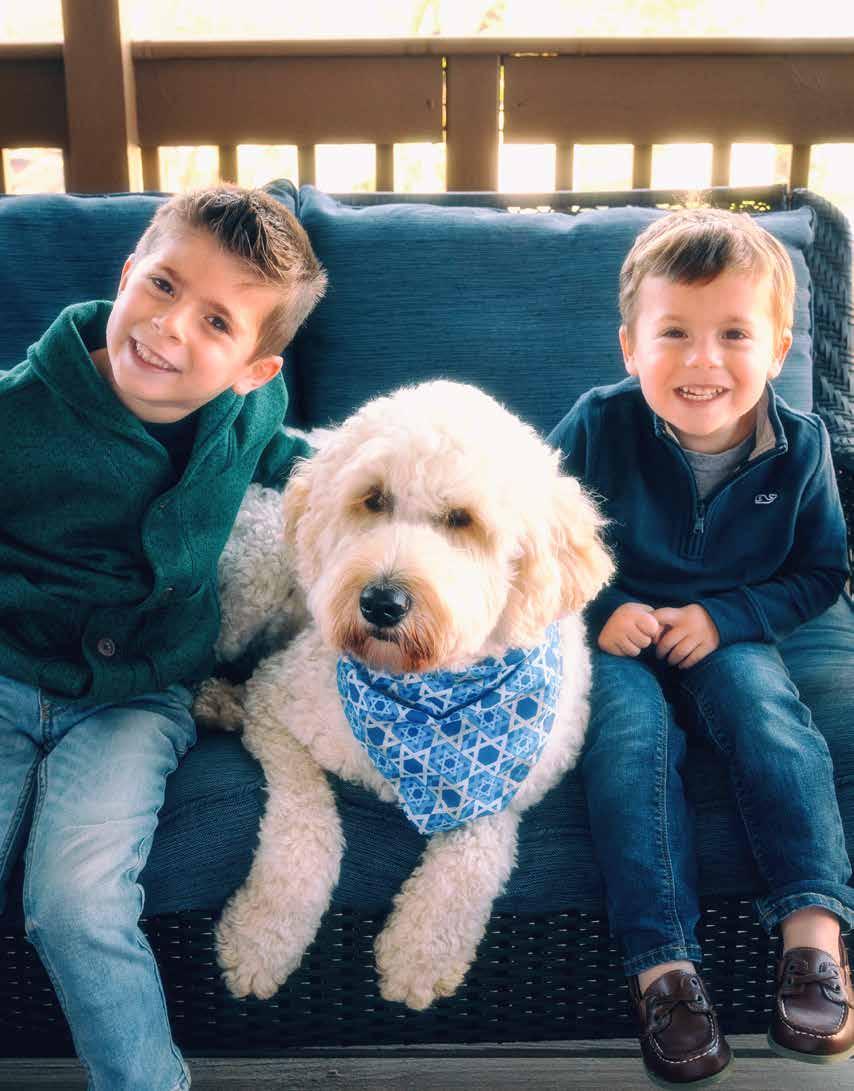
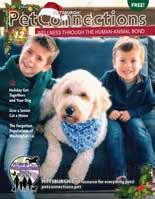
Cover Photo: Hayden and Harper Stewart
Photo By: Erica Stewart
Working Dog Classifications
ByAprilMinech
The love we feel for our dogs - and the love they give back – comforts us. Who doesn’t smile when their dog comes barreling at them after coming home? Or make us feel safer with a protective bark, or cuddles when we’re lonely? The bond we feel with our dog has evolved into specific jobs that they can do; service dogs, working dogs, therapy dogs, and emotional support animals all fulfill important roles in their aid to humans, but the terms are not interchangeable. Each title is specifically defined, both in terms of the jobs undertaken and the legals rights offered.
Starting with Service Dogs, the ADA (Americans with Disabilities Act) defines them as individually trained dogs to work with people with disabilities. Disabilities can be “physical, sensory, psychiatric, intellectual, or other mental disability.” The work of the service dog must be directly related to the handler’s disability. These are just some of the things a service dog can do:
Guide dogs help blind people navigate the world.
Hearing (or signal) dogs alert deaf people to sounds, such as a knock on the door or a person entering the room.
Psychiatric dogs are trained to detect and lessen the effects of a psychiatric episode.
Service dogs help those in wheelchairs or who are otherwise physically limited. They may open doors or cabinets, fetch things their handler can’t reach, and carry items for their handler.
Autism assistance dogs are trained to help those on the autism spectrum to distinguish important sensory signals, such as a smoke alarm, from other sensory input. They may also alert their handler to repetitive behaviors or overstimulation.
Service dogs that are trained to recognize seizures and will stand guard over their handler during a seizure.
The ADA mandates that service dogs have full public access rights, which means they are allowed to go places where other animals are forbidden. They can be brought into restaurants, stores, libraries, and other public spaces. They must be permitted in housing, even if other pets are not allowed. Service dogs are also allowed on airplanes and other public transport. Each airline has its own rules regarding service dogs, so check with them before flying. Many require that the dog sits on the traveler’s lap or at their feet. Dogs cannot block the aisle or sit in the emergency exit row. Service dogs are exempt from the pet fees that airlines charge.
Another job category is Working Dogs. They are defined as a purpose-trained canine that learns and performs tasks to assist its human companions. Detection, herding, hunting, search and rescue, police, and military dogs are all examples of working dogs. Working dogs often rely on their excellent senses of smell to help out where humans fall short. Just a few of the jobs performed by working dogs include:
Search and rescue. From missing persons cases to natural disasters, dogs have been an integral part in finding people in dire situations. Search and rescue (SAR) dogs can either use a scent in the air or the scent of a specific object to find who they’re looking for. They can
be used in many different situations, including disasters, cadaver searches, drowning situations, and avalanches.
Explosives detection. These canine heroes work with the police, Transportation Security Administration (TSA), and military to locate dangerous materials. The dogs go through an intense training course to learn how to locate and identify a wide variety of explosives and to alert their handlers.
Cancer detection. Scientists have been able to train some dogs to sniff out cancer in patients’ breath by smelling samples and sitting down in front of the one that was cancerous. Cancer cells give off different odors than regular cells and they change the way a person’s breath smells– a dog’s keen nose can tell the difference.
Allergy alert dogs. These dogs are trained to detect the allergen and its residue at schools, social events, and everyday activities and alert their owner. Their training is similar to that of a police dog learning to track scents or drugs.
Therapy dogs — with their human teammate (often the dog’s owner) — volunteer in clinical settings, such as hospitals, mental health institutions, hospices, schools, and nursing homes, where they provide comfort, affection, and even love in the course of their work. Therapy dogs are trained to be comfortable in new environments and to interact with different people. They should have a calm temperament, be unfazed by unfamiliar noises and movements, be comfortable being handled, and love people.
Although they are defined as comfort dogs and often used in therapeutic settings, therapy dogs are not considered service dogs under the ADA and don’t have the same legal right to access in public spaces. There are no uniform state or national rules that regulate and certify therapy dogs, and different organizations have different guidelines. As a general rule, therapy dogs should be trained, insured, and licensed by the non-profit that’s offering their services. If you’re interested in volunteering to see if your dog might be a good therapy dog, a good place to start is with your local non-profit animal shelter. Many have developed their own programs for certification and offer classes like the AKC Canine Good Citizen title to start.
Last of the common roles are Emotional support dogs, which not considered service dogs under the ADA. They may be trained for a specific owner, but they are not trained for specific tasks or duties to aid a person with a disability, and this is the main difference between ESAs and service dogs. This doesn’t minimize the support these dogs provide for people with a psychological disorder. They’re considered companion animals and ease anxiety, depression, some phobias, and loneliness. In order to be considered an emotional support dog, it must be prescribed by a mental health professional for a patient with a diagnosed psychological or emotional disorder, such as anxiety disorder, major depression, or panic attacks. Unlike service dogs owners, ESA owners have only limited legal rights and those typically require a letter of diagnosis from the owner’s doctor or psychiatrist. They don’t have unlimited access to public spaces, and airlines are not required to accommodate emotional support animals.
Our dogs are many things to us, and it’s important to understand and follow the rules for each type of service so both you and your dog can focus on the bond between you.
EVENTS
Animal Friends
Thinkingoutsidethecage.org
Wed, Dec 27 @ 9:15 AM
Holiday Camps at Animal Friends! Thu, Jan 11 @ 11:00 AM
Littlest Animal Friends
Beaver County Humane Society
Sign up for our low-cost vaccine and feline spay/neuter clinics we hold weekly. (Vaccine clinics are for both cats and dogs.)
You can schedule your appointments through our website:
For Feline Spay/Neuter Appointments: http://beavercountyhumanesociety.org/ tnr-and-owned-cat.../
For Vaccine Appointments: http://beavercountyhumanesociety.org/vaccine-and.../
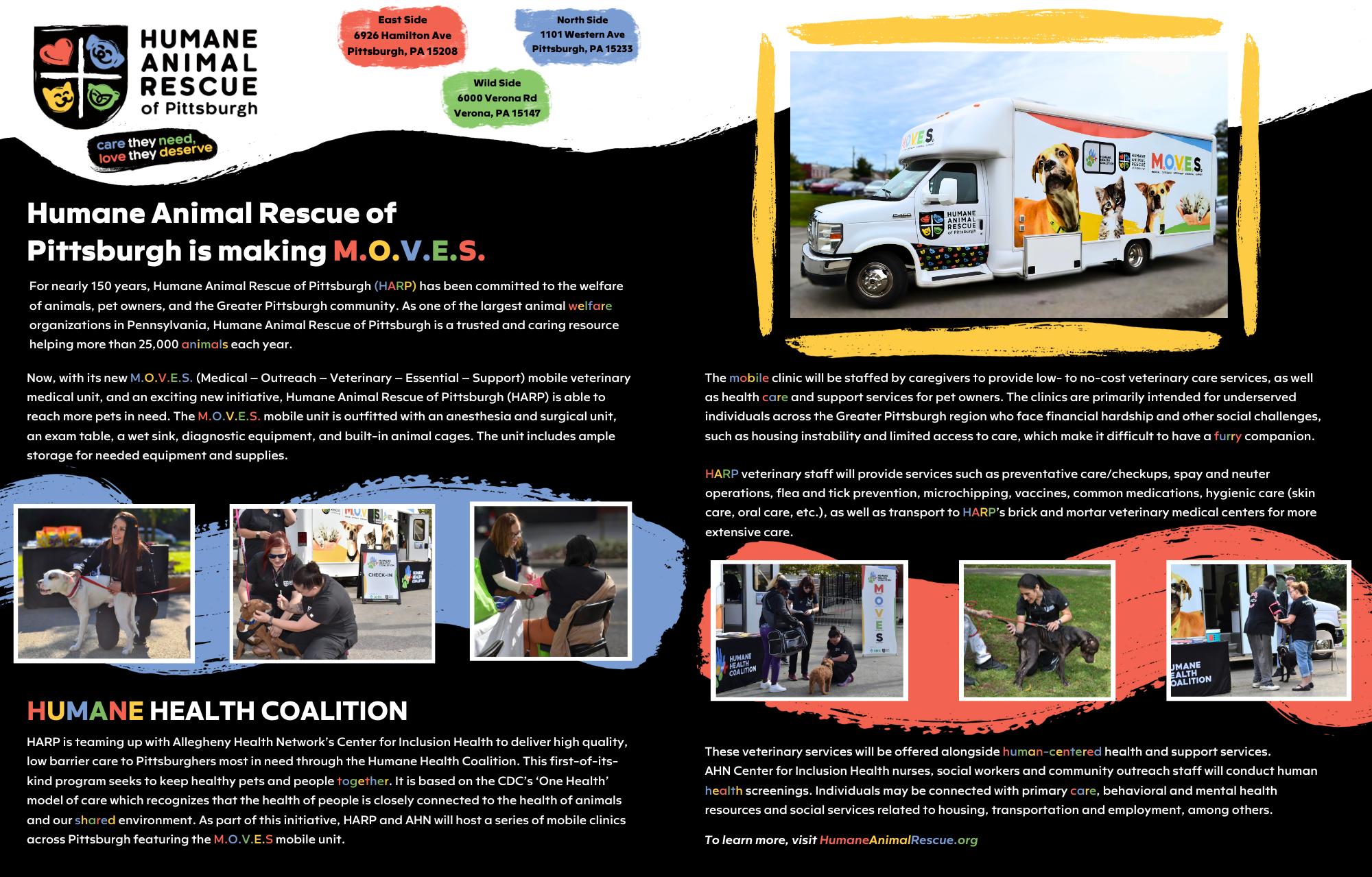
Humane Animal Rescue
Humaneanimalrescue.org
December 13 @ 10:00 am - 12:00 pm
Ellie ’s Attic
East Side 6926 Hamilton Avenue, Pittsburgh, United States
Although we successfully unite thousands of animals with new [...] December 18
Low Cost Vaccine Clinic | North Side Shelter
North Side 1101 Western Ave, Pittsburgh, PA, United States
By appointment only, two pets per clinic. Clinic scheduling [...]
December 27 @ 9:00 am - 11:00 am
Ellie ’s Pet Pantry
North Side 1101 Western Ave, Pittsburgh, PA, United States
If you can’t afford to feed your pet and [...]
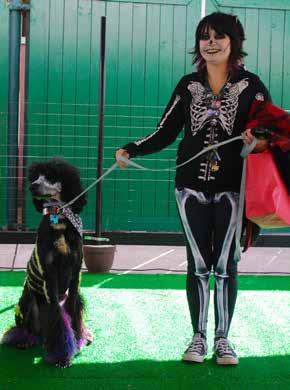
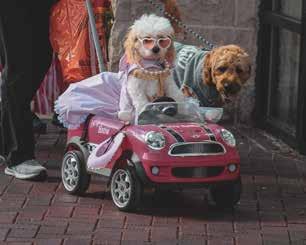
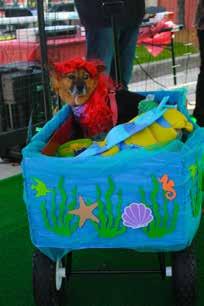
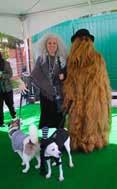
DOGTOBERFEST 2023 EVENT
COSTUME CONTEST WINNERS
First Place: Best in Show: Hades the Poodle
Best Look Alike: Mike Myers and Greyson Dunkle
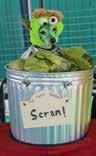
Most Original: Oscar the Grouch and Big Bird - "Macy"
Second Place: Barbie - "Lucy"
Third Place: The Little Mermaid - "Fergie" and "Roxy"
Honorable Mention: Adams Family - "Madison"
THANK YOU TO ALL WHO ATTENDED AND OUR SPONSORS!
Photo credit: Abby Springer
Hades the Poodle
Oscar the Grouch
Barbie
Mermaid
MikeMyersand GreysonDunkle
Cousin It
RESCUE & SHELTER
The Forgotten Washington County Populations
ByFaithBjalobokPh.D Fellow Oxford Centre Animal Ethics
Washington County’s Comprehensive Plan includes a Vision Statement which states as one of its goals “creating a quality life for all residents.” However, a careful examination of supporting proposals illustrates a lack of plans for creating a quality of life for two segments of the population: socially isolated individuals and the non-human animal members of Washington County society.
Socially isolated individuals are those persons who have for a variety of reasons become isolated from the rest of society. Some contributing factors are age, loss of friends and relatives, mental health and issues associated with military combat.
Non-human animals refers to domesticated animals that exist within human society and co-exist with humans within a given society.
Prior to addressing the intersection of these two groups, I wish to address those who would respond with the only all too familiar phrase it is only a dog, a cat or a horse. That statement ignores not only the fact that non-human animals are sentient beings, who according to the leading utilitarian ethicist Peter Singer, establishes a moral requirement that their interests are given “equal consideration” but perhaps more importantly it ignores their contributions to human society.
Cats for example beginning in Ancient Egypt made a major contribution to agriculture warding off pests and killing venomous snakes. They also provided companionship and guarded the Pharaoh (Yuko, 2023).
The first cats arrived in North America in 15th century aboard colonist ships to control disease and protect food (PBS). Since then they have continued to provide rodent control and companionship. Simon a British cat won the Dickens Medal of Honor for bravery in war (Times). During WWII cats provided a morale booster to those serving on submarines. Today cats continue to provide rodent control but more importantly they provide many socially isolated individuals with a purpose for continuing their life. After performing TNVR (trap-neutervaccinate-return) for over 15 years in Washington County, I am acutely aware of the significant number of socially isolated individuals who care for cats in Washington County. The cats are their companions and their only source of unconditional love and loyalty. Simply stated their reason for living.
Similarly, dogs “man’s best friend” have contributed to agriculture (herding/guarding flocks), served in the military and police and fire departments, functioned as both bomb and drug sniffing dogs. Of the greatest importance to this essay is their ability to provide individuals with meaning for their lives and assist socially isolated individuals in sharing in the benefits of companionship and love and loyalty.
The number 22 is often referred to as the number of U. S. Veterans who commit suicide a day (U.S. Dept. of Veterans Affairs). In presenting the VETTY Award to Guardian Angels Medical Service Dogs, it was noted that no veteran who was a recipient of a Guardian Angel Medical Service dog ever committed suicide. The significance of the human animal bond could not be more evident than in the bond between a veteran and their medical service dog. The dogs provide
unconditional love and alert veterans of medical issues. I have been told by a veteran that he would never commit suicide because” what would happen to my dog?”
As is the case with cats, in spite of all the canine contributions to both human society and the quality of life for many individuals, their neglect and abuse goes unprosecuted and county planning does not include funding to promote or protect dogs quality of life.
Lastly, the contributions of the horse cannot be overlooked. From the first form of transportation, to the military service of the Korean War Hero Sargent Reckless, horses have stood beside their human counterparts contributing to both human society and companionship. Today local equine therapy programs like IN-Stride and Horses with Hope provide assistance to individual suffering from a wide variety of mental health issues in addition to assistance with substance abuse.
In light of all their contributions to human society and human wellbeing, the often stated comment “it’s only a dog or a cat or a horse” should have little relevance or significance to a county whose vision statement claims as a goal providing a quality of life for all its residents. The question that remains unanswered is why in developing the Washington County Comprehensive Plan those drafting the plan have chosen to ignore the needs of socially isolated individuals in terms of their inter-connectedness with their non-human counterparts who often play a crucial role in their overall well-being without which the individual would have no quality of life.
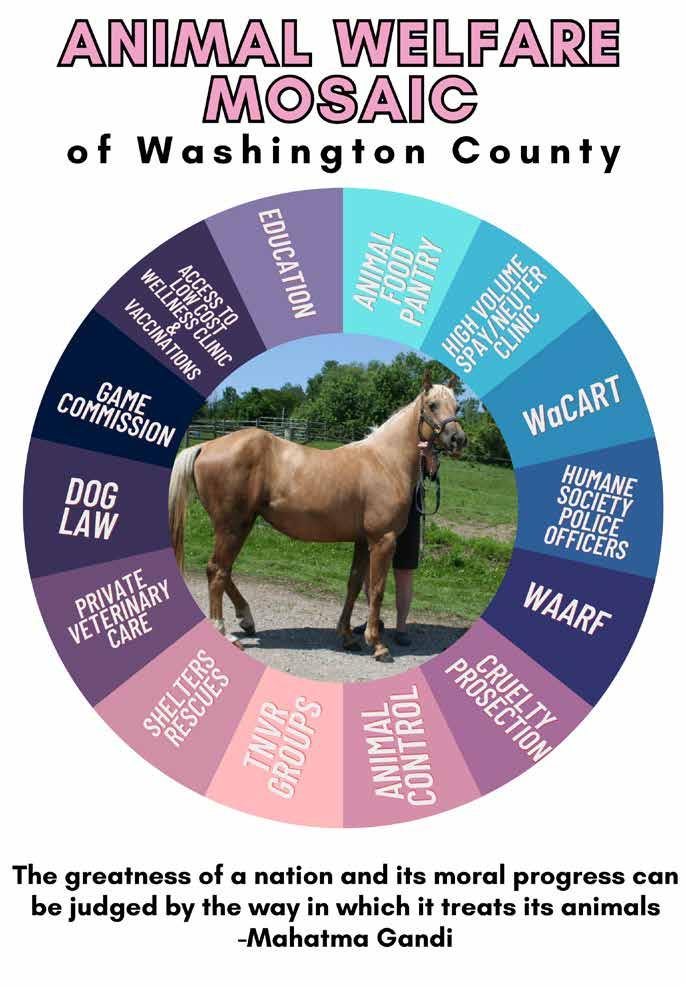
As Gandhi argued: “You can judge the greatness of a nation and its moral progress in the way in which it treats its animals.” The same can be argued about a county. Based on an understanding of the role non-human animals play in an individual’s life, it can be argued a just society (county) must necessarily be a humane society (county). Based on distributive justice, a truly just society must ensure an equal distribution of burdens and benefits to all its citizens. To delegate non-human animals to the role of property is to ignore not only their sentience but their contributions to human society and human well-being. The time to acknowledge both non-human animals and their interconnection with socially isolated individuals is long past due. No more can it be legitimately stated “it’s only an animal”, the time has come to acknowledge the critical role non-human animals have and continue to play in human society. That acknowledgement is a sufficient condition justifying the inclusion of their interests as well as the interests of their human counterparts as a significant part of any comprehensive plan that claims to promote justice within a society. Therefore, it is essential that the components of the Animal Welfare Mosaic (attached) are taken into account when developing a vision of a county committed to justice and “equal consideration of the interests” of all its residents both human and non-human animals.
U.S. Department of Veterans Affairs Suicide Yuko, E. https://www.history.com/news/cats-ancient-egypt
This holiday season, Animals. help us feed the homeless.
Saving lives. It’s what we do.
It’s estimated that one in five Pittsburgh residents – roughly 60,000 people – suffers from food insecurity. And if people are hungry, so are their pets. We know that many families depend on Animal Friends’ Chow Wagon Pet Food Pantry to feed their pets. But we need your help to help them. Please consider making a donation from our Wish List. For more information, visit ThinkingOutsideTheCage.org or scan the QR code. Because our lifesaving mission doesn’t take a holiday.
This message is in collaboration with:
Bonnie Loya, ABR (and Jett)
Cell: 412.915.0038 | Office: 724.942.1200
BEHAVIOR & TRAINING
Holiday Get Togethers and Your Dog
ByRachelMcMichaelCBCC-KA
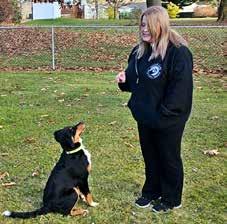
During holiday get-togethers, many dogs experience heightened stress. While some guests your dog may be well acquainted with, unfamiliar faces, loud noises, and changes in routine can sometimes be overwhelming. Deviating from a routine may cause a tremendous amount of stress in some dogs. Common signs of stress in dogs include rigid movements, pinned ears, dilated pupils, panting, pacing, yawning, lip-licking, excessive barking or hiding. Recognizing these signs is crucial to ensure the well-being of our companions. Be familiar with your dog’s body language normally, it’ll then be easier to notice the changes during more stressful times.
Managing the situation is always advisable. The following techniques may help dogs during gatherings.
Create a Safe Space: Designate a quiet and comfortable area in your home where your dog can retreat to when feeling overwhelmed. This can be a separate room or a cozy, blocked off corner with their bed. You can opt to use calming sprays like Adaptil, on blankets or even offer your pet a calming treat, like Composure, during this time. Soft music, spa music or even a white noise machine or box fan can help block out some of the sounds of your guests. Be sure to check in on your canine companion as needed during that time and do not allow your guests or visitors into their space – it is strictly for your dog!
Controlled Introductions: If you are having a gathering with only a couple of new people, you can try to gradually introduce your dog to the new guests, giving them time to adjust and become comfortable. If you are having a large gathering, there are many young children or your dog is hesitant of strangers, this is not advised. Avoid overwhelming them with too many new people at once. Make sure that your guests do not approach or call your dog, but instead allow your dog to initiate contact. This will give your dog added confidence about the new people, spark potential curiosity and allow the dog to move at their own pace. You never want to push your dog or make your dog approach strangers for treats (especially if your dog is hesitant). Keep the pressure on your dog low, and your rewards high and often.
Provide Adequate Exercise: Before the gathering, make sure to engage your dog in some physical exercise. Take them for a walk, giving them plenty of time to sniff the world as much as they would like. Do not underestimate the power of brainwork as well. Engaging them in thinking games and puzzles can help to tire their minds. They say a tired dog is a good dog, but it is important to not just focus on the physical exercise or to over-exert them physically but ignore their minds. Their minds must be just as exercised as their bodies, or they can become an overtired (but mentally restless) dog. End your exercise sessions with a little mind work each time to bring them down from the physical exertion; this helps them calm faster.
Meet Needs: While we are used to meeting the needs of our dogs during our everyday lives, when there is a lot of commotion or we are entertaining guests, we may overlook some basic things. Make sure your dog’s meals are on time or as close to normal as possible and that potty breaks are still frequent enough. During stressful times, adding an unmet need can sometimes cause a dog to overreact.
Boarding: If your dog is very hesitant with company or if you are leaving for an extended time, consider having your dog go to a sitter or to boarding. While this can cause some level of stress for your dog, if you choose a well-established and reputable company to work with, this may be the least stressful situation for them. Forcing a dog that doesn’t enjoy people visiting to deal with multiple overnight visitors in your home will not work and is often how accidents happen. Keep your dog’s individual preferences and personality at the forefront.
In addition to management techniques, training may be able to help our dogs during gatherings. Here are a couple simple steps for training.
Basic Cues: Practice some of the basic cues such as “sit,” “stay,” and “leave it”. If your dog does not have any practice with distractions, begin adding in some mild distractions. Your dog may not be able to perform perfectly with all the holiday stress and guests present, but with practice they will get better. Consistent practice will help your dog feel more secure and confident during gatherings.
Desensitization: Gradually expose your dog to holiday-specific stimuli, such as festive decorations or sounds, to help them become accustomed to these experiences. Start small and gradually increase the level of stimuli over time. If all the new things arrived with your guests, this could overstimulate any dog.
Supplemental enrichment is essential for keeping your dog mentally stimulated and engaged and can be helpful during the holidays. Provide interactive toys, puzzle feeders, or treat-dispensing toys to keep your dog occupied and challenged. This can help to tire their minds, which can alleviate some overthinking and stress for them.
While holiday get-togethers can be a stressful time for our canine companions, implementing effective management techniques, training strategies, and preparing ahead of time can significantly reduce their anxiety and ensure their safety as well as the safety of your guests. By just following some simple steps, we can make the holiday season enjoyable and safe for both our human and furry family members.
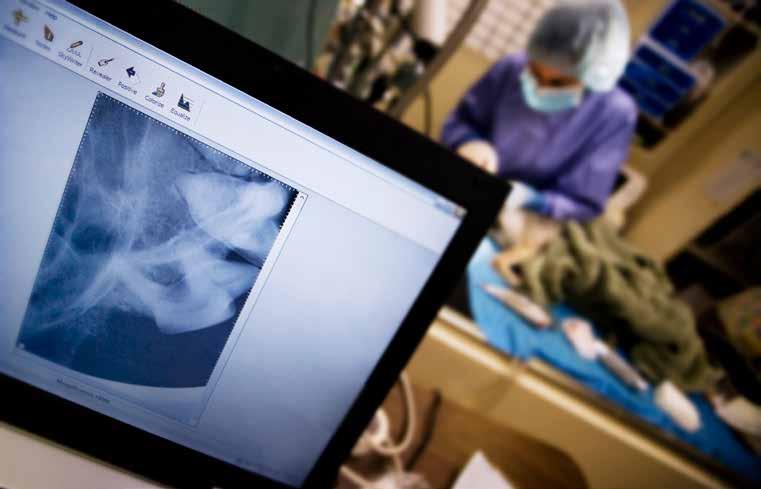
What Are They Doing With My Animal For X-Rays!
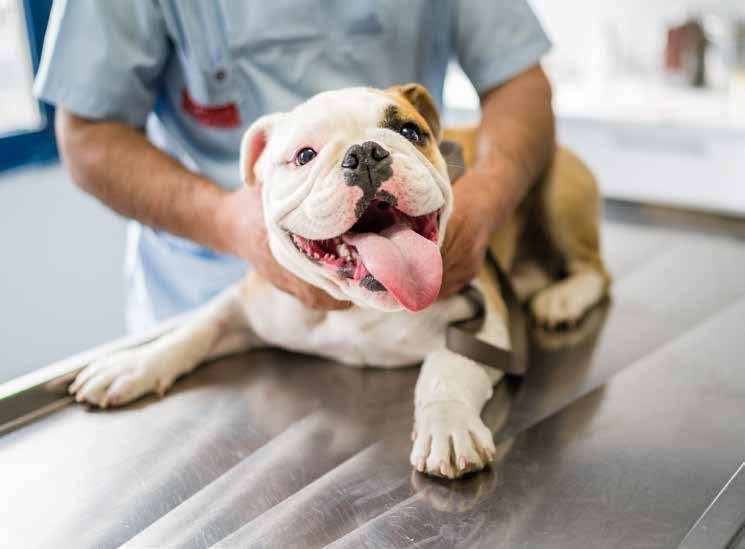
The first thing that may come to mind when your veterinarian recommends x-rays to be performed on your pet is “OMG what’s wrong?! Why is this necessary?! Are the technicians going to stress my animal out even more (because you know animals don’t just lay there and listen to a nurse like a human patient would)?? Will the radiation hurt my pet?” The list could go on and on when you are the owner - the one who loves and cares for your pet more than anyone. My goal is to hopefully shed some light on what really happens at BluePearl in “the back” (treatment area) when we, are preparing your pet for x-rays, the process of taking the x-rays on your pet, and what is done after being completed from a veterinary technician’s perspective. My name is Deanna Taylor, CVT and I have been the Diagnostic Imaging Technician at BluePearl Pittsburgh North for the past 11 years. I am here to help inform owners about how x-rays are performed, as well as how we ensure the safety of both your pet and the technical staff when your veterinarian recommends x-rays.
First, we like to come in and meet you and your pet to make sure you know who will be
with your pet for the duration of the x-ray study recommended by your veterinarian. After we take your pet to our treatment area, we bring them into the x-ray suite (which is the same as in a physician’s office), put all of their medical information into the system, and confirm that we have the correct orders from the doctor about what body area and views they want to see on your pet. This depends on what the doctor might be concerned with based on the presenting complaint about your pet. X-rays can be performed on any part of the body, but are most commonly taken of the chest (to examine the heart and lungs), abdomen (to examine the stomach, intestines, liver, kidneys, etc), and limbs (to look for a reason for limping).
After we get your pet’s information into our computer system, the technicians get “gowned up” by putting on our radiation safety equipment, including a minimum of lead-lined gowns, and thyroid shields. Unlike x-ray technicians in human medicine, we cannot just walk out of the room to take the x-ray. We stay with our patient for the entire procedure. We then pick up your pet to get them on the x-ray table. Typically, we take at least 2 different views of the body
Community Cats in the Cold –How We Can Help!
ByBeckyMorrow,DVM,MS,CAWA
It’s that time of year when we start reaching for our coats and need to consider the cold weather needs of our companion animals and community cats. We may think that just by having fur, dogs and cats will stay warm outside without our help. But most animals that live inside probably need some extra insulation and protection from the elements. How can community cats do so well in the winter months, then? Part of it is their ability to acclimatize to the cold weather by increasing the thickness and insulating capacity of their coats. Some breeds of dogs (think Huskies!) have a naturally dense undercoat and coarser outer layer that helps to repel water and snow. It’s not uncommon for these Artic breeds to enjoy spending hours outside in the cold. Community cats can develop this thicker undercoat if they are outside as the seasons are changing. Even the shorthaired cats that have been outside in the cold look “fluffier” than their couch potato counterparts. It is important to realize that cats that did not get a chance to be exposed to the changing temperatures will not be suited for outdoor living. In rescue, we are sometimes searching for barn homes for unsocialized cats but need to wait until the spring if these cats were not outside to begin with (i.e. hoarding cases).
cats that wanted to be as far away from humans as possible and back outdoors. They spent the cold months in the “cat house” because they did not have thick, winter coats, but once spring came, they got their own “outdoor room.” My aunt built “walls” with straw bales around the space under the second story deck. The cats were acclimated to the new area for over a month, so they recognized the “room” as their home and feeding station. Once winter came, my aunt periodically kicked on the clothes dryer. Why? The vent went right into the “room” and provided heating! Those cats lived full and happy lives and the “room” still stands today.
So, in addition to keeping our pets toasty inside and providing coats and paw protection for those times when we venture outdoors, what can we do to aid the cats living in the community? Let’s think about the big three needs – food, water, and shelter. Winter can make it really difficult for community cats to get fresh water when the temperature goes below freezing. One of the easiest things we can do is provide a source of water in a heated bowl. In addition to online resources, farm supply stores, hardware stores, and pet stores often carry these for under $20. Another consideration is that community cats, like other animals in the cold, will need more food (more calories) to maintain their body temperature. While there is no doubt that most cats love canned food, they will have to eat more wet food than kibble to get the same number of calories. This is due to the simple fact that part of the volume of wet food is water. They will also have to eat more of the lower quality dry cat foods due to lower calorie content (more non-digestible ingredients). Purina cat or kitten chow is a good choice when considering the caloric density for the price.
People can become quite creative when it comes to shelter. I’m still impressed by the ingenuity of my aunt in setting up a unique space for some of the cats from Tiger Ranch. Once we were awarded custody of the cats following the animal cruelty conviction, we moved those that needed lifelong care or more time to be rehabilitated before adoption to a house we bought (the beginning of Frankie’s Friends!). There were seven unsocialized
While not all shelters are as extravagant, many people have crafted them out of coolers, storage bins insulated with Styrofoam, or Styrofoam shipping boxes filled with straw. Straw is universally regarded as a great bedding choice since it does not attract moisture like hay (the stuff animals eat!) and blankets. This warm, dry space also needs to be protected from wind. As Neighborhood Cats states, “One idea is to position two shelters about one and a half feet apart with the front doors facing each other. Cover the gap between them with a board spanning their roofs to prevent wind, snow, or rain from getting in.” The shelter should also be under or against another structure, if possible, to provide additional protection from it blowing away or being out in the open where cats are less likely to feel comfortable. Ideally, the shelter is near the food and water, with minimal exposure to the wind and maximal exposure to the sun. Keeping the shelters raised off the ground (on pallets or bricks) will help keep them from flooding during those times when snow melts. It’s also important to make sure the shelter is stable by putting some weight on top of lighter shelters (bricks, plywood, etc.). Just as with our pet dogs and cats, salt and other chemical deicers can cause chemical burns on paws and, even worse, salt toxicity if enough is consumed during grooming. Shoveling a path to shelters and skipping the salt would be greatly appreciated by the kitties you are helping.
Lots of organizations in the Pittsburgh region will provide community cat shelters or materials for them so that anyone in the neighborhood can lend them a helping hand. Some have even taken it a step further, designing the ultimate outdoor cat shelter based on hundreds of hours of research in the field and in the workshop testing out designs. CATSA, a local (cat) woman-owned small business, is currently putting all proceeds generated from the sale of their products into the Cat Shelter Project. We are fortunate to have all these caring individuals out there, so be sure to reach out to your local animal shelter, cat rescue, or community cat advocate. The community cats may not come to you for pets, but they will still feel the love.
HQHVSN- It’s Not Just for Shelters!
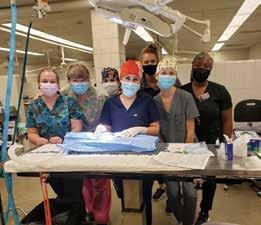
This course will provide didactic and hands-on learning focused on High Quality High Volume Spay/Neuter (HQHVSN) techniques.
HQHVSN is based on optimizing the team, protocols, and workflow to provide safe and efficient spay/neuter of pets, shelter animals, and community cats. This is accomplished by creating simple protocols and procedures that maximize efficiency of the team while minimizing any potential for oversights and developing skill through repetition.
Three-minute cat spays can easily and safely be performed based on slight modifications in surgical technique. HQHVSN is a way to save more lives - preventing homelessness and euthanasia due to overpopulation.
It is not just for shelters anymore!
In-clinic trainings available for larger teams within a 60 mile radius.
12 RACE Approved CE Credits for Vets and Vet Techs!
Learn time-tested and scientifically-validated techniques to:
Make smaller incisions for greater patient comfort and faster recoveries.
Session 1 - Jan. 13-14
Session 2 - Mar. 9-10
Held at Frankie's Friends HQHVSN Clinic and Training Center In New Kensington, PA (17 miles from Pittsburgh)
Free Hands on Learning!
Maximize efficiency while obtaining excellent patient outcomes, allowing more surgeries in less time.
Enhance team morale and boost practice revenue by engaging the team to utilize their skills fully.
For more information or to register scan, call, or email!
724-889-7011 clinic@frankiesfriends.org
Nearly 1 million cats lose their lives each year due to overpopulation and lack of homes A large part of the problem is the community cat population, the 40 million cats in the United States that are homeless and breeding This unowned cat population is responsible for around 80% of the kittens born and brought into shelters, leading open door shelters to do what is unthinkable to us - euthanize cats that haven’t been adopted to make space for those suffering in the streets
This is where we come in Our mission is to end suffering and overpopulation by “turning off the faucet” rather than “bailing out the tub ” It means becoming proactive and getting these community cats spayed, neutered, and vaccinated so we don’t have to continue this cycle of reactivity and unnecessary killing There is no need to "recreate the wheel," we have spayed and neutered tens of thousands of cats and as the commercial says, "learned a thing or two " We hope to have the opportunity to share what we ve learned with you
Frankie's Friends
730 5th Ave
New Kensington, PA 15068
724-889-7011
www frankies-friends org
Meet Your Instructor: Becky L Morrow, DVM, MS, CAWA
Dr Morrow has extensive training and experience in Shelter Medicine, with a master’s degree, two graduate certificates, and over a decade in practice as a Shelter Medicine/HQHVSN Veterinarian
Dr Morrow taught HQHVSN (high quality high volume spay/neuter) techniques at the University of Illinois College of Veterinary Medicine and is currently an Adjunct Professor at the University of Florida College of Veterinary Medicine and an Assistant Teaching Professor at Penn State University beckymorrow.dvm@frankies-friends.org
KITTY KORNER
By Bernadette Kazmarski
Give a Senior Cat a Home This Holiday
November is the month we spotlight senior cats, and wouldn’t it be nice to give a senior kitty a forever home as a holiday gift to both the kitty and you? Both senior cats and adoption at the holidays have points to consider, but can be a happy ending done with care.
WHAT AGE IS A SENIOR CAT?
Whether they grow old in your presence or arrive at that great age, a senior cat is a better companion than many people seem to think, and they will often surprise you with their longevity.
Each cat matures and ages differently and feline life stages with human equivalents used to be very complicated, but a couple of years ago the American Association of Feline Practitioners (AAFP) simplified this into four age categories:
• Kittens: Birth up to 1 year
• Young Adult: 1 year – 6 years
• Mature Adult: 7 – 10 years
• Senior: over 10 years
WHAT WE EXPECT WHEN WE ADOPT A CAT
When we consider adopting a cat we usually think about what we want from our ideal cat, and it’s a good thing to go into this important relationship with a clear idea of what we expect. But all relationships take two, and our needs are only half of that deal.
Often our ideal cat is loyal to us and full of unconditional love, a cat we can play with but also lets us get a good night’s sleep. No cat fits this description better than a senior who is ready to just have a nice life. Younger cats have an active agenda and may take a year or two to settle down to where we feel they are truly a companion. When you meet a senior cat, the cat you meet is basically the purrsonality you get, and they will be no less loyal and loving for having spent their first years elsewhere.
Many people jump to the pain of their imminent loss since they are at least halfway through their life, but there are no guarantees for how long an animal will live; the only certain thing is that we will live longer than they do.
And imagine how sad that older cat is right now, at their age with no permanent home, often an uncertain future, and knowing exactly what they’re missing without a loving home. Surely we can set aside our fear of loss to make an older cat very happy.
WON’T A SENIOR CAT HAVE EXPENSIVE ILLNESSES?
We are able to give our cats assistance and support as they age so our sweet seniors can live happily and in good health far more years than once expected. A cat whose age is in the double digits may still have a decade or more left to share with you.
The fear of illnesses and veterinary costs for older cats is a real issue, but a kitten’s first years also have expenses for spay or neuter, tests, vaccines. A good diet and regular play at any age improves health so you would have those expenses with a cat of any age.
Chronic illnesses may arise at any life stage and while they are more likely as a cat ages, if a cat is likely to develop age-related conditions, at 10 years or older she may already have early symptoms so you would know ahead of time what you’re likely to encounter with her and can ease diet and lifestyle changes to help keep her healthy longer. If you’re adopting a senior cat whose history you don’t know, you can start right away with a good diet, activity and enrichment.
STEPPING IN FOR A SENIOR CAT AFTER THEY’VE LOST THEIR HUMAN
It’s not unusual that a senior cat is relinquished by a senior human either from the person’s illness or infirmity or even death. Losing their longtime person and home, often the only one they’ve ever known, can be a trauma in itself, but older cats can weather this with surprising patience and grace. You can make a senior cat feel welcome and safe and start right away with healthy measures and enrichment by setting up a cozy spot in your home where everything is convenient. Get to know your new kitty’s habits and needs and make sure the rest of your home is welcoming as well.
Senior cats often languish in shelters, even longer than other adults, and in some shelters are not given a chance at adoption at all. Senior cats deserve homes just as much as younger cats. A senior or even geriatric cat remembers a lifetime of having a home or homes, and while sitting in a shelter waiting to be adopted knows what they are missing in those final years. Our cats deserve to live as long as their natural lifespan allows with a loving human family.
NOW, ABOUT ADOPTING AT THE HOLIDAYS
I’m sure you’re ready to run to your nearest shelter or rescue and give a sweet senior kitty a home and introduce her to everyone at a holiday dinner. Considering that entire books have been written on the complexities of introducing a new cat into a household with or without other cats, introducing a senior cat at an overcrowded, overstressed time during the holidays is not the best idea. Plenty of dangers await with food, possible escape, meeting strangers in a strange place, that if you can’t adopt before or just after Thanksgiving it’s a good idea to wait until late December or early January when Kitty can quietly come home with you and relax after all the busy holiday activities.
But it will still be the best holiday gift you ever gave or received.
Resources:
What is a Senior Cat? (AAFP)
Position Statement on Pets as Gifts (ASPCA)
Giving Pets as Gifts, Bioethicist and writer Jessica Pierce, Ph.D.
Keeping Pets (Dogs and Cats) in Homes, a three-phase retention study by American Humane’s Animal Welfare Research Institute and PetSmart Charities
Should Dogs and Cats be Given as Gifts?, Animals, vol. 3, issue 4
Giving Pets as Gifts: 4 Rules to Follow, Wendy C. Fries, WebMD
“Giving Pets as Surprise Gifts…Here’s Why It’s a Bad Idea” Pam Johnson-Bennett, CABC, IAABC-Certified Animal Behavior Consultant
“How to Give Pets as Gifts”, Amy Shojai CABC
CAT RESOURCE PAGE
2023 Homeless Cat Management Team Clinic Schedule Through December: FREE CLINICS (ferals only)
Our clinic is located at 207 Allegheny Street, Tarentum, PA 15084. All appointments include surgery, pain medicine, rabies vaccine and flea treatment.
CLINIC REGISTRATION
BY PHONE: call 412-321-4060 and leave a message. Please include your name and phone number in your message. Someone will return your call and complete your pre-registration. HCMT is all volunteer and this may take some time. Clinics fill up quickly and it’s best to call at least two weeks in advance of the clinic you want to attend.
BY EMAIL: Email cathomeless@gmail.com with your name, number of spots you need and which date you are registering for. You will receive a confirmation email ONLY if you are registered. NOTE: dates may be added and are subject to change.
More dates may be announced and dates are subject to change. Check www.homelesscat.org/clinic-info for the most up to date information.
spay/neuter and animal services in and around
Allegheny County
This is an ever-changing list of resources for pet owners in Pittsburgh and beyond including low-cost spay and neuter programs for pets as well as TNR for community cats, after-hours emergency care, help with veterinary bills, pet-friendly rentals in Pittsburgh and across the US and links to shelters for adoption and other services. This information is provided for reference only and subject to change without notice. Please contact the organization or agency before using their services.
Low-cost Spay and Neuter Organizations and Programs
TNR AND LOW-COST SPAY/NEUTER PITTSBURGH AREA
Homeless Cat Management Team
207 Allegheny St., PO Box 100203, Tarentum, PA 15084, 412-321-4060 http://www.homelesscat.org/ FeralCatsandRescuedCats.Feralcatsmustarriveinahumanetrap.Check thewebsiteforclinicdates.Allappointmentsmustbemadebycallingthe phonenumber.Nowalk-ins.Ferals:$30.00FastTrack,no-chargeatfreeclinics. RescuedCats:Females$55.00,Males$40.00Bothincluderabies,earmiteandflea treatments.Otherservicesavailable.
City of Pittsburgh Free Spay and Neuter for City Residents CityofPittsburghoffersfivefreespays/neuterstoallcityresidents http://www.pittsburghpa.gov/publicsafety/animal-control/spay-neuter.html
Low-Cost Spay/Neuter Programs at Shelters in Allegheny and surrounding counties SHELTER PROGRAMS
3394 Brodhead Road, Center Township, PA 15001, 724-775-5801 https://beavercountyhumanesociety.org/tnr-and-owned-cat-surgery-prices Friendlycats:beginat$75.Feralcats:beginat$35 Visitwebsiteformoreinformation.
Clarion Paws (Serves Clarion, Forest and Jefferson County) Mailingaddress:P.O.Box804,Clarion,PA16214
CurrentLocation:11348Route322,Shippenville,PA (ClarionRiverHill,betweenKronospanandClarionElectric) http://www.clarionpaws.org/programs/spay-neuter/ Monthlyclinicslistedonwebsite,submitanapplication. Petsorferals:$65spay,$45neuter.Includesrabiesvaccine,earmitecheckand treatmentandfleatreatment. Optionalservicesatanupcharge.Trappingand financialassistancethroughSpayNeuterprogrammaybeavailabletoClarion, ForestandJeffersonCountyferal/straycatcaregiversonacasebycasebasis. Butler County Humane Society 1015EvansCityRoad,Renfrew,PA16053 https://butlercountyhs.org/clinic/ Forcurrentpricingandscheduleinformationpleasegiveusacallat724-789-1150. Washington Area Humane Society 1527Route136,EightyFour,PA15330 http://washingtonpashelter.org/ Currentlymovingintonewbuilding.
Low-cost Spay/Neuter Organizations in Allegheny and surrounding counties (alphabetical) Theseareorganizationswhicharenotday-to-dayclinicsbutorganize,host, sponsororotherwiseprovideaccesstospayandneuterservices.
SNIPP: Spay and Neuter Indiana PA Pets Westmoreland/IndianaCounties,Alle-KiskiValley (Leechburg)Monthlylowcostclinics,checkwebsitefordates andavailability.
http://www.snippindianapa.org/
Low-cost Spay/Neuter and Veterinary Clinics Fix’N Wag’N
All About Pets Veterinary Hospital 724-745-5503 | aapvet.com
All About Pets Veterinary Hospital – Washington location 724-503-4887 | www.aapvet.com
All Life Veterinary Clinics, 724-281-3446
Cheyenne Veterinary Wellness & Surgical Center 412-884-3162 | www.cheyennevets.com
East:
The Big Easy Animal Hospital
412-908-9301 | tbeah.com
Monroeville Pet Hospital 412-372-1100 | www.monroevillepethospital.com
VETERINARY SPECIALTY & EMERGENCY SERVICES
North/South:
Pittsburgh Veterinary Specialty and Emergency Center, Inc. 412-366-3400 | 724-809-2000 pvs-ec.com
EQUINE AFFAIRS
The Three “R’s” of Basic Dressage Training: Relaxed, Rhythmic and Round
ByKristinHermann
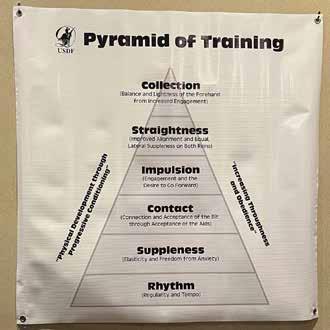
Relaxed, rhythmic, and contact are the first three ingredients of horse training on the United States Dressage Federation’s (USDF) training scale. I remember when this training scale was first introduced, and I thought, “How will I ever remember any of this?” So, to simplify, I came up with calling the third item on the Training Scale “round” instead of using the word contact. Thus, I call the first three items on the USDF’s training scale - relaxed, rhythmic, and round. By using three words that begin with the same letter, R, it is easier to remember. Just like the three R’s of our childhood - aRithmetic, Reading, and wRiting. (Talk about confusing us kids back then?) Using the three R’s as the first three ingredients of basic training is much easier to remember!
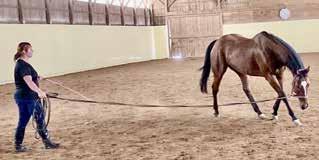
The first, relaxation, makes sense because you cannot train a horse that is not relaxed. You will never have the horse’s mind if he is not relaxed: To train the horse, you will need his attention to gain access to the horse’s body. If your horse is not relaxed, turn him out, change the environment, and do whatever is necessary to calm his mind so you can have his attention and, thus, his body. There is no doubt the two, body and mind, work in unison.
The next step is rhythm. Establishing rhythm, as far as training a horse, could take months to develop. You may need to start on the lunge line, or you may already be under saddle. One minute, your horse is rushing down the long side; the next minute, it is relaxed in a circle. The goal is to have the horse keep the same rhythm throughout his training session: a relaxed rhythm. As a rider, you want to be in the position where you ask the horse to go forward, not ask the horse to slow down at every corner. “Rhythm, rhythm, rhythm.” is one of the mantras during each training session!
Of course, being capable of establishing rhythm requires skill and equestrian tact from the rider. It is a delicate balancing act to “drive” the horse and receive his forward motion through the seat, between the legs, and to the hand. (I love this green training scale illustrated here, where the top of the training scale is Artistry!)
So, if you are a developing rider, it is best to let a ‘finished’ rider establish good basics with your horse. Otherwise, hopefully, you already have a horse with sound basic training.
Once you have a relaxed rhythm with your horse and it works responsively between your aids, the next step is Contact or, as I say, Round. The word contact is typically referred to as contact with the bit. However, a rider does have other areas of contact, such as the leg in contact with the horse’s barrel and the seat being in contact with the horse’s back. The term three points of contact refers to the seat, leg, and hand being in contact with some area of the horse. In jumping position, the ‘two point’ is two points of contact, leg and hand, because the seat is off the saddle. Nevertheless, the term contact in this article refers to contact with the bit: Elbow to bit, an elastic elbow!
So, with a horse that is relaxed and has found its rhythm, the rider can now establish contact or round. It only makes sense that relaxation and rhythm come first because 1. if the horse is not relaxed, you cannot train him, and 2. the rhythm has to be established before you can have contact or roundness. Just think, if you establish contact with the reins on the horse’s mouth before you have rhythm from the hind end, the horse will interpret it as a signal to whoa or slow down. You must first have a good, steady rhythm (a relaxed and rhythmic “forward”), and then you can work on establishing roundness/contact without interrupting the rhythm. Most trainers call rhythm forward instead of using the word rhythm. A relaxed, rhythmic horse is just moving forward or stepping under and tracking up.*
Relaxed, rhythmic/forward, round, through, on the bit, and balanced are all training words we need to be familiar with and know what they mean. We want all riders to understand the terminology, and
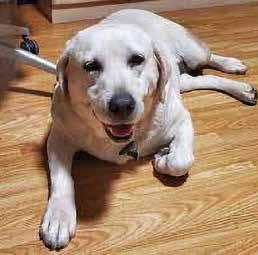
OStella was my first dog. We got her from the pound when she was a year old. She was in the last row and her tag said she had been there a month so we had to take her home. She loved to lean on people and sleep in our waterbed when no one was watching, We’d come upstairs and she’d be laying on the floor and the water in the bed was moving. She lived to be 12 and we still think about her everyday.
Our beloved pets who have died are safely waiting for us just this side of a beautifu
ur beloved pets who have died are safely in heaven waiting for us just this side of a beautiful rainbow. There is no pain or suffering there - they are like new. When friends or relatives lose a beloved animal, honor them and their devoted companion with a personalized Letter From Heaven. You provide the information we need to create a beautiful, personalized letter sent from the beloved animal directly from heaven to someone who is grieving this loss. Our pets are often closer than family and friends and the grief is very deep and real. Send a gift that will warm their hearts and bring them peace.
Call Kathy at 412-862-5548 or visit us on our website for any questions or to learn more! aletterfromtheheavens.com
Chartiers Custom Pet Cremation
Caring For Families Who Love Their Pets.
Please, come in and feel at ease….
My goal and mission is to provide you with a comforting place during a very difficult time.
I will personally ensure that your pet is treated with respect and dignity.
There is no pain or suffering there - they When friends or relatives lose a beloved a them and their devoted companion with a Letter From Heaven. You provide the info need to create a beautiful, personalized le from the beloved animal directly from hea re oft very d arts an t us on m
Transportation provided from your home or veterinarian’s office.
p
Cremations performed on premises at my Bridgeville location. p
Large selection of urns and remembrances.
442 Washington Avenue Bridgeville, PA 15017 412-220-7800
www.ccpc.ws
Garden of Faithful Friends
A most unique and modern garden for peo and their beloved pets, Jefferson Memori Garden of Faithful Friends allows your pet to s by your side forever.
Many pet owners experience disenfranchi grief when their pet dies Your pet was there all the moments in your life, good or bad. As got older, our pets did too. They loved unconditionally However, in the blink of an e your animal companion is gone and you are reeling from the loss.
For these situations, the Garden of Faith Friends is a place where you can say farewel your pet while never really saying goodbye Faithful Friends Mausoleum is an elegant vis feature that showcases artworks of people a pets, together forever.
Pet owners can purchase a single lot for their pet or purchase property within the garden for themselves to be buried with or near their beloved pet The mausoleum houses crypt spaces for your pet, or you and your pet, to be together in eternity In that same building are niche spaces for pet and human cremated remains
Our Pet Services include:
Pet Removal
Pet Visitation
Pet Cremation Options
Pets & Family Burial Options
Just as you can for yourself, you can prepurchase for your pet If you have already purchased property at Jefferson Memorial and have no interments, you may transfer lots to the Garden of Faithful Friends.
A pet who gave love and loyalty in life deserves to be memorialized in a final resting place, just as you would your human counterpart, for they too are a part of the family
For more information on how we can help you in your pet’s time of need, please reach out to our trained professional representatives.