



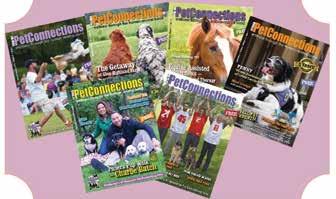
PetConnec tions Magazine


We star ted this venture, because of our passion for the human-animal bond. We also wanted to let others tell their stories and provide the best information possible on caring for your pets. Now we would like to extend our PetConnections network and an invitation to assist in continuing our mission.
What you get with a PetConnections
VIP Membership:
PetConnections magazine mailed to you, 6 copies per year.
Digital issue Eblast with newsletter ever y issue , including early
notice of upcoming contests and events. Discounts from local businesses. Listing on the VIP Membership Page of you, your family and your pets! Free admission to PetConnections events and free or special admission to other pet events. Other surprises, including invitations to exclusive dinners and events. The cost is up to you.
Please join and pay securely online at www PghPetConnections.com/ subscribe.
Many of our adver tising sponsors have asked about additional par tnership oppor tunities beyond adver tising and, thanks to your suggestions, we have created Membership programs for businesses and organizations.
Basic Business Membership, $100/year
Includes magazines for your business. Your location will be featured online at the Pick up a Copy Dis-

tribution list and listed on our sponsor page in print and online.
VIP Business Membership, $100/month
Includes Basis Business Membership benefits PLUS the ability to include a special offer for VIP Members online and to inser t a flyer in VIP Membership envelopes mailed with ever y issue, adver tising on one eblast with link through to your site or page, free tickets to PetConnections Expositions, sponsored events and VIP Social Events. Social media mentions.
Non-profit Par tner Membership for Tax Exempt Charity or Foundation, $100/year Includes one feature ar ticle, online and print directories and event listings. www PghPetConnections.com/ subscribe.
Membership payments may also be mailed to 154 Lutes Road, Finleyville, 15332 or call to process your credit card securely: 724-503-8695. You may email additional inquiries and questions to: info@pghpetconnections.com


Welcome to our Central Ohio PetConnections Magazine November/December 2016 Vol. 2 Issue 6
Merry Christmas, Happy Hanukkah and Happy New Year! This issue completes our second year of publishing Central Ohio PetConnections! Thank you to our readers, writers, and advertising sponsors, for making PetConnections a success in Central Ohio!
Our inaugural PC Pet Expo Symposium & Gala was a success! Thank you to our participating attendees, vendors, and speakers! We are looking forward to 2017 shows and will announce in our next issue when and where!
ADVERTISING INQUIRIES
PLEASE SUBMIT ANY CORRESPONDENCE TO: info@pghpetconnections.com 412-738-4233
CENTRAL OHIO PETCONNECTIONS BI-MONTHLY
Published by: Pittsburgh PetConnections, LLC. Pittsburgh PetConnections LLC. was formed in 2012. Our mission is to publish a high quality, informative publication focused on the Human-Animal Bond. We support local businesses and also assist local non-profit businesses for pets and people, to give back to our great Central Ohio communities.
MAGAZINE PUBLICATION STAFF
Carla Mader, Managing Editor
Susan Wagner, DVM, Content Editor
Nicole Mayer, Art Director
Jaime Chesney, Digital Advertising Specialist
Carla Mader, Sales & Distribution Manager
Ken Holton, Distribution
Kara Jones Photography, Photography
CONTRIBUTING WRITERS
Our contributing writers have many years of combined experience and expertise in the fields of veterinary medicine and the Human-Animal Bond.
All Rights Reserved | Copyright 2016
PetConnections is holding our Central Ohio’s 1st Annual Thanks for Paws Contest! Co-sponsored by Paws N Claws Eyewear. Now through December 30th, submit a photo and 200 words or less by email to: info@pghpetconnections.com stating why you are thankfulfor your pet and/or the animal shelter you adopted from. Winners will be announced on social media and published in our January-February issue. See details on our events page!
Subscribe today for your own VIP MEMBERSHIP and personal bi-monthly copy of PetConnections, and become part of the Petconnections Community! www.petconnections.pet/subscribe PetConnections supports local organizations and small business and we have established a community network of readers & members, writers, advertising sponsors and distribution points. Please support our advertising sponsors! See their locations on the map page. Check out our PetConnections Resource Directories for categorized listings
This issue is packed full of more great articles!
Read about the Benefits of Pet Insurance, Five Life Balance Lessons from Dogs, Monarch Waystations by the Ohio Wildlife Center, and much more!
See how PetConnections can help you market and advertise with content which supports your message with our multi-media partnership packages! Our a partnership with Digital Advertising Solutions offer more targeted and effective digital marketing and advertising campaigns to our sponsors for Central Ohio, as well as Western PA. For PetConnections Advertising inquiries contact: 412-738-4233 or email info@pghpetconnections.com PetConnections is also looking to grow our team with additional sales account manager professionals.
Please submit your photos and stories, as well as remembrances to be featured online and in future issues to: info@pghpetconnections.com
Thank you for picking up PetConnections. Take care of yourself and your pets this Winter season and be well!
Warmly,
Carla Mader, Publisher - Pittsburgh & Central Ohio PetConnections Magazine
Please submit any correspondence to: info@pghpetconnections.com Please check us out on the web & subscribe at: www.petconnections.pet Follow PghPetMag on Twitter and “Like” us on Facebook! http://www.facebook.com/PghPetconnectionsMagazine




By Susan Wagner, DVM, MS, ACVIM
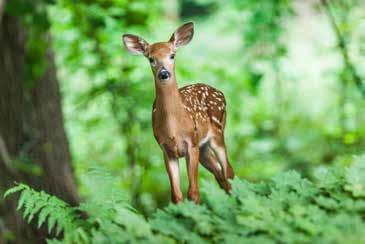
Hurry up! Look outside!” shouted my husband. There in our backyard stood a large buck. He was as tall as a pony, with bright white spots and tail. His antlers were magnificent. (The numerologist in me now wishes I had counted the points, but I was too surprised at what I was seeing to think of it.)
I quickly closed the blinds on our picture window — I was visualizing the news stories about deer jumping through storefront windows. I didn’t care about the chaos that would ensue in our house as much as the harm to the deer. I realize now that I was having a typical human reaction to this deer, and there was never any danger of shattered glass and a wounded animal. This deer came to us at a very special time.
As I peeked from behind the blinds, he caught a glimpse of me – or so it felt. We stared at each other for a split second. He was as calm and cool as could be. I stood and watched as this magnificent being slowly turned and disappeared into the trees behind our house.
Many of you may be thinking, big deal – she saw a deer. Well it was a big deal, because my husband and I
don’t live in a rural area. We’re in a neighborhood that has lots of birds, squirrels, dogs, cats and Rocky the raccoon – no deer.
Animal Spirituality tells us that when an animal comes to us under unusual circumstances, there is a message to be gained. I pulled out my Animal Speak book by Ted Andrews (Llewellyn Publications, 2005), who is one of the foremost experts in animal energy and wisdom. The book said, “deer take us into the wilderness for new adventures.” Ted mentioned that in the tales of King Arthur and the Knights of the Round Table, Sir Gawain’s deer hunt took him to wondrous and exciting encounters.
The next day I heard the sad news that Ted Andrews had died. Ted grew up in Dayton, and I have always admired this fellow Buckeye and his work. He has taught us about the wisdom of animals, and has given of himself for animal welfare. I had the good fortune of hearing him speak, and he kindly and humbly autographed one of my books.
When it comes to Ted Andrews, perhaps the deer that came to us expressed it best – magnificent and graceful, with a knowing in his eyes. Ted also says that deer represent gentleness and innocence, and a visitation signals a “gentle luring to new adventure.” I’d say the deer was right.
And this year, as my family celebrates its first holiday season without our magnificent and graceful matriarch, I have the feeling I’ll be seeing something very special in my backyard.
Please honor Ted’s memory by sharing your unusual animal encounters, and what they meant to you.
Read more at http://www.care2.com/greenliving/thankyou-ted-andrews.html#ixzz2hhhJB9sJ
FEBRUARY 10TH, 2017 PAWS to PARTY
A Celebration of wine, food and four legged friends. For more information visit CHAAnimalShelter.org.
SUNDAY, DECEMBER 4TH
Benefiting the dogs & cats of CHA Animal Shelter Columbus, Ohio
Submit a photo and a 200 words or less by email to: info@pghpetconnections.com stating why you are thankful for your pet and/or adopted from an animal shelter.
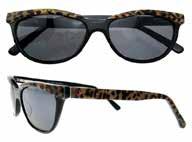
1st Prize: Boutique sunglasses with polarized lenses in leopard.
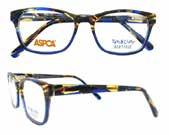
2nd Prize: Boutique eyewear frame in midnight/tortoiseshell.
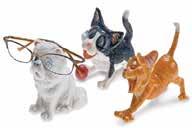
3rd Prize: Hand painted ceramic OptiPets eyewear holder. Available in a variety of cat and dog breeds.
Paws N Claws Eyewear raises funds and awareness for animals in need by donating 5% of the purchase price of these unique frames and accessories.
Most pet-lovers are horrified at the thought of keeping their beloved family dog in a cage that is only six inches longer than his or her body for more than a day, let alone a week, a month or for years. Yet, that is the fate of breeding dogs at a typical puppy mill, including the mother dogs of puppies sold in pet shops.
These commercial dog breeding kennels are more commonly known as puppy mills, which are inhumane, breeding facilities that disregard the health and wellbeing of the dogs in order to maintain a low overhead and maximize profits. Puppy mills thrive by remaining hidden from the public. That is why pet stores are the perfect sales outlet for them.
In response to the cruelty inherent in the puppy mill industry and the deceptive nature of pet store puppy sales, Grove City and Toledo have enacted constituent-driven ordinances mandating that pet stores acquire their dogs from animal shelters or rescues. However, these humane policies have recently come under attack, as some legislators in the Ohio General Assembly want to strip local communities of their right to homerule through introducing two pieces of legislation, Senate Bill 331 and House Bill 573, that would preempt local anti-puppy mill ordinances and leave regulation up to the state.
The most successful pet businesses, PetSmart and Petco, do not sell puppies. Rather, they thrive by partnering with local shelters and rescues to hold adoption events. The customers who adopt a dog at these events spend up to five times more on the day they adopt than the average customer. Of the top 25 pet store chains in North America, only one still operates under the old model of purchasing puppies from a mill that treats dogs like livestock, and then putting them in a display case to tempt potential buyers.
Pet stores that sell commercially-bred puppies are now an outlier in their own industry. However, a handful of shortsighted companies still operate under the old model of relying on the sale of puppy
mill dogs, which accounts for a meager two percent of the industry’s income.
The era of the pet store with a puppy in the window is coming to an end. Responsible breeders, those that want to know who is buying their puppies so they can ensure they are going to a good home, won’t sell through pet stores. A survey of American Kennel Club-affiliated breed clubs found that 96 percent of these clubs have ethics statements discouraging their members from selling to pet stores.
The question then arises, as communities decide to limit the sale of commerciallybred dogs, should the Ohio General Assembly strip them of the right to have their own policies in order to protect a dying business model that the most successful pet store chains abandoned years ago? Should your town be prevented from having your own rules that reflect the culture and values of your
By Corey Roscoe
We can end puppy mills. As consumers, we can vote with our money by adopting from a shelter or rescue or going to a responsible breeder who is proud to let us see how the mother dog lives. However, first, we must urge lawmakers to reject these “big government knows best” bills, like SB 331 and HB 573, that would strip cities, villages and towns of their right to enact their own animal-friendly laws.
Corey Roscoe is the state director in Ohio at The Humane Society of the United States PC
Find your Representative using the tools available on the Ohio House website: www.ohiohouse.gov
Make a brief, polite call to your state representative today. You can say: “Please oppose the pet shop bills, SB331 and HB573. They protect the puppy mill industry and inhumane pet shops while offering weak and unenforceable standards.”
Follow-up your call with an email and connect with your legislator via social media.
Spread the word about these dangerous bills with everyone you know and encourage them to also contact their state House legislator to oppose the pet shop bills.

g if pet insurance is right for you? Let’s dig in and explore the benefits of this coverage.
Pet insurance helps by reimbursing you for your pet’s veterinary care. This can be helpful even if you feel like could manage an unexpected veterinary bill. For instance, it can prevent the need to dip into your savings, add to your credit card debt, or put off things like a home improvement or family vacation to cover the costs.
When two dogs were brought into the El Cid Animal Clinic with the same symptoms, their pet parents had different experiences.1 One had pet insurance and easily agreed to recommended diagnostic and treatment services without even looking at the estimated costs. She had the comfort of knowing she could get reimbursed for her dog’s care.
The other pet parent didn’t have pet insurance and couldn’t afford the services suggested for his dog. Fortunately, the medical team was able to go back and identify an alternative plan that was within his price range. However, this solution left unanswered questions about the dog’s illness and put constraints on treatment.
Overall, it was a “financial and emotional nightmare” for the client according to Dr. Xavier Garcia who is the Medical Director at the clinic. “Sadly,” he added, “some clients realize how important pet insurance is after being put in a position of having to choose finances over optimal care for their beloved pets.”
Pet owners are often surprised by the cost of veterinary care for their pets. The good news is that there are many advanced medical services available for pets these days, such as MRI, surgery, and chemotherapy, but they can be expensive. In fact, an emergency trip to the veterinarian can run between $2,000 and $3,000.2
As you start considering pet insurance and shopping around for a plan, be sure to look carefully at what’s covered. It’s important to know what you’ll be getting before you enroll. The new ASPCA Pet Health Insurance Complete CoverageSM plan gives you the comfort of knowing exam fees, diagnostics, and treatments including alternative therapies will be covered for:
Dental Disease
Plus, it offers coverage for prescription food, vitamins, supplements, stem cell therapy, and microchipping.4 In addition, you can add preventive care for a little more per month. This can cover things that help keep your pet healthy such as:
Prevention
You can also customize Complete CoverageSM to better fit your needs and budget by selecting your annual limit, annual deductible, and reimbursement percentage. If you only want a little extra cushion in case your pet gets hurt, you can choose the accident-only plan option.
ASPCA Pet Health Insurance Complete CoverageSM doesn’t limit you to a network, so you can stay with the veterinarian you trust. You can visit specialists and emergency clinics too. Here’s how it works:
By Dr. Mary Beth Leininger
1. Pay your veterinarian as usual.
2. Submit a claim online, by mail, or by fax— whatever works best for you.
3. Get reimbursed 90% of your bill. You can have your reimbursements directly deposited into your back account or receive a check in the mail. You can also track your claims, pay your bill, view your plan details, and update account information anytime online.
You’ll need to meet an annual deductible before you can start getting reimbursements. The good thing about an annual deductible is that you only have to meet it once a year no matter how many times your pet gets hurt or sick. Other providers have a per incident deductible, which needs to be met each time your pet has a medical issue.
Many pet parents have already discovered the benefits of pet insurance. Currently, there are over 1.4 million pets insured according to the North American Pet Health Insurance Association (NAPHIA). That number continues to go up as more pet parents discover the benefits of coverage.3
Of course, enrolling in pet insurance is a personal decision, but as you can see from Dr. Garcia’s client, it can make a big difference if your pet needs medical attention. Visit www. WeCoverThat.com to learn more about ASPCA Pet Health Insurance Complete CoverageSM and see if it’s right for you.
Footnotes:
1Based on information provided by El Cid Animal Clinic, Aug. 2015 2http://www.kiplinger.com/article/spending/T065-C000-S001-the-truecost-of-owning-a-pet.html
3North American Pet Health Insurance Association (NAPHIA) State of the Industry Report 2015
4Coverage for prescription food, vitamins, and supplements do not i include prevention or general health maintenance (including weight loss).
Pre-existing conditions are not covered. Waiting periods, annual deductible, co-insurance, benefit limits and exclusions may apply. For all terms and conditions visit www.aspcapetinsurance.com/terms. Preventive and Wellness Care reimbursements are based on a schedule. Complete CoverageSM reimbursements are based on the invoice. Levels 1-4 reimbursements are based on usual and customary eligible costs. Products, rates and discounts may vary and are subject to change.
Plans are underwritten by
ASPCA®
agreement,
Company and
Through a



Inside Front Cover ASPCA
Page 11 A Beaver Animal Clinic
Page 11 Best Breed
Page 12 B Canine Health
Page 21 Close 2 Ur Heart
Page 23 Closure at Home
Page 21 Creative Foundations
Page 23 C Crystal Remembrance for Pets
Back Cover HAAWC
Page 9 D Hatfield Subaru
Page 22 Inner Awakening
Page 7 K9 Grass
Page 9 Kobi Collars
Page 21 Line Keepers
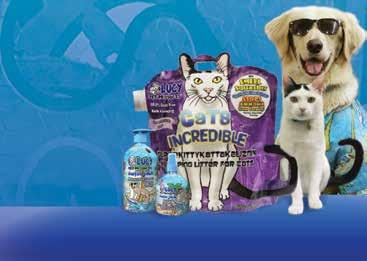
Page 9 Lucy Pet Products
Page 11 Nature’s Logic
Page 10 Pawdentify
Page 3 Paws N Claws Eyewear
Page 9 Pet Valu
Page 3 Real Big Puppy
Page 10 Timber Wolf Leather
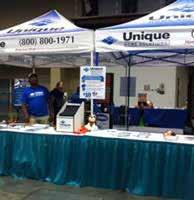
Page 7 Unique Home Safety


Adoption, Rescue & Shelters
Almost Home Dog Rescue of OH
614-766-1001
www.almosthomeohio.org
Canine Companions
1-800-572-BARK (2775) www.cci.org/northcentral
Capital Area Humane Society 614-777-7387 cahs-pets.org
CHA Animal Shelter 614-891-5280 chaanimalshelter.org
Colony Cats Adoption Center 614-593-0055 Colonycats.org
Columbus Dog Connection 614-471-9000
www.Columbusdogconnection.com
Cozy Cat Cottage Adoption Center 614-336-8510 cozycatcottage.org
Franklin County Dog Shelter & Adoption Center 614-525-3647
franklincountydogs.com
Pets without Parents www.petswithoutparents.net
Avian & Exotics
MedVet Medical & Cancer Centers for Pets (Hilliard)
614-870-0480 www.medvetforpets.com
OHPA Bird Fairs www.ohpabirdfairs.com
Dog Parks
Alum Creek Dog Park www.alumcreekdogpark.com
Companion Club Dog Park 740-881-2000 www.columbusdogpark.com
Godown Road Dog Park www. worthingtondogpark.com
Heritage Trail Dog Park www.hilliardohio.gov/play/heritage-trail-dog-park Pizzurro Park and “Dog Park” www.gahanna.gov/departments/parks/ communityParks.aspx
Equestrian
Central Ohio Riding Club 614-873-6644 centralohioridingclub.com
Equus Now! 740-549-4959 www.Equusnow.com
OSU Veterinary Medical Center 614-292-6661 vet.osu.edu/vmc/
Landscaping & Lawncare
Forever Lawn
844.614.TURF(8873) www.foreverlawnohio.com
Good Nature Organic Lawn Care 888-529-6723 www.whygoodnature.com
Pet Burial, Cremation & Memorial Services
Crystal Remembrance for Pets
888-930-7363
Day Manofsky Funeral Service
614-532-5012
www.Daymanofskyfuneralservice.com
Rutherford Funeral Homes
614-885-4006
www.Rutherfordfuneralhomes.com
Schoedinger Pet Services
614-224-2691
swww.choedingerpetservices.com
Pet Fencing
Invisible Fence
614-888-3647
www.columbuseast.invisiblefence.com
Pet Stop of Ohio www.Columbuspetfence.com
Pet-Friendly Auto Dealerships
Central Ohio Area
Byers Subaru
877-265-2083
www.columbussubaru.com
Hatfield Subaru 877-371-2094
www.hatfieldsubaru.net
Pet Insurance
ASPCA Pet Health Insurance
888-716-1203 www.aspcapetinsurance.com
Pet Resorts- Boarding, Daycare, Grooming, Agility & Training
ARF! Agility and Rally for Fun! www.arfagility.com
Advanced Boarding & Grooming
740-549-9999
www.advancedboardingandgrooming.com
K9 Connection 614-778-0431
www.k9connectiononline.com
Park Your Paws Doggie Daycare 614-262-PAWS www.parkyourpaws.org
Pet Palace Pet Boarding Resort www.petpalaceresort.com
The Dog Spaw Pet Grooming 614-245-4169 www.thedogspawsalon.com
Willow Wood Pet Resort & Training Center 614-304-1921 www.petresortwillowwood.com
Pet Retail, Supply and Accessories
April Minech Custom Portraits/Pet Inspired Art www.LadybugDelightz.etsy.com
Best Breed Holistic Pet Nutrition www.Bestbreed.com
Canine Health Supplements www.peggymills.lifevantage.com
Close 2 Ur Heart Jewelry www.feifish.etsy.com
Collar Doos www.collardoos.com
Fan Reps Legwarmers and More 412-439-3063 www.fanreps.com
Kobi Collars www.kobicollars.com
Lucy Pet Products 844-724-LUCY (5829) www.lucypetproducts.com
Moochie & Co. www.moochieandco.com
Natural Inspirations Parrot Cages www.Naturalinspirationsparrotcages.com
Pet People www.petpeoplestores.com
Pawdentify and Links-It Collar Tags www.pawdentify.com
Plexidor www.plexidors.com
Timber Wolf Leather collars, leashes, harnesses 419-308-4118
Pharmacies
Murray Avenue Apothecary www.maapgh.com/pet-supplements
Closure at Home Jill Hayes, DVM 614-397-2128 www.closureathome.com
Elemental Veterinary Center & Pet Spa 614-824-4036 elementalvetcenter.com
Lifetime Pet Wellness Center 614-888-2100 www.lifetimepetwellness.com
Health & Harmony Animal Hospital 614-360-3941 www.healthandharmonyanimalhospital.com
The Animal Care Center at Granville 740-587-2229 www.animalcarecentergranville.com
Veterinary Specialty and Emergency
MedVet Medical & Cancer Centers for Pets 614-846-5800 www.medvetforpets.com
OSU Veterinary Medical Center 614-292-3551 vet.osu.edu/vmc/
Wellness for Guardians
The All Life Community for Integrative Well Being 740-201-8242 www.alllifecenter.org
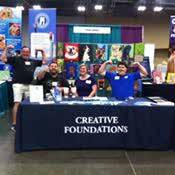
Creative Foundations 877-345-6733 www.creativefoundations.org
Judith Levy Coaching www.judithlevycoaching.com
Unique Home Solutions 614-845-0500 www.uniquehomesolutions.org
Wildlife
Columbus Zoo and Aquarium www.columbuszoo.org
Ohio Wildlife Center 614-793-WILD www.ohiowildlifecenter.org
SCRAM! Wildlife Control www.ohiowildlifecenter.org
The Wilds www.thewilds.columbuszoo.org
List your business today! info@pghpetconnections.com
Integrative Veterinary Medicine involves the use of the most appropriate Western medicine techniques along with the best of what holistic medicine has to offer. In this way, the pet benefits from the best of both worlds! When I speak of using the “most appropriate” Western medicine techniques, I mean the art of choosing the right tool for the right problem. Often, conventional medicine lumps many individuals into the same group. Every animal with the same diagnosis gets the same treatment. My holistic philosophy of medicine honors the individual animal and each garners a unique approach.
to support the animal’s immune system is also called for. And by the way, while antibiotics are killing off the bad bacteria, they are also decimating the good bacteria in the animal’s gut. Any pet on antibiotics needs a probiotic supplement to maintain intestinal and immune system health.
The holistic approach to health honors the body’s ability to heal itself. In fact, the body comes complete with its own pharmacy. Proof for this assertion can be found by studying the placebo effect. It is a fact that on average, 30% of those treated with a sugar pill will get better – no matter what disease we’re talking about. While we might say this is a case of mind over matter, we have to acknowledge that these individuals have found a way to cure themselves. Holistic methods tap into this innate ability of self-healing.
Western medicine is geared toward fighting disease. In fact, in veterinary school, we are not taught about health care; we are taught about disease care. While this approach imbues the practitioner with vital skills, it gives an incomplete view of health and healing. Holistic medicine, on the other hand is focused on the health of the patient. By helping the pet’s body function to its highest level, we aid the animal companion in regaining wellbeing.
By Dr. Doug Knueven, DVM, CVA, CVC, CVCH PC
I would also like to point out that while fighting disease is great, it is much better to avoid problems in the first place. And, how many tools does conventional medicine have for preventing disease? By my count one – vaccines. While prudent vaccination plans are helpful, we must realize that every vaccine is a double-edged sword. Each one can affect a pet negatively and it is certainly possible to over-do it when it comes to vaccinating. Every pet
does not need every vaccine every year. Each animal should be vaccinated based on its unique lifestyle and disease risk.
The beauty of holistic medicine is that it can powerfully prevent disease. Holistic practitioners can detect what has been termed dis-ease. Dis-ease is a state of health where the animal is having problems but those issues have not progressed to the point of disease. Let’s face it, just because a pet is not sick does not mean she is perfectly healthy.
Most pet owners have witnessed dis-ease in their four-legged companions. Every once in a while they can clearly see that their pet is not acting right. Unfortunately, when they take him to their vet, the exam and tests do not identify a disease. In such cases the veterinarian is at a loss to come up with a treatment because there is no diagnosis. Holistic methods give the practitioner techniques to detect subtle imbalances, along with tools to fix the problem.
The bottom line is that by embracing Integrative Medicine, a veterinarian has more tools in the old tool box. While conventional veterinarians have drugs and surgery, an integrative vet has those important tools plus things like nutritional supplements, herbs, chiropractic, acupuncture, energy medicine, massage therapy, therapeutic laser, and even Traditional Chinese Veterinary Medicine food therapy. No doubt you’ve heard the saying, “If the only tool you have is a hammer, everything looks like a nail.” An integrative vet will use the appropriate tool.
Integrative Veterinary Medicine practitioners realize that these two approaches are not mutually exclusive. It is certainly possible to strengthen the body while fighting disease. For example, if a pet has a serious infection, it makes sense to give antibiotics to kill the bacteria. But, no antibiotic can help a pet with a failing immune system. So the use of supplements



Kitty Korner
By Susan Wagner, DVM, MS, DACVIM
There I was at my friend Jim’s 60th birthday party, enjoying the many stories he was being roasted with. Someone yelled to his wife, Patty, “Tell the cat story”. We had all heard it a thousand times, but never the less, we asked for it again.
Jim had two cats, Frankie and Alexandra, who were pretty spoiled. He loved them very much, and they knew they were the apples of his eye. Once Patty came into the mix, the dynamic changed. Jim was smitten with the human love of his life. He and Patty married.
It appeared that neither cat was thrilled with their new mom. (At least that’s the common interpretation of this story–the one everyone at the party had come to believe.)
Frankie and Alexandra showed their displeasure by urinating in the most inappropriate ways.
breaths–it was not so much affection as a strong message. Alexandra let loose a huge expulsion of urine, right on Patty’s lap.
“You have a choice”, she screamed to Jim. “It’s these crazy cats or me!” “I wouldn’t put it that way”, came Jim’s reply. Spoken like a true cat person.
For example, Patty spent hours of hard work refinishing an old dresser for their new home. When it was finally done, she unveiled it to Jim. What a beautiful job she had done. Layers of old paint gave way to beautiful wood. Frankie walked up to it and sniffed around. “Hmm, I remember this. Must have taken mom a long time to get it looking so good” He then turned his back to the dresser, and let it fly, or should I say squirt. Urine came dripping down the side of the beautiful wood. And shrieks of horror came from Patty’s mouth.
But it didn’t stop there. No matter how nice Patty was to them, Frankie and Alexandra weren’t buying it, or so it seemed. Then the moment came, the one we listeners loved to hear over and over. Patty and Jim were sitting on the couch, and Alexandra jumped on Patty’s lap. How nice–was she finally giving in? Was she finally showing her new mom affection? We held our

While everyone can enjoy Jim’s reply, there are two camps reading this right now. The cat people are laughing, and thinking to themselves, “Of course the cats stay”. The noncat people are probably calling them a few choice names. But what if we take an energetic perspective on the situation? Could Frankie and Alexandra have been Patty’s best friends? What if Patty had understood that their behavior was not about dislike for her, but reflections of a negative vibration in her energy field? Could that information have prevented many episodes of professional heartache for her?
What do I mean when I say energy field, and how does it relate to Patty and the cats? Quantum physics has taught us that every thing that exists is made of energy, including living beings. A profound, Nobel Prize winning study done by Brian Josephson showed that tiny particles making up our bodies are actually waves of energy. His discovery is no different than finding a dog that looks like a dog, acts like a dog, yet meows, purrs and generally runs the household. In other words, finding a dog that is also a cat. A particle is a particle, and a wave is a wave–that’s that. Or is it? Since that discovery, scientists now know that every bit of who we are, down to the tiniest of tiniest substances, is a wave. In fact, all of the particles that we thought were particles–electrons, protons, etc–are made up of vibrations of energy. We are all one big wave of electromagnetic radiation. This radiation creates a magnetic field, called the biofield. Biofields receive and send energy waves. Every living being is a cell phone or radio–we receive and transmit energy.
You may be familiar with a different name for our biofield: our “aura.” Yes, the concept that seemed to originate in fantasy nonsense told to us by healers, psychics and ghost busters–has now been measured by scientists. It’s not fantasy at all, but one of the incredible realities that will change the way we live as much as knowing the world is round instead of flat. The concepts of energy and biofields aren’t just theories, they have been measured in laboratories by magnetocardiography, magnetoencephalography, and by machines called Superconducting Quantum Interference Devices (SQUIDs).
Our biofields run through and around every cell and organ system of our bodies. Energy medicine is the practice of assessing and manipulating the biofield to bring it back into balance, and to enhance the patient’s own instinctive abilities to heal. I was introduced to energy medicine through my own journey with chronic pain and fatigue. Because I was able to function at a much higher level after my sessions, I decided to learn energy medicine for my patients. I now approach every case with conventional veterinary training and an energetic approach.
As I continued my practice and investigation into energy theory, I became aware that I could no longer approach anything in life –academic or personal–without honoring the energy behind it. Everything had become about energy. I realized that I was in a second “residency”. I can’t tell you how unprepared I was, and how astonished I was, at what I was learning. This wasn’t just about balancing the energy field and helping the animal’s innate ability to heal, this was a universal curriculum in the human-animal bond. I witnessed animals mirroring emotions and situations of the human guardian. I could feel dis-ease in the household by working with the animal. I began to understand what animals were really here for. These experiences made me realize, without a shadow of a doubt, that the human-animal bond has its basis in energy.
So what does the energetic nature of the human-animal bond have to do with Patty, Frankie and Alexandra? The continuedonpage17



By Alley Cat Allies


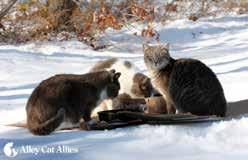
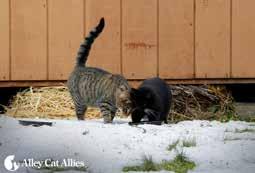
BETHESDA, Md., USA – Nov. 17, 2016 – As temperatures across the country begin to drop, many people find themselves concerned about how to care for outdoor cats in the wintertime. Cats are resilient, but they can always use a hand staying warm and healthy during cold weather.
“Cats live and thrive outdoors in all kinds of climates,” said Becky Robinson, president and founder of Alley Cat Allies. “But a little extra help during the winter months can go a long way for protecting community cats.”
Alley Cat Allies offers ten easy ways people can make life outdoors even more comfortable for cats:
• Provide shelters to keep cats warm. These can be easy and inexpensive to build yourself, or can be purchased pre-made online. Check out our new do-it-yourself shelter video at http://www.alleycat. org/resources/how-to-build-an-outdoorshelter/.
• Insulate shelters with straw. Not only is straw less expensive and easy to come by (just check your local pet supply store or garden center), but straw repels moisture.
• Remove snow from all shelter entrances and exits. It’s important to keep cats from getting snowed in.
• Increase food portions to help cats conserve energy and stay warm. Canned or wet food, which takes less energy to digest, should be in insulated containers. Dry food, which will not freeze, also works.

• Keep water from freezing to prevent dehydration. To keep water drinkable, use bowls that are deep rather than wide and place them in a sunny spot. Or use heated electric bowls.
• Do not use antifreeze, which is deadly, in an area accessible to cats. Keep antifreeze out of reach and clean up spills. Most antifreeze brands use ethylene glycol as the main ingredient, so be sure to switch to a brand made with propylene glycol because it is less toxic.
• Refrain from using salt and chemicals to melt snow. These can be lethal when licked off paws or
ingested from melting puddles and can hurt a cat’s paw pads.
• Check your car before you drive. Look between your tires and give the hood of your car a few taps before starting it to make sure that a cat has not hidden underneath or inside the engine for warmth.
Winter is the prime breeding season for community cats and the ideal time to spay and neuter. If you’re conducting TrapNeuter-Return (TNR)—the only humane and effective approach to stabilize community cat populations—in the winter, follow these safety tips:
• Check the traps frequently and provide a warm holding area, pre-and-post surgery. If it’s too cold for you, then it’s probably too cold for cats to be in traps, exposed to the elements, for extended periods of time. Keep traps covered and secured in a temperature-controlled vehicle or building.
• Ask your veterinarian to shave only a small area for spay/neuter surgery. This will help the cats stay warm by maintaining maximum fur coverage.

Alley Cat Allies, headquartered in Bethesda, Md., is the only national advocacy organization dedicated to the protection and humane treatment of cats. Founded in 1990, today Alley Cat Allies has more than 600,000 supporters and helps tens of thousands of individuals, communities and organizations save and improve the lives of millions of cats and kittens worldwide. Its website is www.alleycat.org, and Alley Cat Allies is active on Facebook, Twitter, Instagram, Google+ and YouTube.
Media Contact:
Lauren Tate 513-639-7461
More winter weather tips for outdoor cats are available at www.alleycat.org/Winter Weather.
By Linda Forte-Spearing, Volunteer, Ohio Wildlife Center
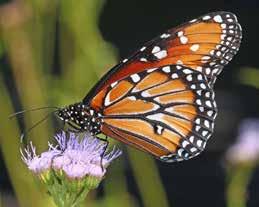
Each fall, hundreds of millions of monarch butterflies migrate from the United States and Canada to mountains in central Mexico where they wait out the cold weather until conditions favor a return flight in the spring. The monarch migration is truly one of the world’s greatest natural wonders, yet it is threatened by habitat loss at overwintering grounds in Mexico and throughout breeding areas in North America.
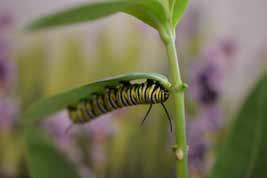
As butterflies do not feed their young, they are careful to lay their eggs on a host plant—one that is an appropriate food source for the caterpillar phase of a butterfly’s life cycle. For monarchs, this plant is milkweed.
Plants in the milkweed family contain poisons, which render them unpalatable for most other insects. Monarch caterpillars have the ability to assimilate milkweed toxins. As the caterpillars, and subsequent butterflies, store these toxic compounds in their bodies, they are distasteful to many predators.
Widespread adoption of herbicideresistant corn and soybeans has resulted in the loss of more than 100 million acres of monarch habitat. The planting of these crops, genetically modified to resist the non-selective herbicide glyphosate (Roundup®), allows growers to spray fields with herbicide instead of tilling to control weeds. Milkweeds can survive tilling. They cannot survive the repeated use of glyphosate. This kind of habitat loss is devastating since these particular croplands represent a significant portion of the summer breeding grounds for monarch butterflies.
The use of herbicides and frequent mowing along highways has converted much of this roadside space into grassy areas that lack food and
shelter for wildlife. Some states have started to increase the diversity of plantings (including milkweeds) along thoroughfares. This year, Ohio Wildlife Center collected milkweed seeds and donated them to ODOT for a project focusing on planting milkweed along major highways.
The remaining milkweed habitats in pastures, hay fields, grasslands, native prairies, and urban areas are not sufficient enough to sustain the large monarch butterfly populations that were seen within the last couple of decades. Monarchs need our help!
Monarch waystations are places that provide the necessary natural resources for monarch butterflies to prosper. Without milkweed, throughout their spring and summer breeding locations in North America, monarchs would not be able to produce successive generations
that culminate in the migration each fall. Similarly, without nectar from flowers, these fall migratory monarch butterflies would be unable to make their long journey to Mexico. The need for host plants for larvae and energy sources for adults applies to all monarch butterfly populations around the world.
Creating monarch waystations can be as simple as adding milkweeds, and other nectar sources, to existing home gardens and open plots of land at schools, businesses, nature centers, etc. or maintaining natural habitats with existing milkweeds. No effort is too small to have a positive impact on the declining monarch population.
It is important to plant milkweeds that are native to your region of the country. Native plants typically require less maintenance and offer a greater benefit to local wildlife. In the northeast region of the United States, including Ohio, common milkweed, swamp milkweed, butterfly milkweed, and poke milkweed are all considered to be native or indigenous.
Ohio Wildlife Center, a non-profit organization located in Powell, has a prairie area with a large amount of milkweed. Each year, Center staff and volunteers collect eggs and caterpillars, watching them grow and then releasing them back to the wild. The caterpillars have a much better chance of survival under the watchful eye of Ohio Wildlife Center.
To show your support for monarch conservation, you can have your monarch habitat certified as an “official” waystation by Monarch Watch. This means your habitat will be included in the International Monarch Registry, and you will be awarded a certificate bearing your habitat’s waystation ID number.
You may also choose to display a waterproof sign identifying your waystation as such. This display helps convey an important monarch conservation message to all those who visit

your habitat and may even encourage onlookers to create a habitat of their own. Monarch Watch is a nonprofit educational outreach program based at the University of Kansas that focuses on the monarch butterfly, its habitat, and its spectacular fall migration. For more information about monarch conservation, waystation certifications, and research projects managed by Monarch Watch, please visit www.MonarchWatch.org.
Since 1984, Ohio Wildlife Center has educated more than 100,000 young people and treated more than 80,000
sick, injured, or orphaned wild animals. The Wildlife Hospital is a free community resource that costs $250,000 annually.
For additional information about Ohio Wildlife Center, visit www. ohiowildlifecenter.org. Please call the Center’s monitored information hotline at 614-793-WILD for assistance with common wildlife situations. You can reach SCRAM! Wildlife Control at 614-7630696. All proceeds from SCRAM! services support Ohio Wildlife Center’s non-profit rehabilitation and conservation education efforts. PC
continuedonpage14
cats were mirroring Patty’s biofield. Our energy fields not only govern our mental and physical health, they create our reality. Physicists and philosophers who study the nature of reality and consciousness tell us that reality is a series of possibilities. These possibilities are made of–you guessed it–energy waves! What we focus on, what our magnetic field gives energy to, governs the frequency of those waves and how they coalesce into matter and experience. These ideas are not new-age nonsense, but are based in science. The works of brilliant researchers such as Albert Einstein and Nikola Tesla have contributed to these modern theories of life.
I have come to believe that animals are not only our companions and furry friends; they walk the path of life with us to teach us who we are, and to help us stay balanced and in a state of well being. I like to think of this as the spiritual nature of animals. With careful observation, we can learn so much about ourselves. Patty went on to create a meaningful professional life that has helped so many people. Yet during her career, she was plagued with a common theme. Many of her superiors did not respect her, her work was de-valued, and colleagues took credit for her ideas. In simple terms, her professional life and work were pissed on, over and over again — just as she and her beautiful chest of drawers were.
What if Patty had known the energetic connection of the human-animal bond, and what Frankie and Alexandra were
reflecting back to her? Could she have taken measures earlier in her career to break the pattern, and create a new possibility for herself? If she had known that we could influence our realities, not simply exist in them, could her professional life have been more rewarding?
Perhaps this sounds too silly to be true; just a ridiculous theory from an over zealous animal lover and energy practitioner. Perhaps. I would agree if it were one story. But having watched many stories unfold, and now being able to explain what the pattern is to the human, and what probably happened to them in the past to create it, I don’t believe it is silly at all. When I can spot the unresolved human anger by working with the aggressive animal, I know it is more than coincidence. The response is usually a look of amazement from the human. “How could you possibly know that?” they often say. “Just ask your pet,” I reply.
Patty’s story exemplifies the reason for my work. It shows us that things are not necessarily as they seem. Life can be an illusion. If animals are able to shed light on our lives, then why not other human beings? Perhaps this human-animal relationship is a model for human-human interactions. As long as there is one homeless person, there will be feral cats. As long as one child is abused, there will be cruelty toward animals. Animal welfare mirrors human welfare.
The research potential for this concept is very exciting. A multidisciplinary team of psychologists, neuroscientists, social workers, veterinarians and animal behaviorists are just a few of the
professionals that can join together to look at life from an entirely different perspective. As Albert Einstein said, “One can’t solve a problem with the same thinking that created it”
Don’t worry, cat lovers, Frankie and Alexandra remained with the family, and enjoyed the rest of their lives in the great outdoors. They fulfilled their instinctive purpose for their mom, but it wasn’t apparent at the time. On behalf all humans who are learning about energy fields, and desiring a better life, I thank you Frankie and Alexandra.
Dr. Susan Wagner is a board certified veterinary neurologist whose pioneering work acknowledges the bioenergetic interaction between people and animals. She is an advocate for change in the area of interpersonal violence and animal cruelty, and works toward a greater understanding surrounding the health implications of the human-animal bond.
Residing in Worthington OH, she is an active public speaker in the areas of energy theory and healing, spirituality, and the human-animal bond. She especially enjoys teaching about the spiritual nature of animals. Dr. Wagner is published in several peer-reviewed journals. She is also co-author of Through A Dog’s Ear: Using Sound to Improve the Health and Behavior of Your Canine Companion, and was research director for the Through A Dog’s Ear CD series. Dr. Wagner practices integrative medicine at MedVet, is an Adjunct Assistant Professor at The Ohio State University Veterinary College, and a Level IV Healing Touch for Animals practitioner. PC
By Kristin Hermann
Horses like humans need to stretch. By stretching our muscles, we keep them healthy and elastic. A stretchy muscle is less likely to injure than one that is tight. I suppose football players do ballet and yoga to limber their muscles, and that is equivalent to a horse stretching.
Horses are way more flexible than we give them credit. If there is a fly on their flank and a little tightening and flicker of the skin does not dislodge it, they whip their head around and move the fly with their nose. Horses are born bendable and stretchy but often become less flexible as they are ridden. Riders often just put a horse in a headset and constrain the neck and gaits by inhibiting them from moving as a natural horse.
Riders that complement a horse are the ones that can move in rhythm with the horse’s natural gaits and not interfere and/or constrain how the horse moves. Stretching a horse can enhance and or restore its natural gaits, in addition to many other benefits, and there are several ways to stretch a horse. From the ground, on the lunge line and under saddle.
Lunging is one of the best ways to encourage a horse to stretch, but the handler must first know how to lunge a
Stretch your horse to Improve
• Basic training at its best
• Suppleness
• Submission Lift the back
• Lengthen the stride
• Improve overall health
• Connect the back end with front end
• Recreate the natural horse’s way of going with a rider
• Develop
horse. Please seek professional advice on how to lunge your horse, so you do not get tangled up in the lunge line. When our horses at Coventry Equestrian Center can’t get turned out because of the weather, I lunge them to stretch out the top line muscles. It is like play time in the fields but with a little more structure and purpose!
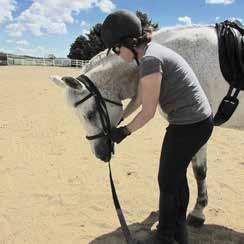
Before I lunge a horse, I first teach the horse to stretch at a whoa from the ground. Many different ways can be used to teach the horse to stretch its head and neck down. One is applying pressure at the poll with your hand or asking the horse to flex at the poll with the bit and then allowing the horse to stretch. Pinching the poll is good if you are on the ground but doing this mounted or lunging poses some difficulty! Therefore, learning how to ask the horse to flex at the poll from a light pressure with the bit is preferable because you can do it mounted and lunging. Teaching the horse to give at the poll and jaw with the bit, when I learned it, was called “chewing the reins out of the hands.” (Pgh Pet Connections article July 2014 https://issuu.com/pghpetmag/ docs/petconnections_july_2014_digital_
ed/34) Training the horse to flex at the poll can be called give and release, flex and stretch or teaching the downward cue. It doesn’t matter what it is called as long as we get the same results of our horse to learning the reflex of stretching its head and neck down at our command.
First develop a feel of asking the horse to flex at the poll from the ground.
When the horse learns the reflex for stretching at a standstill the person lunging can apply the same skills from a distance while lunging. Yes, this requires a coordinated skill, but if you can lunge a horse and not get tangled in the line, you can teach the horse to stretch while lunging.
A horse has to have a rhythmic trot on the lunge or while riding before attempting to teach it to stretch while trotting. If a horse does not have a relaxed rhythmic trot, you cannot teach it anything because you do not have its mind. It only makes sense that to train a horse anything, it must first be relaxed so it will pay attention to the handler. With relaxation and rhythm, you can progress with the training of the horse in motion.
How you go from teaching the horse to lower its head and neck on the lunge line after training the reflex at the whoa is done by applying the same signals while the horse is rhythmically trotting on the lunge or while under saddle. The
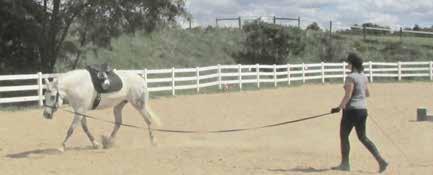
To train your horse to stretch on the lunge apply the same skills of asking the horse to flex at the poll only with a 20 foot rein, the lunge line. Please know how to lunge first.
rhythmic trot also helps the horse to lower its head down. To get the horse to stretch on the lunge line, you have to ask. In other words, you cannot just stand in the middle and let the horse circle you. There has to be some proactive interaction from the handler talking to the horse with the lunge line or rein. However, the difference is the lunge line is twenty to thirty feet long as opposed to the rein length being two or three feet. A proactive interaction of asking and allowing, as I have written about in all these articles for Pgh Pet Connections, applies for any training of the horse.
The rider or handler does not just command the horse but also has to listen to the signals the horse is giving back, or not giving back. Training a horse is not just asking the horse to do something, that would be too easy. This interaction between the handler and the horse I call a “the silent dialog.” A training jingle I’ve heard used is for the rider to Request, for
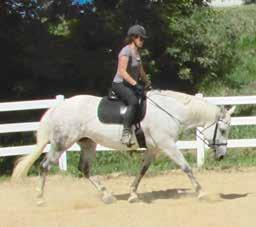
Training your horse to stretch under saddle is not the horse grabbing the reins out of your hands but, the rider allowing the horse to chew the reins out of the hands. The same feeling they learned at the whoa.
the horse to Respond and then the rider allows a Reward: Request, Respond, Reward. The difference between stretching a horse under saddle or while lunging as opposed from just standing still at a whoa is that when the horse is moving and stretching, then the whole top line (neck and back) and not just the neck are elongating. One of the reasons we want our horses’ to stretch under saddle and on the lunge, as opposed to just standing still, is because when the horse is moving it is engaging its back and using its whole body. Unifying and or “connecting” the horse’s hind end with its front end via stretching is one of the best suppling and training exercises that a horse can learn.
For more details on teaching your horse how to stretch on the lunge line or under saddle contact Kristin Hermann via email and I can set up a clinic or private lessons at either your farm or Coventry Equestrian Center. Your horse will be happy you did.
By Brian S. Burks, D.V.M., Dipl. ABVP Board Certified in Equine Practice
Horses handle cold weather much better than hot weather; they are adapted to being out in the elements. Wild horses are known to gain weight in the summer months, and lose weight in the winter. They also don’t usually live if their domesticated partners.
It is important to assess your horse’s body condition at least twice weekly, meaning that the blanket needs to come off, and your hands need to go on the horse and FEEL underneath that fuzzy hair, which can make horses appear heavier than they are in fact. The ribs may be easy to palpate under the fuzz, which is not what you want- you should have to feel deep for the ribs, though they ideally are palpable.

Winter uses more calories, and this can be especially evident in late gestation mares, the elderly, and the infirm. If you haven’t already, this is a good time to check teeth and have a good physical examination done. Horses require about 22,000 Kilo calories per day. This may increase in the winter.
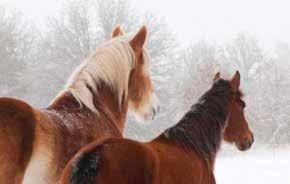
Roughage is the main heat source for the horse- not grain. Bacterial fermentation in the colon of fiber produces a lot of heat, which keeps the horse warm. Horses that cannot consume enough hay each day to maintain weight and warmth will require additional calories from grain or vegetable oil.
Start with feeding 2% of body weight of hay each day. It is ideal to weigh this amount to ensure accuracy. Once you know this, you may be able to feed by flakes, if the hay is all from
the same source. For every 10 degree drop, add about two pounds of hay. Horses in the wind and rain may require even more hay.
Also, ensure that there is adequate water at tepid temperatures. Water is required for fermentation, but many horses will not drink freezing water, though if temperatures gradually decrease, they are more likely to drink colder water. Adequate water intake will also prevent dehydration and intestinal impactions. PC
As business professors, we have the opportunity of working with talented professionals in different organizations. In our conversations, it is not uncommon for employees and managers to share personal and professional struggles in maintaining life balance. These individuals report that they are spread so thin that they are losing touch with their personal priorities, families, health and spiritual lives. If this sounds familiar, perhaps it would help to reconsider how you are approaching your life balance. If our dogs could talk, here are five tips they would share for living a life that is in balance.
Know your purpose. The American humorist Mark Twain said, “The two most important days in your life are the day you are born and the day you find out why.” Dogs seem to understand that their main purpose in life is to be our best friend. Are you clear about what your purpose is in life? In our book, The Dog’s Guide to Your Happiness: Seven secrets for a better life from man’s best friend, we state that to live a life of purpose is to be able to answer three questions:
• Am I following my heart and being true to myself?
• Is my life focused on things that matter to me?
• Am I being the person I want to be in the world?
Live in the moment. Most people live their lives thinking about the past or future and miss out on being fully present. We are bombarded by messages that encourage us to dwell on what we have done wrong in the past, how inadequate we are in the present (fashion, weight, sexual attractiveness, wealth, etc.), or to worry ourselves sick about what may or may not happen in the future. Dogs live in the moment. When they are with you, they are with you! Dogs are the best model for the saying, ‘yesterday is history, tomorrow is a mystery, today is a gift, and that is why it is called the present.’
Give more than you take. Dogs give us their love and attention and they ask very little in return. Humans on the other hand, easily fall into the trap of viewing the world around us as a limited set of resources and opportunities. Our thinking seems to be, “If I give more to you, then
By Garry McDaniel & Sharon Massen PC
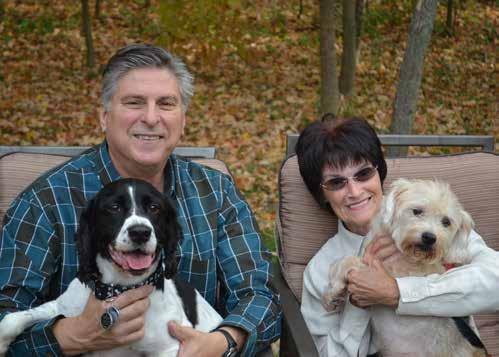
there is less for me.” Dogs know that you can share all the love, forgiveness, and positive feelings you want and still have more to give.
Live life fully. When Garry takes his dog, Panda, for a walk, Panda takes an interest in every rock, twig, leaf, tree, person, and dog they meet. Can’t you remember when you were a child and looked forward to new and exciting experiences and you did not mind being having fun and being silly? How can you reconnect with your inner puppy and rediscover your inner sense of play and adventure?
Enjoy Life Now! Humans tend to think if we spend all our time working now, at some point in the future we will slow down to enjoy life. Very few elderly people would say this approach makes sense. For example, author Leo Buscaglia describes a letter by an 85-year old man who wrote, “If I had my life to live over again, I’d try to make more mistakes next time. I wouldn’t try to be so perfect. I’d be sillier than I’ve been on this trip. I’d ride more merry-go-rounds; I’d watch more sunrises and play with more children-- if I had my life to live over again. But you see, I don’t.” The message is clear; watch sunsets now. Enjoy your family now. Develop your ‘bucket list’ and start scratching off your
accomplishments now. Dogs understand you only have so much time on Earth and it is up to you to live a life that is balanced. Understanding your purpose, living for the moment, giving more than you take, living life fully, and living life in the now are not trivial guidelines; they give meaning to our lives, our family, and our colleagues at work. Learn from your dog and make time to rest, to play, to explore, to lay in the sunshine, to scratch, and give time to those you love. That’s life-balance.
Garry McDaniel and Sharon Massen speak nationally on what individuals and organizations can learn from dogs about leadership, team building, and customer service. Their book, The Dog’s Guide to Your Happiness: Seven Secrets for a Better Life from Man’s Best Friend, can be pre-ordered on Amazon. Garry and Sharon invite you to contribute stories about what you have learned from your dog that has positively enhanced your view on personal, family or professional relationships. Please send your stories or insights to Garry and Sharon at happydogsecrets@ gmail.com or by calling 614-657-8524.

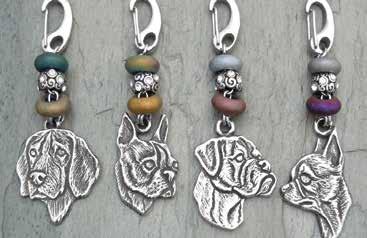
Visit feifish.etsy.com to find other unique collections that are near and dear to your heart
• Hot Dogs • Show Dogs • Cool Cats • Home, Love & Faith
• School Spirits • Birds Unlimited • Sea of Love
• Endangered Species and many more Portion of all sales proceeds will be donated to animal charity.
Celebrating Companion Animals from the Space of Advitha—Each One is Part of the Whole.
The most profound inner journey to awaken who you really are
Inner Awakening® is a 21-day spiritual transformation program in India that awakens you to your natural intelligence through yoga at all levels of body and mind. Deriving various techniques and processes from the Vedic scriptures and teachings like Shiva Agamas, Inner Awakening® offers a powerful awakening of the Kundalini Shakti, one’s inner potential, through meditation, spiritual processes, yoga, pranayama, kriyas, and the powerful Shivoham process.
How will Inner Awakening enrich my life?

The Awakening of the Kundalini energy by the power of initiation by a rare living incarnation in just 21 days gives you access to a whole new realm of living. The program works on all the basic dimensions of your life, allowing you to experience deep healing at the physical, mental and emotional levels and the ultimate experience of enlightenment. You gain a state of deep inner peace coupled with tremendous productivity and creativity. Becoming constantly aware of every moment provides you with astonishing clarity to fully live the life you love!
For upcoming dates: www.innerawakening.org
To register: http://tiny.cc/awakening-petc


Nithyanandeshwara Hindu Temple Ohio Aadheenam 820 Pollock Road • Delaware, OH 43015 614-571-8425 • meetup.com/Meditation-and-Yoga-for-Wellness youtube.com/lifeblissfoundation
Nithyanandeshwara Hindu Temple is a traditional Shiva temple and the spiritual center for the teachings of enlightened master Paramahamsa Nithyananda in the Ohio region. Located on the banks of the Olentangy River, the temple is a peaceful, serene energy field designed to elevate consciousness.
The temple offers free meditation, yoga, Sattvic cooking classes, and spiritual solutions for life.
Paramahamsa Nithyananda is revered, regarded, respected and worshipped as the Avatar (living incarnation) of superconsciousness by millions across the globe. He is also the spiritual head of Mahanirvani Peetha, the oldest and largest apex body of Hinduism.
He and his global spiritual community are serving humanity by reviving the science of completion, science of Enlightenment and manifesting various extraordinary spiritual powers as per the Vedic Agamic tradition of Sanatana Hindu Dharma. He is author of 350 books, which are translated and published in 500 titles and various international languages.
His Sangha has a strong presence worldwide through numerous Temples, Aadheenams (Temple monastery complex), Gurukuls (Vedic schools), universities and goshalas (cow shelters).
His live spiritual discourses can be viewed every evening online at nithyananda.tv at 9:30 pm EST. Recorded discourses can be viewed at youtube.com/ lifeblissfoundation
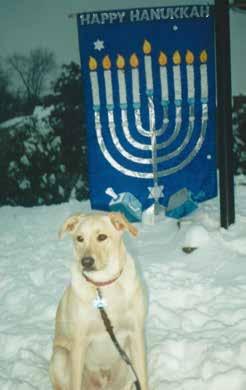



As our first dog, Buddy quickly became a member of our family. He was the cutest puppy who captured our hearts the moment we saw him. He was a typical energetic lab who loved to play catch and retrieve, hike, swim, run, go to the dog park, play tug of war, and simply just being by our side.
Buddy had a wonderful life and we were all so thankful to have been a part of it. He is missed every day and will forever be in our hearts.
Robin & Ron Reinfeld


HAAWC is a 501(c)(3) organization that honors the Human-Animal Bond as a source of wellness for individuals, families and communities.
Guided by the belief that animals are a gateway to human healing, HAAWC intends to develop both urban programs and rural sanctuaries designed to impact community health, safety and wellness.
• Assistance with veterinary care, pet medications & pet food programs
• Animal-assisted activities
• Educational seminars & workshops
• Research on the Human-Animal Bond