
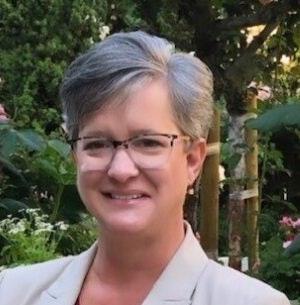







Gretchen Brown
Stanford Health Care
VP, Chief Nursing Information Officer

Pam Kurz
Perkins Eastman
Managing Principal, San Francisco Studio, Healthcare Practice Leader
Charlotte Böhning
Perkins Eastman
Associate Design Strategist, Human-Centered Consulting
Rupert Breheny
Cobalt AI
AI Advisor, Ex-Google Engineer
AI & PATIENT EXPERIENCE:
Learn how AI is changing the patient experience by improving communication, reducing busywork, and personalizing care.
CHALLENGES & BENEFITS: Identify challenges and benefits of using AI in healthcare while keeping human connections strong between patients and providers.
Why we’re here today
REAL - WORLD EXAMPLES: Discover real-world examples of AI in healthcare and how it’s impacting patient care.
DESIGN STRATEGIES: Explore design strategies for creating healthcare spaces that support AI and enhance the patient experience.


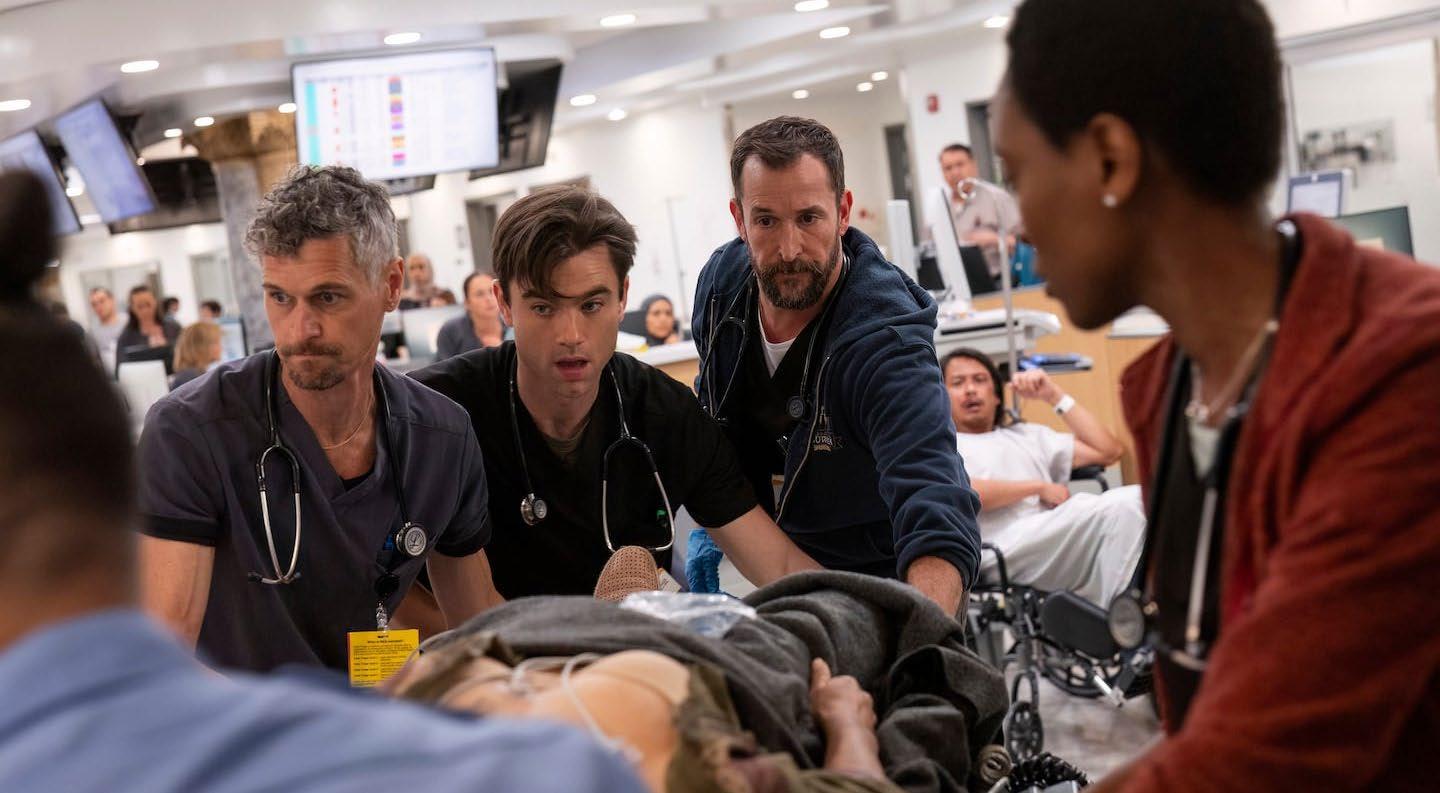
Meet Dr Robby …

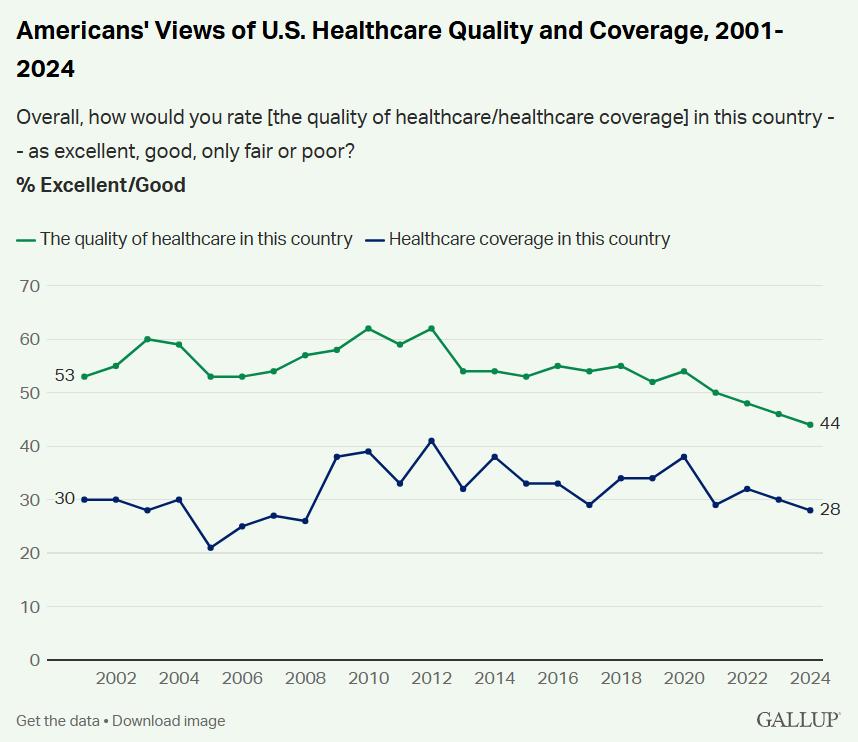
Source: https://news.gallup.com/poll/654044/viewhealthcare-quality-declines-year-low.aspx
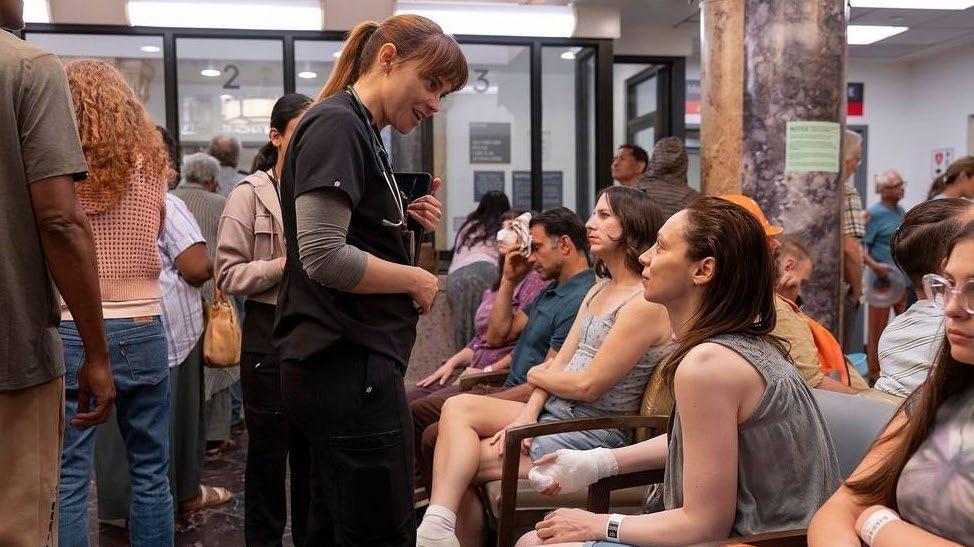
71% of patients say empathy is as important as clinical quality. (Cleveland Clinic)
High Quality Care Communication with Staff
Promptness & Helpfulness
Source: https://www.psu.edu/news/research/story/penn-state-researchers-use-ai-analyze-patient-satisfaction

Source: https://www.psu.edu/news/research/story/penn-state-researchers-use-ai-analyze-patient-satisfaction

How to ease the pressure?

https://www.tandfonline.com/doi/full/10.1080/13698575.2025.2495331?src=#d1e295
Can
AI help Dr Robby make healthcare more HUMAN For staff and for patients…?


Anna, a 35-year-old jogger, wears a smartwatch that continuously collects health data (heart rate, sleep, and activity levels), forming a baseline for her well-being.
Pre-Care
DuringCare
PostCare

During a jog, Anna’s watch detects an irregular heartbeat. The AI flags it - not just based on the anomaly, but in the context of her unique baseline and medical history.
Companies/Products: Apple's Irregular Rhythm Notification, Fitbit's AFib Detection

Anna chats with her provider’s app. The AI assistant already knows her context and asks relevant questions. The interaction is personalized and supportive, reducing patient anxiety.
Companies/Products: Ada, Google's Med-PaLM, Babylon (now eMed)
PreCare

The AI determines Anna’s case is not urgent but should be seen soon. It books an appointment, fills in paperwork, and prepares a case summary. Seamless triage, booking, and intake ease patient and doctor workload.
Companies/Products: Mednition, Zocdoc, Phreesia
From Waiting Rooms to Welcome Lounges Ambient Intelligence in Every Room Decentralized Diagnostics and Point-of-Care AI Staff-Centered Spaces for High-Cognition Work Dynamic, DataResponsive Environments 3 4 5 1 2
Designing Healthcare Facilities for a More Human Experience (… assisted by AI)
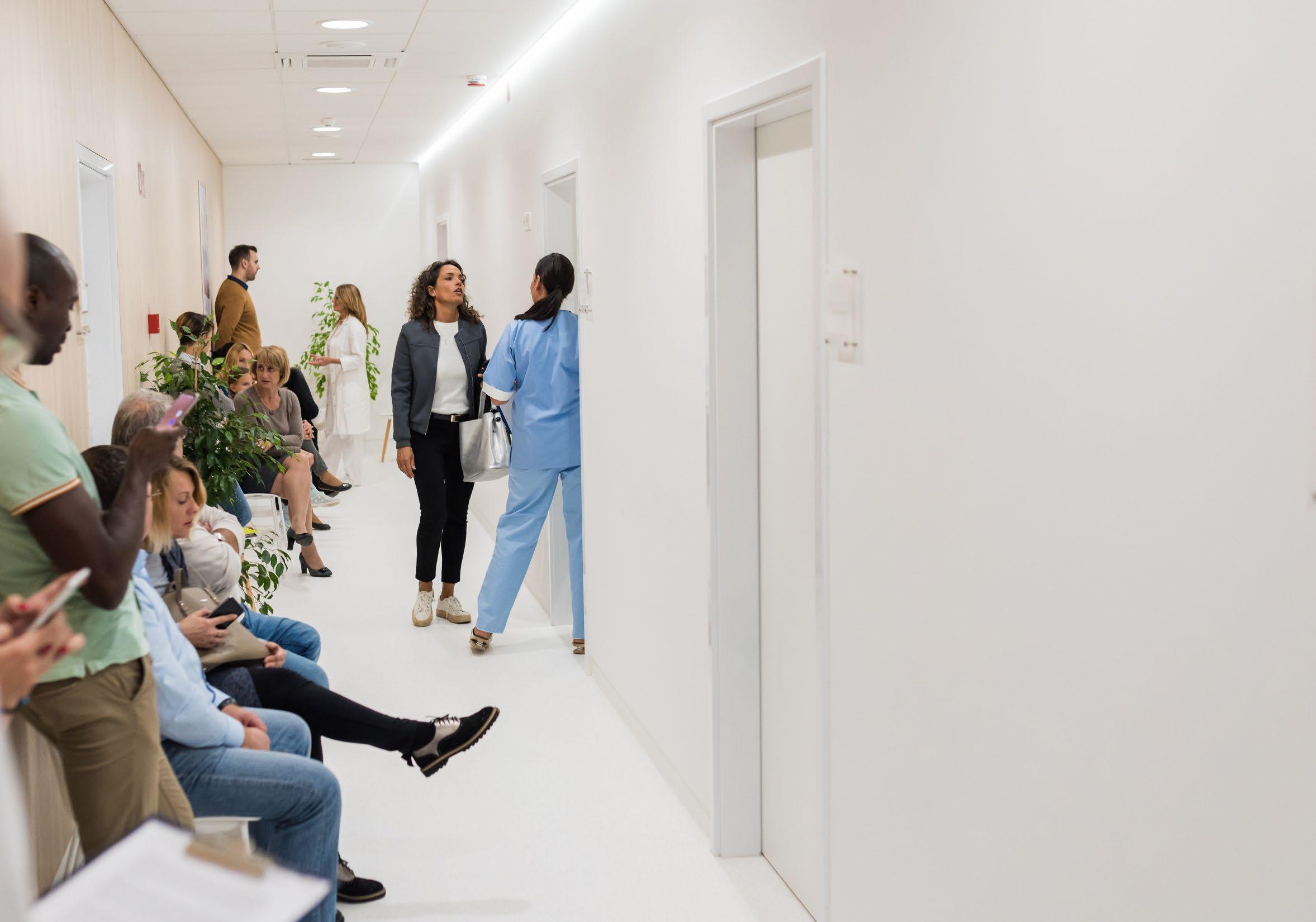
AI can help personalize and coordinate Anna’s first moments of care. Design can shift from passive waiting to a more welcoming experience.
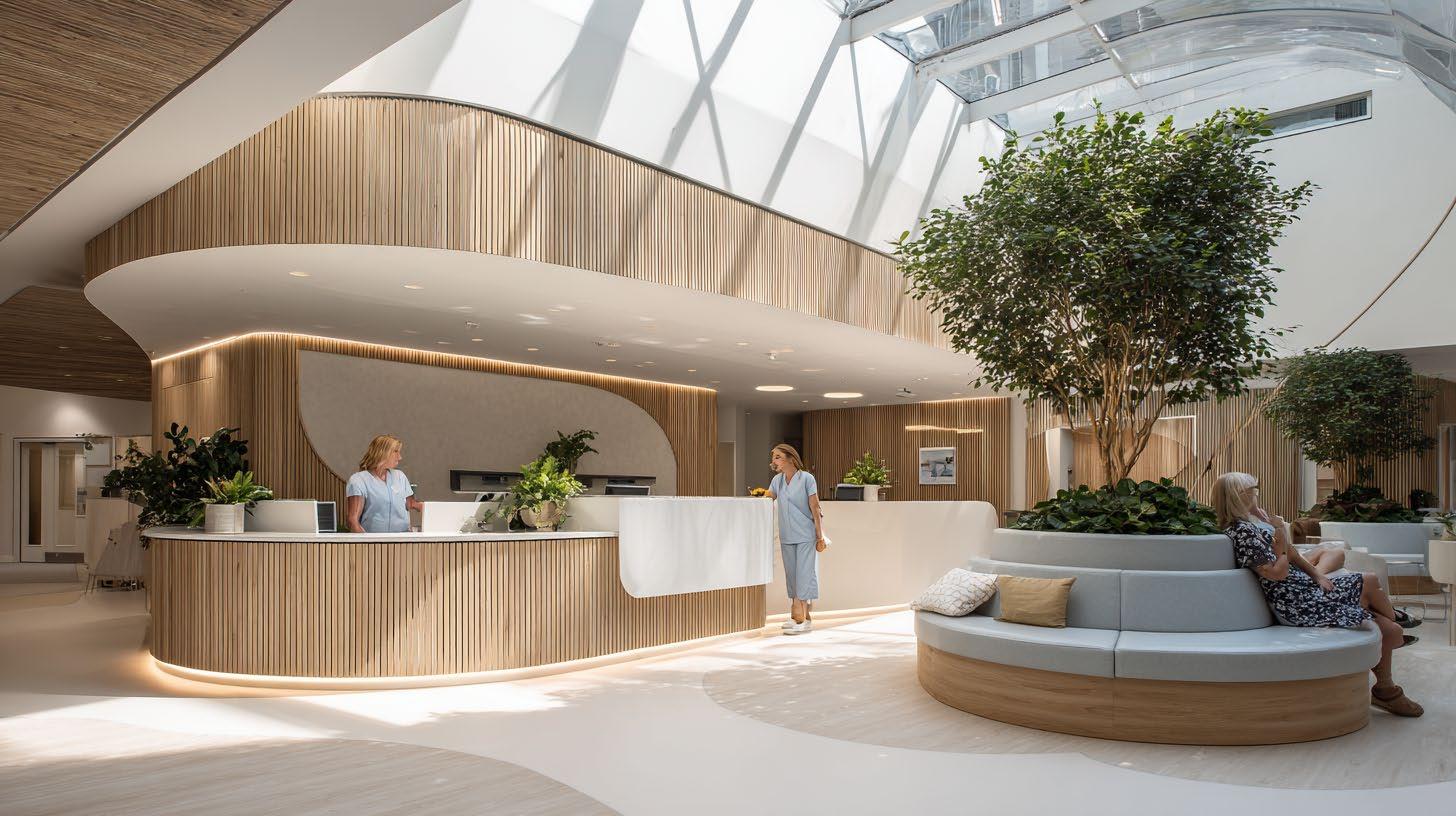
Soft lighting, calming materials, refreshments, and concierge-style staff desks help Anna stay calm and shift the tone from “clinical” to “caring.”

Varied zones (e.g. quiet nooks, social seating, family pods) provides Anna with autonomy and comfort during a stressful time.
Designing for… Welcome Lounges (instead of Waiting Rooms)
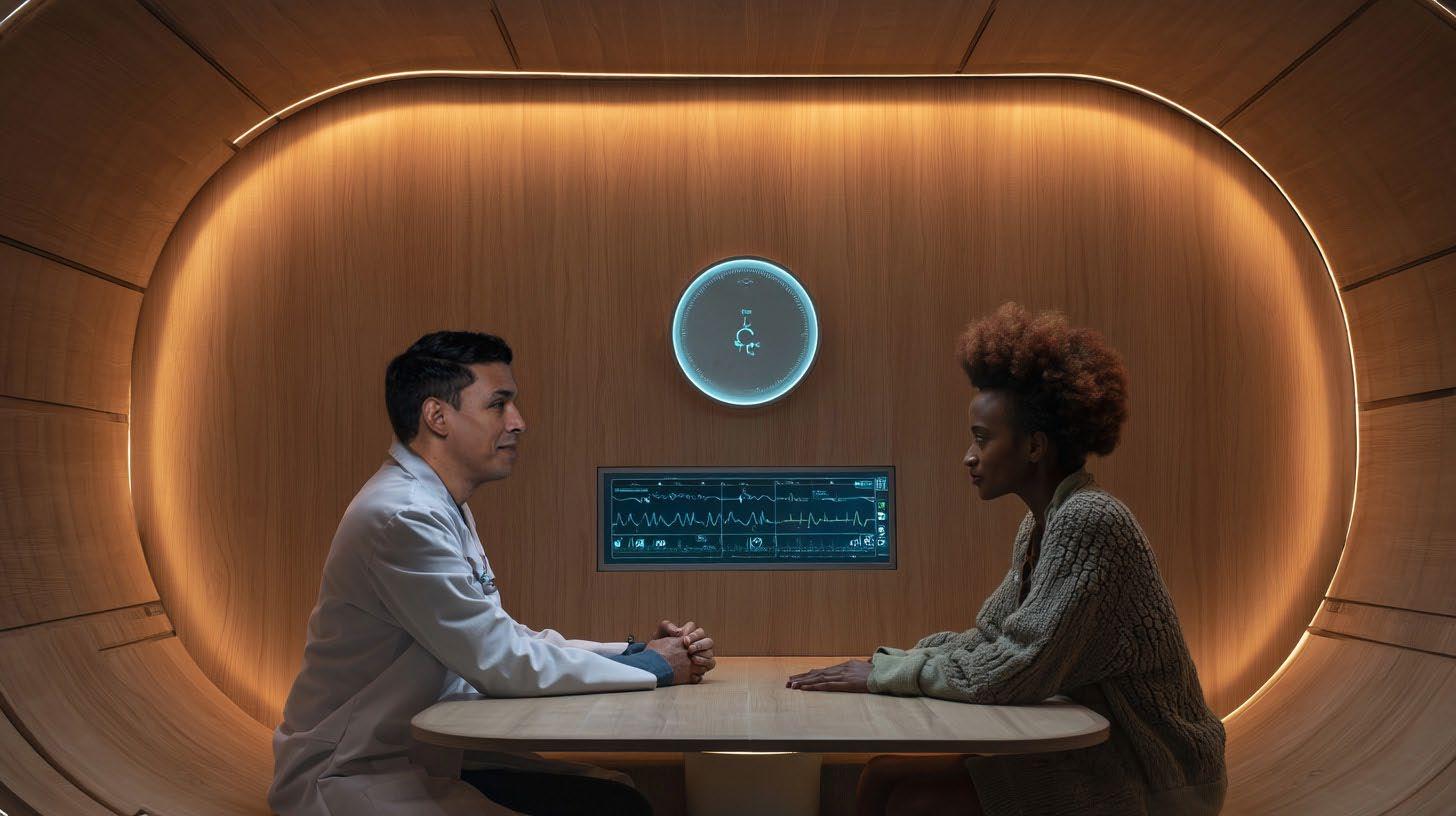
A softly lit digital screen displays Anna’s health information, ensuring Dr Robby has all necessary details without disrupting the interaction.
Designing for…
Embedded in the smart room, AI processes Anna’s data overload from multiple systems - vitals, environment, and more - to deliver real-time insights to Dr Robby.
Voice-activated virtual scribes, embedded in the ceiling, transcribe conversations, allowing Dr Robby to focus solely on Anna and lessen time spent updating EHRs.
Modular spaces where AI-enabled tools (like handheld scanners or remote monitoring devices) can be easily deployed.
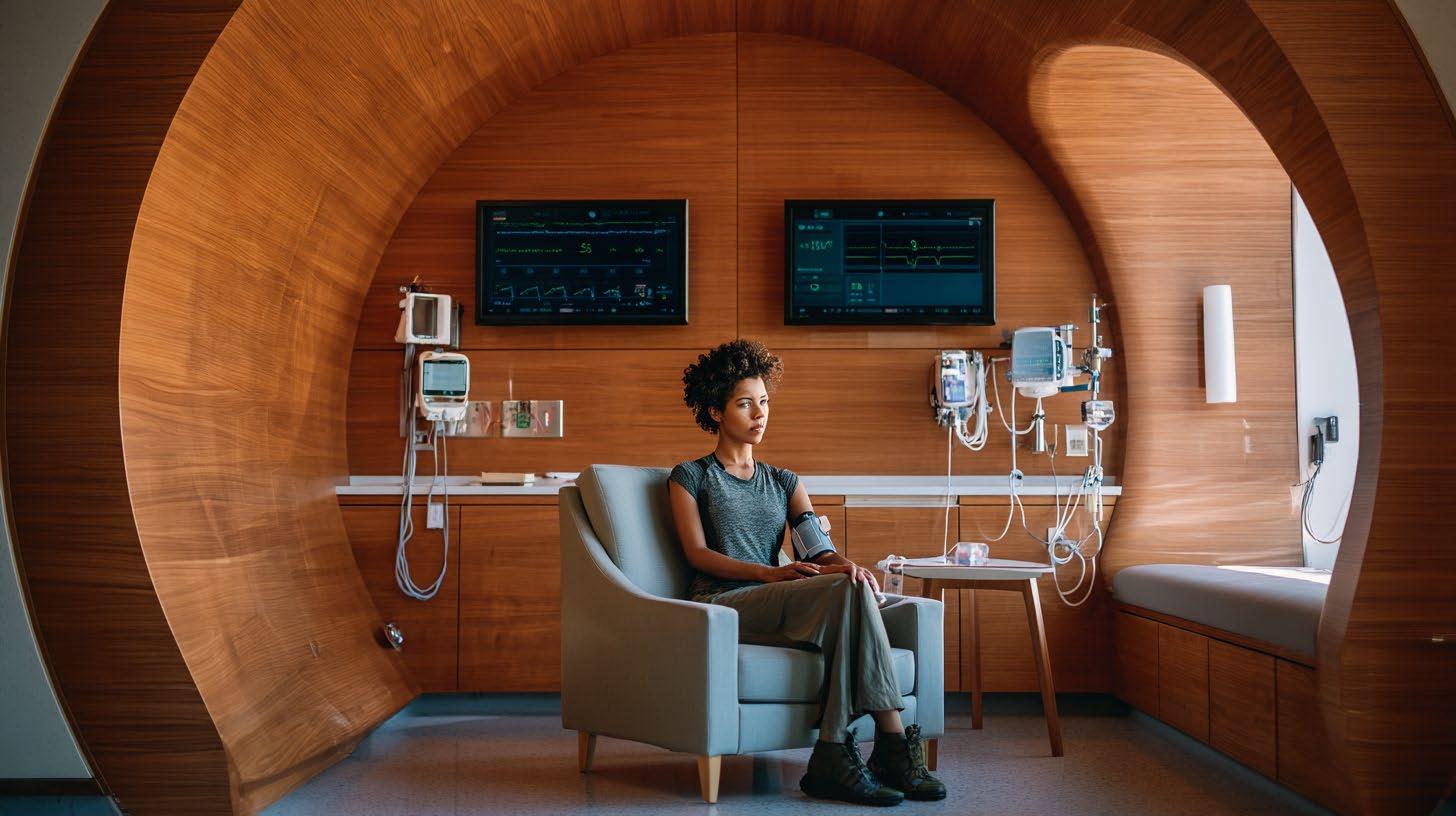
AI-enabled wearables and at-home monitoring devices reduce the need for routine in-person check-ins, allowing facilities to transform spaces from primarily diagnostic rooms into hubs for higher-acuity care, team coordination, and patient collaboration.
Small-scale lab spaces or kiosks within clinics, wards, or even waiting areas can enable rapid diagnostics without sending Anna elsewhere.
A calming space with natural elements and comfortable furniture, where Dr Robby can take a break when he needs it.
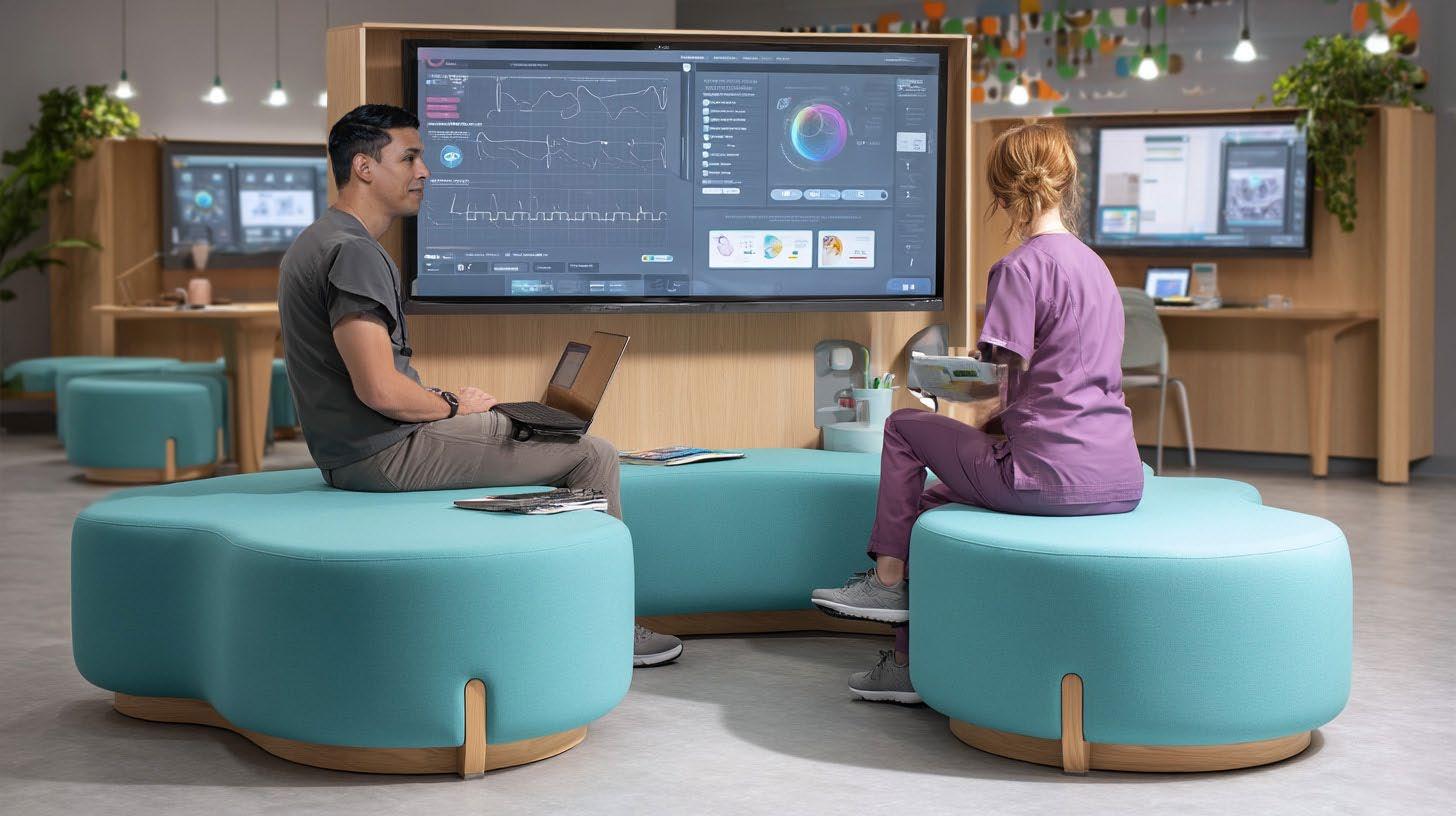
An open area with comfortable seating and shared digital displays, allowing Dr Robby to easily consult with his team.
A secluded nook with soft lighting and minimal distractions, promoting deep concentration.

“Modes” (e.g., rest, treatment, family visit) can change lighting, displays, and noise levels to support different types of activity or recovery phases.
AI-linked sensors can auto-adjust lighting, temperature, and sound levels based on Anna’s needs, time of day, or staff workflow.
Dashboards and lighting cues can help Dr Robby and his team find available rooms, easing bottlenecks and improving throughput.
Up to 30% of hospital readmissions are avoidable. McKinsey & Co.

PostCare
After her diagnosis and treatment plan, Anna receives ongoing support through an AI-powered care system. It sends her medication reminders, tracks her recovery, and schedules a virtual follow -up - ensuring she stays on track.
Companies/Products: Livongo, Omada Health

Yes, AI can help But Dr Robby and his team need to adopt and use it.
From Waiting Rooms to Welcome Lounges Ambient Intelligence in Every Room Decentralized Diagnostics and Point-of-Care AI Staff-Centered Spaces for High-Cognition Work Dynamic, DataResponsive Environments

Insummary… Designing Healthcare Facilities for a More Human Experience (… assisted by AI)
I don’t know how the AI models work
I can’t explain the models to my patients


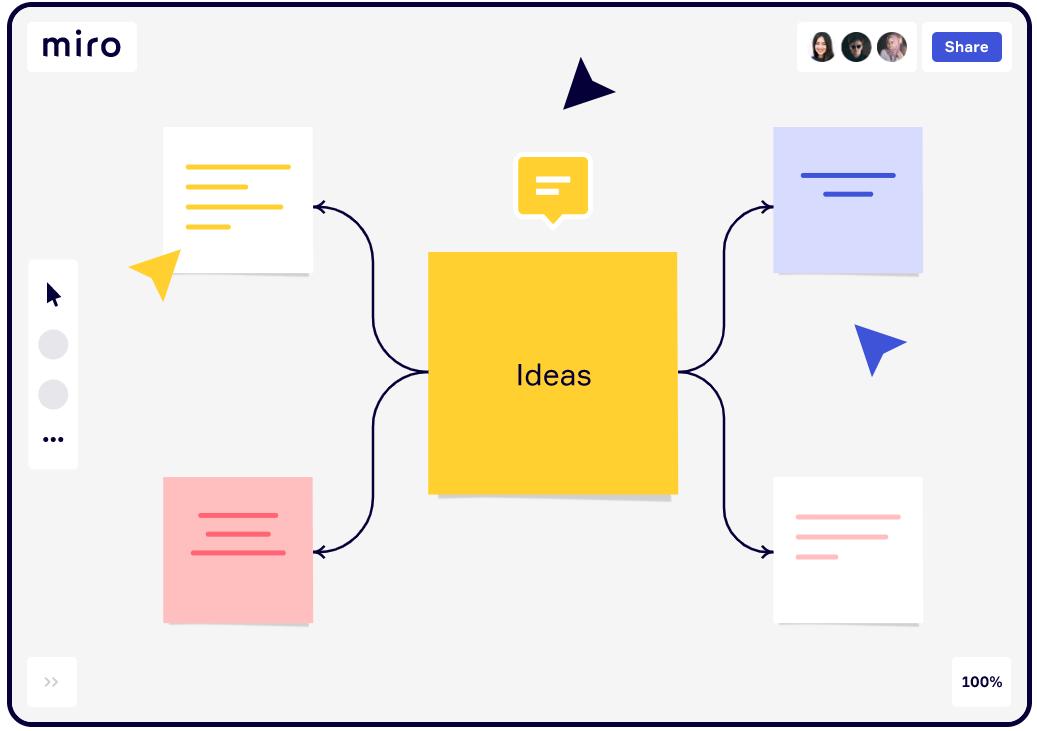



• Both leaders & staff/clinicians
• Basic knowledge & the model
• The why
• Use your early adopters
• Do you have a translator?
• Have you resourced this appropriately?
• Need “soft balls”
• Need pilots
• Stage roll-outs
• Your accountability & sustainability model?
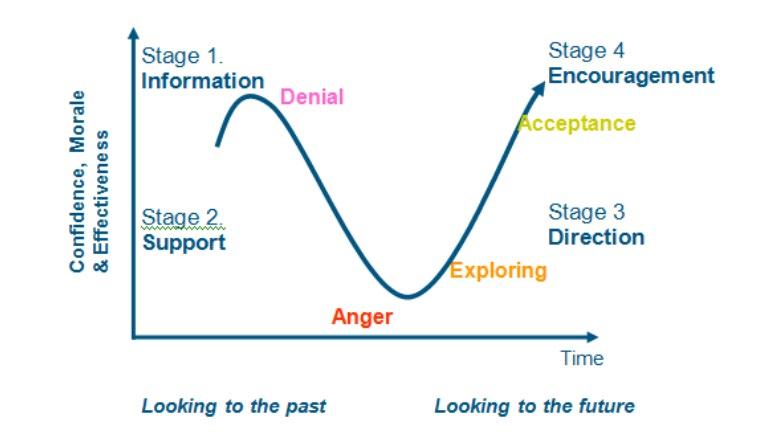
Use the change management concepts we talked about

This is development, not an implementation for clinicians
Listen to important words within their concern Use Data!
SHARED ACCOUNTABILITY
SECURE DATA ECOSYSTEMS
INFORMED TRANSPARENCY Continuous Governance
Something That “Has Something In It For Them”
Clinical vs Administrative AI?
Use Your Clinical Informaticists Who Live In the Crossroads of Technology and Clinical Workflows
Medical Informaticist
Nursing Informaticist




Start with Purpose
Let care, not code, guide innovation.
Stay Curious
AI will evolve and so must we. Build adaptability and curiosity into every layer of design.
Create with, Not for Co-design with clinicians and patients to ensure relevance, trust, and shared ownership.
Elevate the Human Experience
Use technology to clear the path for empathy, intuition, and authentic connection.