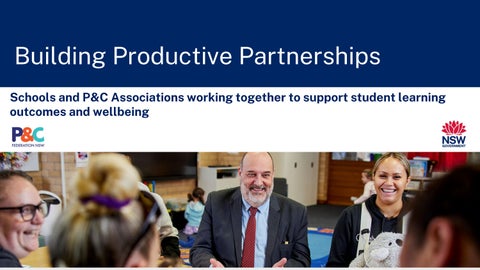

Building Productive Partnerships
Schools and P&C Associations working together to support student learning outcomes and wellbeing

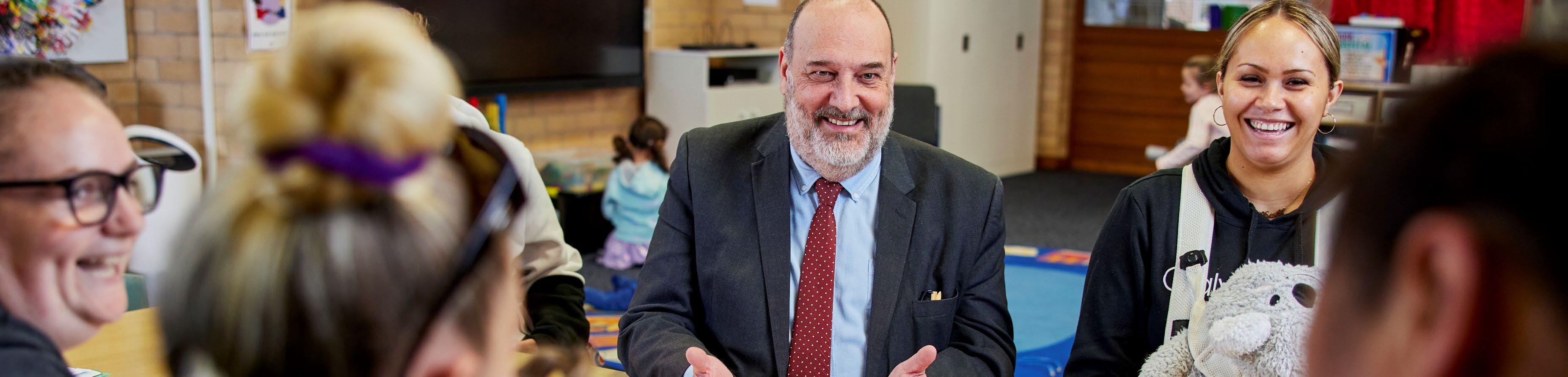

Acknowledgement of country
We recognise the Ongoing Custodians of the lands and waterways where we work and live. We pay respect to Elders past and present as ongoing teachers of knowledge, songlines and stories.
We strive to ensure every Aboriginal and Torres Strait Islander learner in NSW achieves their potential through education.
Document Title: Building Productive Partnerships
Who is this for: School principals and P&C Associations across all school settings.
Purpose: This resources supports principals and their local P&C Association to clarify their respective roles and responsibilities
• establish their agreed ways of working together
• reflect on and develop their processes and practices for collaboration.
• support schools and P&C Associations where issues or conflict arise.
How to use this: Schools and P&C Associations may use the resource or sections of, throughout the school year. Suggestions for use with school and P&C Association activities are included on page 4. Discussion prompts are also included for consideration. The time allocated to each slide (page) will vary, depending on the group size and length of conversation.
The research:
Focus group and public consultations with school staff, P&C Associations and parents and carers from across NSW have informed development of this resource. Over 600 survey responses have helped inform this resource.
Consultation: The resource was developed in collaboration with the P&C Federation NSW. Consultation included input from Student and Parent Experience including Feedback and Complaints Resolution, Legal Services, principal associations, school staff and P&C Associations.
Reviewed in 2023: Student and Parent Experience and P&C Federation NSW.
Updated: 15 December 2023.
Alignment:
This work is aligned to the:
• DoE and P&C Federation Partnership Agreement
• School Excellence Framework Version 3
Leading Domain:
Education leadership: Community engagement
School planning, implementation and reporting: Strategic Improvement Plan
School resources: Community use of facilities
Management practices and processes: Service delivery
• Wellbeing Framework for Schools
Enabling environment: Collaborative partnerships are built with students, staff, families, communities and other organisations to support and develop students and school communities
• Plan for NSW Public Education
Every student learns, grows and belongs in an equitable and outstanding education system
• Australian Professional Standard for Principals
Professional Practice: Engaging and working with the community.
Existing resources
• Parent and Carer Engagement Framework and Principles
• School Community Charter
• Complaints Handling Policy
A comprehensive list of resources and links is included on page 25.
How to use this resource
BuildingProductivePartnershipshas been designed for the use of schools and P&C Associations. Principals and P&C Association executive are encouraged to review and jointly decide the best timing to present each section, or in its entirety, if preferred. The table below highlights some opportunities, where each section or individual slide could be shared and discussed, such as a joint presentation to P&C Association members, parents and carers, or referred to by individuals, as needed.
Schoolled activities or discussion
School orientation (Kinder/Parent orientation)
School planning (selfassessment/ EV)
Communications to community
E.g.: Presentation on the benefits of working in partnership
E.g.: as the base for a newsletter item about the benefits of the P&C Association's support
Executive support/PL
AGM
P&C Associationled activities or discussion
Sub-committee meetings
Induction of Office bearers
E.g.: to consider and discuss agreed focus for working in partnership
E.g.: clarify their role, responsibilities and P&C Association functions
E.g.: Presentation to clarify specific roles, responsibilities, functions
E.g.: for reference to clarify functions
E.g.: clarify their role, responsibilities and functions of P&C Association
E.g.: Presentation on benefits of working together
E.g.: Presentation as part of strategy for Community Engagement
E.g.: as the base for a newsletter item about how parents can get involved
E.g.: to reflect on and consider opportunities to enhance practice
E.g.: discussion to establish shared expectations for operations
E.g.: for reference to clarify functions
E.g.: to reflect on and consider opportunities to enhance practice
E.g.: joint presentation with P&C about process for raising issues
E.g.: clarify process for addressing/ raising issues
E.g.: access to DoE resources for ongoing support/ guidance
E.g.: access to DoE resources for ongoing support/ guidance
E.g.: clarify process for addressing/ raising issues
E.g.: access to P&C Federation's resources and member portal for ongoing support/ guidance
Introduction
Building Productive Partnerships has been developed to support schools and their local P&C Associations build positive, respectful and collaborative relationships that benefit all students and learners and their school communities.
This resource looks at:
1. Benefits of working in partnership: an overview of the benefits for students, parents/carers, schools, P&C Associations and school communities.
2. Roles and responsibilities: to help develop a shared understanding of roles and responsibilities and value of the partnership between schools and P&C Associations.
3. Working together: to help establish agreed ways of working together that mutually respects each other’s roles, responsibilities and obligations.
4. Resolving concerns and conflict: so that schools and P&C Associations have clear processes to support engagement, communication and to resolve conflict if needed.
5. Support and resources: including information about who to contact for advice, and a suite of resources to support schools and P&C Associations.
At each section, take time to consider how the information relates to your setting.
You might like to discuss:
• Where are we at – has the school vision been shared so that the P&C Association can contribute to its success?
• What’s working well?
• What else might strengthen our working partnership?

Benefits of working in partnership
Principals and P&C Associations

Benefits of working in partnership
We know strong partnerships across education communities, between students, parent and carers, teachers, educators, school and department staff, help to foster engagement and positive learning and wellbeing outcomes.
The productive partnerships of schools and P&C Associations aims to achieve the following:
• students benefit from the school’s planned and proactive engagement with parents/ carers and the broader community.
• student learning is enriched by positive connections between schools, parents, carers and community.
• parent participation in their child’s education is supported.
• the collective voice of parents and carers is valued.
• the work of P&C Associations in school communities is supported, promoted and recognised.
• school communities are strengthened and engaged.
• the school vision is shared and cultivated across the school community. When we genuinely value and engage with our school community, the positive values, attitudes and behaviours for learning are adopted beyond the school’s boundaries. Effective in-school strategies for improving student outcomes will then be more widely successful when undertaken in partnership with the community.

Our shared focus on parent and community engagement to enhance student outcomes.
Schools and P&C Associations partnerships
We work collaboratively to foster a shared commitment in achieving the best educational outcomes for children and young people.
We do this by:
• Promoting the interests of the school and its students.
• Contributing to a positive school culture and representing the school in the broader community.
• Establishing and maintaining productive working relationships.
• Complying with legislative requirements and obligations including the duty of care, privacy and discrimination law (those relating to schools, and those relating to P&C Associations).
• Respecting the responsibilities of each (schools and P&C Association).
• Promoting and upholding the School Community Charter.
• Providing services such as uniform shops, canteens and OSHC (where agreed).

The Department has committed to 5 key principles in its approach to engaging with parents/carers
Principals and P&C Associations are encouraged to consider these principles in how they collaborate together
Enable access
Provide a safe and welcoming environment
Make it easy for parents and carers to participate
Support them to understand the school environment
Communicate openly
Keep parents and carers informed and make it easy for them to understand
Make it easy for parents and carers to communicate with you
Provide a timely response
Reference: Parent and Carer Engagement Framework v1.2
Partner together
Be clear about what parents and carers can expect and what is expected from them
Partner with parents and carers to achieve shared goals
Follow up on discussions
Understand context
Invite their perspective
Listen
Show you understand their individual circumstances
Guide choices
Clearly explain any choices
Be clear about how decisions are made
Include parents and carers in decisions about their child
2
Roles and responsibilities
Principals and P&C Associations
The role of the Principal
The principal is responsible for the leadership and management of the school.
By virtue of their position, the Principal or anyone acting in that capacity is automatically an Ex-Officio Member of the P&C Association and all of the P&C Association’s sub-committees. Where practicable, the Principal attends all general meetings, the AGM and may also attend sub-committee meetings.
The Principal responds to questions arising and offers advice on Department policy and guidelines.
They can move, speak to and vote on motions (unless acting as the Returning Officer at the AGM).
Where a Principal is unable to attend a meeting of the P&C Association, a Principal’s representative from the Staff may attend on their behalf.
Principals promote parental and carer engagement as a key aspect of raising the achievement of all students. Collaboration with the P&C Association helps develop mutually supportive and trusting relationships with the community to support engagement in the life of the school.
Ensures the school complies with broader legislative requirements
Student outcomes and wellbeing
Fosters a positive school culture and parent engagement
Ensures safety and wellbeing of students and staff
Overall management of the school
Leads the school's education vision
Leads quality teaching & learning
The role of P&C Associations
The Education Act 1990 sets out the key role of P&C Associations as:
• to promote the interests of the school by bringing parents, citizens, students and teaching staff into close co-operation; and
• to assist in providing facilities and equipment for the school and in promoting the recreation and welfare of the students at the school.
Assist in providing facilities and equipment for the school via fundraising
Promote the recreation and welfare of the students at the school.
The P&C Association shall not exercise any authority over teaching staff or any matter relating to the control or management of the school P&C Association Constitution Clause 3
Due to privacy obligations, issues with individual students or school staff should always be referred to the Principal and not discussed at P&C Association meetings.
Provide fair, balanced advice about school matters including maintenance, alterations and additions to facilities
Support the school to achieve best possible outcomes for all students
Promote the interest of the school and contribute to a positive school culture
Bring parents, students, staff and the community into close cooperation
Foster community interest and participation in educational matters
The role of the P&C Federation
• To promote public education and to facilitate community involvement in public education.
• To work in the interests of students and parents of students in NSW government schools.
• To co-operate with the Department and community organisations having an interest in public education, in relation to the matters involving public education.
• To assist P&C Associations in carrying out their functions or activities.
• To establish and expend funds both for the general conduct of the P&C Federation and to enable the P&C Federation to carry out its aims and objectives.
• To advocate for students in public education and P&C Association across NSW in various ways.
The P&C Federation is a peak advisory body, and advocates for public education in New South Wales. It is incorporated by Parents and Citizens Associations Incorporation Act 1976.
The P&C Federation is not a regulatory body. Federation staff provide resources to member P&C Associations, including employment related legal advice.
The Federation of Parents and Citizens Associations of New South Wales is commonly known as “The P&C Federation”.
Working together 3
Shared values and responsibilities
Values that support how we work together
By fostering a culture of respect and collaboration, we can create inclusive environments and forge strong connections for thriving school communities.
Excellence Integrity Equity
• Welcome collaboration with others. Use and share evidence, research and data to support policy and practice.
• Support high expectations and continually seek to improve our work.
• Communicate clear expectations.
• Act with honesty and consistency.
• Be transparent with information and decisions.
• Student-centred focus: keep the welfare of all students as the main priority for all decisions and actions.
• Respect diversity and the views and contributions of others.
• Treat people fairly.
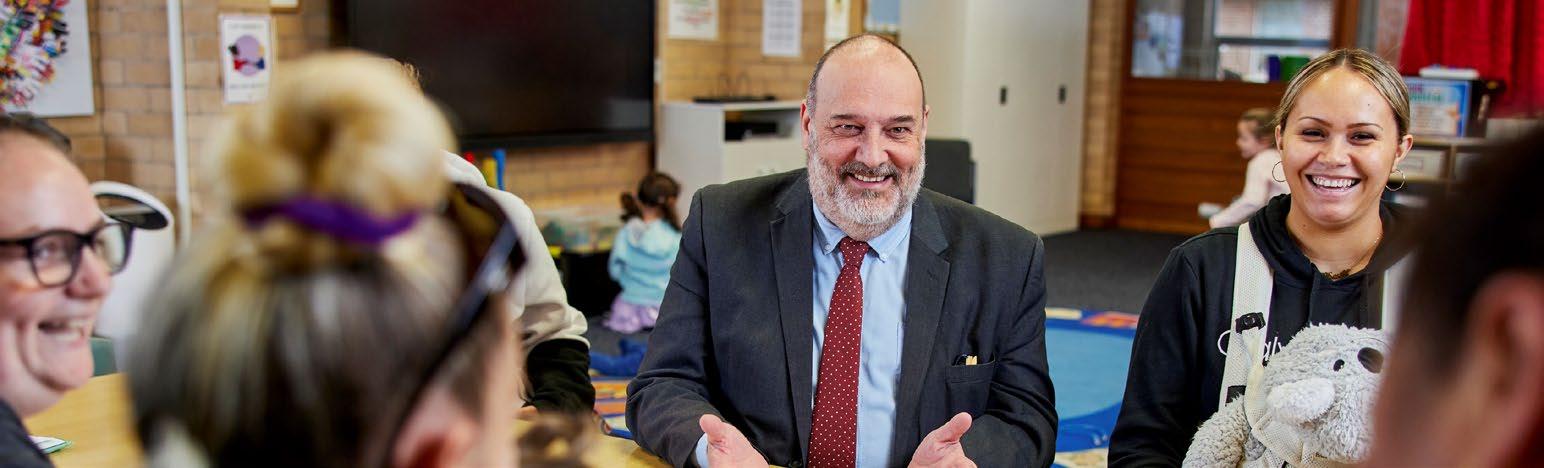
Discussion
Accountability
Trust
Service
• Take responsibility for decisions and outcomes.
• Use resources efficiently and effectively.
• Review practices to drive improvement.
• Build relationships based on transparency, honesty, mutual respect.
• Respect others’ expertise, experience and points of view.
• Listen with an open mind.
• Support one another.
• Work openly in partnership to achieve shared goals.
• Collaboration and consultation is frequent, meaningful and effective.
• Where are we at – are the values evident when we meet?
• What’s working well?
• Are there areas we could strengthen to support our working partnership?
Partnerships in practice
Bronte Public School and P&C Association
Bronte Public School is supported by a strong, independent P&C Association that works tirelessly for the benefit of the school and its students. Together, they look to build on the school’s teaching and learning programs, to make the school look beautiful and to support all students to reach their social, emotional, and academic potential.
With a strategic focus of ‘Building Partnerships’, the principles for effective engagement are reflected in the school and P&C Association’s ways of working collaboratively.
Partner together: Be clear about what parents and carers can expect and what is expected from them
The school and P&C Association have found it helpful to regularly refer to the objects of their Constitution:
a. to promote the interests of the school by bringing parents, citizens, students and teaching staff into close co-operation; and
b. to assist in providing facilities and equipment for the school and in promoting the recreation and welfare of the students at the school.
This reminds others of the role of the P&C Association and keeps the group focused on equity and inclusiveness for all students.
Partner together: Partner with parents and carers to achieve shared goals
The school newsletter regularly promotes their P&C Association and the Principal actively encourages parents to be involved.
‘I tap people on the shoulder that are already doing things for the school.., I tell them, ‘I’d love to work with you on the P&C’, as sometimes they don’t have this on their radar.’
The school and P&C Association collaborate to provide equipment and facilities aligned with school priorities. In the past, this has included school playground improvements, music programs, CAPA resources and technology to support student learning.
Communicate openly: Keep parents and carers informed and make it easy for them to understand
Bronte P&C Association meets eight times per year, with approximately ten people at every meeting. During Zoom meetings, no less than 15 parents may attend.
The principal takes this opportunity to present a comprehensive report at every meeting, thanking the P&C Association for their ongoing support and showcasing students’ and teachers' work at the school.
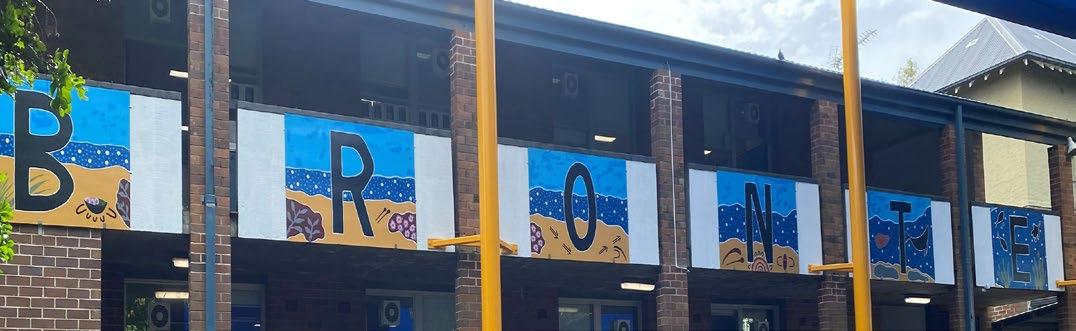
Through ‘Building Partnerships’, the school aims to inspire collaboration and innovation between all stakeholders and the wider community.
This is a great example of how Bronte PS is applying the principles of the Department of Education’s Parent and Carer Engagement Framework (see Slide 9 for more detail).
2. Engagement
Building Partnerships
Together, we can do so much
Principal
Bronte Public School
Principal and P&C Association - partnership in practice
Responsibilities of the principal and P&C Association are aligned to achieve key functions.
Principal - responsibility
Promote the importance of the P&C Association as a voice of parents and carers in the school. Attend meetings as a member and monitor the P&C Association’s compliance with its objectives, functions, and legislative and financial responsibilities
Report on school operations at each general meeting.
Provide advice and guidance on DoE policy, curriculum, school operations & facility usage and ensure that the voices of families not on the P&C are considered in discussions around school operations and future directions.
Consult with parents through the P&C Association on relevant educational matters, school operations and materials, including where possible, the development of the vision, values and priorities of the school.
Parents and community members have the opportunity to engage in a range of school related activities which help build the school as a cohesive educational community and enhance sense of belonging.
Consult with the P&C Association about requests for funding. Support the P&C Associations objectives as much as possible. Consider (and approve) the business case to operate a school-based amenity. Manage the purchase of equipment and large value items. Authorise the hire of the school premises and facilities
Understand the Constitution under which the P&C Association operates.
Promote and support the P&C Association to communicate important information about elections through school channels
Function
P&C Association meetings (general, AGM & special)
P&C Executive - responsibility
Organise, conduct and facilitate meetings as per the constitution and by-laws.
Reporting Report on P&C Association operations and finances. Minute all reports.
Advice and guidance
School business and planning
Community engagement
Provide feedback and guidance to the principal when requested. Advise on the P&C Association’s policy.
Constitution
Election of members
Provide a conduit for parent consultation. Deliver on each of the functions of a P&C Association in support of the school.
Bring parents, students, staff and the community into close cooperation.
Consult with the Principal about use of facilities, donation of funds and proposed P&C Association activities.
Manage business operations for canteen, uniform shop, bookshop, OSHC etc. if relevant.
Donate funds to the school if relevant and appropriate.
Understand, and follow the Constitution under which they operate.
Organise, conduct and facilitate election processes as per the constitution.
Partnerships in practice
Schools and P&C Associations can work together to support the school vision and context, as described below.
Situational
analysis
Strategic Improvement Plan Implementation and progress monitoring
Annual reflection
• For example, consulting with the community to understand current and merging issues
• For example, collaborating with the community to create a vision statement.
• For example, sharing information with the community about key learning focus areas and expectations.
• For example, seeking parent and community feedback.
Discussion
• Are there other opportunities to include parents and carers?
• Is parent involvement representative of the whole school community?
Community engagement is a critical factor for improving the progress, achievement and wellbeing of our students.
The Department of Education’s School Excellence Framework (SEF) describes the importance of community engagement in schools.
When schools, families and the broader community work together to develop positive connections, students thrive.
Partnerships in practice
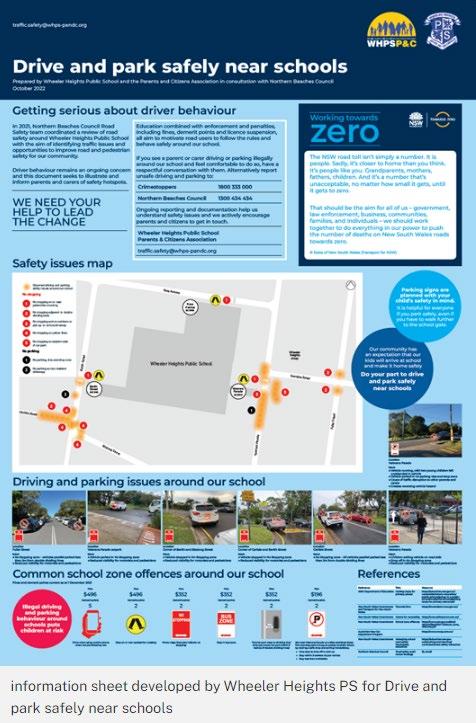
Wheeler Heights Public School and P&C Association initiative
Poor driving and parking behaviour around the school was putting the school community at great risk and the reason why the P & C Association’s Traffic and Safety Committee took on the challenge of changing this.
Their “Drive and Park Safely Near Schools Initiative” targeted behavioural change through a robust process that included:
• establishing baseline data through observing and documenting unsafe driving and parking behaviour
• providing the data and examples of unsafe driving and parking to the local council for their consideration
• consulting with the school community about their road safety concerns
• collaborating with the local council’s Road Safety Officer to address the concerns and develop strategies to better manage the traffic environment
• preparing school community resources, including maps of safety hotspots
• educating the school community about legal and safe driving and parking via social media, the Flexi Schools app and school newsletters.
Discussion
• How might we respond to similar or emerging challenges?
• Are there processes, structures or resources that will help?
Resolving concerns and conflict 4
Raising concerns and resolving grievances
In the event of a problem arising, the first approach is to discuss the matter with the appropriate person. The Department and P&C Federation’s Complaints Handling Guidelines provides detailed advice for schools and P&C Associations.
Principles for resolving concerns or grievances
• Grievances are treated confidentially.
• Concerns should be raised as early as possible after the incident relating to the complaint has occurred.
• Complainants should not instigate grievances that are frivolous, vexatious or malicious.
Is it really a P&C Association matter?
What if the P&C Association has a problem regarding the school?
What if the grievance relates to another member, volunteer or P&C Association employee?
What if the Principal has a problem with the P&C Association?
Where an issue is raised regarding individual children or families, this is not a P&C Association matter and the people involved or affected need to make an approach to the Principal directly.
If you find your P&C Association discussing personal matters, ask the President to move on to the next item of business.
Where a problem regarding the school occurs, the P&C Association’s Officers should arrange to discuss the matter with the Principal.
If the complaint relates to the school principal, the department’s online complaint form can be used. This will be shared with the Director Educational Leadership responsible for the school to decide the best approach to resolve the issue.
The P&C Federation can also provide advice on P&C Association operations, obligation and responsibilities to help resolve issues.
The P&C Association’s complaints process, including code of conduct, complaints, or grievance policy should be actioned.
Complainants should try to resolve the issue themselves with the relevant parties.
If it cannot be resolved, the complainant should provide written details to the P&C Association President or Vice President where the complaint is about the P&C Association President.
The P&C Association’s complaints process including code of conduct, complaints or grievance policy should be actioned. The principal may seek advice of the Department’s Feedback and Complaints or Legal Services.
The P&C Federation can also provide advice and guidance on P&C Association operations, obligations and responsibilities to help resolve issues.
Raising concerns and resolving grievances
Support to resolve significant conflict and issues
Matters where there is significant conflict or issue may be dealt with in collaboration with the P&C Federation and the Department’s Feedback and Complaints team.
See contact details on slide 24.
A complaints handling process is being developed to support P&C Associations and schools.
Other supports
The Department’s Alternative Dispute Resolution (ADR) may be engaged (via the Feedback and Complaints team) to assist in restoring relationships between schools and parents that have broken down.
An independent mediator may assist, as part of the ADR process.
Additionally, P&C Associations may seek support from Community Justice Centres which can also offer independent resolution services.
Support and resources 5

For more information
The P&C Federation NSW
As the peak body for P&C Associations in NSW, we provide advice, support and advocacy for 1800 member P&C Associations and growing.
We represent the interests of parents and students in NSW government schools.
You can contact us at
Web: www.pandc.org.au
Phone: 1300 885 982
Email: mail@pandc.org.au
Department of Education
The Department of Education’s Feedback and Complaints team supports parents, carers and schools to resolve issues and is working with schools to enhance complaints resolution capability.
Please use this form to request assistance.
Resources and references
Together in partnership - NSW Department of Education and P&C Federation NSW Partnership Agreement
P&C Federation NSW
• Member guide and sample documents, including
• Code of Conduct for P&C Associations
• Grievance, Complaints and Procedures Policy
• Social Media Policy
• Member resources:
• FAQs, including
• Lines of Communication
• Grievance, Complaints and Disputes Procedures
• P&C e-bulletin
• P&C Member Portal including access to professional learning for Office Bearers
• Parent and Carer Hub, including online community
Legislation Education Act (1990) - Part 11
Parent and Citizens Associations Incorporation Act (1976) Associations Incorporated Act (2009)
Department of Education
• Authentic Community Engagement
• Building Relationships with Aboriginal Families in Schools
• Code of Conduct and Code of Conduct resources
• Community use of facilities – P&C Association activities
• Getting involved with your child’s school
• Parents and Citizens Association activities
• Parent and Carer Engagement Framework and Principles
• Respectful Workplaces
• School Community Charter
• School Excellence Framework V3
Feedback and Complaints
• Alternative Dispute Resolution
• Complaint, compliment or suggestion form
• Making a complaint about NSW public schools – guide for parents and carers
• School community and consumer complaints
• Your feedback Professional learning for education staff
3Cs Conversation Model (MyPL ID:AC00611)

Please scan the QR code to provide feedback on this resource. The Department and the P&C Federation NSW will use this to improve resources.
Federation of Parents and Citizens Associations of NSW

@NSWPandCFed

@NSWPandCFed

@pandcnsw

@pandcfederation pandc.org.au
NSW Department of Education
@NSWDepartmentofEducation
@NSWEducation
@NSWEducation
@NSW Department of Education education.nsw.gov.au
© 2023 NSW Department of Education
© State of New South Wales through Department of Education 2023. You may copy, distribute and otherwise freely deal with this publication for any purpose, provided that you attribute the Department of Education as the owner. The information contained in this publication is based on knowledge and understanding at the time of writing and may not be accurate, current or complete. The State of New South Wales (including the NSW Department of Education), the author and the publisher take no responsibility, and will accept no liability, for the accuracy, currency, reliability or correctness of any information included in the document (including material provided by third parties). Readers should make their own inquiries and rely on their own advice when making decisions related to material contained in this publication. All images are owned by the NSW Department of Education under the Copyright Act 1968 (Cth) or licensed under the iStock Getty Images Content License Agreement.