The Aesthetics of Politics and the Legacy of Space: Statesmanship, Expositions and Architecture in Ante-Inter-Post Bellum Italy
Matthias Palla
P. 3
DESIGN PRACTICE FOR HISTORIC URBAN ENVIRONMENTS
3D SCANNING FOR HISTORIC URBAN ENVIRONMENTS
BACHELOR DESIGN PROJECT
STRUCTURAL DESIGN STUDIO
BARC0033
Kilburn Grange Park Conversations
Matthias Palla, Suhela Maini, Dorna Shafieyoon
P. 6 CONTENT
BARC0187/BARC0188
Historic Layers around Islingtons City Road Basin
Matthias Palla
P. 10
Culture in Residency
Research on Pillars: Findings of Cap Sekirn
Matthias Palla, Anne Steffen
P. 14
Educational Refuge
MaCo - Marx Connecting
Matthias Palla, Anton Marx, Benjamin Sachsalber
P. 15
WORK EXPERIENCE
Museum for Applied Arts Vienna (y)MAK Community
Matthias Palla - Co - Founder
Museum für Angewandte Kunst, Stubenring 5 1010 Wien, Austria https://www.mak.at/youngMAK
ymak_vienna
In February 2021, together with a team of young, creative people I co-founded the (y)MAK community. The idea was to find together with the Museum of Applied Arts Vienna a way, how to make the museum‘s collection more attractive for a young audience. I was involved in the conceptualization as well as the graphic realization of our idea. The concept manifests itself as follows:
(y)MAK is a group of young adults (16 to 26 years old) who are interested in museums, design, art, architecture and innovation as well as in our future and want to make a difference.
(y)MAK offers you insights behind the scenes, organizes events, interviews experts - always looking for new ideas and perspectives. We want to arouse curiosity, serve as a source of inspiration and encourage active participation in MAK. With (y)MAK you can help shape experiences and actively contribute to the future of the museum.
Together with the graphic designers of LWZ (www.lwz.studio) we developed a graphic language, a logo and an identity for the web presence of our project on different media. I am also responsible for the content creation of our Instagram channel and the organization of community events.
Some of the activities I was involved in were the conception and implementation of several interviews with curators and participants of the exhibitions Vienna Biennale for Change: CLIMATE CARE (June 2021) and JOSEF HOFFMANN: Progress through Beauty (October 2021).
In 2022 I co-organized an artist talk in context oft he exhibition Johanna Pichelbauer: There will be People on the sun soon!
In 2022 we established an ongoing workshop project in which different craft techniques and creative thinking practices are applied and connected with each other.
List of Activities
OPEN Project
Open Crocheting
Alexandra Fruhstorfer 03.05.2022
Verena Dengler 31.05.2022
Eva Maria Schenzel 27.09.2022
Kiki Furlan 22.10.2022
Crochet against loneliness 20.12.2022
Sonji 24.01.2023
Die Große 05.12.2023
Open Tufting
Bettina Willnauer 04.04.2023
Open Clothes Swap
Judith Bradl 02.07.2023
Open Figure Drawing
Iris Andraschek 14.02.2023
Flora Miranda and Iris Andraschek 02.09.2023
Open Kino
EDELWEISS. Ein kritischer Liebesbrief an Österreich 18.07.2023
Open Lace
Soda Lingerie 19.09.2023
Open Speed Bullshitting
Sorority 07.11.2023
Open Ceramics
Anna Riess 23.01.2024
Events
Open Party
Techno und Drinks im Museum 21.06.2022 and 18.10.2022
(y)MAK Rave 21.03.2023
Interviews
Christoph Falkner 06.08.2021
Johanna Pichlbauer 01.02.2022
Marlies Wirth 21.06.2022
Founding Members
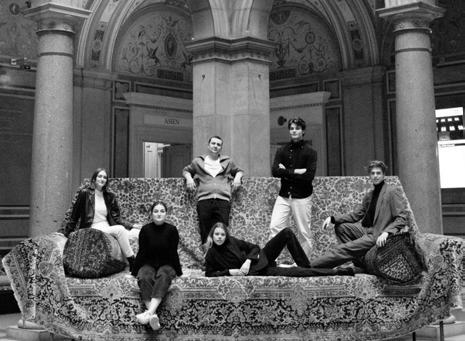
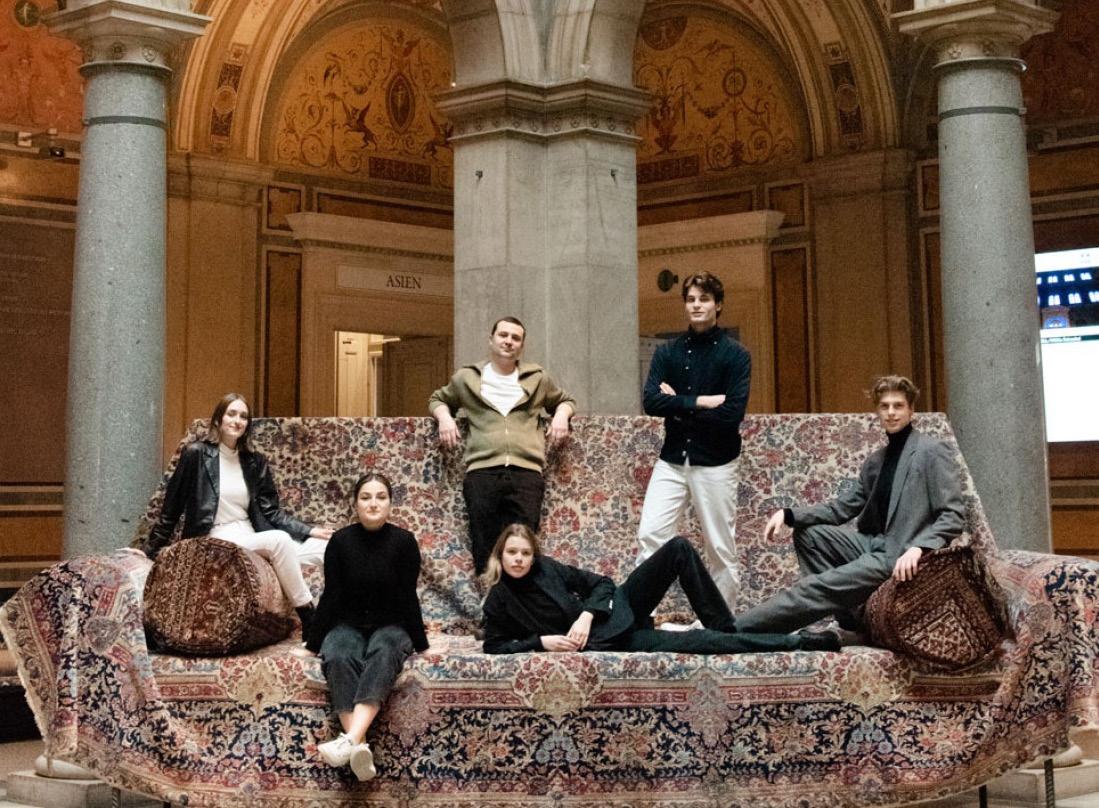
From left to right: Mia Hoell, Ilona Scheidl, Zoltan Unger, Ninon Hauswirth, Matthias Palla and Thomas Rojahn
From 2019 to 2021 I worked as a part-time Architectural Design Assistant in a small interior design office with focus on high-end residential projects and luxury furniture.
My tasks included the development of design concepts, creative kitchen and bathroom solutions, site supervision and documentation as well as material concepts. This also included customer service, client coordination and project presentations for private customers in Vienna. By working with a small team I strengthened my ability to work independently, adapt to emerging problems quickly, manage project timelines efficiently and to work with a wide range of software.
As a designer at Massi Design I have worked with high-end furniture and appliances from Italian brands like Agape, Sea, Flexform or Strato kitchen.
List of Projects
Construction projects
Schiffamtsgasse 2019
Währingerstraße 2019
Berggasse 17 2020
Döbling 2020
Lanzendorf 2021
All projects above included apartment remodeling, kitchen and bathroom planning
The complex political development within the cultural and socio- political landscape of 20th century Italy created multiple directions in the architecture and craft sector, each style reflecting the prevailing political ideologies and showing as a result the tangible legacy of statesmanship. The use of the rules of aesthetics in the period from 1900 to 1960, especially the movement of fascism, left an indelible mark on Italy’s spatial heritage.
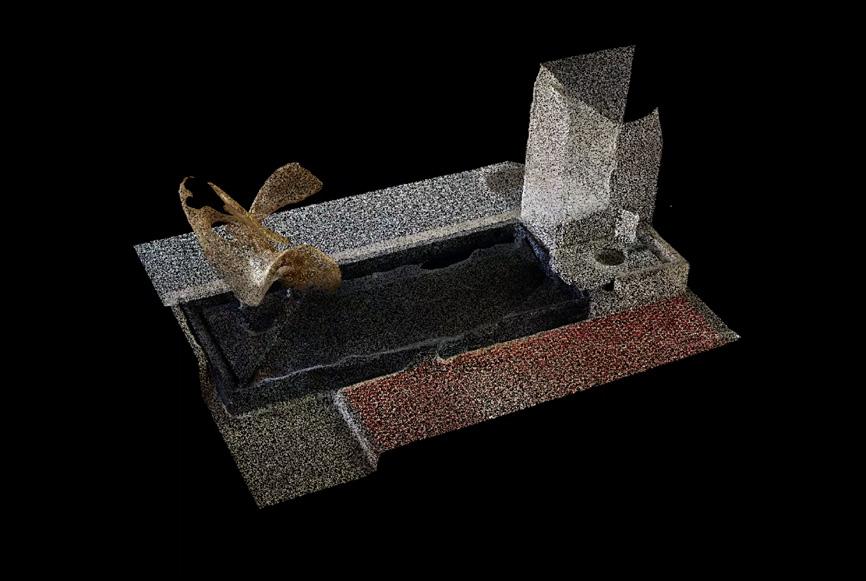
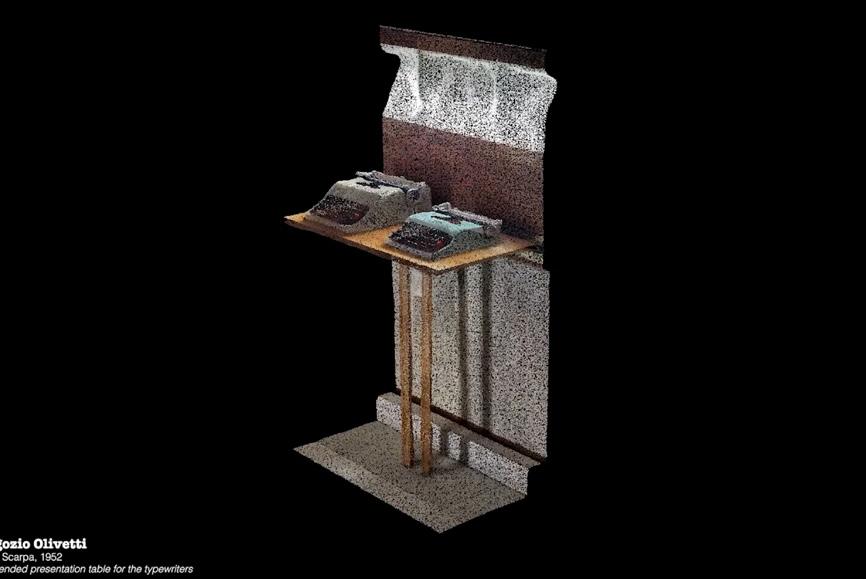
This thesis is an attempt to highlight the lack of a critical reappraisal of the culturalpolitical heritage that leads to its still persistent embedding within Italian society. Given this context, the research question focuses on the influence of political ideologies and its use of aesthetics for the creation of exhibition spaces, serving the public and private presentation of artisanal and industrial cultural goods. Expositions as the Venice Biennale served as platforms for showcasing architectural prowess and technological advancements. The on-site analysis of two public and one private site in the city of Venice, Italy, is utilized to examine the relationship between the production of handicrafts, the creation of exposition space, and how these are used to communicate the narratives of authenticity, power and national identity. The investigation links these contributions to selected architects as Carlo Scapra and Josef Hoffmann and brings their work into relation to public and private commissioners.
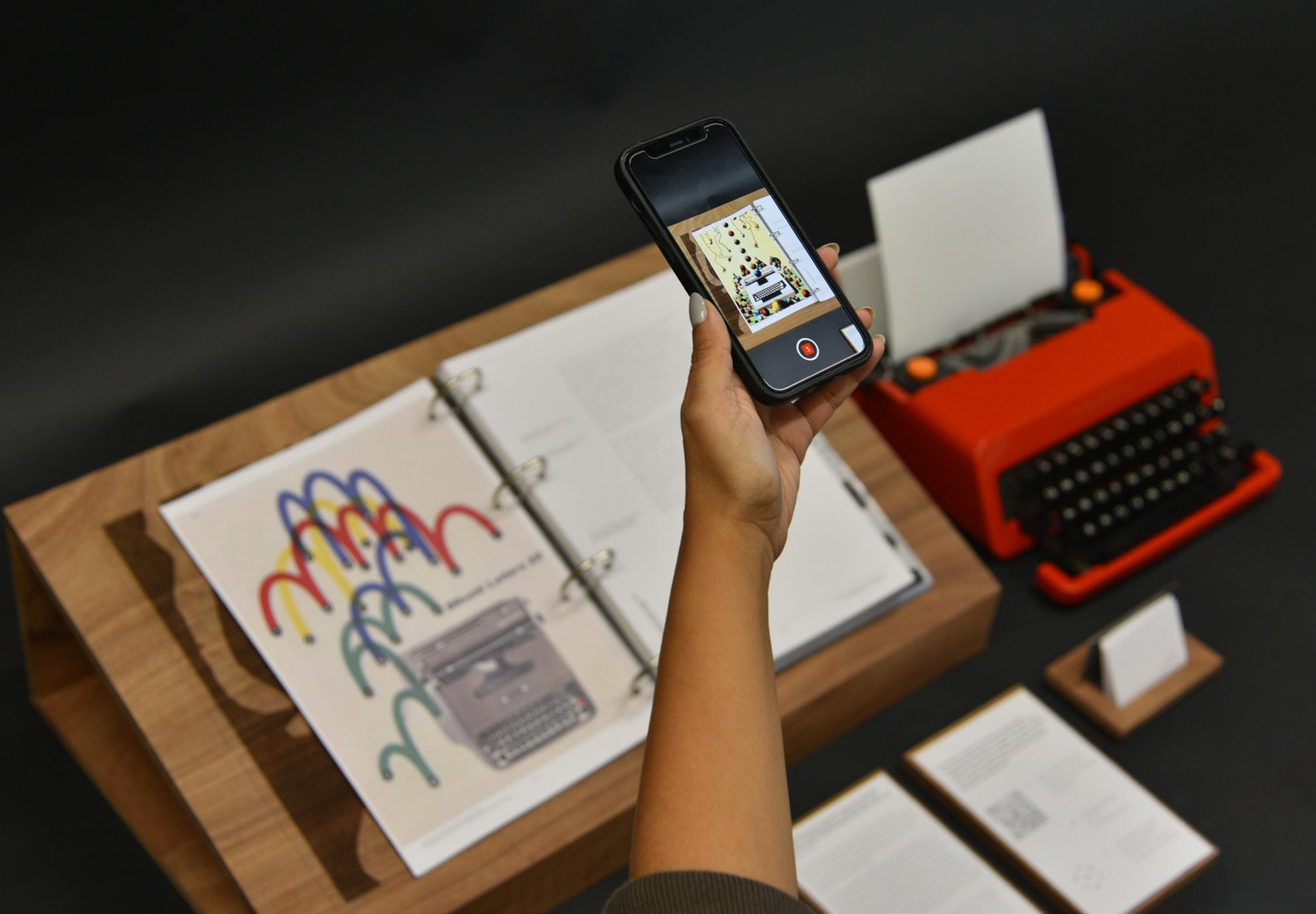
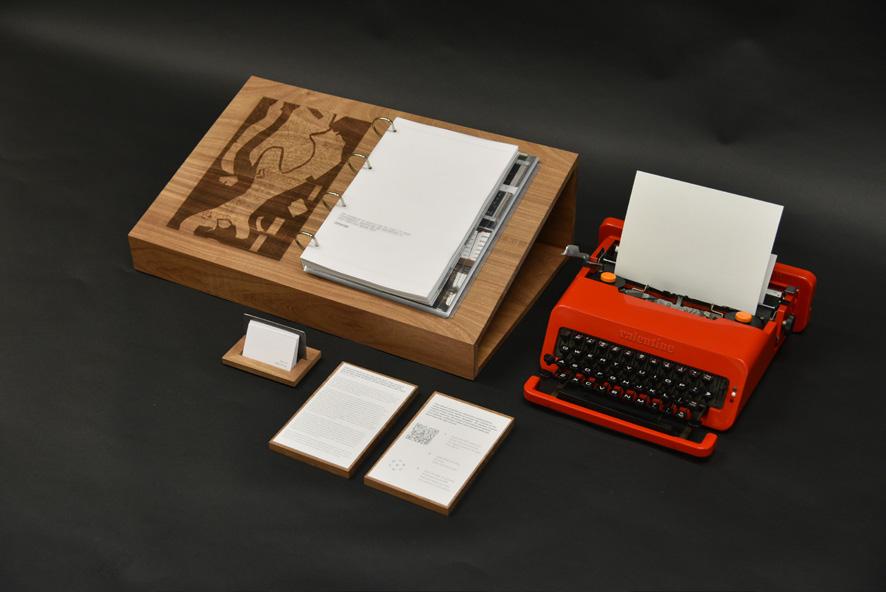
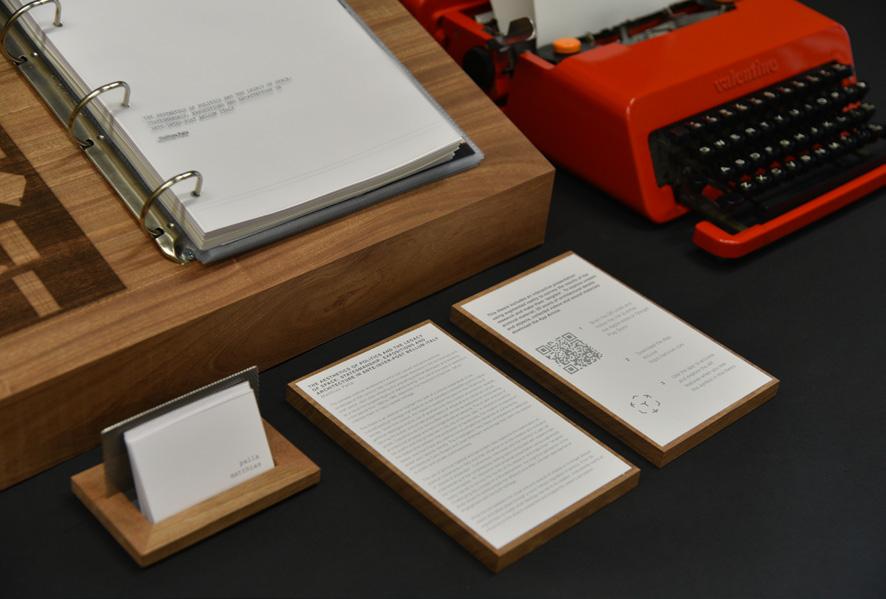
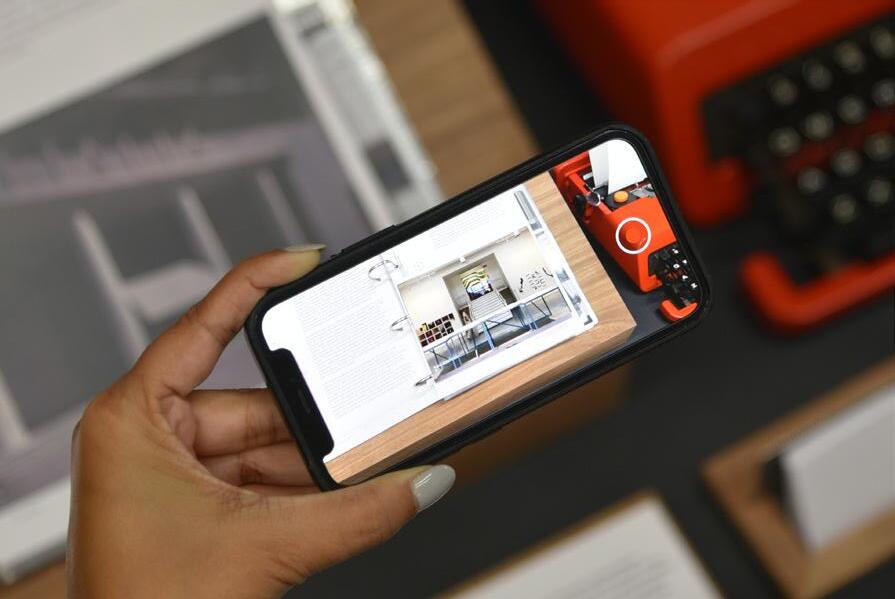
The use of archival material and secondary data supports the examination of political movements in Italy and their influence on to the creation and evolution of “places of showcase”. Furthermore, Interviews with the intention to gain an understanding of the contemporary setting were conducted with experts from the cultural sector. An interactive and physical presentation using augmented reality intends to convey the results of the research and make them “tangible”. Challenging the concept of a
Wunderkammer, the cognitive perception of the study allows to communicate the different and often unknown approaches of engagement with the built heritage.
While the link between the visual arts and spaces of display is no longer always visible and takes place through a more indirect regulation of politics, it can be argued that no matter what ideology has led to its creation, undoubtedly exerts an influence on the objects presented and shapes the viewer’s perception.
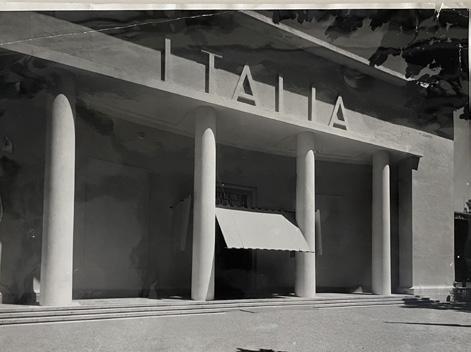
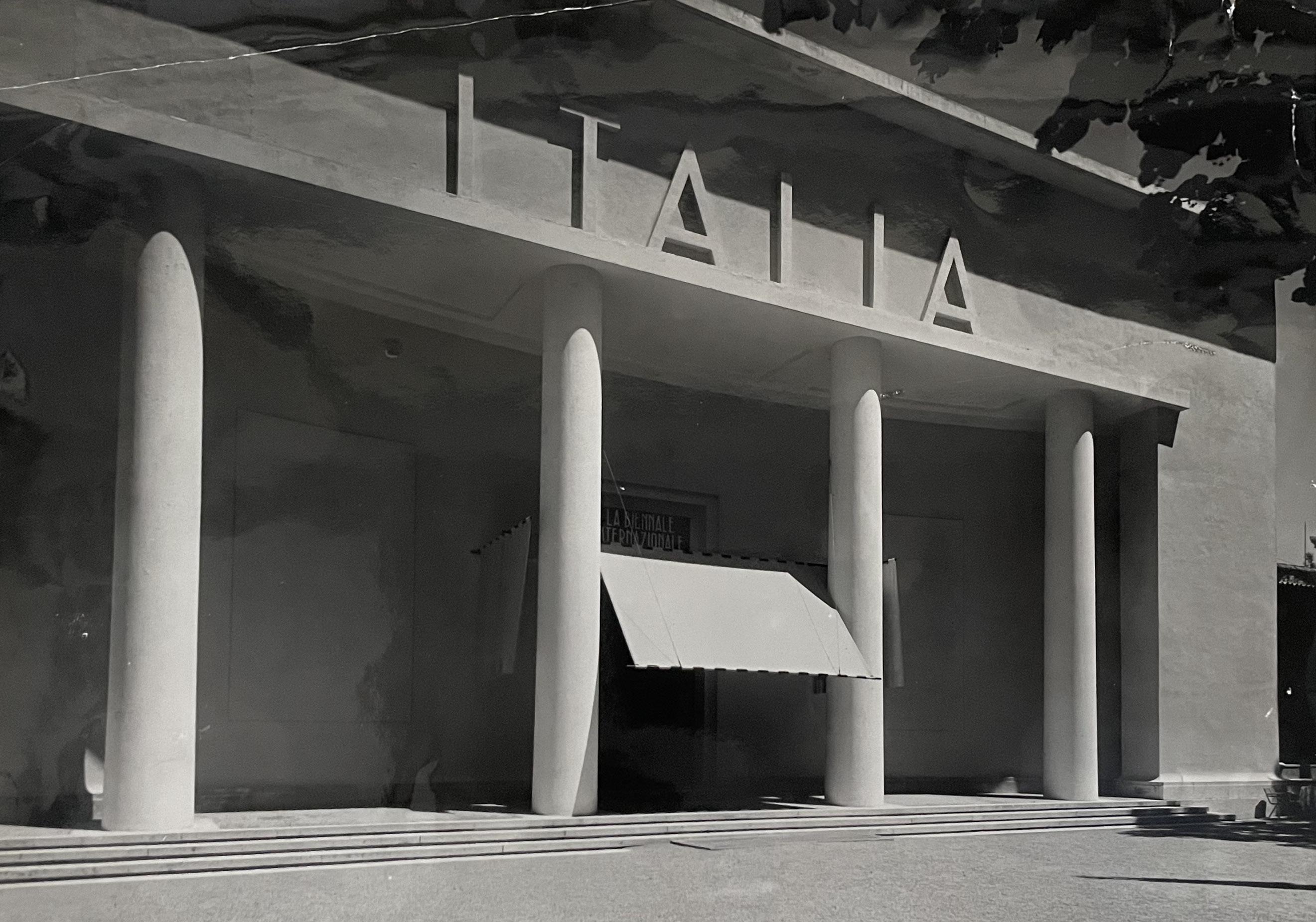
Fig. 1 Palazzo Italia. The façade designed by Duilio Torres in 1932 and later re-named Palazzo Italia is seen here for the XXV Biennale di Venezia 1950.
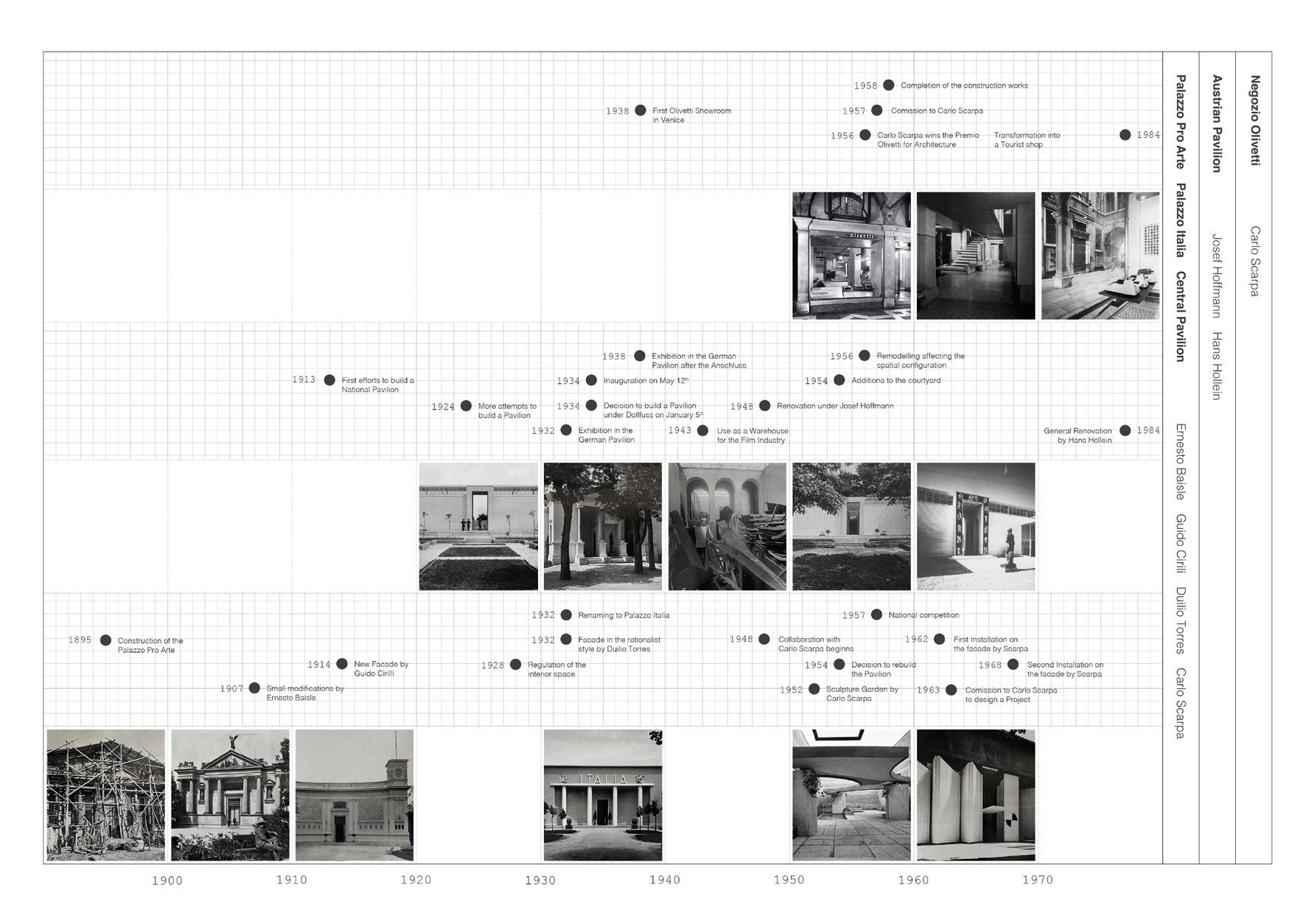
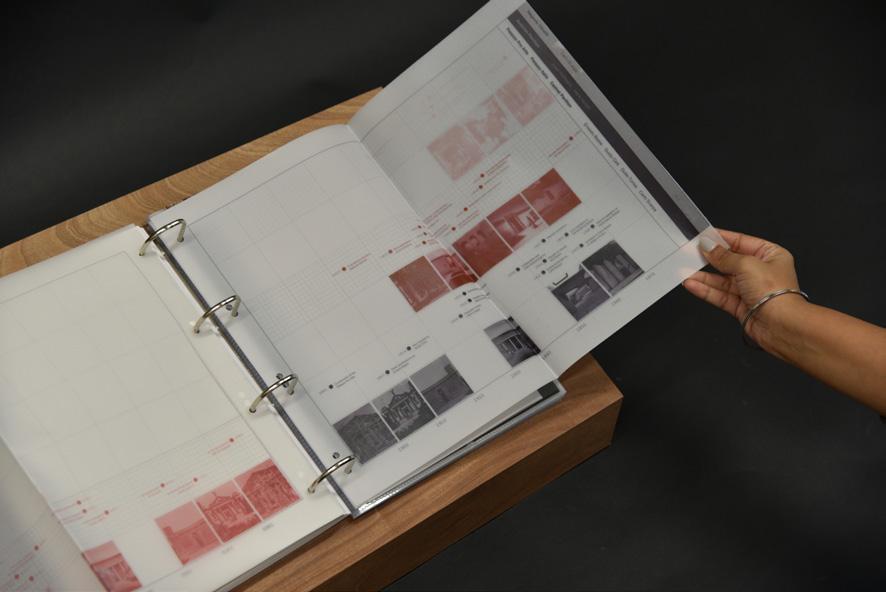
Fig. 2 Timeline of Spatial transformations of the analysed spaces in the 20th century
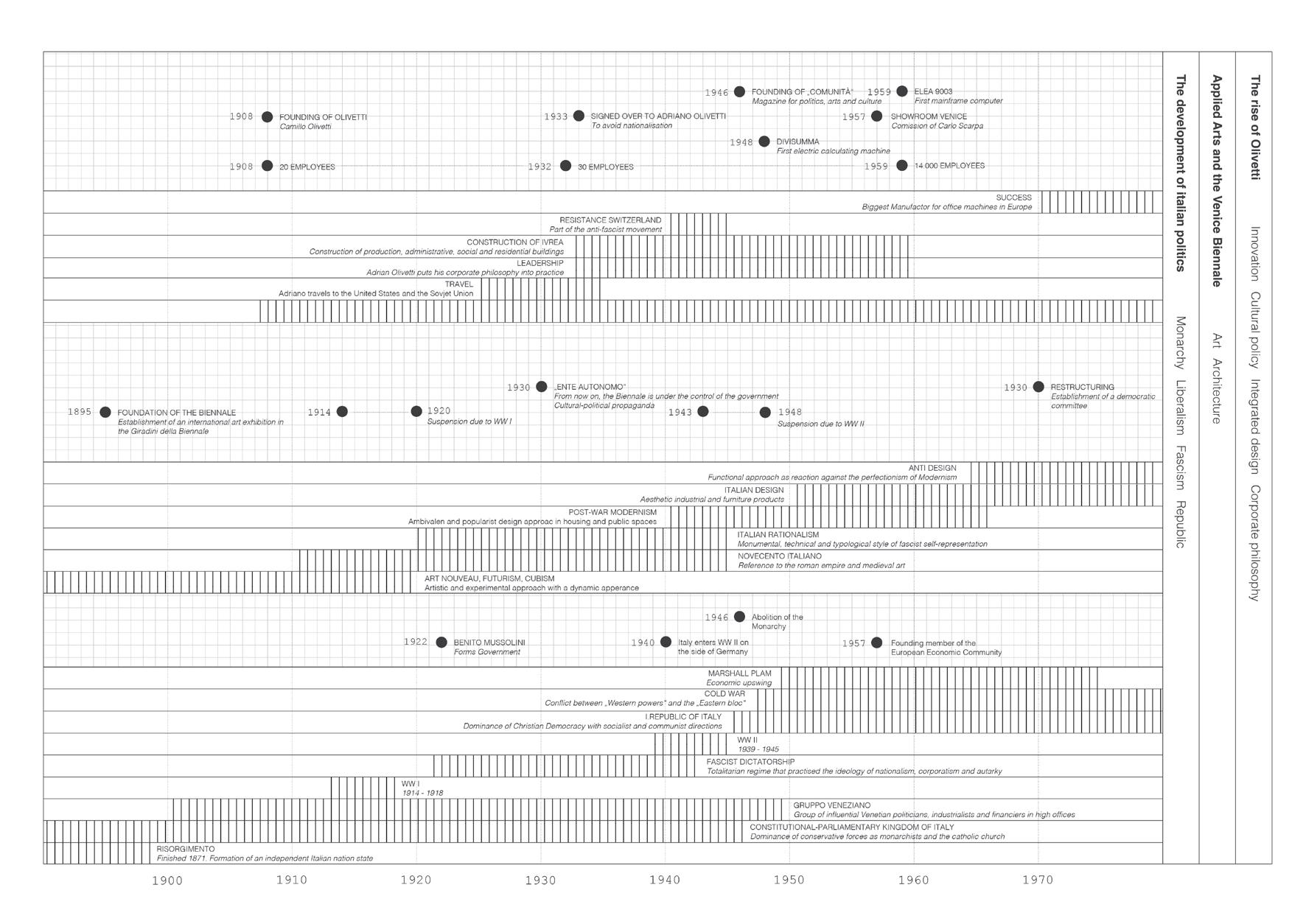
Fig. 3 Timeline of Political movements in Italy in the 20th century
Palazzo Pro Arte, Palazzo Italia, Palazzo Centrale
Enrico Trevisanato, Mario De Maria, Bartolomeo Bezzi, Guido Cirilli, Duilio Torres, Carlo Scarpa
Fig. 6-8 Axonometries of the analysed Exposition spaces From left to right: Palazzo Centrale, Austrian Pavillon, Olivetti Showroom
Fig. 4 3D Scans Olivetti Showroom Fountain with Alberto Viani‘s sculpture ‚Nudo al Sole‘
Fig. 5 3D Scans Olivetti Showroom Suspended presentation table for the typewriters
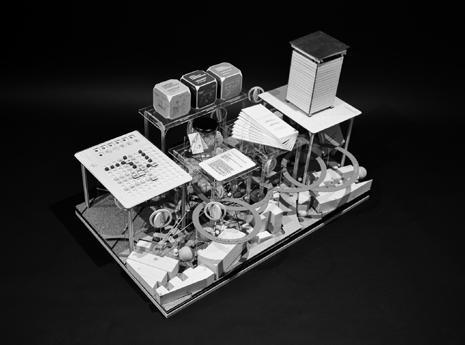
Fig. 9-13 Exhibition arrangement and Interactive presentation concept
The typewriter is the Valentine model by Olivetti, designed by Ettore Sottsass. The stationary products used for the presentation are made of teak wood, the same that can be seen in Scarpa‘s showroom for Olivetti in Venice.
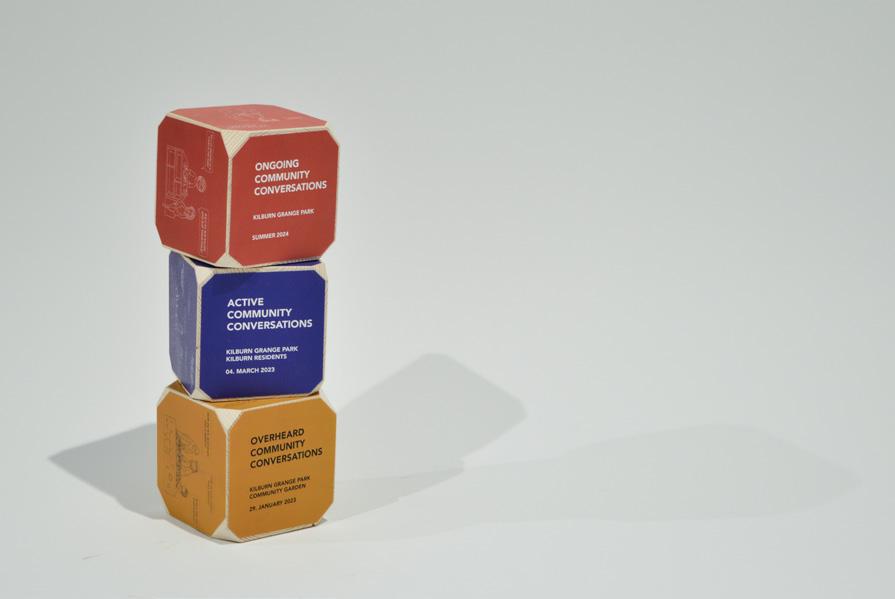
Looking for an opportunity to design for the community, Kilburn Grange Park and the area around Kilburn Community Garden was chosen as a site to focus on. The aim of the project is to find a way to collaborate with and learn from the community through a project beyond buildings and physical space, without interfering with the existing common setting of the neighborhood. What initially started off as an ambitious community project to produce social processes to reinvent, maintain and reproduce the commons, became the documentation of an experimental process based on political and social challenges.
In search of a framework with which to begin the design process, the shortage of tools for the professional facilitators willing to follow co-design principles quickly became evident. This shifted the prjoect focus from designing a physical structure to creating a framework based on which community-based projects can be implemented and sustained.
Moreover, to test and criticize the process, a small-scale community project in the context of Kilburn Grange Park was proposed as an example of how a design intervention can be planned with respect to this framework.
Starting with RIBA Plan of Work as a base tool, the general template was kept and the stage outcome and core tasks’ content were altered to include more community engagements in each stage and make it more compatible overall to cooperative, small-scale community projects. Testing out the updated version on the field showed that the stages are better implied to probability rather than certainty based on unique challenges and community feedbacks that each project may deal with. These changes allow to emphasize on the flexibility and the possibility of overlaps between stages, making it more adaptable to different community projects’ variants.
Based on the framework suggested by the new Plan of Work, the project is structured into three main stages with overlaps at some parts: Analysis, Testing and Implementation
In the initial stage of the project, the goal was to gain a better understanding of the community’s social setting to define the level of intervention. By analysing the existing infrastructure, the design brief was subsequently evolved based on potentials within the community.
The second stage revolves mostly around community engagements to generate a design proposal in response to constraints in time, funding and policies.
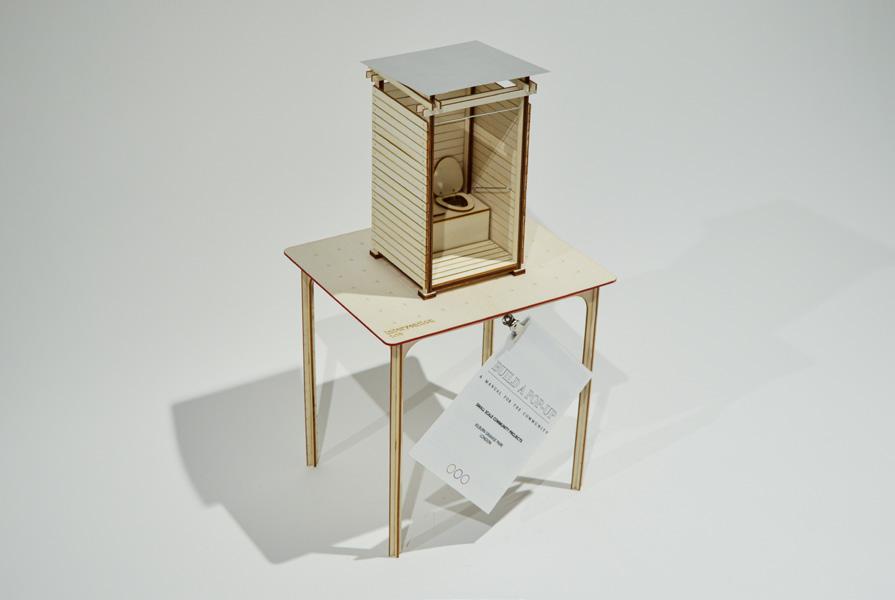
Finally, the third stage is an idea for a pop-up intervention based on the findings in stage I and II and an implementation of co-design ethics.
The outcome is a hypothetical community engagement project and offers simple solutions for the community’s actual challenges, making a statement that criticizes bureaucratic barriers.
Fig. 1 Plan of Work
The description of the stages (0-7) represented as a cycle
Fig. 2 Planning Process with Time Frame Guidelines,
Friends of Kilburn Grange Park
Fig. 3 Stage I-III Descriptions
Fig.
SummeryofPossibleInterventions .PlanningProcesswithinTimeline .Stakeholder Analysis .Assesment of Ideas .Participating inKilburnParkCouncilPop
.InformationProcessing .PoliticalandSocialAnalysis .SocialActivity Analysis .Social and EcologicalAnalysi s .CoomunityEngagement
.CommunityEngagement
BUILD A POP-UP
Fig. 6 The manual as prepared for the community
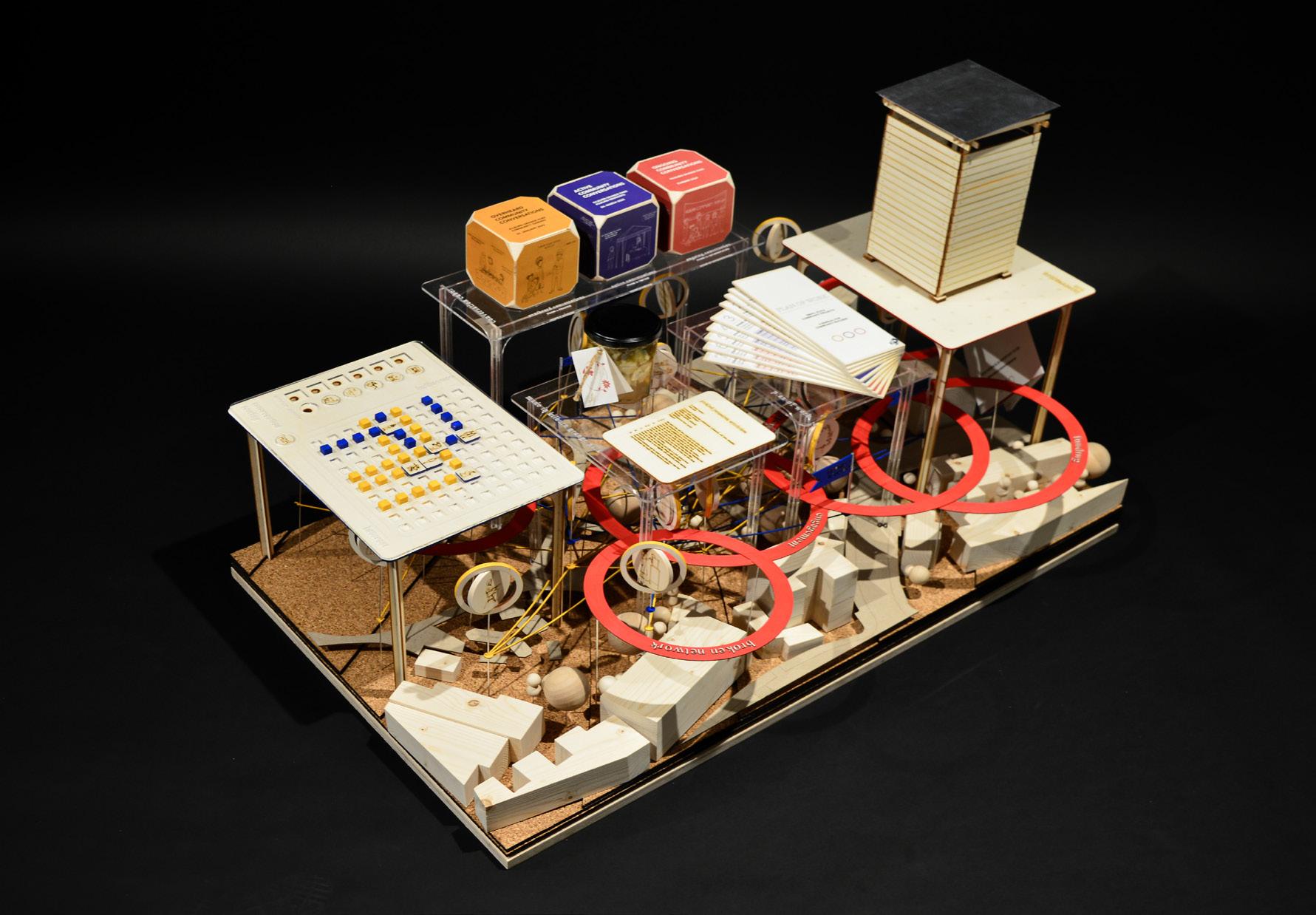
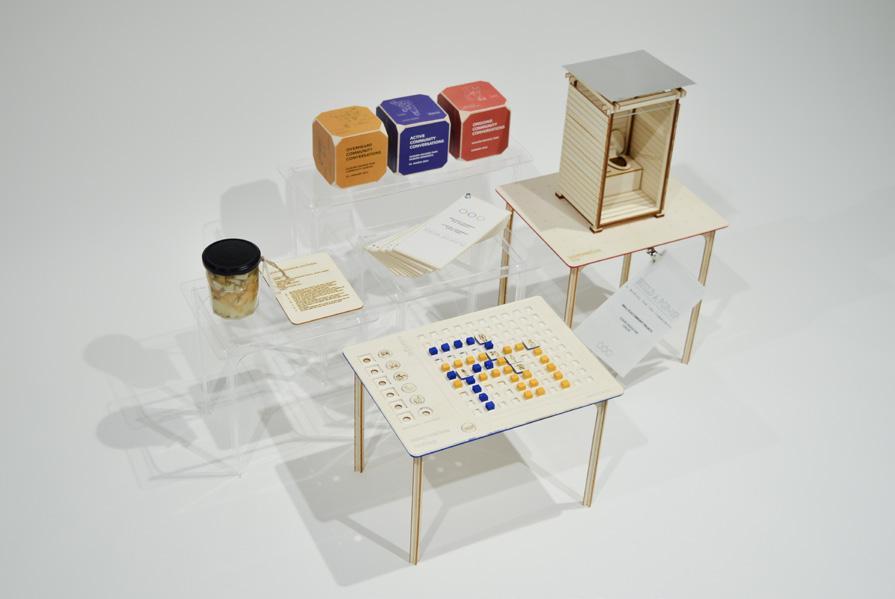
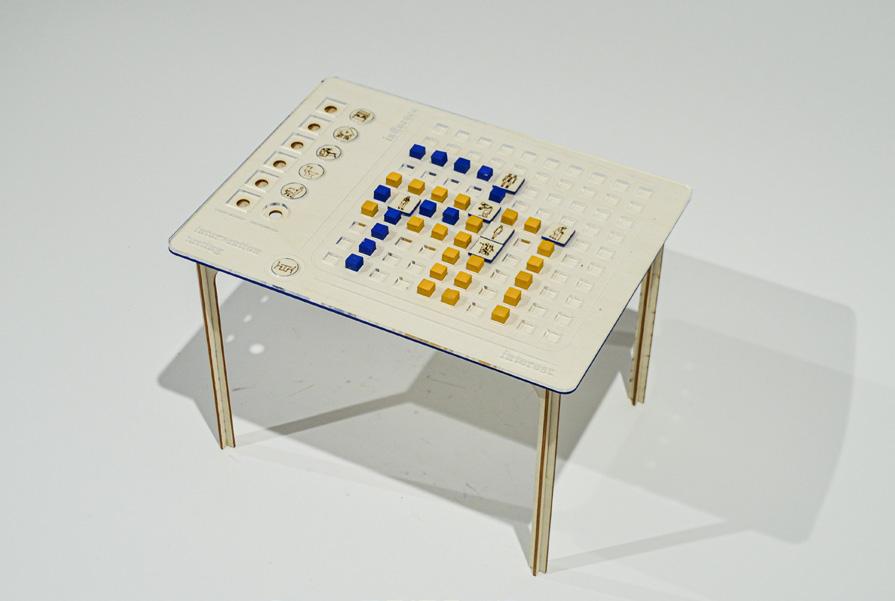
The Interactive Model
Fig. 7 An assembled version of the model with respect to all the stages
Fig. 8-11 Different outputs from different stages of the project
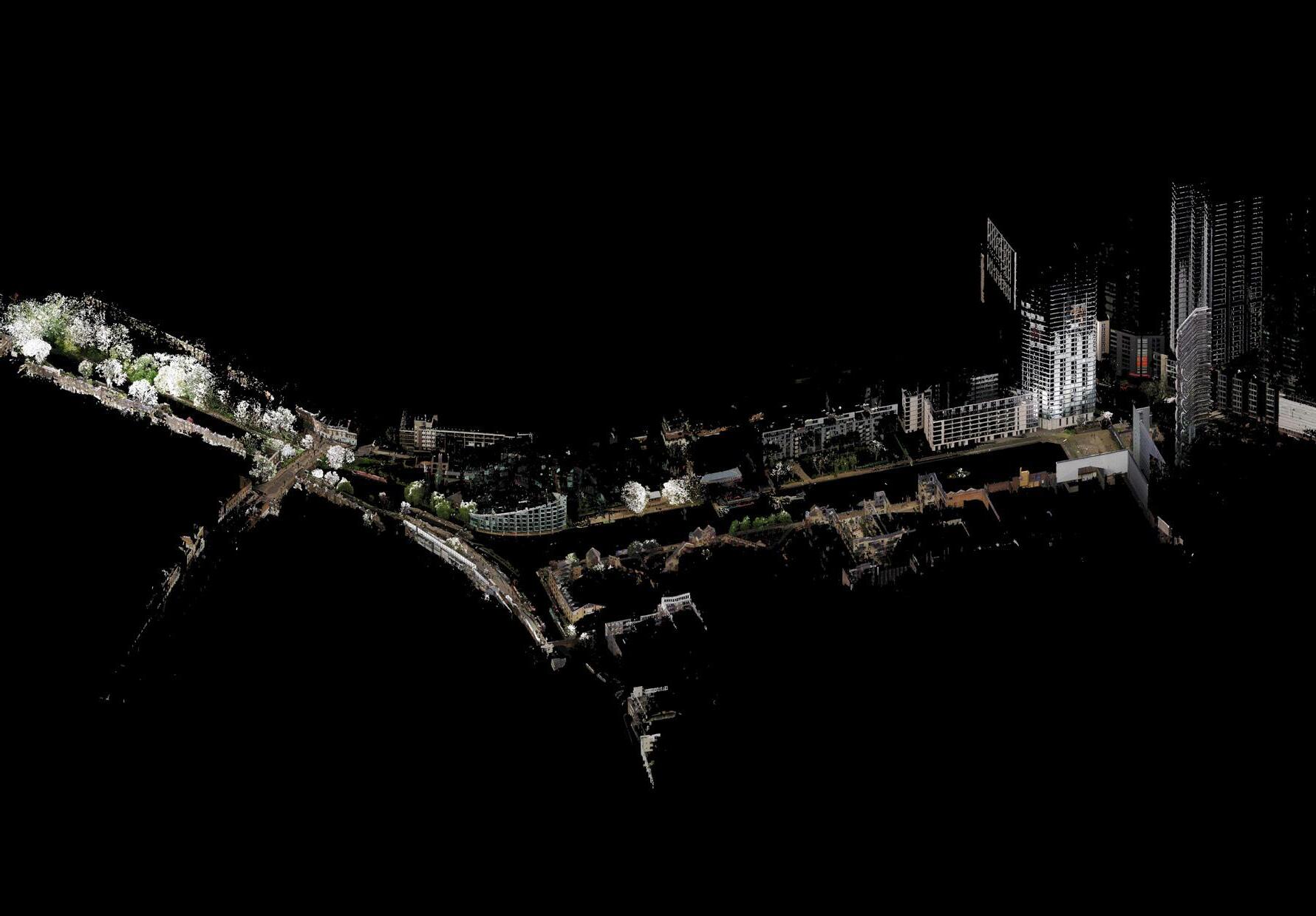
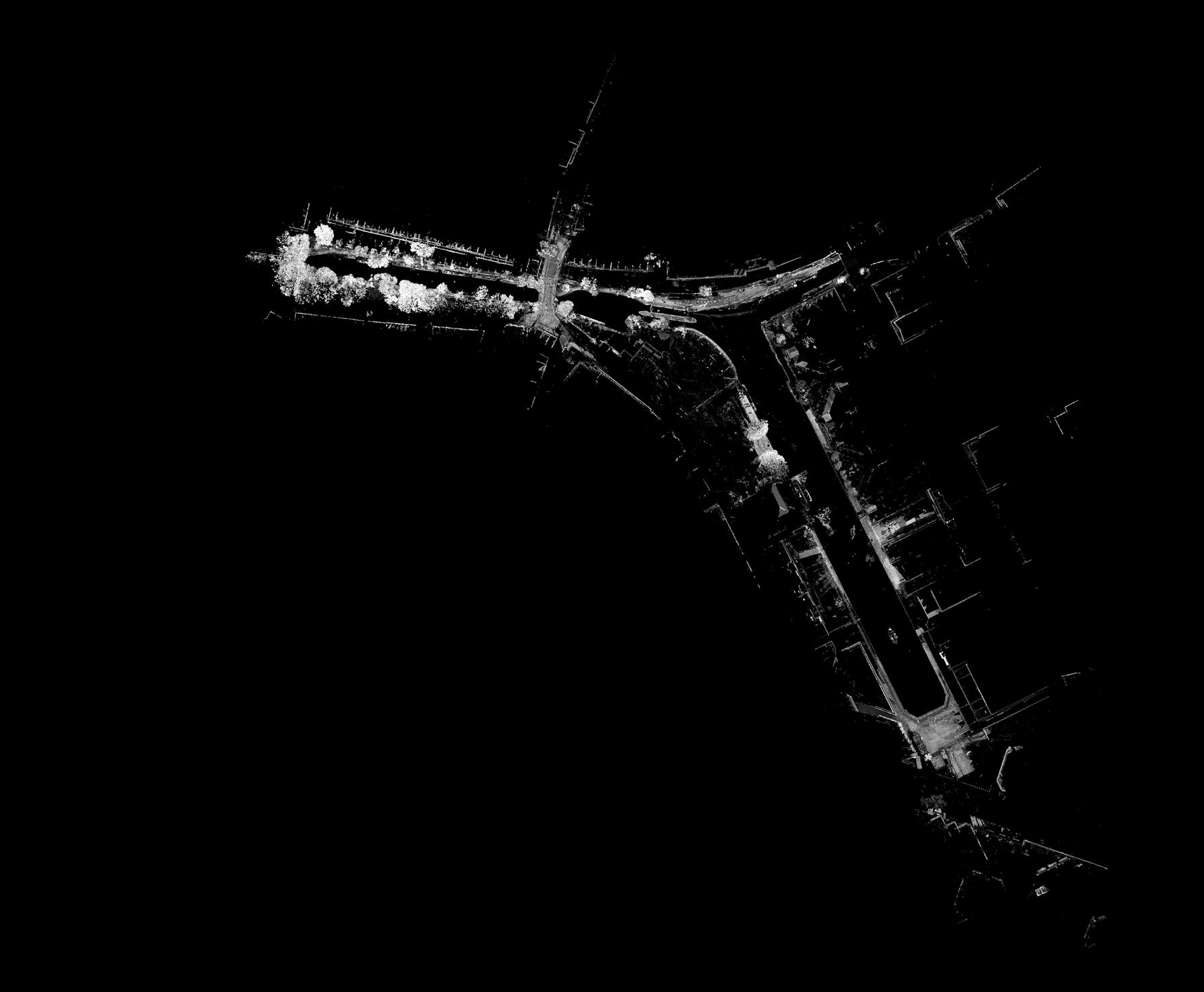
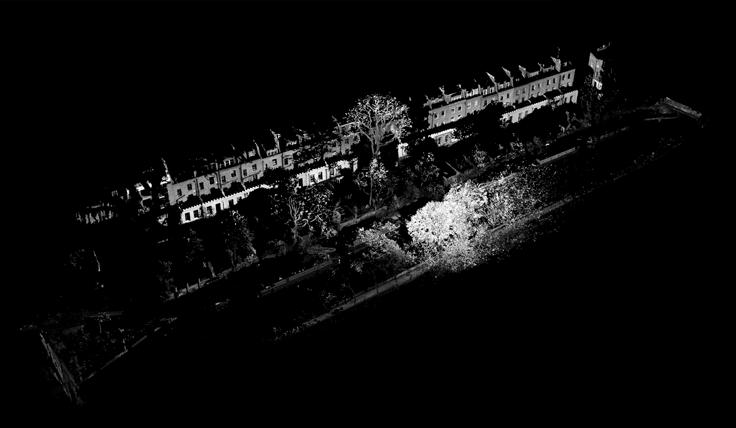
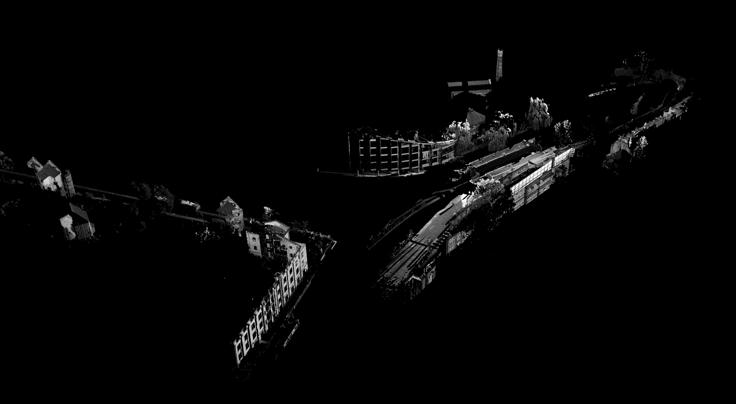
As a site for the module BARC0187 3D Scanning in Historic Urban Environments the section of the Regents Canal in Islington between Colebrooke Road and Wharf Road with the adjacent City Road Basin was chosen as study area due to its impact on the local history and cultural heritage. Regent‘s Canal is a waterway that runs through London and connects the Grand Union Canal in the west to the River Thames in the east. The canal was built in the early 19th century to transport goods between London‘s busy docks and the industrial Midlands. Due to this fact it played a crucial role in the growth of London‘s economy during the Industrial Revolution. The basin and canal were surrounded by warehouses and factories that served the needs of the growing city, but by the mid-20th century, many of these buildings had fallen into disrepair. In recent years, however, the City Road Basin has seen a resurgence.
The popularity of the canal has often led to friction and debate between residents, the council and developers. Particularly in the south of the Basin, there has been an enormous increase in building density in recent decades. In the process, a large number of historic buildings have been lost, which are
an important part of the local history and identity. To get a picture of the rapid change the area has undergone over the last decades, material from the Islington Local history Archive was examined and scanned.
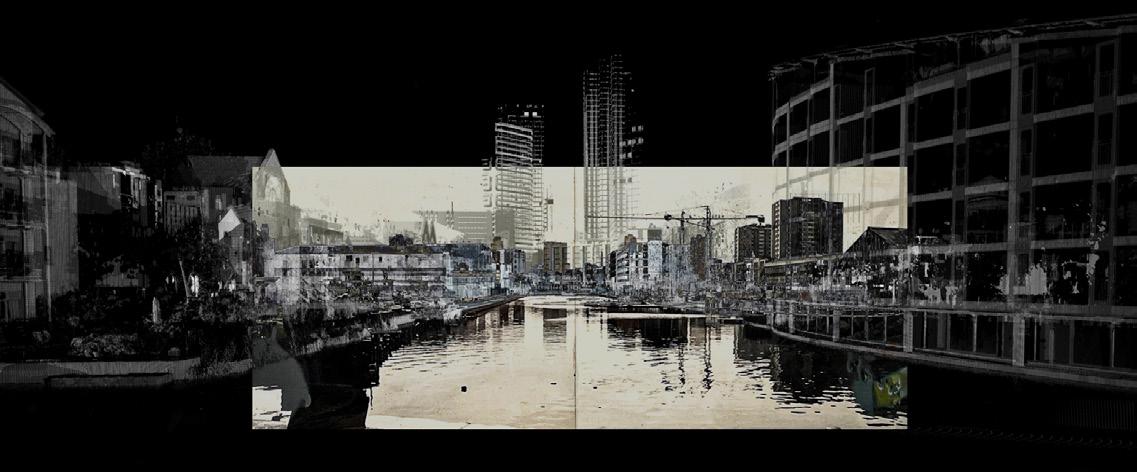
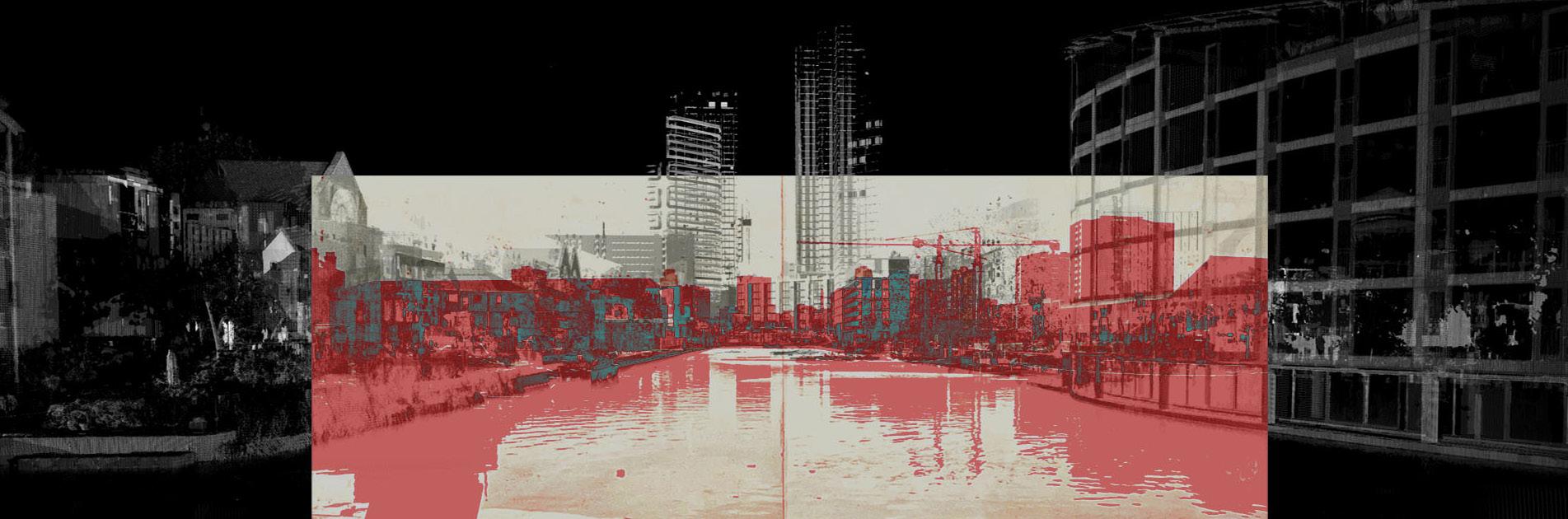
The aim of the design project is to bring archival material into the digital realm, revealing and representing different temporal layers of the built environment and curating a visual project within the historical context of the site. This is to emphasise the local importance of the socio-historical context on the built environment of the Regents Canal and City Road Basin and make it visible.
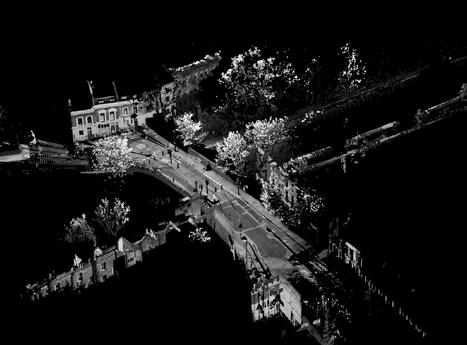
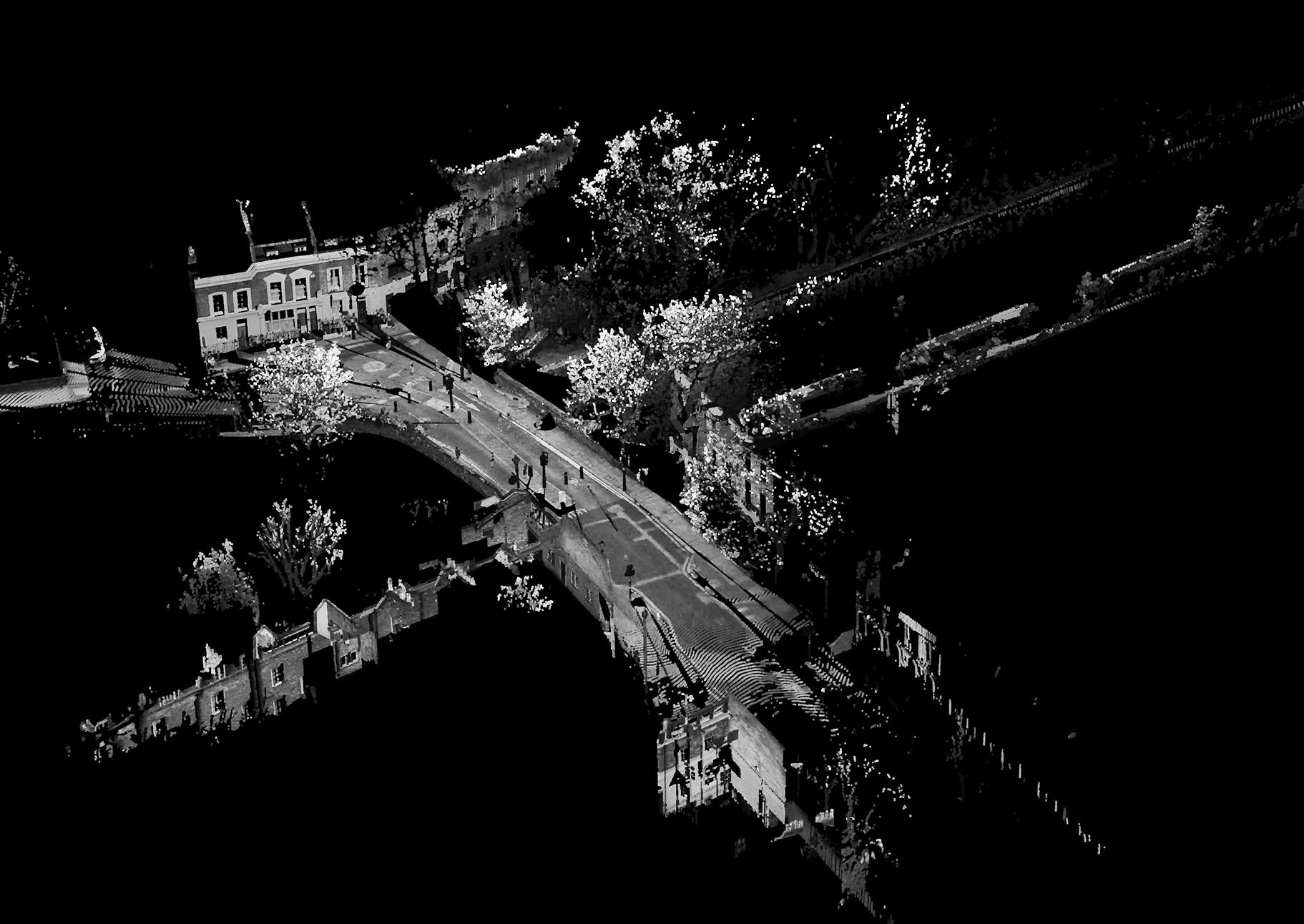
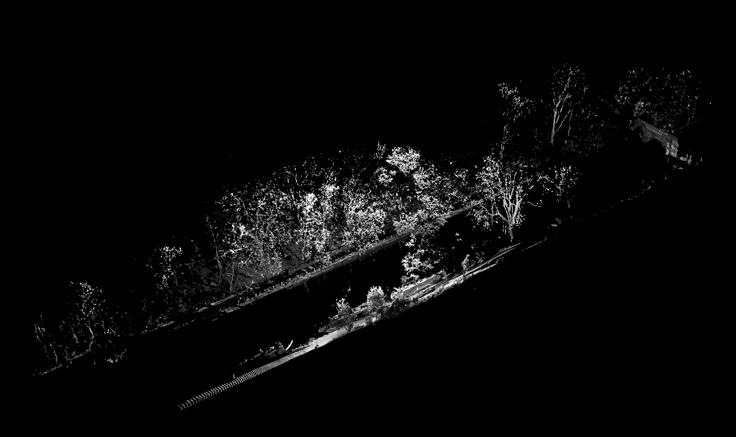
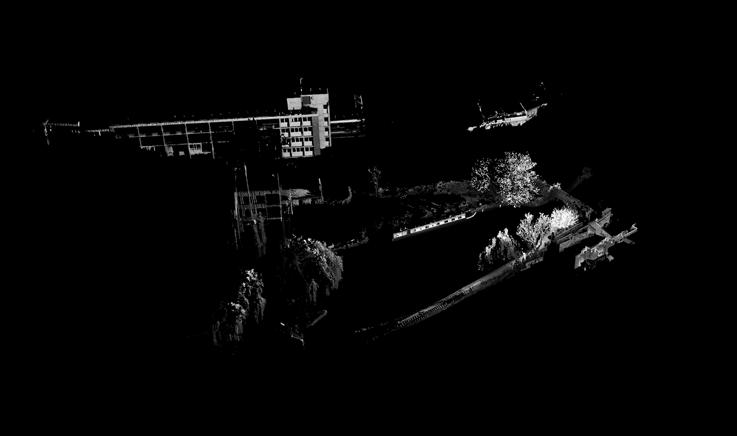
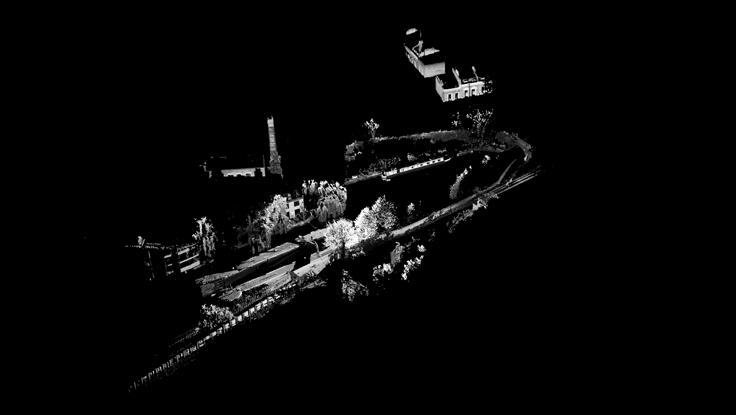
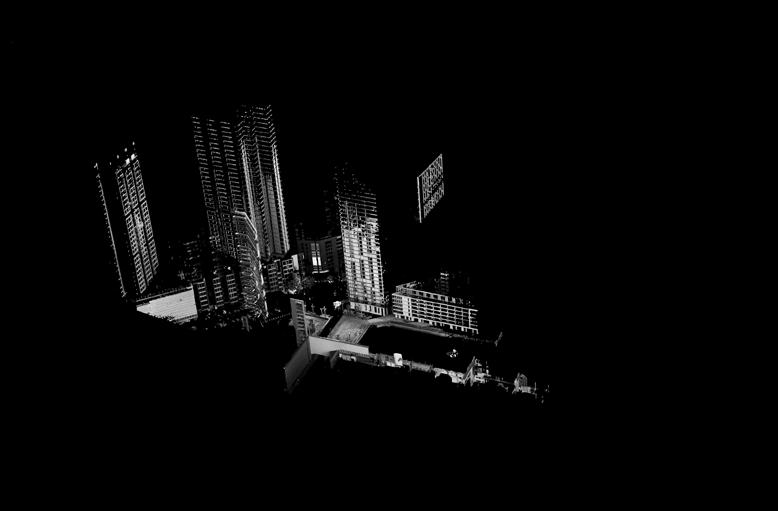
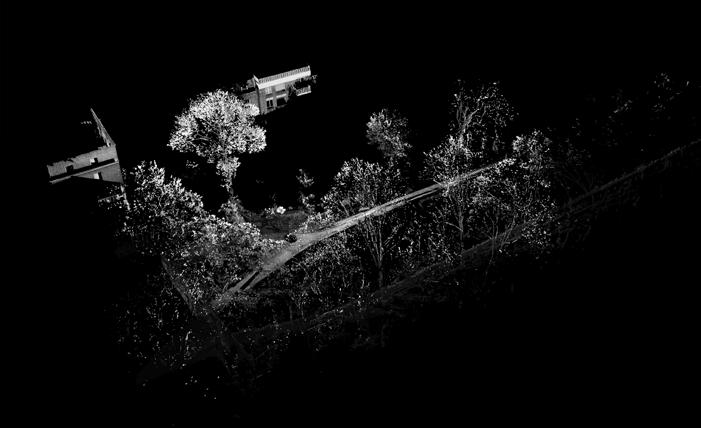
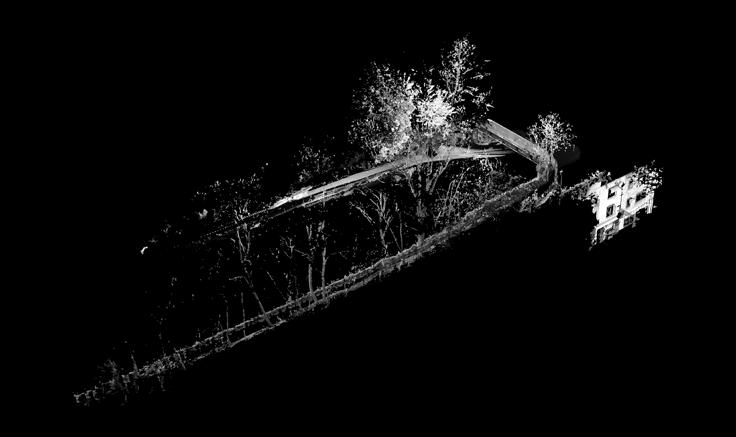
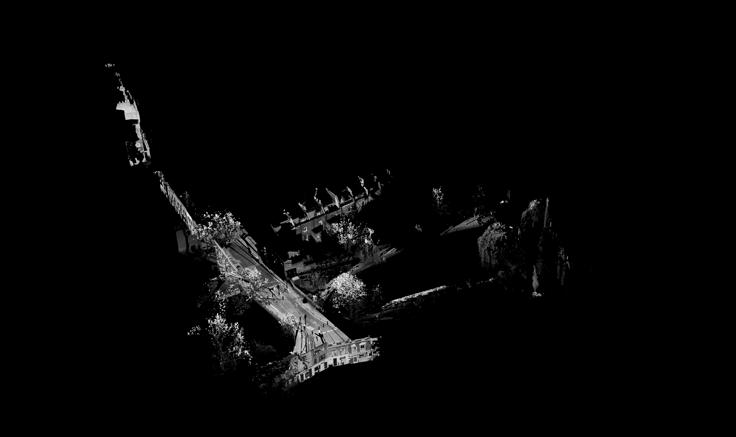
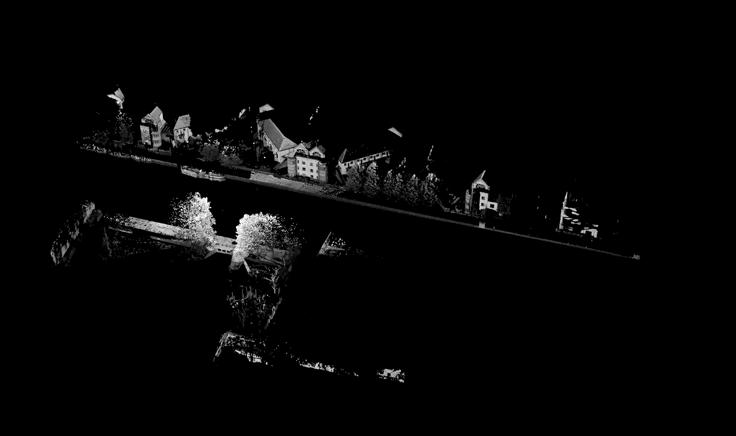
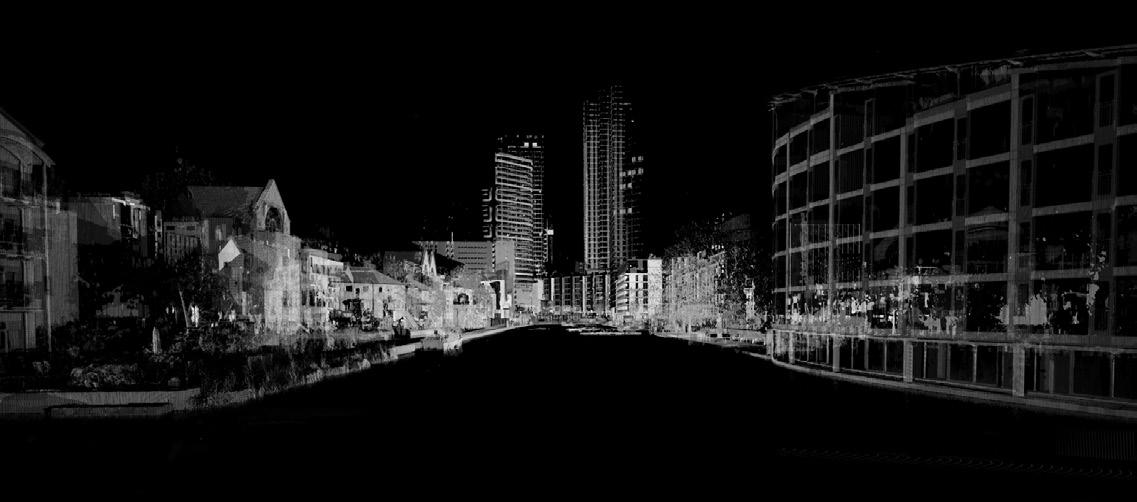
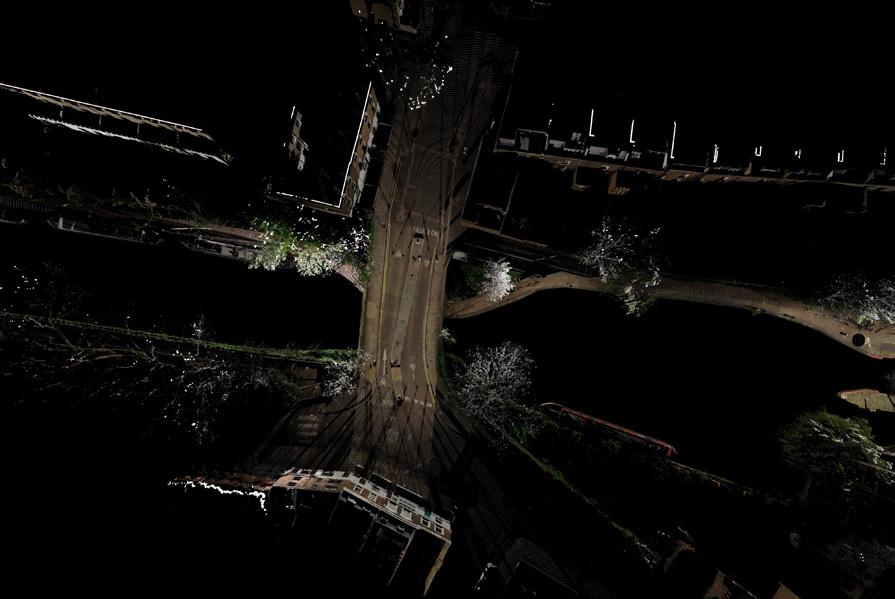
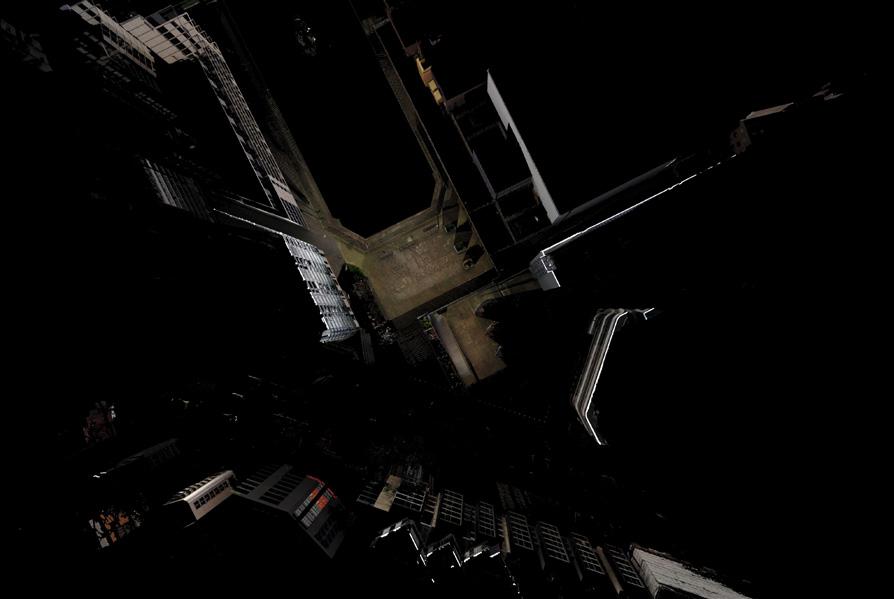
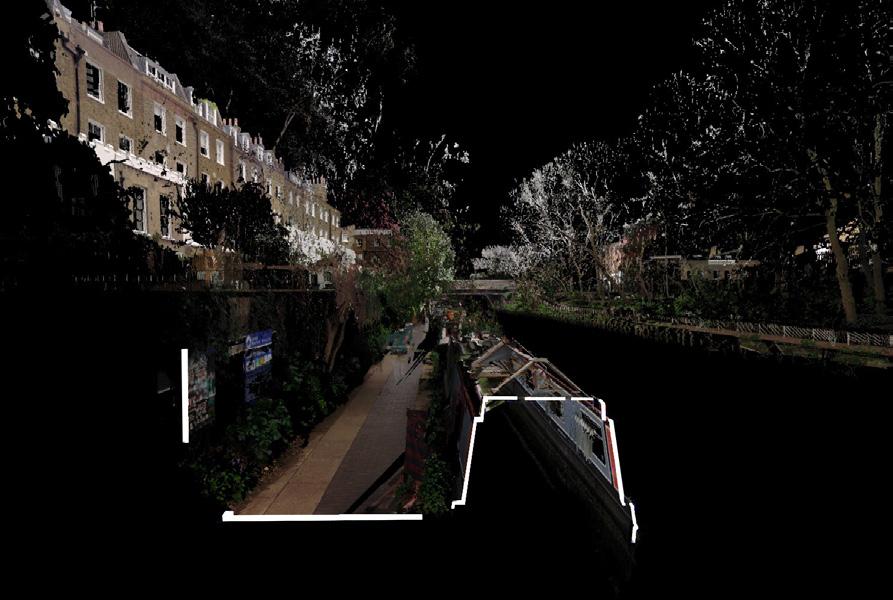
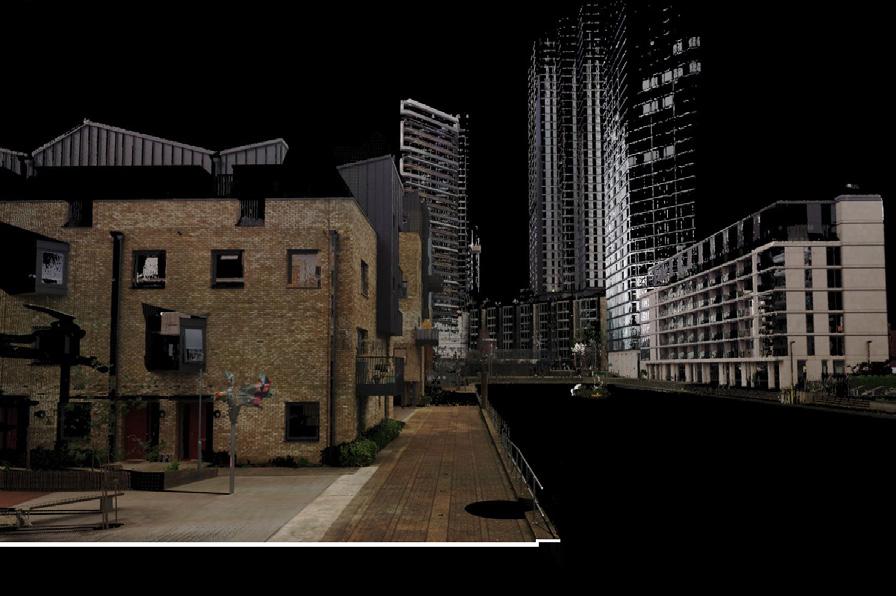
video to understand and digitally recreate the The project involved surveying 3D data from the surrounding area with the Faro Lidar Focus S350 scanner and processing the data into a built heritage of Islingtons Regent´s Canal and City Road Basin.
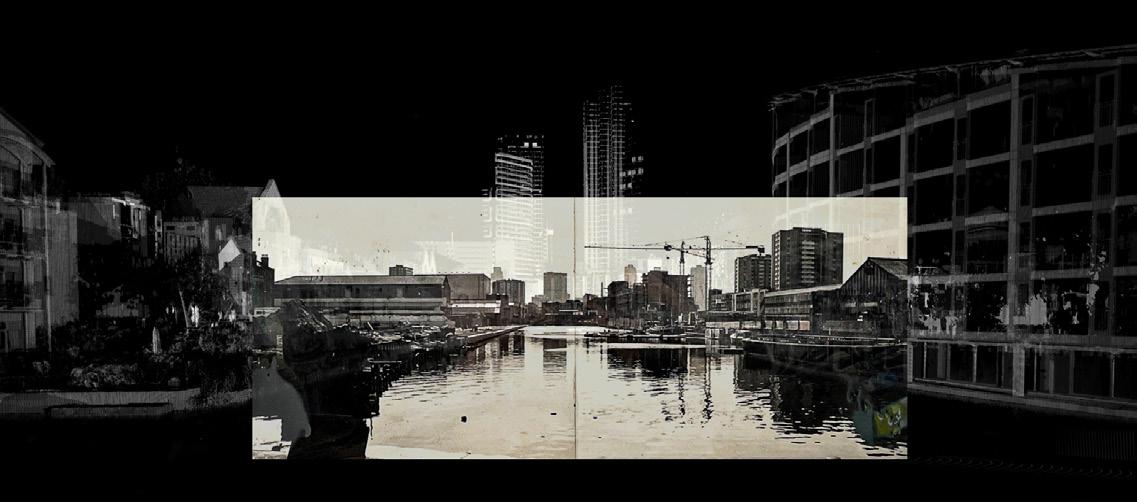
The digital 3D model makes it possible to render images from the same perspectives as historical images. On top of these digital snapshots, the images, which are dated between 1920 and 1980, were superimposed.
The overlapping of historical layers showes how great the influence of our environment is on our perception. The change in the building mass around Regent’s canal, wheter small or large, is enormous and an example of the transformation of the built environment and the role of architecture between the industrial revolution and the Anthropocene.
Fig. 1 Overview of Frog Lane Bridge
https://youtu.be/QTNpAfb7keQ
Monochrom Pointcloud Scan
Picture Scan from Islington History Archive, 80% transparency
Difference between the 3D model and the photo
Fig. 5 Steps of Layering the Archive Material in Photoshop Link to the the video showing the full project:
Fig. 6 Picture, General View of Basin, 1975 B6321, Y59 B 232, Islington Local Archives, London
Renders
Fig. 4 Axenometric view from the north-east side over the site
Fig. 5 Top Perspective of Frog Lane Bridge
Fig. 6 Top Perspective of the south end of the Basin and cut through Canaletto Tower
Fig. 7 Section Perspective of the pathway along the canal on Vincent Terrace towards Frog Lane Bridge
Fig. 8 Section Perspective towards the south end of the Basin an the Canaletto Tower
BACHELOR DESIGN
STUDIO
Culture in Residency Research on Pillars: Findings of Cape Sekirn Matthias Palla, Anne Steffen
Institute of Architecture and Design, TU Vienna Nanotourism AA Summerschool, London
Prof. Tina Gregoric tina.gregoric.dekleva@tuwien.ac.at Jakob Travnik jakob.travnik@tuwien.ac.at
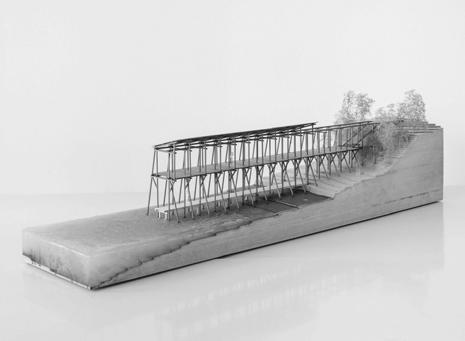
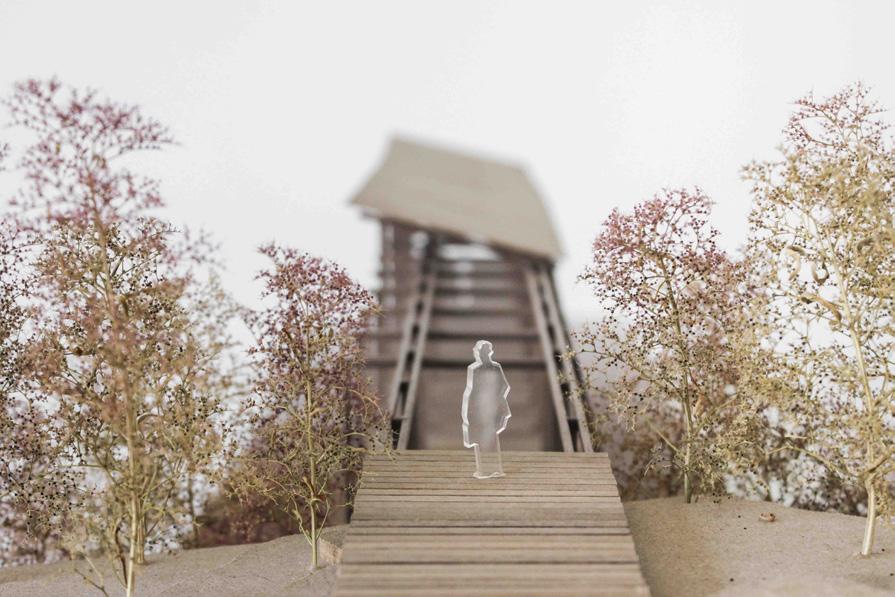
The project is the architectural manifestation of a research center and educational platform for specific biotopes found in the bay next to cape Sekirn on the Campus of the Viennese choir boys.
The lake shore of the Wörthersee is characterized by the complex interplay of species, including reed, endangered fish and clams, as well as amphibia and birds.
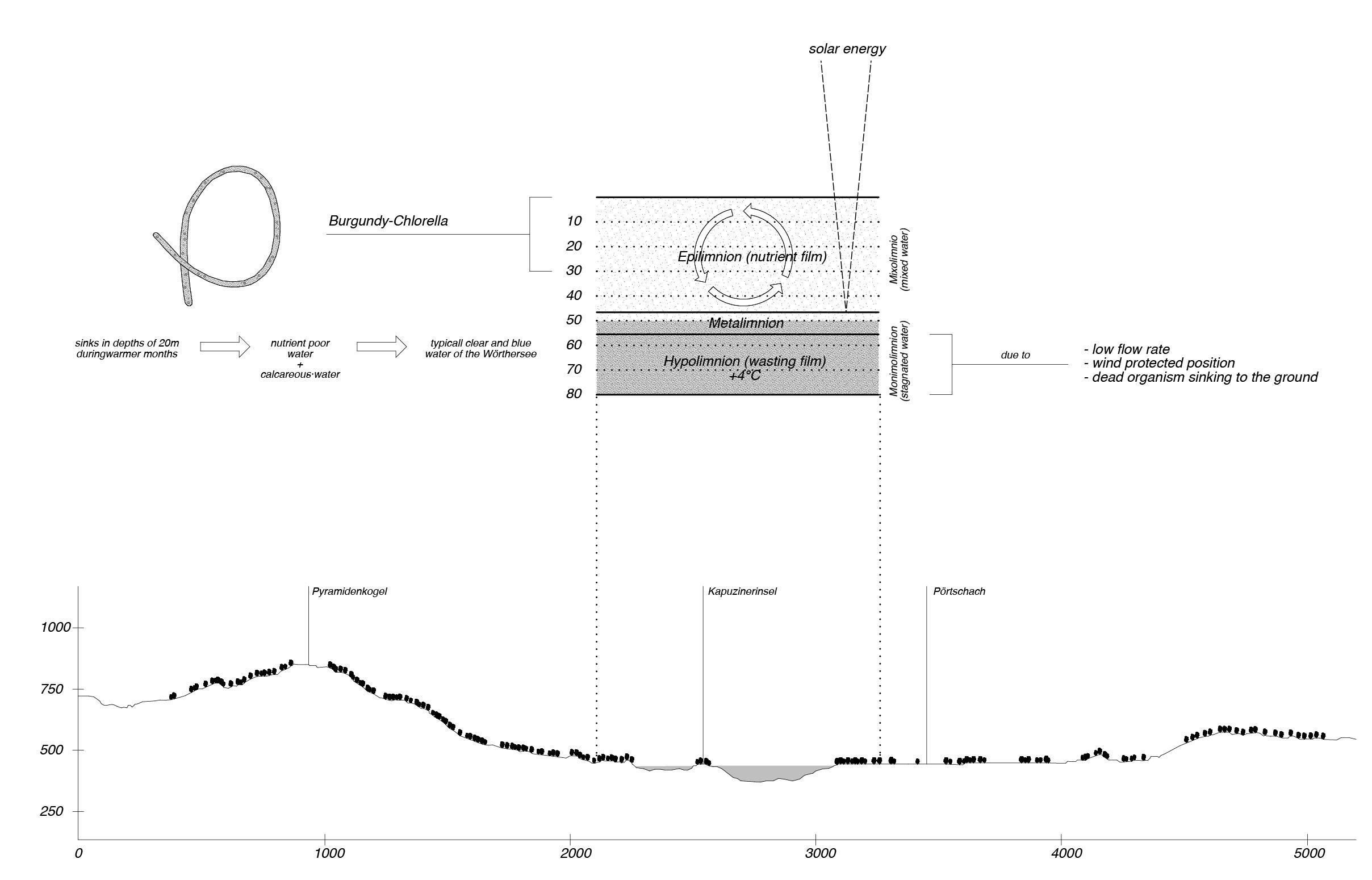
The Burgundy chlorella, a type of algae responsible for the Wörthersee’s extraordinary color, and the high-density of fog that is typically seen during the winter months are particularly noteworthy. The aim of this project is to closely observe and interact with nature and apply these insights to the design.
This was achieved through extensive on-site research to learn from and to protect the fascinating local species mentioned above. This knowledge is intended to be shared through exhibitions to educate visitors about the Wörthersee’s ecosystems and to be used for experiments on how to apply the resources of the bioregion for new designs in a sustainable manner.
Regarding Nanotourism, the goal is to create an interdisciplinary platform for thinking, learning, making and designing for everyone interested in developing local solutions for the Wörthersee’s rich natural heritage.
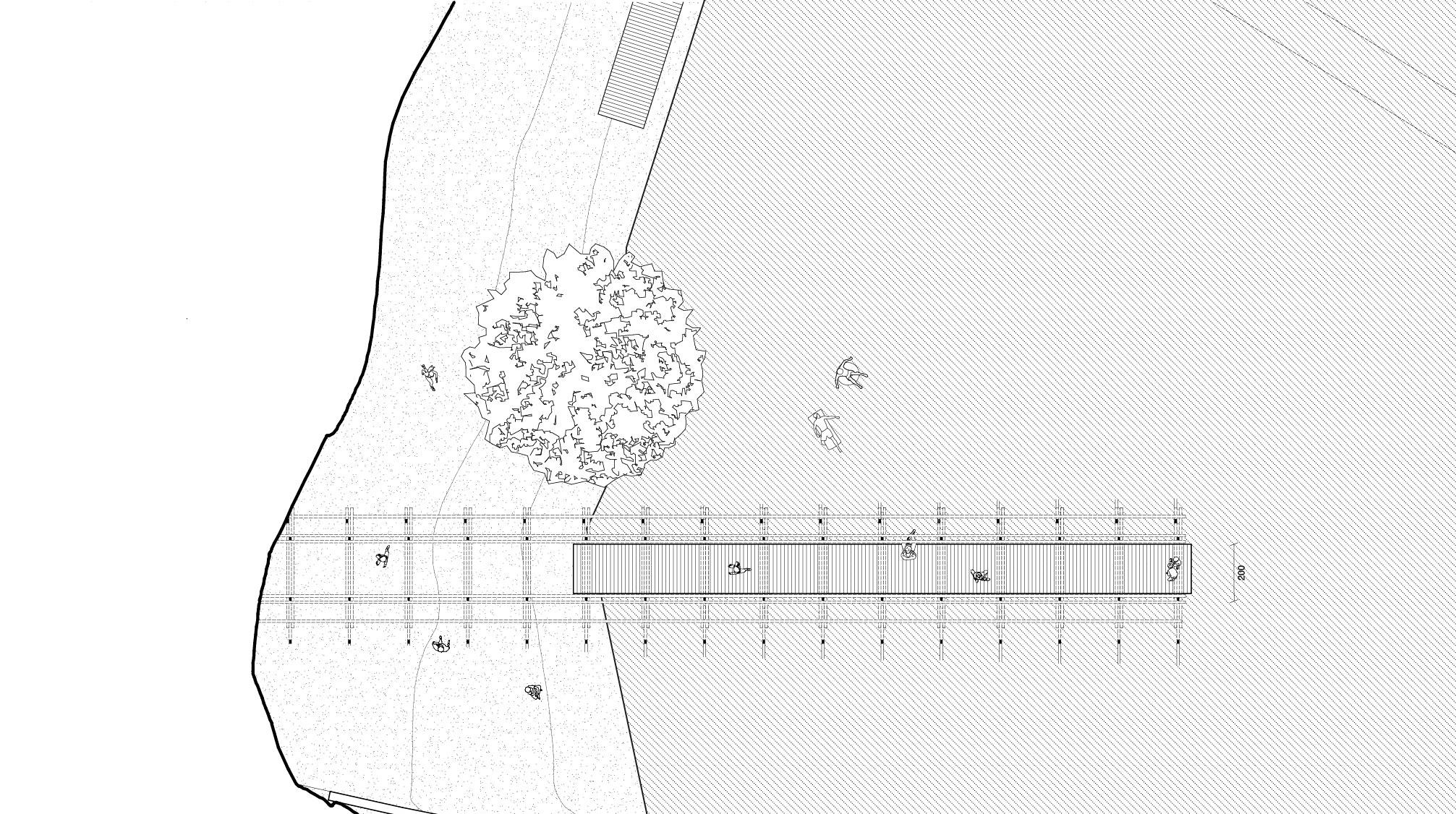
The architectural proposal focuses on the right pier, which will remain in its original form. The existing changing rooms are going to be demolished and erosion plantations will ensure slope stabilization.
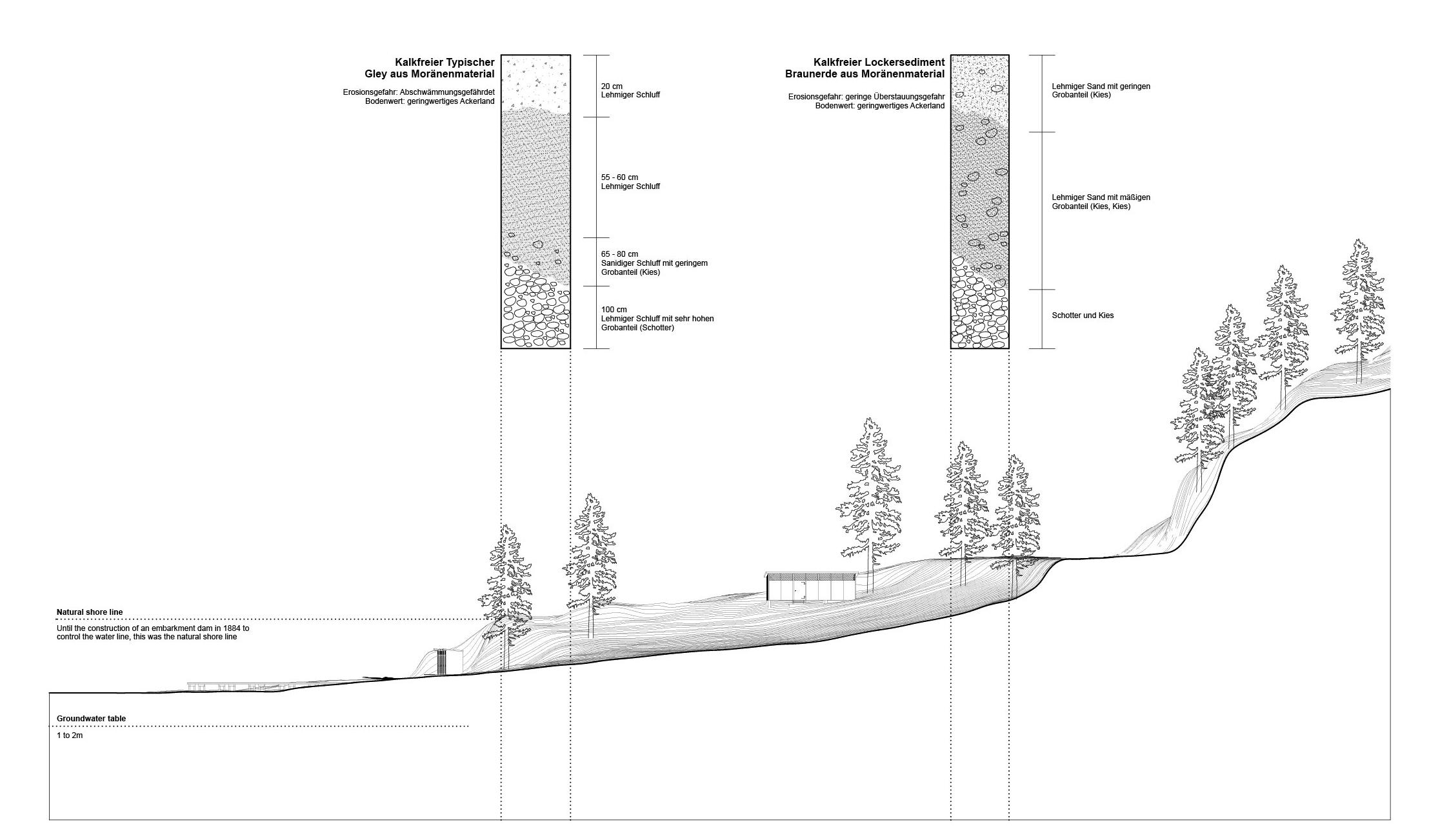
A second layer will be added on top of the original pier and will extend towards the slope, creating a physical and metaphorical connection to the old shoreline.
Horizontally, the proposal can be divided into three parts: Below the Pier, there is the lake shore’s ecosystem forming the foundation of the design concept. The existing pier maintains its program, extended only by an exhibition space.
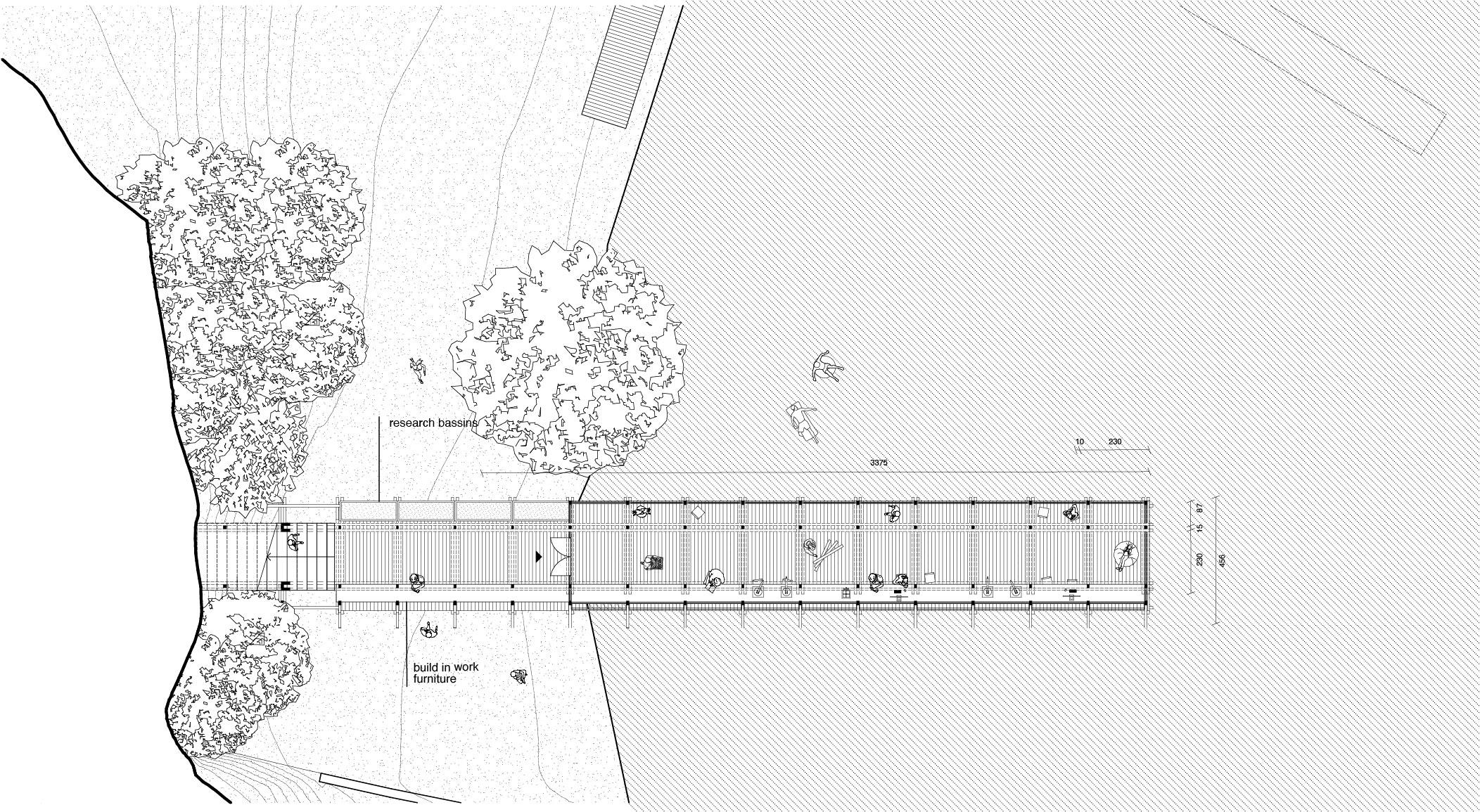
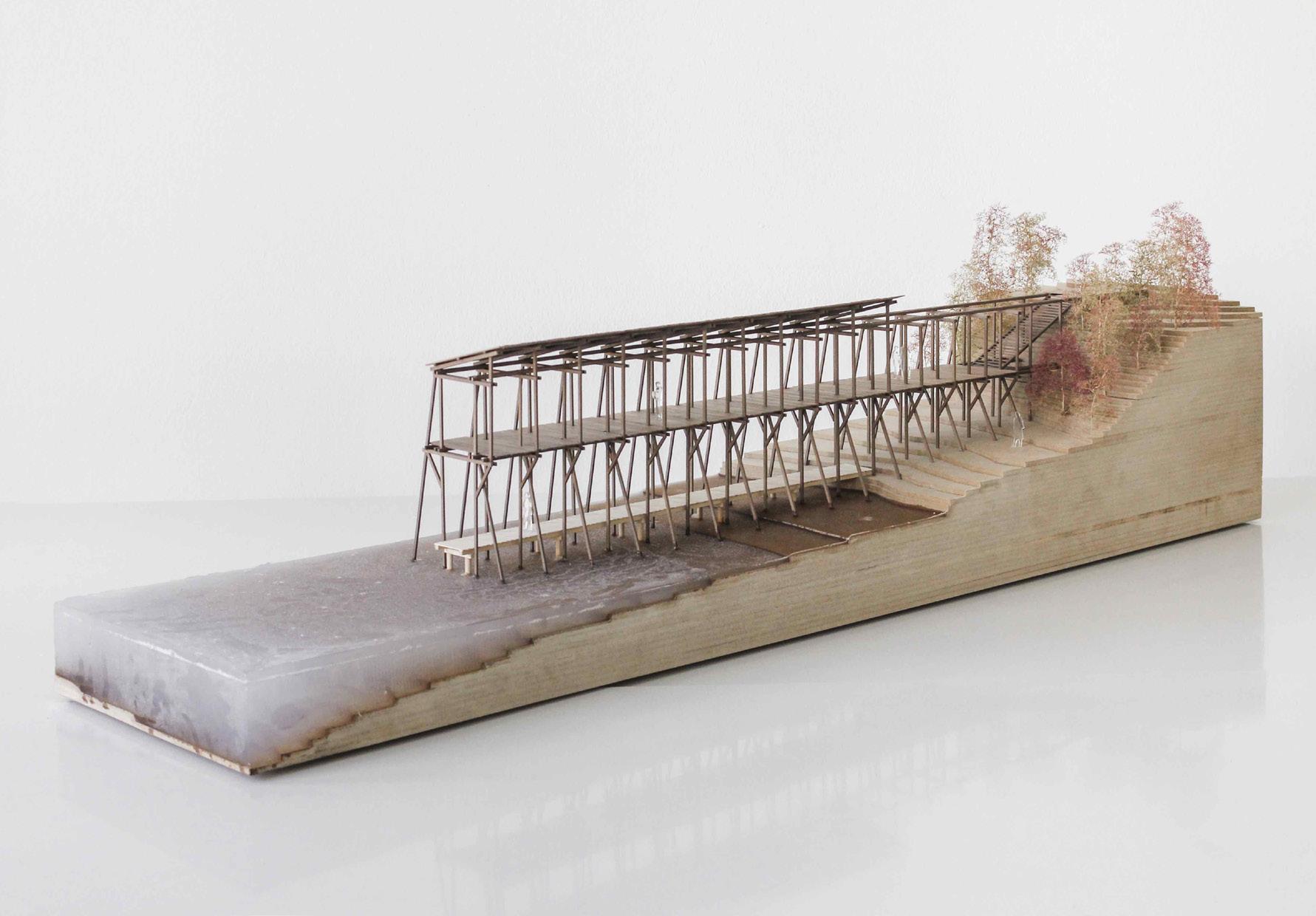
The added top layer serves as a platform housing the research center. The horizontal structure is composed out of a wooden space-frame construction
The building comprises a series of freestanding identical frames ranging from the old shoreline to the end of the pier, without actually touching the pre-existing pier. Vertically, the building fans out through cantilevers on the first floor, which creates more space while using the surface area from the original pier as a parameter for building regulations. The structure of the building is shielded from the neighborhood, supported by built-in-furniture, and opens up to the other pier. Shading textiles serve as a design tool: Facing east, these shading elements protect the research center from harsh sunlight. Moreover, the material chosen for the textile elements allows for fog harvesting on the building’s western side. The particular textile structure is ideal for the collection of mist and guides the extracted water towards the drainage where it can be collected.
Fig.1 Longitudinal section through the structure
Fig. 2 Conceptual section of the different layers
Fig. 3 Yearly cycle diagramm of the involved ecosystems
Fig. 4 Ground floor plan
Fig. 5 First floor plan
Fig. 6 Cross section through the structure
Fig.7 Structural details
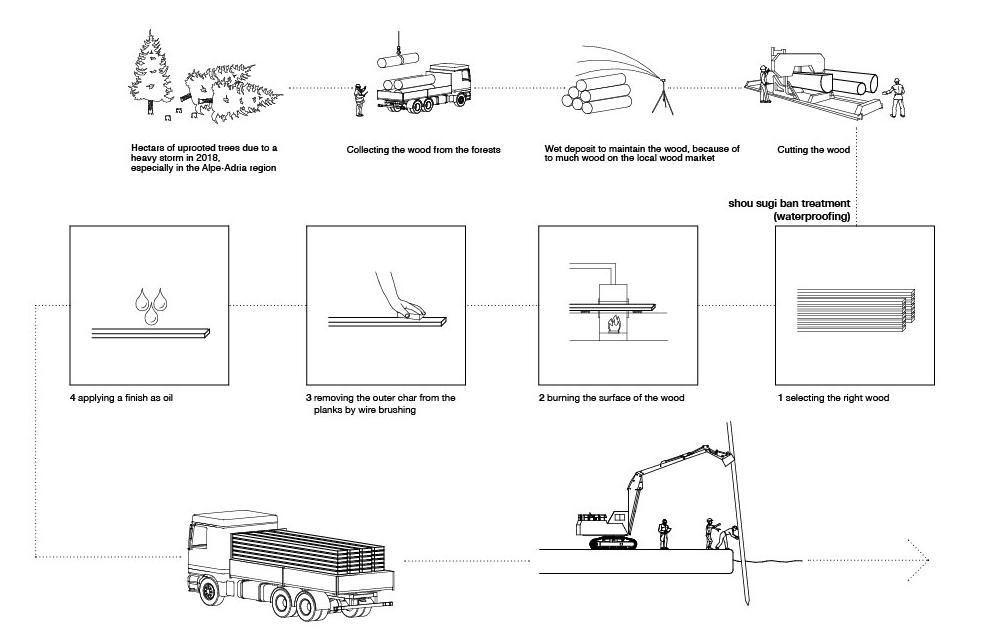
Fig. 8 Wood sourcing process and carbonizing process
Studio modell pictures
Fig.9-11 Milled MDF wood and walnut staves. The water is made out of translucent glycerin soap.
Patrick Krähenbühl patrick.kraehenbuehl@tuwien.ac.at
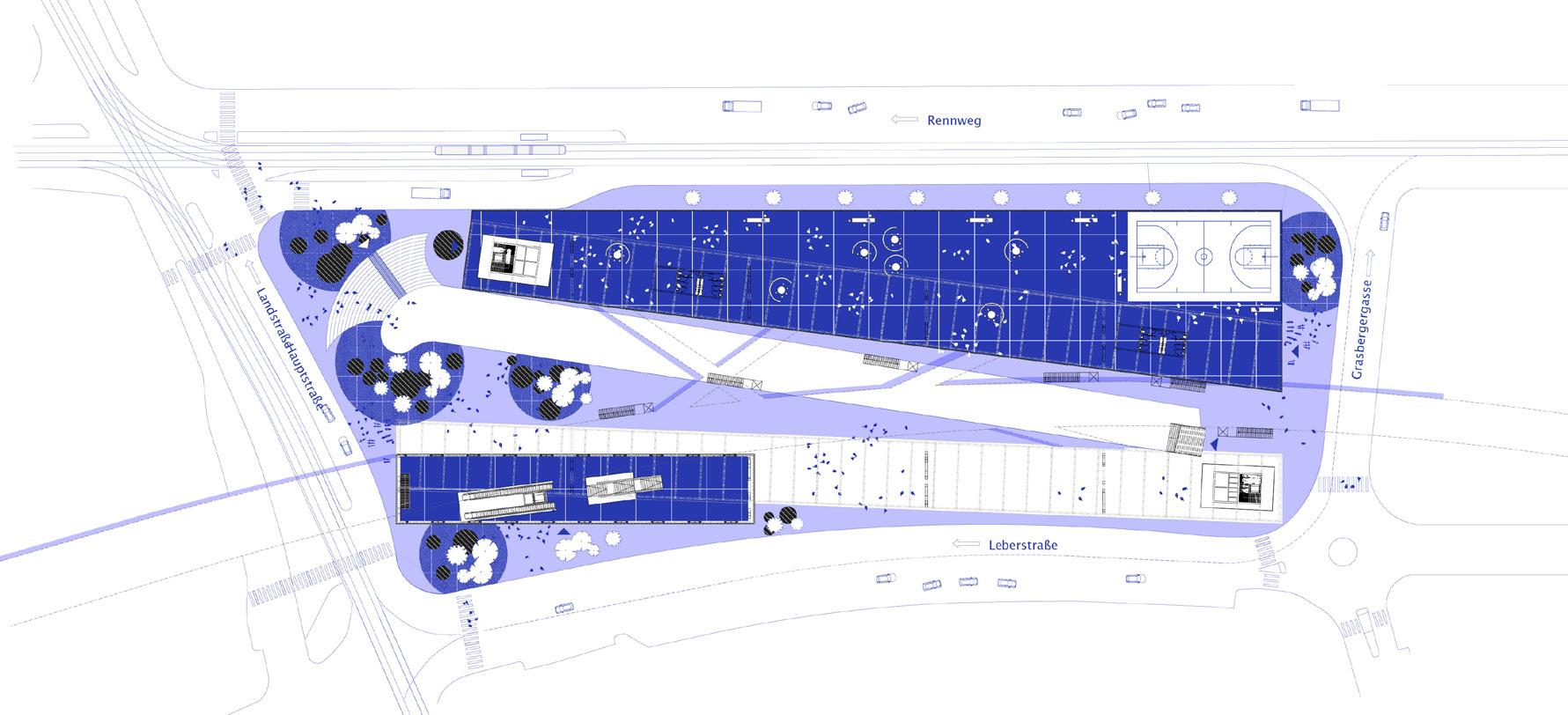
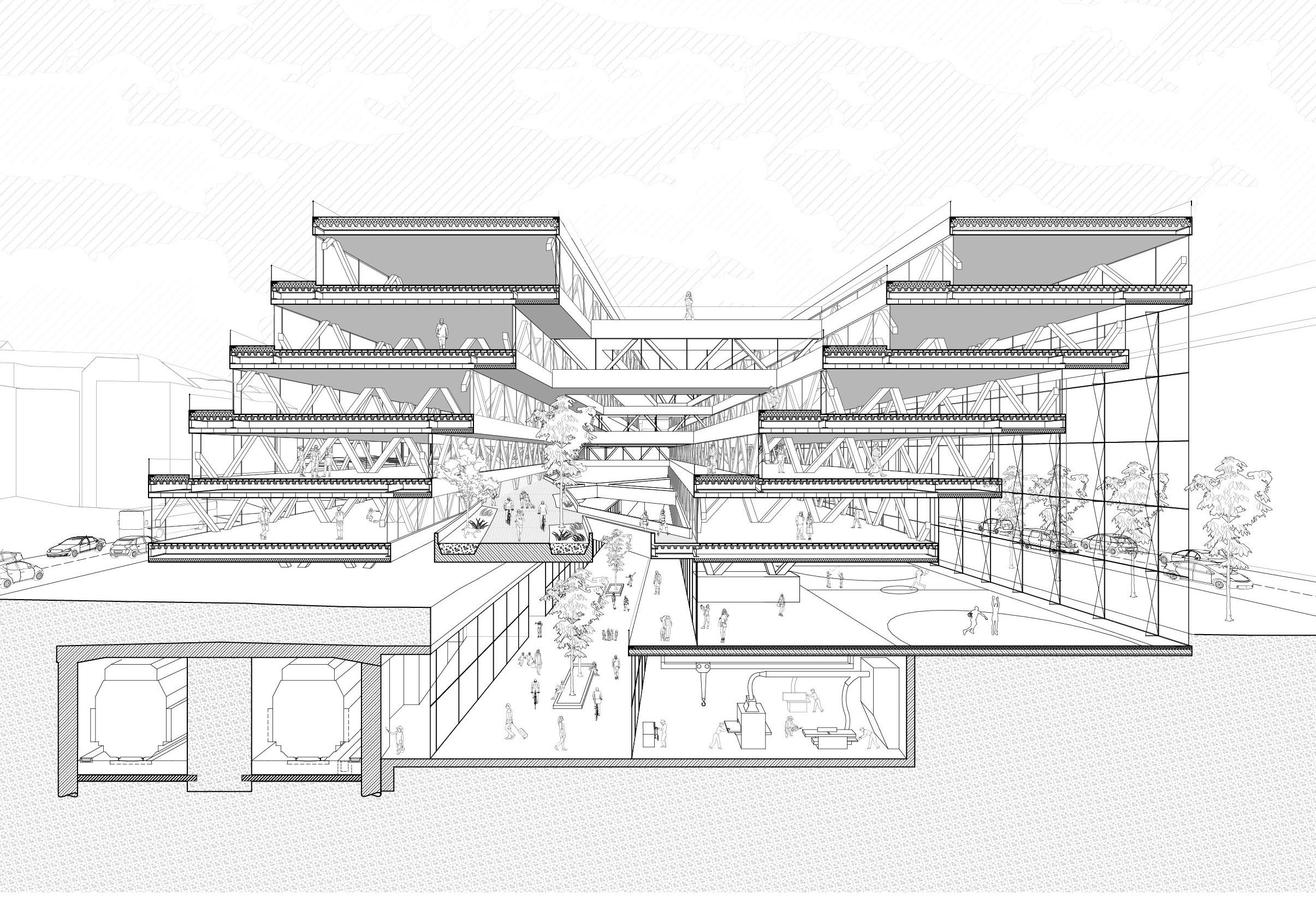
The physical starting point is a brownfield site in Vienna‘s St. Marx district. Surrounded by strong infrastructure, education, research, business and housing, the site currently functions as a separation between those functions. The aim is to create a symbiosis of ideological and physical conditions in order to generate added value in many ways: educationally, socially, economically, health-wise and ultimately architecturally.
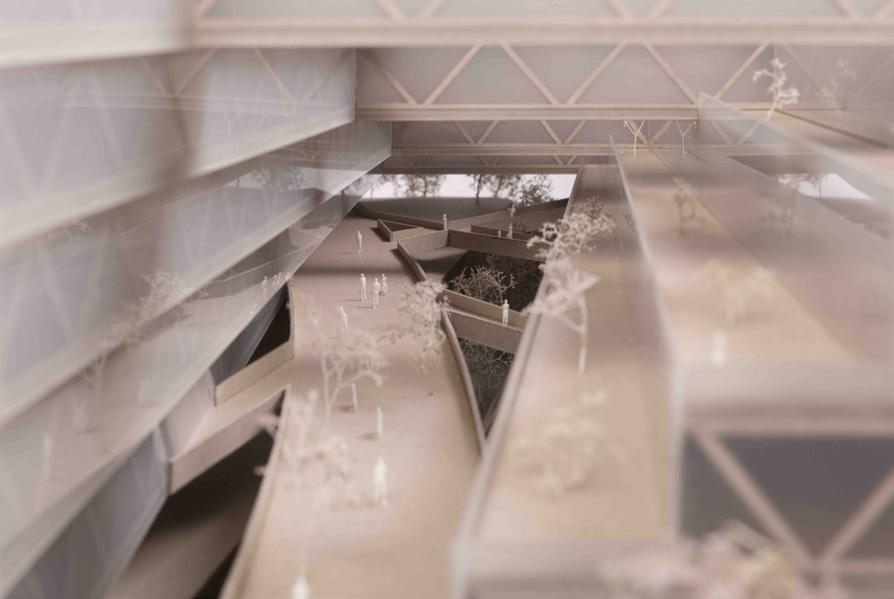
The project „Marx Connecting“ represents an urban hub between the surrounding functions of education, research and business.
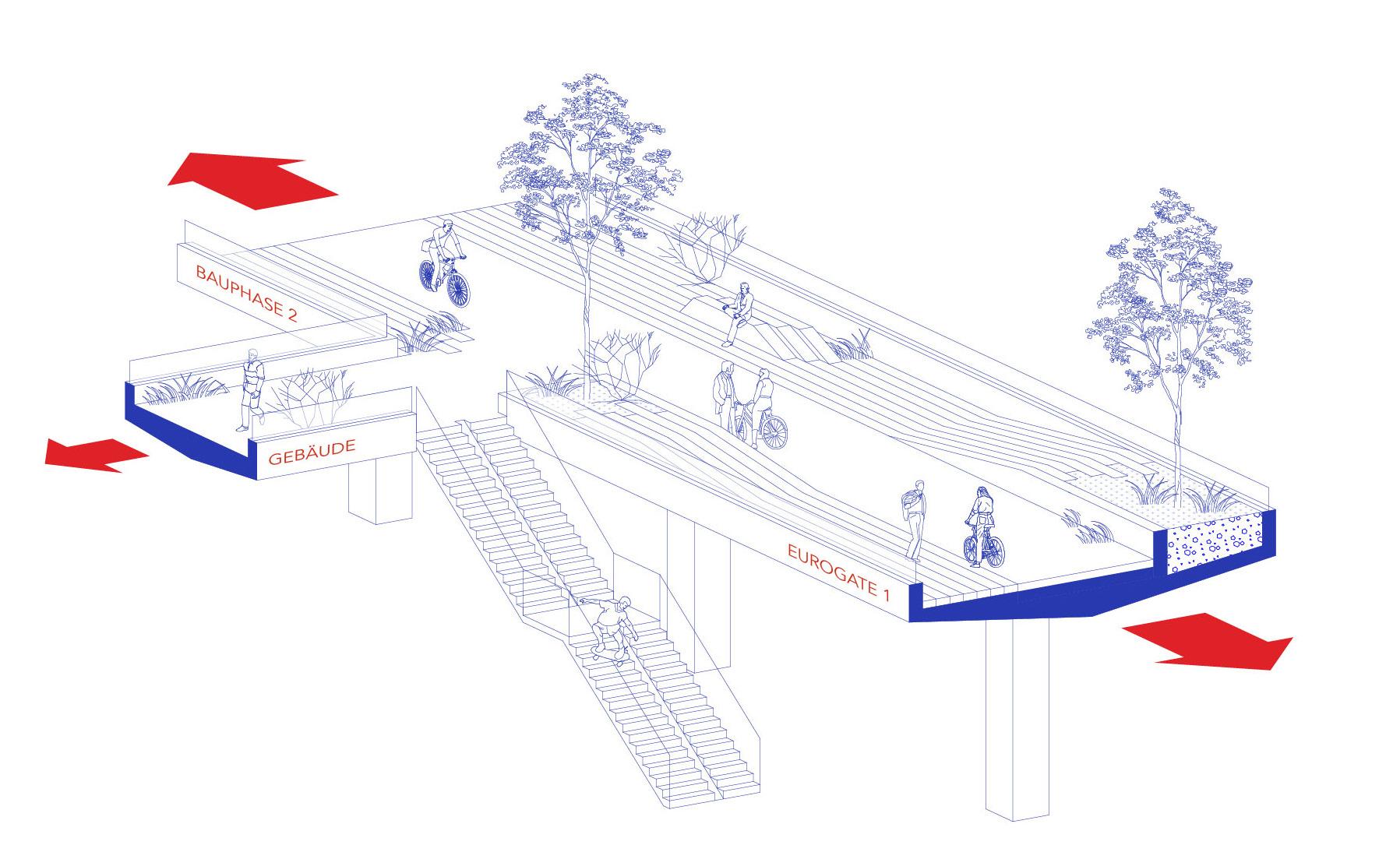
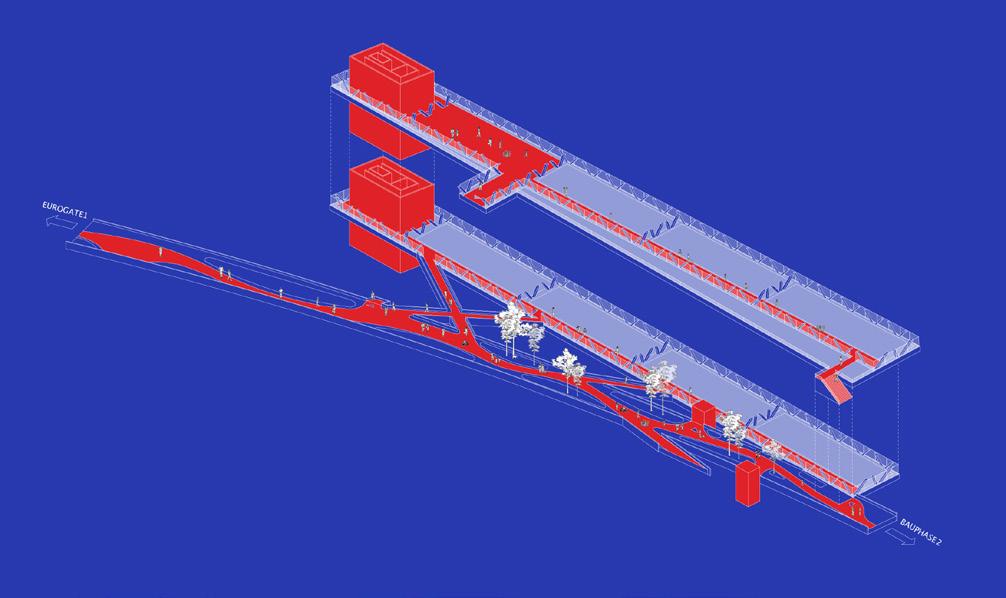
To achive this, a direct, underground connection was created between the St. Marx S-Bahn station and the St. Marx Media Centre along the historic canal. As a second measure, an existing structural axis of Eurogate I was continued in the form of a trajector through the building and across the entire construction site. This is intended to achieve maximum visitor frequency and to create insight for passers-by and arouse their interest.
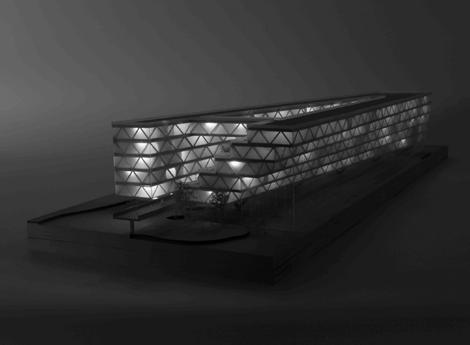
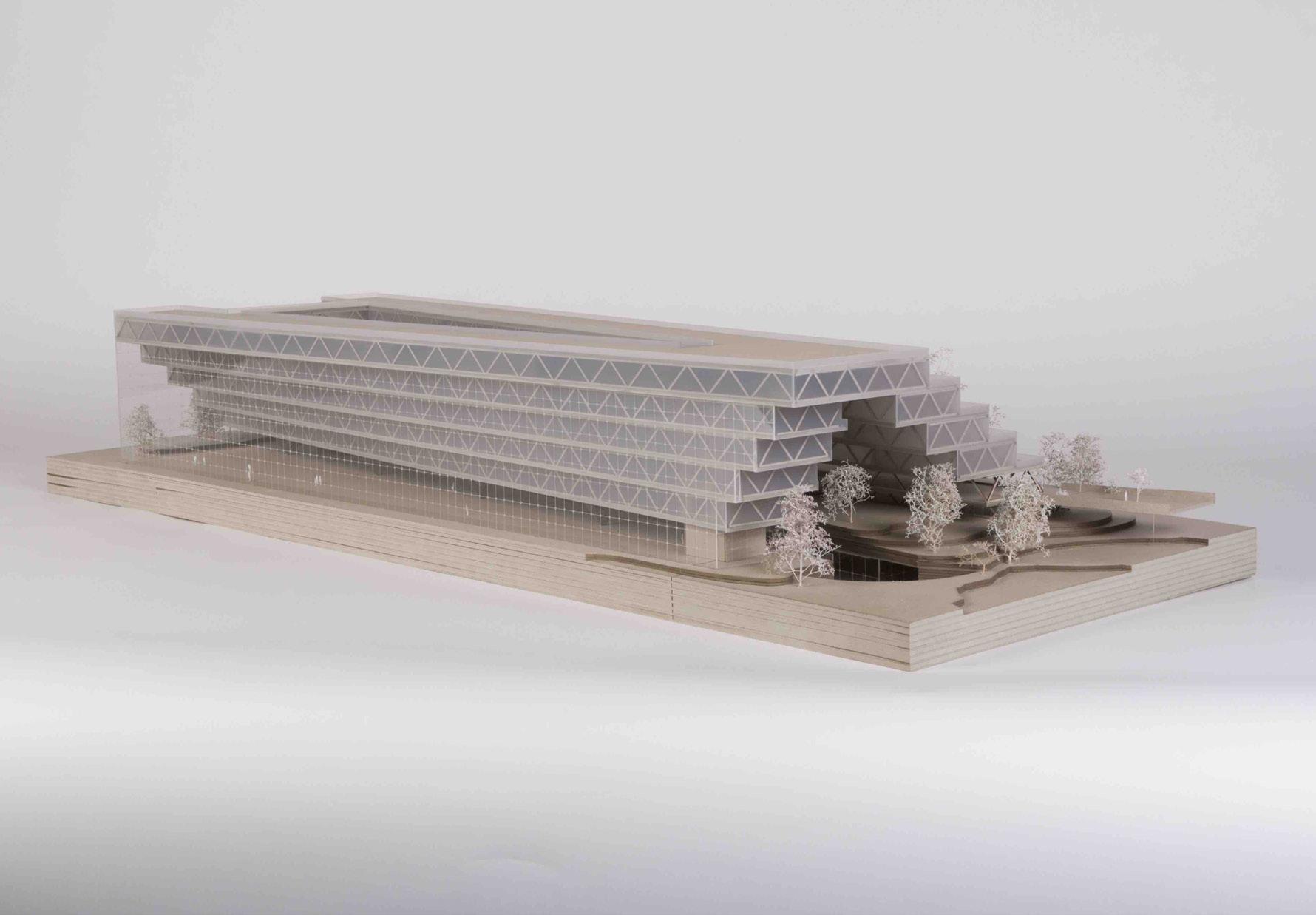
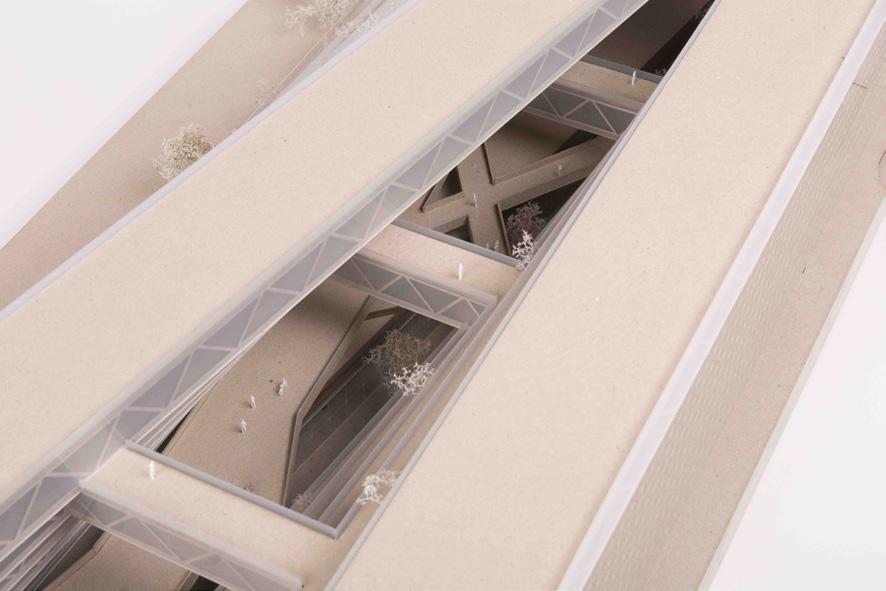
As initial volumes, two transoms were positioned along the historic canal on the building site. These were each twisted upwards, creating an exciting relationship between exterior, interior and intermediate spaces. Performative and transitory spaces are the result. In the basement, workshops are arranged on both sides of the canal, some of which have direct visual contact with the S-Bahn. The ground floor is exposed so that the urban space can continue to flow under the building. On the upper floors, the floor plans are largely free and rooms can also extend over several floors. Access is via the two cores and the terraces. The existing S-Bahn station was integrated into the formal language of the building, but without changing its original position.
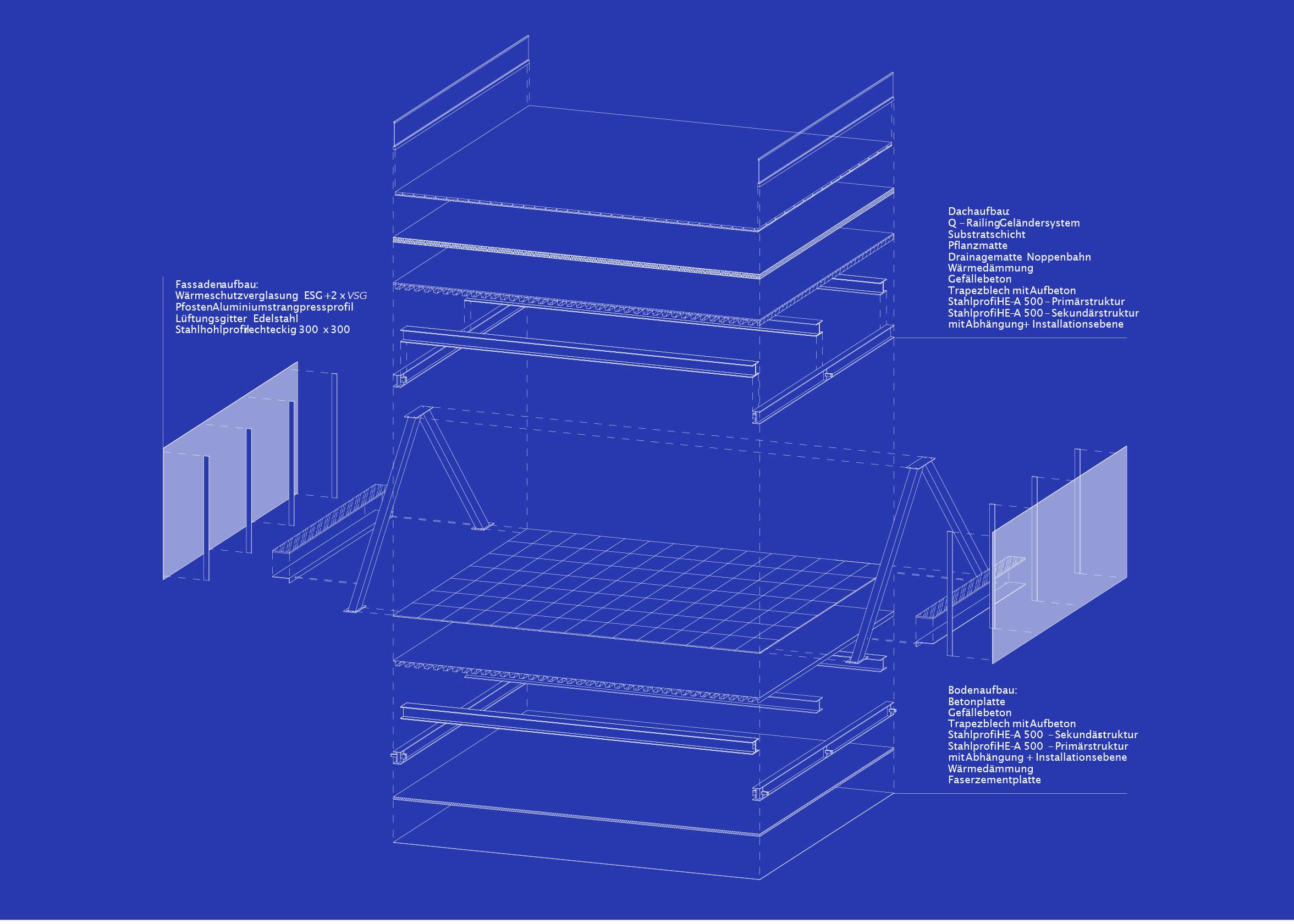
The load-bearing capacity of the structure is ensured by two cores and room-height trusses, each 38m apart in the transverse direction of the building and extending from bottom to top.
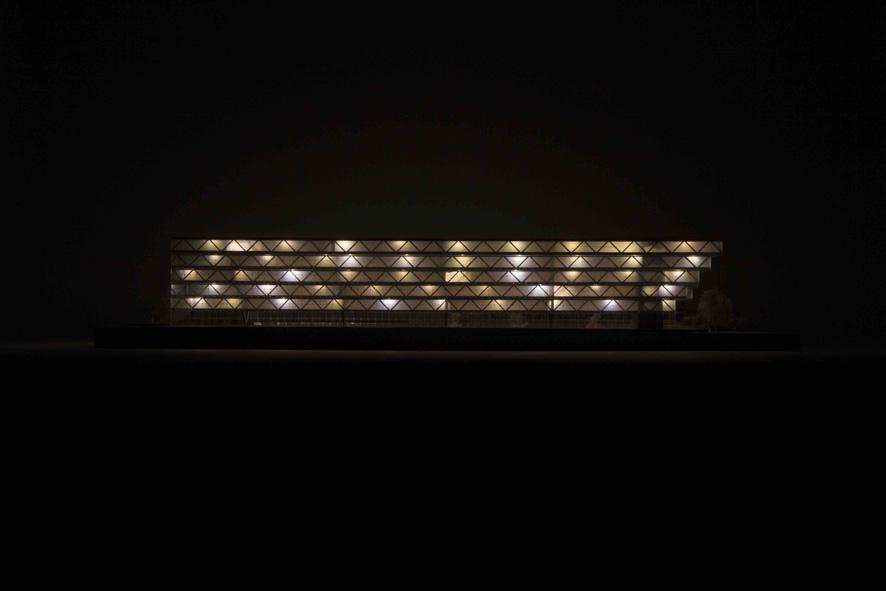
The individual beams are braced longitudinally by trusses lying in the façade. The steel skeleton of trusses allows a free and independent floor plan design. It can be read through the glass façade and thus also contributes to the appearance character of the megastructure.
Fig. 5 Programm
Fig. 6 Access diagram
Fig. 4 Axonometry of the trajector
Fig. 3 Floor plan ground floor with S-Bahn station
Fig. 2 Urban planning situation with building body
Drawn by Matthias Palla
Drawn by Matthias Palla
Fig. 9 Facade section
Drawn by Matthias Palla
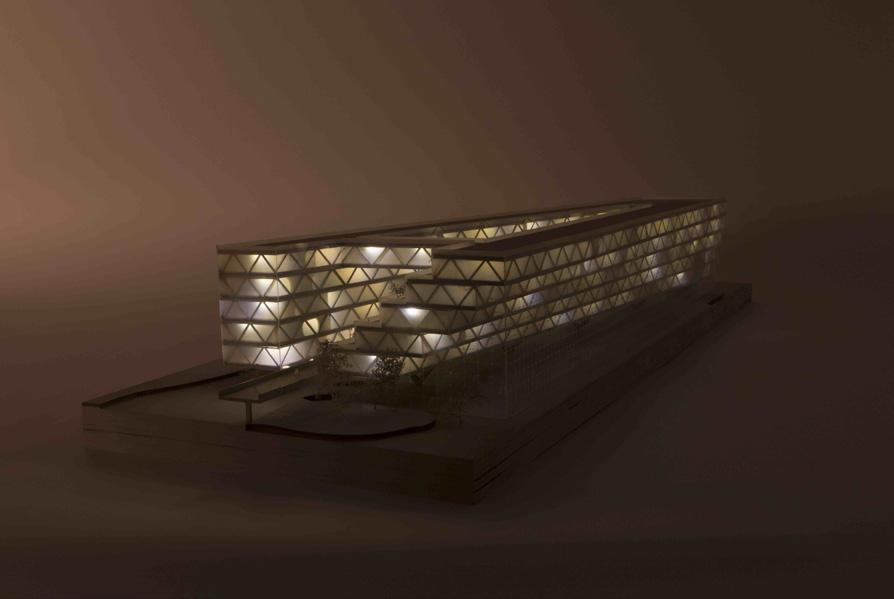
Fig. 10-14 Studio modell pictures with different exposure situations