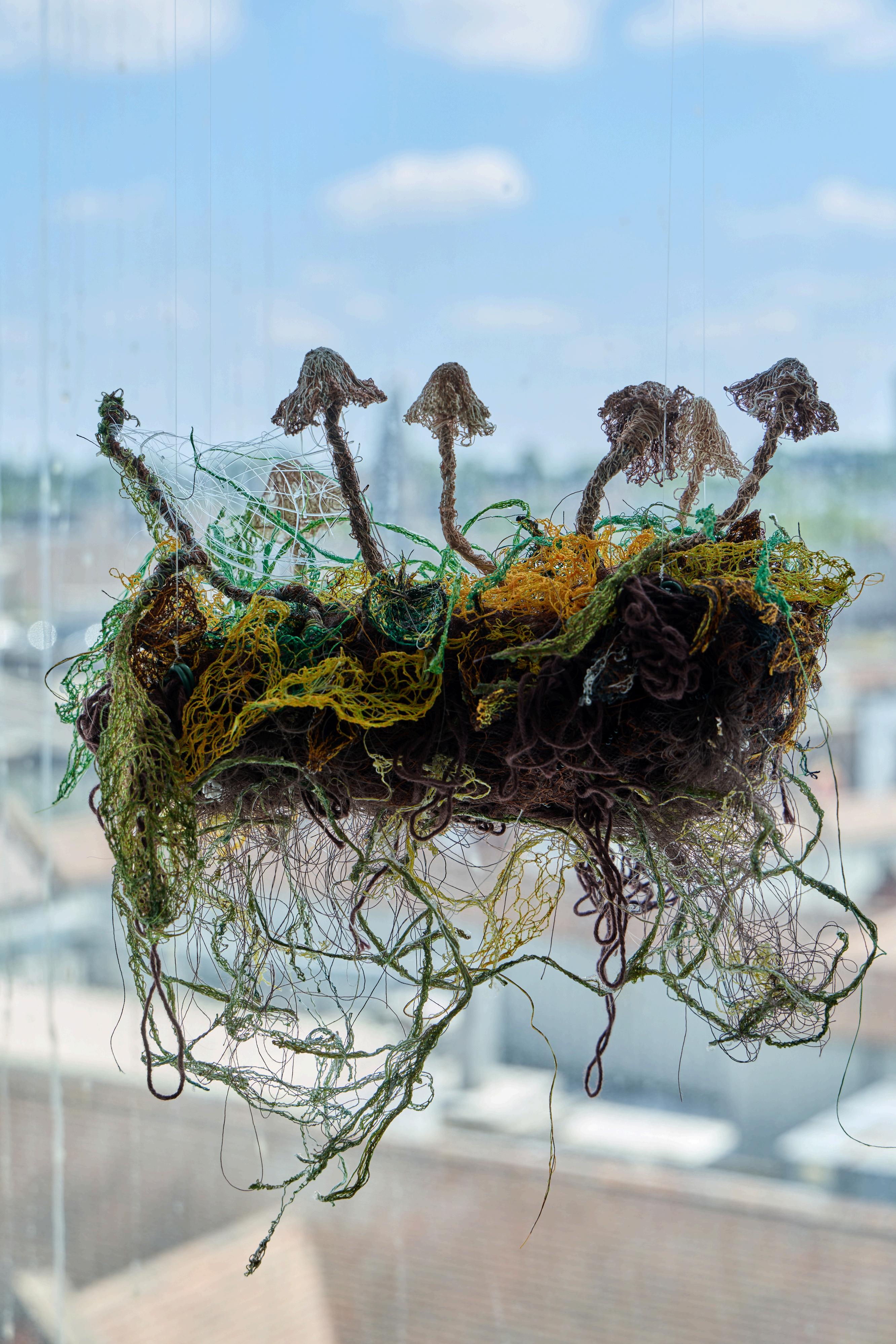



Front cover image: Kim Waine-Thomas, Hanging by the Threads.

‘Reuse, Reclaim: Reframing sustainable arts practice’ aims to invite curiosity and experimentation around the topic of planet conscious and environmentally focussed art making.
Outside In is committed to working sustainably, embedding environmental thinking into all areas of programming and minimising its organisational impact on the environment. Art is inextricably linked to the environment (as the Outside In national exhibition, ‘Environments’, showed). The climate crisis is an issue pertinent to all artists and organisations and so must continue to be woven into our events and practices.
As a team, Outside In is exploring environmentally friendly packaging and workshop materials and, operationally, we are evaluating how we can store data more efficiently, and minimise our ‘dark data’. The Step Up training programme is incorporating environmental discussions into each training course. There have been a number of environmentally focussed workshops on themes including the role of whales in capturing carbon and making sculptures from washed up ocean
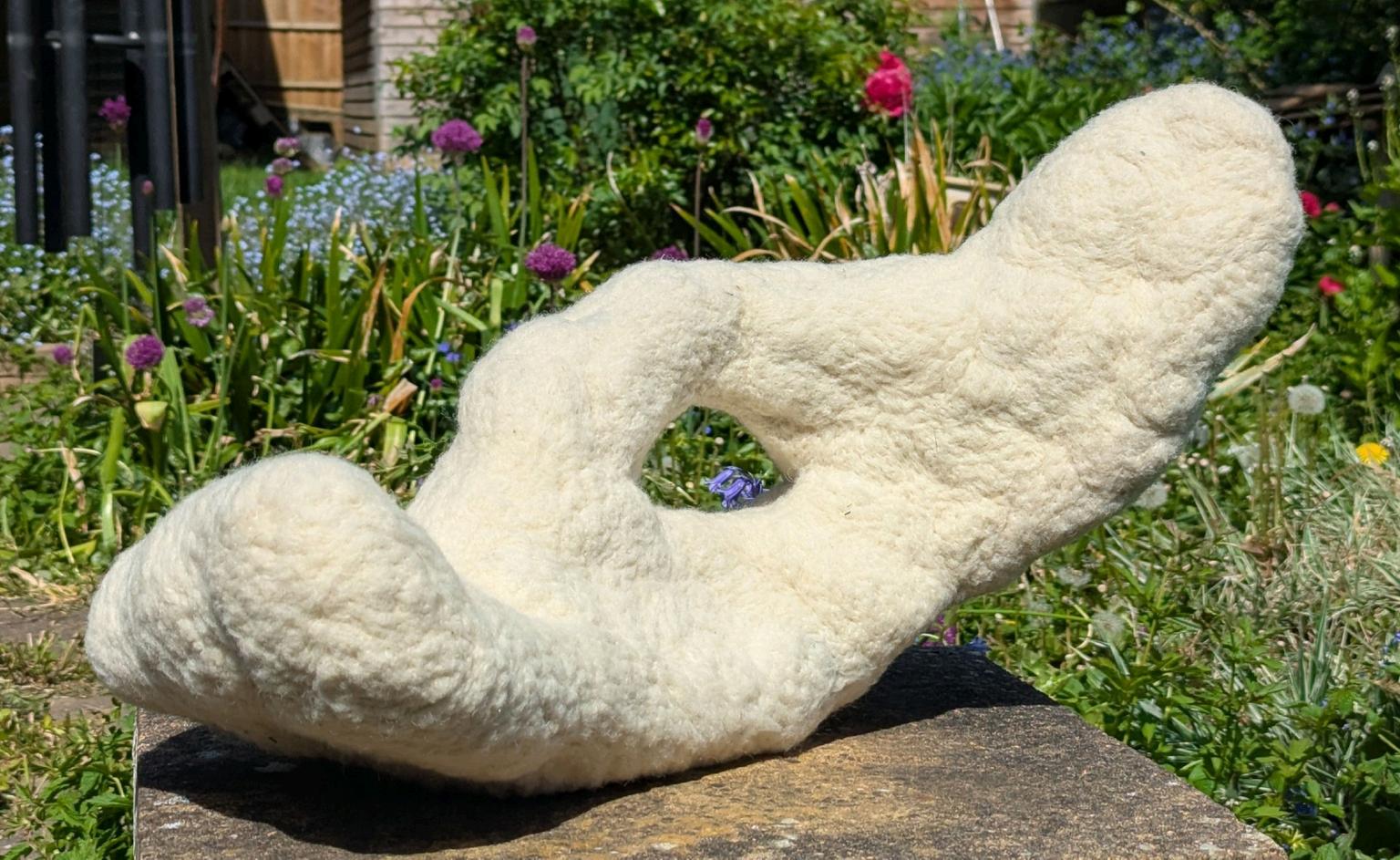
Ije, ‘Living leaves traces: we are not made of stone 1'.
waste. The Exhibitions team commissioned Chantal Pitts, who uses reclaimed furniture in her work, for the residency at The New Art Gallery Walsall alongside the Shelter exhibition, 2025.
We recognise that there can be financial and access barriers to making environmentally friendly choices in art practices, avoiding mass-produced or plastic-based materials, funding insulated and low energy using studios. As such, we firmly believe that a more inclusive, accessible artworld is one that is more sustainable for our future.
This resource has been created in collaboration with Outside In artists and showcases some amazing examples of ecological, sustainable, carbon conscious
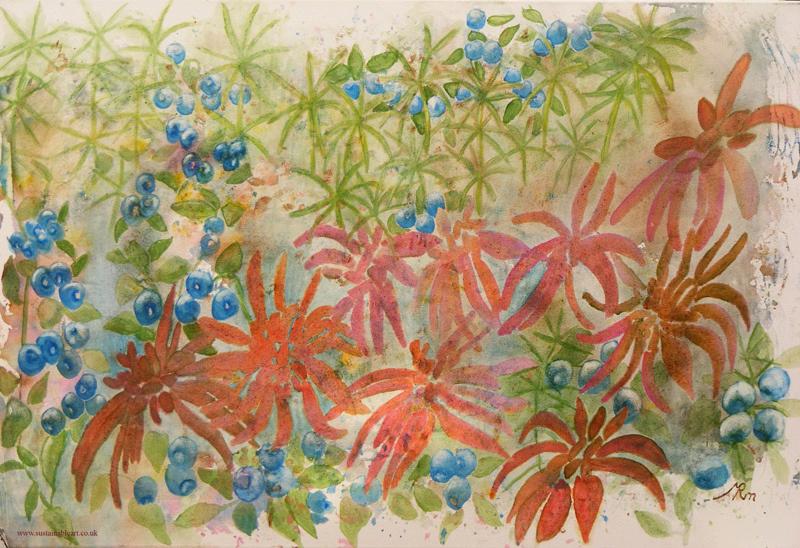
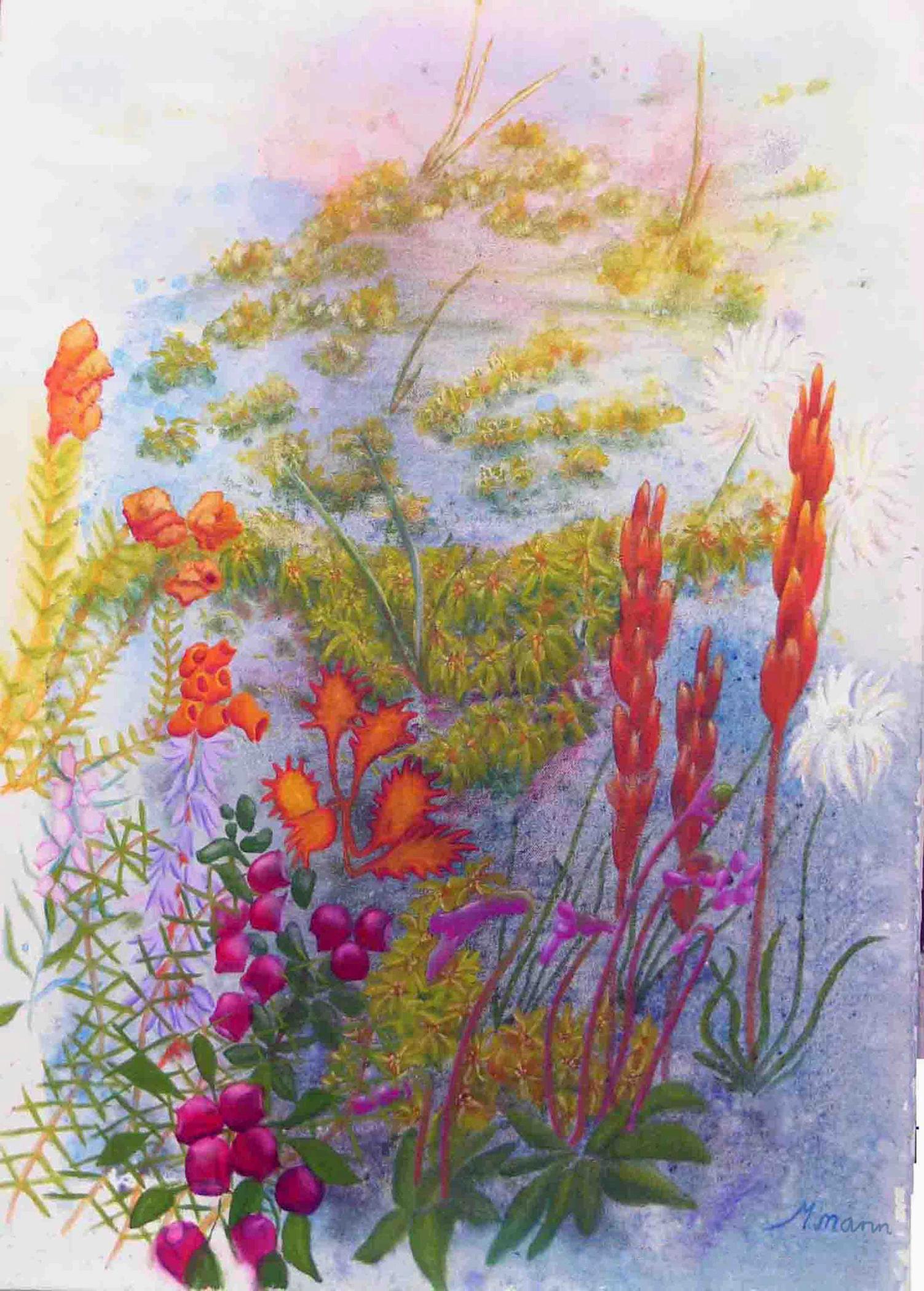
Marisa Mann, ‘Sphagnum Moss’.
and land art. There is also a range of more affordable and accessible retailers, resources and projects which we hope can support and inspire you to take the next steps towards balancing accessibility and environmentally friendly arts practices, and empower all artists to continue to share their stories moving forwards.
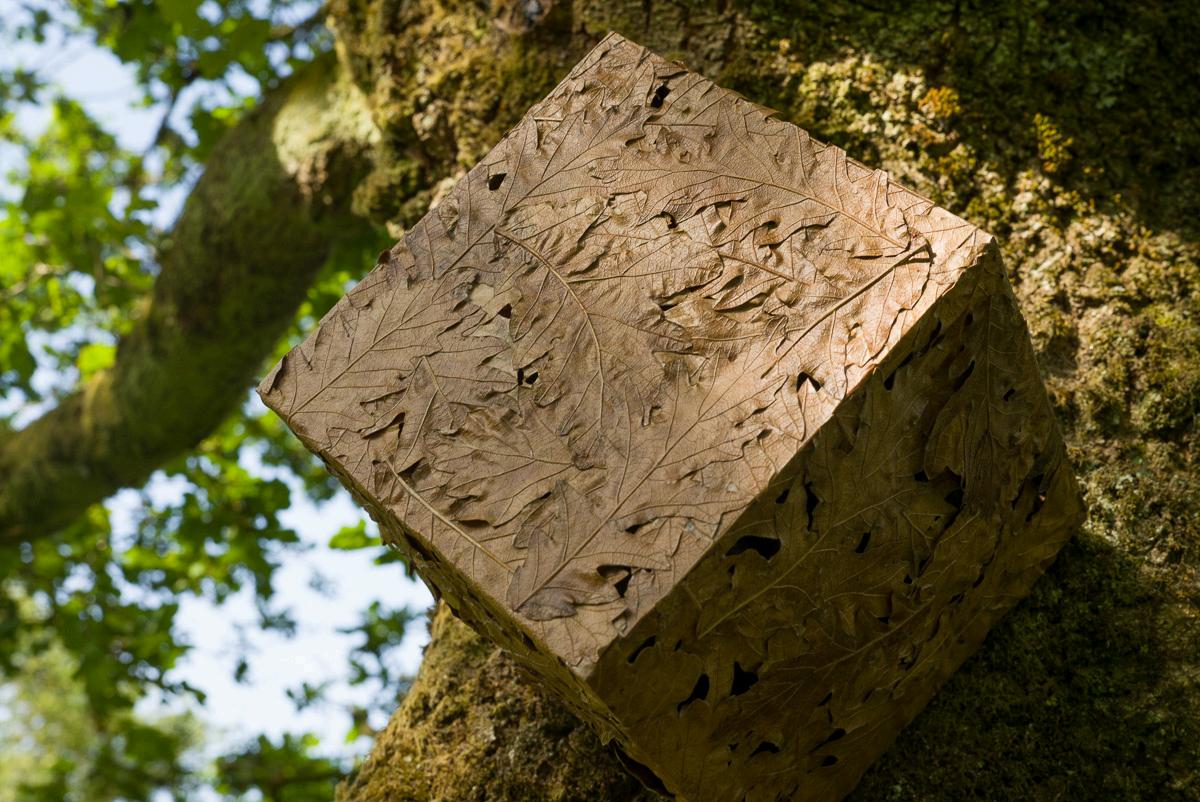
Mundy
Adrian is a visual artist using materials from trees, playing with geometric forms and returning them to juxtapose in their original natural environment. In 2017, he co-founded Little Forest Land Art (LFLA), a supportive collective creating
interventions in the landscape, and hosts Art in the Garden, showcasing the work of over 20 artists each year. Over 15 years Adrian’s practice has evolved from architectural paintings to environmental art, becoming both creative expression and therapy as he lives with chronic fatigue and recovers from agoraphobia.
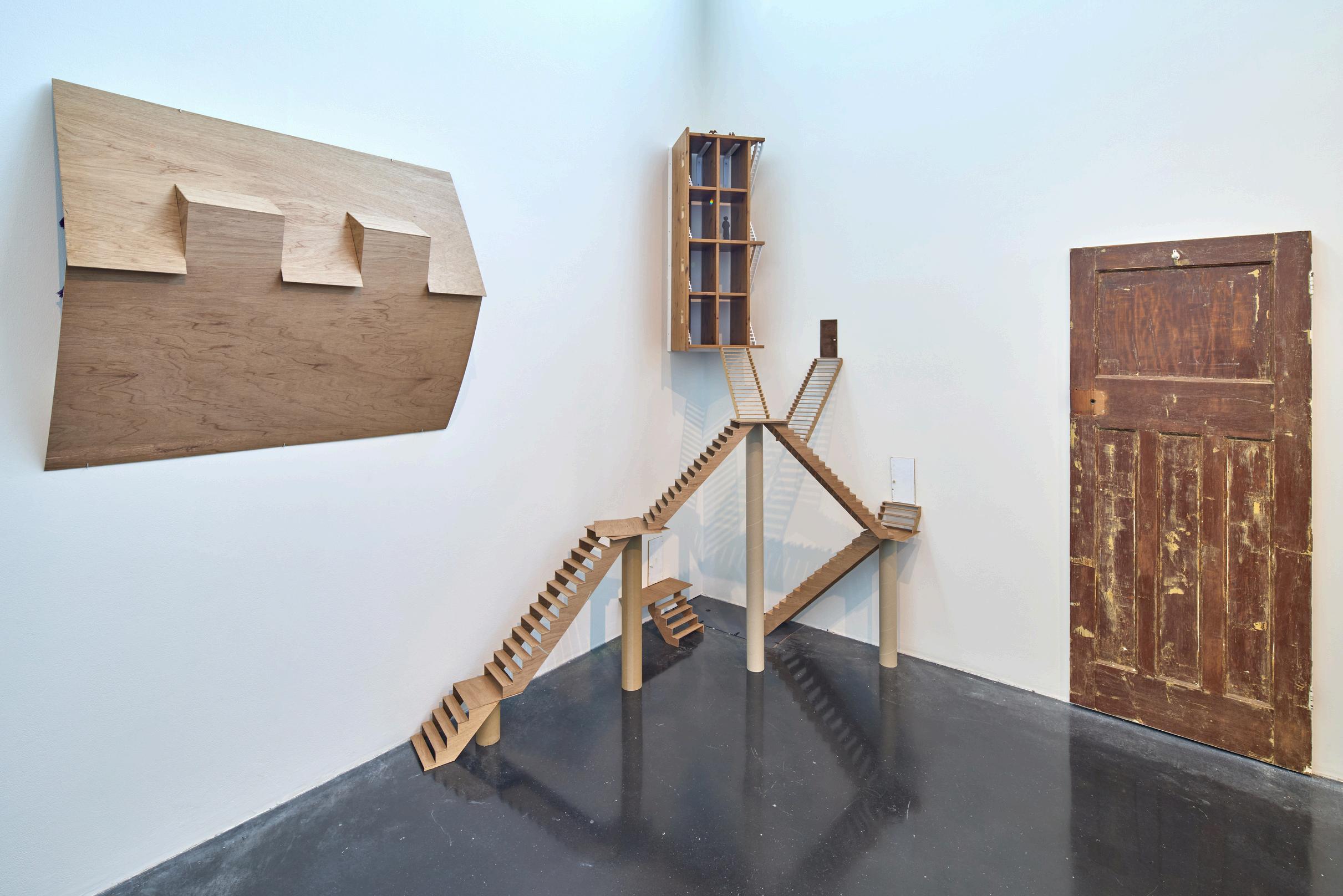
Above: Chantal Pitts uses reclaimed furniture in her work at the Outside In National exhibition, Shelter, 2025.
‘I am inspired by trying to produce pigments from the environment in which I am working... I have researched into using natural ingredients such as walnuts whose skins can be made into black ink and their oil used to mix with pigments... I am also fascinated by fungi and have recently discovered that you create black ink from Mica Cap when boiled with cloves and I am also keen to experiment with making paint from natural rocks and clays.
’I feel that creating is one of the most important things we can do and there is something magical about rethinking the whole process of painting, from the surface you paint on and the paints you use, being an ethical artist inspires me.’
Marc Steene, Founding Director, Outside In.
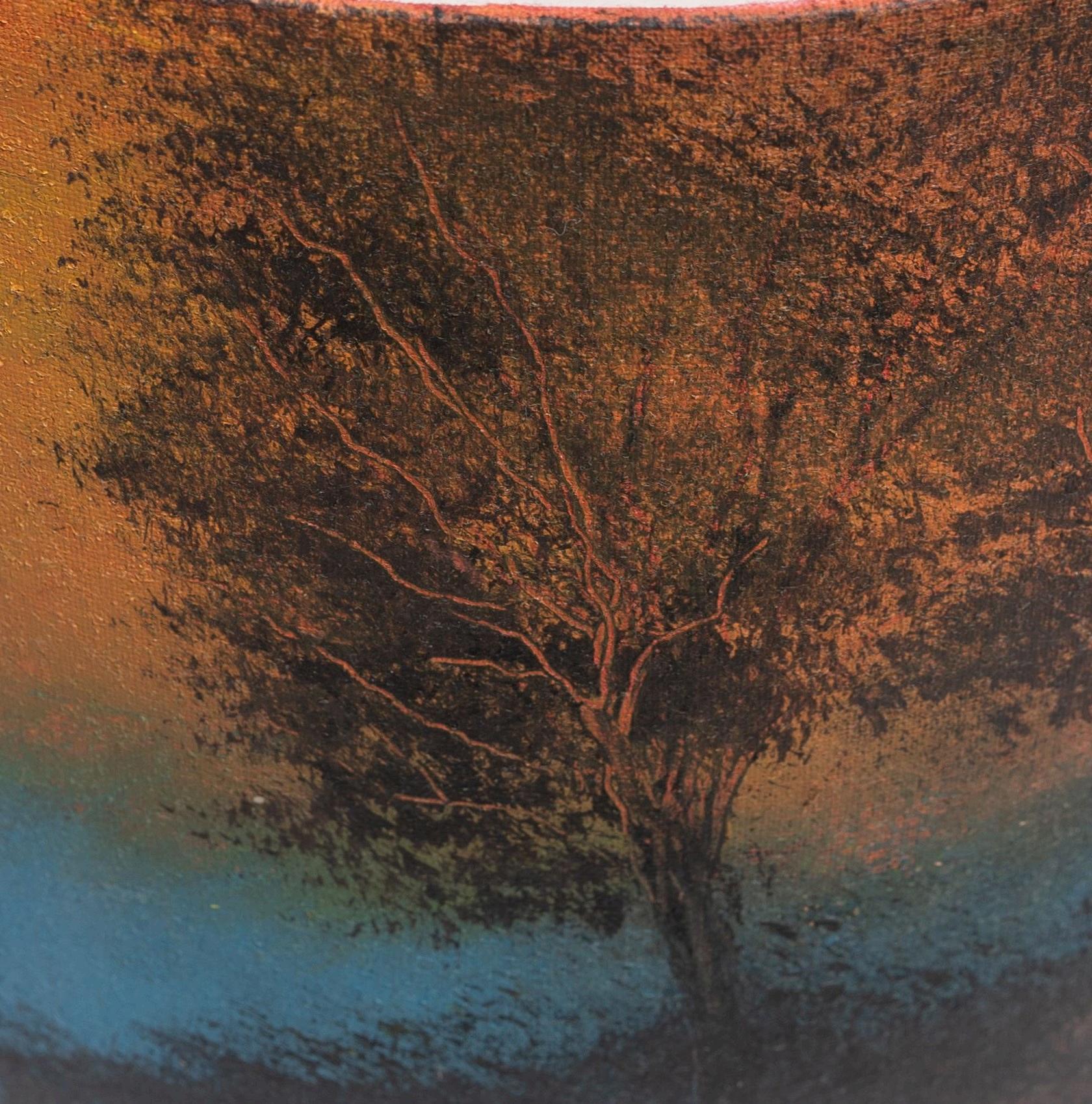
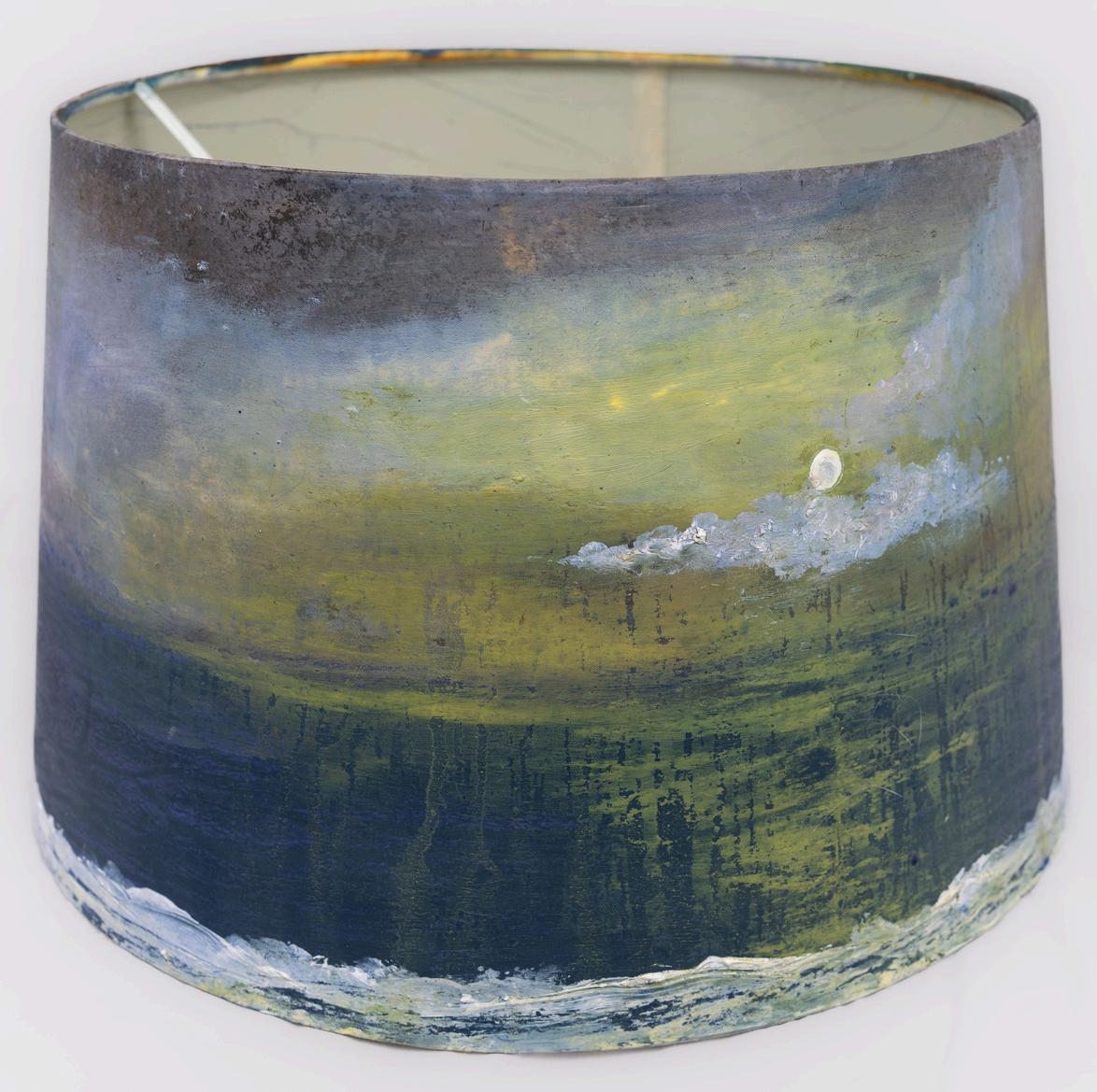
Left: Mark Noble produces artworks painted on recycled materials such as old tiles, window frames, bark and even old lampshades. Mark’s practice rethinks what a canvas can or should be.
Repurposing has been part of creativity for a long time, with artists using found objects in their practice. These items can substitute a more conventional art supply, keeping them from landfill and bringing texture to 2D or 3D artworks. On a practical level, buying preloved items from local charity shops not only supports a good cause but saves you money.
Looking for a reusable palette that’s easy to clean?
Try old crockery or the glass from a photo frame (taking care to watch for jagged edges!).
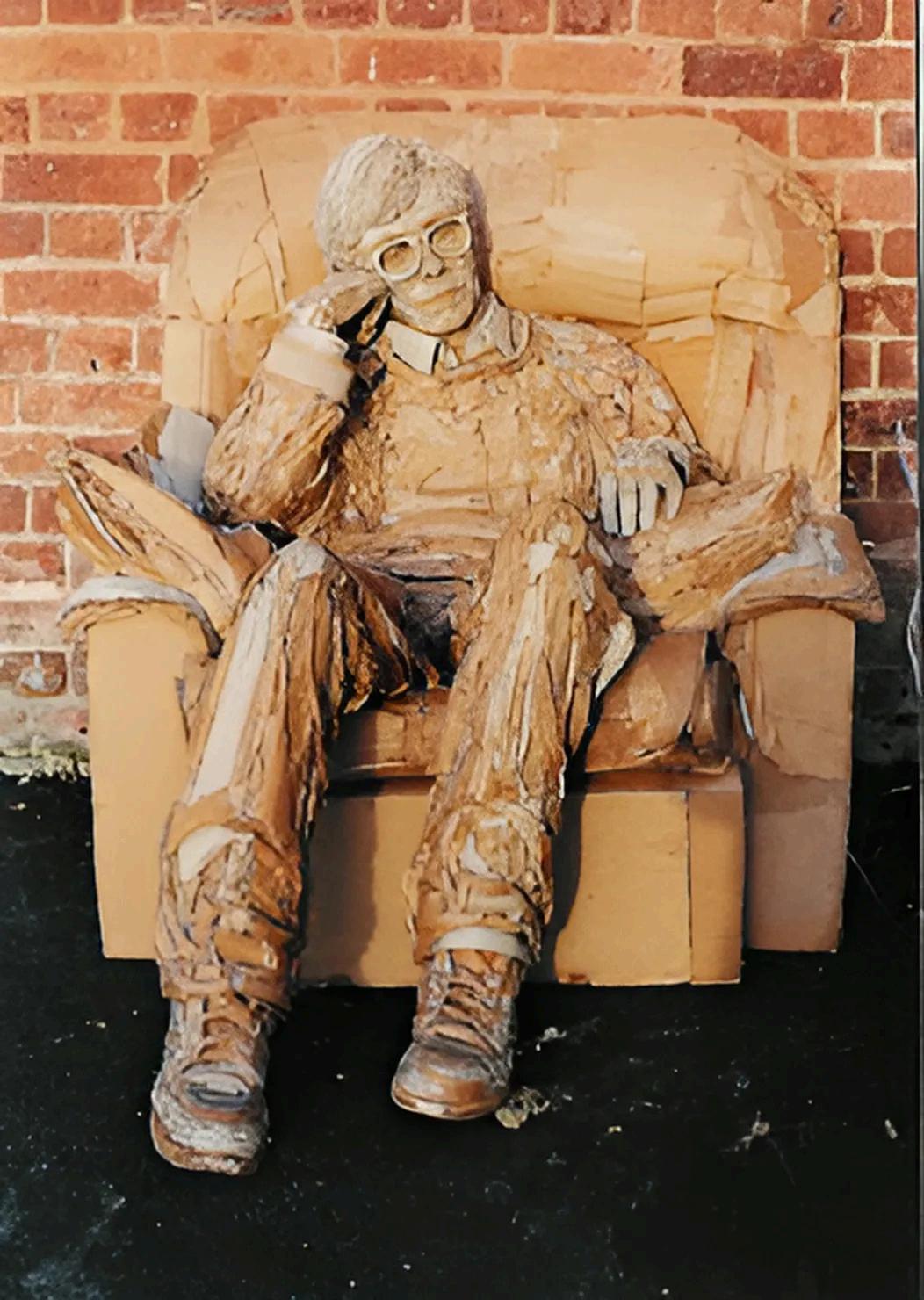
Cardboard comes in many forms, from cereal boxes to toilet roll tubes. They can provide practical substitutes for canvas or paper when creating artworks.
Reuse boxes from online purchases for storage, collage; or to post artwork to buyers/exhibitors.
James Lake creates large scale cardboard and paper sculptures.
Plastic bags can be turned into a robust vinyl style fabric when layered with glue. Play with texture and colour by incorporating fabric scraps between clear bags –experiment with stitching and heat to bond the elements together.
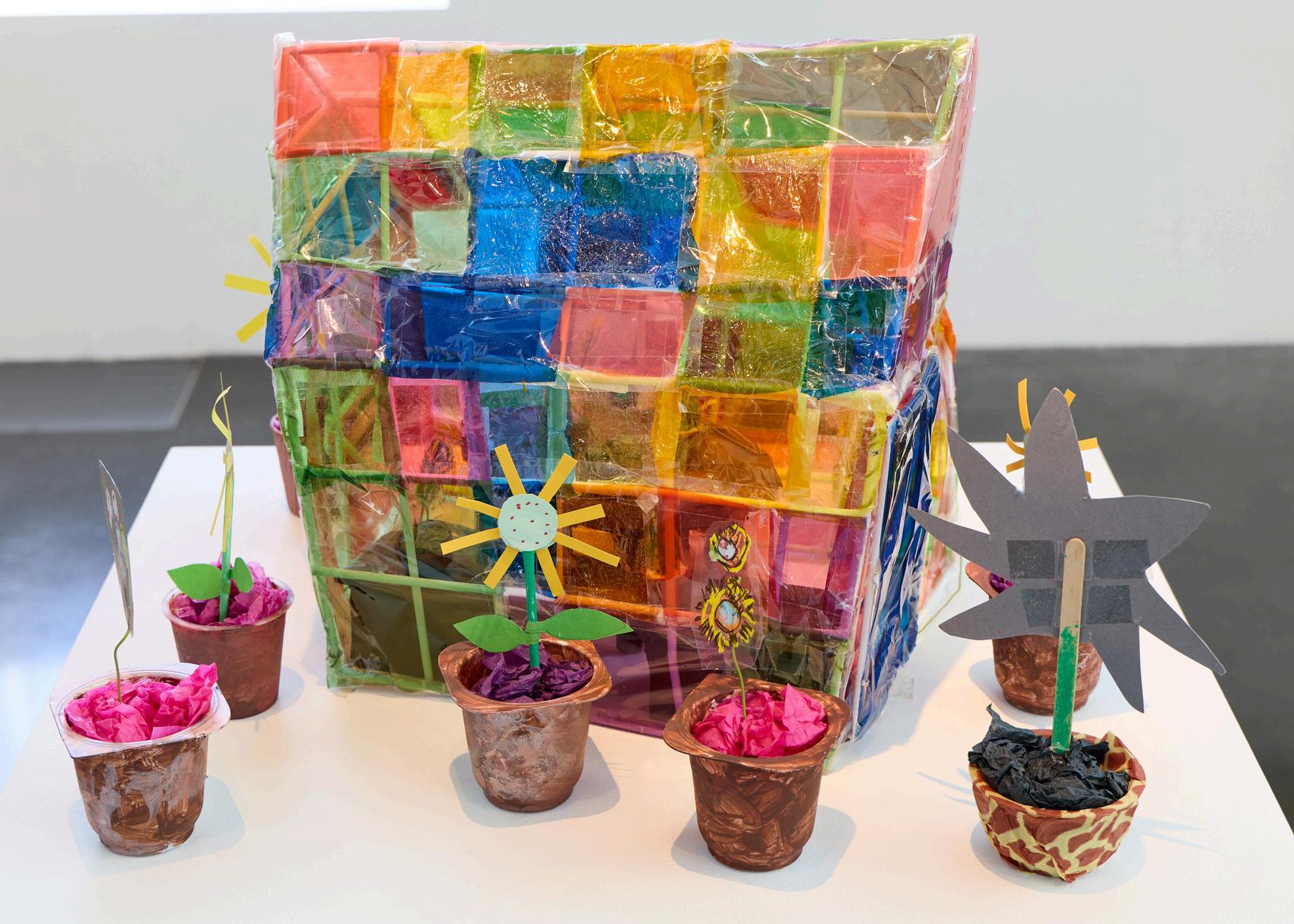
Alfred Beesley is a Liverpool based visual artist and member of Blue Room, Bluecoat’s inclusive arts programme. He creates interactive sculptures that refer to the life cycle of plants. Using a combination of papier- mache, textiles and ceramics, Beesley creates replicas of fruit and objects associated with growing plants. Photo credit: David Rowan.
Want to add detail and texture? Play with costume jewellery or haberdashery.
Packing foam, although plastic based, can be reused to provide a light but firm sculpture base to build upon.
For the especially adventurous, scrap metal and wiring can be upcycled into sculptural pieces, paint surfaces. Tetrapack milk cartons can be used as surfaces for printmaking. Open them up and carve into them in the same way you would a piece of lino or vinyl.
Homemade paints and pigments
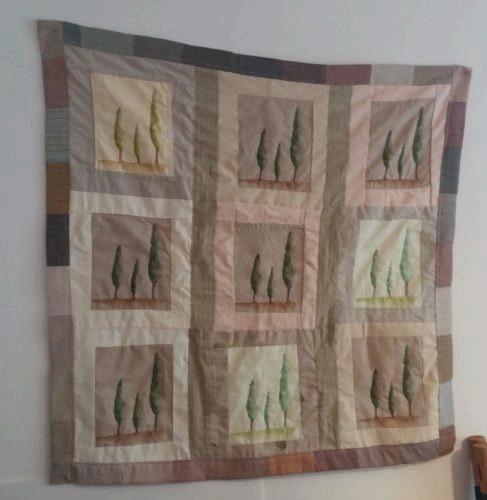
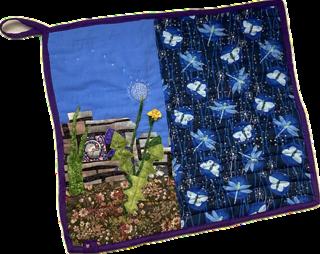
Lesley Illingworth uses recycled fabrics and waste products such as milk, soya, wood, bamboo and banana fibres in her work. She aims to reduce the use of fibres that have a high carbon foot print, like cotton and denim, and emphasize responsible resource management, by shopping sustainably and locally when possible.
She also teaches spinning and weaving workshops as well as craft skills like sewing and repairing textiles. She runs textile workshops with refugees and disability activist groups to support positive mental health, community building, the preservation of heritage, traditions, and diversity to build an inclusive society.
Below: Lesley Illingworth, ‘Save the Trees’ quilt.
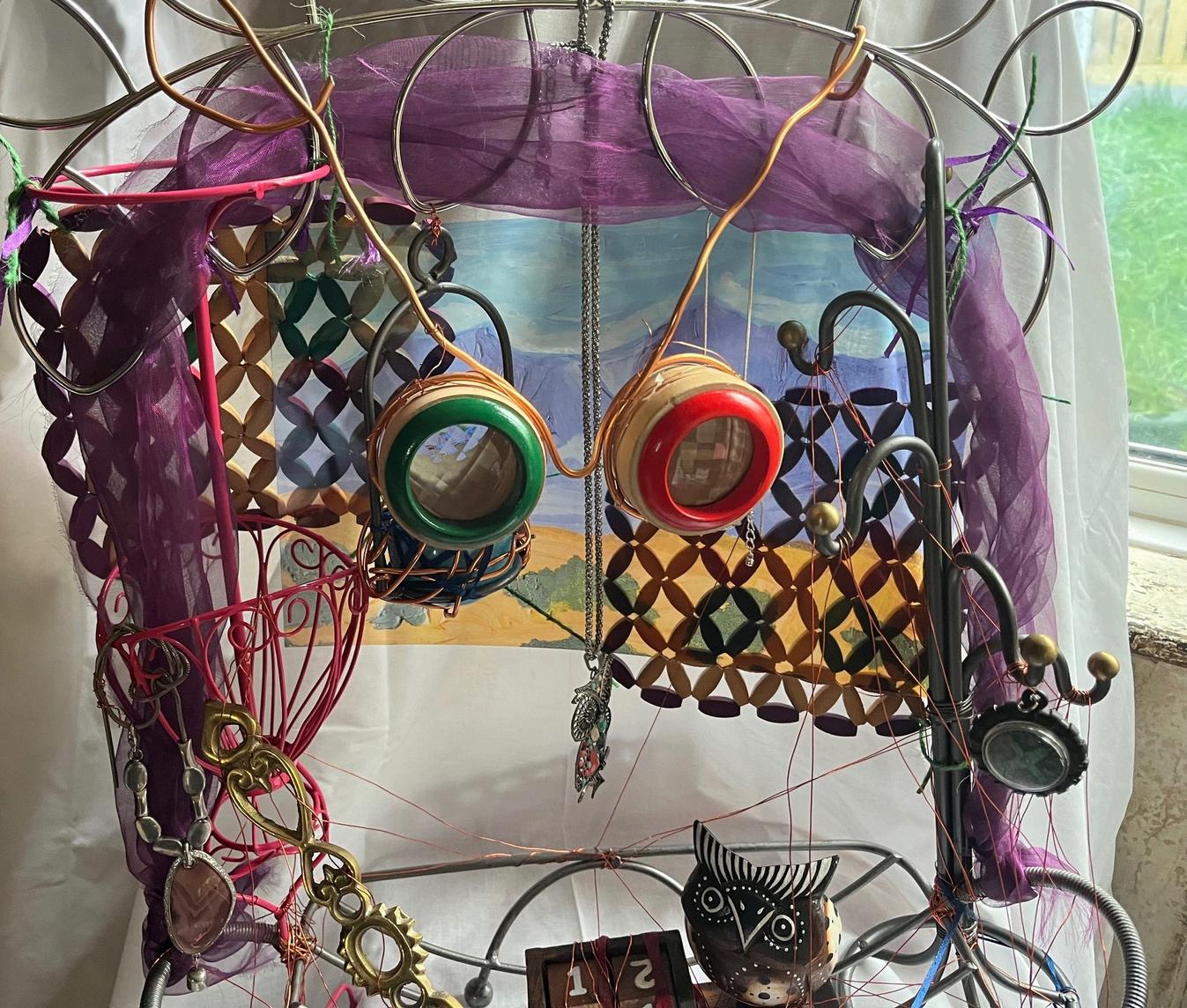
Ceridwen Powell
‘Cewri Coll/Lost Giants' is about how as I have become more and more physically disabled I can no longer get out into the landscape. I used to go hill walking and long distance riding on my horse regularly. But it is also about how human activity across the world is 'disabling' and destroying the environment. However we depend on the environment too, there is no Planet B. My favourite mountain is Cadair Idris [which is] the painting printed on acetate in the background.’
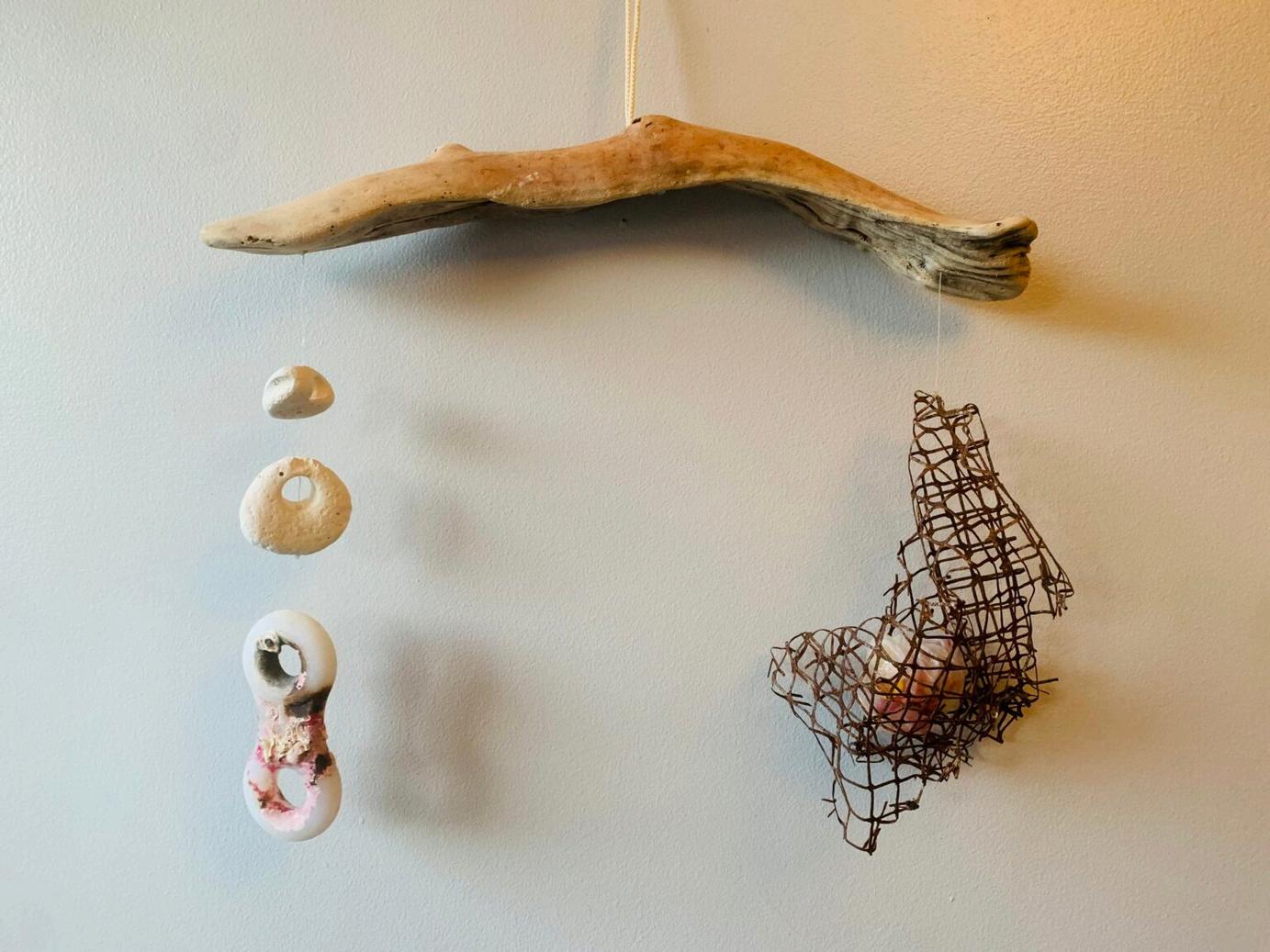
Lila Wordsworth is an interdisciplinary artist focused on salvaged beach materials such as seaweed, fishing line, rusted objects and plastic waste. She turns them into sculptures, textiles and cyanotype prints and photographs.
Above: ‘What if the sea had hands?’
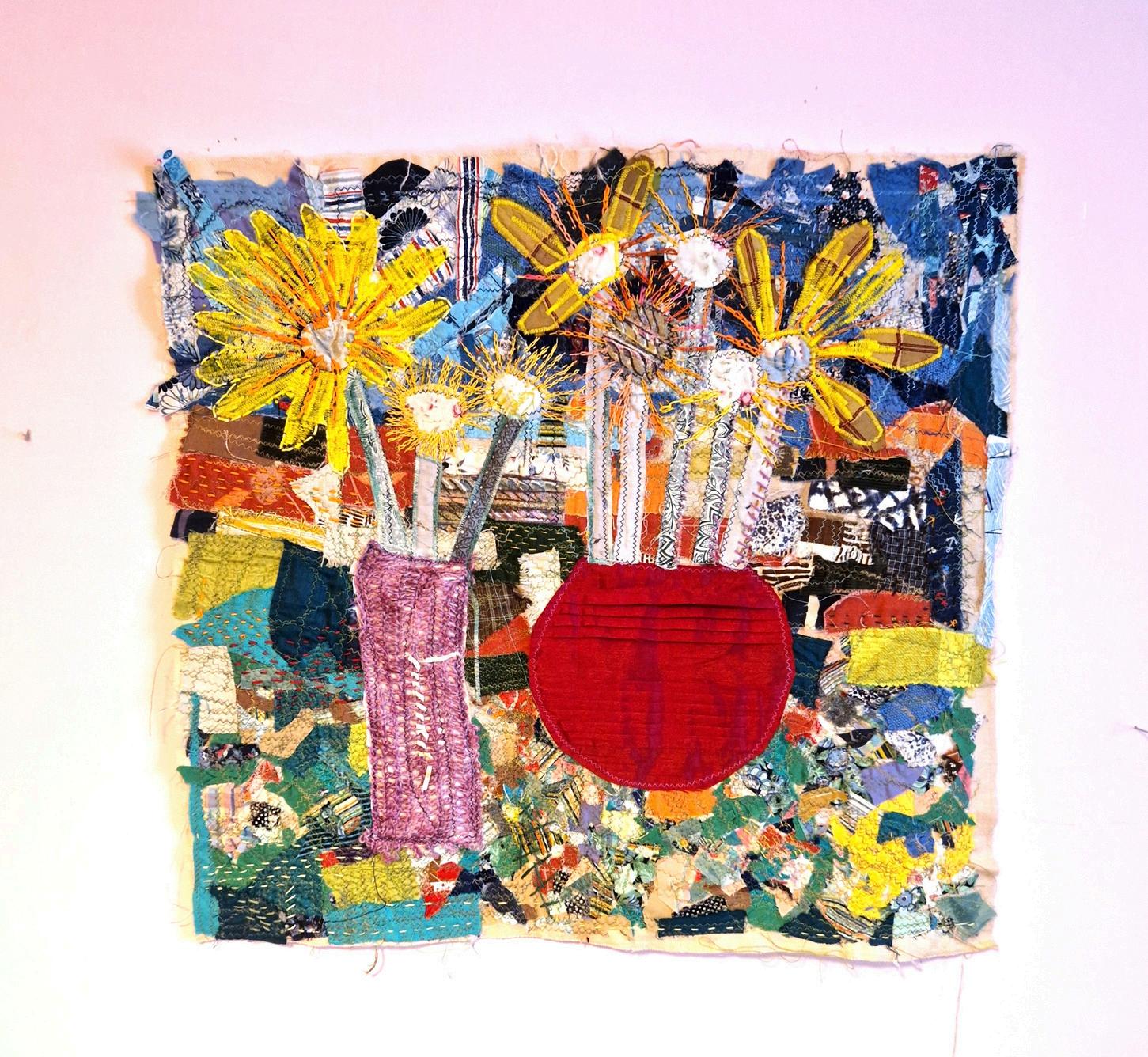
Kim Waine-Thomas is an artist whose work is deeply inspired by nature, environmental responsibility, and her lived experience as a Deaf person. Through each stitch, she aims to share a story—one rooted in resilience, identity, and connection.
‘It is said that half of the earth's species live in the soil - such a rich biodiversity of life... we are destroying nature shelters everywhere in unspeakable amounts. Protect our lump of soil for it is hanging by the threads.’
Cover image: ‘Hanging by the Threads’. Photo credit: David Rowan.
Below: ‘Fragile Waters’ (detail).
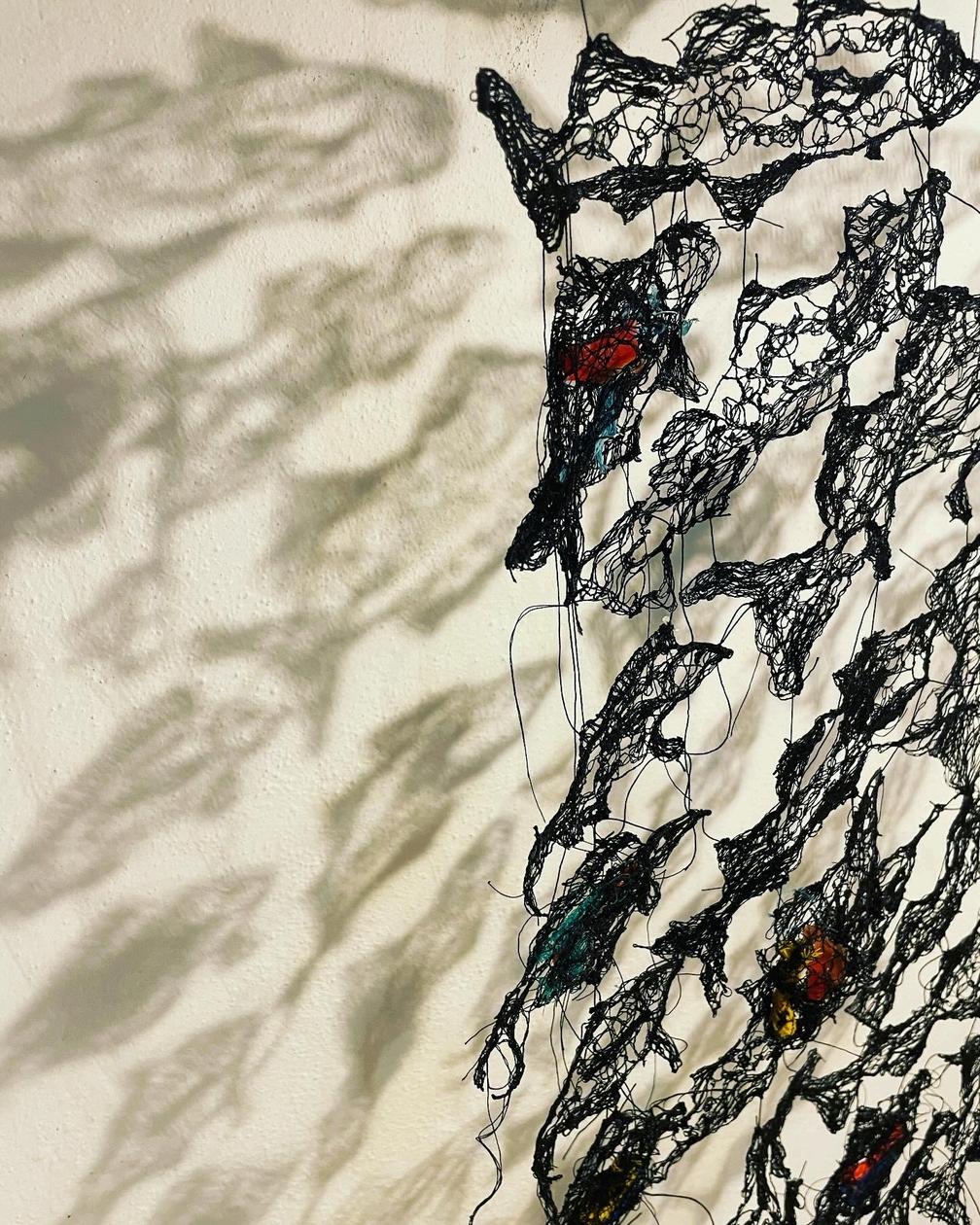
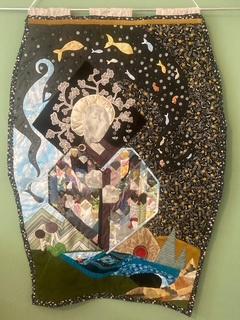
‘During the Covid lockdowns of 2020/21 I swapped paintbrushes for a sewing machine as I developed a visceral need to work with touch and make useful objects that carried my care whether or not I was physically present. From face masks to art pieces, sensory-rich quilts to gallery ready touch-pieces, my practice today is technically satisfying and environmentally meaningful as I scavenge, collect, and save unwanted fabrics from landfill - turning them into objects with a purposeful future measured far beyond their scrappy, off-cut origins might suggest.’
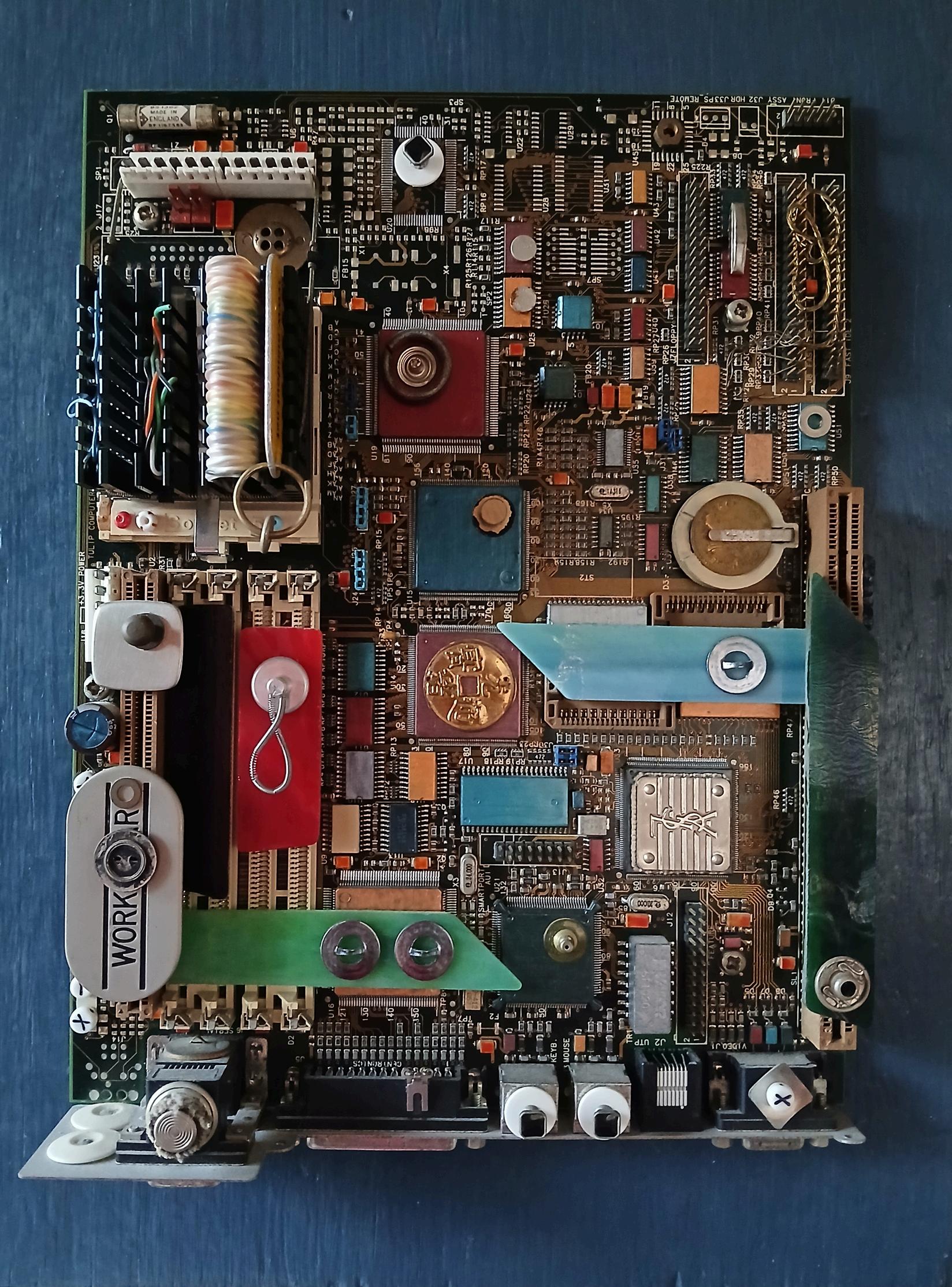
Luc(e) Raesmith’s 'Grandmother Board' (right) has a computer mother board as its base, screwed to a painted wood remnant; it has been decorated with waste stained glass, plus varied, found haberdashery & hardware items, and plastic letter beads.
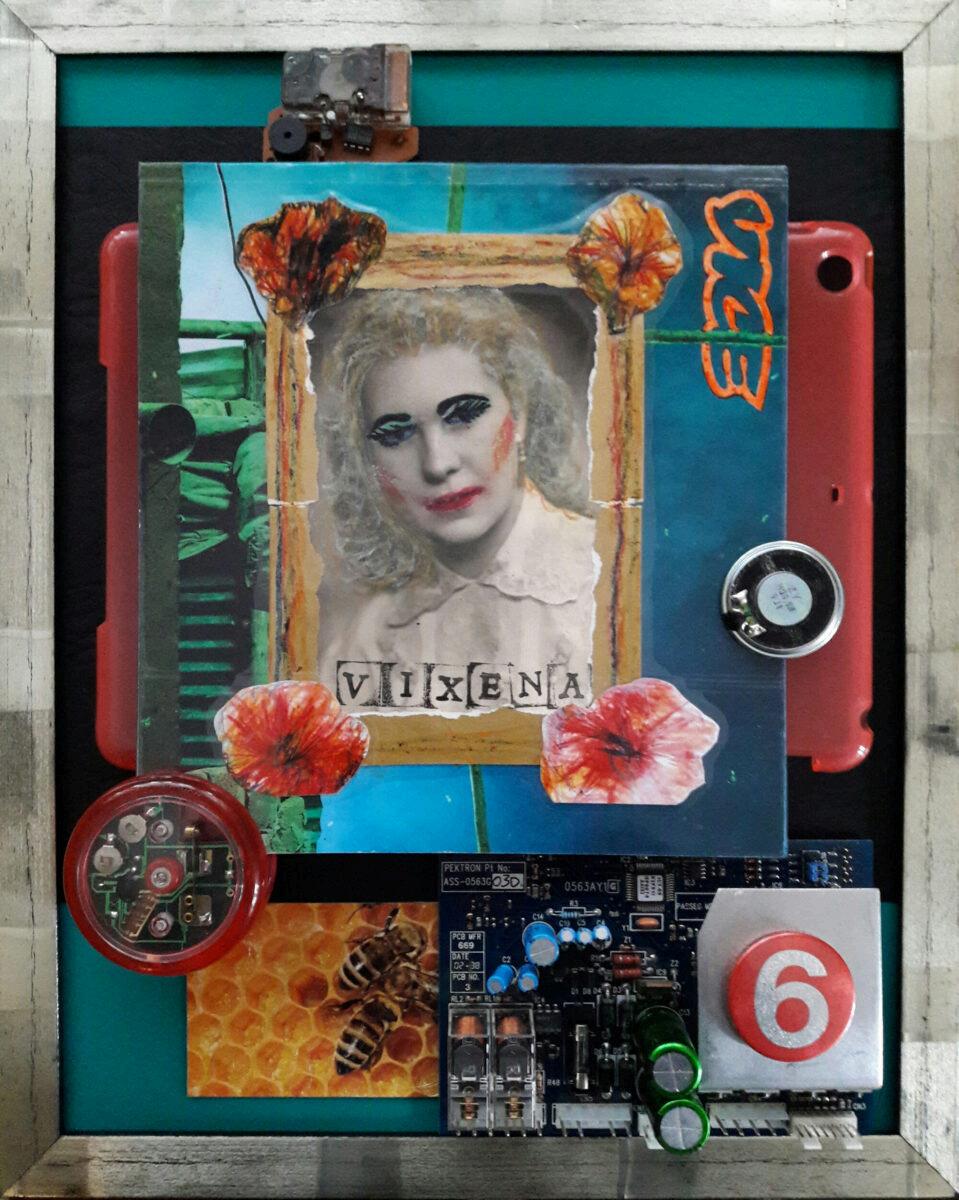
'Someone's Honey' (left) is a collage assemblage of found portrait photo and other 2D ephemera, used silicon iPad cover, defunct, random electronic board and 'techy' yoyo, all attached to a second hand picture frame.
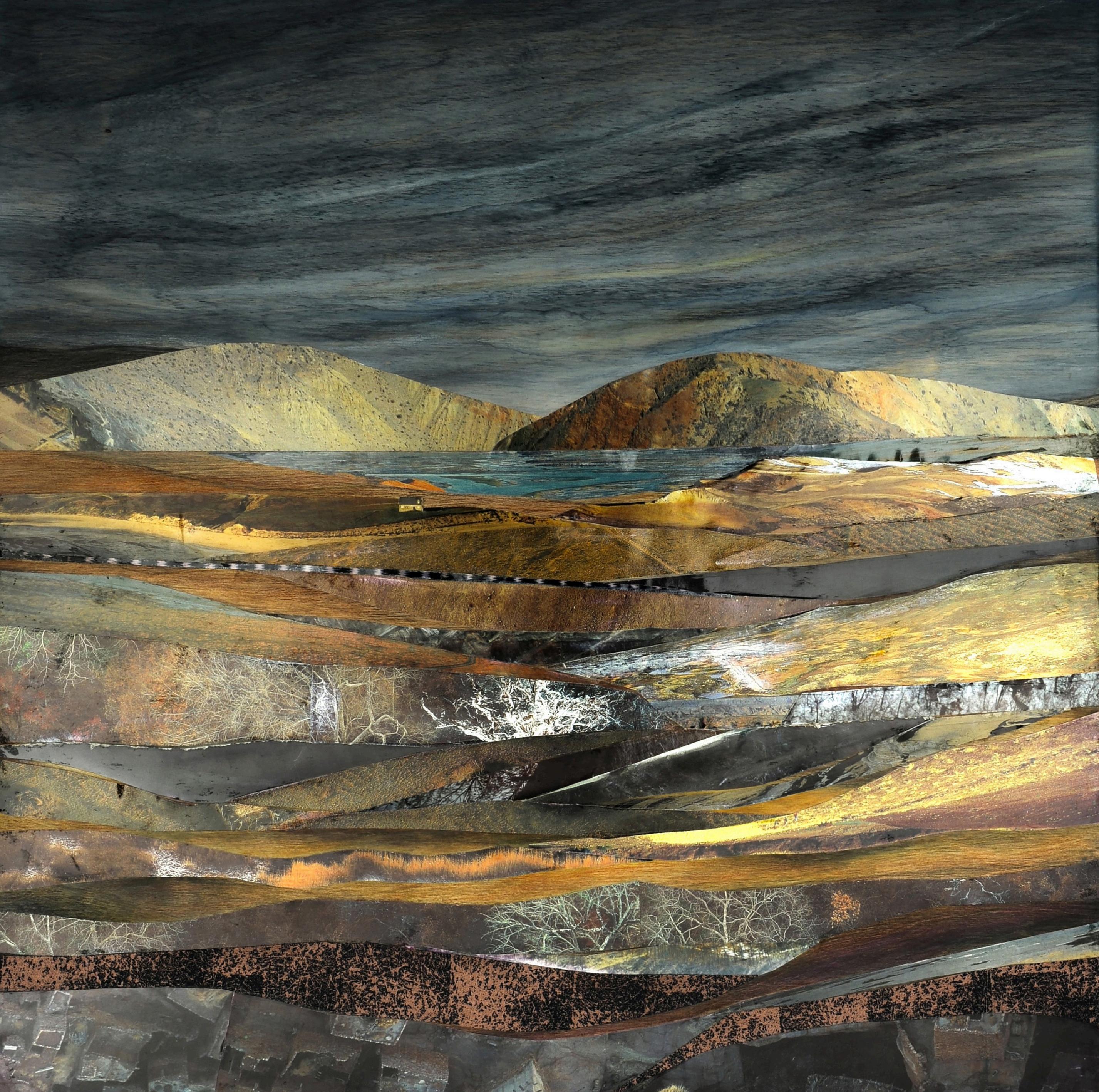
Jane Fantom works with mixed-media collage on birch ply, using photographic images sourced from used books and reclaimed archival materials. By repurposing existing paper and ephemera, her practice reduces waste and avoids the need for newly manufactured art supplies. Birch ply provides a responsibly sourced, natural wood substrate, supporting efficient use of timber. These choices make her work inherently sustainable, grounding each piece in a cycle of reuse, care, and conscious material selection.
‘Dreamscape’ (left) is a mixed media piece created from memories and dreams of a visit to Skye.
Environmentally Skye is deeply connected to the environment with rich and fragile ecosystems. The high volume of tourism challenges the environment prompting significant conservation and management programmes.
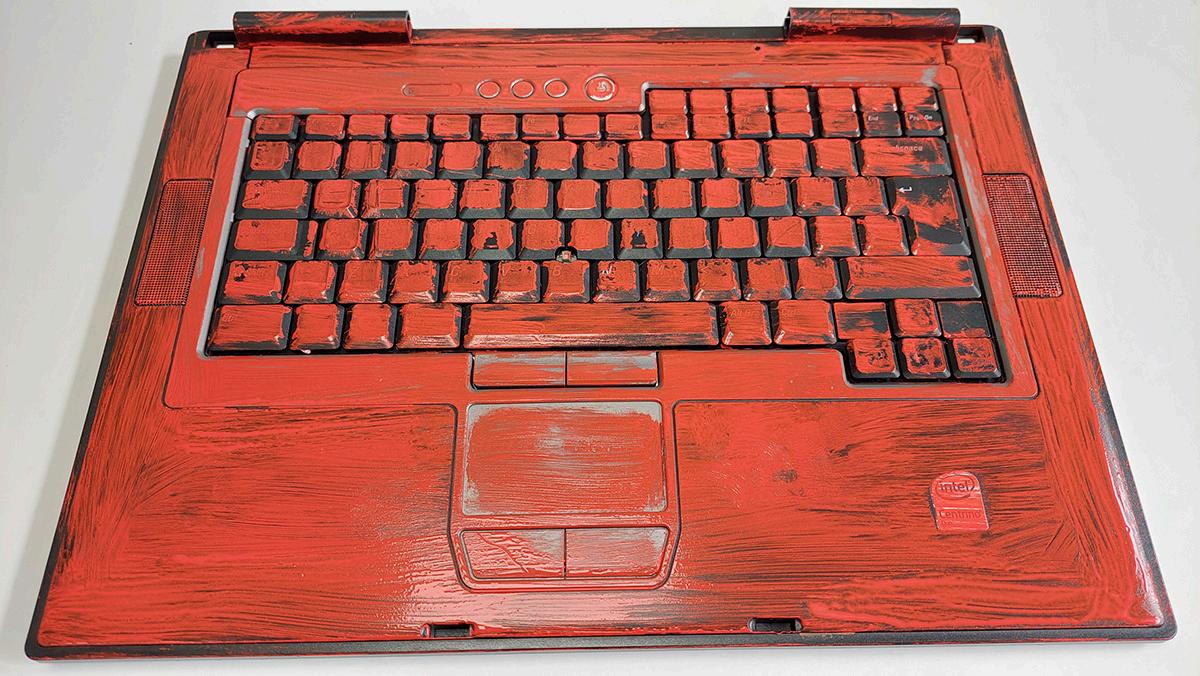
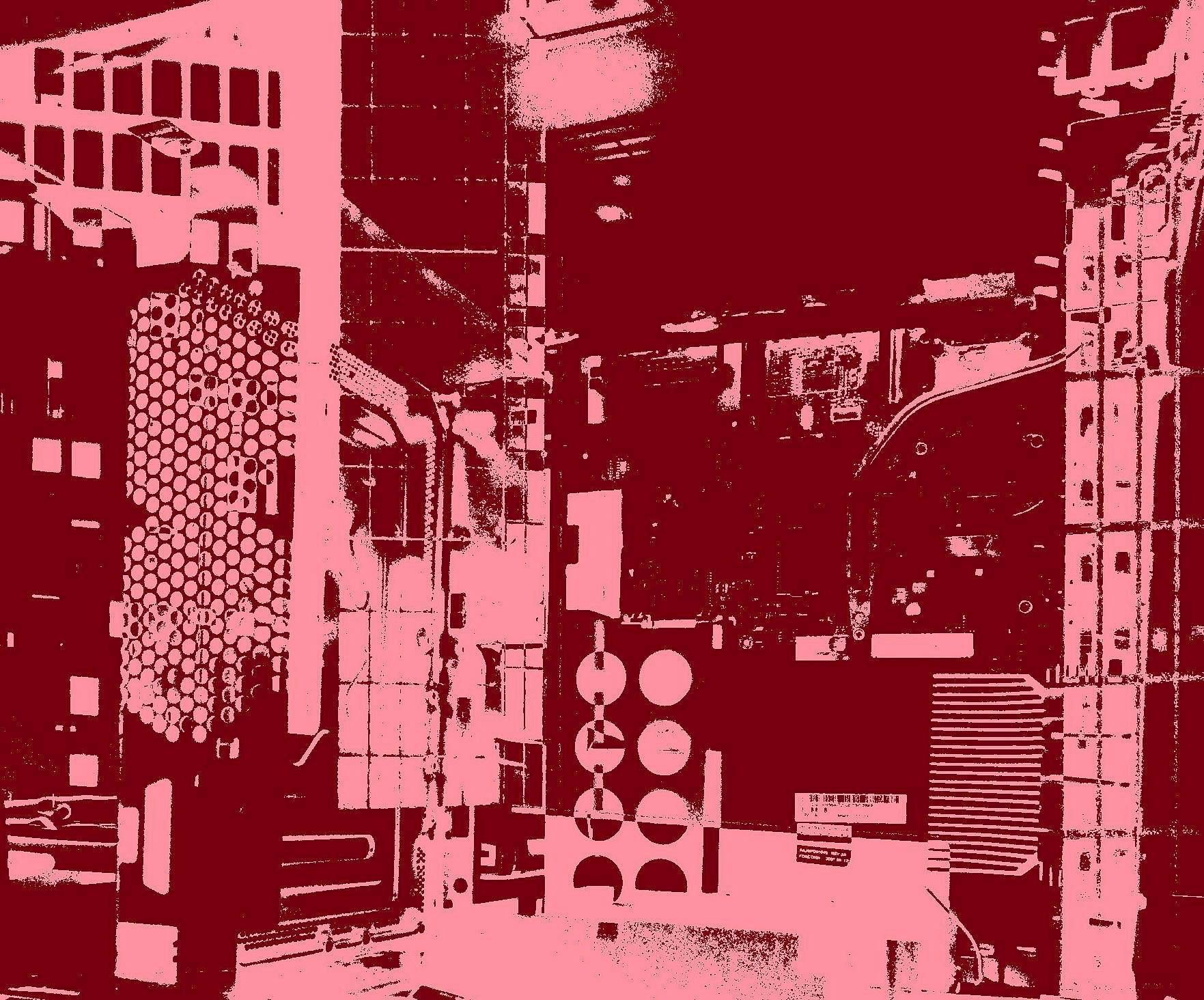
Brian Gibson creates work that explores the search for ecological solutions within technology. Using a box of discarded tech (computer heating panels, mobile phones, telephone chords and dial up modems), he creates textural paintings, micro cityscapes and light installations.
Rather than using manufactured paints, you could experiment with paint made from natural materials. Using eggs, water, chalk, and a chosen pigment make for a sustainable homemade art supply, replacing mass produced and plastic based acrylic paints.
Spices, soot, berries, flowers, clay and more can be used to create an array of hues that can be added to the base paint mix. Making your own paints can also be incredibly satisfying, even meditative.
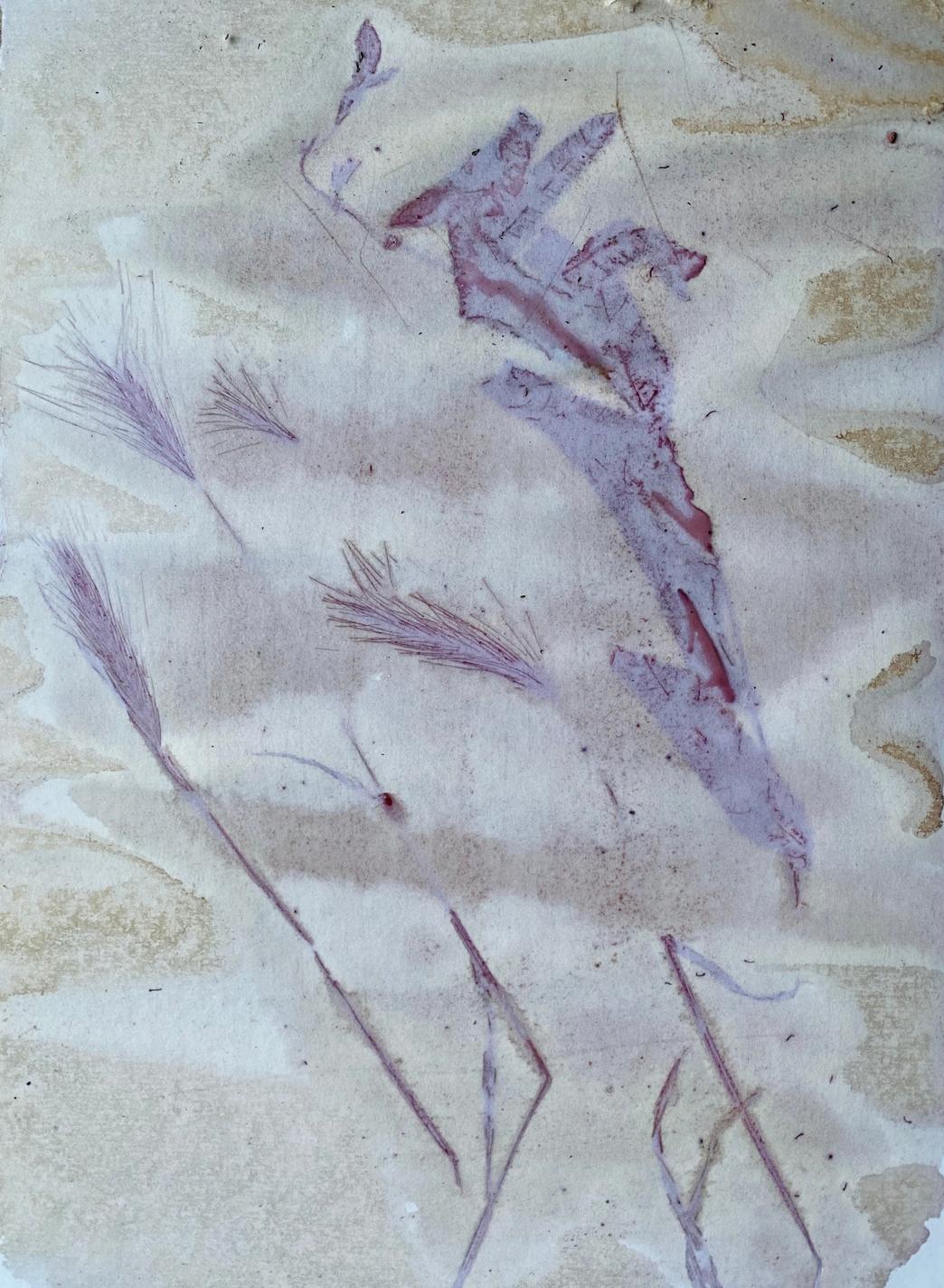
If you are not able to make your own paints, consider buying from small creators that do rather than mass produced options.

Above: alabamathirteen is committed to a more environmentally sustainable practice. They work with plant based developers and processes such as anthotypes (using photosensitive material from plants)
chlorophyll printing (developing images on leaves through photosynthesis)
camera-less processes that harness the sun to create images.
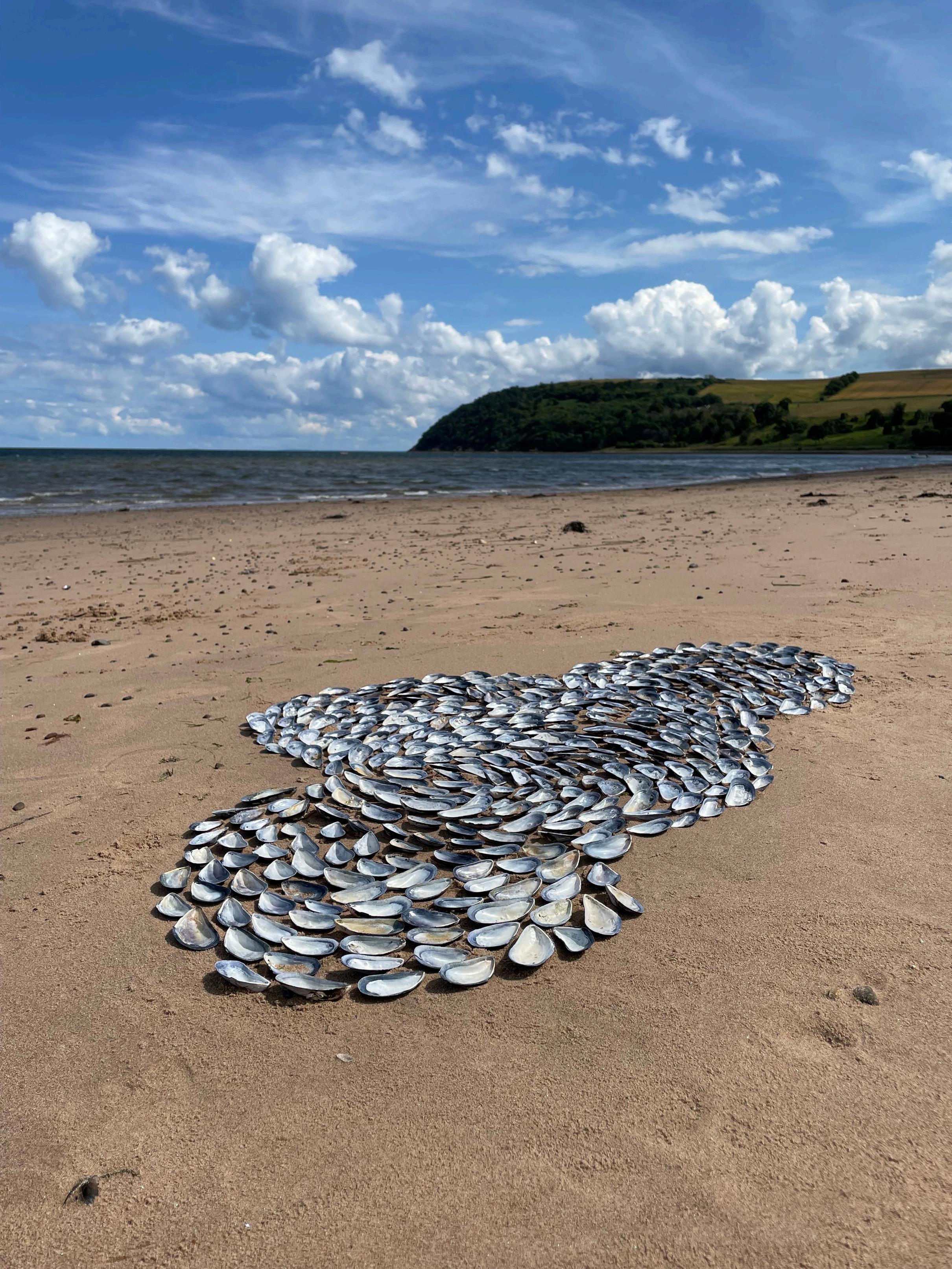
Di McGhee’s work is connected and responds to the landscape and the weather conditions experienced during the making process. The materials are used on site and remain to return to the sea.
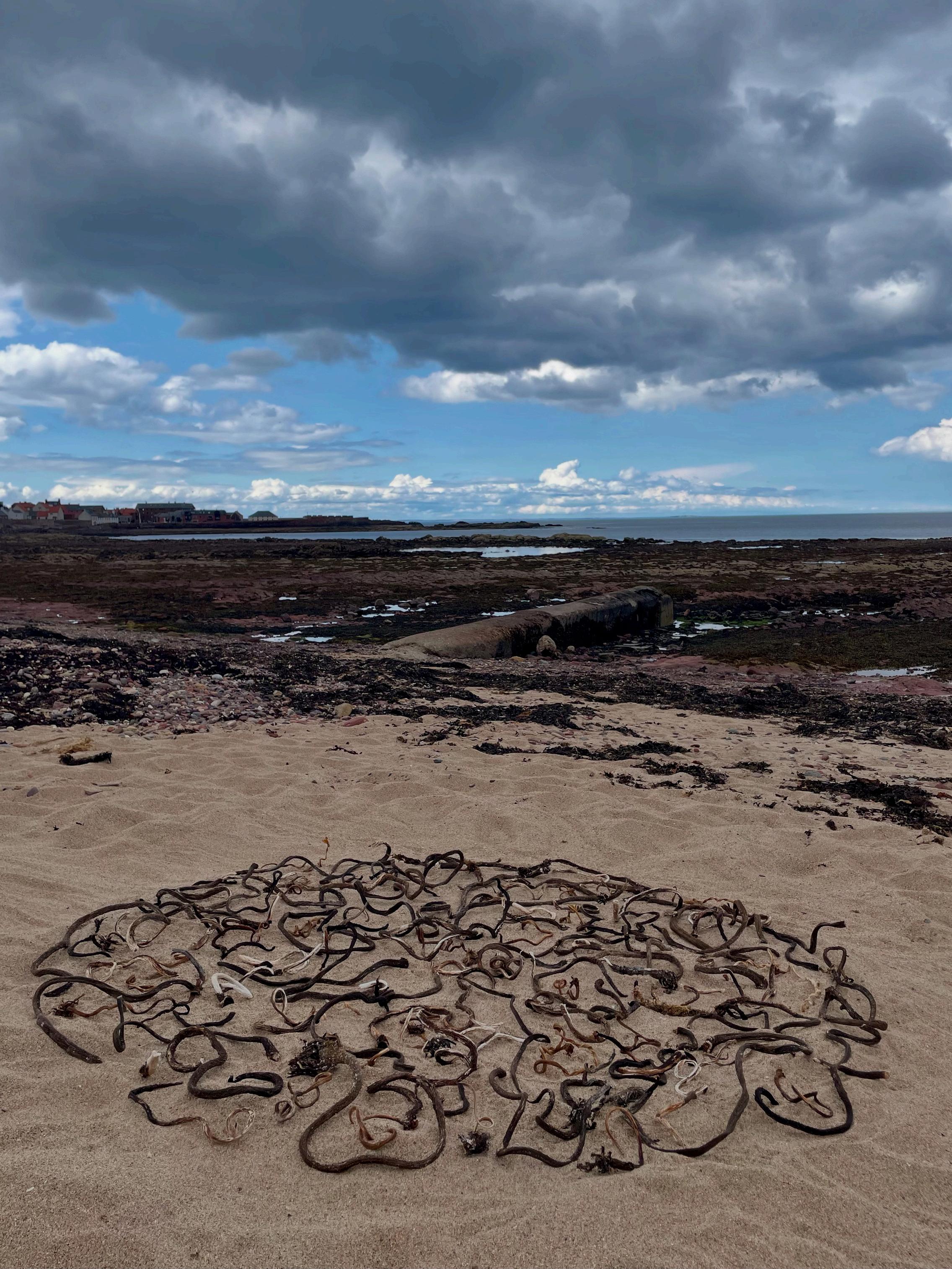
Previous page: ‘Cloud Piece, Cromarty’.
Below: Di McGhee, ‘Beach Drawing’, European Land Art Festival, Dunbar.
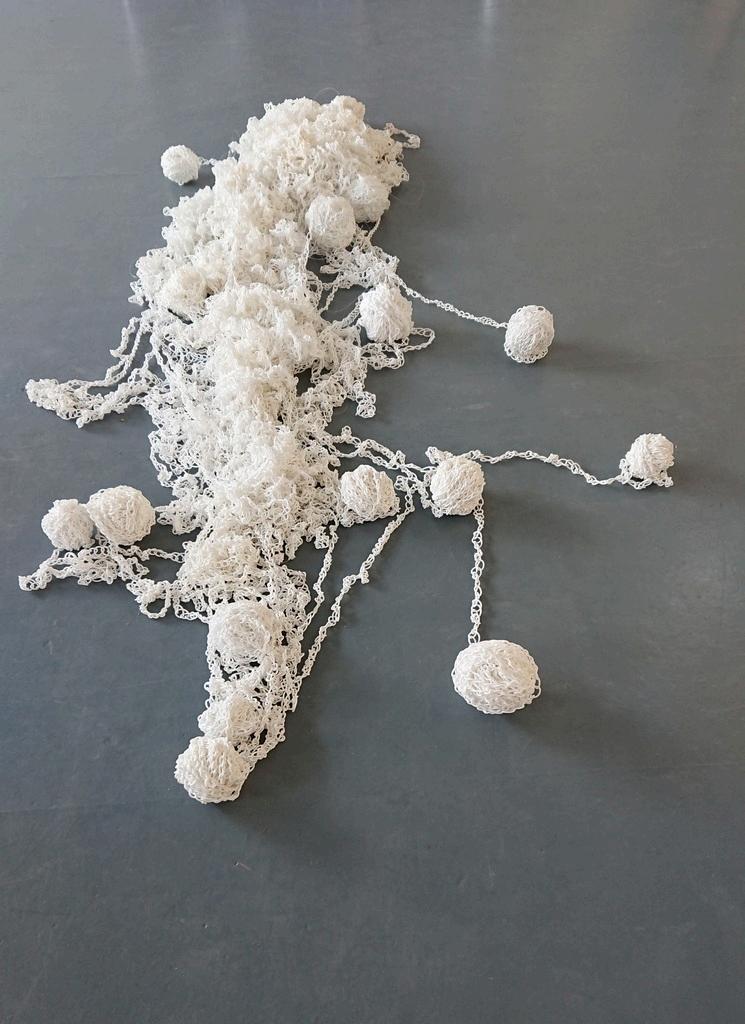
‘Perdurance 18: Mmiri Mmiri (Fluidity)’ by IJE uses new and re-used extruded silicone cord (hand chained) and fishing line as sculptural material.
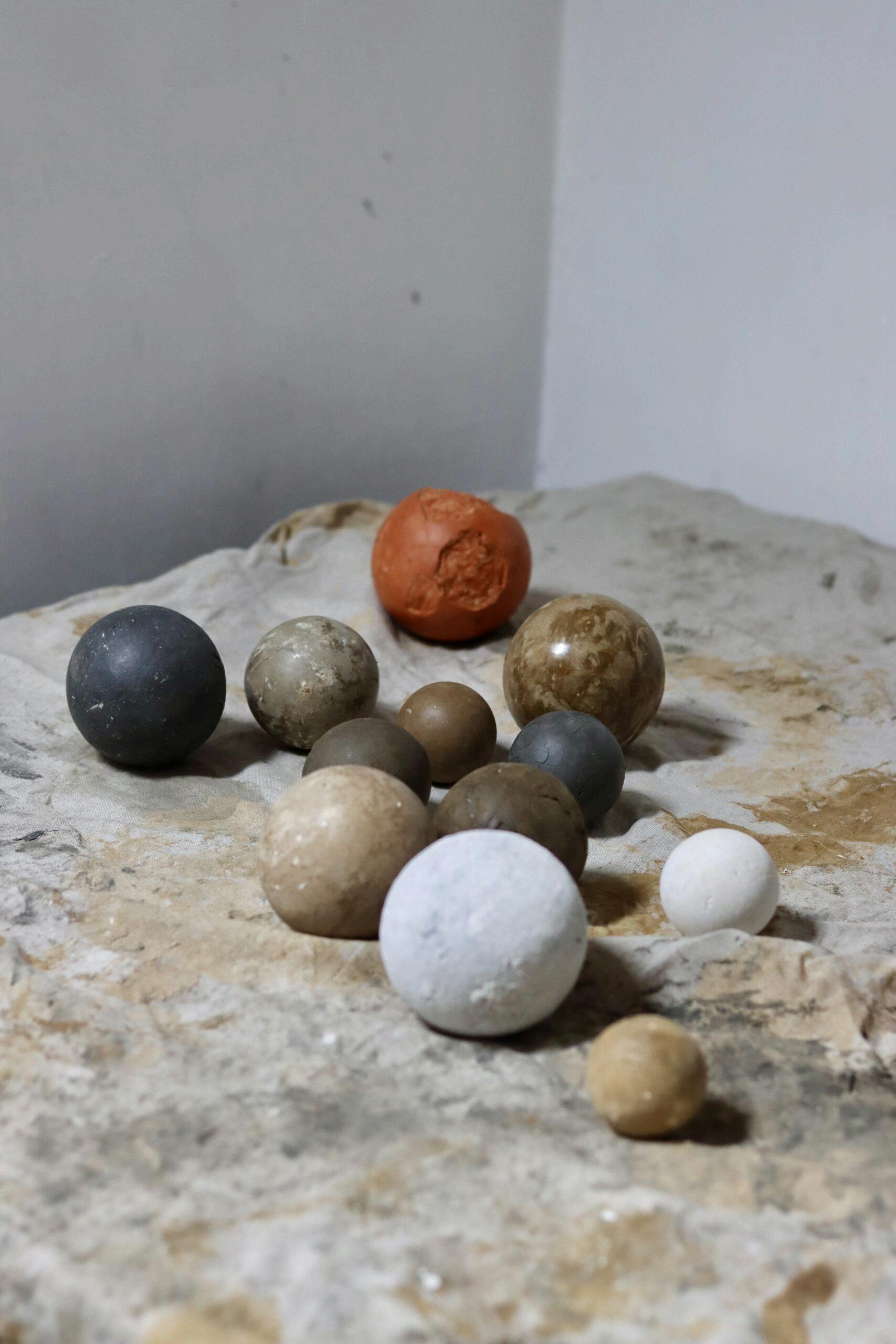
‘Earth Notes’ by Edie Evans explores the intersection of ecology, neurodiversity, and materiality; this artwork grew from exploring the ever changing edges of landscapes of the UK.
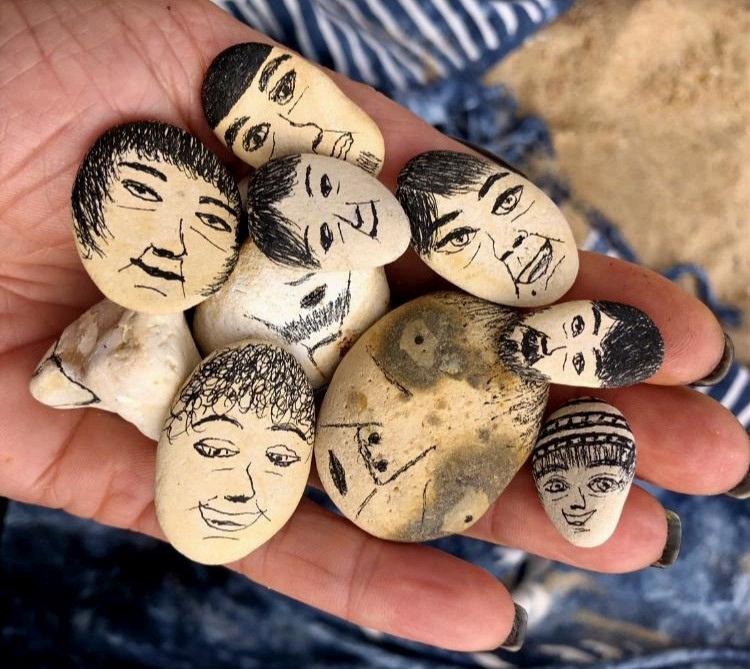
Mayre Casadei is a Brazilian artist based in the UK, focused on sustainability, material experimentation, and the intersection of art, society, and the environment.
‘Unseen Faces’, uses pebbles collected responsibly from Bournemouth Beach, embracing low-impact materials and a personal connection to the local landscape. The work grew from a reflective period during COVID a quiet time when she often thought about life, people, and our connections.
‘Working with the pebbles gave my reflections a gentle way to become visible. Each face was a small moment of discovery, often making me laugh and bringing quiet joy.’
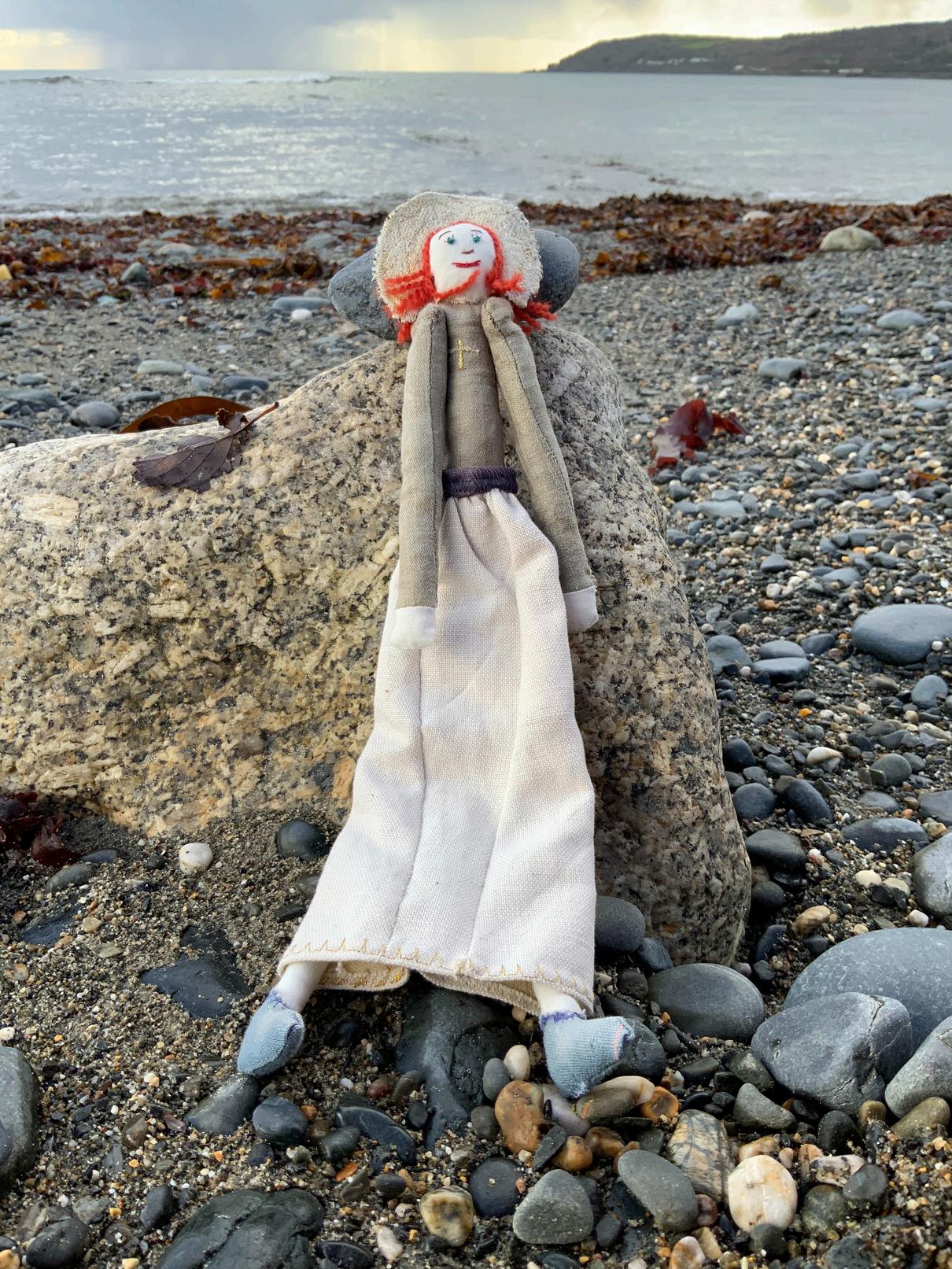
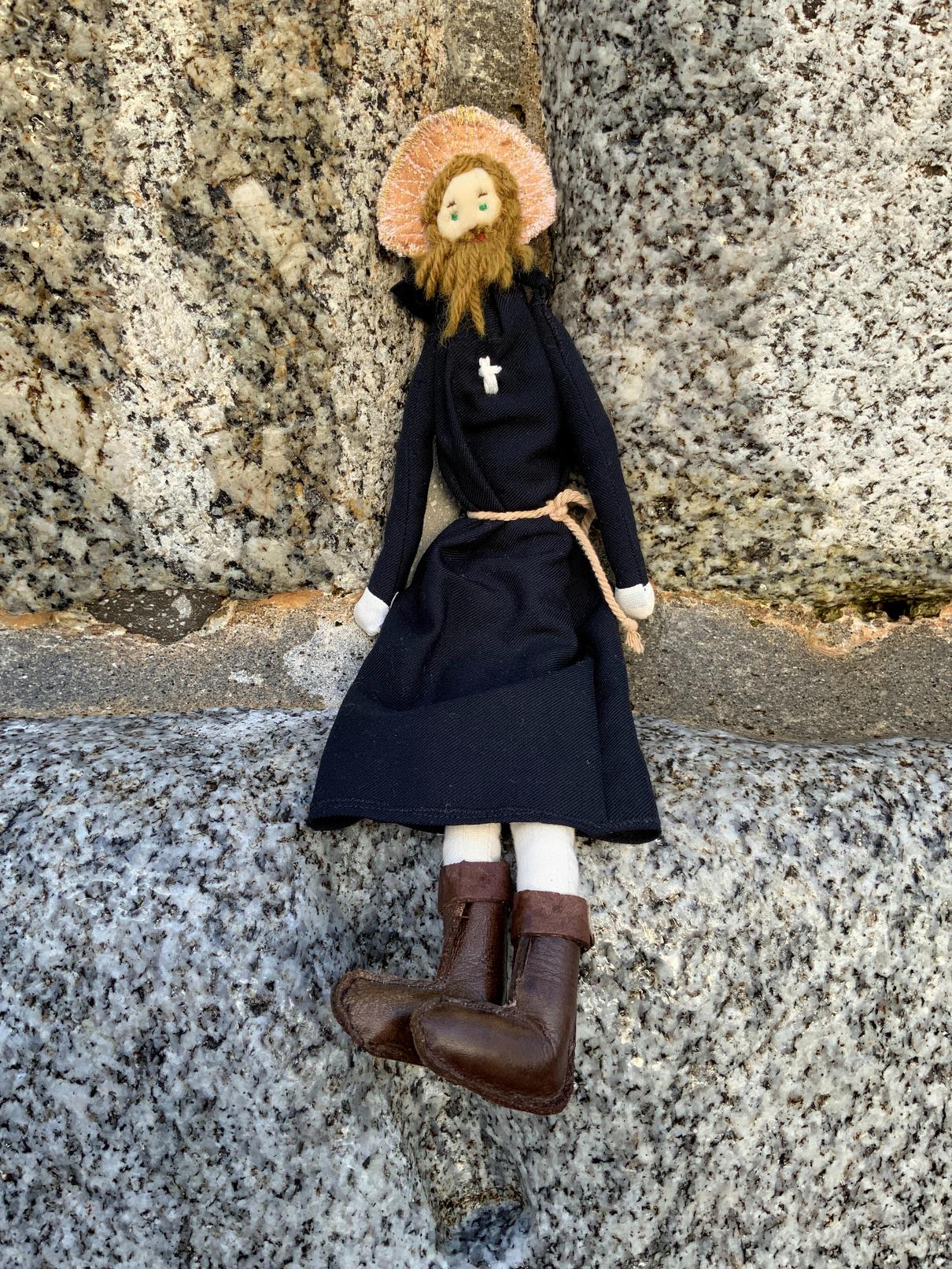
Katya Solyanko uses wool from local farms, donated fabric beads and jewellery threads as materials and local historic figures and formerly sacred sites as inspiration. Katya began using art inspired by scenes from her life and visual impairment to raise awareness of sight loss and brain injury. Her rag doll Saints commemorate the craftsmanship and faithfulness of those who built Cornwall. She intentionally makes them tactile so everyone can get to know them and takes them to the Catholic Church in Penzance for blessings as well.
Above: ‘St Ives’.
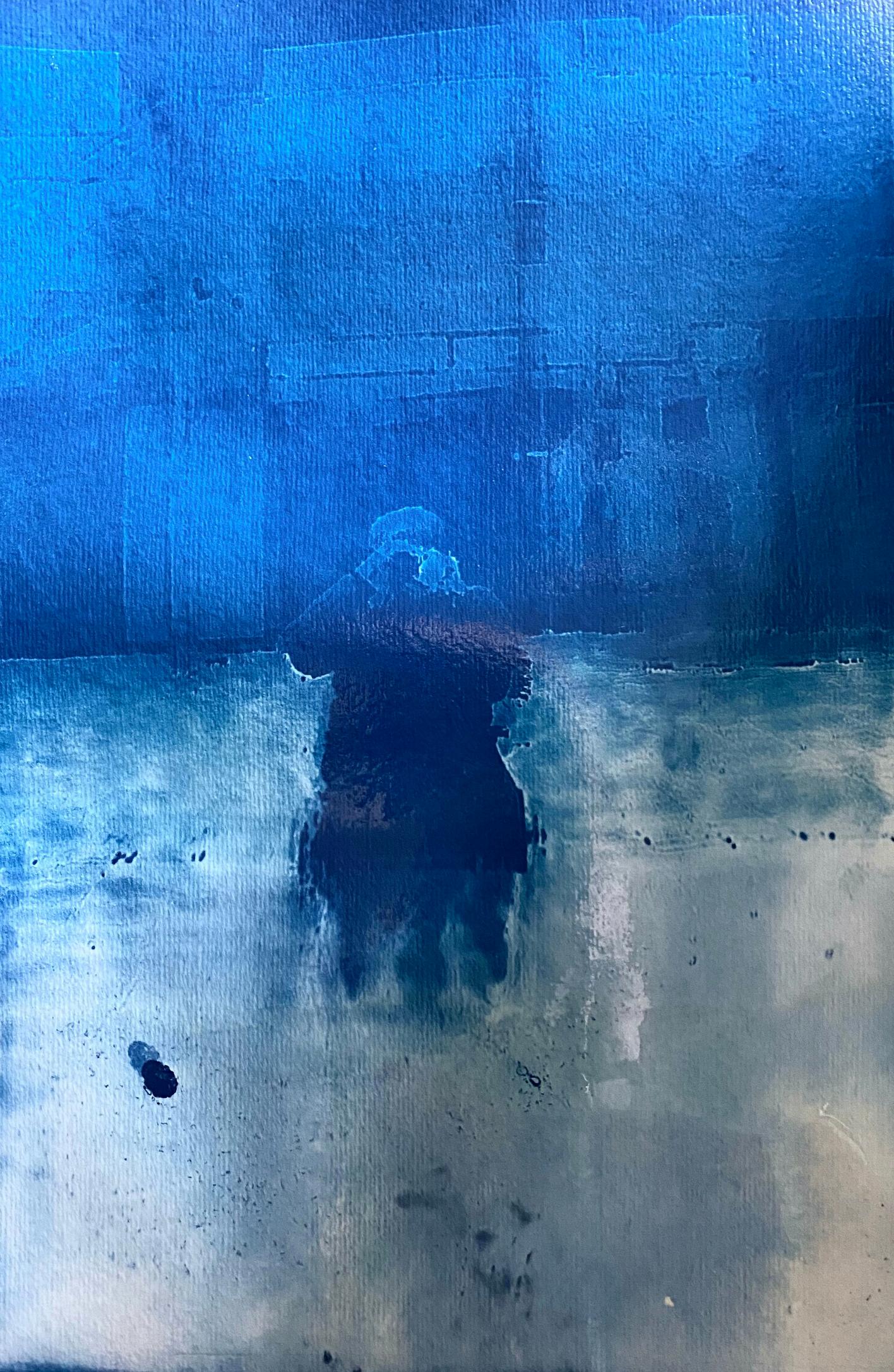
Kate Kennington-Steer uses recycled materials and experiments with cyanotypes and anthotypes using plants from her garden. Above: ‘Disappearing Disability’.
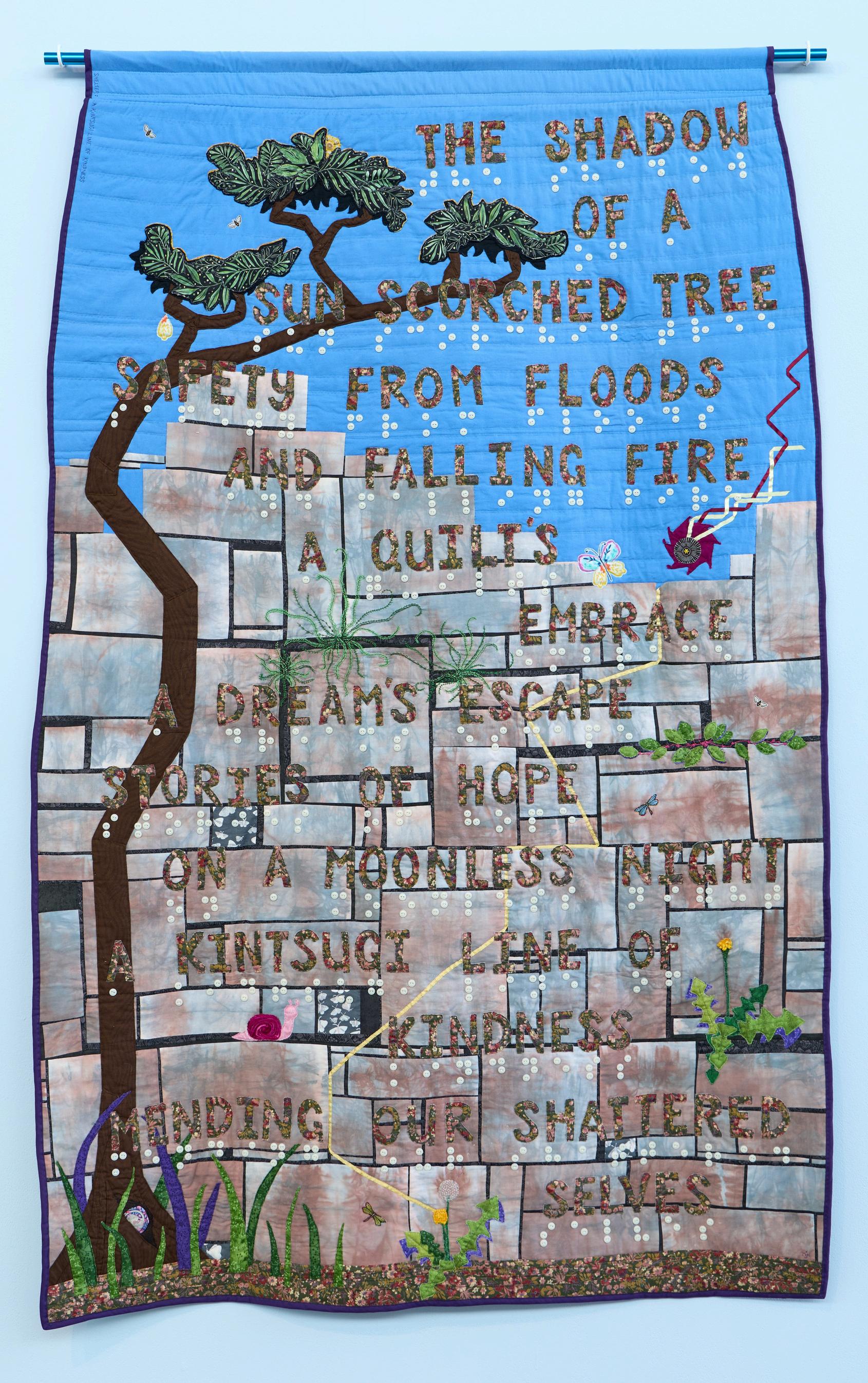
Melanie Hodge, ‘Shelter: A Kintsugi Line of Kindness’.
Quilted Wall Hanging: Hand sewn, applique, and embroidery displayed at the Outside In national exhibition, Shelter.
Photo credit: David Rowan.
Make a list of your most used supplies; the next time you need to restock one of these items consider the following: Can a greener alternative be found? Is anyone selling unused supplies? Does the company offer shipping with reduced packaging or eco friendly transport options?
Consider having a ‘destash’ with other creatives. Pack up any items you don’t use, this can be materials or tools that are gathering dust in your art space.
Meet up in person or post your destash pile online, swap the items you don’t use for those you do.
Or, you could sell the items as a ‘joblot’ online, avoiding landfill and making supplies more affordable to others.
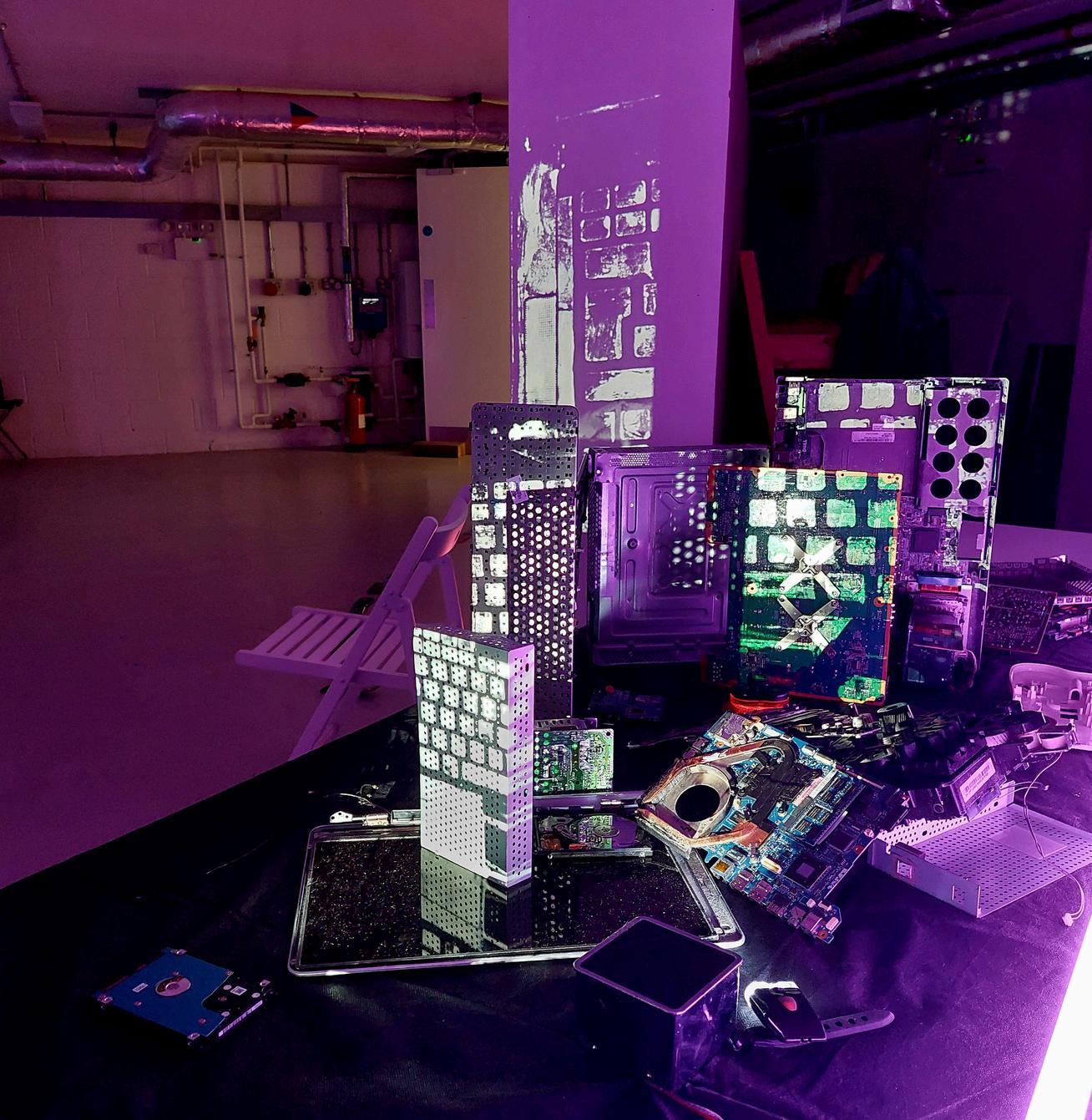
Brian Gibson.
You can also use Outside In’s Alumni Network as a place for sharing news about creative materials you’d like to donate or swap with other artists. You can view the noticeboard here for relevant news and contact info@outsidein.org.uk to list something.
Create a ‘Supplies Summary’ for the artwork’s new owner.
Having a list of this kind can be useful for the storage and display of artworks, either for a collector or curator.
These retailers stock eco-friendly supplies, ranging from preloved and overstock materials to handmade ethically produced items. Other links include artists and organisations making strides in this area and resources and exhibitions to help expand your research.
When visiting the site of a picture, Ivan Grieve makes minor interventions with natural materials to get in touch with the environment. Returning to the studio, he then uses materials gathered from the landscape including feathers, clay, mud and leaves to build a sensory expression of his experience in the landscape.
Left: Ivan Grieve, ‘Autumn at the North Wood’.
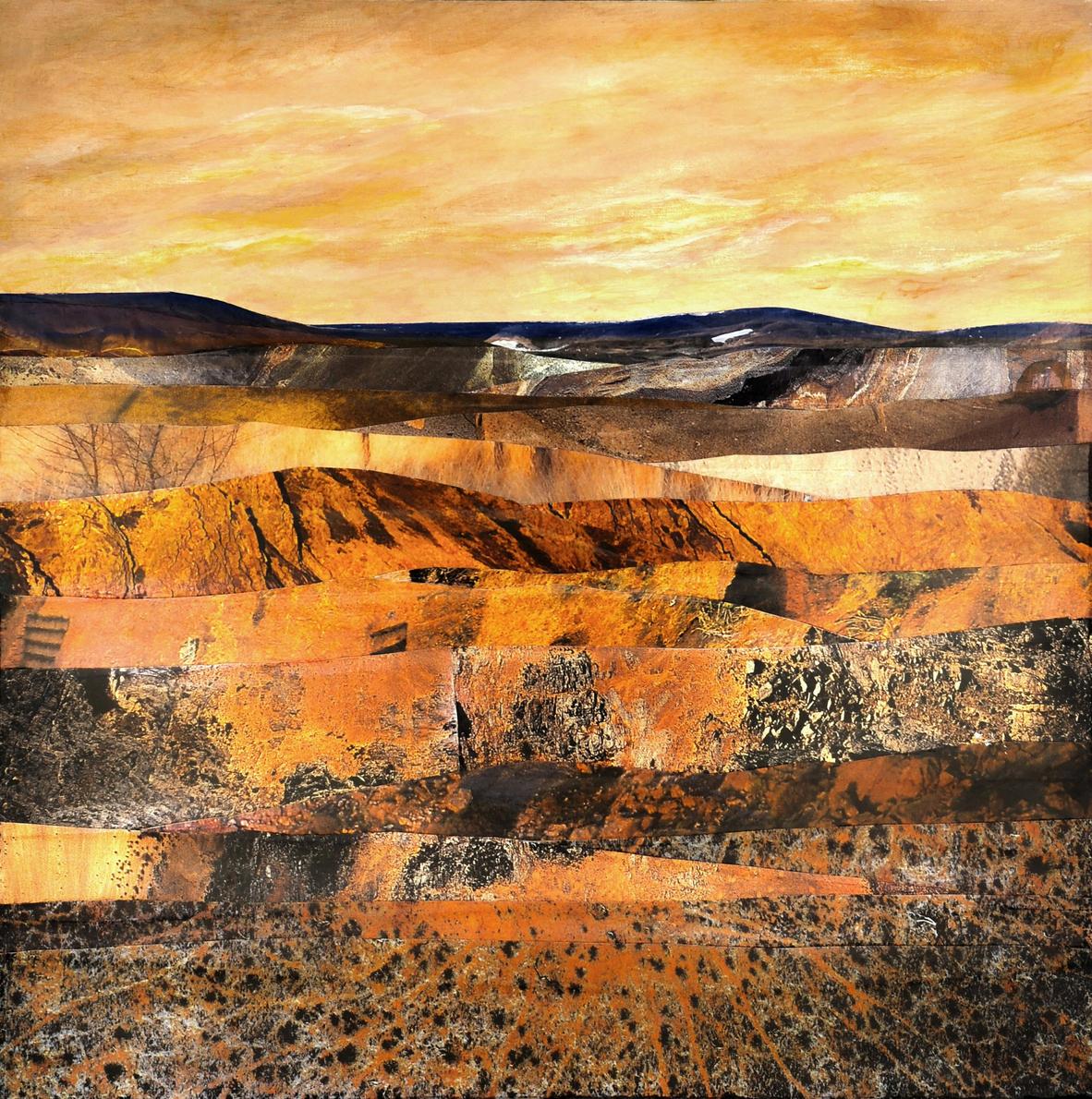
Jane Fantom, ‘Earth and Fire’.
Rag Tag Arts and Community scrap store, Kendal Contemporary Creative Recycling Gallery, Manchester
Wirral Environmental Network creates Eco Art in the Park
Open Eye Gallery, Liverpool has lots of sustainably focussed exhibitions and projects
Grisedale Arts, Cumbria
North East and Yorkshire
Stephenson Steam Railway - a woodland walk
Yorkshire Sculpture Park, The Oak Project
Wild Eye, environmentally concerned sculpture by North Yorkshire Coast
Wild Museum explores interactions between humans and places
Creatively Connected, Pennines
Wales
Sustainable Arts Wales network for collaborations
Sustainable Wales- The Green Room
Scotland
Flow: An exhibition by Jean Duncan, artist-inresidence at the UNESCO Centre for Water Law, Policy & Science, University of Dundee
Open Jar Collective exploring environment and food impact through art
Culture for Climate runs amazing projects around climate change
Scottish Sculpture Workshop expands understanding of sculpture in environmentally and socially conscious ways including a garden of art materials
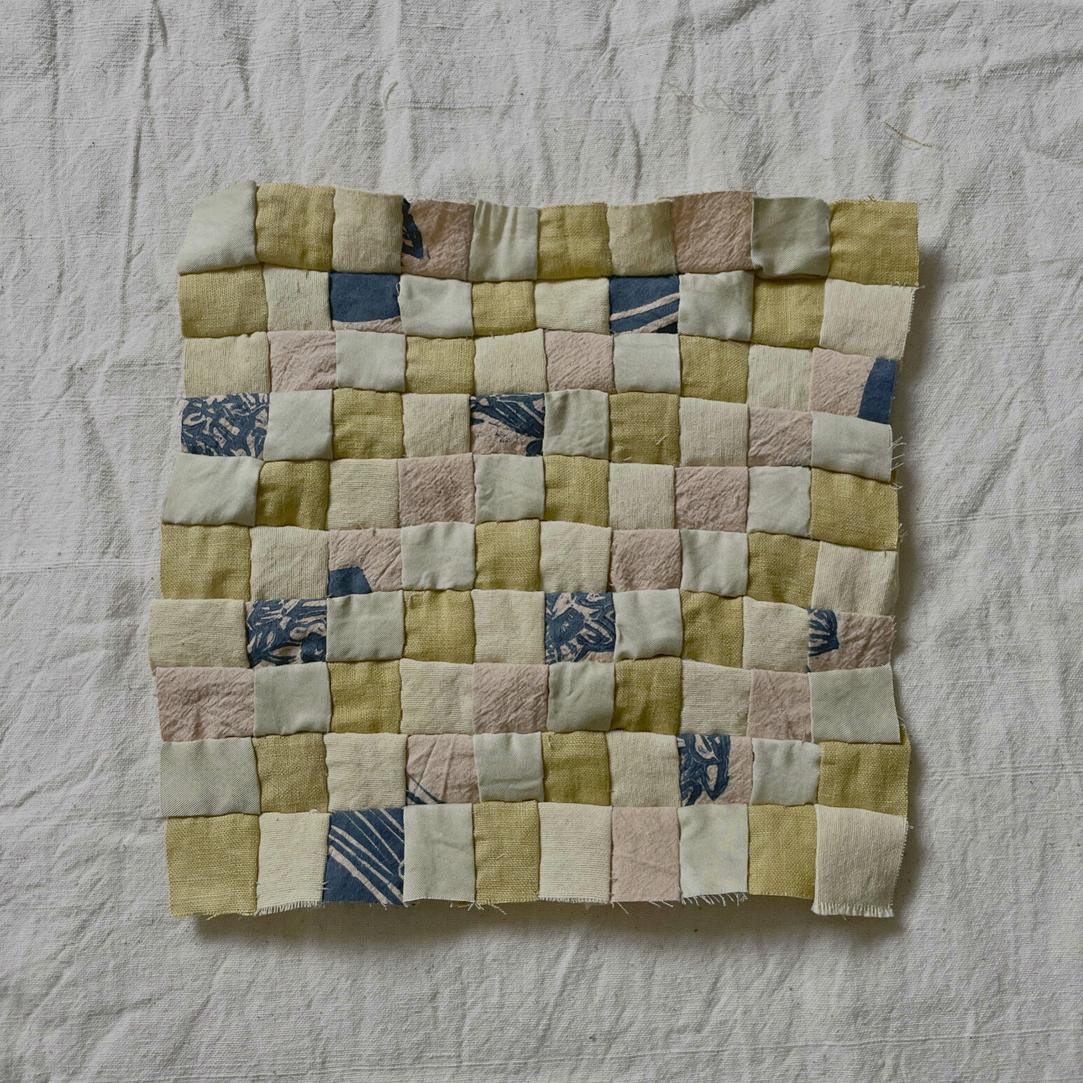
Paaras Abbas, ‘An Inch For Each Of The Dead’ - a contribution to a collaborative quilt.
London and the South East
The Circular Space, Shoreham scrap store and community activity space
Green Arts Oxfordshire Network
Thirst: In Search of Freshwater - an exhibition at Wellcome Collection
Felicity Hammond: V3 Model Collapse - an exhibition at the Photographers’ Gallery Can the Seas Survive Us? - an exhibition at Sainsbury Centre
The Morning Boat, Jersey runs workshops and residencies in association with farmers and food production
Bethnal Green Nature Reserve and forest school
Hastings Library of Things
Midlands
Craftspace, Birmingham - a craft development organisation that frequently explores themes around sustainability and slow craft through exhibitions, community projects, and workshops.
General Public, Birmingham - an artist duo and CIC who run socially-engaged and environmentally aware arts projects, often sitespecific and focused on community and place.
Ecobirmingham - organisation that partners with artists and creative practitioners to run workshops, public art interventions, and community projects focused on climate and sustainability.
Midlands
Stryx Gallery, Digbeth, Birmingham - hosts residencies and events with a focus on emerging artists, some of whom are working within themes of ecology, sustainability, and alternative economies. Share Shrewsbury / Shropshire Scrap store - Run under the Litter Watch charity, they provide recycled materials, particularly for schools and creative workshops.
Community scrap store, North Somerset
Environmental arts and crafts at Soup arts, Somerset.
Chippenham Museum’s climate change collections project
Green Maker Initiative as part of Make Southwest champions sustainable research, makers, materials and crafts.
Centre for Contemporary Art and the Natural World archive
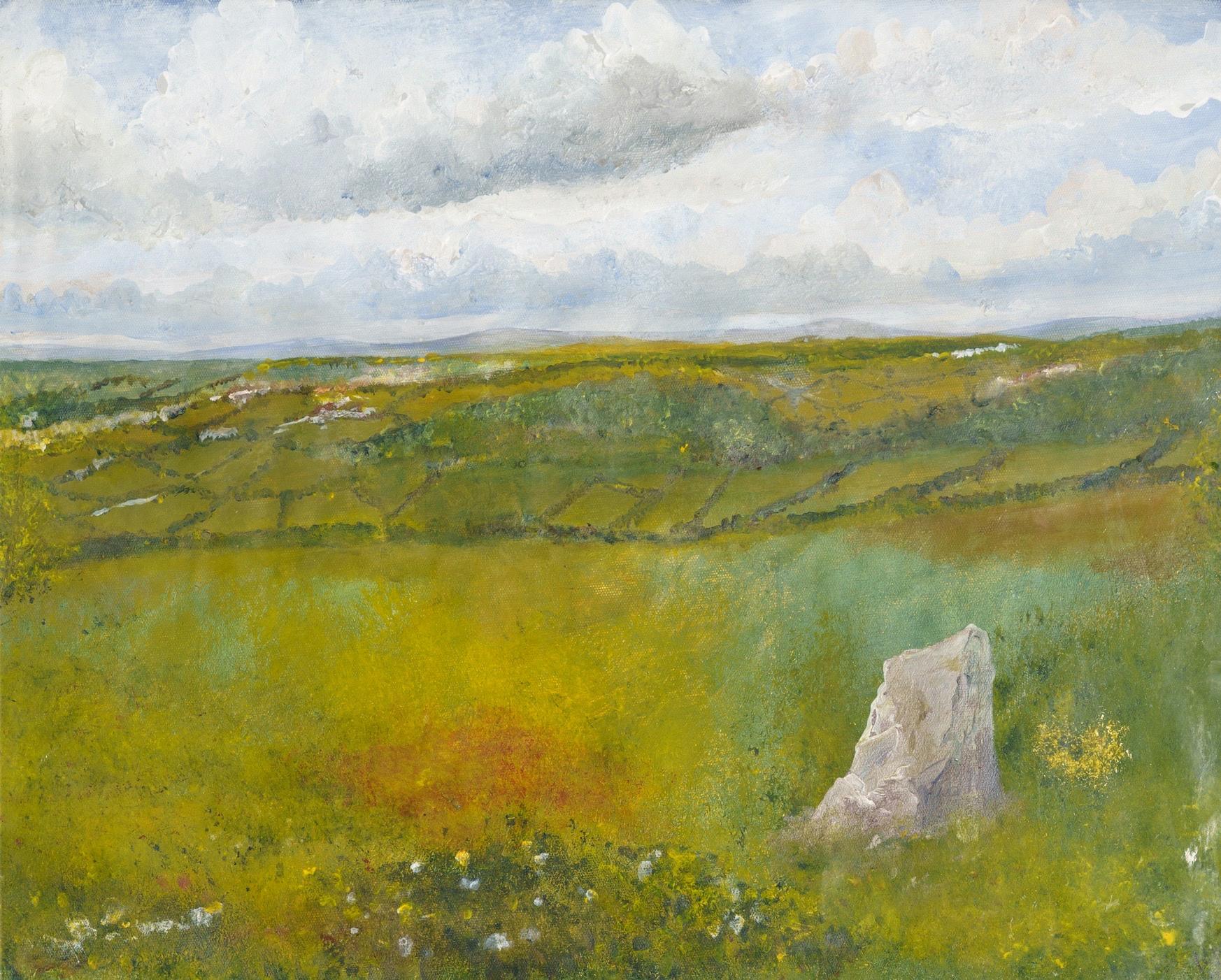
Mark Noble, ‘Lover’s Leap’ (new edition).
Online or national
Sustainable Squad: a podcast sharing real stories of people creating positive change
Sunlight Liberation Network
Learning through Landscapes
Artists’ Lives: Ecologies of resilience report
Addressing climate change through cultural heritage
Invisible Dust exhibitions, talks and interventions around science, art and climate change
Alternative processes blog
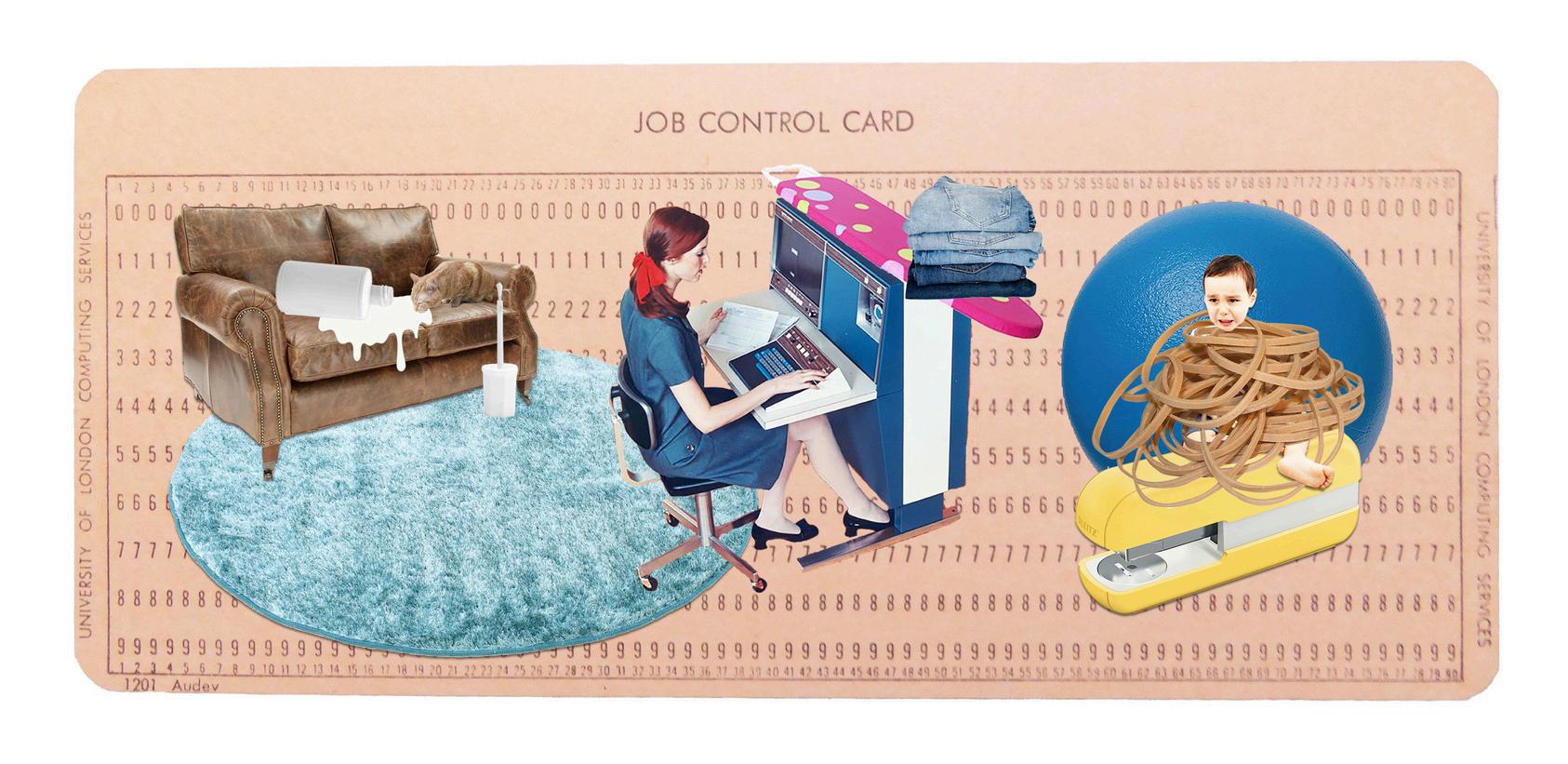
Helen Grundy creates collages using reused materials such as vintage job control cards.
Above: ‘The Colonisation of Domestic Space’.
Online or national
Reuseful UK scrap store directory - find your nearest scrap store
Culture, Health and Wellbeing on Creative
Planetary Health
Sustainable Darkroom
Wild Museum
Environmental Arts Research Network, Plymouth (for postgraduates)
ArtCan
Do London Differently: Money Trees, Cyber Gardens and Ecological Citizens - National Park city podcast
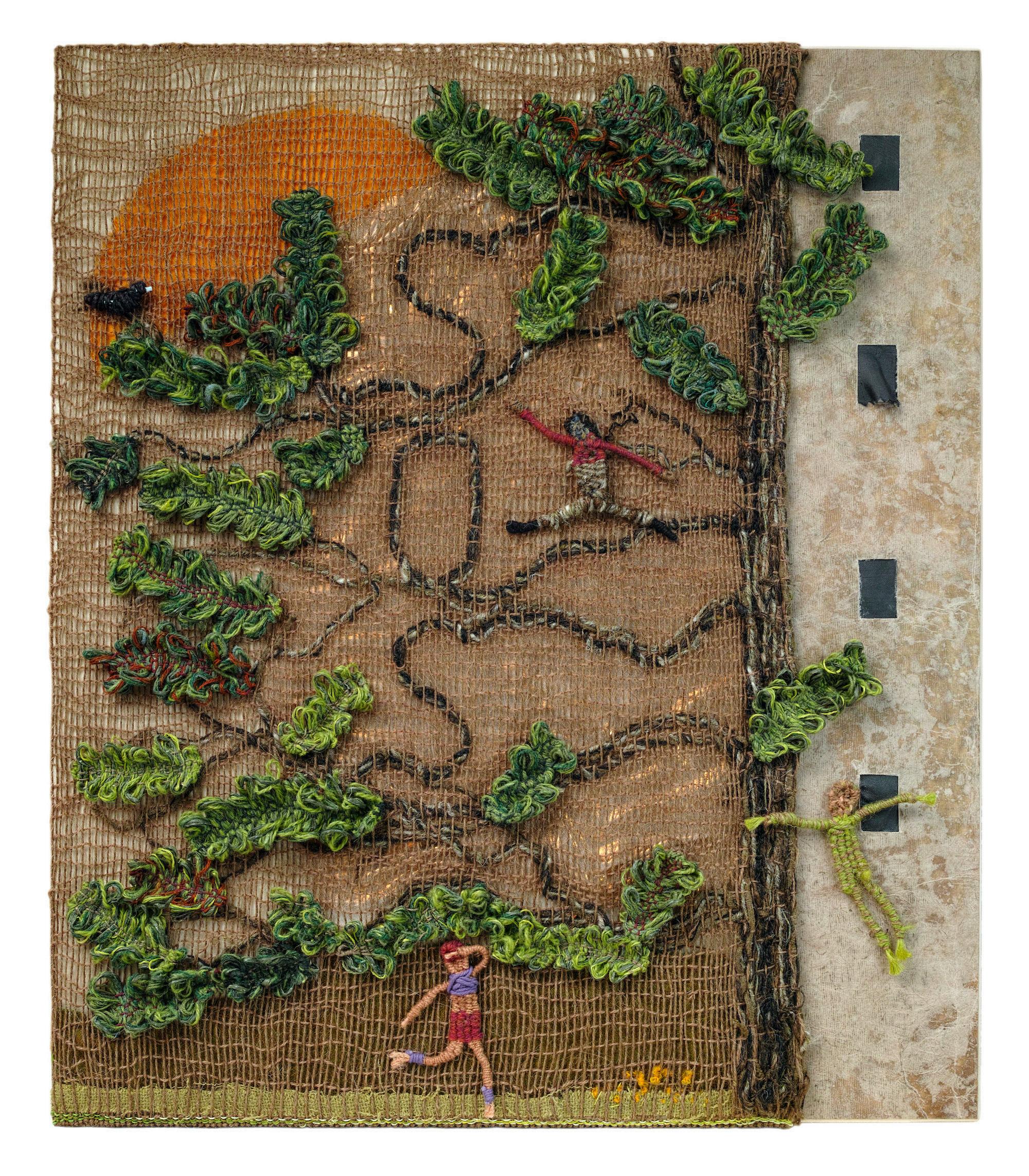
Jackie Bennett’s ‘Oak Tree SOS’, recognises and celebrates trees as an essential shelter for humans, animals and other organisms, whilst being under stress from manmade climate change - and in this case, the physical impact of developments being built too close to established trees. Her practice uses naturally hand-dyed threads.
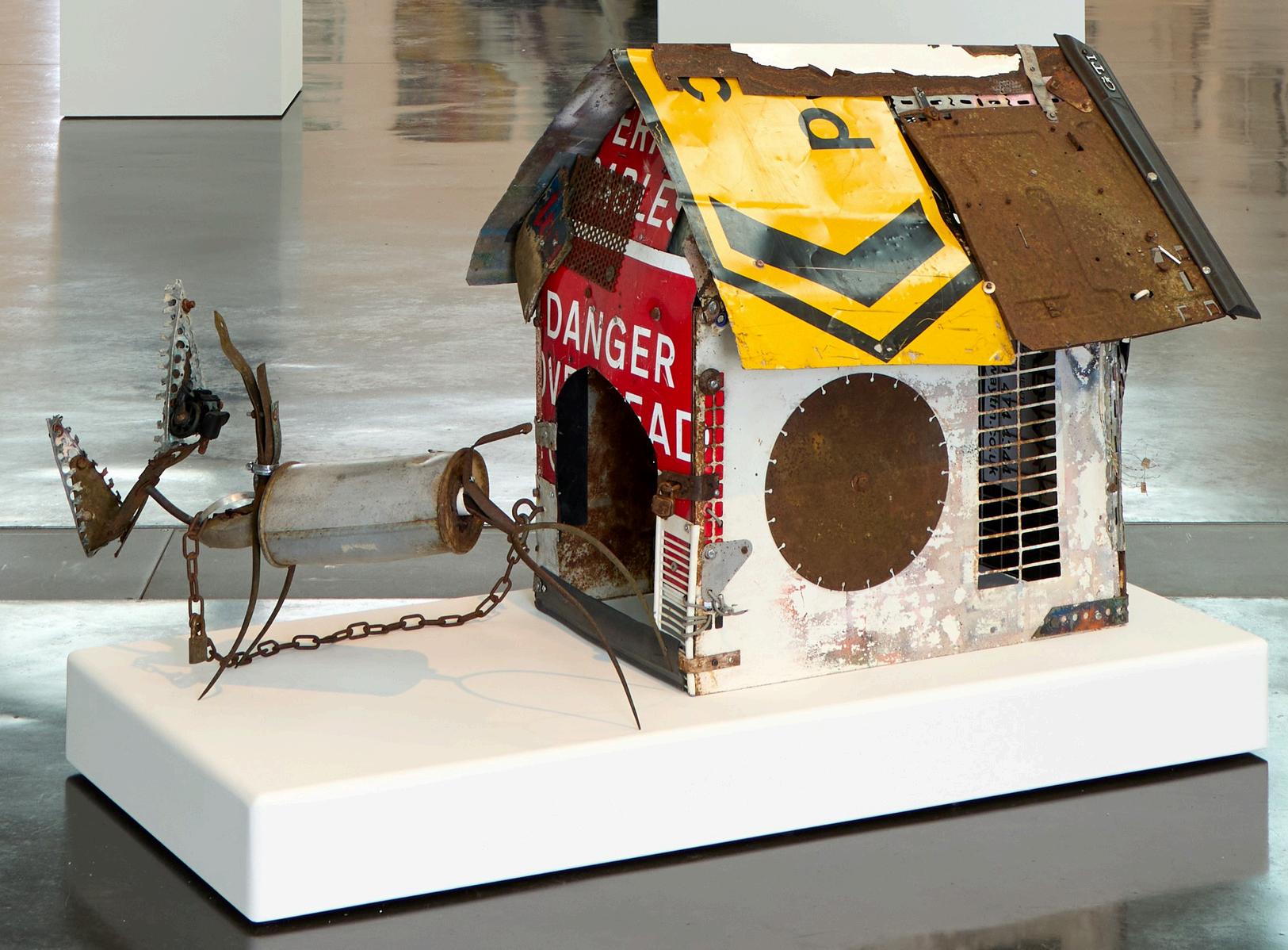
Jacob Rock, ‘Snarling Dog Chained to its Dog Kennel’. ‘I compulsively collect rubbish, compelled to take pick up discarded materials seen as worthless that become significant ritual objects to me. The habitual collecting and subsequent assemblage of these objects, allows me to be free of the constraints of the mainstream conventional thinking and fixed attitudes –a becoming animal –instinctive – impulsive.’
Ije tries to work sustainably, using minimum heating and second-hand furniture in her studio. She incorporates discarded materials and waste/scrap from manufacturing processes and scavenged materials into her practice. Her large silicone cord sculptures/
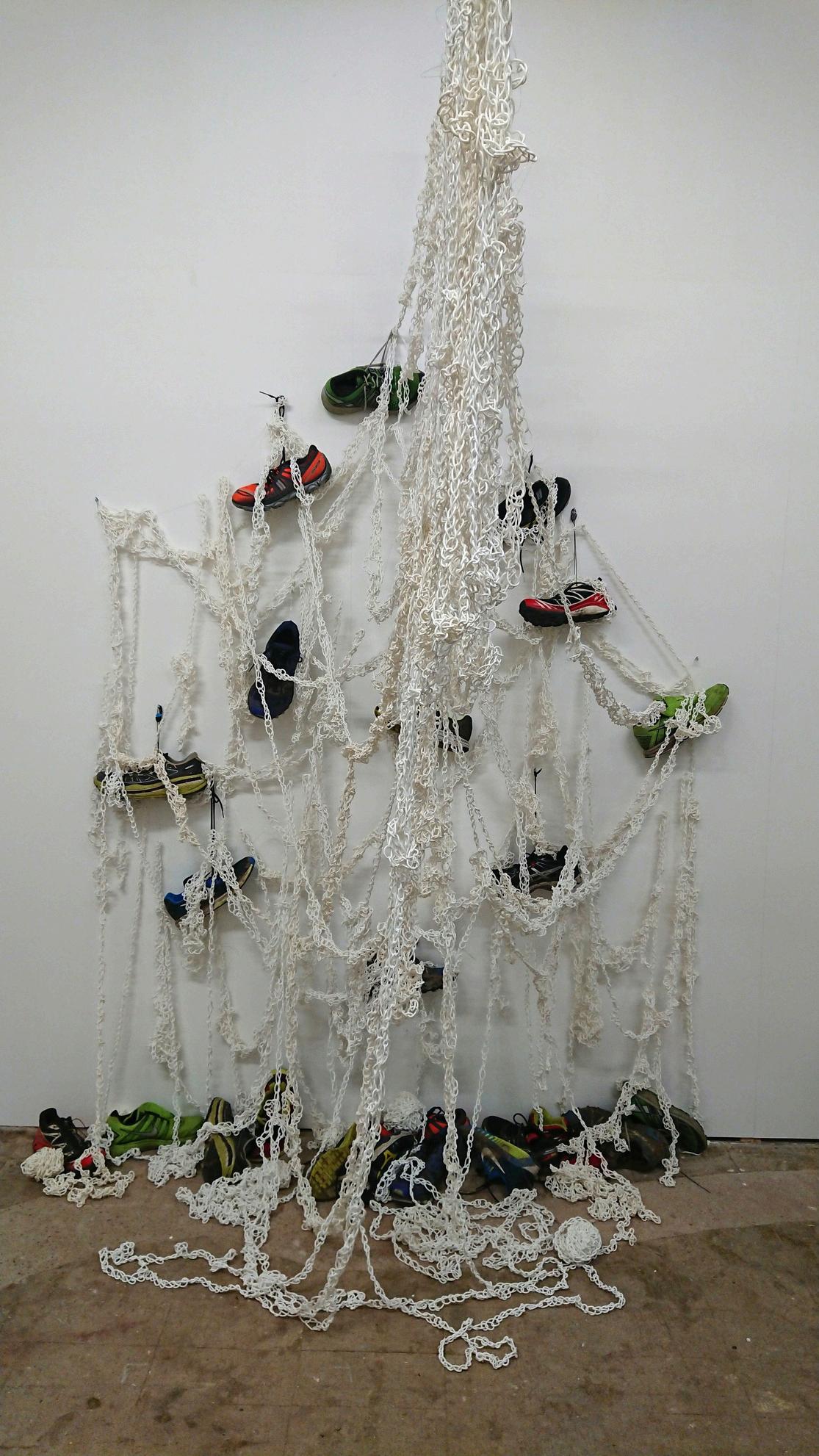
installations are often dismantled and re-made multiple times and she rarely throws away a canvas.
Left: ‘Perdurance 18: Moments of entanglement 2'. Mixed media sculpture using silicone cord, monofilament fishing line and 12 pairs of used running shoes.
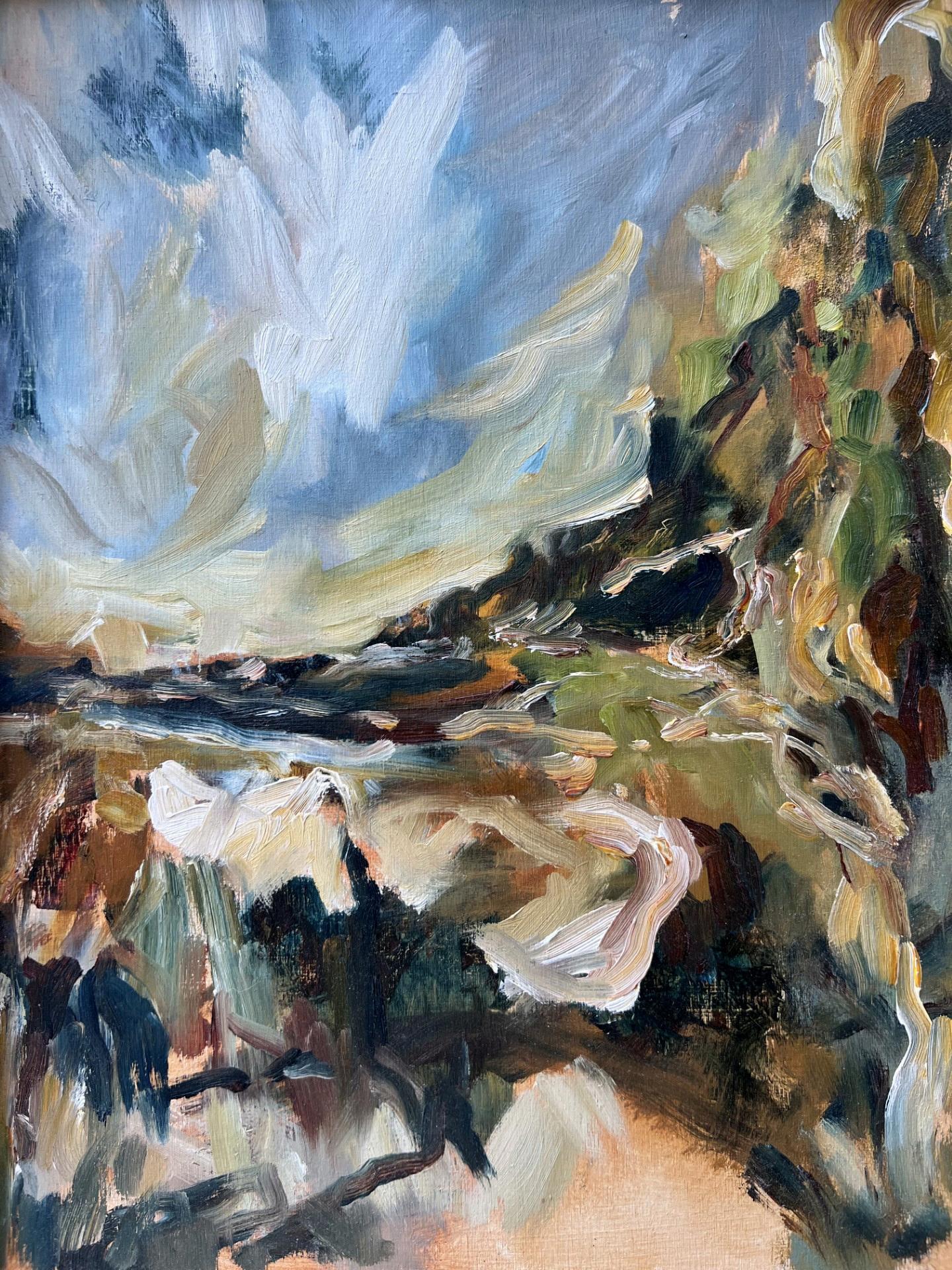
Marisa Mann paints images to show the beauty of her surroundings and why we should restore them. Her subjects include peat bogs which sink and store methane and CO2, the New Forest mires which have been restored to stop flooding and sphagnum moss.
Below: ‘Peat Impressions 2'.
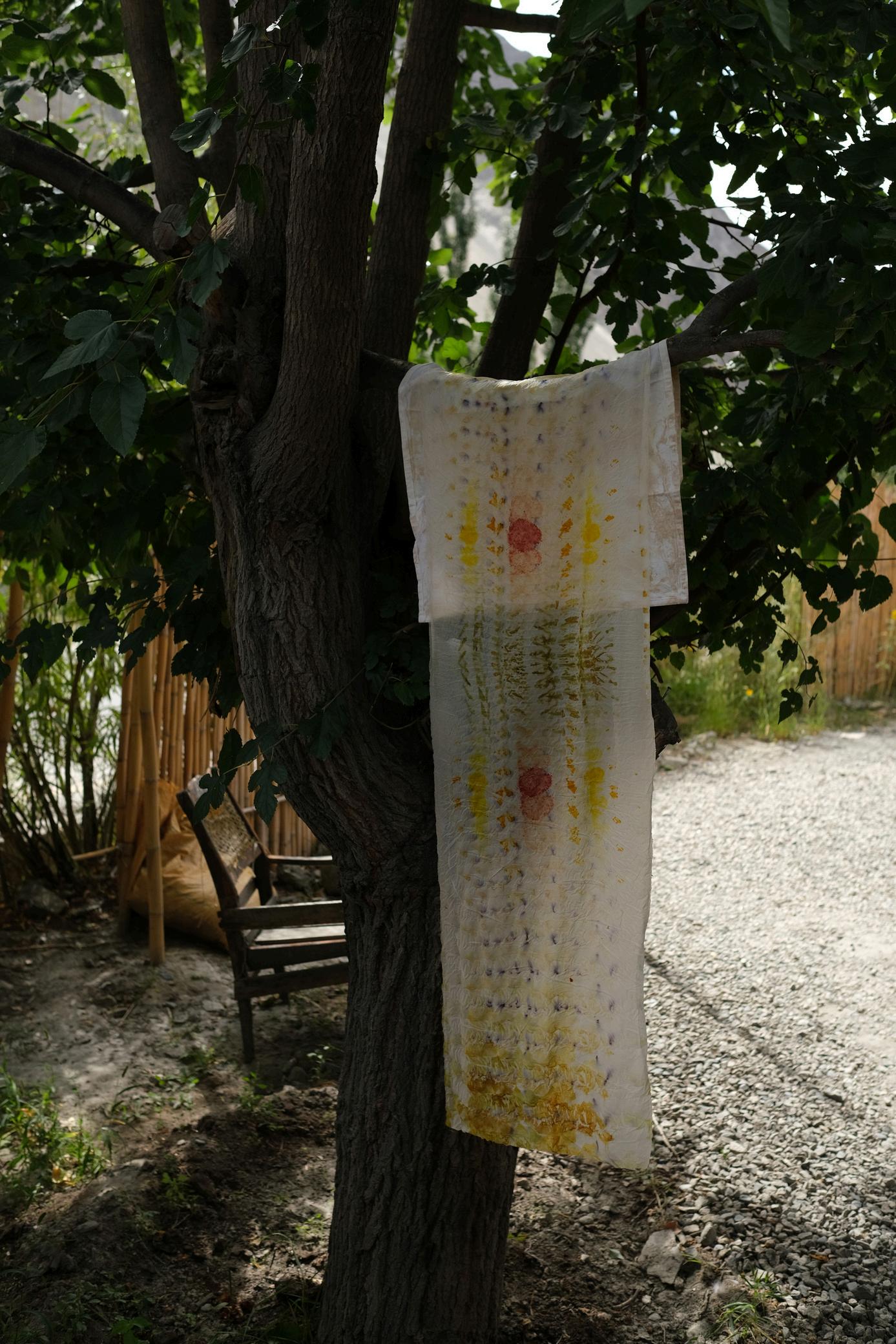
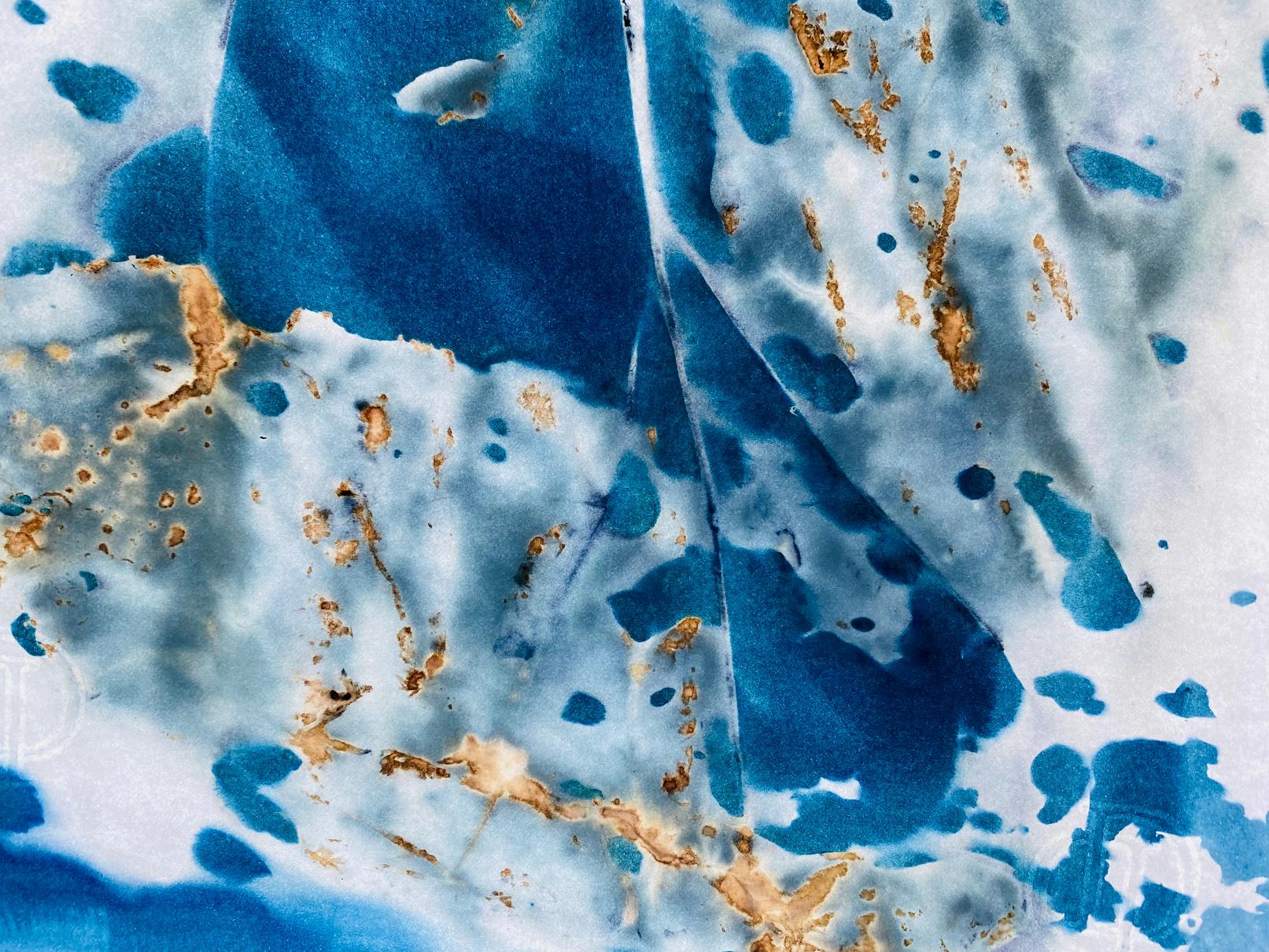
Paaras Abbas’ practice is an ongoing exploration of the potential for art in the natural world around us, with a deep commitment to listening to its rhythms and taking only what is offered: foraging for petals, roots, loose earth, fallen leaves, ripe berries ready to let go. Nothing in Paaras’ practice is single use; flowers used for eco-printing are repurposed in paper made from recyclables, dyes from food waste are further processed into pigment for printing on reclaimed fabric or making paint. Right: Ecoprinting with foraged finds. Photo credit: Baneen Mirza, Khanabadosh Baithak.