
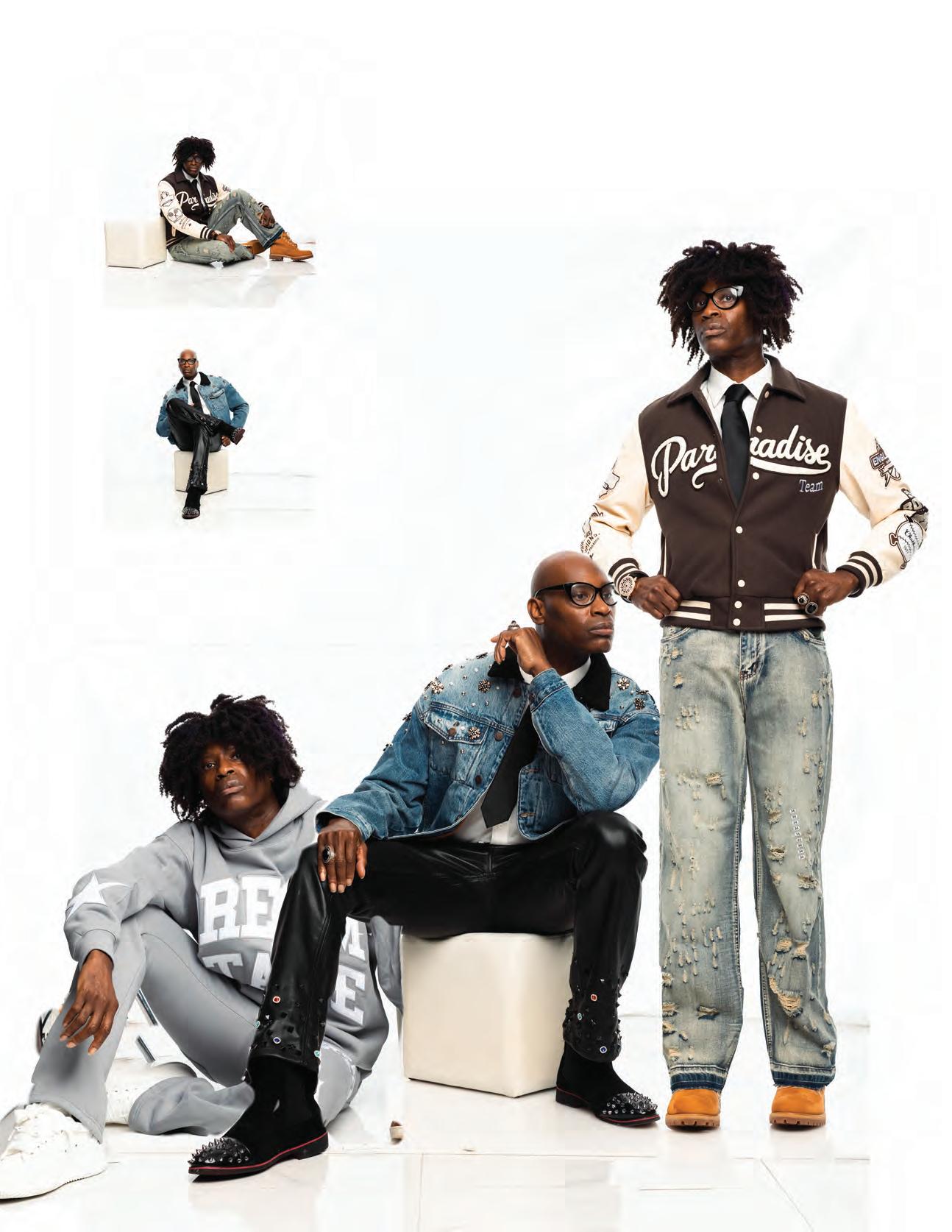
Style by Tim Rimmer | Photography by Bill SItzmann
He had the perfect walkout song. When Omaha’s champ Bud Crawford went up multiple weight classes to challenge Mexico’s super-middleweight title holder, an iconic song helped set the stage for his decisive win over Canelo Álvarez a few days before Mexican Independence Day.
The song was “Canción del Mariachi.” Crawford carried an actual black guitar case in homage to the musician-turned-vigilante protagonist in director Robert Rodriguez’ film trilogy (El Mariachi, Desperado, and Once Upon a Time in Mexico). Along with the cinematic prop, Crawford carried a dangerous weapon his fists.
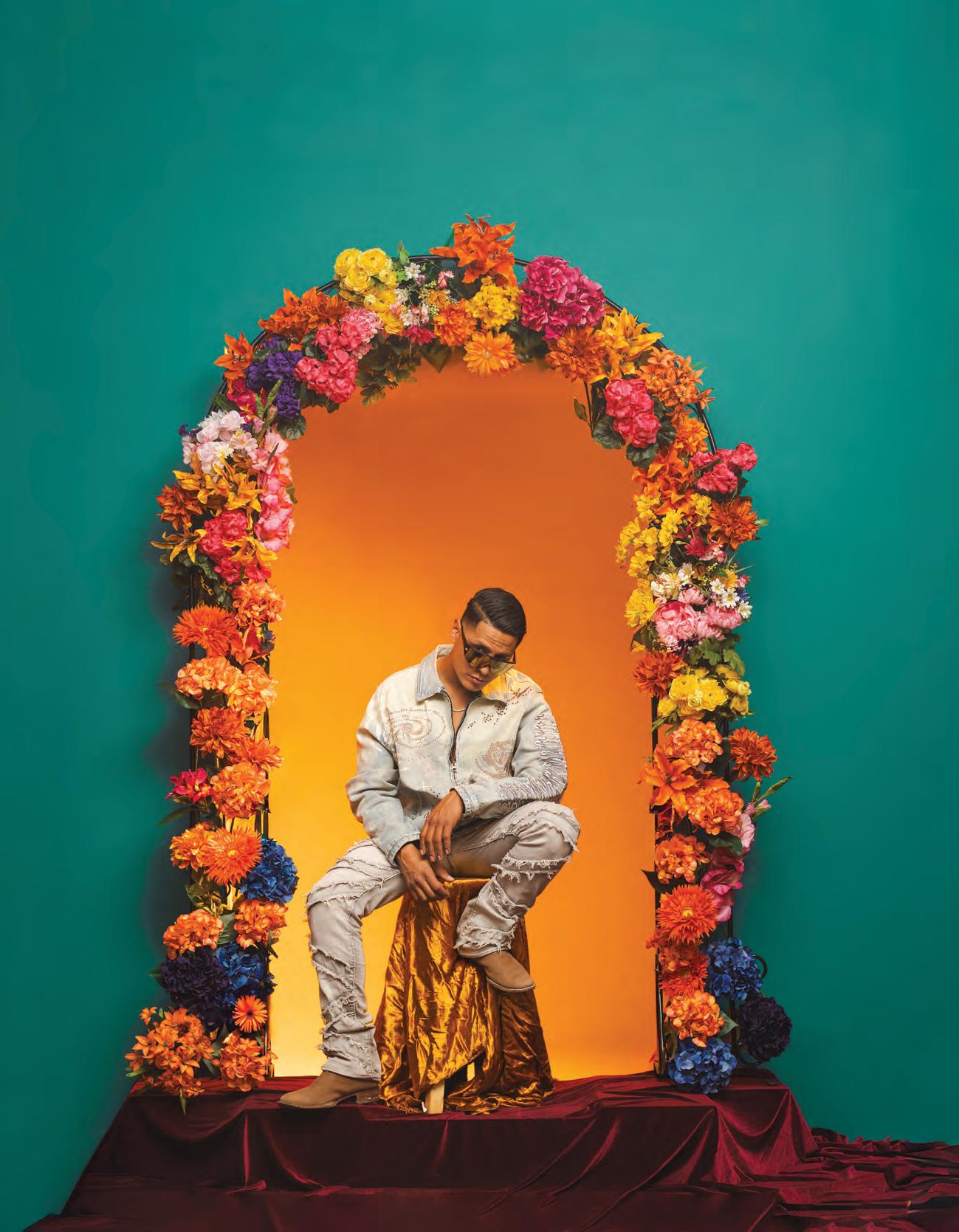
American flags waved on screens all around the packed Las Vegas stadium as Crawford met Álvarez while also paying respect to his international fans (including 41 million watching on Netflix). His song choice simultaneously represented his local Omaha roots thanks to a performance by a hometown band led by his friend, Mexican-American singer Rosendo Robles of Omaha.
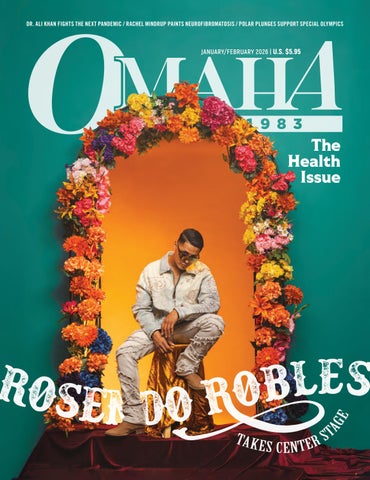
Robles looked every bit the international pop star, singing his heart out to hype one of boxing’s biggest fights of all time. Crawford went on to become the first male boxer to hold three unified division titles simultaneously. Meanwhile, Robles’ story is featured on the cover of this January/February 2026 Omaha Magazine.
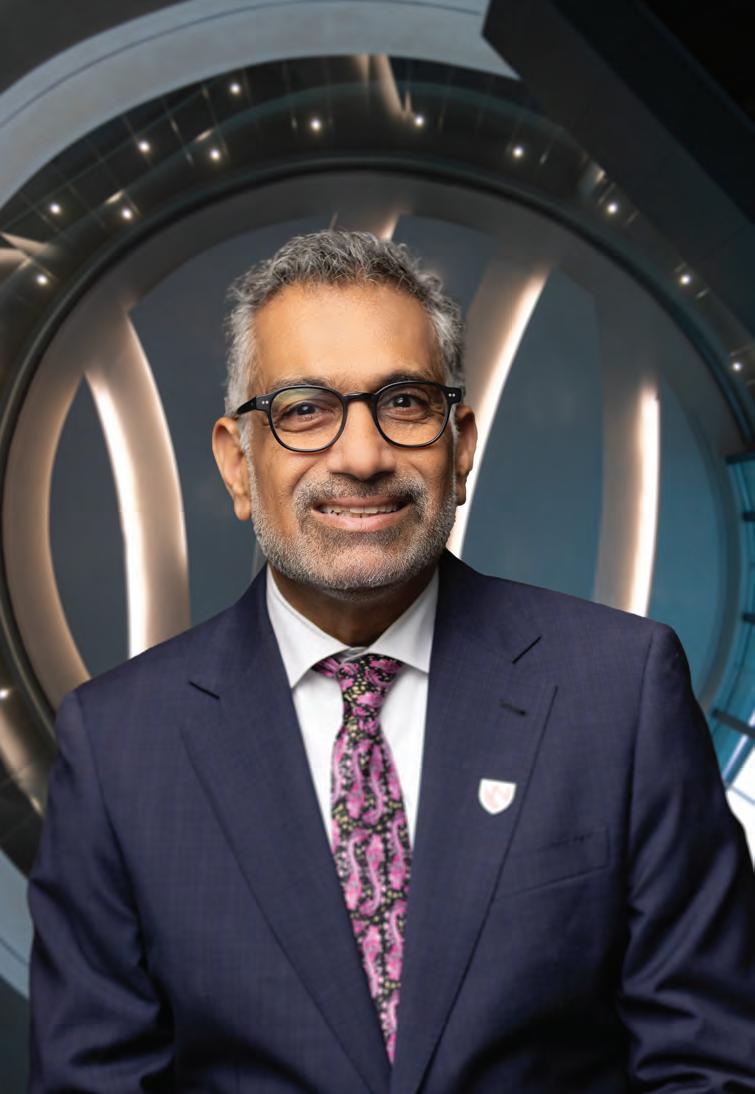
The issue also features a special health and wellness theme. We are thrilled to have partnered once again with the local nonprofit news outlet, Flatwater Free Press , to produce a deep dive into the globetrotting adventures of Dr. Ali Khan, dean of the University of Nebraska Medical Center College of Public Health.

Voted Omaha Magazine’s #1 Best Real Estate Company for six consecutive years, NP Dodge stands for timeless values, quality people and service,
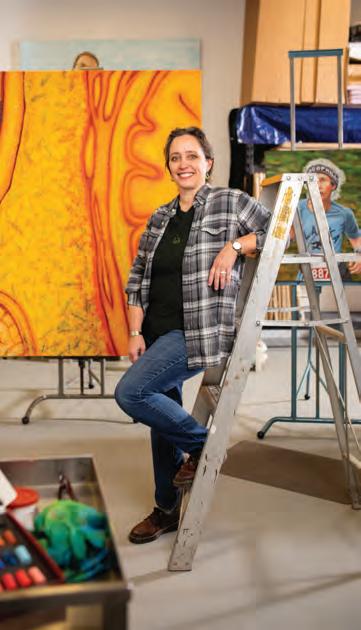
There are many other great health-focused stories within this issue. Read about the state’s champion arm wrestler; local college students fighting antibiotic resistance in a lab; polar plunges raising money for the Special Olympics; the medical story behind the Dave Rimington Trophy (named after the former Husker from Omaha); and how Creighton professor Rachel Mindrup turned neurofibromatosis-themed art into activism.
Plus, don’t forget about all the great local journalism in the edition’s A+C and Dining sections. For the first time, Omaha Magazine is thrilled to publish the exclusive list of this year’s nominees to the Omaha Entertainment & Arts Awards in print. The magazine is sponsoring the 20th annual OEA-Awards coming up on Feb. 15 at The Admiral.
Thanks for reading, and we hope you enjoy!
Doug Meigs Executive Editor Omaha Magazine doug@omahapublications.com



001
Once
Dr.
Listen to the entire issue here. Open the camera on your smart device and hover over the QR code. Produced by Radio Talking Book

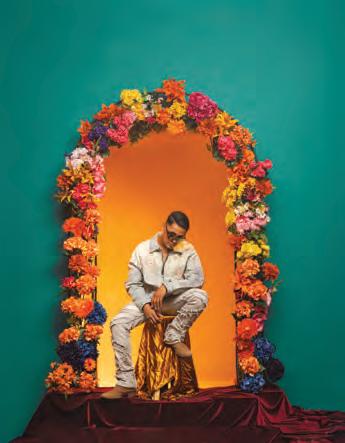

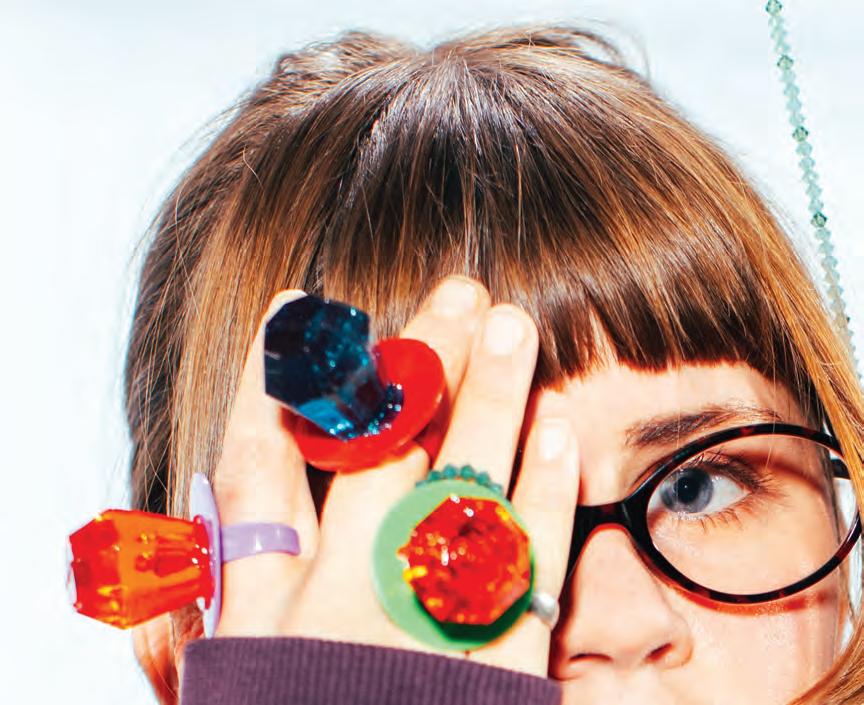
Rosendo Robles carried a mariachi classic from South Omaha to Las Vegas last September, turning it into an iconic walkout anthem for Terence “Bud” Crawford. Omaha Magazine's production team collaborated to bring this vibrant cover to life.
read current and previous issues online at omahamagazine.com
COMMUNITY PILLARS



COMMUNITY LEADERS



COMMUNITY PARTNERS
Backlund Plumbing
Henry Doorly Zoo
Catering Creations
Children's Nebraska
Cutchall Management Group
FNBO
Kiewit Luminarium
Lauritzen Gardens
M.U.D.
Omaha Performing Arts Society
Primo's Modern Mexican Restaurant
Scott Conference Center
The Dentists
Valmont
JANUARY/FEBRUARY
Executive Editor
DOUG MEIGS
Associate Editor & Staff Writer
NATALIE VELOSO
Assignment Editor & Staff Writer
ISAAC NIELSEN
Editorial Intern NAOMI HEU
Contributing Writers
PAUL ALLEN · BEAUFIELD BERRY · CHRIS BURBACH
TAMSEN BUTLER · KYLE EUSTICE · MICHELE FAN
SARA LOCKE · LISA LUKECART · KARA SCHWEISS
MIKE’L SEVERE · TIM TRUDELL · OTIS TWELVE
CREATIVE
Creative Director
RACHEL BIRDSALL
Senior Graphic Designer
RENEÉ LUDWICK
Graphic Designer II NICKIE ROBINSON
Graphic Designer I JOEY WINTON
Chief Photographer
SARAH LEMKE
SALES
Executive Vice President
Sales & Marketing
GIL COHEN
Branding & Digital Specialists
GREG BRUNS · DAWN DENNIS
FRANCINE FLEGG · SANDY MATSON
TIM McCORMACK · KRISTEN SPRINGER
Digital Advertising Sales Specialist
TRAVIS FISHER
Senior Sales Coordinator
ALICIA HOLLINS
Sales Coordinators
JESSICA LINHART · SANDI M cCORMACK
Director of Business & Development
CAROLE SPRUNK
OPERATIONS
Business Manager KYLE FISHER
Ad Traffic Manager
DAVID TROUBA
Digital Manager
LUIS DE LA TOBA
Distribution Manager
CARSON KRUSE
EXECUTIVE
Publisher TODD LEMKE
Associate Publisher
BILL SITZMANN For
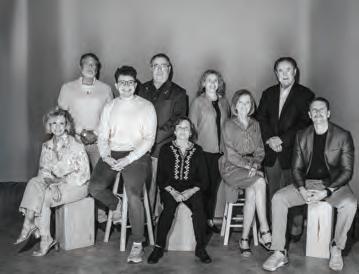
Omaha Magazine has existed in Omaha since 1890, according to publisher Todd Lemke. Lemke himself entered the Omaha publishing scene in March 1983 with the first issue of City Slicker. That newsprint publication was the precursor to his Omaha Magazine, which launched its first issue in 1989.
Today, Omaha Magazine Ltd. is the parent company of Omaha Publications, which produces other community-focused magazines such as FACES of Omaha, B2B Magazine, Family Guide, and many custom publishing products.
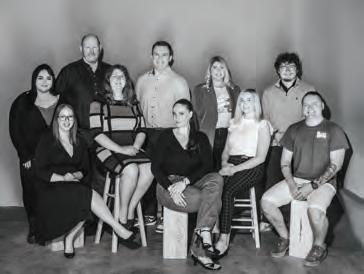
The magazines would not be possible without the people behind them whether that's the people in between the covers or those behind the scenes. Lemke and his Omaha Publications staff take immense pride in presenting Omahans with the best stories in the city and the company is always looking to improve the products. If it's Omaha, it's in Omaha Magazine. Your city. Your culture. Your stories.
At its heart, the Omaha Magazine team is one that works hard for its community.






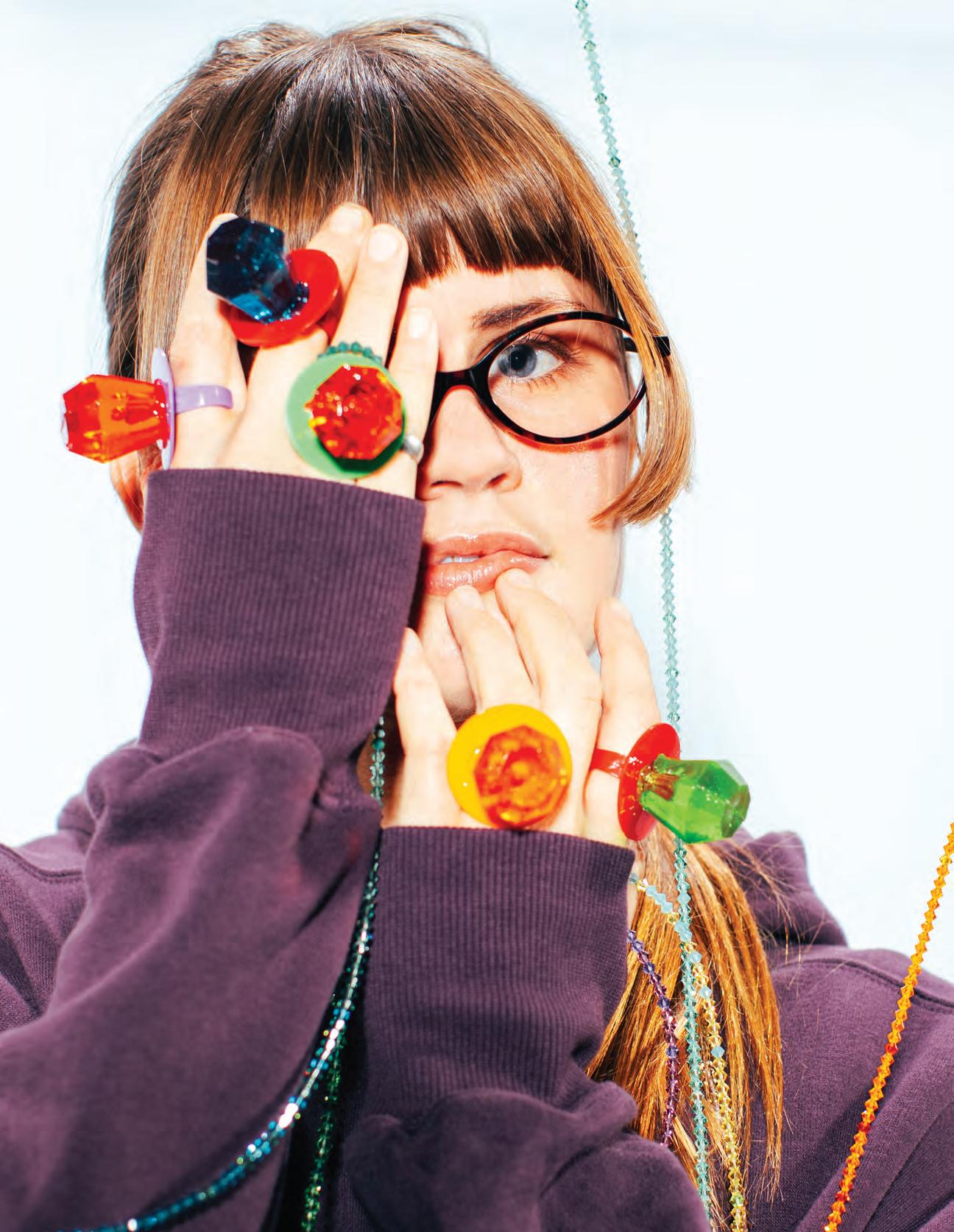
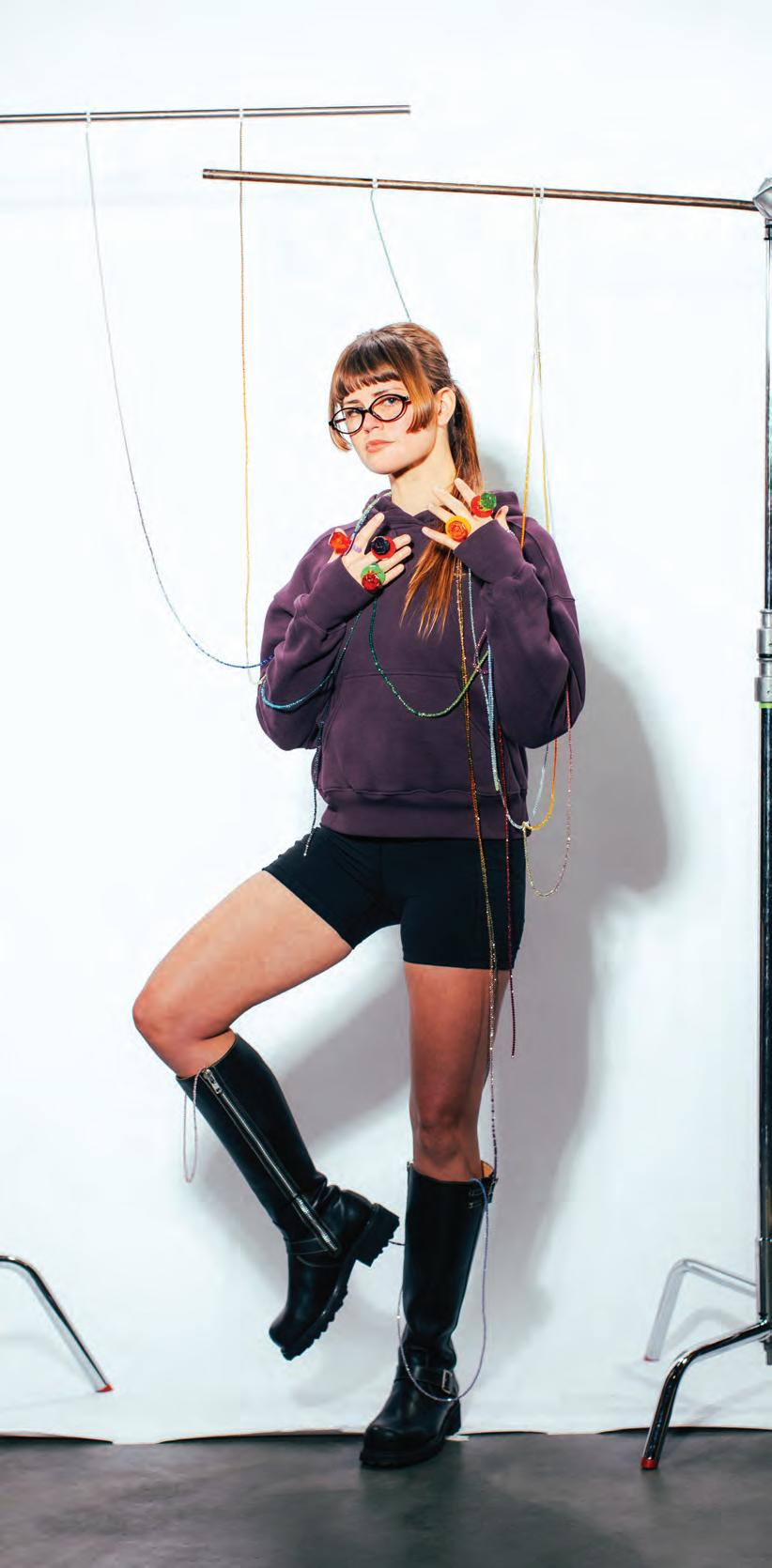
Omaha-based artist Casey Callahan creates work that is difficult to fully understand unless you are standing inside of it. Not just looking at it—inside it. Her installations are less about objects on walls and more about moments, atmospheres, and shifts in how we perceive space. “I make invisible things,” she said. “Even people who have seen photographs don’t really see the work until they walk into it and feel it.”
Born and raised in Omaha, a graduate of Westside High School and Nebraska Wesleyan University, Callahan’s work has evolved significantly since she first left school. Early on, she was making paintings and installation pieces that responded to the spaces she lived in. But something shifted during the isolation of the COVID-19 pandemic. “My work became more spiritual,” she explained. “It became about being alone and watching the world change. It became about finding small moment s of peace.”
This quiet looking—this attunement to subtlety— forms the core of her artistic practice. Much of Callahan’s inspiration comes from being in nature, often completely alone. She describes it as a kind of meditation, a way of listening. “We don’t have a lot of that in daily life,” she said. “People forget to just stop and feel and observe. I like to create spaces that remind them of that.”
Her most recognizable works, which she calls “strands,” are long, hanging columns of crystal beads—Austrian, Czech, and often in as many as 40 different colors within a single piece. Each strand contains around a thousand beads and takes hours of precise handwork to assemble. The process is repetitive, slow, intentional. “It’s meditative,” she said. “I have to be fully locked in.” The crystals also carry a subtle personal resonance— her family is of Czech heritage, and though she doesn’t cite it as a direct inspiration, there’s an intuitive thread of connection in the materials.
Callahan thinks of her installations as complete environments: visual, spatial, and sometimes sensory. In past works, she has incorporated sound and even scent, and she is developing pieces that introduce heat and temperature shifts into the experience. “It’s a collaboration with the whole space,” she said. “I want people to walk in and feel something. A memory, a mood.”
The work changes dramatically depending on where it is shown. In one Omaha installation, she painted the entire floor white, creating an otherworldly sense of suspension. The strands became nearly invisible, a kind of shimmering ghost structure you had to tune
your eyes to see. In a later exhibition in Los Angeles, the space was a raw warehouse with unfinished wood overhead. Light leaked through cracks in the ceiling, so Callahan adapted—attaching certain strands to support beams, allowing others to disappear into darker cavities above. “The work is always a collaboration with the space,” she said. “It’s customizable—it’s important to me that it touches exactly to the floor to the ceiling. It feels ot herworldly.”
The choice to work with lightweight, collapsible materials was also practical. Callahan moved frequently in recent years and struggled with the storage and transport challenges of large paintings. The strands, by contrast, can be rolled up and fit—quite literally— into a plastic bag. “I wanted freedom,” she said simply. “I want to be more minimal and make my footprint smaller, purging and getting rid of things and deciding what is meaningful and important.”
That search for freedom is guiding her life as much as her art. In 2026, Callahan plans to backpack through Australia, traveling and making work while on a year-long working holiday visa. She sees it as both a continuation and a deepening—a stripping away of excess, an embrace of slower, quieter living. “I’ve been wanting to leave for a while,” she admitted. “I love being an artist here, but I’m very methodical. I’m trying to get down to the basics. To make space for what actually matters.”
Leaving will be emotionally difficult—her family is close, supportive, and deeply rooted in Omaha. But they’ve also witnessed her commitment to her practice. “It took me a while to allow myself to want this,” she said. “But it’s real now. I need to follow the thing that feels true.”
Callahan’s next exhibition will be a two-person show with artist Charles Kay at the Fred Simon Gallery, running May 2 through July 15, 2026. It will mark both a homecoming and a departure point—one more glimmering, quiet moment before the next horizon.
Her work lives on through her audience experiencing a renewed sense of wonder. “I want people to go back out into the world looking for these moments, a glint of happiness or joy that happens,” Callahan said. “I find myself seeing it in shadows or when light passes through the window, a state of calm, wonder, joy, and understanding for things that are ethereal.”
Visit caseycallahan.studio for more information.
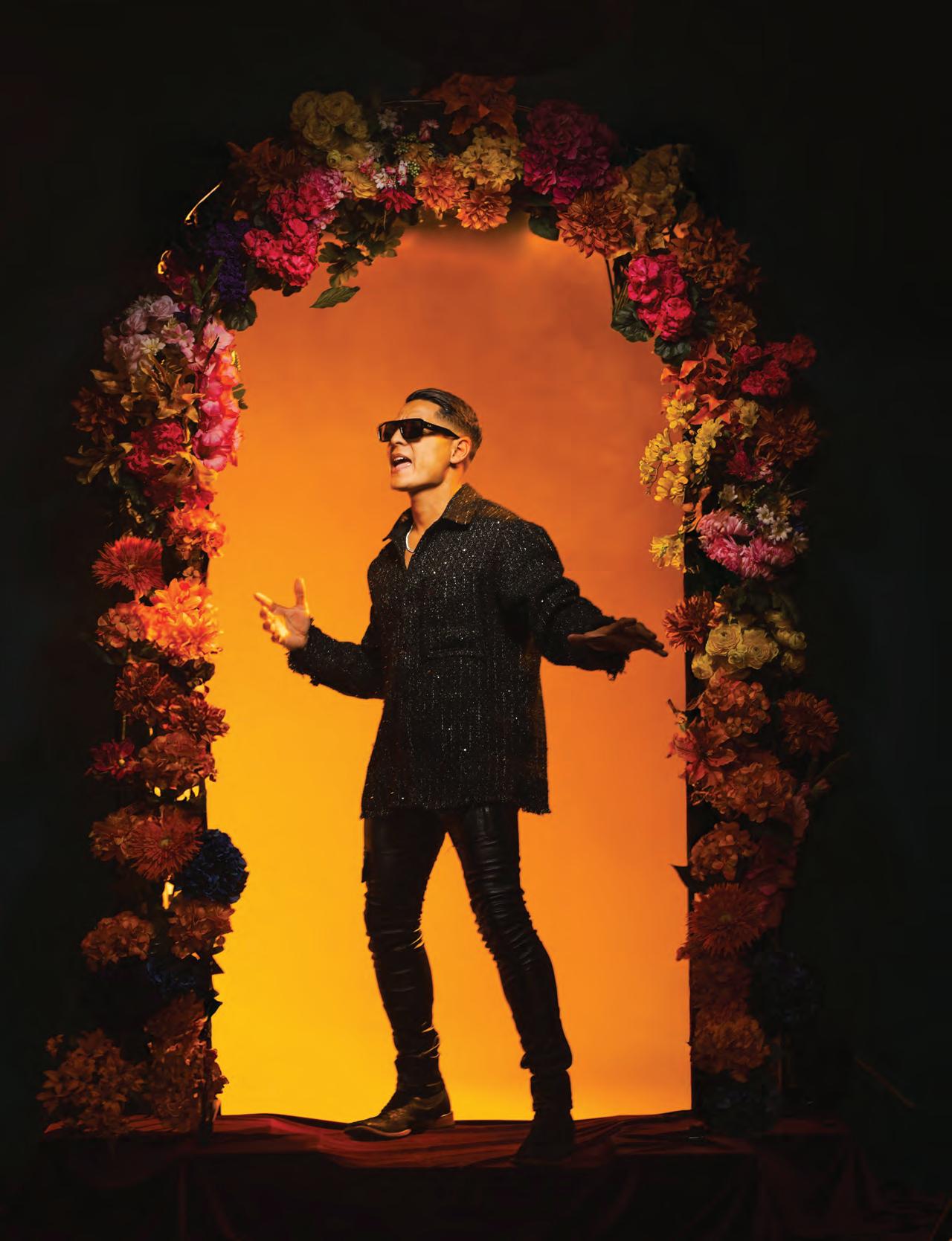
Rosendo expresses a genuine passion as a singer that portrays devotion for his art form. His energy finds a level of pure magic.
—Marcos Mora
'm a very honorable man—I like the very best."
Sung in Spanish, the mariachi song choice caught many by surprise.
Rosendo Robles and his band stood center stage before more than 70,000 in Allegiant Stadium as Terence “Bud” Crawford geared up to dethrone Canelo Álvarez for the undisputed super middleweight title last September. Over 41 million fans across the globe watching on Netfl ix caught their momentous performance of “Canción del Mariachi” from Desperado, Crawford’s theme of choice that matched his wardrobe and guitar case prop in hand.
It was Crawford’s walkout cue and a moment to share a piece of Omaha’s identity with the world.
“It meant everything to me to have my Mexican roots and my fellow South Omaha musicians on a stage like that,” Robles said. “I’ve always believed we could make it out of anywhere.”
Robles sees it as a surreal moment between two friends who once traded jabs in a local boxing gym. Before music took over professionally, he was a boxer himself. Robles trained for nearly a decade, fi ghting in roughly 75 amateur bouts and even earning
a national title along the way. Th at’s where his friendship with Crawford began, he said.
“We were about 12 when we met. The fi rst day he came into the gym I was at, we fought over who got to hit the punching bag fi rst,” Robles said with a laugh. “After that, we were teammates. We started traveling the country together for tournaments.”
Though Robles’ path eventually led away from boxing, the mindset he developed didn’t falter. “You’ve got to be disciplined to accomplish anything,” he said. “Preparation is everything. In music, I still think of myself as a fi ghter. Fighting for recognition is part of being f rom Omaha.”
Th at fi ghting spirit guided him into new territory. Robles graduated from Elkhorn High before immersing himself in the city’s music scene throughout his early 20s, meeting fellow musicians and taking every opportunity that came his way. “I started hanging out more in South Omaha, which is where I met a lot of the musicians I collaborate with today,” he said.
Robles’ music leans heavily into regional Mexican styles like norteña , mariachi, and banda , but there’s plenty of American influence. “I also grew up on Elvis and old-school rap,” he said. “I’m a huge Tupac fan. It’s all a blend, with some urban and oldies mixed in.”
In 2012, he formed La Gente VIP, the band he’s led ever since and named to reflect the importance of each musician. “I wanted to make sure the guys who play with me got the recognition they deserve,” he said. “They’re the force behind it all. They’re VIPs.” Together, they’ve built their reputation over the years by playing local shows and events.
Then came the call from Crawford.
“It was February,” Robles said. “He called and asked, ‘You know that song from Desperado? Sing it to me.’ So I did. ‘That’s the song I want to walk out to when I fight Canelo Alvarez,’ he told me. I thought that was great, and after a minute, he said, ‘Yo, I want you to sing it for me.’ I even laughed. I thought he was kidding.” Crawford insisted he wasn’t.
As the offer set in, Robles remembers hardly believing it. “Then Terence asked, ‘Do you want to bring the band?’ I said, ‘Bro, of course.’” By early March, Robles and his band began rehearsing consistently, unsure if the moment would tr uly happen.
“I was still in disbelief, but I don’t doubt Terence at all. He’s a man of his word,” Robles said. Still, he wanted to be sure. “I saw him
again about two months before the fight and said, ‘Hey, man, are we still on for what we talked about?’ and he goes, ‘If you ask me again, I’m gonna punch you.’”
The reassurance was all Robles needed. Vegas was of ficially on.
“Just like Terence was in his training camp for the fight, I was in my training camp for the music,” Robles said. “Two weeks before the fight, I even went to his camp for a few days. I felt I had to be a part of the process he went through before sharing that stadium with him. I wanted to feel what he was feeling.”
When fight night arrived in September, Robles knew every note had to land. “I told the band, ‘There’s no room for error. If I’ve ever needed your thousand percent, it’s tonight,’” he said. “And they gave it.”
The performance was an unforgettable milestone for the band. Their community back in Omaha felt the pride, too. “Some of my family members were crying,” Robles said. “They’ve seen how hard I’ve worked, and knew what that moment meant for us. Omaha is my community and it always has been.”
He’s still moved by Crawford’s humble choice to keep things close to home that night. “He could have gotten any other artist, any rapper, but he chose a friend from Omaha,” he said. “A Mexican-American kid at that. Th at meant everything to me.”
Singer and longtime collaborator Marcos Mora sees that same humility in Robles.
“Rosendo expresses a genuine passion as a singer that portrays devotion for his art form,” Mora said, calling him an artist that performs like no other. “His energy fi nds a level of pure magic.”
These days, Robles is channeling his energy into new projects. “We’re not done yet, of course,” he said. “I’m putting out new singles and getting them on all the streaming platforms. We’re traveling all over the Midwest and more, playing wherever people want to hear us. There’s much more mu sic coming.”
The Vegas spotlight introduced Robles to the world, but it didn’t alter his focus.
“I’m thankful for team Crawford and for Omaha,” he said. “We united cultures and we united a city. When you work hard and set your mind to what you want to accomplish, everything is possible. Terence is a living example of that, and so am I.”
Rosendo Robles’ music is available on Spotify, Apple Music, and Amazon Music. Follow Rosendo Robles Official on YouTube and Instagram for the latest releases and updates.
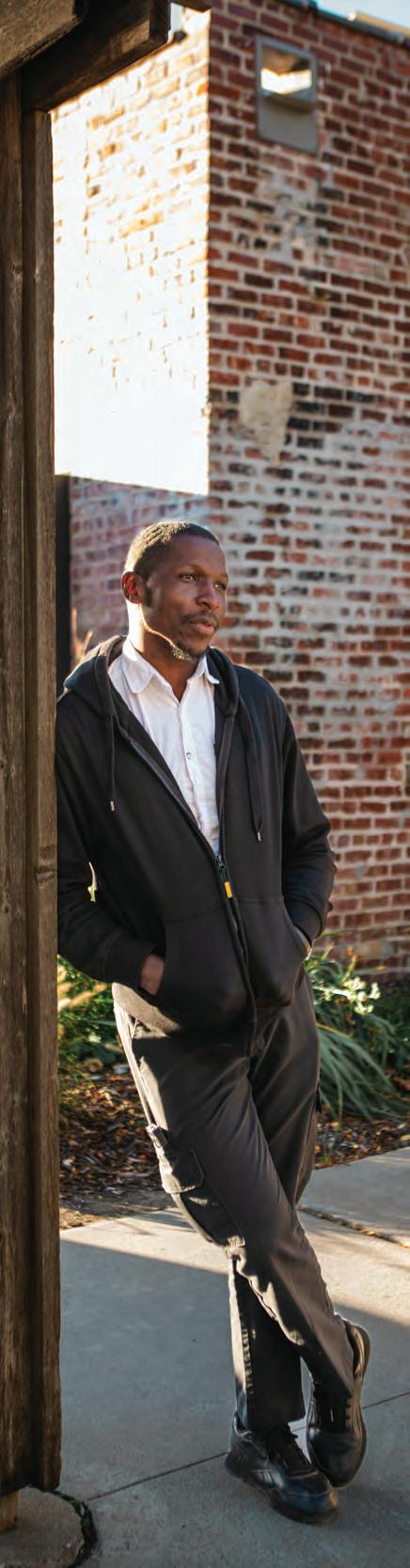
How “My Omaha” Brings North Omaha’s
Leadership to Light
Memorial Park, Omaha, Nebraska, on a chilly day during Freedom Summer 2020. This was the moment I first recognized Leo Louis II as a modern-day revolutionary leader. In the turmoil following the murder of George Floyd, a march for racial justice was called. The plan was to gather at 72nd and Dodge—now known as “Freedom Corner”—and move down Dodge Street to the Memorial Park pavilion, where the speeches would take place. That’s where I, along with other reporters and activists, stood waiting to capture the moment.
We were chatting with one another while setting up camera and audio equipment when we suddenly caught a distant sound we couldn’t quite make out. We fell silent, turning toward the noise. A man emerged from behind the trees, bullhorn in hand, followed by what appeared to be hundreds upon hundreds of people, fi sts raised as they chanted in response to his amplifi ed calls. It was Louis, advancing with purpose and leading the march straight toward us.
Th e scene evoked Malcolm, Martin, Chairman Fred Hampton, and other leaders from the past, becoming a signature moment that defi ned for a lot of us exactly who Louis is.
Louis seems to have that eff ect on many people. Among them is fi lmmaker Nick Beaulieu, who captured moments from that march in his recent documentary fi lm, My Omaha . Th e fi lm off ers a personal look at Beaulieu’s hometown of Omaha and its racial divide, exploring the racial justice movement led by the African American community while also documenting his attempt to reconnect with his Trump-supporting father, Randy.
Around 2016, Beaulieu attended a community meeting where he saw Louis in full activist mode, challenging those in power and demanding accountability. Th e moment intrigued him. He shifted his focus and began following Louis, documenting his experiences—guidance that proved essential as he navigated the parts of the story rooted in North Omaha and the African America n community.
As a white fi lmmaker working in a Black space, Beaulieu understood early on that he would need help telling that portion of the story, which was central to the “two Omahas” narrative he was shaping. Over time, he earned Louis’ trust, gaining an expert advisor who helped him access the community. It became one of the most valuable connections Beaulieu made for the film.
It isn’t just powerful speeches or protest marches that make a leader. Beaulieu saw Louis volunteering, educating, and doing the daily boots-on-the-ground work of uplifting his community. I witnessed that same selfl ess spirit back in 2016 while working alongside him at the Malcolm X Memorial Foundation. From managing community gardens to coordinating gang-prevention eff orts, Louis has put in the work.
“How I got with the Malcolm X Memorial Foundation is because I worked in gang intervention and prevention back in 2008,” Louis explained. Th e individuals he worked with brought him to the Malcolm X birth site for the fi rst time, where he met Sharif Liwaru, the executive director at the time. He began volunteering there s oon after.
Th e MXMF board included several elders— proven servant leaders who demonstrated what it meant to care for the community. Th ey taught Louis the signifi cance of preserving Malcolm X’s legacy and what it meant for North Omaha’s future. It seemed inevitable that Louis would become a servant leader himself: he spent years giving tours of the grounds, holding weekly community meetings, leading Betty Shabazz Community Garden projects, and eventually stepping into organizational leadership as the elders began to step back with age.
Reluctantly, Louis took the reins when they were handed to him, learning the diffi cult lesson of stepping into the destiny that had been forming around him. He recalled how Marshall Taylor, one of the elder board members at the time, once passed him a note saying they planned to nominate him for leadership. “Mr. Taylor was already passing the torch, but I had just not ac cepted it.”
Eventually, Louis did accept, and he realizes now that elders like Taylor had been watching him serve for years and recognized his spirit of leadership. “In hindsight, we can all take wisdom from that,” Louis said. “We have to really look for leadership in people…[leadership] that I didn’t see in myself.”
Years before I met him in the fall of 2016, Louis had already been building a reputation across the city by doing the work others only talked about. What struck me in our conversation was that during those years, neither of us fully saw the narrative of his rise to leadership as clearly as we do now. But there was someone else around back then who seemed to sense that Louis’ story might be wort h capturing.
I remember a young Beaulieu darting around with his camera in those days, and it was gratifying to see that he managed
to document not just the revolutionary moments, but also the quiet, self-sacrifi cing parts of the daily grind that helped shape Louis as a leader.
Th rough the fi lm, Louis, who was already serving as an advisor, also became a cultural ambassador to audiences outside the Black community. White Omahans who knew little about Black life in North Omaha beyond what they saw on the news were given a genuine look inside, thanks to Beaulieu’s well-rounded storytelling and his decision to feature Louis as a central fi gure. Th e fi lm reveals a Black community that is vibrant, close-knit, and family-oriented, full of love and pride even in the face of challenges.
Through curiosity and steady follow-through, Beaulieu built a bond of trust with Louis and found himself catching a bit of that revolutionary fi re along the way. By featuring Louis while also weaving in his own story with his father, which highlighted the challenges white families face in sustaining loving relationships across political lines, he created one of the most compelling portrayals of racial division within a city that I have ever seen. Beaulieu’s brave storytelling turns Omaha into a revealing microcosm of America, refl ecting the same social and cultural tensions seen in cities across the nation.
Film Streams, Omaha’s premier art house theater, screened the fi lm several times and hosted in-depth discussions with the fi lmmaker, giving the community a chance to share their reactions and reflections.
In true leader fashion, both Louis and Beaulieu attended multiple screenings, openly engaging in conversations about the fi lm and its themes of racial justice. Th ere was something powerful about watching Omaha come together to honor a North Omaha visionary who leads through action, and a fi lmmaker who leads through curiosity and integrity.
For more information about the documentary fi lm, visit myom ahafi lm.com.
Paul B. Allen IV is founder and CEO of 1st Sky Omaha, a local alternative media outlet established “to inspire, educate, and amplify the rich tapestry of Black voices.”
Raising the Barre for the Omaha Academy of Ballet
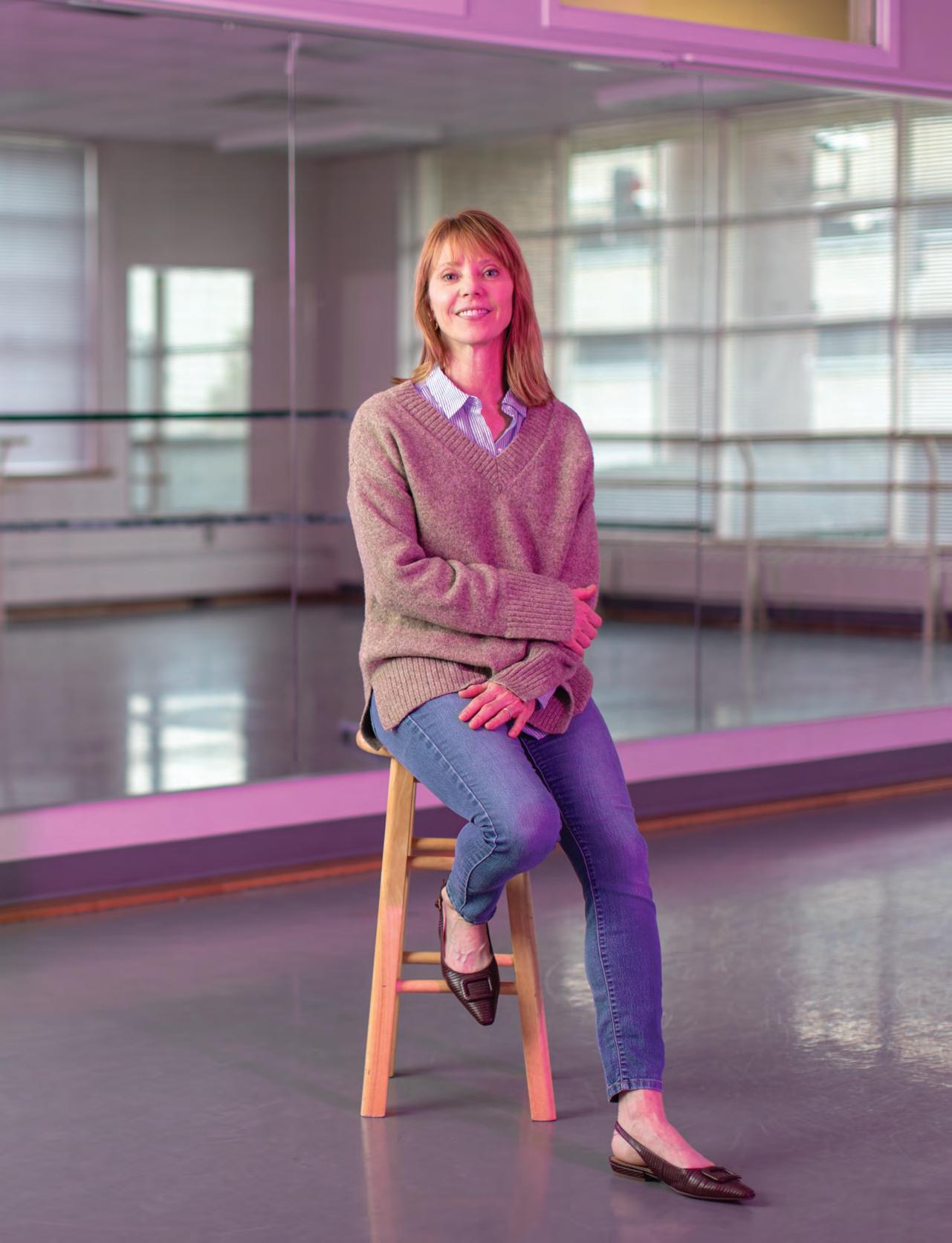
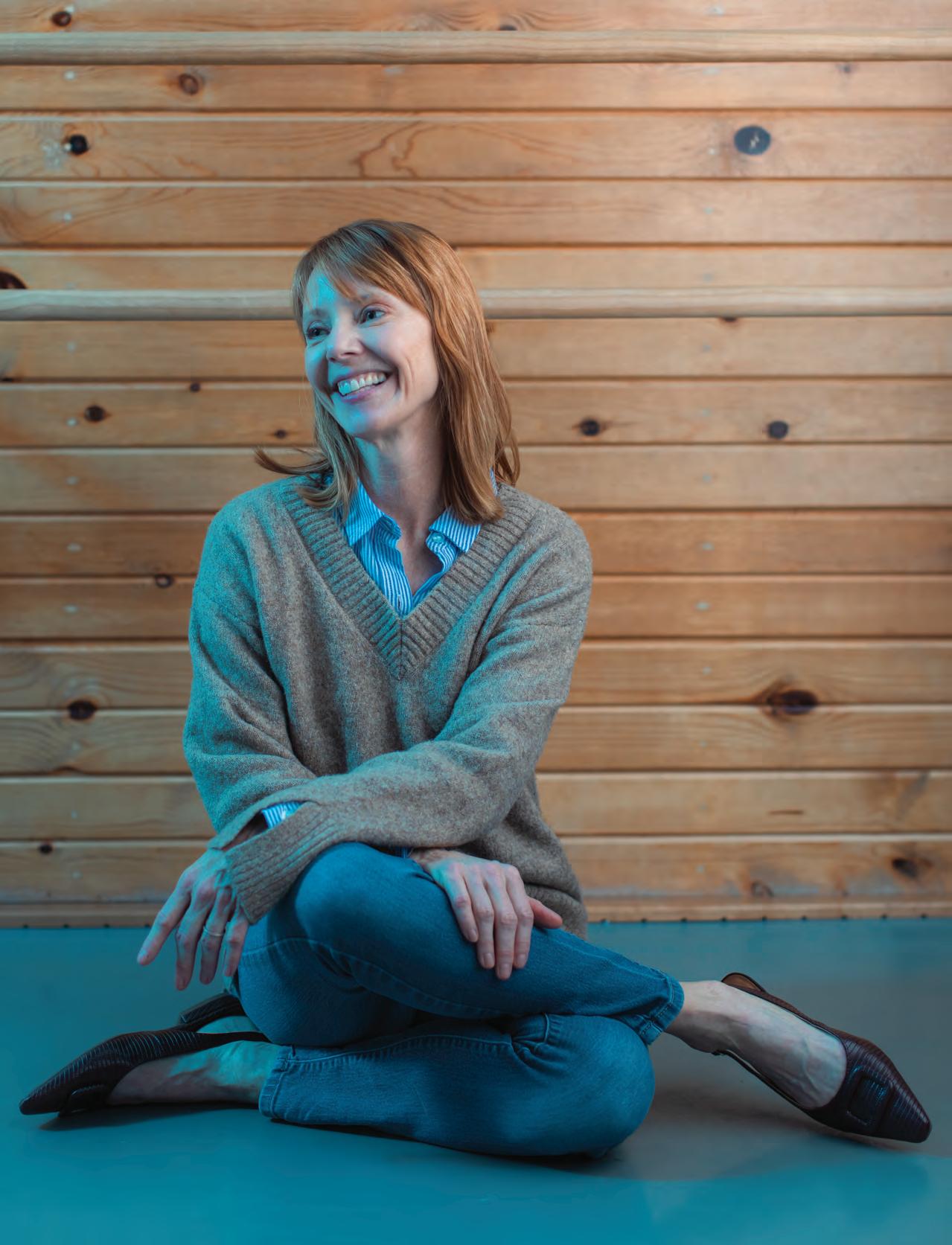
Growing up, Rachel Vickrey frequently auditioned using her middle name, Adair, as her last name. It was her way to stand out on her own merit instead of piggybacking on her father’s last name, which would gain her instant c redibility.
Her mother, Robin Welch, was a celebrated ballerina and instructor. Her father, Robert Vickrey, was the artistic director for Ballet Omaha and well known throughout the ballet community nationwide.
When she later married her marine husband, she adopted her husband’s last name of Hartley. Now that her auditioning days are over and she’s continuing her parents’ ballet legacy, she typically goes by Vickrey to honor everything they did for the Omaha ballet scene.
She brings a balance of encouragement, organization, and enthusiasm while upholding the discipline and work ethic essential to serious training.
—Vivian Dauner
Vickrey envisions a future for OAB that includes more community outreach, knowledge-based training, and a continued, successful merger between OAB and Heartland Conservatory of Dance. She revealed that many of the dancers knew each other long before the merger, and said that if there was ever any rivalry between the two schools, she didn’t know anything about it. After all, she’s known the OAB team for decades and has always had a good relationship with them.
Just as she has reinvented herself with name changes, Vickrey’s in the process of reinventing what a ballet education looks like in Omaha. She recently accepted the role of Artistic Director for the Omaha Academy of Ballet, and with her, she brings the Heartland Conservatory of Dance.
In the spring of 2025, OAB started the search for a new artistic director. “We were looking for someone that would kind of realign the curriculum that we teach our ballet students,” explained Melanie Epps, executive director of OAB. When Vickrey applied, Epps said that they were already familiar with her and her work, and it was immediately obvious that Vickrey was the ideal candidate when compared to the many applications they received from around the country.
It was Vickrey who proposed the idea of a strategic merger between OAB and Heartland Conservatory of Dance. Vickrey was the founder of Heartland Conservatory of Dance, uniquely poising her to propose a merger.
“Rachel's got a really wonderful history, not only here in Omaha, but of her ballet training, her ballet performance, and now being in Omaha for as long as she has been,” Epps added. “She is also a standard in town of ballet excellence. The merger was really just an ama zing bonus.”
Vickrey is the only ballet instructor within the state who has completed all levels of certification with the American Ballet Theatre’s ABT Training Intensive. For the uninitiated, it’s much like earning a master designation as a ballet teacher. The training sets the standard for when young dancers should achieve certain milestones and provides guidelines for ballet teachers to follow.
The training was intense, but Vickrey felt it was worth it to see it through. “You can’t just sit in a bubble in Omaha,” she said. “You have to stay up to date!”
She doesn’t endorse the old-school methods of ballet teachers demeaning their students. Her holistic approach to safeguard the mental and physical health of her dancers is already making a difference among OAB students.
“Having Rachel Vickery as our artistic director has been both inspiring and transformative,” said OAB student Vivian Dauner. “She brings a balance of encouragement, organization, and enthusiasm while upholding the discipline and work ethic essential to seriou s training.”
Her intention is to continue working to earn the trust of the OAB students and their families. “I understand that trust takes time,” she said. She’s spent years building up trust within the ballet community outside of the legacy of her parents, and her work ha s paid off.
Vickrey is respected and admired by the arts community within Omaha and beyond, and rightfully so. Her talent, knowledge, and care set her apart as an instructor and artistic director.
“Overall, the environment at Omaha Academy of Ballet has never been stronger, and I look forward to continuing to train under Omaha Academy of Ballet and Rachel Vickery,” Dauner said.
As for her parents, they both help out around OAB nowadays. Robert Vickrey, 88, is often spotted sitting at the desk at OAB, ready to help in any way needed. Rachel brought not only the Heartland Conservatory of Dance to OAB, but also the enduring Vickrey ballet legacy.
Visit oabdance.org for more information.
The annual OEAA public nomination ballot closed on Aug. 31, with 2,800 nominations submitted across 59 categories for visual arts, performing arts, and music. Independent review committees vetted and confirmed nominee eligibility prior to announcing this year’s finalists. Eligible nominees must have performed and/or exhibited their work between Sept. 1, 2024, and Aug. 31, 2025. Trophies are not awarded to artists who have won for two consecutive years, and any nominees who have are designated by asterisk (their names will not appear on OEAA Academy ballots).
maha Magazine is pleased to partner with the Omaha Entertainment & Arts Awards in announcing the nominees for the 20th Annual OEA-Awards. The winner announcement was livestreamed Nov. 15 via Omaha Magazine and OEAA Facebook pages.
Trophy winners will be revealed during an awards gala at The Admiral on Feb. 15. Tickets for the annual celebration are available now.
The OEAA nonprofit is a volunteer-run organization dedicated to recognizing and celebrating local artists, musicians, and performers. These efforts would not be possible without community support. Contact the OEAA board by email at oea.awards@gmail.com to learn about sponsorship opportunities. Omaha Magazine is proud to continue its support as media sponsor for the awards.
After the nominee reveal, nearly 300 members of the OEAA Academies for Visual Arts, Music, and Performing Arts received official voting ballots by email to select trophy winners. The results will be announced at the 20th Annual OEA-Awards. More information and answers to frequently asked questions can be found online at oea-awards.org/faq.
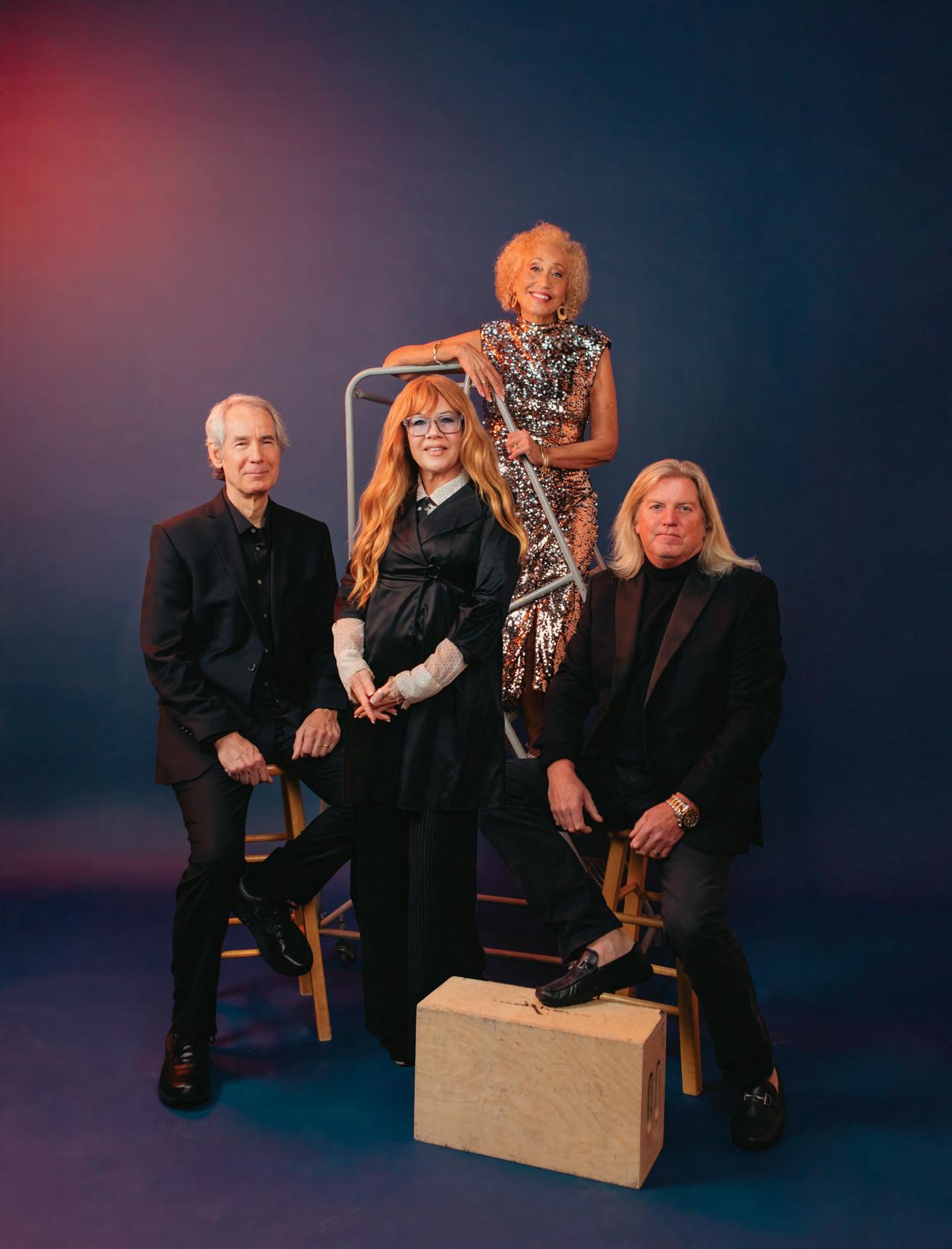
Special honors for cultural stewardship and lifetime achievement are selected by the OEAA board of directors. This year’s honorees are:
• Lifetime Achievement for Visual Arts: Stephen Cornelius Roberts, an Omaha-based painter known for his murals in the Memorial Chamber of the Nebraska State Capitol.
• Lifetime Achievement for Performing Arts: Camille Metoyer Moten, an award-winning singer and actress whose accomplishments span from internationally touring jazz performances to starring roles in local theater productions.
• Lifetime Achievement for Music: Tom Ware, a Grammynominated sound engineer, producer, and musician who mixed Lady Gaga’s “Born This Way” session in Omaha.
• John Heaston Award for Cultural Stewardship: Amy Ryan, founding executive director of the Benson Theater and founder of the former Pizza Shoppe Collective.
Outstanding
Youth Musician
School Of
Rock House Band
Stuck on Dodge
Vertigo
Blue Sunday
The Redwoods
True Blues
Zaiyon
Izzy Worden
Artist of the Year
BIB
King Iso
Marcey Yates
DREION
Mitch Towne
Josh Hoyer & The Colossal 4
Hector Anchondo
Enjoli & Timeless
Matt Cox
Kris Lager & the Assembly of Assassins
Parfait
Outstanding New Artist
Dead Poets
Zaratti
Willa Lucille
LuLa
Before I Depart
Zoe Sennett
Cavedivers
Mijo
Ris
Jordan Opere
Outstanding Blues
Jeni Grouws
Blue House with the Rent to Own Horns
Swampboy Blues Band
Little Joe McCarthy
Steve Lovett
Brother East-Brother West
Outstanding Jazz
Juke Butter
Tetsuya Nishiyama Trio
Noma House Band
Jorge Nila & the New Jazz Ninjas
Jenkins-Kilgore Quintet
Ed Archibald
Kevin Lloyd & Friends
Blake DeForest
Luigi Inc
Kendall Wooden Trio
Outstanding DJ
Crabrangucci
Surreal the MC
DJ BeetleBitch
Angie Spence
DJ Shor-T
Kobrakyle
G3
Kethro
DJ Nativo
Outstanding Alternative/
Indie
Madeline Reddel
Magū
Velvet Velvet
Twinsmith
OJAI
Uh Oh
Wedding
Bad Self Portraits
Indian Caves
The MudPuddLeS
Outstanding Rock
The Real Zebos
Names Without Numbers
Gallivant
Virgin Mary Pistol Grip
Feel Good
Public Figure
Arcade Riot
Mitch Gettman
Kevin McClure
Outstanding Pop
Mad Darling
Ebba Rose
Sandea
forest
RIKÉ
Levee
my friends call me Mel
Cher & Gene Klosner
Outstanding Hip-Hop
Lite Pole
EDDIE North
Tylynn
Bobo Thuh BreadBoy
Jay Influential
J. Crum
Dread & Strange
Pacc Dillon
Outstanding World
Los Avioneros
ÈDÈM SOUL
Omkara
Rhythm Collective
Alexis Arai
Kusher Snazzy
Marcos Eduardo
The Bishops
Outstanding Hard Rock
BEAST EAGLE
Of The Skies
Cope Acidic
The Impulsive
Evandale
Wake Sessions
Outstanding Metal
Narcotic Self
PERIL
Iced Wrist
The Tale Untold
Molten
Fallen Reign
Neo Sol
Outstanding Punk
Ghostlike
Cordial Spew
Las Cruxes
DSM5
Pagan Athletes
Trees With Eyes
Bad Bad Men
Blondo
Frankie Chiaro
Outstanding R&B
Austin Mitchell
E Rawq
Jus.B
VIBE CHECK
Keiria Marsha
EMCSHO
Ria Gold
Outstanding Soul
Big Wade & Black Swan Theory
Dani Cleveland
Ren-zealous
Jaguar James
Leslie Palensky
Jonathan Brooks
Outstanding Experimental
Ex Lover
Vempire
Dream Ghoul
Plack Blague
Flux Amuck
Jeff in Leather
Stacey Barelos
Minne Lussa
Outstanding Prog Rock
Dereck Higgins
Wyrmwood
Secret Formula
The Midland Band
Funk Trek
Head Change
Cruz Control
Doom Lagoon
Unbroken Chain
Outstanding Cover Band
Secret Weapon
Fountains of Dane
The Damones
PetRock
Grunge Pop
The Radio Eclectic
Lemon Fresh Day
ECKO
Whiskey River
Outstanding Americana/Folk
Midwest Dilemma
Vernon John
VVilloughby
The Wildwoods
The Bedrock
Jeremy Mercy & the Rapture
Orphans
Daniel & the Deliverance
Grace Lundy
Fox
Outstanding Country
Owen Justice
Damon Wolf & the Wandering
Sack of Lions
Clarence Tilton
Tyler Anthony
Daniel C. & The Hometown
Heroes
Nathan Paul Trio
Dylan Bloom
Lucas Minor
Bekah Lemonds
Outstanding
Recording Studio
Rainbow Recording Studios
Make Believe Studios
ARC Studios*
The Lab Recording Studio
Icon One Music
Screen Door Studios
Music Factory Productions
Outstanding Live
Sound Engineer
Ella Novak
Jim Schroeder
Keith Fertwagner
Dan Brennan
Charlie Ames
Corey Korth
Ben Stratton
Taylor Behm
Braden Larsen
Jay Wilcher Sr.
Album of the Year
Dream Ghoul, A Forgotten Future
Mitch Towne, Refuge
Names Without Numbers, We Create Reality
Mad Darling, Brand New
EDDIE North, Hell of a Life
Marcey Yates, 9 Months
Midwest Dilemma, Searching for the Cure for Loneliness
The Bishops, Take Two
Iced Wrist, Neanderthal
EMCSHO, Love on Sunset
Velvet Velvet, All Falls Apart
Clarence Tilton, Queen of the Brawl
Outstanding Youth Visual
Artist
Makenzie Rohde
Ash Saliny
Nadirah Johnson
Sofia La Fata-Hornillos
Liam Quigley
Am’Agyn Spencer
Lila Burns
Outstanding
Visual Artist
Neil Griess
Celeste Butler
Todd McCollister
Bart Vargas
Sarah Rowe*
Rachel Mindrup
Ian Tredway
Outstanding Emerging Visual Artist
Summer Khalil
Laine Knowles
Annique Clark
Jay Heuertz
Jahmai Brown
Chanea Brewer
Hana Brock
Jevon Woods
Outstanding New Media Artist
Ian Tredway
Joe Rohleder
Gretchen Larsen
David Carney
Stephen Kavanaugh
Mike Zimmerman
Outstanding Photographer
Joshua Foo
Buck Christensen
Abiola Kosoko
Brock Stillmunks
Gregory D. Brown
Justin Grabenschroer
Outstanding 2-D Artist
Neil Griess
Rachel Mindrup
Myrddin McHugh
Courtney Kenny Porto
Bart Vargas
Nolan Treadway
Nancy Lepo
Outstanding 3-D Artist
Lee Emma Running
Dan Klima
Ramon Guzman
Todd McCollister
Pamela Conyers-Hinson
Nathan Murray
Lily Stennis-Vinson
Outstanding Group Show
Mixin’ It Up:
DISCO-VER ART!
Hot Shops Art Center
Under the Influence
LUX Center for the Arts
PACE New Masters
Hoff Family Arts & Culture Center
The Failure Collective Collection of Failures
Amplify Arts
Couples: For the Love of Art
Roberta & Bob
Rogers Gallery
Arts For ME! KANEKO
This Is Us
Hillmer Art Gallery, curated by Patty Talbert
Outstanding Solo Show
Eloquence (Radial Arts)
Alyssa Schmitt
Elevate (Union for Contemporary Arts)
Celeste Butler
SYSTEMES: A Formalist
Installation (Star Deli Gallery)
Bart Vargas
Long Shadows & Open Books (Lied Art Gallery at Creighton University)
Todd McCollister
Echoes of Eden (Joslyn Castle)
Angelina Gutierrez
Full Strip (RAIL + STEAM & BFF Omaha) Michael Zimmerman
Family Portraits (Hot Shops Art Center)
Ang R. Bennett
Outstanding 2-Person Show
All Flesh is like Grass (Tugboat Gallery)
Ella Weber & Trudie Teijink
Here and After (Petshop Gallery)
Hannah Demma & Matel Rokke
Roots and Shoots
(LUX Center for the Arts)
Santiago Cal & Joshua D. Lux
All that we cannot see (Baader-Meinhof)
Casey Callahan & Marlon Kroll
In Praise of Shadows (Project Project)
Maddie Heinrichs & Chrissy LaMaster
Outstanding Public Art
Nebraska Now:
Preston Love, Jr. (2311 North 24th St.)
Nick Flatt & Scott Drickey
ODID Utility Cabinets (10 mini murals at eight locations downtown)
Omaha Downtown
Improvement District in collaboration with Omaha by Design, the City of Omaha, and Local Artist, Local Art (LALA), ft. Josh Audiss, Anthony Deon Brown, Courtney Kenny Porto, Josephine Langbehn, David Manzanares, Oria Simonini, Katie B Temple & Avry Victor
The Prairie’s Meadow Guardian (Dizzy Mule Apartments, 1218 Izard St.)
Anthony Deon Brown
Love of Art (an homage to the 50th anniversary of the Omaha Summer Arts Festival, located in the alley between Spaghetti Works and Upstream)
Ilaamen Pelshaw
Time Travelers (Catalyst Omaha, 4601 Catalyst Court)
Celeste Butler & Waite White
Center for Immigrant and Refugee Advancement Mural (4223 Center St.)
David Manzanares with CIRA clients & staff
Outstanding Presentation in a Non-Traditional Format
TAMY (Took Acid Miss You) (210 Hickory St.)
Will Anderson, Dan Crane, Sarah Hummel Jones, Ryan Smith
Invite Only CC: Everyone (210 Hickory St.)
Will Anderson, John Cohorst, Teri Coolidge, Dan Crane, Jessica Freeman, Neil Griess, Joey Lynch, B’onca Smith, Ryan Smith, Anna Stoysich, Trudy Swanson
Culxr House Art Battle
Outstanding Musical Rock of Ages
Ralston Community Theatre
A Christmas Story: The Musical
The Rose Theater
Shrek the Musical
Elkhorn
Community Theatre
Young Frankenstein Bellevue Little Theatre
Titanic the Musical
Omaha Community Playhouse
The Wild Party Bluebarn Theatre
Something Rotten!
Lofte Community Theatre
Jersey Boys
Omaha Community Playhouse
Outstanding Drama
Steel Magnolias
Bennington Community Theatre
The Girl on the Train Bellevue Little Theatre
Charm Voices In Alliance
Buried Phoenix Shelterbelt Theatre
Our Town Lofte Community Theatre
Misery
SNAP! Productions
Angels In America, Part One
Omaha Community Playhouse
Appropriate Bluebarn Theatre
Outstanding Comedy
Moon Over Buffalo Lofte Community Theatre
Ken Ludwig’s Moriarty
Bellevue Little Theatre
Collective Rage:
A Play in 5 Betties
Voices in Alliance
She Kills Monsters
Chanticleer Community Theater
Escanaba in da Moonlight Lofte Community Theatre
With Love, Whoever Florentine Players
As You Like It
Old School Shakespeare Omaha
American Mariachi
Omaha Community Playhouse
Silent Night of the Lambs
Bluebarn Theatre
New, Original Local Script
Stuck with Lemons, by Marie Schuett
Shelterbelt Theatre
Buried Phoenix, by Laura Leininger-Campbell
Shelterbelt Theatre
It’s a Wonderful Life, D. Laureen Pickle & John Arnsdorff
Bellevue Little Theatre
With Love, Whoever, by Will Kois Florentine Players
Perseverance, by Tim Mantil
Radio Theatre Omaha
4 a.m. Friends, by Charlene A. Donaghy UNO Theatre
By a Thread, by Kim Louise Anastasis Theatre Co.
Beatwood Hollow, by Katy Kepler
Omaha Community Playhouse
History of Present Illness , by Zedeka Poindexter
Omaha Fringe Festival
stains
Great Plains Theatre Commons
Outstanding Director (Play)
Kevin Colbert
Our Town
Lofte Community Theatre
Mackenzie Zielke
The Girl on the Train Bellevue Little Theatre
Randall T. Stevens
Collective Rage:
A Play in 5 Betties Voices in Alliance
Sara Scheides
Ken Ludwig’s Moriarty Bellevue Little Theatre
Alex Rodriguez
American Mariachi
Omaha Community Playhouse
Amy Lane
Buried Phoenix
Shelterbelt Theatre
Amy Lane
Stuck with Lemons
Shelterbelt Theatre
Allison Price
Angels In America, Part One Omaha Community Playhouse
Susan Clement
Appropriate Bluebarn Theatre
TammyRa Dot
Omaha Community Playhouse
Outstanding Director (Musical)
Todd Uhrmacher
Young Frankenstein Bellevue Little Theatre
Jeff Garst
Rock of Ages Ralston Community Theatre
Jack O’Connell
Shrek the Musical
Elkhorn Community Theatre
Wai Yim
The Wild Party Bluebarn Theatre
Kevin Colbert
Something Rotten!
Lofte Community Theatre
Susie Baer Collins
Titanic the Musical
Omaha Community Playhouse
Daena Schweiger
Lizzie
Shelterbelt Theatre
Alex Rodriguez Jersey Boys
Omaha Community Playhouse
Joey Hartshorn
Ride the Cyclone SNAP! Productions
Kathy Tyree
A Christmas Story: The Musical The Rose Theater
Outstanding Actor (Play)
Travis Manley
Angels In America, Part One
Omaha Community Playhouse
Chanel Savage
Charm
Voices In Alliance
Bronwyn Bahr
The Girl on the Train Bellevue Little Theatre
Kaitlyn Rudeen Misery
SNAP! Productions
Analisa Swerczek
Stuck with Lemons Shelterbelt Theatre
Delaney Jackson
Scissoring
Voices in Alliance
Leanne Hill Carlson
Appropriate Bluebarn Theatre
Kathy Tyree
Buried Phoenix
Shelterbelt Theatre
Mackenzie Zielke
End of the Rainbow
Performing Artists Repertory Theatre
Aaron Zavitz
Dracula: The Journal of Jonathan
Harker
Bluebarn Theatre
Outstanding Actor (Musical)
JJ Davis
A Christmas Story: The Musical
The Rose Theater
Tanner Langemeier
Jersey Boys
Omaha Community Playhouse
Carly Frolio
Rock of Ages
Ralston Community Theatre
Leanne Hill Carlson
The Wild Party
Bluebarn Theatre
Chris Thackray
Titanic the Musical
Omaha Community Playhouse
Charlotte Hedican
Titanic the Musical
Omaha Community Playhouse
Ben VandeVere
Something Rotten!
Lofte Community Theatre
Jordan Willis
The Wild Party Bluebarn Theatre
Outstanding Supporting
Actor (Play)
Camille Nichole
Ken Ludwig’s Moriarty
Bellevue Little Theatre
Steve Knox
It’s a Wonderful Life
Bellevue Little Theatre
Rebecca M. Krause
Moon Over Buffalo
Lofte Community Theatre
Delaney Jackson
Collective Rage: A Play in 5 Betties Voices in Alliance
Cecilia Poon
Buried Phoenix
Shelterbelt Theatre
Allen Griffin
Charm
Voices In Alliance
Stephanie Olson
Steel Magnolias
Bennington Community Theatre
Matt Karasek
The Girl on the Train
Bellevue Little Theatre
Patrick Kilcoyne
Angels In America, Part One
Omaha Community Playhouse
Cork Ramer
Stuck with Lemons
Shelterbelt Theatre
Outstanding Supporting
Actor (Musical)
JJ Davis
Milo Imagines the World
The Rose Theater
Joshua Jordan
Rock of Ages
Ralston Community Theatre
Donovan Carr
Young Frankenstein
Bellevue Little Theatre
Lily Pope
Something Rotten!
Lofte Community Theatre
Alexis Semevolos-Velazquez
The Wild Party
Bluebarn Theatre
Curtis Reynolds
Waitress
Omaha Community Playhouse
Debbie Cline
Young Frankenstein
Bellevue Little Theatre
James Verderamo
Jersey Boys
Omaha Community Playhouse
Troy Allen
Titanic the Musical
Omaha Community Playhouse
John Morrissey
Titanic the Musical
Omaha Community Playhouse
Outstanding Performance Poet
Jewel Rodgers
Allen Stevenson
Noni Williams
Jonny Knogood
Am’Agyn Spencer
Sam Nichols
Shukura Huggins
Trac Schacht
Outstanding Dance Production
A Suite for Small Spaces
Ever After Productions, Inc
90th Anniversary Showcase
The Moving Company
Alice in Wonderland
American Midwest Ballet
TWELVE
Evergreen Dance Co.
Nutcracker Delights
Ever After Productions, Inc
things that move at night
tbd. dance collective
The Way Home //
Where Horses Fly
Vōx Dance Collective
Tchaikovsky’s Sleeping Beauty & Other Fairytales
Creighton University
Momentum
American Midwest Ballet
Outstanding Dance Soloist
Bee Hampton
Curtains
Chanticleer Community Theater
Matt Bailey
The Wild Party
Bluebarn Theatre
Julie Moore-Stanfill
Young Frankenstein
Bellevue Little Theatre
Mikayla Davy TWELVE
Evergreen Dance Co.
Haruna Asanuma
A Suite for Small Spaces
Ever After Productions, Inc
Maria Overton
Nutcracker Delights
Ever After Productions, Inc
Kyan Doubet
Storm
The Moving Company
Outstanding Youth Performer
Claire Flower
The Sound of Music
Bellevue Little Theatre
Prise Yates Wizard of Oz
Bennington Community Theatre
Laily Eldridge
The Sound of Music Bellevue Little Theatre
Katherine Sukraw Wizard of Oz
Bennington Community Theatre
Bee Hampton Curtains
Chanticleer Community Theater
Thomas Rogers
Titanic the Musical
Omaha Community Playhouse
Layla O’Connell
Shrek the Musical
Elkhorn Community Theatre
Addie Olsen
A Christmas Story: The Musical
The Rose Theater
Outstanding Comedian
Ben Webb
Tyrel Frazier
Rachel Ware*
Tyler Walsh
Lauren Vana
Carmela Anderson
Nick Allen
Zach Peterson
Outstanding Comedy
Ensemble
Big Canvas Comedy
Dad Jokes
Laugh With Me
Yer Mom’s Comedy Show
The Weisenheimers
King Louie Pandemic! @ the Disco
Outstanding Lighting Design
Maddie Maupin
Wizard of Oz
Bennington Community Theatre
Asia Nared Charm Voices In Alliance
Michelle Harvey
The Wild Party Bluebarn Theatre
Joey Lorincz
The Girl on the Train
Bellevue Little Theatre
Bill Van Deest
& Chelsea Greenway
stains
Great Plains Theatre Commons
Matt Benes
Coraline
Rose Theater
Aaron Spracklin
Our Town
Lofte Community Theatre
Jacy Rook
She Kills Monsters Chanticleer Community Theater
Jim Othuse
Titanic the Musical
Omaha Community Playhouse
Steven Williams
Jersey Boys
Omaha Community Playhouse
Outstanding Prop Design
Donna Dahlsten Wizard of Oz
Bennington Community Theatre
Erin Cejka, Angie Benes, Will
Smith
Shrek the Musical
Elkhorn Community Theatre
Randall Stevens, Steve Knox Scissoring Voices in Alliance
Jenny Cupak-Caroll
Young Frankenstein
Bellevue Little Theatre
Amy Reiner
The Wild Party
Bluebarn Theatre
John Arnsdorff
It’s a Wonderful Life
Bellevue Little Theatre
Hannah Clark
Buried Phoenix
Shelterbelt Theatre
Andrew Morgan
Titanic the Musical
Omaha Community Playhouse
Outstanding Scenic Design
Donna Dahlsten Wizard of Oz
Bennington Community Theatre
Jude Knipper, John Ferguson,
Sean Gardner
Shrek the Musical Elkhorn Community Theatre
Joey Lorincz
Young Frankenstein
Bellevue Little Theatre
Tim Combs
Buried Phoenix
Shelterbelt Theatre
Bradlee LaMotte
The Wild Party Bluebarn Theatre
Jim Othuse
Titanic the Musical
Omaha Community Playhouse
Steven Williams
Appropriate Bluebarn Theatre
Dale Hartshorn
Sweeney Todd SNAP! Productions
Taylor Adams
Lizzie
Shelterbelt Theatre
Outstanding Costume Design
Leah Skorupa-Mezger Wizard of Oz
Bennington Community Theatre
Lindsay Pape
Titanic the Musical
Omaha Community Playhouse
Angie Benes
Shrek the Musical
Elkhorn Community Theatre
Denise Ervin
The Wild Party Bluebarn Theatre
Jocelyn Reed Charm Voices In Alliance
Leah Skorupa-Mezger
Young Frankenstein
Bellevue Little Theatre
Kathryn Cover
Something Rotten!
Lofte Community Theatre
Sara Scheides
Ken Ludwig’s Moriarty
Bellevue Little Theatre
Lora Kaup
stains
Great Plains Theatre Commons
Dwayne Ibsen
White Christmas Chanticleer Community Theater
Outstanding Sound Design
James Passolt Wizard of Oz
Bennington Community Theatre
Lacey Grabowski
Shrek the Musical Elkhorn Community Theatre
Bill Kirby
The Wild Party Bluebarn Theatre
Christy Hernandez Coraline
Rose Theater
Joe Mokrycki
Young Frankenstein
Bellevue Little Theatre
Tim Burkhart
Titanic the Musical
Omaha Community Playhouse
Shannon Smay Lizzie
Shelterbelt Theatre
Tim Burkhart
Jersey Boys
Omaha Community Playhouse
Outstanding Choreographer
Melanie Epps
The Wild Party Bluebarn Theatre
Lisa Grabowski
Shrek the Musical Elkhorn Community Theatre
Debbie Massey-Schneweis
Young Frankenstein Bellevue Little Theatre
Olivia Cano
Ride the Cyclone SNAP! Productions
Julian Adair
A Suite for Small Spaces
Ever After Productions, Inc
Becca Schmucker
Something Rotten!
Lofte Community Theatre
Austin Gabler
White Christmas
Chanticleer Community Theater
Alex Rodriguez
Jersey Boys
Omaha Community Playhouse
Michelle Garrity
Titanic the Musical
Omaha Community Playhouse
Outstanding Music Direction
James-Michael Sellers
Wizard of Oz
Bennington Community Theatre
D. Laureen Pickle
Young Frankenstein Bellevue Little Theatre
Ryan Pochop
Shrek the Musical
Elkhorn Community Theatre
Liz Stinman
The Wild Party Bluebarn Theatre
Jim Boggess
Titanic the Musical
Omaha Community Playhouse
Todd Brooks Rock of Ages
Ralston Community Theatre
Benjamin Pettiford
Something Rotten! Lofte Community Theatre
Jerry Brabec
A Christmas Story: The Musical The Rose Theater
Jennifer Bates Orvis White Christmas Chanticleer Community Theater
Curtis Reynolds End of the Rainbow
Performing Artists Repertory Theatre
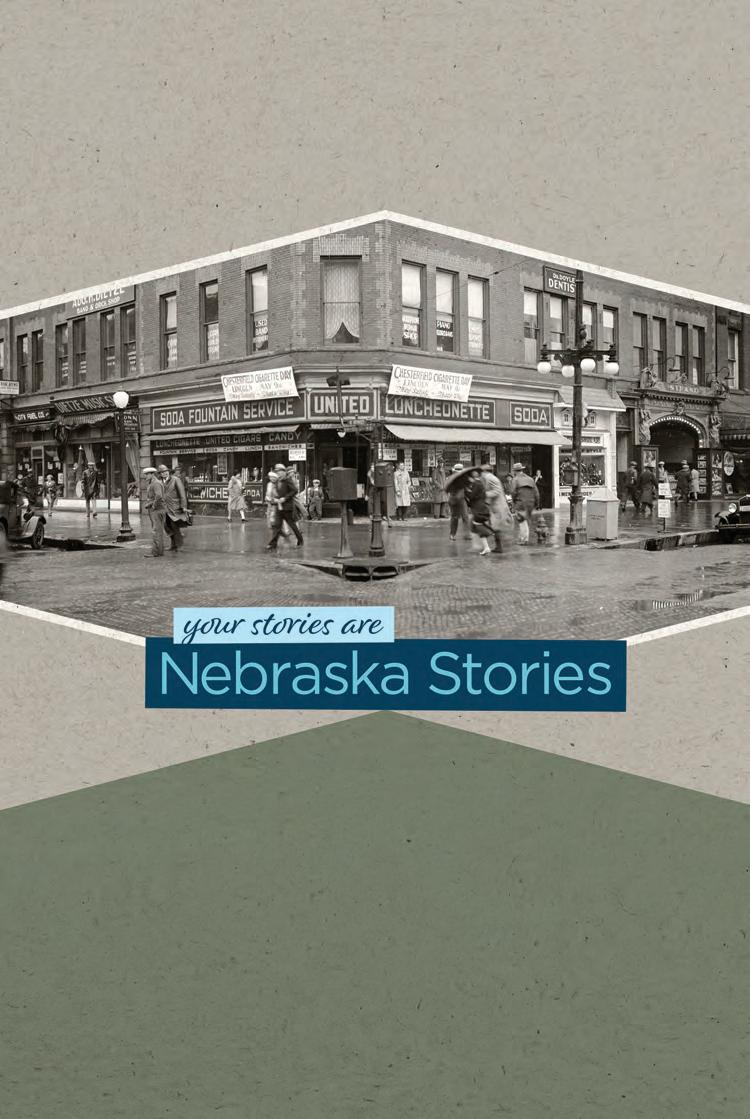
NebraskaPublicMedia.org/nebraskastories

UNDER THE SKIN
Th rough March 22 at KANEKO, 1111 Jones St. From a collection of artists, explore stories of the body through nude imagery that looks into skin, muscle, and bone.
402.341.3800 thekaneko.org
POPCORN NEBRASKA
Jan. 9-25 at Hot Shops Art Center, 1301 Nicholas St. View the exploding pop art of Conrad Hinz at the Hot Shops Art Center highlighting three-dimensional popcorn artwork.
402.342.6452 hostshopsartcenter.org
CLOSE TO THE CLOUDS: ENCOUNTERING DIGITAL DIASPORAS
Jan. 16-May 3 at Bemis Center for Contemporary Arts, 724 S. 12th St. Th is collaborative installation explores the connection between technology and cultural heritage.
402.341.7130 bemiscenter.org
EZRA MASCH: VOLUMES
Jan. 16-May 3 at Bemis Center for Contemporary Arts, 724 S. 12th St. Th is audio-visual performance allows musicians to explore their instruments in an exploration about sound, light, and architecture.
402.341.7130 bemiscenter.org
HOW TO TRAIN YOUR DRAGON IN CONCERT
Jan. 24-25 at Holland Performing Arts Center, 1200 Douglas St. Watch DreamWorks’ beloved How to Train Your Dragon with a live symphony orchestra for an exciting and immersive viewing.
402.342.3836 omahasymphony.org
BLADE RUNNER LIVE
Feb. 5 at at Orpheum Th eater, 409 S. 16th St. For the fi rst time, watch the classic Blade Runner on screen while The Avex Ensemble plays the synthesizer-led score in real-time.
402.345.0606
o-pa.org
ERIC CHURCH: FREE THE MACHINE TOUR
Feb. 5 at CHI Health Center, 455 N. 10th St. Country artist Eric Church visits Omaha on his Free the Machine tour. Special guest 49 Winchester joins him for a night of great country music.
402.341.1500 chihealthcenteromaha.com
BATMAN (1989) IN CONCERT
Feb. 7 at Orpheum Th eater, 409 S. 16th St. Watch the iconic Batman , released in 1989, accompanied by a live orchestra playing the original soundtrack.
402.345.0606
o-pa.org
BEETHOVEN’S FIRST
Jan. 11 at Th e Joslyn, 2200 Dodge St. Th is symphony of soloists will play Wagner’s “Siegfried Idyll,” Stravinsky’s "Dumbarton Oaks,” and Beethoven’s “Symphony No.1.” 402.342.3836 omahasymphony.org
RASCAL FLATTS: LIFE IS A HIGHWAY TOUR
Jan. 14 at CHI Health Center, 455 N. 10th St. A country band formed in Nashville, Tennessee, Rascal Flatts brings their hits to CHI with special guests Chris Lane and Lauren Alaina. 402.341.1500 chihealthcenteromaha.com
DEBUSSY & PROKOFIEV
Jan. 16-17 at Holland Performing Arts Center, 1200 Douglas St. Brothers Joseph and Robert Young join together as conductor and saxophonist to play pieces from Debussy, Connesson, and Prokofiev. 402.342.3836 omahasymphony.org
RANDALL KING
Jan. 22 at Slowdown, 729 N 14th St. A country artist from West Texas, Randall King brings his traditional country sound to Slowdown. 402.345.7569 theslowdown.com
STRAVINSKY’S FIREBIRD
Feb. 20-21 at Holland Performing Arts Center, 1200 Douglas St. Violinist Francisco Fullana plays the beautiful works of Johann Strauss II, Montgomery, Stravinsky, and Barber.
402.342.3836
omahasymphony.org
DROPKICK MURPHYS: FOR THE PEOPLE… IN THE PIT ST. PATRICK’S DAY 2026 TOUR
Feb. 26 at Th e Admiral, 2234 S. 13th St. Boston’s own rock ’n roll band comes to The Admiral for their St. Patrick’s Day tour with The Aggrolites and Haywire. admiralomaha.com
VITAMIN STRING QUARTET: THE MUSIC OF BILLIE EILISH, BRIDGERTON, & BEYOND
Feb. 26 at Steelhouse Omaha, 1100 Dodge St. The Vitamin String Quartet comes to Steelhouse to play hits from artists like Billie Eilish, shows like Bridgerton , and more.
steelhouseomaha.com
SABATON: LEGENDS ON TOUR
Feb. 27 at Steelhouse Omaha, 1100 Dodge St. Swedish power metal band brings their heavy metal music to Omaha with guests Pop Evil and Wings of Steel. 402.345.0606
steelhouseomaha.com

Feb. 28 at Waiting Room Lounge, 6212 Maple St.
An up-and-coming artist from Houston, Texas, Monaleo, comes to Omaha after releasing her new album Who Did the Body
402.884.5353
waitingroomlounge.com
Jan. 13-18 at Orpheum Th eater, 409 S. 16th St.
A Tony award-winning musical about the unraveling of a corn-producing county when the crop begins to wither, and a deceiving outsider enters the picture.
402.345.0606
o-pa.org
MR. POPPER’S PENGUINS
Jan. 16-Feb. 1 at Th e Rose Th eater, 2001 Farnam St. Based on the novel by Richard and Florence Atwater, this musical is full of unexpected fun when a family of penguins comes knocking on the Popper’s door.
402.345.4849 rosetheater.org
Jan. 29-31 at Holland Music Club, 1200 Douglas St. A Japanese-style comedy known as batsu game comes to Omaha where comedians compete in exciting events, and losers receive hilarious punishments.
402.345.0606
o-pa.org
FORTUNE FEIMSTER: TAKIN’ CARE OF BISCUITS TOUR
Jan. 30 at Holland Performing Arts Center, 1200 Douglas St. Actress, comedian, writer, and host Fortune Feimster comes to Omaha on her Takin’ Care of Biscuits Tour for a night of laughter and fun.
402.345.0606
o-pa.org
Jan. 30-31 at Funny Bone Comedy Club, 710 N. 114th St. Suite 210. Comedian Steve Treviño comes to Omaha with relatable and down-to-earth humor about marriage that gave him the name “America’s Favorite Husband.”
402.493.8036 omaha.funnybone.com
Feb. 4 at Orpheum Th eater, 409 S. 16th St. Cirque Kalabanté presents Afrique en Cirque, which explores African culture through acrobatic movements and live Afro-jazz, percussion, and kora.
402.345.0606
o-pa.org
Feb. 5-March 1 at Bluebarn Th eatre, 1106 S. 10th St. A touching stage performance that explores themes of identity and belonging through two Asian immigrant women in 1970s America.
402.345.1576 bluebarn.org
JUSTIN WILLMAN: ONE FOR THE AGES TOUR
Feb. 7 at The Astro Theater, 8302 City Centre Drive. Justin Willman brings his unique blend of magic tricks and comedy to Omaha on his largest tour yet.
531.283.5212 theastrotheater.com
Feb. 10-15 at Orpheum Th eater, 409 S. 16th St. Th is musical is inspired by the true story of Neil Diamond and how he became the American rock icon he is today.
402.345.0606
o-pa.org
HAIR
Feb. 13-March 22 at Omaha Community Playhouse, 6915 Cass St. A fun and high energy musical that takes place in the 1960s and explores the idea of self-expression through youth, love, and hair.
402.553.0800 omahaplayhouse.com
MORRIS MICKLEWHITE AND THE TANGERINE DRESS
Feb. 20-March 8 at Th e Rose Th eater, 2001 Farnam St. Based on the book written by Christine Baldacchino, this play follows Morris, a child who has a strong imagination and likes to dress up while he plays astronaut.
402.345.4849 rosetheater.org
GEORGE LOPEZ
Feb. 21 at Th e Astro Th eater, 8302 City Centre Drive. Iconic comedian George Lopez performs at The Astro Theater for a night full of laughter and jokes. 531.283.5212 theastrotheater.com
TIG NOTARO
Feb. 22 at Holland Performing Arts Center, 1200 Douglas St. Tig Notaro, award-winning comedian, actor, writer, director, producer, and podcast host, comes to Omaha with her dry, deadpan humor.
402.345.0606
o-pa.org
ALL THINGS EQUAL: THE LIFE & TRIALS OF RUTH BADER GINSBURG
Feb. 26 at Orpheum Th eater, 409 S. 16th St.
A stage play that brings you through the journey of Supreme Court Justice Ruth Bader Ginsberg and her iconic story.
402.345.0606

Would you like weekly event recommendations delivered right to your inbox? Open the camera on your smart device and hover over the QR code (left) to subscribe to Omaha Magazine’s Weekend Entertainment Guide online.
o-pa.org
FLOWER FESTIVAL
Jan. 22-25 at St. Cecilia Cathedral, 701 N. 40th St. Visit St. Cecilia Cathedral for the 40th Annual Flower Festival. Put on by the Cathedral Arts Project, this festival combines gorgeous floral visuals and musical arts.
402.551.4888
cathedralartsproject.org
MIDLANDS INTERNATIONAL AUTO SHOW
Jan. 23-25 at CHI Health Center, 455 N. 10th St. Lovers of all things auto can gather at the Midlands International Auto Show for a weekend of activities, automobiles, and more.
402.341.1500
chihealthcenteromaha.com
LAWN, FLOWER, & PATIO SHOW
Jan. 30-Feb. 1 at CHI Health Center, 455 N. 10th St. Th is expo showcases the latest and best products and services to improve your garden and outdoor living.
402.341.1500
chihealthcenteromaha.com
THE NEGRO MOTORIST GREEN BOOK
Feb. 7-May 3 at Th e Durham Museum, 801 S. 10th St. Th is exhibition explores the real story of African Americans traveling in mid-century America through footage, photos, and fi rsthand accounts.
402.444.5071
durhammuseum.org
INTERNATIONAL BOAT SPORTS AND TRAVEL SHOW
Feb. 19-22 at CHI Health Center, 455 N. 10th St. The International Boat Sports and Travel Show has the biggest and best boats as well as other outdoor exhibitors making it the perfect place for all outdoor lovers.
402.341.1500 chihealthcenteromaha.com
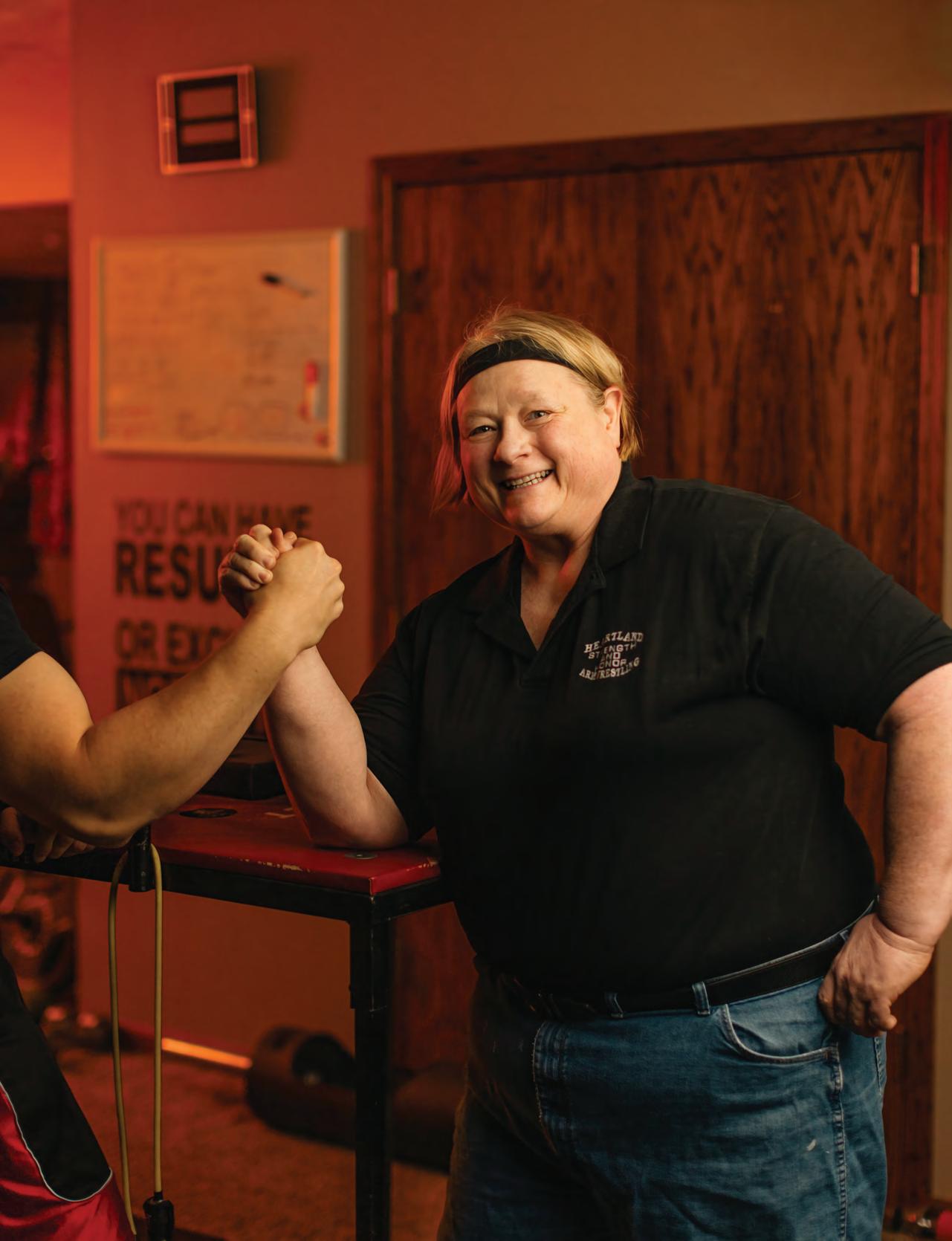
She was always strong, both mentally and physically, as well as hardworking and resourceful.
“A farm girl, three-sport athlete, I used to throw hay in the summer for summer jobs; that’s just brutal,” she said. “I never played any sports in junior high because we had to be bused to Auburn, which was 15 miles away. And although I was very good in kickball, it was a matter of we didn’t have the transportation, we didn’t have the means. It wasn’t until high school that I got involved in competitive sports, and boy, I loved it. I was good academically, and I was a band nerd, but I did those sports. I took that late bus home.”
McConnaughey eventually focused her efforts on softball, a sport she still calls her “first love,” continuing through her college years at Peru State. “Softball that’s the one where I learned dedication, teamwork, lots of hard work,” she said.
In high school, volleyball players called her “Hurricane” because of her impressive serve. Her softball pitch may have been even more formidable.
“Nobody would catch for me, and I would just take a bucket of balls and walk down to the softball field. If I threw hard enough, the ball would hit the backboard behind the catcher’s area, it would hit hard enough that it would roll almost back to me,” she said. “I practiced almost every day.”
A memory of practicing closer to home still makes McConnaughey laugh.
“I set up a tire next to my dad’s garage that was like a tin garage, a pole barn. I put dents in that,” she said. “Oh, the old man about came untied!”
McConnaughey earned a degree in lab technology and has been in the field since, serving today as Ovusur USA’s director of quality control. Ironically, the company is headquartered in Peru
ary McConnaughey was a natural athlete growing up in Peru, Nebraska, and fiercely competitive, too. At Auburn High School in the late 1970s, she not only excelled in multiple sports named best all-around female athlete her senior year but also found time for her studies, other school activities, and work. She even joined the Peru Rescue unit as a teen, winning a first aid award from Johnson & Johnson at age 15 and the Outstanding Citizen of Peru award at age 16.
(the country, not McConnaughey’s hometown). Her career brought her to Omaha in the 1980s, where there were plenty of opportunities to continue playing softball.
“When I first moved to Omaha, I was actually in five different leagues in softball. I played spring ball, summer ball, fall ball,” she said. “That’s how competitive I was.”
Before moving to Omaha, however, McConnaughey discovered arm wrestling by chance. Actually, by coercion, when a coworker entered her into a competition at some small-town tavern in 1983.
“There was an arm wrestling event going on. As we walked in, I wasn’t paying much attention, to be quite honest, and he entered me, and they called my name. And it took quite a bit of persuasion to even get me to do it,” she said.
It turned out that McConnaughey was a natural.
“I won the event, which qualified me for something bigger in Omaha, and I think I won that, which qualified me for their little national event. I say ‘little’ because there were only maybe eight people in it, and it was in Des Moines. I figured, ‘what do I have to lose? It’s Des Moines. It’s close by,’” she said.
She placed second in that event, the Monster Armwrestling Association Nationals, beaten by the defending champ by judge’s decision. The experience was fun, McConnaughey said, but she wasn’t really committed to the sport until her competitive nature was roused.
“In maybe’84, ’85 when a professional someone that travels the world arm wrestling that was probably weighing about 140, she beat me. And she beat me twice; it was double elimination. I was floored,” she said. “I’m from a world of science. I could not make sense of that at all. And it was at that point I said, ‘OK, I’m hooked.’”
She began training and competing in earnest, placing or winning at numerous events for the next few years and retaining Nebraska state titles from 1984 to 1988. In 1987, she was named “Most Dedicated Arm Wrestler of 1987” by Mid-American Arm Sports.
The triumphs came with a downside, however. McConnaughey found that the training that improved her arm wrestling technique compromised her pitching game.
“I didn’t realize this until later on and talking to other arm wrestlers…In softball and baseball, anything where you have to lengthen that arm out straight, you work on that; you want those tendons nice and long and elastic to be able to whip things and throw far. You have to have elasticity in that elbow,” McConnaughey said. “In arm wrestling, your main goal is to shorten those tendons, making them thick and almost nonelastic; you want to be able to keep your hand very, very close to your body, and you don’t want that hand to be extended away from your body. So, we literally shorten up the tendons and thicken everything in the forearm, in the elbow.”
She found that not only did her pitch suffer, her arm was in near-constant pain. “I couldn’t even pick up a gallon of milk,” she said.
“I went to a sports physician. He just shook his head. He said, ‘Mary, here’s the deal make a choice. You can’t do them both at the same time,’” she recalled. “So what I did is, I told myself, I’ll do arm wrestling for two years, and that’ll be good enough for me, and I’ll be happy.
“But I tell you what happened: arm wrestling took me all across the world and gave me opportunities that softball would have never done. I never went back to softball.”
I have won 34 national titles in arm wrestling, five world titles, one Goodwill Games gold, and AAA Armwrestler of the Year twice. My last big event was the World event in Kuala Lumpur, Malaysia, in 2016. In the spring of 2017, I was diagnosed with stage 3 breast cancer. It took me almost three years to regain 60% of my strength.
— Mary McConnaughey
The 1990s were full of tournaments, regionals, and even national-level wins and recognition for McConnaughey, whose travels included Israel, India, Sweden, Brazil, and even post-Soviet Russia, where she represented the U.S. in the closing ceremonies of the 1994 Goodwill Games.
“At that closing ceremony, there were 95,000 people in the outside auditorium. It was in August, and it was amazing. I can’t think of anything in my lifetime that will ever match that kind of adrenaline, excitement, pride of carrying the United States flag,” she said. “That was definitely the highlight of my arm wrestling career.”
McConnaughey also began taking on leadership roles with state and midwestern events and organization during the 1990s, including Heartland Armwrestling Inc. president, Nebraska Sports Council board of directors, and membership in the North American Strongman Society and United States All-Round Weight-Lifting Association. The decade ended on a high note with McConnaughey named one of the “Last Champions of the Century” by The New York Times .
In 2005, she turned 40, an age when athletes in other sports are likely to be winding down their careers or even already retired. But McConnaughey was ranked first in the nation by AAA (American Armsport Association) in her class. In the ’90s, she was known as “The Arm,” but as she took on more of a mentor role, arm wrestlers began calling her “Momma Bear.”
“[We] hosted 403 events under Heartland Armwrestling Inc. We were the first organization to sanction youth divisions in the USA. Team Nebraska was a favorite to win the best overall team at the nationals events in the ’90s and early 2010s,” she said.
McConnaughey amassed a personal record to be proud of before a serious health crisis forced her to step away from the arm wrestling table for a time.
“I have won 34 national titles in arm wrestling, five world titles, one Goodwill Games gold, and AAA Armwrestler of the Year twice,” she said. “My last big event was the World event in Kuala Lumpur, Malaysia, in 2016. In the spring of 2017, I was diagnosed with Stage 3 breast cancer. It took me almost three years to regain 60% of my strength.”
She’s making her return at age 65.
“I competed at the Cornhusker State Games this summer, which was a humbling experience. I squeaked out a bronze medal,” she said. “The recent death of one of my training partners encouraged me to pull at the Nebraska State Championships in October and the Kentucky State Championships a couple of weeks [later].”
McConnaughey said she hopes to continue in the sport as she helps usher in the next generation.
“We still have incredible talent in Omaha and the surrounding states. You are only as good as your competition, and our strength as a state or region is rooted in the hard work and dedication our guys and gals put into the sport,” she said. “Almost every week, a practice is hosted by someone in the Omaha, Lincoln, or surrounding area. The jump start would be to go on Facebook and friend the Nebraska High Riser Armwrestling group. They post multiple times a week.
“We train, travel, and learn as a team, but after the referee says, ‘Ready, Go!’ it is all up to you,” McConnaughey said.
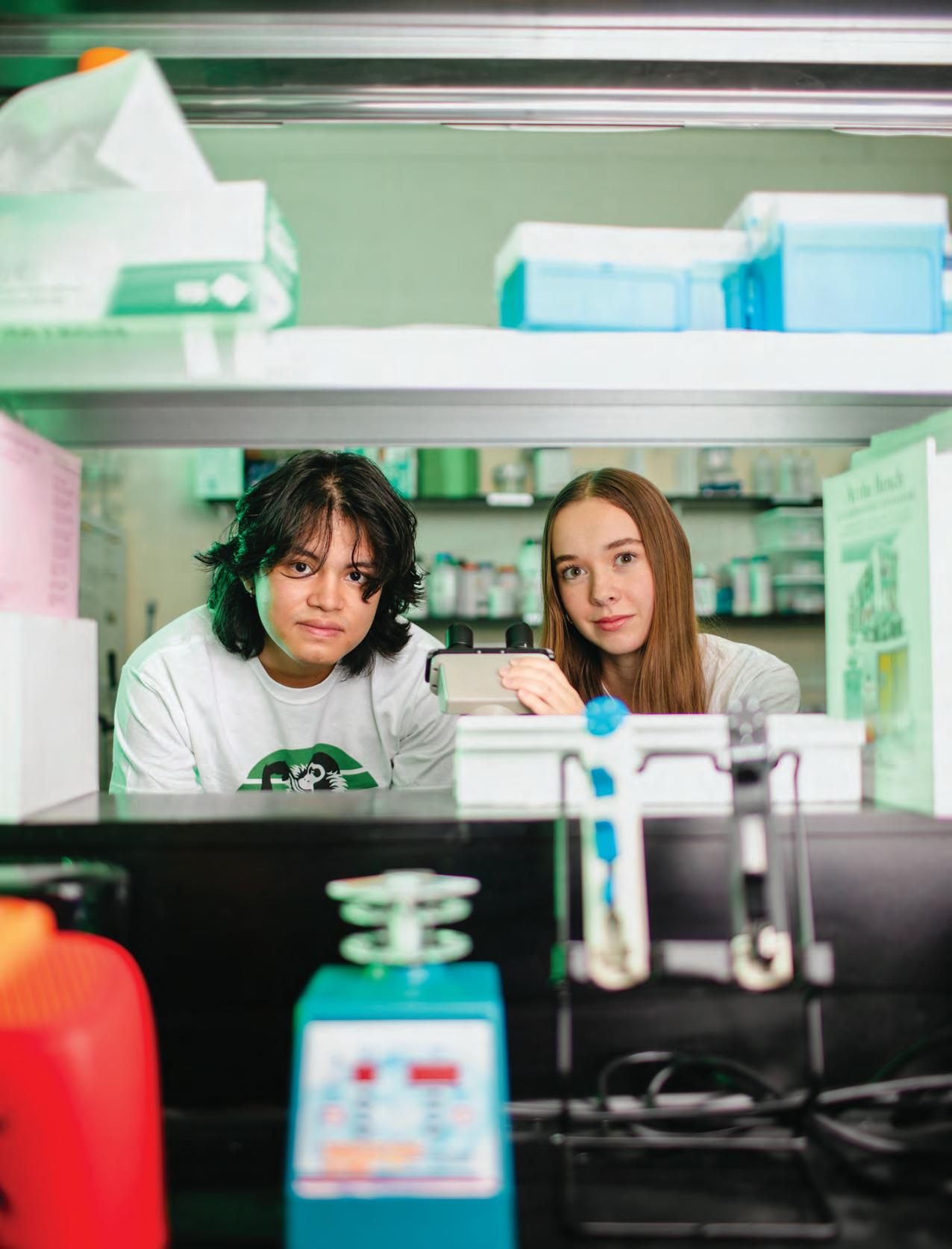
esearchers at the University of Nebraska–Omaha investigating the impact of E. coli on antibiotics realize their fi ndings could influence the way the medical profession addresses the issue. What may be just as remarkable as the results is that the researchers leading the project are undergraduate students.
Kiyoji Huang and Kaitlyn Oswald are seniors in college—Huang at Creighton University and Oswald at UNO—heading in diff erent directions after graduation, but united in their passion f or research.
“We have a library of E. coli that we’ve isolated from fecal samples from monkeys that were exposed to a cocktail of antibiotics,” Huang said. “We’re seeing if the resistance that arose from these specifi c pressures also give bacteria defense mechanisms for unrelated antibiotics, and so on. We’re also looking at how that aff ects the diversity of those bacteria, and how that translates to humans.”
The duo are part of 13 students—at least nine are undergraduates—and other researchers working in the Callitrichid Research Center’s lab with Dr. Jonathan Clayton. Clayton has been with UNO for more than a decade, specializing in research.
Huang, the son of a gastroenterologist, became involved with UNO’s research lab between his junior and senior years of high school. While a student at Creighton Prep High School, Huang reached out to UNO officials to see if he could gain research experience.
Clayton recognized Huang’s talents and found a spot for him, completing protocols a bit diff erently to meet legal requirements since Huang was still in high school.
Huang won college-level research competitions as a high school student, C layton said.
Planning to study electrical engineering post-graduation, Huang said he wants to eventually return to research.
“My favorite aspect of research is when Dr. Clayton, myself, and another professor who we work with, all come together and brainstorm on how to move a unique project forward so we can make a more convincing argument, basically putting together a compelling narrativ e,” he said.
Oswald, who graduated from high school in Aurora, Nebraska, three years ago and is scheduled to graduate in the spring with two majors, hadn’t considered a career in research until she was looking for direction during her freshman year at UNO.
She caught the research bug and recognized how it benefits her pursuit of a PhD and a career in neuroscience and gerontology, her majors, Oswald said. She also works in a second lab focused on aging and the human brain.
“I’ve seen the different ways that people can run a lab, the different types of experiments that you run, and how working with humans is different than working with animal
models,” Oswald said. “I like that you’re constantly learning things, challenging yourself, and being uncomfortable. You can collaborate with other faculty members with whom you normally wouldn’t have interacted.”
While he doesn’t have established criteria of what he’s looking for in research assistants, Clayton said he recognizes a quality that makes them a good fit.
“I like to have people who know that being in the lab is going to do something for them, that will elevate them to where they want to get to,” Clayton said. “You want to go to medical school? You want to get a PhD? You want to go to veterinary school? I fi nd that when that’s the case, those people are a lot more motivated. Th e other thing is that, in my particular case, you know research.”
Researchers need to come from a variety of backgrounds and have personality traits that open them to diff erent ways to make a laboratory work, Oswald said.
“I think if you had one specific type of person that could be successful at research, and you put all those people in one room, you’d never fi nd
anything out,” she said. “You need people who have different skill sets in order to have new ideas, something that’s a little bit radical, someone to keep you organized.
“I think everyone plays a role with all their strengths. I would argue that it would probably be the worst type of lab to be in if everyone had the same personality and strengths. Th ey do need to be resilient.”
Th e interest of young people to pursue research careers creates opportunities, such as writing and presenting fi ndings at conferences, he couldn’t have imagined as an undergrad at Barton College in Wilson, North Carolina, C layton said.
“Th ey’ve done stuff in these four years that I never did, gosh, maybe until my PhD,” he said. “Th e exposure alone, the ability to meet with my colleagues and collaborators, who are all over the world, the ability to interact with lots of other really smart people in the laboratory, the ability to work in diff erent settings. I think just the intellectual growth aspect of it is huge.”
Visit unomaha.edu for more information.
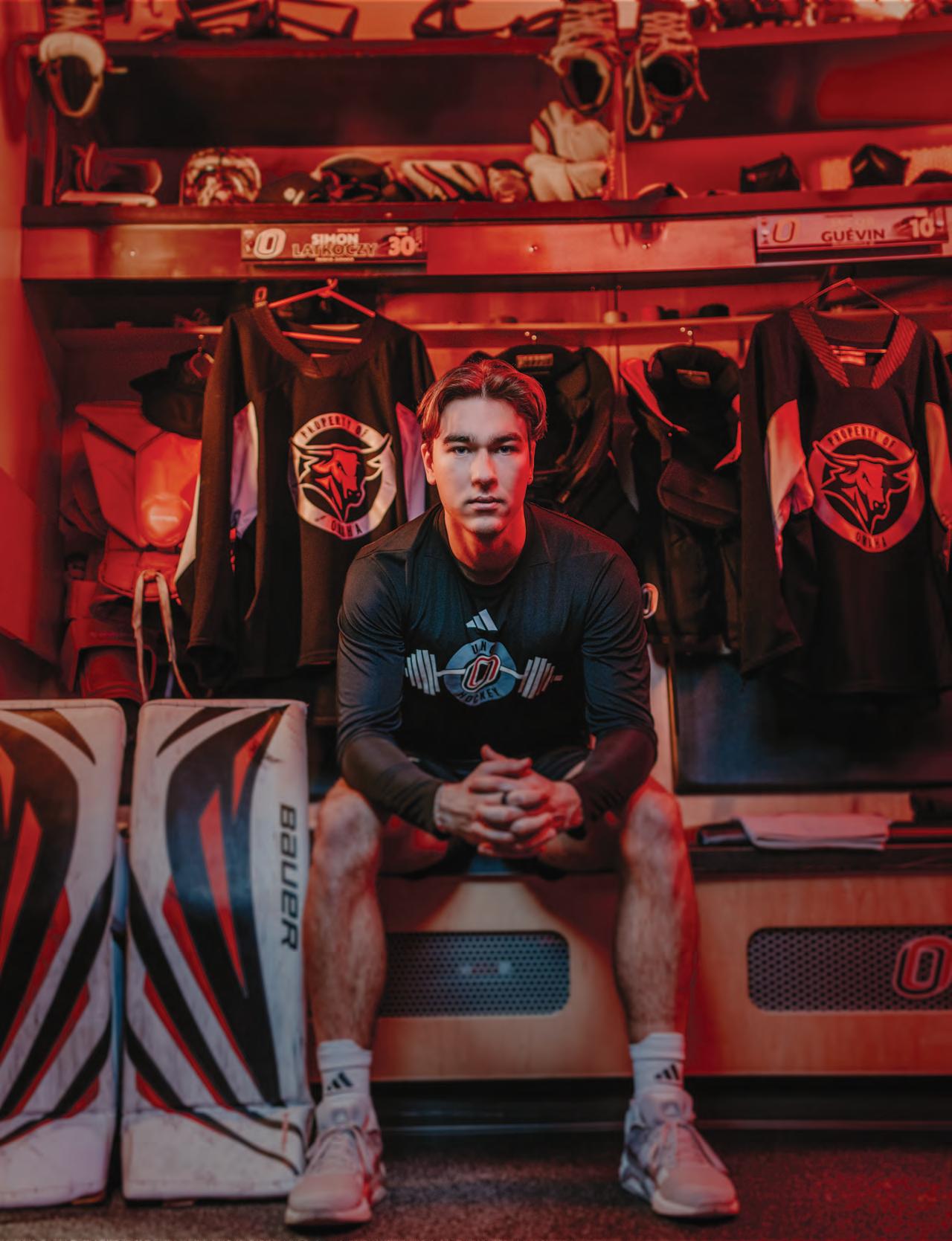
fter almost four years in a Mavericks sweater, Simon Latkoczy isn’t just a name in Omaha hockey circles anymore. From the fi rst puck drop of his Maverick career to his new role as co-captain, the Slovakian goaltender has been at the center of some of the program’s most memorable moments. His performances have made him something of a campus icon, admired by fans throughout the city. Many even call him “Th e Cat,” perhaps a nod to his ability to land on his feet through the chaos as much as his name. But the path that brought him here wasn’t straightforward, and at one point, he nearly walked away from the sport altogether.
“It’s a big honor for me to be one of the captains,” Latkoczy said. “It’s not very common for goalies, and especially not for Europeans. I felt proud a nd honored.”
Sharing the “C” with defenseman Griffi n Ludtke places Latkoczy in a rare group. Leadership from the crease comes with challenges. “Obviously it’s a little bit diff erent. If it’s a defenseman or a forward, they are more on the bench and can talk to the guys and referees. When I’m in the net, I want to focus on myself only, but in the locker room, we’re kind of all in the same boat,” he said.
When he learned he would be a 2025-26 co-captain, Latkoczy felt plenty of extra pressure, especially with 15 new players on the roster. To handle the extra burden, he looked inward. “I’m a goalie,” he said. “In the end, I’m going to be the most helpful to my team if I’m saving the puck.” Still, he leaned on the lessons of previous captains Nolan Krenzen and Nolan Sullivan to guide the team and continue the culture they built.
“Griffi n and I, and the other seniors, had a great relationship with Sullivan, and we took a lot of knowledge from him,” he said. Th at’s how we’re trying to lead this team and lead the locker room and build a culture. We’re continuing what has been built here over the last couple of years.”
On the ice, Latkoczy has transformed from a wild, loose netminder into a sturdy presence despite a heavy workload. Omaha hockey under head coach Mike Gabinet is structured to limit dangerous chances around the crease, but it often results in Latkoczy facing 40 or more shots a night. It hasn’t rattled him. “I think I see more shots compared to the other goalies. Once I get into it, though, it’s shot, shot, shot. I’m not thinking much. If there are less shots, then it’s more about focus,” he said.
Last season, Latkoczy tied the program’s single-game save record with 53 stops against Minnesota and fi nished with 952 saves—the second-most in the NCHC. He became the fi rst Maverick ever to win NCHC Goaltender of the Year and collected multiple weekly honors, cementing his reputation as the conference’s top netminder.
His profi le became even larger during the 2024 NCHC Quarterfi nal series at Colorado College. Th e Mavericks’ roster was depleted from illness and fatigue, and the margin for error was gone. Latkoczy played 192 minutes over three nights, allowing just one goal in each of his team’s two wins. Omaha advanced to its fi rst NCHC Frozen Faceoff, and it was clear the Mavericks had reached a new level because he brought them there.
Much of his consistency comes from preparation and mental training. “I’m always ready for practice. Th ere are some drills that are not very goalie-specifi c, and that’s when I still need to be at my best. When I’m in the net, I want to practice like it’s a game,” he said. His work with a psychological coach from a young age has also been crucial. “We’ve built me a really good mindset over that time,” he said.
A turning point in his development came with former Omaha goaltending coach Peter Aubry, now with the Edmonton Oilers. Th e two didn’t immediately click. “We didn’t really have a good way to communicate with each other,” Latkoczy said. “I didn’t really understand what he wanted from me. We both protected our egos a bit. Th en, we had a big talk, and everything changed from there. I started to see what he wanted me to work on, and that’s where I feel like I developed the most.”
Before Omaha, Latkoczy’s career nearly ended. After his second USHL season with the Chicago Steel, he told his family and coaches he was done. He had been away from Slovakia since he was 17, missing family milestones and everyday moments with friends and relatives. Th e sacrifi ces of pursuing hockey far outweighed the enjoyment he felt for the game at the time.
What kept him playing came from an unexpected source: his favorite Slovak rap duo, Nerieš. Th ey reached out to him after noticing him during his World Juniors appearances. Latkoczy spent a summer touring with the duo in Slovakia, attending concerts and seeing life outside of hockey. Their support and perspective helped him see that there was more to gain from hockey if he gave it another year.
“As a teenager in Europe, I liked a lot of festivals and music concerts. As I got more known in my country with the World Juniors tournaments and stuff like that, they started to notice me as well, and we became friends. Th ey helped me a lot in some hard moments, and I’m thankful for the m,” he said.
Th e experience helped him reset and refocus on the sport he now loves. After another USHL season, he committed to Omaha, where he has continued to grow as a player and leader.
Latkoczy hopes to continue his career professionally, whether in North America or Europe, and he hasn’t ruled out international competition in the future. For now, though, his attention is on fi nishing his Mavericks career strong. With just a few months left on the ice at Baxter Arena, he’s turned refl ective when looking back at how far he’s come.
“I don’t know if I loved it when I started to play—maybe not,” he said. “But now, I love it, and I’m very thankful that I can play this game. Hockey gave me everything.”
Visit omavs.com for more information.
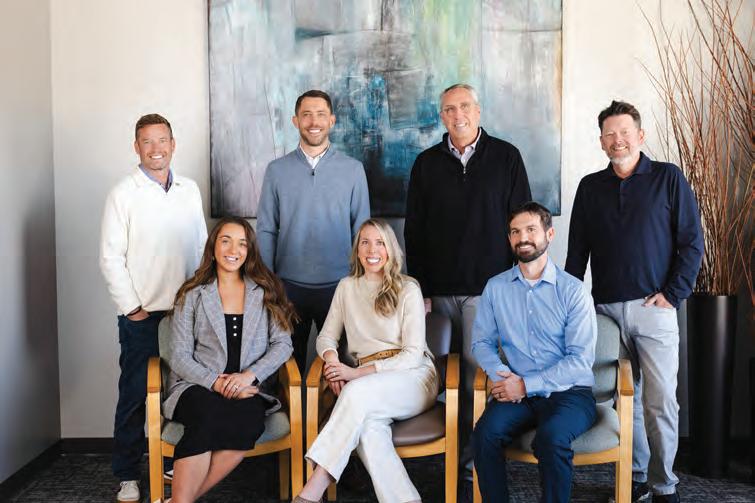




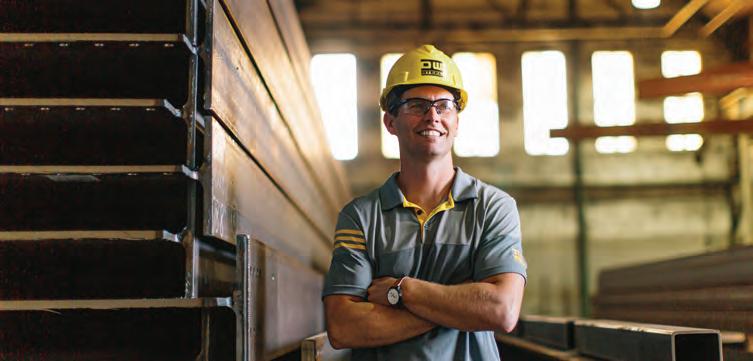
you have been on the lookout for a restorative option for your skin and body, look no further than red light therapy. This alternative choice is rising in popularity as locations continue to pop up across Omaha. There are tremendous health benefits, from skin restoration to pain relief. Improve skin health by reducing wrinkles, removing acne, or enhancing collagen production, or treat medical conditions like rosacea or eczema. Other physical benefits that athletes and physically active people utilize include muscle recovery or inflammation reduction. Whether you are looking to try out something new, upkeep your skin, or improve overall body health, red light therapy offers an immersive and full-body reset. Check out these six locations in Omaha to discover a new way to care for your body.
835 N. 98th St., Omaha, NE 68114 omahawellnesscenter.com
Experience red light therapy with cutting-edge technology at Omaha Wellness Center. Absorb light wavelengths with the OvationULT bed, the only one located in Omaha. Specially designed to form to the human body, this zero-gravity bed allows red and infrared light to be delivered within two to three inches of the user’s skin for a more impactful treatment. The bed also has soothing, vibrational massage features. These sessions last around 10 minutes for a quick and easy treatment.
302 N. 168th Circle, Suite 201, Omaha, NE 68118 westocryo.com
Located in Village Pointe, West Omaha Cryotherapy offers full-body light therapy with advanced and FDA-approved panels. Choose to sit or stand between these red and infrared light panels in sessions that are 20 minutes long. Along with red light therapy, West Omaha Cryotherapy offers services such as cryotherapy, Normatec compression, infrared sauna, and mild hyperbaric oxygen therapy. Stop by for a refreshing and immersive journey.
1130 N. 204th Ave., Elkhorn, NE 68022 omahaface.com
18122 Wright St., Omaha, NE 68130
3525 N 147th St. Unit 204, Omaha, NE 68116 perspiresaunastudio.com
At Perspire Sauna Studio, experience red light therapy in the comfort of relaxing saunas. Red and infrared light, combined with light therapy colors, create a soothing restoration in the heat of a sauna. For a personal experience, choose The Perspire Experience for a private suite with customizable sauna treatments and your choice of entertainment. Visit either of Perspire Sauna Studio’s two locations in Omaha for a true renewal.
2501 S. 90th St., Suite 124 -125, Omaha, NE 68124 beemlightsauna.com
At beem Light Sauna, enjoy a personalized sauna experience in one of their many private suites. Specializing in infrared saunas, choose between red, green, or blue light therapy for unique benefits, or partake in chromotherapy, also known as color therapy. Burn up to 600 calories and fully detox from the inside out in their stateof-the-art saunas. beem Light Sauna focuses on holistic wellness to renew the entire body and overall health.
11602 W. Center Road, Ste. 150, Omaha, NE 68144 balancedhealthclinicne.com
Now located off of West Center Road, Balanced Health Clinic offers red light therapy with red light laser and a red light bed. For therapy focused on a specific area, laser is perfect for targeting things like acute injury or pre- or post-surgery. The bed, the TheraLight 360 system, is a new addition to the clinic that gives a full-body light therapy experience. It is a great choice for general concerns like anxiety, depression, or pain. 1 2 3 4 5 6
At Omaha Face and Body, discover the power of broadband light therapy on facial skin. Broadband light therapy is a new, innovative version of intense pulsed light. This laser energy helps with a variety of skin conditions, including freckles, sun spots, rosacea, acne, aging skin, and more. This treatment is non-invasive and requires zero downtime. Although broadband light therapy can be described as mildly uncomfortable, it is very tolerable and won’t get in the way of day-to-day activities.
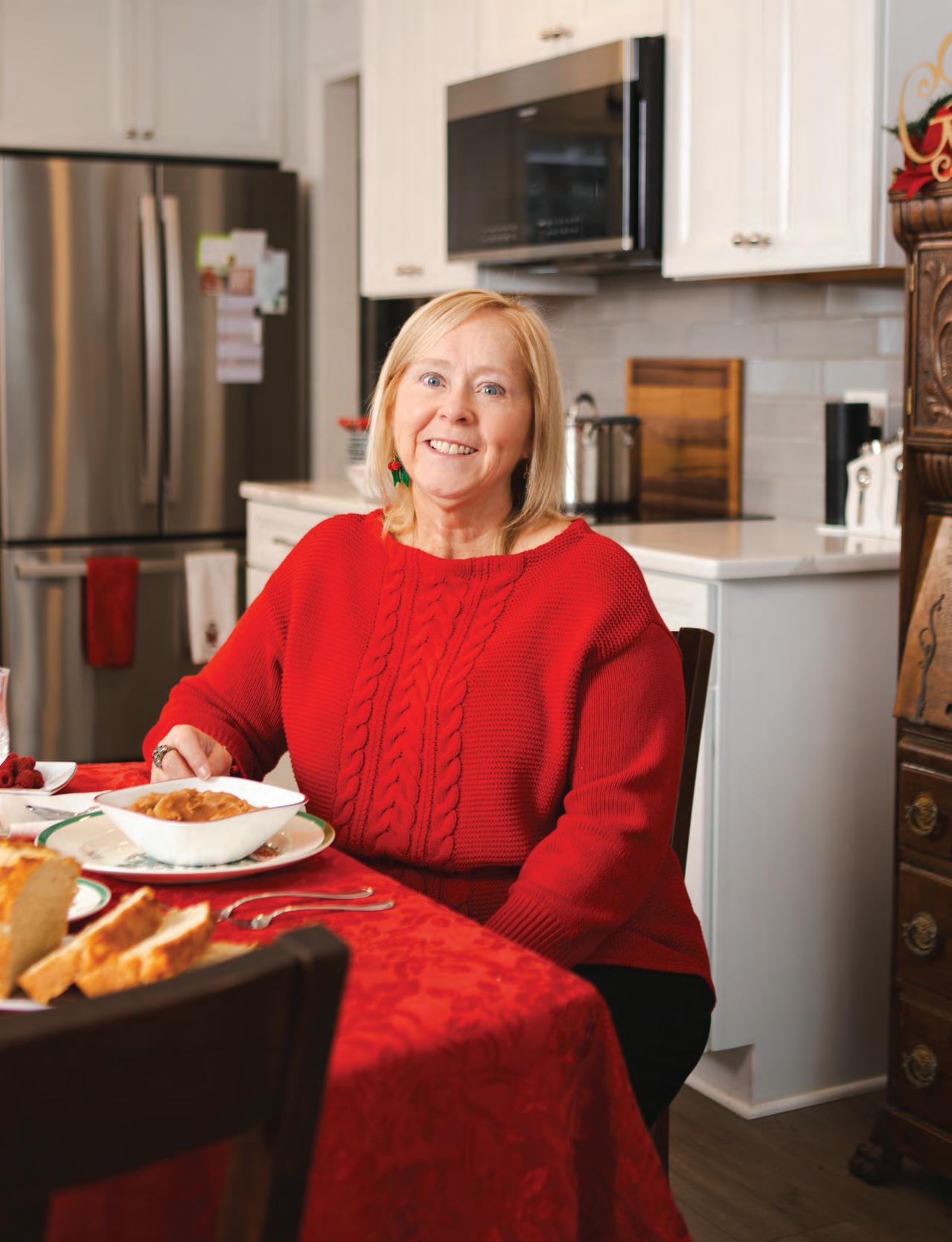
Story by LISA LUKECART
Photography
by
SARAH LEMKE
Design
by
RACHEL BIRDSALL
ather than cinnamon, an earthy, pungent aroma wafts through KC McCaslin’s kitchen during the holidays. The sulfuric stench of mutton pie may seem less mouth-watering compared to the sugary scent of apple pie, but McCaslin insists that one bite of the dumpling-like crust will taste heavenly.
The tradition of the slow-simmered, brothsoaked pies traces back to the late 1800s, when Irish immigrants Thomas and Mary Long Morearty arrived in Knoxville, Tennessee. Confederate soldiers often foraged farms for survival, stealing crops and farm animals during the Civil War. The Moreartys survived, turning the leftover scraps from tough, aging sheep and mixing the simple ingredients of salt, flour, and water to create the tender, humble pie of their homeland.
Thomas and Mary’s eight children carried on the rustic recipe, which continued with McCaslin’s parents, Martin and JoAnn Conboy, to honor their forefathers. Six generations and 165 years later, 85 family members either eat, prepare dough, or cut meat off the bones.
“It unites us knowing almost 200 years of this bond has been kept alive,” McCaslin, 65, said. “We’re lucky to share and make it out of love, and not due to our forefathers’ necessity to survive.”
Steeped in the bony broth, each savory sip nourishes with warm, comforting vitality flavored with a blissful bond that connects time-honored sinew. It presents itself in the matching mischievous blue eyes behind the colorful-rimmed glasses of McCaslin and her sister, Nanci Just, as the pair reminisces about their childhood when the neighbor’s German shepherd, King, rushed from four blocks away to demolish pies sitting in the snow like a scene from the film A Christmas Story . They think back to when the Bumpus hounds ate the turkey, or the comedy Seinfeld , when a pack of dogs chase Elaine after borrowing Jerry’s jacket with hidden mutton in the pockets.
“For some reason, the wild smell of mutton meat drives dogs crazy,” Just, 68, said.
The blonde-haired duo dons costumes, such as an elf, a red sequined Santa suit, and a Christmas caroling battery-operated hat during the holiday season.
“We just love parties. We like a reason to dress up,” McCaslin explained.
They even masqueraded as feathered fowls at their nephew’s wedding, paying the disc jockey $20 to play the forbidden “Chicken Dance” song. They insist newcomers should dress as Santa to participate in the festivities. Their younger sister, Molly Koley, 62, wears the same homemade, scarlet felt skirt that JoAnn wore when she made mutton pies.
Just and McCaslin share sympathetic looks when discussing their mother, who passed away after open heart surgery, their sociable father, who “taught them how to die” when he had cancer, and their brother, Tom, who died of a massive heart attack at 30 years old. The salty, soulful taste of mutton pie brings back cherished memories for comfort.
In mid-November, the process begins with searching for a whole lamb before deer season starts to avoid cross-contamination. In the past, it meant driving to small towns or farmers markets. Their brother-in-law, Kelly Wiggins, once surprised the clan after bringing back a live lamb from Iowa.
“We can’t butcher it anywhere,” McCaslin said to an excited Wiggins, while the lamb bleated in the back of his truck. They luckily found a man in South Omaha willing to do the job.
“There were animal bones and blood everywhere. We didn’t know if he was a serial killer,” McCaslin recalled, laughing.
The Restaurant Depot has helped minimize the issues of finding meat. Wiggins saws the frozen bones into 6-inch slices for easier storage. The tedious job of slicing bite-sized pieces from the bones falls on all four sisters,
including the only brown-eyed one of the crew, Lori Wiggins. They separate the fat, bones, and meat into bags to freeze them until a couple of weeks before Christmas. Two days before the big event, the family boils the bones, scraps, and fat with salt and pepper for two or more hours at their respective homes.
“The broth is like gold to us,” McCaslin said. The 1864 dough recipe calls for 3 quarts of flour, 3 tablespoons of salt, and 1 quart of water for 40 pies.
“It’s not unusual to find ex-wives, fiancés, old high school friends, and new friends who want to help prepare the pies with a great afternoon of mutton pie rolling,” Just said.
Marty Conboy, their brother, flies in from Phoenix, Arizona, but not solely for a bite of the soft shell.
“It’s not something I would order at a restaurant. It’s not about the food. The food holds it together, but it’s about family and tradition,” Marty, 70, explained.
Colorful aprons, rolling pins, and long tables begin the love and joy of mutton making. Typically, the men are the ones to work up a sweat as they wrestle the stiff, fatless dough into shape. Smaller pies allow the children to mold their own works of art. After being filled with gamey meat, draped in dough, and crimped at the edges, the pies emerge golden brown from a 375-degree oven after an hour. Later, they soak in a brothy bath for three hours.
“I always love watching newcomers taste a mutton pie for the first time,” Koley said.
In the end, over 100 pies, along with a potluck spread, end up in hungry stomachs. McCaslin hopes to continue passing the rolling pin down to the next generation.
“Traditions are what knit families together, both young and old,” McCaslin explained. “Hopefully, in 200 years, our family will still be making mutton pies together.”
‘WE’RE
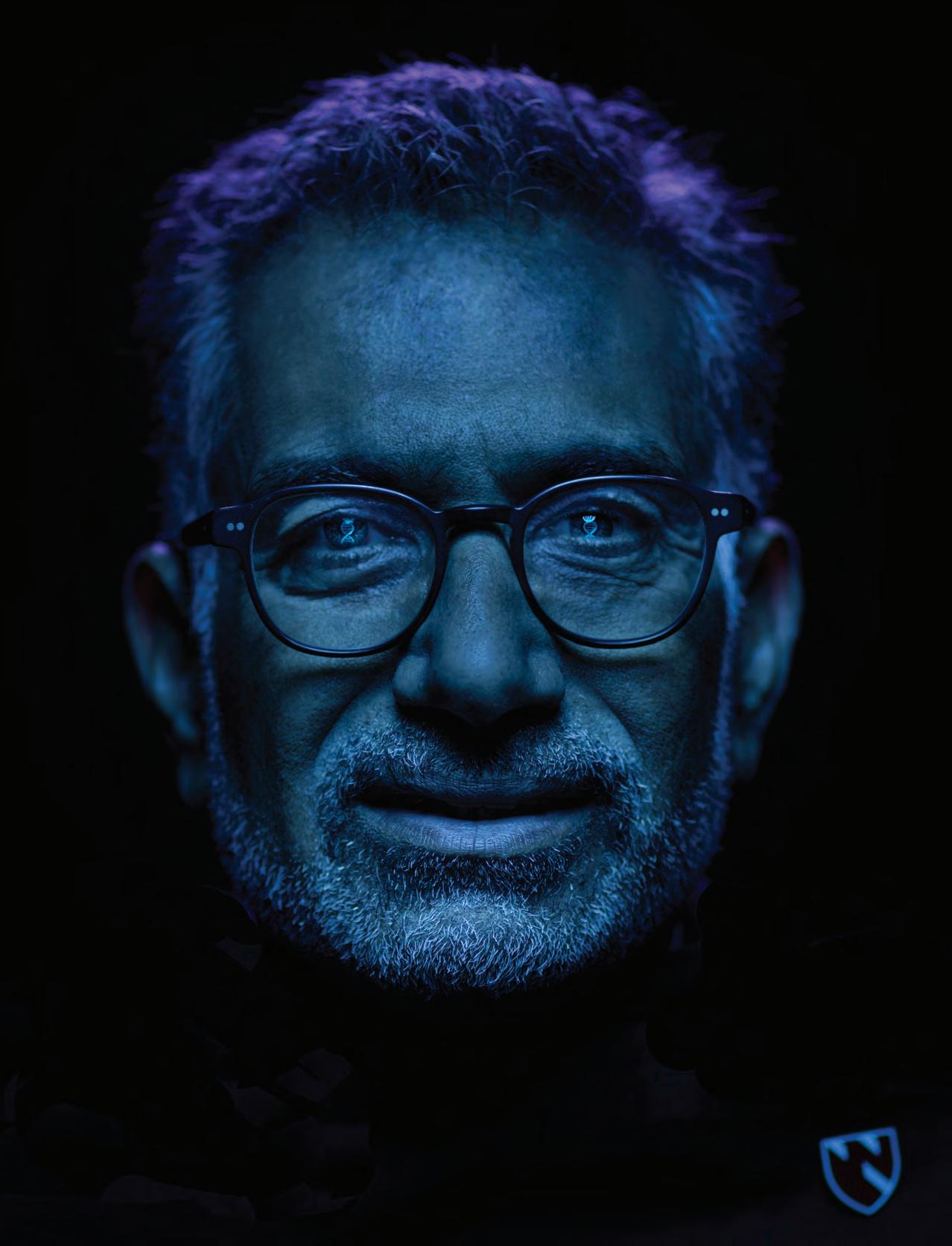

knelt down outside a Karachi doorway and extended his hand. The young girl who, moments earlier, had just received the polio vaccine extended her hand and a skeptical look toward the smiling doctor in a red hat emblazoned with a white “N.”
“On the front lines in Karachi, meeting a superstar who just got her polio protection. Every drop counts!” Khan wrote in an October social media post accompanying the photo. The dean of the College of Public Health at the University of Nebraska Medical Center was in Pakistan to help with the country’s push to eradicate polio.
The context—being called to the other side of the globe by a preventable disease while a different preventable disease, measles, made a resurgence in his home country—was not lost on Khan, one of the nation’s leading experts in tracking and combating the spread of emerging infectious diseases. It might be considered ironic were the stakes not so immense.
“We’ve never had as many cases in the last 25 years as we’ve had this year,” Khan said back in his office in Omaha. “We’ve had multiple outbreaks across the United States this year…And we’ve had three deaths. Th at’s just unconscionable for what is a vaccine-preventable disease.”
It’s the kind of suffering that the Brooklyn native from a working-class family has worked his entire adult life to end.
Khan, who arrived in Nebraska to run the college in 2014, became a highly visible advocate for public health measures during the COVID-19 pandemic in Nebraska and beyond. He has remained an unfl inching and outspoken proponent of science-based approaches to COVID and other threats to public health even as public support and trust has waned.
“When you think about the kind of difficult environment that we're in, in terms of misinformation and disinformation, having someone like him who is very consistently speaking strongly on science is a huge service to the community and to the country,” said Douglas County Health Director L indsay Huse.

1909
Nebraska recorded its first major polio outbreak with more than 600 cases statewide.
1952
The U.S. experienced its worst spike in polio, with 20,000 cases causing paralytic polio. It was Nebraska’s worst outbreak, too. In Lincoln’s Huskerville community, 10% of the neighborhood’s 347 kids fell ill (two died and 18 were paralyzed).
APRIL 12, 1955
19551962
The Salk vaccine was officially announced safe and effective following field trials involving over 1.8 million children nationwide. Before the vaccine, polio killed or paralyzed 500,000 people around the world every year.
Polio incidence dropped dramatically across the U.S., falling from roughly 45,000 annual cases to just over 900 by 1962.
The last case of wild polio transmission within the U.S. 1979
Polio was detected in the U.S. (in New York) for the first time since 2013; both cases were linked to international travelers.
2025
Dr. Ali Khan, dean of the UNMC College of Public Health, traveled to Pakistan to help audit the country’s polio immunization campaign. Pakistan and Afghanistan are the only two countries where wild poliovirus has never stopped. Ongoing global vaccination campaigns have eliminated polio from the Western Hemisphere and reduced worldwide cases by more than 99%.
Th at’s not to say Khan doesn’t see room for improvement in his field. He has called for greater transparency and more dialogue to help repair trust with an increasingly skeptical public. Despite routinely offering critiques on his X account, Khan doesn’t shy away from applauding President Donald Trump’s administration when it takes steps he thinks will improve public health, such as when it struck a deal to lower the cost of weight-loss drugs.
But the past year has brought more challenges than wins, especially for his former employer, the Centers for Disease Control and Prevention. Polling has found that trust in those institutions has fallen.
Along with restoring evidence-based measures, the doctor believes that the cure for the current climate lies in what the photo taken in Karachi illustrated: connection.

Khan keeps an old yellow sticky note taped to the computer monitor in his UNMC office.
The words that he scrawled years ago have faded from red to brown. But their message is clear to him and evident to people who know his work as an academic, a globe-trotting disease detective, and an outspoken advocate for equitable public health practice that is based on science, not on politics.
The sticky note reads: “Integrity. Disruption. Healt h creation.”
Khan has kept an iteration of that note on his computer for more than 20 years. It helps guide his work leading the College of Public Health.
“I don’t like the status quo,” Khan said. “So I like to disrupt, not for the sake of disrupting, but disrupting for the sake of making it better and being creative.”
“I hold that true and dear to my heart, because at the end of the day, I have to have integrity,” he said. “Because otherwise, why would you ever trust anything I say to you?”
The other watchwords, health creation, make up his life’s mission—a mission born from his childhood love of reading.
Khan grew up in a blue-collar family in Brooklyn, New York. His father worked as a plumber and electrician. Khan became the fi rst in his family to get a high school education.
“I became an avid reader in middle school,” he said. “I read everything and anything, the classics, romances, you name it, I read it.”
He consumed such confections as the Victorian romances of Barbara Cartland and the Western frontier adventure novels of Louis L’Amour. Then he read about the 19th century French scientist who invented pasteurization, developed vaccines for anthrax and rabies, and made life-saving discoveries that remain foundational to modern microbiology and immunology.
“I fell in love with medicine probably when I was 14 or 15 years old and read a book about Louis Pasteur,” Khan said. “I wanted to be like Louis Pasteur one day. And so I became laser focused.”
Pursuing that passion, he zipped through Brooklyn College, down the street from his family home, in three years. He went a little farther down the street to earn a medical degree from the State University of New York Downstate Med ical Center.
“And then I realized I was allowed to leave Brookly n,” he said.
Despite his parents’ pleas to continue his studies closer to home, Khan did his residency in internal medicine and pediatrics at the University o f Michigan.
“I knew what I wanted to do and then, fortunately, that got derailed by a wonderful mentor, Bob Gaines, during my residency,” he said.
Gaines told Khan that he had set up an infectious disease residency for him in Boston, but suggested that he fi rst go to the CDC in Atlanta.
“I asked him, how do you spell that?” Khan said. “And he said, ‘Don’t embarrass me.’”
Khan took the advice. He applied for a twoyear CDC disease detective program called the Epidemic Intelligence Service. It was created in the 1950s to rapidly deploy men and women into the field to detect if an infectious disease had been delivered by biological warfare. The program provides hands-on post-graduate training in epidemiology.
“WHEN YOU THINK ABOUT THE KIND OF DIFFICULT ENVIRONMENT THAT WE'RE IN, IN TERMS OF MISINFORMATION AND DISINFORMATION, HAVING SOMEONE LIKE HIM WHO IS VERY CONSISTENTLY SPEAKING STRONGLY ON SCIENCE IS A HUGE SERVICE TO THE COMMUNITY AND TO THE COUNTRY.”
—DOUGLAS COUNTY HEALTH DIRECTOR LINDSAY HUSE
Epidemic Intelligence Service officers have worked on such problems as polio, lead poisoning, birth defects, HIV/AIDS, Ebola, and natura l disasters.
His fi rst real field assignment took him to Hawaii to investigate a diarrhea outbreak on a cruise ship. After being humbled by seasickness and his lack of knowledge about the Norwalk virus, Khan doggedly traced the likely origin of the spread to dirty hands sharing a scoop in the ship’s open ice bin. The solution: He got the cruise ship to switch to a machine that drops ice in a bucket.
“It was a wonderful, brilliant two years,” Khan said. “I found my tribe during those two years, the ethos of public health, the selflessness, the focus on social justice.”
He was hooked. Khan’s two-year stint grew into 23 years at the CDC, mainly all about infectious diseases. He developed an expertise in global health response and became chief of the CDC’s Special Pat hogens Unit.
Khan’s work took him to Alaska for an influenza outbreak, the Four Corners of the southwestern U.S. for a deadly hantavirus outbreak, slaughterhouses in the United Arab Emirates for a life-threatening hemorrhagic fever spreading among guest workers from Asia, and to Washington, D.C., in 2001 for an anthrax attack on C apitol Hill.
In 1995, Khan joined a multi-agency international team including the World Health Organization that was sent to Zaire (now the Democratic Republic of the Congo) to investigate and try to stem a bloody fever that turned out to be caused by the Ebola virus. It killed hundreds of people, many of them health c are workers.
Khan eventually traced the outbreak to “patient zero,” the fi rst victim. The teams identified how the virus was being transmitted. They employed such measures as quarantines, contact tracing, hygiene procedures among health care workers, and persuading people to change their ritual cleansing and burial preparation practices by family members of t he deceased.
“Th rough all this, we had to tackle the community’s magical thinking,” Khan wrote in his 2016 book The Next Pandemic.
“The original outbreak in the hospital was thought to have been a curse by somebody who had not been invited to share a meal with his colleagues at work.”
It wasn’t the last time Khan would encounter magic al thinking.
Dr. Khan’s assessment was measured but blunt.
“We are…an exceptional failure in the number of deaths we continue to allow in the United State s everyday.”
It was October of 2020, and he had been called to speak before the Omaha City Council as it wrestled with whether to extend a mask mandate. By that point, Khan had emerged as a vocal leader in Nebraska’s response to t he pandemic.
On some level, he was echoing points he had made in his book four years earlier. An effective response, he wrote, requires “strong leadership, data transparency, and a willingness to spend time and money on robust public health and healthcare systems, and community engagement.
“The countries that have followed these principles have survived with limited harm,” he wrote. “The ones that have replaced them with hope and magical thinking have suffered.”
It didn’t take long for “magical thinking” to start spreading: claims that COVID was less deadly than the flu or that masks were a conspiracy to take away people’s rights. As Khan presented to the City Council, some members of the public wore incredulous and aggrieved expressions. One woman sporting a hat saying “LEGALIZE FREEDOM” appeared to mouth “liar” as Khan reviewed death statistics.
The doctor was undeterred. And he remains so, even amid a raft of challenges now five years later.
Childhood vaccination rates in the U.S. declined during the 2024-25 school year, according to the CDC. Th at includes the measles, mumps, and rubella vaccine, which had a rate of 92.5%—below the 95% threshold needed to prevent transmission of the measles virus.
As of November, the U.S. had seen 45 outbreaks and more than 1,700 cases—roughly six times more cases than in 2024 and the most since 2000 when measles was declared eliminated in the U.S.
The CDC has been embroiled in turmoil for much of the past year. In August, Secretary of Health and Human Services Robert F. Kennedy Jr. fi red the director of the CDC, which coincided with resignations of several top officials who bemoaned the direction of the agency under Kennedy’s leadership. Kennedy later told senators that changes were needed because the CDC had failed at its job. “We are the sickest country in the world,” he said.
Weeks before the leadership shakeup, a gunman fi red more than 180 shots at the CDC headquarters in Atlanta. The gunman blamed his depression and suicidal thoughts on the COVID-19 vaccine, the Associated Pre ss reported.
Meanwhile, faith in the CDC and other federal health entities has declined, multiple polls have found. An Axios/Ipsos American Health Index poll conducted in October found 54% of respondents said they trusted the CDC, down from 66% in December 2024. The poll found a similar decline for the Food and Drug Administration.
Khan said problems are not limited to the federal government. He noted that in the past year, Louisiana health officials delayed warning the public about an outbreak of whooping cough, a vaccine-preventable disease.
“It’s just been disappointing that we have not had that strong political voice supporting public health,” Khan said. “If anything, we’ve seen a lot of undermining of public health, with multiple legislative bills across the U.S., and what looks like the humiliation of the CDC, once not just a premier U.S. health agency, but a premier global hea lth agency.”
Since the COVID-19 pandemic, childhood vaccination rates have steadily declined according to data from the CDC’s SchoolVaxView. This graph compares average U.S. and Nebraska kindergarten vaccination rate by school year for five vaccines: 1. varicella (2 doses); 2. DTP/DTaP/DT (diphtheria, tetanus, and pertussis); 3. hepatitis B, 4. MMR (measles, mumps, and rubella); and 5. polio.
He said what has happened with the CDC in 2025 is a reminder to him that people in public health “need to work on transparency and humility to try to rebuild trust.”
“We need to make public health more visible within our communities,” he said. “Yes, during the pandemic, people realized what our public health authorities are and our relationship to vaccines and diseases. But I think we need to be more visible to let people know what we do for them every day.”
Public health “is about a lot more than just vaccines,” Khan said. It’s a point evident everyday in the College of Public Health.
His decision to come to Nebraska—a state he’d never been to—to lead the college in 2014 marked a major career change for the disease hunter turned bureaucrat.
He had spent more than two decades at the CDC, rising to the rank of assistant surgeon general of the U.S. Public Health Service. In that role, he led the Office of Public Health Preparedness and Response, a biodefense program with a $1.5 billion budget that included the largest pharmacy in the world, the Strategic Nationa l Stockpile.
When a mentor suggested he consider academia, Khan decided to take the leap. He has continued to think and act globally even as he teaches classes at UNMC, leads the college and throws himself into the local community and state, where he’s known for his approachable demeanor and willingness to lend a hand.
Khan said the college has doubled its number of students in the past five years. They’re from 44 states and 36 countries now. According to UNMC, 43% of the college’s students are Nebrask a residents.
“We bring the world to Nebraska and we take Nebraska to the world right here at the College of Public Health,” he said.
Huse, the Douglas County health director, called Khan a “huge asset” to Nebraska.
“We’re very lucky to have him,” she said. “He has been around the world. He has fought some of the biggest diseases. It's just pretty impressive that we have him here.”
The college is working to improve public health across Nebraska. Khan pointed to an effort he co-leads called ALIGN Nebraska. It brings together major health systems, care organizations, insurers, nongovernmental organizations, the federal government, and state and local health departments.
The group formed about five years ago to improve colorectal cancer screening rates. It has been successful, he said. They’re now pivoting to focus on improving maternal health and infant outcomes, specifically inequality, Khan said.
A Flatwater Free Press analysis of federal data found Nebraska had the fourth-highest infant mortality rate for babies born to Black moms in the country i n 2019-2023.
“If you’re a Black baby born here in Nebraska, you’re about two to three times more likely to die than a white baby,” Khan said, “and that’s just unconscionable here in Nebraska.”
The college has continued to uphold its social justice foundation and mission to be inclusive of everyone in Nebraska—rural or urban, young or old, men or women, underrepresented in medicine or not, Khan said. Th at won’t change, he added.
“I’m willing to sacrifice being liked, and being employed, for doing the right thing for the people we serve and those I work for and with,” he said.
The Flatwater Free Press is Nebraska’s first independent, nonprofit newsroom focused on investigations and feature stories that matter. Learn more at fl atwaterfreepress.org.

A vaccine for measles became available in 1963. Previously, most children contracted measles by age 15; an estimated 3 to 4 million people were infected with 400-500 deaths and 48,000 hospitalizations annually.
The disease was declared “eliminated” within the United States, but sporadic measles outbreaks have continued in subsequent years. Between 2000-2024, the World Health Organization reported an 88% drop in global measles deaths between 2000 and 2024, with nearly 59 million lives saved as a result of vaccination.
The Centers for Disease Control reported a then-record number of (1,274) measles cases since “elimination” within the U.S.
Nebraska confirmed its first case of measles since 2017; the case from Sheridan County involved an immunocompromised child who had not yet completed a full MMR vaccination schedule.
Reported U.S. measles cases surpassed the 2019 tally according to the U.S. Measles Tracker from the Johns Hopkins Center for Health Security.
The 2025 U.S. Measles Map recorded 1,804 confirmed measles cases within the U.S. as of Dec. 1. Most cases were linked to 46 outbreaks. Canada lost its “measles-free status,” and the U.S. faces possible status revocation in January 2026.
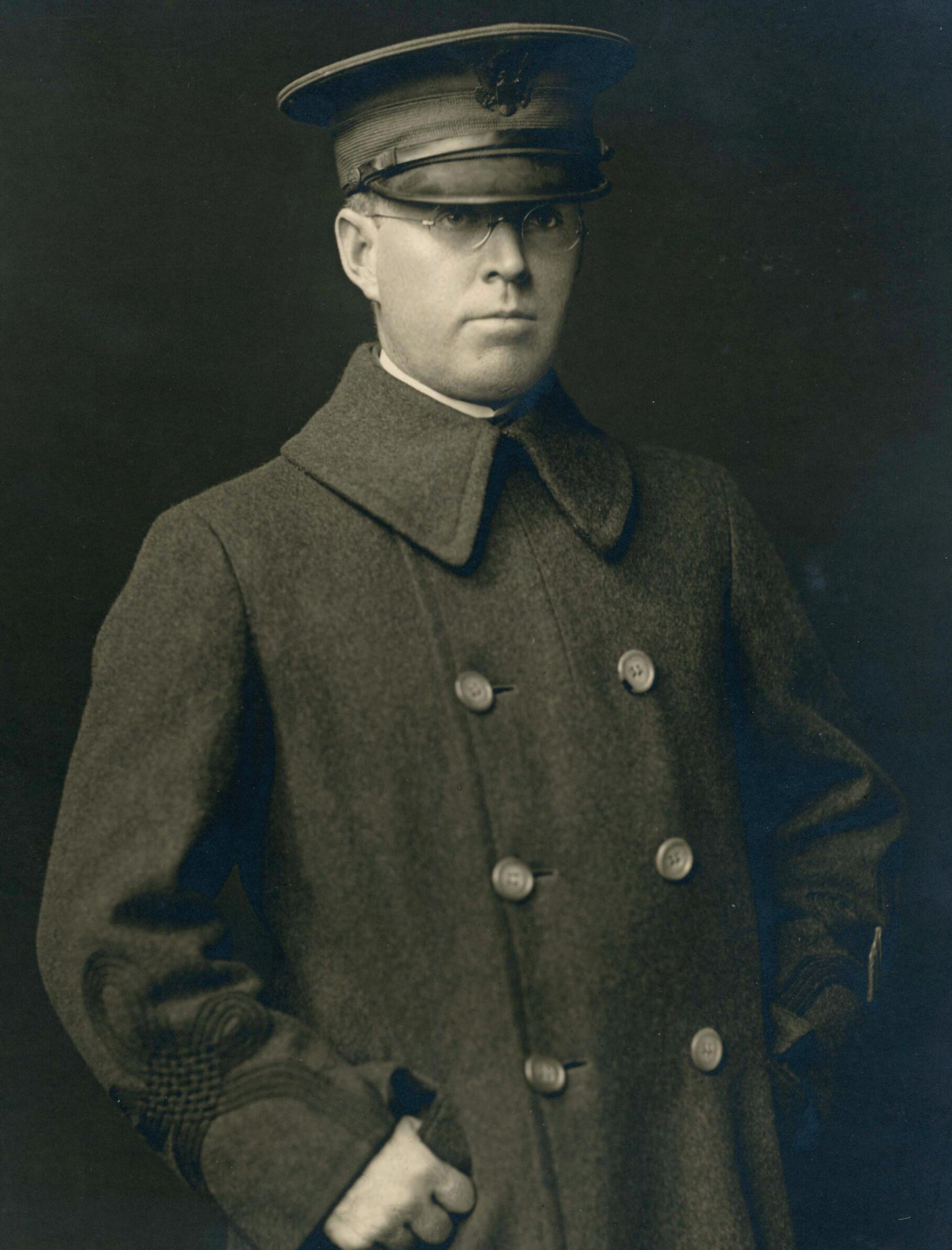
The Legacy of Dr. Hiram Winnett Orr
How a Nebraska surgeon shaped modern orthopedics
Modern orthopedics—the branch of medicine devoted to bones, joints, and the musculoskeletal system—evolved from centuries of general surgery and battlefield medicine. In the early 20th century, the field took on its modern form, thanks in part to a Nebraska physician whose influence reached far beyond the state’s borders: Dr. Hiram Winnett Orr (1877–1956).
Orr was not only a pioneering surgeon. He was also an academic leader who helped establish the American Academy of Orthopaedic Surgeons, a professional association for orthopedic medicine with nearly 40,000 members today. His legacy positioned the state’s first medical college as an early hub for orthopedic innovation half a century before it rebranded as the University of Nebraska Medical Center.
“He was really ahead of his time,” said Dr. Kevin Garvin, chair of the UNMC Department of Orthopaedic Surgery and Rehabilitation. “We are privileged to have his name associated with our department.”
Born in West Newton, Pennsylvania, in 1877, H. W. Orr moved west as a teenager to live with his uncle, Dr. Hudson J. Winnett, a Lincoln physician and former mayor. Orr pursued pre-medical studies at the University of Nebraska and later earned his M.D. at the University of Michigan in 1899.
He returned to Lincoln after completing an internship at New York’s Bellevue Hospital and briefly took over his uncle’s medical practice. Further training in Chicago under orthopedist Dr. John Ridlon of Northwestern University inspired Orr’s lifelong dedication to the emerging specialty of orthopedic surgery.
That same year, Orr joined a group of Nebraska physicians lobbying the legislature to establish a state orthopedic hospital for children. Their efforts led to the 1905 opening of the Nebraska Orthopedic Hospital in Lincoln—one of the first state-supported facilities in the nation for children with musculoskeletal disabilities. Orr served there in various roles for five decades, from assistant surgeon to chief surgeon.
When World War I began, orthopedic surgery was still in its infancy. Advances in weapons created devastating bone and soft-tissue injuries that existing medical practices struggled to treat. Orr answered the call for medical service overseas, joining the U.S. Army Medical Corps and working alongside Britain’s legendary surgeon Sir Robert Jones, known as “the Father of Modern Orthopedics.”
In field hospitals across France, Orr developed what became known as the “Orr Method,” a technique for managing compound fractures and infected wounds using immobilization in plaster-of-paris casts. At the time, frequent dressing changes were the norm; Orr’s approach emphasized cleanliness, immobilization, and rest—dramatically improved healing rates before the invention of antibiotics.
The technique revolutionized fracture care and became a standard practice in both military and civilian hospitals for decades. Journalist Leigh White later profiled Orr’s wartime work in Harper’s Magazine (1943) under the headline “Dr. Orr Packs Them in Plaster,” documenting his lasting influence on orthopedic care.
After returning to Nebraska, Orr turned his attention to strengthening the profession itself. He served as editor of the American Orthopaedic Association’s journal from 1919 to 1921, and he moved editorial offices to Lincoln. That journal evolved into the Journal of Bone and Joint Surgery, still a leading publication in the field today.
Orr also helped found the American Academy of Orthopaedic Surgeons in 1931. The Academy was conceived as a more inclusive, education-focused complement to the smaller and more exclusive American Orthopaedic Association.
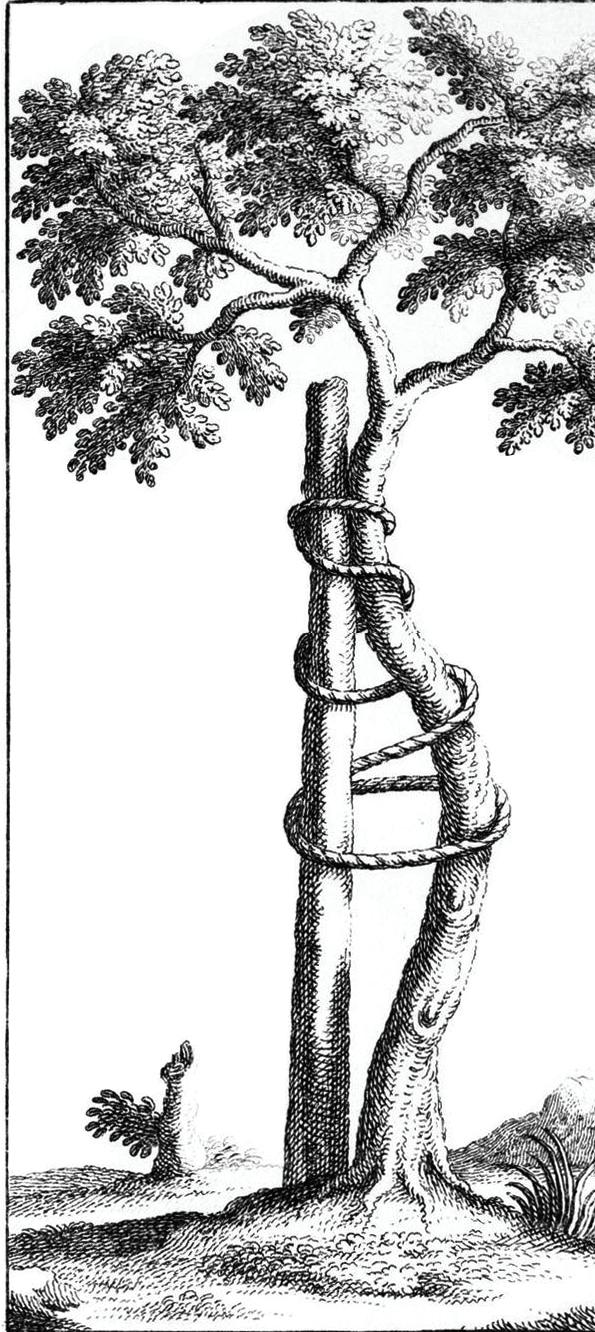

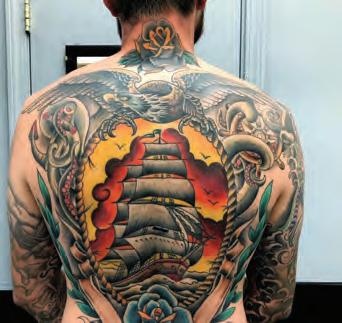
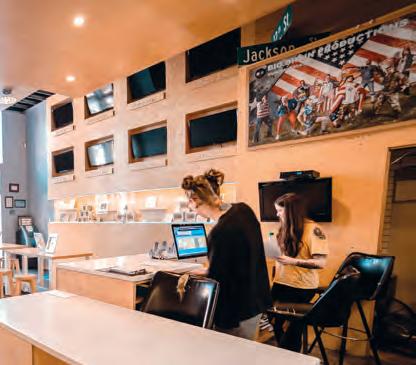



He later served as president of the AOA in 1937—the same year Nebraska hosted the organization’s 50th anniversary meeting. That event, split between Lincoln and Omaha, drew 150 surgeons from around the world for lectures, clinical demonstrations at University Hospital, and even a celebratory day at the Ak-Sar-Ben racetrack.
Beyond surgery, Orr was a passionate medical historian and bibliophile. Over his lifetime, he amassed a personal library containing thousands of rare medical texts tracing the evolution of healing arts—from classical works of Hippocrates and Galen to early orthopedic treatises.
In 1974, the University of Nebraska Medical Center’s McGoogan Library of Medicine became the permanent home of The Orr Collection, ensuring that his dedication to both surgery and scholarship would remain accessible to future generations of physicians.
Orr also maintained a lifelong fascination with Anne of Brittany, a historical figure whose congenital hip deformity first captured his attention during his wartime service in France. His related writings and collection—held in the special collections of the University of Nebraska’s Love Memorial Library—illustrate the breadth of his intellectual curiosity beyond the operating room.
The word “orthopedic” comes from Greek words for straight (“orthos”) and child (“-paideia”), coined by French scientist Nicolas Andry in 1741. Before the 20th century, orthopedic medicine focused primarily on preventing/treating spinal and bone deformities in children. The 1955 development of a polio vaccine helped end the scourge of disease that previously paralyzed so many young people when Orr first began practicing medicine.
Public demand for orthopedic innovation has only grown. The advent of mass-market automobiles brought a new urgency to trauma medicine in the early 20th century. Meanwhile, old problems—bad hips, knees, etc.—found new solutions with new medical techniques and technologies.
“Over the past century, orthopedics has grown to eight different subspecialties. Our department has grown as well,” Dr. Garvin said, commenting on Orr’s legacy at UNMC. “We are the only group in Nebraska with surgeons representing all the subspecialties: adult reconstruction; foot and ankle; hand and upper
When Orr died in 1956 in Rochester, Minnesota, he left behind not only innovations in technique and education, but also a vision for orthopedics as both a science and a service to humanity. Orr’s influence extended through his partnerships with other Nebraska medical leaders, including Dr. John Prentiss Lord of Omaha (the first chair of orthopedics at the University of Nebraska College of Medicine) and other orthopedic pioneers from Nebraska. Together, they helped establish a lineage of orthopedic excellence that has continued through the contemporary UNMC Department of Orthopaedic Surgery and Rehabilitation, which celebrated its 100th anniversary in 2017.
1905 — State Orthopedic Hospital Opens
One of the nation’s first state-funded hospitals for children with orthopedic conditions opens in Lincoln through the advocacy of Drs. Hiram W. Orr and John Prentiss Lord.
1917 — University Hospital Expands in Omaha
The new University Hospital at 42nd and Dewey strengthens orthopedic education and clinical care in partnership with Nebraska physicians.
1918 — “The Orr Method” Devised While serving in France during World War I, Dr. Orr introduces plaster-cast immobilization for compound fractures—a breakthrough that reduces mortality and becomes standard practice.
1931 — AAOS Founded
Orr joins seven peers to form the American Academy of Orthopaedic Surgeons, today the world’s largest organization of musculoskeletal specialists.
1937 — AOA turns 50
As president of the American Orthopaedic Association, Orr brought the association’s annual meeting to Omaha and Lincoln.
1974 — Orr Collection Returns Home UNMC’s McGoogan Library becomes steward of Dr. Orr’s 2,600-volume medical-history library, preserving a cornerstone of orthopedic scholarship in Nebraska.
Dr. Kristi Tackett-Newburg Founder/Owner
Salina Anderson, APRN
Geraldine Alexis, LIMHP, PLADC
Julie Bierman, LCSW, LMHP
Chantel Bruha, LIMHP, LADC
Korrie Conners, LMHP, CSAT
Kirby Davis, LMHP
Peggy Deaver, LIMHP, CPC
Davin Dickerson, APRN
Beth Farrell, LCSW, LIMHP
Dumayi Gutierrez, PhD, LMHP
Lucy Hancock, MA
Charlene Hills, LCSW, LIMHP
KG Langdon, APRN
Mary Loftis, LMHP, CPC
Kim Mueller, LIMHP, CPC
Nicole Obrecht, LIMHP
Kara Schneider, BA
Marty Stoltenberg, APRN-BC
Kristi Tackett-Newburg, PhD, LIMHP
Greg Tvrdik, LIMHP, CPC
Sarah Wenzl, LMHP, CPC
Michele Yanney-Wehbi, LIMHP, CPC
For expanded content, open the camera on your smart device and hover over the QR code.
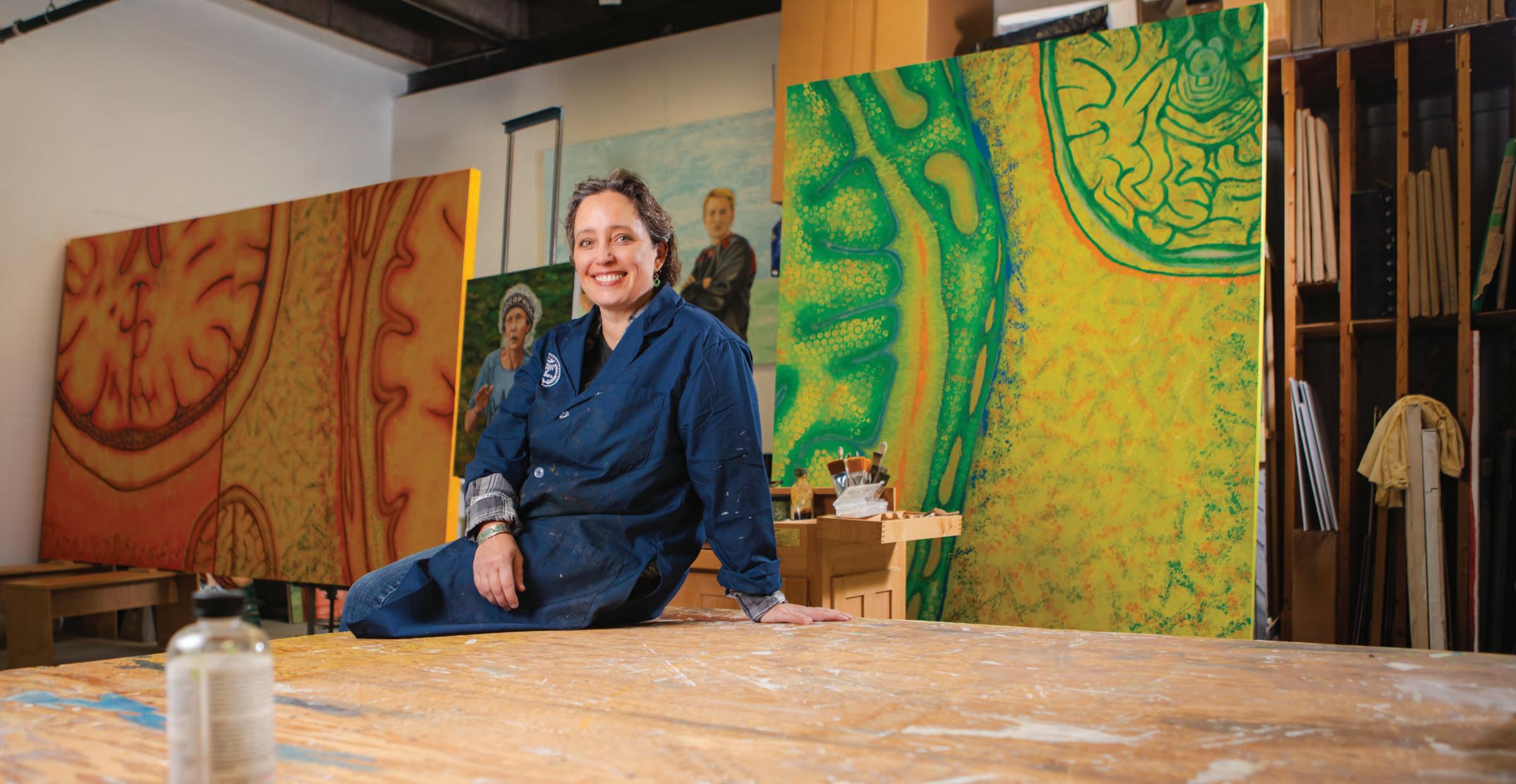
hen the doctors told Rachel Mindrup that her son, Henry, had neurofi bromatosis at just four months old, she had never heard of it before. Since then, she has become an active and influential advocate for the NF community through painting portraits of people with t he disorder.
NF is a genetic condition that causes tumors to grow on nerve tissue. However, the type and location of tumors varies from person to person, which makes it diffi cult t o identify.
In Henry’s case, he has fi ve brain tumors. On the outside, he looks just like your average 22-year-old, but he’s been getting brain surgeries for his tumors for a majority of his life. His last brain surgery was December 2024, but another brain tumor remains, so it’s a cycle, Mi ndrup said.
It was diffi cult for the Mindrups when Henry entered kindergarten. His teachers were not familiar with NF and struggled to accommodate him. “How do you expect people to be helpful if they don’t know what you’re talking about? ” she said.
She wanted to do more, but was unsure how to help. Until she realized she could contribute with something that she was g ood at—art.
Mindrup is an associate professor of art and drawing at Creighton University, where she’s been since 2020, but art has been a part of Mindrup’s life for as long as she can remember. She’s been drawing since she was a little kid, she said.
After receiving her BFA from the University of Nebraska–Kearney in 1996, where she combined her love of art with visual communications, she went on to the Art Academy of Los Angeles with the goal of becoming a Disney animator. After a few years in Los Angeles, she went on to receive her MFA from the Art Institute of Boston.
One day on Facebook around 2010, she came across a man with facial deformities named Reggie Bibbs. In his goal of educating others about NF, he encouraged people to “just ask” if they saw something diff erent , she said.
Inspired by Bibbs, Mindrup decided to paint his portrait in watercolor as a “thank you” for his advocacy. Bibbs asked her to paint his friend, Maurice Simpson, as well. Th e two changed their profi le pictures to their respective paintings.
Th en, a mother reached out to get a portrait of her daughter who had NF. She was well-connected in the NF community and a heavy advocate. She changed her profi le picture as well.
And that’s when things really kicked off .
“I still remember when I came home, I thought somebody hacked into my Facebook, because I had way too many notifi cations,” she said. Mindrup had become an overnight sensation in the NF community on Facebook, and more and more people were reaching out to her.
With the infl ux of people interested in getting their own or their loved one’s portrait painted, Mindrup suddenly found herself with a huge opportunity, but limited time. So, she turned it into something more by asking people to donate to the Children’s Tumor Foundation. In return, she would paint a portrait of them or their loved one. “It sort of became a behind-the-scenes fundraising,” Mi ndrup said.
After a couple of years, she decided to adjust her approach. She switched from watercolor to oil paint to convey deep emotional expression. “Anytime we want to cement someone’s legacy—the President of the United States, a federal judge— we do that in oil paint or bronze,” Mi ndrup said.
Most of her fi rst portraits were headshots, but she began to have people choose what activity they were doing in their painting. “Th ey’re in the middle of doing what they enjoy: baking, running a marathon,” she said.
Mindrup started these oil paintings by going back to repaint Bibbs. In this portrait, he was sipping a cup of coff ee. He started every morning this way, she said.
One purpose of this project is to show people how diff erent NF can look from person to person. “I realized early on that I can’t just paint pictures of Reggie, who has a big disfi guring plexiform tumor on his face,” Mindrup said. “Th at would make everyone think, ‘If you get NF, you are going to have big disfi guring tumors,’ which isn’t necessa rily true.”
These portraits also allow people to look at NF and learn more about it. Along with each portrait is a written paragraph of that person’s life and how NF affects them. This series of portraits has become a collection of the “Many Faces of Neurofi broma tosis.”
“It gives the rest of us permission to gaze,” Mindrup said. You’re staring at a painting instead of an actual person, but you are still able to observe what they look like and rea d about NF.
Currently, 10 of these portraits are on display at CHI Bergan Mer cy Hospital.
Another series of art that Mindrup creates is called “Th e Art of Medicine.” Th ese are more personal and range from quick sketches to oil paintings. Th ey depict what life is like between her son’s MRI scans and waiting to hear the word “stable,” she said.
portraits with a few bullet points on how NF aff ects each person and how they live with it. She has successfully gotten signatures for congressionally directed medical research fundin g each year.
“Th e portraits are really the reason why I’m memorable,” Mindrup said. “Th ey’re like, ‘You’re the portrait lady,’ when I come back. They know me.”
Another way Mindrup has combined art and medicine is through her work as a professor a t Creighton.
When the Creighton University School of Medicine caught wind of her portraits, they were impressed. Th ey awarded her the Richard L. Deming, MD, Endowed Chair of Medical Humanities in 2021. Along with teaching painting and art anatomy classes in the fi ne arts department, Mindrup also teaches fi rstand second-year medical students who elect to take her art and drawing class, “Th e Art of the Examination,” as their humanities course r equirement.
Incorporating humanities into their curriculum fosters empathy and caring in students. Mindrup strives to make the medical humanities a more enriching experie nce overall.
“What are ways we can put you in the shoes of your future patients?” she said. “So you don’t just sit there and blurt out diagnoses without remembering the humanity of the person you are t alking to.”
Many of these students have not drawn since they were children, she said. Mindrup understands the way they feel vulnerable, and she encourages that, because many of their future patients will feel those emotions as well.
It is also a way to connect to parents who have children with medical conditions. “You don’t need to have NF to know what it’s like to sit waiting for a loved one,” Mi ndrup said.
After painting people all over the world with NF, she realized she could also help out by advocating on the hill. Over the past five to 10 years, she has gone down to Washington, D.C. to push funding for NF research.
Elected officials are constantly bombarded with photos of people asking for funding, so Mindrup needed a way to stand out.
Instead of a selfi e with two full pages of someone’s story, Mindrup shows her oil
As a caregiver and a mother who has spent a lot of time in the healthcare system, she brings an insightful perspective teaching these future medical pr actitioners.
In her own future, Mindrup hopes to turn her focus internation ally again.
In the past, she has helped individuals with NF around the world who don’t have access to the same care that is available in the United States. She wants to continue this work, helping those who might have larger obstacles like religion, culture, or fi nancial reasons by painting their portraits and raising funds to help pay off medical bills and other b asic needs.
Th rough her artistic abilities and love as a mother, Rachel has created a unique and impactful way to make a diff erence for the NF community. “Th is is just a mom trying to [help]...everybody’s got their thing,” she said.
To learn more about Mindrup or to view her work, visit r mindrup.com.
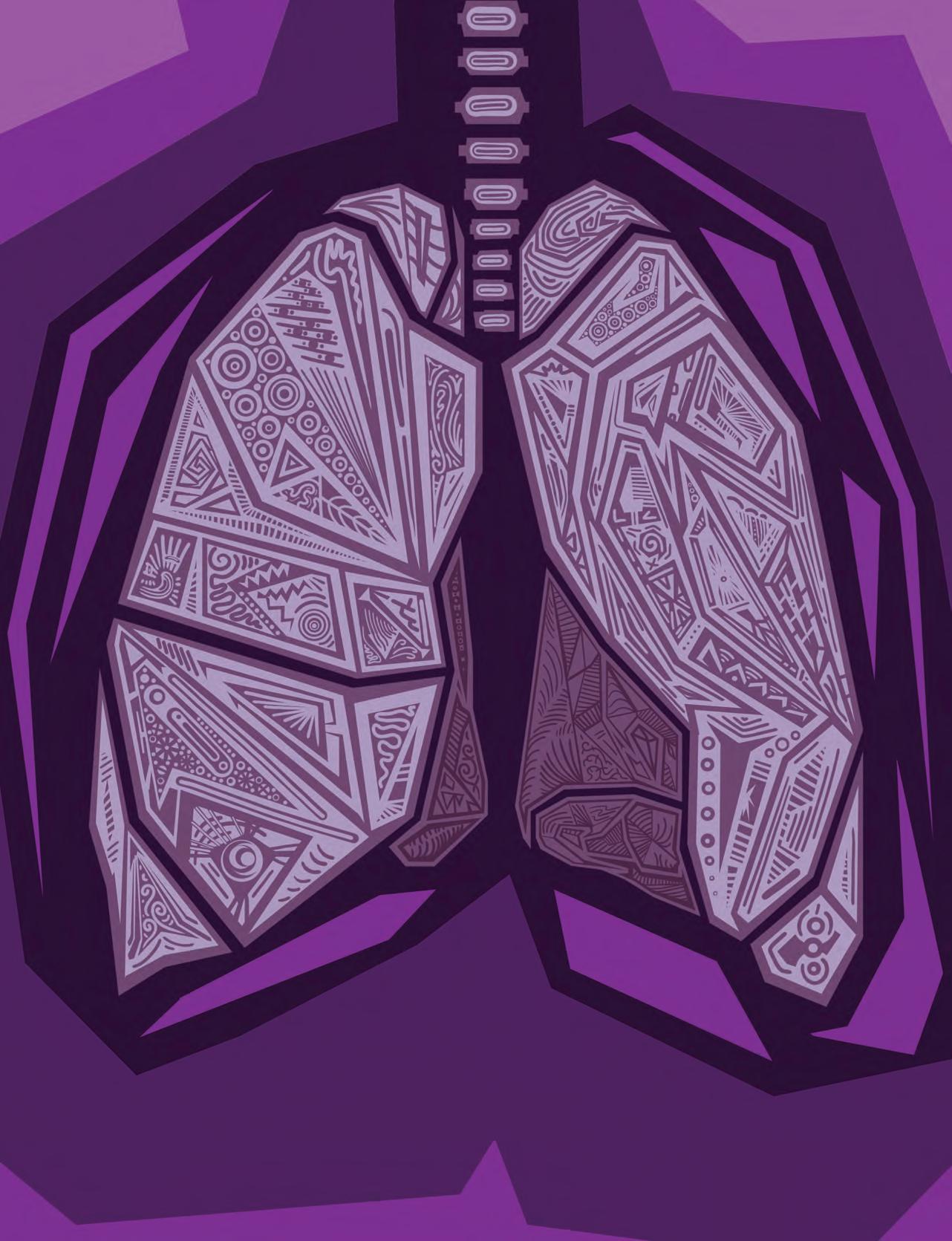
GIVING SPOTLIGHT
HOW BOOMER ESIASON AND DAVE RIMINGTON CHANGED THE FIGHT AGAINST CYCSTIC FIBROSIS
I am going to be the biggest enemy that this disease has ever had.
hen Boomer Esiason opened his Father’s Day gift in 2021, he didn’t find the typical necktie or golf gear. Inside was a sonogram. His son, Gunnar—born with cystic fibrosis, a condition that leaves most men infertile as a sort of natural vasectomy—was going to be a father.
Esiason sat in shock, crying, unable to speak. After spending decades fighting the disease that nearly took his son, this was proof that all that effort had led somewhere. “Gunnar was not supposed to have children, and now he’s the father of two, which for me means that I’ve won a thousand Super Bowls,” Esiason said. “That’s the greatest achievement that I can ever imagine being a part of.”
That moment is part of the larger story of the Boomer Esiason Foundation, which has raised nearly $200 million for cystic fibrosis research and family support programs.
Esiason first heard the term “cystic fibrosis” in 1989, two years before Gunnar was born. He had just been named the NFL’s Most Valuable Player after a spectacular season with the Cincinnati Bengals when he met sportswriter Frank Deford at the awards dinner. Deford had written about losing his daughter, Alex, to cystic fibrosis when she was 8 years old. “I went up to Frank and said, ‘How can I help?’” Esiason recalled.
He began supporting local cystic fibrosis charities and the Cincinnati Children’s Hospital, which ran a world-renowned CF center. What he saw shocked him. “What I found out pretty quickly is that a lot of these kids were dying before the age of 10, and their death was just absolutely awful,” Esiason said. “Most of them would die because their lungs gave out, or they would have another organ failure, and they couldn’t find an organ donor. The more I got into it, the more passionate I became about the disease.”
Two years later, Gunnar was born and coincidentally diagnosed with CF. The superstar quarterback, already active in the fight against the genetic disorder, now had a reason that hit even closer to home. “I am going to be the biggest enemy that this disease has ever had,” Esiason told Sports Illustrated in 1993.
– Boomer Esiason
He went to one of his closest friends: former Nebraska star center Dave Rimington, an Omaha South graduate, two-time Outland Trophy winner, and the greatest college football center of all time, who had snapped the ball to him in Cincinnati. “Dave was a part of my life when I got drafted by the Bengals in 1984. He and I became fast friends,” Esiason said. “When we got the diagnosis, I asked Dave if he would come back and help me form a foundation and become the president of that foundation. I trusted him. I trusted his judgment. I trusted his acumen. I trusted his ability to speak to people.”
Thus, the Boomer Esiason Foundation was born.
In the early years, the foundation operated with a sense of urgency. “This whole foundation was not built on a long-term plan,” Rimington said. “It was like, ‘We have to raise money right now. The clock is ticking.’”
The foundation started small, raising funds for research centers and hospitals. But as it grew, it began offering scholarships, then expanded into programs that addressed the realities of living with CF, like fertility and family planning. “What was at one time about saving people’s lives now is building families,” Esiason said.
Through the BEF’s in vitro fertilization grant program, adults with cystic fibrosis who want to have children can receive help covering the costs of assisted reproduction. “Our IVF grants have led to 11 ‘BEF babies’ that have been born, and we have 10 or 11 on the way right now,” Esiason said.
* * *
By the time Gunnar graduated from Boston College, his condition was severe. “He felt like he was at end-stage illness, which means a double lung transplant,” Esiason said. “It can get pretty ugly and pretty nasty.”
Then came a clinical trial for a new drug: Trikafta. Gunnar joined, not knowing whether he was receiving the active drug or a placebo. One night, Esiason and his son were playing hockey together, and Gunnar skated longer and harder than usual. “After the game was over, he goes, ‘Let’s go get a
pizza and a beer,’” Esiason said. “You know, part of the CF issue is digestion. They have to take enzyme pills to help with their digestion. So we go out, he eats half a pizza and has two beers. That’s when we both realized that he wasn’t on the placebo, he was on this drug.”
The medication worked, improving Gunnar’s lung function and digestion so dramatically that his life changed course. He earned a master’s degree from Dartmouth, married his longtime partner, Darcy, in 2021, and welcomed his son, Kaspar, that Christmas Eve. His daughter, Mieke, followed soon after.
“I always say Gunnar is my hero, and Kaspar and Mieke are our miracles,” Esiason said.
The Boomer Esiason Foundation’s most visible connection to Nebraska came a few years after its creation, when Esiason decided to honor Rimington’s legacy in a way that could also support the foundation’s mission. That idea became the Rimington Trophy, awarded right here in Nebraska each year to the best center in college football.
“I said, ‘Let’s honor the great centers of our sport, because they’re the ones that nobody’s ever talking about,’” Esiason recalled. “I still think it’s the most beautiful trophy in college football. It’s prettier and better-looking and better built than the Heisman Trophy. Anybody who wins it, they’re blown away by it.” The Rimington Trophy became one of the last position-specific awards in college football.
He saw a parallel between the position and the disease. “CF is a very small disease in terms of numbers—there’s about 30,000 patients nationwide that are born with this genetic disorder,” he said. “When I think about how small that is and how little press it gets, it brings me back to the position that Dave Rimington plays. You only know the center when he snaps the ball over the quarterback’s head or dribbles it back to him. Combining a very little-known disease like cystic fibrosis with the center, a position that is unfortunately very little-known to the general public, but is appreciated so much by his teammates, there is synergy.”
Since its creation in 1999, the Rimington Trophy has raised about $5.2 million for cystic fibrosis programs. The first winner was Nebraska’s Dominic Raiola in 2000, and the annual dinner in Lincoln has become both a celebration of the position and a fundraiser for the cause.
Continued on pg.
JANUARY/FEBRUARY 2026
COMPILED BY NAOMI HEU

Jan. 1
RUST BUSTER 5K ON NEW YEAR’S DAY
Benefits: USATF Nebraska Association Long Distance
Running Program
Location: Two Rivers State Park
Jan. 7
VETS GET PETS WEDNESDAY
Benefits: Nebraska Department of Veterans’ Affairs
Location: Nebraska Humane Society nehumanesociety.org
Jan. 15
ANNUAL TRUSTEE PARTNER MEETING
Benefits: Business Ethics Alliance
Location: Schwab Field Clubhouse businessethicsalliance.org
Jan. 17
MIDLANDS COMMUNITY FOUNDATION GALA 2026
Benefits: Midlands Community Foundation
Location: The Astro Theater midlandscommunity.org
Jan. 18
ANNUAL ICE FISHING TOURNAMENT
Benefits: Bags of Fun Omaha
Location: Whitehawk Lake bagsoffunomaha.org
Jan. 21
OUTLAND TROPHY & NEBRASKA FOOTBALL AWARDS DINNER
Benefits: Greater Omaha Sports Committee
Location: Hilton Omaha Downtown showofficeonline.com
Jan. 24
BURNS NIGHT
Benefits: Scottish Society of Nebraska
Location: Scottish Rite Center thescottishsocietyofnebraska.org
Jan. 24
CONGÉ 2026: A LEAGUE OF THEIR OWN
Benefits: Duchesne Academy
Location: Duchesne Academy duchesneacademy.org
Feb. 14
OMAHA HEART & STROKE BALL
Benefits: American Heart Association Nebraska Location: CHI Health Center heart.org
Hosted by the American Heart Association Nebraska, the Omaha Heart & Stroke Ball is a celebration of all the efforts and hard work the AHA has been doing. For over 100 years, the AHA has successfully funded science and research to drive the improvements of healthcare. Enjoy a cocktail hour, a delectable dinner, and exciting entertainment to end the night. Everyone is welcome at this event, so whether you are a community leader, a survivor, or a supporter, come and support the amazing work of AHA.
Jan. 24
FULL WOLF MOON 5K
Benefits: USATF Nebraska Association
Long Distance Running Program
Location: Two Rivers State Park
Jan. 30-31
ST. JOHN VIANNEY WINTER RUB
Benefits: St. John Vianney Community Outreach
Location: St. John Vianney Catholic Church sjvbbq.com
Feb. 4
VETS GET PETS WEDNESDAY
Benefits: Nebraska Department of Veterans’ Affairs Location: Nebraska Humane Society nehumanesociety.org
Feb. 6
ANNUAL BANQUET
Benefits: Victory Boxing Club & Community Center
Location: Bellevue Christian Center victoryboxingclub.org
Feb. 6
MARIANFEST
Benefits: Marian High School
Location: A View at West Shores marianhighschool.net
Feb. 7
FIESTA 2026
Benefits: Mercy High School
Location: Mercy High School mercyhigh.org
Feb. 7
POLAR PLUNGE
Benefits: Special Olympics Nebraska Location: Kearney, NE sone.org
Feb. 7
TREK UP THE TOWER
Benefits: The Wellbeing Partners Location: First National Bank Tower thewellbeingpartners.org
Feb. 14
PEACE, LOVE, PRESCHOOL
Benefits: St. Patrick Parish
Location: St. Patrick Catholic Church Gretna stpatricksgretna.org
Feb. 14
VALENTINE’S DAY 5K & YOUTH 5K ROAD CHAMPIONSHIP
Benefits: USATF Nebraska Association Long Distance Running Program
Location: Two Rivers State Park
Feb. 15
3RD ANNUAL PUZZLES & PINTS
Benefits: ALS in the Heartland
Location: Spikes Beach Bar & Grille alsintheheartland.org
Feb. 19
25TH ANNUAL CELEBRITY CHEF FUNDRAISER WITH AARÓN SÁNCHEZ
Benefits: Food Bank for the Heartland Location: CHI Health Center foodbankheartland.org
Feb. 20-22
AMP IT UP BASKETBALL TOURNAMENT
Benefits: Academic Mentoring Program of SAVE
Program
Location: Schools in the Bellevue and Papillion area saveprogram.org
Feb. 21
HIBERNIAN BANQUET
Benefits: Ancient Order of Hibernians
Location: German-American Society aohomaha.com
Feb. 22
MOM PROM
Benefits: Creighton Prep
Location: CHI Health Center creightonprep.org
Feb. 28
RISE AND DINE
Benefits: Saving Grace
Location: Le Bouillon savinggracefoodrescue.org



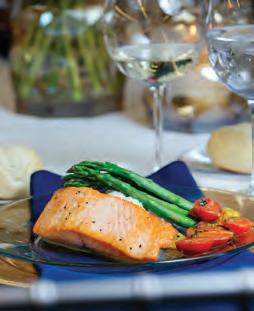



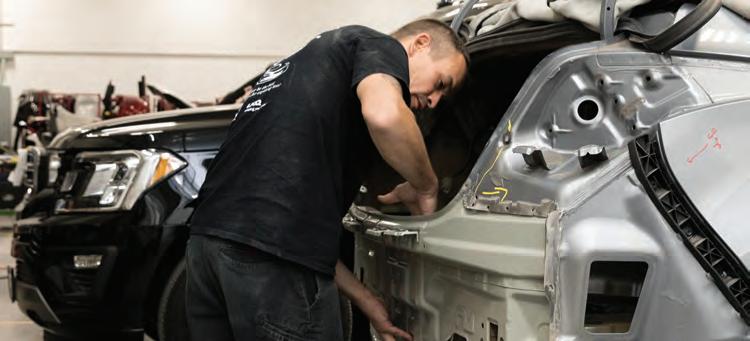
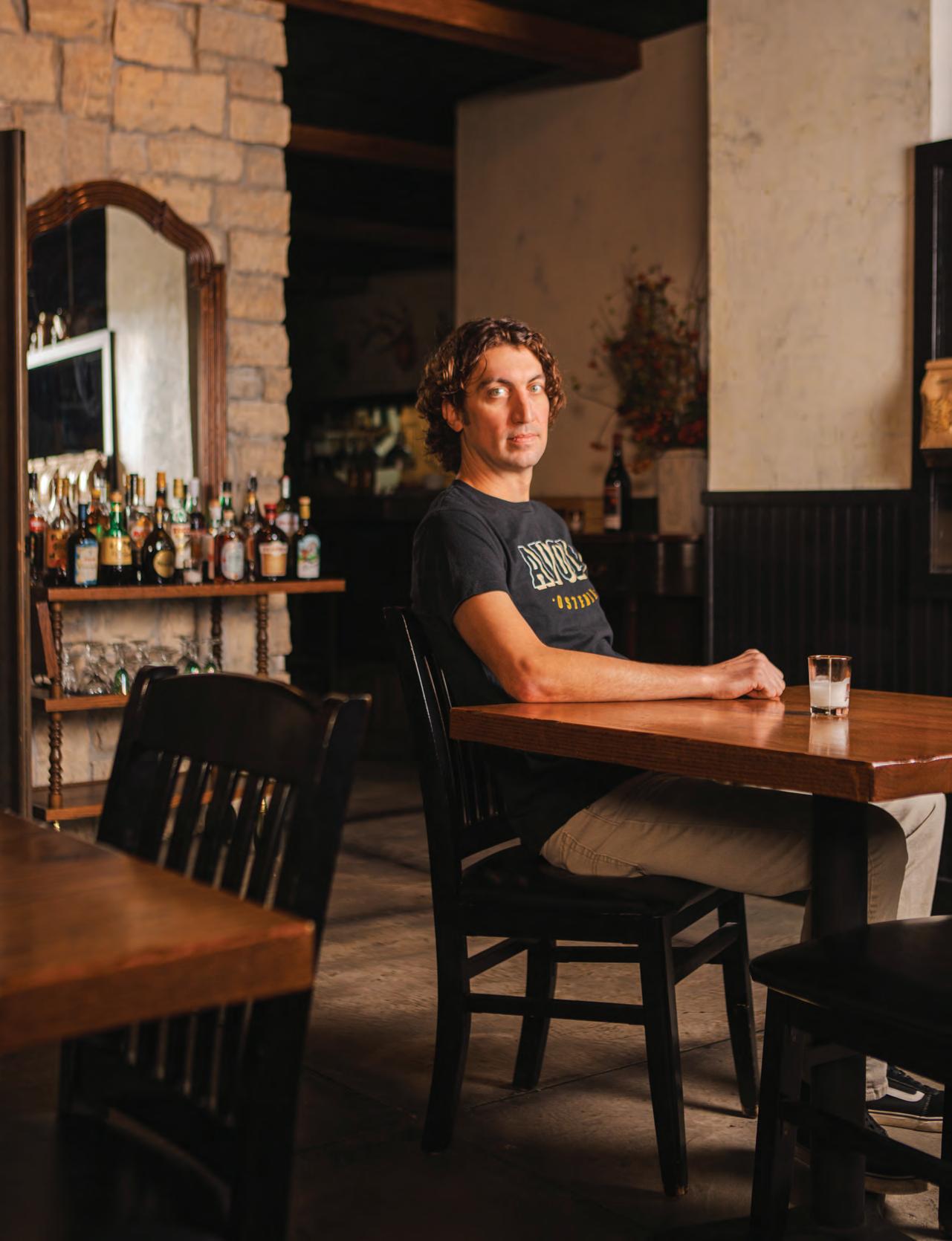
maha transplant John Engler has been head chef at Avoli Osteria in the quintessential Dundee neighborhood for nearly six years. Growing up in a South Dakota town where the population was 2,000, he was one of 45 students in his graduating class at Chamberlain High School. Even so, Engler cultivated a passion for cooking that would ultimately lead to a fruitful culinary career far more sophisticated than he’d imagined.
“There wasn't much else to do,” Engler admitted. “It’s kind of a touristy town in the summertime, so there was a lot of fast food. I started working at an A&W and a McDonald's when I was 14 and eventually liked the hours—it wasn’t a 9-to-5 thing. Once I graduated high school, I decided I wanted to go to culina ry school.”
Engler spent two years at Wayne State in Nebraska before transferring to South Central Technical College in Minnesota, immersing himself in the culinary arts. A move to Omaha was almost inevitable—not only was it also in the Midwest, but both of his sisters had planted roots there.
“My older sister was going to Creighton and she had just had a baby, so I had some boots on the ground here looking for a job for me out of a culinary school,” he explained. “I moved down to help them and also be close to family.”
Upon settling in Omaha, he took a job at V. Mertz in the Old Market, where he was a line cook. There, he learned a valuable lesson from Eileen Stamp, who was the owner at the time.
“Every time we'd get a different fi sh or something, you’d have to recost it,” he recalled. “We'd reprint menus almost every day just to change a dollar here or a dollar there. Th at instilled in me food costs and using everything. Nothing goes in the trash.”
After over two years at V. Mertz, where he climbed the ladder to executive chef, Engler took a position at the now-defunct Grey Plume, located at Midtown Crossing. He spent five and a half years there, but ultimately quit in 2016.
“Sometimes you get to a point where you're not really learning anything new, you're just repeating stuff,” he said. “I mean, it’s all great. I learned how to utilize squash in a million different ways. But you know when you're ready for a change of scenery.”
He then had another opportunity fall in his lap: working for Baylor Rose in Dundee, a restaurant centered on a small-plates concept. Then, after a quick detour at The Market Basket, he took a risk and went corporate, working at Society 1854 at the downtown Marriott Hotel. There, he essentially became a fry cook, making french fries and cheeseburgers for the late night crowd. He’d clock in at 4 p.m. and often not complete his shift until after 2 a.m. But once the pandemic hit in 2020, everything changed. Engler, like many others, was furloughed.
“Once I came back, it was in a very minimal capacity, working three or four days a week, so it was kind of a pay cut,” he said. “But one of the cooks at Avoli suggested I reach out, and I ended up agreeing to a Friday- and Saturday-night type of shift, so I’d work at the hotel and then I'd come in Friday and Saturday nights and do dinner serv ice there.”
It didn’t take long before Engler wanted to fully commit to Avoli.
“I did two services and put my notice in at the hotel,” he said. “I was like, ‘I'm gonna go here full-time.’ When you go from fries, chicken strips, and kids meals to fi nally making real carbonara and bolognese, you're actually cooking again. It's the fun type of cooking. Th at's kind of what made me fall in love with it, and that's why I'm still there. It's fun.”
And not the kind of “fun” seen on sensational television cooking shows like Gordon Ramsey’s Hell’s Kitchen. He confi rmed it’s really nothing like that, and that there’s a method to the madness and perceived chaos going on behind the scenes.
“There's rules and systems you stick with,” he explained. “What you see is made for television. We did 90-some covers over four hours on Saturday night and you get to cook at a nice pace. There are services where you still do 90 covers, but you do it in 90 minutes, and that’s when you rely on your team. Everybody’s pretty cool and collected when it gets like that.”
Engler points out that Avoli co-owner Dario Schicke, who previously operated Dario’s on 50th and Underwood, shows up every day, a rarity in most restaurants. It’s one thing that makes Engler love it even more.
“Th is place is a unicorn job that you fi nd,” he said. “Th e owners are great. Th ey actually really care about their staff .”
Avoli is the fi rst region and cuisine-specific restaurant Engler has ever worked for. Influenced by dishes found in northern Italy, Avoli specializes in house-made pasta with fresh, local ingredients, complemented by select imports from Italy, especially its northern Italian wine selection.
The restaurant is noted for dishes like lasagnette, cappellacci, spaghetti carbonara made with fresh goat cheese and house-made sausage ragù, and standout appetizers such as tender grilled octopus and rosemary focaccia bread. Beyond pasta, Avoli serves northern Italian secondi, including dry-aged ribeye and various fi sh dishes, including octopus.
“You get to work with your hands, especially with pasta,” he said. “Th at’s a big one for me. I like to be creative and get the opportunity to learn something new every day. You're never going to know everything about food a nd cooking."
It keeps Engler creatively challenged.
“There's always something new to learn, and that’s probably what I like most about it, that you can educate yourself,” he said. “You can learn from everyone you work with. It doesn't matter if they're the head chef or the line cook, you're always going to learn something new.”
Visit avoli.com for more information.



















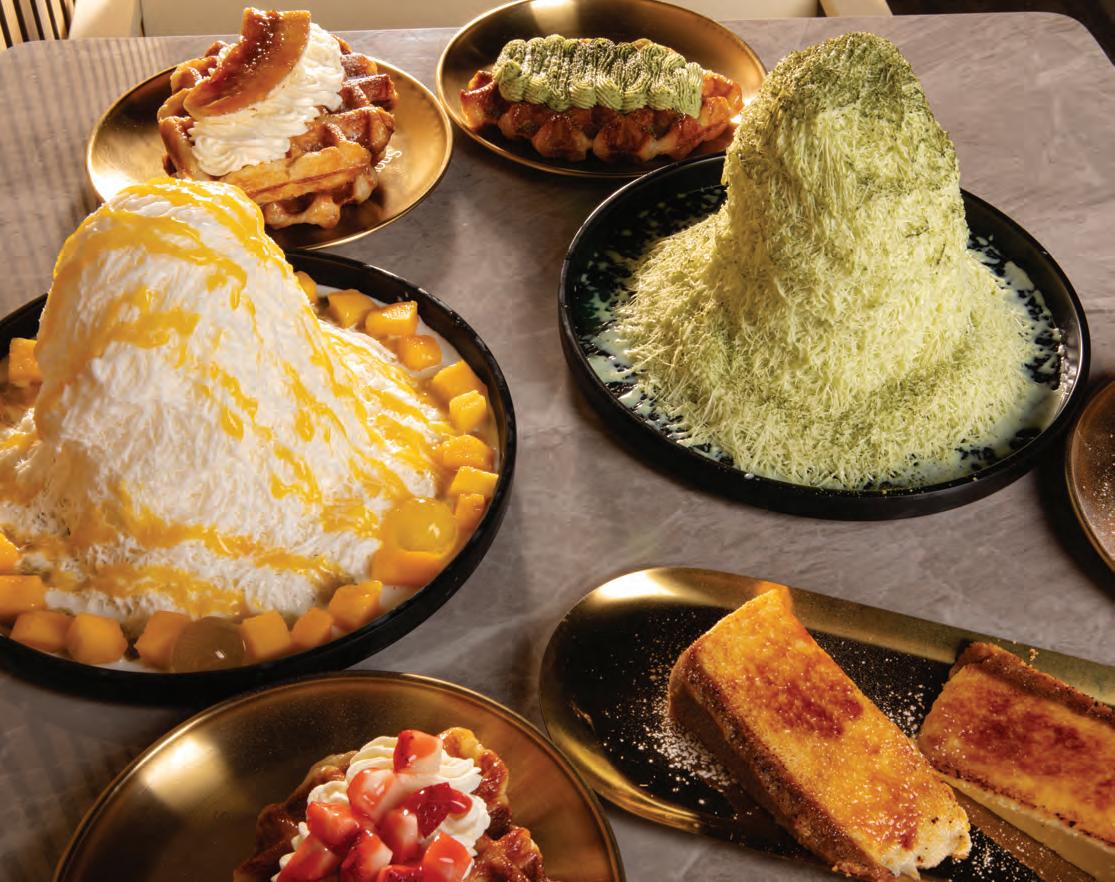







2. Kung Fu Tea: The Milk Cap Marvel
International franchise Kung Fu Tea also landed in Omaha around 2018, quickly distinguishing itself from other bubble tea spots with its “milk cap” drinks. The milk cap (or milk foam) is a thick, creamy, slightly savory topping made from cream cheese, heavy cream, milk, sugar, and a touch of salt.
Among Kung Fu Tea’s most interesting fi nds are the Winter Melon Milk Cap and Red Bean Wow, both made with Lactaid milk for a lactose-free experience. (Fun fact: many Asians are prone to lactose intolerance, which may explain why alternative milk options are common in Asian tea culture.) The red bean, an ingredient used in many Asian desserts, adds not only a mellow sweetness and nutty depth but also a pleasant, chewy texture rarely found in Western desserts.
Beyond beverages, Kung Fu Tea was also the first to bring mille crêpes—a delicate, multi-layered French-style crêpe cake—to Omaha. The cakes aren’t always on display, but you can often ask to purchase a slice of matcha, mango, Oreo, or even durian cake straight from the freezer. The durian fl avor in particular is bold and unmistakable; a treat for adventurous palates.
Must-try: Durian mille crêpes and Cocoa Cream Wow
3. Yum Chaa: From Boba to a Full Meal Experience
Tucked in the corner of the S. 74th Plaza strip mall, Yum Chaa may look like another bubble tea shop at fi rst glance, but step inside and you’ll fi nd much more brewing. When the current owner took over in March 2025, the menu was limited to standard milk teas and fruit teas. Knowing that bubble tea alone wasn’t enough to stand out, he began dreaming up ways to expand the shop’s offerings.




By August, Yum Chaa introduced a ramen bar, transforming the café into a go-to hangout for UNO students, families, teens, and nearby workers. Business took off overnight after a TikTok video went viral, drawing crowds who came for the noodles and stayed for dessert.
The noodle bar now serves around 20 types of noodles, from spicy Korean ramen and Japanese udon to Singaporestyle vermicelli and vegan options. Diners can customize each bowl with their choice of protein: beef, chicken (white or dark meat), or dumplings, and fi nish it with vegetables and sauces to taste.





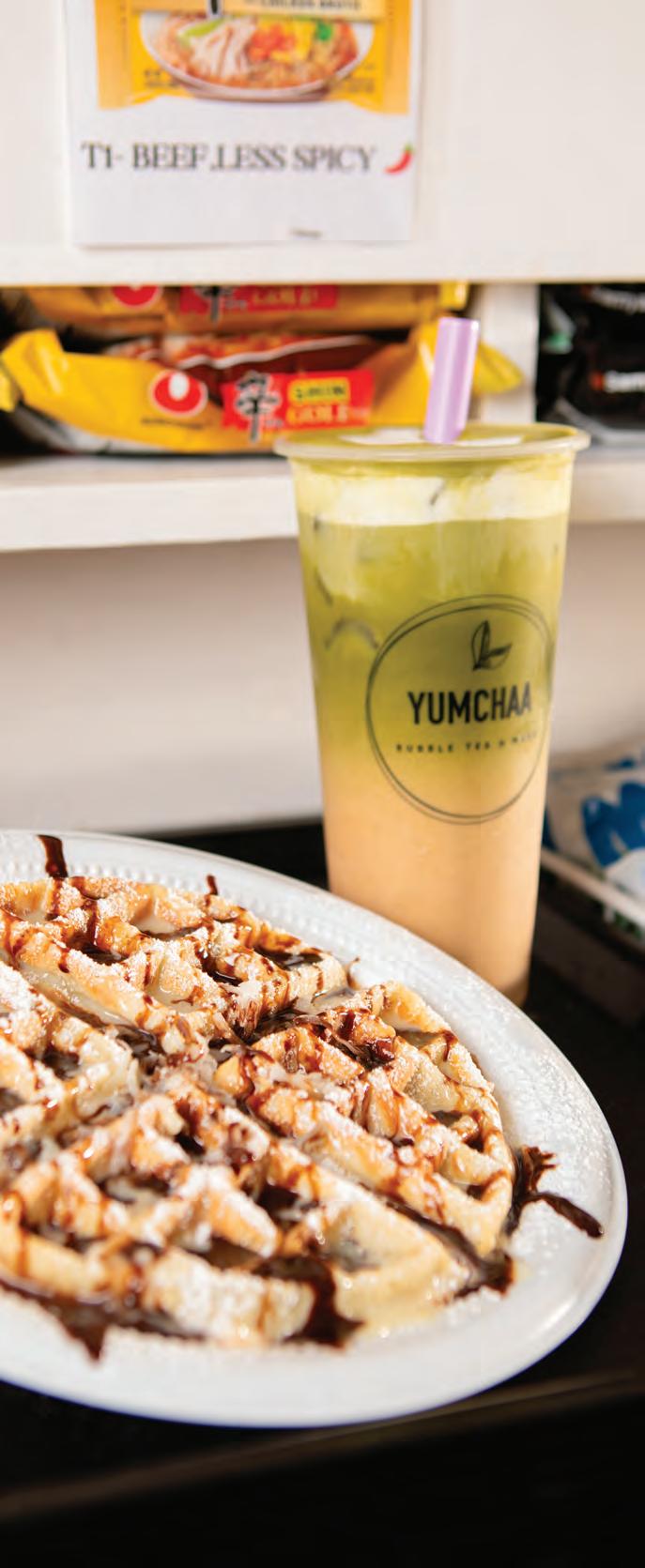





To balance the savory side, Yum Chaa expanded into ice cream, gelato, and other snacks, from shaved ice to an entire matcha drink menu. Among the new creations, the coconut waffle is the most unique; infused with coconut milk and topped with golden fl akes, it’s crisp on the outside, tender inside, and perfectly restrained in sweetness.
Must-try: Coconut waffle and Earl Grey Matcha with Milk Cap
Located in Benson, Snowy Sundae brought Korean bingsu —shaved ice made from a frozen blend of milk and sweetened condensed milk—to Omaha in the summer of 2024. Unlike traditional shaved ice, bingsu has a fluff y, creamy texture that melts like snowfl akes, creating a dessert that’s as light as it is indulgent.
Beyond bingsu , the menu offers several heavier but equally irresistible treats. The crème brûlée cheesecake combines a silky base with a caramelized, crunchy top, while the croffles—croissant dough pressed into a waffle—arrive warm, crisp, and crowned with whipped cream and fresh fruit. Every dessert here hits that quintessential Asian sweet spot: fl avorful but never overly sweet, rich but balanced.
Snowy Sundae also serves drinks and snacks that go beyond the expected, like the Okinawa Brown Sugar Milk Tea, and a variety of bubble tea and fruit tea drinks. For something savory, diners can snack on crispy chicken wings or takoyaki (Japanese octopus balls).
Must-try: crème brûlée cheesecake, croffles, matcha bingsu
A quick search online reveals an abundance of bubble tea spots now thriving across the greater Omaha metro. Many have their own special snacks and treats available. Meanwhile, many local Asian restaurants have begun offering bubble tea on menus. Bubble tea has gone mainstream. More than a trendy phase, it’s become a staple of pan-Asian and Asian American youth food culture.











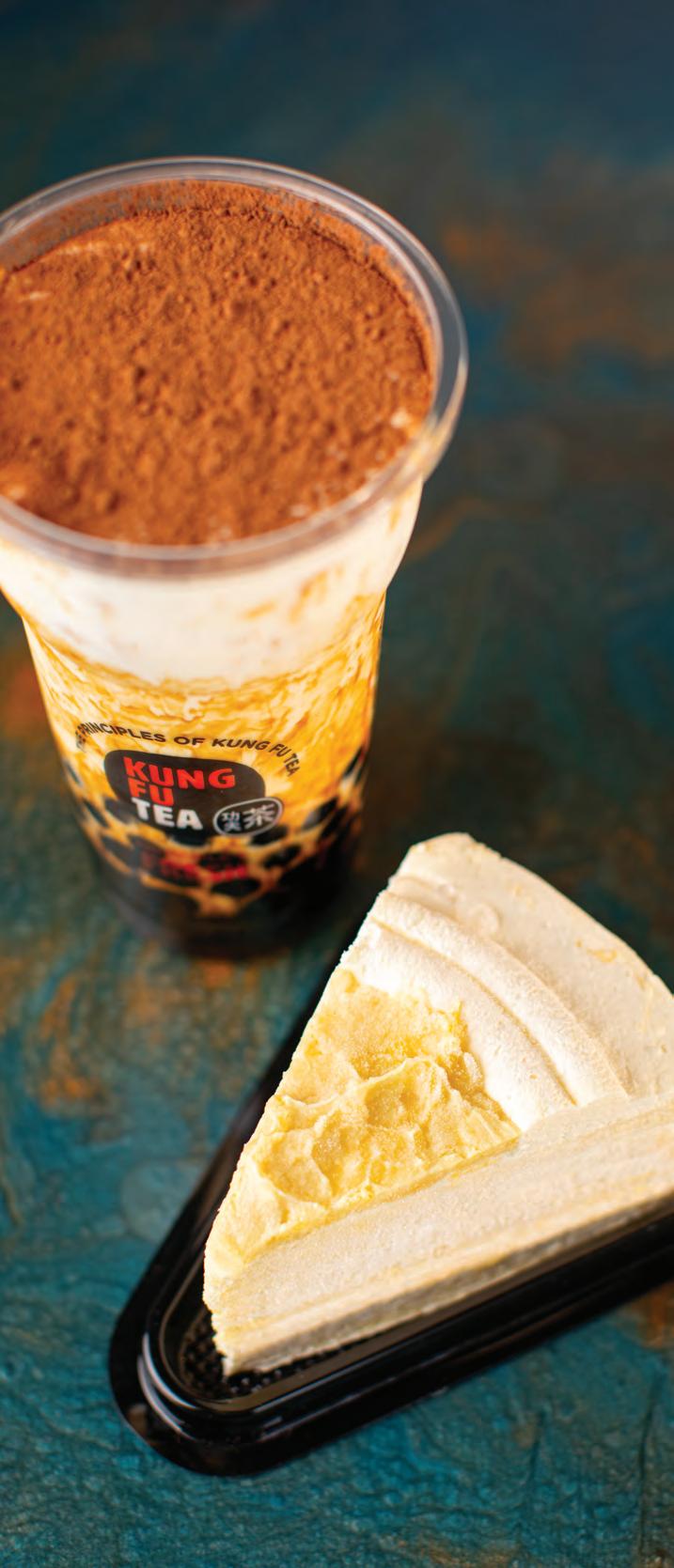









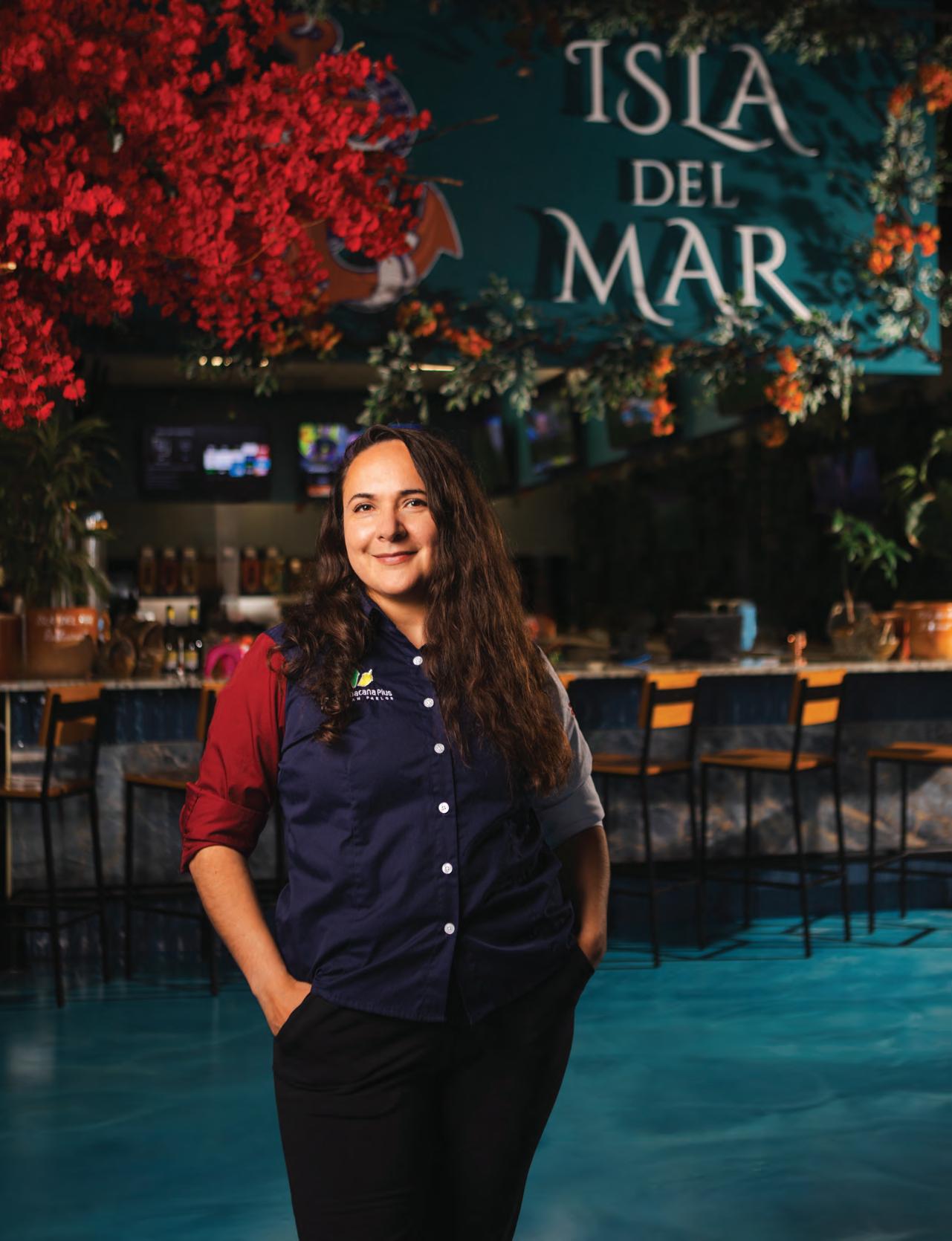
Story
When Ismara Gonzalez started selling food to cover rent back in 2017, opening a restaurant was the last thing on her mind. At the time, she was focused on a fitness career, running a small business selling fruits, vegetables, seeds, and other health-conscious fare she believed in. But the business wasn’t taking off the way she hoped.
“It just wasn’t really working out,” Gonzalez said. Facing mounting bills and a looming two-year lease, she and her team started looking for a way to generate income by offering limited food options. They promoted a few small dishes by word of mouth and social media, sold what they could, and hoped it was enough to keep the doors open.
A friend offered a suggestion that would change everything. “Why don’t you sell seafood?” he had asked. Seafood from his hometown in Sinaloa, Mexico, was something he missed deeply. Gonzalez admits she was hesitant at first.
My intention was never to open a restaurant, really. We thought we could try out a few more dishes, just to make ends meet.”
— Ismara Gonzalez
“My intention was never to open a restaurant, really,” she said. “We thought we could try out a few more dishes, just to make ends meet.” She gave it a shot, learning how to make the seafood tower her friend spoke so much about: an artfully arranged plate piled high with shrimp, octopus, clams, and other fresh catches, intended for a big group to share.
She posted a photo of the seafood tower online and the response was immediate. “We sold, I think, 60 towers that day, and then the next day it doubled. The third day was even more,” Gonzalez recalled. Orders multiplied as word spread further. The lastditch effort to keep the lights on sparked the creation of Isla Del Mar’s flagship dish, the Torre Imperial.
Gonzalez caught the attention of a building owner on 36th and Q streets amid the success. Curious about the space, she reached out, and the landlord came to see her original spot at 20th and Vinton streets. He was impressed by the atmosphere she had created, appreciating the family-style plates he saw being shared among friends and loved ones. “He loved the concept,” she said. “He offered me the building on 36th Street.”
The new venue was a significant jump, expanding from seating 60 people to a space that could accommodate 400. Gonzalez admits the size and responsibility scared her. “I was so nervous at first, but he was very much like an angel,” she said. “He believed in me, and he believed in the potential that we had.” That faith gave her the confidence to take the leap, and Isla Del Mar expanded.
Over the next few years, the same landlord kept encouraging Gonzalez to grow. He had an even larger space ready for her on 132nd Street, and despite her doubts, she accepted the challenge again. “There are blessings in your life that you don’t expect,” Gonzalez said. “You might have other plans, but then something changes and it takes you somewhere else.”
Isla Del Mar is now three locations strong. While consistent in quality, Gonzalez said, each has a distinction that makes it unique for the area it’s in.
The 132nd Street location is the largest and busiest, often hosting mariachi bands and special events. “We try to do a little bit of everything,” Gonzalez said. They call it the
biggest restaurant in Nebraska, and it certainly feels that way. Color is everywhere at Isla Del Mar’s largest outpost. Sharks and coral reefs ripple across the walls, and overhead, papel picado banners and balloons add to the sense of celebration.
The West Omaha location’s rainbow-colored arches near the dessert counter also draw guests toward the franchises La Michoacana Plus and Con Azúcar Café. One serves traditional Mexican ice cream treats, while the second, a Mexican coffee shop known for its popular pastries, makes it hard to leave without something sweet. Con Azúcar’s famously oversized concha sweet bread frequently goes viral online. Recently, the menu expanded to include breakfast and brunch.
But it’s the South Omaha location that leans most heavily into Mexican tradition, Gonzalez said. She describes it as a place that “really takes you back,” a favorite for South Omaha families and friends gathering to celebrate the culture with good food. The third and newest location in Papillion is smaller and cozier, echoing the original Isla Del Mar feel. “It’s pretty close to the size of our first place when we started,” Gonzalez said.
Isla Del Mar, the restaurant’s name which translates to “island of the sea,” is a play on Gonzalez’s first name— Ismara—but it also pays homage to its roots in Mexican seafood. While seafood is the star of it all, Gonzalez explained that the menu is anything but limited. The seafood tower that sparked it all still draws crowds, but birria and sushi are increasingly popular.
Heartier meal offerings include steak paired with lobster, chicken enchiladas, and a selection of beef and chicken dishes. The added franchises offer guests more sweet and savory treats, from ice cream and coffee to pastries and sandwiches. And then
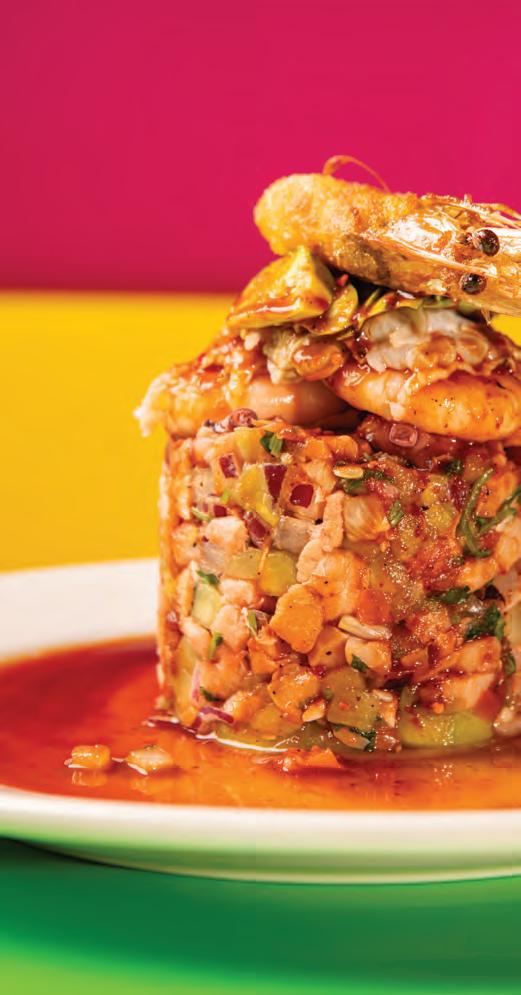
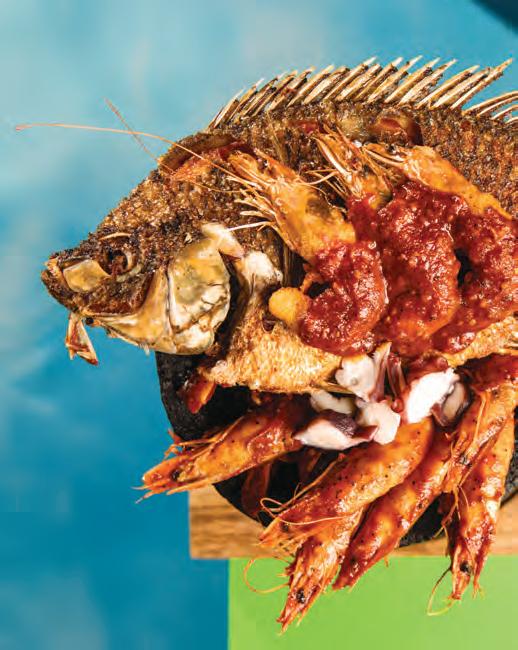

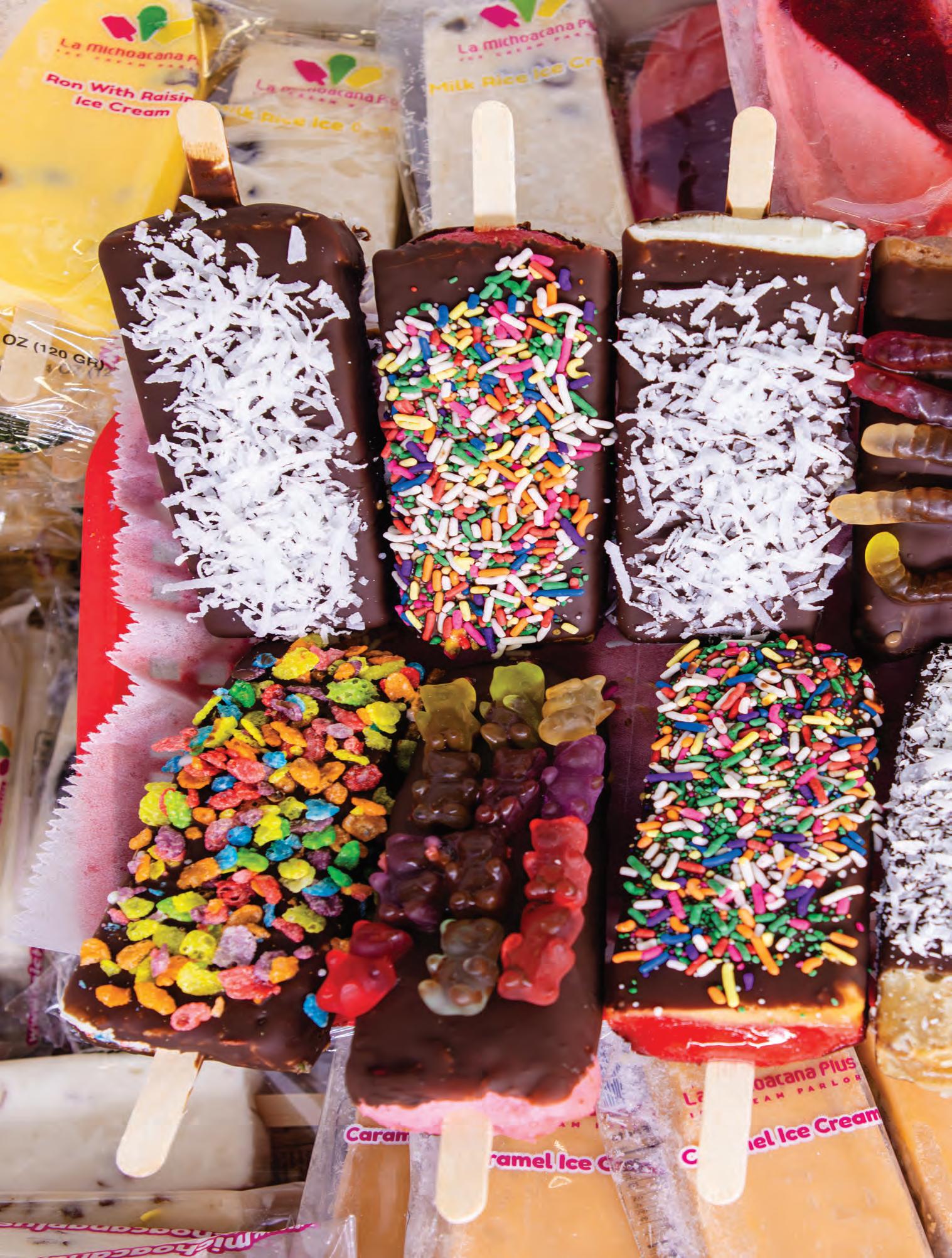
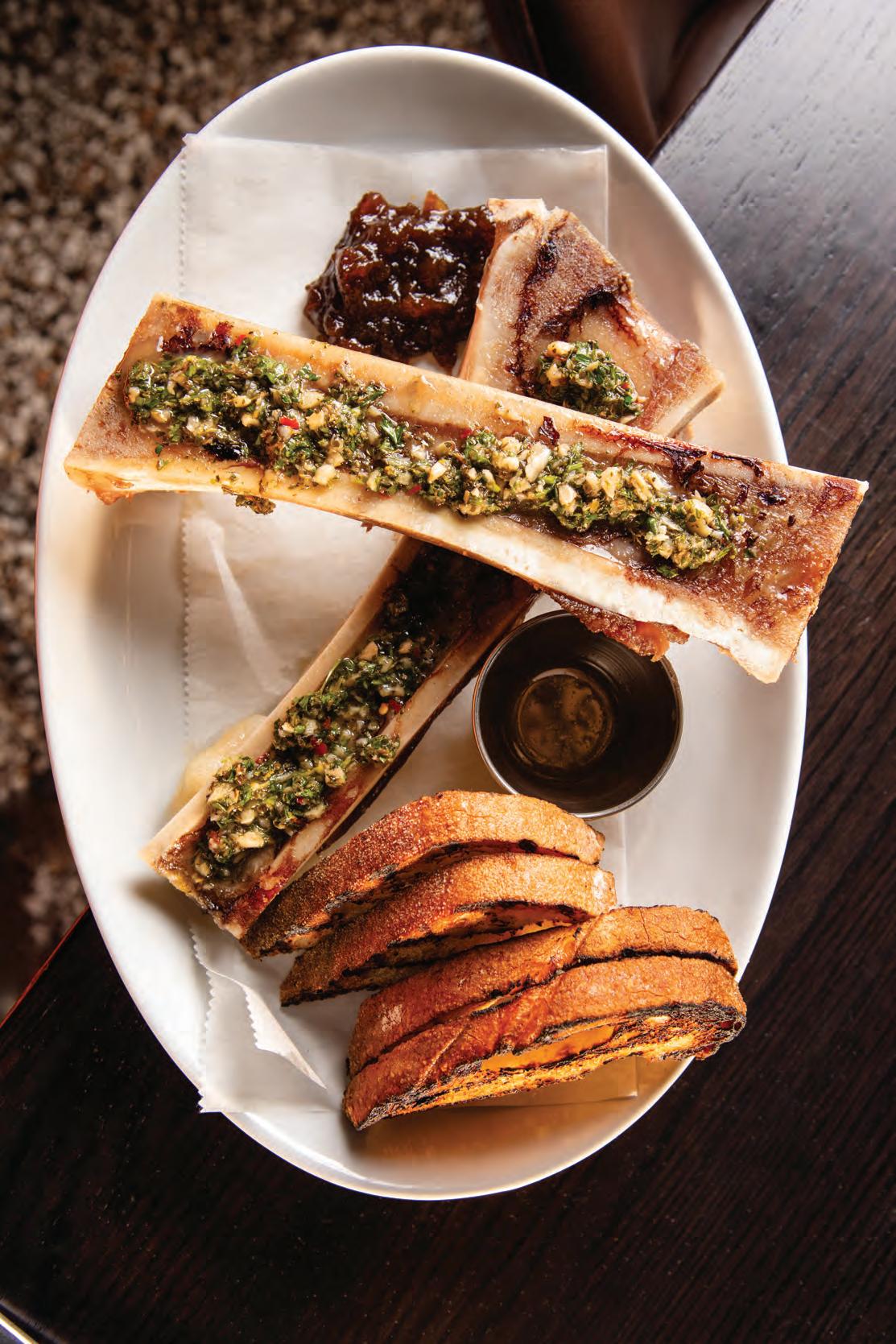
Marrow Redefines the Modern Steakhouse
ou can thank the East Coast trend of “steak bars” for the newest fi ne dining experience in the metro. It’s the common name for the newer style of elevated-but-approachable steakhouse that blends high-quality cuts with upscale dining, while maintaining the feel of a neighborhood restaurant.
Chef and restaurateur Jared Clarke fi rst made his name in the Omaha area with Railcar Modern American Kitchen, followed by Timber Wood Fire Bistro. His latest venture is Marrow in Gretna. Much like Timber and its wood-fi red grill, Marrow’s menu centers around a particular type of cooking device: the vertical rotisserie.
Clarke and his team have been working for some time on bringing a number of new concepts to the area. When he found the spot near Highway 370 and 180th Street, he knew it was the perfect area for Marrow—a place that would bridge the gap of fi ne dining with something Clarke refers to as “Midwest cuisine” w ith fi nesse.
After fi nding Chef Shawn LaHood, who Clarke knew from Monarch Prime, Dante, and other spots around Omaha, the next challenge was to build the vision around a vertical rotisserie. The device allows the neighborhood restaurant to prepare everything from a full leg of lamb to a charred whole duck, along with some truly unique dishes.
Th e bistro’s signature dish is known as the canoe. It’s a roasted bone cut the long way to expose the marrow, topped with chimichurri, served with red onion jam and grilled sourdough. Th e idea of eating bone marrow might not appeal to everyone, but eating this appetizer changes minds. Th e canoe comes with a ramekin fi lled with the juices from the marrow preparation, and the jam allows you to get a sweet and savory helping on every serving of the grilled Highland Baking Company bread from outside of Chicago. It’s a must-order when visiting Marrow.
Th e next dish that really stands out is the short rib lasagna. Handmade pasta from Pasta Amore (a place Clarke took over to help preserve its history in Rockbrook) is topped with stracchino cheese, ricotta, béchamel, cremini mushroom fondue, and marinara. It certainly doesn’t have the look of traditional lasagna, and that’s the idea, according to Clarke. After many tries in his test kitchen, the dish has continued to evolve by both the amount of slow roasted beef rib meat and creaminess of the dish, all while making sure that preparation doesn’t hold up the rest of the cook line. Each bite of this entree makes you thankful you ordered it.
Clarke said he put a lot of time into deciding whether or not to have onion rings on the menu, and in the end, it came down to making them unique. After fi ve or six tries
1.
17870 OAKMONT DRIVE SUITE 106 OMAHA, NE 68136
in the test kitchen, he decided to go with a hand batter cooked in beef fat and a bone marrow aioli for dipping. My wife remarked that it was more of a main-menu item than an appetizer because of its size and fl avor
Th e most unique starter, at least for the Midwest, is the peel-and-eat shrimp. A dish that seemed to vanish after COVID-19 restrictions is back with a spicy vengeance. Poached in Cajun seasoning, it has a little kick, and even more so when dipped in the chili-crunch cocktail sauce. It’s a must-have item f or sharing.
For my entree, I ordered the Dandy Ribs, a dish that has its origins in Britain. Slow braised beef, not pork ribs, in a cabernet BBQ sauce were accompanied by a side of pommes purée (creamy mashed potatoes). Th is dish was one of the last added to the menu before it was printed, because Clarke said they worked on it until it was perfect. If you are not accustomed to beef ribs, they take longer to prepare and are a little chewier, but much more fl avorful and fi lling. Warning: your hands will get messy enjoying t his dish.
2. DANDY RIBS
3.
4.
5. PRIME
Th e charcuterie is designed with Spanish infl uences, featuring Spanish Palacios, which is similar to a dried chorizo, two year aged cheddar, Bellwether fromage blanc—a tangy spreadable cheese—fresh honeycomb, herb olives, nuts, and Serrano ham that goes well with the grain mustard. Several pieces of the grilled sourdough come with the plate. (If you get the canoe, mix the jam with the honey. It ’s amazing.)
Finally, yet notably, my wife ordered the Prime Ribeye. Not to be confused with the prime rib, which is served Fridays and Saturdays, this 16-ounce certifi ed prime cut of Angus beef is grilled with a smoked peppercorn rub, balsamic bone marrow butter, and a side of charred broccolini. It arrived perfectly prepared, rare like my wife requested, and was close to fork-tender. Th is cut fits perfectly into the goal of Midwest cuisine w ith fi nesse.
Our next visit will certainly be on the weekend to enjoy the brunch, or maybe the Sunday roast, another homage to Britain. It includes an 8-ounce, herb-marinated leg of lamb, fi g Diane sauce, cheddar au gratin potato, cream spinach, and Yorkshire pudding, available at 4 p.m. e very Sunday.
Marrow opened at the end of August and is already a fi xture in the Griffi n Park neighborhood. Th rough word of mouth, it’s also become one of the more coveted reservations in Gretna. Chef Clarke’s goal was a place that is elevated while remaining approachable, casual but upscale, and fi lled with fl avor. Mission accomplished.
Visit marrowomaha.com for more information.
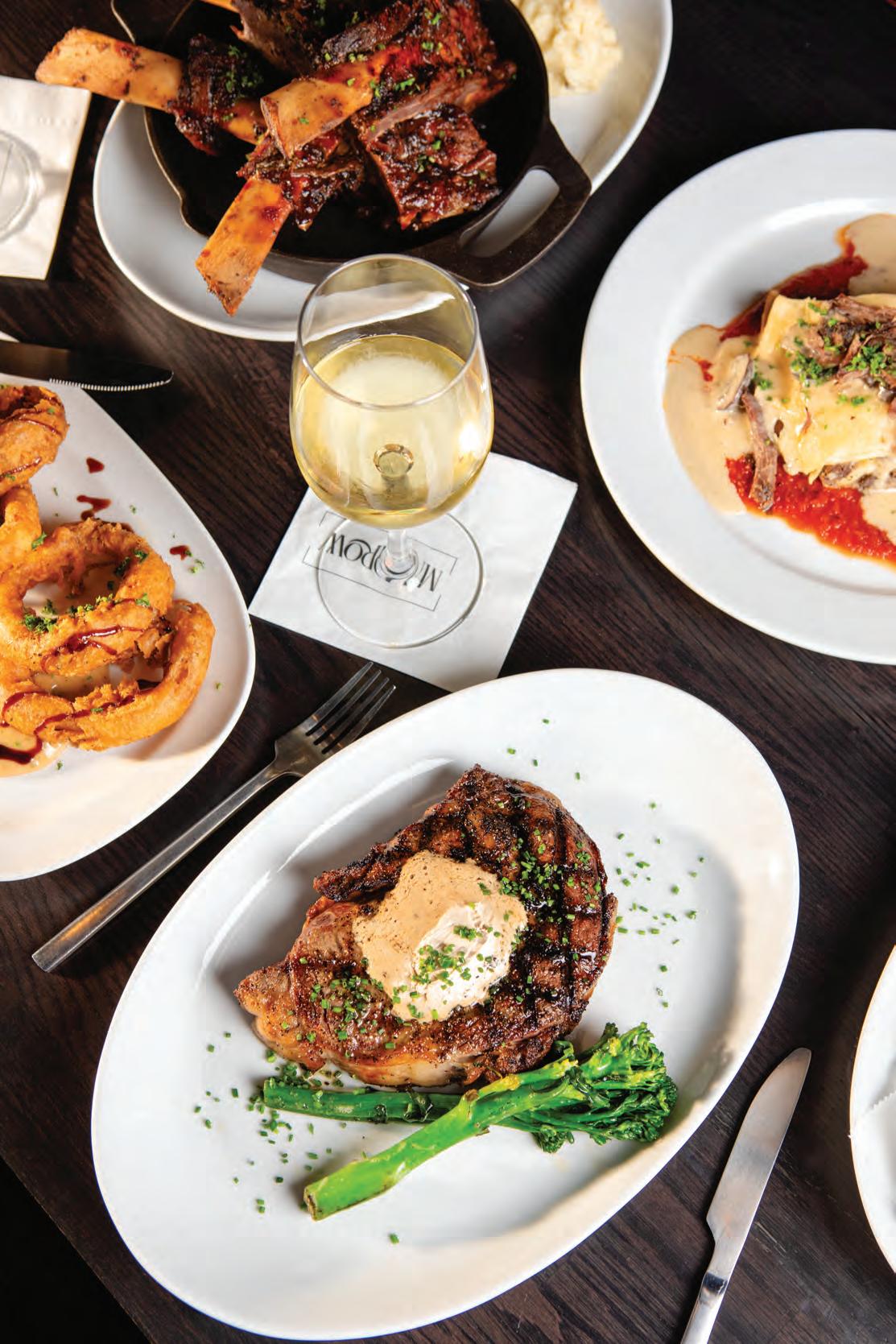
CHARLESTON’S - $$$
144th and Dodge streets - 402.651.0689
76th and Dodge streets - 402.991.0055
Charleston’s is a casual, upbeat restaurant with a menu filled with dishes prepared from scratch daily. We focus on providing our guests with excellent prices and selecting the highest quality ingredients. Whether you are new to Charleston’s or a long-standing guest, we look forward to seei ng you soon! charlestons.com/locations
LE PEEP - $
69th & Pacific - 402.933.2776
177th and Center St. - 402.934.9914
156th St. & W. Dodge Rd. - 402.408.1728
120th and Blondo St. - 402.991.8222
Le Peep puts a wholesome perspective on your favorite neighborhood breakfast and lunch spot. Fresh. Simple. Elegant. Inviting. We put the emphasis on people, both patrons and staff. We focus on providing each of our guests the fresh food and friendly service that they have come to expect. Open daily 6:30 a.m.-2 p.m. —lepeepomaha.com
LISA’S RADIAL CAFE - $ 817 N. 40th St. - 402-551-2176
American. Cafe. Diner. Vegetarian-friendly. Gluten-free options. This old-school diner serves hearty portions of American comfort classics for breakfast and lunch. Family-owned and operated. This business is a must if you’re in the area. People rave about our chicken-fried steak, stuffed French toast, coffee, and friendly staff. Monday-Friday 6 a.m.-2 p.m., Saturday and Sunday 7 a.m.-2 p.m.
PACIFIC EATIN G HOUSE - $$ 1130 Sterling Ridge Dr. - 531.999.3777
We have developed our menu inspired by all that touches the Pacific Ocean. Starting with fresh fish flown from Honolulu, locally sourced steaks and natural chicken with an Asian flare and pairing our dishes with tiki libations and Pacific coast wines. —pacificeatinghouse.com
PINE & BLACK BISTRO - $$
248 Olson Dr., Papillion - 531.999.3777
We opened in March of 2023 to bring a family owned bistro to the community, serving local steaks and fresh seafood. We offer a wide variety of Pacific Northwest wines, local beers, and craft cocktails. Pinot Noir translates to Pine & Black, our name originates from our love of wine. —pineandblackbistro.com


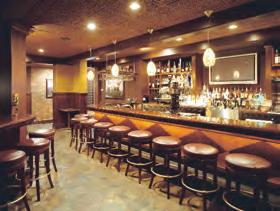


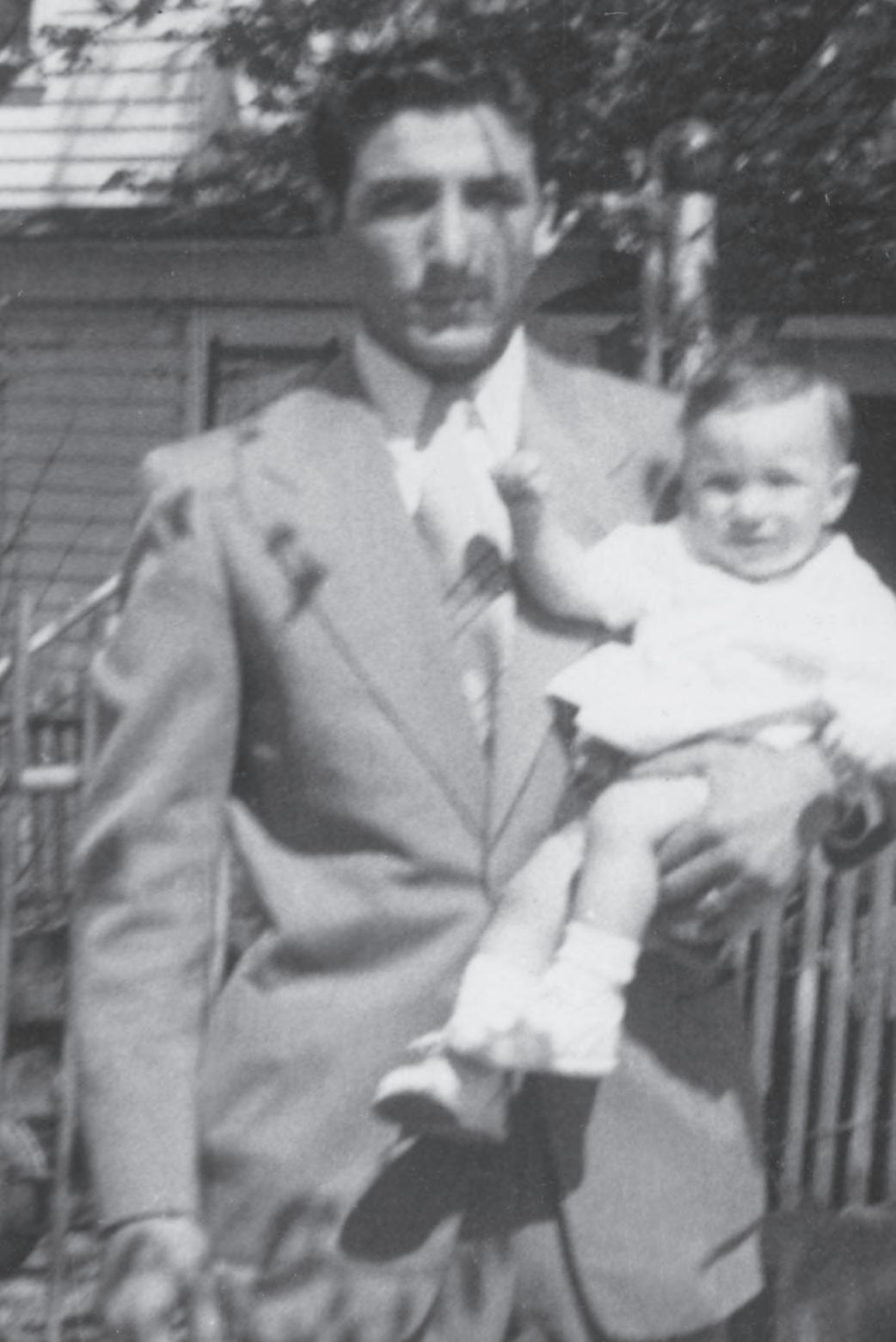
SAND POINT - $$$ 655 North 114th Street, Omaha - 531-466-1008
Sand Point ‘New England Fare’ brings their favorite and unique dishes from New England to the Omaha food community. Freshest seafood, from seared crab cakes, lobster arancini, whole belly clams, New England clam chowder, lobster bisque to charcuterie boards and Angus beef tips and steak burgers, to be topped off with Boston cream pie, blueberry pie or Lemon canna cotta. Full bar to include, specialty cocktails, extensive wine lists, as well as beer and non-alcoholic drinks.
–sandpointomaha.com
SMITTY'S GARAGE - $ 7610 Dodge St. - 402-614-4949
Tasty burgers, ice-cold beer, fresh-cut fries, scrumptious tacos, mouthwatering appetizers and more. What else could you want? Besides the delicious food, each location also offers a full bar with an extensive craft beer list and a one-of-a-kind environment with arcade games and plenty of TV’s. Download our new rewards app, Smitty’s Garage, in the app store to start earnin g free grub! eatatt hegarage.com
STELLA’S - $
Since 1936, we’ve been making our world-famous Stella’s hamburgers the same way. The family secrets have been handed down to each owner, ensuring that your burger is the same as the one you fell in love with the first time you tried Stella’s. And if it’s your first time, we know you’ll be back! Monday-Saturday 11 a.m.-9 p.m., closed Sunday. —stellasbarandgrill.com
TED AND WALLY’S - $ 1120 Jackson St. - 402.341.5827 6023 Maple St. - 402.551.4420
Come experience the true taste of homemade ice cream in the Old Market. Since 1986, we’ve created gourmet ice cream flavors in small batches using rock salt and ice. We offer your favorites, plus unique flavors like margarita, green tea, Guinness, and French toast. Special orders available. Mon.-Thurs. 11 a.m.-10 p.m., Fri.- Sat. 11 a.m.-11 p.m., Sunday. Noon-10 p.m. —tedandwallys.com
VARSITY SPORTS CAFE - $$
Ralston - 9735 Q St. - 402.339.1944
Bellevue - 3504 Samson Way - 402.932.1944
Millard - 14529 F St. - 402.505.6660
This 1950 photograph of Louis Rotella Sr. and his son, Lou Jr., captures the genesis of a defining business legacy. Their professional relationship began very early, with Lou Jr. observing operations from the passenger seat of his father’s 1948 delivery truck and managing production lines by the age of twelve. Following their official partnership in 1972, Lou Jr.’s innovative vision and drive for expansion were instrumental in transforming the company from a local operation into the nationwide marketplace.
Celebrating over 100 Years of Baking Excellence!
rotellasbakery.com
Ralston, Bellevue and Millard. We are truly grateful to have been welcomed into each of these communities and welcome you in for good food, a cold drink and a comfy seat to enjoy the sport of your choosing! Determined to bring only the freshest ingredients, homemade dough and our specialty sauces to the table, we have worked hard to perfect our craft for you. Our goal is to bring the best food service to the area and show the best sports events that you want to see. Pick up and Delivery availalble. Please check website for hours of operation. —varsityromancoinpizza.com
La Casa Pizzaria has been serving Omaha its legendary Neapolitan-style pizza and pasta for 60 years. We offer dine-in, carry-out, party facilities, catering, and now pizza shipments to the 48 contiguous states. Open Tuesday-Saturday at 11 a.m. and Sunday at 4:30 p.m. —lacasapizzaria.ne
PASTA AMORE - $$ 11027 Prairie Brook Rd. - 402.391.2585
Pastas are made fresh daily, including tortellini, fettuccine, and capellini. Daily specials and menu items include a variety of fresh seafood and regional Italian dishes, such as linguini amore and calamari steak, penne Florentine, gnocchi, spaghetti puttanesca, and osso buco. Filet mignon is also offered for those who appreciate nationally renowned Nebraska beef. To complement your dining experience, the restaurant offers a full bar and extensive wine list. Be sure to leave room for homemade desserts, like the tiramisu and cannoli. Monday-Thursday 9 p.m. and Friday-Saturday 10 p.m. Reservations recommended. pa staamore.com
PITCH - $$
5021 Underwood Ave. - 402.590.2625 West: 17808 Burke Street. - 402.289.4096
An OpenTable’s Diners’ Choice for 2014 HotSpot Restaurant in America. Keeping up with the traditional way the first pizzas in Italy were made, our pizzas are cooked in a coal-fired oven. The menu also features seafood, hand-cut steak, housemade pastas, and burgers full of flavor. Our goal is to provide you with local, housemade, and imported ingredients. We offer a happy hour menu through the -. Our bar provides an array of in-house concoctions as well as your traditional libations. Our wine selection is wellthought-out and most impressive. You will enjoy Pitch. Monday & Tuesday 11 a.m.-9 p.m., Wednesday-Friday 11 a.m.-10 p.m., Saturday 10 a.m.-11 p.m., Sunday 10 a.m.-9 p.m. pitchpizzeria.com
SPEZIA - $$$
3125 S. 72nd St. - 402.391.2950
Choose Spezia for lunch or dinner, where you’ll find a casual elegance that’s perfect for business guests, get-togethers, or any special occasion. Exceptional food, wine, and service, with a delectable menu: fresh seafood, certified Angus steaks, innovative pasta, risotto, gnocchi, cioppino, lamb, entrée salads, Mediterranean chicken, flatbreads, and fresh salmon daily. Enjoy a full bar, Italian and California wines, Anniversary/Lovers’ Booth (call to reserve), private dining rooms, and wood-fired grill. Open Monday-Sunday. Cocktail hour 4-6 p.m., when all cocktails, glasses of wine, and beers are half price. Evening reservations recommended. —speziarestaurant.com
- $
7555 Pacific St. - 402.339.8006. 380 N. 114th St. - 402.330.5707
Featuring Sonoran-style cooking made fresh daily. Catering and party rooms also available. Monday-Thursday 11 a.m.-10 p.m., Friday-Saturday 11 a.m.- 11 p.m., Sunday 4-9 p.m. —fernandosomaha.com
LA MESA - $$
158th St. and W. Maple Rd. - 402.557.6130 156th and Q streets - 402.763.2555
110th St. and W. Maple Rd. - 402.496.1101 Fort Crook Rd. and Hwy 370 - 402.733.8754 84th St. and Tara Plaza - 402.593.0983 Lake Manawa Exit - 712.256.2762
Enjoy awesome appetizers, excellent enchilada’s, fabulous fajitas, seafood specialties, mouthwatering margaritas and much more at La Mesa! Come see why La Mesa has been voted Best of Omaha’s 20 Years in a Row! FridaySaturday 11 a.m.-10 p.m., Thursday-Sunday 11 a.m.-9 p.m. —lamesaomaha.co m
HECTOR’S RESTAURANT - $$
1201 S. 157th St. - 402.884.2272
Hector’s Restaurant has been serving fresh, authentic Baja-style Mexican cuisine in Omaha since 1997. Known for flavorful dishes made daily—from salsa and guacamole to beans and rice—Hector’s also offers a wide selection of margaritas, domestic, and imported beers. Guests can enjoy a familyfriendly atmosphere, perfect for casual dinners, celebrations, or events. As the only Baja-style Mexican restaurant in the region, Hector’s stands out for its fresh ingredients, lively vibe, and dedication to superior service. —hectorsomaha.com
MARGARITA’S MEXICAN RESTAURANT - $
4915 S. 72nd St. - 402.393.7515
Margarita’s is a business with more than seven years in the food world. We offer authentic Mexican food where you can enjoy a nice moment with your family. margaritasmenu.com



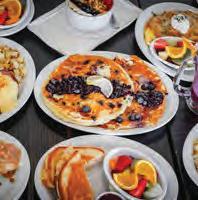
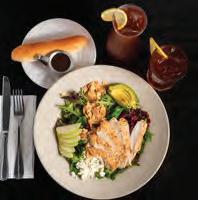

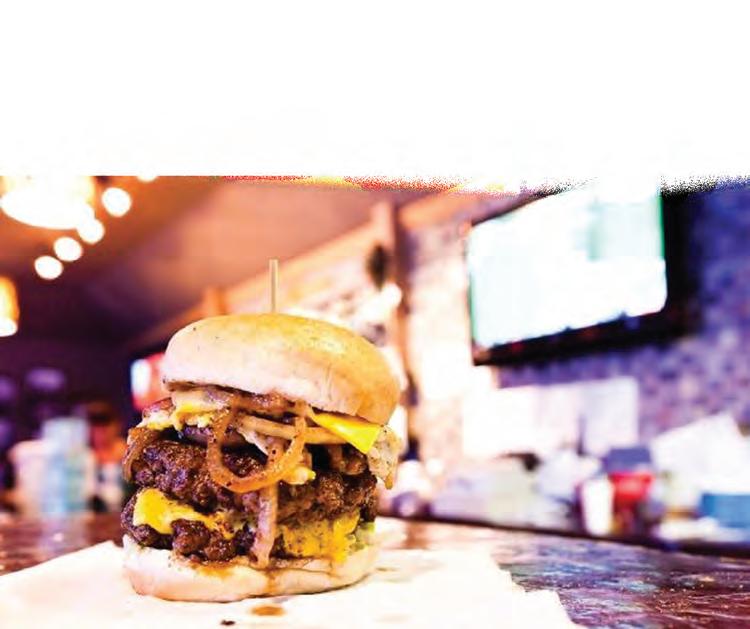


Family owned and operated since 2010, Primo’s Modern Mexican utilizes the freshest ingredients to bring both authentic Mexican and Southwest-style dishes to life with flare and unrivaled flavor. With recipes passed down over four generations, a family-friendly atmosphere, and plates to satisfy cravings at every hour—with breakfast, lunch, and dinner menus offering a variety of Mexican staples—Primo’s Mexican Restaurant is proud to serve the people of Omaha and Council Bluffs no matter the occasion. —primosmodernmexican.com
CRESCENT MOON ALE HOUSE - $ 3578 Farnam St. -
Founded in 1996, we’ve grown into Beer Corner USA with the additions of The Huber Haus German Beer Hall, Max and Joe’s Belgian Beer Tavern, and Beertopia—Omaha’s Ultimate Beer Store. With more than 60 beers on tap and Omaha’s best Reuben sandwich, we are a Midtown beer-lover’s destination. Hours: Monday-Saturday 11 a.m.-2 a.m. Kitchen hours: Monday-Wednesday 11 a.m.-1 p.m., Thursday-Saturday 11 a.m.-midnight. Cl osed Sunday. —beercornerusa.com
GREEK ISLANDS - $ 3821 Center St. - 402.346.1528
Greek cuisine with specials every day at reasonable prices. We are wellknown for our gyro sandwiches and salads. We cater and can accommodate a party for 65 guests. Carry-out and delivery available. Monday-Thursday 11 a.m.-9 p.m., Friday-Saturday 11 a.m.-10 p.m., Sunday 11 a.m.-7 p.m. —greekislandsomaha.com
SAGE STUDENT BISTRO INSTITUTE FOR THE CULINARY ARTS - $ 5730 N. 30th St. Fort Omaha Campus, Building 22
At the Metropolitan Community College Sage Student Bistro, culinary and hospitality students learn hustle, fundamentals, community service and stewardship — all from scratch. Explore dishes from around the world during lunch, or celebrate the contributions of American culinary sages at dinner. For reservations, visit: —mccneb.edu/Bistro
CASCIO’S - $$
1620 S. 10th St. - 402-345-8313
Cascio’s is Omaha’s No. 1 steakhouse. We have been serving Omaha for 69 years. We feature steaks, chops, seafood, and Italian specialties. We have seven private party rooms, seating for up to 400 people, and plenty of parking.
—casciossteakhouse.com
THE DROVER RESTAURANT & LOUNGE - $$$
2121 S. 73rd St. - 402-391-7440
Famous for the original Whiskey Steak. Truly a one-of-a-kind Midwestern experience. Excellent food, wine, service, and value. Rare...and very well done.
LUNCH: Monday-Friday 11 a.m.-2 p.m.,
DINNER: Monday-Friday 5 p.m.-10 p.m., Saturday 4:30 p.m.-10:30 p.m., Sunday 4:30 p.m.-9 p.m.,
LOUNGE: Monday-Friday Cocktails only 2 p.m.-5 p.m. —droverrestaurant.com
10370 Pacific St. - 531.999.3777
We arrived in Nebraska from Washington intent on purchasing from farmers, ranchers & fishmongers who share our commitment for wholesome, sustainable fare. Our recipes use the Earth’s bounty the way it is intended ~ Wild and Natural ~ We compliment our dishes, pairing them with exquisite Pacific Northwest wines. –twistedcorkbistro.com
PRIME STEAKHOUSE - $$$$
225 N. 145th St. - 402.445.4380
In a town known for its great steaks, Mahogany stands above the rest. Conveniently located in the new Heartwood Preserve Center at 145th and Dodge, our Omaha location provides an intimate and classic fine dining atmosphere. Voted Best in Omaha.
DINNER: Monday - Saturday | 5pm - 10pm & Sunday | 5pm - 9pm. –mahoganyprimesteakhouse.com






$=
Continued from pg. 59
Nebraska football coaches and players have long supported the event, including current head coach Matt Rhule. “If you’re a fundraiser in Nebraska, one of your top priorities is keeping a good relationship with the University of Nebraska,” Rimington said. Last year, Rhule, along with quarterback Dylan Raiola and several offensive linemen, attended the festivities.
Even as he’s stepped back from many of his day-to-day duties as president, Rimington remains a steady presence in the effort. “Individual donations are a decent part of it, but it’s the events that we put on that have raised a good portion,” he said.
Today, the Boomer Esiason Foundation continues to expand its reach. Its scholarship program has provided around $4 million in aid, and its BEF Athletes initiative supports college players who share their stories of battles with cystic fibrosis in exchange for educational funding.
But the most powerful metric isn’t financial. In 2024, the Cystic Fibrosis Foundation reported that the median predicted survival age for people with CF born between 2020 and 2024 is 65 years—more than double what it was 30 years ago. That means more patients like Gunnar can start families and build careers.
“My goal in life was for my son to outlive me,” Esiason said. “That goal has not subsided at all, and I basically live for making sure that happens. That was the thing that frightened me the most, and that was the thing that inspired me the most. I still feel that way. Not only that, but my goal is for him to have to pay for his daughter’s wedding. I can’t wait, because I’m not paying for it. Hopefully, that’s around 25 years from now, and I’m still around to see it.”
That ongoing fight, and Nebraska’s place in it, will be in focus again later this month. The next Rimington Trophy presentation is set for Jan. 24 at Lincoln’s Rococo Theater, bringing together past winners and legends of the sport. Esiason plans to attend this time, something his CBS broadcasting schedule has often made impossible.
The event will bring the story full circle: a quarterback and his center, reunited not by the game that introduced them, but by the cause that has defined their lives ever since. It’s an example of what can happen when two teammates decide to play for something bigger than football.
For more information, visit rimingtontrophy.com and esiason.org.

• Dry
• Pediatric Eye Exams
• Specialty Contact Lenses
• Myopia Control
• Fashion Eyewear
• InfantSEE®
• See to Learn®



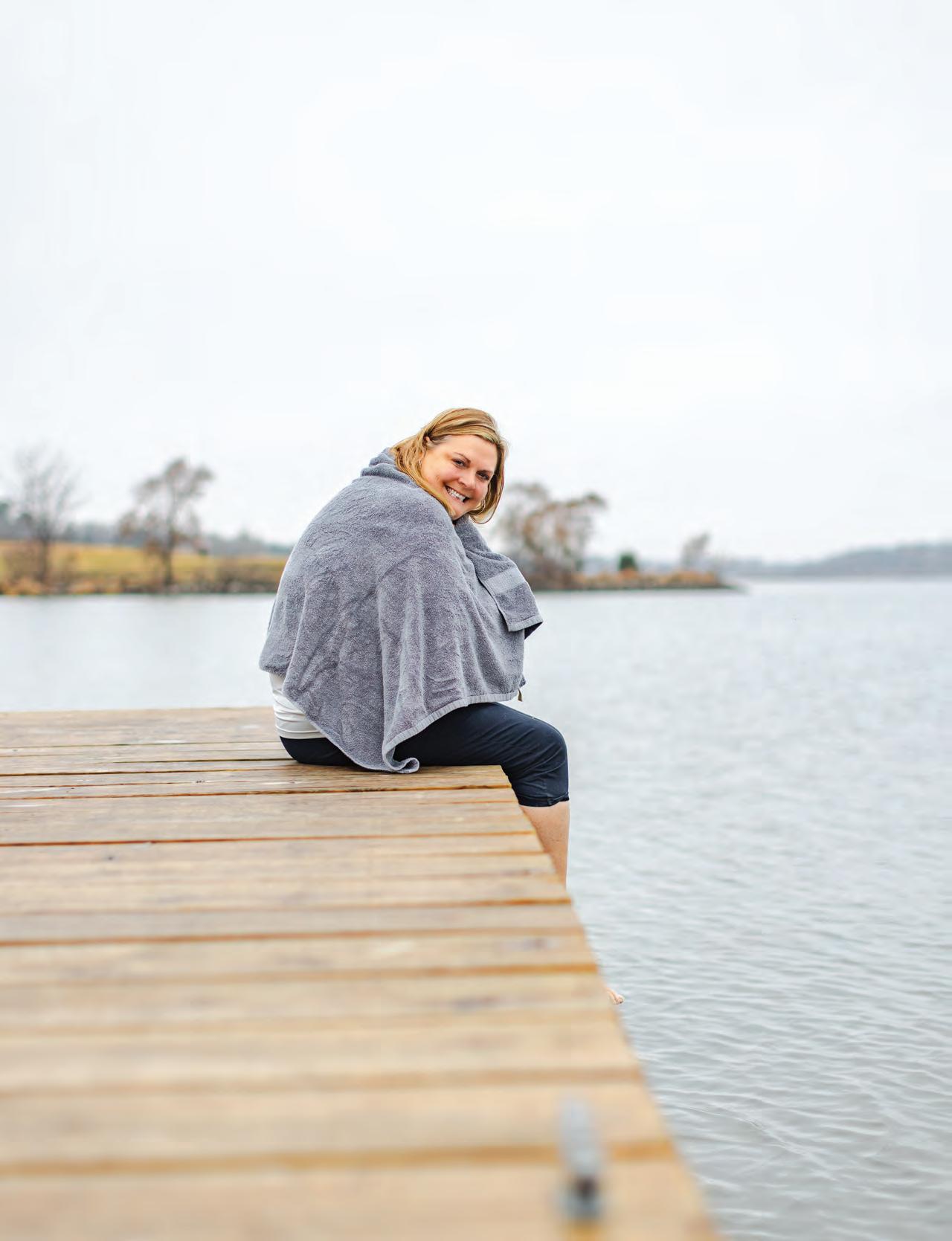

Story By Sara Locke
Photography By Bill Sitzmann
Design By Nickie Robinson
hen most families are determined to stay warm in bed, hundreds of athletes and volunteers shed their coats and gloves and stand toe-to-toe with freezing local waters. They are here on purpose, with purpose, and have endeavored for an entire year to reach this moment.
“Our athletes work hard raising money for their team. Th at’s how they’re able to attend their Special Olympics competitive events,” Jennifer Leverett said. “Our team, the Southwest Iowa Challengers, we get to keep 50% of what we raise.” The funds they raise through events like the annual Polar Plunge ensure that each athlete is properly outfitted, has travel and lodgings arranged, and has access to all of the medical care and equipment necessary to compete.
“Last year was the fi rst for our team, and we had 20 jumpers,” she said. “We raised $12,000 for the Polar Plunge. Th at $6,000 we get to keep from that buys a lot of tanks of gas, hotels, and meals to get to the competitions these athletes work so hard to compete in.”
Leverett is the delegation manager,
head coach, volunteer organizer, and snack buyer for the Southwest Iowa Challengers, but has been involved with the special needs community since long before she took on her role with the Special Olympics.
“It started with my own athlete, Tyler,” Leverett said. “He aged out of school in Council Bluff s, and when you age out, you’re done with [school-sponsored] Special Olympics. You have to start your own team to keep going.”
The team started with eight athletes, and grew to 20 by the time last year’s Polar Plunge came around. Th is year, the Challengers are 44 athletes strong.
“Th is year, we’ve focused on bowling, basketball skills, track and field; we’ve added football skills and bocce ball,” Leverett continued. “We had three people go to the football classic this fall; 36 compete in bowling. We have our fi rst 3-on-3 basketball team this year. We’re doing a lot in just our second year!”
Finding athletes who are interested
isn’t an issue, but fi nding athletes with access is where the challenge lies. Th at’s why fundraisers like the Polar Plunge are so important to Leverett and her team, ensuring that everyone who wants to has an opportunity to not only compete, but to take part in the community being built for people with intellectual d isabilities.
“Most of our athletes are adults, and about a third of our team come from group home settings. We reached out to all the group homes in our community to invite them,” she added. “I say this with pure joy: It’s so amazing to see all of these athletes given a chance. The way they blossom. They make friends, they do things they didn’t know they could do, and they learn to trust themselves. They’re increasing their abilities and their aptitude—and when that medal is put around their neck? Man. What a feeling!”
Rose Swenson knows the sight well, and makes it her mission every day to ensure these events are enriching and rewarding for the athletes putting in the work to show up, not only for the Polar Plunge, but for each of the community-building events Special Olympics provides for the families they serve.
Swenson is the Events and Law Enforcement Partner Manager with Special Olympics
Nebraska, and oversees some of the organization’s largest events.
“We have four pillars within our organization, sports, health, education, and leadership,” Swenson said. “We offer 19 sports for our athletes, but we also provide health screenings, educating them on wellness and staying strong. They may need their eyes checked, they may need their feet checked to ensure proper shoe sizing, they get their teeth and hearing checked.”
“These
opportunities do more than raise money for the sporting events.
They show the community what we’re about and what we’re trying to do for these athletes.”
— Rose Swenson
While many participants have complex medical needs, these standard screenings aren’t always part of the care they are receiving. Sports screenings help fi ll the gaps in their specialized care, and ensures their health not only for their competitions, but for their richest, f ullest life.
“Our education pillar includes Unifi ed Champion Schools,” she said. “They create
an opportunity for the athletes, with and without intellectual disabilities, to participate fully in sports. Students are included and integrated and allowed to compete together. We are in over 260 schools across the state of Nebraska.”
The fi nal pillar is leadership. “We strive to provide these athletes with direction and opportunities to lead in their communities. They learn to write and give speeches, speaking to groups about the Special Olympics and what it means to them and the community,” Swenson added. “These opportunities do more than raise money for the sporting events. Th ey show the community what we’re about and what we’re trying to do for thes e athletes.”
Swenson said there are currently 7,600 Special Olympians across Nebraska, but she has a loftier goal. “We want to reach 10,000 athletes, but we have work to do to spread our message, to make people aware of what we off er.”
With the community’s help, they can surpass that goal.
2026 Polar Plunge fundraisers will take place Feb. 14 at Lake Zorinsky (for Special Olympics Nebraska) and March 28 at Full Fledged Brewing Co. in Council Bluff s (for Special Olympics Iowa). Learn more at sone. org and soiowa.org.
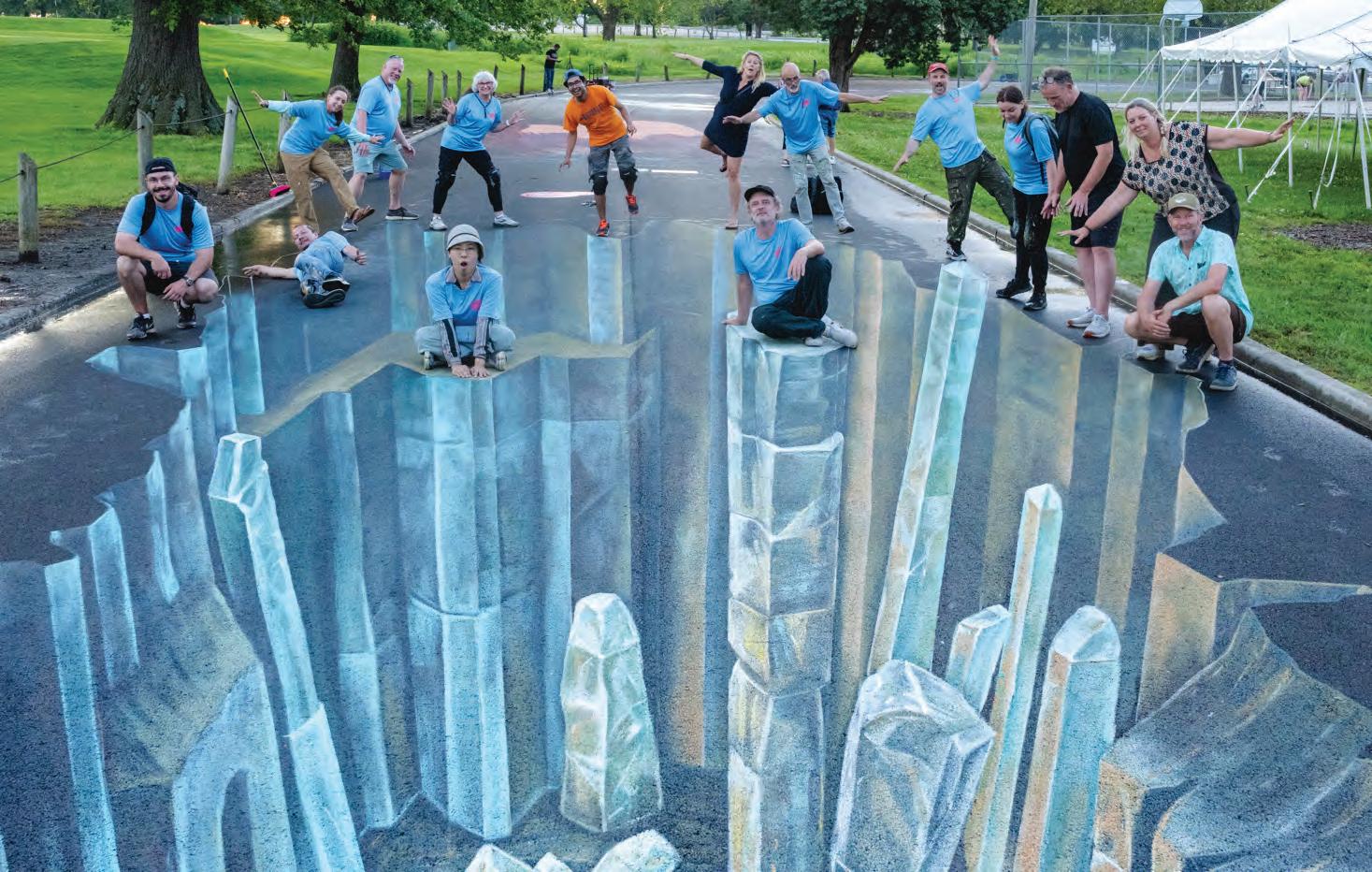







CHRISTMAS AT THE MANSION Jan. 2-4 at Arbor Day Farm, Nebraska City. Visit Arbor Day Farm to see the 52-room Arbor Lodge Mansion decked out in festive decor. Experience how the Morton family would live during the holidays with this immersive tour that includes vintage decor, holiday-themed collections, and classic holiday music. arbordayfarm.org
HADESTOWN Jan. 16-18 at Lied Center for Performing Arts, Lincoln. Watch the winning musical of eight 2019 Tony Awards, Hadestown , at Lied Center for Performing Arts. A tale that combines the two stories of Orpheus and Eurydice and King Hades and Persephone, this performance explores themes of love, hope, and doubt for a memorable experience you will never forget. liedcenter.org
WINGS OVER THE PLATTE Jan. 24-June 6 at Stuhr Museum, Grand Island. This exhibition explores the landscapes, waterways, and wildlife that come together to make up the beautiful Platte River. From artists connected to the Platte River Valley, the artwork displays the heart of the Great Plains through its sceneries, plants, and animals. Many pieces of artwork will be available for purchase. stuhrmuseum.org
SCOTTY MCCREERY Jan. 31 at Heartland Events Center, Grand Island. Season 10 American Idol winner Scotty McCreery brings his music to Heartland Events Center. Winning at just 17 years old, he has since become an icon in the country music scene. Listen to hits from his debut album, Clear as Day , to his most recent release, Scooter & Friends EP heartlandeventscenter.com
GROUNDHOG DAY Feb. 7 in Unadilla. In the groundhog capital of Nebraska, gather with the community of Unadilla to celebrate Groundhog Day. Enjoy a parade that features the groundhog king and queen as well as the crafts fair and flea market, bake sale, and silent audition. Listen to a presentation by a speaker from Humanities Nebraska, tour historical rooms, and view locally painted barn quilts. gosyracusene.com
MAGPIE’S SONG Feb. 13-15 and 20-22 at Lincoln Community Playhouse, Lincoln. Magpie’s Song is an enthralling musical that tells the story of three different folk tales from Chinese mythology. Together, they explore what it means to tell a story and how the power of a story can distract from what is real. Watch this thought-provoking production performed by the talented actors of Lincoln Community Playhouse. lincolnplayhouse.com
THE PLAY THAT GOES WRONG Feb. 13-15 and 20-22 at North Platte Community Playhouse, North Platte. Enjoy the exciting performances of The Play That Goes Wrong from the North Platte Community Playhouse. This story takes place in the 1920s and follows a classic whodunit mystery, but things keep going awry. Sit back, laugh, and have fun watching the many ways that a play could go wrong for a hilarious comedy that all can enjoy. northplattecommunityplayhouse.com
THE LOVIN’ SPOONFUL Feb. 26 at Merryman Performing Arts Center, Kearney. The popular folk-rock band from the 1960s makes a return at Merryman Performing Arts Center. With iconic hits like “Do You Believe in Magic?” “Summer in the City,” “Daydream,” and Nashville Cats,” The Lovin’ Spoonful was listed in Billboard Top 10 multiple times throughout most of the ’60s. merrymancenter.org
SUTTON RODEO Feb. 27-28 at Heartland Events Center, Grand Island. Attend a weekend full of energy and excitement at Rodeo Grand Island. Originally beginning as a family rodeo of the Sutton family in 1926 in Onida, South Dakota, Sutton Rodeo has since become a touring rodeo for all to enjoy throughout the Midwest. Watch the toughest riders take on the strongest horses and bulls for a high-intensity night. heartlandeventscenter.com
WINTER FEST FLEA MARKET AND ANTIQUE SHOW AND JUNK FESTIVAL Feb. 28-March 1 at Sandhills Global Event Center, Lincoln. With over 125 vendors, visit this large winter flea market for the best hidden treasures. Discover items such as antiques, collectibles, hand-crafted artisan items, or even some good old junk. There is definitely something for everyone at this market—you might just strike gold. sandhillsglobaleventcenter.org
BIG INDOOR GARAGE SALE EXTRAVAGANZA Jan. 10 at EMC Expo Center, Des Moines. Spend the day shopping at this massive indoor garage sale. Shop from multiple different vendors to find hundreds of vintage items and clothing. With low prices, these bargain deals are something you won’t want to miss. Escape from the cold, bring your friends, and find some new things to bring home. iowaeventscenter.com
CHARLIE BERENS: THE LOST & FOUND TOUR Jan. 23 at Sioux City Orpheum, Sioux City. Comedian, musician, New York Times best-selling author, and Emmy-winning journalist Charlie Berens comes to Sioux City with his Midwest-inspired comedy and jokes. His comedic news show The Manitowoc Minute has become extremely popular since it first hit social media providing relatable and hilarious content that all midwesterners can laugh about. orpheumlive.com
KINKY BOOTS Jan. 23-25 at Hancher Auditorium, Iowa City. Winner of a Grammy and two Tony Awards, Kinky Boots has truly earned its Best Musical title. This musical follows the journey of two people who have nothing in common. However, they find that they might be more similar than they think, and they discover the power of changing your mind. hancher.uiowa.edu
WINTERFEST MARKET Jan. 24 at EMC Expo Center, Des Moines. This winter indoor market still has many goods to browse and purchase. Featuring multiple local makers, this market has unique crafts, handmade goods, and more. Full of festive vibes and a supportive community, this event is sure to keep you in high spirits this winter. iowaeventscenter.com
VINTAGE OKOBOJI ICE DRAGS Feb. 1 at The Ritz, Arnolds Park. This annual ice drag takes place on East Lake Okoboji in front of The Ritz. Watch the coolest vintage snowmobiles from throughout the Midwest compete head-to-head in this exciting race. Snowmobiles will race on a fourlane 500-foot track on the frozen lake. This will be an energy-packed, snowy event for all to enjoy. vacationokoboji.com
THE MOUSETRAP Feb. 6-March 1 at Des Moines Community Playhouse, Des Moines. A mystery ensues when a murder occurs in a locked room. This stage performance brings exciting twists and turns keeping you on the edge of your seat as the characters try to solve who the culprit is. Written by Agatha Christie, author of the classic mystery novel Murder on the Orient Express, this play is sure to be thrilling. dmplayhouse.com
STEINS & VINES Feb. 7 at Sioux City Convention Center, Sioux City. Taste the different beers, wines, hard ciders, and energy drinks from all over the local area at this annual beer and wine festival. With live music and appetizers provided by Sneaky’s Chicken, this festival is a great way to spend your Saturday. Attendance is limited to prevent over-crowding so buy your tickets as soon as you can. steinsvines.com
THE HARLEM GLOBETROTTERS 100 YEAR TOUR Feb. 12 at Casey’s Center, Des Moines. Celebrating 100 years, the Harlem Globetrotters are taking their most legendary tour yet. Experience the dunks, tricks, and fun from over the past 100 years. With pregame magic and post-game interactions, this historical celebration is one of a kind. iowaeventscenter.com
2026 WINTER BLUES FEST Feb. 13-14 at Des Moines Marriott Downtown, Des Moines With over 20 acts, enjoy this weekend blues festival of beautiful music. Presented by the Central Iowa Blues Society, this annual event highlights some of the most talented blues musicians in the area. Enjoy the soulful, rich tunes of blues this winter at the 2026 Winter Blues Fest. cibs.org
SAR-KO AGLOW through Jan. 19 at Sar-Ko-Par Trails Park, Lenexa . View this annual light display that is one of the region’s favorites. Thousands of lights light up Sar-Ko-Par Trails Park for a gorgeous holiday light display. Along with the twinkling lights, enjoy hot cocoa and a stroll around Rose’s Pond. Although the holidays might be over, you can still visit this beautifully lit park until Jan. 19. lenexa.com
WATER FOR ELEPHANTS Jan. 12-14 at Century II Convention Center, Wichita . Originally a best-selling novel, Water For Elephants comes to life on stage at Century II Convention Center. Following the story of a young man who just lost something near and dear, his journey continues as joins a traveling circus after hopping a train. After many adventures, he discovers the meaning of enjoying life and taking chances. century2.com
CARS FOR CHARITIES: ROD & CUSTOM CAR SHOW Jan. 17-18 at Century II Convention Center, Wichita . Starting in 1957, this indoor car show is one of the longest running shows in the country. Along with vintage cars, this event also has bounce houses, face painting, and model car make-and-take—perfect for kids. All proceeds will go towards local charities Starkey, Inc. and AbilityPoint. century2.com
JUNGLE BOOK Jan. 17-18 at Midwest Trust Center, Overland Park. Enjoy a new adaptation of the classic Jungle Book at Midwest Trust Center. Become immersed in Mowgli’s childhood as the jungles of India come to life on stage with video, shadow play, and original music. Explore the themes of belonging and our relationship to the animal kingdom as you watch this heartfelt story. jccc.edu/midwest-trust-center
WINTERFEST BLUEGRASS FESTIVAL Feb. 20-21 at Wichita Marriott Corporate Hills Hotel and Convention Center, Wichita. Kansas Bluegrass Association presents the 36th annual Winterfest Bluegrass Festival at the Wichita Marriott Corporate Hills Hotel and Convention Center. Talented bluegrass artists will take the stage for a weekend full of heartfelt and captivating music. This year’s set list is sure to be full of all-stars. kansasbluegrass.org
NEED TO BREATHE: THE BARELY ELEGANT ACOUSTIC TOUR Feb. 27 at Stiefel Theatre, Salina. A rock band from Seneca, South Carolina, this group is making their way through the United States on their Barely Elegant Acoustic tour. Due to popular demand, this show was added among many other cities in a 2026 addition to their 2025 dates. stiefeltheatre.org
TITANIC: AN IMMERSIVE VOYAGE through Feb. 15 at Union Station, Kansas City. Visit this immersive exhibit to discover the untold moments of the Titanic. Step on board and walk the corridors and other rooms with audio guides for a personalized experience. With room displays and a dramatic recreation of that fateful night, you will truly feel transported back to the ship’s original voyage. unionstation.org
THE OUTSIDERS Jan. 7-18 at The Fabulous Fox Theatre, St. Louis. With four 2024 Tony Awards, The Outsiders is an American classic musical adapted from S.E. Hinton’s novel and Francis Ford Coppola’s film. Taking place in Tulsa, Oklahoma, a group of young boys go on an adventure of self-discovery trying to achieve their dreams in a world that only pushes them down. fabulousfox.com
KANSAS CITY BALLET: NEW MOVES Jan. 29-Feb. 5 at Frost Studio Theatre at Todd Bolender Center for Dance & Creativity, Kansas City. Considered one of Kansas City Ballet’s most anticipated performances, New Moves showcases the unique style of contemporary ballet. This exclusive production displays the next generation of dance and choreographers. Enjoy a performance full of passion, artistry, and energy. kcballet.org
THE WIZARD OF OZ IN CONCERT Jan. 30-Feb. 1 at Powell Hall, St. Louis. Watch the alltime classic film The Wizard of Oz while the St. Louis Symphony Orchestra performs the score live. Travel along the yellow brick road with Dorothy and her friends while listening to the gorgeous instruments of a live orchestra. Feel free to sing along to the songs you know, or just sit back and enjoy the experience. slso.org
NEW EDITION: NEW EDITION WAY TOUR Feb. 5 at T-Mobile Center, Kansas City. New Edition’s New Edition Way Tour brings t ogether iconic figures in music to celebrate music and legacy. New Edition will share a 360-degree stage with Boyz II Men and Toni Braxton in one of the most legendary performances fans have ever seen. Experience these three acts all together for a one-of-a-kind experience. t-mobilecenter.com
TREY KENNEDY: THE RELATABLE TOUR Feb. 7 at Midland Theatre, Kansas City. Comedian Trey Kennedy comes to Kansas City with The Relatable Tour. Gaining a large following and viewership from social media, his most recent special GROW UP is available on Hulu or his YouTube channel. This next tour is sure to bring hilarious jokes and leave you laughing the whole night. midlandkc.com
NINE INCH NAILS: PEEL IT BACK TOUR Feb. 25 at Enterprise Center, St. Louis. An American industrial rock band from Cleveland, Ohio, Nine Inch Nails brings their Peel It Back tour to St. Louis with Boys Noize. With a unique sound, the alternative, indie rock band is sure to bring the energy and good vibes to this concert. enterprisecenter.com
KANSAS CITY BALLET: SNOW WHITE Feb. 27-March 1 at Folly Theater, Kansas City . Enjoy the talented dancing of Kansas City Ballet’s Second Company as they dance through the classic story of Snow White with an hour-long narration. Discover how beauty comes from within and how belonging can come from anywhere as these dancers take you on an unforgettable journey. kcballet.org
RED DIRT FESTIVAL Jan. 16-17 Deadwood Mountain Grand, Deadwood. A weekend full of country music comes to Deadwood with the 2026 Red Dirt Festival. On Friday, listen to headliner Chancey Williams with Walker Montgomery and Cody Cozz. On Saturday, Braxton Keith closes out the festival with Southall and The Kruse Brothers. This festival is the perfect weekend of twang and red dirt heat in the heart of the Black Hills. deadwood.com
TOUGHEST MONSTER TRUCK TOUR Jan. 23 at Denny Sanford PREMIER Center, Sioux Falls . Come see the toughest monsters trucks and freestyle motocross at Denny Sanford PREMIER Center. The six-monster truck lineup includes the 2025 Tour Champion Dirt Crew, the bulldozer-themed Dozer, the legothemed Blockhead, the gladiator-themed Maximus, and the dinosaur-themed Jurassic Attack and Velociraptor. dennysanfordpremiercenter.com
K9 KEG PULL Jan. 24 on Main Street, Deadwood. The annual K9 Keg Pull in Deadwood features any and all dogs in the most exciting winter race in town. Divided into weight classes, dogs will compete head-to-head by each pulling an appropriately-sized keg in a race to the finish line. Cheer on man’s best friend in this high-energy competition for a day of fun and excitement. deadwood.com
BLACK HILLS STOCK SHOW: YOUTH LIVESTOCK SHOWS Jan. 30-Feb. 1 and Feb. 6-7 at Barnett Arena, Rapid City. This event promotes the future generation of agriculture of the Black Hills by highlighting the amazing animals raised by young children. The shows take place over two weekends and highlight three different animals. Jan. 30-Feb. 1 is beef cows, Feb. 6 is goats, and Feb. 7 is sheep. Attend one or all three to support these young exhibitors and all their hard work. centralstatesfairinc.com
BLACK HILLS STOCK SHOW: RANCH RODEO Feb. 3 at James Kjerstad Event Center, Rapid City. Watch ranch cowboys of the Black Hills compete in teams to be the 2026 Ranch Rodeo Champions. Teams will go through three preliminary events before they can compete in the final round. Gather for an exciting and energy-packed rodeo at James Kjerstad Event Center. centralstatesfairinc.com
MARDI GRAS 2026 Feb. 13-14 in Deadwood. You don’t need to be in New Orleans to celebrate Mardi Gras—just come to Deadwood for a weekend packed with fun activities. Visit participating local businesses for a cocktail crawl and cajun cook-off. A masquerade ball features a variety of eccentric performers and a live DJ. The celebration ends with a float parade along Main Street. deadwood.com
FROST FEST Feb. 13-16 in Brookings. For the 12th year, Brookings is holding the annual Frost Fest that occurs every President’s Day weekend. With a variety of outdoor and indoor activities, this winter festival is the perfect recipe for a fun family weekend. Some events may include an ice carving demo, a sled hockey tournament, arts and crafts, and a winter ball. visitbrookingssd.com
WINE, CHEESE, & CHOCOLATE STROLL 2026 Feb. 21 at participating local businesses, Deadwood. This Deadwood annual event is the perfect weekend for refined palettes. The best local businesses will serve a selection of fine wines, cheeses, and chocolates for you to taste. Tickets can be purchased online and come with a commemorative wine glass. deadwood.com
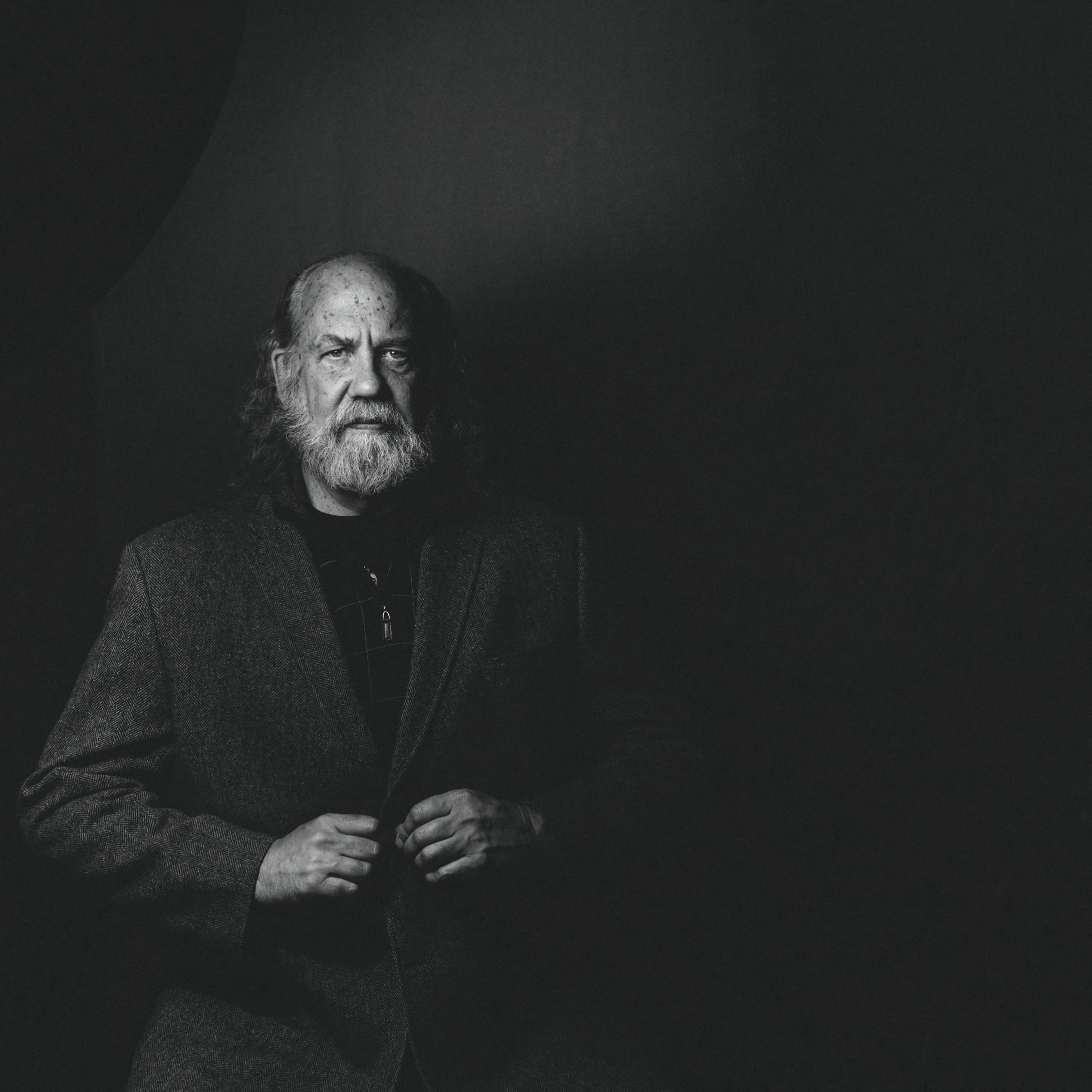
I keep hearing all of these warnings about AI. You know, AI as in Artificial Intelligence—as opposed to NI, Natural Ignorance, which we biochemical creatures tend to exhibit as the regular mopes we are. Anyway, I wondered if I could be replaced by the AI thing. So, as an experiment, I asked this disembodied investment opportunity to write my column. I asked the program, “What is funny?” Here is the result:
“Humor is a multifaceted phenomenon that has intrigued scholars, psychologists, and laypeople alike for centuries. Although, it must be said, most laypeople are rarely actually intrigued about much of anything, most of the time preferring in place of such introspection to binge watch Severance, Danger Mouse, or argue on social media about the unified executive theory as it relates to Shemp v. Curly.
While the subjective nature of comedy complicates its study, certain elements universally contribute to what makes something funny as opposed to not funny—i.e. Otis. Primarily, incongruity, timing, social context, and cream pies emerge as significant factors that shape our comedic experiences.
Understanding these components not only enhances our appreciation of humor, but also sheds light on deeper human interactions and societal norms, with the added benefit of making us insufferable at cocktail parties.
Incongruity theory posits that humor arises when there is a discrepancy between expectations and reality. For example, remember how, in your youth, you expected to cure cancer and instead you ended up running a Dippin’ Dots franchise in Yankton?
Funny, right? This theory suggests that laughter results from recognizing absurdities, contradictions, or tragic disappointments in a given situation. For instance, a well-crafted punchline often subverts the listener’s expectations in an unexpected way, leading to surprise and amusement.
Classic examples include puns like, “Absinthe makes the heart go fondle,” or situational irony, where the outcome defies logical reasoning, yet resonates with our understanding of the world, like thinking that crypto currency isn’t an evil scam. Such incongruities challenge
cognitive frameworks and provoke laughter by highlighting the absurdity of life itself. Recognizing this fact was Norm Macdonald’s genius.
Let’s examine the classic…“Why did the chicken cross the road?” At first glance, it seems not funny—but that’s actually what makes it funny. (Kind of like all the rich guys in the Senate). Let’s break it down using humor theory:
1. Incongruity Theory: You expect a clever or absurd punchline—maybe something about traffic, danger, or an ADHD diagnosis—but instead, you get a totally mundane, literal answer. “To get to the other side.” The incongruity is between the setup, which sounds like a joke, and the anticlimactic punchline, which isn’t one, and that is, paradoxically, funny. Unless you’ve heard it before, which we all have.
2. Relief Theory: The setup creates mild tension—you’re waiting for the “aha!” moment. Or perhaps you are waiting for the “hoho” moment, or the “yikes,” or the sad “deep sigh” that makes up most of the last decade of our mundane lives, even when we don’t know what is actually on that “other side.” I mean, we’ve created a multitude of religions that concern just that unknown, right?
3. Benign Violation Theory: The “violation” is that the joke breaks the social rule that jokes should be funny. These days, we all realize most jokes have become reality and thus, not funny by definition. The chicken tale “fails,” but in a benign way, because it’s humor about humor. It’s as if humor, like objective truth, as InfoWars tells us, no longer exists.
So, this little jape—arguably one of the oldest jokes in English, though probably extant in other older languages like Pig Latin or Calculus—works because it plays with expectations and structure, not because of the content itself. It’s almost like it is the original anti-joke or, as it is now referred to in our nation’s capital, “antijo.”
Note: “antijo” should not be confused with “antifa” which is, of course, a philosophy opposing singing the musical scales like Maria von Trapp.
There you have it, that’s what AI produced. I quit.


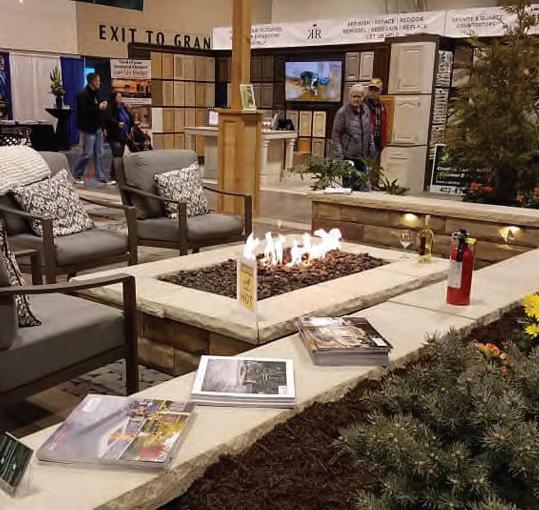


At Schlessinger MD, we believe the best aesthetic results honor who you are. Board-certified dermatologists and cosmetic surgeons Drs. Joel and Daniel Schlessinger offer advanced injectable and laser treatments designed to refine, refresh and reveal your natural radiance— never compromise it. From BOTOX® and JUVÉDERM® to Sculptra®, SkinVive™ and HALO®, these precision treatments smooth fine lines, restore lost volume, improve skin texture and enhance your complexion with results that look authentically you. Experience the confidence that comes from subtle, sophisticated enhancements performed by trusted experts.

Best of Omaha 2026 winner in 10 categories
Best Dermatology
Best Cosmetic Surgeon Office
Best Local Website
Best Beauty Supply Store
Best Esthetics Office
Best Med Spa
Best Day Spa
Best Body Contouring
Best Laser Hair Removal
Best Waxing - Hair Removal