
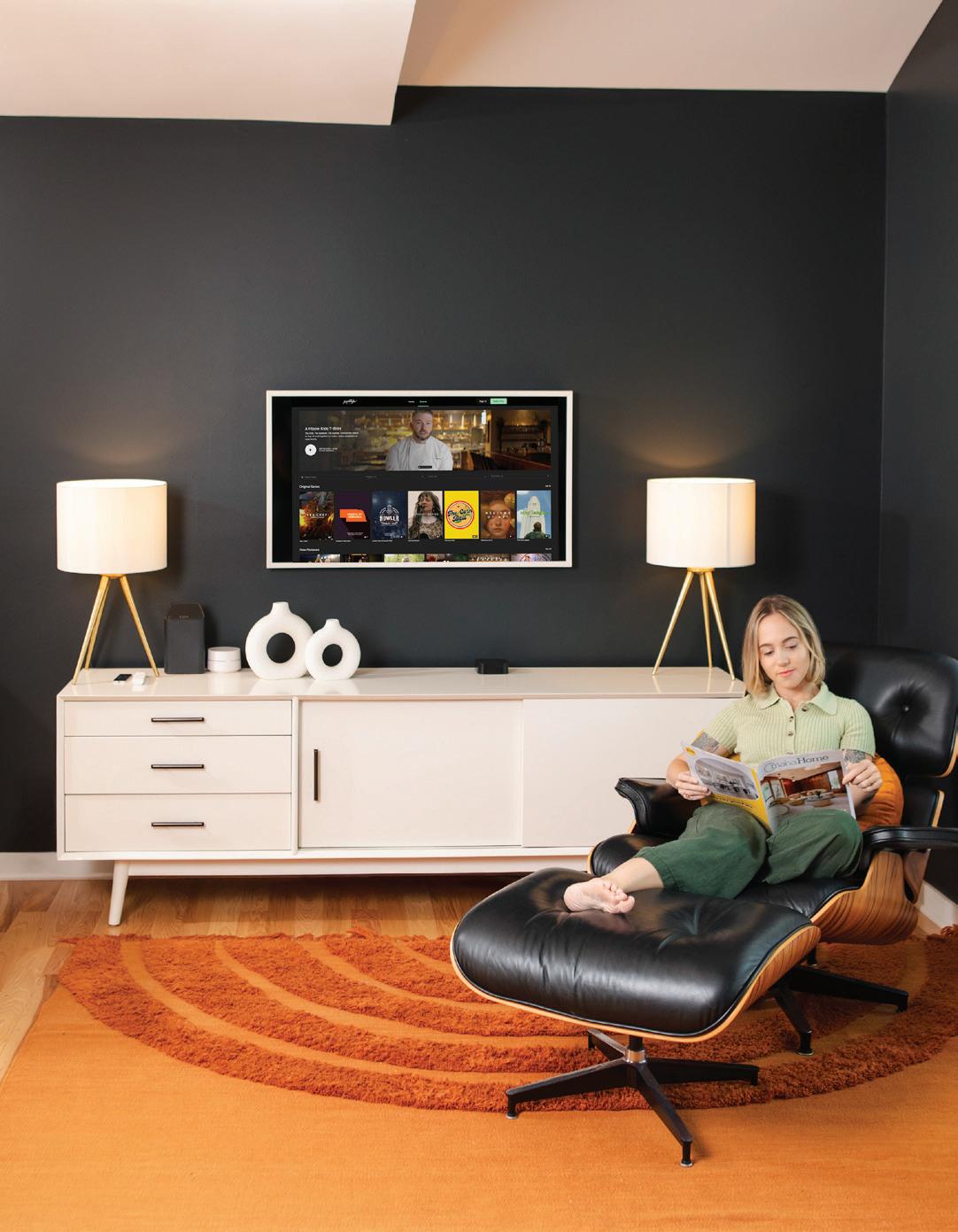
In the heart of our city. In the soul of our state. The stories that shape your world are now in one place. Omaha Magazine and The Good Life Network have joined forces to bring you unparalleled access to the culture of Omaha and the character of Nebraska, from the page to your screen. The complete experience. $7/month. Discover More
T here’s something special happening in Omaha right now. You can feel it in the way people are reimagining spaces, layering in meaning, and infusing creativity into the heart of our neighborhoods. That same spirit of reinvention is what drew me to real estate—and it’s what makes stepping into the role of guest editor for OmahaHome such an incredible honor.
This issue marks the beginning of an exciting collaboration between OmahaHome and Cara Loves Omaha—two local brands coming together to tell deeper, more intentional stories about what it means to live beautifully here. Together, we’ll be sharing homes with character, conversations with local creatives, and behind-the-scenes looks at the people shaping Omaha’s evolving design scene.
Home has always been more than rooms and windows. It’s the way light fills a room, the art that tells a story, the mix of old and new that makes a space feel alive. My hope is that each issue feels like a reflection of that—celebrating the artistry, architecture, and authenticity that define Omaha’s quiet confidence.
Whether you’re flipping through these pages for inspiration, connection, or simply a sense of pride in our city, I hope you feel that same energy: thoughtful, modern, and full of possibility. Omaha’s design story is still unfolding, and we can’t wait to share it with you.
Let’s stay connected—find me on Instagram @caralovesomaha or visit caralovesomaha.com. I’d love to hear what inspires you most about a home.
FROM THE GUEST EDITOR
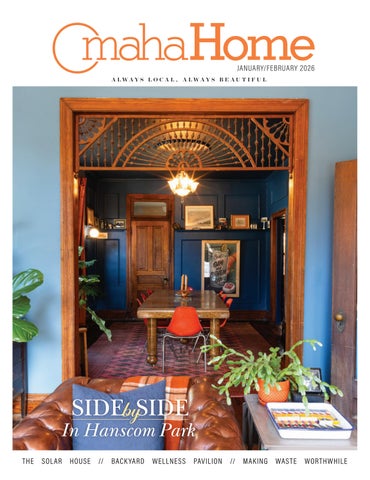
MAKER Todd McCollister FEATURE Side by Side in Hanscom Park
AT
A Home That Finally Fits
RESTORATIONS Hands-On History
ARCHITECTURE The Solar House
SPACES Designing Tranquility
Hillside's Compost Club

Cara Crawford Guest Editor Cara Loves Omaha caralovesomaha.com


• Customizable event web pages
• Ticket sales tracking
• Sales dashboard
• Pre-created social media posts
• Data analytics and insights
• Free mobile check-in app







EXECUTIVE EDITOR
DOUG MEIGS
ASSOCIATE EDITOR
NATALIE VELOSO
ASSIGNMENT EDITOR
ISAAC NIELSEN
EDITORIAL INTERN
NAOMI HEU
CONTRIBUTING WRITERS
KATIE BREIDENBACH · DIANA FAILLA · LISA LUKECART
HOLLY MCATEE · NATALIE MCGOVERN
KAYLA STURGES · TIM TRUDELL
CREATIVE DIRECTOR
RACHEL BIRDSALL
SENIOR GRAPHIC DESIGNER
RENEE LUDWICK
GRAPHIC DESIGNER II
NICKIE ROBINSON
GRAPHIC DESIGNER I
JOEY WINTON
CHIEF PHOTOGRAPHER
SARAH LEMKE
CONTRIBUTING PHOTOGRAPHER
MANDY MCGREGOR
EXECUTIVE VICE PRESIDENT
SALES & MARKETING
GIL COHEN
DIRECTOR OF BUSINESS & DEVELOPMENT
CAROLE SPRUNK
BRANDING & DIGITAL SPECIALISTS
GREG BRUNS · DAWN DENNIS
FRANCINE FLEGG · SANDY MATSON
TIM MCCORMACK · KRISTEN SPRINGER
DIGITAL ADVERTISING SALES SPECIALIST
TRAVIS FISHER
SENIOR SALES COORDINATOR
ALICIA HOLLINS
SALES COORDINATOR
JESSICA LINHART · SANDI MCCORMACK
BUSINESS MANAGER
KYLE FISHER
AD TRAFFIC MANAGER
DAVID TROUBA
DIGITAL MANAGER


LUIS DE LA TOBA
DISTRIBUTION MANAGER
CARSON KRUSE
Executive
PUBLISHER
TODD LEMKE
ASSOCIATE PUBLISHER
BILL SITZMANN









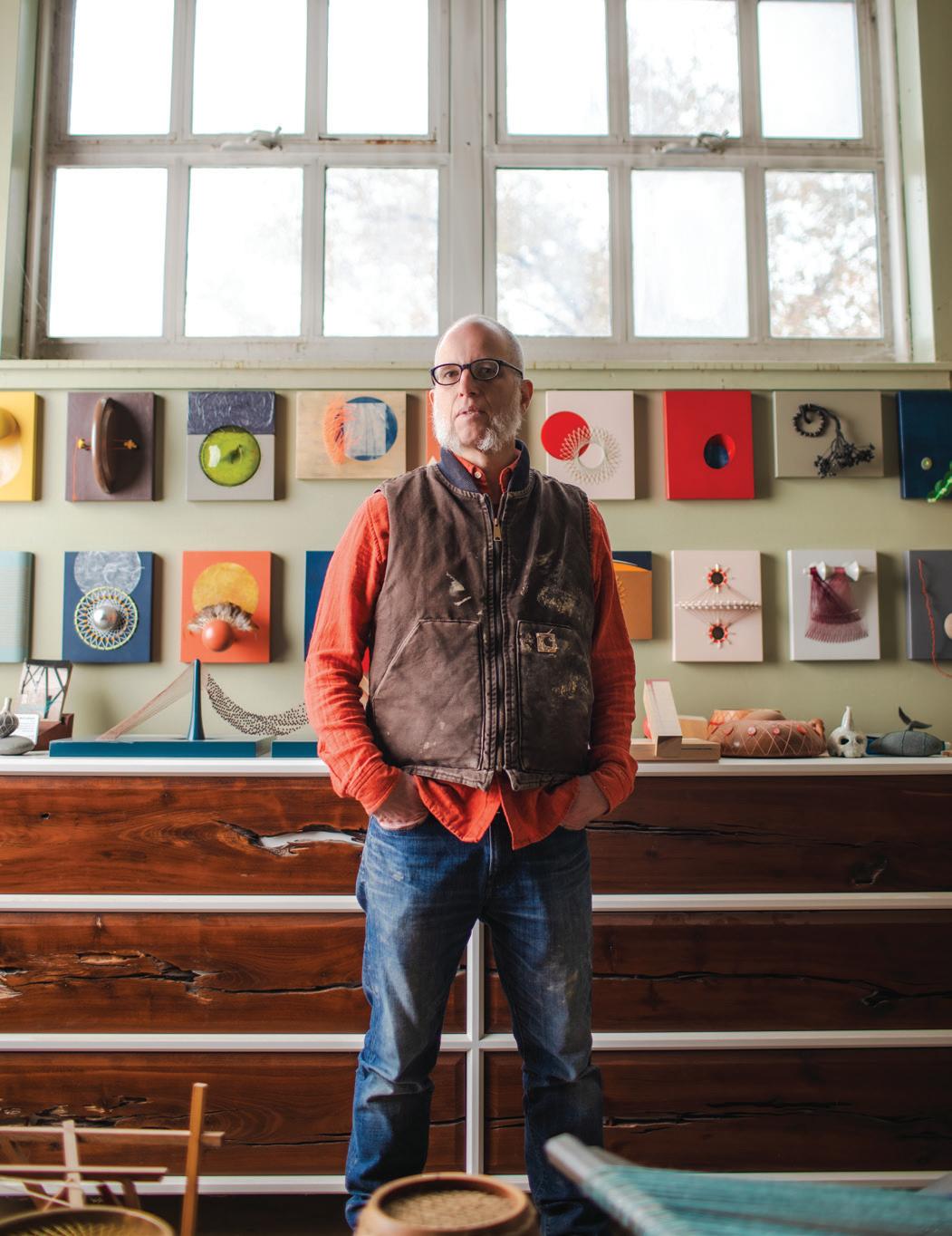
Known for his woodwork and furniture craftsmanship, Todd McCollister has had to pivot more than once in his career. With aspirations high, he spent six years seeking fame in New York City. Struggling to be seen, McCollister set out to make a living based on commissions as an independent artist. For years, people told him that his furniture craft was artwork. Over time, he finally believed them.
His work has gone from woodworking to sculpture design, segueing into a series of narrative and nonobjective art installations. In 2014, McCollister moved back to Omaha and continued to make furniture. He settled on the historic Army Quartermaster Depot off of 21st Street and Woolworth Avenue as his woodworking shop and art gallery, opening its doors in 2018. After evaluating his priorities post-pandemic, McCollister rediscovered his true vocation.
“From there, it was an easy step to start making art again. I had some time to make sculpture and I said, 'Oh my gosh, this is awesome let’s just focus on this,'” he said.
He was recently commissioned for “Prairie Schooner,” a reception desk for the renovated
Museum of Nebraska Art in Kearney. Representing both a ship and land, the desk pays homage to Nebraska’s pioneer ancestors.
McCollister’s work tells a story, often one that is reflected through characters he puts into his art: a detailed toy tortoise; an astronaut terraforming, tied to a string; a carved wooden boat simultaneously suspended between the landscape of realism and an imaginary world. No two pieces are alike in theme or in design.
Much of McCollister’s work is also about pattern, math, and geometry. The common thread tying everything together is "a little bit of reason; a little bit of nonsense. It’s always a combination of those two things,” he said.
“The irrational part is that the geometry is so complicated, I never quite know what it’s going to look like when I apply a curve on it. I sort of trust my gut and go by instinct when I’m carving it,” McCollister added.
Theme and interpretation are left open to the viewer. Take for instance, “Madmen in the Mountain.” At first glance, it resembles a table-like structure, but take a glimpse below and you’ll see tiny plastic birds suspended under clouded glass, a boat either adrift in rolling fog, or a vessel that’s caught up in the swirling arctic air of the mountains. The surreal part is where it becomes both clouds and water.
McCollister started a series of narrative works, the “Long Shadows Series,” which depicts patterns and shapes that distort, evolving organically with each curve. Made from wood and epoxy resin, the pieces tell a story that’s
both objective and interpretive to the viewer. McCollister operates out of a stream of consciousness when he creates. His process can be described as a form of free-flowing expression, channeling both the subconscious and irrational state of mind. He never tries to force ideas out, he said. They materialize naturally. As you take in each work, thematic elements depicted throughout such as Icarus or the physics of acoustic mirrors and parabolas are slowly revealed.
Living in New York in 2001, McCollister was on the subway in lower Manhattan headed toward a tunnel that ran underneath the Twin Towers when the hijacked planes hit. Luckily, he was rerouted. Four years later, a work emerged subconsciously reflecting the harrowing events of 9/11. Although it wasn’t an intentional piece, the gravitas of the terror attack was present through subliminal influence. The work depicts a haunting figure as it drowns in white debris, trapped inside a cylinder with no escape.
Many of his works reflect upon historical events. In April 2020, he created “Shelter in Place,” a piece with interwoven wire and pearl-like beads gracing the top of a wooden sculpture. During the wave of the pandemic, he felt the need to express what the world was inherently feeling at a time of uncertainty. For McCollister, it’s a piece about survival. “It’s hopeful, but it’s reserved optimism,” he said.
Through geometric abstraction, unconventional design, and the rational and irrational coming together, his work continues to intrigue and inspire.
Visit longgrainfurniture.com for more information.
In Hanscom Park by
PHOTOGRAPHY
DESIGN
Hanscom Park Studio Blurs the Line Between Work and Home

Quentin Lueninghoener and Liz Noser have mastered the art of the short commute. Most mornings, the walk to work is just a few steps across the yard.
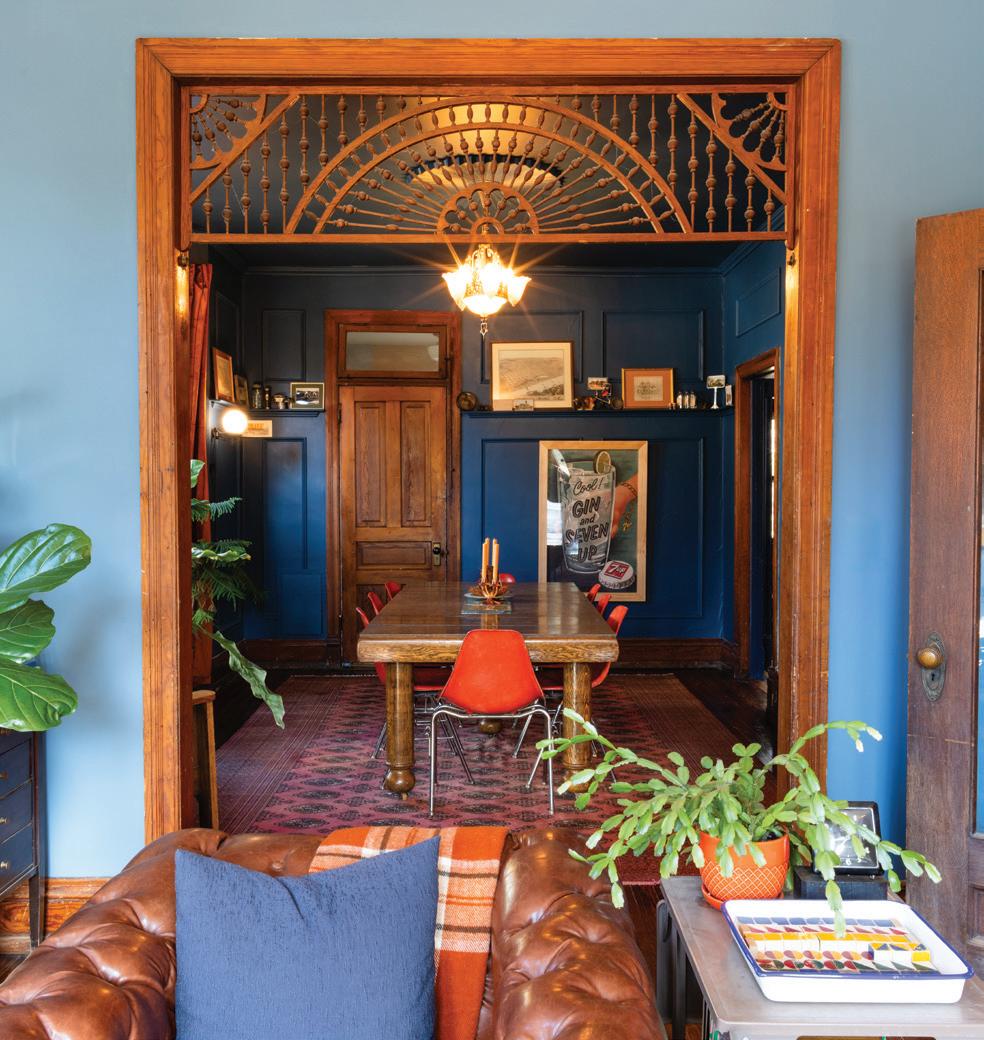
Lueninghoener’s workspace is housed in a bright purple home he bought in 2023, the dedicated home base of his graphic design business, Hanscom Park Studio. In a light blue house with pink trim next door, Noser settles into her own office each day.
It’s their residential home shared with their cat and two dogs, Dean and Pippin, whom Noser jokingly calls her “coworkers” since she joined Lueninghoener in working from home a year ago. The two neighboring houses in Hanscom Park hold nearly every part of their daily lives.
“Sometimes I just wander over when I need to check on something,” Noser said. Lueninghoener strolls over for his lunch hour to see her and the dogs before continuing his work. The setup turns their work and home life into a kind of dance across the lawn, the occasional dog escorting one or the other back inside.
Lueninghoener bought what they call the blue house in the summer of 2012, about a year before meeting Noser, when the housing market was still reeling from the crash. Growing up watching his dad restore their 1920s home in Dundee taught him that transforming a home doesn’t always require contractors. “I feel pretty comfortable swinging a hammer,” he said. “I thought the house was cheap enough I could probably tackle a lot of these projects myself, so I kind of just went room by room.”
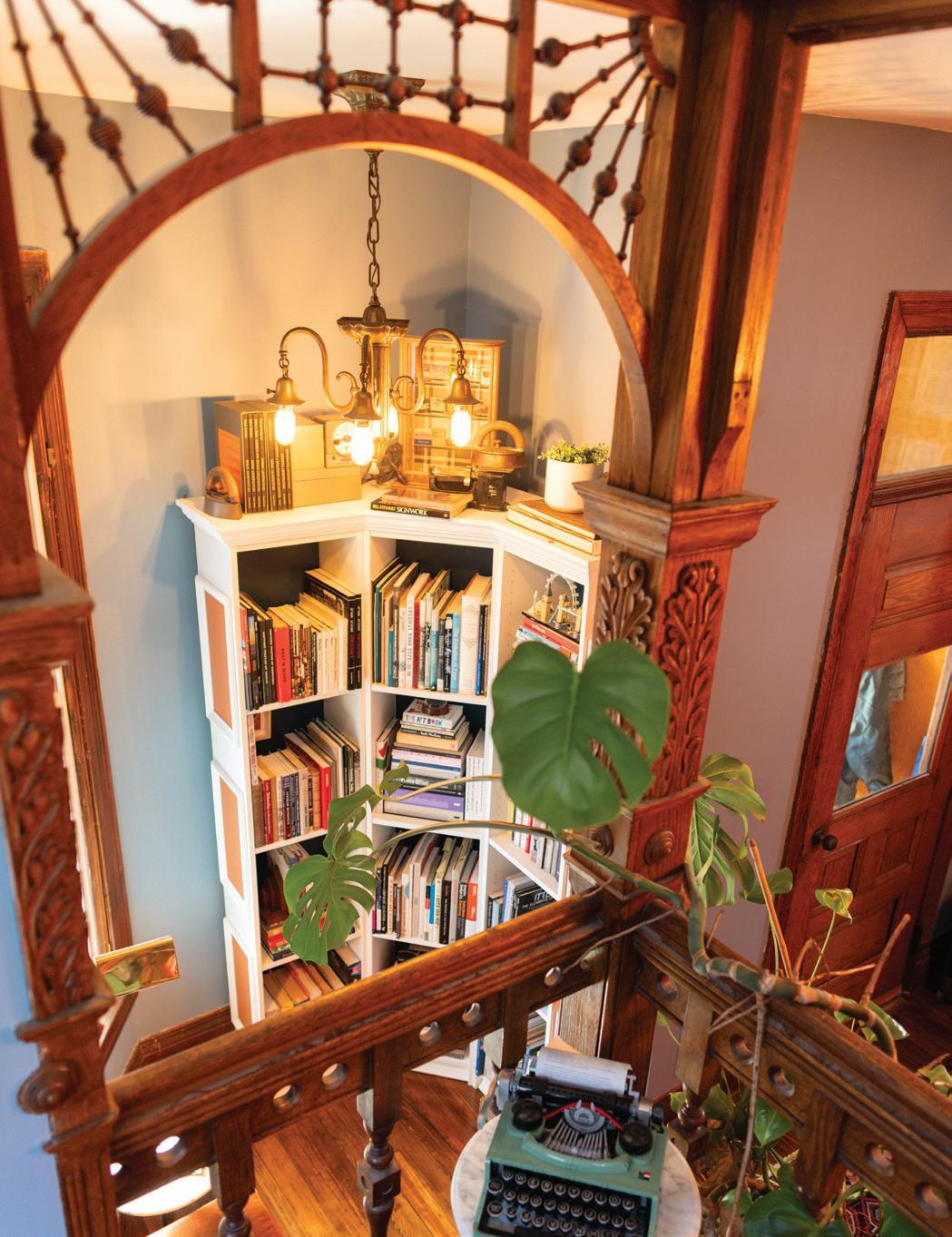
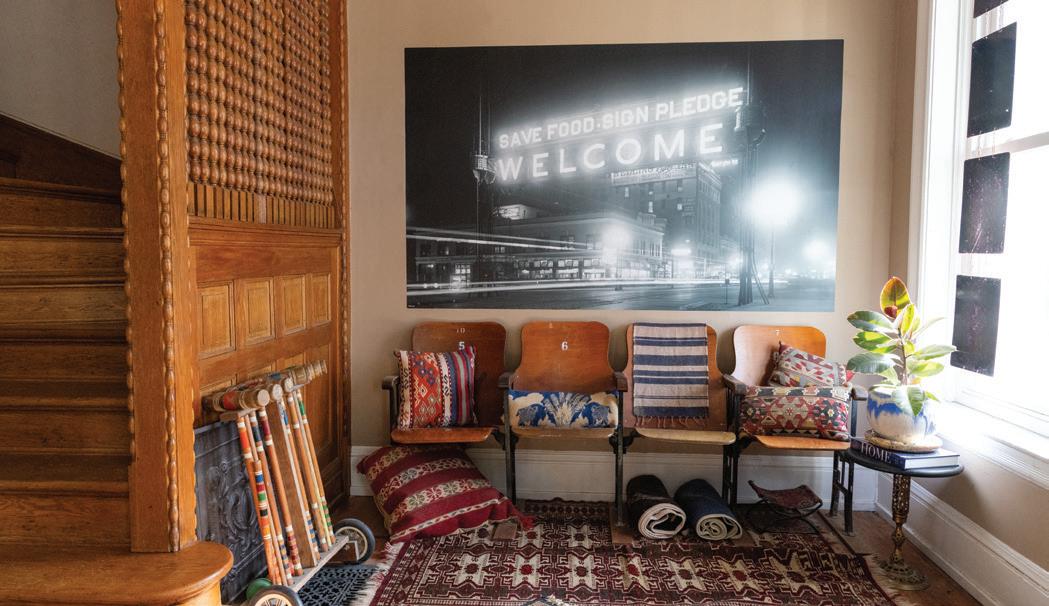
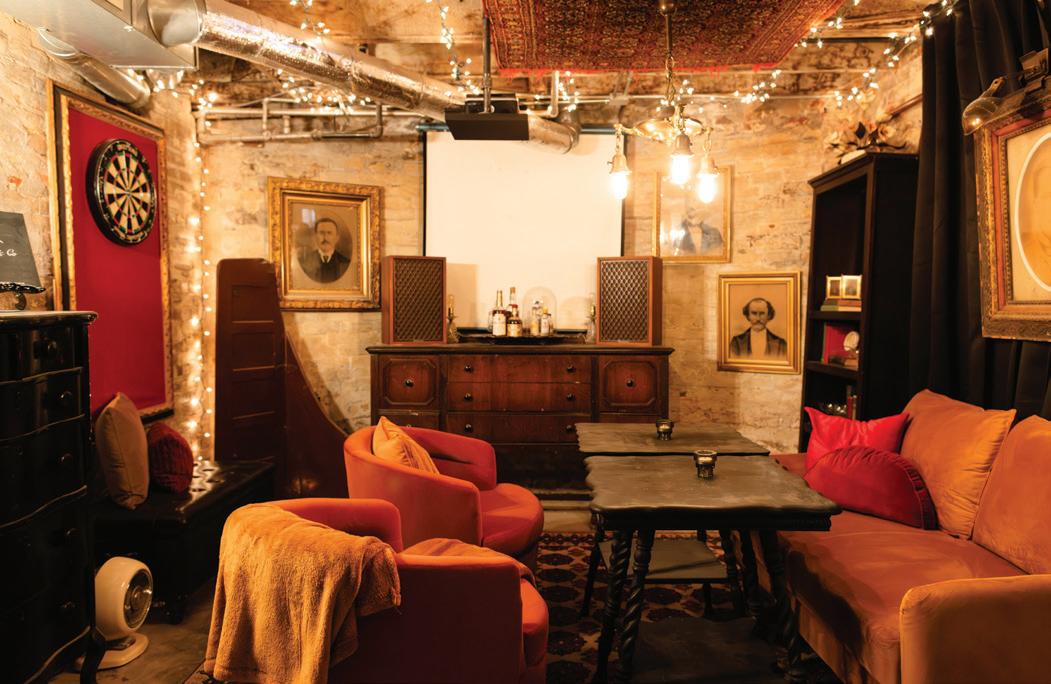
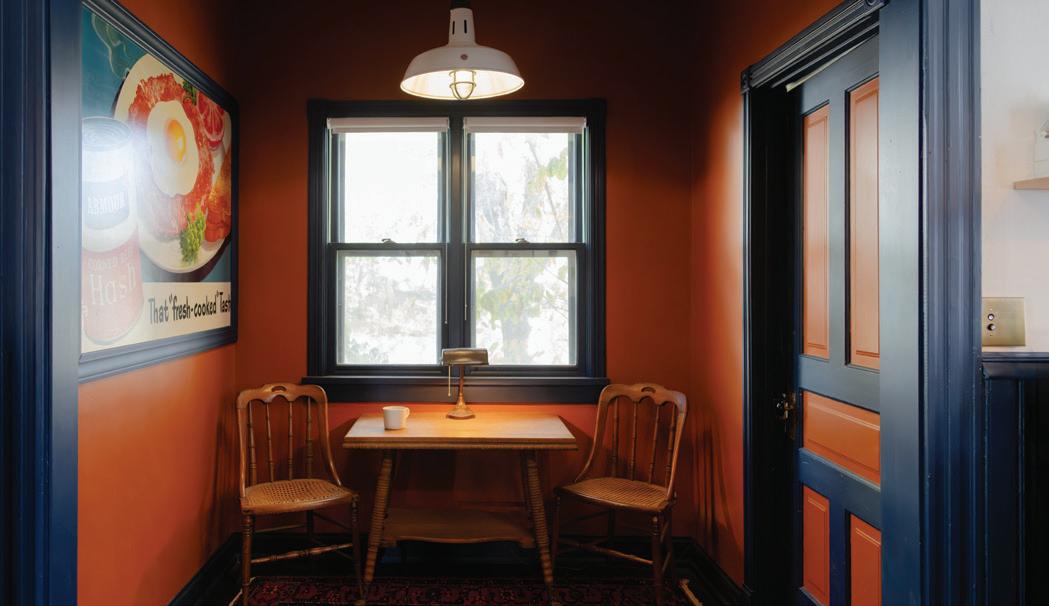
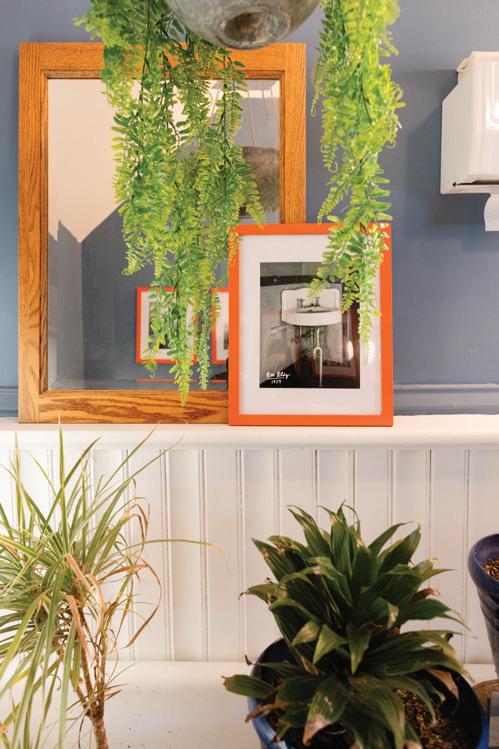
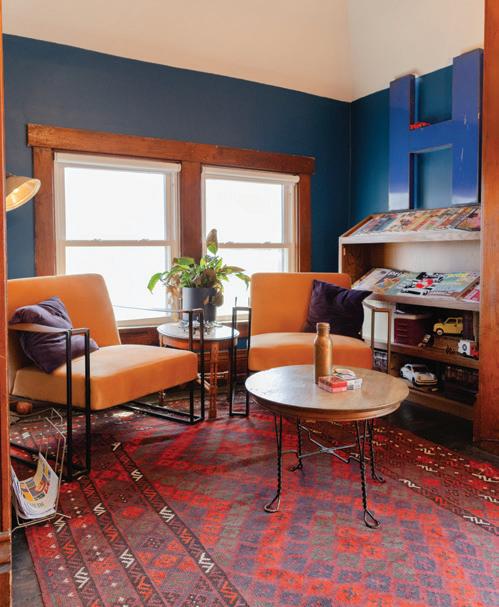
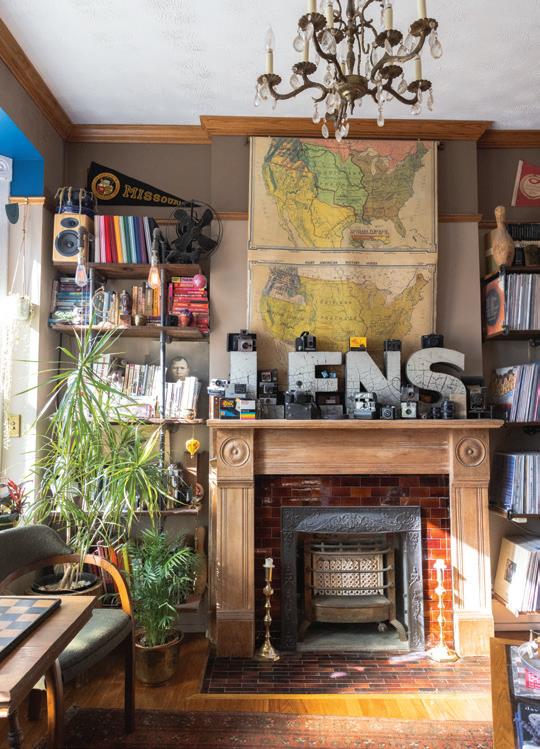
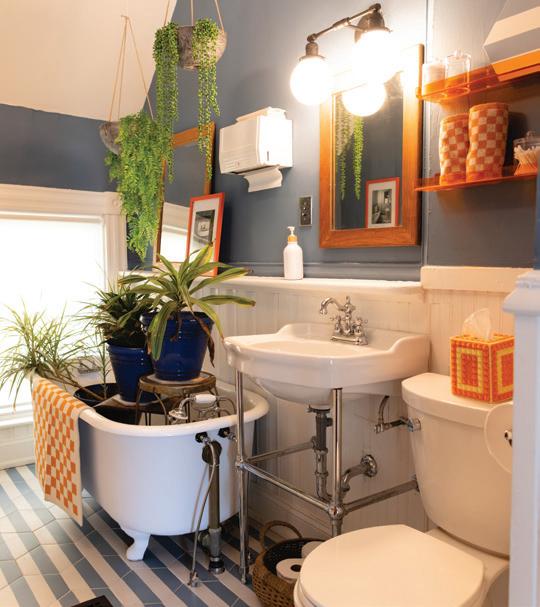
Built in 1890, the blue house was a bit of a fixer-upper. Floors were torn up and the walls were covered in layers of paint in baby blue and what Lueninghoener describes as “Pepto Bismol pink,” but the home had a solid structure. Lueninghoener saw potential. He began restoring it himself, ripping up carpet and refinishing floors.
After making renovations for a year, it wasn't long before Noser showed up at the housewarming party. “That’s where we met,” she said with a smile, a moment that feels inevitable in retrospect. The neighborhood wasn’t exactly what you’d call trendy at the time, Lueninghoener admitted.
“Then Liz moved in, and her background is even more in visuals than mine is, so she was able to help pick finishes and colors,” Lueninghoener said. “I'm color blind, so I left all the color decisions up to her.”
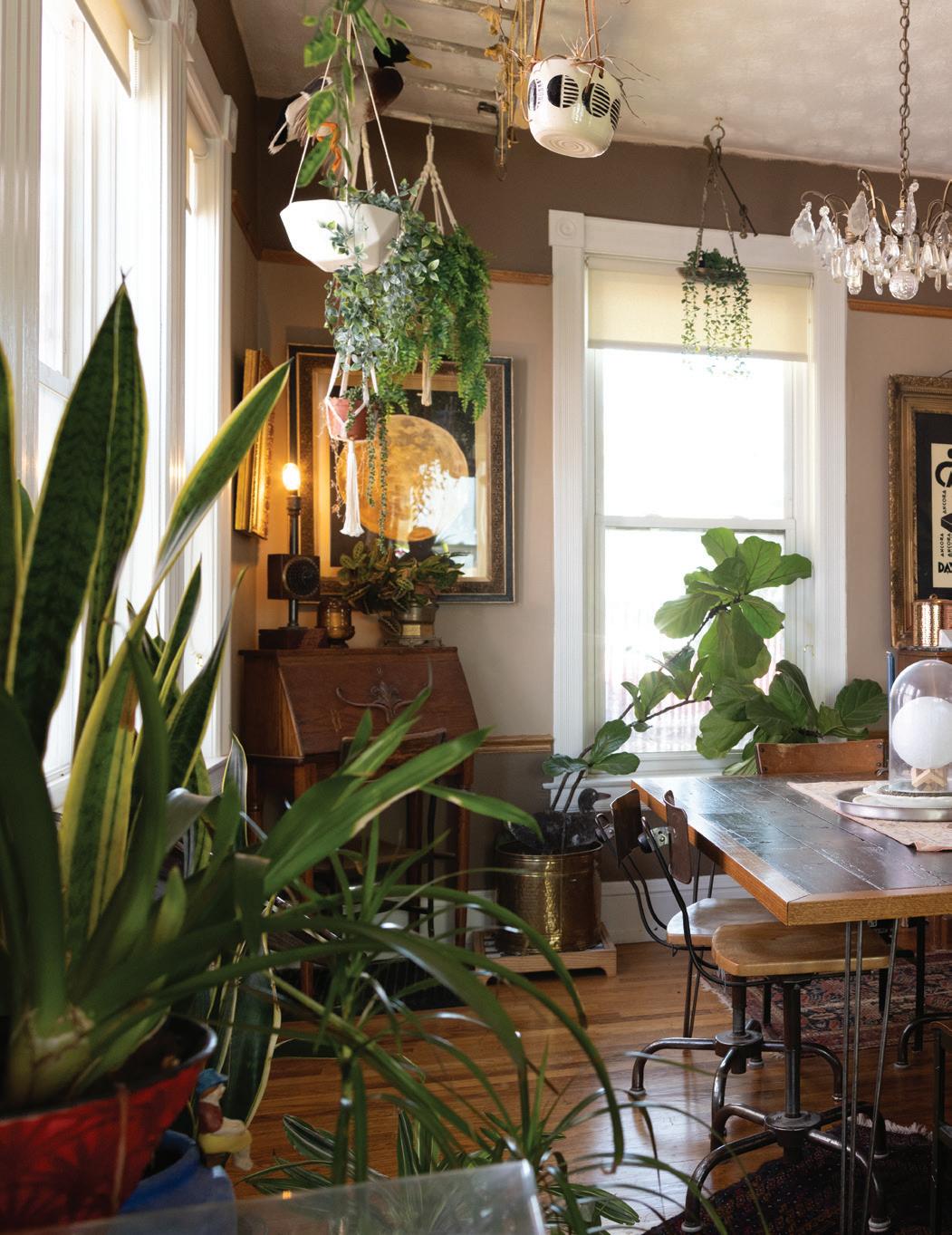
Noser brings a complementary energy to each house that Lueninghoener calls an “essential balance.” She’s the curator of eclectic collections, the finder of strange treasures, and the one who likes to shake up a room with something unexpected. “I like finding things that have ties to local landmarks or history,” she explained. Her thrift store finds, a mix of the whimsical and the functional, are what make the spaces feel lived in.
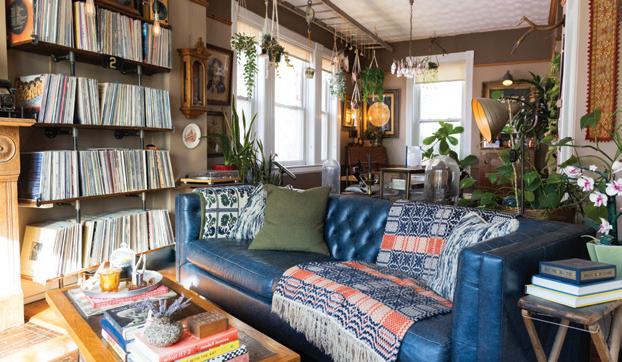
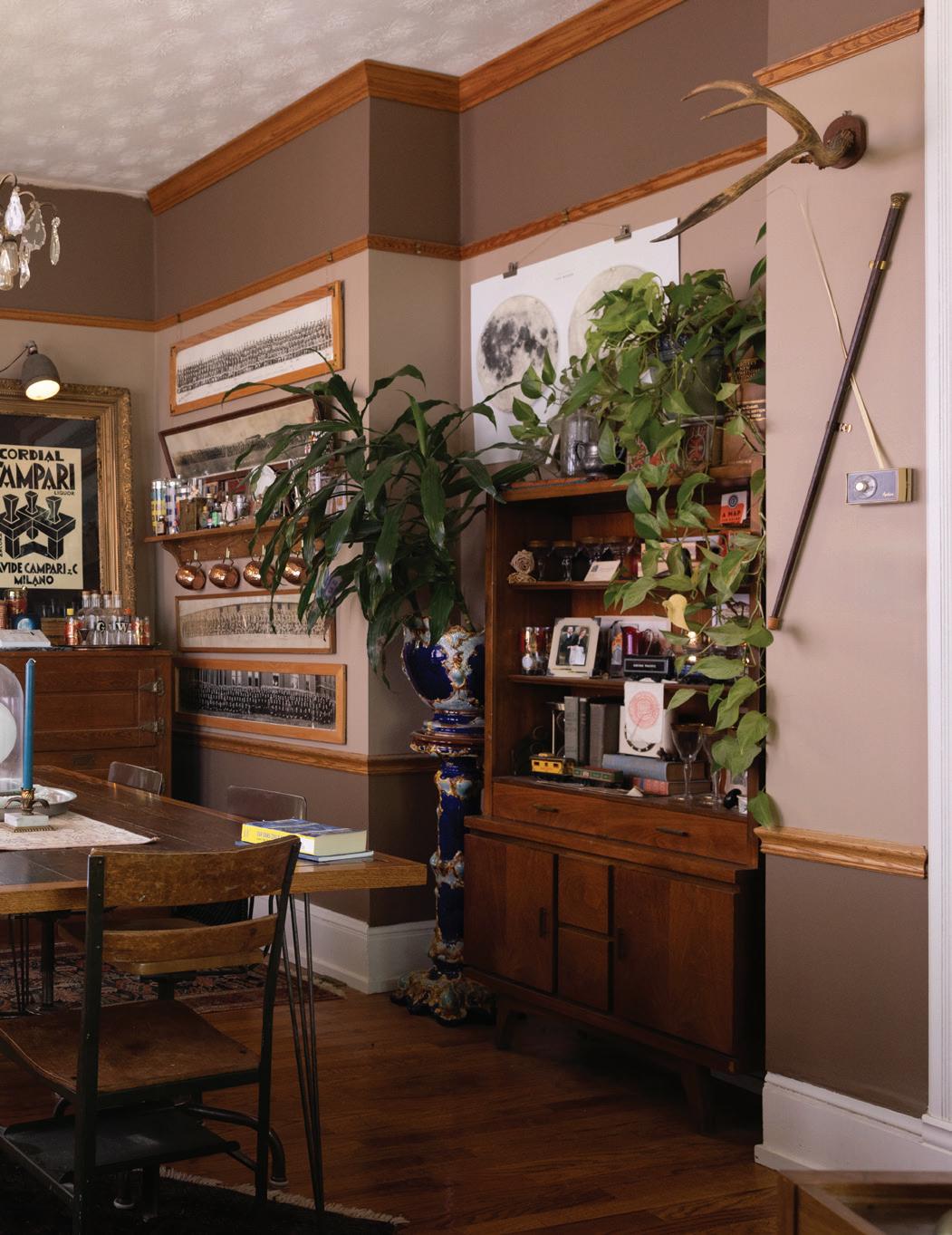
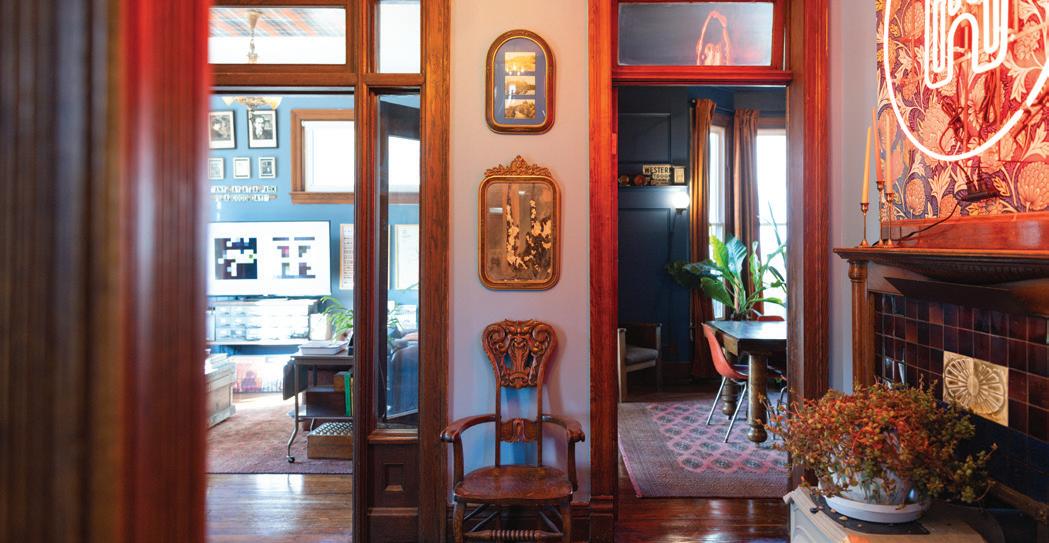
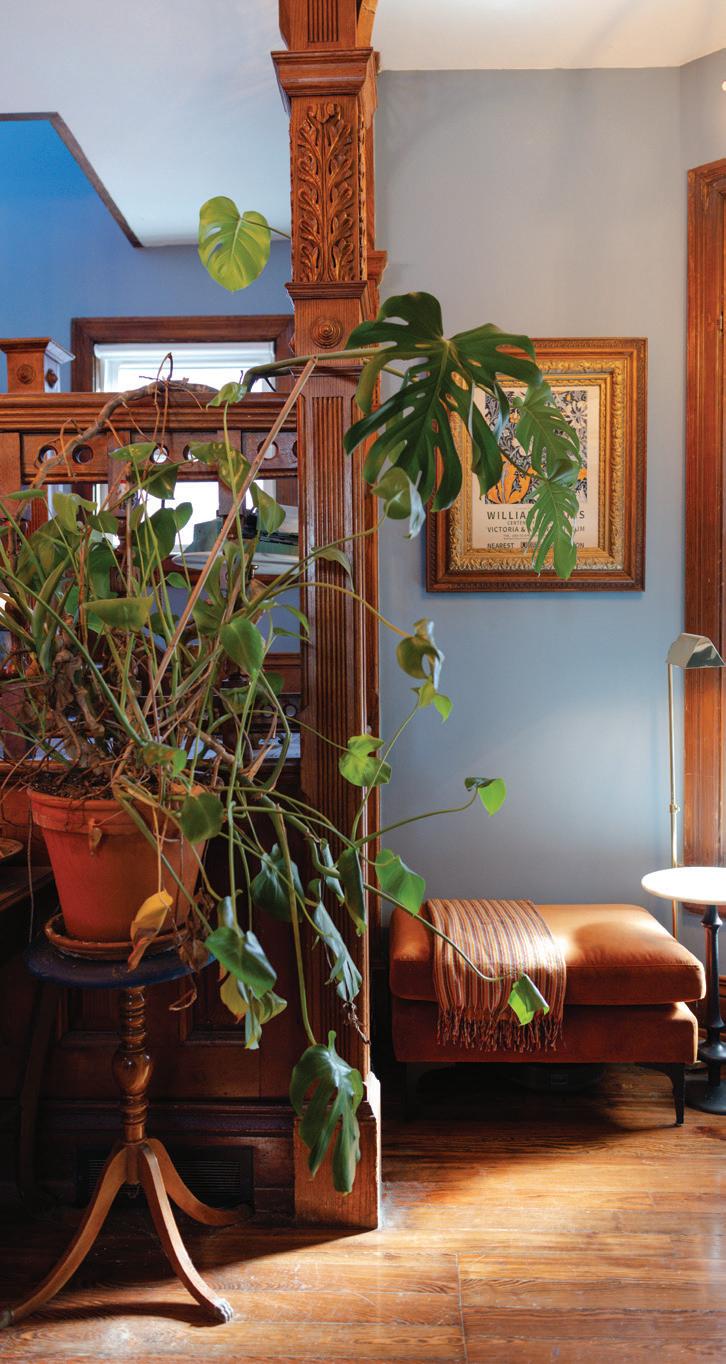
Over the years, the blue house has become a living scrapbook of their life together. The staircase, refinished by Lueninghoener, gleams with carefully turned spindles. The fireplace, once painted white, now reveals raw brick true to the house’s original character. Shelves built by Lueninghoener showcase his vinyl records and Noser’s collections. “These tables are made from Nebraska barn wood,” Noser pointed out. “A friend tracked down the wood and Quentin built the dining table and coffee table.”

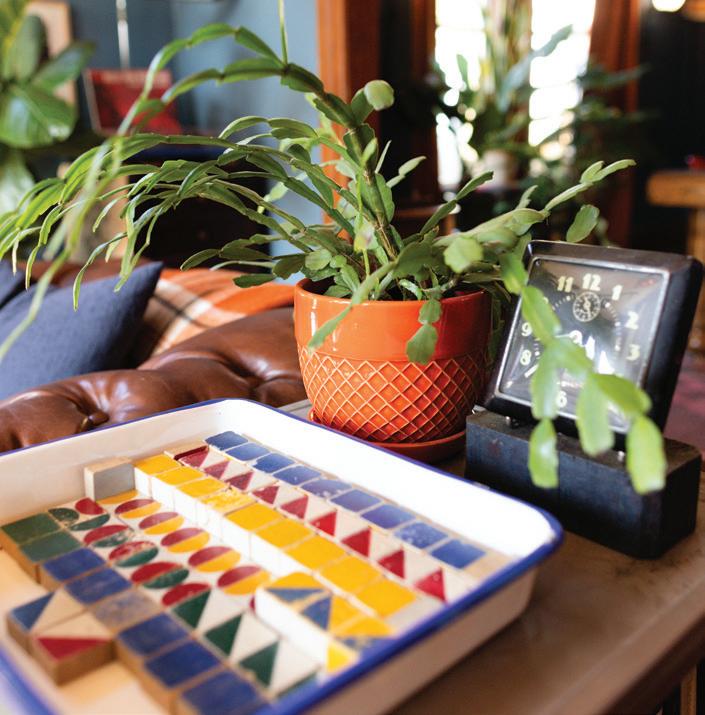
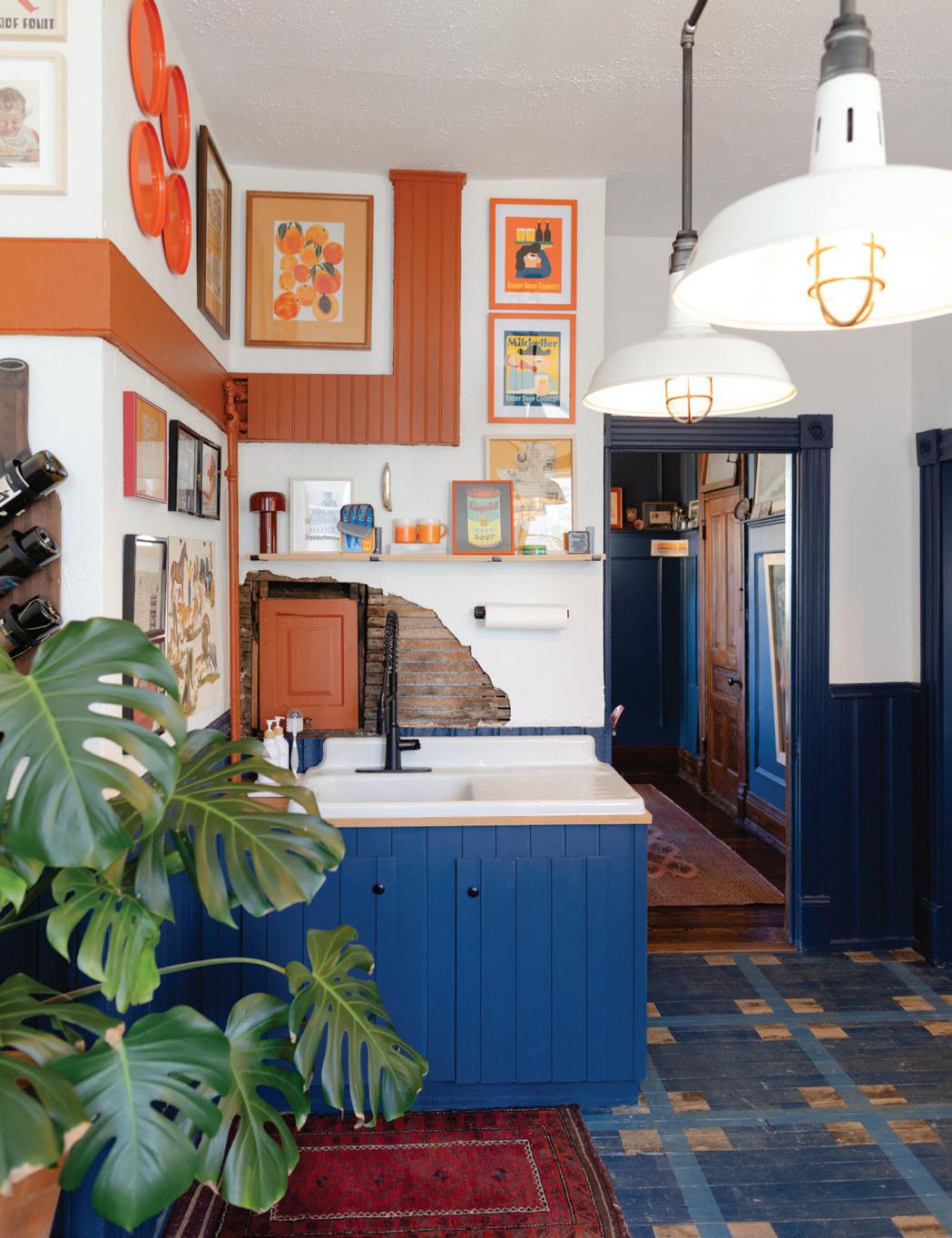
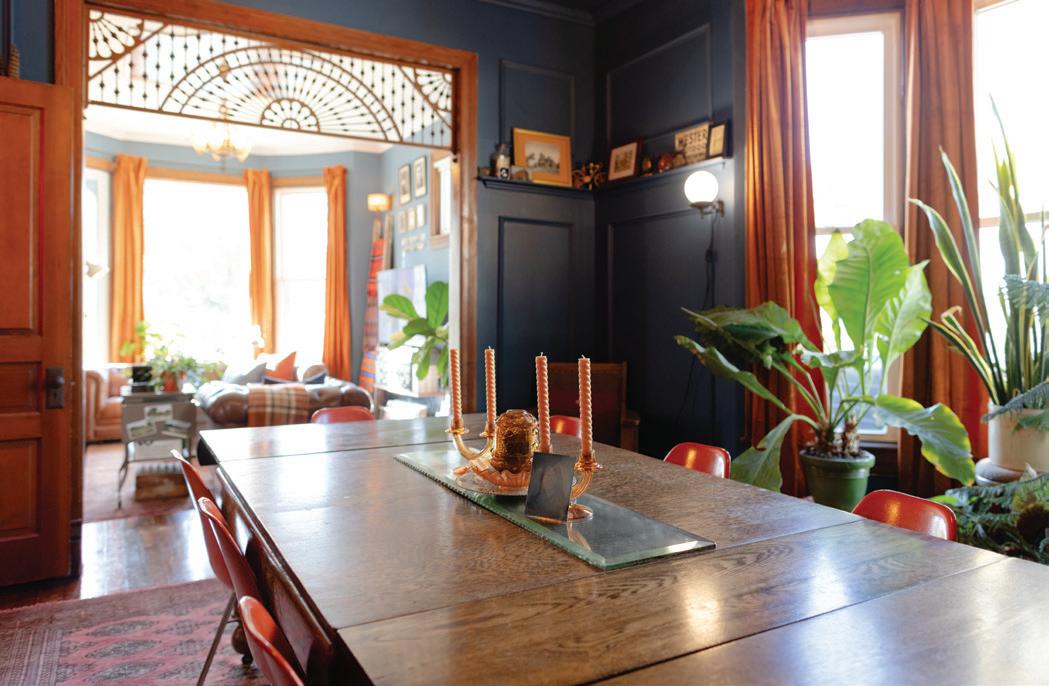
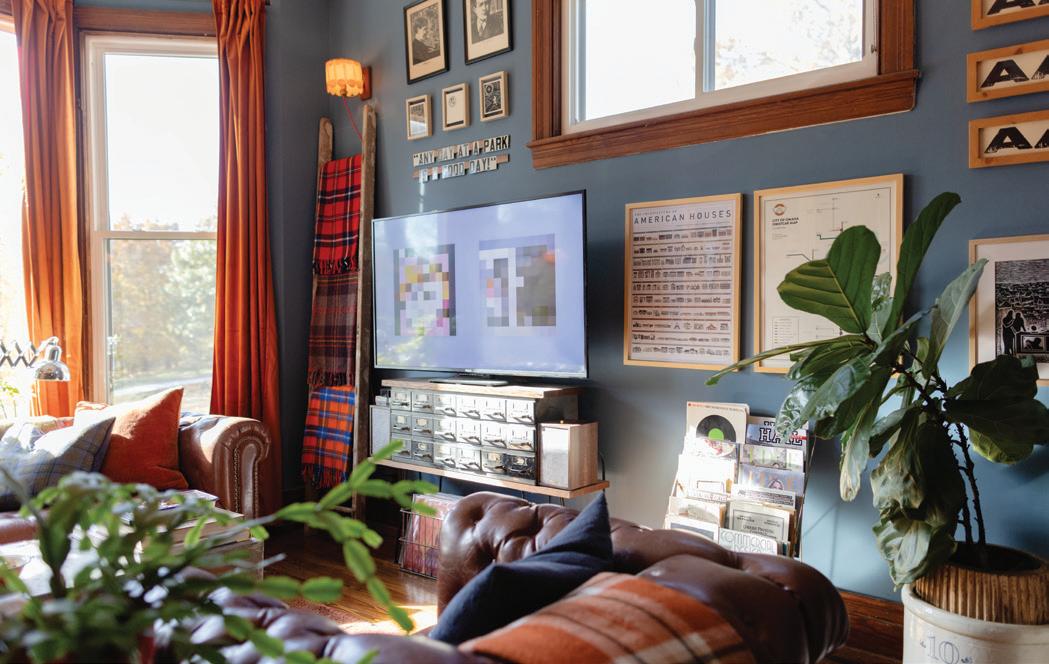
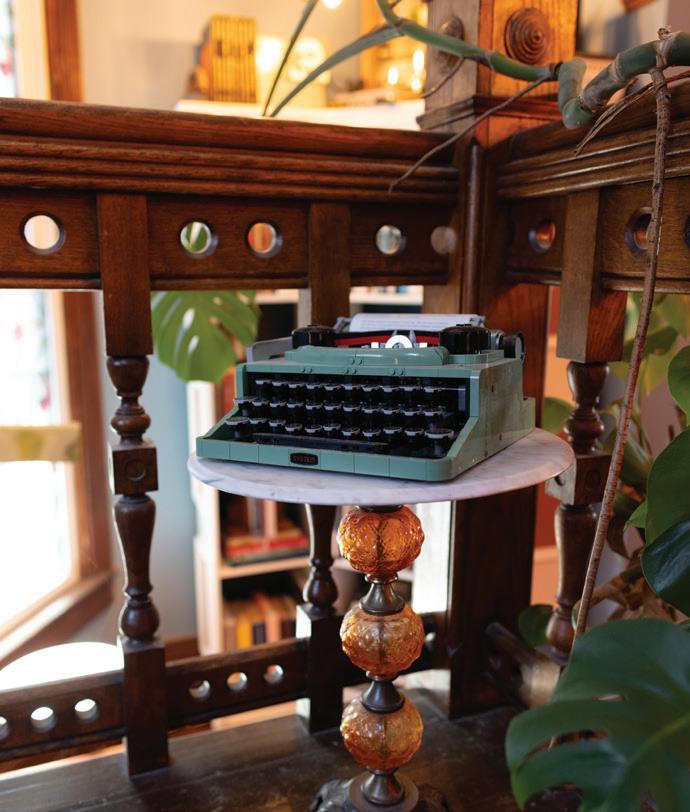
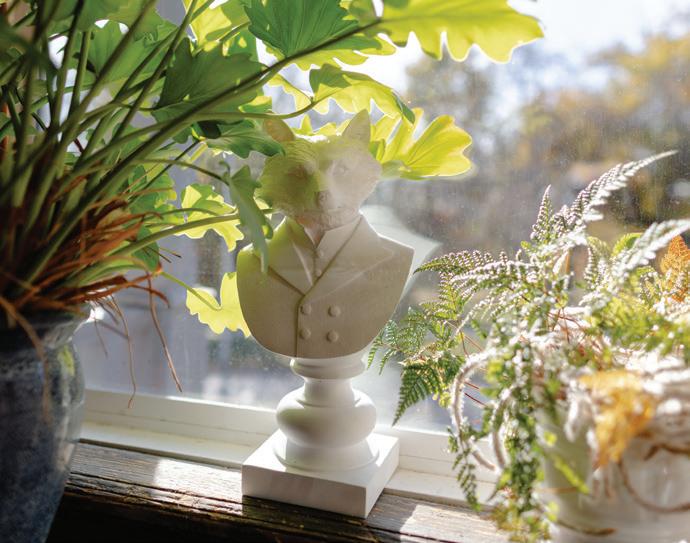
A collection of black-and-white photographs from over a century ago and moon-themed decor that reflects their wedding motif of “new phases” are Noser’s doing. “I have probably about 100 of these creepy old photos,” she said with a laugh. “They were even decorations at our wedding.” Her fascination with the antiques turns the dining and living rooms into spaces of curiosities.
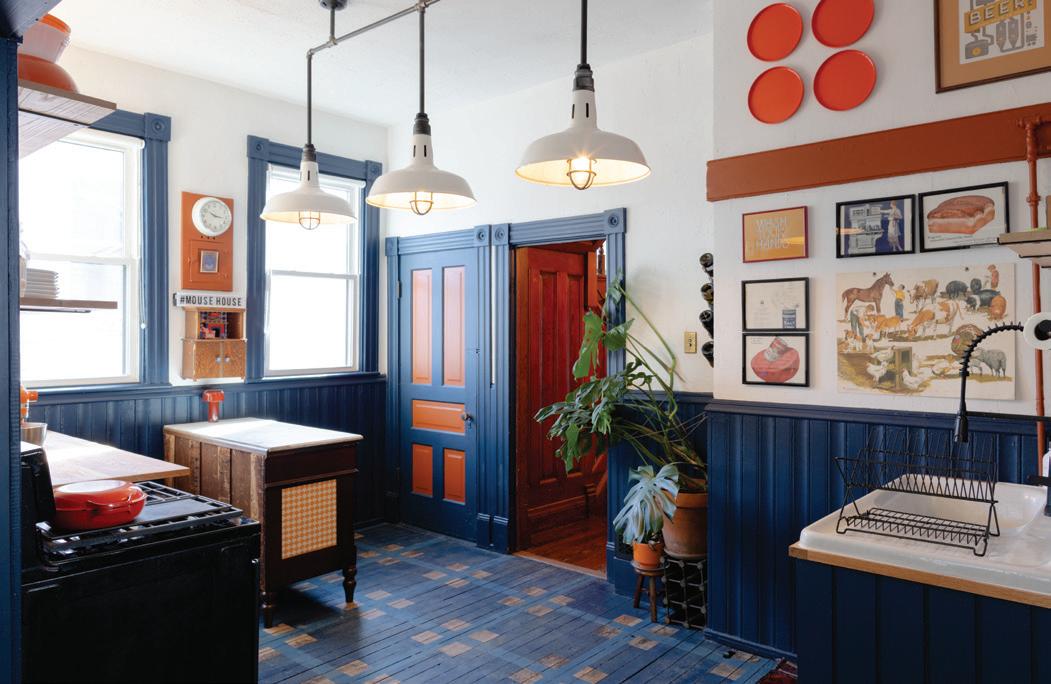
The kitchen has evolved gradually, too. Over the years, cabinets were repainted, butcher block counters were installed by Lueninghoener, and more recently, marble tile replaced damaged hardwood. The salvaged tin ceiling in the kitchen is one of their favorite renovation details to date.
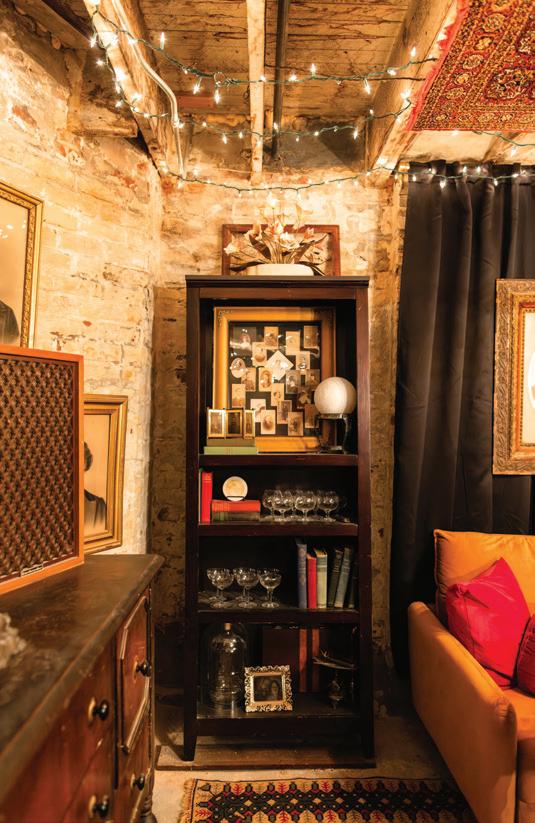
Hidden behind a secret door in the basement, a makeshift speakeasy came about during a stressful stretch in 2020 when Noser was working at the hospital emergency room. “We were trying to ease some stress however we could,” she said. Lueninghoener built the movable shelf himself, creating a private nook filled with odds and ends collected over time.
Staying true to Noser’s idea to assign each space a theme, their guest room designed with nieces and nephews in mind is cowboy-themed. Their own bedroom nods to a shared goal to visit all the national parks, decorated with mementos from their travels.
The upstairs hallway and sitting room teem with even more curiosities. Skulls, an old dentist’s cabinet, model hands, and greenery stapled to the ceiling are all a testament to Noser’s taste for the unusual.
The blue house holds their daily life, but the purple house next door carries the production energy of Lueninghoener’s work. For years, he had been setting aside funds with the idea of buying a commercial building. He toured a handful of properties, made offers that didn’t stick, and watched listings come and go. Then, just over two years ago, opportunity quite literally came knocking.
“Home is my favorite place to be. When I’m away for a few days, I’m so happy to come back. I like being where my person is and where the dogs are. I find a lot of comfort here. And honestly? I’m never bored.” Liz Noser
“The couple who lived in this house came to us and said, ‘We're moving. We know that you've always liked this house. Would you have any interest in buying it?’” Lueninghoener said. With his savings already in place, he took the leap.
Both houses were built by the same architect, Sidney Smith, whose work once dotted Omaha’s streets. Lueninghoener looked into Smith’s legacy after buying the house next door, tracing its history and uncovering overlaps with their current home. Though some of Smith’s buildings have since been lost, he’s best known for designing landmarks like the Mercer Mansion at North 40th and Cuming streets.
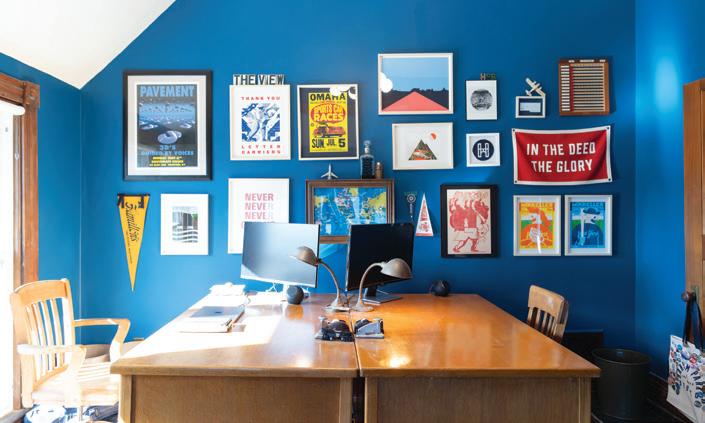
Lueninghoener and his business partner, Ben Vankat, now often meet with their clients in the front rooms of the purple house, where light filters conveniently through tall windows onto their samples and sketches. The basement workshop is half dedicated to printmaking and half to woodworking, and upstairs, their shared office serves as the home base for the design work that ties it all together.
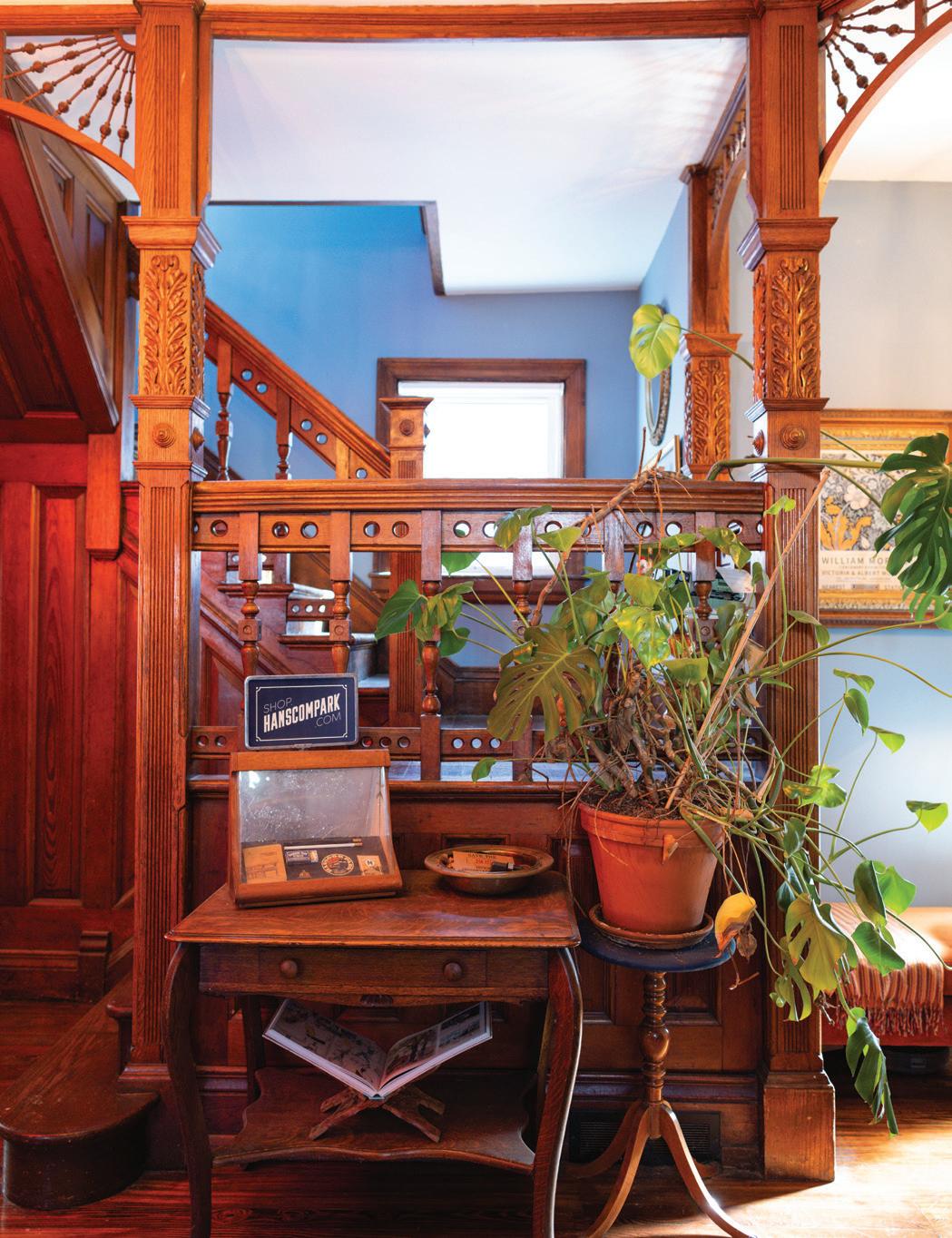
Everything in the purple house follows Hanscom Park Studio’s signature palette of blue and orange. Noser points out that as you move from room to room, the shades gradually deepen. Her design influence is evident here, too, with plants scattered in corners and along windows (though she admits she’s not the best at keeping them alive). With a keen eye, she displays knickknacks found in a South Omaha barn and a locker from a local fire station near artwork by Omaha artists like Bart Vargas.

Begin your homeownership journey this year with our My First Home Program, specially designed for first-time homebuyers. With My First Home, you could enjoy:
Up to 105% financing*
As little as $1,000 minimum contribution*
Ability to use gift funds for the down payment
No PMI required
Plus, our local mortgage experts are here to help you every step of the way.
*Additional conditions or exclusions may apply. Certain underwriting requirements and conditions apply. Subject to credit approval. Programs, rates, terms and conditions are subject to change without notice. Inquire at Centris Federal Credit Union for complete terms and conditions at (800) 334-2328.





“The couple who lived in this house came to us and said, ‘We're moving. We know that you've always liked this house. Would you have any interest in buying it?’”
Quentin Lueninghoener
The purple house bears the marks of discovery as much as their other home. The main floor bathroom was once a back porch, which Noser discovered by accident. “I hated the insert tub and wanted a clawfoot,” she recalled with a laugh. “When Quentin wasn’t home, Ben helped me rip it out, and that’s when we found the door. Quentin had to refinish all the wood around it after.”
The adjoining dining room had its own secrets. Behind a shelf of bottles in an original built-in cabinet, a small opening that peeks into the kitchen was exposed during renovations. That kind of discovery is part of the appeal for the couple, who don’t shy away from ripping down walls or uncovering boarded-up doors to restore the homes’ original character.
They joke about the rare moments when their instincts diverge. Lueninghoener admits he’s “a little more pragmatic,” the one who will quietly undo a design choice if it makes daily life harder. Noser, on the other hand, is fueled by intuition. “He’s a ‘measure 20 times’ kind of person,” she said. “I’m more of a ‘just do it’ kind of person.”
Even their disagreements carry a kind of easy affection. When Noser floated the idea of a life-size Santa for the living room one December, Lueninghoener drew a rare line. “That was one of the few times he said no,” she laughed. “I tend to see things and use them maybe not in the way they're intended. Some husbands would scoff at that, but he's not one of them.”
Lueninghoener talks openly about the neighborhood’s fragility and strength, and how a number of old homes have disappeared. The couple hopes to see new homes and density where gaps now sit, without losing the diversity that defines their stretch of Hanscom Park.
Both are pleased with the progress they’ve made on the homes, but agree there are always plans for changes ahead. The purple home’s exterior may adopt a new coat of paint, Lueninghoener said something darker, quieter, contrasting the home next door, and its empty upstairs rooms hold promise for new purposes. The blue house will continue to evolve, too, shaped by their daily life.
“Home is my favorite place to be,” Noser said. “When I’m away for a few days, I’m so happy to come back. I like being where my person is and where the dogs are. I find a lot of comfort here. And honestly? I’m never bored.”
They talk about the inevitability of their carefully gathered collections someday finding new owners with a wry humor, but for now, both homes are alive with personal items and the comfort of shared routines.
“We joke sometimes that it’d be fun to see our own estate sale,” Lueninghoener said with a laugh. “It’d probably have the best stuff in town.”
Visit hanscompark.com for more information.



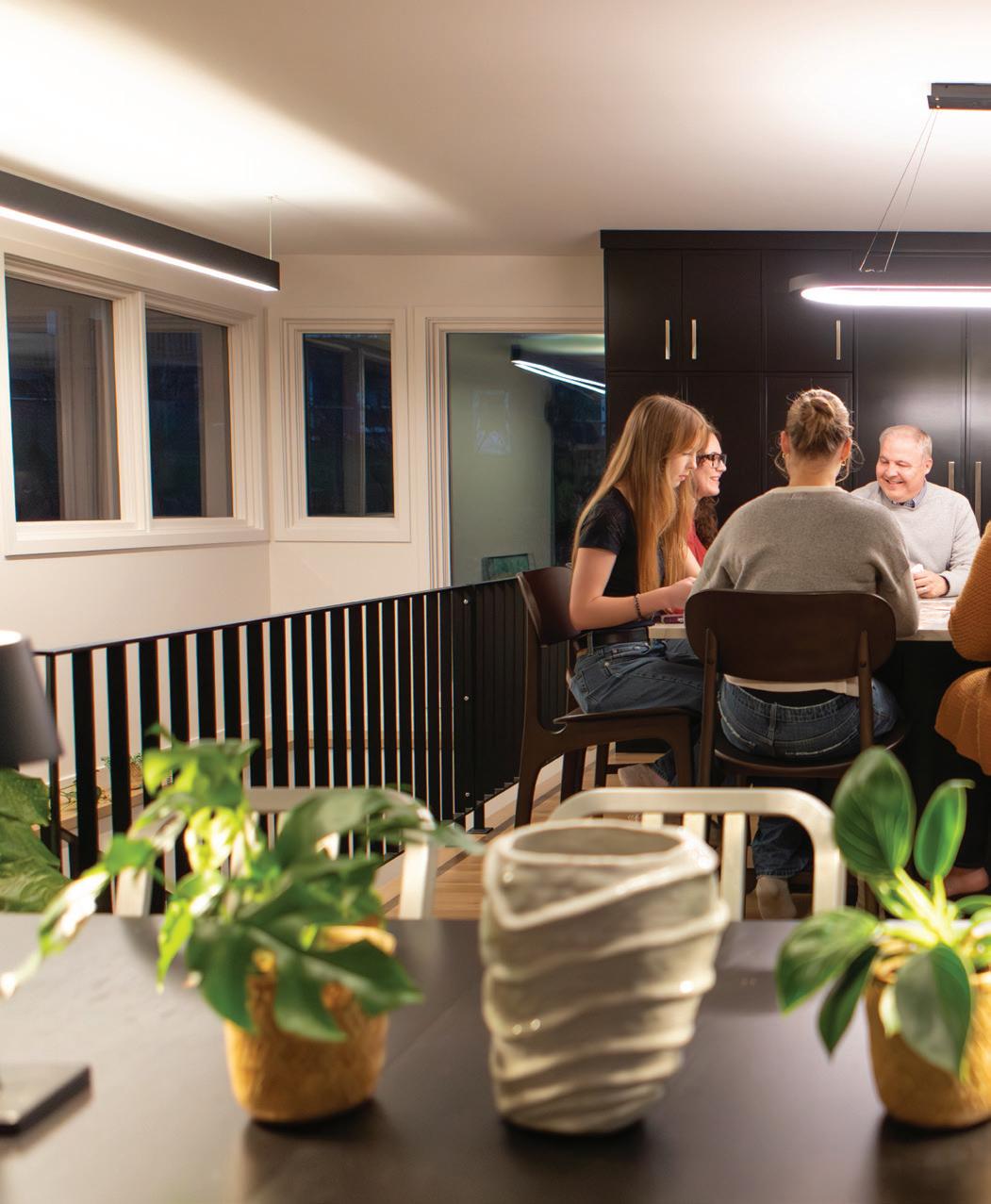
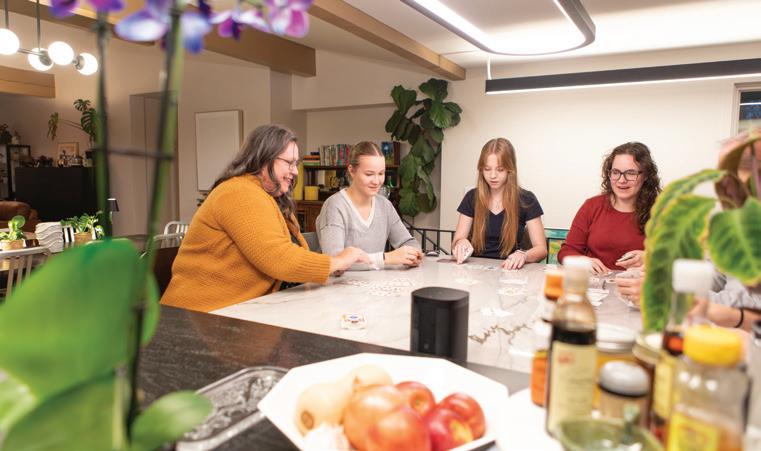
Parakeets Lemonade and Skylar sing as sunlight streams into their cage through abundant windows. The open floor plan now fills the living room and kitchen with bright energy, just as the busy Houston (pronounced “House”-ton) family had long envisioned. Chris and Laura dreamed of expanding and renovating their home, but between watching halftime band performances to cheer on their daughters (two on clarinet and two on color guard) and working at their respective architecture and design businesses, there never seemed to be enough time to make it happen.
The limited space restricted movement, dimmed light, and diminished efficiency. They finally committed when their daughter, Sloane, hoped to host her graduation party from Westside High School, which meant more than a hundred friends and family squeezed into a tight enclosed area. Normally, the six of them could barely all fit in the living room, with at least one of them relegated to a bean bag chair. The dream of a remodel with plenty of places for entertainment fell within reach after they opened Tributary Design and Construction in 2017. Laura confessed she started the residential consulting firm to remodel her kitchen with the extra money.
“Okay, as soon as you get 10 kitchens done, then you can remodel our kitchen,” Chris, her husband of 28 years, had told her.
Laura, an architectural designer, exceeded those expectations, finishing 25.
“I learned a lot about doing other people’s kitchens, and it helped when designing our own kitchen when the time came,” Laura, 53, said.
The family loves to cook, but it meant crowding together to make Laura’s famous hot chicken soup on a cold winter night. Although the family appreciated intimacy, the traffic caused congestion in an otherwise content culinary experience.
“The bigger kitchen was the thing I was looking forward to the most,” Sloane said. “It was the selling point for us.”
Chris, co-owner of TACKarchitects, joked that it took 19 years to begin the renovations after purchasing the house in 2006.
“It’s hard to do work on your own home when that’s what you do for a living,” Laura explained, even though changes such as updated countertops, refinished floors, and fresh paint happened before they moved into the home.
The pair met through mutual friends while majoring in architecture at the University of Nebraska–Lincoln, and later earned master's degrees together while at the University of Oregon in 2000. They collaborated when documenting historical structures at the Alaska National Park Service, submitting their drawings to the Library of Congress Museum, so they knew their combined experience would produce a natural flow to the process when they broke ground on Halloween in 2024.
“It’s comfortable. We don’t feel crowded. Friends come over, it’s functional, but doesn’t feel too big. That’s what I was worried about.”
Chris Houston
Laura and Chris settled on a midcentury modern aesthetic, aligning with the charm of the 1955 home.
“I appreciate that my parents kept the style, because that is something I worry about when people renovate old houses,” said Sloane, who followed her parents’ path by majoring in architecture at UNL.
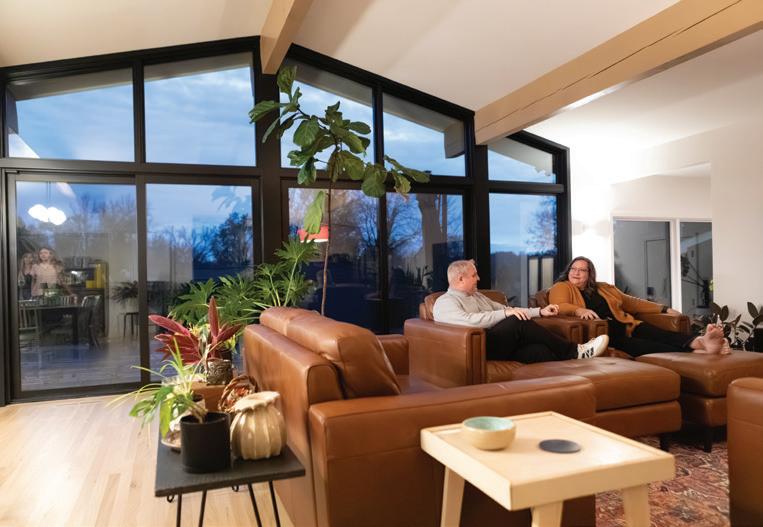
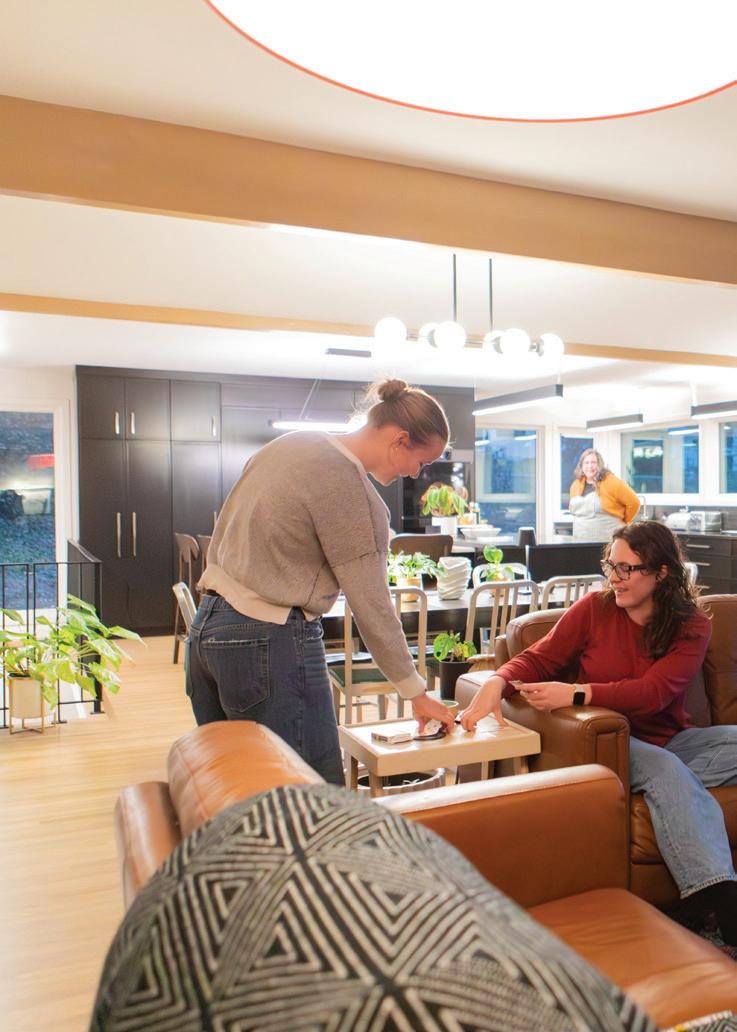
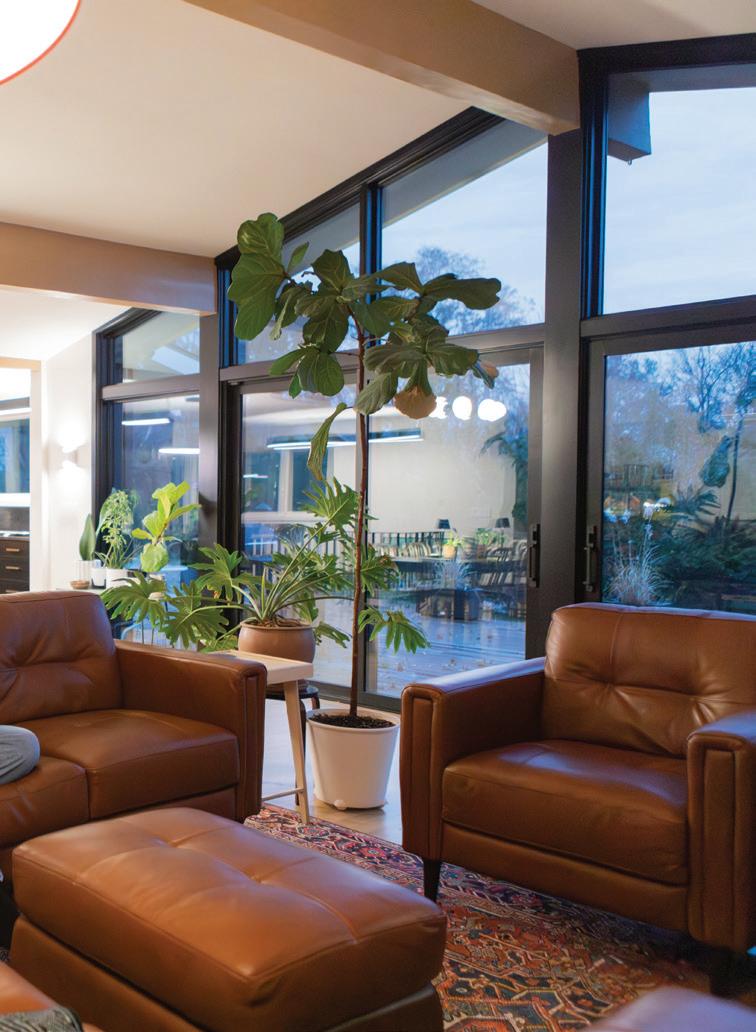
Original oak floors seamlessly connect to new ones, complementing the existing wooden beams that stretch their long fingers on the ceiling. The gable-end windows always added sunshine, but with the walls torn down, rays pour forth more warmth and beauty. An abundance of plants brings natural beauty indoors, posing like models with green arms.
“This is a greenhouse. That’s all it really is,” Laura joked.
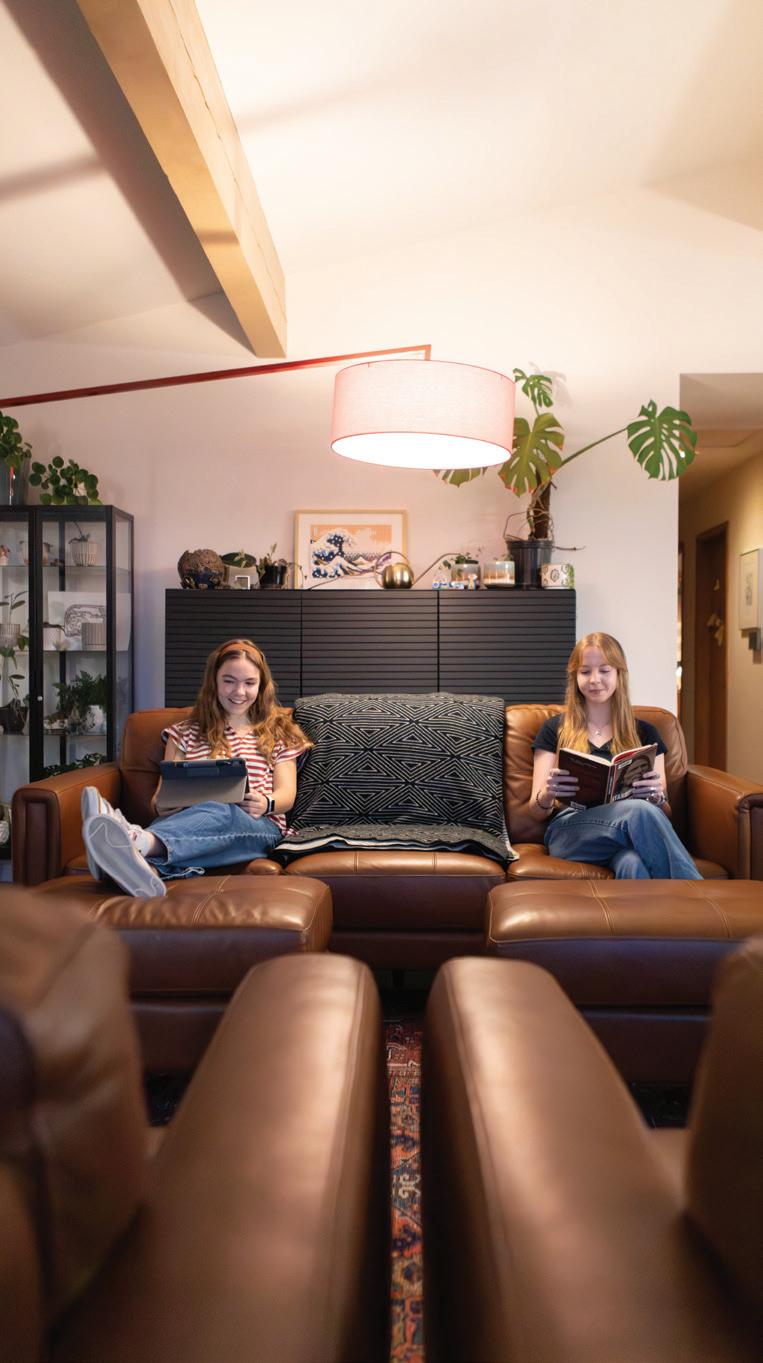
Cognac-colored leather chairs, a sofa, and a loveseat surround a flatscreen television on the wall for binge-watching cooking series like The Great British Bake-Off or Somebody Feed Phil . Chris decided to demolish two fireplaces since neither seemed practical, forgoing the theatrical for roominess.
“It’s comfortable. We don’t feel crowded. [When] friends come over, it’s functional, but doesn’t feel too big. That’s what I was worried about,” Chris, 51, said.
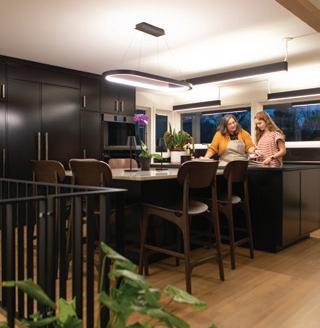
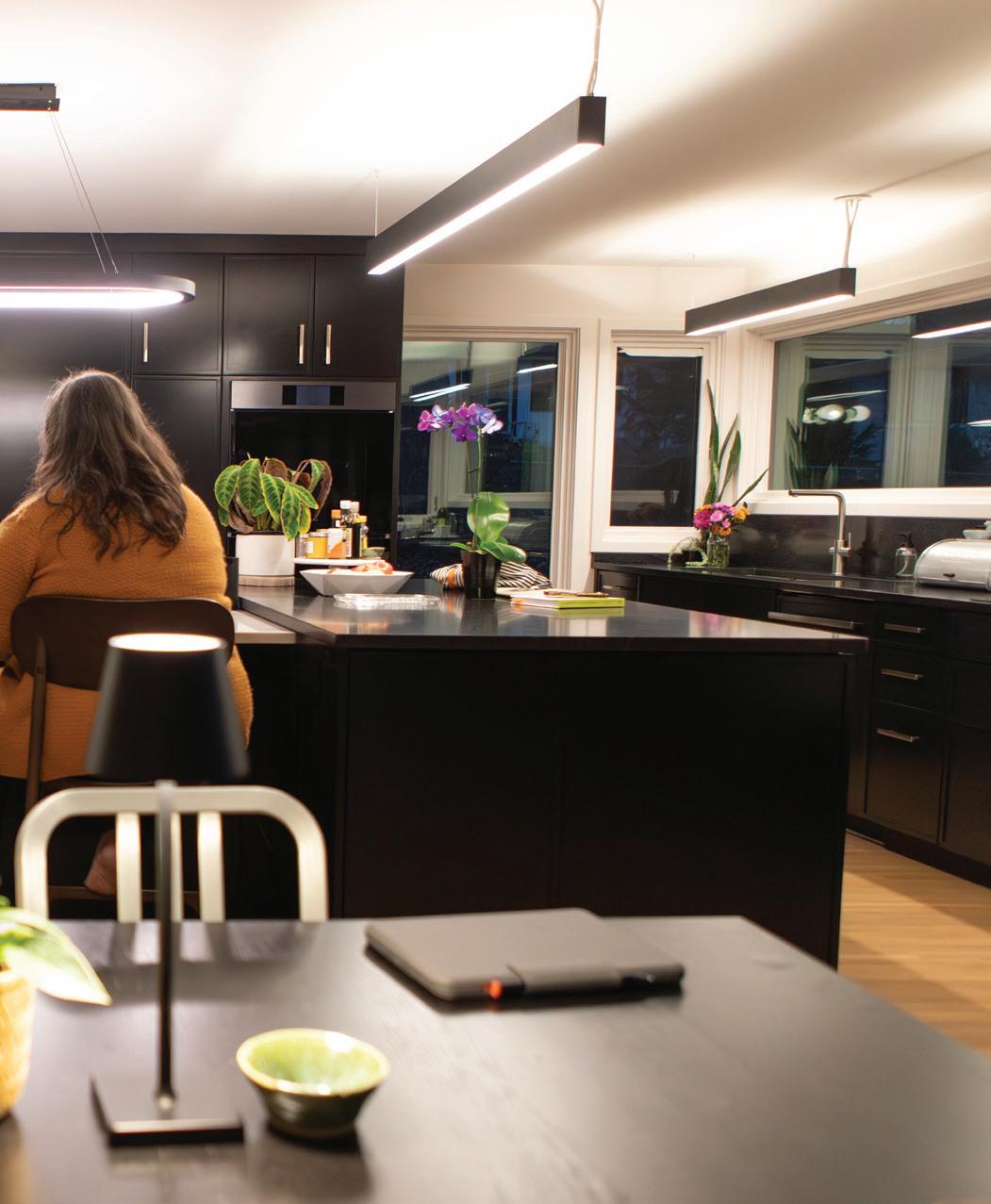
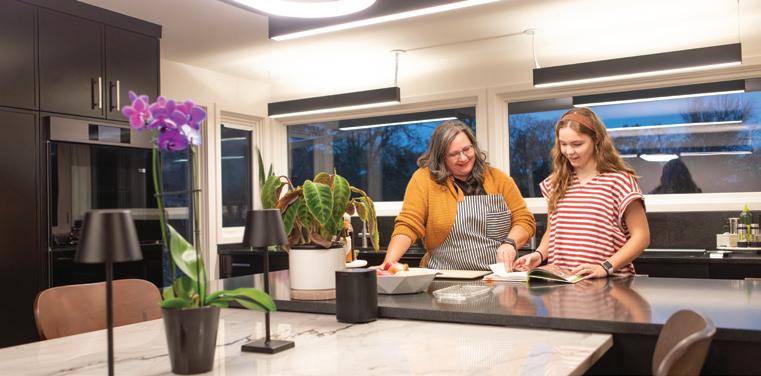
A recently built stairway with a custom railing, once in the middle of the living room, sits in the corner of the supplemented 375 square feet to allow for an upgraded, spacious view in the kitchen. Rather than blocking the view with upper cabinets, long windows displaying autumn trees look like an impressionist painting. Ebony cabinets contrast with the heron-white walls, hiding the refrigerator and tucking away an enormous pullout shelf. Silver handles on the cabinets pop against the darker color. Chris had to sacrifice his incompatible popcorn maker af-
ter installing an easy-to-clean flat induction stovetop. Honed misty-black granite countertops spread out with enough room to chop mushrooms for the Professional Remodeling Organization’s chili cook-off. A dual pull-out conveniently separates recycling and trash, simplifying the meal preparation.
The L-shaped island with grayveined quartzite conceals extra shelves below for a microwave that doesn’t see much use for this “ingredient family,” meaning Laura and Chris encourage their children to make meals from scratch rather than prepackaged produce. Since all of them love LaCroix, they enjoy the sparkling water dispenser for a chill, bubbly drink after school or work. If not chatting around the island, the dining room table extends to accommodate visitors. Chris and Laura consider some of the furniture, like the table, “a placeholder,” since neither has agreed on future purchases.
The renovation also allowed Laura to move her office downstairs, providing extra storage for the entryway. The Houstons plan to continue with exterior landscaping to enhance the painted black siding. Sloane applauds her parents’ progress, who worked right up until her graduation to finish on time. As an architecture major, the process gave her some experience, and she still calls her parents for help with her homework.
“It’s nice to have a built-in WikiHow,” she said.
Even though Sloane has flown the nest, she hopes for an extra room in the basement since her sisters keep trying to move into her old one. But for now, the family cherishes their moments together with more space to grow.
Historic homes often whisper of the passing of time within their walls squeaky floors, leaky faucets, cold air through the windows, broken tiles, and a never-ending list of what is often called older home charm. The charm of a historic home also comes with its challenges, which to a new homeowner may feel overwhelming. On the other hand, it may bring on the exuberating energy of a restoration project, complete with self-education, specialty crafting classes, and YouTube videos.
When John and Vera Brennan purchased their 130-year-old, 3,500-square-foot, three-story Victorian home in historic Dundee in 2003, it held five rental apartments upstairs, each with their own entrances. In 2012, upon moving back from California to Omaha and into the home, it was apparent to John that the restorations were going to become his vacation pastime each year.
The house located in the historic Dundee neighborhood was built in 1895 and was owned by the Rev. Joseph J. Lampe. The home was used to hold Sunday services and sometimes weddings or funerals. When the Rev. Lampe’s wife died, her funeral was held in the home, as was often the case during the lean years. In 1920, when the reverend passed, the house was listed on record as a religious place for tax purpos-
es. The Rev. Lampe founded Dundee Presbyterian Church in his home, now located at 53rd & Underwood. After the Lampes, the home was renovated to Lorene’s Rest and Convalescent Home. The house was originally a dark red brick, and it now holds a warm white painted finish. The front porch was likely blown away during a tornado.
There is a playground of revitalization projects in this old house. Brennan loves restoring his home, and can’t wait for one project to end so he can begin another. He believes the hardest challenge is to discipline oneself to finish a project at some level without being distracted. “Make sure you finish one project before starting another,” he advised. He’s making something to last for his kids and grandkids, he said, which brings him great satisfaction.
“Having the skills is one thing, but you must have the will.” John Brennan
Having the funds to renovate isn’t always the biggest obstacle. Time, resources, and unforeseen conditions are all part of the equation to finishing a project. Project vision is created with his wife, Vera, who has a great eye for design. “She’s a great help,” he said adamantly.
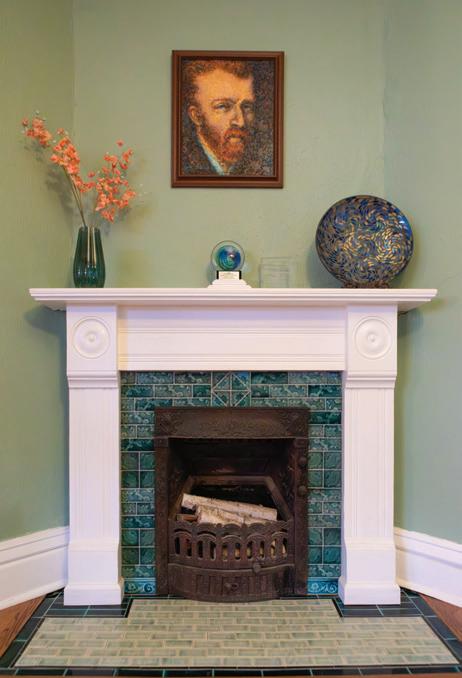
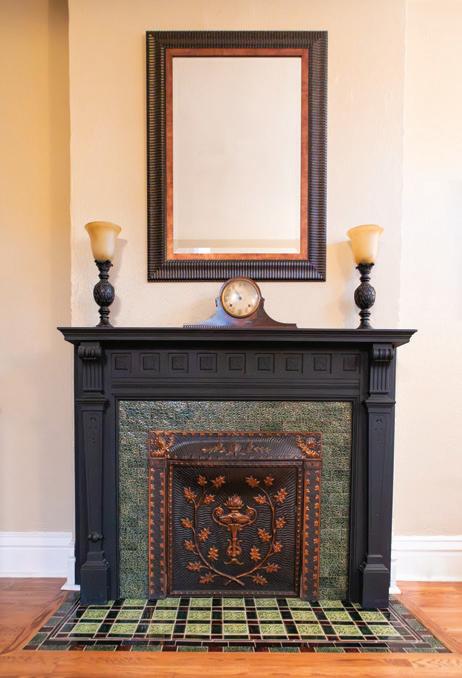
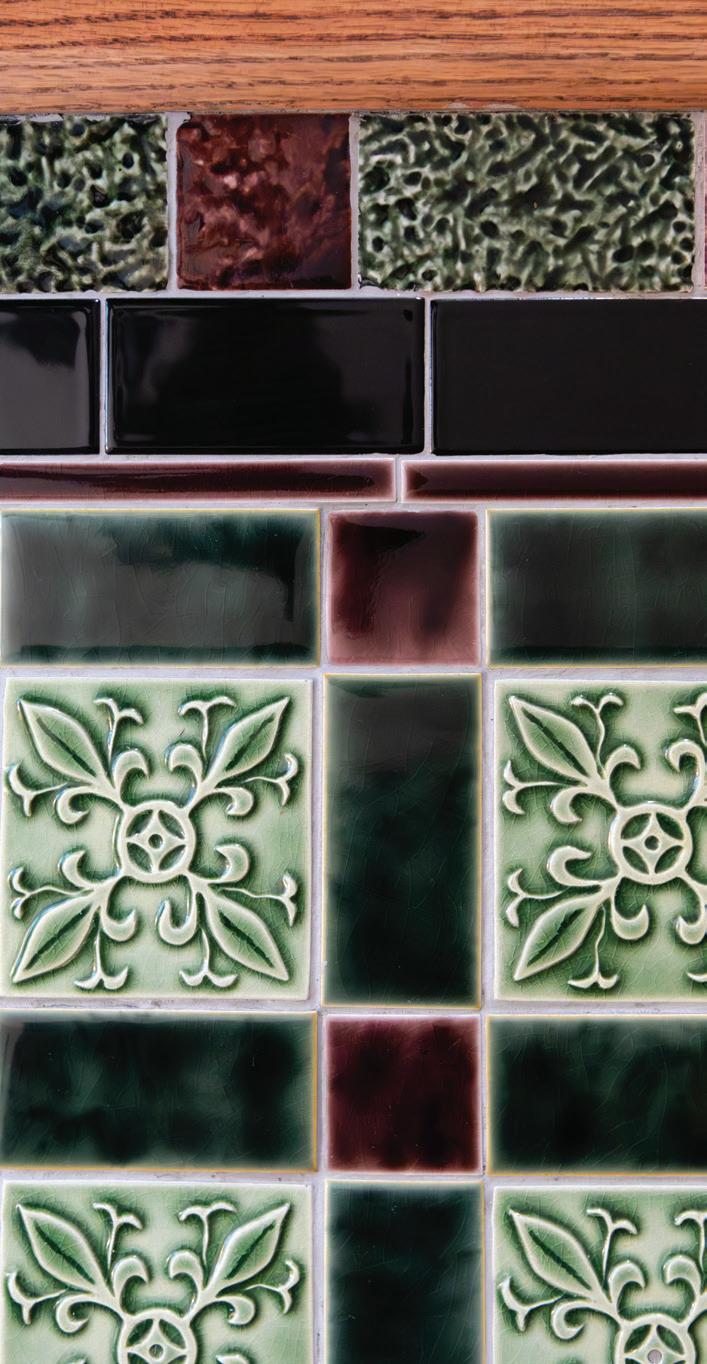
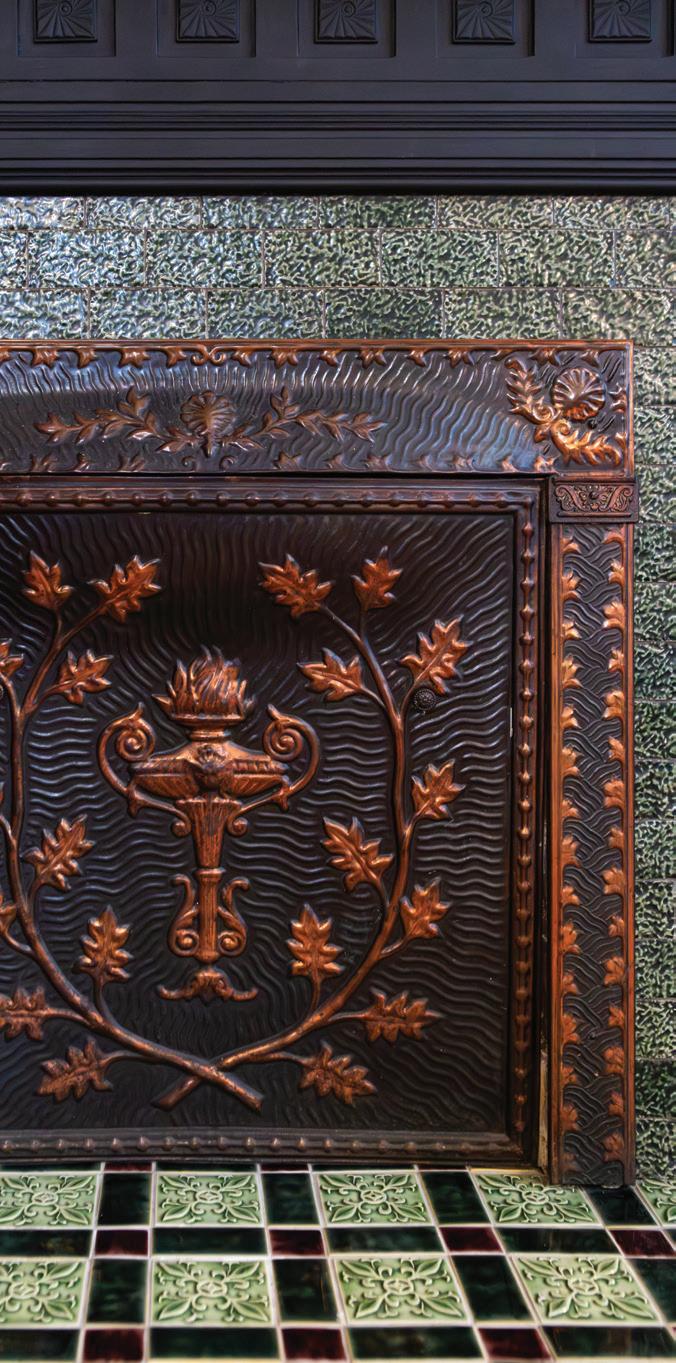
In a span of three years, Brennan has managed to complete various home projects, including restoration tile projects on the main-level fireplaces. The three fireplaces are located in the parlor, the dining room, and the living room. The surrounding tile is original, restored and renovated to perfect condition. The floor tile around the fireplaces is newly purchased tile installed to match that tile.
The fireplaces are currently not functional, but there are plans to make the living room fireplace a working gas fireplace. With tile purchased from Land of Tile, grout, tile adhesive, spacers, tile grout haze cleaner, and tile saw rental (about $29 per day) and the purchase of a tile saw, Brennan worked to complete the three beautifully renovated fireplaces. Mallorca ceramic tile (milky high-gloss glass finish) matches the timeless tiles that meet restored oak floors, which once were pine. The oak floors were replaced to ¾ inch for durability and longevity.
Once the tile samples were chosen and brought home, Brennan laid out a dry fit on cardboard cut to size to know what he wanted where. At this point, a homeowner can hire someone to install the tiles or try it themselves. Brennan said it cost approximately $400 to $600 to purchase the tile for each fireplace, rent the saw and materials, and install the tiles himself. When he hired an installer for one fireplace, the cost jumped to $1,000 for the installation and $600 for the tile.
To learn about tiling and remodeling, he watched This Old House , New Yankee Workshop, and YouTube. He gained knowledge to change up techniques that suit his own personal style. Still, Brennan is modest but proud of his learned craftsmanship. He said he gains confidence with each completed renovation. It doesn’t hurt that he is also a construction engineer.
He advised that if you don’t enjoy renovation work, don’t buy an old house. “Having the skills is one thing,” he said, “but you must have the will.” It’s good to have some craft and technique, he added, but one can acquire skills and tools. Brennan likes to use Sketchup software, because it is 3D modeling and you can move patterns around. It’s free, easy, and intuitive. Each year, he and Vera create a list of what they’d like to remodel in the home, what is affordable, and what absolutely needs to be done. He determines and allocates the time necessary to complete each renovation.
His current project is renovating the kitchen to include a large island for grandkids and family to gather around. Walls are already painted in an inviting warm-yet-bright yellow color for the gallery room of the house. The kitchen holds tall windows overlooking the backyard, where a playground and playhouse has been installed for Brennan’s six grandchildren.
Join OmahaHome as we follow the Brennan House renovations in the next seven issues, where you will learn more about the kitchen remodel, back porch, front door refinish, a second-story bathroom remodel, door infill, and window installation and there is no doubt more to be done in this historic Victorian house.
Diana Failla is a former Landmarks Heritage Preservation Commissioner. She is currently on the board of Preserve Omaha, a nonprofit dedicated to recognizing, celebrating, and advocating for Omaha’s historic places. She is an active member of the community and serves as president of Midtown Neighborhood Alliance, the renowned historic landmark district in the heart of the city.
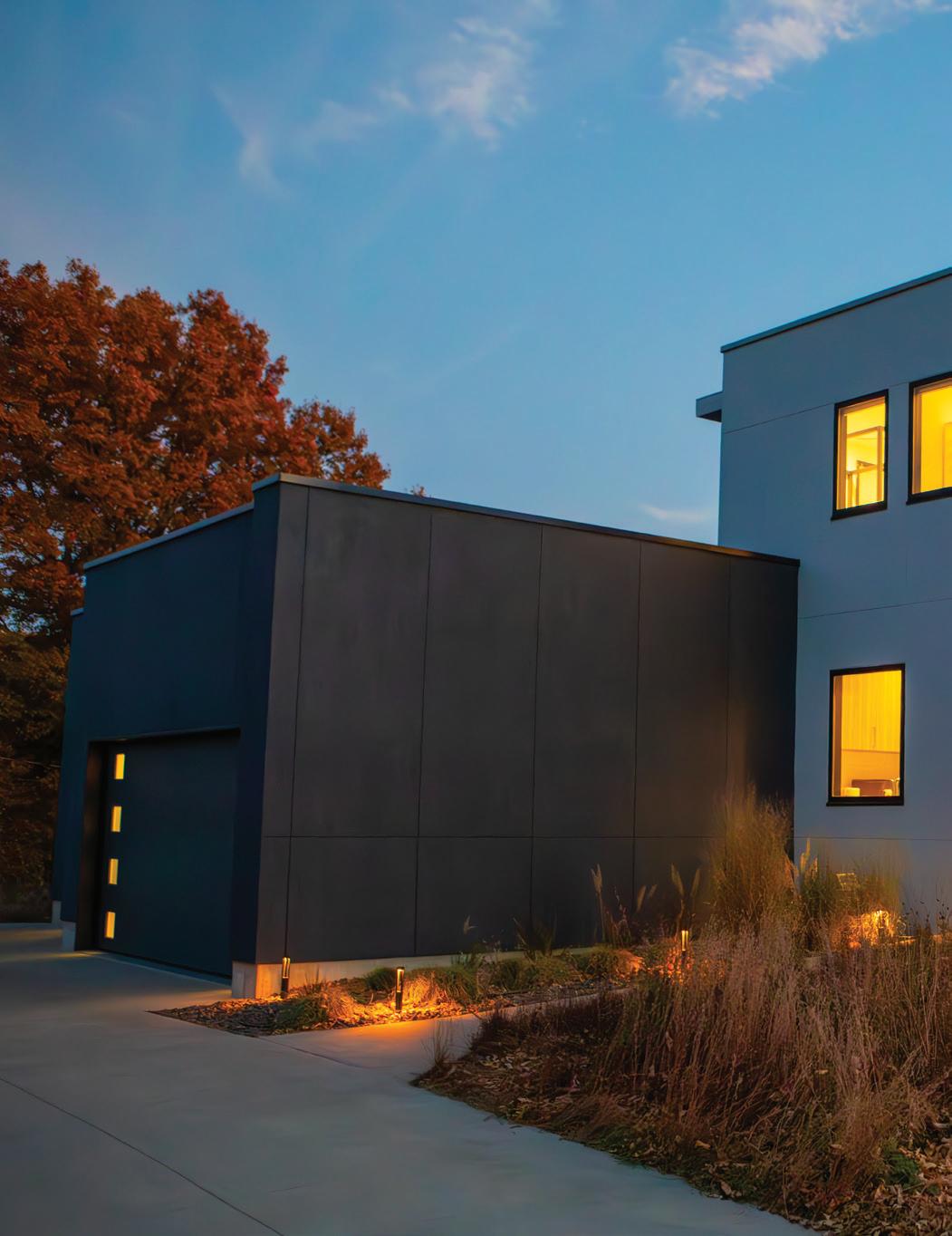
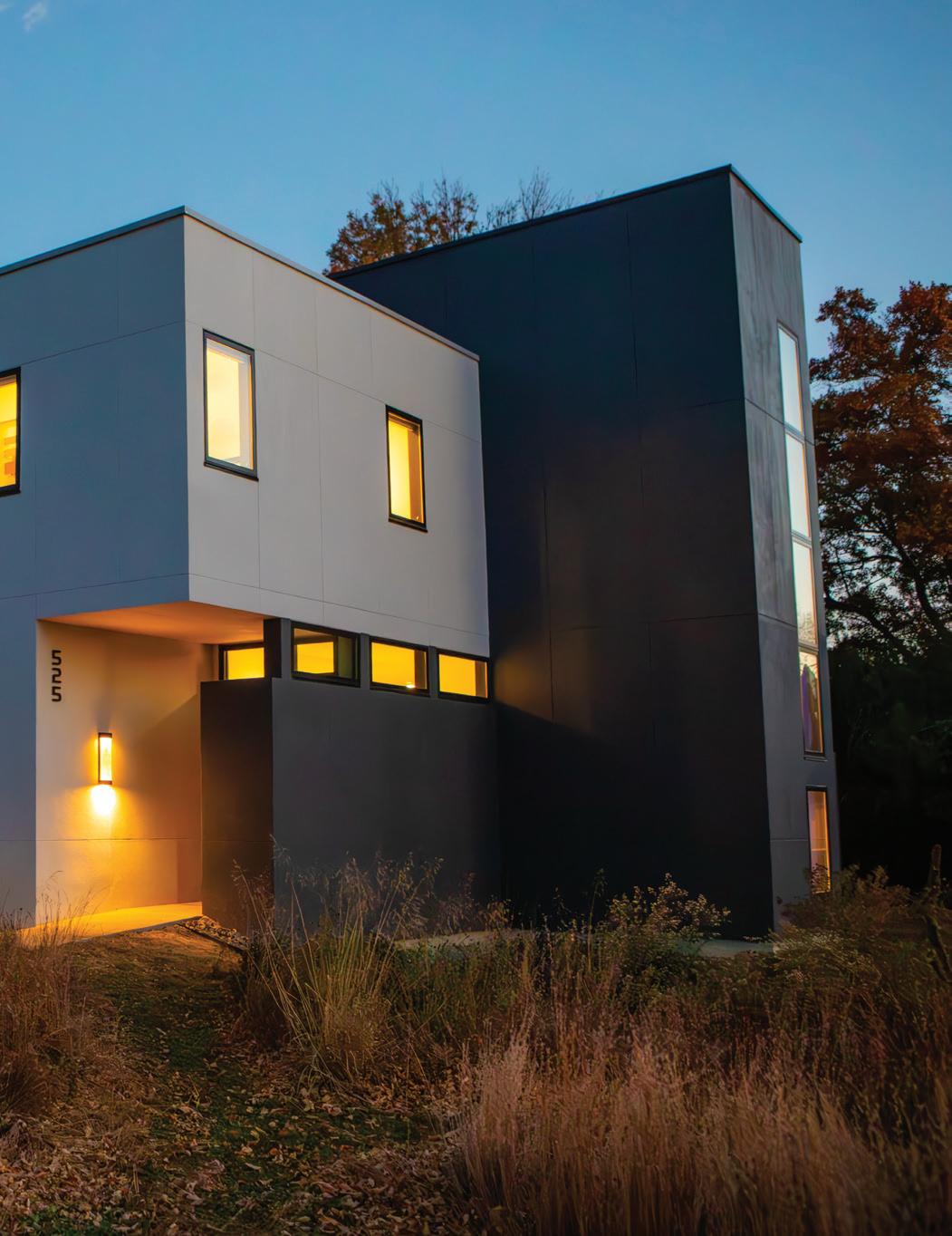
When architect Steven Ginnhelped create The Solar House, an architectural marvel in the Westside neighborhood, he didn’t know that he would someday own the home. Originally built in 2020 for clients Greg and Melinda Burnett with a focus on sustainability and working with not against its surroundings, The Solar House features details inspired by the Burnetts' time at sea in their sailboat home, including a “margarita deck” and a crow’s nest.
An abundance of strategically placed energy-efficient windows allow sun into the home intentionally. A gorgeous walking path to the side of the house allows walkers to stroll beneath a canopy of trees. The walls are highly insulated for maximum protection from the temperature outside.
Solar-powered and imposing, the house wasn't designed with wood, but features many other surprises instead. Outlets pop out of unexpected places when needed, but otherwise stay flush to the surface. A downstairs wall that looks like a cabinet slides out to reveal a tidy utility room featuring a geothermal unit and a solar power interface.
The home was built specifically with the Burnetts in mind, but the sea’s calling eventually proved too compelling, and the Burnetts decided to return to boat living. Ginn and his wife, Deborah, were on the lookout for a home that featured all bedrooms on one floor, so


when Burnett told Ginn over drinks that the home was going on the market, Ginn approached his wife about exploring the idea of purchasing The Solar House.
The Ginns took ownership in May 2025 and got to work making it their home. Not many major changes were needed, though they did revitalize the pollinator garden with the help of Benjamin Vogt, owner of Prairie Up. “Pairing a net-zero home with a native plant meadow means we're reducing inputs, such as fertilizer and water and gas-burning equipment typical of traditional lawn, while cooling and cleaning the air around the home,” Vogt said.
Vogt pointed out the delightful juxtaposition of a vibrant, native plant garden alongside the clean, modern lines of the home. Standing on the pool deck of a home that feels like a fortress while overlooking butterflies fluttering amongst gorgeous native plants does indeed feel rather otherworldly.
The home has enough solar energy banked to power the entire house for three days, if necessary. Despite the solar power, the house isn’t considered “off the grid.” Homes in the Omaha area are required to connect to OPPD regardless of alternate power sources.
Having a home that’s different from the norm can cause “some grief there’s always grief,” according to Ginn, but it’s well worth it to have a customized, self-sufficient home. He also acknowledged that not everyone enjoys the look of his unique home and said he’s “sympathetic to the neighbors” if they are displeased with the imposing, modern look of the home.
The Ginn family, however, truly enjoys their “hard-edge modern home.” The 45 pages of structural and architectural drawings of the home that Ginn keeps in his office are proof that their one-of-a-kind home was thoughtfully designed.
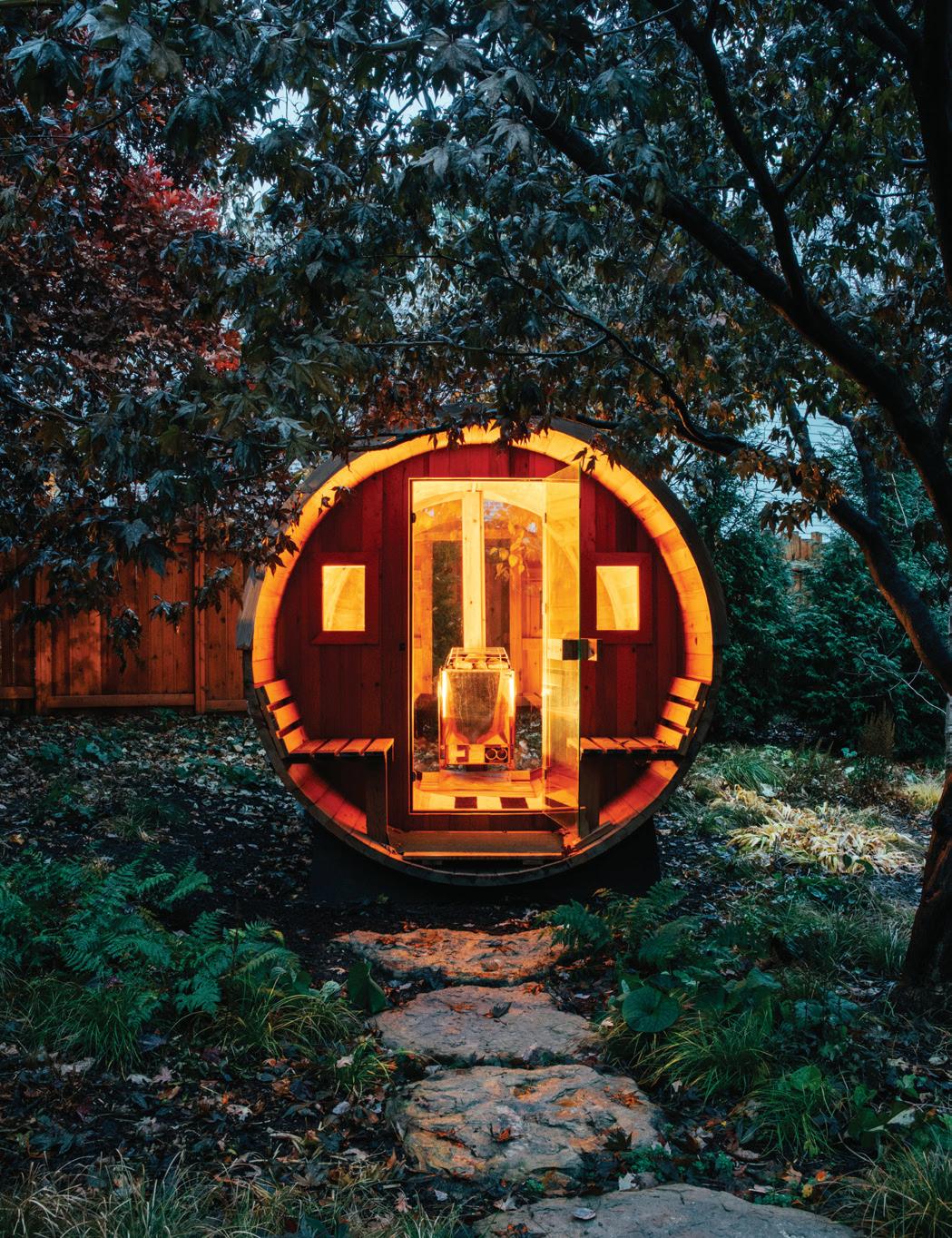
Katie Weitz and her husband, Tim Wilson, remember their rotting deck that was begging to be remodeled. It sparked the decision to change the space entirely by creating an outdoor wellness area of their dreams.
“COVID-19 happened, and the concept of wellness was really in the forefront of our minds what did we want for self-care if we had to go through something like that again? It was a dream project for us,” Weitz said.
Architecture firm B2Lab worked with the homeowners to create an outdoor space that matched their vision. “We introduced a modern complementary piece to the home, and they loved the idea. So we contrasted the architectural style and created this sleek pavilion,” said Brad Brooks, principal architect with B2Lab.
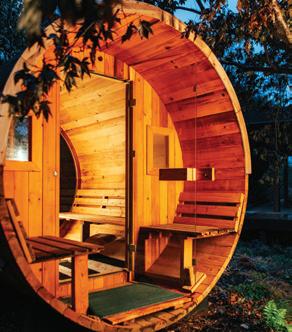
The outdoor area features a hot tub, a lounging area with a fire pit and gathering space, and a cold plunge. Outside the pavilion is a standalone sauna. Retractable screens are built into the structure, with small, round lighting installed in the ceiling. The landscape runs underneath the pavilion, so there isn’t a distinction between where the landscape ends and the structure begins. The result is an incredible outdoor spa retreat.
Juan Sanchez and his team with Macondo Builders built the structure. Kinghorn Gardens completed the landscaping, combining the prairie design with natural stone, creating a wild, untouched look.
“I loved working with Macondo and B2Lab. They were so collaborative with Kinghorn Gardens, who have been our landscape providers for decades. It was like dreaming with friends and co-conspirators, and then they made it happen in time for my childrens' graduation party!” Weitz added. “It was so beautiful, and I’m so grateful for their work. I spend a thousand percent more time outside now, and that has tangible benefits for my self-care, too.”
Along with B2Lab and Macondo Builders, Weitz focused on working with other small, minority-owned contractors. A project like this created an opportunity for those contractors to gain experience, acting as a springboard for taking on bigger projects down the line.
Sustainability was important with the project. “Everything underneath this pavilion is special,” Sanchez said. “The space is lit underneath so it creates a glow. The water treatment is contained in tanks to spread water into the terrain. We catch all the water, so it doesn’t cause a water buildup. The landscape is a prairie design that attracts butterflies and hummingbirds. They also have a bat house. It took two years to get bats in it, but they are in it."
It reflects just what they had hoped for, Sanchez explained. "They wanted a peaceful quiet space. That was their goal, and we achieved it. They use it daily," he said. "The fireplace was not something they asked for,
but we sold them the idea, and they loved it. I like the way the pavilion blends with nature. We aren’t trying to hide it. It is supposed to be part of it.”
“One of the things that we love about this project is that it’s a unique outdoor-indoor space,” Brooks added. “They wanted to keep it raw and natural. This shows the way that we can approach a project from a very delicate way, being very sensitive to nature. This couple is private, and we accomplished their goals of warmth and natural surroundings but still being part of the neighborhood.”
While standing on the pavilion, though, it’s easy to forget the surrounding neighborhood. The trees block the other houses. All the elements of nature take over, awakening your senses.
“Being on the wellness pavilion really feels like an oasis from the city," Weitz said. "Not only did Kinghorn do a beautiful job of landscaping around, but the design of the fence and its uneven edges created privacy. The flow of the pavilion, with its hot tub and cold plunge and sauna, makes for a truly calm and meditative experience."
For more information about B2Lab, visit b2lab.com.
For more information about Kinghorn Gardens, visit kinghorngardens.com.

Hillside Solutions has made its mark in the Omaha community by providing waste management, recycling, composting, and landfill diversion to reduce waste and promote sustainability.
Now, Hillside has further increased its ability to help in their sustainability mission with the Curbside Composting Club. With this program, homeowners get a painter’s bucket, fill it up, and take it to a drop-off site. Homeowners who sign up for the program qualify to receive 3 square feet of soil back to use in their own gardens. The program has 1,800 homes participating now, and is also offering another level of the club where residents can get home pick-up for their compost.
“You get a cart, and you fill it with your yard waste and food material. You put it out on the curb on your designated day. We pick it up and take it to our Soil Dynamics facility in Ashland, Nebraska," said Brent Crampton, director of partnerships with Hillside. "Over the course of the year, they screen to get any contamination out. Then, it goes back out to the community for land products."
Elizabeth Langan is one of Curbside Club’s proud pick-up customers. She feels it’s important for her family to do their part to help the environment and to teach her kids the importance of sustainability.
“We feel like this small change in the way that we handle our waste is good," Langan said. "We want to teach our kids how to be more responsible. With compost, you’re re-nourishing the earth. It helps support the circle of life and how things are meant to be and live. We are re-nourishing the earth with what we don’t use. Using a service like Hillside helps me do that."
“If you want to do something with your yard waste year-round, this is a great way to reduce your household carbon footprint with the convenience of curbside pickup," Crampton said. "Curbside customers can also get credits to redeem material back every year. The credit can be used to purchase soil for their own yards. Or, if they
want, they can donate it to a nonprofit garden."
There’s a tangible environmental impact, Crampton explained. "With every compost container, there’s an immediate gratification. I can do a waste audit and see what they are throwing away it just takes an expert to explain it to them."
Hillside has added a nonprofit structure called Hillside Foundation to extend their work. Samantha Nieman, sustainability strategist, helps organizations transition to full zero-waste by working with their green initiatives.
“We were running into churches or schools that had a passion to start a composting program, but they needed a lot of assistance to come up with the funds to pay for the services," Nieman said. "So, we created the nonprofit for the businesses that want to compost, but need financial assistance."
Nieman said this program is more of a movement with a sense of family. People like to give their soil credits to local food gardens. “I like that we are making a difference, and we can see it. I like
empowering kids and giving them tools to advocate for the environment,” she said.
The Hillside Foundation works hard to educate the community about composting. Their key points are healthy soil, clean water, and a fair shot at sustainability.
Through the efforts of the Hillside Composting Club and the Hillside Foundation, there’s great progress with sustainability being made in our community.
“We like being trailblazers for sustainability," Crampton said. "We work with mom-and-pop restaurants to Fortune 500 companies. There are a lot of big things happening. The Omaha Climate Action Plan has been approved. City council approved this big effort to get feedback 80% of people in the study said they want to see more of it."
For more information on the Compost Club, visit hillside.solutions/compostclub.
For more information on the Hillside Foundation, visit hillsidefund.org.
STORY - TIM TRUDELL
PHOTOGRAPHY - SARAH LEMKE
DESIGN - RENEE LUDWICK
Some remember living in a neighborhood where Grammy and Grampy lived down the street. Little Frank and Mandy could easily ride their scooters over to spend a few hours with them while their parents strolled to the neighborhood market to pick up a few groceries. A distant memory of life from the "good ol' days" will be possible once again at The Arbour at Omaha's Heartwood Preserve.
"It's multi-generational, like a post-World War II concept, as opposed to being just a 55-and-over community," said Greg Frazell, co-owner of G. Lee Homes and one of the builders of The Arbour at Heartwood Preserve. "It's an urban style, so it's vertical living, with higher density and verticallydesigned homes."
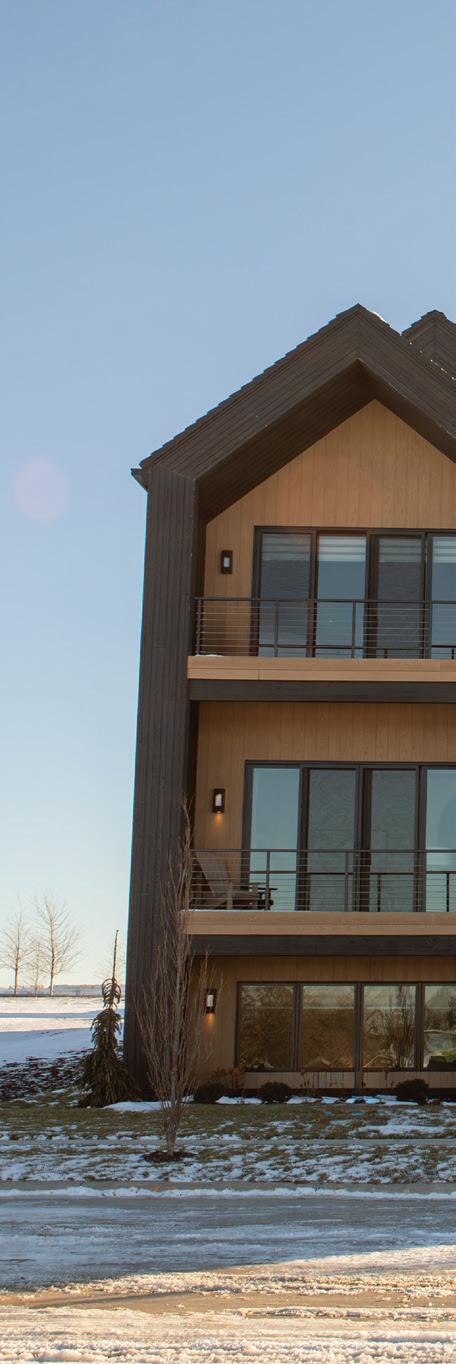
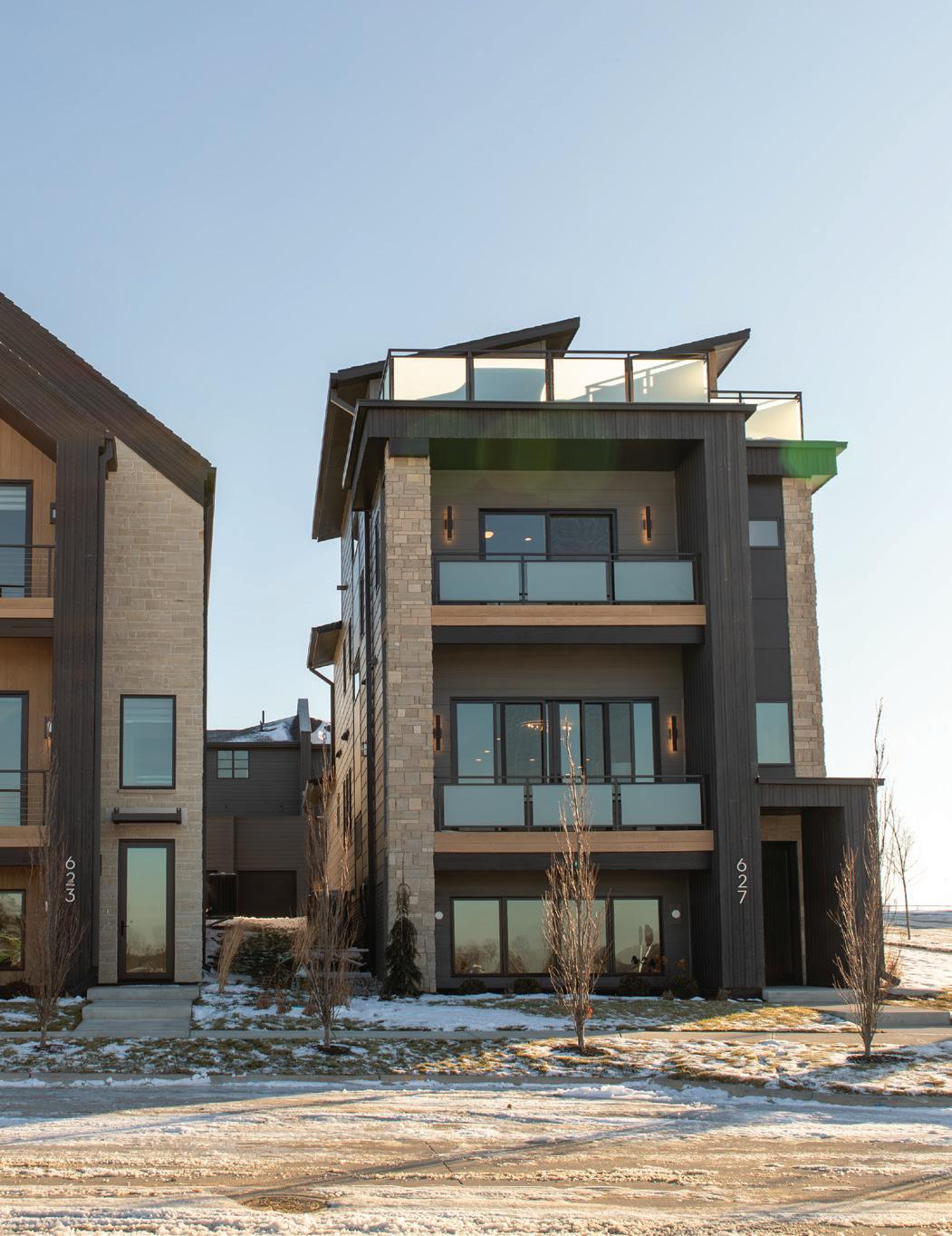
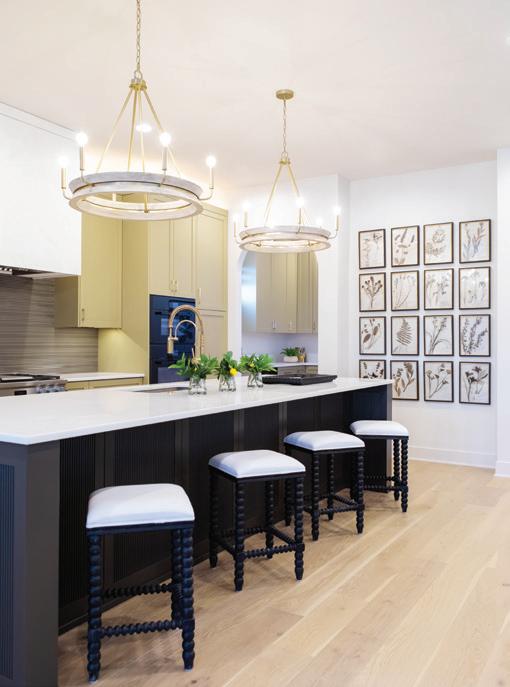
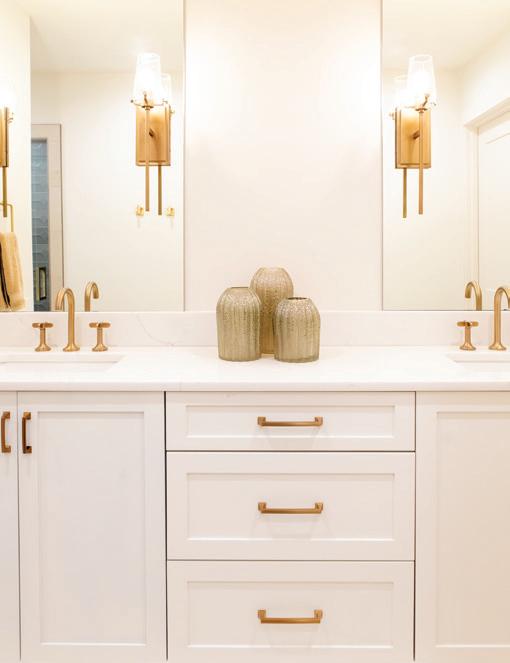
The Arbour will have 210 homes covering 15 acres, Greg said. The neighborhood actually has 19 acres, but four acres are dedicated to green space where people can play, have picnics, and attend outdoor activities, he explained.
The neighborhood will be within walking distance to an area designed by Lanoha Real Estate Company, featuring restaurants, retail stores, and a hotel.
The Arbour is part of a development owned and created by Applied Underwriters, which is moving its headquarters to the area near 144th and Pacific streets. Heartwood Preserve's 500-acre area was once the Boys Town farm before Applied Underwriters acquired the land about 10 years ago.
Homes are custom-designed, with parts of the neighborhood offering different styles of houses, Greg said. The single-family units sell for $850,000 to $2 million-plus.
Rather than have a sprawling yard and three-car garage, with houses covering one or two lots, The Arbour's urban-style houses are constructed using a vertical design, with a garage in the back of the house that is accessed through an alley. Greenway A will consist of 34 houses using traditional access, with the front door and garage both facing the public street, Greg added.
Using the natural slope of the land, the neighborhood has an 80-foot elevation change, he said. Garage entrances and front doors will potentially be on different levels, similar to the model homes.
"People can visualize that," said Katie Frazell, a realtor with BHHS Ambassador Real Estate and co-owner of G. Lee Homes. "That's why you can't just say, 'Go on the website and pick out your floor plan,’ because there are too many variables there. That's why I'm so glad we have this model. You can look in here and really make it make sense, where you can visualize this space."
Houses will feature James Hardie siding, because it's designed to withstand Nebraska's extreme weather changes and holds paint well, Greg said. The Builders may also use decorative mill board siding, natural limestone, or brick exterior cladding.
The Builders have also taken care with roofing.
"We're using high-quality roofing products,” he said. “So we're looking at Class 4 shingles, because we understand the wind ratings. The goal is to do our best to withstand the weather that we have in Nebraska and really make it a long-lasting visual development for years to come."
The small yards and green space will be maintained through a homeowners
association, Katie added.
"The HOA does cover mowing, snow removal, trash," she said. "So it's maintenance-free, which is kind of different."
Houses are custom designed. What's even more unique is that multiple builders G. Lee Homes and Silverthorn Custom Homes have joined forces to create the neighborhood, Greg said. The one-time competitors formed The Arbour Building Group for this project.
"Not only do you now have a different perspective, where you have two traditionally competing builders that are working together on each home, [but] we've been able to kind of share our playbook with one another," he said.
It might seem crazy teaming up with a competitor, Katie said, but "it worked because it was Matt [Caniglia]. It was someone we've known for a long time we’re friends now but it wasn't like two buddies getting together doing something. It was two professionals who have a mutual respect for each other and a deep trust in each other."
Since homeowners can custom design their urban-style dwellings, they can interchange floor plans between the models, Greg explained. "It truly is a custom design. You're not handed a good, better, best, or an ABC selection," he said. "We do have pre-designed floor plans from which you can select. We have the two models that you can use to pick parts and pieces. So you can say, 'I like the level two, and I want to put level three on top of floor one,’ and intermix."
Choices allow customers to create their own homes, Greg said. "The way that these are designed, interior walls can move. Being custom builders, Matt and I are able to work through the design and accomplish what people are looking for."
Access shouldn't be a concern for the vertical houses, he said. Residents can have an elevator installed in their home.
Elevators are just one of the unique features for houses. Some homes can have rooftop decks, while others will have more traditional balconies.
Whether living in a vertical home or row house, residents at The Arbour are sure to enjoy a life rich in community.
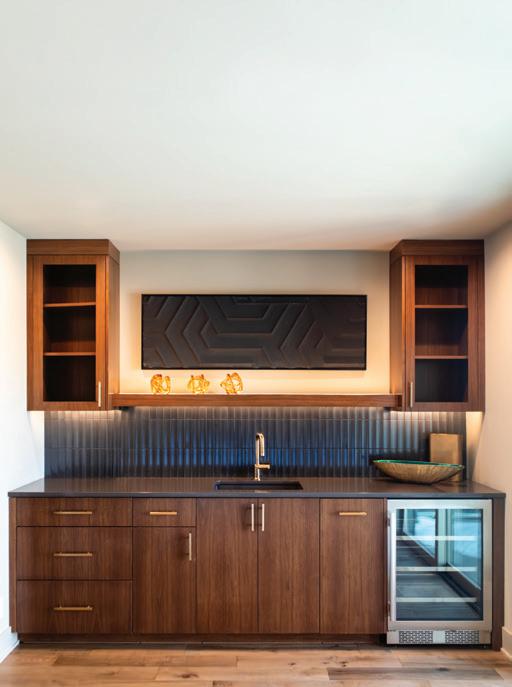
Visit jacksongrouprealestate.com for more information.
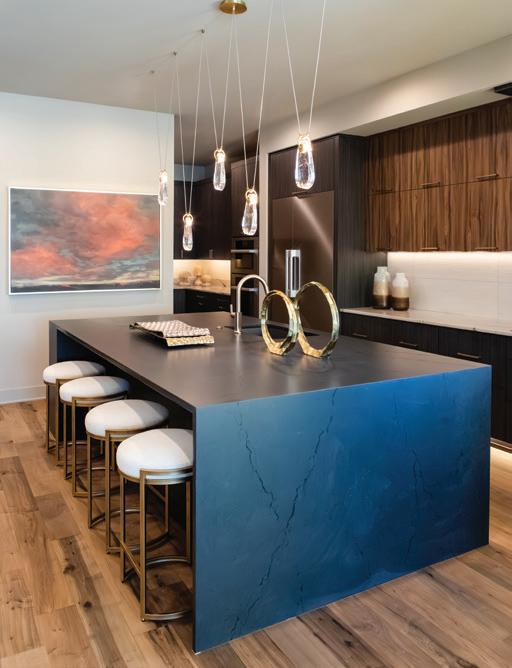
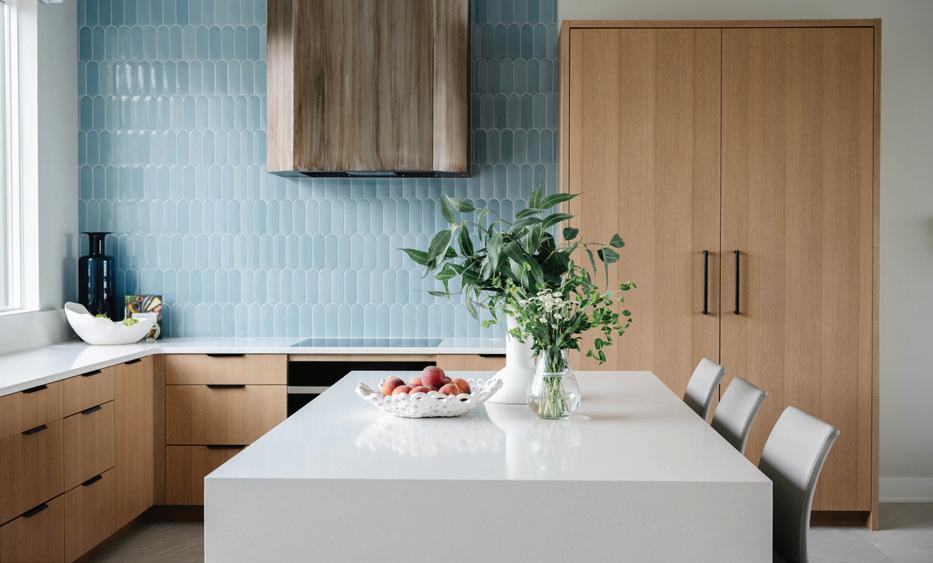
This design was a gold winner and received an Impact Award for most creative use of materials at the 2025 NE/IA ASID Project Awards.
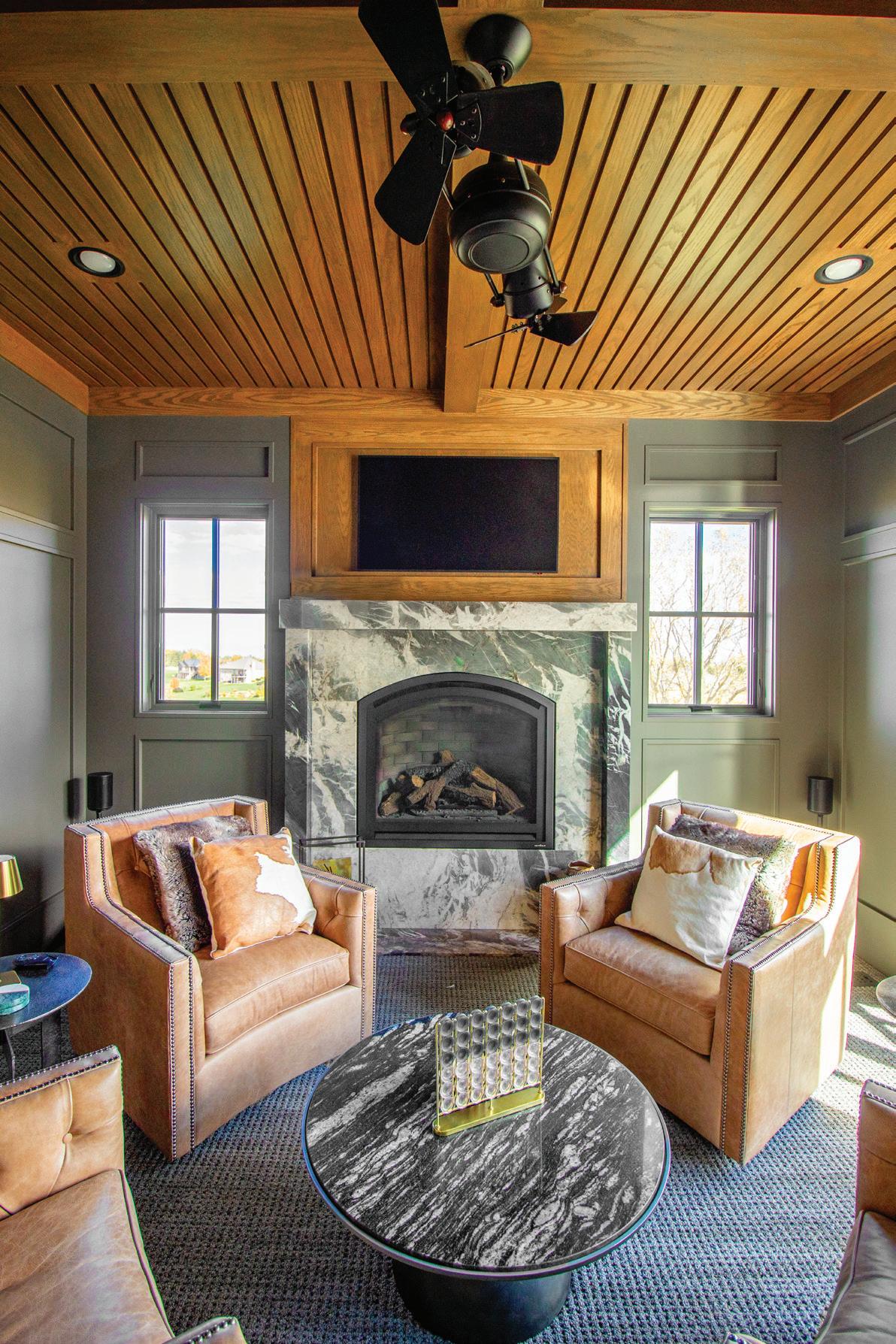
At Fritz + Lloyd Interiors, every project begins with a thoughtful structure one that is both functional and timeless. For this Lincoln lake house, the goal was to bring a fresh, modern perspective to a classic setting, creating a space that feels both elevated and enduring.
The design team joined the project early, soon after the architects had finalized the home’s overall layout. This early involvement allowed designer Becky Rea and the Fritz + Lloyd team to thoughtfully guide the interior vision, ensuring every finish, fixture, and furnishing complemented the home’s architecture from the very beginning.
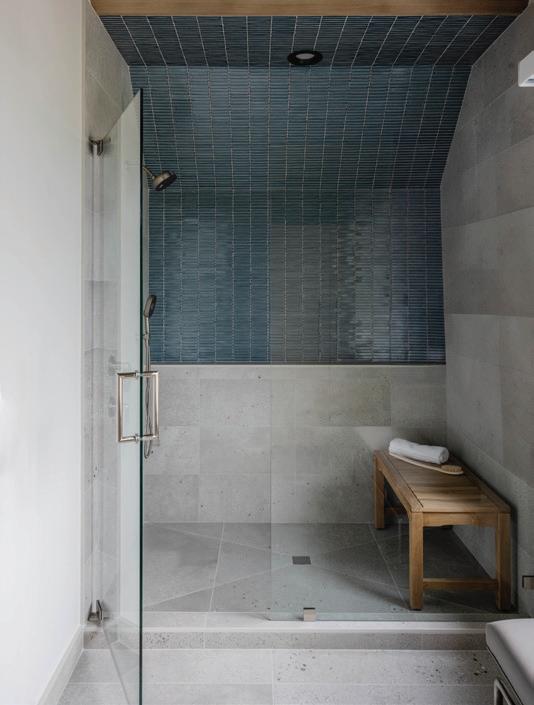
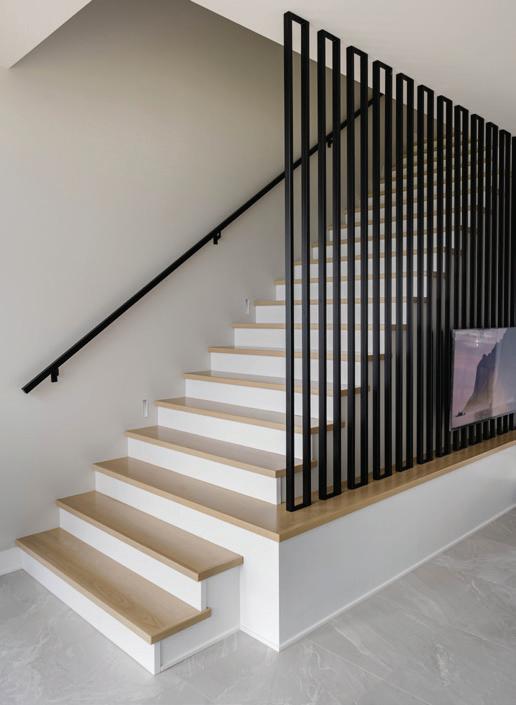
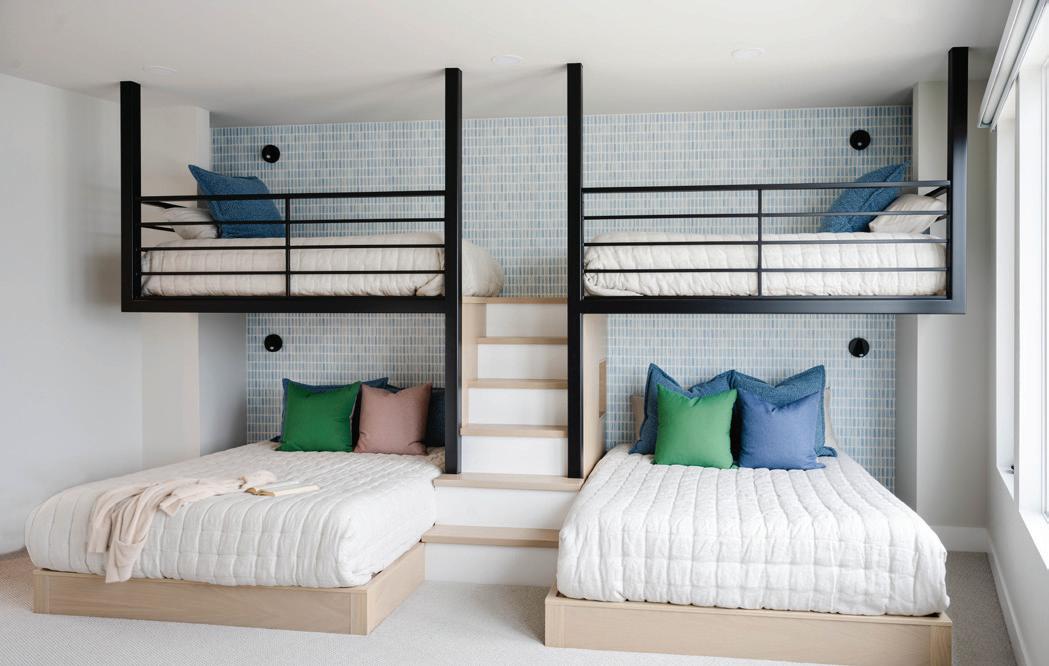

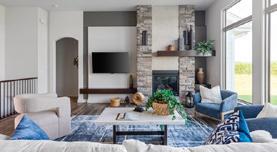
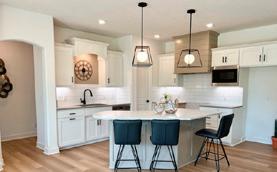




During the conceptual design phase, the team worked closely with the homeowners to define a cohesive vision, exploring imagery and design direction that reflected their lifestyle and the home’s lakeside setting. The architecture presented distinctive challenges, with custom angles throughout from the pie-shaped lake room to the intentionally non-square bunk layout requiring both creativity and precision.


By adhering to Fritz + Lloyd’s five-step design process, the team maintained clarity, momentum, and collaboration from concept through completion, ensuring an organized and enjoyable experience for everyone involved.
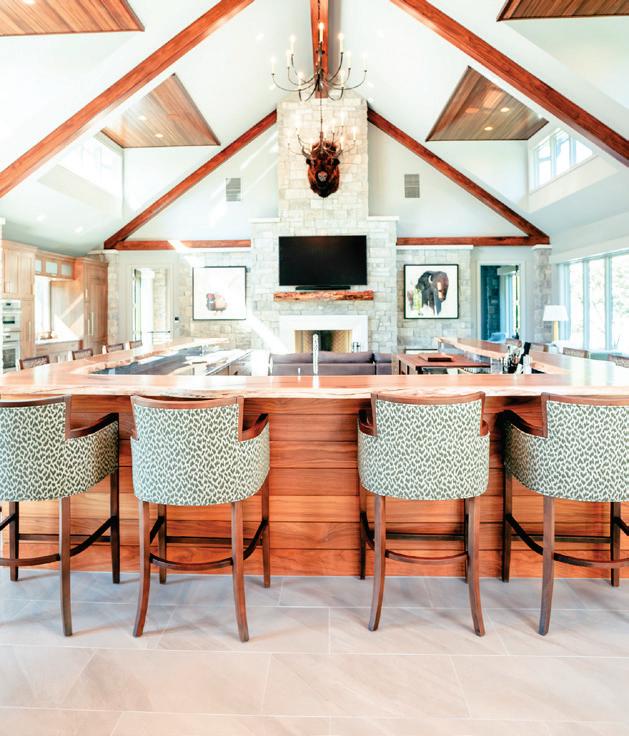
The completed home embodies a sense of modern coastal serenity, offering a unique identity in each space while maintaining a seamless flow throughout. Natural materials and refined details create an atmosphere that balances connection and privacy highlighted by a lake-facing gathering room with fully wood-planked walls and ceilings, a custom bunk room perfect for weekend guests, and a spacious kitchen and living space ideal for entertaining.
The result is a home that reflects the homeowners’ vision and the team’s dedication to thoughtful, enduring design. The homeowners were delighted with their new retreat ready to enjoy it for years of lakefront living with family and friends.
Becky Rea, ASID, NCIDQ, NE RID, is owner and design director at Fritz + Lloyd Interiors. She worked with architect Shive Hattery, Inc., and builder Fulton Construction on this project. Visit fritzandlloyd.com for more information.



•
•