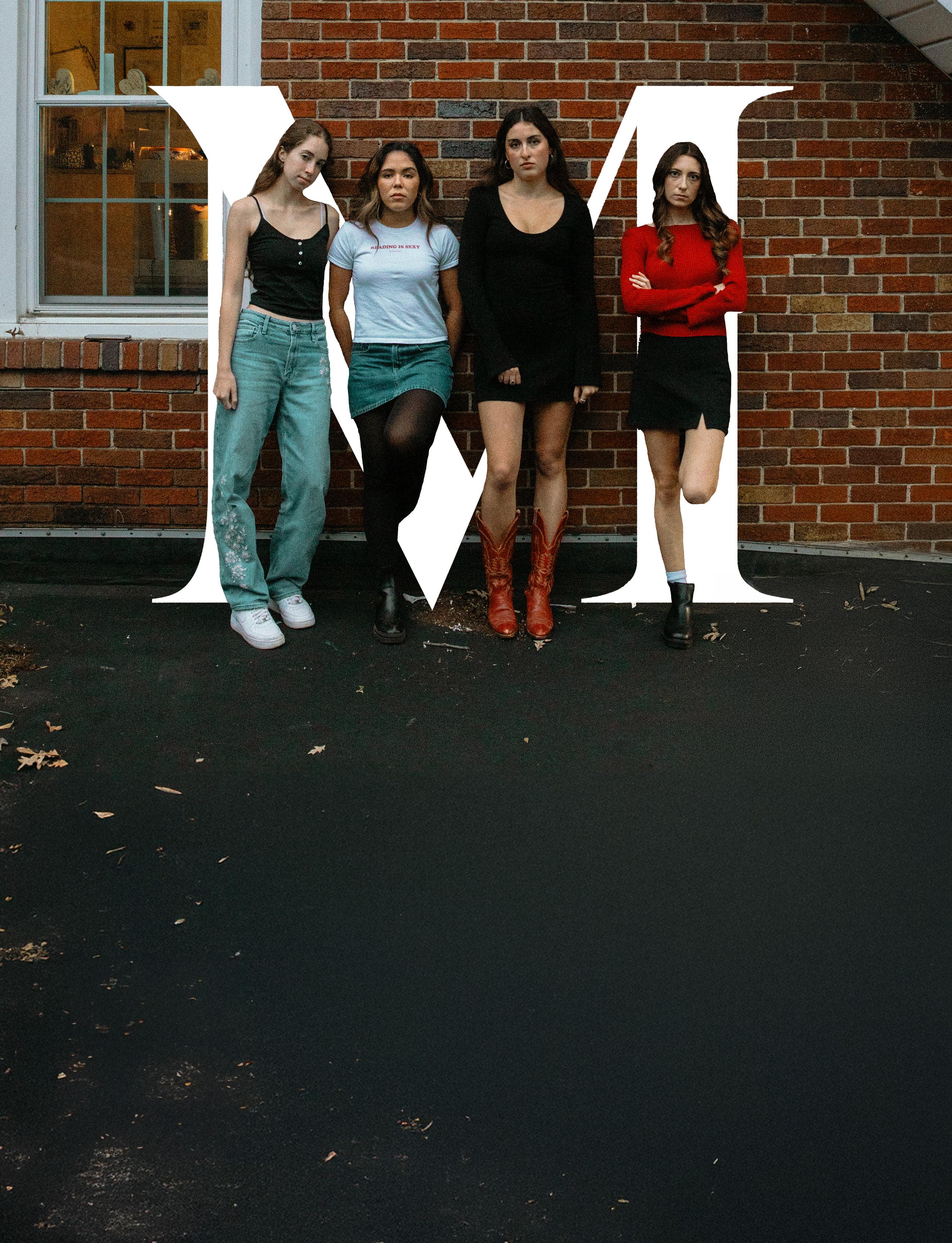
Flipping through the Fall 2025 edition of “The Magnolia,” you will read the ways ancient ideas of sin have stayed both true to form and shifted in their manifestations at Wake Forest University. You’ll find distinct remnants of their original meanings — through the envy of the ‘Wake Wardrobe’ and the greed of affluence. You will also, however, read the ways in which these ideas have changed, answering questions like, is it sloth or taking a needed break? Is it gluttony, or an opportunity for community?
In this magazine, you will encounter nine stories about how these early church ideas still move and influence the college students of Wake Forest. Seven of these stories discuss one of the Seven Deadly Sins, whilst the articles on Sadness and Apathy derive themselves from the Eight Evil Thoughts.
If you truly take the time to look over these stories as I have, you will begin to see certain new themes surface — the image of looking in a mirror, the difficulty of battling burnout and the elusive influence of the Wake “bubble.”
You will read that, while Wake has a power to shape you, you also have a similar power to shape it.
I have the privilege of carrying the baton of this publication. My hope is that, in reading these stories, you will begin to see this campus in new ways. Perhaps you’ll walk
away with a newfound awareness of Spoon University, or just maybe you might go deeper — with a profound compassion for student mental health, awareness of what it means to occupy this place or the appreciation for the power of feminine rage.
Now, I invite you to experience the friction-filled sensation of turning the pages of this publication. Truly absorb the reality of a physical magazine — an adventure that enables you as the reader to experience what the authors have prepared in a rich and meaningful way. In an age that becomes more digitized every day, I ask you to enter into the experience of reading a magazine. Feel the crispness of the pages, savor the carefully crafted words of the authors and muse over the photographs in their beautifully designed context.
You as the reader are a necessary part of the process of story-making. I invite you to join this ritual of journalism. So please, linger, savor and mull to the fullest extent
Photo by Kait Sharkey
Caroline Khalaf
Chase Clark
Miriam Fabrycky
Kenley McClure
Makena Moore Sophia Fionda
Kenley McClure
Take a Break... Did That Just Make You Nervous?
With its busy culture, rest at Wake Forest becomes a necessity
BY KENLEY MCCLURE
Photos by Will Kunisaki and Daria Prokhnitski
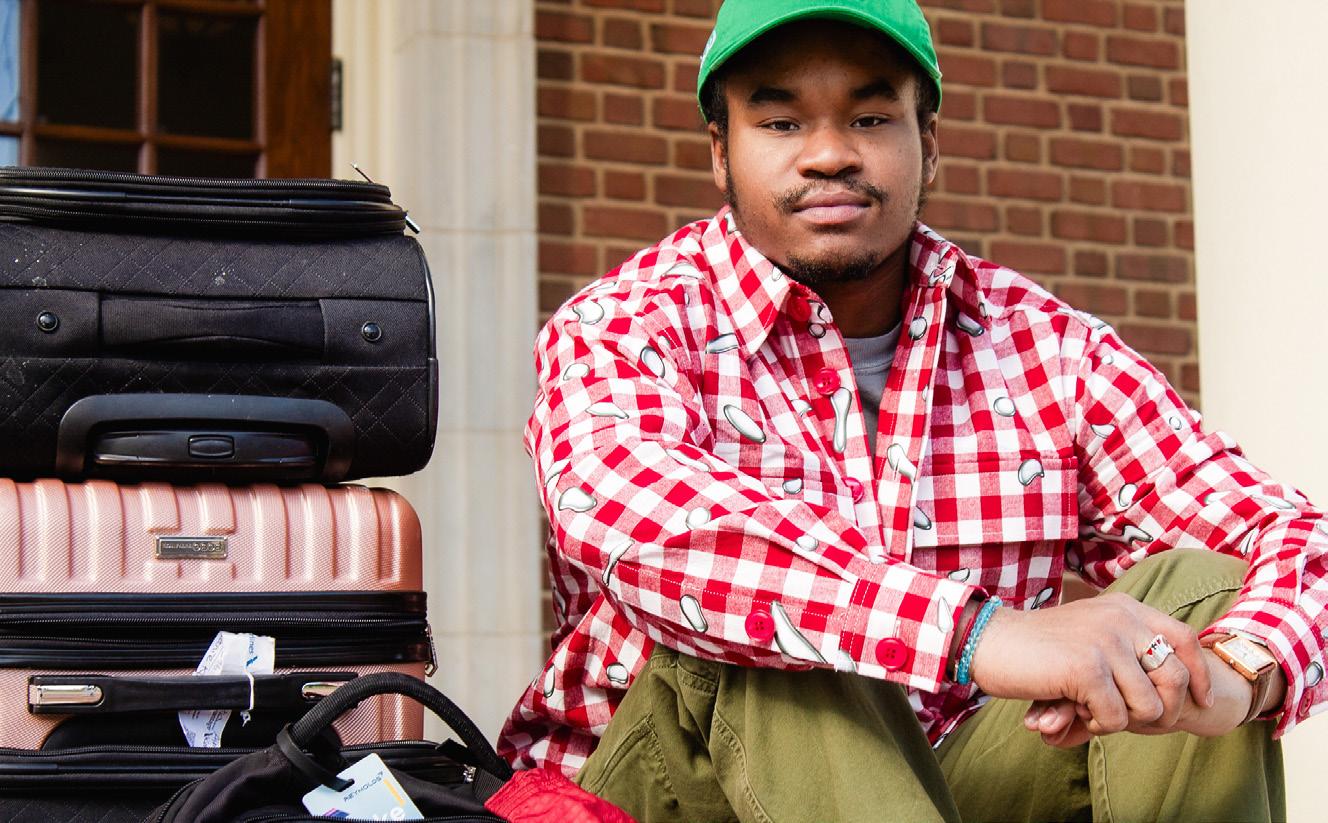
I’m primed for an upcoming nap, wrapped in my soft pink comforter and basically drowning in stuffed animals. So, why do I feel so uncomfortable?
Maybe it’s because right outside my door, I know my suitemates are in our common room doing school work. A few floors below me, the lobby of my residence hall is filled with at least one study group. Just two buildings over, the North Pit dining hall is overflowing with people eating, yes, but also people working. A ten-minute walk to ZSR Library would take me to eight floors full of students just waiting to make me feel incompetent by not being as productive as they are.
At Wake Forest, the intimate atmosphere and driven student body don’t just make it impossible to escape the pressure of hyperproductivity — they make it feel wrong not to embrace it.
“I feel as though I am somehow behind in a class I don’t know about,” said freshman Callie Vance.
On this geographically small campus, you can’t escape seeing other students being busy.
Similarly, freshman Lillie Brickell said, “I always feel like I’m not working enough, even if I have everything done. There’s this pressure to live up to the standards of ‘Work Forest’ that people don’t realize is unattainable.”
And even if you somehow don’t see it, others will tell you about it.
Wake’s culture changes conversation openers from “How’re you?” to “Is this week super busy for you, too?” Failing to ‘busy-brag’ might as well announce your laziness and lack of aspirations in life.
Junior Nola Adepoju said that she particularly feels the need to state her business when she misses an event.
“I want people to know I actually have stuff going on, not that I’m just skipping things for no reason,” Adepoju explained.
I don’t do too badly for myself in the busy competition. I am on five executive boards, one of them for a Greek organization. I am a double major and minor. I am constantly sore from dancing. I am empathetic to a fault, always making time to listen to one friend or another. I compound all this with a hyperfixation on keeping up with pop culture and three to four cups of coffee a day. Yet, none of this feels like enough.
It is not enough if others are working while I’m not, not if I could be working on an assignment for next week instead of napping, not if I still have hours of studying to go before I believe that I “tried my best.”
“Even 24 credit hours later, no, I don’t consider myself busy. I am simply as occupied as I should be here at Wake,” said senior Savannah Rolfe, when asked if she feels busy.
With a culture that paints overworking as the standard, it can be hard to recognize your own accomplishments.
“I always feel busy, whether it is socially or academically. I always feel like I’m not working enough, even if I have everything done.”
-Lillie Brickell
Misunderstanding what it truly means and takes to be productive can create a loss of joy, self and boundaries, which can lead to that unproductive puddle. True productivity is not some badge of honor to flex on the people who get eight or more hours of sleep every night; it is knowing that in order to work your best, you need a break sometimes.
Yeah, that’s right, I said the “b-word.” Break.
Are you already sitting there saying to yourself, “Well, she doesn’t know my life”, “if she had my schedule, she wouldn’t have time to take breaks,” or, my personal favorite as an English and Communication double major, “STEM students can’t take breaks like you can”?
After I finish dislodging my eyes from where they have rolled to the back of my head at the sheer dismissal of humanities and social sciences, I’ll say that I hear you. I hear you because “I simply don’t have the time” is one of my most uttered phrases.
But the thing is, when you don’t feel like you have the time, you need to rearrange some things. In the “Hunger Games” of choosing what to delete from your Google Calendar, time for yourself can’t be the first to go. I say that as someone who hit the delete button on self-care time.
During the spring of 2025, I started my role as Vice President of Membership Experience for Alpha Delta Pi sorority. I was tasked with welcoming nearly ninety new members into our chapter. While this was incredibly fulfilling, at the moment, I put 90 people before myself. I wanted ensure sure every single one of them was OK, their questions never went unanswered for more than a few hours and make their lives and transition to a new chapter as easy as possible.
Here’s the thing about making things as easy as possible for other people: it often means making things harder for
10 • THE MAGNOLIA • Take the Break
yourself. But what was supposed to be a few months of sacrifice turned into a complete loss of balance. I would stay up late, get tired, wake up early to finish the close to three hundred pages of reading I had each night as a result of taking four English classes at once.
Especially in regard to being a resident advisor, senior Sincere Fielder also feels the pressure to be there for others when they have questions.
“It seems as though there is an expected speed of problem-solving and the expectation of my ‘ability’ to possess answers to all issues,” said Fielder.
That’s why this semester, in the face of busy-bragging and watching others work through meals, I am trying to look after myself more.
For instance, I used to not let myself watch TV at school, but now I’m screaming for Robert Irwin on “Dancing with the Stars” with my suitemates. Even with
campus organizations, while it is important to recognize when the line of balance has been crossed, involvement in activities that are fulfilling can be a form of self-care.
“Sometimes we do things just as a resume builder, and if I found that to be my answer, I stepped away from it. Now in a way, doing things I love still feels like time for myself,” said Adepoju.
But it’s not just holding on to a level of passion; it’s been able to let go of the notion that a perfectly productive day is even possible.
There are always the same number of hours in a day, but infinite ways to divide them. Spending minutes that turn into hours ruminating on how I could have better allocated my time serves no one. Making an active effort to give myself grace in resolving my work-life balance not only makes me feel better, but it also frees up time. And with that extra time, I think I’m going to take a break.
Jessica Elkin & Asa Fleischer
THIS Is What It’s Like?
Student investigates dating culture at Wake Forest
This past September, I set out to investigate and analyze Wake’s dating culture and the use of online dating platforms. To be honest, I didn’t anticipate too much difficulty in doing so. I didn’t think it would be easy necessarily — I mean, dating is a deeply personal topic — but I surely didn’t think I would struggle.
Right?
Wrong.
I want to be up front about the angle from which I approached this investigation. While I had ideas of how dating looked at Wake, I had very little personal experience in that area. My perceptions of college dating mainly came from secondhand stories (often exaggerations), Fizz (an anonymous social media platform for college students that represents only a very small demographic), and my romance books (not the most accurate depictions of college dating).
However, I did gain a better understanding of the dating culture at Wake through this process and have much to share with you from my (eventually successful) investigation.
BY MAKENA MOORE
Photos by Kal Wuor
Here’s the truth of it.
The students I interviewed had similar perspectives on the stereotypical dating experience at Wake. Generally, people only believe in two main categories: ‘serious’ and ‘not serious.’
“I hear a lot about situationships and unclear labels that don’t work out,” said senior Sam Stinson. “It seems like a pretty 50/50 split on couples who are dating casually and couples who are looking to marry or settle down.”
Stinson’s boyfriend, senior Luke Wiener, saw more of the awkward side of things in “walking past previous hookups in the Pit… that’s what I hear people talking about.”
These loose definitions really summarized how the students I interviewed perceived the “Wake dating experience.”
It was pretty hard to find people willing to share their experiences. But among those who were willing, three strong trends emerged in my investigation, each representing a common type of student that exists within Wake’s dating culture. These categories are not all-encompassing, but they are decently prominent and much less ambiguous than the ideas I started with.
And honestly, that’s the overarching theme I’ve taken away from this experience: there isn’t a clear box or path that Wake students take in the dating world.
You may find yourself in one of three categories: a long-distance relationship, an untraditional dating experience, or simply too busy to prioritize dating. As it turns out, there aren’t that many “normal” couples on campus.
Let’s start with the least Wake-specific category: long-distance relationships.
It would be very interesting to see the statistics of how many Wake students are in long-distance relationships; however, I don’t have those specific numbers. But in my conversations, I found that these relationships are increasingly common across our campus.
First-year Ruby McCurn is in a long-distance relationship with her boyfriend from back home and notes that nearly “everyone here dates someone from a different school.”
A freshman dating someone from their hometown isn’t unheard of, nor is it unique to Wake. Starting a long-distance relationship as a sophomore is slightly less common — but it happens.
Additionally, a good portion of the people I interviewed have quite unique experiences relative to the “standard” dating culture at Wake. Equal amounts successful and ill-fated, these sources all shared one thing in common: realizing that sometimes the best path is the one less traveled.
Though not advertised as a dating platform, the Wake acceptance Instagram page has united at least one couple: Luke Wiener and Sam Stinson. The pair have been together since their first year and actually met on the “Wake 2026” Instagram page.
“I DM’d him,” said Stinson. “I saw he had a Letterboxd and was like ‘guess who also likes movies?’”
While neither of them planned to get into a relationship immediately in their college career, they wouldn’t change it.
“For lack of better terms, we match each other’s freak,” said Wiener.
I’ll end with the category I seem to find myself in — and believe a fair number of Wake students may also identify with: just too busy to be out there looking for a relationship.
Purposefully, I’m leaving ‘busy’ undefined. Maybe you are engrossed by the ‘Work Forest’ mentality (i.e., striving for success above all else). Maybe you are trying to build your career. Or, maybe you are just doing your own thing — focusing on yourself — before engaging in the realm of romance.
Sophomore Ben Shufrin finds himself in this category, alluding to a busy schedule that leaves little time for dating. He said, “Trying to date at this point is just not in the cards right now.”
For the most part, people in this category aren’t “not-dating” because they don’t want to. Commonly, they just haven’t found the avenue of doing so that they’d prefer.
Some people prefer finding potential partners organically, while others don’t mind the structure of an online platform or service. Senior Alistair Norwood is dating junior Penelope Guimbellot, and they met organically through mutual friends.
“I think it worked out for the better for us,” said Guimbellot about meeting naturally as opposed to an online platform. “I never tried online dating, but I haven’t heard anything good.”
Guimbellot’s friends described downloading Tinder and Hinge as “the worst decision ever,” where Norwood notes how his friends rarely had successful dates with people they met online.
And honestly, that’s the overarching theme I’ve taken away from this experience: there isn’t a clear box or path that Wake students take in the dating world. They do
Penelope Guimbellot & Alistair Norwood
Sam Stinson & Luke Wiener
what works for them. Everyone has different experiences and expectations. Sure, there are common factors and trends, but everyone wants something different, and how they find that looks different person to person.
I feel comforted in the fact that there really isn’t a norm in dating at Wake — at least not something I’m sad to be
missing out on. The variety of avenues and anecdotes I heard about throughout this process only made me feel better about the endless possibilities out there. Sure, I’m most likely not going to meet my match on the Wake Forest Acceptance Instagram page… but who knows where I will? And how exciting is that question?
Kait Sharkey & Evan Lipetz
My Soul’s NOT Dead
BY SOPHIA FIONDA
Photos by Isabella Parolini and Sophia Fionda
Wake Up.
Go to class. Go back to the Hole.
Leave and walk to Reynolda Village.
Sit on a bench, watch geese and cry.
Go back to the Hole.
Eat something, and brush crumbs off the bed.
Laugh with your roommate.
Go into the Hole.
This was my routine for the majority of my first semester at Wake Forest University. I referred to my bed as “the Hole.” I used to think of the Hole as solely a physical space, somewhere warm, quiet and safe. Somewhere where, even if I was disturbed, I could be comforted by the boundaries of my bed, and still be safe.
As months passed, though, the Hole transformed into something both abstract and inescapable. The Hole was now inside my head. I could be sitting in the dining hall, the library or Reynolda Village, and I could still fall into the Hole. This new version was darker, damper. I began to dread my time inside of it, for it was becoming harder to climb out.
Depression exists differently within people’s bodies, minds and souls. For some, it may feel like an awkward, bulky weight on their shoulders. For others, it may feel like a bucking horse resisting its reins. Perhaps the horse
has blinders on. Perhaps the horse isn’t a horse at all, but motor oil or tar, seeping into one’s veins, slipping through one’s fingers, too smooth to grasp.
College is often a period when young adults begin to experience mental health challenges, either for the first time or more intensely than before. Students receive their first opportunity to stand alone in front of the mirror and reflect on what is visible beyond the face that gapes back.
Living with depression makes it difficult to do just that: live. But how? How do other mental health struggles present themselves in the lives of college students? How do they act as an obstacle to creating and maintaining a high quality of life?
Dr. Denisha Champion, the director of Wake Forest University’s Counseling Center and Safe Office, says that depression is currently the second most presenting mental health condition among college students, falling between anxiety and relationship concerns.
Dr. Champion recognized Wake Forest’s “work hard, play hard” culture. She says, “This is a rough environment for people, because, I mean, you all are super smart, and you all are usually the top of your high school class. And…well, now we can’t all be number one. For some people, that brings in [issues with their] identity.” When students who are not used to struggling begin to, it can be incredibly difficult to process.
Students reflect on their mental health experiences throughout their college years Fall 2025 • THE MAGNOLIA • 19
Senior Prarthna Batra noticed that when everyone else began to settle down during her freshman spring semester, her anxiety increased instead. “I was starting to have a hard time with classes, just like the workload of Wake… and social expectations,” said Batra. “All I remember was that I would have a sobbing, can-not-breathe kind of panic attack, like, almost every day.”
Dr. Champion’s best advice for people experiencing these symptoms is to talk to somebody. However, in an environment where students want to exude achievement and excellence, it can feel taboo to talk about mental health.
“When I came to Wake, I was like, this school sometimes feels a little superficial,” said senior Georgia Meyer. “It kind of seems like everyone comes from the same background, everyone looks the same. And I didn’t feel… safe talking about my experience with mental health.”
After struggling with overwhelming feelings regarding familial relationships during her junior fall semester,
Batra decided to take the spring semester off. When she returned, though, she said, “I placed the expectation on myself to keep up my good mental health so heavy that it just kind of stabbed me in the back.”
Healing, she explains, “is not linear, and it will never be.”
Meyer has never been one to shy away from mental health discussions; she has received support from either guidance counselors or psychologists since high school. However, when her therapist suggested medication, she was hesitant. “My junior year of college, right before I started Lexapro, I was like, ‘I feel anxious all the time,’” said Meyer. “I feel like I overthink everything, like I’m really thinking deeply into things, but I feel like I’m not a qualified person to be on medication.”
Over the past three years, I’ve met with three different psychologists, one clinical social worker and one psychiatrist. I’ve tried various dosages of two different antidepressants.
Prarthna Batra
I’ve spent the night in a hospital under psychiatric emergency care. I’ve ignored the nausea. I’ve written in my journal and burned the pages. I’ve inhaled, exhaled and counted my fingers. Last fall, I spent hours staring at my bedroom ceiling, my mind empty. This past semester, I found myself staring out my bedroom window, wondering who I am supposed to be.
I often think about the specific words and phrases that circle around my mind, the messages that my depression graffiti on the walls. I squeeze my eyes shut, and the words bounce around, dance and intertwine.
“You’re a bad person.”
“You’re not deserving.”
“You’re a failure.”
I regularly journal about these phrases, my regrets and past mistakes. I ask myself, “Why am I sad? Why am I crying?” I write, “It’s not like I’ve sinned.” I don’t know if the feelings I experience will ever completely disappear. I don’t know if I’ll ever truly understand them. Yet, I’ve learned to live with them.
I’ve realized that I don’t want to rot in the Hole anymore. I remind myself that my soul’s not dead. A new type of feeling has blossomed inside me, or perhaps it was there all along, buried. It flutters inside my chest, gently tickling my heart. I think that this feeling is hope.
Georgia Meyer & Sophia Fionda
STUDY ABROAD: TREND OR IMMERSION?
Exploring how students truly feel about the pressure to go abroad
By CAROLINE KHALAF
Photos by Sienna C. Greenleaf
During the first week of the fall semester, it seems like nearly every member of the junior class jetsets to a new destination that they will call home for the semester. For some students at Wake Forest, studying abroad is a dream come true. For others, it is a social expectation that feels impossible to escape.
The Wake Forest abroad office recognizes the challenges and negative associations some students have formed around studying abroad.
ferent from me and that’s one thing I had to get used to, even abroad.” He struggled to adjust to a semester he believed would be different than being back in Winston-Salem.
“We like to think our small and intimate campus spans seven continents,” says the Wake Forest study abroad website.
The “Wake Forest Bubble” is unique to Wake Forest and impacts how students live, whether that is on campus or abroad. This phenomenon refers to the figurative and literal isolation of Wake Forest students on campus. The campus’s tall, rod-iron gates and wall of trees cut it off from Forsyth County, and many students do not engage with the Winston-Salem community, isolating themselves within our privileged campus.
This “Wake Bubble” is brought across oceans.
“Wake has a long history of having a robust study abroad program,” said Assistant Dean for Global Study Away Programs David Taylor. “It’s baked into the experience in many ways.”
For many, abroad is not the fantasy that it is framed as. Senior Samuel Francis felt the “Wake Bubble” follow him across the Atlantic to the University of Cambridge. Out of the 13 students in his cohort, 10 were Wake Forest students. Francis recounted how he was the only member of the group who did not fly in first class.
Kyleigh Panther
Reflecting on a conversation with one of his new friends, Francis knew he was having a much tougher time than the rest of the students.
“I remember him talking about the connections and how easy it was for him to navigate this space. But, when I talked to my parents, I told them that I couldn’t wait ‘til I got back home. It was a stark difference between our two experiences,” said Francis.
While one may think study abroad is spread out among classes and semesters, the majority of students study abroad during the fall of their junior year. Dean Taylor reasoned that the large number of students who study abroad in concentrated locations — Barcelona, Copenhagen and Florence, for example — and during junior fall is because of the impact of COVID-19 on the student body.
“I feel like Wake carries that bubble even when traveling. The normal Wake Forest student body is very dif-
“I think, coming out of COVID-19, the cycles kind of landed where the fall was the next best time to go abroad. Students did not want to get off-cycle with their friends, even more so after this,” said Taylor.
Fear of isolation after COVID-19 led students to live abroad in large friend groups, and from there on out, the junior fall study abroad experience became an integral part of Wake Forest student life.
“It’s become a more or less a cultural phenomenon and there are also some social factors at Wake with spring activities and scheduling that play into that,” Taylor said.
The timing of a few Wake Forest events, like Greek life recruitment and basketball season, could also play a role. One doesn’t dare go abroad during a semester or to a city their friends aren’t choosing because you may miss out on all the fun, whether that’s in a popular destination or back on campus.
In 2023, Wake Forest ranked third among doctoral U.S. colleges in percentage of students studying abroad, and over 80% of undergraduate students have a for-credit abroad experience during their time at Wake.
“I think there’s such a Wake culture that puts pressure on going abroad somewhere,” senior Anna Anstey said.
ing. I wouldn’t have anyone to live with or hang out with,” Anstey said.
Senior Kyleigh Panther viewed Wake’s abroad culture similarly, explaining, “I was thinking, ‘well, none of my friends are going to be here and everybody’s going to be abroad.’ I do feel like there is kind of a pressure, not necessarily from anybody directly, but just socially.”
“I do feel like there iskindofapressure, notnecessarilyfrom anybodydirectly,but justsocially.”
-KyleighPanther
Because of this high percentage, students like Anstey feel like they have to go abroad to have a complete Wake Forest experience. Beyond the statistics and institutional culture, the strongest pressure comes from the most personal spaces — within friend groups themselves.
“Out of my 14-person friend group, every single person was going abroad, so it was like there’s no point in stay-
When pressure exists to go abroad, pressure also exists to love abroad.
“I think there’s a huge expectation that is not talked about where people say study abroad is the best semester of your life,” Panther said. “Then, if you get there and you don’t like it or it’s not for you, you’d rather be at Wake. A huge part of studying abroad is that you won’t like it all the time; you will be homesick, you might not love your program, you might hate it.”
However, a lot of students are grateful for their abroad experience and the way Wake encouraged it. Wake Forest’s International Houses — Casa Artom in Venice, Italy, The Flow House in Vienna, Austria and the Worrell House in London, England — are some of the only
university-owned residential houses in the nation where students can live and study with their school’s professors.
Living and studying at the Flow House helped senior Griffin Girard’s experience abroad to its greatest potential.
“The Flow House was set up to help us experience abroad to the fullest,” Girard said. “Our professor and the staff in the house made it important to take us on experiences and set up opportunities for us to connect with the culture. It inspired us to really commit ourselves to this abroad experience.”
Junior Chris Squires agreed that the international house programs made abroad meaningful, saying, “My study abroad was just great in general, but living somewhere like the Worrell House, you get to know everyone very well. I feel like there are some friends I have now that I would have never made otherwise.”
Samuel Francis
comes up sooner, why not go? I’ve tried telling a lot of people that if you want to go as a sophomore, go. No one’s gonna care. Why give up what you actually want to do just to go on trend with everyone?”
Junior Karia Yang spent her semester in the less popular Sydney, Australia and fell in love with the place. “I’m thinking about moving here… and I’m not exaggerating,” Yang exclaimed. “Every time I take a trip outside here, I’m itching to get back to Sydney.”
Some students, though, go abroad outside of these trends, traveling to less popular places or going at less popular times. Squires, for example, went abroad as a sophomore.
He expressed confusion about the culture of going abroad solely as a junior, saying, “If a program you like
When studying abroad becomes less about exploring a new place and more about doing what is expected, you miss out on an experience that could transform your world as you know it. For many students at Wake Forest, it has been a trendy expedition, but it doesn’t have to be.
The beauty of Wake’s diverse study abroad programs lies in the opportunity they provide for college students.
As Wake Forest continues to span across seven continents, perhaps the future of its study abroad culture is one where students feel empowered to choose their own paths and open up an unknown world rather than live in a permanent “Wake Forest Bubble.”
PRIDE & JOY
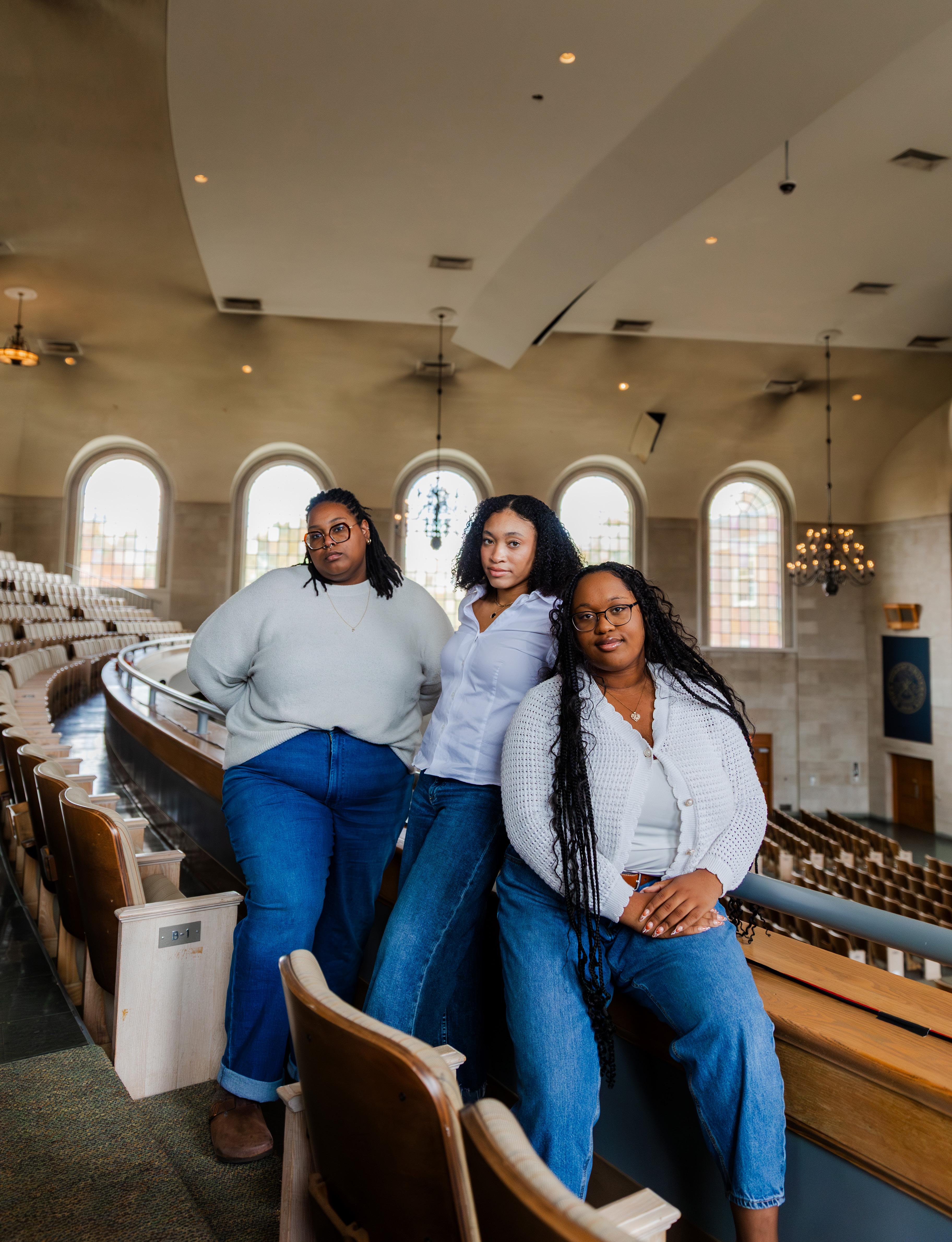
Tracing a student’s journey alongside other Black women at Wake Forest, honoring the legacy of those who came before
BY CHASE CLARK
When I reflect on my grandmother’s calloused hands, each line a testament to labor and love, I am reminded of all I need to know: I am her pride and her joy.
As a little girl, I would trace those hands while sitting in the pews of the church my family had always called home. One verse from those Sundays has stayed with me, perhaps because of the subtle squeeze my grandmother would give me, urging me to pay attention. Romans 12:12 became my anchor, a reminder that as a Christian, I am called not to conform to the patterns of this world. Those hands, those sermons, they offered me guidance long before I could live it out for myself.
When I arrived at Wake Forest University, I set aside those early anti-conformist teachings, not out of disregard, but necessity. I did not yet have the imagination to envision a world that could look differently or to forge an alternative path toward community, belonging and success. My limited vision of how to show up as a Black woman on Wake Forest’s campus required me to navigate the world as it was, not as it could be.
Photos by Aanayae Anderson
Chase Clark
Senior and Student Trustee Alexandria “Lexi” Smith put it best, invoking a familiar phrase: “As Black women navigating this campus, you are your ancestors’ wildest dreams.”
To be anything less than successful felt like devaluing the years of sacrifice that allowed me to take up space here.
Attending Wake was never purely an academic choice. It meant carrying the weight of minimizing financial strain through scholarships. It meant trusting that a degree could offer the stability that might spare me from the twelve-hour shifts my parents endure, the labor that weathered my grandparents’ hands and the workplace stress that has left so many Black women in my life battling exhaustion and burnout.
Beneath the beauty of the brick and the promise of prestige, I came to understand a more complex truth: this university was not built with me in mind. Its foundation was funded by the sale of enslaved people — a legacy still visible today.
You can see it in the placement of the Black Student Alliance beside a trash dumping site, in the tokenism of our Cultural Diversity requirement and in the disbanding of the Office of Diversity and Inclusion in 2025.
Senior Darcelle Lee recalls being asked how she would navigate the corporate world “with nails like hers” while planning a major university event.
She explained, “The interaction puzzled me because it had nothing to do with the task at hand, nor revealed anything about my personal capabilities. I felt disrespected as it minimized my intellect and ability.”
Lee’s experience is only one example of the environment Black women on this campus navigate. Leighann Brooks, a Community Director in Residence Life and Housing, has faced anonymous online threats while enforcing campus policy.
Brooks shared, “The whole experience was unnecessarily aggressive,” underscoring a tradition of harshness that Black women continue to navigate within Wake Forest and beyond.
In response to experiences like these in my own life, I learned how to advocate for my humanity.
I spoke up for the legitimacy of my pursuit of African American Studies. Even off campus, I masked frustration with grace when white women called me “sweet” for visiting Wake from the nearby Historically Black University — despite the embroidered Wake Forest logo across my sweatshirt.
Pride is complicated. It is both the dangerous elevation of oneself and the quiet recognition of one’s worth and lineage. As Black women at Wake Forest, we exist in that delicate balance. We perform in confidence and composure, not only because, as Smith highlighted, our ancestors laid
Leighann Brooks
the foundation for us to be here, but because survival has taught us to mask our identities to legitimize our humanity.
This constant performance erodes Black students’ ability to build true belonging. How can we prioritize our humanity when we are denied the space to fully realize it?
This performance of pride is both my burden and that of many students of color — a burden with real consequences. It threatens the preservation of our history and lives because we have become what this university asks us to be, risking the loss of who we truly are.
I have not been that small girl in the church pew for a long time. For four years, I have existed in a space that often required me to sacrifice pieces of my dignity just to survive. I would be remiss not to acknowledge the ecosystem that has produced vocationally successful but internally broken women of color.
Over the past fall break, the pressure of performance became unbearable. Standing before my bathroom mirror, I felt lost — unsure of who I was, unseen and unsupported. I wanted to end my life. At that moment, I thought about how I would be remembered: President of the Black Student Alliance, Dean’s List student, scholarship recipient
Darcelle Lee
and award-winning leader. Yet those accolades felt hollow. I felt void of identity outside accomplishment.
To any young Black woman reading this: understand your value. You are worthy of taking space on this campus, whether Wake Forest acknowledges it or not.
I have pride in what I’ve endured, but I’m also too proud to let anyone see me enduring. Too proud to admit that I’m tired or unsure. Too proud to remove the performance, even briefly, because it feels like failure. To let exhaustion show would betray not only me, but the generations of women who worked so I could be here.
Sometimes, I imagine the day I’ll walk across that stage, my diploma cool against my palms, its weight unfamiliar but earned. I see my grandmother beside me, her eyes bright and steady, her hand reaching for mine. Her touch will remind me of every morning she rose before the sun, every story she told me about holding on when the world took too much. I’ll think of how her work became my will, how her dreams stitched themselves into my own.
And when they call my name, I’ll lift that diploma proudly — showing the crowd my pride, my joy.
Alexandria Smith
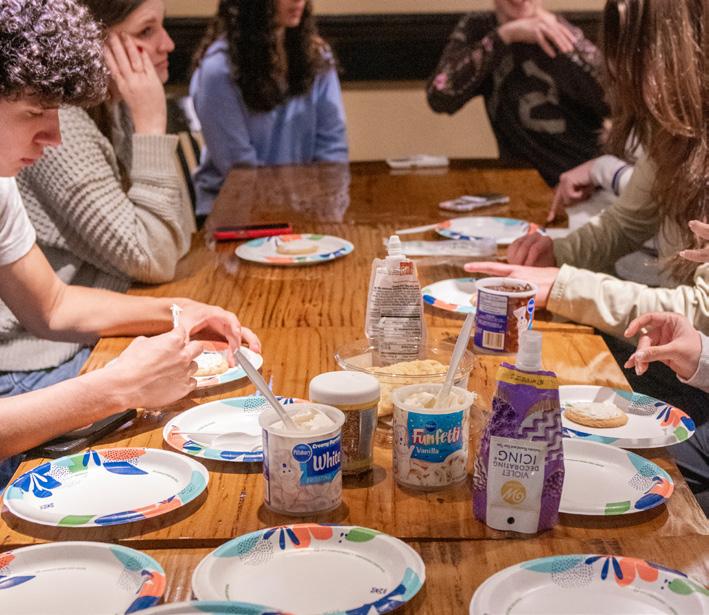
Acaravan of cars carrying a couple dozen Wake Forest students pulls into the parking lot of East of Texas, a popular Tex-Mex barbecue restaurant in West Salem. Spoon University has arrived.
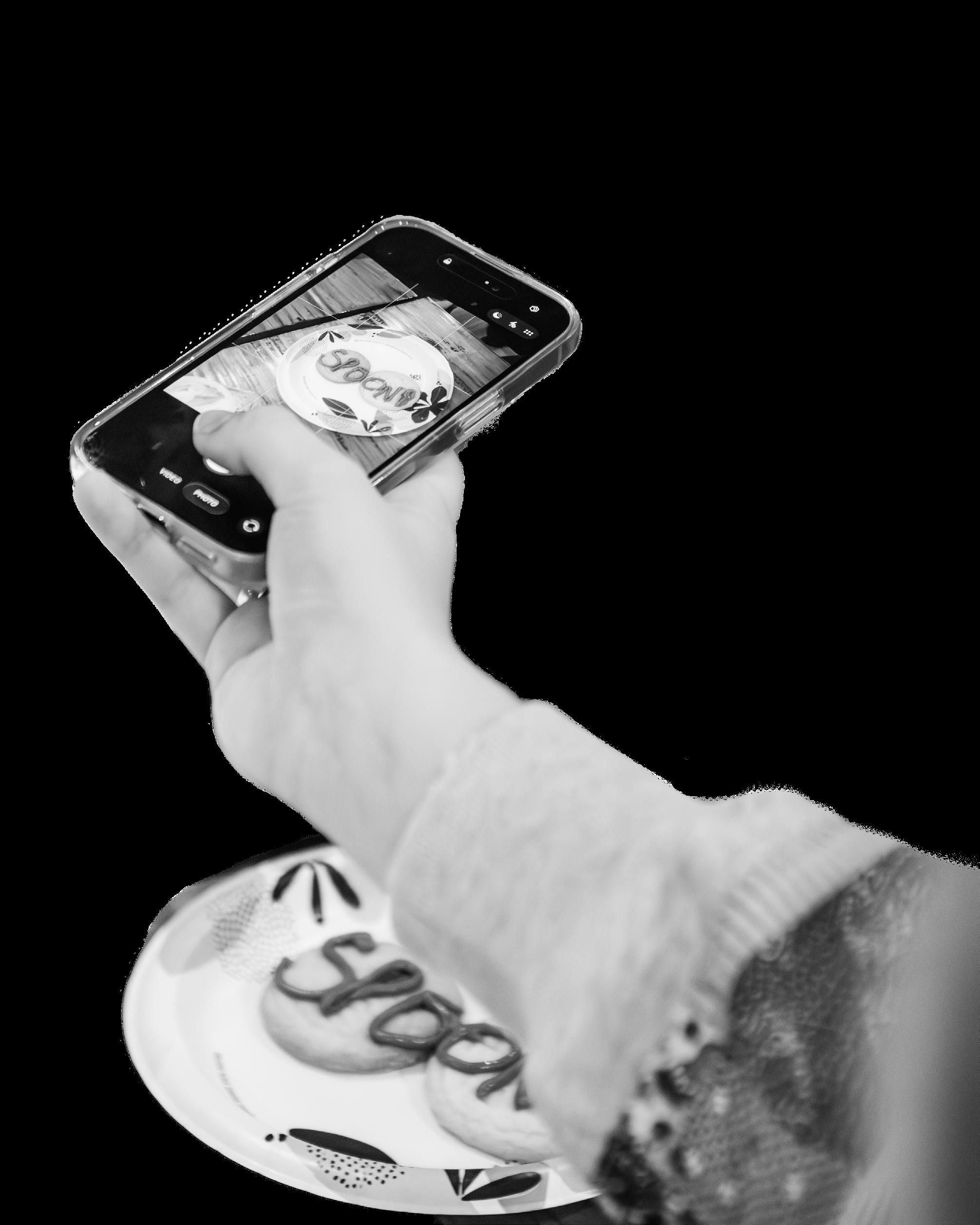
Inside the legendary local establishment, members of Wake Forest’s only food club greet one another. Old friends reunite, while new friends get to know each other. The conversation takes a turn when a server brings a lavish platter of barbecue to the table. Club members buzz with admiration over the spread of smoked meats, tacos and sides, and snap several photographs. Then they dig in.
For Spoon University participants — who refer to their club as “Spoon” — food is about community, conversations and joy. In the decade that Wake Forest’s chapter of the nationally chartered organization has been active, the club has fostered foodie friendships over countless servings of diverse cuisines on and off campus.
Senior Sophia Kiortsis is serving her second year as Spoon’s president and says the club fills an important extracurricular gap. While many other colleges boast organizations like cheese clubs or other dining groups, there wasn’t anything like Spoon at Wake Forest prior to its founding, according to Kiortsis.
“It’s a club celebrating food and everyone’s interests relating to food, whether that be photography or just tasting new things,” Kiortsis said.
Community in Cuisine
Sophomore Cleo Michel, who now helps with marketing on Spoon’s executive team, said she was surprised when she first learned of Spoon as a freshman at the club fair.
“I didn’t realize they had a food club here,” Michel said. “It was kind of random, but as soon as I saw [Spoon], I knew I wanted to become a part of the club… it just seemed like such a great little community of foodies.”
Kiortsis also began attending Spoon events her freshman year and enjoyed the cheerful gatherings. A particular highlight was decorating Halloween gingerbread houses — an event she hopes to reprise this year.
“I loved it because I got to meet different people in the club that I didn’t know at the time, like upperclassmen, and just play all together [and] have a great time,” Kiortsis said.
BY MIRIAM FABRYCKY
Kiortsis quickly climbed the club’s ranks, and before becoming president, worked as the planning director for schoolwide events her sophomore year. Spoon meets at local and campus restaurants every few weeks, but hosts larger activities like popsicle parties twice a year, typically in the Tribble courtyard.
Photo by Sophia Kiortsis
“Any student can come up and learn a little bit more about Spoon, but also just get some free food, which everybody loves, especially during finals,” Kiortsis said.
Spoon’s executive team works to keep its table as open as possible to new members. One barrier is cash — Spoon is eligible to spend just $500 of University funding on food per semester. As a result, event spots are sometimes allocated on a first-come, first-served basis.
“But other times… everyone is welcome,” Kiortsis said.
In the past, Spoon members focused more on writing reviews of local dining options, with articles published on the national website. In recent years, however, organizational shifts have affected this goal. Wake Forest’s chapter is currently awaiting national approval to upload content to a new website platform. In the meantime, members share their food thoughts via social media and a shared Google Drive.
“It’s open to anybody — you don’t have to be a part of Spoon to be able to access [reviews],” Kiortsis said, adding that she put together a “really fun” piece on the possibilities of Old Gold meal plan swipes.
For now, Spoon’s primary function is friendship.
“I think food builds so many relationships,” Kiortsis said. “Some of my best conversations are at the dinner table or while getting a coffee.”
Michel said she enjoys connecting with other students at Spoon events, such as the East of Texas dinner last year.
“One of the girls who was also invited lived in my hall,” Michel said. “[We] had never really hung out…but we went to the dinner together. It was just fun to meet new freshmen. Whenever I find someone who’s a fellow foodie, it’s always a funny niche bond.”
While all Spoon members share a significant commonality — a love for food — a key purpose of the club is to celebrate differences as well. Kiortsis said one of her favorite Spoon traditions is cultural potlucks, where students bring in dishes inspired by their family’s background.
Beyond merely exploring Winston-Salem restaurants, members also frequently discuss their favorite hometown establishments at meetings.
“Then when people go visit a certain place in New York City they’ll be like, ‘oh my gosh, thank you so much for the recommendation,’” Kiortsis said. “So we can just build community.”
At a school most students characterize as stressful, Spoon’s community benefits from having low-stakes activities.
Freshman and photography committee member Ellie Whalen said she appreciates casual get-togethers like walks to Reynolda Village for Dough-Joe’s doughnuts.
“I think it’s important for Wake [Forest] to have a food club because food brings people together,” Whalen said in a statement. “It gives people a good break between studying to try something new.”
Michel agreed that Spoon is an enjoyable extracurricular. “A lot of the clubs at Wake [Forest] are centered around very serious things,” Michel said. “There’s all this stuff for career paths, which is great… but Spoon [is] more of a fun club.”
Michel added that Spoon meetings help her relax during the semester.
“Obviously, Wake [Forest] is a ‘work hard, play hard’ environment,” Michel continued. “It’s just a perfect way to de-stress… when you have these little events to meet people. I always look forward to [Spoon events] whenever I attend, and it helps me take my mind off stressful things.”
Sharing food with friends: Spoon’s mission is as simple as it gets. They’re promoting community at its sweetest with carefree conversations over potluck tables and making memories at local restaurants. At a school where ambitions run high, the enduring popularity of a club that embraces such fundamental fun is heartening.
Photo by Piper Saunders
The K A E wardrobe
Exploring the social pressures of fashion at Wake Forest
BY TAYLOR RILEY
Wake Forest is known for its beauty. It has gorgeous architecture, but the students also fit a certain aesthetic. Looking out onto the Quad on the way to class, you’ll notice that everyone is dressed in variations of the same high-end style.
“I would say people definitely try to dress as chic as possible,” senior Lilli McLaughlin said. “It can be intimidating if you don’t kind of wear that certain style. The vibe is definitely preppy and athleisure.”
Unlike many larger schools, where it is socially acceptable to show up to class in pajamas, Wake is definitely a “dress-up school,” as McLaughlin described.
“You won’t see people go into class in sweatpants and a sweatshirt. People tend to dress up,” sophomore Ella O’Brien said.
Many students tend to try to conform to these unspoken standards, wanting to look, talk and dress like everyone else.
“I definitely think there is a culture where people are always, constantly trying to keep up with what’s new and
trending and what everyone uses as their school bag,” sophomore Isabella Acevedo said. “A lot of people feel like they don’t have the clothes to fit in here.”
However, the desire for conformity comes with a cost. Some of the staples of the ‘Wake Wardrobe’ are Longchamps — a bag that typically sells for over $100; stacks of E Newton bracelets, which each cost around $40; and Jane Win or Van Cleef necklaces, which can cost several thousand dollars each. Fitting into Wake’s style is almost reliant on coming from a wealthy background.
“Students do the quiet luxury thing where they have these minimalist, clean, preppy clothes, but they’re all from these bigger, higher-end brands like Coach or Ralph Lauren,” junior and Vice President of the Wayward Fashion club Aamori Gaines said. “They tend to wear all those things all the time to show off their wealth.”
This show of wealth is exacerbated by the presence of Greek life on campus, which can place specific pressure on freshmen to dress as if they deserve a ‘bid.’
Photos by Kathryn Bakewell
Ella Womble
“The Greek lifestyle has kind of taken over,” Gaines said. “Wake’s style is definitely about frat life and so rority life, because that’s what you need to wear to be a part of those things. People want to emulate that.”
Although Wake tends to downplay the prominence of Greek life, more than 70% of freshman girls regis tered for 2024 spring recruitment last year. Since this is such a large part of our school’s culture, students may feel pressured to join to get the full Wake experience.
O’Brien, a Delta Zeta, initially hadn’t planned on rushing at all — she intended to pursue mem bership in a Divine Nine organization, the his torically African-American sororities and fra ternities. Upon coming to Wake, however, she decided to rush Panhellenic Greek life after realizing how large its presence loomed on campus.
“[Greek life] is a lot more important than they say it is,” O’Brien said. “...I definitely think Wake might tone it down a little bit on tours, but through word of mouth by the end of the first week that you’re here, everybody’s talking about Rush.”
Panhellen ic recruitment, or rush, has its own mini-fashion style. Dresses from upscale brands like Lovesh ack Fancy are not required, but expected. The financial aspect of preparing for rush can begin to add up with all the outfits.
“A lot of girls from the South are buying $300 dress es, prepping in the summer before they even come to Wake,” Acevedo said. “They act like it’s the Met Gala,
like it’s life or death, like you’re gonna get in because of your outfit, which isn’t true, but there is that pressure. They’re scared of how they’re going to be perceived, and they think that the outfit is part of that.”
Acevedo and O’Brien believe that, ultimately, sororities care more about authenticity and personality than outward ap-
“As long as you’re letting your personality show through your outfits at rush, that’s what mat-
Although a lot of the fashion on campus looks expensive, there are ways to engage with Wake’s preppy style without digging deep into your pockets.
“I think when you hear the word ‘rush’ you think, I need to put on my best everything, and it needs to be expensive and it needs to be from this store and that store. But really… nobody’s going to know that you’re wearing a $10 shirt. Your price tag isn’t on your clothing,” said O’ Brien.
At the end of the day, clothes are just another way to express yourself, and students should feel free to embrace their individuality rather than feel pressured to fol-
Natalie Howell, Residence Life and Housing
Earning a Place
Telling the stories of student workers at Wake
BY ELIZABETH BRINDEL
Photos by Kait Sharkey
ost people believe economic privilege has been woven into the fabric of Wake Forest student life. The privilege to not worry about money, however, does not exist for many student workers at Wake. For them, belonging in this highly affluent environment looks different. It means performing a balancing act — juggling shifts, classes, clubs and social obligations all at once.
For Christianna Stanton, whose campus job is tied to her financial aid, working isn’t a choice.
“This job is a work-study job,” she said. “So, I wouldn’t work here if I didn’t need it financially. If I had to pay less to go here, I probably wouldn’t work as much.”
Junior Natalie Howell works as a Resident Advisor. For her, having a campus job is more than a side hustle; it is a quiet act of independence.
“At Wake, it feels like it’s just a given that everyone has that sort of money, and, like, I don’t, which is fine,” Howell said. “But the financial stress that my family feels overall is a lot different than most families here.”
So, having a regular paycheck provides her with a small sense of ease in an environment that can otherwise feel expensive. “It’s nice because I always know I have gas money. I can go out and get coffee and food,” she said. “It’s not like a ton of money, but it’s a good amount to get me through.”
However, even with this stability, the disconnect between students who work and those who don’t can feel significant. “I know there is a big wealth gap, and it comes up in everything, like cars and clothes and lifestyle,” Howell reflected. “I feel like there’s a standard of living you have to meet here, and I’m never going to meet that. And that is OK, but it is definitely a weird scenario.”
That weird scenario extends beyond aesthetics. It is an almost daily performance of ease put on by students who do not fit into that box of privilege perpetuated by the student body.
Maggie Whitworth, who works both on and off campus, feels that distinction sharply. “I think a lot of people I work with have to have a job to be able to have money to spend,” she said. “Some people have this job just for fun, but like some people really need this money to be able to get things they need.”
40 • THE MAGNOLIA • Earning a Place
Lily Blakely Campus Recreation
Kayla Richenberg Hanes Gallery
While some of her friends can afford weekend trips or spontaneous off-campus dinners, Whitworth often feels the need to weigh the cost of this more seriously.
“My friends will want to get meals off campus, which I can do,” she explained. “But I also work off campus, so I feel like I am a little more conscious of where my money is going since I am working a lot to get it. So a lot of times I have to stay on campus for meals or just do free things on campus.”
And then, on top of these pressures, there is the struggle with time that comes with having another commitment.
“I work evenings mostly,” Whitworth said. “So it is definitely an added time constraint on top of school.”
These small sacrifices of missing dinner plans and budgeting carefully form a quiet counter-narrative to what the general population of Wake Forest students believes college life to be. The awareness of the inequality experienced by student workers can be isolating.
“People are so caught up in themselves at Wake,” Howell added. “I really do believe that 90% of it is in my head, but then there is this 10% that is true. Labels are huge here, and I’m not wearing them.”
Still, she has found her place here. She has mastered the balancing act of Wake Forest life and can positively
reflect on her experiences with this unequal distribution of privilege. Howell belongs.
For Emily Little, working is similarly about independence. “I am pretty much on my own when it comes to my own finances,” she said. “I don’t really ask my dad for much… so part of me getting a job was for that reason. I mean, I worked like basically three jobs over the summer, which was pretty rough.”
Little’s words reveal a sort of resilience that often goes unnoticed by the public. There is a quiet determination among students who work to build their experiences at Wake.
The student worker experience illustrates what happens when a student’s drive to succeed collides with the realities of financial constraint. Wake Forest, similar to many elite institutions, markets itself on community and connection. After all, the “college experience” is ultimately about belonging.
The stories above come from baristas, attendants in residence halls, quiet figures who keep the university afloat and running. They come from laborers within a community that rarely acknowledges their efforts. Most importantly, they come from students. Their stories remind us that the pursuit of education is not effortless for everyone and is something earned through labor and perseverance.
Emily Little Benson Information Desk
FEMALE RAGE
Bella Santos
Female students explore what rage looks like for them in their own lives and at Wake Forest
BY CAROLYN
MALMAN
Photos by Blythe Kingston Green
“I think rage is anger mixed with passion. Saying blind with rage is very real, at least to me. I can go off the deep end to a point that it’s intoxicating. It’s hard to come back from. That persona is really interesting.”
- Senior Bella Santos
While speaking with Bella, I found myself invigorated by her definition of rage. When you finally indulge in the feeling of rage, you experience the high that accompanies turning into a different version of yourself. I wanted to investigate how rage manifests for other women at Wake Forest University.
I started by speaking with Shell Sizemore, Director of the Women’s Center. She is a ‘Double-Deac,’ graduating with her bachelor’s and master’s degrees in communication in ‘06 and ‘09.
I asked Sizemore to break it down for me even further from an institutional perspective. She described feminist theorist Megan Bower’s work that engages with the importance of “embodied educational practices”, which refers to the need to engage with emotions in an academic context.
“So if we close off all our emotions, we close off a lot of the power that can come through in an educational environment,” said Sizemore.
The practice of feeling is essential in the process of learning.
Social constructs make rage unavailable to women. It is seen as a male emotion.
We talked broadly about rage at first, categorizing it as something “not considered available” to a group of people based on their gender. We also discussed the “collapse [of] emotions with expression” — how, if we do not see one group expressing a certain emotion, we assume that group does not feel that emotion.
To better understand this emotion from a psychological perspective, I spoke with Christian Waugh, a professor in the Wake Forest psychology department. Dr. Waugh’s work focuses on coping with emotions. He provided critical insight into the mechanics of anger and rage.
“People think of anger oftentimes as having a lack of control, but in reality, anger is actually thinking that, for whatever reason, I can rectify the situation with my anger,” He said. “And that’s why it activates your body to do something where it’s in the challenge fight state.”
He explained that people “call [anger] a negative emotion because it arises in situations that we don’t
like, but it acts a lot like a positive emotion.” He says, “If you’re trying to choose between anger and sadness, anger feels much better. It feels much better because it has control.”
Rage, he said, “feels invigorating, it feels energizing, focusing. Like I want to solve this problem.”
With this understanding of rage, I spoke with students to understand their unique experiences with this emotion on campus.
Senior Margaret Williams explained, “as a woman where we’re told to keep [rage] inside and not express it… [it becomes] this battle of ‘what do I do with this emotion?’”
In her role as a stage manager for the theater department, she describes this dynamic even further: “I feel like I can either be just this nice person all the time, or just a really, like, aggressive person. And it’s the minute I switch between the two… that’s when people get upset.”
In positions of leadership, women battle prejudices in order to assert themselves. Rage, then, becomes an essential tool for processing injustices faced in academic and social circles.
Speaking with Margaret illuminated the inherent pressures of expressing emotions as a woman-identifying person. She said, “I was forced to stay in the closet [in high school]… but at Wake, I was able to come out of my shell.” Despite this newfound freedom, she feels more pressure here.
Sizemore similarly described this pressure during our discussion. Wake Forest’s culture is deeply relational. We are a small community where it often feels like everyone knows each other. “It feels like the stakes are higher if you’re misunderstood,” said Sizemore. This is a scary dynamic, especially for women-identifying people who feel they must filter expressions of feeling to meet social norms.
Despite the pressures, Margaret describes how she processes rage, saying, “Rage is rooted in a place of seeing injustice.” For Margaret, rage becomes a tool for coping with ignorance.
Junior Kate Wingate also discussed the power of using anger to cope. Diagnosed with a chronic illness at a young age, Kate had to grow up quickly. She faces things like
Elizabeth Cohen
Allison Sweeney
medications and doctor’s visits on top of the demanding workload of being a Wake Forest student.
On how she copes with her illness, Kate said, “My mom and I say to each other that I can do all things through spite.”
Laughing, she said, “I operate through spite, which, you know, isn’t exactly the most positive outlook, but it gets me through. The only way I can physically function and be able to complete all that I have to do is through anger. Sometimes it’s the only thing that can push me to do something.”
For Kate, rage and anger are essential motivators for her to push through the frustrations of living with a disability.
When I spoke with Bella, she shared her experience with leading a predominantly women-run organization on campus. She is the chief editor of Three To Four Ounces, a literary magazine and the oldest organization
“The only way I can physically function and be able to complete all that I have to do is through anger.”
-Kate Wingate
Kate Wingate
on campus. This past semester, the university decided to relocate the club’s office to a larger room, where numerous clubs are headquartered.
“When I opened up the email and saw that they were taking the office away,” said Santos, “I started crying because I was thinking that this is what the rest of my life is going to be like working in the arts.”
She saw the rest of her life flash before her eyes. Her first paycheck in publishing, her tiny New York City apartment, and fighting for the legitimacy of her work.
She reflected, “College is the one time in your life you’re completely going to be fostered, uplifted, and protected.” However, this disappointment brought “the harsh reality too early.”
In a small community like Wake, rage becomes a vital life force. Anger becomes a mode of adaptation,
where, according to Dr. Waugh, groups “adaptively [use] anger” to mobilize themselves and fight prejudice and injustices.
Anger becomes essential in asserting one’s place. From a psychological standpoint, taking action leads to a sense of accomplishment in the face of injustice. The key is using rage for mobilization, unity, and community.
For women-identifying individuals at Wake Forest, rage presents in different ways. For Margaret, rage helps her process prejudice. For Kate, rage is essential to her daily life, helping her complete tasks that take extra effort. For Bella, rage takes the form of escape.
Students who find themselves grappling with complicated emotions can turn to on-campus resources such as the identity centers in Benson, the Counseling Center in Reynolda Hall, and the We Are Wake initiative.