10 NMCGA President’s Message by Tom Paterson, NMCGA President
12 Just the Facts ... & Then Some by Caren Cowan, Publisher, New Mexico Stockman
16 New Mexico CowBelles Jingle Jangle
42 View from the Backside by Barry Denton
52 News Update: 9th Circuit Ruling on FLMPA, Beefmaster Intern, New NMSU AXED Staff
57 In Memoriam
61 Riding Herd by Lee Pitts
63 Food & Fodder by Deanna Dickinson McCall
64 New Mexico Federal Lands News by Jerry Schickedanz
66 New Mexico’s Old Times & Old Timers by Don Bullis
71 Collector’s Corner by Jim Olson
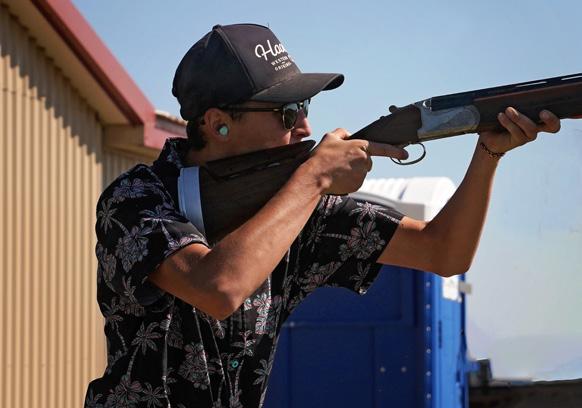
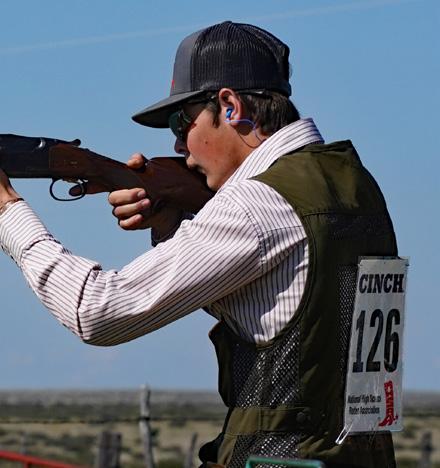
75 Sandhill Sheriffs and Shotgun Diplomacy
76 Marketplace
77 Seedstock Guide
81 Real Estate Guide
106 From The Arena by Julie Carter and Sage Faulkner
110 For the Love of Beef by Patty Waid
112 Advertisers’ Index
FEATURES
18 What is a Good Bull Worth in 2026? by Mark Johnson, Cow Calf Corner, Oklahoma State University
20 West Star Herefords Honored as Golden Breeder
20 Robust Beef Cattle Commerce
Mark Z. Johnson, Oklahoma State University Extension Beef Cattle Breeding Specialist
22 U.S. Dethroned as World’s Top Beef Producer by Chris Moore, meatingplace.com
24 Garcia Appointed State Media Ambassador
26 High Altitude Disease (HAD) in Beef Cattle by Marcy Ward and Donald Martinez, NMSU College of Agricultural, Consumer and Environmental Sciences, New Mexico State University
FEBRUARY 2026
18 Hereford
30 NMDA Accepting Healthy Soil Program Grant Applications
35 2025 North American Limousin Foundation Promoter of the Year
36 Limousin & LimFlex® Cattle Excel on NALRF/SDSU Research Project
Source: North American Limousin Foundation
38 Robert L. Frost
44 Grazing Leases & Allotments in New Mexico: Explained by Travis Driscoll, Beaverhead Ranch Group Blog
54 Produced Water Reuse in New Mexico – What it is, What it isn’t, and Why it Matters by Matthias Sayer Co-Director at the WATR Alliance
62 James M. Sachse
65 Don Kimble
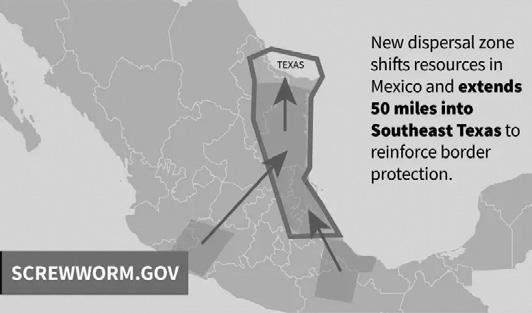
68 USDA Shifts Sterile Fly Dispersal Efforts to Defend U.S. Border
70 Federal Court Hears Case Challenging StateSanctioned Trespassing in New Mexico by Rachel Culver, Pacific Legal Foundation
74 Stronger Together: Agriculture’s Unified Voice at the Roundhouse
Source: New Mexico Association of Conservation Districts
86 Any Herd Expansion from Heifers? by David Anderson, Professor & Extension Economist, Texas AgriLife Extension
87 USDA Forest Service Issues Revised Oil & Gas Leasing Rule
92 Dairy Poised to Help Meet Consumers Growing Demand for Protein
Source: CoBank
94 Filtering The Future: Hemoperfusion Brings New Hope for Septic Horses
Source: Texas A & M University
94 Cull Cow Prices Poised to Hold Record Highs by Tony St. James, RFD TV
96 U.S. Farmland Values Enter New Phase Shaped by Localized Market Signals
Source: Farmers National Company
98 USDA Announces New Presidential Appointee to Serve Rural New Mexico
DEMAND THE BRAND DEMAND THE BRAND
ANNUAL BULL SALE MONDAY,
MARCH 30, 2026
1 p.m. MDT at the Five States Livestock Auction, Clayton, New Mexico 50 HEREFORD BULLS SELL Horned & Polled
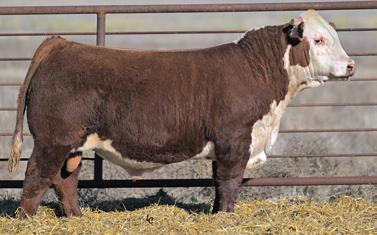
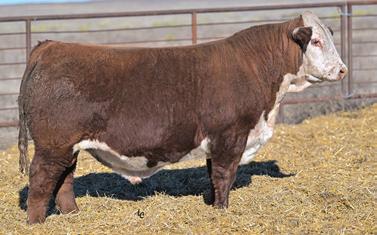
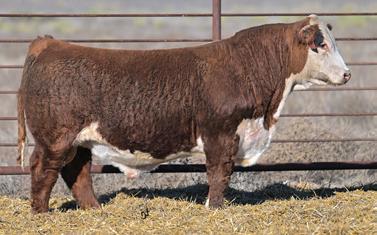
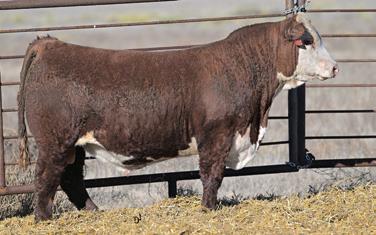
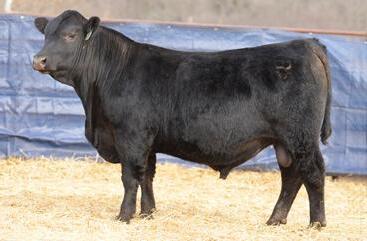
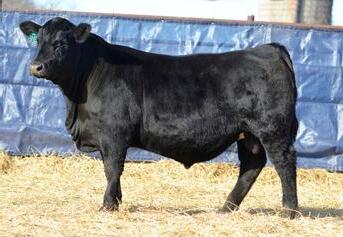
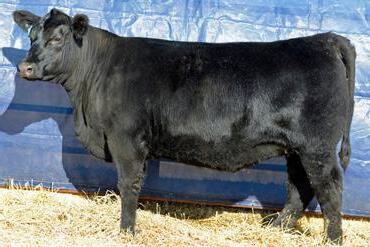
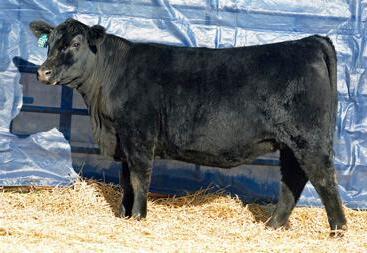
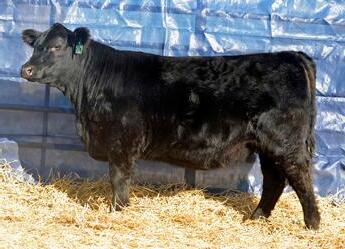
Also selling 25 Open Commercial Heifers Sired by Copeland Hereford bulls and out of Angus cows Sons of these Copeland & Sons herd sires sell Monday, March 30th:
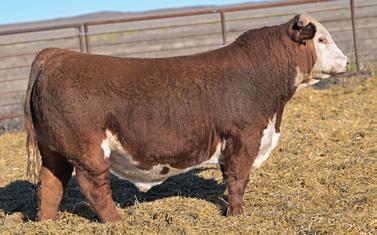
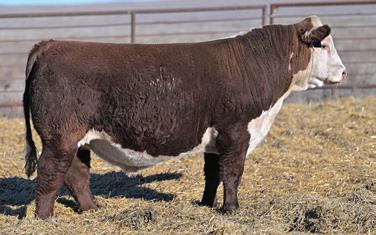
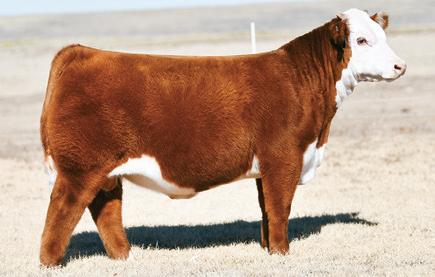
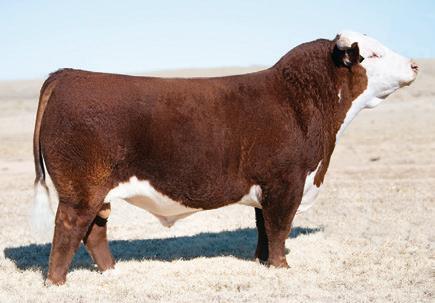
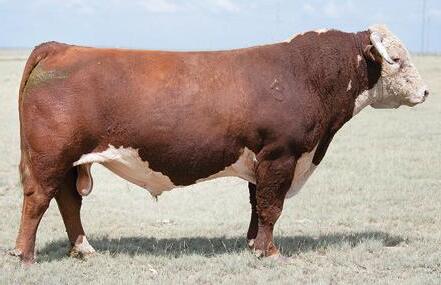
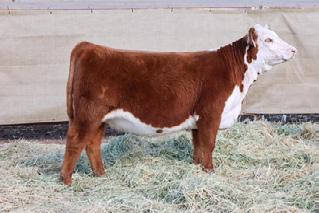
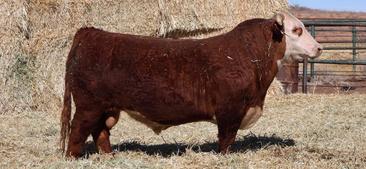
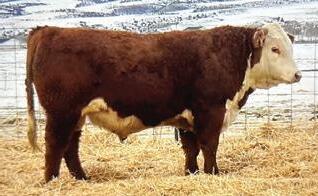
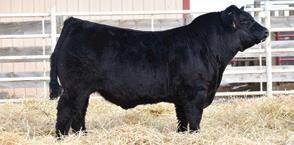
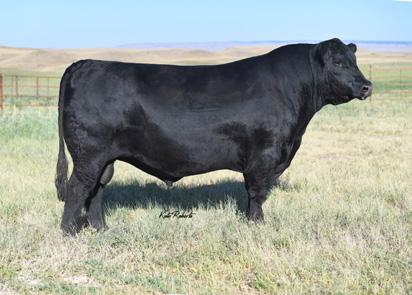
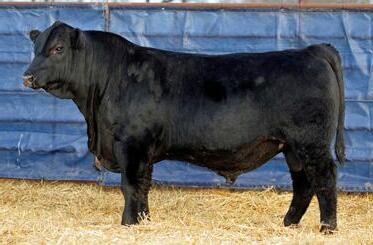
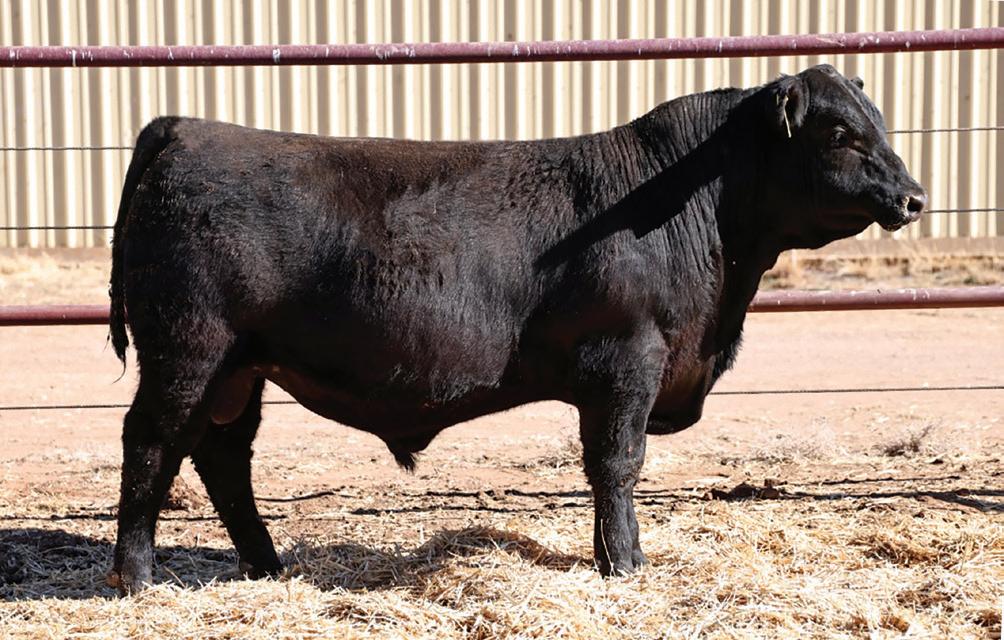
RPC JCS 7119 007 RUBBLE 210
AHA 44376473 • Horned
BR ER Big Country 007 ET x NJW 73S 980 Hutton 109Z ET
& Pat Copeland 575.403.8123 c3copeland@plateautel.net Matt, Alyssa, Cally & Kinley Copeland M 580.336.8284 • A 731.499.3356 office@copelandherefords.com Barbara Copeland copelandherefords.com
GENETICS THAT MATTER
BALANCED TRAIT SELECTION
Temperment • Soundness
Life Cycle Efficiency • Moderate Size
Post Weaning Growth • Carcass Merit
Low PAP • Focus on $RANCH Selection
ADDED VALUE
Free delivery • Ultrasound IMF, REA, BF
Select bulls PAP tested upon request
Every bull feed efficiency tested since 2010
$RANCH COWHERD BUILDERS
All sale bulls’ averages rank in top 13%.
Mothers calve every year in 45 days or they are gone.
All sale bulls’ averages rank in top 13% for Fertility.
All sale bulls’ averages rank in in 10% for Teat and Udder.
Balancer 40 Balancer x SimAngus 40 Southern Balancer
25 Angus & High% Angus
70 Calving Ease Specialists
150 Blacks • 50 Reds
Utilize the most proven database in the industry for traits that go directly to your bottom line and give you a marketing advantage.
Now is the time to invest in bulls that excel at maternal traits and will improve your fertility, longevity and profitability . Bulls out of the most proven range cow herd in the Southwest.
PRESIDENT’S
MESSAGE
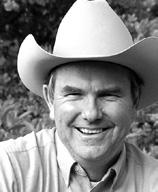
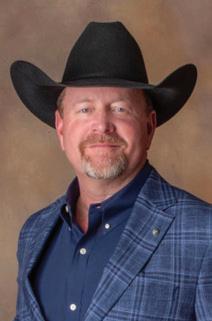
by Tom Paterson NMCGA President
Tom Paterson President Luna
Dan Estrada
President Elect Trementina
Marshal Wilson Vice President at Large Mesilla Park
Tracy Drummond SW Vice President Reserve
Dave Kenneke NE Vice President Cimarron
Jeff Decker SW Vice President Lovington
Marjorie Lantana NE Vice President
Tamara Hurt Secretary/Treasurer Deming
Bronson Corn
Immediate Past President Roswell
Loren Patterson Past President Corona
Dear Cattle Growers,
By the time you receive this, Christmas and New Year’s may be distant memories, spring calving has begun or is imminent and you’re well into the new year. Rest assured, your Cattle Growers’ team has been at work on your behalf.
NMCGA Committee Leadership Is Set: Many of our committees are already at work on the issues within their respective wheelhouses. For example, our Membership Development and Retention Committee, which my wife, Callie, will help me lead, has been at work developing a master strategy. We plan to roll it out by mid-March. What we already know from experience and consultants is that the most effective way to develop membership is with a one-on-one recommendation from our members. That, of course, means keeping you informed so you can explain to your neighbors what we do, that we’re effective at it and why they should belong. To help you with doing that, here’s an update from mid-December through mid-January:
Update on Joint Stockmen’s: We broke prior registration records for our meeting in December. Plans are underway for JS 2026. If you have ideas, please share them. Cattlemen’s College was an unprecedented success. Jim Thorpe and the Research Improvement Committee are at work developing a topic for 2026.
Public Comments: Since December, we’ve submitted public comments on proposed amendments to Endangered Species Act regulations. We filed comments on the proposed definition for Waters of the United States. Nelson Shirley, Federal Lands Committee, and Tracy Drummond, Wildlife Committee, have met with the Range Improvement Task Force and the Linebery Policy Center and are developing comments on Secretary Rollins’ October Plan to Fortify the Beef Industry. The focus is on assigning vacant grazing allotments and setting stocking rates.
On-going Issues Monitoring: We are working with the Northern New Mexico Stockmen’s Association on who has responsibility for fencing around the Valles Caldera. Stay tuned. We are monitoring grey wolf movements into New Mexico. We are advocating to change the jurisdiction of the County Livestock Loss Authority from compensating for only Mexican wolf livestock depredations to compensating for grey wolf livestock depredations as well.
On the Mexican wolf front, we are closely monitoring HR 4255, Representative Gosar’s bill to delist the Mexican wolf and to de-link recovery in the US from recovery in Mexico. We continue to advocate to change the depredation evidence rules to those we had in place for the 20 years before the last administration. Those rules considered but didn’t require evidence of subcutaneous hemorrhaging to confirm a wolf livestock depredation. Requiring such evidence makes the new rules underinclusive of actual wolf depredations. We also continue to advocate for location data for ranchers and local law enforcement so we may protect our livestock and the public. Jeff Decker and Cliff Copeland, Energy Committee, are keeping a keen eye on NIETC developments. Anita Hand and Dave Kenneke, Water Committee, are monitoring data center demands on water. Marshal Wilson and Shawn Davis, Theft and Health Committee, are actively monitoring NWS and NMLB payments on slick cattle.
The Legislature: We’ve been working since the 2025 session ended on seven specific proactive requests from the legislature during the 30-day session. President-Elect Dan Estrada will be keeping you informed on developments.
Meetings: Since the New Year, you’ve had Cattle Grower representation at a monthly meeting with the USFS regional range staff (they won’t help us with elk numbers or management). We were at the January 9 Game Commission meeting in Santa Fe again urging the Commission to hold its meetings in the rural areas where New Mexicans live daily with the consequences of the Commission’s actions. Thanks to Commissioner Lopez, one meeting will now be in Deming in May. We urged adoption of a shed gathering season like other states have (not adopted), asked the Commission to develop its 4-year rules using science (not Google Earth); asked the Commission for its game plan on grey wolves entering New Mexico (not sure there is one), asked the Commission what progress it had made on developing a management plan for Mexican wolves over the past five months (none to our knowledge), and urged the Commission to have a plan for NWS entering our state through wildlife, especially as temperatures warm. Dan Estrada and I attended the Northern New Mexico Stockmen’s Association meeting on January 10 in Abiquiú and offered comments on the Valles Caldera fencing, on Game and Fish management of elk, on the impact of grey wolves coming from Colorado and on our legislative priorities.
Preparations: In addition to our work for the legislature, we’ve been preparing for our Santa Fe Board meeting on February 9 and 10. Before the meeting starts, Alisa Ogden and I will host a committee chair and vice-chair session to make sure our committees have the direction and resources they need to be successful. We are working with our regional vice presidents on plans for regional meetings (NW Regional meeting on May 22 in conjunction with the NCBA Stockmanship & Stewardship event and Indian Livestock Days in Farmington on May 21 aand 22). Plans are shaping up for our mid-year meeting in Ruidoso from June 7-9.
Congratulations: If you haven’t done so yet please extend your congratulations to Rex Wilson, newly appointed Senator from District 33. Senator Wilson is a former NMCGA President and Cattleman of the Year. We are proud that rural New Mexico is able to send such a capable leader to Santa Fe.
So, why should your friends and neighbors join our NMCGA Team? See above. Adelante juntos, mis amigos.
Pre entries: https://www nmagriculture org/nmcga-steer-and-heifer-jackpot entries: https://www org/nmcga-steer-and-heifer-jackpot
by Caren Cowan, Publisher New Mexico Stockman
Getting Their Stories Straight…
In August 1998, the late Congresswoman Helen Chenoweth held a field hearing in Espanola, New Mexico on management of national forests in Northern New Mexico. Former WildEarth Guardians director John Horning was a witness. I will never forget
the look on Helen’s face when she asked Horning what a map of the forests told him. His response was “that they were just lines on a map.”
The radical environmental community has come full circle on lines on a map since then, sort of. A Mexican wolf dubbed Taylor by that community was found dead along I-40 near Grants after being hit by an automobile in January. This wolf had successfully crossed I-40 at least three times in the past.
Now one story is that highways like I-40 are not just lines on a map, they are lethal barriers for wildlife according to Claire Musser, executive director of the Grand Canyon Wolf Recovery Project. However, the Western Watersheds Project calls the highway “lines drawn on a map by humans.”
The environmental goal is to abolish I-40 as a boundary in the Mexican wolf recovery program. Musser seems to claim that if I-40 weren’t a boundary, a wolf wouldn’t be hit in traffic. The wolf was only crossing the freeway because it was a boundary?
It gets worse. The press release indicates that if a female wolf that has spent a lot of time north of I-40 in several areas had not been repeatedly returned to the experimental non-essential area that maybe she would have mated with the male and they both
would be living happily ever after near Mount Taylor.
Filled with quotes from many radical environmental groups making the wolf seem human, the press release appears to be an obituary complete with surviving family members.
And how many hungry and abused children reside in New Mexico?
People Fleeing New Mexico
U-Haul tracks one-way moves between states, showing where people are moving from and where they are relocating to, according to the New Mexico Business Coalition. The states attracting the most movers tend to share a few things in common: lower tax burdens, stronger job climates, and more worker freedom. Meanwhile, states that pile on regulation and forced-union policies consistently land at the bottom.
That lines up with what many New Mexico families and employers are already seeing on the ground:
1) High crime that makes it harder to keep workers and customers safe;
2) Poor education outcomes that shrink the talent pipeline; and
3) An increasingly unfriendly policy environment that discourages growth, expansion, and new investment
Where New Mexicans are going:
OWAISSA’S
Neighboring states are pulling New Mexicans away, and the IRS migration data shows they are not leaving empty-handed: Texas (2012–2022): Net domestic migration of 21,658 people, taking an estimated $803,629,000 in adjusted gross income (AGI) Arizona (2012–2022): Net domestic migration of 16,335 people, taking an estimated $599,689,000 in AGI
Colorado (2012–2022): Net domestic migration of 5,904 people, taking an estimated $237,587,000 in AGI
These statistics were the latest data available. These departures do not include the exodus from New Mexico during and after the pandemic.
A late January 2026 population report indicates that the population has continued to decline in 2024 and 2025 slightly. One reason is that births and deaths in New Mexico continue to decline.
Since 2020, New Mexico has seen a trend of the number of deaths surpassing the number of births. From July 2024 to July 2025, 22,120 residents died, and 20,235 babies were born in New Mexico.
A missed opportunity for beef?
Americans are expected to eat 1.48 billion chicken wings at Super Bowl LX gatherings this year, according to projections by the National Chicken Council (NCC) said a meatingplace.com story by Peter Voskamp.
The number amounts to approximately 10 million more wings than the previous year’s championship game. According to the NCC, during this year’s four-week NFL playoff stretch, chicken wing sales soared nationally 19.8 percent year-over-year and revenue was up 11.4 percent versus the prior period.
The Super Bowl wing surge is boosted by retail wing prices being down 2.8 percent year-over-year, with a four-week moving average of $3.47 per pound, according to Wells Fargo’s Super Bowl Food Report. U.S. broiler producers increased domestic production by 2.2 percent in 2025, aided by lower feed costs.
According to USDA figures, cold storage inventory numbers at the end of November were at their lowest in more than a decade
(outside of 2020 COVID). NCC interpreted that data to mean that restaurants, bars, and supermarkets started stocking up well in advance of the Big Game.
For those having a hard time envisioning what 1.48 billion chicken wings might look like, NCC was good enough to cook up some scale comparisons:
Ї Laid end to end, 1.48 billion chicken wings would stretch roughly twentyseven times from Gillette Stadium in Foxborough, Massachusetts, to Lumen Field in Seattle, Washington
Ї They would circle the planet almost three times.
Ї More than 3,400 fully loaded semitrucks would be required to haul them all – enough trucks to make a 40-milelong convoy of nothing but wings.
Just imagine if all those snacks were beef… and wouldn’t it be nice if the rodeo clown in Fort Worth were able to advertise beef instead of chicken?
JINGLE
JANGLE
Happy New Year Everyone!
Ihope this message finds you well and that you’re receiving some much-needed moisture in your part of the state.
I’m getting ready to head to Nashville, TN for ANCW and CattleCon 2026. From there, I’ll be returning to New Mexico and heading straight to Santa Fe to attend several days of legislative sessions. I truly encourage each of you to get involved and stay engaged—your voice matters, and it’s important that agriculture is represented.
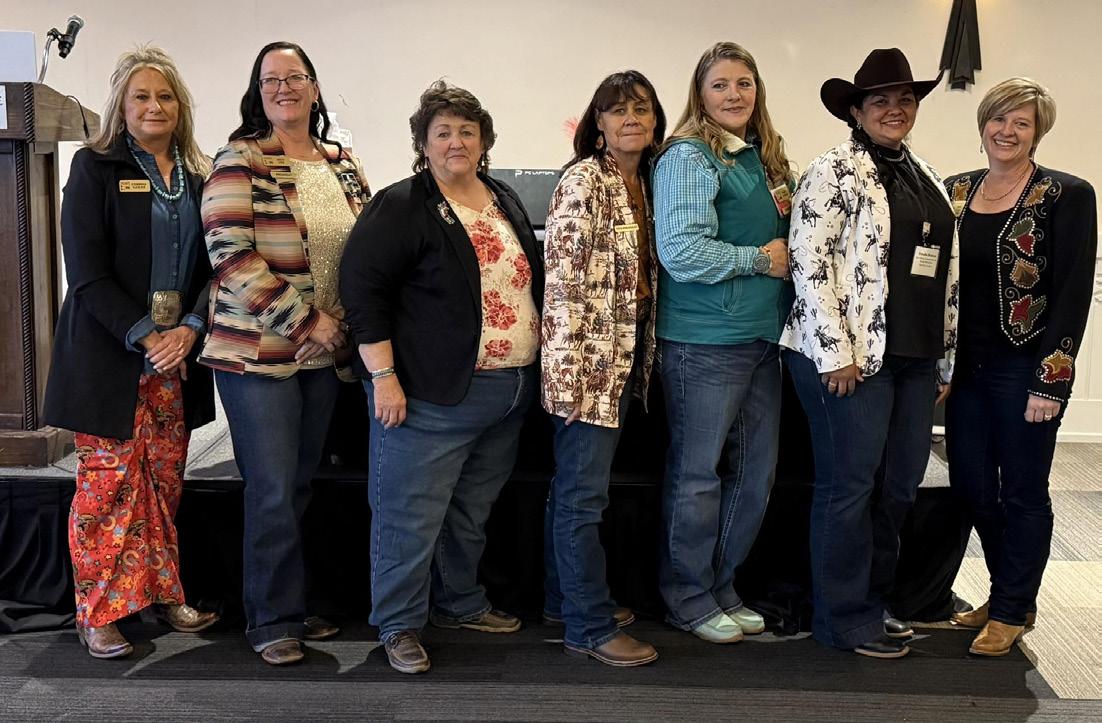
In my last letter, I forgot to formally introduce my leadership team. I’ve attached a photo and wanted to share their names with
you. From left to right: Past President: Corina Casler, President: Misti Orr, President-Elect: Shelly Frost, Vice President: Shonda Welty, Treasurer: Terri Knight, Secretary: Amalia Montoya I am grateful for this dedicated group of women and look forward to serving alongside them this year.
Wishing you all a healthy, productive, and successful New Year.
Warm regards, – Misti Orr
President, New Mexico CowBelles
Copper CowBelles 01-19-26 – As the Copper CowBelles prepare for first meeting of 2026, they look back on things accomplished during the past year. Hosted the Western District NMCB Workshop in April, followed by assisting Margie McKeen and her crew with Ranch Days. What a joy to see nearly 700 children learn why agriculture is important to them, having fun and enjoying their real beef hamburger lunch! The kids all went home knowing where butter comes from and that they should thank a cowboy for their hamburger and so much more! Many of the members
were able to attend the WALC Conference and the Mid-year Meeting in Ruidoso. All hands were on deck for the Cliff-Gila Grant County Fair in September, manning our booth and the Extension Office booth as well as participating in demonstrations on Brands and Beef By-Products. The group raffled off some lovely quilts, donated to benefit the Scholarship Fund. Copper CowBelles were able to bless several students as they pursue their Agriculture or Skilled Trade goals. It’s been a great year, despite drought, and see the hard working members have woven their talents and skills into a web of support for agriculture and the western way of life. In the process, had fun and supported each other. It doesn’t get better than that! (But rain would help.) God bless all in 2026! Submitted by Carol Crosley
Hello New Mexico CowBelles! I am your Jingle Jangle editor. I received no other news from local CowBelles this month other than Copper. Hopefully several of you other locals will begin submitting news. They do not always have to be in the form of minutes or formal newsletters. Please send via snail mail or email your happenings! Thank you again! janetwitte@msn.com ▫
by Mark Johnson, Cow Calf Corner, Oklahoma State University
Bull buying season has officially started and will continue into the spring months across the nation with progressive seedstock operations offering yearling bulls. Accordingly, it’s time to revisit the age-old question.
What is a Good Bull Worth in 2026?
The Answer
As a student at Oklahoma State University in the mid-1980s, I was taught “A good bull is worth the value of five calves he sires.” It is a good answer and a good rule of thumb to follow, the problem is it doesn’t exactly narrow down the range. As always, we need to define “a good bull,” check current market reports, answer some questions about how
we intend to market future calf crops, and do some “cowboy math” to arrive at a more precise answer.
What is considered a “Good Bull”?
For this discussion, qualifications to meet “Good Bull” status are:
A bull that sells with a registration paper which includes pedigree information and a complete set of genetic values (including EPDs and Bio-economic indices) to be considered in the selection process.
Ї A bull that has passed a Breeding Soundness Exam (BSE) and sells with a breeding soundness warranty (terms will vary).
Ї A bull that will add value to calves sired because he fits your breeding objectives, production system and marketing plans.
Ї When are we marketing our Calves? What is their Value?
Using the end of year market prices for 2025 from Dr. Derrell Peel’s article in the December 29th, 2025 issue of the Cow-Calf Corner newsletter:
500 lb. weaned steer calves were worth about $4.80/lb. for a value of approximately $2,400 per head. Therefore, if my future marketing plan is to sell weaned steers,
$2,400 x 5 = $12,000 is the answer.
800 lb. yearling steers were worth about $3.50/lb. for a value of $2,800 per head. Therefore, if my future marketing plan is to sell yearling steers, $2,800 x 5 = $14,000 is the answer.
1,500 lb. finished beef steers were worth $2.29/lb. live for a value of $3,435 each. Therefore, if my future marketing plan is to retain ownership through finishing and sell fed cattle on a live weight basis, $3,435 x 5 = $17,175 is the answer.
So, in the current market, a good bull is worth somewhere between $12,000 – $17,175 to a commercial cow-calf operation. Where exactly in that range depends on your marketing plan and the market conditions at that time. Not an exact number because there are many variables in play.
One key point illustrated here is that the longer you own the offspring before marketing, the greater the value of the bull to your operation. Retained ownership gives you more time and opportunity to capture the value of your investment in genetics.
It is noteworthy that we haven’t considered the value added to replacement females a bull will sire. Bulls used to sire the next
continued on page 20 >>
generation of cows have an even greater longterm economic impact on the profit potential of your operation and should be valued accordingly.
I encourage cow-calf operations to consider their breeding goals, production system and marketing plan. Doing so should dictate where to apply selection pressure. Genetic values pay when you purchase bulls capable of improving genetic potential for the specific traits that will translate to added value at your intended marketing endpoint. ▫
West Star Herefords Honored as Golden Breeder
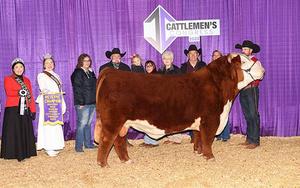
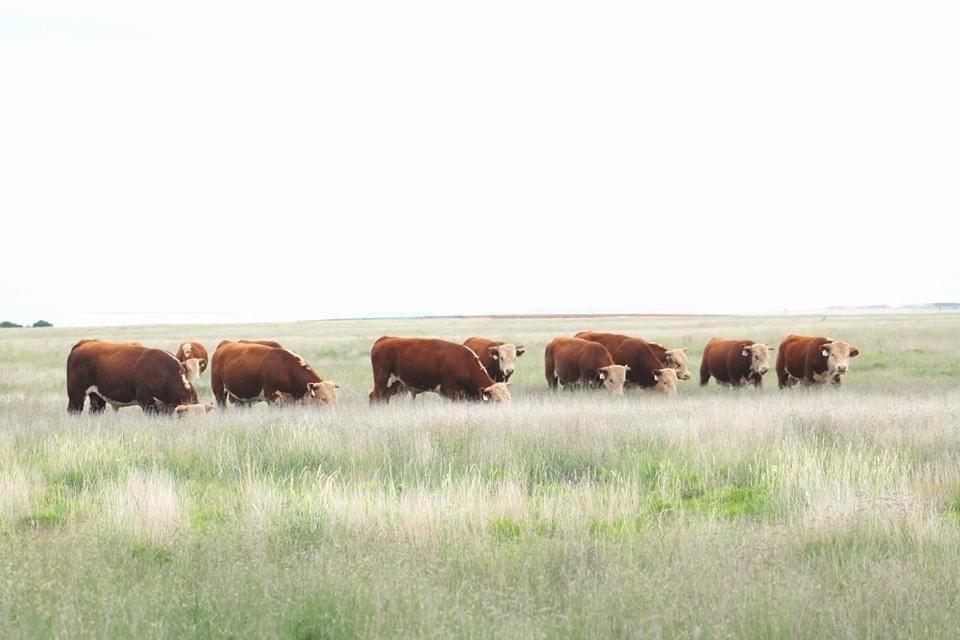
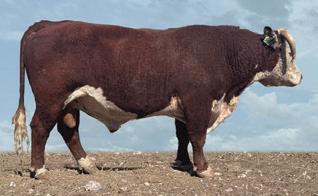
Each year the American Hereford Association honors 50-year and 100-year breeders. In 2025 New Mexico’s West Star Herefords owned by Sheldon Wilson, Folsom, was one of nine 50-year operations honored.
Wilson runs cattle in Colorado and northeast New Mexico. The operation sells bulls and females private treaty.
West Star Herefords purchased a large group of cows from Camco Herefords of New Mexico in the winter of 1987. These cows added stacked pedigrees with eye-appeal and maternal look with an emphasis on milk, meat, muscle, pigment, small teats, performance and predictable genetics. Through the operation’s embryo transplant program, they have utilized only the top individuals that possess these most important traits.
Robust Beef Cattle Commerce
by Mark Z. Johnson, Oklahoma State University Extension Beef Cattle Breeding Specialist
The sale and price of beef cattle (both purebred seedstock and commercial), of all classes and age has been healthy, resilient and vigorous to kick of the new year.
Consider the following:
The National Angus Bull sale held during the Cattlemen’s Congress in Oklahoma City included 28 registered Angus bulls that sold at an average value of $22,276. Furthermore, EACH sale held during the Congress saw increased sale averages and/or total gross. Sales held during the Cattlemen’s Congress generated over $14 million in revenue.
in the New Mexico Stockman. Call: 505/243-9515.
West Star believes in the importance of uniformity and predictability and has built their program around high-performing cow families. ▫
Leadership in Quality Herefords
Included in that Congress total is the commercial female sale which included two year old pairs selling at an average of $5,350. Three year old cows, due to calve this spring averaging $4,500 and spring calving bred heifers averaging $4,261 per head. Seventy two head of open replacement heifers averaged $3,241/head.
Recently, Northern Video livestock Auction included a group of 200 head of commercial Angus replacement heifers, weighing 810 pounds, with genetic merit scorecard information which sold for $411/ cwt for an average of $3,329 per head.
The Oklahoma weekly market reports for the first two weeks of 2026 indicates steady to increasing prices of calves and feeder cattle.
Prices of Boxed Beef and Fed Cattle are firm as supplies remain tight even relative to the reduction in packing plant capacity.
Consumer demand for beef remains strong and beef carcass quality remains at an all-time high with beef consistently delivering a satisfying eating experience to consumers. In regard to the price of retail beef, (specifically, if there is a price point at which we meet consumer resistance), consider the following:
Ї Since 1980, the price of beef has increased 355 percent
Ї In comparison, during that same time, the price of Diesel fuel has increased 391 percent. Coca-Cola has increased 536 percent; Doritos 500 percent and the price of coffee has increased 775 percent. The price of a John Deere tractor has increased almost 1,200 percent since 1980. ▫
5
US Dethroned as World’s Top Beef Producer
by Chris Moore, meatingplace.com
Brazil overtook the United States as the world’s largest beef producer in 2025, according to market estimates, after output surged well above earlier forecasts and helped ease tight global supplies that had pushed meat prices higher.
Brazil was already the world’s top beef exporter, shipping nearly $17 billion worth of beef in 2025, based on government trade data. While official production figures are not due until February, analysts have steadily raised their estimates as Brazilian producers sent more cattle to slaughter to capitalize on strong export demand from markets including China and the United States, where domestic beef supplies have been constrained, according to a Reuters report.
Higher slaughter typically sets the stage for a subsequent production downturn as producers retain cattle to rebuild herds. Industry analysts, however, said Brazil’s productivity gains are reshaping that cycle. Faster breeding, improved genetics and greater use of feedlots have allowed cattle to be finished and harvested at younger ages without sharply reducing herd size.
Rabobank, which had previously expected Brazil’s beef production to fall in 2025, now projects modest growth to about 12.5 million metric tons on a carcass-weight basis. The U.S. Department of Agriculture in December raised its estimate for Brazilian beef production by 450,000 tons to 12.35 million tons.
If those estimates are confirmed, 2025 would mark the first year Brazil surpassed U.S. beef production. USDA data show U.S. output fell 3.9 percent in 2025 to about 11.8 million tons following years of drought and herd liquidation, with another 0.9 percent decline projected for 2026.
While both USDA and Rabobank expect Brazilian production to soften in 2026, Nogueira said continued efficiency gains could instead lift output by another 300,000 tons.
Brazil’s expanding corn ethanol industry has also contributed, supplying protein-rich distillers grains that accelerate weight gain. Combined with improved artificial insemination practices that increase conception rates, analysts said the changes are allowing Brazil to grow beef production even as global supplies remain tight. ▫
Members
Abercrombie Ranch
Abercrombie Ranch
B&H Herefords
B&H Herefords
Cox Ranch Herefords
Cox Ranch Herefords
TE Mit Son
TE Mitchell and Son nc
Kenneke Enterprises
erpr ses
c mcar
Tucumcari
Mesilla
Mesilla
Winston
Albert
Cimarron
Winston rt rron
(575) 403-8888
(575)644-6925
(575)(575)644-6925
(575 743-6904
(575)743-6904
(575)673-2208
(575)673-2208
(575)447-2366
(575)447-2366
Chase Ranch Founda ion
Chase Ranch Foundation
T4 Cattle Com an
T4 Cattle Company
r s
Henard Ranches
07 Ranch
Clavel Ranch
Clavel Ranch
Van Cleve Ranch
Van Cleve Ranch
Stacy Kin
t y Kin
r s
Corn Ranches
B&H Herefo ds
B&H Herefords
Cornerstone Ranch
Cornerstone Ranch
Bill Kin Ranch
Copeland & Sons LLC
Bill Kin Ranch p s
Perez Cattle Co
Pe e Ca le Co
Mason Cattle Co
Mason Cattle Co
Randy White
Spindle Land and Cattle
Randy White p tt
Cimarron
Cima on
Tucumcari
Tucumcari
Tatum
Plains, T
Roy
Tatum s, Roy
Pinon
Pinon
Stanley
Ros ell
Lark Arthur
Stanley s Lark Arth
Fort Sumner
Fort Sumner
Moriarty
Moriarty
Nara sa
Nara Visa
Nara Visa
Nara Visa
Aretsia
A etsia
Alb e e
Albu uer ue
Mor rty
Moriarty
(575)376-2598
(575)376-2598
(575 868-2475
(575)868-2475
(575)760 0814
(575)760-0814
(575) 398-6137
(575) 398-6137
(575)485-2591
(575)485-2591
(505)220-7125
(505)220 7125
(575)420-3630
(575)420-3630
(575)365-8291
(575)365-8291
(575)914-5579
(575)914-5579
(505)220 9909
(505)220-9909
(575)403-8123
(575)403-8123
(575) 403-7970
(575) 403-7970
(575)746-2542
(575)746-2542
(505)856-0056
(505)856-0056
(505)252-0228
(505)252 0228
Garcia Appointed State Media Ambassador
Erica Yvette Garcia of Belen, New Mexico, has been appointed State Media Ambassador for New Mexico with The Foundation for Western Professionals, a national organization with a mission to invest in the next generation of leaders within the agricultural and Western professional communities. It awards scholarships and provides development opportunities to young people who demonstrate commitment to these fields, helping sustain the values and skills that define Western heritage.
In her role as State Media Ambassador,
Garcia will serve as a liaison between New Mexico communities and the Foundation, contributing written features, media content, and outreach efforts that highlight Western heritage, agriculture, leadership, and the professionals who embody these values across the state. Her work will focus on elevating rural voices, sharing stories of service and stewardship, and strengthening the connection between Western traditions and modern professional leadership.
Garcia brings a strong background in agricultural advocacy and public representation to the position. She was named National Runner-Up for Miss Agriculture USA in 2023, previously held the title of New Mexico Miss Agriculture USA, and currently serves as the 2026 Bosque Farms Rodeo Queen. She was also the 2018 New Mexico CowBelles Beef Ambassador and currently serves on the 2023 Linda Davis Young Cattlemen’s Leadership Academy. Through these roles, she has represented agriculture and Western industries at the local, state, and national levels.
In addition to her ambassador and pageant experience, Garcia is actively involved in agriculture, livestock production, and leadership development. Her work spans youth mentorship, agricultural economics, Western heritage promotion, and community engagement, reflecting the values of responsibility, integrity, and service central to the Western way of life.
As New Mexico’s State Media Ambassador, Garcia will work to spotlight the strength, resilience, and innovation found throughout the state’s Western and agricultural communities while representing New Mexico on a national platform.
For media inquiries, interview requests, or to schedule a public speaking engagement, please contact e.garcia@tffwp.org. Additional information about the Foundation for Western Professionals can be found at www. tffwp.org.
When in Colfax County visit Cimarron and the Aztec Mill Museum
Rayado”
Erica Yvette Garcia
State Media Ambassador – New Mexico Foundation for Western Professionals
The Darnells Continue a 133-Year-Old Family Tradition of Raising Good-Doin’ Hereford Cattle Jim, Sue, Jeep, Meghan & Jake Darnell
TEXAS/NEW MEXICO RANCH 5 Paseo De Paz Lane, El Paso, TX 79932 Jim 915-479-5299 Sue 915-549-2534
Email: barjbarherefords@aol.com
OKLAHOMA RANCH Woods County, Oklahoma
High Altitude Disease (HAD) in Beef Cattle
by Marcy Ward and Donald Martinez, NMSU College of Agricultural, Consumer and Environmental Sciences, New Mexico State University
Approximately one-third of the beef cattle produced in New Mexico come from elevations of 5000 ft or greater. A common ailment of cattle raised at these elevations is commonly known as Brisket disease, specifically bovine high-altitude pulmonary edema (BHPE) or high-altitude disease (HAD). Affected cattle have trouble coping with lower oxygen levels, causing the heart to work harder and resulting in fluid
accumulating within the pericardial sac, which may eventually lead to edemas (fluid accumulation) around the lungs and brisket region (Figure 1). The inefficiency of oxygen transfer increases their susceptibility to other respiratory infections as well.
Symptoms of HAD may include:
1. Difficulty breathing or rapid breathing
2. Coughing
3. Increased respiratory rate
4. Decreased exercise tolerance
5. Bluish discoloration of the mucous membranes (cyanosis)
6. Swelling in the brisket area
High altitude disease can be fatal if not promptly diagnosed and treated. Treatment typically involves moving affected cattle to lower altitudes, where oxygen levels are
higher, and supportive care such as administration of oxygen and diuretics that can reduce fluid accumulation in the tissue. If moving cattle to lower ground does not alleviate symptoms, consult your veterinarian for more medical care.
Monitoring Herd Susceptibility to HAD
It’s important for cattle producers and veterinarians in high-altitude regions to be aware of frequency of HAD and take appropriate measures to mitigate its effects, especially during times of increased stress or rapid changes in altitude.
The method used to monitor your cattle and their propensity to develop HAD is through pulmonary arterial pressure testing. This test can be used for selection criteria for
ABERCROMBIE REGISTERED
replacement heifers and/or bull purchase, as well as determining animal susceptibility.
This test measures pulmonary arterial pressure (PAP) and refers to the pressure within the pulmonary artery, which is the blood vessel that carries deoxygenated blood from the heart to the lungs for oxygenation.
Elevated PAP can indicate various health issues in beef cattle, such as:
1. Pulmonary Hypertension: This condition involves increased pressure in the pulmonary arteries, which can lead to heart failure and reduces ability to oxygenate lung fields.
2. Respiratory Diseases: Respiratory conditions such as pneumonia or chronic obstructive pulmonary disease (COPD) can lead to increased PAP due to inflammation or obstruction in the lungs.
3. Heart Diseases: Certain heart conditions, such as congenital defects or valvular disorders, can cause increased pressure in the pulmonary artery.
4. High-Altitude Disease: In regions with high altitudes, cattle can develop high-altitude pulmonary hypertension (HAPH), a condition where decreased oxygen availability leads to increased PAP.
Testing for PAP requires specialized equipment, including catheters, transducers, and an EKG monitoring device. This procedure can be performed at the ranch location by a certified PAP veterinarian. In some cases, the animal may be referred to a specialty hospital if cardiovascular or respiratory disease is detected.
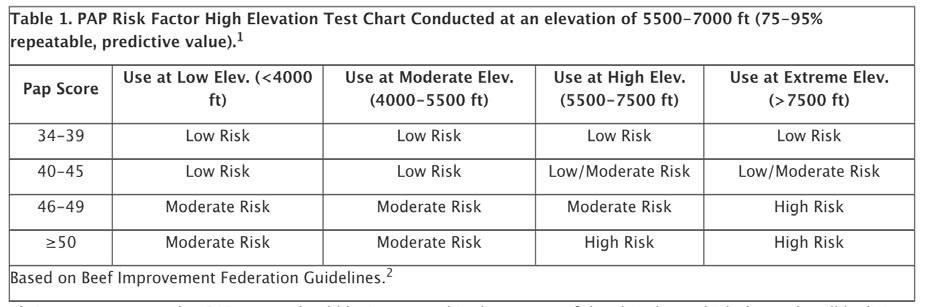
What constitutes a “good” PAP score can vary depending on the altitude and the specific breeding goals of the operation. Generally, a PAP score below a certain threshold is considered desirable for cattle that will be raised or used for breeding at high altitudes (Table 1). The exact threshold may vary, but in some cases, a PAP score of 40 mmHg or lower is considered acceptable for high-altitude adaptation.
It’s important to note that PAP scores
should be interpreted in the context of the altitude at which the cattle will be living or working. What might be considered a good PAP score at one altitude may not be suitable for another. Additionally, other factors such as breed, age, and overall health should also be taken into consideration when evaluating PAP scores. Cattle should be managed at elevations greater than 6400 feet for a minimum of 45 days before being tested for PAP. Waiting 45 days before testing will yield
results that will better demonstrate how the animal is responding to lower atmospheric oxygen. Testing above 6400 feet in elevation has proven to produce more accurate PAP readings as well. Unfortunately, cattle that carry a high propensity for HAD cannot be “cured”. Cattle with high PAP scores may have permanent changes to the heart and lungs and will continue to have a risk of developing pulmonary issues, regardless of elevation.
A key prevention strategy of HAD is through selection. When cattle are managed above 6000 feet, for example, PAP monitoring in bulls and replacement heifers is recommended. Culling high risk animals (PAP greater than 45mmHg) can also help
to reduce overall economic loss due to HAD.
Genetics and HAD
Research has shown that there is a genetic link of susceptibility to HAD. Heritability is estimated to be approximately 30 percent. When Angus bulls, heifers, and steers were evaluated, bulls demonstrated higher PAP scores compared to heifers and steers, with heifers having consistently lower PAP scores than bulls or steers. This indicates females tend to be slightly more resistant to HAD. Therefore, having bulls and replacement heifers tested for PAP is recommended at higher altitudes.
Cattle breeders and producers often use actual PAP scores as part of their selection criteria when choosing breeding stock or purchasing animals for high-altitude environments. High altitude diseases’ genetic component is complex, with a strong environmental influence on this disease trait
being expressed. More research is needed to better clarify the genetic impact on HAD. Nevertheless, what data is available has compelled the American Angus Association to develop a “PAP” EPD. Producers can then make selection decisions to reduce the risk of HAD development. A lower PAP EPD value is more desirable in Angus cattle raised at higher altitudes. Expected progeny values for PAP range from -4.76 to 10.3 (https:// www.angusonline.org/Nce/SireSummary).
Nutrition and HAD
Balanced nutrition is a good way to reduce HAD onset in beef cattle. In grazing beef cattle, this can be difficult, as forage quality continually changes over the course of the year. Here are some considerations when managing HAD with proper nutrition.
1. Copper (Cu): Deficiencies have been shown to contribute to the onset of HAD
LT CATTLE COMPANY
SILVER CITY, NEW MEXICO
WW:65 YW:111
symptoms in susceptible cattle.
2. Salt: Cattle suffering from HAD seek hydration. Salt will promote water intake. Offering salt near good water sources is recommended. However, excessive salt, could contribute to hypertension, which could lead to HAD onset. Feeding mineral packages low in sodium will still help promote water intake, without overconsuming salt. Salt blocks could help regulate overall sodium consumption.
3. Iron (Fe): Though Fe is needed in hemoglobin formation (oxygen transport), too much Fe can have a negative effect. Elevated Fe in the diet can cause oxidative stress and reduce the absorption of copper along with other key minerals, increasing the risk of HAD. In forested areas, it is not uncommon to have excessively high Fe levels in the forage and water sources.
Feeding a loose mineral that is higher in copper can help offset the negative effects of elevated dietary Fe, potentially reducing the risk of HAD in beef cattle grazing in higher altitudes.
Water and forage quality are challenging to control. Testing forage and water for minerals regularly is a good way to know what may need to be supplemented to optimize nutrition.
Thank you so very much for your support through the years! The yearling Hereford horned and polled bulls will be ready to go on a first-come, first-serve basis after the first of the year. They were weaned in early December and are big and stout. They are priced for the commercial man. Feel free to call us if we can help with your bull needs.
Thank you,
Jimmy McCauley
High altitude disease can result in significant economic loss to cattle producers who ranch in higher elevations. Through indirect culling and selection, some herds are better suited to mountainous regions. However, when new cattle are introduced to these conditions, steps should be taken to determine how well these animals will handle higher altitudes.
A PAP evaluation by a trained veterinarian will provide a key piece of information on how suited the animal is to higher elevations. Considering the level of heritability of this disease, culling animals based on PAP scores or removing those who develop HAD symptoms will improve the genetic base of the herd. Proper selection criteria and good nutrition can all be used to reduce the risk of HAD in your herd.
NMSU Guide B-134, Marcy Ward and Donald Martinez, College of Agricultural, Consumer and Environmental Sciences, New Mexico State University
Authors: Respectively, Extension Livestock Specialist, Extension Animal Sciences and Natural Resources; and Rio Arriba County Agricultural Agent, Rio Arriba County Extension Office. ▫
NMDA Accepting Healthy Soil Program Grant Applications
The New Mexico Department of Agriculture (NMDA) is accepting online grant applications for its Healthy Soil Program from Friday, January 16, through noon Friday, March 20, Mountain Time. Eligible Entities include the state’s tribal governments; acequias; land grants; soil and water conservation districts; New Mexico
State University—Cooperative Extension Service; and other local governmental entities with proven land management capacity to support healthy soil. Individual Applicants include individuals, businesses, and nonprofits that are actively engaged in farming, ranching, or managing land for other purposes.
Healthy Soil Program grants support on-the-ground projects in New Mexico that use one or more of the five soil health principles to improve soil health: keeping the soil covered; minimizing soil disturbance and external inputs; maximizing biodiversity; maintaining a living root; and integrating animals into land management. Project activities often include cover cropping, compost application, bale grazing and more. Projects funded during this cycle may begin as early as July 15, and may end as late as September 30, 2027.
“Farmers, ranchers and other land managers who invest in their soil are investing in the long-term resilience of their operations,” said New Mexico Agriculture Secretary Jeff Witte. “NMDA’s Healthy Soil Program incentivizes the adoption of soil health practices on managed lands throughout the state.”
All Healthy Soil Program grant applications must be submitted online by noon Friday, March 20. Late, incomplete and paper applications will not be accepted or reviewed.
Visit the NMDA YouTube channel to watch several videos about how the NMDA Healthy Soil Program has helped various grantees improve their soil health. On the Healthy Soil Program webpage, you can explore the interactive map of past grantfunded projects, subscribe for program updates and check out resources to prepare to apply for a grant.
The Healthy Soil Program was created in the 2019 Healthy Soil Act. The act’s purpose is to promote and support farming and ranching systems and other forms of land management that increase soil organic matter, aggregate stability, microbiology and water retention to improve the state’s soil health, yield and profitability. ▫
just better cattle.
BRANGUS ANGUS RED ANGUS
2025 North American Limousin Foundation Promoter of the Year
South Dakota State University – Dr. Zachary Smith, Dr. Warren Rusche, Grace Olinger, and the SDSU research team.
Six years ago, the NALF Board began discussions with the team at SDSU about conducting a study that was more reflective of the commercial cattle feeding industry trend of feeding cattle to larger out weights and its impact on feed performance and carcass composition.
Those initial discussions led to the NALRF/SDSU research study that was conducted on two Montana commercial Angus cow ranches breeding cows to three different sire groups utilizing Angus, Limousin, and Lim-Flex® sires. Progeny were then shipped to the research facility at SDSU and fed to three different harvest groups with extended days on feed and larger out weights, more reflective of what is currently happening in the commercial cattle feeding industry.
This enabled SDSU to produce and analyze the results of “Effect of Extended Days on Feed on Growth Performance, Efficiency, and Carcass Characteristics of Steers and Heifers of Different Proportions of Angus and Limousin Genetics”.
Dr. Warren Rusche and Grace Olinger were then able to conduct an economic analysis using the actual individual cost of gain, feed conversion, and actual carcass composition results reflected in actual harvest data. The resulting premiums and discounts applied were on a standardized grid after the cattle were harvested in the fall of 2024. This enabled the team at SDSU to do a full economic analysis.
These results were presented at the Beef Improvement Federation meeting in Amarillo, TX, in June of 2025 by Dr. Warren Rusche and Grace Olinger, along with various other meetings around the country. They will also present this information at the
2026 NCBA Cattle Con in the Cattlemen’s College Sessions in Nashville, Tennessee. The level of work, financial commitment, and dedication the team at South Dakota State University put into this project was outstanding, timely, and critical at a time when cattle are being fed to much larger out weights in today’s beef industry nationwide. The NALF board, membership, and staff are greatly appreciative of the efforts made by the team at SDSU and their commitment to the beef industry. ▫
Land & Cattle
4 0+YEARS of AI. Our Limousin have a Brown Swiss background that results in greater maternal ability, growth and good dispositions. Our mother cows are selected for their ability to work at high altitude and to wean a growthy calf under range conditions.
5 0+YEARS OF PRODUCING HIGH QUALITY BULLS
Lunch will be served at the Ranch. Sale Catalogs available on request. Airport only 14 miles from Ranch.
Warren Rusche and Grace Olinger,
Limousin & LimFlex® Cattle Excel on NALRF/SDSU Research Project
The North American Limousin Research Foundation (NALRF) and South Dakota State University (SDSU) research project comparing three different sire groups consisting of Angus, Lim-Flex® and Limousin sires bred to commercial Angus cows is evaluated in the SDSU study and economic analysis that is detailed in the link at the bottom.
The study examined extended days on feed to three different harvest end points on growth performance, feed efficiency and carcass composition differences of both steers and heifers with different proportions of Angus and Limousin genetics. A.I. sires utilized were independently selected by Dr. Robert Weaber, Kansas State University (KSU) for relative EPD equivalency also utilizing USMARC breed adjustments to better measure breed comparisons.
Commenting on the research project, Dr. Robert Weaber stated, “As the beef industry continues to drive for increased production through feeding cattle to heavier end weights, selection for animals with the genetic potential for improved muscularity and retail yield is essential.
Physiological maturity of beef cattle results in carcass tissue deposition shifts from lean to fat. As this occurs, feed conversion worsens, decreasing the efficiency of body weight gain and ultimately, profitability. At the end of the feeding period, dressing percentage increases, but primarily due to increased fatness. Increased body fat decreases retail yield.
Decreasing the production of waste fat in our industry will be key to improving our sustainability metrics. One simple way to improve retail yield is selection of animals (and breeds like Limousin) with improved carcass muscularity. Recent beef x dairy carcass work has demonstrated the importance of muscle shape in the chuck and round to improve fabrication yields. As our industry considers new technology to predict red meat yield, we’ll need to expand our utilization of breeds and tools that add end meat carcass muscularity.
The utilization of crossbreeding systems to leverage heterosis and breed complementarity is a key tactic to improving beef production efficiency. This research reaf-
firms the value to crossbreeding systems that leverage breed strengths and improve profit opportunities through optimization of carcass quality and yield attributes at heavy out weights. In the current study, cattle with increased days on feed had more profit opportunities as did cattle with increasing percentage of Limousin genetics demonstrating the value of managing both carcass composition and feedlot performance traits to maximize profit.
Profit in the feeding sector is driven by managing both input costs and the value of the beef carcass. Injecting genetics into the breeding program that reduces the cost of gain during extended feeding through improved carcass conversion and feed efficiency adds substantial profit potential and market flexibility at heavy out weights.”
Mark Anderson, Executive Director at the at the North American Limousin Foundation commented “The SDSU study details that value of crossbreeding for the commercial cattleman when utilizing two breeds that are very complimentary of each other like Angus and Limousin in today’s cattle feeding industry, where cattle are fed to much larger outweights.
The ability to achieve profitable feed conversion rates, while achieving industry demanded quality grade levels and reducing yield grade 4 & 5’s with increased red meat yield for all sectors of the beef industry is a direction the industry will be headed”.
Assumptions, questions and economic value analysis:
1. What is the effect of adding days on feed and resulting impact on revenue, cost and return on all cattle and differences between the sire groups?
2. Constant grid values are used for all 3 harvest dates spread 30 days apart. Breeds are analyzed by groups at 200, 235, & 270 days on feed after an initial warmup period of 78 days.
3. Cattle feeders have extended days on feed resulting in hot carcass weights exceeding the upper bounds of existing slaughter datasets. Consequently, there is a need for new research to evaluate cattle growth, efficiency and carcass outcomes as cattle are fed to heavier HCW(>1000 lbs for steers).
4. Cattle were fed to larger outweights to be more reflective of the larger outweights being seen in the current fed cattle industry today and the increasing trend in larger carcass weights.
5. Grid values were based on a Cargill grid, base price = $310.00/cwt., reference quality, yield grade and carcass weight premiums and discounts in attached slide
presentation by Dr. Warren Rouche and Grace Olinger, SDSU.
6. Cost assumptions in value established using January 2024 starting weights and South Dakota USDA report (Steers & Heifers). Ration cost =$200.00/ton, yardage at $0.50 per day along with trucking, vet, etc. = $85.00/head. Interest @ 8.5% on feeder cattle and feed. Ending values were calculated from Cargill settlement.
Takeaways:
1. All breed groups reflected an increase in value and profit with added days on feed.
2. The added value in revenue & margin for all 3 breed groups increased to offset increasing costs at all 3 harvest dates for all cattle combined. This is very reflective of today’s increasing outweight trends in fed cattle production and subsequent hot carcass weights.
3. Profit for “all” cattle by DOF - $/hd increased at each DOF harvest endpoint as DOF increased:
4. Overall profit by sire breed and DOF was led by Limousin and Lim-Flex® sired calves when combining cost of gain and carcass results: Limousin = $357.47/head Lim-Flex® = $353.43/head Angus = $330.99/head
Note- Increased Limousin influence improved dry matter conversion and resulting lower cost of gains to enhance their profitability. Although Limousin cattle had no prime carcasses, they also had no select carcasses and increased Limousin influence resulted in superior yield grade resulting in fewer yield grade 4 & 5 cattle and resulting yield grade discounts when fed to larger outweights. A ration cost increase from $200/ton to $275/ton also increased profitability for Limousin and Lim-Flex® sired calves given improved feed conversion rates.
5. Limousin & Lim-Flex® sired cattle excelled in Profit by Sire breed and DOF at each of the 3 harvest dates when combining feed cost of gain and carcass results:
200 DOF: Limousin = $320.16/hd
Lim-Flex®= $274.97/hd
Angus = $261.52/hd
235 DOF: Limousin = $350.83/hd
Lim-Flex®= $356.01/hd
Angus = $334.28/hd
270 DOF: Limousin = $399.59/hd
Lim-Flex®=$443.91/hd
Angus= $410.07/hd
Note-Lim-Flex® sired progeny had an equivalent number of prime grading carcasses
PROFIT FROM OUR PROGRESS
ECONOMIC ANALYSIS FOR FEEDING PERFORMANCE AND CARCASS GRID RESULTS
• 216 HEAD OF CATTLE RAISED ON TWO MONTANA RANCHES THEN FED AND HARVESTED ON RESEARCH AT SDSU
• CALVES SIRED BY PROVEN LIMOUSIN, LIMFLEX, AND ANGUS A.I. SIRES (1/3 EACH) ON COMMERCIAL ANGUS COWS.
• CALVES SPLIT EQUALLY INTO 3 HARVEST GROUPS (200, 235, 270 DAYS ON FEED)
• RESULTS REFLECT FEEDING PERFORMANCE AND CARCASS GRID PERFORMANCE
• LIM-FLEX SIRED CALVES GENERATED $23 MORE PROFIT PER HEAD; LIMOUSIN SIRED CALVES GENERATED $27 MORE PROFIT PER HEAD THAN THEIR STRAIGHTBRED ANGUS COUNTERPARTS DUE TO THEIR ABILITY TO ACHIEVE SIMILAR QUALITY GRADE WHILE IMPROVING FEED EFFICIENCY AND YIELD GRADE.
NALRF/SDSU RESEARCH COMPLETED 2025
as compared to Angus while achieving superior yield grade and dry matter conversions within the final 70 days on feed window.
6. Breed difference effects in overall research trial– Breed did not affect ADG, final BW, or HCW. Increased Limousin influence reduced DMI and improved F:G. Increased Limousin influence increased REA and reduced rib fat and yield grade. Angus influence increased marbling score. Lim-Flex sired calves had similar proportion of premium carcass grades compared to Angus for CAB and Prime carcasses in addition to improved yield grade.
EXTENDED DAYS ON FEED: INFLUENCES ON GROWTH PERFORMANCE, EFFICIENCY, AND CARCASS CHARACTERISTICS OF STEERS AND HEIFERS OF DIFFERENT PROPORTIONS OF ANGUS AND LIMOUSIN GENETICS.
Grace Olinger1, Zachary Smith1 , Forest Francis2, Becca Grimes Francis1, Riley Leeson1, Michael Gonda1, Robert L. Weaber 3, and Warren Rusche1
1 Department of Animal Science, South Dakota State University, Brookings, SD 57007, 2 Department of Animal Science and Veterinary Technology, Texas A&M University, Kingsville, TX 78363, 3 Eastern Kansas Research and Extension Centers, Kansas State University, Haysville, KS 67060
Link to full study and economic analysis by SDSU Research: joom.ag/t3wd
Robert L. Frost
Robert L. “Bob” Frost, 83, of San Jon, New Mexico, passed away on January 13, 2026 surrounded by his loving family.
Bob was born on January 4, 1943, in Amarillo, Texas, to Jack and Ruby Sackett Frost. His parents owned ranch land in eastern New Mexico and farmland near Happy, Texas. Bob attended school in Endee, New Mexico, through the middle of fifth grade. When schools consolidated, the family moved back to Texas. Bob graduated from Happy High School in 1961 and later attended South Plains College, where he ran track.
Bob married Jane “Janie” Dorris on August 28, 1963, in Shallowater, Texas. On their way to the wedding, they were pulled over for running a red light. When the officer asked why Bob was in such a hurry, Bob replied that they were on their way to get married. The officer laughed and said, “I’m letting you go this time, because your trouble
Tucumcari Bull Test Sat., March 14, 2026 –
For more info and updates check out our Facebook page at Facebook.com/Walking-Spear-Land-Cattle-61573072153503 Cory, Pam & Chad DiPeso Roswell, NM
Chad: 520-678-9178
Cory: 520-508-6757
is just starting.”
They moved to Endee where they managed the family ranch. In 1969 Bob and Janie purchased their current ranch in San Jon, where they began raising their family. They welcomed two daughters, Robin and Michelle. Ranching is a fickle lifestyle, and with that in mind—and in response to the drought of 2003—they started Caprock Creek Ranch Adventures to help diversify.
Bob ranched his entire life and was deeply involved in his community and industry. He served on the Quay County Fair Board, and the San Jon School Board. He was a director for the National Beef Cattlemen’s Association, served as Swine Superintendent for the New Mexico State Fair, and was a dedicated 4-H leader. Bob served as President of the New Mexico Cattle Growers’ Association from 1997 to 1999. Bob served on the New Mexico Livestock Board and New Mexico State Fair Commission for many years. His impact on New Mexico agriculture is truly remarkable and the legacy he leaves behind will continue to shape and strengthen our communities for years to come. His lifelong care for strengthening and protecting agriculture. He was also a New Mexico Activities Association basketball official for 15 years and volunteered as a basketball coach for his daughters whenever needed.
A man of strong Christian faith, Bob was a devoted member of the San Jon United Methodist Church and served on its Board of Trustees. He believed in service, hard work, and helping others, especially children, always taking time to guide and encourage those in need. Family was always Bob’s top priority. He never turned away a child who needed help, guidance, or encouragement.
Those remaining to cherish Bob’s memory include his wife, Jane Frost; daughters Robin Slutz, husband James; and Michelle Frost-Maynard, husband Jerry; brothers Len Frost and Zeke Frost and their families, granddaughters Shasta Younker, husband JD, JaTawn Wright, husband Mark, and Brittany Nickels, husband Carl; and great-grandchildren Kaycee, Cooper, and Riley Younker; Wyatt, Georgia, and Brayden Wright; Robert Stringfellow; Natalie, Avery, Madison, Kaydance, and Chris Nickels.
Bob was preceded in death by his father, Jack Frost; his mother, Ruby Sackett Frost; and his brother, Bill Frost.
In lieu of flowers, the family requests donations be made to the New Mexico Cattle Growers’ Association and San Jon School in memory of Bob. New Mexico Cattle Growers’ Association Attn: Young Cattlemen’s Leadership — Committee Scholarship, P.O. Box 850, Moriarty, NM 87035 San Jon School, Attn: Student Council, P.O. Box 5, San Jon, NM 88434 ▫
Your Best Advertising value in the west and beyond
The Stockman covers some 37 states from Maine to Hawaii and Florida to Washington. The Stockman mails to nearly 6,000 households ... and we are told that many issues are passed on to others for a total readership of 24,000.
Our website is averaging nearly 6,000 unique views.
Our Facebook page is read by 10 counties around the world. Advertising rates from $50 an inch to $2000 for special placement.
Dby Barry Denton
our country safe from evil foreigners that wanted to disrupt American life.
Now that our alleged former President Biden opened the border and let in thousands of criminals, ICE has become the center of our news every day. What a terrible job being an ICE agent would be at this point.
Can you just imagine going out to feed your cattle in the morning and having an angry mob trying to stop you? Just think what it would be like going to leave the feed store with a pickup full of oats with looney people jumping all over your vehicle and wanting you to run over them. The incredible part of this is that crazy people are getting
day money to do that.
Just imagine getting up in the morning with your wife cooking your eggs and you ask her to knock you upside the head with a hammer right after you finish your toast. Then you get on a bus, take some mean drugs, and go to your next riot. The rioters certainly are not normal folks.
I have been watching the video footage including elected officials trying to disrupt ICE operations. I have yet to see one farmer or cowboy acting crazy at an ICE riot.
How did they turn some disgruntled middle aged white women into warriors with their minivans? Can you imagine going to take a hit and run course with your automobile? On the other hand, you have ICE agents going out and having to deal with these nuts.
My hat is off to these ICE agents that keep doing their jobs day in and day out. How hard is it to come to the realization that ICE is for our protection?
We all owe them a debt of gratitude, there is certainly an unofficial civil war going on in this country, only because the democrat party could not find enough American citizens that would vote for their insanity. What happened to uniting for the common good?
MORE ICE! When President Trump first started talking about buying Greenland my first thought was, I wonder how many horses they have there? It turns out that they have about 160 at last count.
Most are Icelandic ponies are owned by sheep herders and are well suited to the cold. That makes sense and I’ll bet they shoe with ice nails and borium. One thing about it is you would only need one horseshoer for the entire country. The other bit of gossip I heard is that there are less than 100 cows. I bet they are at a premium as the hides are probably scarce. You darn sure can’t make a reata out of a sheep hide.
I know President Trump’s envoy was talking about buying that place for about $500 to 700 billion. I thought he was overpaying considering the lack of livestock, but after he explained the strategic importance, I now understand.
I truly like the idea of buying other countries. For instance, if we end up buying Venezuela, we could just throw the people out and run a bunch of cattle down there. A few cowboys and a few oilmen could take care of the entire outfit.
However, if we buy Greenland and I hope we do, maybe we can mine it? Right now, Americans are not allowed to buy land in Greenland. You are allowed to buy a building with a long-term lease on the land. That’s why President Trump is just buying the whole country. ▫
Bull and Heifer Sale
Bull Heifer Sale
Grazing Leases & Allotments in New Mexico: Explained
by Travis Driscoll, Beaverhead Ranch Group Blog
BLM, State Trust Land, and National Forest—How They Work (and Why They’re an Asset)
If you own (or are shopping for) a New Mexico ranch, odds are you’ll run into one or more of these: a Bureau of Land Management (BLM) grazing lease, a New Mexico State Land Office (State Trust Land) grazing lease, and/or a U.S. Forest Service (USFS) grazing permit. To ranchers and recreational landowners, these arrangements can look like “extra paperwork.” In reality, they’re often the difference between an average place and a truly scalable, resilient operation.
Done right, grazing leases and allotments are a force multiplier: more forage base, better seasonal flexibility, and long-term range stewardship—often at a cost structure you simply can’t replicate on deeded acreage alone.
Here is a practical, New Mexico-specific guide to how they work, what they cost, how public recreation fits in, best practices, and what to verify when buying a ranch that includes them.
Key terms (plain English)
Allotment: A defined area of public land where grazing is authorized under a permit/ lease, with set seasons of use and animal numbers.
AUM (Animal Unit Month): The standard billing unit—roughly the forage needed for one cow with calf for one month (exact definitions vary by agency and class of livestock).
Base property: Deeded (or sometimes other qualifying) land and water infrastructure tied to an allotment. Most federal grazing authorizations require you to control a base property. New Mexico is one of few states that recognize water as base property.
Why these systems exist (and when they started)
Federal lands (BLM) – Taylor Grazing Act era
Before regulation, western public rangelands were frequently overgrazed. The Taylor Grazing Act of 1934 was passed to curb damage, stabilize the livestock industry, and
create regulated grazing districts and permits.
Federal fee framework – PRIA and the modern fee formula
The modern federal grazing fee formula is tied to statute and policy history (including the Public Rangelands Improvement Act of 1978 and later administrative actions) and is set annually.
New Mexico State Trust Lands – revenue for beneficiaries (not “public land” in the same way)
New Mexico’s State Trust Lands are held in trust (primarily benefiting public schools and other institutions). Grazing is one of the major revenue-producing uses, managed by the State Land Office under state statutes and rules.
The three big systems in New Mexico
1) BLM grazing leases (U.S. Department of the Interior)
How it works – BLM authorizes grazing through permits/leases on defined allotments, with terms, seasons, and AUMs.
In New Mexico, BLM grazing is managed in line with New Mexico Standards for Public Land Health and Guidelines for Livestock Grazing Management.
What it costs – For the 2025 fee year (March 1, 2025–Feb 28, 2026), the federal
grazing fee is $1.35 per AUM on BLM lands.
Why it’s valuable
Ї Access to large, often contiguous grazing landscapes.
Ї A framework (AMPs, monitoring, utilization standards) that encourages long-term range condition—important for carrying capacity and drought planning.
2) New Mexico State Land Office grazing leases (State Trust Land)
How it works – The State Land Office issues grazing leases across millions of acres of state trust land.
Fees are set annually using a formula administered by the State Land Office and verified (per the agency) with involvement from New Mexico State University.
What it costs – The exact AUM rate changes year to year under the state formula. As a reference point, the State Land Office announced an average rate of $4.85 per AUM in 2021.
When evaluating a purchase, ask for the current-year fee letter/invoice history so your projections match today’s number (not last decade’s).
Why it’s valuable
Ї State parcels often “checkerboard” with deeded ranches—when tied to a strong base property, they can add meaningful grazing capacity.
Ї Because these lands are managed for revenue, the leasing system is designed to be durable and businesslike.
3) U.S. Forest Service grazing permits (USFS)
How it works – The USFS authorizes grazing on National Forest System lands through permits tied to allotment management and annual operating instructions (AOIs). Federal regulations for Forest Service grazing live in 36 CFR Part 222.
What it costs – The USFS uses the same federal grazing fee structure as BLM for eligible fee year billing; the 2025 federal fee is $1.35 per head month/AUM equivalent (as announced alongside BLM).
Why it’s valuable – Forest allotments can be a huge seasonal advantage—especially where summer range, elevation, and water distribution complement deeded “home ranch” country.
Best practices: rules of thumb that keep you out of trouble (and keep the grass underneath you)
These apply across agencies, with differences in detail:
1. Know your numbers better than anyone
Match actual use to authorized AUMs, season dates, and pasture rotations.
Avoid “cow math optimism.” Agencies take unauthorized/excess use seriously.
2. Treat monitoring as an asset, not a chore
Keep a simple annual file: turnout dates, pasture moves, photos at key areas, precipitation notes, and any wildlife/livestock conflicts.
If a drought year hits, your records help support modifications and show good-faith stewardship.
3. Maintain relationships and communication
BLM range staff, USFS range staff, and State Land Office field contacts are not just regulators—they’re often your best path to clarity when conditions change.
4. Infrastructure matters more than people admit
Fences, waters, and access routes are what make permitted AUMs usable.
Confirm which improvements are: yours, the agency’s, “range improvements,” or shared—because that affects maintenance obligations and permissions.
5. Plan for flexibility (especially drought)
A successful public-lands ranch usually has a drought plan that includes:
Ї destocking triggers,
Ї alternative pastures,
Ї a strategy for weaning/early shipping,
Ї and a clear understanding of how each agency handles non-use or temporary changes.
Public access: hunting and recreation on leased lands
This is where confusion (and conflict) often shows up—so it’s worth being crystal clear.
BLM lands
BLM lands are generally managed for multiple use, including recreation, and hunting is typically allowed unless a specific closure or rule applies. (Local closures, seasonal restrictions, and special designations can change what’s allowed—always check the field office or current maps for the unit.)
National Forest
National Forest lands are also generally open to public recreation and hunting under state wildlife rules and federal travel/area restrictions. Grazing permits typically do not grant the permittee the right to exclude lawful public access.
New Mexico State Trust Lands (State Land Office)
State trust lands are not automatically open like federal lands:
Ї General recreation access requires a State Land Office recreational access permit (commonly marketed as “Open for Adventure,” currently $35/year per the SLO’s recreation page).
Ї For hunting specifically, New Mexico has an agreement that allows licensed hunters access to hunt on many state trust lands during valid seasons (with important conditions).
Practical takeaway: If your ranch includes state trust leases, expect more “rules of the road” for public users than on BLM/ Forest, and keep the relevant access guidance handy for guests and neighbors.
Can you run a successful ranch when some of your grazing base is public land?
Yes—many of New Mexico’s most functional outfits are built exactly that way.
The winning formula usually looks like this:
Ї Deeded “home ranch” for headquarters, handling, water control, and shoulder seasons
Ї Public land allotments (BLM / USFS / State) for scale and seasonal distribution
Ї A management approach that treats permits like a renewable operating asset: compliant, well-documented, and stewarded
Public-land ranching tends to reward operators who are:
Ї proactive with planning,
Ї disciplined about numbers,
Ї and good at range improvement and relationship management.
Buying a New Mexico ranch with grazing leases/allotments: what to verify (and why it matters)
When a listing says “includes BLM/State/ Forest grazing,” don’t treat that as a throwaway bullet. It can be a major value driver—but only if it transfers cleanly and pencils out.
1) Confirm what actually conveys Grazing permits/leases are generally authorizations, not deeded property rights, and transfers typically require agency processes and approval. The Taylor Grazing Act language is explicit that permits don’t create property rights in the land itself.
Ask for:
Ї Current permit/lease documents
Ї Allotment map(s), pasture map(s)
Ї Authorized AUMs, season of use, class of livestock
Ї Any AMP/AOI documents and monitoring requirements
2) Check compliance history
Ї Any non-use, trespass/unauthorized use, or unresolved issues?
Ї Any pending range improvements, NEPA processes (federal), or boundary disputes?
3) Understand operational integration
Ї Are the public-land pastures accessible without crossing someone else?
Ї Does the ranch have the water and fence distribution to actually use the authorized forage?
Ї Do roads/trails allow gathering and pasture moves efficiently?
4) Run the real economics
Ї Federal fees are easy to model (e.g., $1.35/AUM for 2025 fee year).
Ї State trust fees vary year to year— obtain current rates and recent invoices.
Ї Add: salt/mineral, rider time, hauling, improvements, and drought contingencies.
5) Recreation and neighbor dynamics If your operation overlaps with popular hunting/recreation areas:
Ї Plan signage (lawful and accurate),
Ї coordinate gates and travel routes,
Ї and communicate early—most conflicts come from misunderstanding, not malice.
The positive case: why these leases deserve respect (and why buyers should want them)
Well-managed public-land grazing is one of the most “New Mexico” things there is: it ties together stewardship, working landscapes, wildlife habitat, and rural economies. Agencies exist to balance multiple uses, and ranchers who operate professionally inside that system often end up with:
Ї more resilient forage options
Ї lower per-unit feed cost
Ї better seasonal flexibility
Ї a deeper bench of land management tools (monitoring, improvement plans, range projects)
In short: grazing leases and allotments aren’t a liability—they’re often a strategic advantage that makes a ranch operation bigger, steadier, and more drought-adaptable than deeded land alone.
South
ROSWELL LIVESTOCK AUCTION SALES, INC.
& ROSWELL LIVESTOCK AUCTION TRUCKING, INC.
900 North Garden · P.O. Box 2041 Roswell, New Mexico 88201 575-622-5580 www.roswelllivestockauction.com
CATTLE SALES: MONDAYS • HORSE SALES
BENNY WOOTON CELL 575-626-4754
SMILEY WOOTON CELL 575-626-6253
Producers hauling cattle to Roswell Livestock New Mexico Receiving Stations need to call our toll-free number for a Transportation Permit number before leaving home. The Hauling Permit number 1-800-748-1541 is answered 24 hours a day, 7 days a week.
Trucks are available 7 days a week / 24 hours a day
Roswell livestock Auction Receiving stAtions
ATTENTION RECEIVNG STATION CUSTOMERS, To be able to schedule trucking, all cattle need to be permitted by 1:00 p.m.
LORDSBURG, NM
20 Bar Livestock Highway #90 at NM #3 – East side of highway. Receiving cattle for transport 2nd & 4th Sunday of each month. Smiley Wooton, 575622-5580 office, 575-626-6253 cell.
PECOS, TX
Jason Heritage is now receiving cattle every Sunday. For information to unload contact Jason Heritage 575-840-9544 or Smiley Wooton 575-6266253. Receiving cattle every Sunday.
VAN HORN, TX
800 West 2nd, 5 blocks west of Courthouse. Bob Kinford, 432-284-1553. Receiving cattle 1st & 3rd Sundays.
MORIARTY, NM
Two blocks east and one block south of Tillery Chevrolet. Smiley Wooton 575-622-5580 office, 575-626-6253 mobile. Receiving cattle every Sunday
SAN ANTONIO, NM
River Cattle Co. Nine miles east of San Antonio on U.S. 380. Receiving cattle for transport 2nd & 4th Sunday of each month. Smiley Wooton 575-626-6253.
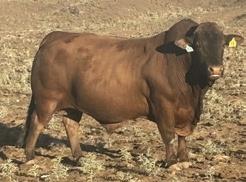
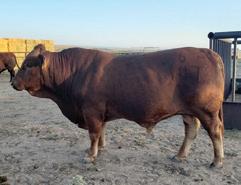
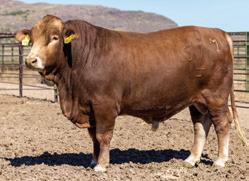
Beefmaster Breeders United Welcome New Intern
Erica Patterson, has joined Beefmaster Breeders United as the newest Media Intern. Erica is an agricultural media professional from Findlay, Ohio, with a strong background in digital marketing, content creation, and livestock advocacy. She’s working on a Bachelor of Business Administration from Tiffin University and brings hands-on experience from working with the Ohio Cattlemen’s Association, as well as running her own ag-focused media business. With years of involvement in livestock production, youth programs, and brand-driven communication, Erica brings both industry knowledge and creative skill to the BBU marketing team.
JANUARY — Wildlife; Gelbvieh; Joint Stockmen’s Convention Results
FEBRUARY — Hereford; Beefmasters; Texas Longhorns
MARCH — Limousin; Santa Gertrudis
APRIL — Dairy MAY — News of the Day
JUNE — Sheepman of the Year
JULY — Directory of Agriculture
AUGUST — The Horse Industry
SEPTEMBER — Charolais; Fairs Across the Southwest
OCTOBER — Angus; Brangus; Red Angus; NM State Fair Results
NOVEMBER — Cattleman of the Year; Joint Stockmen’s Convention Preview
DECEMBER — Bull Buyers Guide
Plan advertisingyourfor the coming year!
Erica Patterson
New to NMSU AXED
Pending
the completion of her doctorate in Agricultural Education and Communication at the University of Florida, Ms. Kyleigh Hilburn will begin as a tenure-track Assistant Professor of Agricultural Communications in August 2026 at New Mexico State University (NMSU).
Ms. Hilburn possesses a passion for facilitating connections between individuals and the narratives that underpin agriculture and natural resources (ANR), particularly those originating from indigenous communities. She earned a Bachelor of Science in Animal Science and subsequently a Master of Science in Agricultural Education and Leadership from Oklahoma State University.
At NMSU, Ms. Hilburn will seek to address communication disparities within
ANR that impact policies, regulations, and public perceptions. Further, a significant aspect of her work will focus on the experiences of indigenous tribal members in higher education and the agricultural sector, with the goal of establishing pathways for their success and representation within ANR and the broader scientific community.
This will primarily be achieved through the establishment of partnerships with NMSU’s Tribal Extension Service and the state’s three 1994 land-grant institutions, which serve the Navajo Nation, the Jicarilla Apache Nation, and various Pueblo communities.
New Ninth Decision Raises the Question, Does FLPMA Matter?
by Ivan London, Senior Attorney, Mountain States Legal Foundation.
Recently, the Ninth Circuit issued a decision that could have grave consequences for farmers, energy
users, and anyone who relies on exploration of federal land. In a case called Shoshone-Bannock Tribes v. Bureau of Land Management , the court addressed how a specific federal statute—the Federal Land Policy and Management Act, or FLPMA— interacts with tribal rights and treaties. In short, the tribe won a victory, for now, holding that an early 20th Century treaty constrains BLM from allowing a company to explore federal land for minerals.
Put simply, the decision is alarming, particularly for anyone who cares about energy independence, food security, and the prosperity of the American West. Ordinarily, FLPMA (pronounced “Flip-mah”) resolves uncertainties when it comes to how federal land can be used. When it comes to major projects like the one at issue in the case, predictability is the key. And while respect for treaty rights is a core principle of federal law, federal courts must also give effect to FLPMA’s mandate. The two should be reconciled, not placed in conflict.
Kyleigh Hilburn
Produced Water Reuse in New Mexico –What it is, What it isn’t, and Why it Matters
by Matthias Sayer Co-Director at the WATR Alliance
Editor’s Note: A Series on Water and New Mexico’s Future
Water has always defined life and livelihoods in New Mexico. For ranchers and farmers, it is not an abstract policy issue—it is the foundation of land stewardship, production, and rural communities.
As drought persists, surface water supplies grow less reliable, and competition for water intensifies, New Mexico is being forced to confront difficult questions about how water is managed, protected, and supplemented. These questions affect every corner of the state and every sector that depends on water.
Over the coming issues, New Mexico Stockman will publish a series examining water-related challenges and opportunities facing New Mexico, including water reuse— both its potential and its limits—by exploring non-traditional water resources such as pro-
duced water, municipal effluent, and brackish water, as well as conservation strategies, regulatory developments, and what these issues mean specifically for agriculture and landowners.
Our goal is not to advocate for predetermined outcomes, but to provide a clear background, New Mexico–specific context, and a forum for agricultural perspectives in discussions that will shape the state’s water future.
Water decisions made today will have lasting consequences. We encourage our readers to engage with this series, consider the tradeoffs involved, and think about how agriculture can help define responsible, workable solutions for managing New Mexico’s most critical resource.
Water scarcity has always shaped agriculture in New Mexico. Drought, declining surface supplies, and stressed aquifers are no longer episodic problems—they are structural realities. As the state looks decades ahead, one resource is drawing increasing attention in water planning discussions: produced water.
Produced water reuse is often misunderstood and sometimes controversial. For ranchers and farmers, understanding what this issue is —and what it is not —is essential.
How Much Produced Water Are We Talking About?
Produced water is water that comes to the surface during oil and gas production. In southeastern New Mexico—particularly the Permian Basin—oil production brings up very large volumes of water, on average four to five barrels of water for every barrel of oil.
New Mexico now generates billions of barrels of produced water each year. At today’s production levels, annual produced water volumes in New Mexico are on the order of several hundred thousand acrefeet per year. While produced water is not currently usable for irrigation, the magnitude alone explains why it has become part of New Mexico’s long-term water discussion.
Produced Water in New Mexico’s Water Strategy
Produced water reuse is not a fringe idea. It is explicitly referenced in Governor Michelle Lujan Grisham’s 50-Year Water Action Plan as part of New Mexico’s strategic water supply portfolio, alongside conservation, watershed restoration, desalination, and reuse of municipal wastewater. The plan does not call for immediate or widespread use. Instead, it recognizes produced water as:
Ї a potential long-term supply option,
Ї contingent on science, safeguards, and public trust, and
Ї one piece of a broader response to chronic water scarcity.
For agriculture, the significance is not that produced water would replace traditional water sources, but that it could help reduce pressure on freshwater systems—if it can be done safely and responsibly.
What the Research Shows
Since 2019, New Mexico has invested heavily in research through the New Mexico Produced Water Research Consortium, a collaboration among universities, industry, national laboratories, and state agencies.
The consortium’s work has examined:
Ї produced water chemistry across regions,
Ї treatment technologies,
Ї impacts on aquatic species, soils and plants, and human health, and
Ї potential reuse pathways and their limits.
A consistent finding is that produced water can be treated to levels that are protective of aquatic life, soils, plants, and humans, depending on treatment level and site conditions. Safety is not theoretical—it is measurable.
At the same time, the research makes clear that produced water quality varies widely, treatment is complex and costly, and reuse must be carefully regulated and monitored. This is why New Mexico has emphasized research before regulation.
How New Mexico Got Here
Produced water reuse did not appear
overnight. In 2018, New Mexico released a produced water white paper framing the issue as a long-term water management challenge and emphasizing science before policy.
In 2019, the Legislature passed the Produced Water Act, clarifying regulatory authority and making protection of public health, land, and water resources the guiding principle. That same year, the state helped establish the Produced Water Research Consortium, which has since built one of the most comprehensive bodies of produced water research in the country.
For nearly a decade, New Mexico has chosen a cautious, research-driven approach. The question now is whether the state is prepared to act on what it has learned.
What Texas Is Doing—and Why It Matters
While New Mexico has focused on research, Texas is now on the verge of permitting the discharge of treated produced water into surface waters in Texas, like Bluff Reservoir, with the goal of leveraging that water supply for Texans.
This marks a clear policy divergence. Texas is moving forward; New Mexico, for now, is largely standing still—despite having invested heavily in research.
For New Mexico agriculture, this raises a practical question:
If our neighbor is putting treated water to work, what does it mean for our long-term water security if we do nothing?
What’s Happening Now in New Mexico
A petition is currently before the New Mexico Water Quality Control Commission (WQCC) proposing a regulatory framework under which produced water reuse could be evaluated and permitted. The petition would not mandate reuse, but would establish rules and safeguards for reuse projects.
That petition is being vigorously opposed by special-interest groups in Santa Fe, many of which argue that no regulatory framework should exist at all.
Without a framework, research cannot move forward, protections cannot be tested or refined, and New Mexico will lose more
water to Texas.
Why This Matters to Agriculture
Ranchers and farmers are right to ask questions:
Ї How are soils protected?
Ї What does the research show regarding agricultural applications?
Ї Who bears liability?
Ї How are water rights respected?
These are not obstacles, they are conditions and if we cannot answer these questions for a particular use, then that use should not proceed until we can.
But in a water-scarce future, doing nothing has consequences.
Bottom Line
Produced water reuse is not about rushing water onto fields. It is about whether New Mexico builds a science-based, agriculture-informed framework to govern if and where reuse makes sense.
New Mexico has done the research. It has identified produced water as part of its longterm water strategy. The next decision is whether to create the tools to act—or watch others do so with our water.
U BAR RANCH
Producing southwestern Angus cattle that “Fit the Bill”
• Performance in the feedlot and on the range.
• Raising quality Registered Angus cattle since 1991.
• Bulls available private treaty or at the annual Black Angus “Ready for Work” Bull Sale – March 9, 2026 - Belen, NM
Produced Water by the Numbers
• Annual produced water in NM: on the order of hundreds of thousands of acre-feet
• One acre-foot: enough water to cover one acre one foot deep
• Context: comparable in scale to major regional agricultural water demands
Questions Ranchers Are Asking
• Is produced water allowed for agriculture today?
No. That use is not permitted under current New Mexico law.
• Could it ever be required on my land? No. Any future reuse would require regulatory approval and landowner consent.
• Does research really show it can be treated safely?
Yes—research shows it can be treated to protective standards, depending on treatment level and site conditions.
• Why should agriculture stay involved?
Because the decisions made now will shape New Mexico’s water future—and agriculture must help define the guardrails. ▫
David L. Taylor, 85, Flora Vista, passed away on December 27, 2025, at San Juan Regional Medical Center in Farmington, New Mexico.
He was born in Clovis, New Mexico in 1940 to Joseph Etheridge Taylor and Zelma Davis Taylor. He is preceded in death by his father, Joe and mother, Zelma, as well as his sister Jo Beth (Taylor) Gamett and brother, Richard Taylor.
He is survived by his wife of 63 years, Jacque Taylor; daughter, Tamara Taylor; and sons Jeff (DeLea) and Dean (Diane); grandchildren Tara Edgmon (Rylan), Clay Dalen Taylor, Jake Taylor and Zack Taylor (Reagan); great-grandchildren Jolie, Sadie and Gunner Edgmon and Luke, Codi and Dylan Taylor; and his youngest brother, Kerney Taylor and brother-in-law Donnie Holmes (Debbie).
Dave grew up in Elida, NM where his grandparents Ess and Mag Taylor homesteaded and Dave’s father remained to raise his family. He learned hard work at a very
young age in his father’s dairy which molded his work ethic throughout his life. Dave met Jacque Holmes in 1961 while attending Eastern New Mexico University in Portales, NM. They instantly fell in love and married on August 3, 1962, at St. John’s Episcopal Church in Farmington. They moved to Farmington to make their home in 1962 where Dave worked for Burt Explosives for a short time as a truck driver hauling explosives, which was a risky adventure for sure. Later, he went to work for Capital Fence doing construction and accounting, all the while he built homes for close friends, many barns and renovations and became a seasoned real estate developer throughout the years.
He worked at Kysar Insurance Agency prior to opening his own Allstate Insurance office in October 1970 and retired in August 2000. During his time with Allstate, he and Jacque were able to travel to places like Singapore and Hawaii. We cannot forget that he shared a common love for horses with Jacque
during their many years together where they rode, roped and fostered the love of horses and rodeo with their kids. They loved taking their kids to rodeos and trips skiing with good friends. He was a founding member of the Aztec Roping Club and President of the Four Corners Horsemen’s Association during the late 70s.
Dave and Jacque went on during his retirement to follow in her parents’ footsteps in owning broodmares, breeding and racing quarter horses, which many of showed much success on the track throughout the years. He and Jacque were snowbirds for several years and loved their home in New River, AZ where they were able to ride their horses in the saguaro covered wilderness. He loved to participate in extracurricular activities such as Odyssey of the Minds with his granddaughter Tara and her school friends, and travel and watch all his grandkids’ school and sporting activities.
He was a wonderful man, father, husband, and grandfather, who will be deeply missed and whose legacy will live on through all he impacted throughout his life and particularly through the family he so deeply cared for and loved.
Dennis Rhae Howe, known to virtually everyone as Rhae, was born June 25, 1942 in
Las Vegas to the home of Juanita Jewel (Hammond) and Marion “Seale” Howe, and died on January 3, 2026 in Farwell, Texas. Mr. Howe’s early years were spent in Wagon Mound, and later Rogers, before moving to Moriarty where he graduated from high school in 1962. Rhea attended Eastern New Mexico University for a year, and it was during that time that he met Clara Lou Cain. They were married in Clayton on February 29, 1964.
For the first few months of their marriage, he drove a meat truck in Albuquerque before moving to Truth or Consequences to work on a family ranch. He remained as a rancher for the remainder of his lifetime. In 1966, he relocated to a ranch near Nara Visa, and two years later he moved to a ranch near Santa Fe.
A year later, he moved his family back to Truth or Consequences to help his wife’s newly widowed grandmother. During the time he was there, he took whatever work he could find. In 1970, he moved to a ranch at Engle where he remained until 1989. At that time, he moved to a ranch at Corona, and from there he moved to Crossroads in 1993. In 1996, he moved to a ranch in Lovington where he remained until retiring and moving to Portales in 2022.
Mr. Howe was an outgoing and very friendly man who loved people. He enjoyed dancing, roping and playing cards. He was a member of the Masonic Lodge in Truth or Consequences. During his lifetime he had served as a County Commissioner, and as Treasurer for the Soil Conservation Board. At the time of his death, he was a member of the Central Christian Church in Portales.
He is survived by Clara, his wife of almost 62 years of the home; a son and daughter-inlaw, Travis and Kristi Howe, Crossroads; a daughter and son-in-law, Rheanel and Kevin Breshears, Portales; four grandchildren; nine great-grandchildren and a tenth great-grandchild expected shortly; and a sister, Roxanne Plant, Lovington.
Glen R Franklin, 89, a lifelong resident of House, passed away on January 2, 2026 at his home following an illness. He was born March 18, 1936 in Roswell. Glen grew up in House and attended House Schools, graduating with the HHS class of 1955. He was an excellent basketball player for the House Cowboys.
He received a full ride scholarship to play basketball for the Eastern New Mexico University Greyhounds. A few weeks into college practices, Glen’s basketball coach informed him he had to choose between roping and
basketball. Glen replied “ I better go get my horse.”
Glen would become a professional calf roper in September of 1955. He competed in the RCA circuit and won three World Championship titles in 1965, 1967, and 1968.
Glen married Jimmie Gayle Davis on December 7, 1969 at the House Baptist Church in House, NM. Together the two would raise their family in House. Glen saved up his rodeo earnings to buy a ranch in House, New Mexico, and later a second ranch in Logan, New Mexico.
He loved to be horseback checking the cattle. When Glen wasn’t working he enjoyed watching NBA basketball and the National Finals Rodeo every year.
Glen was a member of the House Baptist Church. He loved his church family.
Glen is survived by his wife of 56 years Jimmie Gayle Franklin of the family home; his children Jerry Glen Franklin, Farwell Texas; Tamara Franklin, New York City; Shelley Horton (husband Chris) Argyle, Texas, and Shawn Rhea Franklin, House; and one sister Doris Lee and (husband Bob), House. Also surviving are numerous nieces, nephews, other relatives, and many friends.
In lieu of flowers the family requests memorial contributions be made to: Bethel
Orphanage, c/o First Baptist Church, House, NM 88121
Cowboys for Christ, PO Box 7557, Ft. Worth, Texas 76111
Western World Missions, PO Box 5200, San Angelo, TX 76902
Gary B Donart, 85, Las Cruces, passed away on January 17, 2026. Gary, son of Harry J. Donart and Iris Bartlett Donart, was born on September 6, 1940, in Howard, Kansas. Gary grew up in western Kansas, where, influenced by his parents, he developed a lifelong love of the outdoors.
He especially enjoyed hunting, fishing, and camping, interests that naturally led him to Scouting. Through his involvement in Scouting, Gary honed his leadership skills and experienced many memorable adventures, including trips to Philmont Scout Ranch and the National Jamboree in Valley Forge, Pennsylvania.
He graduated from Johnson High School in 1958 in Johnson City, KS. His passion for the natural world led him to pursue higher education at Fort Hays State University, where he earned both a Bachelor of Science in Botany and Chemistry and a Master’s degree in Range Science. Driven by a thirst for knowledge and a desire to teach, Gary continued his education at Utah State University, earning a Doctor of Philosophy in Range Science.
Gary began his academic career as an assistant professor at Humboldt State University in Arcata, California, where he helped establish the range science program. He later joined Texas A&M University as an associate professor, building many lasting professional relationships within the field. Seeking opportunities for expanded research, he moved to New Mexico State University, where he conducted extensive research at Corona, Fort Stanton, and Tucumcari for more than 30 years.
Upon his retirement in 2001, he was granted emeritus status and continued to teach occasional classes for several years. In addition to his teaching and research, Gary served as Chairman of the Faculty Senate, Chairman of the Advisory Council on Academic Policy, and on numerous other committees and special interest groups. Throughout his career, Gary influenced the lives of countless students as a teacher, mentor, and advisor to undergraduate, graduate, and international students. He once said, “A major enjoyment for me is watching students integrate knowledge and information. I always get a lift when I see the kids put it together.”
A true Aggie through and through, Gary was an ardent supporter of New Mexico State
SANTA TERESA, NM
University, regularly attending men’s and women’s athletic events as well as numerous student activities across campus. His commitment to the stewardship of land and rangeland resources led to a lifetime of involvement with the Society for Range Management. Beginning with his participation on a 1962 plant judging team at Fort Hays State University and continuing through his years at Humboldt State, Texas A&M, and NMSU, Gary remained deeply engaged with the organization. In 1993, he served as President of the Society for Range Management, where he worked to increase public understanding of rangeland resources and foster partnerships among conservation organizations.
On December 23, 1961, Gary married the love of his life, Glenda Avis Stites, at Prairie Home UMC in Happy Township, Kansas. Together, they shared a spirit of adventure and a love of travel, exploring much of the United States, visiting national parks, historic sites, and enjoying countless camping trips. After retirement, Gary and Glenda continued traveling in their fifth-wheel camper, journeying along the Alaska Highway, exploring Canada, and taking extended trips through the northeastern United States to enjoy the fall foliage. Family,
faith, and community were central to Gary’s life.
He was an active member of University United Methodist Church, where he served on numerous committees and participated in outreach missions such as the Ramp Rats. He was a lifelong supporter of youth programs that foster character and leadership, including Scouting America and the Boys & Girls Clubs, and was well known for enthusiastically supporting neighborhood youth by purchasing plenty of cookies and candy.
He is survived by his wife of 64 years, Glenda; his sons, Dana (wife Jane), Austin, Texas; and Shane (wife Stace), Phoenix, Arizona; and his daughter, Michele (husband Mark) Usrey of Broken Arrow, Oklahoma. He is also survived by nine grandchildren; three great-grandchildren; his sisters, Marilyn Dugan (John) and Jolene Ryan; and numerous cousins, nieces, and nephews.
Gary will always be remembered for his calm, caring, and gentle spirit; his devotion to God; his love of nature and the outdoors; his willingness to help others; his acceptance of everyone; his warm, unforgettable hugs; and his remarkable ability to make friends wherever he went. Though his life on earth has ended, his journey has just begun.
A Celebration of Life service will be held
on February 20, 2026, at 11:00 a.m. at University United Methodist Church, 2000 S. Locust St, Las Cruces, NM. His cremated remains will be interred at a later date at the family cemetery in Kansas. In lieu of flowers, memorial contributions may be made to the University United Methodist Church Ramp Rats mission.
Editor’s Note: Email caren@aaalivestock.com. Memorial donations may be sent to the Cattlegrowers’ Foundation, a 501(c)3, tax deductable charitable foundation serving the rights of ranch families and educating citizens on governmental actions, policies and practices. Cattlegrowers Foundation, Inc., P.O. Box 7517, Albuquerque, NM 87194. The New Mexico Stockman runs memorials as a courtesy to its readers. If families & friends would like to see more detail, verbatim pieces must be emailed to us, & may be printed at 10¢ per word.
by Lee Pitts
Let’s Celebrate
Ma and Pa Hosegarden were on their way back home in their International pickup after selling their entire calf crop at the sale barn.
“Can you believe it Ma?” said Pa Hosegarden, grinning like he just won the three-legged race at the family reunion. “We sold those calves for $2,200 apiece! I feel like we robbed a bank, inherited a fortune from a long lost uncle, won the lottery or struck oil. You got the check don’t you Ma?”
“I sure do,” said Ma as she clutched her purse to her bosom in a death grip. “I wasn’t about to leave the auction barn without the money. I was afraid they’d say the clerk or the auctioneer made a mistake and they’d want their money back.”
“What do you think we should do with all that money, Ma? I was thinking it’s about time to buy a new pickup?”
“Are you outta your mind? This truck is a 1975 International pickup which is the last year they made ‘em. It’s a classic. By the way, slow down you’re scaring me.”
“I’m only going 35 miles per hour which just so happens to be this relic’s top speed.”
“How much does a new truck cost these days anyway,” asked Ma.
“Well, the one I want would cost about $65,000.”
Ma Hosegarden nearly fainted. “Now I know you have the brains of a windshield defroster. That’s more than we paid for the ranch back in ‘73! I’m telling you right now you aren’t getting a new pickup so get such crazy thoughts outta your head.”
They drove along in an awkward state of silence before Pa said, “Well, if I can’t have a new truck how about a new cow pony. I’m tired of being the laughing stock at every branding we go to just because I have a psychotic stud horse your brother pawned off on me. It’s downright embarrisin’.”
“How much would this new horse cost?” Ma asked.
“To get a good one these days, I mean one
you can rope off of that doesn’t try to breed all the other horses while their owners are still riding them, it would cost around $25,000.”
Again Ma clutched her purse to her chest even more tightly and said, “TWENTY FIVE THOUSAND FOR A HORSE? You can stand a lot of embarrassment for that much money! Now I know you’re dumber than a brandin’ iron. What other impossible dreams are you havin’?”
“Well, if I can’t have a new truck or a new cow pony how about a new hydraulic squeeze chute with lead up alley and a tub?”
“Listen buster, the only new tub we’re gettin’ is a hot tub for my aching back I got from flanking calves and lifting heavy bales for 50 years.”
“Then how about we up our budget at bull sales?” asked Pa.
“Have you already forgotten how much we just got for our calves? I think we’re doing just fine breeding our cows to our own home-raised bull calves and buying our bulls out of the slaughter run.”
“But didn’t you see how much more money the better calves brought at the sale. Just once before I die I’d like to get our name in the weekly market report for having calves amongst the top sellers. Can’t we do any-
thing to celebrate our good fortune today? How about we stop at that new steakhouse everyone is raving about and celebrate. I haven’t had a great steak that wasn’t out of one of our own cancer-eyed cows in forever.”
“You really think they’re going to let us in the door? Look at us. We look like we live under a bridge. Besides, you know we aren’t going to get out of that steakhouse without dropping a hundred bucks and you’re going to feel like a bad hangover tomorrow when you realize what you’ve done. No, instead we’ll celebrate like we always do. You need to pull over and get fuel anyway so I’ll treat you to a gas station sandwich, a bag of pork rinds and you can go next door to the 99 Cent Store and buy yourself a jug of tea.”
“Gee whiz. Thanks a lot. And tomorrow I think I’ll buy you a new padlock for your purse. I think the one you have is rusted shut.” ▫
RIDING HERD
James M. Sachse
James M Sachse, 87, Las Cruces, passed away on January 9, 2026. Jim grew up on a ranch at Gladstone. He attended grammar school in nearby Farley, where he made many good friends and many childhood memories.
He used to love horseback riding on the weekends with his friends and his brother, often searching for projectile points along the creek. He received a B.S. Degree in animal science at New Mexico State University in 1961. While attending NMSU, he met and married the love of his life, Sydney Thompson.
Upon graduation from NMSU he attended Colorado State University and received a M.S. Degree in Animal breeding in 1963. He worked as an Extension Area Livestock Specialist in Colorado for five years, for which Colorado Wool Growers recognized him for his outstanding contributions to their industry in awarding him
the “Outstanding Extension Award” in 1966.
In 1968, Jim accepted a position with New Mexico State University (NMSU) as Extension Sheep Specialist. Jim maintained close ties with various youth programs through his involvement with 4-H Clubs, FFA and intercollegiate activities and was actively sought as an authority for judging state and national sheep and wool shows throughout the United States.
Jim and Sydney built a sheep breeding program, helping countless 4-H and FFA participants secure market lambs for shows. He has 23 publications which include research papers and Extension circulars and widely used video tapes. Jim served on several regional and national committees for the American Sheep Producers Council and National Wool Growers Association, and he served on the editorial board of the Research Digest for the Sheep Industry Development Program.
His Extension programs dealing with sheep selection and improvement have
The New Mexico State Land Office (SLO) was established in 1912, following New Mexico’s statehood, to manage more than 9 million acres of surface land and 13 million acres of subsurface mineral rights granted to the state by the U.S. government under the Ferguson Act (1898) and the Enabling Act (1910). These lands were designated as “trust lands,” meaning they are held in trust to generate revenue for public institutions, primarily New Mexico’s public schools, universities, and hospitals.
Michael Perry brings unmatched experience and dedication to the mission of the State Land Office. As a former Assistant Commissioner overseeing state lands, a career wildlife and habitat professional, and an active County Commissioner, Michael has spent decades working on the front lines of land management. His background includes developing solutions for wildfire prevention, habitat restoration, and balancing the needs of agriculture, energy, and conservation.
resulted in premium prices and national recognition for New Mexico wool and lambs. He developed specialized Extension training programs for Native American sheep producers in New Mexico. Jim’s outstanding Extension efforts in sheep earned him the NMSU College of Agriculture and Home Economics “Distinguished Extension Award” in 1975, “Sheepman of the Year” in 1982 (first recipient) by New Mexico Wool Growers, the American Sheep Producers Council’s “1986 Silver Ram Award’: and the Western Section American Society of Animal Science “Extension Award” in 1987 (first recipient).
Upon retirement, Jim continued to raise club lambs for many people throughout the Southwest. He enjoyed the life-long relationships he established with many people who exhibited his lambs far and wide, and other breeders as well. He also enjoyed raising Red Angus cattle at the ranch he was raised on in Gladstone.
He is survived by son Dee, son Elliott (wife Vonnie), son Justin (wife Lisa), son Bryan (wife Katie) and thirteen grandchildren and two great-grandchildren. In lieu of flowers donations may be made to Cowboys for Cancer Research. ▫
by Deanna Dickinson McCall
Sweetheart Meal
Valentine’s Day is coming. For most of us, it isn’t about diamonds and high heels and men in sleek suits dining in a $100 a plate restaurant. Most of us have seen our sweethearts in about the worst unattractive situations possible. Life on ranches and farms isn’t real pretty at times. But, we do love and appreciate that spouse that works so hard, often at our sides. The one who isn’t afraid to get dirty, muddy and bloody in all kinds of weather. That’s your true Valentine. I’m not saying it isn’t nice to get dressed up and have a romantic dinner date. But whoever chose to have Valentine’s Day in February wasn’t a rancher or farmer, or anyone who makes their living working outdoors. February is a fickle month, often cold, windy, and if we’re lucky, wet! Calving and lambing have often begun, and many of us are feeding every day. Not a great time for the little black dress and heels.
I’ve probably mentioned having our own Valentine’s dinner at home. Sometimes it is just the two of us and other times we have other folks over to join us. Sometimes we get to clean up, sometimes we don’t. If time allows, I set a pretty table. I try to make this recipe the day before if things are hectic. My husband cooks steaks and I fix the other stuff. This month’s recipe goes so well with beef! You’ll have a surf and turf, upscale dinner at home that no one else is having, even in a fancy restaurant. Serve this with a good steak, prime rib, or lambchop. Add a green salad and good bread and you have a wonderful meal. Happy Valentine’s Day!
Scalloped Seafood
Makes 4 servings
Ingredients:
2 TBS butter, plus another 2 TBS and 1 TBS butter, keep them separate
1 TBS minced garlic
4 oz. sliced mushrooms
1 TBS finely chopped chives or scallions
Salt and pepper
½ lbs sea scallops, try not to get small bay scallops
½ lbs raw, de-veined, peeled, tail removed shrimp
½ c dry white wine
½ c clam nectar or clam juice
Small amount AP flour
½ c heavy cream Tabasco
Pinch of red pepper (cayenne, etc)
1 TBS chopped parsley
½ c Panko or bread crumbs
2 TBS grated Parmesan
Directions:
Rinse and pat dry both the scallops and the shrimp
Melt the first 2 TBS of butter in a skillet, add the mushrooms.
Sauté for 4 or 5 minutes, then add the garlic and chives. Add salt and pepper, cook a minute or two.
Add the dried scallops, cook about 2 minutes on each side. Then add the shrimp. Stir and cook for about five minutes, shrimp should be pink and scallops just cooked. Pour in wine and nectar/juice. Push seafood to the side of the pan and whisk in the second 2 TBS of butter and sprinkle with a little flour to
make a sauce or gravy. Once smooth, add cream and 2 shakes of Tabasco. Stir together and place in ramekins or one larger casserole dish.
You can stop here and cover with plastic wrap and refrigerate for a day. If you stop here, the next day take the dish out and let stand to get close to room temperature
Or you can proceed by melting 1 TBS butter in a small bowl, then add the parsley, pinch of red pepper, Panko crumbs and the parmesan cheese. Toss and mix well.
Sprinkle the crumb mixture over the top of the dish and broil for 4 to 5 minutes, until crispy and golden. Serve hot. ▫
Cattlemens Livestock
by Jerry Schickedanz
HEADS UP
The views and opinions expressed do not represent those of the Regents of New Mexico State University
It’s that time of the year to think about the upcoming year and to throw out the old calendar and put up the new one. We have made another successful trip around the sun, and we got up this morning to new chal
from 13 colonies to 50 independent states. New Mexico was the 47th state with statehood on January 6, 1912.
This is just one milestone in the fabric of the United States with settlements occurring for many thousands of years before by Indigenous people. It is estimated that by 1776 there were 25,000 t9 30,000 settlers and pueblo people in what is known as New Mexico. The first census in 1850 reveals that there were 61,547 individuals that were counted to currently around 2.1 million in the last census.
The number seems to be a lot of people scattered over 77million acres, 36 cities, 20 towns and 49 villages. However, everyone is somebody’s cousin in this relatively low population state.
For some, this is also a time for new year resolutions and a few even take a polar plunge into some icy river or lake. I will stick
cessed eating. This will have major ramifications for public health, federal food programs, the food industry, and the environment.
The new chart has flipped the old, recommended food pyramid and now protein (including red meat), dairy and healthy fats are on top alongside fruits and vegetables. This will hopefully help keep farm and ranch products stable or increase in value. It will certainly impact what is served in school meals, WIC, SNAP-Ed nutrition and other federal feeding programs so that more meat and full-fat dairy products will be utilized.
The USDA’s new plan to fortify the American beef industry is built around three main priorities, with the major emphasis on strengthening the business of ranching while stabilizing supply and demand for U.S. beef. A simple idea and statement, but it may be harder to accomplish. However, the Administration’s heart is in the right place.
The central focus is protecting and improving the business of ranching by expanding grazing access, improving disaster and predator-loss programs and making risk-management tools more affordable for producers. One thing we will see come out of this is new Bureau of Land Management Grazing Regulations, which are long overdue. Hopefully, there will be some type of common-sense rules on Gray Wolf management and protection. There is work being done on getting vacant allotments back into productive ranch units. Water and water rights need to be on everyone’s radar. This prolonged drought across the southwest mountains and deserts just brings water into focus for many who don’t understand that western water law is different than eastern water law with “prior appropriation and first in time and use” is the basis for western water
Until next time, keep your eyes on the horizon for what lies ahead may be bumpy
Don Kimble
Don Kimble, 75, Douglas, Arizona passed away November 14, 2025, at the Canyon Vista Medical Center in Sierra Vista, Arizona due to multiple injuries suffered in a horse wreck while working cattle. Kimble was born at the Kimble Ranch at Apache on October 18, 1950, the son of the late June Rhodes Kimble and Ralph Kimble.
Don grew up on the family ranch east of Douglas. He attended Apache Elementary school until his family moved to Douglas. He continued his education in Douglas and graduated from Douglas High School in 1968. He was in FFA and a dedicated professional roper. He went on to Cochise College and the University of Arizona graduating with a degree in Agriculture Education.
Don came home when his dad Ralph got sick and Don had to manage the ranch.
He was the West Coast Regional Team Roping Champion for four years. He logged 100,000 miles traveling to 60 rodeos around the country.
Don came home and taught at Apache Elementary. He went on and taught Ag courses and was the college rodeo coach for 11 years at Cochise College with his mentor and friend the late Frank Adams. He always said he liked working with kids, tuning up their skills and teaching them horsemanship.
Don served on the Apache Elementary School Board for 18 plus years. He also was a board member of the Malpai Borderlands Group whose mission is to support local ranching families and maintain open spaces, wildlife, water and natural resources.
On February 14, 2006, he married the love of his life Lynn Ann Lawerance Brashears, and they continued to share their love of ranching and roping. Lynn passed away March 29, 2024, from Parkinson’s. Don valiantly took care of her, never leaving her side.
Kimble continued to live at their Silver Creek Ranch northeast of Douglas. He raised cattle and roped. His lifestyle was hard on him. He had his knees replaced, a hip replaced, a broken neck, broken leg and
several other issues. When he healed up, he went back to roping.
Don was a proud member of the Professional Rodeo Cowboys Association (PRCA) and qualified for the Finals in 1979 and 1980. He was looking forward to going to the World Series of Team Roping and the PRCA Finals this past December.
In an interview for the Arizona Farm & Ranch Hall of Fame in 2020, he said he would like to be remembered as a person who treated other people just like he would like to be treated. His word and a handshake were binding contracts.
Preceding him in death were his wife Lynn, his parents June and Ralph Kimble, his sister Virginia “Ginny” Richards; sister-inlaw Trudy Kimble, nephew Danny Kimble, and grandparents Gus and Irene Kimble.
Don is survived by his brother Larry Kimble, Sulfur Draw; a nephew of Tim Kimble, Tucson; nieces Debra Sue Meadows Myers and husband Clay, Muleshoe, Texas, and Stephanie L. Meadows, Fresno, California. Kent and Cinda Winterton and family. He will be missed by his Kimble and Smith families and countless friends across the country.
Please join family and friends in celebrating and remembering the life of Don Kimble, Saturday, March 14 at 10 a.m. at the Cochise County Fairgrounds in Douglas, Arizona.
Following the service, we invite you to stay for food, drinks and fellowship from 11 to 1 pm.
At 2 p.m. we invite you to join the family at the Apache Cemetery for a final graveside service.
Please text an RSVP to Debbie Meadows Myers, Don’s niece, how many in your party will be attending, 575-760-8236.
Memorials may be made in Don’s memory to The Frank and Barbara Adams Scholarship, Cochise College Foundation, 4190 AZ-80, Douglas, AZ 86607. ▫
ANIMAL & RANGE SCIENCES
The Department of Animal & Range Sciences is part of the College of Agricultural, Consumer & Environmental Sciences
Department of Animal & Range Sciences is part of the College of Agricultural, Consumer & Environmental Sciences
Students can major in Animal or Rangeland Resources and are provided with the very best of “hands on” academic instruction by our faculty. Fully equipped labs allow students access to cutting-edge research in: LIVESTOCKNUTRITION / GENETICS / PHYSIOLOGY / ENDOCRINOLOGY / MEATSCIENCE / WOOL / TOXICOLOGY / WATERSHED & RANGELANDECOLOGY / WEED & BRUSHCONTROL / PLANTSYSTEMATICS / GRAZINGMANAGEMENT
The Department also offers pre-veterinary studies –our graduates have a high acceptance rate into veterinary medicine programs. We offer graduate degrees at the Master of Science and Doctor of Philosophy levels. The M.S. or Ph.D. in Animal Science can emphasize nutrition or physiology, and offers a Ph.D. in Range Science to study range management, range ecology and watershed management.
• The Chihuahuan Desert Rangeland Research Center (The College Ranch) –64,000 acre ranch just outside of Las Cruces
• The Corona Range & Livestock Research Center – 28,000 acre ranch & facilities in Corona, NM
• Student organizations, including a Block & Bridle Club, Pre-Vet Club, Range Club, Horsemen’s Association, Therapeutic Riding Club, & Judging Teams
• Clayton Research Center hosts research on shipping protocols, particularly evaluating the health and performance of newly received cattle, and nutrition and management from feedlot to slaughter
Dr. John Campbell –575/646-6180 / Dr. Dennis hallford –575-646-2515 http://aces.nmsu.edu/academics/anrs/
NEW MEXICO’S OLD TIMES & OLD TIMERS
by Don Bullis, New Mexico Author donbullis@msn.com
“Adventures of Cap Mossman”
Chaves County, New Mexico, rancher Burton C. “Burt” or “Cap” Mossman (1867-1956) led an interesting life in New Mexico, but his early years in Arizona make his story important to the outlaw history of the American Southwest.
Most sources agree that Burton C. “Burt” or “Cap” Mossman was born in Illinois although one source believed that he was a native of Minnesota. He and his family reached New Mexico by the early 1880s and young Burt found work as a cowboy, working near Monticello in the south-central part of the territory. He was honest, intelligent,
hard-working and soon learned to speak Spanish fluently.
Mossman is reported to have been quick-tempered and fast with his fists and to have survived an assassination attempt at an early age. He moved on to Arizona and by the time he was in his early 20’s, he was foreman on a ranch running 8,000, or so, head of cattle. He became manager of the vast Hash Knife ranch near Holbrook, Arizona in 1897.
As Arizona historian Marshall Trimble wrote, from here on, “…Mossman’s life story reads like a Louis L’Amour western.”
Over the years, the Hash Knife had become unprofitable primarily because of rampant cattle rustling in the region. As ranch manager, Mossman’s primary task was to bring that to a halt. He came to believe that the rustlers were friendly with his ranch cowboys, or that the cowboys themselves were cattle thieves. He took drastic action and fired more than fifty of the ranch’s eighty-five ranch hands, including the foreman. That solved the problem.
Even so, the owners of the Hash Knife sold out by the end of the century and Mossman became a partner in a slaughterhouse at Bisbee, Arizona.
When the Arizona Rangers were orga-
nized in 1901, Mossman was named the first captain and from there he joined the list of early peace officers who became noteworthy as effective and successful lawmen.
Early on, Mossman spent most of his time working on administrative matters necessary to get the Rangers into operation. He must have been good at it; history records that the Rangers—fifteen strong—captured 125 outlaws in their first year of existence.
Mossman became famous for arresting convicted murderer Augustino “El Peludo” Chacón (1861-1902).
A word about Chacón is necessary. Peludo means “hairy”, by the way. Born in Sonora, he worked as a cowboy as a young man and even worked briefly as a lawman. In 1890, he fell into dispute with a rancher for whom he worked. Chacón claimed the rancher owed him several months of back pay, and the rancher denied it. The cowboy then went after his money with a gun, and when the shooting was over, according to legend, the rancher and four of his cowboys were dead.
A posse, organized to capture El Peludo, took up the chase, and in a furious gun battle Chacón killed four more men. Some believe that he killed what remained of the rancher’s family before he returned to Mexico. No proof of that was found and Chacón denied
For about five years, Chacón and his gang were involved in robberies, cattle rustling and murder, but a gunfight in Morenci, Arizona, in December of 1895 didn’t go his way, and when the smoke cleared, some of the gang members were dead, and El Peludo was in custody.
Chacon was jailed at Clifton, Arizona, but was later sent to Solomonville where he was tried for the murder of Pablo Salcido, a deputy sheriff. Convicted, he was sentenced to hang on July 24, 1896. That date was vacated while the case was appealed. Chacon claimed he would never have killed Salcido, who, he claimed, was a friend he had worked with years before as a cowboy. The Supreme Court, though, affirmed the verdict Chacón sent back to Solomonville to be hanged on June 18, 1897.
That didn’t happen, either. On June 9 of that year, Chacón escaped once again, this time with the help of a young woman who lured his jailer away in the night, after he had dug his way through a wall of pine boards and adobe. He is said to have ridden with the Mexican Rurales for some time after that.
The total number of killings in which Chacón was involved varies widely, depending on the source: one claims the numbers
were fifteen Americans and thirty-seven Mexicans, but acknowledges that they are probably exaggerated; another puts the tally at a total of thirty; another at fifty-two without identifying them by nativity and yet another places the number at more than seventy.
Whatever the number, Burt Mossman decided that the killer had been free for far too long, and he personally set out to correct that. He knew of a couple Anglo outlaws, who had earlier been lawmen, Burt Alvord and Billy Stiles, who were by 1901 riding with Chacón. Mossman went into Mexico alone, and unarmed according to legend, found Alvord and Stiles, and convinced them to
help him lure Chacón to the international border where he could be taken into custody.
The plan worked, and that time, Chacón did not escape. Recall that he had already been convicted of murder, so all that remained was to set a date for his hanging, and that was accomplished on November 23, 1902, at Solomoville, Arizona. One source avers that Mexican authorities were angry at the way in which Chacón was captured. Others, though, reported that the Mexicans breathed sign of relief. He had killed far more Mexicans than he did Americans.
By that time, Burt Mossman had left the Arizona Rangers to begin the next chapter in his long life. One source reported that he operated a ranch in South Dakota for a time before he settled permanently at the Daimond A Ranch near Roswell in 1916. He died there in 1956.
USDA Shifts Sterile Fly Dispersal Efforts to Defend U.S. Border
The United States Department of Agriculture’s (USDA) Animal and Plant Health Inspection Service (APHIS) is announcing a shift in its 100 million per week sterile fly dispersal efforts to stop the northern spread of New World screwworm (NWS). USDA will reallocate aircraft and sterile insects to reinforce coverage along the U.S.-Mexico border.
The new dispersal area, or polygon, will include operations about 50 miles into Texas, along the U.S. border with the state of Tamaulipas, Mexico. Mass production and targeted dispersal of sterile insects are critical components of an effective strategy to fight NWS. Other tools including import protocols and surveillance continue to support these robust efforts to keep NWS out of the United States.
Sterile Fly Dispersal
Sterile insect technique, when paired with surveillance, movement restrictions, education and outreach, is an effective tool for controlling and eradicating New World screwworm. Female New World screwworm flies only mate once in their lives, so if they mate with a sterile male, they lay unfertilized eggs that don’t hatch. Releasing sterile flies just outside of affected areas helps ensure flies traveling to new areas will only encounter sterile mates and will not be able to reproduce. In this instance, USDA will release sterile flies north of the current active NWS cases in Mexico in a proactive effort to create a sterile reproduction buffer zone if the fly moves north from Mexico.
Because it is important to continue ongoing surveillance efforts while releasing sterile insects, it is possible that sterile NWS flies could be caught and/or reported within Texas. To ensure officials can tell the difference between sterile and wild NWS flies, USDA will dye the sterile pupae, and the dye will transfer to the sterile flies when they
hatch. The fluorescent dye will glow under UV light and may also be visible to the naked eye. If a sterile fly is captured in a trap, this dye will allow animal health officials to quickly rule the fly out as a threat.
USDA will continue to deploy its intensive NWS response efforts including implementing import protocols, ongoing surveillance and trapping efforts along the border, investing in NWS innovation, and supporting robust response activities in Mexico and Central America.
Import Requirements and Protocols
Sterile insects are an important tool, but USDA’s import requirements and protocols add another line of defense for NWS and other foreign animal diseases that threaten U.S. livestock. Recently, the importance of those protocols was highlighted when a horse from Argentina was presented for routine importation at an equine import quarantine facility in Florida.
Upon examination, APHIS identified an open wound with larvae on the animal and promptly collected and shipped samples to the National Veterinary Services Laboratories (NVSL) in Iowa. The horse was immediately treated with medication to kill any larvae in accordance with standard, long-standing import protocols. This NVSL confirmed that the larvae were New World screwworm larvae. Accordingly, the animal will remain in quarantine until it has been reexamined and determined to be free of NWS.
This is an example of these long-standing import protocols working as designed. While this situation does not appear to be associated with the NWS outbreak in Mexico that USDA is currently fighting, it underscores the need for vigilance in all of USDA’s coordinated efforts to fight NWS.
Surveillance, Monitoring, and Reporting
USDA continues to lead intensive surveillance and monitoring systems along the U.S. border. Teams continue to check 121 NWS-specific traps across high-risk areas of border states and leverage thousands of fruit fly/insect traps aligned all along the Southern border. To date, more than 42,000 flies
from traps in all locations have been submitted to APHIS NVSL for identification, with no NWS detections to date. APHIS Wildlife Services is also leading a coordinated effort to inspect wildlife for signs of NWS infestation. To date, they’ve inspected more than 9,300 wild animals across 39 different species and 131 U.S. counties and found no signs of NWS infestations.
Even though there has been no detection of NWS inside the U.S. and the northernmost active case of NWS is still about 200 miles away from the border, USDA is asking U.S. animal owners to continue to remain vigilant by checking their pets and livestock for signs of NWS and immediately reporting anything suspicious to their state animal health officials or USDA area veterinarian in charge. Signs of NWS infestation include draining or enlarging wounds and signs of discomfort. Also look for screwworm larvae (maggots) and eggs in or around body openings, such as the nose, ears, and genitalia or the navel of newborn animals.
Adult screwworm flies are about the size of a common housefly or slightly larger, with a metallic green or blue body, orange eyes, and three dark stripes down its back. NWS maggots can infest livestock and other warm-blooded animals, including people. They most often enter an animal through an open wound and feed on the animal’s living flesh.
While NWS is not common in people, if you notice a suspicious lesion on your body or suspect you may have contracted screwworm, seek immediate medical attention.
For more information on NWS and USDA’s efforts, visit Screwworm.gov.
Federal Court Hears Case Challenging State-Sanctioned Trespassing in New Mexico
by Rachel Culver, Pacific Legal Foundation
Historically, New Mexico protected property owners’ right to restrict public access to their private land, including streambeds. But a 2022 New Mexico Supreme Court opinion gutted that right, allowing the New Mexico Game Commission and Department of Game and Fish to instead penalize landowners for posting anti-trespassing signage and fences—private rights that were previously protected.
To vindicate their constitutional rights, several New Mexico landowners sued in federal court with the help of Pacific Legal Foundation. Their claims were dismissed by the district court, so they appealed to the Tenth Circuit Court of Appeals. The Court of Appeals heard oral arguments in late Janaury, addressing whether trespassing on private property constitutes a taking.
New Mexico ranchers
Since 1942, Lucía Sanchez’s family has owned land in Rio Arriba County, New Mexico. Their lush property includes several acres of forest and a non-navigable, kneedeep creek. Although the river is public, the
streambeds along the creek are private and off limits to the public—and members of the community cannot walk or wade across private land to access it.
Several other New Mexico landowners have non-navigable, knee-deep creeks on their property, too. These landowners, including Lucía, want to protect the natural beauty of their land and preserve the fish that swim in the nearby streams.
Prior to the 2022 New Mexico Supreme Court opinion, all three branches of state government affirmed the private right to exclude the public from accessing private streambeds. The legislature passed a law protecting the right to exclude, meaning private property owners could restrict access to their land. The Commission issued a guidance order allowing landowners to post signage declaring that private right.
But the New Mexico Supreme Court held that the right to exclude the public from private land never existed in the state’s constitutional history, making it illegal for landowners to post signage or build fences around their property and allowing state-sanctioned trespassing.
The Department immediately changed course, issuing and enforcing a new regulation that makes it illegal for landowners to post anti-trespassing signage and build fences around their land. Landowners are now forced to allow state-sanctioned trespassers to walk and wade on their private streambeds.
By punishing landowners for displaying anti-trespassing laws and requiring them to allow the public to walk and wade on their private land, New Mexico state officials violated the Takings Clause of the Constitution.
But there’s another point at issue, too. Because Sanchez v. Torrez was brought before a federal court, New Mexico state officials have sovereign immunity, meaning that they are protected from suits involving just compensation. On behalf of Lucía and other New Mexico property owners, Pacific Legal Foundation argued that the state actions constitute a taking of private property and that the Department’s regulation should be enjoined, protecting landowners’ ability to exclude the public from their land. Because the Department violated federal property rights, it cannot escape responsibility for its unconstitutional actions.
The right to exclude
During oral argument, Pacific Legal Foundation Senior Attorney Christopher Kieser argued that New Mexico’s state officials cannot enforce regulations that violate constitutional rights, such as private property protections.
“Asserting public rights over private rights constitutes a taking when just compensation is denied,” Christopher Kieser said. “New Mexico state officials cannot weasel their way out of accountability, especially when they are enforcing a law that violates the historical property right to exclude the public from access to private property.”
Despite overwhelming evidence, the prior New Mexico Supreme Court opinion said that there is no constitutional right to exclude under state law. Although that ruling is now state precedent, the court’s decision does not negate federal protection of private property, nor can it require the landowners to pursue every conceivable state remedy.
Private property rights are rooted in common law. The Court has long held that states cannot remove those longstanding rights unless they offer just compensation— regardless of which branch of government is involved.
The right to exclude is not a new right. Because the streambeds are private, no person can fish in public water accessible by trespassing on private property; there is a clear distinction between public water and private land.
The Department cannot target people who prohibit the public from trespassing on their land. “Landowners should be able to assert their right to exclude without fear of
penalties and enforcement actions,” Christopher Kieser emphasized in his closing statements.
“On behalf of our clients, we are asking the Tenth Circuit Court of Appeals to permanently enjoin the Department’s regulation and allow private landowners to post anti-trespassing signage and build fences to protect their streambeds,” Christopher Kieser added.
The court is anticipated to issue an opinion in several months. In the meantime, Pacific Legal Foundation will continue to litigate these issues, ensuring that landowners have the right to enjoy their land and exclude trespassers. ▫
Have you ever been watching a movie or television show and asked yourself, “How’d they do that?” I know I have. More specifically, when watching a western— my favorite kind—I find myself focused on little things like:
Ї Who trained that horse to fall on cue?
Ї How did they get it to rear, sit down, act drunk, or count?
Ї Where did that herd of cattle come from?
COLLECTORS
CORNER by Jim Olson
Cowboy Heroes The Man Behind the Scenes
Ї Who owns that wagon, or old pickup truck?
Those questions always stuck with me, so years ago I decided to do a little digging. That search led me to a man who not only had the answers—but had quietly shaped some of the most memorable scenes in film history. That man was Pat Larkin.
Pat was born in Kansas in 1936,
and from the time he was just a kid, he knew exactly what he wanted to be—a cowboy. Around the age of ten, Pat went to live with his grandfather on a ranch in rural Kansas. His parents lived in town and ran a saloon, but Pat’s heart was out in the country. He came to town now and then to visit, but his parents understood ranch life fit him better. On the ranch, Pat learned to drive teams of horses hooked to plows and/or wagons. This was a time when much of rural America still relied on horse and mule power instead of machinery. He learned old-school stockmanship, developing a deep respect for animals—especially horses. As he came of age, that connection turned into a passion for rodeo. Like many cowboys of that era, Pat competed in just about every event he could. When he wasn’t rodeoing, working, or in school, he was riding the countryside a-horseback,
continued on page 72 >>
Pat Larkin
European Capital Becomes First to Ban Meat Advertising
by Peter Voskamp, meatingplace.com
The Dutch capital city of Amsterdam has banned public advertising of meat products, various news sources have reported.
The new measure, passed by 27 of the 45 members of the Amsterdam Municipal Council, will take effect on May 1. It was proposed by the Party For Animals (Partij voor de Dieren), which holds three seats on the council, in tandem with the GreenLeft (GroenLinks) party, which holds 8 seats.
Amsterdam joins other Dutch cities such as Haarlem and Utrecht in enacting a censure on meat advertising.
The move is part of a larger nationwide effort to cut down on fossil fuel emissions to ward off the effects of climate change. The Amsterdam vote also banned advertising for gas-powered vehicles, air travel and cruise vacations.
A low lying country known for its canals and dyke systems, the Nether-
lands is especially susceptible to sea level rise, as reported by the World Bank.
“We know that most of the carbon emissions in the food system comes from meat production so it makes sense for Amsterdam to restrict the advertising of meat as part of its strategy to promote food system change,” Joey Cramer, Director of ProVeg Netherlands, said in a press release.
The effort has encountered pushback in recent years. In 2022, a government proposal to buy up to 3,000 Dutch farms in order to curtail nitrogen run off was met by stiff opposition, with farmers blocking grocery centers with tractors.
The BoerBurgerBeweging party, or “Farmer-Citizen Movement” formed in reaction to the farming communities’ concerns. It holds seats in both houses of parliament and is part of Holland’s current coalition government. ▫
always looking for a new adventure. That connection with horses never left him— and it became the foundation of his eventual career.
One day, while Pat was still a teenager, he was working in his father’s saloon when a chance encounter changed the trajectory of his life. A movie crew happened to be in the area filming a Western movie, and a couple of crew members were in the bar discussing a problematic scene. They needed a horse to jump off a cliff into a river below— he had to be at a full gallop to the edge, bail off, then swim to the far bank.
A relative overheard the conversation and pointed them toward Pat, telling the crew he did things like that just for fun. Pat agreed to meet them on location the next morning. The stunt went perfectly. The crew got their shot. Then Pat realized he had just been paid to do something he would’ve gladly done for free. Thus was his introduction to the movie business.
Although rodeo had been his first love, the film industry kept luring him in, again and again. Over time, it was clear where he was meant to be. Pat worked behind the scenes in nearly every capacity imaginable— stuntman, stunt coordinator, transportation, props, wagons, and most famously, he provided animals. There were times he had five different jobs going on across different sets. Needless to say, he was busy in the film industry.
In time, Pat became well-known for his stunt horses. Legendary horses such as Ace and Spiffy were among the best in the business, but they were not the only ones. Over the years, Pat trained horses to rear (with and without riders), fall, kneel, count, nod yes and no, pull saddle blankets off, and perform countless other tricks on cue. He even trained cattle to do tricks. Odds are, if you’ve watched a Western movie made since color tv became a thing, you’ve seen Pat Larkin’s animals at work without ever knowing it.
One example is the movie Braveheart starring Mel Gibson. While most people know the film was shot in Ireland and Scotland, few realize that some of the most dramatic horse action scenes were filmed outside of Benson, Arizona. The horses rearing directly over the cameras during the battle scenes, guess who owned them? Pat said he received a call from the stunt coordinator asking him to be in Benson on such and such date with as many rearing horses as he could bring. Pat arrived with a trailer full of horses, and the crew arrived by heli-
copter. Then out steps, Mel Gibson, who explained they were having a hard time getting the shots they wanted overseas. The Arizona location worked closely for the background—and they needed real rearing horses and horsemen to get the shot they wanted. If you have ever watched those scenes where the horses rear right over the cameras, those are Pat’s horses. He used to laugh about the camera operators abandoning their posts as the horses came down all around them.
“There were tracks all around those cameras,” Pat would say, “but not a single one had a scratch on them.”
Another familiar image is Will Smith on the cover of Vanity Fair promoting the movie Wild Wild West. The horse he’s riding? That was Pat’s horse, Ace. Pat laughingly told a story of how cold it was during the shoot—
and how he mostly passed the time sitting inside a warm Cadillac Escalade with Jada Pinkett Smith, eating chocolate chip cookies and drinking coffee while Will and the camera man froze their butts off to get the shot they wanted.
“Both Will and Jada were very nice people,” Pat said of the famous couple. “Easy to be around.”
After decades in the business, being around big-time celebrities did not faze Pat at all. Over the years, he worked on hundreds of movie sets and commercials, including How the West Was Won, Cat Ballou, True Grit, Tombstone, and many more—by his estimate, around 200 films and over 200 commercials. Even as he aged, Pat never really slowed down. Through his company, Arizona Stunt Specialists, he continued working in film, with live stunts, and
Western reenactments up until fairly recent times.
Pat was married for 64 years to the love of his life, Dorothy (Searight) Larkin and they raised three kids together. Through it all, Pat remained the same down-to-earth cowboy he’d always been—a man who quietly represented the Western way of life while working behind the scenes to promote it.
Pat Larkin passed away on December 30, 2025 at the age of 89. He leaves behind a legacy that stretches far beyond the screen— one built on family values, grit, generosity, and a lifelong bond with horses. For those of us who love Westerns and the authentic cowboy spirit, his work will live on.
• We will be offering yearling Angus bulls that boast some of the lowest birth weight EPDs in the industry along with some of the highest $EN
• Cattle are available to view in the pens next to the Bull barn off Knox Street and Stewart Street
• See Department website for animal data and pictures as they become available
• Sale will be held at the Landmark Mercantile Livestock Auction, 12000 Stern Dr., Mesquite, NM
• Open house starts at 9:00 a.m. NMSU Horse Center, 400 W. Union Mesilla Park, NM ~ Opportunity to visit with Equine program faculty and students and check out educational facilities, stallions, and learn more about our horse program
• Horse Sale preview 10:30 a.m. to 12:00 p.m
• Horse Sale will start at 1:00 p.m.
HORSE SALE and OPEN HOUSE: Tentatively May 9, 2026 FOR CATTLE INFO CONTACT Cattle viewing: ejs@nmsu.edu Angus: Eric Scholljegerdes 575-646-1750 ejs@nmsu.edu
aces.nmsu.edu/academics/anrs FOR UPDATES
• Check out NMSU Horse Farm Facebook for updates FOR HORSE INFO CONTACT Joby Priest 575/202-3646 priest@nmsu.edu
Stronger Together:
Agriculture’s Unified Voice at the Roundhouse
Source: New Mexico Association of Conservation Districts
Each legislative session in Santa Fe brings both opportunity and risk for New Mexico agriculture. Dozens of bills are introduced that can affect water, land use, private property rights, conservation practices, taxation, and the ability of producers to continue operating across our rural communities. What makes the difference is not one organization standing alone, but many
working together with a shared mission.
The New Mexico Association of Conservation Districts (NMACD) works hand in hand with the New Mexico Cattle Growers’ Association, CowBelles, New Mexico Farm & Livestock Bureau, and many other key agricultural organizations to ensure that agriculture has a strong, informed, and unified voice at the Roundhouse.
While each organization represents a different segment of agriculture, our missions overlap where it matters most: protecting working lands, sustaining natural resources, and ensuring agriculture remains viable for future generations. That diversity of representation strengthens our collective impact. Conservation districts bring local, boots-on-the-ground knowledge of soil, water, and land stewardship. Livestock and farm organizations bring producer experi-
ence, economic insight, and the realities of operating in New Mexico’s challenging environment.
During the legislative session, leaders and policy teams from these organizations meet weekly—sometimes more often—to identify legislation that impacts agriculture. Together, we determine which bills to support, which need amendment, and which must be opposed. This coordinated approach prevents mixed messaging, maximizes credibility with lawmakers, and ensures agriculture speaks with clarity and purpose.
Teamwork matters in Santa Fe. Legislators listen when agriculture is organized, consistent, and informed. They pay attention when multiple organizations—representing conservation, livestock, farming, and rural communities—are aligned and engaged. That influence is built long before a bill
Spanky D Cat
reaches the House or Senate floor, and it is sustained by the commitment of members who support their associations year-round.
For readers of the New Mexican Stockman, your membership in industry associations truly matters. Membership dollars support policy analysis, on-the-ground advocacy, and the relationships that protect agriculture when critical decisions are made. Engagement strengthens not just one organization, but the entire agricultural community.
To learn more about supporting the New Mexico Association of Conservation Districts and its work at the Legislature and across the state, contact Debbie Hughes at (575) 361-1413 or email conserve@nmacd. org.
In Santa Fe, the true stewards of New Mexico’s land are strongest when we stand together. ▫
SANDHILL SHERIFFS AND SHOTGUN DIPLOMACY
by a
The stall at the end?
That belonged to Abel—a massive black thoroughbred stallion descended from Nasrullah. Seventeen hands tall and bad-tempered as a wasp in a bottle. Only I handled him. The younger vets wouldn’t go near him.
But Jimmy shaped up quick. Cut his hair, cleaned up, even started dressing like a ranch hand.
The clients liked him. He was polite, respectful. Both sheriffs came back, saw him working, and didn’t know what to make of it.
One quiet summer afternoon, I couldn’t find Jimmy. He was supposed to be around sharpening knives—one of his talents. I finally wandered out to the horse barn. No sign of him, until I heard a soft voice singing. Followed it down to Abel’s stall. And there was Jimmy—standing on a step stool, brushing Abel like they were old friends.
“Jimmy!” I barked. “Get outta there before he hurts you.”
He just smiled. “No, he won’t. I brush him every day after chores. He likes it.”
And by God, that killer stallion loved him. Jimmy could do anything with that horse. Two outlaws, one four-legged and one two-legged, somehow found a kind of peace in each other.
POLLED AKAUSHI BULLS & HEIFERS
AKAUSHI BEEF PRIZED FOR MARBLING AND INTENSE FLAVOR EXCELL IN GROWTH, FERTILITY, VIGOR & LONGEVITY
We talked a lot. About his wife, his little boy, how he was doing. I warned him often—if he got in trouble, it’d fall on both of us.
Then one night, around 2 a.m., my phone rang. The Hartley County sheriff. “Doc,” he said, “your boy’s holed up at his place. We got it surrounded. Thought maybe you could talk him down.”
I got there fast. Place looked like a TV raid—lights everywhere, cops crouched with rifles.
“What happened?” I asked.
“He chased his wife down the street with a butcher knife—too drunk or high to catch her. Now he’s inside. Says everything’s fine, but he won’t come out.”
I turned to the sheriff. “Tell your boys to put those rifles down. I’m going in.”
“You can’t go in—he’ll shoot you!”
“Jimmy!” I yelled. “Don’t be stupid—I’m coming in!”
“No! I’ll shoot!”
“Like hell you will!”
I walked right in. Took the shotgun from him, unloaded it, and said, “You moron—they’re looking for an excuse to shoot you. And you're handing it to them.”
“Hold your fire!” I yelled. “We’re coming out.” I laid the gun on the porch and walked Jimmy out. Sheriff looked at me.
“Now what?”
“I’ll pick him up at 6 a.m. for work.”
“You’re serious?”
“If he runs, I’ll shoot him myself. We’ve
got work to do.”
And so, for a week, I picked him up each morning and dropped him at the jail each night.
For another seven, maybe eight months, Jimmy was a changed man. A good one. Sheriff said he’d never seen anything like it. Jimmy told him, “I’ll die before I go back to prison.”
Then one evening as we were locking up, Jimmy walked up without his usual grin. “Doc,” he said quietly, “I won’t be back. Got in some trouble. Don’t want it to reflect on you. You’re the only person who ever gave me a chance.” He handed me back the keys.
I never saw him again.
Months later, the sheriff dropped by. “Doc, I thought you’d want to know. Your boy got caught in an FBI sting in San Francisco. Tried to run. Dragged an agent with his truck. Guess the guy’s sleeve got caught. Doesn’t look like he’ll be coming back.”
I just nodded. “Well, Sheriff, I thought I’d turned him around.”
“Yeah,” the sheriff said. “Me too.”
Abel didn’t take to anyone after that. Just stood in his stall, ears flicking toward the barn door—waiting. ▫
Sandhills Vet in the Tradition of Baxter Black
Oil and Gas Development Issues Water Rights/Water Quality/Water Disposal OCD Hearings Title/Boundary Disputes Easements/ Access issues Right-of-Way/Condemnation Permitting/ Leasing BLM, Forest Service, State Lands Mineral Development Business Dissolution/ Probate Ranch Sales/ Leases/ Purchases Wind & Solar Leases/ Pollution/ Environmental Gas Pete V. Domenici, Jr., Esq. 320 Gold Avenue SW – Suite 1000 Albuquerque, NM 87102 505/883-6250 • 505/884-3424 Fax www.DomeniciLaw.com
PARKER BRANGUS
Registered & Commercial
“Brangus Raised the Commercial Way”
DIANE PARKER
P.O. Box 146, 1700 N. Parker Rd., San Simon, AZ 85632
Diane’s Cell: 520-403-1967 • Bus: 520-845-2411
Email: jddiane@vtc.net
Jacob Brown - Cell: 520-780-7937
WIDNER ANGUS FARM
REAL ESTATE GUIDE
SIERRA MADRE RANCH
PATAGONIA, AZ —
Consisting of 50 deeded acres and 21,607 acres of Coronado Nat. Forest grazing acres. 350 head yearlong, beautiful owners home, and Improvements. High Rainfall area. Live water, Many improved springs. Priced at $4,950,000
SOLD
I have many qualified Buyers looking for Ranches. Give me a call
If you are looking to Buy or Sell a Ranch or Farm in Southwestern NM or Southern AZ give us a call ... Sam Hubbell, Qualifying Broker 520-609-2546
make this magazine possible. Please patronize them, and mention that you saw their ad in ...
ANTELOPE RUN RANCH, ROSWELL, NM
Discover the perfect blend of ranch life, recreation, and investment opportunity with this 737 acre property nestled in the heart of New Mexico ranch country. With 2,800 feet of Hwy 70 road frontage, rolling terrain, and breathtaking views of Capitan Mountain, this property is an ideal candidate for your dream retreat and outdoor living. Excellent new water well producing approximately 40 gallons per minute. New electric line ready for home build and development. Antelope Creek runs through the property enhancing both wildlife habitat and scenic value. Rolling hills and native grasses, perfect for grazing and outdoor recreation. Prime wildlife area, ideal for outdoor enthusiasts.
Contact Cherri Michelet Snyder – 575-626-1913 or Jan “JJ’’ Graham – 806-782-1986
SCOTT
MCNALLY www ranchesnm com
575/622-5867
575/420-1237
Ranch Sales & Appraisals
James Sammons III
Texas, New Mexico, Arkansas, Oklahoma & Missouri Broker 214.701.1970
jamessammons.com
jsammons@briggsfreeman.com
3131 Turtle Creek Blvd. | 4th Floor Dallas, Texas 75219
ESCROW - Buggy Wheel Ranch – Coconino County, Arizona: 446 deeded acres located between Flagstaff and Williams, north of I-40 in the Pittman Valley. Surrounded by tall ponderosa pine the property has access to electrical service and includes paved access along Buggy Wheel Ranch Road. Tremendous privacy being surround by National Forest land on three sides, yet only minutes to I-40 access. Price: $9,500,000 Contact Traegen Knight.
Milky Ranch – Apache County, Arizona: 450 AU including 37,518 deeded acres with an additional 7,680 acres of Arizona State grazing lease located between Holbrook and Saint Johns, Arizona. The ranch is located directly off of US Highway 180 including seven miles of highway frontage. All access to the ranch is via private property and is contained behind locked gates and provides one-of-a-kind privacy with vast views of the National Park. Also included is an additional 7,270 deeded acres located outside the ranch fence. Price: $14,000,000 — Contact Traegen Knight.
Hay Hollow Property – Navajo County, Arizona: 19,458 deeded acres located between Holbrook and Snowflake, Arizona along the Little Colorado River. Stunning views of painted desert scenery accessible by County roads yet great privacy and the feeling of seclusion. This could be a great investment or development property for solar, wind or residential use. Price: $6,500,000 Contact Traegen Knight.
SOLD – Burro Springs Ranch – Grant County, New Mexico: 423 AU with 1,073 deeded acres, state and blm leases located north of Lordsburg. Abundant old feed as ranch has been rested for two years. Livestock water supplied by four wells serving over twelve miles of pipeline. Nice set of shipping corrals located just off the improved county road with great access. Price $3,100,000 Contact Traegen Knight
ESCROW SOLD
■ BLACKTOP RANCH — Columbus, NM — This ranch lies in the Tres Hermanas Mountain Range, south of the three main peaks. 7.8+/- sections 1,287+/- acres of deeded land, 640+/- acres of state, 3,080+/- acres of BLM. The deeded land is contiguous and is located in the mountain country of this ranch, great for off grid living, two wells, two pastures and a horse trap 70 AYL plus 5 horses. Priced at $1,200,000
■ SAN JUAN RANCH, Deming, NM 46+/sections, 29,562+/- total acres. Consists of 3,176+/acres of deeded land, 3,201+/- acres of state land, and 23,185+/- acres of BLM land, including 5,100+/- acres of WSA. 185 AYL, 4 wells. Priced at $2,500,000
■ MOUNTAIN TOP RANCH — Piñon, NM
This ranch is 100% deeded land, allowing for a sportsman’s hunting ranch with endless possibilities. This ranch consists of 5,366+/- acres of deeded land. 3 homes, 4 barns, spotting blinds, airplane runway, dog kennels, hennery, two wells 60,000 gallons of water storage, 8 miles of pipeline, troughs with storage tanks & dirt tanks. Exclusively listed w/ Keith Brownfield Priced at $5,600,000
■ AKELA RANCH is located along I-10 between Las Cruces & Deming, NM 18,467 total acres spread across 28 sections +/- deeded 66+/- acres, blm land 7,646+/- acres, state land 5,190+/- acres, city of Deming 1,260 acres+/-, adverse land 4,305+/- acres. The ranch is equipped with two sets of corrals and 4 wells w/adequate storage. Priced at $1,150,000
SPECIALIZING IN FARMS, RANCHES AND LUXURY HOMES
MORE HUSTLE, LESS HASSLE
RUIDOSO — 575-258-8656 • FT. SUMNER — 575-355-2855
OUR BROKERS:
Keli Cox • 575-937-4616
Nick Cortese • 575-760-3818
Kelly Sparks • 575-760-9214
Rye Richardson • 575-430-0777
Jymmy Kay Cox • 512-921-8877
Donda Richardson • 575-937-1056
Jackie Higgins • 806-787-5814
Jenna Lawrence• 575-937-8849
Dixie Brown • 575-937-1049
PRICED REDUCED! Pecos Valley Ranch: 8,530 total acres. Beautiful adobe duplex+ Impressive 5400 SF adobe hacienda owner’s home. Adobe foreman house. River, fishing, retreat, grow-yard/feedlot, irrigated land, good grazing and hunting. Guadalupe County $12,500,000
PRICED REDUCED! Puerto Creek Ranch: 8,248 total acres. Turnkey, scenic, river, fishing, retreat, numerous improvements, natural spring, good grazing and hunting. Guadalupe County
$9,750,000
PRICE REDUCED! Pecos Valley Farm: 282 total acres. 61 acres irrigated land. River, fishing, houses, barns, grow-yard/feedlot, and hunting. Guadalupe County $2,750,000
NEW! Rim Rock Ranch: 5,291 total acres. Scenic mesas and sandstone bluffs, Trophy Elk tags, 1900 sf cabin home, ponderosa pine, pinon and oak trees. Springs, 4 wells and 2 sets of pipe corrals. Cibola/Catron County $2,500,000
Copper Canyon: 40 acres of patented land, wells, springs, and a creek. Socorro County $1,170,000
Magdalena Mountain Top: 65 acres of patented scenic land in pine trees. Socorro County $877,500
Wheeler Place: 313 acres of vacant land. San Augustine Plains
$250,000
Randell Major, Qualifying Broker 575-838-3016 • rmajor@majorranches.com
For videos and other information go to: www.majorranches.com
MIAMI 80+/- ACRES, 3 bedroom, 2 bathroom home with water shares, roping arena, steel barn with shop. Other historic barns, Pipe corrals. Far enough off road to be private. Includes 80 shares of irrigation 2350 SHW 21, Miami NM 87729. $569,999
MIAMI PRIVATE 80, Located ¼ mile off blacktop with dedicated easement, 80 +/- deeded acres, large barn, small sleep out, buried utilities, domestic water meter, 80 shares of irrigation and septic able to handle a 3 bedroom home. Some of the best views in Miami. 2050 HWY 21, Miami NM 87729.$559,000
BAR LAZY 7 RANCH, Colfax County, Moreno Valley 594.38 +/- deeded acres, accessed off blacktop between Eagle Nest and Angel Fire. Historic headquarters. Currently used as summer grazing, pond and trees accessed off county road on rear of property as well. Presented “ASIS” New Survey, $3,800,000 $3,629,000
MAXWELL FARM, 320 +/- Deeded acres, 180.80 Irrigable acres, center pivot, mid 2000’s modular home, two water meters, two barns and one large insulated shop on concrete slab. $848,000
www.scottlandcompany.com
Ben G. Scott – Broker
Krystal M. Nelson – NM QB 800-933-9698
5:00 a.m./10:00 p.m.
RANCH & FARM REAL ESTATE
We need listings on all types of ag properties large or small!
■ UNION COUNTY, NM
of 1,822 ac. +/- enrolled in the new Grasslands Conservation Reserve Program & 120 ac. +/- of the property in the standard CRP program. GCRP can be grazed year-round each year. Excellent fencing, one mile of hwy. frontage together with all-weather roads on the remainder, equipped with almost new set of steel working pens with scale, a second set of almost new working pens, watered by subs on electricity with pipelines furnishing water for drinkers in each pasture. Gramma & buffalo grasses. Broker owned.
■ UNION COUNTY, NM
circles irrigated by ¼ mile sprinklers, five irr. wells, one domestic well for office & feedyard & just across the hwy. an 800 ac. grass lease.
■ GUADALUPE CO., NM —
Old Route 66 Ranch — 1,540 acres of rolling hills, native pastures, and rugged beauty nestled halfway between Santa Rosa and Tucumcari, New Mexico.
hunters, and outdoor lovers alike, this Guadalupe County gem offers room to run cattle, space to roam, and unforgettable views in every direction. Sheltering terrain draws in wildlife, making this property the real deal for those who crave privacy, purpose and the outdoors.
panoramic skies — give us a call to walk the land and make it yours.
■ QUAY COUNTY ALFALFA AND LIVESTOCK — miles southeast of Tucumcari, NM in Quay County. A total of 112.3 ± acres irrigated, 107 ± acres of native grassland, and 40 ± acres of dry farmland is combined with a 20’ x 80’ shop with concrete flooring and electricity.
■ REEVES CO., TX — quarry, 2,777 acres +/-.
■ TELL TX HALF SECTION
TX on the northern end of Cottle County. With the majority of the ranch being native pasture, it lends itself to grazing opportunities, hunting or recreational use. Along with perimeter and interior fencing, a 60 ± acre portion of the property is tilled ground.
■ MULESHOE HOME AND FARM —
a 2017 built home in Bailey County 4.5 miles west of Muleshoe on FM 1760. The home has 3 br, 2 ba and an office. Other improvements on the property include a 4,032 sq.ft. pole barn with attached shed housing horse pens and cattle working pens. A 5 tower Zimmatic center pivot irrigates approximately 70 acres with three irrigation wells equipped with submersible pumps producing a total of approximately 150 GPM.
■ MCLEAN HWY. 273 RANCH — 595 +/- acres, good perimeter fencing, 1 mile hwy. frontage, located 1 ½ miles north of McLean.
■ PRICE REDUCED! CHOICE 320 ac.+/sprinklers, irrigation wells & an older home which would be liveable or could be moved. Located on pvmt. in prime farming area of Castro Co., TX.
The tract is located roughly 21 miles north of Plains, Texas and 32 miles southwest of Whiteface, Texas. Mule deer in the area. Good small hunting, grazing ranch.
■ CLAYTON, NM. — on Hwy 87 on the East side of the highway. This property has about ½ mile of highway frontage and would be great for residential housing, commercial development or addtl. RV development (adjoins the 16.75 ac. RV park).
Riding for the brand... is our time-honored tradition.
■ PALO DURO CREEK TREASURE — 941 acres +/- in Randall Co. NW of Canyon, TX. STUNNING VIEWS OVER LOOKING PALO DURO CREEK. Turn key cow/calf operation w development potential. Property includes: 3/3/3 ranch style home, 4 wells, large shop plus shed, enclosed livestock working facility w/ hydraulic chute, livestock pens & shed, miles of 5 & 6 barbed wire fence & over 7000’ of pipe fence. YOU WILL NOT WANT TO MISS THIS! Canyon School District.
REDUCED 160 +/- Acre, San Simon Pistachio Orchard
50 Acres of third leaf Pistachio trees and 110 acres of second leaf trees. Planted and developed with best farming practices. USDA compliant. Irrigation well capable of producing 1,000+ gpm. Well currently equipped with an 8” submersible producing 625 gpm from 350’. $2,295,000. Call Harry Owens.
Prime 39.81+/- Acre Parcel
In the rolling grasslands of Elgin, AZ, a celebrated winegrowing region. Mild year-round climate at an elevation of 4,800’ ideal for homesteading, winery, equestrian pursuits or the peace and quiet of country living. Just 30 minutes from major services. $378,195.00
8+/- Ac, Equestrian Estate, Sonoita, AZ
3,472+/- s.f. home, 5-BR, 3-BA, vaulted ceilings, 3 fireplaces, private office with custom cabinetry, 6-stall horse stable with tack and feed rooms, round pen, outdoor pens, turnout area, fully fenced, 2 pastures, arena panels ready to go, shop 36’ x 36’; totally solar powered, grid tied as backup.
$1.25M. Owner/Broker.
RECENTLY SOLD
Ranches/Farms
Hale Ranch, Patagonia, AZ
218+/- Acres and 60 Head USFS Grazing Allotment. Sold prior to auction.
472± Acre Organic Apple Orchard (5 Tracts)
Horse Properties/Land
10± Acre Country Estate –Sonoita, AZ
Hilltop home with mountain views, stable, shop, orchard, water features. Sold at auction.
Includes processing facilities, retail center, two homes, wells, and apple trees. Sold at auction.
305± Acres – Ash Creek, Pearce, AZ Organic potential, cleared of mesquites, FAA landing strip, two wells, fenced/cross-fenced.
Pearce, AZ – Four Offerings at the Foot of Dragoon Mountains Lot 1: 3BR/2BA custom territorial-style home on 5.5± acres. Lots 3 & 4: Three vacant 1± acre land parcels. Sold prior to auction.
Auctions are gaining momentum like never before—delivering faster results, competitive prices, and real-time excitement. We’re seeing more buyers, more sellers and more success with every auction! Feel free to call us if we can help you accelerate the selling process.
Nancy Belt, Broker
520-221-0807
Harry Owens
602-526-4965
Paul Ramirez
520-241-3333
Any Herd Expansion from Heifers?
by David Anderson, Professor & Extension Economist, Texas AgriLife Extension
USDA’s Cattle on Feed Report, released on Friday, January 23rd, contained the estimated number of heifers on feed. The breakout of steers and heifers on feed is released quarterly. Many have been looking closely at this statistic for evidence of a sig-
CONNIFF CATTLE CO. LLC
nificant herd expansion starting.
Heifers on feed totaled 4.435 million head, down 140,000 head, or 3.1 percent, from last January 1. The number of steers on feed also declined by 3.2 percent. Heifers represented 38.73 percent of the total cattle on feed, hardly different from last year’s 38.70 percent. It was the fewest January 1 heifers on feed since 2019. Arizona, Colorado, Oklahoma, and Texas had fewer heifers on feed, with Colorado having the largest decline of 85,000 head, followed by Texas, down 55,000 head. The decline in the heifers on feed in those states is interesting in that those states would have been most impacted by the border closure with Mexico. Other states either reported no change or, in the case of Nebraska, 10,000 more heifers on feed.
Spayed heifers imported from Mexico contribute to the total number of heifers on feed. The January Cattle on Feed report is the first full month of comparison to a year ago, with no cattle imports in December 2025 and 2024. Approximately 145,000 fewer spayed heifers were imported from Mexico in the months leading up to January 1, 2026, compared to January 1, 2025. So, the decline in heifers on feed could largely reflect fewer imports rather than a significant decline in domestic heifer feeders being placed.
While the decline in heifers on feed suggests some heifers held for herd rebuilding, the reduction in supplies from Mexico and heifers as a percent of all cattle on feed indicates little herd rebuilding from additional domestic heifer retention, yet. It is likely that the inventory report released on the 30th should indicate more heifers held for beef cow replacement.
The rest of the cattle on feed largely lined up with expectations. Marketings were up about 2 percent, with one more slaughter day during December, daily average marketings were below a year ago. Placements were 5.4 percent below a year ago. The total number of cattle on feed was down 3.2 percent a year ago. Supplies should continue to tighten this year and into next year, as well.
USDA Forest Service Issues Revised Oil & Gas Leasing Rule
The U.S. Department of Agriculture’s Forest Service finalized revisions to its regulation governing federal oil and gas resources on National Forest System lands. The revision modernizes and streamlines the process for managing energy development across millions of acres.
U.S. Secretary of Agriculture Brooke L. Rollins and Interior Secretary Doug Burgum announced the updated rule emphasizing the Trump Administration’s joint commitment to eliminating outdated and burdensome processes and advancing President Donald J. Trump’s Executive Orders on Declaring a National Energy Emergency and Unleashing American Energy.
“President Trump has made it clear that unleashing American energy requires a government that works at the speed of the American people, not one slowed by bureaucratic red tape,” said Secretary Brooke Rollins. “This rule gives energy producers the certainty they need to expand supply to make energy more affordable, create jobs, and ensure America remains the dominant force in global energy markets – all while safeguarding forests and communities. Energy security is national security. These revisions create clarity and alignment across federal agencies, allowing our teams to move swiftly on leasing and permitting so American families and businesses can rely on affordable, dependable energy, while continuing to be good stewards of our public lands.”
“We are replacing the Biden administration’s bureaucratic delays with American innovation and efficiency,” said Secretary Doug Burgum. “These new rules provide the certainty needed to boost production, slash energy costs, and guarantee our global leadership. By streamlining permitting and cutting bureaucracy, we are lowering costs for families, creating jobs, and securing our nation all while protecting our public lands.”
The final rule (36 CFR 228 Subpart E), now published in the Federal Register, updates and simplifies federal oil and gas leasing procedures, allowing the Forest Service and Bureau of Land Management (BLM) to seamlessly coordinate when issuing permits. By establishing a single, clearly defined leasing decision point and reducing duplicative analysis, the rule improves response times to industry requests, helps reduce longstanding backlogs, accelerates lease issuance, and supports the timely processing of applications for permits to drill.
Under federal law, the Forest Service manages the surface estate of National Forest System lands, while the BLM manages the subsurface mineral estate. The two agencies work together to develop permitting conditions under their respective authorities.
Currently, 5,154 federal oil and gas leases cover approximately 3.8 million acres (about two percent) of National Forest System lands. Of these, roughly 2,850 leases spanning 1.8 million acres across 39 national forests and grasslands contain producing federal oil or gas wells. ▫
Trump Administration Stands Up Consolidated Federal Firefighting Agency
by Eric Katz, Senior Correspondent, www.govexec.com/
The Trump administration has taken the first steps in standing up its new, consolidated federal firefighting agency, despite Congress declining to fund it and voicing bipartisan reservations about the plan.
The U.S. Wildland Fire Service (WFS) will, for now, consolidate wildfire response away from individual bureaus within the Interior Department—such as the Bureau of Indian Affairs, Bureau of Land Management, National Park Service, Office of Wildland Fires and others—and into the new, central office. The administration is looking to further merge firefighting operations currently within the Agriculture Departments’ U.S. Forest Service in the consolidated agency, but has not yet announced its time-
line for doing so.
The announcement follows an executive order President Trump issued last year to create WFS by merging firefighting activities within USDA and Interior. The two departments announced in September that they would stand up the agency within Interior in January 2026.
Since then, however, Congress has put forward bicameral, bipartisan legislation to fund Interior and the Forest Service, which the House overwhelmingly approved. The measure is set to deny any funding for WFS, despite the administration requesting a total of $6.5 billion for the agency. Additionally, in a joint statement accompanying the bill, lawmakers specifically blocked the USDA-Interior firefighting merger. Congress instead required a study into the
Tucumcari Bull Test • March 14, 2026
feasibility of Trump’s proposal, including how it would differ from the current leadership provided by the National Interagency Fire Center.
A Senate version of the bill contained even firmer language definitively blocking any transfer of functions, personnel or resources from USDA to Interior, but that provision was not included in the final compromise legislation. The measure has cleared initial procedural hurdles in the Senate but has not yet completed final passage.
Interior’s announcement did not mention USDA, but suggested this was an initial step with more work ahead. The internal consolidation would streamline operations that had been siloed across its separate organizations, Interior said.
Elizabeth Peace, an Interior spokesperson, said the department “fully complies with all applicable laws and appropriations requirements” and the announcement amounted only to planning and coordination internal to the department without creating any new, independently funded agency. The appropriations language pertains to unification with the Forest Service, she noted, which is not part of this recent announcement—though it did link back to Interior’s press release with USDA announcing their planned unification.
“Interior is well within its authority to evaluate how its internal programs are organized and to take steps to improve coordination, efficiency, and operational effectiveness,” Peace said. “No new funding is being obligated, and no structural changes requiring congressional authorization are being implemented at this stage.”
Brian Fennessy, who has decades of firefighting experience, including in federal government and most recently as chief of the Orange County Fire Authority in California, will serve as the first USWFS chief.
“Wildfire response depends on coordination, clarity and speed,” Fennessy said. “This initial planning effort is about bringing programs together, strengthening cooperation across the department and building a framework that better supports firefighters and the communities they serve.”
In an email to staff, Fennessy said he would be issuing a “blueprint for our phased unification” in the coming weeks and noted the steps within Interior were “only the start of our journey.” He vowed to listen to the workforce, particularly as he encounters hurdles.
“Mistakes may occur along the way, but I
assure you that we will address them openly, learn from them, and move forward together,” Fennessy said. “I ask for your patience and willingness to share any blind spots you observe—your insights are essential to our progress.”
He promised to maintain open communication to avoid “rumors and misinformation” and noted front-line personnel often have “the clearest understanding of what works, what doesn’t and what solutions may exist.”
In his recent order formally establishing the Wildland Fire Service, Interior Secretary Doug Burgum said the department manages 500 million acres and 4,000 permanent employees as part of its wildfire management mission. The change would streamline the chain of command and decision making, simplify budgeting, standardize pay policies, improve interagency coordination, enable more efficient use of resources and uphold the department’s responsibilities to tribal governments, he said.
While Interior maintained no new funding was being obligated and no structural changes requiring congressional authorization were part of the announcement, Burgum provided USWFS with programmatic authority, positioned it within the Office of the Secretary and tasked his team with “taking appropriate steps to provide funding for USWFS.” He directed all bureau heads to take all necessary actions to transition their resources and workforces to USWFS, as appropriate.
He added, however, that all current bureau fire directors would maintain all their current authorities and delegations.
“The department will continue to work with Congress and respect congressional direction as this internal planning effort moves forward,” said Peace, the Interior
Burgum is also overseeing another consolidation into his office: Interior is in the midst of moving thousands of back-end employee—such as those in human resources, contracting and IT—away from their bureaus and into the Office of the Secretary. In the appropriations bill, lawmakers are set to instruct the department that any shift of more than 10 employees required Interior to go through the formal reprogramming
Natalie Alms contributed to this report.
work work Ready Ready for
19543 NM Hwy-314, Across from John Deere Desert Gre ens Equip.
Dairy Poised to Help Meet Consumers Growing Demand for Protein
Source: CoBank
Consumer demand for foods and beverages with high protein levels continues to surge as a growing percentage of Americans focus on increasing their dietary protein. The sharp rise in demand is shifting buying habits and could ultimately transform the retail grocery space. Food and beverage manufacturers representing a host of product categories are moving quickly to respond with new product offerings and position themselves for success with protein-hungry consumers.
According to a new report from CoBank’s Knowledge Exchange, this strong consumer demand for protein bodes well for the U.S. dairy industry, given the high protein levels and nutritional qualities in traditional dairy products like milk, cheese, yogurt and cottage cheese. But for dairy processors, the opportunity extends well beyond staple products in the retail dairy case. Dairy-based
ingredients are increasingly being used to boost protein content in a wide variety of products including baked goods, protein bars, ready-to-drink protein shakes and whey powders.
Consumers of virtually all ages associate protein with an expanding array of health benefits, and the momentum behind protein has been building in recent years. In 2022, 59 percent of American consumers reported trying to consume more protein in their diet, according to the International Food Information Council. By 2023, the percentage had grown to 67 percent and in 2025, seven in 10 American consumers wanted their diets to include more protein content.
“Protein is top of mind for consumers in making a better-for-you purchase,” said Billy Roberts, senior food and beverage analyst with CoBank. “And dairy products’ inherent benefits position them well to resonate with consumers, particularly those adjusting their diets for weight loss or to abide by the recently announced Dietary Guidelines.”
Opportunities abound as tailwinds fuel momentum
The new U.S. Dietary Guidelines for Americans announced on Jan. 7 increases the recommended daily allowance of dietary protein for adults from 0.8 grams to 1.2 to 1.6 grams per kilogram of body weight.
Increased usage of GLP-1 medications for weight loss is also sparking more widespread consumer interest in dietary protein. According to KFF, at least 12 percent of adults indicated they were taking GLP-1 medications in November 2025. That per-
Custom Slaughtering & Custom Processing
centage is expected to climb even higher as less expensive pill forms of the weight-loss medication are set to debut this year.
A study by Cornell University found that GLP-1 users are increasing their spending in a handful of categories, including yogurt, fresh fruits and vegetables, meat snacks and protein bars. Echoing those findings, Danone, maker of Oikos Greek yogurt, has reported double-digit growth in its high-protein offerings, a trend it says has accelerated with the adoption of GLP-1 medications.
Beyond meeting consumer demand, food and beverage makers have an added incentive for offering more high protein products – price. According to estimates from Circana and other market research firms, food and beverage products with a high-protein label claim can command a price premium of as much as 12 percent.
Snacks, nutritional drinks among key growth opportunities for dairy
While the snacking category has been growing for decades, protein claims remain somewhat of an afterthought. Only 17 percent of consumers indicate they prioritize protein when selecting a snack, according to IFIC. That creates an opportunity for snack makers to leverage protein as a product attribute and protein-rich dairy products could play a role in shifting consumers’ criteria for snacks. Building on that opportunity, the role of a healthier, more satiating snack with high protein content could solve multiple consumer demands, including health and convenience.
Ready-to-drink protein shakes also represent a key growth opportunity for the dairy industry. While traditional fluid milk sales have been sluggish, data from Circana indicates sales in the protein shake category climbed 71 percent over the last four years. That represents a jump from $4.7 billion to $8.1 billion in dollar sales, with continued growth expected in the category.
“The amino acids in dairy products will create even more opportunities for dairy as stand-alone products and ingredients as food manufacturers look to boost protein content, reduce sugar levels and create more streamlined, clean-labeled products,” said Geiger. “Ultimately, this transformation in the retail space represents a significant, long-term opportunity for dairy processors and food manufacturers alike.”
Lance and Kristen Knight │ Springerville, Arizona
Low Birth Weight Heifer Bulls Top Genetics
Over 150 Bulls Sold Annually High Altitude Genetics
Rock Footed and Range Raised
Our registered cows raise calves and breed back on 6-8” of annual precipitation in 6-9
head/section country
No irrigated pastures. No creep feed.
Semen available through ABS Global on our bull
“LKK Crusher 719” owned jointly with ABS Global & F6 Cattle Company
Free Delivery in the Western U.S. For Volume Purchases
Arizona Elite Angus Bull Sale, Marana Stockyards February 28, 2026
Willcox Livestock Auction Bull Sale
TBD
Cattlemen’s Weekend Bull Sale - Chino Valley, AZ March 13-15, 2026
Private Treaty at the Ranch
Available bulls can be viewed at www.diamondkangus.com
“LKK Crusher 719”
Filtering the Future: Hemoperfusion Brings New Hope for Septic Horses
Sepsis, a condition in which the immune system spirals out of control in response to an infection, is one of the most life-threatening health concerns a horse can face.
Managing it requires medications, fluids, and other supportive care, which quickly add up to long hospital stays and overwhelmingly expensive bills. Even then, survival is far from guaranteed — only 30-40 percent of horses survive and those that do are often left with severe complications.
However, a new technology called hemoperfusion is offering hope for septic horses; it may be able to stop the condition from becoming life-threatening, while also lowering both the time and cost of treatment.
Dr. Kallie Hobbs, an assistant professor at the Texas A&M College of Veterinary Medicine & Biomedical Sciences who has been at the forefront of hemoperfusion research, shares how the technology works and the difference it could make for septic horses.
Filtering out the danger
Normally, when bacteria or other microorganisms invade a horse’s bloodstream, the immune system releases cytokines — inflammatory signals or messengers that help the body fight off infection.
“In a septic horse, however, there’s an overproduction of cytokines, a ‘cytokine storm,’ that overwhelms the immune system and prevents it from fighting the infection,” Hobbs said.
In cases of sepsis, hemoperfusion may help the immune system “reset” by physically removing those excess cytokines, restoring the body’s natural ability to fight infection.
“A hemoperfusion machine uses a cartridge filled with beads — called a column — to filter out the cytokines, very similar to a water filter,” Hobbs said. “A catheter draws blood from the horse, the blood passes through the hemoperfusion column for filtering, and then the cleaned blood is returned to the horse.
“Depending on what the problem is and
the size of the animal, a session can be anywhere from four to 12 hours,” Hobbs said. “For the sepsis cases we’ve treated in horses, it’s always taken about four to six hours. And most horses just stand and eat hay while we run the treatment.”
A game-changer in critical care
Polymer-based hemoperfusion — which gained renewed interest during the COVID19 pandemic — is still new in the veterinary world, but it has already shown encouraging results and may become a breakthrough for treating horses with sepsis. One of the most promising aspects is how fast horses improve after filtering.
“I’ve filtered blood in several horses with sepsis that have otherwise failed traditional treatment, and I have noted a rapid improvement in their clinical signs,” Hobbs said. “One patient, for example, was able to substantially decrease the medications they were on within 24 hours after we did the treatment.”
Beyond speed, this technology can also ease the financial and emotional toll of a sepsis diagnosis.
“It has the potential not just to save lives but to save time and costs as well,” Hobbs said. “Sepsis can lead to horses being in the hospital for a long time, and each day can cost several thousands of dollars to keep the patient stable. Reducing treatment time also reduces stress on the animal and allows veterinarians to help more patients.”
A hope-filtered future
While sepsis has been Hobbs’ primary focus, hemoperfusion has also proven useful in other emergencies, successfully treating toxicity cases such as rat bait ingestion and venomous snake bites — instances where dangerous substances can be physically removed from the blood.
“We know it pulls out Western Diamondback snake venom,” Hobbs said. “With continued research, we hope to figure out exactly what conditions respond best to hemoperfusion.”
Because hemoperfusion is still new in veterinary medicine, it’s not widely available — yet.
“Currently, Texas A&M is one of the only three teaching hospitals that can perform hemoperfusion on animals,” Hobbs said. “We have been publishing data showing not only that polymer-based hemoperfusion works but also how it works, which will hopefully expand its acceptance and availability as a treatment.”
For Hobbs, the goal is to see hemoperfu-
sion become an established part of sepsis care.
“Right now, hemoperfusion is the last resort to save a horse that’s not responding to anything else,” Hobbs said. “My hope is that it will become a management strategy we can use early, instead of waiting until everything else has failed.”
Pasture Talk is a service of the College of Veterinary Medicine & Biomedical Sciences, Texas A&M University. Stories can be viewed on the web at vetmed. tamu.edu/news/tag/pasture-talk. Suggestions for future topics may be directed to vmbs-editor@tamu. edu.
Cull Cow Prices Poised to Hold Record Highs
by Tony St. James, RFD TV
Cull cow prices are entering 2026 at historically high levels, and while seasonal patterns suggest a midyear rally is still possible, gains may be more modest than usual. That outlook comes from Dr. David Anderson, Texas A&M AgriLife Extension livestock economist, who says tight supplies remain the dominant factor supporting the market.
Cull cow prices typically soften in the fall as slaughter rises, but that pattern largely failed in late 2025. Southern Plains auction prices for 85–90 percent lean cows held near $163 per hundredweight from June through year-end. Nationally, cutter cow prices dipped seasonally but recovered most of those losses by December, even as cow beef cutout values declined more than 9 percent.
Slaughter trends help explain the resilience. Beef cow culling stayed exceptionally low in 2025, down more than 17 percent year over year, reflecting herd rebuilding efforts and a smaller cow inventory. Dairy cow slaughter increased modestly in the second half of the year as the U.S. dairy herd expanded to its largest size since the early 1990s.
Looking ahead, Anderson expects lean beef grinding supplies to remain tight, supporting prices into mid-year. While dairy cow culling could increase if milk prices weaken further, beef cow slaughter is likely to stay limited. ▫
GARNETT INSURANCE AGENCY
U.S. Farmland Values Enter New Phase Shaped by Localized Market Signals
Source: Farmers National Company
The U.S. agricultural land market is shifting after years of steady growth.
Although land values are still high historically, current signs indicate a more complex situation driven by local and regional factors rather than nationwide trends.
“After years of steady growth, we’re seeing the farmland market stabilize,” said Colton Lacina, senior vice president of real estate operations at Farmers National Company. “This isn’t a sign of collapse but a recalibration that reflects current commodity prices, input costs and regional production conditions.’
Farmland demand now varies widely by location. Areas with high crop yields, diversified farms, and dependable groundwater continue to attract buyers and maintain steady values. Regions facing commodity price pressure, lower yields, or limited alternative income sources are seeing lower demand.
“Farmland values are increasingly determined locally, sometimes down to the township,” Lacina said. “Buyers are carefully assessing soil quality, the percentage of tillable acres, water access, and how a parcel fits into their current operations. Those details matter more than ever.”
Despite mixed signals, market conditions remain favorable for many sellers. Farmland remains a resilient, long-term asset, and wellpriced properties are attracting strong interest.
“This is still a workable window for sellers,” Lacina noted. “The key is understanding
current local demand and choosing the right approach to bring land to market. Sellers who partner with experienced local land professionals often see better results because they’re aligned with how buyers think today.”
The makeup of buyers remains steady, but their strategies are changing. Active farmers remain the largest group of buyers, yet many are more cautious, weighing profitability concerns against long-term ownership goals. They focus on high-quality land within their established areas.
Investor interest from both local and institutional buyers remains steady. Many view the moderation in land values as an opportunity to enter the market at more disciplined prices.
“Investor buyers are focused on fundamentals,” Lacina said. “They’re targeting land with strong lease potential and reliable income that can support long-term returns.”
Farmers National Company anticipates stable U.S. farmland values overall, with ongoing divergence driven by local conditions. Opportunities may emerge in regions with weaker demand, and sellers’ success will depend on accurate market insights and timing.
“The farmland market isn’t weakening; it’s becoming more selective,” Lacina added. “Whether buying or selling, the advantage will go to those who understand their local market and work with professionals who live and breathe those nuances daily. ▫
USDA Announces New Presidential Appointee to Serve Rural New Mexico
U.S. Secretary of Agriculture Brooke Rollins announced Travis L. Day is appointed by President Donald Trump to serve as the USDA Rural Development State Director for the state of New Mexico. Director Day will implement President Trump’s America First agenda at USDA Rural Development, ensuring the needs of America’s farmers, ranchers, and producers remain a top priority.
“When America’s farming communities prosper, the entire nation thrives. This new group of USDA appointees will ensure President Trump’s America First agenda is a reality in rural areas across the country. I am grateful for the leadership of these new state directors and look forward to their work reorienting the agency to put Farmers First again,” said Secretary Rollins.
“I am honored to serve as State Director for USDA RD in New Mexico. Rural communities are vital to the state’s economy and
culture, and I look forward to working with local leaders, farmers, and businesses to expand opportunity, strengthen infrastructure, and ensure that federal programs and resources reach the communities that need them the most,”said Director Day.
Travis Day serves as State Director for Rural Development (RD) in New Mexico. A native of New Mexico, Travis brings experience from the private, nonprofit, and government sectors, with a focus on creating
opportunities for businesses and local governments. His leadership is grounded in a deep understanding of the unique challenges and strengths of rural New Mexico. He previously served as chairman of the Sierra County Commission, where he championed community-driven growth initiatives.
State Directors serve as the Chief Executive Officer of USDA Rural Development in the states and territories and are tasked with leading teams to carry out the mission of Rural Development to the benefit of all rural Americans. In conjunction with the guidance and support of the National Office, State Directors are responsible for advancing the key priorities and initiatives of the Presidential Administration, the Secretary of Agriculture and the Deputy Under Secretary for Rural Development. State Directors also provide key leadership to foster a mission-driven, accountable, and high-performing workforce focused on operational excellence, public trust, and responsible stewardship of taxpayer resources.
Travis Day
575-763-9191
bryan@mesafeed products.com Alan Flores
575-693-0325
Fandsrail@yahoo.com
P.O. Box 418, Clovis, NM 88102 Preston &
Editorial Calendar
Plan advertisingyourfor the coming year!
JANUARY — Wildlife; Gelbvieh; Joint Stockmen’s Convention Results
FEBRUARY — Hereford; Beefmasters; Texas Longhorns
MARCH — Limousin; Santa Gertrudis
APRIL — Dairy
If you would like to see your breed featured email caren@aaalivestock.com
To Reserve Advertising Space email chris@aaalivestock.com or call Chris at 505.243.9515, ext. 28
MAY — News of the Day
JUNE — Sheepman of the Year
JULY — Directory of Agriculture
AUGUST — The Horse Industry
SEPTEMBER — Charolais; Fairs Across the Southwest
OCTOBER — Angus; Brangus; Red Angus; NM State Fair Results
NOVEMBER — Cattleman of the Year; Joint Stockmen’s Convention Preview
DECEMBER — Bull Buyers Guide
Trump Successfully Turns Off Crazy Biden Era Regulations on Your Home Appliances
Source: Fox News, by Ben Lieberman Competitive Enterprise Institute
President Donald Trump has sharply diverged from his predecessor on nearly every issue, perhaps most of all concerning federal home appliance regulations. The Biden administration loved regulating appliances, imposing new requirements for stoves, dishwashers, furnaces, air conditioners, water heaters, light bulbs, refrigerators, washing machines and more. Trump wasted no time targeting such meddling with an Inauguration Day executive order reconsidering these regulations, and his administration is making progress on this priority. Here is an overview of what the administration achieved in year one on home appliance regulations — and what remains undone.
1. Dishwashers and washing machines — These are arguably the two most overregulated home appliances. Washing machines have faced six rounds of successively tighter energy and water use limits over the decades while dishwashers have had four, and the results have been downright painful for consumers. There is evidence that washing machines now require additional maintenance and don’t clean as well or last as long. And dishwashers take two hours or more to complete a load of dishes, twice the amount of time that it took before the feds started tinkering with them. Nonetheless, the Biden Department of Energy (DOE) tacked on yet another round of restrictions for both appliances that will take effect over the next few years.
Thankfully, the current DOE has proposed repealing the most troublesome parts of these regulations, so washing machines and dishwashers might actually start getting better rather than worse.
2. Central air conditioners — All of these appliance regulations raise prices, but the biggest increase by far was for residential air conditioning systems. A homeowner replacing a 15-year-old system that probably cost around $5,000 when new is likely to face more than twice that amount today. While several factors play a role in this unfortunate trend, the single largest reason is a Biden Environmental Protection Agency (EPA)
continued on page 110 >>
Antiparasitic
50 mg of fluralaner/mL
CAUTION: Federal law restricts this drug to use by or on the order of a licensed veterinarian. Conditionally approved by FDA pending a full demonstration of effectiveness under application number 141-617.
It is a violation of Federal law to use this product other than as directed in the labeling.
DESCRIPTION: Exzolt Cattle-CA1 (fluralaner topical solution) contains fluralaner, an antiparasitic of the isoxazoline class. Each mL of Exzolt Cattle-CA1 contains 50 mg of fluralaner. The chemical name of fluralaner is (±)-4-[5-(3,5-dichlorophenyl)-5-(trifluoromethyl)-4,5-dihydroisoxazol-3-yl]-2-methyl-N-[2-oxo-2-(2,2,2-trifluoroethylamino)ethyl]benzamide.
INDICATIONS FOR USE: Exzolt Cattle-CA1 is indicated for the prevention and treatment of infestations caused by New World screwworm (Cochliomyia hominivorax) larvae (myiasis) and treatment and control of cattle fever tick (Rhipicephalus microplus) in beef cattle 2 months of age and older and replacement dairy heifers less than 20 months of age. Not for use in bulls intended for breeding 1 year of age and older, dairy calves, and veal calves.
DOSAGE AND ADMINISTRATION: Exzolt Cattle-CA1 is a ready-to-use topical formulation intended for direct application to the hair and skin in a narrow strip extending along the dorsal midline from the withers to the base of the tail (see Figure 1). The recommended rate of administration is 1 mL/44.1 lbs. (1 mL/20 kg) body weight, which is equivalent to 1.13 mg of fluralaner for each pound (2.5 mg/kg) body weight. Effectiveness has not been evaluated in cattle with wet hides.
Recommended site of administration:
Figure 1: Recommended location for the topical application in a narrow strip along the dorsal midline from the withers to the base of the tail.
Administration of the product with 250 mL and 1L bottles with built-in dosing chamber:
To ensure administration of a correct dose, body weight should be determined as accurately as possible, and accuracy of the dosing volume should be checked before administration. Round the dose up to the nearest volume increment on the dosing chamber, which goes up in 2.5 mL increments.
The table below can be consulted to assist in the calculation of the appropriate volume which must be applied based on the weight of animal being treated.
Administration of the product with 5L bottle with an applicator device: These bottles are designed for use with the Simcro Breaze™ Applicator Device (30 mL). This applicator device and delivery tubing (sold separately by Simcro as a kit) should be used with the 5L bottle. The 5L bottle is supplied with spigot cap attached to dip tube for its use with the applicator device. A strap is also included for use of the 5L bottle as a backpack.
To ensure administration of a correct dose, body weight should be determined as accurately as possible, and accuracy of the dosing volume should be checked before administration. Round the dose up to the nearest volume increment on the applicator device, which goes up in 1 mL increments.
The table below can be consulted to assist in the calculation of the appropriate volume which must be applied based on the weight of animal being treated.
TARGET ANIMAL SAFETY
Margin of Safety: In a margin of safety study, Exzolt Cattle-CA1 was well tolerated in 32 six to seven month old healthy beef cattle (16 males and 16 females). Study animals were administered 3.7, 11.1, or 18.5 mg/kg body weight (1X, 3X, and 5X the maximum anticipated labeled dose) of Exzolt Cattle-CA1 by topical application three times 42 days apart (Days 0, 42, and 84). Cattle in the control group (0X) were treated with green dyed sterile saline at a dose volume similar to the 5X treated group. General health observations were conducted twice daily from acclimation to the end of the 98-day study. Variables measured periodically throughout the study for each animal were body weight; physical examinations; neurological examinations; analysis of blood for hematology, clinical chemistry, coagulation, and toxicokinetics; fecal and urine analysis; and feed and water consumption. All animals were necropsied at the end of the study for gross and histopathological examination and select organs were weighed.
Test article-related application site reactions, including skin flaking/scurfing and scabbing were observed. These findings were dose-dependent in both incidence and severity. Reactions in the 1X animals appeared after the second administration. These reactions in the 1X group were cosmetic in nature and did not require treatment.
* Add 2.5 mL for each
Practice the Administration and Overfill Reduction Instructions a few times to become familiar with operating the package before dosing animals.
Step 1 On first use remove cap and Do not remove cap from the bottle. peelable seal from the dosing chamber.
Step 2
Hold the bottle upright and at Dosing chamber eye level while slowly and gently squeezing the bottle to fill the dosing chamber to the selected mark.
Step 3
Pour the measured volume on the dorsal midline from withers to the base of the tail. Application to a small area should be avoided.
A small amount of liquid will remain on the walls of the chamber, but the chamber is calibrated to account for this.
Avoid squeezing the container section while the solution is poured from the dosing chamber. If the dosing chamber is overfilled follow the Overfill Reduction Instructions below:
Step 1 Re-apply Confirm the cap is tight. cap to dosing chamber and tighten.
Step 2 Transfer Tube
Tilt the bottle to allow an air pocket to form at the beginning of the transfer tube inside the bottle.
Step 3 Transfer Tube
Hold the bottle horizontally to allow product to cover the end of the transfer tube inside the dosing chamber.
Step 4
Squeeze and release the bottle repeatedly. Product will return to the bottle through the transfer tube.
* Add1 mL for each
Assembly, Disassembly and Cleaning Instructions for the 5L bottle with applicator device:
Step 1
Follow the applicator device manufacturer’s assembly directions. Connect one end of the delivery tubing to the connection point on the dosing applicator.
Step 2
Remove the transit cap and protection seal from the 5L bottle and replace with spigot cap attached to dip tube. Tighten spigot cap to bottle and attach other end of delivery tubing to the spigot cap. Do not discard the transit cap until the contents of the 5L bottle are completely used. Please refer to Figure 2 for the assembled 5L bottle with applicator device.
Step 3
Keeping the 5L bottle in an upright position, gently prime the applicator device per the included manufacturer’s instructions, checking for leaks. With the applicator device in an upward position, expel all visible air from the barrel and confirm that product is visibly expressed from the tip of the applicator device so that it is free of any residual air.
Step 4 Follow the applicator device manufacturer’s directions for adjusting the dose.
Step 5
When the interval between uses of the applicator device is expected to exceed 1 week, take off the entire spigot assembly (delivery tubing connected to the spigot cap with attached dip tube while still connected to the applicator device), from the 5L bottle. Return any unused product remaining in the applicator device and in the delivery tubing back into the 5L bottle. Raise the spigot cap with dip tube attached and place the tip of the applicator device into the 5L bottle. Discharge the remaining product from the spigot assembly into the bottle. Place the transit cap onto the 5L bottle to close it. Submerge the dip tube in warm, soapy water. Flush warm soapy water through the delivery tubing and through the applicator device, followed by flushing them with clean water and allowing them to dry. Once dry, store the entire dosing assembly (applicator device, delivery tubing, spigot cap with attached dip tube) in a safe, clean place until next use. Refer to the manufacturer’s directions for maintenance of the applicator.
WARNINGS:
WITHDRAWAL PERIODS AND RESIDUE WARNINGS: Cattle must not be slaughtered for human consumption within 98 days of treatment. Not for use in female dairy cattle 20 months of age or older, including dry dairy cows; use in these cattle may cause drug residues in milk and/or calves born to these cows or heifers. Not for use in beef calves less than 2 months of age, dairy calves, and veal calves. A withdrawal period has not been established for this product in pre-ruminating calves.
USER SAFETY WARNINGS:
Not for use in humans. Keep out of reach of children.
This drug product is a skin and eye irritant; special care should be taken to avoid contact. Personal protective equipment should be worn, such as gloves, long sleeve shirt and pants, as well as glasses or goggles to prevent skin, eye and mucous membrane contact and/or drug absorption, while handling the product. In case of skin contact, wash with soap and water. If contact with eyes occurs, immediately rinse thoroughly with water. In case of accidental spill, immediately remove affected clothing and wash contacted skin with soap and water. In case of accidental ingestion, immediately rinse the mouth with plenty of water and seek medical advice.
Do not eat, drink, or smoke while handling the product. Wash hands thoroughly with soap and water immediately after use of the product.
The product is highly flammable. Keep away from heat, sparks, open flame or other sources of ignition.
To obtain a Safety Data Sheet (SDS) or for technical assistance, call Merck Animal Health at 1-800-211-3573.
CONTACT INFORMATION: Contact Merck Animal Health at 1-800-211-3573 or https://www. merck-animal-health-usa.com. To report suspected adverse drug experiences, contact Livestock Technical Service at 1-800-211-3573. For additional information about reporting adverse drug experiences for animal drugs, contact FDA at 1-888-FDA-VETS or https://www.fda.gov/ reportanimalae.
CLINICAL PHARMACOLOGY
Mechanism of Action: Fluralaner belongs to the class of isoxazoline-substituted benzamide derivatives. Fluralaner is an inhibitor of the arthropod nervous system. The mode of action of fluralaner is the antagonism of the ligand-gated chloride channels (gamma-aminobutyric acid (GABA)-receptor and glutamate-receptor).
Pharmacokinetics: The pharmacokinetic properties of a single 2.5 mg/kg dose of Exzolt CattleCA1 administered topically along the dorsal midline from the withers to the base of the tail to cattle that were not restricted from grooming are presented in Table 1 (n = 12). Table 1. Mean (± standard deviation) plasma pharmacokinetic parameters of total fluralanera after a single topical administration of Exzolt Cattle-CA1 in male and female cattle in warm conditions (54 – 98°F)
Cmax (ng/mL)
Parameter (units) Estimate
82.2
Tmaxb (day) 5 (4 – 12)
AUC(0–56) (day*ng/mL) 1570 ± 1220
AUCinf
aAlthough total fluralaner (R+S) is reported, the S enantiomer is more abundant and active than the R
bMedian and range
Cmax = maximum plasma concentration
Tmax = time to maximum plasma concentration
AUC(0–56) represents the AUC from day 0 to day 56
AUCinf = area under the curve from the time of dosing extrapolated to infinity
t½ = half-life
Female Reproductive Safety: In a reproductive safety study, Exzolt Cattle-CA1 was well tolerated in 200 healthy beef cows between the ages of 3 to 11 years old. Study animals were administered 11.1 mg fluralaner/kg body weight (3X the maximum labeled dose) of Exzolt Cattle-CA1 by a single topical application once during breeding (estrus; before timed-artificial insemination), early in the 1st trimester of pregnancy, during the mid-1st trimester of pregnancy, or in the 3rd trimester of pregnancy. Cattle in the control group (0X) were treated with green dyed sterile saline at a dose volume similar to the treated groups (3X). General health observations were conducted twice daily from acclimation to the end of the study at 30±2 days postpartum. Variables measured at start of acclimation and at the end of the study for each animal were body weight (including prior to each dosing) and physical examinations (including at parturition for offspring). Reproductive safety parameters included conception rate, abortion rate, calving rate, live births, stillborn calves, perinatal death, premature deliveries, neonatal death, dystocia, ability of calf to stand, walk and suckle, and abnormalities. Three stillbirths and one premature delivery were observed in animals in the control group. One stillbirth associated with dystocia and one premature delivery were documented in cows treated with Exzolt Cattle-CA1. Six abortions occurred across three of the Exzolt Cattle-CA1 treated groups (2 out of 31 cows in the estrus-treated group; 2 out of 34 cows in the early first trimester-treated group; 2 out of 27 cows in the mid first trimester-treated group). One calf was found dead within 24 hours of birth in an Exzolt Cattle-CA1 treated cow. These events were considered to occur at rates typical for the source herd and unlikely to be test article related. Not for use in bulls intended for breeding over 1 year of age, as reproductive safety has not been evaluated. Reasonable Expectation of Effectiveness: A reasonable expectation of effectiveness may be demonstrated based on evidence such as, but not limited to, pilot data in the target species or studies from published literature.
Exzolt Cattle-CA1 is conditionally approved pending a full demonstration of effectiveness. Additional information for Conditional Approvals can be found at www.fda.gov/animalca. A reasonable expectation of effectiveness for Exzolt Cattle-CA1 for the prevention and treatment of infestations caused by New World screwworm Cochliomyia hominivorax) larvae (myiasis) and treatment and control of cattle fever tick (Rhipicephalus microplus) in beef cattle 2 months of age and older and replacement dairy heifers less than 20 months of age is based on results from the following foreign studies conducted in Australia, Brazil, and South Africa.
A. New World Screwworm (NWS) (Cochliomyia hominivorax)
Three effectiveness studies utilizing natural NWS infestations conducted in Brazil in 2018 are described below:
1. Support for a prevention indication: This study evaluated prevention of New World Screwworm (NWS) myiasis in a surgical wound created seven days after treatment administration. Animals received either a placebo (n=6) or Exzolt Cattle-CA1 (n=6) on Day -7. Seven days later, two surgical incisions were made on each side of the body at the shoulder. Animals were housed outside to facilitate natural infestation of the wounds with NWS. Cattle were monitored twice daily for 10 days post-incision to assess the presence of eggs and larvae. A single topical application of Exzolt Cattle-CA1 at the dose of 2.5 mg/kg provided 100% prevention against myiasis for the length of the study.
2. Support for a prevention indication: This study evaluated prevention of NWS myiasis in a castration wound created on the day of treatment with either a placebo (n=15) or Exzolt Cattle-CA1 (n=15). Animals were housed outside to facilitate natural infestation of the wounds with NWS. Cattle were monitored daily for 14 days post-surgery to assess the presence of eggs, larvae, and the progress of wound healing. A single topical administration of Exzolt Cattle-CA1 at the dose of 2.5 mg/kg provided 100% prevention against myiasis for up to 14 days following castration.
3. Support for a therapeutic indication: This study evaluated the effectiveness of the product to treat a wound already infested with NWS. A surgical wound was created and left exposed to facilitate natural infestation with NWS. Three days later, after confirming the presence of live larvae, animals were treated topically once with either a placebo (n=12) or Exzolt Cattle-CA1 (n=12). A single topical administration of Exzolt Cattle-CA1 at the dose of 2.5 mg/kg achieved 90.9% effectiveness by the second day post-treatment and reached 100% effectiveness by the third day. No myiasis in treated animals was observed up to day 5.
B. Cattle Fever Tick (Rhipicephalus microplus) Three dose confirmation studies conducted in Brazil and South Africa and a rain exposure study conducted in Brazil utilizing induced infestations of R. microplus were evaluated. These studies were conducted between 2018 and 2021. In each study, animals were individually housed and randomly assigned to control and Exzolt Cattle-CA1-treated groups. Exzolt Cattle-CA1-treated groups received a single administration at the dose of 2.5 mg/kg. A total of thirty animals were treated with Exzolt Cattle-CA1 across these four studies. The product demonstrated 100% effectiveness within the first week after Exzolt Cattle-CA1 administration. Length of consistent 100% persistent effectiveness ranged from 39 days to approximately 110 days post-treatment. Thirteen field effectiveness studies conducted in Brazil and Australia utilizing natural infestations of R. microplus were evaluated. These studies were conducted between 2017 and 2023. In each study, animals were grouped housed and randomly assigned to control and Exzolt Cattle-CA1-treated groups. Exzolt Cattle-CA1-treated groups received a single administration at the dose of 2.5 mg/kg. Approximately 220 animals were treated with Exzolt Cattle-CA1 across these thirteen studies. The product demonstrated 100% effectiveness within the first week after Exzolt Cattle-CA1 administration. Length of consistent 100% persistent effectiveness ranged from 28 days to 70 days post-treatment.
C. Rain exposure study
One study was conducted to evaluate the impact of simulated rainfall post-treatment on the effectiveness of Exzolt Cattle-CA1 with cattle artificially infested with R. microplus. A total of 30 cattle (cross-bred beef bulls) were randomized to one of five groups with six animals each: Groups A, B, C, and D were treated with Exzolt Cattle-CA1 (2.5 mg/kg) and Group E with saline (equivalent volume). Groups A, B, and C were exposed to simulated rainfall at the following post-treatment timepoints: 6 hr, 12 hr, and 24 hr, respectively. Groups D and E had no exposure to rain. Percent effectiveness of Exzolt Cattle-CA1 was 100% in Groups A, B, C, and D up to 77 days. Rain exposure as early as 6 hr post-treatment did not affect the therapeutic or persistent effectiveness of Exzolt Cattle-CA1 in beef cattle.
HOW SUPPLIED: Exzolt Cattle-CA1 is available in 250 mL, 1L, and 5L bottles.
STORAGE AND HANDLING: Store at or below 30°C (86°F), with excursions to 40°C (104°F). Use within 6 months after first opening. Store the dosing applicator when loaded with product at or below 30°C (86°F) and use within 1 week.
Figure 2. 5L bottle and applicator device with tubing
Rodeo Roundup
Rodeo College Shopping
Reality has rolled into the room looking very much like a calendar with pages flipping much too fast, especially for parents of first-time college bound rodeo seniors. While the kids themselves may be feeling a little intrepid, they are standing with excitement on the edge of the nest ready to take flight. Parents feel deep pride at seeing their child on the cusp of independence, mixed with quiet fear and anxiety about the unknown—will they thrive away from home? Will they be safe, happy, and make good choices?
Rodeo high school seniors possibly have a slight advantage for mastering emancipation as they’ve already been across the cattle guard many times all the while being respon-
sible for their livestock, gear and time in the arena. There are some places where a parent is totally locked out of “helping too much” and that’s during those seconds of competition in the arena.
A random poll taken from seasoned college-bound rodeo senior parents might help shed some light for moms and dads navigating their inaugural launch. While not a complete comprehensive suggestion list, these are a few things they learned through experience.
Ї Start early (last summer wasn’t too early) and in those months of prepping, make sure they can haul by themselves, change a tire, deal with a mechanic, the veterinarian and keep themselves eligible, practiced and responsible to deadlines.
Ї Shop around and visit colleges and coaches. Arm your applications with resume/portfolio/videos if you are seeking a rodeo scholarship or team position.
Ї Understand about the rodeo team concept. Who gets put on the team for points and what is needed to earn and keep that spot. Be aware of what the college is not offering. The offer may look good until you realize the list of expenses that are not covered.
Ї Academics will always be important. Choose the rodeo coach wisely as you are selecting guidance as well as a role model. Look to them for leadership
and support, but they are not the babysitter. Keep lines of communication open, both directions.
Ї Pick a college team that is competitive, as you are only as good as your competition. Check out the different regions and the contestant and rodeo pool size. Small universities and junior colleges are a great fit for many at first. While you’re at it, it’s important that you check out the availability of practice stock.
Ї Establish the importance of distance to home if that’s an individual factor. Don’t be an overbearing parent when the college kid comes home. The daily family routine changes when each goes off to college. The student has learned to live independently, and you have learned to live without his or her presence. Have a lot of grace for each other.
Ї Dorms: Boy-moms just send them with a sleeping bag, toiletries, laundry bag, clothes, snacks and drinks. They could care less for dorm décor, give them money for food instead. Girl-moms, buy them all the dorm décor and cool gadgets and rent a U-haul for all their stuff. Give them lots of money. (One girl mom said she wished they’d waited to see what she actually needed. Would have saved a lot of money.)
Ї And the best thing from beginning to end is to pray. “You will pray for them now more than you have ever prayed before,” declared one mom. “Cover them in prayer.” ▫
Ace Whitson
Addison Tixier
Reno Scribner Tate White >>>
Cash Chavez
Avery Henard
Neveah Pacheco
Lane Helmer
Junior High Rodeo Association Jace Wild Green
by Julie Carter
He’s a wiry 5’10”, 110 pounds of cowboy that has spent his short 15 years of life perfecting “cowboy” on both ends of the arena and at the ranch. Jace Wild Green is the smiling, always friendly son of Jared and Stacy Merritt Green, a combo that stacked an abundance of natural ability into this rodeoing 8th grader.
Homeschooling since the 3rd grade freed up time for him and his mom to take care of the livestock, ride the horses, practice some roping and make the trips from Dexter to the ranch near Corona to help Stacy’s parents out.
Jace started his career at the bucking chutes
by
Jace Bull Riding
Photos
Julie Carter
when he was three in his first mutton busting event. “I was just a tiny little human,” he says with a laugh. Stacy said his first pair of chaps were little “woolies” about a foot long. From there he moved on to calves, steers and then finally junior bulls.
Jared makes all Jace’s chaps. “I tell him the colors, and he puts it all together.” Jace has saved all those chaps and all of his first roughie riding ropes. He also collects knives. Stacy says he’s a hoarder, he says he’s a collector.
Jace had a short three-year career as a pony trainer, where he’d buy, ride and then sell ponies. “I was turning about 90 ponies a year,” he said. He liked the challenge and said it taught him patience. “It was special when I’d get one that was spoiled and then with some time and patience, I could send it home with a happy little kid.” When his legs got too long to ride really short horses, he retired.
Tie down roping and bull riding are his favorite events, but if he had to pick only one end of the arena right now, he says, “It’d be the bucking chute end, because that’s where I’m winning the most.” Spoken like a businessman.
Jace says his dad has always coached his bull riding and rightfully so, as Jared is a former National High School Bull Riding Champion as well as holding state titles in bulls, bareback and saddle bronc. His grandfather Jimmy Green was also a bull rider.
Jimmy and Grandmother Sid attend every rodeo to cheer for him along with Jace’s maternal grandparents Ron and Sandra Merritt. Ron is in the roping box as his mentor and coach. Last year, Jace attended a Jerrad Hofstetter Tie-Down school and “he taught me so many things I can’t even start to list them all,” he said
Jace says of all the things he’s done so far, qualifying and making the trip to ride bulls in Australia and winning it is a standout for him. But he also had an impressive run this past fall both in and out of the Junior High Association. He won the All Around in Reserve, Socorro, Grants, Fort Sumner and Clovis along with a bunch of average wins in both rough stock and roping. He was also the Champion Bull Rider in Lubbock. This racked up 15 buckles, a pair of chaps and a pocket full of cash.
Overall, Jace exhibits discipline and
determination to always do more to get better. “If he has a bad rodeo,” Stacy said, “we don’t have to say anything to him. He’s hard on himself and gets home and gets back to work to fix whatever it is.”
Jace doesn’t spend much time worrying or being nervous in competition and with six events to get covered, he says. “The less you think about it the better it is.” ▫
Rodeo Roundup
Jace Tie Down Roping
rule mandating that all cooling systems manufactured after January 1, 2025, meet new climate change requirements. Industry sources report price hikes of up to $3,000 last summer — the first one under the Biden regulatory regime — and that comes on top of other EPA and DOE measures that had already increased prices in the preceding years.
The Trump EPA is attempting to turn the tide with a proposed rule providing more compliance flexibility for these systems. If successful, it could help moderate any further air conditioning cost increases.
3. Water heaters — It’s the appliance homeowners rarely ever think about until the moment it stops working, but Biden’s regulators gave water heaters plenty of attention. One December 2024 DOE regulation would have effectively banned tankless gas water heaters — the kind that heat the water as needed and don’t require a storage tank — by imposing prohibitively expensive new requirements. Fortunately, last April, Congress and President Trump enacted a law repealing this regulation and thus preserving the tankless option for homeowners who prefer it. However, the deregulatory news on conventional tank storage water heaters is not so good, with a separate Biden-era regulation still on the books that is estimated to raise costs by as much as $953 when it takes effect in 2029.
4. Furnaces — Biden’s 2023 furnace regulation may be the worst one that has not yet been revisited by the Trump administration. It effectively outlaws gasfired non-condensing furnaces, which is the best option for millions of older homes. Even the DOE estimates its rule will result in cost increases of up to $853 when it takes effect in 2028. Industry sources fear a larger price boost, which will fall disproportionately on lower-income homeowners.
5. Showers — Trump complains a lot about federal water use restrictions for showers, but he alone can’t repeal them since they come straight out of a 1992 law that can only be undone with the help of Congress. But modest improvements are possible, and the president did issue an executive order and a DOE rule adding a bit more wiggle room to the way the agency interprets the law. Hence, the water use limits now apply to each nozzle rather than the overall unit, so showers with two or more nozzles are legal. A recently-passed House bill would codify this modification, but there is yet no Senate version. ▫
INGREDIENTS
• 1 lb. Ground Beef
• 2 fresh tomatoes, sliced
• 2 medium zucchini, sliced
• 3/4 cup chopped onions
• 2 garlic cloves minced
• 1 large egg yolk, uncooked
PREPARATION
For Valentine month I am sharing a tried and true beef recipe I have cooked up for my family, “with love”, for many years. It is beefy, cheesy and includes some roasted vegetables. Hope it will be one of your favorites and in years to come will be “dog-eared” from using so many times.
• 1 cup canned tomato sauce
• 2 cups cottage cheese
• 1 1/2 cups shredded cheddar cheese 1/2 cup for recipe and 1 cup for topping
1 Preheat oven to 500 Line baking sheet with and zucchini over the sheet. Roast for 10
2. While vegetables are baking, brown beef in a large skillet, adding onion and garlic until beef is browned. Drain and then add tomato sauce.
3 Spread beef mixture into a large, shallow 9”x13” baking dish.
4. Remove the baking sheet from the oven and top the beef mixture with the roasted vegetables. Reduce the heat to 350
5 Combine cottage cheese, beaten egg 1/2 cup cheddar cheese, herbs, salt & pepper in a large bowl. Drop spoonfuls over the roasted vegetables and then gently spread them across by using a rubber spatula.
6. Top casserole with remaining cup of cheese,
7. Bake about 35 minutes or until it is bubbling golden brown.
8. Remove and let the casserole rest for about 5 minutes...yummy, hot goodness!
Pa tty s Pointers
For more information: Patty Waid, 505-250-4952, patty@pattywaid.com.
Happy cooking! See you all next month. Patty
Nearly 250 million roses are grown in preparation for Valentine's Day every year.
• Americans send 145 million Valentine's Day cards each year.
Now testing 280 bulls and heifers! Only the very best will be sold
Date: Saturday, March 14th, 2026
Time: 1 pm MT
Place: Tucumcari Bull Test
Great Selection of High Quality Bulls and Heifers that Will Fit Your Program
6502 Quay Road Am.5 Tucumcari, NM
Now testing 280 bulls and heifers! Only the very best will be sold
Great Selection of High Quality Bulls and Heifers that Will Fit Your Program
Angus, SimAngus, Simmental, Hereford, Braunvieh, Salers, Red Angus, Charolais, and Limflex breeds represented.
Now testing 280 bulls and heifers! Only the very best will be sold
Now testing 280 bulls and heifers! Only the very best will be sold
Now testing 280 bulls and heifers!
Date: Saturday, March 14th, 2026
Date: Saturday, March 14th, 2026
Time: 1 pm MT
Time: 1 pm MT
Only the very best will be sold
Place: Tucumcari Bull Test
Place: Tucumcari Bull Test
Date: Saturday, March 14th, 2026
Time: 1 pm MT
6502 Quay Road Am.5 Tucumcari, NM
6502 Quay Road Am.5 Tucumcari, NM
Angus, SimAngus, Simmental, Hereford, Braunvieh, Salers, Red Angus, Charolais, and Limflex breeds represented.
Angus, SimAngus, Simmental, Hereford, Braunvieh, Salers, Red Angus, Charolais, and Limflex breeds represented.
For more information contact: Marcy Ward 575-644-3379 or maward@nmsu.edu Or visit: https://tucbulltest.nmsu.edu/
Can't make the sale? Also Available on…
For more information contact: Marcy Ward 575-644-3379 or maward@nmsu.edu. Or visit: https://tucbulltest.nmsu.edu/
Can't make the sale? Also Available on…
Date: Saturday, March 14th, 2026
For more information contact: Marcy Ward
Time: 1 pm MT
575-644-3379 or maward@nmsu.edu. Or visit: https://tucbulltest.nmsu.edu/
Place: Tucumcari Bull Test
6502 Quay Road Am.5 Tucumcari, NM
Can't make the sale? Also Available on…
Angus, SimAngus, Simmental, Hereford, Braunvieh, Salers, Red Angus, Charolais, and Limflex breeds represented.
Efficiency Tested Performance Proven! Heritability to stretch your forage and grow your profits!
For more information contact: Marcy Ward
575-644-3379 or maward@nmsu.edu
Or visit: https://tucbulltest.nmsu.edu/
Can't make the sale? Also Available on…
Efficiency Tested Performance Proven!
A Lazy 6 Angus Ranch . . . . 44, 78
Abercrombie Ranch Herefords 26
American Angus Association 89
American Heritage Bank / Colten Grau 59
American International
Charolais
B & H Herefords.
Bar A Ranch
79
21, 79
77
Bar G Feedyard 53
Bar J Bar Herefords 25, 78
Bar M Real Estate 82
Bar T Bar 8
Beaverhead Outdoors 83
Beefmaster Breeders United . . 32
Bill King Ranch
BJM Sales & Service Inc. . .
Conniff Cattle Co., LLC
. . 78, 86
Copeland & Sons Herefords, LLC 6
Corn Ranches 27
Cornerstone Ranch 19
Cox Ranch Herefords 22, 78
Coyote Ridge Ranch 22
CS Cattle Co. 24
D-H
Decker Herefords 24
Denton Photography . . . . . .
Diamond K Angus Ranch
Diamond Seven Angus
. 17
. 76
Black Angus “Ready for Work” Bull Sale 91
Border Tank Resources 63
Bradley 3 Ranch, Ltd. 77
Breeders Select Bull Sale / Dexter Livestock Comm .
Brinks Brangus / Westall Ranch,
Brownfield Ranch & Farm
. 29
33, 79
Properties 82
C Bar Ranch 78
Campbell Simmentals 56
Carter Brangus 77
Carter’s Custom Cuts .
Casey Beefmasters
72
93
77
Domenici Law Firm, PC 76
Elbrock Ranch 30
Evans Beefmasters 30
Express Scales Services 42
Farmway Feed Mill 54
FBFS / Larry Marshall . . . . . . . 70
Five States Livestock Auction, . 60
Ft. Sumner Processing
. 62
4 Rivers Equipment 9
4G Mountain Angus 51, 77
Garnett Insurance Agency 95
Genex / Candy Trujillo 77
Grau Charolais 77, 113
Grau Ranch
Hansen Auction Group
. 92
30, 78
Cattlegrowers Foundation. . . 102
Cattlemen’s Livestock Auction 63
Chas S. Middleton & Son 82
Clark Anvil Ranch 22, 79
Clavel Herefords 18
Clovis Livestock Auction 55
Coleman Herefords . . . . . . . . 22
Hutchison Western . . . . . . . . 50
I-N
Isa Beefmasters . .
J & J Auctioneers
31, 67
98
J-C Angus Ranch 39
James Sammons III 82
Kaddatz Auctioneering & Farm Equipment 76
L & H Manufacturing 76
Lack-Morrison Brangus .
Laflin Ranch
Landmark Mercantile LS
80
77, 97
44
Lavender Brangus 80
Lazy D Ranch Red Angus 77
Lazy J&G Sales 76
Lonestar Stockyards, LLC 64
LT Ranch 28
Lust Angus
Lyssy & Eckel Feeds
Major Cattle Co., LLC
101
50
30, 77
Major Ranch Realty 84
Manzano Angus 41, 78
McKenzie Land & Livestock 34
McPherson Heifer Bulls 78
Mesa Feed Products 99
13, 78
14
Harrison Quarter Horses . . . 76, 78
Hartzog Angus Ranch 103
Headquarters West / Traegen Knight 82
Headquarters West Ltd. / Sam Hubbell 81
Henard Ranch 22, 79
Hi-Pro Feeds / Sendero
Hubbell Ranch
. 7
47, 77
Hudson Livestock Supplements 58
Mesa Tractor, Inc.
Michael Perry For Land Commissioner
O-R
57, 76
62
Michelet Homestead Realty 81
Monfette Construction Co. 76
National Animal Interest Alliance 66
Netherton Charolais and Sim Angus
New Mexico Angus Bull & Heifer Sale
67
43
BRANGUS SALE
Feb 28, 2026
Roswell
Females
Cattle
FEED NOW FOR A BETTER SPRING
Now’s the time to build herd health and control flies before the season begins. Purina® Wind & Rain® Fly Control, mineral tubs, and protein tubs deliver consistent nutrition and protection when it counts most.