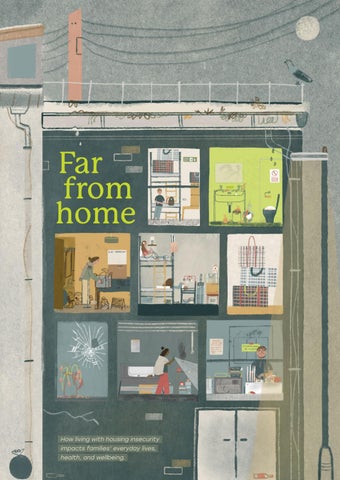
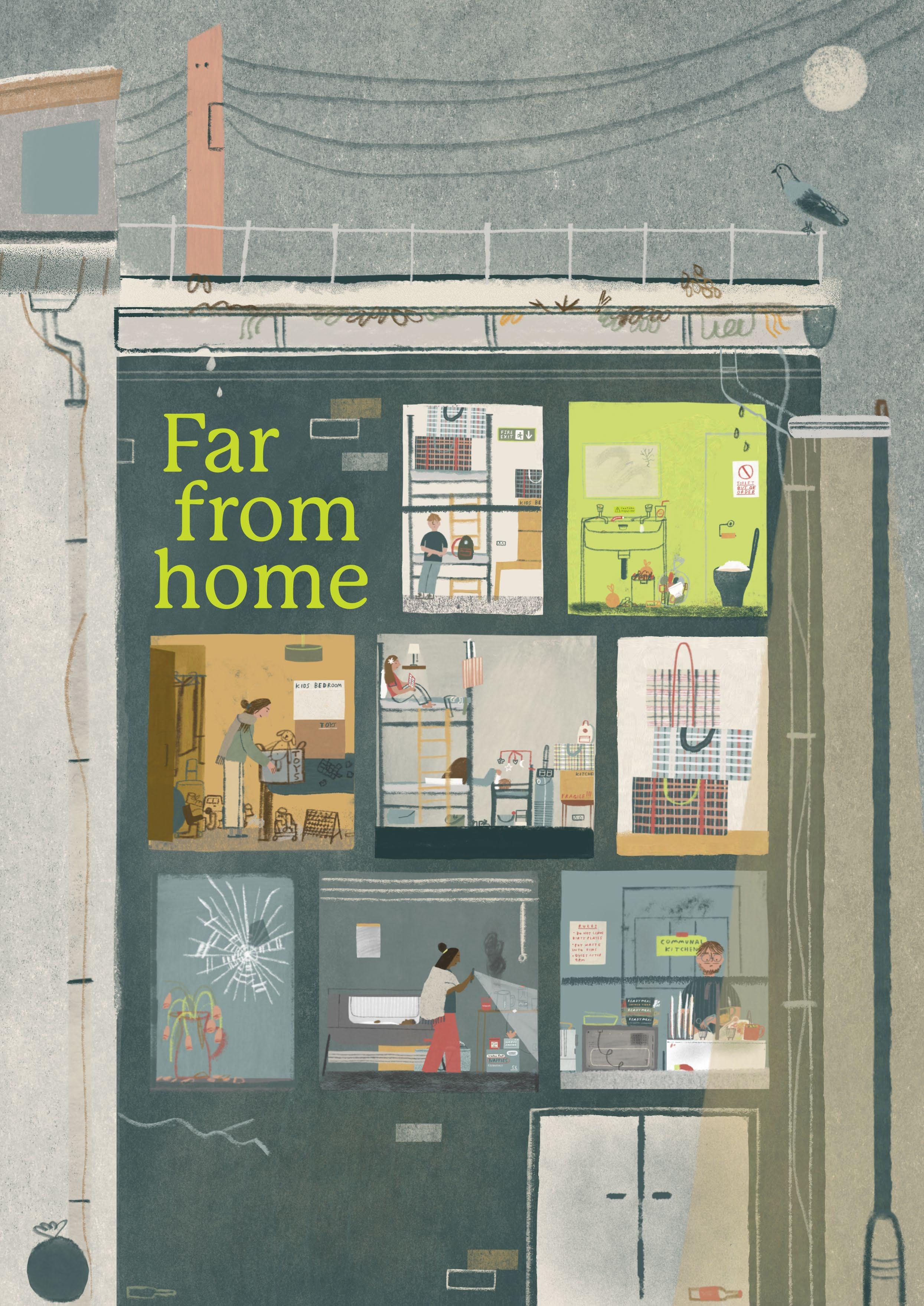
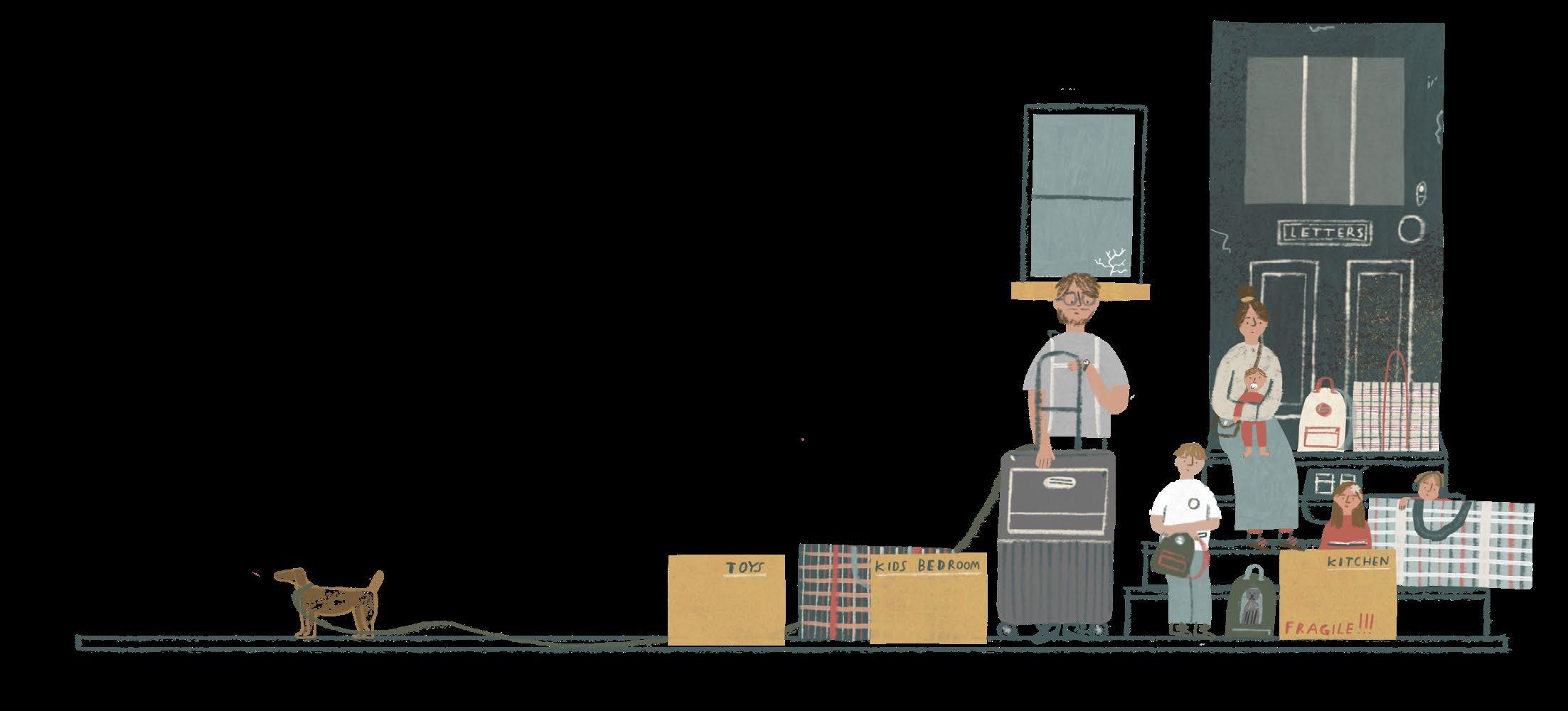
How living with housing insecurity impacts families’ everyday lives, health, and wellbeing.
Far from home shares the stories of four families who have experience of housing insecurity. The families took part in the Living with Housing Insecurity research project, led by researchers from the NIHR School for Public Health Research While we have changed the names of parents and children to protect their privacy, these are real stories. By hearing from families themselves we can better understand how housing insecurity affects people’s everyday lives, health and wellbeing.
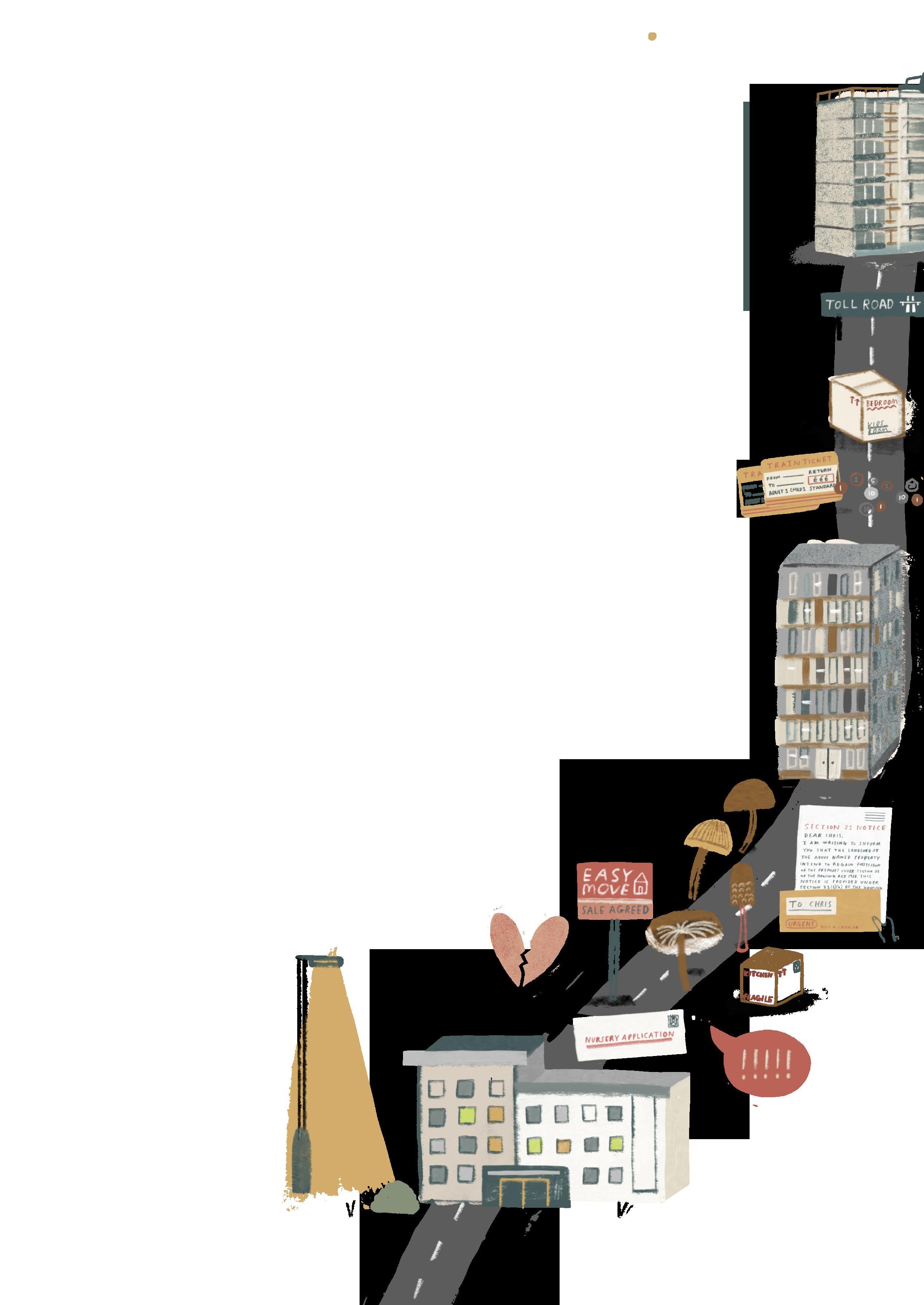
01 The pathway into housing insecurity
02 When home isn’t home: Growing up in shared accommodation
14 Fleeing domestic abuse, and hotel-hopping with a baby
07 The mushroom house: Living in poor quality accommodation
20 Disrupted lives: Difficult decisions and limited choices
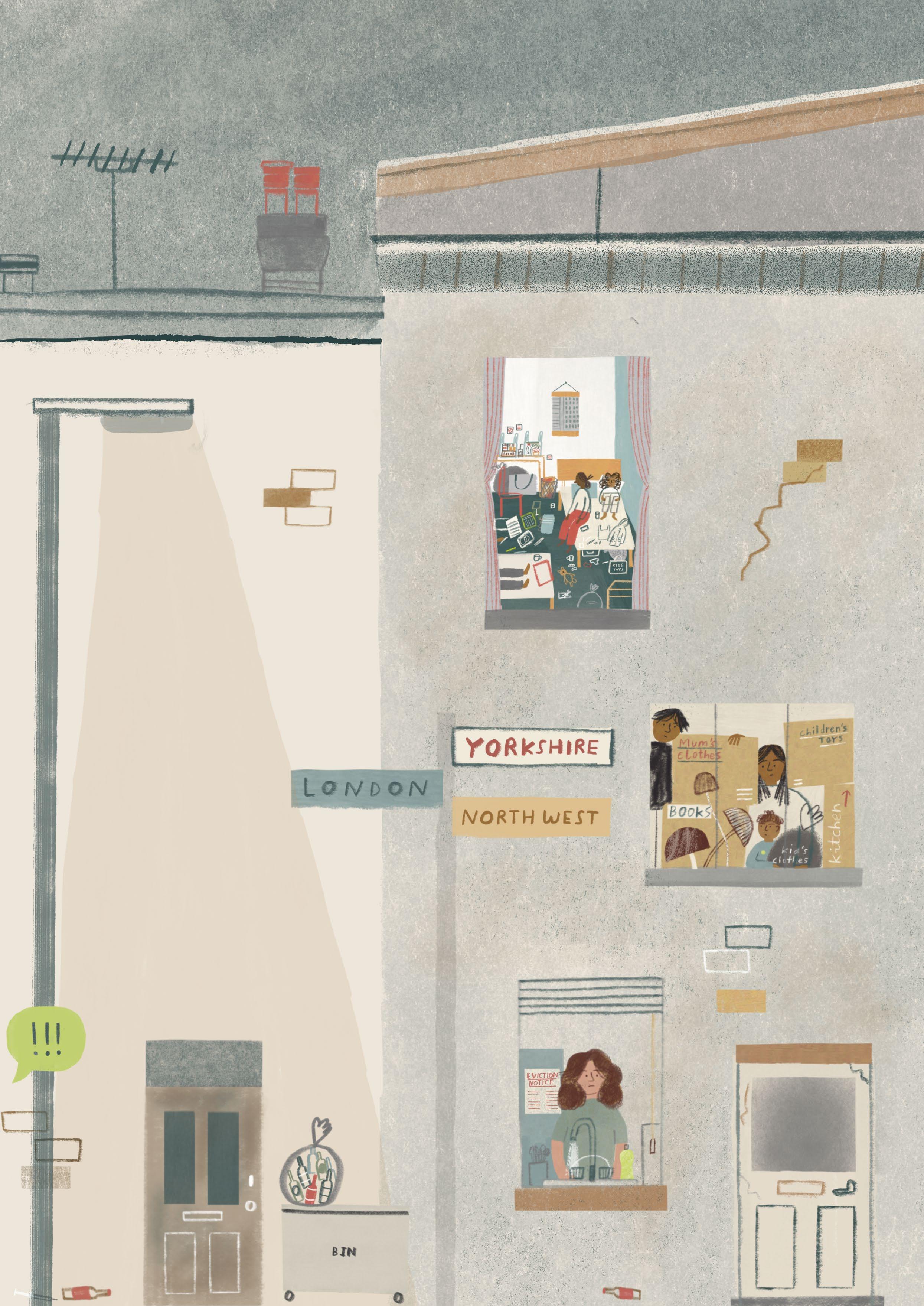
In the UK today, many families live with housing insecurity - they do not have a stable, safe or affordable place to live. Housing insecurity can mean living in overcrowded, poor quality housing, constantly moving, or facing the persistent fear of losing your home.
A shortage of social rent homes, rising rents, the cost-of-living crisis are pushing many families into housing insecurity, with some forced into temporary accommodation. Some groups of people are particularly vulnerable to housing insecurity, including people on a low income, with disabilities, from minority ethnic backgrounds, those leaving care or prison, and victims of domestic abuse.
Families in our project faced housing insecurity for overlapping reasons: domestic abuse, relationship breakdown, asylum or migration, job loss, health problems, eviction, and incomes that fell short of rising rents and living expenses.
The stories we share here highlight the stark reality of living with housing insecurity. Where these families live is far from home - not just in terms of distance but far from what a home should be - somewhere we retreat to, and where we feel safe and secure.
Ariam (age 12) and Soliana (age 10) are sisters. They live with their mum and four-year-old sister in a family hostel. They were placed there by the council after twice being made homeless from private rented accommodation following no-fault evictions. Their father was living with them when they first moved to the hostel but has since left them.
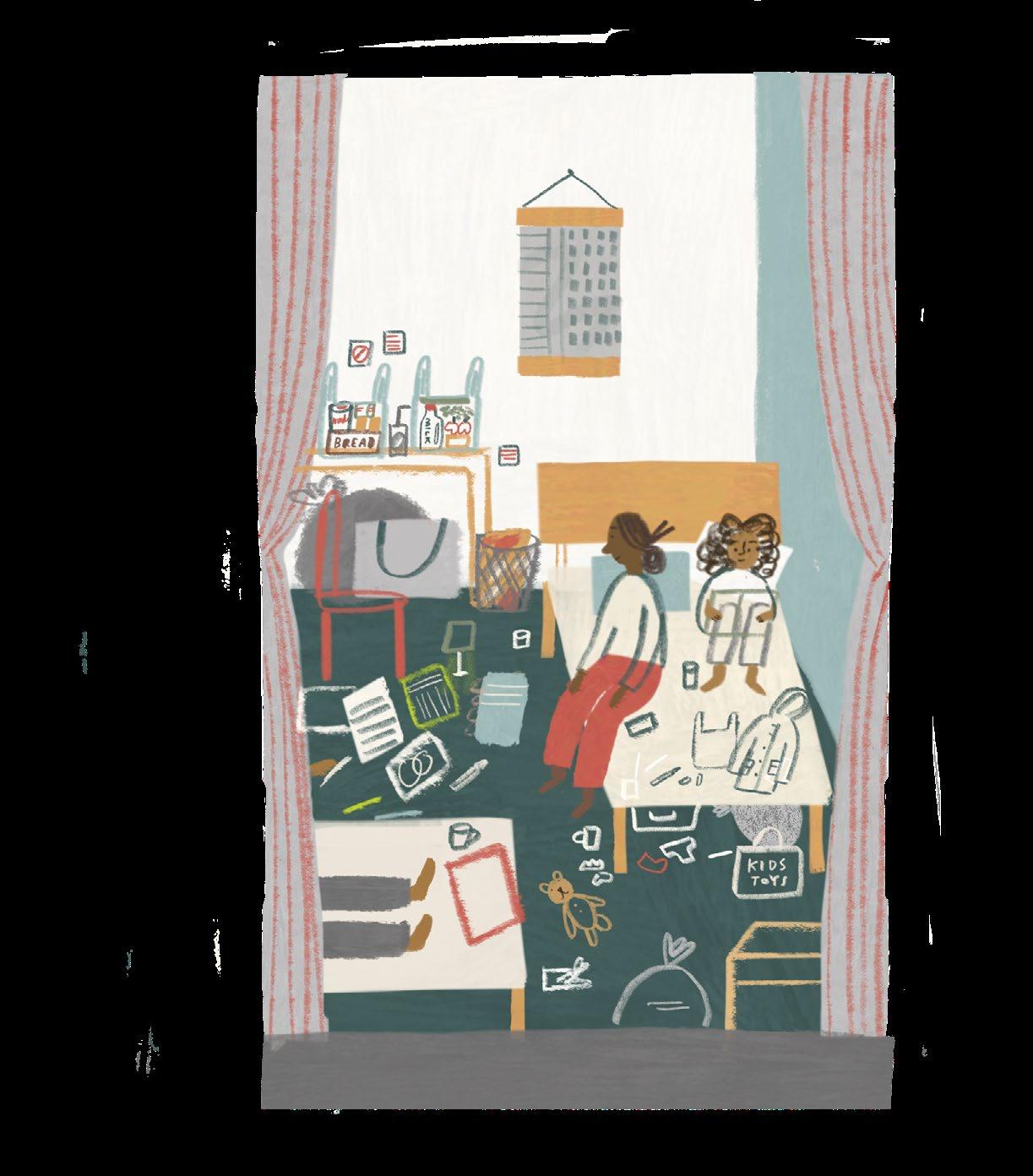
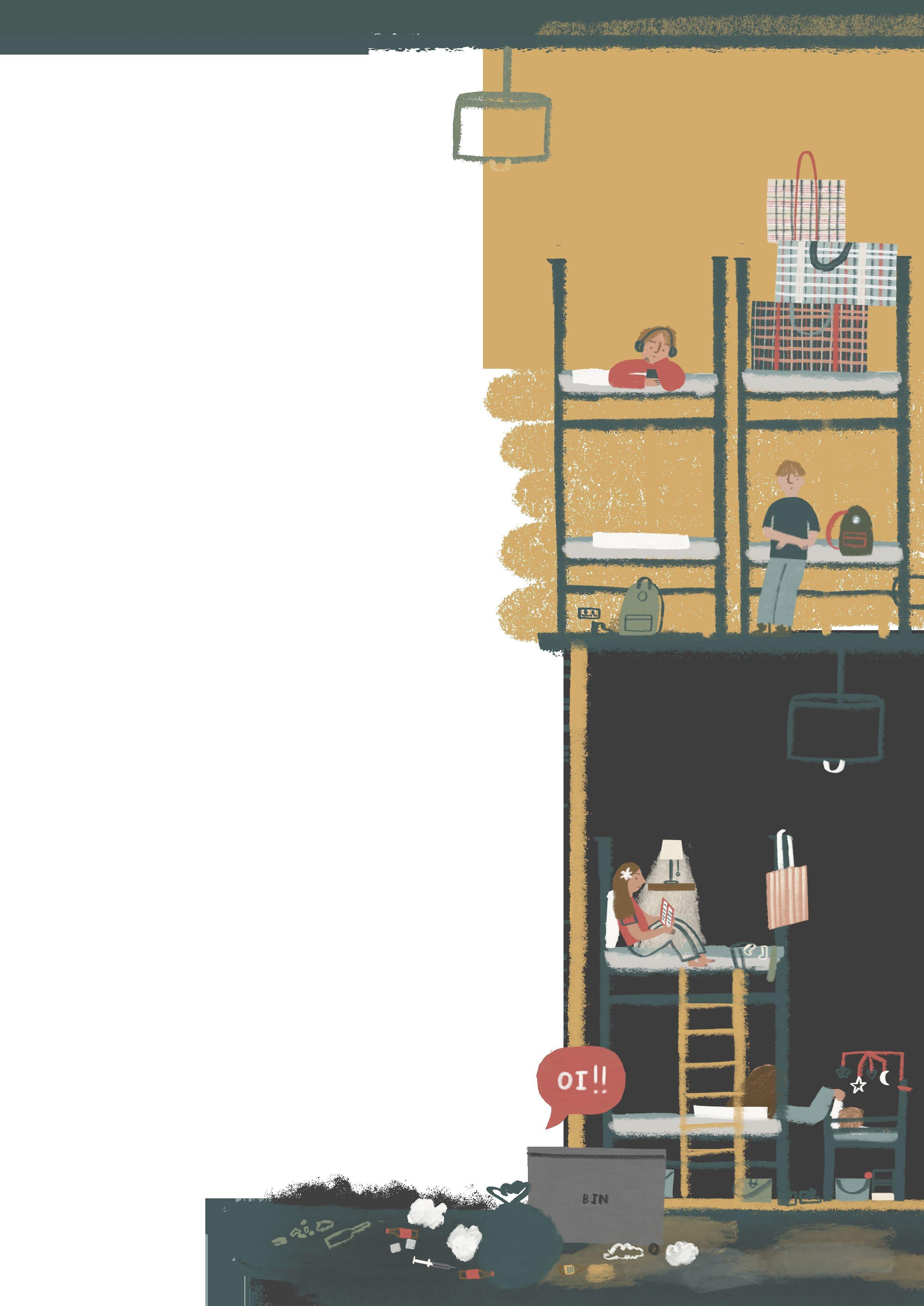
The hostel provides temporary accommodation for families but it is a far cry from a normal family home. The family live in one bedroom with all their belongings, and share two bathrooms and a kitchen with nine other families who come and go as some move to new homes and others take their place. The building has a slightly institutional feel, there are council staff on site, residents’ access is controlled by reception staff, and visitors are required to sign in and can stay no later than 10.30pm.
Four people sharing a bedroom
The girls are unhappy with their living situation and are very aware that it is not a good place for a young family to grow and thrive. They have some toys but don’t have much space to play with them - Soliana says “sometimes we play in the kitchen, but since there’s like cooking and stuff, it’s a little dangerous”. Ariam is particularly worried that her four-year-old sister is not able to enjoy a normal childhood:
“she has to be like in small spaces, not much place to play, you can’t run around in the kitchen, ‘cos that’s where people cook. It’s dangerous...it’s not really suitable...”
Their mum also finds it distressing that their accommodation prevents her bringing up her children as she would wish. She worries about the impact of their living situation on the girls’ emotional wellbeing:
“Yeah, always they say they think they are different because they don’t have a home, they just have one room altogether. That’s mentally not good for them”.
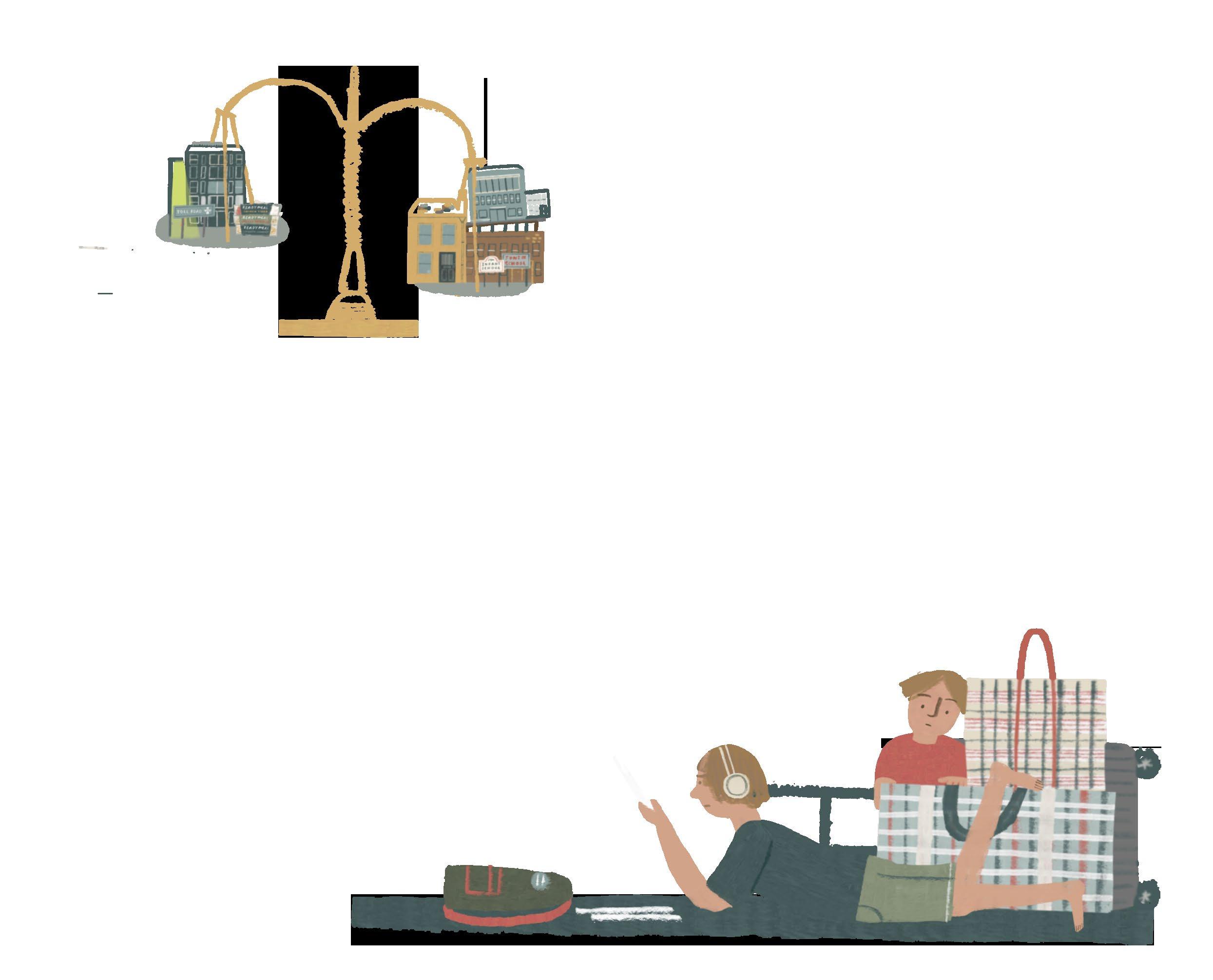
Their family room is filled with beds, leaving very little space to play, do homework, or even to store their belongings as Ariam explains:
“some things have to be in big bags which kind of fills up space, which is like not really the best thing ... My cupboard’s really full. Me and my sister share it ...”
Ariam describes how difficult it is to find somewhere to do her homework - she has to choose between lying on the floor in the family’s room or finding a space in the communal kitchen which is often busy:
“Sometimes we have to do homework on the floor, ‘cos either the kitchen is busy or like, because we only have tables in there, that are for us. Like I have to do it on the floor and it’s like uncomfortable. Like revising for exams and things like that it might be a bit more difficult, like for concentration. It’s a small area. Like there’s neighbours outside, maybe babies crying, people in the kitchen talking and shouting like. Things like that, a bit distracting”.
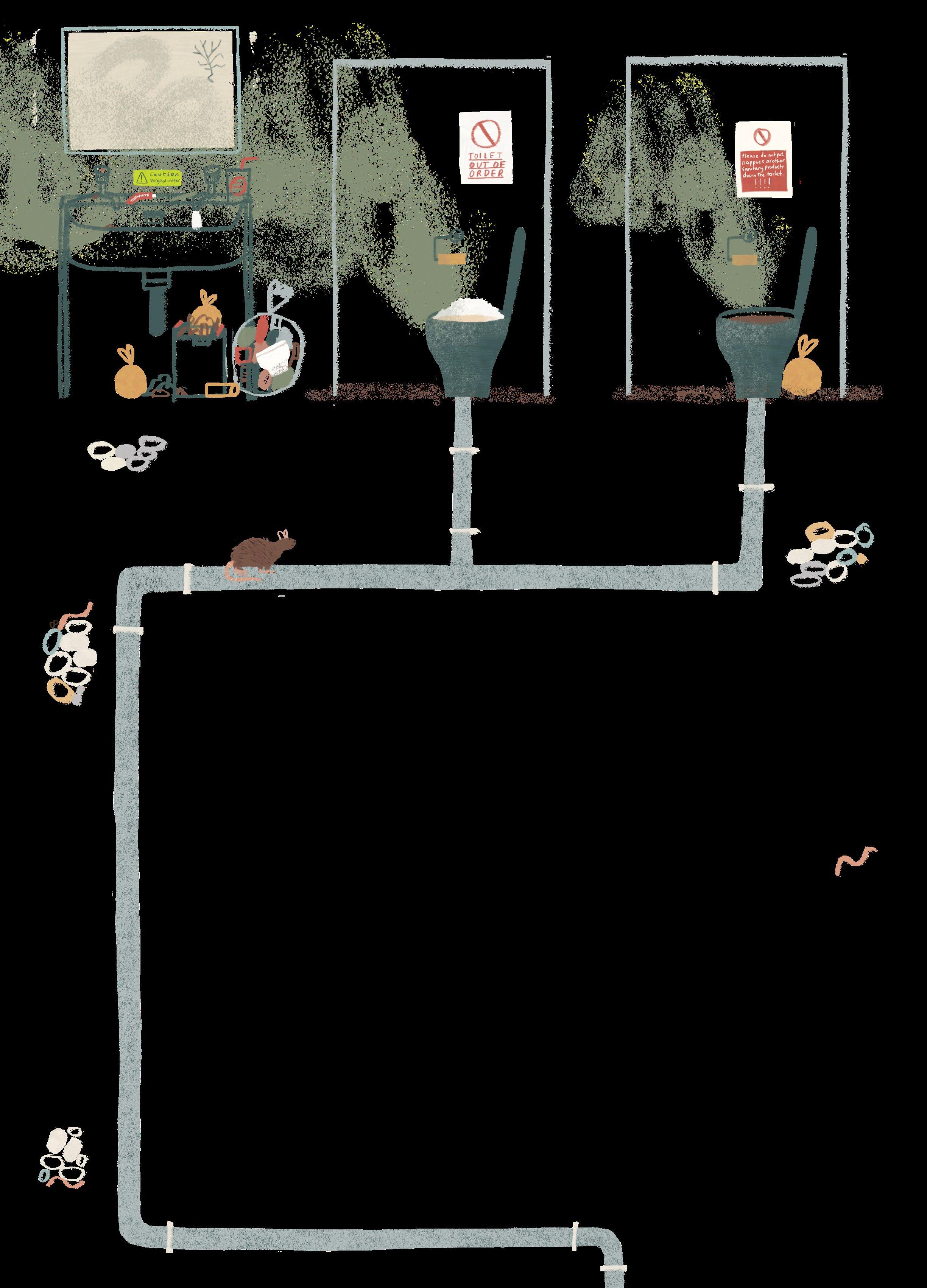
Communal bathrooms & kitchens
Both girls particularly dislike the shared bathrooms. As Soliana says:
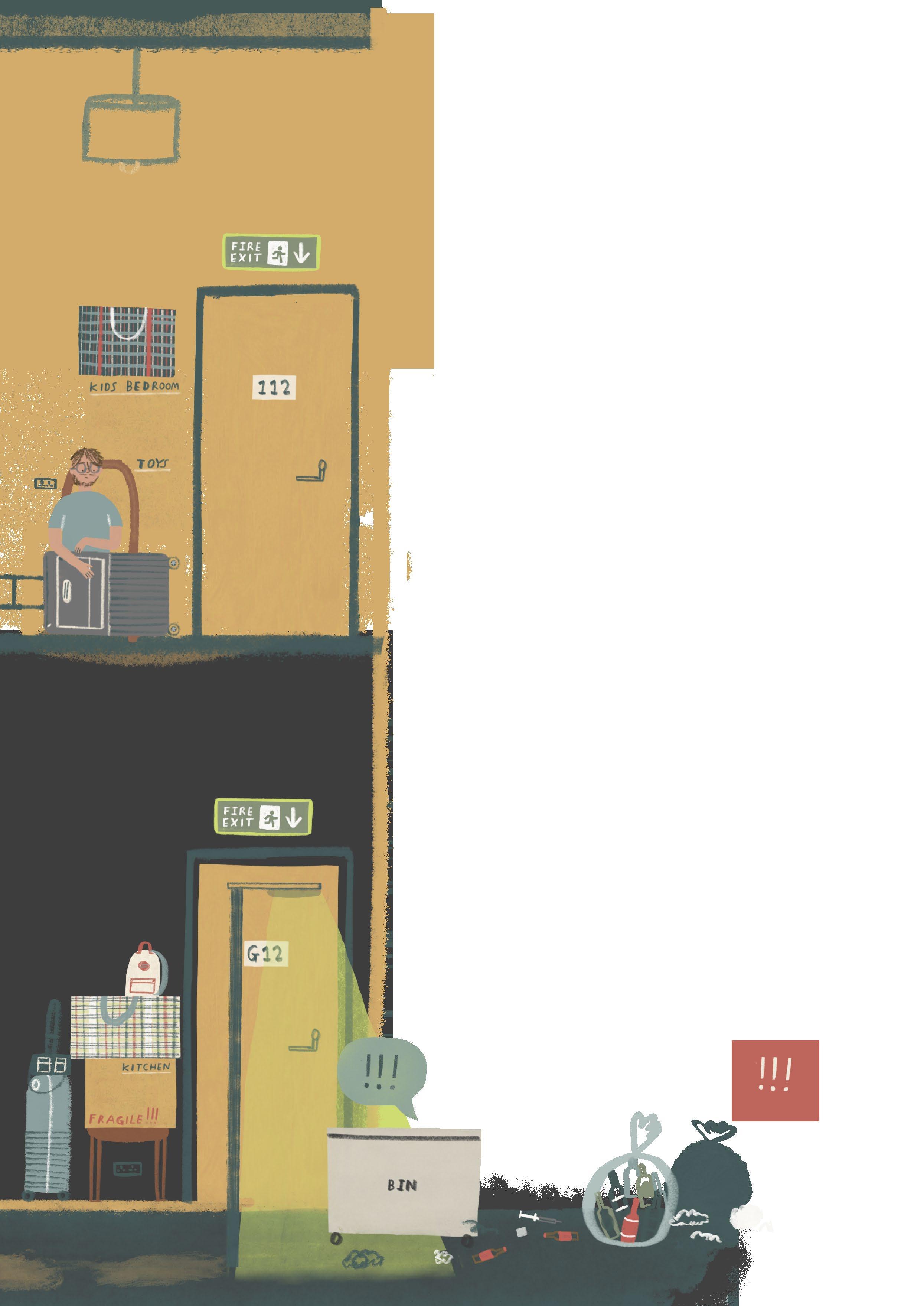
“Sometimes the toilets are stinky, and our room is right in front of the toilet and then we smell it from our room, so we have to clean it up ourselves”.
Ariam agrees:
“it’s really disgusting, the smell, they leave their like garbage ... you could put it in the kitchen where you’re meant to do it... When you just wanna like maybe have a shower, like you just always get the disgusting smell. There’s maybe poo rubbed all over, maybe dirt or leaves, it’s not nice”.
Ariam also worries about becoming sick because of the poor hygiene in shared areas and her mum confirms that they frequently suffer from colds and stomach bugs that spread amongst residents:
“I am scared here because everything shared. All of my children start to vomit .... We share, we need to clean down”.
Trying hard to find some positives
The girls struggle to identify anything that is good about living in the hostel. They do recognise that hostel staff try to make them feel welcome, for example arranging a party and giving them gifts at Christmas. They also like some of the other people in the hostel and Soliana is particularly happy that she has met other people from her country of origin. The girls demonstrate a level of understanding beyond their years of how difficult the situation is for all the residents.
“I like the people here ... some of them, some of them are like, they argue a lot about things, but I don’t blame them ‘cos there’s a lot of stuff to argue about“. (Ariam)
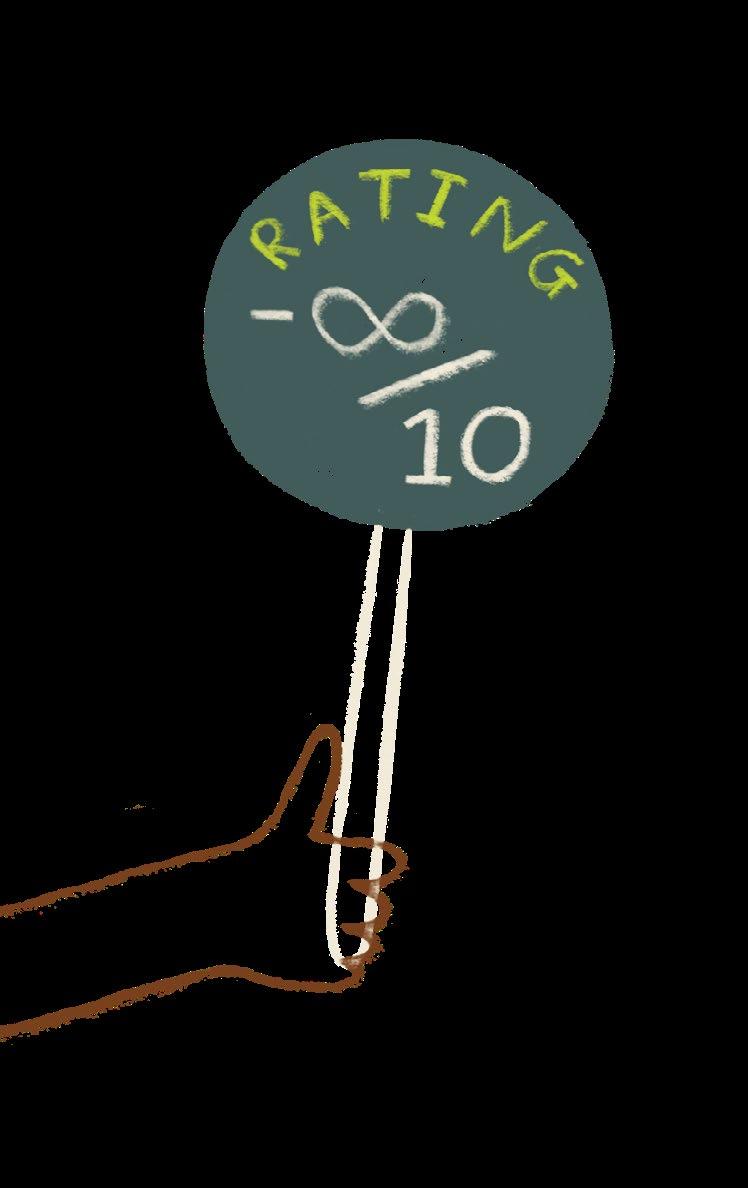
Overall, however, the girls are very unhappy in their current home. Ariam says that, if she were asked to give it a rating from one to ten
“I would give a negative infinity. It’s just horrible, like, no one can stand here and go.... I would never wish this upon anyone”.
The girls are sensitive to the needs of other people living and working in and around the hostel and moderate their own behaviour as a result. For example, Ariam recognises that children playing can disturb others and, because of this, prefers to play in the local park instead of playing outside in the hostel’s car park:
“‘Cos there’s gardens there, I think it’s really nice. When people play it’s a bit disturbing, I don’t wanna disturb other people. So, the park is right across the street. You could [play in the hostel’s outside space], but there are offices right here, so I’m not really sure they’d be happy about children screaming, ‘cos that’s their natural thing to do”.
Fond memories of home:
the family’s ‘own place to live’
The girls both have happy memories of their previous home: they still had only one bedroom for the whole family, but they had their own bathroom, living room and kitchen. Soliana and Ariam’s reflections highlight some of the (often small) things that most families take for granted but that are now missing from their experience of growing up:
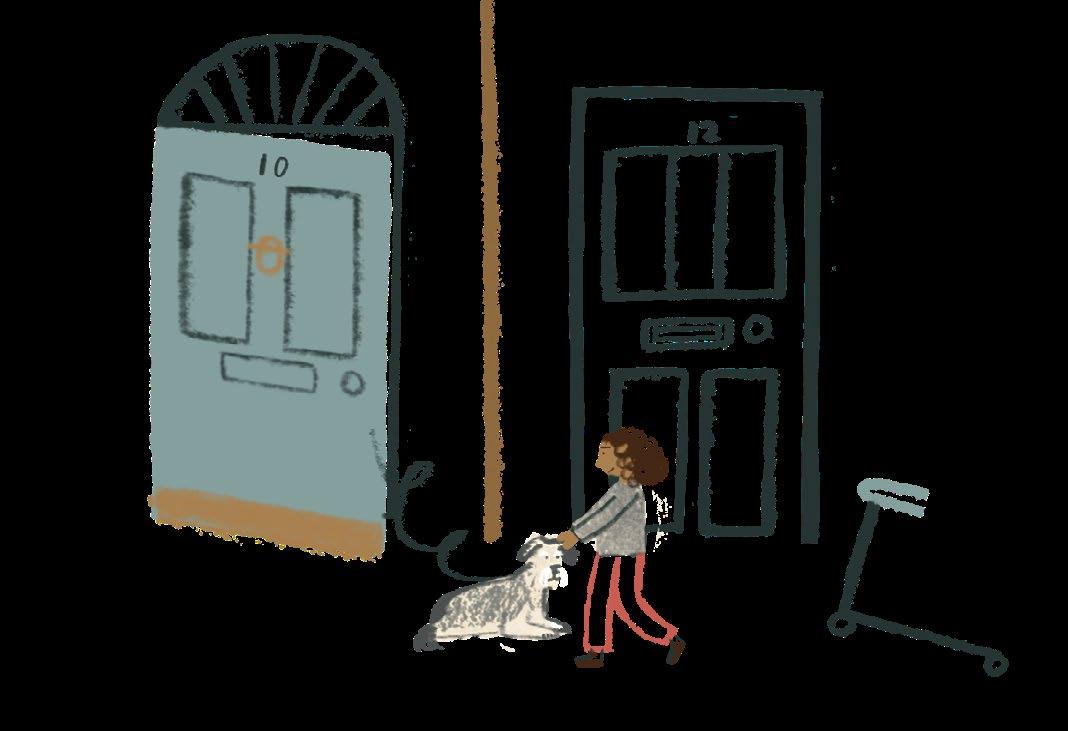
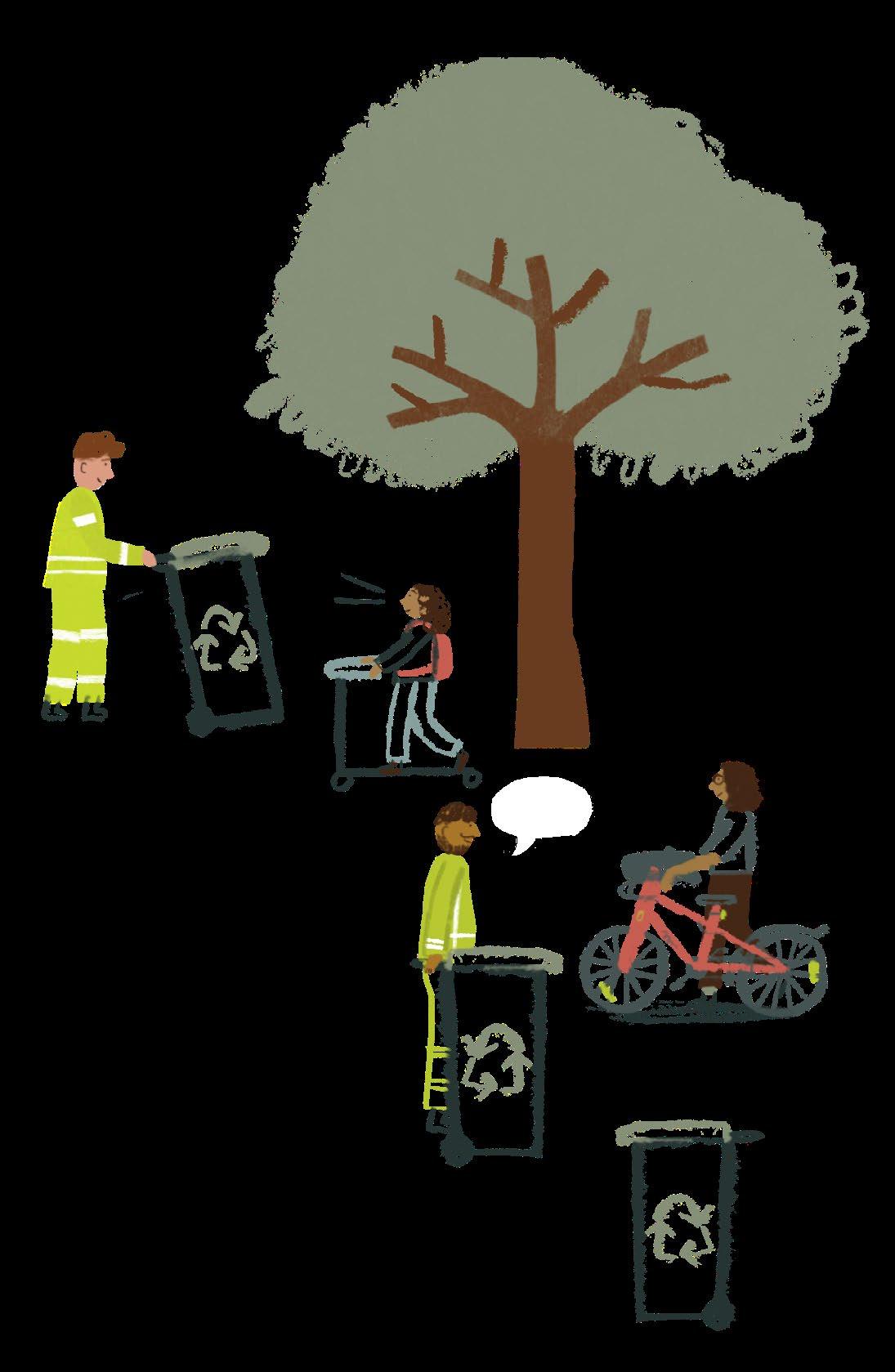
“It was a house and then there was like neighbours around there and there was kind of a quiet area and there was a big area you could play in and we used to go with our bikes and scooters around there... There used to be a puppy that lived next to our house, and we used to talk to him, and every Thursday the bin men used to come and we used to talk”. (Soliana)
“It was nice there, like it was really nice, I could have my own place to live. Do things I want to do. Maybe I’d ask them to maybe go downstairs, and I could study. It was a bit like, like not too much space, like we had like a bunk bed, a baby’s bed, a shower for her, my parents’ bed is not that much space to walk. The downstairs was actually fine”. (Ariam)
Ariam and Soliana just want a home where they don’t have to share a bathroom and kitchen with strangers, where they have enough space to store their belongings and have some privacy, and where they can play and be free to live their lives without worrying about whether they are disturbing other people. They are not asking for much! No child should be forced to grow up in these circumstances.
The mushroom house:
Living in poor quality accomodation
Milly lives with her daughter Jenny (age 8) and her son (age 4). Jenny has long-covid, both children are “on the ADHD pathway” and Milly helps care for her mum while also holding down two jobs.
The challenges of the Private Rental Sector: insecure tenancies, disrepair and damp
They used to live next door to Milly’s mum (Jenny’s nan) in a three-bedroomed house that they rented from landlords who knew the family and helped to arrange with the estate agents for Milly to take on the tenancy. The rent remained the same for the six years they lived there, and the house was well-maintained. The family were settled and happy there:
“It was great. I could do what I wanted to the house; I made it, you know, nice. The only thing was the mice, but the whole road had them, so everything that needed doing was done. There was space, the kids were happy, they had their own bedrooms. We were close to the neighbours, and it was nice”.
When the landlords decided to sell the house, they reassured Milly that she didn’t need to rush to move out. Despite the lack of pressure from the landlords, Milly did begin to panic as time went on. Her daughter Jenny was also anxious about the prospect of having to move:
“Yeah, because I was only like six, we were going to move into nan’s, but we didn’t. I was scared, I was asking mummy ‘do we have anywhere to go, do we have anywhere to go?’”
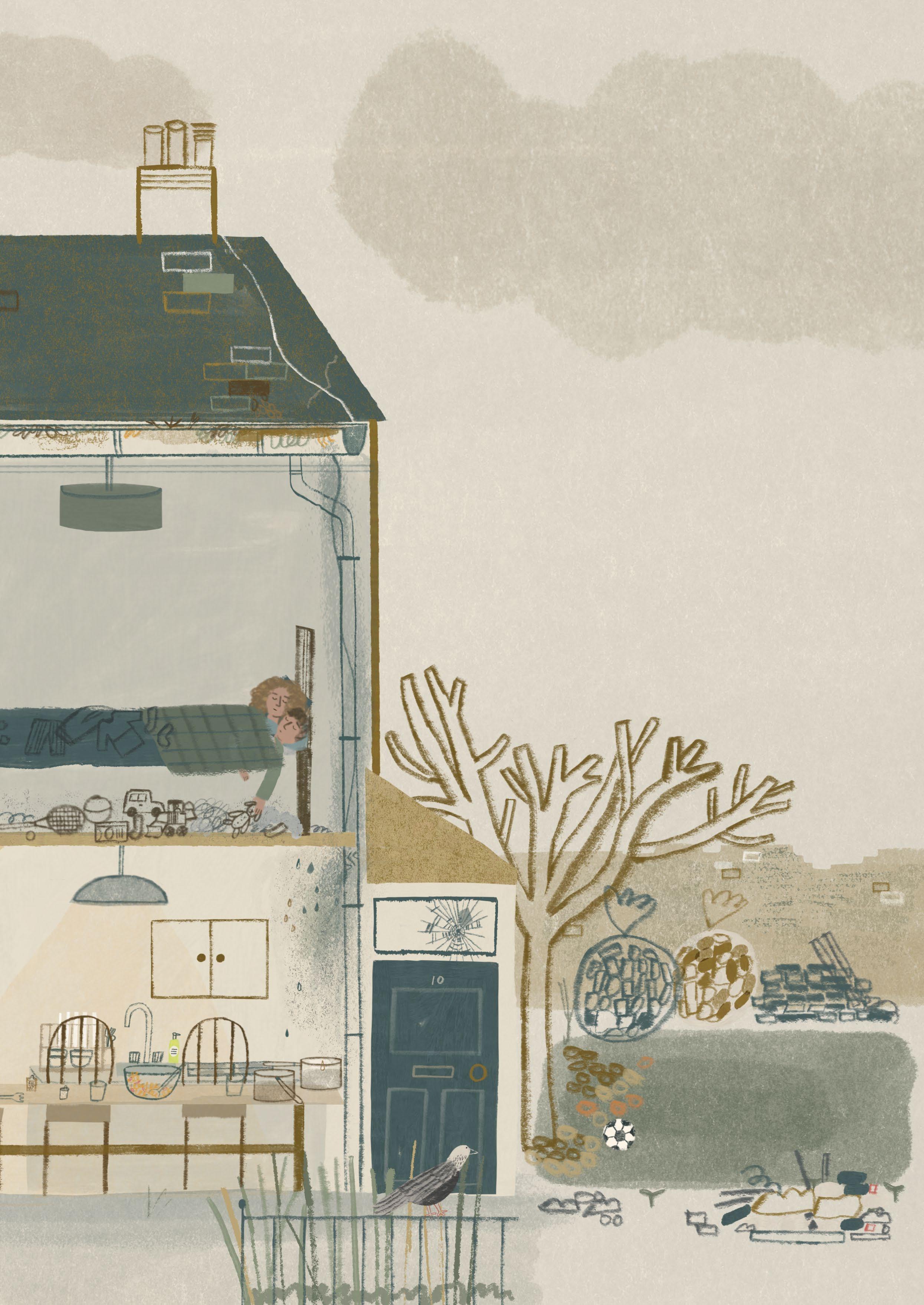
They found another house in the private rented sector that seemed suitable. It was close to Jenny’s school and, while it was smaller than their previous home, this did not seem to be a problem as Milly anticipated spending a lot of time with her mother who needed end-of-life care. However, within 2 weeks of moving into their new home it became clear that there were significant problems with the property:
“...so the gutters had caused a leak through the walls which had tracked down to the bedroom to the front room, the kids’ bedroom floor had rotted…it was gross. The kitchen ceiling leaked, the back gate was open hanging off, and the backdoor was unlocked for about 3 weeks before they actually did anything, and she only did it because the council got involved”.
Jenny remembers the house as being cold – “It was cold. Really cold. We couldn’t even heat up” - and she describes how she and her mum discovered the damp problems in her bedroom:
“...there were mushrooms growing through my floor in my room. The only reason that we found out was that mushrooms started to grow on my rugs, because, well one of my books fell off my shelf nearby my bed, and then it fell into a wet bit, and I was like, why it is wet. And it, when I picked it up it was dead wet. And I just called mummy, and told her, and we looked at it, and we’d seen there was mushrooms”.
The extent of the damp meant the children had to share a bedroom with their mum, as Jenny recalls.
“Then I had to stay in mummy’s room because the mushrooms were poisonous, they were like greenish grey, and they were right by where my head was in my bed.... No, and I did not like that house”.
Struggling to settle in and the emotional toll of
substandard living conditions
With parts of the house uninhabitable, space was a problem, and the family found it difficult to settle in:
“We all slept in a room where you could just fit a double bed in, and like a little single wardrobe, so we were all in there, all the toys, everything had to take up the bedroom…you just couldn’t settle”.
The outdoor space was also a mess and wasn’t safe for the children to play in:
“the back garden was about 2m by say 4m. It was like a little box and that wasn’t safe. It had all the tiles from when they had to replace the roof - it had all the rubble and stuff. So I ended up having to buy a patch of grass just to put down so the kids could play outside”.
Milly describes the effect of her family’s living conditions on their health and wellbeing:
“[My son] is on the Autism pathway, so he couldn’t cope with the lack of space, he couldn’t move. And then Jenny didn’t have anywhere to go to be by herself, so she got quite emotional, and then was stressed a lot, and then my mood impacted the kids a lot because I was so unsettled and stressed and hated going home. It was quite miserable”.
Missing having friends to visit: the social and emotional impact of a home that doesn’t feel like home
The family didn’t feel comfortable inviting people round to their home, which impacted their mental health and wellbeing:
“I wouldn’t do any play dates with the kids which I used to love doing…that didn’t help [my son] because he’s so behind with his socialising, and that cut him off more”.
Her daughter Jenny also missed having friends to visit, and this affected her wellbeing as well:
“Jenny loved her friends being round so I think she suffered, she got quite emotional, and she wasn’t herself for a while”.
The work of trying to find a more suitable home
Milly’s landlord was slow to deal with repairs. She contacted Healthy Homes and Citizen’s Advice for help. The process of fighting for the repairs was frustrating and exhausting for her:
“I messaged everyone, I spent months just like getting in touch with everyone, just trying to help to get me out of the property…so I think I’d put all my mental capacity into researching stuff just to try and get out of this situation…no one really wanted to get involved, because it was a private landlord. So it was a lot of passing round, and I was doing two jobs at the time, and spent my other time around that, trying to research stuff and find out who will help”.
In the end, the landlord released her from the tenancy three months early, although Milly is still pursuing a rent rebate through the small claims court. Finding a new place to rent wasn’t easy: choice was limited, and compromises were needed:
“I did look close to where I was, because it would have made sense as I had two jobs in the area and the kids . And then I think, the situation I was in, with trying to leave a tenancy, like an in-contract tenancy, made it really difficult for people to accept us. So, I started panicking”.
Feeling more settled & secure: a wonderful impact on everyday wellbeing
They have been living in their new home for the last six months and it’s working out well overall. The children each have their own bedroom, there is plenty of room downstairs and they have a garden as well. While the house would benefit from modernising, everything works and there are no health risks - a huge improvement on their previous home!
“it’s more cosmetic stuff, like it needs, like the taps need changing but it’s not like they don’t work…Like everything flushes, taps work, bath works, it’s like that horrible peach, 1920s bathroom suite”. (Milly)
Jenny likes that they live close to a park and that her cousin lives nearby:
“Yeah, there’s the park just by the school, you have to walk to it because it’s close, like 2 minutes. And my cousin’s house is on the other side of the park…and we sometimes walk to them”.
Milly and the kids feel more settled now, and this is reflected in her son’s behaviour:
“[My son] was a lot more like hard work, like he’s settled so much since we’ve been here. So like he just paced, he couldn’t settle, he didn’t know what to do, whereas now he’s come here, he’s a lot more sociable, he’s talking more, he’s sort of... within weeks he just found himself a lot more”.
For Milly, feeling unsettled has been the hardest thing about their recent housing experiences and she can see how much happier the children are now they are a bit more secure:
“I think what’s the hardest thing is feeling unsettled, and then in the second house with the mushrooms, I didn’t unpack anything because I didn’t feel settled, those nine months of just uncertainty and the feeling like you can’t make it home, and I think that was hard, and for the kids that’s a lot of change, but they’re happier here, you can see straight away that they’re happier here”.
Keeping moving is expensive and exhausting
Having to move twice in one year has also been expensive and exhausting:
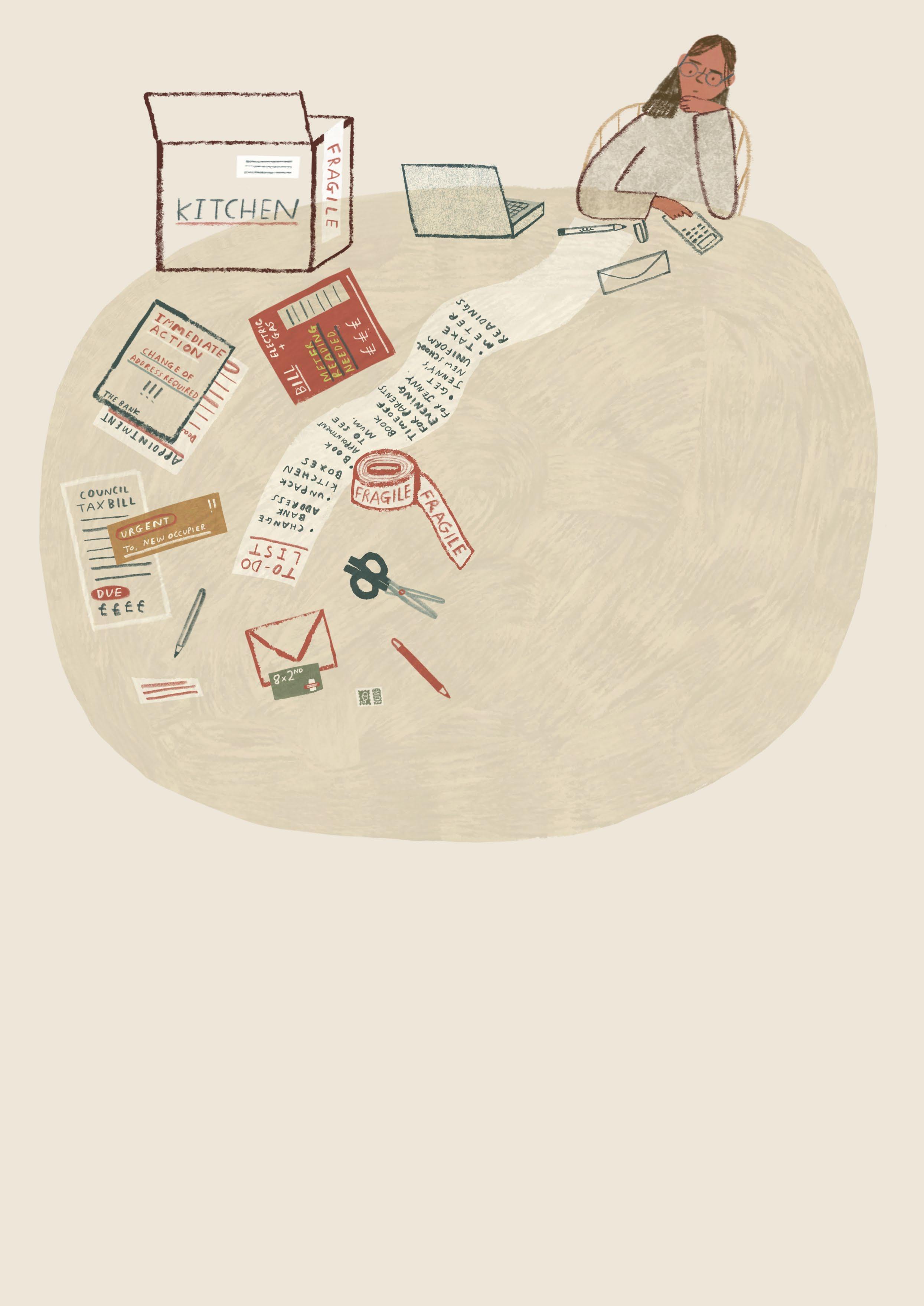
“Very expensive. It’s the whole process, the pains of things like changing your address, and we’ve had to move Jenny’s schools, it’s been a lot of effort.. It was draining”.
Jenny agrees with her mum that having to move is hard work:
“It takes forever to unpack, we haven’t unpacked everything yet, we never have time”.
Niggling worries about long-term housing security
Milly’s experience of the ‘mushroom house’ continues to affect her sense of security, as she worries whether the new landlord can be trusted to maintain the house.
“So like the fence next door fell down, so our garden is joining, and they were meant to be out two weeks ago and they still haven’t turned up…. that’s one thing that’s stressing me out”.
She has also heard that the landlord may increase the rent by more than 10% next year and this, combined with increases in other bills is causing her concern:
“And then the price increase as well, my council tax has suddenly gone up, plus the rents going to be going up , plus I’ve had to change jobs and I’ve got more childcare to pay for. How are you meant to afford it if they’re going to put it up?”
Although happy and settled for now, in a house that is comfortable and affordable, Milly still worries about the longer-term security of the family’s housing situation and continues to feel vulnerable in the face of increasing living costs and unaffordable rent rises.
Fleeing domestic abuse
and hotel-hopping with a baby
Naomi has been in her current home for just one month. This is the first time she has had a proper home since her son was born two years ago, and she is hoping it will be their long-term home.
Fleeing domestic abuse
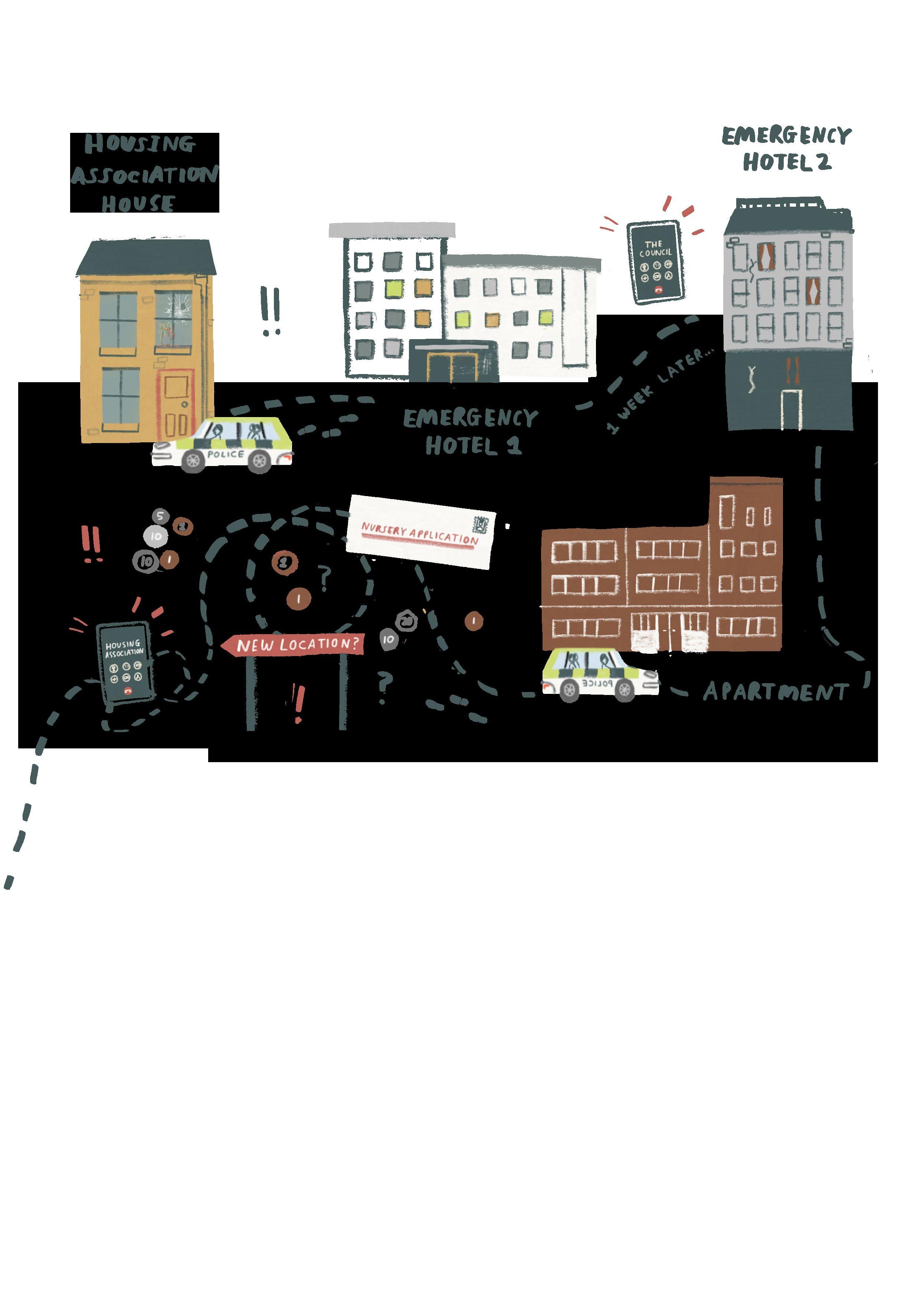
Naomi fled domestic abuse and had been living in a housing association house with her baby son for 6 months, when her abuser (the baby’s father) found her. He attacked the property; the police were involved, and Naomi approached the council for help.
“I moved on because he smashed the windows, which led me into phoning obviously the council - I need help, I’ve got my son”.
She spent the next year-and-a-half living in hotels and short-stay apartments while she waited for a suitable property to become available. Naomi found the whole situation very difficult to cope with:
“Yeah I didn’t have much of a support system and I had social services down my neck. And I’m the victim in this situation”.
Hotel Hopping
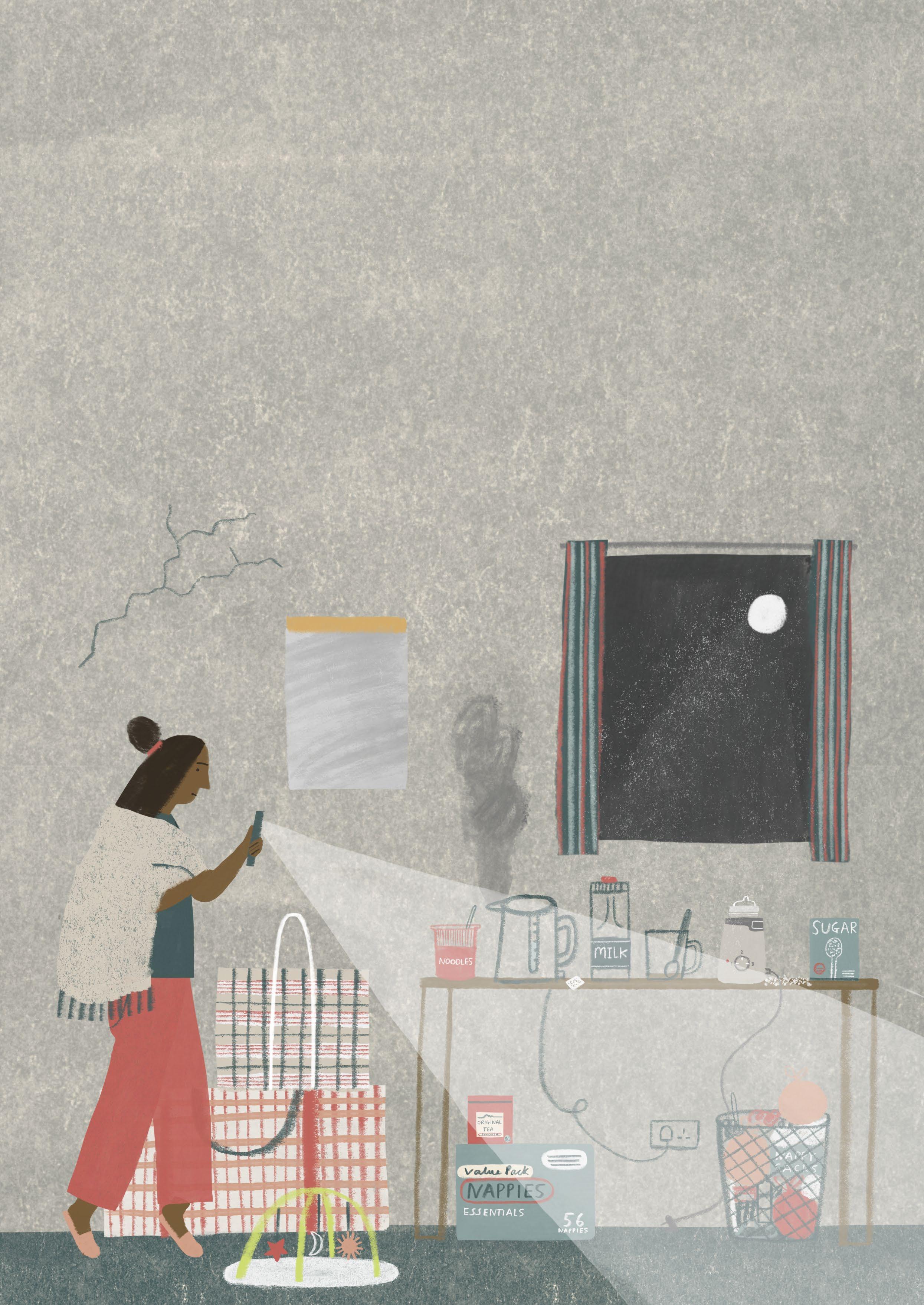
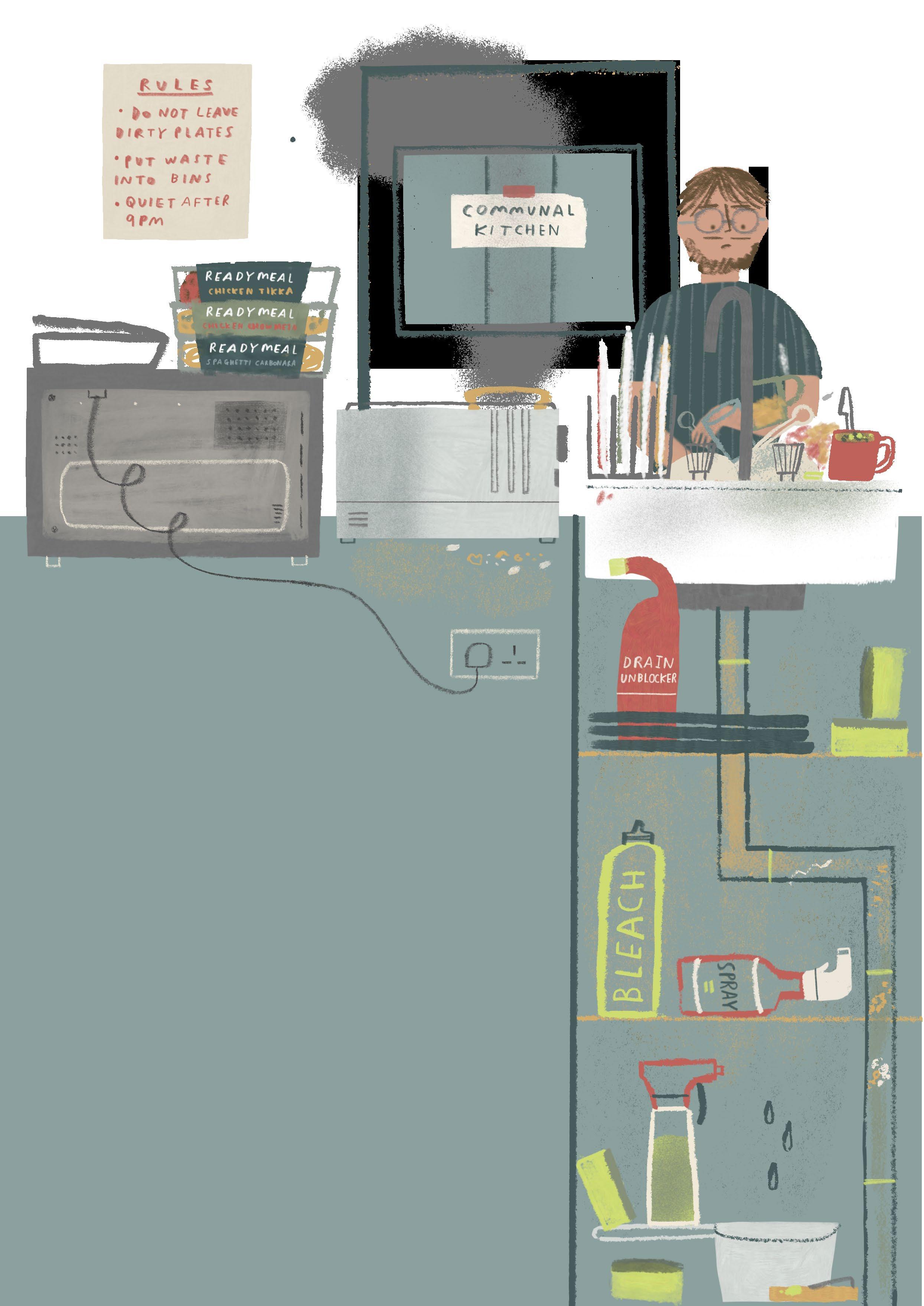
The council provided Naomi with emergency accommodation in a hotel, but feeding herself and her son was difficult and expensive. She wasn’t allowed to buy breakfast at the hotel, and the only place to cook was a shared room with just a microwave and a toaster.
“...the breakfast - you’d think hotel breakfasts, you know you pay for them, but no they’re only for, I don’t know like, VIP sort of something, and I just thought that was a bit wrong”.
She kept milk in the sink to stop it going off, and had to go out every day to get food because there was nowhere to store it.
“I’d get up and feed [my son], go and get him his breakfast because it’s a hotel room and it gets warm and the milk gets funny by the next day. I used to put it in the sink, the milk. Ah, yes, it was terrible”.
After only one week the council moved her to another hotel – she doesn’t know why. The council told her:
“...you’ve got to get out with your stuff. You don’t know where you’ve got to go but I’ve got to wait for a phone call off social workers to place me somewhere else”.
Her preference would have been to go to a women’s refuge, but she wasn’t eligible because the domestic violence she had experienced had ceased at that point:
“I wasn’t entitled to any refuge… He [perpetrator] stayed away, which is good that he stayed away obviously, but it’d have been better in a women’s refuge because that is actually like a one-bedroom flat instead of hotel jumping”.
Naomi describes the second hotel as ‘basic’ and lacking facilities, and she found sharing a room with her small child was difficult. Being together all the time was stressful, particularly at night when she worried that she was disturbing him:
“...like night-time, for example, I’d have him all settled and in bed, and he’s asleep, and then I’d turn the lights on or just the kettle, you know in a hotel room you’ve got that little side with the kettle, I’d put that on and he’s moving and he’s fidgeting…I felt like I was disturbing him by just moving”.
An understanding social worker and a move to an apartment
The situation was affecting her mental health, and she explained to social workers that the accommodation was unsuitable:
“It was stressing me out really badly, I went ‘I can’t do this, you’re going to have to move me. I’ve got no cooking facilities…I’m running low on money and you want me to live, I’ve got to live day by day. I can’t live like this.
Naomi feels she was listened to as she was then moved to an ‘apartment’ – similar to a hotel room but with cooking facilities and more space –where she stayed for several months. It was in a convenient location for Naomi and the accommodation was a significant improvement over the previous hotel rooms:
“... I was alright there, it was like a one-bedroom flat, it was better, it was the best one that I had out of all of them”.
Forced to relocate:
Escaping domestic violence and moving far away
Unfortunately, Naomi’s abusive expartner found out where she was living, forcing her to move again. This time, the council offered to place her in a house in a different town where she didn’t know anyone:
“...that’s when they had to move me to [place] and I was even more distressed.What if I’m struggling for money up there, you know like, you can ring your family members if you’re in your own city, you just go to their house or phone them, whereas if I’m out, I’m that far away, imagine if they don’t answer the phone and I’m stuck!”
She worried that refusing the property might result in the council not offering her another place and was also distressed at being separated from her support network if she accepted. The inconvenience, financial burden and the impact on her son of relocating to a new town were also major concerns:
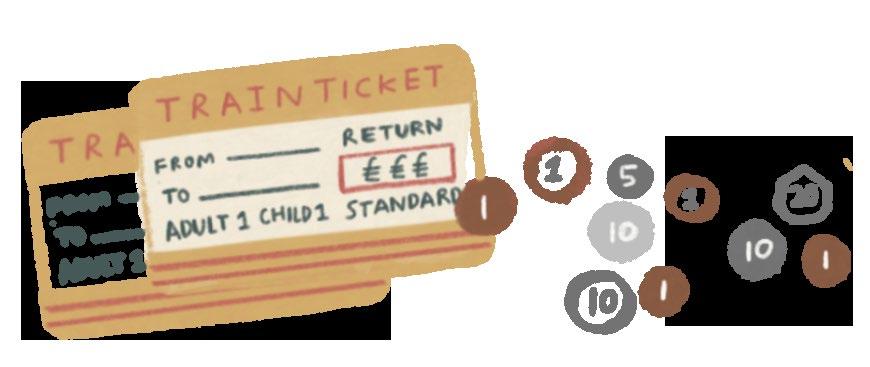
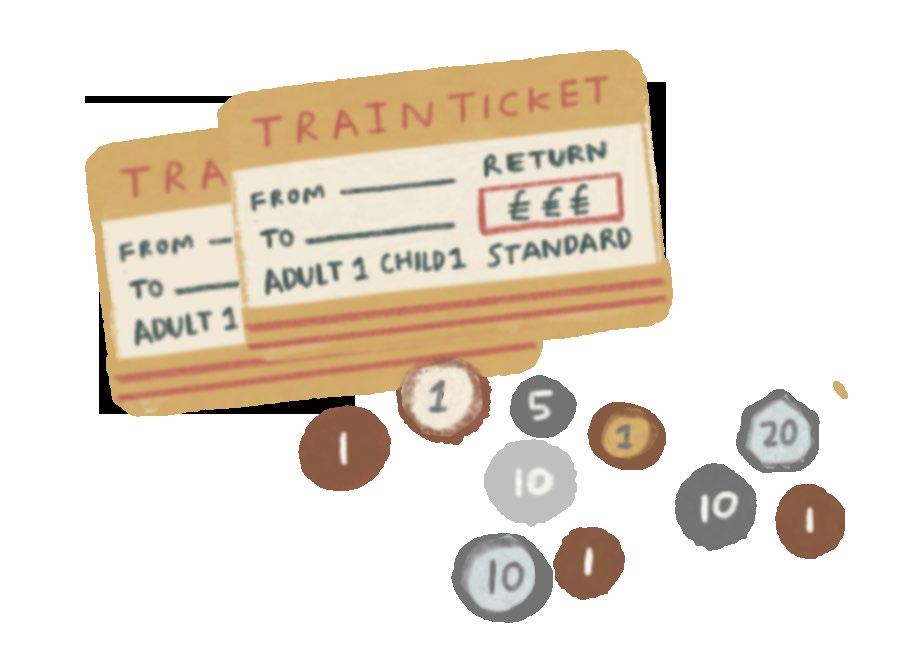
“... if they were going to put me that far, then there’s travel money that I couldn’t afford. I could just about afford food, do you know what I mean, never mind getting from A to B, on trains…and it makes me upset then like, why’s he got to go through this?”
During this time, Naomi was also trying to secure a nursery place for her son, a process made even more challenging by the uncertainty of where she would be living and where she didn’t know anyone:
“I was trying to look for a nursery at the same time and I couldn’t like because I didn’t have an address to go to”.
As it turned out, Naomi did not have to move away. The housing association she had previously rented from after fleeing domestic abuse agreed to re-house her and was waiting for a suitable property to become available. In the meantime, she was placed in another hotel ‘apartment’ in the city centre. This time, the main source of stress - aside from having to move yet again - was the noise and disturbance caused by the city’s nightlife:
“Yeah, the last hotel we were in was called, it was an apartment…So that was in the city centre…with all the bars, the late part, that was right next door. I could hear them all, they were shouting, disturbing me and my son’s sleep there and then it makes you groggy”.
Constantly moving: the emotional
and financial toll
As a single mum with a young child, Naomi found the experience of housing insecurity very difficult to cope with emotionally:
“Domestic violence, the father, the baby’s dad is what led to this. It was very overwhelming, and it was hard as a single mother, it was very upsetting sometimes, sometimes could be depression, you have more bad days than you do good”.
On reflection, Naomi says that some of the hardest aspects of moving from place to place are the inability to settle and the extra costs that come with living in emergency hotel accommodation.
“...not settling in a place is definitely a big one. And the costs…like, say if you’re eating out because you don’t have a cooker and a fridge in a hotel like myself, say if you had four children for example, a single mother with four children, [think] how hard that would be”.
The experience was made more difficult by a lack of money and a limited social support network:
“I was struggling with money, you know, so it was hard. I didn’t have much support, it was on and off with family and I still am to this day. So I felt very alone, like very stuck”.
Getting ‘lucky’ with a housing association property and a place to settle down
After moving four times in just 18 months, Naomi and her son were finally offered a housing association property. They moved in a month ago and are happy settling into their new home.
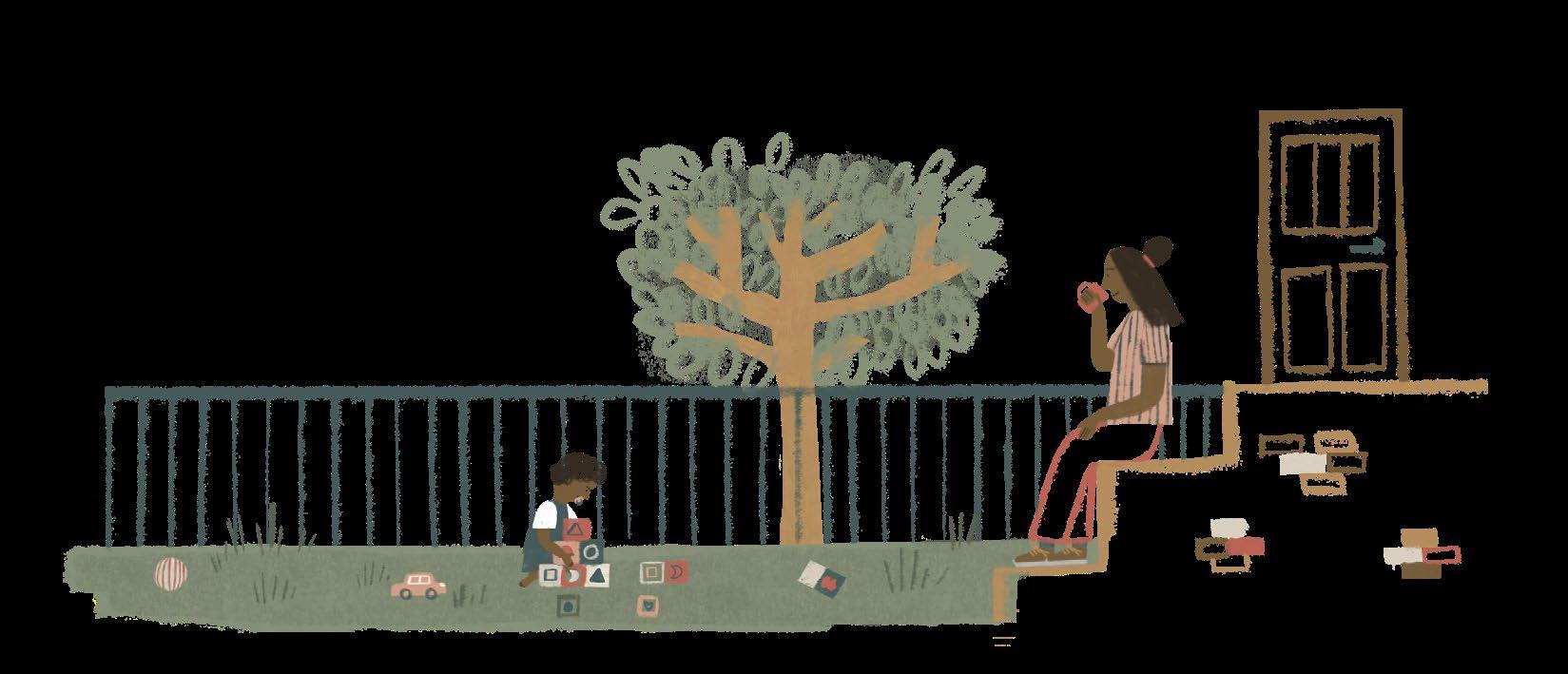
“It’s a two-bedroom house. It’s good, it’s got a front garden, a back garden…he’s over the moon with the garden”.
The house is in a good location close to town, and Naomi has found a nursery place for her son that’s just a 15-minute walk away:
“I’ve got good now, like the house and the nursery come all at once, they actually came on the same day believe it or not…he’s doing well, he’s socialising, making friends, yeah”.
Having a suitable and stable home has made an enormous difference to their lives. Naomi’s son is much happier, and she is now able to enjoy many of the everyday things that most people often take for granted:
“He’s happier here, you can tell, because it really does change your emotions, like the way you are like, being in a hotel, it really does. ‘Cos, when you’re in the house you just do what you do at home, you can get in the bath, stupid things like that, you know cook food, but at the hotel you could [only] do a cheese sarnie”.
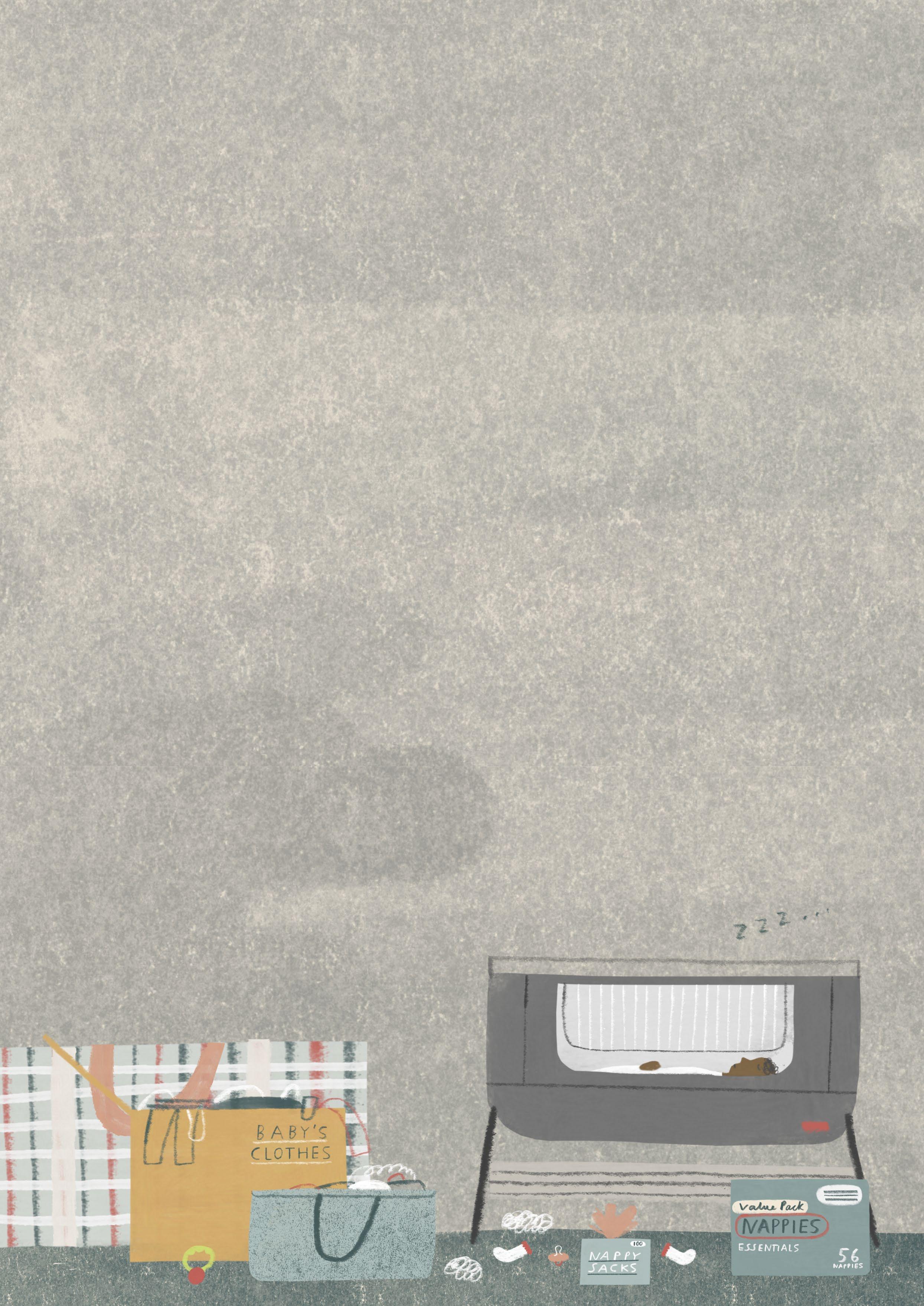
More space means her son “leaves me alone sometimes now” and plays more on his own with his toys, and both are feeling happier and more settled:
“I want to stay here for as long as possible to be honest because I love the area, it’s got the garden, the baby he’s happy here, and I’m happy as long as he’s happy”.
Naomi has found the waiting hard but now feels grateful, and feels lucky to have found a home where she can settle and focus on her son’s wellbeing.
“In the end luckily you get in your house and your property, you are made up but it’s like the waiting for, it’s hard to go through it and like you just want to be sure that, you know, you’ll have your house, you know, routine with the baby…Now I’ve found the nursery, now I’ve gotten my house it’s all come together, all at once so I’m happy”.
Naomi was pushed into housing insecurity by an abusive ex-partner and, as a single parent, spent two years doing her best to bring up her young child while frequently having to move between hotels. Now she has finally found a stable place to call home and feels hopeful about the future
Disrupted lives:
Difficult decisions and limited choices
Chris lives with his partner and their four children, whose ages range from one to 13. One of his children has a disability, his partner suffers with anxiety, and Chris has health issues which prevent him from working.
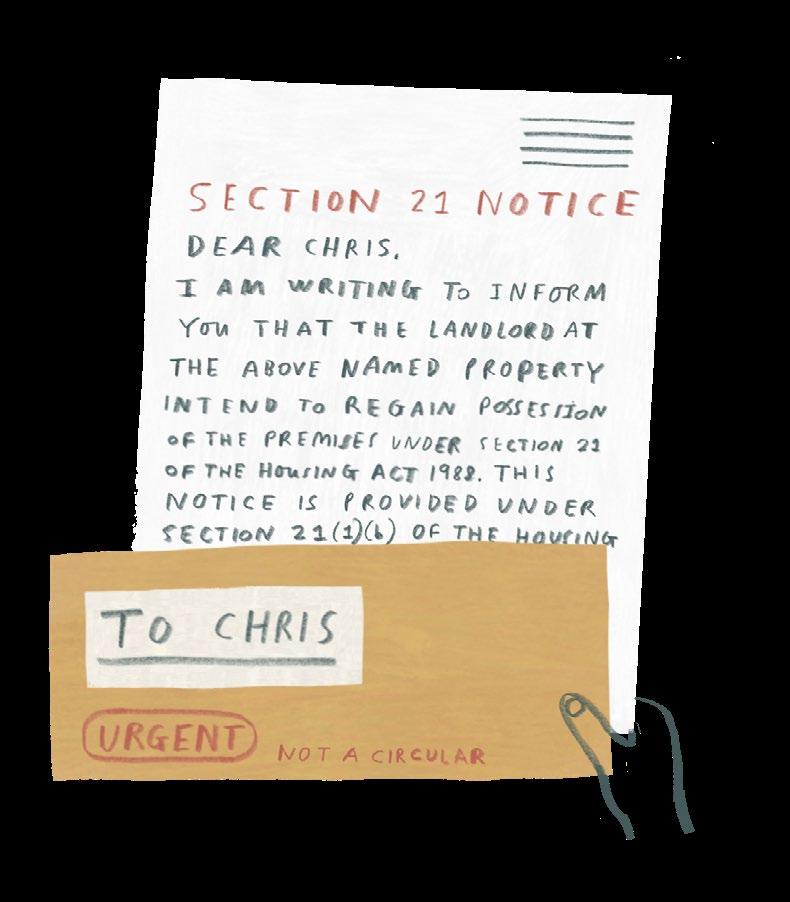
The family’s experience of housing insecurity began when a new landlord took over the three-bedroomed property they were renting and refused to carry out essential repairs, including fixing the front door which wouldn’t lock. After several months without action, Chris repaired the door himself and withheld rent, leading to a legal dispute. Although Chris won the case, the landlord then served a section 21 no-fault eviction notice, forcing the family to move out.
Chris initially hoped to secure another property in the private rented sector but quickly encountered a barrier because he was unable to provide a guarantor:
“So we were going to go private again…unfortunately though these days now, you need guarantors and most guarantors you need are homeowners. We had no homeowner guarantors …because we had no guarantor we can’t go into the private sector”.
He contacted the council and was informed that temporary accommodation would be provided once the family was evicted, but there was still a lot of uncertainty about what would happen next:
“All we were told was that on the day of the eviction, the day that we need to leave the property, someone from the homeless team will contact us with an address of where to go…So we had no idea where we were going”.
Family life in Bed and Breakfast accommodation
In the end, the family were given two rooms in a Bed and Breakfast (B&B), located on different floors, where they would stay for the next three months. Chris shared the first-floor room with his two sons, while his partner shared a small ground-floor room with their daughter and the baby. The lack of privacy proved challenging at times:
“It’s hard to talk in private because there’s kids around so it’s hard to talk about the situation without the kids overhearing, but then we could normally talk at night, but because we’re not even together at night anymore, that in itself, it was hard”.
Lack of space was also problem, particularly in the ground floor room:
“Obviously, it was a very small room, especially for the baby to go in, so there wasn’t much space for the baby to go round, and with there being bunkbeds and chairs, the baby would constantly be crying… it wasn’t the most safest environment for a one year old to be in”.
The other room was more spacious, and the whole family often spent their time there. While this room felt safe, Chris had concerns about sharing other B&B facilities with strangers:
“...we felt more safe being in the room, but coming out the room obviously you’re sharing the bathroom with other people in this B&B. Now we don’t know who was in this B&B and we don’t know people’s circumstances or anything else, so it could be scary”.
Chris also worried that the location of the B&B in a noisy part of town meant his children were exposed to behaviour he would have preferred them not to see:
“So they had what you call working ladies. Now they were, it wasn’t discreet, everyone knew what they were. The road is known for it. These ladies were, the majority of the time high off, from anything from heroin to whatever else they could possibly get their hands on...So watching my kids see that kind of stuff was not nice. And you could see them doing deals sometimes, sometimes you could hear the customers argue, you could hear them screaming at each other, threatening each other”.
This was upsetting to Chris who felt it was his role to protect his family:
“We’d go into the one room because we just felt safer, especially at weekends when it was more noisy outside…. I just don’t feel like I can protect her properly or my children”.
The family also had to leave their much-loved pets with family members while staying in temporary accommodation - yet another way their housing situation disrupted family life and wellbeing.
“The dog’s a comfort to my partner especially with her anxiety when I was working and stuff, she kept my partner company because of her anxiety, so the cat and the dog obviously helped my partner a lot”.
Trying to make do with a microwave
Cooking facilities in the B&B were limited to a microwave in a shared breakfast area, making it almost impossible to provide the family with hot, healthy meals.
“...most of it was either takeaways or cold food. The only microwave meals we used would be frozen meals that we bought, again, not healthy, but it was the closest thing to a hot meal at the time”.
One of the things Chris has come to truly appreciate as a result of this experience is the joy of proper home-cooked meals:
“You don’t realise how much you appreciate a home cooked meal, when you go to a family or relatives place just to have a home cooked meal”.
Grateful for a two-bedroom flat: a big improvement but still far from ideal
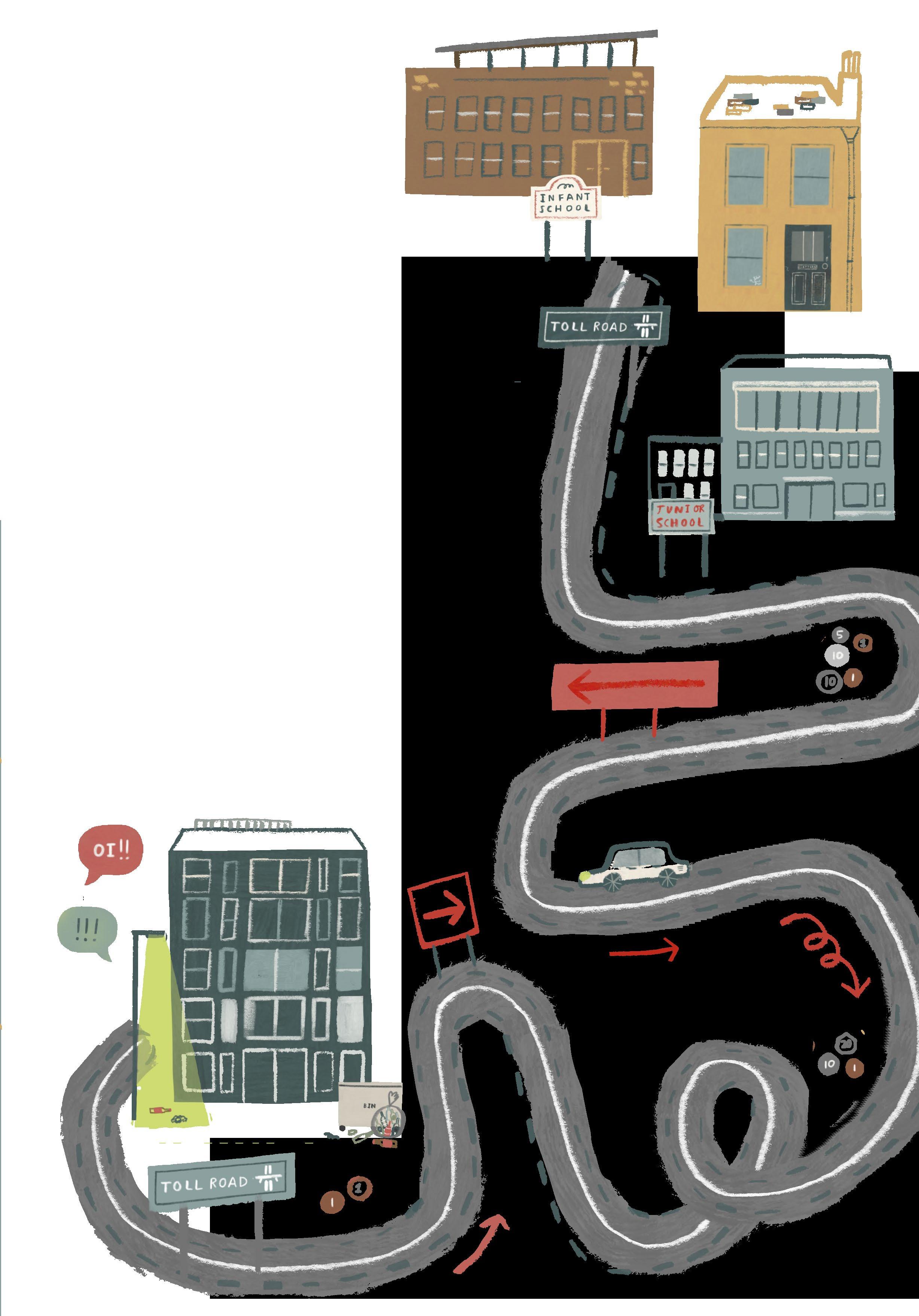
The family were relieved to be offered a larger two-bedroom flat as temporary accommodation. It meant no more tolls, which eased the financial pressure, and the baby could stay home with his mum, but Chris still needs to drive the children to school, impacting his health and adding daily stress:
“With me having to drive a lot more than I normally used to do, it causes me to be in more pain because of that, to get the kids to school and there is days that I’m not able to do it because I’m in too much pain”.
Chris remains positive about the flat, even though it is far from ideal. It’s close to town centre shops, but the area is noisy and there’s anti-social behaviour. Having their own bathroom and cooking facilities is a big improvement over the B&B, but preparing food and eating healthily remains a challenge:
“The only cooker that was supplied to us was this little oven cooker thing like a microwave with rings on the top…and just to cook a meal takes about an hour and a half… so we tend not to use the cooker which then obviously makes it a bit more expensive when it comes to food-wise and it’s hard to get a proper home cooked meal”.
This highlights the difficult balance Chris is faced with in trying to maintain a sense of normality for his children:
“It puts a lot of pressure on us because obviously trying to get the kids to school, trying to keep some normality for the kids is crucial, especially being in the situation we’re in now, I can’t imagine the effect, psychologically, the effect it can have on the children… especially with my son being 13, they can get bullied for it or you know, people make fun of it”.
Lack of space also continues to be a problem:
“it doesn’t help with the children being all in one room, all sort of bunged in together except for the baby who’s then with us”.
The need to share rooms means the children have very little privacy or personal space - something Chris feels is particularly difficult for his 13-yearold son.
Trying to maintain hope for a suitable council property
In the longer term, Chris is hoping to be allocated a council property, but they know that properties for large families like his are few and far between:
“With one of my children having a disability, he needs a bedroom of his own and because of that disability the council are not allowed to supply us with anything less than a four bedroom, but because the four bedroom is hard to come by it can take a long time to find one”.
Much of the stress he feels is related to the uncertainty about their future.
“Moving in itself is quite stressful, to not know where we’re going to go, and as I said yeah, then the insecurity of not, knowing that you can’t settle, not knowing what’s going to happen, how long you’re going to be there for or, you know, is it going to take months, is it going to take years?”
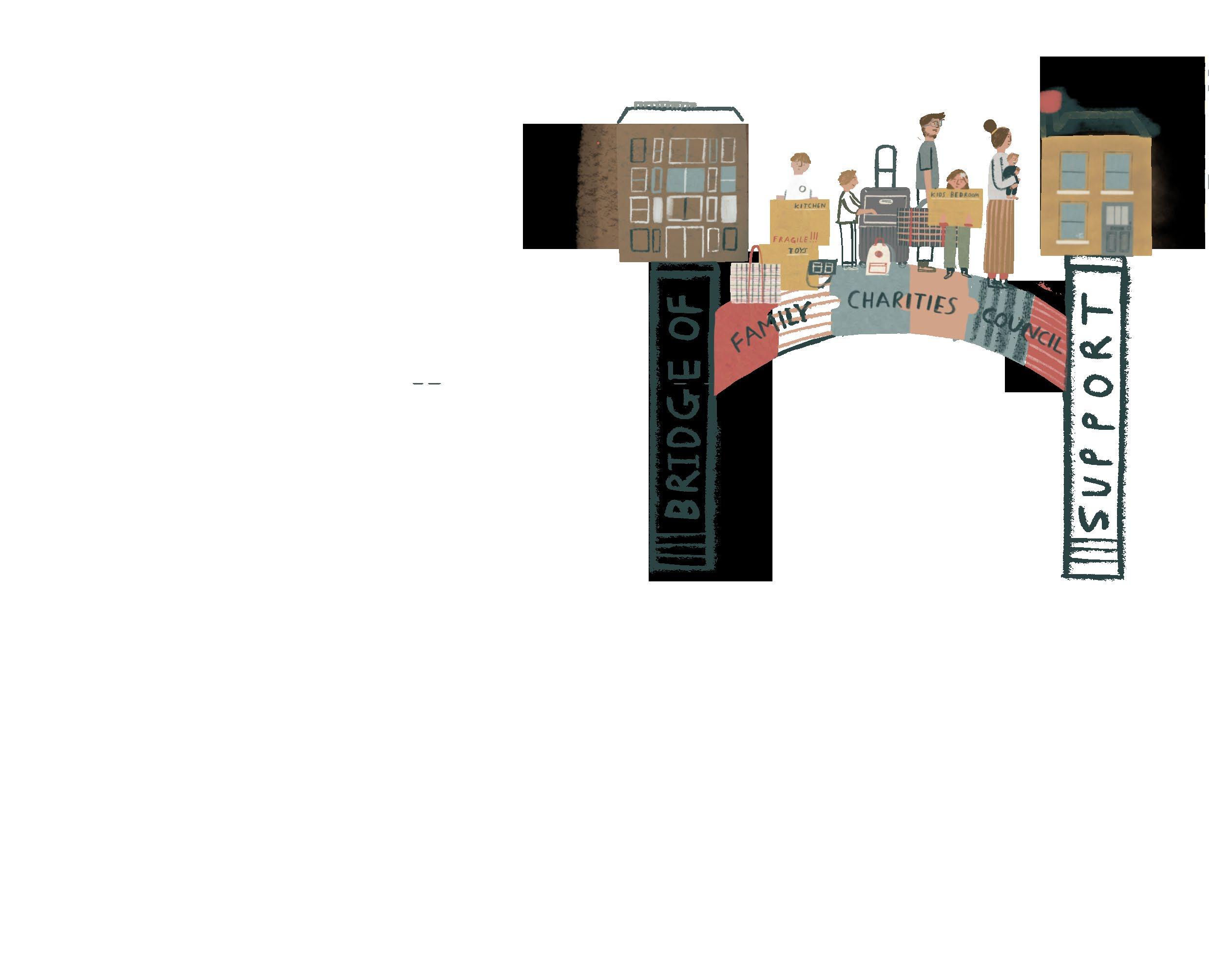
Chris feels lucky to have a strong family network and his family are an important source of support. However, there is a limit to the help they are able to give:
“We’ve got a big support network when it comes to family members… they help us to the best that they can but obviously they’ve got their own problems, their own issues, their own disabilities, their own money situations”.
Chris is grateful to the council and feels fortunate to have a flat, knowing many families are still desperate for housing but he remains very concerned about the psychological impact of housing insecurity on his family:
“ I understand that they’re helping by giving you a property temporarily, which is great because it’s what is needed, but the psychological side is not taken into account. They don’t realise the longer you spend in these types of accommodation that are temporary, the more psychologically it affects you”.
Chris’s story highlights how housing insecurity disrupts family life, compounds existing difficulties, limits choices, strains relationships, and makes it harder for families to live a happy and healthy life. Despite this, he stays positive, hopeful and committed to supporting his partner and children.
The impact of housing insecurity on everyday life, health and wellbeing
The stories we’ve shared highlight how housing insecurity affects nearly every aspect of life, with significant consequences for both parents’ and children’s health and wellbeing.
Many aspects of living with the uncertainty of housing insecurity are a constant source of stress and a strain on family relationships, and have effects on their physical and mental health: the upheaval and logistical challenges of frequent relocations; the ongoing effort to maintain hope and some sense of stability; and living in cramped, often dirty, mouldy and noisy conditions creates stress and puts a strain on family relationships.
Living with housing insecurity makes it difficult for children to not only attend school but also to thrive, while parents struggle to maintain steady employment. Parents worry deeply about their children and often try to hide their emotionsbut their children worry too.
Acknowledgments
We are really grateful to all the children and parents who took part in our project. We’re also grateful to the separate advisory groups of children and parents with experience of housing insecurity and professionals who have helped to guide our study and provided really thoughtful insights throughout the process.
Links for support
Funding
This project is funded by the National Institute for Health and Care Research (NIHR) School for Public Health Research (SPHR) (Grant Reference Number NIHR 204000). The views expressed are those of the authors and not necessarily those of the NIHR or the Department of Health and Social Care.
If you or someone you know is currently experiencing housing insecurity, here are some resources that provide support.
Shelter
www.england.shelter.org.uk/housing_advice
Emergency national helpline
0808 8004444
Call during opening hours if you are homeless, have nowhere to stay tonight, are worried about losing your home, or are at risk of harm or abuse in your home.
Online advice service
For help with your housing rights and the next steps to take in your situation.
Webchat
If you need help to take the next steps, or prefer not to call.
Citizens Advice
www.citizensadvice.org.uk/housing/
For advice on renting, council tax, homelessness or if you are experiencing problems where you live.
About the Living with Housing Insecurity Project
For more information about our project, please visit our webpage:
Credits
Written by
Dr Hannah Fairbrother
University of Sheffield
Dr Anne-Marie Burn University of Cambridge
Mary Crowder
University of Sheffield
Illustrated & Designed by Maisy Summer & Ffion Kilby www.maisysummer.com
Living with Housing Insecurity Project team members
University of Sheffield: Dr Hannah Fairbrother, Mary Crowder, Eleanor Holding, Dr Nick Woodrow and Professor Liddy Goyder
University of Cambridge: Dr Anne-Marie Burn
University of Birmingham: Dr Kiya Hurley and Professor Peter Kraftl
University of Liverpool: Professor Sarah Rodgers and Dr Jamie O’Brien