4. RESEARCH RESULTS
As described in the preceding section, the three interrelated studies explored diverse elements of ELCC programming for First Nations children in early childhood settings on reserve. This section of the report presents the key findings from each of these respective studies.
Study 1: Quality ELCC programming for First Nations children on reserve
This first study developed understandings of quality ELCC programming for First Nations children on reserve through the stories and perspectives shared by study participants with first-hand knowledge, experience, and insight pertaining to ELCC programs in First Nations communities. The following research results, presented in narrative format from multiple points of view, represent the collective thoughts and opinions shared in English by study participants, hereinafter referred to as “participant” and “participants.” The exact words and voices of participants are showcased as directly quoted italicized words. In the French version of this report, the stories and experiences shared by participants have been translated into French, for ease of reading.
The participants, the communities, and the programs
The 27 participants in this study were located in Canada’s westernmost provinces — British Columbia (BC), Alberta (AB), Saskatchewan (SK), and Manitoba (MB) — as well as in Quebec (QC) and New Brunswick (NB).6 Eight participants — including six First Nations participants, one nonFirst Nations participant, and one non-Indigenous participant — were situated in urban centres and 19 participants were on reserve, including 13 First Nations participants and three non-Indigenous participants from rural First Nations communities, one First Nations participant from a remote First Nations community, and two First Nations participants from urban First Nations communities.
Of the 27 participants, 12 were positioned in management or director-level roles. Among these 12 participants, four participants were from ELCC centres located on reserve and eight participants were from oversight or partner organizations tasked with providing national or regional support such as funding and resources, program development, technical advice, political advocacy, and training and networking opportunities to numerous ELCC programs in multiple First Nations communities.
Of the remaining 15 participants, seven participants were positioned as program practitioners involved in the frontline delivery of on-reserve ELCC program activities, two of whom also held management level responsibilities over program operations and delivery, including planning and coordinating activities, budgeting and reporting, and staffing. One participant was a practitioner involved in the direct delivery of post-secondary ECE education and training. Two participants were not attached to any ELCC program per se, but they had extensive experience with on-reserve ELCC programming, both professionally as former practitioners in the field, and personally as previous parents and now grandparents of children attending on-reserve ELCC programs. The other five participants were parents of children who were either attending or had previously attended on-reserve ELCC programs.
When asked about the programs that are offered in their region for families with children aged birth to six years residing on reserve, participants typically mentioned more widespread programs such as “a maternal child health program,” “an infant development program,” “a toddler daycare program,” “Aboriginal Head Start ” or “an early years program,” “preschool programs,” “ immersion language programs” or “ language revitalization that focus
6 The following provincial acronyms are used to refer to the respective provinces mentioned throughout the remainder of this document: British Columbia (BC), Alberta (AB), Saskatchewan (SK), Manitoba (MB), Quebec (QC), and New Brunswick (NB).
on the early intervention and looking at language,” as well as “other programs that are accessible to us in the surrounding area.” A few participants also mentioned “social services” and “parent engagement activities,” along with different “band office services” and “ health services” that offer supports like “visiting doctors and dentists, and there are therapists that come to the child care programs on reserve that are part of the early intervention team. Those are the speech and language pathologists, occupational therapists, and physiotherapists.”
Despite the range of services available on reserve for First Nations families with young children, some participants, mainly from rural First Nations communities, identified a gap in on-reserve ELCC program options. For example, a parent from rural MB stated that “the Head Start program is probably one of the only ones that actually have programming for early childhood, besides nursery, which is the school. But six and under, Head Start’s probably the main source.” A grandparent from urban BC said, “We make do with what is available. It doesn’t really meet the needs in our family. There’s a lot of holes and gaps — the support for our young families, for the parents.” One early childhood program practitioner from rural BC explained, “We don’t have a lot of activities or anything under zero-to-six in our community. No child care centre or anything like that within our reserve. In the reserve next door to us, they’ve just built a brand new daycare centre. It’s about two kilometres [away]. … [Families] have that option of going there.”
Reflecting on the different support options available on reserve for First Nations families with young children, one program manager who works in collaboration with multiple rural First Nations communities in NB shared, “When they brought me on into this role was just to identify the gaps in services in comparison to early childhood intervention. … Then we grew into this team. … Then it lead to the programs that we offer in community.” Another participant from a national partner organization in urban QC told a similar story, confirming the general impression that was seen of the First Nations
communities discussed in this study — “that every community, or organization working on behalf of multiple communities, weren’t doing nothing. There was always something, whether they had an MCH [Maternal Child Health] program running or even just CPNP [Canada Prenatal Nutrition Program], food vouchers, or maybe they had a fully-functioning early childhood program, but they had some gaps.” The participant shared:
“Understanding all of the existing programs that currently were funded or could be funded by the federal government was really important to ensure that we weren’t duplicating services or we weren’t doing something that was already being done. … We were able to identify significant gaps in service that led to the creation of what we now call the [early years initiative]. … The mechanism, the idea, was that if we could successfully support parents and intervene with parents — decreasing their stress where possible, increasing their knowledge of basic early childhood development, and supporting their access to existing services — we would, over time, see improvement in overall childhood development at school entry. We recognized pretty quickly that there was a huge demand for this program. … The three program elements that we offer is, firstly, program design. … The next thing is curriculum and training — or training and learning resources. … Then the last thing … is evaluation. One of the things we heard from community partners was a really big need to track what they were actually doing on an ongoing basis.”
Overall, participants — both frontline and secondlevel program providers — were most familiar with AHSOR programs and reserve-based child care programs. Linking the participants to the ELCC programs discussed, eight participants were affiliated with a specific AHSOR program in their respective First Nations community and one participant was linked to a specific bandoperated child care centre. Three participants were involved with both an AHSOR program and a child care centre in their respective First Nations
© Jade Fraser, 2025 community, and one participant was involved with both an AHSOR program and a school-based preschool centre. Four participants were associated with multiple AHSOR programs in different First Nations communities, and another 10 participants were connected to a multitude of different First Nations-led early childhood programs and initiatives, including AHSOR programs and onreserve child care programs.
Concepts of quality ELCC program curriculum and activities
Thinking about the early childhood learning, development, and care of First Nations children on reserve, participants were asked to describe the concept of quality ELCC programming, particularly as it relates to dimensions of program curriculum that are critical to the health and well-being of young First Nations children and their families. This subsection details the findings from this aspect of the participant interviews and group discussions.
Community-specific, child - centered, and structured programming
Participants generally used words and phrases like “ identity of the child,” “representing those families,” “culture and language,” “uniqueness of the history,” and “reflect the communities ” when describing quality ELCC programming for First Nations children on reserve. They talked about quality ELCC programs being “connected to land,” “connected to language,” and “connected to our family teachings.” They described on-reserve ELCC programs as being “culturally appropriate,” “culturally relevant,” and “culturally responsive,” and explained how “everything from the décor, to the language used, to the resources shared, to the food served ” in on-reserve ELCC programs is “reflective in a positive way of our First Nations children ” and representative of “the culture of the children and families who participate in the programs.”
Participants talked about “a culturally safe environment that is respectful of First Nations values and … that’s respectful to First Nations customs, traditions, and cultural protocols; that is inclusive to First Nations families and their unique needs.” They emphasized that they “want [First Nations children] to see themselves and be proud of who they are … and appreciate who they are ” through the “materials in the centres” and “the things that are being taught within those [‘early learning and child care systems’].” For one early childhood practitioner from rural NB, “Just our
children being in a centre within our community — because of faces around us, because we are community — that itself is part of quality as well. Sending them off reserve into these centres, they can’t provide what we provide in community because we have families. We have our staff. A lot of the people within these centres are from community. These children are from community. … We always want to make sure that we’re giving the best for our children. To me, that’s one of the ways.”
Participants described quality ELCC programs on reserve as being “wholistic,” “ family-oriented,” and “child-centered ” or “child-focused.” They mentioned a “ focus on the whole child ” and “the whole family ” and “all areas of development,” including “t he physical development, cognitive development, emotional development, intellectual development, creativity,” stating that “all of those components of the whole child need to be evident in all of our programs ” and that “the support that that requires extends to the staff, the educators, the directors, and the awareness and education for the families, and how that quality can impact a community.” Participants also talked about “curriculum ” and “wanting to

ensure that they’re high-quality educational programs, that children are learning and growing, that they’re challenged based on their developmental levels and opportunities, and it’s a dynamic curriculum that inspires curiosity, lifelong learning.” A participant from urban QC who manages “a seamless program ” comprised of “amalgamate Head Start child care initiatives and early learning child care ” also noted that quality ELCC programs on reserve “ have our cultural curriculum.” The participant explained:
“We ensure that the domains are covered. We want to make sure that all the areas of physical, intellectual, cultural, emotional, the spirit. … It’s all those elements and ensuring that there’s individualization for the children, that it’s not a one-size-fits-all; that it’s about relationship. It’s about modeling. It’s about providing [young First Nations children] what they need so they can reach their potential. When we talk about that, it’s the foundation which is culture and language first. Instilling that identity and then making them proud of who they are and celebrating that on a daily basis, celebrating their gifts instead of focusing on challenges and focusing on disparities and disabilities and stuff.”
Reflecting on the elements of early childhood learning, development, and care that are critical to the health and well-being of First Nations children on reserve, a participant with regional oversight of ELCC programming in multiple First Nations communities in rural BC asserted that “ it’s not even just about focusing on who [children] are and where they come from; it’s also about teaching them about the world that we live in.” The participant explained that, sometimes, this means “ bringing in as many people from different walks of life … to teach about the rest of the world. [Children] still need to learn English, their A-B-Cs, their 1-2-3s. … We just have to be really, really mindful and provide as many experiences and joys in these early years so that they have that foundation to keep wanting to learn about what else is out there.”
A grandparent from urban BC talked about “ having that respect” and “the embracing of not just special needs but that all kids are different.” The participant acknowledged that “sometimes, for convenience sake, it’s easier with 20 kids if you can get everybody to conform to certain things, but there’s definite groups and individuals that always fall by the wayside. There needs to be more flexibility in programming to accommodate and demonstrate that it’s OK to be different, that it’s OK that you’re not exactly like everybody else because if we demonstrate that, that goes a long way. But if we highlight that there’s certain measures that certain people aren’t making it to on time, that can be detrimental.”
Other participants shared similar sentiments that “when you think of quality with early learning, we have to think about the child ” and “their knowledge, their skills, their backgrounds,” and “build on strengths.” Oftentimes, this involves “acknowledging the children’s abilities and capabilities” and “ letting the child be the child.” One participant from urban SK who provides support to ELCC programs in
several western provinces and territories offered some insight in this regard:
“First Nations [people] have had this knowledge for well-being. It’s spoken differently. Let the child be the child. Let them grow and develop and explore at their own pace. Let them be outside. Let them do that. Let them sleep when they need to sleep. Let them eat when they need to eat. That’s all natural rhythms of their body and the land and the waters. … It almost seems like we have to reteach that. Well, maybe we do, but we need to pair it with the modern day science. That is what young children need the most to survive and to do well in a modern day world.”
For some participants, “ letting the child lead ” meant “really trying to get centres away from theme-based, and more child-interest-based … where it’s not, ‘Oh, today is Fall. So, we’re talking about leaves.’” An AHSOR program practitioner from rural BC shared a story, featured on page 32 of this report, that depicts this notion of giving priority to the interestbased needs of First Nations children in early childhood program settings on reserve.
Participant Story
“I remember when I first was going through and doing my practicum, a little guy was a paleontologist. He loved dinosaurs. Part of my training was to bring in things that would explain, so kids’ minds expand. I was out there digging holes and burying dinosaurs so that he could be that paleontologist, just to dig up those dinosaurs. … I filled the room with dinosaur materials — dinosaur posters, dinosaurs in the sandbox. There was dinosaurs everywhere. … What I did with the dinosaurs; that would be more child-interest-based. … [Like] trying to work with our Indigenous calendars — our circular calendars — around the seasons. What actually happens? What are the words? But using it in the interest of the child as well. Salmon, fish, all that type of thing. Not making it a theme; just bringing it in. … Who cares if you’ve got big Tonka trucks? Bringing the salmon in and putting them out there as well, with the Tonka trucks. That’s important because if a child is interested in the salmon, they should be able to say, ‘Oh, look at, I’m going to put a salmon in the back of the Tonka truck.’ Or putting a bin out there where they would put a bunch of salmon in. … That to me is very important as well, so that they have that ability to explore the world and live in their world that they’re involved in. I know a lot of it is about Starbucks and Tim Horton’s lately. Maybe even having those coffee shops. That’s really a good experience for children to have that little green apron on and selling coffee because they learn about money, and they learn about all that kind of stuff. But that’s the world they’re learning in.”
A participant who’s tasked with managing the child care and AHSOR programs in a First Nations community in QC talked about “an emergent curriculum” in which ELCC practitioners will “try to follow the child’s interests,” while also initiating “teacher-led activities” when needed:
“We’re very fortunate that we have a huge backyard. I split my yard up into five different areas. That’s how big it is. With that, we go in all kinds of places with risky play. We can do loose parts. … If we’re trying to focus on fine motor and really trying to zone in on certain things, then of course we’re going to do a teacher-led activity. … We do put out provocation pieces and we watch and we assess where some children are struggling … and how we can change things up a little bit or support them in reaching certain milestones within the developmental portraits. … A majority of children, for lack of a better word, struggle in certain areas because it’s the individualization. Some [children] may speak a little bit later. It doesn’t mean they have a speech problem. Some may not be able to do certain skills — cut with scissors and thread a needle. It doesn’t mean that they can’t do fine motor activities; they’re just not there yet. They’re not ready. We give them those tools so that we can help them along. … It’s trying to find the balance so that we are really being intentional, for instance, with teacher-led activities when children need a little bit more support in certain areas.”
Another participant from rural AB who’s also positioned to “manage the daycare and the Head Start program in [the] community ” said that “on the daycare side,” they “ don’t have to have any curriculum per se,” but to ensure quality in ELCC programming, “there has to be some sort of structure. … It can’t be all loosey, goosey.” The participant explained, for example, “With both programs … we have things scheduled, whether it be fall themes or animal themes or we do cultural things with our children. … We don’t want it just to be a babysitting service. We want our babies [‘on the daycare side’] to get ready to go to the other side. … So they’re ready to go to the Head Start side. Then the
Head Start children, we want to make sure that they are ready to go to the big school — that’s K5. That’s what we’re striving for. We want them to succeed in whichever manner they can succeed.”
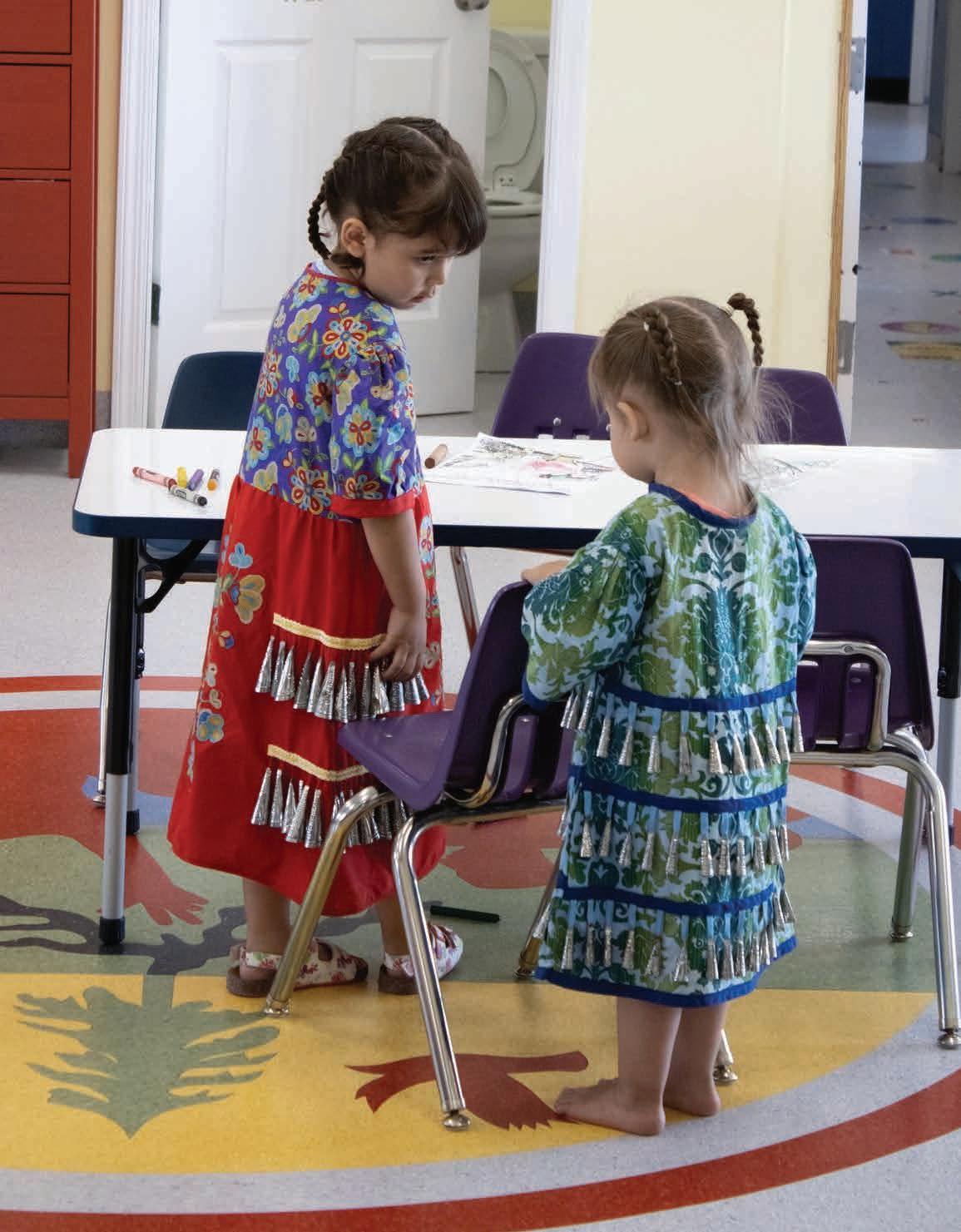
Other participants made similar comments about the significance of having structured ELCC programs on reserve. One participant who previously worked as “a preschool coordinator ” serving “probably eight or nine communities ” in rural MB reported that “the best thing about ” offering “structured ” early childhood program activities — in this case, in a shared “ kindergarten classroom ” space — was not only that “when those kids were going to start kindergarten, they all were familiar with the room ” and “ had a general idea what kindergarten would look like,” but also that “a lot of the time, [‘teachers’] can tell the children who have been read to because they appreciate the story. Children who have never owned a book don’t value story time; they’re running around.” A practitioner with oversight of both a school-based AHSOR program and a preschool
©
Lesli Fenner, 2025
Quality care and young First Nations children: An exploration of optimal learning and development in early childhood settings on reserve
program in rural SK likewise stated that “you can tell the [children] that are in daycare or they’ve been in some place where they’re used to schedule and change ” because “already then, they know structure. They know change of events and schedule. … They know when it’s time to go home, what they have to do because it’s done at the daycare already. They’ve shown them that schedule and the change of events during the day.” Of the children who had not experienced structured ELCC programming prior to entering preschool, the participant perceived that “they’re harder. They don’t know that we’re going to eat in five minutes. You can tell them. You can keep telling them. … It’s a hard thing to describe … having kids here that haven’t been in daycare or any structured environment. They’re just eager. Their minds are open but it’s like they don’t know schedule either. … They want to play. They want to do this and that. They want to paint. … It’s nice to see but it’s like you have to show them the structured time. They have to get used to that.”
Observation, monitoring, and intervention activities
Several participants in frontline programming positions — including both program directors and program practitioners — talked about “engaging the child where they’re at ” and sometimes having to carry out different “ intervention strategies for children” based on their developmental capabilities, interests, and needs. Participants explained, “as the feeder system,” they want to “ensure that [children] have everything they need before they move on” from ELCC programming, otherwise “they’re going to struggle in school,” especially with “the social-emotional piece,” which some participants expressed “ is more important than the child being able to say their colours or write their name.”
At the same time, however, a participant from urban QC pointed out that “sometimes there’s a little bit of a misunderstanding at the educational level because they have an expectation that the whole school readiness thing, as much as we’d like to check all the little boxes, sometimes it’s just not possible.” The participant explained, “We have 18 children in the classroom and sometimes there’s six or eight special needs children in the classroom; one non-verbal, one with cerebral palsy, two with autism, and we do the best we can.” Likewise, a participant from rural AB commented, “We are getting more children with more special problems. For instance, we had three autistic children last year. … I don’t know how many autistic children we’ll have this year but it seems to be rising. … I don’t know if it’s just me, but that’s how I feel — that we’re getting more children that need more help.”
Some participants said that they will routinely “ do development testing ” or “assessments on our children” and “watch every single child’s development ” to determine when “and how some [children] need a little bit more assistance.” For example, a practitioner from rural SK who also holds program management responsibilities explained, “When the children come, I spend maybe about two months working with them, just on introducing different things. You’ll already notice where their strengths are and where the
© Lesli Fenner, 2025
weaknesses are. … Some [children] don’t have really good speech, or some don’t even have speech when they come in. They will gesture. They will make noises but they won’t actually speak. By even December, they are maybe saying two words or three words. That’s because they learn from the environment here and from us helping them with their speech as well. We have a speech person that comes in from the school. … They spend about 45 minutes working with the child that needs the speech pathologist.”
A grandparent from rural BC mentioned having at one time “well-baby clinics” that “went into the daycare, preschool ” in the First Nations community to do “ developmental testing or assessments” of young children aged birth to three years. The participant asserted that the developmental screening “really helped the parents know more about where their child was at in their development and what supports they needed if the child was lacking.” The participant added, “Then, when we went and did the preschool, we were able to do the physical — some of the vitals like the vision, hearing. We were able to catch what child needed referrals and stuff like that.”
Still other participants talked about doing “ developmental checklists where we ensure that the child is able to do things that are generally expected at a certain time in their development.” For instance, a few participants said that what “staff would do is the ASQ [Ages & Stages Questionnaires] assessments on our children,” which was seen by at least one participant from remote BC as “the best tool to keep that communication open with the teachers and the parents and the special needs teacher. Then when [children] transition off to school, we’re able to give them a report on the children on how they’re doing — whether they’re really good at, for example, cutting with scissors, or using the toilet, or running, or jumping, or on the other hand, that [children] may need some speech and language support.” Another participant from rural BC said they “ have a wholistic approach to making sure children are all seen and screened ” that includes not only “the ages and stages screening,” but also “the AEPS [Assessment, Evaluation and Programming System] training, which is a skills-based assessment of children as well, so that we know where they’re at when they come to our centres and when they leave our centres.”

Participants explained that by “evaluating [children] prior to and then once they are ready to head to the school system,” they are able to “catch them early, before they enter the school system” and “get them into the speech pathologist,” “the physiotherapist,” “an occupational therapist,” and “ different specialists” or “special educators” and “work with the specialist and the parents as partners in the entire program process” to not only “get [children] ready for school,” but also “get them ready for the social aspects of learning how to be social in different areas and activities in life.” Participants advised that they “will bring in the specialists or the resource people when there are really persistent and significant challenges for children.” A participant from rural BC even said, “One of our communities actually has speech pathologist assistants. The speech pathologist will come and do an assessment; say this is the training plan, please do it like this; and then the assistants will go in and do those trainings with the children.” Another participant with administrative oversight of ELCC programs in several First Nations communities in QC talked about doing “a lot of transfer of training ” that involves having “an occupational therapist to come in” and do “modeling of different types of activities and interventions for children for the educators [to] actually do the training or the actual intervention within the classroom.” The participant explained how this intervention process works:
“I’ll give you an example. We have a little guy. The physio comes in every Tuesday. … He really has difficulty with gross motor. … So right now, they’re working on stairs. What they do is the lead educator will go with the person. We have this mock stairs. They will show them exactly how to take his hand and put it on the railing and help him with the one leg to go up and stuff. The physiotherapist will model it. So now, the teacher will do that in our gym or outside with the child, modeling the same thing that the physiotherapists showed them. Then in two weeks when the physiotherapist comes back and gauges how well the child has progressed in that area, may now determine, ‘OK. Now, we’re going to throw a ball with him. This is how you do it.’ … Rather than it only being one-on-one once a week or once every two weeks, it’s daily, within the context of the classroom. … We do it all inclusive — everybody within the classroom. Say there’s four educators; one is the lead and there’s three assistants. They all take turns. … But they all know what his goals are. … They all know what are his triggers. They all know what needs to be done. If they need, then they can do a resource call where … we would go there and support them for whatever might be happening at that time.”
Parent-child activities and parent mentoring
Providing opportunities “to bring parents in,” offering activities “ for parents to come to with their children,” and “really engaging parents in their children’s learning journeys from day one ” was said to be another crucial aspect of quality ELCC programming on reserve. Participants, including both parents and practitioners alike, recognized that “ it’s what the Head Start’s basically doing … but it has to be increased.” As shared by one participant who serves as an AHSOR manager/practitioner in rural MB, “We want to help the children in early learning. Good quality care. But we need to start with the parents of the young children. … If we work with the children directly with no parents, yeah, when the kids are in that care, they’re being cared for and they’re learning and they’re in a good environment. But then, they go home and we don’t know what’s happening at home. With my program, [which includes parentchild activities and parent mentoring], we get to see the parents and we get to help the parents as well, and teach them what we can, help them with what we can, and build those relationships with them. Together, they go home and they’re a little bit better than what they came. We teach the parents parenting classes and developmental understanding. … I feel like if we have more programming with child and parent, we’re going to help more of the generation, more of the children that way, than just working on just the children now.”
A parent from rural MB also acknowledged that “ if we brought those parents in, then there’s programming for them, that network is made with them, and then those parents go home feeling more secure, which means those children are going to be more secure later.” The participant described this concept of involving parents in their children’s early learning activities as “the follow-through ” needed to ensure quality ELCC programming on reserve. That is, “when it comes to parenting, we need to have not only the good programming, but we also need it to follow them home so that way they could do it there.” The participant emphasized, “There needs to be a support network. There needs to be guidance. You need to know that you’re going to be supported. …
[‘With the Head Start, it’s more family-oriented.’] … It’s like they check on each other. They create a web to hold that family afloat and that web is made out of the people that you meet at Head Start. It’s made out of the families that are there, the workers that are there. … We need to educate them. We need to teach them things like sewing, cooking, their culture. … This is stuff that they need to take home with them so that way when they leave from say, the Head Start program, that there’s no worries because that net is still there. So, for me, quality programming for early childhood, it starts with the parents.”
©
Lesli Fenner, 2025
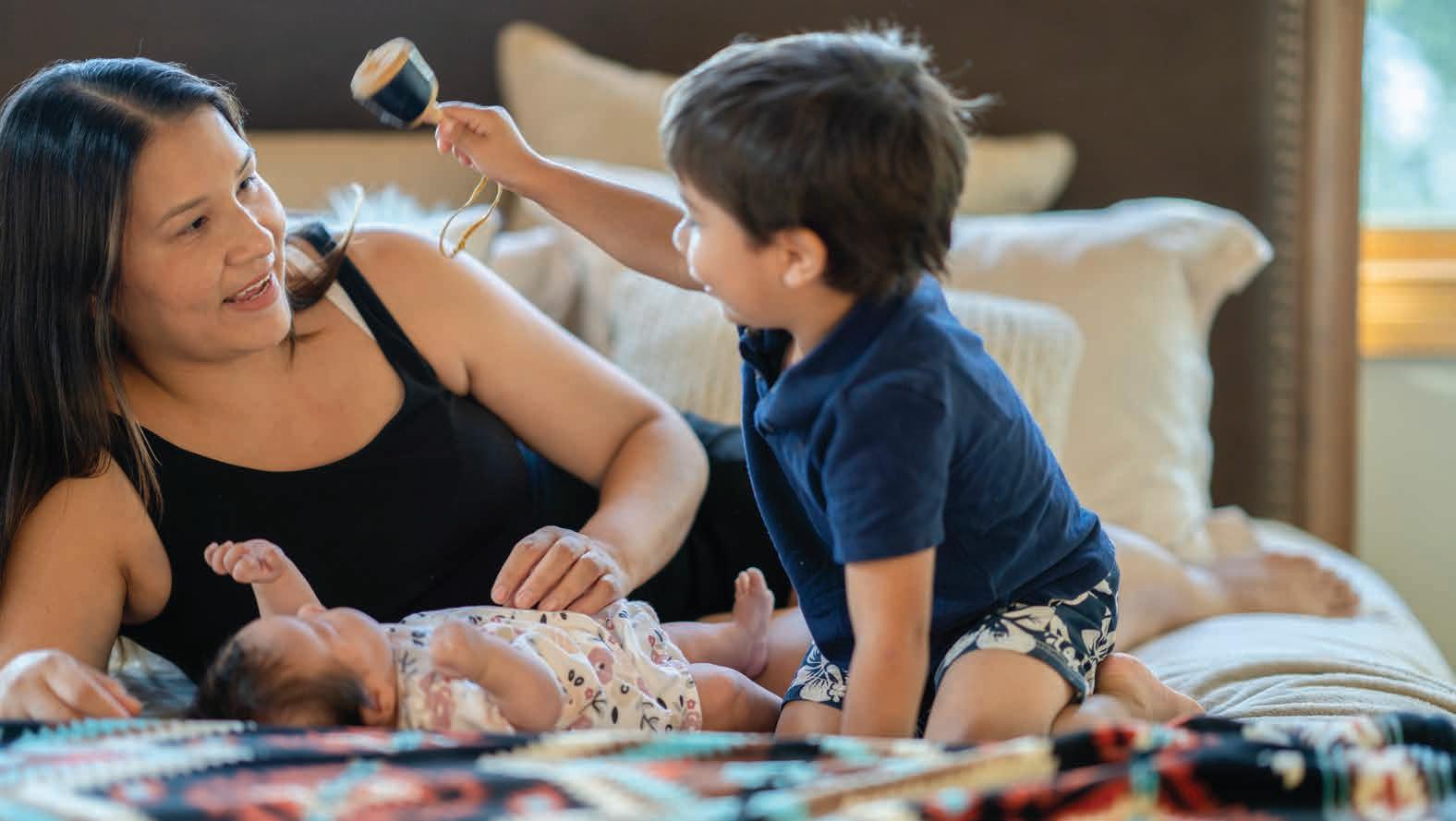
Participants recounted many different ways in which they involved parents in the quality early learning experiences of their children. A participant from urban QC, for instance, described “an 8-week program really focused on preparing kids for preschool. … Parents also attend those sessions. There’s some childonly, parent-only stuff, and then they come together. That’s working on things like potty training and routines, bedtime routines, stranger anxiety, all those things that parents might need support with in order to feel good about their kids going to school.” Another participant from urban MB described having “to go into the kindergarten classroom with my two big bins and for two and a half hours, we ran a mobile family resource centre. … The first 15, 20 minutes were free play. We had introductions. … We had story time, and then we had a parenting topic. For half an hour, we would discuss this and I always had handouts or links to what we were discussing, or booklets. … Then we had snack. Then we had water table and different things like that. We had craft as well. The parent had to sit with the child and they had to do the craft. … We had it all coordinated. Every week, I went to eight different communities and did the same thing.” A participant from rural NB talked about doing “ infant massage with moms and their infants,” stating “that’s one of the most beginning things that can happen with the parent and their infant. It builds their attachment and it also encompasses a lot about being able to understand how and why infant massage is so important and the benefits of it for the child. … As a parent, we ask the child if it’s OK if we massage them. Right away, we’re having high respect for that little infant that’s in front of us and even though it’s our child, we still have that respect of asking permission.”
Participants spoke about the “ importance of attachment and connection” and emphasized the value of “trauma-informed attachment training ” and creating “parent-child bonding opportunities” which “empower parents to show that love and affection” with their children. They shared numerous stories about providing guidance “with parenting techniques and strategies” and offering “workshops with the
parents to increase their abilities to better parent.” Participants mentioned how “working with people from the community who have been parents themselves and strengthening their experiential knowledge — as opposed to trying to get them to do something new — is the best way to create safe environments for parents to learn about parenting and think about parenting in a way that feels natural to them.” A parent from rural MB, for example, talked about how “quality programming would be having the parents involved with learning with their children how to interact and to be there for them.” The participant said that “ having workshops for the parents” and showing them “ how to play ” with their children, “ just simple things like that ” is “number one on children’s development … because a lot of the parents that do come [to early learning programming] are young mothers. So, working with them, giving them workshops and letting them pick what kind of workshops they’d like to learn about ” is an important part of children’s early childhood learning, development, and care. 38
©
Jade Fraser, 2025
A participant with programming and oversight responsibilities of a child care centre in remote BC talked about “supporting [‘young parents’] of being a new mom at such a young age and helping them to recognize that ‘This is a precious gift that you gave birth to and you have to love and care and play with your young child. You’re not a teenager anymore. You’re a mom now.’” The participant explained, “We had to be able to try put up teen mom workshops for these moms to be able to support them, teach them about budgeting, and routine, and parenting, and relationships,” adding that “ it was amazing.” Another participant from urban BC talked about a parenting program to support families that “were on that fine line of their children might go into care.” The participant explained, “In that program, we would sit together. We would do a guidance strategy, or how to play with your child, or talk to your child. … We would videotape the child and the parent doing an interaction that we taught and we’ve talked about within that session. Then, they would watch it. … It was beautiful. I love that the parents, they grew, because when they saw themselves. At the end, we gave them a CD that had all those clips showing these beautiful moments that they had with their child. … It uplifted them to be good parents. … They need that encouragement.”
Participants acknowledged “that parents and caregivers are children’s first teachers,” and as early childhood program practitioners, “we have to allow parents to participate in the upbringing of their children” by “working with and alongside parents.” As emphasized by a participant from urban QC, “The Elders told us, ‘Don’t take that responsibility away from them. They are their child’s first teacher and you are there to walk with them and support them.’” At the same time, however, participants reported that “ it’s not that easy though to get your parents to come in.” As expressed by one participant with direct delivery and oversight responsibilities of ELCC programming in rural AB, “We invite them in. We have little events to try and get them to come in, but that is an issue — trying to get parents to come in.” A
participant from urban NB said, “Whenever [parents] drop their child off in the morning or whatever time that may be, it’s that communication piece that I find it’s hard to get; where parents, sometimes, they just come in, pick up their kids, and they have other things to do.” Another participant from urban SK shared that “there’s been different efforts over the last 20 years” to engage parents in the early learning experiences of their children but for many ELCC programs, “often it’s done in monthly meetings. … A lot of it is done ad hoc, which is it’s after school, after the program. If it’s a school program, a three-year-old wouldn’t be in a school, so it’s done informally.”
For many participants, providing a “safe and healthy environment ” that is “welcoming and friendly ” and which exhibits “clear and open communication happening amongst the staff at the centre and with their families” and “ healthy adult-to-adult communication” were key to fully immersing and supporting parents in the early childhood learning, development, and care of their children. As an example, a participant from rural MB shared, “I usually try texting some of my young mothers that I have in my program to see how they are and if they need to go workout or to go walk around the track or whatever. I usually just see if they need help or if they need a ride or anything. I guess it’s just checking up on them.” Recognizing the importance of having those conversations with parents about “this is what’s happening ” and “this is what’s going on,” and going “back to what is that child learning from that experience,” a participant from urban NB advised that the early childhood program practitioners have “been using a lot of technology to do that.” For instance, “there’s different types of apps that they use that helps with communications to the family.” The participant explained, “Using an app, they can take a picture. You know, the child … picked up the drum and he was doing the drumming today, or something like that. They can snap a picture and put that [caption] underneath that [picture].”
An AHSOR program practitioner from rural BC reflected on past times spent trying “to encourage the parents to engage with their children” through guided home visiting activities. The participant explained, “Sometimes parents are standoffish and they’ll want us to do all the playing with them. We try to bring the parent in to play with their child, that they’re more involved, letting them know that we’re not there watching them. We’re there just to encourage them to enjoy their activities.” Another participant from urban QC said that “ developmental portraits are important to discuss with parents so everyone’s on the same page and understanding the expectations. … That’s all part of the programming.” At the same time, the participant advised, “We try to as much as possible when we meet with parents … to come down to their level and speak to them, like, in layman terms, and just show them that we’re not trying to take over. We’re trying to support and educate and help, as opposed to shame and blame — or any type of negative way of feeling how we feel inferior, make people feel a certain way. It’s really being mindful of how we communicate and the words we use, and those three pillars [‘that’s all about doing things with a good mind, from a place of strength, and in peace’] are always playing on our minds.”
A director-level participant from rural BC asserted that “our biggest goal is to make sure that our families feel as supported as possible ” through quality ELCC programming on reserve. According to one AHSOR practitioner from rural BC, one of the foremost ways of doing this is by allowing for “more of a one-on-one conversation with the ECE [early childhood educator] and the parent ” to happen, and “really listening to that parent,” and “ having those opportunities … where you actually have that relationship with that parent.” The participant established, “ for the parent, their child is everything to them. Allowing that, hearing what they’re talking about, is important.” Moreover, “as parents, we know what we want for our children. We know what we see and value for our children,” and “we know what’s best for our children.” Therefore, “making sure that we are having that contact constantly with parents ” allows for that continuous dialogue and two-way sharing of information to happen “so that we know, ‘How was your child’s day?’ ‘Did you go to the long house last night?’ Just so we’re aware, that we know, OK, this happened, and why the child is more sleepy than they normally are — being more adaptable to that. The child is sleepy. Let them sleep. Let them
have that opportunity to have that extra rest that they require. That, to me, would be a culturally safe experience for them. I know parents are determined to get their children in by that structural time. The child may come in really tired because they’ve been at the long house for, past 1:00 in the morning.”
In essence, as another participant from rural BC stated, “It’s really that transparency piece of just all of us being there to support the whole child. … It does take a village. You know? The more supports and the other things that we can put into place for families, the better supported they are, the better they do, the more likely they are to succeed.” Lending support to this notion, another participant from a partner organization in urban NB shared, “As a parent myself, having two boys, it was really good to understand what was really going on. It wasn’t just a babysitting service where I drop off my child and leave thing so I can go to work. It was like, this is why we’re doing what we’re doing, and the parents to help out with that. … That parent — it’s very important. They’re the key. They’re the parents. They know their child the best, and they’re helping guide us on how we can better do for their children.”
Reflecting on this aspect of quality programming as a parent on the receiving end of AHSOR programming, a participant from rural MB recalled, “When I attended with my children, I was able to go into the classroom whenever I wanted to and sit down and work with them or help them do their activities, and I was welcome to sit at circle time and show them how to actually sit down. I just liked that I was a part of the program and I wasn’t denied nothing. Whenever I asked for anything, they always tried to accommodate what I needed there. There’s nothing that I didn’t want added because pretty much everything was accessible to me and my children when we went. It was welcoming.”
As the practitioner and manager of this particular AHSOR program in rural MB, one participant talked extensively about “the parental involvement portion of Head Start ” and how “attendance is important,” so much so that the participant “changed the way that [the] program was run policy-wise.” The participant explained, “The change that I made was that parents had to come full time. There was a big shift in the whole community. … They come full time with their children while they’re here in the program. They don’t have to be directly with them in the classroom but here in the building.” The participant shared an elaborate and valuable story, featured on page 42 of this report, which provided some context in this regard.
Participant Story
“I’m going to just give an example of my experience when I was a young parent. Before, the programs that they had out here, for me, like the Head Start program, I remember it being very closed and unwelcoming. You know, ‘What are you doing here?’ thing. … When I had my son in the Head Start program, we were only required to put in two hours a week for him to attend. It felt more like a daycare program and a lot of people used it as a daycare program. They didn’t understand the full potential or what it was really meant for. Even still to this day, having it changed 10 years now, I still get people wanting it as a daycare, like someplace for their kid to go for the two hours so they didn’t have to worry about them. I’m guilty of that too. When I had my son in here, I was young — 16, 17, 18. You know, ‘OK, I get to drop off my son and go and do whatever,’ and not really understanding the importance of why he’s there or what my presence would be for him, being there. It wasn’t until I first started working here … where I started to see how it was run and … what the program’s supposed to be about. … At the same time too, I was taking my ECE and I was like, ‘OK, I understand now. The early years is very important. The development’s very important. How come people aren’t taking it more seriously, and just using it as a way to get rid of your kids for two hours?’ … They wouldn’t put in their time. That’s when I had to change it. I had a lot of angry parents. I had a lot of angry community members asking, ‘Well, why are
you changing it?’ and I said, ‘Well, parental involvement is one of the main components.’ … That’s why the ages changed too, because Head Starts are allowed to have their ages up to six years old but we wouldn’t register any children who were registered in nursery or kindergarten or daycare, just because of the amount of children … just so we could reach more. We changed the ages, zero to three, to make it easier for us to transition to full-time parental involvement. We had quite a few who took to it right away. They really appreciated having the place to come. … Parents would come here and slowly I began programming for parents as well as children. If the children were in the classroom doing the education portion with the teacher, we would have workshops and Knowledge Keepers and activities for parents in the other room. Other days they would be involved with the activities with their children in the classroom. They would do cooking classes and anything you can think of, we probably did. … It changes every year based on the needs of the families that are registered. Say if some were having a hard time budgeting, we would have a budgeting class. … It helped their children transition into school better than the way we used to do it before. Kids wouldn’t cry for their parents when they went to nursery because they were used to being in that early learning setting with their parents nearby. That made transitions easier and their children thrived in school better, compared to the ones that were in the program differently, like my son.”

Peer support activities with parents
Whether through “parent and child programming ” or by “bringing parents in and doing workshops,” participants emphasized that “parents are very important ” and “there’s nothing better than a child being with their parent.” At the same time, however, a grandparent from rural BC stated that “you don’t want to take away the social aspect for the child to grow in an environment away from the parent. You still want that experience to happen without the parent.” Just the same, participants recognized the value in having “parent support groups” and other “opportunities for [parents] to come to without their children, for them to meet other parents and talk about their children without the children being present,” which was said to be “greatly beneficial to many, many families.”
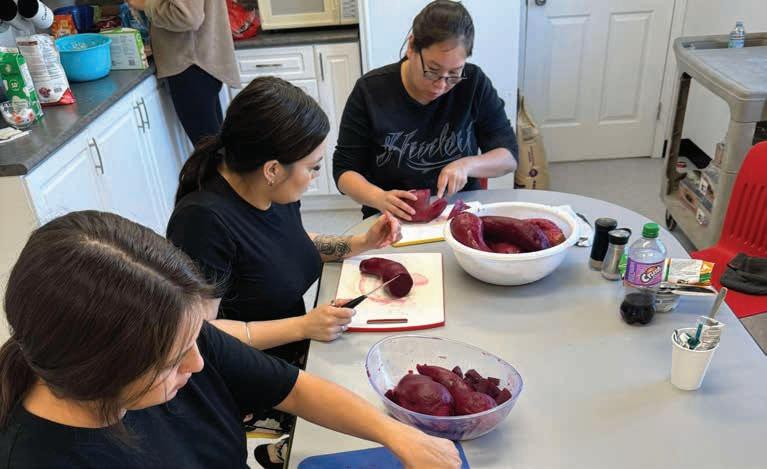
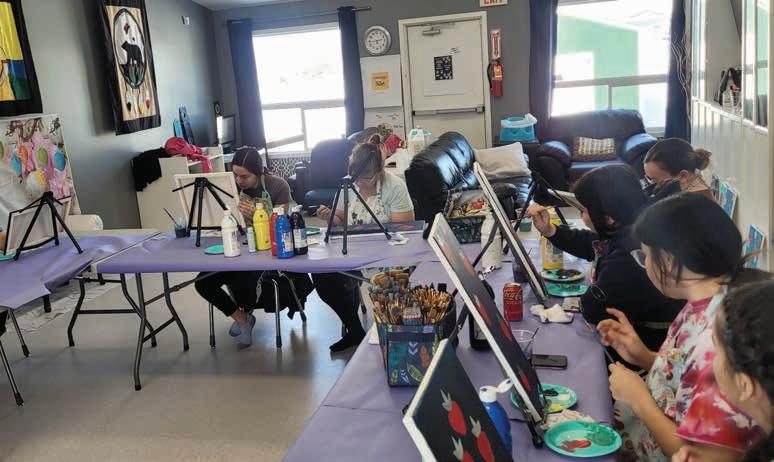
When asked whether parent-child activities — as opposed to child-only and parent-only activities — are more reflective of quality ELCC programming on reserve, a participant from urban QC who works in partnership with First Nations-based ELCC programs across the country affirmed that “there needs to be both.” The participant explained, “The biggest thing that we have seen is there needs to be a flexible approach. … There’s some level of programming together that there is always of interest, but there needs to be respite care. There also needs to be opportunities for parents to meet other parents and get together … for parents to gather on their own.” The participant further reported, “There is a really big impact of providing some kind of group gathering opportunity. Whether that’s opening up the building for moms to make ribbon skirts or moss bags or earrings or to make some kind of opportunities, we have a lot of qualitative feedback speaking to the importance of that group gathering opportunity on mental health, on meeting other parents.”
A participant from rural BC shared a story which showcases the need for peer support opportunities for parents, as part of quality ELCC programming on reserve:
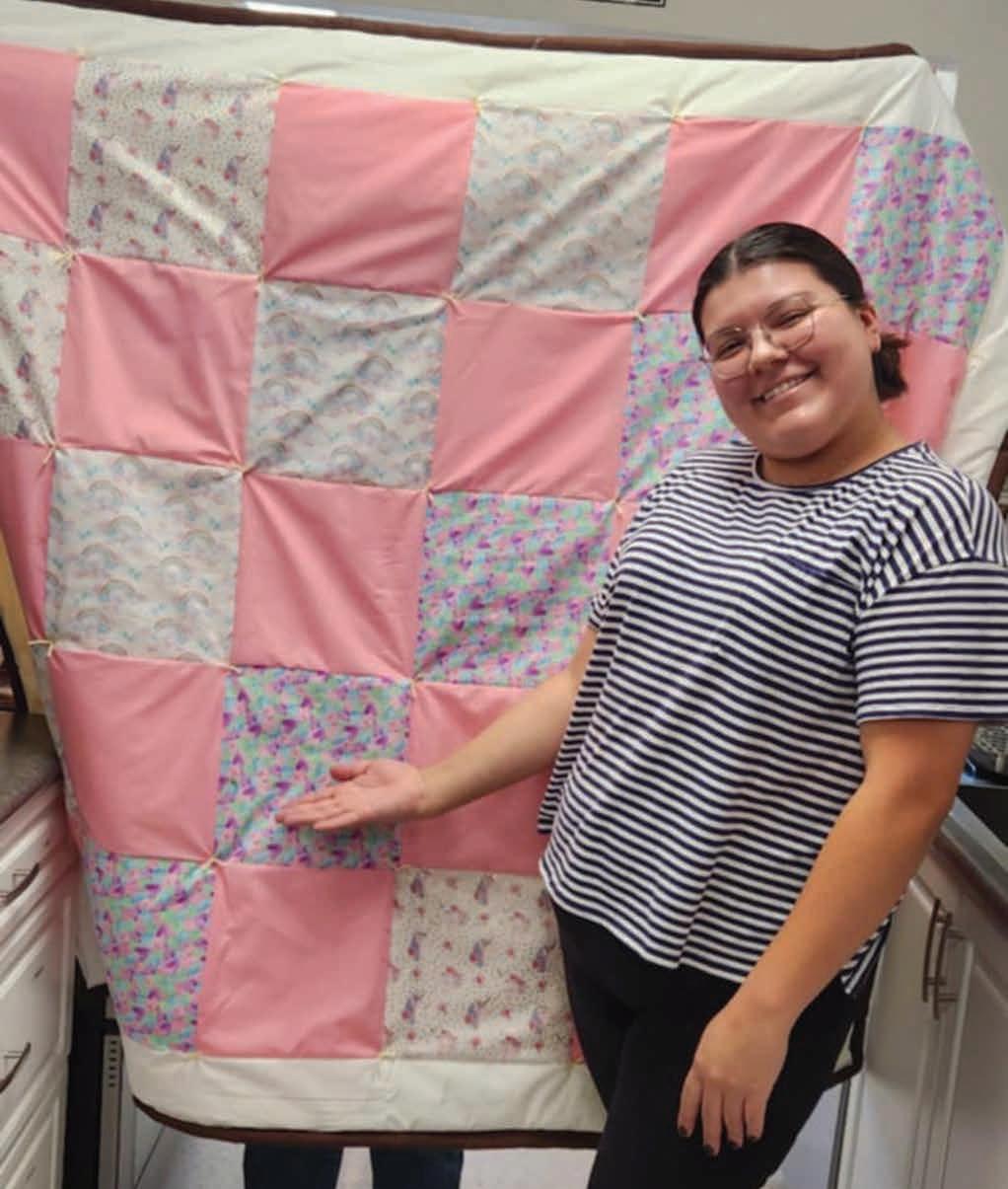
“When we first started out, it was all parent and children. The parents would come in, the children would come in, everything was great. The only reason that ended was because COVID hit and we could no longer have that many people in the space. We ended up shutting it off to the parents and just having the children. That worked great for the short period of time. … What we ended up finding was we can do so much more with the children when the parents weren’t there because the parents are sitting drinking coffee, and they’re chatting, and it became a little bit more of a parent group than it was a children’s group. We said, ‘We’ve got to get these kiddos ready for school. We’re going to have to really turn this into a more functional quality program, just for the children.’ But then the parents were missing us. They’re missing out. They felt like it wasn’t working. So, we partnered and started doing community kitchen. … We brought in a healing through quilting program. … Families come in and they’re learning how to let go of trauma and grief. … They’ll do a little seminar or a little professional development or we’ve done first aid. … We make sure that all of those families that want to participate can participate for free. … We’re doing all kinds of different professional development pieces and support pieces and even just cooking. … They go out. They make a grocery list. They learn how to budget so that they have enough money. Then they learn how to make these beautiful, amazing meals. … They’re gaining those life skills that they might have missed when they were younger. … We did start off with the mom and babes, but now we’ve moved off into a new direction where we can really get those parents involved in working towards really great things for themselves.”
Another participant from urban MB emphasized not only the significance of providing peer gathering opportunities for parents, but also the “need to offer a variety of different things to parents who are not connected to any particular program. That’s like the community kitchen where parents are learning how to cook.” The participant described one such ad hoc initiative:
“Every community has their own needs in terms of what healthy children look like. … As basic as it was, we did have a couple moms come in. One had five children; one had seven. Both from the North. They participated. We had community kitchen. We cooked vegetarian chili. Then they’d make an apple crisp. They had different things going on. We had an official dietician. They would go grocery shopping. They would compare the prices. They would look at the healthiness of the content. It was the parents who decided what they wanted to cook. They were within the budget. I know both those parents; they learned a lot. They told us that prior to that, they were maybe only making French fries.”
©
Lesli Fenner, 2025
Outreach activities with families
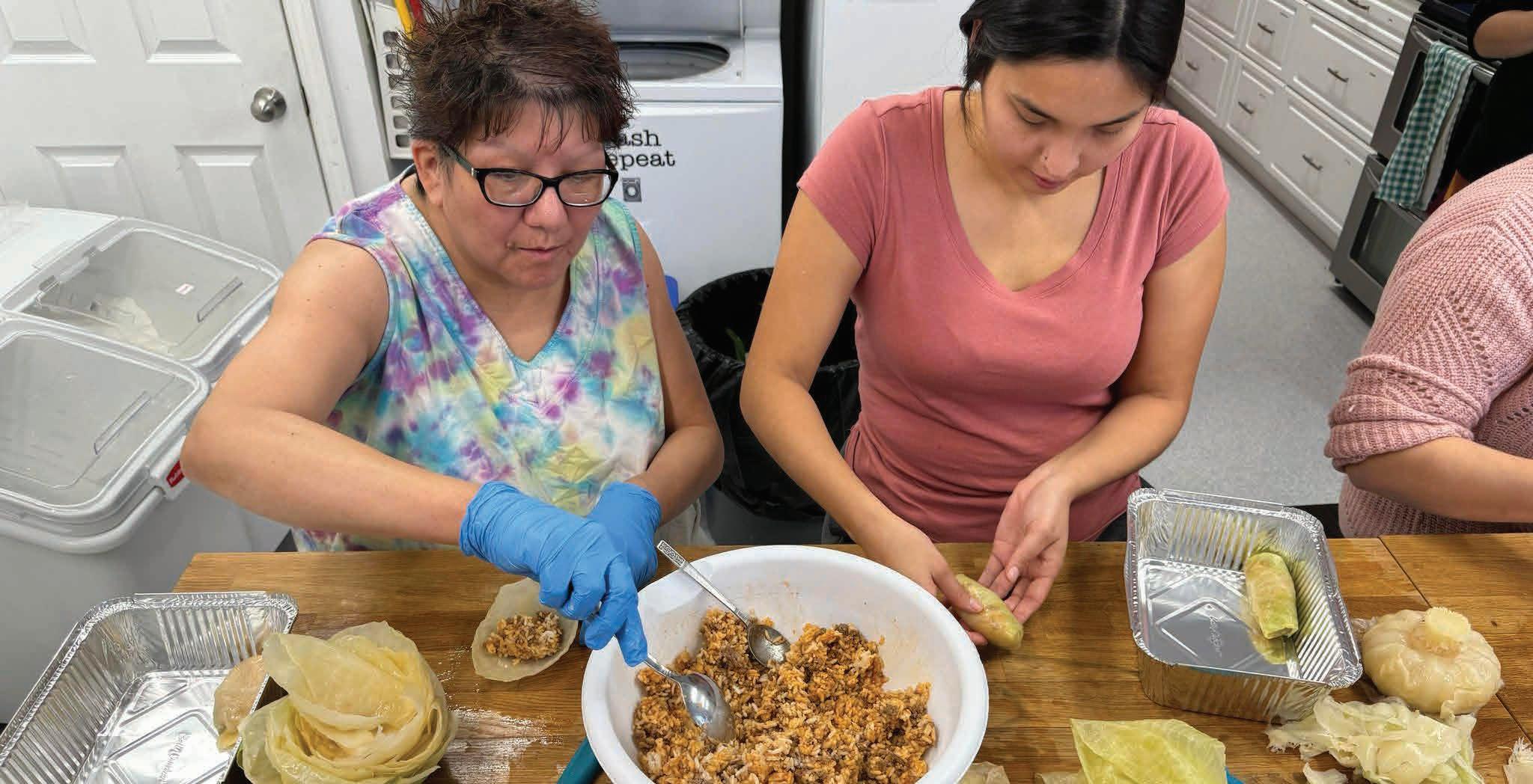
Participants talked about “supporting families in the home ” and “those families who aren’t engaged and participating regularly or on a full-time basis” in centrebased programming. They described “the things that our program also has offered,” like “ doula support,” “outreach services and home visits,” “respite services for the parent,” and “some kind of community or group gathering ” for on-reserve families. A participant from rural AB, for example, said that “ for any children that maybe they’re not able to come — they are registered but they’re not able to come — we will send home little workbooks or art supplies or something like that to keep them busy, like if they get sick.”
An AHSOR program practitioner from rural BC talked about the significance of “a home visitor program” that they “used to have where the Head Start program would come over. They’d bring in toys. They’d play with you. They’d show you different things. They’d have resource materials, just so you weren’t disconnected.” The participant commented on how outreach support for First Nations families with young children is “very essential,” mainly “because then, parents who are going through postpartum just
have that little bit of a reprise. They’re able to get out of that mood they’re in, or that sadness, or that sorrow feeling that they’re having right after giving birth. It may just save a life or save lives, especially with postpartum depression.”
A participant from urban MB mentioned that “there’s some families that the dad’s involved and they got good family support from the grandmas and the grandpas,” but “not everybody has that.” The participant drew attention to the “older parents that are struggling with addiction.” And the “younger parents that, maybe one girl has five children and totally isolated. The only time that she sees anybody is maybe if she goes to parent-teacher.” And the “single parents that were really struggling, that didn’t have any kind of support. Or they had a family, but there was family breakdown, and maybe she has children with multiple partners and there’s some issues there. Different things like that.” The participant expressed, “You want to have connections to those families, even if it’s just a family home visit or that goes in once a week. That’s who I think about. I don’t think about the families in daycare and Head Start. I know they’re being provided something. I think about the families who are not connected to anybody at all.
©
Lesli Fenner, 2025
45 Quality care and young First Nations children: An exploration of optimal learning and development in early childhood settings on reserve
That’s the families I think about. … We always found that for families that weren’t connected, most times than not, they were happy to see a home visitor or happy to come to group.”
A participant from urban QC who’s worked extensively with ELCC programs in First Nations communities across the country stated, “Providing support for parents in their homes is something that we have seen to be extremely valuable and reflective of the reality that the majority of Indigenous parents actually are at home with their kids today.” The participant shared, “The way that our early years program operates is going into the home with some basic information around early childhood development — focusing that aligns with where children are at age-wise, developmentally. That really is starting conversations because many of the things that we talk about when we talk about healthy child development, parents are already doing, but they might not know how important it is. They might not realize that what they’re doing, how valuable it is.” The participant also acknowledged that “ families are intergenerational, so quality care does also include involving other members of the family.” That is, “the primary caregiver may not be mom. That might not mean mom isn’t involved, but it might be a kokum or a grandmother or grandfather, an auntie and uncle, another sibling.”
Other participants, as well, stressed that “there’s a place for parents, caregivers, grandparents, aunties and uncles, [and] cousins to be involved in activities.” As shared by one early childhood program practitioner from rural NB, “I see a lot of families who have not just mom and dad in the home, or not just mom and dad in their life. There’s also grandma and grandpa, and auntie, and cousins, and uncle. … It’s a different type of connection when a grandmother is supporting the mom in such a way that mom gets a break. Then the grandma really gets to enjoy her grandchildren, participating in those activities. Any communication there between someone in our role with the grandmothers or the moms or the aunties is an opportunity for education for them and to help be supportive of them.”
Elder participation and healthy role modeling
Participants described “Elder participation” and “ healthy role modeling ” as another critical element of “quality programming in early years programs.” They talked about “Elders and grandparents,” “Knowledge Keepers,” and “community educators” as “ healthy role models for the children and healthy role models to family and community.” They emphasized the value of not only “teaching our children to do from their Elders,” but also “the importance of a connection between the children and the Elders.”
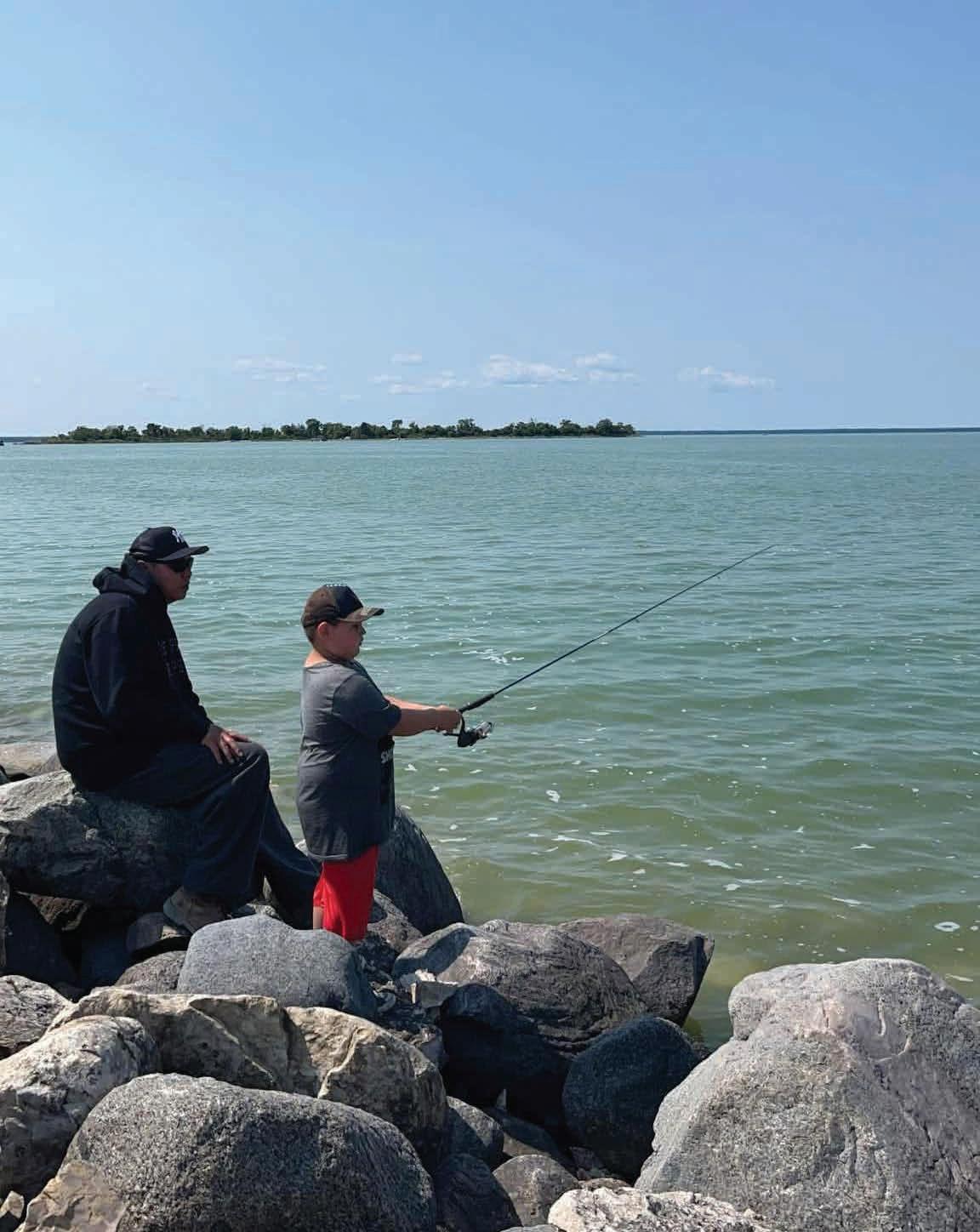
Participants talked about some of the more traditional roles that Elders generally play in early childhood learning and care, like providing “the storytelling,” sharing “their teachings of their culture,” and sharing “some of the legends that are age appropriate for that age group” and “ focused on our culture in our nation, and not anything that’s borrowed from another nation or another culture.” They also talked about needing “more opportunities for Elders to be able to be in the facility or in the program, or part of the curriculum … for the whole duration of the class, not just segments of the class. Just … to be present all day with the children, and to be able to talk in the language all during the session,” as one participant from remote BC expressed, “in order to fill their brains with our language — because that’s the most important stages of our children’s lives to fill their brains with our culture and our language.”
A participant from rural BC stated, “Just having the Elders there on site … it’s an opportunity for [children] to learn to be respectful, when they’re taught to respect.” The participant articulated that “ it’s nice to go into a program and see an Elder there, speaking their language and just being on site and interacting with kids. … They’re the Knowledge Keepers. If you connect the Elders with the children in the early years, that’s when they retain the most information — is in the early years. So then, we have an Elder that’s talking to the children in their language. They’ll hear it. They’ll remember it. They can make that connection between what they’re hearing and what they understand.” Another
“...If you connect the Elders with the children in the early years, that’s when they retain the most information — is in the early years. So then, we have an Elder that’s talking to the children in their language. They’ll hear it. They’ll remember it. They can make that connection between what they’re hearing and what they understand.”
participant from rural AB stated that “ it calms everybody, even the staff, just to have an older person come in and tell the stories. … It just brings brightness and sunshine into our building.” A parent from rural MB added that “with the storytelling too, it could play a huge role because finding out how [the Elders] were brought up as children … teaches you how your parenting right now is totally different from theirs. … With Elders being in there, that’s probably where they could come into play is just by telling us stuff … so we appreciate it and we know how to parent properly.”
A participant from another area in rural BC explained that a “core component ” of First Nations early childhood programs in the region involves “Elders that come in and help us and teach us about the traditional practices and the roles. This is who they are. This is the land of which they come from. We need to bring all of those components that have been lost and scattered throughout the time back in. That’s a big part of ours is getting the children back out onto the land, getting them out to the lakes, letting them know, ‘This is where your people come from. You don’t come from here. You actually come
from over here. In your lake are the salmon. These are your practices.’ ” Another participant from rural AB shared, “We have a kokum that comes in … an Elder who will come in and read to our children, maybe do some little crafts. You know, just be there.” The participant also talked about the important role Elders play in supporting the work of ELCC practitioners:
“Let’s say we have a family that doesn’t want to sign off the papers when it comes to additional help for their children — and that happens. You know, ‘Oh, there’s nothing wrong with my child. I’m not signing nothing.’ ‘Well, OK. But wouldn’t you like to have extra help for your child if they need it?’ … We have some really strong Elders that can go in and talk to people with respect and get them to understand that we’re not saying that there’s anything wrong with their child, but we want to be able to maybe teach them how to hold their pencil properly, or teach them how to cut paper properly, or little things like that. Elders can help in that way. They can go with the teacher and go in and talk with a parent and say, ‘OK. Well, can you please sign these just in case?’”
©
Lesli Fenner, 2025
A participant from rural SK shared that of “the Elders that are being utilized, we try to get a variety — a man and a woman — because there’s going to be different aspects from those Elders. There’s going to be one from the man and one from the woman. They’re both needed for guidance for the little ones — both perspectives.” Another participant from rural MB talked about the concept of “respectable Elder ” and how “not every elderly person is an Elder.” According to this participant, “It is very rare to find — out here anyway — someone who’s a respectable Elder who can actually provide some quality knowledge.” At the same time, however, a practitioner from rural BC acknowledged that “we do have a gap,” but “we do have some really amazing Elders. What they have of their knowledge and what they have of their stories, they do share.” The participant explained:
“Elders and grandparents and Knowledge Keepers … are very important as well because they have all the types of knowledge. When you bring an Elder in, they should have that patience. They have the opportunity to sit and just talk about stories and giving those oral teachings. For Elders, at least they have the oral histories and they can tell the oral stories. They can teach
children about some of the legends that are around in the communities and also talk about what language they do know. If they do speak the language, they can teach that in a natural way as well, where it’s not always computer animated language that we’re getting off of ‘FirstVoices.’ It’s a real physical human being teaching language. That’s very important — that children having those opportunities are essential in developing good, wholistic Indigenous/First Nations children that can carry on the histories and the knowledge that they’ve been given. That’s so important to be a part of that and so important for the staff to understand that as well. If they’re nonIndigenous, to be more receptive to those type of teachings.”
Language, culture, and land-based learning activities
Land-based learning is another dimension of program curriculum that participants deemed critical to the health and well-being of not only young First Nations children on reserve, but also their parents and families. As explained by one parent from rural MB, “Land-base is one of the crucial things that they need to start learning now. … Our culture, our way of life; it needs to be implemented with the parents so that way, they can carry it on with their children. That’s crucial because we can’t know who we’re going to be unless we know who we are. We need to know who we are and then we teach our children this, and then it’ll have a wave effect, a ripple effect.” As an example, the participant shared that “with the medicines, it’s a part of our culture to know these medicines because the four sacred medicines that we have — sage, tobacco, sweetgrass, and cedar — we know most people do know these medicines. If we learn how to use them properly, it’s something that it’s a shared connection with everybody else. It’s something that we all share, like being First Nations. It’s something that’ll be crucial. It’ll be an element that is essential to make sure that ‘We all good.’ ”
©
Melanie Forster, 2025
An AHSOR and preschool program manager/ practitioner from rural SK pointed out that “now, we are doing the land-based training.” However, “some people already did that. They were doing it just because of the First Nation.” The participant stated, “We all live our culture, so we’re teaching it to the children. It’s almost like firsthand. … We taught them certain aspects about family, the culture part of it, the feasts, and things like that, that we do for certain times of the year. Those were always there, but now it comes into the program as land-based training.”
Participants emphasized “that everything around culture, everything about culture, is so important,” not “ just to have a better understanding of what it means to be Indigenous,” but also, as one participant from rural BC asserted, “to make sure that all of those aspects of who you are and where you come from are brought into our space so that we can build that up. … It’s like rebuilding that identity again.” A participant from urban MB stated that “we hear a lot about culture and tradition ” and “about culture and tradition that has been lost, maybe on one or two generations.” For this reason, “we need to find a way to bring that back in a good way, where the children and the families understand what is being offered to them.” An AHSOR practitioner from rural MB shared a similar sentiment:
“Children learn by their environments. It helps when they’re learning their history and their identities. That was one thing that was really important to
me — about identity. Experiencing culture shock myself going to [an urban centre], I wanted to make sure that my children knew who they were so they can understand where they’re going. I feel that way about the children and families that come here. We have a lot of young moms. We have moms that are older than me. But still, a lot of them don’t know or understand a lot of the things that they could regarding their culture and identity. That’s one of the things that we try to incorporate, just to help them have a better understanding of who we are as a people. We get together and we share. We share a lot. It helps when they learn off of each other.”
Participants generally recognized that “a [quality] program promotes all kinds of wellness for the families in terms of all kinds of curriculum, but culture, language, and tradition is probably the most important.” They underscored “that there’s connection to the land, connection to the environment, and also resources to support health and well-being of the body, the mind, spirit.” A participant from urban QC described this concept as being intrinsic to First Nations cultures:
“People sometimes get confused with what culture means. It’s not ceremony. It’s about who we are. … How we do things. It’s our ways. … It has to do with all of the fundamentals of values. It’s about how we treat each other. How we respect each other. How we do our thanksgiving, everyday. … We give thanks for people. We give the thanks for the trees and Mother
Earth. Everything ripples into all of that, where you’re teaching these life skills of respect for self, for others, for the environment, for everything that we face on a day-to-day basis. … Our thanksgiving address really encompasses our curriculum in our cultural calendar. … We just celebrated harvest last week and it was all about being grateful for the sustenance — the food that we’ve been given, that we planted. We do our songs, and we do our thanks. We play our games. We do all of those things. That’s what it’s all about. You can sit there and you can say we can learn numbers, and we can learn letters, and we can learn that relationship, that responsibility, that respect. Everything that comes with it is what we want for our children because with that, they can pretty much do everything else. … I could use all the fancy words and say they have to do the cognitive and the gross motor, all of that stuff, but if they have the base first, then they’re going to be able to do all of those things in a way that is going to be very helpful to their development. That whole groundwork is essential first.”
Participants talked about how “ language and culture and all of those things need to be front and centre ” in quality ELCC program activities, and “not as a little add-on.” According to one participant from
urban SK, “Young children are sponges. They pick up the sounds, the intonations, the facial expressions. What’s also not said, you know, the smiles. … Children often learn, ‘Oh, OK. That’s a welcoming smile with the eyes. That’s a welcoming come to me. Come and sit with me.’ It’s also an acknowledgement of, ‘Oh, this is somebody that I’ve seen somewhere else in the community.’ There needs to be the time allowed for those languages. … And then, hearing the way words are used, whether it be a traditional First Nations language, whether it be English, whether it be French. … It’s actually all of the nuances that go with it that actually makes up identity, makes up comfort, makes up security, that are all formed, really, in those first few years with interactions. That’s why we need to cherish those experiences and allow the time and space for those young children to have with people that they know and people that they see, that they trust. That’s where their brains and their abilities and their spirits really can develop. They can become safe and comforted young children that then, they can keep growing from in the later years.”
Participants shared stories about creating “ language programs” and “ language nests” where “only the language is spoken; there’s no English.” One participant with oversight of several ELCC programs in rural BC talked about having “multiple little sensory centres” and “ little places where we can do literacy,” as well as having “a language and cultural advisor who comes in and teaches … the language of the people from [the First Nations community].” Another participant from urban NB mentioned quality early learning programming which “ includes culturally-focused activities such as traditional arts and crafts, storytelling, dancing, drumming, language learning, and the opportunity to celebrate the diverse culture of First Nations people in our region, as well as across Canada.” A grandparent from urban BC emphasized that “ language, that culture, respect for your identity, respect for how your family identifies … that’s a really essential thing.” Equally important, however, is “ having access to on-the-land learning, outdoor learning and play, a variety of activities.”
© Lesli Fenner, 2025
Other participants, too, spoke of how “learning on the land is very important — allowing those children those outside times, those outside spaces … not always in the structural way;” and that “teaching them the language and the culture is as important as all the other stuff;” and how “the early years is the best time for the kids to learn” and “to be able just to explore, and to have fun, and learn the way they want to learn. Not always, ‘Here’s the kitchen centre. Here is the typical child care centre set up.’ It should be more like, instead of in the water table, we’re going to have rocks and dirt and plants or clams or shells.”
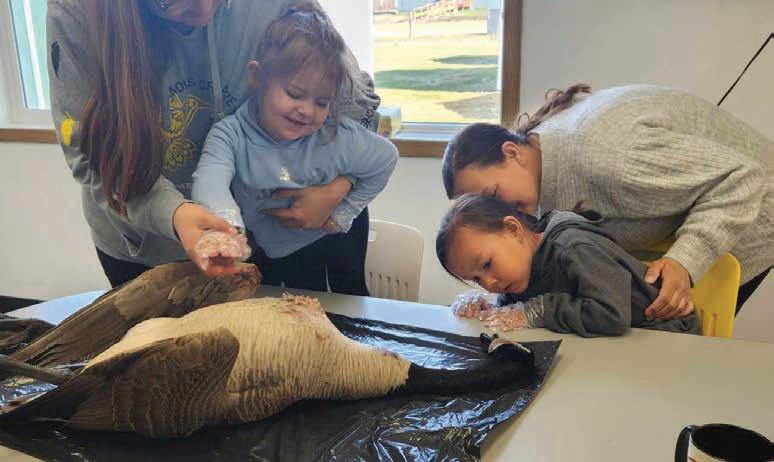
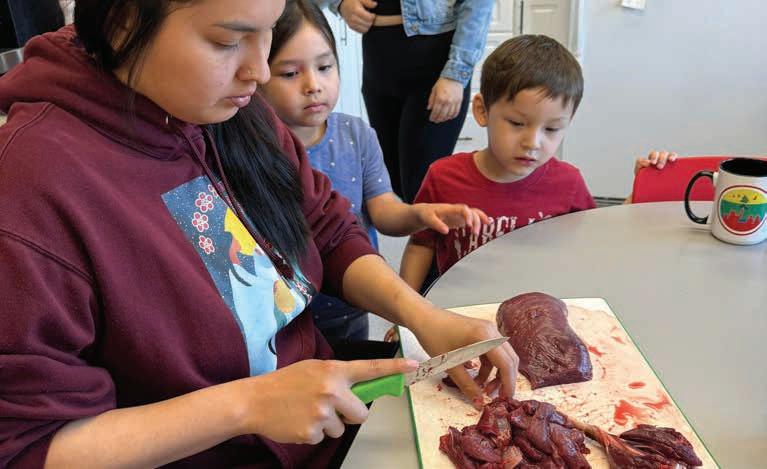
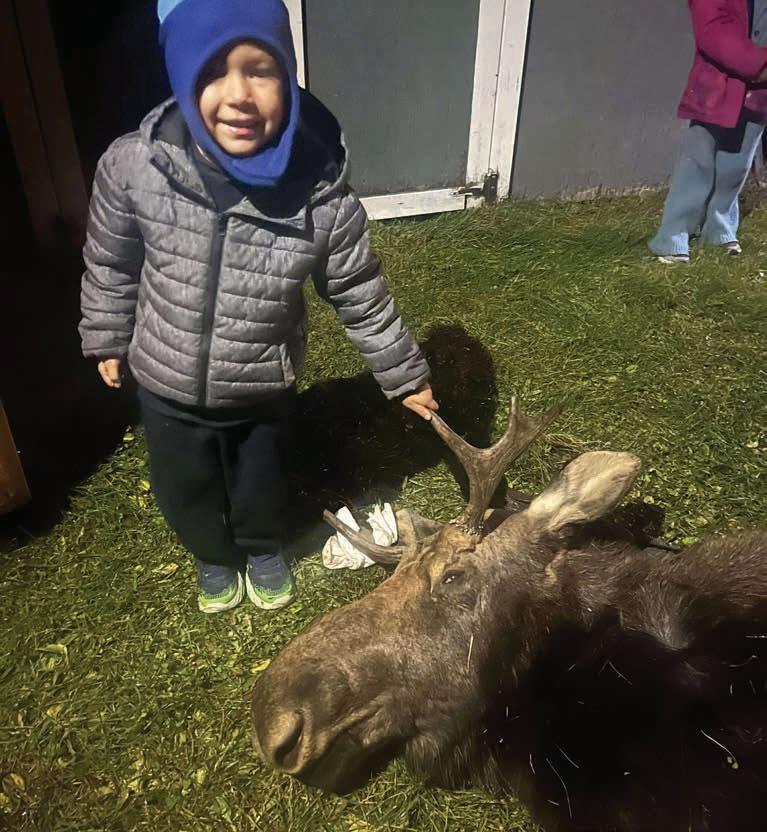
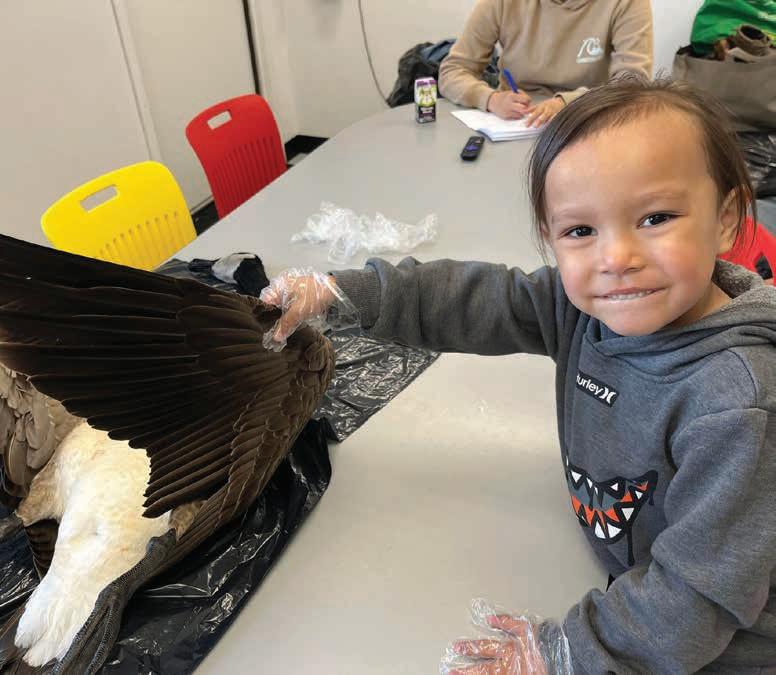
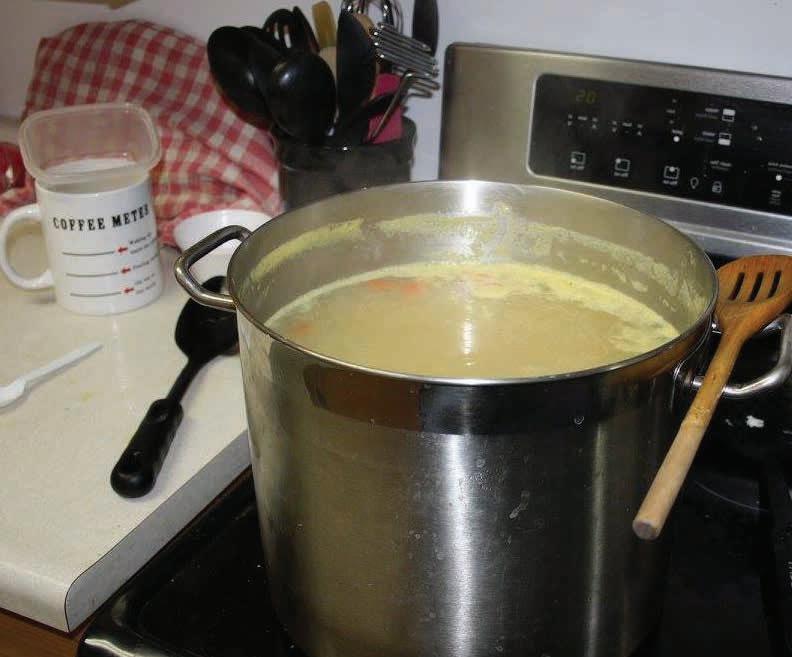
Participants mentioned a host of land-based activities that are carried out through quality ELCC programming on reserve, not just with young children, but with “the whole family ” — “the extended family ” included. They spoke of “ harvesting medicine, harvesting food, harvesting meat, all these different things”. They talked about “berry picking,” “gathering foods,” “salmon practices,” “fish preserving,” and “ feasting.” Some participants talked about “gardening,” and “canning,” and cooking “with the stuff in the garden that the children have harvested and brought in.” Other participants talked about landbased arts and crafting activities such as “teaching [children] to clean the berries,” and “crush the berries,” and “use the berry juice to use as painting.” An AHSOR program manager/practitioner from rural MB even stated, “We got a bush chicken this morning, so we’re making bush chicken soup.” The participant shared a story, elaborating on the value of land-based learning activities and highlighting the benefits for children and families — and ELCC program staff — that come with “incorporating traditional culture, knowledge, even just a little bit ” into ELCC program curriculum and activities:
“Culture and language is one of the components for Head Start. Since I started working, it was one of my goals to try incorporate it more and more because when I was a parent here, or when I first started working, you wouldn’t even find a picture of a feather on the wall. There was nothing — no language,
nothing. … I hired a cultural teacher. … It’s her responsibility to incorporate traditional culture with the parents and children. She mainly works with the parents, so she does ribbon skirt applique, pow wow regalia teachings. … We hired a driver/land-based coordinator. The land-based coordinator would be providing hunting — deer, geese. … They’re including the parents in harvesting and prepping and cooking. Last year, we had deer. The parents prepped, then cut, and took the deer home for their families. They’re learning how to do this and I feel like it’s a part of our culture to bring back, and live off the land, and learn about the land, and learn about the medicines. I have my four years in traditional medicine. I’ve been teaching my staff to harvest medicines every summer. The medicines are all over in my room. They’re here and they’re accessible to all of the parents, and if parents have questions about them, I’ll explain. If they need medicines, then I’ll give them medicines. But these are all my medicines. [showing baskets of gathered medicines] This is our traditional tobacco we harvested just this summer. Then there’s sage, and cedar, and our sweetgrass. … I find that a lot of parents are asking more questions now. A lot of people are wanting to learn more about the culture, to have that knowledge about the culture in order to share it. I’ve been doing that with my staff, slowly. It’s hard to gain a lot of knowledge in a little bit of time. Hopefully, we’ll get better.”
©
Lesli Fenner, 2025
51 Quality care and young First Nations children: An exploration of optimal learning and development in early childhood settings on reserve
Food, traditional foods, and feasting
Participants referenced “ food,” “traditional foods,” and “ feasting ” as another quality component that is critical to the health and well-being of First Nations children in early childhood program settings on reserve. They shared that “there’s always food ” and stated that “ food is a big issue.” They talked about how “ food draws people in.” A child care director/ practitioner in remote BC said that a “ huge piece ” of their ELCC program activities “ is ensuring that every child had the meals that they need when they were at the centre … coming in and having breakfast if they were hungry, so they can start their day off in a good way, and having healthy lunches and snacks, and having water available whenever they needed.”
Another participant with oversight of both an AHSOR and preschool program in rural SK said it was important to “support the students by giving them healthy choices in snacks.” The participant explained, “They’re only here from 9:00 till 11:00. We offer water or milk. We don’t offer any juices or anything sweet. We offer fruits, vegetables, yogurt, things like that. It depends on if there’s any allergies within our program, as well.”
A participant from rural BC shared how they “use a lot of traditional foods ” in their ELCC program activities. The participant pointed out that “ being able to explore those traditional foods is key to
learning. Not only that, it also offers opportunity to teach about food security, growing your own food.” For another participant from urban BC, “ensuring that it’s a healthy program ” means not only “recognizing health promotion through healthy role modeling,” but also “ensuring in the program that there’s a nutrition component; that there’s a knowledge and understanding — shared with families to learn and understand — of opportunities for children through nutrition. So, learning what are some good foods and practices for children and modeling that in the program, being able to offer healthy meals and snacks in the program, and adults role modeling that sit down, family-style, sitting and eating, sharing stories while enjoying and benefiting from the nutrition.”
Some participants shared how they “get food catered in ” or will “ have something that’s made.” Other participants stated that they “ have a cook ” on staff to assist with providing even “ hot meals ” for the children who are participating in their ELCC programs. An AHSOR program manager/ practitioner in rural MB highlighted the value of extending their meal provisions to include parents and program staff:
© Lesli Fenner, 2025
“We noticed that a lot of parents were hungry. We provide snack for children, but we never really provided snack for parents. We would have cooking classes once in a while, and that was something that the parents really loved. So now, for this year, it was our first time actually hiring a cook/cleaner. The cook would cook for staff, parents, and children so that everyone is fed, everyday. It really brings people together. Last year, we didn’t have a cook/ cleaner but we had our cultural teacher, and she would just start cooking, get the parents to start cooking. It really brought people in. People stayed. People worked. Feast is a big thing. It changed a lot when we started cooking.”
Participants acknowledged with some of the food provisions, traditional foods in particular, it can be “a bit tricky ” because “there’s requirements around that ” and “provincial standards” which state that “ if the programs are offering food in their programs, they would be required to have an environmental health officer, licensed kitchens, licensed food preparation areas.” Some participants maintained that they “weren’t allowed to serve traditional food, like preserved fish that was preserved away from the centre.” Other participants disclosed various ways they’ve dealt with some of the challenges associated with serving traditional foods, like adhering to “the provincial regulations for food safe,” or by following “the Indigenous food guide which includes the landbased meats and fruits and vegetables,” and by always having “alternative options” such as “something on the side for those who don’t want to partake in [traditional foods].” As shared by one participant from urban BC, “Thinking in ‘How do we exceed the requirement? ’ is that we’ve got cultural Knowledge Keepers helping to inform processes and practices. In the child care regulations, it emphasizes that food shared with children needs to be reflective of their culture. So, we need to then demonstrate this and support those traditional foods in programs, and having resource people to supply those traditional foods — so, emphasizing that.” The regulatory challenges of using traditional foods in ELCC programs are further discussed in later sections of this report.
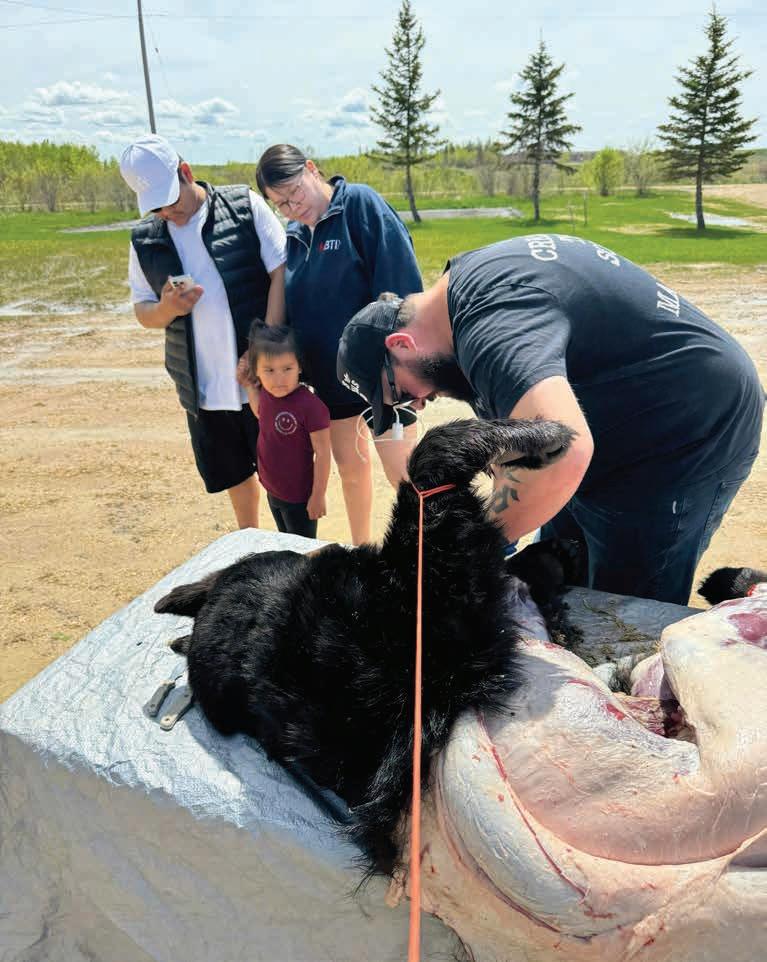
Supportive workplace activities
One last area of activity that participants described as essential for quality ELCC programming on reserve pertains to supportive workplace activities. Participants acknowledged their “responsibility to have good quality programming.” They also recognized that “ having a quality centre ” and fostering “a good safe environment ” usually comes with “ensuring that staff get a lot of support as well, so that they can, in turn, support the children and the families” who attend their early childhood programs. Participants talked about needing “to lean on each other and support each other through those more challenging things.” Program directors and managers, in particular, speaking from their supervisory positions over staff, shared stories about how “the staff always need guidance ” and “ inspiration how to feel better about themselves, their lives, to live a good life.” They talked about telling their program practitioners, “If there’s anything you’re ever worried about, concerned about, anything, just come to me and I’ll help work you through it.” A participant from
© Lesli Fenner, 2025
rural BC reported, “I try to model wanting to help in everything that I do, in hopes that my modeling what is appropriate or how we should do things can be relayed and seen, and then they can take those tips too — my staff.” Another participant from rural AB stated, “We do have staff, like for instance, the person that works with the specialists. … They are like our counselor there. … A staff member could come to her with something that might be going on at home. … So, we do have somebody there who’s able to talk with them maybe for a half an hour or during their lunch break to be able to lift up their spirits and not tell them how-to, but be a sounding board.” The participant added, “They can come and see me too. I’m a really good sounding board. … Everything is very confidential. Confidentiality is a really big thing too, in our programs.” Participants talked about having “staff meetings,” and “team building,” and “open communication,” as well as opportunities to “ debrief and meet every morning, over coffee,” and do it “ in a more laid-back type of way.” As shared by an AHSOR/preschool manager from rural SK, “If there’s anything that’s bothering [‘my staff’], I ask them to share. If they don’t, then I just ask them if they would share with somebody they trust. This way, when you’re coming in, you’re in a good state of mind. I know my staff are healthy. They don’t consume. They’re on a good path themselves. When they work, it comes in a really good outcome for the kids. The kids know that. They’re happy. They’re wanting to come. They’re crying not to go home.” Another participant from rural MB likewise described, “I get information and needs from each of the staff, and each of the staff share. The relationships are there. They’re built. I find that we work better together with those relationships, instead of just being coworkers.” The participant also shared, “I always try to find opportunities for them to learn about their culture, like women’s gatherings. We went to the fasting ceremonies. They were learning different cultural things out there. A lot of my staff, too, don’t know. Some are learning more than others. If you provide that, then it’s helping them to feel, like for their wellness.”
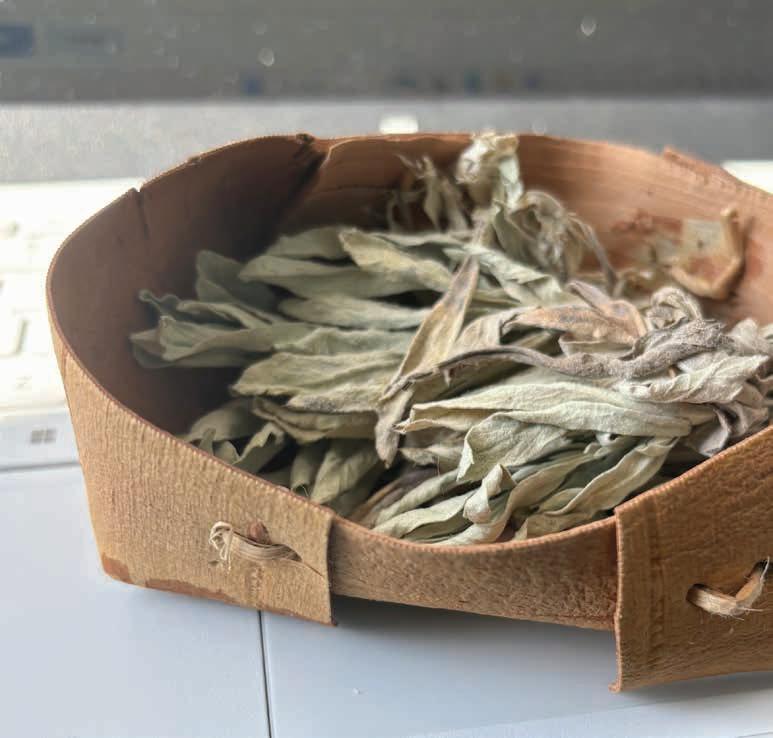
Participants shared stories of ELCC practitioners “ having self-care activities,” “ having time just to care for themselves,” and “making sure that they don’t get burned out.” They also stressed the importance of “supporting them for all their hard work.” An AHSOR supervisor from rural BC asserted, “I always tell them if it wasn’t for them, a lot of times, they make a difference in a child’s life. I always let them know that, and they’re not just babysitters. Right? They’re the kids’ first educators.” Another participant, a child care director from remote BC, remembered routinely telling the daycare practitioners, “‘I’m so grateful for you guys to be able to manage 12 infants on a daily basis, and diaper changes, and bottle feeding, and nap time’ … and letting them know, ‘You have the best job ever, to be able to sit and cuddle with these babies sometimes, or having floor times and outdoor stroller walks on your own traditional territory.’ ” The participant also shared, “We always made sure that our centre was fully staffed, that our staff didn’t burn out. … Another piece that was really valuable as well is making sure that we look after our staff. We had quarterly conferences that we’ve traveled to so that staff get that break, and go out to conferences, and learn new skills, and network with other ECEs, and plus get a hotel and some nice food out there. They come back refreshed.”
© Fern Bear, 2025
Other participants, too, talked about the value of having “professional development ” and “capacity training ” opportunities for not only ELCC practitioners, but also “their cooks” and “their cleaner ” and other program staff who “ have multiple roles.” As observed by one participant from a national oversight organization in urban QC, “Professional development is required. Early childhood educators often get their degree or their certification and never have an opportunity for further learning for the rest of their careers. There’s very little on reserve.” An AHSOR/child care director from urban QC stated, “We’ve come to realize that we have to do capacity training throughout the year, at all times and different ways. We’ll use our clinical supervisor. We’ll use our speech pathologist. We’ll use people in resource and try to do workshops. We do close half a day, once a month, to do professional development. We have a teacher and resource meetings. We recently did 18 months of curriculum review for like two hours a week with teachers, to remind them of all the domains and all the elements. I mean, right down to your tone, and your voice, and the ways in which we speak to children.”
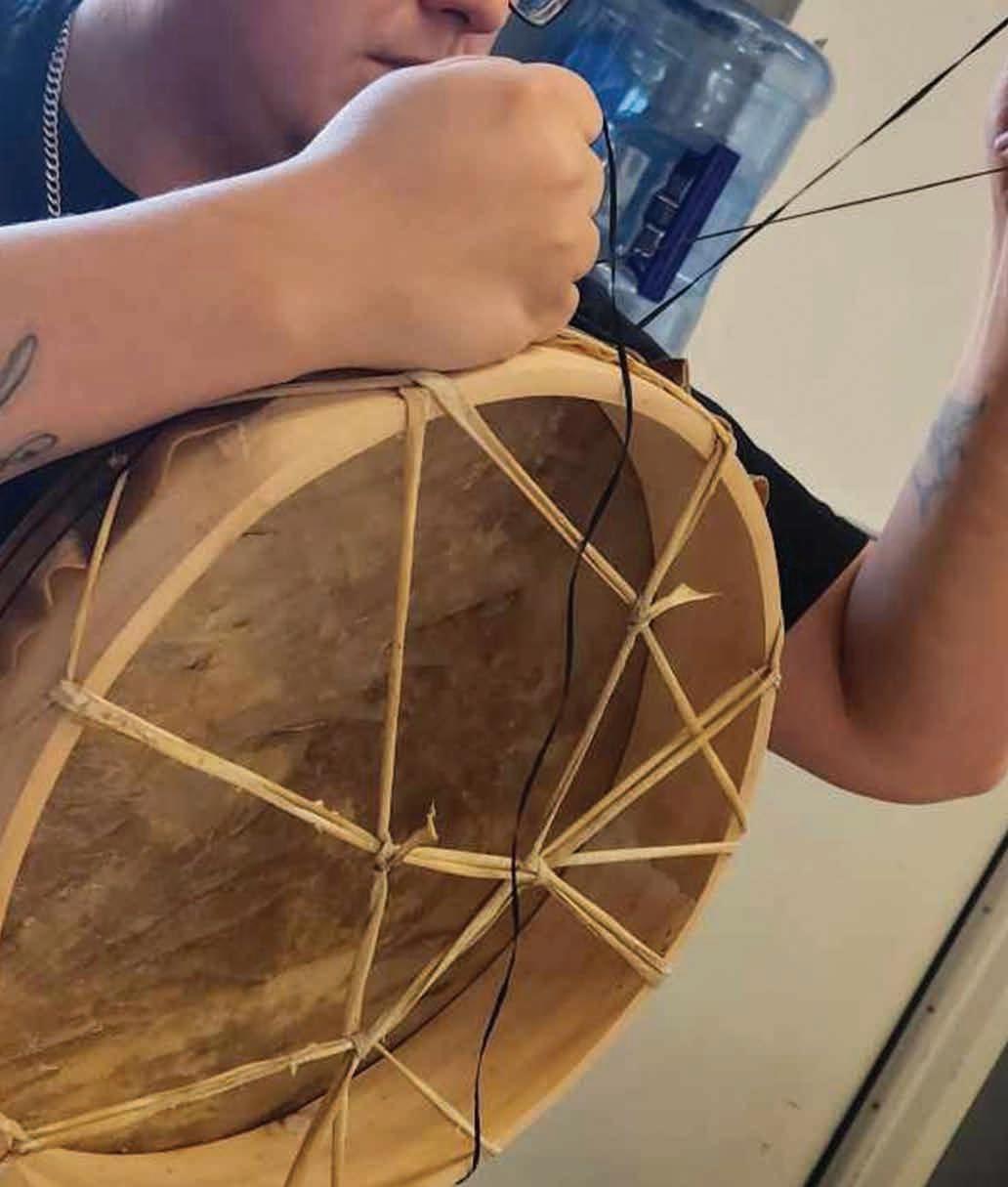
Participants mentioned having a variety of “other kinds of training ” opportunities as well, mainly offered “on an ad hoc basis” and in response to “community needs.” Some of these offered trainings included “infant CPR,” “trauma-informed care,” “guiding and caring,” “SLPA [Speech Language Pathology Assistant] training,” and even “training on certain programs that will target certain areas of our students … to just keep them learning, to keep them going in that area.” According to one participant from urban NB, an AHSOR director with regional program oversight, “There’s a whole wide range of stuff, from assessments to speech and language, to fine gross motor, but one of them that we’re seeing is the navigating systems, which is if they suspect a child is, you know, there’s something there, behaviour-wise, they want specific training on the ability to identify what that is — trying to find that training on children with FASD, with autism. … That’s where I find the need is in each one of our programs — is the ability to identify the child’s need and how to navigate that system.”
A participant from rural MB stated, “Any training opportunities that I see, I will try and get on it for our staff. At least our staff would have a little bit of knowledge regarding language, or anything. They could incorporate it to the families with children.” Another participant from rural AB shared, “Our staff do all kinds of things. We do whatever we can for them. Whatever is offered, we send them to. They’ve even taken — you know, when a child is really off the wall and can’t settle down, and you have to hold them? Well, we’ve sent a couple of our workers out for that because we do have some children that sometimes they just can’t settle down. … We try and train as much as we can, just because there’s a lot of new things that come up and there’s a lot of good ideas out there. We don’t have to use them, but if they’re going to benefit our children, then we will.”
© Lesli Fenner, 2025
© Jade Fraser, 2025
A participant from urban MB shared a story in which “the administrator would close the whole centre for a week so that all of the staff can go on professional development and go to this Indigenous conference every year.” The participant reflected, “It was so significant.” As affirmed by one director-level participant from rural BC, “You get so much information from the courses that you take. I’m constantly taking courses. I’m constantly talking my staff into taking courses. Knowledge is power and the more knowledge we can retain that gives us a better understanding of how to work with children, the better for everybody involved. It means that as an educator, you have the tools — or some tools — to set you off on the right path.” This sentiment was reinforced by an ELCC practitioner from rural NB who stated, “The role of the educator is huge. … When you’re an educator, coming from my own experience, you know what you know when you go into that centre. You fit within that model, whatever the model is in that centre. The more training and the more education that the director and the educators get, the stronger their foundation will be to meet all the needs of the children. It is something that they need.”
Key attributes of quality ELCC program structures and centre operations
Participants described quality program structures and centre operations as another crucial component of quality ELCC programming for First Nations children on reserve. This subsection describes the key attributes of quality ELCC program structures and centre operations.
First Nations autonomy and decisionmaking authority
Participants were asked about the autonomy and decision-making authority First Nations people have over the ELCC programs offered in their communities. They generally responded with similar statements like, “ it’s Chiefs that make that ultimate decision,” and “ultimately, the authorization for anything has to come through Chief and Council,” and “ if there’s a problem … then the onus is with Chief and Council because … they supervise or they manage the program.” Participants also conveyed that “the bosses of Chief and Council are the community ” and Chief and Council “usually make informed decisions based on the information that’s brought forward,” oftentimes from “ frontline staff … because they are the ones that are in those centres.”
Although Chief and Council ordinarily “ have full authority ” and “ leadership is supposed to be taking their direction from the people,” the precise ways in which decisions are made regarding ELCC programming on reserve varies across First Nations communities. For example, a participant from urban NB explained, “How decisions are made is within our own tribal council. … Early childhood falls under the health portfolio. We have a Chief’s committee on health that we — each one of our manager or key people working in that program — updates the Chiefs for the bigger table of the [tribal council].” Another participant who serves as the director of a First Nations daycare and AHSOR program in urban QC shared, “I sit on the social and the health portfolios within the community. I sit at the political
level. Certain things will come up in the area of social and health where I will bring to the table, ‘OK. The ministry is asking for such and such.’ Then the table — whether it be we’ll have subject matter experts in the room. We will have the political advisor. We will have the Chiefs. We will have other executive directors within the community. We decide as a team as to what happens and whatnot. I will often bring things to my board prior, to let them know that I’m going to the table with certain aspects of things that we’ve been required or requested to do.”
Other participants reported that decision-making processes around ELCC programming “are integrated at the Band Council,” which was seen by one regional ELCC program manager from urban QC as being “pretty cool ” because then, “nobody’s forgotten.” The participant made specific reference to “the kids going to the daycare,” stating that not only will they then have access to “the same services as the other one that is at school or at the health centre,” but also, “ if they’re facing funding issues, the Band Council will cover the debt, if there is any.” More importantly, the participant emphasized that “ it’s better for [‘the daycare’] to be integrated at the Band Council because then they’re going to be challenged in their way of doing things.” The participant explained this scenario:
“When it’s part of the Band Council, when it goes to the way they work within the daycare, it’s in our way than, you know, if it’s a provincial [department] that provide us a grid and then we need to follow that. Since you are in-link with education, with health, social services, it helps the daycare to define more culturally or to reflect what they are, instead of having the daycare on its own. Depending on the determination of their vision or their way of how they operate, how they approach the kids, they’re on their own. … We could think that a daycare that is on its own will have more autonomy or more authority or power to determine itself, but it’s not — it’s the opposite. … As soon as there is a consultation, as soon as there’s a new program, [‘the daycare’] are aware of it. They’re
part of their reflection amongst people that sits together to talk about the needs or whatever. It’s much better that way.”
It is worth noting here that several participants made similar mention of how “the daycares that get attention from the province … are seen as outsiders for some communities, just for that fact.” One parent from rural MB, for instance, commented that “the daycare’s more of just a child care facility. It’s not really a program for the community. Only a listed amount of people can actually go there. … It’s supposed to be profit services. It’s a service. It’s not a program.” Another participant from urban QC reasoned that “ it’s a different entity because they have a board of directors.” The participant explained the challenges with this situation:
“It’s because when you have a daycare centre, you need to have a board of directors. Over here, it’s seven individuals: four parents, one person from the community, and you could have one person from the staff. But the thing is, in community, the part of the board of directors, they’re not there. They’re not used to dealing with that kind of governance because, usually, they have the Band Council and that’s it. You have already Councillors and the Chief who make decisions. They don’t get it because the daycare is the only institution that is not First Nations. It’s the only one provincial. So, it is seen as a little bit and sometimes like an outsider. I know that they invite people to get the AGA [Annual General Assembly], and nobody shows up. Nobody shows up because it’s not in their mentality to do it. Then after, when you succeed in having seven people on your board of directors, then you have meetings. Again, it’s a hard time to get a quorum. Then after, what is the distinction between the executive director responsibility and the board of directors? Where is the line that separates the strategic and the interpersonal? I mean, it’s kind of hard. We have at some places a board of directors that are dynamic, that they are going to develop a strategic plan so they can do a follow-up on the executive director work and to think ahead of what we’re going to be at in
a year and five years — What are our vision? What are our common values, principles? That’s good, but it’s a minority of the daycares. You have some, they struggle in having an effective board of directors. You have some that they never have meetings. What they do is they pick a signature from one parent when he goes to the daycare to pick up his child. We have different realities.”
Participants recognized that First Nations communities are more involved now with ELCC programming on reserve than in the past, which was described as being “in the best interest of the child.” They affirmed that “Bands have the first say in what they want for their communities” and “they can govern what the programs look like in their communities.” An ELCC practitioner from rural NB asserted that “Chief and Council encompass every single program. There’s nothing done without them. All of the programs answer to the Chiefs. The Chiefs bring back to the community what’s happening in the program. … Chief and Council is a big piece of that, and then whoever’s running the program.” Another practitioner from rural BC stated, “Leadership does play a role. Hopefully, they advocate for how essential it is to have early programming. They play a role in determining whether they’re going to
build an early childhood centre. They play a role in the type of quality and the type of people they bring into their centres.” However, according to one participant from urban NB, “It’s not First Nations that make that decision on whether or not [the First Nations community] is going to get a new Head Start facility or health centre. That process is in discussions right now as to where that’s going to sit.” The participant explained the current situation in this regard:
“Right now, we’re having a lot of discussion with the provincial government on the bilateral agreements that are coming from the federal government down to each province and territory on early learning and child care, and First Nations are part of that. It’s having those initial conversations because the province was coming to us saying, ‘Well, if you want access to this, you have to be provincially licensed. You have to be following this curriculum.’ The Chiefs were just like, ‘Hold up. We’ve been doing this since 1998, since the Head Start, or before then. We have our own licensing. We have our own standards. We have our own defining quality.’ Those are the situations that we’re currently in right now — looking at how those authorities makes decisions with regard to our programs. Instead of the province coming to us and saying, ‘You have to do this,’
Study 1: Quality ELCC programming for First Nations children on reserve
it would be nice where the province would say, ‘What are you currently doing?’ and ‘How can we move together on a path of reconciliation with this?’ and ‘How can we then support what you guys are doing for our communities?’”
Participants acknowledged that “ in the end, it’s up to each community to do what they want.” They also recognized that “the how and what each of the nations manage — their resources and their services — is really dependent on who are their people and resources that they have.” As one regional director from urban QC stated, “When you talk about the legislation from the province or anything, our wish would be to have our own First Nations legislation to assert and exercise our inherent rights on that. We’re leading it with C-92 on the youth protection right now. So, there are some models where we already had a community that have exercised its right to develop their own legislation in terms of youth protection, but also prevention services. From that law in the community, they could really well expand and add the daycare in there. … Right now, we’re very limited with the provincial legislation. Some communities may say, ‘Oh, we’re fine with it,’ but it’s nothing like exercising your own rights of your children.”

Good quality leadership
Recognizing that “there’s this movement of saying Indigenous communities want to govern themselves” and “there’s a lot of authority for First Nations,” some participants made comments like, “I just don’t think we’re there yet ” and “I don’t want us to have autonomy of our own money because families that are already suffering are going to suffer more. At least the government can sustain pieces of it.” A major driver behind these sorts of assertions was participant perceptions of “integrity,” “accountability,” and “responsibility ” in First Nations leadership — or lack thereof — particularly with regard to “authority of funding and dollars.” For example, a participant from urban MB reported, “Sometimes money comes down and it has to go through one organization, and then it has to go through another organization, and then it’s finally distributed. … 10% just went there; 15% just went there. By the time the money actually comes for families … it’s not the intended amount.” The participant underscored that “ leadership is important. Organizations — especially political — shouldn’t be able to touch any of those funds for any reason. … That money is intended for families. I wouldn’t want to know that local agencies in the community are squabbling about it. … Leadership can play an important role in there and not have those scenarios or situations. Ultimately, it lies with leadership.”
Just the same, an ELCC training instructor from urban BC voiced concerns with not “visibly seeing ” the early childhood programs that are “actually happening within the community.” That is, “You don’t even see where the centre is. … You see the sign of visibility that it’s there, but it’s not. … They say they have a daycare, but there’s no children.” The participant questioned, “What’s happening to that money? … That’s on the nation that is taking money that’s supposed to be for early childhood. They’re allocating it to something else. They say they’ve attached it to that but it isn’t really. It’s not visible to the community and you don’t see the children there. … That’s the downfall — that the children aren’t given their right, even though that funding is
for them. … What’s happening to the little ones that should be receiving that? We know that it would give them a heads up throughout the rest of the trajectory of their education. We know that early years will support that foundational piece for them. Why isn’t that happening? ”
Participants suggested that “there should be some reporting — actual reporting ” to ensure that “accountability piece ” with respect to quality ELCC programming on reserve, not “to act like a police,” but something like “ having another licensing officer that comes in and sees what’s actually happening with this money, what’s actually happening with this program.” A participant from urban BC was adamant that “there needs to be this real restructure in how nations receive the funding. Not just the plain reporting that they do. There has to be actual visible documentation of those changes attached to money. ‘Here! Here is the centre. Here is the actual educators.’” The participant understood, “I know that sounds like policing, but it’s just not happening. That’s more disappointing because you know that there’s children that are just going to fall behind. Then, they might drop out, get into addictions. Then, we’re just rolling back into five, 10 years behind.”
When asked about the involvement of First Nations leadership in the ELCC programs that happen in their communities, a participant from urban MB stated, “It’s based on which communities. Sometimes, the Chief and Council’s right in there because that’s important. They want their children to thrive and there is a good connection happening. Everyone’s involved — daycare, Head Start, the Chief and Council. They’re aware of what’s happening in the community. That is a really good model to have where you have leadership understanding the needs of families with young children. In some communities, maybe their focus is on something else. I’m not exactly sure, but I do know if you have leadership involved and it’s in a supporting and understanding role, that is half the battles in these small communities.”
Referencing a provincially operated child care facility that “ is not First Nations” and “was facing leadership or governance issues, and there was also funding trouble issues,” a participant from an oversight organization in urban QC advised that “you cannot have a good leadership when there’s some issues.” By way of example, the participant shared, “In one community, we called the Chief and we told them, ‘OK. You have a daycare. It provides services. But the thing is, it doesn’t
© Lesli Fenner, 2025
have the funding to continue its operation, so can you do something?’ We had a discussion with him. He said, ‘You know what I did? We did so much, but we can keep doing things, and we’re going to do it.’ Once we had a plan with the Band Council, it was fine. Then, we just dropped the suspension.”
Talking about having to deal with “a directive ” and “all of those ridiculous requirements” that “the ministry will basically put out,” another participant from urban QC explained, “I just go to my [First Nations] council child care authority department and say I’m not in agreement with the ministry. They’re asking for this and I don’t agree. Then oftentimes, it’ll go to legal and legal will say, ‘Yes. Not only we agree with you, if you have any issues whatsoever, let us know.’ Especially if they’re asking me … if the parents are working and … their social insurance numbers. … I was like, ‘What?’ I’m like, ‘No, no, no, no, no. No, you’re not getting that.’ But we have a good relationship. I meet with my Chief quite often.” Reflecting on this concept of good quality leadership, another participant from urban MB could not stress enough that “leadership is very, very important.” As explained:
“It boils down to each community. You have some communities that are thriving. Their Chief is a visionary. He can think outside the box. No matter what’s going on in the community, is there an opportunity for this, that, and everything else? …
When you’re running your reserve, you’re running a business. … You have all these different departments. A lot of it definitely rests on the skills and ability of the leader. … I love a Chief who has integrity. I love the leader who has integrity. I love a leader who stands for something. That’s so important. … We deserve to have things on the up-and-up and as funds come down, those dollars get distributed as it should be, and people are working for the needs of the community and not for anybody else.”
Good quality ELCC program management
Participants were asked about the everyday operations and related decision-making processes that come with delivering quality ELCC programs in First Nations communities. They commonly reported having oversight and accountability structures generally linking “Chief and Council;” the “ director of health,” “ director of education,” or “social services director;” and a “parent board ” which, in some cases involving First Nations-led child care programs, was “a shared board in between daycare and Head Start.” On the ground, however, participants typically described situations where “ it would be your coordinator or your head staff person” or “your directors” that manage the day-to-day activities of ELCC programs on reserve. Still, as one practitioner from rural BC stated, “They are the ones that would determine that [programming]. They have to tell the leadership what’s going on, what type of programming they’re doing, what the trends are, and explain that fully in a Chief and Council meeting with all the Chiefs.” Another participant, an AHSOR and child care director/practitioner from rural AB, explained of their ELCC programs, “We have our own authority, but we still have Chief and Council. The Chief and Council is my boss. If they want to see something in the daycare or Head Start that I’m not offering, then that’s what I do. They are my boss.” An AHSOR manager/practitioner from rural MB shared a similar perspective on the decision-making powers of their program, which was also a leading opinion expressed by participants generally:
“[‘First Nations’] have full authority, but I don’t think leadership really does anything. Not in our community, anyway. There is no action or question. They just think we’re doing what we’re doing. Chief and Council do have the authority over what happens in the community. They do hold the portfolios that our programs go under. If there was any changes or things that they wanted me to include in the program, I would have to follow it. But I never had any issues or anything brought to me regarding the program. Even when the [Indigenous ELCC] funding came too; they didn’t tell me
what they’d have — just trust our coordinators and directors to do what needs to be done. The only thing that I do for any accountability and transparency is my reporting. That’s all I basically do.”
Participants acknowledged that “they do have quite a bit of flexibility … in the sense that they don’t have too much oversight.” They also recognized the need for good quality ELCC program management to ensure that, “ in the end, we are going to have the quality child care programming that every child deserves.” Participants emphasized that, here too, “ leadership is very important — understanding the situations with not only the parents and the children, but with their staff as well.” A regional ELCC program manager from rural NB shared a story that depicts the good quality management — and administrative competence — needed to ensure not only high-quality ELCC programming for First Nations children and families on reserve, but also high-quality ELCC practitioners to administer those programs:
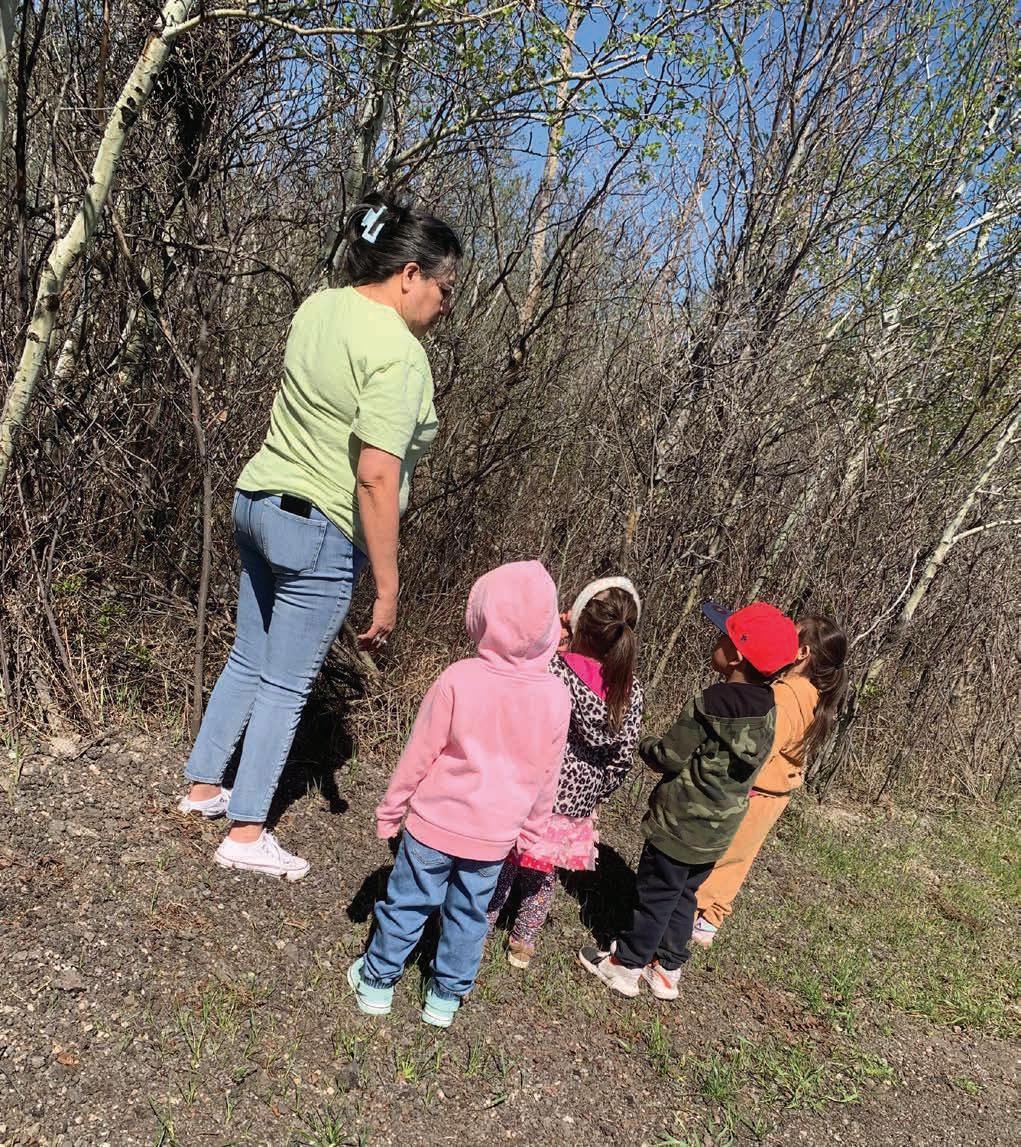
“When I became a principal, there was formal training I had to take to understand that role and what it encompassed, and being that leader in terms of being a mentor and that person where people will look for that professional development piece, as well. When I took on this role, I didn’t see a lot of that in our early learning and child care system. We developed a course to try to start bringing that awareness when you’re in that role. … We need to understand too that in order for our centres to thrive, we have to know about these external things that have impact on that centre. You also have to be that educational leader in that centre. When you, as a director, are assigned that position, you have to realize that you are now responsible to ensure that all of the people within your staff are learning about quality programming. We want to make sure that these professional development pieces — that our staff are trained, that it’s ongoing once they leave that training piece, that that director continues to bring that professional development to their centre. There’s a lot of work to be done, but it can be done.”
As shared by an AHSOR and child care director from urban QC, “Quality programming has a lot of components. You really have to set up your organization in a way that … you have to have those policies and those processes and those procedures and that understanding. … If you don’t have those in place, then it really causes that breakdown. You have to have that set. From there, you have to have a curriculum. … You need to have enough staff available. You have to have the proper ratios. … You have to have an evaluation plan for the educators, and a proper compensation, and the access to all the tools that we need — all of the outdoor classroom, anything and everything that they would need to support all of the elements of what the cultural curriculum entails.” Just the same, the participant said that there’s “a lot of things that we have our staff sign off on a yearly basis,” like “the statement of commitment,” “the harassment policy,” and “all of those things” that are “ integral to the ability to work in a good, healthy, safe environment.” The participant acknowledged, “If something happens, it’s my moral and legal obligation as a director to deal with
© Fern Bear, 2025
certain issues in a certain way and get the authorities involved when needed, and safeguard children if there’s any form of physical abuse or whatever it might be. Those are the really crappy parts of the job, but they have to be done. At the end of the day, we all work on family preservation. … We work with whoever we need to, to ensure that we provide the best care possible for the child during these times of crisis and transition in families and stuff.”
Participants talked about the day-to-day operational aspects of the work involved in managing and leading quality ELCC programs on reserve, like doing “building inspections,” “ health inspections,” “fire inspections,” and “mock fire drills and stuff like that … to be ready in case anything happens.” A participant from rural AB described the need to have “a safe and good building,” which essentially entails “being able to do renovations when needed, changing filters, being able to have people come in.”
The participant explained, “Normally what we have to do is we have to hire out, so people have to come in to do regular maintenance on our buildings.” This includes the “fire inspections and building inspections yearly, just to make sure.” A participant from urban QC also reported having to “call in an inspection company that comes in to inspect our playgrounds” to ensure they are “safe for the children.” At the same time, the participant noted that “there are certain rules and policies and regulations and stuff that make perfect sense,” because “we want to have a very safe environment for children. We’re not fly by night. We’re going to do this because we can. We have the right to. We’re going to ensure the safety of the children and put everything in place, but what makes sense to us.”
Participants talked about the importance of not only “building relationships,” but, as good quality ELCC program managers, also modeling “ how that looks.”
For instance, an AHSOR supervisor from rural BC shared, “That’s one thing I always do in my work. When I meet a family for the first time and I’m going to do the intake process, that [intake process] doesn’t even come up. I once had a visit to do an intake with the family. It ended up being just a two-hour long visit,
and just sitting there and listening to them. I didn’t even take out the form that I needed to fill out. I just sat and listened to them.” The participant explained, “Sometimes, that’s important because all families need to be heard. … They need to know that their voice matters, because it’s their voice that’s going to help their kids in the long-run. They need to be able to advocate for their kids. We try to empower them to be able to be those advocates for their children.”
Participants emphasized how good quality ELCC program management usually entails having to make “confident ” decisions, often in light of “change being hard.” For example, a participant from rural BC stated, “We’ve got a lot people in our community that had been in this centre for 15, 20 years. When I came in, it actually was a bit challenging to have to make those changes because [the early childhood program] wasn’t where it could be. It was there, but it could be so much more.” Reflecting on an identified need “to incorporate the parents to decide what happens within the program,” a participant who manages an AHSOR program in rural MB shared,
©
Fern Bear, 2025
“I was lucky enough to have [a director] who let me do what I wanted to do. … All the older Head Start ones who’ve been there for 20 years … even question the change that I’ve done and, ‘Why are you doing that? How is that going to make things better?’ I had to try to explain, but it’s hard because they’re stuck in their ways.” Still, the participant reported, “Just because we have our parents involved here … our program is run more smoothly and there’s better outcomes and better involvement. The parents feel connected to the program. It makes them want to keep coming back. Even once they found work or their children grow out of the program, they seem to be more involved in the school after they’ve been involved in Head Start. I really think the parents should be involved in early learning care of their children.”

An AHSOR and preschool program manager/ practitioner from rural SK talked about the significant challenges encountered with “a staff member that did not believe in this First Nations cultural way.” The participant disclosed, “With me working alongside of somebody in a First Nations Aboriginal Head Start, it was tough respecting her way of belief, but also her respecting what we were doing here in our Head Start. It was very trying.” The participant shared a story that showcases one of the challenges of good quality management in ELCC programming on reserve:
“She didn’t believe in our way of life. She was a born-again Christian. … When we would do our smudging, she would leave the room. … Other stuff that she practiced was not permitted here in the classroom because we didn’t want conflicting aspects. When we were here, we were teaching our culture. We were also teaching the language that was the mandate here. I couldn’t allow the staff member to be preaching about God. That’s not what the centre was about. … We ran into problems with her because she wanted to teach other stuff. I couldn’t allow it. … I told her, ‘You shouldn’t be talking about God to the children. … I’m not saying that is wrong. That is a choice that you’ve made. But you can’t make it for all the children. If a parent was to come in and hear and see that, somebody’s going to get offended. I don’t want that to happen. The parents trust us with their children.’ I didn’t want anybody to be offended, least of all the staff member. I just said, ‘There’s a time and a place for that. During class time or when we’re around the children, it’s not that time here.’ I said, ‘You can practice whenever you want, but this is your job. This is what we do here.’ I had to tell her that. It was very difficult.”
The participant also described a similar situation involving “another lady ” who runs the community’s “ daycare ” and “ is a born-again Christian.” The participant explained, “That, there again, is something I think is hard for the staff because the staff want to smudge, but I don’t think she recognizes it as part of
the day. She won’t participate. Even when we go to training and we have smudging in the morning before we start our training, she’ll get up and she’ll walk out. … We can’t say that is wrong because she’s made the individual choice, whereas I’ve made the choice to believe in my own culture and be who I am because I was born that way. … When I use the language and I do the cultural practices, they’re from the heart. They’re not from a book. They’re not from somebody else telling me. I do it because I want to. I don’t know if that makes a difference. I think it does.”
Another participant from urban MB shared a story describing the concept of good quality ELCC program management:
“We had a Head Start director who would go the extra mile. Everyone loved her. She was a good leader — very confident with her skills, but also molding her staff to want to participate, for the
staff to excel at different things. … As a result of that, a really good program. … A lot of parent involvement. They had parent field trips maybe once a week or something focusing on culture and tradition. She had Elders come in. … Your program’s going to be based on the leadership skills of the person in charge. You want the leader to be there, to be respectful, to encourage and empower the staff to take on new roles. … You want your boss, your superior, to feel excited to have new ideas. Something good is always going to happen. … You just feel it — that you belong to something fantastic because someone has some vision and playing a very important role in planning and making decisions. That is only part of it — understanding and being aware of the parents’ needs is something else.”
Good quality ELCC practitioners
Participants were asked about the components of training and knowledge that are essential for practitioners working with First Nations children in early childhood program settings on reserve. They typically responded by citing provincial ELCC classification levels and certification credentials such as “either a level 2 or a level 3 worker in child care,” “ECE diploma or ECE certificates,” “early childhood assistant and the responsible adult course,” and “ having your early childhood education — infant and toddler, and diverse abilities.”
Participants generally affirmed that “a key component to understanding … the role of an ECE educator ” is having “at least their ECE, or agree to obtain that while working full-time.” They emphasized that “going through a program and getting a valid certification in your early childhood education, in the toddler education, and your special needs education … are so essential in creating a good learning atmosphere for the children.” A participant from urban QC also reported that “you could have something higher, which is a diploma of college, which is three years. … You have some people, they have what they call a diploma in specialized education but usually, they work for the school because they have a better salary.”
Aside from “a basic understanding of early childhood education,” participants also reported that ELCC practitioners “need their criminal record check, their vulnerable sector check, and their first aid. Those are all requirements, minimum. Anything extra is above and beyond.” On this note, participants mentioned “a variety of topics that all would enhance a child’s experience at a learning centre,” like “understanding the growth and development of young children, the appropriate milestones,” “behaviour management,” “building relationships” and “ fostering those relationships,” and learning about “ how to teach children the soft skills instead of just sitting down at a table with a worksheet, and understanding that a child driving a truck in a sandbox is a pre-literacy skill.”
Participants talked about good quality ELCC practitioners having “conflict resolution skills and team building management.” They reported that “ land-based training ” is another important quality to have when working in early childhood program settings on reserve. According to one participant from rural SK, “That is a big part of our programming right there — for teaching culture, teaching language, teaching that quality programming for the children.” The participant asserted, “It has to start with us, as staff, to teach what is important, what we think is important. Also to have the training because that plays a big part in the quality of training for the children.”
Another participant from rural MB thought about good quality ELCC practitioners on reserve as “ having Knowledge Keepers, cultural experiences, language experience, land-based experiences, stories given by families, Elders, and support ways to effectively teach children.” The participant underscored that having these qualities as an ELCC practitioner “ helps with [children’s] literacy skills, and it helps with the betterment of their lives for the future.”
Participants also mentioned, particularly “ if they’re going to run the program,” that good quality ELCC practitioners need “some management training, operational training on how to operate the program. Like, administrative things, because that will feed into the proposal writing and being more informed about the regulations and the licensing.” More importantly, they need to “understand or know what programs exist and where to really get the funding.” According to a director from urban QC, “Understanding how Jordan’s Principle works, how the child and family services funding works, how the ELCC, the Head Start, all of that is so integral to being able to provide everything that we require. … The Child Care Act and the regulations … our own curriculums. … There’s the zero-to-eight strategy that is out there. There’s the Head Start child care initiative, the Child Family Services, the Jordan’s Principle. There is a lot out there that we can access. It’s just understanding how to navigate it, and where we go, and how to access.”
A regional director from urban BC talked about the importance of “ensuring that there’s a practice of social support ” and recognizing if centres “ have the staff resources to know and understand how best to support this individual child and children’s needs. If we don’t, then access those resources.” The participant asserted, “We need to be resourceful people in our programs to know and understand how best do we support each individual child and network with other service providers who may have those skills and resources to support the families.” The participant further emphasized that having that “sense of opportunity for healthy leadership” is also important:
“I’ll often reference role modeling as an element of leadership — that recognized responsibility and the opportunity and privilege to work with children and families. In early childhood programs, there has to be a greater emphasis on that privilege. If I’m doing this work, how best am I preparing myself each day to show up in a good way and be an enthusiastic educator? Be a curious educator? And a playful and fun educator who enjoys the work? Perhaps not so much what training is; there needs to be more of a screening of personality. … That stuff you can’t train. Do you have the qualities to be that positive auntie role model? And a person in young lives? And peers? Especially with our on-reserve programs. If you’re from the community, you’re related to the children. You’re related to the families in some way, or they’re close neighbors. You need to have a sense of professionalism, of knowing and understanding, when I’m here, this is my role, and being able to articulate that, and model that your primary focus is the children and families’ well-being.”
As shared by one participant from urban QC, “We work with two kinds of educators: You have the trained, and you have the non-trained.” The participant reasoned that there is “this lack of abilities or competencies that we can underline, but which are with non-trained educators. Also, violence is the same. If you are not aware that shouting to the kids has bad effects, you’re going to do it
because, if this is the model that you have from your parents, you’re going to produce it.” The participant commented, “This is something that we see — not on the daily basis, but it’s there. So, yes. It’s really important. It has a direct impact on our work way of doing or seeing it.” Another participant from urban QC reflected on the expertise that exists within good quality ELCC practitioners:
“When we talk about early learning programming and what it is and how we see that, personally, I would envision — probably recognize — that expertise that exists. When you’re a parent, you’re an educator to their child. It’s broader than that because when you’re in the community most of the time, it’s not just the parents. It’s the extended family
©
Heather Stevenson, 2025
that is there. We all play a role of some sort. To me, the early learning — daycare or centre — is an extension of that, where you’re complementing. … We’re looking at it as the wholistic approach, where it should feel for the child in a safe environment, like he could have at home. … When they come to the daycare, we try to recreate what we would have as a safe environment for that child. Then we work with the parents to achieve that.”
Participants talked about ELCC practitioners needing to be “the right fit ” to work with First Nations children and families in early childhood program settings on reserve. Specifically, they talked about the importance of having good quality ELCC practitioners who are “compassionate and caring ” and who “really loves their job.” As stated by a participant from rural NB, “You need to have someone that’s dedicated to what they’re doing. It’s not just a job where they’re getting paid to do something. Their heart is in this because they want everyone in their community to succeed and to be better because of that.” Another participant from rural SK shared, “It’s a very rewarding job, but your heart has to be in the job. … The children will pick up on if it’s just a job. The success behind your program is your staff. Is your heart here? Or is this just a job? The children are smart people. You have to have the heart and the soul to be here with them day-in-day-out, because not every day is a good day for everybody. … Children are gifts. Children are sacred. … If you’re coming into your job with a not good mindset, they know that. They’re not going to have a good day.” A participant from rural BC said that good quality ELCC practitioners “ have to have that passion” and “ have to want to be here. Otherwise, it never works.” Speaking from the perspective of a director with ample experience and expertise supervising ELCC practitioners, the participant elaborated on the significance of this sentiment:
“If someone is not engaged and wanting to be in that position, it’s very evident. It shows. You can feel that when you walk into a room. You can tell someone didn’t really want to be there today. We don’t want that message being sent to people when they’re walking into our centres and into our programs. We need educated people who are working with our children, who are skilled and trained to do the things that we want to do. We want to make sure that they’re always feeling welcomed. … If you’re not happy being here, then this isn’t the place for you. We want our children to be receiving our love and our joy from each and every one of us. We don’t want to be sharing a gloom. That attitude, that perspective; it goes a long way. … A lot of what we’re doing is body language. You can tell when someone is not in it to win it. … You got to be in it enough that you are willing to stand up, be you, and make a difference. A lot of the children that we service on territory have multiple other things going on in their world that we don’t even understand. … We don’t know how they were affected by residential schools. We don’t know how they were affected when their culture and language was taken away from them. We need to be building our children up, not unloading on them.”
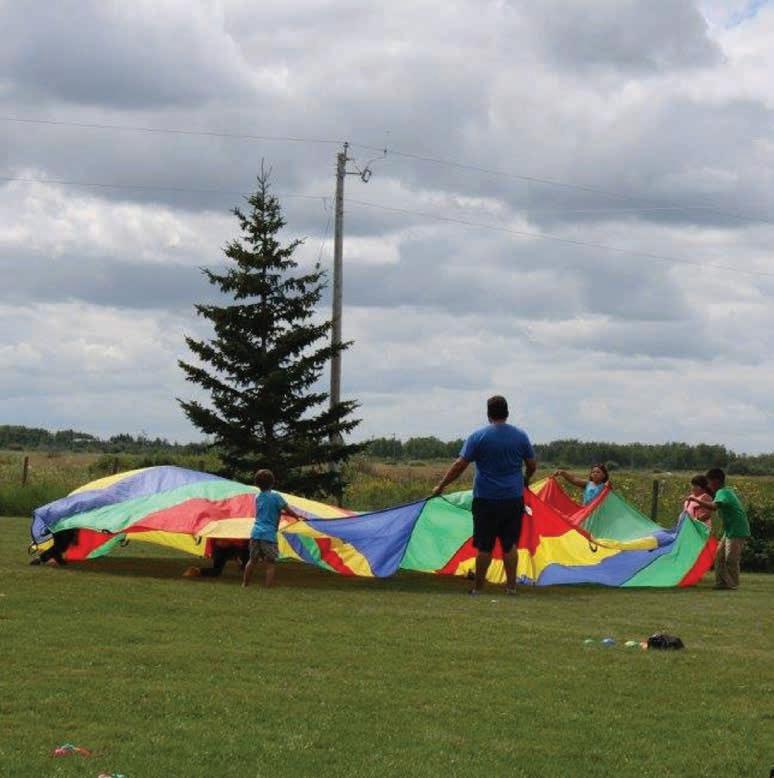
©
Lesli Fenner, 2025
Good quality ELCC program design, delivery, and environments
Participants were asked to describe the concept of a culturally safe early learning environment, relative to quality ELCC programs for First Nations children on reserve. First and foremost, participants acknowledged that “that kind of an environment is the most important first step, not just to quality early childhood education, but to quality education.” As explained by a participant from urban QC, “For many parents, this is not their first experience with the education system — because they’re adults — but their first experience with children in any kind of education system. Regardless of how formal or informal that is … this is the front door to that child’s education journey. It’s the first step to the education journey. … It’s the foundational piece of quality.”
Participants established that “everybody on reserve should be receiving the same quality programs as no matter where you are ” and that on-reserve early childhood programs “should be no different than any other quality program.” At the same time, they said
that quality ELCC programs on reserve “should be for everybody, not just children.” A participant from urban NB stated, “We always say ‘from the womb, beyond.’ We don’t say, ‘Because you’re seven years old, we’re not going to provide you with the supports that you have when you’re six.’ ” Participants described quality ELCC programs on reserve as being “accessible and inclusive ” and “universally available.” A participant from urban QC pointed out that “there’s not very many programs on reserves that are universally available. Whether it’s daycare and you have to have a job or be in school, it’s not universally available. There are very few programs where you don’t have to provide something — proof of or some kind of contribution — to get the service.” Participants underscored that any quality early childhood program for First Nations children and families on reserve “needs to be free,” and “cost is something that should not be a factor when we’re looking at getting our children into quality programs.” As asserted by one participant from rural BC, “We shouldn’t have to pay more money for better. We should be able to all have great, with very limited cost.”
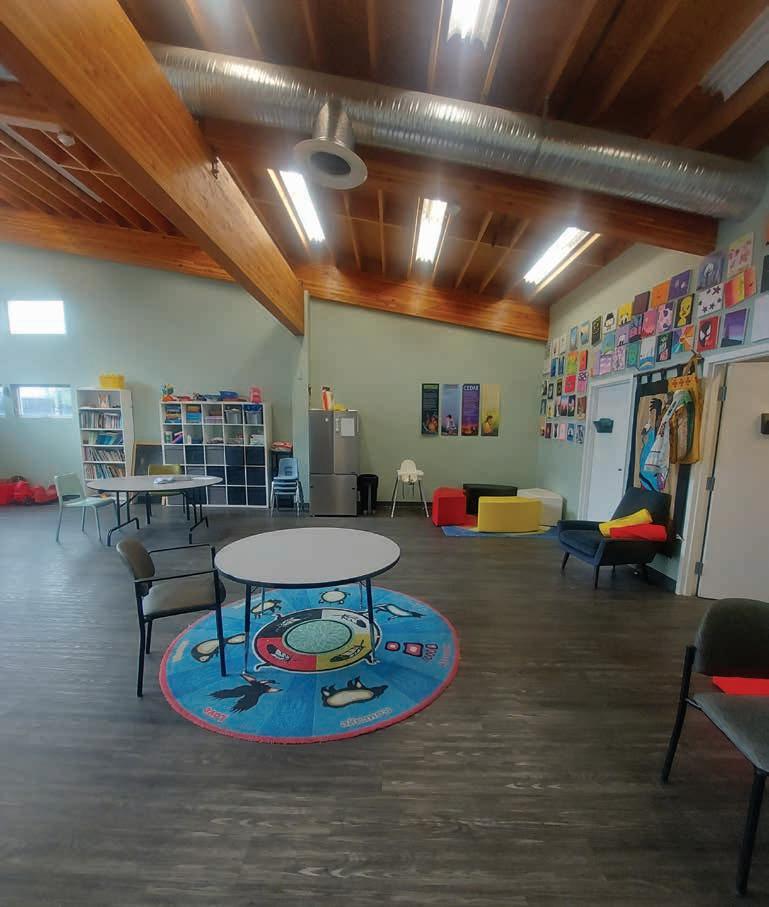
Participants talked about the “need to have safe buildings” and the “need to have buildings that are accessible,” and “that’s big enough to be able to deliver the program.” They described “an expectation of quality furnishings — making sure that they’re not worn out and dangerous.” They talked about how “children deserve to have beautiful, healthy spaces that are well-maintained,” and about the importance of “role modeling ” that “ let’s take care of the place we’re in.” Participants mentioned having “quality materials for our children to learn from,” which are “ durable, safe, [and] culturally relevant,” as well as having not just “a lot of plastic and factory-made equipment,” but also, as one participant from rural NB described, “the things that we find outside, or the things that we find in our kitchen, or the things that we find in our living room, for example. … It’s the things that are in our life on a daily basis. We don’t need to buy dress-up materials from a catalogue when we can have them brought in from families perhaps, or donated by people in the community.” Participants also talked about ensuring in their quality ELCC programs “that every child had a toothbrush so they’d brush their teeth every day.” 70 Study 1:
Participants highlighted the importance of “providing a safe and caring environment for kids and their families to access.” They described having “a good environment ” for quality programming, “like, with how your environment’s going to be at the centre, like, greeting the parents and the children.” They emphasized that quality ELCC programs on reserve should enable families to “ feel like they belong there ” and “ have the right to be there.” They should provide “someplace that’s welcoming and including,” and “open to parents, open to community members — safely, of course.” Moreover, they should have “an open-door policy that parents or caregivers are able to come in and contribute to the programming or the quality within the centre to build those relationships even stronger.” As described by a participant from rural BC, “It should be warm and loving and just inviting, and makes people want to go and visit, and helps parents feel comfortable enough to know that their kids are in good hands with the early childhood educators, and not have to worry about them.” The participant further described “ just the setting itself ” as having “a bright room — lots of natural light — and just having natural things in the environment, just a place where a parent can … come and sit and have coffee or something, and be able to check on their kids every once in a while.” A participant from urban SK also described the concept of having a place and space for families to be involved in quality ELCC programs on reserve:
“There needs to be that time. There needs to be the space where [parents and family members] can come in, rather than just drop off the child and then leave. There needs to be the understanding in the program. … Outline it, because it’s been lost and it’s not been perhaps valued, that time spent with young children, taking off their winter clothing, hanging it up. The child’s often at age two, three looking back for where is that sense of security which is so important to have established as a foundation in those young years. … There needs to be allowance on when you’re designing a child care or a program or revising a program, Where is that role? Yes, we have safety concerns. In this day and age, we know that. … Of course, the safety of the child is paramount. Often
© Gloria Cochrane, 2025
there are many other people — there’s cousins, there’s others; ‘That’s my sister.’ ‘That’s my brother’ — that the young child will always look to. So, if the young child’s looking to it, where are we at supporting the space? … Is there a chair for [‘parents’] to sit in to take their winter clothing off? Is there allowance for that in the schedule? It’s not a rigid schedule of drop your child off because circle time’s happening or that kind of thing. It does need to be woven, really, the child development piece.”
Participants talked about how “a lot of early learning services on reserve have been considered babysitting services,” and about how they “ don’t think early learning and the benefits of social engagement with other kids, that kind of thing, play-based learning, have really been communicated in an effective way that parents understand.” They mentioned that “a lot of people just don’t know about programs.” Even though “social media has made reaching easier,” participants acknowledged that “still, there’s this barrier where some families won’t be a part of programs, whether they’re the greatest. If they get something free, they’ll want to do it, but otherwise, to take part in programming, they’re turned away.” As stated by one participant from rural SK, “We don’t have all the children here that should be coming. For whatever reason, they don’t come.”
Participants underscored, from an AHSOR parent perspective, that not having “welcoming staff ” could have “a huge impact ” on the quality of on-reserve ELCC programs. According to one participant from rural MB, “You have to have somewhere where you like to take your children. They have to be enjoyable.” Another participant from rural MB, also a parent, added, “That’s just based off of the staffing. That’s just based off of the welcoming environment. Because you need to be able to trust them. For me, that was the
hardest damn thing to do was take my kids to daycare. I hated the staff and the environment and the way that when you walk in the door, you just feel tension. That’s how it was at the daycare. Like, ‘Ugh, I’ve got to drop my kid off here.’ I could just feel when you walked in there, it was like you were ruining their day. That’s how they would look at you.” One participant from urban QC, a director of an on-reserve child care and AHSOR program, emphasized that “socially safe for people is a huge one because without that, you won’t have the trust of the parents, of the community, of society as a whole.”
Participants acknowledged that “religion and culture are different ” and “not everybody is part of our culture,” nor do they “all believe the certain way — our First Nations way.” They talked about “a clash of religious people ” “Christians versus Traditional people ” — and having “to be really sensitive when it comes to that ” because quality on-reserve ELCC programs serve to “teach our children culture, even if they are coming from Christian families.” Participants also acknowledged that there is “a lot trauma ” and “not trusting ” associated with “the impact of residential school and ‘Indian’ day schools.” They talked about how “there’s a huge history in all First Nations communities when it comes to child apprehension and the ministry,” and about how “trust is a huge one with parents that really don’t open up to any kind of services,” stating that “they’d rather go without,” particularly in light of “some pretty heavy consequences because people in positions of some authority made some comments to some social workers that … just ends up in permanent records that follows you and you don’t even know it.” A grandparent from urban BC disclosed that “those kinds of attitudes and comments are incredibly damaging because it came into a situation where it was a reason to rip children out of our family.”
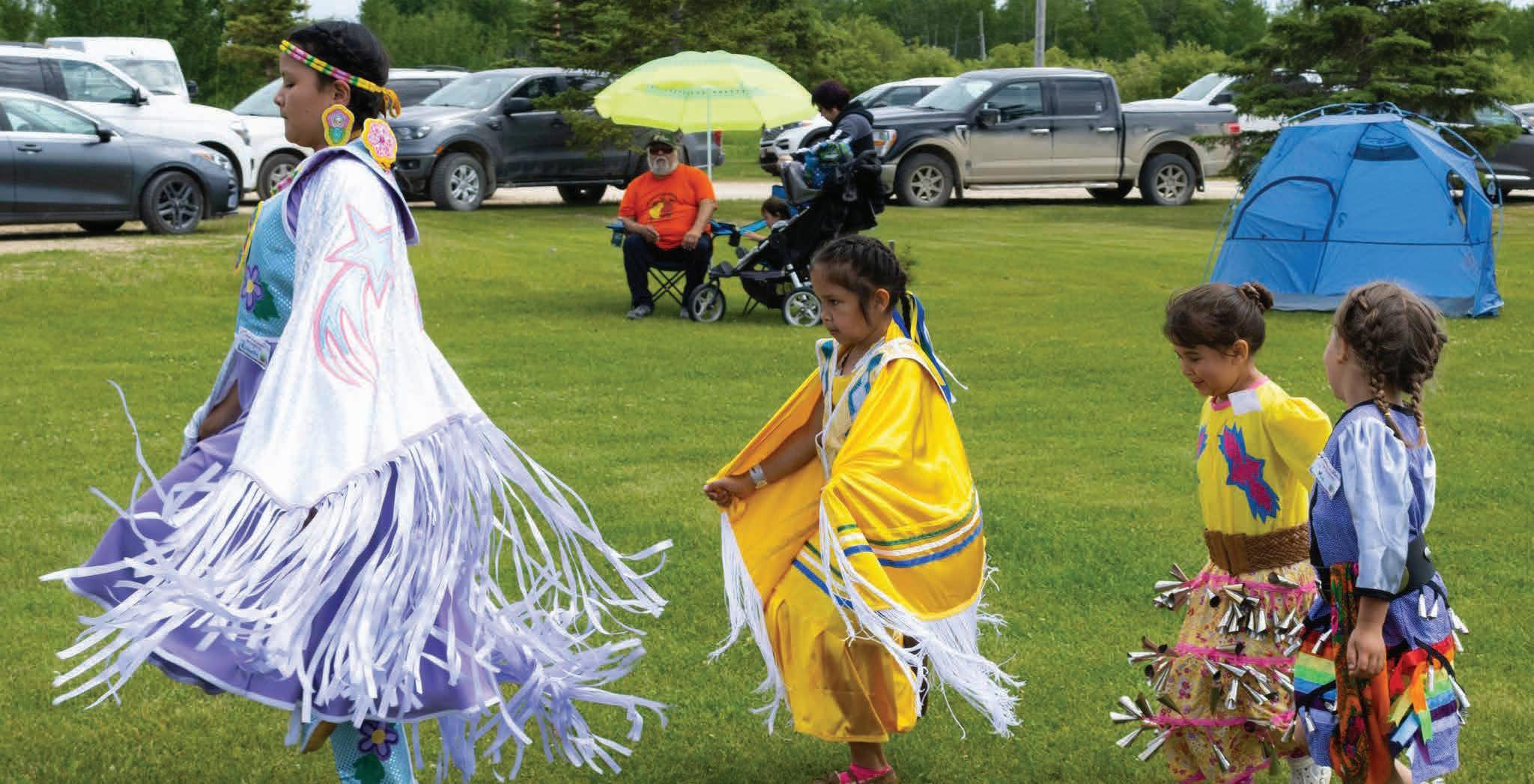
© Heather Stevenson, 2025
Another grandparent from rural BC talked about the safety of quality ELCC programs on reserve, not just in terms of physical interactions with parents and families, but also with regard to “what kind of communication they’re putting out.” The participant asserted that “any handbook they have needs to be very sensitive about our people ” and “parents need to be aware of and informed that these facilities are culturally safe in every aspect of these elements. Just for an example,” talking about “this family,” the participant shared that “they were given an invitation letter but then, at the bottom of the letter, there was mention of the ministry, saying that they were not connected with the ministry. So, right there, it’s a red flag. … It was not appropriate. … We’re trying to break this cycle where we’re not presenting these types of gestures or wording that’s threatening to a family.”
Participants talked about the different ways in which good quality designed and delivered ELCC programs on reserve “would match what the community needs.” For instance, a grandparent from urban BC stated, “Number one, it would look like what the community needs. … If that means that we don’t need that service very much from Monday
to Friday during business hours, but boy do we ever need it for night shifts and for weekends, then that’s what it would be.” Another participant from remote BC shared how their child care program had recognized that their “one prenatal group a week … doesn’t meet the needs of the families,” mainly “ because some of [the] parents work, so that time doesn’t work for them.” As such, the participant advised that they are looking at “ having more prenatal classes, whether in the evenings or weekends, rather than just the Monday to Friday jobs,” as well as “with [the] parent-tot groups and [the] infant drop-in programs, having those more for families that work evenings and weekends, to be able to provide the extra support for the ones that don’t have space in the daycare.”
For one participant from a national partner organization in urban QC, “quality care looks like beginning earlier.” It also means “making sure that [‘daycares and early childhood education services on reserve’ are] actually having some consistency in service around time, like when they’re actually open and the length of day that actually fits with parents’ work schedules.” As explained:
“Many programs — certainly Head Start — only begin at three years old and a lot of daycare situations are one or two. That’s the first thing, but related to that is the consistency. Consistency is a major challenge. Services, when they do exist, consistently being open. Staffing is a big challenge. What we have seen of services on reserve, it’s very challenging for parents to rely on that service. They’re not always five days a week, and they’re often not extended days. … A good example I’ve seen many times is that there’s a daycare and a Head Start. Well, Head Start is from 10:00 to 1:00 in the middle of the day. So, what happens is, generally, it’s most of the kids that are already in daycare that are actually benefiting from the Head Start program as well, and that’s generally a very small proportion of the number of kids that could be using either of those services.”
Participants talked about the need for quality ELCC programs on reserve to be “flexible ” and “responsive ” to the existing and emergent needs of children and families. For instance, a participant from urban QC told of trying “a bit of a pilot ” in their ELCC program, where they “offered drop-in child care on
Child Tax day, just because Child Tax day is a day where parents are able to just get a lot of things done. They have errands to run, things to pick up, and without child care, that’s the day where we see a lot of challenges for families take place.” Another participant from rural MB highlighted an identified need for parents to have “child care while in the programming.” The participant shared, “That’s crucial because we have single mothers and there was a few single fathers. They came in and they had somebody there to watch their children while they were in a safe environment being taught things, and while they’re inside of a program or something and being educated.”
Another good example of the ways in which quality ELCC programs have been flexible and responsive to the existing and emergent needs of young children and their parents in First Nations communities is “COVID.” Participants talked at length about First Nations families experiencing “grief and loss,” “a lot of fear,” and “a lot of anxiety about being places ” because of the global COVID-19 pandemic. A participant from rural BC, for instance, shared, “I’ve had parents that talked to me because they were under a lot of stress, and they were dealing with anxiety, and just fear. … If it didn’t affect the kids directly, it affected them indirectly through their parents.” A participant from rural SK also said that “the COVID pandemic … has hurt people.” The participant expressed, “That has hindered something. The world stopped. They had to stop living life as normal. Now, we’re back into somewhat normal again. It’s changed the families. It’s changed the people. There again, How do you deal with change? … It’s these families. They’re in crises. How do you help the families? ”
A participant from rural MB talked about the impact COVID-19 had on program attendance, reasoning that “ because a lot of people were very skeptical, didn’t want to go out, didn’t want to go to classes, attendance was very low.” On the flipside to this scenario, however, another participant from urban NB stated, “We lost a lot of our early childhood frontline staff because of it. People were
in the schools and they left the schools. So then, they picked up our ECE workers and moved them over to the school. Now we’re back up and running and it’s just like, ‘Oh, my goodness! There’s no ECE workers!’ You know? We don’t have enough staff. Do we go back and shut our door? No. Some had to because there’s no trained staff.” The participant reported that what they ended up doing was implementing “almost like an introductory to First Nations ECE ” that “was developed by Indigenous curriculum developers ” and which encompassed “an online platform.” As described, “It’s self-paced. Let’s say, a centre hires a staff that has a great, maybe say, administrative role. They could take this First Nations ECE course, and then they would be allowed to be in that facility to work one-on-one with children.”
Participants also recalled, “In true COVID … there was lots of Zoom information.” They talked about the different ways they changed-up their on-reserve ELCC programs to adapt to COVID-19 restrictions, such as through offering “great outreach opportunities to families,” “online connections via Zoom,” and “a lot of virtual storytelling.” A participant from urban BC remembered, “Families were excited about the process. … There was a waiting and an anticipation of what’s coming next. There was a challenge for the education teams and programs to keep it creative and innovative. … The influence that we tried to influence was still the six components of Head Start. So, ensuring that there was a culture and language foundation, ensuring that children were learning through these activities, families were healthy, and including nutrition.” A participant from urban SK stated, “We’ve learned an awful lot from COVID on things that should be fully funded as at-home child care. Let’s call it what it is. What wonderful opportunities. If we need to put a metric on it — because we often do — Are we getting value for our dollar? Probably tenfold value of your dollar than a child care setting.” The participant explained the reasoning behind this statement:

“COVID allowed a flourishing of bringing supports to the home. … We took, actually, a centre-based curriculum in early childhood learning, adapted it … for families that … can’t get to the child care centre … for different reasons, whatever the reasons … but boy, have they ever benefitted from getting this package that comes every Friday. It’s a different package. … We can still continue to give them play resources, curriculum resources. … We can continue the support and development. … We need to value from the science side, from the culture language side. It’s just a win-win-win all the way around. … We’ve also, with COVID, removed the safety factor. … People don’t have to go into the homes. We can connect through this thing called technology. Parents love it. … We’re saving a lot of money because infant spaces are probably the most expensive to develop to make sure that infants are safe. So, why aren’t we doing this more?”
A participant from rural BC recalled “taking the kids out into the territories ” and “connecting them back to the land ” during COVID-19, because they “ had a lot of communities that were on lockdown ” and they “[weren’t] able to access centres.” The participant shared, “Rather than going to a centre, I would take them out into their own community and we’d do activities there. It was good, especially for me too because … it was healing, just being outside, watching the kids play, and doing our activities, and just finding a location within their community where
© Jesse Cochrane, 2025
we can work on the goals, and have a snack, and let them play and just have that continuity of services throughout the summer.” Another participant from rural BC shared a story which further depicts how quality ELCC programs are responsive to the existing and emergent needs of First Nations families on reserve:
“We do a lot of connections. If we are unable to support for some reason, then we call in somebody who can. I’ll use COVID as an example with the grief and loss. We are not trained to be grief and loss counsellors. That’s very much not what I’m trained to do. That’s not what my staff is trained to do. But we recognized that that was a huge need and so what we did, we used our space here at the Head Start and we brought in counselors and grief and trauma support and invited whoever wanted to come. Everybody is welcome. … Everybody in the whole community, come on over. Anybody who’s interested. … The first one was … very small. It was like four or five, but the second one had like 10. With what we’re doing, like anything else,
consistency is key. If you stop doing it after the first time because it didn’t work out well, you’re never going to get a fair shot. Right? So, we got to just keep doing it and then they’ll know that this is going to be there for them or that they can come to us if they need help. We might not be able to help them with that, but we will help find somebody who can.”
One participant from a regional oversight organization in urban QC talked about “why the ELCC is really important ” and its “ importance to work on the kids,” as well as “on his environment.” The participant explained, “By environment, it means parents, families, and communities. … We don’t see it as daycare only. It’s more than that. … We should put energy in many aspects. When we talk with the communities and we work with them, we look at, What are the needs? We need to have a portrait look at the needs. … These several five-year-olds is really important. What else could impact the kids? It could be, Do we have lights for the streets? Do we have a secure environment? It goes up that far.”
Quality care and young First Nations children: An exploration of optimal learning and development in early childhood settings on reserve
Sectoral placement, intersectoral collaboration, and program partnership
Participants acknowledged that intersectoral collaboration and program partnerships were key to establishing quality ELCC programs on reserve. However, program endeavours in this regard varied. Some participants talked about ELCC programs being “ in the same building,” other participants described early childhood programs that were “all in separate buildings.” Some participants talked about program connections that either happen “a couple times a year ” or “not necessarily … unless it’s the practitioners — the speech pathologist — that have that relationship,” other participants reported that they “mainly work with the health programming ” and “try to do a community event together,” or they’ll “network for bigger events.”
One participant who manages an AHSOR program and preschool program in rural SK described an intersectoral collaboration involving “a lot of different programs … working together for [a] new structure.” As explained, “We have some other programs that are working … to build the structure. That’s the Chief and Council, and that’s myself. That’s our daycare director. We also have ladies from ECEP [Early Childhood Education Program] and Jordan’s Principle. We’re all working together to build this structure. … This is something I’ve been waiting for since I started working in the field. This is almost like a dream thing.”
Participants talked about the influence of sectoral placement on opportunities for collaboration and partnerships involving quality ELCC programs on reserve. They also recognized that it is not uncommon for ELCC programs and services to be shuffled, mostly between the “ health ” and “education” sectors, but also within the “social services” sector. For example, participants commonly mentioned that “Aboriginal Head Start … used to be under education, but now it’s under health ” or vice versa; or “the daycare used to be under health, but we moved it under a … community services director or program services director;” or even “ daycare’s run also under education, then Head Start is run under child and family.”
For the most part, however, participants recognized that quality ELCC programs are “better suited ” for placement “under the health portfolio.” According to one participant from urban SK, “Moving it under education makes it that drop down piece from schools, which is missing some of the health benefits and all that safety-security foundation, socialemotional development, relationship building that allows somebody to grow to be a healthy human being, broadly.” Another participant from rural MB explained, “Sometimes, Head Starts were taken from the health and put under education, and that made things bad for that program. Me, I’ve been fighting to stay under health, forever. I do not want to be moved under education because our program is more than just education. We are a health program. We provide so much more than just the education component about it.” Then again, a participant from urban QC pointed out that “child care is not considered health or education, but it is health and education. We fall between the cracks — or we were falling between the cracks — because the health dollars were going to health programs and the education dollars were going to the education system.”
Regardless of sectoral placement, participants perceived “a lot of programs supporting other programs.” As explained by a participant from rural BC, “Even for the Aboriginal Head Start. … It’s under the health contract. Like, the Head Starts are part of the education, so they have to work together to be able to provide a program. Health does play a role in the health of our children, as well.” At the same time, participants recognized a need “to break down the silos that exist ” between sectoral organizations within First Nations communities. For example, a participant from urban QC talked about having “some issues with ELCC last year.” The participant shared, “We were in the community. We talked to the director, and she’s like, ‘I’m not aware of this [Jordan’s Principle] program or new funding.’ Then I was like, ‘Oh, my gawd. So, you don’t talk to the health director?’ She’s like, ‘No.’ ‘OK. So, what we’re going to do is we’re going to talk to the director.’ … We started to talk to the health director … and then
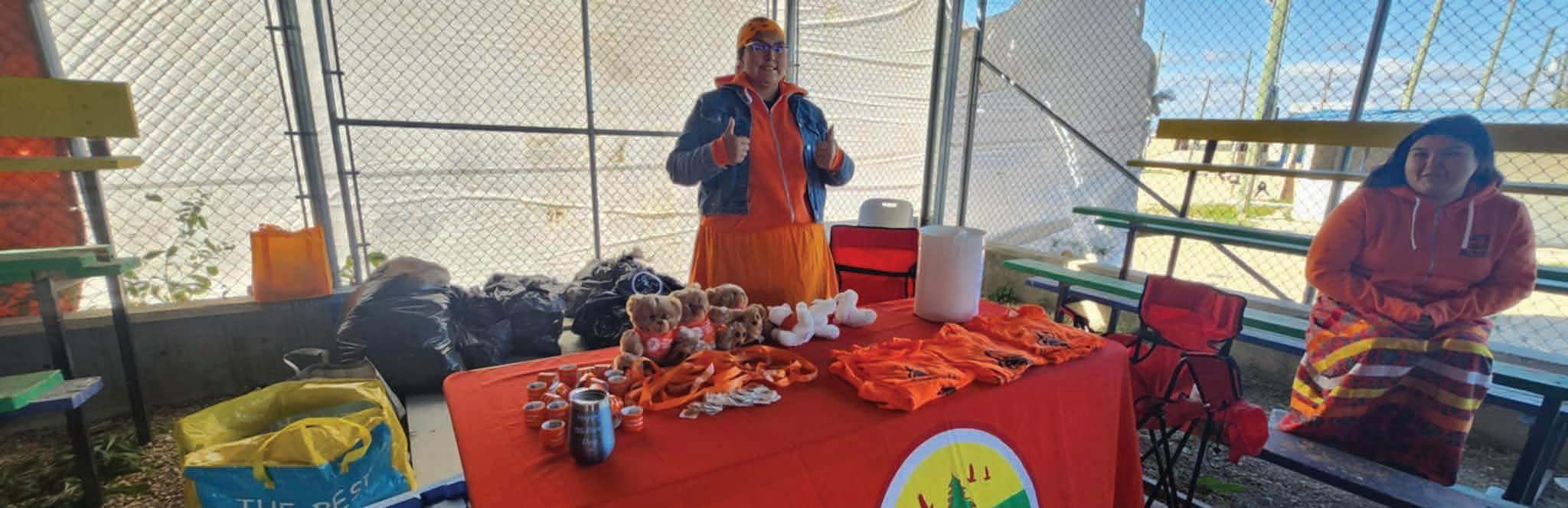
explaining how it worked. Then she was like, ‘Oh yeah, it’s like this.’ … Now, they’re talking together.” Having shared this story, the participant urged that “ for other programs, this could be the same. You should be together to make sure that no kids are left behind.”
Other participants, as well, made specific mention of the Jordan’s Principle program, with shared stories of how this “gap service ” has enabled their ELCC programs to better serve and support families of children with “autism” and “special needs” in getting required “equipment.” They said that, with support from the Jordan’s Principle program, they’ve “ hired staff ” and “specialists.” They’ve also “offered programming for … staff to help better work with the child.” A participant from urban NB explained, “Because there are only 18 seats and we have 56 children between the ages of zero-to-six in our community, we need something.” The participant reported that “since Jordan’s Principle came into effect in 2018,” they’ve been able to develop and administer “an early intervention program that’s in the home for our families.” Another participant from urban MB also shared a story that illustrates the significance — and challenges — of intersectoral collaboration and partnerships for quality ELCC programs on reserve:
“I had two goals. … That first year, I knew I was not going to accomplish those goals. That was hard, just because when we tried to find a space, no one would even open up a creative mind to say, ‘That’s a really good idea. Let me see what we can do.’ It
was, ‘No, no, no. That belongs to the health centre.’ The health centre would say, ‘No, no. That should be the school.’ The school would say, ‘Well, don’t they get that in daycare?’ Then daycare would say, ‘Well, isn’t that part of Head Start curriculum?’ It was just like passing the buck because nobody wanted to have family resource programming.”
Participants shared many different stories that showcase their varied efforts “to collaborate and fill gaps … to make sure that our children are getting their best start.” A manager/practitioner of an AHSOR program and preschool program in rural SK, for instance, described a program partnership in which their programs, in partnership with the “the daycare,” “the school,” “ home visiting or outreach,” and “the parents” are all working collaboratively to ensure children “ from zero to the ages four years old … prenatal as well ” are provided “the basic stepping stones that they’ll need to go into the kindergarten, into the school.” Another participant from rural BC reflected on an ad hoc intersectoral early childhood development committee that “started many, many moons ago” and is open to “anybody who’s involved with zero-to-six — or zeroto-18 for those who require extra support for diverse abilities.” As described:
“We all still come together a few times a year, just to do a check in. Is there anything on anybody’s radar? Is there anything that we’re missing? Is there any gaps that we need to be filling and if so, how do we do that? We brainstorm and stay in communication. It’s just
© Lesli Fenner, 2025
really about talking … and getting together and being mindful and saying, ‘OK. So, we’re doing this here. Could you use some of what we’re doing here and find someone to do it there?’ So, instead of having what’s mine is mine and what’s yours is yours, we are very collaborative here to ensure that we’re doing the best that we can for the children and families, both on and off territory. … You’re always connected in some ways, somehow, with somebody that you know could use extra help or use support or is looking for funds.”
The participant shared a story depicting a mobile resource centre that was developed as a result of this partnership and an identified need:
“We had a really amazing … school bus that was retrofitted to be our travelling child care centre. They took all of the seats out, put in a circle rock, put in benches so children could sit and do arts and crafts, and there was lots of toys. That was one of the biggest things to get out to the families that are all scattered, geographically, around the territory. … That was one of the suggestions that they came up with many, many years ago and actually, they just retired the bus this year. It finally was unable to meet the legalities of being on the road. … It’s a very old school bus. So as of this year, it’s no longer in effect. Now we’re looking at … How do we continue to get the education out to the children and the families when we recognize that everyone is so separated?’ There’s a lot of land between us.”
Participants described program partnerships in which multiple entities work in unison to ensure families have access to needed specialist services. A participant from urban QC talked about the important “ link between the executive director of the daycare and the health and/or the social services director.” The participant recognized that “you have some activities that goes on in the community, and they just forget about the kids within the daycare. … They just miss those services.” The participant reported, “We have good success now where they have this reflex to call the daycare. ‘Hey, we have a specialist going down from … a big centre. We need not to miss it. Can we do something together so that that’s better for the kid?’ ‘That’s great.’ … Let’s say that you have a language or a speech specialist coming over because there are not so many. Now, you won’t have this trouble, like forgetting those kids at daycare.” The participant also recognized that a daycare model “that doesn’t have this board of director, but [rather] is integrated within the Band Council ” provides a proven-effective approach to collaborating with child care programs on reserve, mainly because “they are part of, let’s say Head Start programs or sector, and they are with the education sector. Then all those specialists, they just go from the school to the daycare. It doesn’t matter because it’s not anymore about the funding. It’s the structure.”

A regional director with oversight of multiple ELCC programs in rural BC shared, “We’re very connected to … our early intervention services. … We’re all in it so that the families can feel supported, and then with their assistance, we are able to get into those deeper conversations, especially when you’re looking at physio things, and speech and language, and self-regulation, occupational therapy.” Another participant from rural BC, a program supervisor, said that they also have an “early intervention team [that] consists of the parent first and foremost, [their AHSOR] program, the therapists, and the child care providers … that works with the child, and [the] work is guided by the parents.” The participant explained, “We work on goals that have been identified by the parents. Their children attend child care programs. So then, it’s just child care workers for the early childhood educators that identify possible delays. They reach out to me or the therapist and we go in. If we agree with them, then a referral is made … and then I refer on to the therapists.” A participant from urban MB reflected on the value of intersectoral collaboration and ELCC program partnerships for the sake of First Nations children and families on reserve:
“Community connectedness; it’s so important. That’s where you’re going to get success from is when the school and the health centre, the daycare, the Head Start, CFS [Child Family Services], Jordan’s Principle; when they all come together for a common goal — and that’s having healthier children. When I say healthier, I include culture and tradition in there. … A wellbalanced program where it’s not only supported by Jordan’s Principle or by the daycare — that everyone values the role of that preschooler in that community. It’s about no one getting a pat on the back at the end of the day. It’s about everyone contributing, everyone valuing that our little children need to be supported in a good way. Whoever gets the credit, that doesn’t matter. … It’s about [that parent] being supported in some way, somehow; that she’s attending programs at the health centre and they provide transportation. When she leaves there after a two-hour program, she feels better about herself. You know? … It’s about building those partnerships in the communities, and being consistent is so important.”
Major obstacles and critical hindrances to ELCC program progress
Throughout the interviews and group discussions, participants pointed out several major obstacles and critical hindrances, not only to ELCC program access and utilization by First Nations families on reserve, but also to ELCC program progress. The findings on these key barriers and challenges are presented here.
Bureaucratic challenges
Participants talked about some of the bureaucratic challenges surrounding ELCC programming on reserve. For starters, they acknowledged that “the leaders are swamped.” As explained by a participant from urban SK, “Leaders are taxed and overwhelmed. Then the systems too. It’s still working out that bureaucracy system between its leaders and Chiefs and Councils that make decisions. It seems like they have to make them over and over again. They may have met with governments. They’ve met with funders, different groups. Then, if they don’t keep up the attention and the interest, I mean, my bias would be on the funding side. ‘Well, we didn’t hear back from them so I guess they don’t want that.’ ” With respect to First Nations leaders themselves, the participant further explained, “There’s so many other important matters that come up — the land, and the climate change, and unmarked graves. Where does the early childhood get its priority? When we’re still dealing with really complex trauma … it’s hard to shift gears and say, ‘This is what I would like to see in our programming.’ On meeting agendas, it’s often very hard to get early learning and child care priorities on those agendas.” Participants recognized the need for ELCC as a standing agenda item to ensure the sustainability of early childhood initiatives on reserve. A participant from rural BC shared a story to this effect:
“We used to be strongly funded. … We had a large sum of money that was given to us every year, to our committee to allocate and start programs or fill those gaps. … That funding has since been rescinded. …
That person was now without a job because that funding turned into different funding and it was allocated somewhere different. So then, we’re in the situation where we’d love to keep this going and keep it strong but, you know? Zero-to-six was huge. Everyone’s shouting, ‘zero-to-six, zero-to-six, early years, early years.’ Now, we’re hearing a lot about ‘youth, youth, youth.’ You know? We’ve built our programs up. So now, it’s like, ‘Okay, this is running smoothly. We’re doing an amazing job. We’re all staying together.’ But other people are starting to move into, ‘Okay, now we’re looking at youth. What do the youth have?’”
A participant from urban BC emphasized that “we have a great opportunity right now because of the shift to reconciliation and First Nations governing and self-determination … to shift the balance of power ” and enable First Nations communities to “take control of their ELCC programs.” At the same time, however, “with that power is also flexibility and opportunity to recognize that we are who we are … and that can be limiting. We’re saying this is our history, and yet we have the opportunity to change it, and yet we’re perpetuating it.” The participant figured a determining factor in this regard is that, as First Nations people, “we only know what we know and what we’ve experienced in life.” A story shared by another participant from rural NB provides a good example of some of the bureaucratic challenges First Nations families and ELCC programs on reserve grapple with on an ongoing basis:
“When we think about how [our ELCC program] began five years ago was because there was no relationship with the province. In order for a child to have some early intervention service, we had to pay. But everybody else in New Brunswick did not have to pay. … That’s a huge political challenge — that these services are offered to all New Brunswickers but not to First Nations children and families. … We had a family that wanted to access a service … that’s offered to all New Brunswick. New Brunswickers don’t have to pay. … The family was on a call doing that initial set-up of what type of services we required and that
call was $400 — which was paid for by Jordan’s Principle. … We know that Jordan’s Principle pays as a gap funder, but the thing is that it would be left on families to figure out those departments. … That’s a barrier for families. Then, another barrier is … they go to these services and they’re not culturally appropriate. Then it was left on us to figure out what services does the province have that has specific needs for our children as well, and then try to create programs that we offer for our communities that are similar. That’s how [our ELCC program] began. When we were trying to understand this challenge, it went back to that Family Services Act. … There’s a section in that act that says that services are offered to all New Brunswickers except if you’re incarcerated, reside in another province, or reside or from a First Nations community. We had one mom that had her child off reserve in an early child care facility. She was applying for the subsidy. … When they found out that she was First Nations — she lived off reserve; she was not living in community — she was denied access to that funding for that subsidy.”

Participants talked about building restrictions on program capacity as another bureaucratic challenge. A participant from a partner organization in urban QC, for example, shared a story about visiting “a Head Start that [‘the federal government’] funded.” The participant said, “They showed me the building and how many students they were funding that program for — how many kids that program could take. They said, ‘But we only gave them the building that could fit X number of kids.’ ” The participant emphasized, “They’re being funded for 40 kids. Their building actually can only take 20 kids — the building the federal government gave them. So, just a lot of miscommunications like that. There’s not a lot of oversight and very little support. I guess you could argue that means they have autonomy and flexibility.”
Participants alluded to the lack of regard for transparency and timely information sharing with First Nations communities. Talking about administrative oversight involving licensing and regulations, for instance, a participant from rural BC mentioned, “There seems to be the regulators that are at a far reach, but then they’re connected somehow. … They need to be a little more transparent about their role or jurisdiction — access to who they are.”
Another participant from rural AB shared, “They have a curriculum out there. … We’re just dabbling in it now. … I just heard about it recently and that was when I was actually doing the application form and all the work for the province. I didn’t hear about it before. We do have our Aboriginal Head Start. We do have a curriculum per se through them, but I didn’t hear about this Flight [Alberta’s Early Learning and Care Framework] until I actually took a look at what they require off reserve for daycares and Head Starts. I had no idea.” A participant from urban QC pointed to a need for more timely translation — in this case, from French to English — of program guidelines. As explained, “I think that we could see much more. Also, the language. You have the English speaking people. They don’t have the same guides. They don’t have the same information. There is a delay between the French and then the English. It could take up to five, six months before they get it. So, they’re behind at some point.”

© Credit: iStockPhoto.com, ID 2181675251
Participants talked about the manner in which “particular funding streams … are built to start a program, maintain a program, pay the bills for your program, bring in supplies, but … don’t have funds to provide transportation to and from, for those programs.” According to one participant with regional ELCC program oversight in rural BC, “It’s missing that gap — that a lot of our families don’t live here. We have to travel out to them.” Reflecting on the bureaucratic challenges in this regard, the participant explained:
“We have to use either our own vehicles or we have to rent a vehicle to get out there. Nobody wants to bring their own vehicle or truck to the back roads. … I have been looking high and low. I cannot find any funding that applies to a vehicle. How do you support your families when you can’t even get out to get them? I can’t find any sort of funding that applies for me purchasing or leasing a truck so that my staff have a reliable vehicle going out to the territories.”
Another participant from urban QC posed the question, “At a certain point, it’s like, when do we finally make the decisions on what suits us for our community and what we need and what the children need, as opposed to trying to fit into the envelopes of ministries? ” At the same time, however, the participant asserted, “When we don’t agree with something, we let it be known. We won’t adhere to certain things. … We just won’t. We won’t do things to appease. We won’t do things because we’ve been told it’s a law. Or if it doesn’t make sense to us and we don’t agree with it, we will definitely fight it. We will oftentimes decide not to be a part of something if it goes against who we are as a people, against our values and all of that.” As an example, the participant shared:
“I do different ratios than the ministry wants. I feel that someone with special care counselling is very integral to the team. Someone with special care counselling, to me, is qualified. To them, they’re not qualified because they don’t have an ECE. Those are things that we can override. … More recently, there’s an overall evaluation that’s happening … where they come in and they evaluate the program. … It’s a requirement. I told them, ‘No. We’re not doing that. We’re not getting some stranger to come in here and sit in a classroom and evaluate.’ You know? We will do it our way. We will do it in a respectful way. We use one of our supervisors who goes in and does observations within the classroom. It just makes more sense to us.”
Participants expressed common sentiments like, “ for us, by us,” and “ it needs to be a partnership,” and “we need to stop looking at outside pieces coming in to tell us how to do things,” particularly since, as First Nations people, “we know how to do these for our own children and families.” That said, however, participants also professed to be “extremely adaptable with the ability where we can take something and make it ours as best as possible.” For example, an ELCC director from urban QC said, “What happens is the ministry will … put out something and then we will assess it, and we will determine if this fits for us. If it doesn’t fit for us, then we find something that we
can adapt or adopt that would make more sense. For instance, the ministry requires these developmental portraits to be done in a certain way. We don’t do the way the ministry states they need to be done, but we do our own version of them. We pretty much follow a lot of it, but we don’t necessarily adhere to everything within it.” As explained by a participant from rural SK, “Quality programming is the components that we were to be teaching [First Nations children on reserve]. We add our First Nations perspective to it. That’s a big part of who they are as First Nations children.” Still, participants demonstrated a sense of frustration in this routine. As shared by an ELCC practitioner from rural NB:
“We’ve always been in a position where we were told that these are the rules that we had to follow. This is what we had to do, and these are the results and the stats that they want from us. It’s never been about us. It’s never been about our sense of pride or our sense of accomplishments that are happening within the community. They don’t need to know that. They just want it to have something created by somewhere in Cuba or Puerto Rico, or wherever they develop these things, and then they send these nice pretty boxes to us. We’re told to use it. We don’t really have a say in the matter. … We need to think of what is going to work for us, and what’s going to be an accomplishment for the children and the families — not just some numbers on a piece of paper or a checkmark.”
Reflecting on some of these bureaucratic challenges, participants acknowledged that “ it’s getting better ” but “there is still some room for improvement.” A participant from rural NB affirmed, “We don’t want to change their way of knowing and doing. We don’t want them to change our way of knowing and doing. But we do want to forward the path together.” Another participant from urban BC recognized the opportunity — and importance — for education in this regard:
“The opportunity that our nations have is that autonomy to say, ‘For our nation, we’ll do it this way.’ My hope is though, it’s not a default mechanism that we have to do it this way because this is all we got. … There’s such an opportunity to be the positive role model, to be the ones like, you know, we have the autonomy to do this. We have the authority. … If I challenge something … I want to have a good rationale as to the why, and be that model and say, ‘Because our nation believes this and values this, we’re choosing to do it this way.’ So, to be articulate in how and why, rather than to be defiant and angry as to, ‘No, we just want to do it our way for our sake of doing it our way.’ Like, let’s educate the world on, ‘Well, we’re choosing this way because it’s the best fit for our communities and we know and understand our children are healthy and safe if we’re doing it this way.’”
Regulatory challenges
Participants talked about some of the regulatory challenges associated with quality ELCC programming on reserve, like how “early learning regulations and requirements generally don’t begin before two or three years old,” and how “the regulations and standards … don’t include significant regulations or guidelines or parameters around alternative forms of child care or early childhood education,” and how “on reserve, there is very little in the way of regulations, and there is little to no relationship between the provinces and on-reserve services in terms of those regulations and standards.” For one participant from urban QC, “the biggest challenge is the consistency piece.” As explained, “While there is a recognition of standards and some adherence to them … the biggest thing is that across onreserve services, there is no consistent support provided. One daycare on reserve might be licensed and operating because they have a good relationship with the province or they have a really great director, but then another one right next door could be in a completely different situation. … It’s not to say that some of those parameters don’t exist or adherence to those parameters don’t exist. There is good efforts made. But … because they’re not necessarily regulated … it’s unclear how accountability is maintained.”
Participants affirmed that they “ do have a set of standards” and “ do have those specific guidelines” or “operational standards” that they follow, such as “child-staff ratio, number of children based on the size of the room,” and “even guidelines on social media use, incident reporting, like all of that.” A participant from urban SK stated, “The regulations, they’ve always been there. … We know there’s a certain amount of space that’s good for a child. … It’s good to have the area fenced in when they play outside because children ‘by definition’ will explore broadly. … The few reserves, some of them may not apply. Then the other ones … it may come in in a different way. It may be if the centre is located in the school. So, they’ll follow the standards of the school building. … We do live in a world where we care about fire safety. We care if the building has the adequate standards.”
Participants reported that “all the child care programs … don’t have to be licensed. The ones that are, are governed under child care licensing regulation. We have to follow those regulations in order to keep our license.” Participants associated with AHSOR programs made similar mention of following federal guidelines established for “the AHSOR program that really is consistent across all communities in Canada to ensure that we have quality programming and that we have space to provide to our children.” Outside of “the provincial law that applies to the daycare ” and “the standards guideline for Aboriginal Head Start on Reserve,” some participants reported using “the FNICCI [guidelines] … that fall under the early learning and child care ” and “program guidelines that the federal government sends out.” Other participants said they use “the AQI [Assessment for Quality Improvement].” Then there were some participants that reported using “core values,” programming “standards,” or other ad hoc “policies and procedures that [they] hav e developed.”
Participants were asked how provincial legislation and regulatory standards affect early childhood programming on reserve. A typical response was that “they don’t. The only time they would is if we got licensed ” or “ if they’re providing a licensed group child care or providing child care,” then “the licensing aspect is extended to on reserve and participation of those regulations.” Regardless of licensing status, however, participants reported “using [‘the provincial child care regulations’] as a baseline that helps to determine that we can do better for our children and families.” As explained by a participant from urban BC, “They’re minimum standards. We emphasize to our programs that we work with, it’s easy to meet those minimum standards. We actually should be exceeding those minimum standards. … It’s easy to be licensed because it’s minimum standards. If we’re determining that we can’t be, Why? It’s health and safety minimum standards. Let’s exceed them and demonstrate that we’re able and we’re going to show actually what the model should be.”
©
Participants talked about things like “HR policies,” and “building inspections,” and “ having the fire alarms checked,” having “a health inspector that also comes in and checks out our building and our kitchen,” making sure “that our freezers and our fridges are set at the right temperature,” and having “a dietician that comes in” or “a certain person who comes out … who does the getting your daycare licensed. … They come in and they say, ‘OK. Well, you have to have a menu here.’ And, ‘You have to have this here.’ ” A participant from rural AB clarified, however, that “there really isn’t anything that we have to do but it’s things that we do do. … We do follow those rules. We don’t have to, but we do. We don’t have to get that person to come in once a year, but we do, just to make sure that everything is safe.” Another participant from rural NB stated that “the province has a licensing piece that they want First Nations communities to be guided by, but we want to demonstrate that in community, even though we’re not licensed currently, we’re regulated.” The participant explained:
“We’re regulated by the federal government to ensure that we’re providing pieces to early learning and child care and that we are taking the initiative, because we also want quality for our centres as well. We just want it to be that First Nations people are the ones that are in control of that. … We can look at the province for a guideline to see as a template what are the things that they do in the province that deems this centre licensed. We can replicate that in community as well, but that has to be from community. That has to be from those staff in the frontline because they have the best interest of these children. They know. … In terms of what are the standards and guidelines that you use for your centres? What are the building codes that you use? What are the HR policies? … We have those things in our communities. We may not say officially that we’re licensed, but we’re definitely regulated.”
Participants reported that the foremost incentive to “getting licensed ” with their province is “that money for the staff to be able to get an increase in wages because … money’s always a problem when it comes to being able to keep quality staff. Wages is a problem.” A participant from remote BC stated, “We had to have provincial licensing in order for us to receive funding for fees, operational funding, wage enhancement, and those kind of stuff. … If we weren’t licensed, then we couldn’t get that funding.” Another participant from rural BC pointed out, “It’s if they want to go through the process. They have a choice whether they want to be licensed or not. I know in my community, we have a Head Start that’s not licensed. … We don’t have access to the kind of funding that a licensed child care program has access to, which includes that increased pay for ECEs and the funding — that other grants that are available to licensed child care programs. … It’s just having somebody on staff to lead that change. … I had explored it and we talked about getting licensed. Then I left and it just was never followed through with.” The participant further advised that the provincial licensing requirements for ELCC programs on reserve “were achievable, yes,” but “they just need somebody [in the First Nations community] who wants the same thing.”
At the same time, however, a participant from rural AB explained, “We were going to go through the province, through our daycare. We, as a nation, decided not to do that. That was only because the province was topping up the wages for workers. But the thing is, to be accredited through the province was very difficult. … I got everything all together but our Chief and Council decided, ‘No, we’re not going to do this. Why would we want the province to be running our daycare?’ ” Another participant from rural NB described this aspect of provincial licensing as “ just the hanging of the fruit,” stating that “quality improvement is one piece where First Nations aren’t eligible for that wage top-up because we’re living on reserve and we have separate funding streams. But nothing is comparable to what outside every other province gets. … It’s a big bump in wage. We don’t have access to that. However, it’s being discussed that if we decide that we would like to get provincially licensed, then we would be eligible to qualify for those [additional funds]. … Like, ‘You guys can get this money for your staff to have equal pay from provincial standards, if you guys go through the licensing with the province.’ … If we want this extra money, ‘You’re going to work with us.’ It’s the same thing it’s always been — our input, our engagement, they’re going to say, ‘Yes, I did this. Yes, I did that.’ But we’ll see how that goes.”
Participants acknowledged that having to “ jump through all the hoops” and not be “the ones that are determining and deciding that [‘quality for our centres’] ” served as a major deterrent to “provincial licensing,” especially since “they just look at health and standards,” and “tend to the pieces that look at the structure, the skeleton” and “ don’t look at the inside of curriculum and maintaining an Indigenous perspective.” For one participant from rural NB, becoming licensed with the province meant “We wouldn’t be able to bring wild game in and serve it as a meal. The children couldn’t help with the cleaning of a moose. All the stuff that’s regulated by the province, we wouldn’t be able to do, which is why we don’t qualify and we will never get licensed by these people.”
Another participant from rural AB stated, “They required us to use somebody from the province to do our building inspection and we had to pay the big bucks, when we actually have … an organization that works for all of the nations that can come out and they do that for us for free because it’s part of their job. But they were not good enough for the province. They wanted their provincial person to come in and it’s like, ‘OK. Well, this is not going to work for us.’ ”
Participants also talked about the “cultural clash ” and different “ways of knowing and being ” that exists between First Nations communities and provincial regulatory bodies. A participant from an oversight organization in urban QC shared a story to illustrate this challenge:
“You have the daycare and then you have the provincial law that applies to the daycare, and you have the regulation. … It’s hard because now you have to have a playground but when you tell them that, ‘Oh, we bring kids in the bush on a daily basis,’ they’re like, ‘No, it’s not relevant.’ It’s kind of funny to see that — the province with their grid of evaluation or assessment. … When we go to communities with that grid, there’s a lot of components or services that we should not do because it’s not a good fit in their point of view. … Let’s say
for the province, you need to have a playground. … You have a space you can go outside. But what if in some community — especially remote community — it’s so expensive that sometimes it’s just the basic. They won’t use it. What they do instead, they just go … in the bush and near a river. They will occupy the land, but if you send an inspector, he will say, ‘No, no, no, no. It’s not good. You should rethink your way of using the land.’ It’s like, ‘You need to stay in the playground.’ There is a cultural clash over here.”
Participants talked about the challenges associated with regulatory restrictions on the use of “cradle boards,” stating that “ if we were to practice culturally relevant programming, that should be allowed in a centre as well.” They talked about issues with policies against “not using disposable diapers that don’t breakdown for over 500 years,” and about “getting letters that talk about the downside of cloth diapers.” They pointed to “all of these standards that somebody else decided about nutrition that ends up being imposed on everybody,” as well as “the building stuff.” Participants recognized that “there might need to be accommodations” made for on-reserve ELCC programs, such as in cases “where First Nations children may sleep more in a hammock-type style structure versus a crib,” because “you would actually do more harm with following that provincial standard

than looking at a local adaptation.” As stated by a participant from urban SK, “There can be clashes and it’s the different standards, but … the provincial/ territorial ones, sometimes they’re outdated and they’re not current with these relationships that are being built with First Nations to say, ‘Hey, this is how our children sleep.’ … Believe it or not, first they’ll say, ‘No. It’s disallowed.’ ” Another participant from urban QC shared the example of “a facility that is funded by the [provincial] government ” and “wanted to add the Head Start component to that and have it in the same building.” The participant explained, “You still needed to put a door that was locked. … It is so contrary to our ways of doing because everything is open. You should be interacting. I understand the safety of the children, but when you’ve been raised in a big family … it takes away some of the ways that we are. It’s like breaking down into the concept of the family that’s not ours.”
Participants recalled incidents where regulatory bodies “ determined we weren’t allowed to serve traditional food, like preserved fish that was preserved away from the centre.” For example, a participant from remote BC stated, “We had a hard time getting away with our hot lunch program and providing our traditional foods for our hot lunch program. We had families that were trying to donate cans and jars of our salmon but the licensing’s like, ‘We don’t know if that was prepared properly.’ We’re like, ‘Oh, well, we know what ugly canned food looks like and smells like and we trust this family that they’re sharing their gathering of food with us as part of our celebrations and hot lunches.’ … They’re like, ‘You need to buy that fish from the store and the cans on the aisle in order to have that fish in your centre.’ ” Another participant from rural BC explained:
“We have to still get permission to have our food in the centres. They want commercially bought, commercially processed, commercially identified food. It has to have the labels and everything like that, where our food would not necessarily have that. Our canned salmon wouldn’t be allowed in the centre. Our moose would not be allowed in the
© Credit: iStockPhoto.com, ID 144326220
centre. … We might be able to get some ground buffalo because they do have some commercially processed ground buffalo. They can do that. Also, being able to go out to the land and gather our vegetables and our roots and our foods that we normally eat. … They don’t allow that right now. … That’s our licensing officers — provincial and federal. … They have that strict rule that this has to be done like this. They’ll give you a warning. You get a few warning letters, as well. You got to be very aware. Then if it continues, you definitely would lose your food license. You’d lose your kitchen operations. … Food is not allowed that isn’t processed properly. That’s a big red X. It would be like hamburger patty-type stuff that was made in the stores, or canned clams or canned salmon, the bigger name brands.”
Looking at the use of traditional foods in ELCC programs as a reflection of First Nations communities, another participant from rural BC acknowledged that “that’s been a bit tricky too because, of course, when you’re looking at getting your food safe, and it’s saying you’re not supposed to use wild meat, and you’re not supposed to use this, but that is a core
component of this particular Indigenous community. They are fishers. They are hunters. They are berry pickers. Right? So, these are all components that we need to ensure we have in our space — their traditional foods.” A participant from urban QC pointed out that MB is one province where First Nations leaders have adopted laws which ensure the use of traditional foods in their ELCC programs. The participant shared, “Last week … I met somebody from Manitoba. They have their regulation that was adopted — the Chiefs. It applies in all [First Nations] communities. So, they can use all the food they want, like fish, game, etc. I mean, ‘OK. I want a copy of that please because this is something that we should think.’ Yeah. So, their laws — I mean the provincial — they limit cultures and traditional activities, for sure.”
Participants voiced strong concerns about the “criminal record check ” and “ background check ” that’s required of ELCC program staff and volunteers involved in ELCC programming on reserve, particularly as applied to Elders and Knowledge Keepers who “come and do some work with the families and children.” As explained by one participant from urban QC, “That’s a challenge also sometimes. … If you have a criminal record, let’s say that you had been arrested for drinking and driving, stuff like that. There’s so many things that they look at and sometimes, it prevents some people to be able to go and visit and do the work that they can do. There are some limitations sometimes in regard to who can go there.” Another participant from remote BC stated, “Another example that licensing made us do is that every one of our Elders had to have a criminal record check. I don’t even know what the word is for that but the Elders are like, ‘What?! I’m a language teacher! I’m a traditional Knowledge Keeper! Why do I have to provide a criminal record check and a doctor’s note that I’m physically and mentally able to work with children, and a resume?’ You know? Those kind of things. All they want to do is just to be with the children, to teach them the language. It’s not like they’re going to be left alone with the children. They’re there for the language piece activities.”
Participants were quick to point out that “with the Elders, the criminal records … totally goes against our beliefs and ability for our Elders to participate in our programming.” As shared by a participant from rural BC, “Sometimes our Elders don’t always have the best pasts and they may get flagged for a criminal record check. Once they have that criminal record, we wouldn’t be allowed to have them in. … We, in our communities, know who is not allowed in our centres. We will speak out about who’s not allowed. But we know there are some Elders who have DUIs or they had volatile, angry relationships … historical things that happened when they’re young and early 20s. They wouldn’t be allowed in because they wouldn’t pass a criminal record check.” Admittedly, however, one participant from urban QC disclosed, “If I want Elders to come in and read to our children, and they come in on a regular basis, and they’re in the classroom with the children, I don’t ask them for a police check. You know what I mean? Through the regulatory body of the ministry, they would expect that anybody spending time with children would have to have a police check. These are our Elders who we respect in the highest that we’re — what an insult to our Elders, when they’re coming in to be with these little kids. They’re not alone with them. But at the same time, it’s like, I would just feel like a total jerk if I turned around and said, ‘But that’s the rule. That’s the law. That’s the regulation.’ But, I wouldn’t do it.”
In other regulatory challenges, participants talked about issues that hinder ELCC program access and utilization by First Nations families on reserve such as “ having that process be so humiliating to be able to try apply for the [provincial] child care fees so that they can have fully-funded child care,” and how “even though we say zero-to-six … we only start them at 18 months,” and how “on-reserve services have some of those rules in place like you can’t attend daycare or Head Start if you aren’t potty trained,” or “the child has to be fed, has to be awake, and has to be ready to participate in programming or the parents get a letter or a message saying, ‘Your child is not for this.’ And, ‘Please note that this is in our policies. You need to understand that.’ ”
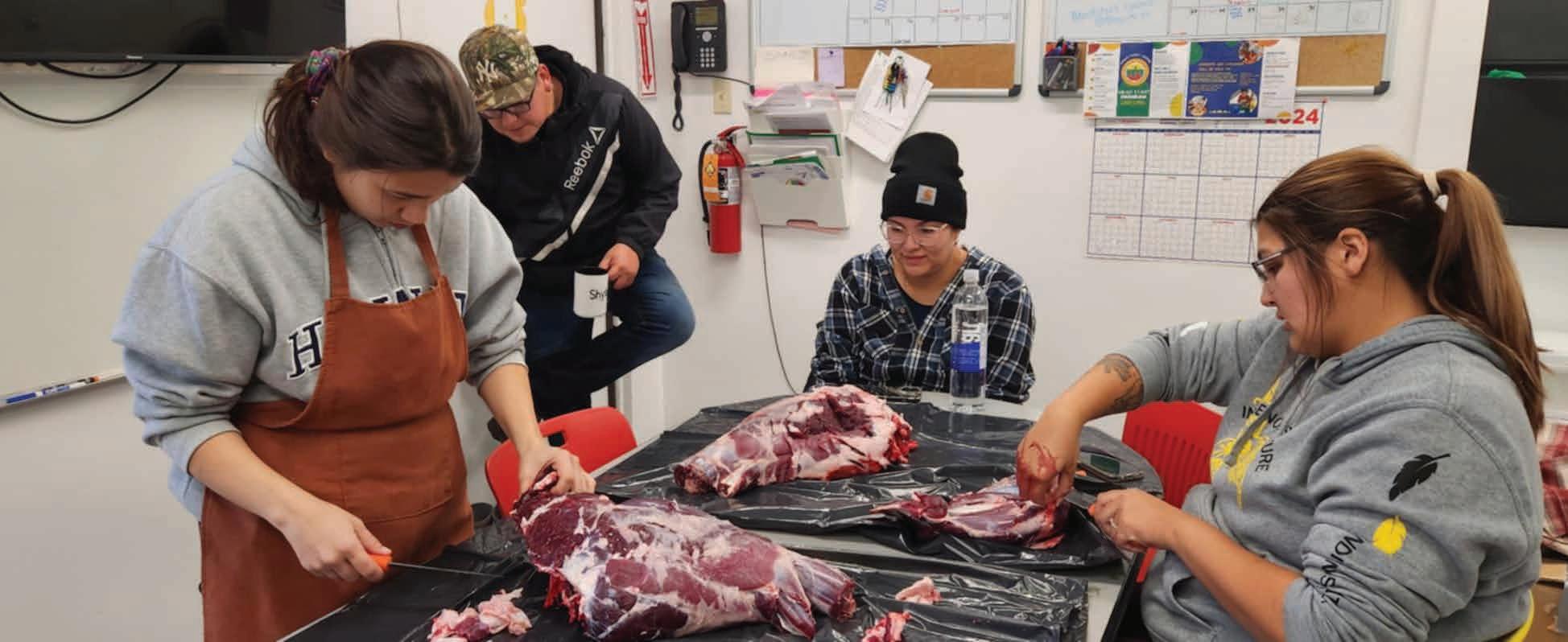
As one participant from urban QC stated, “There’s very simple things keeping kids out of those services.” The participant also acknowledged that “ for a lot of daycares on reserve, if you are not working or in school, you’re not able to have your child attend daycare. If we look at the unemployment numbers, it’s very clear that the majority — a vast majority of young parents — are not consistently employed. That’s a big part of it.”
Finally, participants voiced concerns about common program practices in which “there’s rules and policies around if there’s a cut off time, and if the child’s not there by that time, they can’t go for the whole day.” As explained by a participant from rural BC, “Sometimes parents around here aren’t always going to be in by 9:00 in the morning. That’s what I would really like to see, and not sending children away. They show up five minutes after, ‘Sorry, you’re five minutes late. You can’t come in.’ That type of thing. I don’t like that. That spot would be empty. It would be totally empty.” Another participant, a grandparent from urban BC, shared a similar story showcasing this challenge — and the frustration — for program families:
“If it’s after 10:00, that’s it. You can have great programs, but if you have some things in place like that, that are so incredibly damaging, where there’s even been phone calls made, ‘Look, I’ve got a flat tire. I’ve got three minutes to get there. I could drive 90 miles an hour and try to make it, or I’m on the phone and I’m letting you know I’m going to be a few minutes late, but I’m going to drive safely to get my child there,’ … and is told, ‘Don’t bother because you’ll be past 10:00.’ Or gets written up and threatened with the ministry because one of the kids was sick and she was in an exam at the university at the time and the professor wouldn’t let her out or she would fail. Like, you know? Hello? … Like, knock it off. … You could have a five diamond program in the facility but if you hammered on the parents in front of the kids and all of this stuff, it doesn’t matter that you had a great program. … They need to see that their community and the systems and everything are really there in their best interest. That includes having that respect for their parents and what their needs are. That’s first and foremost because even a bad program, if it has that respect around it, will do more good than having an award-winning something or other but you can’t get through the doors.”
Lesli Fenner, 2025
Recruitment and retention of qualified and specialized ELCC practitioners
Another major obstacle to quality ELCC programming on reserve is the recruitment and retention of qualified ELCC practitioners, especially “specialized teachers to work with our special needs children for speech and language, and occupational therapists, and physiotherapists.” Participants repeatedly mentioned that they “are in such an ECE shortage right now ” and “ have no ECEs.” A regional director from rural BC, for example, expressed, “Our whole community is at a loss for ECE workers. The school district has recently started a preschool program and they’re taking all of the ECE workers because they can afford a higher wage. That’s been tricky too. It’s like there’s not a lot of us here and we’re all fighting for the same people because of those qualifications.” Another director from urban QC stated, “I have the possibility to open up another centre because we do have additional places and I told them around the table, ‘I feel that it would be very irresponsible of me right now to even consider that, given the fact of what’s happening in our community and outside of our community with human resources.’ Yes, we could fill the spots with the kids, but who’s going to teach the kids? We’re already all fighting for the same people. It’s a huge issue now, for whatever reason. Is it because people have changed their perspective? Or people now working more from home? I don’t know what’s going on.”
A regional manager from rural NB, stated “We are in a shortage of staff. At times, we’ve had to have just high school, as long as they graduated from high school and are willing to take the program as part of their professional development and on-the-job training. That would be the early learning and child care program offered at [the local community college].” Nevertheless, participants alluded to the fact that even this interim solution comes with it’s own set of challenges. As depicted by one participant, a program director from rural BC, “It’s awful. … I have nine staff in total, and five of them have no ECE. So right now, I start work at 8:00 in the morning, and I don’t leave the floor. I don’t
take a break. I don’t take anything because they need my credentials in order to keep the doors open. I have to be on the floor at all times, or on site.”
Participants advised that they “ follow the child-staff ratio,” which “requires having somebody with their ECE on site at all times.” A manager/practitioner with AHSOR and preschool programming responsibilities in rural SK explained, “We do follow by how much children we can take for staff members. Our capacity is we are able to take eight [children] per staff member. That’s 16 altogether because you have to have two staff members per program. That’s just how ECE is — you have to have two people in your staff at all times. That’s just for the safety of your staff, and also for the safety of the children. The daycare also follows this. Because they also have toddlers, school age … theirs is different. They are licensed. We follow this guide.” Another participant from rural BC elaborated on the programming challenges of qualified staff-to-children ratios:
“If you had no education, you’d be considered a responsible adult and you would not count for numbers at all in the ratios for staff-to-children. So right now in British Columbia, our staff ratio for the three-to-five side is one adult with their ECE or AECE [Advanced Early Childhood Education] per eight children. So, it’s 1:8. Then on the infanttoddler [IT] side, it’s 1:4. If you’re a responsible adult who’s never taken anything, you’re a young person, you wouldn’t count. You can be on the floor, but you can’t be alone with the children. There has to be an ECE and then for every eight children, there needs to be another. On the three-to-five side, if we had 16 children, you’d have to have two qualified early childhood educators — meaning you have gone through the post-secondary programs and have completed your basic early childhood education. … On the baby side, the ratio is 1:4 — the infanttoddler side. For every four children, there needs to be a qualified infant and toddler person. If you take eight children, you need to have two. If you can’t find two ITs, then you can do one IT and one ECE, but a responsible adult who has zero training is not allowed to work with the babies — at all.”
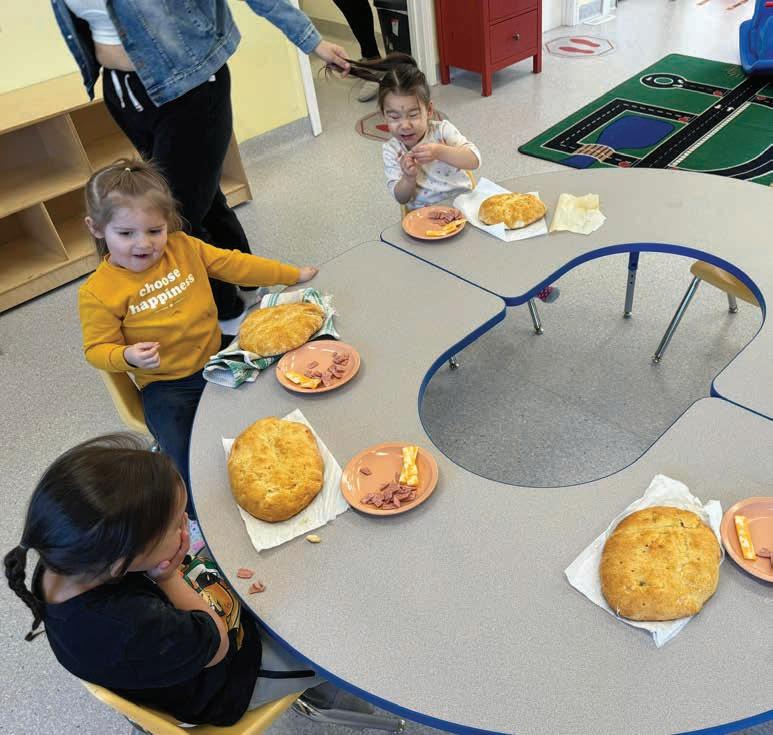
© Lesli Fenner, 2025
Participants reported that “there could be a lot of different components that make up why we have a shortage ” of qualified ELCC practitioners, like “ burnout,” or “ because the majority of the people that were in the field, we’re coming into that age of retirement,” or they’ve “ left the floor completely and work for a company that is affiliated to early childhood education,” or perhaps, “ it’s because people just don’t want to, who aren’t interested. … The cost is challenging. Then if you ever struggled in high school, and then the expectation is you’re going to take an online course and have to find your way through the online world of education, that alone is super challenging.” A participant from rural BC suggested, “Sometimes, the centres have exceeded the capacity of abilities of staff because you might be the only infant-toddler on the floor, and you can’t leave that floor, or you can’t leave the building because you’re the only IT. You have to be in that building to have any programming offered.” Another participant from urban BC attributed the shortage of ELCC practitioners to the “changeover of staff because of the wages,” stating that “early childhood wages ” are “not at the standard that they should be. Specifically, when I worked on reserve, it was quite low compared to other places.” A participant from remote BC shared a story to this effect:
“I used to work in child care for 25 years and I moved out of there because of the wage parity. It was hard. It’s still a hard battle to recognize our early childhood educators that should be paid at a fair wage, not a low wage. It’s still an issue to this day. There’s just no movement there, no recognition that these are educators and not just babysitters. So, I moved up, out of early childhood care. … They should be like a teacher’s wage at least because they’re specialized in infant development and special needs and early childhood. Some of the staff used to have diplomas in the program, and it took forever to get them at a wage that was livable. … They moved to the school system. Yeah, they’re like teachers assistants over there so they make more money over there. Plus, they only have to work 8:30 to 3:30, and they get spring break off and summers off. Daycare and our health programs are all year-round. Right? So, it’s kind of hard to compete with that.”
A participant from rural BC acknowledged, “ECEs are under-paid, the amount of work that they have to do. … But the quality of care depends on the amount of training you give your staff and the amount of incentives you can give your staff in order for them to be happy and to make sure that they are taking care of themselves, as well. There needs to be a lot more time to take care of yourself in that regard.” Participants talked about various efforts undertaken “to ensure that no facility is disrupted due to the fact that we don’t have any trained staff in there,” such as by offering “pilot projects for an ECE class in the community, on reserve,” by allowing potential candidates to “work their way up” after being “recruited ” and “ hired ” and then supported in “taking their ECE II and … their CCA [Child Care Assistant] ” or, similarly, “to recruit from high school,” thus “bridging that gap between the school and the daycares.” As asserted by a participant from remote BC, “getting them in there early to get excited to be an early childhood educator is one of the positive pieces.” At the same time, the participant acknowledged that “the time commitment to take the ECE course — just the ECE course — is a year and a half now,” which can present challenges. The participant shared:
“We’ve tried to provide two of the training courses, and we had probably five out of 20 successfully complete the program. … It’s low enrollment. We’ve tried different avenues to keep the students but life and COVID and everything just put a damper on everything, even training. We even, the last two terms for this ECE, it crunched one course into one week so that the students can take one week of the course and be able to get a credit for it, so that they can crunch all that information in one week, and then they’ll be able to work on their assignments and get a credit for it. We even tried evenings and weekends because some say, ‘I want to work. I can’t just do courses.’ But the success that I had when I graduated from my diploma program, it was the First Nations-run from [the university].”
Participants recognized that ELCC programs on reserve are “always trying to ensure that we have the manpower to do the work that we know that needs to be done,” but it’s often challenging to do this when adequate supports are lacking. A participant from urban QC talked about developing “a guide dedicated to the educators and daycares — two of them — to define their activities, to help them to understand, What is a development of the child within our community? What is specific? What is different? Language is the basis.” As stated by the participant, “This is something that will be a major transformation because for now, we’re having trouble to train educators. … Especially in communities, hard to get trained people.” Another participant from rural NB stated, “We know where we want to go. We know that First Nations people are qualified. We know that if it’s done by us for us, we succeed. … But in the end, it comes down to that financial commitment. That’s what moves these type of things forward is through that financial commitment.” Unfortunately, as the participant further pointed out, “We can say and talk about these things forever, but until we have an actual report or something that makes this concrete … provinces and governments won’t take action until you have hard data.”
Inequitable funding and funding restrictions
Participants reported that ELCC programs on reserve “ have a lot of restriction in the sense that they have very limited funding.” That is, “they have some autonomy over what they’re doing but they have no support to do it.” Participants talked about some of the ways in which “their funding is so limited and, in many cases, restricted ” that it serves to hinder the quality and success of their ELCC programs. A participant from rural BC explained, “A lot of our funding is base funding only. So, any perks — wage enhancements, professional development — all have to come from an outside source, outside of where we get those big pots of money from. That is really, really, really tricky to find sometimes.” Another participant from urban NB stated, “We have funding that comes to us each year. It’s not guaranteed funding. We have a hard time filling that with a staff person. … We don’t know what’s going to happen as of April 1. That person may be fired because we have no money coming in for him or her.” A participant from remote BC shared, “The struggle that I had was to be able to keep it operating and fully funded. We always had to write a gazillion funding applications just in order to keep our centre up and not go into deficit. Otherwise, our nation would have shut us down right away because the nation doesn’t want to be in any deficits.”

“... You need to service the family because without a healthy mom, without a healthy dad, without that family unit, the child will not be healthy. The child will lack in one of their quadrants. We have to service the full family. That takes time. It takes resources.”
Participants pointed out that “the federal funding for Indigenous child care services … is really complex … because they get their funding from so many different buckets — provincial, federal, and community.” They talked about the challenges for their ELCC programs “that goes hand-in-hand with not having any support there,” like how “programs are very dated in terms of what they’re offering.” Specifically, “the Head Start curriculum on reserve has not been updated for a significant number of years — the tools and resources provided.” With respect to “the people that come in as specialists,” participants talked about “transitioning into handling our own health … being a good thing,” noting that “they change people out of the blue without letting us know,” and that “[they] had some good people that were working with our nation before that we would rather have than the ones that are coming in.” They spoke of early childhood programming initiatives that fall outside of formal child care and AHSOR programs as being “sporadic ” and “not consistent,” stating that it “usually falls on a medical clerk or a community health worker’s lap,” or “it’s usually somebody that doesn’t have the time ” to effectively facilitate the programs, whereas “ it should be dedicated to someone like the mom and tots, and the parenting, and the family support worker, something like that.”
Participants talked about the budgetary and administrative aspects involving the “use of traditional foods.” As explained by one participant from urban SK, “Often with traditional foods, you have to get a permit or the food has to be brought in, needs to be cooked. There needs to be regulations for that. There needs to be paper. … OK, apply for the traditional food permit. … But it takes time and there needs to be that allowance for it, which means allow the budget then for the coordinator or manager of that child care centre, ‘Oh, I have to apply for this.’ I have
to allow the time to speak to the people to say, ‘Is this appropriate?’ when I’m going to purchase or have your — whether it be caribou, or whether it be fish, or other foods that are coming in.” A participant from urban SK raised similar concerns about needed resources to ensure “an allowance to pay the staff past 5:00 … so that there is that timeline for the parent, the caregiver, to get themselves to the centre, to take the time to pick up their child, to engage with them, to play with them, to hear how their day was.” The participant pointed out that “ if the staff aren’t being paid past 5:00, then it becomes punitive. … Allow enough funding so that staff can be paid from 5:00 to 6:00. Yes, closure’s at 5:00. … There’s just real life that comes into play that, ‘Well, why should I stay here if this parent hasn’t picked up their child?’ Then it becomes a safety factor. But we didn’t design it from the first place. The structure was not sound.” A participant from urban QC emphasized that ELCC programs on reserve are “ looking at the health and well-being of First Nations children and families. It’s a full service. It has to be families and children — not children and/or families, or families and then children. … Often, funding is for the children. It’s not to service the family. You need to service the family because without a healthy mom, without a healthy dad, without that family unit, the child will not be healthy. The child will lack in one of their quadrants. We have to service the full family. That takes time. It takes resources.” Another participant from urban QC explained:
“The quality piece in homes is just around meeting a family’s basic needs. … Food is a really major basic need for a lot of families. Just basic needs related to food security, diapers, formula — not providing that all the time for families, but recognizing that a parent that is struggling significantly with food security, their ability to think about how their child
© Credit: iStockPhoto.com, ID 2188729321
is holding a drinking cup might more — given the amount, that stress, etc. Programs that have some ability to meet basic needs or a recognition that parents — young parents — have a lot of really pressing issues that can look a bunch of different ways. Obviously, we’re not becoming the diaper provider for families, but being able to provide that and then think about, ‘OK. Maybe we should focus on budgeting with this family.’ That kind of thing. … Many young parents are transient. Housing is a significant issue. Transportation is a significant issue, and food security. A recognition from programming that those needs, not necessarily — no program can meet every need — but need to be acknowledged in the construction and thinking about programming. Little things like providing meals at programming.”
Participants talked about some of the costrelated challenges that hinder the participation of First Nations children and families in ELCC programming on reserve and how “the needs and challenges are very different ” across First Nations communities. Looking at community size and program location, for instance, a participant from remote BC explained, “We have two communities here. … They’re separated in distance. People that live in the lower piece have a hard time getting up to our services. We need to be able to expand our services to the lower community because we have babies in both communities.” Another participant from rural MB reported, “Our children that we tend to are zero to three and ones who haven’t even been born yet. We deal with the youngest children in our community. … The number of children in our community could be anywhere from 200 to 300 in our age range alone, every year, but it varies.” The participant expressed, “Sadly, we can’t reach all of them, just because of the size of our community and sometimes, a little bit of resources.” As explained, “Our reserve is one of the biggest reserves. … Our centre is not large enough to accommodate all the children who are in age range. Land-wise … we’re pretty far apart from each other. … It takes us about 40 minutes to go from one end to another and there’s various roads and stuff. It takes
a long time to get here and there. We’re pretty spread out.” A participant from rural BC explained the significance of this scenario:
“It’s not like the band office, for example, is close to the people. Right? It’s like the people are all over the place that we have to find our way to get around to all of those people who are living on territory, and a lot of that is travel. … All the needs of the communities are completely different. Us having transportation to [one First Nations community] four hours away, it’s huge because a lot of the people that live there are young families that don’t have transportation. They don’t go out. They have to rely on a vehicle that’s owned by [the First Nation’s] health department to travel back and forth to town. They don’t have their driver’s licenses, right? Like, their challenges or barriers are drastically different than the ones in [another First Nations community] who are walking distance to a grocery store. So, everything has to be tailored to meet the needs of that community and each community, although they are all from the same nation, are extremely different.”
Participants talked about “transportation” as “a huge barrier,” not just “ for the hard-to-reach families” or “people that don’t have the means to be able to get their children to our facilities,” but also for early childhood practitioners who routinely find themselves “going out to [the First Nations community] … travelling four hours to get there in winter conditions, -30, snow.” According to one participant from urban QC, “Transportation is far and away one of the biggest things we deal with for young families.” As explained, “The only transportation really available for parents … on reserve is the medical services transportation system,” and “generally, other family members are not allowed to go. So, a mom with four little ones who needs to go to a prenatal appointment, the chances of being able to take all four children or get child care for them are really low.” The participant also acknowledged that “there is a cost for many services on reserve and many parents aren’t necessarily able to pay for that cost — and not even pay for the actual service itself, but transportation to and from.”
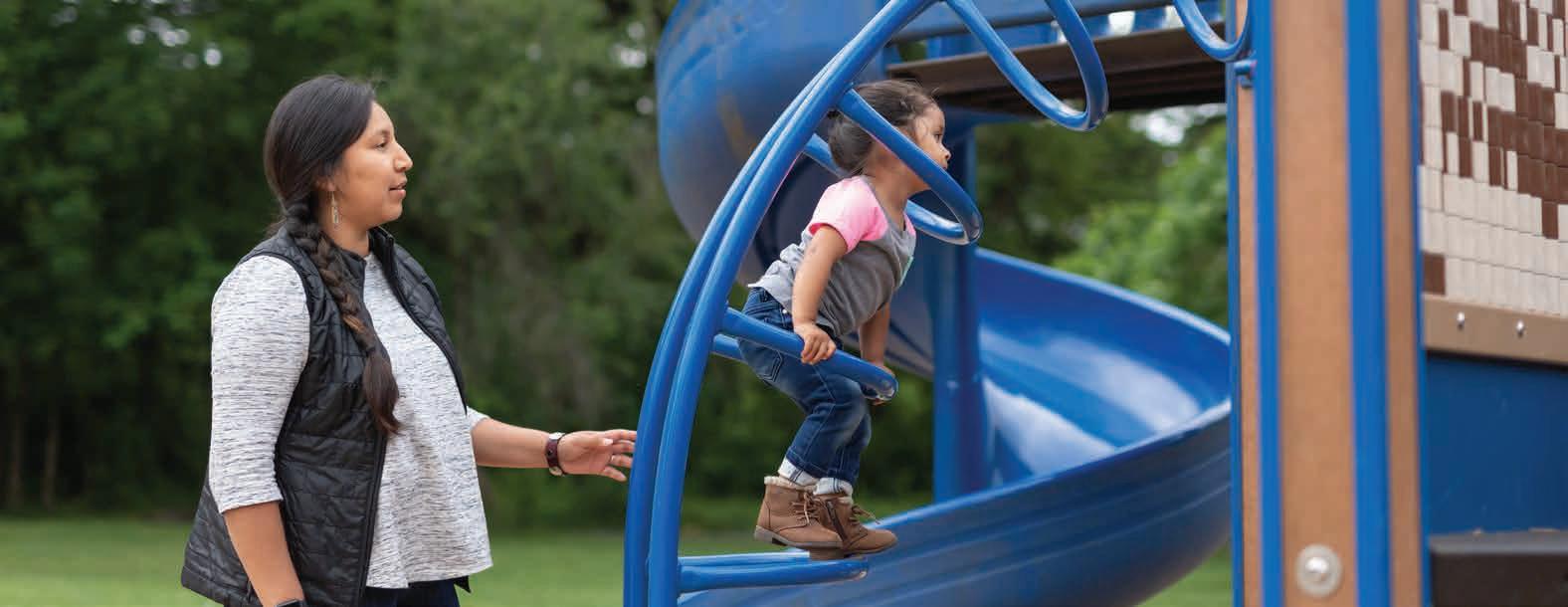
Looking specifically at on-reserve child care, participants recognized that “ for a lot of people living on reserve, daycare is not even accessible if you’re not working or in school. So, that’s a barrier.” But more to this, as one participant from urban BC explained, is that “this could be financial for families — that they can’t afford to put their children in daycare. It’s that accessibility piece, and if they are unable to meet that criteria of funding.” The participant accepted that “there’s lots of subsidies for families, but if it’s a family that has a lot of children, then the mother probably will stay at home and look after her children.” Another participant from urban QC noted that even subsidized child care costs are “problematic ” for many First Nations families on reserve because “ it’s subsidized in general, but … it’s actually $10 a day. So, it’s not extremely expensive, but $50 a week is a lot for a family that there’s still a cost associated.”
Participants talked about situations in which “there’s waitlists” because the early childhood population on reserve far exceeds the number of ELCC program spaces available. As such, “those waitlists mean children stay home.” That is, “they are unable to attend [ELCC programming on reserve] because there’s just too many children trying to get into that program.” As one participant from urban NB reiterated, “The need is there — not only for my community where we have 18 seats available in the child care facility and we have 56 children between those ages. There’s a lot that are
missing, without.” Another participant from remote BC noted, “I had at least 100+ spaces for daycare but we still had probably another 100 children that didn’t access our services because of the amount of spaces that we had.” An ELCC practitioner from urban MB also observed “some communities that have as many as 400 children from birth to age four,” in which case, “there won’t be enough space for a lot of those children to attend, whether it’s daycare or Head Start.” On the other hand, an ELCC program manager/ practitioner from rural AB stated, “I don’t have a waiting list because I have 40 seats. I have a nice big building. … We could take 40 children all at one time, but we would have to get more staff in.” This in itself presented challenges for ELCC programs on reserve, as depicted by a participant from rural MB:
“We do have a waiting list. It’s our first time only now that we have two teachers in our classroom. We can only take so many, and right now, our morning class has 17. That’s the biggest number we’ve had. We’ve had 12 children one morning with two teachers, and the teachers are like, ‘Ah!’ They’re used to the smaller classroom size — five, eight. That was the norm for quite a while. I wanted to register high because not everybody comes every day. But so far, the attendance has been great. I’m like, ‘OK. We’re not going to be adding any more for the morning.’ Wait for it to settle down, which it will. Slowly add people if some withdraw.”
Participants acknowledged that there’s a high need for increased quality ELCC programming opportunities on reserve “because there aren’t any alternatives. If our young people want to get an education, then it’s needed. If they want to work, then they need those spaces.” Participants also recognized, however, that addressing the lack of program spaces cannot simply be resolved by adding more seat availability to existing on-reserve ELCC programs because “there is not enough staff.” For example, an AHSOR practitioner from rural BC reported, “One centre has 80 spaces and they can’t even open them up because they don’t have the staffing. They keep pumping out new centres but there’s not enough staff to fill those centres.” Adding to this challenge — and as touched on in the previous subsection — the participant commented, “We’re trying our best to get ECEs and qualify ECEs out there, but it takes two years to get any ECEs on the floor and ready.”
Participants talked about “the inequities and stuff, and how to get affordable daycare and quality programming, and all of those things” as a major obstacle to ELCC program progress, but a key area of inequitable funding and funding restrictions pertains to “provincial and federal regulations … for the early child facilities by means of Aboriginal Head Start and daycare.” Using the “the province of New Brunswick ” as an example, a regional manager from one of the partner organizations in urban NB explained:
“They have a Family Income Security Act. One of those [‘provincial regulations’] is that early intervention can’t come on reserve. The other one is that if you’re provincially licensed — so, if I was a child care facility outside of community, provincially licensed — I can apply for quality improvement funding. Quality improvement funding can be subsidies for staff wages which, if I’m a trained staff, I can get $5 additional an hour. Or if I need infrastructure needs — say, in order to be licensed, I need to put a new mini split in or something like that — I can get that under the quality improvement funding back from the provincial government. But because we are federally funded, we
can be provincially licensed with the province, but we can’t have access to all of the rest of the services that an off-reserve child care facility can. … For them to be licensed, you have to be following the New Brunswick curriculum. We were just, like, does it meet the needs? First Nations weren’t engaged in the development of this curriculum. So, that’s where the need and the discussions [arose] around let’s develop our own core values and our own standards that we thought as First Nations.”
Other participants, too, made remarks about provincial entities to the effect “that they hold these things over us, saying that we’re willing to work with your communities as long as you’re licensed. Those with licensing, when they’re handed that document, they’re specific to that colonial process. They’re saying that they’re willing to work with us in our communities, but at what capacity and at what extent? ” Talking about the funding partnerships between First Nations communities and the Atlantic provinces specifically, another participant from rural NB expressed:
“We know that we’re getting funding to all of our communities throughout Canada through the Indigenous streamline. It’s more than we ever got before, but is it enough? No. In PEI … the province of PEI takes their formula, knows how many staff ratio and children there are, and they allocate $300,000 to that one community. That’s that partnership. They don’t ask that community to change. … My question to the province here in New Brunswick is why can’t we do something similar? We know that there’s multi-lateral agreements that the province has signed with Canada. We know the amount of money that’s allocated through these bi-lateral agreements. But why is it that they haven’t had that conversation until now? Like, this is year three. When we look at the action plan for year one, year two, and year three, there’s no mention of First Nations communities in New Brunswick. There’s no allocation set forward in the last budget for 2022-2023. It’s so hard to have a relationship and a partnership with the province that has never really acknowledged us.”
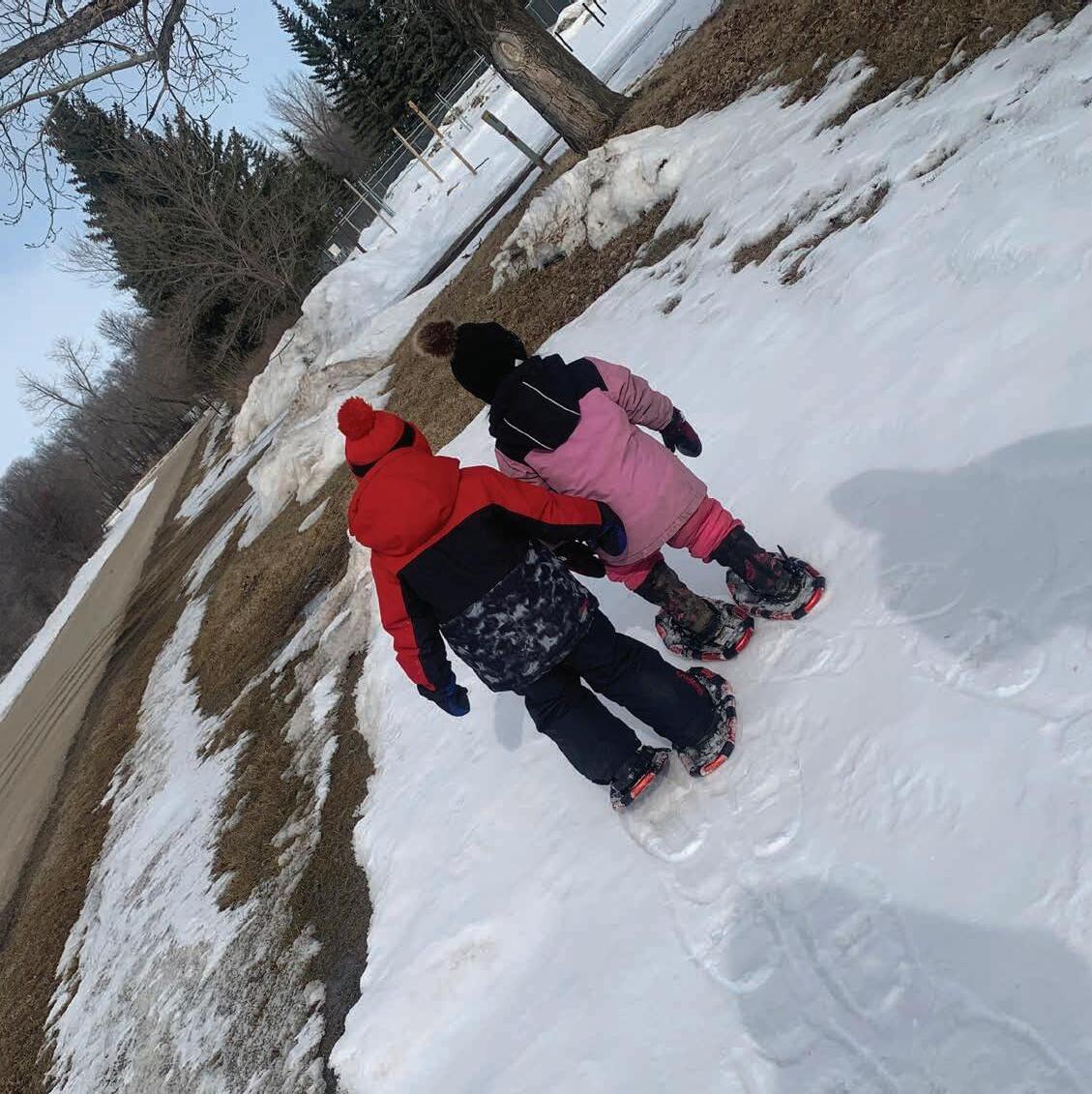
© Fern Bear, 2025
Participants talked about how “the funding is insufficient to do the work that needs to be done within the context of early intervention.” One second-level service provider of numerous AHSOR programs in the NB region spoke at length about “ how it works in the province,” in terms of the inequities facing ELCC programs on reserve. Speaking about “the early childhood centres off reserve [having] access to these training portals” for ELCC practitioners in the province, for instance, the participant asserted, “Even if we were provincially licensed … we have to give them $300 per participant in order to have access to the training in the province. It’s a very grey area.” For this participant, it’s roadblocks like this that make it “a struggle almost every day ” to ensure quality ELCC programming on reserve. As explained, “It’s taking time and energy and capacity at our level. We wear many, many hats in the tribal council level. It’s just one piece of the file folder that sits on my desk, along with all the other stuff. It’s a struggle with what’s happening in our province, but also, it’s a struggle of capacity with the second-level service providers — to actually have the people to do this advocacy work for them.” The participant shared a story that elaborates on some of these funding — and administrative — challenges:
“We’re multi-year agreements with the majority of the programs. Sometimes we have enhancements to the programs. For early learning and child care, we have additional enhancements to do the governance work, which is a separate pot for programs and services, but the thing is that nothing could have been approved so it sat at the regional office until we’re able to do that health governance structure. … We only meet four times a year — and now that money’s got to get out the door. So then, it stopped the process. We were waiting. We knew it was there. We knew it was coming. But then we were waiting for the Chiefs table for approval. … Majority of time, we’re in the fourth quarter before our funding can get out the door. Then, they would put it as set funding, and set funding, if it’s coming in the fourth quarter, it’s coming January or February. We have to spend it by March. So then, going back to the federal government with the regional office requesting why we want it from set to flex — so we can carry it over. That is my ongoing job that I find is taking a lot of time and energy because it’s just, out of the [numerous] programs we have, some are flex, some of them are fixed, and some of them are set. Then requesting those carryovers and stuff, that’s my day-today activities that I have to do.”
A director/practitioner with oversight of on-reserve child care and an AHSOR program in rural AB talked about similar challenges on the front-line and having to do “a juggling thing ” because “it’s two different funding streams” that support their ELCC programs on reserve. The participant explained that “the daycare funding stream … comes through employment ” and “the Head Start funding comes through health,” but “the thing is, our Head Start and our daycare is together, like our building, and we worked really hard to keep them together, just so that there’s that easy access back and forth through the programs. They can share.” Nevertheless, the participant expressed, “Money is an issue. You can’t have two separate programs in two separate places. It’s just not feasible for us, money wise … to pay the groceries out of this funds and then pay the groceries out of that funds. … For the last three years, we’ve been doing merger-berger.” The participant also shared, “It’s been difficult these last three years
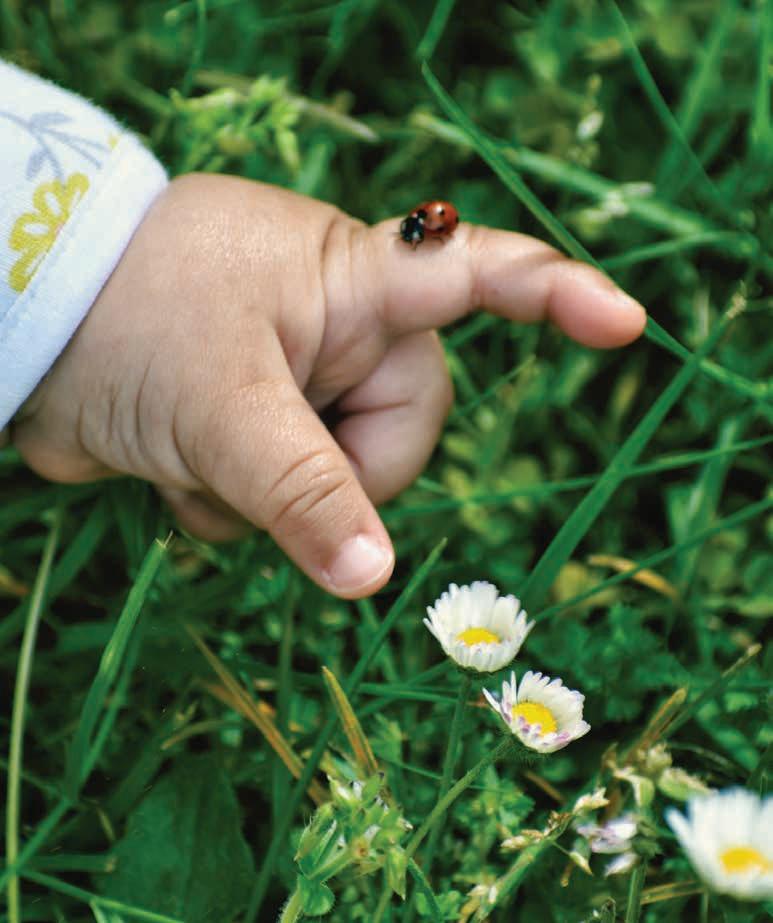
©
Credit: iStockPhoto.com, ID 2169550555
because we haven’t been getting the funding till way later and it’s very hard to run a program without the money. Right? ” As explained, “We always get our core, which we were used to getting, but that runs out really fast when you have this other money that you have to spend. You know what I mean? It has to be spent. So yeah, it’s difficult.”
A participant from urban NB further described, “When you look at our population base of our First Nations communities, some of them, we only have over 100 people living on reserve. … They get a small piece of the pie, but yet their deliverables are as big as the community next to them that has 2,500 population based on reserve but they can receive $100,000+ and this community can receive $5,000.” The participant acknowledged “a bit of a challenge ” in this regard, mainly “because it’s the expectation that we have to deliver these programs for every child, no matter where you reside ” and “the pots of funds are not equitable.” For this participant, “really, at the end of the day, it always comes down to funding amounts.”
Exorbitant funding and reporting expectations
Participants talked about different aspects of how they “ have to do reporting and that for funding.” For instance, an AHSOR and preschool program manager/practitioner from rural SK stated, “I do the reporting for funding. I forget where we get our funding from but I work with a lady in [town]. She oversees my program and the funding. The funding is given on the amount of kids — how much children we have in our centres.” A child care and AHSOR director/ practitioner from rural AB said, “We do reports for the daycare and we do reports for the Head Start at the end. They don’t ask a lot of questions, but they do ask questions on what we’re doing, and are we doing this and are we doing that.” Another AHSOR program manager/practitioner from rural MB explained, “My director is the health director at the health centre. I just report to her about how things are going, do monthly reports, annual reports. I never had any issues. … For purchasing and then bigger stuff, I’ll send stuff to her. … Just send my proof. … If people have issues, then I would probably just meet with them and explain.”
Despite their varied funding sources and reporting structures, participants expressed common concerns with the funding and reporting expectations attached to their ELCC program funding, first and foremost being that “they tell us how the money has to go to wages. The money has to go to supplies. The money has to go to nutrition. They tell us how we have to spend that money.” As explained by a participant from rural BC, “It’s hard when things are very cookie cutter. You know? We’re going to give you this funding and everybody has to adhere to the same requirements. Well, that might not work from where we are. Right? They’ve been really nice and really flexible about things. Like, if we say like, ‘OK, we have all this money, but we can’t actually use it for this. Can we try to move it over here?’ Often, they’ll say yes that we can, but the fact that we have to ask their permission to do so is a little like — You know? If the money comes to the nation, it should be up to the nation on how that money is spent, but that’s not how that piece works.”
Another participant from remote BC shared similar sentiments, stating that “communities know what they need. I don’t want the province, I don’t want the feds to tell me, ‘This is your child. This is your ministry funding for infant development. This is what you have to do. You have to provide this outreach service, home visits, and this is how many visits you have to do for this much money, and report back in March 31st.’ I’m like, ‘Hey, no.’ I want to do infant development groups, provide culturally safe activities. I want to include the whole community, not just the infants that we have intake with. We want to make our own guidelines and services that we think is suitable for our communities. I tried to change some of those plans in the past and they’re like, ‘No. Your contract says this.’ I’m like, ‘Fine. Well, you’re going to only get low numbers here then for your report for this amount of money.’ They’re like, ‘OK.’ ”
A participant from urban NB recalled that a key barrier to addressing identified needs, interests, and priorities of First Nations children and families on reserve was the discouragement projected from federal funders around including this pertinent information on required funding reports. The participant shared a story to this effect:
“When I was going into the centre and sitting down on the floor working one-on-one with family, with children and stuff, a lot of them would ask, ‘Is there any other money out there somewhere?’ … I’m like, ‘OK. For what?’ They’d say, ‘Well … we need a snoozle room, a multi-sensory room.’ … Every time I would do my reporting, I would report in there, these are our future visioning. We would love snoozle rooms. This is the amount of money that we need in order to provide that. The federal government came back and they were just like, ‘You can’t ask that. You can’t put that in your reporting.’ I was just, ‘Well, how will we ever know where we’re going if we’re unable to ask the frontline — the experts in the field, sitting on the floor with our babies and our children — what is actually needed?’ They didn’t ask for a brand-new Lamborghini or anything like that. They’re asking for resources in their language. They’re asking for the snoozle room for multi-sensory. It was like a wish. … Based on our needs … the wish lists were $1.5 million. So, we know that our needs are there. So, how do we put that in place if we don’t ask the key people in the programs?”
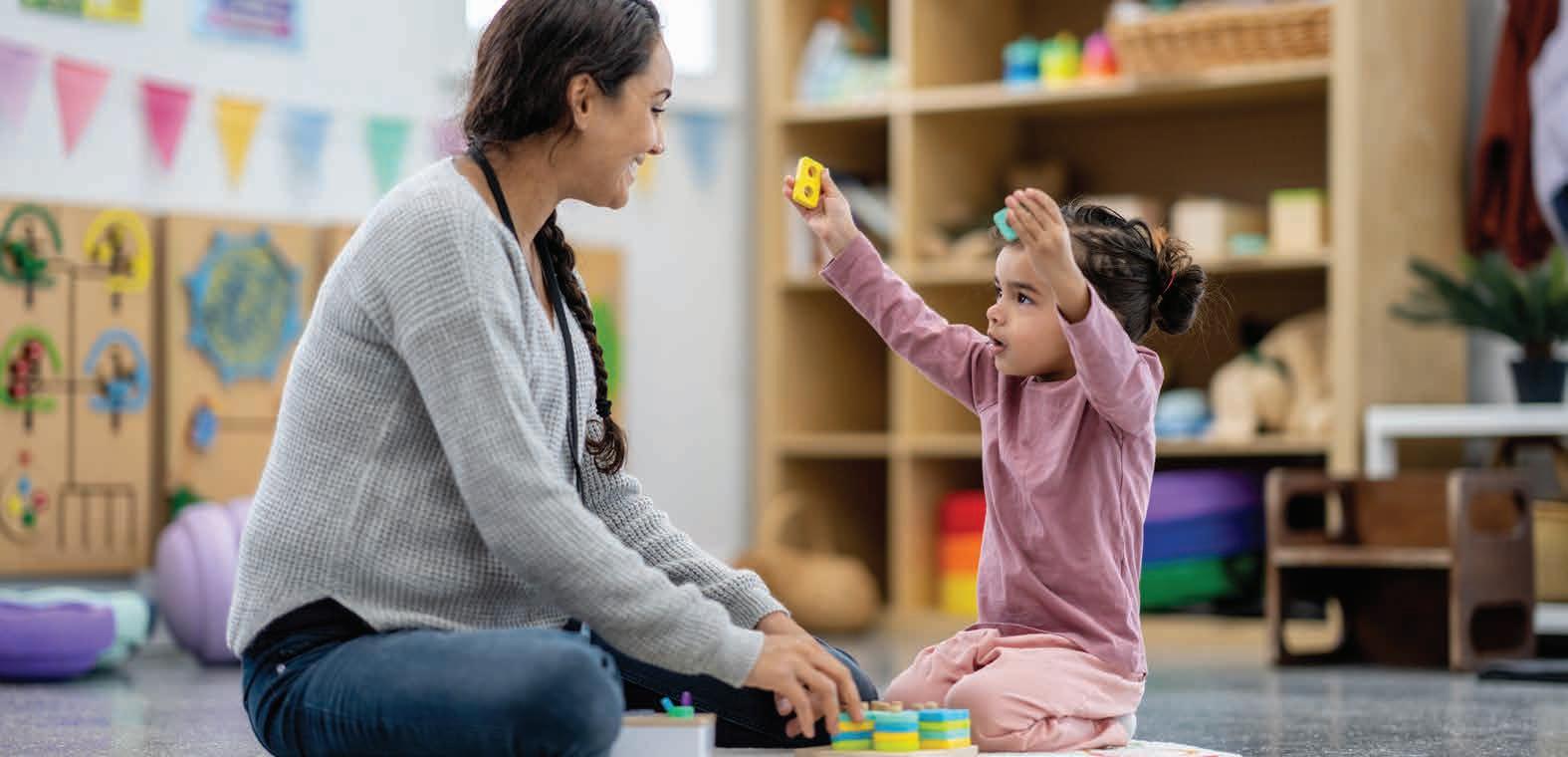
Quality care and young First Nations children: An exploration of optimal learning and development in early childhood settings on reserve

Participants talked about some of the “ innovative ways to get around things” like exorbitant funding and reporting expectations. A participant from urban NB, for instance, shared, “They say you can’t do that or you can’t do this and sometimes, we do different things on the core values or … we have to tweak it in a way because they were saying … this funding can be used for curriculum-based but there’s a provincial curriculum in New Brunswick right now. So, they said, ‘How come we just don’t do that?’ I said, ‘Well, we are but we’re just going to tweak it to fit the needs of First Nations.’ They didn’t know that we didn’t even look at that curriculum. We were developing our own. But in the reporting, we need to say that we were taking the New Brunswick curriculum and tweaking it for our needs.” Participants also talked about the difficulties that come with having to justify their ongoing and desired ELCC programming activities. A participant from urban SK asserted, “I still think there’s more education needed. Any federal, provincial, regional, local non-Indigenous person needs to really check their bias at the door. … They’ll say, ‘Because this is what my manager is asking for.’ ‘Well, then it’s your responsibility to go back to your manager and say this is what the First Nation is saying. This goes against their ways of speaking about children.’ … They mean well, but it comes from a place of urgency. … ‘You’re
© Credit: iStockPhoto.com, ID 2153973581
getting all these dollars. You have to tell us what you’re doing.’ ‘We’re doing quality early learning and child care. Thank you.’ ” The participant shared a story to further elaborate on the frustration in some of these reporting expectations:
“I had to outline, in 2022, what is required for a feast — Why is that funding needed for a community feast of celebration? Why do you need so much money? Why do you need $4,000? Probably two months of emails back and forth, a couple of in-person meetings with a non-Indigenous employee that was, ‘Well, I need to defend this to my manager. … Our program doesn’t normally fund food.’ Well, food is community. Food is language. Food is sustenance for young children. I’m laughing now, but it discourages me. But I kept at it. I was tempted to say, ‘Let it go.’ That’s what I think’s happening. I’m going, ‘No. I think educate, educate, educate.’ … So, I educated this person. I continue to educate this person. I spoke to the leaders and said, ‘I’m really embarrassed about this but I’m going to keep at it.’ I got support because it’s hard to do that, to have to say, ‘Why do I need to defend this?’ Without getting into too much detail, it’s examples. It’s not to be mean, but to educate. You can’t do this alone. That is the survival of First Nations and my ancestors — is working together.”
Participants talked about “the rigorous reporting and the constant … ask for information” that often causes them to question, “What are you asking this for? ” and “Why is this important to you? ” As expressed by one participant from urban QC, “To me, it’s ridiculous. It’s a waste of my time is what I feel. Oftentimes when I do these reports, I do them by myself rather than giving them to my assistant. I just fill them out — boom, boom, boom, boom, boom. Here you go. Leave me alone. They’re not necessarily indicative of what’s necessarily happening because I can tell you how many are on my waiting list. I can tell you how many are diagnosed. I can tell you how many have an IAP [Individual Accommodation Plan]. I can tell you all of that. Fine. But when it comes to, How many days a year do you give your staff for sick days? Why? ” Just the same, participants voiced concerns with common reporting expectations — from both government funders and First Nations leadership — of increased program participation numbers. A participant from rural MB stated, “If we raise our numbers, then the teachers are going to be burnt out, and we’re going to see a decrease in staff. We’re going to see stressed out staff. That’s when accidents happen. We don’t want that. Right now, it’s a good comfortable size. … But there’s always that group of higher ups or other organizations wanting the number to increase.” The participant shared a story related to this experience:
“I do prefer quality instead of quantity. There was always this need from the politics side that the quantity needs to be higher. … We had 40 to 80 children in that youth program. When I tried to get support from the Band, they wanted us to increase our numbers. The only way we could get support is if we did increase our numbers. By increasing our numbers, it burnt us out and we couldn’t do it. We were done after only a certain amount of time and they were mad. ‘Well, how come you quit?’ I said, ‘Well, the expectations were you want us to have over 100 children with just two people? We can’t do that.’ … I feel sometimes, other organizations feel like we should have a really high number but we’ll burn ourselves out and the quality of care is not going to be good. They don’t understand.”
Participants talked about how the reporting expectations can be quite onerous at times, and how “the funding is never enough based on the requirements that is needed ” to fulfill these reporting expectations. For example, a participant from urban NB explained:
“I have [numerous] different programs underneath. The reporting, the work planning, all the stuff that goes with it is the same. … We have to provide the same reporting with [numerous] different reports and sometimes, we have to roll those reports up. We also have to do work planning. … Every year, we have to do a work plan — How are we going to spend this money? Or, What are we going to do at the regional office? I don’t want to say it in a way that we’re back and forth, but … they’ll get into, ‘Well, should you expand on this and add more to this?’ At the end of it, I’m just like, ‘This is what we can do with the amount of money we have.’ How are the expectations of $5,800 to coordinate services for seven First Nations communities? How is that even doable? And you want me to do a 10-page work plan to go along with that? I can’t add up all the work that needs to be done with the amount of money. It’s never enough.”
Another participant from urban QC shared a similar story depicting how even internal reporting structures can present challenges for ELCC programs on reserve:
“It’s unfortunate because we create the same systems within our own system. Let’s just say there’s block funding that comes or there’s a certain amount of funding. The people within the community organizations will develop a similar type of reporting mechanism that makes absolutely no sense. … We receive monies for referrals from community services because we have 10 spots that are dedicated to children in crisis. … Recently, I asked them to increase the amount of money because it hadn’t been changed since the ‘90s. … Now, I have this increase. … We have to submit an annual evaluation report which covers the period of April 1st to March 31st
and we must provide quarterly activity reports, logic models, evaluation framework commencing on the month following the start date of the project. I wrote to them and I said, ‘I have signed, but I would really like clarification. In the past, well, all I have given is my financial to the [First Nations council]. Now, you’re asking me for monthly invoices, quarterly activity reports, an annual evaluation report, an end-of-year official financial audit, as well as a financial statement.’ It’s ridiculous. I would be able to do it here, but it’s just that, now, I have to account for this extra work. I have to pay extra audit expenses because now, I need another financial schedule. … Listen to how crazy-making this is; the people who are giving me the funding are the people referring me the children. They’re telling me, ‘We’re sending you these children that you’re caring for, that you’re doing the work with, and please send us this.’ Like, your left arm with it. It makes no sense whatsoever. … But isn’t it outrageous?
That’s the type of thing I would expect from outsidegovernment — from Ottawa, from Health Canada. I wouldn’t expect this from internal. … I’m going to say, ‘We are servicing the 10 children that have been referred to us. The outcome is we are providing early intervention strategies and activities.’ Like, what more could you want? … You wanted to know about the struggles? It’s the reporting. To me, it’s like if you’re going to be wasting my time and it isn’t going to be anything useful for me, then I’m just going to do it haphazardly and I’ll give you whatever.”
Social and political challenges in First Nations communities
Participants were asked to identify some of the more pressing social and political challenges currently facing First Nations families with young children on reserve. For the most part, participants highlighted longstanding issues that First Nations people across the country have grappled with for generations, like “poverty,” “overcrowding,” “ food insecurity,” and “either homelessness or the threat of homelessness.” They talked about “ drugs and alcohol in our community ” and how “the dynamics have changed so much within
the last 10 years when it comes to that sort of stuff.” Participants mentioned that “ housing is the major one that goes hand-in-hand with employment and transportation,” adding that “those are certainly where we have seen some of the biggest issues arise — and for young families, and particularly families that are transient in the earliest days of their kids’ lives.” As shared by a grandparent from urban BC, “When families are struggling so hard for those basics, other needs are not being met. If the most time that you have with your children — especially the little ones — is the ride to daycare and the ride home, that’s your quality time because every other moment is trying to keep the roof over the head and food on the table and some clothes on their back. There’s some things being missed.”
Participants voiced concerns with “the child welfare system.” For instance, one participant from a national partner organization in urban QC expressed, “The way in which the child welfare system is structured is not as supportive to Indigenous children and families as it could be, and while there are important gains being made, the child welfare system is also not the answer.”
As explained:
“The majority of children and the families we work with on a reserve-by-reserve basis actually are not involved in the child welfare system. They are in need of resources but don’t necessarily fall into that high-risk bucket or that list of families that need supports. … Those families are getting lost because they don’t want to be in the system. They’re not necessarily making themselves apparent. … We have these two extremes: families that don’t need too much support or are relatively stable, and then families that really need those protection services, really need those additional supports. And then this group of families that maybe aren’t struggling with any significant issue beyond poverty. … That’s one of the biggest socio-political challenges. When your housing isn’t stable and your food source isn’t stable, your transportation, your employment, slipping into that system becomes so easy. Then getting out of the system is really, really hard.”
A practitioner from rural BC stated, “Isolation is a huge one because we’re now no longer in the long house. We are in individual homes. We don’t have that opportunity to have that community or that sense of family anymore. Long house is what we used to live in before, in time of a memorial. Now, it’s mostly used as a ceremonial activity place. It’s not where we live anymore. We don’t have our meals there anymore. It’s only during ceremony that that happens.” At the same time, the participant acknowledged, “Because of the housing crisis right now, you’re seeing a lot more families living together — because of the lack of housing. … It’s really hard to alleviate that so there are families bunking in with one another. Sometimes, it is basically some of the families are kept surfing.” The participant further shared, “There is one [‘multigenerational home’] still in our community that has many generations living in her home. There’s the Elder and one of her daughters and her children, their children, are all living in the one home. We call that traditional living. … Not very many do that because the housing policy’s that you can’t have that many people living in your home.”
The participant also raised concerns with “some of the knowledge that has gone,” and how “some of our language has been adapted from other communities, just so we have some of the words.” As described, “There’s 32 different dialects. … We have maybe
possibly two of the dialects left that are technically fluent. … We only have one natural language speaker left. … The original people, they’ve gone. They’ve left us. … We’re just accepting the language that we have. It may be upriver. It may be whatever dialect that she speaks. That’s the last we’re going to get.”
Participants commented that they “worry about a change in government ” and “what’s going to happen with the next federal election,” and that they “ just hope that we have leaders who respect what we’re trying to do in the communities.” A participant from urban SK stated, “It’s still racism, discrimination. … The underfunding and the lack of consistency in priorities for First Nations children. It still shocks me, day in and day out.” Another participant from rural NB asserted, “It’s just the stigma. We’re already pre-determined. We’re in a category of our own which, first of all, you’re being prejudiced, you’re stereotyping. How are we going to come out and say, ‘You know what? I need help for my mental health so that I can be a better support for my family,’ when you can’t get access to that support? … You actually have to go through 14 different people, trying to get to the health centre, to the drug and alcohol worker, to addictions counselling, to maybe even police to try to get yourself supports, which is so friggin embarrassing and demeaning to these people that are trying to do that to support themselves and their family.”
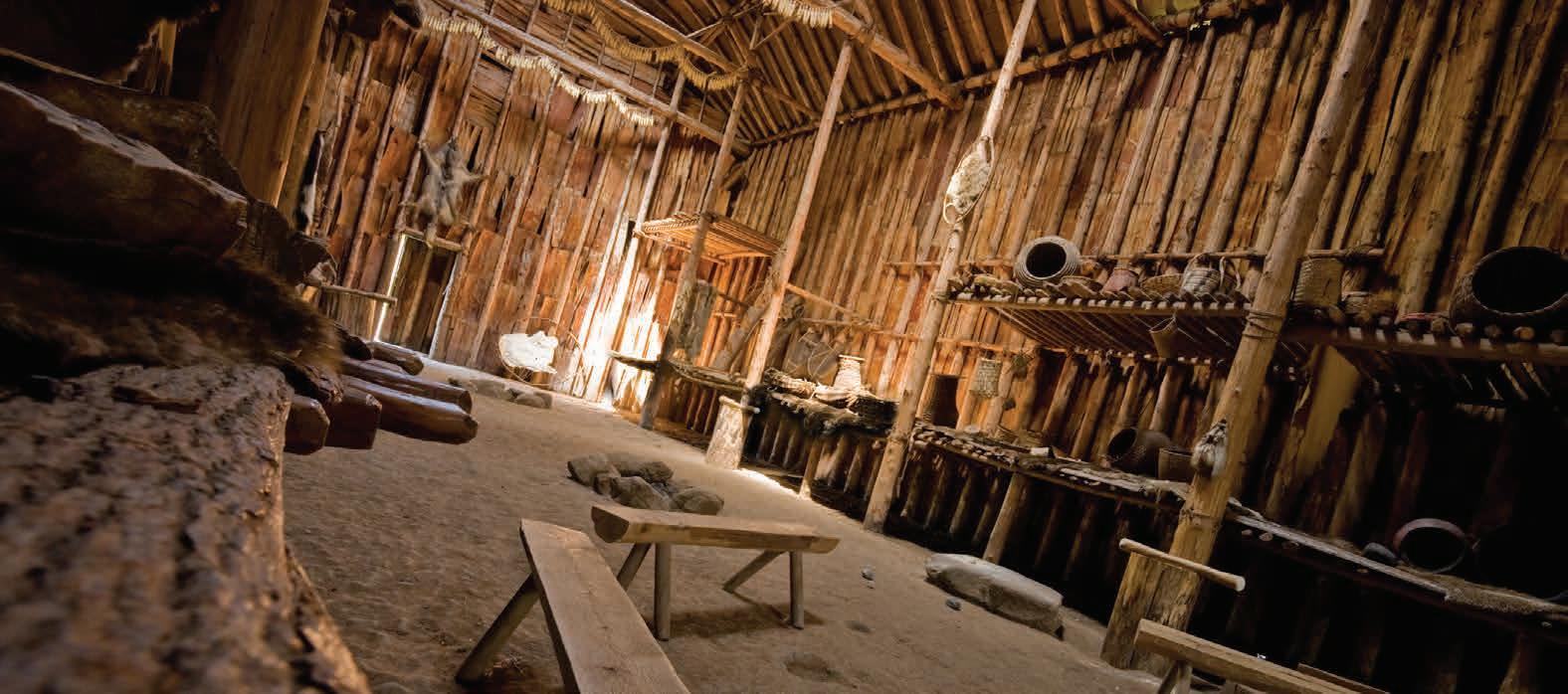
Quality care and young First Nations children: An exploration of optimal learning and development in early childhood settings on reserve
Participants mentioned that “there’s still a lot of racial tension between the non-Indigenous and Indigenous peoples.” A participant from urban BC attributed some of these tensions to “the fact that we’ve been so immersed and taken over.” As explained, “Our current population is maybe about 800, somewhere in that neighborhood. We have 10,000 non-Indigenous people living on our reserve. … We’re so progressive. It’s been at a tremendous cost. We have these tensions. … The bottom line of this is that incredibly colonial systems are still being imposed. It’s damaging. It’s colonial attitudes that everything needs to be just like this. If it’s not, it just doesn’t meet the measure. That’s not the way of our people. That’s not the way that we have practiced for thousands of years.” What’s more, the participant explained that “[non-Indigenous people are] living in lands that have been leased and then developed. … We have self-government. They pay taxes. Because they pay taxes … more and more, they do have a voice in some areas and it does influence the general movement of how our own First Nations government proceeds. They’re getting used to dealing with that very colonial structure. … When it comes to the daycare, we are supposed to have priority as members. However, if at some point, a non-member gets their foot in the door, it doesn’t mean that when one of our members needs a daycare seat that they have to vacate theirs. They’re grandfathered-in for the duration. Our members can be very easily displaced.”
One participant from urban BC talked about “a social divide ” between “the on-reserve population” and “the off-reserve population.” As explained, “We’ve got some unhealthy practices in our nations where there is a divide. ‘Oh, you’re off reserve; you’re different.’ … There’s that social challenge, ‘Well, I really want to be in town because there’s no schools here for my kids. I want to be in town so they can go to school.’ Like that, ‘But I can’t because the expectation is I stay here.’ There’s that pull, but there’s also that fear of, ‘Can I do it?’ ‘Can I be off reserve?’ ” Participants also talked about the concept of “backwards racism.” A participant from rural BC, for instance, who is a First Nations ELCC practitioner from another First Nations community, shared, “Sometimes, if you’re not in community, you get a lot of backwards racism, as
well. … The people from the communities were always saying, ‘Yeah, you’re not cultural enough.’ Or, ‘You’re not this.’ And, ‘You’re not that.’ I had to show them and prove to them, ‘Yes, I have the culture.’ ”
Participants talked about “ local politics,” “ different agendas,” and “ different programs clashing ” as challenging for families in communities. One participant, a parent from rural MB, shared, “We have Elders that are going around talking about politics with kids — like Chief and Council. … Politics is a huge thing that’s causing a lot of problems in our community now and splitting families. It’s breaking families apart. … Even provincial and federal are starting to get involved. … The whole Wab Kinew thing — that was a huge impact for our entire community. People were split on it. Like, my Dad’s arguing with me about it, saying, ‘You think he’s going to benefit us?’ … It’s like, ‘I’m just proud it’s a First Nations Premier.’ Even that type of debate. I don’t understand why that would even be a thing.” What’s more, the participant explained, “Another thing that’s happening now is even with our lodges, like what your beliefs are. That’s starting to have an impact. Before it was Christianity and then practicing a lodge, like going to sweats and following the Red Path. … Now, it’s, ‘Which lodge are you following?’ Like, ‘Are you going to [this healing lodge]?’ ‘Are you going to [those spiritual caregivers]?’ ‘Are you going to the [that healing lodge]?’ That’s how it’s turning now. That’s another impact that’s happening now. Same with churches, too. Like, ‘Do you go to [this church]?’ ‘Do you go to [that church]?’ Like, all this fricken stuff. It’s all in there. It’s all impacting each other.”
Participants attributed the lived realities of First Nations children and families on reserve to “colonization” and “this colonial system,” and how “ it goes back to the Indian Act, the residential school, the colonial policies, and laws.” They commented on how “colonization’s still alive,” and pointed out that “people think that that’s the past but it’s still the present. It’s not just the history of residential schools. It’s the histories out of our families today.” A grandparent from urban BC shared how “residential school
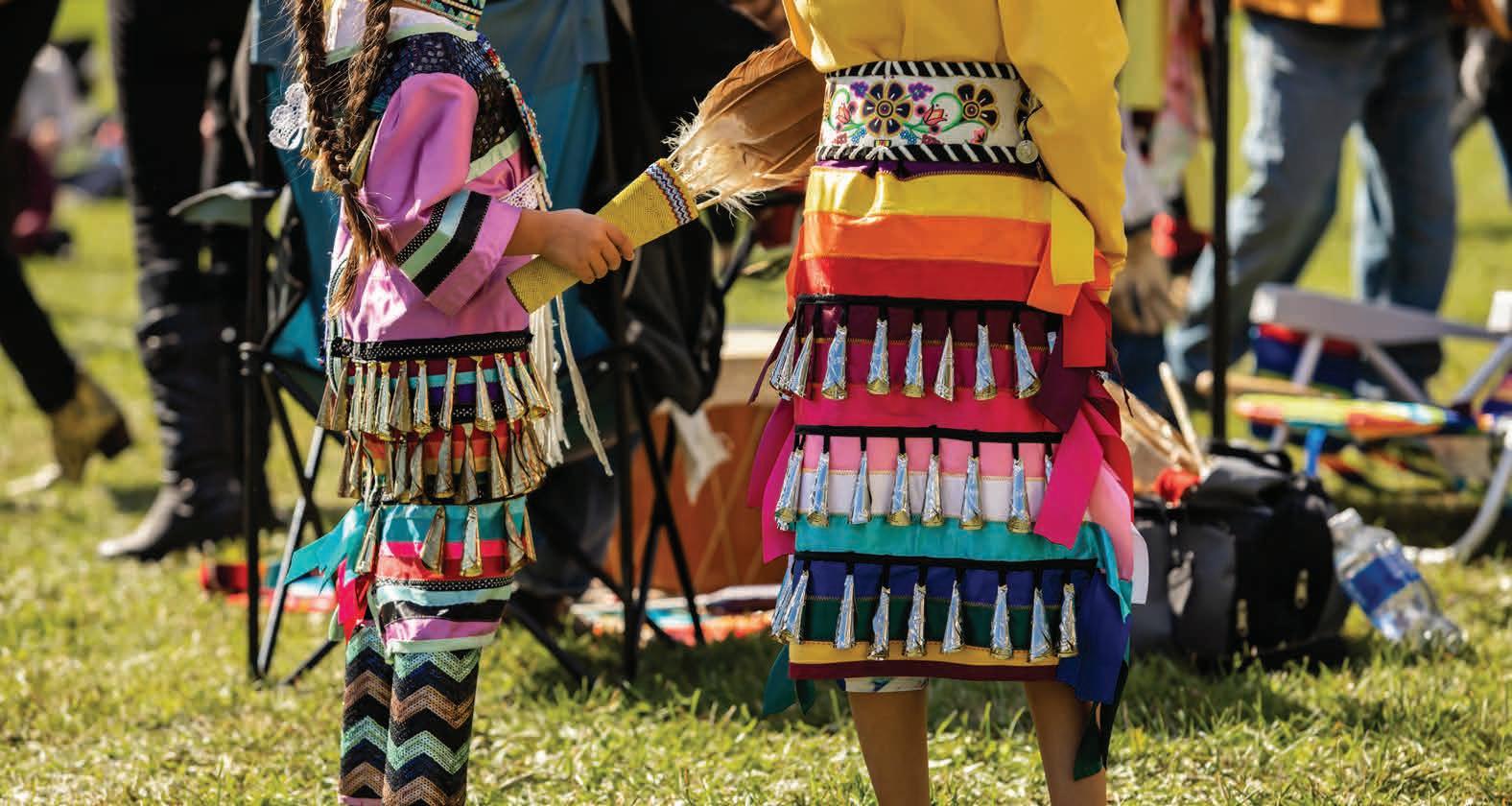
morphed into the Sixties Scoop, which has morphed into this child welfare system — birth alerts and all of these other challenges. There’s a lot that still hasn’t really changed. … For our young families today, a trip to the doctor can be a threat because the bruises that your little one might have … might be perceived by the health care assistants completely different.” Participants acknowledged, “It’s all linked. Every single person in our community has been traumatized by either the residential school or the racism in the health care system or the missing and murdered.” As suggested by another participant from urban BC:
“It’s all historical. … What I always say is go drive on the reserve. See the differences of the roads, the housing conditions. … The political climate is about dollars. It’s about the theme of the campaign. … There’s been a movement about truth and reconciliation, but to really sit with reconciliation — and thinking of the call to action number 12 that’s related to early childhood and the human rights of Indigenous children, we need to sit with the commitments that we’ve made as Canadians. … We need to have a really clear picture of what’s
© Credit: iStockPhoto.com, ID 2182058873
happening within communities to be able to support children. How many children are in care? How many children are struggling in poverty? How many children are over-housed? … Being able to ask those hard questions, instead of just highlighting, ‘Oh, well. They received so much money to build a gym and that’s supporting community events.’ It’s like, ‘No. It’s not just about the nation receiving money and upping their building systems.’”
Participants emphasized that “residential schools” in particular “really played havoc with who we are as a people. Like, the aftermath of that,” especially with respect to the “complex, multi-generational trauma issues” and “ just when you look at parenting practices, as they have evolved.” For example, a participant from urban QC shared, “This happened in our daycare. … A child got possession of a vape pen — a three-year old. It’s unacceptable. … They’re not realizing the repercussions and consequences to their actions — the young people. They’re not necessarily being mindful of some of the things that they’re doing.” Another participant from rural MB reported how “there was people keeping their children at home …
because they don’t have child care services. They’re not accessible to a lot of people. So, children are being kept home to care for other children.” The participant also disclosed that, “the slots have had a huge impact ” on children on reserve because there’s “people who go there and blow their entire family allowance on it — their Child Tax, gone. That’s the ones — bingo and stuff like that. But if [gambling’s] not here [on reserve], it’ll be somewhere else and it’ll be further away. So, it just means longer — children watching children.”
Participants talked about how “generations of parenting and of family structures” were disrupted by “removing the right to parent.” As asserted by one participant from a national partner organization in urban QC, “One of the primary ways that we sought to address integrating Indigenous people into the broader Canadian society — or one of the ways in which we carried out cultural genocide — was to remove children from their families, was to take away the right of parents to parent their children from as early an age as we possibly could. … The idea that we cannot provide that support to parents — to ignore that as a critical element of reconciliation and of support for Indigenous families and kids — is insane because it was our number one way of doing what we did and of destroying people’s lives. The link is so critical.” Another participant from urban QC explained:
“All of these things are traumas we carry with us, which lead to social issues. If you were taken away at four or six years old and … put in residential school, you didn’t learn how to parent. When you came back at 18 or 19 years old, the way you parented has evolved into the way your children are parenting, and your grandchildren are parenting. … Our communities need healing. They need condolence. … One would hope that the cycle would stop, but it happens, and it happens, and it happens, and it happens. … It’s really, really hard because it really affects the entire community. It’s not just a family, because we’re all related in some way. … We’ve become broken. Then it becomes a blame. … The way it used to be a long time ago is we all took care of each other, and we were all there for each other. We lived in a long house, or we lived in houses where there were more family members — 10 or 12 of us in a family. Now, we’re all separated. There’s isolation, and there’s substance abuse, and all of those things that are happening. As much as we have the programs to reach out to individuals, they’re just not there, able, or capable, or whatever it might be. It’s tragic because when it happens, and I say on the outside, you don’t feel it as much. But when it happens in your own community and you’re faced with it on a consistent basis, it’s very difficult to overcome.”

ELCC quality enhancement
Despite ongoing challenges, participants acknowledged significant gains with respect to ELCC programming for First Nations children on reserve, notably “with all the new dollars coming down in the last four to five years” and “with all of the agencies that we now have working in our communities.” Throughout their interviews and group discussions, participants made repeated statements, like “this is new ” and “ it hasn’t always been like this” or “ it wasn’t always like that.” Specifically, they talked about how the “ funding isn’t how it was like even up to five years ago,” and how, in the past, “everybody was always so concerned and so protective of their money. Like, ‘Oh, it’s my money. I’m not going to tell anyone about that.’” They talked about how “the collaboration process is actually huge,” likely due to “ funding and realization,” and because “people are voicing atrocities that have happened ” and “they’re recognizing what was done that shouldn’t have been done.” They also acknowledged “that new legislation that has just come up to ensure that we continue to have that ELCC funding, so that we can continue the work that we’re doing for our communities.” A participant from urban QC described the significance of the Indigenous ELCC Framework and associated funding for ELCC programs on reserve:
“This year-to-year not knowing if you’re going to get the money is very disruptive to that [‘ability to continue our programs’] because you’re always hoping and wanting and waiting. The way things are being set up now, our biggest issue now is finding people to fill positions as opposed to having money to fill and pay people. … Because of ELCC, it really has allowed us to place focus on those other areas of capacity building and enhancing of programs, rather than constantly beating the pavement trying to access $30,000 here and $40,000 there. It really allows us to be intentional and meaningful in our activities. When we do our logic models now, we’re able to look at the activities that will produce the outcomes and the goals that were intended. There’s a continuum there, as opposed to a project-based initiative.”
A director/practitioner with on-reserve child care and AHSOR program responsibilities in rural AB even described “the Indigenous Early Learning and Child Care funding ” as “a real God-sent,” noting that their “core funding … was so low ” that they “needed it really badly.” The participant expressed, “I don’t even know how we kept staff back then. Like, honestly, how we could have bought groceries because it was really, really difficult. We had to really be creative and scrape. But now, it’s still not a lot of money, but for us it feels like a lot of money because we’re just not used to
having it.” The participant elaborated on the value of the Indigenous ELCC funding for their own early childhood programs on reserve:
“We are able to hire those one-on-ones. Before we got that funding, we couldn’t. We had such a hard time — a really hard time — running our programs. We weren’t able, at that point, to be able to give our children everything that they needed. … We didn’t have the person that comes in that’s a staff member. … We didn’t have aids, like oneon-one people. … We didn’t have the resources, even sometimes not enough paper. You know what I mean? Just small things like that make a really big difference — not being able to stock up our centres.”
Other participants, too, talked about the different ways they’ve enhanced the quality of their onreserve ELCC programs since the release of the Indigenous ELCC funding tied to the Canadawide ELCC agreements. For example, an AHSOR program manager/practitioner from rural MB spoke of making “a parent room,” starting “programming for parents, as well as children,” and “[hiring] a cultural teacher through ELCC funding.” An AHSOR practitioner from rural BC talked about now having “the First Nations wage enhancement ” which is “a $2 top up” in wages for ELCC practitioners. A participant from rural SK shared, “We’ve gotten money from the government to enhance child care. … It went towards our program but it didn’t go into our wage. … It went into other areas within our program, and it was for training dollars. … It can go for our parents, as well — the ones that want to come in as support staff. They need to be trained, as well. … We got our training.” The participant further commented, “We are one of the programs where our funding went up really lots. You’ll see it in our programs. That is part of it — why our programs are rich now. We have more than enough for the children now. I said, ‘This only gets better,’ because now we’re getting a new building.” A practitioner from rural NB shared similar sentiments regarding the Indigenous ELCC — and Jordan’s Principle — funding:
“The funding that we get access to, sometimes we can’t spend it fast enough because we already have everything. We have two of everything. We’re investing it inside of the building. We’re investing it outside of the building on land-based education. We’re investing with the families and making sure everybody has safety gear on when they’re going outside. Everybody working together, collaboratively, has brought us from going to thrift markets and Salvation Army and buying plastic toys that didn’t have all the pieces, just so that we had things within the centre for the children to play with because we didn’t have money for educational materials. We had to bring things from home sometimes or just pray for donations for things that the kids would eat or use. Then snacks and healthy meals, ensuring all of that was there for the children as well. What we have now, from where we were, is a huge success. … Through all of the programming that we have and all of the agencies working together, we’re slowly bridging that gap.”
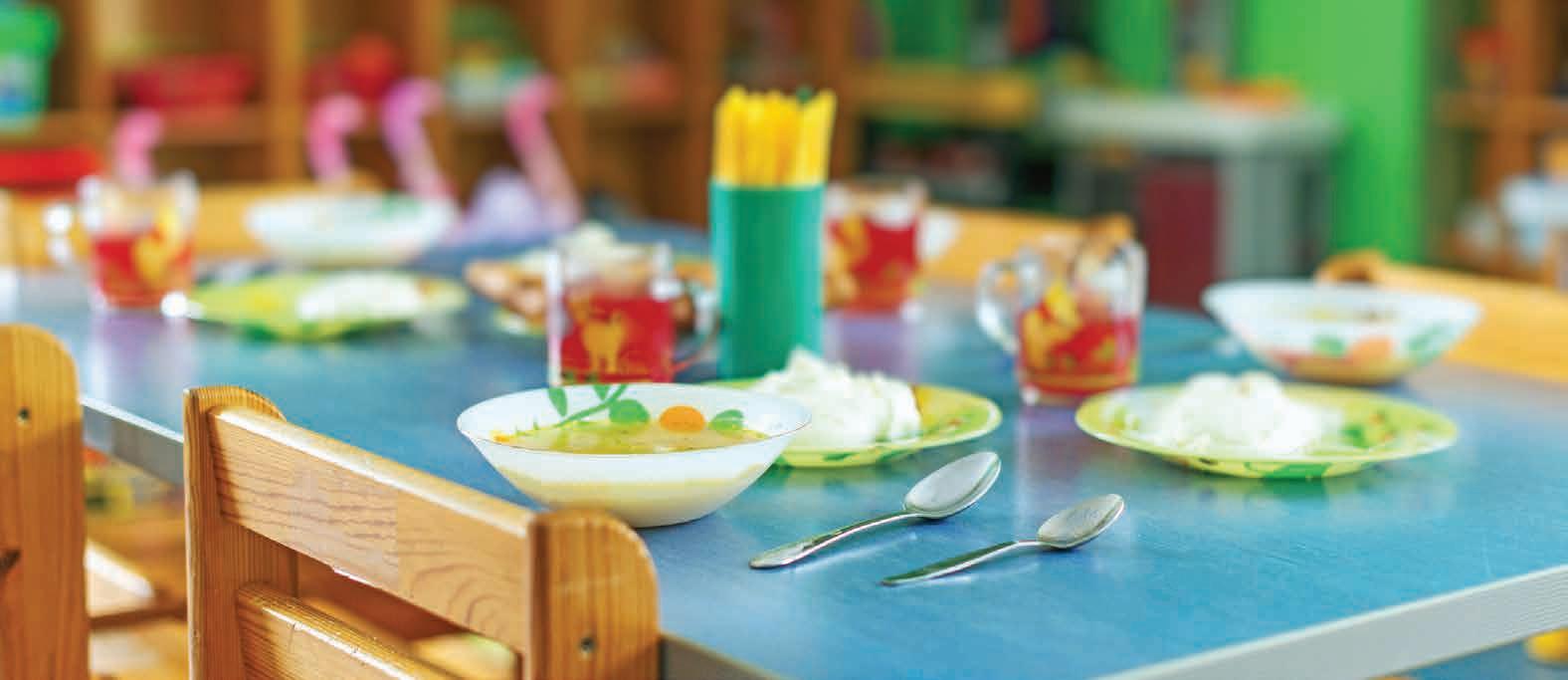
A participant from urban SK pointed out, “We need to respect where people are at. Things take time. It does come. And when those opportunities are there, the IELCC Framework will keep it focused. There is the document. The words have been spoken. They’ve been documented — communities, First Nations. It’s groups. It’s mothers. It’s fathers. It’s aunties, uncles, grandparents. The words have been shared. They are documented, written down — those next steps. Nationby-nation, at their own pace.” Even so, participants expressed that “still, we have the province that doesn’t recognize our competency in terms of early childhood.” A participant from urban QC gave the example, “The [Bill] C-35. They told us that we’re going to be consulted, we’re going to be part of the development of this bill. There was no consultation. There was no indication of any First Nations organization. … Like in [Bill] C-92. We’re in court with them because they disagree with the judgement that has been done in December. … Sometimes, it’s some bullshit. I think a lot of it’s to do with the province. But at the same time, I’m talking about the political because we have the public servant I talk to. I mean, they’re more sensitive to First Nations reality now than they were like 10 years ago. So, it’s easier for us. Even in our relation that we have with them, it’s much less stressful. So, that’s pretty good. But still, it should be seen as the third political entity government. But I don’t see it has really
yet been in place. I think we’re in a better place than we were in 15 years, but yes, a long way.” A regional manager from rural NB demonstrated how federalprovincial fiscal arrangements are key to ELCC quality enhancement:
“We’re currently working on a partnership with our province, which is very difficult here in New Brunswick. We don’t have the same type of relationship, historically, with our province. … I’m sitting on some ELCC discussions with our province and just making sure that they understand that they have a mandate to support First Nations communities in their province, and ensuring that the federal government also acknowledges that they have a responsibility as well to ensure that the provinces support and work with their First Nations communities in their province. … Everybody’s part of ensuring that there’s quality care in that early learning, that we can talk about what our needs are, but in the end, it’s financial support that we need.”
An AHSOR practitioner from rural BC shared, “We also just worked with [a provincial organization] to create the new policies around early childhood education, as well. We worked very closely with them to help make a good policy that included Indigenous people. We weren’t just, ‘Oh, and if you’re Indigenous,
include this.’ No, it was all embedded and as a part of the policies that went out to all the communities and all the centres throughout British Columbia.” When asked about the notable pieces of those policies, the participant responded, “Because they use the early learning framework in a lot of their speech and they refer to it a lot, we thought that’s very important. That was very important in bringing our people more of a voice and seeing our children as more valuable, instead of just lumping us in as one.”
A participant from urban MB thought that “there is a possibility now that there will be enough resources to go around, to hire those people that are needed in the communities, to train them well so when we talk about a quality program, we think about all the potential of culture, tradition, language, and then the basics — communication, discipline, safety, all those things as well.” At the same time, however, the participant acknowledged that “every community’s not going to have the most perfect quality child care setting ” because “there are going to be challenges,” like not having “enough space ” — which is “why it’s always good to have a Mommy and Me program or just a drop-in where parents feel that they have some kind of support.” A grandparent from urban BC also said that “we need to allow for different ways and different approaches … to supporting the family as a whole.” As explained by a participant from a national partner organization in urban QC:
“We are not going to be able to address every challenge these families have because they are so complex and they’re so interconnected. What we can do is support parents. … You can strengthen children’s abilities to problem-solve and to think critically and to be resilient. While we can’t take away every form of adversity they are going to confront in their lives, we can strengthen their ability to confront it. … Early learning and care for Indigenous families does not look the same as it does for non-Indigenous families. Early learning and care on reserve especially does not look the same. Parents know what they need, so engaging parents in the process is going to be a really critical element. … The biggest gap right now in this sector is parents that are at home. What supports are we providing to parents that are at home? The data shows that that is the majority of Indigenous parents with kids under four.”
Despite the increased flow of ELCC funds, participants advised that “there needs to be more funding made available for the early years. … It’s such an underfunded program. There needs to be more access to funding.” Specifically, “capital needs to be considered for more facilities or improved facilities.” Participants talked about the need for “a bigger facility to offer evening classes” and “more classrooms to expand with,” such as for “separate classrooms for the older ones, younger ones,” or alternatively, for “encouraging and supporting the development of multi-age programs so
© Lesli Fenner, 2025
there can be family groupings and mixed-age groups for that greater opportunity to reflect a family environment of mixed-age groups.” One participant, a regional manager from rural NB, reflected on how “some of our children are not fortunate to have speakers in their family, or an Elder,” and as such, there needs to be “more funding for something like an Elders-inResidence, where an Elder comes in, and an Elder is just there to be there, to have the child understand that, Why are they so respected and valued? It’s because of their knowledge. They’re Knowledge Keepers.” The participant commented, “Now that we know that we’re meeting certain standards, now we’re looking back and thinking, how can we ensure that things that are of high value to us will be also high value to our children? ” In like manner, a grandparent from urban BC talked about wanting to create “language nests,” to support “ families that have decided that they’re going to create space for their kids to be cared for in an environment where they are immersed in the language and culture, and doing things in a cultural-rich environment.”

© Fern Bear, 2025
A participant from urban SK talked about how there’s “a golden opportunity ” right now, “especially with nation-to-nation building,” to develop a “guide of program that is culturally relevant.” Another participant from rural BC mentioned, “When it comes to our food guide and nutrition, that’ll be something that we can just decide for ourselves, and how we want to implement or include some of those traditional pieces.” Participants talked about other ELCC gaps and deficiencies which point to potential areas for larger and continued investments in enhancing the quality and outcomes of ELCC programs for First Nations children and families on reserve. For example, an AHSOR/child care director from urban QC stressed that “there’s still a huge inequity in the salaries of early learning childhood educators, with respect to education. That’s a huge issue that needs to be addressed.” Just the same, a participant from a national partner organization in urban QC pointed out that “there’s not a professional association for Indigenous early childhood educators and as a result, there really isn’t very many opportunities for ongoing professional development.” As explained, “That is something that the federal government denies, in general — the ongoing professional development. There’s very little importance placed on that ongoing training.” The participant asserted, “Some level of training is required that is not prohibitive to Indigenous people living on reserve. That would be a big thing — the training that is accessible within their community but, even more importantly, the opportunity for ongoing learning and professional development.”
A participant from urban QC acknowledged that “we’re facing that challenge right now in some communities where there’s a strong turnover in terms of the staff. It takes a long time to reach your certification — at least a year, sometimes two years before we get new trained staff. It can take a while.” As such, “we’re not meeting the standard of that legislation that exists with the province.” The participant also recognized that “ for those who come and help — It could be interveners from the community. It could be specialists. It could be an Elder that comes to teach the language or the ceremonies or the songs. — they don’t need that.
They’ve been educators all their lives. They know how to raise a child. They don’t need to be recognized with an accreditation from the province.” For this reason, the participant suggested, “We should be able to develop those standards of what we need and for who. … There are many ways of doing that type of work and to make sure that you have a safe environment. … It’s really what is going to make sense for the community, but also to make sure … you’re still going to have to meet some standards in terms of the quality of the environment, the location, a curriculum that’s going to show you progress of the child.”
Another participant from a regional oversight organization in urban QC talked about the importance of giving consideration not only to First Nations-specific training and qualification standards of ELCC practitioners and specialized professionals, but also to First Nations-specific standards of child development:
“You have educators, and you have managers and a daycare, but it’s only one aspect of a life of a child. If we talked about daycares, the law asks us to have a certain percentage of educators to be trained, but the thing is it has to be trained with a recognition of the province. That means … something like a college certification with a certain number of hours. … When we talked about the development of the child, you have a concept that’s really good, but you need to have a [concept that’s] specific for First Nations because we need to take into account just for the language. We have kids that they talk Innu first. Then you have French on TV, and you have English. When they go to school, at one point, they’re going to be good because they will be able to handle the three languages. But if you look at the chart, let’s say, at two years old, you won’t meet the standards. But you know those tools from the province, they don’t take that reality into account. It’s the same for the educators. They need to know what are the development, how does it go, and how can we measure that. But then, we need to have research, theoretical literature that says that’s the way a child will progress, improve, or get to his competency. … The other thing is we have those recognition from

the province, but we should have our recognition. … There is a way to have educators that have the basic skills to make sure that the child is in a good environment, where he will be stimulated and he will have good development that’s safe. At one point, we can get it. We can get some basic training like maybe 90 hours that could be enough to make sure that the child is in a secure, a safe environment, make sure that they don’t get left on their own and watching TV and doing nothing. You know? There is basic, but you also need to have people that can get more specialized — two of those educators to put in place a good session and activities for the culture, for everything.”
A participant from urban BC talked about a need for an “actual assessment that shows what’s actually happening within that group setting.” The participant stated, “Even in today, licensed daycares, family daycares that are unlicensed, there’s so many around but we have no idea what people are actually doing. There’s no reporting system. Children are going and attending but we have no idea where they’re at. … We’re missing something. We’re missing a whole bunch of years with children and families, and especially with children with exceptionalities. If we had more of those pieces of information at the very beginning, then we wouldn’t be waiting in the education system three
to four years while they’re still on the wait list to get diagnosed for something, and then they’re struggling in school.” Even so, the participant asserted that this does not mean that “we should have all these systems in place for all of the reserve programs,” but rather, “there needs to be tools developed that are really easy and accessible for on reserve because we know that there’s lack of funding. There’s lack of time, lack of educators.” Moreover, “we do that in a way that’s really showing the reality of what’s happening,” and “showing culture,” which would amount to much more than “ just wearing Orange Shirt Day or saying one word of the day.”
One of the more notable ideas for quality improvement pertained to the concept of a First Nations legislation, licensing, and advocacy entity. As suggested by one participant from rural AB, “What I would really like to see is be able to have some sort of a separate entity other than the province licensing. Like, I would like to see something for onreserve licensing. You know? Why can’t we have our own where they’re not going to be slapping our hands when we’re not doing exactly what they tell us to do? … Like, why can’t we have our own entity? We don’t serve fish and we don’t serve moose meat at our daycare because it’s something that we’re told that we’re not supposed to do. So, we don’t do it. But we could. If we wanted to, we could. We’re still trying to follow the laws as best we can, but for our children — only up to the point where we have some control. We don’t want to lose our control. We want to be able to do whatever we can for each individual child.” A participant from an oversight organization in urban QC shared insight into the value of not only taking a flexible approach to resolve regulatory concerns with ELCC programming on reserve, but also having a First Nations intermediary organization to liaise between and facilitate interactions with “the regulators” and distinct First Nations communities:
“We are in charge to do the inspection of the site of the daycares. We have the power to let’s say, like the renewal of the permit or to say, ‘OK, I suspend the permit.’ We can work with the administration to
change some way of management or way to manage the daycare. … There is some regulations where we know is the basic in terms of the physical security of the kids. This is our priority, but what’s different is the angle. The approach that we have is like, ‘OK. You’re doing this that way but if you could do it this way, it’s going to be easier and you’re going to be able to save time.’ … There was a daycare. They didn’t have any door — I mean inside. It goes against the regulation. … In their mentality, you cannot have doors because it goes directly against their principle as an adult, as an individual. We had to deal with them. We won’t suspend the permit just for that if at least the safety of the kids are there. I mean all the precautions. … They were using a hammock for babies but it was maybe three feet high. It’s against the regulation and the law. But the thing is, ‘OK, can you just lower the height of the hammock … because if the baby falls down, it’s going to be like two inches. But still, you can keep the same action with the baby.’ So, there is elements like this. It’s just that we need to consider where we’re at because each community is different, so we have to adapt. We do report. We do follow up with them. But at one point, if there is some stuff that they don’t want to change, then we just enter in a discussion to understand and then we put it in a report.”
©
Jade Fraser, 2025
113 Quality care and young First Nations children: An exploration of optimal learning and development in early childhood settings on reserve
© Credit: iStockPhoto.com, ID 1417188564
Finally, participants talked about the promising practices of AHSOR programming for First Nations children and families on reserve and the recognized need to significantly expand this program. As explained by a participant from rural MB, “At a broader scale, the Head Start, what they’re doing, it needs to expand. It needs to get bigger. There has to be more money going into it. In that way they could get bigger. They can accommodate more children, have more parents coming in. Because if we bring in more parents, then we’re creating a better network, a better web of people. Then those children, we won’t have to worry. … They’re going to have a better childhood because they know that they’re safe. They know that they’re being looked after properly. It’s benefiting everybody because these are going to be our future leaders. This is going to be our future bosses and managers and stuff. It needs to get bigger. It has to because it’s essential.”
Expressed appreciation and reflective hindsight
At the end of each data collection session, participants were asked to share any overlooked information or closing comments they had regarding quality ELCC programming for First Nations children on reserve. Without hesitation, participants expressed sincere gratitude for having had the opportunity “to contribute ” to the study. They talked about how they “believe in this study ” and “believe it’s important,” not only “to look at what’s happening in our communities,” but also “ just to make a difference.” Participants reiterated common sentiments like, “I felt I had some things to share,” and “I just wanted to be a part of something that would benefit children.”
A participant from rural SK affirmed, “I only spoke on what I knew. I’ve done it for a long time. It’s been a journey, but it’s a good journey. I’ve enjoyed all of it — the growing pains and everything. I hope I helped you in a good way.” Another participant from urban MB stated, “I just wanted to speak on what I believe, just my views. … I’ve spent my entire career
with families with small children. I think I have something to contribute.” A participant from rural BC shared, “Whether it’s my grandchildren, my great grandchildren, but any First Nations child — to give them a better start in life and create the positive path for their later years. I wanted to be a part of that … because sometimes you go through life. You have a job that you help children and families, but sometimes you don’t know if you’re making a difference. … That’s why I wanted to take part in this study or this project as well. I grew up in our culture. Like, even in my family, we weren’t allowed to speak at the dinner table. … You are told to be quiet unless you’re spoken to. So, you grow up not having a voice. This was an opportunity for me to have a voice and to share what would be helpful information to make the world a better place for our First Nations kids.”
Participants talked about the importance of quality early childhood programming for First Nations children on reserve, like how “ it helps them interact with other kids” and “ it prepares them to go into preschool, nursery.” One participant, a parent from rural MB, shared, “My kids weren’t afraid. Like, ‘No, Mom. I don’t need you to stay.’ They didn’t want me to go with them to school because they were confident enough to go by themselves.” Another participant, also a parent from rural MB, talked about the benefits of ELCC programming for parents and families of young children on reserve:
“It’s benefiting more than just those zero-to-three because there’s parents that come into Head Start for the first time. They’re closed off. They’re closed minded. They’re a closed book. They don’t open nothing. No pages turning, nothing. When they come there [to ‘the Head Start program’], they build those relationships. They build that network. Then when they leave, they take that home with them. They’re happier when they’re going home. Their spouses are coming into the program. … The health centre knows what the Head Start is doing and the benefits of it. I think everyone here pretty much agrees the Head Start needs to expand because we need more of that facility doing what it’s doing.”
Other reported benefits of quality ELCC programming for First Nations parents and families of young children on reserve included “ just having someone to talk to and to vent to with no judgement,” and “ just to get out and meet new people, not feel so isolated at home,” and having “ less anxiety … dropping [their children] off [at school] or seeing them go to school.” As one parent from rural MB explained, “The thing with my kids, the biggest impact, was when I took them to say, the school, after taking them to Head Start. I didn’t feel terrified that I’m dropping my kids off there. … It wasn’t as hard on me.” Another parent participant from rural MB reflected on having “ back-up support … through Head Start.” The participant recalled, “They always checked up on me. It wasn’t just for my son why I went there. I also attended because I needed to get out and meet people, and interact instead of being stuck at home just with my babies. I liked going there to have the support, and talk and interact with the other parents, and also the workers there.”
Participants commented on opportunities to revisit current ELCC programming practices, particularly as it relates to “ developing the curriculum.” For example, a participant from rural BC pondered, “Because this has been ongoing and the curriculum has just been rolled over and rolled over, year after year, I wonder if it might be a good time to actually sit down and look at the curriculum. … Is there an opportunity to introduce or to develop a curriculum based on our culture? ” Another participant from urban SK raised a question of priority:
“Years ago — now, this is going back maybe 10 years — there used to be full-day forums. Food would be served. It would be, you know, soup and bannock. People are invited in to share their views about what they want in an early learning and child care. It would go on for a whole day. Maybe two days would be funded. … That costs money. I call it, ‘You get what you pay for.’ Today, that’s, ‘Well, let’s have a Zoom meeting for an hour and do the same thing and expect the same results.’ We have rich backgrounds in this early learning
and child care. … The Aboriginal Head Start programming and the focus that was done there, both on reserve and urban, it’s all there. It’s almost like it has to be changed again. ‘OK. Let’s put some new language on it.’ That’s fine, but that one-hour Zoom? … Where’s the priority? … We need that time to explore. … I hear people tell me, ‘Make sure you keep at it.’ But some of us are tired of speaking up. … You know? We’re a little bit crisis responsive with our young children. … We need to think more long-term.”
Participants talked about how far they’ve come in creating quality ELCC programs for First Nations children on reserve. A participant from remote BC stated, “I built the program that was only 25 spaces up to, like, 100 spaces. We had a cultural component. We had a hot lunch cook. We had preschool and daycare, and after school care for our children. We’ve also provided language for our children in our [traditional First Nations] language.” Participants also imagined what the future of ELCC programming could hold
for First Nations children on reserve. A participant from rural BC envisioned, “I’ve always known the importance of a connection between the children and the Elders. I’ve always talked about the importance of having a children’s home on reserve and an Elders lodge, and having a common area where they can sit and have lunch or dinner or whatever, but just keeping the kids on the reserve rather than if they get apprehended. Then they can go to the home, which is still in their own community. … Thinking about the traditional and customary laws, having Elders share that knowledge with the kids. … There’s a lot of teachings that Elders know that could be handed down. … A lot of communities have Elder luncheons. So, just bringing the kids to that. It’s a coming together of community members and children.” Another participant, also from rural BC, shared a vision of design:
“We could create centres that weren’t so boxy … a more open environment type of thing, or maybe a place with a retractable roof or something. … It’s like trying to make them more beautiful, and more
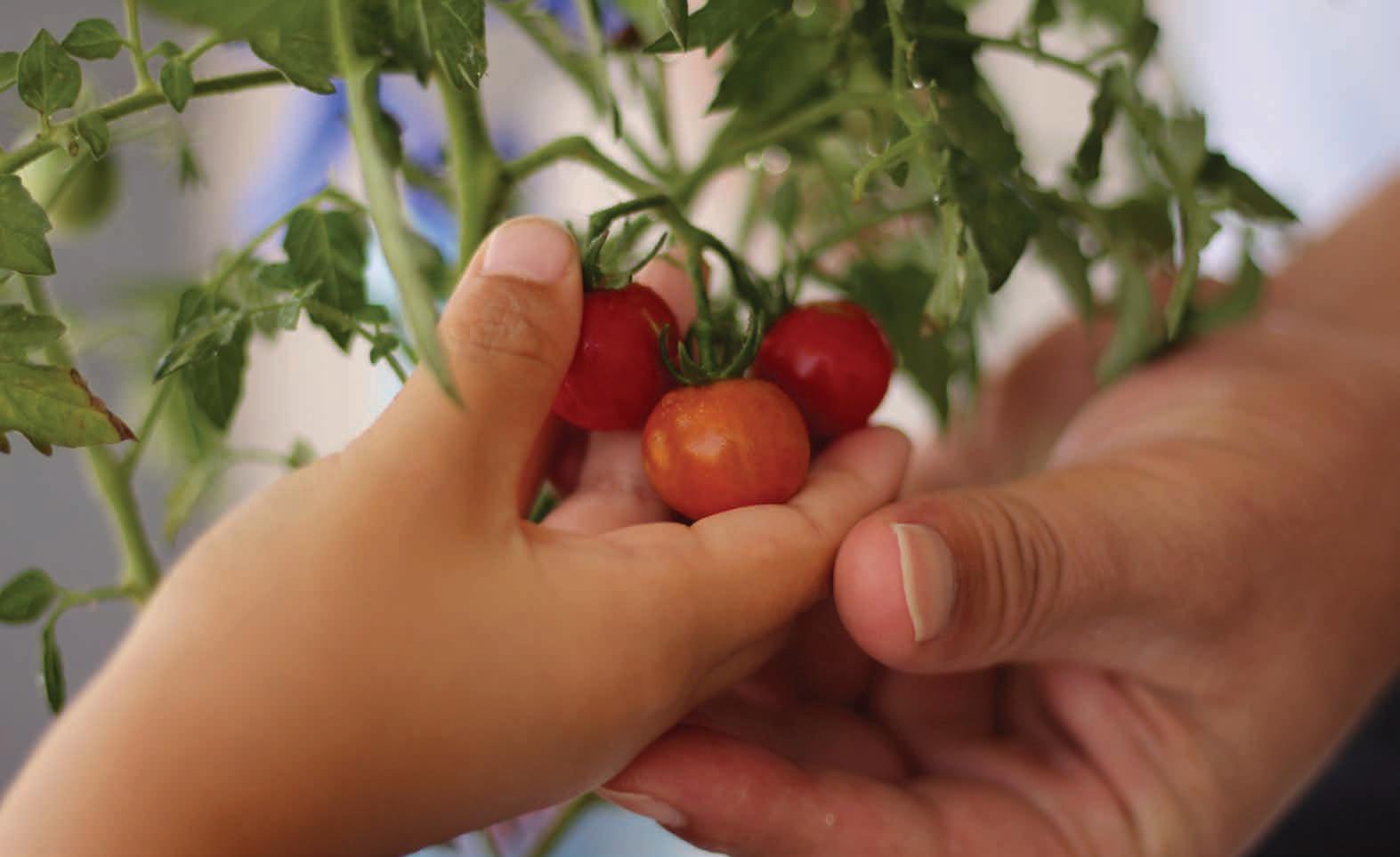
different, and even a sense of maybe a long house shape or something. … That would be so much more important as well, so that children can reflect it to say, ‘Hey, this is in my community! I see that we have a long house, too. My mom and dad go there!’ They could talk about it. … It’s not just a cultural experience, but a cultural learning. This is where the great force will come and learn. It’s an actual early childhood education experience that there’s plants — the actual community garden in the centre. … The children get the fresh vegetables that they planted. … The cook only uses their own vegetables for the season. … Just play our music and allow our music to play all the time. … It can be like actual pow wow music. It can be like Indigenous singers and storytellers, and having that played all the time so that the children get that in their memories. … And that would be really cool if they have little voice boxes that a child can push and say, ‘This is the door’ in the language. … Even if they push it a million times, at least they’re learning it, and everybody else is too at the same time. … Just giving them that opportunity. You know?”
Participants emphasized that children are “sacred gifts” from “Creator.” They acknowledged that children are “good medicine. Like, if you’re having the worst day, then they turn things around and just throw a smile on your face.” They recognized that “ just doing the work as an early childhood educator, it’s very rewarding. … Just being able to get up and go to work, and just be around kids.” As reflected by an AHSOR practitioner from rural BC, “It wasn’t just work. It was a job, but it was more meaningful.” Participants recognized the importance of early childhood development and how “under six years old is the crucial time to be teaching your children stuff because that’s when their brains are most absorbent, spongy.” They also acknowledged that “parents need to understand that it could be only small things, small gestures that could make the difference with the kids but if you’re not aware or if you struggle just to survive and to bring food to the table, it’s kind of hard also. So, it’s all related.”

©
Credit:
Participants commented on how “people say we’re just glorified babysitters.” A participant from rural BC asserted, “No, we’re not glorified babysitters. We are actually educators. We are educating one of the most crucial parts of life as we age and as we grow.” Another participant from urban QC expressed, “I don’t even think people know the definition of early intervention.” The participant shared, “I went around asking people what they thought it was and what they believed it to be and if they could explain it to me, and even explaining it to five or six of our Chiefs. About 45 minutes after the orientation on that one, the Chiefs came up to me and said, ‘Thank you so much for taking the time to really, fully explain the extent of what you do. I really thought you guys were like a glorified babysitting service.’ It just speaks volumes to where people are at, as a whole. Like, we live and eat and breathe this every day. It’s not really understood by everyone.”
Participants shared similar expressions like, “Out of everything that I have done in my career, I find this the most gratifying.” A participant from rural BC said, “That was what I looked at the children as, is ‘You’re only two! Well, what would you like to explore?’ ” The participant articulated, “Just watching them and seeing what our Elders used to do with us. Observing them. Letting them. Seeing what makes their little sparks fly, that their eyes light up. I enjoyed watching for that. … They’re sure aware of their little worlds. They know. The fact that they want to climb up the stairs without anybody. They’ll get mad at you if you’re following them too closely. They want their boundaries. They want to be able to explore without an adult there stopping them.”
For some participants, becoming an early childhood educator was a deliberate career choice that was made at an early age, often driven by a desire “to be a good mom.” For instance, a participant from rural
BC shared, “I worked at a local children’s home. That’s where I found that that’s the line of work that I wanted to do. Even at that very young age, that’s what I decided that I wanted to do. I became a young mom, so I had to learn pretty quickly on how to be a parent. … While my kids were young, I took the early childhood education program — right out of high school, because I knew that’s what I wanted to do. I wanted to be a good mom. I thought that taking that program would help me. So, that’s what I did.”
For other participants, the path to ELCC programming was not as clearly planned. A participant from rural SK disclosed, “I actually started here at our daycare. … I didn’t have education at that time. I was sent into school to do the ECE. … Then, I was hired here as one of the floor workers to work with the preschool. From then on, I worked until now. In between there, I worked towards receiving my diploma. I earned it while I was working. … I didn’t know I was going to be working this far in this area. It was a job in the beginning. The further on that I started to work, it became something I really enjoyed. … I enjoyed working with the children — interacting, showing them things here in the classroom. It was more about them learning and less about what I was making at my job, because it made it all worthwhile.” Another participant from rural MB shared, “I was the teen mom and becoming a mother; I had no knowledge of development or parenting whatsoever. I made it a point to get as much knowledge as I could. I graduated high school and then went for my ECE. I got my level 3. … At first, I did it for my children. … I didn’t see myself being in the early years area. I went for my Bachelor of Education but I didn’t finish because I kept having children. … I started working here and through here, I was able to get a lot of experience and a lot of different trainings.”
The study provided an opportunity for participants to reflect on the significant moments of their time spent with First Nations children on reserve. As emphasized by a participant from rural BC, “When you think of quality programming, you think of making a difference in a child’s life — everybody that’s working in a child
© Jade Fraser, 2025
118 Study 1: Quality ELCC programming for First Nations children on reserve
care setting.” The participant shared a story to illustrate this point:
“One of the reasons why I do what I do is because my parents couldn’t. We want our kids to feel the same way. They each come with a gift … and those gifts are called their strengths. We build on those strengths. Every person has a strength and a gift that need to be shared. Their words need to be heard. Even the kids. … When I was still teaching, I would create a bond with each child. There was a child that used to come to me every morning. She wanted me to read her the same book over and over again. It was called, ‘Mama, Do You Love Me?’ I read it to her every morning. That was part of her transition. It was hard for her to leave mom, but we made that our thing. By the end of the school year, she was able to read it to me. At one point, she looked up at me and she says, ‘I love you, [practitioner].’ I acknowledge that. That’s what they need to feel. They need to feel loved. They need to feel heard. They need to feel safe and secure. They need to know that they’re important. That’s what I tried to create with my own kids. That’s what I think about when I think about quality programming.”
Ultimately, participants expressed that they’re “so glad this is happening ” and “really excited to see the outcome ” of this study, thus affirming the significance of this work and ongoing investments in quality ELCC programming for First Nations children on reserve. The words of one participant from urban BC are acknowledged here to conclude the research findings from the quality ELCC programming study:
“I want to thank the team that have developed these questions. I’m grateful for you, for taking this study and taking the time. I just want to acknowledge how important this work is. I’m grateful that you’re taking it on and also being able to do this study. All the research team that’s involved, to be able to facilitate something that’s going to be — I’m hoping will move and shake things, because it’s necessary. It’s really needed. I’m glad I kept reaching out to you because it was just the timing wasn’t right for me. Every time that we talked, there was just too many things happening. I knew this was important when I read it. So, that’s why I kept reaching out. I’m grateful that you had the patience to hold space for me. Thank you for your time.”
Study 2: Integration of First Nations/ Indigenous knowledges, worldviews, and perspectives into ELCC education and training programs across Canada
The second study explored the extent to which First Nations or Indigenous knowledges, worldviews, and perspectives are incorporated into ELCC education and training programs across Canada. The results of this exploration are presented by type of program and region, along with subsequent descriptions of identified programs focused on ELCC administration or management; the various pathways available to becoming an ELCC practitioner working in First Nations settings; modes of course delivery; opportunities for capacity-building among ELCC practitioners working in First Nations settings; and the most common Indigenous topics covered in curricula. Appendix 2 details information about individual ELCC training programs.
First Nations/Indigenous curricula in ELCC education and training programs, by type of program and across regions
The environmental scan revealed notable differences across Canada with respect to the incorporation of First Nations/Indigenous knowledges, worldviews, and perspectives into ELCC education and training programs. Most post-secondary institutions — at the time of data collection — offered ELCC education and training programs with minimal First Nations/Indigenous content, even in provinces like British Columbia (BC) and Ontario (ON) where considerable progress had been made in developing culturally appropriate programs and curricula for Indigenous people. The lack of culturally appropriate ELCC training curricula was especially noticeable in the Atlantic provinces and Quebec (QC). This subsection of the report describes how
First Nations/Indigenous content was incorporated into three types of post-secondary training programs, including:
1. First Nations or Indigenous-designed and delivered ELCC education and training programs;
2. ELCC training and education programs offered by publicly-funded post-secondary institutions; and
3. ELCC education and training programs offered by other types of post-secondary institutions.
First Nations or Indigenous-designed and delivered ELCC education and training programs
First Nations or Indigenous-designed and delivered ELCC education and training programs were only available in BC, Alberta (AB), Saskatchewan (SK), Manitoba (MB), and ON (Table 3). Oftentimes, detailed information about these training programs was not readily accessible online, thus making it difficult to determine the degree to which Indigenous — or more specifically, First Nations — content and perspectives were included in postsecondary training curricula. Nevertheless, it was evident that most of these post-secondary programs were heavily infused with First Nations/Indigenous content. Notably, a strong focus on First Nations/ Indigenous languages and cultures was found in the ELCC training programs offered by the Nicola Valley Institute of Technology and the En’owkin Centre in BC; 7 Blue Quills University and Maskwacis Cultural College in AB; Louis Riel Vocational College in MB; and the Anishinabek Educational Institute, the Native Education & Training College of Business, Healthcare, Human Services, & Technology, and Oshki-Wenjack — Oshki-Pimache-O-Win: The Wenjack Education Institute — in ON. Of the Indigenous-led ELCC training programs that provided detailed program
7 As of 2024, the program no longer appeared to be offered.
TABLE 3: FIRST NATIONS/INDIGENOUS-DESIGNED AND DELIVERED POST - SECONDARY ELCC EDUCATION AND TRAINING PROGRAMS IN CANADA
information online, only the Louis Riel Vocational College (MB) and the Anishinabek Educational Institute (ON) described field placement or practicum requirements to be completed in a First Nations/Indigenous community. However, the ELCC training programs offered by Kenijgewin Teg (ON) and Blue Quills University (AB) included orientation retreats and/or cultural immersion components.
ELCC training and education programs offered by publicly-funded post-secondary institutions
Three main types of ELCC training programs offered by publicly-funded post-secondary institutions were identified. These included First Nations/Indigenous-specific programs; general ELCC training programs with mandatory Indigenous-focused courses; and general ELCC training programs with no mandatory Indigenousfocused courses, but whose course descriptions explicitly stated that First Nations/Indigenous topics were covered in course content.
Only a few of the publicly-funded post-secondary institutions offered ELCC training programs or education streams specifically for practitioners working in First Nations/Indigenous communities, including two institutions each in BC (of which only one institution was accepting applications) 8 and QC, and one each in MB, SK, and ON. The degree to which each of these First Nations/Indigenousfocused ELCC training programs incorporated First Nations/Indigenous content and perspectives varied widely. For instance, some ELCC training programs required completion of only one Indigenous-focused course, with little Indigenous content incorporated elsewhere in the program. Other ELCC training programs had a greater number of mandatory courses with First Nations/Indigenous focused content. Three Indigenous-specific ELCC training programs — offered by the University College of the North (MB), McGill University (QC), and St. Clair College (ON) — encouraged students to complete their field placements or practicums in a First Nations community, while the University College of the North also included a cultural immersion component.
Twenty-seven publicly-funded post-secondary institutions offered training programs that were not focused specifically on First Nations/Indigenous ELCC settings but required students to complete at least one Indigenous-focused course (Appendix 4). These included seven institutions in ON, six in AB, five in BC, four in MB, two in QC, and one institution each in New Brunswick (NB), the Yukon (YT), and the Northwest Territories (NT). The number of mandatory Indigenous-focused courses also varied widely across regions. It was often the case that post-secondary institutions offered ELCC certificate-level (one-year) programs with no Indigenous-focused courses, but their respective diploma (two-year) programs required students to complete at least one Indigenous-focused course. In
some cases, students in mainstream ELCC training programs were required to take more Indigenousfocused courses than students in programs tailored specifically for Indigenous ELCC contexts.
Among the post-secondary ELCC training programs that were not custom-tailored for Indigenous contexts but required students to complete Indigenousfocused courses, four ELCC programs had unique components focused on Indigenous ELCC. The University of Manitoba’s Bachelor of Education –Early Years Route program required all students, regardless of stream, to take an Indigenous education course. The University of Calgary’s Early Childhood Education, Bachelor’s Degree program included a community-based option that allowed students to receive their training through a blendeddelivery format and cultural immersion, if desired. Confederation College in ON required students to complete one field placement that was oriented towards addressing the TRC’s Calls to Action. Finally, the University of Windsor’s Concurrent General Bachelor of Arts program (Psychology/Bachelor of Education/Diploma in Early Childhood Education program) required students to take a designated course that enabled them to complete their field placement in a First Nations setting. Although students in other publicly-funded post-secondary ELCC training programs may have also had the option to conduct their field placements or practicums in a First Nations/Indigenous setting, none of these academic institutions clearly articulated this option in their course descriptions.
In BC, SK, and ON, several post-secondary institutions offered ELCC training programs that did not require students to complete any Indigenous-focused courses but, based on their course descriptions, Indigenous topics were integrated into many of their mandatory courses. Elsewhere in
8 Vancouver Island University’s Child and Youth Care First Nations Diploma Program, a program that could be tailored to a First Nations early learning context, was listed online as currently not accepting applications. This application status remained unchanged throughout 2023 and 2024, thus suggesting that the program was temporarily unavailable.
122 Study 2: Integration of First Nations/Indigenous knowledges, worldviews, and perspectives into ELCC education and training programs across Canada
Canada, it seemed that if ELCC training programs were not specific to First Nations/Indigenous ELCC contexts or did not require completion of Indigenousfocused courses, Indigenous topics were not usually incorporated into any other mandatory courses.
The number of Indigenous-focused ELCC courses and ELCC courses with explicitly-stated Indigenous content was analyzed by province/ territory, as well as by institution and program (Appendix 4). This analysis showed not only that ON, BC, and AB had the most ELCC training programs that incorporated Indigenous content, but also that this content was often reflected in multiple courses rather than just a single course. Specifically, 20 post-secondary programs in ON offered 24 Indigenous-focused ELCC courses and 56 additional ELCC courses with explicitly-stated Indigenous content. In BC, 13 post-secondary programs offered 15 Indigenous-focused ELCC courses and 35 additional ELCC courses with explicitly-stated Indigenous content. In AB, nine post-secondary programs offered 17 Indigenousfocused ELCC courses and six additional ELCC courses with explicitly-stated Indigenous content. Only three post-secondary programs in QC offered Indigenous-focused ELCC courses (seven in total) and one offered an additional ELCC course with explicitly-stated Indigenous content.
ELCC training programs offered by other types of post-secondary institutions
Like the ELCC training programs offered at publicly-funded post-secondary institutions, few ELCC training programs offered by career colleges, private academic institutions, or other types of post-secondary institutions incorporated Indigenous content into their training curricula. The environmental scan identified eight such programs, including four in ON, two in MB, and one each in AB and BC.
Five of these ELCC training programs were collaborative efforts where the program was accredited and delivered by a publicly-funded post-secondary institution in a First Nations/ Indigenous educational facility, including four in ON and one in MB. Two of these programs — delivered by Iohahi:io Akwesasne Education & Training Institute and Six Nations Polytechnic in ON — had no course descriptions available online, so First Nations/Indigenous components of curricula could not be determined. The other two programs in ON — delivered by the First Nations Technical Institute and the Seven Generations Education Institute — did not appear to require completion of any First Nations-specific courses. However, course descriptions for both of these programs described covering some First Nations/ Indigenous topics. Commonwealth College in MB, in partnership with Louis Riel Vocational College, also offered an Indigenous-focused ECE diploma program that mentioned a focus on implementing a meaningful, age-appropriate, culturally appropriate, and inclusive environment. Still, no details about course curriculum were available on their webpage. Even though the extent of Indigenous course content in these ELCC training programs was difficult to determine in the absence of detailed course descriptions, it could be assumed that, at a minimum, ELCC field placements or practicum requirements for these types of programs would likely be conducted in First Nations/ Indigenous communities.
Three other private post-secondary institutions offered ELCC training programs that incorporated First Nations/Indigenous content in their curriculum. These included the Creative Minds Early Childhood Education Program in BC, Columbia College’s Child Development Assistant Certificate in AB, and Robertson College’s Early Childhood Educator ECE Level 2 program in MB.
Early learning and child care administration
The environmental scan identified only two ELCC programs for students who complete their ELCC practitioner requirements and want to enhance their expertise with further knowledge about operating ELCC facilities and administering ELCC programs. In these types of programs, students could potentially learn to design, implement, and evaluate developmentally appropriate curriculum and early learning environments that respond to the needs of young children and their families; administer child care programs in accordance with relevant laws and standards; hire staff, evaluate staff performance, and identify professional development opportunities for staff; manage the overall image of ELCC centres; and learn other skills that are necessary for ensuring the sustainability and quality of ELCC programs. One of these programs was the Child Day Care Management program offered by the Indigenous-led Native Education & Training College (NETC) of Business, Healthcare, Human Service & Technology in ON. This program was available by distance learning, on-the-job training, and for small groups in the community.
The other program was an Early Learning and Child Care Administration post-diploma certificate, which was a mainstream Indigenousspecific program offered by the University College of the North in MB. Based on program and course descriptions, neither of these programs explicitly stated they incorporated First Nationsspecific topics related to administration but the University College of the North required students to complete a cultural immersion course and potentially complete their practicums in a First Nations setting. The NETC’s program could also be completed in First Nations communities.
Pathways to becoming an ELCC practitioner
The environmental scan revealed common as well as unique pathways to becoming an ELCC practitioner working in First Nations settings, through both college and university training programs. Although there were exceptions, ELCC training programs offered at colleges and Indigenous educational institutions generally differed from programs offered at universities. Colleges typically offered only ELCC certificate (one-year) and diploma (twoyear) programs, with various ways of building in specializations in “special needs” and/or “infants and toddlers.” These programs were highly structured, with limited — if any — student choice of courses. It was often the case that students undergoing ELCC training through college programs had limited exposure to Indigenous content in curricula unless they chose to complete the two-year diploma program, since Indigenous-focused courses were often not available in one-year programs.
Indigenous educational institutions generally offered the same types of programs as colleges — typically certificate and diploma (ECE Level 2 and ECE Level 3) programs. However, some Indigenous educational institutions also offered other types of ELCC training programs, including Essential Skills & Early Childhood Education (Level 1) or Childcare Assistant programs, as well as Orientation to Daycare & Head Start certificate programs.
Universities, on the other hand, offered more unique ELCC training pathways, such as four-year Indigenous-stream child and youth care programs that could be tailored to specific early learning and child development contexts, as well as different early learning or early education bachelor’s degree options (majors and minors) and post-baccalaureate diplomas. These types of programs generally allowed for a more diverse range of Indigenous topics to be covered than ELCC certificate and diploma programs, including access to a wider array of Indigenous-focused elective options.
124 Study 2: Integration of First Nations/Indigenous knowledges, worldviews, and perspectives into ELCC education and training programs across Canada
In most provinces and territories, there was a clear separation in the types of ELCC training programs offered by universities and colleges. For example, ELCC diploma programs generally served as a terminal 9 education program, rather than the basis for further post-secondary education. In ON, the higher degree of integration between ELCC diploma programs with other post-secondary programs stood in stark contrast to other regions. Several universities in ON had partnered with local colleges to integrate ELCC diploma programs with four-year degree-granting programs, and several colleges had implemented shorter, more-intensive ELCC diploma programs for individuals with a degree in a related field of study, thus offering unique pathways to becoming an educator in ELCC contexts.
Course delivery
There were limited options for where and how First Nations community members can access ELCC training programs. Some Indigenousled ELCC training programs were delivered on reserve, including programs offered by the En’owkin Centre (BC), Blue Quills University (AB), Maskwacis Cultural College (AB), Saskatchewan Indian Institute of Technologies (SK), Kenijgewin Teg (ON), and the NETC’s Child Day Care Management Program (ON). Other Indigenousled ELCC training programs were delivered in Indigenous institutions located in non-Indigenous communities or larger urban centres, including:
• the Nicola Valley Institute of Technology’s ECE programs in Merritt (BC);
• the Riel Institute for Education & Learning’s Indigenous ELCC Certificate Program in Calgary (AB);
• Gabriel Dumont Institute’s Essential Skills & ECE Level 1 program in North Battleford (SK);
• Louis Riel Vocational College’s Indigenous Focused ECE Diploma Program in Winnipeg (MB); and
• the NETC’s Indigenous Early Childhood Education program and the Anishinabek Educational Institute’s Binoojiinvag Kinoomaadwin ECE Diploma programs, both in North Bay (ON).
9 A terminal program is defined as the final or highest level of education achieved and awarded within a specific discipline or professional field.
© Fern Bear, 2025
In contrast, most Indigenous-specific ELCC training programs offered by mainstream postsecondary institutions were delivered in nonIndigenous communities, with the exception of two programs: the University of Saskatchewan’s Indian Teacher Education Program (Early/Middle Years stream), which was delivered both on-campus in Saskatoon as well as through cohorts of students in First Nations communities across SK; and McGill University’s Bachelor of Education, Kindergarten and Elementary Education (First Nations and Inuit Studies program), which was delivered in select First Nations communities across QC. There were also four Ontario-based ELCC training programs that were developed and/or accredited by nonIndigenous post-secondary institutions but delivered by Indigenous educational institutions. Two of these programs were delivered in First Nations communities or within their respective treaty areas — Iohahi:io Akwesasne Education & Training Institute and the Seven Generations Education Institute. A third such program was delivered at the Six Nations Polytechnic’s Brantford campus, and the fourth program was delivered, virtually, by the First Nations Technical Institute.
Almost all identified ELCC education and training programs, regardless of whether they were Indigenous-led or mainstream, were highly structured. Students were required to complete a set number of courses, primarily delivered in the classroom at a set time over a set period. Exceptions included the following:
• The Saskatchewan Indian Institute of Technologies’ Orientation to Daycare & Head Start program, which was available in both online and in-person classroom delivery formats;
• The University College of the North’s ECE Workplace Program, which enabled students to complete the program by attending classes two full days per week so they could continue to work in their workplace, as well as to
complete their Early Learning and Child Care Administration post-diploma certificate through an online format;
• Oshki-Wenjack’s ECE Diploma program, which adopted a uniquely blended delivery method that allowed students to stay in their home community for the majority of the program through online and independent studies, with in-class attendance and field placements in Thunder Bay for 14 consecutive days, twice per semester;
• The NETC’s Child Day Care Management Program, which was available by distance learning and on-the-job training; and
• The First Nations Technical Institute’s ECE Diploma program, which was developed and delivered in partnership with Canadore College and offered virtually.
Opportunities to build capacity of ELCC practitioners to work in First Nations settings
Several non-academic organizations were working towards building the capacity of ELCC practitioners working in First Nations communities. They offered either professional development opportunities such as workshops, conferences, and online courses, or provided access to a range of culturally appropriate educational resources that practitioners could use to support learning among First Nations children in ELCC settings. The environmental scan identified 23 organizations that were doing this type of work. Among them, 14 were First Nations-based organizations, including four in BC; two each in ON and MB; and one each in SK and QC. There were also nine non-First Nations organizations that occasionally offered First Nations-specific learning opportunities and training resources, including four in BC, two in ON, and one each in AB and QC. Appendix 2 provides more information about these organizations.
Indigenous topics covered
This study also involved a review of course descriptions to identify the most common topics covered in Indigenous-focused ELCC training programs and courses. Appendix 5 lists all topics that were covered in at least two courses. Based on this review, the most common topics were Indigenous worldviews, philosophies, and approaches (covered in 29 courses); culturalhistorical determinants (23); and First Nations cultures (23). This was followed by topics related to socio-economic determinants of Indigenous child health and development (17); decolonization and reconciliation (12); Indigenous cultural safety (8); First Nations languages and literacy (7); and culture and identity (7).
Other Indigenous topics that were covered to a lesser extent in training curricula included Indigenous cultural arts, literature, health, connections to the land, and cultural considerations in the learning environment. Appendices 2 and 5 provide more elaborate and precise information about the Indigenous topics covered in Indigenous-focused ELCC training programs and courses.
Summary
The environmental scan of post-secondary ELCC training programs and review of their respective training curricula revealed few Indigenous-led programs offered by publicly-funded and private post-secondary institutions, and which focused specifically on training ELCC practitioners for working with First Nations children and families. In particular, First Nations-specific ELCC training programs were notably lacking in the Atlantic provinces and QC. There was also a paucity of
educational programs focused on enhancing practitioner knowledge of operating ELCC facilities and administering ELCC programs, especially in a First Nations context. Nevertheless, even though most post-secondary institutions did not offer training pathways specific to First Nations ELCC contexts, many ELCC training programs required students to complete some Indigenous-focused courses, which may enable them to better serve First Nations families with young children.
The Indigenous topics most often covered in ELCC training curricula focused on social, economic, historical, and environmental factors that affect early childhood development in an Indigenous context. Few post-secondary institutions offered curriculum related to integrating Indigenous cultures, languages, music, artistic expression, and connections to the land and environment into ELCC programming. The environmental scan found that most ELCC training programs were highly structured and delivered in classroom settings located in non-Indigenous communities, with few options to acquire ELCC training in First Nations communities, or to study independently or virtually. Moreover, few post-secondary institutions required ELCC students to undertake their practicums in a First Nations community or to participate in cultural immersion experiences. These learning opportunities and experiences are crucial, not only for better equipping students to work with First Nations children and families in ELCC settings, but also for increasing the number and capacity of qualified and specialized ELCC practitioners in First Nations communities.
127 Quality care and young First Nations children: An exploration of optimal learning and development in early childhood settings on reserve
Study 3: ELCC legislation and the regulation of First Nations ELCC programs on reserve
The third study reviewed provincial and territorial (P/T) ELCC legislation in relation to the regulation, funding, and cultural appropriateness of ELCC programs for First Nations children on reserve. The following research results describe how ELCC programs are regulated by provinces and territories across Canada and the influences of P/T legislation and regulation on ELCC programming on reserve.
ELCC in provincial/territorial legislation
This study revealed that funding and control of Indigenous ELCC programs — and all ELCC programs, for that matter — are intimately connected to P/T ELCC legislation and associated regulations. By following P/T regulations, ELCC programs may be eligible for licensing or accreditation, which may then open the door to other potential funding such as grants, subsidies, and financial aids to support ELCC operations, staffing, and participating families.
Section 93 of the Canadian Constitution Act (1867) asserts P/T responsibility over matters of education. ELCC, by its close association, also falls — albeit informally — under this jurisdiction. Intricacies of ELCC programs — such as play space and building requirements, nutrition, and staffing conditions — are regulated under P/T ELCC legislation and regulations led by ministerial departments of education and related variations thereof (or Ministry of Jobs, Economy, and Trade in Alberta [AB], and Ministère de la Famille in Quebec [QC] 10). ELCC programs
10 Abbreviations are used throughout this chapter when referring to the provinces and territories included in the ELCC legislation study. These include: British Columbia (BC), Alberta (AB), Saskatchewan (SK), Manitoba (MB), Ontario (ON), Québec (QC), New Brunswick (NB), Nova Scotia (NS), Prince Edward Island (PE), Newfoundland and Labrador (NL), the Yukon (YT), and Northwest Territories (NT).
offered on reserve differ from a regulatory standpoint. Section 91 of Constitution Act (1867) asserts federal jurisdiction over matters concerning First Nations people and First Nations land reserves, but this responsibility does not extend to ELCC, apart from the funded programs discussed above (e.g., FNICCI and AHSOR). Therefore, regulation and subsequent licensing and funding eligibility of ELCC programs on reserve largely depend on P/T legislation and approaches to on-reserve programs.
There are mainly two types of ELCC programs offered for First Nations families with young children on reserve: AHSOR programs, and ELCC programs connected to P/T regulation and licensing. AHSOR programs are federally funded and administered by First Nations communities. Federal guidelines such as the First Nations Head Start – Standards Guide provide recommendations to assist with the development and delivery of AHSOR programming, but they only serve as a guide (Indigenous Services Canada, 2021). Some provinces and territories — BC, AB, MB, ON, NB, PE, NT — provide licensing and offer funding for AHSOR programs, but P/T licensing is not a requirement. Other types of ELCC programs may be connected to P/T ELCC regulations, but here too, not all ELCC programs that are regulated are also licensed.
Generally, there is a distinction in P/T legislation and regulations between “early learning” programs and “child care” programs. Early learning programs largely focus on children’s wholistic growth and development, which includes family and community involvement. Child care programs, on the other hand, are primarily concerned with child supervision, mainly stemming from the foundations of child care legislation and Canadian women’s rights movements to support the maternal workforce
(White, 2002). This distinction is important in ELCC legislation because it predicts which early childhood programs may be eligible for licensing and funding. This includes programs offered on reserve. In most provinces and territories, only ELCC programs that focus on child care components are eligible for licensing — albeit also following the P/T ELCC regulations. The distinction between “early learning” and “child care” exists, despite P/T child care legislation increasingly adopting early learning principles into their respective regulatory frameworks for child care settings, such as creating environments to support wholistic development and including parents in daily programming. P/T child care legislation is increasingly becoming ELCC legislation — with related variations in BC, AB, ON, NB, NS, PE, and NT — and early learning and child care programs are addressed collectively. The review of P/T ELCC legislation found that only ON and PE have frameworks within their legislation to distinguish between early learning programs and child care programs, with licensing and subsequent funding available for both types of programs.
Although early learning programs that do not focus on child supervision are often ineligible for licensing under P/T ELCC legislation, this research found that early learning programs may be informally regulated by their respective province or territory. That is, they may follow P/T policy guidelines and established child care regulations to standardize their practice. For example, early learning programs in MB may follow parent-child programming guidelines, On the road to best practice: Recommended guidelines for parent child programs, which were informed by MB’s Community Child Care Standards Act (1986) (Healthy Child Manitoba, 2008). Similarly in BC, early learning programs may adhere to the provincial standards outlined in BC’s Early Learning Framework (BC Ministry of Education et al., 2019).
129 Quality care and young First Nations children: An exploration of optimal learning and development in early childhood settings on reserve
Provincial/territorial approaches to regulating on-reserve ELCC programs
The ELCC legislation study identified different P/T approaches across the country to regulate on-reserve ELCC programs for First Nations children. Table 4 summarizes three approaches to on-reserve ELCC program regulation that emerged from the research.
Only BC and QC included First Nations communities and governing bodies as legal entities in which respective ELCC legislation and regulations apply. This application means that onreserve ELCC programs are eligible for provincial licensing (BC) or permits (QC) and subsequent funding, as long as they comply with applicable ELCC licensing legislation — like all other ELCC programs. In addition to these arrangements, BC’s ELCC Act administers child care grants which may be paid by the Ministry of Education and Child Care to facilitate “the design or delivery of child care by Indigenous peoples for Indigenous peoples” (Early Learning and Child Care Act, 2021, s. 3). Meanwhile, QC legislation includes an additional clause in which an agreement may be signed to ensure the application of the Act accounts for “[Indigenous] realities” (Educational Childcare Act, 2005, s. 121), thereby increasing the adaptability of the Act for First Nations communities administering their own ELCC programs.
Other arrangements exist in SK, ON, and YT where an agreement may be entered with First Nations governing bodies or organizations to administer ELCC programs under P/T legislation. With this agreement, ELCC programs operating on reserve may also be eligible for licensing or accreditation and funding, as applicable. Similar agreements may also occur outside of legislation in AB, MB, NB, PE, NL, and NT for the province or territory to support First Nations leadership in administering ELCC programs. These sorts of agreements have led to provincial programs such as the On-Reserve Child Care Licensing Pilot in AB (Government of AB, 2018) and the Child Care Capacity Initiative in
NL (Government of NL, 2022). Both programs seek to increase the number of licensed child care spaces available on reserve and allocate funding to support the process. Alternatively in MB, NB, and PE, First Nations communities may apply to have their ELCC programs licensed and funded by the province, upon request. NS was the only province to not license or fund on-reserve programs. According to the NS Department of Education and Early Childhood Development (2018), Mi’kmaq communities will often, instead, borrow from provincial ELCC legislation to inform and standardize their programs.
ELCC quality components in provincial/ territorial legislation
Greenwood & Shawana (2000) outlined a number of components to quality ELCC programs that contribute to building and strengthening early childhood learning and development for First Nations children, including staff qualifications, staff-child ratios, and nutritional guidelines, to name a few. Table 5 provides insight into the requirements for these three components of quality, as prescribed by P/T ELCC regulations.
Looking at the ELCC program staff qualifications outlined in Table 5, most provinces and territories certify ELCC program staff in accordance with their level of related education and experience. This is most often arranged through level 1 to level 3 or level 4 certification, with some intern, trainee, or introductory levels. The higher the level of certification, the more education and experience completed. This system is used in AB, SK, MB, NS, PE, NL, YT, and NT. Some provinces and territories also require, for ELCC certification, documentation related to the personal health, safety record, and safety training of program staff. This includes, for example, immunization records (BC, ON, NL, YT, NT), tuberculosis testing (BC, YT, NT), proof of first aid and CPR training (SK [for staff working more than 65 hours per month], MB, ON [for ELCC program staff included in the staff-child ratio], QC, NB, NS, PE, NL, NT), 130
TABLE 4: REGULATION OF FIRST NATIONS ELCC PROGRAMS ON RESERVE
Regulated under P/T legislation
BC, QC
Regulated by special agreement in legislation
SK, ON, QC, YT
Regulated by arrangements made outside of legislation
AB, MB, NB, PE, NL, NT
Note: Table 4 is adapted from Webb (2025a). See Webb (2025a) for further description and discussion of each category.
TABLE 5: PROVINCIAL/TERRITORIAL REQUIREMENTS FOR ELCC PROGRAMS
Province/ territory
BC: Child Care Licensing Regulation (2007)
Staff qualifications
ECEs are certified using three levels: ECE level 1, 2, or 3; depending on their ELCC education and training. All ELCC program staff must complete first aid and CPR training, as well as a criminal record check, child abuse registry check, and criminal history disclosure statement.
AB: Early Learning and Child Care Regulation (2008)
SK: Child Care Regulations (2015)
ECEs are certified using three levels: ECE level 1, 2, or 3; depending on their ELCC education and training. All ECEs must provide a criminal record check.
Staff-child ratio (for ELCC centres)
12 weeks to 2 years: 1:4
2 to 6 years: 1:8
6 to 12 years: 1:15
Nutritional guidelines
Food must be provided and must follow Canada’s Food Guide. Menus must be available for parents.
ECEs are certified using three levels: ECE level 1, 2, or 3; depending on their ELCC education and training. ECEs working more than 65 hours per month at an ELCC centre must complete first aid and CPR training. Criminal record checks are required.
Infants less than 12 months: 1:3
Infants 12 to 19 months: 1:4
19 months to 3 years: 1:6
3 years to 4 years: 1:8
4 years and older: 1:10
Infants: 1:3
Toddlers: 1:5
Preschool children: 1:10
School-aged children: 1:15
Food is to be provided by parents or the ELCC centre and must follow a food guide provided by Health Canada or AB Health Services. Menus must be posted at the ELCC centre.
Food must be provided for children six months and older (except for children with special dietary needs). Food is required for infants under six months of age at teen student support ELCC programs.
Province/ territory Staff qualifications
MB: Child Care Regulation (1986)
ON: Child Care and Early Years Act Regulation (2015)
ECEs are certified using three levels: ECE level 1, 2, or 3; depending on their ELCC education and training. All ELCC program staff must complete first aid and CPR training, as well as a criminal record check, child abuse registry check, and criminal history disclosure statement.
ECEs must have two years of experience providing licensed child care, be a member of the College of ECEs, and provide proof of ELCC education and training. All ECEs must have a health assessment, immunization records, CPR and first aid training, and a vulnerable sector check.
QC: Educational Childcare Regulation (2006)
NB: Early Childhood Services Act Regulation (2018)
ELCC program staff must have a diploma of college studies in ELCC (or acceptable equivalent). All ELCC program staff must have first aid training with a component on severe allergic reaction management.
ELCC program staff must have a one-year Early Childhood Education Certificate or training (or equivalent). All program staff must have first aid and CPR training. An “Introduction to Early Childhood Education” course is provided by the province for program staff without the educational requirements. Criminal record and vulnerable sector checks are required of all program staff.
Staff-child ratio (for ELCC centres)
12 weeks to 2 years: 1:4
2 to 6 years: 1:8
6 to 12 years: 1:15
Nutritional guidelines
Food must be provided and must follow Canada’s Food Guide. Menus must be available for parents.
Infants: 3:10
Toddlers: 1:5
Preschool children: 1:8
Kindergarten: 1:13
Primary/junior school aged: 1:15
Junior school aged: 1:20
Under 18 months: 1:5
18 months to 4 years: 1:8
4 to 5 years: 1:10
5 years and older: 1:20
Food must be provided and must follow the most recent version of Canada’s Food Guide. Food menus must be posted for parents.
Infants: 1:3
2 years: 1:5
3 years: 1:8
4 years and older: 1:10
School-aged: 1:15
Food must be provided and must follow Canada’s Food Guide. Menus must be posted and available for review by parents.
Food must be provided and menus must be available for review by parents.
Province/ territory Staff qualifications
NS: Early Learning and Child Care Regulations (2020)
PE: Early Learning and Child Care Act Regulations (2016)
ECEs are classified, with approval from the province and depending on their ELCC education and training, as one of four classifications: entry level, level 1, level 2, level 3, or schoolage training classification. All ELCC program staff must have first aid and CPR training, and vulnerable sector and child abuse registry checks.
ELCC program staff are certified, depending on their ELCC education and training, as one of five levels: family home child care provider; school-age child care provider; early childhood intern; early childhood associate; and ECE. ELCC program staff must have proof of education, criminal record and vulnerable sector checks, and first aid and CPR training.
NL: Child Care Regulations (2017)
ECEs are certified, depending on their ELCC education and training, as either: trainee certification or level 1, 2, 3, or 4. All ELCC program staff must have criminal record and vulnerable sector checks, complete first aid training, and provide immunization records. All ELCC program staff included in staff-child ratios must complete an orientation course regarding the province’s early learning framework.
Staff-child ratio (for ELCC centres)
Infants: 1:4
Toddlers: 1:6
Preschooler and toddler older than 30 months: 1:7
Preschooler: 1:8
Other mixed ages: ratio for youngest child
Nutritional guidelines
Food must be provided and must follow standards provided by the province.
Under 22 months: 1:3
22 months to 3 years: 1:5
3 years to school entry: 1:10
School-aged: 1:15
Food must be provided and must follow Canada’s Food Guide. Menus must be posted for parents.
Infants: 1:3
Toddlers: 1:5
Pre-school aged: 1:8
Pre-kindergarten aged: 1:10
School aged: 1:15
Food must be provided and must not be used as a form of reward or punishment.
Province/ territory Staff qualifications
YT: Child Care Centre Program Regulation (1995)
NT: Early Learning and Child Care Regulations (2024)
ECEs are certified, depending on their ELCC education and training, as either: child care worker 1, 2, or 3. All ECEs must provide culturally appropriate care. Police checks, immunization records, and tuberculosis tests are required of all ELCC program staff.
ELCC program staff are certified as either level 1, 2, 3, 4, or A, depending on their ELCC education and training. All ELCC program staff must have criminal record and vulnerable sector checks, provide immunization records, and complete tuberculosis screening and first aid and CPR training.
Staff-child ratio (for ELCC centres)
Infants up to 18 months: 1:4
3 years and younger and no infants: 1:6
3 years and older: 1:8
School-aged: 1:12
Less than 12 months: 1:3
12 to 24 months: 1:4
24 to 35 months: 1:6
35 months to 4 years: 1:8
4 to 5 years: 1:9
5 to 12 years: 1:10
Nutritional guidelines
Food must be provided, with consultations from parents and guidance from Canada’s Food Guide and “Native Food Guide.” Menus must be posted.
Food must be provided and must follow the territory’s Healthy Foods in Facilities: Food and Beverage Guidelines for Health and Social Services and Canada’s Food Guide. Menus must be posted.
Note: Table 5 provides abbreviated and summarized information. See the sourced legislation for more details such as staff-child ratios for mixed aged groups.
proof of criminal record (BC, AB, SK, MB) and/ or vulnerable sector checks (ON, NB, NS, PE, NL, YT, NT), and child abuse registry checks (MB, NS).
Of note, first aid and CPR training is required of all ELCC centres across the country but in some regions, only a minimum number of program staff — as opposed to all program staff working at all times — are required to have this training (BC, AB, YT). There are also some unique staff qualifications.
In NL, for instance, ELCC program staff are required to complete training on NL’s early learning framework (see for example: NL Department of Education and Early Childhood Development, 2019). Meanwhile, YT is the only region in Canada that specifies in its regulations culturally appropriate care as a competency requirement of all ELCC program staff.
Staff-child ratios are largely consistent across the provinces and territories. Table 5 shows that all jurisdictions have low staff-child ratios — between 1:3 and 1:4 — when providing care to infants, apart from QC with a 1:5 ratio. The ratio is higher for school-aged children, with at least one staff member per 10 children, across all jurisdictions.
Food and nutritional requirements for ELCC centres across jurisdictions are also consistent. All P/T regulations require food and beverages to be provided to participating children. Both AB and PE make the distinction that food and beverages must be provided either by the ELCC centre or by parents/caregivers for their attending children. Most provinces and territories require that when food is provided by ELCC centres, its content and quality
must align with recommendations from Canada’s Food Guide (Government of Canada, 2024c) (BC, AB, MB, ON, QC, PE, YT) and/or other P/T standards (AB, NS, NT). Unique to YT, food preparation must also align with Health Canada’s Eating well with Canada’s food guide: First Nations, Inuit, and Métis (Health Canada, 2007). Although not a requirement, but rather an opportunity, nutrition grants for family child care homes are established in SK ELCC regulations to support the delivery of nutritious meals and snacks.
Meals and menus must be posted and made available to parents at ELCC centres in BC, AB, MB, ON, QC, NB, PE, YT, and NT, with QC, NB, and YT also requiring consultation with parents to prepare menus. In BC and NL, ELCC regulations clarify that food must not be used at ELCC centres as a form of reward or punishment. What’s more, BC is the only province to state in its regulations that menus and meals must account for children’s food preferences and cultural background.
Provinces and territories are consistent in prescribing general regulations to ensure adequate, safe, and sanitary practices are in place for handling, preparing, serving, and storing food in ELCC programs (SK, MB, QC, PE, NL, YT, NT). Often, P/T regulations will state that food must be stored in a designated area and prepared on surfaces that are not used for changing diapers (BC, ON, QC, NB, PE, NL, YT, NT). Measures to monitor food temperatures to ensure children’s safety are also considered (QC). PE requires ELCC program staff who handle food to complete a food safety course approved by the province. Across all jurisdictions, there are no regulations to suggest any foods must be included or excluded from ELCC programs.
TABLE 6: PROVINCIAL/TERRITORIAL ELCC LEGISLATION AND REGULATIONS WITH RELEVANCE TO THE FIRST NATIONS ELCC FRAMEWORK PRINCIPLES
Province/ territory Legislation/regulation
BC Community Care and Assisted Living Act (2002) and Child Care Licensing Regulation (2007), and Early Learning and Child Care Act (2021) and Regulation (2024) 2-5, 7
AB Early Learning and Child Care Act (2007) and Regulation (2008) 1, 3-5
SK Child Care Act (2014) and Regulations (2015) 2-5, 7
MB Community Child Care Standards Act (1987) and Child Care Regulation (1986) 3-5, 7
ON Child Care and Early Years Act (2014) and General Regulation (2015), and Funding, Cost Sharing, and Financial Assistance Regulation (2015) 1-5, 7
QC Educational Childcare Act (2005) and Regulation (2006), and Reduced Contribution Regulation (2006) 1-5, 7
NB Early Childhood Services Act (2012) and Licensing Regulation (2018), and Childcare Grants and Subsidies Regulation (2018) 1, 3-5, 7 NS Early Learning and Child Care Regulations (2020) 3-5 PE Early Learning and Child Care Act (2016) and Regulations (2016) 3, 5
NL Child Care Act (2014) and Regulations (2017) 1, 3, 5
YT Child Care Act (2002) and Child Care Centre Program Regulation (1995), and Child Care Subsidy Regulation (1995) 1-5, 7
NT Early Learning and Child Care Act (1988) and Regulations (2024) 1, 3-5, 7
Note: Table 6 is adapted from Webb (2025a). Webb (2025a) provides further analysis into how P/T ELCC legislation and regulations align with each of the seven First Nations ELCC framework principles. 136 Study 3: ELCC legislation and the regulation of First Nations ELCC programs on reserve
First Nations ELCC framework principles in provincial/territorial legislation
Embedded in the Indigenous ELCC Framework (ESDC, 2018), the First Nations ELCC framework articulates seven principles to guide ELCC programs in the provision of quality early childhood learning and development for First Nations children. These principles aim to ensure that ELCC programs are:
1. anchored in First Nations languages, knowledges, and cultures;
2. controlled and directed by First Nations communities;
3. well-funded and of high quality, as measured by daily programming, physical environments, staff training and compensation, family and community involvement, and leadership from First Nations Elders;
4. affordable and inclusive;
5. transparent and accountable;
6. coordinated and integrated based on collaborations and partnerships that support the establishment of a First Nations-led ELCC system, including linkages between departments, governments, nations, and related sectors; and
7. supportive of First Nations capacity to establish a First Nations-led ELCC system.
Table 6 summarizes which P/T legislation and regulations — albeit subject to official interpretation — appear to align with the seven First Nations principles of the Indigenous ELCC Framework.
Principle 1
Principle 1 — for ELCC programs to be anchored in First Nations languages, knowledges, and cultures — is reflected in the ELCC regulations of seven jurisdictions. Purpose statements and objectives for ELCC acts in AB, ON, and YT address this principle. For example, YT’s Child Care Act (2002) seeks to “support the aspirations of Yukon First Nations to promote and provide culturally appropriate child care services” (s. 1). According to

their respective regulations, ELCC programs in NB may offer curriculum based on Indigenous cultures — depending on the province’s approval — while programs in NT may waive equipment requirements for sleeping and napping arrangements if a child’s family prefers to use traditional Indigenous practices. In QC, as previously mentioned, agreements between the province and local First Nations may be entered to ensure ELCC programs reflect and account for “[Indigenous] realities” (Educational Childcare Act, 2005, s. 121). First Nations cultural representation is also required for ELCC programs in NL, as stated in the province’s early learning framework (NL Department of Education and Early Childhood Development, 2019).
Principle 2
Principle 2 — for ELCC programs to be controlled and directed by First Nations communities — is addressed by five jurisdictions and aligns with earlier findings related to how ELCC programs are regulated on reserve. First Nations communities in BC and QC are recognized as legal entities under provincial ELCC acts and as a result, may administer community-based programs under their respective Acts. Agreements signed under acts in ON, SK, and YT offer another avenue to lend First Nations administrative and decision-making authority in ELCC programs. In all cases, however, First Nations control still falls within the confines of P/T legislation and prescribed regulations for ELCC programs.
Principle 3
All provinces and territories address Principle 3 — for ELCC programs to be well-funded and of high quality. Most ELCC acts require programs to promote the social, emotional, physical, linguistic, and intellectual growth and development of young children through daily programming (BC, AB, MB, QC, NB, PE, NL, YT, NT), program furnishings and equipment (AB, MB, ON, PE), or in written program policies or statements (SK, ON, NL). ELCC acts and regulations in MB, NB, BC, and NT also establish funding pools and specific grants for ELCC program operators to improve the quality of their programs. This includes funding for equipment, additional specialized staff and staff training, or other program needs. Likewise, SK, MB, NB, and NT regulations prescribe ministerial grants to support ELCC program staff in educational opportunities (SK, MB) and wage top-ups and bonuses (MB, NB, NT).
Family and community involvement in ELCC centres and programs is addressed by nearly all P/T regulations, such as to facilitate parent involvement in the operations, management, or general provision of programs (AB, MB, PE, NT) or on ELCC advisory boards (SK, MB, QC, NB, NS, YT). Family and community involvement in ELCC programming is required for licensing in MB, PE, and NT, and in ELCC program statements and policies in ON, SK, NB, NS, and NL. Healthy and ongoing communication with parents is a requirement for ELCC programs in ON, QC, YT, and NT. In NT and SK, ELCC regulations assert that parent involvement in the delivery of ELCC programs is encouraged (NT) or required (SK, for teen student support centres that offer child care). Some jurisdictions also require ELCC programs to invite and include community partners and resources in their programming (ON, PE, NL, YT, NT). No province or territory was found to include any sort of participation, involvement, or leadership of Elders in their ELCC acts or regulations.
Principle 4
Ten jurisdictions addressed Principle 4 — for affordable and inclusive ELCC programs. This principle was most often reflected in P/T funding programs embedded in regulations to subsidize ELCC program costs for families (BC, SK, MB, ON, NB, NS, YT, NT). In BC and SK, additional provisions are included to waive some income eligibility criteria for First Nations applicants for provincial subsidies. QC differs slightly, as it is the only province to host a publicly funded child care system in which all families pay a standardized flat rate.
Principle 5
All provinces and territories seem to address Principle 5, for ELCC programs to be transparent and accountable. ELCC regulations often require licenses to be posted and program materials to be available for review by parents. Some ELCC regulations require annual ministerial reports on ELCC (BC) and evaluation plans to be completed by program operators (PE, NL).
Principle 6
Of the ELCC acts and regulations reviewed in this study, no evidence was found to draw a clear link between a province or territory and Principle 6 — for ELCC programs to be coordinated and integrated based on collaborations and partnerships that support the establishment of a First Nationsled ELCC system, including linkages between departments, governments, nations, and related sectors. ELCC, as overseen by P/T legislation, is largely contained and operated within distinct government departments — typically education — and siloed from other related sectors such as health, social services, and transportation. ELCC advisories, boards, or committees may support cross-sectoral collaboration, but only QC and YT require some cross-sectoral membership from community, social, or other sectors (QC) and cultural diversity (YT). Further, the legislative arrangements in BC, QC,
ON, SK, and YT for First Nations communities to design and deliver ELCC programs do not suggest further partnerships with additional governments, departments, or relevant sectors.
Principle 7
Eight jurisdictions contain provisions that align with Principle 7 — to support First Nations capacity in ELCC systems. Arrangements in legislation support First Nations administrative control over ELCC programs in BC, QC, SK, ON, and YT. In BC and ON, provisions are included for First Nations communities to collect information for the purpose of administrating their own ELCC programs.
NT, BC, MB, and ON provide specific funding initiatives in their legislation to build First Nations capacity in ELCC, such as wage bonuses for Indigenous ELCC program staff in NT, and child care grants that “facilitate the design or delivery of child care by Indigenous peoples for Indigenous peoples” in BC (Early Learning and Child Care Act, 2021, s. 3) and “support a licensed child care centre that is established or maintained by … an Indigenous governing body” (Community Child Care Standards Act, 1987, s. 31.1) in MB. In SK, NB, MB, and NT, additional general funding programs are offered to enhance capacity in delivering ELCC programs which may be applied to regulated and licensed programs on reserve.
Summary
This study uncovered many similarities and differences in terms of how the provinces and territories regulate and fund on-reserve ELCC programs and prescribe program standards that define quality components and align with the seven First Nations principles of the Indigenous ELCC Framework. Three approaches to regulating onreserve ELCC programs emerged from the research, including directly under ELCC legislation, by special agreement in legislation, or by arrangements made outside of legislation. Many jurisdictions employ a similar “leveled” certification scheme for ELCC program staff based on education and training achievements, and require staff, to differing degrees, to submit documentation related to their personal health, safety record, and safety training. Staff-child ratios are largely consistent across the provinces and territories, as are food and nutritional guidelines which often cite Canada’s Food Guide (Government of Canda, 2024c) or other P/T standards to guide food practices.
With an understanding of how P/T ELCC legislation aligns with the First Nations ELCC framework principles, connections were drawn between regulations in all jurisdictions to at least two or more principles. Principle 3 and Principle 5 were most often addressed which, in brief, respectively call for ELCC programs to be transparent and of high quality. No jurisdiction clearly addressed Principle 6 concerning cross-sectoral collaboration to support First Nationsled ELCC systems or aspects of Principle 3 that call for leadership from First Nations Elders in ELCC programs. All seven principles are critical in examining ELCC legislation and regulations. Where these principles are addressed by legislation, there is space to build capacity and sustain the development of culturally appropriate First Nations-led programs for First Nations children and families.
© Lesli Fenner, 2025
139 Quality care and young First Nations children: An exploration of optimal learning and development in early childhood settings on reserve