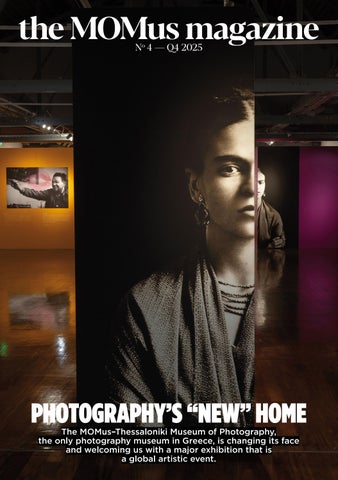
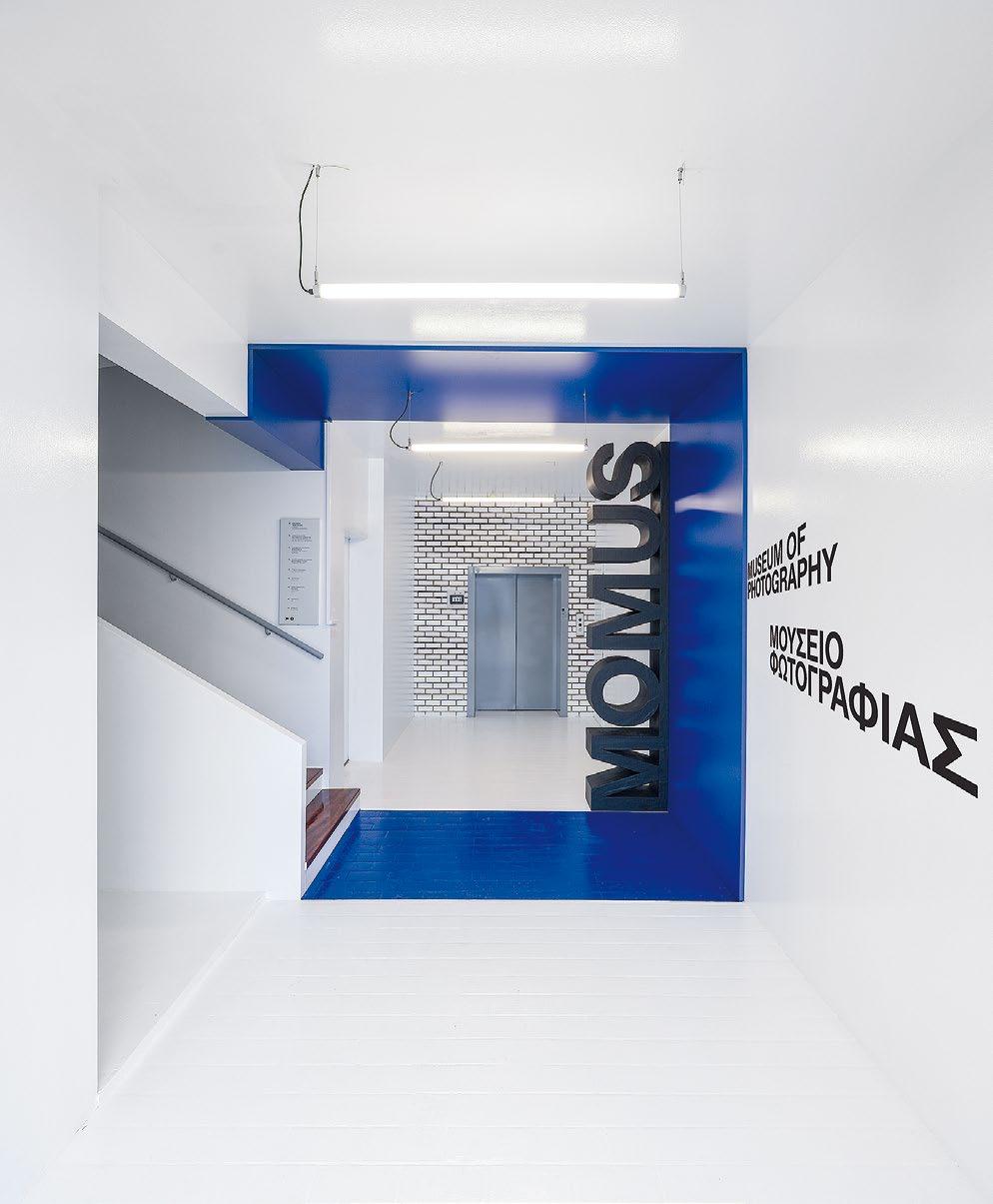
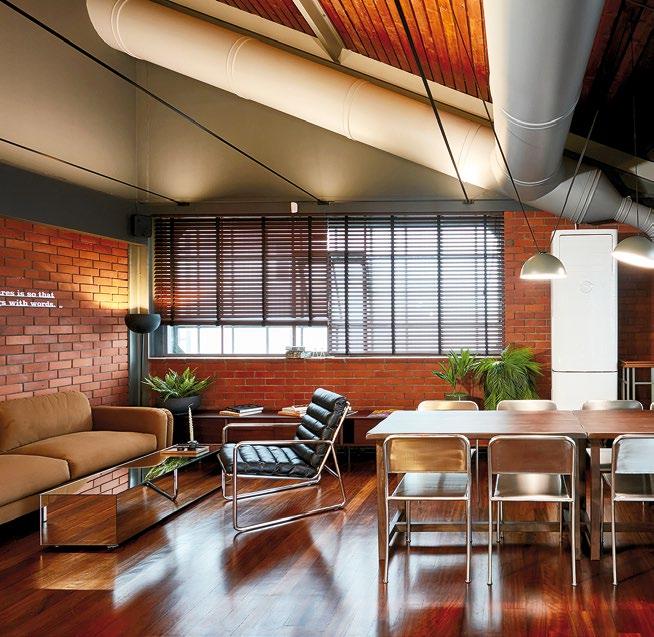
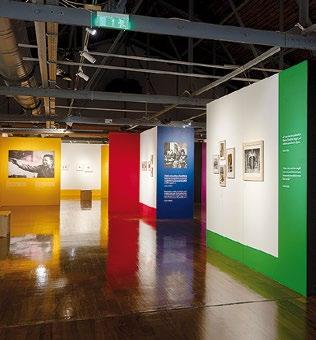
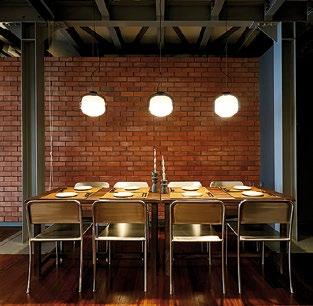
The MOMus–Thessaloniki Museum of Photography, the only photography museum in Greece, is changing its face and welcoming us with a major exhibition that is a global artistic event.
MOMus magazine
T. 231 043 1669 Ε. contact@nowonline.gr
The MOMus Magazine is a quarterly publication available free of charge at MOMus museums in Thessaloniki and Athens, as well as at selected distribution points and online. Any reproduction, redistribution, or adaptation of the magazine’s content, whether in full, in part, summarized, paraphrased, or otherwise rendered by mechanical, electronic, photocopying, or recording methods is strictly prohibited without prior written consent from the publisher, in accordance with Law 2121/1993 and applicable international legal provisions in Greece.
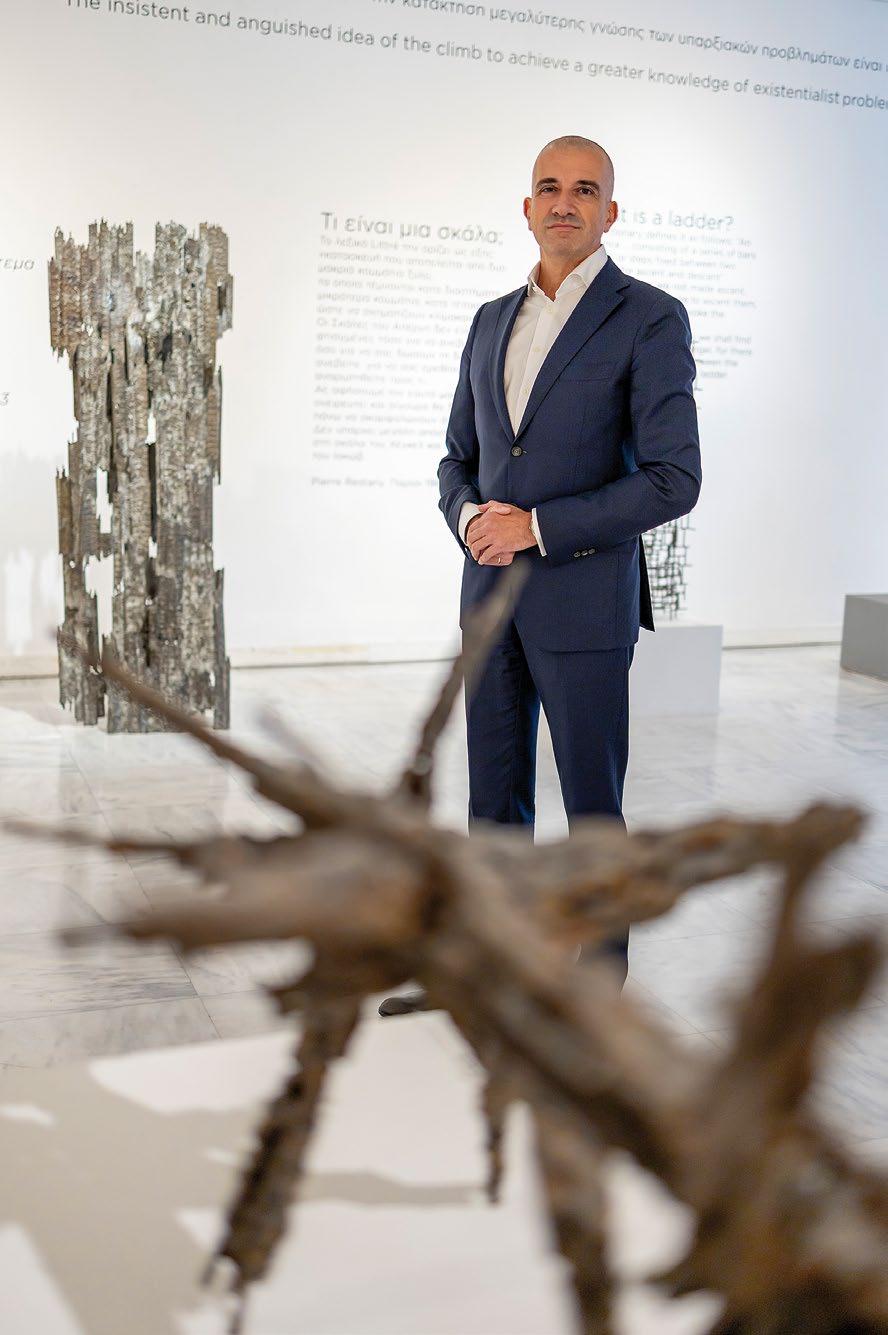
The excitement is enormous, as just a few days ago Thessaloniki welcomed a new Photography Museum. This isn’t simply a renovated building, it’s a living organism that invites the human eye to linger, to think, and to share. We’re confident it will become the city’s new “hot talk”: a place where images spark conversations, and conversations generate community.
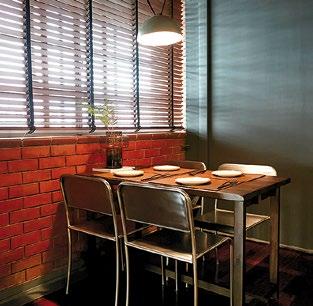
At the heart of the experience is our new café. A bright space for meeting, working, and exchanging ideas, destined to become a landmark for both Thessaloniki residents and visitors. We aimed at a Fotografiska-style photography museum in Thessaloniki: open, experiential, with strong curation, lively programs, and an “I’ll be visiting again” philosophy. Mission accomplished? We believe yes.
This renewal is not merely aesthetic; it’s an investment into what the city can become. International experience shows that cultural infrastructure is not a cost; it’s a catalyst for growth, cohesion, and imagination with real multiplier effects and social “spillovers” that permeate the economy and everyday life.
Globally, the cultural and creative industries account for 3.1% of GDP and 6.2% of employment, numbers that evidence their foundational significance. Additionally, studies have shown that in Greece, every 1 euro generated by the arts can create an additional 3.44 euros for the economy, mobilizing tourism, education, retail, and supply chains. In other words, museums operate as ecosystems of public value: they create jobs, support local businesses, build skills, and strengthen democratic participation.
The new MOMus–Photography Museum would not have been possible without the support of the Region of Central Macedonia and the Ministry of Culture, who were instrumental in implementing our development plan. The Museum is both a promise and an invitation: to see the city differently, and to work together for a modern, open, and inclusive cultural future.
We look forward to welcoming you at the exhibitions, in the café, to experience the small and large moments that will make it a home of images for everyone. n
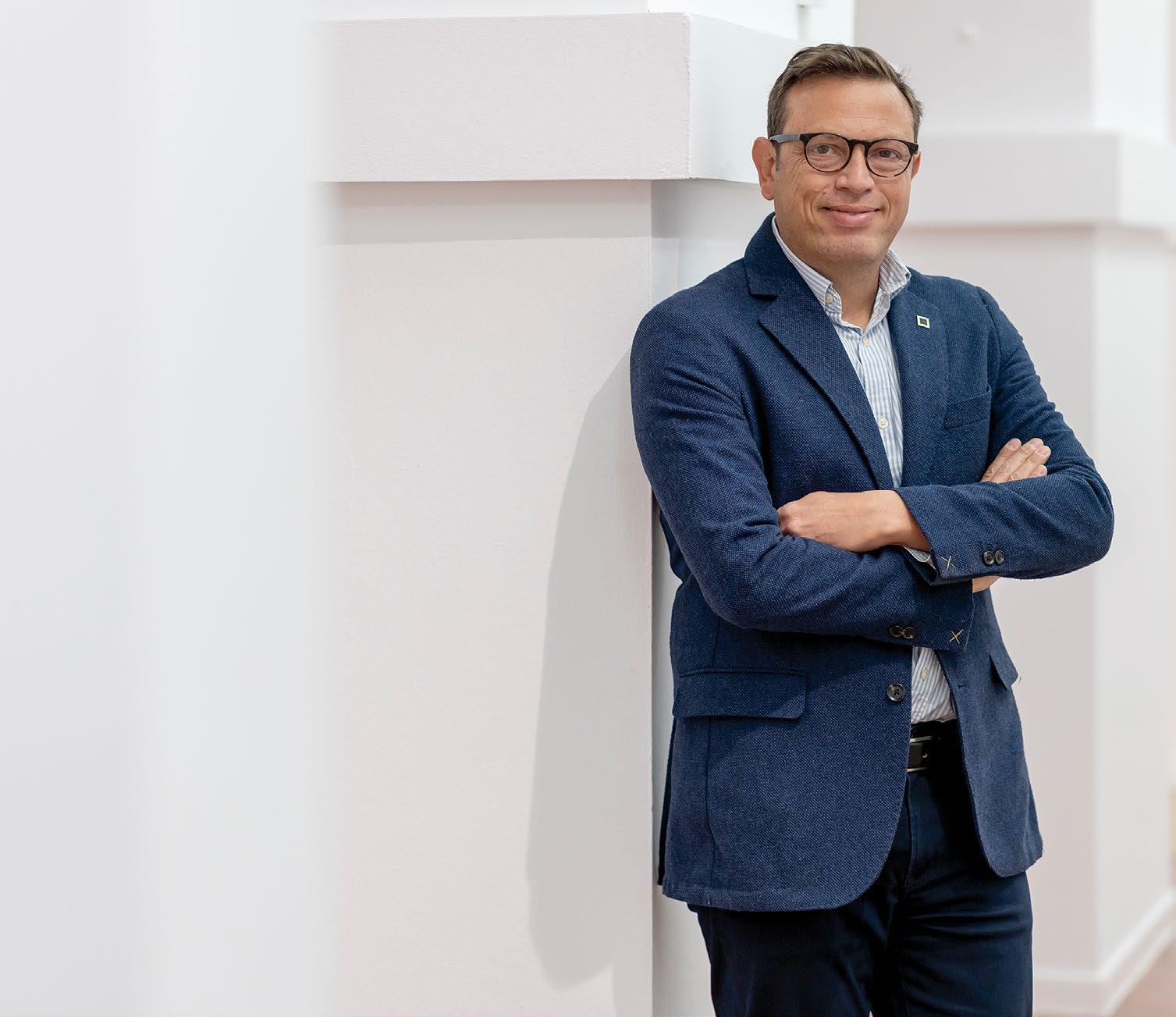
Epaminondas Christophilopoulos MOMus president
Νίκι ντε Σεν Φαλ, «Autel d’or (Χρυσός Βωμός)», 1962-1995. Μικτή τεχνική σε ξύλο, καμένες σελίδες βιβλίων, φυσικό κερί, φύλλο χρυσού, 220 x 136 εκ.
MOMus-Μουσείο
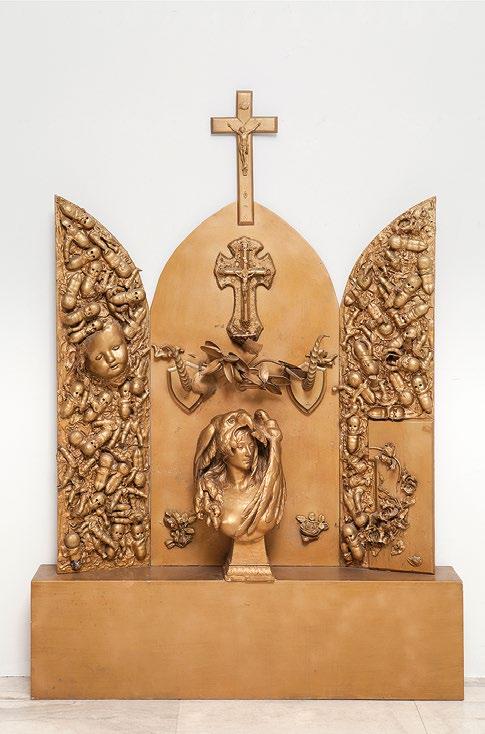
Niki de Saint Phalle, “Autel d’or (Golden Altar),” 1962-1995. Μixed media on wood, burned book pages, wax, gold tissue, 220 x 136 cm. Donation of the artist. MOMus-Museum of Contemporary Art-Macedonian Museum of Contemporary Art and State Museum of Contemporary Art Collections.
“ΝΙΚΙ DE SAINT PHALLE: FROM ‘SHOOTINGS’ TO FREEDOM”
For the first time in Greece, “Niki de Saint Phalle: From ‘shootings’ to freedom,” an exhibition entirely dedicated to the work and artistic universe of Niki de Saint Phalle is being presented at the MOMus–Museum Alex Mylona in Athens. Emblematic works donated to the MOMus–Museum of Contemporary Art collection by Alexandros Iolas and the artist herself form the core of broader narratives and offer a unique experience of her radical, multifaceted creation.
Niki de Saint Phalle was a militant and free creator who dynamically redefined the boundaries of art in bold and liberating ways. Her work: dark and joyful, complex and contradictory, playful and free even through violence; creative even through destruction, seemingly innocent yet dangerous. As the only woman among the French New Realists, she challenged institutions and patriarchy. Αrtistic play with color and form, explorations of female power and matriarchal vision, social and political critique, and audience participation are central to her world.
From gun shots to the colorful Nanas, from paintings, collages, and books to sculptures and films, Niki de Saint Phalle’s universe unfolds like a child’s game, with the immediacy and enthusiasm that art makes possible, enabling new avenues of expression.
Curated by: Thouli Misirloglou, artistic director of MOMus–Museum of Contemporary Art. n
MOMus (www.momus.gr)
WHERE & WHEN: At MOMus–Museum Alex Mylona (5 Agion Asomaton Square, Thissio, Athens) from December 11, 2025 to May 24, 2026. Before your visit, please check the MOMus website (www.momus.gr) for updates.
----- International Media Art Festival
CYFEST 17 «NATURA NATURANS:
----- International Media Art Festival CYFEST 17
“NATURA NATURANS: HUMAN BEINGS, NATURE, LANDSCAPE”
The project explores the deep and complex relationship between human beings and the nature, which is understood not as a static and contemplative entity, but as a dynamic and creative force. Using various artistic media, the exhibition seeks to explore how humans perceive, interact and are reflected in the natural landscape – not only as external observers, but also as an integral part of this creative process.
συλλογή φιλοξενείται στο MOMus-Μουσείο Μοντέρνας
Τέχνης-Συλλογή Κωστάκη. Η έκθεση «Natura Naturans: Άνθρωποι, Φύση, Τοπίο», που διοργανώνεται από το CYLAND MediaArtLab σε συνεργασία με το MOMus-Μουσείο Μοντέρνας
The project offers a dialogue between different media, linking some works of the so-called organic art, which emerged in Soviet Leningrad in the mid-1920s and lasted for at least a decade, and whose important collection is housed in the MOMus-Museum of Modern Art-Costakis Collection. The exhibition “Natura Naturans: Humans, Nature, Landscape” brought on by Cyland Foundation in partnership with MOMus-Museum of Modern Art-Costakis Collection, MOMus-Experimental Center for the Arts and Ca’ Foscari University in Venice aims to demonstrate how the ideas of Russian Avant-garde could be transformed during an age of technological progress. Through a dialogue among historic artworks from the Costakis Collection, Frants Family Collection and contemporary artists presented by Cyland MediaArtLab and the MOMus-Experimental Center for the Arts, the exhibition examines the way the legacy of the past is given a new meaning in the context of new media. This project offers a new world vision, in which borders between the live and the artifice, the material and the digital become invisible. Through art, it seeks to encourage an open and profound dialogue leading to a more mature and responsible understanding of our role in the great ecosystem of life. Α vision materialled into installations, multimedia objects, performances, video, concerts, educational events, and a new, intriguing visitors’ experience.
Curated by: Maria Tsantsanoglou (artistic director of MOMus–Museum of Modern Art–Costakis Collection), Domna Gounari (deputy artistic director of MOMus–Experimental Center for the Arts), Irini Papakonstantinou (curator at MOMus–Experimental Center for the Arts). n
Anna Frants, “To Make a Long Story Short.” From Series “Simple Joys,” 2024. Installation at CYFEST 16, HayArt Centre, Yerevan, Armenia, 2024. Photography: Ann Prilutckaia.
WHERE & WHEN: At MOMus–Experimental Center for the Arts (Warehouse B1, pier A, Thessaloniki port area) from November 27th, 2025 until January 25th, 2026. Before your visit, please check the MOMus website (www.momus.gr) for possible changes.
Τουρισμού, η Fraport Greece διοργάνωσε για τρίτη συνεχή χρονιά μια ξεχωριστή γαστρονομική εκδήλωση στο Αεροδρόμιο Θεσσαλονίκης «Μακεδονία», σε
συνεργασία με την Περιφέρεια Κεντρικής Μακεδονίας, τους δήμους
Θεσσαλονίκης και Θέρμης, καθώς
και την Ένωση Ξενοδόχων Θεσσαλονίκης. Η εκδήλωση (με τίτλο «A Geometry of Taste») πραγματοποιήθηκε στον χώρο των αναχωρήσεων
του αεροδρομίου, με περισσό-
τερους από 1.500 επισκέπτες να
έχουν την ευκαιρία να δοκιμάσουν
(διευθύντρια Πωλήσεων Βόρειας Ελλάδας,
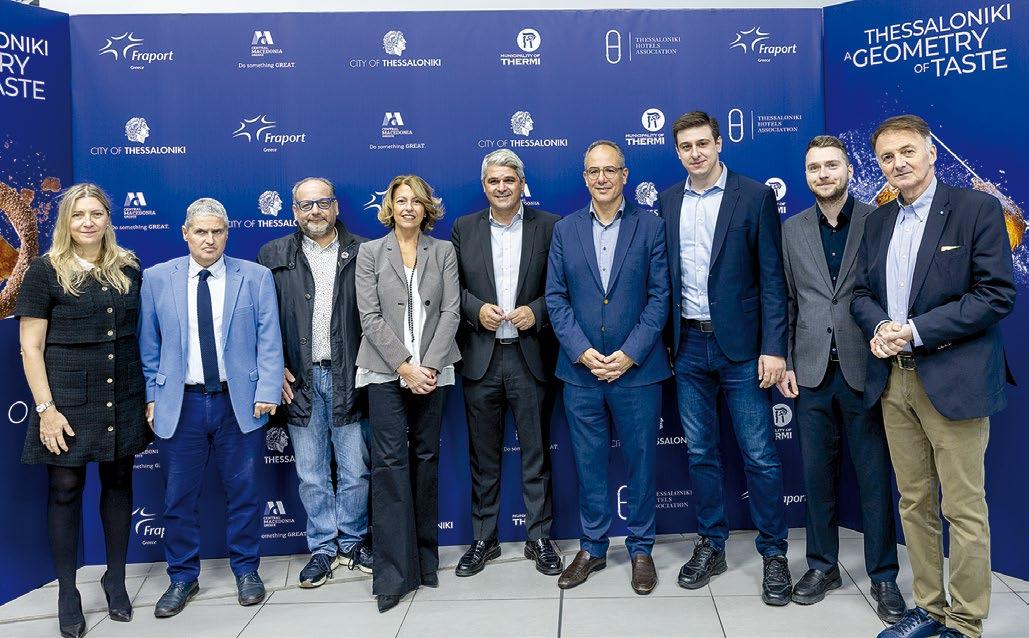
Νήσων και Βαλκανικών Χωρών της Aegean Airlines), Ανδρέας Μανδρίνος (πρόεδρος Ένωσης Ξενοδόχων Θεσσαλονίκης), Πρόδρομος Μοναστηρίδης (πρόεδρος του Thessaloniki Convention Bureau), Κατερίνα Πολλάτου (Airline Marketing & Development Manager/Commercial & Business Development της Fraport Greece), Αθανάσιος Μπέγκας (αντιπρόεδρος του Οργανισμού Τουρισμού Θεσσαλονίκης), Γιώργος Βήλος (γενικός διευθυντής Ανάπτυξης της Fraport Greece), Γιάννης Παπαγεωργίου (συντονιστής του γραφείου του πρωθυπουργού στη Θεσσαλονίκη), Αλέξανδρος Μανδρίνος (ειδικός σύμβουλος δημάρχου Θεσσαλονίκης/Τομέας Τουρισμού), Βασίλης Γάκης (αντιδήμαρχος Πολιτισμού, Τουριστικής Ανάπτυξης & Διαδημοτικής Συνεργασίας δήμου Θεσσαλονίκης).
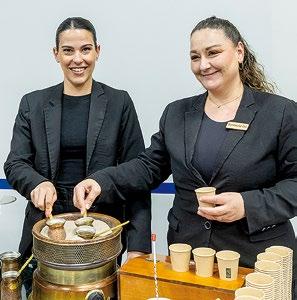
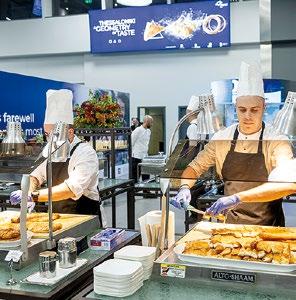
Imagine an airport that, upon departure, offers travelers –free of charge– a powerful last taste of the place they’ve just spent a few, or even several, days. A taste not in the metaphorical sense, but a literal offering of some of the finest, most delicious dishes that place has to offer. Imagine no more, because that is exactly what happened in early October in Thessaloniki!
At the centre, from left: Irini Sidiropoulou (regional sales manager, Northern Greece, Ionian Islands & Balkan Countries at Aegean Airlines), Andreas Mandrinos (president of the Thessaloniki Hotels Association), Prodromos Monastiridis (president of the Thessaloniki Convention Bureau), Katerina Pollatou (Airline Marketing & Development Manager/Commercial & Business Development at Fraport Greece), Athanasios Begas (vice president of the Thessaloniki Tourism Organization), George Vilos (executive director, Commercial & Business Development at Fraport Greece), Giannis Papageorgiou (coordinator of prime minister’s office at Thessaloniki), Alexandros Mandrinos (special advisor to the mayor of Thessaloniki/Tourism Sector), Vassilis Gakis (deputy mayor of Culture, Tourism Development, and Intermunicipal Cooperation at municipality of Thessaloniki).
George Vilos, executive director of Commercial & Business Development at Fraport Greece, commented: “We are delighted to have once again celebrated World Tourism Day, for the third consecutive year, together with the city’s visitors at Thessaloniki Airport ‘Makedonia.’ Thanks to the invaluable collaboration of local authorities and partners, we created a memorable event that brought together local gastronomy and Greek hospitality. At Fraport Greece, we remain committed to every opportunity that showcases the uniqueness of the Greek tourism experience.” n Στο κέντρο,
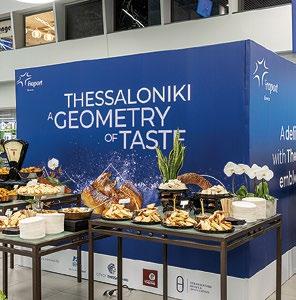
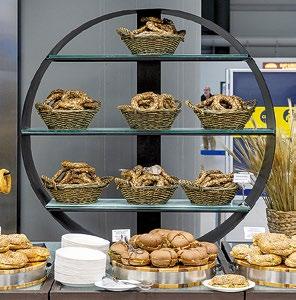
Fraport Greece celebrated World Tourism Day for the third consecutive year, with a unique culinary event at Thessaloniki Airport “Makedonia,” in partnership with the Region of Central Macedonia, the municipalities of Thessaloniki and Thermi, and the Thessaloniki Hotel Association. Titled “A Geometry of Taste,” the event took place in the airport’s departures area. More than 1,500 visitors were welcomed to discover the flavors of Thessaloniki through emblematic local products presented in geometric forms. The result was an authentic gastronomic experience that showcased both the city’s culinary traditions and its cultural identity.
Αλέξης Γκρίσενκο, «Ακρόπολη Αθήνας», 1922. Μολύβι, τέμπερα και γκουάς σε χαρτόνι, 65,7 x 43 εκ.
Συλλογή Μισέλ Λιέβρ-Μάρκοβιτς.
----- Exhibition “ALEXIS GRITCHENKO (1883–1977). THE GREEK ADVENTURE. A UKRAINIAN PIONEER IN GREECE”
Η έκθεση «Alexis Gritchenko (1883–1977). Η
Αθήνα,
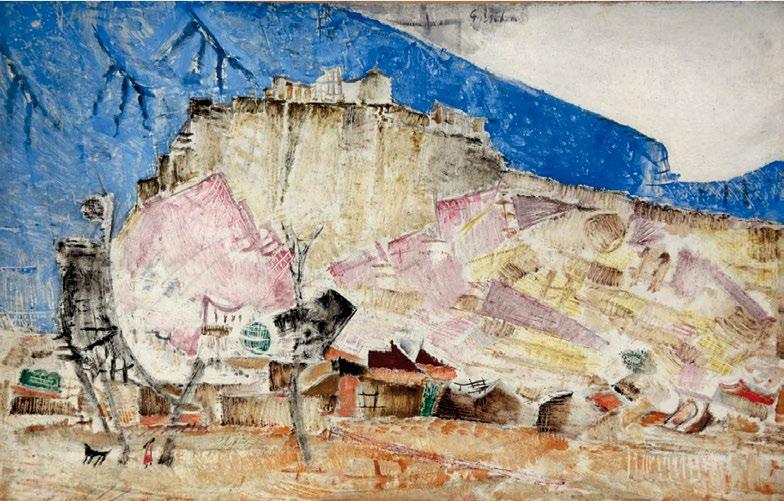
Alexis Gritchenko, “Athens Acropolis,” 1922. Graphite pencil, tempera and gouache on cardboard, 65.7 x 43 cm. Michel Lièvre-Markovitch Collection.
The exhibition “Alexis Gritchenko (1883–1977). The Greek Adventure. A Ukrainian Avant-gardist in Greece” is presented at MOMus–Museum of Modern Art–Costakis Collection, shedding light for the first time in Greece on the work of a leading 20th century Ukrainian and European avant-garde representative, and his creative relationship with the Greek world.
Ukrainian painter and art theorist Alexis Gritchenko combined influences from fauvism, cubism, and futurism with elements of Byzantine tradition, using his theory of “chromodynamism” to develop a personal style that bridged East and West. During his stay in Greece (1921–1923), he ventured and painted in landmark locations such as Athens, Mystras, Delphi, and Crete. The Greek landscape, light, and monuments had a decisive influence on his art. The two exhibitions he held in Athens at that time –at the Literal Society “Parnassos” (1921) and the Byzantine and Christian Museum (1922)–attracted particular attention, revealing the rhythmic structure and chromatic intensity of his work.
This exhibition brings together works from the artist’s Greek period, having traveled from museums and private collections in Ukraine, France, England, the USA, Turkey, and Greece, presented alongside earlier and later works. It highlights the decisive role of Greece in shaping his personal style.
The exhibition is made possible thanks to the generous contribution of collector Michel Lièvre-Markovitch and Malabart Gallery LTD, with the support of Natalia Butterwick and the collaboration of art historian Vita Susak.
Curators: Michel Lièvre-Markovitch, Maria Tsantsanoglou (artistic director, MOMus–Museum of Modern Art–Costakis Collection). Assistant curator: Angeliki Charistou (head of collections, MOMus–Museum of Modern Art–Costakis Collection). n -----
WHERE & WHEN: At MOMus–Museum of Modern Art–Costakis Collection (Moni Lazariston, Thessaloniki) from November 22, 2025 to April 30, 2026. Before your visit, please check the MOMus website (www.momus.gr) for updates.
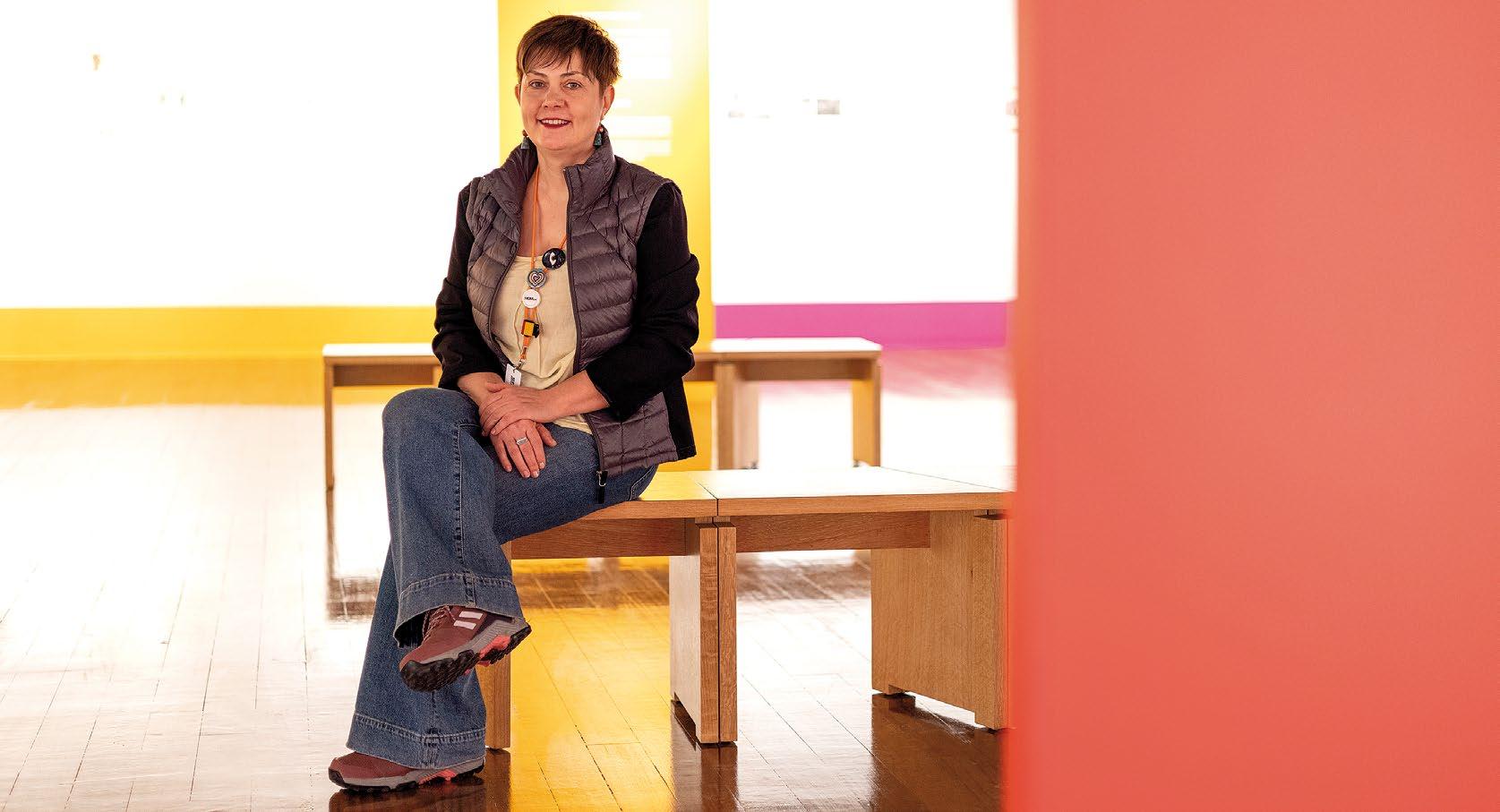
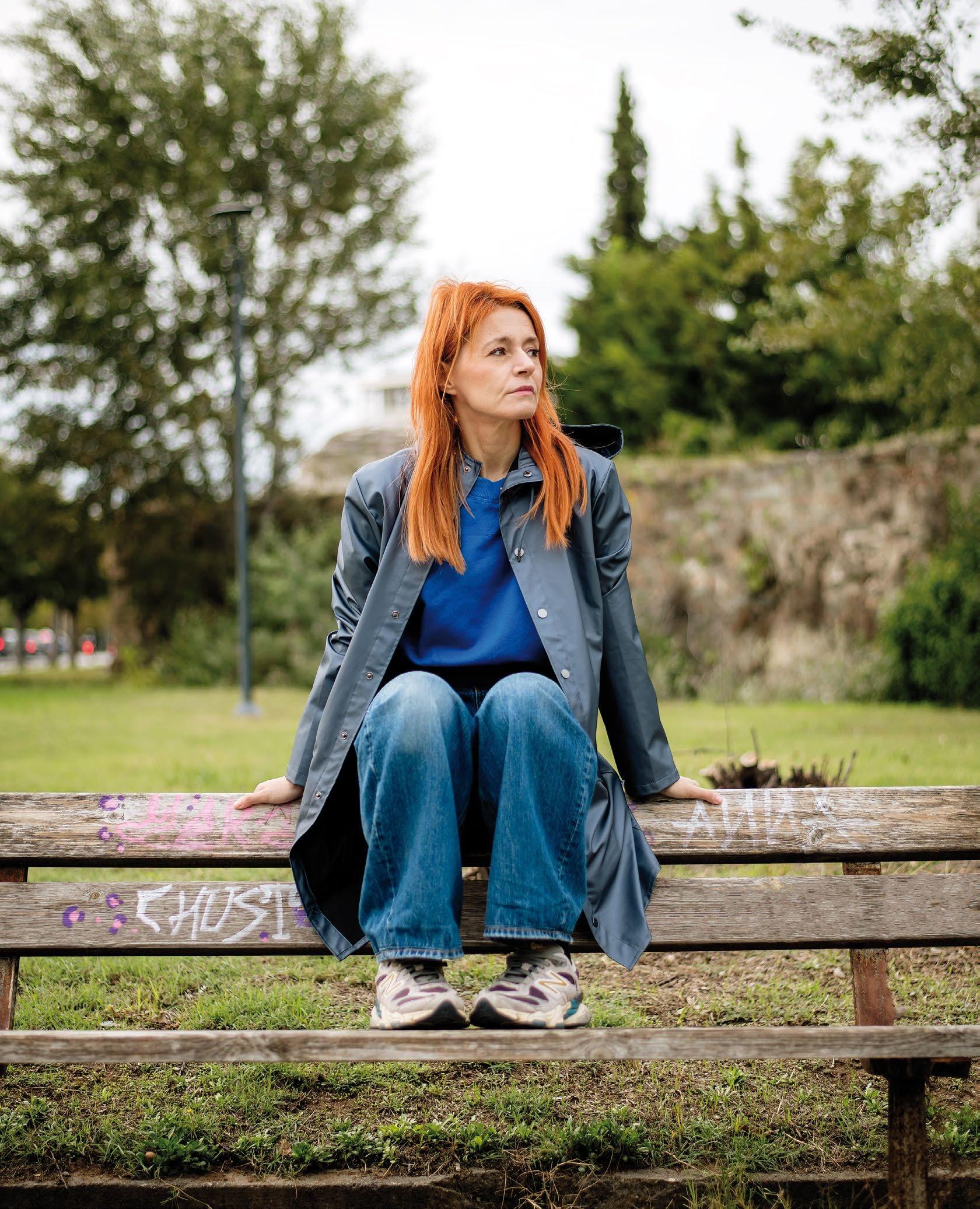
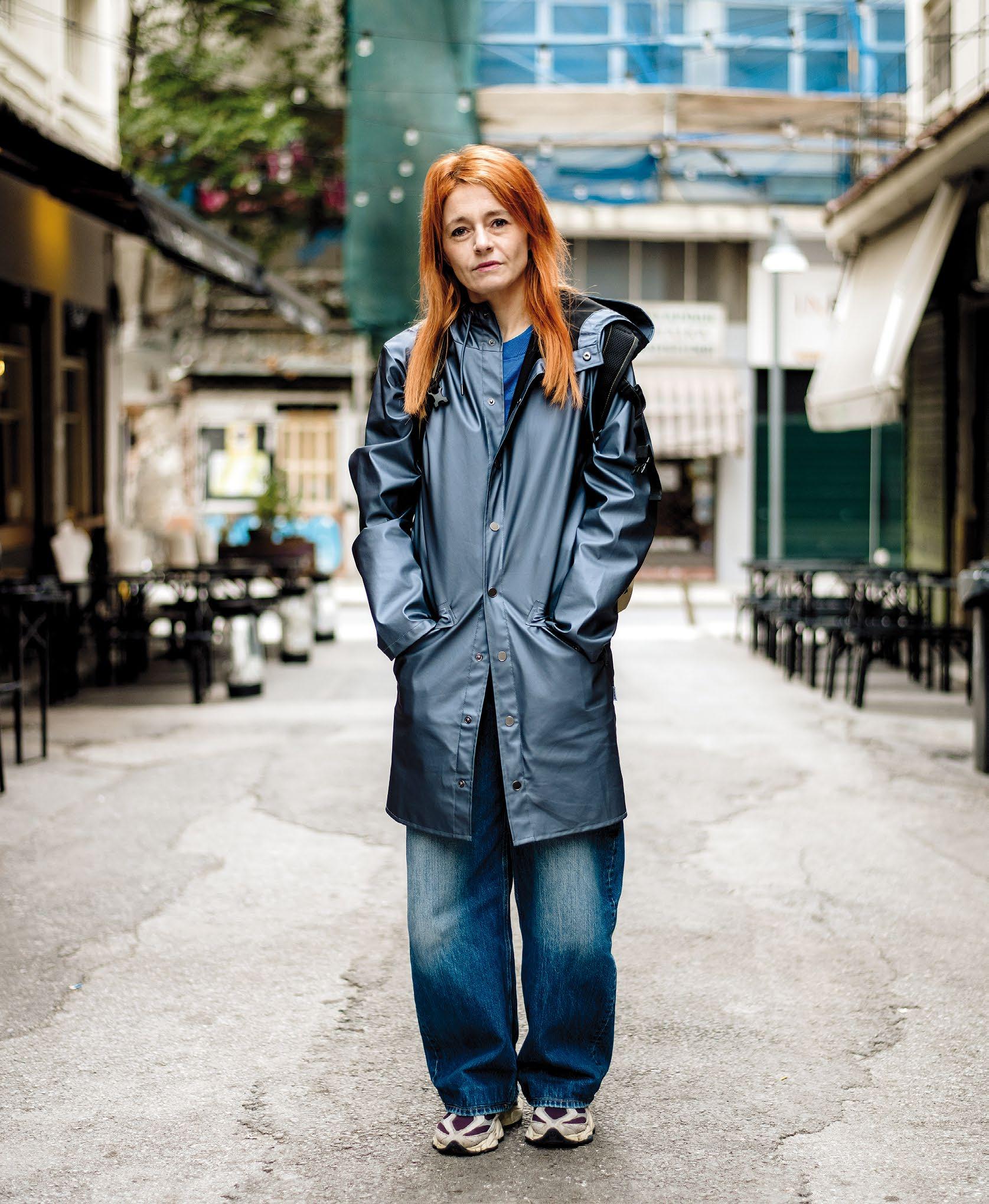
“Among the many educational programs at MOMus, I especially value those centered on well-being and mental health due to their powerful social impact” explains Maria Kokorotskou, head of Research & Education at MOMus.
EDUCATING THROUGH CULTURE
Maria Kokorotskou, head of Research & Education at MOMus, is passionate about cultural education. She loves her work because of the joy and creativity it brings to others. If she had another life? She’d be a tailor, she says.
Interview: JOHN
“I love my work because of the joy and creativity it brings to others. Much of my inspiration comes from visitors’ feedback and the needs of the people we serve. If I weren’t an education curator, I’d likely be sewing.”
I began working at the Thessaloniki Museum of Photography in June 1999, when it was still located on the second floor of the old police station on Aristotelous Street. My first day was nothing like I’d imagined. It was a bit of a letdown. When the museum president handed me the keys, he mentioned the space had been closed for a while and then warned me of its condition, suggesting I “start with a little dusting.” I did just that. Then I sat at a desk surrounded by books, my only companions for the many months to come.
Despite a small team, the museum grew steadily through hard work, and I grew with it. In October 2018 it became a MOMus museum, where I now serve as an executive of this dynamic new institution. It makes me happy to see it evolve, welcome new people, and become a space where we can all thrive together.
I was born in Thessaloniki and raised in Katerini. I studied History and Archaeology at the Aristotle University of Thessaloniki and began my career as an archaeologist. In 1997, I moved to London to study Museology at UCL. My love for theatre, however, was the driving force behind taking –and passing– the entrance exams in 2003, which led to my enrollment in the Theatre Department of the School of Fine Arts, where I graduated in Set Design. I then pursued postgraduate studies in Theatre Pedagogy, focusing on its role in developing visual literacy. I am currently completing a fouryear training program in Drama Therapy.
Among the many educational programs at MOMus, I especially value those centered on well-being and mental health due to their powerful social impact. Two initiatives stand out and are implemented across all MOMus museums: Rendezvous at MOMus, designed for people with memory disorders, and Hop(e) Art, created for oncology patients, and their carers, offering them moments of creativity while they wait for treatment at the Nikos Kourkoulos day hospital unit. One memorable project, and it makes me smile every time I think about it, was a 2018 music workshop for teenagers with rap artist 12th Monkey. Slow Art is another initiative that deeply resonates with me, where participants observe a single artwork for 20 minutes and then share their insights.
We’re lucky to live in an age of technological bounds. During the pandemic, technology allowed MOMus to stay connected with its audience, offer programs for prison inmates, and even transformed the 9th floor of Theageneio Cancer Hospital into an art space, showcasing photography through virtual reality.
I love my work because of the joy and creativity it brings to others. Much of my inspiration comes from visitors’ feedback and the needs of the people we serve. If I weren’t an education curator, I’d likely be sewing. A favorite work right now is a photograph by Boissonnas, taken at the summit of Mount Olympus, from the Museum of Photography’s collection. I love it because it reminds me that nothing is impossible. n
MOMus tales
ΤΗΕ DANDY WARHOLS ΑΤ WARHOL’S
Radio producer Demi Papadopoulou remembers an incredible story that took place on Friday, September 8, 2000, at the then Macedonian Museum of Contemporary Art (MMCA) — today MOMus-Museum of Contemporary Art.
Text: DEMI PAPADOPOULOU
Photography: CHRISTINA BROUSSALI
It’s September 2000. The 65th Thessaloniki International Fair (TIF) is ending, and the then-MMST is hosting a retrospective exhibition of Andy Warhol. Meanwhile, the Electron Festival is taking place in the city, organized by Nikos Stefanidis, founder of live music venue Mylos, with a lineup featuring Orbital, Chumbawamba, K.BETA, and the Dandy Warhols. Their album Thirteen Tales from Urban Bohemia has just been released, and that year we’re all singing Godless, Get Off, and Bohemian Like You at full volume.
At the time, I was a young editor at Close Up magazine, a radio producer at 88.5 Mylos Thessaloniki, and just days away from the premiere of Taratsa, a daily youth TV show I was about to co-host. I badly wanted a TV interview with the Dandy Warhols, surrounded by works of Andy Warhol, and I would do everything possible to make it happen.
Note that we’re talking about a time without smartphones, without Instagram, without the internet really. The whole approach had to be personal, and whatever came of it, came.
And so, through legitimate and illegitimate means, I gathered all the facts — when they’d arrive, who would accompany them, details about their soundchecks, and where they’d eat. In the
evening of Thursday, September 7, I stood at the then-Mylos ouzo bar with colleagues from Radio 88.5, trying to gain their attention as they were dining — or more accurately, happily “nailing” the beautiful frontman, Courtney Taylor.
I asked Nikos Komninos (then the program director of Radio 88.5) to speak with Angela Kollia (from the EMI record label), who was accompanying the band. As soon as she heard I wanted to do a TV interview with the band for the Hellenic Broadcasting Corporation, ET3, with works by Andy Warhol in the backdrop, I made my way to their table and started negotiations, i.e. to “steal” them for two hours the next afternoon —just before their live show— and film them inside the museum. After lots of eye contact, and with rounds of raki at Mylos, I got the answer I wanted.
This is how, after lightning-fast arrangements with the MMST, the next afternoon the four band members showed up. And the surprising revelation was that they had never seen Warhol’s works up close — ever! I never saw that coming, but that’s when the interview became something truly epic.
The VHS with the interview still exists — it was shown at the premiere of youth TV show Taratsa. There’s no VHS player to watch it on now, but the test Polaroids of photographer Christina Broussali —the only proof of this story, since there were no social media at the time— remain unchanged, 25 years later.
I don’t recall exactly what we spoke about, but I remember the band seeing Warhol for the first time — and realizing they were far more Bohemian than I had imagined. I also thought how the city felt so ahead of its time —or at least perfectly in sync with the world then— in an era without smartphones or Instagram, yet with such inspiring content.
The next day, as the festival wrapped up, I recall them waving to me from the tour bus, asking me to come along. I guess I wasn’t the only one who’d had an unforgettable experience. Turns out, it was mutual. n
my MOMus
EMBRACING CULTURE
Alexander Competence Center,
Vassilis Kafatos, Deloitte Partner and President of the Deloitte Alexander Competence Center,
comments on the importance of culture in fostering creativity and innovation.
Interview: JOHN PAPADIMITRIOU
Photography:
SAKIS GIOUMPASIS
Taken that Deloitte has supported projects such as the renovation of the MOMus–Museum of Contemporary Art and the transformation of its old café into Flux, a modern space for networking and creativity, I’ll start with the obvious: why would a private company want to finance culture, and on top of that without all the fanfare and publicity hype?
I believe culture is central to social life: it nurtures creativity, strengthens education, preserves collective memory, and gives voice to new ideas. Supporting cultural initiatives fosters social cohesion, offers universal access, and strengthens democracy through dialogue and the exchange of ideas. In this sense, culture is an investment in our shared future, shaping the environment in which people learn, are inspired, and grow.
Through the Deloitte Foundation, we see it as our responsibility to support art and culture, as we believe that engagement with creativity builds societies with greater empathy and individuals with judgment, aesthetic sense, imagination, and vision. That’s why we encourage our people to experience MOMus — a dynamic
“Investing in culture delivers clear multiplier benefits across key economic sectors and has also the potential to serve as a central driver of the country’s overall competitiveness.”
μίας. Η χώρα μας διαθέτει
εξαιρετικό ανθρώπινο δυναμικό, ισχυρή πολιτιστική
κληρονομιά και ταυτότητα που αναγνωρίζεται παγκοσμίως. Η περαιτέρω ανάπτυ-
ξη αυτού του κλάδου απαιτεί
μια ολιστική προσέγγιση που
να αναγνωρίζει την αξία του
όχι μόνον οικονομικά αλλά και κοινωνικά, πολιτιστικά
my MOMus
cultural institution that promotes contemporary art, but more so engages continuously with society.
Flux is a pioneering space designed for people to connect, create, be inspired, and network. In a digital age dominated by remote interactions, what’s the value of meeting in person?
The digital age offers incredible opportunities for fast, limitless communication, yet nothing replaces the dynamics of physical presence. Personal meetings bring something deeper: spontaneous exchanges, trust, and connections built beyond words. Physical encounters maintain a unique energy that digital interactions cannot fully replicate. In a space like Flux, being together sparks the intersection of ideas, inthe-moment inspiration, and interaction through eye contact, body language, and the emotional energy in the room. These experiences encourage relationships, collaborations, and creations that rarely emerge through a screen. Face-to-face interaction is irreplaceable in the digital age — it’s what drives creativity, engagement, and genuine communication. This is what makes Flux vibrant and productive: a space where people from diverse fields meet, draw inspiration from culture, and create together. Ultimately, the very act of meeting in person is itself an expression of culture.
Deloitte,
“Face-to-face interaction is irreplaceable in the digital age — it’s what drives creativity, engagement, and genuine communication,” says Deloitte Partner Vassilis Kafatos.
You often mention the multiplier effects of industry on the Greek economy. But what about the country’s cultural and creative sectors? How can they grow further?
The cultural and creative industries are among the most promising sectors of the Greek economy. Our country boasts exceptional talent, a rich cultural heritage, and a globally recognized identity. Developing this sector requires a holistic approach that values its economic, social, cultural, and environmental impact, fostering a more cohesive and sustainable society.
Meaningful growth of cultural and creative entrepreneurship calls for a national strategy focused on key areas: cross-sector education, digital transformation, access to financing, and international outreach. With coherent policy and public-private collaboration, creativity can generate wealth, and culture can become a driving force and competitive advantage for sustainable development.
Investing in culture delivers clear multiplier benefits across key economic sectors and has also the potential to serve a as a central driver of the country’s overall competitiveness. n
PHOTOGRAPHY’S “NEW” HOME
Some argue that museums are merely shells, that their true essence lies in the exhibits they display. And it’s true: the works are the protagonists. But the shell also has its value...
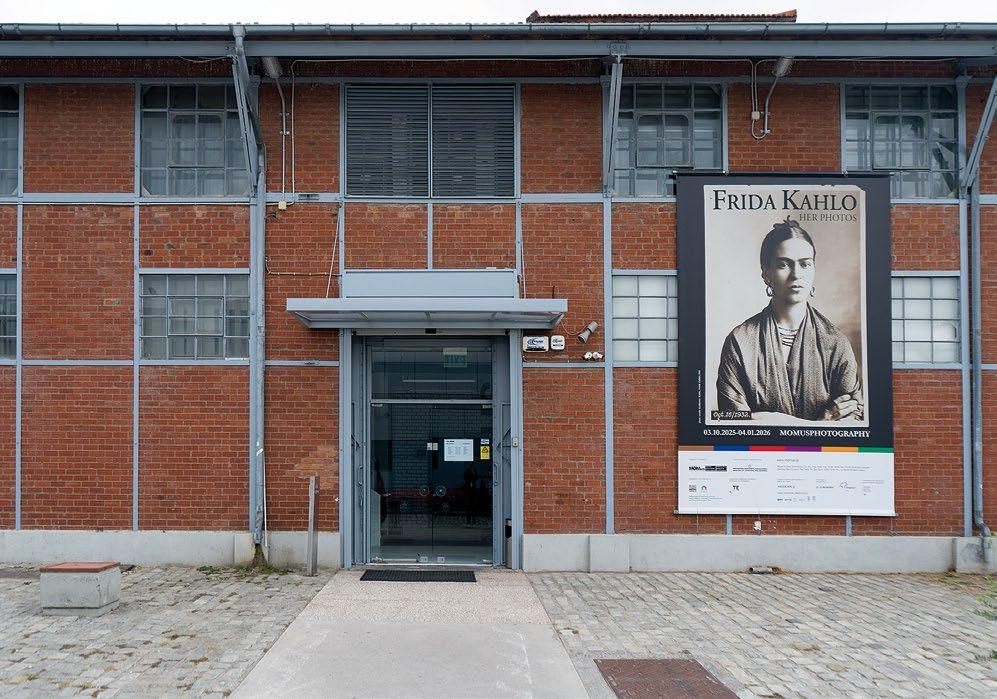
MOMus–Thessaloniki Museum of Photography is located on the first floor of Warehouse A’, Pier A, of the city’s port. The Warehouse A’ building, designed by architect Eli Modiano, was constructed in 1910 (along with the Old Customs House, completed in 1912) and reflects the architectural style common in European industrial buildings of the late 19th and early 20th centuries.
This warehouse was part of the wider restoration program undertaken on Pier A to accommodate the city’s title as “Thessaloniki, European Capital of Culture 1997.” Just like other spaces and warehouses on the pier, it opened to the public as a cultural and entertainment venue, following a programmatic agreement between the Ministry of Culture and the Ministry of Shipping.
In 2007–2008, additional work was carried out to upgrade and remodel the museum’s interior, as part of Subproject 1 of the Operational Program “Culture” under the European Union’s Community Support Framework (CSF) III. Over the years, the passage of time took a visible toll on the building and its supporting structure, thus change and renewal were once more due.
To this end, a programmatic cultural development agreement was signed in early September between the Ministry of Culture, the Region of Central Macedonia, and the Metropolitan Organization of Museums of Visual Arts of Thessaloniki–MOMus, for the maintenance and renovation of the MOMus–Thessaloniki Museum of Photography.
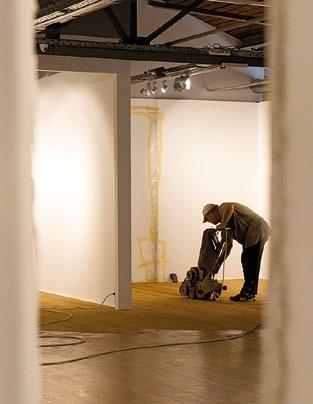
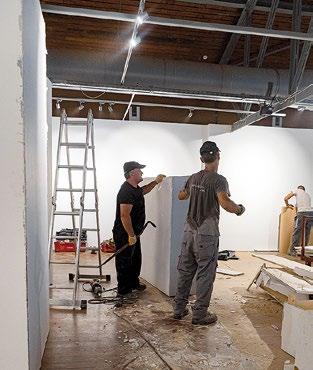
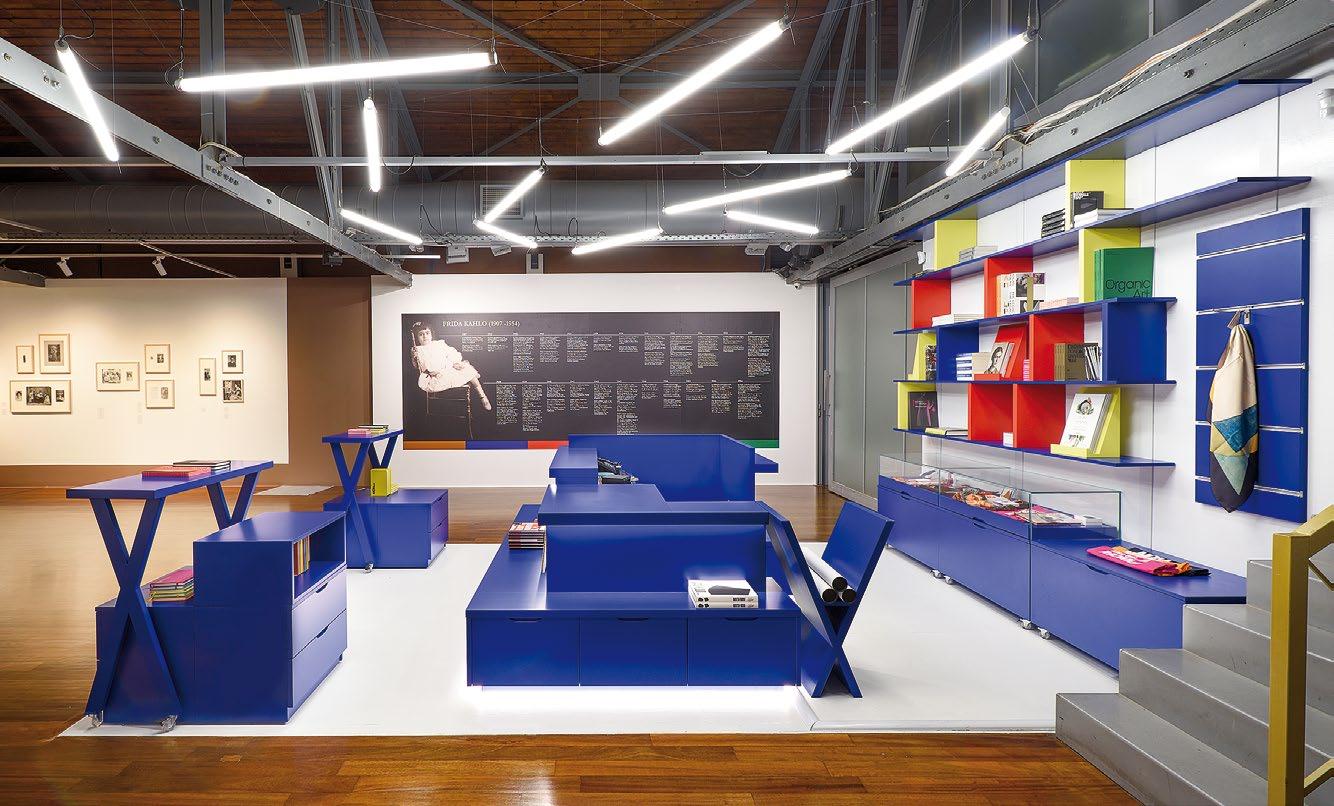
Interventions included a redesigned entrance, a new gift shop/artshop, an upgraded exhibition space, the functional
The exhibition is organized by Frida Kahlo Museum and Diego Rivera-Anahuacalli Museum, curated by Pablo Ortiz Monasterio. It began its international tour in 2009 from Mexico. Thessaloniki is its 28th stop, and two more in America are already following. To date, almost 1,000,000 people have enjoyed it internationally – the one million visitor barrier may be surpassed in Thessaloniki.
ρειας
τη δημιουργία νέου πωλητηρίου/artshop, την αναβάθμιση του εκθεσιακού
redistribution of workspaces, and the reopening of the MOMus–Thessaloniki Museum of Photography café. All work was carried out using modern methods and materials, in line with architectural heritage specifications, and designed to be accessible to all audiences, including people with disabilities, fulfilling the aim to transform the museum into a modern cultural space.
ThessalonΙki-based architectural firm .MagdaMavridouArchitects (.MMA) designed the museum’s gift shop and entrance. The goal was to create a clean visual impression and restore light and vibrancy to the existing museum space. The building’s proximity to the sea, the view of the striking Old Customs House, and its industrial character were reflected in the choice of colors and materials used in the renovation.
As noted by Minister of Culture Lina Mendoni, “MOMus–Thessaloniki Museum of Photography is the only state museum dedicated exclusively to the art of photography. Thanks to the programmatic agreement we signed, the museum gains a renewed and functional space that inspires dialogue, creation, and innovation. The Ministry of Culture, through the legislative framework it put forward, and later passed by the Hellenic Parliament, reorganized the Metropolitan Organization of Museums of Visual Arts of Thessaloniki. The framework granted the organization administrative and financial autonomy, along with a clear focus on the development and promotion of the visual arts, photography, industrial and architectural design while placing an emphasis on research, aesthetic cultivation, and innovation. In recent years, with funding exceeding 3 million euros from the Recovery Fund and the National Strategic Reference Frameworks 2014–2020 and 2021–2027, and greater and consistent support from the Ministry of Culture, MOMus has carried out projects that strengthen its identity, universal access and outreach, as well as its international presence, while also advancing the digital transformation of all five of its museums. It develops programs for senior citizens and visitors with vision loss and plans the Thessaloniki Biennale of Contemporary Art. MOMus is now a dynamic cultural organization that fully leverages its potential, advancing Thessaloniki’s position on the international cultural map.”
Interventions included a redesigned entrance, a new gift shop/artshop, an upgraded exhibition space, the functional redistribution of workspaces, and the reopening of the MOMus – Thessaloniki Museum of Photography café.
According to the Governor of Central Macedonia, Athina Aidona, “By signing the programmatic agreement, we affirm our joint effort to support and upgrade one of Thessaloniki’s most vibrant and creative cultural institutions, the MOMus–Thessaloniki Museum of Photography. The signed agreement between the Ministry of Culture, the Region of Central Macedonia, and MOMus is tangible proof of the role we want the Region to play: to serve as an institutional, consistent, and essential supporter of all major
ών προς τους επισκέπτες του» έκανε λόγο ο Πρόεδρος του Δ.Σ. του MOMus, Επαμεινώνδας Χριστοφιλόπουλος. «Η διοίκηση του MOMus δίνει στη Θεσσαλονίκη και το κοινό της ένα ‘νέο’ μουσείο φωτογραφίας, ανοιχτό, ζωντανό και δημιουργικό. Η στήριξη του Υπουργείου Πολιτισμού και της Περιφέρειας
επίπεδα».
Σε αυτό το υπέροχο, «νέο» MOMus-Μουσείο Φωτογραφίας Θεσ-
cultural structures in our country. Investing in culture is a firm strategic choice.”
As Deputy Governor of Thessaloniki Kostas Gioutikas noted, “The MOMus–Thessaloniki Museum of Photography is a very distinctive cultural asset that a modern Thessaloniki identifies with. By allocating regional resources to upgrade its building infrastructure, we are providing the museum with a contemporary space of high aesthetics and all necessary specifications, worthy of securing and hosting emblematic exhibitions with international appeal. We are investing in strengthening the city’s cultural landmarks and, through them, in promoting and advancing Thessaloniki’s multi-layered cultural character.”
“In yet another effort to upgrade the infrastructure and museums of MOMus — and, consequently, the services offered to its visitors,” said the Chairman of the Management Board of MOMus, Epaminondas Christophilopoulos. “The administration of MOMus gives Thessaloniki and its public a ‘new’ photography museum: open, lively, and creative. The support of the Ministry of Culture and the Region of Central Macedonia has been unwavering at every level.”
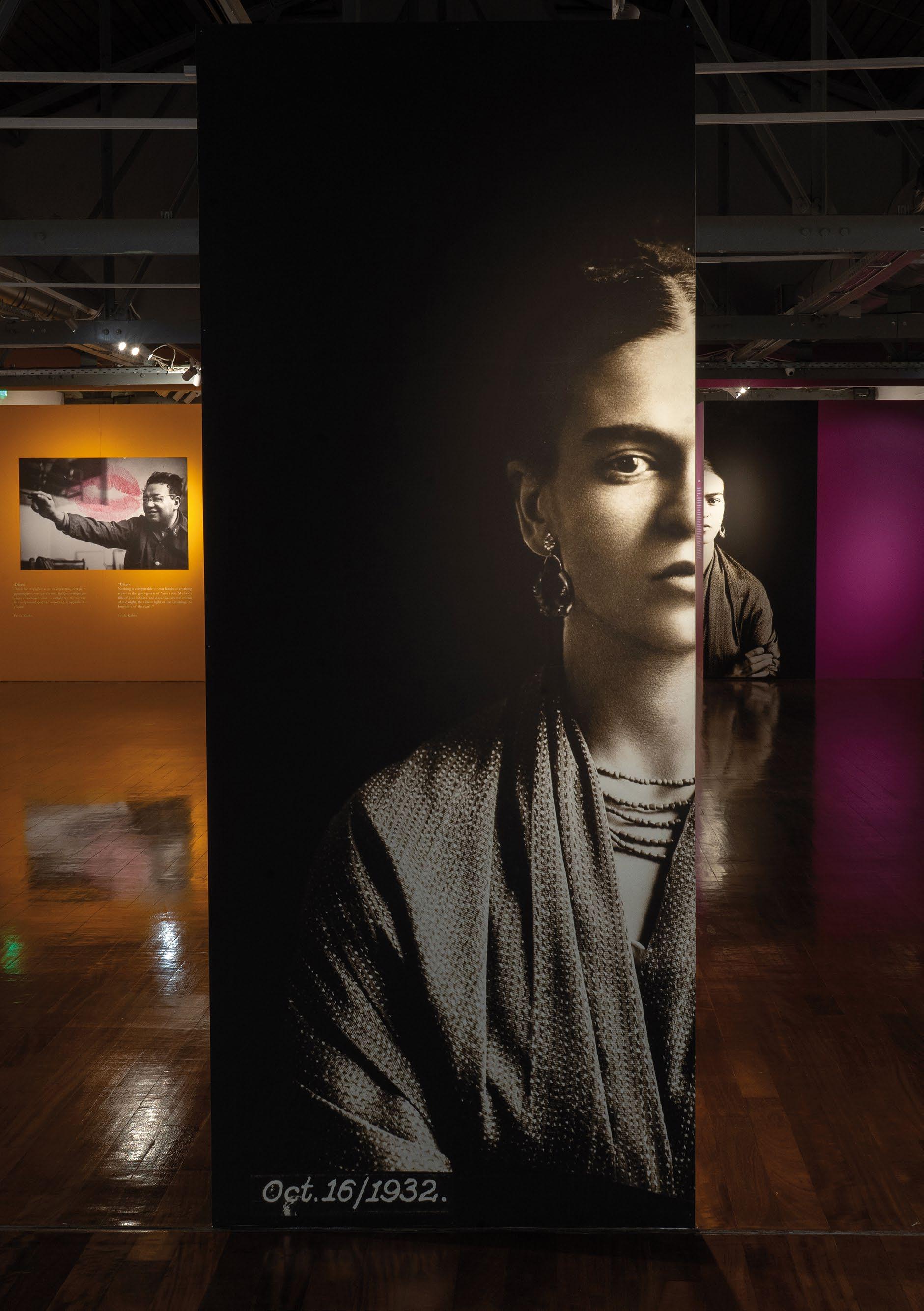
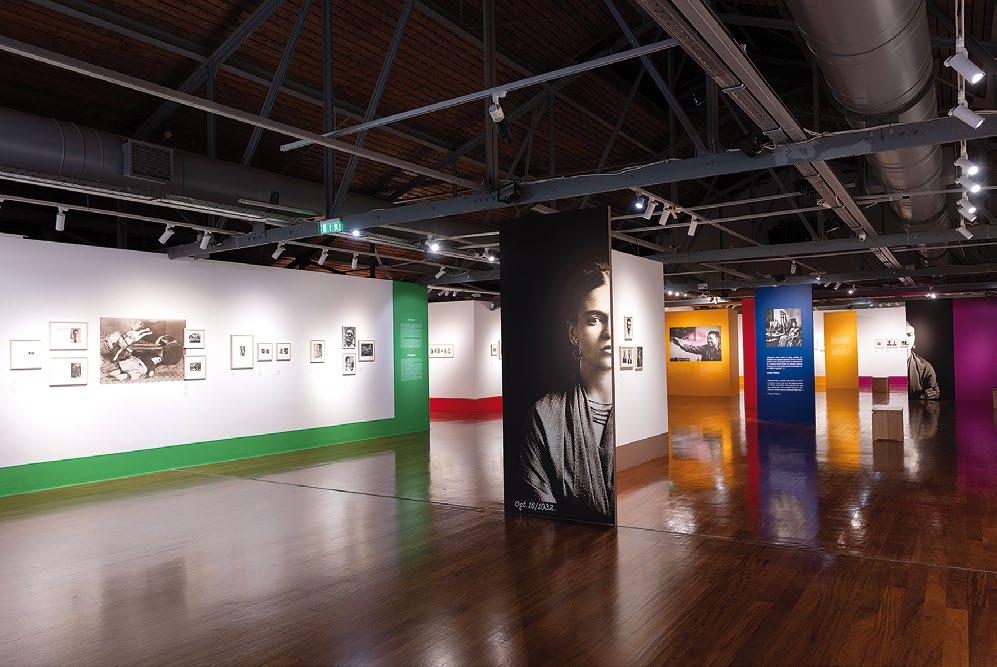
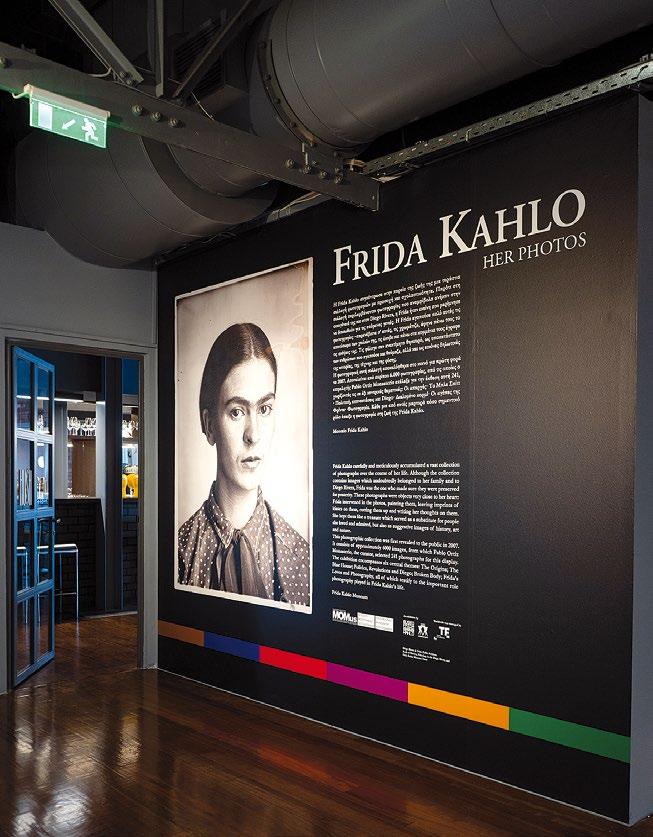
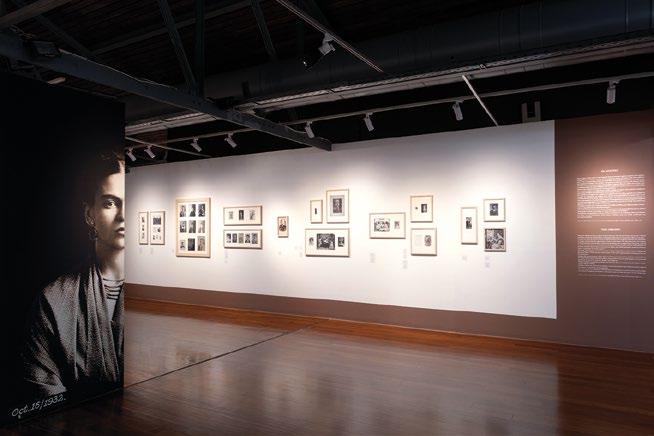
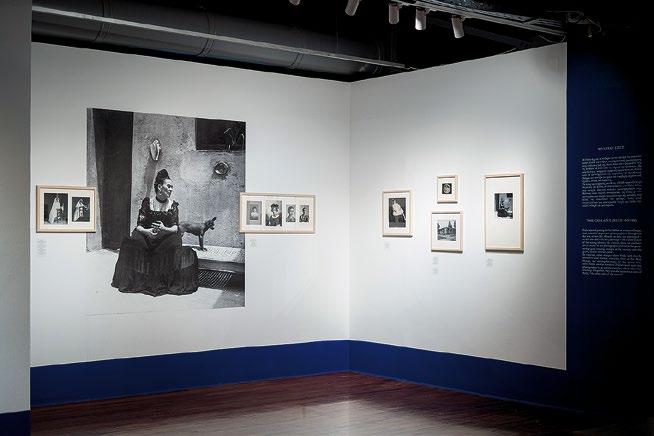
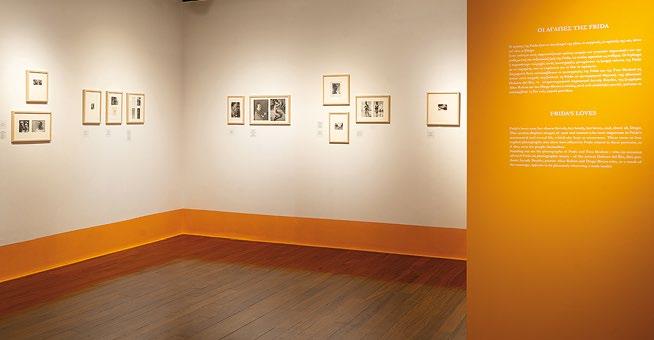
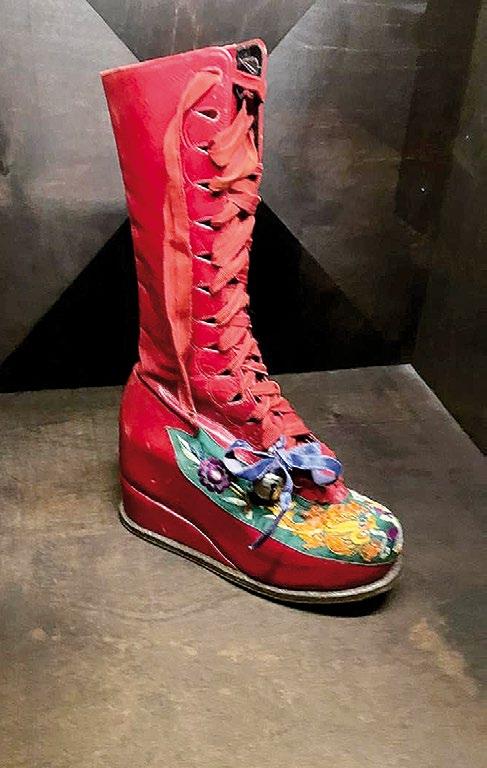
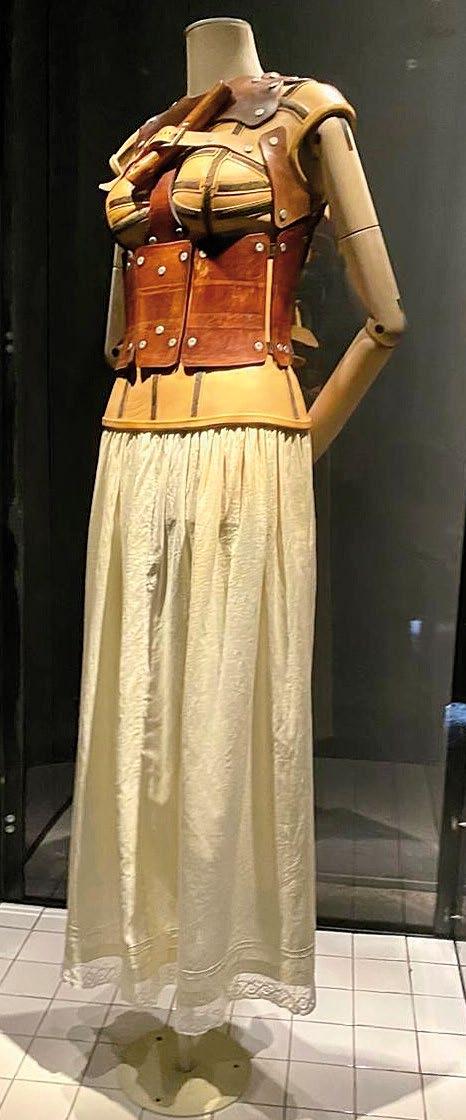
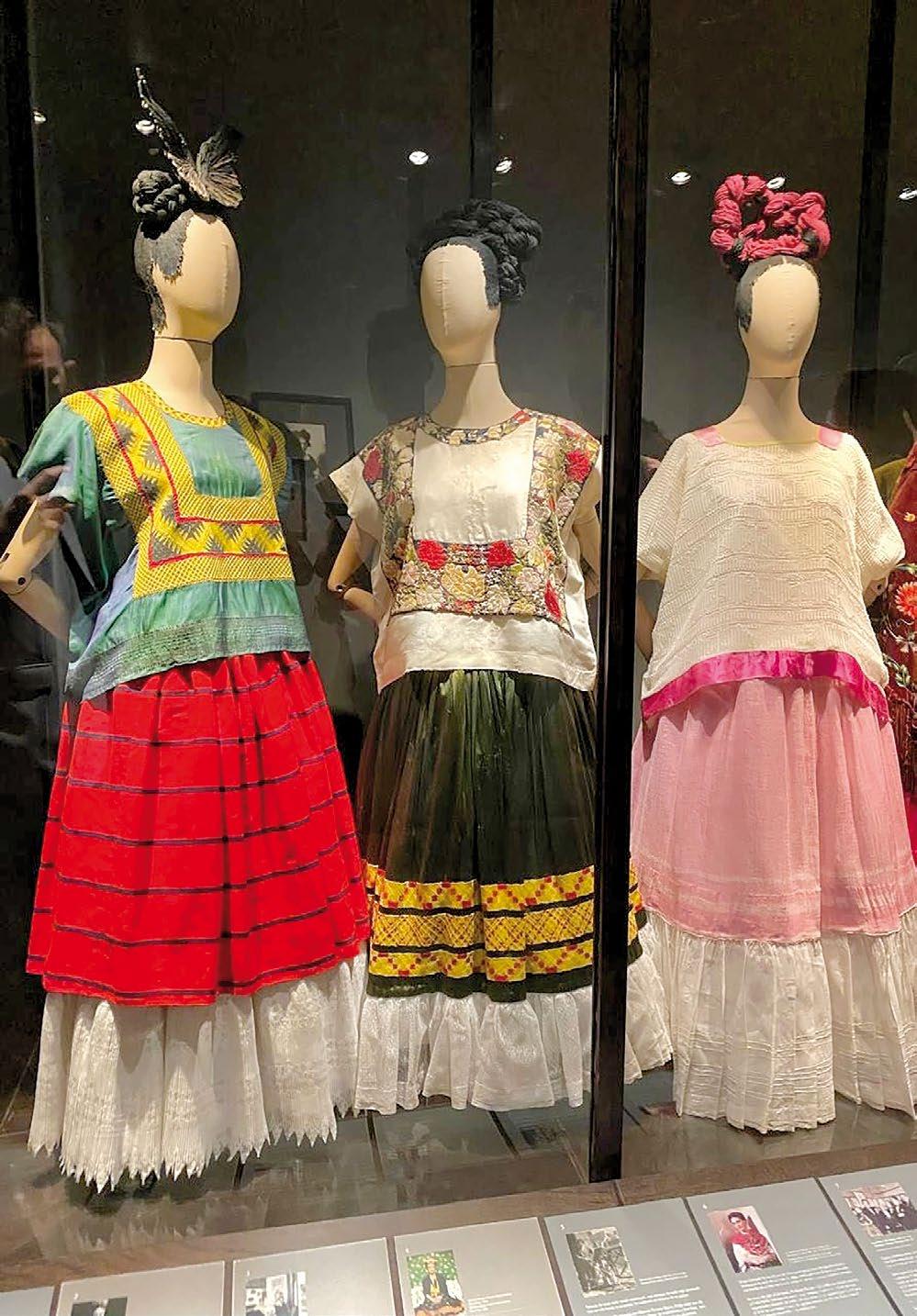
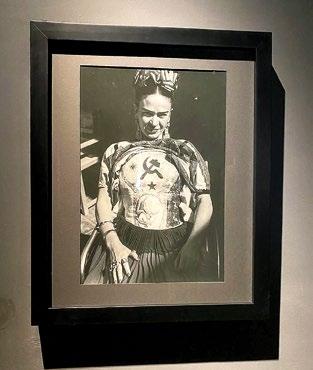
In this impressive, “new” MOMus–Thessaloniki Museum of Photography, the exhibition “Frida Kahlo – Her Photos” will be on display until 04.01.2026, marking its first showing in Greece after more than twenty international stops.
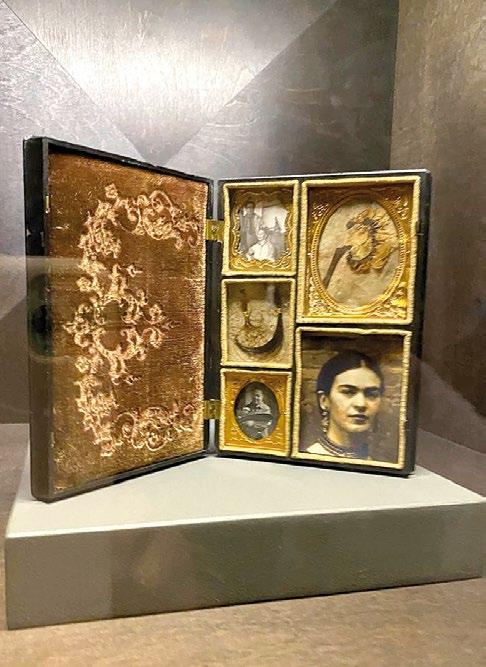
Through 241 unpublished photographs from various periods and facets of Frida Kahlo’s life, the exhibition reveals elements of the personal world of the internationally acclaimed Mexican artist, offering a fresh perspective on the turbulent life of one of the most enigmatic and iconic figures in Latin American art.
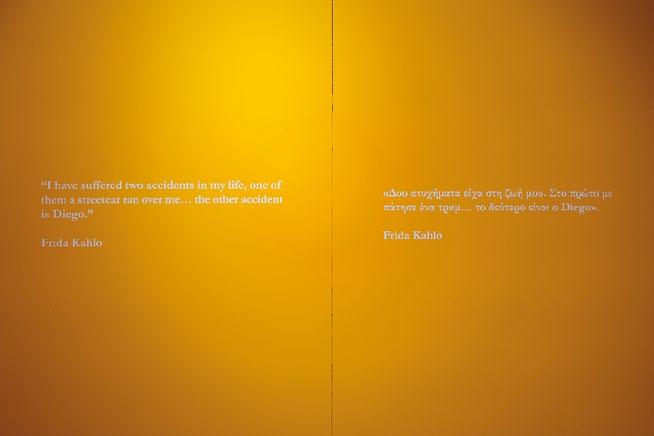
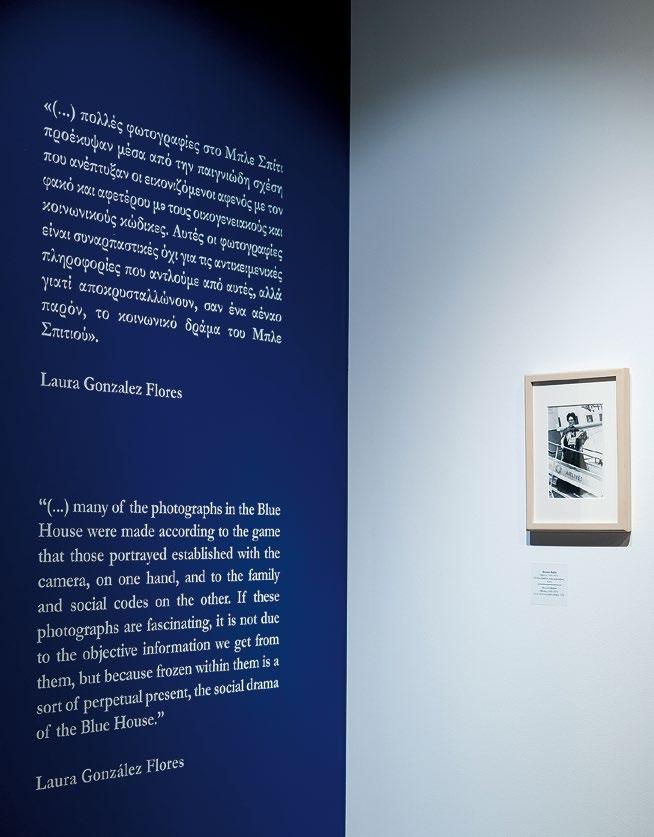
The exhibition is structured around six main themes: The Origins; The Blue House (Casa Azul); Politics, Revolutions and Diego; The Broken Body; Frida’s Loves; and Photography each highlighting the vital role photography played in Kahlo’s life. It is organized by the Frida Kahlo Museum and the Diego Rivera-Anahuacalli Museum and curated by Pablo Ortiz Monasterio.
Despite the importance of photography in Frida Kahlo’s life, much of her photographic collection remained hidden from the public for decades. When she died in 1954, her husband, Diego Rivera, donated their home —known as the “Casa Azul”— to Mexico City (essentially, to the Mexican people) to be turned into a museum dedicated to her life and work. This marked the beginning of what is now the Frida Kahlo Museum, one of the most visited museums in the world.
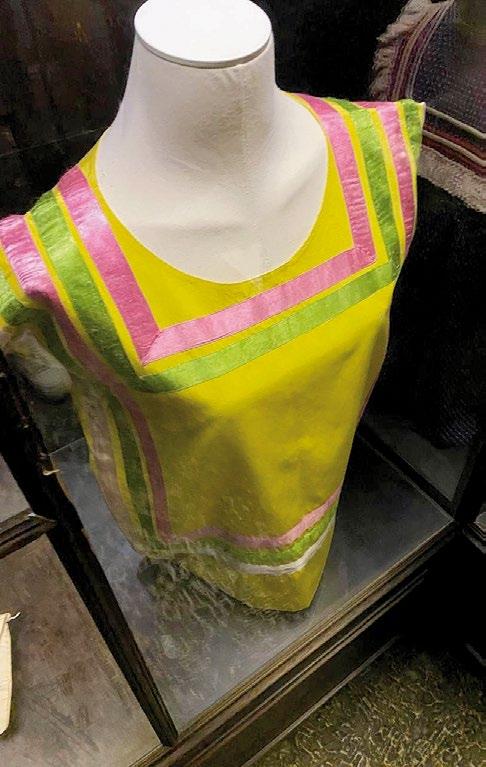
Although Rivera donated Kahlo’s artworks and personal items to the museum, he requested that some be kept from public view. As a result, this personal archive containing more than 6,000 photographs, as well as drawings, letters, medicines, and clothing remained sealed for fifty years, locked in a bathroom in Casa Azul, and gradually acquiring a near-mythical status. This archive was finally revealed in 2003. A selected part of the newly uncovered photographs was curated into the exhibition “Frida Kahlo – Her Photos,” now at MOMus–Thessaloniki Museum of Photography. n
WHERE & WHEN: The exhibition “Frida Kahlo – Her Photos” is being hosted at MOMus–Thessaloniki Museum of Photography (Warehouse A’, Pier A’, Thessaloniki port area) until 04.01.2026. Opening days and hours: Tuesday–Wednesday and Friday–Sunday, 10:00–18:00; Thursday, 12:00–20:00. The exhibition is accompanied by guided tours for visitors, educational programs for schools, and zzactivities and workshops for children and adults. Visit the MOMus website (www.momus.gr) for the latest schedules.
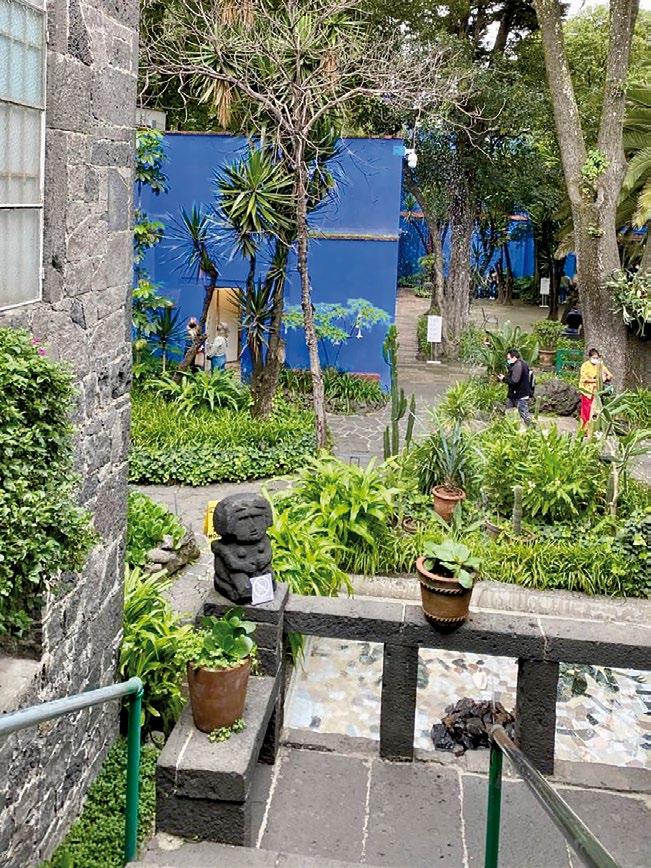
INSIDE THE CASA AZUL
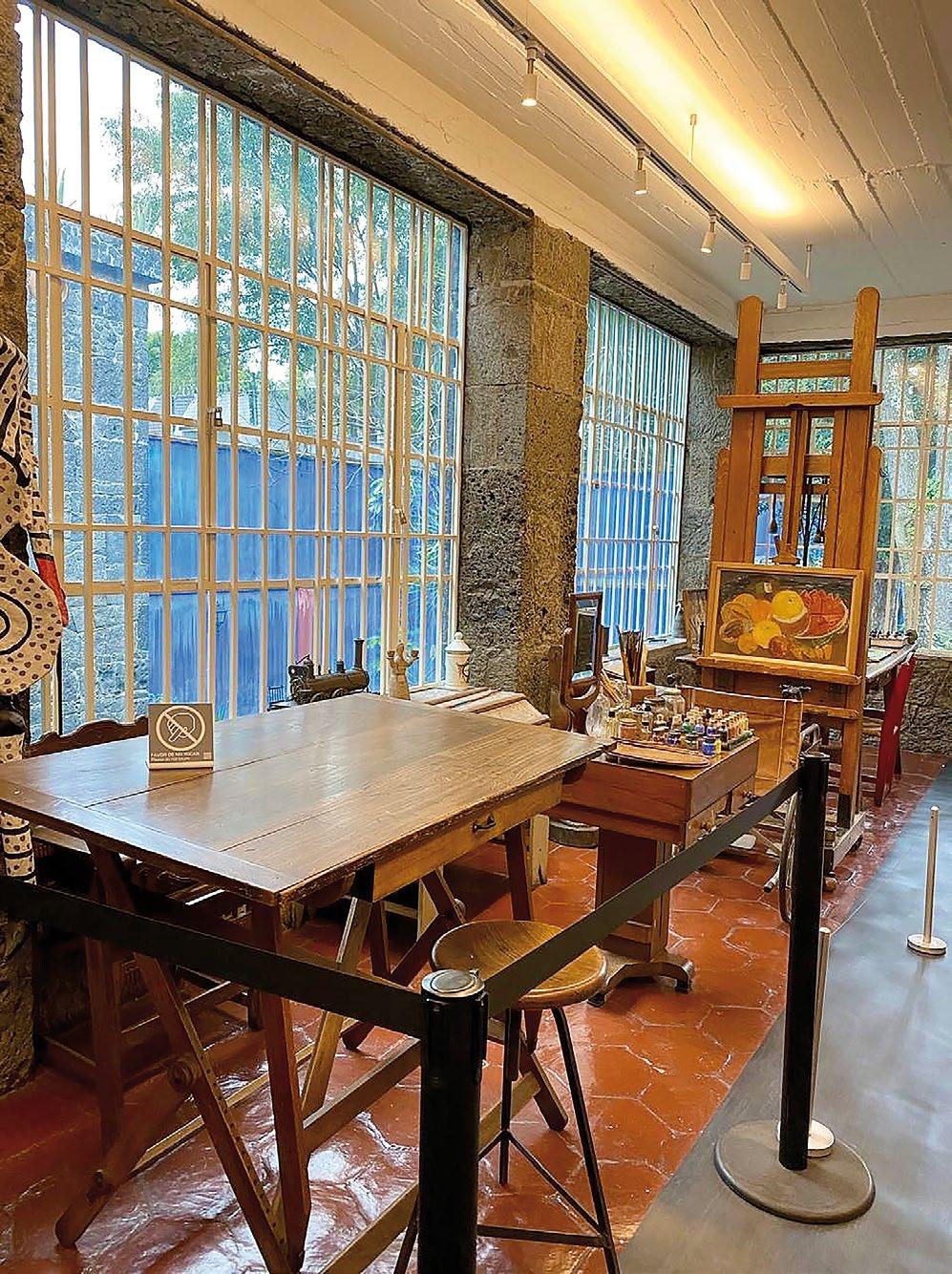
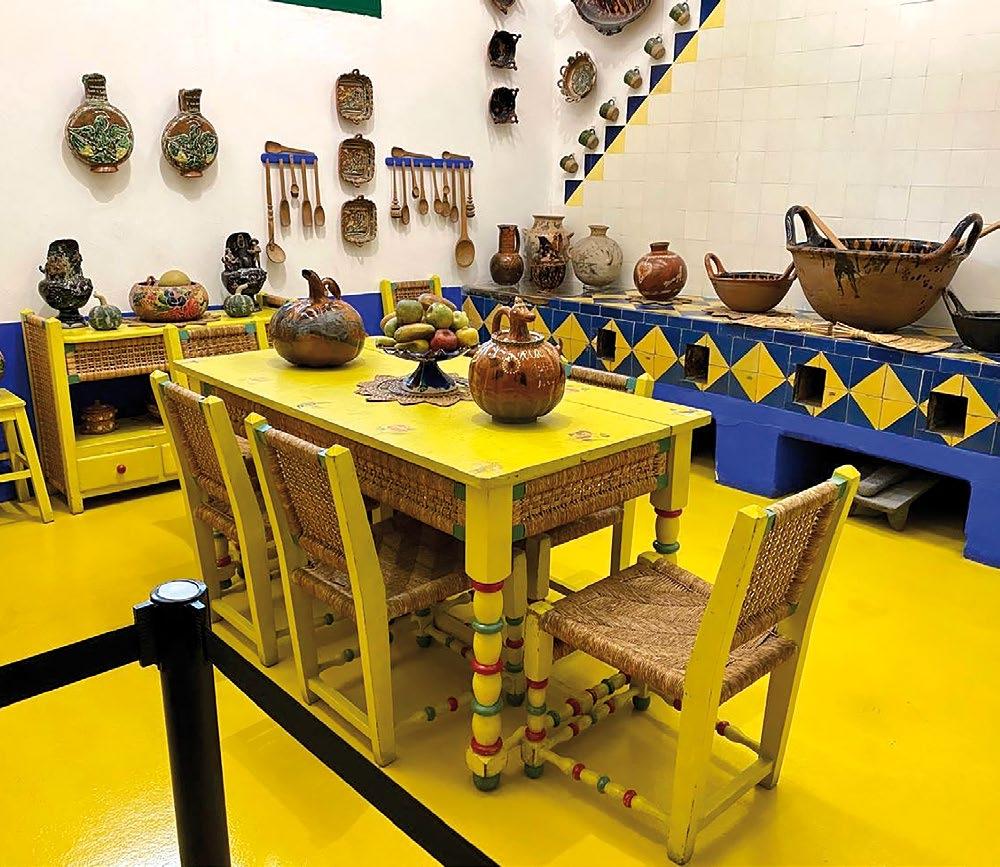
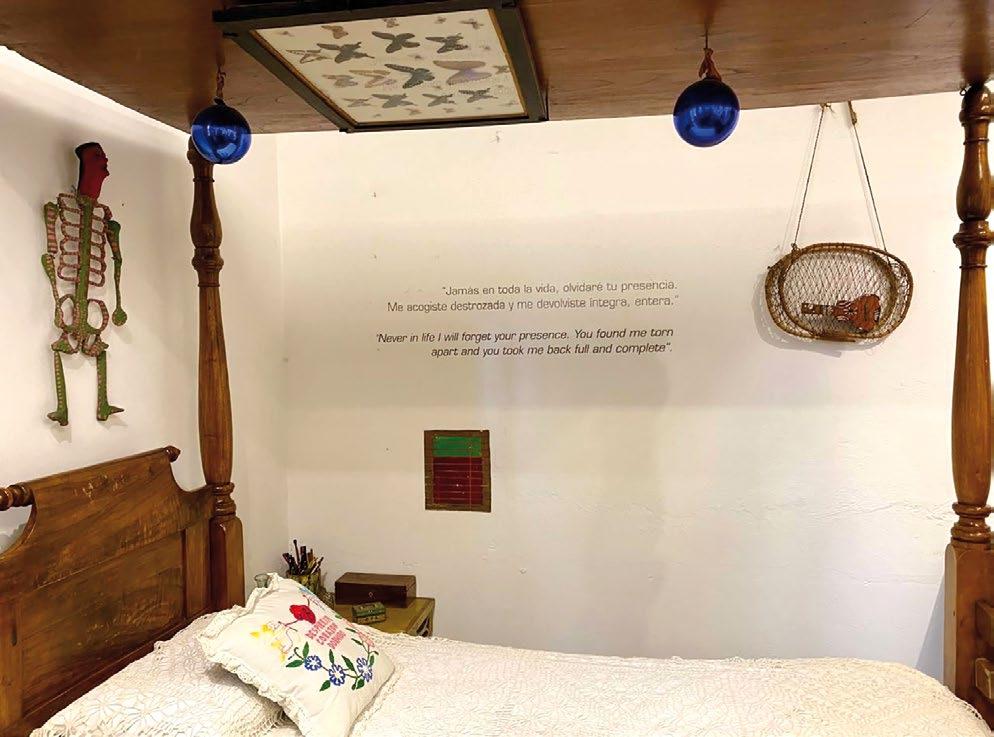
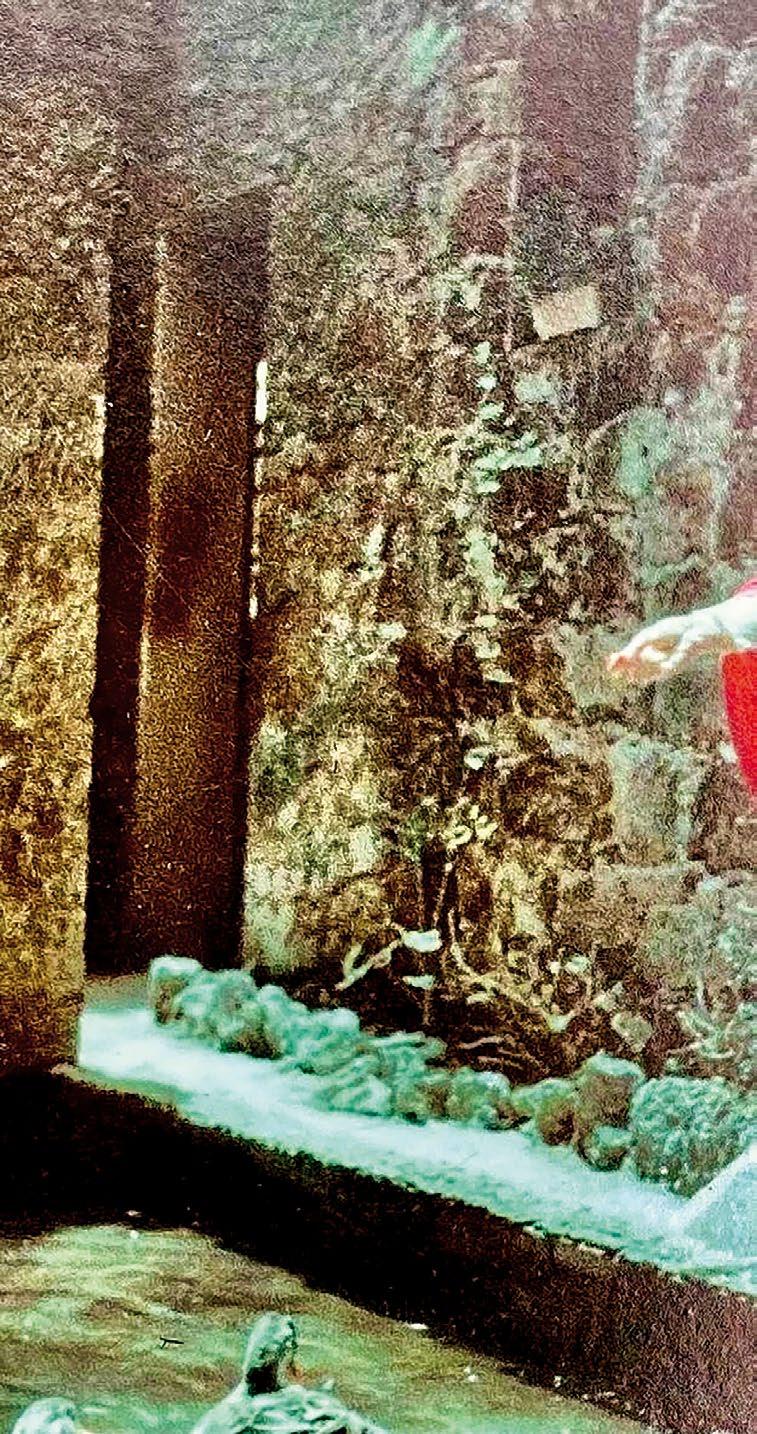
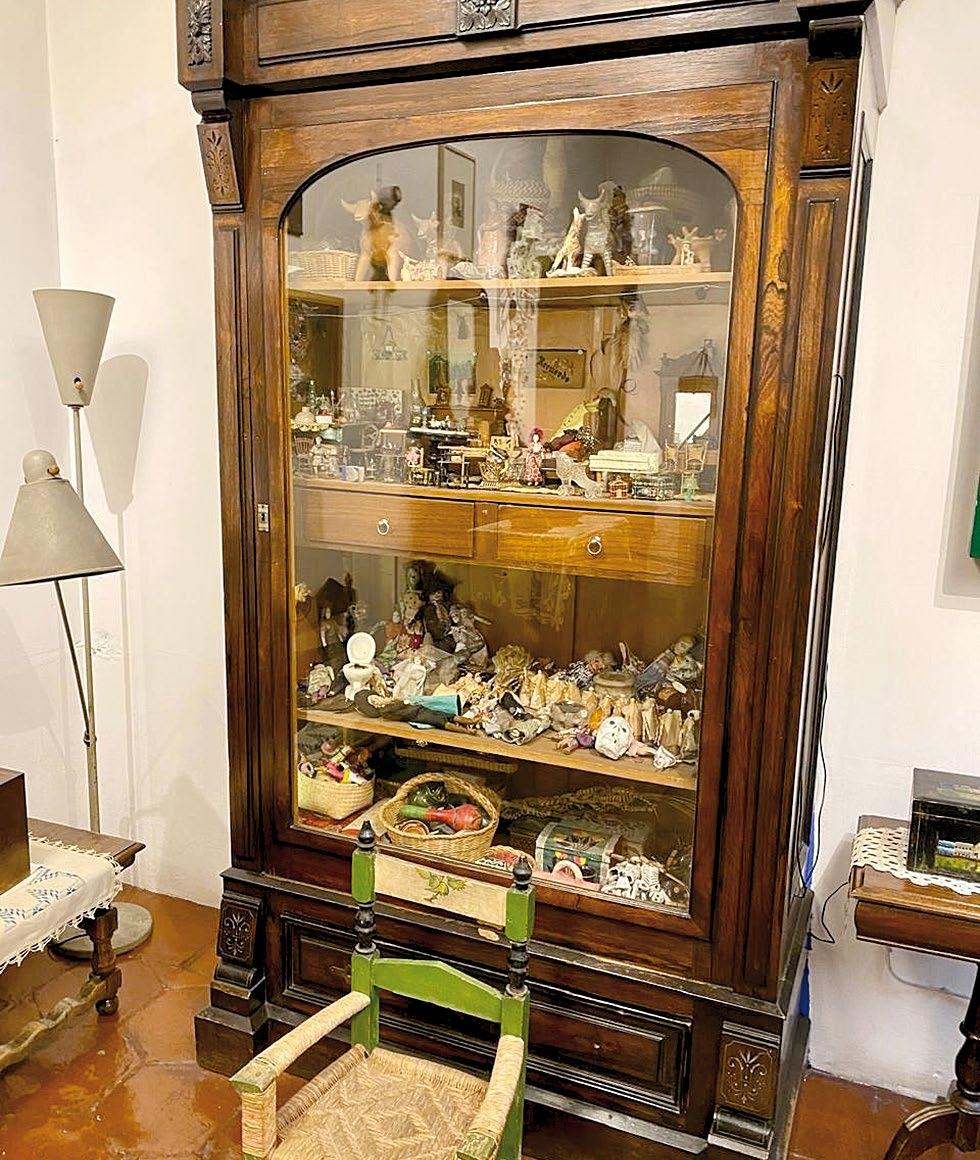
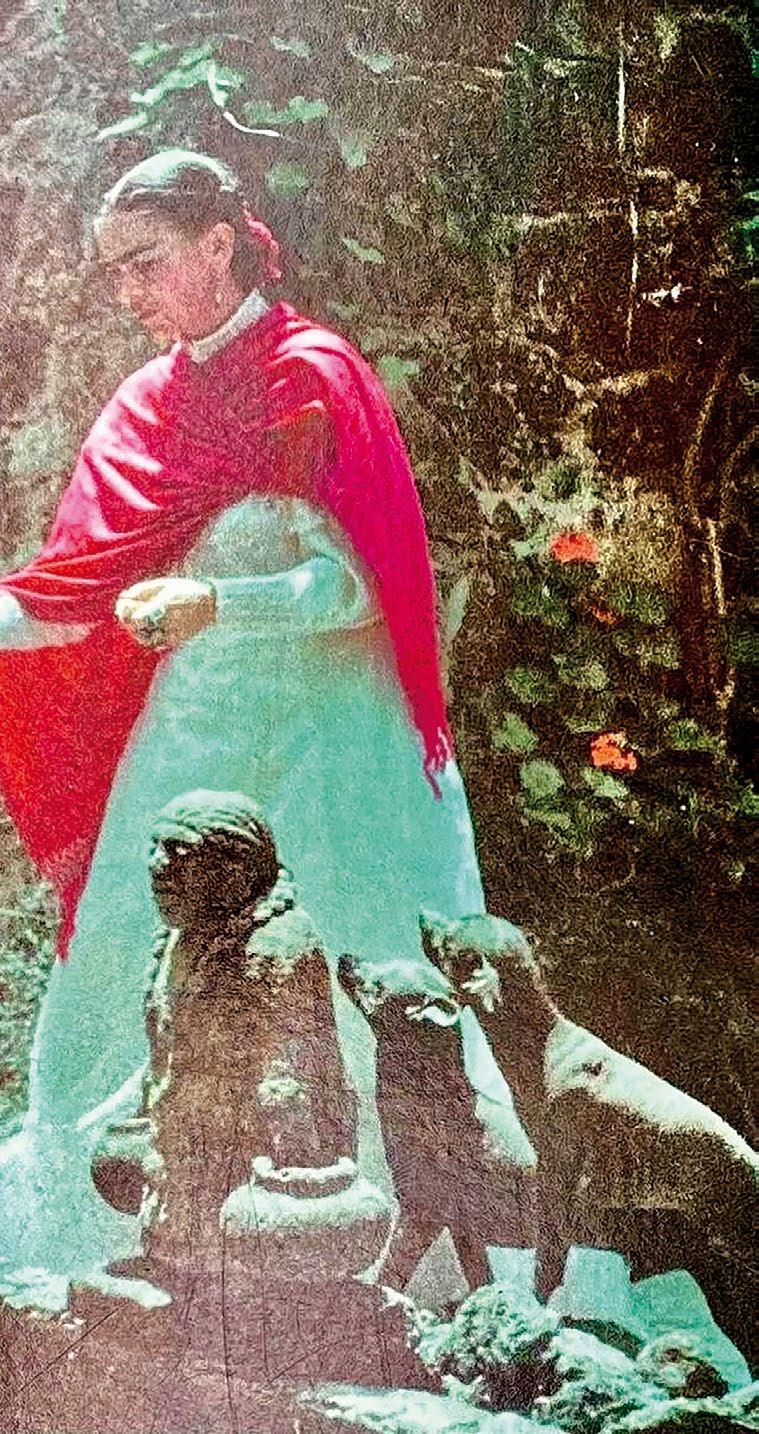
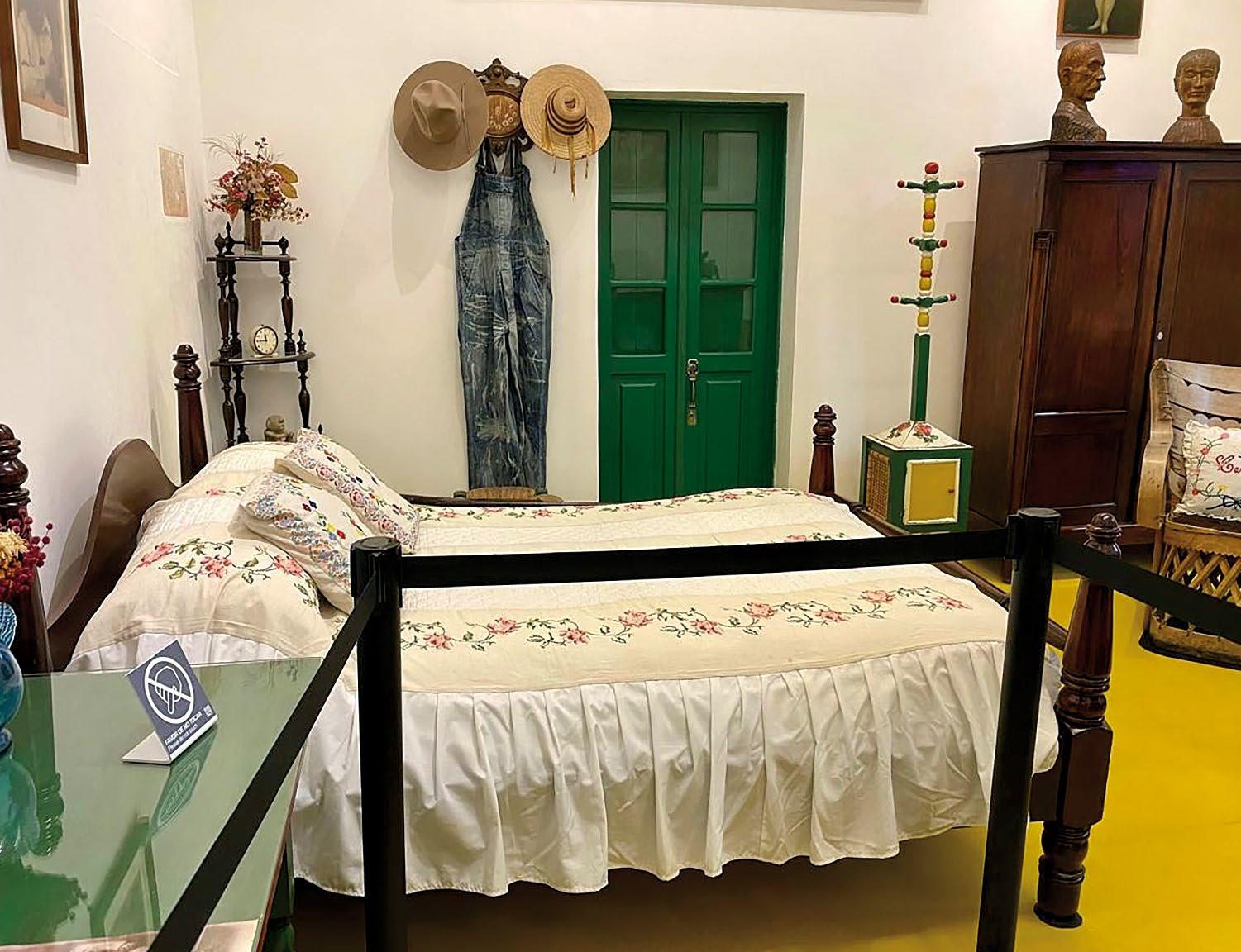
The Casa Azul (Blue House) is Frida Kahlo’s private universe. She spent most of her life here, first with her family and, years later, at Diego Rivera’s side. They hosted a fascinating array of luminaries from Mexico and abroad, drawn by the charisma of both artists.
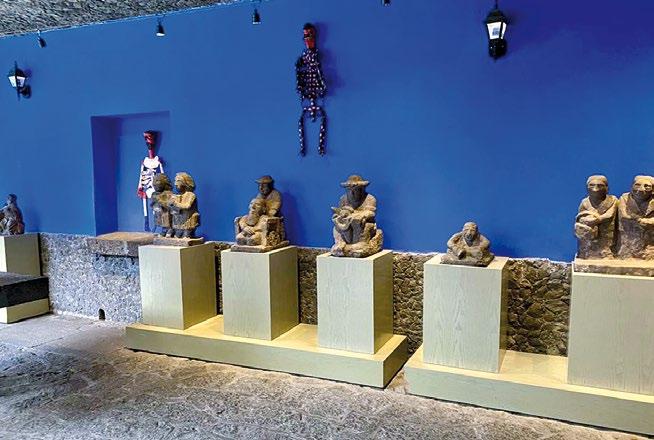
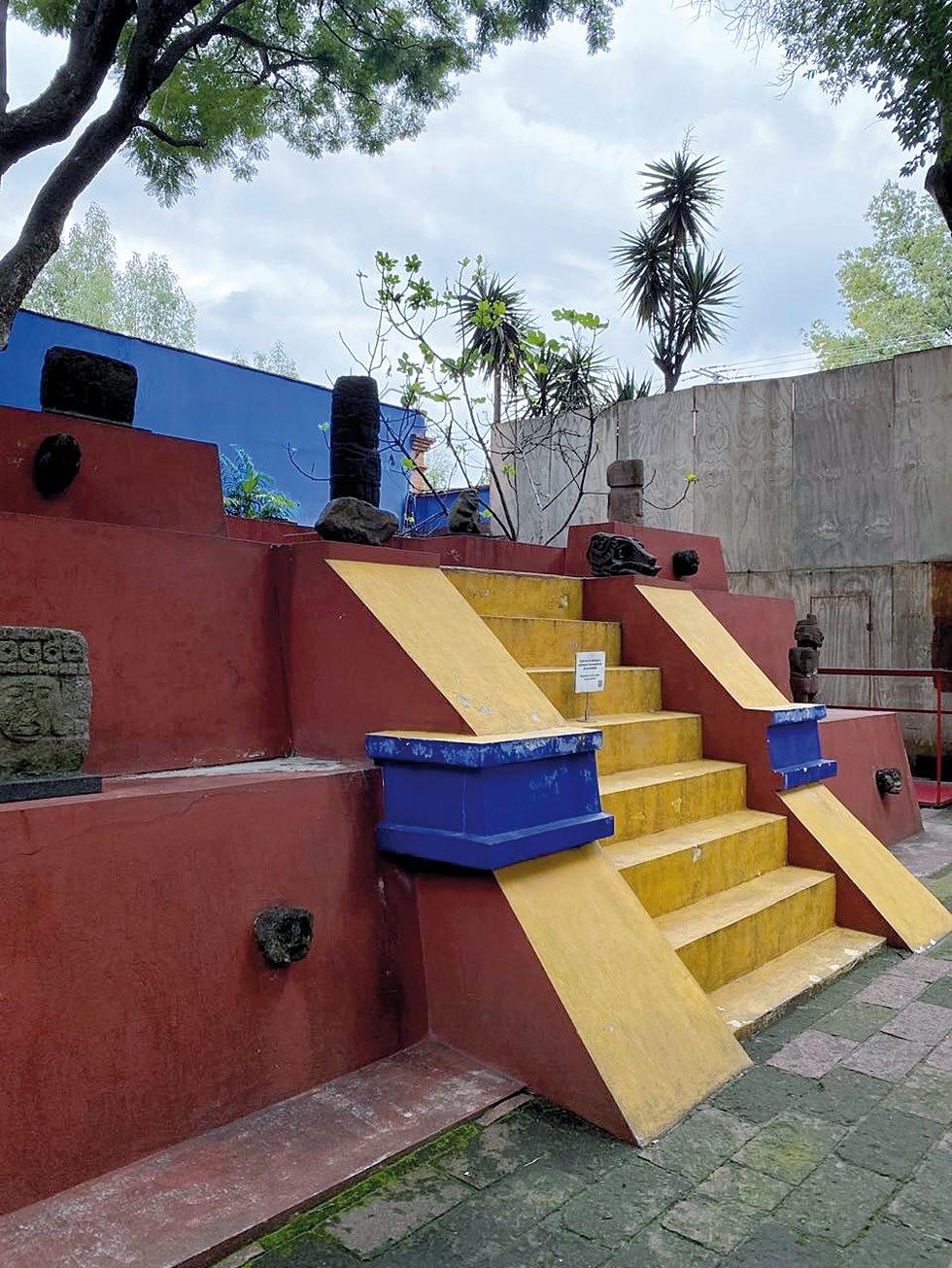
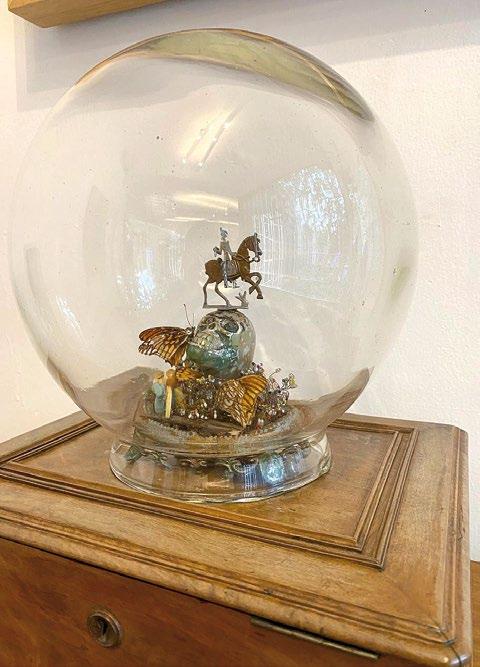
Frida and Diego wanted to leave her house as a museum for all Mexicans to enjoy. At her death, the couple’s friend, museographer and poet Carlos Pellicer, did the exhibition design. Its administration was assigned to a trust, the Fideicomiso de los Museos Diego Rivera y Frida Kahlo, under the central bank, Banco de México, and constituted by Rivera himself in 1957. Since its inauguration in July 1958, the Casa Azul and its gardens have displayed personal objects and paintings by both artists, folk art, Pre-Columbian sculpture, photos, documents, books, and furnishings that were part of the ambience where Frida was inspired to create. n
Photography: ANNA PANAGIOTAREA
MOMus (IS IN THE) AIR
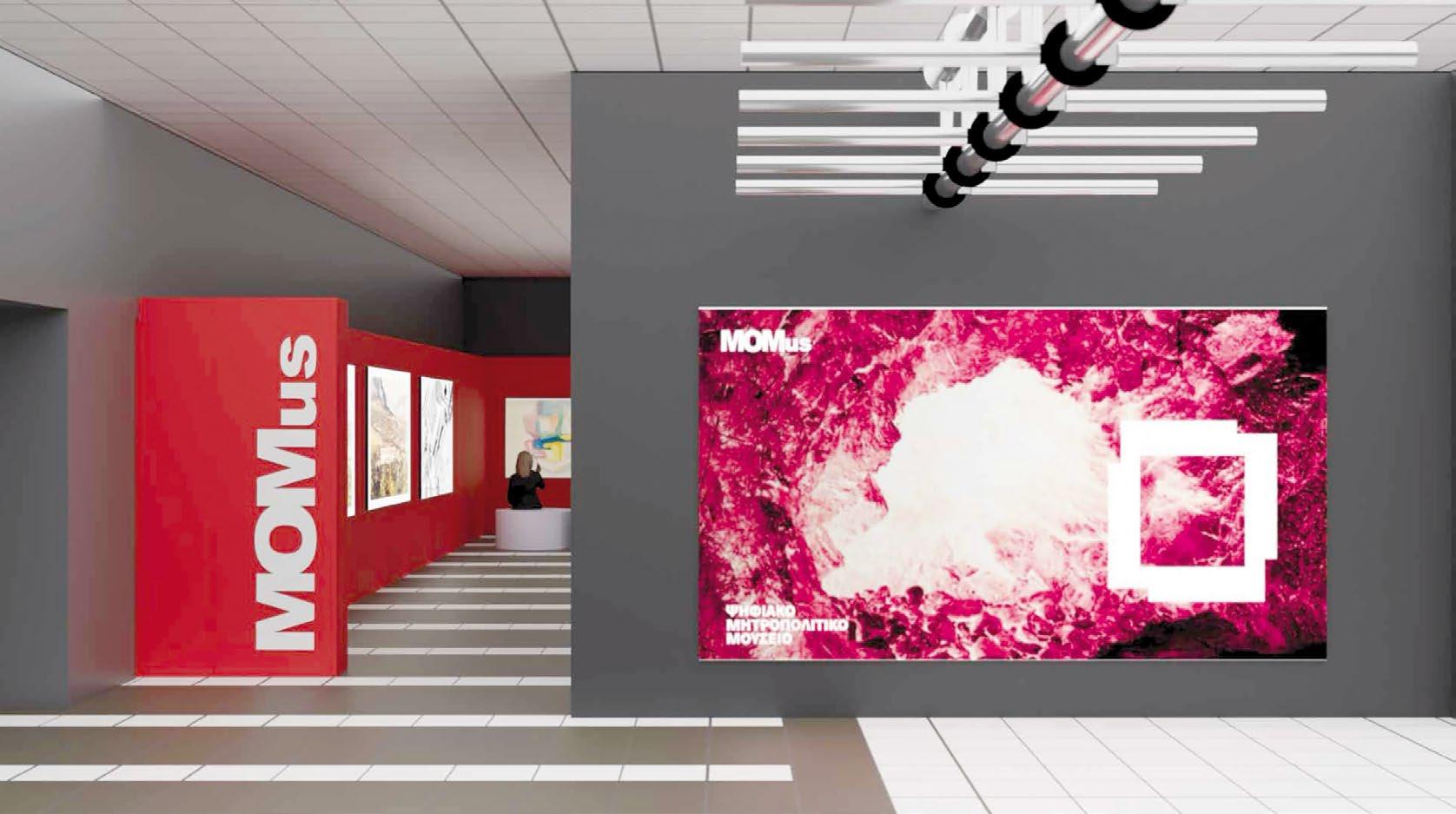
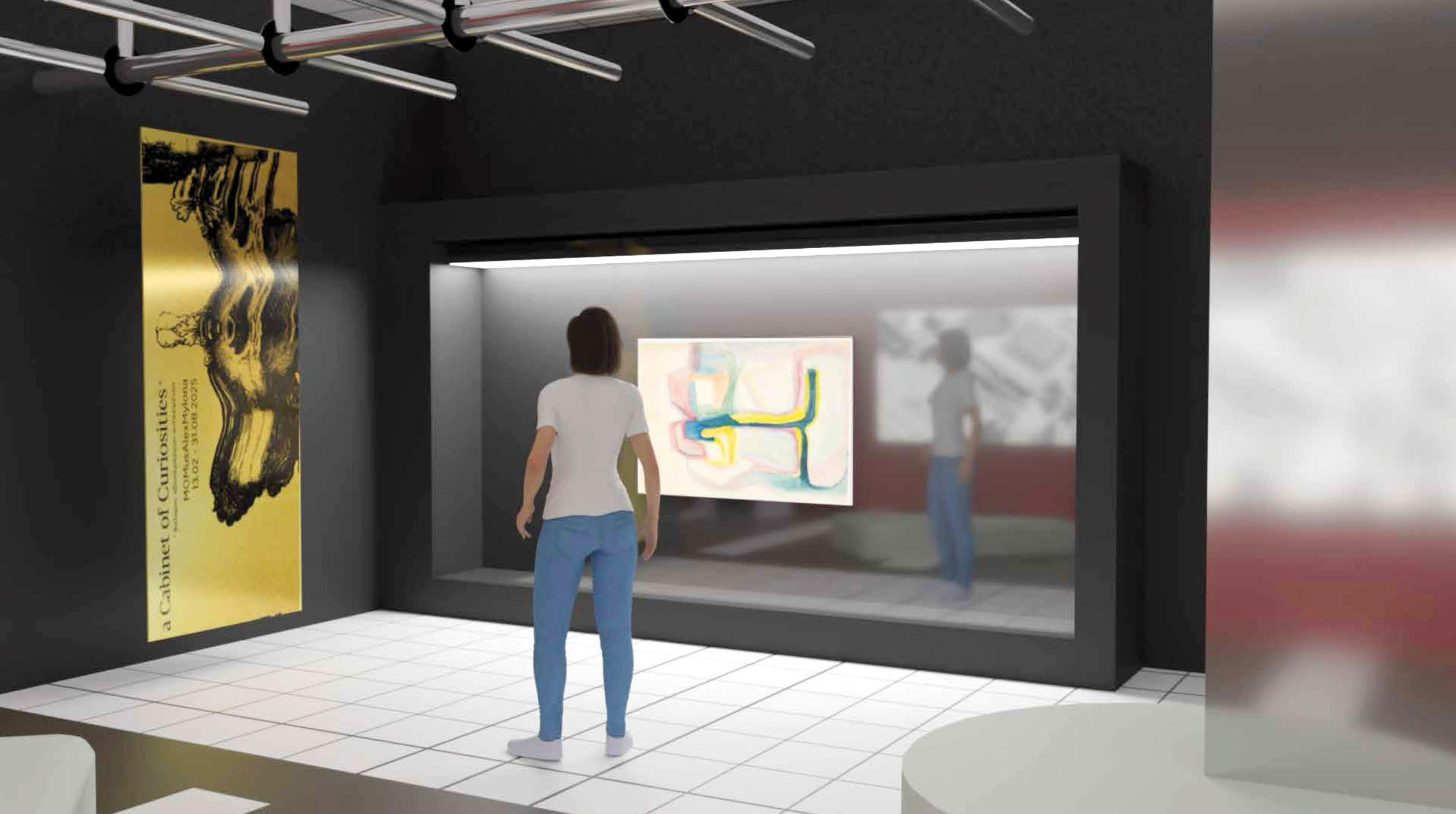
MOMus Air is the first museum to “emerge” inside the Thessaloniki Airport “Makedonia.” In collaboration with Fraport Greece, this new, original cultural experience unites art, technology, and modern lifestyle, right where every journey begins or ends.
Curated by: THE MOMus TEAM
In a specially designed 163 sq. m. space, equipped with modern aesthetics and cutting-edge technology, MOMus Air hosts visual artworks, digital creations, video walls, and documentaries drawn from the rich collections of the organization’s five museums. It offers travelers a unique and unexpected art experience within the airport. Visitors are invited to explore themes that reflect today’s pressing issues and to actively participate in the evolving relationship between art and the public. Through projects that harness new technologies and digital tools, MOMus Air lays the groundwork for a direct, dynamic connection between the audience and the critical questions of contemporary culture. With this initiative, MOMus’ outreach extends even further, redefines the museum-visitor relationship, and proposes a new, more participatory cultural experience. At the same time, it produces high-quality content that consistently reflects its vision and strategic direction. MOMus Air is not just a display of art in a public space. It is a gateway to culture, a museum without walls that welcomes and bids farewell to travelers with images, sounds, and ideas. It is a space of transition, where culture takes on a new role: to accompany and inspire, even in transit. n
The video wall is placed at the entrance of the space, designed to attract visitors arriving from Terminal 1 of Thessaloniki Airport “Macedonia”. In the background, the continuous development of the projections draws visitors inside.
Banners featuring current and upcoming MOMus activities will be regularly rotated and displayed from the stainless steel elements of the space. The 4–5 m long showcase will host artworks and/or items from the MOMus online store, secured with glass and a lock for the safety of the objects.
“I REALIZED THAT THERE WAS NOTHING MORE SHOCKING THAN JOY”
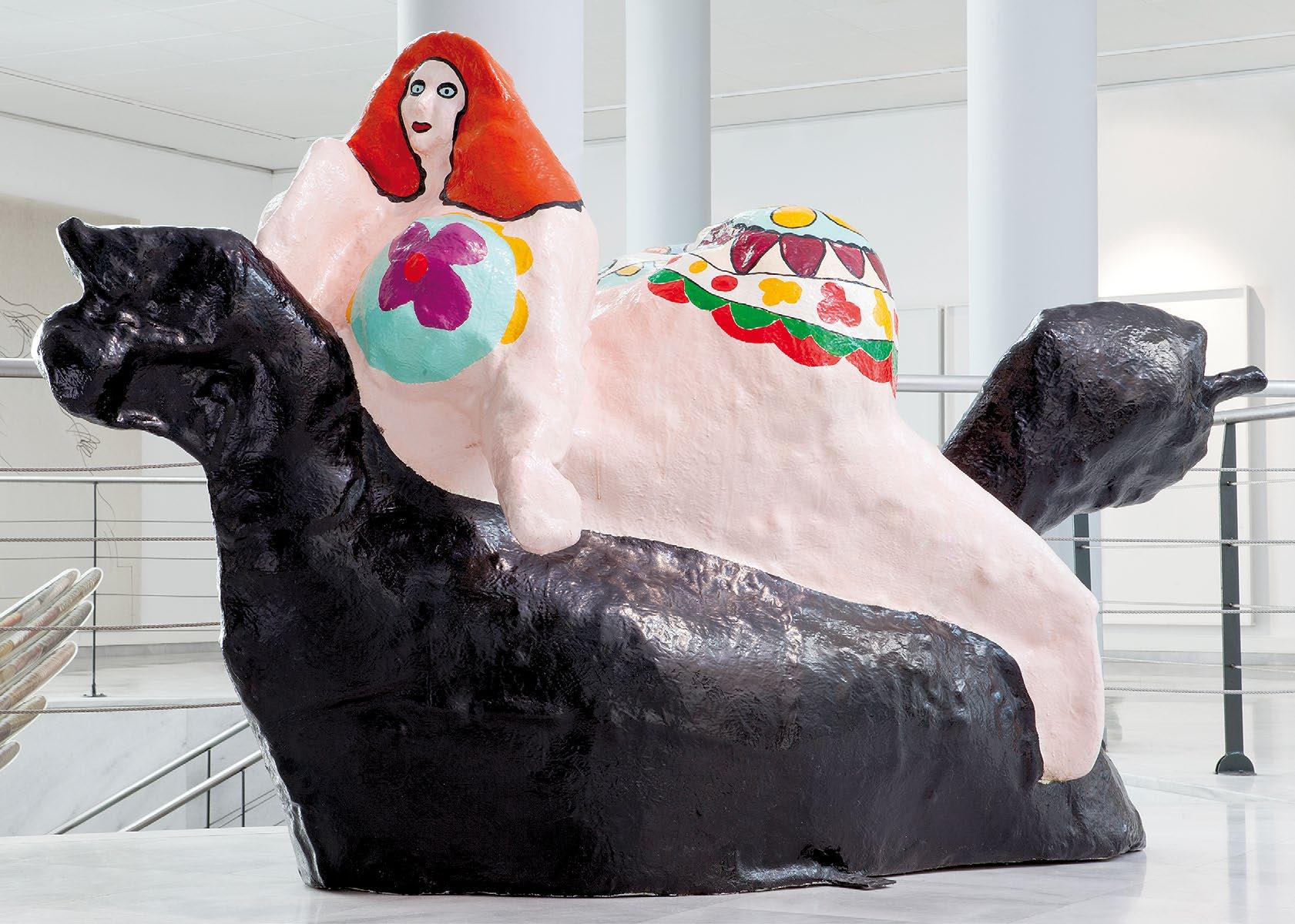
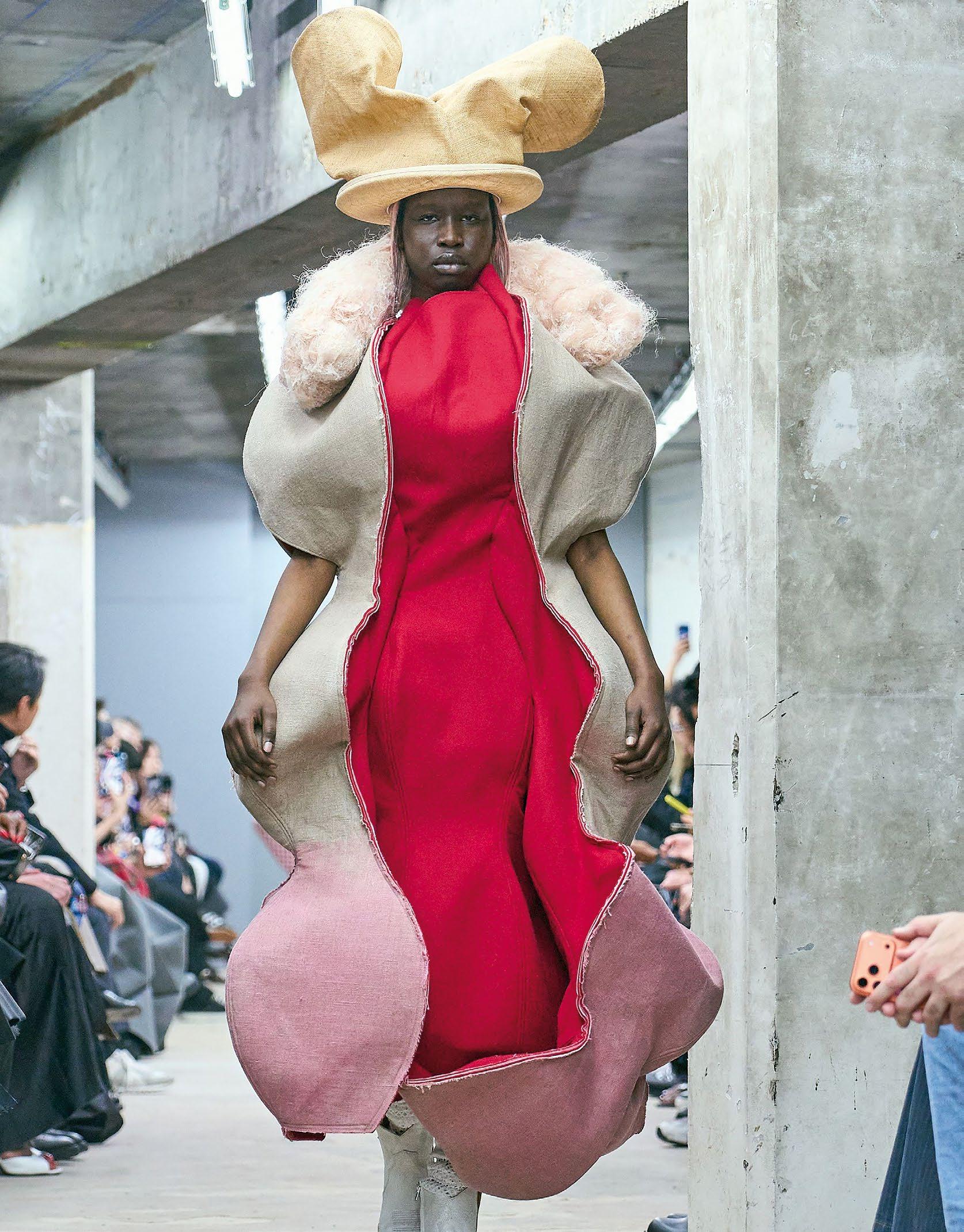
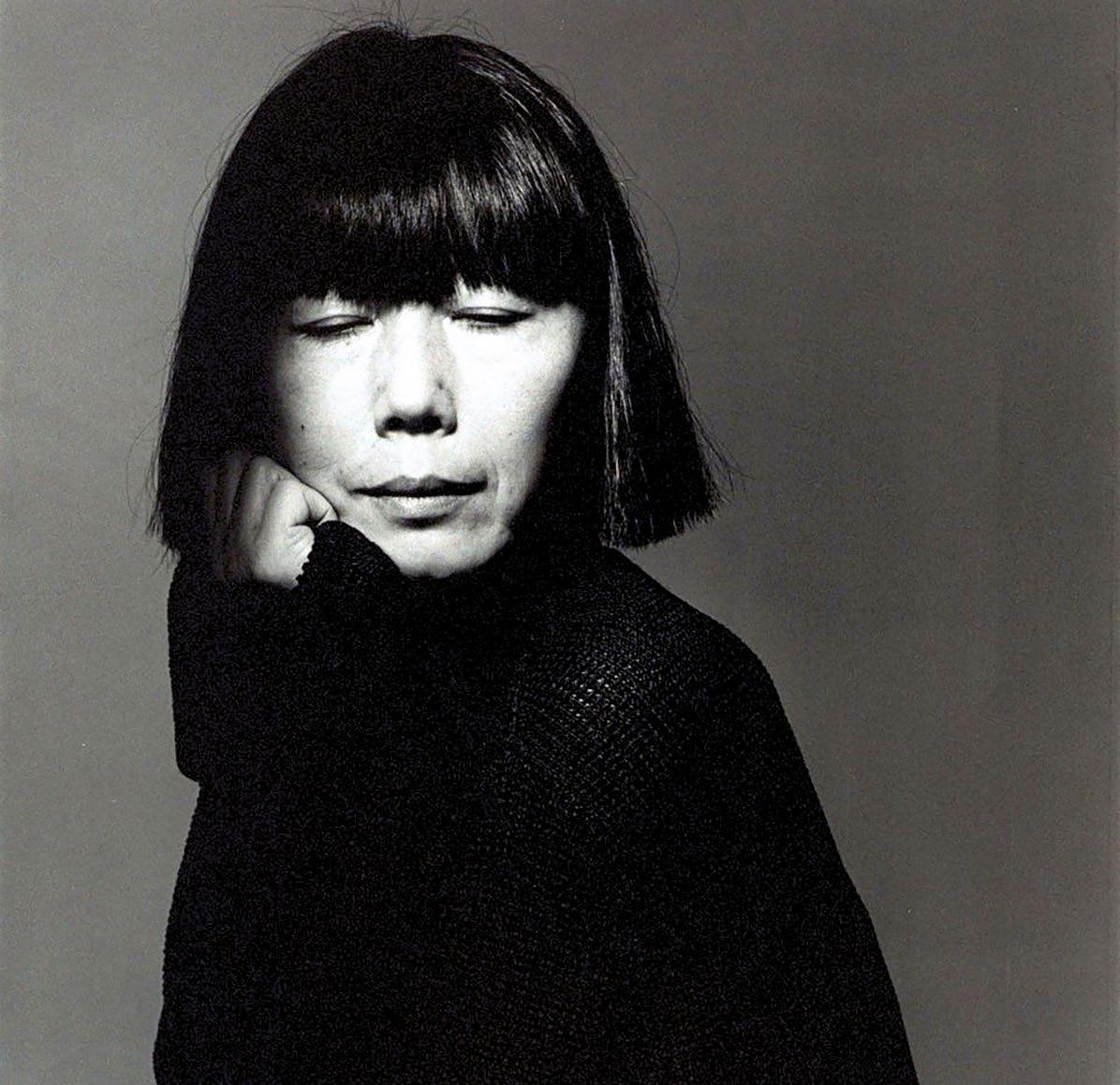
Niki de Saint Phalle’s famous “Nanas” celebrate femininity and female independence in a rather unconventional way. Similarly, Rei Kawakubo, the “soul” of Japanese fashion house Comme des Garçons, creates her own collections challenging conventional beauty standards.
Curated by: ANGELOS N. VASSOS
Niki de Saint Phalle
MOMus fashion
Niki de Saint Phalle (Catherine-Marie-Agnès Fal de Saint Phalle) was born in 1930 in Neuilly-sur-Seine, France, to a French father and an American mother. Her family, which was very wealthy and had a long history, was affected by the Great Crash of 1929, leading some members to move to New York. Niki and her brother soon followed. At the age of 17, seeking to escape her family’s unhealthy environment, where she had suffered abuse from her father at the age of 11, she started working as a model. The artist has a mental breakdown when she discovers that her husband is cheating on her, and she was hospitalized in a psychiatric clinic in Nice, where she began to paint. After being discharged from the hospital, she travelled across Europe, coming into contact with contemporary art movements of the time. During one of her trips, she met Jean Tinguely, her future companion, and joined the “New Realists” group established by Pierre Restany in October 1960. Niki de Saint-Phalle, the only female artist in the group, developed a close relationship with Alexander Iolas, who consistently supported her throughout her artistic career. She embarked on her artistic journey through actions and interactive works, often using a shooting technique where she, along with the audience, would fire paint from guns onto surfaces and installations. Later on, in an ironic take on the Italian Renaissance, she created chapels and cathedrals, which she also shot and destroyed.
However, her most famous body of work is the “Nanas,” the cheerful and voluptuous female figures. Through these sculptures, Niki de Saint Phalle celebrated femininity, women’s independence, and her own liberation through the world of art. She passed away in La Jolla, California, in 2002. n
Niki de Saint Phalle, “Eve,” 1968. Compressed paper and color, 150x280x90 cm.
Donation of Alexander Iolas. MOMus-Museum of Contemporary Art-Macedonian Museum of Contemporary Art and State Museum of Contemporary Art Collections.
MOMus fashion
Comme des Garçons,
2026 ready-to-wear.
Comme des Garçons, Spring-Summer 2026 ready-to-wear.
MOMus fashion
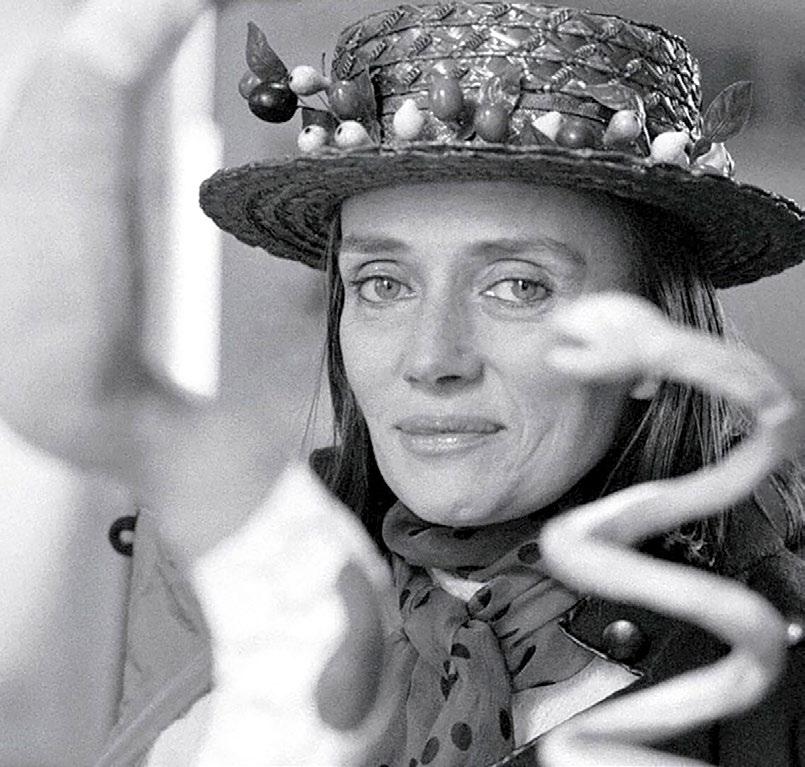
Rei Kawakubo is among the most respected and unconventional designers in contemporary fashion. As the driving force behind the fashion brand Comme des Garçons, she has continually challenged current ideals of body shape, garment construction and use of colour. Refusing to conform to conventional notions of beauty, Kawakubo creates her own statements through radical silhouette and structure. In doing so, she is credited with revolutionising fashion.
Born in Tokyo in 1942, she studied literature before working as a stylist, although never formally training in fashion design or “clothes making” as she prefers to call it. Comme des Garçons was founded in 1969, as a way to supplement her income. A men’s line was added in 1978, but it wasn’t until 1981 that she sprang to fame with her first Paris presentation. A shock to the West at that time, Kawakubo’s approach directly challenged the era’s fixation with a commercially-conceived expression of glamour. The 1981 collection was dubbed “Hiroshima Chic” for its black colour palette and deconstructed silhouettes and finishes. Her output is frequently described as “anti-fashion” or “art,” owing to Kawakubo’s conceptual and intellectual rigour. But this cerebral methodology hasn’t stopped her building one of the biggest independent fashion empires, where she enjoys not only complete artistic freedom, but also significant financial success. Kawakubo’s designs have inspired and continue to inspire younger generations of designers, including Martin Margiela, Helmut Lang and Ann Demeulemeester. She has also fostered fashion talent, including Junya Watanabe. n
MOMus on a plate
DINNER WITH THE ARTIST
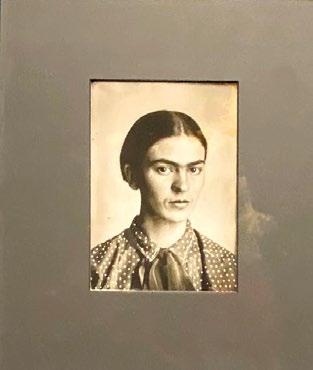
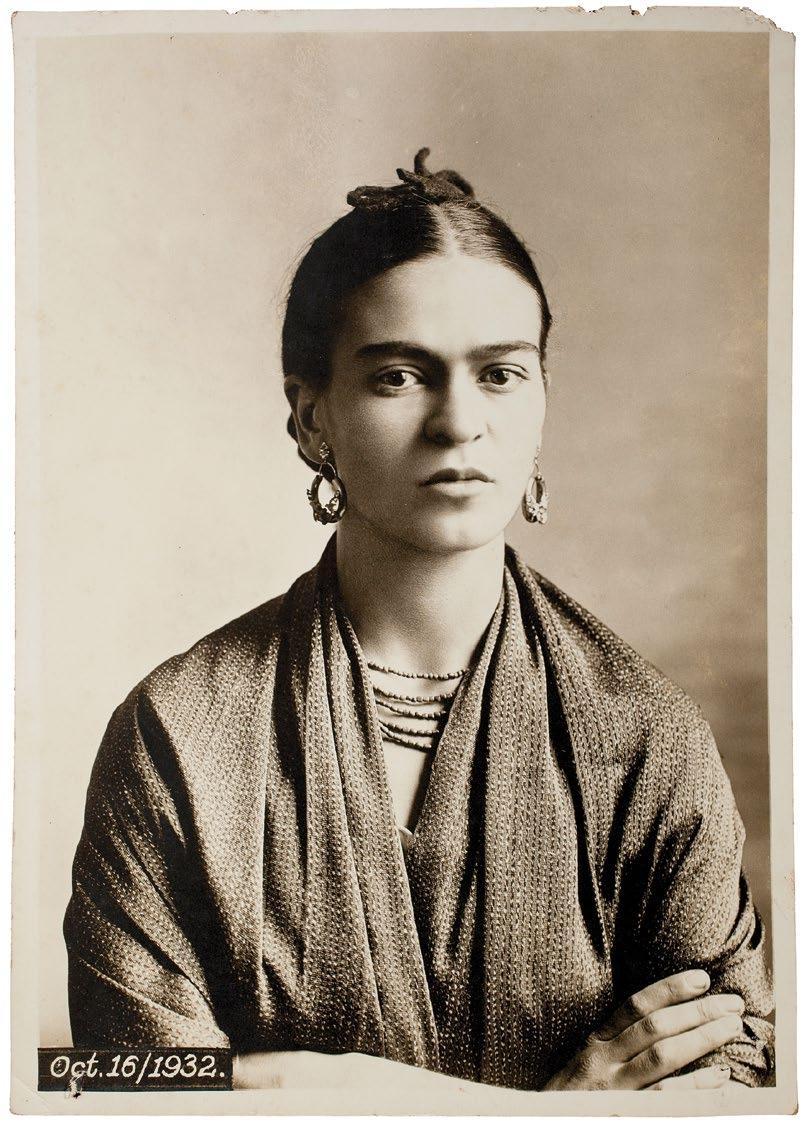
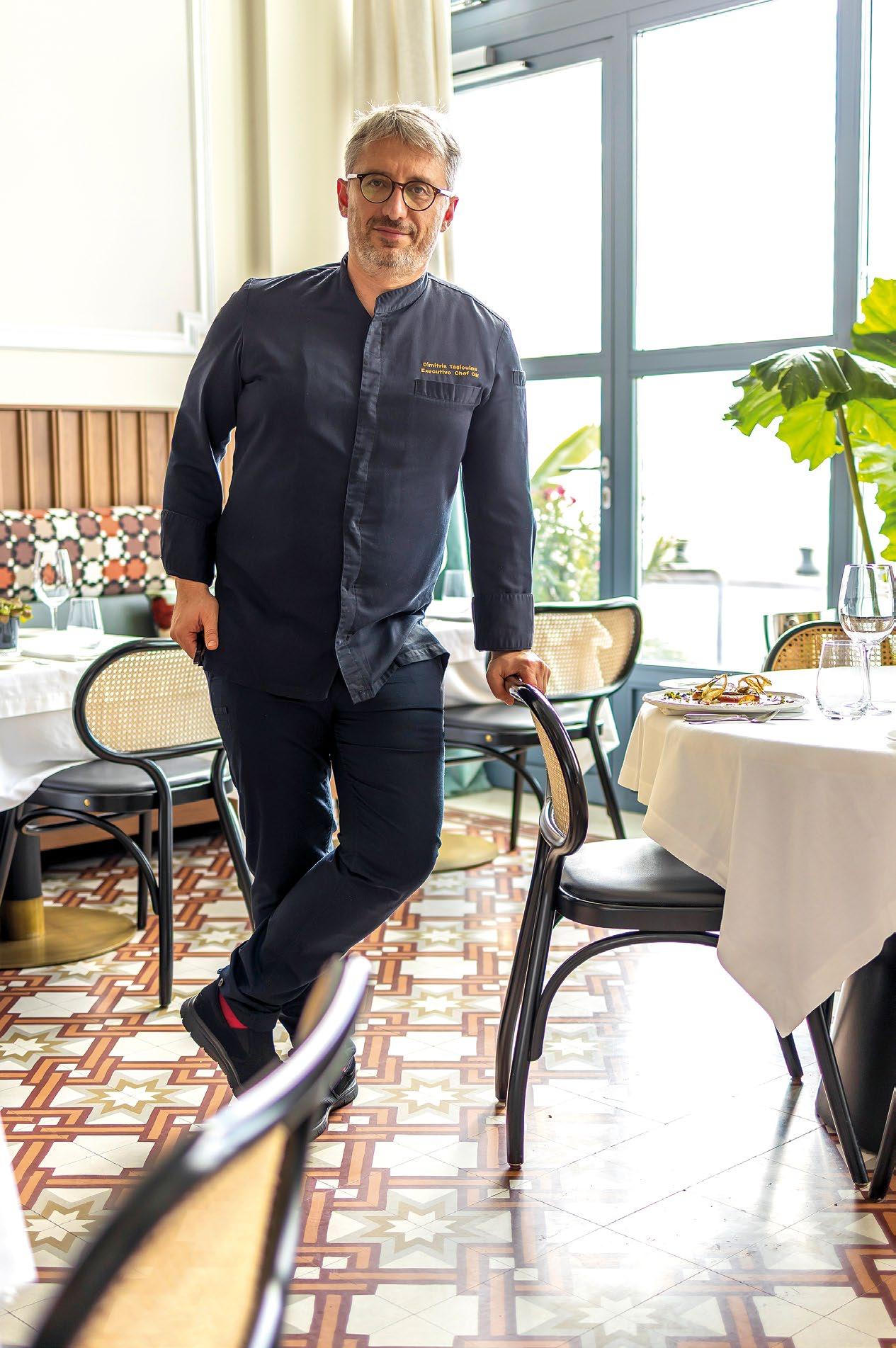
If you could invite a famous artist to dinner, with a top chef preparing the menu, who would you choose? And what would you serve? In this issue, MOMus “invites” Frida Kahlo (1907-1954) to dinner, drawing inspiration from her portrait by her father, Guillermo Kahlo – and taps into the creative imagination of Dimitris Tasioulas, chef of restaurant “Olympos Naoussa” in Thessaloniki, to prepare the menu.
Curated by: JOHN PAPADIMITRIOU
Photography: SAKIS GIOUMPASIS
The photographer:
MOMus on a plate
Η καλλιτέχνιδα: Φρίντα Κάλο
The artist:
Guillermo Kahlo Η
Frida Kahlo’s father, Guillermo, was originally from Germany but built a successful career as a photographer in Mexico. He often experimented with self-portraiture, a practice that would later inspire his daughter, who created dozens of self-portraits in her own work. The captions Guillermo added to his photographs are also of interest, and this technique may have been a model for Frida, who often wrote texts on her paintings. While she was long believed to have drawn this habit from Mexican votive art, it now appears that her father may have been the original influence. n
Frida Kahlo
Κάλο, 1932. Αρχείο Diego Rivera & Frida Kahlo.
Bank of Mexico, Καταπίστευμα των Μουσείων Diego Rivera & Frida Kahlo.
Fiduciary
Frida Kahlo photographed by her father, Guillermo Kahlo, 1932. Diego Rivera & Frida Kahlo Archives. Bank of Mexico,
in the Diego Rivera and Frida Kahlo Museum Trust.
MOMus on a plate
What would chef Dimitris Tasioulas* make for Frida Kahlo?
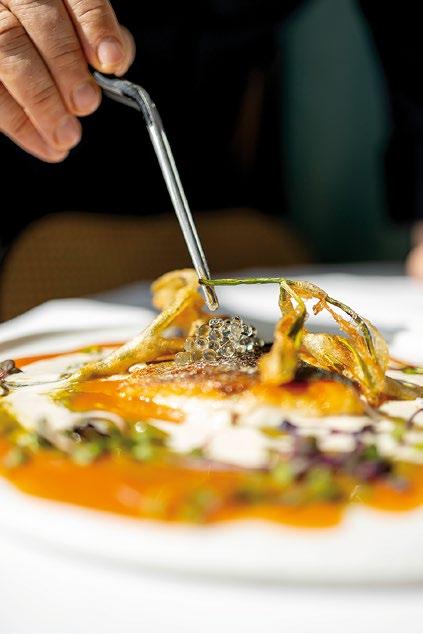
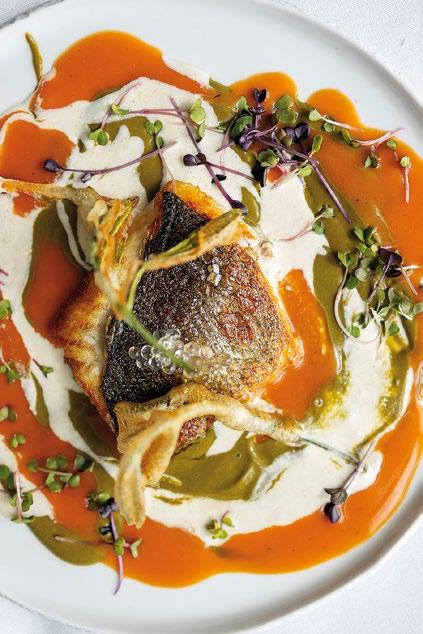
This dish is a small canvas of flavor and color. The sea bass fillet rests on “brushstrokes” of sea fennel cream and fluffy taramasalata, with subtle notes of tomato and coriander essence. The intense, contrasting color palette —deep green, bright red, soft white, and the natural tones of the fish— strongly reminded me of Frida Kahlo’s emotive paintings, particularly a self-portrait where these contrasts coexist on a single canvas. With that image in mind, I approached the dish’s aesthetic differently: the colors of the three creams blend into one another without clear boundaries, creating the impression of a painted work of art. Q
* Dimitris Tasioulas is executive chef of restaurant Olympos Naoussa in Thessaloniki.
MOMus on a plate
Υλικά Ingredients
Εκτέλεση Instructions
Sea bass fillet with fluffy taramasalata, sea fennel–spinach cream, and fresh tomato essence Για
Για τα φιλέτα λαβρακιού:
4 φιλέτα πελαγίσιου λαβρακιού (120-130 γρ. το καθένα). Ελαιό-
λαδο. Ανθός αλατιού. Λίγες
σταγόνες λεμονιού.
Για την κρέμα αφράτου
ταραμά: 60 γρ. λευκός τα-
ραμάς. 80 γρ. ψίχα ψωμιού, μουλιασμένη και στραγγισμένη. 80 ml παγωμένο νερό. 40 ml ελαιόλαδο. 12 ml χυμός λεμονιού. Ξύσμα λεμονιού. 12 ml ανθρακούχο νερό.
Για την κρέμα κρίταμου
και σπανακιού: 32 γρ. κρίταμος φρέσκος, μπλανσαρισμένος. 24 γρ. φύλλα σπανάκι, μπλανσαρισμένα. 32 ml κρέμα γάλακτος 35%. 8 ml ελαιόλαδο. 0,5 γρ. αλάτι. Λίγες σταγόνες λεμόνι.
Για το απόσταγμα δροσερής ντοματοσαλάτας με κόλιανδρο: 400 γρ. ώριμες ντομάτες. 40 γρ. αγγούρι. 20 γρ. πράσινη
8 ml λευκό ξίδι. 20 ml
For the sea bass fillets: 4 fillets of wild sea bass (120–130 g each). Olive oil. Flaky sea salt. A few drops of lemon juice. For the fluffy taramasalata: 60 g white salted cod roe. 80 g bread crumb, soaked and well-drained. 80 ml ice-cold water. 40 ml olive oil. 12 ml lemon juice. Lemon zest. 12 ml sparkling water.
For the sea fennel–spinach cream: 32 g fresh sea fennel, blanched. 24 g spinach leaves, blanched. 32 ml heavy cream (35% fat). 8 ml olive oil. 0.5 g salt. A few drops of lemon juice. For the fresh tomato and coriander essence: 400 g ripe tomatoes. 40 g cucumber. 20 g green bell pepper. 12 g spring onion. 8 ml white vinegar. 20 ml olive oil. 4 g fresh coriander. 1–2 basil leaves. Salt, pepper.
For the sea fennel tempura (optional): 16 g fresh sea fennel (a few sprigs per person).
50 g tempura flour. 70 ml ice-cold water. A pinch of salt. Oil for frying. n
Για την κρέμα κρίταμου και σπανακιού: μπλανσάρουμε
τον κρίταμο και το σπανάκι και
στη συνέχεια τα χτυπάμε με την
κρέμα γάλακτος, το ελαιόλαδο,
το αλάτι και το λεμόνι. Περνάμε
από σήτα, για βελούδινη υφή.
Για το απόσταγμα ντοματοσαλάτας με κόλιανδρο: πολτοποιούμε όλα τα υλικά
και εν συνεχεία τα αφήνουμε
να στραγγίξουν σε τουλπάνι
για 10-12 ώρες.
Για τα φιλέτα λαβρακιού: τηγανίζουμε στο τηγάνι από την
For the fluffy taramasalata: Place all ingredients in a bowl and blend until smooth. Finish by folding in the sparkling water.
For the sea fennel–spinach cream: Blanch the sea fennel and spinach, then blend with the cream, olive oil, salt, and lemon juice. Pass through a fine sieve for a silky texture.
For the tomato and coriander essence: Blend all ingredients together, then strain through a cheesecloth for 10–12 hours.
For the sea bass fillets: Pan-fry the fillets skin-side down until golden brown, then transfer to a preheated oven at 180°C and cook for 3 minutes to finish.
For the sea fennel tempura (optional): Whisk the flour and salt with the ice-cold water to form a smooth, light batter. Dip the sea fennel sprigs into the batter and fry in hot oil (180°C) for 15–20 seconds. Drain on paper towels and serve immediately. n
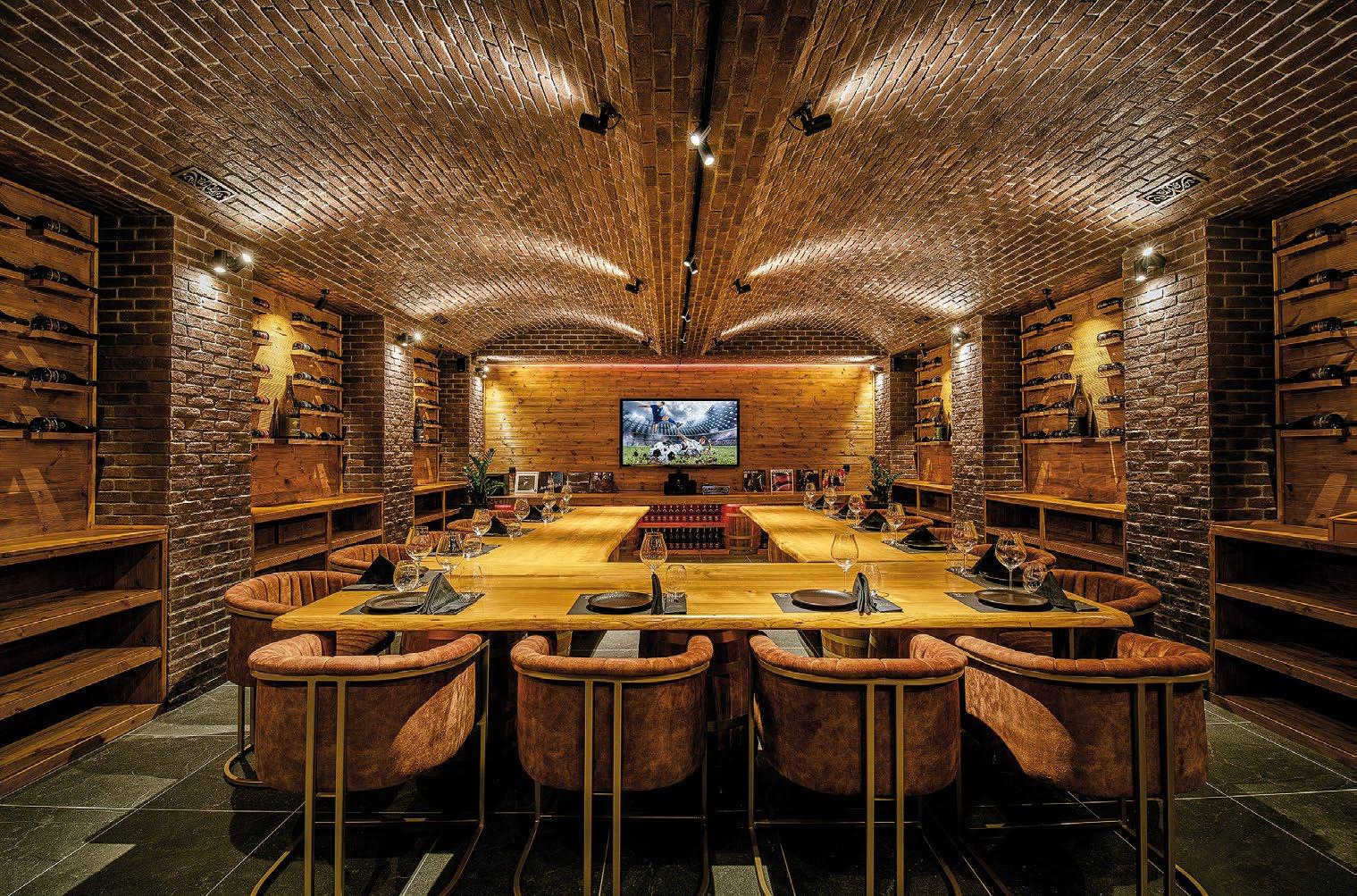
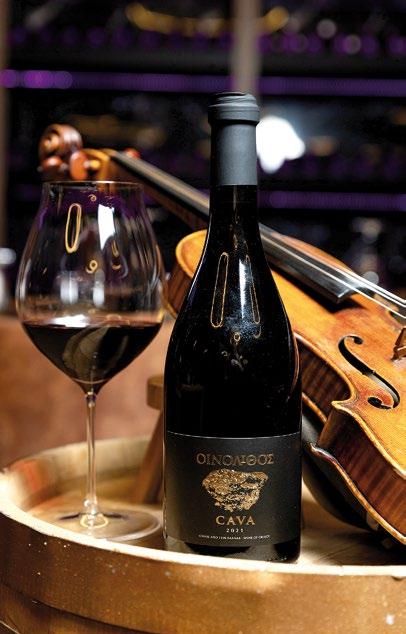
At Shelbys, dining is more than taste, it’s memory. The quiet intensity of fire-seared cuts. The story behind every bottle poured. The balance of precision and soul on every plate. Shelbys is not just a restaurant. It’s a place where flavors linger long after the last bite and call you back, even when you’ve flown far.
Thessaloniki (entrance from Ap. Kougiami) T. 2310 466.220 | W. www.shelbys.gr
MOMus artist
EMOTIONALLY CREATIVE
Taking a stroll through the deeply emotional world of talented photographer Olga Deikou.
____ Interview: STAVROULA KLEIDARIA
Photography: NIKIFOROS NTEMPOS
Tell us about your creative journey. How it began, why you decided to change course, and your key milestones along the way?
My creative journey began when I said goodbye to chemical engineering and turned to photography. It was a decision born out of necessity, and a need to express myself through images, to observe the world not by explaining it, but by feeling it.
Casually, I’d take out my camera and photograph the urban landscapes of Thessaloniki. I didn’t have a plan, just an inner urge to walk, to look, and to capture small moments of silence amidst the city’s chaos. These photographs, which started out as almost personal confessions, received a strong response. It felt as though something invisible was being shared, an unspoken feeling you can’t describe in words.
Alongside my art, I work as a professional photographer, and collaborate with publications, hotels, companies, and clients. This part of my work grounds me as it reminds me of the value of consistency and cooperation.
Where these two paths —the artistic and the professional— converge, there’s this creative tension that keeps me going. Photography, for me, is a way to observe, to connect, and to translate the world around me into something more personal.
You have a distinct personal style—your photos feel both nostalgic and romantic, yet also harsh. What influences this and how would you describe your approach to photography?
I think the way I photograph comes mostly from how I see the world. I’ve always been drawn to contradictions —the beautiful and the worn, light and shadow, tenderness and distance. Maybe that’s why my photos carry a mix of romance and harshness: because both exist inside me.
I’m not interested in showing something “beauti-
ful” in the usual sense, but something real, something that carries a story, a feeling of temporality, or loneliness. Often, I feel like I’m photographing things that are about to disappear, not to save them, but to say goodbye.
If I had to describe how I photograph, I’d say it’s intuitive. I don’t begin with an idea or a goal, instead I start with a feeling. For me, photography is a way to connect with what I see, to understand it, and ultimately to let it reveal itself.
I believe every photo tells a story. What’s one story that will stay with you forever?
I’m not able to pick a single story or photo that will stay with me forever. That changes over time, just as I do. Different phases of my life bring different images and moments that speak to me.
Something that once felt very personal might now look different. It’s not that it loses meaning, it’s that I’ve changed, I’ve grown inside. I think photography follows this same path. It becomes a mirror of your own evolution.
If there’s one story that has stayed with me, it’s the journey itself, how, through images, I continue to learn to see the world, others, and ultimately, myself — again and again.
Is discovering beauty a goal of yours? If yes, how do you bring that unique magic to ordinary landscapes in your photos?
Yes, it is. I think one of the main reasons I photograph is to discover beauty, but not the “perfect” or obvious kind. I’m drawn to the beauty hidden in the everyday, the worn, the almost invisible. The kind that lasts for a moment and then fades away. I believe magic isn’t just in a landscape, but in the way we look at it. When you truly see something —not just to capture it, but to understand it— something changes inside you. And that shows up in the photo.
I try to photograph in a way that leaves space for emotion, for chance, for imperfection. I think that’s where the magic comes from.
You love photographing landscapes with an eerie feel. What’s the narrative here? And why are people rarely seen, or exist mostly in the background?
I think I’ve always been drawn to this feeling of “in-betweenness” — when something feels familiar, but carries a silence, a distance, something a little eerie. Maybe that’s the story my work tells: trying to capture that delicate space between reality and dream.
People are often missing from my photos not because I’m uninterested in them, but because their presence is shown in other ways: in their traces, the landscapes they’ve shaped, the marks they leave behind without realizing it. I’m drawn to this kind of absence — the kind that still holds traces of a story, as if someone has only just stepped out of the frame.
When a person does appear, I usually place them at the edges, and they are part of the landscape. However, I don’t want them to take over. I want them to coexist. Maybe that’s how I feel too, like I’m part of a world, not in the center of it.
Which photography exhibition first inspired you?
Which of your own do you consider most significant? And do you feel exhibiting in a museum helps your work reach a wider audience?
I’ve seen many photography exhibitions that have inspired me over time — especially those with honesty and personality, that didn’t try to impress but expressed something true and personal. Whenever I’d see work like that, it would push me to create again, to search deeper to find my own perspective.
“People are often missing from my photos not because I’m uninterested in them, but because their presence is shown in other ways: in their traces, the landscapes they’ve shaped, the marks they leave behind without realizing it. I’m drawn to this kind of absence—the kind that still holds traces of a story, as if someone has only just stepped out of the frame.”
Of my own exhibitions, the one I hold closest is “Uncovered” at the Stavros Niarchos Foundation. It was very special to me — maybe because for the first time I felt my photos truly connected with people. Visitors stood quietly, stared, and allowed something to move them. It was a beautiful, quiet exchange.
As for whether a museum exhibition matters more, I don’t think so. The value of an exhibition isn’t about the space, but about how many people see it and how many souls will pause in front of it, even for a moment. A small, quiet show can leave a stronger mark than a big, glamorous museum event. What really counts is the connection — when one gaze meets another.
Who or what do you dream of photographing?
I don’t know if there’s a specific who or what I dream of photographing. What excites me most is the idea of capturing something I haven’t yet understood, be it a new worlds angle, or even myself.
What is your definition of beauty?
I think beauty lies not in what we look at, but in the way we choose to see. It’s that moment when you pause —even briefly— and something inside you goes still. It doesn’t have to be “beautiful” in the usual sense; it just has to move you, remind you that you’re alive.
Perhaps that’s the essence of photography for me: capturing those small, quiet moments when the ordinary exceeds its ordinariness — not because the subject has changed, but because the way we see it has.
Does art make life better?
Yes, I believe art can make life better—not because it beautifies or softens it, but because it awakens us. It makes us pause and feel. It calls us back to who we truly are. n
“I’m not able to pick a single story or photo that will stay with me forever. That changes over time, just as I do. Different phases of my life bring different images and moments that speak to me. Something that once felt very personal might now look different. It’s not that it loses meaning, it’s that I’ve changed, I’ve grown inside. I think photography follows this same path. It becomes a mirror of your own evolution.”
MOMus shop
FALL(ING) FOR ART
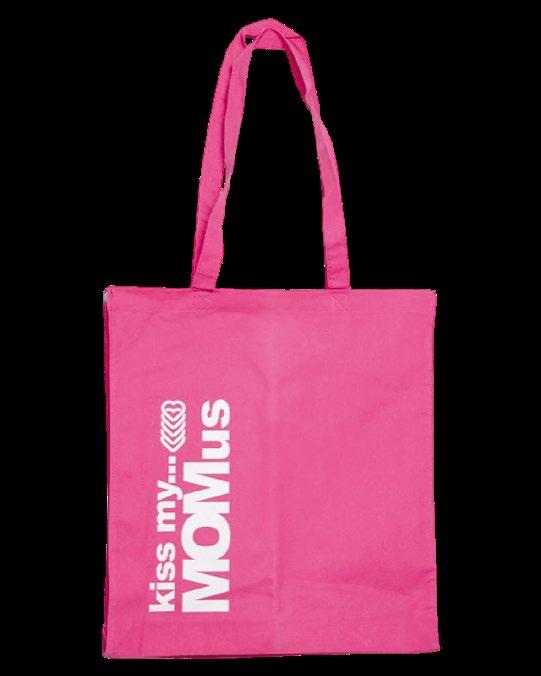
Take a piece of MOMus with you. At the end of your visit, stop by our museum gift shops and discover gifts, publications, prints, office supplies, jewellery, ceramics, clothing, accessories, and collectible items, with high artistic value in every piece.
TOTE BAG KISS MY MOMus.
MOMus.
TOTE BAG KISS MY MOMus. Add color and style to your everyday life with the Kiss my MOMus canvas tote bag. In vibrant magenta, weighing 220 gr., with long handles and pleats, it is ideal for every use – from city strolls to work. n
Available at
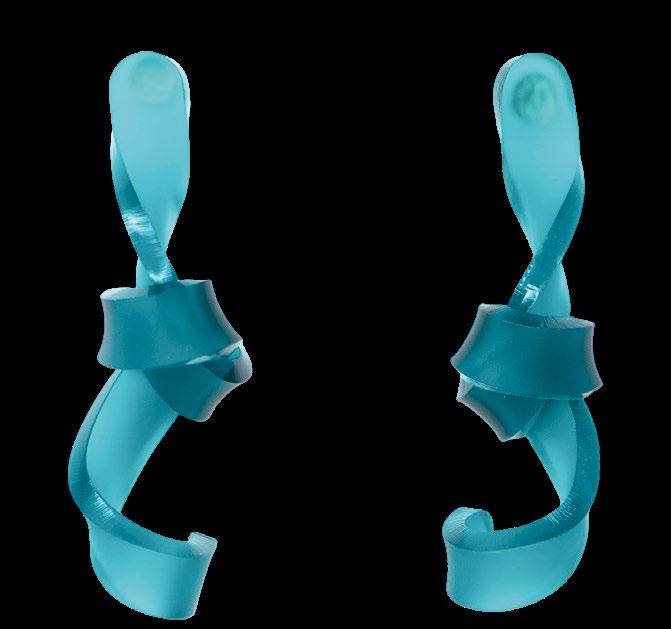
TIE EARRINGS. Plexiglass stud earrings in the shape of a tie, laser-cut. They can accompany any casual look, while the dynamic lines of the shapes enhance any minimal stylistic choice. n
Τιμή/Price:
ΑΦΙΣΑ WARHOL.
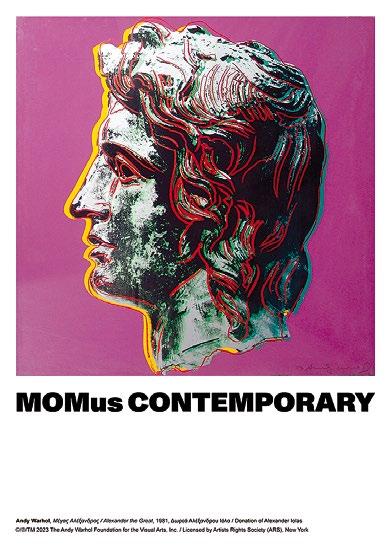
POSTER WARHOL. Bring pop art into your space with Andy Warhol’s poster. Dimensions: 48.5×68 cm, packaged in a tube for easy transport. Perfect for decorating your home, office, or any art-loving environment. n
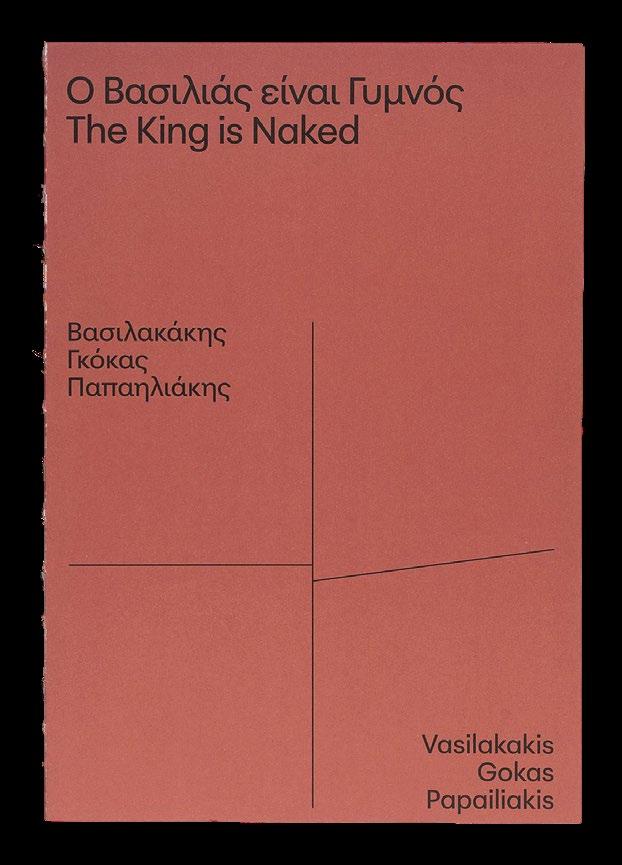
compared, but to continue an artistic dialogue, allowing textures, deep shadows, and colors to converse. Ultimately, the aim is to present a rare artistic generation (and friendship) of three creators, highlighting the power of the image to radically deconstruct reality. n
Τιμή/Price: 15
“ΤΗΕ KING IS NAKED” CATALOGUE. The catalogue accompanies the exhibition under the same title at the MOMus -Museum of Contemporary Art, presenting works by Vasilis Vasilakakis, Vangelis Gokas, and Ilias Papailiakis. The three artists choose not to be
Available at the shops of MOMus-Museum of Contemporary Art, MOMus-Museum Alex Mylona & MOMus-Thessaloniki Museum of Photography.
ΣΤΙΛΟ MOMus BIC. Γράψε
MOMus Bic.
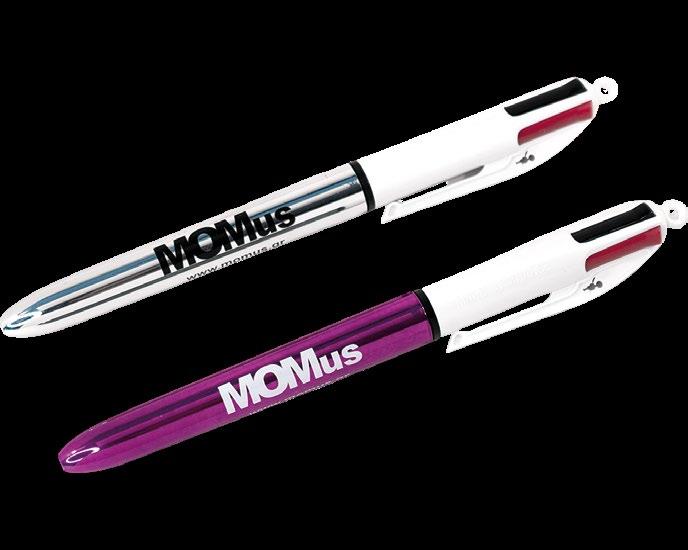
n MOMus BIC PEN. with style and color with the MOMus Bic pen. It includes four ink colors (blue, red, green, black) and comes in silver or purple casing. n
Τιμή/Price: 6 ευρώ/euros
σε
τα πωλητήρια του MOMus. Available at all MOMus shops.
T-SHIRT ΛΙΟΥΜΠΟΒ
(1923-24).
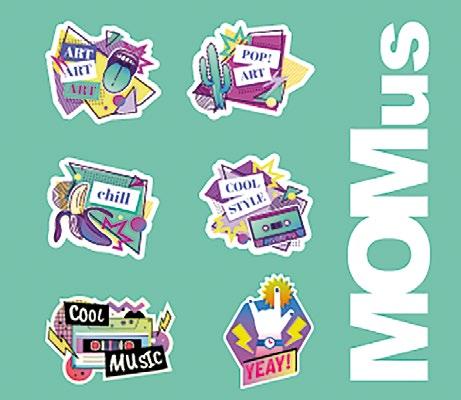
MOMus STICKERS. Add color and style with MOMus stickers. The pack includes one label and six stickers in five vibrant colors (light blue, yellow, black, green, and pink). Ιdeal for decorating notebooks, laptops, bags, and more. n
Unisex,
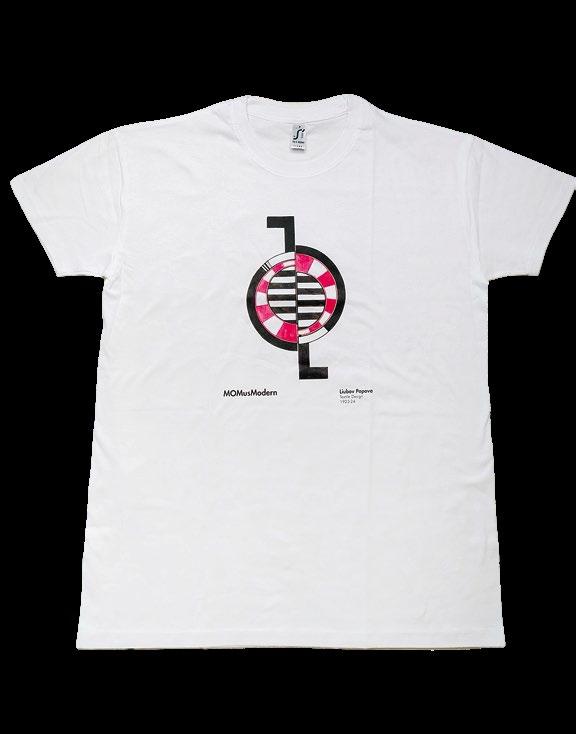
T-SHIRT LIUBOV POPOVA, “TEXTILE DESIGN” (192324). From the Costakis Collection. Unisex, in a straight fit, made of 100% cotton, featuring Lyubov Popova’s famous design. n
Τιμή/Price: 25 ευρώ/euros
ΠΛΕΞΙΓΚΛΑΣ «TRIPLE».
«Triple» (2019)
n
PLEXIGLASS “TRIPLE”.
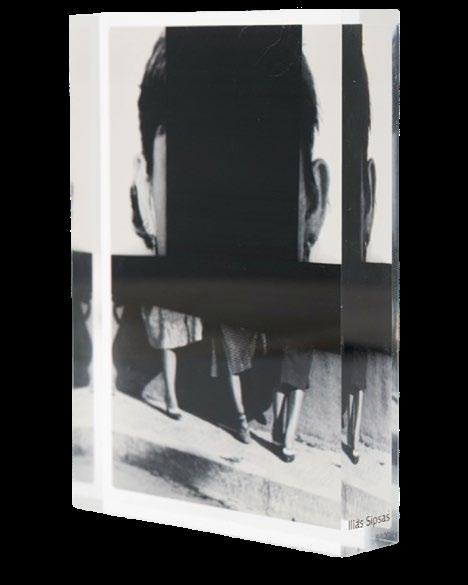
Print of Ilias Sipsas’ “Triple” (2019) on the inside of a special plexiglass construction, from the exhibition “Syzygy. Solid Light & Timeless Motion” held at the MOMus-Museum Alex Mylona. n Τιμή/Price:
MOMus
Available at the shop of MOMus-Museum Alex Mylona.
MOMus
n CERAMIC GLASS.
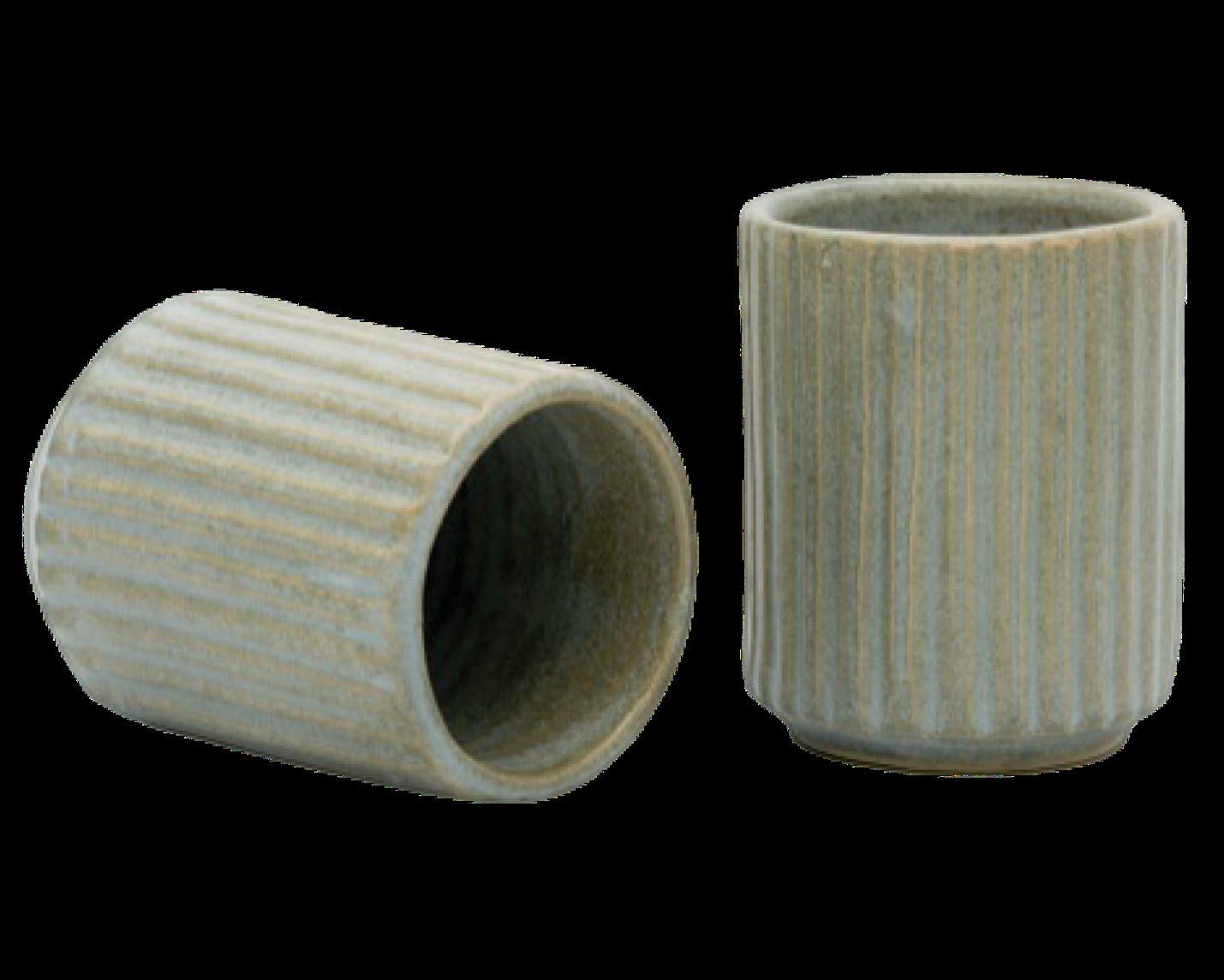
Set of two handmade ceramic water glasses inspired by the work of Ivan Kliun from the Costakis Collection of the MOMus-Museum of Modern Art. Created by George Vavatsis. n Τιμή/Price: 24
Available at the shops of MOMus -Museum of Modern Art, MOMus -Museum of Contemporary Art & MOMus-Museum Alex Mylona.
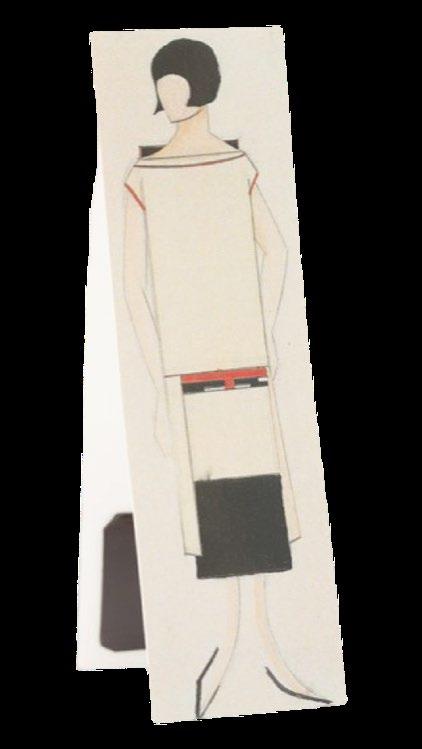
“DRESS DESIGN”. It features the work “Dress Design” by an unknown artist from the Costakis Collection.
ΣΚΟΥΛΑΡΙΚΙΑ PIED DE POULE.
pied de poule,
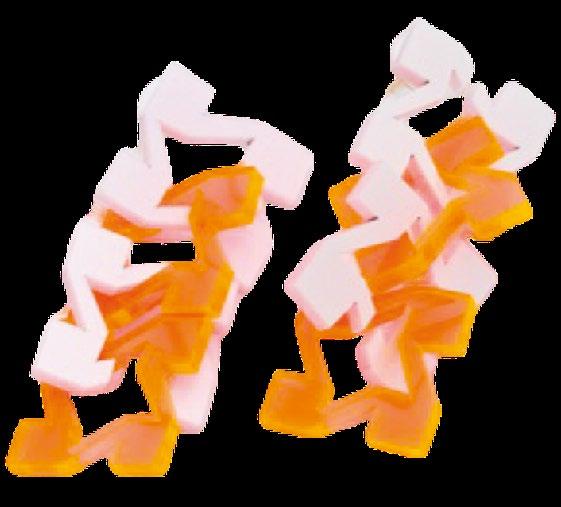
PIED DE POULE EARRINGS. Plexiglass stud earrings, laser-cut. A unique variation of the pied de poule pattern, derived from the motif which resembles the shape left by a hen’s foot in the soil.
Τιμή/Price: 40
Available at «HER STORIES».
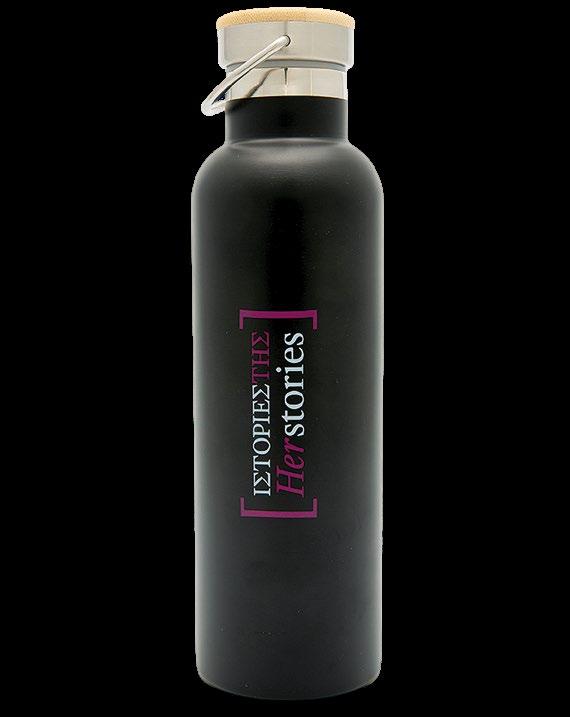
“HER STORIES” THERMOS BOTTLE.
Elegant and practical thermos, featuring the “Her Stories” exhibition logo – perfect for coffee or tea, at the office or on the go. n