ARCH 2060 KING RICHARD III PROJECT
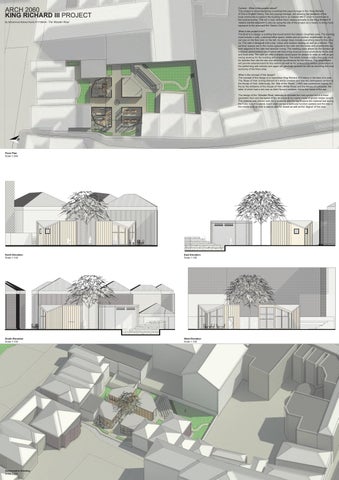
Context - What is this project about? This project is about designing a building that pays homage to the ‘King Richard III’ Era in English history. Not only paying homage, but allowing the residents of the local community to explore the building and in an historic site in order to contribute to the local economy. This will in turn, entice more visitors annually to the King Richard III Visitors Centre (adjacent to site) by using the site of the project as a means to bring more exposure to the area and the Visitors Centre.
By Mohammed Raheel Pasha P17196434 - The ‘Wooden Rose’
What is the project brief? The Brief is to design a building that would enrich the historic Greyfriars area. The building must include a cafe, a seminar/office space, toilets and an outdoor ampitheatre. As you can see on the floor plan on the left, my design does include everything listed in this criteria. The cafe is designed with a bar, indoor and outdoor seating as well as a kitchen. The seminar spaces are in the rooms opposite to the cafe and the toilets and ampitheatre are both adjacent to the cafe and seminar rooms. The meeting room allows for the function of a shared administration place which will help bring revenue to and productivity to the site and local area. The cafe will offer a shared social space for people to relax as well as garnering revenue for the building and employees. The toilets include a baby changing room for families that visit the site and allow for convenience for the visitors. The ampitheatre will provide entertainment for the visitors as well as for outsourcing various productions in the performing arts industry and again will generate revenue as well as enriching the local economy of the friars area. What is the concept of the design? The concept of the design is to symbolise King Richard III’s history in the form of a rose. The ‘Rose of York’ is King Richard III’s family emblem and was the centrepiece symbol of the House of York. Infamously, the ‘War of the Roses’ (1485) was symbolised heavily by the by the emblems of the House of York (White Rose) and the House of Lancaster, the latter of which had a red rose as their House’s emblem, hence the name of the war.
B-B
The design of the ‘Wooden Rose’ attempts to recreate the rose symbol but in a more geometric form and the bases of the structure to be mainly made of glulam timber (wood). The material was chosen both for it durability and the significance the material had during the Tudor Era of England. Each room carries a particular function (petals) and the tree in the middle acts as both a natural area for shade as well as the ‘stigma’ of the rose.
A-A
Floor Plan Scale 1:200
North Elevation Scale 1:100
East Elevation Scale 1:100
South Elevation Scale 1:100
West Elevation Scale 1:100
Axonometric Drawing Scale 1:200