
Michigan Music Educator
v. 56, no. 1 winter 2019 Official Publication of the Michigan Music Education Association



FREE FOR MUSIC EDUCATORS | PUBLISHED QUARTERLY www.YamahaSupportED.com LEARN + INSPIRE + LEAD SIGN UP TODAY!
 Abby Butler
I’ve just finished creating a written test for the undergraduate students enrolled in the Introduction to Music Education course I teach. I enjoy teaching this class for a number of reasons. First, I appreciate the opportunity it affords to learn about my students along with their aspirations for a career in teaching music. I also appreciate the way my students challenge me to stay on top of my game as we explore and construct our understanding of what it means to teach music successfully. I’m passionate about music and fascinated by the complexities of teaching, so the Intro course is a great fit.
It forces us to lay bare our beliefs and examine our assumptions while challenging us to defend, support, and articulate those beliefs. Doing so repeatedly and over time deepens our understanding, helping us to refine and crystalize our ideas. Why is this important? It is unlikely that we will share these ideas and beliefs with others, as they are highly personal. We might refer to them when advocating for music education, but this typically requires a more general focus and vocabulary. So again, why is it important for us to revisit our personal philosophy of music, teaching, and learning?
From the Editor
This particular test comprises information from two of my favorite chapters, “Education in the United States: Its Historical Roots” (Ch. 4) and “Educational Philosophy and Your Teaching” (Ch. 5), from our text, Introduction to Teaching: Becoming a Professional by Don Kauchak and Paul Eggen1. Although some might consider these topics boring and irrelevant, I find them intriguing. Perhaps it’s the way in which the authors contemporize historical and theoretical issues or how they frame questions that encourage deep thinking. Regardless, I find the topics compelling, refreshing, and stimulating.
As you might imagine, many of my students fail to exhibit the same enthusiasm, after all, they just want to teach music. So when we get to these chapters, I make a point of seeking out strategies that will engage students with the information while helping them explore ways in which what they’re learning impacts their practice. Therein lies my fascination. What do I need to know about these topics in order to contextualize them for my students, a question that requires me to deepen my own understanding of music teaching and learning.
Let’s look briefly at philosophy. Most teacher preparation programs require students to examine their beliefs about music and education. In fact the ubiquitous philosophy statement paper crops up everywhere in various courses within the music education curriculum. Each year I wrestle with whether or not to include this assignment. Some students really struggle to complete the assignment and I wonder how much they’re learning in the process. Yet it’s through the process of struggling to make manifest their beliefs that they have the potential to grow the most.
Think about this. Philosophy asks us to consider difficult and often unanswerable questions.
Teachers make hundreds of decisions every day and those decisions are often translated into actions that affect our students. Furthermore, our actions, which are rooted in our personal beliefs, are often tied to the success of our programs. When we can identify and articulate our beliefs we are in a better position to understand instructional decisions and apply meaningful criteria as we analyze and reflect on our own teaching practices. For me, this is one of the most compelling reasons to actively and repeatedly explore our own personal philosophy.
In this issue of the Michigan Music Educator you will find a variety of articles related, of course, to some aspect of music learning and teaching. As you read them, consider how they might support or challenge your personal beliefs. For example, consider Norman Wika’s article on the importance of practice and the development of independent musicians. He describes what he and others believe to be effective practice: deliberate, goal-oriented, effortful, and structured. How do your beliefs jive with this definition? If your knowledge and experience lead you to agree, how might you incorporate his ideas into your classroom? If you find yourself questioning some of those suggestions, what does that say about your beliefs? Do you consider practicing an important skill for students to develop, yet prefer a different approach, why?
Perhaps you are intrigued by Holly Olszewski’s article, Take Note of This: Getting along with Your Administrators and Building Staff. In this article Olszewski shares a favorite principal’s perspective on building collaborative relationships among all teachers, including specialists, to create a productive and respectful learning environment. As you read through the suggestions she describes, think about how your personal experiences may color your reactions. Is this collaborative approach something you value? Do
2
you believe in the principles of working together as a team? Why or more importantly, why not? What will you take away from this article, given your beliefs?
For a final example let’s look at the Books and Media Review column, which features a review of music educator Peggy Bennett’s new book, Teaching with Vitality: Pathways to Health and Wellness for Teachers and Schools2. This inspirational book offers advice on an array of topics with something of value for everyone. Column editor, Marie McCarthy, tasked three music teachers with reviewing the book and sharing their responses. The beauty of this approach presents us with three distinct reactions to the topics and nuggets of wisdom that are the mainstay of Bennett’s work. In her portion of the review, teacher Kristi Bishop reminds us of how easy it is, given our demanding jobs, to go on autopilot. We race from class to class or from one rehearsal to another, attempting to fix problems on the fly or at least apply a temporary band aid, all while encouraging, cajoling, or reprimanding students (and sometimes parents or fellow teachers). Our days may seem like a never-ending stream of activity where we confront problems or tasks Stephen Covey3 refers to as “urgent” rather than “important”. We can all identify with this dilemma of urgent versus important. Unfortunately it’s usually easier to address the in-your-face problems rather than set aside time to focus on
what truly matters. However, it’s important to remember our beliefs reflect our values and inform the things that matter most to us, and ultimately shape our decisions. If we fail to acknowledge their role in defining who we are as musicians and teachers, we run the risk of allowing our actions to be guided by the beliefs of others, a slippery slope towards mediocrity or worse.
Thus we return to the topic of philosophy, to the big question of WHY? Why do I believe the things I do? Why do they matter? I challenge you to ponder these questions – and others – as you explore this issue of the Michigan Music Educator. My hope is that in doing so you will come to a deeper understanding of what’s important rather than urgent and use that knowledge to guide your professional decisions and actions in ways that resonate with your beliefs as you strive to make a difference in the musical lives of the children and individuals you encounter.
1Don Kauchak and Paul Eggen, Introduction to Teaching: Becoming a Professional, 6th ed. (Boston: Pearson, 2017).
2Peggy D. Bennett, Teaching with Vitality: Pathways to Health and Wellness for Teachers and Schools (New York: Oxford University Press, 2018).
3Stephen R. Covey, The Seven Habits of Highly Effective People: Powerful Lessons in Personal Change (New York: Free Press, 2004).
Editorial Board
The editorial board urges readers to submit articles of interest to our profession, and encourages this important professional development activity for all members. Articles may be authored or co-authored, address other relevant topics/areas (see columns, at right), and may be considered at any time. Submitted articles will be peer-reviewed by the editor and editorial board members with editing and production in process for five to six months ahead of the publication date. See the published Guidelines for Contributors (on page 45 of this issue) for further information.
Please submit articles electronically to the Editor: abby.butler@wayne.edu
MMEA Editorial Board Positions
Adult Learners
Open
Higher Education
Lauri Hogle
Book & Media Reviews Instrumental
Marie McCarthy
Jeremy Duby
Choral Jazz
Charles Norris
Keith Hall
Collegiate Policy / Advocacy
Ashley Allen
Ryan Shaw
Composition Research
Open
Shannan Hibbard
Cultural Diversity & Special Learners
Social Justice
Kate Philp
Angela Snell
Early Childhood & Technology
General Music
Holly Olszewski
Denise Lewis
3
Michigan Music Educator
56, no. 1 winter 2019
President Lisa Furman 2530 Zion Road Rives Junction, MI 49277 C) 517-945-6959 lfurman@olivetcollege.edu
President-Elect
Bill Vliek 1862 Cahill Drive
East Lansing, MI 48823 C) 517-599-4291 vliekw@fowlervilleschools.org
Immediate Past-President
Karen Salvador
University of Michigan-Flint 126 French Hall, 303 E. Kearsley Street Flint, MI 48502
C) 517-862-1982 ksalvado@umflint.edu
Secretary Brooke Broughton PO Box 800 DeWitt, MI 48820 C) 517-927-4280 BroughtonB@dewittschools.net
Treasurer
Carin McEvoy 620 Dunbar Court East Lansing, MI 48823 (517) 881-6803 carin.mcevoy@gmail.com
Executive Director
Cory L. Mays PO Box 410 Jackson, MI 49204 O) 517-748-6518 executive@mmeamichigan.org
Official Publication of the Michigan Music Education Association www.mmeamichigan.org
Published three times annually: August 30, December 31, and April 30. All correspondence relating to editorial content should be addressed to the Editor, Abby Butler: abby.butler@wayne.edu
Correspondence relating to circulation or advertising should be addressed to: Joyce Nutzmann, 11878 Parklane St., Mount Morris, MI 48458, nutzmann1@att.net
Designed by: Cory Micheel-Mays
Printed by: American Speedy Printing (Jackson, MI)
Subscription price is $25 annually for non-members. Single copy is $7.
The Michigan Music Education Association is a federated state unit of The National Association for Music Education, 1806 Robert Fulton Drive, Reston, Virginia, 20191 (703) 860-4000 www.nafme.org
7 Independent Musicians: How Important is Practice Anyway?
Wika 10 Speaking the Language of Jazz Improvisation -- Matthew Fries
25 Books & Media
Book Review: Bennett, Peggy D. Teaching with Vitality: Pathways to Health & Wellness for Teachers & Schools 28 NAfME Collegiate NAfME Collegiate News -- Grace Pawluszka
13 General Music Take Note of This: Getting Along with Your Administrators & Building Staff -- Caroline Wacker 15 Instrumental Fostering Coordination & Cooperation among School Band & Orchestra Programs -- Phillip M. Hash
Choral So Much More than Just the Music
Virginia Kerwin
Technology Organizing & Sharing Student Performance Files -- Ian Boynton
Policy/Advocacy Teacher Preparation Programs in the Balance: Legislative Updates from Lansing --Ryan Shaw
Research A Report on the NAfME Music Research & Teacher Education National Conference: Diversity, Equity, Inclusion, & Access -- Lauri Hogle News
MMEA
34 Guidelines for Submitting Articles
Contents Departments 2 From the Editor 6 President’s
Articles
Columns
Message
Norman
17
--
20
22
Editorial
5
14
33
30
3
Board
MMEA Board Members
Fall Workshop Flier 28 Advertising & Sponsorship
Calendar
Executive
Advertisers in this Issue Please support these advertisers, as they support music education in Michigan Yamaha....................Inside Front Cover JW Pepper & Son..................................9 Michigan Music Conference.............12 JW Pepper & Son................................24 University of Nebraska-Lincoln........29 NAfME.................................................32 EPN Travel............Outside Back Cover 4
v.
Committee
Michigan Music Education Association
Board Members
Region Representatives
Region A Cathy Wilkinson (cwilkinson@jklschool.org)
Region B----Holly Olszewksi (olszewskho@tcaps.net)
Region C Deidra Ross (rossd@reeths-puffer.org)
Region D Cari Cravotta (cari.cravotta@elps.us)
Region E Charissa Duncanson (duncanc@dearbornschools.org )
Membership Coordinator Dan DeZwaan (dezwaandan@allendale.k12.mi.us)
Higher Education Coordinator ----Colleen Conway (conwaycm@umich.edu)
Collegiate NAfME State President Grace Pawluszka (pawlu1ga@cmich.edu)
Government Relations Coordinator Ryan Shaw (rydshaw@gmail.com)
Journal Editor, Michigan Music Educator----Abby Butler (abby.butler@wayne.edu)
Technology Coordinator/Webmaster Denise Lewis (dlewis@wpcschools.org)
Inclusive Instruction Coordinator Shannan Hibbard (hibbards@umich.edu )
Choral Activities Coordinator----Lisa Ebener (lisa.ebener@nwschools.org)
Instrumental Activities Coordinator Jeremy Duby (jduby@olivetcollege.edu)
General Music Activities Coordinator ----Holly Olszewski (olszewskho@tcaps.net)
New Directions Coordinator ----Katie Pike (kpike75@gmail.com)
MMC Planning Committee Representative Carin McEvoy (carin.mcevoy@gmail.com)
Professional Development Coordinator Denise Wilkinson (wilkinsond@glcomets.net)
Executive Director Cory L. Mays (cmicheelmays@sbcglobal.net)
5
President’s Message
Greetings. We hope you enjoy this edition of the Michigan Music Educator journal, one of the many benefits of being a member of this great organization. In this edition, I want to introduce myself and to share with you some of the exciting events we have planned for the 2018-2019 academic year. My name is Lisa Furman and since the last edition of the journal, I assumed the role of president of MMEA. I appreciate the opportunity to serve in this position and to work closely with our fantastic Executive Director Cory Mays, our fabulous Immediate Past-President Karen Salvador, and the amazing members of our board. These individuals provide countless hours of volunteer work to provide amazing music educators such as you with exceptional professional development events and performance opportunities for elementary, middle, and high school students throughout our state.
MMEA is dedicated to serving music educators, students, parents, and community members through leadership in the advancement of music teaching and learning. MMEA is proud to offer a variety of events every year for educators and students at all levels. We hope you and your students will be able to participate in some of the exciting events we have planned for the 20182019 academic year. Events this year include the first Upper Peninsula Music Education Workshop, the 2018 General Music Fall Workshop, the Young Singer’s Choral Workshops, Instrumental Clinics, Elementary Honor’s Choirs, the Technology Workshop, and of course the Michigan Music Conference, among others.
Be sure to mark your calendars to attend the first annual MMEA social hour at the Michigan Music Conference in January. This new event replaces the Saturday morning coffee hour and awards ceremony. MMEA offers five awards to recognize notable achievements and support for music education. These five awards include the Award of Merit, the Outstanding Administrator MMEA Recognition Award, the Hilda E. Humphrey Service Award, the Music Educator of the Year Award, and the Friend of Music Education Award. We are currently accepting nominations for all our 2018 awards. Visit the MMEA website for details, and for information about the new MMC social hour, which will take place at 4:00 PM on Friday afternoon. Please join us in January as we celebrate the 2018 MMEA award winners and enjoy each other’s company in this fun and relaxing social event.
Speaking of awards, MMEA was thrilled to be the recipient of the 2018 National Association for Music Education Excellence in Advocacy Award. This award, presented annually at NAfME’s National Leadership Assembly, recognized the Michigan Music Education Association for outstanding accomplishments in music education advocacy. In addition, Lindsey Streeter, an undergraduate music education student attending Western Michigan University also received a Collegiate Professional Achievement Award from NAfME at this year’s National Assembly. This award, provided to collegiate members who have served their chapters in an exemplary manner, offers recognition of their commitment and dedication to NAfME and music education.
MMEA is proud of its strong history of providing state and national advocacy/legislative support and outreach to pre-service, current, and retired Michigan music educators of all experience levels. MMEA has been a key player in several public policy discussions at the state level, including the writing and implementation of Michigan’s state ESSA plan. MMEA’s efforts led to a state ESSA plan that includes music and arts in our state accountability reporting system, while identifying music and arts as potential uses for federal Title IV-A funds.
We are also pleased to share that the MMEA is the recipient of two grants this year, a generous operational support grant from the Michigan Council for Arts and Cultural Affairs, and a grant from the Country Music Association. We are particularly excited about the CMA grant, which will be used to create a video campaign highlighting quality teaching in all parts of Michigan.
MMEA is proud to be a leader in the advancement of music teaching and learning in the state of Michigan and is working hard to provide members outstanding professional development and student performance opportunities. We hope you will take advantage of the many benefits of your membership this year, such as access to this journal and attendance at our exciting events. To our MMEA members, constituents, and supporters, on behalf of the MMEA board, we say thank you for continuing to be a member of this outstanding organization and for your unwavering support for quality music education for ALL Michigan students!
6
Lisa Furman
Independent Musicians: How Important is Practice Anyway?

As music educators one of our main goals should be to “teach ourselves out of a job” by creating independent musicians who love playing their instruments and can solve most any musical problem on their own. In addition to teaching the technical skills of music making, we must strive to teach practice skills, giving each student a stocked “toolbox” of strategies for overcoming difficult passages and more importantly, the knowledge of how and when to use those tools. Undoubtedly all music teachers talk about practice and many even make it a required part of the curriculum, but how much time is spent in class teaching skills necessary for students to become independent, effective practicers? In 2002, Marilyn Kostka published a study that looked at that exact question. In it, she surveyed 127 college applied studio instructors and 134 music majors. While 94% of teachers suggested a “regular practice routine”, only 45% of students report using a regular routine. 100% of teachers surveyed reported discussing specific practice techniques, yet 41% of students reported that no practice techniques were discussed in lessons.1 To help students become independent musicians, teachers must teach them the skills to become effective practicers.
What is effective practice? Effective practice is deliberate practice. Dr. K. Anders Ericsson writes that deliberate practice “requires the generation of specific goals for improvement and the monitoring of various aspects of performance. Furthermore, deliberate practice involves trying to exceed one’s limit, which requires full concentration and effort.”2 To be effective, deliberate practice must be goal-oriented, effortful, and structured. This seems logical to most advanced musicians, but is not necessarily intuitive to young students.
In a 2001 study McPherson and Renwick looked at seven children, age 7-9, over the first three years of their formal musical study.3 They found that students’ natural practice ability varied widely. They stated, “Our results lead
us to conclude that a majority of our learners possessed the will to learn their instrument, but not necessarily the level of skill required to ensure efficient and effective practice.” Furthermore, “Our preliminary findings suggest that the skills of knowing how to self-monitor, set goals, and use appropriate strategies take time to develop in most young children.” This suggests that students must learn how to practice deliberately, but more importantly that teachers must teach students the skills required to do so. To return to the ideas of Ericsson, teachers must teach students to be goal-oriented, effortful, and structured.
To be goal-oriented, students must have a solid idea of what the final product should sound like. A mature musician will have the ability to audiate a new piece of music and work towards producing that sound on his or her instrument. Young musicians need a high-quality model (recording) to which they can compare their performance. The younger the musician, the more important that model is, as in speech development, young children must hear sounds repeatedly before they can begin to produce those sounds. In Hewitt’s 2001 study, he concluded that the group provided with the model showed more improvement in tone, technique/ articulation, rhythmic accuracy, tempo, interpretation, and overall performance.4 Young students who use a model to compare their performance will make faster progress than those that do not. It is not suggested that students use models as a substitute for learning to read notation, but rather that the model is used as a tool to help students learn how to improve their own performance.
Deliberate practice is effortful, but not timebased. It is much more important how music is practiced than the number of clock minutes logged. Students who learn to plan their practice session, strategize problem solving, and self-evaluate will progress faster than those who simply start at the beginning and play to the end. Duke, Simmons, and Davis looked at
7
Norman Wika
a group of graduate and undergraduate piano majors and how they structured their practice time.5 They concluded, “The results show that the strategies employed during practice were more determinative of performance quality at retention than was how much or how long the pianists practiced, a finding consistent with the results of related research.” The top three performers in this study all shared three characteristics, while none of the others showed all three. They were:
1. The precise location and source of each error was identified accurately, rehearsed, and corrected.
2. Tempo of individual performance trials was varied systematically; logically understandable changers in tempo occurred between trials.
3. Target passages were repeated until the error was correct and the passage was stabilized, as evidenced by the error’s absence in subsequent trials.
Miksza arrives at a similar conclusion in his 2006 study.6 He writes, “Furthermore, the duration of time spent playing was not found to be significantly related to performance scores, suggesting that perhaps the type of activities the subjects participated in during the experimental session was more important than how much they actually played during the practice session.” Many teachers use time-based practice records in assessment, but perhaps students can be better assessed on their activity rather than clock minutes, similar to the way an algebra teacher assigns a number of problems for homework, not a number of minutes.
Finally, deliberate practice is structured. Students must learn to self-regulate in order to practice deliberately. According to Zimmerman, self-regulation is present when students are “meta-cognitively, motivationally, and behaviorally active participants in their own learning process.”7 Students must learn to set goals for their practice session, plan appropriate strategies to achieve those goals, carry out the plan, and evaluate the results. Students also need the ability to be flexible within the plan and apply various strategies to musical problems until they are solved. Miksza writes “Subjects in the low impulsive group made significantly greater gains in performance achievement than those in the high impulsive group.”8
A portion of self-regulation is planning and executing strategies to solve musical problems. These are the tools that every musician must have to learn to perform their music. This can include tempo, rhythm, or articulation alterations, wind patterns, singing, or any number of activities that allow the passage to be mastered. Teachers should take opportunities in rehearsal to model effective practice strategies and make sure that students know how to use the strategy correctly. Once a strategy is learned, the teacher can help the students to see other passages where that tool might be
effective. The more differentiated ways that a student learns to practice, the more independent they can become, and if creating independent musicians is one of the goals, then the teaching of effective practice skills must be addressed in an organized, systematic way.
Students are confronted by musical problems every day in rehearsal and during practice sessions. Teaching them how to solve those problems on their own will create the type of independent musician that will hopefully be engaged in lifelong music making. To be effective in the practice room, students must be deliberate about their practice. They must effectively use models, understand how to structure their time, and be able to self-regulate during their practice session. Of course, a healthy amount of grit helps out as well. As psychologist Angela Duckworth said in a TED Talk, “Grit is passion and perseverance for very long-term goals. Grit is having stamina. Grit is sticking with your future, day in, day out, not just for the week, not just for the month, but for years, and working really hard to make that future a reality. Grit is living life like it’s a marathon, not a sprint.”
1Kostka, Marilyn J. “Practice Expectations and Attitudes: A Survey of College-Level Music Teachers and Students.” Journal of Research in Music Education 50, no. 2 (2002): 145-155.
2Ericsonn, K. Anders and Andreas C. Lehmann. “Expertise.” In Encyclopedia of Creativity, 695-707. Edited by Mark Runco and Steven Pitzker. New York, NY: Academic Press, 1999.
3McPherson, Gary E. and James M. Renwick. “A Longitudinal Study of Self-Regulation in Children’s Musical Practice.” Music Education Research 3, no. 2 (2001): 169-186.
4Hewitt, Michael P. “The Effects of Modeling, Self-Evaluation, and Self-Listening on Junior High Instrumentalists’ Music Performance and Practice Attitude.” Journal of Research in Music Education 49, no. 4 (2001): 307-323.
5Duke, Robert A., Amy L. Simmons, and Carla Davis. “It’s Not How Much; It’s How.” Journal of Research in Music Education 56, no. 4 (2009): 310-321.
6Miksza, Peter. “Relationships Among Impulsiveness, Locus of Control, Sex, and Music Practice.” Journal of Research in Music Education 54, no. 4 (2006): 308-323.
7Zimmerman, Barry J.. “Becoming a Self-regulated Learner: Which are the Key Subprocesses?” Contemporary Educational Psychology 11 (1986): 307-313.
8Miksza, “Relationships Among Impulsiveness, Locus of Control, Sex, and Music Practice.”
Dr. Norman Wika currently serves as the Director of Bands at Saginaw Valley State University, where he directs the Cardinal Marching Band and conducts the Wind Ensemble and Concert Band. He holds a Doctor of Musical Arts in Conducting and a Master of Music in Music Education from the University of Connecticut, and a Bachelor of Music in Music Education from the University of Miami.
8
NOBODY KNOWS YOUR PROGRAM LIKE YOU DO
time
effort
make sure they get
best
started
new music,
other directors.
DELIVERING MUSIC SINCE 1876 JWPEPPER.COM | 1.800.345.6296 Copyright © 2017 J.W. Pepper & Son Inc.
You know your students’ needs and put in the
and
to
the
possible care and instruction. But you shouldn’t have to do it alone. That’s why Pepper is here to support you when you need us. We’ll help you get
with repertoire suggestions,
and tips from our editors and
You’re the expert. We’re here to help.
Speaking the Language of Jazz Improvisation
I’ve met many musicians who claim they can’t improvise. Someone will come up to me after a performance and comment on my playing, and then add that they could never improvise like that. They describe it as if it were some sort of magical ability that only certain people have, and they just could never do it. But ironically, they are really improvising at that very moment. We all improvise all day long. We do it with words. Improvising is the same skill we use when we communicate and figure out the best way to express meaning in the moment with words. So, in many ways, learning jazz improvisation can be compared to learning a foreign language and if we think of it this way we can find some great guidance in what and how to study.
There are many similarities between the way we learn jazz improvisation and the way we learn a new language. The parallels are present in concepts such as grammar, vocabulary, pronunciation and more.
Learn Jazz the Same Way We Learned to Speak
When we look at learning jazz we often think first about learning chords and scales, and I like to compare this to the way that we learn grammar in language. It is important to grasp how to correctly conjugate verbs and structure sentences, but it can be a big step to go from these rules to a place where we are expressing something meaningful and are really able to speak a language. Similarly, when we are learning music, we end up asking ourselves what do we do with these notes that are supposed to sound like jazz? The musical grammar rules might tell us that a B flat will sound great on that C7 chord, but studying grammar is just one part of this process. How do you make it sound like jazz improvising?
I’ve found the most effective tool in learning to improvise in jazz authentically is “transcribing.” Transcribing in jazz is the process where
a student listens to a recording, figures out what the soloist is playing and learns to play it. Each of these steps in transcribing has value, and through this process of imitation we learn to go from a bunch of random noises on our instrument to something that sounds great and makes sense! And isn’t that exactly how we learned to speak when we were young? By imitating those strange words our parents were saying? Some of us as educators have probably suggested transcribing a solo to our students without knowing exactly what is so helpful about it, but this connection to language learning can shed light on why it can be effective.
Why Is Transcribing So Useful?
There are many benefits to this process for a student of jazz. It’s true that if we aren’t used to playing by ear, transcribing can be an overwhelming and difficult challenge at first, but there is a wealth of information to be gained in the process. There are always shortcuts –there are books of transcriptions out there, and a quick Google search will turn up tons of transcriptions – but the process of listening and figuring it out note by note is what is most valuable. Compared to reading, listening is certainly more closely connected to speaking in language and so, in our musical language, listening over and over to figure out what is played can be a pathway for absorbing what we hear and using it in our own music. Like anything else, transcribing gets easier and easier the more we do it, and learning to play by ear isn’t the goal. This is about using imitation to get ourselves playing in a way that fits the jazz style of phrasing, tone and note choice. Let’s look at some of the specifics and some of these language parallels.
Where Do We Start?
A great first solo is Miles Davis’ solo on “So What” from his quintessential album Kind of Blue (if you don’t own it, you should go buy it right now). His playing is clear and melodic, and the tune only has two chords, so the pro-
10
Matthew Fries
cess can be solely about focusing on his phrasing, articulation and style. Trying to match the tone and inflections of what Miles played is a lot like working on pronunciation in language. Are we really saying that word exactly the way a native speaker would say it? Challenging ourselves to really sound like Miles is not only a lot of fun, but it also has a direct parallel to learning to talk like a native speaker of a language. It’s those details of inflection and tone that makes someone sound like they have been speaking a language all their life.
Those same Miles Davis phrases that we learned to mimic also have another use. We’ve all heard about learning licks. While just playing licks obviously isn’t the same as improvising, those licks are really musical vocabulary and phrases that we can reuse. We can extract them from the solo we are learning in a very specific way and study them more deeply. A long lick might be thought of as sentence or saying. Shorter phrases are like individual words. Both of these types have places in our study, but for me it’s those short phrases of a few notes that really help us.
Imagine you were just taught the word for “chair” in a new language. To use your new word, you would need to start finding how to put it in your own sentences. You could just go walking around saying “Chair. Chair. Chair.” but you would probably get some strange looks. More importantly you wouldn’t be really learning how to use the word. A better tactic is to combine your new word with things you already know and try to construct your own sentences. Maybe something like: “Is that my chair?” “My chair is blue.” “May I sit in this chair?” Eventually you don’t have to think about your new word anymore. It naturally becomes part of what you say, and that’s exactly how the process happens with this musical transcribing process. We use our knowledge of chords and scales (and our ear) to insert our transcribed musical phrase in every possible way and in every situation until it disappears into what we know how to do. Then you start this process again with another phrase.
How to Make the Jazz Language Our Own
When I was learning to play I had a teacher show me the valuable lesson of “playing out of” and “playing into” a lick I had found in a transcription. It was his musical version of creating sentences with my new word. He had me play the whole lick by itself. Then he had me play the first part and make up a new second part. Then I had to play the second part and make up a new first part. I experimented with this for a long while and eventually the lick disappeared into my playing and became part of how I speak on the instrument. I wasn’t walking around saying “Chair. Chair. Chair.” anymore.
Working with the Miles Davis Solo
Here is a phrase transcribed from the Miles Davis solo on “So What.”

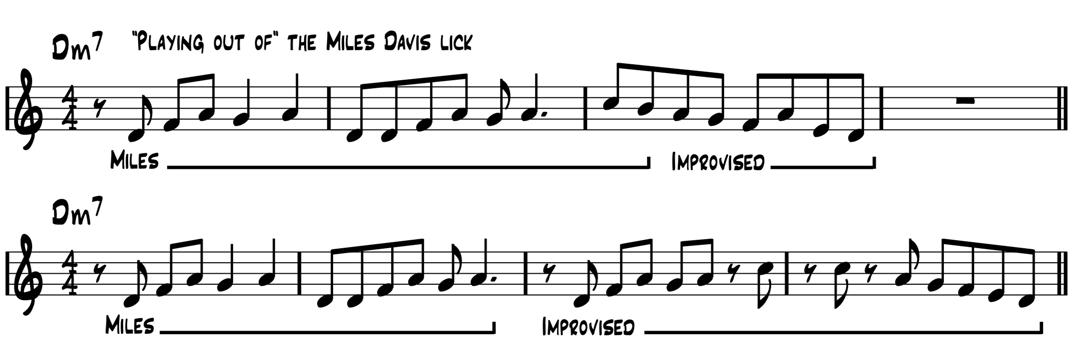
Here are two examples of “playing out of” the phrase we learned from Miles. The examples start with what Miles played and finish with some improvised notes of our own.
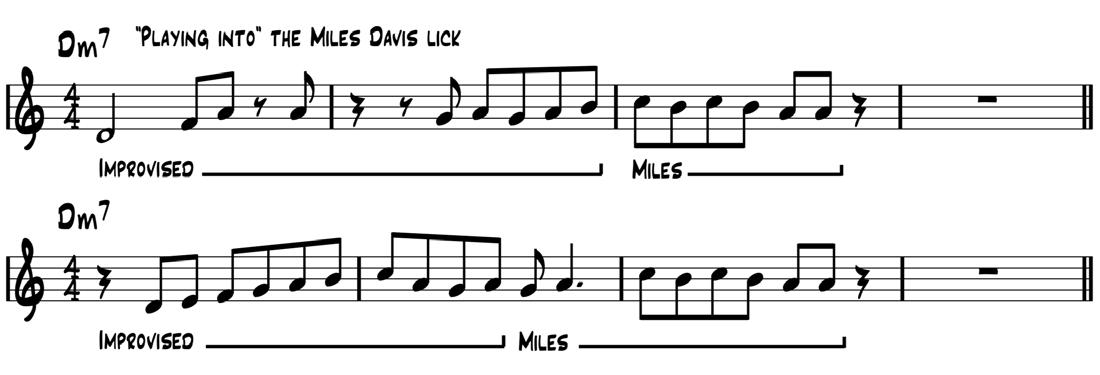
Here are two examples of “playing into” the Miles Davis phrase. This time we start with our own improvised notes and we blend seamlessly into the last part of the phrase that Miles played.
What Else Can We Learn?
We know this exploratory process in language learning can lead us to discover connections in our vocabulary, and this is true for jazz improvisation as well. Learning “chair” in a new language means we might have to learn other related words like “seat,” “cushion,” “leg” or “sit” if we want to be able to use our new word. Our musical study works the same way. If our new phrase is a bluesy one, for example, we’ll probably need to find more bluesy phrases to go with it for it to make sense and be useful.
I discovered as a student that these transcription projects are great in groups too. And this year as a new professor at Western Michigan University I encouraged a group of my rhythm section students to transcribe together. It was a bit different than transcribing a jazz solo, but the concept is the same. They began to transcribe some classic piano trio arrangements by pianists like Oscar Peterson, Tommy Flanagan and Ahmad Jamal and worked together to try to make
11
their version sound like the original. Beyond just learning the arrangement their goal was to really try to match the sound of the original as a group, and they were inspiring each other to find new sounds in their own playing.
The great jazz trumpeter Clark Terry sums up this learning process wonderfully. He breaks it down to just three words: “Imitation, Assimilation, Innovation.” We imitate what we hear until we assimilate it into what we play, and only then can we use it to innovate and create something new. Just like in learning a foreign language, it is the completion of all three steps that gets us past the analytical process of grammar. It’s what eventually allows us to improvise freely in music and really begin to speak the language of jazz.
A few suggested solos for beginning transcription:
• Miles Davis trumpet solo on “So What” from his album Kind of Blue
• Art Farmer trumpet solo on “Killer Joe” from the album Meet the Jazztet
• Chet Baker vocal scat solo on “It Could Happen to
You” from his album (Chet Baker Sings) It Could Happen to You
• Wynton Kelly piano solo or Miles Davis trumpet solo on “Freddie Freeloader” from the Miles Davis album Kind of Blue
• Lester Young saxophone solo on “Back to the Land” from his album The Lester Young Trio
• Louis Armstrong trumpet solo on “Potato Head Blues” from Louis Armstrong and the Hot Seven
• Dexter Gordon saxophone solo on “Cheesecake” from his album Go
Matthew Fries is Assistant Professor of Keyboard Jazz Studies at Western Michigan University. Originally from central Pennsylvania, he holds degrees from Ithaca College (B.M.) and the University of Tennessee (M.M.). Fries lived and worked in New York City for over twenty years performing and touring with a long list of musicians. He is the winner of the Great American Jazz Piano Competition and his work as a sideman has been called “the best jazz accompaniment I’ve seen in a cabaret in years” (The New York Times) and “the crispest rhythm section imaginable” (The London Times).

12
An exciting event produced by a partnership of: Michigan Chapter of the American String Teachers Association | Michigan Music Education Association | Michigan School Band and Orchestra Association | Michigan School Vocal Music Association www.MichiganMusicConference.org Questions: info@MichiganMusicConference.org This year’s headliners are:
MSBOA Dr. Sarah McKoin
MMEA Dr. Artie Almeida
MSVMA Lynn Brinckmeyer & Emily Ellsworth
Thursday Evening Concert to Feature Grand Rapids Symphonic Band
MASTA Charles Laux
General Music
Take Note of This: Getting Along with Your Administrators and Building Staff Caroline Wacker
I asked my favorite Principal to reflect on how music specialists could integrate into a building and build a solid relationship with their administrator and fellow staff. Here are her thoughts --Holly Olszewski
I have been fortunate throughout my career as a building principal to work with many outstanding specials teachers. In my experience, specials teachers are assigned to multiple buildings and multiple grade levels. This can make it challenging for these teachers to feel like an integral part of a staff and school community. It takes extra effort from the principal and specials teachers to build a solid working relationship that ultimately will benefit students and families as well as staff.
Begin with the End in Mind
As a building principal, it was important to me to have a cohesive staff with a common vision and goals. This meant all staff working together to ensure the safety of students, a strong focus on increased student achievement, and a respectful, positive learning environment. By working collaboratively with each other, we were able to draw on the strengths and talents of all staff to reach our goals.
Communication and Time are Key
Any meaningful relationship has two main components: strong two-way communication and time to interact with each other. When I made time to talk with my specials teachers it helped them to feel valued and a part of our team. By being an active listener, I was able to understand what was important to them as educators as well as their points of view. They were able to learn more about me, my values and thought processes. Making time for these interactions afforded us the opportunity to learn how their talents and skills could help us achieve our goals.
Meaningful Growth
I am not an expert in the areas of Art, Physical Education, Music, or World Languages – far from it as a matter of fact. However, over the course of my career and developing relationships with my specials teachers I increased my knowledge of each area through conversations about their area of expertise, pedagogy, and subject-specific standards. We were able to have meaningful discussions about
student learning and effective strategies. I could draw upon my experiences with other specials teachers to provide feedback, suggestions for growth, and highlight their areas of strength. In order for our students to receive a well-rounded education, it was important for us to focus on the experiences students had in their specials classes just as much as their experiences in the core classes. By honoring the value and importance of arts in education, staff knew that I had high expectations for their work with students.
It Takes a Village
Over the years I learned that my specials teachers were a vital part of developing a strong sense of community within the school setting. Their involvement and active participation in staff meetings, committee meetings, school events, and the day-to-day operations of the school resulted in a richer educational experience for our students. The arts provided a positive avenue for parental involvement in their child’s education. Events such as concerts, art gallery nights, and field days brought parents into the school and allowed students to showcase their achievements. Grade level teachers were able to hear new perspectives and ideas during meetings. They worked collaboratively to merge the learning from the classroom and specials classes by brief co-planning sessions for specific topics of study periodically throughout the year. Learning took on new meaning when it was presented in multiple ways.
Specials teachers bring a wealth of knowledge, experiences, and perspectives to a school community. The benefit to student learning is a tremendous payoff for the time and effort it takes to build a collaborative working relationship with all staff. The principal helps establish a positive tone for this work to occur, but all staff have a part to play in making a strong learning environment for students. It is never too late to begin a conversation and strengthen the involvement of the arts in your own school.
Caroline Wacker is a recently retired educator with 33 years of experience in public education. She was a special education teacher for five years, an elementary principal for 26 years, and K-12 English Language Arts Leader for three years. She now works as an educational consultant.
13
14 Announcing the 7th Annual MMEA General Music FALL WORKSHOP
2019 Hope College (Holland, MI)
Jill Reese For more information please visit our website: www.mmeamichigan.org
October 18-19,
Headliner:
Instrumental
Fostering Coordination & Cooperation Among School Band & Orchestra Programs
School band and string orchestra programs should work together to provide a quality instrumental music experience for all students. In some districts, however, these programs work against each other in an unspoken competition to recruit and retain players and outdo the other’s musical accomplishments (Lautzenheiser, McLain, & Gourley, 2003). This phenomenon is the result of human nature and the extent to which music educators gain recognition and rewards from parents, administrators, and colleagues for large programs and impressive performances. Directors sometimes also feel pressure to maintain enrollment and quality to protect their reputations and insure job security (Barnes & McCashin, 2005; Batey, 2002). Competition between teachers can become particularly acute when a disparity in quality exists between the band and orchestra programs or the ability of individual directors. Although success should be a priority for all ensembles, teachers must recognize that collaboration and cooperation are always in the best interests of students (Townsend, 2006) and work together to create programs that are both comprehensive and student-centered.
Starting Grade and Recruiting
Many elementary schools begin strings one year before band because fractional size instruments are available for strings and many teachers believe that these students need additional time to master the physical aspects of playing (House, 1965). As a result, some children begin before they are cognitively, physically, or musically ready, resulting in a lack of success and a higher dropout rate. Students sometimes also discontinue strings to join band the next year, thereby creating a negative stigma for the strings program. Although some teachers may be concerned that starting later will result in
less retention and musical achievement, Hartley and Porter (2009) found that beginning string study in sixth-grade resulted in higher retention rates at the end of the first and second years compared to students who began in fourth or fifth grades. The authors also found no significant relationship between start grade and ensemble performance achievement as measured by large-group festival ratings. These findings suggest that teacher competence, instruction time, and students’ earlier musical preparation might affect achievement and retention more than an early starting grade.
Based on these findings, band and string instruction should start in the same grade. Directors should set goals for enrollment and instrumentation for each ensemble, and then coordinate efforts so that all teachers are recruiting for the instrumental program rather than the band or orchestra. Directors should not try to sway students toward one ensemble or the other, but rather emphasize the benefits of learning an instrument as they attempt to determine which program will best suit each individual child. In this model, instrument demonstrations feature band and string instruments equally. If upper level ensembles perform at the demonstration, both the band and strings presentations should be fun, energetic, and appealing to potential beginners. An effective grand finale would be a performance by strings and winds together, preferably conducted by both the band and the orchestra instructors.
Symphony Orchestra
One issue that sometimes creates stress between middle school and high school band and strings instructors is the inclusion of winds and percussion in a full symphony orchestra. The orchestra director usually wants the best players
15
Phillip M. Hash
from the band to participate because the full ensemble has limited rehearsal time and only one player on each wind and percussion part. In some cases, orchestra directors may become frustrated because they do not have enough rehearsal time with the winds and percussion. Band directors, likewise, may resist sending students to orchestra because they do not want their best players to leave their rehearsal or use individual practice time to work on orchestra repertoire. They also may resent any expectation to use band rehearsal time to prepare players for someone else’s ensemble, and fear that their students will value the orchestra experience more than band or develop loyalty to another conductor. Students may feel caught in the middle as the entire program suffers from the lack of trust and cooperation among the teachers.
All these attitudes result from directors’ egos but are not surprising considering the expectations placed on music educators and the public nature of their jobs. It may be possible to overcome this condition by changing the mindset of band and strings teachers towards the operation of the symphony orchestra. School personnel should consider organizing the symphony orchestra as a separate ensemble that is an adjunct of both the band and strings programs. Administrators should schedule the band and string orchestra rehearsals at the same time and, in schools with multiple ensembles, arrange for comparable groups to meet during the same periods so students at all levels can have a full orchestra experience. Directors should allow as many qualified wind and percussion players to participate in the symphony orchestra as possible by rotating players by concert or selection. Doubling parts is acceptable, provided the winds can maintain proper balance with strings.
Both the band and strings instructors should share the conducting and administrative duties of the symphony orchestra. The band director will take responsibility for preparing the wind and percussion players, either during rehearsal or outside of class. If the band director chooses to use rehearsal time, students not participating in the symphony orchestra can work in small ensembles or on supplemental lessons in theory, composition, or history. When individual sections are prepared, wind and percussionists join the strings to rehearse with either the orchestra or band instructor. When the band director works with the full symphony, the strings teacher covers the band class and perhaps rehearses a piece that he/she will conduct on a concert. Additional opportunities for cooperation include combining players for a musical theater pit orchestra, utilizing strings with jazz band (e.g., Jazz Lines Foundation Inc., 2018), and inviting qualified orchestra members to play keyboard or auxiliary percussion with the marching or pep bands.
Both students and directors benefit from collaboration. When band and string students play together across ensem-
bles, they get an opportunity to learn from a different teacher and perform repertoire that expands their musicianship through new styles and key signatures. Directors, in addition, learn from each other and get experience conducting a greater variety of repertoire.
Band and orchestra directors can increase the value of their individual programs by cooperating, collaborating, and supporting one another. This effort will pay large dividends in increased opportunities and improved musicianship for students and teachers alike. Although this approach will require increased communication and perhaps compromise, the result will be a unified instrumental music program that positively affects the students, faculty, school, and community.
References
Barnes, G. V., & McCashin, R. (2005). Practices and procedures in state adjudicated orchestra festivals. Update: Applications of Research in Music Education, 23(2), 34–41. doi:10.1177/87551233050230020105
Batey, A. L. (2002). Take the terror out of adjudication. Teaching Music, 10(3), 40–46.
Hartley, L. A., & Porter, A. M. (2009). The influence of beginning instructional grade on string student enrollment, retention, and music performance. Journal of Research in Music Education, 56, 370-384. doi: 10.1177/0022429408329134
House, R. (1965). Instrumental music for today’s schools. Englewood Cliffs, NJ: Prentice-Hall.
Jazz Lines Foundations Inc. (2018). Jazz lines publications winter 2018 [catalog]. Saratoga Springs, NY: Author. Retrieved from http://www.ejazzlines.com/ big-band-arrangements/catalog-download/ Lautzenheiser, T., McLain, B. P., & Gourley, W. (2003). Recruiting and retention: Finding and keeping instrumental music students. Fort Wayne, IN: Focus on Excellence Inc.
Townsend, A. F. (2006). Shared goals in the high school music department. Teaching Music, 14(3), 49-51.

Phillip M. Hash is Associate Professor and Coordinator of Music Education at Illinois State University in Normal. He holds an Ed.D. in music education from the University of Illinois at Urbana-Champaign, a M.M in wind conducting from Northwestern University, and a B.M. in music education from Millikin University. He can be contacted by email at: pmhash@ilstu.edu
16
So Much More than Just the Music
This article was originally published in the March 15, 2018 issue of Through Song, the Journal of the Michigan School Vocal Music Association. It is reprinted here with permission from MSVMA.
Exciting! Challenging! Enlightening! Inspiring! Unifying!
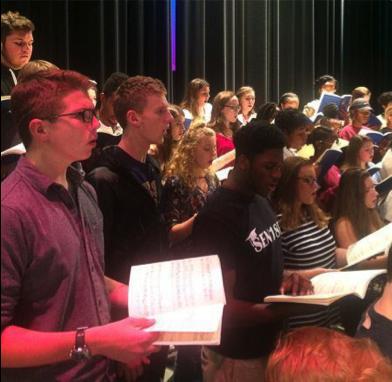
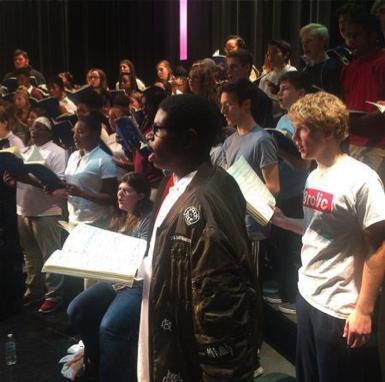
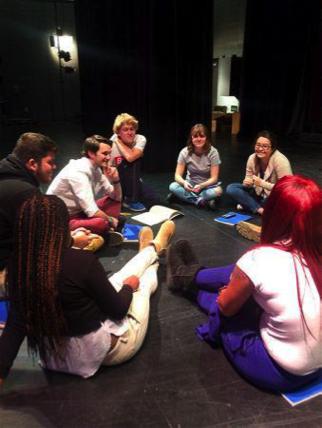
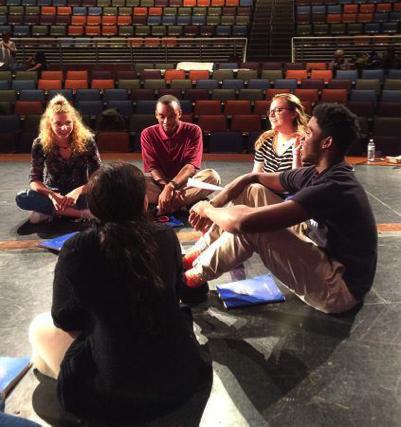
Chelsea High School and Detroit Renaissance High School students were at no loss for words to describe the musical journey they shared that culminated in a Martin Luther King Jr. Day concert. Their choral directors, Steven Hinz and Patrice DeBose, were enthusiastically committed to creating an opportunity for students to experience and understand the impact that shared music making in a collaborative environment can have on the human spirit.
Hinz and DeBose chose Dan Forrest’s Jubilate Deo as the centerpiece for their collaborative choral project, the quintessential selection for teaching and experiencing utopian global unity. The program notes explain, “Dan Forrest’s Jubilate Deo brings to life the global aspect of the traditional Psalm 100 text, “O be joyful in the Lord, all ye lands.” It is composed in seven different languages and draws from a wide spectrum of musical influences.
From the concert program, “Each movement of the work combines characteristics of its language-group’s musical culture with the composer’s musical language. The opening movement expresses the ancient liturgical Latin translation of the Psalm in a rather American musical idiom, reflecting influences from the composer’s native country and introducing key musical motives. The second movement sets the “from age to age” portion of the text in Hebrew and Arabic, evoking ancient cultures from the Middle East. The music intentionally intertwines the two languages in a symbolic gesture of unity between these cultures. The work shifts to Africa in the fourth movement, with celebratory portions of the text in Zulu and drawing from African vocal and drumming traditions.
Virginia Kerwin
The sixth movement, “Song of the Earth,” portrays the Earth itself singing—first wordlessly, but eventually finding its own voice—and leads seamlessly into the final movement. The finale unites many of the key themes and cultures from previous movements with other material, old and new, as all the earth sings as one, “omnis terra, jubilate!”
The process was well defined. Daily rehearsals with their teachers were augmented with sessions with guest teachers/conductors Dr. Brandon Johnson from Eastern Michigan University and Dr. Eugene Rogers from The University of Michigan. Singers were helped to understand that great music encourages interpretation variances and the use of different rehearsal techniques. They learned that creative decision making is exploring limitless possibilities and transformation through the iterative process!
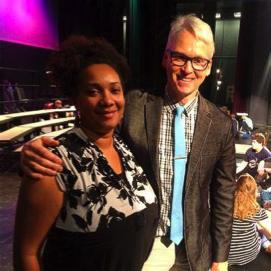
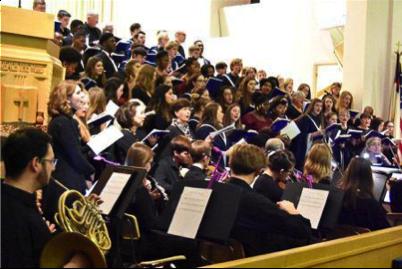
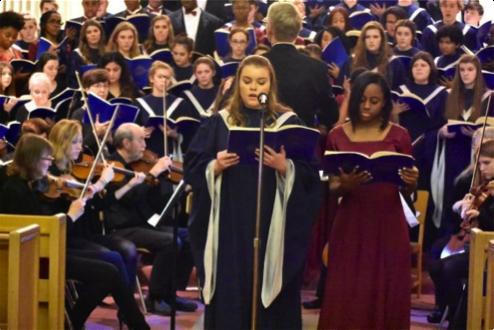
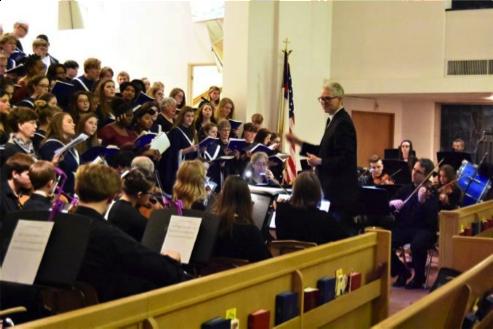
The concert at Westminster Church of Detroit began with You Must Have True Religion by Roland Carter and Alleluia by Ralph Manuel sung by the Detroit Renaissance High School Choir and followed by Carl Reinecke’s Serenade in G Minor performed by the Chelsea Chamber
Choral
17
Players and the Chelsea High School Chamber Orchestra. The performance artistry was exceptional. Student instrumentalists playing side by side with professional musicians created an extraordinary collaborative “voice”. Extending the performance’s outreach, the Chelsea First United Methodist Church Chancel Choir joined the students for the performance of Jubilate Deo. From the first note to the final “shout for joy, all the earth!” the concert was inspired by the demonstrated personal commitment of each musician as they performed with the nuance of sensitive phrase shaping, rhythmic integrity and textual understanding. Audience members were inspired by the vulnerability of musical artists sharing a glimpse of the future, a future where people from all backgrounds, religions, and nationalities gather together in song, expressing the richness of life and inviting others to do the same.
Patrice DeBose acknowledged the communities, school districts, concert hosts and generous donors. She spoke of the dreams that she had for her students that were realized through this experience including:
-The opportunity to learn from choral leaders in the profession.
-The sharing through “family groups,” and gleaning the understanding that everyone has value and something unique to contribute to the world and our music programs.
-Understanding, through the sharing of music, the need to care for one another.
Steve Hinz quoted Dr. Martin Luther King, Jr.
Be a bush if you can’t be a tree.
If you can’t be a highway, just be a trail.
If you can’t be a sun, be a star.
For it isn’t by size that you win or fail. Be the best of whatever you are.
-Martin Luther King, Jr.
Hinz expressed hope that the concert honored and embraced the tenants of Dr. King’s work. He asked the audience to consider, “How do we respond to the injustices and the rhetoric of hate around us? Are we limited because we can’t respond adequately to the size of the problems? Maybe the solutions can be found inside each of us.” Steve continued, “As I look inward to what I see in my life, my community, this region of Michigan, and our country I ask – Is there a way I can respond with what I do every day?”
He paused, “I am blessed to be a teaching musician and I believe that this vehicle of bringing communities together can be so much more than just the music.”
Hinz and DeBose were overwhelmed by generous financial support from the Chelsea community and grant funding from DPS Foundation, Chelsea Community Foundation, American Choral Directors Association-Fund for Tomorrow and the Michigan School Vocal Music Association. The
18
students and their teachers are grateful to everyone who helped make this incredible experience possible. Exciting! Challenging! Enlightening! Inspiring! Unifying! Alexa, Bobbi, Damon, Malia and Zoe, I couldn’t agree more!
Student Perceptions
The idea of musical beauty bridging the cultural divide has been a lifelong obsession with me. It is woven into my DNA. When I had the opportunity to attend the final concert of this collaboration, I jumped at the opportunity to travel with the Chelsea contingency to Westminster Church of Detroit. I could feel an energy force running through the students. Alexa, Bobbi, Damon, Malia and Zoe spoke with me about the “journey” they shared with music for nearly four months. – Ginny
Tell me about the music you are singing this evening.
The music is a series of foreign languages from around the world, and put together in one song to show the unity across the world. --Alexa
The music comes from different cultures and was put together to celebrate the importance of collaboration. --Bobbi
Arrangements in a book called Jubilate Deo from multiple cultures. Now I can sing songs from the Latin culture and from the African culture.--Malia
Jubilate Deo is basically a call to the world about peace and joy and happiness within our lives.--Zoe
What did you learn about music that you did not know before?
Music’s ability to unify.--Alexa
There are so many different languages to sing, and you can tell the story of celebration in all of them. It’s ok to step outside of yourself and try new things that you aren’t used to doing because you learn about yourself.--Bobbi
There are different styles all over the world, but music unites us through our differences.--Damon
Songs can bring something out of you, emotions. I never had that happen before where I felt empowered just by the music.--Malia
What about this experience will influence you in your adult life?
The importance of being patient, especially when working with so many musicians.--Alexa
Some people are different from other people in a lot of different ways, but people are the same in a lot of ways too. As long as you know how to balance those things, people will always know how to come together and mesh well together. --Bobbi
When I’m a parent, as an African-American I need to show my kids how to be social with everybody regardless of their nationality.--Damon
It’s important to accept people for who they are as human beings.--Zoe

Virginia Kerwin is the Executive Director of the Michigan School Vocal Music Association. Prior to joining MSMVA in 1999, Virginia taught vocal music at Big Rapids Public Schools. She was honored as the MSVMA Teacher of the Year in 1998. In 2006, the Michigan Music Education Association honored Virginia with its Outstanding Administrator Award, which is presented to individuals who have demonstrated active, on-going support for balanced music programs. An engaging and enthusiastic educator and clinician, Virginia has conducted three honors choirs for MSVMA as well as serving on the music faculties of the University of Michigan All-State Camp at Interlochen and Blue Lake Fine Arts Camp and as an adjunct faculty member at Central Michigan University and Grand Valley State University.
19
Technology
Organizing & Sharing Student Performance Files
Ian BoyntonPortable devices like tablets and smartphones have enormous potential for enabling students to create and share their work with others. These new tools offer endless possibilities for teachers to collect, publish, and assess students’ work. However, organizing and managing all of these files can be a logistical nightmare. With a little planning that task can become a lot easier. Here are some tips and tricks you can use to manage files between devices.
Have An Organizational Plan
The first step to managing any number of files is to have a plan for name and organizing them. File names should be given so that they are easy to sort by class, name, and creation date. Likewise it is helpful to have names short enough that you can read the whole thing without the operating system truncating it. Naming a student performance file something like “Mystical Sunshine by Emily H and Kevin W Mrs Patel’s 3rd Grade” is asking for trouble. Finding that file in a folder full of similarly named files is going to take you too much time. An easier way is to name the files in a way that you can easily track them down the same way you think.
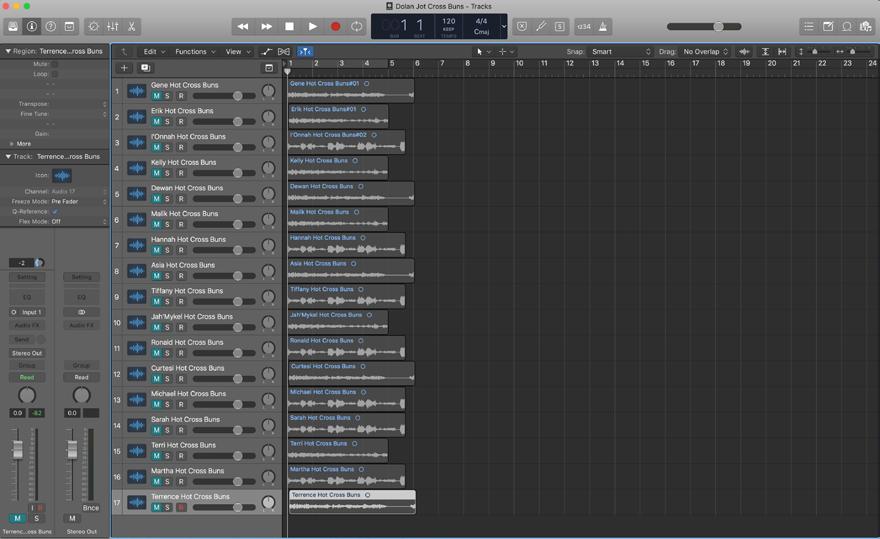
For example, if you are recording student performances using one device such as a classroom computer or tablet it can be very helpful to have one large file for each class. Applications like ProTools on the desktop/laptop or GarageBand (iOS), or N-Track Studio (Android) allow you to create and name multiple tracks within a file. You can therefore create one file by teacher name, and within that file have one track for each student or group you record. Then if you need to export specific songs to play for parents or use for your own assessment you can mute the tracks that you don’t want to hear. An example might be a file named Mrs. Dolan Hot Cross Buns. Inside that file are individual tracks for each student labeled by name playing Hot Cross Buns.
When using more than one recording device the principle remains that same. Each file you have should be named in a way that makes it easy to find. You will most likely need all the recordings for a given classroom at one time. Therefore the first word in the file name should be the classroom teacher. Next should be either the student’s name or if you group students together the group name/number. Last should be the name of the piece. A collection of composed songs from Mrs. Shaffer’s third grade might look like this:
Shaffer-Mia S-Talking Waffle
Shaffer-Trevon G-Metro PCS
Shaffer-Umberto R-SpongBob
In this way, if a parent comes to speak with you at conference time and asks what their child has been doing in music you can very quickly track down the recording you made of them. Files students record individually and submit to you should follow the same format. It is important to model for the students how to create file names, just like modeling any other musical concept.
Sharing Between Devices
Managing files between multiple devices is a little trickier, but is still possible. As before it is important that file names are easy to sort and quickly identified. After that it is just a matter of getting all the files from the various devices
20
into one central location. Depending on your individual situation there are several ways of doing this.
One way is to physically connect the device to a computer and download the files. The instructions for doing so will vary by operating system. If you Google “save files from X to Y” you should find a set of instructions fitting your setup. If you don’ feel comfortable doing that your district IT department can help. This solution is best in cases where the district owns all of the devices, but can be cumbersome if you have a lot of devices.
Cloud Based Services
A second way of moving files from individual devices to a central location is to use cloud based services. There are four major services popular today and a host of others available as well. Using any of the Cloud based services is going to require that you, or your district, set up an account with the provider. For most services this is free. Typically the free storage offered ranges anywhere from 2GB (Dropbox) to 15GB (Google). In the following section I describe several of the more popular Cloud based services. All of them have options for purchasing more storage if you find you need it.
If your district uses Google Classroom you can have students send the files to your Google Drive from their devices. Your IT department can help you set up a public folder if one is not already established.
Dropbox is one of the most popular cloud based services. In a similar fashion to Google Classroom you can set up shared folders with students, which allows them to upload and/or access files from anywhere. Set up folders for individual classes to improve organization and easy access.
If your district uses Office365 it is also possible to have a public folder students can send things to you. Depending on the type of student accounts available with your school Office365 subscription, there are several options for file sharing. Sharepoint and OneDrive can be used to set up a public folder. Alternatively you could set up a specific channel using video that lets students upload their performances.
Apple’s iCloud is an option if you want to manage all your iOS devices. It is possible to set up iCloud Drive on each device so that students can send files directly to a folder from within the app itself. You will need to set up a shared folder with the service prior to asking your students to send files.
Each of these services has it’s own advantages and disadvantages. You will want to decide for yourself what the
easiest solution is for you based on your situation. I highly recommend setting up a separate account specifically for sharing files with your classroom to avoid cluttering up your personal files. If none of these solutions is viable in your classroom another option would be to have students send files using more traditional methods such as email or through Bluetooth.
Provided students have access to an email account they can send the sound file directly to your school account. The downside to this method is that most email services have a limit of 25MB per file that can be sent. Longer sound files can easily exceed that limit. A better choice is to share files via Bluetooth. Since files are shared directly from device to device, this avoids the file size limit. Each operating system and device is going to work slightly differently. Android devices use a system called Android Beam, while Apple devices use a system named Airdrop. Windows phone do not have a specific name for this kind of transfer, but they are also capable of sharing files using Bluetooth.
In conclusion there are many different ways of organizing and sharing files your students create. Some will work better than others depending on your specific needs and available resources. You should evaluate what solution best fits your teaching situation and proceed from there. As long as you have a plan before you jump in you should find success!
Ian Boynton is a musician and teacher in the Detroit area. Currently he teaches general music to grades K-5 for Redford Union Schools and both music and technology courses at Madonna University.
21
Policy & Advocacy
Teacher Preparation Programs in the Balance: Legislative Updates from Lansing Ryan Shaw
From time to time, it is important to check on policy movements and draft legislation that can impact music education in the state of Michigan. Currently, there is a package of bills in the Michigan House that has the potential to dramatically affect music teacher preparation. In this article, I discuss these various bills and note how each one specifically attempts to alter teacher preparation in the state. I also note ways for music educators to respond. To give context to this discussion, I first begin with a primer on who controls public education rule making in Michigan, as this is relevant to understanding the overall process.
Education Governance in Michigan— Who is in Control?
Several different entities are involved in education governance in Michigan. As is true of local school districts, there is a board/executive structure in place. In Michigan, the State Board of Education includes eight voting members with eight-year terms, and each member is elected with a partisan ballot. The board then works with an executive, called the “Chief State School Officer” or CSSO—in Michigan, this is the state superintendent (technically titled the “Superintendent of Public Instruction” or SPI). The Superintendent, appointed by the board, oversees the Michigan Department of Education, a state agency. In addition, the legislature is directly involved in education governance. Rules for processes such as teacher licensure and preparation are described in the “Revised School Code,” a statute established in 1976 and continually amended and updated through public acts.
The structure described, however, is by no means true of every state. For example, most
states—thirty-six—feature appointment of board members by state governors. Furthermore, some elect the CSSO by partisan/ non-partisan ballots, or feature students as non-voting members of the state board, and several states have no board at all (National Association of State Boards of Education, 2018). In addition, Michigan’s structure has often led to messy disputes and arguments. Because of the partisan election of members, the board has often been deadlocked and meetings have been contentious (McVicar, 2017a). In addition, Governor Snyder has tangled with the Department of Education for control of accountability power, moving the School Reform Office from under the department’s purview before moving it back to MDE control (McVicar, 2017b).
State legislators also exert direct control, further complicating the governance process. Whereas the State Board of Education, the SPI, and the Department of Education create specific implementation of policies and monitor compliance, the legislature and governor create the overarching rules and policies. As an example, the Michigan legislature created a “soft law” on teacher evaluation in 2011 (Public Act 102). This was “soft” because it was composed of broad principles only and lacked in specifics. It was then the job of the aforementioned agencies to determine how to set up the statewide system. In terms of teacher preparation restrictions—which I turn to next—the legislature is currently at the drafting stage for policy.
Teacher Preparation Bill Package
A package of bills aimed at reforming teacher preparation institutions was introduced in the Michigan House by Republicans on February 20, 2018. The bills, HB 5598-5605, would
22
prohibit the State Superintendent from certifying teacher preparation institutions unless the programs meet specific new regulations. I ignore HB 5603 as it pertains only to elementary classroom teacher candidates. Relevant bills include:
• HB 5598: all full-time faculty members working to prepare teachers must complete 30 hours of continuing professional development in their specific area of instruction (e.g., elementary science teacher preparation). This 30 hours must include time in K-12 settings, in rural and urban settings, and work with students in high-poverty settings, students with disabilities, and students who are English Language Learners.
• HB 5599: teacher preparation programs must offer a warranty for graduates of their program who are employed by a local education agency (LEA) and who are deemed ineffective by the LEA. After being labeled ineffective several years in a row, these graduates would be able to take coursework at any other teacher preparation institution in Michigan, and the original program would bear the costs of the “warranty education.”
• HB 5600: all teacher preparation institutions must provide a stipend of $1,000 directly to a teacher who supervises/mentors a student teacher.
• HB 5601: all teacher preparation institutions must require at least 400 hours of cumulative K-12 classroom experience in practicum courses prior to student teaching.
• HB 5602: requires the Michigan Department of Education to establish an “innovative educators corps program.” These teachers would be nominated based on a number of requirements and appointed for an initial term of three years, receiving a stipend of between $5,000 and $10,000. Corps members would serve on a roundtable, partner with the MDE to pilot programs, and provide professional development to others.
• HB 5604/5605: all teacher preparation institutions must offer a student teaching program (or other clinical experiences) that includes a rural setting, an urban setting, a high poverty setting, instruction on social emotional learning, ELL instruction, and students with disabilities. Student teachers must also be introduced to the district’s teacher evaluation tools, understand assessment data use, and develop classroom management skills (HB 5605 further requires this content be interspersed throughout coursework). Finally, the bills call for formal partnership agreements between teacher preparation programs and school districts that clearly describe expectations.
Discussion
This package of bills was introduced in February 2018 and referred to the committee on education reform shortly
thereafter. Some language substitutions were recommended and the bills were then reported out of committee. There is no specific timeline known for when the full house could vote on the bill, although the bills were to receive a second reading on October 2, 2018 (usually three readings must occur before a vote is taken and the bill is sent to the Governor). In terms of implementation, bills would take effect quickly—some after 90 days, and the others by July 2019. The state superintendent would be required to revoke approval for preparation programs if new requirements were not met (Kefgen, 2018). The bills are considered likely to pass at this point due to republican control of the legislature.
These bills are hotly contested, and a number of teacher preparation institutions have weighed in. While a number of these institutions voiced support for some ideas in the bills, many other aspects were opposed (House Fiscal Agency, 2018). One of these aspects is cost. Teacher preparation programs would surely feel the financial impact of being required to pay all cooperating teachers $1,000 stipends, and are worried about potential costs inherent in the proposed warranty programs. Additionally, the bills make it clear that preparation programs are not to raise tuition to cover increased costs, making it unclear where necessary funds would be found (House Fiscal Agency, 2018).
Other objections concern logistics. HB 5601’s requirement of 400 hours of pre-student teaching clinical experience, paired with substantive requirements to coursework in HB 5605, would likely add semesters—or years—to coursework in teacher preparation programs. This could have deleterious effects on students’ plans and financial aid. In addition, questions have surfaced around the provision in HB 5598 for higher education personnel to demonstrate 30 hours of professional development. Who would certify these hours? Who would provide the continuing education, especially when higher education professors are often the very people providing professional development to K-12 educators? Logistics and cost aside, representatives of teacher preparation programs have also found these proposed bills insulting (Robinson, 2018). The provisions make it clear that the state considers teacher preparation programs to be failing in producing effective educators, but data suggest that less than 3% of Michigan educators were labeled as ineffective or minimally effective in 2017-2018 (House Fiscal Agency, 2018). In addition, at the same time that such bills aim to hold traditional teacher preparation programs accountable at higher levels, the legislature has advocated alternative certification routes. These routes greatly truncate the time necessary to earn certification and also allow non-certificated personnel to teach courses. As an example, the “Professional Innovators in Teaching,” an alternative certification program run by a charter school network in Lansing, allows
23
those with a bachelor’s degree to obtain interim certification and begin working immediately in schools while completing courses toward full certification (MAPSA, 2018). Another, “Michigan Teachers of Tomorrow,” boasts an online program with a website that notes, “There is no need for a traditional 4-year teaching degree” (Teachers of Tomorrow, 2018). In sum, the legislature seems to be demanding higher standards for some while lowering standards for others (House Fiscal Agency, 2018; Robinson, 2018).
Perhaps most troubling, however, is the potential for these bills to harm enrollment in teacher preparation programs, which is already down. In 2015-2016, there were around 3,700 teaching certificates issued to new teachers, a 33% decline from four years earlier (McVicar, 2018). Since statewide teacher shortages begin with teacher preparation enrollment problems, it is crucial to keep program costs manageable for prospective educators.
What You Can Do
As is often the case, the best course of action for concerned music educators is contacting legislators. Let your legislators know your concerns and don’t hesitate to question controversial policy. In addition, it is essential to stay engaged with education policy developments in the state. Local newspapers, unions like the MEA, and professional organizations such as the Michigan Music Educations Association (MMEA) and the Michigan Association of School Boards (MASB) keep track of impending legislation and rule changes that impact teachers. It is crucial for teachers--who are most directly impacted by education policies--to stay informed and make their voices heard.
References
House Fiscal Agency. (2018). Legislative analysis: New requirements for teacher preparation institutions. Retrieved from http://www.legislature.mi.gov
Kefgen, B. (2018, April 5). Teacher prep reform bills pass house committee [Web log post]. Retrieved from https://mymassp.com/content/teacher_prep_reform_ bills_pass_house_committee
MAPSA. (2018). Professional innovators in teaching. Retrieved from http://www.professionalinnovatorsinteaching.org
McVicar, B. (2017a, March 15). Snyder, state board at odds over controversial A-F school grading plan. Mlive. Retrieved from https://www.mlive.com/news/index. ssf/2017/03/gov_rick_snyder_state_board_of.html
McVicar, B. (2017b, June 30). Snyder moves school reform office back under authority of Michigan education department. Mlive. Retrieved from https://www.mlive. com/news/index.ssf/2017/06/state_school_reform_of-
fice_ret.html
McVicar, B. (2018, May 21). Help wanted: Teacher shortage hits Michigan’s schools. Mlive. Retrieved from https:// www.mlive.com/news/index.ssf/2018/05/michigan_ beyond_teacher_qualit.html
National Association of State Boards of Education. (2018). About state boards of education. Retrieved from http://www.nasbe.org/about-us/state-boards-of-education/
Robinson, M. (2018, June 1). Opinion: Michigan reform bills will hurt teacher education programs. Bridge Magazine. Retrieved from https://www.bridgemi.com/ public-sector/flint-islam-and-fixing-damn-roadsyour-michigan-governor-debate-recap
Teachers of Tomorrow. (2018). Michigan Teachers of Tomorrow. Retrieved from https://michigan.teachersoftomorrow.org

Ryan Shaw is assistant professor of music education at Michigan State University’s College of Music, where he teaches Introduction to Music Education, Teaching Instrumental Music, and graduate courses in psychology of music education, curriculum, and measurement. Prior to joining Michigan State University, Shaw was area head of music education at Capital University in Columbus, Ohio.
24
MMEA wishes to thank JWPepper & Son, Inc., for their generous sponsorship of numerous MMEA events, including: • General Music Fall Workshop • Collegiate Conference • Young Singers Choral Workshops • Elementary Honors Choir • Board Meeting Lunches Please visit their website: www.jwpepper.com
Book Review: Teaching with Vitality: Pathways to Health & Wellness for Teachers and Schools
Kristi Bishop
Michele
Cotton-Stanfield
Jonathan Glawe
Books & Media
Bennett, Peggy D. Teaching with Vitality: Pathways to Health and Wellness for Teachers and Schools. New York: Oxford University Press, 2017. ISBN: 9780190673987
A teacher’s life is filled with rewarding and fulfilling moments that can generate a sense of wellbeing and pride about past achievements, and cultivate hope and courage for envisioning a better future. It is also true that in the fray of everyday encounters and challenging situations, those same spiritual affordances of teaching can be suppressed, causing an imbalance in the outlook teachers bring to their work. Over a period of time, the passion and energy that was once available for teaching can become diffused and depleted.
Considering the maintenance of well-being in a life in teaching, Peggy Bennett has written an inspirational book to help teachers bring their best and most vital selves to teaching and learning and maintain that disposition even in the face of ongoing struggles and unfavorable circumstances. It’s a book about joy, renewal, hope, fortitude, self-knowledge and teacher wellness. The author also provides practical advice and pathways toward maintaining health and wellness in everyday classroom practice. I’m reminded of Parker Palmer’s classic book for teachers, The Courage to Teach: Exploring the Inner Landscape of a Teacher’s Life (1998), particularly when he says that if we want grow as teachers, “we must talk to each other about our inner lives, risky stuff in a profession that fears the personal and seeks safety in the technical, the distant, the abstract” (p. 12).
I believe that Bennett’s book is a rich source for starting such conversations among music teachers. In this column, three practicing teachers—Kristi Bishop, Michele Cotton-Stanfield and Jonathan Glawe—respond to Bennett’s book, drawing on their teaching and other life experiences to respond to over one hundred topics addressed in the book.
--Marie McCarthy Book & Media ReviewsAt times we teachers pick up an inspirational book, flip through its pages, and nod our heads, promising to remember to think this new way, or find more joy and reward in our jobs. Then the bell rings, the parent calls, the saxophone breaks, the scissors are lost, and the promises to ourselves fade. However, in Peggy Bennett’s new book, Teaching With Vitality, the sage advice warrants a permanent spot on the educator’s desk. Each short and concise chapter is as practical as it is renewing. Her perspective from obvious years of experience is a welcome reminder of the joy of teaching and how that joy is dependent upon professional behavior and lofty hopes. She even addresses physical wellbeing.
Every new teacher would benefit from his or her own copy. With chapters such as “Assertiveness as Necessity” and “Facing Fear”, novice teachers learn about how to step into a professional world where everyone must step up to the plate and value his or her contribution even amidst older or more experienced colleagues.
25
Career teachers can admit they have lost some of the easy clarity that accompanied them into their first year. Cynicism has no healthy place in the educator’s mindset, and yet human nature still finds it a way in. Bennett provides a respite from this cynicism. Sometimes we all need these gentle reminders such as those in the chapter entitled “Someone Loves Them.” Equally important is the acknowledgement that we must “Beware of Experts”. Furthermore the idealism that lights the fire of so many teachers must be protected lest the idealism flicker to mere futility when faced with troubles that we continue to ruminate on at home. Bennett reminds the reader that teachers must value their own wellbeing, and “Leave it.” Learning to leave the stress and the use of intense mental and emotional energy needed at work is a worthy goal for every teacher.
Some of the excellent advice could be just as powerful posted in the classroom to boost teacher and students alike! Here are some tenets I will post with this new school year:
Singing is a robust act.
Adversity is not what depletes us. Absence of resilience does.
Breathing can give us the calm that we need to choose our responses carefully. Words show who we are. What we say to ourselves can be every bit as powerful as what we say to others.
Teacher language sets the tone of the classroom as well as the tone of voice in the minds of our students and ourselves. Bennett adeptly provides examples of language that is professional, constructive, and honest. Her suggested language addresses a spectrum of needed assertiveness. The most complimentary is level one, cautious of sacrificing one’s own peace or authenticity. Level two is calm, business-like, and with a direction of what should happen next. Level three is commanding yet not emotional. Level four is serious and focused but without aggression. Other teacher language suggestions are in line with the growth mind-set determined to be the most effective practice. “Our reward for meeting all those challenges is the feeling within us. Can you feel it?” “How could we solve this problem?” The focus remains on the learning and improvement, not the product or disappointment.
In addition to teacher talk supporting a growth mind-set, Bennett’s examples of how to address behavior provide a radical departure from many existing approaches. She suggests redefining disapproved actions from misbehavior to just behavior. When a teacher confronts a student doing the wrong thing, a teacher is better to begin with the mind-set that the student really needs a neutral lesson on procedure and expectation rather than a judgmental and confronta-
tional reprimand. This reader’s take on the power of this redefinition is that most behavior deserves the benefit of the doubt and reteaching. This is also an opportunity for a teacher to model respect and care.
Peggy Bennett, a Professor Emerita of Music Education, wrote Teaching With Vitality in part from the perspective of a teacher educator who witnessed the pitfalls of novice teachers’ personality traits. For those who often make snap judgements she cautions the reader to watch for the pitfalls of making assumptions about others. For the sensitive ones looking for understanding and sympathy she reminds us to avoid unguarded vulnerability. For the perhaps overly confident, Bennet warns of the blindness of always being right. She reminds us that conflict is inevitable and handling it is best done with the view that it is an opportunity to transform a situation. Assuming that a colleague’s offensive declaration or response is a personal affront is not productive, but a wiser option would be to assume good intentions or at least that the other party is not aware of the sensitivity of the situation.
The reflective teacher, throughout his or her career, will find Teaching With Vitality a touchstone for insight and practical illumination on the path of the educational venture.
Kristi Bishop teaches Vocal and Instrumental Music at Bach Elementary in Ann Arbor, Michigan. She holds a Bachelor of Music Education degree from Wichita State University, and a Master in Music Education degree from the University of Michigan. She has been teaching for 24 years in the public schools.
I enjoyed reading the book. It was very informative and reflective. The topics were enhanced with shared stories about teaching methods. I can see myself in the majority of the topics and references. As I read the book I found myself reflecting on techniques I once used and their effectiveness in my classroom. Some techniques I still use with vigor and others I have used with little success but would like to implement successfully. Teaching with Vitality provided much guidance and informed me about other techniques I can use in my classroom.
The topics that generated lots of reflective thinking for me were the following: “Rethinking student success”; “Behaving respectfully”; “Accepting change”; “Assertiveness” (11-16); “Misbehavior and behavior”; “Two-word cues”; “Valuing your voice”; and, “Moments of grace”. The lessons I gained from these topics were profound. I thought about students who present challenges and how I have taught them with college readiness in mind rather than preparing them to be successful contributors to our community. Sometimes I forget how age can influence the nature of behavior and
26
judge it as misbehavior. I was reminded of management techniques I implemented within my teaching strategies over a period of time, and found myself adjusting to assist the learner, or so I thought. The book offered lots of alternative ideas to help with classroom management. The chapter on “Valuing your voice” helped me understand why I’m so often vocally fatigued and how I can adjust my speaking voice within the classroom. The chapter highlighted healthy ways to use my voice in the classroom. Less speaking is more effective and maintains a healthy voice.
Reading these topics caused me to think about areas of instruction that I’ve struggled with—“The toll of disruptions”; “Leave it!”; “The art of reprimand”; and, “Pitfalls of assuming”. I found useful insights in the author’s discussion that help me review my perception and assessment of situations in the classroom. Tensions caused by those situations have had a negative effect on my wellbeing. Oppressive assumptions can snuff out my vitality. Inspired by the author’s ideas, I will go forward giving myself permission to let things go and move on. I found helpful strategies to reprimand students artfully and positively rather than harshly and with negative consequences for my relationship with students. I sometimes get caught up in the everyday attitudes and habits I use in the classroom environment. Reading and implementing the positive ways the author identifies to correct behaviors will increase my vitality! Teaching with Vitality is a teacher’s “how-to” book, like a cookbook with recipes for success! I highly recommend this book for ALL teachers, new and veteran!
Michele Cotton-Stanfield teaches at Durfee Elementary Middle School in Detroit, Michigan. She holds a Bachelor of Music Education/Performance degree from the University of Michigan, and a Master in Secondary Education degree from Wayne State University. She has taught 29 years in Detroit Public Schools Community District.
Since the moment I decided to go into education as my career path, I have done so with an intense passion that has dominated how I live my life. Early in my career, I was advised by a close confidant that if I give everything I have to my job, I will have nothing left to give to myself, my family and my friends. After 13 years of teaching, these words continue to echo in my mind, but I find myself once again finishing a third consecutive 60-hour work week, having done very little to care for myself as a person first and foremost, and an educator second. The crux of the issue is there are things that come up every day in the field of education that are new and exciting, but also can be confusing and challenging. As educators, we have very little extra time to contemplate their importance to our day-to-day lives. I chose to read Peggy D. Bennett’s new book, Teaching With Vitality: Pathways to Health and Wellness for Teachers &
Schools, hoping to find tools to help me tackle this prevalent problem I continue to face in my day-to-day life.
Bennett’s book is a resource that gets to the crux of why many teachers in the school system experience burnout, fatigue and lack of motivation to evolve or improve their educational craft. As I began reading this resource, I was concerned it might turn into stories where teachers are venting frustration, and the author would provide alternative advice on how to handle a situation. I was quickly taken on a different journey, one that encourages me to contemplate a variety of approaches to dealing with several commonly prevalent situations found in a level or subject of education. Through the 101 short chapters in this book (about 2 pages each), the reader is immediately put in a place of empathy and understanding of what the author describes in general terms, while offering practical solutions for working through some of these commonly found “thorns” in our day.
Without providing extraneous content that jumbles the core of the message, this resource asks the reader several open-ended questions that provide an opportunity to contemplate all sides of an issue, reflect on the importance of the issue, and ultimately provide some tools for the educator to establish a perspective and path to understanding of an issue.
A chapter that stood out to me is 87, “Interpreting Behavior”. Young teachers often read certain behavior in our students as something that is a sign of disrespect or defiance. I have found that most of the time, students are not doing these behaviors with the purpose of showing disrespect, but rather because something else is of concern to them that may or may not even be related to the context of the classroom activity. Ms. Bennett asks us to consider a three-phase process to structure our interpretations of an action (or inaction) by a student. She encourages us to take a moment to observe the behavior, which can help us broaden the view of the behavior. She then encourages the reader to interpret the behavior, asking ourselves, what else could this be? Finally, she encourages us to respond with an inner calm and firmly address the student and the behavior. The process of evaluating behaviors to me has become much easier as I have gotten older, but having a three-step process like this in my mind as a younger teacher could have truly helped me avoid explosive and unnecessary responses.
In my subject matter as a high school orchestra director, I have found that the job, if given the power to do so, can define for us who we are. There is always another project to do in my job, and in 4 years when the students graduate, we get to do it again, this time, adapting for the current trends in education. As Ms. Bennett’s book discusses in chapters
27
86, “When we are what we do”, chapter 89, “Compassion fatigue”, and chapter 92, “Positional and personal power”, defining yourself exclusively according to the value and importance of the job can set you up for a joyless existence outside of the school walls. As I read these chapters that describe much of what I have been through, I was reminded of what another mentor said to me in my first few years of teaching. He said that as educators we often spend a lot of time between our classes worrying about the personal challenges of the previous class, rather than learning from them to set the next class up for stronger success. These chapters remind me how much time can be wasted worrying about essentially nothing.
As I reflect on the book, Teaching With Vitality: Pathways to Health and Wellness for Teachers & Schools, I am pleased
to have found a resource that clearly relates to realities in the life of an educator, but also provides some important food for thought for teachers who struggle with the home and work balance. For me this balance is a life-long journey, and reading this book gave me plenty to think about as I approach my next lessons in the classroom, and my relationships in life.
Jonathan Glawe is the Director of Orchestras at Pioneer High School in Ann Arbor, Michigan. He holds a Bachelor of Music Education degree from the University of Kansas, and a Master in Music Education degree from the University of Oregon. He has been teaching for 13 years in the public schools.
NAfME Collegiate Updates
The 2018-2019 NAfME Collegiate board reflects a mix of new and returning members. Grace Pawluszka, a fifth-year student from Central Michigan University, returns as President. Anthony Berardi, a senior from Wayne State University, serves as President-Elect. Lexa Deamant, a senior from the University of MichiganAnn Arbor, is the New Membership Chair. Bobbie Sue McDaniel, a senior from Sienna Heights University, is the new Social Media Chair.
The board has been working diligently to plan events for the 2018-2019 school year. There will be three
Grace Pawluszka
collegiate sessions at the Michigan Music Conference again this year. They include Student Teaching: The Good, The Bad, The Ugly; Musical Pits 101; and Teaching in Diverse Settings. There will also be a collegiate reception as usual on Friday, January 25 where collegiate members can network with students from around the state. Additionally, the NAfME MI Collegiate Conference is planned for Saturday, February 23rd, 2019 at Wayne State University.
Please follow us on Facebook at NAfME CollegiateState of Michigan for updates on collegiate activities!
Advertising and Corporate Sponsorship
We offer numerous advertising levels to fit your needs. Ads start at as little as $75 per issue and include your logo and website hotlink on our website, www.mmeamichigan.org. Corporate Sponsorships are also available at various levels designed to fit every budget. Support MMEA or be the title sponsor of one of our many fine events. For more information please contact Cory L. Mays, MMEA Executive Director: (517) 748-6518 OR executive@mmeamichigan.org
28
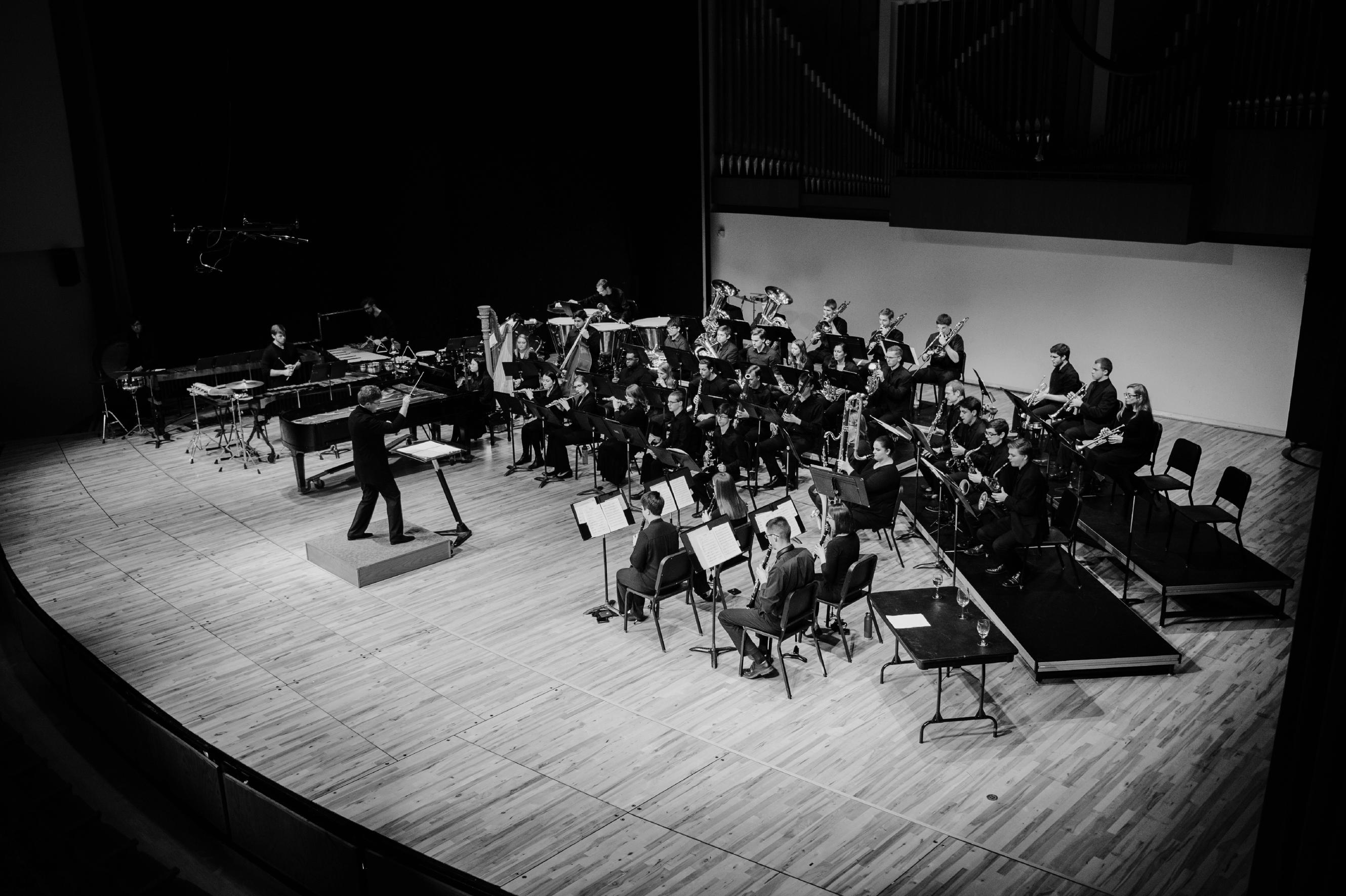
We invite and welcome all aspiring music and dance majors to audition for admission and scholarship consideration to the Glenn Korff School of Music in the Hixson-Lied College of Fine and Performing Arts.
2019 Audition Dates
Undergraduate January 18 - 19, 2019 February 22 - 23, 2019
Graduate February 8 - 9, 2019
Degree Options
Undergraduate
Bachelor of Arts in Music
Bachelor of Music
Bachelor of Music Education
Bachelor of Arts in Dance
music.unl.edu / 402.472.2503 / music2@unl.edu
Graduate
Master of Music
Doctor of Musical Arts
Doctor of Philosophy in Music


29
The University of Nebraska does not discriminate based upon any protected status. Please see go.unl.edu/nondiscrimination.
UNIVERSITY OF NEBRASKA --LINCOLN GLENN KORFF SCHOOL OF MUSIC
Research
A Report on the NAfME Music Research & Teacher Education National Conference: Diversity, Equity, Inclusion, & Access
Music education researchers, music teacher educators, program leaders, music administrators, curriculum specialists, P-12 music educators, and graduate students in music education joined together for the biennial NAfME Music Research and Teacher Education National Conference in Atlanta, GA from March 22-24, 2018. Three branches met concurrently: The Society for Research in Music Education (SRME), The Society for Music Teacher Education (SMTE), and The Council of Music Program Leaders (CMPL). Within a common conference focus on Diversity, Equity, Inclusion, and Access, participants dialogued through research presentations, symposium sessions, and colloquium sessions. Throughout the conference, I experienced a burning question: how can we actively and proactively support meaningful innovations that ultimately benefit all P-12 music learners, advancing and furthering music education?
Exploring this question, SMTE members focus specifically on music teacher education, dialoguing within Areas for Strategic Planning and Action, or ASPAs. Current ASPA interests include: Critical Examination of Curricula, Cultural Diversity and Social Justice, Music Teacher Educators: Identification, Preparation, and Professional Development, Music Teacher Health and Wellness, Music Teacher Identity Development, Policy, Supporting Beginning Music Teachers, Professional Development for the Experienced Teacher, Program Admission, Assessment, and Alignment, School/University Partnerships, Teacher Evaluation, and Teacher
Recruitment. Information about the work of the ASPAs can be found at http://smte.us/aspas/
Well-represented at the national conference, Michigan music educators presented broad ranges of music education research blended with music teacher education research ideas in concurrent and collaborative dialogue, unified around the common theme of the conference. For example, Heather N. Shouldice, Ph.D., Associate Professor of Music Education at Eastern Michigan University, explored the experiences of seven fourth-grade students and the ways in which their musical identities, self-perceptions of their musical abilities, and motivation to participate in future musical activities are influenced by school music class. Data included numerous student interviews, student-journal entries, and twice weekly observations over 3 months. Lauri A. Hogle, Ph.D., Visiting Assistant Professor of Music Education at Oakland University, explored collaborative music learning processes of multi-age learners in a choral ensemble, primarily studying existing videorecordings of fourteen rehearsals and two performances. Participants included fourteen learners, ten from inner city neighborhoods and four from affluent suburbs of a major Midwestern city. Emergent themes included contagious musical agency and the key role of emotion in musical agency as all learners engaged in peer scaffolding, caring for and helping one another through problem-solving experiences.
Amorette Languell, Ph.D., Assistant Professor of Music Education at Northern Michigan
30
Lauri Hogle
University explored the lived experiences of women in the Connecticut Hurricanes Drum and Bugle Corps following the inclusion of women in all sections. Since the late 1970s, the thought of allowing female hornline and drumline members has caused much angst. While the first women in the corps had several obstacles to overcome, none of the social or physical challenges were insurmountable. The untold stories of these trailblazing women inspire those currently struggling to fit into the male dominated mold of a drum and bugle corps hornline or drumline.
Specifically crossing into music teacher education, Dr. Languell also presented research exploring beginning music teachers’ preparedness for teaching in an urban setting. Themes derived from the research questions were “opportunity knocked,” along with perceptions of preparedness, and perceptions of pre-service experiences. Emergent themes included urban fit, varying relationships, and challenges and rewards of the urban setting. In another study, she explored the experiences of two urban music teachers in the second-stage of their careers. Analysis resulted in three themes: perceptions of urban schools, challenges and rewards of teaching in urban schools, and a sense of preparedness as well as what was missing.
In her role as part of the Critical Examination of Curricula ASPA, Dr. Languell is currently working on a research project with two others, exploring the relevance of music integration and the perspectives of practicing music teachers and their elementary classroom partners. One of the goals of this ASPA is to “encourage scholarship that investigates curricular practices and models based on evidenced-based research that promotes relevant music experiences for all.”
Karen Salvador, Ph.D., Associate Professor of Music at the University of Michigan-Flint, also presented several studies informing music teacher education. Working with Mara Culp, Dr. Salvador presented research regarding the ways that music teacher education programs prepare teacher candidates to work with diverse populations in schools. Through quantitative and qualitative analysis of data obtained through an online questionnaire of undergraduate and graduate students, they found that undergraduate programs included content related to special populations more frequently than graduate programs. Additionally, dedicated courses for students with special needs were required more frequently than courses devoted to teaching students in rural environments, urban environments, English language learners, or gender and sexuality. Hence, increased attention for all populations is needed, particularly at the graduate level.
With Allison Paetz, Rocky River High School, OH and Abby Lewin-Ziegler, Keith Elementary, MI, Dr. Salvador
also presented “Toward Equity, Inclusion and Justice in Music Education: In-service Teachers’ Self-Reported Changes to Practice and Perception after a Graduate Course.” This session was about the kinds of changes teachers make in their practices when they decide they want to align their beliefs (about who music education is for and what music education IS) with their practices. They found that teachers made a variety of changes, and that they felt vulnerable but took courage in believing that their actions were important.
With co-presenters Sarah Bartolome, Mallory Alekna, Jacob Berglin, Susana Lalama, Jaclyn Paul, Heather Waters, and Danielle Woolery, Dr. Salvador presented “Engaging with Applied Faculty about Diversity and Inclusion in Music Education.” Each researcher interviewed an applied faculty member from an institution of higher learning to interrogate the common discourse that applied instructors act as gatekeepers and this is one of the reasons that schools of music (and thus the pool of students becoming music educators) remains White, suburban, and middle class. What they found was a much more complex situation. Common themes across the 7 interviews were:
Valued Diversity: All participants desired a diverse studio/profession.
Varied Ideas/Definitions: Regarding what it means to be diverse or inclusive.
Barriers: Most participants focused on money and auditions.
Perceptions About Applicants: Less prepared than in the past; decreased number of applicants.
University/Applied Music Study = Classical Music Study
The more complete picture they formulated looked like this:
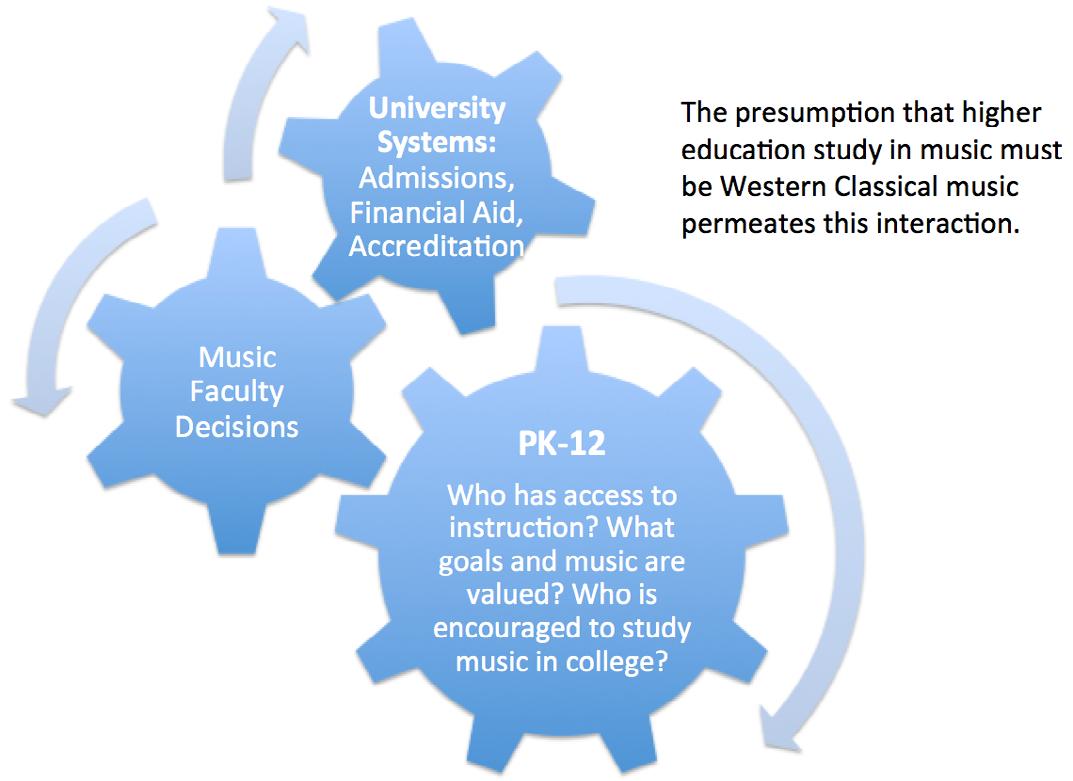
Finally, Dr. Salvador co-facilitated the Cultural Diversity and Social Justice ASPA’s meeting with NAfME elected leadership including then-president Denese Odegaard,
31
Past President Glen Nierman, President-Elect Kathy Sanz, Division Presidents Judith Bush and Mike Raiber, as well as executive leadership including Mike Blakeslee and Chris Woodside. They strategized about messaging, programs, priorities, and personal and professional learning and growth that could make NAfME a more inclusive and diverse organization.
As Michigan’s music educators, music education researchers, and music teacher educators collaboratively unite, seeking to foster diversity, equity, inclusion, and access within our field of music education, we might indeed align our beliefs and our foundational philosophies with our practices. As the new state SMTE chair, I invite dialogue with each music educator in our state. Are you concerned about issues that might be approached within any of the ASPA areas of work? Do you seek to become part of conversations of change, affecting P-12 music learners and music teacher educators who work alongside, in various ways? Do you wonder about ways in which music education classrooms could become communities of diversity, equity, inclusion,




and access? Please contact me at laurihogle@oakland.edu if you resonate with this ongoing discussion for our field and our state. We welcome your ideas, your voice, and your questions!
Dr. Lauri A. Hogle was appointed to the music education faculty of Oakland University in 2018. She has led general, choral, and instrumental music programs in school, studio, and community settings for 30 years. She holds national Kodály certification, Levels 1-3. Dr. Hogle recently presented papers at international and national music education research conferences in Portugal, Boston, and Atlanta and her work has been published in the Bulletin of the Council for Research in Music Education.

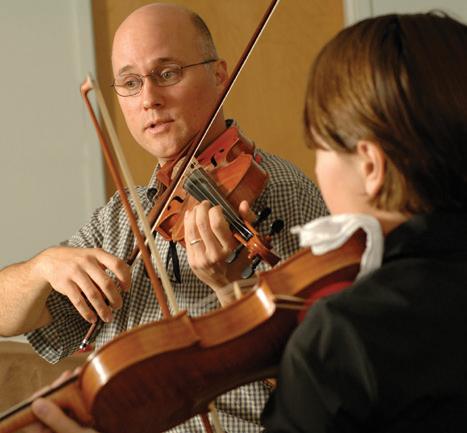

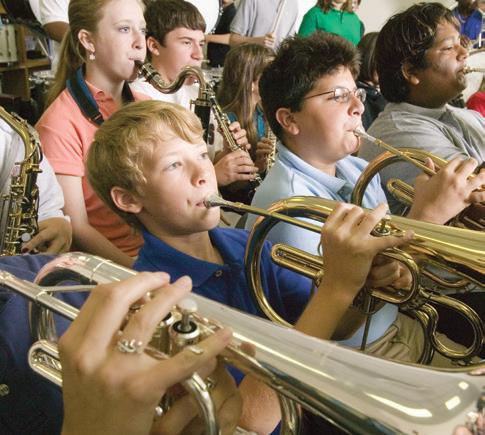

32
2018-2019 CALENDAR OF EVENTS
EVENT DATE
DCI Event
Technology Workshop
NAfME National Assembly
MMEA Fall Board Meeting
NAfME North Central Division Meeting
General Music Fall Workshop
Upper Peninsula Music Ed. Workshop
Young Singers Choral Workshops (5)
1. Upper Central MI
2. West MI
LOCATION
June 21, 2018 Detroit (Ford Field)
July 31, 2018 Ann Arbor (U of M)
June 26-30, 2018 Tysons Corner, VA
September 14-15, 2018 Jackson, MI
September 22-23, 2018 Indianapolis, IN
October 12-13, 2018 East Lansing (MSU)
October 19, 2018 Marquette (NMU)
November 17, 2018 East Lansing
November 3, 2018 Grandville
3. Upper Peninsula November 2, 2018 Sault Sainte Marie
4. East MI TBA TBD
NAfME National In-Service Conf.
All-National Honor Ensembles Concert
Michigan Music Conference (MMC)
MMEA Winter Board Meeting
Collegiate Reception
MMEA Member Social Hour
Honors Composition Concert
Collegiate Conference
Instrumental Clinics
November 11-14, 2018 Grapevine, TX
November 28, 2018 Orlando, FL
January 24-26, 2019 Grand Rapids
January 24, 2019 Grand Rapids
January 25, 2019 Grand Rapids
January 25, 2019 Grand Rapids
January 26, 2019 Grand Rapids
February 23, 2019 Detroit (Wayne State)
1. Mona Shores (Jay Boyden, host) February 21, 2019 Mona Shores HS
2. Fowlerville (Bill Vliek, host) March 1-2, 2019 Fowlerville HS
3. Belleville (N. Taylor & M. Campbell, hosts) March 14-15, 2019 Belleville HS
4. Hartland (Brad Laibly, host) March 15, 2019 Hartland HS
Elementary Honors Choir Rehearsal March 2, 2019
Elementary Honors Choir Concert
Music Education Advocacy Day
Michigan Youth Arts Festival
MMEA Spring Board Meetings
NAfME National Assembly
March 16, 2019
TBA
TBA
March 27, 2019 State Capitol, Lansing
May 9-11, 2019
Kalamazoo (WMU)
May 31-June 1, 2019 Jackson, MI
June 17-24, 2019 Washington, D.C. Technology Workshop
General Music Fall Workshop
June 2019 Ann Arbor (U of M)
October 18-19, 2019 Holland (Hope College)
33
MMEA • 1006 W. Washington Avenue Jackson, MI 49203 • www.mmeamichigan.org • (517) 748-6518
Guidelines for Submitting Articles
Writing for the Michigan Music Educator
The following guidelines should be of help to both prospective and established authors:
1. The Editor encourages the submission of manuscripts on all phases of music education at every instructional level.
2. Manuscripts should be concise, to-the- point, and well-structured. An average length for a feature article is around 2,500 words or 5 to 6 double spaced, typewritten pages in 11-point Times New Roman font. An average length for a column article is around 1,500 words, or from 4 to 5 double spaced, typewritten pages in 11-point Times New Roman font.
3. Avoid generalities and complex constructions. The article will generally be more interesting, have more impact, and be more persuasive if you try to write in a straightforward & clear manner.
4. You may use any writing style as long as it is appropriate to the type of article you are submitting. Be sure to use the correct form in the References section. If you have questions pertaining to style, please do not hesitate to contact the Editor.
5. The Michigan Music Educator is always pleased to receive photographs with a manuscript, especially when those photographs enhance the information in the text. Digital photos are preferred in pdf, jpg, or tiff formats. Please insure all subjects in photographs have provided permission to be included in a publication. Please contact the Editor for a sample media release form.
6. Music examples, diagrams, and footnotes should appear on separate pages at the end of the manuscript.
7. Include biographical information (approximately 50 words or fewer) and headshot (jpeg, gif, or tiff) for each author with the submitted manuscript.
8. Manuscripts should be submitted via email attachment, saved in a MS Word for Windows or Mac format. If this is not possible, please contact the Editor for alternatives.
9. In accordance with the “Code of Ethics,” submitting a manuscript indicates that it has not been published previously and is not currently submitted for publication elsewhere, either in its entirety or in part. Distribution on the Internet may be considered prior publication and may compromise the originality of the paper as a submission to the MME. Authors should describe in what form and how a manuscript has been previously disseminated. Authors are expected to comply with APA ethical standards and institutional and federal regulations in the treatment of human subjects (www.apa.org/ethics/code2002.html).
10. The Michigan Music Educator assumes copyright of all published articles.
34
should be sent to: Abby Butler, Editor (abby.butler@wayne.edu) The Michigan Music Educator is published three times per year: Fall, Winter, and Spring
SUBMISSIONS
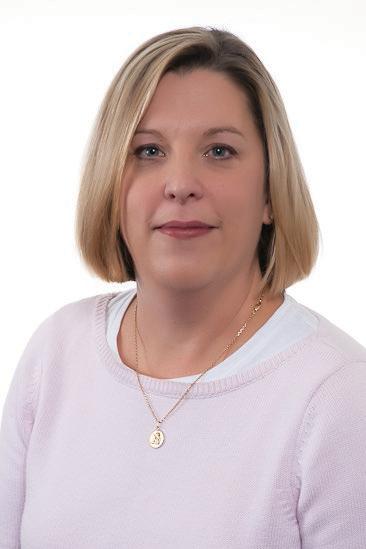
MEET STEPHANIE DAVIS YOUR EPN TRAVEL PROFESSIONAL
“I enjoy getting to know my clients; their likes and dislikes, the must-do’s and must avoids, helps me develop a tour that will be a lifelong memory for the participants while also meeting their educational goals and their budget”
Stephanie is in her 15th Season here at EPN Travel Services. She is a graduate of Penn State University and also has a degree in Tourism and Travel from Antonelli Professional Institute. Prior to joining EPN Travel, Stephanie managed multiple national retail chains. Since expanding her horizons here at EPN she has had the opportunity to work one-on-one with many clients and especially enjoys the personal contact of state conferences and school presentations. Stephanie enjoys traveling, spending time outdoors playing with her dogs, working in her yard and tending to her extensive vegetable gardens.
WHAT IS YOUR FAVORITE STUDENT DESTINATION?
Boston is my favorite without a doubt. As one of the oldest and most important historical sites in the country, Boston and neighboring Salem and Plymouth are the trifecta. Boston is also a world class modern city with world class dining, performing arts and sporting events. With activities like e Freedom Trail, Whale Watching tours, Red Sox games and tours of Symphony Hall, Boston o ers both the Old World and the New World all in one trip.



PERFORMANCE TOURS CUSTOM CLINICS PARADES BOWL GAMES FESTIVALS DISNEY PERFORMING ARTS
610-970-3751 • 888.323.0974 ext. 3751 stephanie@epntravel.com • epntravel.com 1784 West Schuylkill Road, Douglassville, PA 19518 STEPHANIE DAVIS Tour Specialist Meet_StephDavis_7.5x9.5_Destination_r1.pdf 1 8/8/2016 5:24 PM PO Box 410 Jackson, Michigan 49204