


President
Denise Wilkinson wilkidenisedoremi@gmail.com (517) 282-2591
Treasurer Ashleigh Lore ashleigh.lore@gmail.com (517) 881-4656
President-Elect
Jeremy Duby jrduby81@gmail.com (586) 876-8744
Secretary Trisha Vickers tvickers@mapsnet.org (906) 250-3104
Please support these businesses - they support music education throughout Michigan!
Contact MMEA Executive Director Carin McEvoy (executive@mmeamichigan.org)
Immediate Past-President Shannan Hibbard hibbards@umich.edu (313) 378-6815
Executive Director Carin McEvoy executive@mmeamichigan.org (517) 881-6803
The MI Music Educator (www.mmejournal.com) is the official publication of the Michigan Music Education Association (www.mmeamichigan.org ) published twice annually (spring & fall). All correspondence related to editorial content, circulation, or advertising should be addressed to MMEA Executive Director Carin McEvoy 620 Dunbar Court East Lansing, MI 48823. The Michigan Music Education Association is the federated state unit of the National Association for Music Education, www.nafme.org.
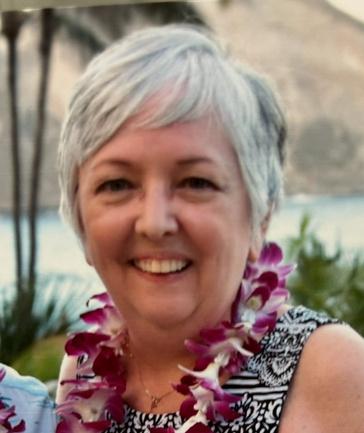
I have always enjoyed being with Michigan music teachers. Sharing experiences and learning from each other are some of the best times I have had in my teaching career. I am looking forward to our state’s future in teaching music with children and adults. This year, we have many offerings at all levels.
MMEA and co-sponsor WMOC (West Michigan Orff Chapter), began last fall with our usual kick off: the Fall Workshop in Allendale. Our featured presenter was Alice Olsen along with many Michigan teachers who also shared their expertise on many different music subjects. Allendale teacher Dan De Zwaan and student teacher Joey Wells had their DrumtastiX elementary students perform bucket drumming under the direction of Alice Olsen. Thank you to Charissa Duncanson, who is a MMEA Region Rep and Fall Workshop Chairman, for putting this event together. It was a fantastic weekend and a great way to begin the school year!
Ian Boynton, MMEA Professional Development/Outreach Chairman has many activities planned. Our Book Study continues to be offered three times a year. Online professional development is offered each month based on various topics. New this year is “Teacher Talk Tuesday.” Join in on this Zoom PD and meet others in the state, ask questions and share ideas.
DeniseWilkinson
MMEA President
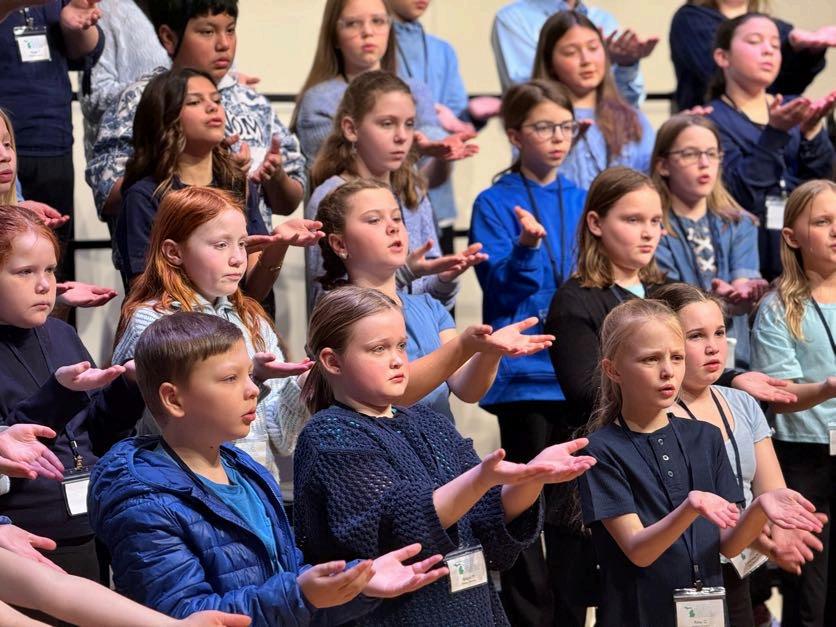
MMEA continues to focus on students as musicians. We are offering the MMEA Instrumental Clinics—stay tuned for the 2025 dates! Also in 2025, the Elementary Honors Choir returns as regional events. The Young Composers of Michigan project continues to grow each year and is a highlighted program with student composers presenting their pieces at MMC. The names of the 2025 featured composers, grades 2-12, can be found on the MMEA website. Congratulations to the young Michigan composers, and we look forward to hearing your compositions at MMC in January.
In November, I will be talking with Oakland University NAFME Collegiate group. I look forward to having conversations with our future educators. When I was contacted by the Oakland Collegiate group, it was fascinating to learn that the Oakland Collegiate President, Emma Latourette, used to be an elementary music student of mine!
Advocacy continues to be an important part of NAfME/MMEA. Recently, I attended two meetings: Empowering Teachers to Advocate for Federal and State Arts Education and 2) Creating Effective Stories to Share with Lawmakers: How to Create Stories to Move the Hearts, Minds and VOTES of Lawmakers. MMEA continues to work—alongside NAfME at the national level —for music in our state. There is a concern at the national level that the Assistance for Arts Education (AAE) program will be cut by 25%. This funding strips away critical support for arts education and essential federal programs. The rationale for cutting is, “funding should focus on core subjects like reading, writing, and math.” We will continue to defend arts education!
We continue as an association to look for other ways to serve teachers and students. We are also striving to see how we can also work with retired Michigan music teachers and communities of Michigan. Thank you to our MMEA executive director, Carin McEvoy as she continues to lead us forward to be “United Through Music,” for now and for the future!

As the school year winds to a close, I reflect on the great teaching I have had the opportunity to observe.
The outstanding educators I have been able to partner with and the students that are having memorable and life enriching experiences through music. Having served the MMEA board as a Government Relations Chair, and then the Instrumental Activities Coordinator, I am eager to progress to the executive board and serve our organization, and passion, in this new leadership role. I would like to introduce myself as the President-Elect of MMEA.
Having taught in the public schools and at the higher education level for over 20 years combined, I have a strong
Getting to know the MMEA board
MMEA President-Elect
outlook on the importance of music education. I have always strived to create an inclusive atmosphere for all students while also providing the outlet for them to be creatively expressive without judgment.
The music room is a place where the whole student is taught.
The student is able to open up emotionally and express themselves in a safe environment through a unique medium in which everyone
understands and relates to on many levels Through this expression the students mature and grow with a better comprehension of their humanness
I have enjoyed working with students over the years who may not have had the opportunity to work with an ensemble in other capacities: students who started performing late, for instance, or students at the collegiate level who had the drive to join larger groups but lacked the experience to pass an audition.
I have always believed that music is for all.
I welcome all students and enjoy being a part of their journey. Not all who perform will become the next professional musician, however, they will be the next consumer of live music, or the next generation of community ensemble members. In either case, it is important to nurture music for all students regardless of their background and to encourage them to be good patrons and lifelong music makers.
Currently I am conductor and music director for the Warren Concert Band, and the Redford Civic Symphony Orchestra. I am also the conductor of the Symphony Orchestra with the Detroit Metropolitan Youth Symphony I affirm that community and youth performing ensembles are a very special entity in the world. A place where individuals can continue to perform their art and craft, and share their classroom experiences whether it be instrumentally or vocally. These groups bring together all walks of life and balance the world through a singular passion – music!
I now am a music education specialist with A & G Central Music, where I partner with school music programs to offer support in any way I can whether it be through classroom clinics, professional PD, inventory support, or simply an extra set of eyes and ears for support. This position, partnered with my leadership role in MMEA, creates an exciting vision I am eager to engage with the membership, and recruit more. Together we will take music education to new heights! I am looking forward to partnering with all of you I wish you the happiest of years ahead, and a strong and stressless school year!
Y o u M i g h t N o t K n o w A b o u t
b y K i m B r u g u i e r
N A f M E N o r t h C e n t r a l P r e s i d e n t
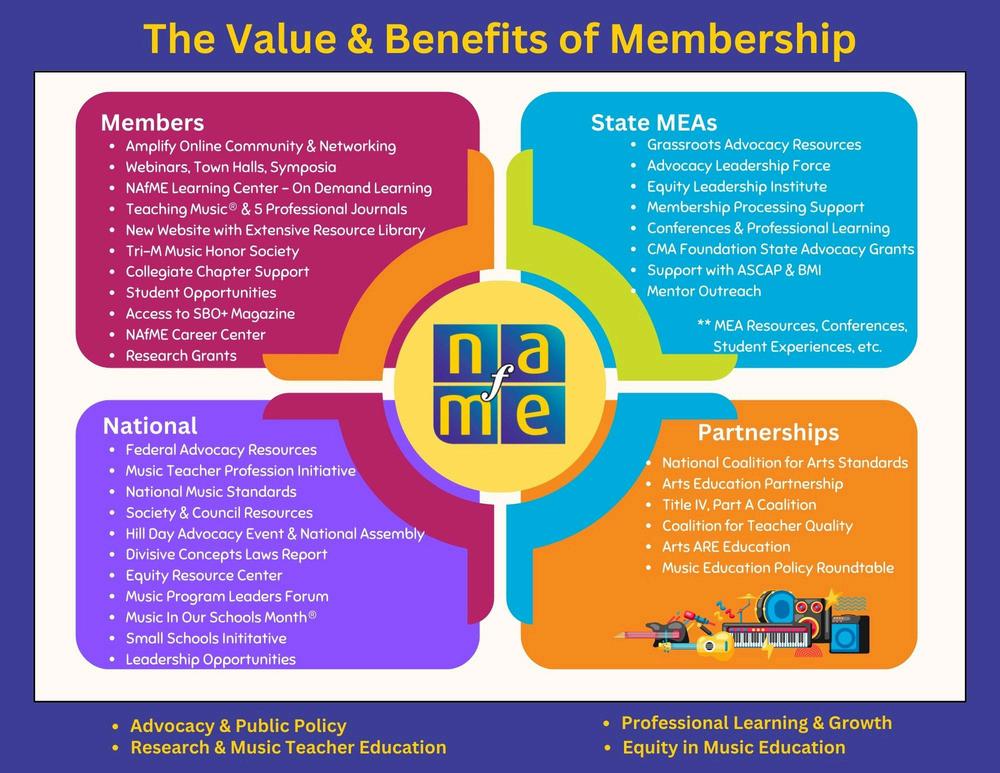
My name is Kim Bruguier, and I am the NAfME North Central President, your representative to NAfME at the national level. The National Association for Music Education (NAfME) offers a wealth of benefits for educators dedicated to fostering music education in their programs With your membership, you have access to numerous resources and initiatives that enhance teaching practices and advocate for the importance of music in education many of which you may not even know exist! All these resources can be found on the homepage at www.NAfME.org.
P r o f e s s i o n a l D e v e l o p m e n t
O p p o r t u n i t i e s
One standout benefit of NAfME membership is the opportunity for professional development. Through the NAfME Online Learning Center and NAfME Academy, members can access a rich library of webinars,
courses, and workshops designed to support music educators at all stages of their careers. By visiting the NAfME website, you can select “Professional Learning” to explore these offerings.
First up under the calendar, you’ll find virtual town halls, state conferences, and professional development events from around the country Most states will honor NAfME membership for in-state rates at their events. So if there is something geographically close to you from another state, please reach out to that MEA to inquire about member rates.
The NAfME Academy® is an online, ondemand platform in the NAfME Learning Center, offering 150+ webinars on various music education topics. Free for current NAfME members, it allows users to earn professional development hours at their own pace. You can search for and enroll in webinars, track progress through the Dashboard, and receive completion certificates upon completing

surveys. Content is regularly updated and reviewed by NAfME’s Professional Learning and Partnerships Committee.
Logging into the Academy can be challenging at first. You will need to log into the NAfME member portal and register (even though it’s free) Afterwards you will log in at the NAMFE Academy directly which is it’s own learning platform. There you can sort through potential topics related to your specific music content. These resources provide practical strategies, innovative teaching methods, and insights into the latest trends in music education, enabling educators to stay informed and improve their craft.
For educators in smaller schools, the NAfME Small Schools Initiative offers tailored support to address unique challenges. This initiative connects teachers from smaller institutions, fostering a network for sharing resources, collaborating on solutions, and gaining inspiration from peers facing similar circumstances. The program recognizes the distinct needs of small school educators and provides targeted assistance to help them deliver high-quality music education despite limited resources or staffing Some of the offerings available include webinars and town halls, such as:
Advocating for Federal Funds in the Small School Setting
Perspectives on Developing a Successful Small School Music Program
Embracing and Influencing Change in Small School Music Programs
How to Redefine Success at a Small School
This is still a new developing initiative and the task force is hard at work creating more resources, and soliciting feedback from state leaders about what their teachers are in need of. Many states are now also looking at the state MEA level what they can do to help and are networking with other states to share ideas and brainstorm. North Central Past President Rich Tengowski from Wisconsin is the small schools task force Chair and I know he would greatly appreciate any feedback.
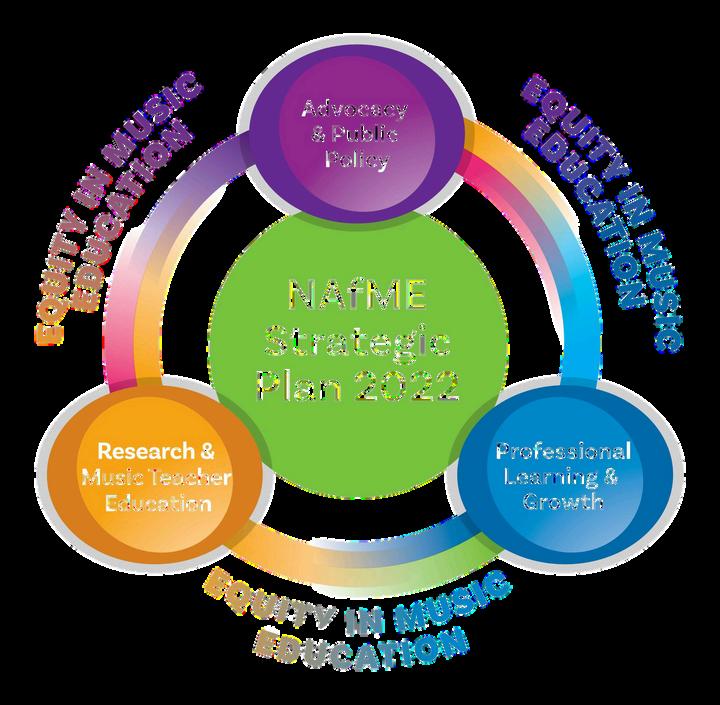
NAfME’s commitment to advocacy is another key benefit Each year at the National Leadership Assembly, national and state music education representatives advocate in Washington, D.C., for funding and support for music education. Additionally, The Music
Teacher Profession Initiative (MTPI) was formed in 2021 to identify barriers to equity in music teacher recruitment, education, and retention. A task force of NAfME leaders representing institutions of higher education across the country conducted research related to the challenges facing:
The MTPI task force conducted research on the challenges facing:
High school students deciding to pursue music education careers
Collegiate pre-service music educators
New music educators during their first five years

On the website you can find “A Blueprint for Strengthening the Music Teacher Profession” which describes the task force’s process, outcomes, and recommendations for action This document is intended to address and mitigate barriers in music teacher education and the profession, aiming to foster inclusivity and equity throughout the recruitment, education, and career progression of music teachers. It explores systemic challenges across three phases before, during, and
after degree programs such as inequitable funding, Eurocentric curricula, limited cultural responsiveness, and insufficient support for novice educators Mitigations include curriculum revisions to reflect diverse communities, advocacy for livable salaries, expanded professional development, and sustainable mentorship programs. By presenting actionable recommendations, MTPI calls for collaborative efforts among educators, administrators, and community stakeholders to evolve music education into a more inclusive and impactful field.
On the NAfME website, under MTPI, you can find:
Executive Summary A Blueprint for Strengthening the Music Teacher Profession (Full Report)
Music Teacher Profession Initiative Fact Sheets (for educators, higher education leaders, administrators, and policymakers) Advocacy resources and handouts
Also on the website under advocacy I would highly encourage you to spend some time looking through both the Policy Priorities and the Advocacy Resource Center. I personally know South Dakota educators that used NAfME’s information handout on “How Funding Works – Title II” to help encourage their school to help fund their attendance at state professional development events,
and to hire a content specific clinician. There are many advocacy documents and resources available.
Membership in the National Association for Music Education is more than a professional affiliation it’s a commitment to advancing music education and enriching students’ lives through music. With robust professional development opportunities, specialized
support for small schools, and strong advocacy efforts, NAfME empowers educators to excel and make a lasting impact.
These initiatives are continually growing and evolving. If you have session or webinar ideas or specific needs you’d like addressed, please don’t hesitate to reach out Your voice drives progress. Together, we can strengthen the world of music education.
Kim Bruguier is a veteran music educator in her 18th year, teaching general music, beginning band, and choir at LB Williams Elementary in Mitchell She also directs the middle school show choir, MHS Colorguard, and the Mitchell Area Children's Choir An adjunct professor at Dakota Wesleyan University, she teaches arts integration and serves as President of NAfME’s North Central Division and PD Coordinator for the South Dakota MEA A frequent guest clinician and adjudicator, Kim has directed numerous honor choirs and presented at state and national conferences She was named South Dakota Outstanding Young Music Educator in 2011 and Mitchell Teacher of the Year in 2017 Kim and her husband, Lee, have two children and enjoy camping and traveling
By : Jason Boyden
MMEA Membership Chair
Traditionally, MMEA has been widely regarded by many as the organization for elementary music teachers to affiliate with professionally. While being very effective in this capacity, this is not the sole purpose of the organization All music educators, from pre-K to adult music educators and those that support them, are eligible to be a member of MMEA.
Michigan has a wealth of professional membership opportunities MSBOA, MSVMA, MASTA, various Orff chapters, community music ensembles, music therapy associations, music industry partners and others that serve our
various disciplines: early childhood, scholastic education, higher education, and adult and senior enrichment. We all share a common interest in recognizing that music is a valued part in the life of every person at every stage of their life.
MMEA is not, however, an “umbrella organization” for the various music education associations that have well established histories in our State While the statewide MEAs in most other states (TMEA in Texas, FMEA in Florida, etc.) serve as the primary organization for statewide music activities organization, MMEA does not exist in this capacity or for this purpose.
So, why become an MMEA member? What are the "A,
B, C's" of membership in MMEA and how do they serve our community of music teachers and music makers?
MMEA is able to coordinate statewide advocacy and lobbying efforts in the Michigan legislature and with the MDE on behalf of all of our organizations. Members are part of a mechanism that advocates for funding and legislation that supports
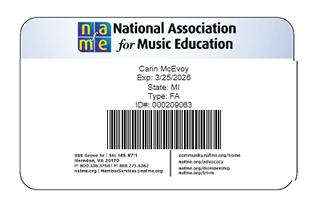
Your Name Here
all music education programs from pre-K children to senior citizens in our state We also have the resources of NAfME, which does incredible work on a national level
When you belong to MMEA, you belong to an organization that has a national presence (NAfME), a state-wide presence (MMEA and affiliate organizations) and can provide resources for a local presence, with advocacy at every level (from pre-K to senior citizens). You also belong to an organization that promotes the value of belonging in a music ensemble as a diversity, equity and inclusion priority for all people in public and private/charter schools, small and large cities, urban/suburban/rural population centers, and musicians from their earliest stages of music making to their golden years as practicing musicians and consumers of music.
As I mentioned, MMEA is not a replacement for any of the incredible music organizations in Michigan associations steeped in a rich history of scholastic music education in our state. MMEA strives to supplement and complement the work that is going on already in MSBOA, MSVMA, MASTA, and others, as they fulfill their specific visions and operations. By bringing together all parties focused on music education (preK, scholastic, higher ed., music industry, community/professional), our hope is to showcase music-making and the appreciation of it as a core activity that serves the emotional, physical and mental health of Michiganders of all ages.
In short, MMEA is an association of music professionals, and we believe that our statewide organizations have immense benefit to your programs that we can supplement. We are here to advocate on b half of the incredible work going on in e organizations, and to bring ether through individual member, as opposed to school-based mbership music educators across state who share a common mission vision for the future of music in higan


Start by identifying a meaningful topic from your teaching experience, explore relevant journals to reach your intended audience, and consider submitting to the open-access Michigan Music Educator, which offers helpful tools to guide you from idea to publication.
Crafting your article
Craft your article using a clear outline that includes a strong introduction, relevant context, a detailed and adaptable teaching approach with practical
tips, and a reflective conclusion that highlights your learning and invites further exploration.
Before submitting, review your article for clarity and alignment with journal guidelines, seek feedback from peers, and be open to revisions— remember, sharing your experiences contributes meaningfully to the collective growth of the music education community.
by Dr. Jacob Berglin, Journal Editor
As a music educator, sharing your expertise and experiences with your peers can significantly impact your field while advancing your professional development and connecting you to the profession in a new way. However, as busy classroom music teachers, this process can seem daunting. What should I write about? Do I need to cite sources or use complicated jargon? Who will even read this?
This guide will walk you through the process of preparing and submitting an article that resonates with fellow music teachers, so you can allay some apprehension and feel confident about the process of sharing your expertise with current and future teachers.
Begin by identifying a topic that emerges from your teaching practice. Consider the challenges you've successfully addressed, innovative teaching strategies you've developed, or unique perspectives you've gained through experience. Your daily classroom experiences often contain valuable insights that could benefit other educators. For instance, you might have developed an effective method for teaching rhythm to elementary students, discovered ways to maintain student engagement in virtual ensemble rehearsals, or created successful strategies for integrating technology into music theory instruction.
Once you've identified your topic, research appropriate journals that reach your intended audience. Publications like Music Educators Journal, General Music Today, or Teaching Music specifically target music educators and welcome practitioner-based articles, though each has slightly different audiences and expectations about style and format. Review recent issues of your chosen journals to understand their style, tone, and content preferences. Pay particular attention to articles similar to what you plan to write – this will help you understand the journal's expectations and typical article structure.
journal features a Submission Walkthrough feature to make the construction of an article as easy and efficient as possible. Visit the website when you have an idea, not just a finished article, and use our walkthrough as a virtual writing assistant to put your ideas together Below, you’ll find some suggestions for how to take your experience from your brain and onto the “page”.
Start with a clear outline that includes these essential components:

You’re one Idea away from getting published
Introduction: Begin with a compelling hook that immediately resonates with other music educators Frame the problem or situation you're addressing in a way that demonstrates its relevance to your colleagues' daily teaching experiences.
Context and
Background: Provide enough background information to help readers understand your teaching setting. You may find that alluding to some prior research makes sense here, but remember that your primary audience consists of practicing teachers seeking applicable solutions.
Of course, the Michigan Music Educator is also a great place to submit your writing! This digital journal is open-access, which means that anyone - MMEA members, out-of-state music teachers, parents and students, etc. - will be able to read and interact with your article. Plus, our
Your Approach or Solution: Detail your teaching strategy, intervention, or insight clearly enough that others could implement it in their own classrooms Your submission will be richer and more valuable if you provide specific examples, actual lesson segments, or other materials drawn from your experience. For instance, if describing a new
approach to teaching sight-singing, include sample exercises, student responses, and modifications you made based on classroom results.
Practical Implementation Tips: Offer specific guidance for teachers who might want to adopt your approach How would you adapt this lesson with older/younger students? In a different musical context? In a setting with more students with special needs?
Reflection and Future Implications: Conclude with reflections on what you learned through this experience and how it has influenced your teaching practice. Consider suggesting areas for further exploration or adaptation of your approach.
Before submitting, look through your essay one more time for clarity and typos. Peers at your school or other colleagues in the field could even serve as “reviewers,” reading and providing feedback, particularly regarding clarity and practical value. Then, double-check the journal’s requirements for submission, and send it off! At the MMEJ, we try to make this part of the process straightforward - we’ll even help with formatting of references and layout if that gets you closer to the goal line.
After submission, be prepared for several possible outcomes. Many articles require revision before acceptance. View editorial feedback as an opportunity to strengthen your work rather than as criticism. Respond to revision requests promptly and professionally, addressing each point specifically in your resubmission. If a journal declines to publish your essay, that doesn’t mean it’s not a valuable contribution to the profession, it just may not be a good “fit” for that journal. Feel free to give it another editorial look and send it somewhere else.
Remember that your experiences and insights have value to the broader music education community. By sharing them through practitioner-based journals, you contribute to the collective knowledge of your field while helping other educators enhance their teaching practice.


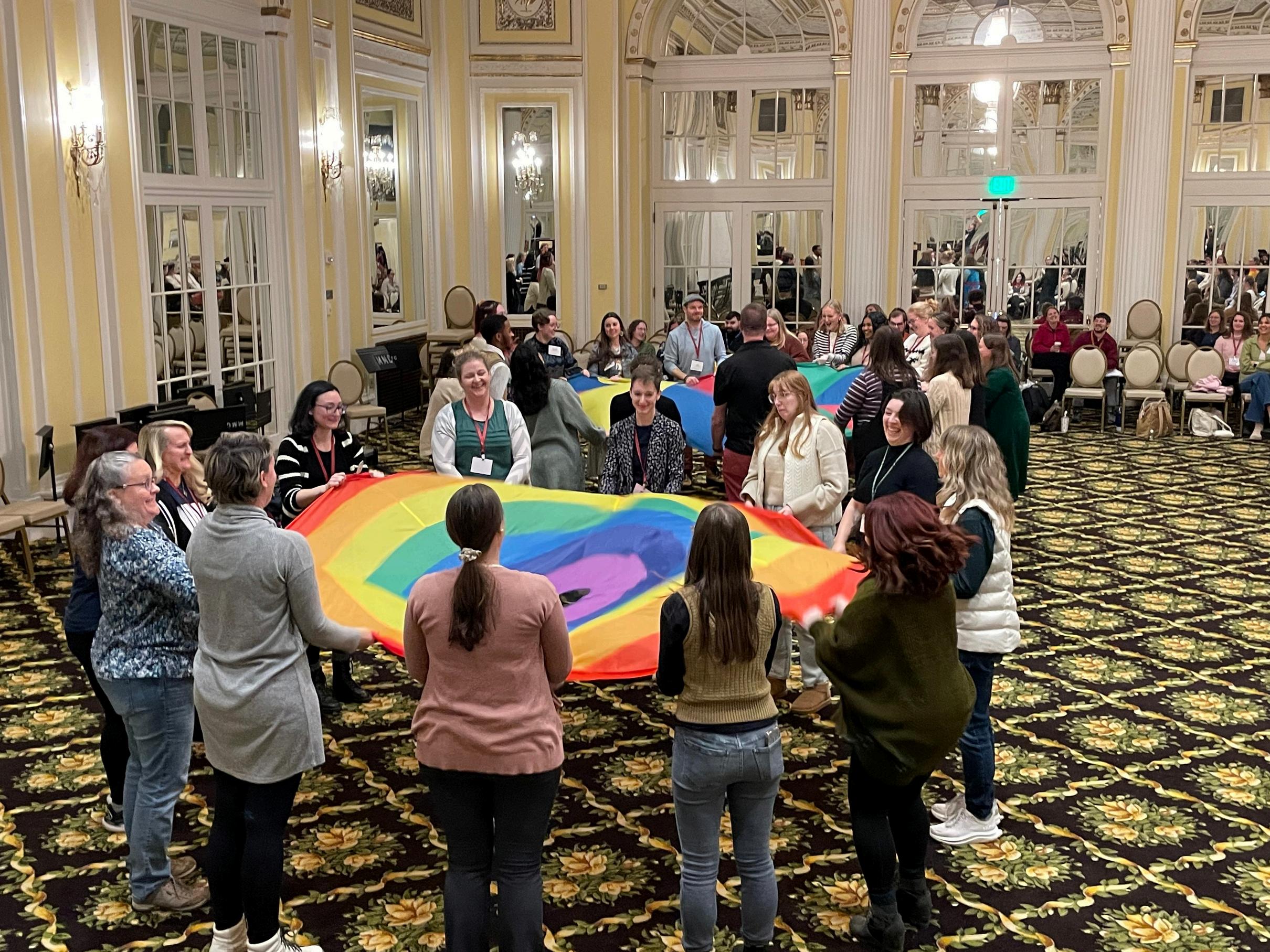
By Melissa Stouffer MMC Planning Committee Representative
As the MMEA Planning Committee Representative Chair for the Michigan Music Conference (MMC), I’m thrilled to celebrate the relaunch of our journal and provide an update on the Michigan Music Education Association’s (MMEA) contributions to this year’s event. The MMC has long been a cornerstone for music educators, students, and advocates across the state, offering unparalleled opportunities for professional growth, networking, and inspiration
The MMEA-sponsored sessions at MMC 2025 promise to be as impactful as ever. Our offerings reflect the diverse needs and interests of Michigan’s music educators
Here are just a few 2025 highlights:
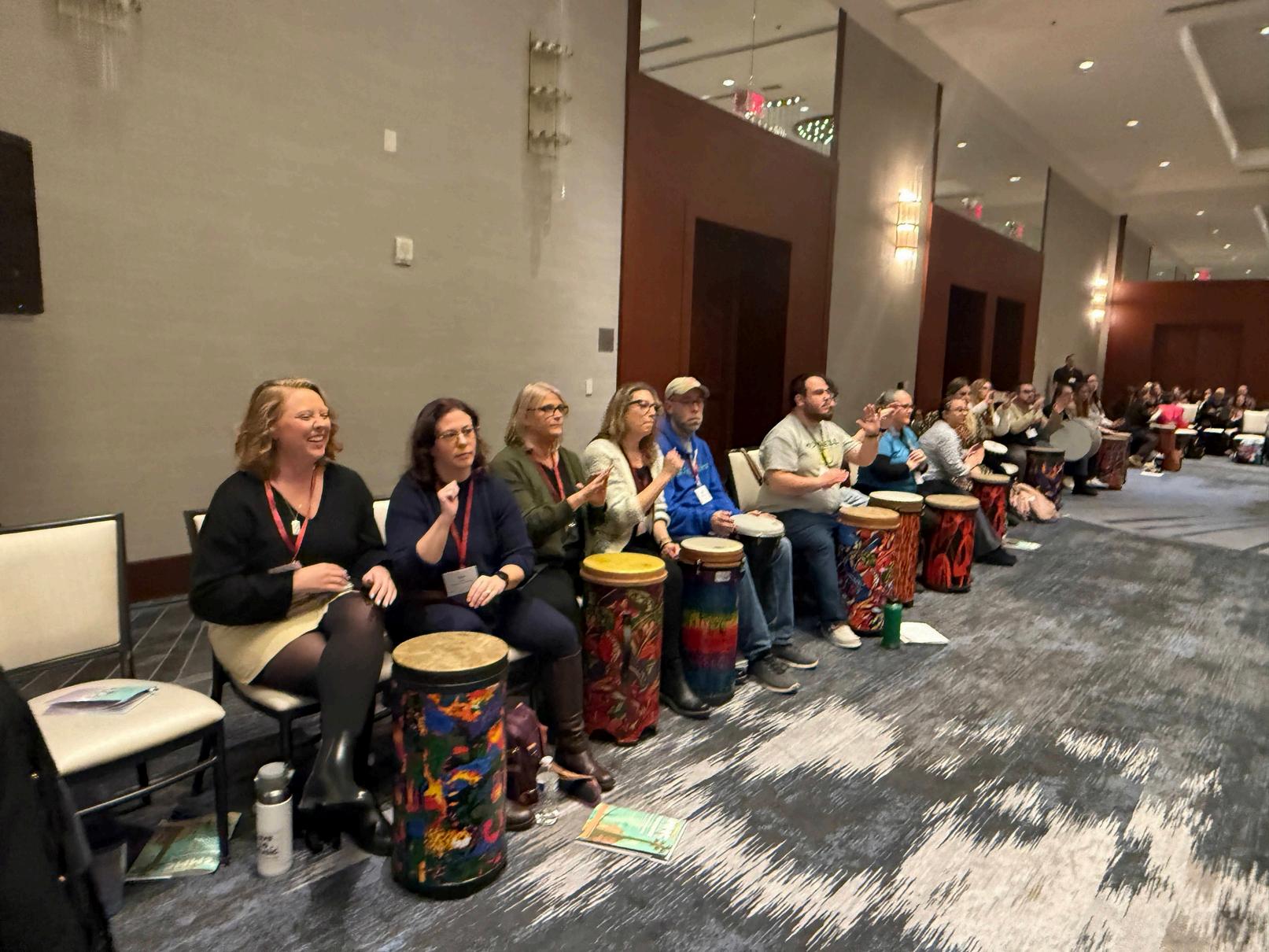
Thursday Pre-Conference: Hong Le presented World Music Drumming: Bringing the World Closer to Home Headliner: Coty Raven Morris was our headliner who presented four inspiring sessions.
Friday Evening Fun: This year we had two sessions on Friday evening in the President Ford Room: Folk Dance Frenzy and Uke Jam Fest. On Saturday, our Young Composers Concert featured music compositions from students across the state of Michigan.
Innovative Approaches: We learned how educators are leveraging technology, interdisciplinary approaches, and new methodologies to engage students.
Equity in Music Education: Insights and tools for fostering inclusivity in your classroom and school programs.
Advocacy and Leadership: Being an advocate for music education within your community and beyond.
Hands-On Workshops: Sessions that honed our skills, from conducting to integrating popular music into traditional curriculums
Higher Education Committee
Research Poster Sessions: Recent Research in Posters session, featuring current research by undergraduates, graduate students, university faculty, and practicing teachers.
As we celebrate the success of this year’s conference, we also want to hear from you! Which MMC sessions inspired you the most? We’d love to share great presentations with NAfME Academy and your feedback can help us do that!
To share your favorite sessions, please email us at mmcpc@mmeamichigan org or use the feedback form available on the MMC website.
The success of MMC and MMEA’s contributions relies on the passion, creativity, and expertise of our members. Whether you’re presenting, attending, or sharing feedback, your involvement strengthens our community and advances music education in Michigan and beyond. Together, we’ll continue to inspire, innovate, and advocate for music education.
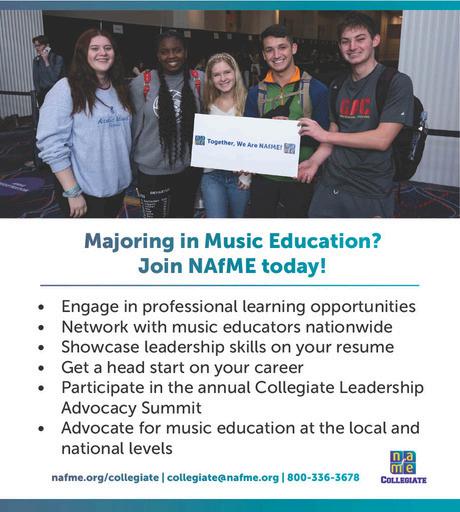





committee





Exciting professional development opportunities are happening throughout the year sponsored by MMEA! No matter if you are looking for fellow music educators to bounce ideas off of, get some quick lesson ideas, or learn at your pace on more in-depth topics, MMEA has you covered. Here’s a quick look at our upcoming professional development offerings.
by Ian Boynton, PD Activities Chair
Teacher Talk Tuesdays are scheduled each month on the third Tuesday via Zoom. This informal session begins at 7:00, and is your chance to get advice, commiserate, or just recharge while talking to other professionals
in the field. Join us in February when we take a look at ways to manage stress in the current social climate. We’ll have experts on hand to answer your questions or just listen and support you. In March we’ll be focusing the discussion on classroom management strategies to assist you in working successfully with even the most difficult students. Teacher Talk sessions are free of charge. No registration is required just come as you are. Zoom links can be found on all MMEA social media.
If you’re looking for quick clock hours to keep your teaching certificate current or just need a quick lesson idea we also offer monthly professional development via Zoom. These one hour sessions offer SCECHs for a nominal fee and are presented by content experts. Upcoming sessions include Pressure Proof: Practicing for Peak Performance by Elizabeth Rosinbum on July 23, Pop Music Concepts in the Classroom by Melissa Flores on September 16, and Working with Students with Special Needs by Stacy Root on October 14 Zoom PD sessions begin at 7:00 You can register on the MMEA website
If your schedule is a bit too busy to make one of our live several book studies. Currently six titles are available 2025 term on a variety of topics to fit your needs. New ing Music Education and Social Emotional Learning by provides real world examples of how you can easily social emotional learning in your classroom. Also new


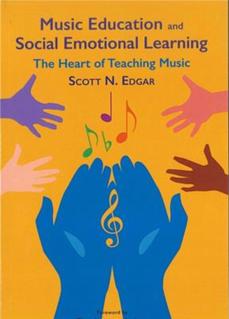
offerings we offer fortheSummer this term, we’re addScott Edgar Edgar include elements of fortheSummer
term is Student SelfMaddalena Taras and This book offers assessment traditionally works and what educators need to do to best implement student self-assessment in their own classrooms. All course work is conducted asynchronously using Google Classroom. This allows you to work at your own pace and time that works best for you. SCECHs are offered for a nominal fee. Registration can be found on the MMEA website.
Assessment by Hwei Ming Wong. severalmodelsof
If the goal of our classes is not just achievement, then what is it? How do we balance giving students opportunities to explore music playfully without missing deadlines for concerts and performances? We often talk about “play” in the context of early childhood. Is there even a place for play at more mature levels of music-making? How do you get a large group of 15-year-olds who struggle with apathetic attitudes towards their education and schooling system to trust that they can experience joy in front of their peers?
Though there is a large resistance from older students to engage in playful behavior, it is something they crave deeply. Oftentimes, when presented with the idea of play, older students reject the vulnerability and unfiltered curiosity it requires. The music classroom is a unique environment in which we can reprioritize joy in our students’ lives while still improving skills that further our craft.
As music educators, we understand the importance and lifelong impact a healthy relationship with music can have on students as they grow from children to adults. We aim to prioritize joy in performance and strive to provide our students with positive and enriching musical experiences. This is much easier said than done when it comes time to actually engage in these activities in the classroom, it is easy to lose sight of the joy of music and instead focus solely on achievement and performance.
By incorporating playful elements into the classroom, educators can create more engaging and effective learning environments Here are some practical ways to embed playfulness into your classroom
Modeling playful behavior can inspire students to express themselves freely and creatively. Remember to have fun in front of your students without shame. This can look like exploring your favorite musical, your favorite movie soundtrack, or your favorite classical piece with unfiltered joy and excitement. Teaching them to enjoy things radically and unapologetically supports their socialemotional learning on a developmentallyappropriate level (Graczyk, L., 2024).
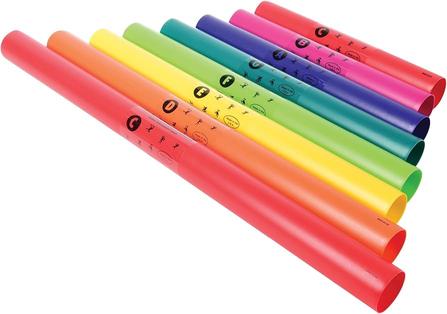
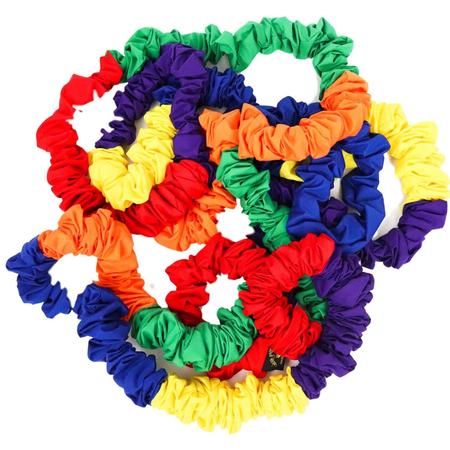
Simple tools like Boomwhackers and large elastic “stretchy bands” can be used to foster musical and rhythmic skills while still engaging the playful side of the student The multiple modes of representation of information included in the use of Boomwhackers and Boomwhacker “play-along” videos is yet another way to involve the Universal Design for Learning in the classroom, ensuring an accessible environment (CAST, 2024).
Boomwhackers can also be used to address the composition standard of music education, giving students a confined range to practice improvisation and composition with their peers.
Dance! Utilizing Gordon’s concept of “continuous fluid motion” while engaging our students in movement helps immensely with steady beatmore so than clapping, snapping, or stomping (Valerio, W., n.d.). Even at the secondary level, the importance of movement as it relates to musical skill cannot be overstated
Learn folk songs! Give students chances to explore other cultures off their instruments Let them conduct research about various cultures and then teach the class how to sing/dance to the folk songs they learn.
Engage students in playful conversation about what current musical culture looks like to them. Discussions about contemporary music can contextualize the skills the students learn in the music classroom in fun and relatable ways. After having these discussions, play beat pattern games to the music they recommend. This also furthers the use of authentic student voice and choice in the classroom while still remaining relevant to the content you are teaching in class
The pressure of performance is not something that can be ignored. Many educators shy away from playful activities in favor of performance preparation. Incorporating play-based learning into the classroom allows for students to stay engaged and energized in their learning and achieve goals more quickly and efficiently
Students are not “lazy” or “apathetic”; they are disenfranchised by the systems that rely on their achievement and performance to receive funding. They are tired, and they come to the band room to escape those feelings.
How do we combat this without tearing the educational system apart? We find ways to truly enjoy life By providing opportunities for playful exploration, we can help students develop important cognitive, social, and emotional skills, ultimately leading to deeper understanding and a lifelong love of learning
References:
CAST (2024). Universal Design for Learning Guidelines version 3.0. Retrieved from https://udlguidelines.cast.org
Graczyk, L. (2024). The Joy of Learning (Thesis, Concordia University, St. Paul). Retrieved from https://digitalcommons.csp.edu/teacher-education masters/125
Valerio, W. (n.d.). The Gordon Approach: Music learning theory. allianceamm. https://www.allianceamm.org/resources/gordon/
BY RYAN SHAW, GOVERNMENT RELATIONS COORDINATOR
Policymaking in arts education is rarely able to garner widespread attention and support. Instead, arts education policy making is often an indirect result of other education policy work, with arts education advocates capitalizing on adjacent efforts to make strides. For example, arts education was not originally included in the 1990s push for national standards (Elpus, 2013) However, after some advocacy work, the arts were added and the 1994 national standards in the arts were the first to be completed, setting off a wave of state-level arts standards adoption (Elpus, 2013; Koza, 2010; Schmidt, 1996) Moreover, where arts education policy is purposefully passed, it is often in situations where stakes are low and political capital is not being spent For example, recent policy success in the arts education sphere has included state-level
recognition for graduating high school seniors in the form of “diploma seals” (Shaw, 2023). Similarly, lawmakers may be amenable to costfree, symbolic proclamations like recognizing “Music in Our Schools Month” or signing onto bills that would “urge” the use of Title I funds on the arts (Americans for the Arts, 2021).
In other words, policy with more “teeth” in the form of significant government funding for the arts in schools, or with increased regulation around what arts education schools must provide is harder to achieve. Major expenditures for arts education have mostly occurred in recent years only when private monies are combined with public dollars (Shaw & Bernard, 2023). Also, the trend has been, if anything, for regulation to roll backward, allowing school districts more local control and choices over the provision of arts education.
For example, 45 states had an instructional requirement for elementary school arts education in 2014 (Arts Education Partnership, 2014). By 2024, this was down to only 42 states (Arts Education Partnership, 2024). Requiring the provision of arts education can be costly, and rarely do policymakers seem willing to propose significant policy as a result of the costs.
Given these stipulations, any significant state appropriations for arts education are worthy of attention. Recent successes in this vein include California’s Proposal 28 (hereafter, Prop 28), Oklahoma’s “Essential Arts Education Grants for Schools” program, Florida’s “Early Childhood Music Education Incentive Program,” and Michigan’s pilot appropriations line item to fund the hiring of elementary music teachers In the rest of this short article, I briefly explain the format of a few such appropriations efforts.
In Michigan, an influential policy broker State Senator Erika Giess (D, Taylor) was able to borrow existing policy language proposed by an arts education coalition, collect new data on gaps in arts education, and leverage political relationships to propose the pilot funding as a one-time appropriation in the state education budget (see State of Michigan, 2023) A needs assessment showed $22 million was needed for K-5 music programs; $15 million was requested, and $11
million was approved for the 2023 budget (State of Michigan, 2023). This allocation is known as the section 33 music/arts grants However, challenges abounded after the passage of the budget allocation. Implementation was marred by a lack of statelevel capacity for rollout that limited applications for funding, a short window for grant applications, and other macro-level problems (e.g., unrelated budget fights). Due to these challenges, only sixteen schools were approved for funding for a total of $2,574,671. Ultimately, this specific music education appropriation was not renewed in the 2024 budget. However, the unused funds (roughly eight million dollars) are part of the 2024-2025 grant allocation (see https://maeiaartsednetwork.org/vaandmusicgrant/).
In California, the scope and format of Prop 28 were markedly different from Michigan’s appropriation Instead of a legislative allocation, voters approved the Arts and Music in Schools Act in November 2022, providing renewable annual funding for the arts In the 2023-2024 school year, $938 million was allocated for arts education in public schools (Create CA, 2024). While the $11 million allocation in Michigan was organized by a small group and included in the larger $30 billion education budget with little fanfare, the coalition advocating for Prop 28 was large and vocal This group included a vocal policy broker
who was the main author of Prop 28, the former LAUSD superintendent and former LA deputy mayor, Austin Beutner, alongside the business community, and high-profile musicians and actors (Hubler, 2022).
Implementation of Proposal 28 in California has demonstrated messiness and challenges as well Although the infrastructure was more organized than in Michigan, both in terms of an organized advocacy coalition (Create CA) and personnel in the department of education, oversight seems to have been lacking. As a result, teachers union leaders from across the state sent a letter to California Governor Gavin Newsom complaining that numerous districts were incorrectly using Prop 28 funds to supplant existing funding rather than supplementing arts and music instruction as the law required (Los Angeles Times Editorial Board, 2024). Even though districts must report how they spend Prop 28 funds to the state department of education, they seem to have exercised “accounting maneuvers” to allocate money toward existing arts positions and redirect money elsewhere (Jones, 2024).
As mentioned, any state appropriations for arts education are worthy paying attention to, given their relative rarity The arts education policy community remains attentive to the implementation of such allocations, given the challenges and chances for success.
Americans for the Arts. (2021). Arts education for all act introduced. https://www.americansforthearts.org/news-room/legislativenews/arts-education-for-all-act-introduced
Arts Education Partnership. (2024). ArtScan at a glance. https://www.ecs.org/2024-artscan-at-a-glance/
Arts Education Partnership. (2014). A snapshot of state policies for arts education. https://www.americansforthearts.org/byprogram/reports-and-data/legislation-policy/naappd/a-snapshotof-state-policies-for-arts-education
Create CA. (2024). Prop 28: Arts and Music in Schools planning toolkit. https://createca.org/prop-28-arts-and-music-in-schoolsplanning-toolkit/?utm_source=ECS+Subscribers&utm_campaign =821a085f3a-ArtsEd_Digest_1242024&utm_medium=email& utm_term=0_1a2b00b930-821a085f3a-53609287
Elpus, K. (2012). Music in U.S. federal education policy: Estimating the effect of “core status” for music. Arts Education Policy Review, 114(1), 13–24. https://doi.org/10.1080/10632913.2013.744242
Hubler, S. (2022, November 2). How Hollywood got behind California’s Prop. 28. The New York Times. https://www.nytimes.com/2022/11/02/us/california-prop-28.html
Jones, C. (2024, May 31). California spent nearly $1 billion to boost arts education. Are schools misspending it? CalMatters. https://calmatters.org/education/k-12-education/2024/05/artseducation/
Koza, J. E. (2010). Essay - When policy disappoints: Still worth less after all these years. Bulletin of the Council for Research in Music Education, 183, 77–95.
Los Angeles Times Editorial Board. (2024, May 16). Editorial: Critics say Prop. 28 arts funding is being misspent. School administrators need to show their work. Los Angeles Times. https://www.latimes.com/opinion/story/2024-05-16/laproposition-28-school-arts-music-funding
Schmidt, C. M. (1996). Who benefits? Music education and the national standards. Philosophy of Music Education Review, 4(2), 71–82.
Shaw, R. D., & Bernard, C. F. (2023). Appraising metropolitan arts education partnerships: A policy analysis. Arts Education Policy Review, 1–14. https://doi.org/10.1080/10632913.2023.2277941 State of Michigan. (2023). 2023-2024 Section 33 K-5 music programs. https://www.michigan.gov/mde/-/media/Project/Websites/ mde/Academic-Standards/Section-33-K-5-Music-Programs/ Section_33_Music_Grant_RFP.pdf?rev=0c5b7563a52841978 c0cf2f9daed5f3e&hash=1409D463783664796ACFFD5EE09075CB


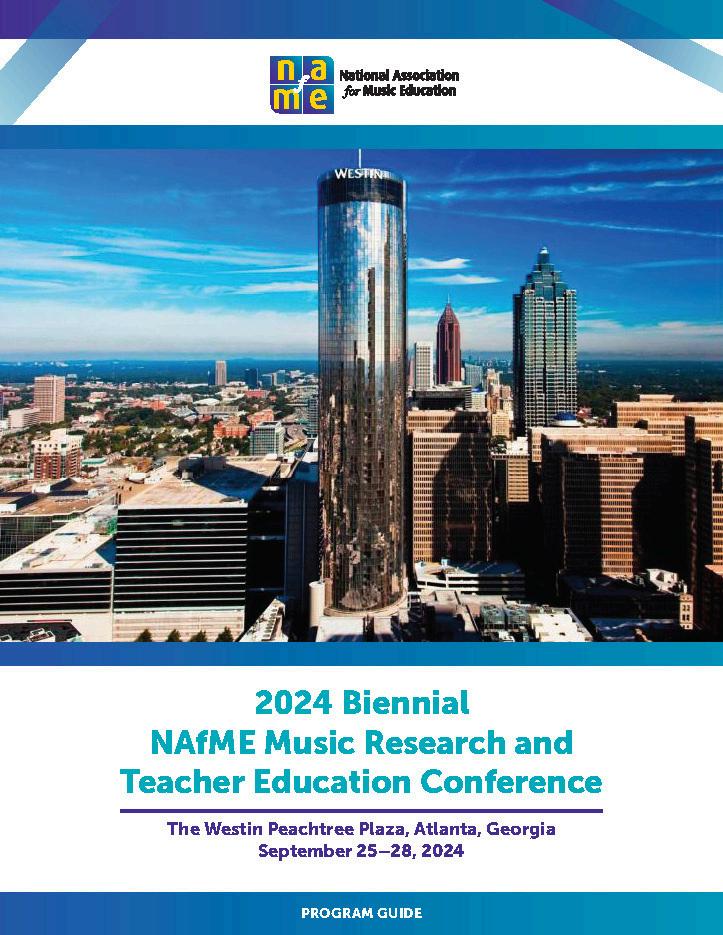
This fall, in hurricane-force winds and rains, researchers, teacher practitioners, future music educators, and graduate students convened in Atlanta, GA, for the 2024 Biennial NAfME Music Research and Teacher Education Conference. Colleagues and students shared work and discussed music education's current and future poster sessions. The NAfME Strategic Plan “A Blueprint for Strengthening the Music Teacher Profession” guided session topics.
landscape NAfME, along with the Society for Research in Music Education (SRME) and the Society for Music Teacher Education (SMTE), hosted a busy and vibrant conference from September 25 – 28 that included a preconference forum, two plenary sessions, 15 Special Interest Research Groups (SIRGs), numerous research sessions, and four
The “Blueprint” is also the name of a large-scale initiative recently undertaken by NAfME. Under the leadership of President Dr. Deborah Confredo, NAfME has reenergized its commitment to the music teaching profession through advocacy initiatives and committees like the Music Teacher Profession Advisory Committee
NAfME assembled a task force of higher education faculty who researched high school student interest in the career of being a music educator, undergraduate music education majors, and new teachers. The NAfME executive summary states the purpose of this project is to “[widen] the path to the profession by cultivating and strengthening more inclusive and equitable processes in recruiting, teaching, and nurturing a robust music teacher workforce.” This theme manifested at the 2024 conference through scholars who interrogated common practices and shed light on important issues within the field.
Dr. Jacob Berglin, Assistant Professor of Music Education at Western Michigan University, along with colleagues Dr. John Eros, Associate Professor of Music at Cal State East Bay and alum of the University of Michigan, and Dr Tiger Robinson, gave an SMTE presentation exploring the community college (CC) to four-year program transfer process from the perspective of CC faculty who direct large musical ensembles This qualitative case study, "Ensemble Directors’ Experiences and Perspectives on Student Transitions from Two-Year to Four-Year Colleges,” included six ensemble directors from six different CCs The authors recognized ways CC and four-year college faculty can collaborate to aid student success The findings included CC directors wanting their students to be noticed, the social headwind that CC directors perceive for their students when they transfer, and how CC directors can recognize and advise students regarding potential barriers Keep an eye out for this study in an upcoming issue of the Journal for Music Teacher Education
The state of Michigan was well-represented at the 2024 conference, with 20 research posters and 34 paper presentations, sessions, or panel discussions by authors with Michigan affiliations. The comprehensive list of all titles and Michigan authors is included at the end of this article.
SMTE selected several other studies by Michigan faculty and alums for presentations. Dr. Marjoris Regus, Assistant Professor of Music Education at Rutgers, Dr. Kate Fitzpatrick-Harnish, Associate Dean of Undergraduate Academic Affairs and Associate Professor of Music at the University of Michigan, and Dr. Sean Grier, lecturer in Music Education at UNC-Chapel Hill, presented their study “Considering Black Musical Capital in Music Teacher Education.” This presentation offered ways to center Black Musical Capital in music teacher education programs. Both Dr. Regus and Dr. Grier are alumni of the University of Michigan.
Dr Kristen Pellegrino, Professor of String Music education at the University of Texas at San Antonio and an alum of the University of Michigan, presented with Dr Erik Johnson and Dr Cynthia Wagoner a longitudinal case study, “The Impact of Music Teacher Philosophies on Music Teacher Identity Over Time ” Johnson, Pellegrino, and Wagoner looked at the teaching philosophies of six music teachers over the first five years of their teaching Check out their upcoming book, Journeys of Becoming and Being Music Teachers, from Conway Publications
Saleel Menon, Anne Martin, and Andrew Bohn presented their content analysis, an SRME paper titled “The Case for QuantCrit: A Content Analysis of Race and Gender in The Journal of Research in Music Education,” in which the authors investigated race and gender in quantitative studies across the last twenty years of SRME publications. Their findings suggest that “researchers do not account for race and gender in the majority of quantitative research, and when they do, their treatments lack nuance.” Using QuantCrit as a theoretical framework, the authors suggested ethical research practices for quantitative researchers to consider.
Dr. Juliet Hess’s study about supporting mental health concerns for music educators was also featured as an SRME paper session. This study, titled “Working the Semicolon: Attending to Madness and Distress in
Music Education,” investigated 15 music educators’ experiences and included recommendations for how better to support students and teachers with mental health concerns Dr Heather Shouldice’s study, “An exploratory study of teachers’ ensemble-related beliefs and attitudes about inclusion of students with disabilities,” explored relationships between secondary music teachers’ attitudes about inclusion of students with developmental disabilities and their ensemble-related beliefs. Findings included a negative correlation between inclusivity and more traditional ensemble-related beliefs. Shouldice is a faculty member at Eastern Michigan University and an MSU and U-M alum. Many more presentations, including panel discussions by Michigan higher education faculty, left a lasting impression on conference-goers. Music education in Michigan was well-represented by all who presented posters and sessions!
A highlight of the conference was the keynote address by composer and teacher Omar Thomas titled “Closing the gap: Catching up to the reality of a musical world.” Thomas was candid, funny, and engaging as he challenged the audience of P-12 and higher education teachers. Speaking openly, Thomas discussed his experiences as a student and faculty member with wordless indoctrination within formal institutions and music education models. He charged teachers nationwide to de-silo styles and traditions within music education. Thomas asked, “How can one be on the path to complete musicianship if one is not engaging with the full socio-cultural world?” and “with the full breadth of the human experience?” His message included a clear call to action: radically change the traditional music education curriculum and empower students to bring all of themselves to their music education
At the end of the weekend, Dr Chris Johnson, a Professor and Chair of Music Education and Music Therapy and Director of the Music Research Institute at the University of Kansas, was awarded the Senior Researcher Award Dr Johnson was nominated by University of Michigan professor Dr Marie McCarthy, who received the award in 2022 Dr Johnson’s long career included active service and leadership in NAfME, the International Society for Music Education, and numerous publications in JRME and other journals
The 2024 Biennial NAfME Music Research and Teacher Education Conference ended with blue skies and warm weather, ensuring safe travel home for all attendees. Music teacher educators can look forward to the Symposium on Music Teacher Education, which will be held in the fall of 2025. The location and dates of this conference have yet to be announced.
Conference presenters highlighted significant developments within the field and areas of need within the music teaching profession, with Michigan students, faculty, and alumni making notable contributions. With an impressive number of research posters, paper presentations, and panel discussions, Michiganaffiliated scholars addressed critical topics of equity, inclusion, mental health, and innovative teaching practices. Michigan’s active participation underscored the state’s leadership in advancing the field and fostering meaningful dialogue around its most pressing issues.


“Exploring Teacher Artistry in a Collaborative College/Community Music Outreach Program,” Jacob Berglin, WMU Faculty
“Music Teacher Education Responses to Changing Dialogues Regarding Traditional Classroom Management,” Colleen Conway, U-M Faculty; Sean Grier and Dan Taylor, U-M Alum
“Preservice Instrumental Music Teachers’ Developing Understanding of The Physical, Cognitive, And Musical Characteristics of Instrumental Music Learners in Grades 4-12,” Colleen Conway, U-M Faculty; Rebekah Weaver and Mike Vecchio, U-M Alum
“Understanding And Enacting Presence: Exploring Novice Music Educators’ Understandings of Relationships,” Sommer Forrester, U-M Alum
“Music Education Undergraduates’ Perceptions of Their Creativity in A Music Technology Course,” Thomas Flynn, U-M PhD Student
“‘We’re Not Squirrels, We’re Zebras’: A Critical Discourse Analysis of Teachers With ADHD,” Corinne Galligan, EMU Alum And U-M PhD Student
“Folk Around and Find Out: Cultural and Historical Sourcing for Music Cited as ‘Traditional’ in a General Music Curriculum Series,” Robin Gielbelhausen & Amy Sierzega, MSU Alum
“Rupture and Repair: Descriptions of Teacher-Student Disconnection in Music Education,” Shannan Hibbard, U-M Alum and Wayne State Faculty
“The Experiences of Students with Disabilities in A Secondary Instrumental Ensemble,” Erika Knapp, MSU Alum
“Exploring Music Teachers’ Identity Development Through Field-Observations at A School for The Blind and Visually Impaired,” Becky Marsh, MSU Alum
“Examining Preservice Teachers’ Perceptions of Marching Band Competitions Through Student-Written Cases,” Anne Martin, MSU PhD Student
“Perceptions Of the Place in Jazz in Music Teacher Education Programs,” Zack Nenaber, U-M PhD Student
“Considering Reggaetón in The Music Curriculum,” Marjoris Regus, U-M Alum
“Choral Teacher Agency and Culturally Sustaining Pedagogy,” Katie Schramm, U-M PhD Student
“Building And District Policies Impacting Music Instruction,” Ryan Shaw, MSU Faculty And U-M Alum; Andrew Bohn, MSU Alum
“Experiences of Band Teachers Who Identify Outside the Gender Binary,” Heather Shouldice, Eastern Michigan Faculty, MSU and U-M Alum
“Music Teachers’ Experiences of a Statewide Music Professional Development Conference,” Daniel Taylor, U-M Alum
“Examining Adult Music Improvisation: An Exploratory Pilot Study,” Jenna Thompson, U-M Alum
“The History and Development of Global Perspectives as Reflected in The Journal of Research in Music Education From 1953-2023,” Zhilin Zhang, U-M Alum


“Keeping Up with The Joneses: Navigating the Labyrinth of Credit-Hour Policy Decisions Impacting Music Education Degrees,” Ashley Allen, CMU Faculty
“Ensemble Directors’ Experiences and Perspectives on Student Transitions Form Two-Year to Four-Year Colleges,” Jacob Berglin, U-M Alum and WMU Faculty; John Eros, U-M Alum
“Exploring The Possibility for Queer Thriving in The Music Classroom Amidst Politically-Fraught Times,” Andrew Bohn, MSU Alum
“The Fusion Band: A University Fieldwork and School District Partnership,” Casey Collins, U-M Alum
“Editors’ Panel: Publishing In SMTE/SRME Research Journals – Information and Advice from Journal Editors,” Colleen Conway, U-M Faculty
“Quality In Music Education Research: JRME And JMTE Editors’ Discussion of Methodological Rigor,” Colleen Conway, U-M Faculty
“Preparing Preservice Music Teachers to Support K-12 Learners with Complex Communication Needs Using Assistive Technology,” Mara Culp, Siena Heights Alum
“Preparing Preservice Music Teachers to Support Students Will Dis/Abilities in Elementary General Music,” Mara Culp, Siena Heights Alum; Karen Salvador, WMU and MSU Faculty
“A Content Analysis of Music Teacher Education Job Announcements 2011-2023,” Tami Draves, MSU Alum
“Experiences Of Preservice Music Teachers With ADHD,” Corinne Galligan, U-M PhD Student
“The Vulnerability in Singing Comes from Trust in The Relationship First,” Sean Grier, U-M Alum
“‘But You Look Fine?!?!?,’ Experiences of Three Preservice Music Educators with Hidden Disabilities in An Undergraduate Music Education Program,” Rachel Grimsby, MSU Alum
“Parallel-Form Reliability of The Online Primary Measures of Music Audiation: A Pilot Study,” Rachel Grimsby, MSU Alum
“Reconceptualizing Authoritative Conductors as Facilitating Educators: Examining Shared Control Across Conducted and Unconducted Rehearsal Sound,” Alan Gumm, CMU Faculty
“Working The Semicolon: Attending to Madness and Distress in Music Education,” Juliet Hess, MSU Faculty
“Considering Relational Disconnection and Repair in Music Teacher Education,” Shannan Hibbard, U-M Alum and Wayne State Faculty
“Re-Constructing the Cornerstones: Reflections on Introduction to Music Education Courses and Curricula Within Music Teacher Preparation,” Jessica Vaughan Marra and Christopher Marra, U-M Alum
“Media Portrayal of Marching Band Students with Disabilities: A Critical Discourse Analysis,” Anne Martin, MSU PhD Student
“The Case for Quantcrit: A Content Analysis of Race and Gender in The Journal of Research in Music Education,” Saleel Menon and Anne Martins, MSU PhD Students, and Andrew Bohn, MSU Alum
“Navigating Cisgenderism: The Experiences of Three Gender-Expansive Music Educators,” Joshua Palkki, MSU Alum
“The Impact of Music Teacher Philosophies on Music Teacher Identity Over Time,” Kristen Pellegrino, U-M Alum
“Creative Personality and Music Teachers: Measuring the Roots of Creative Pedagogy,” Clint Randles, MSU Alum
“A Mixed-Methods Investigation of Youth Perceptions of Socio-Musical Behavior Within a High School Band Program,” Jared Rawlings, U-M Alum
“Considering Black Musical Capital in Music Teacher Education,” Marjoris Regus, UM Alum; Kate Fitzpatrick, U-M Faculty; Sean Grier, U-M Alum
“Transforming Music Teaching and Learning Together,” Pre-Conference Forum, Marjoris Regus, U-M Alum
“Centering Black Youth’s Resistance, Healing, And Futurity in Music Education,” Lorenzo Sánchez-Gatt, MSU Alum
“Developing Policy Awareness in Pre-Service Music Teachers,” Ryan Shaw, MSU Faculty And U-M Alum
“An Exploratory Study of Teachers’ Ensemble-Related Beliefs and Attitudes About Inclusion of Students with Disabilities,” Heather Shouldice, Eastern Michigan University Faculty and MSU And U-M Alum
“Planning And Realizing Research Towards Blueprint Goals,” Ann Marie Stanley and Jared Rawlings, U-M Alum
“Working With Faculty to Effect Curricular Change,” Ann Marie Stanley, U-M Alum; Karen Salvador, WMU Alum and MSU Faculty
“Preserving The Historical and Cultural Musical of Louisiana Through School Music: An Ethnographic Case Study,” Christopher Song, U-M Alum
“What’s Next: Implications of Recent Discussions of Parenting Experiences in Music Education,” Bridget Sweet, WMU & MSU Alum, Kate Fitzpatrick-Harnish, U-M Faculty
“Professional Development on Demand: Leveraging Digital Media for Professional Learning in Music Education,” Daniel Taylor, U-M Alum
“Navigating Gender in Academia,” Andrea Vandeusen, MSU Alum
“Creative Musical Agency and The Pedagogy of Composition Activities in Secondary Instrumental Music,” Mike Vecchio, U-M Alum
“Dismantling Colonizer-Colonized Mindsets: A Culturally Responsive General Music Course Model,” Zhilin Zhang, U-M Alum
Katie Schramm is a first-year PhD student in Music Education at the University of Michigan. Katie taught in West Virginia public schools for ten years before returning to West Virginia University, where she received her BM in Music Education to complete her master’s and teach courses like choral methods, voice class, and more Katie also served in numerous roles on the WVMEA and WVACDA executive boards