AESTHETICS

Kusz
Reading diary and essay by M.
+the meaning of “designing an experience”
Kusz
Reading diary and essay by M.
+the meaning of “designing an experience”
“TheActualworkofartiswhattheproductdoeswithandinexperience.” John Dewey
In his book, Dewey (1934) is using art as an example of an experience, of something that has very specific features and that has a completeness, an organic feature that other ways of dealing with experience do not have. Basically, art is just an example; it’s not an exclusive paradigm for Dewey. He uses it, as well as design. Dewey takes a few steps towards a differentiation of the concept of experience, such as the distinction between primary and secondary experience, or between ordinary (partial, raw, primitive) experience and complete, aesthetic experience.
An experience is based on the interaction between the human being and the world, and it occurs continually, as people are always involved in the process of living. but it is often interrupted and imperfectly developed, with conflict and resistance (Hohr, 2012). Sculpture alone in the gallery isn’t really an artwork. It becomes an artwork when people go to the museum, walk around it, talk about it, and experience it.
Art is not an object but an intensified experience. When art is put into the world of museums and galleries, and seen as a separate form of everyday life, it’s bad for both, art and people. It can be blamed on imperialism, the loot of war and capitalism. All these things served to remove art from life; take it out of our communities and box it up, and put it in these cold, dead museums. The work of art is at the core of aesthetics, and historically aesthetics has been reduced to art and nature (Alexander, 1979).
Art was part of our ancestor’s life; it was wearing masks, or looking at the fire and seeing the shapes that would develop; nobody questioned whether that was important. Religious art is a great example of this. Temples of all religions are filled with artworks of religious significance (Leddy, 2020). John Dewey’s is not promoting an overcoming of discontinuity, or opposition of mind and body, passivity, and activity (framework of experience and design; artistic and aesthetic; producer and user, artificial and natural).
What is the difference between an ordinary experience and ‘an’ experience?
An art experience is ‘an’ experience, something that has unity and closure. For example, the game is being played though, from the beginning till the end, the same as eating a meal or carrying on a conversation. And it’s open to all different types of art, including music, dance, without separating them (Berube, 1998). This experience stands out
because it marked out what went before and what came after. Each part flows freely into what happens next. At the same time, each part is distinct because of continuous merging. There are no holes, or dead centers.
The unity of an experience gives it its name, such as that meal, that storm, that argument. Peculiar feature of art and design is the fact that it is an instance that can intensify (enhance) certain features or make explicit or them at times something that otherwise would maintain implicit. Description can be compared with the idea of experience design that makes experiences available, that otherwise wouldn’t be possible, or we wouldn’t be able to carry out. Art and design have only an exemplary role. This is affording new ways of experiencing things, not in the sense of invention. There is a difference between invention and innovation. Providing meaningful experiences that are inventive.
Design and art enhance and innovate the world around us, adds something manipulative to something that already exists. Design, art and architecture enhance materials that belong to the common world, that already exist. Invention is not the same as innovation. Conceptually, innovation is sustainable creativity, because it works on something that already exists and tries to make something out of it.
“Theestheticisnointruderinexperiencefromwithout.“ J. Dewey
An aesthetic experience is always an experience, but an experience is not always an aesthetic one. However, an experience always has an aesthetic quality. Works of art are the most notable examples of an aesthetic experience. These have a single pervasive quality that permeates all parts and provides structure (Leddy, 2020).
Aesthetic is about appreciating, while artistic is about the production. Aesthetic refers to the consumers, and what’s pleasing, interesting, or valuable to them. Receptivity is not passivity. Book involves your participation, even if you are not physically moving. But you are thinking, interpreting, filtering it through your own experience. Emotions are qualities of a complex experience; they are not outbreaks. All emotions are qualifications for a drama (Chaliakopoulos, 2020).
Art requires people to be receptive. Part of the aesthetic experience is being engaged in something, being involved, interested. Conscious and unconscious moments, tangible, and intangible moments, both levels are involved.
Art or design are paradigms for Dewey of experience that can be defined as aesthetic, which makes the creator someone that is particularly competent in managing that material from the common world. He/she is perceiving contextually (in situation, not abstract matter) trend-lines, characteristics that are becoming salient in certain context by processing them and reissuing them in a more experiential way. A way that is more
intensified, more perceivable to the user (Iannilli, 2019).
Users are as important as producers. This recalls the idea according to which the human first hand component of experience can’t be eliminated in the design process. It is a fundamental aspect to it. Perception (being able to perceive), producing something that is meaningful. Aesthetics can’t always be measured; there are some bodily competencies that are embodied that can’t be made explicit, thematized. The concept of distance is very important.
Conditions for creativity allow for a context that is more conducive to operativity. New meaning for aesthetically aware individual. When we deal with good experiences and design, we feel as if the design is, our own; tension between artificiality and naturality is brought to the front in that sense.
Potentially anybody can develop aesthetic competence. Artists, designers, architects and so forth sometimes are maybe more gifted than ordinary people because they have some abilities that they have, and they can improve through learning. Positive understanding of experience of design experience is something that can be learned, an optimistic perspective emerges.
According to Naukkarinen (Aesthetics as Space, 2020) a living environment that is perceived as aesthetically pleasant improves our quality of life, and we continuously assess the world we live in from this point of view. In addition to assessing our surroundings, we prefer doing and making things in such a way as to promote aesthetic appeal.
Aesthetic values guide our choices and decisions when we are shopping, dining at the table, spending our time on holiday, voting in the polling booth, or choosing a spouse.
Aesthetics are understood as a feature that we can observe, assess, and imagine in things. Naukkarinen (2020, p. 10-11) emphasizes a human-centered approach. The most immediate way is to modify one’s body so that it looks, sounds, feels, smells, and maybe also tastes as appealing as possible to ourselves and to others.
Aesthetics can refer to any at least somewhat conscious system of ideas, activities, and emotions (especially pleasure and displeasure) or the conceptualisation of the world that guides what we think. These experiences can involve strong physical, electrochemical events in our brain, nervous system, and entire body. The author prioritizes the first-hand experience in situations, emotions, and judgments (verbal and non-verbal). People follow an uncodified rule that can also be tacitly active. Perceiving – or sensing, receiving, observing, watching, listening, tasting, smelling, feeling – is the basic form of
an aesthetic relationship with the world. We interpret and evaluate the world around us. Furthermore, our perception is based on experiences of the past and expectations of the future, both of which are partially conscious, partially unconscious.
There are similarities between Naukkarinen observations and John Dewey’s. For Dewey art is conflicted with aesthetic experience, characterized by sensation of perfection, intensity, and coherence. Any experience with such characteristics is art.
Naukkarinen (2020, p. 114) believes that everyday aesthetics manifests itself primarily in the form of practices that are typically not theorised in normal life and in general are not extensively verbalised.
Now design recognizes competence to the user, who is no longer is just a target (computer revolution from a cog, into a consumer), we overcome the idea of users as consumers, as passive target of designers and processes, it becomes integrated component to the design process, and is necessary for the success of the designed program, plan, product. This design is more layered, and emotionally charged, characterized by fun, emotion, performance, style, identity.
Aesthetic footprint
In the essay “Aestheticsofpopularcultureasenvironmentalaesthetics“ Naukkarinen (2021) maps possibilities for integrating a strong aesthetic point of view with contemporary, problem-oriented environmental discourse. Environmental aesthetics has become an independent field, separate from the philosophy of art, which has traditionally dominated the field of aesthetics. In popular aesthetics, however, the search for identity and the separation from high art and its philosophy are still far from complete.
One way to break away from this restrictive relationship is to look for a new point of reference. A new liberating ally of popular aesthetics seems to be found in environmental aesthetics. It is important to note how they differ from the more conventional approaches within the field of art. The landscape model of aesthetic appreciation entails viewing the environment as one might in composing a landscape painting. The consummation experience of the natural environment must influence our aesthetic experience.
Aesthetic values play an important role in environmental protection (Naukkarinen, 2020, p.97-98). Environmental aesthetics has engaged in in-depth discourses on how the topic would best be approached. The environments are not to be observed from the outside, but through the observer who is engaged with them; but there is no single canonized tradition of observation. We should learn to see an object in a larger scope. We can easily broaden our field of observation. Environmental aesthetics emphasize constant change in the environment and its treatment as a process. It is impossible to stop progress. The environment does not just exist - it emerges.
“Inordertounderstandtherelationthatwehavewithbuildings,weneedtotakenote ofthewayhabitsareformed,andhowtheybecomepartofwhoweare”.
Architecture and design can be put on the same level. Architecture can be designed as an experience, from the perspective of an architect and the users, as a well-defined portion of the wider environment. It is something that has a specific identity.
Lethinen (2015) argues that spatial experience specifically in the context of everyday spaces, makes it possible to experience them aesthetically as well. Due to its contingent qualities, spatial experience sometimes leads to “failed” aesthetic experiences even in situations where there is obvious aesthetic potentiality. Spaces have to be flexible and experienced first-hand by human beings. People are always put in the project; spaces are aimed at being used by them. The human component can’t be eliminated.
Space has an effect on people, and their behavior. Ritualization is a good example; queuing becomes one of spatial practices that differs from country to country. Human environments are characterized by their functionality (art - galleries, museums, religion - cathedrals, politics - city space, public space, architecture as manifestation of power). Habits and activities that mark spaces affect aesthetic aspects. Contextual aesthetics takes into account the broad range of environmental factors related to aesthetic experiences (Lethinen, 2015, p.153). A sort of merging and exaltation seems to be included in aesthetic experience understood as engagement.
Summary
Space and experience are designed both for the creator and the user, who interacts with it, not only contemplating it, but there is also tied interrelation between various actors. Affording a gratifying, happy, immediate interaction. The experience is seamless; it’s satisfying. Design experiences must be engaging. It makes artificial things natural. Things should feel natural; they have been strongly designed, processed, and they are artificial.
Selected case studies analyze design as experience through the perspective of the user, in this case myself. I have visited most of the places listed below, including buildings, art exhibitions, places, and even interior design exhibitions (furniture). I share my own experiences as well as intention of the creator.
Art is important, it shapes us, and it’s not a separate thing, it’s integrated. It’s part of being human, and part that you can’t give up.
Shift from material objects to immaterial experiences.
Drinking coffee is being transformed from a simple material activity into an immersive coffee experience that celebrates the company’s heritage and serves as a tribute to the roasting and craft of coffee. Visitors can see, hear and learn about coffee’s extraordinary journey through unique customer experiences, unparalleled designs and tailored menus featuring unique beverages in each location.
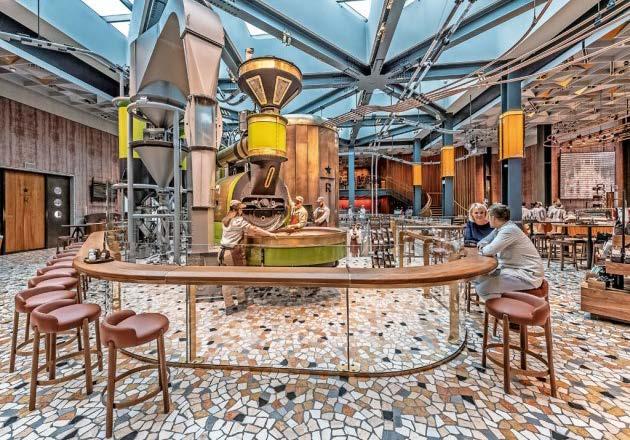
Design of a specific experiential space.
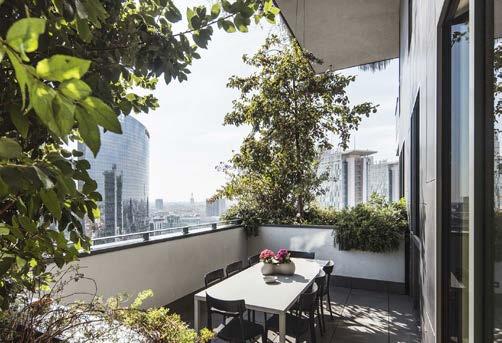
The Vertical Forest is the prototype building for a new format of architectural biodiversity which focuses not only on human beings but also on the relationship between humans and other living species. The project is also a device for limiting the sprawl of cities brought about through a quest for greenery.
Concept: a “home for trees that also houses humans and birds” (Boeri).
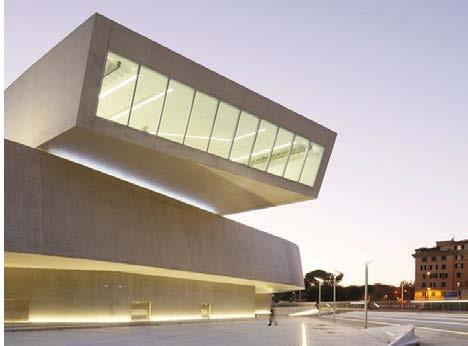
Role of the visionary architect. MAXXI supersedes the notion of the museum as ‘object’ or - presenting a field of buildings accessible to all with no firm boundary between what is within and what is without.
The necessity for architecture to continue it’s critical relationship with contemporary social and aesthetic categories. Since absolutism has been indefinitely suspended from current thought on the issue of art presentation, it is towards the idea of the ‘maximising exhibition’ that we gravitate.
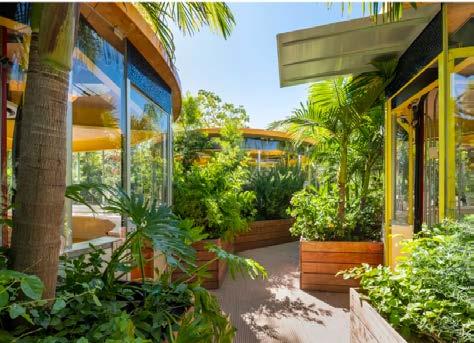
How the future of working looks like?
Colourful campus, with 60% of spaces outdoors. Project filled with bright yellows and oranges, colours that have a warmth to them. Research shows that environments that share characteristics wit the natural world tends to be better for our health. Roofs made from CLT, with the lowest carbon footprint.
Future proofed for the post-Covid world. 112 different plant species on the campus boost biodiversity and attract hummingbirds, butterflies, squirrels, possums.
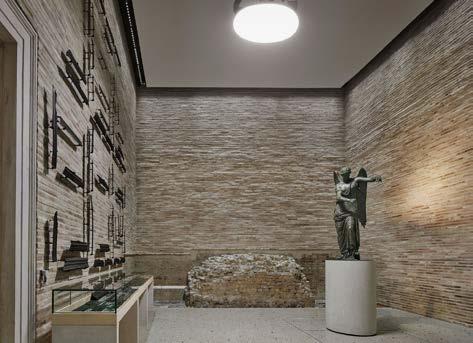
Heritage preservation for the future generations.
The new layout of the Capitolium that welcomes the Winged Victory, the extraordinary statue. Visitors enter the room from the side and see the statue in a raised position from a diagonal viewpoint. Victory dominates us with her glance, and it feels like she is looking at us.
Symmetry is broken by placing Victory at a diagonal. This new exhibition layout is also an opportunity for looking at the ways light can help enhance archaeology.
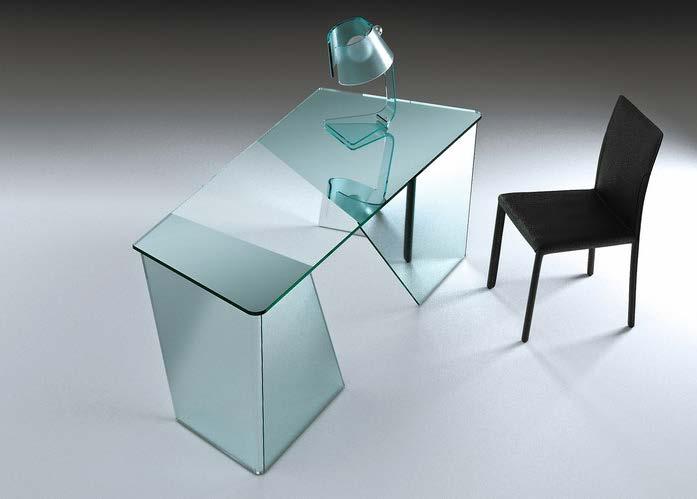
Libeskind
Role of the designer - making everyday objects beautiful and affordable.
Grounded in 1973 by the passion of its founder Vittorio Livi for glass, Fiam is a world-renowned company known for its cutting-edge furnishing accessories and with innovative design. Scribe Desk composed of two curved silvered glass bases and a glass top. An elegance that doesn’t expect, a design unique in its simplicity, all the refinement of glass in a single piece of furniture. A really precious. Made in Italy.
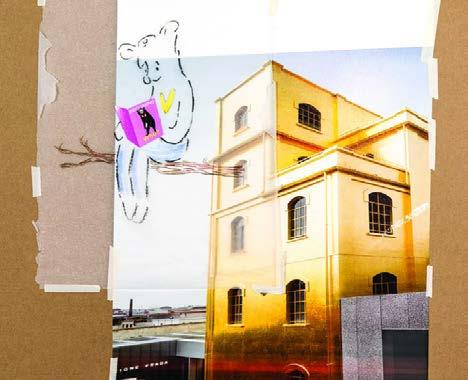
Search for the identity.
Who the Bær is a cartoon bear without a clear character – “Who” as they are known, seems to have not yet developed a strong personality or instincts, they have no history, defined gender or even sexuality. The work of Simon Fujiwara is a personal exploration of the human desire that underpins tourist attractions, historical icons, celebrities, “edutainment,” and neo-capitalism. In this seductive yet fraught arena, his work reveals the paradox of our simultaneous quest for fantasy and authenticity in the culture we consume.
blind passenger”
Titled “Your blind passenger”, the tunnel of fog will ask questions about the human senses. Eliasson said people tend to go in to the tunnel and straight away think they could not see anything.
Upon entering this long, narrow corridor, visitors are temporarily blinded by brightly illuminated fog that requires them to rely on other senses to orient themselves. As they progress through the corridor, they move through zones of different hues.

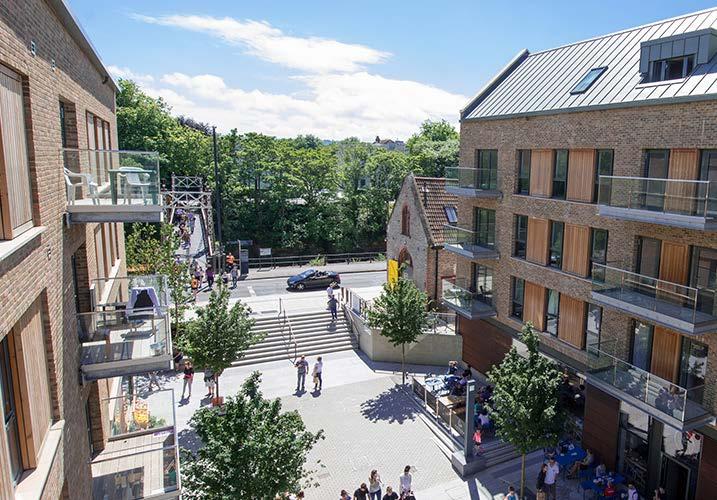
4.9. Wapping Wharf, a regeneration scheme in Bristol The UK (2016)
Designing a lifestyle.
What was once a neglected part of the city has become a thriving neighbourhood. Now the scenic harbour-side location is home to upmarket housing and packed with a variety of restaurants, bars, boutique shops and coffee shops, many of which are neatly housed inside converted shipping containers at Cargo. Gaol Ferry Steps, the tree-lined, pedestrianised route running through Wapping Wharf, has become an example of a great people-centred design of a liveable street.
Connect with your senses.
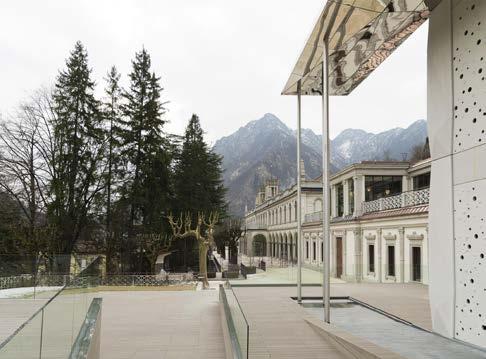
The project of urban regeneration , brings together very different problems, which sometimes are conflicting: the dialectic between public and private investment, the interests of the community and of individual actors, and the consistency between historical heritage and new contemporary languages, the idea of a new Spa, not only medical thermal building.
Not an iconic building, but an element part of the architectural complex, capable of giving a new structure to the whole.
BIBLIOGRAPHY:
Alexander, T. (1979) The Pepper-Croce Thesis and Dewey’s ‘Idealist’ Aesthetics. SouthwestPhilosophical Studies(4) Pp. 21–32.
Berube, M. R. (1998) John Dewey and the Abstract Expressionists. EducationalTheory . 48(2). Pp. 211–227 [online]. Available at: www.onlinelibrary.wiley.com/doi/pdf/10.1111/j.1741-5446.1998.00211.x (Accessed 30 April 2022).
Chaliakopoulos, A. (2020) ArtasExperiance:AnIn-DepthGuidetoJohnDewey’sTheoryofArt.TheCollector[online]. Available from: https://www.thecollector.com/john-dewey-theory-of-art-as-experience/ (Accessed 30 April 2022).
Dewey, J. (1934) ArtasExperience . The Berkley Publishing Group. New York.
Hohr, H. (2012) The Concept of Experience by John Dewey Revisited: Conceiving, Feeling and Enliving. StudiesinPhilosophyandEducation32(1).
Iannilli, G.L. (2019) ExperienceDesignandCreativity . The Wm. S. Minor Lecture [online]. Available at: https://www.youtube.com/watch?v=FEjJwwRTFFE (Accessed 30 April 2022).
Lehtinen, S. (2015) ExcursionsintoEverydaySpaces:MappingAestheticPotentialityofUrbanEnvironmentsthroughPreaestheticSensitivities[online]. Available at: https://www.researchgate.net/publication/283892591_Excursions_into_Everyday_Spaces_Mapping_Aesthetic_Potentiality_of_Urban_Environments_through_Preaesthetic_Sensitivities (Accessed 30 April 2022).
Leddy, T. (2020) Dewey’sAesthetics.TheStanfordEncyclopediaofPhilosophy . E.N. Zalta (ed.).[online] Available at: www.plato.stanford.edu/archives/sum2020/entries/dewey-aesthetics/ (Accessed 30 April 2022).
Naukkarinen, O. (2020) AestheticsasSpace . Aalto ARTS Books. Espoo. Finland.
Naukkarinen, O. (2021) Aestheticsofpopularcultureasenvironmentalaesthetics[online]. Available at: https://www.popularinquiry.com/blog/2017/4/21/ossi-naukkarinen-aesthetics-of-popular-culture-as-environmental-aesthetics (Accessed 30 April 2022).
IMAGES:
Fig.1. Starbucks Roastery, source: https://stories.starbucks.com/press/2019/starbucks-reserve-roasteriesaround-the-world/
Fig. 2. Bosco Veritcale, source: https://www.stefanoboeriarchitetti.net/en/project/vertical-forest/
Fig. 3. Maxxi Baan Ivan, source: https://www.zaha-hadid.com/architecture/maxxi/
Fig. 4. Second Home LA, source: https://www.archdaily.com/927765/architecture-is-about-human-experience-diego-cano-lasso-on-designing-with-nature-in-los-angeles/5dc081833312fd14330013ae-architecture-is-about-human-experience-diego-cano-lasso-on-designing-with-nature-in-los-angeles-photo?next_ project=no
Fig. 5. The Capitolium Brescia source: https://www.iguzzini.com/lighthinking-art/spectacular-antiquities-illuminating-archaeology-karadjov-morandini/
Fig. 6. Libesking Desk source: https://www.wsj.com/articles/daniel-libeskind-on-design-aesthetics-1409260171
Fig. 7. Who The Baer source: https://www.fondazioneprada.org/project/who-the-baer/?lang=en + Fig. 8. Fog Tunnel source: https://olafureliasson.net/archive/artwork/WEK100196/din-blinde-passager
Fig. 9. Wapping Wharf source: http://wappingwharf.co.uk/
Fig. 10. San Pellegrino Terme source: http://deottostudio.com/portfolio/terme-nuove-san-pel-