BarberMcMurryEndowedProfessorJavierSanchez + Visiting Professor Aisha Ballesteros representing JSa
University of Tennessee at Knoxville,
BarberMcMurryEndowedProfessorJavierSanchez + Visiting Professor Aisha Ballesteros representing JSa
University of Tennessee at Knoxville,
hosted by the University of Tennessee School of Interior Architecture, in collaboration with the Schools of Architecture + Landscape Architecture
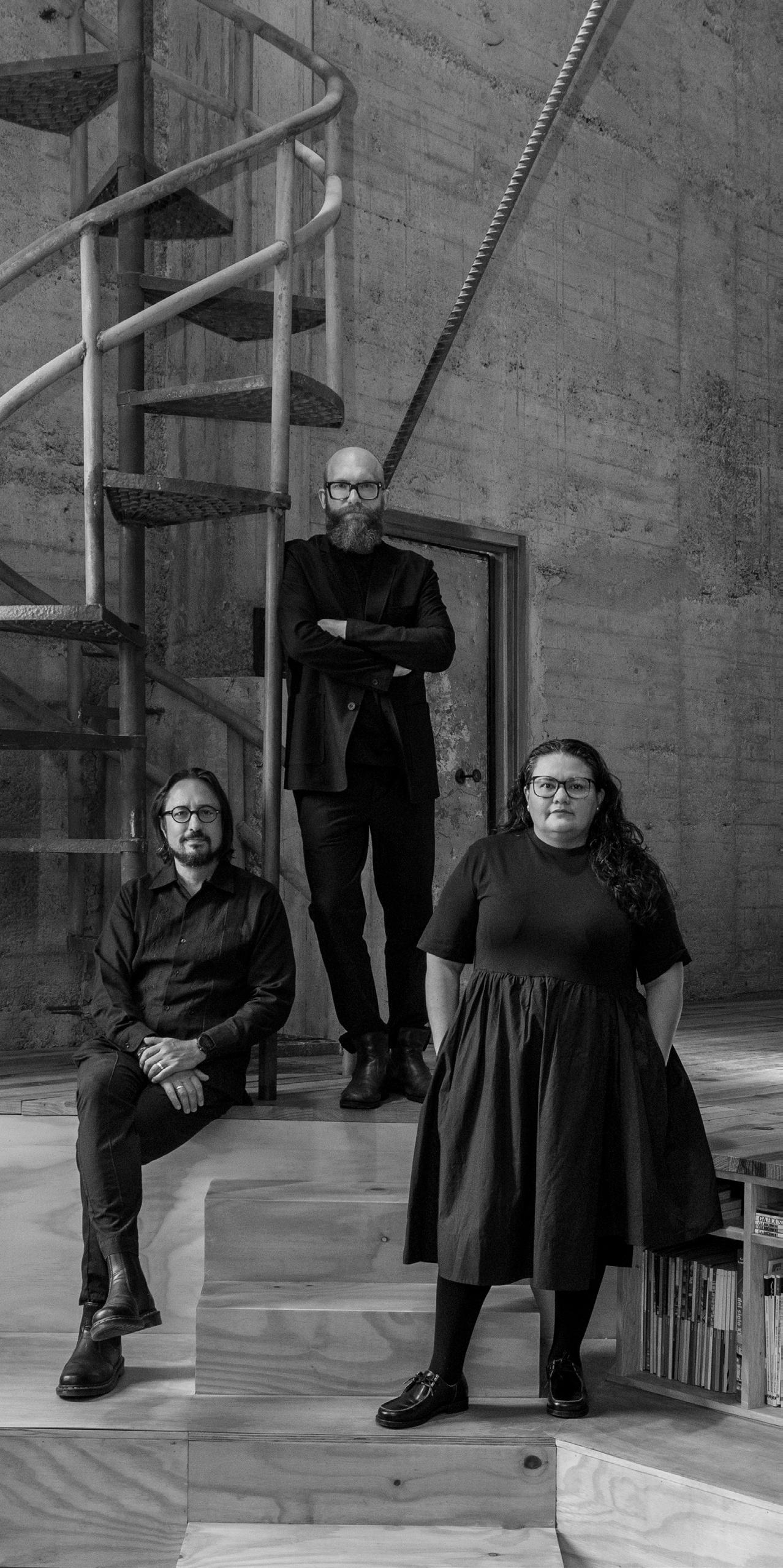
OnbehalfoftheCollegeofArchitectureandDesignattheUniversityofTennessee,Knoxville,Iwanttoextend ourgratitudeforyourcontinuedsupportoftheBarberMcMurryEndowedProfessorship.Weareespecially gratefulfortheopportunitytoworkwithJavierSánchez,foundingpartnerandprincipalofJSa.Hisstudio bringstogetherundergraduateandgraduatestudentsfromtheschoolsofarchitecture,interiorarchitecture,and landscapearchitecture,creatingarich,collaborativeenvironmentthatmirrorstheinterconnectednatureofthebuilt environment.Javier’spresenceinourcommunityencouragesstudentstoconsiderrehabilitationandrevitalization ofthebuiltenvironment.Thisstudioprovidesourstudentswithvaluable,holisticdesignexperiencesthatwillshape them as the next generation of creative thinkers.
WearealsodeeplyappreciativeofthehistoricsignificanceofthisprofessorshipbeingheldwithintheSchoolof InteriorArchitectureforthefirsttime.WelcomingJavierasthefirstinternationalBarberMcMurryEndowedProfessor continuestheschool’semphasisonprovidingourstudentswithaglobalperspective.Hisinfluence,bothasan educatorandapractitioner,hasalreadymadearemarkableimpactonourstudents,challengingthemtoexplore newboundariesindesignandbroadeningtheirviewoftheworld.Thisprofessorshipisinspiringstudentsand enrichingourcollegeinwaysthatalignwiththeforward-thinkinglegacyofBarberMcMurryArchitects.
Thankyouonceagainforyourgeneroussupportandpartnership.Welookforwardtocontinuingthismeaningful relationshipandwitnessingthelastingimpactitwillhaveonourstudentsandtheprofession.
- Milagros Zingoni Phielipp Director of the School of Interior Architecture

Based in Mexico City, JSa is an architecture studio founded with urban acupuncture as a vision to conceive comprehensive architectural interventions that contribute towards the continuous reconversion and rehabilitation of the urban fabric.
jsa.com.mx
jsaarquitectura
JSaTallerDeArquitectura
Based in Mexico City, JSa is an architecture studio founded with urban acupuncture as a vision to conceive comprehensive architectural interventions that contribute towards the continuous reconversion and rehabilitation of the urban fabric.
With this conviction as a premise, the studio gained early international recognition through a series of seminal projects in the Condesa and Roma neighborhoods, that prompted the renewal of downtown Mexico City at the turn of the century.
With this conviction as a premise, the studio gained early international recognition through a series of seminal projects in the Condesa and Roma neighborhoods, that prompted the renewal of downtown Mexico City at the turn of the century. Since then, and throughout the past three decades, JSa’s practice has organically evolved into five cross-complementary axes: the recovery of heritage and promotion of culture; the conception of unique hospitality experiences; the development and integration of sustainable solutions; the design of multidisciplinary workspaces, and the continuous exploration of housing as the foundation of the urban ecosystem.
Since then, and throughout the past three decades, JSa’s practice has organically evolved into five cross-complementary axes: the recovery of heritage and promotion of culture; the conception of unique hospitality experiences; the development and integration of sustainable solutions; the design of multidisciplinary workspaces, and the continuous exploration of housing as the foundation of the urban ecosystem.
This fall semester, Visiting Professor Aisha Ballesteros and BMA Professor Javier Sánchez will teach a studio at the College of Architecture and Design of the University of Tennessee Knoxville.
This fall semester, Visiting Professor Aisha Ballesteros and BMA Professor Javier Sánchez will teach a studio at the College of Architecture and Design of the University of Tennessee Knoxville.
MEXICO CITY
CONDESA No1
Mexico City
HOTEL VOLGA No2
JSa
ESPACIO ESCULTORICO
UNAM No3
National Autonomous University of Mexico
PEDRE No4
Jsa
CIUDADELA No5
Carlos Monsivais Library | JSa
LA LAGUNA No6
Productora
ROMA No7
Mexico City
EWE No8
Hector Esrawe Studio
13 DE SEPTIEMBRE No9
JSa
CONJUNTO JUAN DE LA BARRERA No10
JSa
HOTEL CONDESA No11
JSa
VASCONCELOS LIBRARY No12
Alberto Kalach
CASA WABI STUDIO No13
Alberto Kalach
CASA SIZA No14
Álvaro Siza
MUSEO NACIONAL DE ANTHROPOLIGIA No15
The Umbrella
GALILEO 105 No16
JSa
MARIA RIBERA No17
JSa
LA FABRICA DE HIELO No18
JSa
OAXIFORNIA No19
Oaxaca
Jardín Etnobotánico No20
Oaxaca City, Mexico
CENTRO CULTURAL
TEOTITLAN No21
Productora
JOSE MENDOZA
TEXTILES No22
Oaxaca
ARCHIVO HISTORICO DE OAXACA No23
Mendaro Arquitects
CASA TOLEDO No24
Francisco Toledo
VENUS Y LOCO No25
Gisela Morales + Emilio Cervantes
MONTEALBAN No26
Oaxaca
CRIOLLO No27
JSa
NUESTRA VELA No28
Criollo
GRACIAS
The Studio
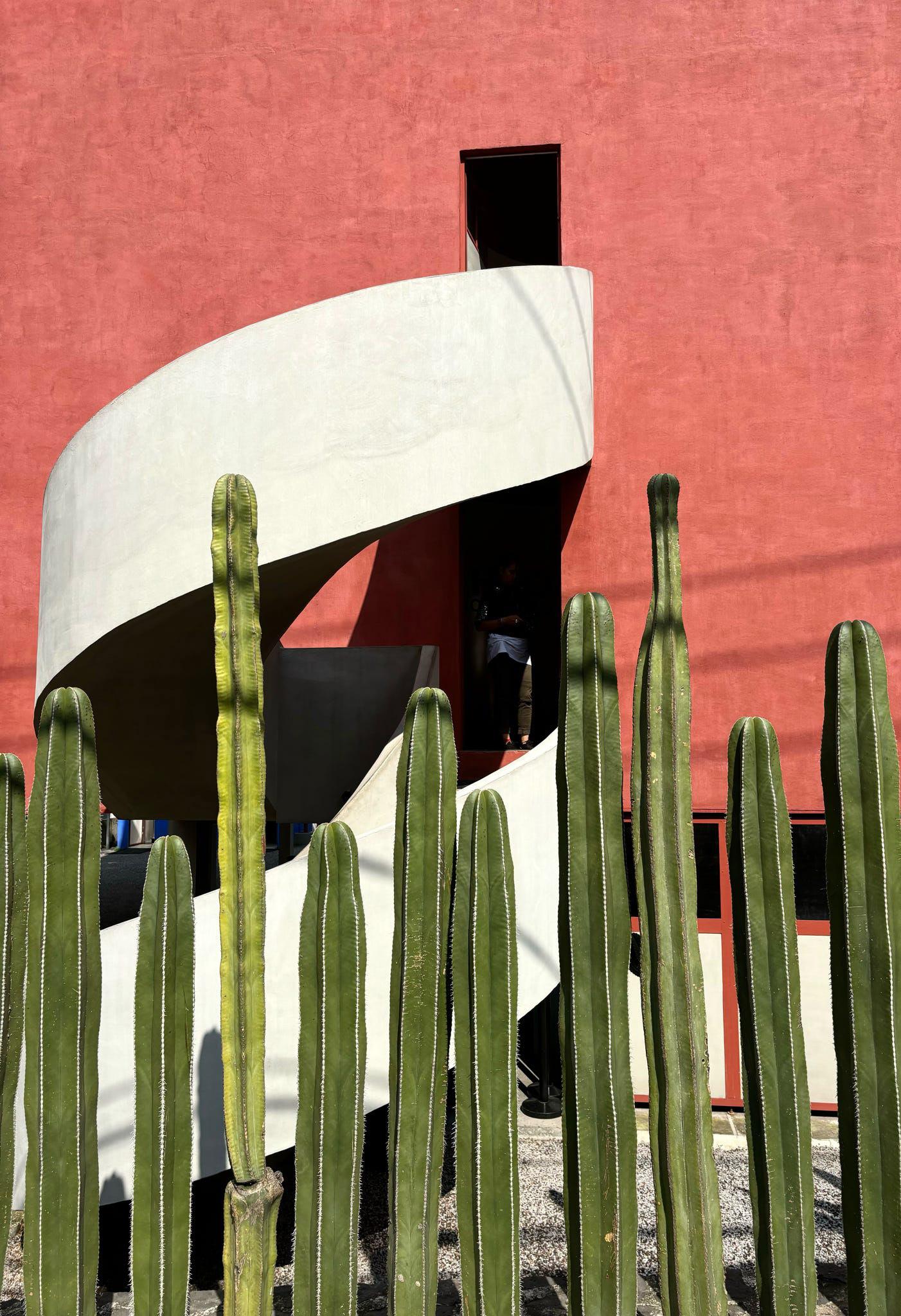
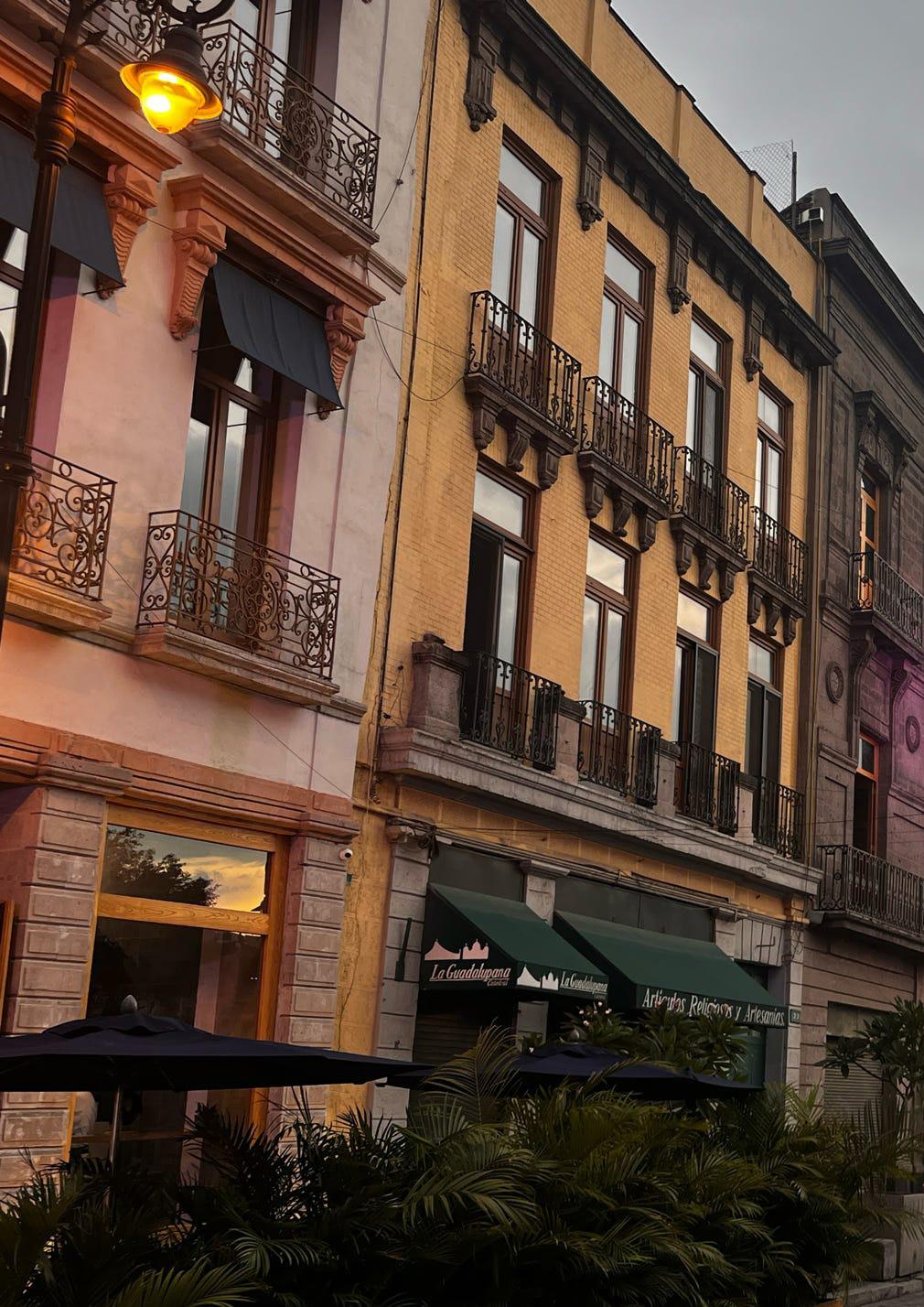
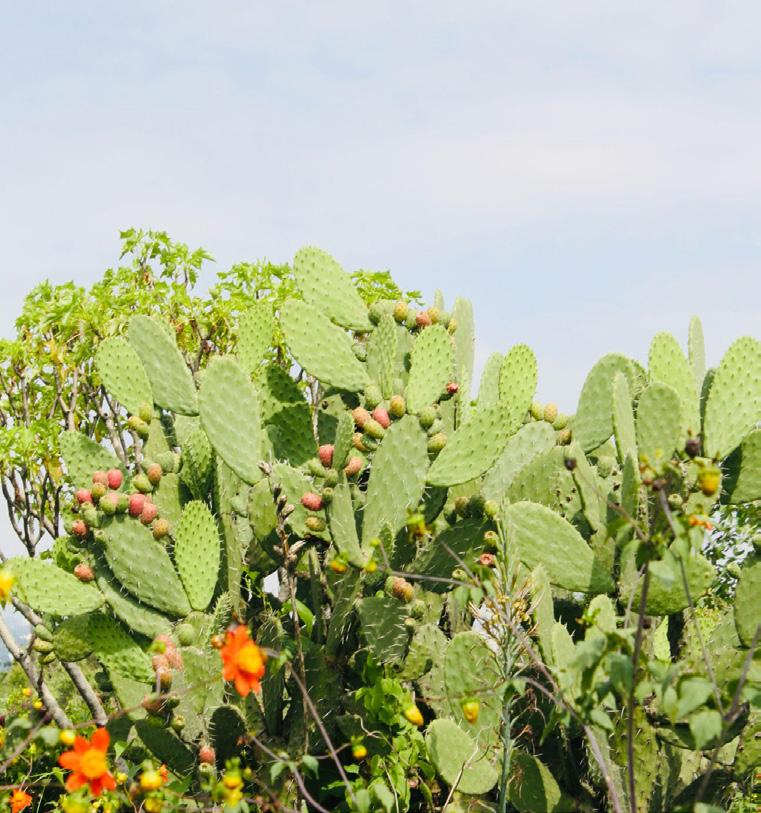
For many of us, this visit to Mexico City marked our first immersion into the vibrant essence of Mexican culture. Upon arrival, we were immediately captivated by the city’s dynamic palette and rich, immersive atmosphere. The streets, adorned with an array of native flora, presented a visually striking and evocative landscape.
Javier Sanchez, our distinguished professor, along with his father, Felix, expertly guided our tour. They offered us an enlightening exploration of the neighborhoods, showcasing several of Javier’s architectural projects, including his inaugural design. Each building exemplified a masterful integration of site-specific considerations with both user needs and the broader urban context. The projects were distinguished by thoughtful planning and exceptional execution, reflecting a refined balance of functional and aesthetic principles. Javier’s designs addressed user experience and movement throughout the spaces. Additionally, we observed many historically preserved sites that were respectfully revitalized, blending historical reverence with contemporary innovation. by Mary
Huffard
by Lucy Pirtle
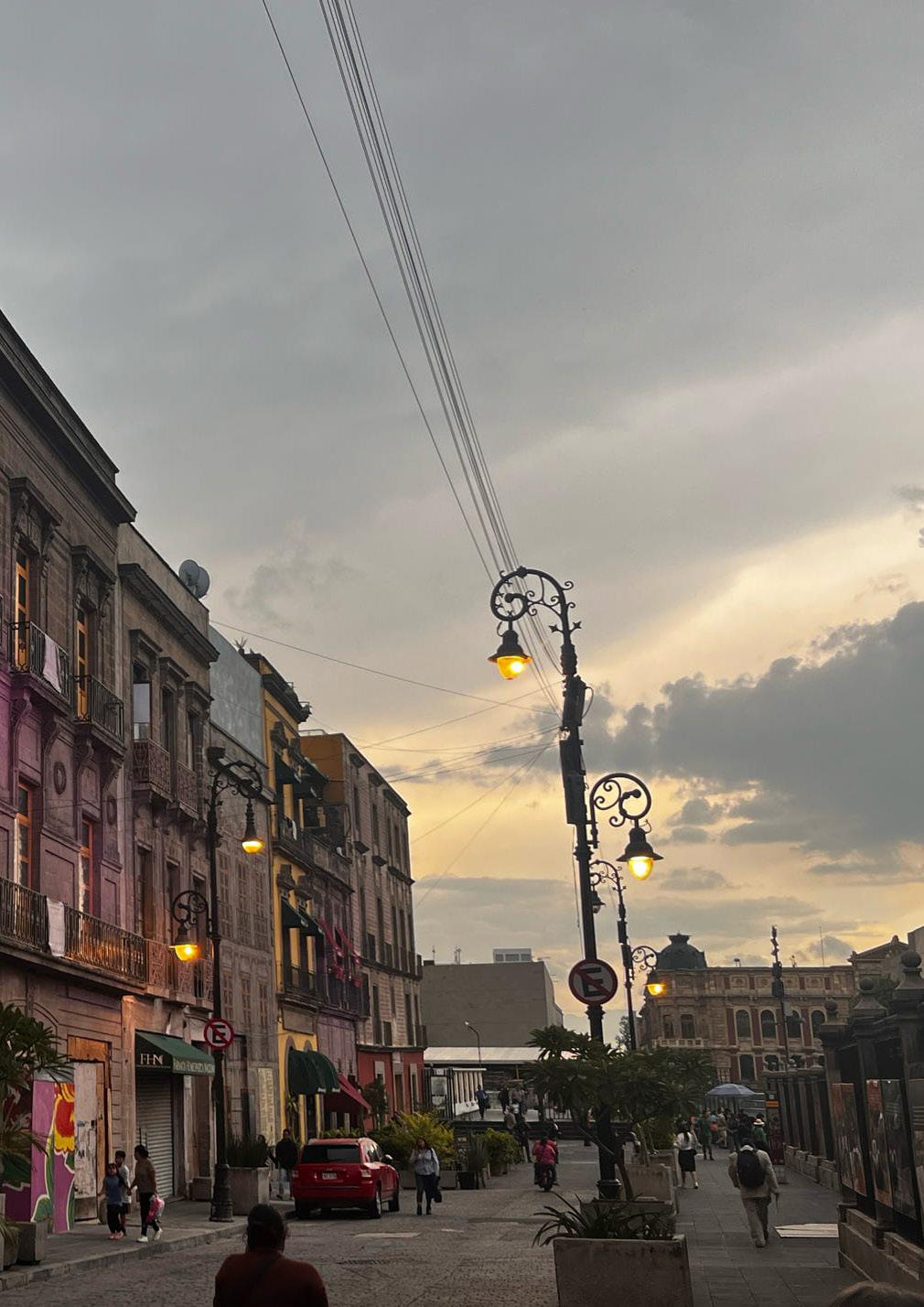
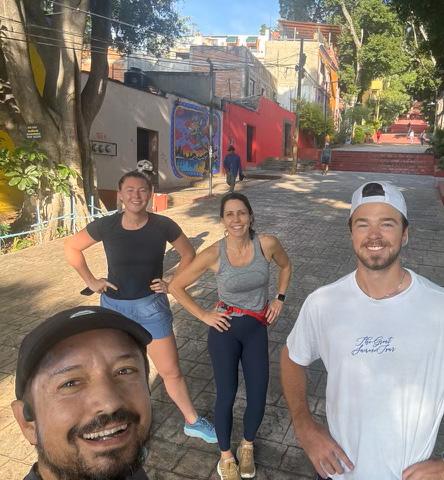
Condensa is an area within Mexico City that is full of lush greenery and a variety of both new and old buildings. Down the middle of the street is a stone-paved sidewalk surrounded by trees and plants that felt almost like a thin park that stretched throughout the Condensa area. In the central area is a circular plaza with a water fountain called La Fuente de la Plaza Popocatépetl. The fountain is a large decorated dome structure supported by four white columns. Surrounding the central fountain are restaurants and cafes along the circular form of the plaza. Out from the main plaza are quieter streets filled with various housing projects, restaurants, and retail stores nestled up right next to each other. Many of the homes that fill the streets are older and have been restored by various architects
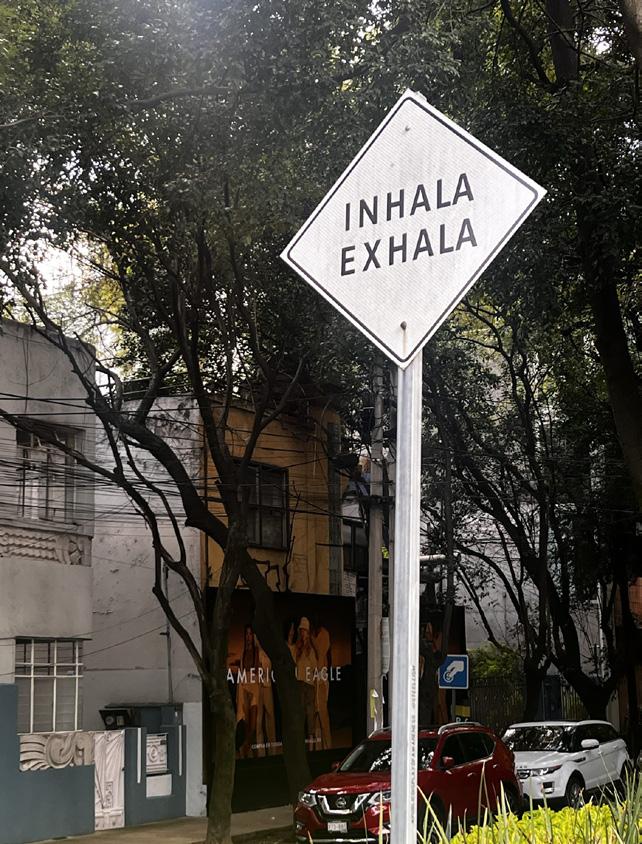
in the city, one of them being JSa. JSa has also taken on some housing projects within this area that use timeless materials and contemporary design, but blend in seamlessly with their surrounding structures. One particular area called Calle Veracruz had been developed over a decade by Javier Sanchez, the first of which was Veracruz 79. This area is similar to Roma with its lush scenery and European-influenced design but is a bit quieter with less crowded streets.
Our boutique hostel was located in Condensa. Most mornings, a few of us went out to explore various coffee shops and cafes in the area before we started our day. On the first day of our arrival in Mexico City, we spent the day with Javier and his father as they talked through the various projects they had worked on in Condensa over their lifetime as well as various obstacles they faced with the city and building codes. This area was inspiring because of the way many buildings had been restored to honor its past instead of tearing down a structure that has left its fingerprint on this area within the city. Not only did its rich history intrigue the studio, but the lush green park-like street that ran through the streets was a surprise we had encountered.
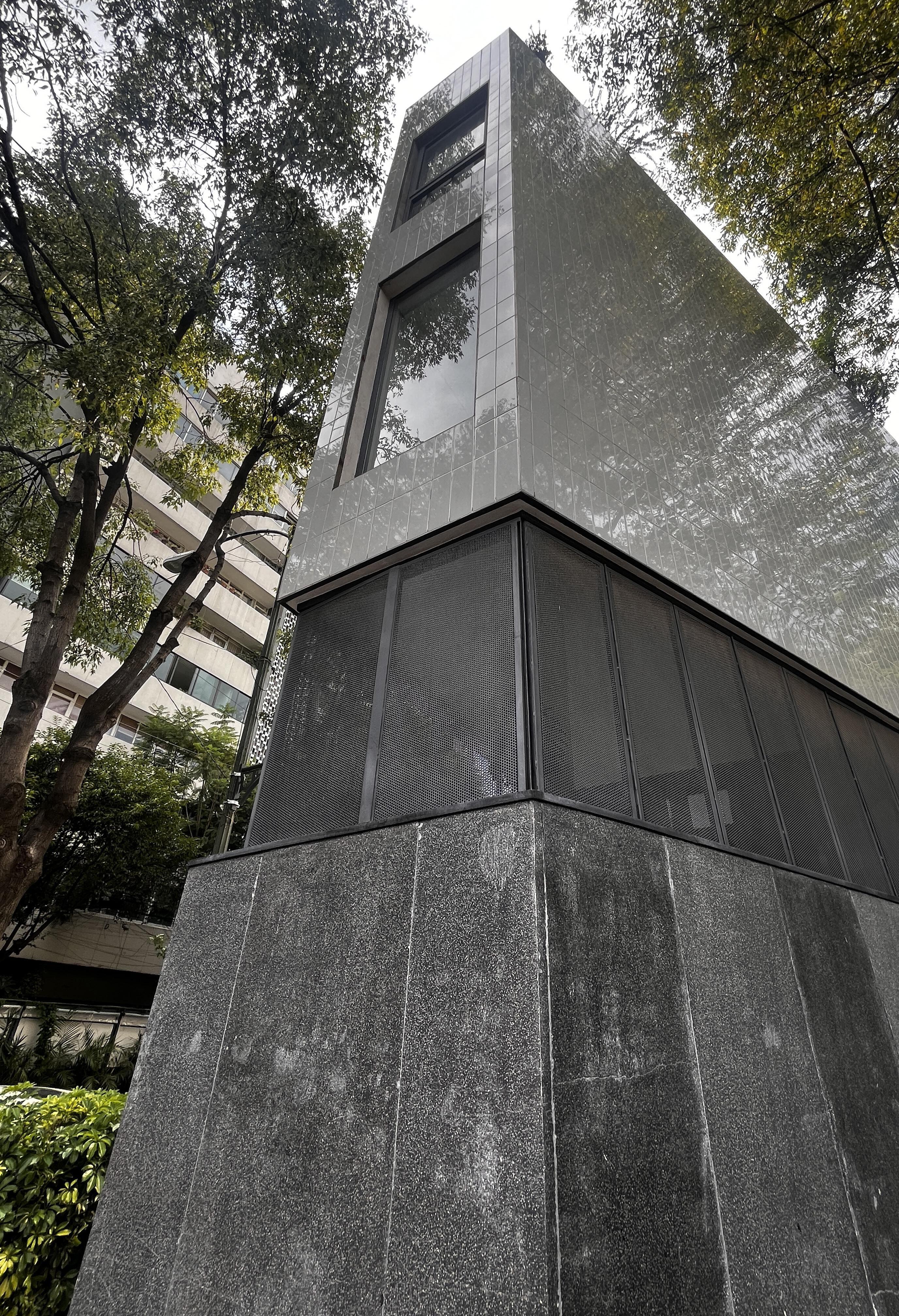
by Kate O’Neil
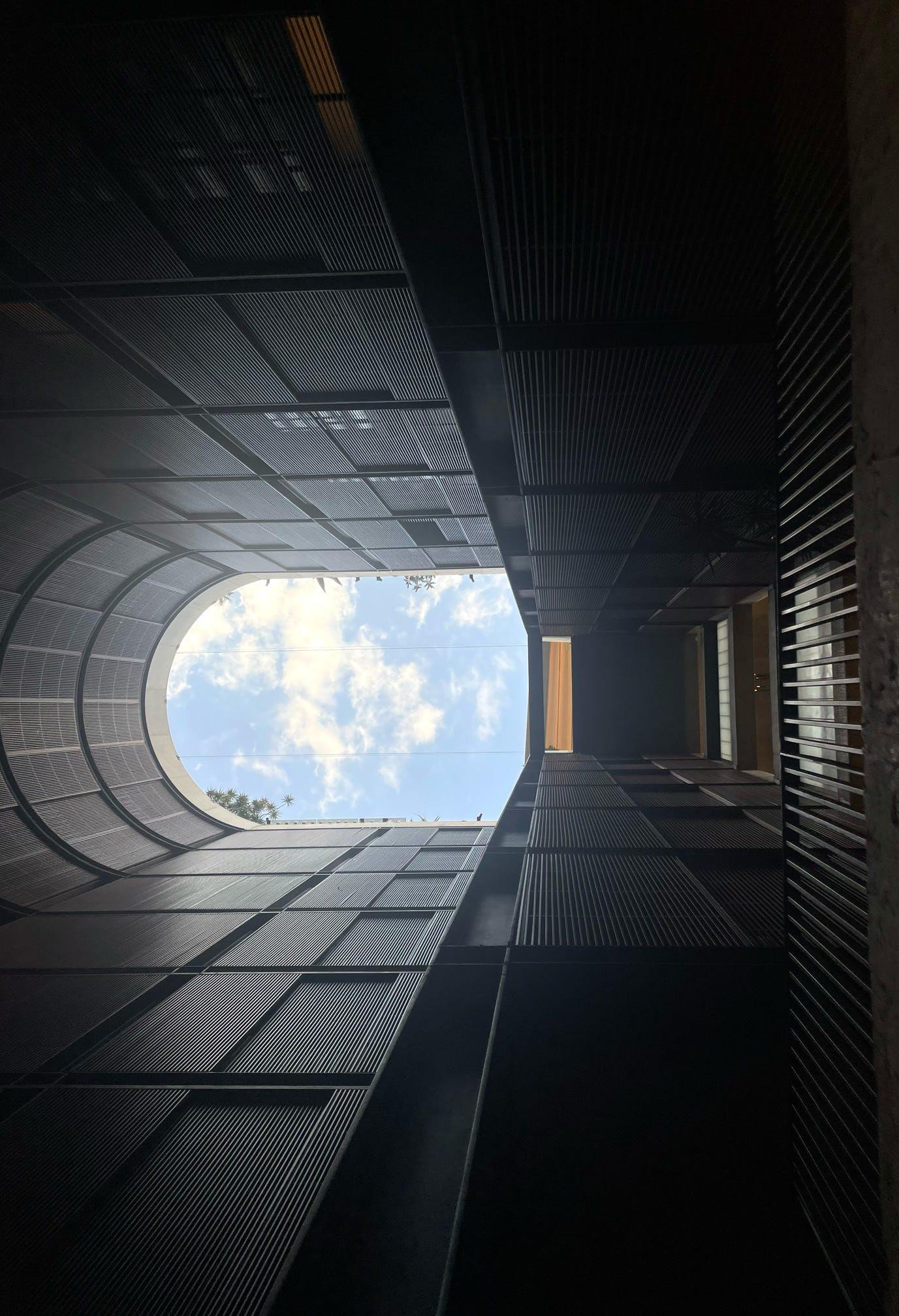
Hotel Volga, designed by Javier Sanchez, Aisha Ballesteros, and JSA, is an immersive experience from the second you walk through the entrance off a narrow street in Mexico City. As you approach the building, you get a glimpse into the thoughtful circulation patterns as the stairs extrude from the front facade, with only a framing system dividing it from the street. Past the entrance and a bronze feature stair, you will experience a U-shaped atrium that scales from the bottom floor to the roof. Every room has windows that face this courtyard with a movable iron screen that can create a public or private experience. The design was strongly based around varying types of social interactions that can take place in the building. The main atrium space spans the entire
floor with a restaurant, bar, and lounge area. Some of the material that was exposed during demolition was maintained and became a part of the design, blended with greenery and other natural elements. Many of the interior elements were crafted by local or young artisans, which really captures the essence and culture of Mexico City.
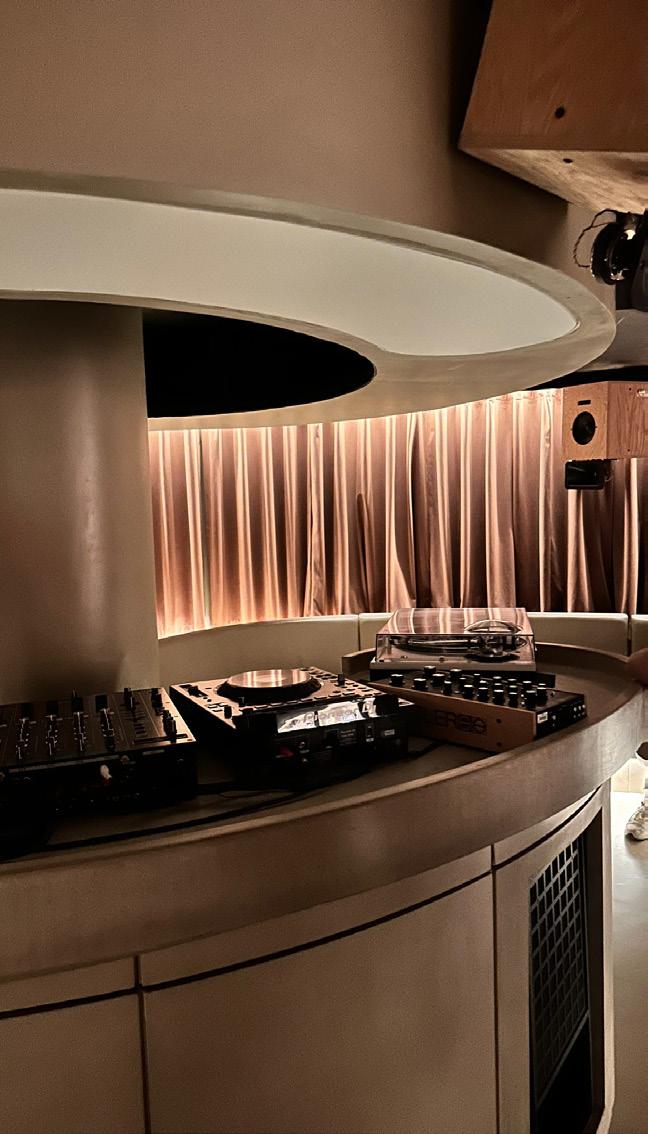
On the lowest floor you will find a speak-easy bar that sits below the restaurant. It is a dimly lit lounge area with a central DJ booth and a bar to the right. The round form of the space circulates around the entertainment area and is filled with organically shaped, light soft-seating. One main element of the design is the ceiling made of a dark, reflective material that moves in response to any sound. The reflective properties also create an illusion of the space having higher ceilings, making the space feel much larger.
Each room is intentionally designed with the architecture and structure, having a purposeful use for every design move. There is a small step and light curtain that can divide the space between the living and sleeping zones. Many of the structural materials such as the steel beams, and concrete ceilings and walls serve as the wall and ceiling finishes, and the rest of the materials are very natural and neutral. The bathroom floor and walls are covered with a beautiful green marble creating a seamless flow throughout the entire bathroom.
When you reach the top of the building, there is a rooftop bar for residents and the public to enjoy. As well as a pool for the residents of the hotel to enjoy. You can see down to the very bottom atrium space and an amazing view of Mexico City.
by Winn Gramling
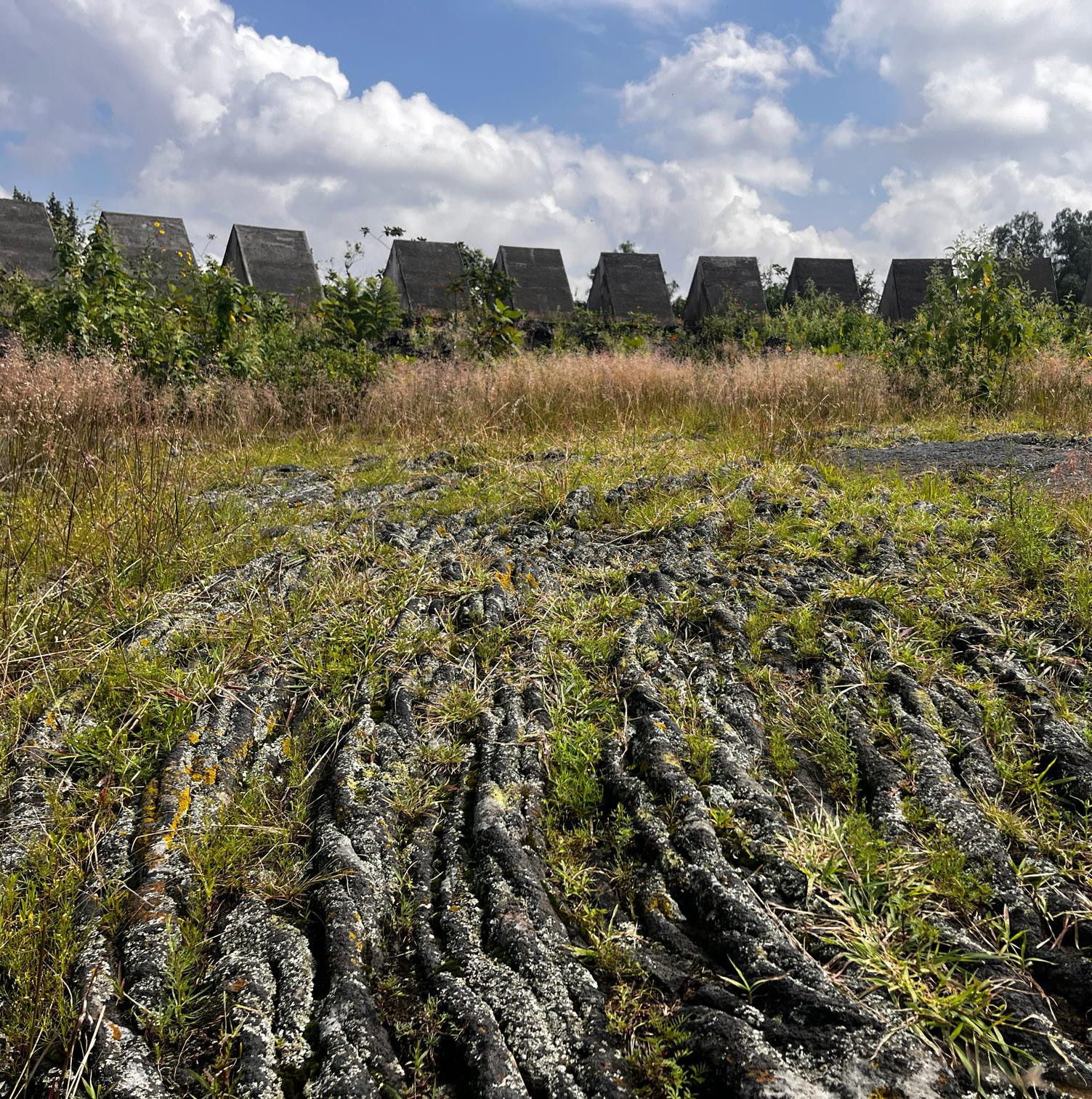
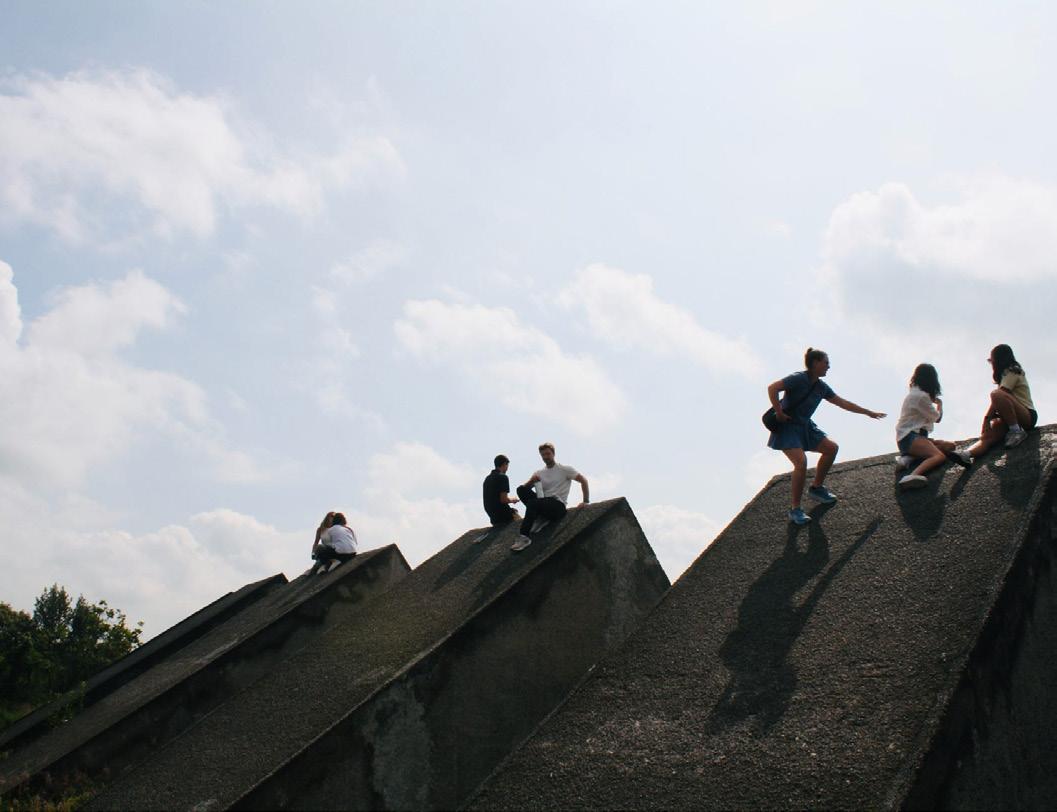
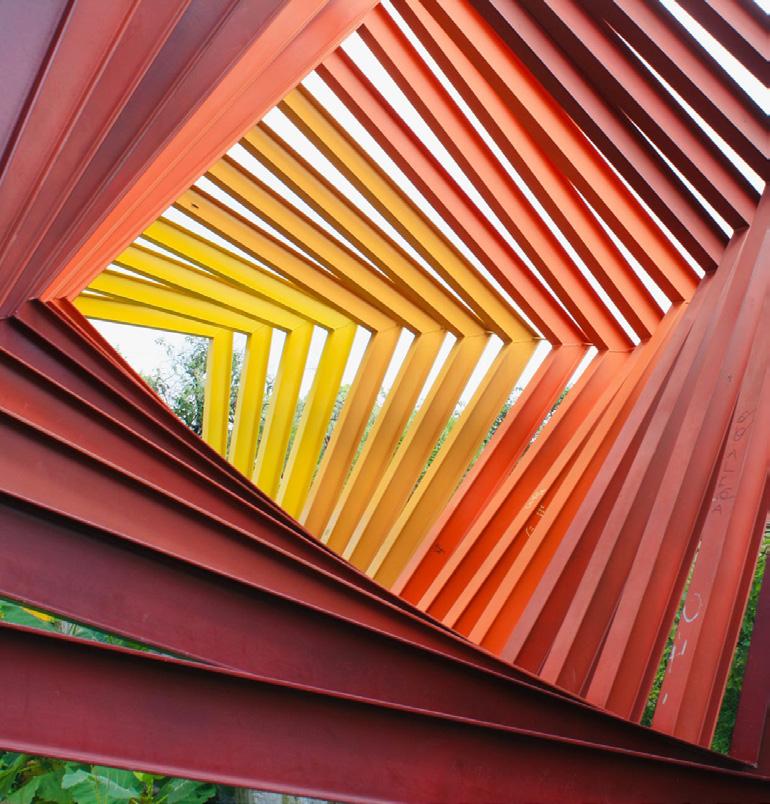
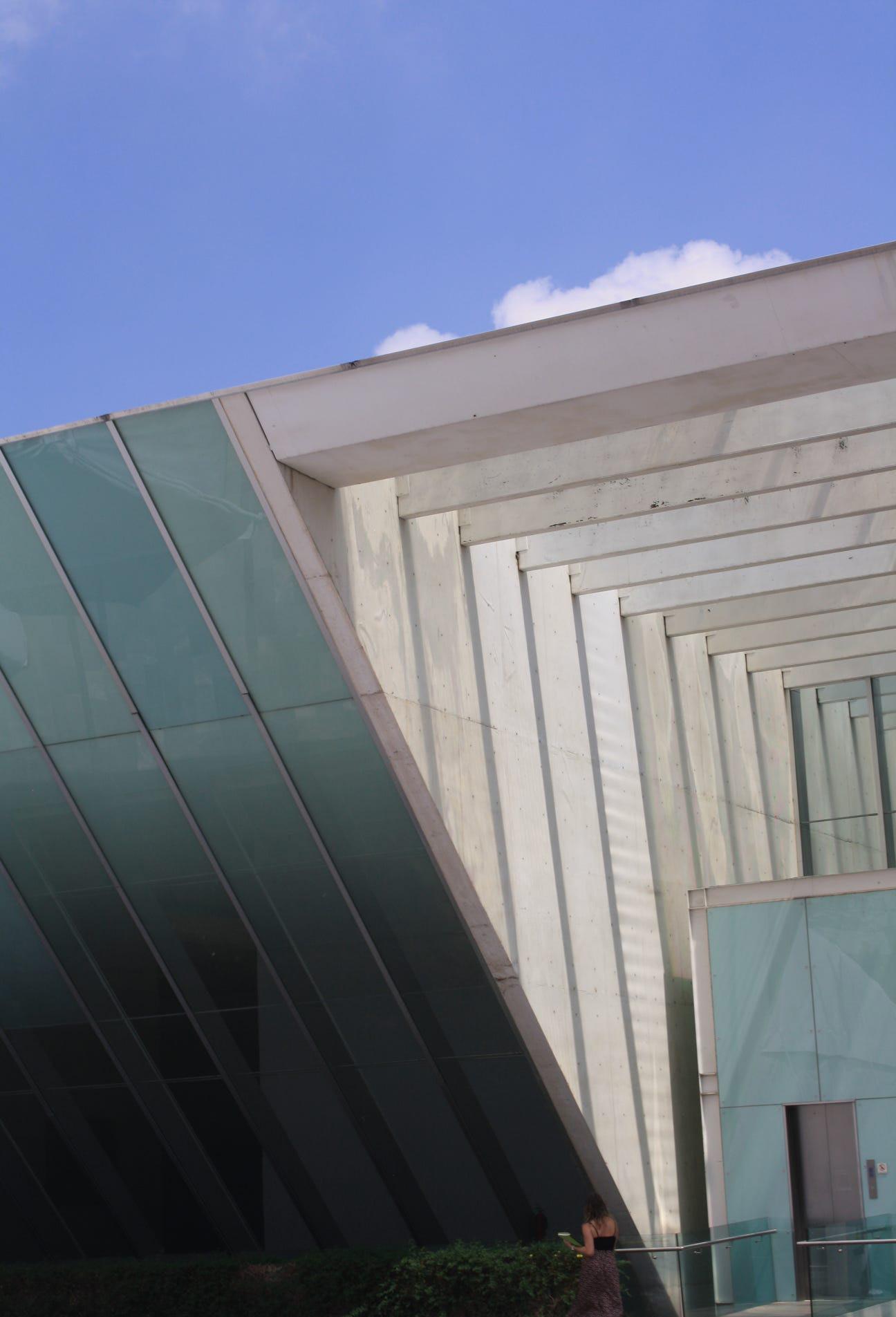
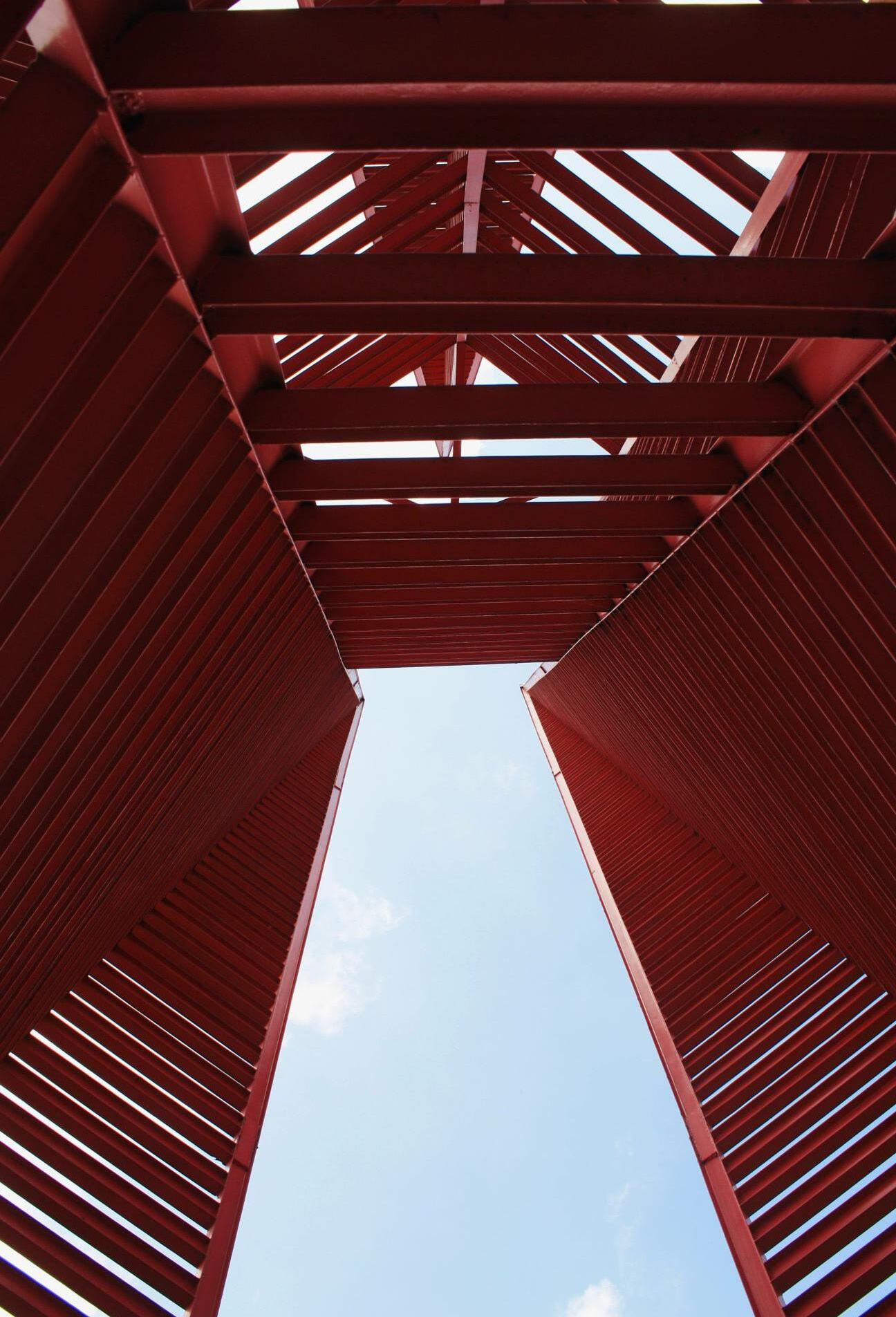
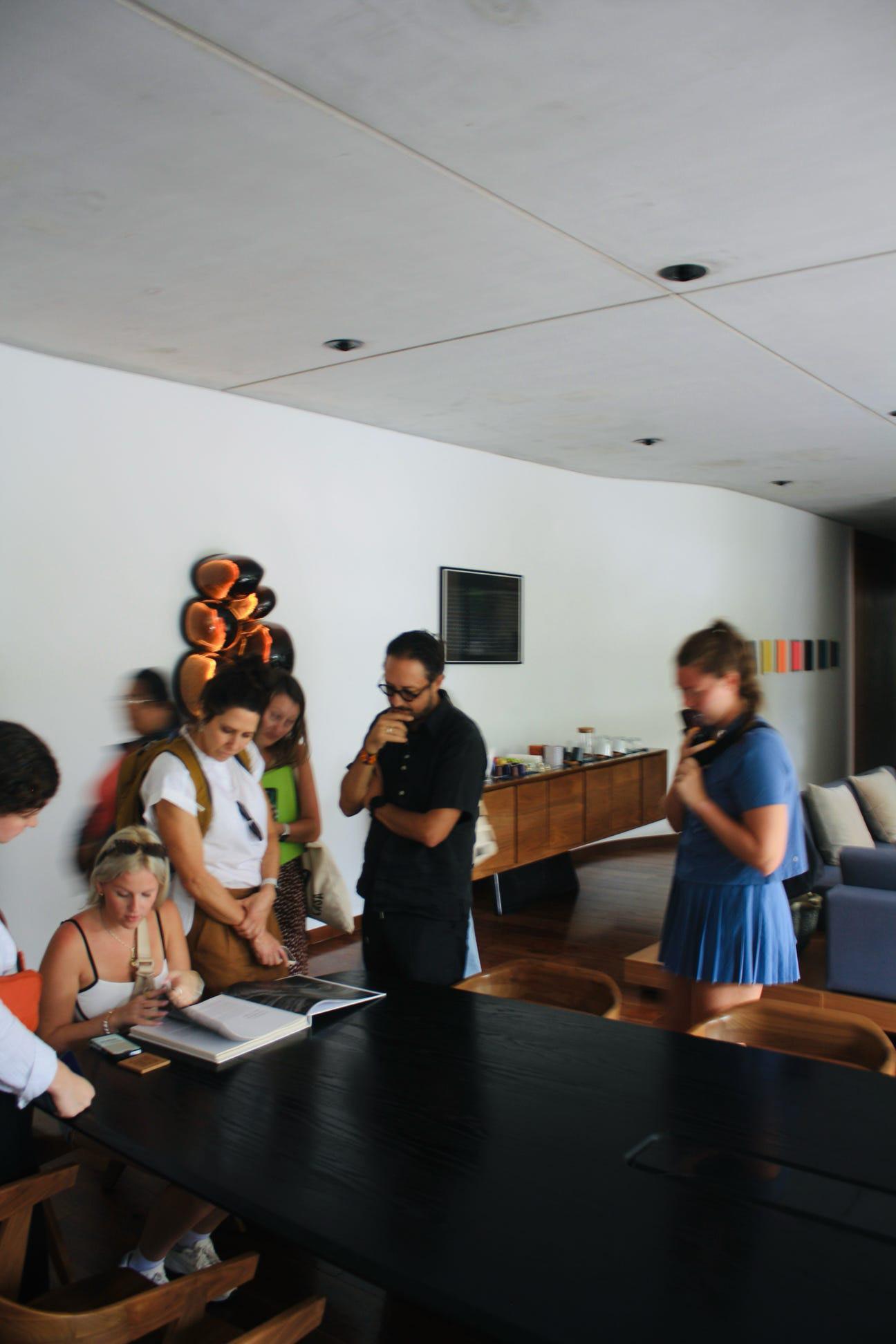
Our visit to UNAM began with a mesmerizing walk through the Sculpture Space where immense triangular stone prisms formed a massive ring around a rugged expanse of frozen lava. Created by six of Mexico’s renowned sculptors, the installation seamlessly merges art with the natural landscape, encouraging a deep reflection on our relationship to the environment. As we moved through the garden, more hidden sculptures revealed themselves, each offering a distinct interaction between artist and nature.
Next, we made our way to “Ciudad Universitaria,” the core of UNAM in Mexico City, where Nacho, a student working at JSA, gave us a campus tour. The Rectoría building immediately drew our attention with its striking façade, adorned with symbolic imagery that encapsulated the university’s role in preserving knowledge, history, and Mexican cultural heritage. The expansive central park stretched out before us—larger than any university green I’d seen—while the campus structures, with their shaded walkways, provided welcoming spaces for students. We concluded with a visit to the architecture facility, a vibrant hub where learning and creativity intertwined.
by Thomas Miller
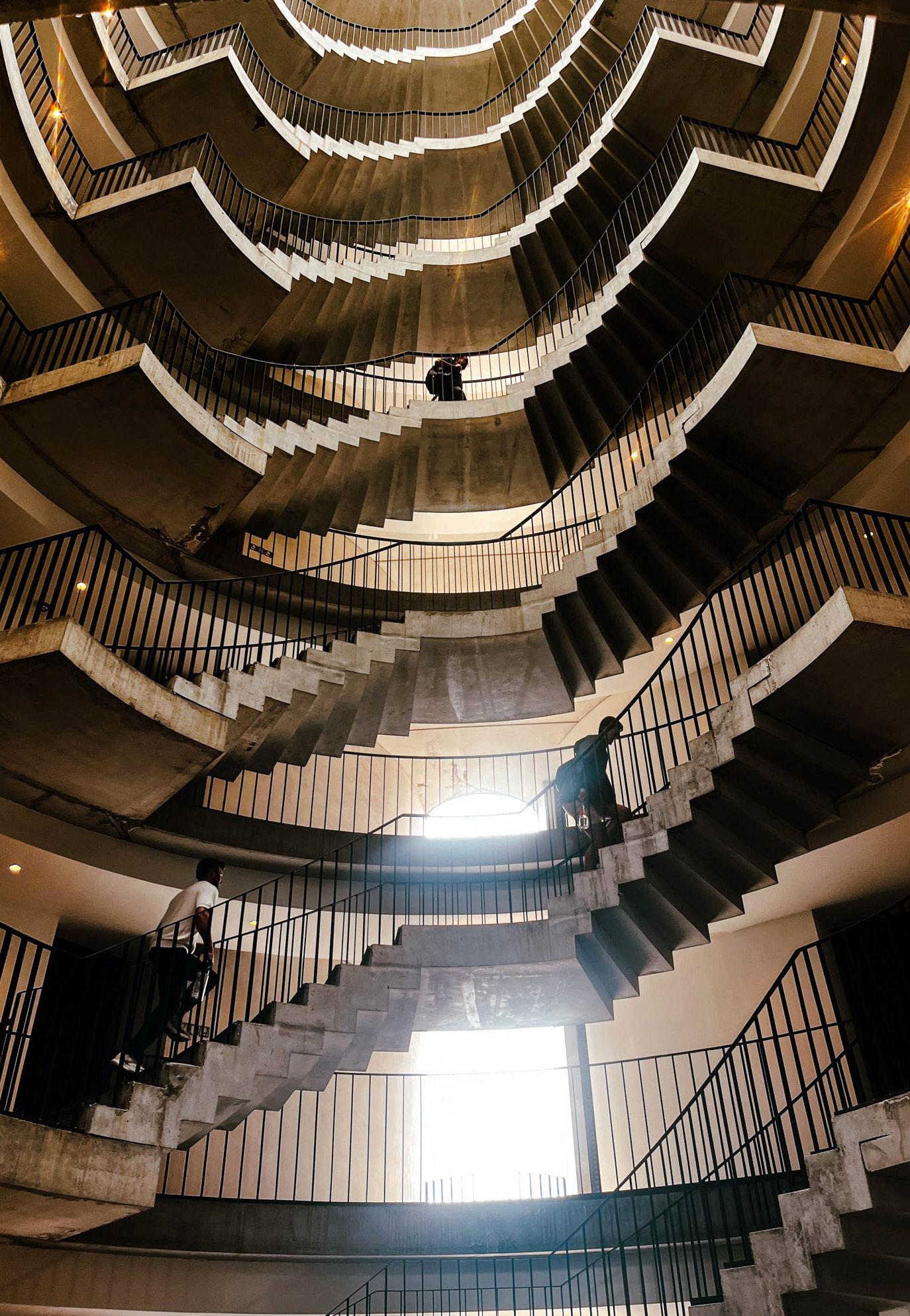
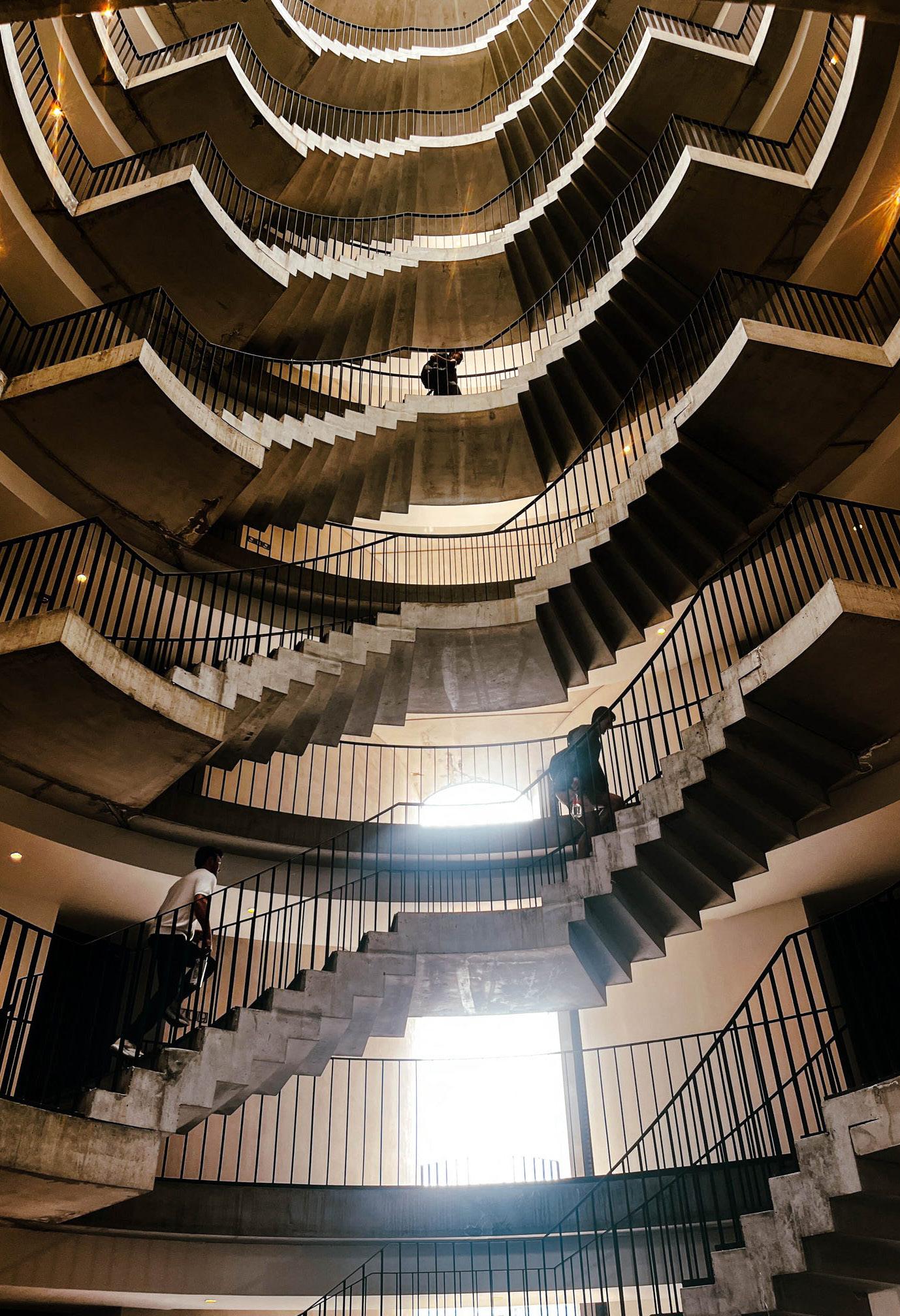
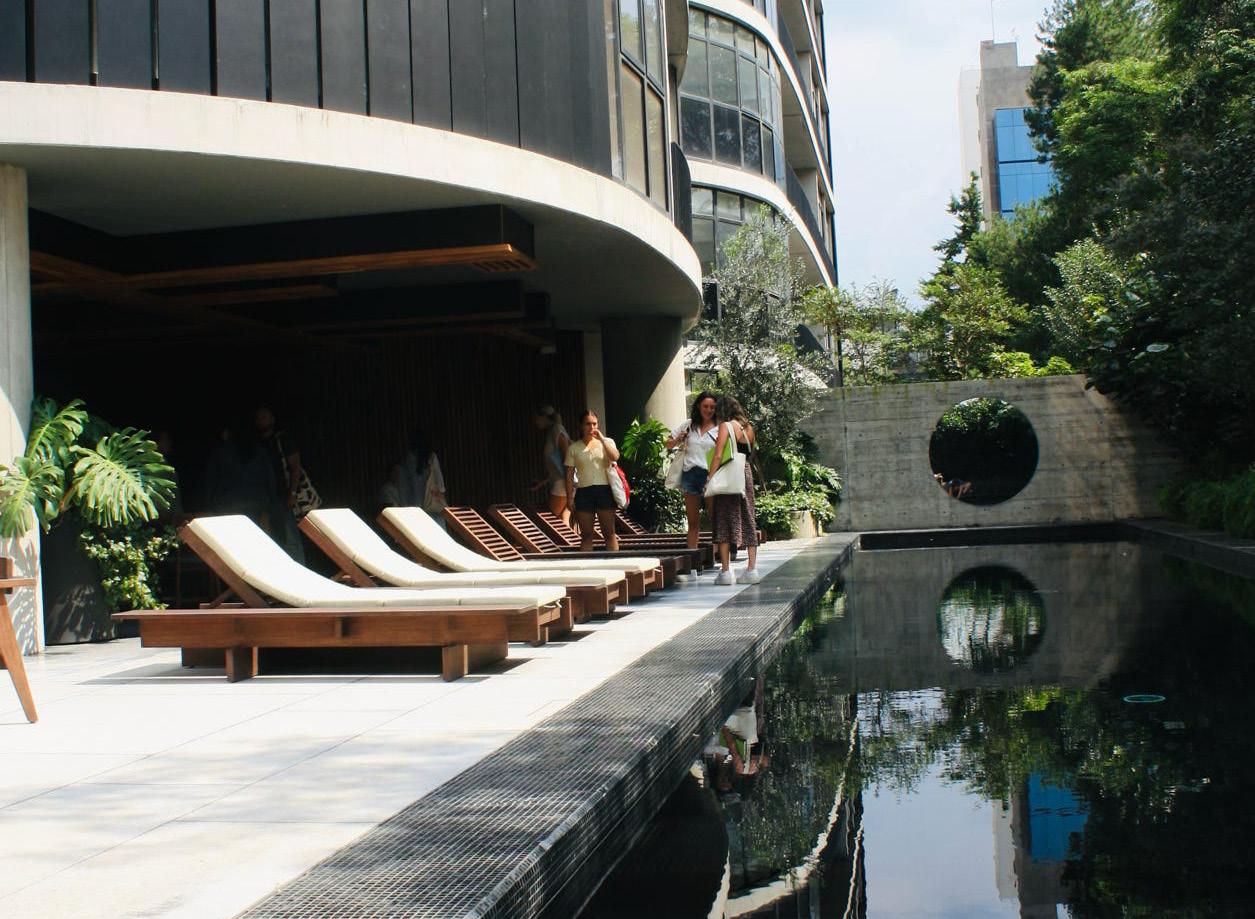
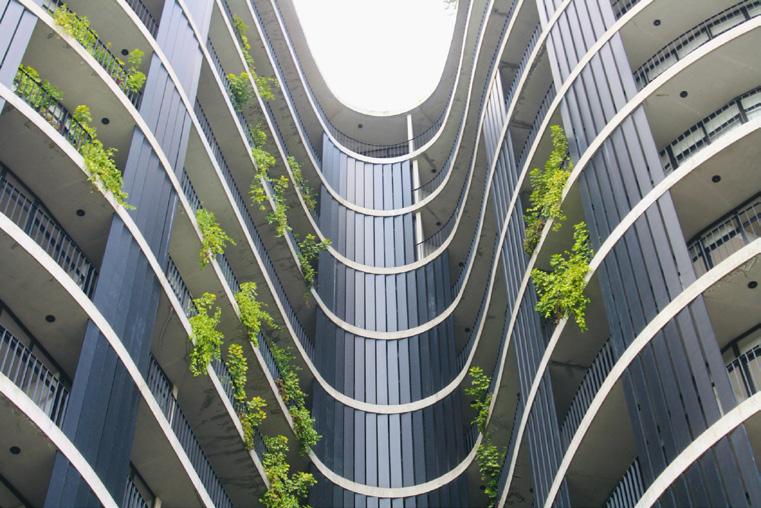
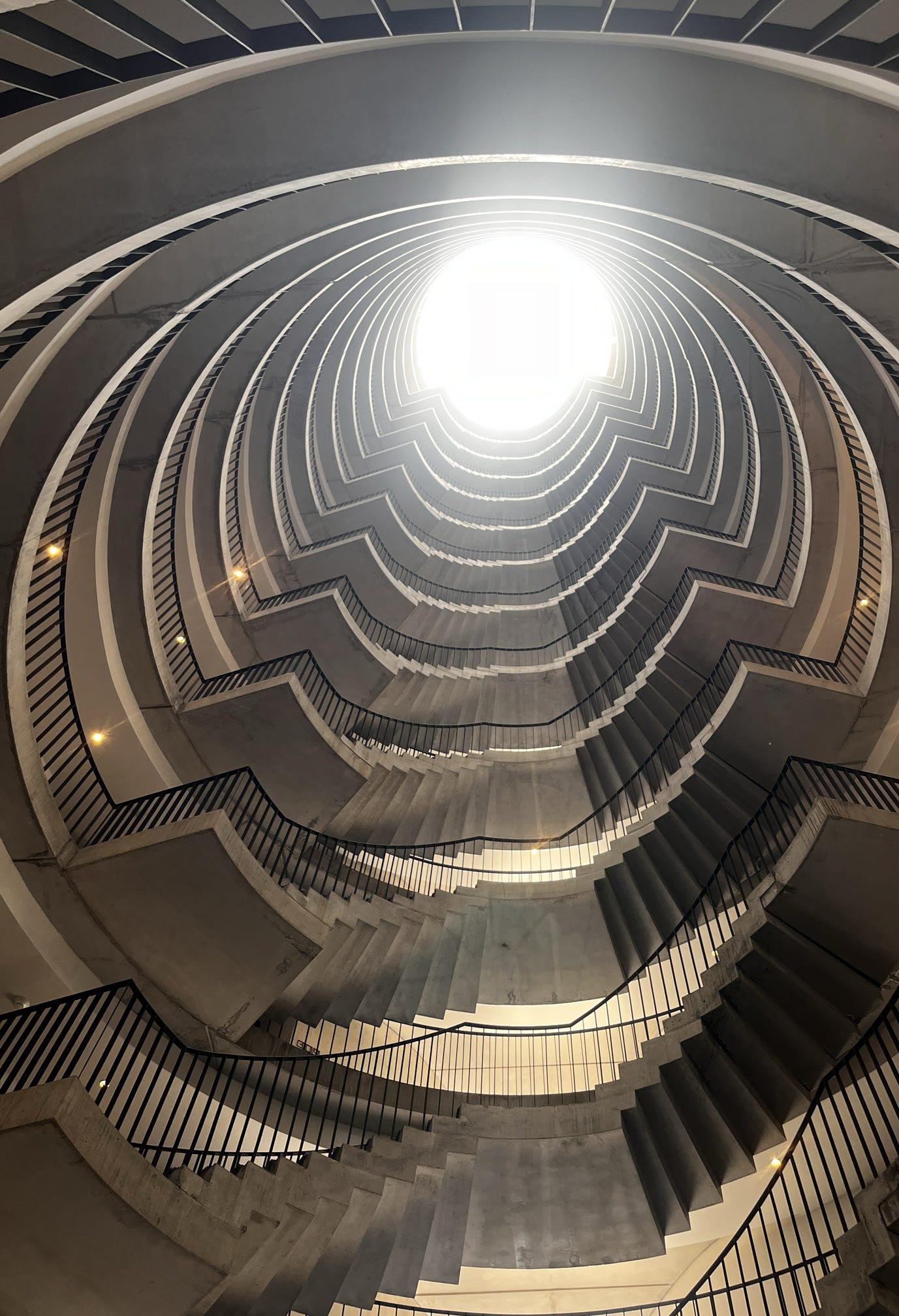
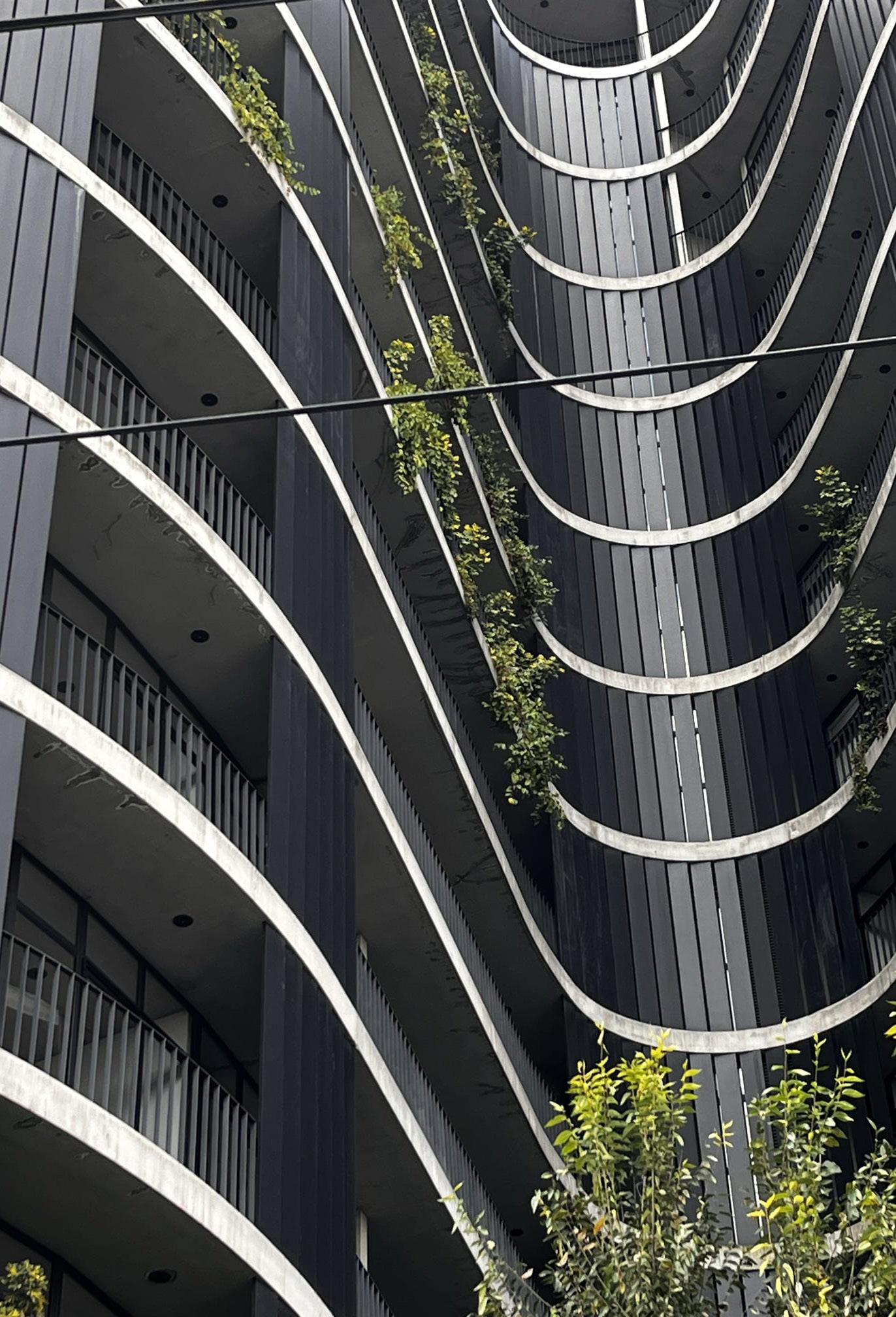
Pedre is a high-end condo building in Mexico City that was designed to create the most out of an awkward site. The challenge of the design was to maximize the number of units on the site without compromising on views from each unit. To do this, they made the facade winding and curvilinear allowing all of the units to have nice daylighting and good views of the city. You enter the building at the street level which leads you through an open-air lobby into the central stairwell. This stair is an art piece in its own right, opening up the center of the building and creating a common space for the residents that is both beautiful and inviting. As you move through this ground-level space there are countless interesting views and unexpected common spaces that you stumble upon while exploring the winding floor plan. Every space has its unique qualities of daylight and rich experience of materiality. The finishes in the building are simple, mostly allowing the concrete structure to be expressed into the spaces and create a feeling of connection to the building itself. Because of the unique floor plan, each unit is a different size and shape mak-
ing them personal to the owners. The roof garden is a highlight of the shared spaces in this building. It has winding gardens that contrast the smooth concrete structure in a way that calms the space. I could not help but feel a sense of relaxation in every part of this design. It inspired me to think about how my designs should open themselves to nature and allow the building to become one with its surroundings. Architecture is not a building on a site but rather both of those aspects working together in unison to create a beautifully appropriate design.
by Thomas Miller
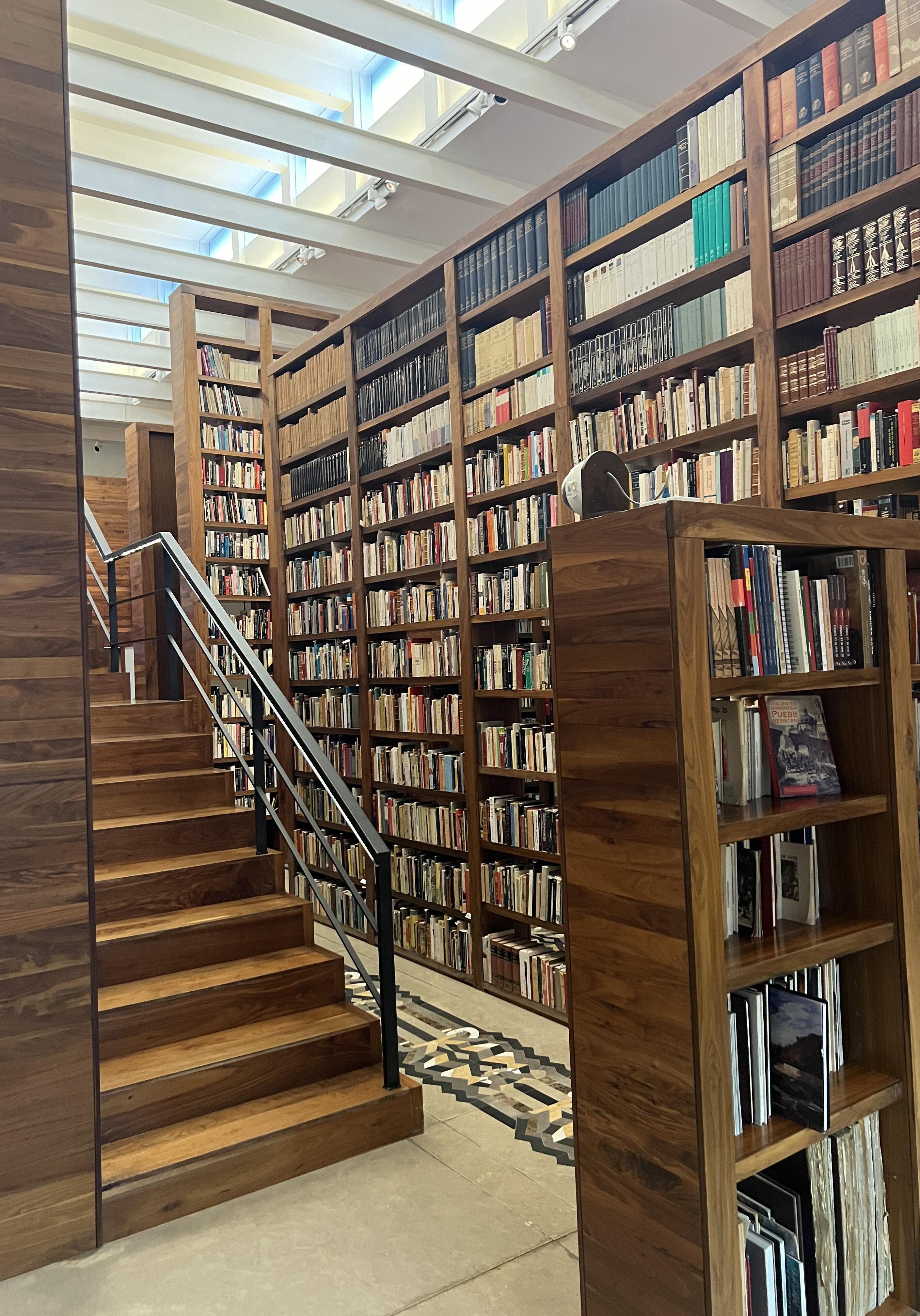
The Carlos Monsivais Library, despite the small size of the installation, was one of my favorite spaces that we visited while in Mexico City. The installation is a one-room library of the personal collection of Carlos Monsivais. The design itself is focused on deviating from the typical spatial identity of a library. Instead of creating rows of shelving that are predictable, the library is designed to feel like you are walking through a small city with varying heights of towering shelves that imitate a skyline. Circulating through this library is like going through a spatial maze. The contrast between long corridors and large double-height shelves to intimate spaces and small individual displays makes
the library a joy to explore. Each turn and twist has a new delectable spatial experience for its visitors. I was enamored by how such a small space could become such an unexpected adventure. It inspired me to continue to think about how I can make the most out of small spaces in my designs. Sometimes all it takes is not a new idea, but rather, a new perspective in the context of the program that you are designing around.
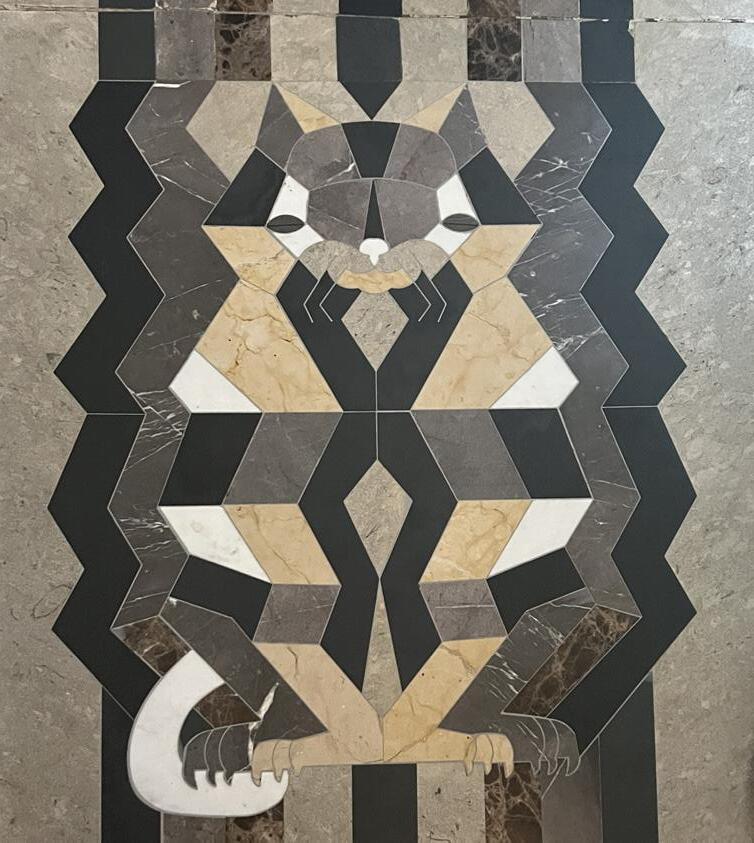
Additionally, JSa partnered with renowned artist, Toledo, to create an marble tile layout to pay homage to Carlos Monsivais, an old friend of Toledo’s, love for his cats.
by Abby Eckl
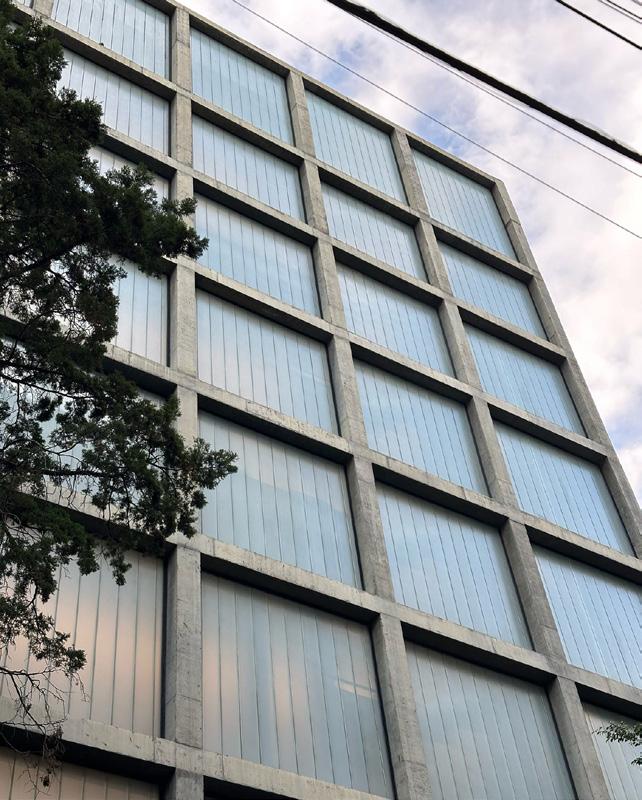
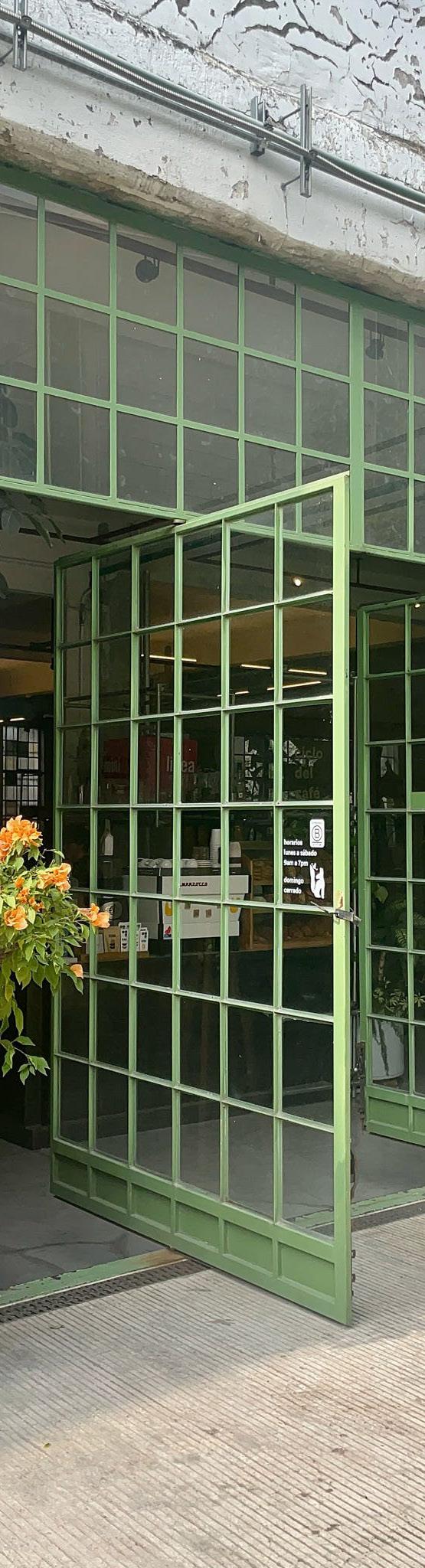
La Laguna once was a textile and yarn factory that was originally built in the 1920s. Now, it is home to over 25 creative companies, spanning anywhere from coffee shops to ceramic studios, in the Doctores neighborhood of Mexico City. However, this was only made possible by the architecture firm Productora which worked to revitalize and add to the existing structure at hand. Not only is Productora’s studio housed in La Laguna, but they have a continuing impact on the site as a whole. They have currently created and implemented two phases of design and construction, with a third in the works. Through these initial phases, Productora worked to maintain the current exterior facade system while focusing heavily on revitalizing the two interior courtyards, which soon became the basis of the rest of the design. The facade is characterized by a stereotomic, concrete structure complimented with a beautiful, square iron grid. Using the facade as a basis, both horizontal and vertical circulation was manipulated in an attempt to push visitors to explore the entirety of the site. Although the stairs, freight elevator, restrooms, and additional warehouses were new additions, they seamlessly blended with the characteristics of the existing structure.
The experience within La Laguna had a substantial impact on our class since this was a beautiful example of an adaptive reuse project. Not only were we allowed to tour Productora’s studio, but we were also given presentations on the further development of La Laguna and one of their most influential projects in Oaxaca, Teotitlan del Valle Cultural Center. This allowed us to gain a better understanding of how to properly consider the culture of a site when creating or revitalizing a current project. This project was a great example for our studio, exhibiting an accumulation of unique programs that worked together seamlessly.
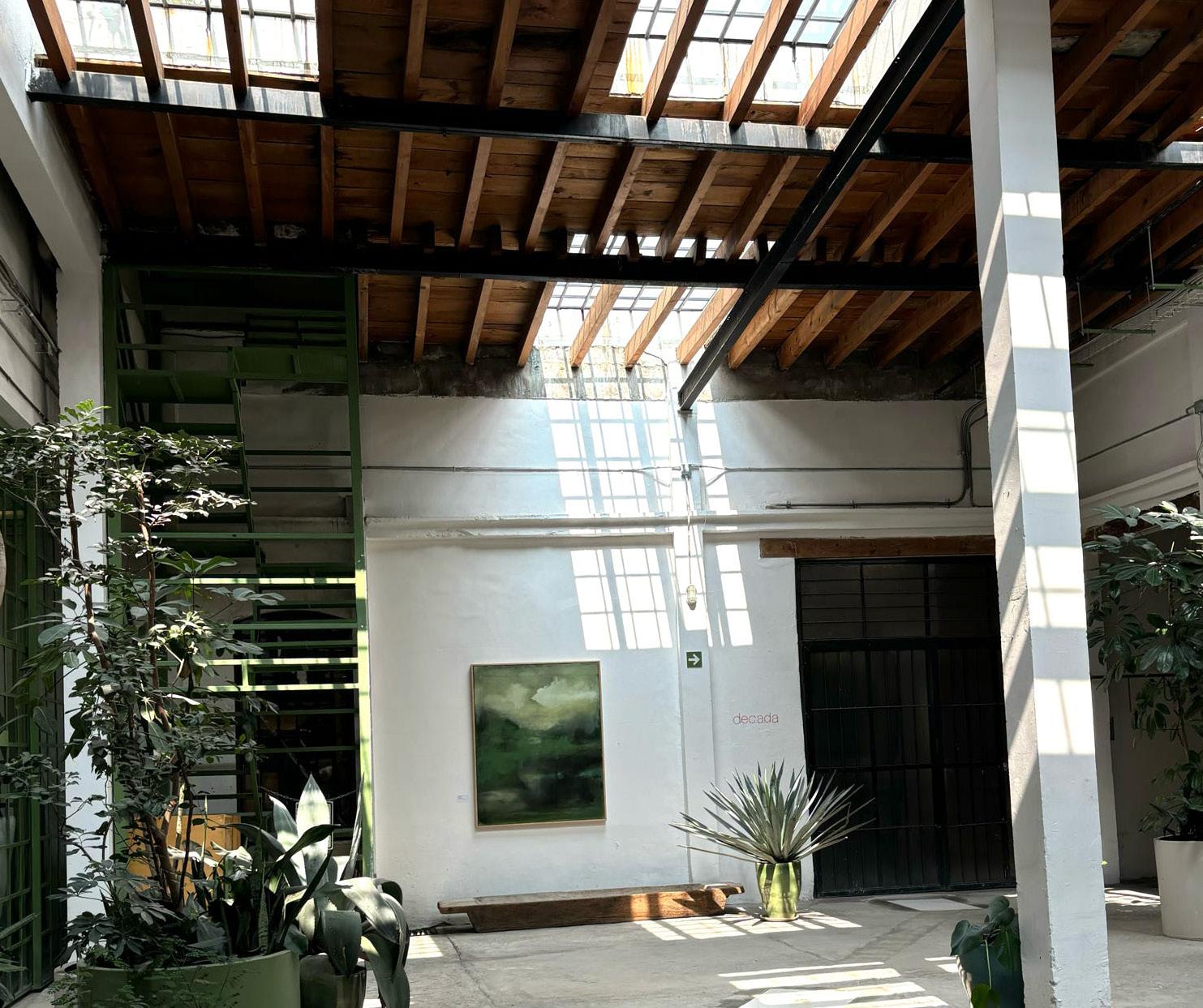
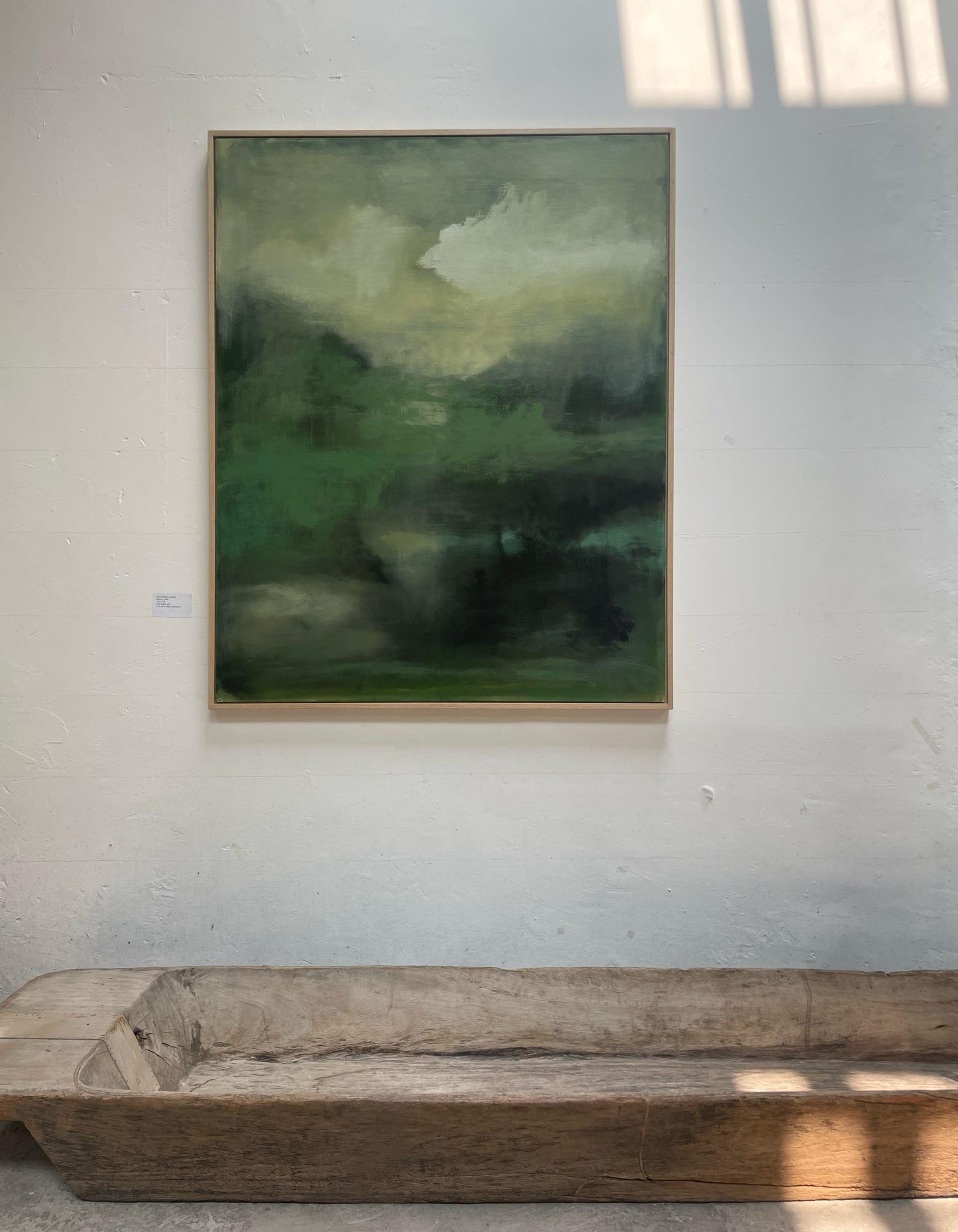
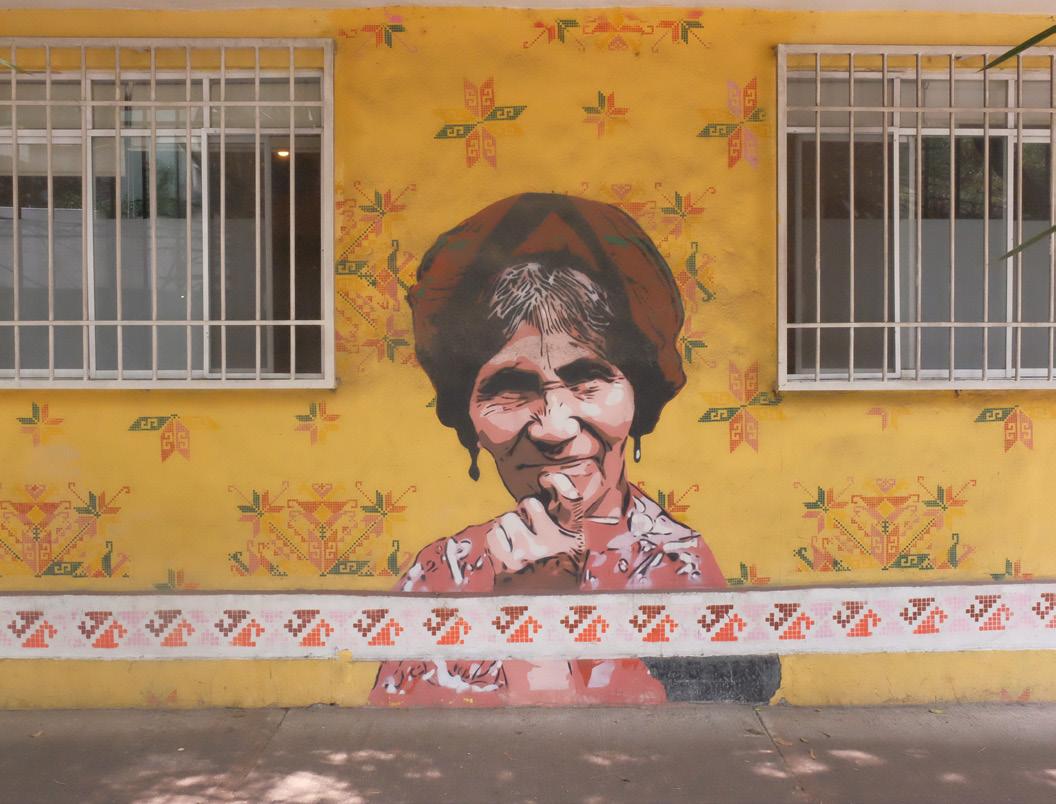
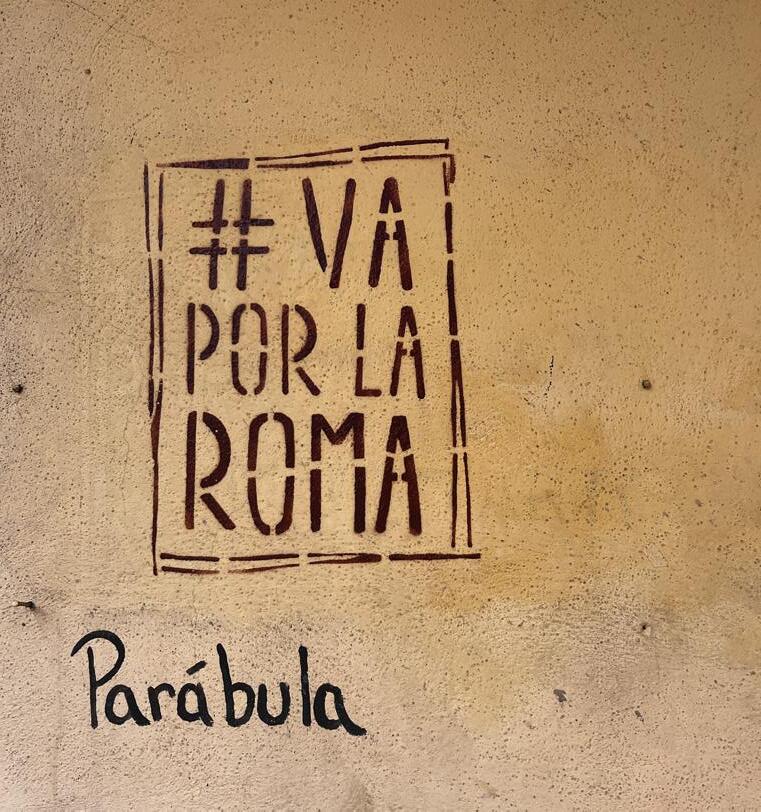
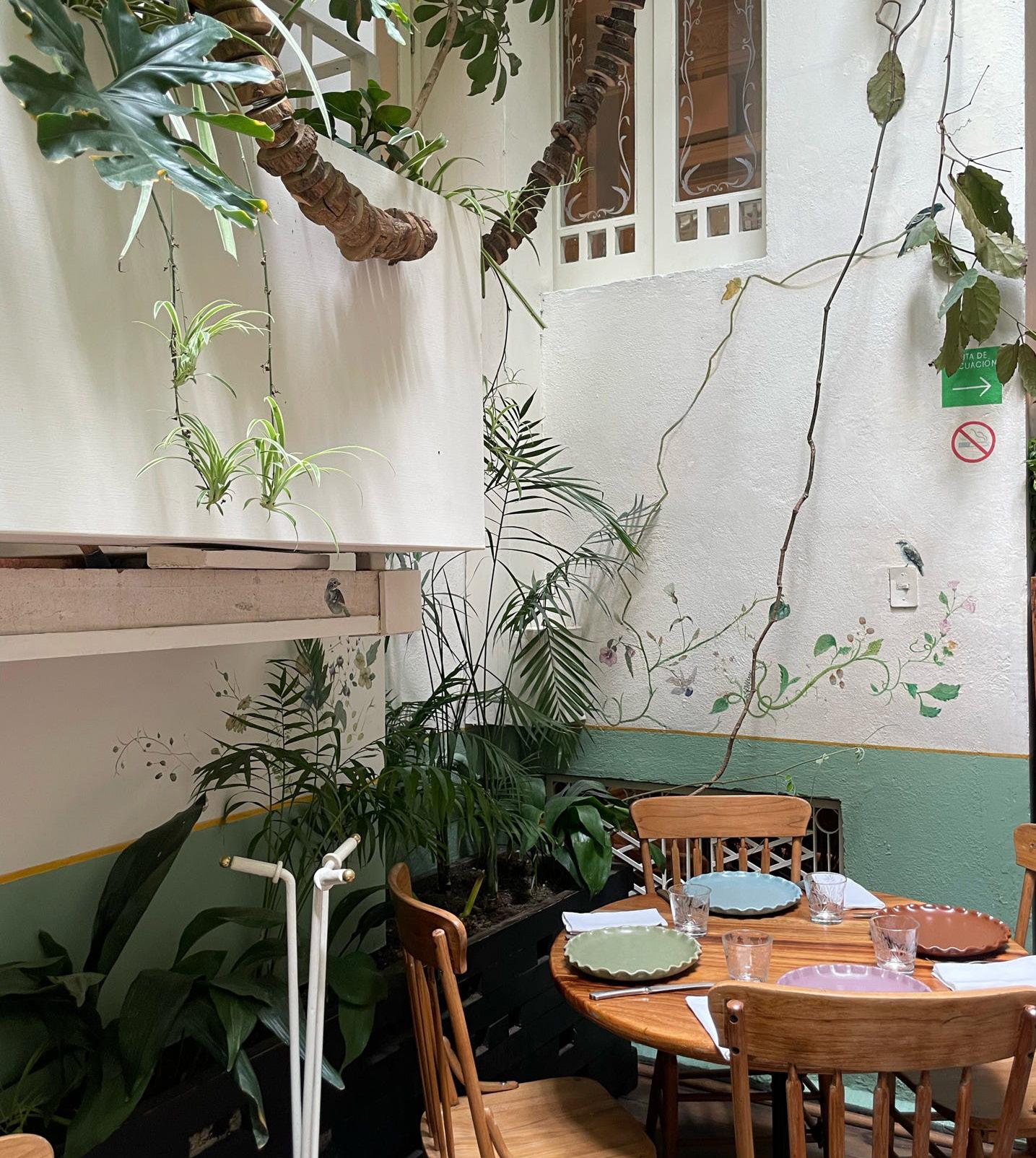
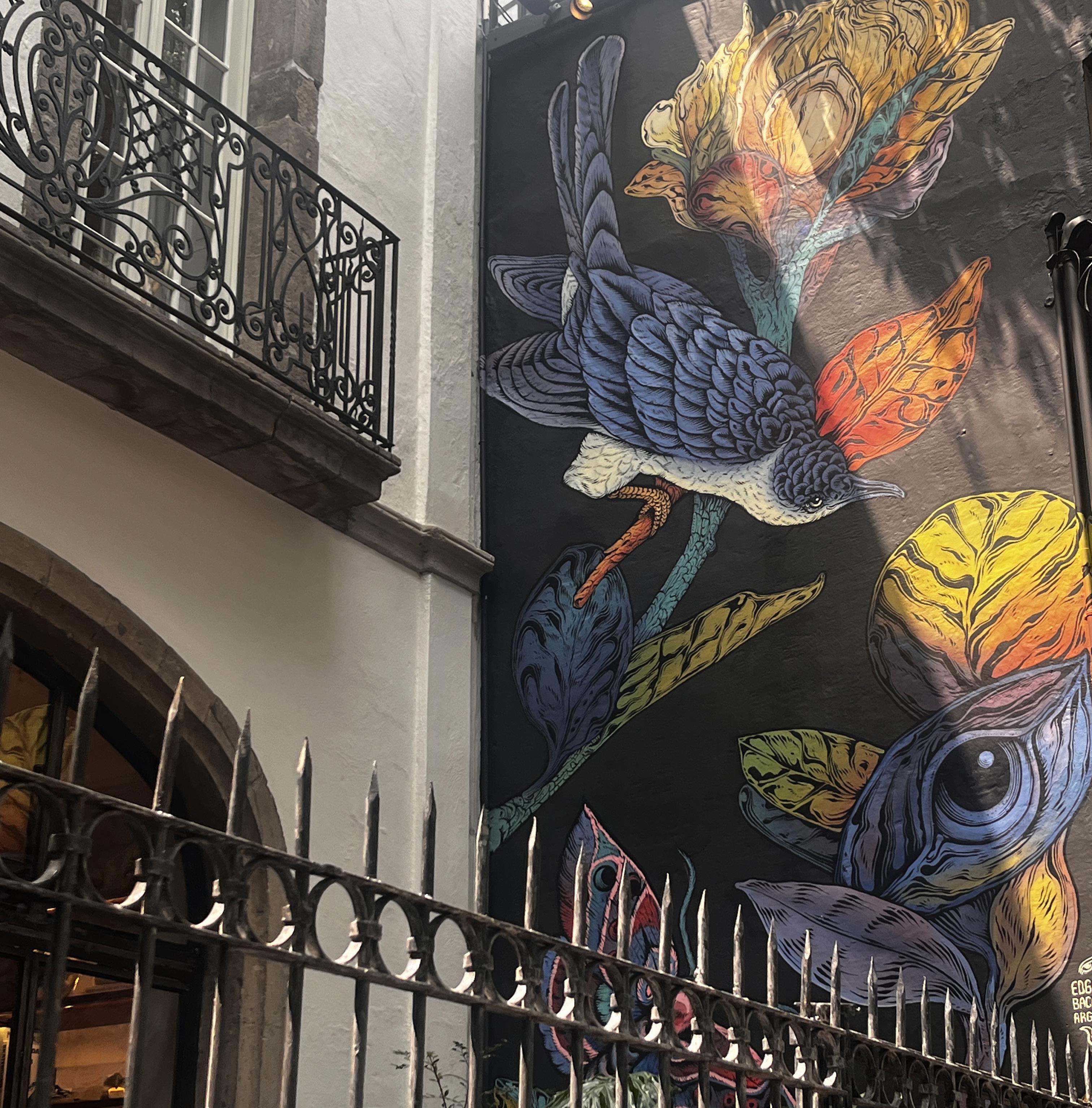
Walking through the streets of Mexico City, you see that many neighborhoods share a love of vegetation, ornamental embellishments, and of course, food. However, walking through the Roma neighborhood left a certainty of residents’ dedication to culture. With a blend of traditional and contemporary art, the stone and metal ornamentation, the earth-toned buildings of sage, cream, and tans with an occasional pop of orange gave a cohesive vibrancy as you passed through. The restaurants consistently extended seating past the sidewalk into parklets assuming parallel spaces. Even as a large group, we felt invited to share the experience of an otherwise unassuming and quiet area.
As a designer, it’s amazing to see communities in cohesion, but also to recognize individual tastes. We were reminded that the scale of detail can craft a sense of place with simple patterns, and draw you through a space to create continued interest. If we were traveling by car, many of these patterns may have been missed, and in that, we remember that the method of movement and speed can create an entirely different experience altogether.
by Ashlea Bills

by Katherine Dupree
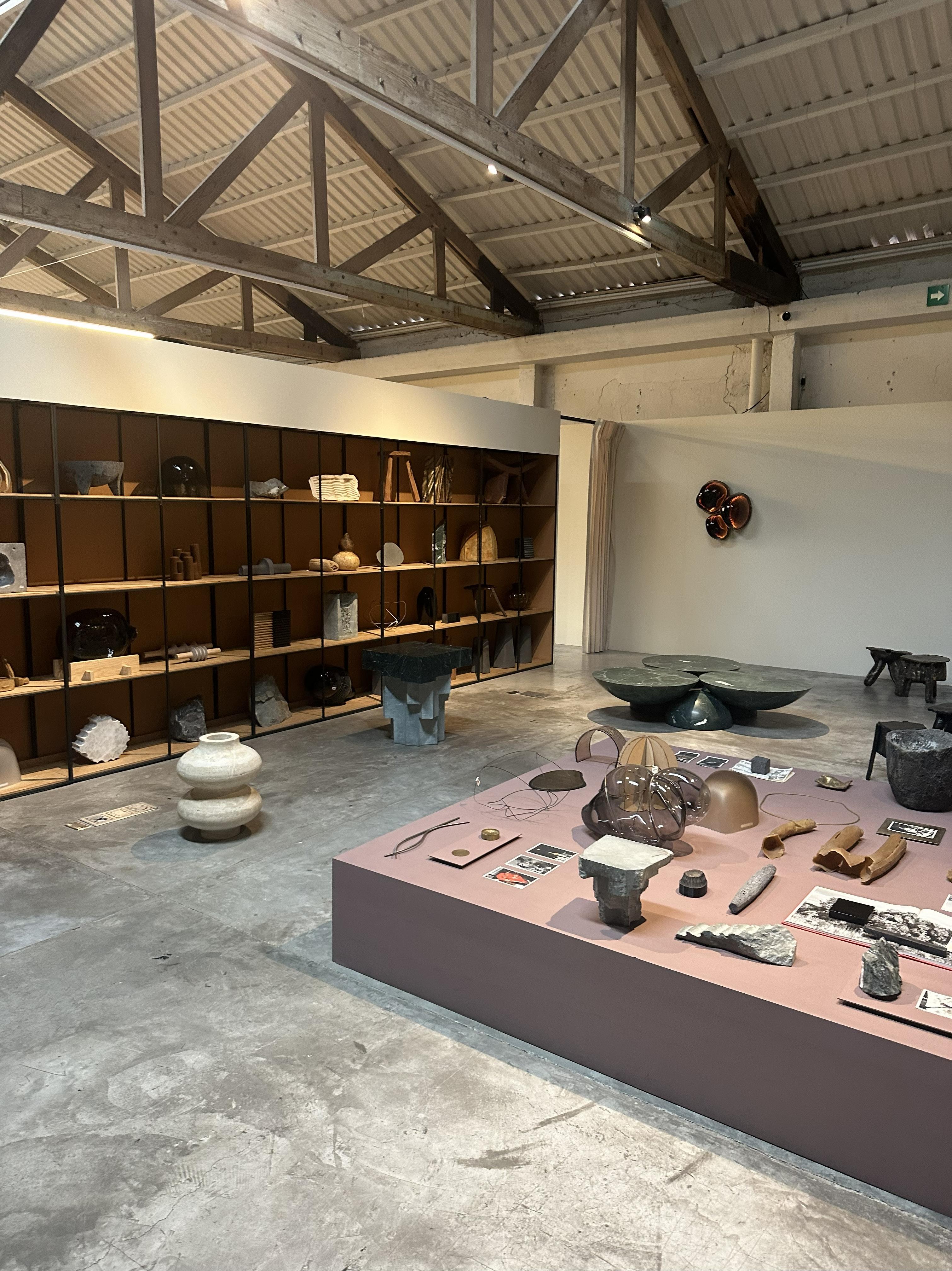
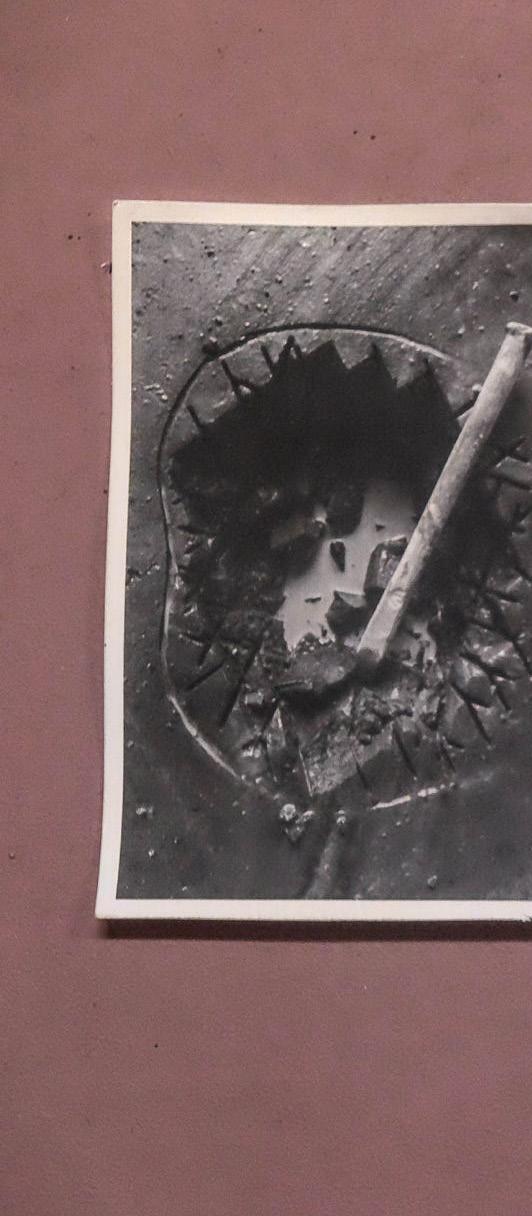
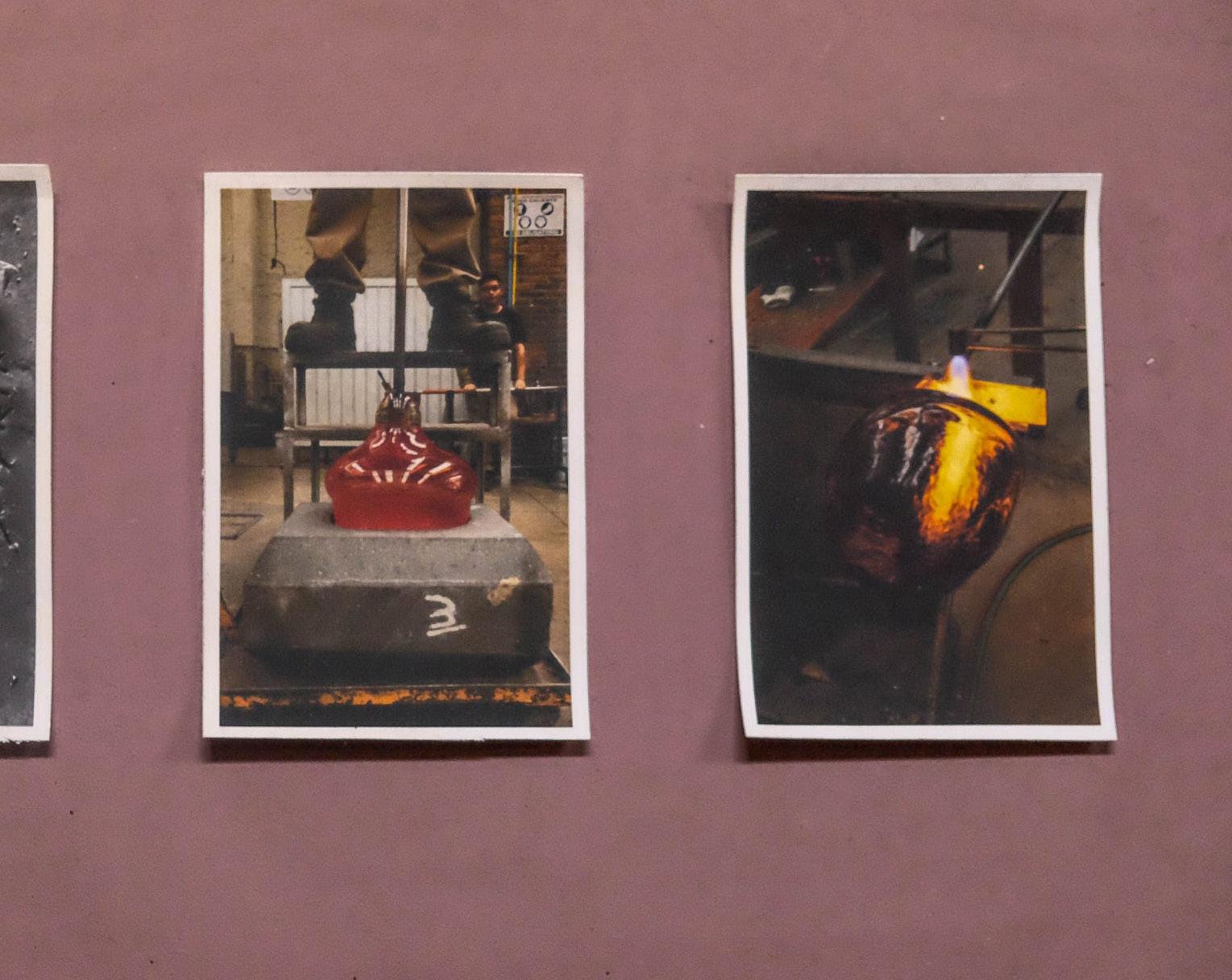
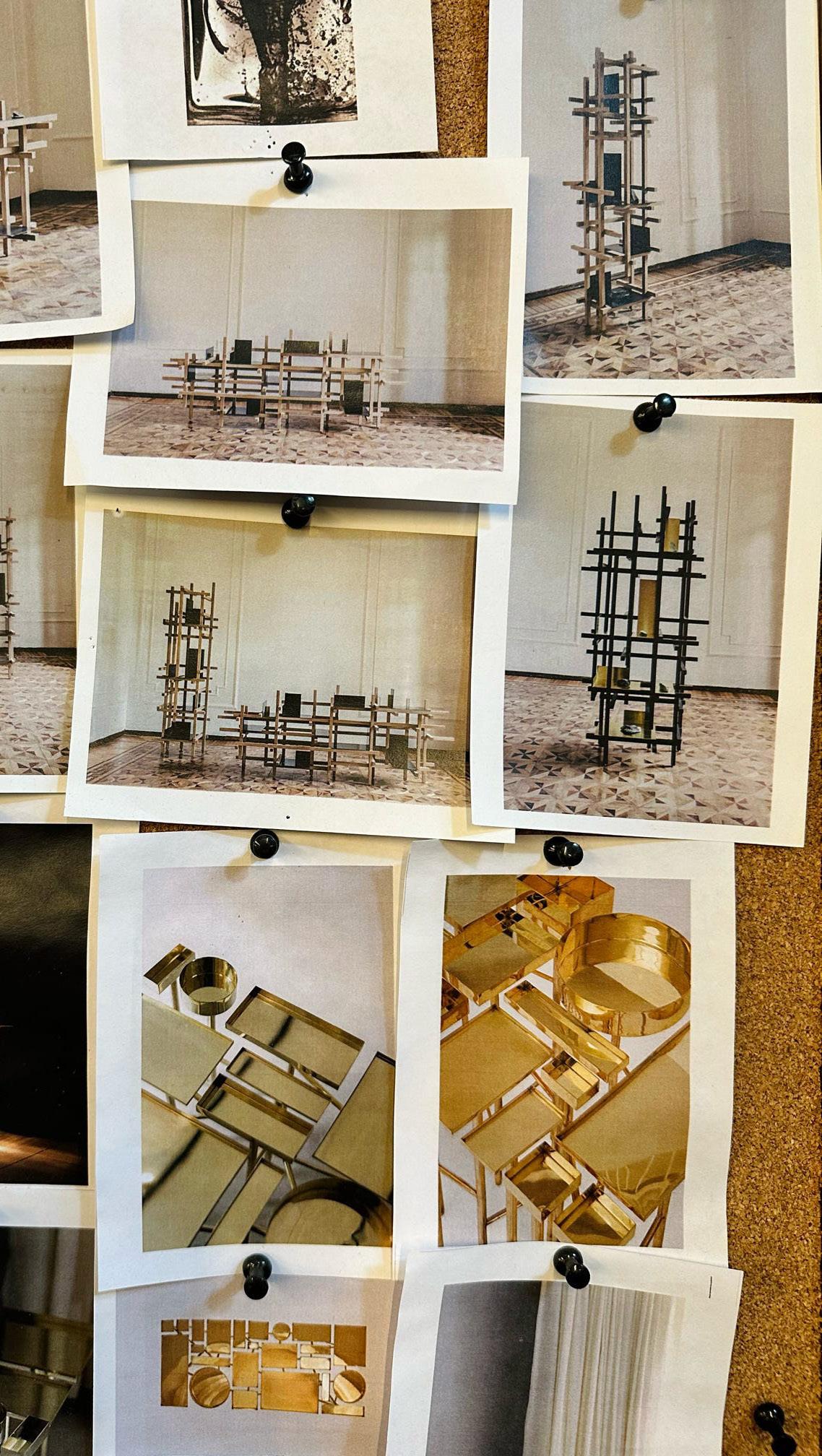
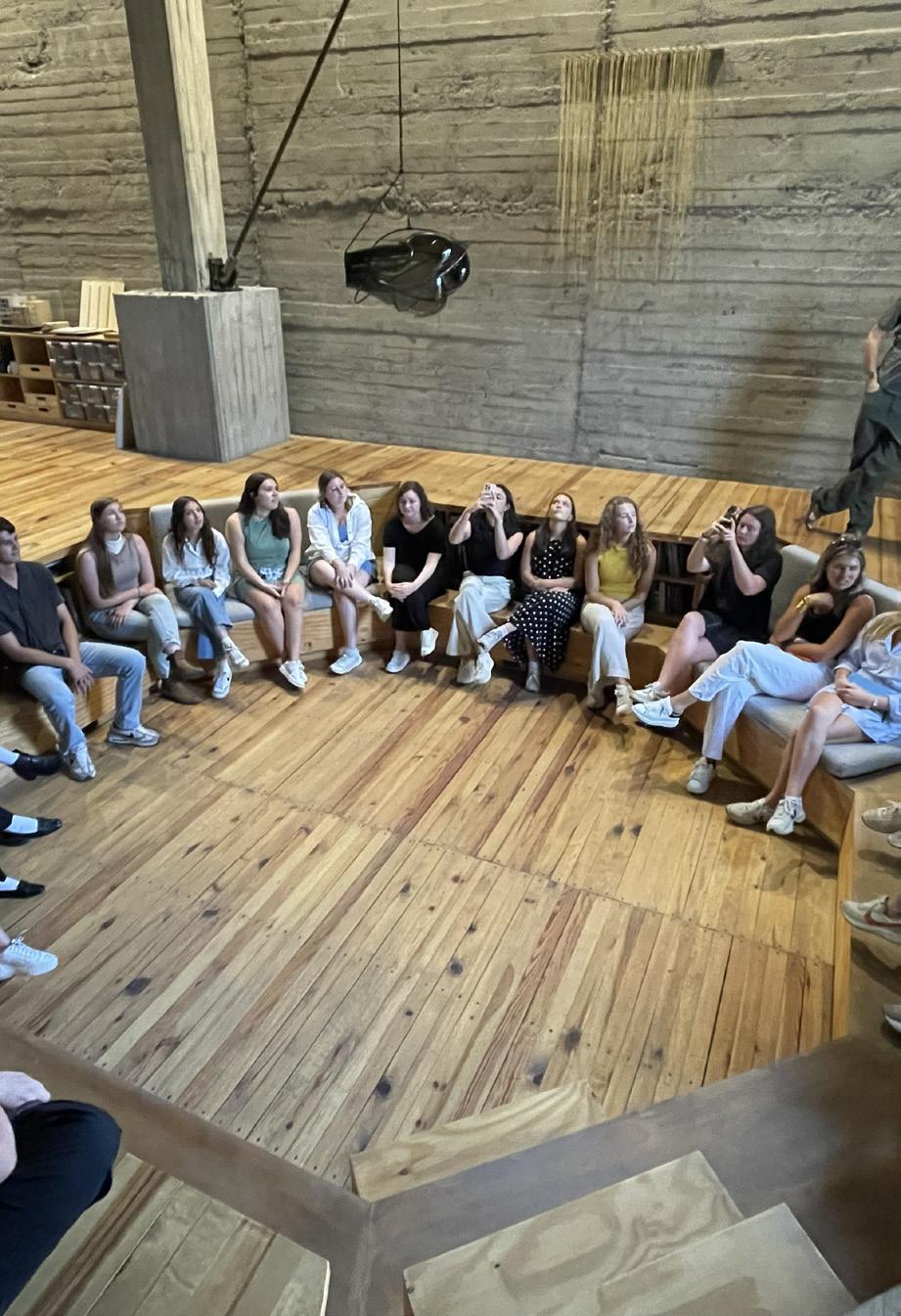
Hector Esrawe’s Studio was exceptional. Esrawe greeted us through a presentation of some of his artisan work. This display was filled with an extremely wide variety of materiality, techniques, and style. It was hard to believe that these pieces of art were all designed by the same artist. It was amazing to see the range of craftsmanship that Esrawe is skilled enough to accomplish. All together, his work looked curated and collected.
The tone of the firm was organic and driven. Inspiration was displayed from wall to wall in this workspace. Images of material, life, art, and architectural details were exhibited, showing the intention behind each project. There was an impressive amount of models scattered throughout the workspace. It was inspiring to see the importance that Esrawe’s studio places on the art of model making. Esrawe guided us from his showcase area, through the studio, to finally the model making space. This room was drenched in craftsmanship. Hundreds of models were displayed on shelves, walls, windowsills, and some even hung from the ceiling. What an honor it was to be in the presence of someone so easily inspired.
by Winn Gramling
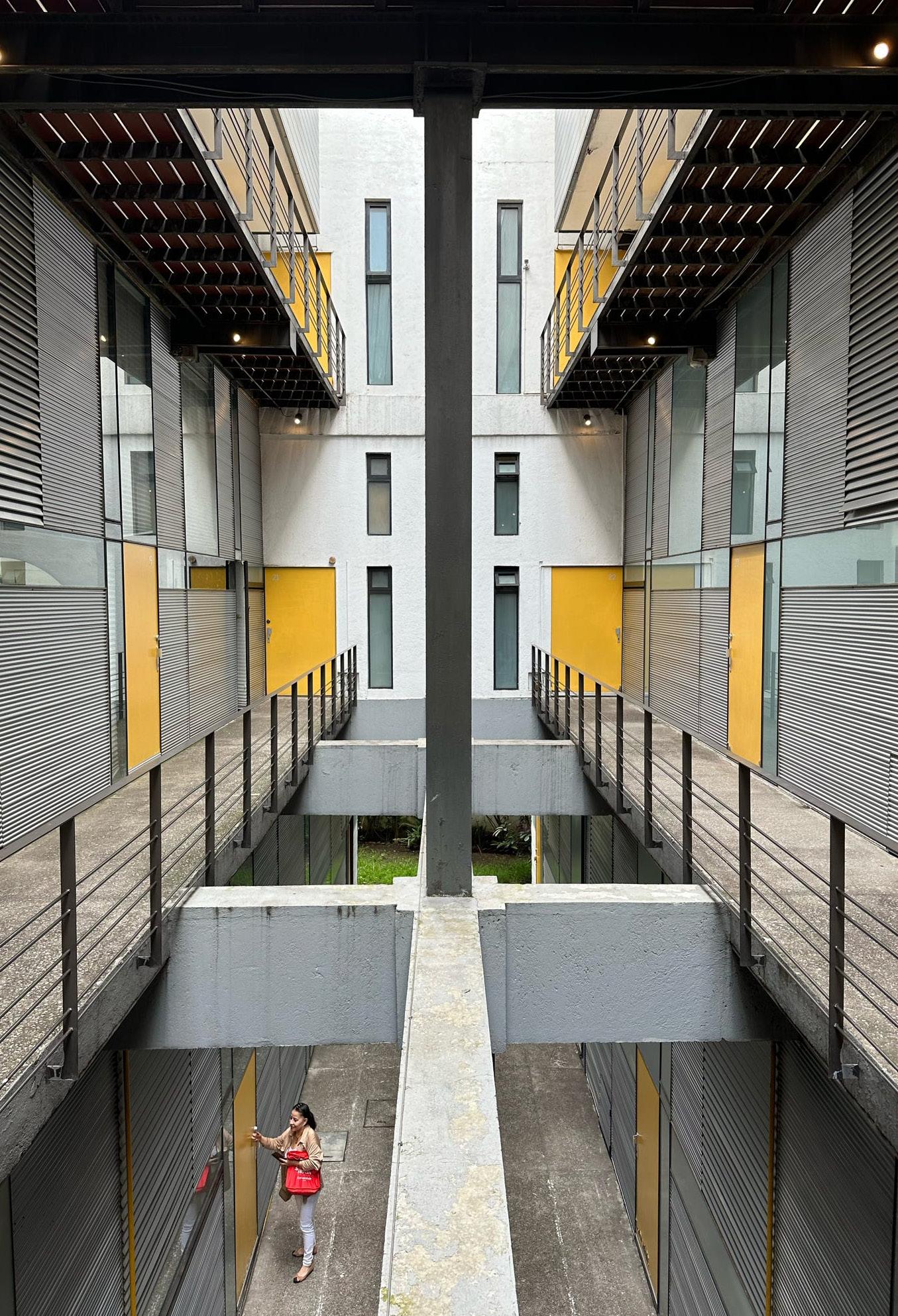
Our visit to 9 - 13 de Septiembre, a JSA Design project in Escandón, Mexico City, showcased a creative transformation of a former warehouse into a vibrant small urban housing and recycling project. Originally repurposed in 2004, the space now holds 37 compact residential units. A distinctive feature of the design is a central “street” with split staircases, granting access to each unit. We explored a unit on each of the three levels, with two residents kindly welcoming us into their homes. The first-floor unit featured a cozy garden, while the second floor-felt the most spacious. On the third level, we found a terrace with sweeping views of the city, and all the units had mezzanines and
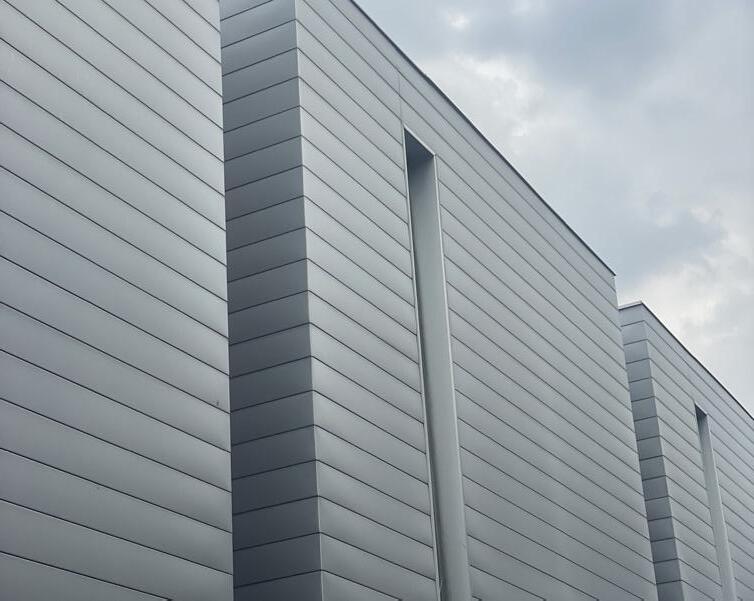
double-height spaces, creating an impressive sense of verticality. The lightweight mezzanine expansions added depth and versatility to the third level. Despite much of the first level being allocated for parking, the space managed to feel intimate and inviting, a testament to JSA Design’s innovative manipulation of section and space.
This visit was especially impactful because we’re currently working on an adaptive reuse project of our own, converting a factory space. Seeing how JSA Design masterfully repurposed an old warehouse into residential units resonated deeply with us. Their approach of removing elements from the existing structure to invite sunlight and fresh air into the heart of the building was particularly inspiring. It demonstrated how subtraction, rather than addition, can create a more dynamic and livable environment. Being able to experience this transformation firsthand provided invaluable insights that would have been impossible without JSA’s vision, reinforcing the potential of adaptive reuse to breathe new life into old structures.
by Cecilia Torres
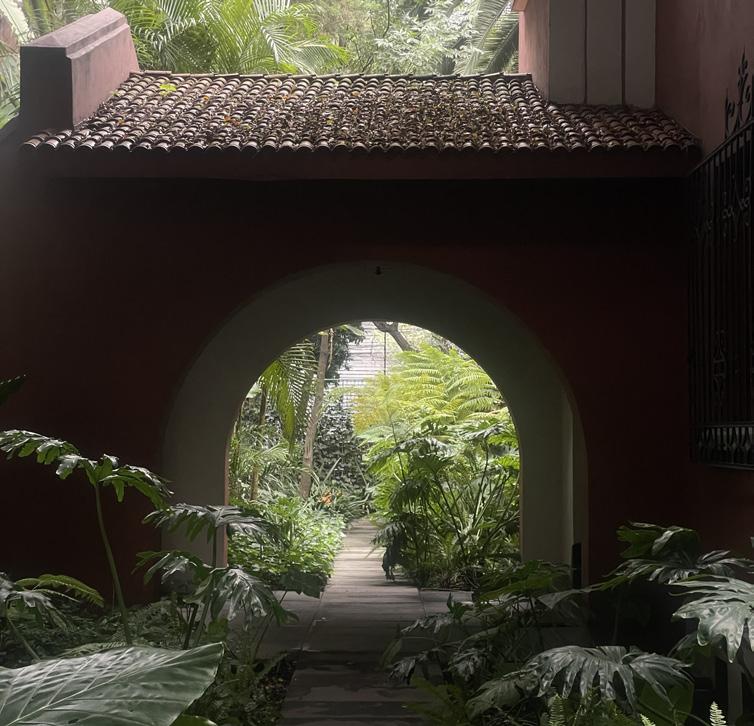
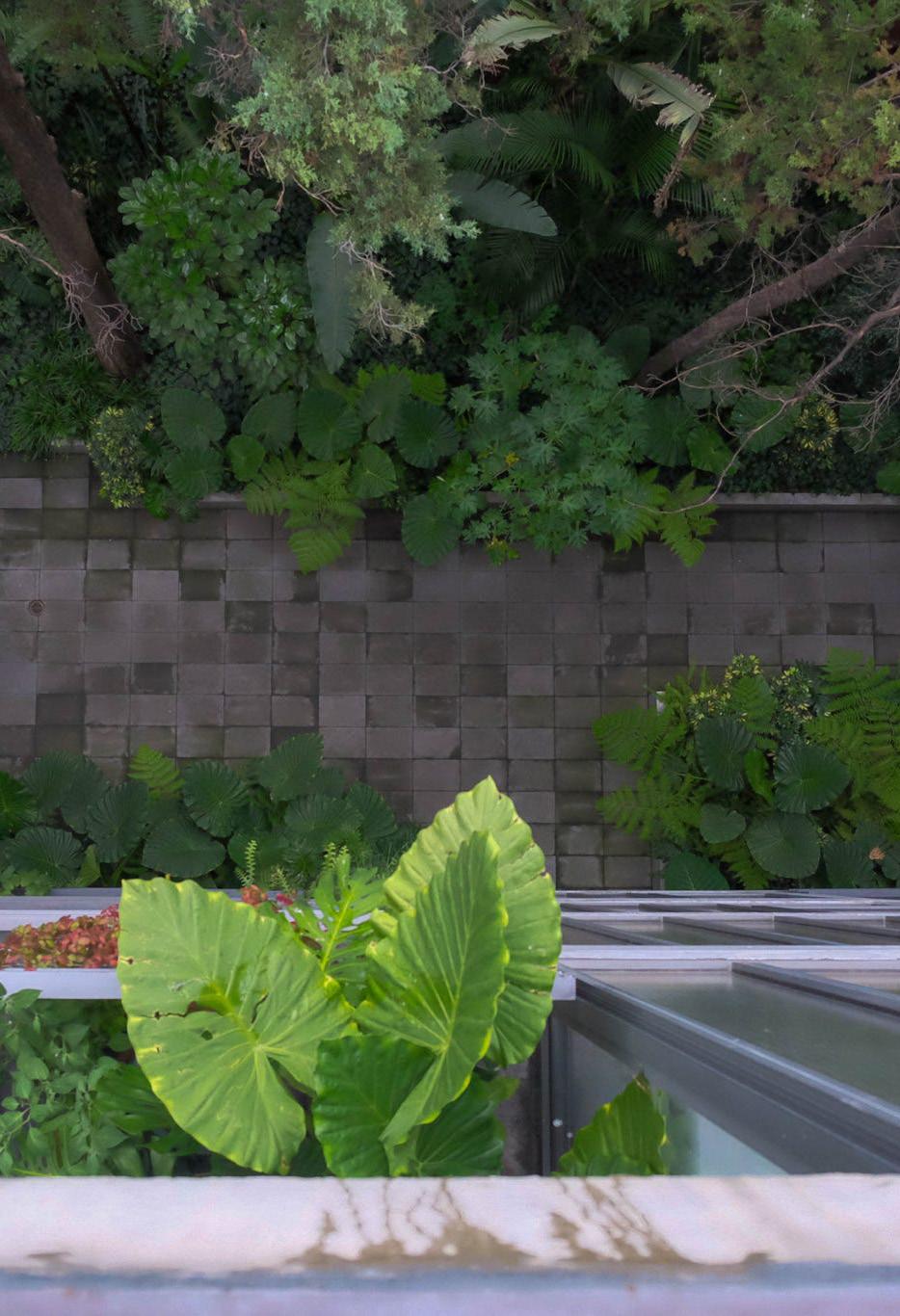
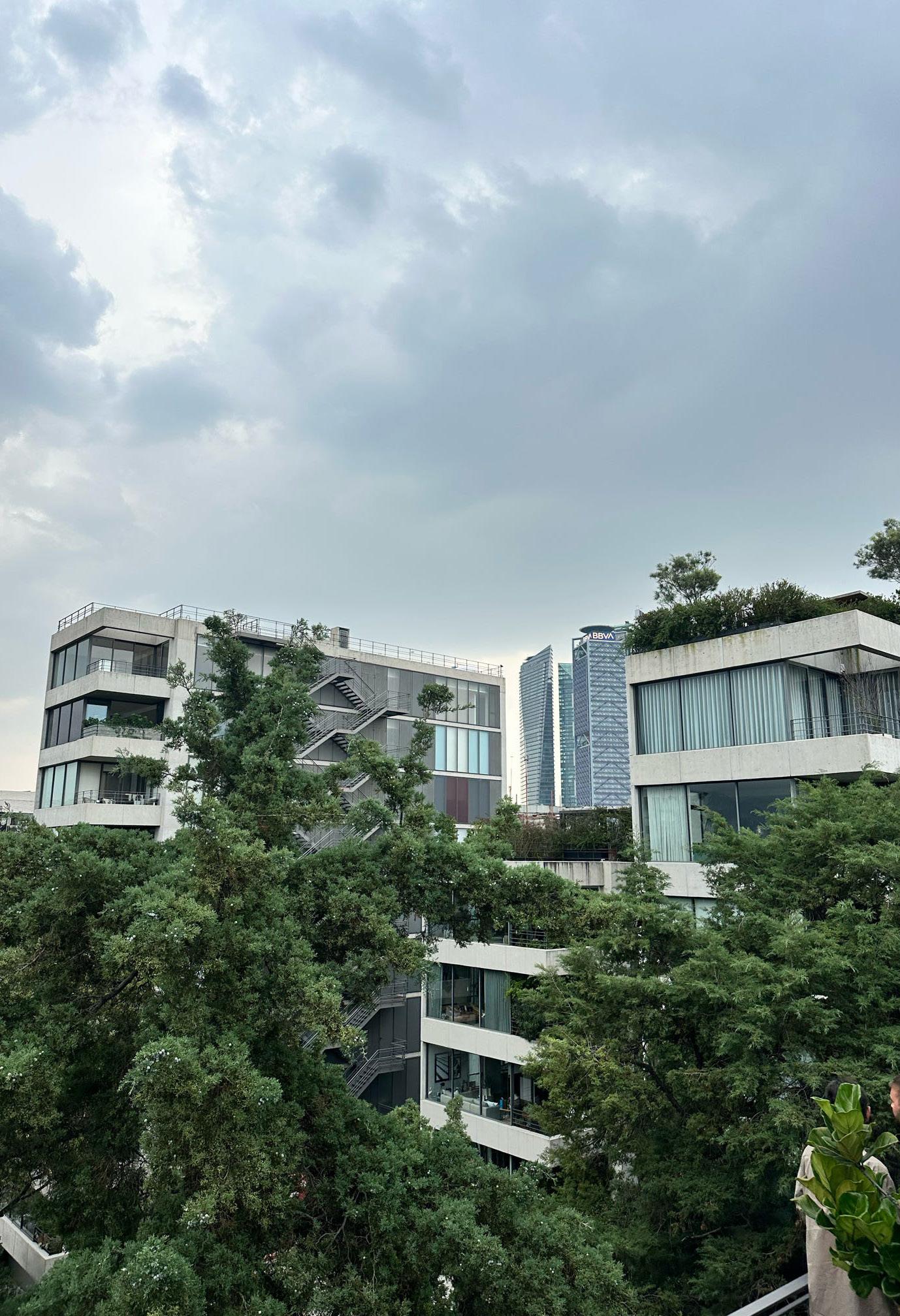
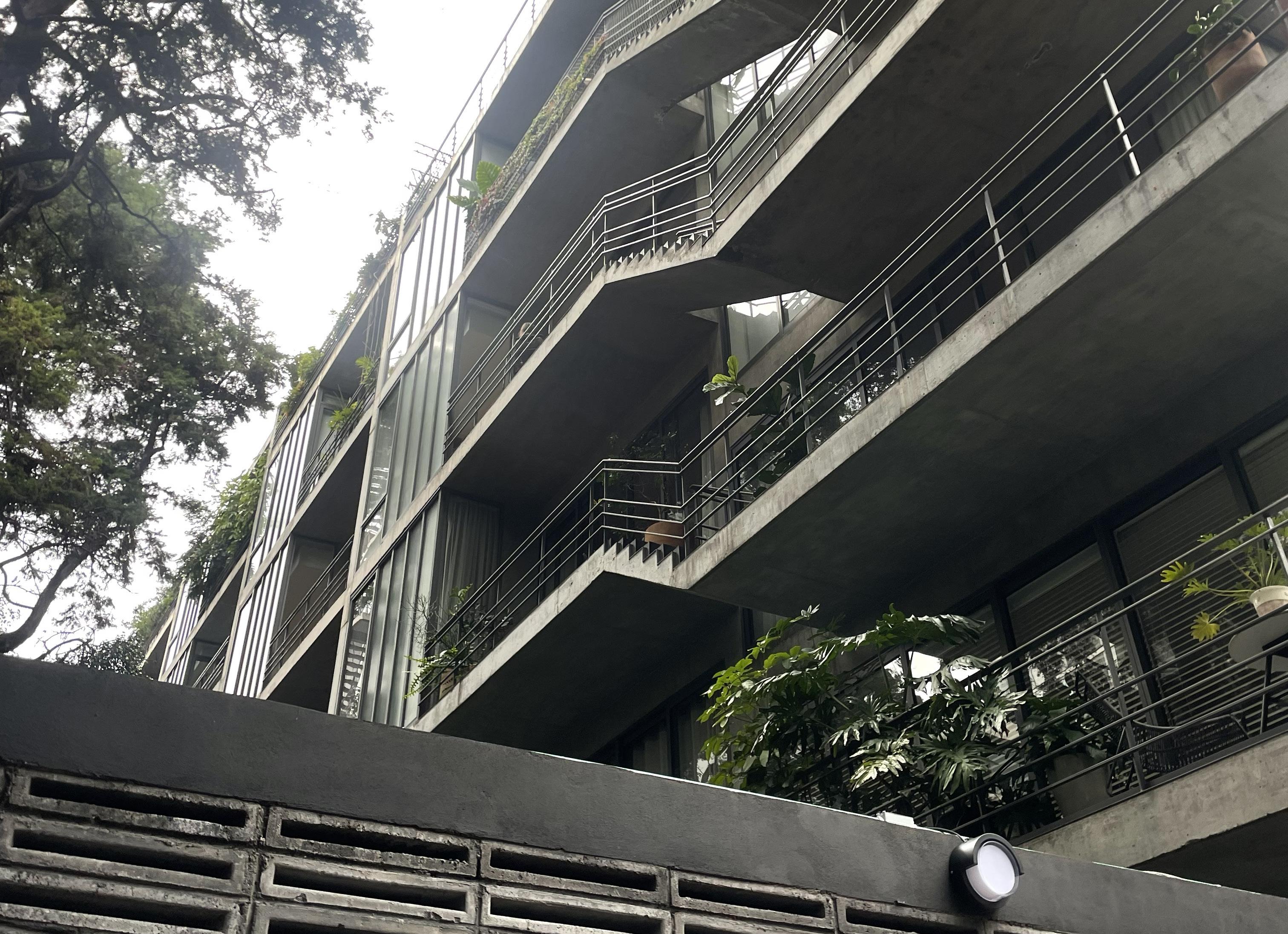
Walking into Juan de la Barrera felt like walking into a community more than just a residential complex. We were welcomed by its garden, which is like the thread that stitches each building together and creates a cohesiveness between what is historic and what is new. The complex is made up of six residential towers and two historical houses called the white house and the red house. This project was partly a restoration of these heritage homes, and also a strategy to build a community around them. The new towers vary in height, designed to be mindful of their adjacencies. Some are shorter to provide a calmer scale and an intimate view of the garden, while the tall buildings are towards the back of the site surrounded by an adjacent, tall telecommunications building. By being intentional about scale and strategy with the generous garden spaces, JSa has created more opportunities for spontaneous encounters among the community. This project is an example of how JSa is gently reimagining the urban fabric of Mexico City while celebrating its rich heritage.
Experiencing such an elegant and se-
rene environment in a residential complex served as a reminder that every detail was very intentional. The peace we felt on our tour was no coincidence; the design was successfully gentle, convenient, and secure. During our tour, we had the opportunity to see the inside of a penthouse unit in the complex. Walking through the unit was both an indoor and outdoor experience that captured views of the city, led us up and down platforms, and inspired us to consider how one would interact with the home.
by Callie Walmsley
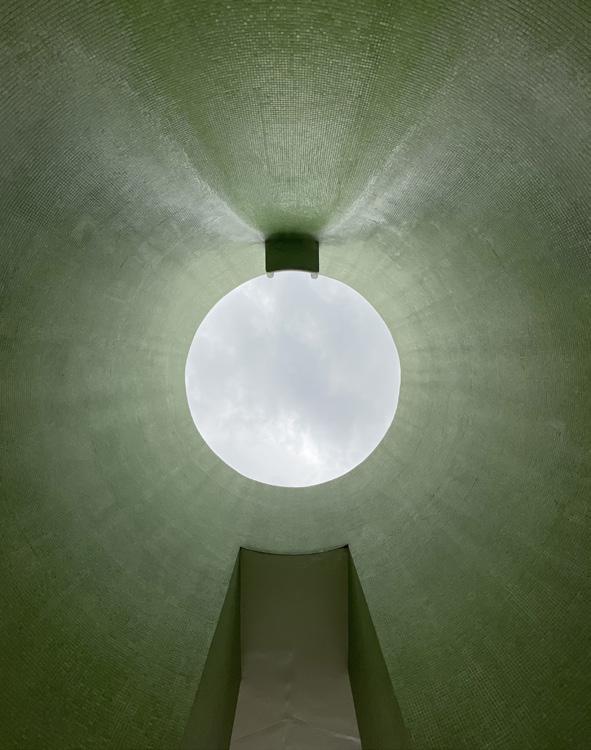
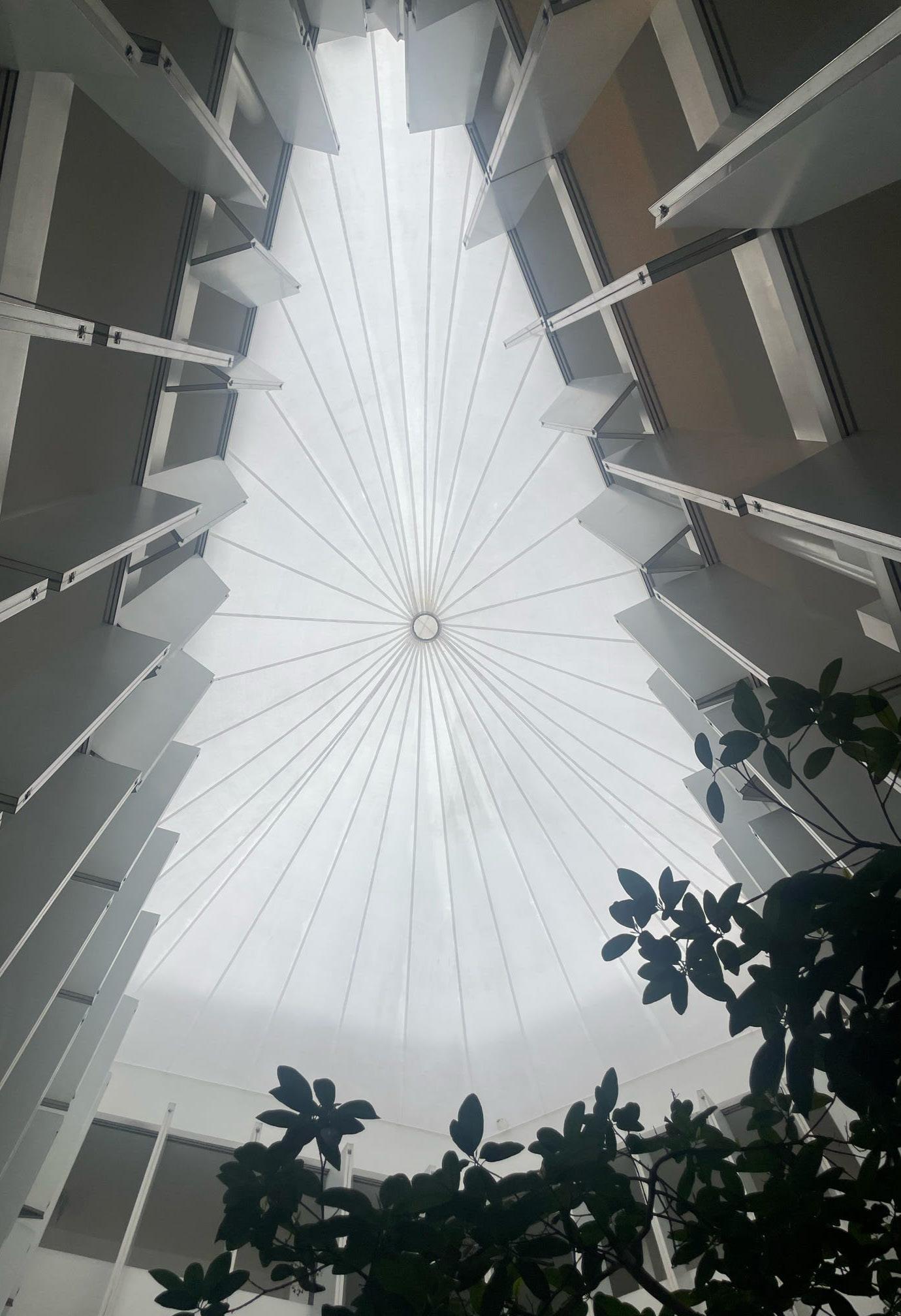
Hotel Condesa is a prime example of adaptive reuse within the Condesa neighborhood of Mexica City. JSa completely transformed the interior of the 1928 housing complex into the first boutique hotel in Mexico City. Remaining true to its historic nature, the exterior was restored while the interior was transformed into a dynamic and adaptable space that become the heart of the neighborhood. The interior is artfully handled in a way that transforms the space to accommodate modern needs. JSa carved out the middle of the historic building while remaining true to its blueprint to bring in natural light and help break the barrier between the architecture and nature surrounding it. Additionally, a series of operable panels surrounding the floors through the atrium allows staff and guests to
adapt the building’s interior facade to accommodate their needs that occur from the weather and preferences. Although the stunning retro exterior brings one back in time to when the building was originally inhabited, the most stunning architectural feature can be found by looking up. JSa chose to an additional floor of a rooftop terrace to this project, but in a way that masterfully adds to the space while keeping the original nature of the building intact. The terrace is designed in a way that is offset from the exterior facade of the building, creating an addition that is essential to the new program, but doing so in a manner that allows the street view of the building to remain what the neighborhood has known for almost a century.
Hotel Condesa was a beautiful example of the nature in which to approach adaptive reuse. The project demonstrated to us how one can remain true to a building, its history, and its cultural importance while adapting to the emerging needs that arrive. The hotel showed the importance of carving out spaces for lighting needs as well as its ability to adapt to its environment. Not only was the building breathtaking,
but it also showed us ways of additive architecture that we have not yet seen in the United States. The simplicity of recessing the additional floor to trick the pedestrian eye is a tactic that is often overlooked.
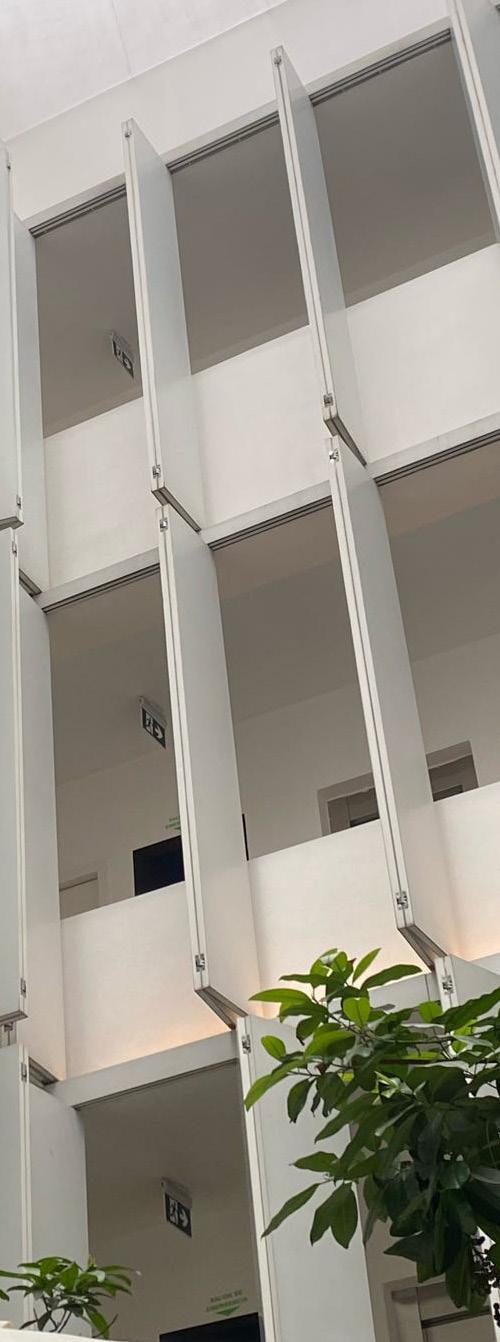
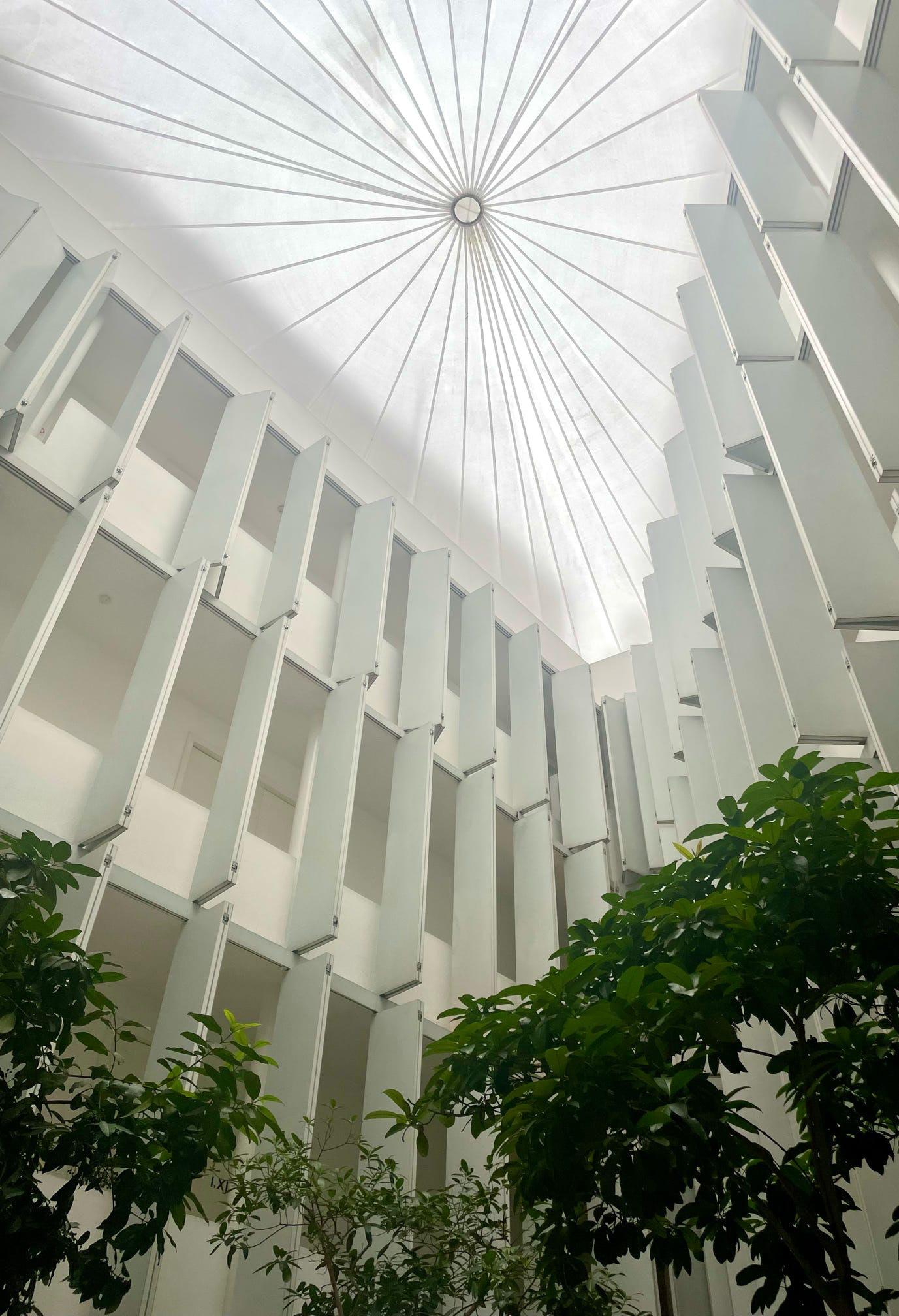
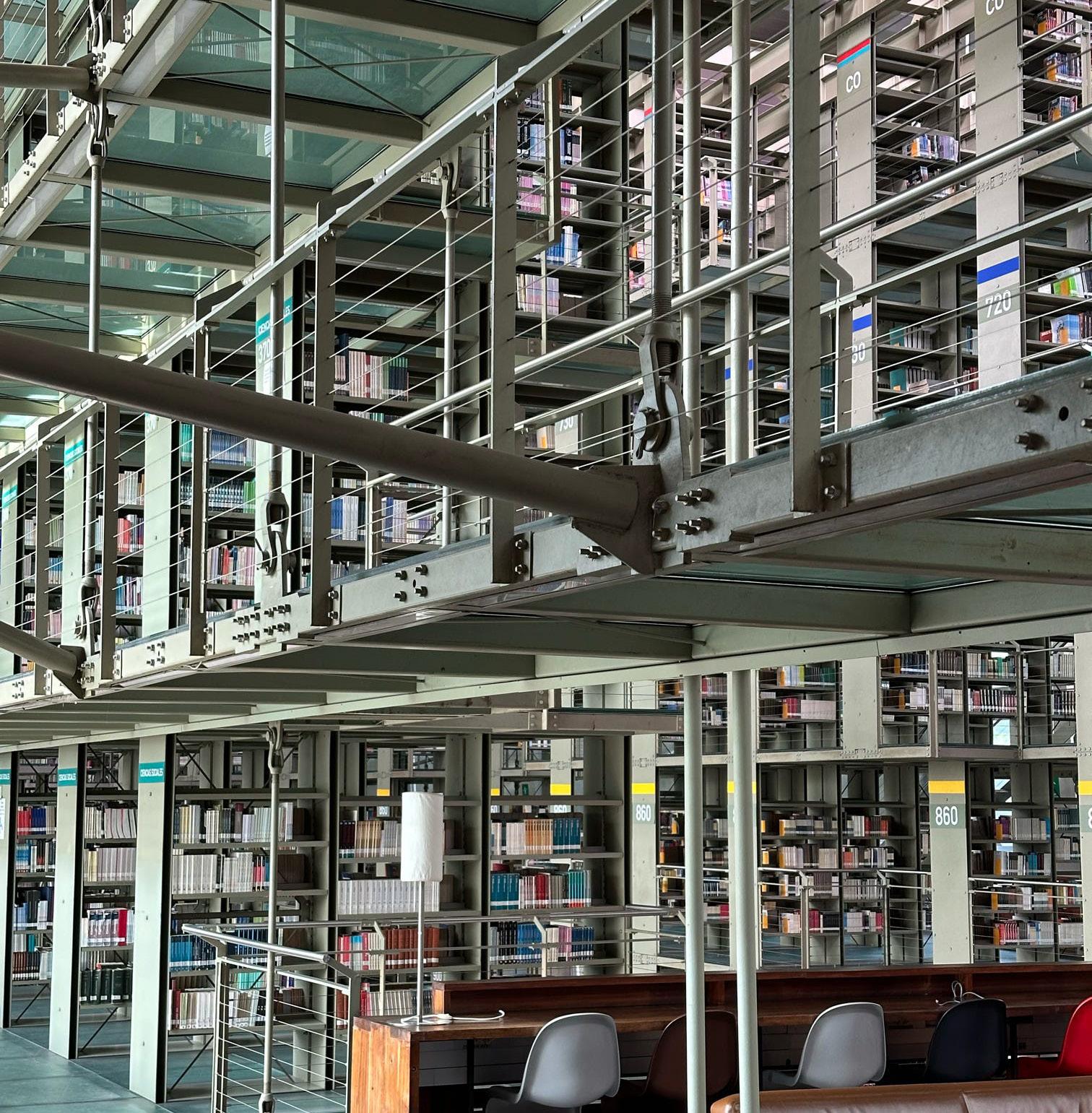
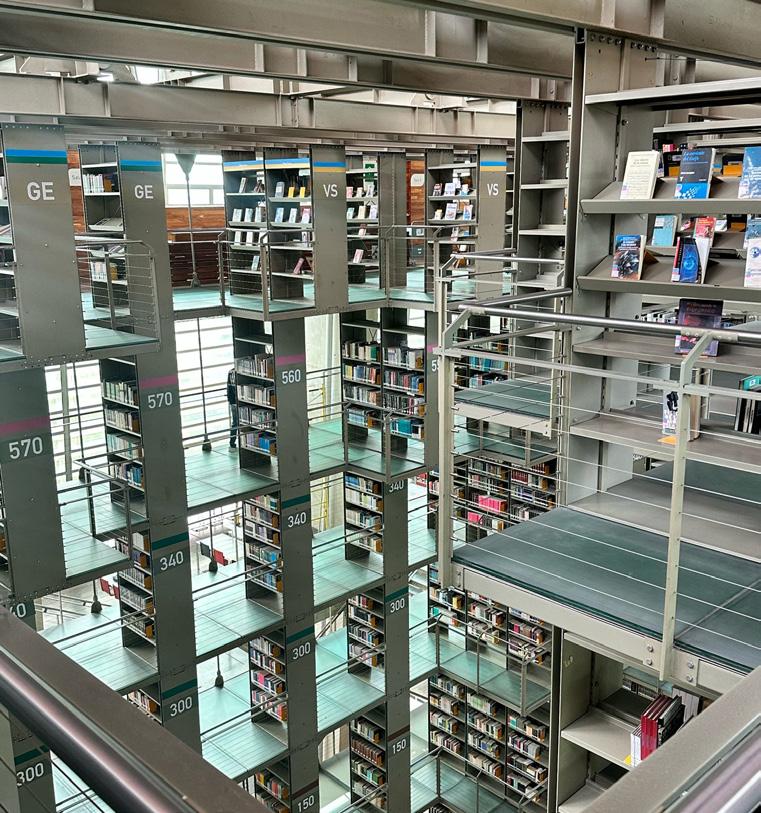
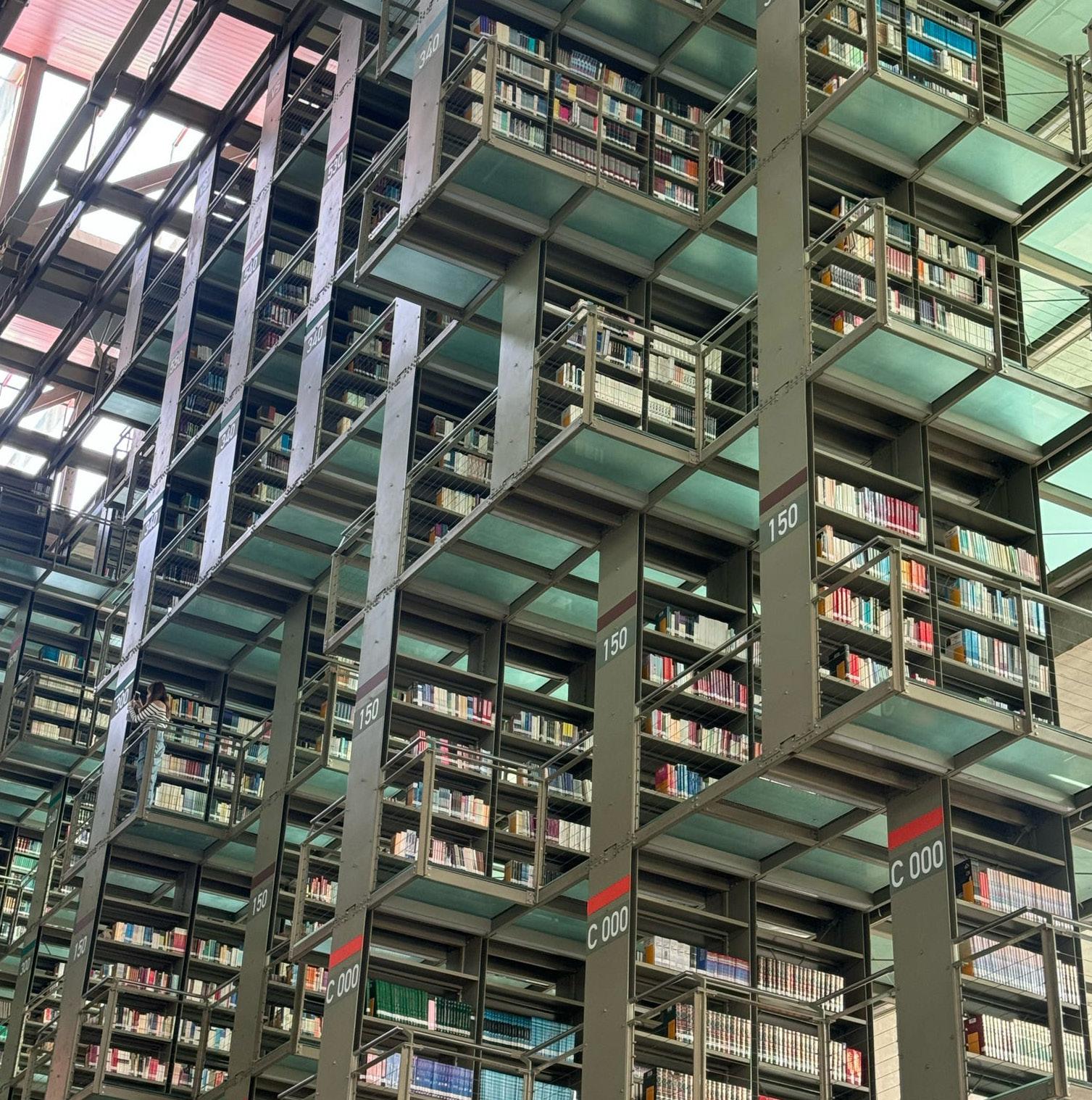
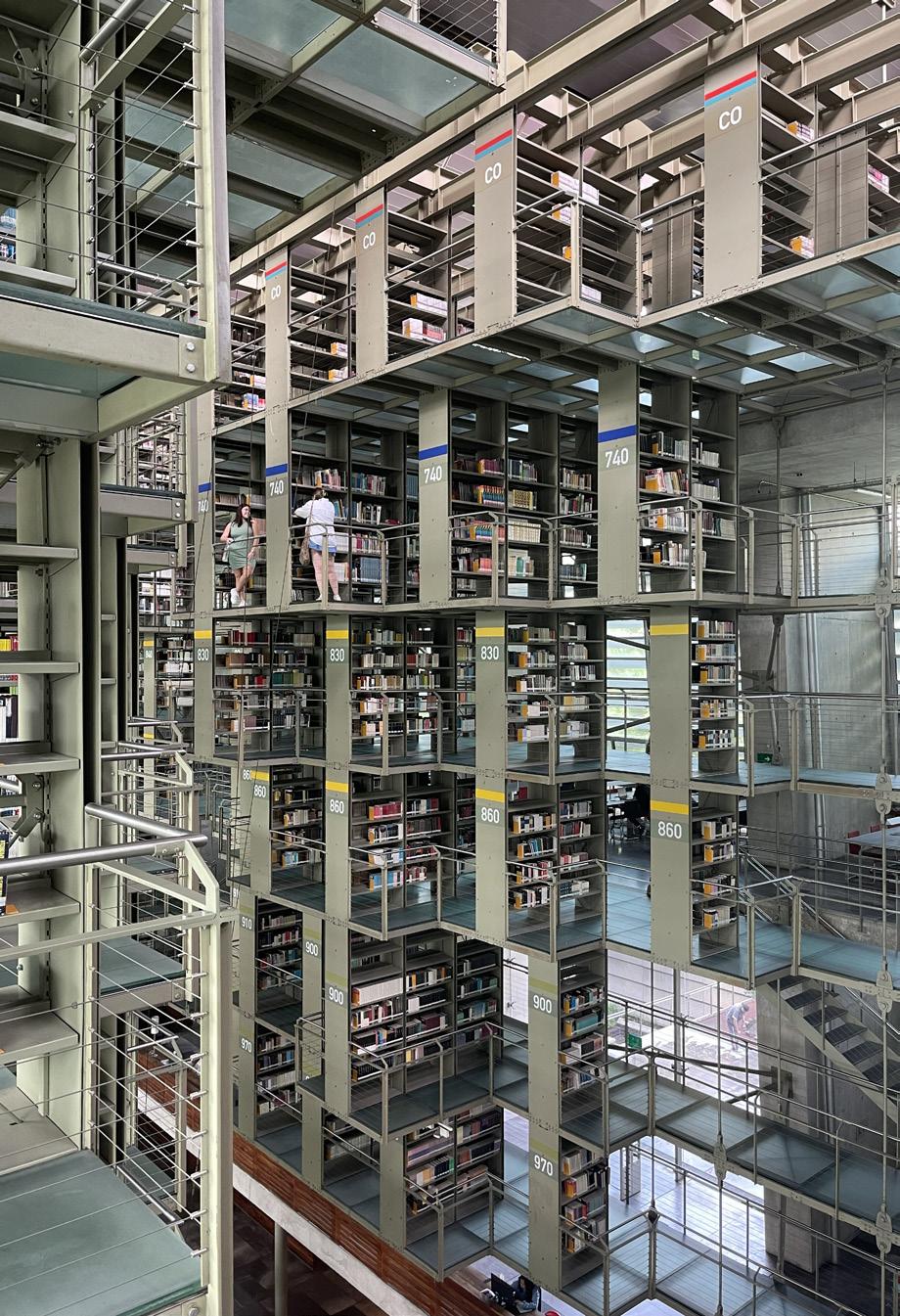
Biblioteca Vasconcelos built by Alberto Kalach was designed with the idea of providing Mexico City, one of the most populated urban developments on the planet, with more publicly funded buildings that serve the community. This library provides a space for learning and growing in the city. It encourages the expansion of car-free open spaces and greenery into the center of the city. The site was originally a barren urban landscape so Kalach wanted to change the space into what it is today. The botanical gardens surrounding the area contain an extensive array of Mexicos endemic flora that connect the visitors with the culture of the city. The library itself is designed with staggering balconies and a network of pathways that resemble a plant’s root system.
This space impacted us in a multitude of ways, by focusing on different aspects of design it was able to relate to the multiple disciplines found in our studio. The interior of the space showed the complexity of movement throughout a space through the numerous pathways
and hidden spaces throughout the design. The gardens and exterior of the space inspired many to focus on the landscape and how it interacts with the building itself. The design of the gardens allowed for multiple vantage points of the building and highlighted specific areas of design.
Kalach
by Olivia Hicks
by Lauren Hall
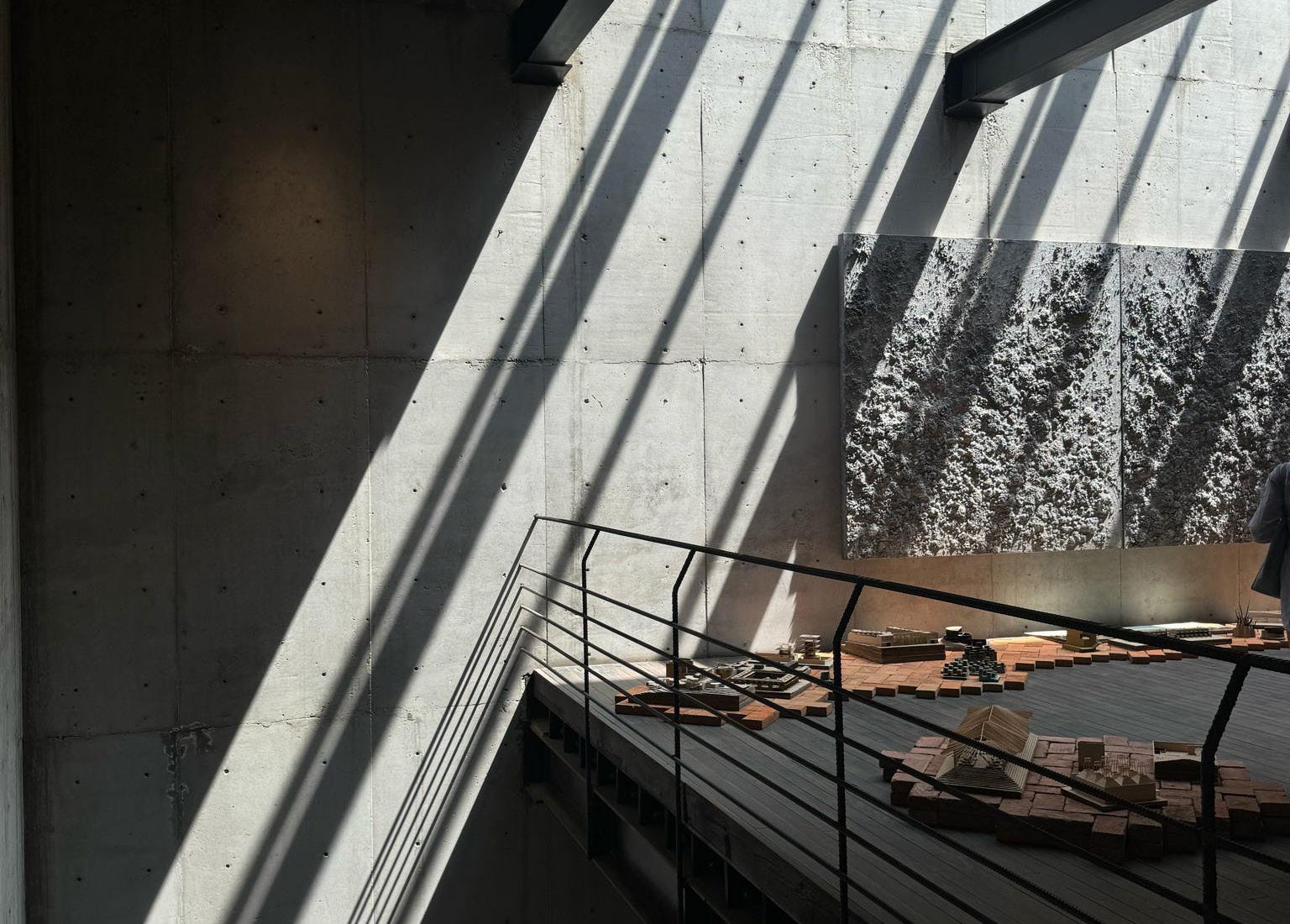
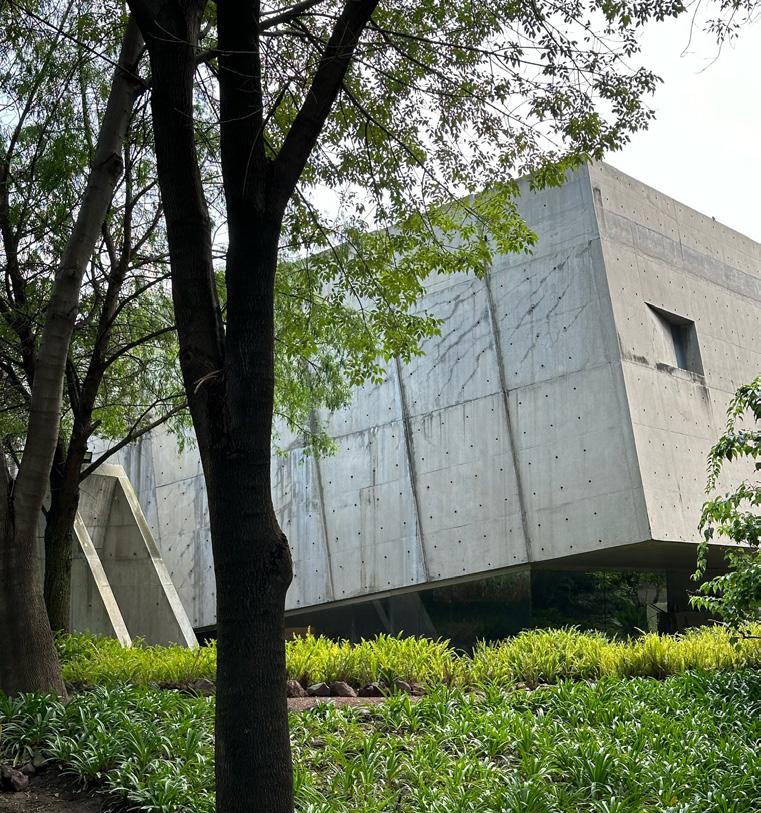
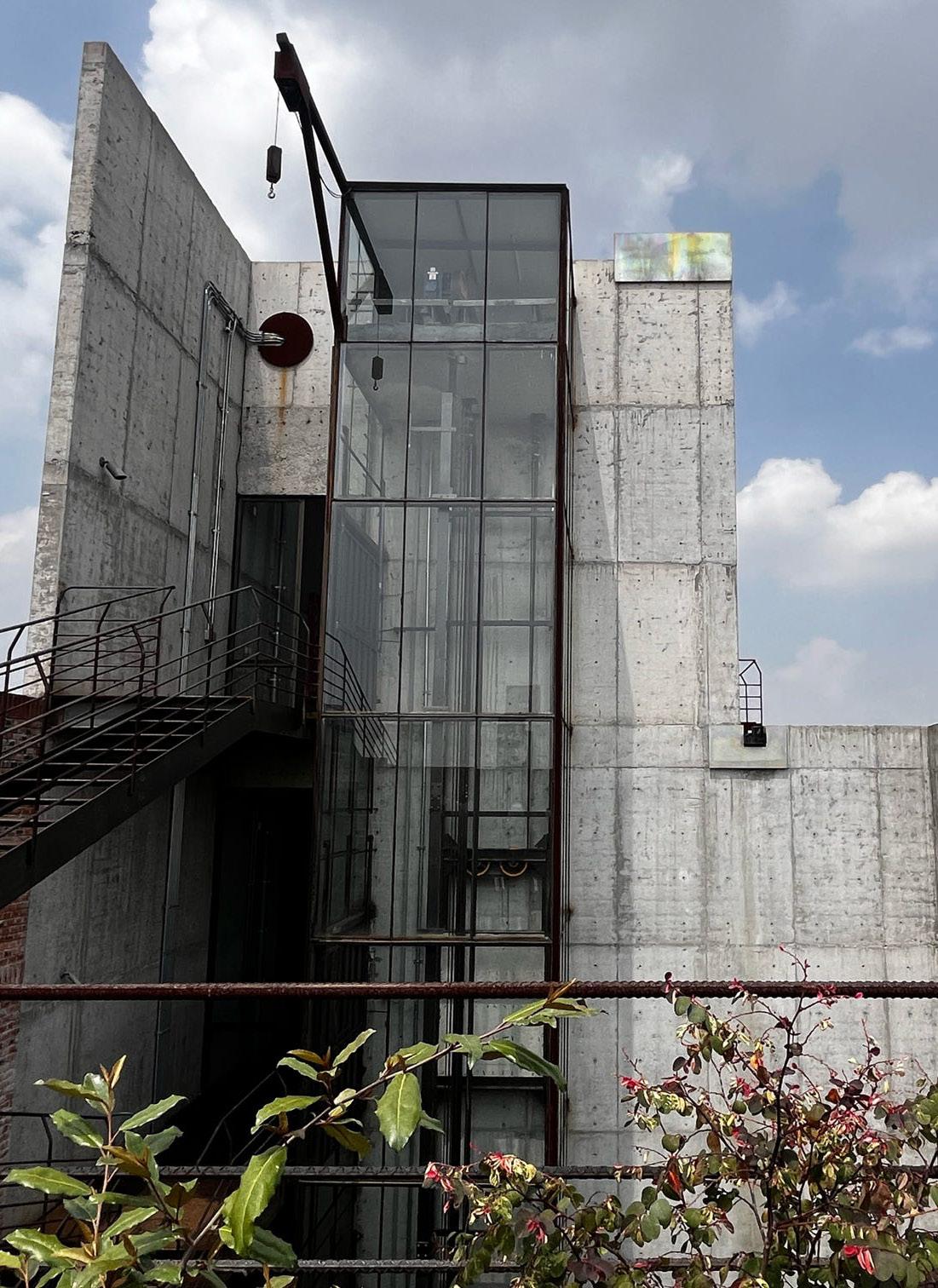
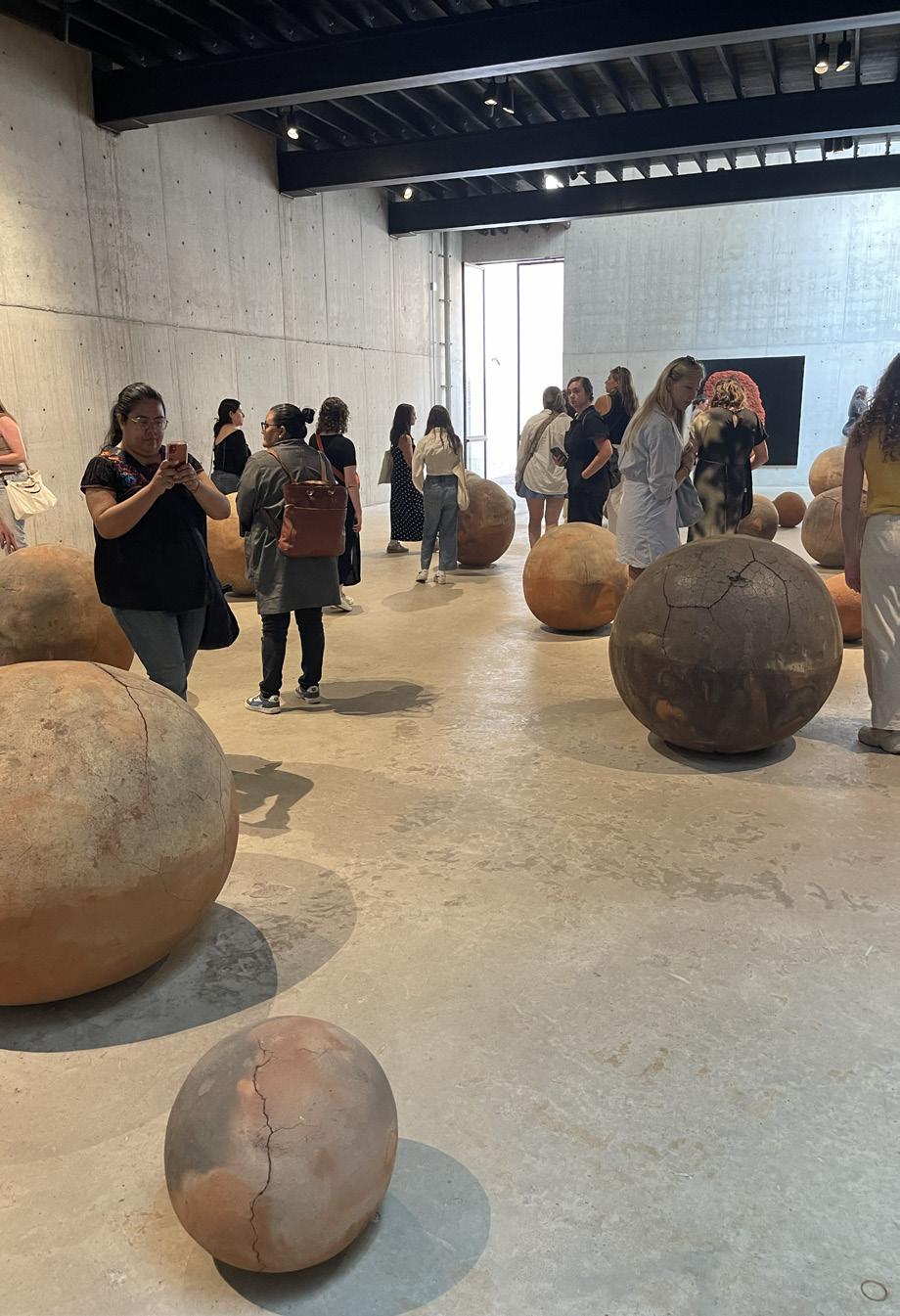
Casa Wabi Studio is an art gallery and administrative building for Bosco Sodi, an artist who founded Casa Wabi and the architecture was designed by Alberto Kalach. The structure has a rich variety of materials that were informed by the natural materials of Mexico. Exposed concrete can be found through much of the interior and a combination of this concrete and brick on the exterior. In some of the gallery spaces, the structure has exposed metal to nod to the industrial site that surrounds it. Many spaces allow light in a delicate way which transforms the light into another piece of art in the gallery.
We were guided through a tour of this lovely building and we got to see some of the amazing art
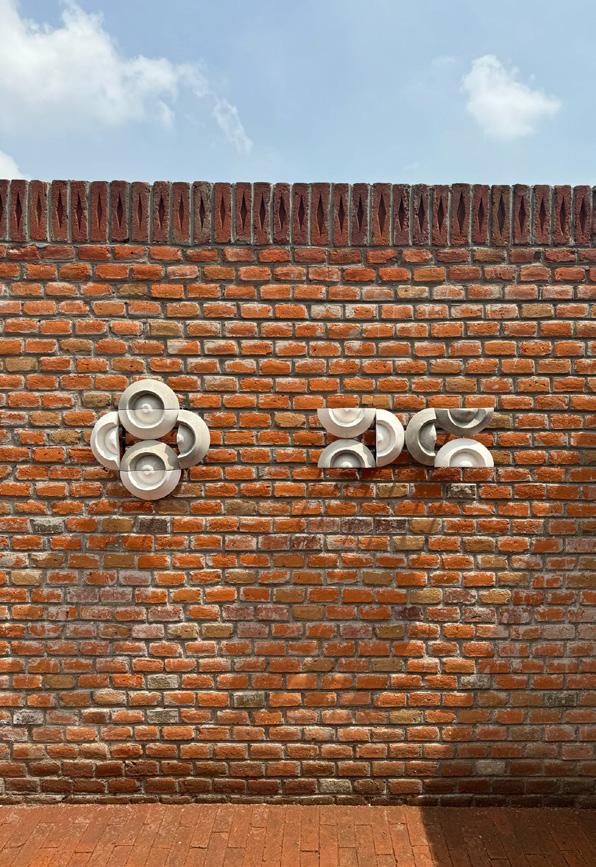
that is displayed there. One of the most remarkable exhibits was one by Alberto Kalach himself - it was a large collection of Kalach’s architectural models depicting all of his work, built and unbuilt. The craftsmanship and sheer quantity of the models was astounding in itself. Bosco Sodi was another prominent artist who created very impressive work for this building. He uses large-scale, raw materials in his work. This work emphasizes craftsmanship and the natural environment. The architecture complemented these exhibitions so well and made an amazing experience for viewing the art. We had a wonderful time getting to study both the building and the art inside.
by Katherine Dupree
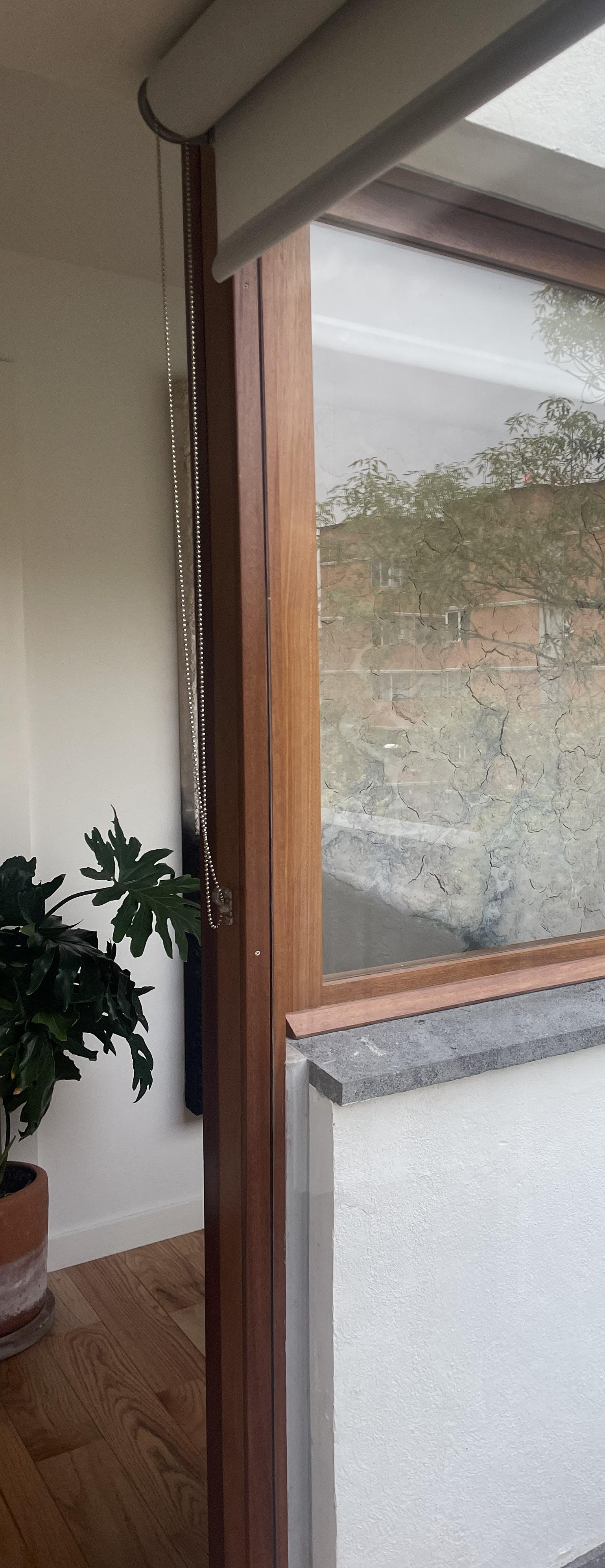
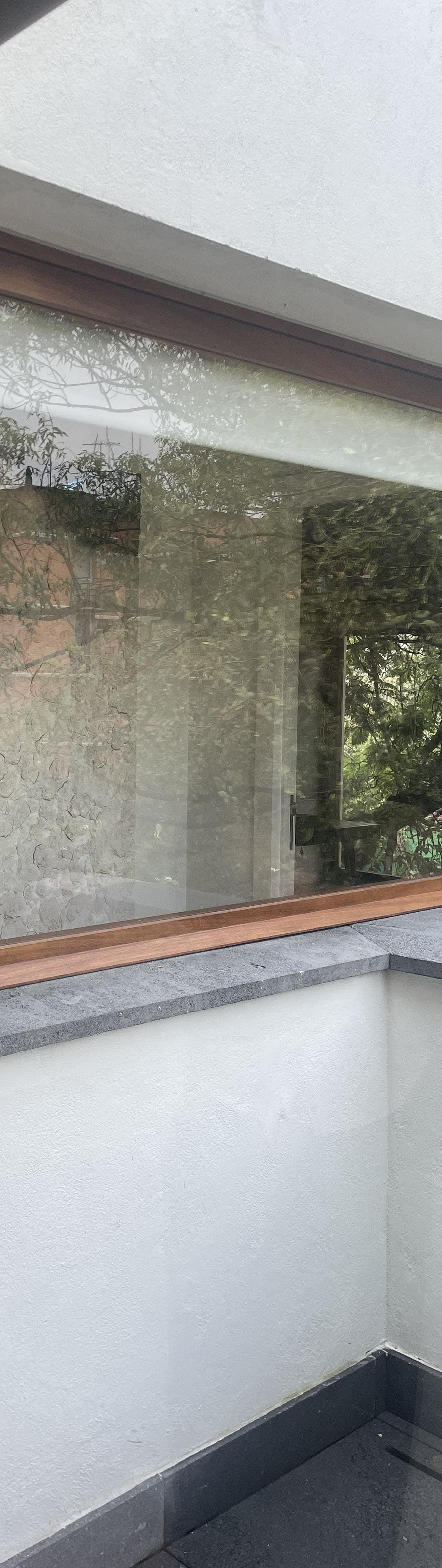
Getting to look inside a home in Mexico City was a remarkable experience. We approached Casa Siza from the art gallery below, and we were met by a presence of elevated and simple design. We loved behind able to look into the life of Siza through the nature of his home. It was amazing to be able to observe the contents on his bookshelf, and then see the effects of those inspirations bleed throughout his home. We were surrounded by an abundance of intentional design choices. For example, the only hanging light fixture in the home was positioned over the dining table. This decision was to avoid clutter on the ceilings that could potentially break up the fluidity from room to room.
Casa Siza felt like a haven from the busy city that lives beyond its walls. This home was enclosed by imported doors and windows. On our tour, we did exercises to experience the space with the windows open versus closed. The windows were positioned to face the large trees surrounding the home. When the windows were closed, we were calmed by the stillness of Siza’s home and the gentle movement of the trees blowing in the wind outside the windows. When the windows were opened, we were reminded of the life outside the retreat that Siza created through his work.
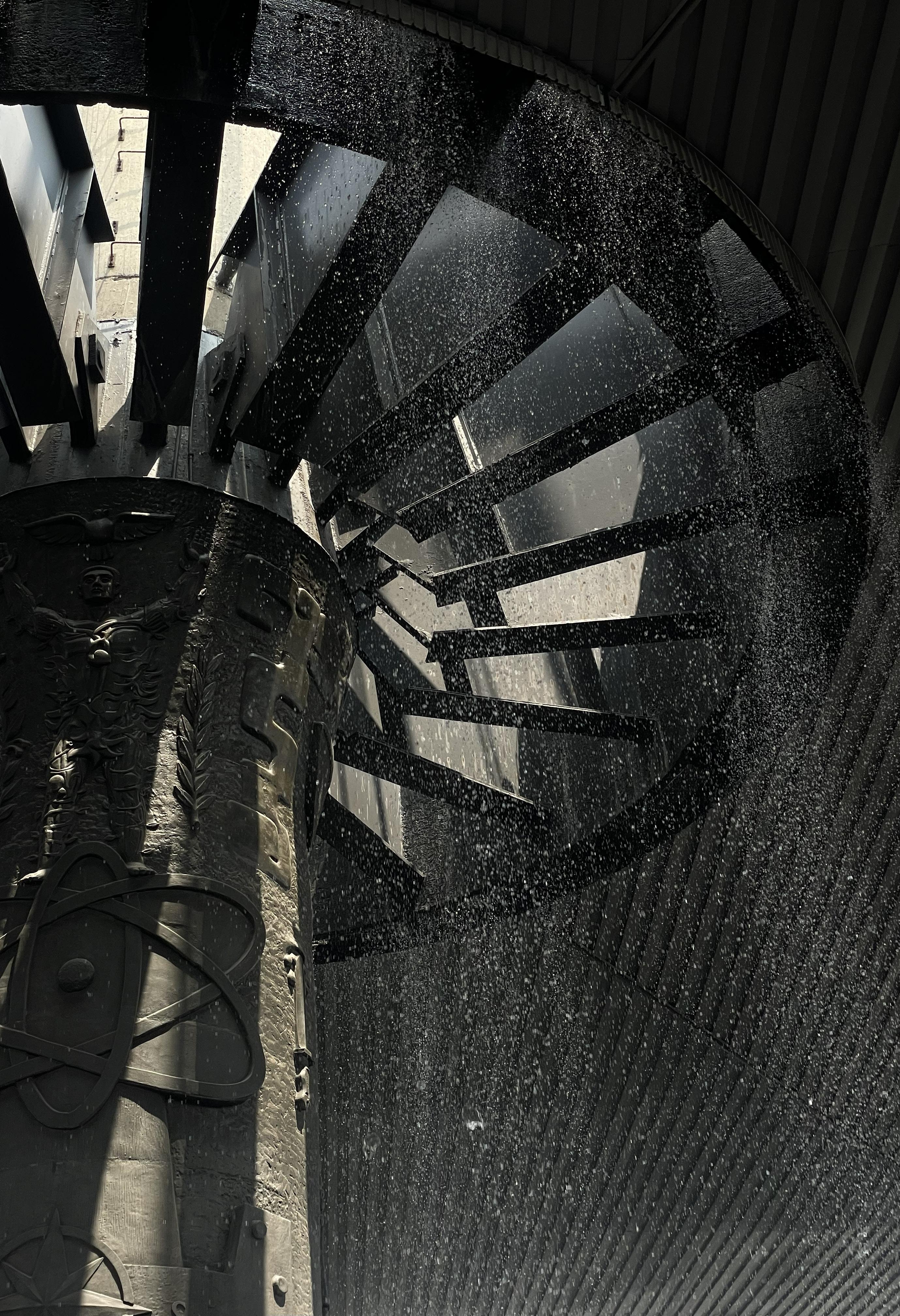
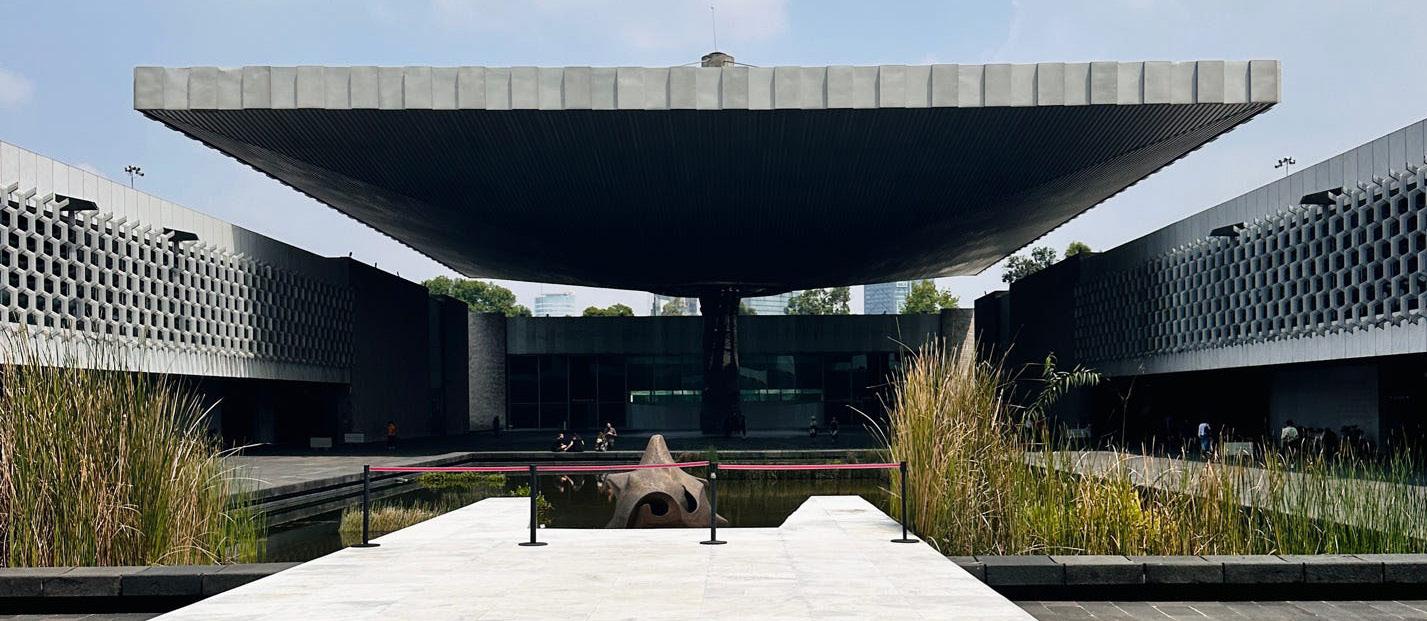
TheUmbrella|Chapultepec,MexicoCity,Mexico|JSa
by Kelsey Shockley
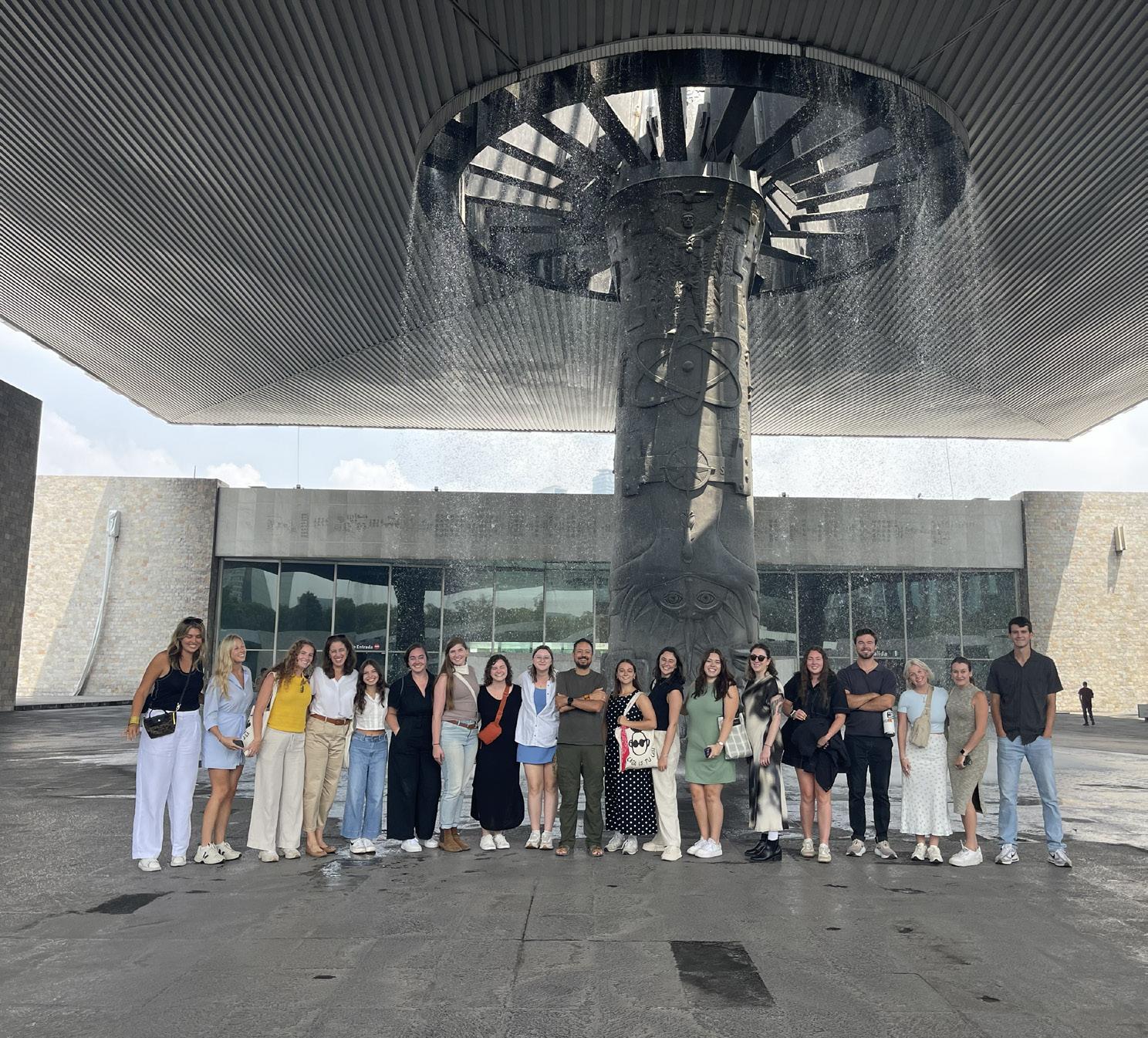
In a change of events, we had the opportunity to briefly visit the Museo Nacional de Antropología to admire its main feature, El Paraguas (“the umbrella”), a sculpture which celebrates cultural heritage and water through hand carved stone elements. The museum itself combines exhibits of Mexico’s pre-colonial civilizations, all of which come together through a shared identity in the landscape of the entry plaza and adjoining gardens. El Paraguas sits prominently at the front of the plaza complemented by a raised wetland garden intended to honor the historical ecology of the Mexico City basin, which together, created a powerful visual impact for arriving guests and set the tone
to take in everything else the museum has to offer.
While at the museum, we spent time underneath El Paraguas watching the water as it fell from the roof to the floor. Being in Mexico City, where we have talked so much about strained relationships between people and water, the spectacle of it within this plaza was truly a sight to behold. While we could have spent hours exploring the museum, we were all very thankful for the unexpected chance to view the amazing work of art and cultural statement that is El Paraguas.
by Abby Eckl
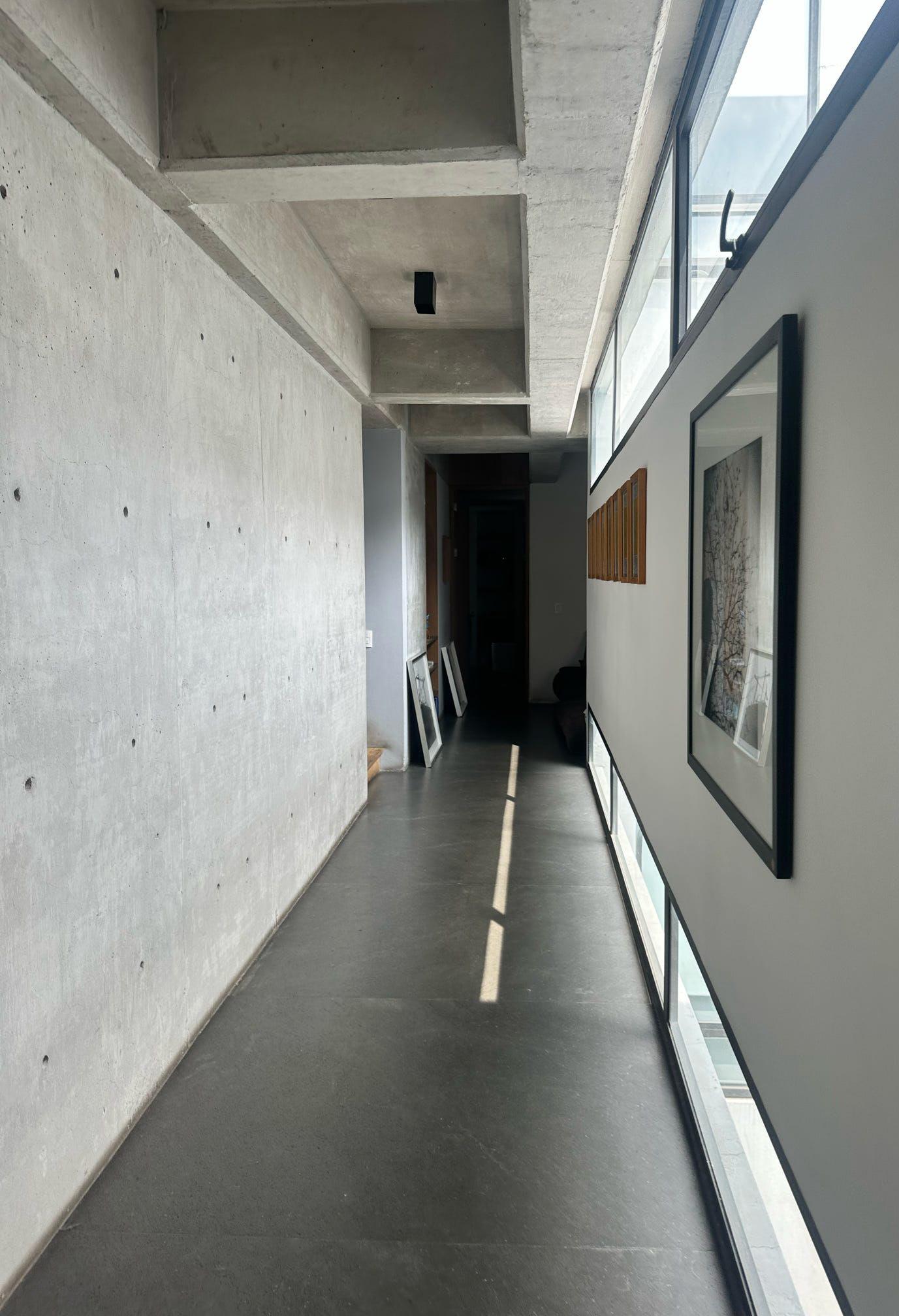
Galileo 105 is a multifamily housing development that is located in the Ciudad de Mexico neighborhood in Mexico City, completed in 2017. This development represented Javier Sanchez’ take on urban family life within the heart of Mexico City. He worked to design a space that was essential to his family needs, since they now live in the development, while also enhancing the lives of other families. He did this by creating a space that allows people to live, study, and work individually, with an open common space for family activities to take place. The zoning requirements of the site only allowed for the street front to be three stories, forcing Sanchez to get creative with integrating natural light into these more private spaces. As a result, the building slopes up from the street front, reaching to around five stories in the back. Pairing the extra height with a strategic, stacking effect, natural
light was able to flood the space. Sanchez used varying room heights as well as loft spaces to make this happen. This allows for the units to blend into one another in a section view. Designing this building from the sky down allowed for varying ceiling heights throughout the entirety of the building, playing on the effects of compression and relief.
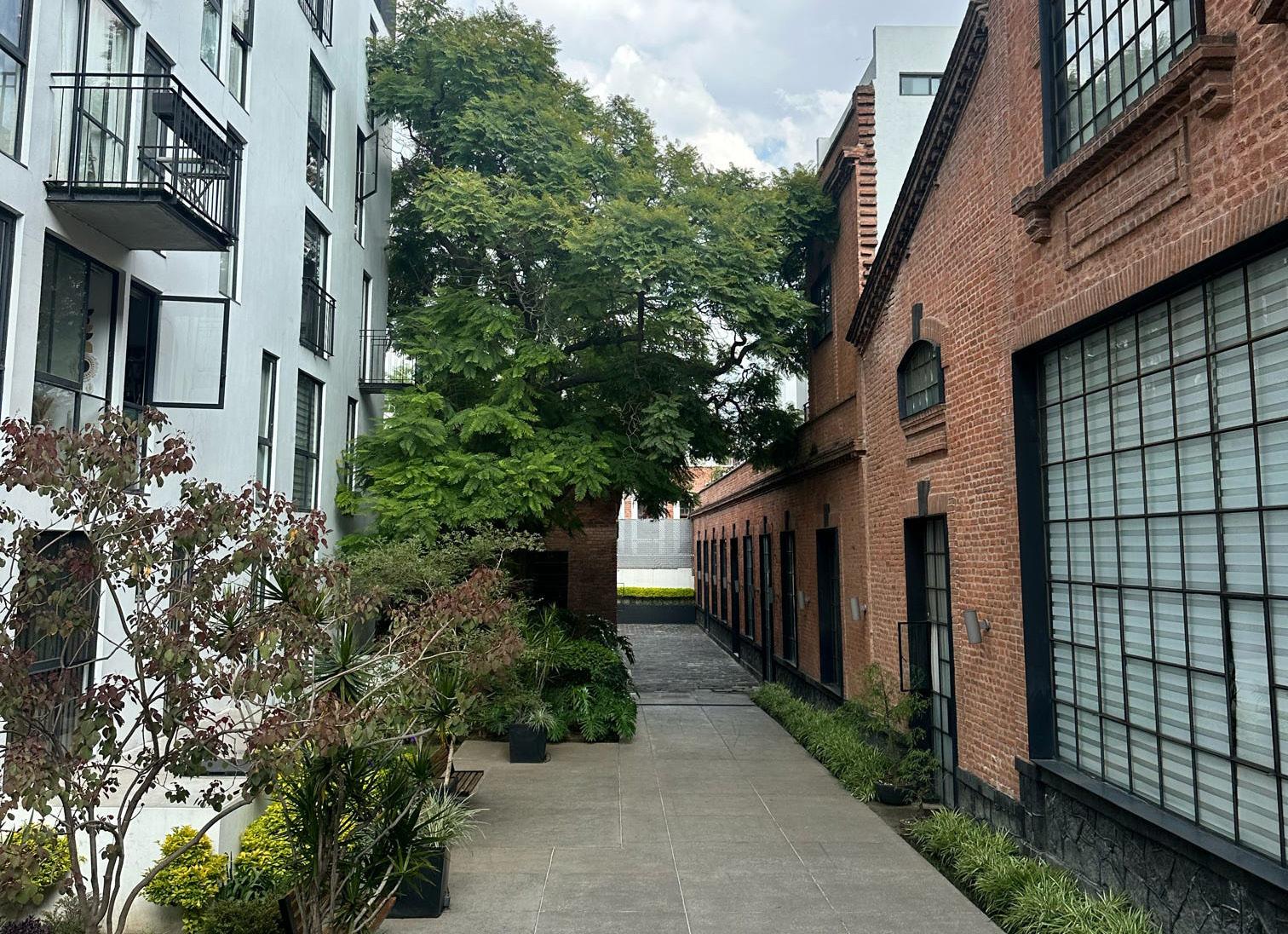
During our trip in Mexico City, we were able to have a tour and lunch in Javier Sanchez’ home. It was amazing to hear the design process from someone who both created and currently lives within this unique space. The idea of pushing the boundaries of codes, in a respectable and intentional manner, is a concept we are not as familiar with in America. It allowed us to realize that, with proper consideration, ideas do not need to be compromised and it is possible to create intentional spaces to the fullest extent. Galileo 105 also encouraged us as designers to make use of the roof space. Composed of several terraces, all at different elevations, each outdoor experience was tailored to create individual experiences. Overall, this was an extremely inspiring experience tailored towards the beauty of designing with culture in mind.
by Cameron Dodzik
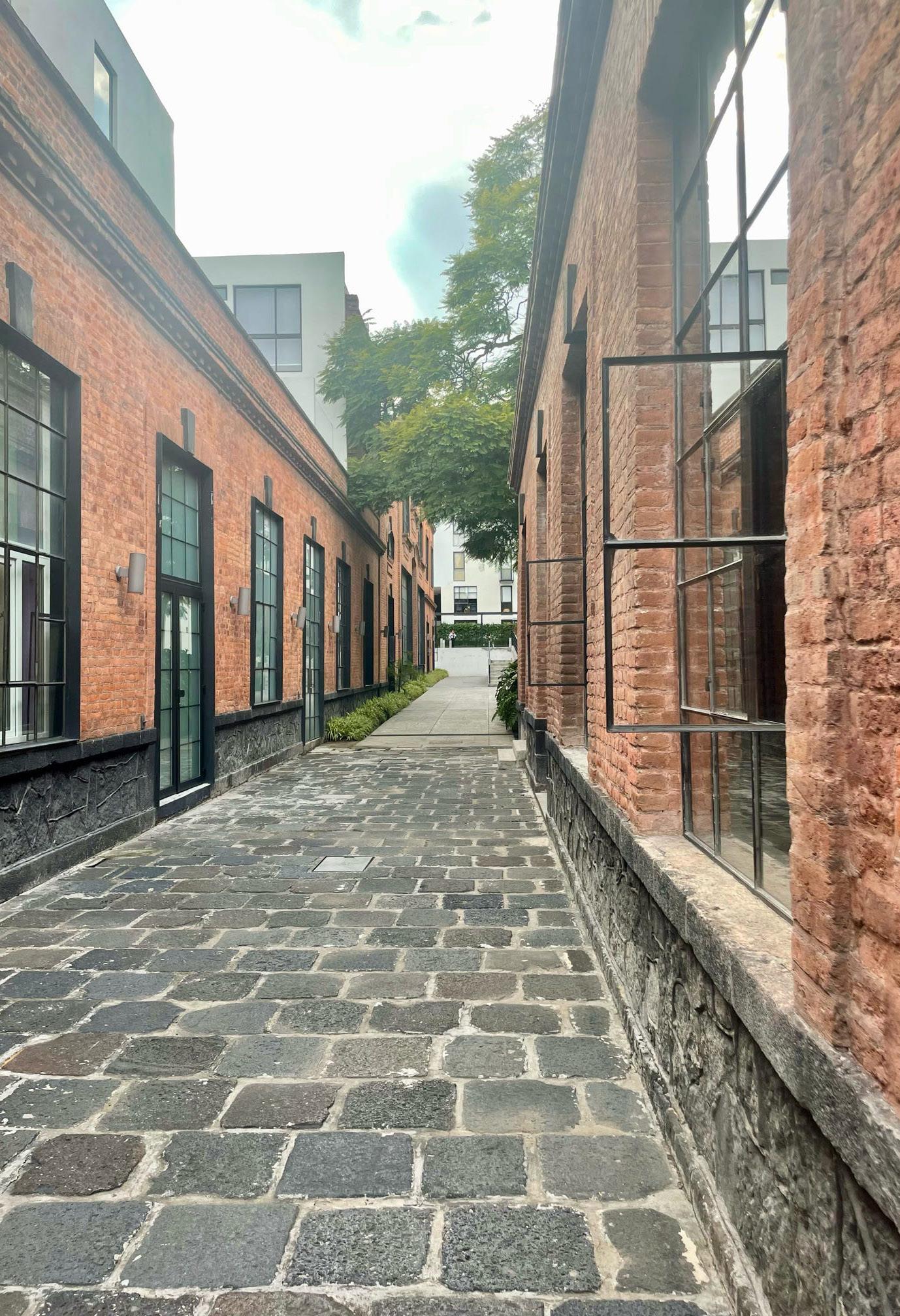
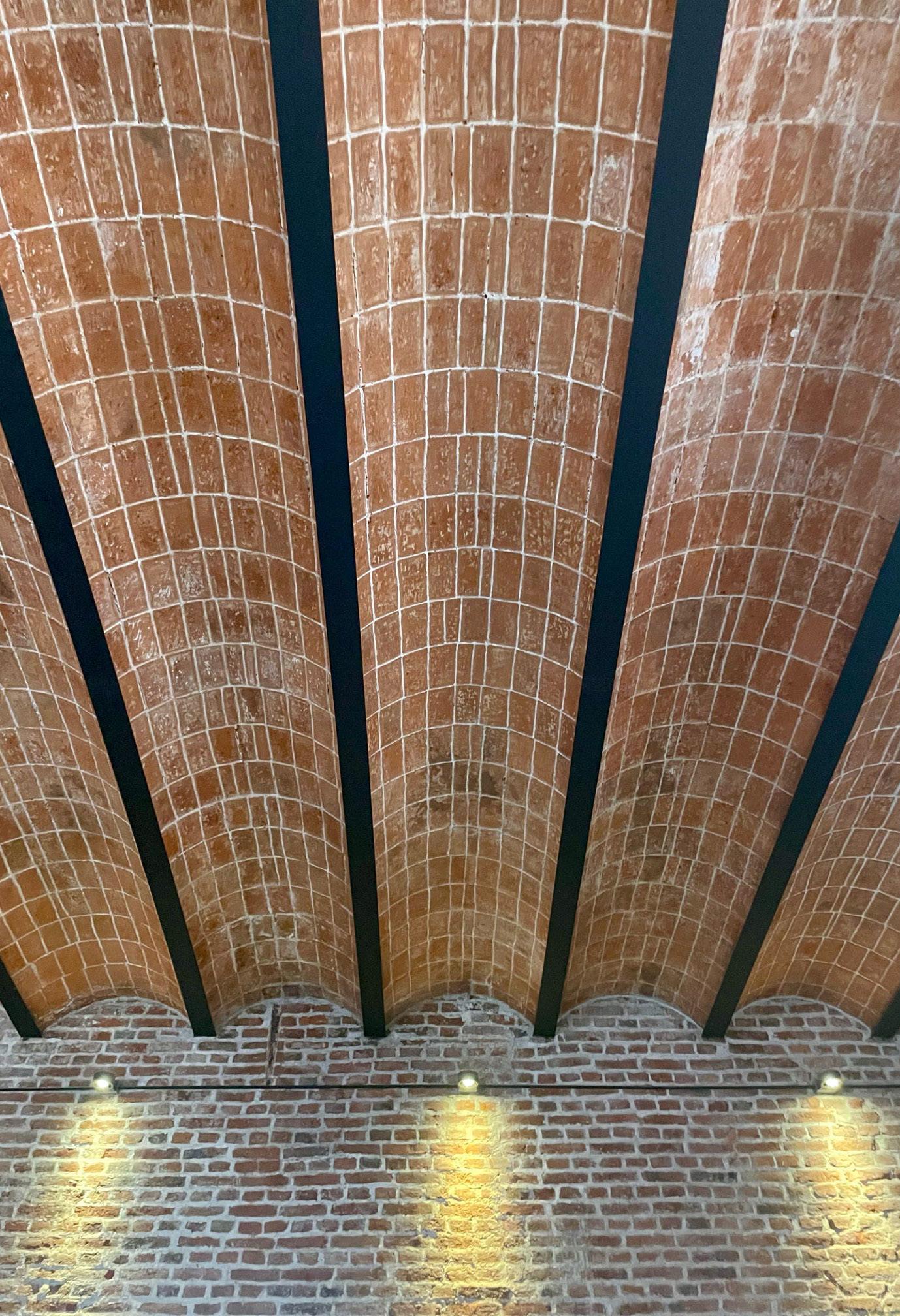
Maria Ribera is an extraordinary housing project in Mexico City, transforming what was once an old chocolate factory into a vibrant residential complex through adaptive reuse. The development consists of 253 homes spread across six levels, offering a variety of typologies that differ in spaciousness and layout. We had the opportunity to tour one of the units, which was quite tastefully designed, blending modern comforts with historic charm. What truly sets this building apart is the thoughtful preservation of the factory’s original structure by JSa. Due to significant interior damage and decay, only the facades were restored, which we found to be a brilliant decision. This approach maintained the historical essence of the building, allowing its storied past to shine through while ensuring that the interiors felt fresh, modern, and inviting. In addition to the beautifully designed residences, we were also able to explore the various amenities that Maria Ribera offers. These include a wellequipped gym, a playroom for children, and versatile multipurpose rooms. This blend of history, design, and functionality makes Maria Ribera a standout example of urban adaptive reuse, offering
residents both a connection to the past and a modern, comfortable living experience.
As aspiring designers, this multi-family housing project had a profound influence on us. The way the architecture honors the history of the space while transforming it into something entirely new and functional is a model that the world needs more of today. Touring these remarkable projects firsthand and hearing directly from the architects about the challenges and creative processes they went through to achieve their vision was both enlightening and motivating. What stood out to us was their ability to navigate complex building codes, bending them to work in their favor without compromising the integrity of the design. Their resourcefulness in managing costs, while still delivering a high-end aesthetic. Most importantly, witnessing how their designs are directly impacting the lives of the residents in Mexico City was deeply inspiring. The project wasn’t just about creating beautiful spaces, but about shaping a better quality of life for the people who live there.
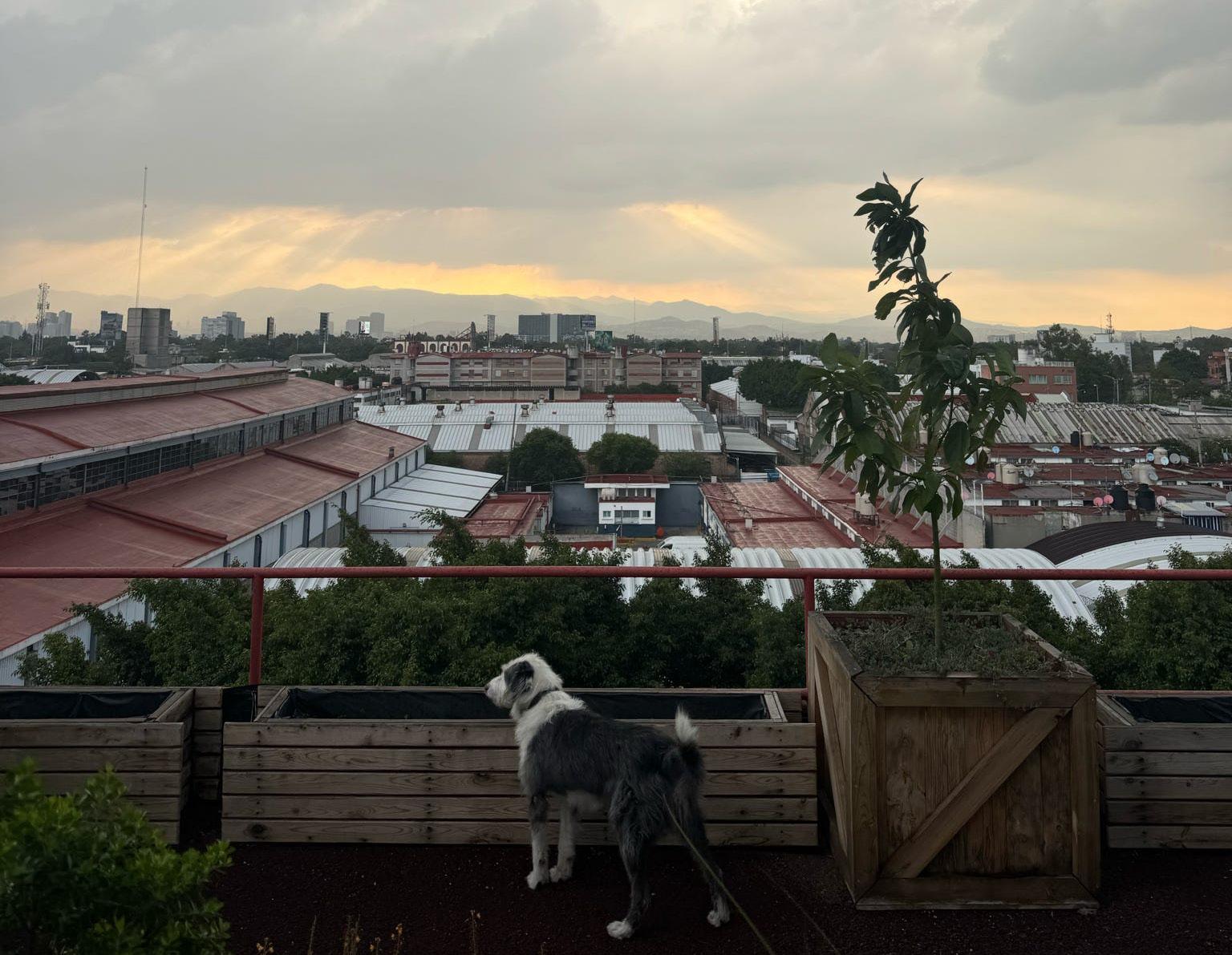
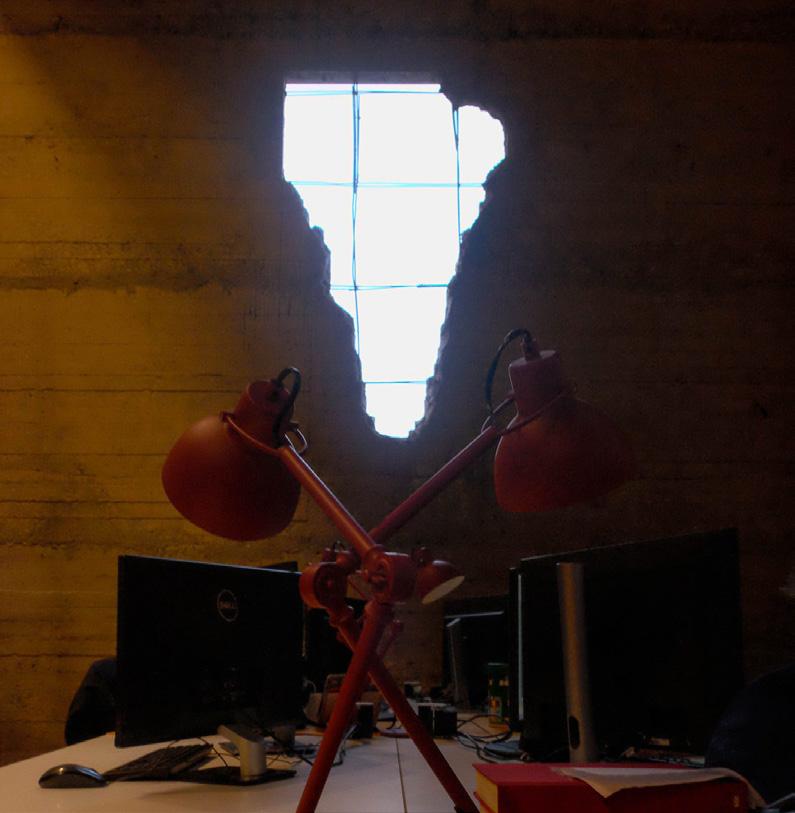
The office of JSa was an anticipated visit because of previous knowledge that the office was in a renovated ice factory. Here, we were given a tour through the entire building which is located in the Atlampa neighborhood which is northwest of the city center of Mexico City. They are very water conscious at their office, because of the water scarcity within Mexico City, and have created a closed loop water system that supports the office. There is also a garden where they planted native species of the area to contribute to the bee and other animal populations. They also have in the works to make a garden that grows food behind their office. The main part of their office highlights a window that was a change they made when demoing and it was a happy accident that it resembled the silhouette of Mexico. This became the logo for their office.
The office has a model team on staff so they are able to work with models as a way to study and work through their projects. In total, there are around 70 people.
This visit was accompanied by handmade tacos as well as presenting our work thus far to the office. This was in the form of collages and aspirations we had thus far about what we thought should be on the site. We also got to introduce the project and give a background to the site in Knoxville and what makes this city and site special. We were also given a book called Museo Morelense De Arte Contemporáneo Juan Soriano by Javier and Aiesha which was a great reference to their process. This was a great jump start to our projects and I enjoyed getting to present it to JSa.
by Mary Margaret Guzik
As we arrived in Oaxaca, we were introduced to a distinct facet of Mexican culture. Driving through the picturesque valley, we were surrounded by breathtaking mountains and a landscape lush with native vegetation. The natural beauty was matched by the rich cultural tapestry that unfolded before us.
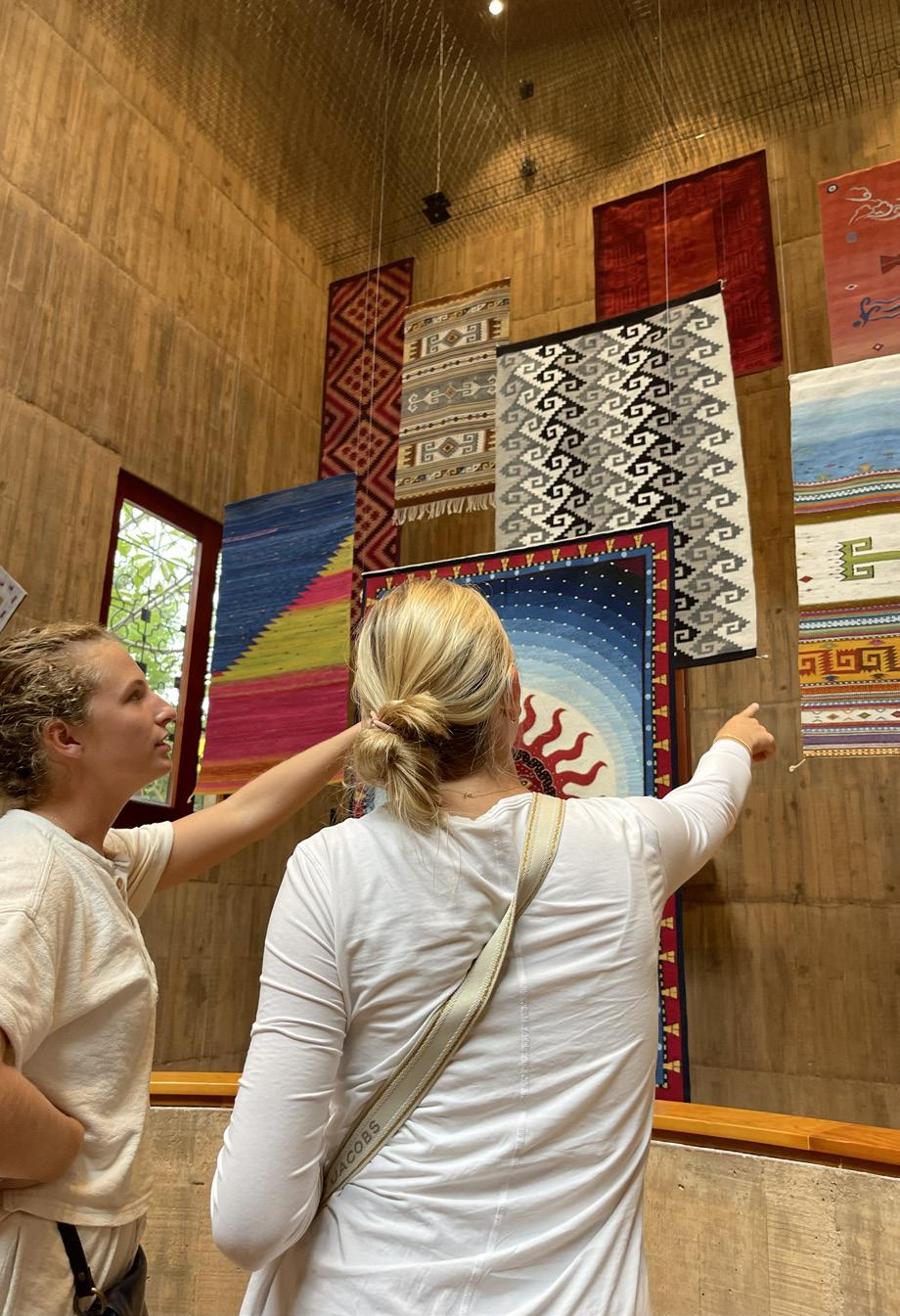
We had the opportunity to witness a remarkable array of artisans and their crafts, including pottery, rug making, weaving, and dyeing. It was fascinating to observe how these artisans brought their creations to life and how their techniques have been meticulously handed down through generations. The vibrant streets were brimming with exquisite crafts, bustling markets, and tantalizing foods, creating a dynamic and immersive cultural experience. by Mary Huffard
by Lauren Hall
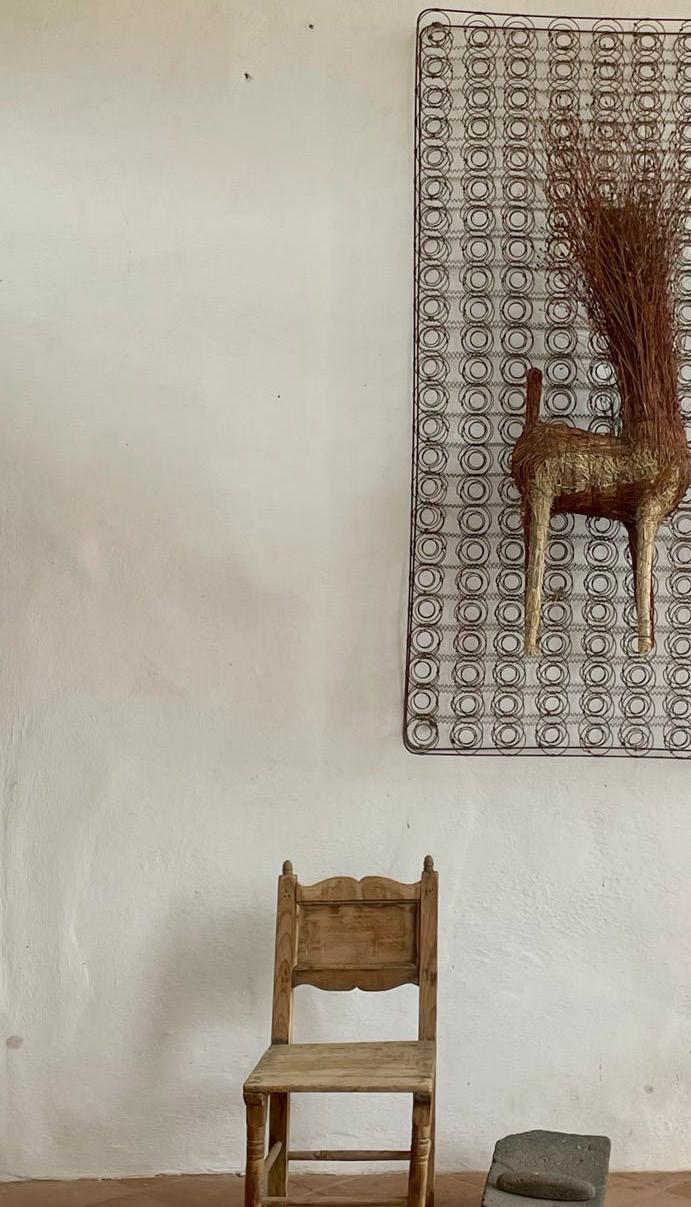
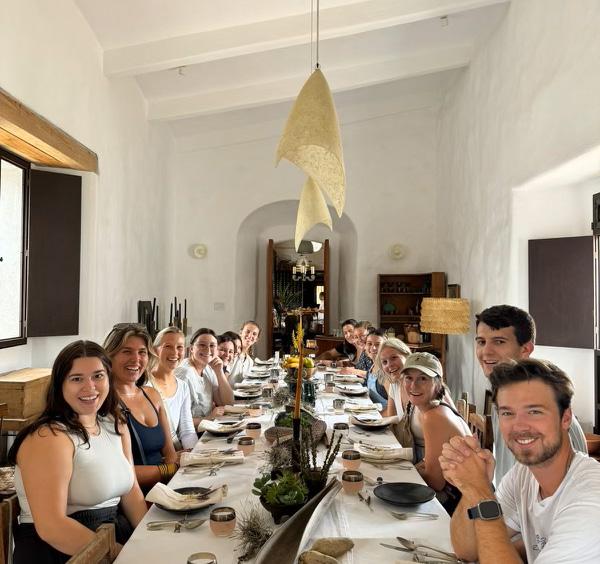
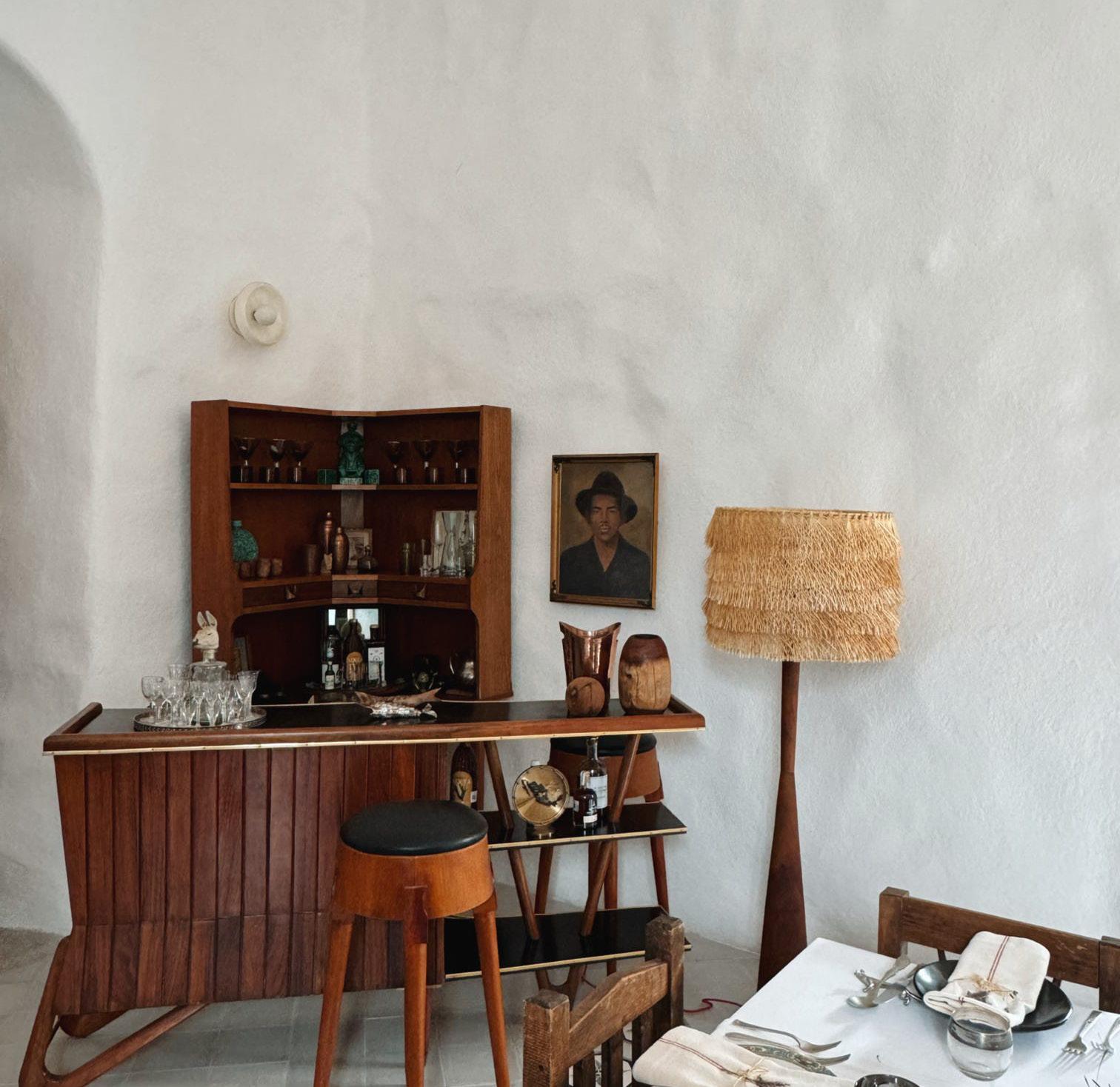
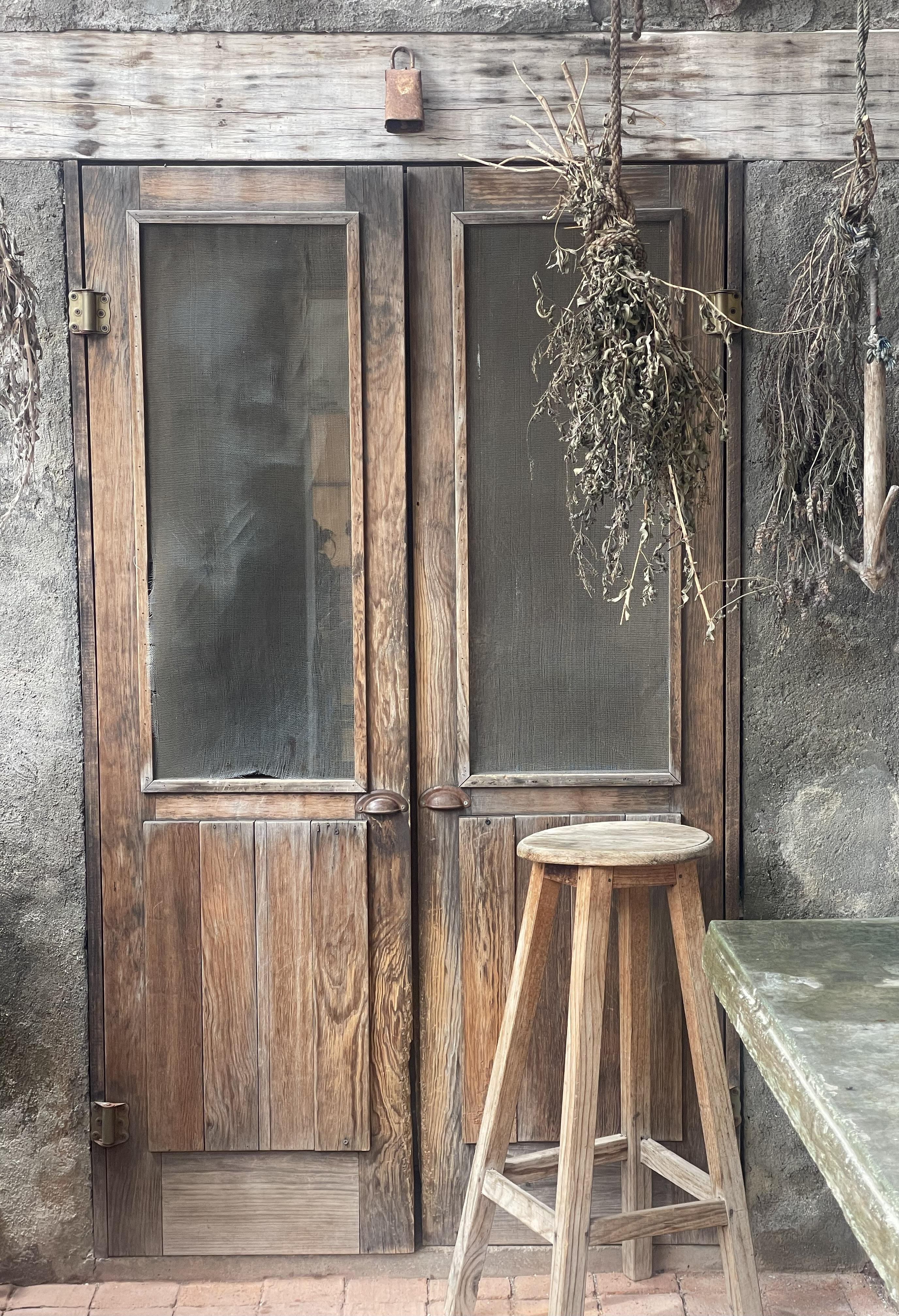
Oaxifornia was an incredibly warm welcome to Oaxaca. It is a lovely countryside compound on the outskirts of Oaxaca. It is currently being used as the headquarters of Oaxifornia, an artist studio and residency. We were greeted at the door by our tour guide and about 4 lovely dogs (a few more joined us later.) We were immediately taken aback by the stunning architecture. We were given a tour around the ex-hacienda where we had a view of the most stunning mountains and scenery. There was a major courtyard space that connected each part of the building and the work of local artisans scattered throughout. There were lots of animals on the site including donkeys and horses.
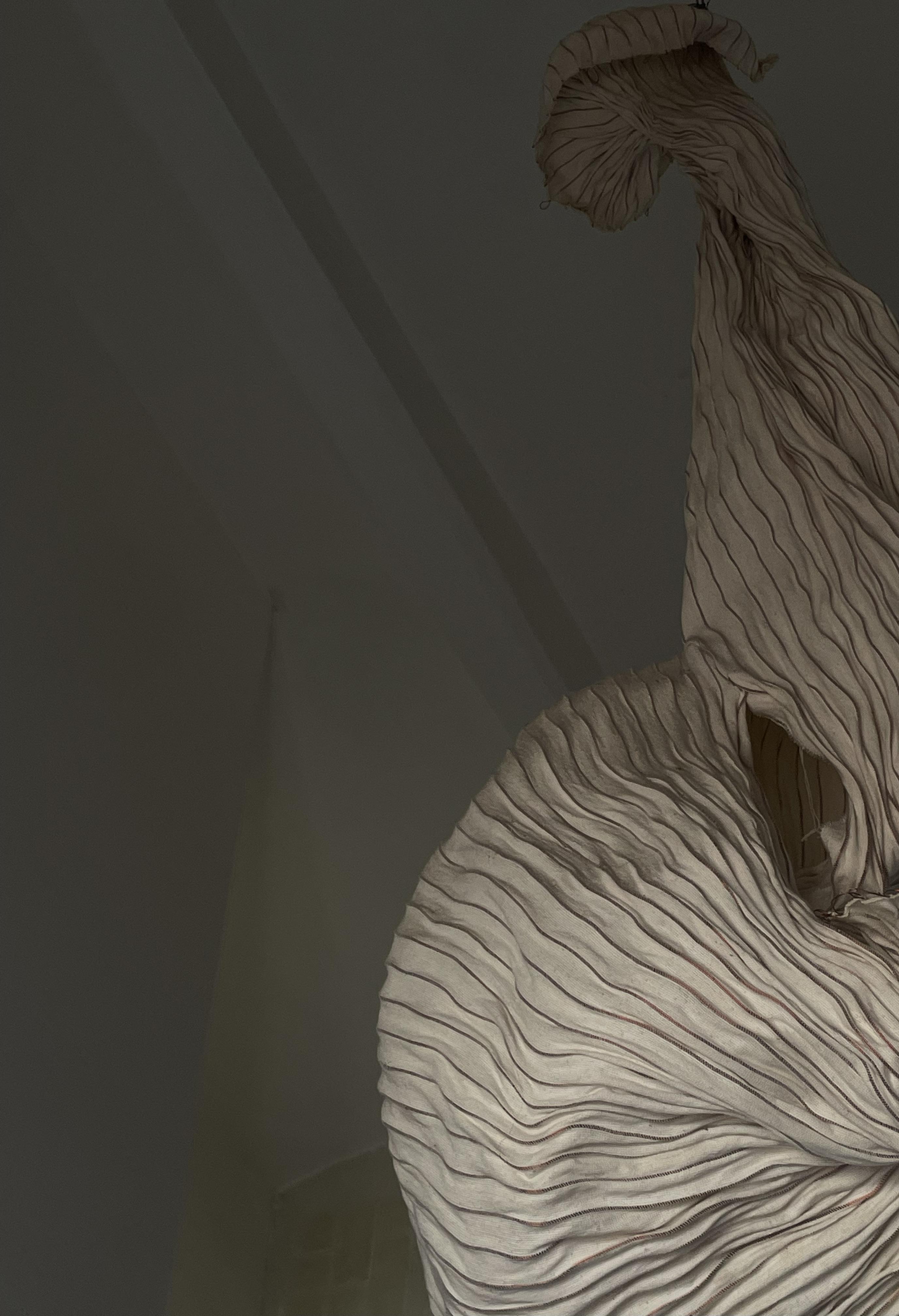
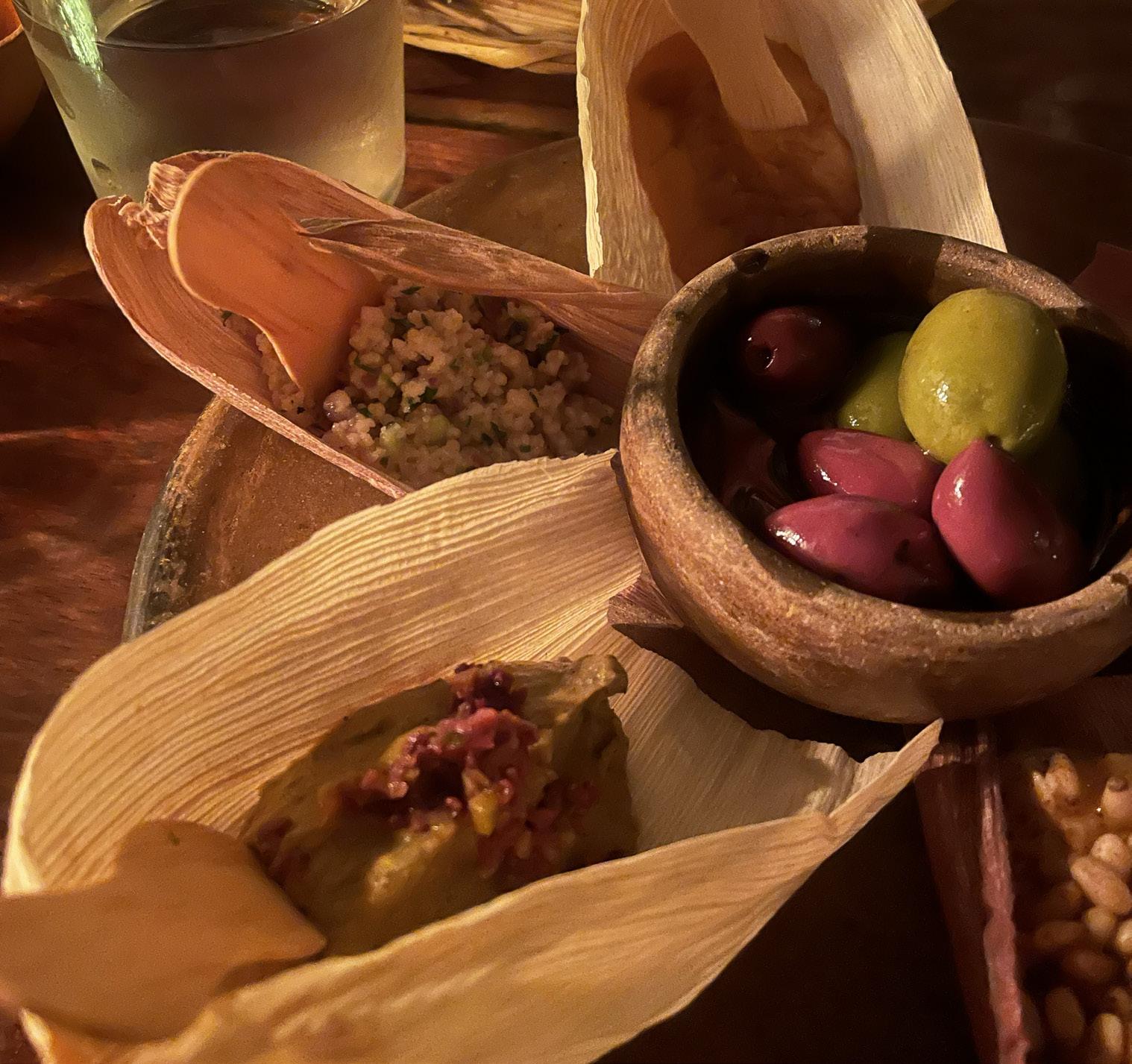
We got to see a large variety of pottery, glassware, weaving, candlemaking, etc. as well as a lot of stunning plant life. Each item in the home looked like it was artisanally crafted and curated specifically for this place. We were treated like family when we walked into the dining room and sat down for an incredible lunch. Everything down to the spoon holders was so perfectly designed. For our lunch, we had sopa de ajo, chiles en nogada, ensalada de cítricos, and pastelitos de guayaba. It was an incredible experience to get to try some amazing, authentic Mexican food and learn about the rich history of artisan practices in Oaxaca specifically and how Oaxifornia is working to keep these traditions alive.
by Kelsey Shockley
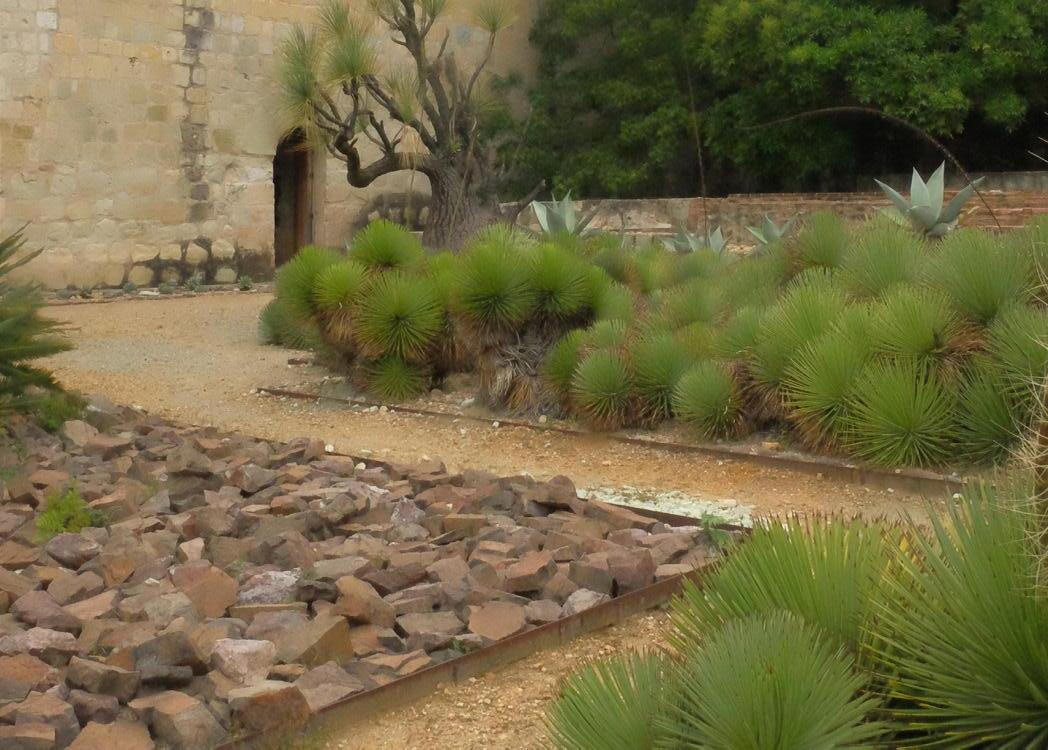
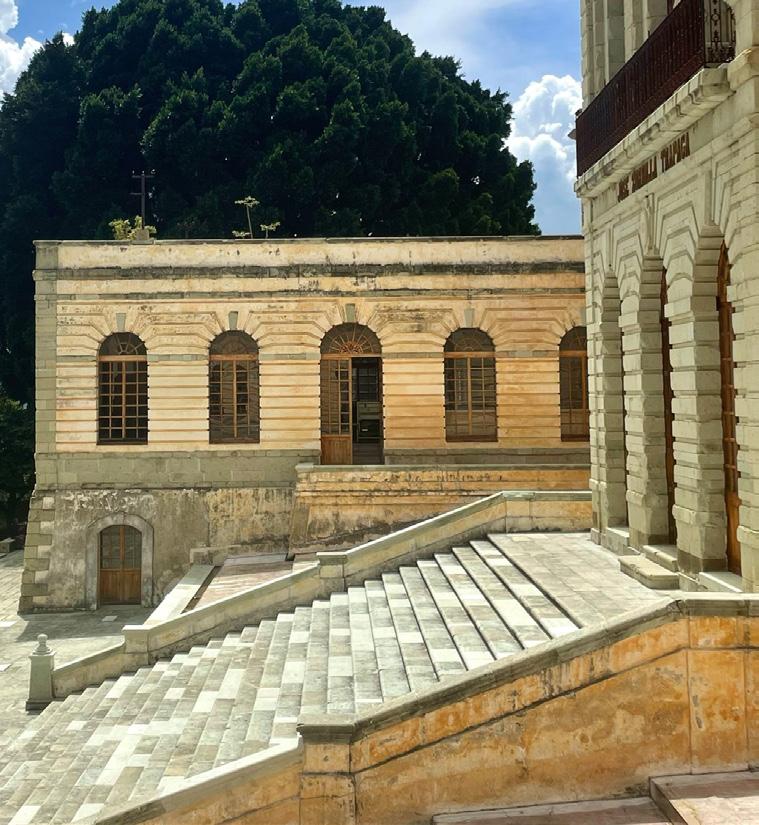
During our first day in Oaxaca, a small group of us were privileged to visit the Jardín Etnobotánico which features over 1000 curated plants native to Oaxaca and their relationship to people. The garden lies within the walls of the Santo Domingo monastery, built from the green limestone prevalent throughout Oaxaca. Later on, the site was transitioned into occupation by the Mexican army which persisted for 120 years, and ultimately became a botanical garden in 1998 after a battle with developers who sought to turn it into a luxury hotel with extensive parking. Francisco Toledo, a prominent Oaxacan artist, was a key player in the creation of the garden. Now, people come from all over to appreciate the lush preservation of plant life located here, learning about traditional
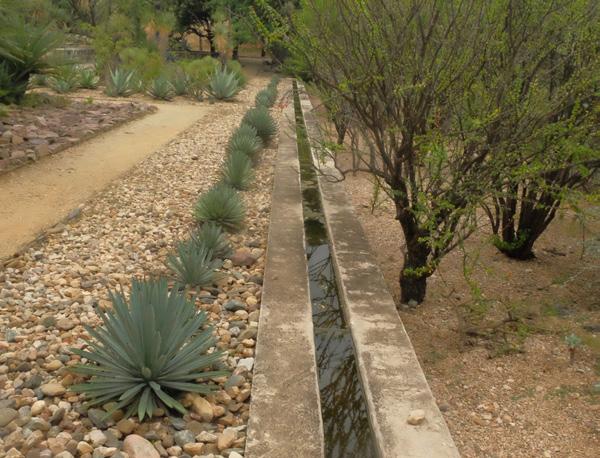
agricultural practices, medicinal plants, and food alike.
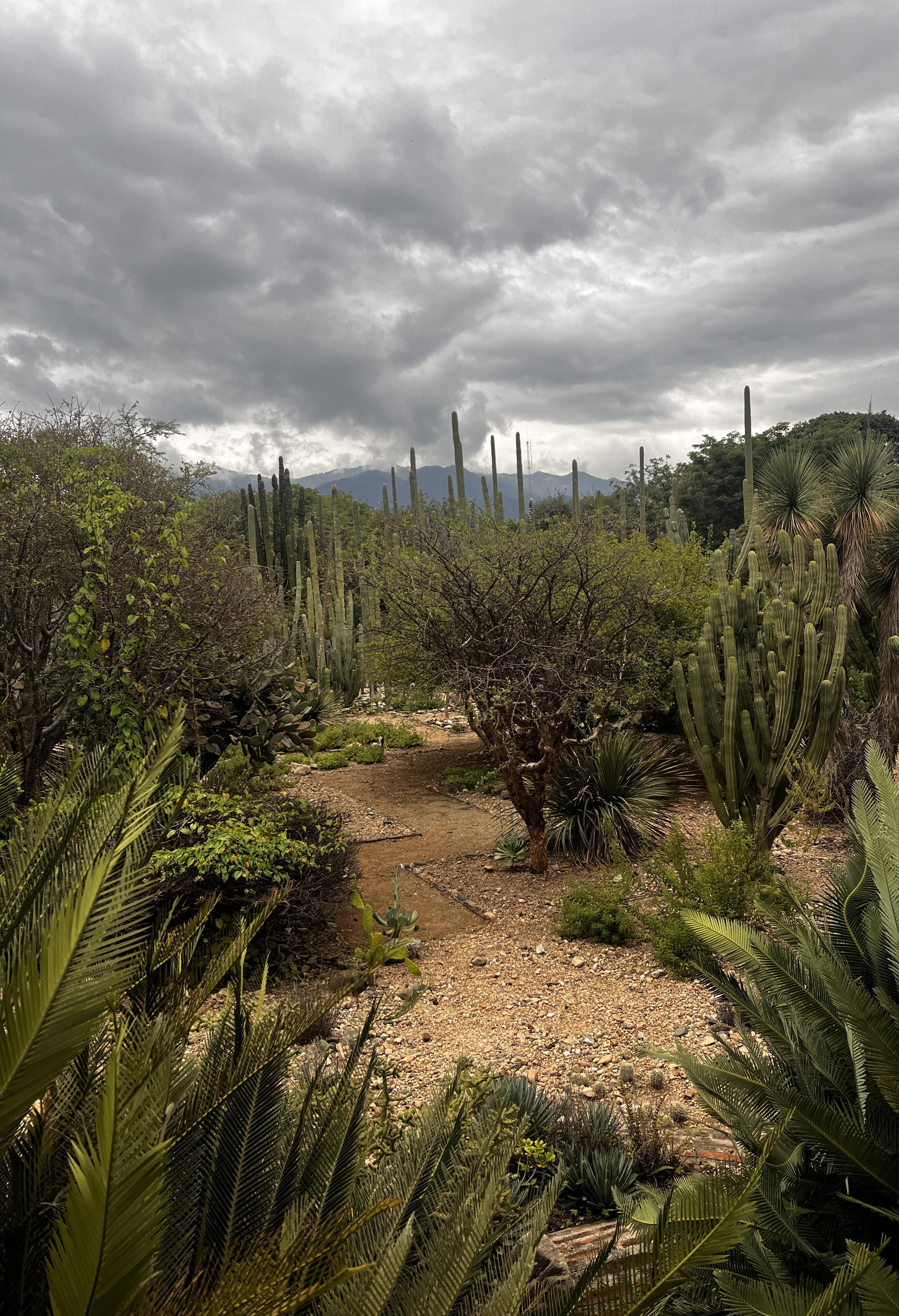
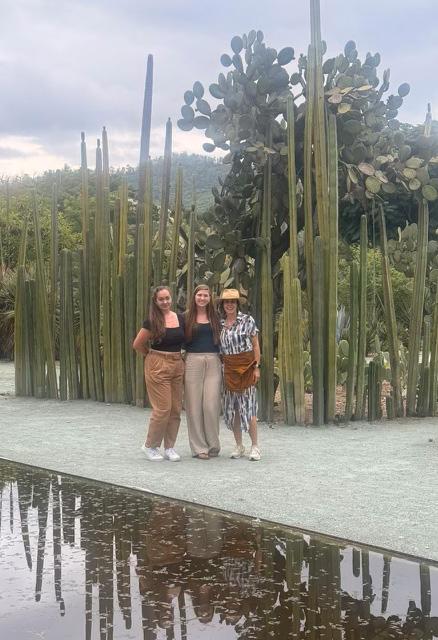
We were stunned by the beautiful collection of plants, which ranged all the way from kitchen herbs to larger-than-life cacti. The paths meandering through the walled garden left a surprise at every turn with beautiful plant forms, stones, historic pieces, and more. The most stunning feature, however, had to be the use of water through stepped irrigation channels which were intentionally left open to the sky both as a visual feature and as an amenity to provide water to wildlife. At the end of the tour, we had the opportunity to roam paths of crushed green limestone which took us through the garden’s iconic cactus rows lining a reflection pool. The garden truly felt like it captured the spirit of the place and allowed us to experience an entirely new plant palette with beautiful forms and symmetry within its native habitat.
CulturalCenterofOaxaca|Teotitlan,Oaxaca,Mexico|Productora
by Cecilia Torres
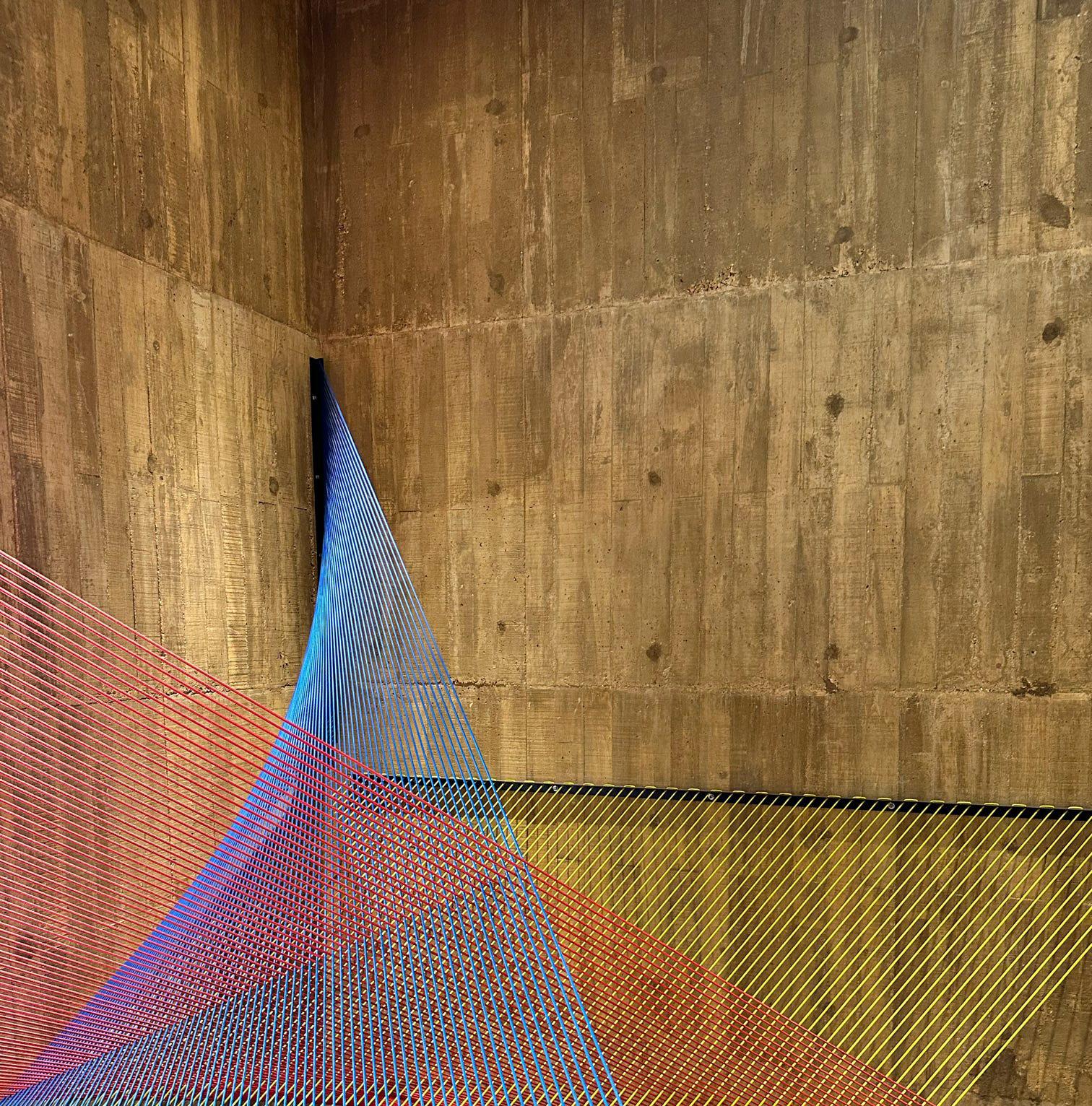
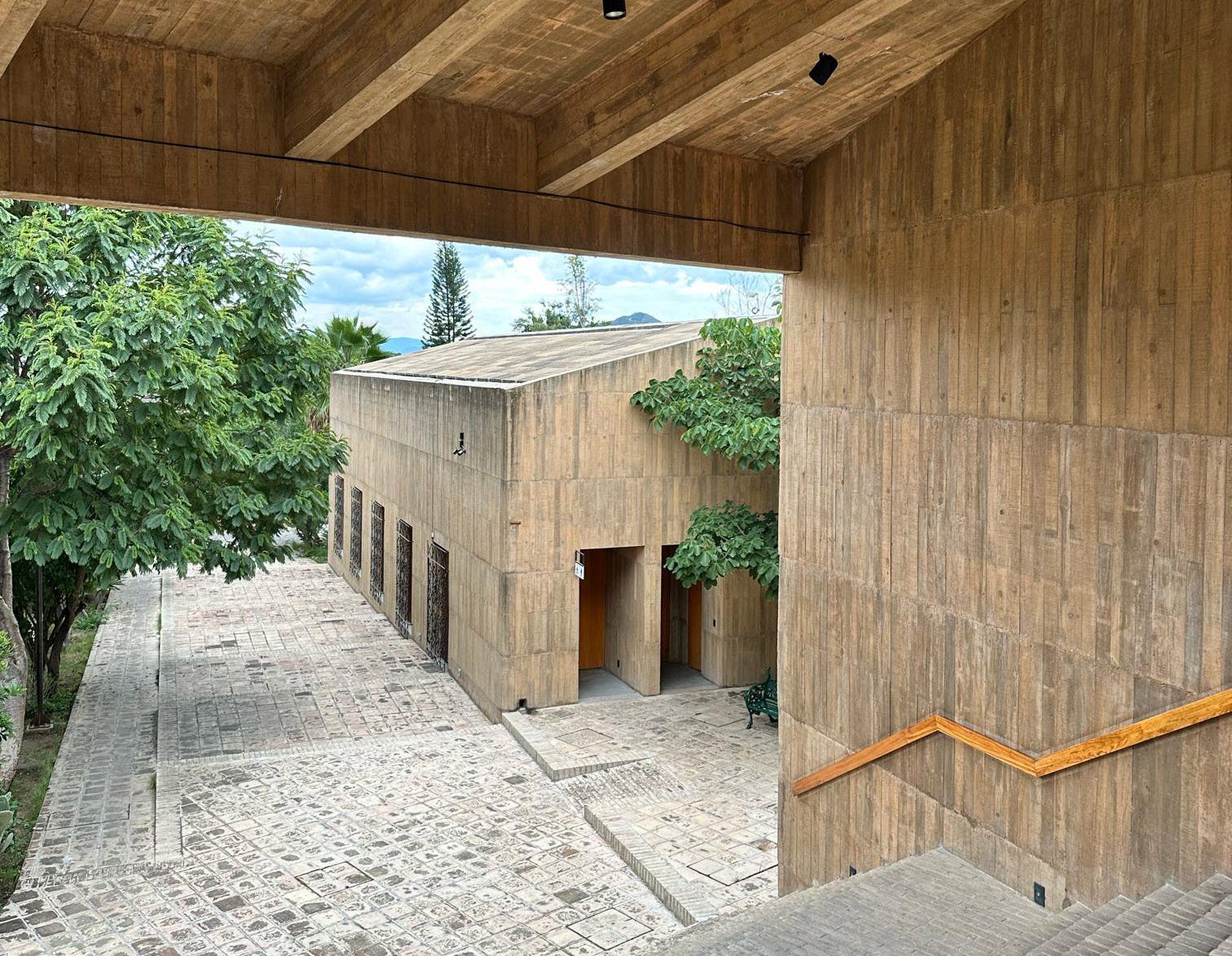
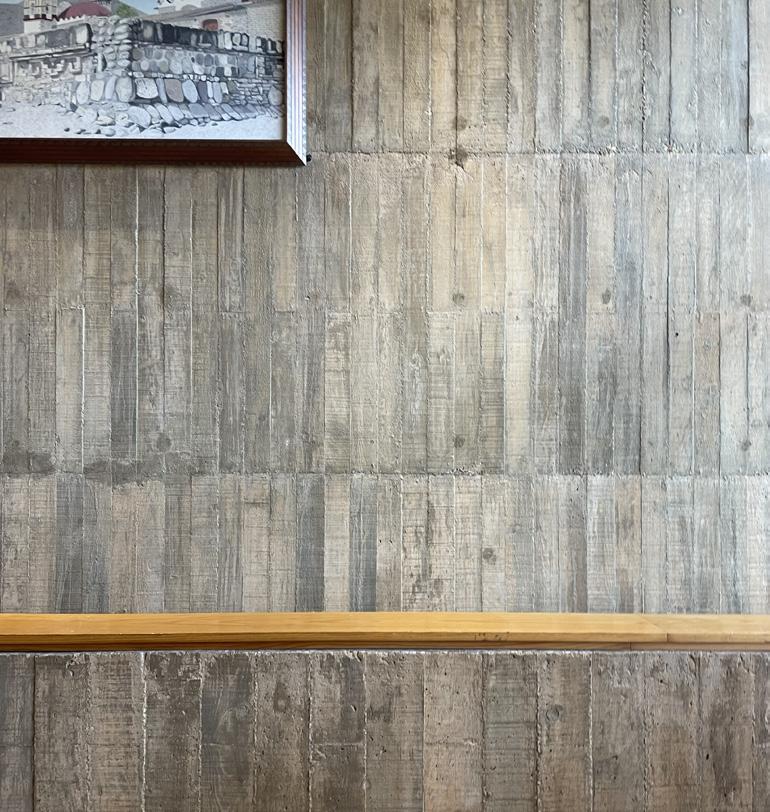
As we approached the Centro Cultural in Teotitlán del Valle, we realized that the building was perfectly blended with its landscape, surrounding buildings, and the plaza. It is such a subtle addition to the town, which makes it so casually elegant. It blends through a very neutral facade, its natural and local materiality, and its sensitivity to the plaza. The cultural center has two main buildings, with one being the historical museum of Teotitlán and the other hosting the Municipal Library and a service area. Coming from the large central plaza, we approached the building through the covered passageway that connects the two buildings. Behind the walkway is a wide set of stairs, but there we stood, sat, and admired. For the community, these stairs have become an opportunity to seat an audience for a celebration, which enriches the purpose of the cultural center. Spatial elements like these are very cognisant of how humans behave and how they may naturally use the building. As for the interior, there is an interesting lighting experience that catches the eye. Rather than illuminating
everything, the space navigates the visitor through darker areas and highlighted sunlit areas. The design plays with diverse heights and illumination, which displays the experimental yet simple nature of Productora’s work.
This project had a huge impact on how we paid attention to human behavior. Even after the project was completed, we saw the diverse ways that people ended up using the space. The wide stairs used as seating were just one example, but we also noted some details that the people had added to the windows. The windows were ornamented with curved, black steel bars, which were not a part of Productora’s design. Some people may like it and some may hate it, but it demonstrates how the culture of Teotitlán del Valle is putting its mark on the building.
by Olivia Hicks
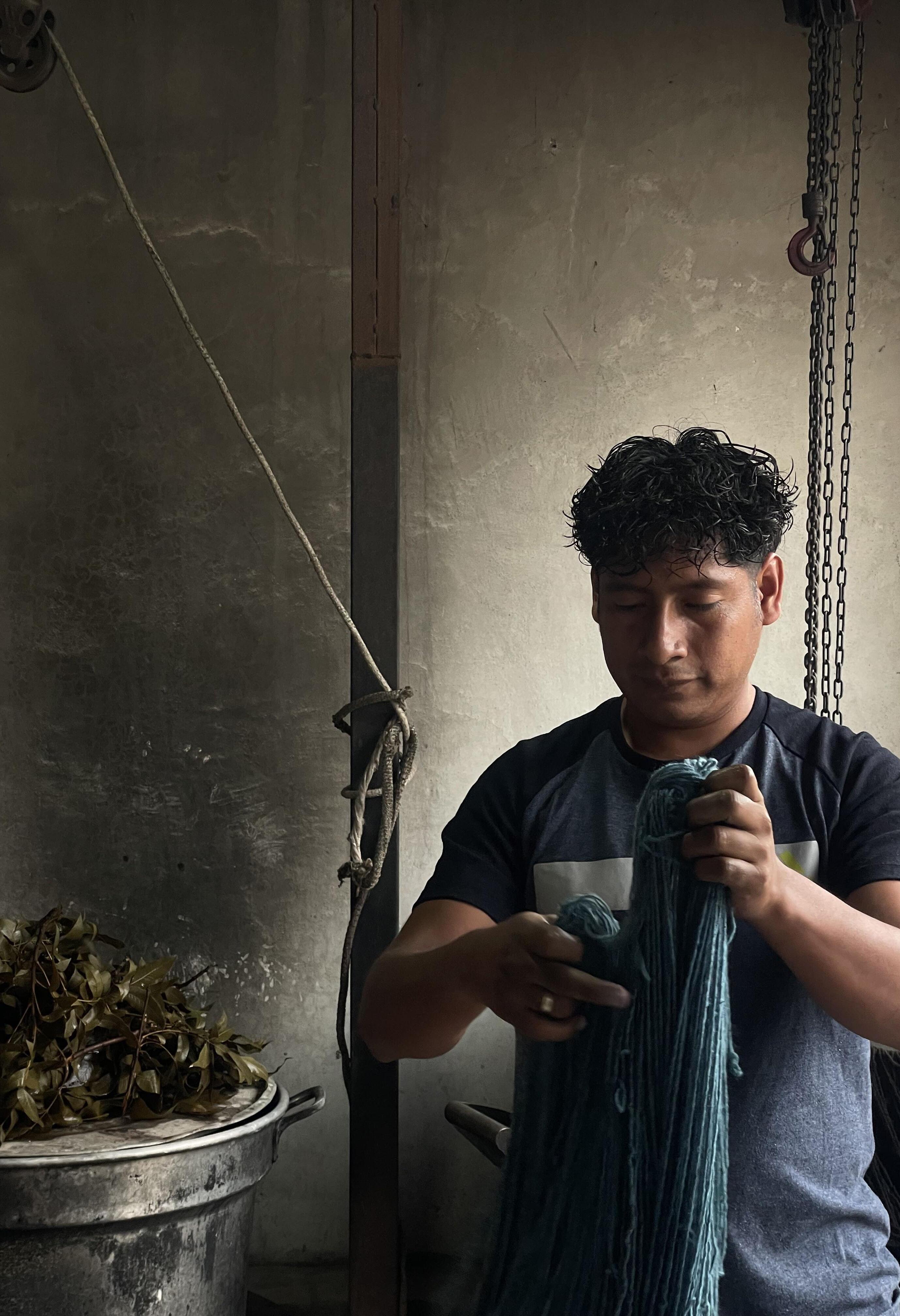
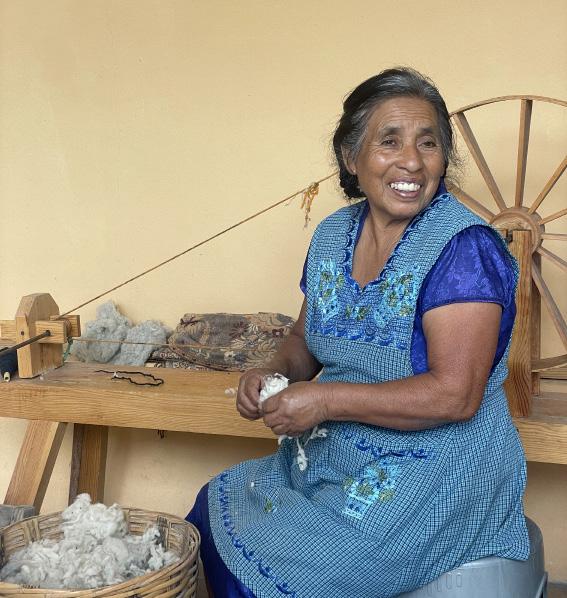
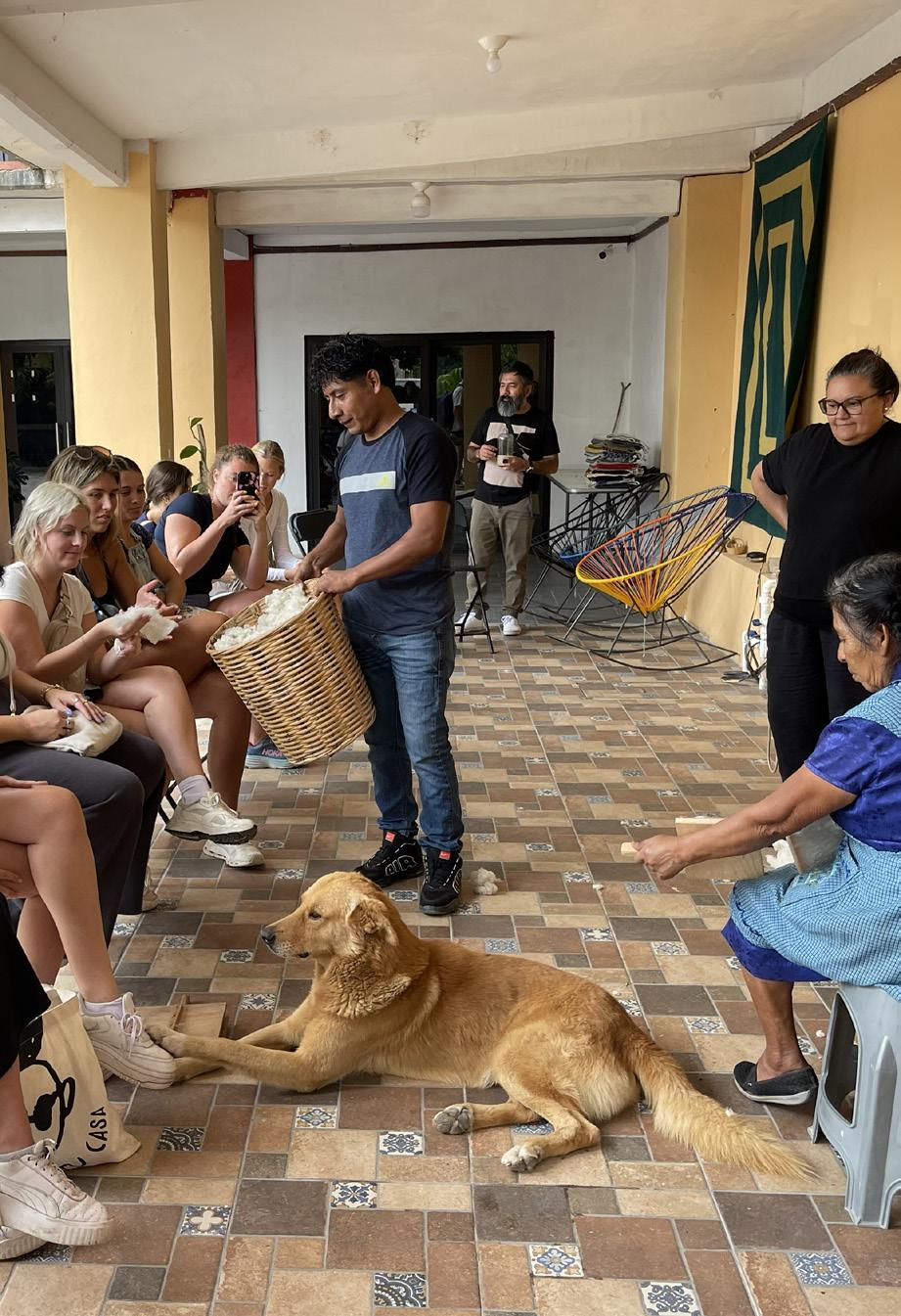
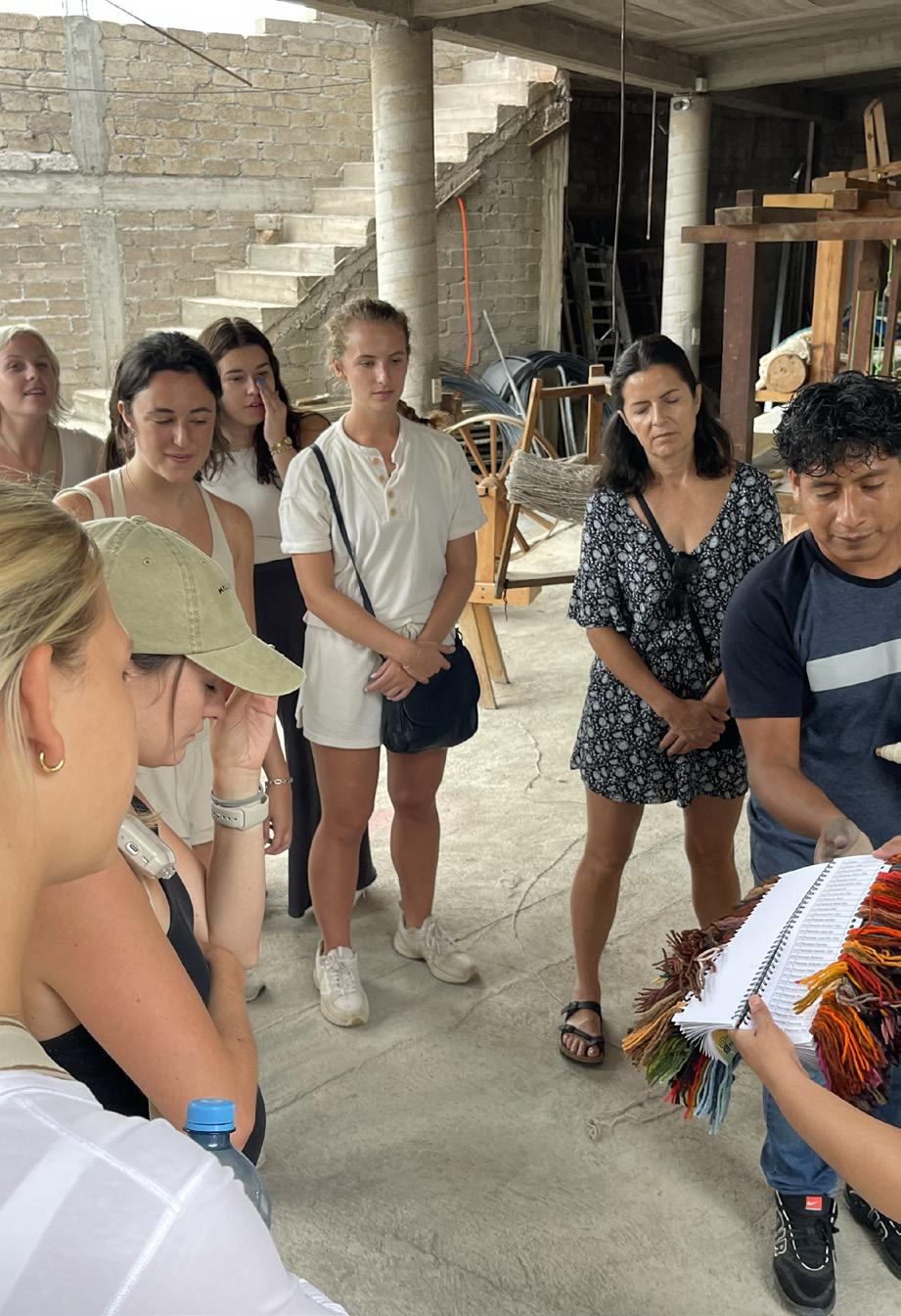
The home of Jose Mendoza, located in Teotitlán del Valle, Oaxaca, was a center of craft and family. The Mendoza family has been making rugs for years and the whole family is apart of the process. We were able to witness how Jose’s grandmother cleans and spins wool into usable material and how Jose himself dyes the colors. The dying process is very tedious and uses natural dyes. Each color requires a different process and close attention to detail. We were able to watch the creation on blue wool take place by using local ingredients. After the wool is dyed they use a loom to create each rug by hand. Each of us got to take a turn using the loom. After we learned all the steps of
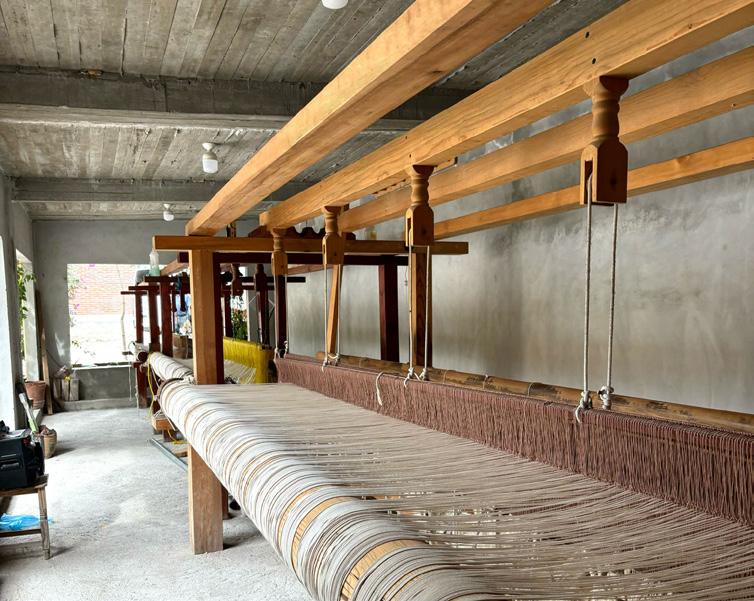
rugby making we were able to see the finished product and even purchase from them on site!
The impact this experience made of our studio was incredible. Being able to get an up close look on how these rugs are made helped up appreciate the quality of work. Each of us got to experience how the look works firsthand and be apart of this amazing process. The attention to detail and knowledge that each person that is involved in the making of rugs showed us how dedicated these designers are and it encouraged us to be just as dedicated to our own work.
HistoricalArchiveofOaxaca|OaxacaCity,Mexico|MendaroArquitects
by Lucy Pirtle
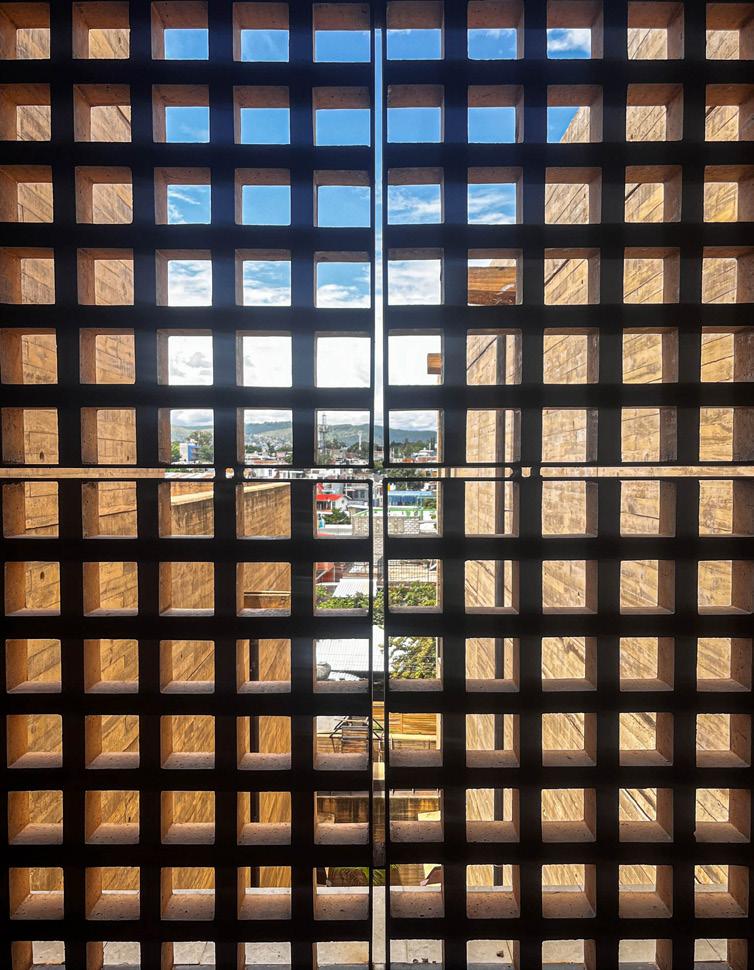
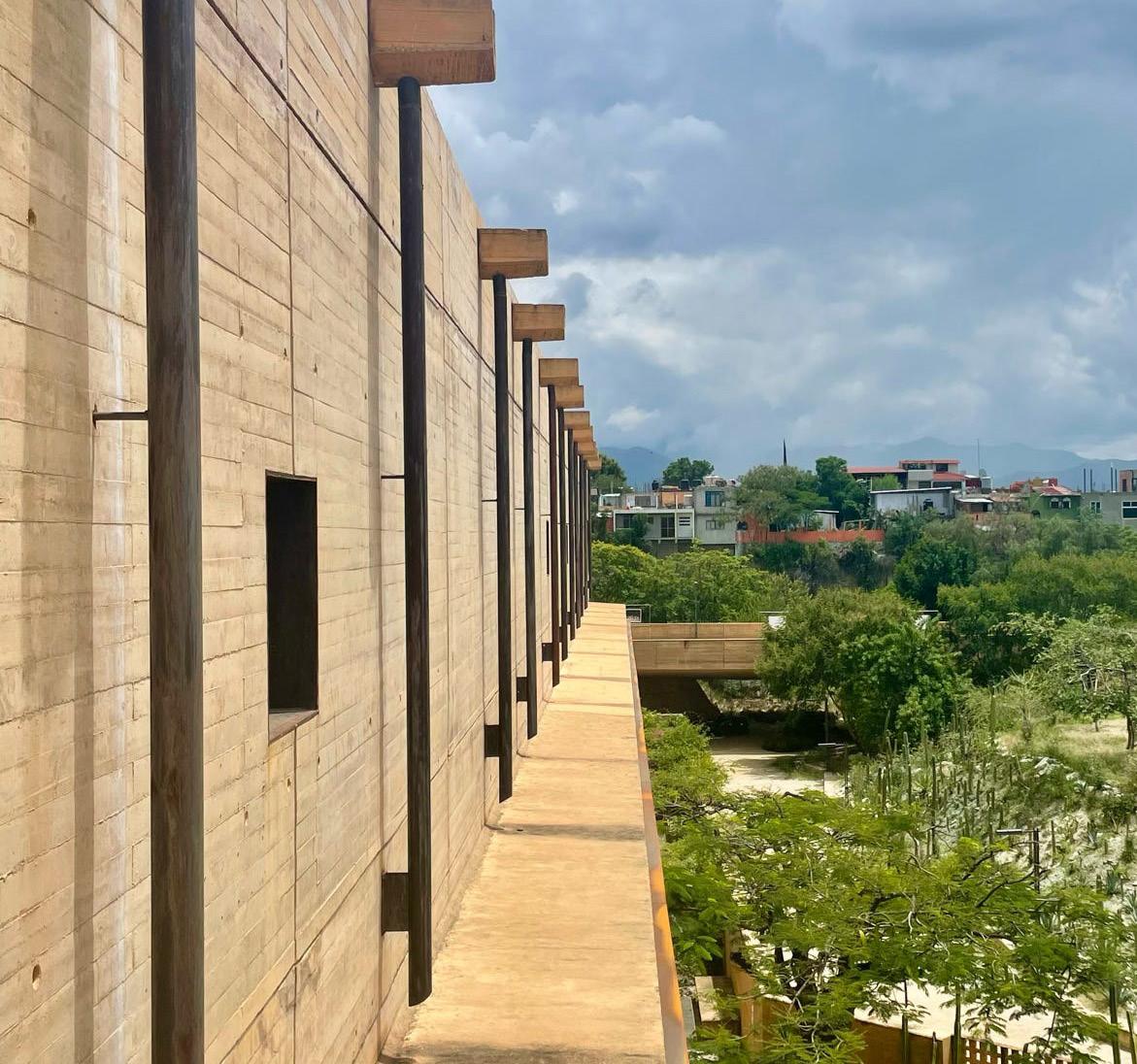
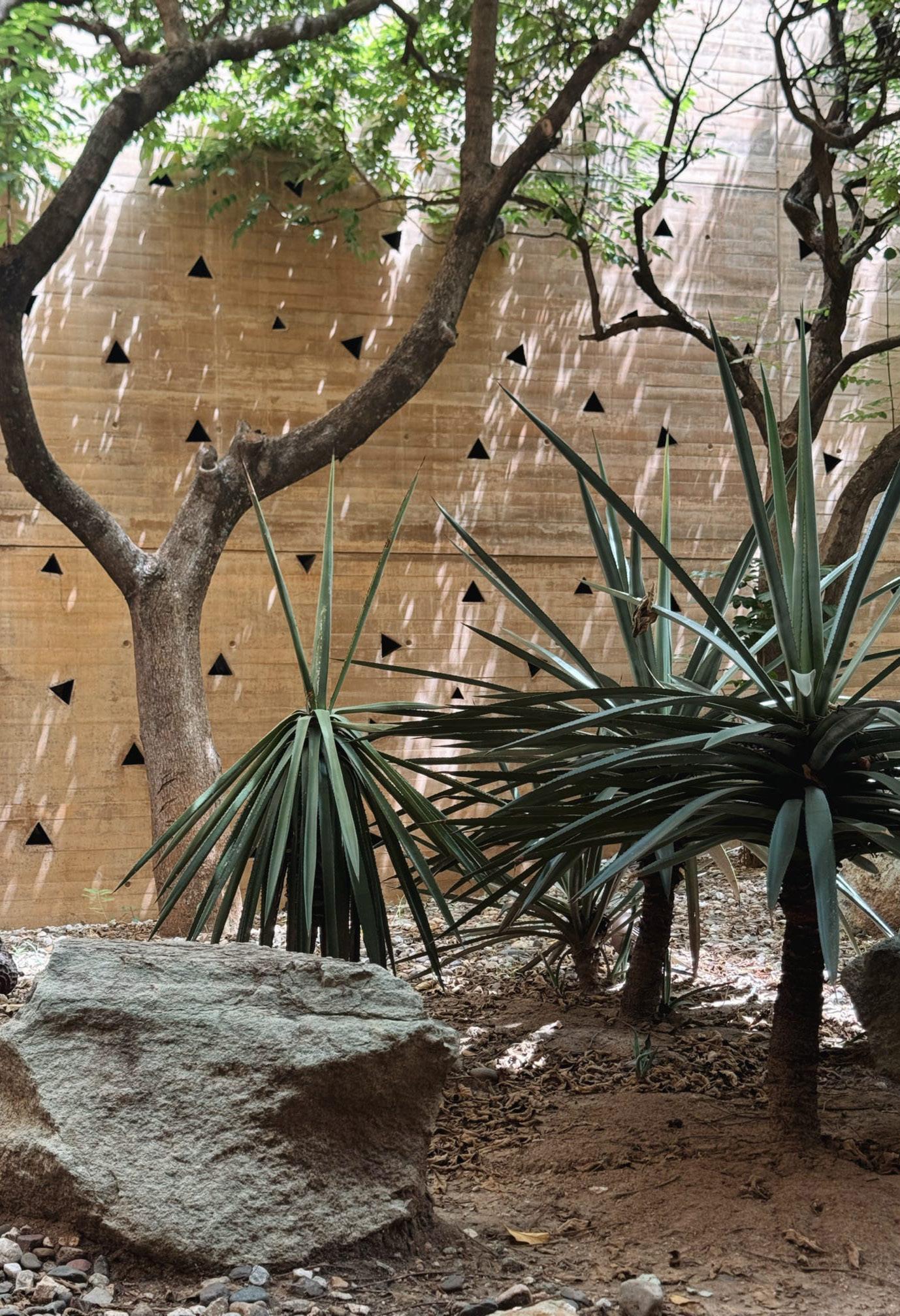
Archivo Histórico de Oaxaca is a cultural center that preserves the documentary collections that are the Heritage of Oaxaca. This was built on the historic Las Canteras park and designed by Mendaro Arquitectos. Most of the construction is done in textured concrete. The color resembles the surrounding landscape in a specific tan color. The orientation of the building is very intentional in the way the large concrete structure can heat and cool. There is a series of passageways throughout the building which separates the private from the public space. In the rooms where archives are out and must be protected, the placement and size of the windows are intentional to protect the archives from the harsh sunlight at certain times of the day.
On Thursday in Oaxaca, our studio visited this site. We were inspired by the structural integrity and various qualities of this massive concrete structure. The architecture was very intentional in the way it was able to manipulate light within specific areas of the building. It was also intriguing to experience how the architecture could help heat and
cool areas of the building by understanding airflow and circulation as well as the sun’s path. The structure was made in simple forms and materials yet continued to honor the cultural history of the Heritage of Oaxaca.
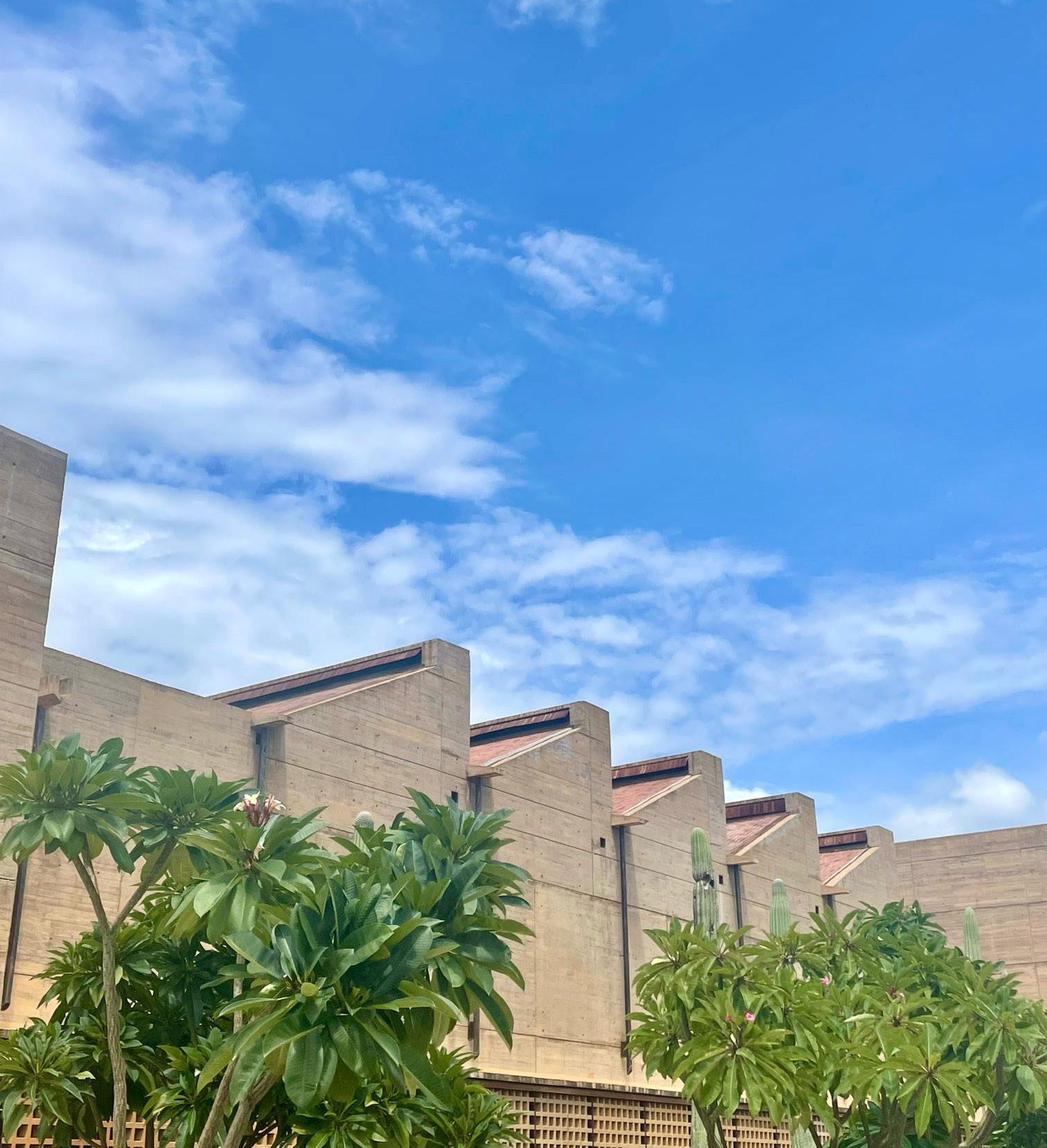
by Julia Warner
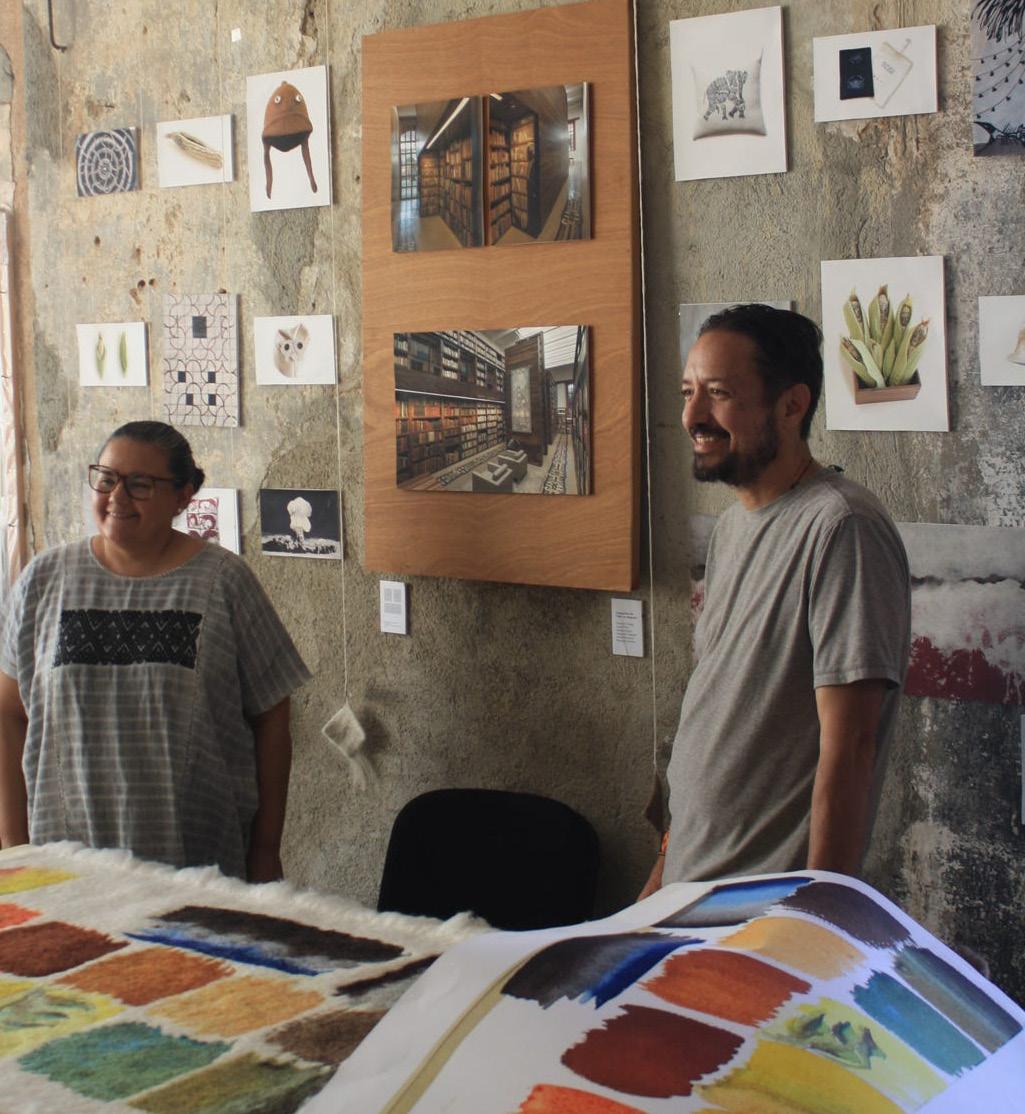
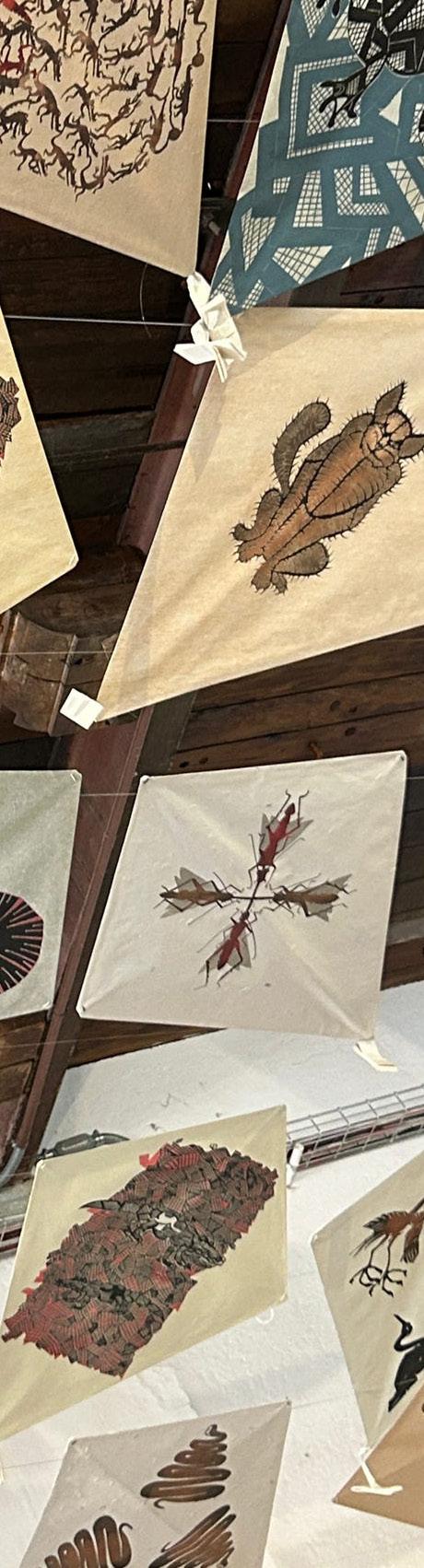
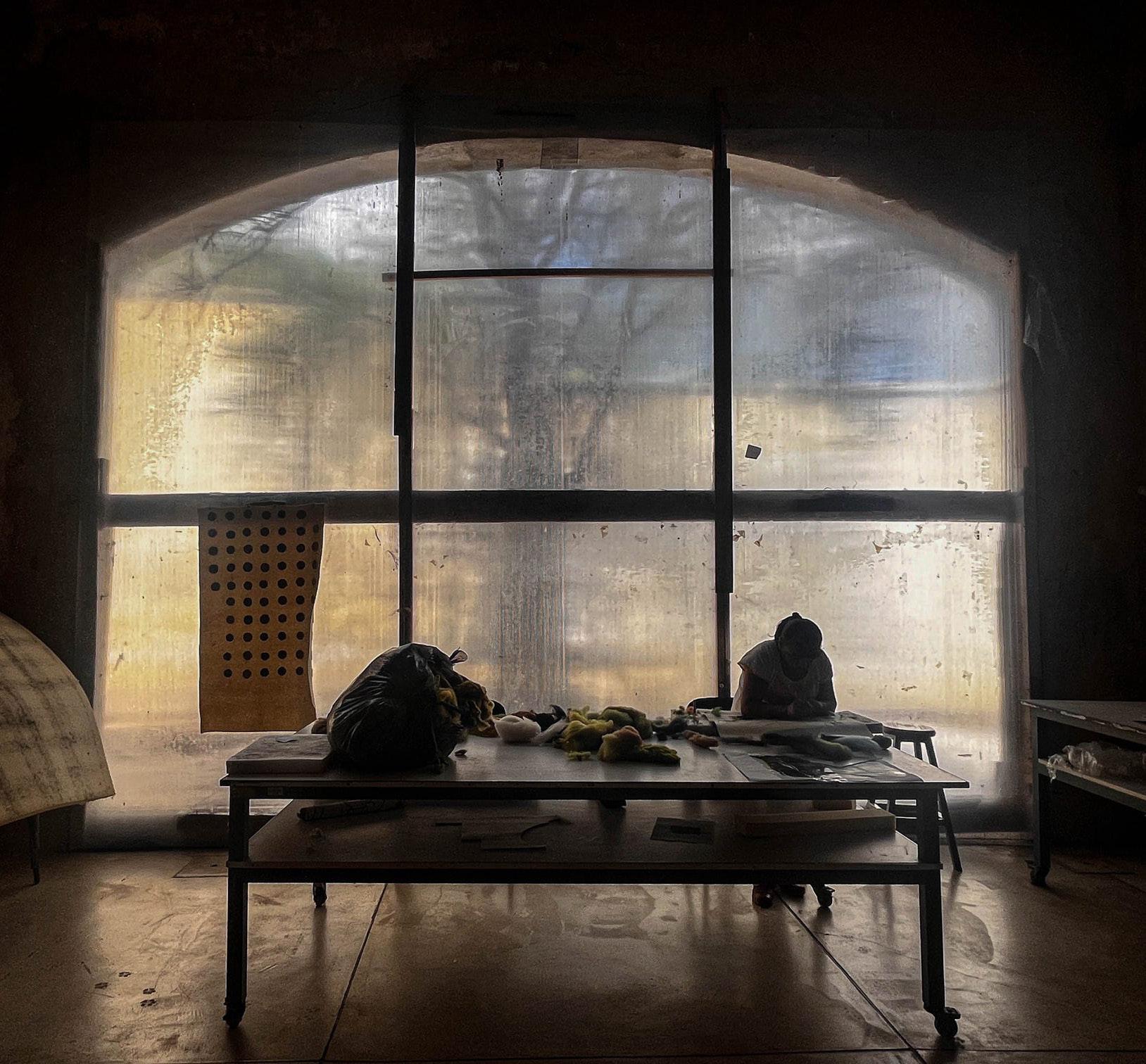
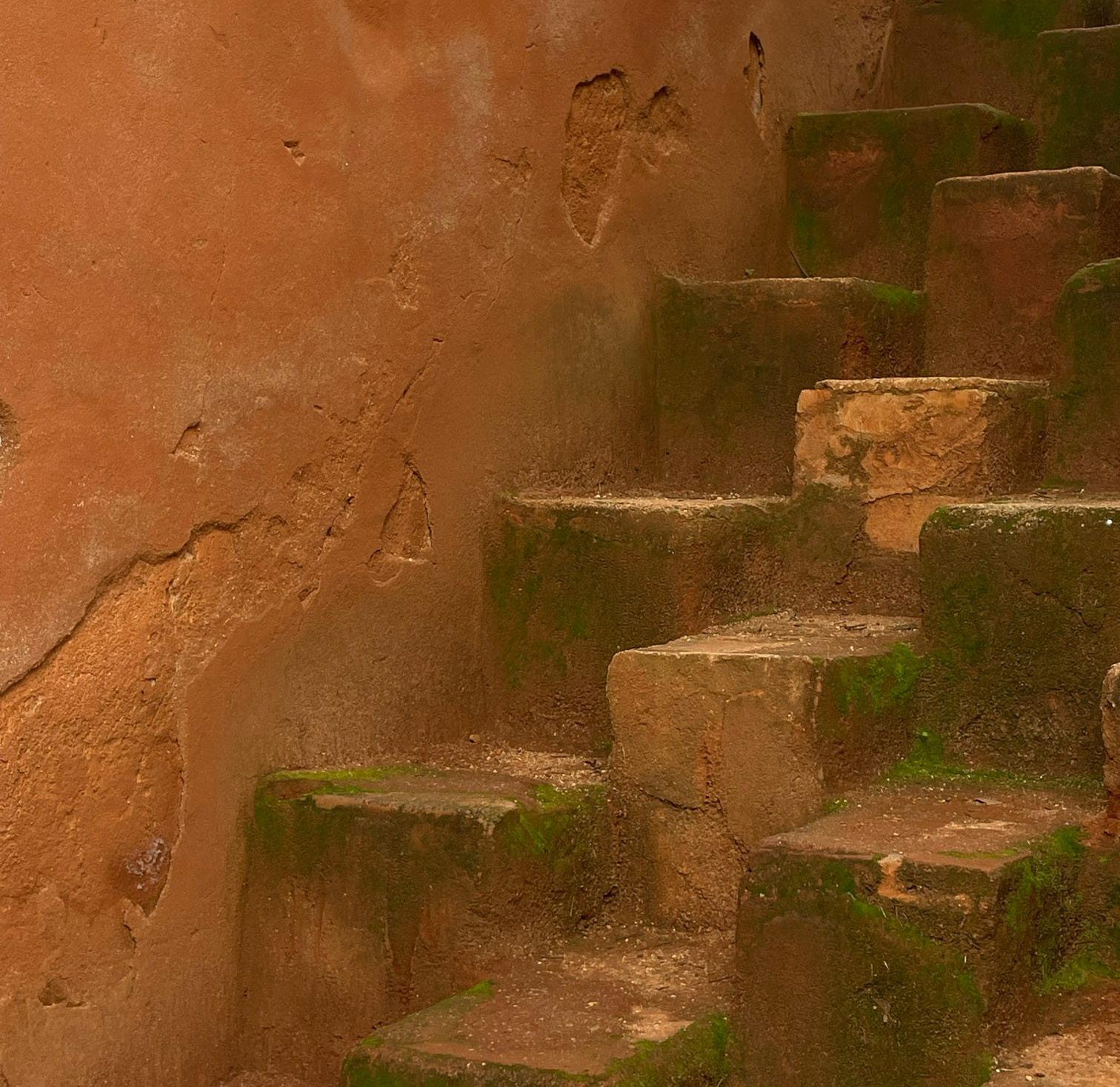
Casa Francisco Toledo is a complex site where an old textile factory was turned into an art center. The IAGO (Instituto de Artes Gráficas) is a Graphic arts institute located in Oaxaca, and is one of the most crucial art collections in Latin America. The cultural center has two locations that include, a library, workshop, archives, an editorial production workshop, and exhibition spaces. Francisco also established the San Agustin Arts Center, better known as, CaSa. It opened in 2006, and is the first ecological art center in the Latin American community. Throughout the site there are various water features, gardens, and original industrial objects that have been integrated into the design. The architecture of the site is complemented by surrounding views of the mountains and landscape. The artist’s display spaces are open with soft lighting to allow viewers to take in every moment. The design of these spaces blends various historic elements from the original textile factory alongside a modernist approach; This deeply reflects local heritage of Oaxaca while incorporating contemporary art. CaSa nurtures various artists while engaging with the surrounding community.
Our class was able to get a tour of the art center as well as other parts of the
site. There was so much to see and learn regarding Latin American culture. Our group was taken through the art displays, where we were heavily impacted by each story. The art institute in specific was breathtaking and included very fascinating exhibits. During our time on the site, we were also able to view a graphic design workshop where they explained how they market and select the art to display. The experience ended with a fun story of choosing children’s art in a contest to make felt stuffed animals out of. It is wonderful how much CaSa and their team involve the surrounding community; What a great experience to have and learn about this exceptional site.
by Cameron Dodzik
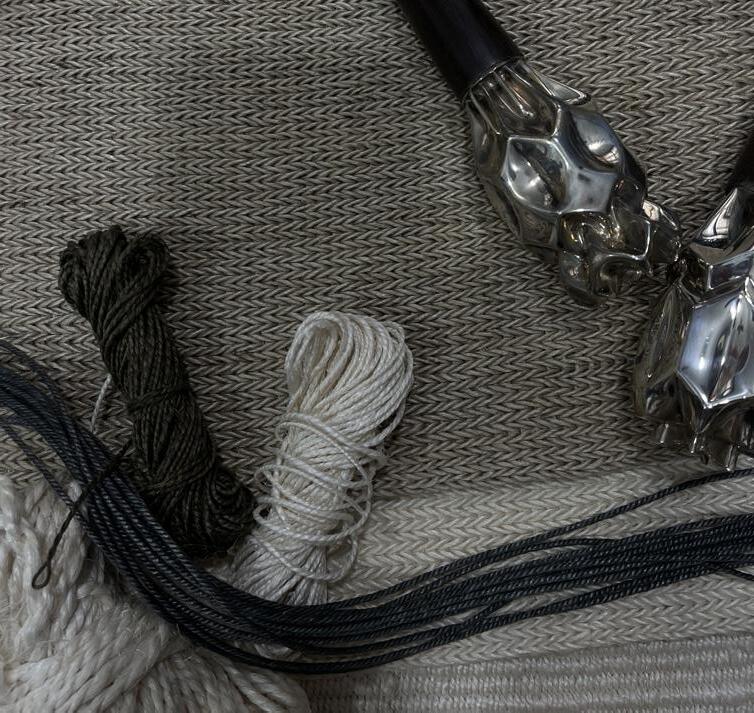
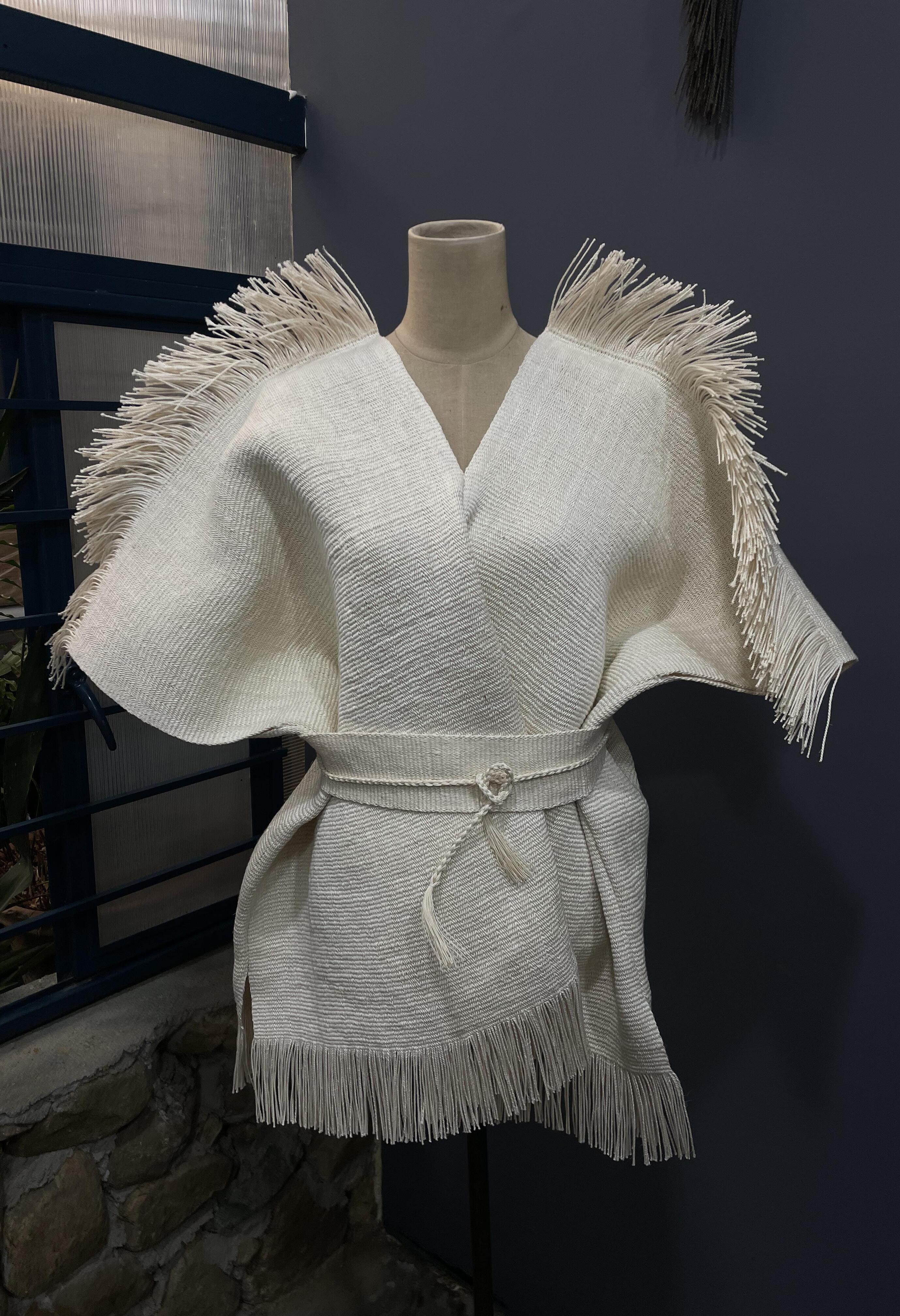
Venus y Loco is a contemporary artisanal design workshop that collaborates closely with architects, artists, and fashion designers to create unique pieces. They specialize in both pottery and textiles, merging traditional craftsmanship with modern design sensibilities. One of their standout techniques is the crafting of “Huarache,” a hand-twisted yarn made from pita fiber. This particular fiber is derived from the leaves of *Aechmea magdalenae*, a flowering plant native to the Chinanla region of Oaxaca. The process of creating Huarache is intricate and deeply rooted in ancient traditions. Historically, the weave’s lack of elasticity made it ideal for carrying heavy materials, often by wrapping the woven fibers around one’s head. Venus y Loco has not only preserved this ancient technique but also modernized it, emphasizing the use of sustainable, long-lasting organic materials in their designs. Their success in reviving and promoting these traditional methods has been remarkable, inspiring a broader appreciation for the artistry and environmental benefits of their work. By integrating these timeless techniques into contemporary design, Venus y Loco bridges the gap between heritage craftsmanship and
modern-day sustainability, creating textiles that are as durable and functional as they are beautiful.
The experience with Venus y Loco had a profound impact on our class of designers, as it resonated with our shared passion for craftsmanship and sustainability. Witnessing firsthand how they blend ancient techniques with contemporary design opened our eyes to the possibilities of integrating tradition into modern work. Their commitment to using long-lasting, natural materials aligned with our own desire to create meaningful, environmentally conscious designs, inspiring us to think more deeply about the role of heritage in shaping future innovations.
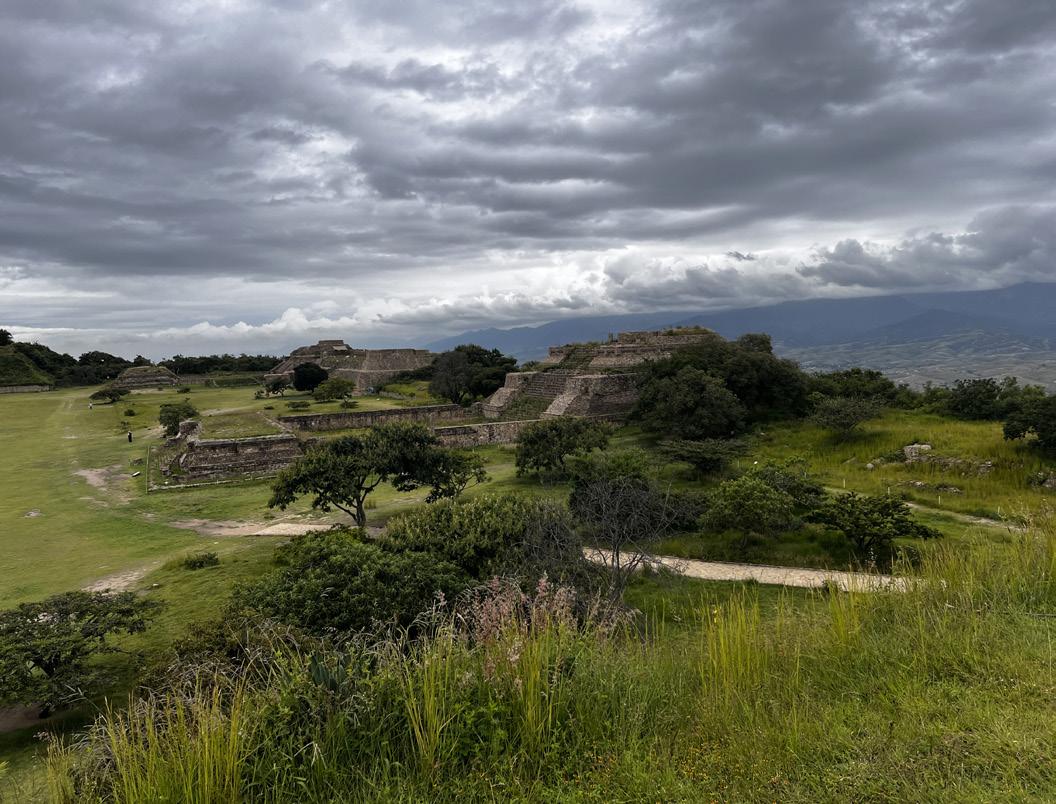
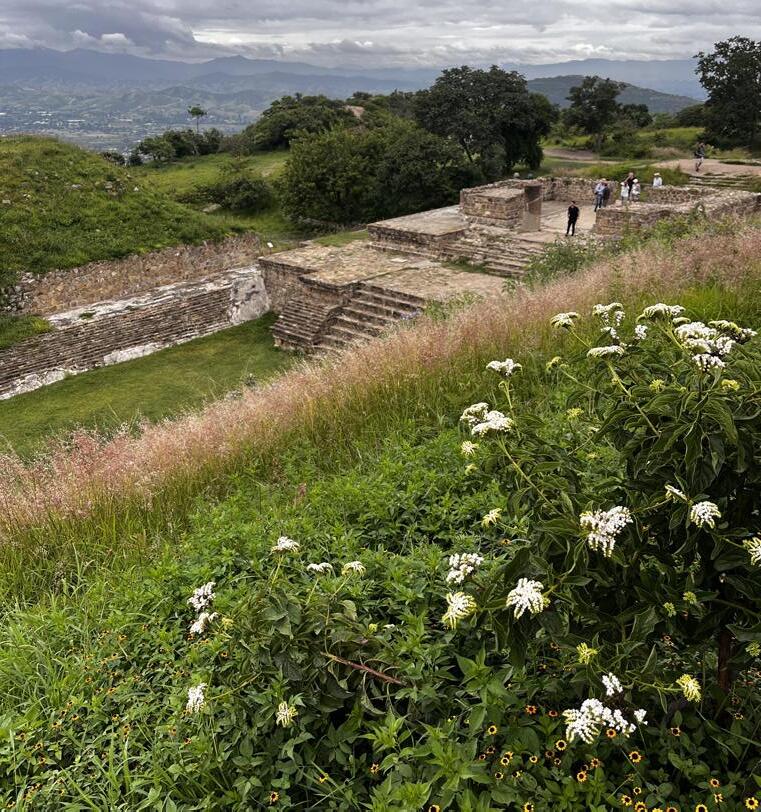
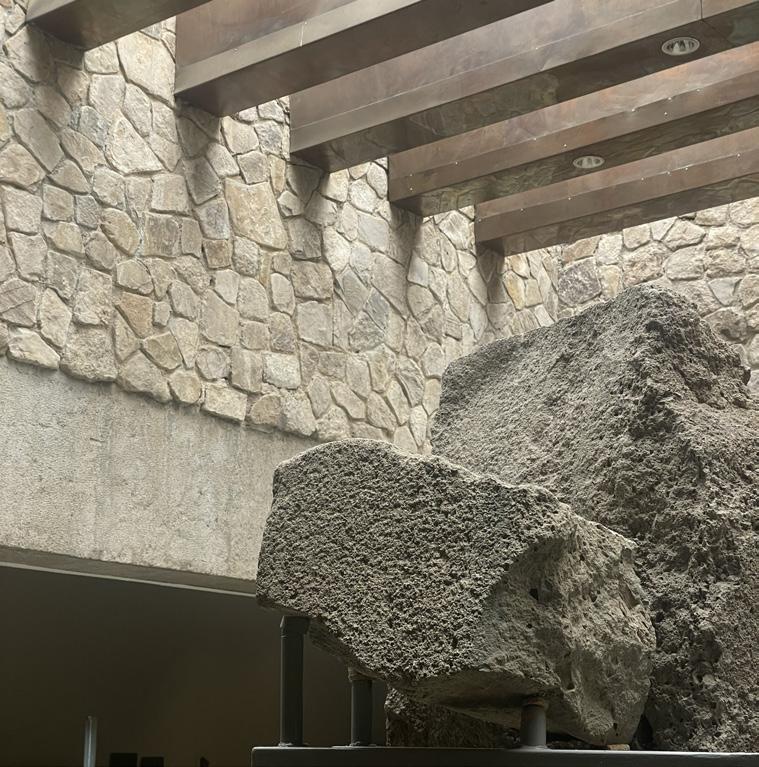
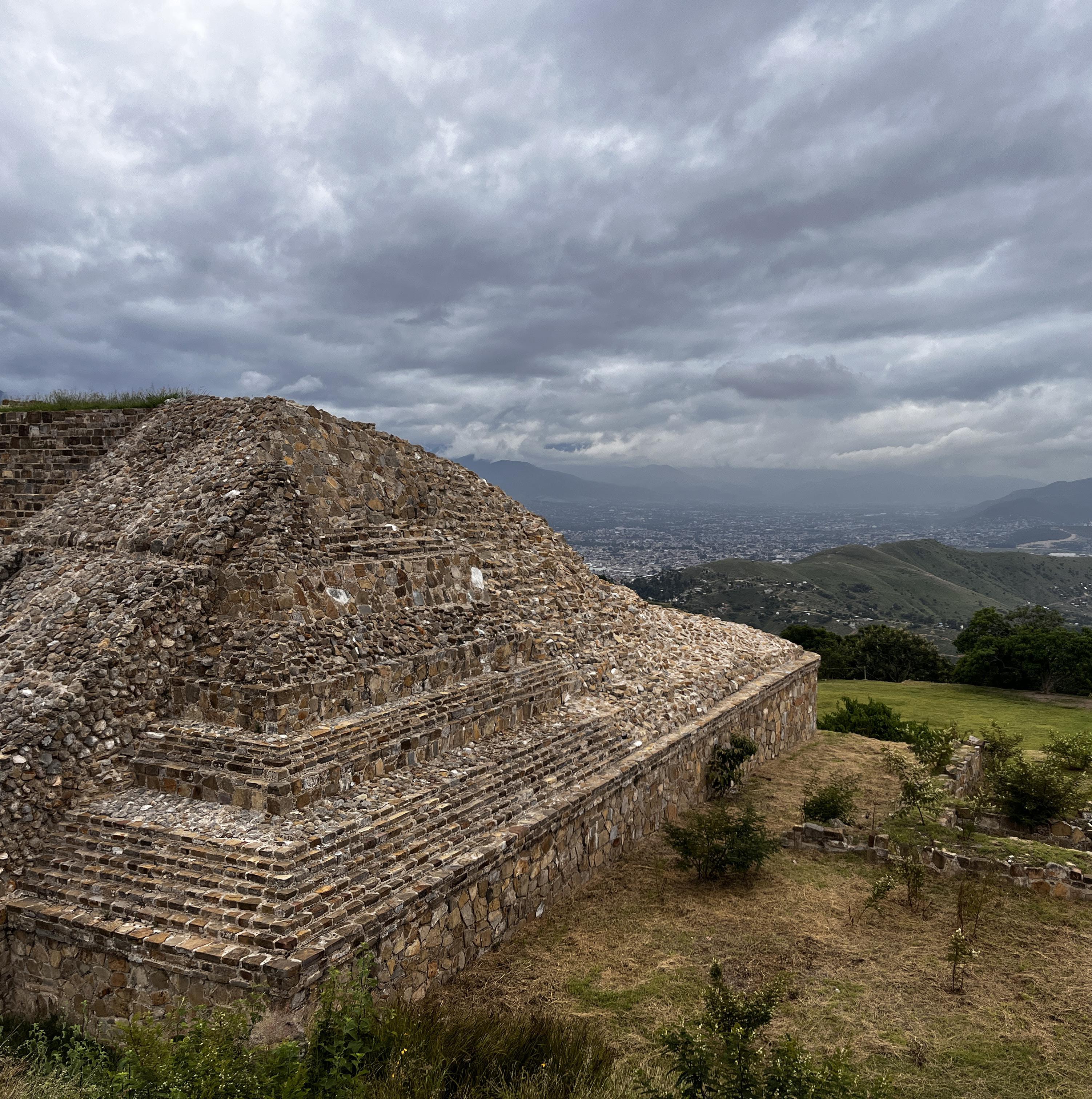
All week we had seen and enjoyed so much of Mexico’s Architectural history, but the morning we got to visit Monte Albán can only be described as “otherworldly”. Our visit began in the museum adjacent to the entry plaza, where we learned some about the Zapotec culture and saw archeological relics like bowls and carved trinkets. Javier explained about some of the larger tablets featured in the central display of the small museum, but his eyes really seemed to light up as he explained some of the historic mappings of the site, and the Zapotecs’ accuracy in site alignment and placement. After a continued, short walk up the mountain, the tops of the first temples revealed themselves and it brought a wave of amazement at both the ancient mounds and scenery around the mountain.
The ridge had been artificially leveled by the Zapotec and the mounds were constructed under many leaders and generations. Continued design through hundreds of years is something that almost seems incomprehensible to plan.
Even through the distance of time, however, we were able to see traces of shared values through spaces set in the landscape for activities like sports and games. We can only speculate about the original lives and cultures that shaped these mounds, and in many ways it left us with more questions. But seeing the fundamental understanding between human and natural forces in physical space is a humbling reminder of the foundations of design.
by Ashlea Bills
by Julia Warner
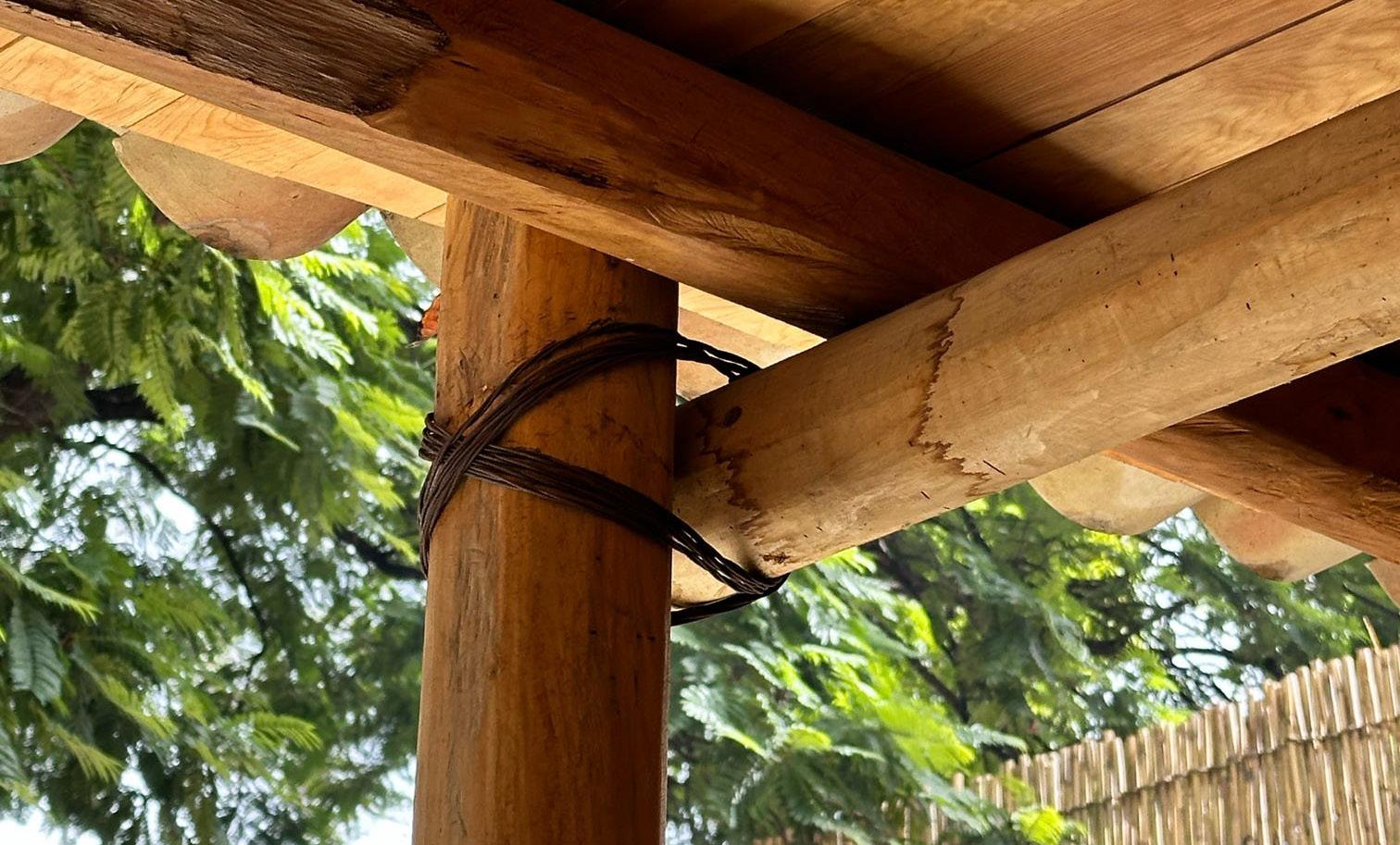
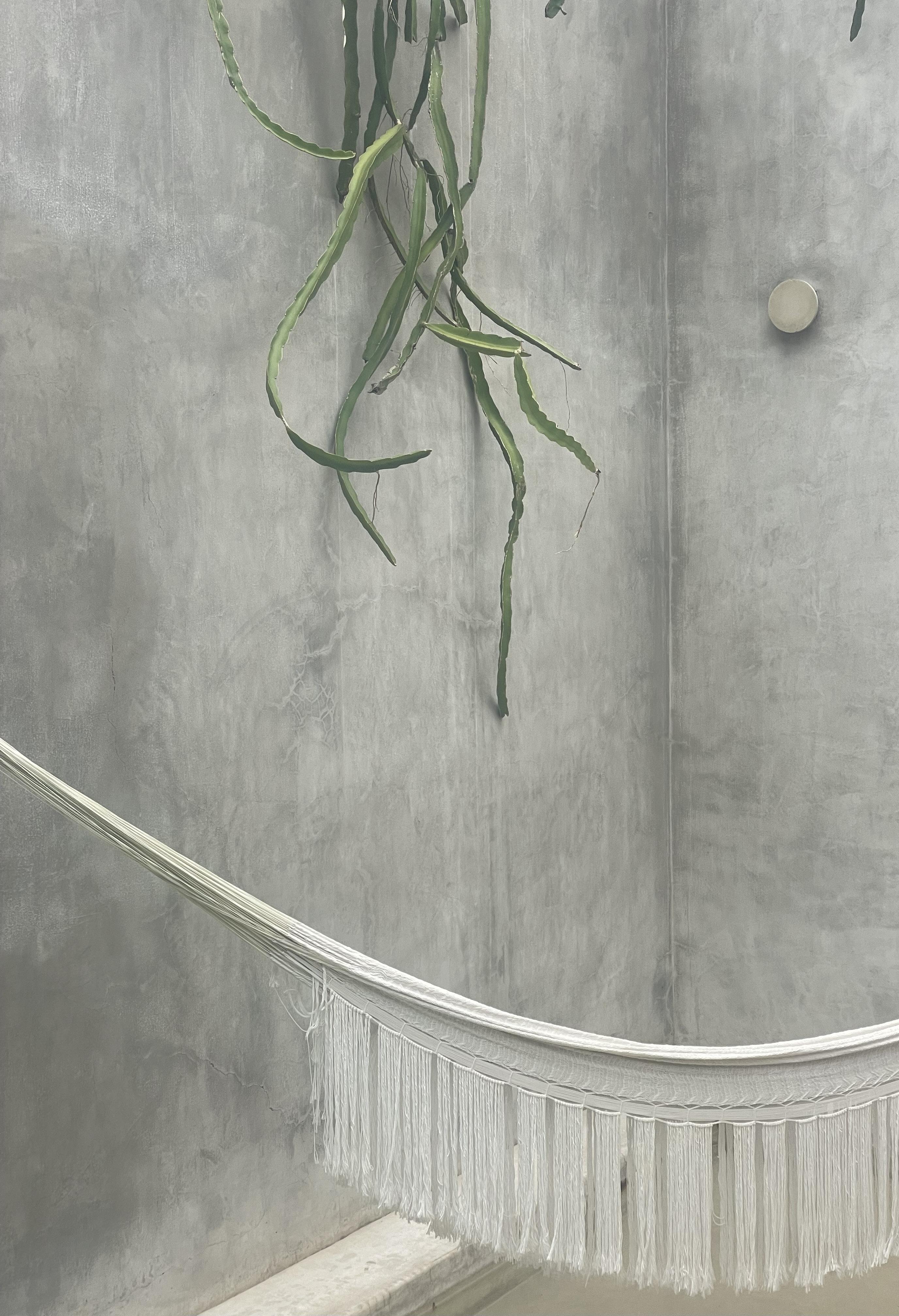
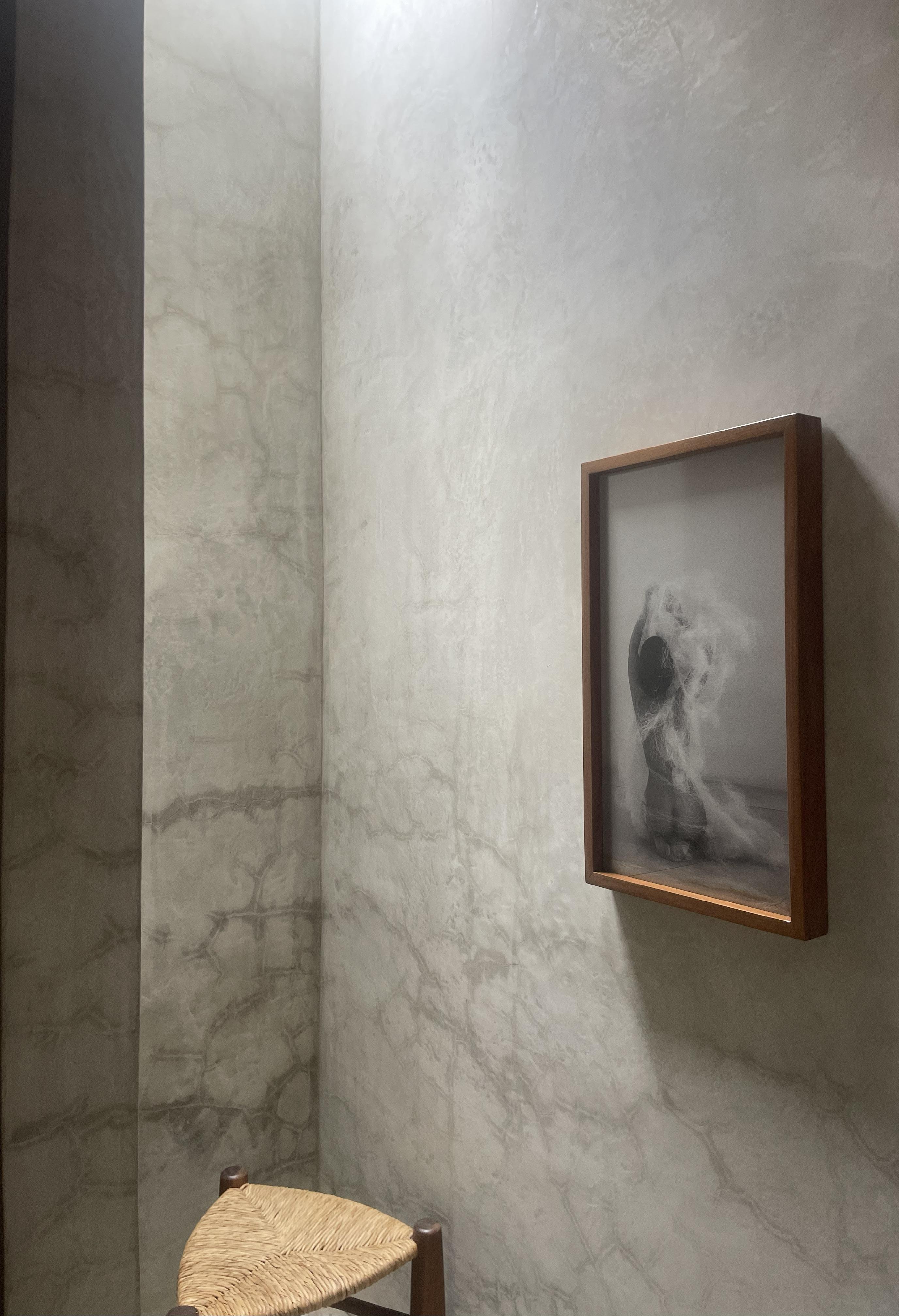
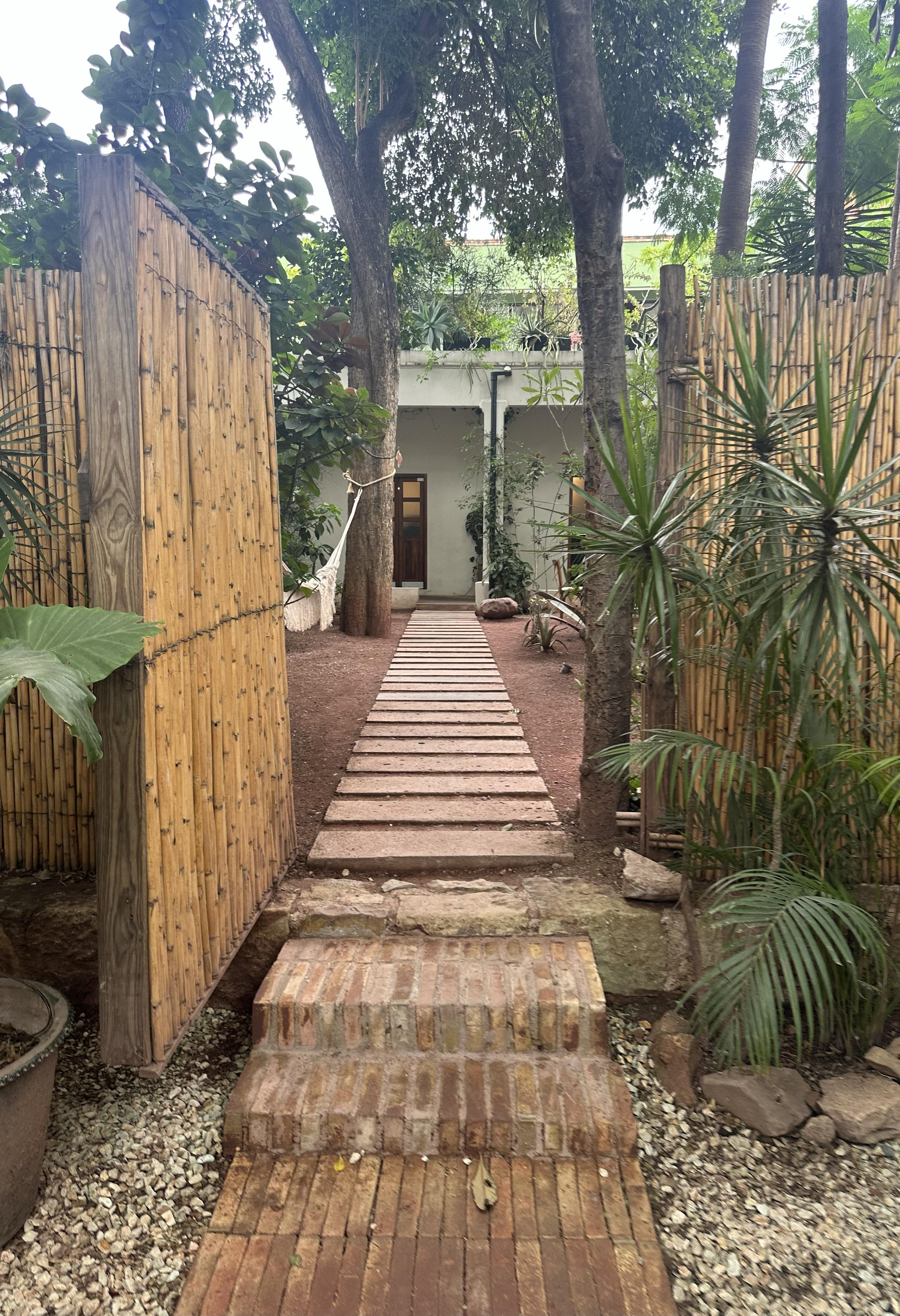
Criollo is a divine restaurant in Oaxaca City that is located in a vibrant neighborhood. The building and menus embrace Oaxacan cuisine in an organic way to the culture. The Chef, Luis Arellano, creates menus that blend traditional flavors as well as modern culinary practices together. The design is both contemporary and elegant which creates an inviting atmosphere. The blend of indoor and outdoor spaces in Criollo makes for a lively space. When visiting the restaurant, customers will experience not only dishes featuring locally-sourced ingredients, but will encounter wonderful service. Criollo stands out as a must-see location to appreciate Oaxacan heritage. The name “Criollo” pays tribute to Creole culture that has influenced Mexican gastronomy. A main focus of the restaurant is to be sustainable and provide the local feeling
through the food. It has become a large part of local and international food scenes. In the back end of the restaurant there is a Casa that visitors are meant to feel at home in. In this space, art and design merge together to create a beautiful space. This home includes a living room, two bedrooms, steam room, and a patio with a pool and terrace. Many culinary experiences come with the stay, and it can be booked directly through Airbnb.
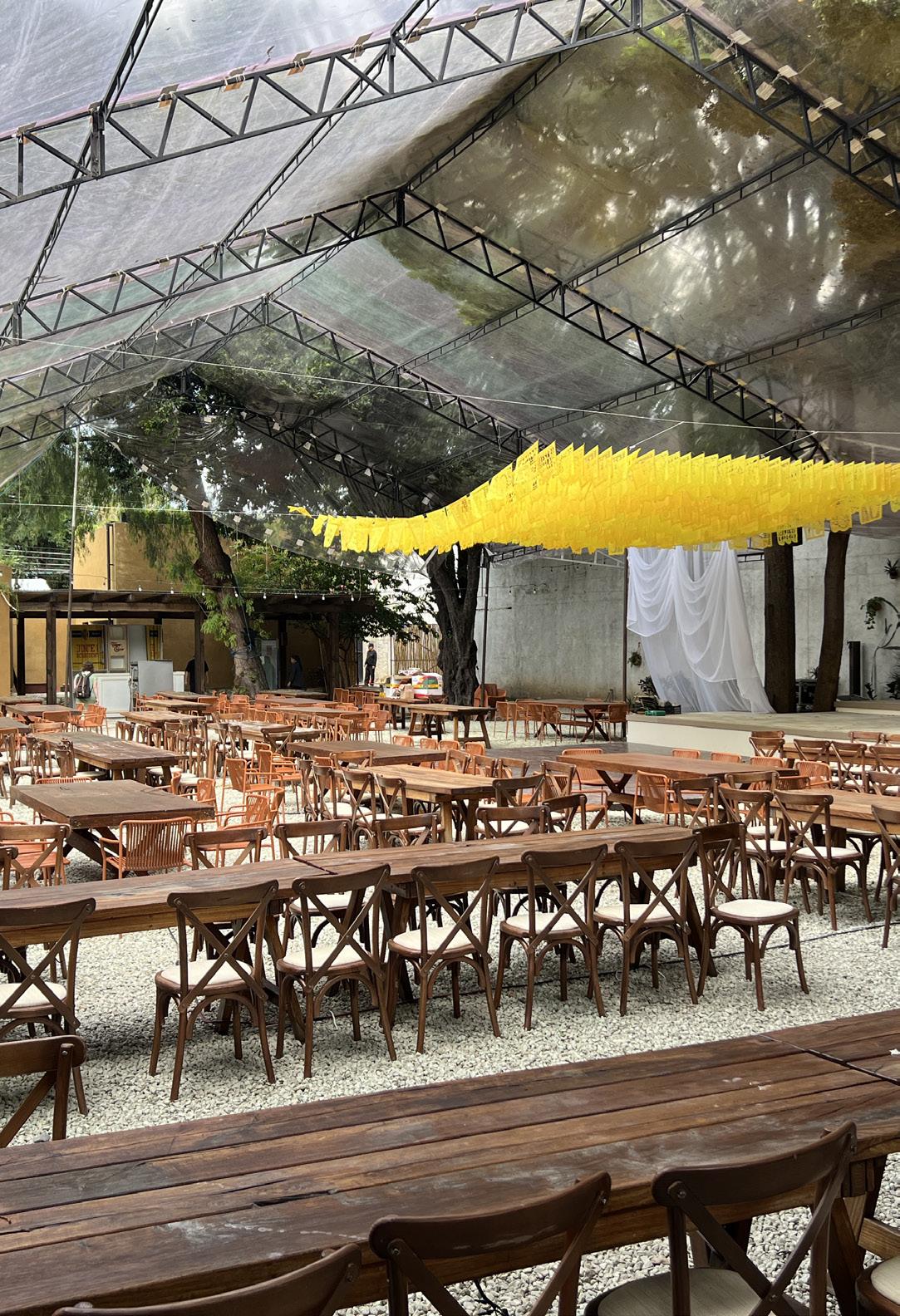
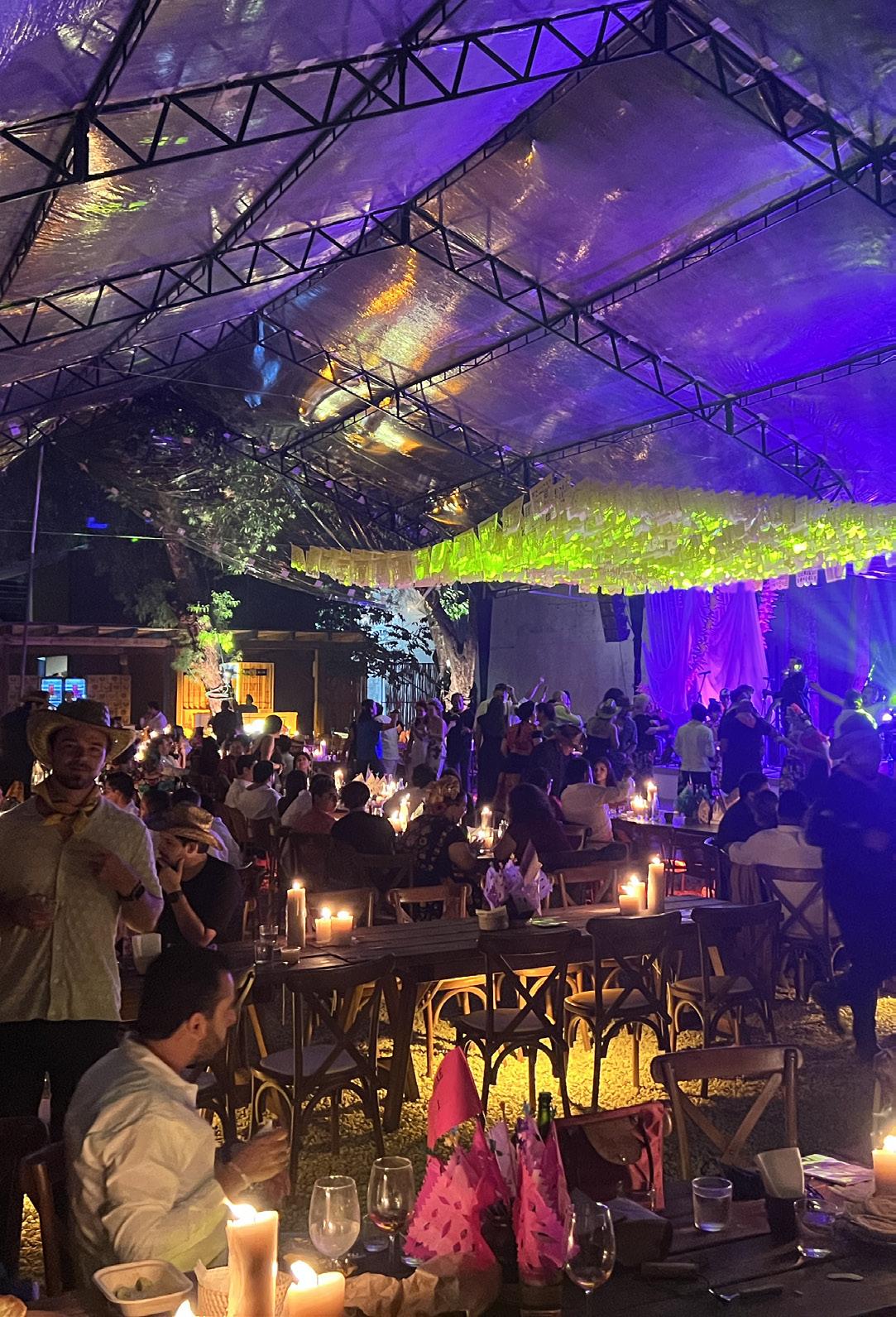
As a class, we visited Criollo during our time in Oaxaca. When walking into the space, our group was in awe of the design and atmosphere created by JSa. We were able to sit down for a multicourse meal and enjoy breakfast. The food was amazing paired by the exceptional atmosphere surrounding us. The tables were surrounded by gravel and vegetation, where even chickens were roaming around. This really made you feel as if you were embraced into the Oaxcan culture. At the end of our trip, we attended the anniversary of Criollo, and saw the event space come to life. It was amazing to see the culture of Oaxaca, as well as people coming together to embrace life.
by Mary Margaret Guzik
During our trip to Oaxaca, we were there during the 8th anniversary of Criollo, which is a restaurant that Javier and Aiesha are partners in. The restaurant serves a menu that adapts to what is available during the time and is inspired by Oaxacan cuisine.
They also designed a house with the chefs Enrique Olvera and Luis Arellano as a place where food and design merge into a casa tucked into the back of the restaurant. The casa has two bedrooms, a living room, a steam room, and a pool with a terrace.
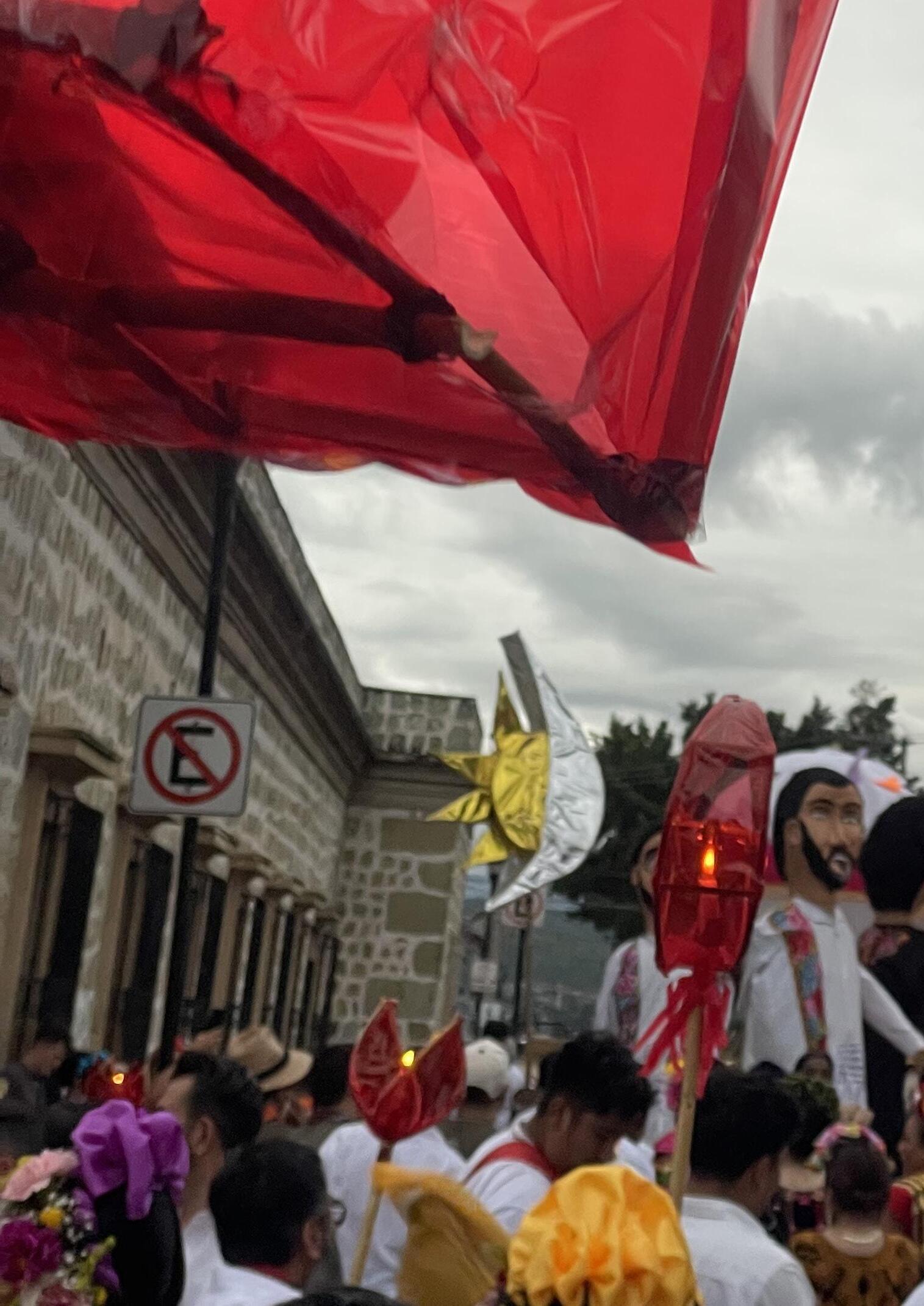
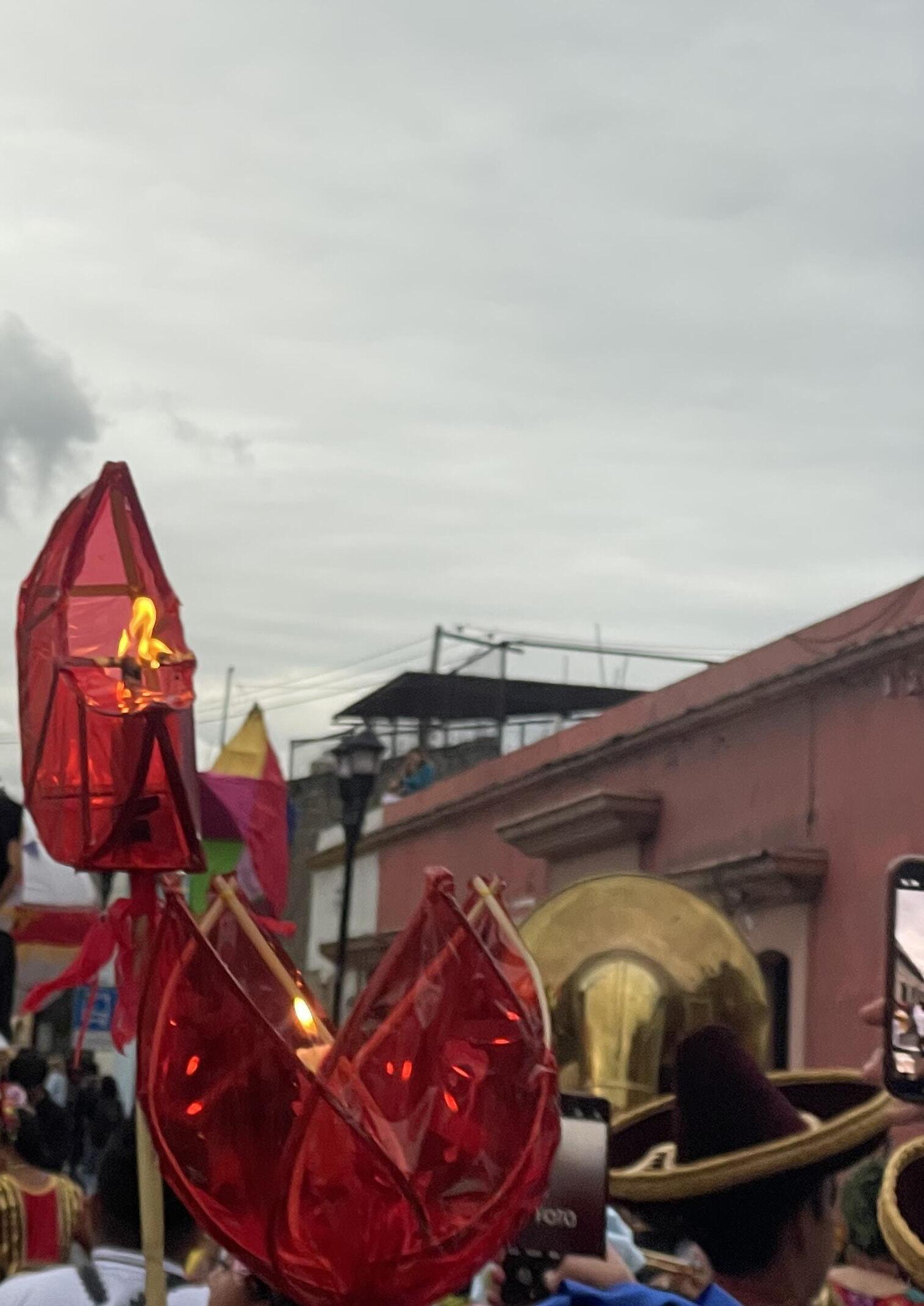
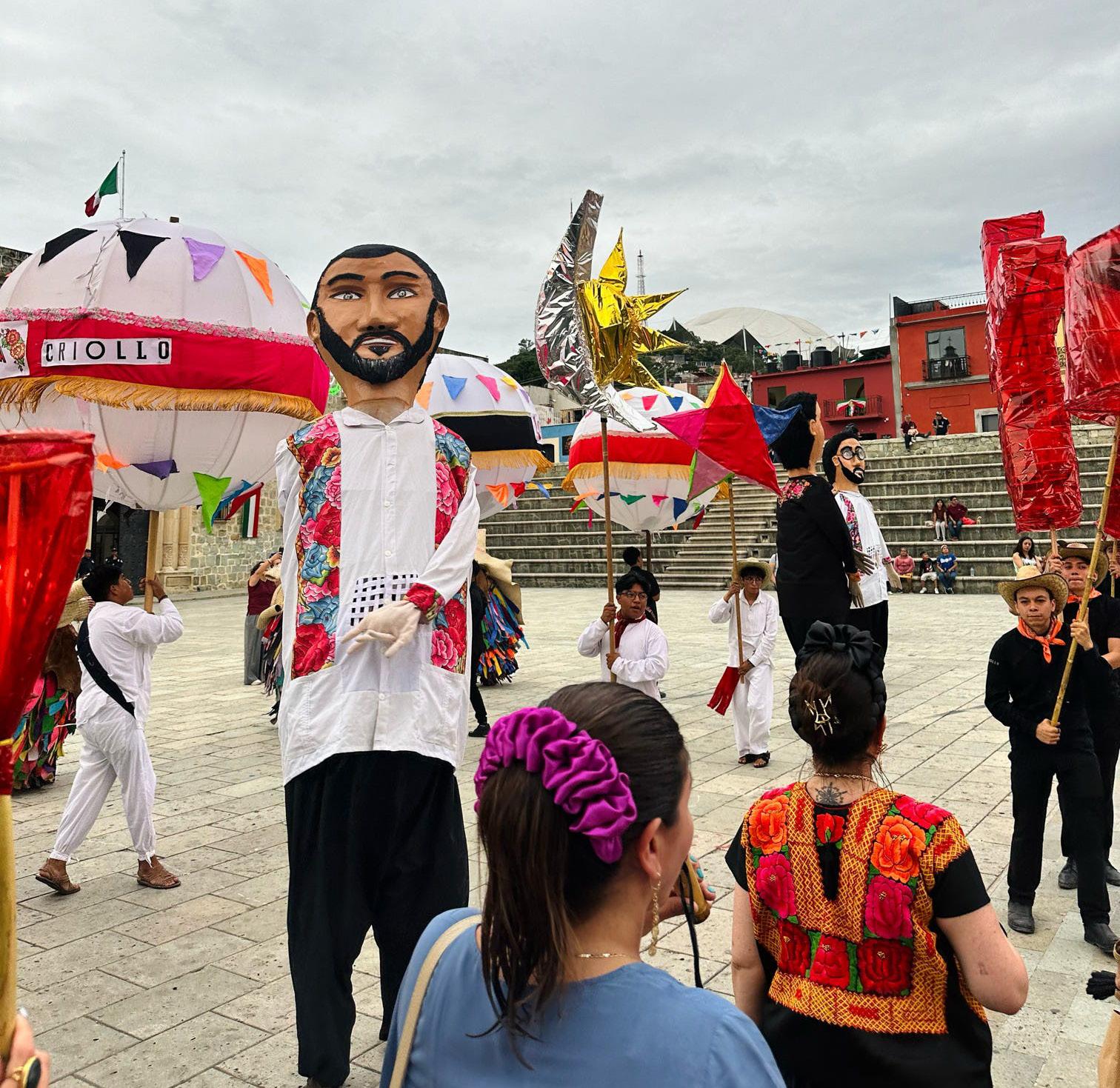
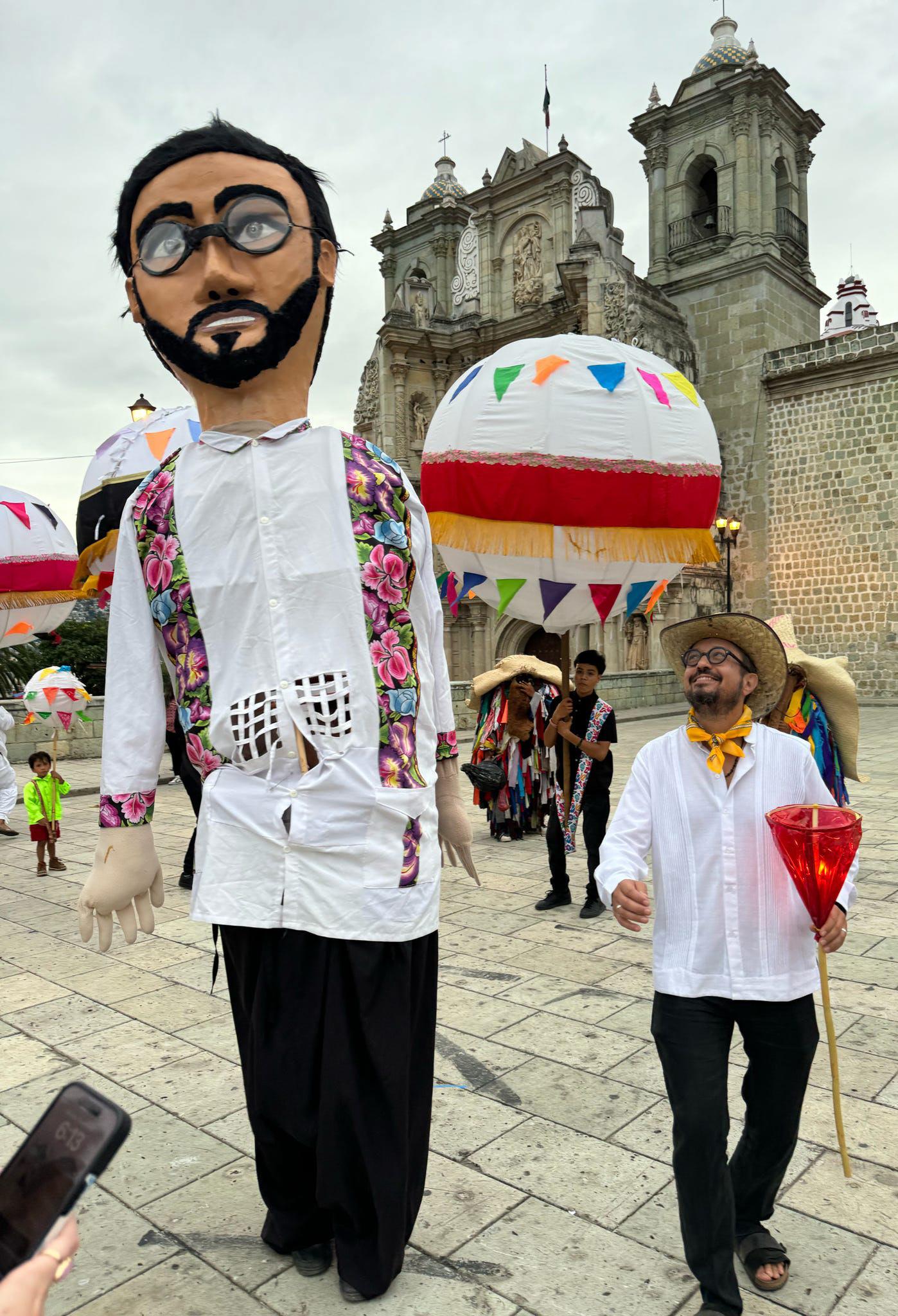
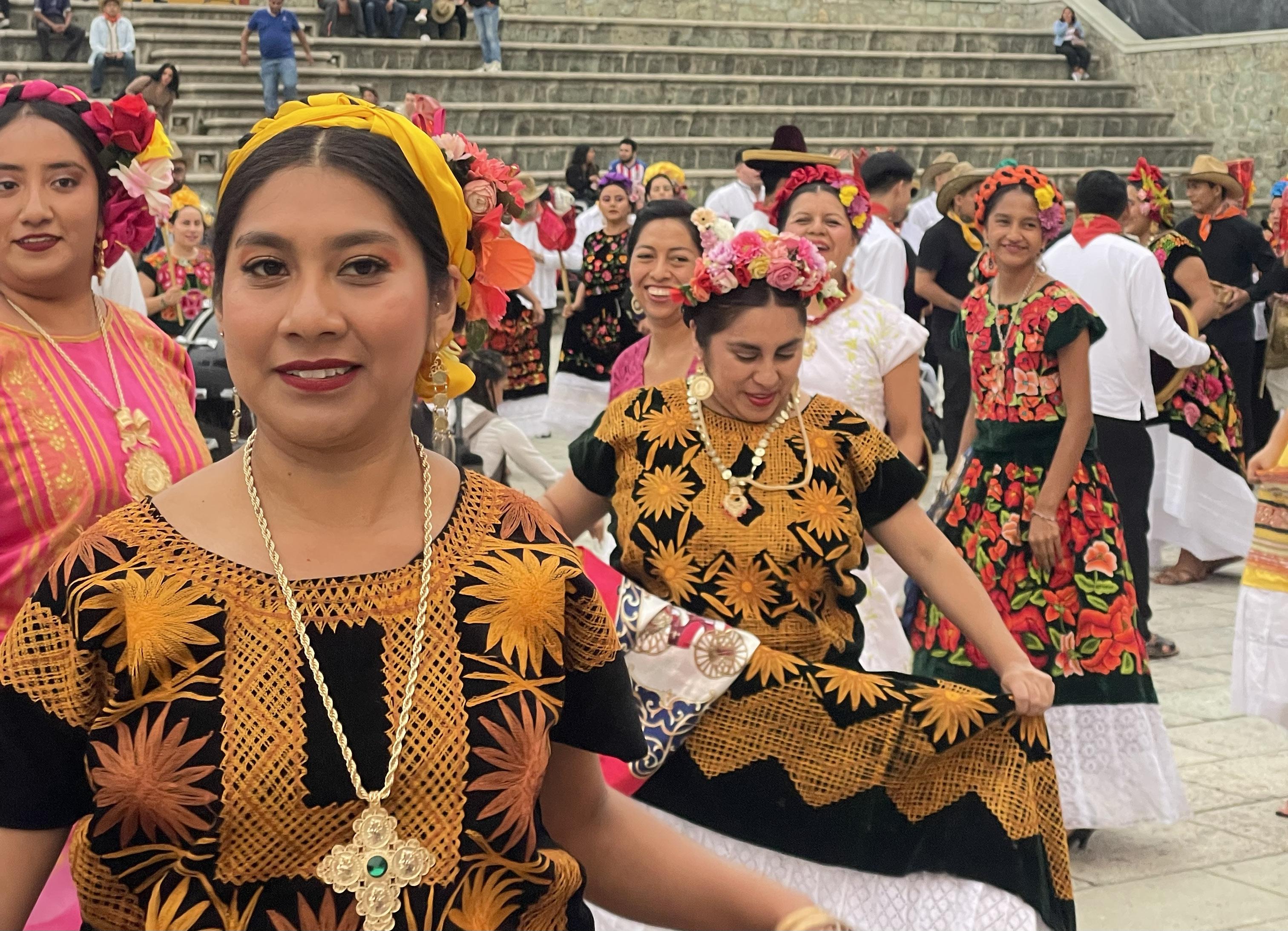
Because of this, they were a part of the 8th anniversary and invited all of us. The night started with a traditional Mexican parade in the streets starting at the city center and walking down to the restaurant. Then we had a multicourse dinner followed by late-night tacos.


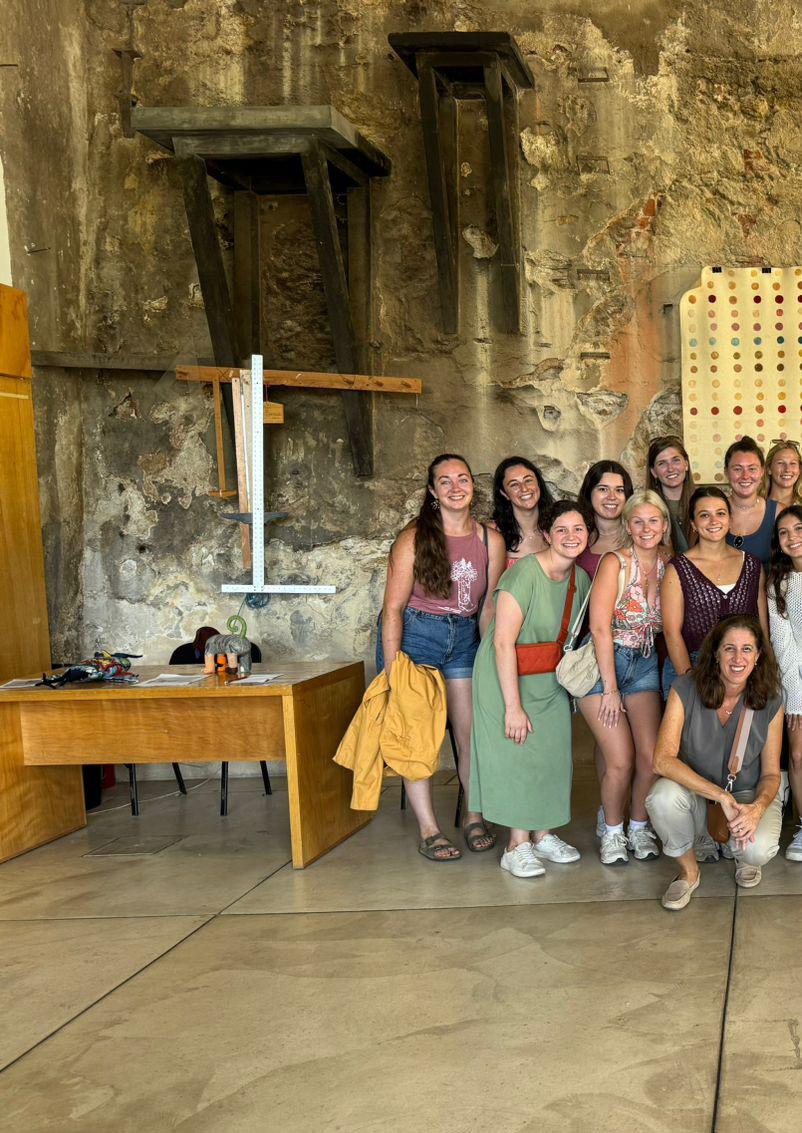
Our studio trip to Mexico was utterly transformative. It reshaped our perception of design and the approach of which to do so, especially in terms of adaptive reuse. We were fortunate enough to be immersed in the vibrant culture and innovative design approaches of Mexico. These helped us to gain valuable insight into design as well as adaptive reuse that can pay homage to its original essence and history while transforming and infusing it with a new light. This trip broadened our understanding while deepening our appreciation for our ability as architects to connect our designs with varied cultural narratives. We are all extremely grateful to BMa for this life-changing experience that has exposed us to a world we never could have imagined. Additionally, we as a studio could not be more fortunate to be graced to learn from the profound expertise and knowledge of Javier and Aisha. Their approach to design and mark in Mexico and its community has created a surge of inspiration for our approach towards architecture and adaptive reuse. As we return home, we return with a renewed sense of purpose and inspiration on which to set our eyes.
Callie Walmsley
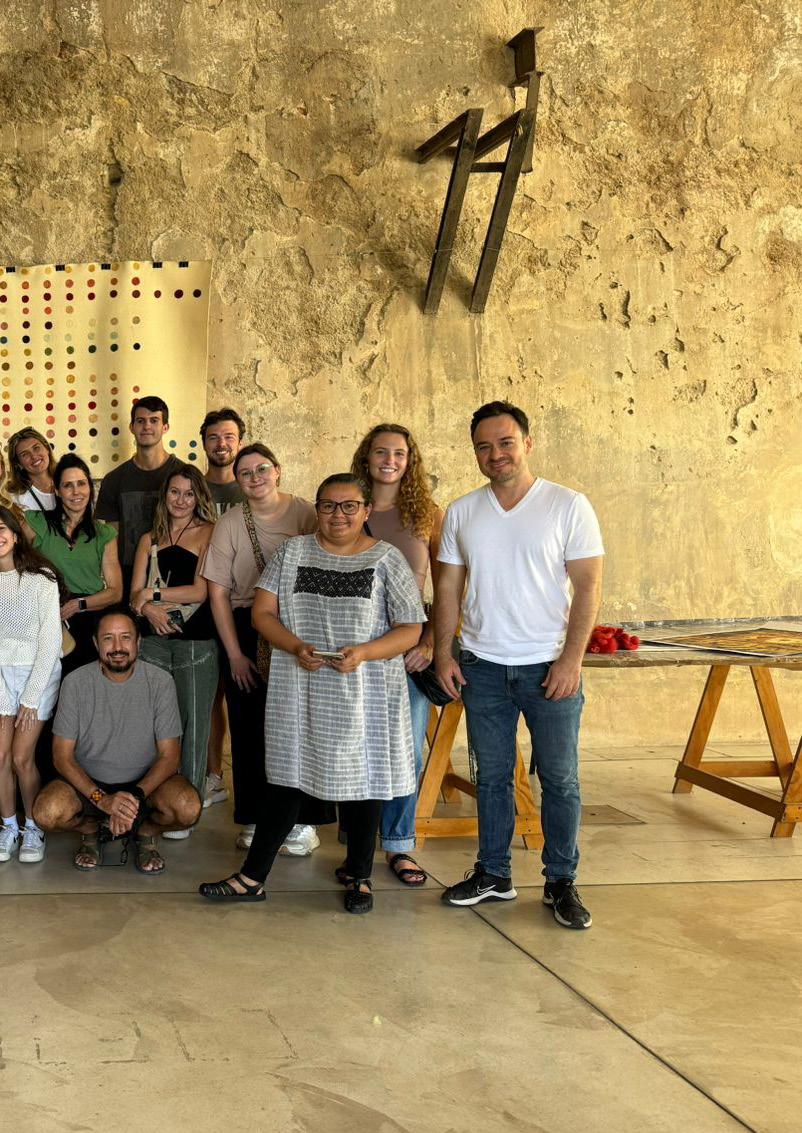
BMa Professor Javier Sanchez
Visiting Professor Aisha Ballesteros
Ashlea Bills
Cameron Dodzik
Katherine Dupree
Abby Eckl
Mary Margaret Guzik
Edwin Gramling
Olivia Hicks
Mary Huffard
Lauren Hall
Thomas Miller
Katherine O’Neil
Lucy Pirtle
Kelsey Shockley
Cecilia Torres
Callie Walmsley
Julia Warner
University of Tennessee Faculty
Dean of the College of Architecture and Design
Jason Young
Director of Landscape Architecture
Gale Fulton
Director of Architecture
Carl Lostritto
Director of Interior Architecture
Milagros Zingoni
Before this studio, I was inspired by my time this last summer in Austin, Texas, by the energy of community, and the creative ideas of adaptive reuse. When we learned of this studio at the beginning of the fall semester, I knew this would be an irreplicable opportunity I had to be a part of. Little did I know how fast that original sentiment would hold just weeks into studio.
Community is something I’ve always been passionate about, but with this trip, I gained new passions for culture and vibrancy that create different kinds of community. In a country where we are regularly told about our wealth as a nation, I have never seen communities
do so much with so little in regard to space and art as what I saw in Mexico. In many ways, I felt emotionally overwhelmed by the physical manifestations of connection in scale, time, and environment. While I feel like I always knew these were important elements of design, I am now understanding that these elements are just as connected as people.
This trip will leave residual impacts on me that I hope to keep understanding more about as time goes on, on an individual level, and as a designer. Even going through the photos of each day for the n’th time, I find new details that inspire me. I’m humbled at all the people it took to make this trip a reality, fiscally and strategically. I’m still in awe of the number of memories made in a weeks’ time, and it’s left me hungry for more. I want to thank BMA’s dedication of bringing the world to UT, for those of us unable to see the world. Thank you, Javier and Aiesha, for your dedication and personal investments towards our growth as students and designers. I, and many of us, can only hope to impact future students in the way you’ve impacted us. Thank you again for this beautiful gift.
Ashlea Bills
As I reflect on the past three weeks, I feel incredibly blessed by this opportunity, both professionally and personally. I’ve always believed that traveling and experiencing different cultures are essential for personal growth and appreciation of life. However, our class experience in Mexico was more than just eye-opening—it was transformative.
Being warmly welcomed into a culture so different from our own was a unique and profound experience. Javier and Aisha, you did an outstanding job of showing us your city and making us feel at home in a place so far from where we started. Aisha, your exceptional timekeeping allowed us to explore more buildings and sites than most people could ever imagine in a week. This immersion in the city has deeply influenced my perspective on architecture and design.
Javier, your humility and passion for your work are truly inspiring. I’m deeply grateful for everything you’ve done to support our studio. I will always remember our first walkthrough in Mexico City, where we saw block after block of buildings designed by JSa. Witnessing your impact on the city and its people was one of the coolest experiences I’ve ever had (not to mention the parade in
Oaxaca where your replica was parading through the town - haha!).
Finally, a heartfelt thank you to BMa for sponsoring this studio. The impact you’ve had on us 16 fortunate design students is beyond words. I will forever cherish this experience, which has already influenced my passion for design and my vision for its future.
Cameron Dodzik
Dear BarberMcMurry Architects,
I catch myself in a state of disbelief when describing the trip I just experienced. This trip has fueled me with an abundance of inspiration to carry me through the end of my time at the University of Tennessee. I am so thankful for the opportunity to experience Mexico through a lens of design. I am not only thankful for the aesthetic intelligence I was able to witness through Mexican architecture, I am thankful for the chance to see these groundbreaking pieces of work in a community that shares the same interests as me. Thank you for fostering relationships and bonding friendships. Thank you for your contribution in broadening my horizons and refining my education. Your generosity will be something that I will never forget.
Sincerely, Katherine
Dupree
The trip to Mexico City and Oaxaca was an outstanding experience, to say the least. Not only did we get exposed to an abundance of advanced and pivotal architecture, we were immersed in the culture. Javier and Aisha welcomed us like family, and for that I will be forever grateful.
Although the trip was just a week, it felt like a full study abroad experience. We were exposed to a great variety of projects, anywhere from JSA’s personal work to pre-Hispanic design. It was amazing to hear the in and outs of Javier and Aisha’s design processes, they are such talented, well rounded examples of architects. The architectural passion they have is inspiring, focusing their projects on human experiences and opportunities for growth in Mexico. Each project was so unique and tailored specifically to the site at hand.
The cultural experiences were extravagant and immersive. Not only were we able to eat an abundance of unique, tasty foods, but we also got to learn from local artisans that have been perfecting their techniques for decades. The highlight of the trip was the parade for a local Oaxacan restaurant, Criollo, on the last night. We got to dance and celebrate alongside the locals and it
was an experience like no other.
I can not wait for the rest of the semester with Javier and Aisha. I am so grateful for the time we had in Mexico and for what is to come during the rest of the studio. Thank you to Javier and Aisha for opening our minds to a more well rounded method of design. Lastly, a big thank you to BMA for making this trip happen. It could not have been more of a perfect experience.
Abby Eckl
Linda Bo Bardi, A woman architect that I have not heard of til a week ago. This studio started with the introduction to unlocking another part of the world that I have not even thought about. The thought provoking moment of why and the focus on Europe was on my mind going into the week long amazing trip.
Planned every moment by Javier and Aiesha, with Aiesha keeping us on track fully immersed me into what is possible through their process. Aiesha mentioned that they ”prefer to be invisible” referring to their work gave me a perspective into architecture to make and develop for the community without drastically changing the facade design. The tour around some of their projects as well as inspiring architects in the area was LIFE CHANGING as well as the multiple people that were arranged to PROUDLY showcase their space.
The experience of the real person.
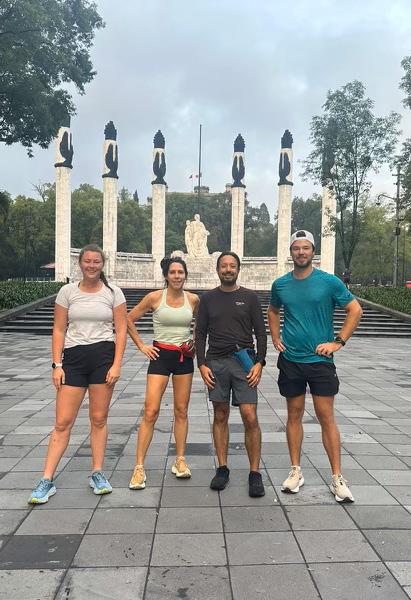
The most important part of the entire trip was seeing through their eyes the city and country issues of their water crisis and how to deeply think of design choices to combat this. This shines through their office by creating a water system that doesn’t utilize the city. I will be forever grateful and appreciate all that they have done for me and what a way to go out as I graduate in December this year.
THANK YOU AND FOR INCLUDING US AS FAMILY.
Mary Margaret Guzik
Dear BMA, Javier, and Aisha,
I want to sincerely thank you for making this trip to Mexico an incredibly inspiring experience. In just one week, we managed to explore so much—fitting two weeks’ worth of sightseeing into our schedule. The focus on materiality, passive design, and open-air community spaces was truly eye-opening and, for me, even more architecturally inspiring than my study abroad in Rome. I’m leaving with countless ideas and practices that I’m eager to apply to my career.
It was such a privilege to see so many JSA projects, along with work from other firms, all thanks to JSA, Javier, and Aisha. I was amazed by how many incredible projects I hadn’t known about before. This trip has truly expanded my perspective in ways I hadn’t expected.
I’d also like to express my gratitude to BMA for the grant that made this trip possible and for providing the opportunity to learn from such remarkable architects. And to Javier and Aisha, thank you for dedicating your time and energy to this—living here throughout the semester, away from your homes and families. Your commitment makes this experience unforgettable.
Best regards,
Winn Gramling
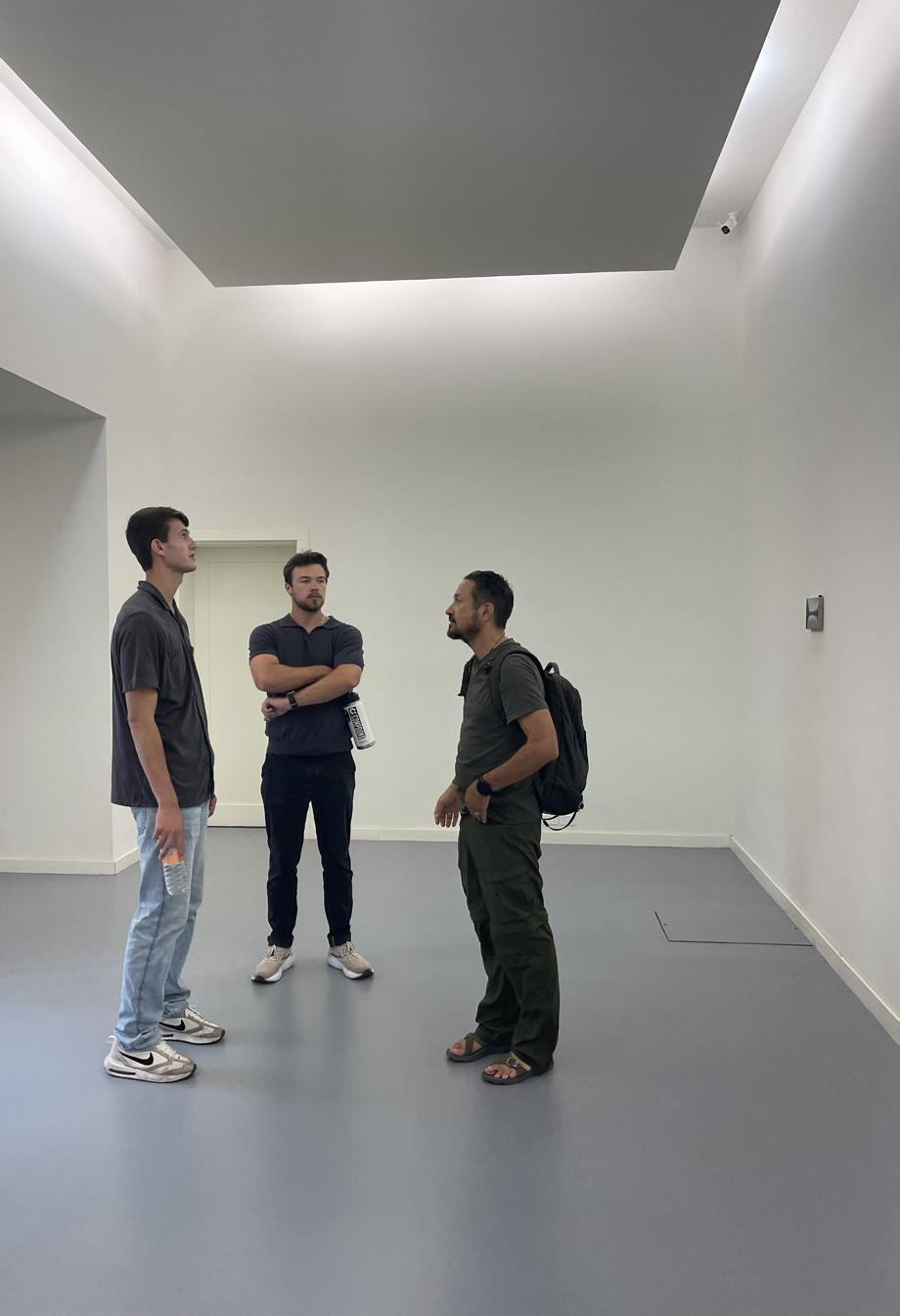
This experience has been such an impactful part of my time at The University of Tennessee. Being apart of this program has taught me so many things throughout the years and being able to experience design in Mexico will forever be one of my greatest memories from college. I never would have thought I would have an opportunity like this and i am so thankful for it. This trip taught me so much about design and how it relates to the culture in Mexico.
I am sure that the things I learned will stay with me for the rest of my career.
site. There was so much to see and learn regarding Latin American culture. Our group was taken through the art displays, where we were heavily impacted.
Olivia Hicks
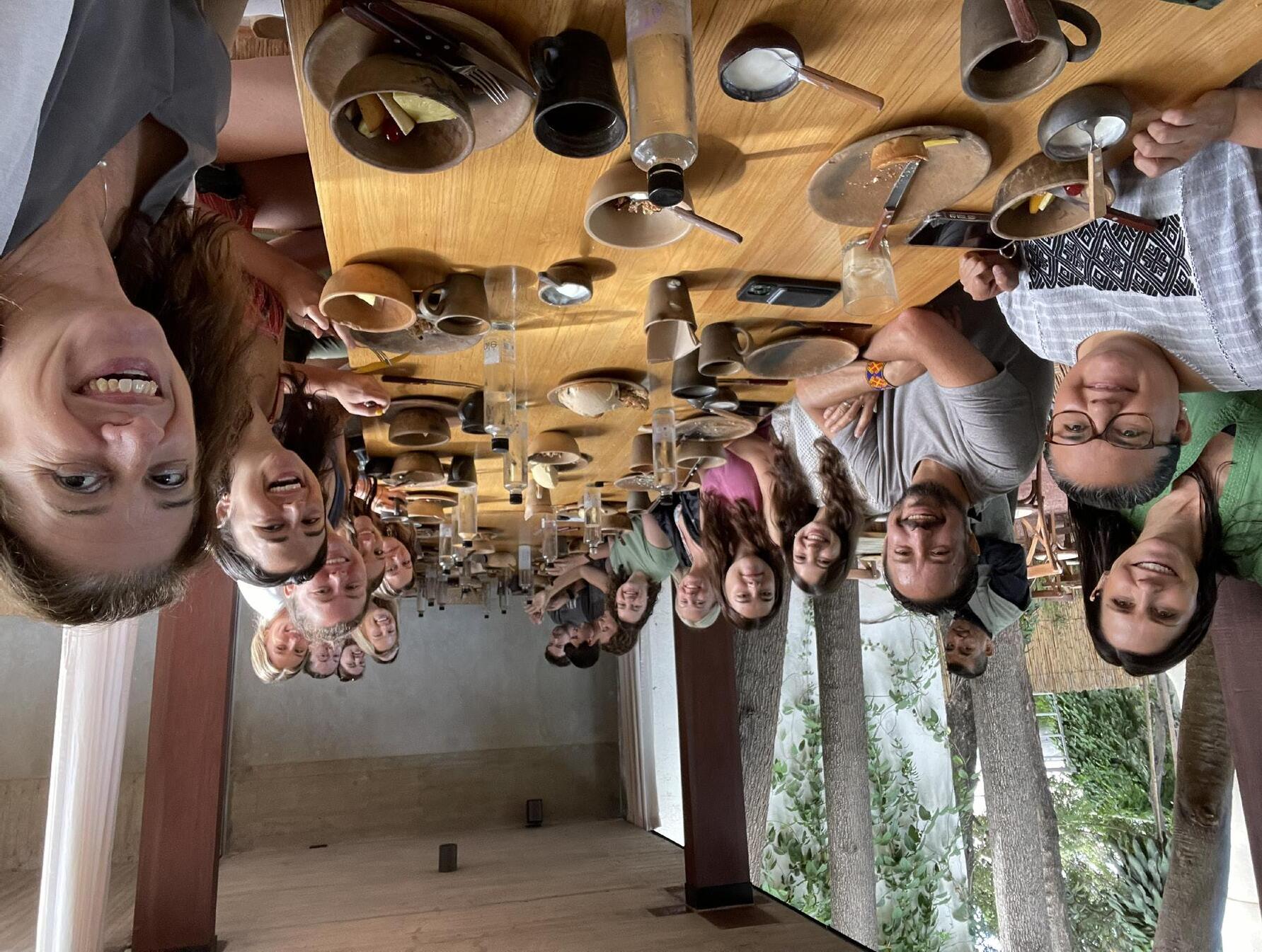
Dear BarberMcMurry Architects,
I am writing to express my sincere gratitude for sponsoring our studio trip to Mexico. This was my first visit to the country, and it was an incredibly eye-opening experience. Immersing myself in Mexico’s rich culture, stunning architecture, and breathtaking landscapes left a profound and lasting impression on me.
I was particularly inspired by the work of Javier and the JSA team. Witnessing their diverse range of projects and their adept use of site and resources was truly enlightening. I was especially impressed by their focus on enhancing both the user experience and the broader urban environment. Their emphasis on thoughtful circulation and spatial experience was remarkable and has significantly influenced my perspective.
The innovative approach to adapting and reusing spaces demonstrated by JSA was truly remarkable. It has given me a fresh appreciation for the potential transformations of spaces and has sparked a desire to see similar projects realized in the Knoxville area.
Thank you once again for making this unforgettable experience possible. Your support has greatly enriched my understanding of architecture and its potential.
Mary Huffard
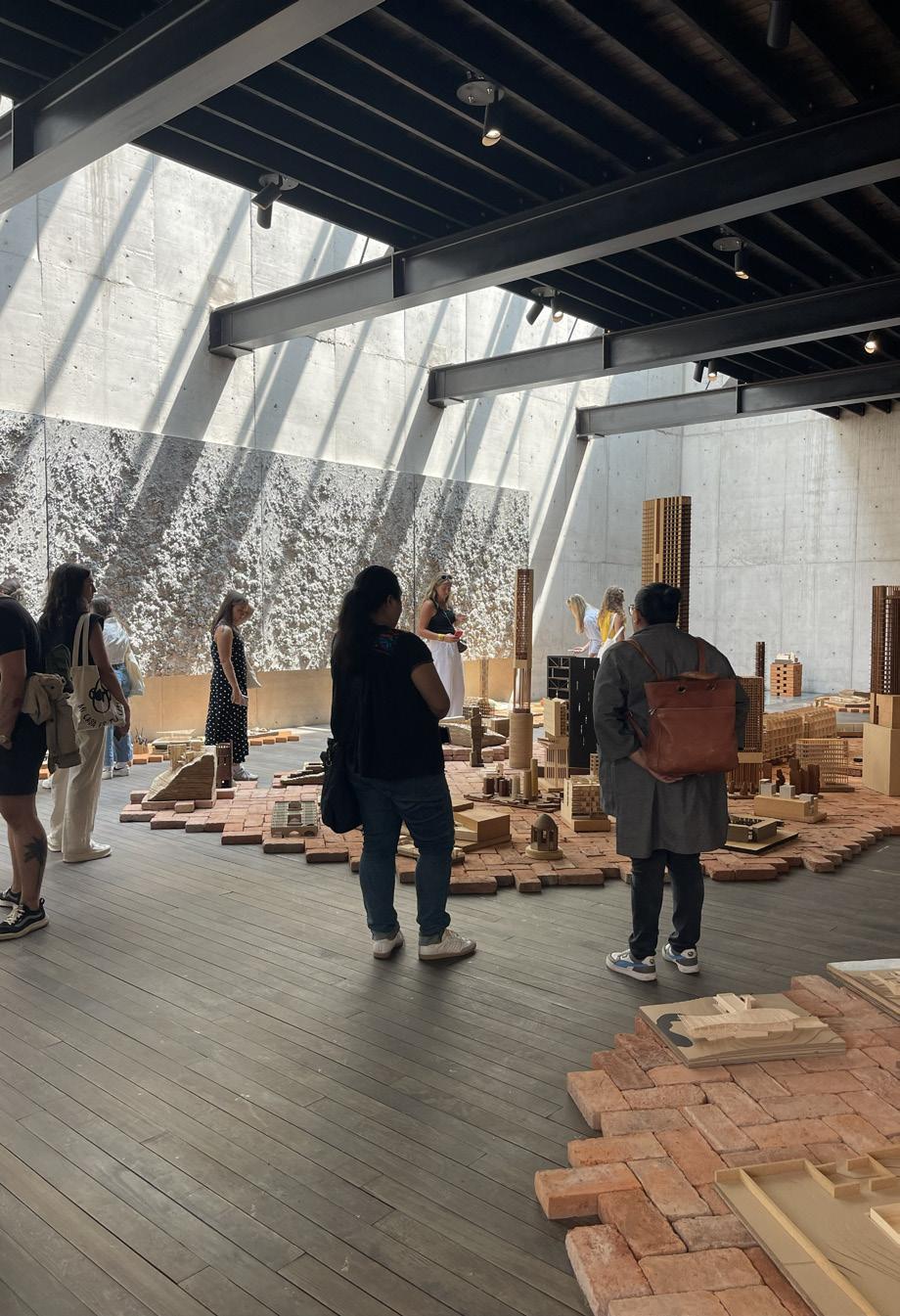
I feel so incredibly grateful for this learning experience. Travel has always been very important to me - being immersed in other cultures enriches our education so much and I felt so fortunate to experience this place with some of the greatest architects in Mexico.
All of the architecture that we got to visit was so different than anything I had ever seen. It was so interesting to understand the design principles that are used in Mexico City and Oaxaca and how they differ from what we are surrounded by. Javier and Aisha made sure that we had a very well-rounded experience. It was so clear that they deeply care about the past, present, and future of the architecture in Mexico. It was incredibly inspiring to witness the passion and knowledge that they displayed. We saw incredible architecture, landscapes, and experienced so much culture all in such a short amount of time.
Leaving this trip, I feel so inspired to bring these principles back to my education and practice. The ideas and notions that I gathered in Mexico will stick with me forever. Not only did we learn so much about this place, we were also welcomed with open arms and treated like family by all involved. Thank you so much BMA for providing this incredible learning experience. We will be forever influenced by the architecture and culture we experienced.
Lauren Hall
Thank you to all who were involved in making this studio and this trip to Mexico possible. It is a true blessing to be able to learn from someone as renowned and successful as Javier Sanchez. Without the BMA grant, this would have never been made possible. We are only a few weeks in and I have already been immeasurably impacted by this experience. I cannot wait to see what the rest of this semester has in store. So from the bottom of my heart thank you all.
Thomas Miller
I feel so blessed to have had the opportunity to have such an incredible experience in Mexico and in this studio. I learned so much about culture, adaptive reuse, development, process, and the work of Javier, Aisha, and the rest of the JSA firm. It broadened my design
perspectives and expanded my views of reusing old buildings and the potential they have, as well as capturing culture into design.
The wide variety of projects and places we went were very different from any place I have beento in the world. For my first time in Mexico, I was very impressed with the lush, green city of Mexico City, and the colorful, unique Oaxaca. I also really appreciated learning about the value of water as a resource and all the ways it can be reused and celebrated. This is something that isn’t as familiar to me, and as our sight sits next to a water plant and the Tennessee River, I am excited to implement the things that we learned into our project. Javier, Aisha, and everyone else we met along the way, were so welcoming and excited to have us. Their passion for architecture is evident in everything they do, and I feel so lucky to get to study under them.
Thank you BMA for making this incredible experience possible. I feel so inspired and excited to work after the experiences I had. This trip will have a lasting impact on my design perspectives.
Kate O’Neil
I cannot help but think about how grateful I am to be a part of this studio and to have the opportunity to travel abroad to broaden my exposure to architecture, as well as a different culture. A culture that was welcoming to us from the minute we arrived in Mexico. It was wonderful to see the work of Javier and Aisha and JSa as a whole.
This trip has opened my eyes to how much architecture is influenced by the culture it exists within. It creates a sense of place for the people that interact with a structure. The way architecture in Mexico seeks to honor the country’s past and heritage was the most inspiring to me. By better understanding the humble perspective Javier and Aisha have towards their projects, I am even more amazed by the level of work they have produced and how they have positively influenced the people within the city itself.
This trip was an experience of a lifetime. Not only for the travel experience, but for the people we got to meet such as Hector Esrawe, and the places we wouldn’t have been able to see if we were simply visiting as a tourist. Thank you to everyone who made this trip
possible, I will always be thankful for what this experience taught me and for what it has allowed me to see.
Lucy Pirtle
Reflecting on this past week, I feel so privileged to have had the experience of traveling to Mexico and to have a place within this studio. I fully believe that traveling is one of the best ways in which we are able to learn- taking in new ideas about the way the world works and meeting new people with differing lived experiences, and on this trip we were able to do just that. Coming into the studio, I had ideas on
adaptive reuse, but seeing the ways that those concepts are actually playing out in both Mexico City and Oaxaca was eye opening to say the least. Not only did we see the sites, but I personally feel as though I gained a new way of being able to read the site by seeing possibility in every “ruin” of former infrastructure. We talked in depth about site analysis and context while being able to physically walk built works that photos just don’t do justice.
Additionally, our trip made every effort to be interdisciplinary in both projects we visited and the ways in which they were talked about- something I was incredibly appreciative of considering how little collaboration we often get while in school. I can only hope that this is a precursor for the rest of the semester as we carry with us the words of Hector Esware of EWE Studio, who advised us to continually learn and grow as designers, rather than being boxed in by preconceived ideas of our own disciplines. All in all, I would like to say thank you for this humbling once in a lifetime experience and for your continual investment in the students at UT to become more enlightened as we grow within our education.
Kelsey Shockley
This trip widened my vision about a country I thought I already knew. I go to Mexico City every year to visit all of my relatives, so I have been immersed in the casual family life, the homey Mexican meals, and the humor of the language. While that is a huge part of my identity already, the week we have just experienced as a studio was extraordinary, showing us the joys beyond its typical environment.
We feel so grateful to have been introduced to Mexico’s craft and its traditions that have been passed down for generations. We got to observe tiny details that hide in Mexico City and Oaxaca, which influence our minds as designers. Javier and his firm partner, Aisha, are incredibly bright minds that we are fortunate to learn from and laugh with. Their gentle influence on Mexico’s urban fabric has shown us how our work really matters and what can happen when we think innovatively while respecting history. It is so heartwarming that Barber McMcmurry Architects recognize how rising designers like us can be emotionally and creatively impacted by a studio like this. I know I feel different, and I have found even more pride for Mexico’s culture!
Cecilia Torres
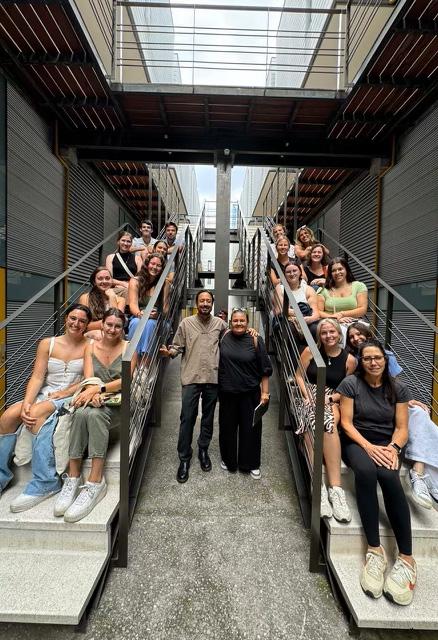
The trip to Mexico and the studio thus far has truly been a transformative experience. From day one, Javier and Aishia have completely opened my eyes to a new approach to design. From exposure to architects that we should have been introduced to on day one of school, to getting to see boundary-breaking designs in person, I have been beyond blessed to be given this
opportunity.
The trip to Mexico truly felt like we were gone for a month. Not only because of the numerous exemplary projects we were fortunate to see, but also the immersion into the life, culture, and way of thinking that truly left me in awe and yearning for a space in which to experience this at home.
I was allowed to experience architecture, spaces, and experiences that truly created memories and ideas that will never be forgotten. Throughout the whole trip, I could not stop saying to those around me how incredibly grateful I felt that we were given this opportunity, not only to experience the trip but also to have Aisha and Javier as professors.
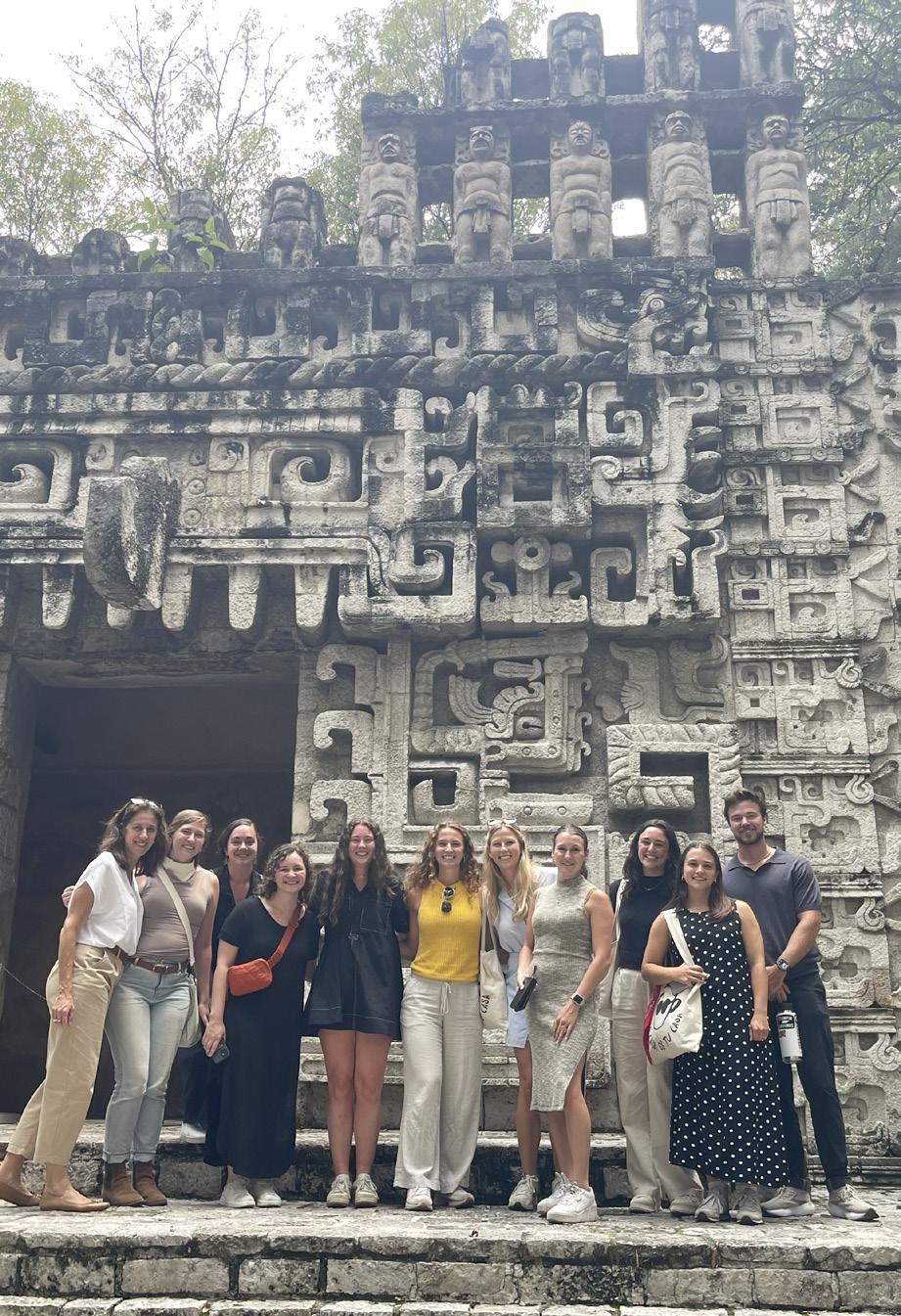
I am so grateful for this experience, this studio, and the amazing people I have been exposed to this semester thus far (and the food!!!!).
So thank you Javier. Thank you Aishia. Thank you BMa for making this pivotal next few months in my life some of the most impactful I have and ever will experience.
Callie Walmsley
I want to start off by saying traveling the world is one of the best ways to expose one to various cultures and ways of life. I feel it is important, especially in our field, to see how others interact with one another, appreciate family, love, and the lights of the world. When given the opportunity to be a part of Javier and Aisha’s studio I felt overjoyed with even a glimpse of the experiences I would be taking on. During our trip in Mexico I was blown away by the sites we visited. While viewing the projects JSA has done, they walked us through the spaces explaining their intentions behind designs.
Javier and Aisha are some of the most humble people I have met and they carry themselves with such grace which made the entire experience. I have learned so much more about the world of design, Mexican culture, people’s needs in architecture, and most importantly myself.
I will never forget this wonderful trip, and I am so excited for the rest of this semester. BMA could not have given this opportunity to more experienced and graceful architects, as well as appreciative students. We are all so lucky to have embarked on this journey, and
will carry what we have learned into our own careers.
I want to thank you (BMA, Javier, and Aisha) for your part in allowing all of this to orchestrate, and giving us the opportunity to travel and see other parts of the world.
Julia Warner