
VISUAL CAMPAIGN / FESTIVAL GRAPHIC DESIGN
PROJECT BY MICHELA BONFÈ
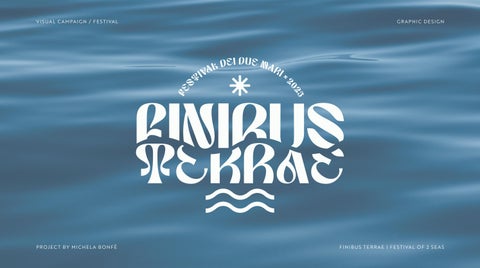
‘’Finibus Terrae’' is a Latin word for the extreme southern border of the Roman territories and means, precisely, “at the edge of the earth”. The name of the festival is attributed to its location, Santa Maria di Leuca, in the southern region of Apulia in Italy.
The festival was created to celebrate the meeting of the Ionian and Adriatic seas, a characteristic phenomenon that throughout history has been the scene of myths and legends, through traditional (and non-traditional) music and customs. Three evenings dedicated to the sea with music, local street-food, artistic performances and historical re-enactments of the oldest legends that this land gives us.
13 | 14 | 15 AUGUST
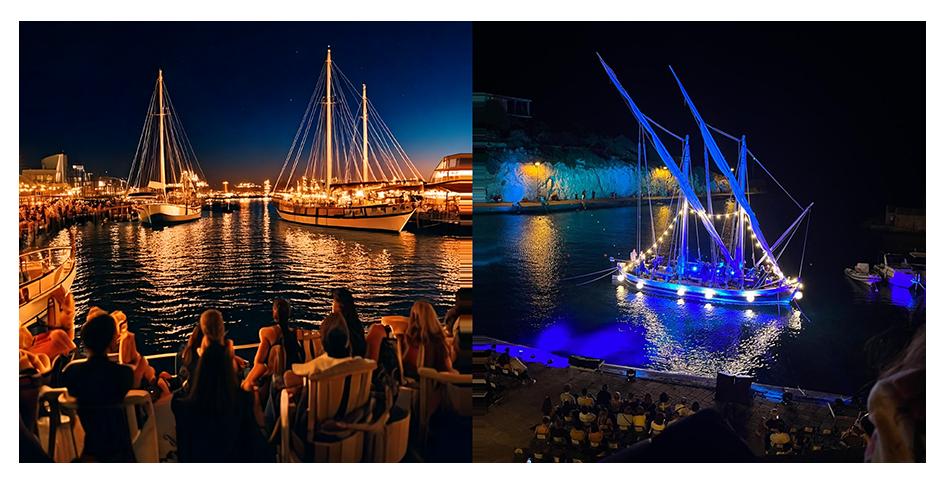
Three evenings, from sunset (6pm) until night (2.00am) with live music using the harbour boats themselves as a stage. The audience can watch on the harbour quay or on their own boat, creating a unique atmosphere that reconnects us with the sea and nature.
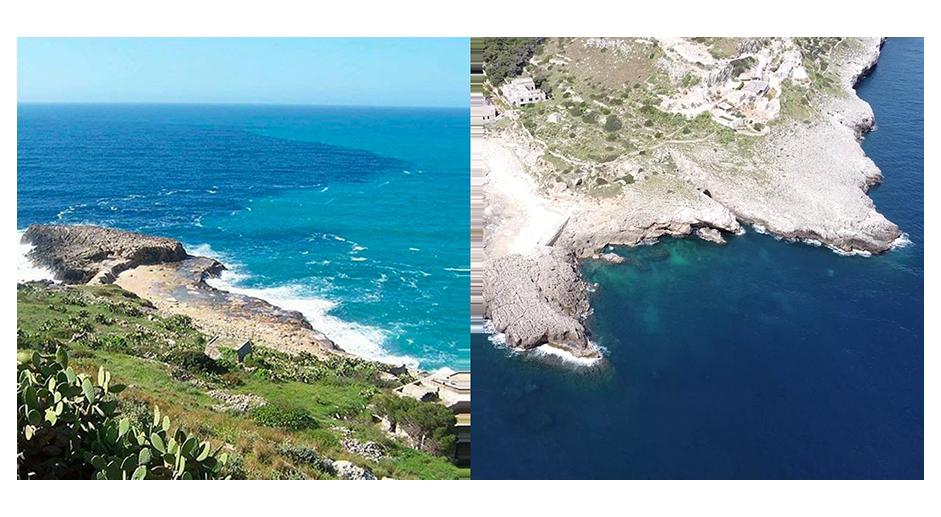
In the Salento region in the south of Apulia, lives Santa Maria di Leuca “on the edge of the earth”, with only the sea to surround and protect the town. It has always been considered one of the most beautiful destinations because it preserves the incredible meeting of the waters of two seas, the Ionian and the Adriatic
In certain climatic conditions, it is possible to see off the Marina di Leuca a dividing line between the currents coming from the Gulf of Taranto and the Otranto Channel that actually divides the two seas. This is a unique and rare phenomenon caused by the different salinity of the waters that brings a difference in colour that is perceptible even to the naked eye, creating a spectacle of indescribable beauty.
Legend has it that the meeting point of the Ionian and Adriatic seas was ruled by a white, half-woman, half-fish deity called Leucasia. Although her powers of deduction were infallible, one day she was unsuccessful with a young man, Melissus, who was too much in love with his girlfriend Aristula.
Leucasia, enraged, wanted revenge: once, surprising the two lovers embracing on a beach, she unleashed a wind so strong that it separated them and caused them to crash on the rocks, hurling them over the two ends of the gulf and killing them; but the goddess Minerva watched Leucasia's terrible deed with extreme pity, and decided to make them immortal by turning them into stone, at what is now Punta Ristola and Punta Meliso. Leucasia also turned to stone out of remorse: she became the whitest of rocks, today's Santa Maria di Leuca.
VISUAL CAMPAIGN / FESTIVAL GRAPHIC DESIGN
VERTICAL
HORIZONTAL PICTOGRAM
The main logo is constructed from a reworking of the capital “Martin Demo Regular” font, adapting it to the features of a wave, a line separating the first word from the second, referring precisely to the line dividing the two seas
The pictogram, on the other hand, is composed of two waves and a star, representing the two seas and the polar star placed in the centre, which has always been a symbol of navigation guidance for sailors.
In the main palette, the colours recall the tones of the sea in particular the shades created at sunset going towards the blue of the night, to indicate the time when the festival begins and ends. This palette should be used for main images and titles
In the secondary palette, on the other hand, there are shades of blue , reminiscent of the sea and shades of grey , to be used for texts and descriptions
A B C D E F G H I J K L M N O P Q R S T U V W X Y Z
a b c d e f g h i j k l m n o p q r s t u v w x y z . : ; - @ # +
A B C D E F G H I J K L M N O P Q R S T U V W X Y Z
a
Martin Demo Regular is mainly used for titles, which can be modified to create new interpretations or adapted to the matching images.
Brother 1816 Printed is available in both book and bold versions and can be used for all secondary texts and descriptions.
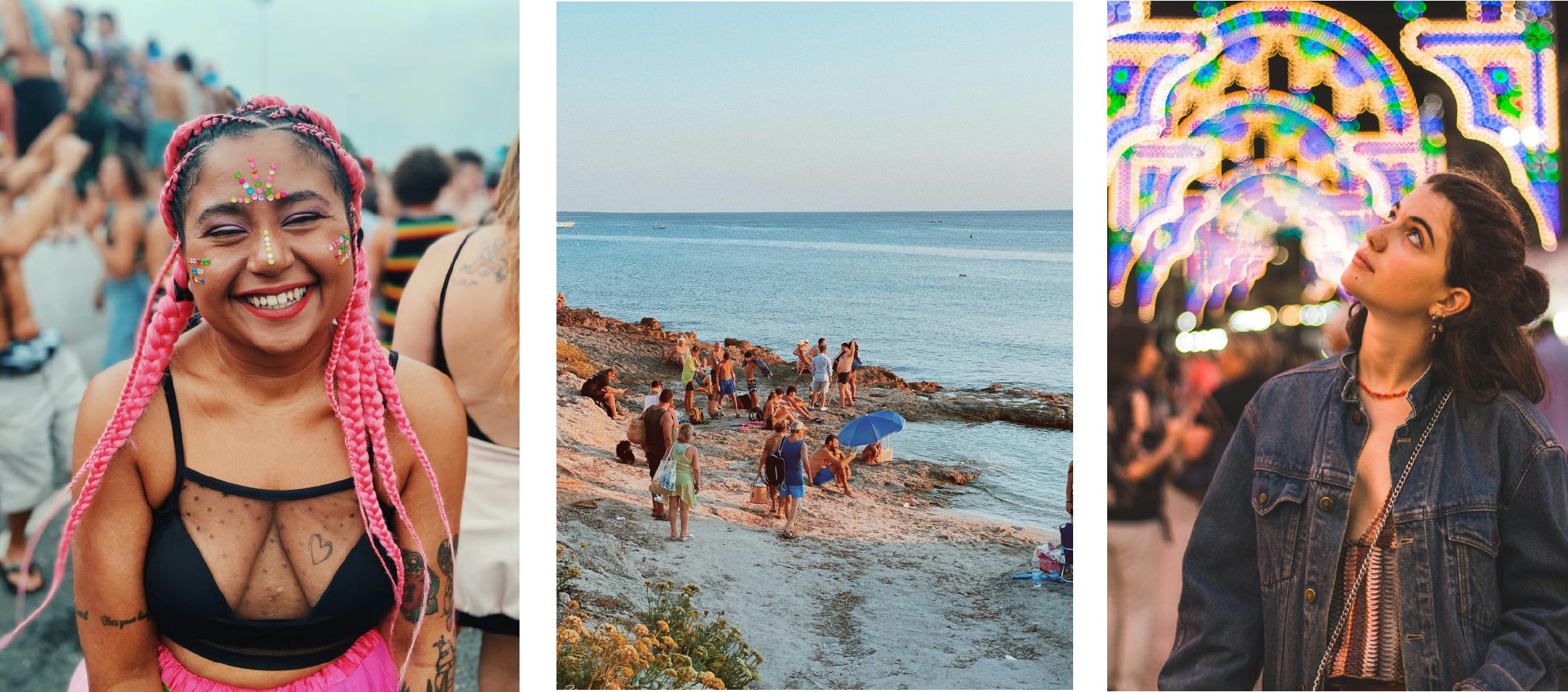
The festival is dedicated to a very wide audience, both local and non-local. It wants to bring together all those who are not familiar with the traditions of the area, but it does so with a focus on aesthetics and a link to traditions that is consequently more appreciated by a higher audience specifically a 25-45 year old target group.
It appeals to lovers of popular and contemporary music, nature lovers and the sea in particular. It rides the wave of carefreeness typical of the summer season experienced by young people
The activities, the music, everything is chosen with the aim of combining ancient traditions with modern times, so as to feel immersed in a not too distant context, rediscovering one's roots.
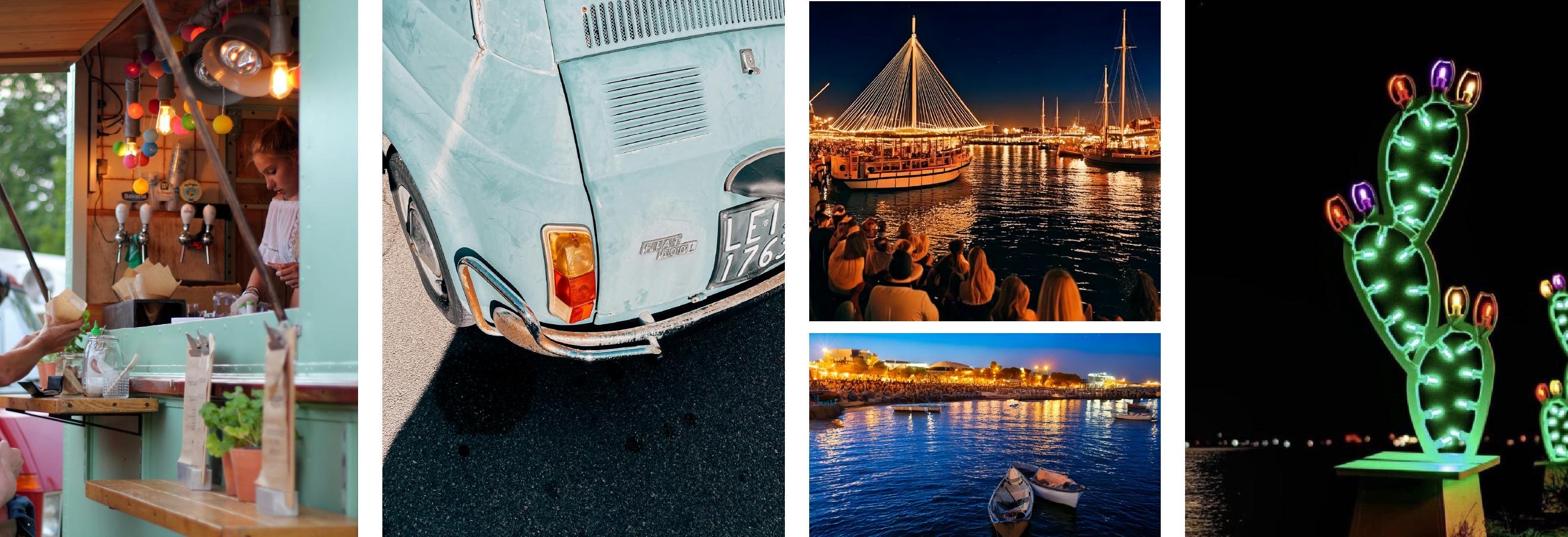
The tone of voice of the festival is the union of the traditional and the contemporary. A journey back in time in this vintage and folkloristic all-Italian atmosphere where the aesthetics are minimal and elegant but also with strong contrasts the installations bright and flashy.
All that is sacred and symbolic becomes not only a symbol of devotion but something that tells the true essence of a tradition A pastel-coloured aesthetic that reminds us of the hues of the sea, the sunrise, the sunset and the darkest night where the stars guide us.
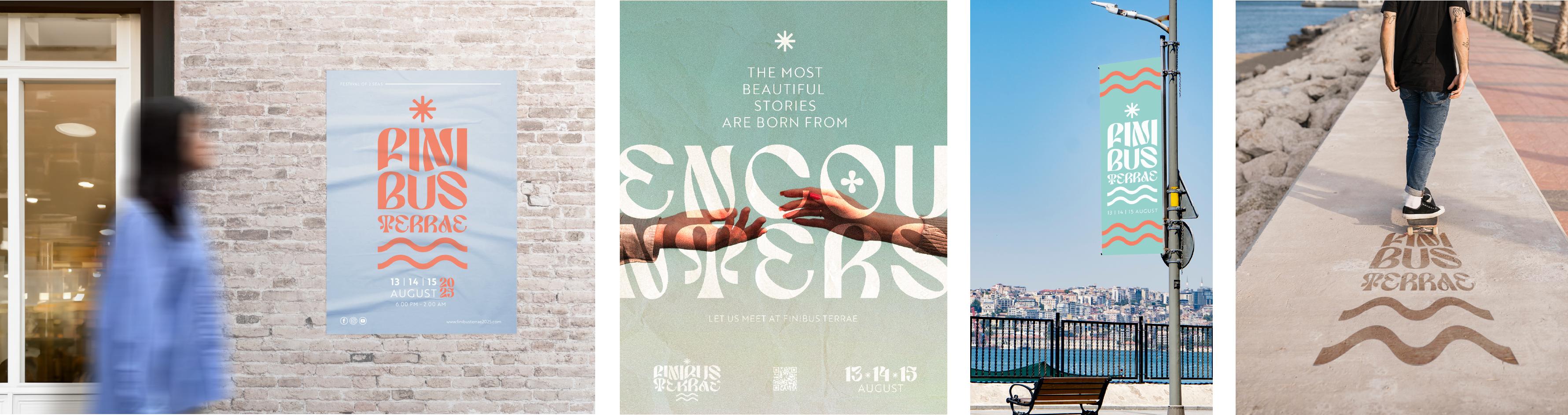





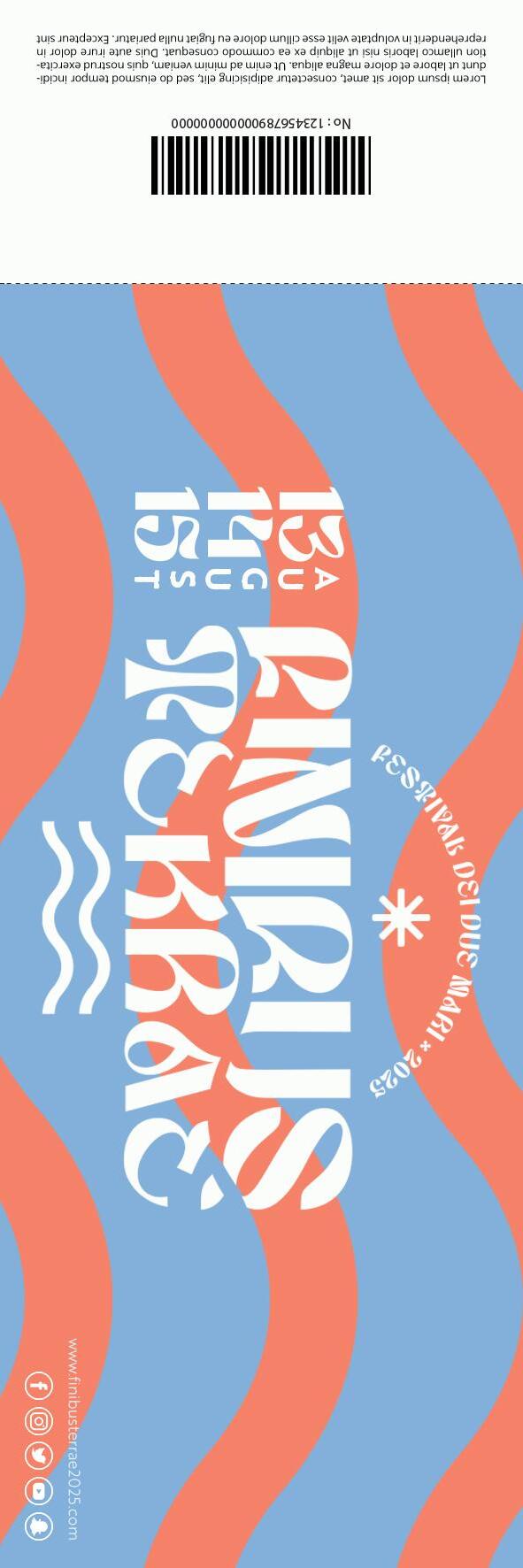
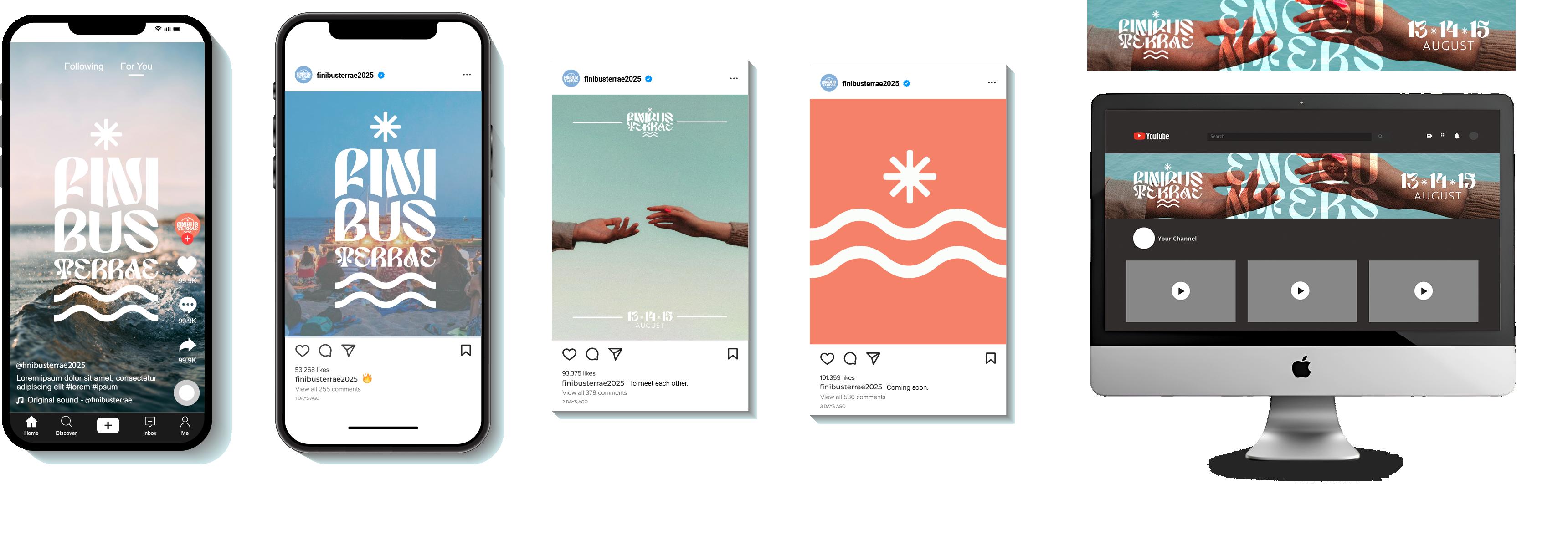
VISUAL CAMPAIGN / FESTIVAL
DISPOSITION
STREET FOOD ZONE
PERFORMACE ZONE
MUSIC STAGE ZONE