
Progress
Iowa Central CommunIty College

FUEL TESTING LAB DEBUTS
College is on a growth spurt
By BILL SHEA
bshea@messengernews.net
Every time a driver pulls up to a fuel pump in Iowa, they’re purchasing ethanol, gasoline or diesel fuel that has been quality-checked in Fort Dodge.
Those checks are conducted at the Iowa Central Community College Fuel Testing Laboratory. That lab debuted in 2025 in one of the year’s major developments for the college.
Also in 2025, voters in nine counties approved an extension of a borrowing authority, which will enable the college to launch a series of building projects, with the largest being a new Center for Ag Science.
Fuel lab
“This lab will drive innovation in one of Iowa’s most important industries,” Gov. Kim Reynolds said during a February ribbon-cutting ceremony marking the debut of the new lab on A Street West.
College President Jesse Ulrich said the facility is the nation’s only independent fuel testing lab.
It is also the official fuel testing lab for the state Department of Agriculture and Land Stewardship. Ensuring the purity of fuel sold in the state is one of that department’s many responsibilities.
“Secretary Mike Naig and his department have been in constant communication with us,” Ulrich said, referring to Iowa Secretary of Agriculture Mike Naig.
The concept of a fuel lab emerged in 2018. It started in an old greenhouse on the college’s main campus, moved into the Bioscience and Health Sciences Building and finally to the new building, which was specifically designed and constructed to be a fuel testing lab.
The new lab is on U.S. Highway 169 across from the main campus, on land donated by Casey’s General Stores and the owners of the property where the Colonial Inn once sat.
The lab concept grew from a partnership between the college and Decker Truck Line Inc. based in Fort Dodge. The trucking company wanted to check the efficacy of biodiesel. The resulting test was called the Two Million Mile Haul.
Reynolds described it as “a groundbreaking study” that showed biodiesel was every bit as good as its petroleum based counterpart.
When the Two Million Mile Haul made the need for a testing lab apparent, college leaders began working with public and private entities to make that happen. Jim Kersten, the college’s former vice president for external relations and government affairs, was key in the effort.
Bond issue
The borrowing measure was approved in November by a 61.55 percent majority. A 60 percent majority was needed for passage.
“We’re just honored and we’re just humbled that the voters in the nine counties entrusted us with this money to create more plumbers, more HVAC workers, more dental hygienists and more nurses,” Ulrich said.
“We’re grateful,” he added.
The extension of the borrowing authority will not cause a property tax increase, college
-Submitted image
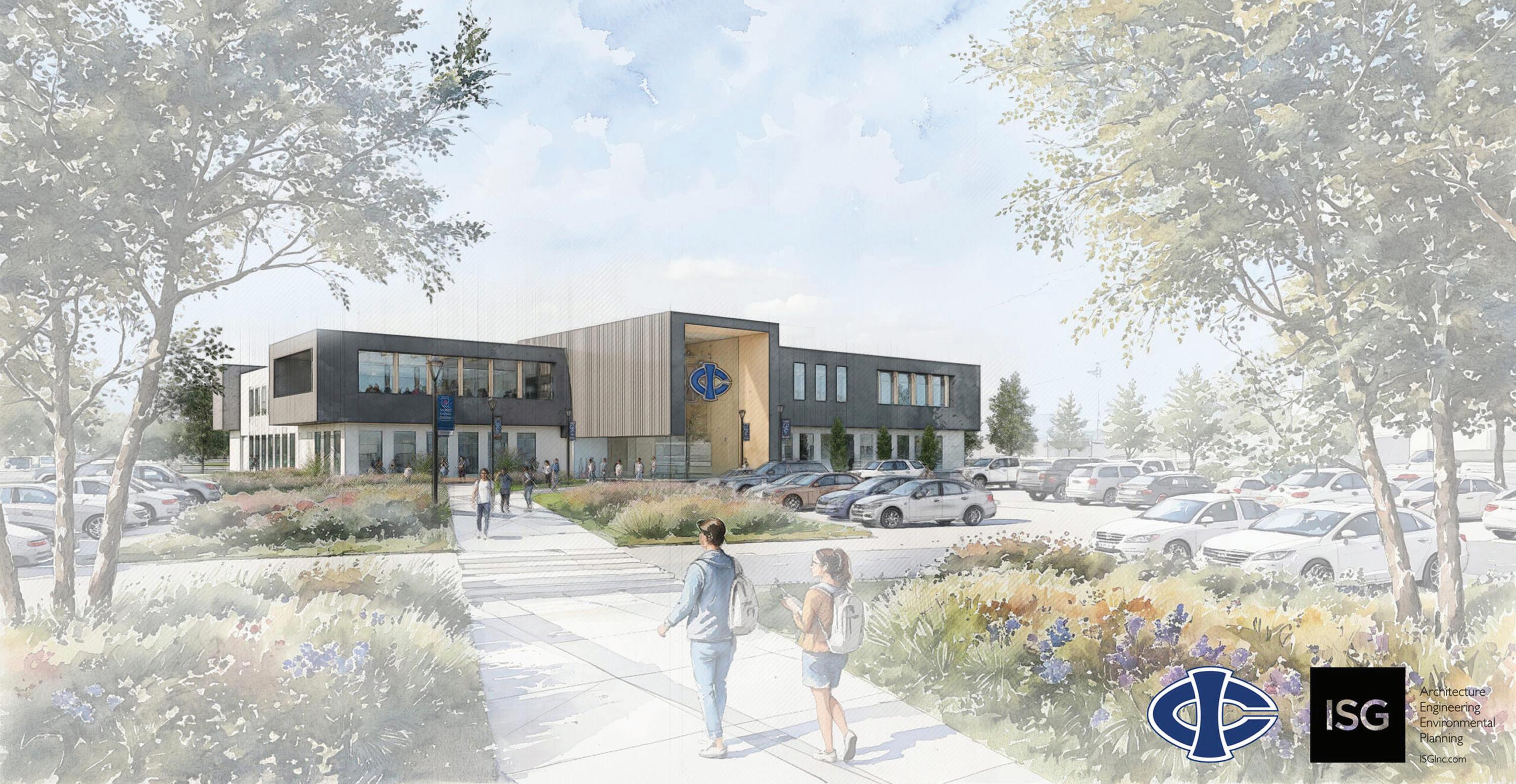
ABOVE: This image shows what the new $18 million Center for Ag Science on the Iowa Central Community College campus in Fort Dodge will look like. Money from a $35 million borrowing authority approved by the voters in November will pay for it.
-Messenger file photo
BELOW: Don Heck, director of the Iowa Central Fuel Testing Laboratory, left, shows Gov. Kim Reynolds some of the facility’s features during a February 2025 event marking the lab’s debut.

leaders have said. Property taxpayers will continue to pay a levy of 33 cents per $1,000 of taxable value, a levy which has been in place since 2008.
The levy costs the owner of a typical Fort Dodge home about $2 a month or about $25 a year, according to the college.
The $35 million will be invested in buildings and equipment needed to train more people for high demand jobs in the area. Ulrich has said the college currently doesn’t have the physical capacity to train more people. The investments that are planned will alleviate that problem, he said.
A significant part of the money, about $18 million, will be spent to build a new Center for Ag Science on the Fort Dodge campus.
The center will house the agribusiness, ag science, animal science, precision agriculture and veterinary technician programs.
It will be located on the northeast side of the intersection of U.S. Highway 169 and Kenyon Road.
The Applied Science and Technology Building, one of the oldest buildings on the Fort Dodge campus, will be renovated to create more space for the dental hygiene, plumbing and heating, ventilation and air conditioning programs.
The college’s Webster City Center will get an updated heat-

ing, ventilation and air conditioning system. New windows and insulation will also be installed.
Bond issue money will also be spent to purchase new equipment for programs at all of the college’s centers and career academies at area high schools.
The first step in implementing the improvements to be paid for with the bond money will be completed this year. That step will involve construction that will not be paid for with bond issue money.
Ulrich said a new Center for Sports Performance will be built near the practice field on the south end of the campus near Kenyon Road. He said the building will house the football team and sports science classes.
It will be paid for with donations and money from housing, according to Ulrich.
He said construction will start this spring and be completed by the end of the year. Jensen Builders Ltd, of Fort Dodge, is the construction manager and general contractor for the job.
When the new building is complete, the football team will move out of the space it currently occupies in the Applied Science and Technology Building. Moving that team out will clear the way for bond issue-funded renovations in the building many people may know by its old name, Voc-Tech.
Other 2026 initiatives
A new restaurant, to be open to the general public, is expected to open on the Fort Dodge campus this fall. It will be operated by the college’s culinary arts students.
The restaurant will be in the northwest corner of the Hansen Center. Ulrich said it will be called Circle One, which is a reference to the college’s address of 1 Triton Circle.
It will replace the college’s Willow Ridge property on Madison Avenue northwest of Fort Dodge. Ulrich said the Willow Ridge property, which years ago was the American Legion Golf Course, will be sold.
Also this year, Ulrich will be lobbying the state legislature to permit community colleges to award baccalaureate degrees.
Those degrees would be awarded in a limited number of fields that are in high demand, specifically nursing, advanced manufacturing, accounting and education.
Ulrich said Fort Dodge is in a kind of “education desert” in which people have to go somewhere else or take classes online in order to get a bachelor’s degree. Those two options aren’t good ones for many students. But offering a limited number of baccalaureate degrees, Iowa Central could support the local workforce and reduce the “brain drain” of people leaving the area, Ulrich said.

“We’re just honored and we’re just humbled that the voters in the nine counties entrusted us with this money to create more plumbers, more HVAC workers, more dental hygienists and more nurses.”
— Jesse Ulrich President, Iowa Central Community College
SERVING THE STUDENTS
Fort Dodge district propelled by support for bond
By MARK ADKINS
Fort Dodge Community School District Superintendent
Josh Porter continues to see a silver lining in all directions he gazes.
“The passing of the bond issue, being in the top two to three in the state among district overall growth, and the Dodger Stadium project completion have many individuals in the district and community excited,” he said.
Porter and the district’s continuing charge to get students into the classroom received a shot in the arm with a recent Iowa Association of School Districts report.
“It covers many areas,” he said. “Attendance and academics are two of the main ones. Our composite grew 24 points from last year, and we are up one category.
“It includes the sharp focus on literacy and math,” he added. “We still want to see even more improvement in both. Special education is also an important category, as we look to improve what we have in place.”
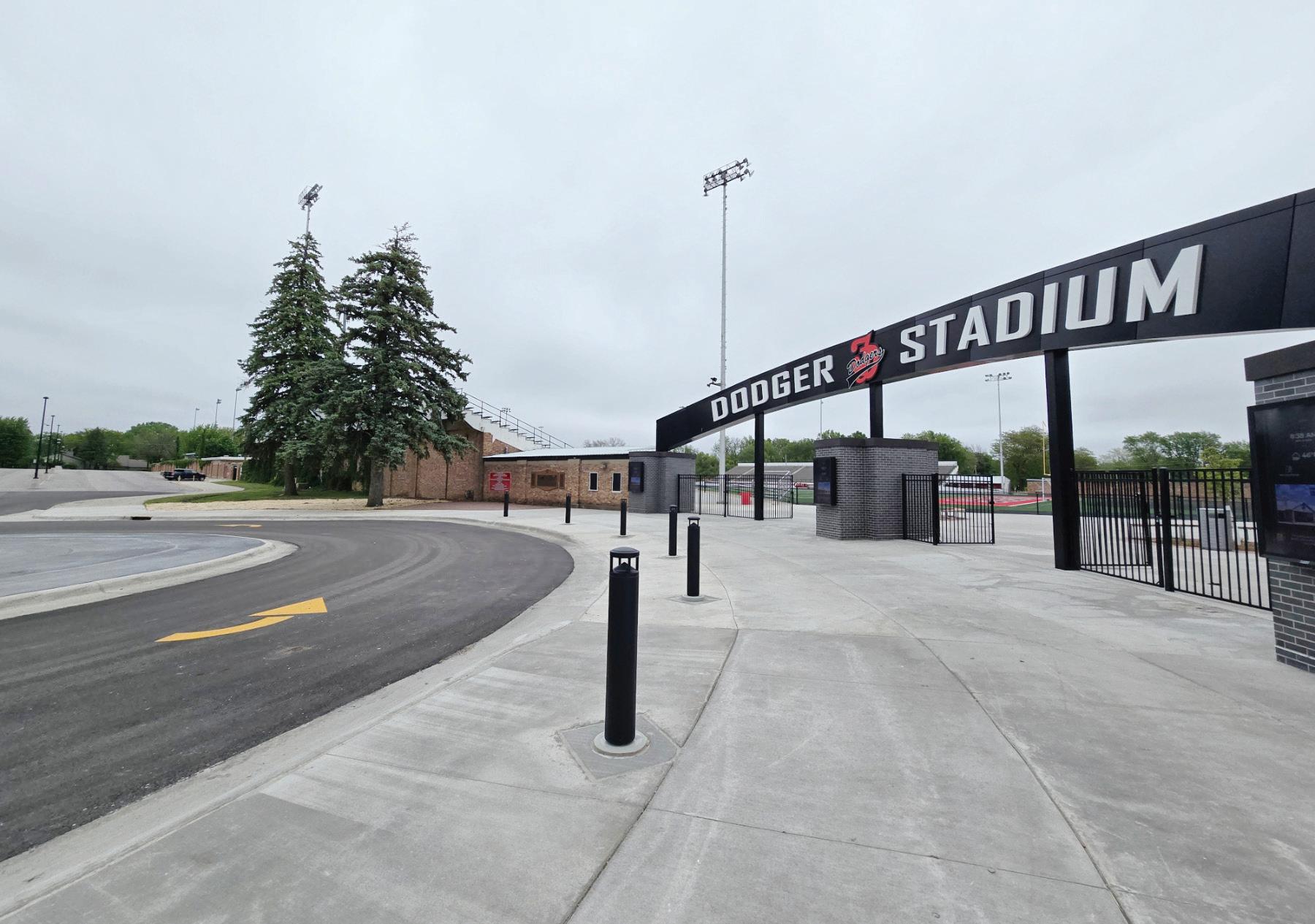
Facility-wise, a state-of-theart upgrade to venerable Dodger Stadium has drawn compliments from around the community.
“It’s huge not only in what we want to do, but it also assists St. Edmond’s and Iowa Central,” Porter said.
Facilities work continues in the near future, with the recent bond issue helping to upgrade the high school.
“It was the second-highest passing bond referendum in the state at 74.86 percent,” he said. “That shows such a strong relationship between the district and community, which is a big deal.
“We will also look at some improvements at Butler and Feelhaver elementary buildings, which have some needs,” he added. “Those discussions are part of a 20-year plan we will talk about after the first of the year. It addresses all district facilities, as there are still things to be done.”
The bond referendum work begins with a canopy and multipurpose room.
“It can be difficult to figure out where to begin after a bond passage, as we realize there is need everywhere,” Porter said. “The aim is to complete the entire upgrade by 2029.”
A key to concentrating on those elements is firm staffing and a board of directors with strong continuity.
“Our staff situation has gotten a lot better over the last three years,” Porter said. “We know there will be retirees and changes from time to time, but we

manage to have good candidates when this occurs.
“I really enjoy working with the board,” he said. “It’s a young group for the most part, but even in that, there is a veteran-based mindset with Diane Pratt, Keenan Schnurr, and Bri-

an Peterson, who have experience to guide us. (New board president) Molly (Nelson) is open to any ideas, too.
“It’s all about what is best for the students,” said Porter. “We want to continue to grow and accomplish big things.”
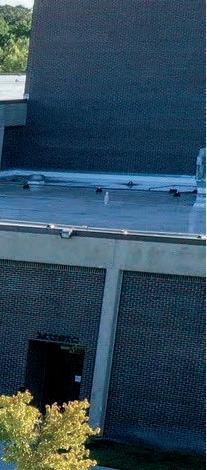
TOP: The new entrance to Dodger Stadium in Fort Dodge features a welcoming archway. The Dodger Stadium renovation project was completed in the spring of 2025.
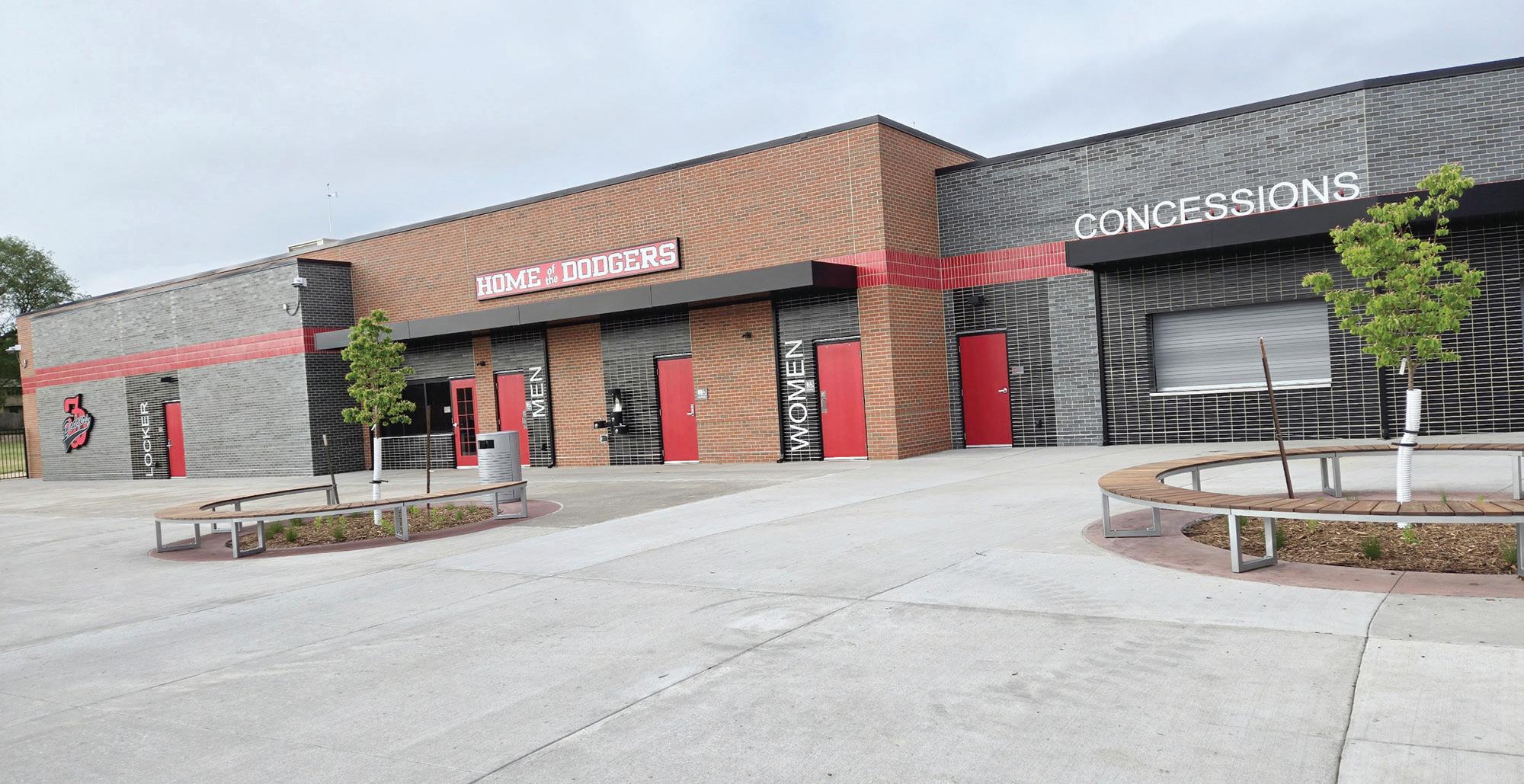
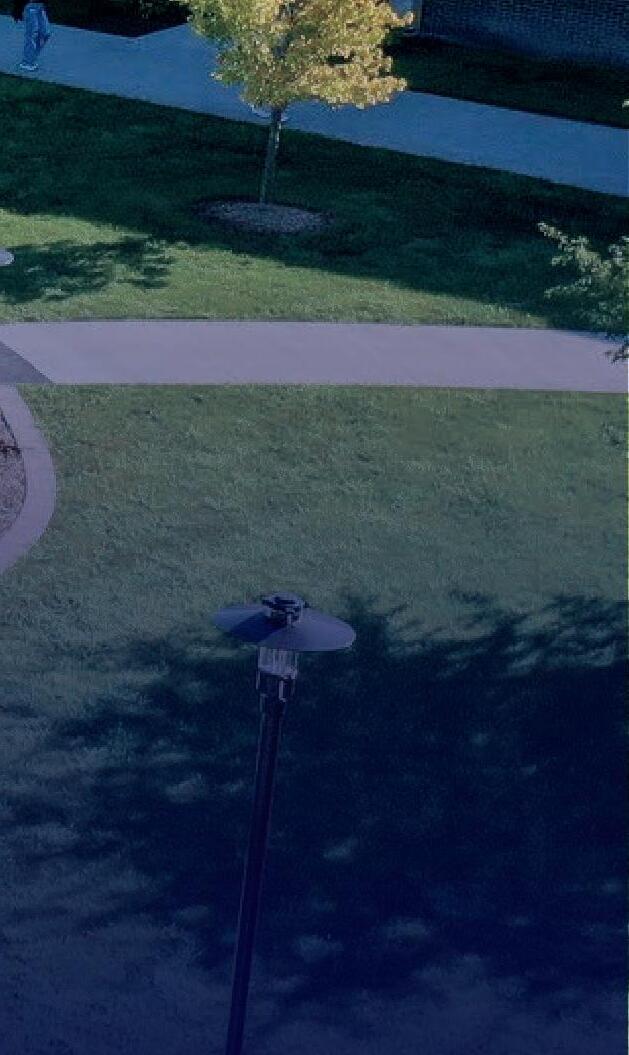
MIDDLE: The new concessions area, locker rooms and restrooms at Dodger Stadium in Fort Dodge are shown here, just to the east of the main entrance.
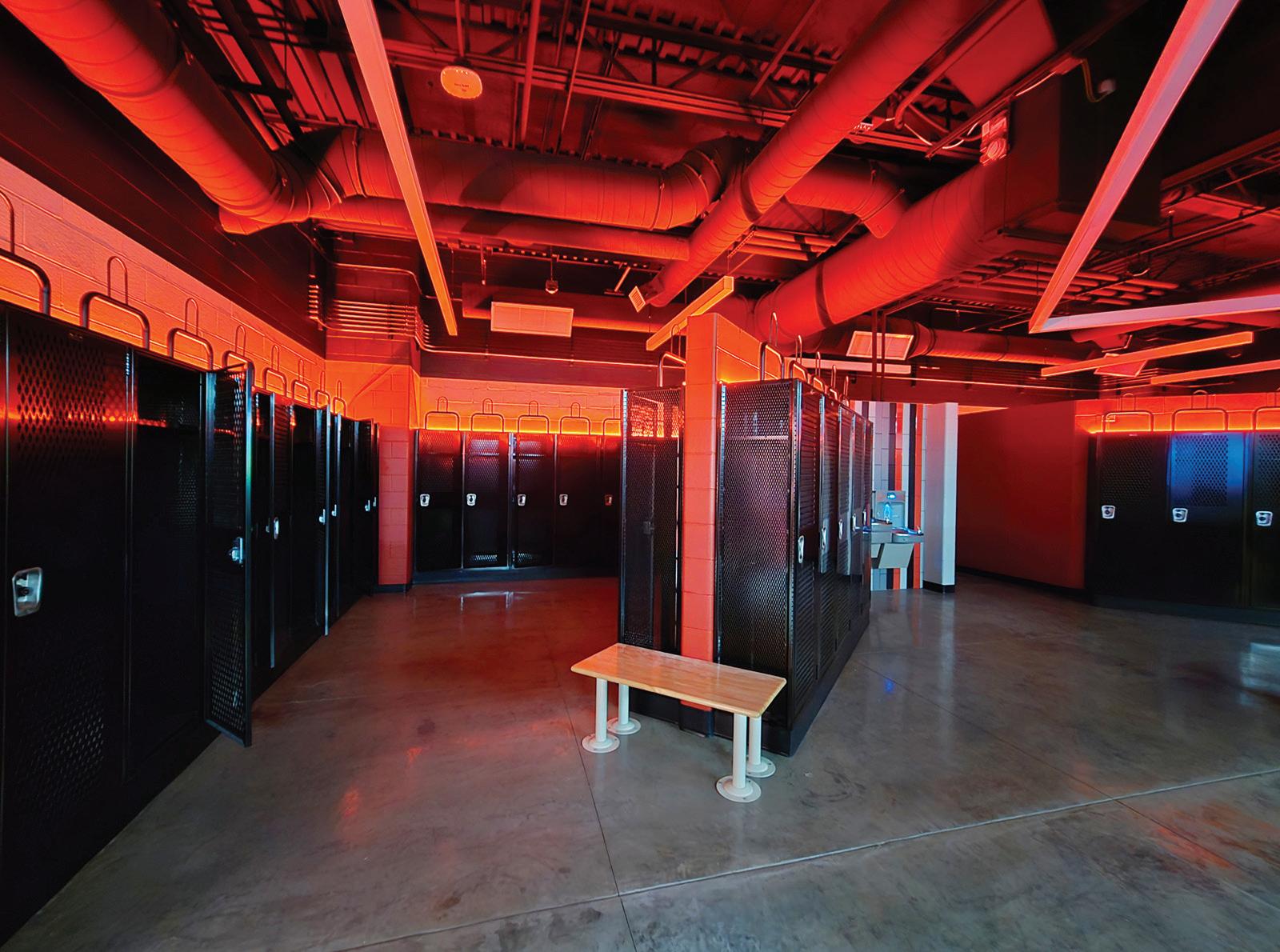
BOTTOM LEFT: A red border glow is on display in the new locker room area when the main lights are out.
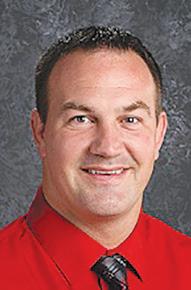
“It’s all about what is best for the students. We want to continue to grow and accomplish big things.”
— Josh Porter Superintendent, Fort Dodge Community School District
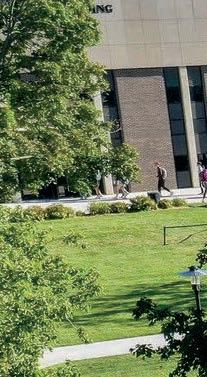



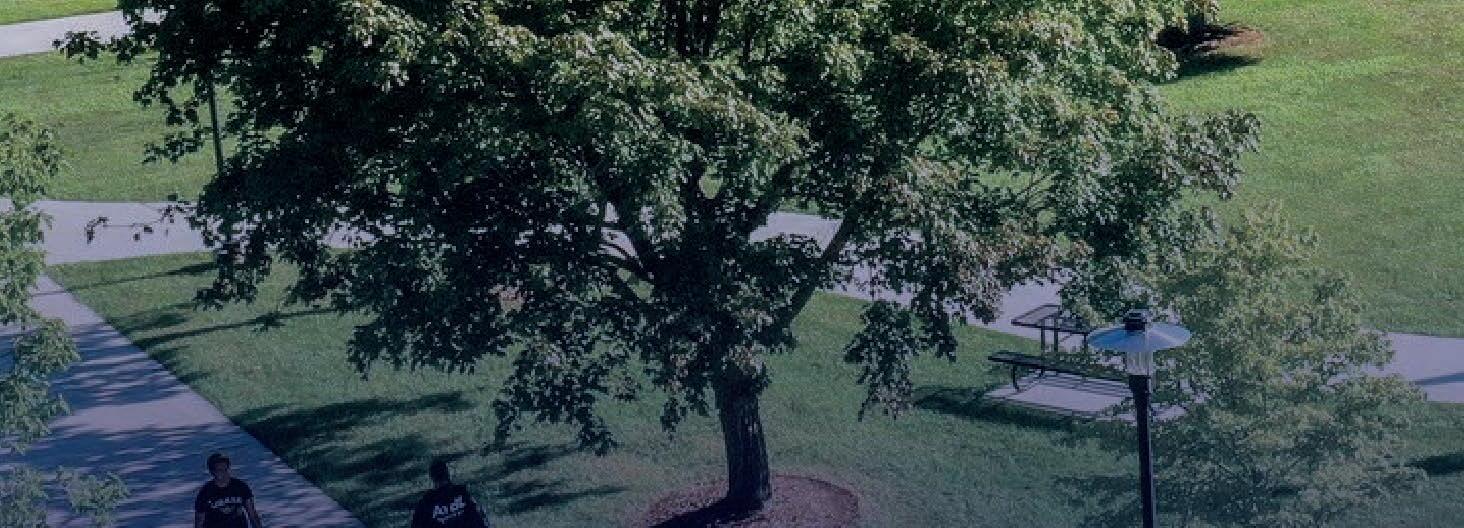
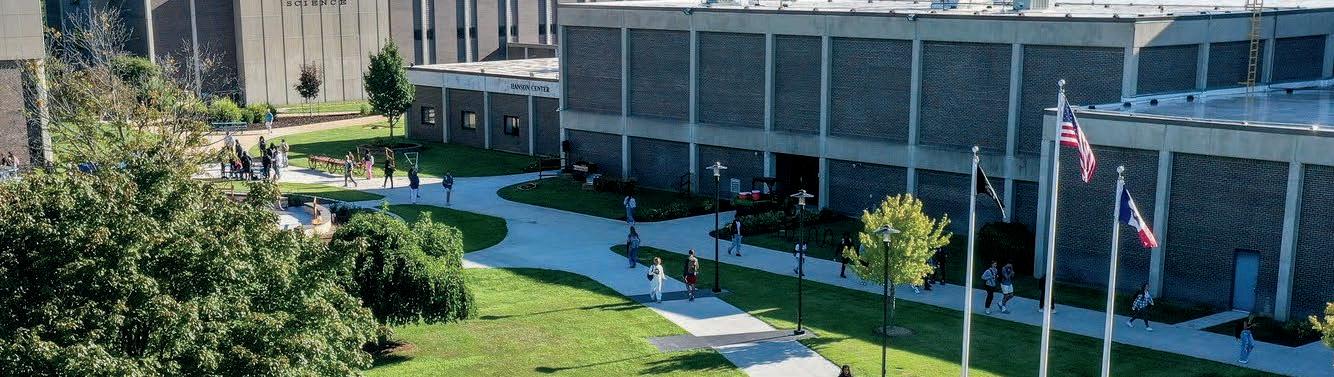












-Messenger photos by Eric Pratt
St. Edmond CatholiC SChool
‘INCREDIBLY BLESSED’
Donations help St. Edmond Catholic School grow, prosper
By DANA BECKER dbecker@messengernews.net
The past 12 months have featured continued growth and plenty of new around St. Edmond Catholic School.
From academic and athletic success, to welcoming new members of the teaching staff, to the complete renovation of the high school gym, progress made in 2025 was helped in large part by the support provided through donations.
“We were incredibly blessed by the generosity shown to St. Edmond Catholic School this past year through our annual campaign, gym floor campaign and the Friends of St. Edmond Ball,” said Susan Laufersweiler, director of development at St. Edmond. “Our annual campaign continues to be a vital source of both unrestricted and restricted funding, supporting athletics, music, scholarships, campus ministry, technology and more.
“We are deeply grateful to those who give each year to help sustain and advance our mission.”
The Friends of St. Edmond Ball hit a record-breaking total of $355,000, providing support for the operating budget. Approximately $40,000 of that was also designed for a special courtyard enhancement project.
“This student-led initiative includes the addition of a statue of St. John Bosco, a water feature currently being constructed by our conservation and engineering classes and expanded landscaping researched and planted annually by our students,” Laufersweiler said. “The selection of the saint statue itself was a meaningful research project, allowing students to study various saints before voting on the one they wished to honor in this space.”
A completely renovated high school gym greeted returning staff and students, as a new gym floor was installed along with new banners, an upgraded sound system and fresh paint.
“The gym floor campaign was another major accomplishment made possible by many generous donors working together,” Laufersweiler said. “Through this effort, we were able to replace the gym floor and update the hoops, press box, banners and walls. The renewed space has already hosted many exciting moments and success-
es for our sports teams.
“Additionally, we completed a long-planned bathroom remodel on the high school side, an important investment aimed at better serving our students, and phase three in our window replacement project. We were able to replace all 10 rotten windows on the east side of the building.”
As for the next 12 months, those plans include building maintenance, curriculum needs and day-to-day priorities that arise.
“We are hopeful for the continued support of our donors,” Laufersweiler said. “Our school depends on the generosity of others, and we are truly blessed by those who share their gifts with us year after year.”
Education remains at the forefront at St. Edmond
Maury Ruble is in his second year serving as the middle school/high school principal at St. Edmond. Having worked for nearly three decades in public education before his arrival, Ruble summed up his first 12 months in his new position as “exciting.”
“It was a great experience,” he said. “Experiences like Catholic Schools Week and the many other opportunities for gathering that our church and school community provided were wonderful. Our kids provided a lot of great moments for us throughout the year with outstanding


“We are deeply grateful to those who give each year to help sustain and advance our mission.”
— Susan Laufersweiler Director of development
performances in the arts, the classroom, and of course the competitive arena.
“It was thrilling to follow the boys basketball team to the state tournament.” he added. “We celebrated a freshman athlete as a state qualifier in wrestling. The girls track and tennis teams had amazing seasons, and the boys track team had outstanding performances as well. We again had an elite team on the softball diamond to round out our athletic year. Our middle school programs had good participation,
which we hope to see fuel our programs for the future.
“All in all, it was an exciting first year here.”
Ruble also noted the significant strides made in the counseling department along with improvements in the post-secondary planning for both students and families.
“Academically, our students achieved solid marks on our state standardized testing (in the 2024-25 school year),” Ruble said. “We had a senior class that earned significant financial awards for their post-secondary studies, and who provided support and encouragement as the school adjusted to new leadership. Together, we established a foundation for a bright future.
Moving forward, several goals remain at the forefront including ongoing professional development focused on Universal Design for Learning (UDL), keeping class sizes optimal for learning and broadening course offerings.”
Five sections of kindergarten were opened to begin the 202526 school year, along with a new section of first grade.
Tabitha Acree, elementary principal at St. Edmond, has several key goals for the remainder of 2026 for both students and staff.
“Our goals for students are to focus on strengthening foundational literacy and numeracy, providing consistent intervention and enrichment, and en-





couraging students to live their faith through service, leadership and daily actions rooted in Catholic values,” Acree said. “Staff goals center on continued professional growth through deeper collaboration around standards, instruction, and assessment, supported by ongoing professional development in effective instruction and classroom engagement.
“Long-term, St. Edmond schools remain committed to academic excellence by maintaining strong outcomes while supporting the whole child academically and spiritually,” she added. “We will continue to strengthen Catholic identity at every level, ensuring that Catholic values are clearly visible in classrooms, relationships, and decision-making. In addition, we will focus on strengthening partnerships with families, our parish and the broader community.”



























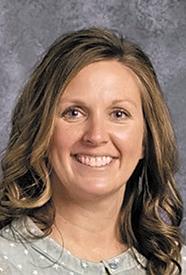
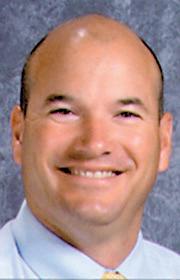
Maury Ruble Tabitha Acree
-Messenger file photos by Britt Kudla
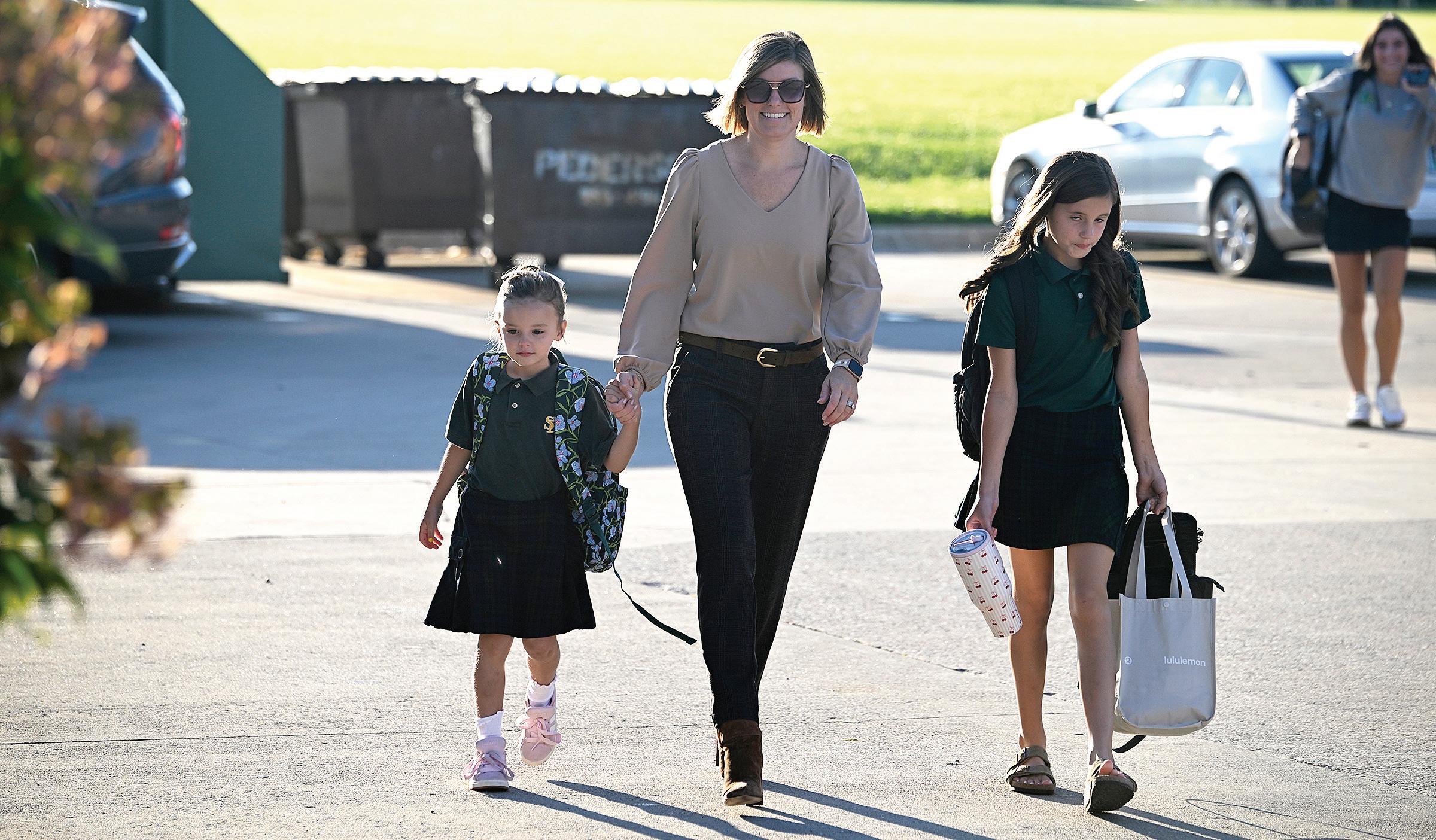
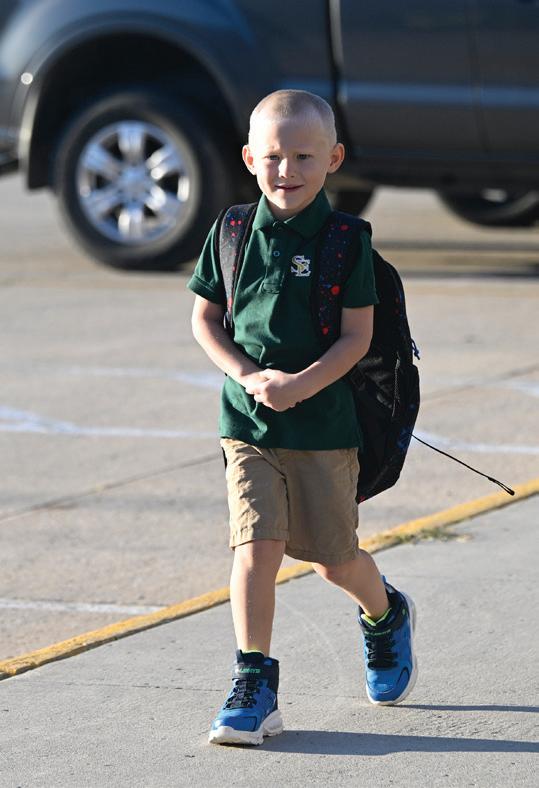
JENN CRIMMINS, of Fort Dodge, walks with her daughters Josephine Crimmins, left, and Zoe Crimmins on the first day of school Aug. 25, 2025, at St. Edmond Catholic School. BELOW RIGHT: Jonathan Mallinger, 5, of Duncombe, walks to school on the first day of classes at St. Edmond Catholic School.
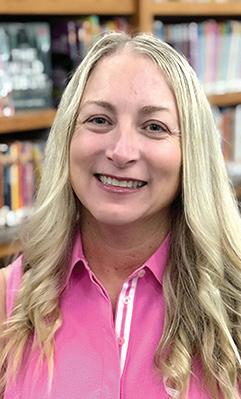
Susan Laufersweiler
ST. PAUL SEEING STEADY GROWTH St. Paul lutheran School
By DEANNA MEYER
dmeyer@messengernews.net
Gradual, steady growth has become the norm for enrollment in recent years at St. Paul Lutheran School — thanks in large part to the state’s implementation of Education Savings Accounts.
“Since the beginning of the ESAs, our kindergarten classes have grown significantly,” said Principal Bruce Hartley. “Four years ago, our kindergarten class had 10 students. The last two or three years, it’s been 17 or 18.”
Education Savings Accounts make state funding available to parents of students who attend accredited nonpublic schools, and can be used for tuition, fees and other eligible education expenses. St. Paul is an accredited private school in Fort Dodge for preschool through eighth-grade students
This year, St. Paul’s enrollment is over 100 students for kindergarten through eighth grade, which Hartley said is up about 10 from last year. This growth is largely created due to the larger kindergarten classes that are replacing the smaller graduating eighth-grade classes.
In addition, he said more than 30 students are enrolled in preschool.
“We’ve seen a pretty good holdover from our preschools into kindergarten,” Hartley said. “Our preschool numbers have been fairly strong all the way through. If the majority of preschoolers stay for kindergarten, that automatically raises our numbers for growth.”
More students eventually create a need for more staff.
“It’s kind of nice to have that gradual growth,” Hartley said. “We were able to split one of our combined classes last year.”
He said the third- and fourthgrade classes are no longer combined in one room, but have been separated to have individual teachers.
“In a couple years, we’ll have to split the fifth- and sixthgrade classes,” he said.
This past year, St. Paul wel-
comed a new fifth- and sixthgrade teacher in Sarah Sperr, a recent University of Northern Iowa graduate.
“When we get to the point when we have to split our seventh- and eighth-grade classroom, we’ll be short a classroom,” Hartley said.
If that happens, he said the school may need to move its library in order to keep all of the classes in the same area.
With the start of ESAs, Hartley said St. Paul is now using the same IFAST testing, or
standardized tests, used in Iowa public schools to look at data and academic growth in the areas of reading, math and science.
“We’ve really only taken it the past two years, so we don’t have a lot of data to look at,” he said, “but it’s looking pretty good as far as our achievement. … It’s giving us some good data on how well we’re doing, and what we need to improve on.”
As a school that promotes a Christ-centered education, all St. Paul students also partici-
pate in a religion class four days a week, while chapel is held one day a week.
“Our classes each take a month where they will lead chapel,” said Hartley. “They put on a little skit; they do some singing. It’s a good way for us to be able to bring that into the school and also help kids to learn about the Bible and religion.” But St. Paul Lutheran School offers more than academics.
Extracurricular opportunities include band and choir, as well

as co-ed volleyball, basketball and soccer. Cheerleading is also available, with a third- and fourth-grade junior cheerleading squad, as well as a fifththrough eighth-grade squad.
“We have opportunities for our choirs to sing during Advent and Lenten services,” Harley said, as well as both Christmas and spring concerts.
Many students also participate in the annual Frontier Days parade.
A ceremony for the graduating eighth-grade class is held one evening in May. Hartley said currently the school enrolls students from about four different districts, including Manson Northwest Webster and Southeast Valley.
“Of the 10 that graduated last year, all but one went on to Fort Dodge Senior High,” he said. “We did have one that went to St. Edmond. But for the most part, our students have chosen to go to Senior High.”
He said the relationships created at St. Paul are often a factor in that decision.
“Since they’ve become pretty good friends and become pretty close,” Hartley explained, students often want to continue those friendships by transferring to the next academic level together.





-Messenger file photos by Britt Kudla
Community Christian sChool
GROWING IN CHRIST
Community Christian sees uptick in enrollment, looks at expansion
By DEANNA MEYER dmeyer@messengernews.net
Community Christian School in Fort Dodge is growing, and that growth may spur some big changes in the future.
“We’re starting to outgrow our building,” said Principal Josh Culberson. “We’re pretty close to getting to that point, so we’re looking at possibilities.”
Those possibilities could include adding on to the current facility or finding a new building site.
This year’s enrollment for kindergarten through eighth grade is 89 students.
“We’ve seen a nice uptick in enrollment,” said Culberson, who is in his second year with CCS.
In addition, the school brought back its preschool offering, which Culberson said was one of his “top priorities” after not having adequate staff to offer preschool the previous year. Community Christian’s enrollment, including preschool, is 104 students.
“I would say the majority of our new enrollments are younger families,” said Culberson. “As the result of that enrollment, we’ve been able to split off some of our multi-age classrooms.”
For instance, during the 2024-25 school year, third- and fourth-grade students shared a classroom. This year, the two grades are separated. This means the school has single-grade classrooms for kindergarten through fourth grade, while the fifth and sixth grades share a teacher, and seventh and eighth grades are combined.
Eventually, he said the school would like to separate the fifth- and sixth-grade classrooms to create more of a traditional middle school setting, where students rotate classes. Elementary would follow the K-5 model, while sixth through eighth grade would be considered middle school level.
“That really kind of sets them up for success as they make that transition to community high school,” said Culberson, whether a student chooses to transfer to St. Edmond, Fort Dodge Senior High or another local school.
Community Christian strives to offer an education founded on biblical principles.
“All aspects of our curriculum are biblically integrated … so we have that ability to integrate that biblical world view into everything that we do,” he said, “still teaching those academic skills that kids need to be successful, not only in the current grade level they’re in as they move through school, but to be successful in life as well.”
In addition, he said school officials continue to look at ways to expand programs. New this year, Spanish is now offered for all kindergarten through eighthgrade students.
“We’re excited about that,” Culberson said. “We’re also looking at how we can add more programs to our school to give our kids more opportunities.”
For extracurricular activities, Community Christian offers volleyball, basketball, cheerleading, band and choir.
“We didn’t have band last year as the previous music teacher retired,” he said. “We were able to bring that back again this year.”
He said the new music teacher has added some dramatic aspects to the school’s concerts, giving the programs a more “musical feel.”
Community Christian has also implemented an intervention block at the end of the day called “Crusader Time.”
“One thing I think we do a nice job of, if we have kids that are excelling in a particular subject area, we will advance them,” said Culberson. “Also those ones that need the extra support, we make that available.”
The growth at Community Christian has sparked a capital campaign to support the school’s future expansion goals.
While Iowa’s Education Savings Accounts have enabled more families to attend schools like Community Christian, Culberson said the private accredited school has seen a simultaneous drop in donations.
“ESA has been nice because it’s opened the door for more families that maybe have wanted to have the opportunity to provide their children more of a Christ-centered education, but maybe didn’t have the financial means to do so,” he said. “Unfortunately, ESA does
not cover what it costs to educate (a student). It falls short of that by quite a bit, so we have to supplement that.”
In his second year with Community Christian, Culberson has spent 26 years in education. He previously worked for 24 years in public schools, including 17 years as an elementary teacher and seven as an elementary principal. He has also served as an athletic director.
A Stratford native, he graduated from Iowa Central Community College, received his bachelor’s degree from Buena Vista University in Storm Lake, and his master’s from Viterbo University in LaCrosse, Wisconsin. He is currently working toward getting his doctorate through Drake University in Des Moines.
“God brought me here, and I continue to work on my education,” Culberson said. “I’m eager to learn and grow.”
He has brought his “minions” along with him — literally — as his office features minions in all shapes and sizes, based on the yellow characters in blue overalls from the “Despicable Me” movies.
As an educator, Culberson said he would set up his classroom with a different theme each year. One year he chose “minions” as his theme, and somehow it stuck. Over time, he either collected or was given more minions. Today his collection is on display in his school office, where “his minions” watch him work.
As an aspiring ventriloquist, he has also brought some light-hearted fun to Community Christian. He and his dog puppet, Toby, often visit various classrooms throughout the day and co-host video morning announcements.
“The kids love it,” Culberson said.
In the meantime, he remains focused on the school’s ultimate goal.
“We want to continue to grow and continue to attract families and bring more families in,” Culberson said, “so they can experience the quality Christ-centered education that we’re able to provide to our students.”
“We
want to continue to grow and continue to attract families and bring more families in, so they can experience the quality Christ-centered education that we’re able to provide to our students.”
— Josh Culberson Principal, Community Christian School
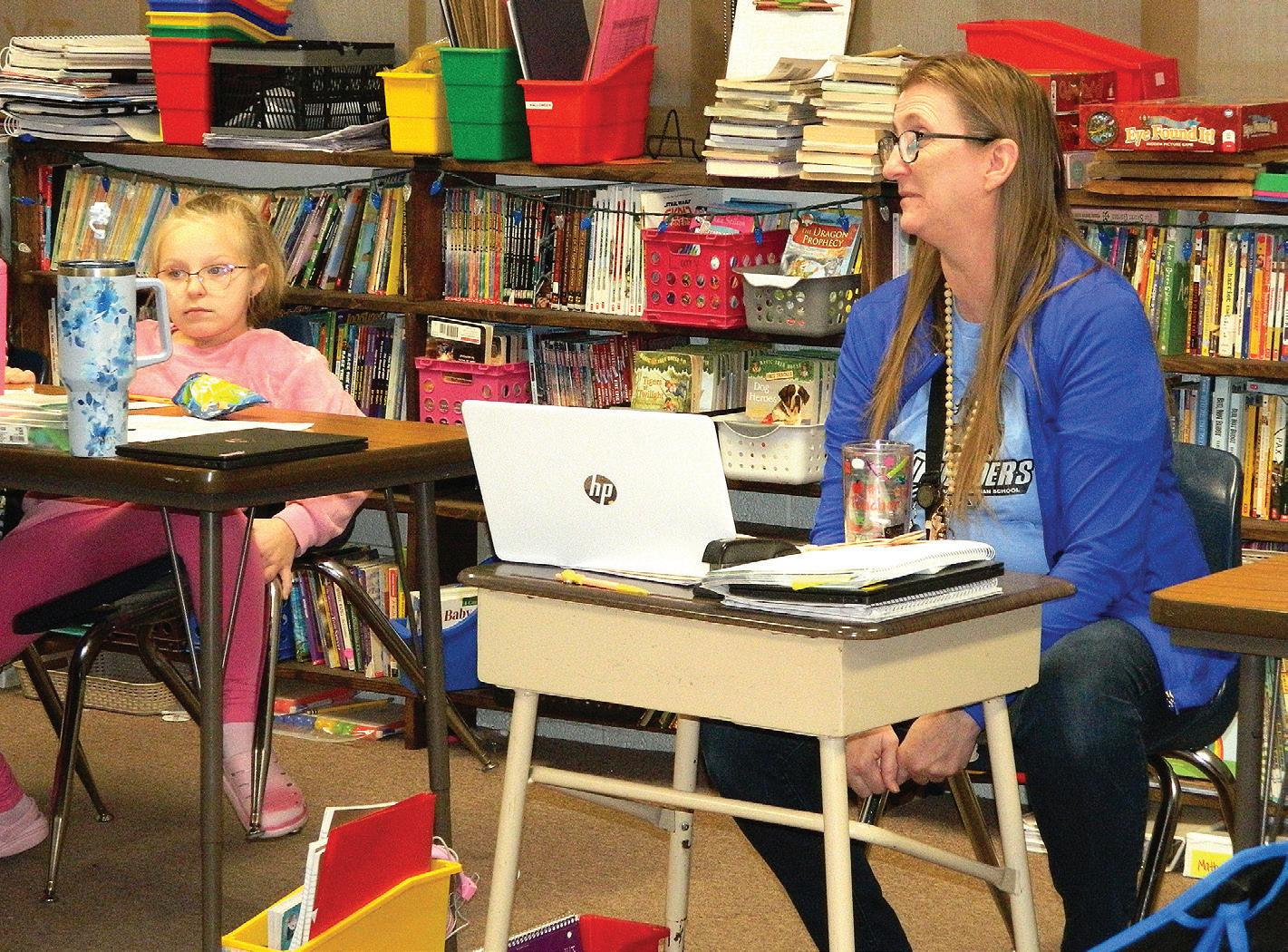
BELOW: Jeannette Larrabee facilitates a discussion with her fourth-grade class on Dec. 12, 2025, at Community Christian School.

-Messenger photos by Deanna Meyer
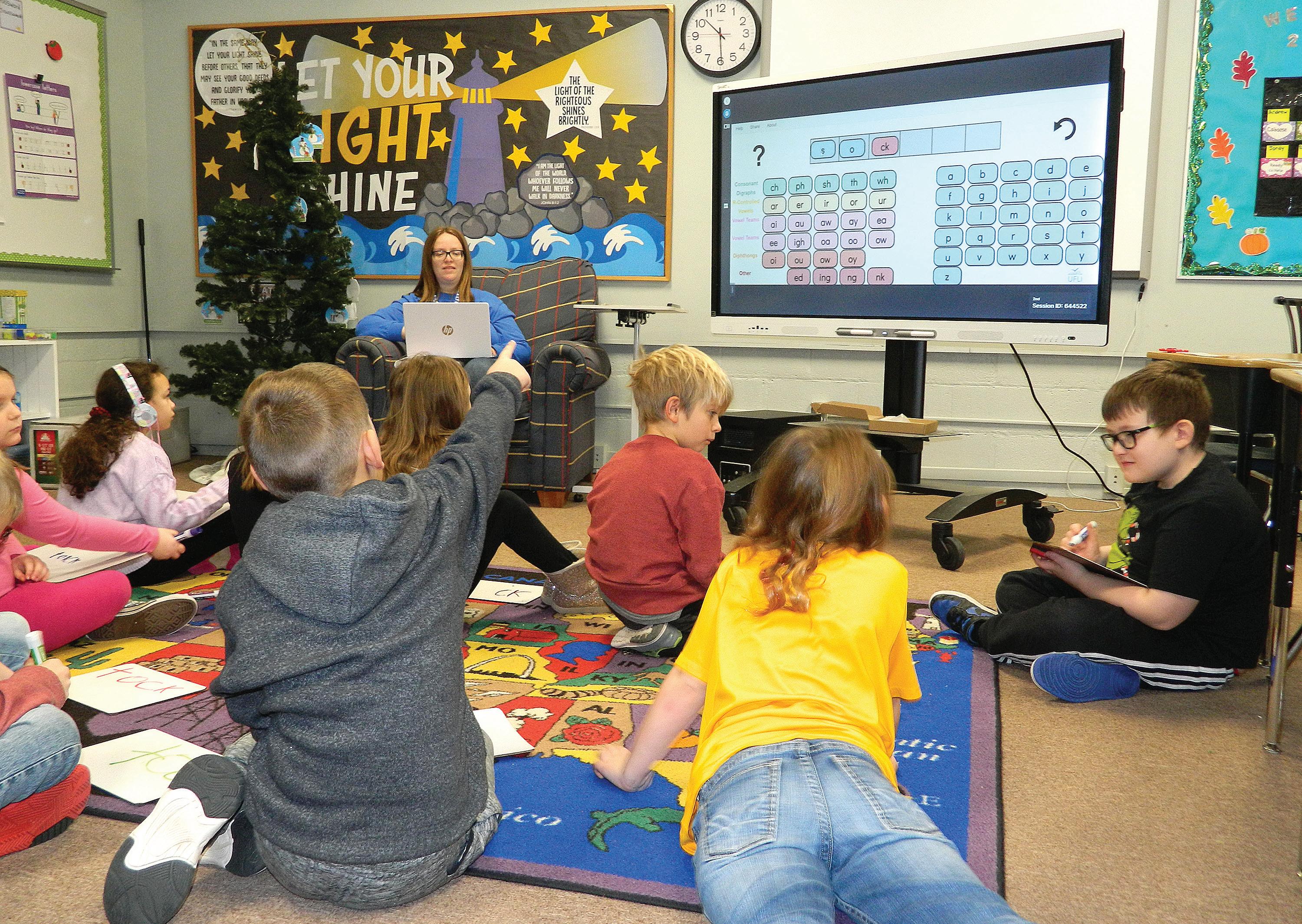
ABOVE: Rebecca Munsterman leads her second-grade class in a lesson Dec. 12, 2025, at Community Christian School.
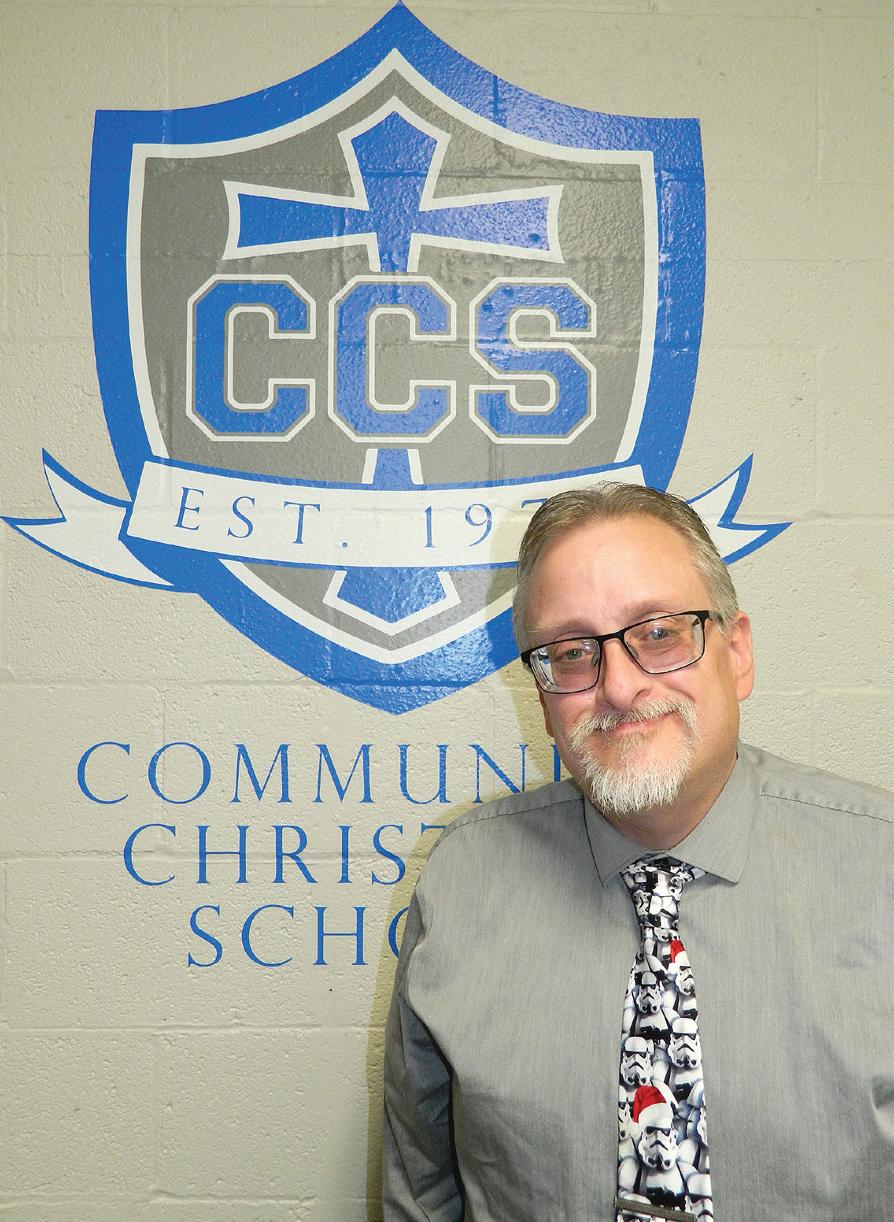
LEFT: Josh Culberson is in his second year as principal at Community Christian School.
Manson northwest webster CoMMunity sChools
SAFE AND SECURE
MNW prepares for major elementary school renovation project
By DEANNA MEYER dmeyer@messengernews.net
MANSON — Providing up-to-date facilities that promote both learning and extracurricular activities is a high priority — and an ongoing process — at Manson Northwest Webster Community School District.
To keep working toward that goal, Superintendent Justin Daggett said the district is planning a major renovation project at the district’s elementary site in Barnum. Once finished, he said the $2.475 million project will result in a safer and more secure building for students and staff.
But the first step will be fixing a chronic drainage problem.
“Having been a principal there for five years, and been in the district for 14, the drainage of the whole site is horrendous,” Daggett said. “Everything pools at our playground, and our playground is under water for a majority of the year — or it’s an ice rink and our kids can’t access it.”
To address the problem, he said the playground area will be raised and moved closer to the south side of the building. New tiles will be put in to take care of the water issues, and the whole site will be regraded.
“We’re fixing all the drainage,” said Daggett, “to have everything drain away from the building.”
Moving the playground also makes the area safer for students, as currently an access road for delivery vehicles runs between the school and the playground.
“Right now, the garbage truck, semis when they unload commodities, they all drive right here,” Daggett said. “At the same time, we’ve got kids trying to get to (the playground).”
Instead, he said the elementary playground will be fenced in, with a paved road running around the outside. This means students and staff won’t have to worry about watching for vehicles before crossing to the playground.
He said another plus will be the addition of low-maintenance turf so kids can be on the playground year-round. The district is also getting all new playground equipment, which is being paid for with separate funds.
Another key component to the elementary project is a major front office renovation and the creation of a more secure entrance.
While the district already has a secured entrance that requires visitors to be buzzed in during the school day, Daggett said it’s not enough.
“What we are uncomfortable with is not being able to funnel people through the office, because worst-case scenario, someone gets buzzed in and they could go right down that hallway undeterred,” said Daggett, referring to the area that houses kindergarten, first- and second-grade classrooms.
With the renovation, a new separate entrance will be added to the left of the current main doors, leading visitors into a vestibule area. From there, they will be buzzed into the office. New steps and an ADA ramp will also be added to the entry.
A new canopy will ensure visitors immediately know where the main entrance is located.
“It provides from the street level a very clear main entrance,” Daggett said. “It will also provide some cover. We get a lot of leaves and a lot of snow piled right in front of the main door.”

Meanwhile, the main office area is being reconfigured so the principal’s office is more central, and the front office staff will have a clear view of the lower elementary hallway. The nurse’s office will be moved to a location that includes a bathroom, while the current nurse’s and principal’s offices will become a conference room.
An old bus barn that isn’t long enough to house today’s buses will also be demolished.
“Our plans throughout the years have really evolved in both buildings,” said Daggett, “but I feel really good about our final design. It’s just going to be so much more efficient.
“The elementary building is already a beautiful building,” he continued. “I think it’s just going to be awesome. I’m really excited for it.”
Work on the renovation project is scheduled to begin in April with a goal of having everything completed before school starts in the fall. The district has hired Jensen Builders Ltd., of Fort Dodge, to do the project.
“Jeff Hansen, our maintenance director, is phenomenal at staying on top of all of that stuff,” Daggett said. “We have a really good working relationship with Jensen, really good lines of communication. So I anticipate when problems arise — and they always will — they’ll be solved swiftly. We won’t have any lingering delays, if the weather will cooperate.”
A physical plant and equipment levy bond, which has been authorized by the school board, is being used to pay for the project. PPEL funds can only be used for technology, transportation, building improvements and equipment.
“We’re borrowing against future revenue for that, so it’s not going to raise property taxes,” Daggett said.
This project builds on other work the district has already done. Last year, an east addition was added to MNW Junior/Senior High School, which included an electrical room, dressing rooms and band storage area.
Daggett said the district also continues to make incremental progress at the athletic complex, which this year included a new fence and sidewalk.
Small but successful
In the area of enrollment, MNW was down 26.5 students from last year, Daggett said, bringing current enrollment to 690 students.
“Everybody in the state is down,” he said. “Our region is no exception.”
He said the main issue for most districts is that kindergarten classes are not
as big as outgoing ones.
In spite of that, Daggett said the district is thriving in many areas.
“We did a high school musical for the first time in a few years. That was a real positive,” he said. “Two years ago, we didn’t have a vocal teacher and that program was on life support. Kelbi White (choir teacher) and Erica (Logan, band director) have really done a phenomenal job at building those programs up.”
Daggett said the speech program continues to perform at a high level, with one group taking top honors at the state speech contest last year. Meanwhile, he said the robotics team and First Tech Challenge are seeing success this year.
“Our school — as small as we are — the number of experiences and programs we’re able to give kids is really impressive,” he said.
In sports, Daggett said the football team has won districts two years in a row, while two individuals went to state in cross country this year. The dance team also competed at state, receiving first- and second-place awards.
THRIVE Academy
The MNW district is also unique in that it operates an alternative school called THRIVE Academy that serves 23 school districts, including students from kindergarten through 11th grade.
“We’re teaching the academics, but it’s always with social-emotional-behavioral health at the forefront,” Daggett said.
Each student enrolled comes in with specific goals, or areas they need to grow in.
“Our staff out there works with those kids to grow in those areas so that they can go back to their home district and have success,” said Daggett. “Sometimes we’re able to do that; sometimes we’re not.”
He praised THRIVE Principal Josh Seltz and his staff for the way they are able to help kids.
“We’ve got some real success stories out there,” Daggett said.
He said whenever a student is ready to leave, everyone lines the halls on their last day.
“Everybody’s clapping and cheering them on,” Daggett said. “It’s really a very emotional, very cool scene.”
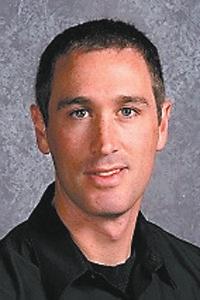
“Our plans throughout the years have really evolved in both buildings, but I feel really good about our final design. It’s just going to be so much more efficient.”


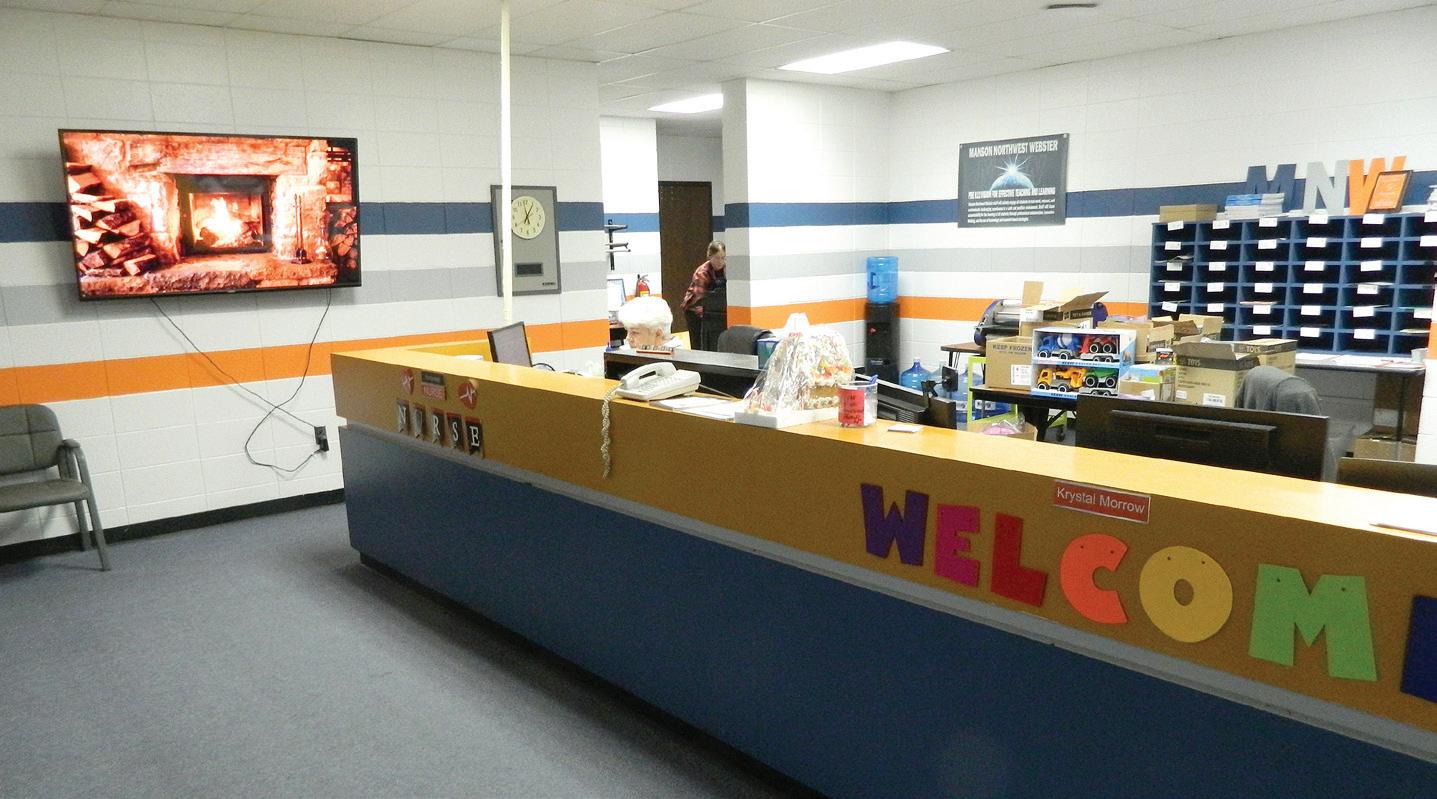
-Messenger photo by Deanna Meyer KIM NEUMANN, school nurse at Manson Northwest Webster Elementary, works in
— Justin Daggett Superintendent, Manson Northwest Webster CSD
SoutheaSt Valley Community SChoolS
HANDS-ON LEARNING
Southeast Valley students receive real-world learning experiences
By KELLI BLOOMQUIST
Southeast Valley High School students are taking their lessons beyond the classroom, gaining hands-on experience with real-world applications.

Last fall, Jason Slinker, the district’s assistance maintenance director, began offering students the opportunity to learn practical skills outside the classroom that might even spark interest in alternative career paths.
“They’re learning things they can’t get from a textbook,” said Slinker.
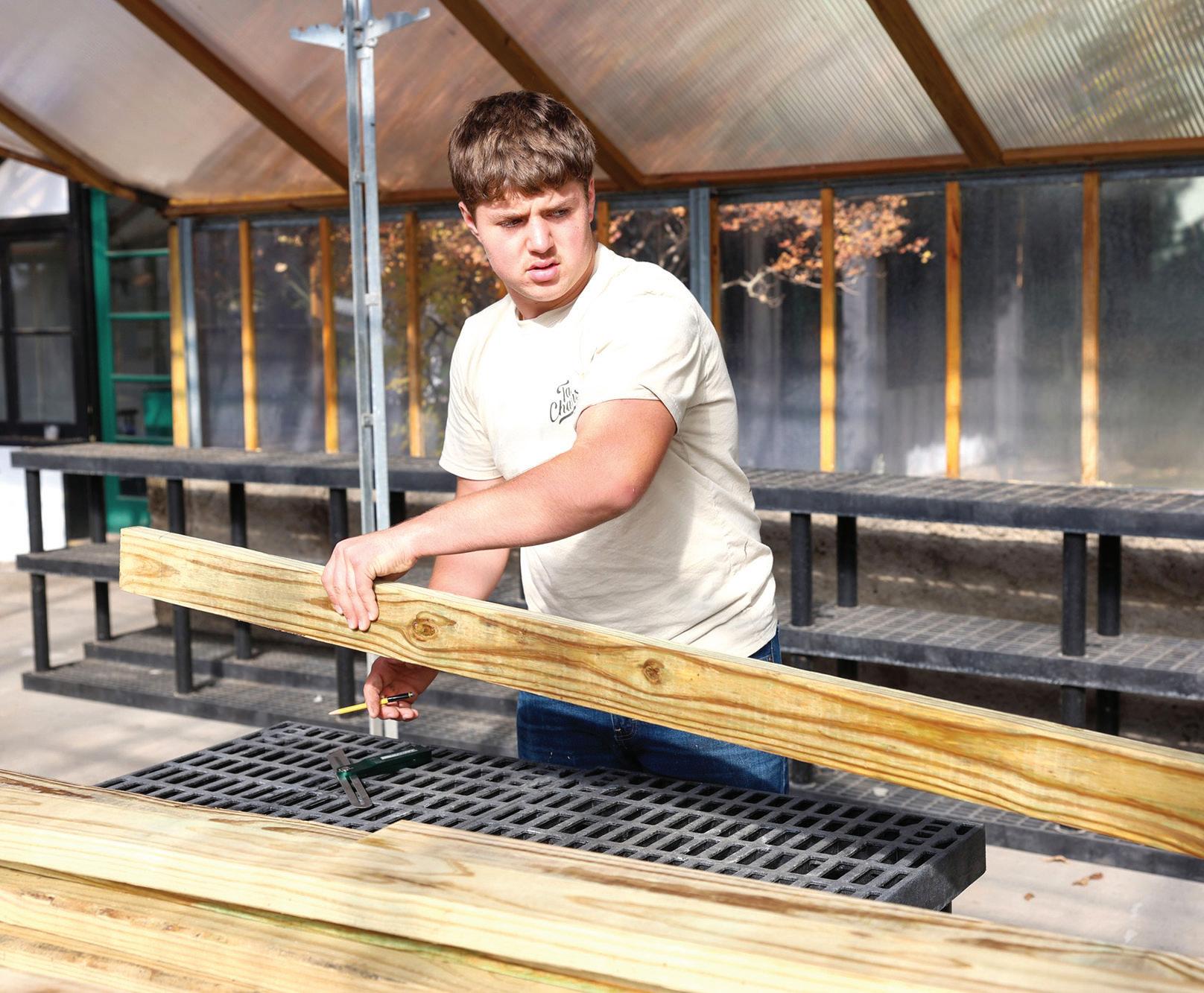
One of the first projects Slinker and the students tackled was the demolition of an old greenhouse on school grounds. The students learned to measure, cut, and install new rafters.
“We kept the group small for safety reasons,” said Slinker.
“The students who are helping were selected because they were ahead in their classes and in good standing with administration.”

humboldt Community SChoolS
-Submitted photo
The students completed the new roof along with side panels and ventilation work at the greenhouse, which the school purchased in 2024.
“We are always excited to provide new, real-world opportunities for our students,” said Brian Johnson, Southeast Valley superintendent.
The greenhouse is also used by FFA, horticulture, DECA, and FCCLA students for handson learning. The students plant and grow a variety of flowers and vegetable plants, care for them and then sell them to the community each spring as well as planning, ordering, and selling fall mums, Christmas poinsettias, and other goods.
Students working with Slinker have also helped with setting up the weight room for wrestling and large deliveries of softener salt, among other things.
“Everyone has been great about helping out,” said Slinker.
-Photos
ABOVE: Southeast Valley junior Ian Brunner cuts rafters for the district’s greenhouse. Brunner helped to replace the roof of the building as part of a hands-on learning opportunity offered to students.
LEFT: Southeast Valley Assistant Maintenance Director Jason Slinker gives students at the high school the opportunity to learn real-world skills. Last fall, students learned from Slinker how to measure, cut and place rafters in the district’s greenhouse.
‘Leadership with good people’
Superintendent reflects on past 6 years
By MARK ADKINS
HUMBOLDT — Humboldt Community School District Superintendent Jim Murray doesn’t have any plans to slow down as he enters his final semester.
“We’ve been able to accomplish a lot in the six years I’ve been here,” he said. “We’ve had facilities improvements, academic and athletic accomplishments and a strengthening partnership with the community.
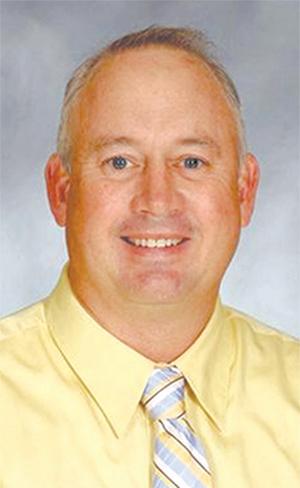
Jim Murray
termined priority standards,” Murray said.
n Professional development and PLCs at the high school around studying best practices related to grading, missing assignments, and make-up work. “We will continue to build staff consistency with a common language for student expectations,” he said. “This will increase the percentage of students on-track for graduation and decrease our failure rate. In addition, if we are consistent in classroom practices related to cell phone expectations, responsible decision-making, and self-management, the learning environment for students and staff will have increased engagement.”


“I want to be able to hand this off to the next person with more good work being done,” he added. “The biggest focus, in my mind, is getting the old middle school building taken care of. It’s an eyesore, and I don’t want to have that on the plate for whoever comes in.”














Among many highlights in the 20242025 academic year, Murray pointed to:
n A comprehensive update of the district’s crisis manual and effectively facilitating a district-wide crisis team and committee that includes key stakeholders such as law enforcement, hospital representatives, and emergency management personnel. “This is vital,” Murray said. “I feel like safety is always a top priority. I think we are more prepared now in case of any large-scale problems.”









n Improving the multi-tiered system of support for the middle school by creating an intervention backup for staff to use to meet the needs of all learners instructionally. “The staff is focusing on developing positive peer relationships through the ‘Wildcat Way’ of respecting others, empathy, goal setting, teamwork, and emotional regulation,” he said.
n Focusing on numeracy at the elementary school level. “We’ve provided quality diagnostic assessment materials for teachers to be able to provide targeted instruction related to our grade-level-de-
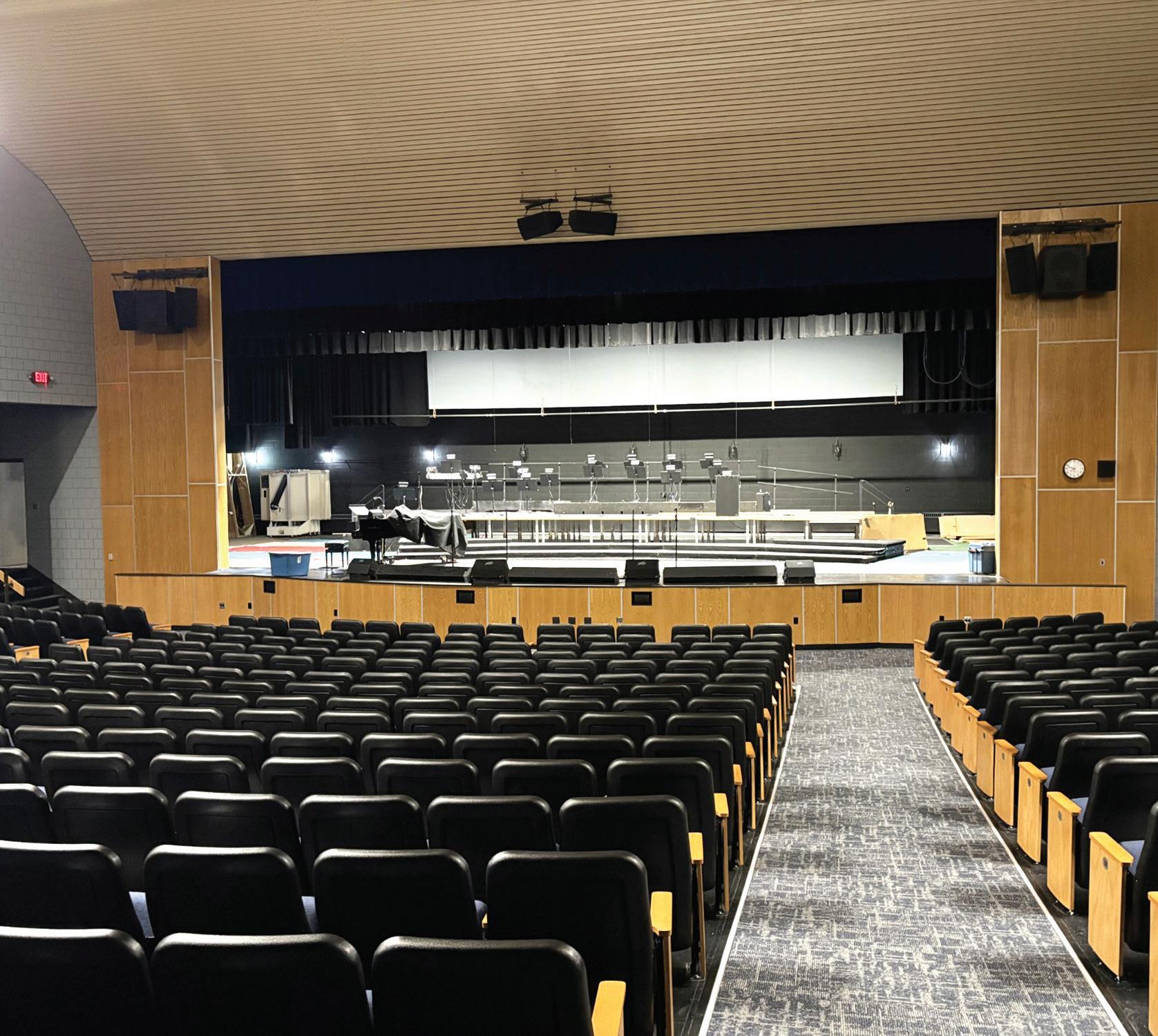
n Modernizing and expanding district facilities while enhancing safety and security. The district recently completed a $1 million remodel of the R. Wesley Carlson Auditorium. “Aesthetically, it hasn’t been updated since the early ’80’s,” Murray said. “Most importantly, we updated all the sound and lighting and added a 19-by-32 digital scoreboard at our sports complex. With that in mind, we created a Wildcat Media Course where students can design content for the scoreboard and improve the fan experience.”
Reflecting on five and a half years at Humboldt, he expressed his pride in the staff and administration and in what they have done to steward growth and success.
“When we came here, COVID had hit, so the immediate need was to get kids back to in-person classes,” Murray said. “We’ve also hired five administrators to highlight revamped leadership with good people and extraordinary integrity.”
“The board has played an essential role in this,” he added. “They are very supportive of the administration. The community partnership development was part of my entry plan. I wanted to interview important townspeople. They wanted transparency, which we continue to try to provide. There are days when not everything might go like you want, so all you can do is improve and move forward.”
by the Gowrie News
THE HUMBOLDT COMMUNITY SCHOOL DISTRICT recently completed a $1 million remodel of the R. Wesley Carlson Auditorium.
Brian Johnson
East sac community schools
A BRIGHT FUTURE
Superintendent sees many positives in East Sac school district
By MARK ADKINS
Continuing a recent theme of improvements and positives over the past few years, East Sac County Community School District Superintendent Nathan Hemiller views the future with optimism.
“It’s been a lot of work to get where we are, which myself and others in the district are happy about, but we will have work to do to get where we want to be,” he said.
“Our buildings and the district registered ‘commendable’ on a recent Iowa School Report card,” he added. “We’re all very proud of that. It shows we’re meeting student needs. Not everyone gets a rating like that, so there is reason for excitement.”
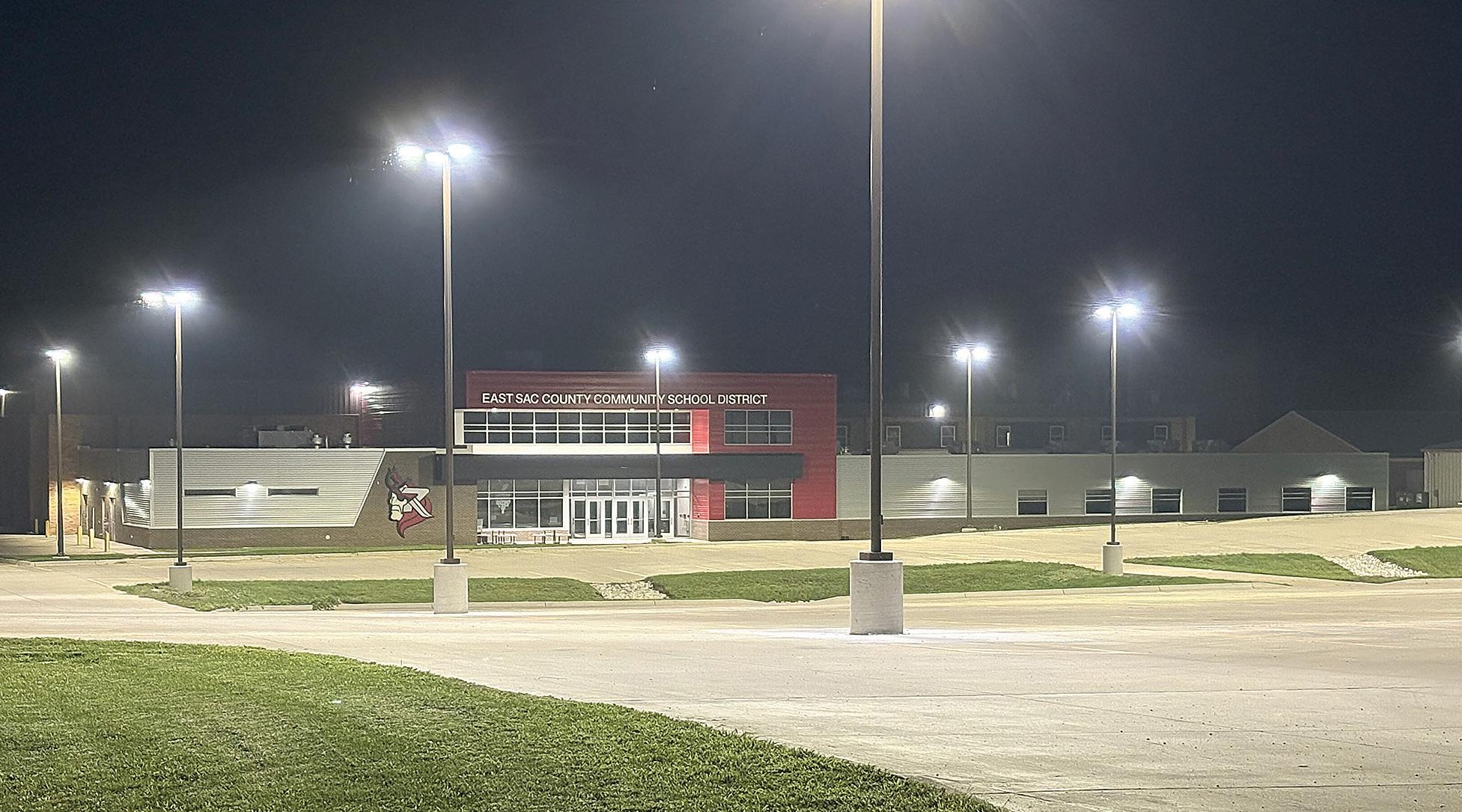
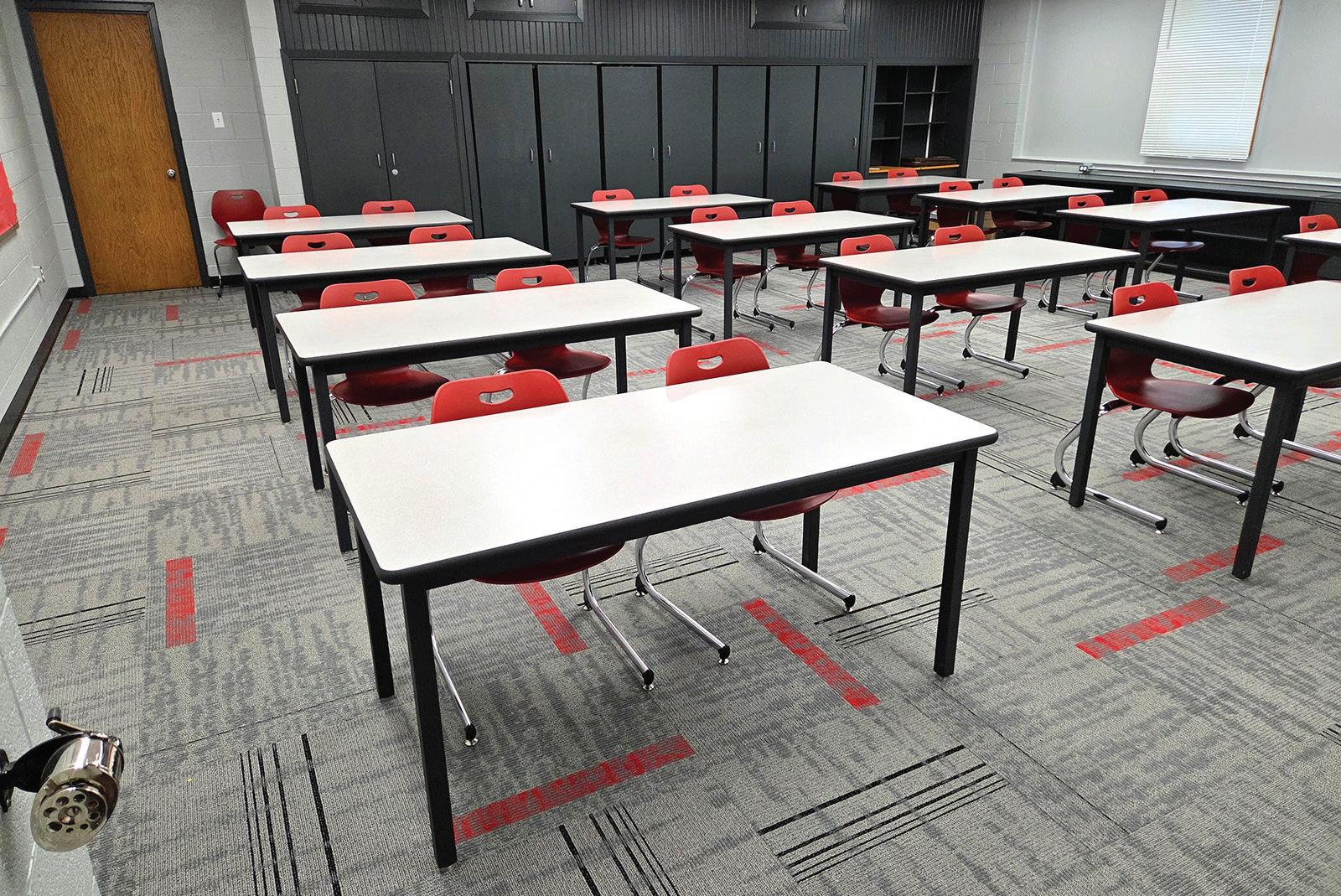
Hemiller noted several projects underway across East Sac County’s district. Those included parking lot lighting, new classroom doors, and renovations at the high school, and a district activity bus that arrives in the spring.
“It doesn’t stop there, though,” he said. “We have several things on our radar. We want to do some renovation work at the elementary school in Sac City this summer to help bring back transitional kindergarten. That will allow families an option between preschool and kindergarten.
“We also have a long-range goal of examining the elementary school parking and traffic flow situation,” he added. “That and some adequate
drainage and resurfacing in the same area will take a few
south cEntral calhoun community schools
ACADEMICS SHINE HERE
District readies for some work on its buildings
By BILL SHEA
bshea@messengernews.net
LAKE CITY — The South Central Calhoun Community School District is posting some academic successes while at the same time preparing for some work on its buildings.
The district continues to focus on the world of work with a program Anderson said is designed to get “kids immersed in local careers.”
LEFT:
years, but we’re looking at it.”
Hemiller sees a bright future beyond facility upgrades, too.
“Enrollment is down 15 from last year, but considering what other districts are going through, that’s not too bad,” he said. “The good news is 52 kids are in preschool, which will do a lot for future class sizes.”

Superintendent Brad Anderson said the district’s faculty has done a good job of putting in place what educators call interventions. For example, he said if a student is falling behind in reading comprehension, an intervention occurs when teachers identify that problem and get the student into a comprehensive program to help them.
“We’re just doing a lot better job of identifying problems and helping those students,” Anderson said. “We’re really doing some good things at all grade levels.”
A separate indicator of the district’s academic success was found in the ACT exam scores. The ACT is a test taken by high school students to assess their readiness for college. In the last academic year, ACT exam scores for South Central Calhoun High School students went up. “That was very notable,” Anderson said. “We’re very proud of our students.”
That program actually starts in kindergarten, where students get a little introduction to the jobs that adults do. As the students advance in school, the focus on careers increases, especially as they enter high school.
The South Central Calhoun district will invest in its buildings in the future thanks to a November decision by voters, who decided to extend an existing physical plant and equipment levy for another decade. That levy is $1.34 per $1,000 of taxable value. It has been in place for the last 10 years.
The district has hired DLR Engineering, of Urbandale, to prepare a facilities plan. Anderson said creating some more secure entry points at the middle school and the high school will be a priority. He added that there is a building atrium with leaks that must be repaired. Money from the physical plant and equipment levy will be used to address all of those issues.
Anderson said the district hopes to do a spring community service day this year. During past community service days, students have raked yards, painted, helped senior citizens with various chores and cleaned up the trail through Lohrville.
“It’s just a matter of teaching kids to give back,” Anderson said.

Brad Anderson -Submitted photos
ABOVE: New lighting has been installed in the East Sac school parking lot.
This classroom at East Sac High School was recently renovated.
-Submitted photo
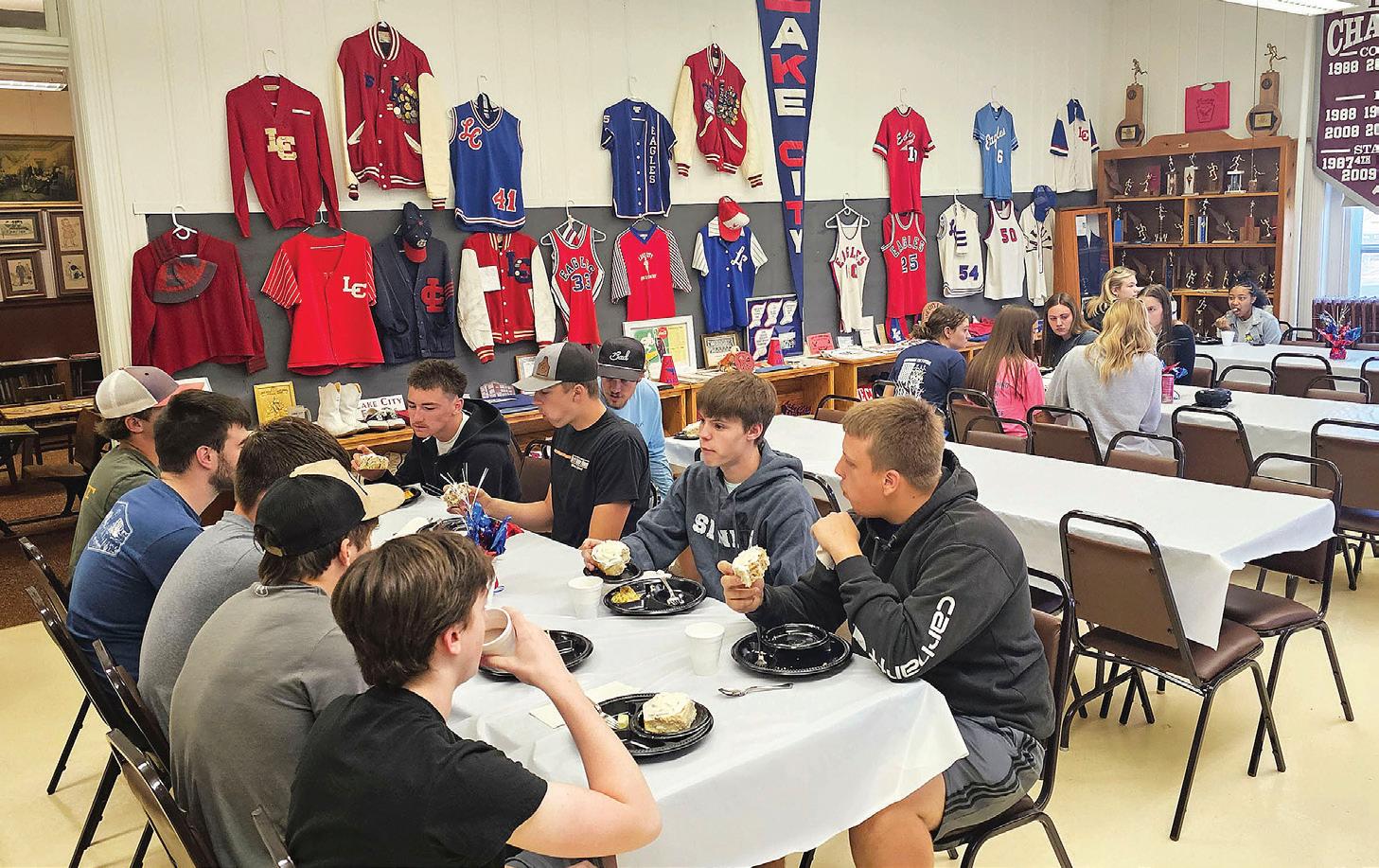
MEMBERS OF THE SOUTH CENTRAL CALHOUN Community School
District Class of 2025 had their senior breakfast in the Historic Central School in Lake City last year, surrounded by mementoes of the Lake City school system that was one of the predecessors of today’s district.
SCHOOL TO WORK
Career exploration program will grow with the help of state STEM BEST grant
By BRET HAYWORTH
POCAHONTAS —
The scope of the School
To Work program in the Pocahontas Area Community School District is about to take some major steps forward by fall 2026, after the district was among a select few to get a state education grant.
Kristyn Olson led writing the grant proposal. In mid-January, Pocahontas Area was among the north central Iowa school districts that received state grants for STEM, or Science Technology Engineering and Math.
Those STEM BEST grants went to 30 districts in Iowa, with $50,000 to Pocahontas Area.
The grants came from the Governor’s STEM Advisory Council at the Iowa Department of Education. School districts can use the money for existing or new programs related to science and math.
PAC has had a scaled down School To Work program, but now that will become more robust, Olson said.
“It is an excellent opportunity for us,” she said.
“Pocahontas Area Community High School is excited to build a School To Work program that provides
ed. “Our goal is to not only enable students to learn through community engagement but also to contribute to addressing local challenges.”
A former third-grade teacher at PAC, Olson is the teacher leader coordinator, and also handles some administrative level tasks. She has personal familiarity with School To Work, as she said, “I did it my senior year,” with some teacher training opportunities before graduating from Twin River Valley School District.
Olson cited the strong bond that pupils and Pocahontas residents feel, in a supportive vibe that came out in the winter squall on Jan. 15 that resulted in students having to stay overnight in school.
“Everybody just pitched in and did their all,” Olson said, then broadened that specific squall-aftermath incident to explain how, “Everybody is going the extra mile to make sure the students are taken care of educationally, socially and emotionally.”
That broad support in the district towns of Pocahontas, Rolfe, Pomeroy and Havelock means many businesses are supportive of having School To Work program
supplement their academic lessons through working several hours per day, with chances to see if they may want careers in that field.
Olson noted that students can earn differing certifications while attending high school, along with the potential to be paid by some of the School To Work participants. Some local businesses have a hard time being fully staffed, so that is another benefit, she said.
Current partners in the community are Pocahontas State Bank, Availa Bank, Med Spa Express Aesthetics and Wellness, Murray Law Firm, the Pocahontas Record-Democrat newspaper, Hudson’s Crew, Poca
Commerce, Iowa Central Community College and the PAC schools.
“This program applies to our board goals by extending classroom learning into real-life experiences where students will be able to think critically, solve real problems and apply technical knowledge,” Olson said.
She said School To Work is a prime place “for students to learn to navigate workplace expectations, collaborate effectively with others and develop resilience to adapt to new challenges, which are all skills needed for success in their futures.”
Angie Axman, a business education teacher, said, “I
Where to Worship
readiness skills.”
Olson and Axman noted some students with School To Work skills may remain working in the area after they graduate.
Family and Consumer Sciences teacher Alyssa Maske said she is greatly looking forward to the opportunity to collaborate with the community members and sponsors who will work with the high school juniors and seniors.
Plans are underway to start PAC Cafe, serving popular coffee and energy-style drinks, with opportunities for special education students to gain work skills. Olson said the $50,000
TEACHERS
in the
in the fall. The money will also be used to update the district website, as paired with a mobile phone application, and to add new security technologies in the














-Submitted photo
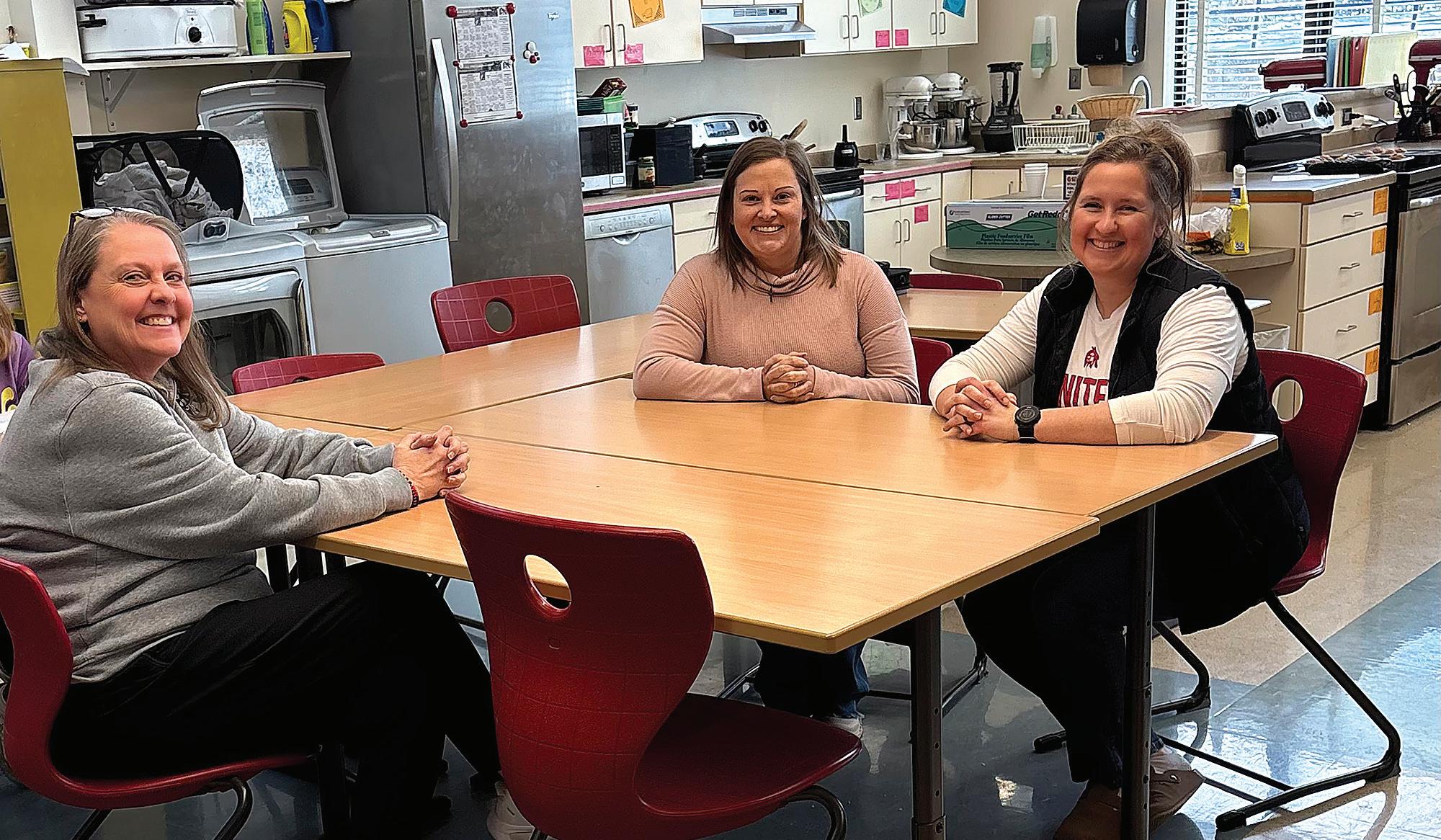
POCAHONTAS AREA
involved
School to Work Program are Angie Axman, Kristyn Olson and Alyssa Maske.
A GOOD REPORT CARD
Webster City school district report card reflects improvement, challenges
By KOLLEEN TAYLOR
WEBSTER
CITY
—
In a recent conversation with Jama Hisler, director of teaching and learning for the Webster City Community School District, and later with the new high school Principal Jason Wedgbury, it was apparent that they are working hard on areas of concern.
Some of those concerns were reflected in the recent Iowa State Assessment report card that compared the schools throughout the state of Iowa.
In most areas, all the schools in the district were scored higher than the state average. The one area that was below the state average was English. It’s not hard to understand that proficiency in the English language is needed for all other classroom work to be managed. The teachers are making great progress with the younger classroom work, as reflected in their five-year average.
As concerning as this might be, the teachers are dealing with a large number of students who are identified as English Language Learners (ELL), or students whose first language is not English.
There are currently
1,805 students enrolled in the Webster City Community School District. The number of ELL students has changed during the past four years as follows:
n 2022 — 256 students.
n 2023 — 288 students.
n 2024 — 314 students.
n 2025 — 333 students.
Today, 16.4 percent of the Webster City population is Hispanic or Latino.
Just 25 years ago, the U.S. Census reported 1.32 percent Hispanic or Latino residents living in Webster City. That change is dramatically reflected in the students attending schools. The teachers are trying to meet that challenge with a number of tools, but there are few bilingual teachers available to hire.
“Hiring teachers in general is difficult,” said Wedgbury.
Hisler made a presentation to the school board in October, highlighting the celebrations and challenges that face each of the schools in the district.
The principals from each school in the district also added their individual input. The principals in each school are Rachel Chamberlain at Pleasant
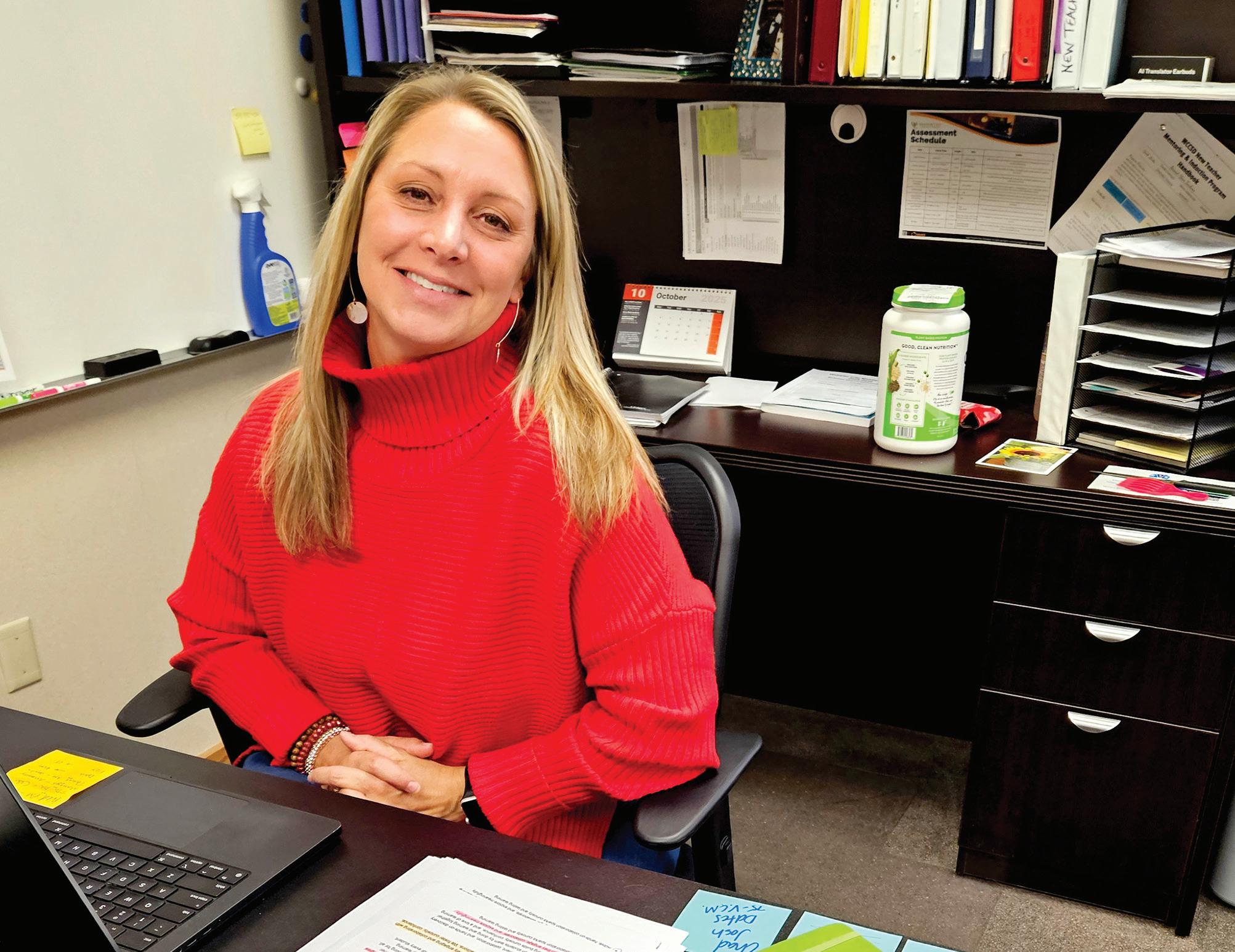
JAMA HISLER, director of teaching and learning, takes a moment to relax after explaining the Webster City school district's complex report card. The results were first presented at an October school board meeting.
View, Sarah Nachazel at Northeast Elementary, Teresa Van Epps at Sunset Heights, Rob Brecht at Webster City Middle School, and Wedgbury and Ayn Eklund at the high school.
Hisler explained that 95 percent of the teachers are part of a collaborative team, and all the schools have a leadership team. They share ideas and concepts that are working with their students so that this will follow the student as they progress through school.
“We want to have multi-tiered levels of support in our classrooms,”
said Hisler.
One of the terms repeated often was “interventions.” Hisler explained that all of the students go to different classrooms for targeted interventions, so if a student is struggling, they split off from their normal classroom and focus on the area of study where they need the most help. This could be a learning disability, behavioral issue, or specific classroom skill set, such as math or English, that is challenging to the student.
This is used heavily in the elementary schools, where they are targeting
the most critical foundational skills, but seems to be a key to working at every level of education.
Webster City’s report card in general was very optimistic, with the Webster City Middle School considered a high performing school.
“We were a top 25 middle school,” said Hisler. “None of the top contenders had the same demographics.”
The areas which hurt the ranking the most were chronic absenteeism, attendance growth and graduation rates. The frustrations from students who have to cope with
language challenges seem to have a direct impact in those areas.
“We’re focusing on work-based learning, such as internships,” said Wedgbury. “If we can find career pathways or college coursework with a purpose for students, it gives school more value.”
“We’ve started advanced placement programs for high achievement also,” he added.
“Our structure is pretty solid; students are following procedures. We’ve taken a pretty strong stand on order and discipline.”
The Iowa School performance profiles rank each school in the state as exceptional, high performing, commendable, acceptable, needs improvement or priority/ comprehensive, with exceptional as the highest level, and the lowest identified as priority/comprehensive.
The Iowa School Performance Profiles for the Webster City Community School District are as follows:
n Northeast Hamilton Elementary School: Commendable.
n Pleasant View Elementary School: Commendable.
n Sunset Heights Elementary School: Commendable.
n Webster City High School: Acceptable.
n Webster City Middle School: High performing.

-Messenger file photo by Kolleen Taylor