

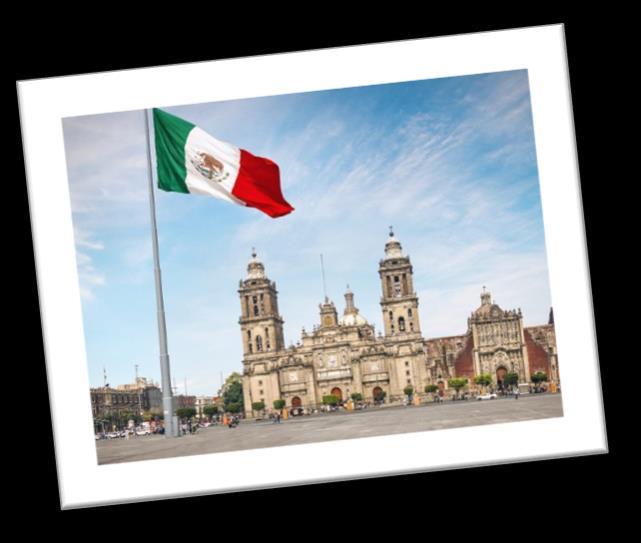
MEXICO
The improvement of mathematics education in Mexico requires a sustained and joint effort on the part of the government, educational institutions, teachers, families and society in general; however, it has important positive aspects such as the existence of a strong tradition of competitions with great participation, such as the Spring Contest and the Mexican Mathematics Olympiad (Bosch, Álvarez, Correa, Druck, & McEaching, 2010).
With international success, initiatives have also been implemented to improve the teaching of mathematics, such as the "Science in your School" program of the Mexican Academy of Sciences and the Mexican Mathematical Society program for teachers, on the other hand, among the negative aspects are the results of evaluations, these national and international evaluations show poor results in learning mathematics (Bosch, Álvarez, Correa, Druck, & McEaching, 2010).



In addition, teacher training is considered the cornerstone for improvement, but faces challenges such as shared responsibility between the SNTE, the Ministry of Education and the Mexican Mathematical Society, finally the "Science in your School" program is of good quality, but has difficulties reaching the large number of teachers (almost a million). (Bosch, Álvarez, Correa, Druck, & McEaching, 2010).
The improvement of mathematics education in Colombia can take into account the implementation of innovative strategies, the continuous training of teachers and the expansion of the coverage of quality programs to achieve positive results in the learning of mathematics. (Bosch, Álvarez, Correa, Druck, & McEaching, 2010).
CHILE
Throughout the twentieth century, Chile has taken important and decisive steps to improve the quality of mathematics teaching. Some of these steps are that many outstanding researchers and mathematicians, who were exclusively dedicated to research, committed themselves to increasing the knowledge and training of teachers.

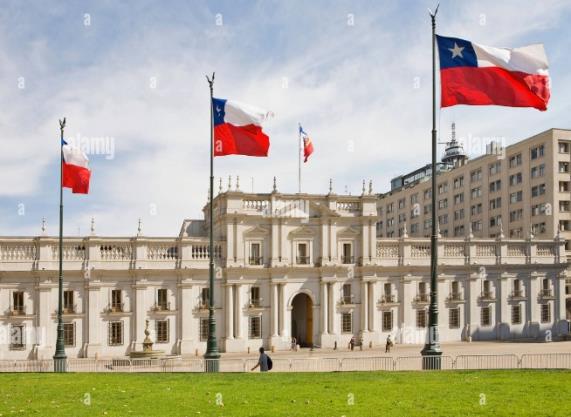
In addition, the political decision to participate in the TIMMS and PISA measurements is highlighted, allowing the nation to have international benchmarks associated with learning achievements and the development of mathematics competencies. However, relatively few LAC countries participate in these types of assessments. Moreover, these assessments are limited to certain age groups and, therefore, do not produce a detailed picture of student performance as they progress in their reassessment reference systems (Bosch, C., Álvarez Díaz, L., Correa, R., and Druck, S., 2010).
For this reason, problem-solving skills have been massified in theory and practice within the country's classrooms, and for this reason, they should continue to be emphasized because the results of Chilean students are still relatively weak in the international context (Apuntes sobre la calidad de la educación, 2013).
Thanks to studies conducted in Chile, mathematics teaching is teacher-centered, who develops content through a presentation of cases or examples, followed by the definition of concepts (Araya and Dartnell, 2008; Cornejo, Silva and Olivares, 2011, in Manzi, González and Sun, 2011). According to the indicators of the PISA 2012 test, gender differences in the country are manifested both in the results of the evaluations and in the attitude towards the mathematics class.

On the other hand, in Chile they previously tended to blame the education system in general, together with school teachers in particular, for the low educational levels in the country, in order to assume their share of responsibility for the children's failures, and to face this as a problem that must be solved by all actors, since it all lies in the teaching methodology used by teachers in that country.
Chile also launched a standards and certification program for high school mathematics teachers. This program offers special online courses for teaching mathematics, and a similar program for elementary school teachers is also being prepared (Bosch, C., Álvarez Díaz, L., Correa, R., and Druck, S., 2010).
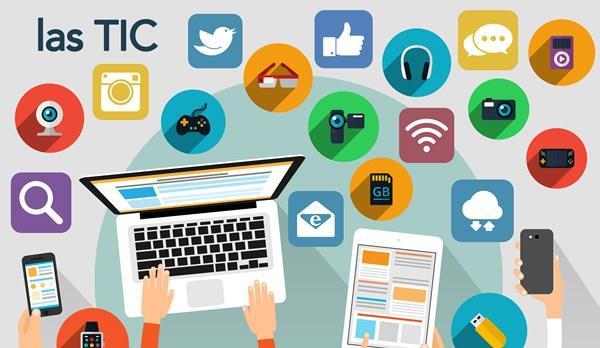
Undoubtedly, Chile's mathematics curriculum seeks to guide educators in the planning and execution of their classes. Moreover, the teaching of mathematics emphasizes the understanding and application of enigmatic mathematical concepts. Likewise, Information and Communication Technologies (ICT) are essential in mathematics education in Chile, because with the help of teachers, students are given more access to resources and tools that make their learning much more exciting with a variety of possibilities, since good practices seek to link mathematicians and educators, since they allow improving the mathematical performance of students.

Thus, the mathematical learning assessment system in Chile is constantly evolving, seeking to improve its ability to provide accurate information on students' progress. Therefore, it should be ensured that students and teachers have greater access to educational programs, support materials and information to improve their learning experience. For this reason, in Colombia, it is important that teachers are able to do their training online and in this way there is more reliability when imparting knowledge and not to blame the education system to better contribute to the quality of mathematics teaching to improve the mathematical performance of students and conduct national school Olympiads.
BRAZIL

As is well known, Bosch et al., (2010) mention Brazil is one of the countries in Latin America where the so-called “Brazilian Mathematics Olympiad” is held, in which public schools in the country have participated since 2005, and which is organized by trained people and professionals in the field of mathematics. This is such an important event from the educational spaces of the public sector that it has become a striking example for the entire academic community in the country.
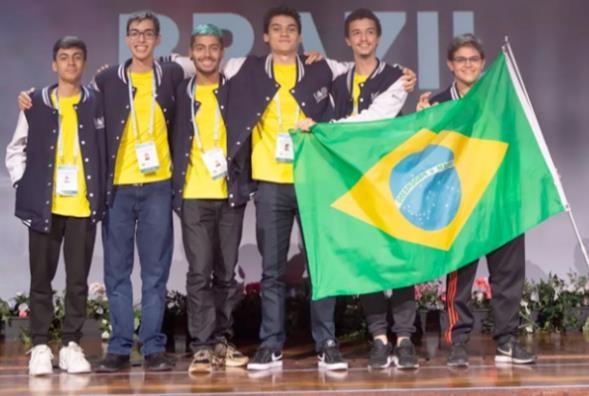


Other hand, these Olympiads have managed to obtain recognition within public schools since they generate benefits to the institutions within their processes in the learning of mathematics such as advice or training for the teachers who are in them, as well as the satisfaction and benefits offered to those students, such as certifications, trophies, medals and, even scholarships so that they can better prepare themselves and apply for pure mathematics courses. (Bosch C; Álvarez, L; Correa, R: Druck, S; & McEaching, R.,2010)

For that reason and according to the information shared about the Mathematical Olympiads held in Brazil, it can be said that these Olympiads are also held in Colombia, which we can say is a positive point within the teaching and learning processes.


However, the reality in the learning processes of mathematics in public schools in Colombia is different, since they face different circumstances such as de-schooling and the little affection that is hard to know or learn about this science; many of the students who participate in the Olympiads do so because they reinforce the subject outside of school or it becomes something somewhat personal, but there is little affection and knowledge that is hard for it. It is essential that the Colombian Ministry of National Education find and apply alternatives that change the way of perceiving mathematics in public institutions and thus increase the index within the different school tests that are carried out.
References
Bosch C; Álvarez, L; Correa, R: Druck, S; & McEaching, R. (2010). Mathematics education in Latin America and the Caribbean: a reality to be transformedAbrir este documento utilizando ReadSpeaker docReader .
Science for a Better Life: Developing Regional Scientific Programs in Priority Areas for Latin America and the Caribbean. Volume 4. Mexico City, ISBN 978-0-930357-801. http://docplayer.net/20952213-Mathematics-education-in-latin-america-and-thecaribbean-a-reality-to-be-transformed.html
Ayarza, R. O. (2019, agosto 1). Avances y desafíos de las matemáticas escolar en Chile. Ruta Maestra. https://rutamaestra.santillana.com.co/avances-y-desafios-de-la-matematicasescolar-en-chile/
(S/f). Mineduc.cl. Recuperado el 7 de septiembre de 2024, de https://media.mineduc.cl/wpcontent/uploads/sites/28/2016/04/Matematica_1_M-1.pdf