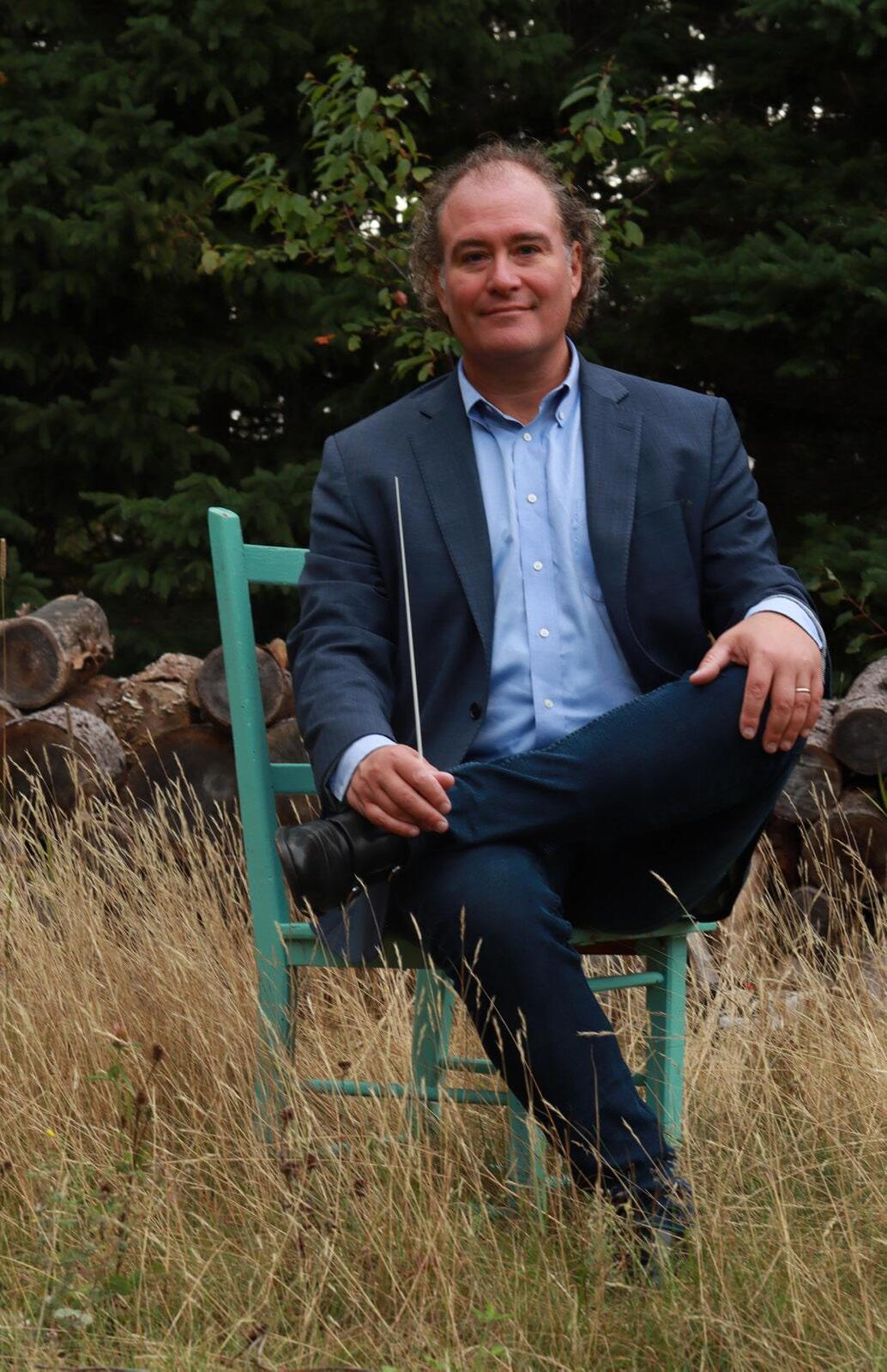
Antoine Plante Artistic Director
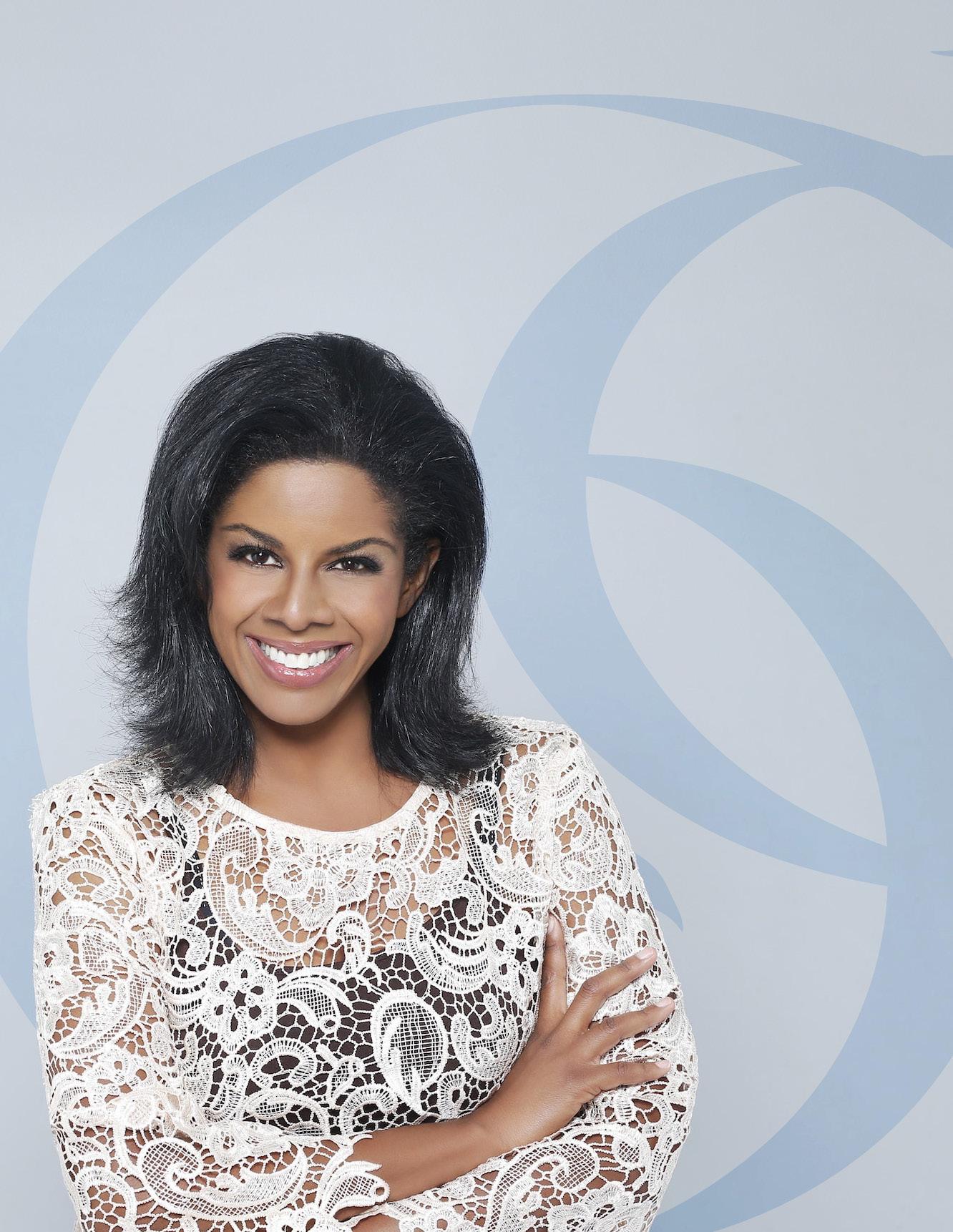
Nicole Heaston Soprano
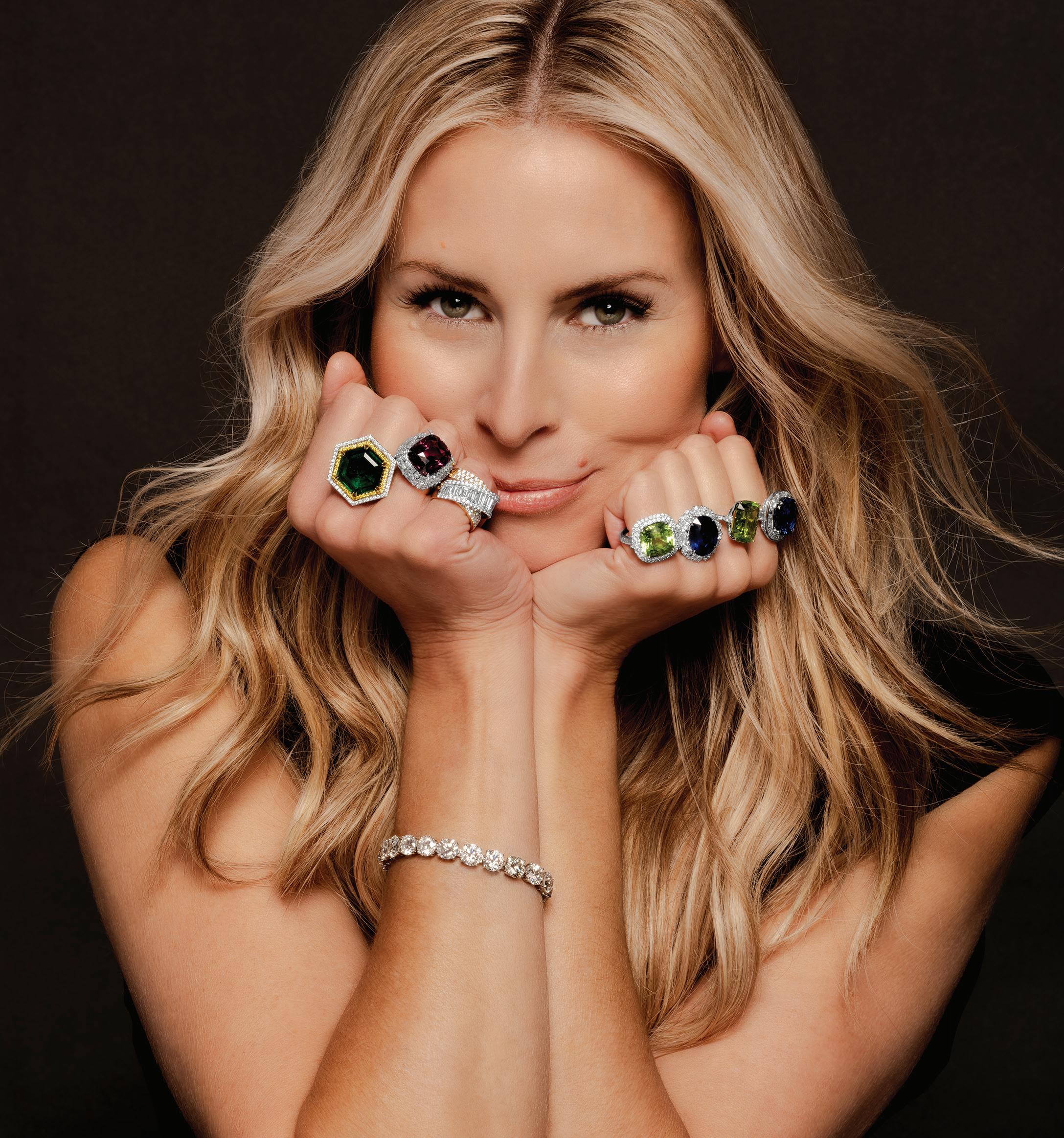

Lynn Wyatt Artistic Director Chair
Jonathan Godfrey
Concertmaster
Anabel Ramírez
Assistant Concertmaster
Oleg Sulyga
Principal Second Violin
Joanna Becker
Ryan Cheng*
Lucinda Chiu
Laura Cividino
Matthew Detrick
Andrés González
Jackson Guillen
Marisa Ishikawa
Kana Kimura
Matt Lammers
Maria Lin
Manami Mizumoto
Sean O’Neal
Cristina Prats-Costa*
Emily Richardson
Katrina Savitski
Jacob Schafer
Ervin Luka Sešek
Rachel Shepard
Ariya Tai
Hannah Watson
Kirsten Yon
Kathleen Carrington, Principal
Amber Archibald
Matthew Carrington
Rachel Halvorsen
Matthew Weathers
Rainey Weber
Eunghee Cho, Principal
Matthew Dudzik
Christopher Ellis
Ellie Traverse Herrera
Kristiana Ignatjeva
Patrick Moore
Caroline Nicholas
Annamarie Reader
Deborah Dunham, Principal
Hunter Capoccioni
Paul Ellison
Erik Gronfor
Elvis Martinez
Antoine Plante
Héctor Torres González Principal
David Ross, Principal
Immanuel Davis
Andrea LeBlanc
David Dickey, Principal
Pablo Moreno
Pablo O’Connell
Margaret Owens
Thomas Carroll, Principal
Elise Bonhivert
Nate Helgeson, Principal
Georgeanne Banker
Allen Hamrick
Kris Kwapis, Principal
Amanda Pepping
Todd Williams, Principal
Burke Anderson
Nate Udell
Jesús Pacheco, Principal
Mario Aschauer, Principal
Bryan Anderson
Brad Bennight
Caitlin Mehrtens, Principal
Kathleen Carrington
Andrés González
Daphnee Johnson
Fiona Lofthouse
Stephen Martin
Brenda Rengel
Mayara Velásquez
*Mercury-Juilliard Fellow
Dear Friends,
As the festive season unfolds, it’s a joy to welcome you to a series of concerts that celebrates the richness of holiday traditions and the inspiring possibilities of the new year. Each program invites us on a journey through beloved classics and spirited carols, culminating in a January concert that opens the year with Baroque brilliance and virtuosity.
We start with the extraordinary soprano Nicole Heaston, whose voice brings warmth and elegance to both cherished carols and sacred songs in our Downtown Series program. Filled with works by Corrette, Vaughan Williams, Handel, and many traditional favorites, it is a celebration of the season’s rich musical heritage.
In the ConocoPhillips Neighborhood Series, we return to early English carols and Renaissance sounds, bringing together voices and period instruments to capture the timeless beauty of the holiday season. With compositions by Tallis, Byrd, and Purcell, this program transports us to the candlelit gatherings of a historic English Christmas. Performing in beautiful, intimate venues around Houston, we invite you to join us in a setting that brings the music close to heart.
As we welcome the new year, our Baroque concert features the vibrant works of Vivaldi, Handel, and Bach, showcasing the virtuosity of our orchestra and guest soloists. From Vivaldi’s exhilarating concertos to Bach’s wonderful Orchestral Suite No. 1, this program brings the
energy, elegance, and inspiration of the Baroque era as a fresh beginning to the year.
Thank you for being here to celebrate with us. May these concerts fill your season with joy, peace, and the timeless beauty of music, carrying inspiration into the year ahead.
With warmest regards,

Antoine Plante Artistic Director
Antoine Plante, Conductor
Nicole Heaston, Soprano
December
7 / 2024
Wortham Center, Cullen Theater
MICHEL CORRETTE
Christmas Symphony No. 4 in D minor
Une jeune pucelle
Ô jour glorieux
Chrétiens qui suivez l’Église
Nous sommes en voie
Noël Allemand
VI. VII.
Noël Américain
Nouveau Noël sur un ancien air de Mr. de Lulli.
THOMAS RAVENSCROFT
Remember O Thou Man
ANON. ca 1450
Nowell, Nowell
WILLIAM BALLET & DR. CHARLES WOOD
Sweet was the song the Virgin sang
TRADITIONAL
Sussex Carol
TRADITIONAL
Whiskey Before Breakfast
TRADITIONAL
Appalachian Christmas Waltz
TRADITIONAL
I Wonder as I Wander.
TRADITIONAL
Old Joe Clark
TRADITIONAL
Brightest and Best
TRADITIONAL
The Babe of Bethlehem
TRADITIONAL
The Kentucky Wassail
Intermission
SACRED SONGS
GEORG FRIDERIC HANDEL
Overture from Messiah
“He Shall Feed His Flock” from Messiah
WOLFGANG AMADEUS MOZART
Agnus Dei from Mass in C Major, K. 317
RALPH VAUGHAN WILLIAMS
Fantasia on Greensleeves
CESAR FRANCK
Panis Angelicus
FRANZ SCHUBERT
Ave Maria
CHRISTMAS CLASSICS
GUSTAV HOLST/CHRISTINA ROSSETTI
In the Bleak Midwinter
HUGH MARTIN/RALPH BLANE
Have Yourself a Merry Little Christmas
ADOLPHE ADAM
O Holy Night
All music curated and arranged by Antoine Plante & Denis Plante
In its selection of Christmas music this program stands out not only for drawing upon pieces from widely different eras (from the late middles ages through the mid-20th century), but also for showcasing the classical, folk, and popular traditions that lie behind canonical holiday songs. Christmas makes this possible: its historical significance as both a major feast of Christian churches and a year’s-end commemoration has provided inspiration across the centuries and across diverse traditions. We can further observe the way in which some Christmas repertory bridges traditions, such as Michel Corrette’s Symphonies … contenant les plus beaux noëls (Symphonies … containing the most beautiful noëls), which feature multimovement symphonies, a classical genre, based on noëls, a folk tradition.
The word noël – sometimes noé or nowell –is thought to derive from the Latin for birth (natalis) or news (novus), and it came to be used as an expression of joy during the Christmas season. Since the late middle ages, the term has also referred to a non-liturgical song on a strophic text in French or a related dialect. In the climate of sixteenth-century Reformation and Counter-Reformation spiritual renewal, noëls enjoyed an unprecedented level popularity, as seen in a surge of printed collections. On the basis of this extended repertory of noëls, Corrette, a talented arranger of popular tunes, composed his symphonies in 1781. Each movement of the Symphony Nº 4 on this program is an instrumental arrangement of a noël tune, and we can surmise from the movement titles that the noël repertory was indeed vast in Corrette’s time. For example, they comprehend a noël based on a tune by Jean-Baptiste Lully, an opera composer, another on a somber German tune, and another from colonial North America.
Closely related to the noël is the carol, a strophic song of Christian devotion associated
with England and settings of texts in Latin or English. Topics could include the Virgin Mary or Christmas, but it was the Christmas carols that attained lasting influence. The form of these songs was strophic (for example, “Sussex Carol”), but many include brief refrains, too (“Sweet Was the Song the Virgin Sang,” “Nowell, Nowell,” “Remember, O thou Man”). Characteristic of folk and popular traditions, none of the noëls or carols is attributed to a known author or a certain period of origin. Instead, each is known to us from later collections and arrangements.
Appalachian repertory is similar in its history, but is also distinguished by its being known to Americans in familiar performing traditions, such as “Old Way” and Shape-Note psalmody, fiddle playing, and balladry, all of which are descended from folk traditions of the British Isles. The selection of music from Appalachia on this program is thematically broader than the other portions in its inclusion of fiddle tunes not associated with Christmas but that represent the folk tradition on the whole. The Appalachian songs, similar to the noëls and carols, illustrate the ongoing evolution of the repertory of Christmas songs. Thus, “Brightest and Best” features early 18th-century verses set to an existing tune, “Star in the East,” while both the tune and the lyrics of “I Wonder as I Wander” are John Jacob Niles’s creative expansions upon a hymn he first heard in rural North Carolina in the early 1930s.
Some of the sacred works from the European classical tradition of composition bear the same mixture of cultivated genres and folk influences as seen in Corrette’s Symphonies. The selections from Handel’s Messiah, for example, begin with a French overture, which was music created for the court of Louis XIV, but follow this with the “Pifa” (a shepherd’s piping air) and an aria in a similar pastoral style. No folk music is quoted in either of these pastoral movements, but the gentle lilt of their compound meter and the drone effect of their held bass notes evoke the shepherd’s bagpipe, which was a topos not only of pastoralism, but more specifically of the Nativity by the association of the former with the latter. Mozart’s Agnus Dei from his “Coronation” Mass is a part of the year-round liturgy. While it has no special connection to Christmas, it illustrates the stylistic closeness between church music and opera in classical music. The similarity between this piece and the Contessa’s Act III aria,
“Dove sono” from Mozart’s Marriage of Figaro illustrates the point. Franck’s Panis Angelicus and Schubert’s Ave Maria are also not Christmas music, but are similar in significance and style to Mozart’s Agnus Dei as operatic emblems of Catholic spirituality.
We can link Vaughan Williams’s Fantasia on Greensleeves to Christmas by virtue of a contrafactum on the Greensleeves tune. A contrafactum is the re-texting of existing music, so that “Alas, my love, you do me wrong” from the 1580s would become “What child is this, who laid to rest” in 1865, courtesy of the retexting by poet and hymn writer William Chatterton Dix. By means of that contrafactum, “Greensleeves” has since entered the canon of Christmas tunes, even if Vaughan Williams had it in mind for Sir John in Love, an opera setting of Shakespeare’s Merry Wives of Windsor. Note that the Greensleeves tune is itself older than any of its texts, originating as an early 16th-century Italian ostinato known as the Passamezzo Antico.
The history of Greensleeves underscores the way in which the repertory of Christmas music can and does continue to grow, and the last portion of this program illustrates three different paths that a song might take to canonical status. In the Bleak Midwinter, a poem originally titled A Christmas Carol by Christina Rossetti, was first published in the American popular magazine, Scribner’s Monthly, in 1872. Only later, in the first decade of the twentieth century, did her poem receive the musical settings – first by Gustav Holst (1905) and soon after by Harold Darke (1909) – that have brought it wider recognition. Further settings in recent years by American composers Steve Pilkington and Benjamin Dawson attest to the ongoing popularity of Rossetti’s poem, but it’s Holst’s setting that is featured on this program. Have Yourself a Merry Little Christmas, composed by Hugh Martin to lyrics by Ralph Blane for the 1944 MGM musical, Meet Me in St. Louis, is the song sung by Esther (Judy Garland) to cheer her despondent younger sister, Tootie (Margaret O’Brien). Martin would go on to revise his lyrics to create a more spiritual version – Have Yourself a Blessed Little Christmas (my emphasis) – but it’s the Hollywood version that has endured as a popular (and more secular) favorite.
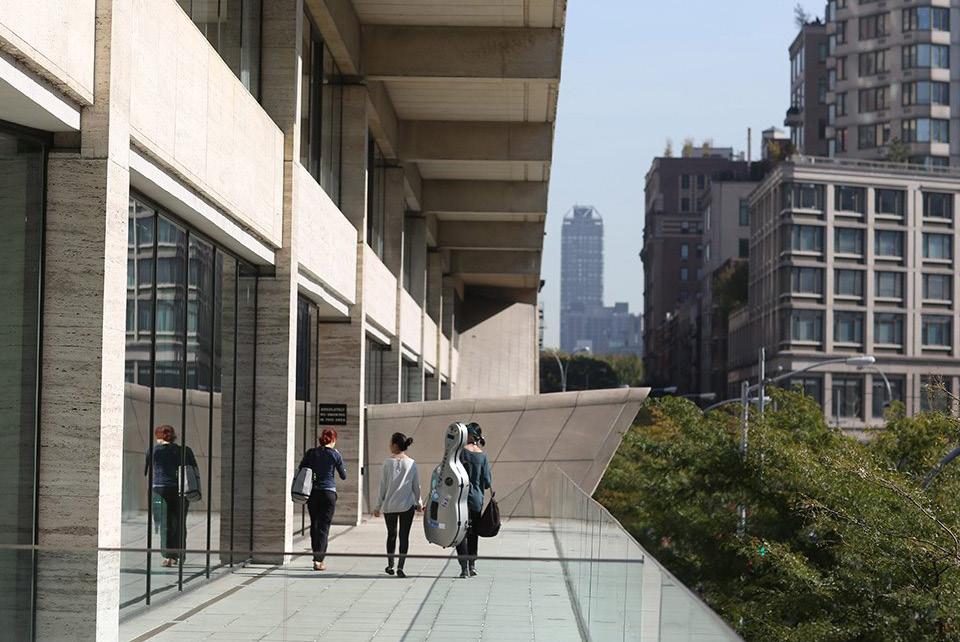
This initiative, a collaboration between The Juilliard School of Music Historical Performance Program and Mercury Chamber Orchestra, encourages the development of talented young instrumentalists and fosters a strong relationship between two major players in America’s period instrument performance scene.
Each spring, Mercury holds auditions at Juilliard, selecting two post-graduate students to participate in a one-year fellowship with the ensemble. Fellows will perform with Mercury during the season, gaining valuable performance experience while introducing Houston to the next generation of great period performance musicians.
O Holy Night brings us back to noëls because it originated in 1843 as Placide Cappeau’s Minuit, Chrétiens, which was set to music by the ballet and opera composer Adolphe Adam in 1847. The translation of Cappeau’s noël into English as O Holy Night (1855) is the work of the American music critic John Sullivan Dwight. But to call Dwight’s version a translation obscures the liberties that he took with Cappeau’s noël in order to weave in the idealist and egalitarian themes that were central to Dwight’s Unitarian beliefs. To see this, compare excerpts from the French original, a close translation into English, and Dwight’s version:
Cappeau’s verses:
Minuit! Chrétiens, c’est l’heure solennelle Où l’homme Dieu descendit jusqu’à nous Le Rédempteur a brisé toute entrave, La terre est libre, et le ciel est ouvert
English translation:
Midnight! Christians, it is the solemn hour
When God incarnate came down to us
The Redeemer has broken all fetters, The earth is free, and the sky is open
Dwight’s quasi-contrafactum:
O holy night, the stars are brightly shining; It is the night of the dear Savior’s birth Truly, He taught us to love one another; His law is love, and His gospel is peace
I call Dwight’s work a “quasi-contrafactum,” something that lies between a translation and a retexting, in order to highlight not only his contribution to this well-known song, but also the larger theme of the diverse pathways by which Christmas songs have come down to us. That theme runs throughout this imaginative program.
Gregory Barnett©

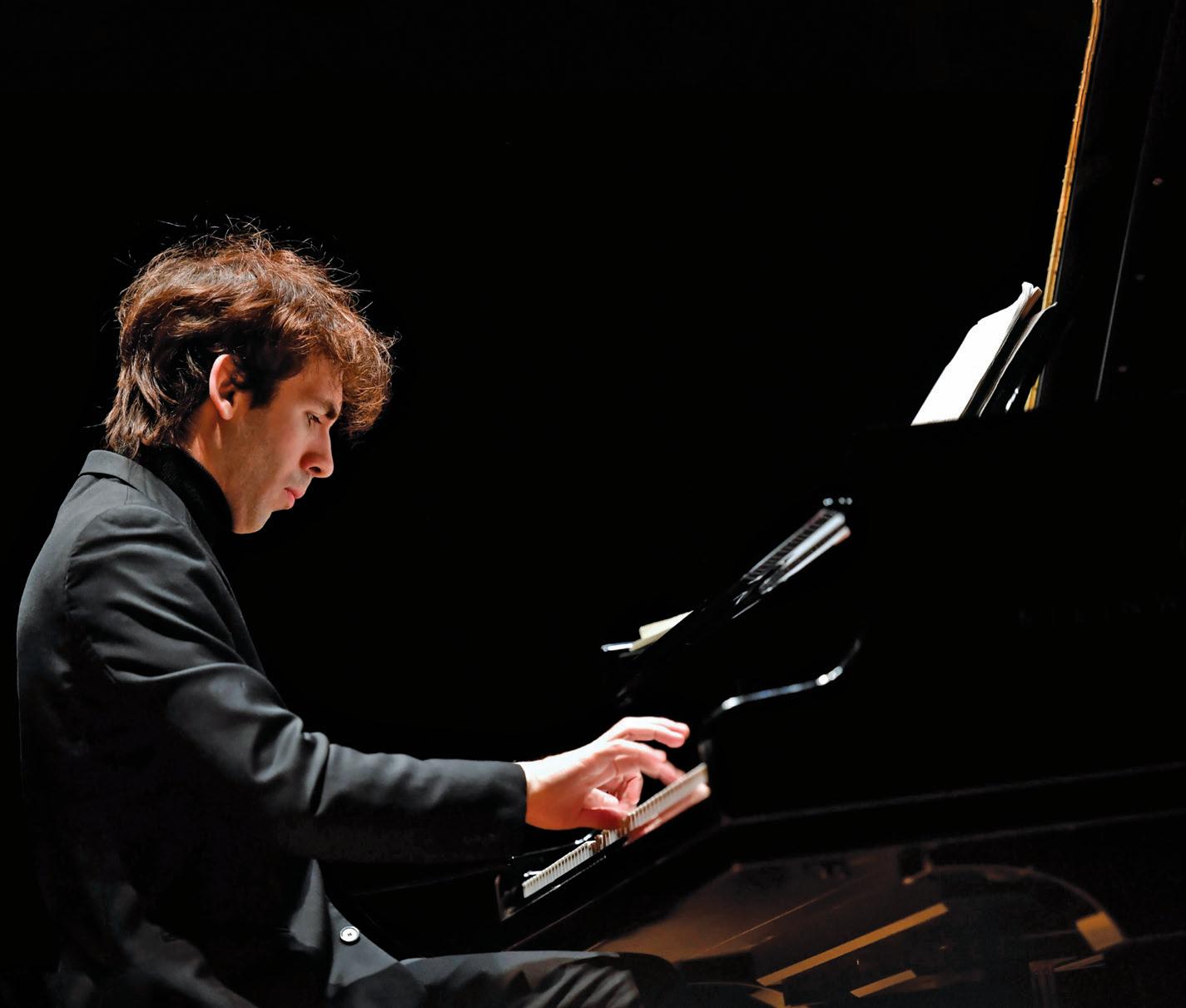
TUESDAY JANUARY 28 | 8PM

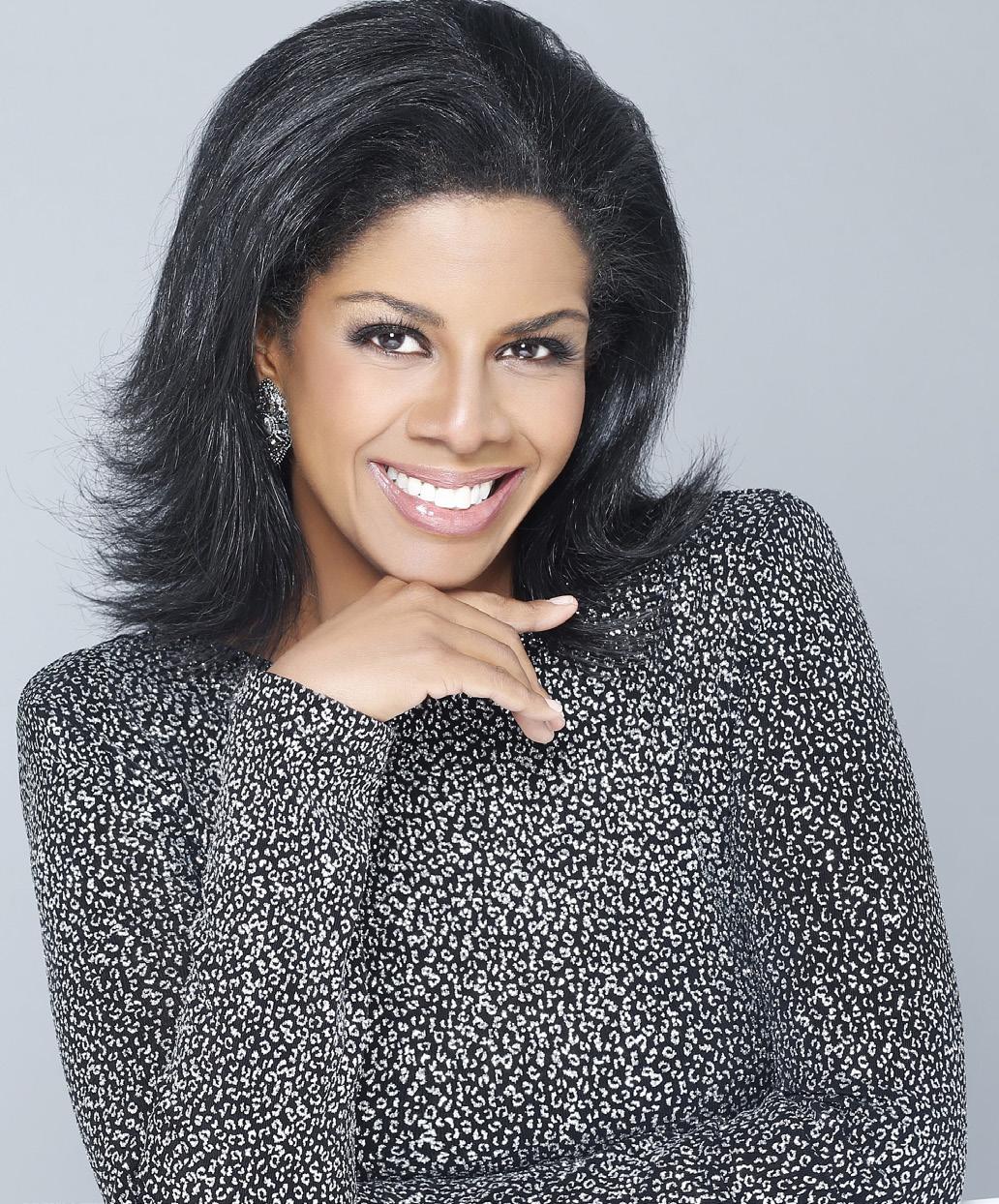
Nicole Heaston completed her Master’s Degree in Voice at the Cincinnati Conservatory of Music and received her undergraduate degree in music at the University of Akron. She is a distinguished graduate of Houston Grand Opera’s Butler Studio.
To begin the 2024-2025 season, the soprano returns to the role of Claire Devon in the North American premiere of Mazzoli/Vavrek’s The Listeners at Opera Philadelphia; a native Chicagoan, she headlines Lyric Opera of Chicago’s spring 2025 performances of the opera, making her company debut. With the National Symphony Orchestra, she sings the title role in Samuel Barber’s Vanessa, led by Gianandrea Noseda and featuring a star cast. Other engagements during the season include a Christmas Program with Houston’s Mercury Chamber Orchestra, and the fiery role of Armida in Detroit Opera’s production of Handel’s Rinaldo.
A richly varied 2023-2024 season included Heaston’s returns to Los Angeles Opera, as Mary in Still’s Highway 1, USA and Houston Grand Opera, as Alice Ford in Verdi’s Falstaff.
With Philharmonia Baroque, she sang the unique combination of Anna/Dido in Errollyn Wallen’s Dido’s Ghost and Dido in Purcell’s Dido and Aeneas. During the spring of 2024, she made an anticipated role debut as Massenet’s Thaïs with Utah Opera.
Ms. Heaston began the 2022-23 season with the long-awaited world premiere of The Listeners at Den Norkse Opera. She appeared as Amore in a new production of Gluck’s Orfeo ed Euridice with San Francisco Opera, later returning to the city for her role debut as Melissa in Handel’s Amadigi di Gaula with Philharmonia Baroque, and also bowed in performances of Countess Almaviva in Mozart’s Le nozze di Figaro with Houston Grand Opera. She concluded the season with her first career performances of Samuel Barber’s Vanessa, notching a great success at Charleston’s Spoleto Festival USA.
Since her debut at the Metropolitan Opera as Zerlina in Don Giovanni, Ms. Heaston has appeared several times with the theater, singing Ilia in Mozart’s Idomeneo, Pamina in Die Zauberflöte (conducted by James Levine), and Echo in Ariadne auf Naxos. A regular presence in opera houses throughout the United States, Heaston recently sang Despina in a new production of Così fan tutte and Countess Almaviva in Le nozze di Figaro with San Francisco Opera, Countess Almaviva with Boston Lyric Opera, Musetta in La Bohème with the Fort Worth Opera, Lyric Opera of Kansas City, and for her debut with New York City Opera alongside Rolando Villazon (which was recorded and broadcast nationwide). She sang Despina in Così Fan Tutte with the Dallas Opera and made her debut with the Washington National Opera in the role of Pamina. Heaston made her debut at the Glimmerglass Opera in New York as Susanna, performing the same role at the Wolf Trap Opera in Virginia, and sang the role of the Princess in Respighi’s La Bella Dormente nel Bosco at the Spoleto Festival USA and the Lincoln Center Festival. Heaston has a long-standing relationship with Houston Grand Opera. She made her debut with the company as the title role of Roméo et Juliette, and she has since been heard as Mimì in La bohème, Liù in Turandot, Adina in L’elisir d’amore, Gilda in Rigoletto, Susanna in Le Nozze di Figaro, and Pamina in The Magic Flute
ConocoPhillips
Neighborhood Series
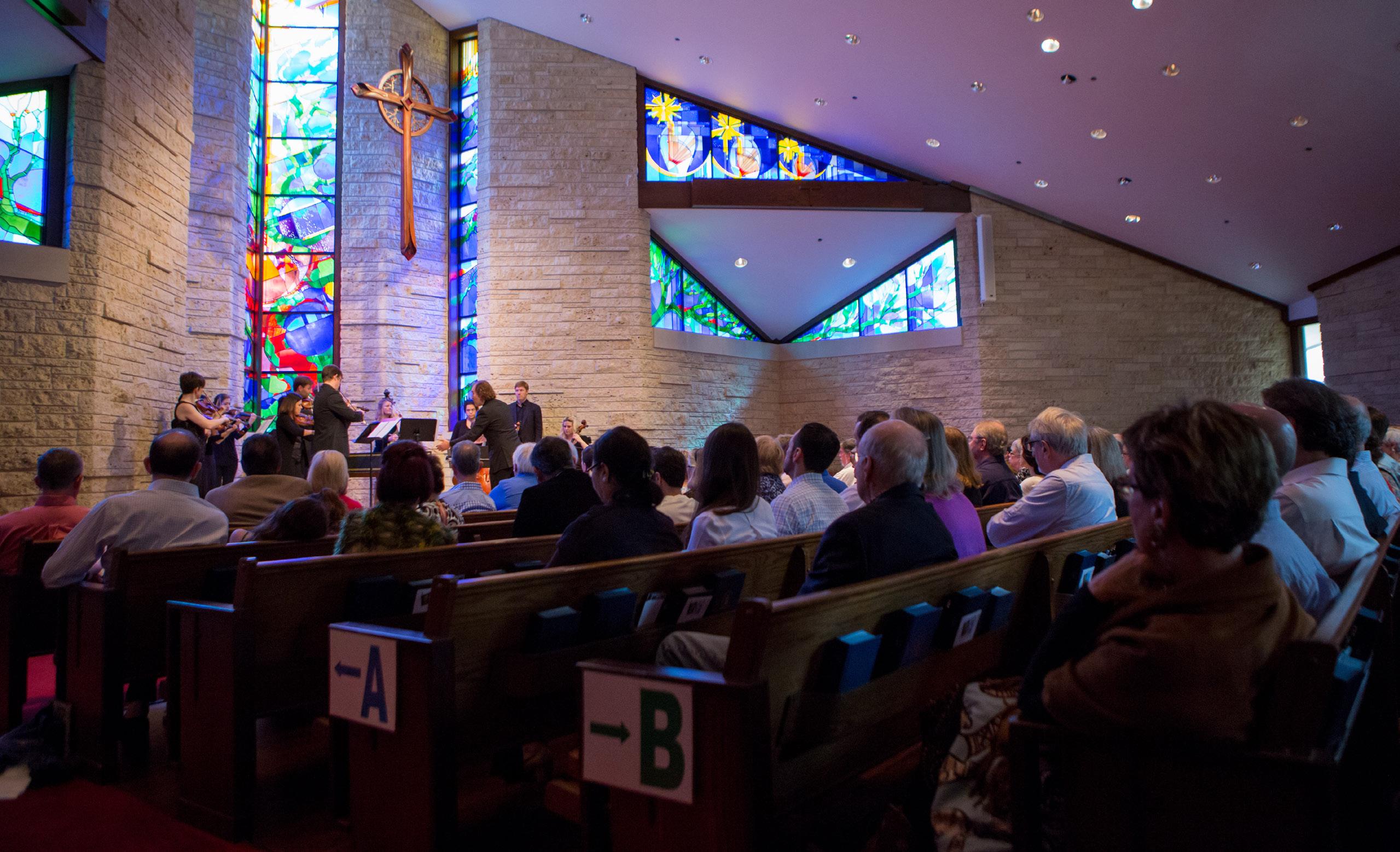
DECEMBER 19 • 7:30PM
Heights
Saengerhalle
DECEMBER 21 • 2:30PM
Memorial
MDPC
DECEMBER 21 • 6:30PM & 8:30PM
Museum District
MFAH
DECEMBER 22 • 7:00PM
The Woodlands
Dosey Doe
Jonathan Godfrey, Violin
Anabel Ramírez, Violin
Kathleen Carrington, Viola
Antoine Plante, Gamba
Héctor Torres González, Theorbo/Guitar
Jesús Pacheco, Percussion
Mario Aschauer, Organ
Melanie Piché Miller, Soprano
Michael Skarke, Alto
Cody Ryan Arthur, Tenor
Joshua Wilson, Bass
TRADITIONAL
O come, Emmanuel
THOMAS TALLIS
The Town Lay Hushed
TRADITIONAL
Greensleeves
HENRY PURCELL
Behold, I Bring You Glad Tidings
WILLIAM BYRD
Lullaby, my sweet little baby
ANTHONY HOLBORNE
Galliard: As it fell on a hollie eve
RICHARD PYGOTT
Quid petis o fili?
TRADITIONAL
Girandole
TRADITIONAL
The Coventry Carol
JOHN DOWLAND
Mr. Dowland’s Midnight
TRADITIONAL
Lullay, thou tiny little child
DOWLAND
Awake, sweet Love
TRADITIONAL
God Rest Ye Merry, Gentleman
THOINOT ARBEAU
Bransle de l’official
TRADITIONAL
Gaudete
All music curated and arranged by Antoine Plante. Images for MFAH performances curated by Helga Kessler Aursich, Ph. D, featuring art from the museum’s collection. Special thanks to Bach Society Houston for use of their Taylor & Boody portative organ.
ConocoPhillips is a proud sponsor of the Mercury Chamber Orchestra and this year’s ConocoPhillips Neighborhood Series
Mercury continues to receive critical and audience acclaim for its innovative and welcoming performances, while also impacting the lives of young Houstonians through award-winning music education programs. We commend the orchestra on its mission to serve the community by celebrating the power of music—through teaching, sharing, and performing with passion, intimacy, and excellence. www.conocophillips.com
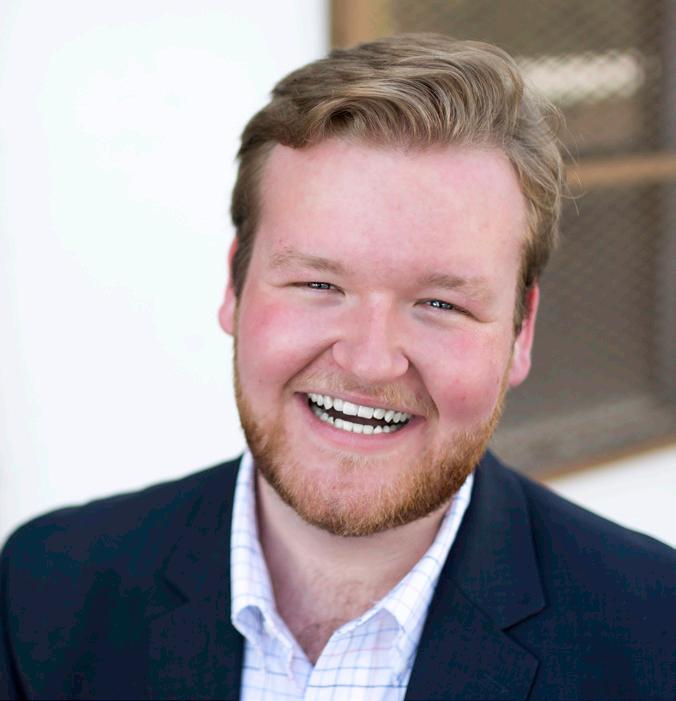
Cody Ryan Arthur, tenor, enjoys a diverse professional career on operatic, concert, and choral stages across the US and abroad. His operatic repertoire spans Baroque to
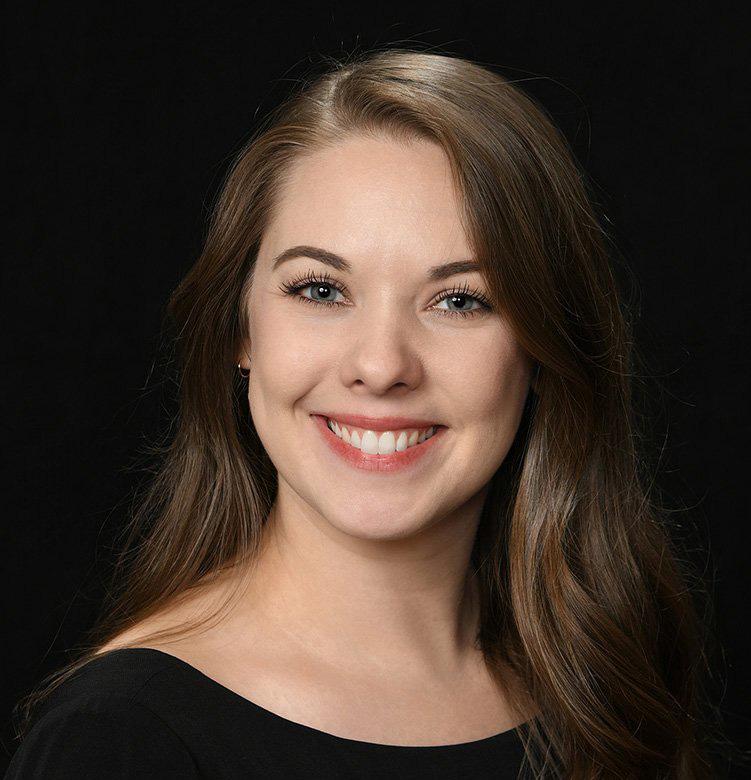
Melanie Piché Miller
Contemporary works, including roles such as Renaud (Lully’s Armide), Tamino, Don Ottavio, Alfredo, Roméo, Albert Herring, and Larry Renault (in the regional premiere of William Bolcom’s Dinner at Eight).
Cody has performed with notable organizations such as Miami Music Festival, Chicago Summer Opera, Opera NEO, and Operafest Sewanee. Locally, he has appeared with HGOco (premiere of Marian’s Song), Opera in the Heights, and is a regular member of the Houston Grand Opera Chorus.
On the concert stage, Cody has sung with esteemed ensembles like Ars Lyrica, Bach Society of Houston, Harmonia Stellarum, Greenbriar Consortium, Mercury Singers and Orchestra, and River Oaks Chamber Orchestra. Last season, he made his debut with Theatre Under The Stars (TUTS) in their acclaimed
Melanie has been an educator in Katy ISD for eight years, spending six years in the classroom as a 6A high school choir director and then transitioning into an administrative role in 2022. Outside of education, she has been involved in the professional choral world in Houston since 2017.
Melanie sang with Cantare HOUSTON until 2022 most notably as a soloist in Handel’s Dixit Dominus, performing at the Southwestern American Choral Directors Association 2020 Convention, and on the Cantare album titled Love Divine. In the Summer of 2023, Melanie traveled to Ireland and Scotland with the Christ Church Cathedral Choir and took part
production of Sweeney Todd and joined TACTUS in Oklahoma City as tenor soloist for their St. John Passion.
In addition to his classical work, Cody enjoys performing musical theater, Southern gospel, and jazz, frequently appearing in online concerts, cabarets, and house concerts. You can hear him as a soloist on the 2021 album Symphony of Hymns, premiered by the Chapelwood UMC Chancel Choir, where he serves as Associate Director.
Cody maintains a thriving private voice studio in Houston and is a proud alumnus of the University of Mississippi and the University of Houston’s Moores School of Music.
in the UK premier of Ēriks Ešenvalds’ Mass of the Eternal Flame commissioned by the choir as the soprano soloist.
Currently, Melanie is in her second season with the GRAMMY® award winning Houston Chamber Choir, most recently featured as a soloist in Ralph Vaughan Williams’ Mass in G Minor and other works throughout the 28th season. Melanie holds a Bachelor of Music in Vocal Performance with a Minor in Education from The University of Tulsa and a Master of Education in Administration from Lamar University. She lives in Katy with her husband, Brian, and their dog, Puccini.
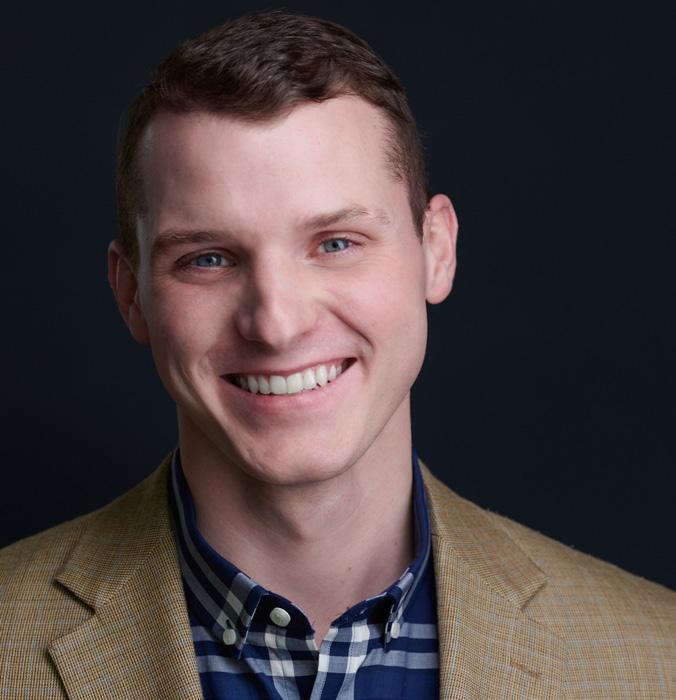
reputation as a “miraculous voice,” (Stage Raw LA) with “strong dramatic presence.” (San Diego Story)
Michael’s versatility shines as he balances his role as an early music specialist with his regular performances of new music. Over the past few years, Michael has been featured as a soloist on groundbreaking premiere recordings produced by 11-time GRAMMY® award winner Blanton Alspaugh, including the Houston Chamber Choir’s recording of Daniel Knaggs’ “Two Streams,” and the arrangement of an all-men’s rendition of Rachmaninoff’s “All Night Vigil” with the GRAMMY® nominated PaTRAM Male Chorus in Jerusalem, Israel.
Opera, where his performances as Ottone in Monteverdi’s Poppea were marked by Opera News as “honey-toned,” and by Chicago Classical Review as “superb… somehow making this weak lovelorn character credible and appealing.”
The key events in Michael’s 2024-25 season include returns to Con Gioia Early Music Ensemble, Harmonia Stellarum, Mercury Chamber Orchestra, and Ars Lyrica. Mr. Skarke will also make long-awaited debuts with Minneapolis’ leading early music orchestra, La Grande Bande, and the GRAMMY® award-winning Boston Early Music Festival in their mainstage performances of Reinhard Keiser’s Octavia.
In previous seasons, Michael has performed with some of the leading opera companies in the States, including Pacific Opera Project, West Edge Opera, the American Baroque Opera Company, and Haymarket
Acclaimed for his “exquisite, almost ethereal tone quality” (Vocal Arts Chicago) and “sexy, strong countertenor” (Stage and Cinema LA), Michael Skarke is quickly making waves among the opera and ensemble scenes of the United States and abroad. Michael’s dedication to storytelling and performance practice have inspired his Bass
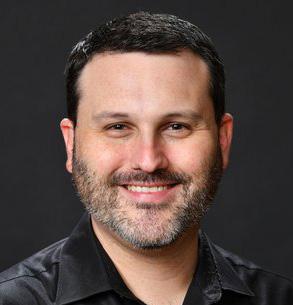
Joshua Wilson, bass, performs frequently as a guest soloist with musical ensembles
throughout the Houston area. He earned a Bachelor of Music in vocal performance from Houston Baptist University in 2002.
He has been Choral Director at St. Thomas High School since 2003, and at Incarnate Word Academy since 2017. He is also an instructor in beginning band, AP music theory, and film studies at St. Thomas. He currently as the Vice President of the Vocal Division of the Texas Private School Music Educators Association. For six years he has also served as a Reader for the Advanced Placement Music Theory Exam. From 2002-2017, Joshua was a cantor at the Co-Cathedral of
When not performing, Michael enjoys golfing, weightlifting, and spending time with his wife, Jenny, and their kids, Clarke and Jack.
the Sacred Heart in Houston.
Since 2009, Joshua has been a singer with the GRAMMY® Award-winning Houston Chamber Choir, performing and recording as a choir member and soloist. He was featured as a soloist on the Houston Chamber Choir’s world premiere recording of Daniel Knaggs’s Two Streams. Additional notable solo performances with the choir include Stravinsky’s Mass and Handel’s Messiah.
Joshua and his wife Lindsey recently celebrated their 25th wedding anniversary, and are the proud parents of five children.
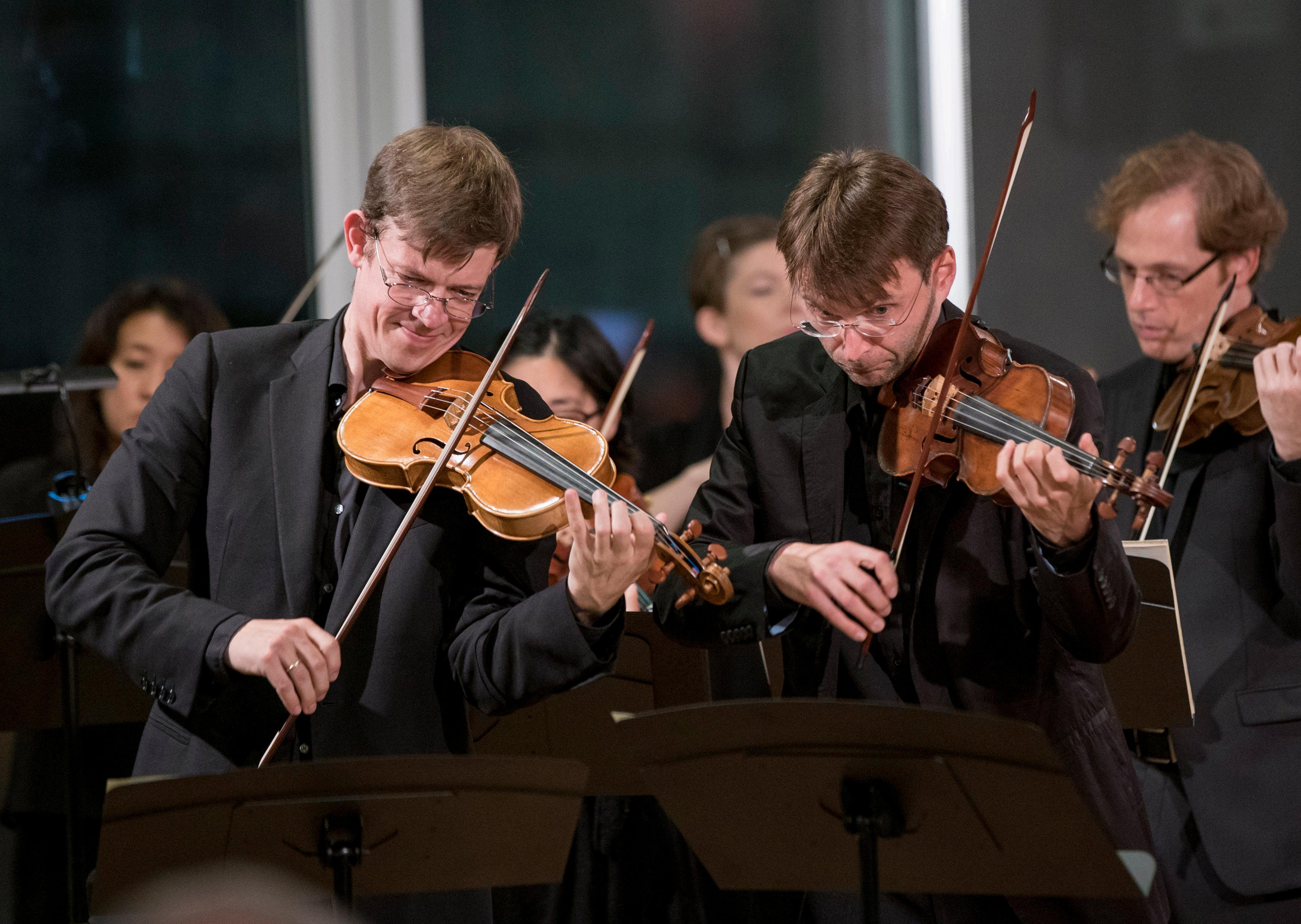
Antoine Plante, Conductor
Jonathan Godfrey, Violin
Oleg Sulyga, Violin
David Dickey, Oboe
Nate Helgeson, Bassoon
January
11 / 2025
Wortham Center, Cullen Theater
12’
(1685-1759)
Concerto Grosso in B-flat major, Op. 3, No. 2, HWV 313
Vivace Largo
Allegro
Menuet
Gavotte I. II. III. IV. V.
ANTONIO VIVALDI (1678 – 1741)
11’ Concerto for Bassoon in A minor, RV 497
Allegro I. II. III.
Allegro molto
Andante molto
12’ Concerto for Two Violins in A minor, RV 523
Allegro I. II. III.
Allegro molto
Largo
10’ Concerto for Oboe and Bassoon in G major, RV 545
Allegro
Allegro assai I. II. III.
Largo - mesto
SEBASTIAN BACH (1685 – 1750)
21’ Orchestral Suite No. 1 in C major, BWV 1066
Overture
Courante
Gavotte I & II
Forlane
Menuet I & II
Bourrée I & II
Passepied I & II I. II. III.
IV. V. VI. VII.
This concert is graciously underwritten by Christopher & Elizabeth Prince
Celebrating the power of music through teaching, sharing, and performing with passion, intimacy, and excellence.
• Be the most welcoming and innovative arts institution in Houston.
• Become an exemplary period instrument ensemble for the Nation.
• Transform the lives of a diverse audience through music.
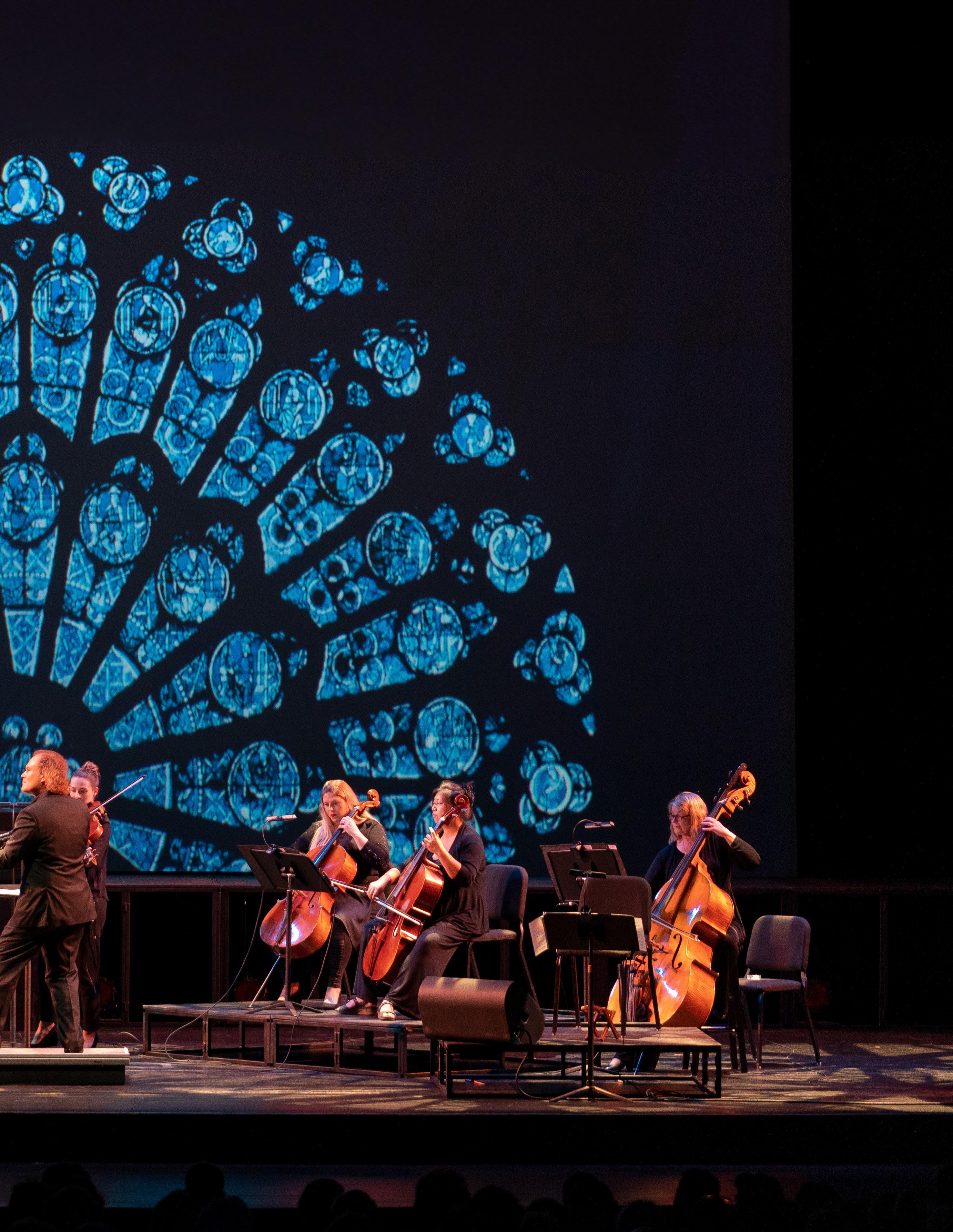
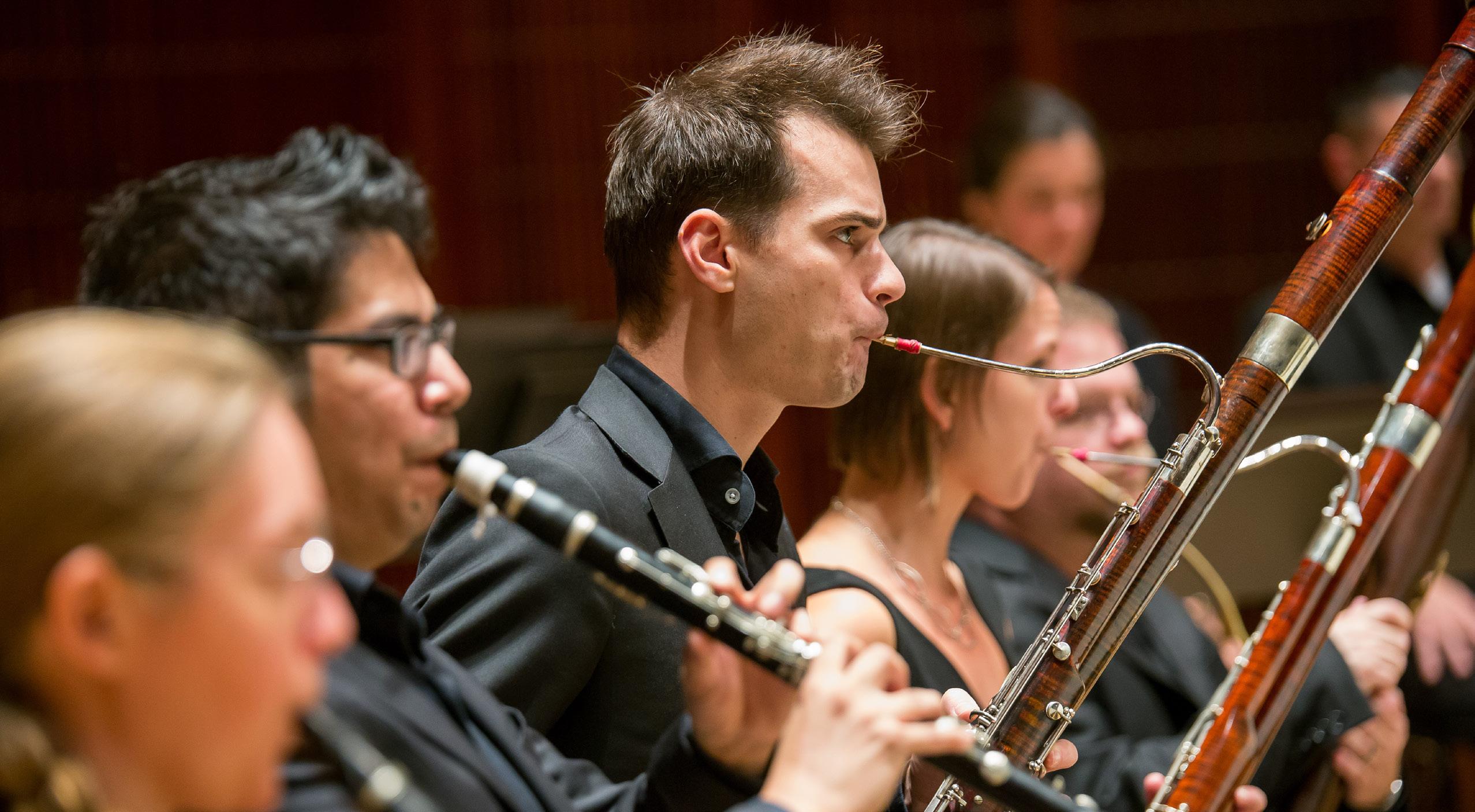
Handel’s Op. 3 (1734), came into being as a compilation of works dating back as much as twenty years earlier by his preferred publisher, John Walsh. The title given to his Op. 3, Concerti grossi, recalls the genre of orchestral music made famous by Arcangelo Corelli (Op. 6, 1713), in which concertante parts stand out from the larger ensemble to create different textures and colors. Handel added oboes (and sometimes flutes, too) the string ensemble of Corelli’s Concerti grossi, which expands the textural and coloristic possibilities of his concertos. Thus, no two movements of Handel’s Concerto grosso Nº 2 features the same scoring.
The concerto begins with a vivacious triple-time movement, in which two violin soloists stand out with rapid passages against the dotted rhythm of the larger ensemble of oboes, strings, and continuo. The slow, aria-like second movement, by contrast, treats just one of the oboes as soloist, but it also creates two obbligato cello parts while the remaining strings supply a quiet tremolo accompaniment without continuo. The next movement treats the oboes and violins as two separate voices within a fugal texture that includes violas and continuo. A binary-form fourth movement in a lilting triple meter uses the full ensemble with the two oboes and two violinists playing concertante parts against the accompaniment of the strings and continuo.
The finale, a series of binary-form variations in a sprightly, gavotte-like duple meter, features yet another texture: two solo oboes accompanied by all of the strings and continuo.
Because we know that Vivaldi’s more than 500 concertos were written for the musicians at the Ospedale della Pietà, the Venetian institute for orphaned and abandoned girls, we surmise that an extraordinary number of these girls were virtuose and that their concerts were as frequent as they were popular. During his decadeslong career of training the Pietà musicians and composing for them, Vivaldi wrote for a variety of soloists. The violin, Vivaldi’s own instrument, is foremost among these with well over 200 concertos known to us, but he also wrote concertos for the cello, flute, oboe, recorder, and even the more exotic viola d’amore, lute, and mandolin. Added to this are his concertos for two or more soloists, two of which are featured on this program. Even in the context of this massive output, Vivaldi’s thirty-nine concertos for the bassoon is an extraordinary number for that instrument (even if two of these are incomplete works) because it reveals the quantity of Pietà orphans capable of playing such music.
A crucial feature of Vivaldi’s output lies in the movement types that he used many times over. The concertos of this program illustrate this. Each
one features three movements in a fast-slowfast ordering of tempos. The fast movements are refrain forms (known as ritornello forms), in which the full ensemble plays thematic material that is heard intermittently throughout the movement and contrasts the non-thematic and improvisatory-sounding episodes for the soloist. The slow movements simplify this form by limiting the tutti refrains to bookends that precede and follow a single, aria-like solo. Variety and interest comes in the form of the different themes of the refrains, many of them featuring a memorably incisive rhythmic motif, and in the form of the virtuosity of the passagework, arpeggiations, and other figures in the solos.
Further details of note are particular to the individual concertos on this program. For example, the full ensemble in the Bassoon Concerto’s slow movement hands the principal motif off to the bassoon, which uses it as a touchstone among the predominant triplets of its extended solo. The opening movement of the Concerto for Two Violins makes a similar hand-off from tutti to violin soloists, but only at the beginning, after which the solo episodes are more and more dissimilar from the tutti ritornellos and, indeed, from each other. The slow movement of the Concerto for Two Violins and also that of the Concerto for Oboe and Bassoon stand out as having neither refrains nor tutti sections. They instead present duets for the soloists that act as quieter and calmer interludes between the fireworks of the fast movements. In the Concerto for Oboe and Bassoon, those fireworks include the rapid string bariolage in the first-movement ritornello and a percussive rat-atat in the bass line of the finale’s ritornello.
Apart from his duties as the head of music in Leipzig’s churches, J. S. Bach wrote his four orchestral suites during the late 1720s and early ‘30s as contributions to the city’s burgeoning concert music scene. In Bach’s time, the genre was known as an ouverture, and it combined two kinds of instrumental music that had separate origins: the suite of courtly dances and the orchestral overture. The suite’s beginnings date to Renaissance pairings of dances, often the pavane and galliard, which differed in their meter and tempo but shared the same key. By the 17th and 18th centuries, suites comprised four or more dance types written either for the solo harpsichord or for a small instrumental ensemble. (Bach’s English and French Suites for
harpsichord are examples within that tradition.) By contrast, the overture was created by the seventeenth-century composer, Jean-Baptiste Lully, as introductory music to the ballets and operas that he wrote for the court of Louis XIV from the 1650s on.
His First Orchestral Suite thus features the French-style overture of Lully – a three-part form that comprises processional music in dotted rhythms, a fugue, and a reprise of the opening music. The overture of the First Suite is typical of Bach for presenting more complex writing than had ever occurred in Lully. We hear this in the effusive passagework of the opening and in the complexity and virtuosity of the fugue that follows. Bach’s Courante underscores the typical syncopation of this triple-meter dance by maintaining a consistent hemiola rhythm that stresses either two or three beats within each measure. The Gavotte is a rhythmically simpler but livelier and vigorous dance. Bach’s two Gavottes establish the dance’s traditional pattern of paired phrases, each four measures long with an upbeat, before developing longer and less predictable phrases. The Forlane is a compoundmeter dance named for its place of origin, Friuli, which is located in the eastern Alps. Bach’s Forlane keeps to the dance’s long-short and long-short-long rhythms (heard in the oboes and first violins with punctuating bass throughout), to which he adds a streaming accompaniment in the second violins and violas.
Bach’s contrasts his two Minuets and Bourrées by means of their instrumentation: full ensemble for the first of the paired dances and a smaller group for the second (strings in the second Minuet and wind trio in the second Bourrée). A similar contrast of scoring occurs also in the Gavotte and Passepied pairs of dances, and his habit of differentiating paired dances reflects a tradition from Lully’s time of using a more intimate-sounding woodwind trio for a contrasting strain within a dance. This would continue in the minuet-and-trio and scherzo-andtrio movements that we know from late 18th and early 19th-century symphonies. The Passepied is a less common dance in Bach, but no less satisfying. Its movement is similar to that of the Minuet, except that it begins with an upbeat and bears a gentler, more flowing character that expresses the pastoral origins of the dance.
Gregory Barnett©
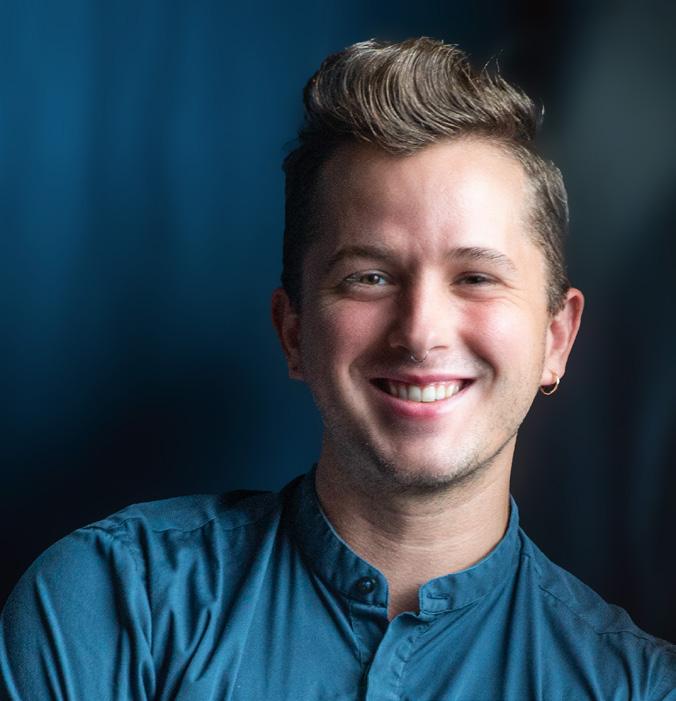
David Dickey, a native of Bowie, Maryland, is a historical wind player and vocalist born into a long line of professional musicians. A graduate of The Juilliard Historical Performance Program, he is a recipient of the Norman Benzaquen Career Advancement Grant and a fellowship from The English Concert in America. He currently serves as principal oboist of Boston Baroque and is a member of Philharmonia Baroque Orchestra and Chorale. David also appears frequently with Tafelmusik Baroque Orchestra, The
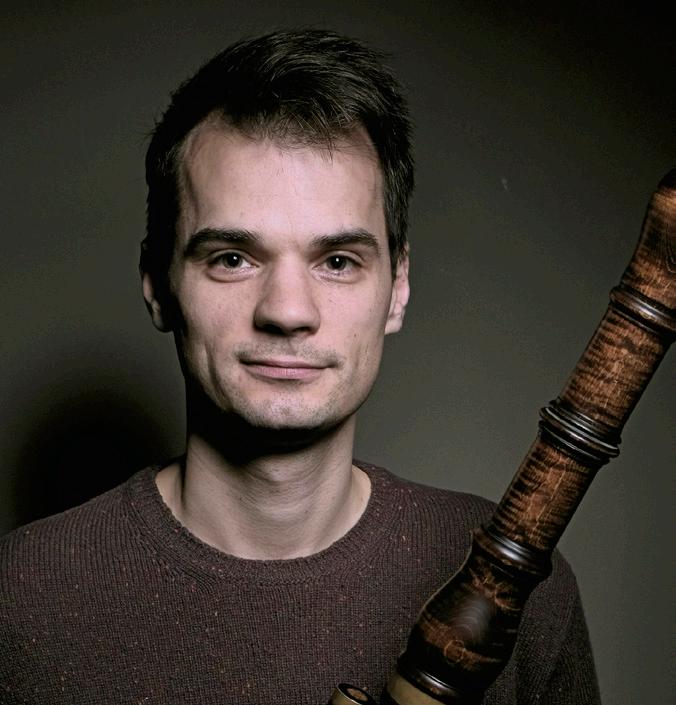
Nate Helgeson is one of the West Coast’s leading specialists in historical bassoons. He appears frequently as soloist with period instrument orchestras such as Portland Baroque Orchestra, Seattle Baroque Orchestra, American Bach Soloists, and Mercury Chamber Orchestra. Nate can be heard on recordings by Apollo’s Fire, Tafelmusik Baroque Orchestra, Pacific MusicWorks, and the Trinity Baroque Orchestra. Beginning in 2018,he has performed works of Rossini and Bellini on period instruments as part of Teatro Nuovo, a festival in New York exploring 19th century bel
Handel and Haydn Society, The English Concert, Trinity Baroque Orchestra at Wall Street and The Mercury Chamber Orchestra . Dickey, a countertenor, has recently sung with ARTEK, St. Thomas Church Fifth Avenue Choir of Men and Boys, and Concordian Dawn, a NYC-based medieval ensemble. He was recently featured on an album with The English Concert in their recording of Handel’s Serse, as well as Concordian Dawn’s debut album Fortuna Antiqua et Ultra.
canto sounds and performance practices on the opera stage. He is on faculty at the Bozeman Baroque Performance Workshop, and was professor of bassoon at the University of Oregon during the 2019/20 school year.
Nate studied modern bassoon with Steve Vacchi and Richard Svoboda before taking up the baroque bassoon, continuing his studies with Dominic Teresi at the Juilliard School. He lives in Salem, Oregon with his wife Annabeth Shirley, cellist and whole human being in her own right.
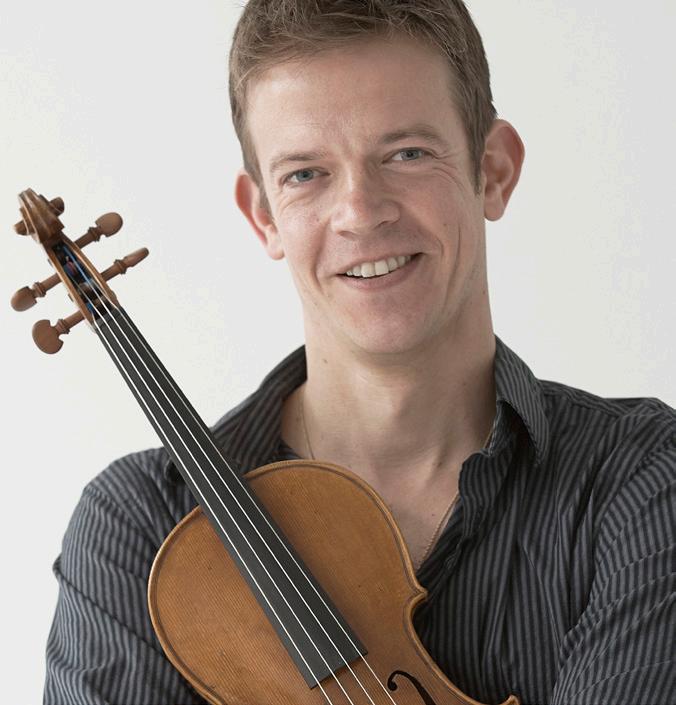
A founding member of Mercury, violinist Jonathan Godfrey has served as Concertmaster and violin soloist since the orchestra’s inception. A graduate of Rice University, Mr. Godfrey is also currently Assistant Concertmaster of the Houston Grand Opera Orchestra. He has performed with many ensembles including the Houston Symphony, the Houston Bach Society, the IRIS Chamber Orchestra, and the River Oaks Chamber Orchestra.
He has also served as Concertmaster of the Sinfonietta Cracovia, The Houston Grand Opera Orchestra, The American Radio Chamber Orchestra, Orchestra X, and the Pacific Music Festival Orchestra. He has concertized in the US and abroad, performing solo and chamber music recitals in Boston,

A native of Moscow, Russia, Oleg Sulyga began his music education in Moscow Central Music School followed with further studies in Paris, France, at Southern Methodist University in Dallas at at the University of Houston under guidance of professor Emanuel Borok.
As a member of worldrenowned ensemble “The Moscow Virtuosi”, Sulyga traveled extensively and performed in the world’s most prestigious concert halls. As a chamber musician he has performed with the principals of the Wiener Philharmoniker and The Kopelman Quartet.
Chicago, Cleveland, Houston, Interlochen, and Kansas City, as well as Guanajuato, León, Monterrey, and Santiago, Mexico; Yokohama, Kyoto, Matsumoto, Sapporo, Date, and Tokyo, Japan; and Quito and Ambato, Ecuador.
A music educator as well, Mr. Godfrey has taught for twentyfive years, including positions on the violin faculty of both the Interlochen Arts Camp and the Rocky Mountain Summer Conservatory. Mr. Godfrey is also the co-director of Prelude Music Classes for Children, a school of music for young children and their families that teaches the researchbased music and movement program Music Together® and a co-founder of the Prelude Music Foundation.
As an orchestral musician he has performed with the Chicago Symphony, the National Symphony, and the Houston Symphony orchestras. In addition, Sulyga has been a participant of numerous international festivals worldwide; such as Ravinia,Prague Spring Festival, Pacific Music Festival, Colmar International Music Festival, and Schlezwig-Holstein Festival.
Currently Mr. Sulyga is a violinist of the Houston Grand Opera Orchestra, Houston Ballet, Mercury, the Bach Society of Houston and is a frequent chamber musician.

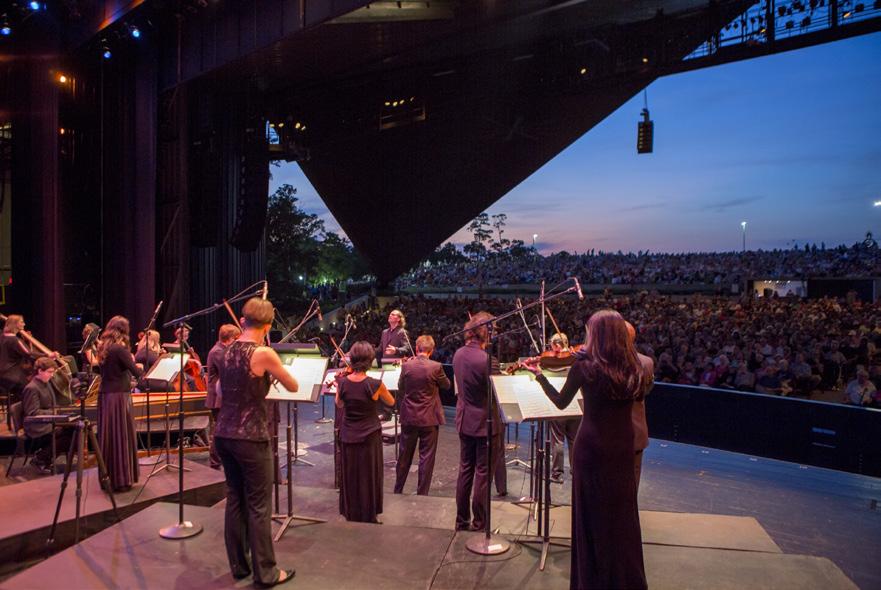
Mercury begins each season with its annual free community concert at Miller Outdoor Theatre over Labor Day Weekend. This year, over 5,000 Houstonians came together to experience a lively Baroque program, “Vivaldi & Telemann,” featuring recorder virtuoso Vincent Lauzer.
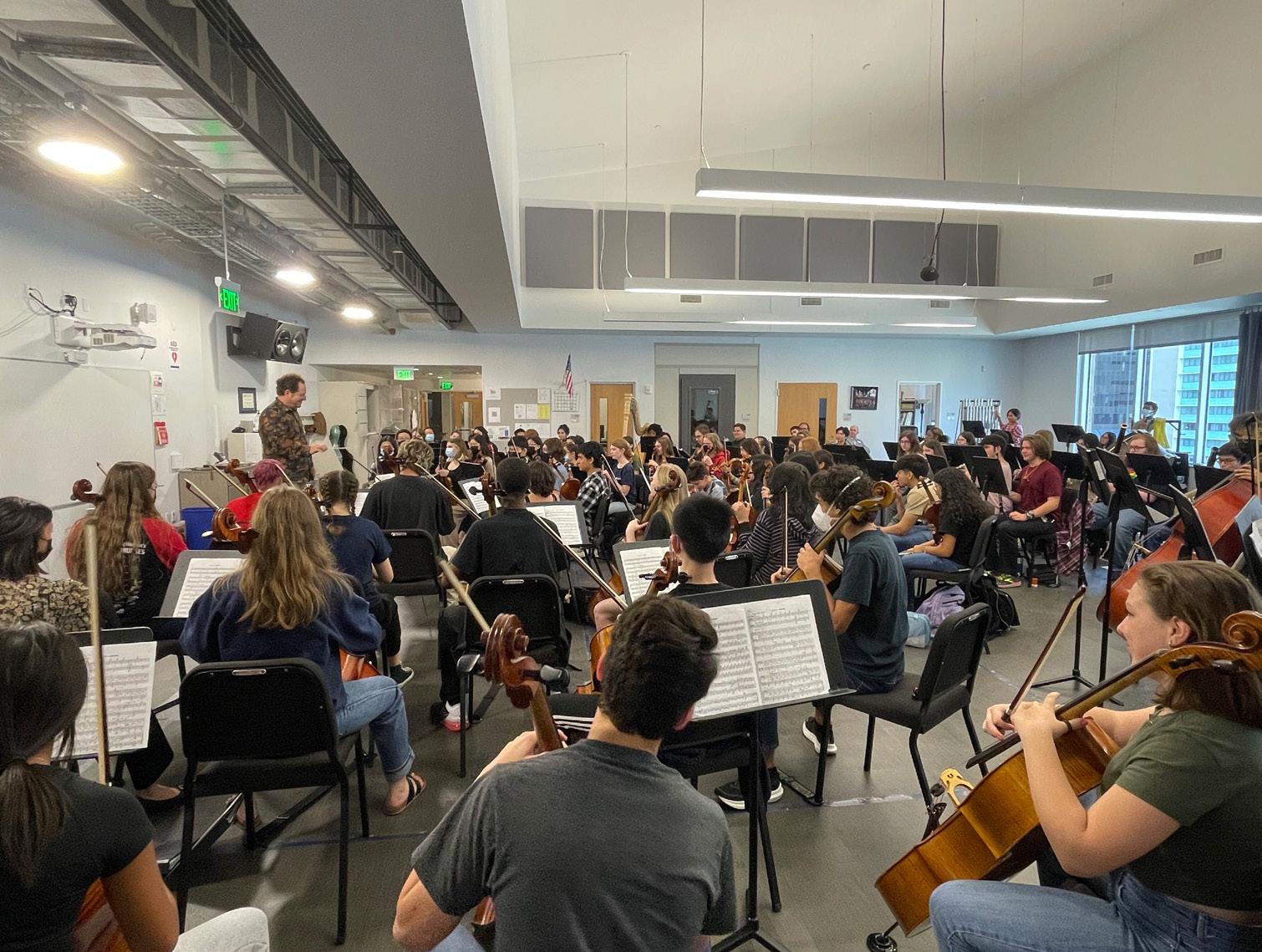
Mercury’s education programs reach numerous schools in Houston ISD and neighboring districts each school year, actively engaging and inspiring the lives of over 5,000 students. Mercury’s teaching artists are gearing up for upcoming Holiday concerts featuring the young musicians in our in-school residency programs. Kathleen Carrington (Viola), Daphnee Johnson (Cello), and their ninety students will perform for parents and students at Scarborough Elementary. This concert will feature an extended number of cellists as Mercury was able to secure six new instruments for the school. We are also preparing our first ever performance at The Edison Arts Center. This new collaboration engages elementary grade students during their afterschool program with Mercury Education Manager and Violinist, Andrés González. The newest fiddlers of Fort Bend County will show off what they’ve learned so far this year including playing hits such as The Ant Song and a rendition of We Are Family!
Mercury addresses educational needs by providing access to high-quality music education through in-school residencies which offer private lessons, coaching, mentorship, and group instruction to underserved students within the community.
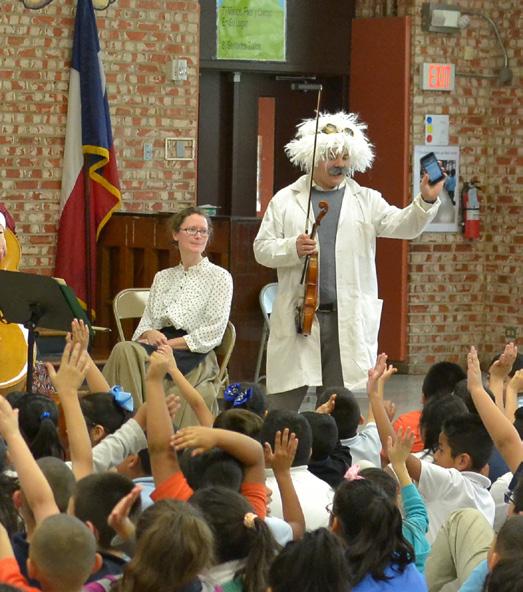
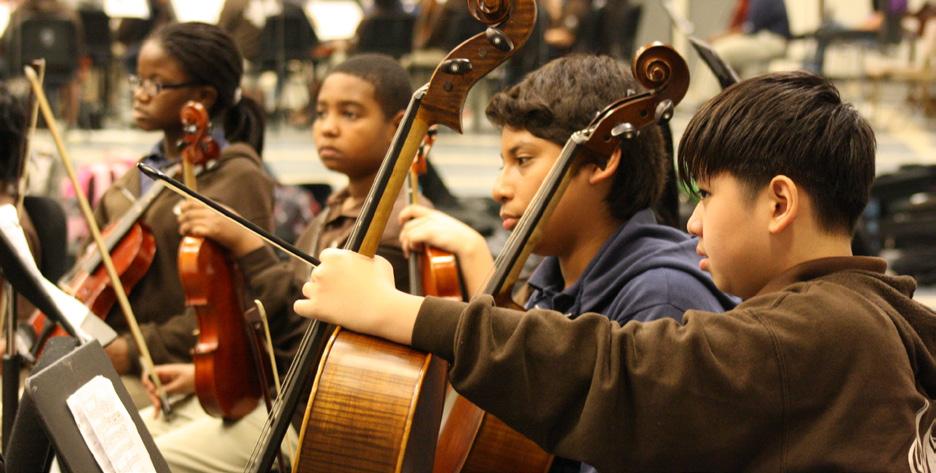
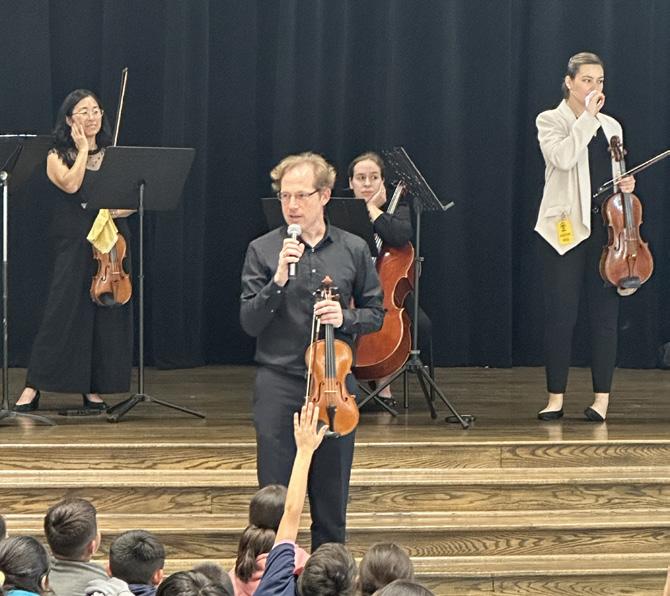
By linking to school curriculum and standards, Mercury’s in-school performances serve as a dynamic learning platform, covering a diverse array of topics through the medium of music.
55 IN-PERSON CONCERTS ANNUALLY
10 AT-HOME BROADCASTS
$1.7 M
ANNUAL OPERATING BUDGET
21,750
AUDIENCE MEMBERS IN 2023-2024
118 ARTISTS ENGAGED
12+
PUBLIC SCHOOLS SERVED THROUGH EDUCATION PROGRAMS
91%
SUBSCRIPTION RENEWAL RATE
10,913
SOCIAL MEDIA FOLLOWERS
4,500+
PUBLIC SCHOOL STUDENTS ENGAGED
COUNTRIES REACHED BY STREAMING
SINGAPORE CANADA
BELGIUM AUSTRALIA
DIRECTOR, LYNN WYATT CHAIR
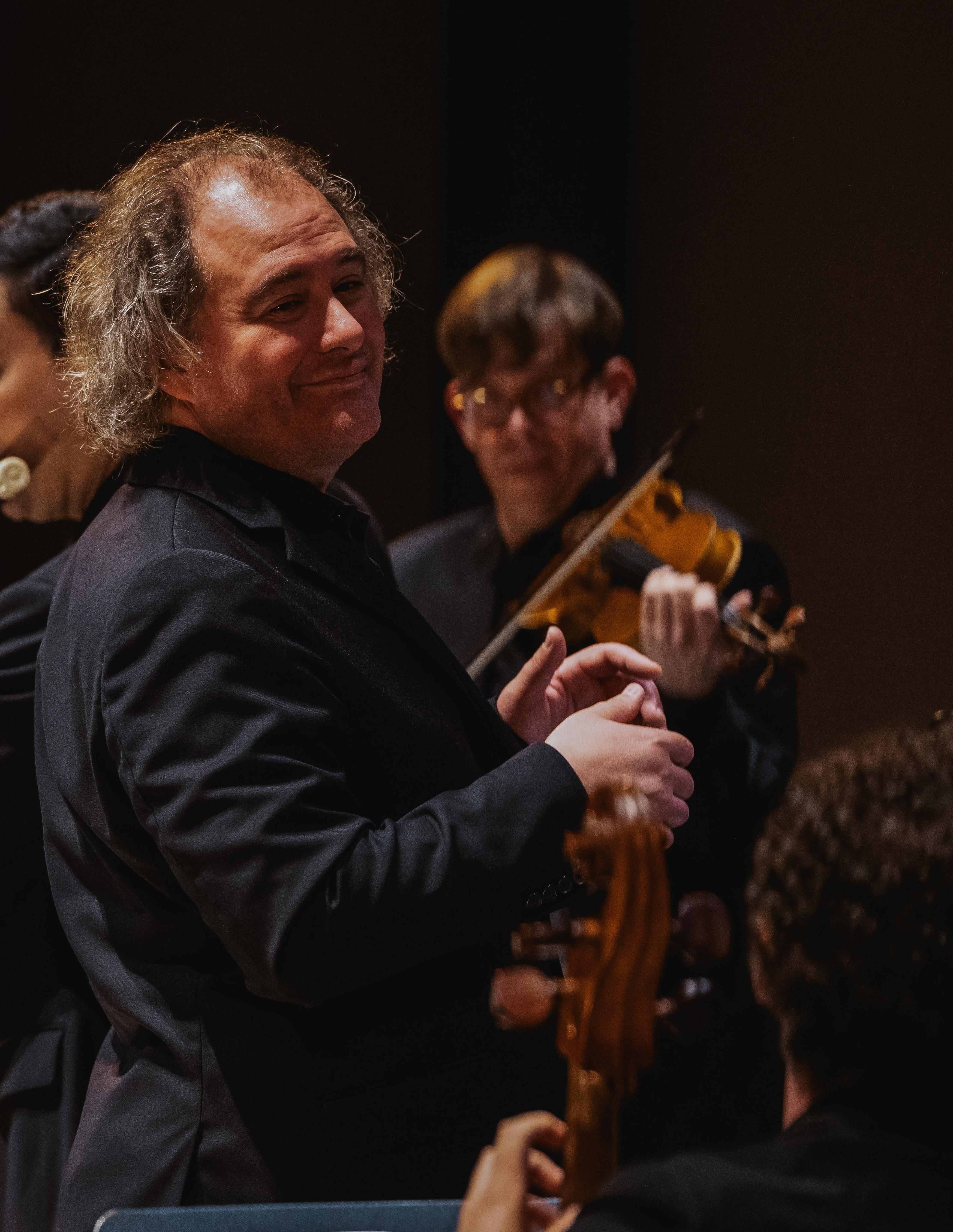
Praised for his conducting vigor and innovative programming, Antoine Plante has captivated audiences and musicians alike with his ability to bring music to life. Charles Ward of the Houston Chronicle lauded him for leading “an impressive account of the Mozart’s Requiem: authoritative, vigorous, emotionally intense, at times utterly gripping.”
As the founder of Mercury Chamber Orchestra in Houston, Texas, Plante has played a pivotal role in the orchestra’s remarkable growth over its 24-year history. Known for his skillful programming of great classical works like Mozart’s 41st Symphony and Mendelssohn’s Reformation alongside lesser-known gems, he has helped Mercury gain a rapidly growing audience. In 2022, he further extended Mercury’s artistic reach by founding the Mercury Singers, the orchestra’s vocal ensemble.
A versatile conductor, Plante excels across a wide repertoire. Equally at home with romantic and modern composers, he also specializes in performing classical and baroque works with period instruments. His expertise extends to staged productions, having conducted numerous operas and ballets. In collaboration with French director Pascal Rambert, Plante produced a modern, critically acclaimed staging of Lully’s Armide in Paris and Houston. He also worked with Dominic Walsh Dance Theater to create the score for Walsh’s ballet Romeo and Juliet. His innovative spirit shone in the multimedia creation of Loving Clara Schumann, a fully staged work featuring orchestra, dancers, and vocal soloists in a compelling dramatic performance.
Plante is a passionate advocate for classical music education. He leads Mercury’s educational outreach program, which brings classroom music education to underserved schools, offers master classes for student orchestras, and provides live performances for schoolchildren.
Under Plante’s leadership, Mercury has grown into a vital cultural institution in Houston, presenting over 40 concerts per season in a variety of venues, making music accessible to the entire community.
Plante has served as guest conductor for esteemed ensembles, including the San Antonio Symphony, Oregon Bach Festival Orchestra, Chanticleer, Houston Grand Opera, Ecuador National Symphony Orchestra, and Atlanta Baroque.
Antoine Plante grew up in Montréal, Québec, Canada and lives in Houston, Texas.
Discover the incredible potential of your IRA to make a profound impact on Mercury Chamber Orchestra. Through legacy giving, you will be making a gift to support symphonic music in our community for future generations.
Tax Benefits:
Share the love with your heirs by leaving them less tax-burdened assets while giving the gift of your IRA to MCO. By doing so, you’ll not only reduce their tax obligation but also leave a lasting impact by supporting the timeless beauty of classical music for generations to come.
Required Minimum Distribution:
Age 70 ½ or older with a Traditional or Roth IRA? You can directly transfer up to $100,000 annually from your IRA to MCO while reaping remarkable tax benefits. This transfer counts toward your Required Minimum Distribution (RMD) and offers you the unique advantage of not paying federal income taxes on it.
For more information about how you can make a gift that endures for future generations, contact Brittany Schroeder, Development Manager of Individual Giving, at Brittany@mercuryhouston.org.
*401(k), 403(b), SEP IRA accounts, and other retirement accounts do not qualify.
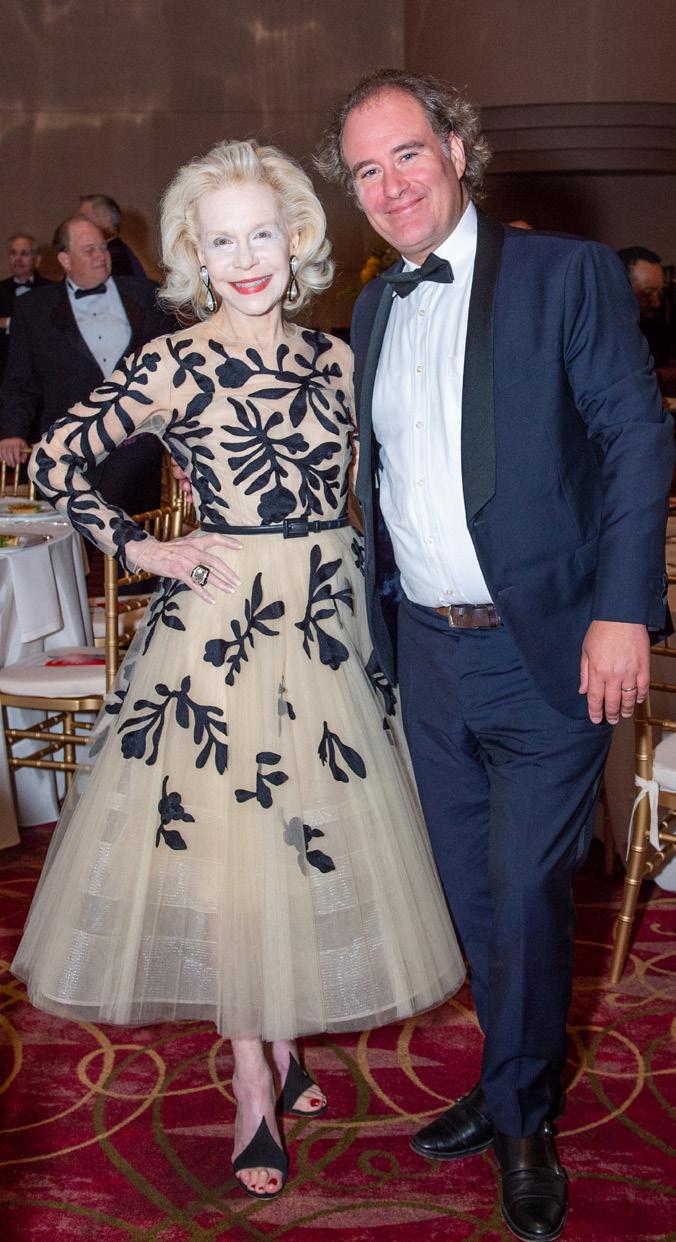
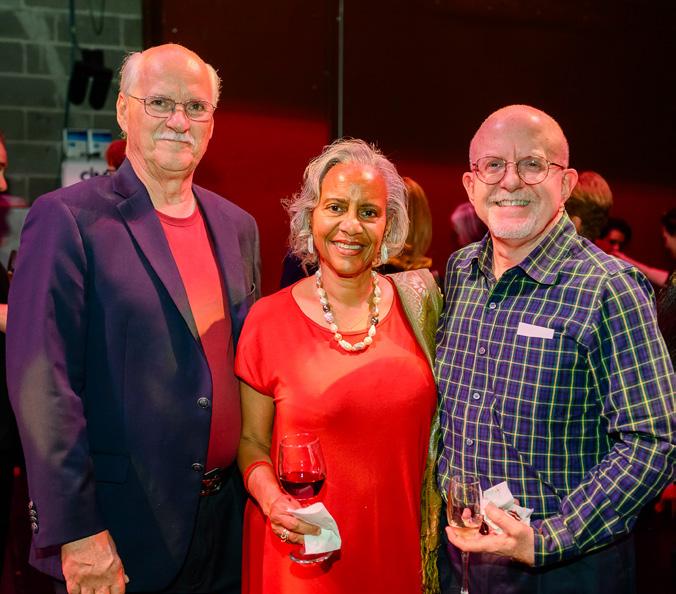
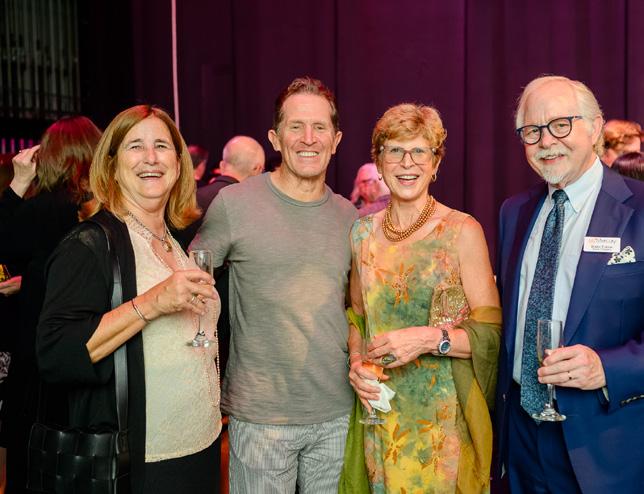
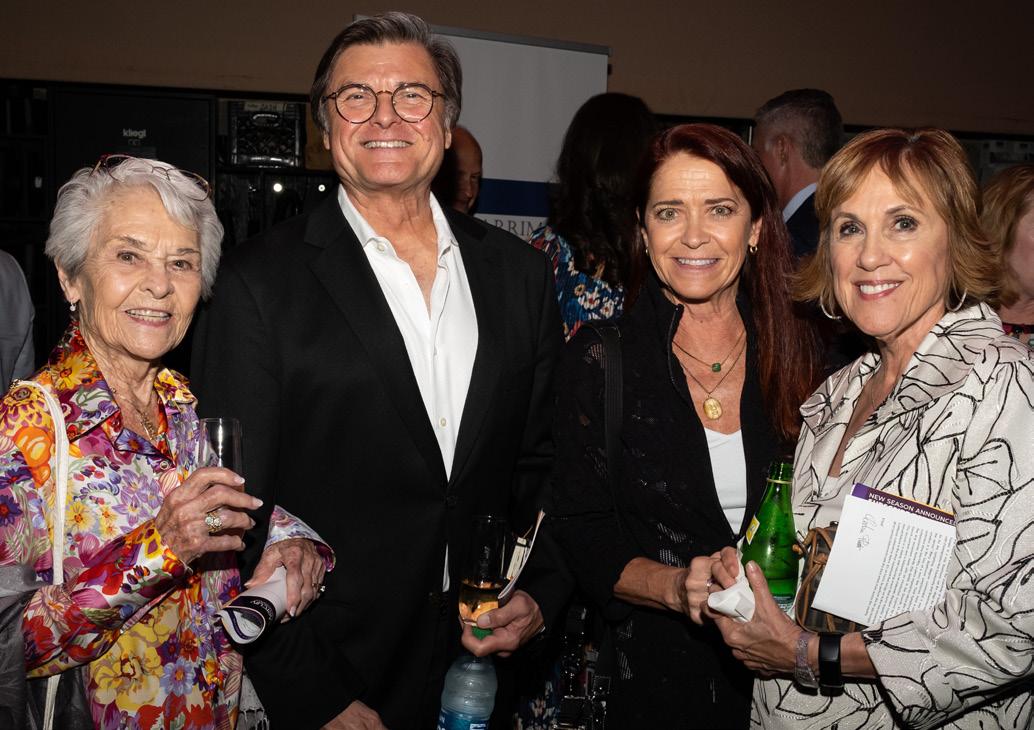
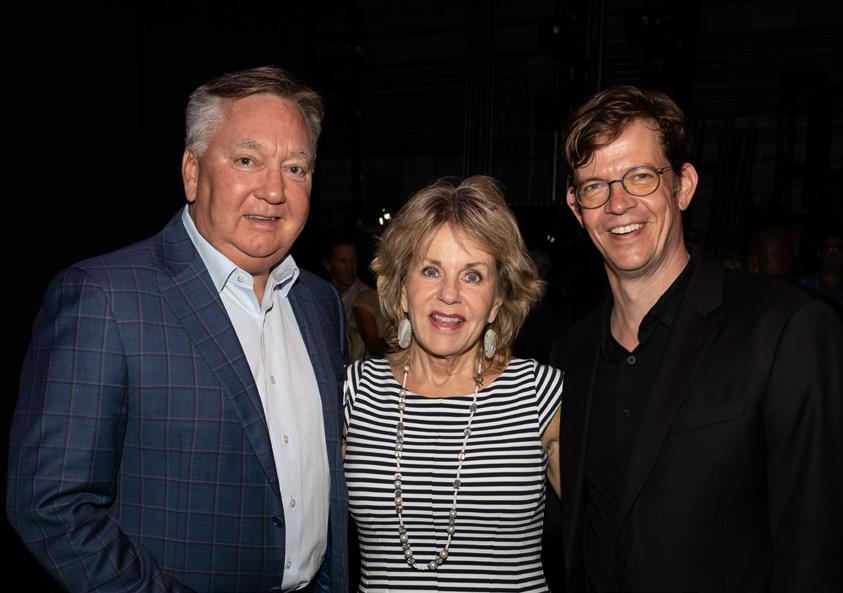
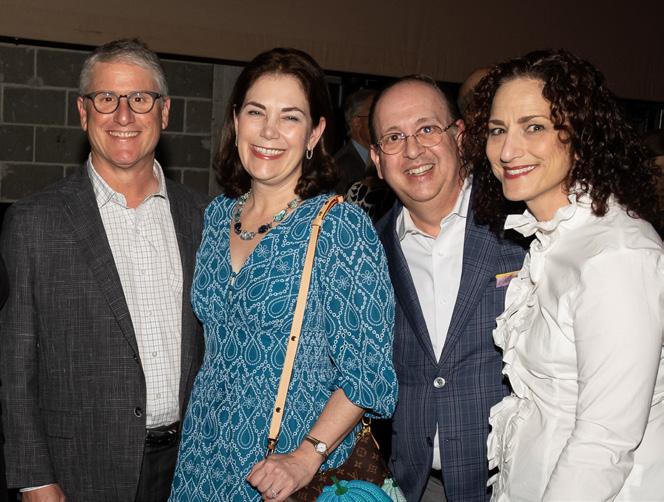
Mercury’s Patron Society recognizes individuals making annual leadership gifts of $2,500 or more. Patron Society members receive complimentary valet parking at Downtown concerts, Green Room access at intermission and after the concert, invitations to private concerts and events, and other exciting benefits.
1.
3.
Mercury Chamber Orchestra gratefully recognizes the following individuals for their leadership support of our artistic, educational, and community engagement programs through generous annual gifts and participation in special events. For more information about joining the Patron Society, please contact Brittany Schroeder, Development Manager, Individual Giving at brittany@mercuryhouston.org or 713-533-0080.
($25,000 and above)
June & Steve Barth*
Patricia Branton & William Gould*
Kirsten Jensen & David Kerley*
Dr. & Mrs. Christopher Prince*
Kristine & Stephen Wallace*
Lynn & Oscar Wyatt
Anonymous
($15,000-$24,999)
Mollie & Wayne Brunetti*
Mariko & John Jordan*
Rosemary Malbin*
Rose Ann Medlin & William E. Joor III*
Kelly & David Rose*
($10,000-$14,999)
Martha & Blake Eskew*
Rebecca Fieler*
Mrs. Warren Kreft*
Lori Muratta & Antoine Plante
Gaby & Kenny Owen*
($5,000-$9,999)
Marsha & Michael Bourque*
Donna & Mike Boyd*
Mary Kay & Walter Mark Buehler
Joe & Kim Caruana
Robert N. Chanon*
Marcia & Thomas Faschingbauer*
Debra & Mark Gregg
Virginia Hart & Robert Navo*
Cristela & Bill Jonson*
Lloyd Kirchner*
D M Marco*
Carol & Joel Mohrman*
Neil Sackheim & Stephen Voss*
Robert Sartain*
Linda & Tom Sparks
Ralf van der Ven
Nina & Michael Zilkha*
Anonymous*
($2,500-$4,999)
Mark Berry*
Thomas Bevilacqua & Karen Merriam*
Mindy & Josh Davidson*
Carmen Delgado & Duane C. King*
Nan Earle*
Marilyn & Bill Eiland*
Mary Foster & Don Desimone*
Caroline Freeman
Peter & Chris Godfrey
Nancy & Carter Hixon*
Nick Jameson
Lili & Hans Kirchner*
Julie & Keith Little*
Forrest Lumpkin*
Angelika & Michael Mattern*
Dr. Maureen O’Driscoll-Levy
Ruth & Michael Pancherz*
Roy Perry
Andrew J. Sackheim*
Sasha Van Nes* & James E. Smith
Douglas & Carolynne White*
Courtney Williams MD*
*Indicates a Mercury Season Subscriber
As of September 30, 2024
Mercury Chamber Orchestra gratefully recognizes the following individuals who support our artistic, educational, and community engagement programs through generous annual gifts and participation in special events. For more information, please contact Brittany Schroeder, Development Manager, Individual Giving at brittany@mercuryhouston.org or 713-533-0080.
($1,000-$2,499)
Jessica & Jay Adkins
James & Barbara Becker
John Robert Behrman*
Dr. Joan H. Bitar*
Capital Builders
Carl R. Cunningham
The Carl & Phyllis
Detering Foundation
Dr. Bill & Sharon Donovan
Gary Gardner & Peg Palisin*
Connie & James Garson*
Leonard Goldstein & Helen Wils*
Janice & Timothy Howard*
Shannon & Jamie Mann
Betsy & Rick Weber Anonymous*
($500-$999)
Joel Abramowitz & Rita Bergers*
Clarruth Seaton & Greer Barriault
Thomas Beach*
D. Bentley*
Melinda & Bill Brunger
Caroline Christensen
Gilbert Cote*
Zed S Choi
Miriam & Harold Hudson
Mary & Rodney Koenig
Candice & Roger Moore*
Steve & Elaine Roach*
Penny & Sean Lewis*
Deborah Lugo & Andrés González
Tricia & Steve Rosencranz
Meredith & Ralph Stone
Cheryl Verlander & Chuck Bracht
Deborah M. Wagner*
Amy Waldorf
Geoffrey Walker & Ann Kennedy
Kimberly & Trey Wilkinson
Anonymous
($150 - $499)
David Bartlow
Dr. Jerry L. Bohannon*
Gwen Bradford
Becky Browder*
Rustin Buck*
C. Robert Bunch*
Drs. Yvonne Chen & Brandon Bell
Yun Shin Chun
Steven Cowart
Chris & Delia Cowles*
Valerie Cramer*
Irene & Bryan Crutchley*
Benée & Chris Curtis*
Carla & Michael Deavers
Dana Dilbeck*
Risha & Patrick Dozark
Frank & Mariam Dumanoir
Corey Eickenloff*
Mr. & Mrs. Peter Ferenz*
Sydney Free*
Leslie Gassner
Vernon Gillette*
Dennis Griffith & Louise Richman
Tamara Haygood*
Kirk Hickey & William Maguire*
Richard & Ruth Hirschfeld
Anne Houang
Shane Hudson*
Brad & Alida Johnson*
Michele Joy & Tom Shahriari
Allen Karger*
Cheryl M. Katz
Frank & Lynda Kelly*
Edward Kenny*
Dennis & Casey Kiley*
Georgia & Stephen Kimmel*
Victoria & Alex Lazar
Mrs. Laura Leib*
Eli Levinowitz
Jim & Ellana Livermore*
Juan Ignacio Mangini
Rebecca Marvil
Nancy Wynne Mattison*
John H. Meltzer*
Steve & Kerry Morby
Robb & Audrey Moses
Jim O’Rourke
Will & Emily Perry
Margaret Preston & Robert Baumgartner*
Ed & Janet Rinehart*
Steve & Elaine Roach*
Melanie L. Rogers*
Robert & Rosanne Romero*
Dorry Shaddock*
Carol & Tom Sloan*
Richard & Joan Spaw*
Tommy Swate
Lindsey & Cory Vanarsdel*
Beatriz & Peter Varman*
Adriana Wechsler & Patrick Kelly*
Neal Wiley, Cristina Cruz-Wiley & Danny Cruz
Elizabeth D. Williams*
Dr. Robert K. Wimpelberg & Peter Hodgson*
Martha & Richard Wright*
Paul Yatsco
Tom Young & Steve Nall
Anonymous (3)
(up to $149)
Keith Anthis
Tonia Ayres
Jerry S. Baiamonte
Lesly Barrientos
Krisa Benskin
Daniel Biediger*
Daniel & Helene Booser
Kathy & Walker Brickey*
Wm. F. Brothers, Jr.*
Leslie Brown
Michael & Michaele Brown*
Ian John Butler
Ignacio Carrion
Claudia Castillo
Alex Hobart Corwin
Roseline et Karl
Alexander Crabtree*
Lesa Curry
Allan & Bente Davies
Lesley Douthwaite
Clarice Droughton*
Julietta Ducote
Emma Edwards*
Kellie Ekeland
Sepideh Fashami
K. Ferguson
Mark Filley
Chalon Fontaine
Laurent Fouilloud-Buyat
Elizabeth Fountain & John Ward
Bolivar Fraga
Svetlana Franklin
Terry Gardner
Judy Gersh
Gail Gould
Mark Happe
Alma Harris
Jean Harris
Genevieve Hernandez
Richard Hickman
Lai Ho
Mark Hoose*
Luke Howe*
Andrew Hubbard*
Srivathsan Iyengar
Richard H. Johnigan, III
Weldon Kuretsch*
Kimberly Leishner
Lisa Marcelli
David & Mary Jo Martin
James McFarland
Douglas Miller
Ana Chacon Morales
Caleb Mwika
Carol & Barry Myones
Stacy & Ronan O’Malley
Ugochukwu Onochie
Julie & Chip Oudin*
Jehan-Francois Paris*
Jose Pastrana
Maria Olga Patino
Tim & Robin Phillips
Dr. Dennis Pieters
Ava Plummer*
The Power Family
Elizabeth Price
Patricia de Groot
& Marc Puppo*
Patricia Rathwell*
Jorge M. Rivas
Jim Robin*
Daniel Robison*
Stephen Ronczy*
Rumpelstiltskin
Charles & Andrea Seay
Craig & Ann Shepard
Hinda Simon
Claudia Soler Alfonso
Baxter & Patricia Spann
Tyler Starkel
Mark Stine
Barbara J. Taake*
Artem Tarasenko
Susan L Taylor*
Eleanore Tyson
Katherine Vukadin
Jim Winn
Edith A. Wittig
John B. Zodrow
Anonymous (73)
*Indicates a Mercury Season
Subscriber
As of November 11, 2024

Drs. Yvonne Chen & Brandon Bell, in honor of Meghan & Kevin Downs
Lesa Curry, in honor of Ana Treviño-Godfrey & Jonathan Godfrey
Carl A. Detering Jr., in honor of J. Michael Boyd
Dr. Bill & Sharon Donovan, in honor of Patrick Donovan
Caroline Freeman, in memory of Marion Merseburger
Laurent Fouilloud-Buyat, in honor of Christian Fouilloud-Buyat
Gail Gould, in memory of Steven Friedlander
Nick Jameson, in memory of Karin Fliegel Jameson
Rosemary Malbin, in loving memory of Michael Malbin
Juan Ignacio Mangini, in memory of Oscar R. Mangini, M.D.
Lisa Marcelli, in memory of Stephen H. Friedlander
The Miller Family, in memory of Sheldon Miller
Will & Emily Perry, in honor of Kenny & Gaby Owen
The Power Family, in memory of Rosemary Power
Robert Sartain, in memory of Margaret A. Reinke
Tom Young & Steve Nall, in honor of Simone Plante
John B. Zodrow, in honor of The Kirchner Family
We greatly appreciate each gift and have made every effort to ensure the accuracy of this listing. Please notify us of any inaccuracies or omissions at help@mercuryhouston.org.
Mercury Chamber Orchestra gratefully recognizes the following foundations, corporations, and government entities that support our artistic, educational, and community engagement programs through generous annual grants and sponsorships. For more information, please contact Chloe Bruns, Development Manager, Institutional Giving at chloe@mercuryhouston.org or 713-533-0080.
($75,000 +)
Houston Endowment Inc.
Anonymous
($50,000 - $74,999)
The Brown Foundation, Inc.
The Cullen Trust for the Performing Arts
($25,000 - $49,999)
ConocoPhillips
Houston Arts Alliance
Texas Commission on the Arts
The Wyatt Foundation
($15,000 - $24,999)
De Boulle Diamond & Jewelry
Miller Outdoor Theatre Advisory Board
National Endowment for the Arts
Shell Oil Company Foundation
($10,000 - $14,999)
Adell, Harriman, & Carpenter, Inc.
Lucius & Eva Eastman Fund
The Albert and Ethel Herzstein
Charitable Foundation
The Sartain & Tamez Family Trust Fund at the Chicago Community Foundation
South Coast Terminals
Western Midstream SLT
($5,000 - $9,999)
Acretio
Arts Connect Houston
Bp Foundation
Chevron
Citi
ExxonMobil Foundation
Haynes Boone
Mexcor International
Platform Partners
Spotlight Energy, LLC
Truist
Vortex Companies
Out of respect for the musicians and your fellow audience members, please be sure to silence your mobile devises and refrain from texting or talking during the performing. Disruptive patrons will be asked to leave.
Late seating is often available during the first convenient break in the performance and is always at the discretion of the ushers. Always allow plenty of time for traffic, parking, and getting to your seat.
Recording of Mercury performances by camera, audio, or video equipment is prohibited. You are welcome to take pictures before or after the orchestra performs. Please share your experience on social media.
At our venues, outside food and drink are not allowed. Wortham Center performances have food and beverages for sale in the Grand Foyer and Prairie Lobby. Drinks may be brought into the Cullen Theater for the performance.
Subscribers may exchange their tickets to any performance at no cost. Single tickets are not eligible for exchange or refund. If you are unable to make a performance, your ticket may be donated prior to the concert for a tax-donation receipt. Donations and exchanges may be made in person, over the phone, or online.
Follow us!
@mercuryhouston








Mercury is funded in part by grants from the City of Houston and Harris County through the Houston Arts Alliance and the Texas Commission on the Arts.
Administrative Offices
2900 Weslayan Street, Suite 500
Houston, TX 77027
Phone: 713.533.0080
Hours: 9 AM – 5 PM Monday-Friday
www.mercuryhouston.org
Wortham Center, Cullen Theater
CELEBRATED ARTIST. PASSIONATE LOVER. DEVOTED FRIEND.
FEBRUARY 8 • 8:00PM
FEBRUARY 9 • 2:30PM
A mixed media experience featuring music by Clara
Steve Barth
President
Keith Little Treasurer
Rebecca Fieler Secretary
Blake Eskew Immediate Past President
Antoine Plante Artistic Director
Brian Ritter Executive Director
Marsha Bourque
Kevin Downs
Sofia Durham
Marcia Faschingbauer
Shane Gilroy
Bill Guest
Ginny Hart
Kirsten Jensen
Lloyd Kirchner
Forrest Lumpkin
Rose Ann Medlin
Kenny Owen
James E. Smith
Ana Treviño-Godfrey
Ralf van der Ven
Stephen Wallace
Lynn Wyatt
Special Advisor
Antoine Plante Artistic Director, Lynn Wyatt Chair
Brian Ritter Executive Director
Chloe Bruns Development Manager, Institutional Giving
Brittany Schroeder Development Manager, Individual Giving
Katie DeVore Operations Manager
Matthew Carrington Personnel Manager & Music Librarian sponsored by Rebecca Fieler
Andrés González Education Manager
Rachel Piero Stage Manager Sectorlab LLC Marketing Consultant
Tyler Starkel YPTC Accountant
BEND Productions and Ben Doyle Videography
Melissa Taylor Graphic Designer
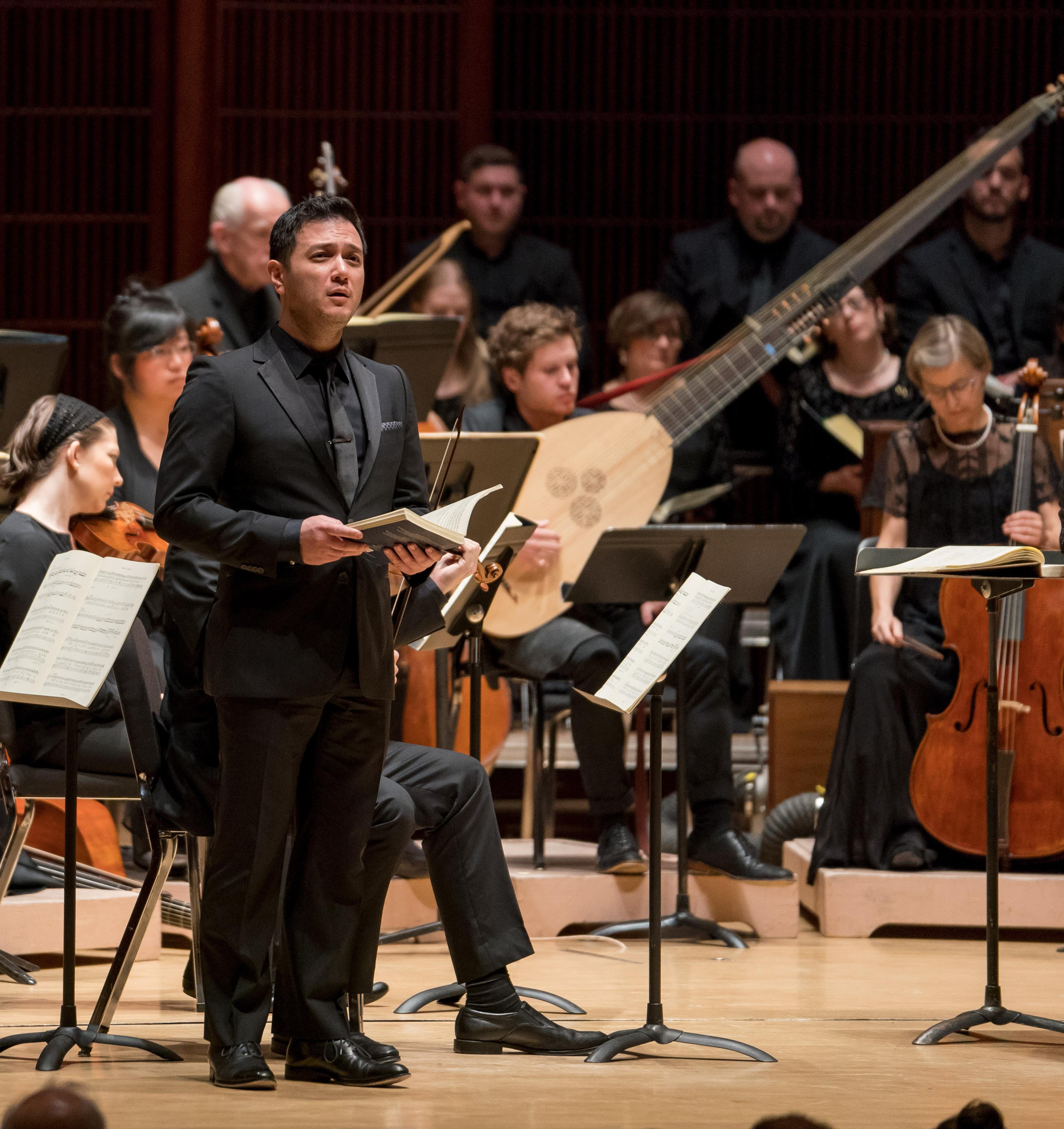
Wortham Center,
Cullen Theater
MARCH 22 • 8:00PM
FEATURING
The Mercury Singers
Betsy Cook Weber, Director
Nicholas Phan, Evangelist
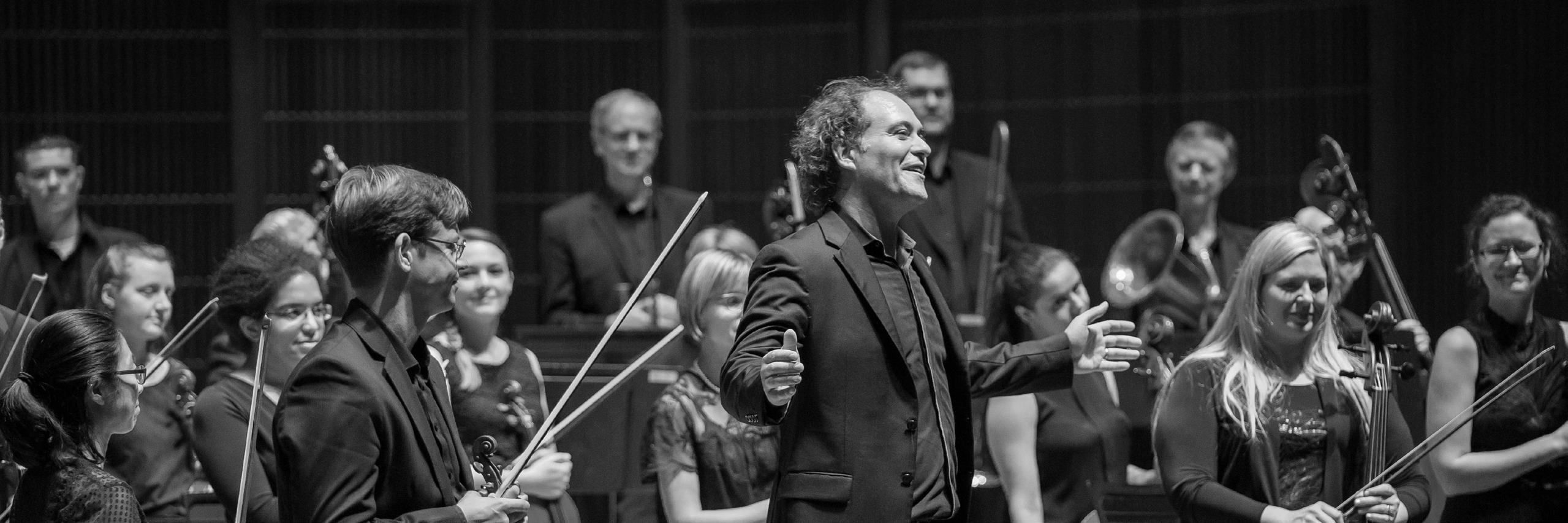
Boccherini’s Night in Madrid OCT 12
English Romantic Strings NOV 9
Christmas with Nicole Heaston DEC 7
Vivaldi, Handel & Bach JAN 11
Loving Clara Schumann FEB 8 & 9
Bach’s St. John Passion MAR 22
Mendelssohn’s Violin Concerto MAY 17
Classical Piano Trios OCT 24-27
English Baroque Christmas DEC 19-22
Bach to Joropo APR 10-13