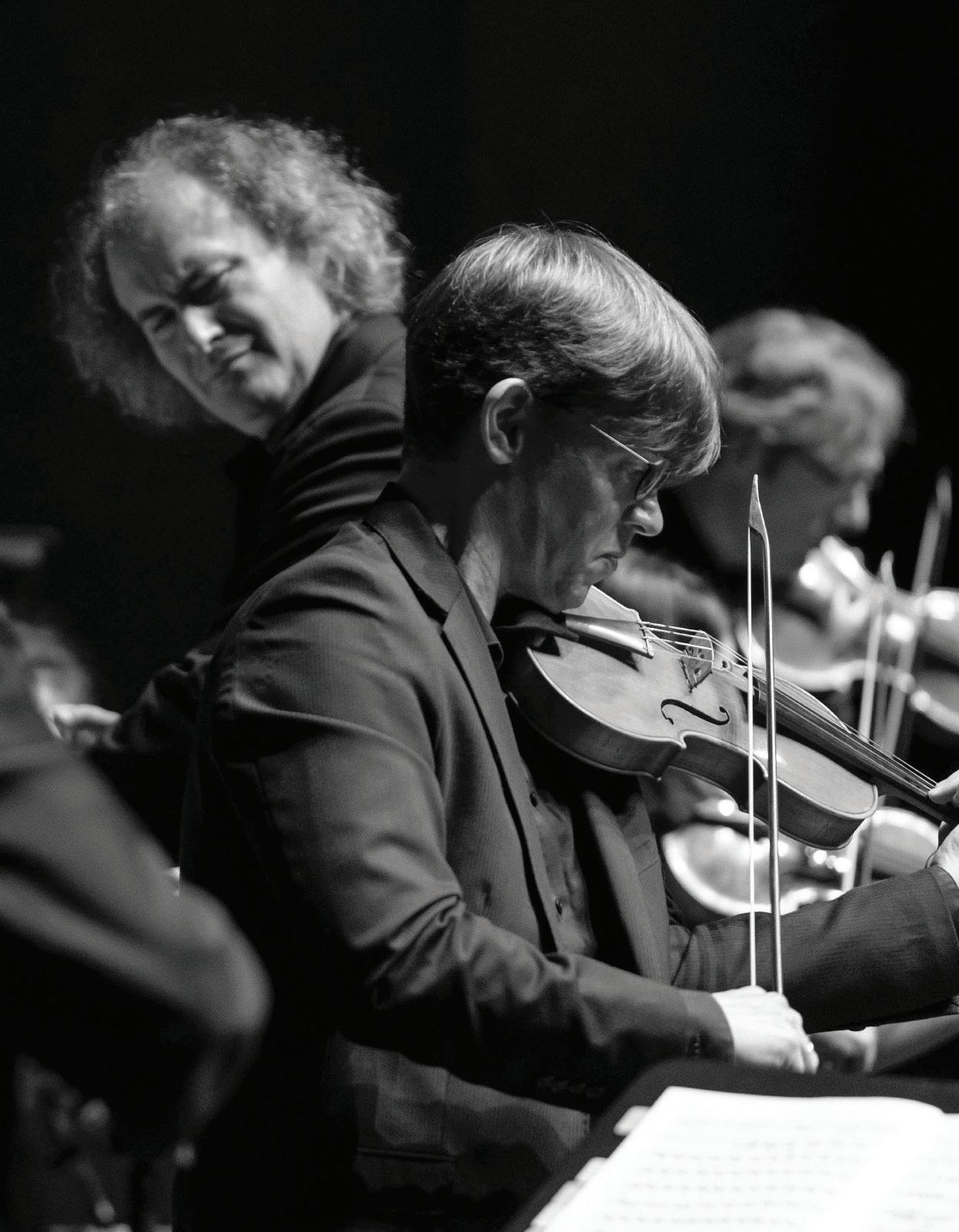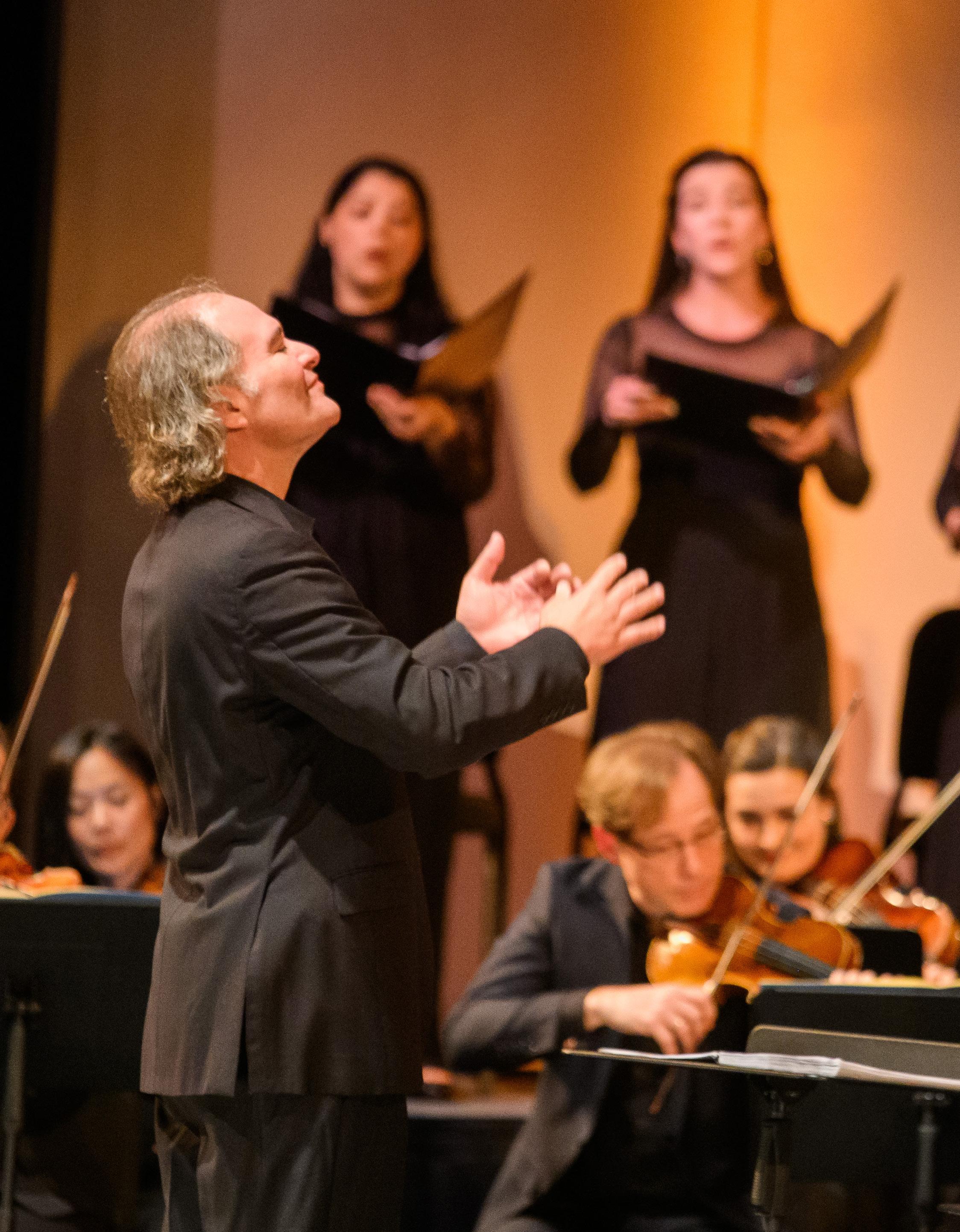


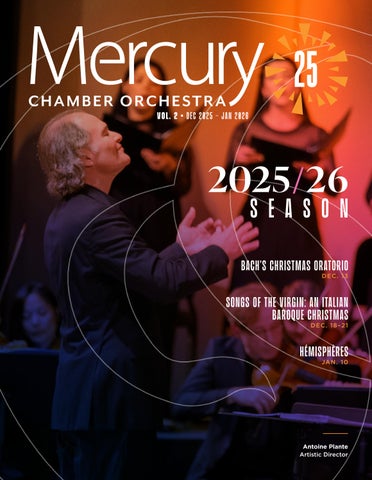
Antoine Plante Artistic Director
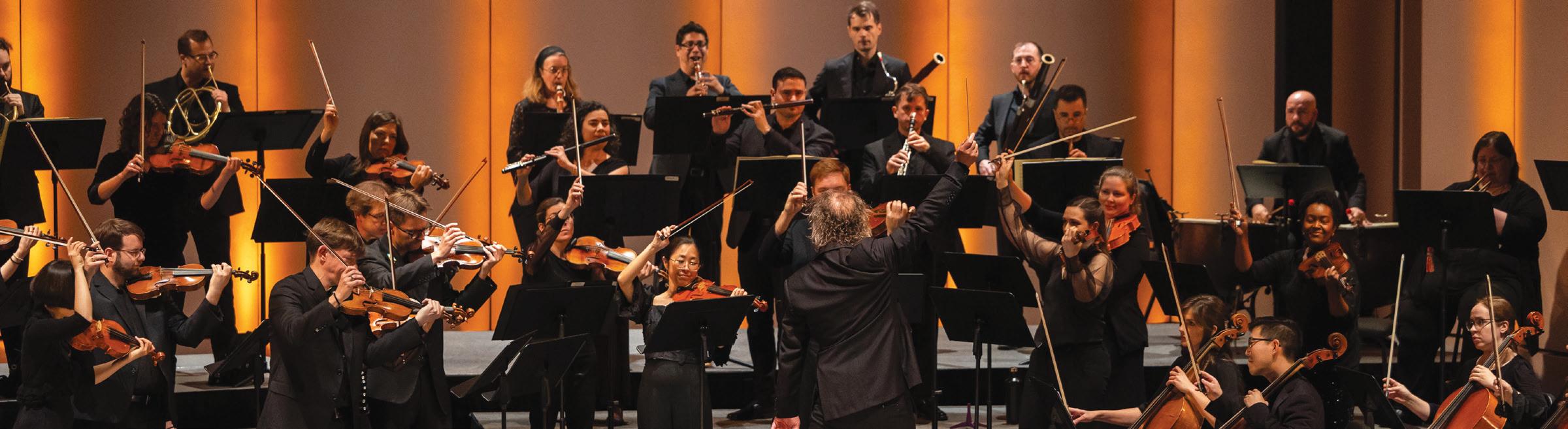
Jonathan Godfrey, Concertmaster
Anabel Ramírez, Assistant Concertmaster
Oleg Sulyga, Principal Second Violin
Joanna Becker
Lucinda Chiu
Laura Cividino
Andrés González
Jackson Guillen
Hanna Hrybkova
Marisa Ishikawa
Kana Kimura
Ela Kodzas*
Matt Lammers
Maria Lin
Mann-Wen Lo
Sean O’Neal
Emily Richardson
Jacob Schafer
Annemarie Schubert*
Ervin Luka Sešek
Rachel Shepard
Ariya Tai
Jaya Varma
Nadia Witherspoon
Kathleen Carrington, Principal
Amber Archibald
Matthew Carrington
Matthew Weathers
Rainey Weber
Molly Wise
Eunghee Cho, Principal
Matt Dudzik
Mairead Flory
Ellie Traverse Herrera
Kristiana Ignatjeva
Caroline Nicholas
Antoine Plante
Herlane Smith
Joy Yanai

Deborah Dunham, Principal
David Connor
Paul Ellison
Erik Gronfor
Austin Lewellen
Antoine Plante
Héctor Torres González, Principal
Dani Zanuttini-Frank
Immanuel Davis
Alaina Diehl
Andrea LeBlanc
Mei Stone
Bethanne Walker
David Dickey, Principal
Andrew Blanke
Curtis Foster
Pablo Moreno
Sarah Schilling
Thomas Carroll, Principal
Elise Bonhivert
Nate Helgeson, Principal
Stephanie Corwin
Allen Hamrick
Clay Zeller-Townson
Todd Williams, Principal
Megan Hurley
Rachel Nierenberg
Nate Udell
Lucas Balslov
Matt Gajda
Amanda Pepping
Perry Sutton
Greg Ingles, Alto
Erik Schmalz, Tenor
Mack Ramsey, Bass
Alex Belser
Jesús Pacheco, Principal
Craig Hauschildt
Mario Aschauer, Principal
Bryan Anderson
Martin Jones
Kathleen Carrington, Viola
Andrés González, Violin
Ricardo Jiménez, Violin
Daphnee Johnson, Cello
*Mercury-Juilliard Fellow

Dear Friends,
As we gather this winter, it is a joy to welcome you back to Mercury and an opportunity to reflect, to celebrate, and to discover new horizons of sound and imagination.
We begin with a cornerstone of the Baroque: Bach’s Christmas Oratorio.
This monumental cycle, at times jubilant and at times profoundly contemplative, accompanies us through the story of Christ’s birth. Its scale is both intimate and grand with radiant choruses, tender arias, and vivid orchestral writing brought to life by Mercury’s period-instrument orchestra and chamber choir. Few works capture the mystery and the human warmth of the season with such depth.
Our second program turns south, literally, to Italy in the early Baroque. Songs of the Virgin is an ode to the central figure of the Christmas story: Mary. Alongside countertenor Michael Skarke, we explore a tapestry of sacred motets and instrumental works by Cazzati, Grandi, Cavalli, Merula, Marini, Falconieri, and Colonna. These pieces, full of vibrant lines, rich color, and expressive sincerity, offer a portrait shaped by early Italian composers who saw in Mary the most human and compassionate connection to the divine.
To open the new year, we embark on a journey across continents in Hémisphères, a program that celebrates the colors and rhythms of the South before traveling to the windswept landscapes of the North.
We begin in Argentina and Brazil with tango and
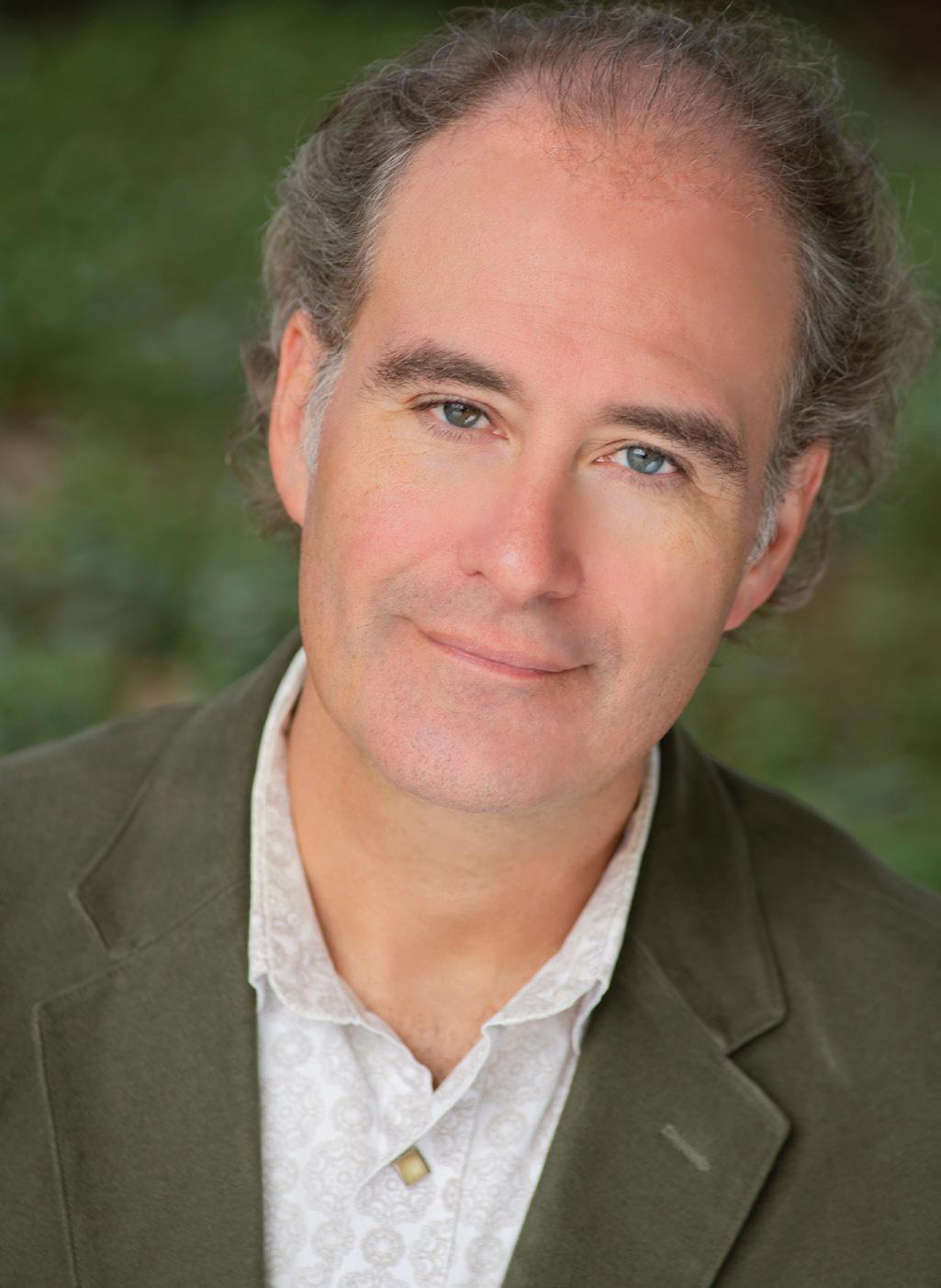
folk-inspired works by Gardel, Salgán, Pugliese, Piazzolla, Ginastera, Villa-Lobos, and de Falla, reimagined for Mercury’s forces and featuring the expressive voice of the bandoneon and the lyric power of the cello.
After intermission, we turn to Grieg, Sibelius, and Pärt, whose music captures a sense of clarity, distance, and introspection. The evening culminates in a new concerto-suite—Noctango by Denis Plante—blending tango’s pulse with Nordic atmosphere in a sound world entirely its own.
As always, I offer my heartfelt thanks to youour audiences, supporters, musicians, and staff - for making this musical community possible. Your presence, curiosity, and generosity are the lifeblood of Mercury. It is a privilege to share these musical journeys with you.
With warmest regards,
Antoine Plante Artistic Director
13 / 2025
Wortham Center, Cullen Theater
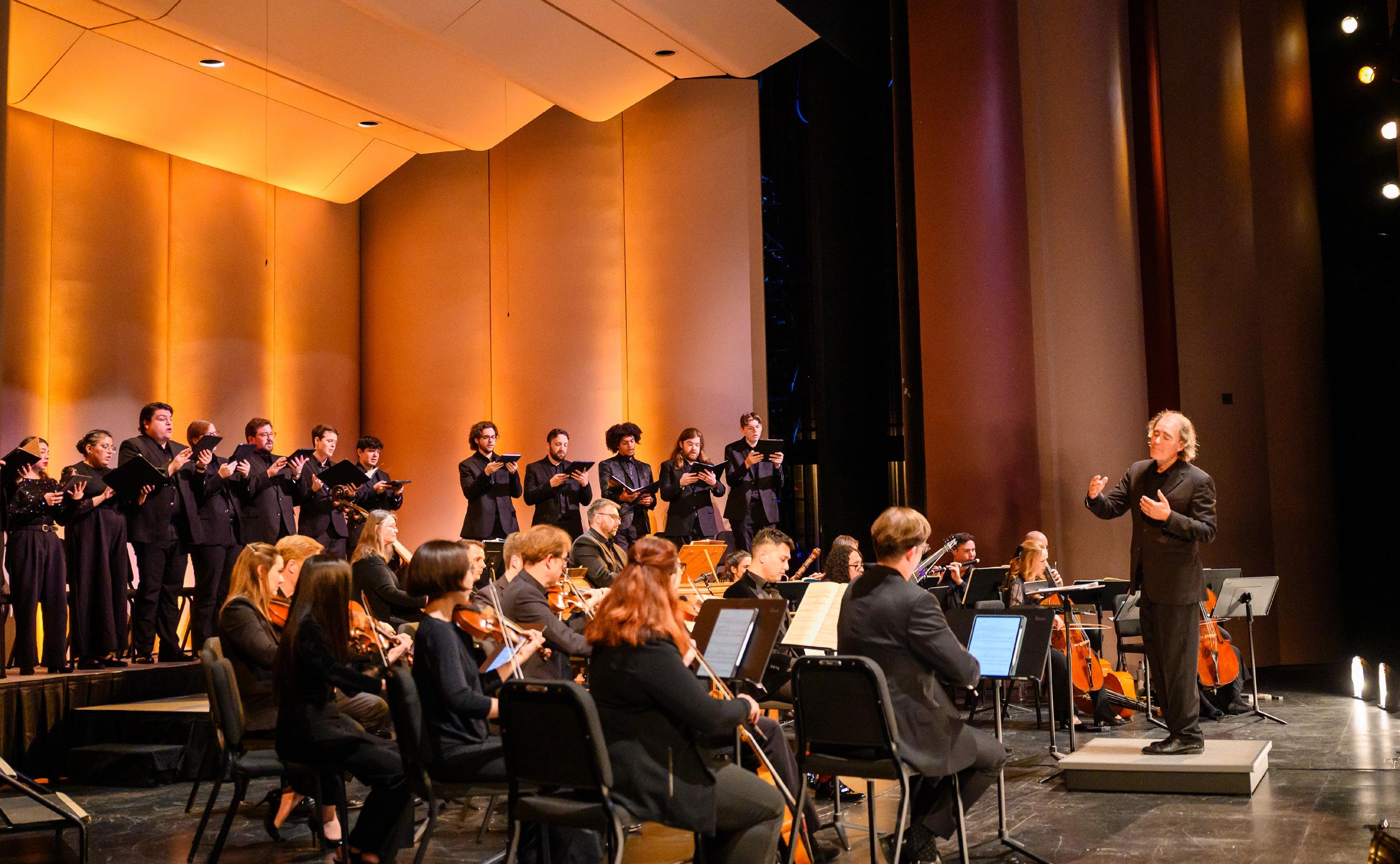
Mercury Chamber Orchestra & Singers
Antoine Plante, Artistic Director & Conductor
Betsy Cook Weber, Choral Director
Stephen Ash, Evangelist
Briana Kerner, Soprano
Abigail Lysinger, Mezzo-Soprano
Micah Perry, Tenor
J.P. Williams, Bass
Christmas Oratorio, BWV 248
THE BIRTH OF CHRIST
CHORUS: Jauchzet, frohlocket, auf, preiset die Tage (Shout for joy, exult, rise up, glorify the day)
EVANGELIST: Es begab sich aber zu der Zeit (It happened at that time)
CHORALE: Wie soll ich dich empfangen (How should I receive you)
EVANGELIST: Und sie gebar ihren ersten Sohn (And she gave birth to her first son)
CHORALE – RECITATIVE, BASS: Er ist auf Erden kommen arm - Wer will die Liebe recht erhöhn (He has come on Earth in povertyWho will rightly extol the love)
ARIA, BASS: Großer Herr, o starker König (Great Lord, O mighty King)
CHORALE: Ach mein herzliebes Jesulein! (Ah little Jesus dear to my heart)
THE ANNUNCIATION TO THE SHEPHERDS
EVANGELIST: Und es waren Hirten in derselben Gegend (And there were shepherds nearby)
CHORALE: Brich an, o schönes Morgenlicht (Break forth, O beautiful morning light)
RECITATIVE, EVANGELIST & SOPRANO: Und der Engel sprach zu ihnen Fürchtet euch nicht (And the angel said to them – Do not fear)
EVANGELIST: Und das habt zum Zeichen (And you shall have this for a sign)
CHORALE: Schaut hin! dort liegt im finstern Stall (Look! There in the dark stable lies)
CHORUS: Herrscher des Himmels, erhöre das Lallen (Ruler of heaven, hear our babbling)
EVANGELIST: Und da die Engel von ihnen gen Himmel fuhren (And as the angels went from them to heaven)
CHORUS: Lasset uns nun gehen gen Bethlehem (Let us now go to Bethlehem)
RECITATIVE, BASS: Er hat sein Volk getröst’t (He has consoled his people)
EVANGELIST: Und sie kamen eilend (And they came in haste)
ARIA, ALTO: Schließe, mein Herze, dies selige Wunder (Enclose, my heart, this blessed wonder)
EVANGELIST: Und die Hirten kehrten wieder um (And the shepherds went back again)
CHORALE: Seid froh, dieweil (Meanwhile be joyful)
CHORUS DA CAPO: Herrscher des Himmels, erhöre das Lallen (Ruler of heaven, hear our babbling)
PART IV
THE NAMING OF JESUS
EVANGELIST: Und da acht Tage um waren (And when eight days were passed)
RECITATIVE, BASS – ARIOSO, SOPRANO & BASS: Immanuel, o süßes Wort - Jesu, du mein liebstes Leben (Emmanuel, O sweet word!Jesus, you who are my dearest life)
ARIA, SOPRANO: Flößt, mein Heiland, flößt dein Namen (Does your name, my saviour, instill)
RECITATIVE, BASS – ARIOSO, SOPRANO: Wohlan! dein Name soll allein - Jesu, meine Freud’ und Wonne (Well then, your name alone - Jesus, my joy and delight)
ARIA, TENOR: Ich will nur dir zu Ehren leben (I shall live only to honour you)
CHORALE: Jesus richte mein Beginnen (Jesus, guide my beginning)
CHORALE: Dein Glanz all’ Finsternis verzehrt (Your splendour consumes all darkness)
EVANGELIST: Da das der König Herodes hörte (When King Herod heard this)
RECITATIVE, ALTO: Warum wollt ihr erschrecken (Why are you afraid?)
EVANGELIST: Und ließ versammeln alle Hohenpriester (And he gathered together all the high priests)
TRIO, SOPRANO, ALTO, & TENOR: Ach! wann wird die Zeit erscheinen? (Ah, when will the time appear?)
VI
THE MAGI’S ADORATION AND THE TRIUMPH OF HOPE
CHORUS: Herr, wenn die stolzen Feinde schnauben (Lord, when our arrogant enemies snort with rage)
PART V
THE JOURNEY OF THE MAGI & HEROD’S FEAR
CHORUS: Ehre sei dir, Gott, gesungen (Let honour to you, God, be sung)
EVANGELIST: Da Jesus geboren war zu Bethlehem (When Jesus was born in Bethlehem)
CHORUS – RECITATIVE, ALTO - CHORUS: Wo ist der neugeborne König der Juden - Sucht ihn in meiner Brust - Wir haben seinen Stern gesehen (Where is the newborn King of the Jews? - Look for him in my breast - We have seen his star)
EVANGELIST & BASS: Da berief Herodes die Weisen Heimlich - Ziehet hin und forschet fleißig nach dem Kindlein (Then Herod summoned the wise men secretly - Go there and search thoroughly for the little child)
RECITATIVE, SOPRANO: Du Falscher, suche nur den Herrn zu fällen (You cheat, you only seek the Lord to bring him down)
ARIA, SOPRANO: Nur ein Wink von seinen Händen (Just a wave of your hand)
EVANGELIST: Als sie nun den König gehöret hatten (And when they had heard the King)
CHORALE: Ich steh an deiner Krippen hier (I stand here at your crib)
EVANGELIST: Und Gott befahl ihnen im Traum’ (And God ordered them in a dream)
RECITATIVE, TENOR: So geht! Genug, mein Schatz geht nicht von hier (Go then! It is enough that my treasure stays here)
ARIA, TENOR: Nun mögt ihr stolzen Feinde schrecken (Now, you arrogant enemies, may try to scare me)
RECITATIVE, SOPRANO, ALTO, TENOR, & BASS: Was will der Höllen Schrecken nun (What will the terror of hell do now)
CHORALE: Nun seid ihr wohl gerochen (Now you are well avenged)
Now in its fifth season, Mercury Singers features twenty-four singers under the direction of Dr. Betsy Cook Weber. All have impressive credentials in terms of training and expertise both as collaborative, choral singers and as vocal soloists. They’ve been brought together to provide engaging, period-appropriate performances in Mercury’s distinctive style.
Nicole Colby
Katilin DeSpain
Nadiah Eleskandrany
Errin Hatter
Briana Kerner
Laura Sharpless
Jennifer Breneman
Rachael Castillo
Rebecca Castillo
Caroline Lee
Abigail Lysinger
Janwin Overstreet-Goode
Zachary Brabston
Jorge Martinez
Micah Perry
Peter Tran
Philip Velarde
Aaron Vierkant
Daniel Boyd
David Bruce
Mark Edenfield
Travis Falknor
Gabriel Walker
J.P. Williams
Betsy Cook Weber, Choral Director
Andreea Muţ, Rehearsal Pianist
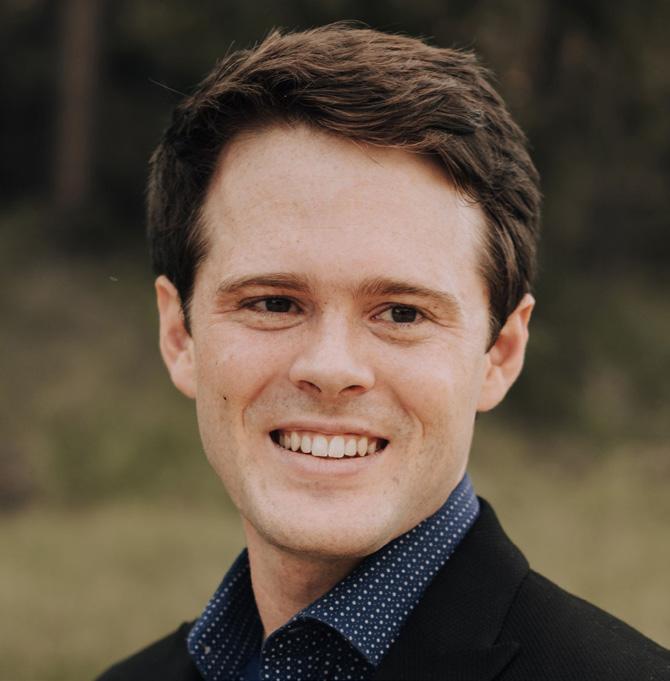
Native Texan tenor Stephen Ash frequently performs as a soloist in opera, concert, and recital repertoire. In Houston, Stephen has performed with Mercury Chamber Orchestra, Ars Lyrica Houston, Harmonia Stellarum, and the Houston Grand Opera Chorus. Stephen earned his Bachelor of Music degree from the University of Mary Hardin-Baylor, and his Master of Music and DMA degrees from the University of Houston. His doctoral studies focused on the songs of Franz Liszt, of which he is now a seasoned interpreter. As an
educator, Stephen has served as Dean of Fine Arts for the Second Baptist School-University Model school system and is currently a member of the voice faculty at the University of Mary HardinBaylor. Stephen enjoys spending his free time with his wife Justine (a talented soprano herself) and his daughter Rose.
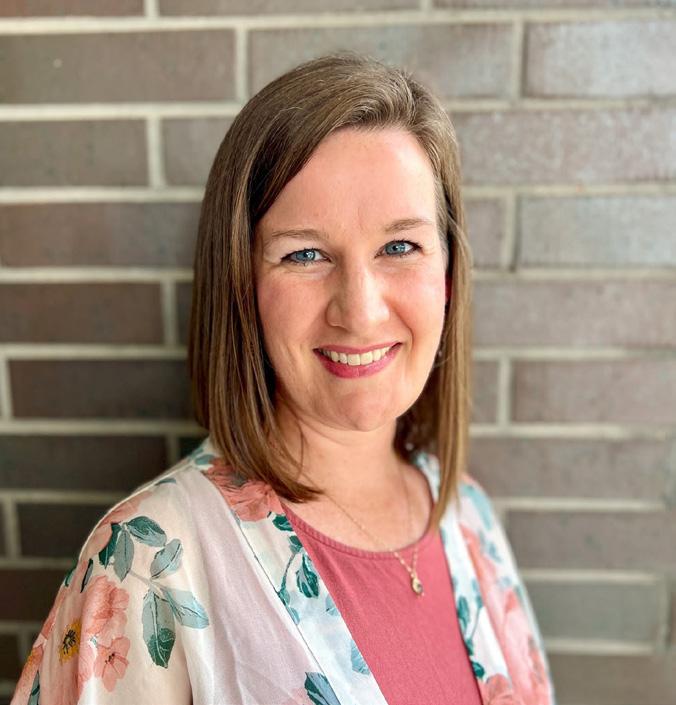
Recognized for her light lyrical tone and beautiful blend, Briana Kerner has sung in choirs and chamber groups around Houston for several years. Currently, Briana runs her own private studio, working with mostly high school age students, many of whom pursue music at the university level. Before becoming a voice teacher, Briana taught choir in Klein ISD working with her team to double the size of the choir program and leading choirs to successive sweepstakes streaks in UIL Concert/Sight-reading Contests. In addition to singing with the Mercury Singers, Briana is a core member of the Houston Chamber Choir, and in her time with the ensemble she has performed under renowned guest conductors including Maria Guinand and Simon Carrington, as well as
recording works by composers such as Bob Chilcott and Jocelyn Hagen, in addition to the GRAMMY® Award winning Duruflé: Complete Choral Works. She also sings frequently with other ensembles in the Houston area, including the early music ensemble Harmonia Stellarum as an ensemble member and soloist. Briana is a proud graduate of the University of Houston’s Moores School of Music, where she studied vocal performance and music education. Most of her time is spent with her loving husband, Kevin, and their four children, Aaron, Joshua, Daniel and Audrey.
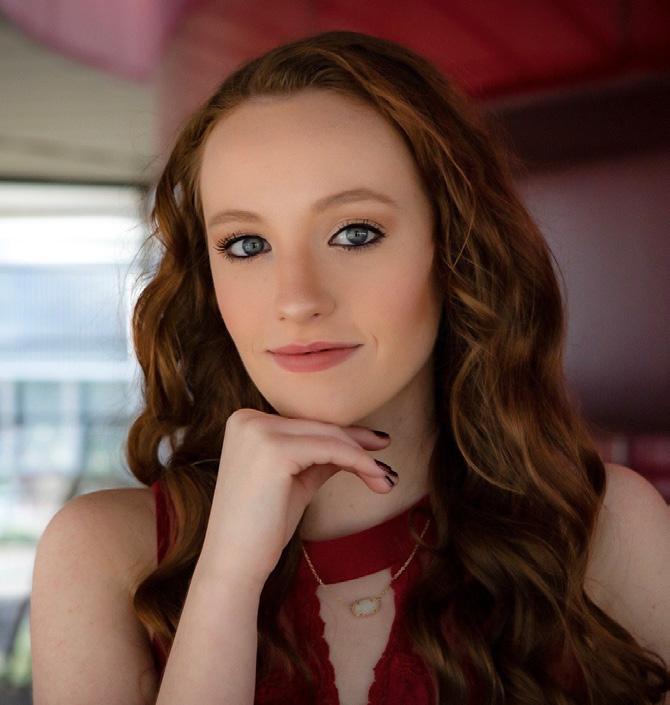
Mezzo-soprano Abigail Lysinger is a recent graduate from the University of Houston where she received her Master of Music in Vocal Performance. She is currently under the tutelage of esteemed pedagogue Melanie Sonnenberg. Most recently, she appeared as Teresa in La sonnambula with Teatro Nuovo, where she was engaged as a Resident Artist. Additional recent roles include Kate Pinkerton in Madama Butterfly with Opera in Williamsburg, Jo March in Little Women and La zelatrice in Suor Angelica with Moores Opera Center. Previously at MOC, she performed L’enfant in L’enfant et les sortilèges and workshopped the role of Maggie in Tom Cipullo’s brand
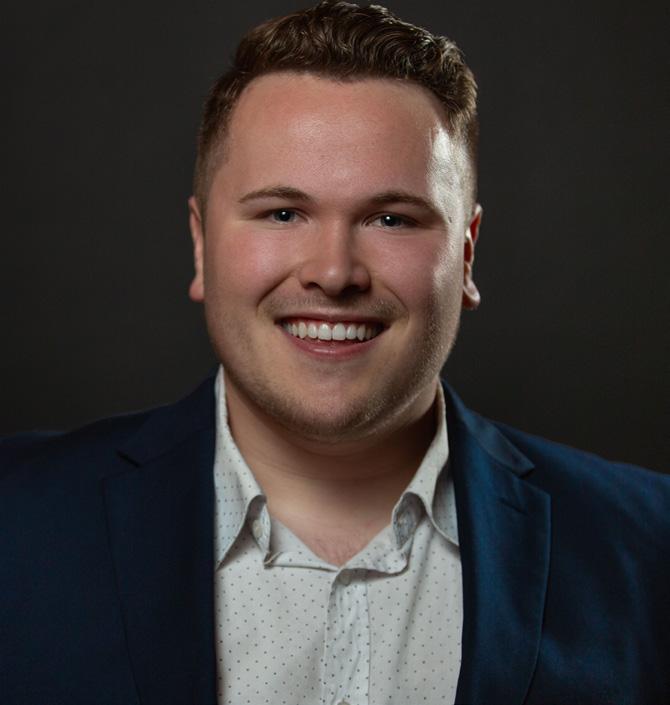
American tenor Micah Perry has been praised for his light, natural, and agile voice and commanding stage presence. Perry just finished as a 2024-25 Jan Miller Studio Artist at Pensacola Opera, singing the roles of Don Basilio, Curzio, and Beppe in their mainstage productions. He took Second Place at the 2025 Gulf Coast Region Laffont Competition. This summer, Mr. Perry was a Gerdine Young Artist with the Opera Theatre of Saint Louis, covering Lysander in Midsummer Night’s Dream and Glenn in the Ricky Ian Gordon world premiere, This House. Micah has been seen
new opera Hobson’s Choice. She will appear as a soloist with the Houston Chamber Choir and Mercury Chamber Ensemble this coming season. Abigail received her Bachelor of Music in Vocal Performance from the University of Michigan, where she studied with Freda Herseth and sang as a chorister and soloist in the UM Chamber Choir for 4 years with Dr. Eugene Rogers. A native Texan, her love for singing began at an early age as a member of the Dallas Opera Children’s Chorus, singing in five productions including the Third Genie in Die Zauberflöte
at Wolf Trap Opera, Austin Opera, American Baroque Opera, Landlocked Opera, Quisisana Resort, and Festival Napa Valley. He has also been seen with Transept, Harmonia Stellarum, and Cor Mundi. Perry graduated from Baylor University with his M.M. in Vocal Performance in 2023 and from South Dakota State University in 2021.
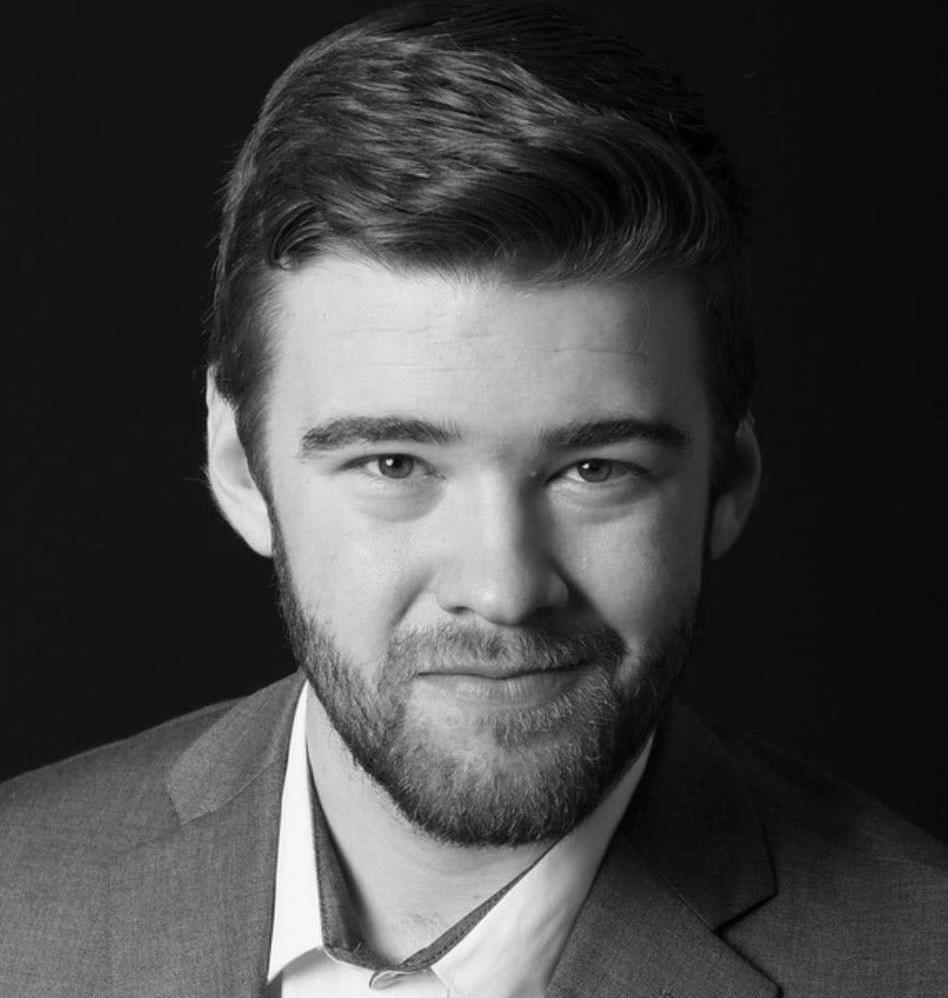
JP Williams is a Houstonbased singer and graduate of the University of Houston where he received his Master of Music degree in Vocal Performance and Pedagogy. He has performed for the mainstage shows at the Moores Opera Center as the title role from Mozart’s Le nozze di Figaro, The Father from Humperdinck’s Hänsel und Gretel, and Joseph Talbot in William Bolcom’s Dinner at Eight. He has also performed the role of Toante from Handel’s Oreste with Baylor Opera Theatre. He also works regularly with Saint Martin’s Episcopal Church as a Staff Singer and soloist. JP believes that performing and teaching
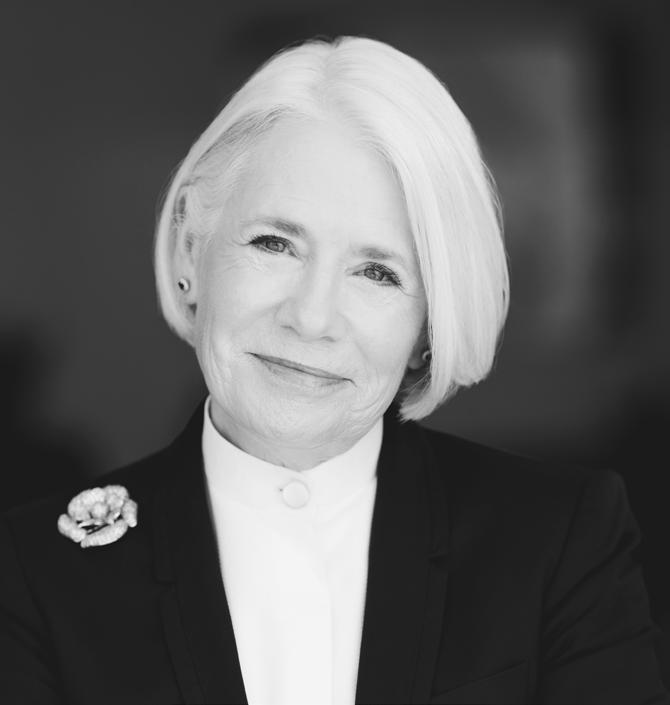
Dr. Betsy Cook Weber is delighted to be working with Mercury again! She currently serves as Artistic Director of the Grammy Award-winning Houston Chamber Choir and enjoys an international reputation as a conductor, clinician, adjudicator, and presenter.
Weber is the Madison Endowed Professor of Music Emeritus at the University of Houston Moores School of Music as well as Director Emeritus of the Houston Symphony Chorus. Before coming to the University of Houston, where she served as Director of Choral Studies and directed the internationally
go hand in hand when it comes to learning how to sing. He strives to provide his students with a safe atmosphere that helps them grow and learn in a nurturing environment. His primary goal is to provide each student with a strong technical foundation for singing that helps them achieve their artistic goals.
ranked Concert Chorale, she taught thirteen years of publicschool vocal music, K-12.
Today, she is one of the few choral conductors in the world to have directed a large choral program at a top-tier university, the chorus of a major symphony orchestra, and now, a Grammy Awardwinning professional ensemble, the Houston Chamber Choir.
Weber was the first woman to receive the coveted Choirmaster Award from the Texas Choral Directors Association. She holds degrees from the University of North Texas, Westminster Choir College, and the University of Houston.
Johann Sebastian Bach composed the Christmas Oratorio, BWV 248, for the 1734–35 Christmas season during his tenure as Thomaskantor in Leipzig. Rather than supplying a single cantata for Christmas Day, he prepared six independent cantatas to be performed on the principal feast days stretching from 25 December through 6 January. This arrangement followed the city’s liturgical practice, in which the Gospel readings for Christmas, New Year, and Epiphany divided the Nativity story into discrete episodes heard over nearly two weeks of services. The work was thus conceived not as a continuous oratorio in the later sense of the term, but as a seasonal cycle tied to the sequence of Leipzig church observances.
The autograph manuscript dates the work to this specific season, and the original performing materials confirm that all six parts were first heard in Leipzig’s Nikolaikirche and Thomaskirche between Christmas Day 1734 and Epiphany 1735. By then Bach had been in office for more than a decade and had already composed multiple cantata cycles. The Christmas Oratorio differs from these primarily in scope: each part is an individual cantata with its own instrumentation and internal structure, yet the six together form a coherent musical and textual narrative. The first three parts draw on Luke’s account of the birth of Jesus and the shepherds; the later parts use Matthew’s account of the naming of Jesus and the visit of the Magi. Bach’s intention seems to have been to give listeners a unified musical experience across the feasts even though they encountered each part on a different day.
The text combines biblical passages with Lutheran chorales and newly written poetry, probably by Bach’s frequent collaborator Christian Friedrich Henrici (Picander). The organization of these materials follows Bach’s familiar cantata layout. The biblical narrative is delivered by a tenor evangelist in recitative; the arias provide reflective commentary; the chorales punctuate the structure and connect it to familiar devotional repertory. What distinguishes this cycle is not a novel textual
scheme but Bach’s ability to maintain stylistic continuity across six separate compositions while responding to the different theological emphases of each feast day.
The scoring varies considerably from part to part. Festive trumpets and timpani appear where the text calls for proclamation; oboes, flutes, and strings articulate more pastoral or intimate scenes. The shepherds’ music, for instance, is shaped by lighter instrumental colors, while the sections involving the Magi employ a somewhat broader ensemble. Bach worked with the standard forces available to him in Leipzig, yet the flexibility with which he deploys them across the cycle gives each cantata a distinct character while preserving a recognizable overall sound world.
One of the more interesting aspects of the Christmas Oratorio is Bach’s reuse of earlier compositions. Several major movements derive from congratulatory cantatas written in 1733 and 1734 for members of the Saxon court. Bach did not simply substitute sacred texts for secular ones; he reworked the pieces thoroughly, adjusting formal proportions, orchestration, and vocal writing to accommodate the new texts and their placement within the Nativity narrative. This practice of parody composition was normal for the period, but the scale at which Bach employs it here highlights his ability to integrate preexisting material into a larger conception without compromising coherence. The final cantata also incorporates music from a now-lost church cantata, preserved only through Bach’s reworking of it for Epiphany.
In Bach’s time, the six cantatas would not have been heard consecutively. Each belonged to a specific service with its own readings and sermon. Modern performances that present the entire cycle at once inevitably create relationships that eighteen-century listeners did not experience, yet those relationships are present in the music itself. The recurrence of the evangelist, the consistent use of chorales, and the careful control of instrumentation across the parts all contribute to a sense of unity that
becomes more apparent when the cycle is heard as a whole. The work’s large scale is therefore not a matter of sheer length but of the deliberate connections Bach establishes across the six cantatas.
The performance history after Bach’s death is sparse. The work seems to have fallen out of practical use and was not documented in full performance again until 1857, when the Sing-Akademie zu Berlin revived it. From the later nineteenth century onward, the oratorio gradually established itself in the concert repertory, particularly as interest in Bach’s sacred music expanded. Today it is among the most frequently performed large-scale works of the Christmas season, and historically informed approaches have deepened understanding of its scoring, sources, and liturgical context.
The Christmas Oratorio offers a clear view of how Bach balanced the demands of liturgical function with broader compositional aims. Each cantata fulfills its role within a specific service, yet the six together form a musical narrative that traces the central events of the Nativity across the season. The work demonstrates Bach’s capacity to synthesize biblical narrative, Lutheran hymnody, and poetic reflection within a flexible but unified musical framework. It stands as an important document of his Leipzig years and continues to shape how we understand the role of music in the city’s liturgical life.
Discover the incredible potential of your IRA to make a profound impact on Mercury Chamber Orchestra. Through legacy giving, you will be making a gift to support symphonic music in our community for future generations.
Share the love with your heirs by leaving them less tax-burdened assets while giving the gift of your IRA to MCO. By doing so, you’ll not only reduce their tax obligation but also leave a lasting impact by supporting the timeless beauty of classical music for generations to come.
Age 70 ½ or older with a Traditional or Roth IRA? You can directly transfer up to $100,000 annually from your IRA to MCO while reaping remarkable tax benefits. This transfer counts toward your Required Minimum Distribution (RMD) and offers you the unique advantage of not paying federal income taxes on it.
For more information about how you can make a gift that endures for future generations, contact Chloe Bruns, Development Manager, at chloe@mercuryhouston.org.
*401(k), 403(b), SEP IRA accounts, and other retirement accounts do not qualify.
ConocoPhillips takes pride in being an engaged member of the communities where we live and work. This long-standing commitment to building and strengthening local partnershipsis exemplified by our proud support of the Mercury Chamber Orchestra and this year’s ConocoPhillips Neighborhood Series.
Mercury redefines the orchestra experience with historically informed performances that place audiences at the heart of the music. With a mission to enrich and entertain, Mercury champions music education, cultural awareness, and meaningful community connection across Houston.
www.conocophillips.com
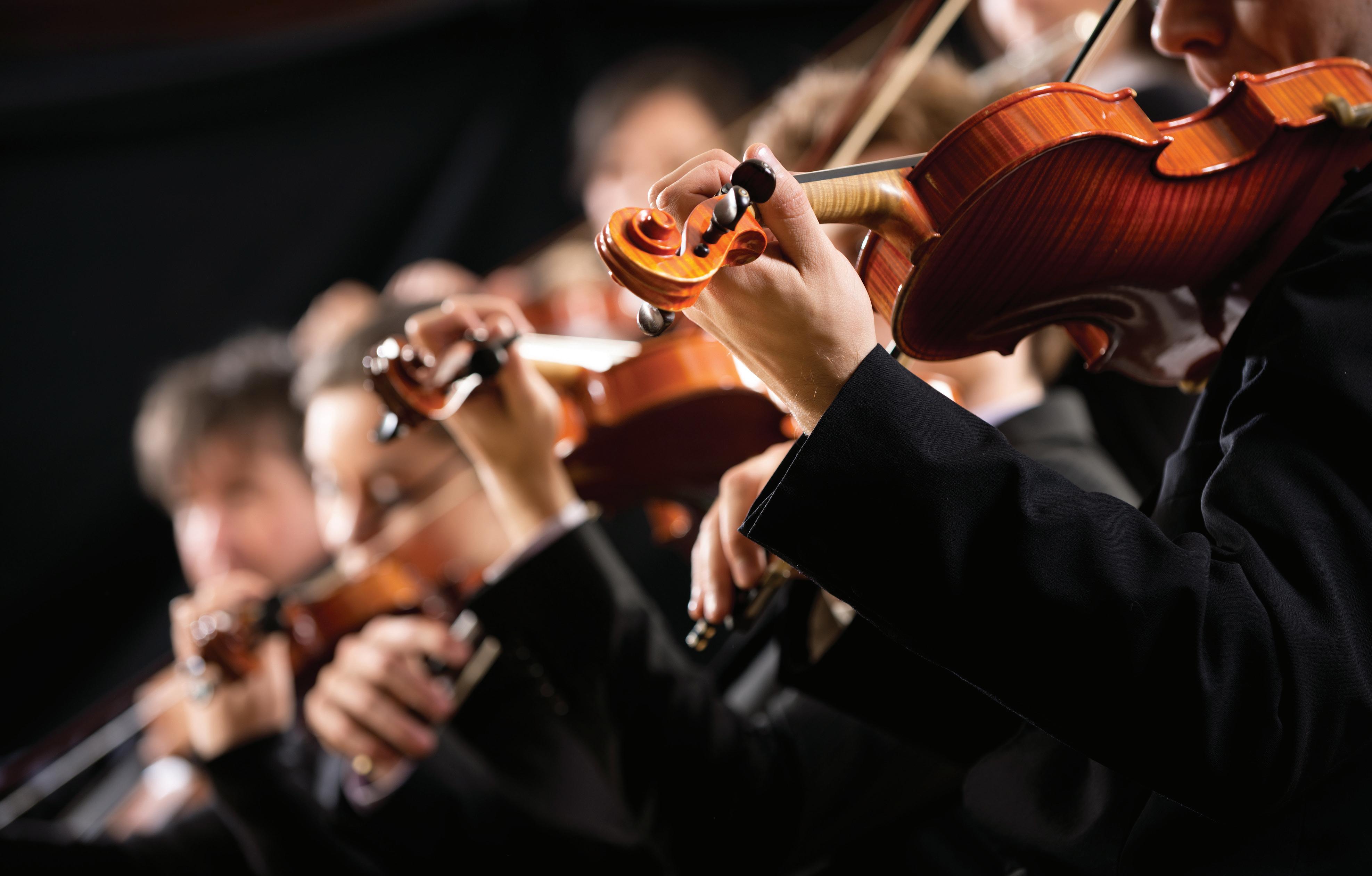
ConocoPhillips Neighborhood Series
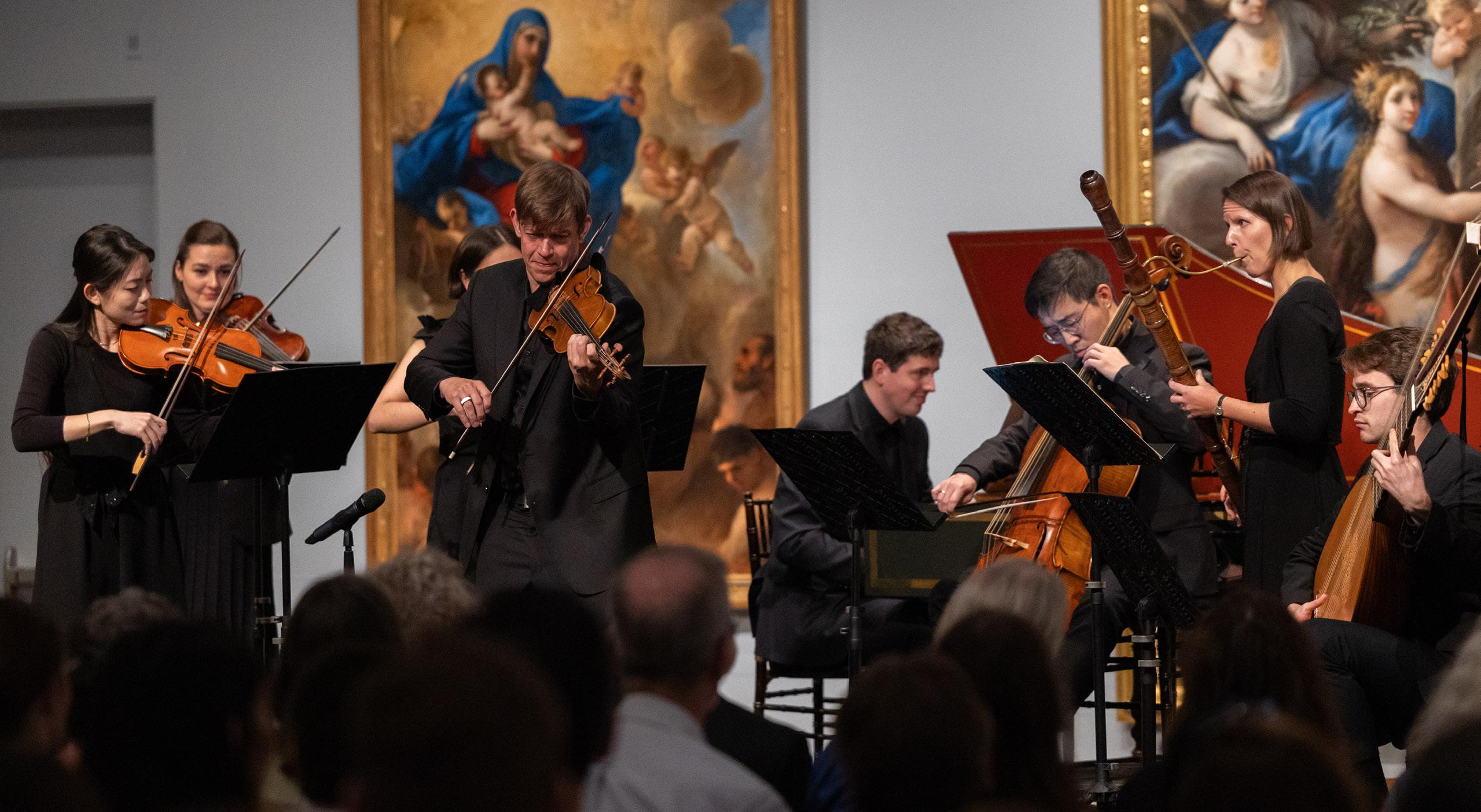
Maurizio Cazzati (1616-1677)
December 18 • 7:30PM
Heights
Saengerhalle
December 19 • 6 PM & 8 PM
Museum District
MFAH
December 20 • 2:30 PM
Memorial
MDPC
December 21 • 7 PM
The Woodlands
Dosey Doe
Ciaconna (Op. 4, No. 33)
Alessandro Grandi (1590-1630)
Salve Regina
Francesco Cavalli (1602-1676)
Canzon à 3
O quam suavis
Giovanni Battista Bassani (1650-1716)
Suonata prima in A minor
I. Allegro - II. Grave - III. Allegro - IV. Adagio - V. Prestissimo - VI. Adagio
Alessandro Grandi
O quam tu pulchra es
Tarquinio Merula (1595-1665)
Chiaccona (Book 3, Op. 12, No. 20)
Biagio Marini (1594-1663)
Sonata sopra “Fuggi dolente core”
Andrea Falconieri (1585-1656)
Folias echa para mi Señora Doña Tarolilla de Carallenos
Giovanni Paolo Colonna (1637-1695)
O coeli devota (Op. 2, No. 7)
Michael Skarke, Countertenor
Jonathan Godfrey, Violin
Kana Kimura, Violin
Antoine Plante, Gamba
Héctor Torres González, Theorbo
Mario Aschauer, Organ
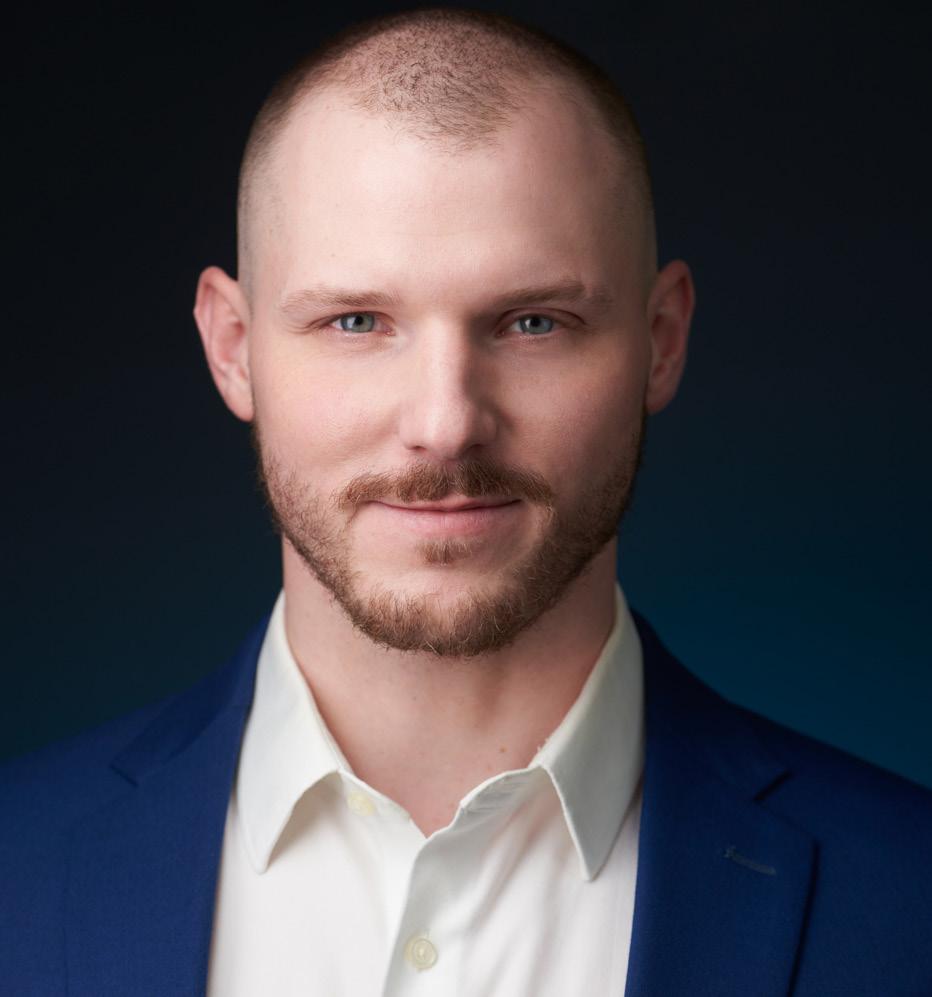
Acclaimed for his “exquisite, almost ethereal tone quality” (Vocal Arts Chicago) and “sexy, strong countertenor” (Stage and Cinema LA), Michael Skarke is quickly making waves among the opera and ensemble scenes of the United States and abroad. Michael’s dedication to storytelling and performance practice have inspired his reputation as a “miraculous voice,” (Stage Raw LA) with “strong dramatic presence.” (San Diego Story)
Michael’s versatility shines as he balances his role as an early music specialist with his regular performances of new music. Over the past few years, Michael has been featured as a soloist on groundbreaking premiere recordings produced by 11-time GRAMMY® award winner Blanton Alspaugh, including the Houston Chamber Choir’s recording of Daniel Knaggs’ “Two Streams,” and the arrangement of an all-men’s rendition of Rachmaninoff’s “All Night Vigil” with the GRAMMY® nominated PaTRAM Male Chorus in Jerusalem, Israel.
In previous seasons, Michael has performed with some of the leading opera companies in the States, including Pacific Opera Project, West Edge Opera, the American Baroque Opera Company, and Haymarket Opera, where his performances as Ottone in Monteverdi’s Poppea were marked by Opera News as “honey-toned,” and by Chicago Classical Review as “superb… somehow making this weak lovelorn character credible and appealing.”
The key events in Michael’s 2024-25 season include returns to Con Gioia Early Music Ensemble, Harmonia Stellarum, Mercury Chamber Orchestra, and Ars Lyrica. Mr. Skarke will also make longawaited debuts with Minneapolis’ leading early music orchestra, La Grande Bande, and the GRAMMY® award-winning Boston Early Music Festival in their mainstage performances of Reinhard Keiser’s Octavia.
When not performing, Michael enjoys golfing, weightlifting, and spending time with his wife, Jenny, and their kids, Clarke and Jack.
Antoine Plante, Conductor
Stéphane Tetreault, Cello
Denis Plante, Bandoneon
JANUARY 10 • 8 PM
Wortham Center
Cullen Theater
CARLOS GARDEL (1890–1935) arr. D. Plante
Por Una Cabeza 3’
HORACIO SALGÁN (1916–2016) arr. D. Plante
A Fuego Lento 3’
OSVALDO PUGLIESE (1905–1995) arr. D. Plante
La Yumba 4’
ASTOR PIAZZOLLA (1921–1992) arr. D. Plante
Escualo 4’
ALBERTO GINASTERA (1916–1983) arr. A. Plante
Danzas Argentinas, No. 2 3’
HEITOR VILLA-LOBOS (1887-1959) arr. A. Plante
Bachianas Brasileiras No. 5 - Ária - Dança 5’
MANUEL DE FALLA (1876–1946) arr. Yuli Turovsky
Danza Ritual del Fuego 3’
Intermission
EDVARD GRIEG (1843–1907) arr. A. Plante
String Quartet in G minor - Mvt. 1 12’
JEAN SIBELIUS (1865–1957) arr. A. Plante
Valse Triste 5’
ARVO PÄRT (b. 1935)
Fratres 10’
DENIS PLANTE (b. 1972)
Noctango, Orchestral Suite for Bandoneon, Cello and String Orchestra (World Premiere) 22’
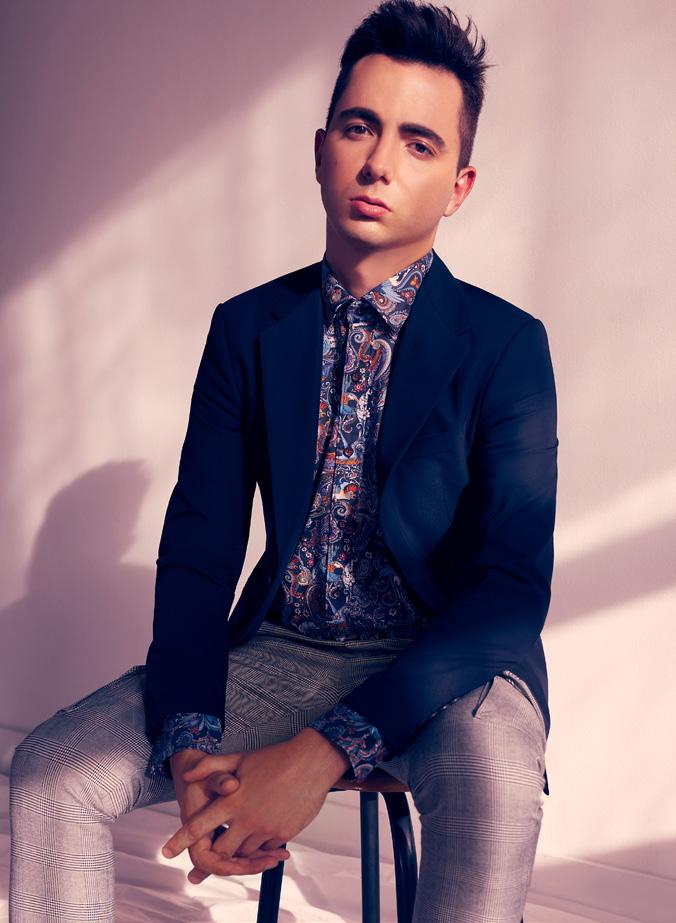
In addition to innumerous awards and honours, Stéphane Tétreault is the recipient of the prestigious 2019 Virginia Parker Prize from the Canada Council for the Arts. He is also the laureate of the 2022 Prix Opus for “Performer of the Year”, awarded by the Conseil québécois de la musique and accompanied by a Canada Council grant.
of masterclasses, notably with cellists Gautier Capuçon and Frans Helmerson.
In 2016, Stéphane made his debut with the Philadelphia Orchestra under the direction of Maestro Nézet-Séguin and performed at the prestigious Gstaad Menuhin Festival in Switzerland. During the 2017-2018 season, he took part in the Orchestre Métropolitain’s first European tour with Maestro Nézet-Séguin and made his debut with the London Philharmonic Orchestra.
Stéphane has performed with violinist and conductor Maxim Vengerov and pianists Alexandre Tharaud, Jan Lisiecki, Louis Lortie, Roger Vignoles, Marc-André Hamelin and John Lenehan. He has participated in a number
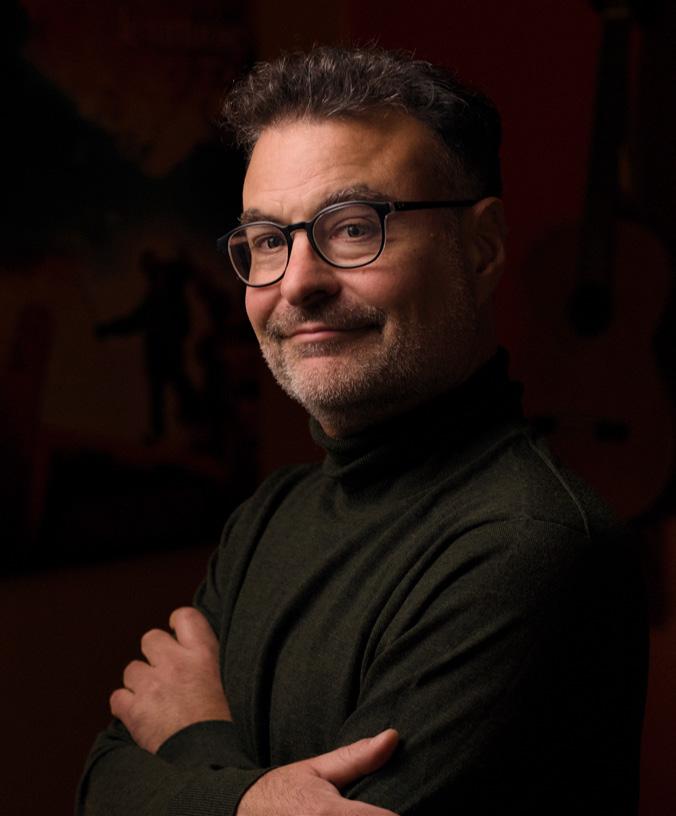
Denis Plante is a Canadian bandoneonist and composer celebrated for his singular approach to the instrument, blending the worlds of tango, jazz, and chamber music. Originally trained in oboe and guitar, he discovered the bandoneon during a formative stay in Argentina and quickly developed a highly personal musical language—marked by purity of tone, expressive virtuosity, and a keen sense of musical storytelling.
Now based in Québec, he founded Tango Boréal, a creative laboratory where he
His debut CD recorded with the Quebec Symphony Orchestra and conductor Fabien Gabel was chosen as “Editor’s Choice” in the March 2013 issue of Gramophone Magazine. His second album with pianist Marie-Ève Scarfone, featuring works from Haydn, Schubert, and Brahms, was chosen as Gramophone Magazine’s “Critic’s Choice 2016” and recognized as one of the best albums of the year.
Stéphane was a student of the late cellist and conductor Yuli Turovsky for more than 10 years. He holds a master’s degree in Music Performance from the University of Montreal.
Stéphane plays the 1707 “Countess of Stainlein, Ex-Paganini” Stradivarius cello, generously loaned to him by Mrs. Sophie Desmarais.
© Suzanne Boyer / Stéphane Tétreault (translation by Stéphane Tétreault) explores the full expressive range of this remarkable instrument. A prolific composer, he has written works for the concert stage, opera, theatre, and chamber ensembles. His recordings— multiple recipients of Opus Awards—reflect his passion for stylistic cross-pollination and his ongoing commitment to expanding the bandoneon’s repertoire.
Regularly invited by orchestras and festivals across Canada and abroad, Denis Plante has emerged as one of the most inventive and distinctive voices in contemporary bandoneon performance.
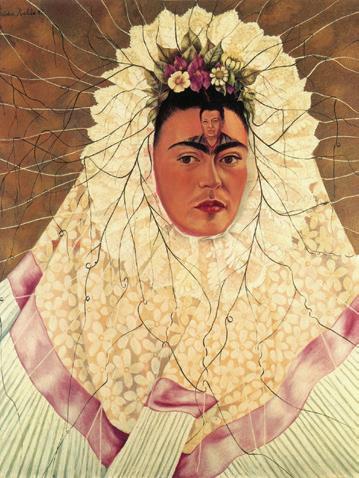
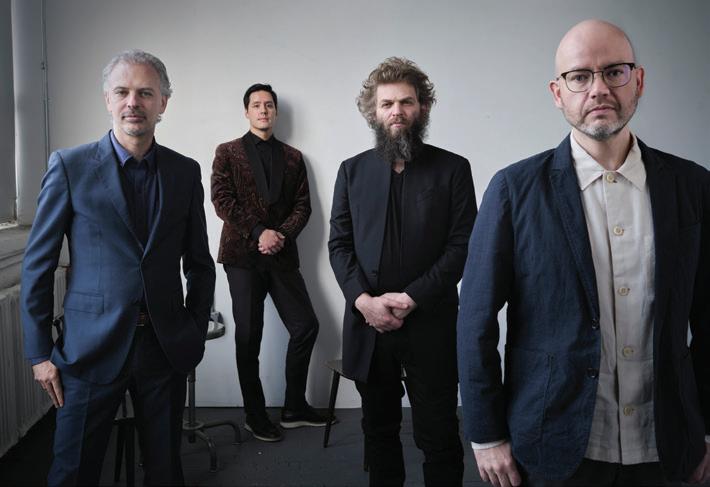
Friday, February 20, 7:30 PM Zilkha Hall, Hobby Center for the Performing Arts
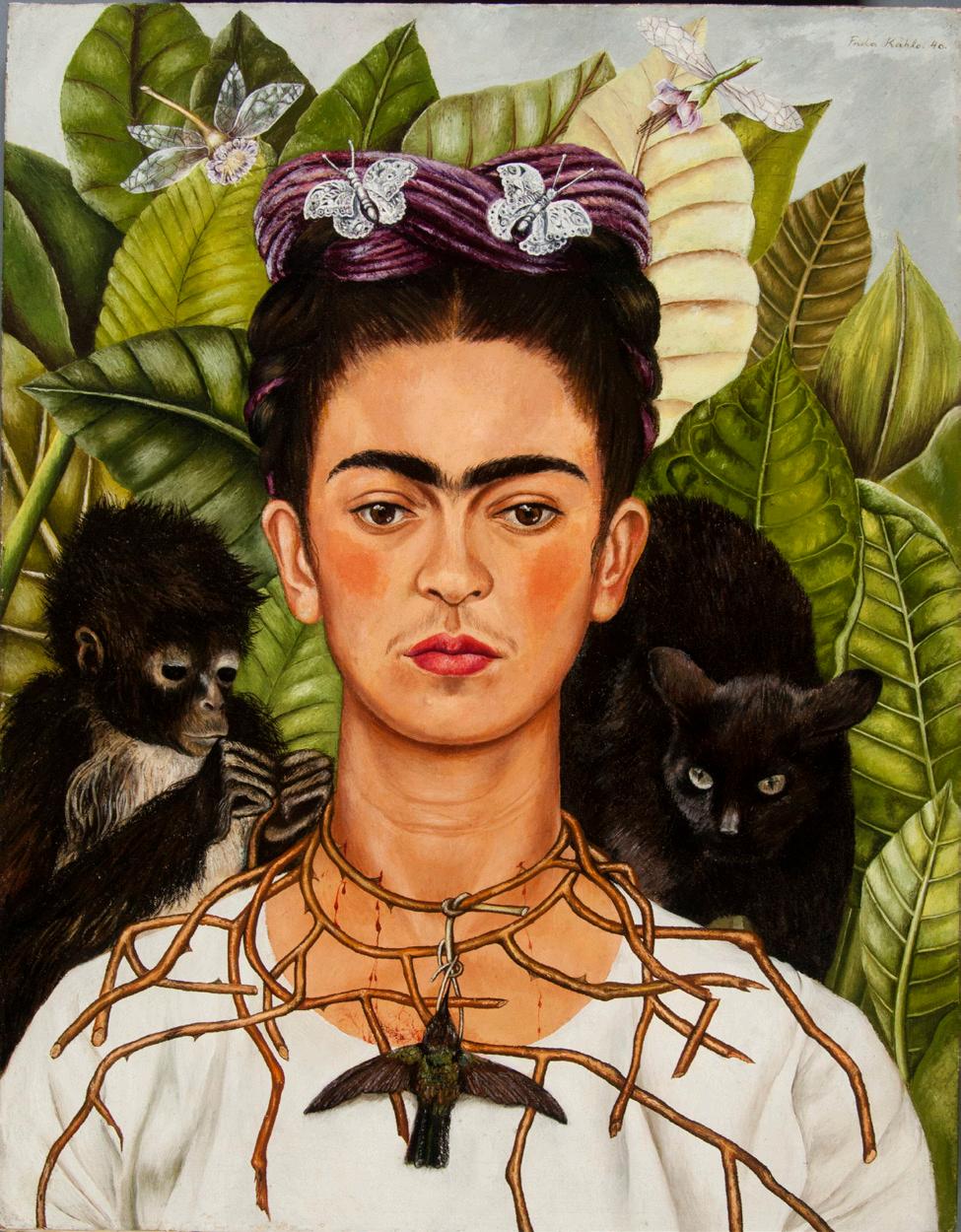
Gabriela Lena Frank Frida’s Dreams (world premiere/ DACAMERA production and co-commission) And music of Colin Jacobsen and Osvaldo Golijov



Noctango was born from a memory — from a night hesitating between drift and dream. I imagined two travelers from the North — perhaps us, perhaps other anonymous wanderers — setting foot in Buenos Aires at the hour when the city dozes, carried by the steady pulse of its milongas. In the warm streets, the night walkers seem to slip between the shadows as if they had arranged a meeting with dusk itself.
This double concerto for cello, bandoneon, and strings is a symphonic poem that traces the fragile thresholds where night tilts toward dawn. The instruments move through it like three companions of fortune embarking on a sleepless night: at times as close and intertwined as tango dancers, at times solitary as nostalgia made flesh, always alert to the shimmer of possibilities that arise when the city is half-asleep.
In their luggage — our own — lie melodies woven from images, offered sometimes with bravado, sometimes like a suspended breath, the kind you hear from alley cats. The bandoneon carries the memory of ancient tangos, the cello opens the path to inward confidences, and the orchestra — like a quiet chorus — sets the dim light in which these voices entwine, slip away, and return to one another.
Noctango does not tell a precise story. Instead, it invites a sensitive wandering: the feeling of walking through a foreign city that suddenly seems familiar; the taste of a night that refuses to end; the fragile minutes that separate darkness from first light. A celebration of that moment when you walk without knowing whether you are heading toward something… or simply being called by the night itself.
–
Denis Plante
Celebrating the power of music through teaching, sharing, and performing with passion, intimacy, and excellence.
• Be the most welcoming and innovative arts institution in Houston.
• Become an exemplary period instrument ensemble for the Nation.
• Transform the lives of a diverse audience through music.
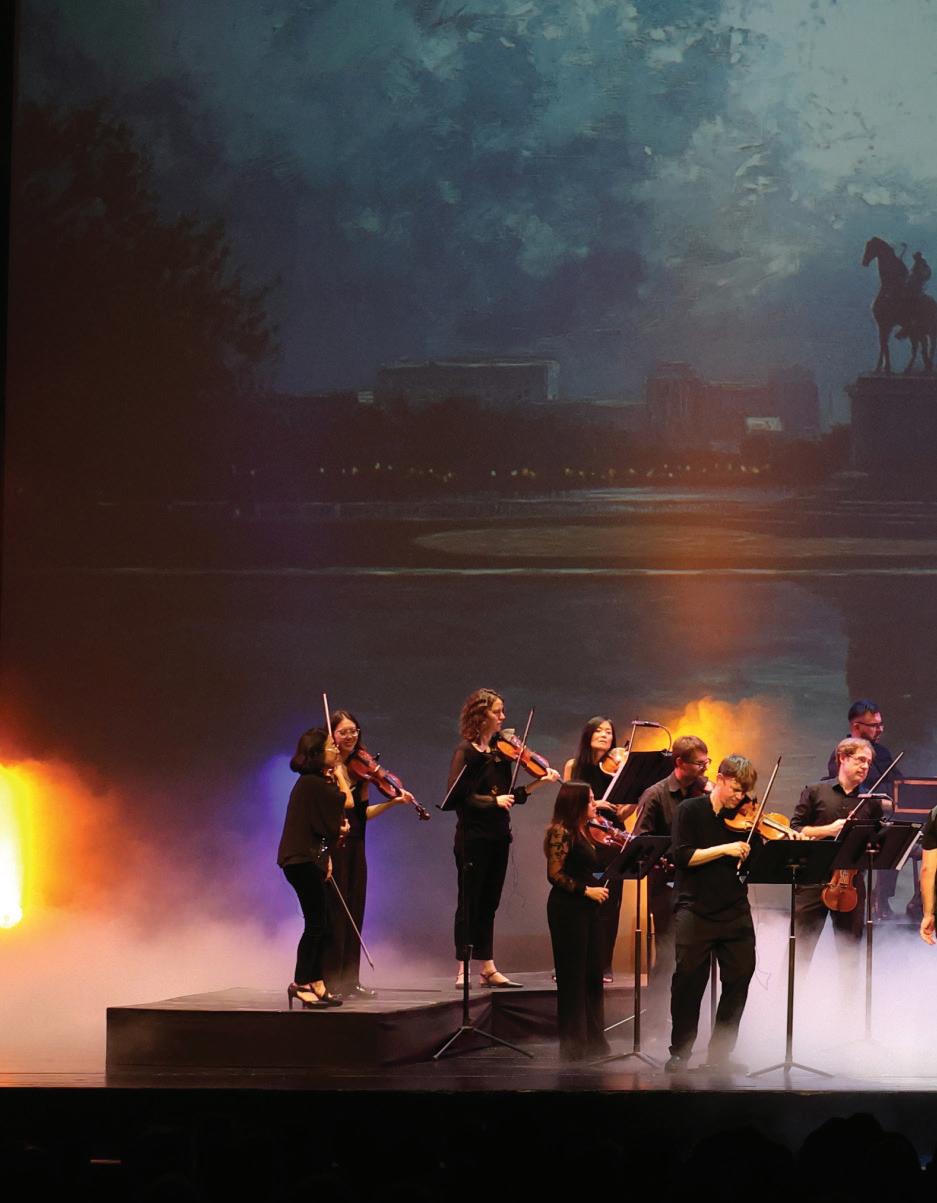

Mercury Chamber Orchestra performs on period instruments to capture the authentic sound of composers from the Baroque, Classical, and Romantic eras. These instruments differ from their modern equivalents by featuring gut strings, wooden flutes and oboes, valveless horns and trumpets, and leather-skinned drums. This versatility with instruments and performance-style offers you a singular listening experience.
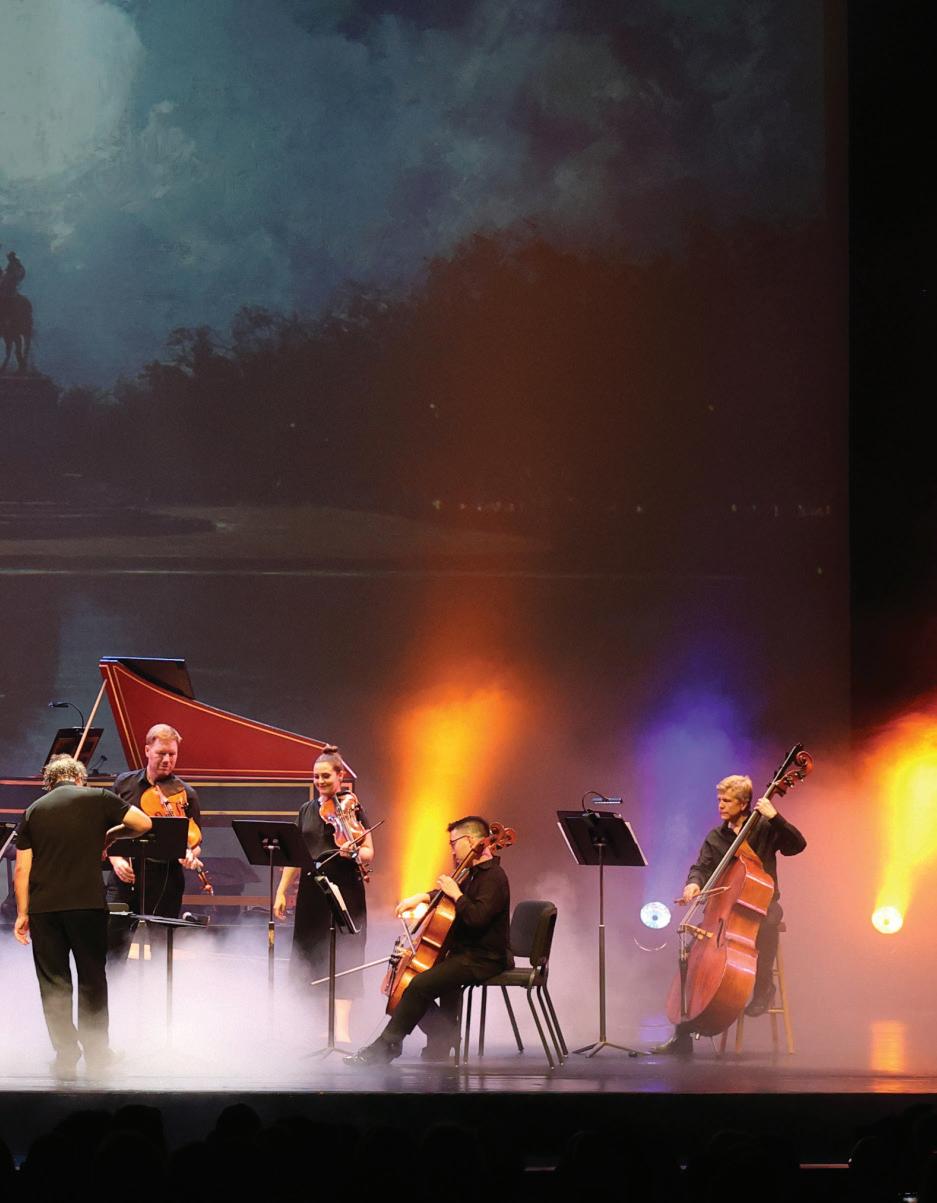
Music Director Antoine Plante has long been a devotee of the tango, and this affinity seems to run in his family. His older brother, Denis, is a leading player of the bandoneon, an accordionlike instrument brought by German immigrants to South America, where it became an essential element of tango ensembles. In recent years, Denis Plante has toured internationally with acclaimed Quebecois cellist Stéphane Tetreault, and Mercury is delighted to present the duo’s compelling interpretation of tango music in Houston this evening.
The program begins with a miniature history of the tango, then leads back to Northern Europe before ending with an original tangoinspired composition by Denis. The program’s title, Hémisphères , reflects both the Quebecois musicians’ fascination with a musical genre from the Southern hemisphere and the blending of the Old World classical tradition with dance music that originated in the New World.
In the years leading up to the turn of the twentieth century, the tango evolved in the Rio de la Plata region of Argentina and Uruguay. Its ancestors were the milonga and the habanera, a Cuban dance that itself evolved from a blending of the eighteenth-century European contredanse with the musical traditions of enslaved West Africans in Cuba. Indeed, the word “tango” itself originally referred to the music created by people of the African diaspora along South America’s Atlantic coast. The modern tango arose in the demimonde on the outskirts of Buenos Aires and Montevideo, outside the official city limits where brothels, alcohol, dancing, and other legally dubious activity flourished. This gritty origin was reflected in tango lyrics, which abounded in regional slang and waxed poetic on themes of unhappy love, jealousy, betrayal, and revenge. Hence Borges’ famous characterization of the tango as “The impossible dream of having died
fighting, on a suburban street corner.”
In 1911, the tango made its way to Paris, where it became all the rage and transformed into a highsociety ballroom dance; from Paris it returned to the Rio de la Plata, where urban elites were now obliged to embrace the previously scandalous artform. Early tango music was decidedly vernacular in style, featuring simple arrangements and cultivating “mugre” or “dirt,” dissonances that became a prized feature of the tango sound. Known as the “Old Guard” (“Guardia vieja”), this early phase gave way to the “New Guard” (“Nueva guardia”) around 1920 as tango musicians became more professionalized and polished.
Perhaps no artist epitomized the New Guard style as did Carlos Gardel (1890–1935). Born Charles Gardes in France to an unwed mother, Gardel came to Buenos Aires at age 2, virtually as soon as it was possible for him and his mother to make the voyage and escape the social stigma surrounding the circumstances of his birth. Gifted with the voice of a consummate crooner, personal magnetism, and songwriting talent, Gardel was praised as “the tango made flesh” and played a decisive role in shaping the artform. “Por una cabeza” was written for the film Tango Bar, in which Gardel plays a gambler specializing in horseracing. The song’s title translates literally as “By a head,” but is more idiomatically translated into English as “by a nose,” as in “the horse lost the race by a nose.” The song’s impressionistic lyrics rhapsodize on the role of chance in both horseracing and love, concluding, “By a nose, if she forgets me, what does it matter if I lose my life a thousand times?” Sadly, it was among the last of Gardel’s creations; Gardel died in a plane crash shortly before the film’s premiere.
Following Gardel’s death in 1935, tango entered a new phase that is today remembered as the “Golden Age,” when tango reached the height of its popularity in Argentina. On this program,
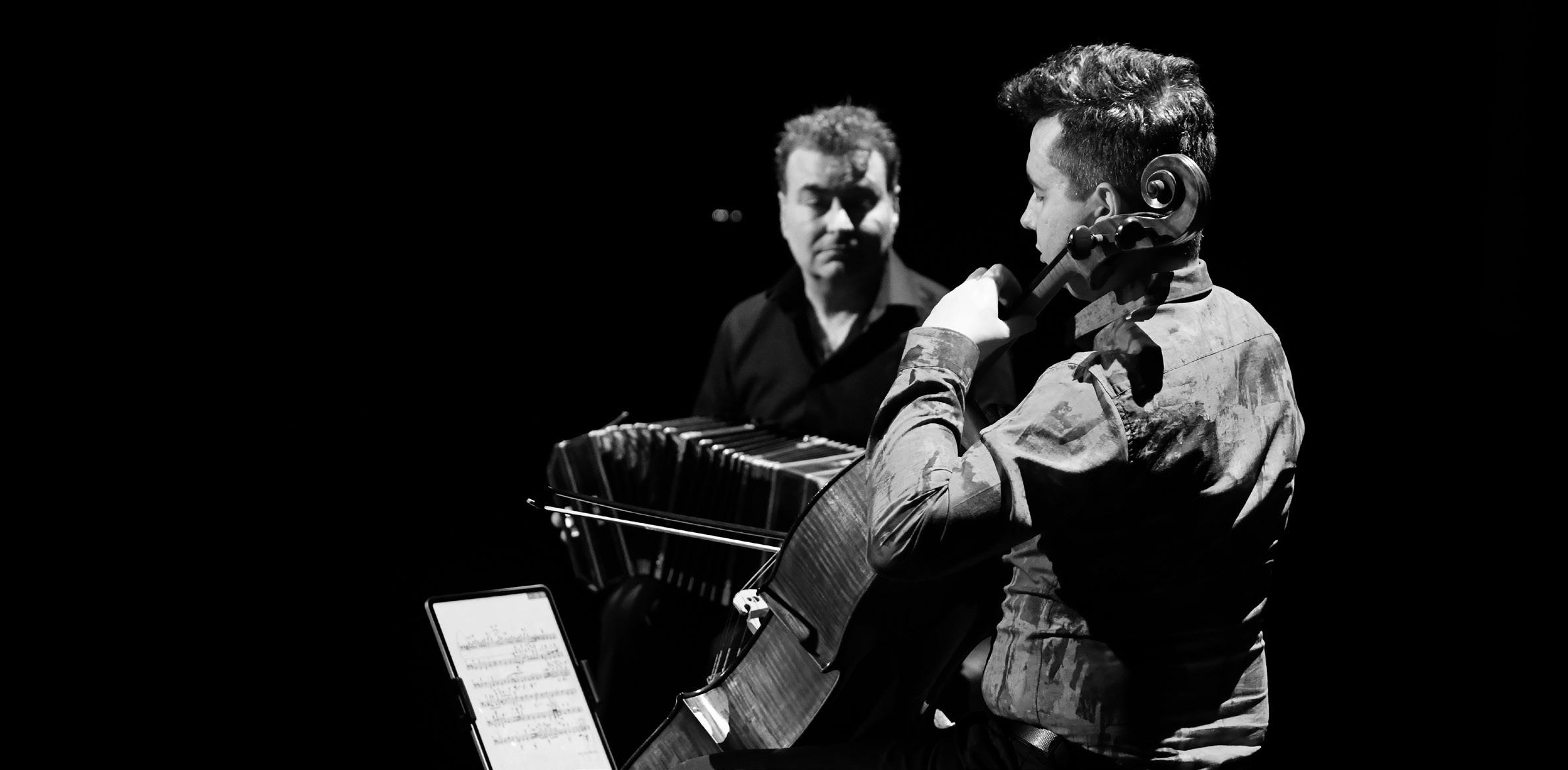
the tangos by Horacio Salgán (1916–2016) and Osvaldo Pugliese (1905–1995) both date from this period. Salgán’s A fuego lento (“Over low heat”) premiered in 1953 and displays many of his stylistic hallmarks: a rhythmic main theme is contrasted with a more lyrical second idea, which features written-out fraseos (a kind of rubato characteristic of tango music). Pugliese’s La Yumba dates from 1943 and is among his most famous and controversial tangos thanks to its percussive, mechanistic main idea, which Pugliese said was inspired by the sounds of metalworking (it might be noted that Pugliese was a lifelong communist, who was imprisoned several times by the Perón regime). The title is an onomatopoeia invented by Pugliese intended to evoke the sound of the bandoneon expanding and contracting. This arrangement will feature a bandoneon solo performed by Denis Plante.
After the military coup that ousted Perón in 1955, the tango declined in popularity in Argentina as a new generation embraced rock and roll and other novel forms of music and social dancing; tango, however, did not die out—it continued to evolve. The leading exponent of tango in this new age was Ástor Piazzolla (1921–1992) , who fused tango with the European classical tradition to create what he called “Tango nuevo” (“new tango”). Composed in 1979, his
Escualo (Spanish for “Shark”) has a name which reflects the composer’s love of shark fishing, an activity which apparently helped him compose: “Sometimes I think out a complete work—until I feel a shark is near,” Piazzolla explained. The work’s frequent shifts in tempi proved tricky for the original violinist, Suárez Paz, who even passed up a vacation in order to master it. This arrangement will feature a solo for Mercury’s concertmaster, Jonathan Godfrey.
In creating “Tango nuevo,” Piazzolla had a significant body of Argentine classical music to look to for inspiration, much of it by the next composer on the program: Alberto Ginastera (1916–1983) . Indeed, Piazzolla studied with Ginastera for several years in the 1940s. Originally written for piano, Ginastera’s Danzas Argentinas are among his earliest notable compositions, dating from 1937 when the composer was still a student at the Conservatorio Nacional de Música in Buenos Aires. The second of the three dances is “Danza de la moza donosa,” or the “Dance of the graceful maiden.” Marked “Dolcemente espressivo” (“sweetly expressive”), this piece would seem to adapt the style of Chopin’s nocturnes to twentieth-century Argentina. After a few bars of introduction, a melody marked cantando (“singing”) appears—perhaps this is
the voice of the maiden?
Argentina is not the only South American country to boast a rich classical music tradition; among others, Brazil, too, has produced several notable composers, the most famous of which is Heitor Villa-Lobos (1887–1959) . Among his best known compositions are his Bachianas brasileiras . In a 1945 letter to the Bach Society of São Paulo, VillaLobos declared, “The music of Bach is without question the most sacred gift to the world of art,” and Villa-Lobos’s Bachianas brasileiras are a series of works inspired by the music of the German baroque composer. The Bachianas brasileiras No. 5 is the most popular of the set, particularly the first movement, an Aria composed in 1938. The work was dedicated to “Mindinha”—Arminda Neves de Almeida, Villa-Lobos’s longtime mistress. Originally for nine cellos, Villa-Lobos later created the version for soprano and eight cellos which is most often performed today. For this performance, Antoine Plante has created an original arrangement that harkens back to the original, all-cello version and features a prominent solo for Stéphane Tetreault.
We end the first half of the program by crossing the Atlantic from South America to Spain, a country which profoundly influenced the musical culture of its many former colonies. Spanish composer Manuel de Falla (1876–1946) , incidentally, also has a connection to Argentina, where he spent the final years of his life after the fascist victory in the Spanish Civil War. The Ritual Fire Dance from his ballet El Amor Brujo (“Love, the Sorcerer”) was first composed in 1915, but was later popularized by the pianist Arthur Rubinstein, who frequently performed an arrangement for solo piano. This performance presents a new arrangement which will feature a cello solo for Stéphane Tetreault.
After intermission, we move to the north of Europe with the first movement of the String Quartet in G minor by Norwegian composer Edvard Grieg (1843–1907). This intense work dates from a difficult period in the composer’s life. After years of limited composing, Grieg and his wife, Nina, spent much of 1877 and 1878 in Lofthus, a village located in a scenic fjord in the remote Hardanger region. In August 1877, Grieg wrote to a friend, “Nothing that I do satisfies me [...] I am going to fight my way through the
large forms, cost what it may. [...] If I go mad in the process, you know why.” Although Grieg had already composed a popular piano concerto and several sonatas, he always found the shorter forms of piano miniatures and songs more congenial; nevertheless, he believed it was necessary to compose in larger, more prestigious forms such as the string quartet. In another letter he wrote after finishing the quartet, Grieg explained that the piece “is not intended to deal in trivialities. It aims at breadth, movement, and above all at bringing out the sound of the instruments for which it is written. I needed to write this as a study. [...] You have no idea what trouble the forms have given me [...]”
Many critics have since praised the resulting work as especially innovative, noting the orchestral style Grieg employed in the quartet. Perhaps seeking to explore the implications of this orchestral manner, Antoine Plante has chosen to present an arrangement for string orchestra of the first movement at this concert. The quartet also begins with a quotation from a song Grieg composed in 1876, “Fiddlers,” based on a poem by Ibsen. The text includes the following stanza: “I conjured the sprite of the waters,/ He lured me to regions wide,/ But when that dread sprite I had mastered—/ She [my beloved] was my brother’s bride!” This quotation, combined with the work’s dramatic character and cryptic remarks in Grieg’s letters have led biographers to speculate on the state of the Griegs’ marriage during the bitter Hardanger winter of 1877–1878. Regardless of any autobiographical content, the work remains compelling as pure music.
The inspiration behind the famous Valse triste by Finnish composer Jean Sibelius (1865–1957) is much clearer: Sibelius wrote the waltz as incidental music for the 1903 play Kuolema (“Death”), a symbolist drama by Arvid Järnefelt, his wife’s brother. This music was written to accompany a scene in Act I in which a dying woman has a dream of a ball she attended many years before. After ghostly visions pass by her, she expires.
South of Helsinki across the Gulf of Finland lies the Baltic country of Estonia, the home of our next composer, Arvo Pärt (b. 1935) . His Fratres is one of the breakthrough compositions he wrote in 1977, when he was formulating his
signature tintinnabuli technique of composition. Deriving from the Latin term for bells, Pärt’s tintinnabulation technique achieves a radical simplicity that has sometimes been classified as “holy minimalism,” drawing a parallel with the contemporaneous emergence of minimalist musical styles in the United States while also emphasizing the spiritual nature of this new school of composing. Pärt himself was profoundly influenced by his Orthodox Christian faith; because Estonia was then part of the officially atheistic Soviet Union, many of Pärt’s works from this period were premiered in Estonia’s underground music scene. Such was the case with Fratres. The title is literally Latin for “brothers,” although in an ecclesiastical sense it also refers to monks—the brothers in a monastery. Pärt was reportedly inspired by the “brotherly feelings” he had for the members of the early music ensemble Hortus Musicus who gave the premiere on October 28, 1977. Originally written in three parts which could be played by any combination of instruments, the work will be performed this evening by cellist Stéphane Tetreault and Mercury percussionist Jesús Pacheco.
The program comes full circle by ending with the world premiere of a work by a composer from the Northern Hemisphere who has been deeply inspired by the tango music of the Southern Hemisphere. Denis Plante’s Noctango is a concerto in one movement for bandoneon (played by the composer himself) and cello (Stéphane Tetreault). Denis explained, “I imagined two travelers from the North—perhaps us, perhaps other anonymous wanderers—setting foot in Buenos Aires at the hour when the city dozes, carried by the steady pulse of its milongas. In the warm streets, the night walkers seem to slip between the shadows as if they had arranged a meeting with dusk itself.” ©2025 Calvin Dotsey
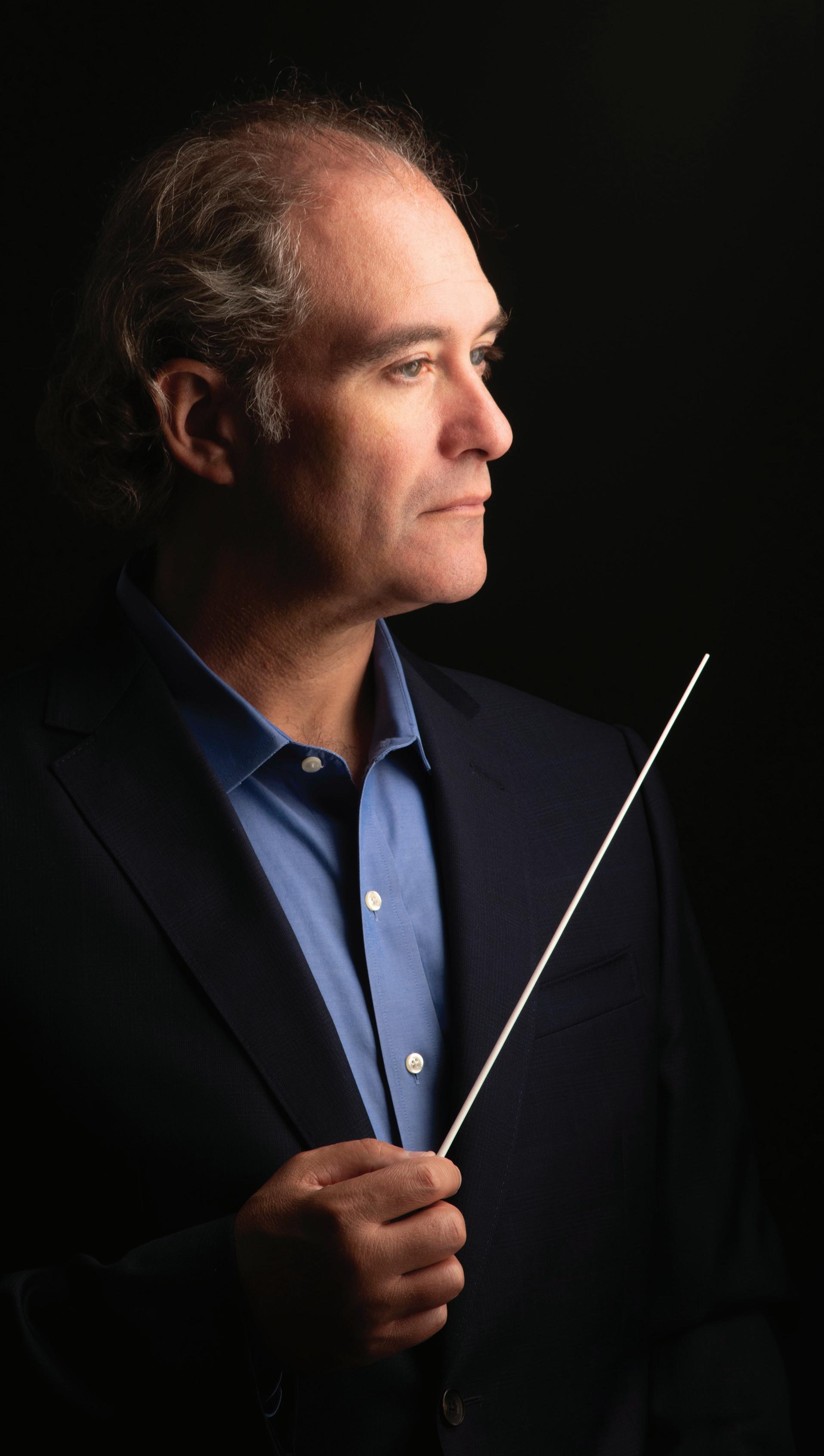
ARTISTIC DIRECTOR, LYNN WYATT CHAIR
Praised for his conducting vigor and innovative programming, Antoine Plante has captivated audiences and musicians alike with his ability to bring music to life. Charles Ward of the Houston Chronicle lauded him for leading “an impressive account of the Mozart’s Requiem: authoritative, vigorous, emotionally intense, at times utterly gripping.”
As the founder of Mercury Chamber Orchestra in Houston, Texas, Plante has played a pivotal role in the orchestra’s remarkable growth over its 24-year history. Known for his skillful programming of great classical works like Mozart’s 41st Symphony and Mendelssohn’s Reformation alongside lesser-known gems, he has helped Mercury gain a rapidly growing audience. In 2022, he further extended Mercury’s artistic reach by founding the Mercury Singers, the orchestra’s vocal ensemble.
A versatile conductor, Plante excels across a wide repertoire. Equally at home with romantic and modern composers, he also specializes in performing classical and baroque works with period instruments. His expertise extends to staged productions, having conducted numerous operas and ballets. In collaboration with French director Pascal Rambert, Plante produced a modern, critically acclaimed staging of Lully’s Armide in Paris and Houston. He also worked with Dominic Walsh Dance Theater to create the score for Walsh’s ballet Romeo and Juliet. His innovative spirit shone in the multimedia creation of Loving Clara Schumann, a fully staged work featuring orchestra, dancers, and vocal soloists in a compelling dramatic performance.
Plante is a passionate advocate for classical music education. He leads Mercury’s educational outreach program, which brings classroom music education to underserved schools, offers master classes for student orchestras, and provides live performances for schoolchildren.
Under Plante’s leadership, Mercury has grown into a vital cultural institution in Houston, presenting over 40 concerts per season in a variety of venues, making music accessible to the entire community.
Plante has served as guest conductor for esteemed ensembles, including the San Antonio Symphony, Oregon Bach Festival Orchestra, Chanticleer, Houston Grand Opera, Ecuador National Symphony Orchestra, and Atlanta Baroque.
Antoine Plante grew up in Montréal, Québec, Canada and lives in Houston, Texas.
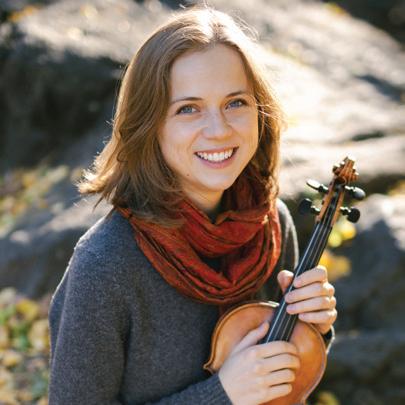

Schubert
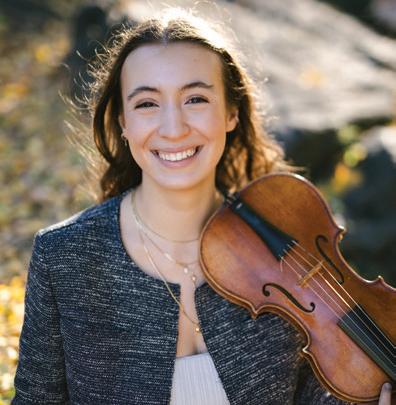
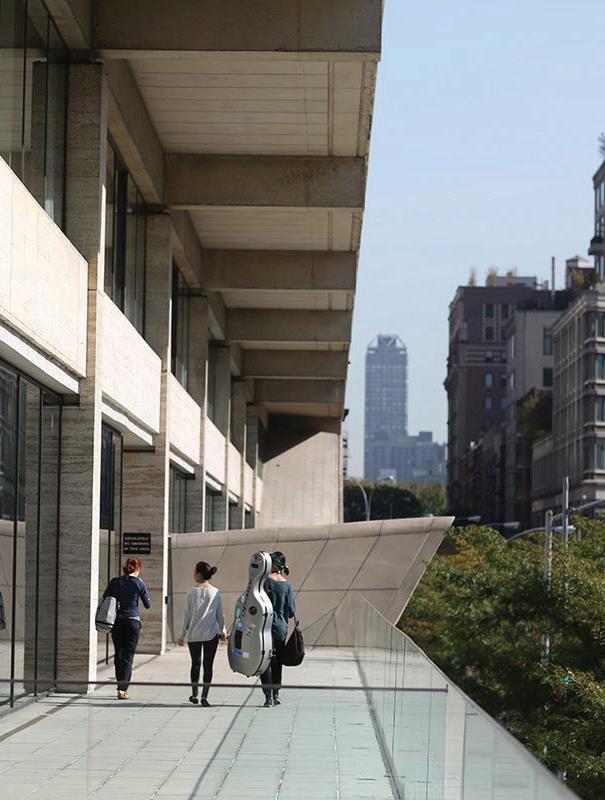
This initiative, a collaboration between The Juilliard School of Music Historical Performance Program and Mercury Chamber Orchestra, encourages the development of talented young instrumentalists and fosters a strong relationship between two major players in America’s period instrument performance scene.
Each spring, Mercury holds auditions at Juilliard, selecting two post-graduate students to participate in a one-year fellowship with the ensemble. Fellows will perform with Mercury during the season, gaining valuable performance experience while introducing Houston to the next generation of great period performance musicians.
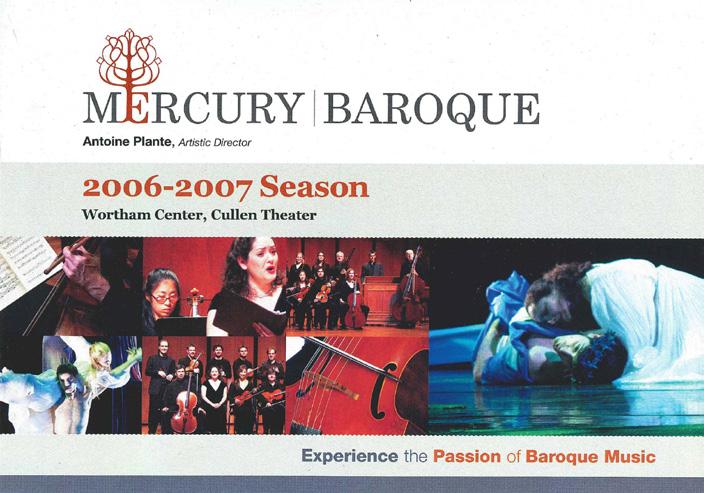
As Mercury celebrates its 25th Anniversary we take a walk through our archives to look at special events in our past. Each program book will cover a portion of our history.
2oo6–2oo7
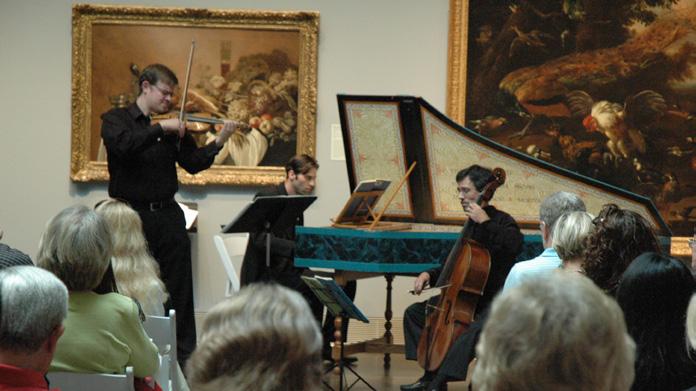
First performance at MFAH, October 2006 “German Masters” featuring music of Bach & Handel.
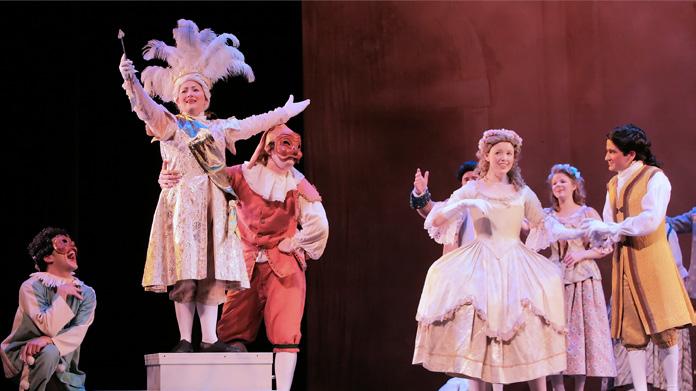
Partnering with New York Baroque Dance Company under the direction of Catherine Turocy, Mercury creates a fully staged performance of Rameau’s Pygmalion.
2oo7–2oo8
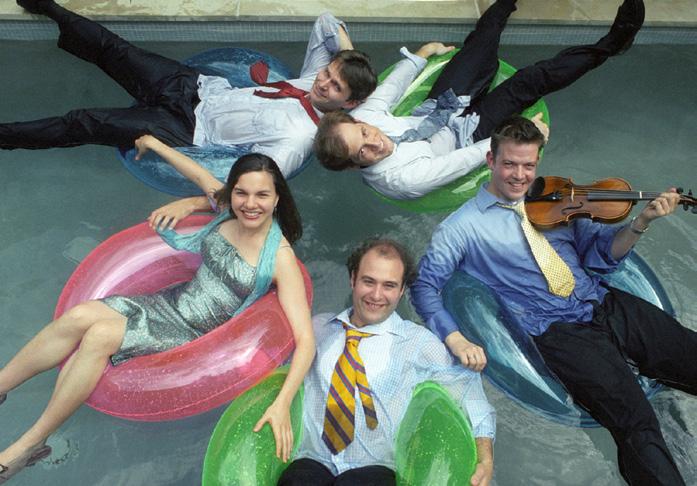
Handel’s Water Music kicked off the Downtown Series.
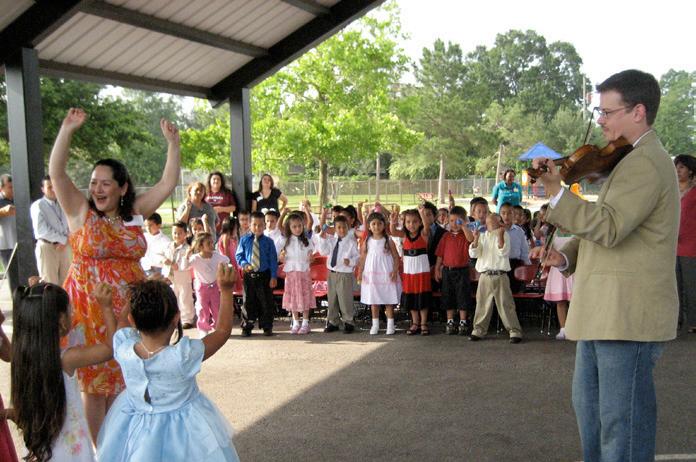
Ana Treviño-Godfrey and Jonathan Godfrey lead Music + Motion as part of Mercury’s ongoing education initiatives.
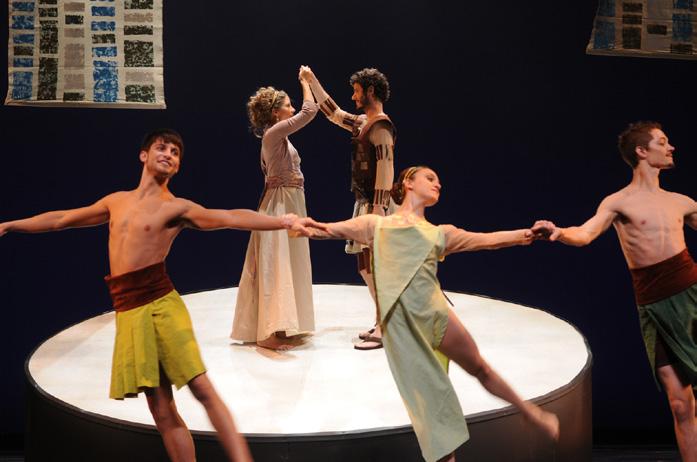
A stunning production of Dido & Aeneas served as the season finale!
2oo8–2oo9
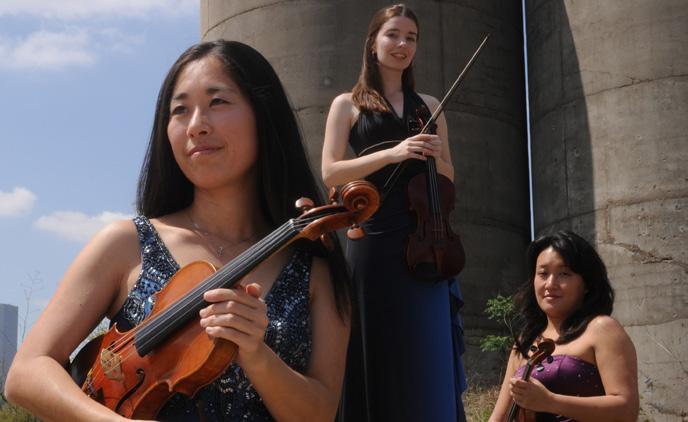
A blockbuster season with the complete Brandenburgs, the first gala and more!
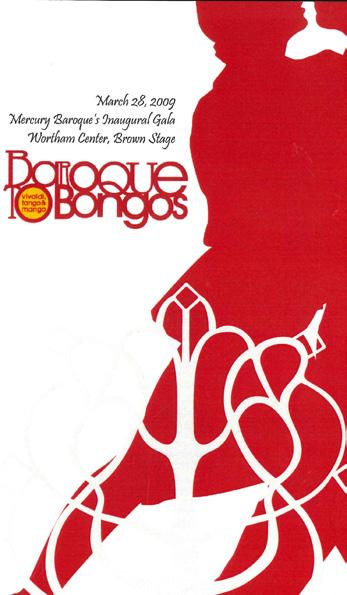
Baroque to Bongos held on the Brown stage at the Wortham in March was Mercury’s first gala – Antoine and Lori led a night of dancing with a spectacular tango.
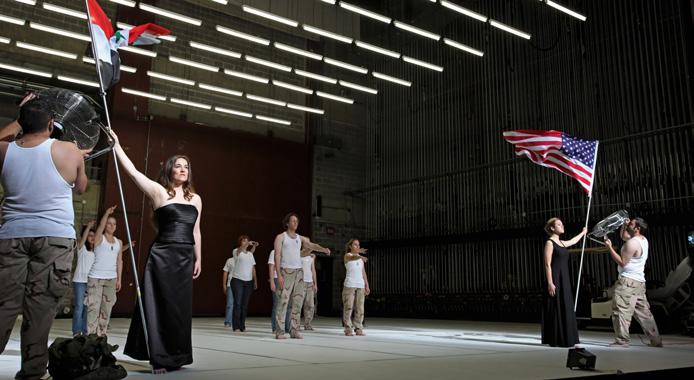
In May, French director Pascal Rambert led a memorable staging of Lully’s opera Armide. Mercury would take the production to Paris in the fall of 2009. (Pascal returns this March for a new production, LOVE, as part of the celebratory 25th Season.)
2o09–2o10
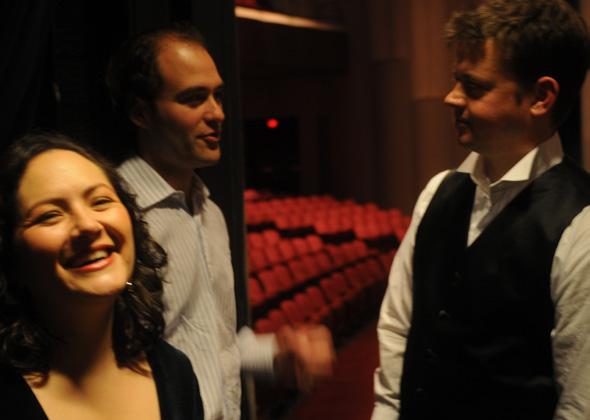
Stop, Listen, Stay Awhile - A season of Messiah, Handel’s Royal Fireworks and a remounting of the popular Romeo & Juliet with Dominic Walsh Dance Theater.
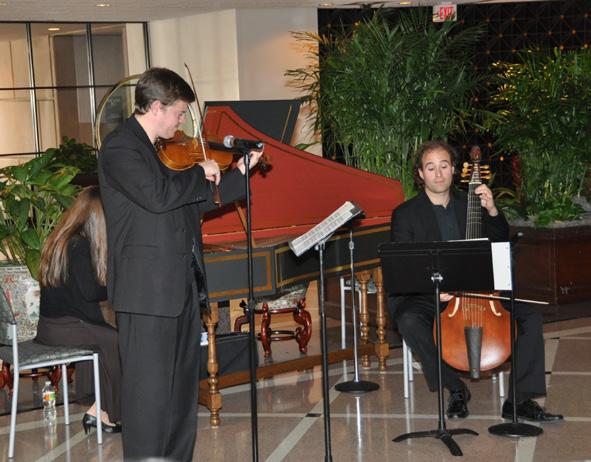
A community outreach concert at Methodist Hospital’s Crain Garden featuring Mercury’s new harpsichord.
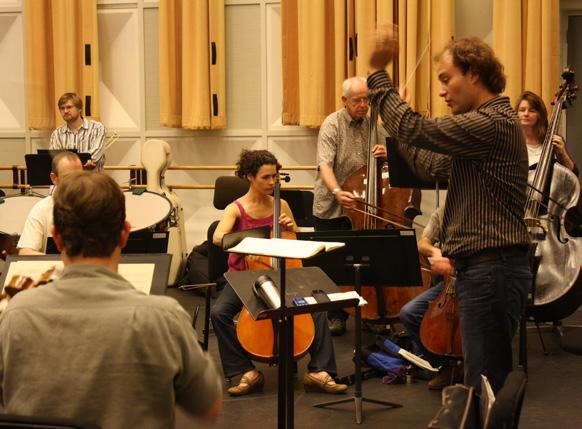
Rehearsing Beethoven’s Symphony No. 1 in May, beginning Mercury’s Beethoven symphony cycle.
2o10–2o11
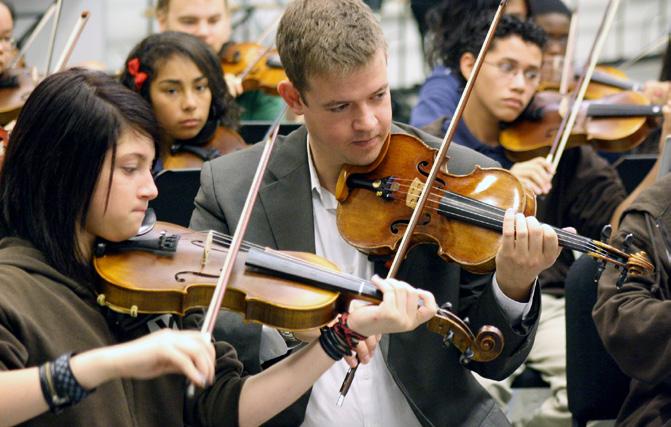
The advent of Mercury’s in-school residency programs, working with YES Prep students all year and culminating in May with the first side-by-side concert with students and Mercury musicians playing under Antoine’s baton
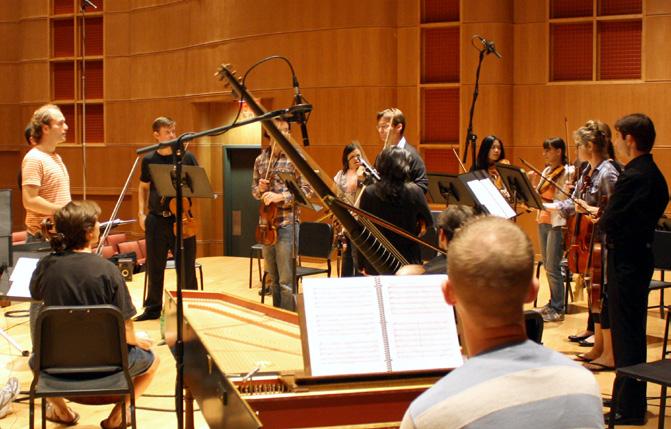
Recording Les Indes Galantes, Mercury’s fifth CD, at The Clarion at Brazosport College.
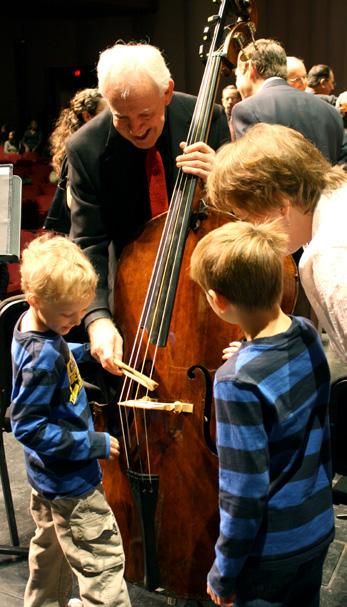
The audience gets up close with Mercury musicians after a Messiah sing-along.
2o11–2o12
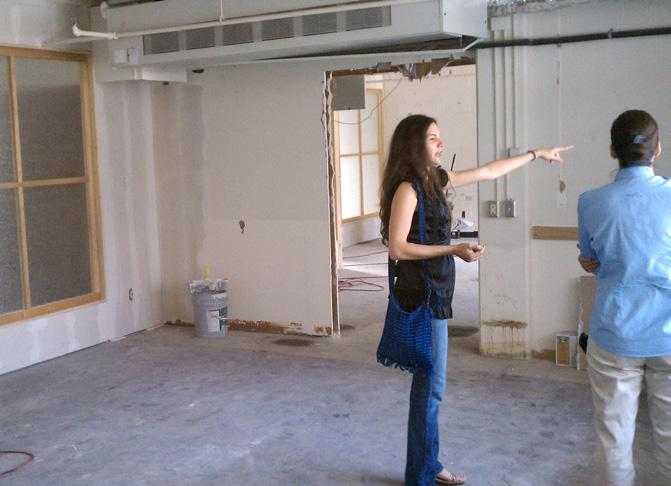
Executive Director Deborah Lugo oversees the build out of Mercury’s new office in the East End.
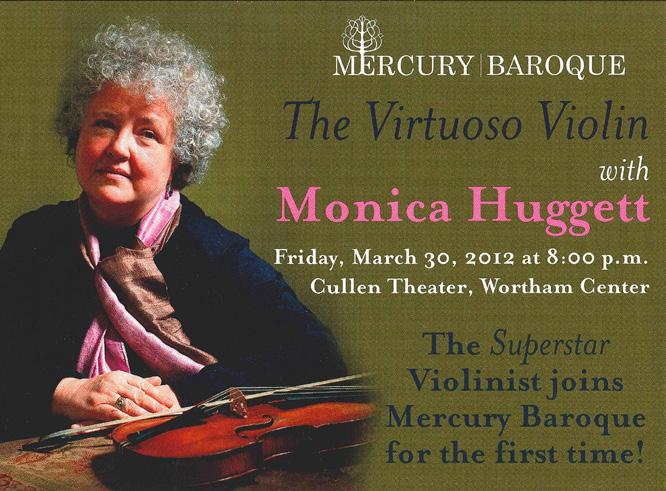
The standout performance of the season is the sublime Monica Huggett joining the ensemble for a program of Leclair, Locatelli, Van Wassanaer, and Vivaldi.
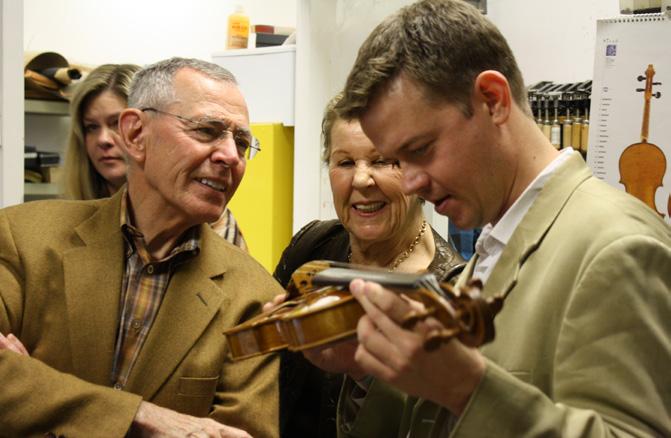
The Kirchners, longtime generous donors, helped launch the adoptan-instrument program to bring custom-built Baroque violins to life for Mercury musicians.
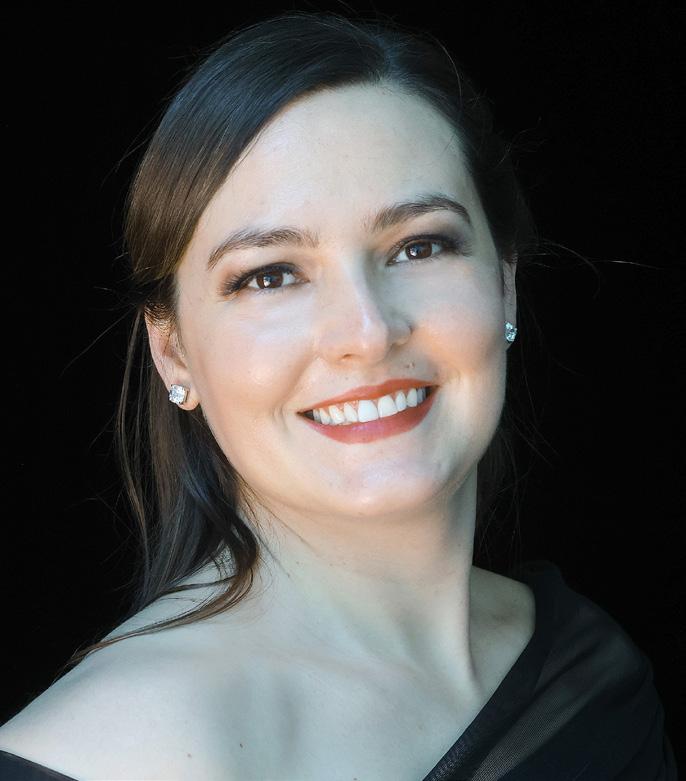
What’s your favorite piece to perform and why?
I love playing late Beethoven Quartets and of course the symphonies. Another favorite is Mozart Sinfonia Concertante!
What do you like to do when you’re not performing?
I love to read and bake! Favorite bookstore in Houston is Murder by the Book on Bissonet and my favorite bakery is Magnol.
What was the first concert you ever attended?
I’m not sure about the first, but I remember going to an open rehearsal of the Chicago Symphony when I was in high school. I remember thinking “I want to do this!”
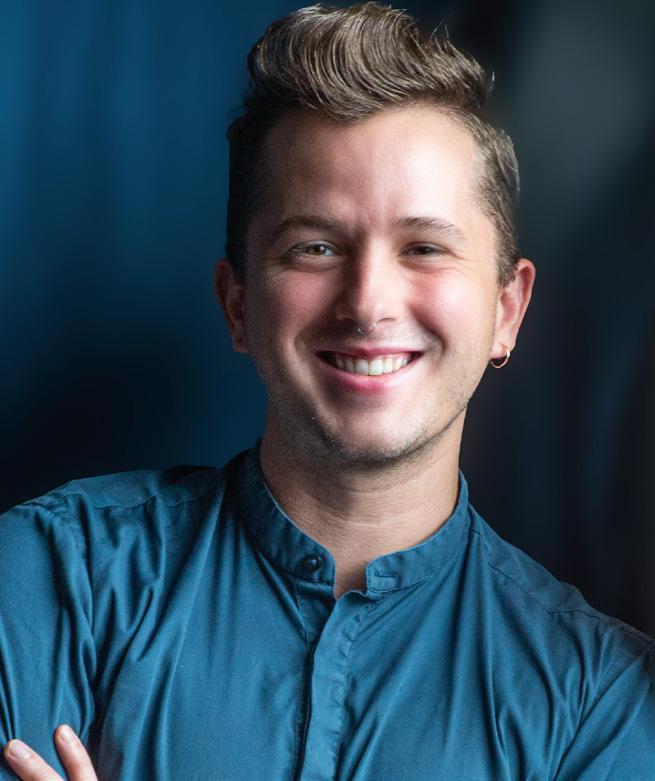
What drew you to your instrument?
My Dad was an oboist, and he wanted me to play the same instrument so he didn’t have to pay for lessons. We made it about a month until he decided to get me a teacher so he didn’t have to do it anymore.
Who has influenced you most as a musician?
I like to think I’ve filed away a tidbit of information from everyone I’ve ever studied or performed with. I have an encyclopedia of memories I can draw from for each aspect of my playing.
Do you have a favorite Houston spot or neighborhood hangout?
I like the fried fish and charred green beans from Pepper Twins.
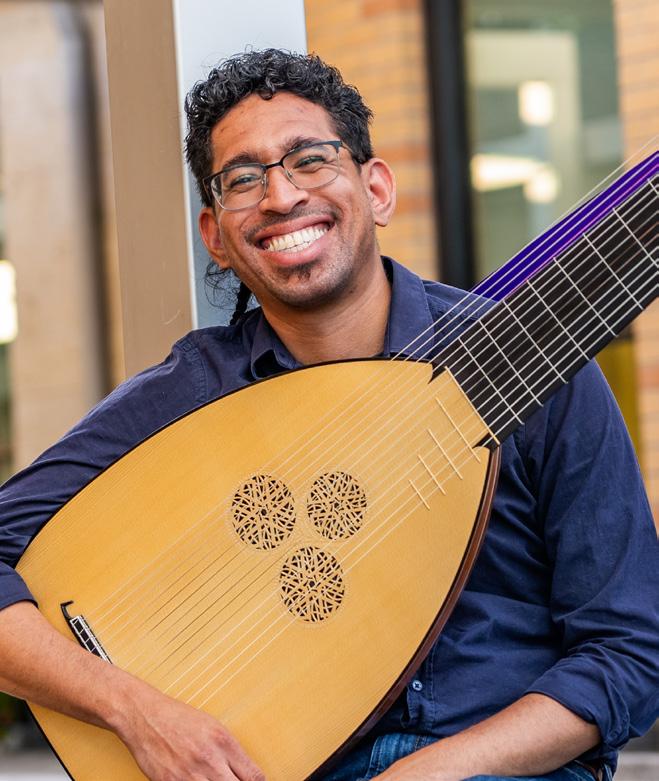
What was the first concert you ever attended?
Oh wow, I don’t remember hahaha, but I do have a very memorable concert. When I was 17 years old I watched a Russian guitarist called Dimitri Illarionov play a concert in Puerto Rico, as part of his concert tour after winning a really big competition. This concert inspired me so much to get to that level that I started to push my practice routines much further.
What do you like to do when you’re not performing?
I like traveling, reading, playing video games, and watching basketball.
One word to describe playing with Mercury? Inspiring!
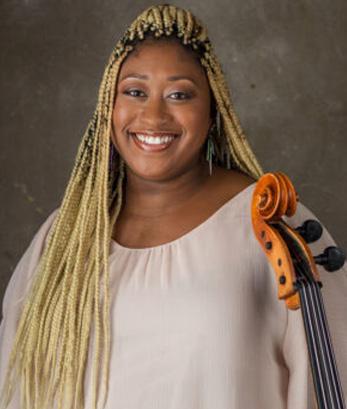
What drew you to your instrument?
I fell in love with the sound of the cello. I had an orchestra teacher that was a cellist and the moment I heard it, I knew it was my instrument.
What’s your favorite piece to perform and why?
There are so many pieces I love, but chamber music has always been my favorite. Honestly, I’d choose it over playing a solo any day. There’s something really special about creating something together in real time.
What’s your most memorable moment with Mercury?
My most memorable moment was watching my students at Scarborough Elementary perform together for the first time. Their confidence and the support from the teachers, staff and their families made it a standout experience for me as a teacher.
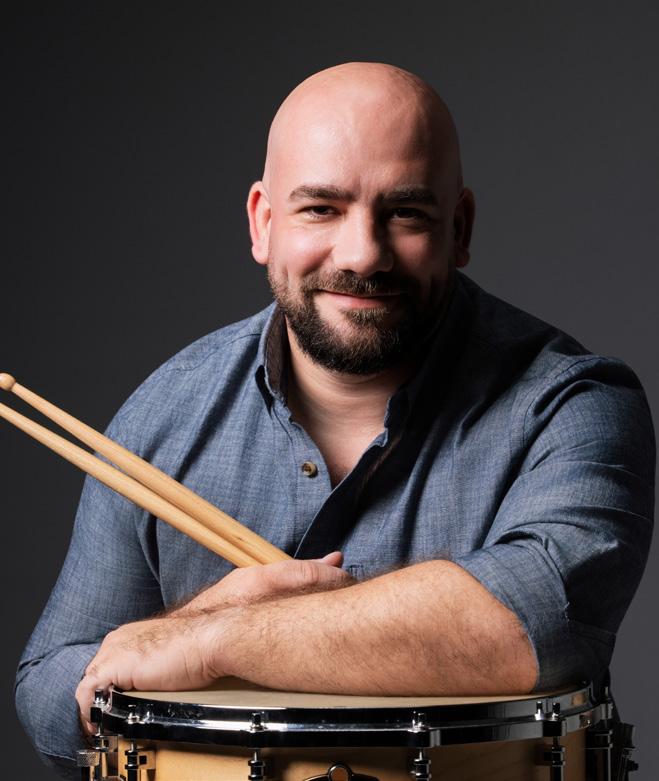
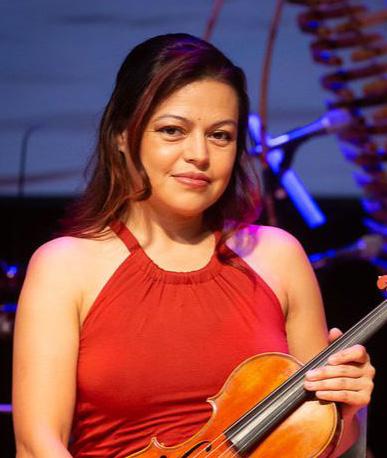
What drew you to your instrument?
My early memories include playing at home with literally “anything that could make a sound when hit”... I know that my mom listened to Ravel, Falla, and to Zarzuela (Spanish Operetta) constantly.
What’s the most memorable concert you’ve played with Mercury?
A Mexican Baroque Christmas, Season 20192020. I was still fairly new playing with Mercury, and my wife, Cecilia Duarte, was one of the featured soloists on that program. The Houston Symphony Chorus, directed by Dr. Betsy Cook Weber, was accompanying us as well. The audience loved the program and we had a lot of fun!
What’s a hobby or talent people might not expect from you?
Coffee roasting.
Who has influenced you most as a musician?
I think the most influential person in my music career was my college professor. Fredell Lack. She had a uniquely effective yet nurturing way of teaching which was inspiring to myself and to generations of violinists that still perform all over the world.
What’s the most memorable concert you’ve played with Mercury?
I have been playing with Mercury since 2011 so the repertoire has been extensive! If I really must choose I would say that some of the best times have been at Miller Outdoor Theatre. The excitement of opening the new season with some very fun music and watching the crowds gather and be excited to listen to the show even when it has been raining or extremely hot and humid outside.

Mercury’s Patron Society recognizes individuals making annual leadership gifts of $2,500 or more. Patron Society members receive complimentary valet parking at Downtown concerts, Green Room access at intermission and after the concert, invitations to private concerts and events, and other exciting benefits.
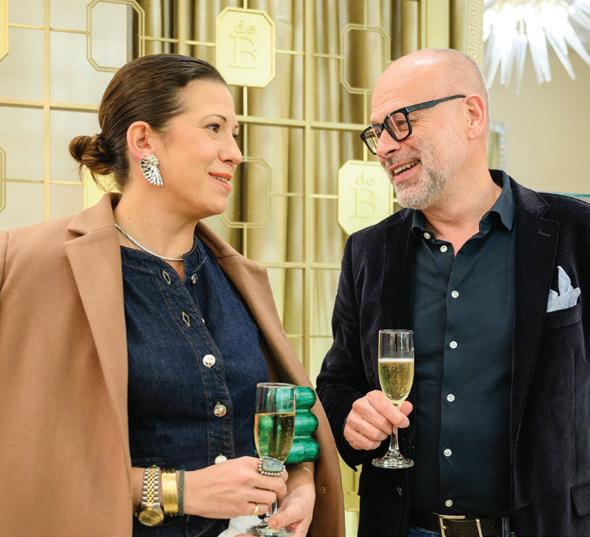
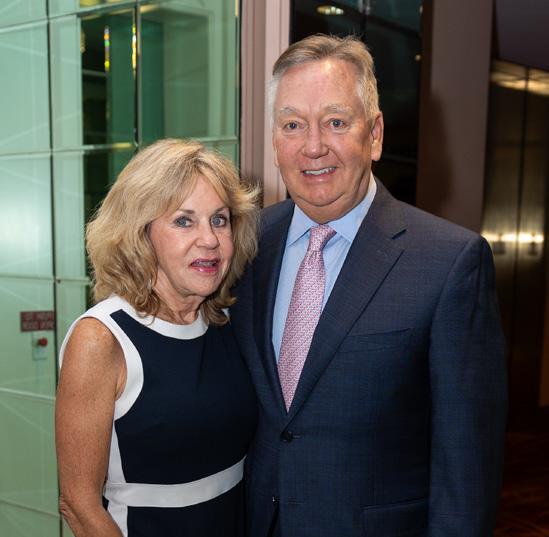
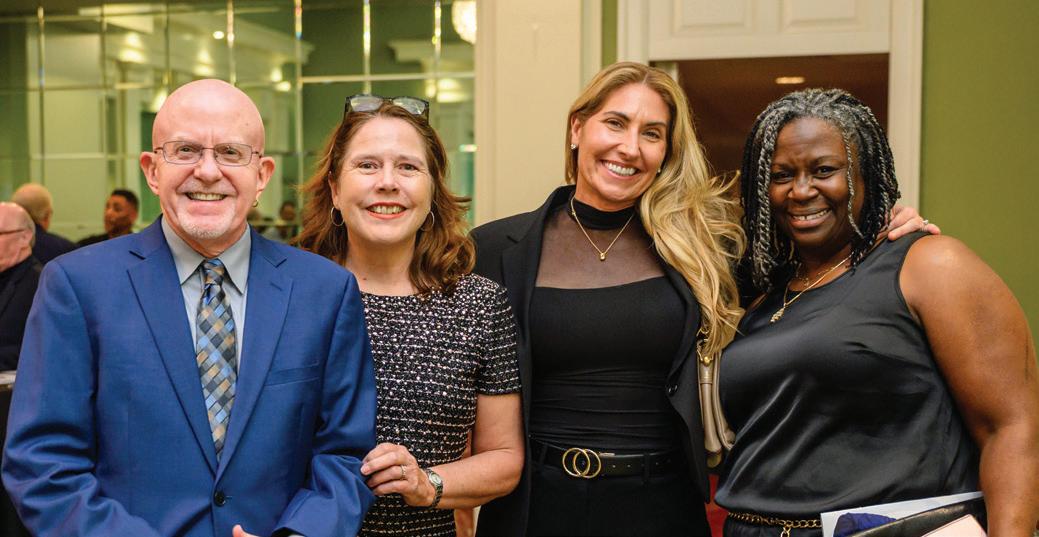
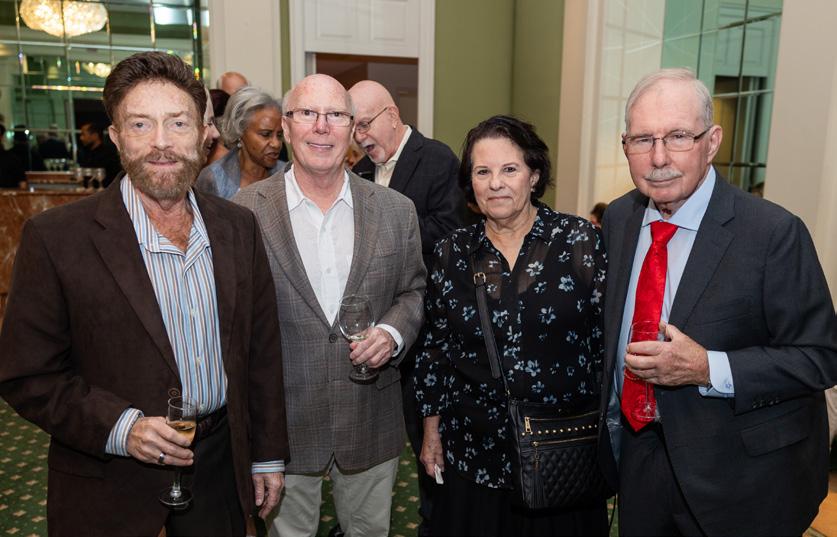
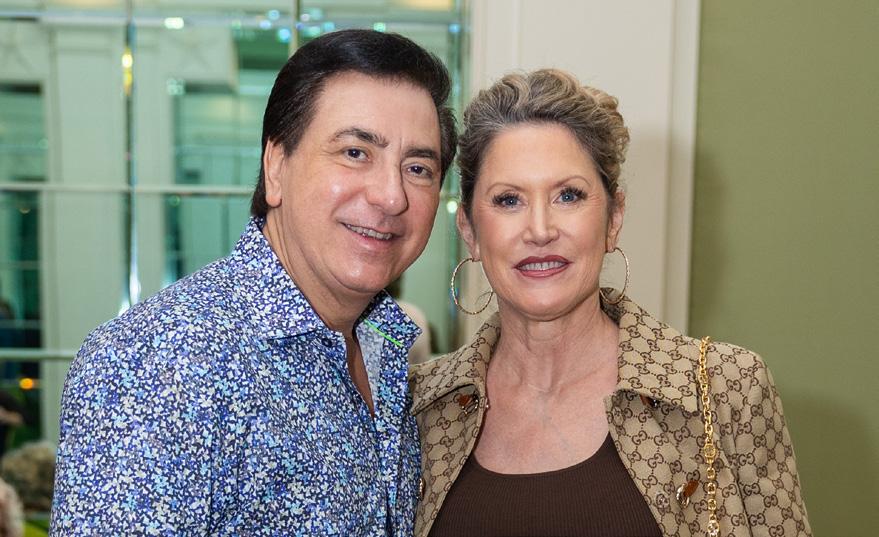
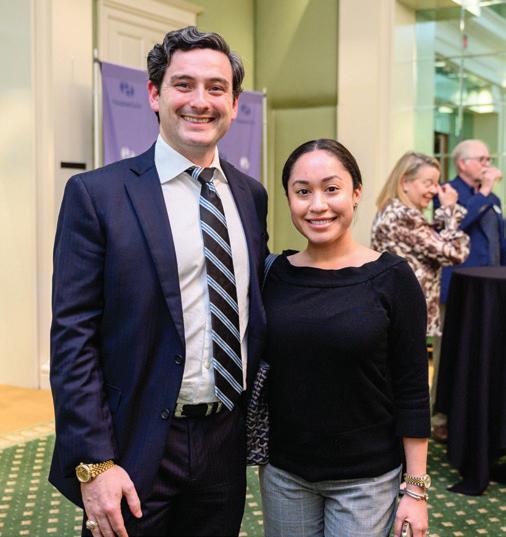
Mercury Chamber Orchestra gratefully recognizes the following individuals for their leadership support of our artistic, educational, and community engagement programs through generous annual gifts and participation in special events. For more information about joining the Patron Society, please contact Chloe Bruns, Development Manager at chloe@mercuryhouston.org or 713-533-0080.
($25,000 and above)
June & Steve Barth*
Patricia Branton & William Gould*
Cristela & Bill Jonson*
Kirsten Jensen & David Kerley*
Dr. & Mrs. Christopher Prince*
Kristine & Stephen Wallace*
Mrs. Lynn Wyatt
Anonymous
($15,000-$24,999)
Mollie & Wayne Brunetti*
Martha & Blake Eskew*
Mary Foster & Don DeSimone*
Mariko & John Jordan*
Mrs. Warren Kreft*
Rosemary Malbin*
Rose Ann Medlin & William E. Joor III*
Gaby & Kenny Owen*
Ally Shell & Martijn van Koolwijk
($10,000-$14,999)
Marsha & Michael Bourque*
Donna & Mike Boyd*
Rebecca Fieler*
Lloyd Kirchner*
Antoine Plante & Lori Muratta
($5,000-$9,999)
Joe Caruana & Kim duClair
Robert N. Chanon*
Meghan & Kevin Downs*
Sofia & Tyler Durham
Marcia & Thomas Faschingbauer*
Marissa & Shane Gilroy*
Chris & Peter Godfrey
Debra & Mark Gregg
Virginia Hart & Robert Navo*
DM Marco*
Carol & Joel Mohrman*
Neil Sackheim & Stephen Voss*
Robert Sartain*
Linda & Tom Sparks
Ralf van der Ven
Courtney Williams MD*
Nina & Michael Zilkha* Anonymous*
($2,500-$4,999)
Karen Merriam & Thomas Bevilacqua*
Richard Brown*
Mindy & Josh Davidson*
Carmen Delgado & Duane C. King*
Nan Earle*
Marilyn & Bill Eiland*
Caroline Freeman
Connie & James Garson*
Nancy & Carter Hixon*
Janice & Tim Howard*
Lili & Hans Kirchner*
Julie & Keith Little*
Forrest Lumpkin*
Angelika & Michael Mattern*
Dr. Maureen O’Driscoll-Levy
Ruth & Michael Pancherz*
Melissa Patin*
Jackie & Roy Perry
Lalana Pundisto & Michael Fortwengler*
Lisa Rich & John McLaughlin
Kelly & David Rose*
Andrew J. Sackheim*
Sasha Van Nes & James E. Smith*
Ann Tornyos*
Amy Waldorf
Betsy & Rick Weber
Carolynne & Douglas White*
*Mercury Season Subscriber As of November 19, 2025
Mercury Chamber Orchestra gratefully recognizes the following individuals who support our artistic, educational, and community engagement programs through generous annual gifts and participation in special events. For more information, please contact Chloe Bruns, Development Manager at chloe@mercuryhouston.org or 713-533-0080.
($1,000-$2,499)
Thomas Beach*
James & Barbara Becker
John Robert Behrman*
Dr. Joan H. Bitar*
The Carl & Phyllis
Detering Foundation
Dr. Bill & Sharon Donovan
Rena & Richard D’Souza
Gary Gardner & Peg Palisin*
Ed Garrett*
Leonard Goldstein & Helen Wils
Heimbinder Family Foundation
Nancy & Michael Henderek
Molly & Hugh Rice Kelly*
Mary & Rodney Koenig
Bert Medley & Susan Taylor*
Steve & Elaine Roach*
Tricia & Steve Rosencranz*
Anonymous*
($500-$999)
Joel Abramowitz & Rita Bergers*
Jessica & Jay Adkins
D. Bentley*
Dr. Caroline Christensen
Valerie Cramer*
Zed Choi
Deborah Lugo & Andrés
González
Claire Halloin*
Mrs. Laura Leib*
Jim & Ellana Livermore*
Petter Madsen
Stephen Magill
Kenneth Moore Jr.*
Candice & Roger Moore*
Melanie L. Rogers*
Merry Schooley
Penny & Sean Lewis*
Brian Smyth
Ann Tornyos*
David & Christine Underwood
Chuck Bracht & Cheryl Verlander
Deborah M. Wagner*
Anonymous
($250 - $499)
Keith Anthis*
Margaret Preston & Robert
Baumgartner*
Mary Louise & Mark Berry*
Becky Browder*
Dottie Burge & Vic Driscoll*
Barbara & Jim Carney
Ms. Theresa M. Craig*
Dana Dilbeck*
Frank & Mariam Dumanoir
Rev. Paul F. English
Mr. & Mrs. Peter Ferenz*
Sebastian Gobel*
Beth & Kenneth Green*
Ashley & Chris Hotze*
Cheryl M. Katz
Frank & Lynda Kelly
Edward Kenny*
Dennis & Casey Kiley*
Georgia & Stephen Kimmel*
Nora Klein
Candy & Weir Kyle*
Victoria & Alex Lazar
Judy Liu
Juan Ignacio Mangini
Nancy Wynne Mattison*
Audrey Moses
Linda Bennett & Jeff Nunn
Julie & Chip Oudin*
Lois Pierson*
Patricia Rathwell*
Natalie Riley
Jurgen Schroder
Kathleen & Sean Shannahan*
Barbara & Michael Smith*
Phylis Tomlinson
Keila Torres
Jonathan Godfrey & Ana Treviño-Godfrey*
Mrs. Jovan Popovich*
Dr. Denise Wilborn*
Dr. Robert K. Wimpelberg & Peter Hodgson*
Anonymous (3)
(up to $249)
Vanessa Abahashemi
Raju Adwaney*
John & Kathy Agee*
Inga Alanne
Carol & Glen Anderson*
Maria Paloma De Arizon & Nelson Bacalao*
Ann Behravesh
Robert & Nancy Benjamin
William Blake
Sara Blumenfeld*
Dr. Jerry L. Bohannon*
Dr. Sarah J. Bottomley
Dennis Boyle
Mark Brazzil
Kathy & Walker Brickey*
Leslie Brown
Christine Brown
Michael & Michaele Brown*
Rustin Buck*
Ian & Patricia Butler
Bronwyn Campbell*
Jacques Christoffel*
Philip Chumlea
Gary & Susan Clamurro*
Camille Converse
Steven Cowart
Chris & Delia Cowles*
Lis & Alex Crabtree*
Erick Cruz
Lesa Curry*
Benée & Chris Curtis*
Allan & Bente Davies
Dr. Ken Davis*
Clarice Droughton*
Julietta Ducote
Todd & Emma Edwards*
John & Judith Fagg
Karen Findling
Wanda Fowler*
Miguel Fuentes
Terry Gardner
Judy Gersh
Vernon Gillette*
Guillermo Gomez
John L. Graves
Lindsey Harper
Peggy Hart*
Tamara Haygood*
Mark Hempton
Kirk Hickey & William Maguire*
Mark Hoose*
Luke Howe*
Andrew Hubbard*
Maryann Ingersoll*
Brad & Alida Johnson*
Michele Joy & Tom Shahriari
Brian Knapp*
Sukejna Kovacevic
Weldon Kuretsch*
Guy Langelier*
Erwan le Gall
Kimberly Leishner
Max Macias
William & Nancy Mahley*
Rebecca Novelo
Yvette Mayes
R Scott & Rebecca McCay*
John H. Meltzer*
Susan Moore
Ana Chacon Morales
Carol & Barry Myones
The Nettletons
Joan O’Leary
Janwin Overstreet-Goode & John Goode
Linda Pancherz*
Jehan-Francois Paris*
Jose Pastrana
Bonnie Phillips*
Ava Plummer*
Maria-Martha Powell
Patricia de Groot & Marc Puppo*
Claudia Reyes*
Frank Rigsby
Elena Lexina & Brian Rishikof
Jim Robin*
Robert & Rosanne Romero*
Stephen Ronczy*
Rachel Rose*
Leslie Saia*
WS Family
Bradley Blunt
Charles & Andrea Seay
Dorry Shaddock
Terri Siegel
Carlton Singleton
Carol & Tom Sloan*
Taylor Smith
Susan & Ed Osterberg
Richard & Joan Spaw*
Meredith & Ralph Stone
Mary Anne Stoner
Karen Sumner
Barbara J. Taake*
Boris & Vita Taksa*
Artem Tarasenko
Michelle Torres
Jose Troconis
Beatriz & Peter Varman*
Aliciades Velasquez
Alejandra Viloria Rincon
Andrew Wallace
Leone Buyse & Michael Webster
Paul & Melinda Westphal
David Wheeler
Kent & Bonnie Whitten *
Neal & Cristina Wiley
Kathleen Wilson
Edith A. Wittig
Paul & Andrea Yatsco*
Monica & Larry Ziemba
Gay & Dean Zimmerman
John & Helena Zodrow
Daniel Zotti
Anonymous (81)
*Mercury Season Subscriber As of November 19, 2025

Barbara & Jim Carney, in honor of Betty Jo Diller
Carl A. Detering Jr., in honor of J. Michael Boyd
Dr. Bill Donovan, in honor of Sharon Donovan
Rev. Paul F. English, in honor of Fr. John F. Robbins, CSB
Lindsey Harper, in honor of Susan Reed
Nick Jameson, in memory of Karin Fliegel Jameson
Rosemary Malbin, in loving memory of Michael Malbin
Mrs. Audrey Moses, in honor of Robb Moses
Robert Power, in memory of William H. Power
Patricia Rathwell, in honor of Mark Rathwell
Robert Sartain, in memory of Margaret A. Reinke
Andrew Wallace, in honor of Stephen Wallace
John B. Zodrow, in honor of The Kirchner Family Anonymous, in honor of Chandrakanta Anonymous, in honor of Robert A. David
We greatly appreciate each gift and have made every effort to ensure the accuracy of this listing. Please notify us of any inaccuracies or omissions at chloe@mercuryhouston.org.
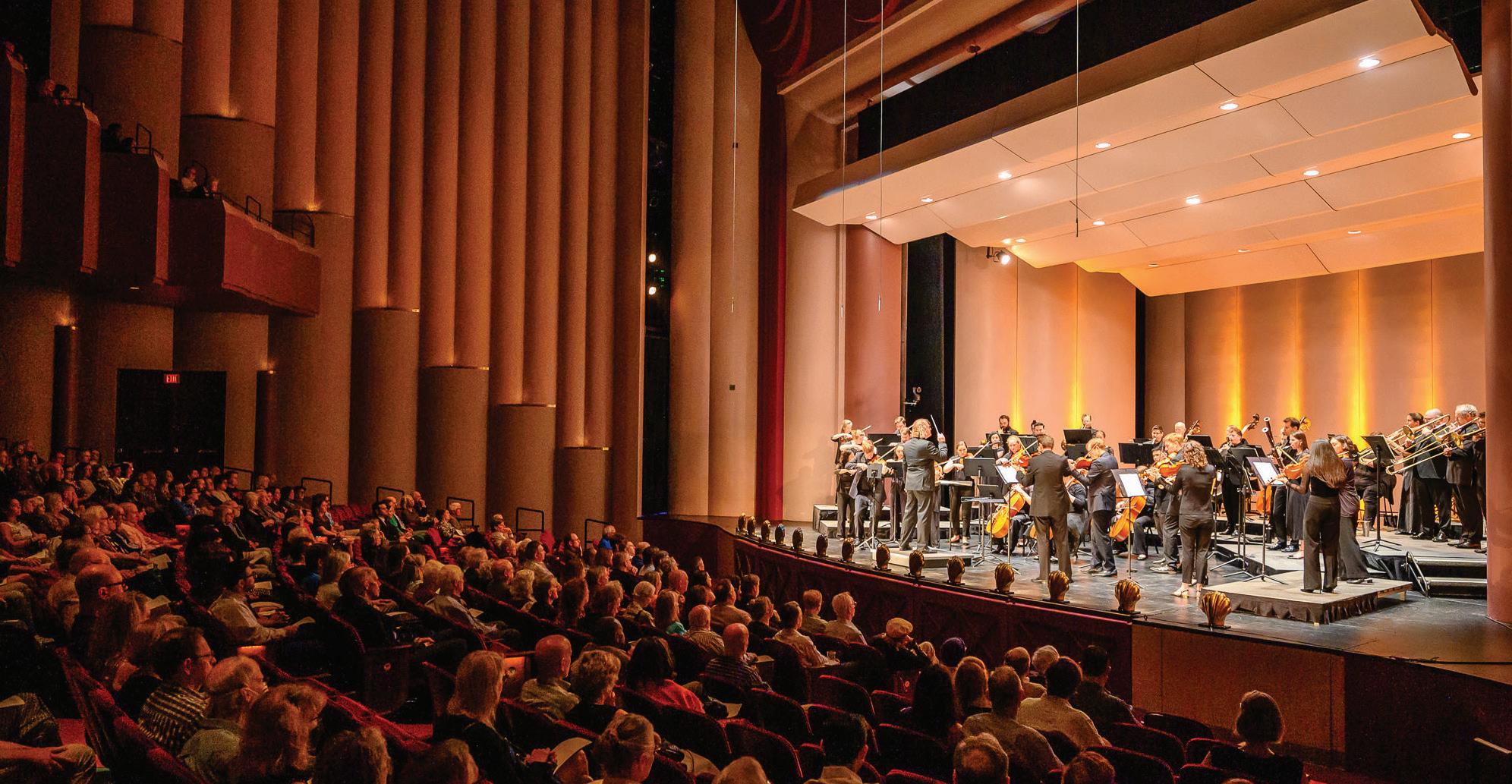
Mercury Chamber Orchestra gratefully recognizes the following foundations, corporations, and government entities that support our artistic, educational, and community engagement programs through generous annual grants and sponsorships. For more information, please contact Chloe Bruns, Development Manager, Institutional Giving at chloe@mercuryhouston.org or 713-533-0080.
($75,000 +)
Houston Endowment Inc.
Anonymous
($50,000 - $74,999)
The Brown Foundation, Inc.
The Cullen Trust for the Performing Arts
Houston Arts Alliance
($25,000 - $49,999)
ConocoPhillips
South Bow
Texas Commission on the Arts
The Wyatt Foundation
($15,000 - $24,999)
De Boulle Diamond & Jewelry
Miller Theatre Advisory Board
National Endowment for the Arts
Shell Oil Company Foundation
($10,000 - $14,999)
Lucius & Eva Eastman Fund
Rea Charitable Trust
South Coast Terminals
($5,000 - $9,999)
Acretio Consulting & Investments
Albert & Ethel Herzstein Charitable Foundation
Arts Connect Houston
Bp Foundation
Haynes Boone
Neal Hamil Agency
OneLNG Inc.
The Sartain & Tamez Family Trust Fund at the Chicago Community Foundation
Spotlight Energy, LLC
Truist
Out of respect for the musicians and your fellow audience members, please be sure to silence your mobile devices and refrain from texting or talking during the performance. Disruptive patrons will be asked to leave.
Late seating is often available during the first convenient break in the performance and is always at the discretion of the ushers. Always allow plenty of time for traffic, parking, and getting to your seat.
Recording of Mercury performances by camera, audio, or video equipment is prohibited. You are welcome to take pictures before or after the orchestra performs. Please share your experience on social media.
At our venues, outside food and drink are not allowed. Wortham Center performances have food and beverages for sale in the Grand Foyer and Prairie Lobby. Drinks may be brought into the Cullen Theater for the performance.
Subscribers may exchange their tickets to any performance at no cost. Single tickets are not eligible for exchange or refund. If you are unable to make a performance, your ticket may be donated prior to the concert for a tax-donation receipt. Donations and exchanges may be made in person, over the phone, or online.
Follow us!





Mercury is funded in part by grants from the City of Houston and Harris County through the Houston Arts Alliance and the Texas Commission on the Arts.
@mercuryhouston
Administrative Offices
2900 Weslayan Street, Suite 500
Houston, TX 77027
Phone: 713.533.0080
Hours: 9 AM – 5 PM Monday-Friday
mercuryhouston.org
As part of its 25th anniversary season, Mercury seeks to raise $3 million to support artistic expansion, community connection, and financial agility over the next ten years. Mercury is grateful to the following who have already made commitments above their annual giving to support the Beyond 25 Campaign.
June & Steve Barth
Marsha & Michael Bourque
Patricia Branton & William Gould
Ting Tsung &Wei Fong Chao Foundation
Mindy & Josh Davidson
Meghan & Kevin Downs
Sofia & Tyler Durham
Martha & Blake Eskew
Marcia & Tom Faschingbauer
Rebecca Fieler
Marissa & Shane Gilroy
Virginia Hart & Robert Navo
Kirsten Jensen & David Kerley
Lloyd Kirchner
Julie & Keith Little
Forrest Lumpkin
Rose Ann Medlin & William E. Joor III
Gaby & Kenny Owen
Lori Muratta & Antoine Plante
Elizabeth & Christopher Prince
James E. Smith & Sasha Van Nes
Ana Treviño-Godfrey & Jonathan Godfrey
Ralf van der Ven
Kristine & Stephen Wallace
As of December 8, 2025
For more information about the campaign and to make an impact, please contact Executive Director Brian Ritter at brian@mercuryhouston.org or 713-533-0080.
Steve Barth
President
Keith Little
Treasurer
Rebecca Fieler
Secretary
Blake Eskew
Immediate Past President
Antoine Plante
Artistic Director
Brian Ritter
Executive Director
Marsha Bourque
Mindy Davidson
Kevin Downs
Sofia Gomez Durham
Marcia Faschingbauer
Shane Gilroy
Ginny Hart
Kirsten Jensen
Lloyd Kirchner
Forrest Lumpkin
Rose Ann Medlin
Ken Owen
Ally Shell
James E. Smith
Ana Treviño-Godfrey
Ralf van der Ven
Stephen Wallace
Lynn Wyatt
Special Advisor
Antoine Plante Artistic Director, Lynn Wyatt Chair
Brian Ritter
Executive Director
Chloe Bruns
Development Manager, Institutional Giving
Brittany Schroeder Marketing & Revenue Manager
Nicholas Gerling Audience Experience Manager
Katie DeVore Operations Manager
Matthew Carrington Personnel Manager & Music Librarian sponsored by Rebecca Fieler
Andrés González Education Manager
Sectorlab LLC Marketing Consultant
Tyler Starkel YPTC Accountant
BEND Productions and Ben Doyle Videography
Melanie O’Neill and Melissa Taylor Graphic Designer
BEND Productions, Melissa Taylor, Quy Tran, Si Vo Photography
A world-premiere production by Pascal Rambert and Antoine Plante, featuring the music of Purcell and Dowland.
Downtown Series
LOVE
Zilkha Hall at The Hobby Center
March 20 at 8 PM
March 21 at 2:30 PM & 8:30 PM
Featured Performers:
Sarah Mesko, mezzo-soprano
Mark Diamond, baritone
Donna Bella Litton, soprano
Len Torrie, soprano