Rara
Vodou taken On the roads of Haiti
Written and Illustrated by Mikah MevisA group of women dancing in the streets of Haiti during a Rara celebration.
Rara
Vodou taken On the roads of Haiti
Written and Illustrated by Mikah MevisTable of Contents
Introduction PAge 1
Rara is a holiday originated from Haiti that tells the story of the nation’s African ancestry and Afro-Haitian culture.
Landmarks Page 3
Rara societies form musical parading bands that walk for miles through local territory and specifically stop at solemn spots, such as cemeteries, where they salute their deceased ancestors.
Music Page 5 Colophon Page 9
Vaskens are bamboo tubes cut at different lengths to create a variety of tones which can then be playedtogether to create a melody.
Clothing Page 7
There are many costumes worn during Rara that are both directly and indirectly tied to cultural traditions.
Traditional Haitian style drums used during Rara celebrations. They are goatskin drums used in the Petwo lwa (spirits) family of Haitian vodou religion
Introduction
The country of Haiti is a culturally rich nation that has taken pride in its deeply rooted history and cultural traditions. In honor of the nation’s history, Haitians celebrate multiple holidays throughout the year, one of which being Rara. Rara is a holiday originated from Haiti that tells the story of the nation’s African ancestry and Afro-Haitian culture. Many of the traditions celebrated during Rara were brought overseas when their African ancestors were shipped over during the American slave trade. At the time, their native traditions were very oppressed as their ancestors didn’t have to freedom to celebrate their culture. Rara is a celebration of having the freedom to show pride in the cultural ancestry and native traditions.
When the Spanish colonized modern-day Haiti, they brought over their catholic traditions, something still standing today has most Haitian people are predominantly catholic. In Catholic tradition, Rara is celebrated in the week following Easter Sunday. This is because the African people found a way to privately celebrate their traditions while the Spanish celebrated their own catholic traditions. Because of this colonization, Haitians were still influenced Spanish and French culture, language, religion, and other traditions that are still prevalent in their culture today. Rara is celebrated through In Haitian Creola, Rara means “Vodou taken on the roads” a significant practice that occurs during Rara celebrations. Rara societies form musical parading bands that walk for miles through local territory serenading locals with both traditional and non- traditional African music, and Vodou street processions. These performances are in ritual obligation and celebration of those who came before them and other ancient Vodou spirits.
There are many cultural aspects involved in these celebrations including various solemn spots, Musical identification, and traditional clothing items. Let’s take a look at what all goes into making Rara the lively celebration that it is.
1
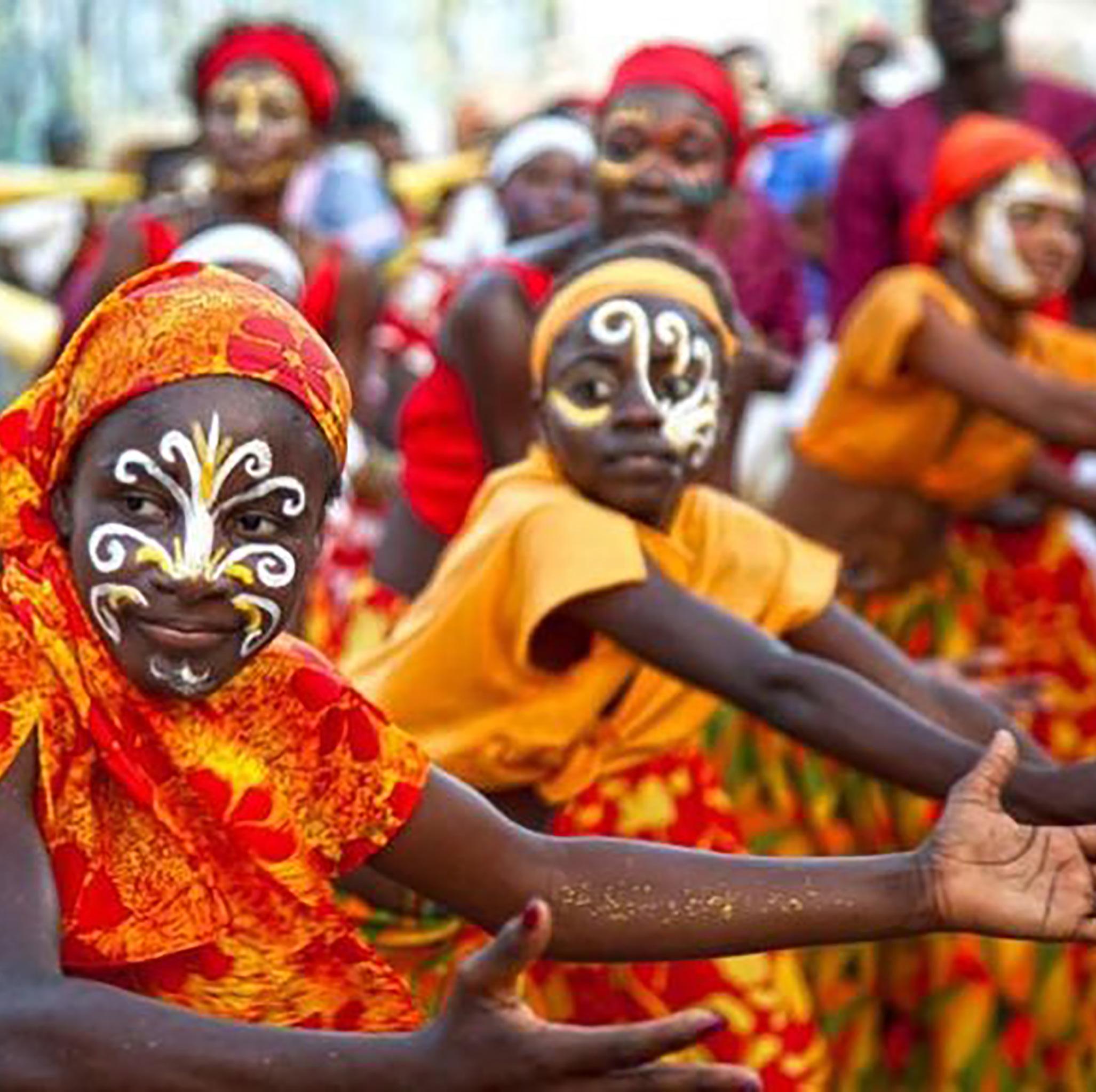
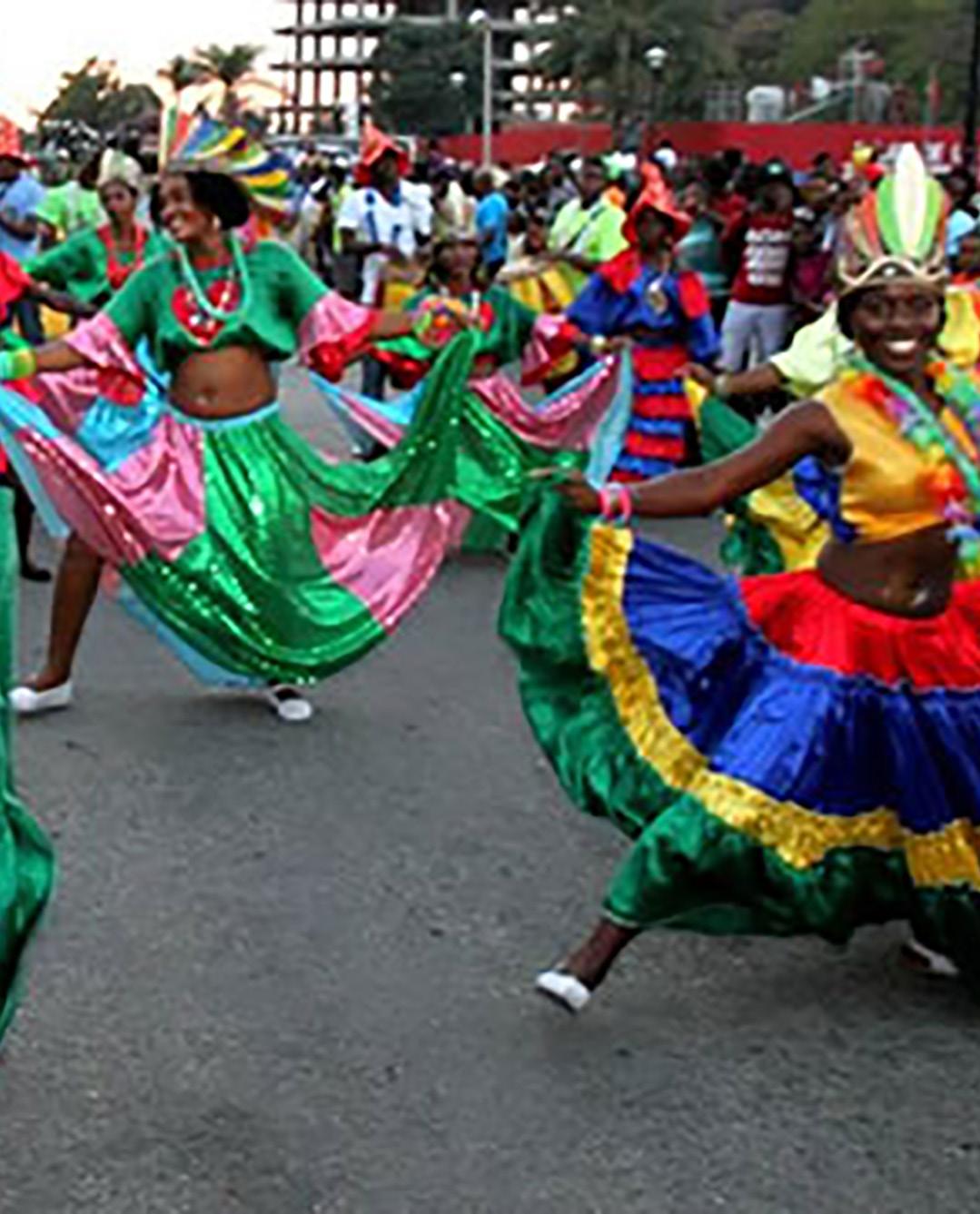
A group of women dancing in the streets of Haiti during a Rara celebration.
2
Rara - Vodou Taken to the Roads of Haiti
Landmarks
The celebrations that take place during Rara are dispersed all throughout the island. Rara societies form musical parading bands that walk for miles through local territory and specifically stop at solemn spots, such as cemeteries, where they salute their deceased ancestors. Aside from grave sites, they also visit trees, rocks, and intersections where other inherited spirits are said to live. These banns roam the streets of Haiti performing religious ceremonies as part of their ritual obligations to the lwa, spirits in in the African diasporic religion of Haitian Vodou. It is believed that it is the spirit who has asked for the band to be formed, and the Rara is itself a gift to the spirit.
The parades will often collect in major cities around Haiti and at major temples including Petwo and Kongo sites. The festival is a spiritually and metaphorically “hot” festival, and by necessity takes place mostly outdoors, and not inside the temple itself.
The parades are led by either Houngans or Mambos (male and female vodou priests) as they lead Vodou ceremonies and other rituals throughout Rara celebrations. They often bless the banns for safe travels and summon the spirits of Vodou traditions and the recently deceased.
Rara societies form musical parading bands that walk for miles through local territory and specifically stop at solemn spots, such as cemeteries, where they salute their deceased ancestors. “
3
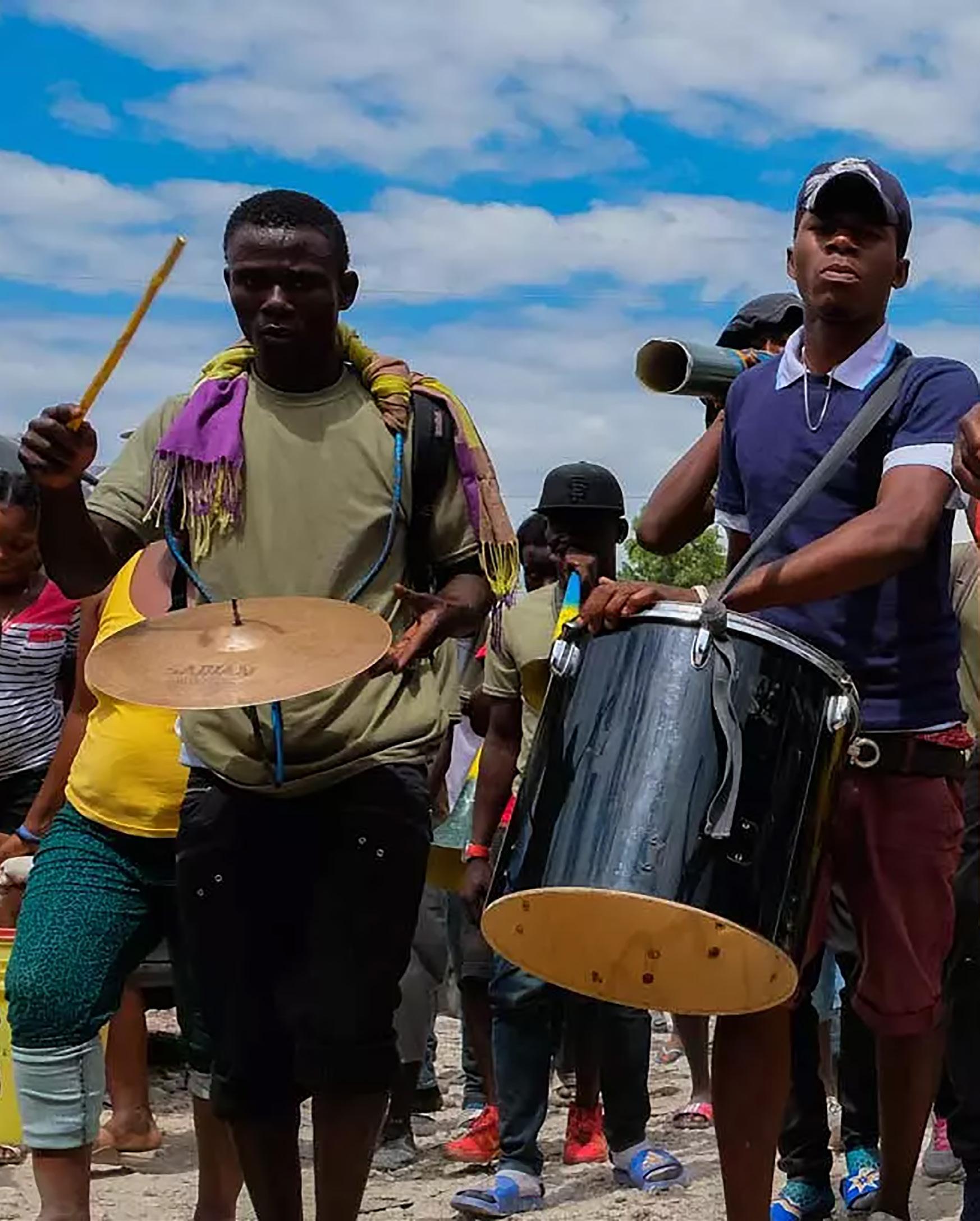
A Voudou Houngan guides a Bann Rara through the strrets of Haiti during a Rara parade celebration.
4
Rara - Vodou Taken to the Roads of Haiti
Music
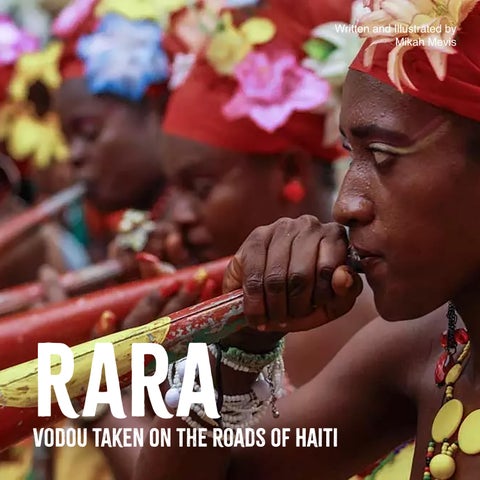
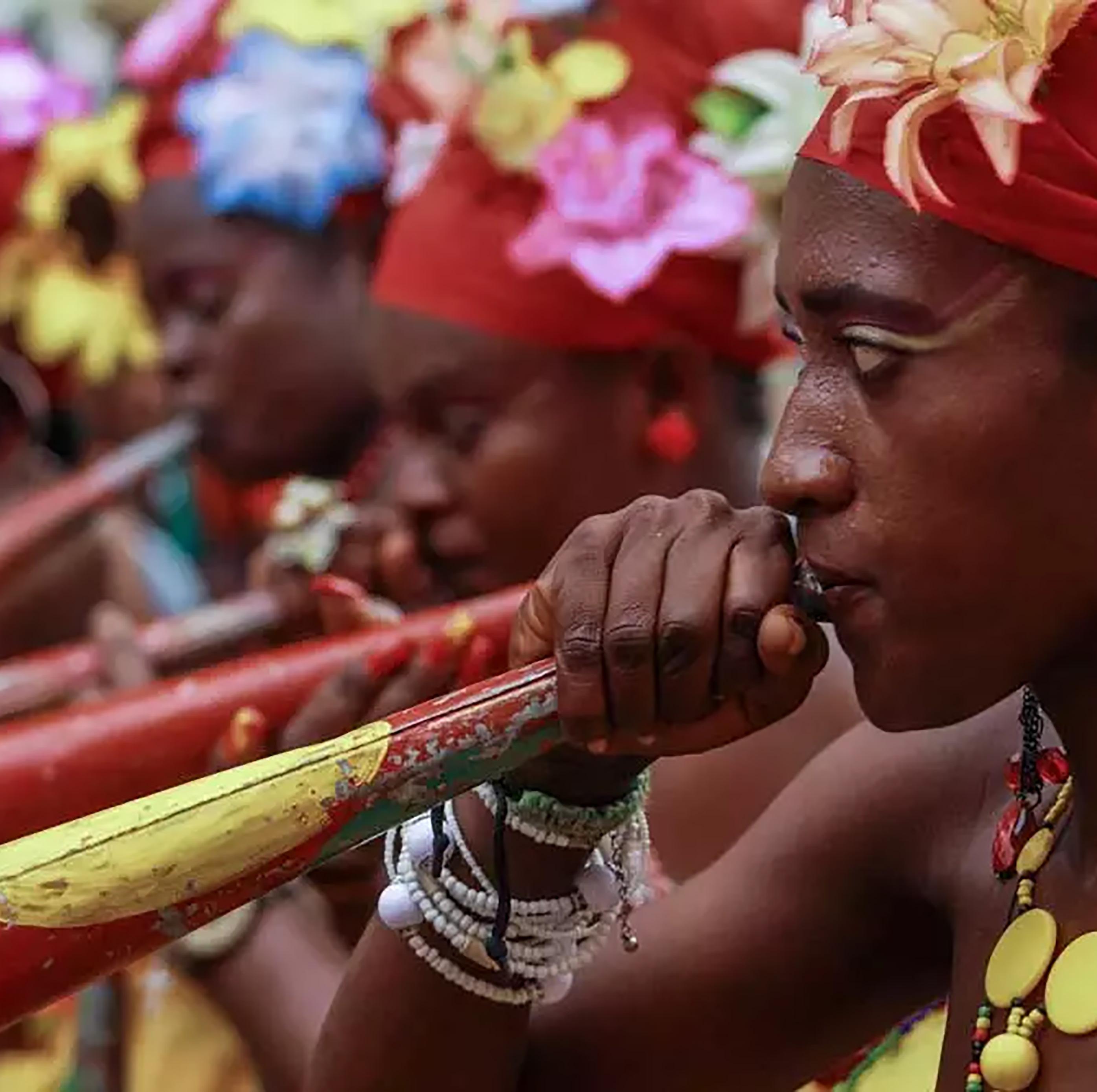
Rara is predominately celebrated through musical performances and parades produced by the Bann Rara. These travelling groups perform throughout the streets of Haiti using a variety of traditional music and dances. The primary instrument used in these performances are Vaskens, which are a set of long, cylindrical wooden trumpets. Vaskens are bamboo tubes cut at different lengths to create a variety of tones which can then be played together to create a melody. Another common instrument used in these performances are traditional Haitian goatskin drums which are used in the Petwo lwa (spirits) family of Haitian vodou religion. Other secondary instruments played during these performances include maracas, metal bells, and guiras. Accompanying the Bann Rara are a chorus of fans singing and dancing along to the music.
Locals are serenaded with both traditional and non-traditional African music as the selection of music becomes more diverse from year to year. However, there is still much emphasis on older traditional music as Rara is an older holiday dating back generations to times of ancestorial enslavement and even times of inhabiting Western and Central Africa. The music played during Rara usually consists of folk music with the holiday even having a genre in itself.
Vaskens are bamboo tubes cut at different lengths to create a variety of tones which can then be played together to create a melody. “
5
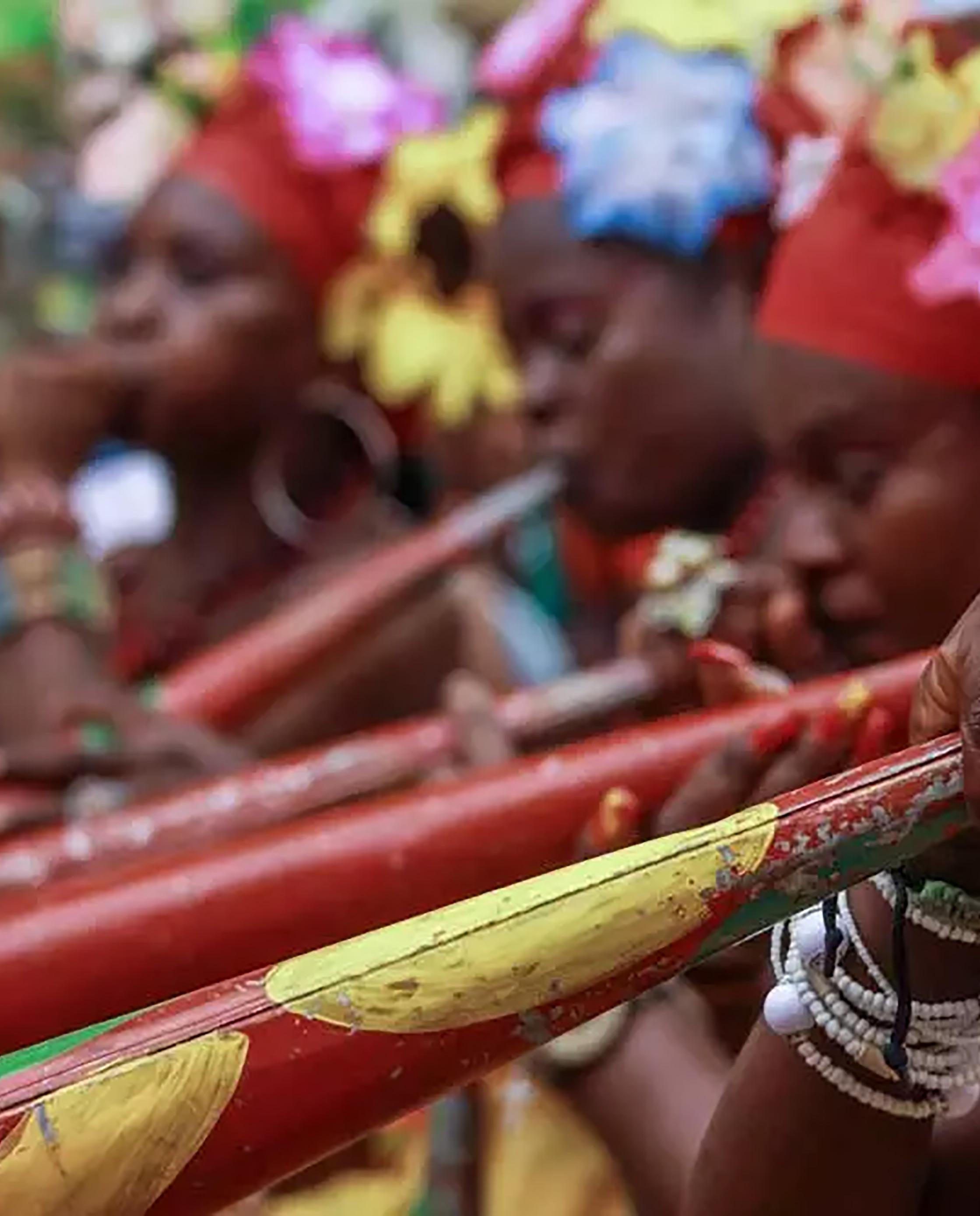
A group of women play Vaksens in a Bann Rara during a
Haitian Rara celebration.6
Rara - Vodou Taken to the Roads of Haiti
Clothing
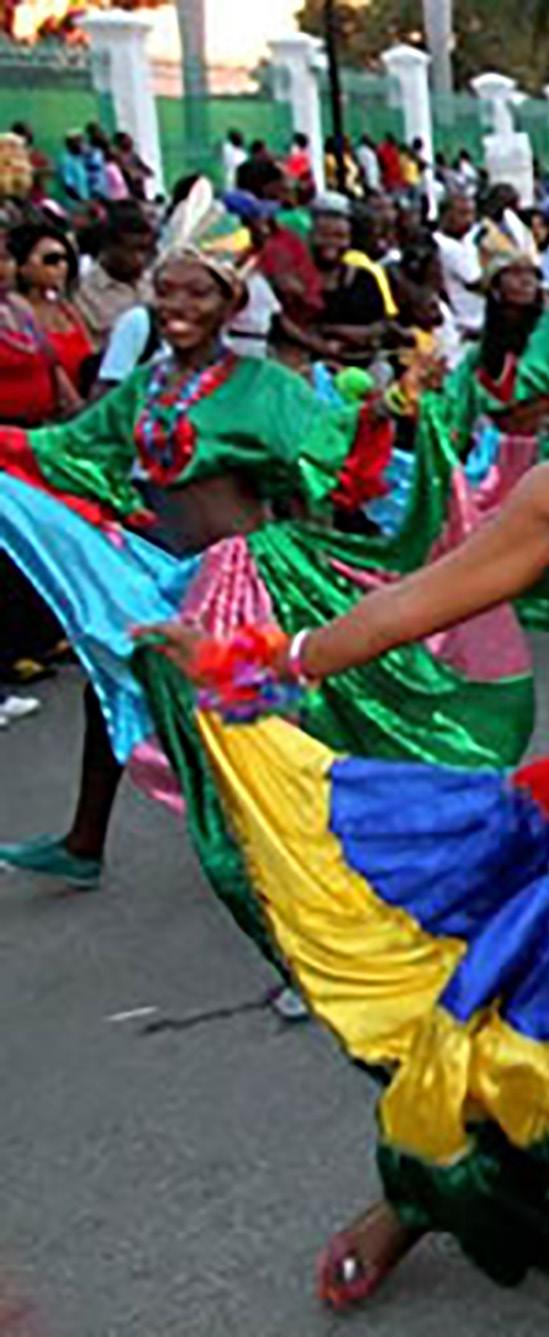
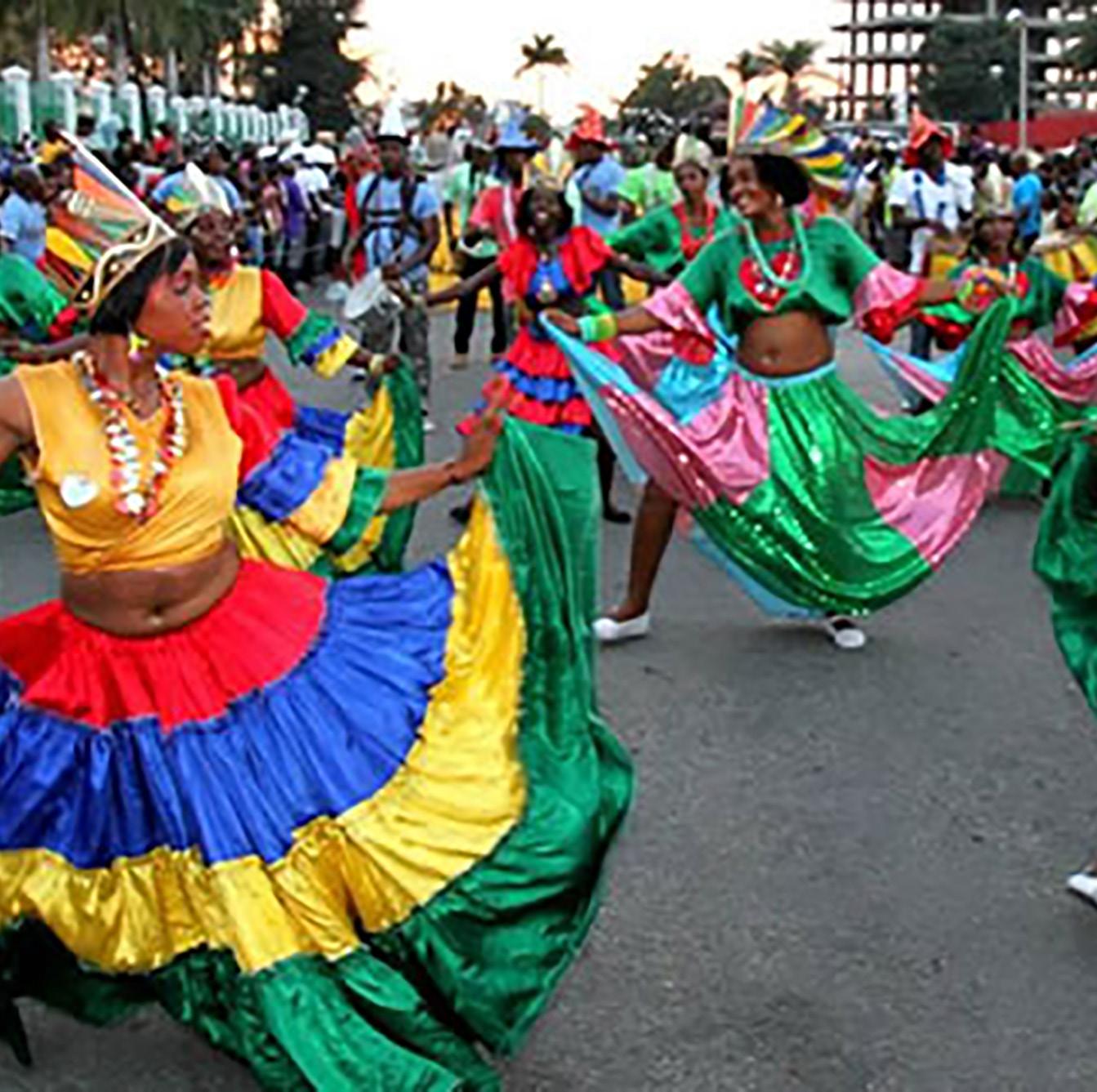
Much like other traditional Haitian holidays, such as Carnival, people can be seen wearing a variety of vibrant clothing, jewelry, and painted face designs during Rara celebrations. Because of the similarity in style Rara is often confused with fashions worn during Carnival, which is the Haitian version of Mardi Gras. There are many costumes worn during Rara that are both directly and indirectly tied to cultural traditions.
One of the most popular items to be worn during Rara and on other special occasions are Haitian Karabela dresses, which are famous across the world for their natural glamour and colorful appearance. To complement their dresses most Haitian women, wear matching headwear, as well. These headscarves or turbans can be both formal and informal, depending on the occasion.Men’s festive clothing, on the other hand, often isn’t as extravagant as women’s, but they still have an unwritten dress code. Men often wear traditional dancing clothing that consists of a jacket and pants that match the style and color of their female partners. A popular type of shirt to wear during these events is called a guayabera.
Vodou priests are often dressed in very colorful robes adorned with capes, crosses, scepters and other religiously associated accessories with ties to Catholicism and Vodou practices.
There are many costumes worn during Rara that are both directly and indirectly tied to cultural traditions. “
7
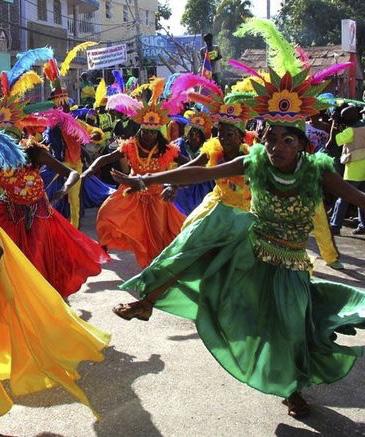
A group of women are dressed up in traditonal Rara costumes while dancing on the streets during a Rara celbration.
* 8
Rara - Vodou Taken to the Roads of Haiti
Rara – Vodou taken to the roads of Haiti
Copyright © 2023 by Mikah Mevis
All rights reserved
Printed in the USA by A-1 Graphics
ISBN: 978-2-18-148412-5
Author: Mikah Mevis
Editor: Mikah Mevis
Graphic Designer: Mikah Mevis
Typefaces:
Citrus Gothic - Adam Ladd
Helvetica - Max Miedinger and Eduard Hoffmann
Print Size: 7x7
“ Societies form musical parading bands that walk for miles through local territory serenading locals with both traditional and non- traditional African music, and Vodou street processions.