UNIT PLAN #1
DATE: 03/06/2024 SUBJECT: ENGLISH AS A FOREIGN LANGUAGE UNIT 1: SHOPPING TIME TIME: 6 PERIODS
LESSON 1: SHOPPING ITEMS
GRADE: 7TH A – B - C SKILLS: LISTENING, SPEAKING, READING, AND WRITING LESSON #1 #2 #3
INSTRUCTOR: Melanie Orrala Rodríguez
LESSON 2: ADJECTIVES
LESSON 3: MY FAVORITE FOOD
LEARNING OBJECTIVE: Students will be able to describe products, items, meals, using shopping vocabulary and adjectives.
RESOURCES AND MATERIALS: Song, laptop, chart, flashcards, worksheets, audio recordings, pictures, posters, whiteboard, and markers.
LESSON OUTLINE:
WARM-UP / ACTIVATION
• Teacher will start the lesson with songs, videos, brainstorming, questions, dynamic games, quizzes, among others.
• Professor will present the vocabulary and grammar topic with flashcards, charts, posters, diagrams, songs, videos, etc.
ACTIVITIES
• Learners will listen audio recordings, read texts and picture books, do worksheet, exercises on the book, …
• They will talk about shopping, products, items using adjectives.
• Students will make a short presentation about their favorite food or recipe.
ASSESSMENT:
Students will be evaluated in different ways, through presentations, bingos, and short discussions.
Methodology: Communicative approach, CLT, Learning by doing, TBLT, … Strategies: Collaborative Learning, Use of Technology, Ludic activities.
Curricular adaptation:
▪ Listen, color, and write vocabulary words, prepare their own flashcards.
▪ Answers simple questions, write sentences using different colors.
▪ Make short presentations with the teacher’s help.
DATE: 03/06/2024
SUBJECT: ENGLISH AS A FOREIGN LANGUAGE UNIT 1: SHOPPING TIME TIME: 2 PERIODS
GRADE: 7TH A – B - C SKILLS: LISTENING, SPEAKING, READING, AND WRITING
INSTRUCTOR: Melanie Orrala Rodríguez
LESSON: #1
TOPIC: SHOPPING ITEMS
LEARNING OBJECTIVE: Students will be able to describe shopping items through flashcards, recognition exercises, worksheet, and discussion in pairs.
RESOURCES AND MATERIALS: Song, laptop, chart, flashcards, worksheet, audio recordings, whiteboard, and markers.
LESSON OUTLINE:
WARM-UP / ACTIVATION
• Teacher will activate the students’ knowledge with a song and brainstorming about the grammatical topic.
• Professor will present the vocabulary topic with flashcards and make students pronounce each word (clothes, books, lollipops, handicrafts, …)
ACTIVITIES
• Children will complete charts and label pictures using the vocabulary.
• They will listen audio recordings and circle the correct options on the book.
• Students will practice on a worksheet about the topic.
ASSESSMENT:
Learners will discuss the following questions in pairs: Do you like shopping? Why or why not? / Where do you like to shop? / What other activities do you like to do when shopping? Methodology: Communicative approach, CLT, Learning by doing Strategies: Collaborative Learning, Use of Technology
Curricular adaptation:
▪ Listen, color, and write the correct shopping item.
▪ They will create their own flashcards to practice the pronunciation.
▪ Ask them: Do you like shopping? Show me what item you would like to buy (flashcards)
DATE: 05/06/2024
SUBJECT: ENGLISH AS A FOREIGN LANGUAGE UNIT 1: SHOPPING TIME TIME: 2 PERIODS
GRADE: 7TH A – B - C SKILLS: LISTENING, SPEAKING, READING, AND WRITING
INSTRUCTOR: Melanie Orrala Rodríguez
LESSON: #2
TOPIC: ADJECTIVES (That store has the most beautiful clothes in the city)
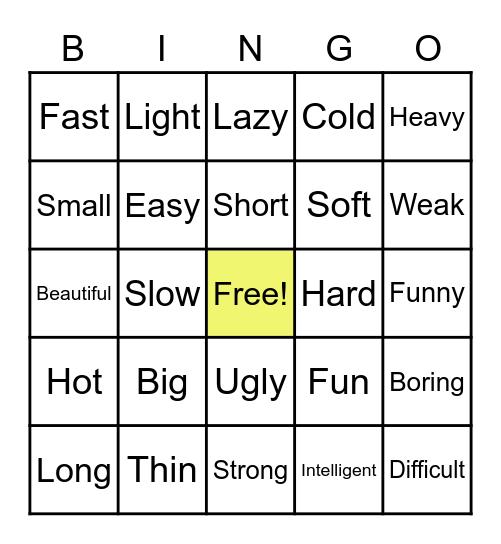
LEARNING OBJECTIVE: Students will be able to describe shopping, products or items using adjectives through songs, posters, exercises, ludic games and dynamic activities such as Hangman and bingo.
RESOURCES AND MATERIALS: Song, laptop, posters, slides, book, worksheet, whiteboard, and markers.
LESSON OUTLINE:
WARM-UP / ACTIVATION
• Teacher will play a song about adjectives and ask them what adjectives they already know.
• Professor will present slides to explain its use and form within a sentence.
ACTIVITIES
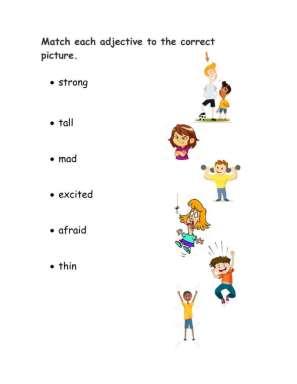
• Learners will match adjectives to the nouns, and complete some posters with the correct adjective.
• Teacher will divide the class into two groups to play hangman.
• Students will guess the missing letters.
ASSESSMENT:
Learners will play bingo on adjectives, just with the words. They will put a ball of paper on the word that teacher says, they’ll win if make a vertical or horizontal line, and fill out the board.
Methodology: Ludic method, Communicative approach, CLT Strategies: Collaborative Learning, Ludic activities, use of technology.
Curricular adaptation:
▪ Match adjectives to the pictures.
▪ Adjective placement: Listen and paste the adjective in the correct picture.
▪ They will play bingo but with pictures next to the words for a better understanding.
DATE: 10/06/2024
SUBJECT: ENGLISH AS A FOREIGN LANGUAGE UNIT 1: SHOPPING TIME TIME: 2 PERIODS
GRADE: 7TH A – B - C SKILLS: LISTENING, SPEAKING, READING, AND WRITING
INSTRUCTOR: Melanie Orrala Rodríguez
LESSON: #3
TOPIC: MY FAVORITE FOOD
LEARNING OBJECTIVE: Students will be able to describe the ingredients and steps to make their favorite food or recipe using adjectives, and imperatives.
RESOURCES AND MATERIALS: Video, slides, laptop, poster, book, audio recordings, cardboard, markers, images, scissors, etc.
LESSON OUTLINE:
WARM-UP / ACTIVATION
• Teacher will activate the students’ knowledge with a video on YouTube about Ecuadorian food.
• Professor will present different recipes around the world, and ask students: What is your favorite food?
ACTIVITIES
• Children will practice some exercises on the book.
• They will listen audio recordings and number the steps in order.
• They must bring materials to prepare their poster in class, cardboard, markers, images, scissors, etc.
ASSESSMENT:
Students will make a presentation about their favorite food. They will use their posters to talk about the ingredients and steps to make their favorite food o recipe.
Methodology: Communicative approach, Learning by doing, TBLT Strategies: Collaborative Learning, use of technology, prepare own material.
Curricular adaptation:
▪ Support to prepare the poster: Help them with materials and make a sequence of the steps, show an example.
▪ Visual and auditory material: Show a video of the preparation of his/her recipe.
▪ Evaluation rubric adapted to the student's level.
UNIT PLAN #2
DATE: 03/06/2024 SUBJECT: ENGLISH AS A FOREIGN LANGUAGE UNIT 2: A FAMILY STORY TIME: 6 PERIODS
LESSON 1: A FAMILY STORY
GRADE: 7TH A – B - C SKILLS: LISTENING, SPEAKING, READING, AND WRITING LESSON #1 #2 #3
INSTRUCTOR: Melanie Orrala Rodríguez
LESSON 2: FAMILY MEMBERS
LESSON 3: SIMPLE PAST
LEARNING OBJECTIVE: Students will be able to describe a family story and family members using the Simple Past through picture books, videos, songs, short presentations, drawing a family tree, creating flashcards, reading comprehension and writing exercises on the book and worksheets.
RESOURCES AND MATERIALS: Song, laptop, chart, flashcards, worksheets, audio recordings, pictures, posters, whiteboard, and markers.
LESSON OUTLINE:
WARM-UP / ACTIVATION
• Teacher will start the lesson with a reflexive video about the family, brainstorming, presenting a family tree, games, among others.
• Professor will present the vocabulary and grammar topic with videos, diagrams or charts, posters, songs, exercises, etc.
ACTIVITIES
• Learners will read a story about a family, make exercises and workshops.
• Pupils will describe family members vocabulary using flashcards and completing family trees.
• Learners will practice the simple past on worksheets and exercises on the book.
ASSESSMENT:
Students will be evaluated in different ways, through presentations, dialogues, conversations, role-plays, dramatizations, listening and writing exams, quizzes, among others.
Methodology: Communicative approach, CLT, Learning by doing, TBLT, … Strategies: Collaborative Learning, Use of Technology, Ludic activities.
Curricular adaptation:
▪ Learners will act a role from a story.
▪ Answer Match and color the family members.
▪ Talk about your family tree.
DATE: 11/06/2024
SUBJECT: ENGLISH AS A FOREIGN LANGUAGE
GRADE: 7TH A – B - C SKILLS: LISTENING, SPEAKING, READING, AND WRITING
INSTRUCTOR: Melanie Orrala Rodríguez
UNIT 2: A FAMILY STORY TIME: 2 PERIODS
LESSON: #1
TOPIC: A FAMILY STORY
LEARNING OBJECTIVE: Students will be able to read and dramatize a family story through a picture book, video, audio recording, and a group workshop.
RESOURCES AND MATERIALS: Video, laptop, picture book, audio recordings, costumes, etc.
LESSON OUTLINE:
WARM-UP / ACTIVATION
• Teacher will show a reflexive video about the family.
• Professor will do brainstorming on the video: What is the video about?
ACTIVITIES
• Students will read a family story on “The Canterville Ghost” by Oscar Wilde.
• Each student will read a part of the story aloud.
• They will participate during the reading and answer teacher’s questions: How many children does Mr. Otis have? / What happened to the ghost?
ASSESSMENT:
Students will do a question workshop based on the reading. (In groups) They will dramatize one of the scenes from the story. (In groups)
Methodology: Communicative approach, Task-Based Language Teaching Strategies: Collaborative and cooperative Learning, use of didactic material.
Curricular adaptation:
▪ Teamwork, they will act a role from the story that is easy to dramatize and with a known language.
▪ Visual and auditory material: Show a video with the fragment of their part.
▪ Play an audio recording about the story so they know when it is their turn to act.
DATE: 17/06/2024
SUBJECT: ENGLISH AS A FOREIGN LANGUAGE UNIT 2: A FAMILY STORY TIME: 2 PERIODS
GRADE: 7TH A – B - C SKILLS: LISTENING, SPEAKING, READING, AND WRITING.
INSTRUCTOR: Melanie Orrala Rodríguez
LESSON: #2
TOPIC: FAMILY MEMBERS
LEARNING OBJECTIVE: Students will be able to describe different family members through meaningful activities such as read a story, make reading comprehension exercises, and present a family tree.
RESOURCES AND MATERIALS: Family tree, slides, picture book, student book, cardboard, photos, markers, pens, ruler, scissors, glum, etc.
LESSON OUTLINE:
WARM-UP / ACTIVATION
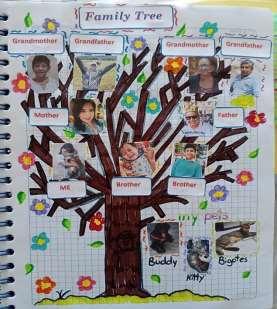
• Teacher will present her family tree to introduce the vocabulary.
• Professor will elicit the family members of her students, and the relationship between them.
ACTIVITIES
• Children will complete the family tree, and categorize the words in male and female.
• They will discuss these questions in group: How big is your family? Do you think families are important? Why or why not?
• Students will read a family story again, and do some reading comprehension exercises on the book.
ASSESSMENT:
Learners will create their own family tree, draw it and paste photos about each family member. They will present their families. For example: This is my mom, and she is beautiful.
Methodology: Communicative approach, Task-Based Language Teaching, CLT, Learning by doing.
Curricular adaptation:
▪ Match and color the family members.
▪ Draw you family tree and color it.
Strategies: Use of technology, creation of students’ teaching material
▪ Teacher will ask questions: How many members does your family have? Who is he or she? What is your grandfather like? Is he loving or strict?
DATE: 19/06/2024
GRADE: 7TH A – B - C
SUBJECT: ENGLISH AS A FOREIGN LANGUAGE UNIT 2: A FAMILY STORY TIME: 2 PERIODS
SKILLS: LISTENING, SPEAKING, READING, AND WRITING
INSTRUCTOR: Melanie Orrala Rodríguez
LESSON: #3
TOPIC: SIMPLE PAST
LEARNING OBJECTIVE: Students will be able to describe events in past tense through role-plays, worksheet, charts, and exercises at a reproduction level.
RESOURCES AND MATERIALS: Video conversation, song, charts, slides, book, whiteboard, and markers.
LESSON OUTLINE:
WARM-UP / ACTIVATION
• Teacher will present a song about the Simple Past, then she will show the students a short video conversation.
• Professor will elicit the grammatical rules from the students, and explain the topic with a chart and slides.
ACTIVITIES
• Children will mark the sentences P (past) or Pr (present).
• They will read the sentences and write the correct information about the previous reading, using verbs in past.
• Students will practice on a worksheet in pairs.
ASSESSMENT:
Students will do a role-play in pairs, in which they pretend to be talking about a past event, such as telling a story or describing an important event.
Methodology: Communicative approach, CLT, Learning by doing. Strategies: Use of technology, collaborative learning, role-plays.
Curricular adaptation:
▪ Give them visual cards that represent past actions.
▪ Use of charts and videos that contain clear and visual examples so that they are more concentrated.
▪ Correspondence games where they match verbs in the present tense with their past form.
▪ Ask them: What did you do yesterday?
DATE: 24/06/2024
SUBJECT: ENGLISH AS A FOREIGN LANGUAGE
GRADE: 7TH A – B - C SKILLS: LISTENING, SPEAKING, READING, AND WRITING
INSTRUCTOR: Melanie Orrala Rodríguez
UNIT 3: TRAVEL DESTINATIONS
LESSON: #1
TIME: 2 PERIODS
TOPIC: Animals / Geography
LEARNING OBJECTIVE: Students will be able to describe animals, geographical areas, continents, countries around the world through a video, questions, texts, and communicative activities.
RESOURCES AND MATERIALS: Video, texts, websites, glossary, dictionary, workshop, flashcards, etc.
LESSON OUTLINE:
WARM-UP / ACTIVATION
• Teacher will show a video about National Geography, and watch different animals.
• Professor will ask students: What animals can you observe? Do you know these animals? Where do you think they live?
ACTIVITIES
• Students will read a text about continents, geographical areas, wild animals and those in danger of extinction.
• They will practice reading aloud and make their own glossary with the help of a dictionary.
• In groups they will do a workshop about the reading.
ASSESSMENT:
Students will create their own flashcards with cardboard, images or drawings. Then they will choose a continent or country and explain what animals live there and any interesting geographic features.
Methodology: Communicative approach, Task-Based Language Teaching Learning by doing, CLT.
Curricular adaptation:
▪ Match the animals in the country/continent they belong to.
▪ Cut and color the flashcards.
Strategies: Collaborative and cooperative Learning, creation of didactic material.
▪ With the help of the teacher say short sentences on the flashcards. For example: Australia has very dangerous animals. China has many different landscapes.
DATE: 26/06/2024
GRADE: 7TH A – B - C
SUBJECT:
ENGLISH AS A FOREIGN LANGUAGE
SKILLS: LISTENING, SPEAKING, READING, AND WRITING
INSTRUCTOR: Melanie Orrala Rodríguez
UNIT 3: TRAVEL DESTINATIONS
LESSON: #2
TIME: 2 PERIODS
TOPIC: Present Simple to talk about facts
LEARNING OBJECTIVE: Students will be able to use the Present Simple Tense to talk about general facts and truths, through writing activities, exercises, and a worksheet.
RESOURCES AND MATERIALS: Chart, whiteboard, markers, worksheet, flashcards, and quizzes.
LESSON OUTLINE:
WARM-UP / ACTIVATION
• Teacher will start the class with a quick quiz. Write a few statements on the board and ask students to determine if they are true or false. Example: "The Earth orbits the sun," "The Eiffel Tower is in London."
• Professor will explain the topic with a chart (uses, structure, examples), and use the whiteboard to write down more examples. ACTIVITIES
• Children will play a quiz in which they’ll choose the correct Present Simple form of the verb in factual sentences.
• They will work on a worksheet, exercises about mix of fill-in-the-blank sentences, and sentences rewriting.
• Learners will write a paragraph using the Present Simple to describe four facts about any topic (e.g., an animal, a country, a continent)
ASSESSMENT:
▪ Students will create flashcards with different factual statements (e.g., "The Earth is round," "Birds can fly," "Fish live in water").
▪ They will work in pairs to match each statement with its correct verb form in Present Simple. After matching, pairs will read their statements aloud to the class.
Methodology: Communicative approach, Task-Based Language Teaching Learning by doing, Communicative Language Teaching.
Curricular adaptation:
Strategies: Collaborative and cooperative Learning, ludic activities.
▪ Use color-coded markers to highlight the structure of the Present Simple on the whiteboard.
▪ Give them flashcards with examples of facts (with pictures).
▪ Interactive quizzes (such as Kahoot!) or color-coded answer cards that students can hold up to show their answers.
DATE: 01/07/2024
GRADE: 7TH A – B - C
SUBJECT:
ENGLISH AS A FOREIGN LANGUAGE
SKILLS: LISTENING, SPEAKING, READING, AND WRITING
INSTRUCTOR: Melanie Orrala Rodríguez
UNIT 3: TRAVEL DESTINATIONS
LESSON: #3
TIME: 2 PERIODS
TOPIC: Passive voice to talk about actions in the Present
LEARNING OBJECTIVE: Students will be able to use Passive voice in the present tense to describe actions done by someone or something in the present, through reading and writing activities.
RESOURCES AND MATERIALS: Video, chart, whiteboard, markers, worksheet, flashcards, etc.
LESSON OUTLINE:
WARM-UP / ACTIVATION
• Teacher will write a few active sentences on the board, such as “The teacher explains the lesson”. Ask students to identify the subject and the object; and teacher will explain them that these sentences can also be expressed differently.
• Professor will explain the topic with a video (structure, examples), and elicit the rules from the students. “The lesson is explained by the teacher”.
ACTIVITIES
• Learners will change active sentences to passive voice on the board.
• Students will work with a reading passage about animals and geography that has the passive voice in the present tense.
• After reading, they will identify sentences in passive voice and rewrite one or two in active voice to understand the difference.
ASSESSMENT:
▪ Students will make a short conversation o dialogue in pairs, where they will describe a process like “How chocolate is made” using the Passive voice.
Methodology: Communicative approach, Task-Based Language Teaching Learning by doing, Communicative Language Teaching. Strategies: Collaborative and cooperative Learning, ludic activities.
Curricular adaptation:
▪ Use color-coded markers to highlight different parts of the passive sentence structure on the whiteboard.
▪ Provide them flashcards with images that represent each action (e.g., a chef cooking, a teacher teaching).
▪ Allow students to create a short presentation using a topic of their choice, where they describe a process like “How bread is made” using the Passive Voice. They can use visual and props to support their presentation.
References
Cleveland Clinic. (2023, May 15). Mild Cognitive Impairment. Retrieved from Cleveland Clinic: https://my.clevelandclinic.org/health/diseases/17990-mildcognitive-impairment
Gunnerson, T. (2022, August 25). A Brief History of ADHD. Retrieved from WebMD: https://www.webmd.com/add-adhd/adhd-history
Mayo Clinic Staff. (2024, February 13). Mild cognitive impairment (MCI). Retrieved from Mayo Clinic: https://www.mayoclinic.org/diseases-conditions/mildcognitive-impairment/symptoms-causes/syc-20354578
NIH. (2023, September). Attention-Deficit/Hyperactivity Disorder. Retrieved from National Institute of Mental Health: https://www.nimh.nih.gov/health/topics/attention-deficit-hyperactivity-disorderadhd
Sissons, B. (2023, May 23). Does an ADHD spectrum exist? Retrieved from Medical News Today: https://www.medicalnewstoday.com/articles/adhd-spectrum