PORTFOLIO
MEGAN DANG SELECTED WORKS 2023 ARCHITECTURE MEGAN DANG SELECTED WORKS 2023 ARCHITECTURE
Table of Contents
In the Design Studio
UCSB Performance/Lecture Hall
Mission District Art Incubator
The Urban Institute
Oakland Community Center
Two Family Duplex
Orthographic Drawings
Other Schoolwork
Cantilivered Camping Structure
Wooden Hall Organizer
Design Proposal: Walk/Bikeable Streets
A Greener City: Graphic Storyboard PSA
Professional Work
Architectural Designer
Gelfand Partner Architects
Multimedia Associate
Othering and Belonging Institute
Berkeley Law School
UC Berkeley College of L&S
Personal Work
YouTube and Blog
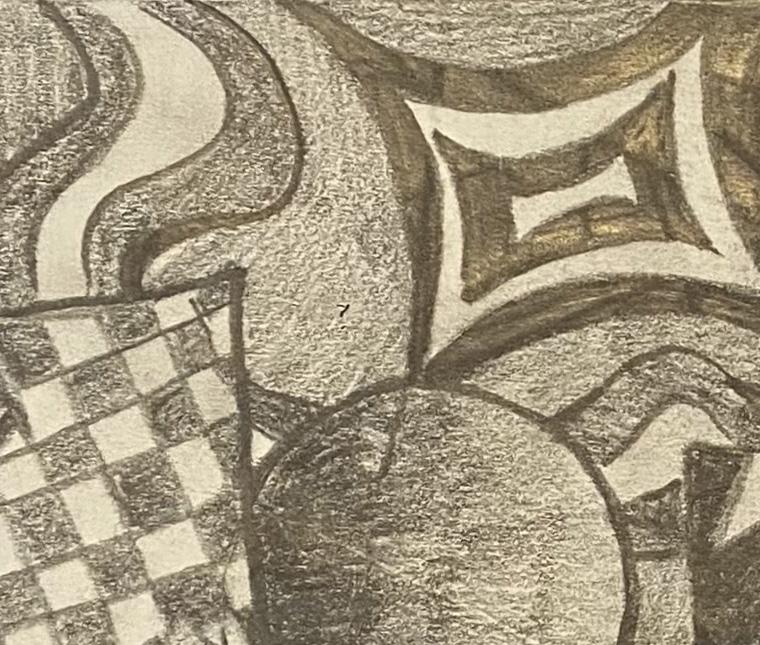
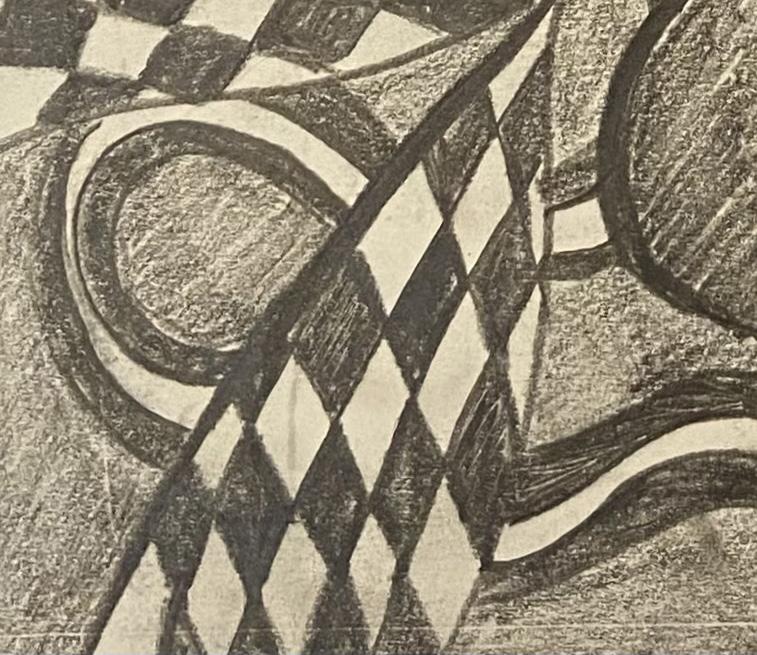
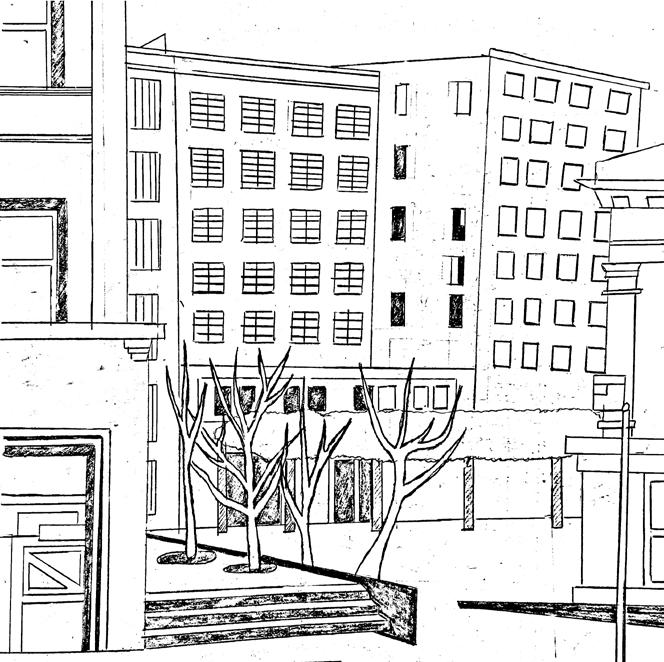
Hand Drafting Sketches
Object Sketches
University of California, Santa Barbara Performance Venue and Lecture Hall
Santa Barbara, CA | Ryan
Keern
Architectural Design IV | Spring 2023
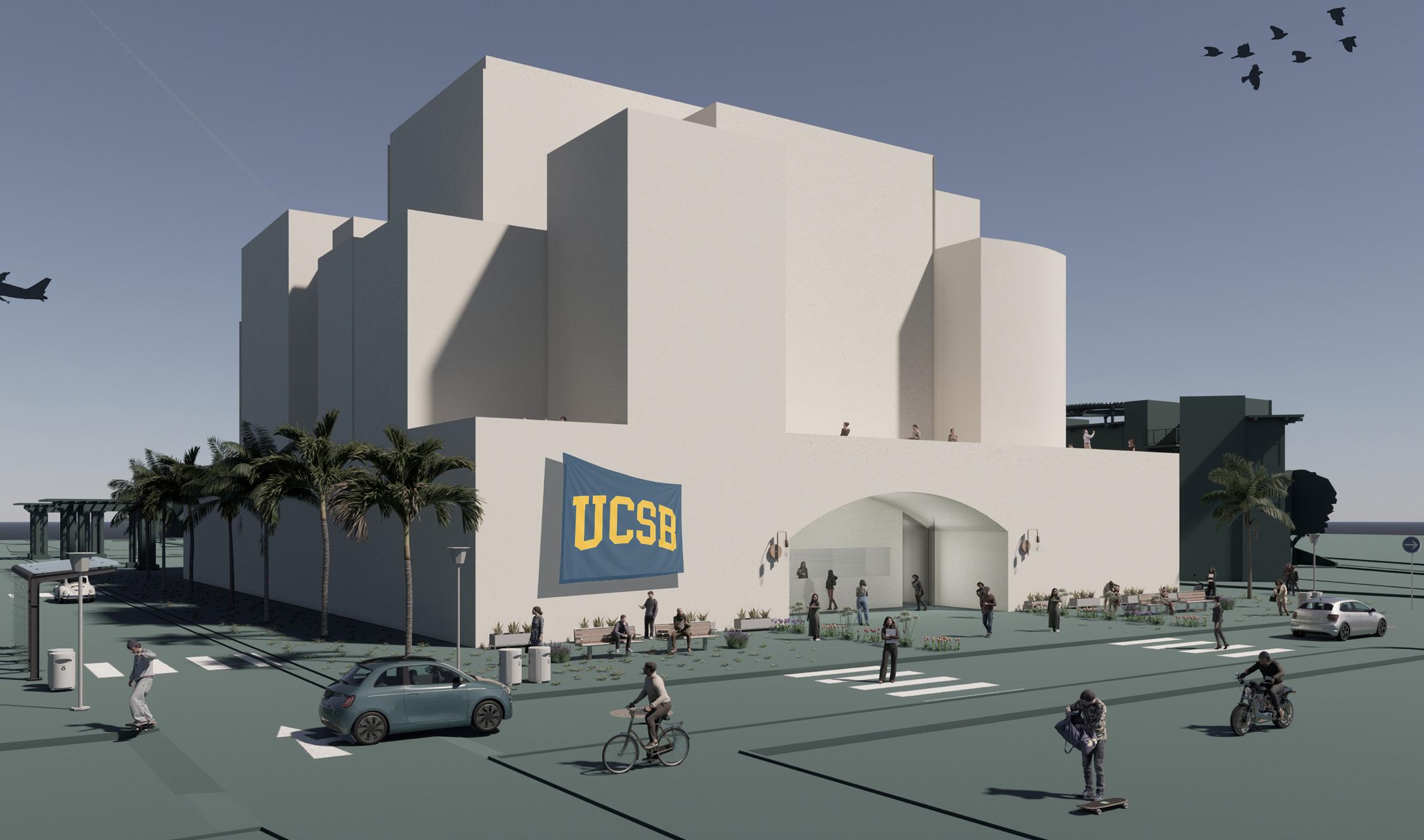
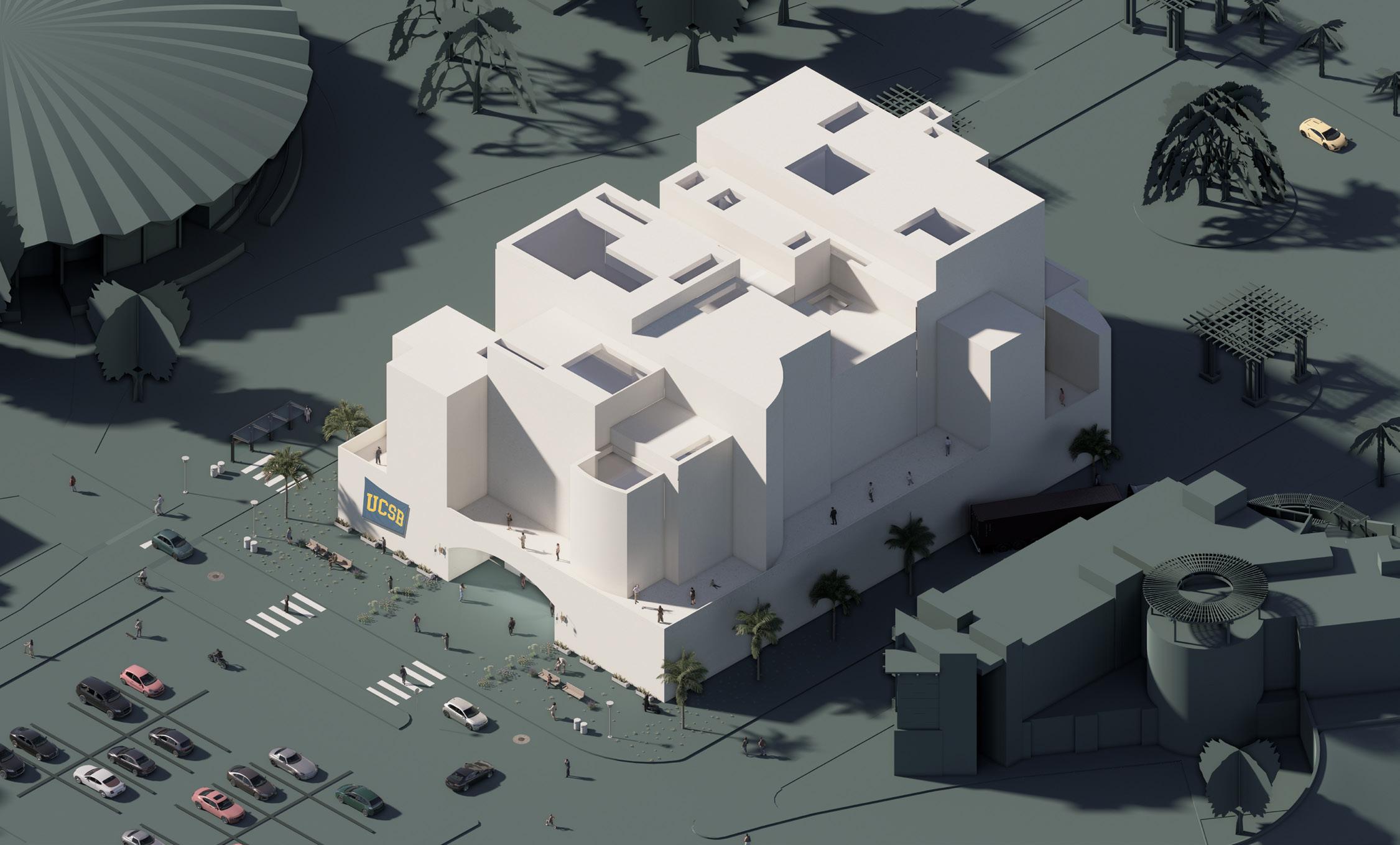
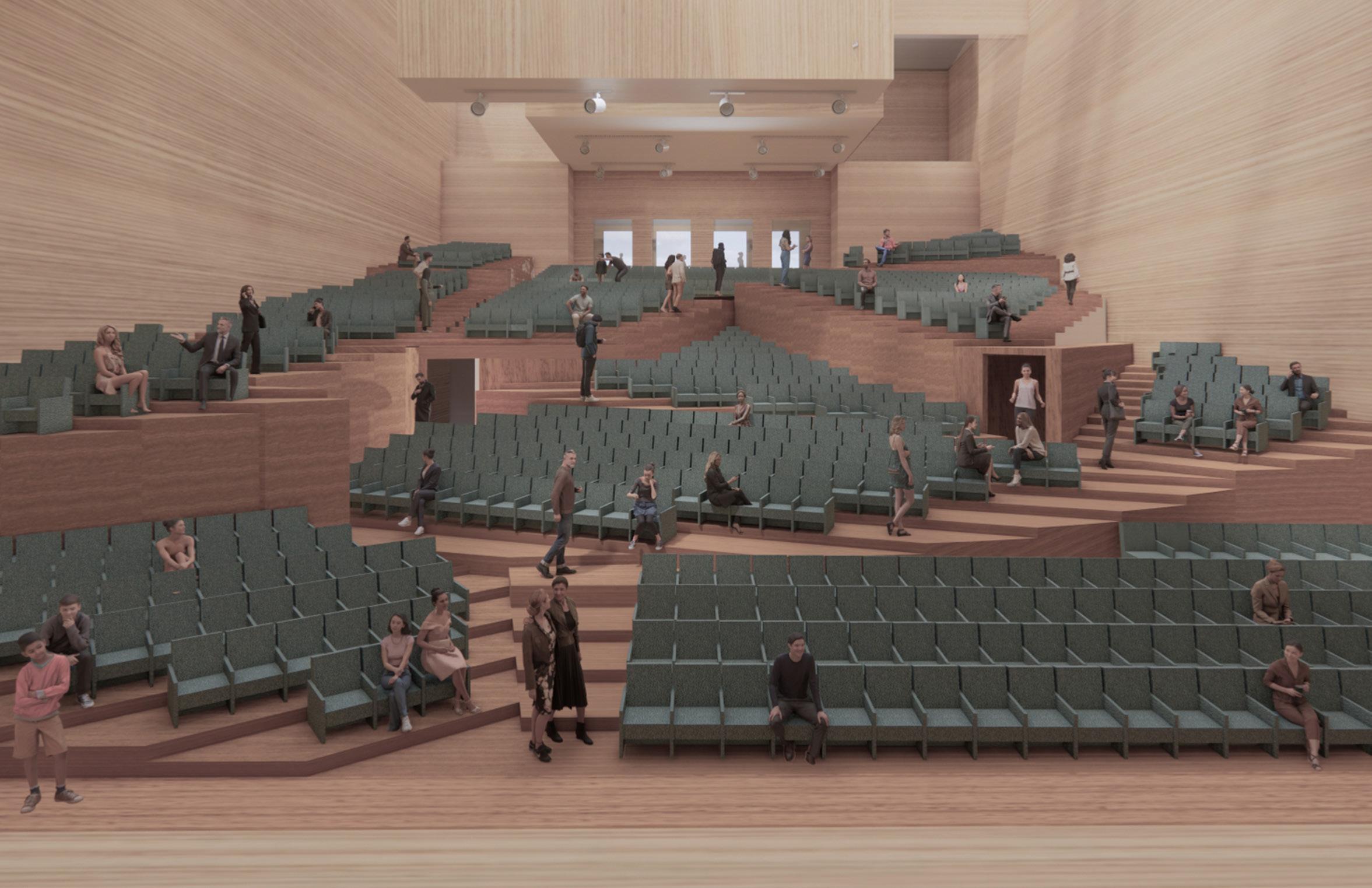
For this studio project, I was tasked to design a new 850 seat performing arts and lecture venue on a gateway site to the University of California, Santa Barbara campus, utilizing the catalog of affects developed in the first part of the studio. The learning objectives of the studio include developing logics for the flow of people, institutional identity, complex spatial experience, natural daylighting, and exploring novel drawing techniques to see and evaluate the work differently.
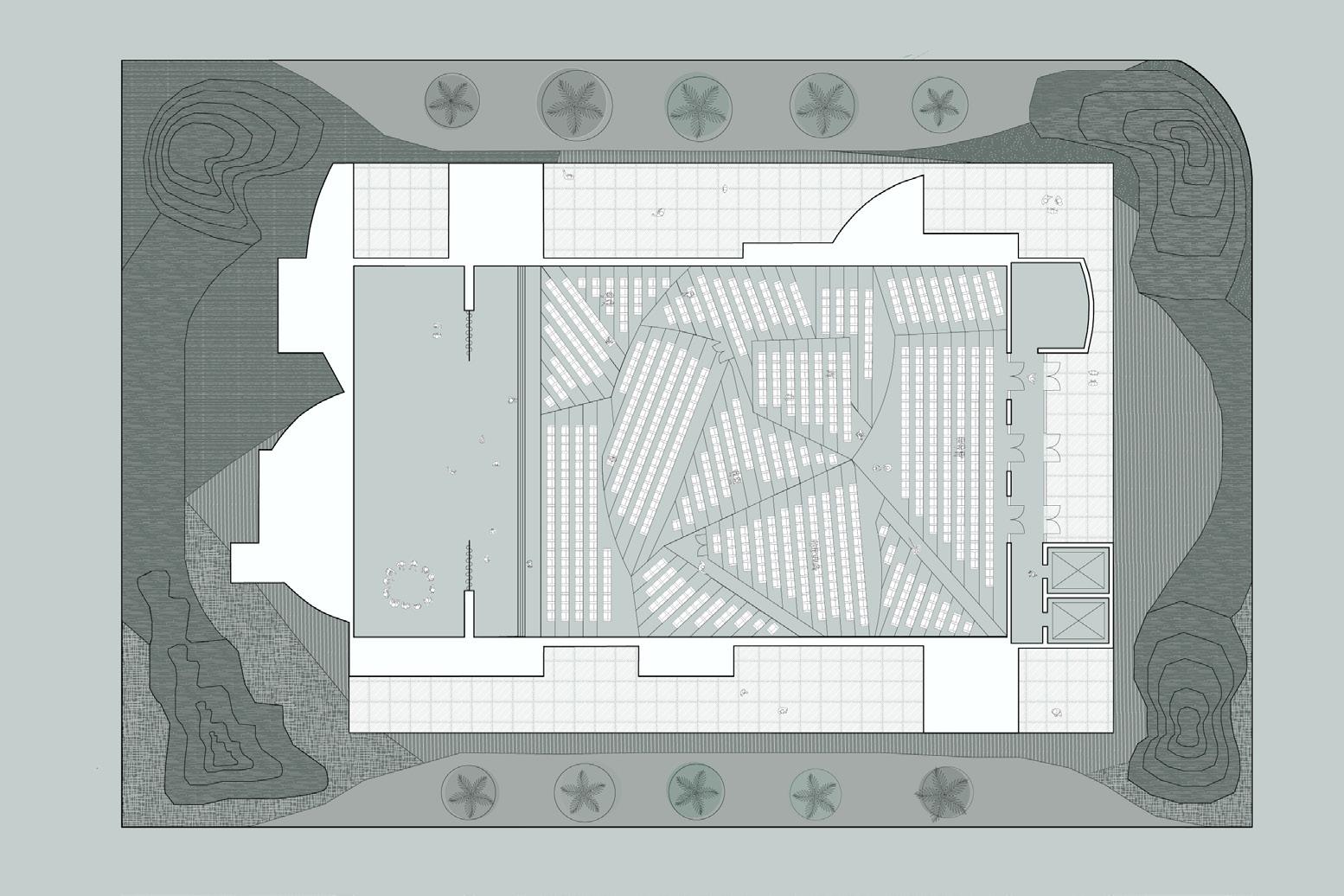
One of the primary goals of my design was to create a city-like atmosphere inside the building that complements the exterior’s cityscape. The curved seating areas and circulation paths are meant to mimic the streets and buildings of a town, which can foster a sense of community and connection among users, particularly in college settings. The curves were used to create a tension disrupting the expected linear progression of movement, and instead help me create a dynamic and unpredictable spatial experience while challenging expectations and creating a sense of wonder and intrigue.
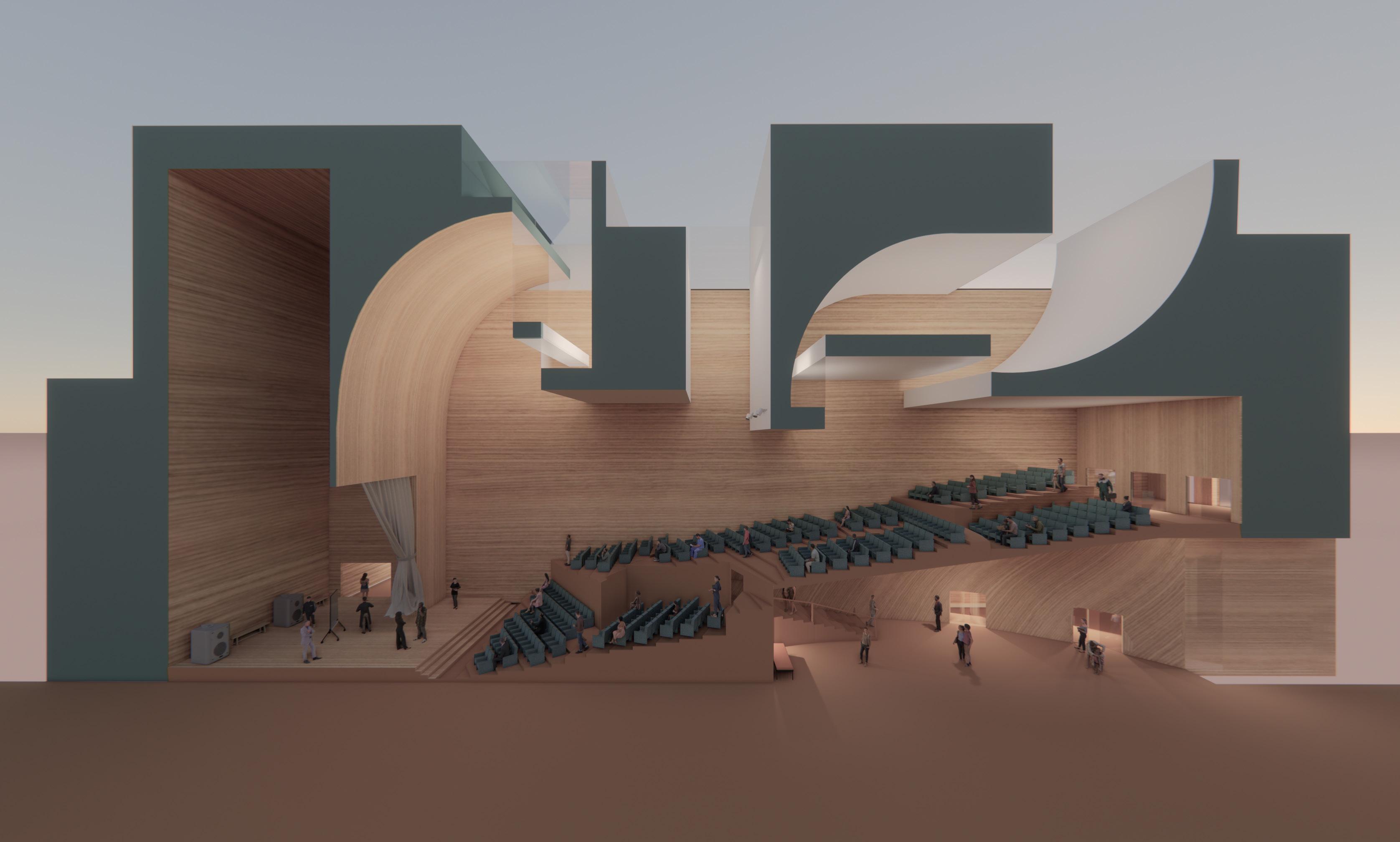 Above: Section Perspective - emphasizes the atmospheric qualities of the space
Right: (Top) Approach Exterior Render, (Bottom) Ariel Exterior Render
Above: Section Perspective - emphasizes the atmospheric qualities of the space
Right: (Top) Approach Exterior Render, (Bottom) Ariel Exterior Render
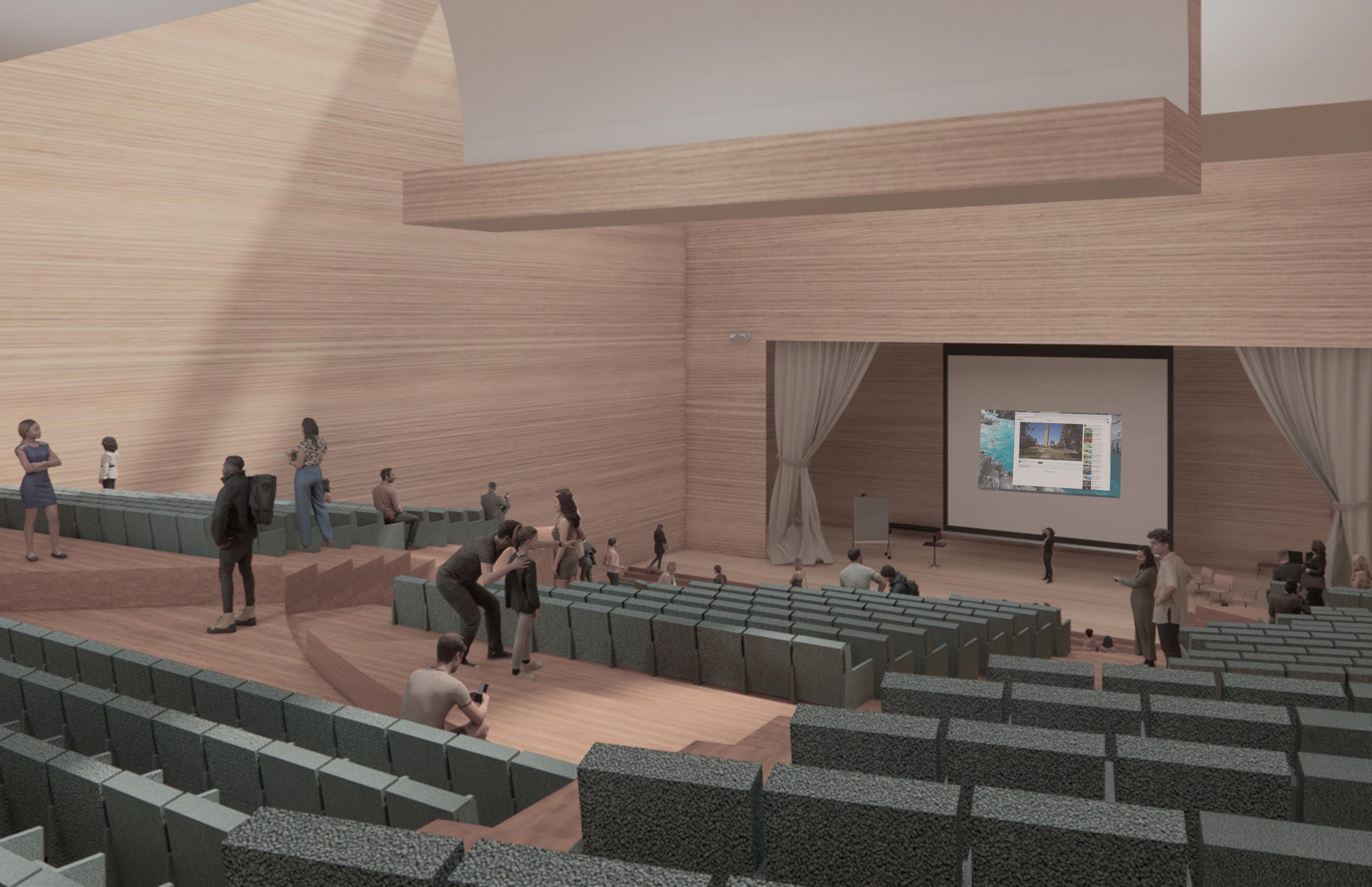
 Top: Interior Renders (Left) View from Audience Perspective, (Right) View from Performer Perspective
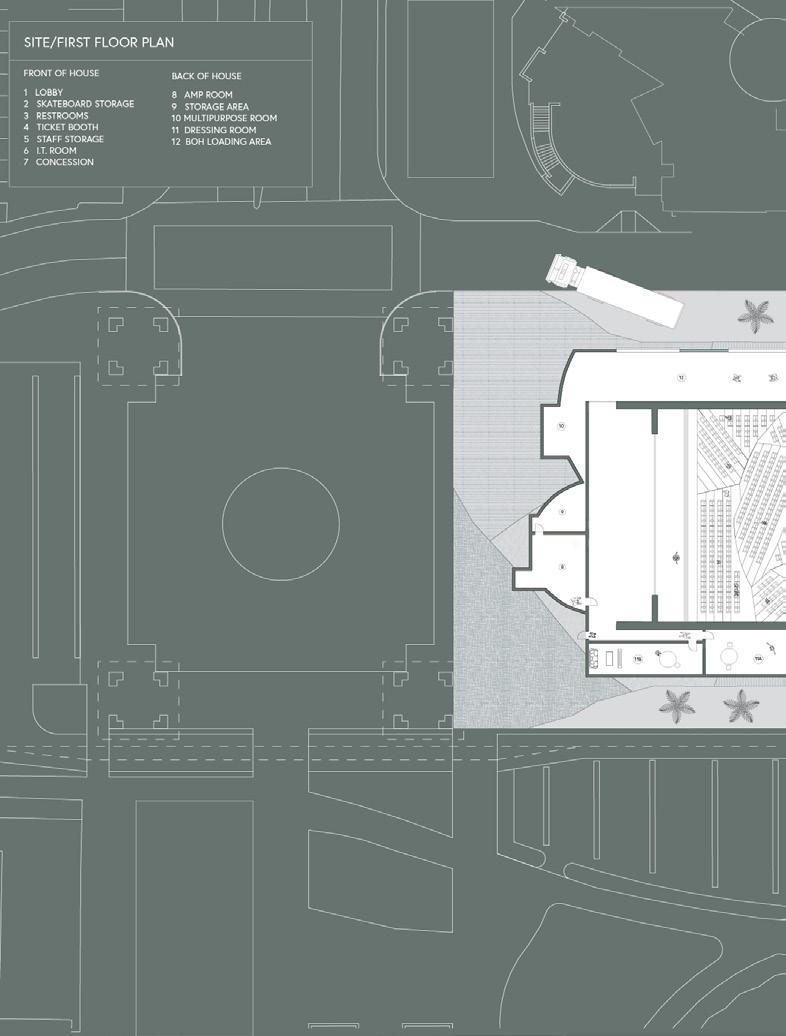
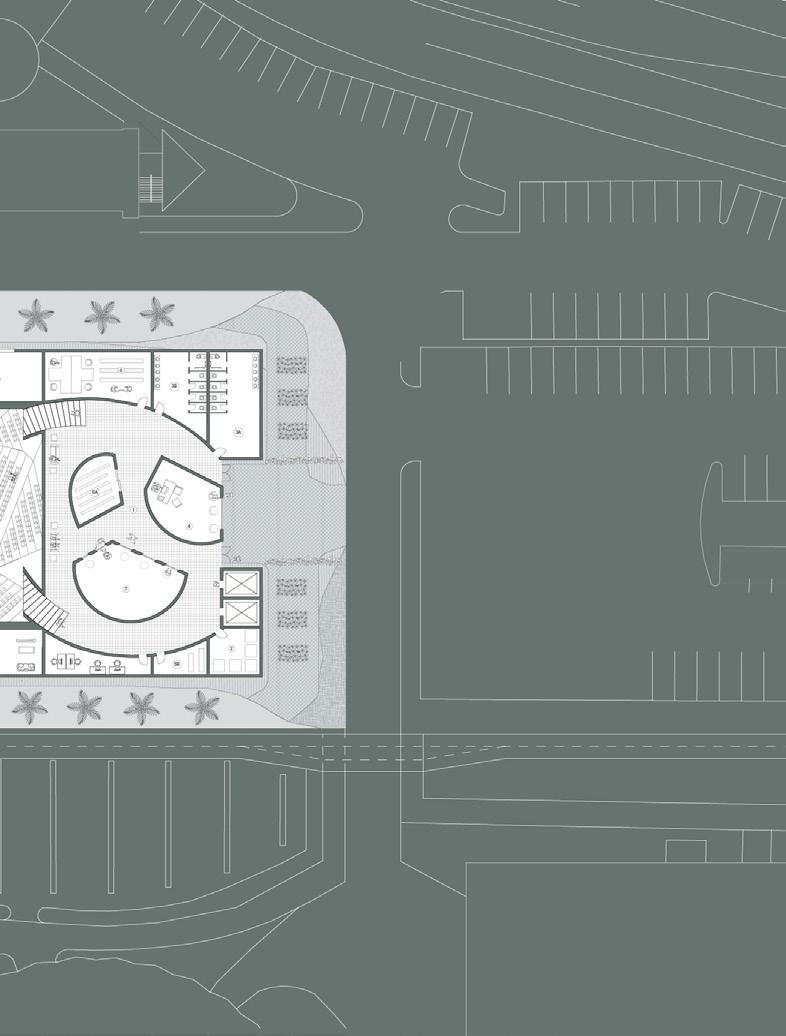
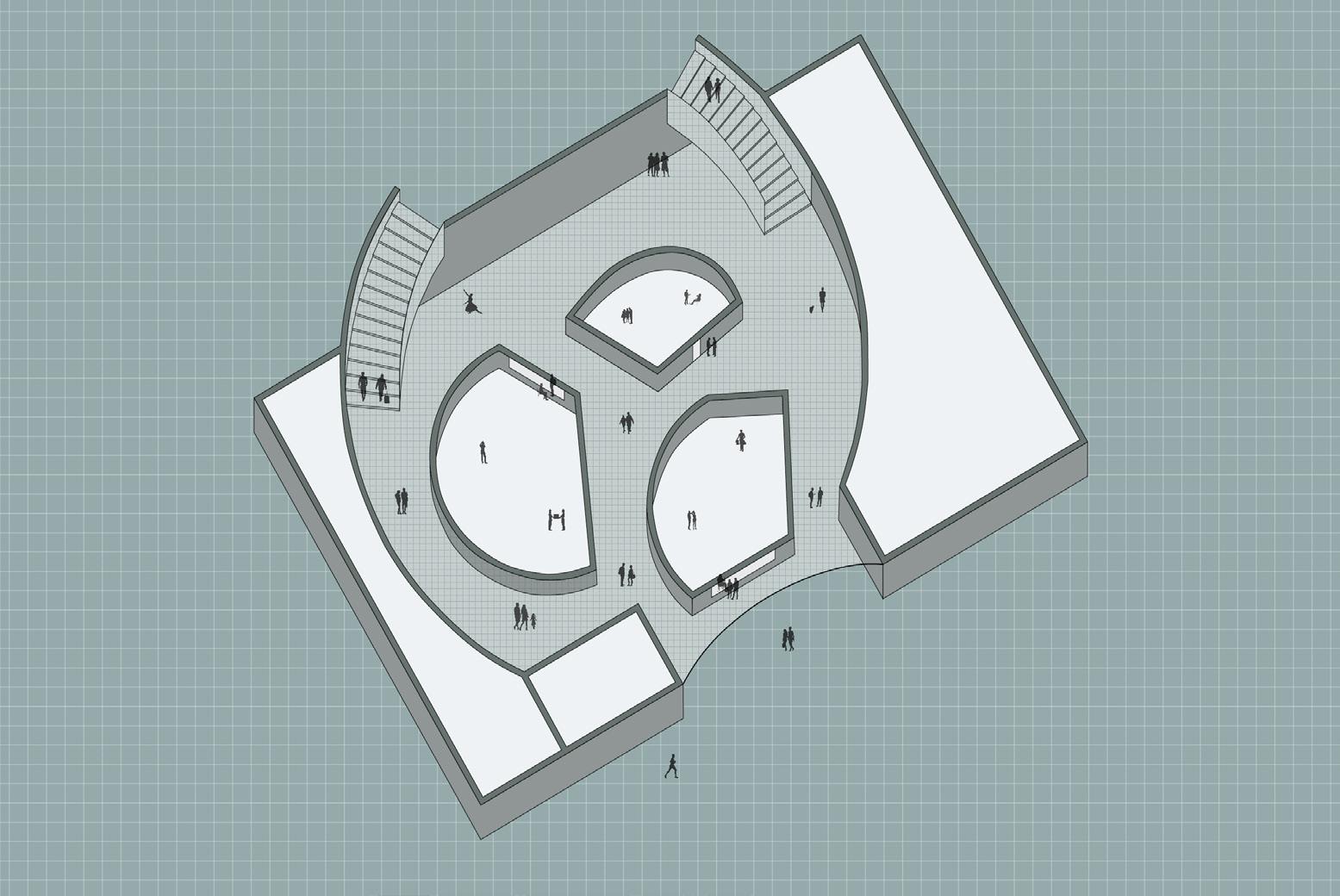
Bottom: (Left) Englarged Floor Plan, (Middle) Site/First Floor Floor Plan, (Right) Dissected Entrance
Top: Interior Renders (Left) View from Audience Perspective, (Right) View from Performer Perspective
Bottom: (Left) Englarged Floor Plan, (Middle) Site/First Floor Floor Plan, (Right) Dissected Entrance
Mission District Art Incubator and Community Based Collaboration Space
San Francisco, CA | Nastaran Mousavi Architectural Design III | Fall 2022
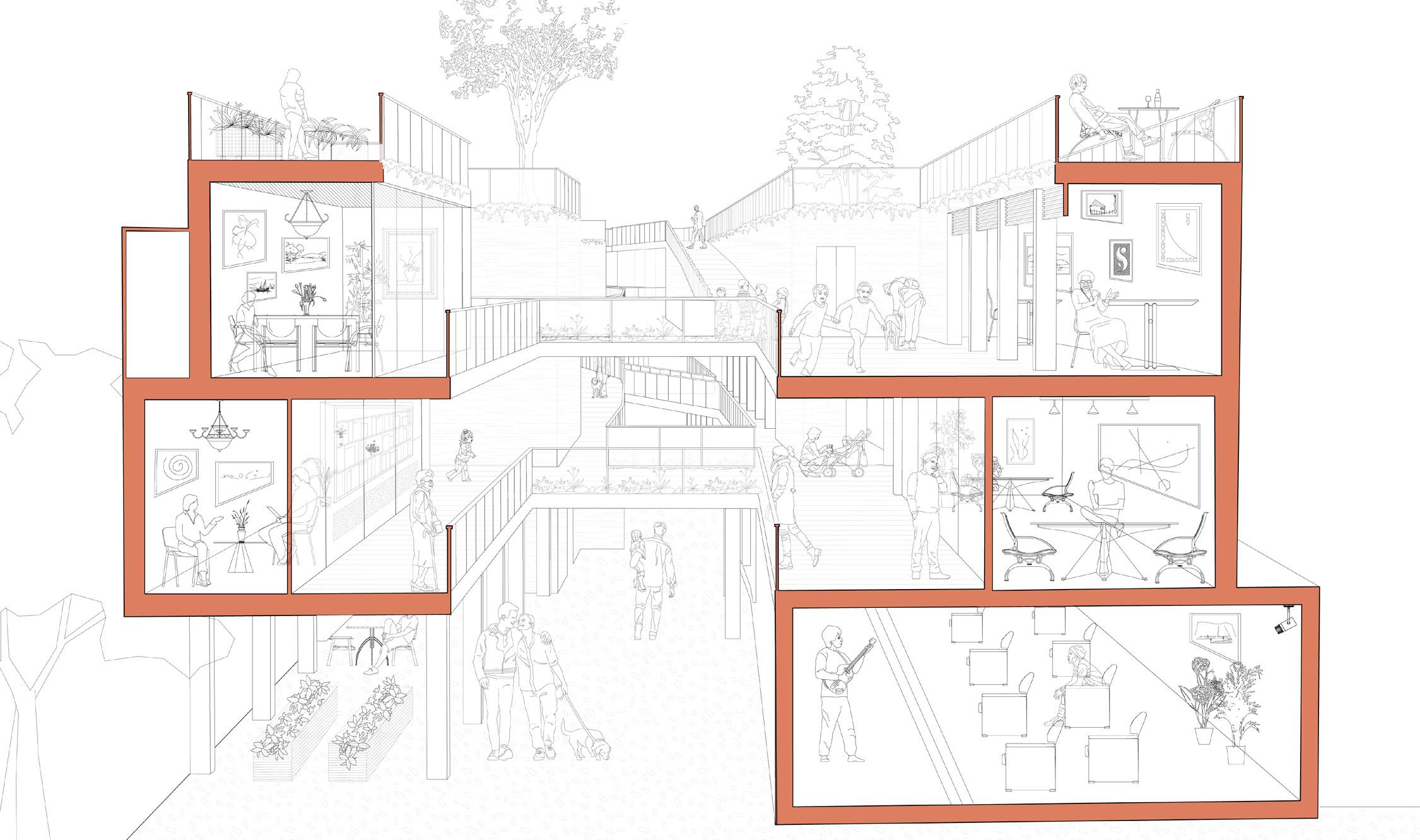
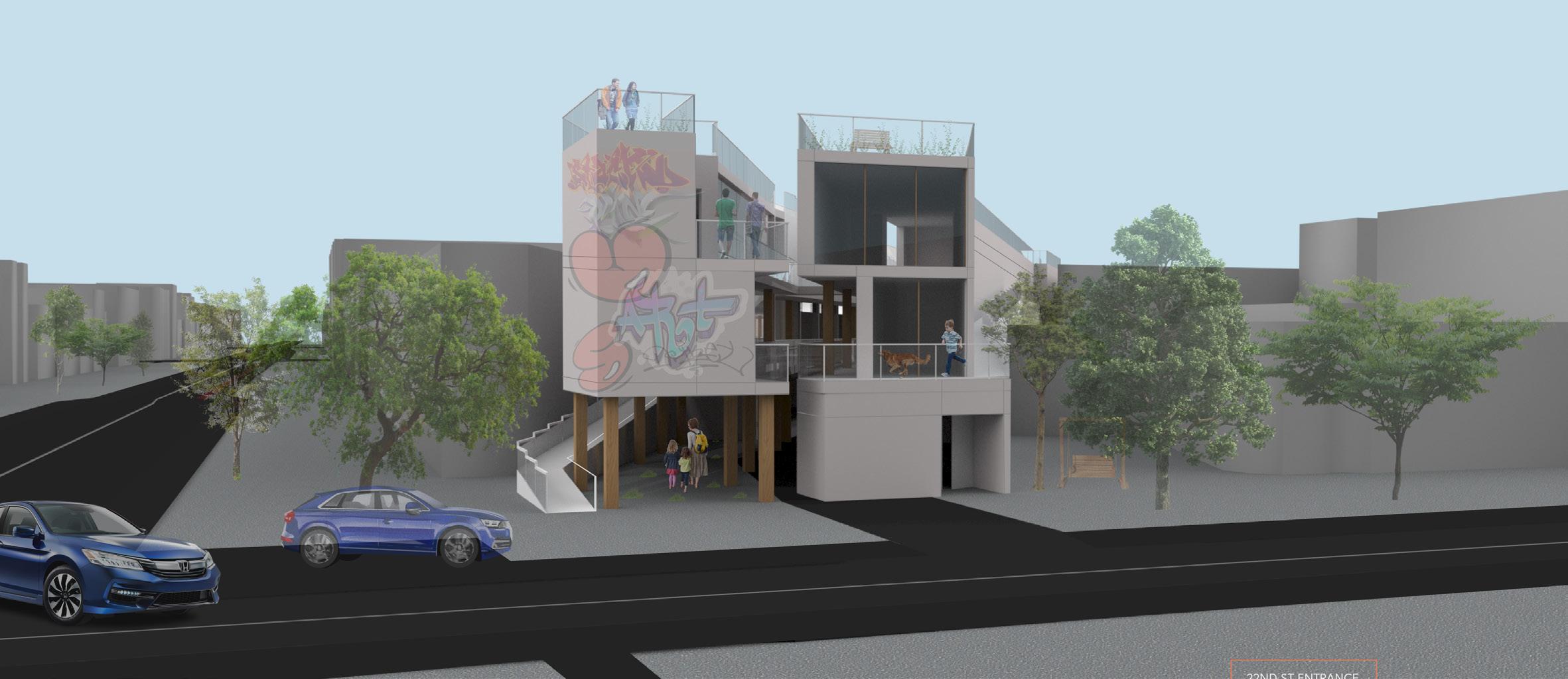
The Mission District Art Incuabator project encompasses the creation of an innovative community-based collaboration space situated in the vibrant Mission District of San Francisco. The primary objective was to provide vital support to diverse artist communities profoundly affected by the escalating cost of living in the Bay Area. At its core, the art incubator serves as a nurturing environment where artists can thrive, showcasing their creations, engaging with like-minded individuals, and establishing a sustainable livelihood. By offering shared resources and fostering a sense of community, the project recognizes the intrinsic value of art and creativity in our urban landscapes.
My contribution revolves around the design of a museum building that embraces the concept of impermanence and employs the art of collaging to redefine its spatial composition. By welcoming randomness, diverse design elements, and variations, the museum seamlessly integrates with the existing skyline of the Mission District, gracefully blending in and, in a sense, disappearing. This design approach mirrors the transient nature of the neighborhood, where nothing remains fixed, and the museum’s architectural expression embodies this underlying truth.
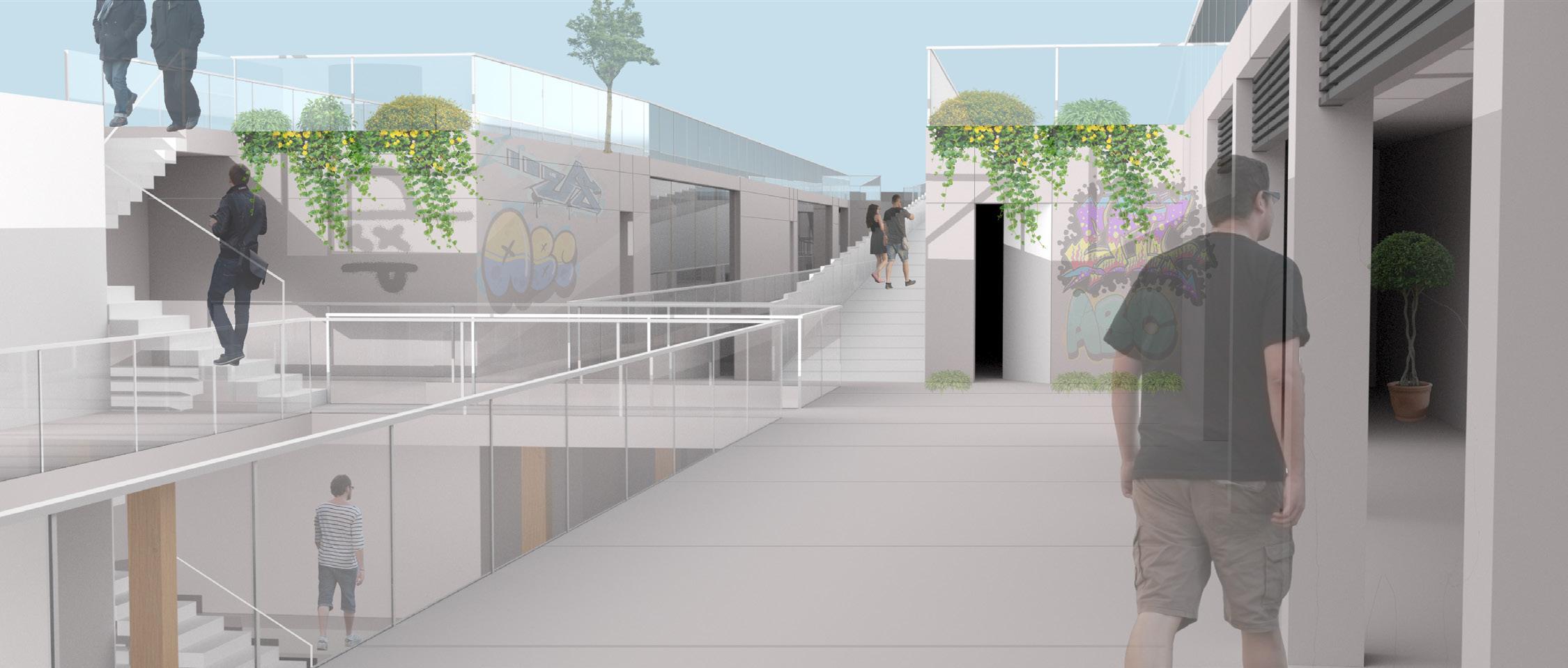
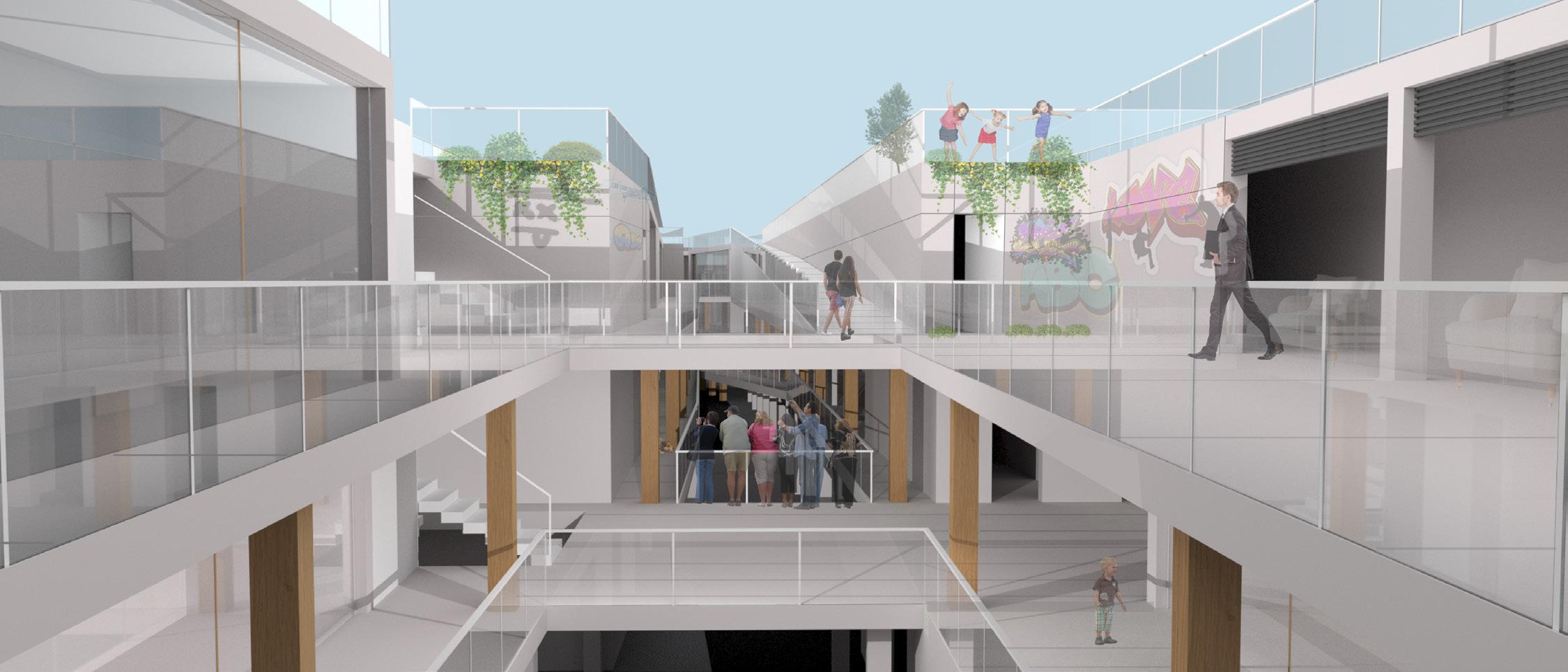
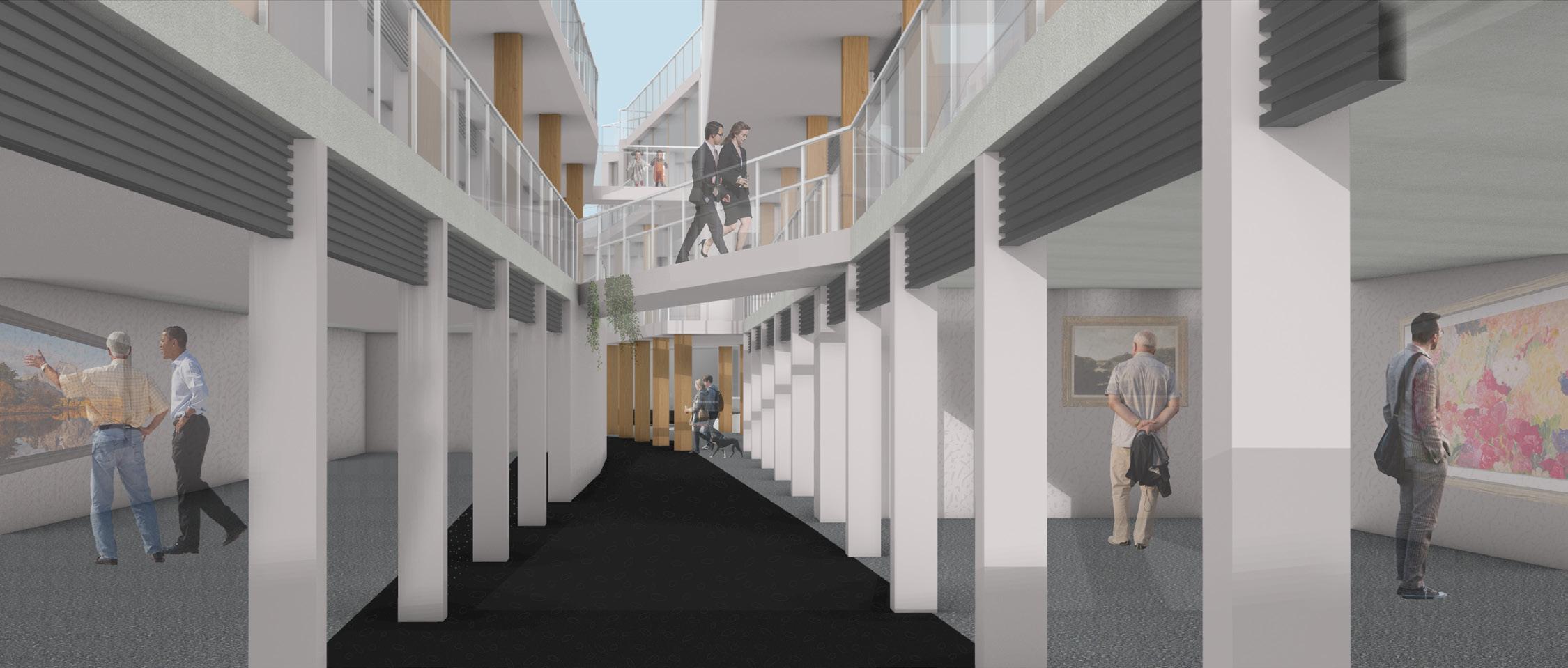
Above: Perspective Cut Through Alleyway
Right: Alleyway renders (Top) Third Floor, (Middle) Second Floor, (Bottom) Ground Floor
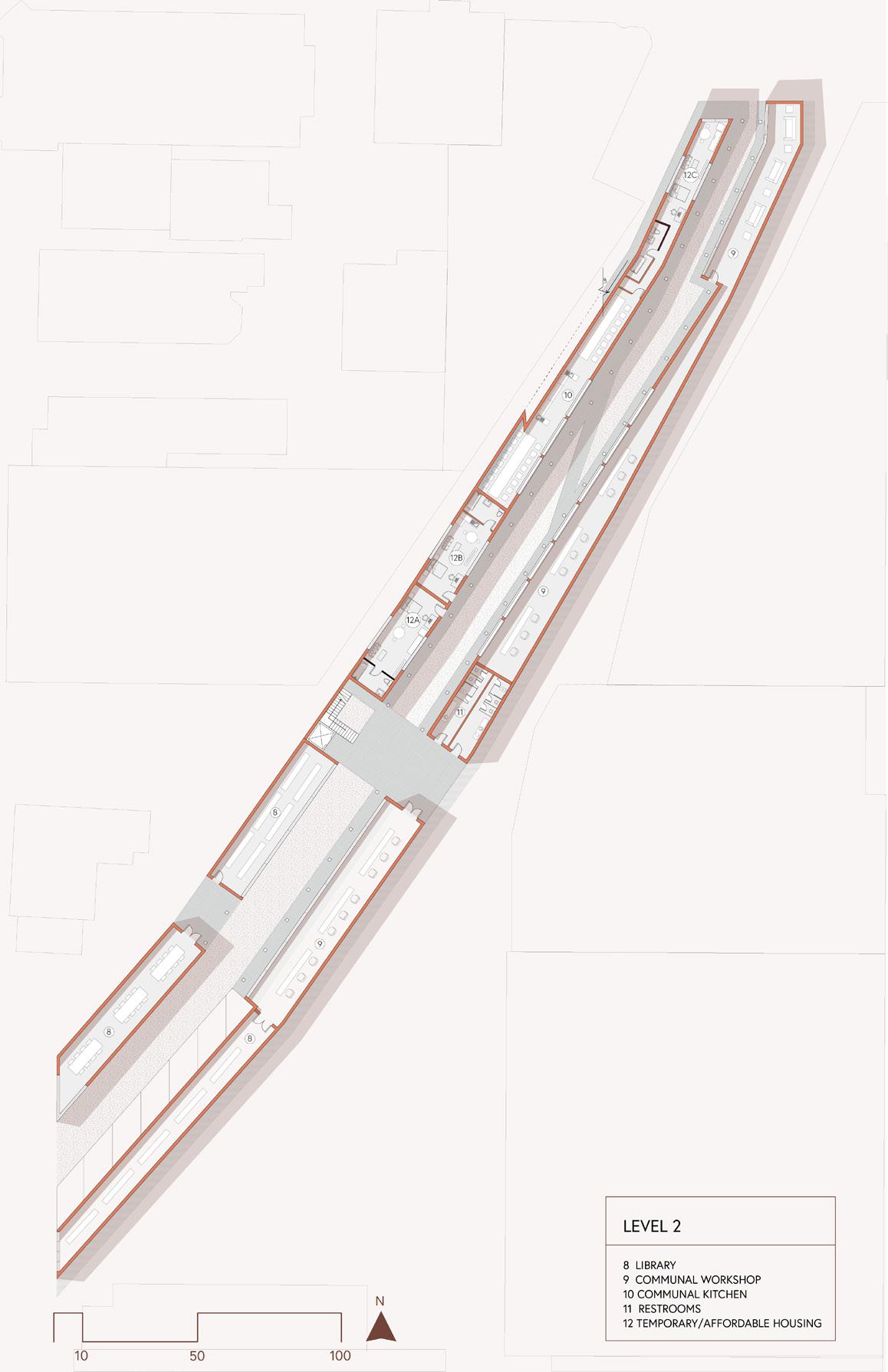
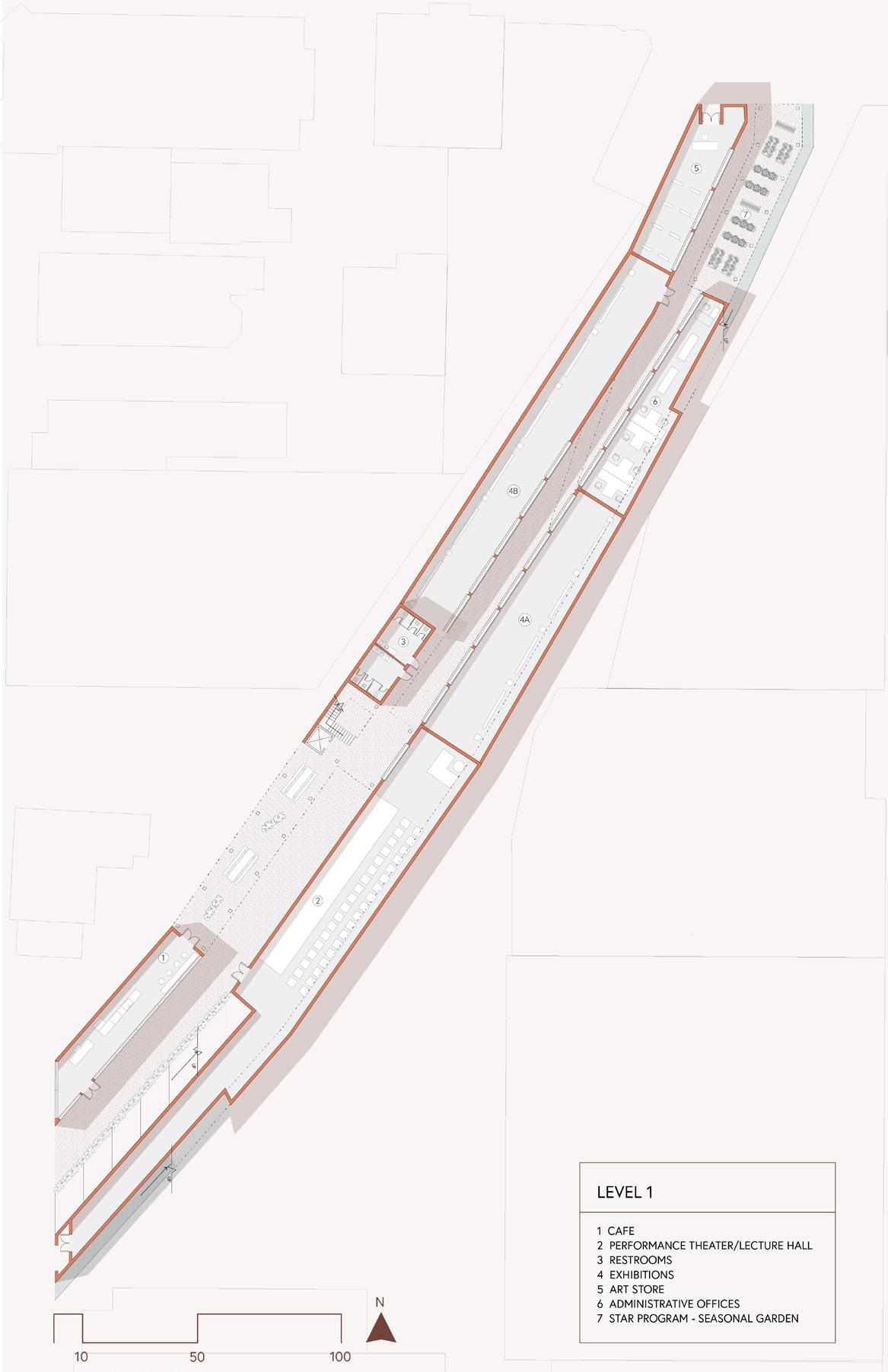
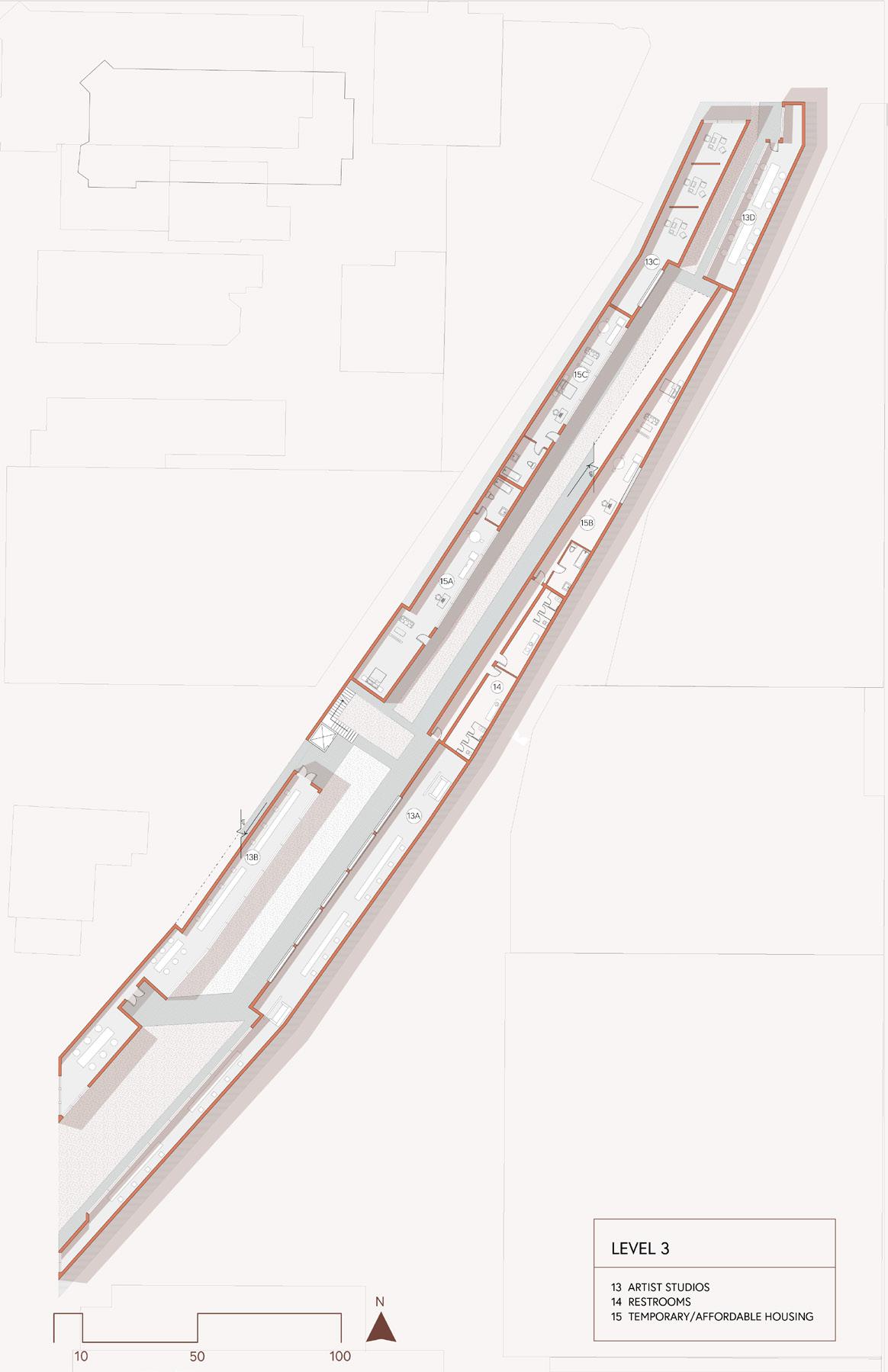
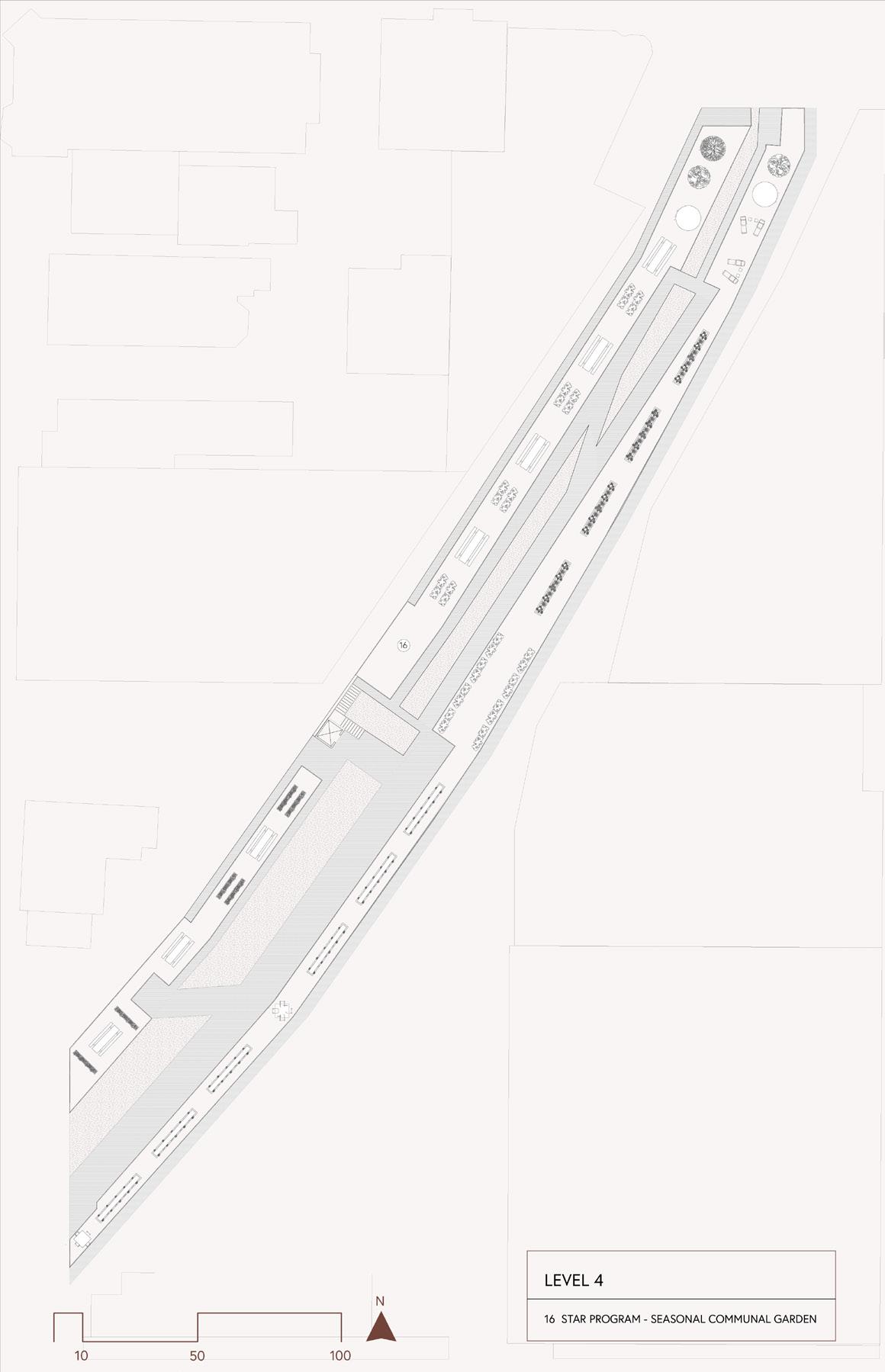
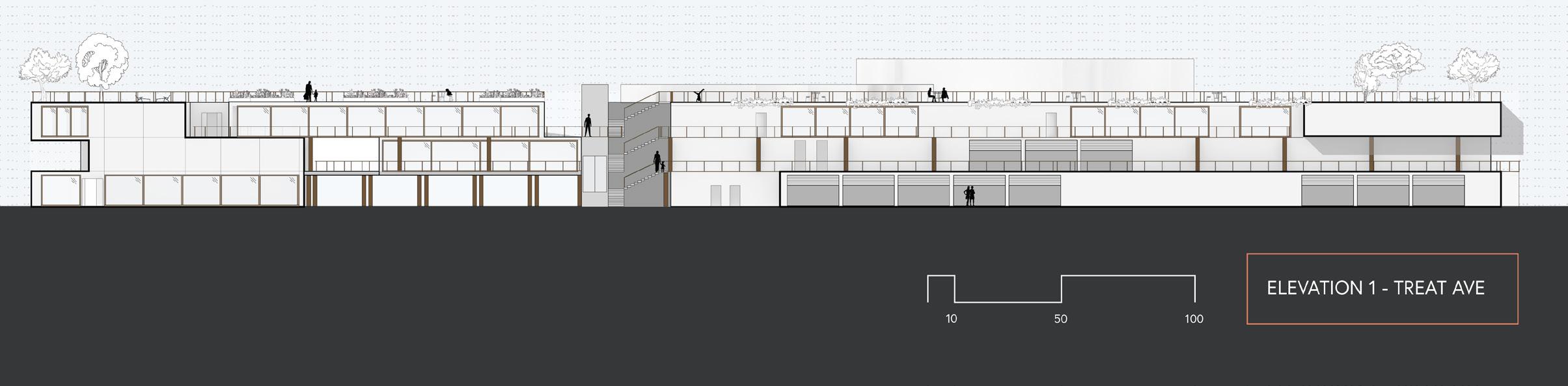
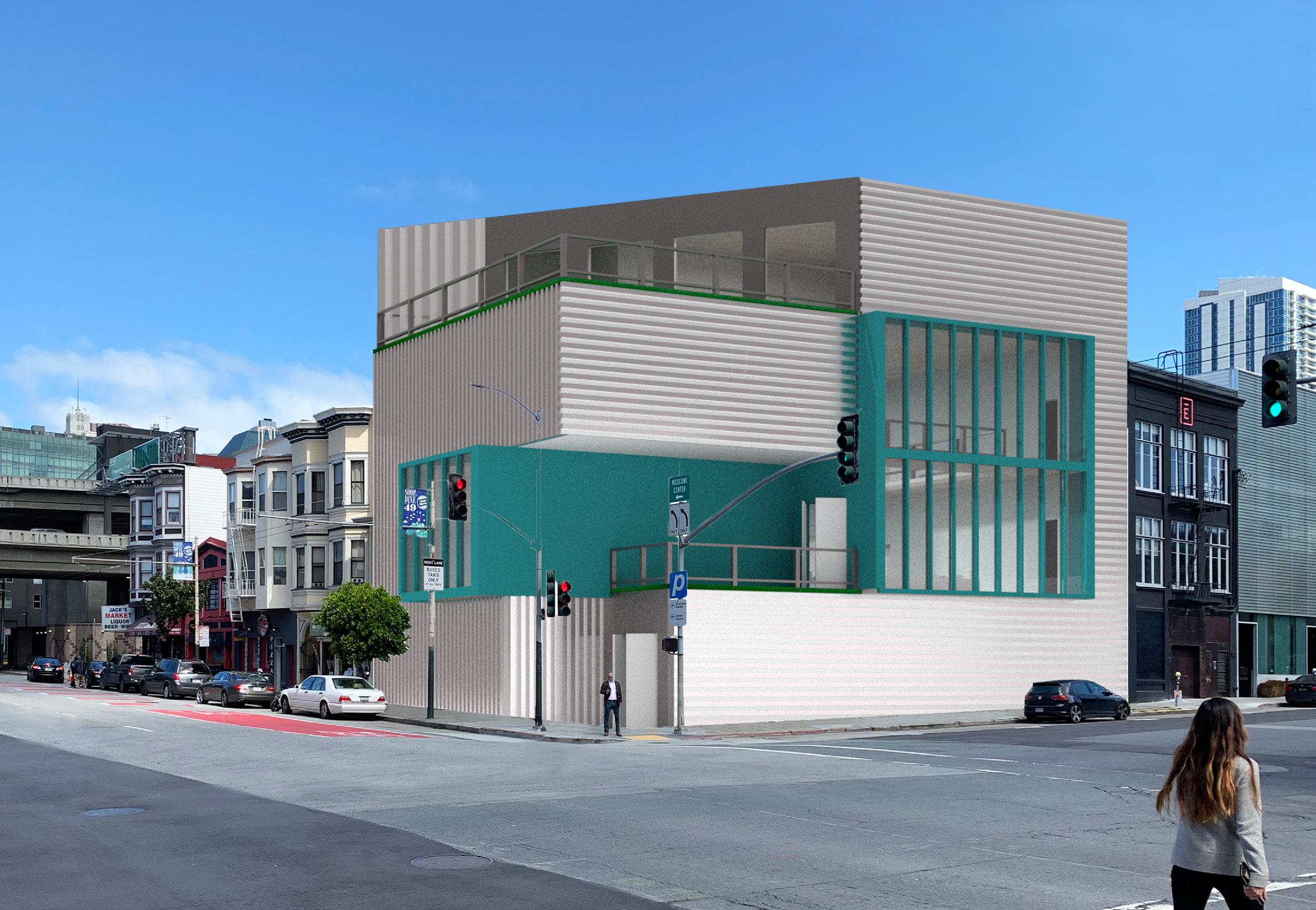
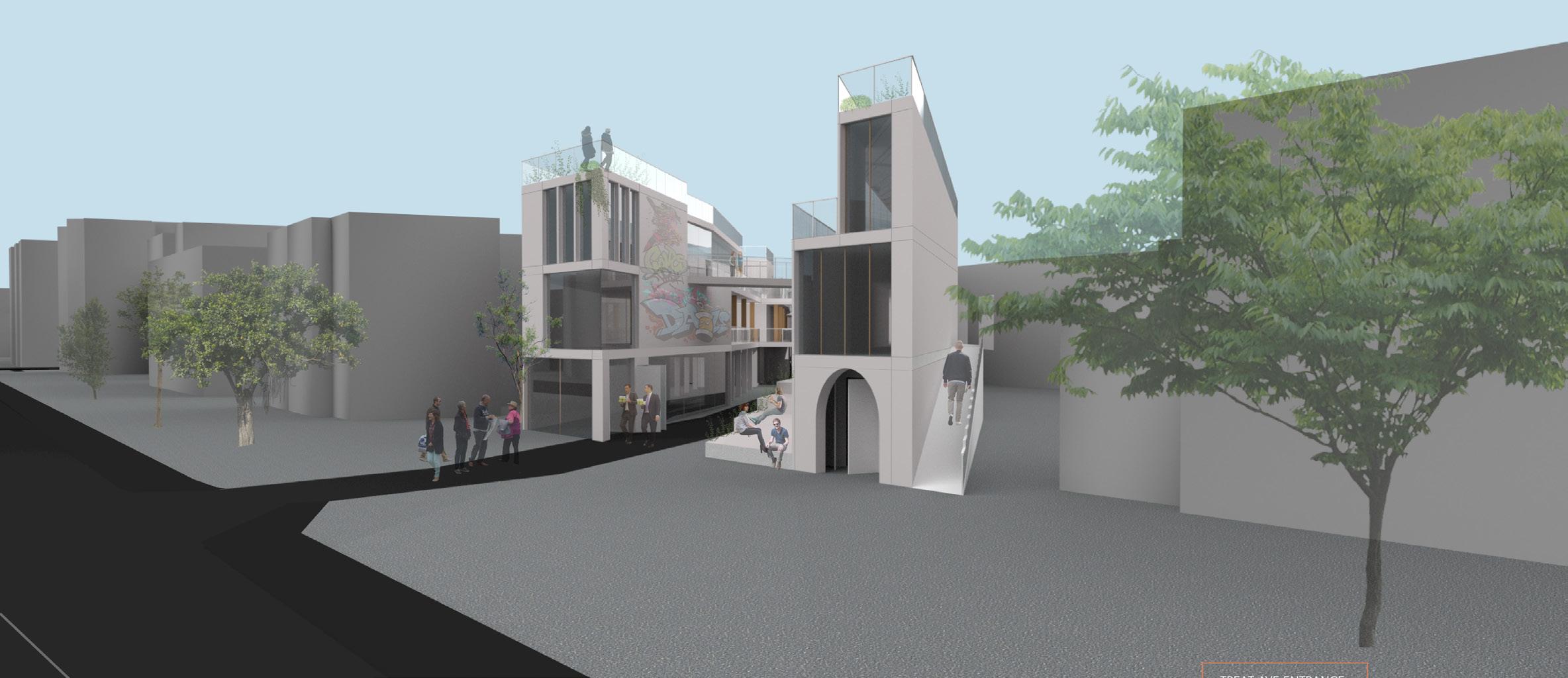 Top: (Left) Treat Avenue Entrance Render, (Right) 22nd St. Entrance Render
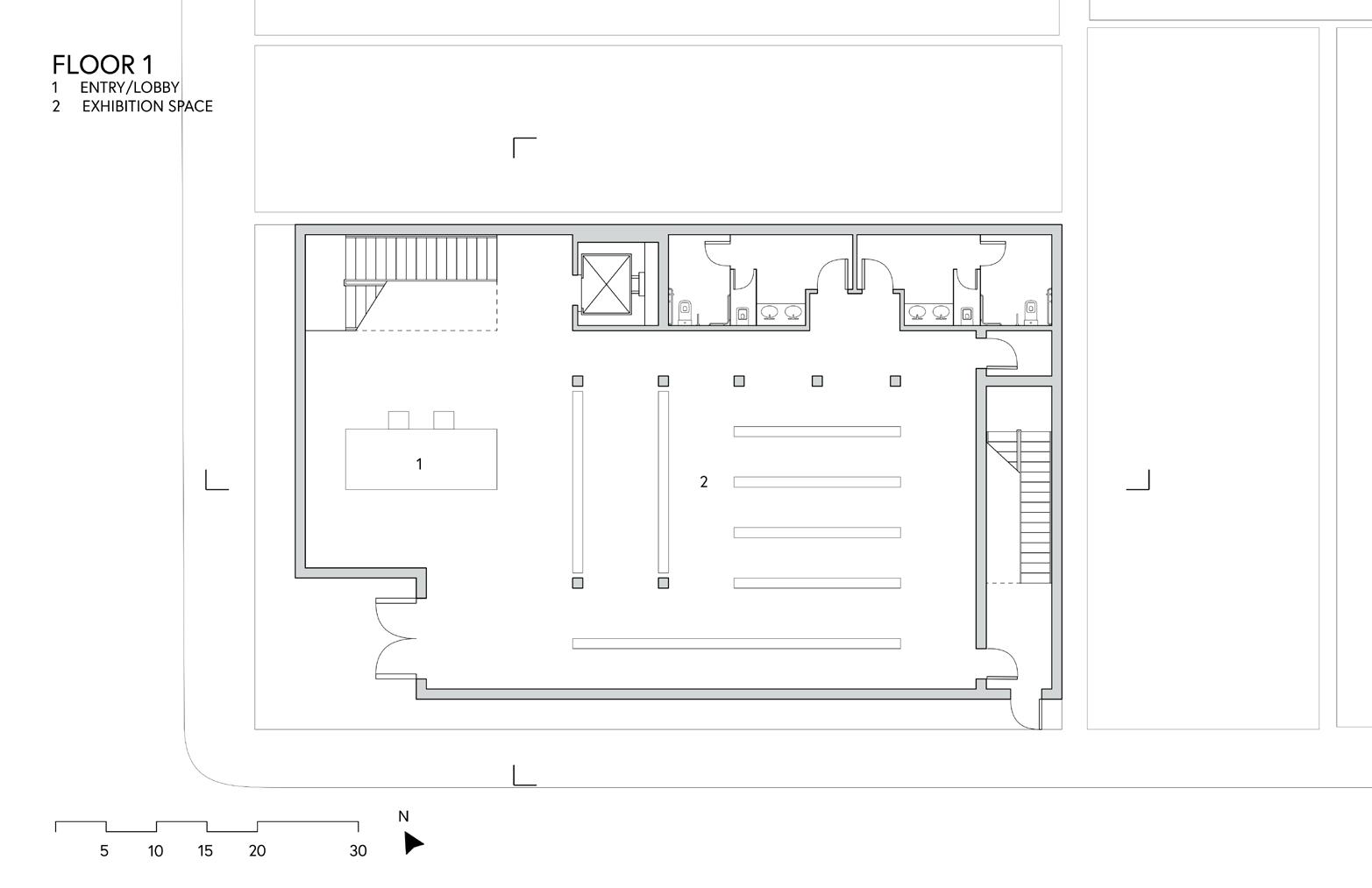
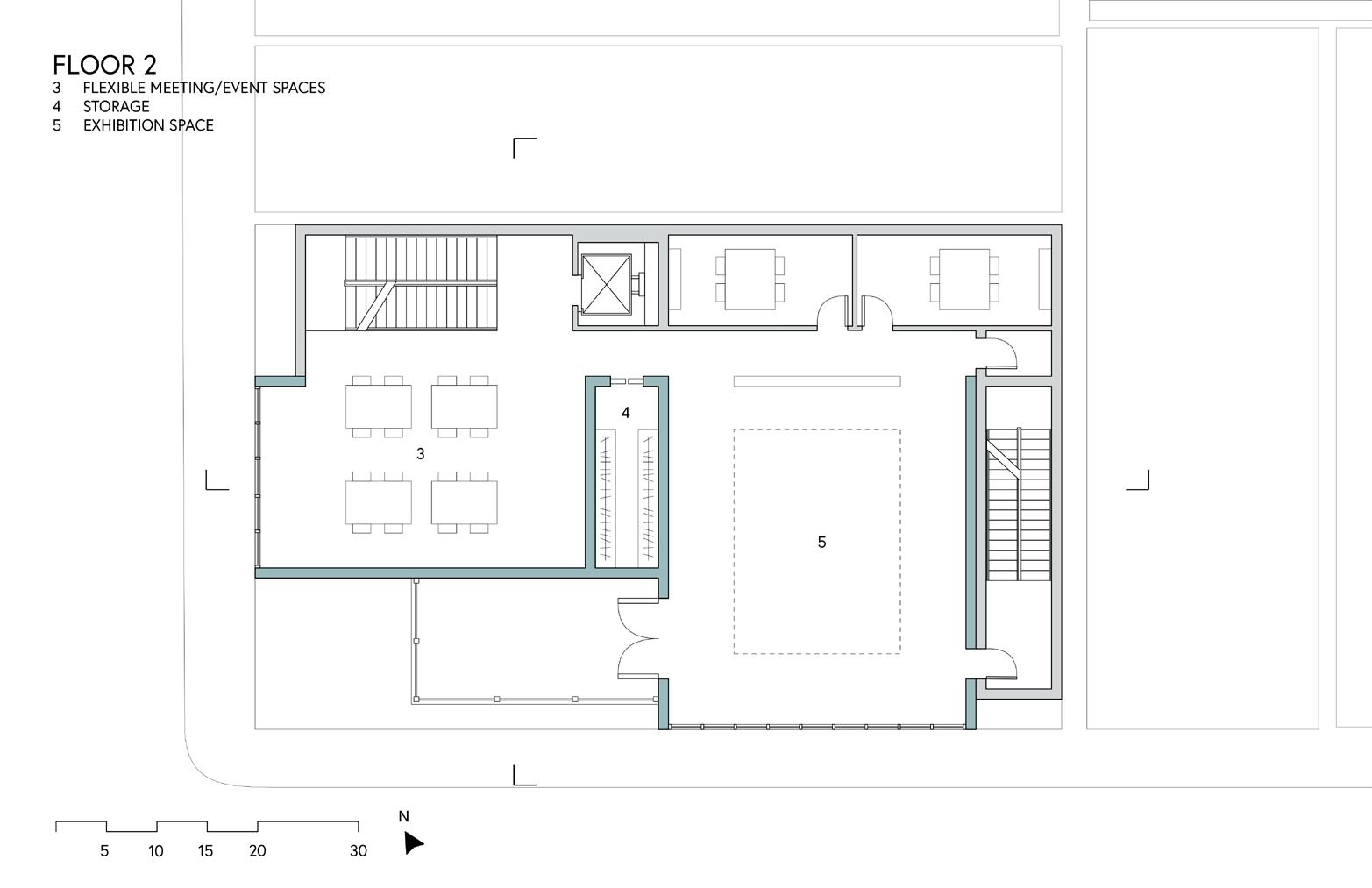
Bottom: Floor Plans
Top: (Left) Treat Avenue Entrance Render, (Right) 22nd St. Entrance Render
Bottom: Floor Plans
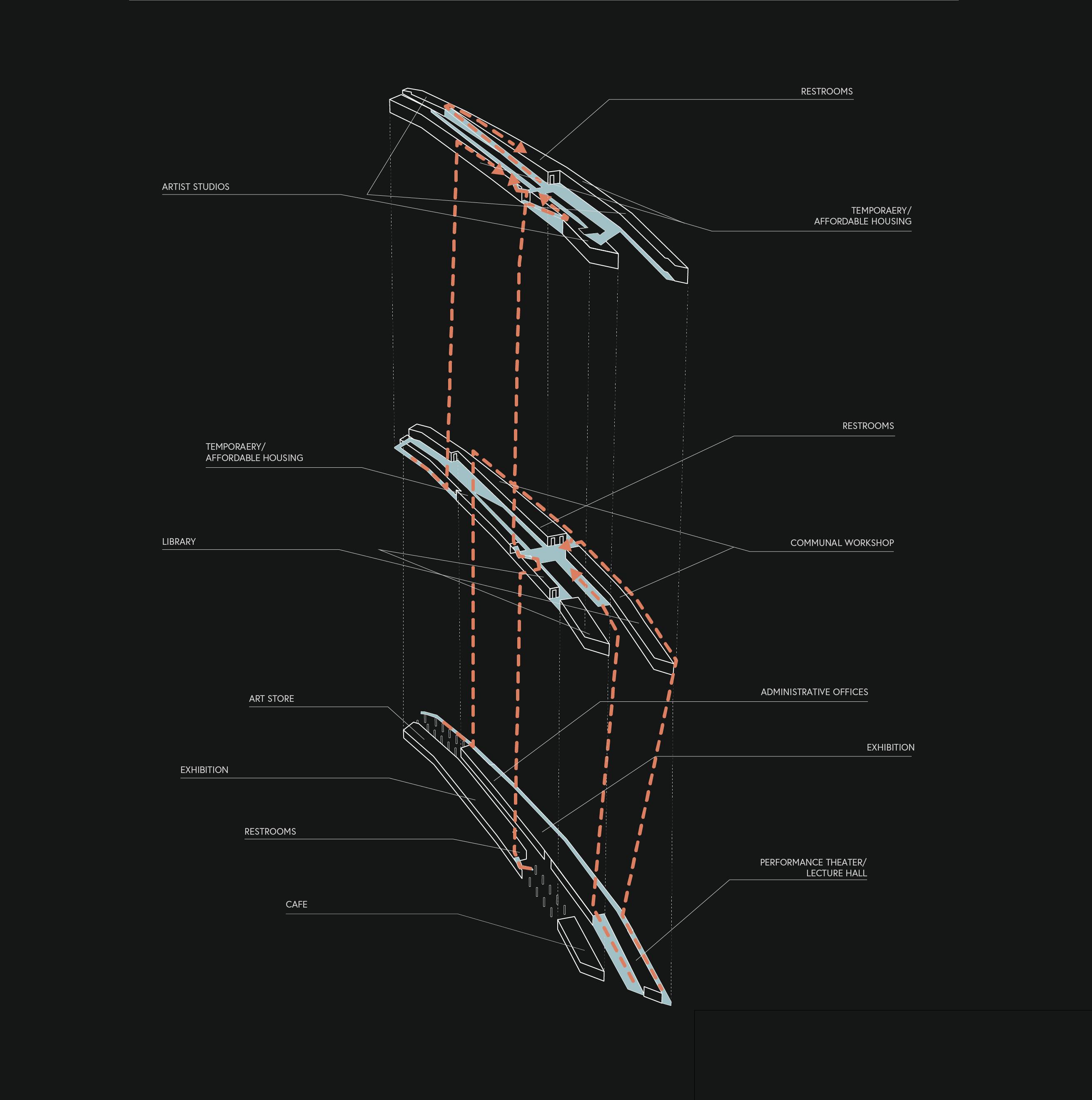
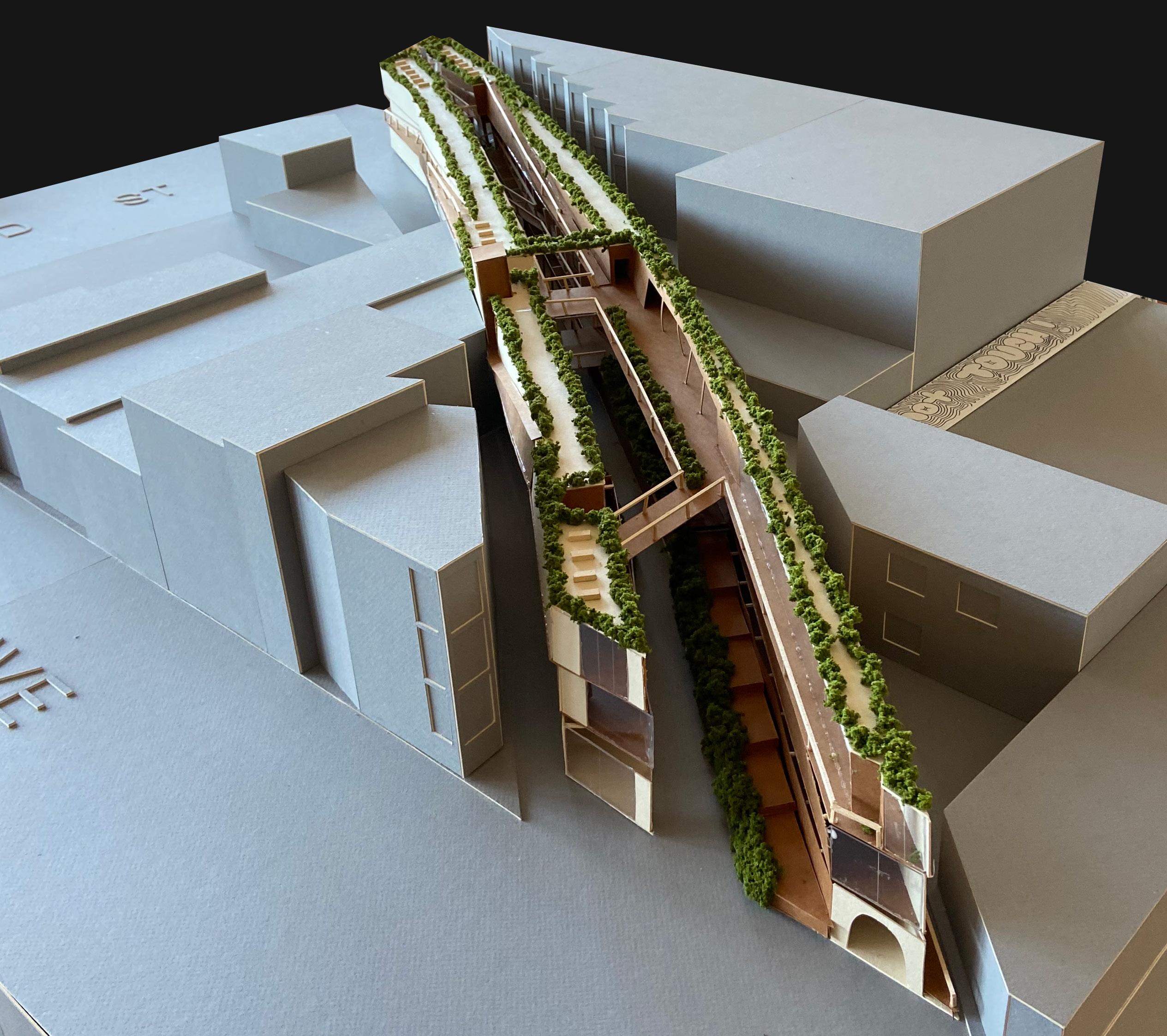 Top: (Left) Circulation Diagram, (Right) Final Physical Model
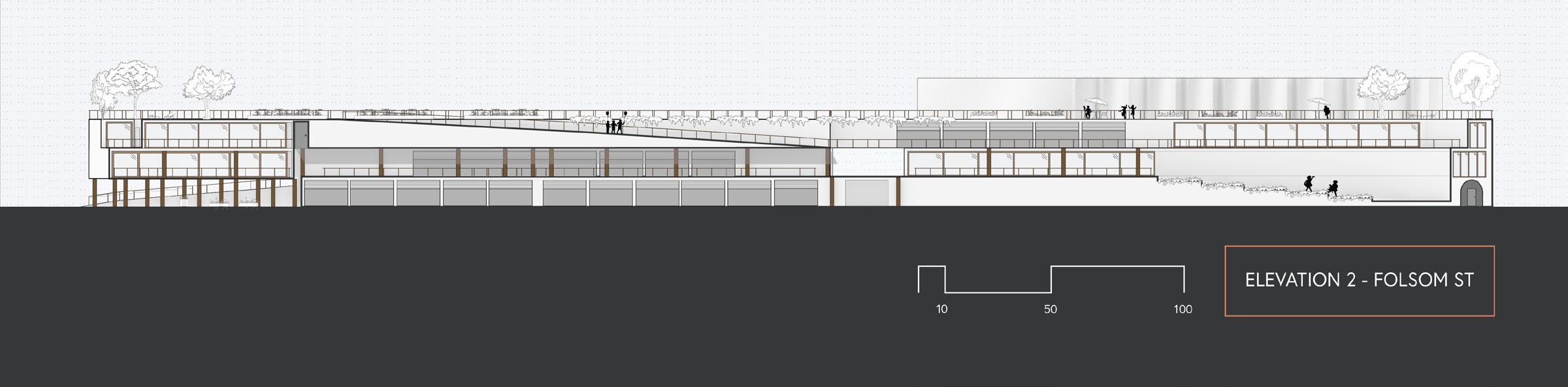
Bottom: Elevations
Top: (Left) Circulation Diagram, (Right) Final Physical Model
Bottom: Elevations

The Urban Institute
San Francisco, CA | Keith Plymale
Fundementals of Architectural Design | Spring 2022
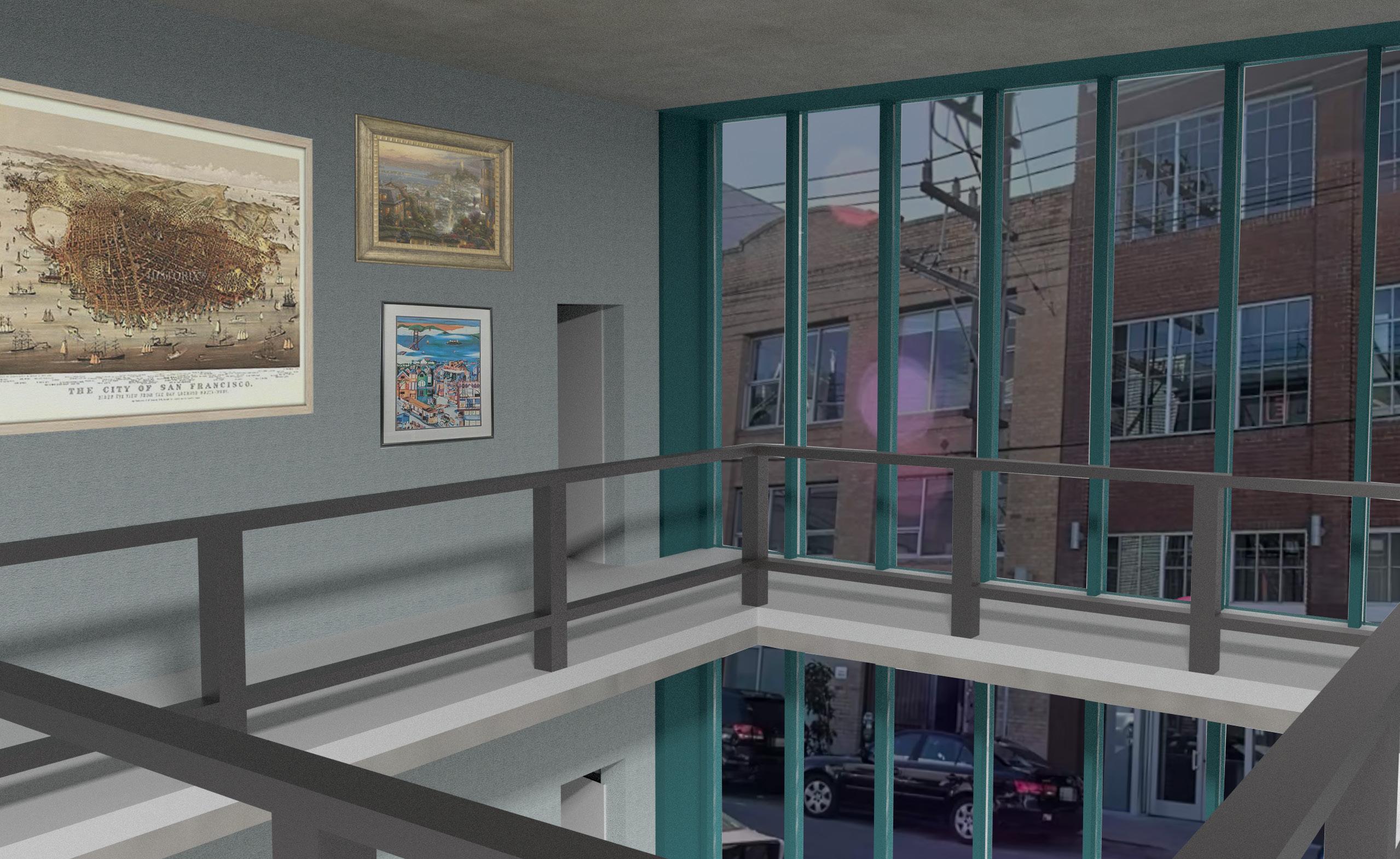
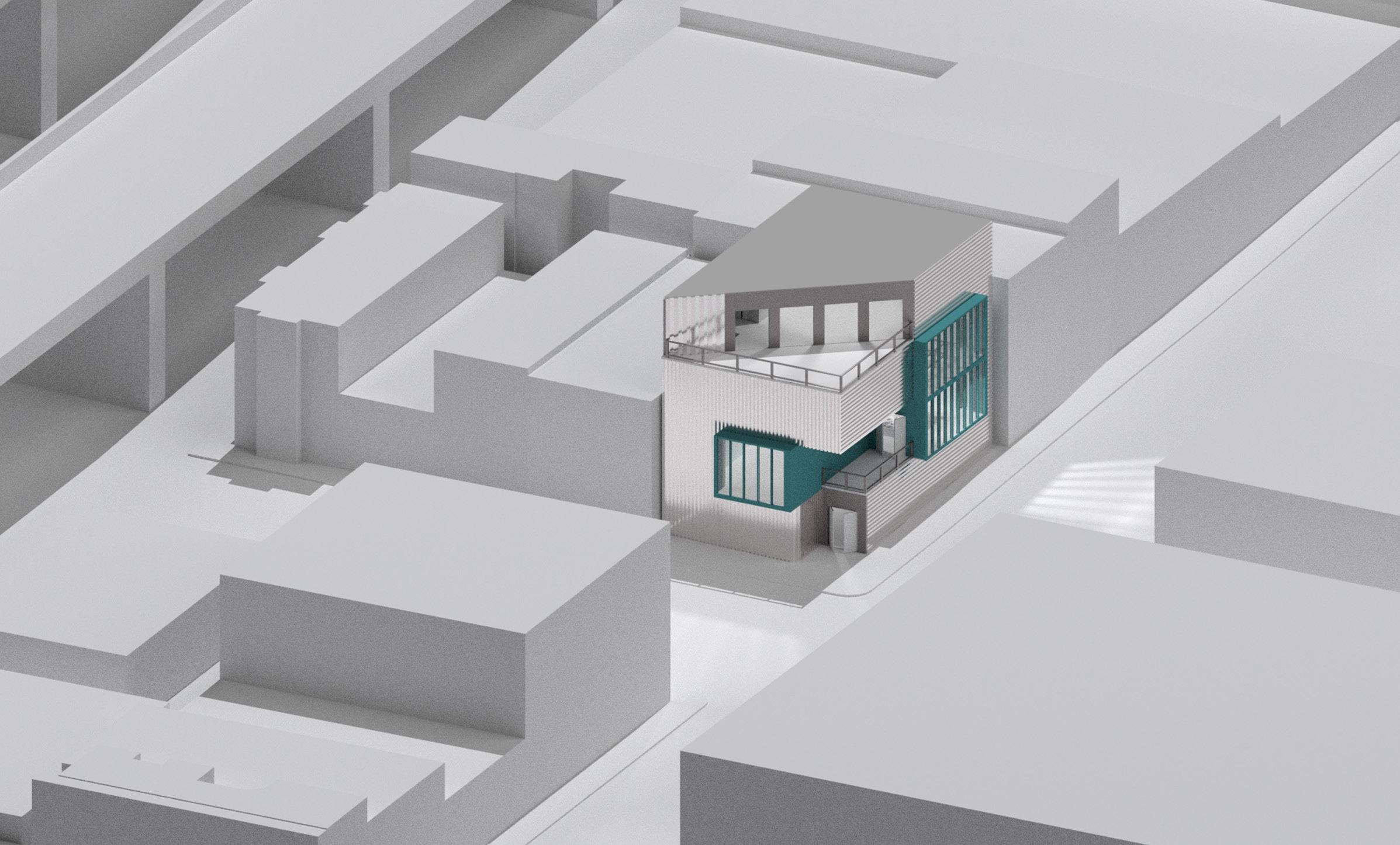
The Urban Institute stands as a remarkable testament to collaborative efforts aimed at enhancing architecture and urban design in the Bay Area. It brings together diverse programs united by a shared passion for advancing these disciplines. Through interconnected tracks of research, education, and advocacy, this project asserts that superior urban living can be achieved through thoughtful design.
A central objective of the project was to facilitate the productive merger and interaction of various programs, each with its distinct spatial requirements. Drawing inspiration from the esteemed Shanghai Modern Art Museum in China, I meticulously studied its design precedent, which greatly influenced and shaped my own architectural vision. Emphasizing the street corner, my building design incorporates interlocking shapes that create a dynamic and engaging environment, seamlessly integrating outdoor spaces and providing much-needed shade.
 Above: Corner Exterior Render
Right: (Top) Conceptural Premise/Primary Intent Diagram, (Bottom) Programmatic Strategy of Project
Above: Corner Exterior Render
Right: (Top) Conceptural Premise/Primary Intent Diagram, (Bottom) Programmatic Strategy of Project


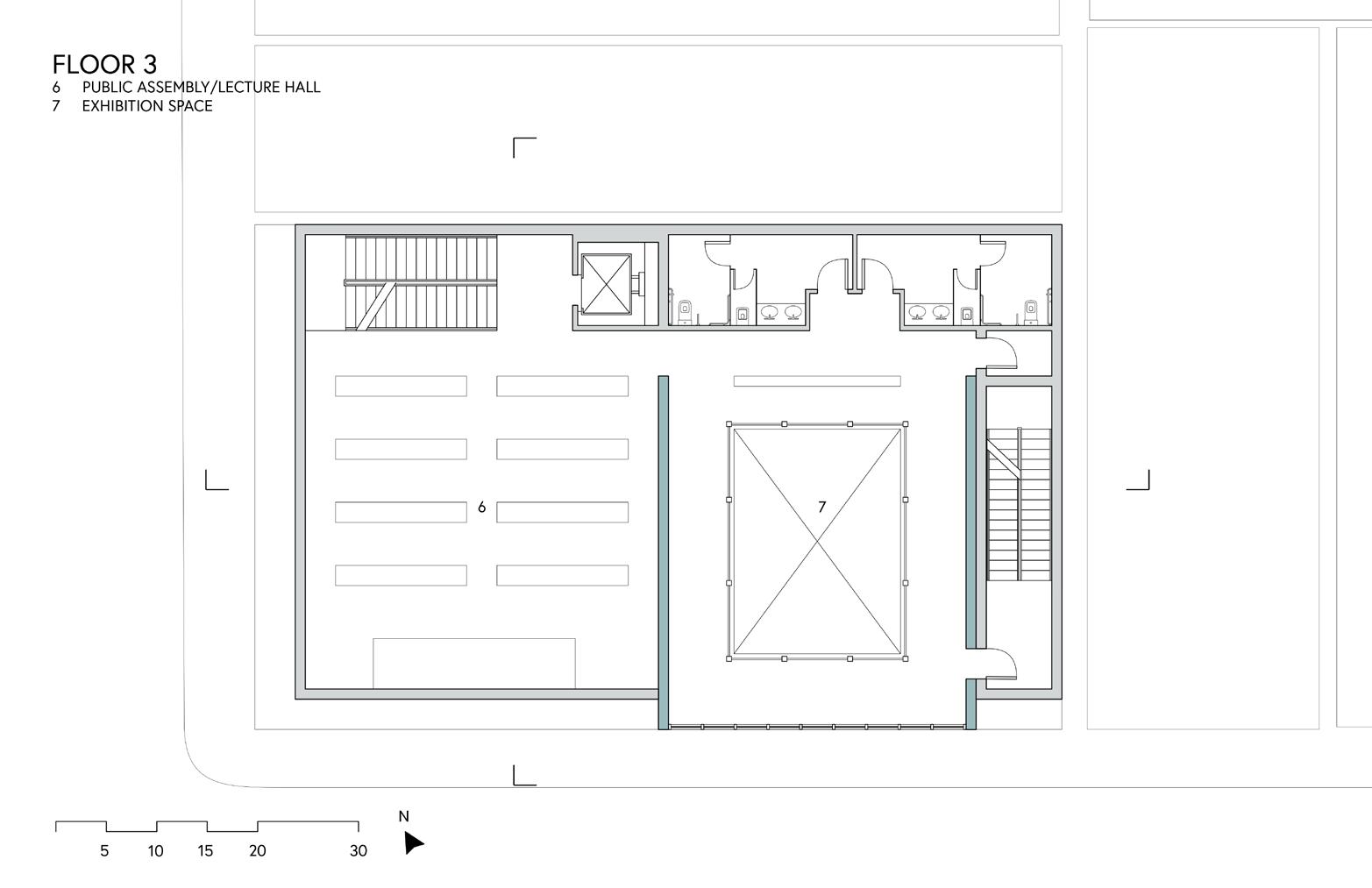
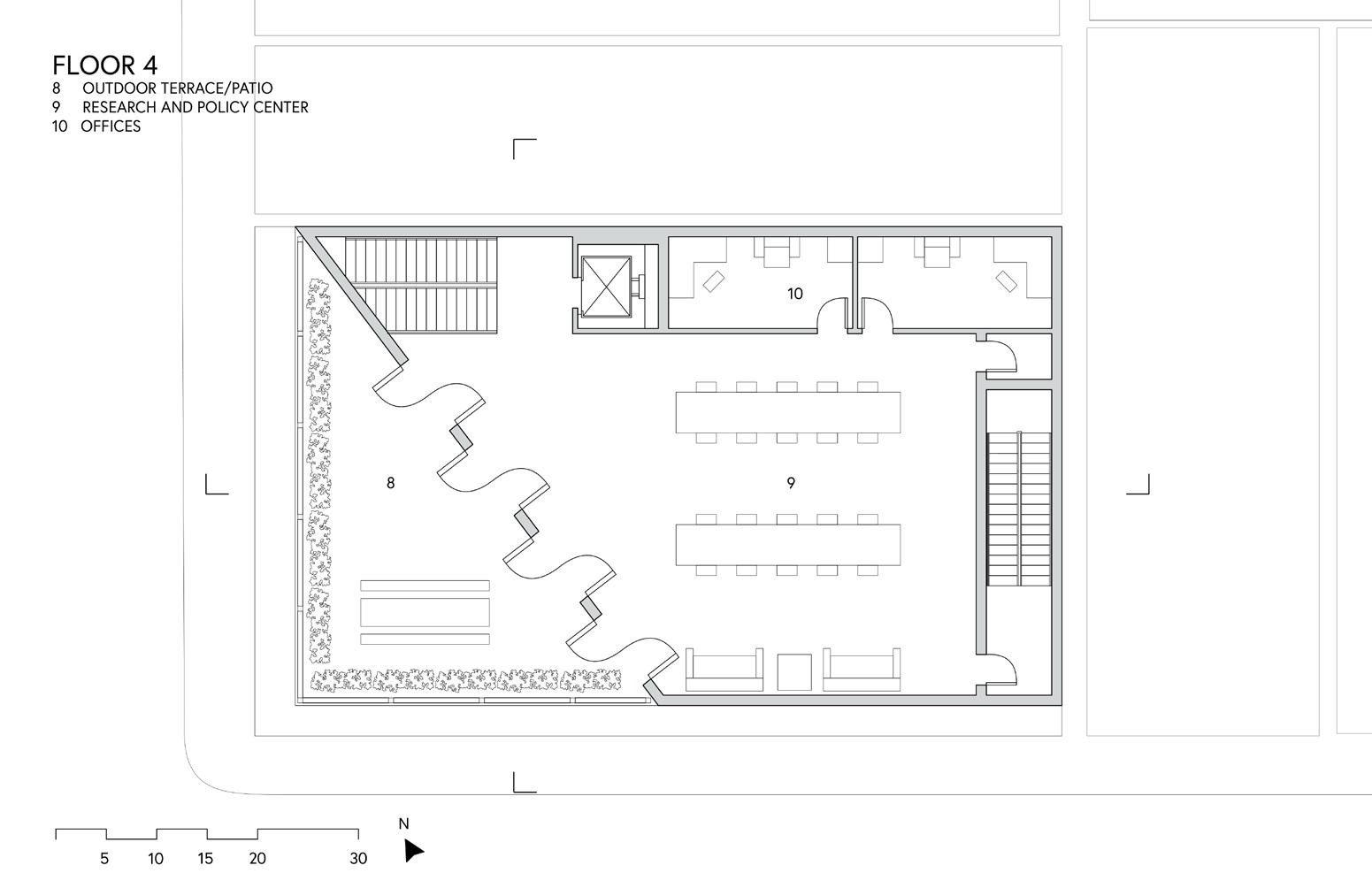 Left and Middle: Plans
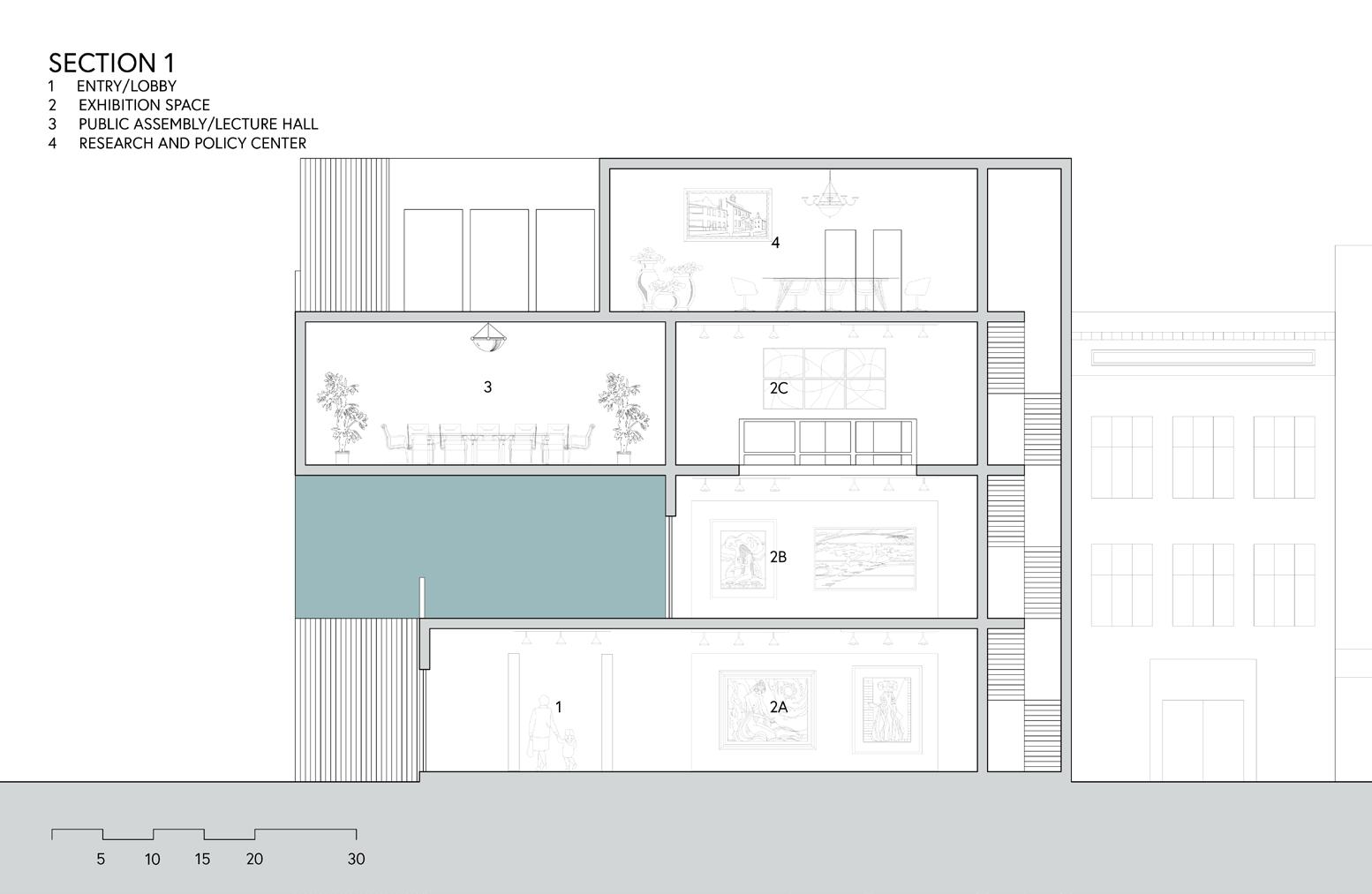
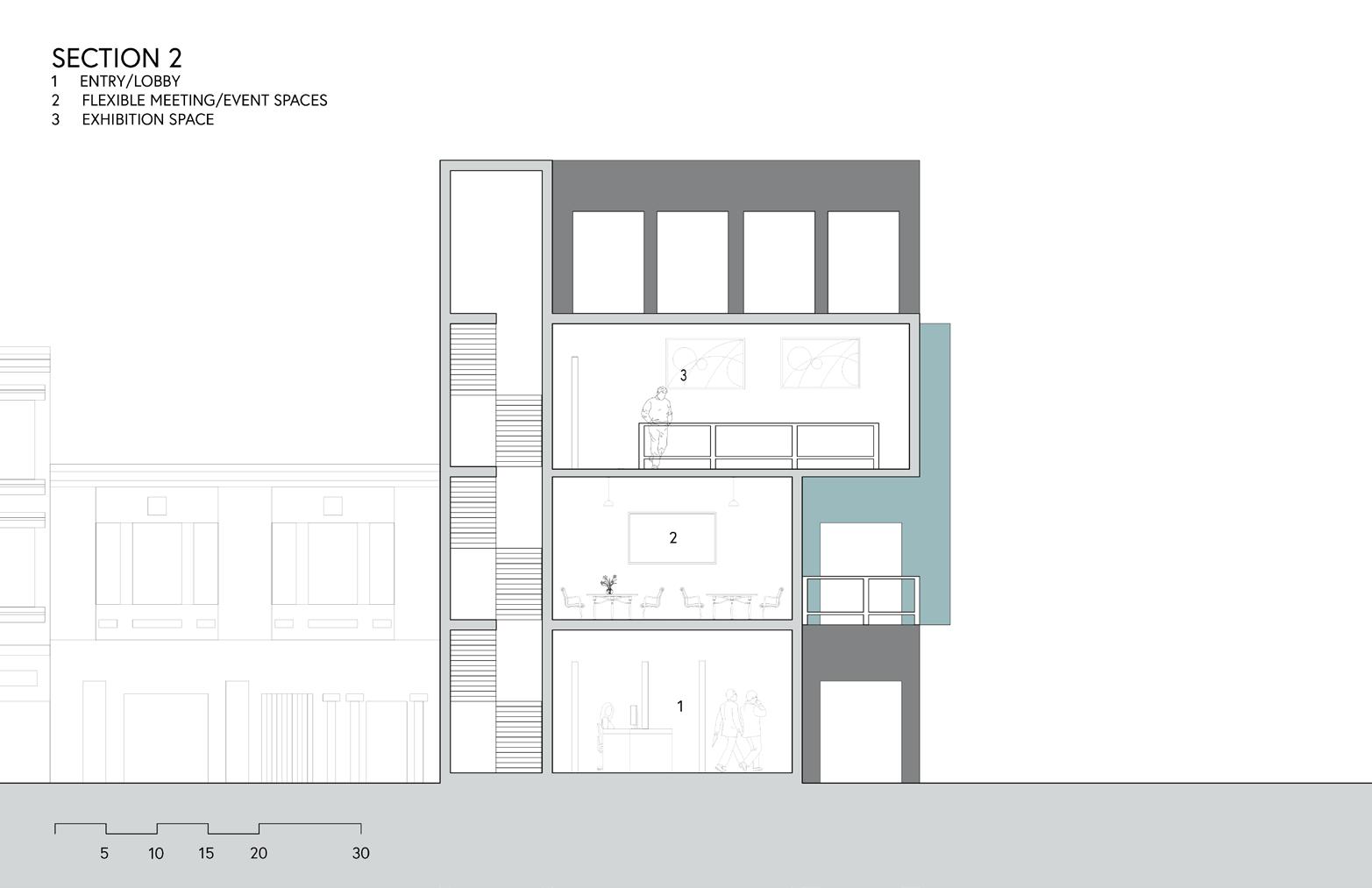
Right: Section Cut Elevations
Left and Middle: Plans
Right: Section Cut Elevations
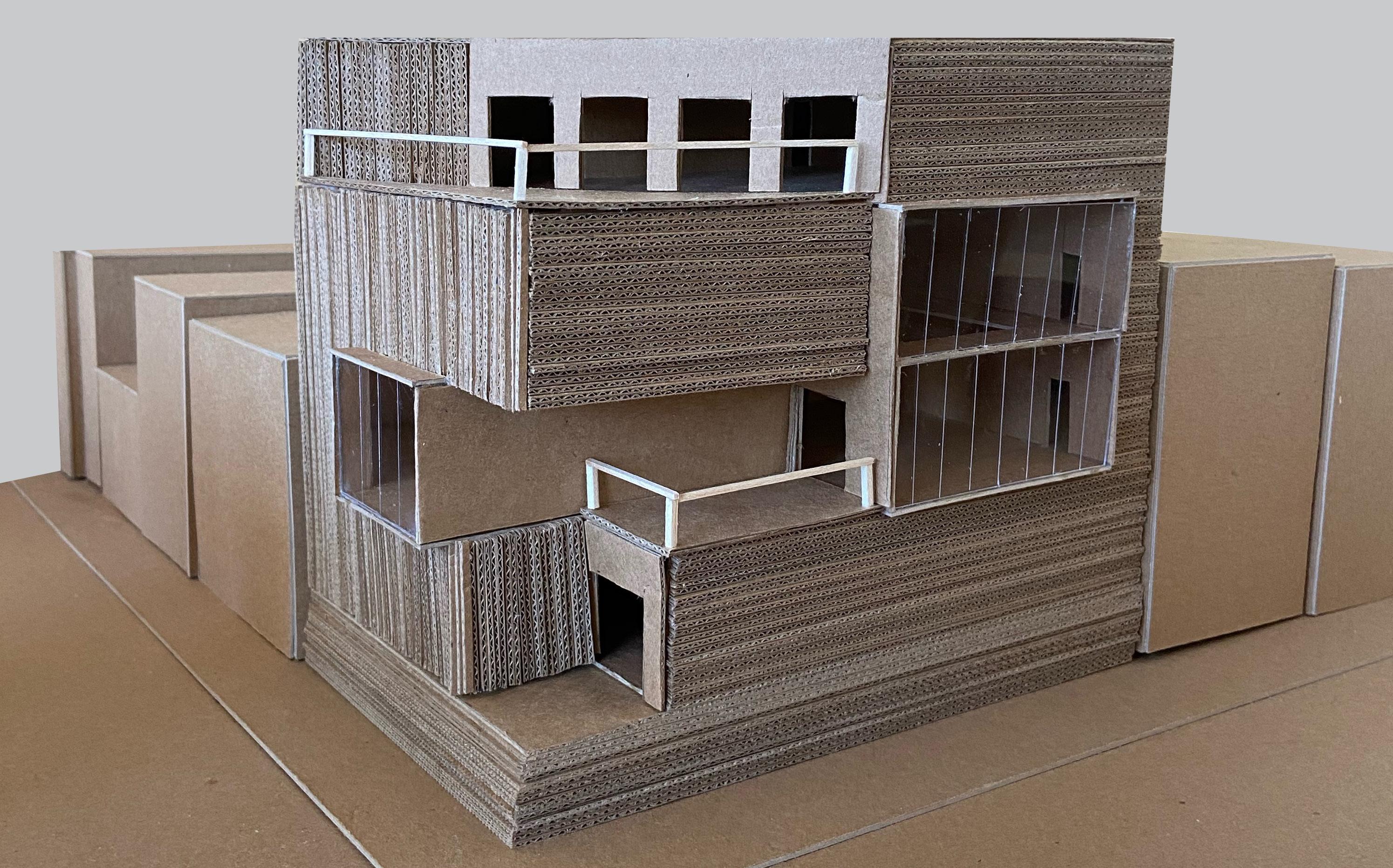
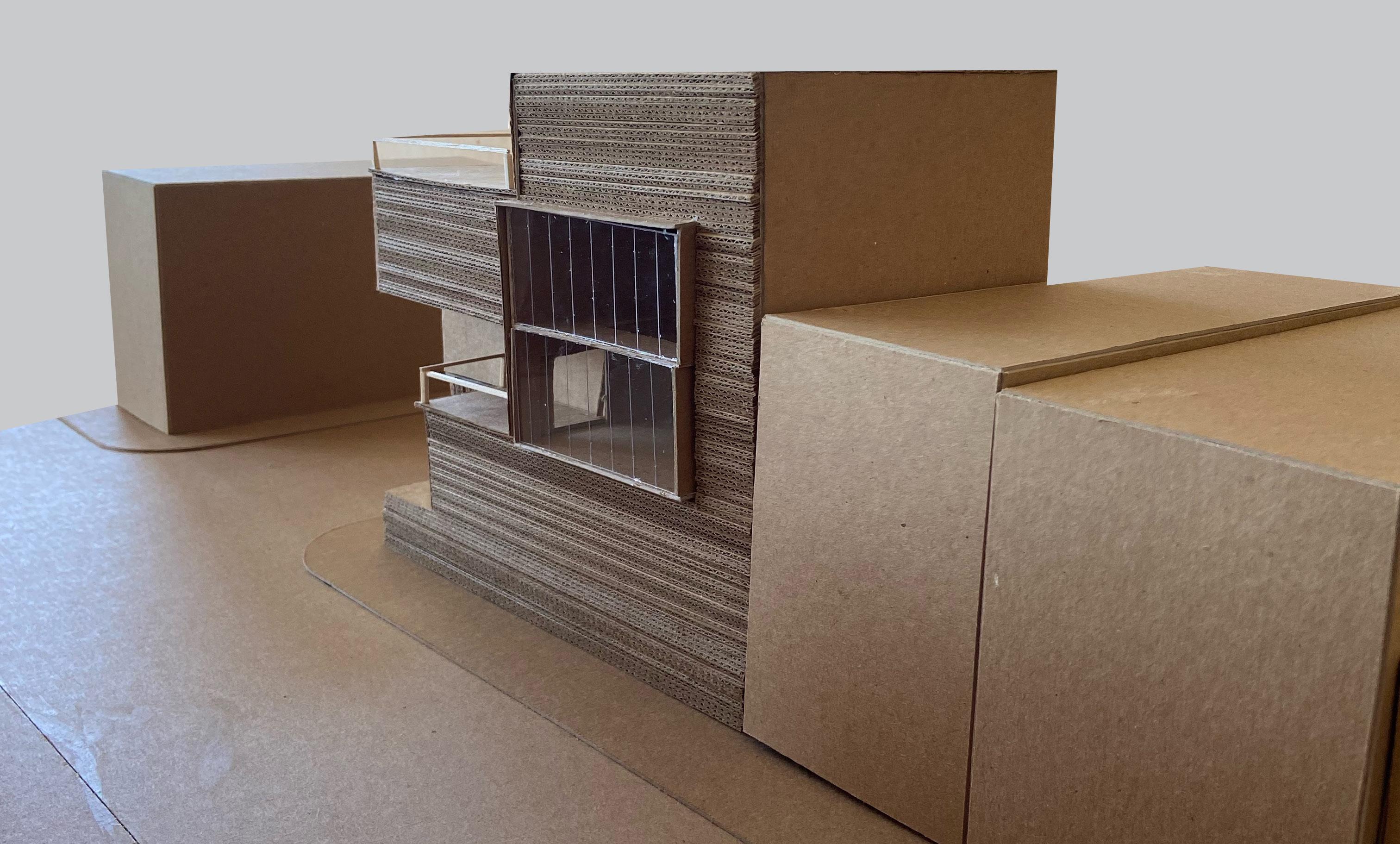 Top: Final Physical Model
Right: interior Render, (Bottom) Bird’s Eye View Render
Top: Final Physical Model
Right: interior Render, (Bottom) Bird’s Eye View Render
Oakland Community Center
Oakland, CA | Jasmit Rangr
Fundementals of Architectural Design | Fall 2021
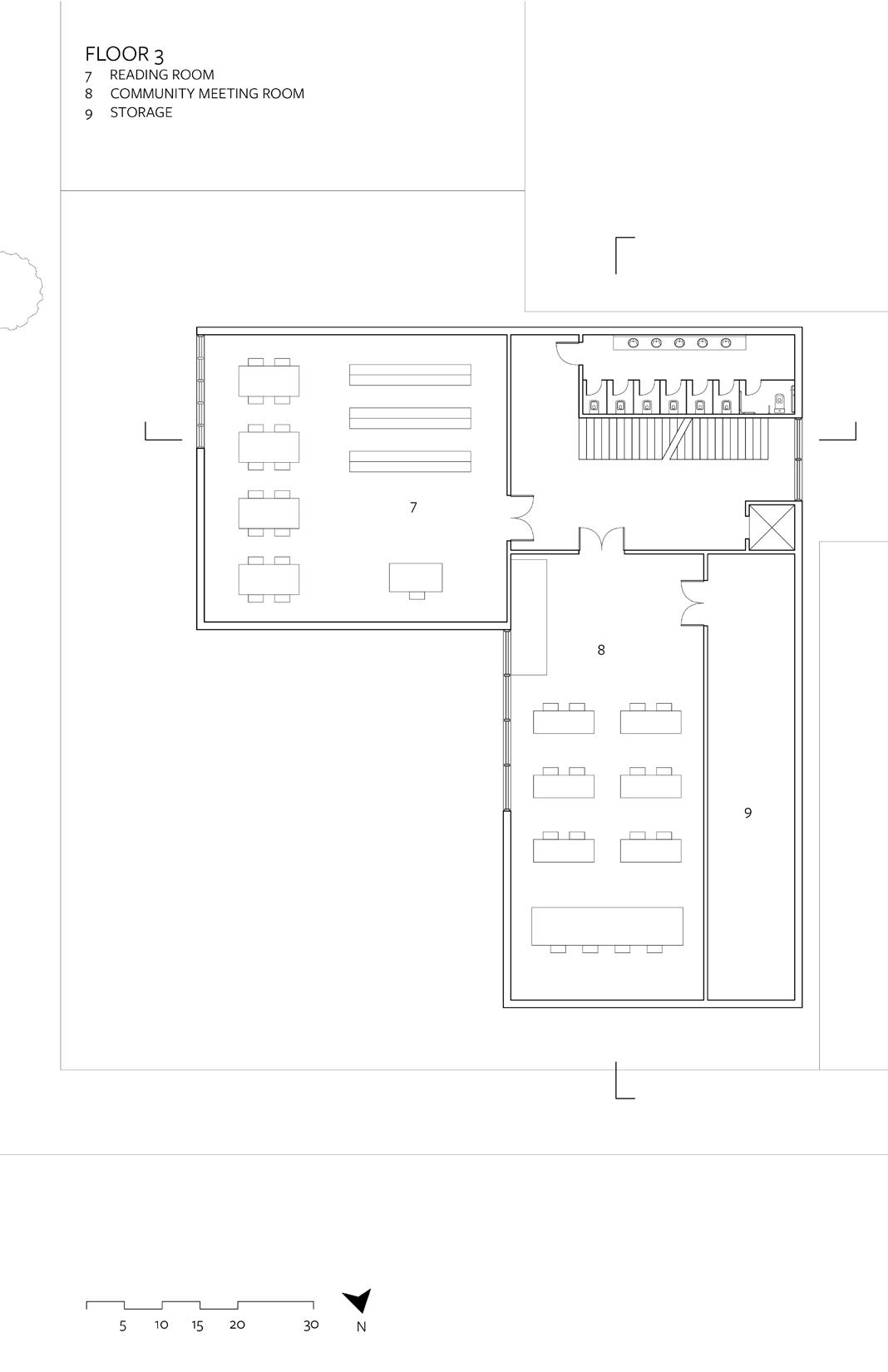
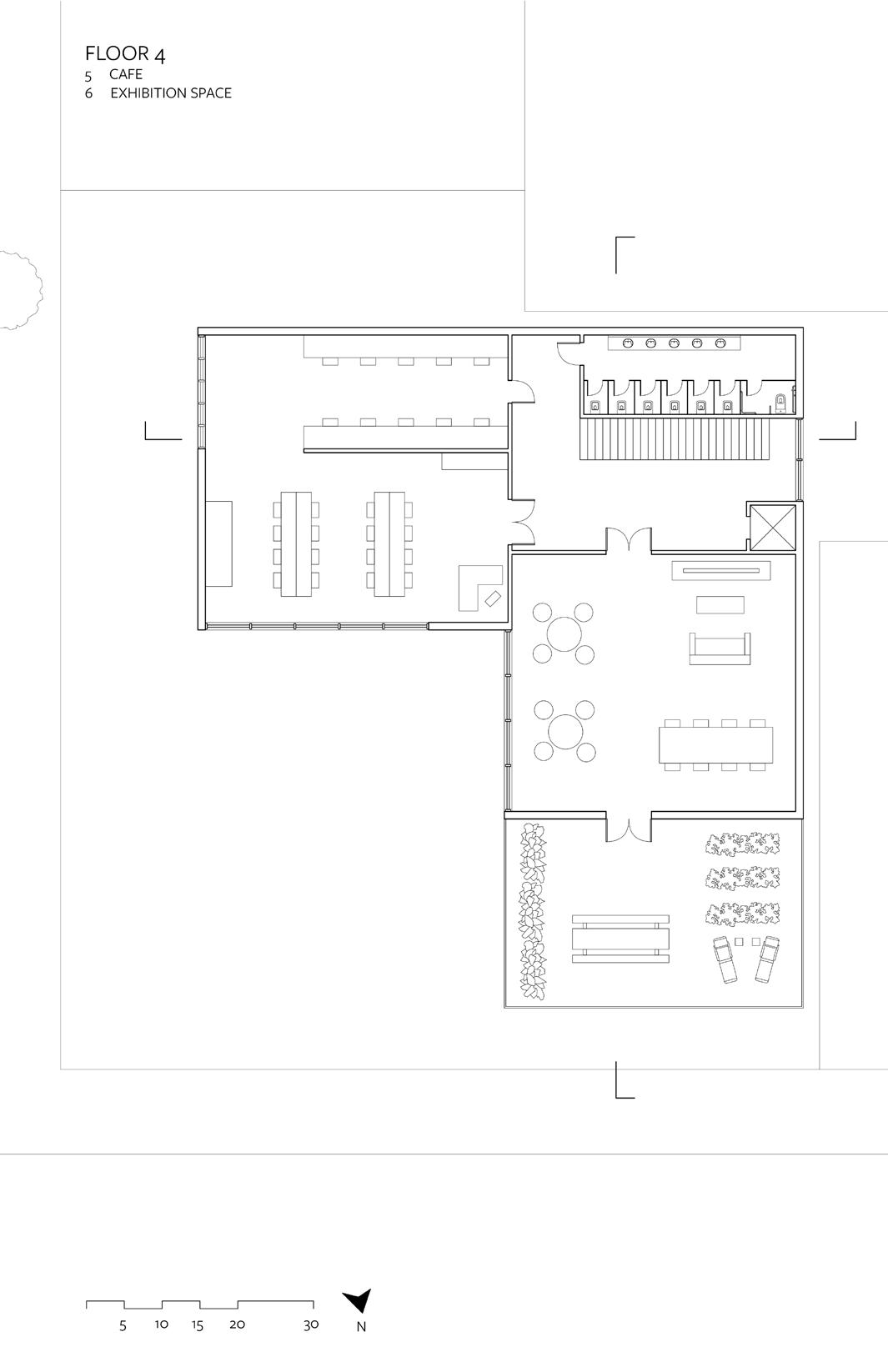
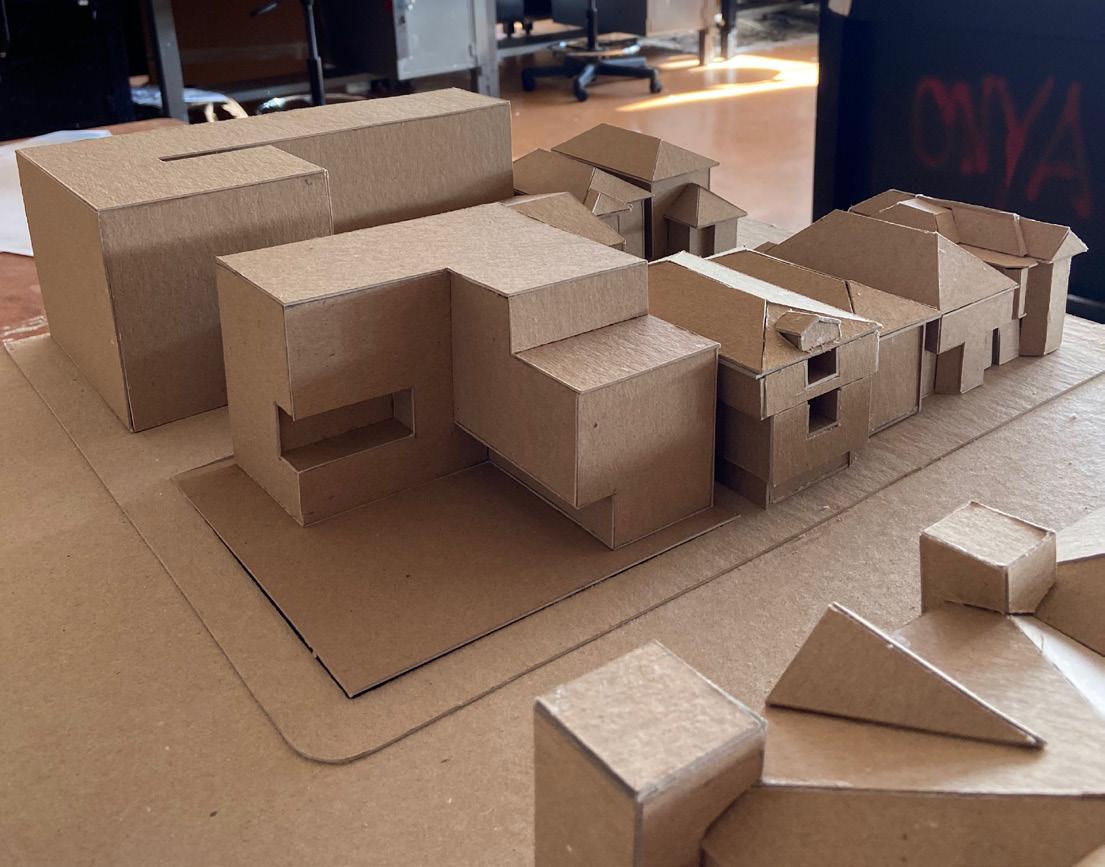
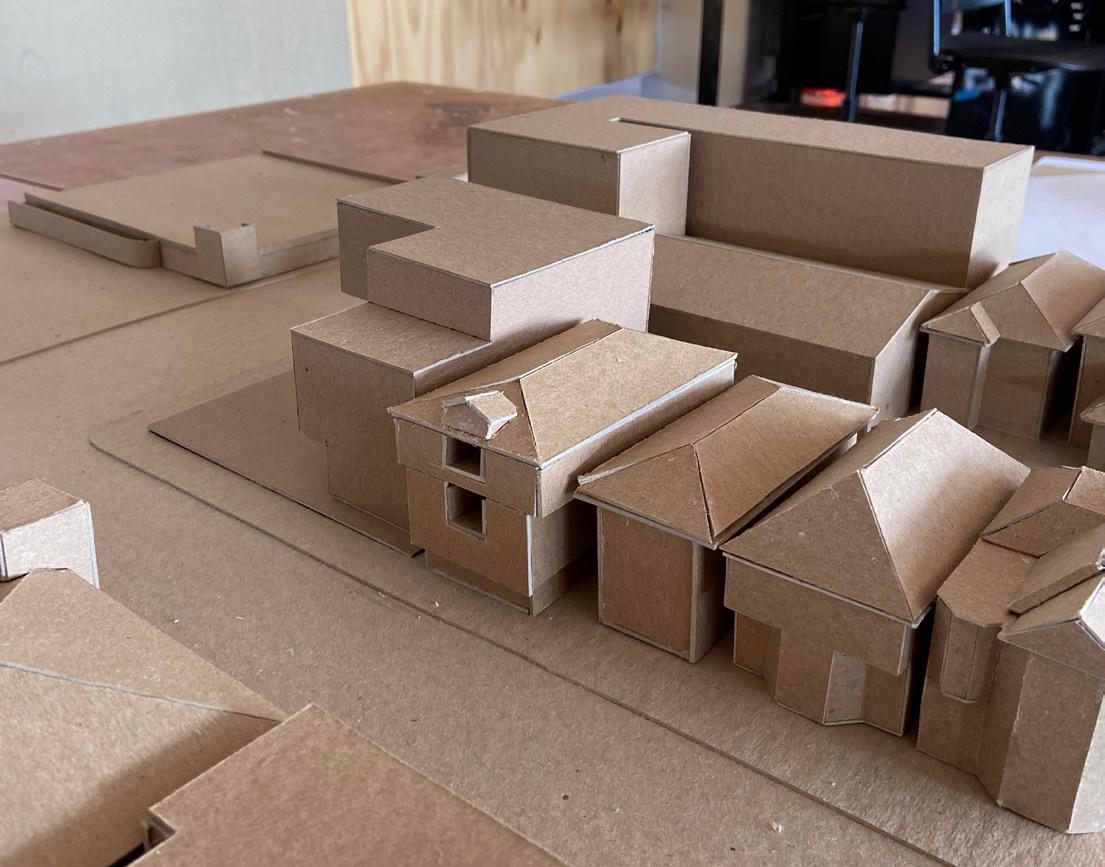
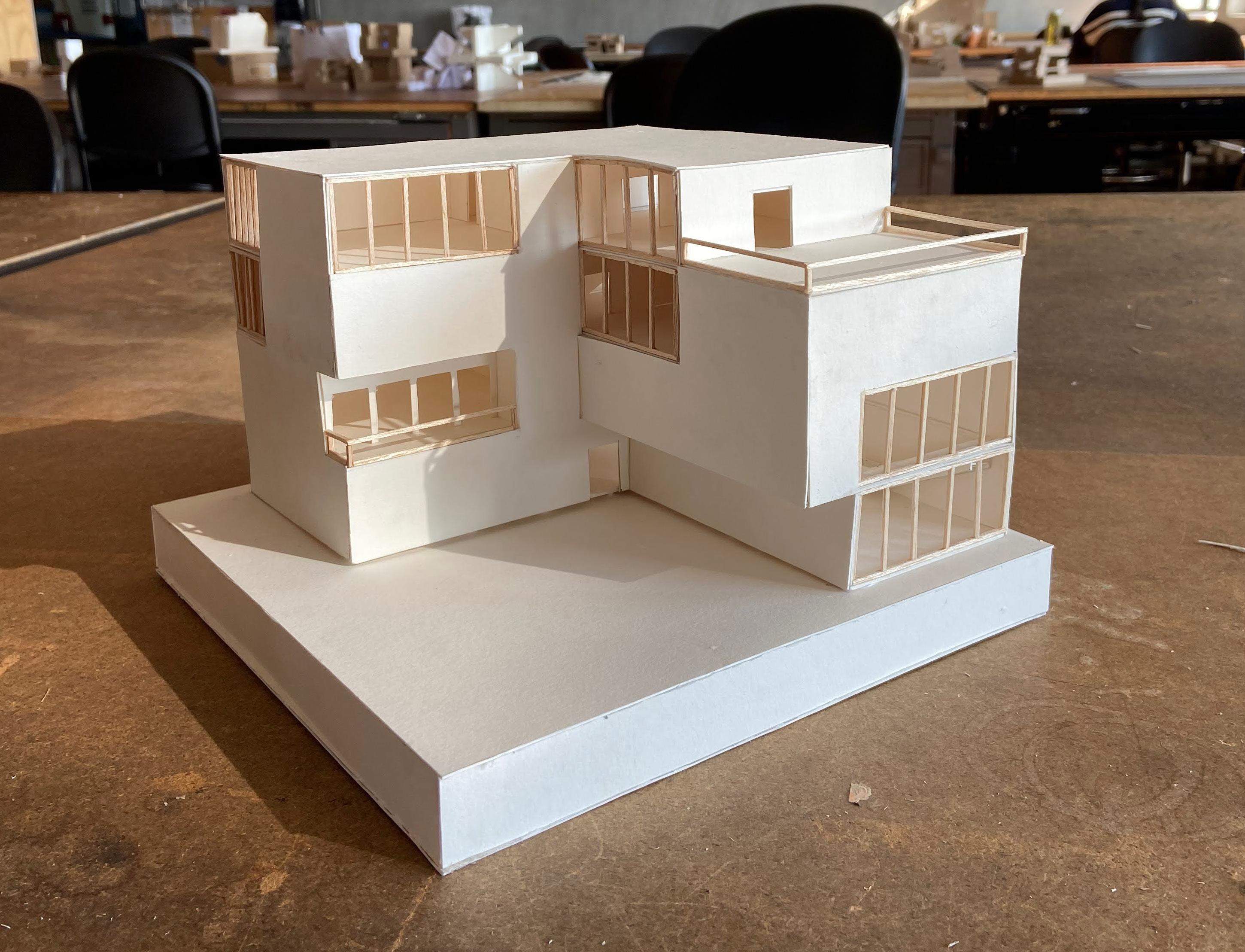
This project marked my inaugural foray into museum design, wherein I endeavored to merge design concepts encompassing materiality, programming, and form. Simultaneously, I delved into the realms of site analysis, order, color, and circulation, prompting fundamental inquiries: What defines a museum? How should a museum be conceptualized? What does it mean to be “part museum”? What about being “part something else”?
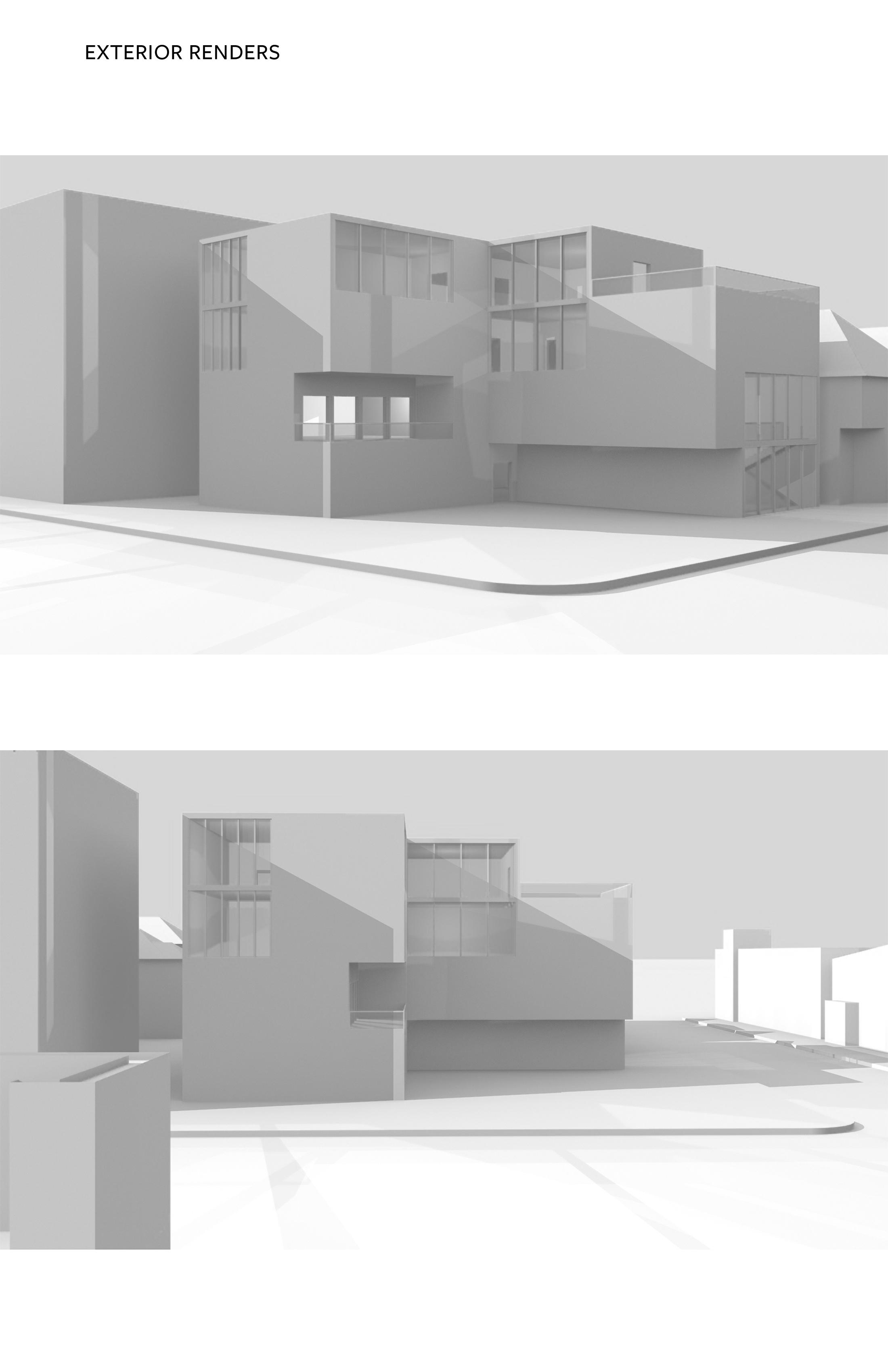 Top: Corner Render
Right: (Top) Interior Render, (Bottom) Exterior Render
Top: Corner Render
Right: (Top) Interior Render, (Bottom) Exterior Render
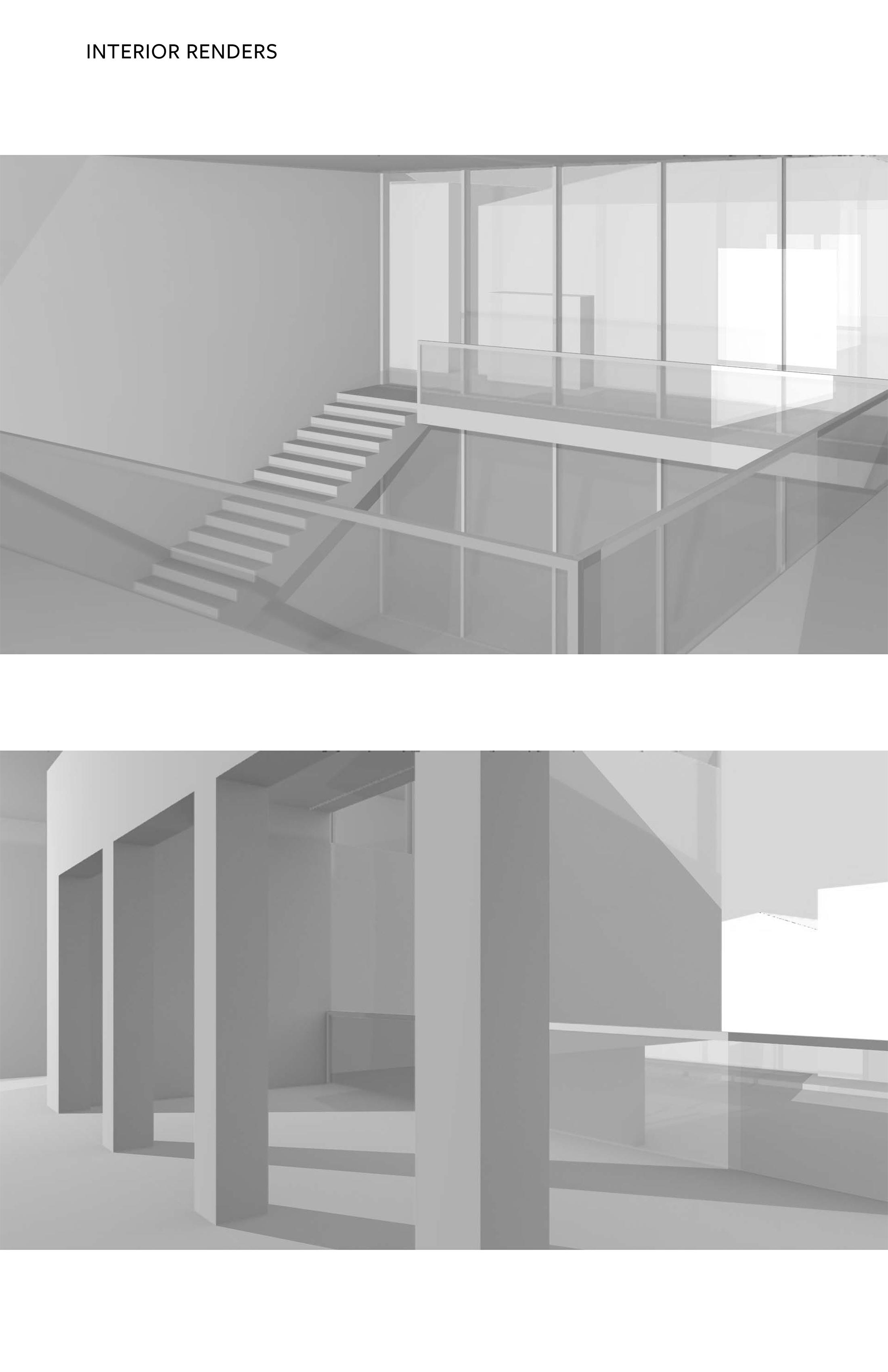
Top:
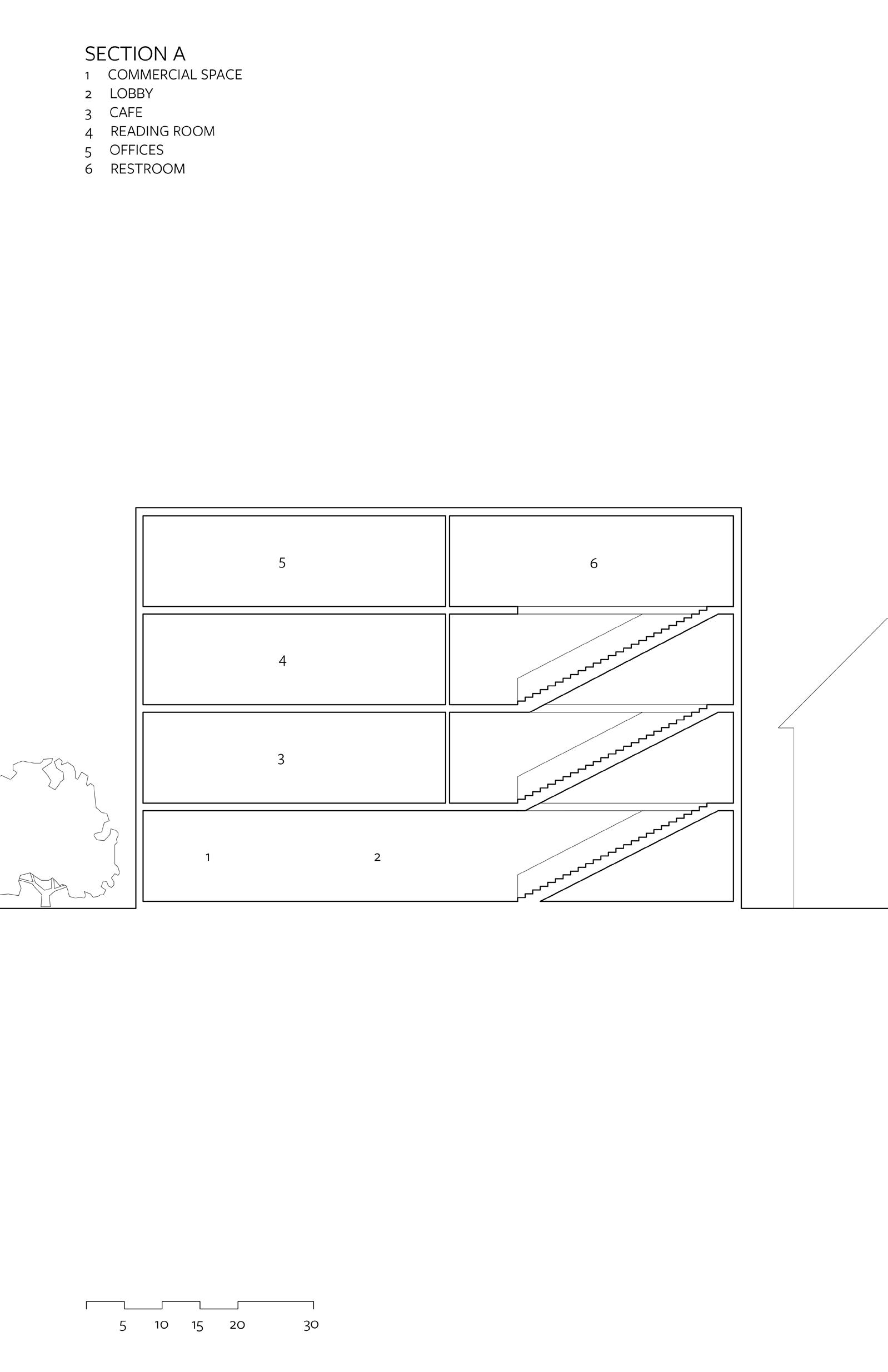
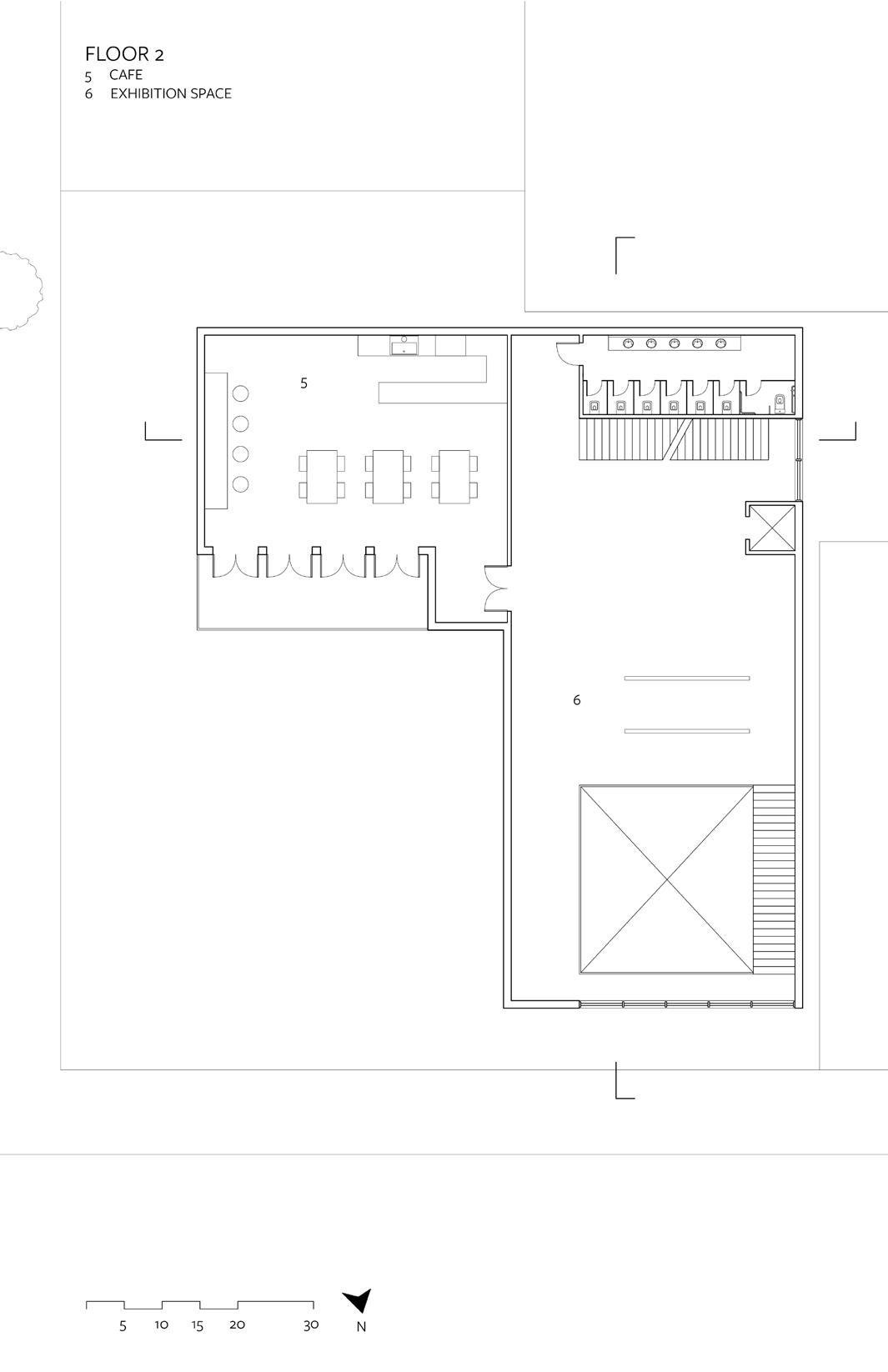
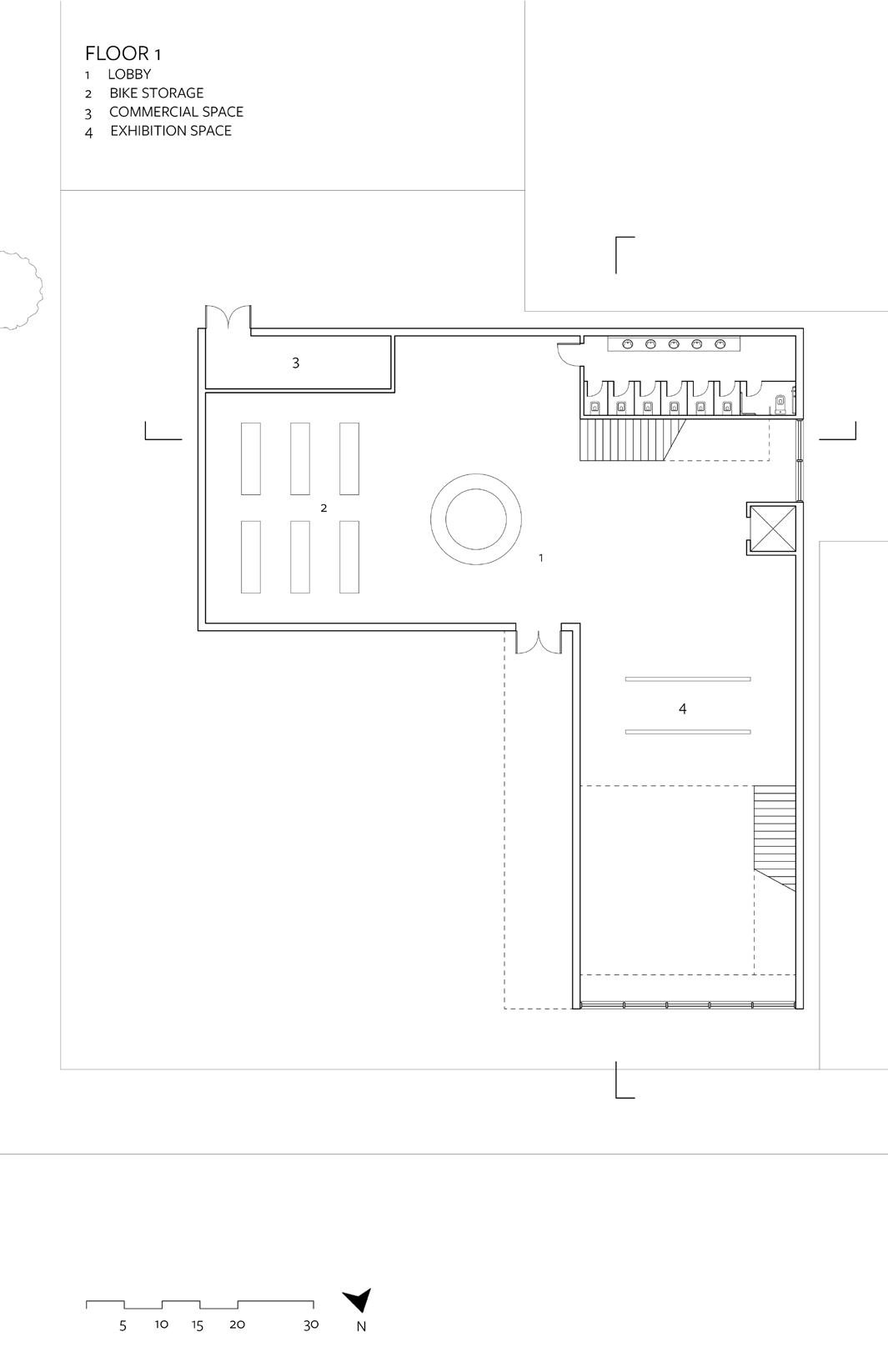 Plans
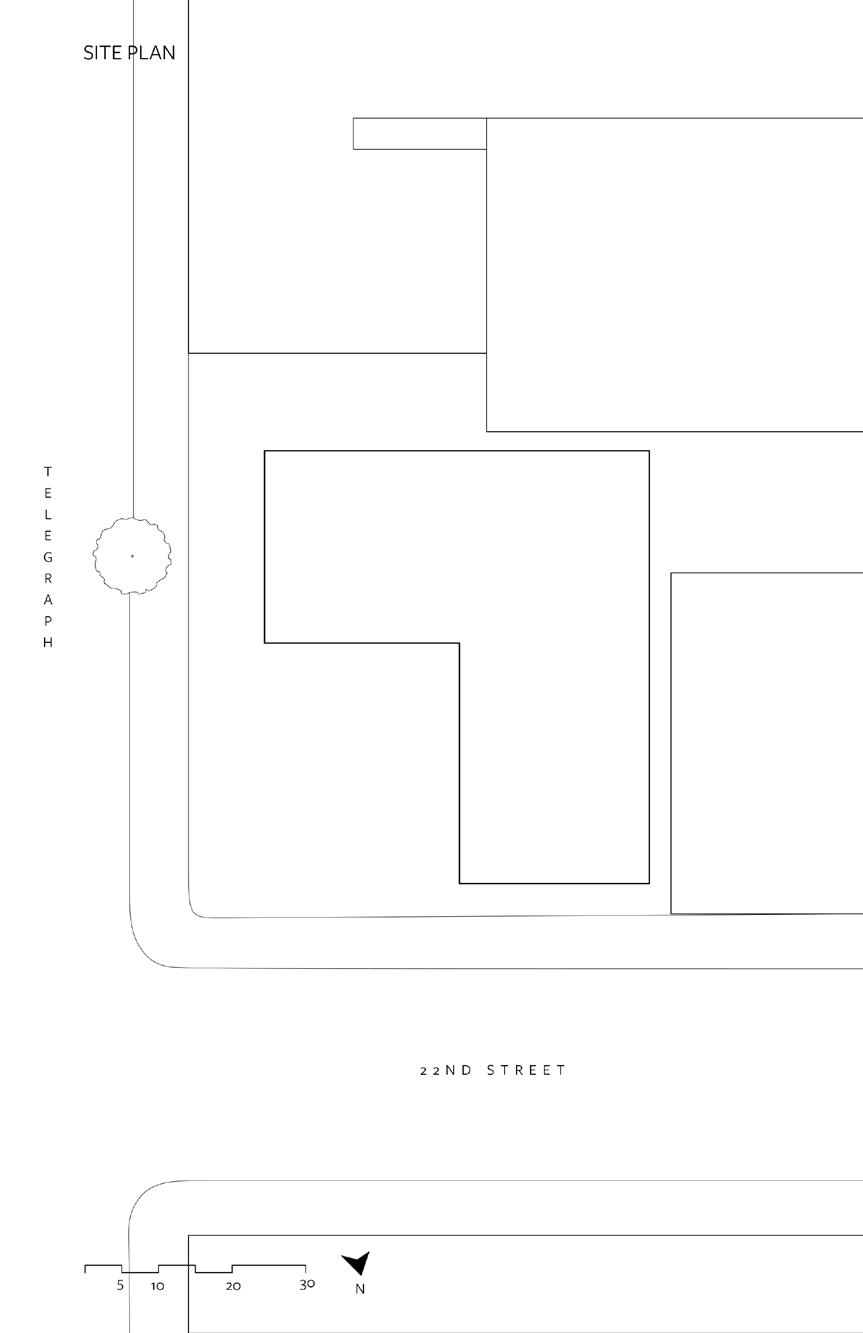
Bottom: Site Plan, (Right) Section Cut Elevations
Plans
Bottom: Site Plan, (Right) Section Cut Elevations
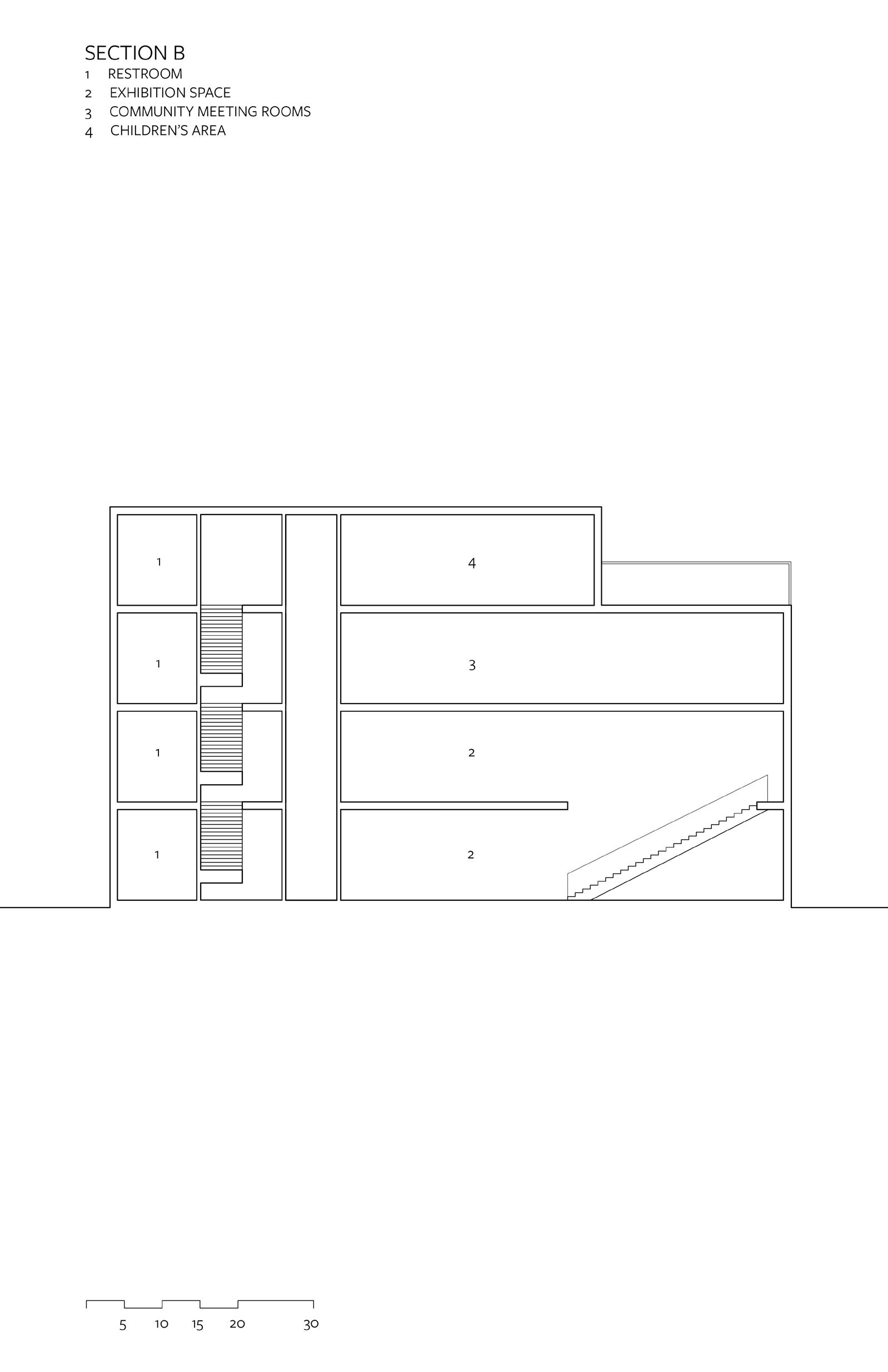
(Top) 1/8 Scale Final Physical Model, (Bottom) 1/16 Scale Massing Model
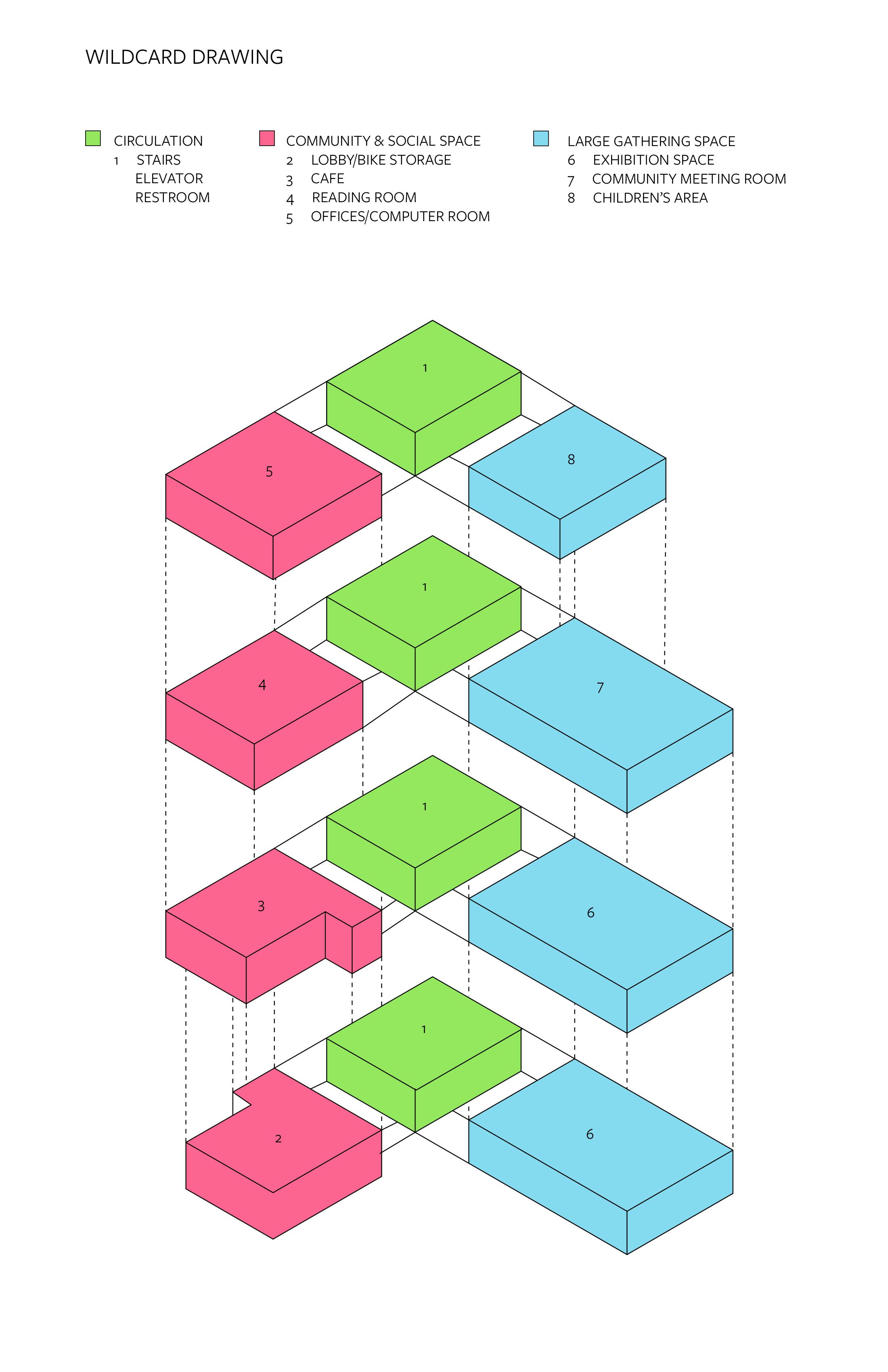
Right: Circulation Diagram
Above:
Two Family Duplex
 Los
Los
Angeles,
CA | Maria Paz Gutierrez
Introduction to Design | Spring 2021
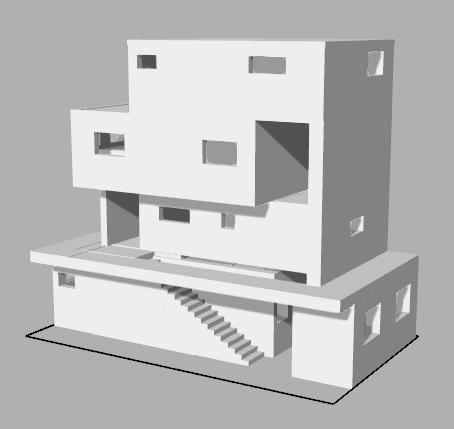
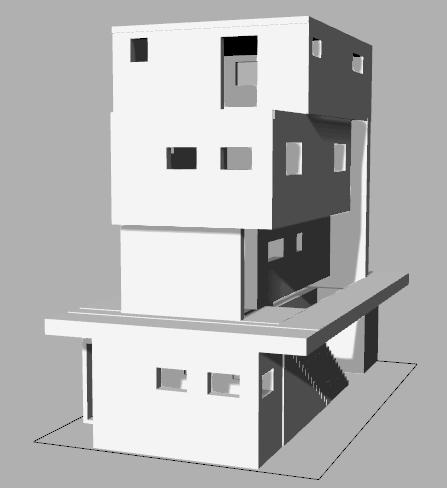
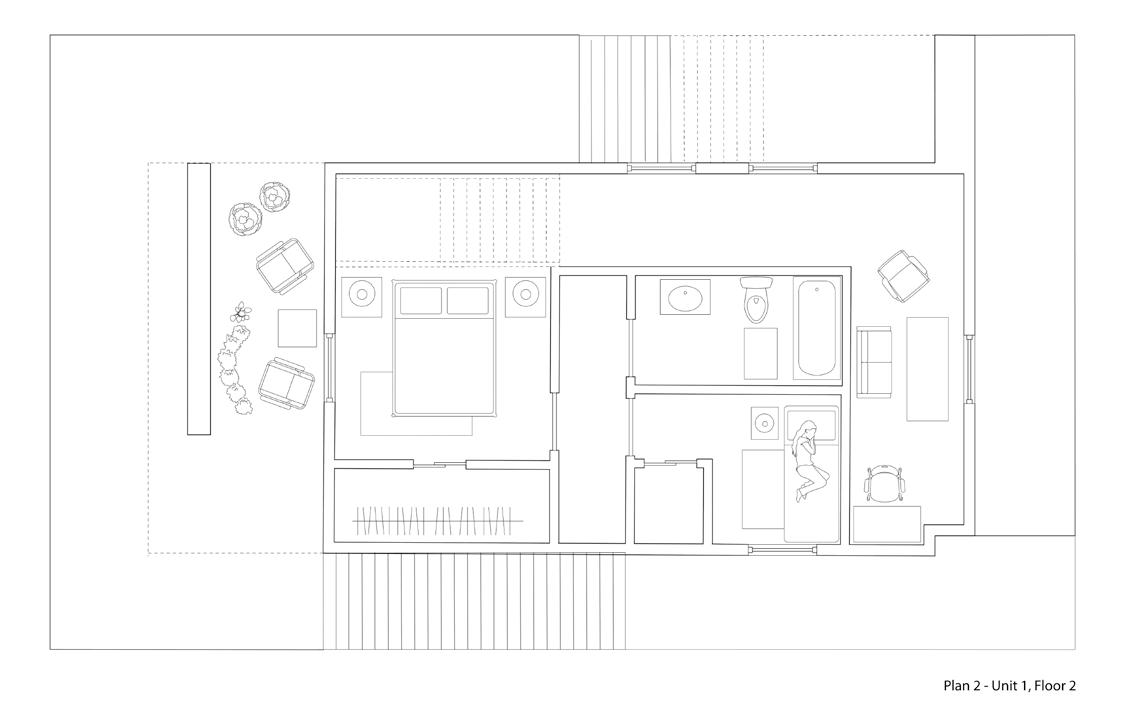
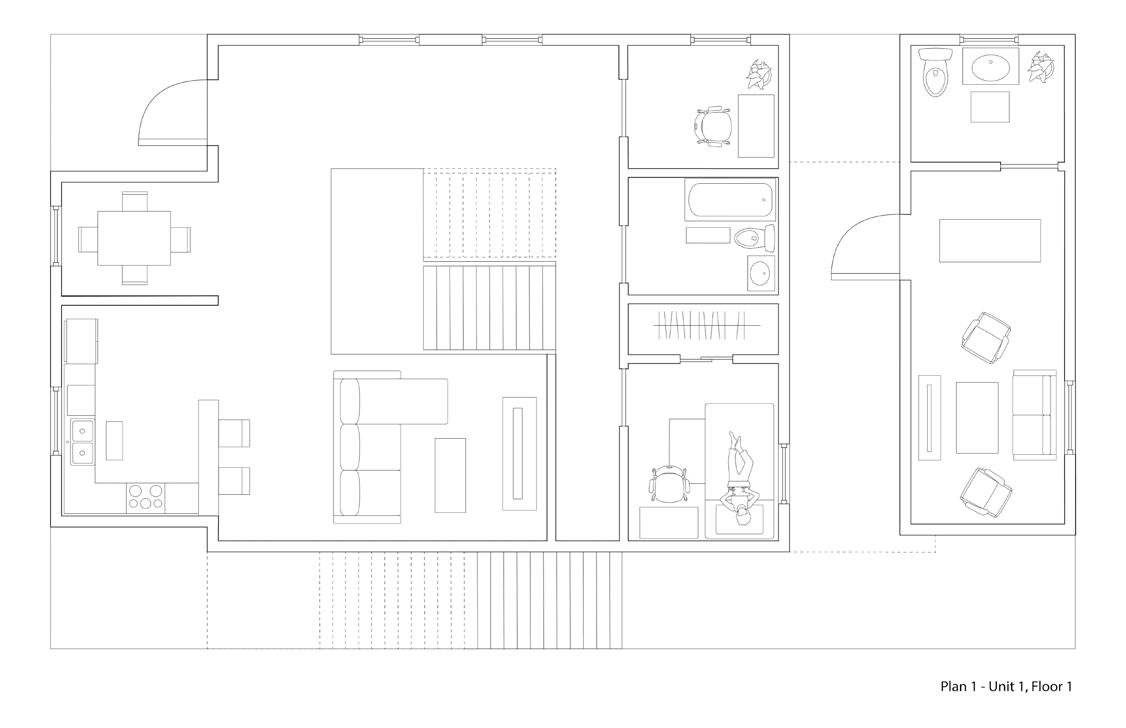
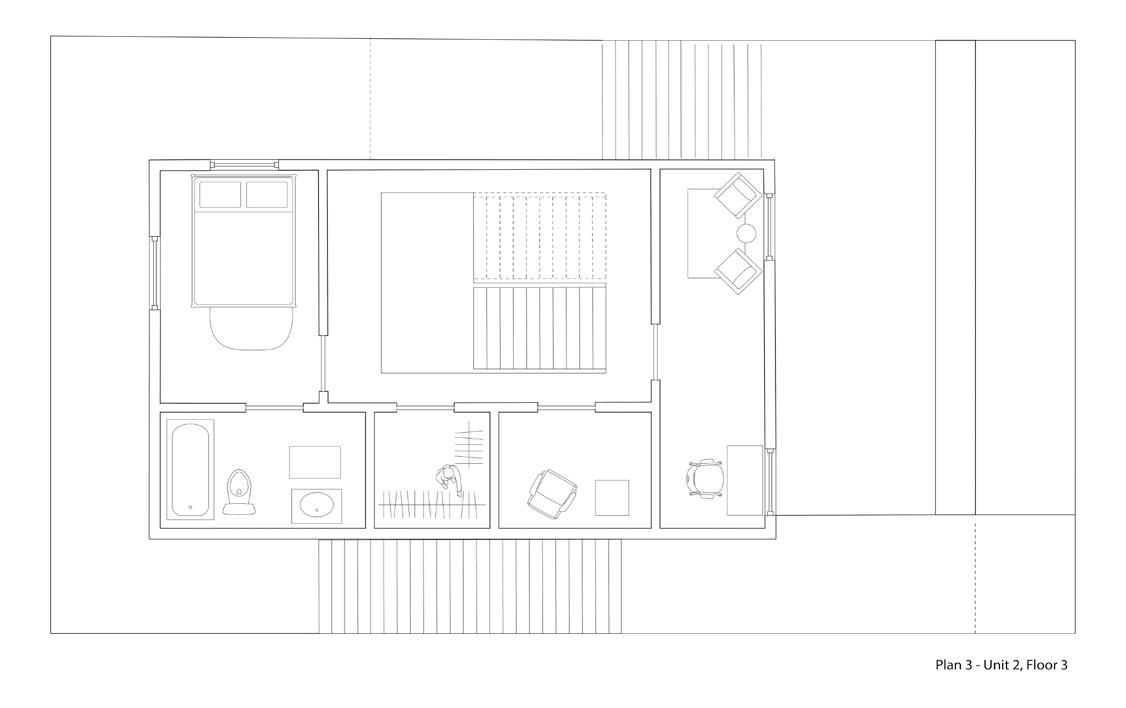
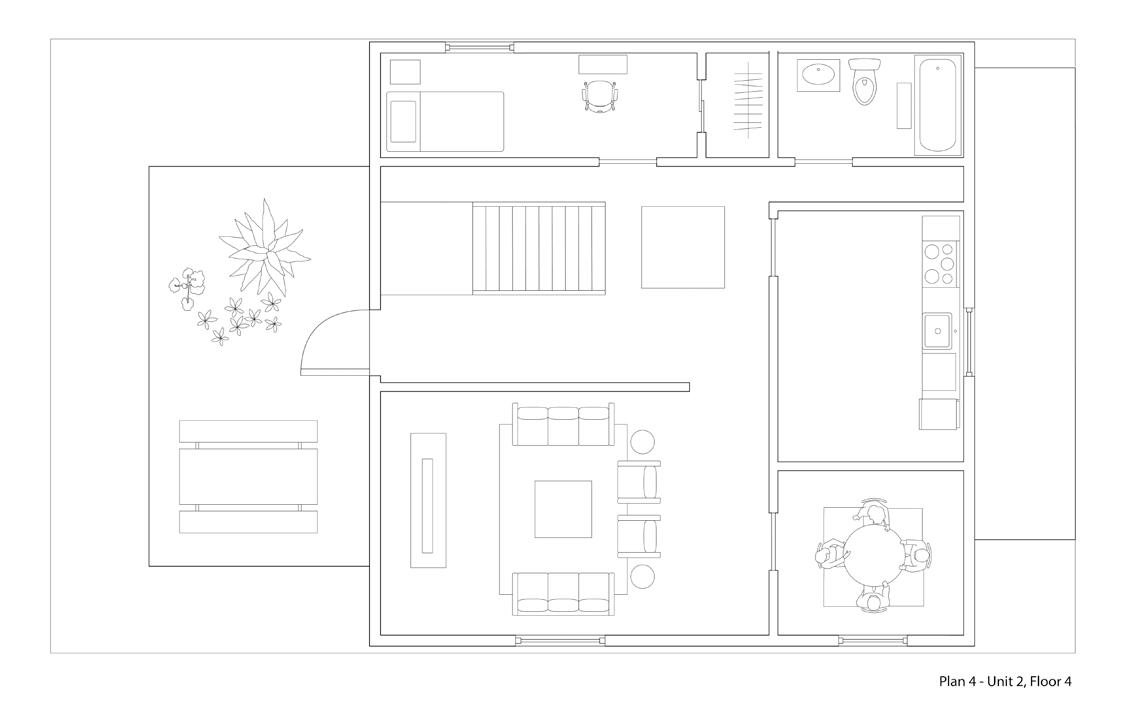
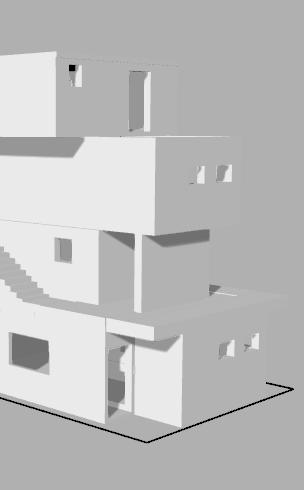
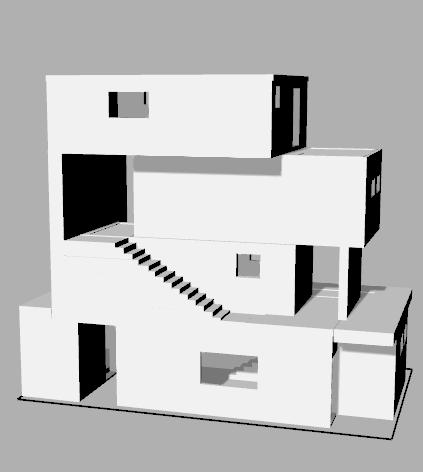
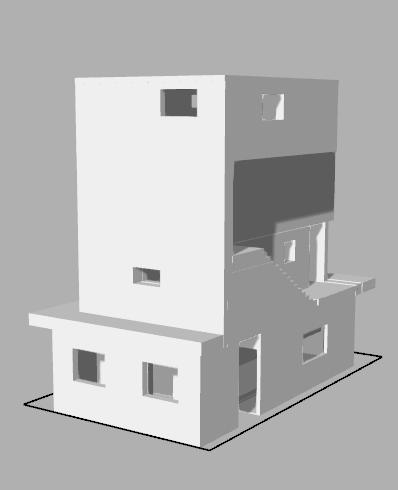
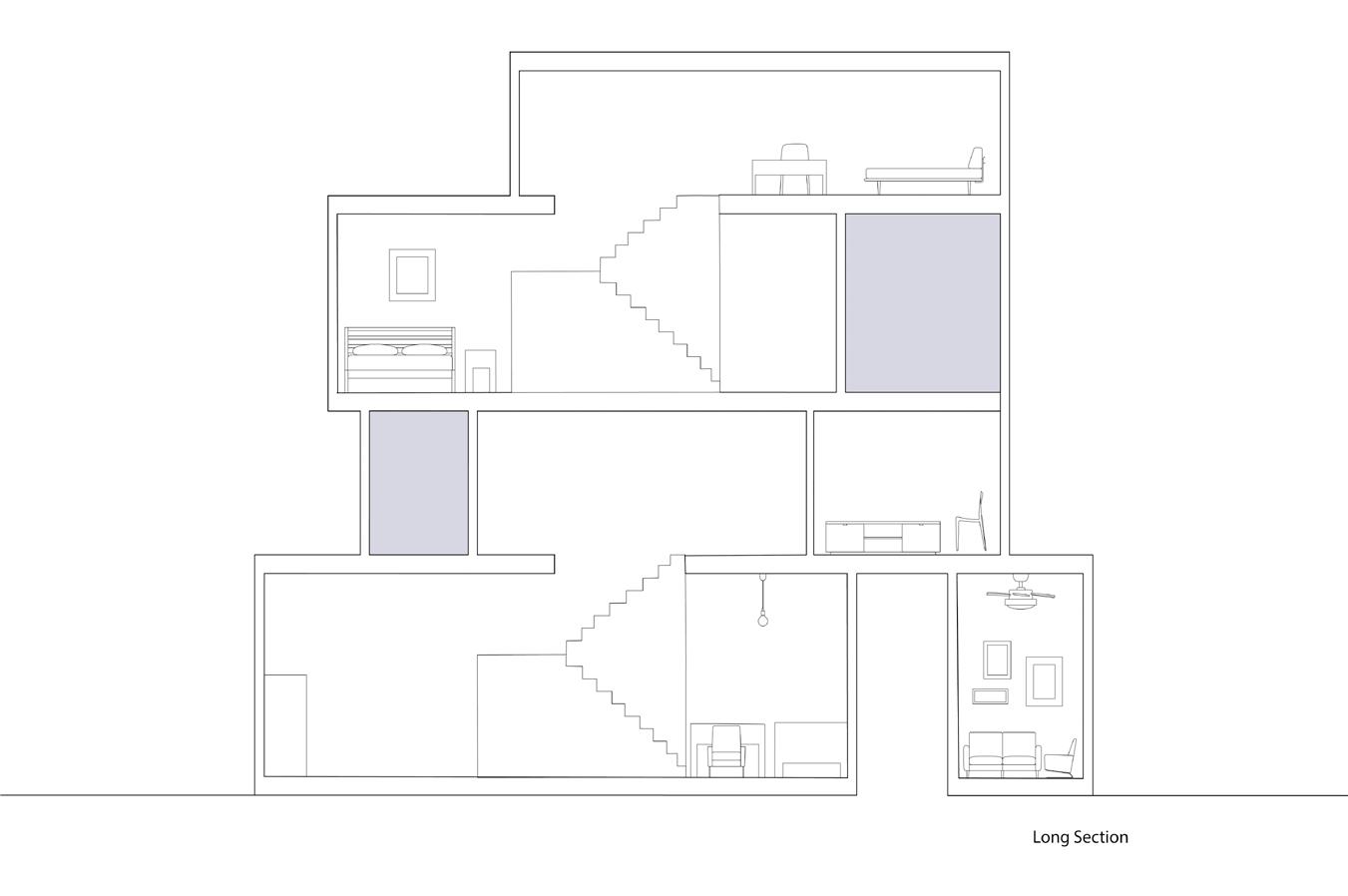
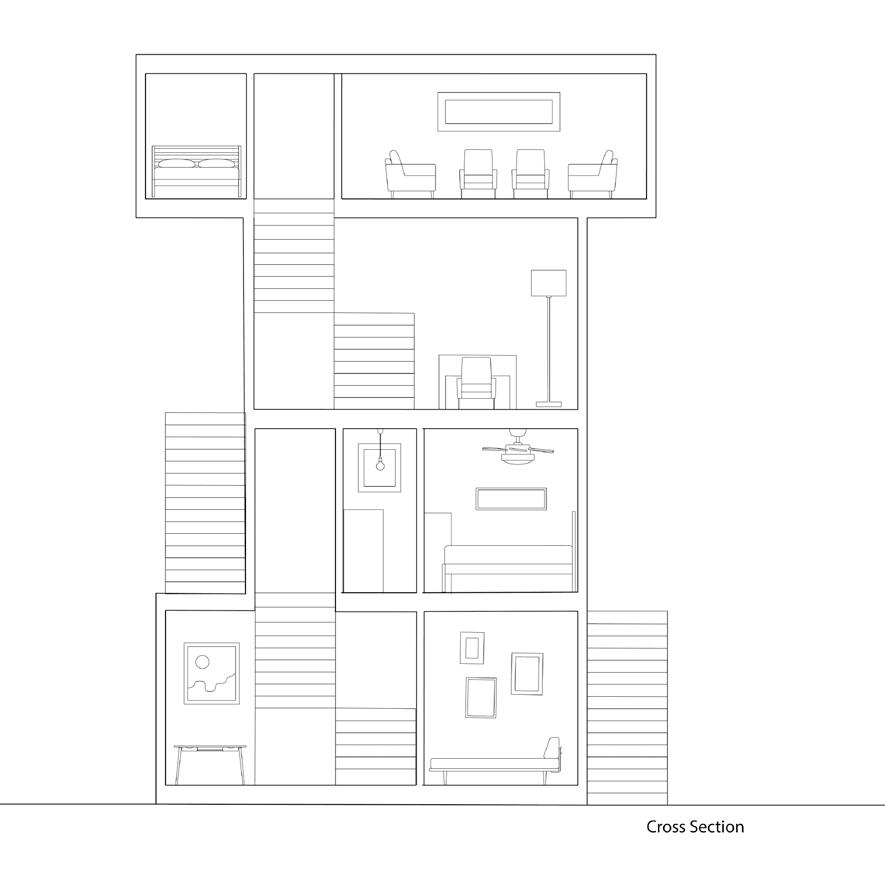
The project entailed designing a duplex to cater to the distinct needs of two separate families: Unit 1 for a young couple with two young children, and Unit 2 for a couple and an elderly relative. This studio course marked my initial experience in creating a space within specified space and program requirements. entral to my design approach was the emphasis on establishing an exterior circulation system that would enable each family to navigate the duplex without encroaching on each other’s privacy. This thoughtful consideration aimed to ensure a harmonious coexistence while preserving personal space.
 Top right: Section Elevation
Middle: Plans
Bottom: Model
Top right: Section Elevation
Middle: Plans
Bottom: Model
Orthographic Drawings
Berkeley, CA | Maria Paz Gutierrez
Introduction to Visualization & Architectural Representation | Fall 2020
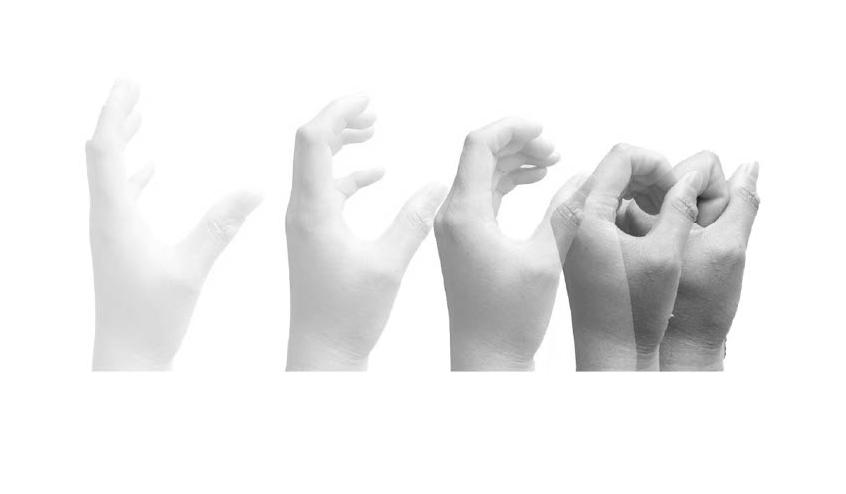
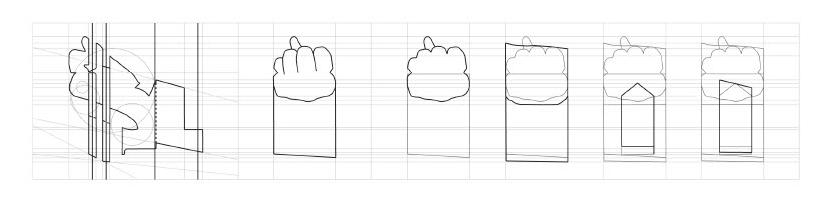
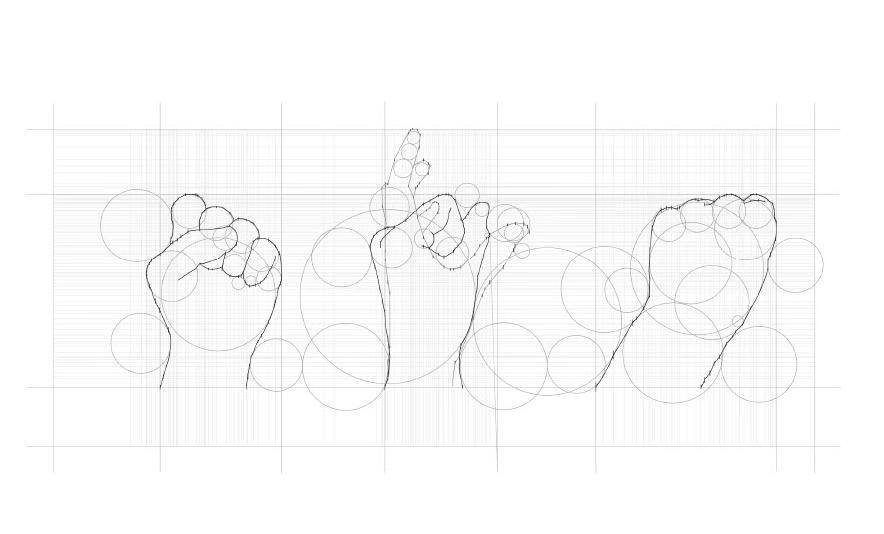
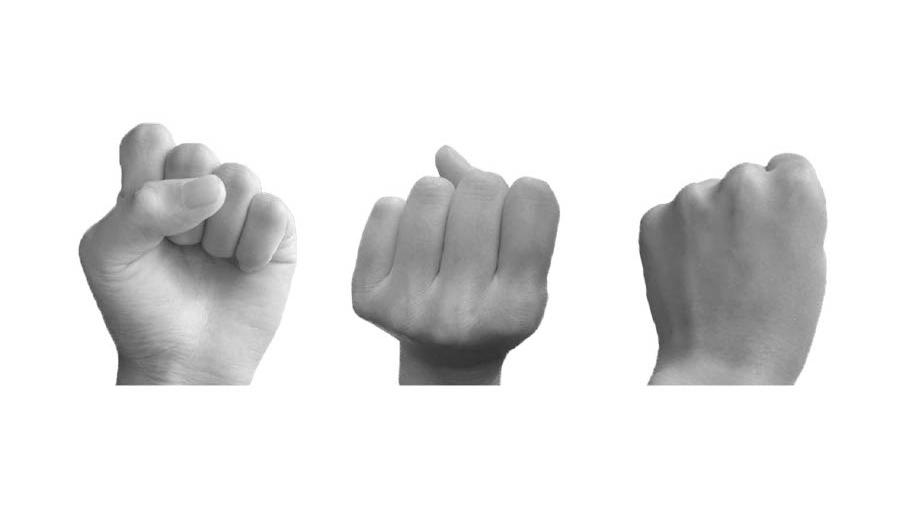
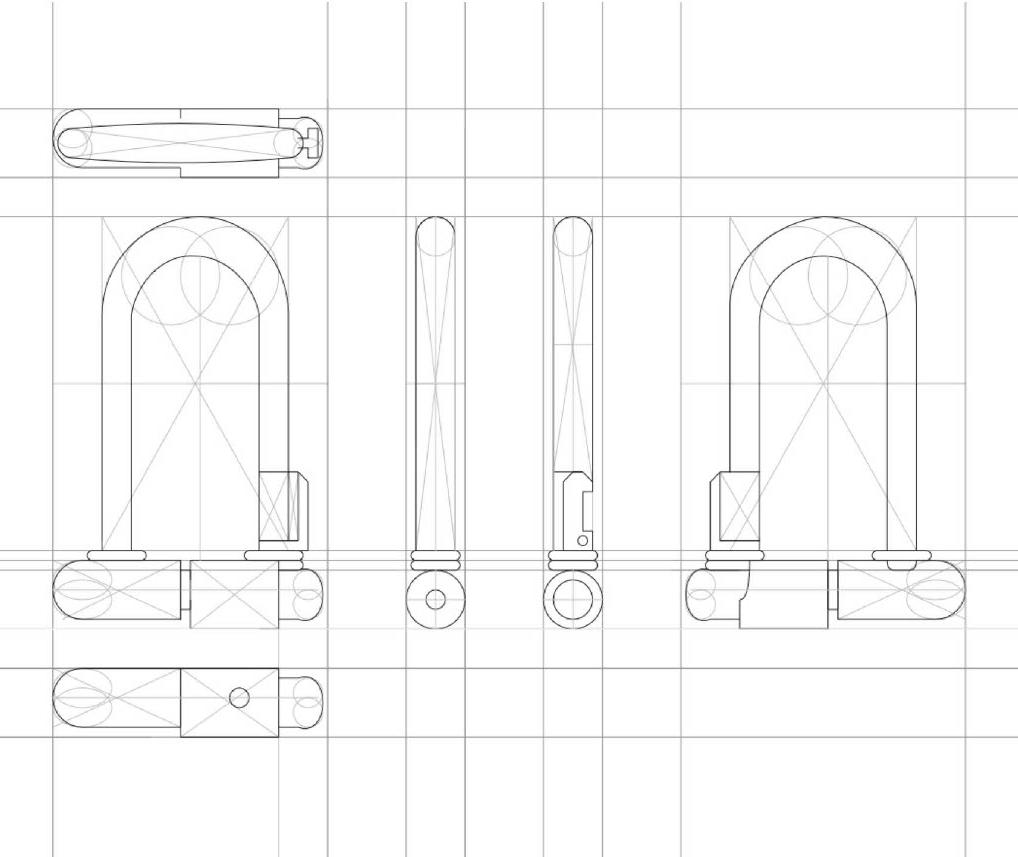
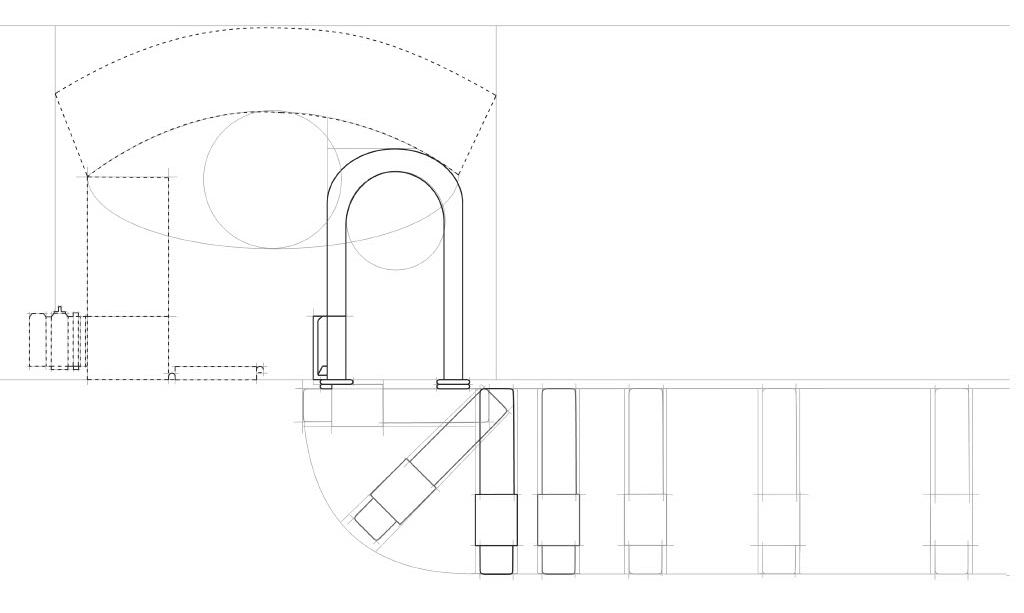
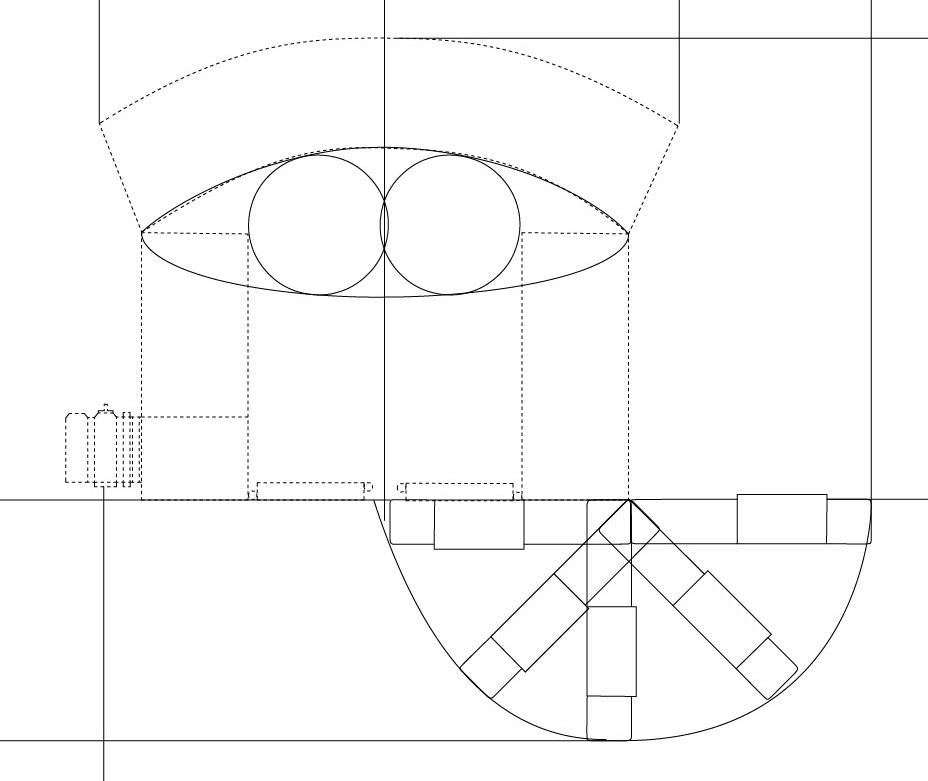
For my first studio, I learned how to rigorously describe and analyze spaces through architectural orthographic representation. The lessons learned from this course helped me better understand how to critically calibrate the hierarchies and time-based donations within a given representational media. Above: Surveying of intricate geometry in the form of a body fragment and its transcription
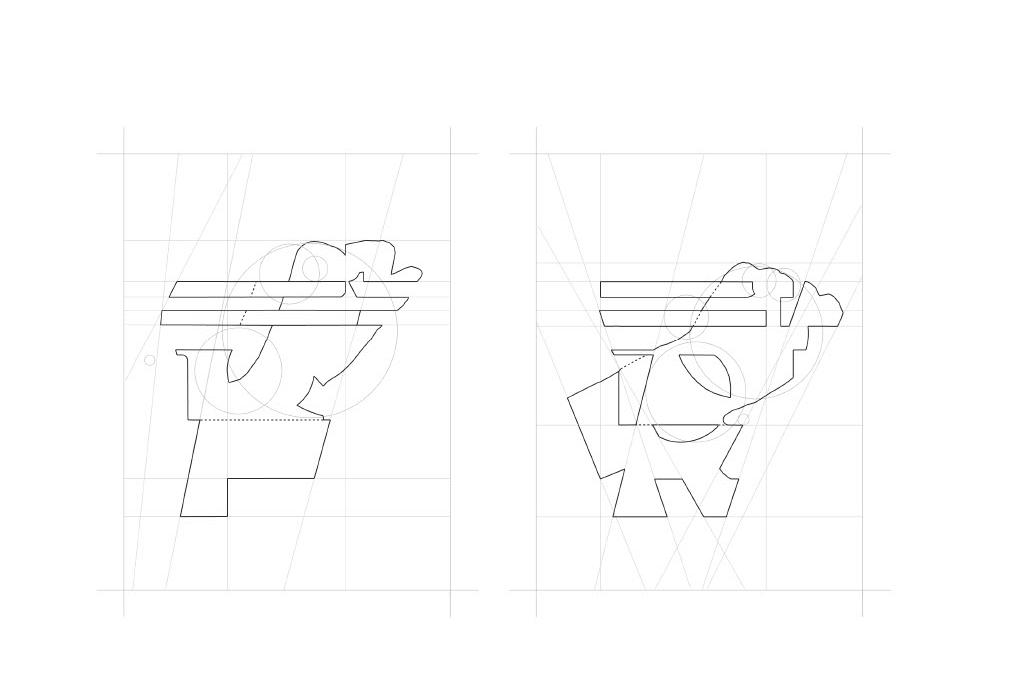
Right: Drawing of an unfolded mechnical object (bike lock) and its movement
Cantilivered Camping Structure
Berkeley, CA | Andrew
Rastetter
Introduction to Structures | Fall 2022
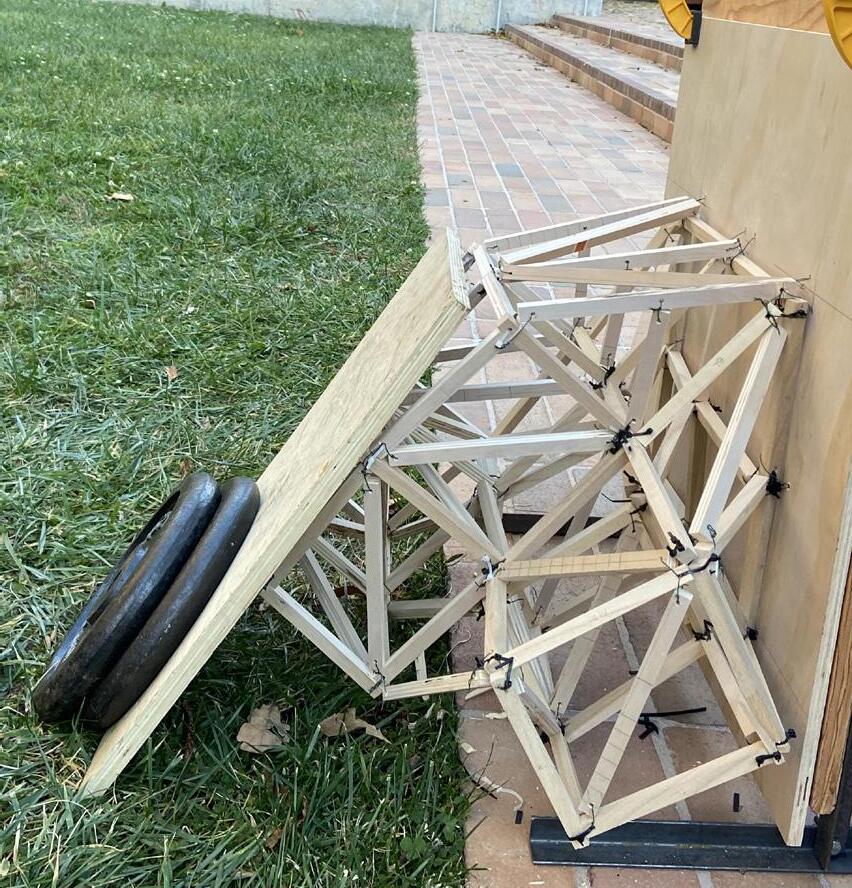
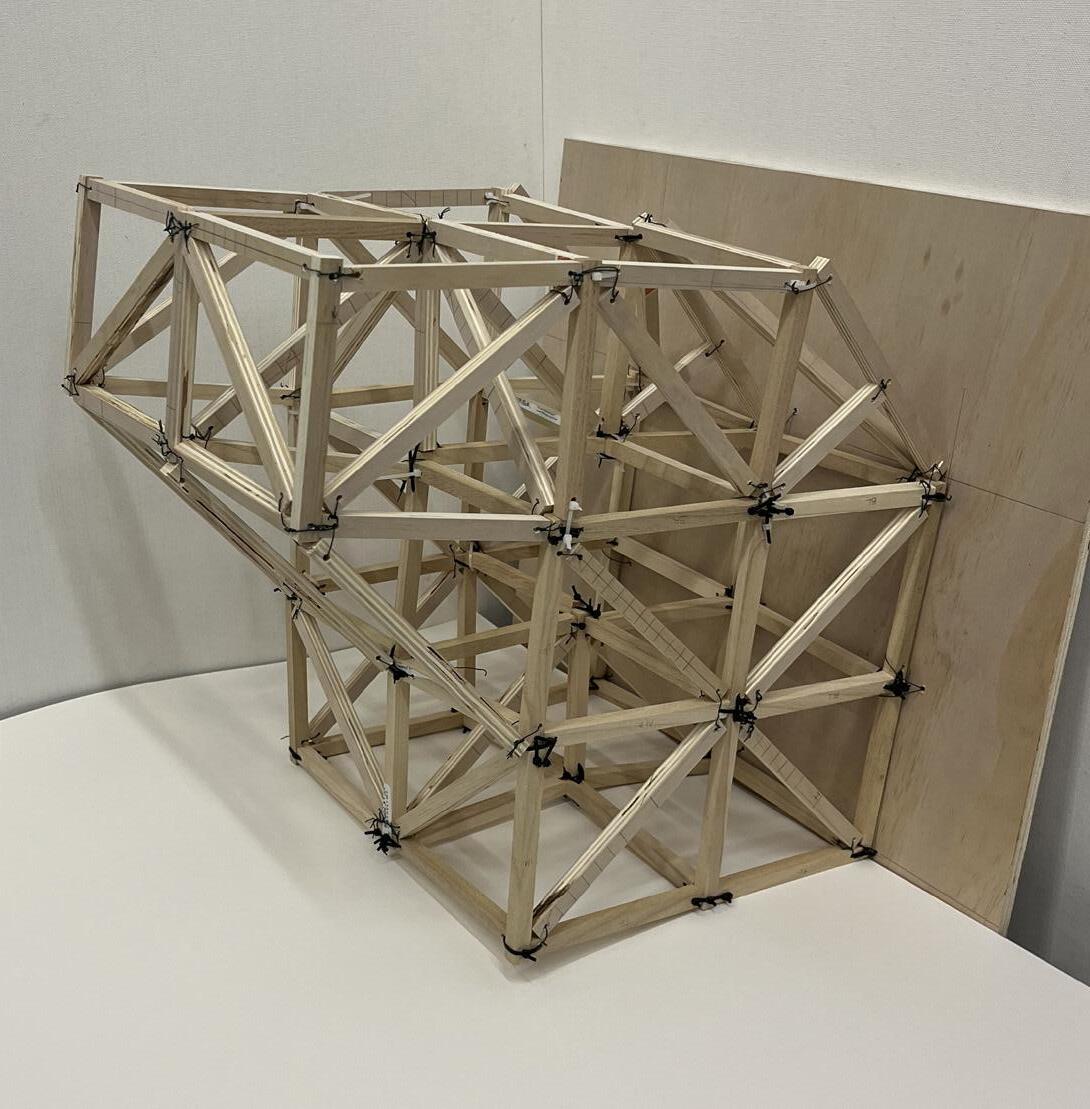
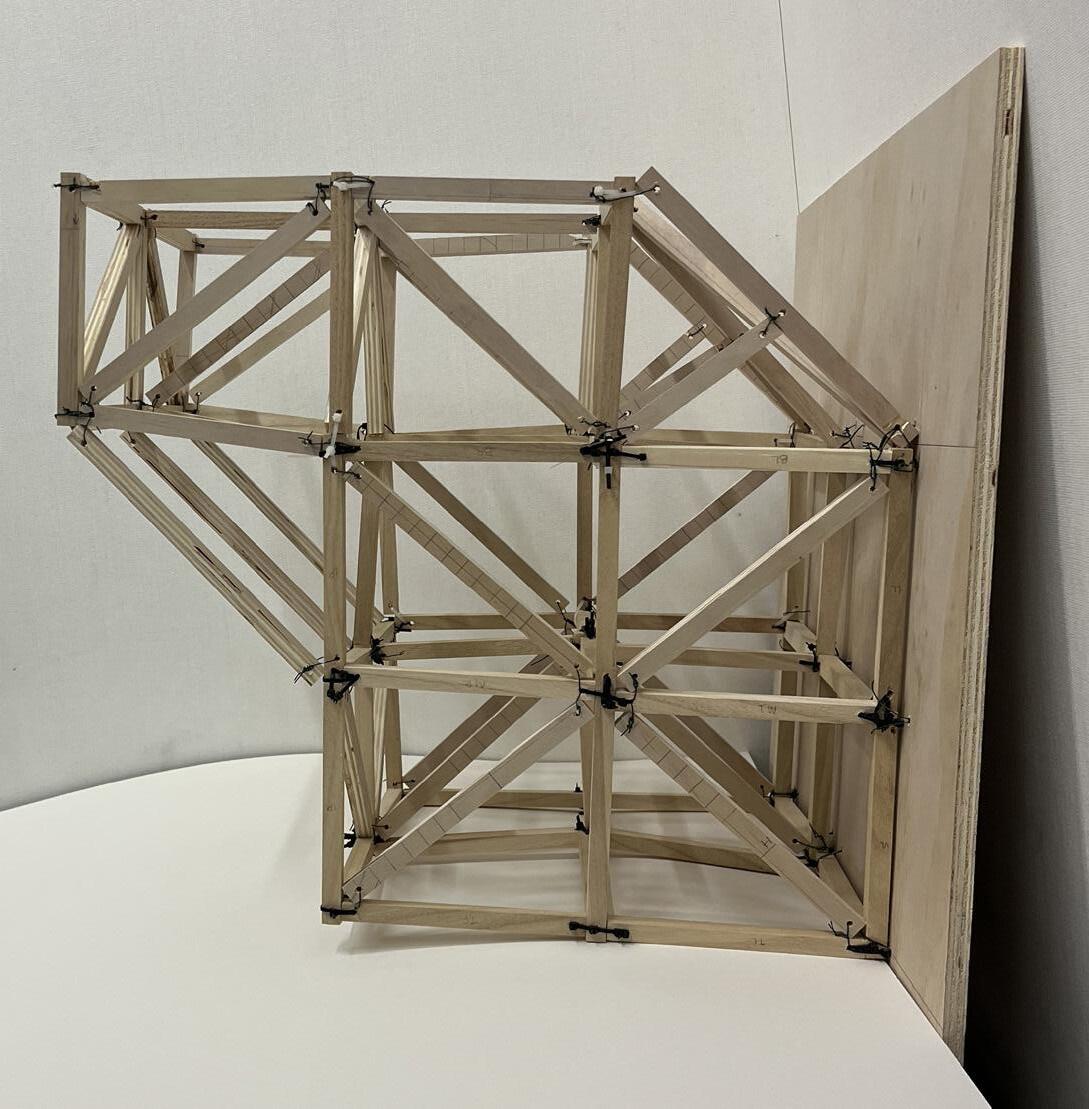
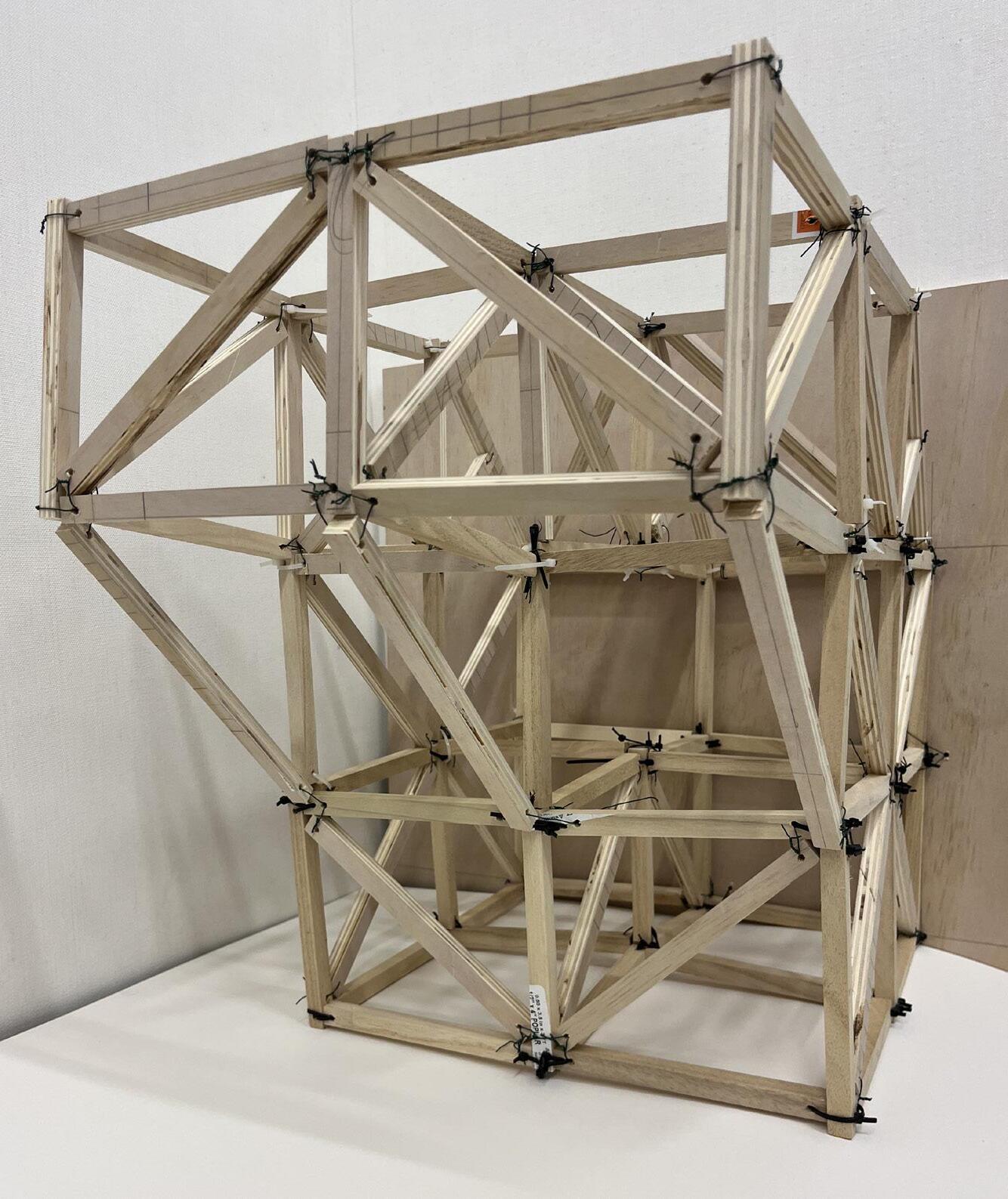
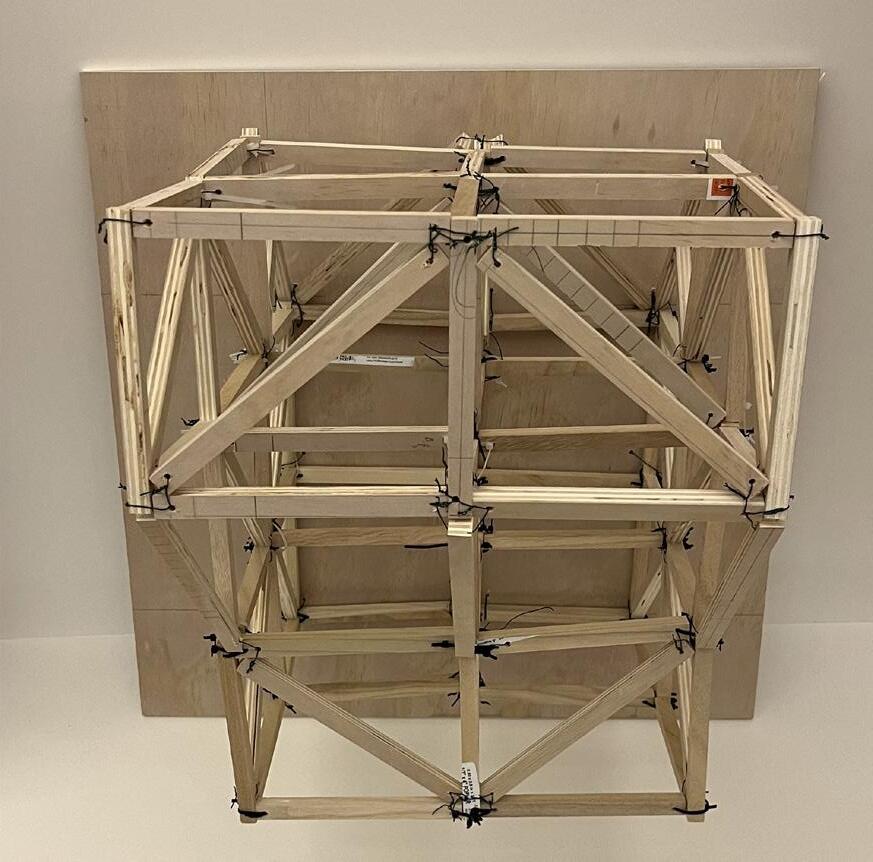
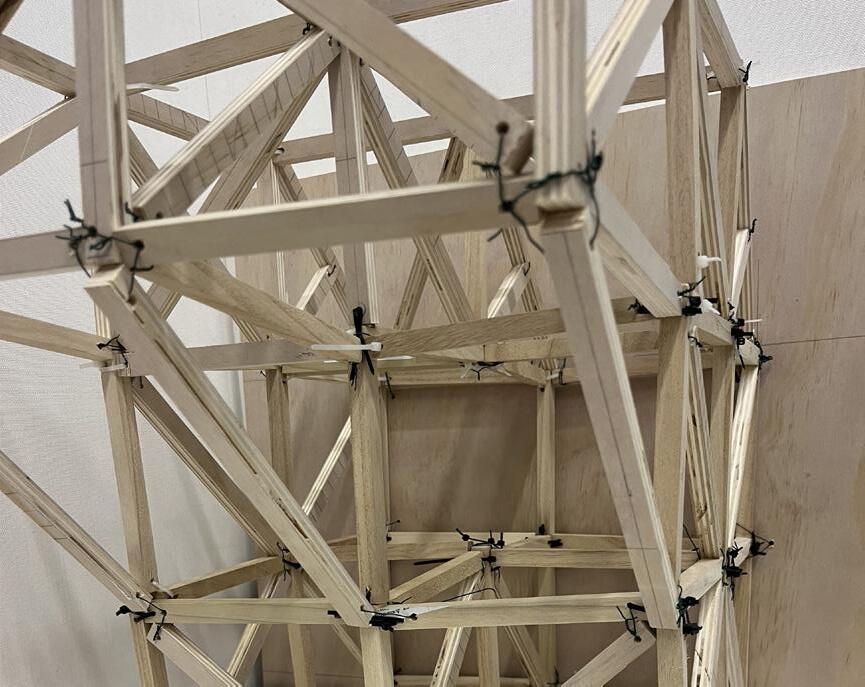
The objective of this project was to conceive a structure that would facilitate a luxurious adventure camping experience on a captivating cliff face. The structure needed to encompass a spacious sleeping area capable of accommodating a queen-sized bed (80” x 60”), a well-appointed bathroom space with provisions for a dry toilet and water basin, as well as a designated area for storing backpacks, safety gear, and other essential supplies. Furthermore, the upper section of the structure was required to house an impressive 8’ x 8’ observation deck. The physical model was meticulously crafted at a 1½” = 1’ scale.
Throughout this undertaking, I deepened my comprehension of structural behavior by employing a combination of digital and physical modeling techniques, thereby enabling comprehensive testing and analysis. This project offered a unique opportunity to explore the intricate interplay between architectural design and structural considerations. Notably, by conceptualizing a camping pod cantilevered from the cliff’s edge, I honed my ability to translate architectural concepts into a robust structural model that effectively meets both programmatic and performance criteria.
Above: Testing of structure (held 65 pounds)
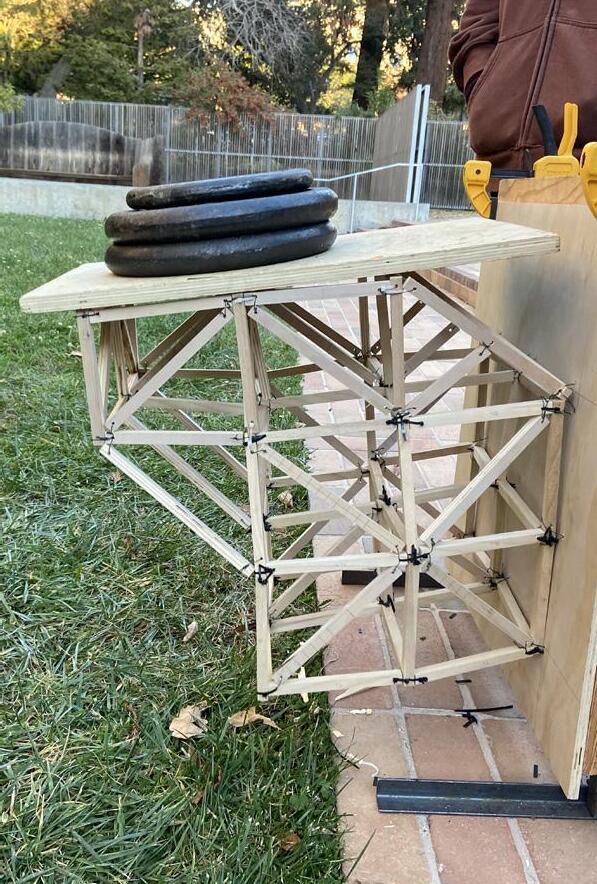
Right: Final structure (this structure was porduced as a group project of three students)
Wooden Hall Organizer
Berkeley, CA | Dana Buntrock
Introduction to Construction | Spring 2022
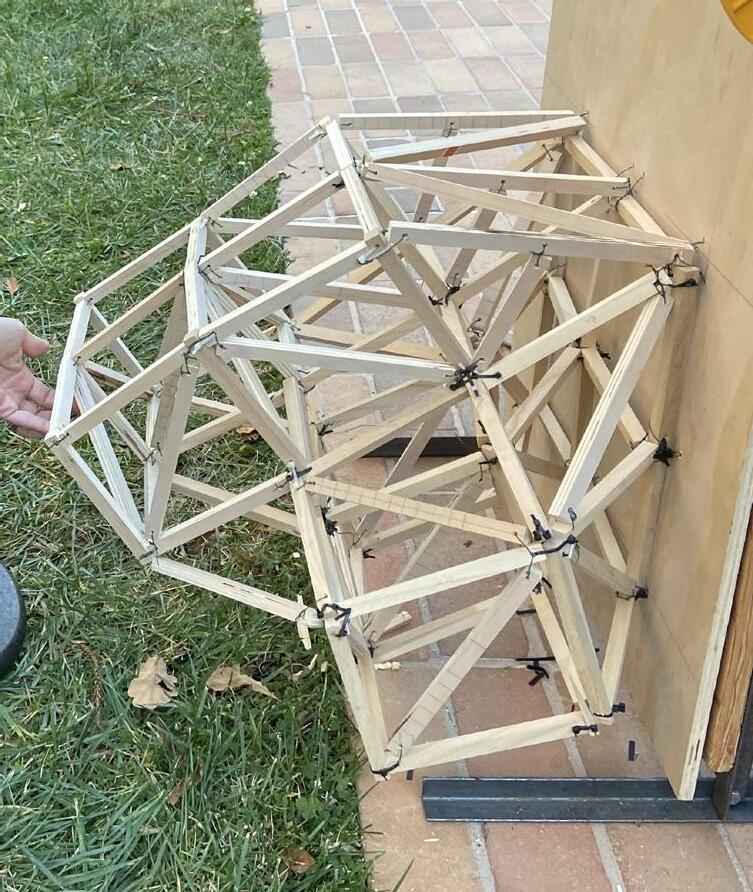
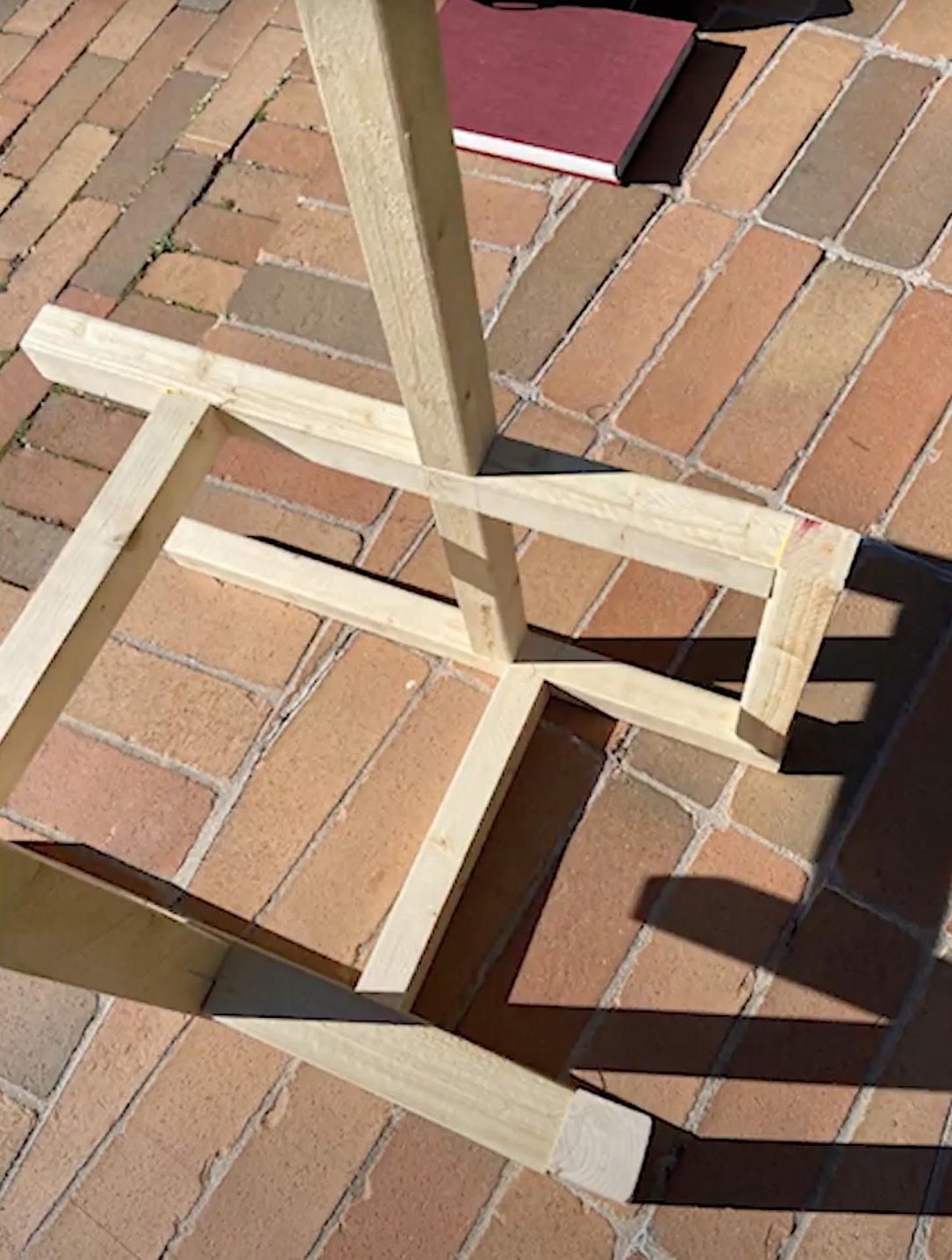
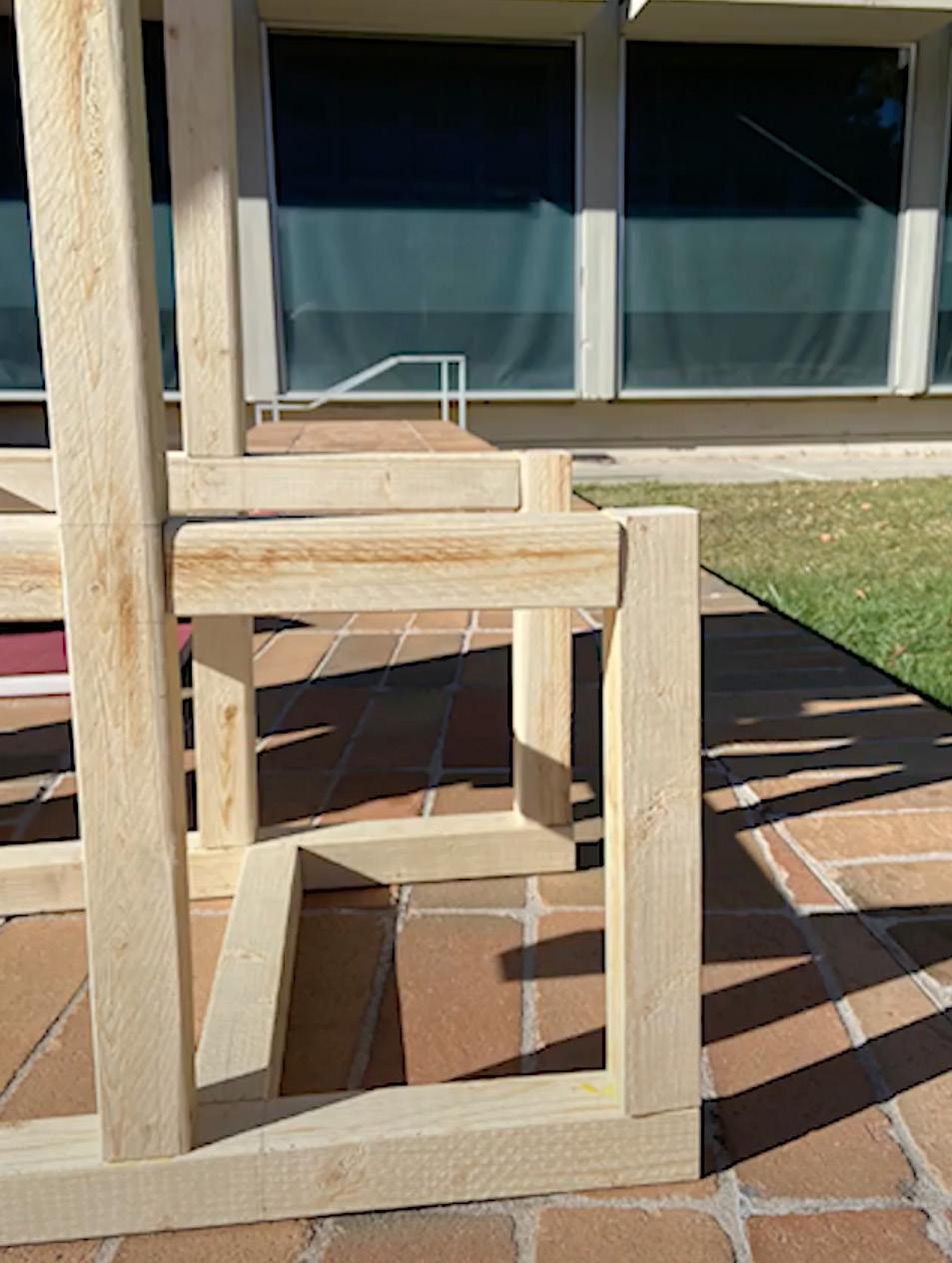
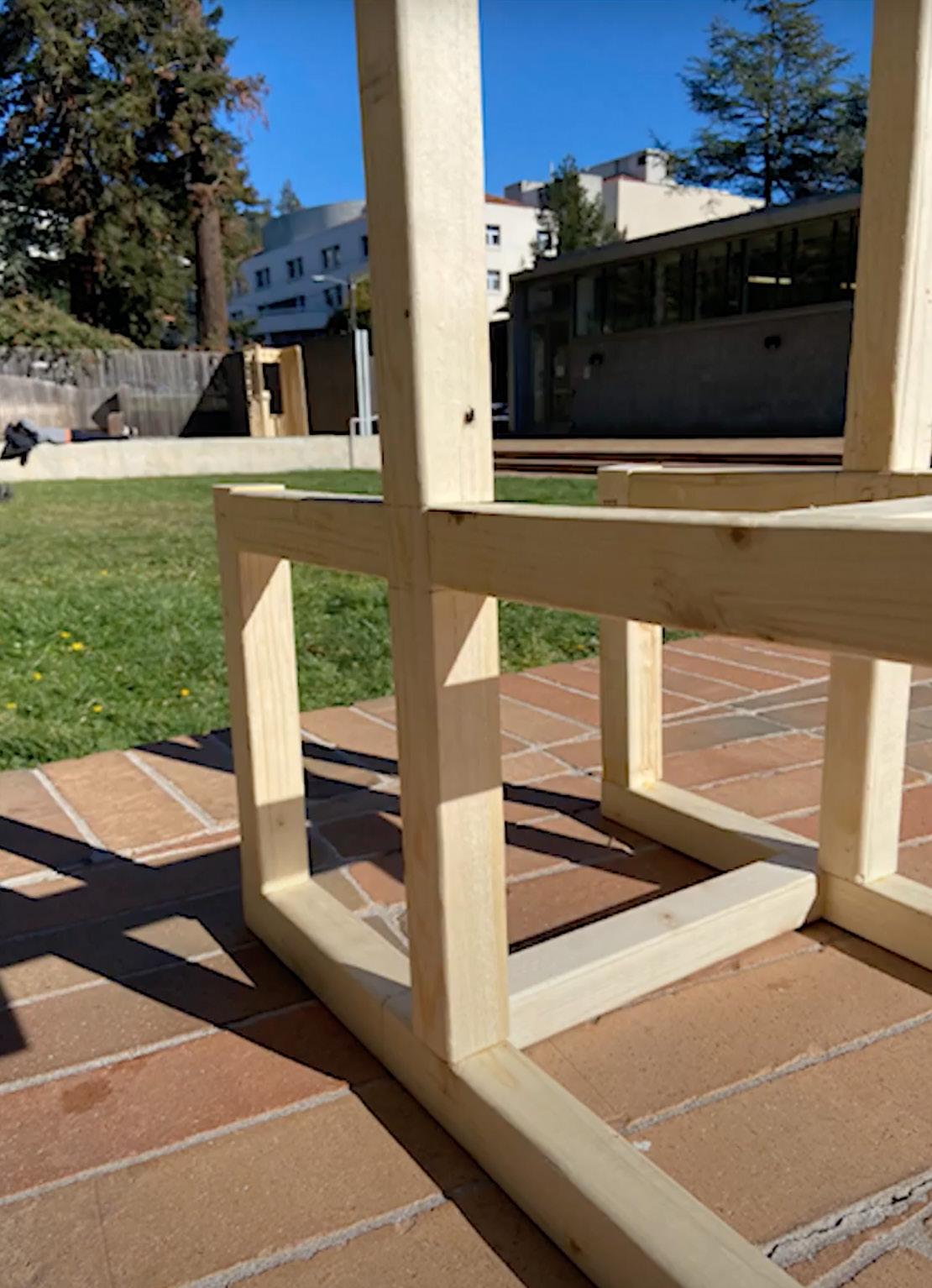
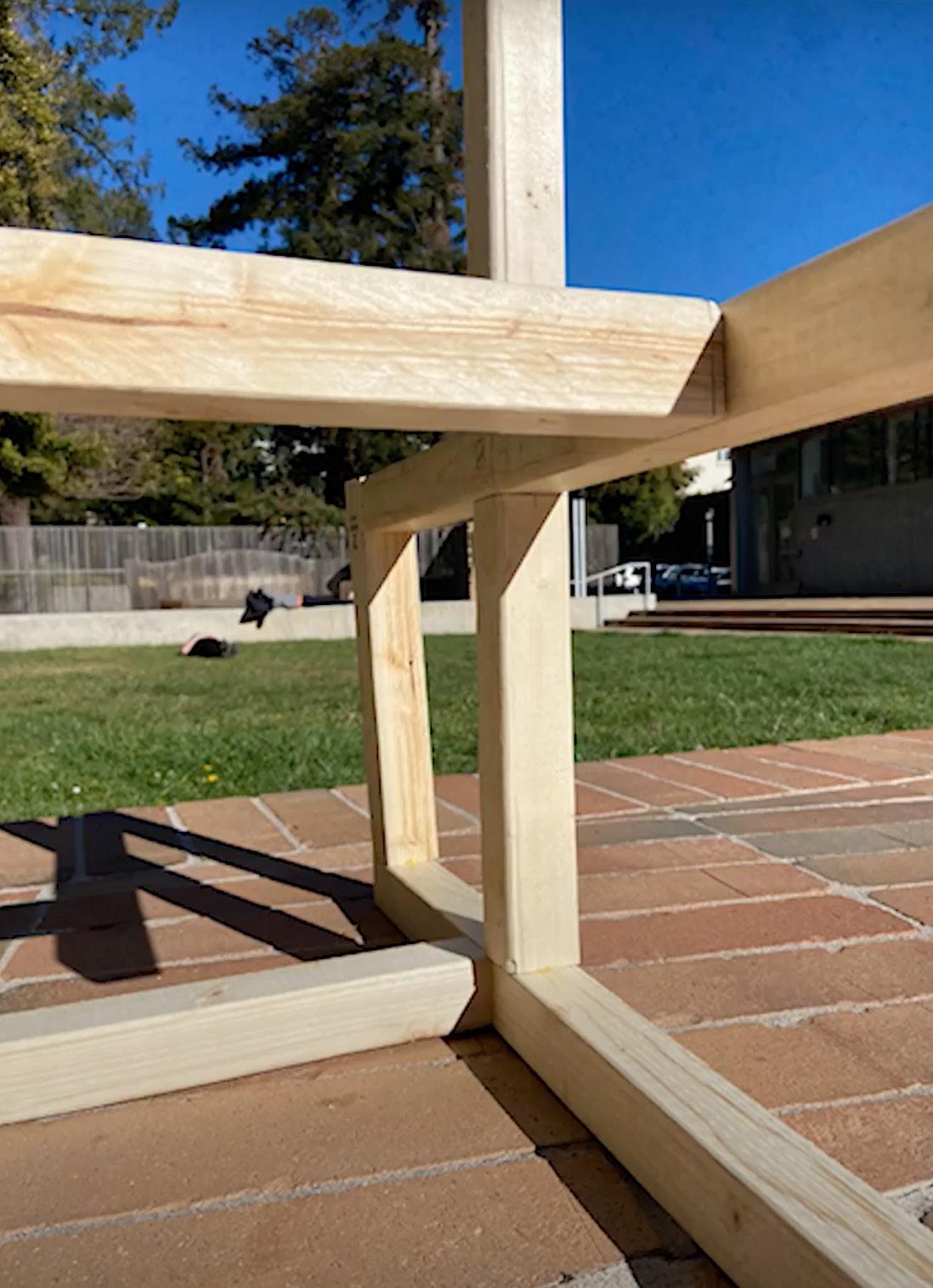
The objective of this assignment was to construct a minimalist and refined freestanding structure using wood, designed to serve as an entrance hall organizer or coatrack. The organizer needed to provide ample space for at least one coat, a hat, and a pair of shoes.
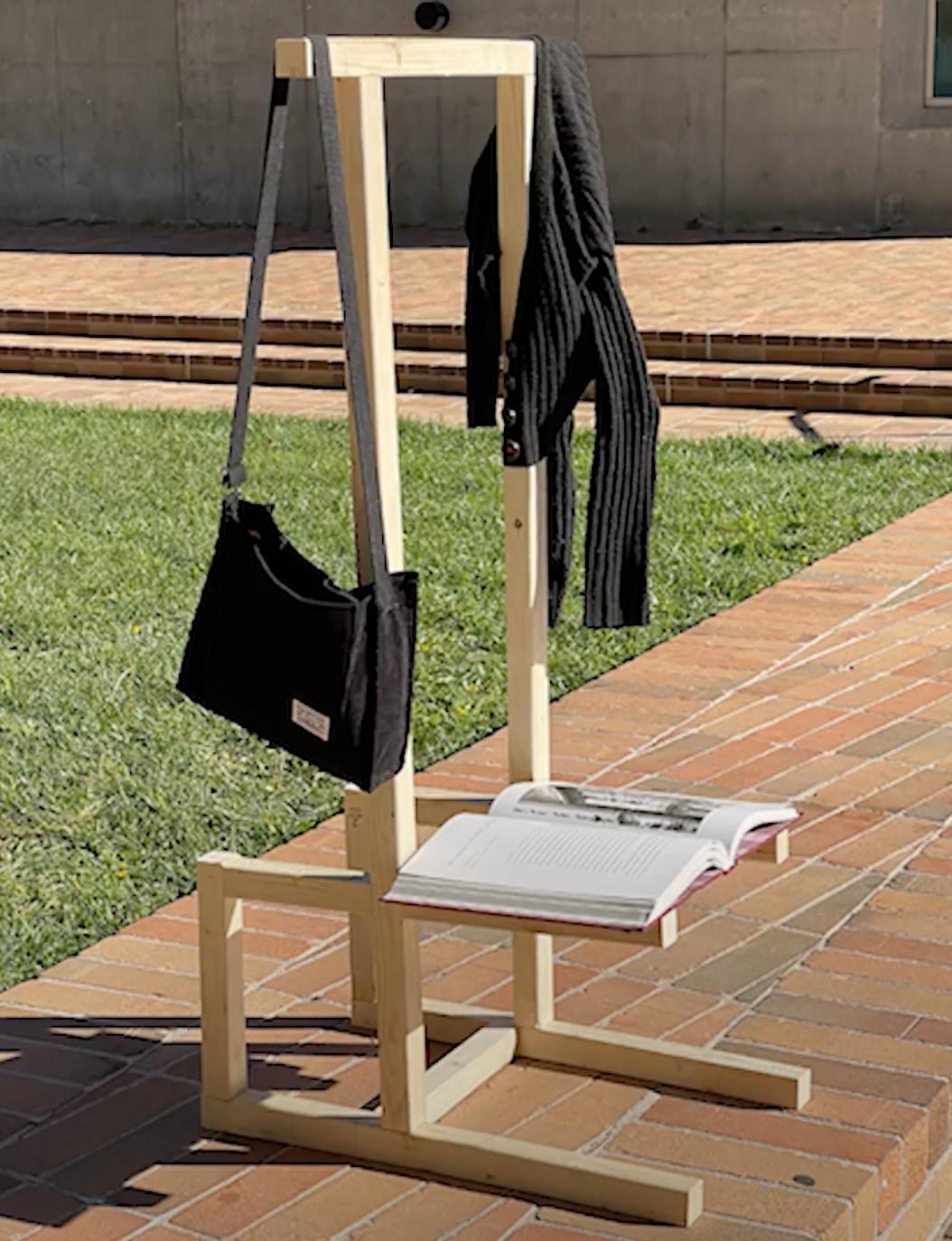
Collaborating with my partner, we first created a meticulous digital model of the structure using Rhino software. Employing a combination of dowel joints and half lap joints, we strategically interconnected the wooden components, recognizing the optimal efficiency and effectiveness of this approach given the elongated nature of the pieces. Throughout the construction process of this hall organizer, I acquired valuable insights into the art of crafting robust connections and effectively working with wood, strengthening my skill set in woodworking techniques.
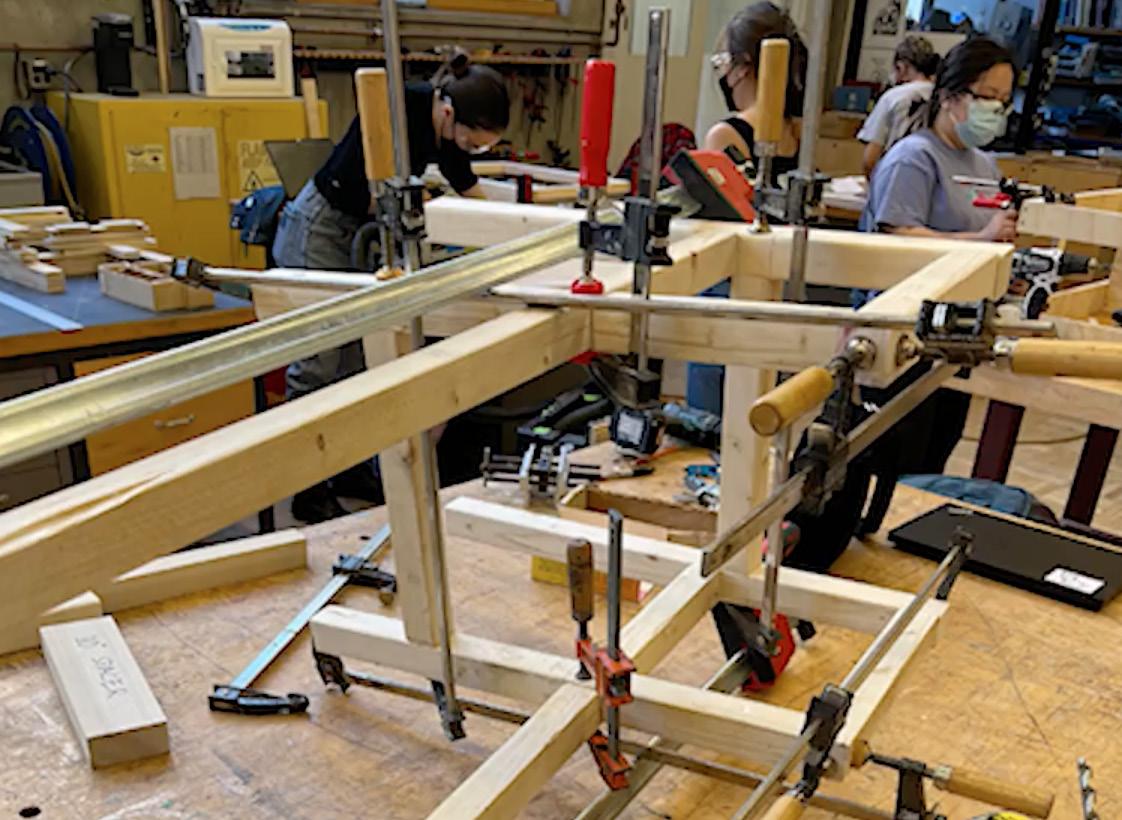
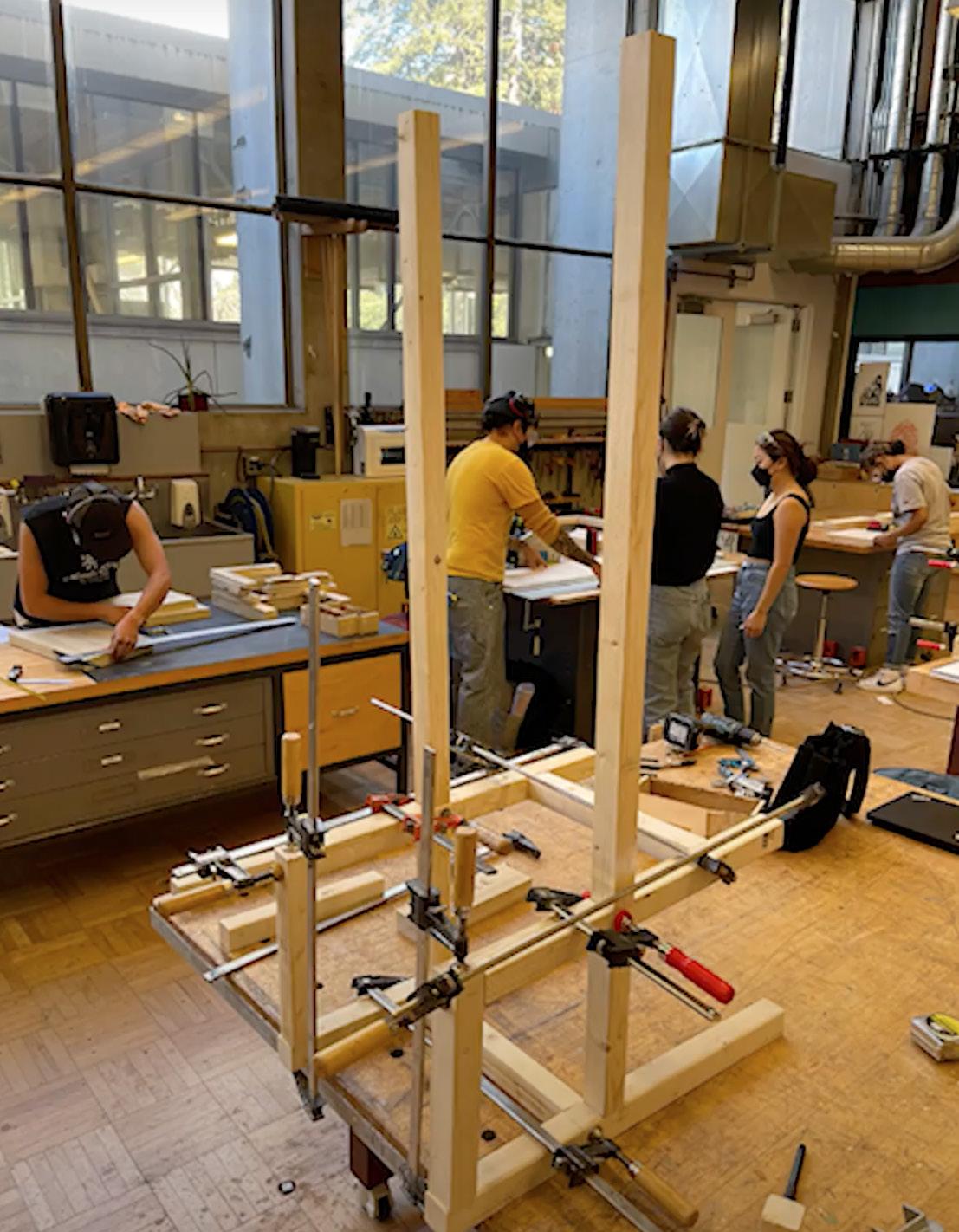 Above: Final project being displayed with materials, (Right) construction of structure in woodshop Right: Close up images of joints (this structure was produced as a group project of two students)
Design Proposal: Walkable/Bikeable Cities
Berkeley, CA | Kimberlee Stryker
Sustainable Landscapes and Cities | Spring 2021
Walking and biking serve as highly popular modes of transportation within Berkeley, with nearly fifteen percent of employed residents opting for foot travel and approximately ten percent choosing bicycles. However, despite their popularity, safety concerns persist for pedestrians and cyclists navigating Berkeley’s streets. Consequently, it becomes crucial to prioritize the design of safer thoroughfares and implement substantial enhancements to existing street accessibility, fostering an environment where walking and biking become seamlessly integrated into daily life.
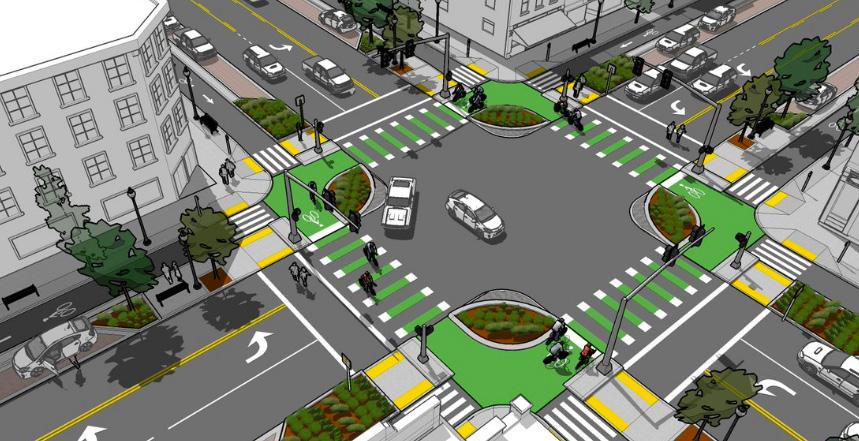
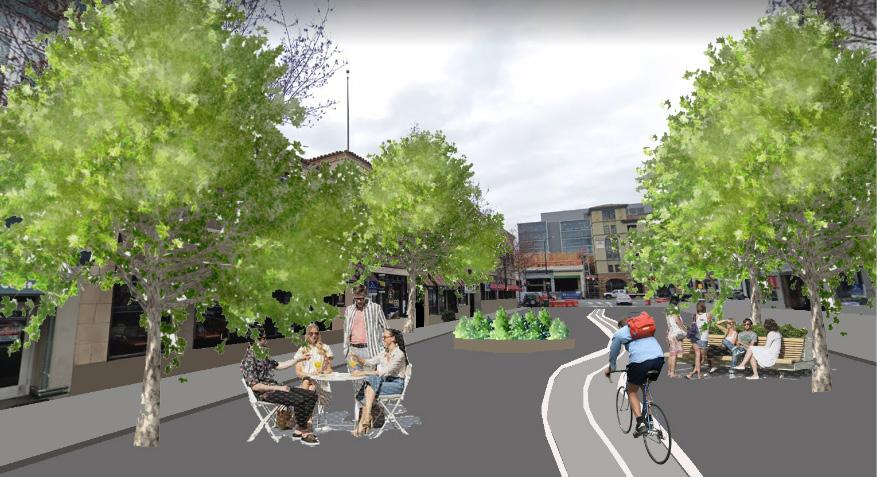
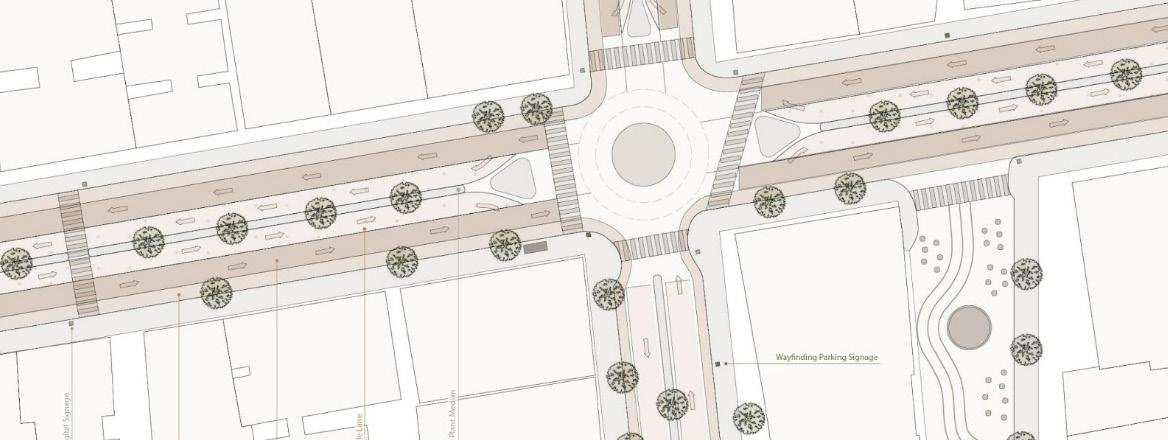
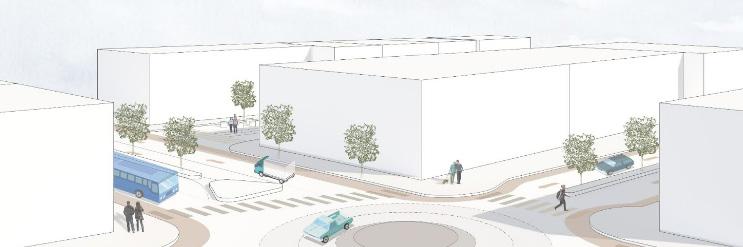
In alignment with this vision, our project centered on addressing the safety challenges at the intersection of Shattuck and University, notorious for numerous accidents. Through extensive research and thoughtful design considerations, our group proposed a comprehensive solution to transform this intersection into a more pedestrian- and cyclist-friendly space. By implementing our proposed design, we aimed to instill a greater sense of security among pedestrians and cyclists, thereby encouraging more individuals to choose walking and biking as their preferred modes of transportation.
Above: Final production image of idealized intersection
Right: Renders and drawings to showcase proposed intersection
A Greener City: Graphic Storyboard PSA



Berkeley, CA | Greg Castillo
Design and Activism | Fall 2020
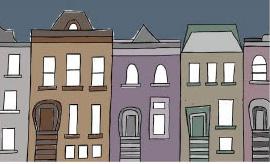
America’s growing population and urban overcrowding have led to diminished green space in cities, prompting the Garden City Movement to advocate for the introduction of greenery, and in my project, through a compelling storyboard, I contrasted images of New York City with and without added green space to underscore the transformative impact on the city and its residents, conveying the vital importance of green spaces and inspiring viewers to rally for support from officials.
Above: Storybaord pages 1-4
Right: Storyboard pages 5-10
1: New York city is currently failing to provide its residents with adequate green spaces.
2: Apartments are desperately close.
3: Residents are seriously deprived of outdoor space.
4: And children are sadly forced to play inside.
5: The Garden City movement is a method of design with the purpose to improve quality of life by incorporating green spaces into cities. It is time for NYC adopts this design.
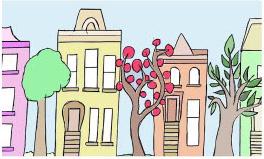
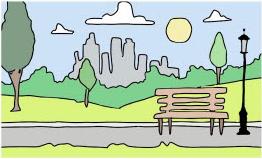
6: This is what present day NYC could be with the proper incorporation of green space...
7: Residents are now able to go outside to complete their activities while connecting with nature.
8: And kids can actually play and congregate outdoors.
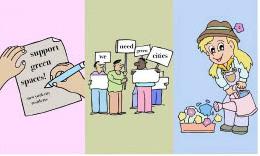
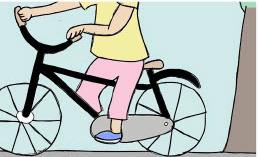
9: Petition, protest, and plant to build a greener, clearer New York City.

10: Fight for your green city.

Architectural Designer
San Francisco, CA | Gelfand Partners Architect
May 2022 - May 2023
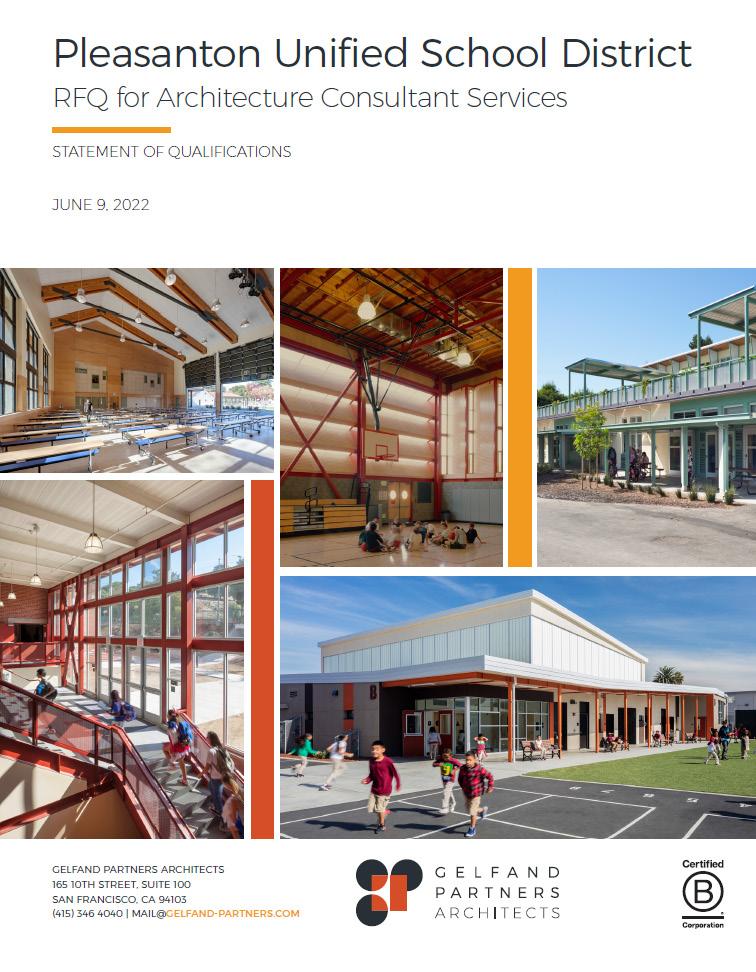
In May 2021, I joined Gelfand Partner Architects as an Architectural Intern, and my role evolved into an Architectural Designer position following the summer. Within the firm, I contributed to projects for public and nonprofit clients in the Bay Area, focusing on tenant improvements (TIs) and rehabilitations of K-12 schools. I actively participated in marketing initiatives, including branding, social media management, and crafting qualification packages for RFQs and clients. Additionally, I engaged in community outreach initiatives and workshops to foster meaningful connections with the local community.
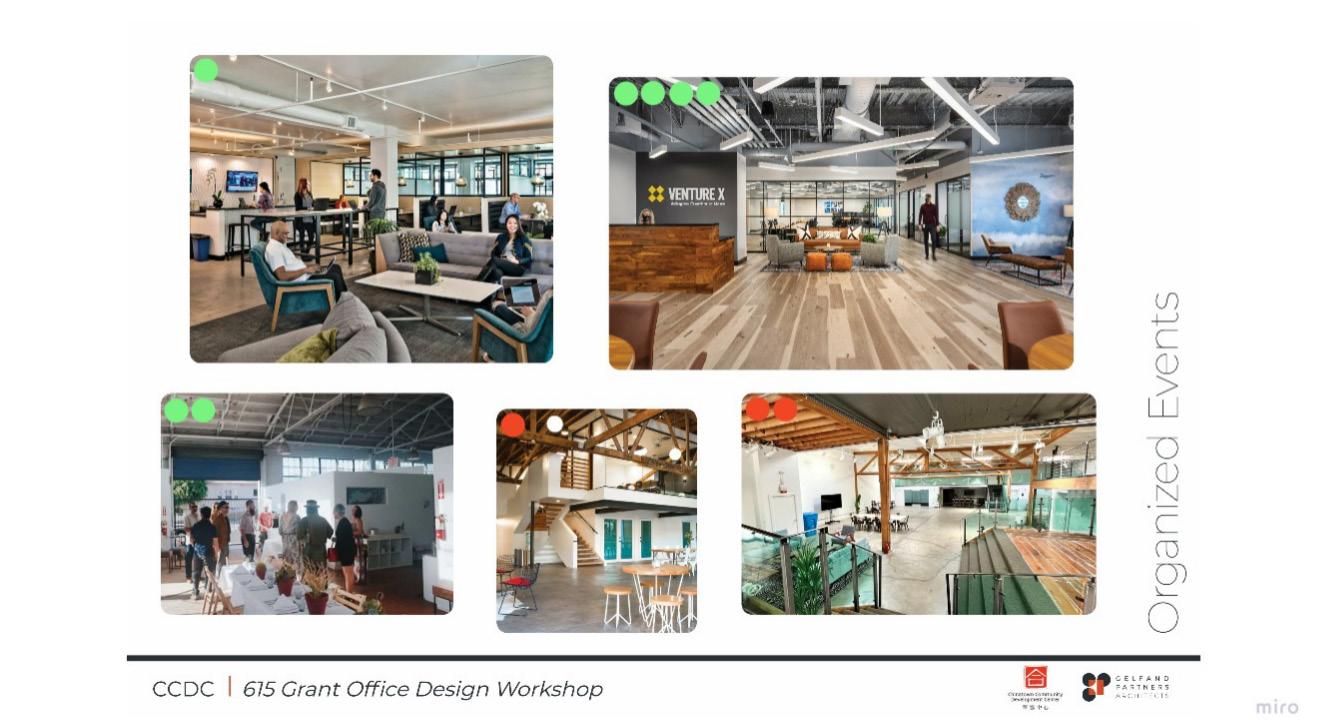
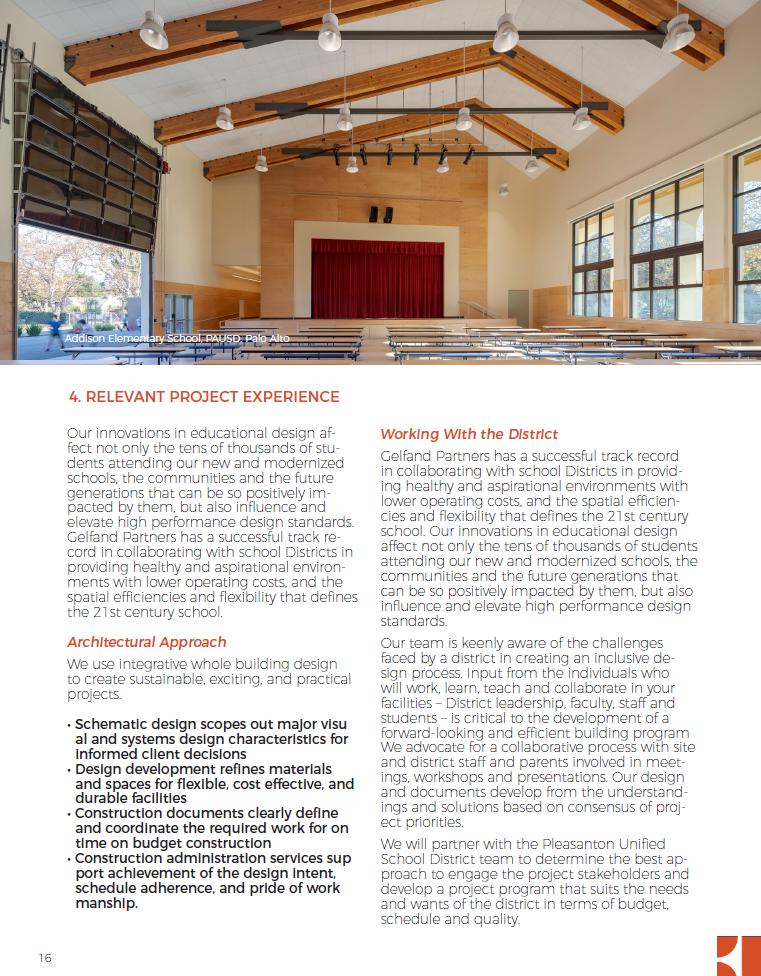
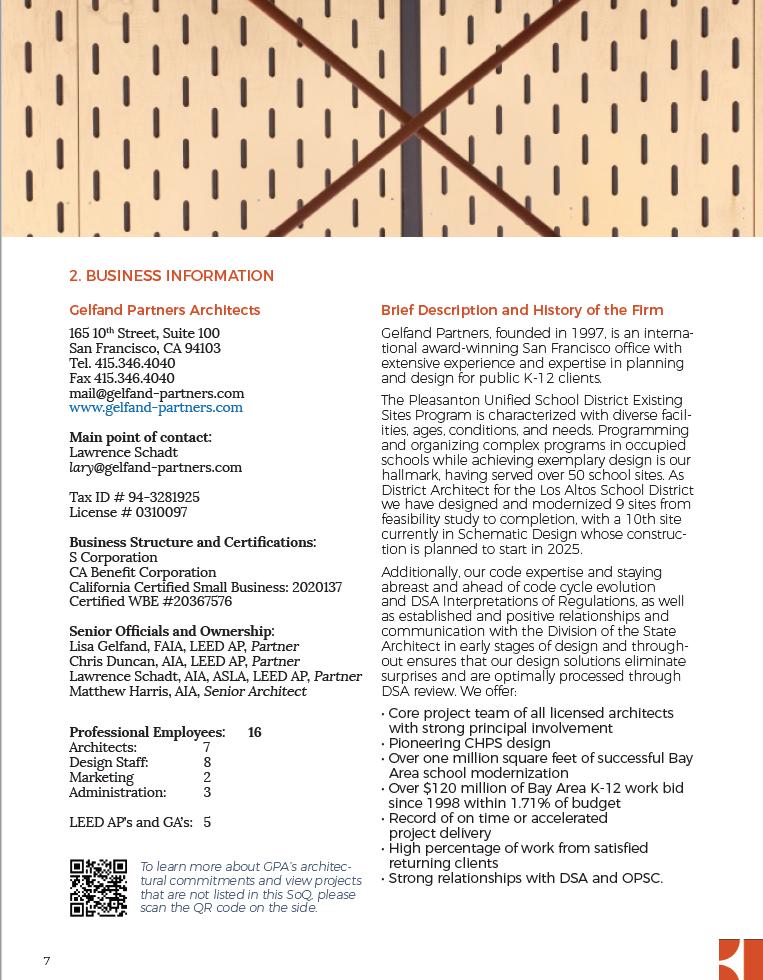
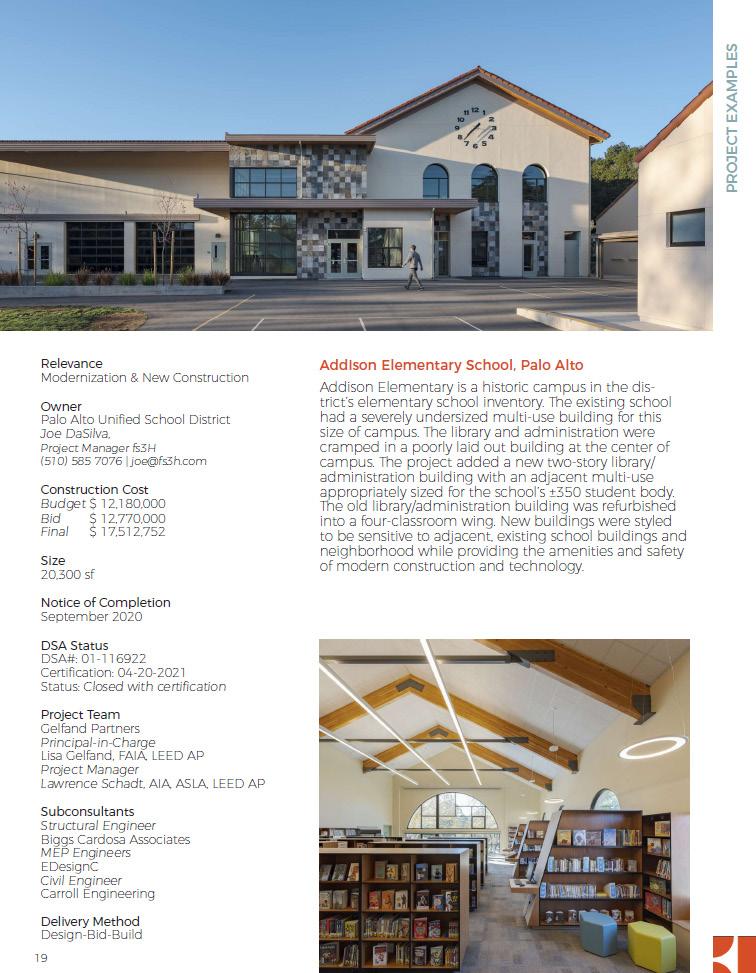
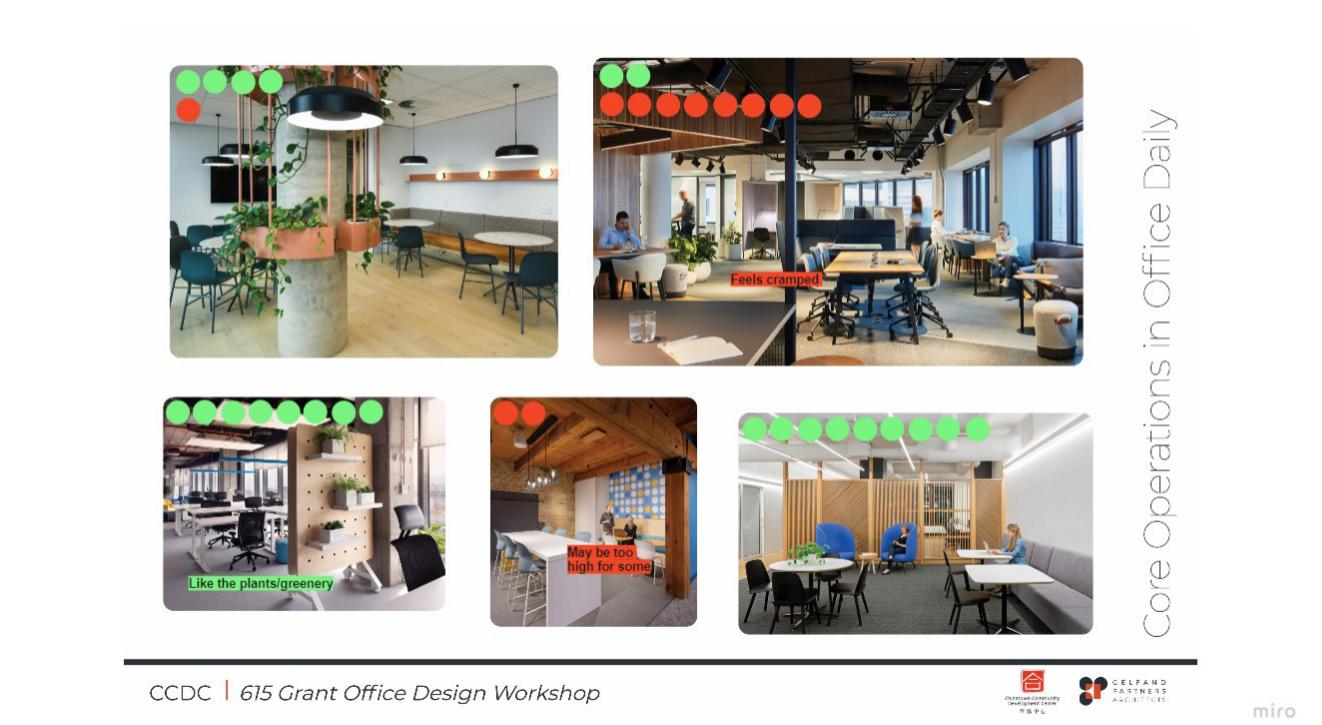 Above: Client workshop design feedback presentation boards
Right: RFQ proposal pages
Above: Client workshop design feedback presentation boards
Right: RFQ proposal pages
Multimedia Associate
Berkeley, CA | Othering and Belonging Institute, Berkeley Law School, UC Berkeley College of L&S


February 2020 - August 2022
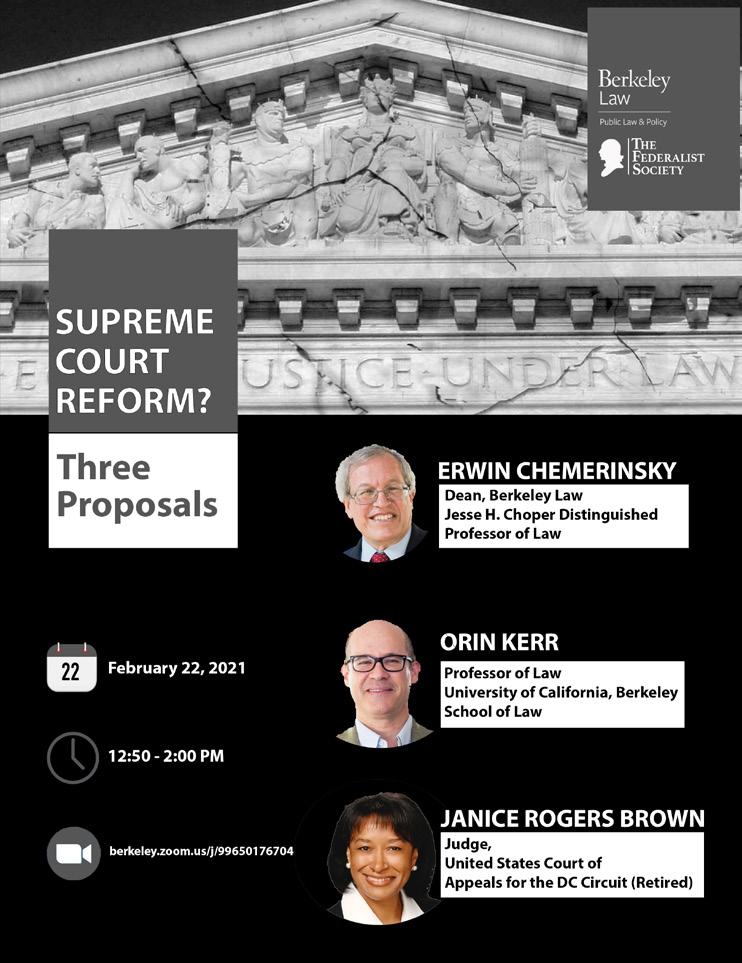
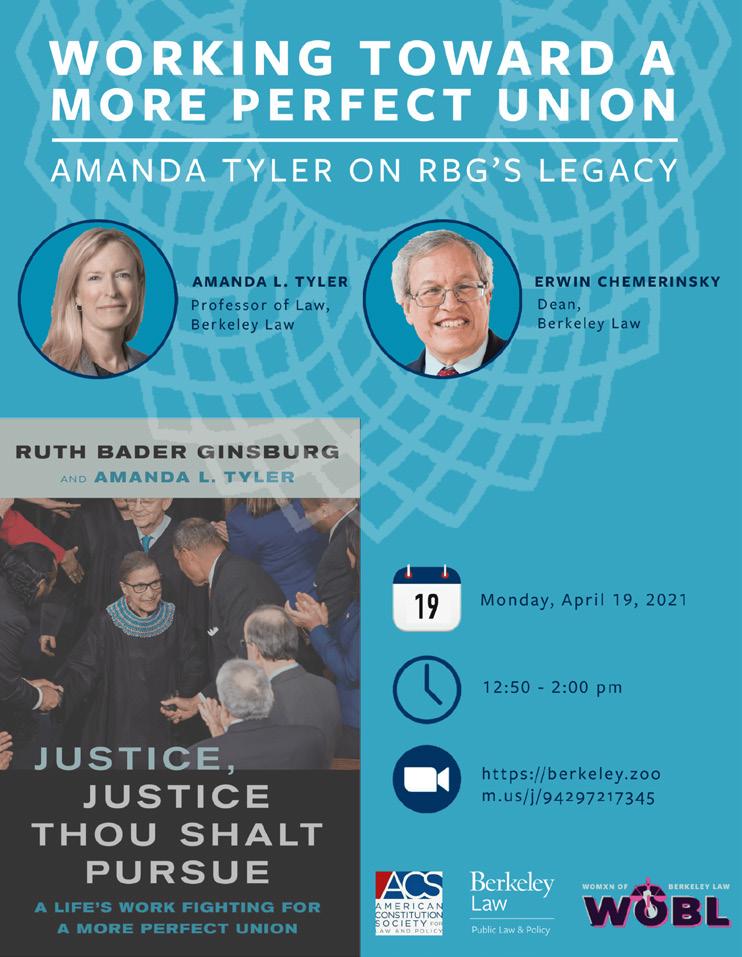
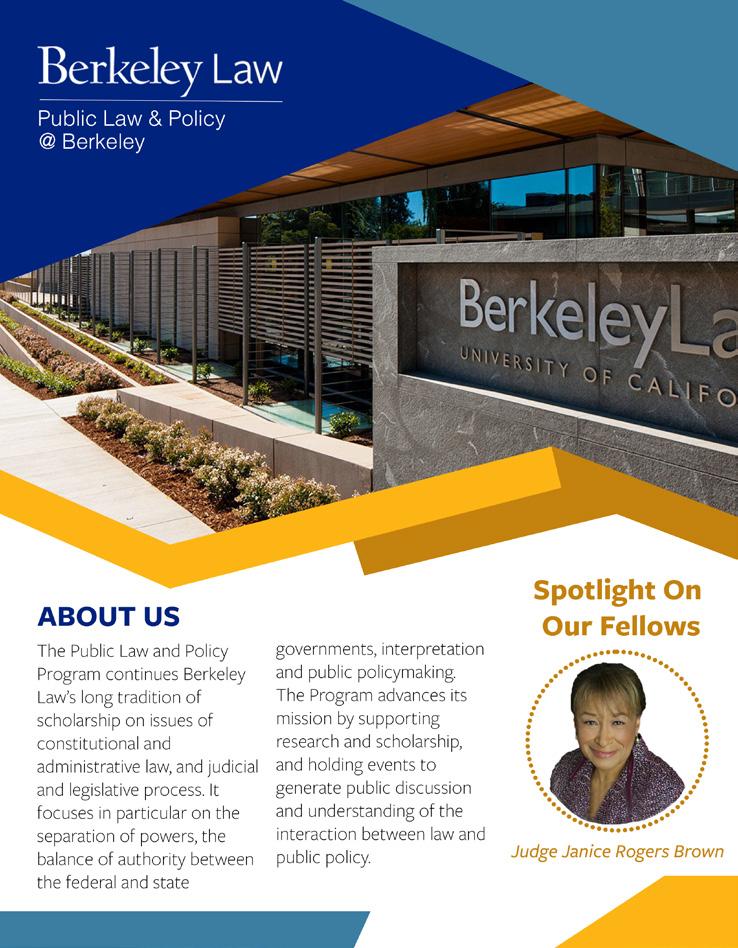
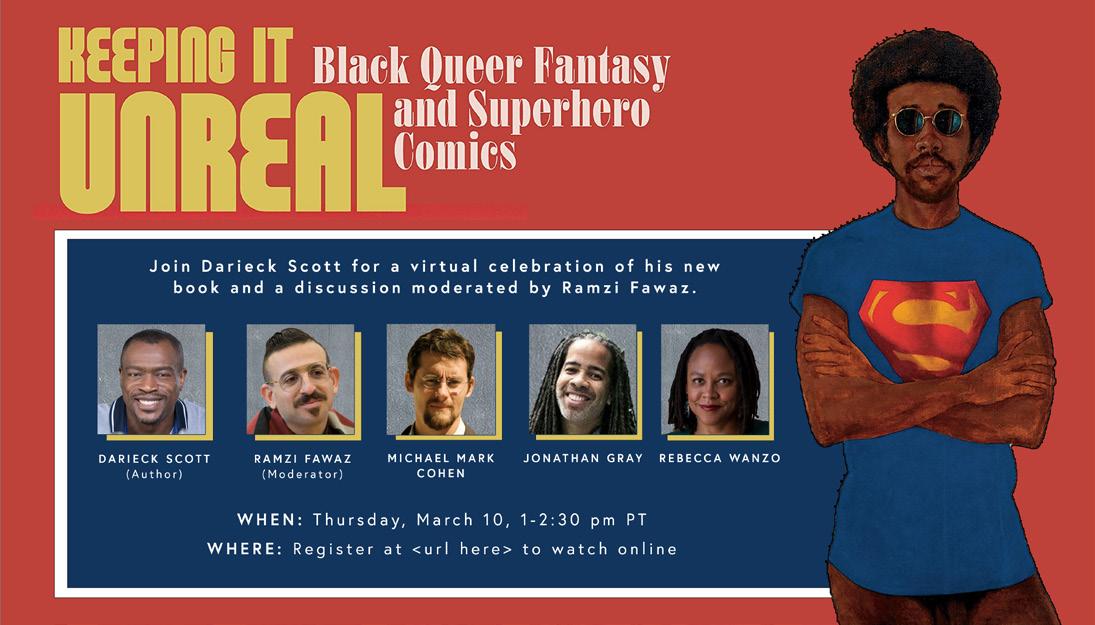
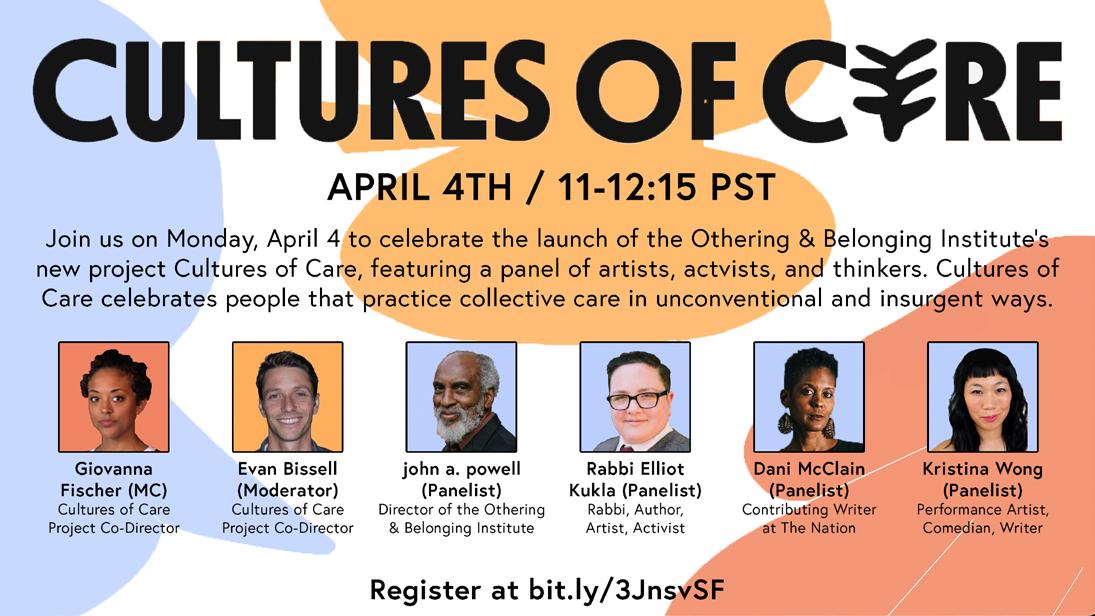
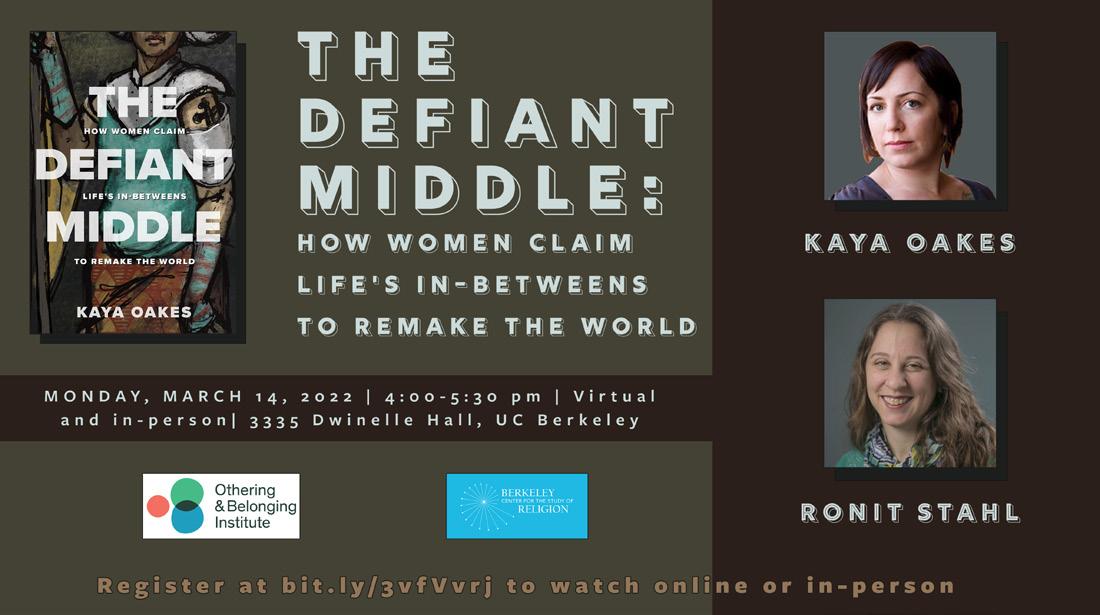
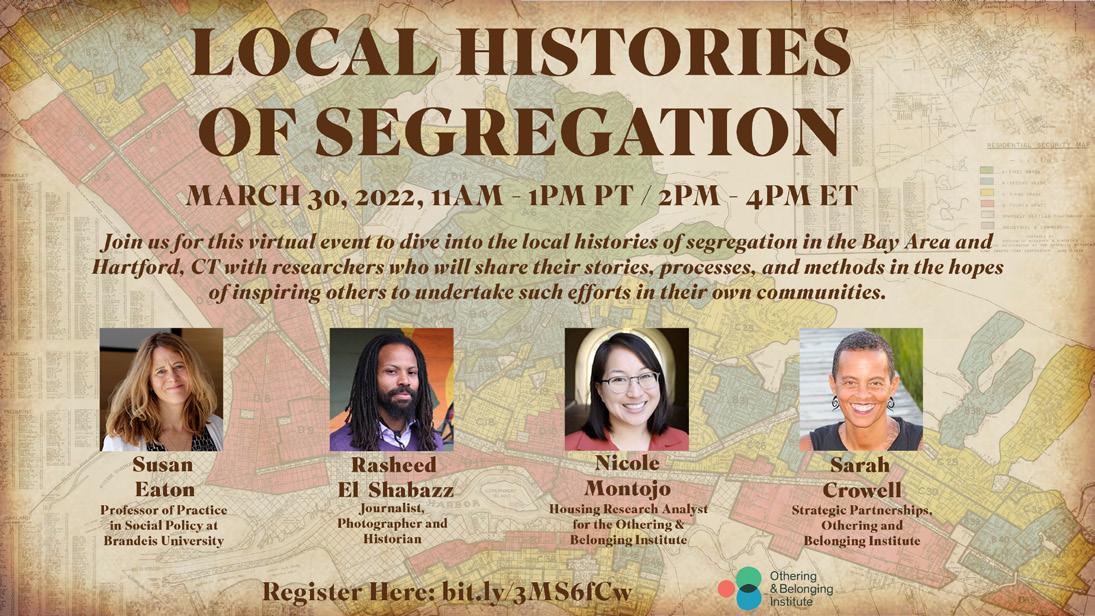
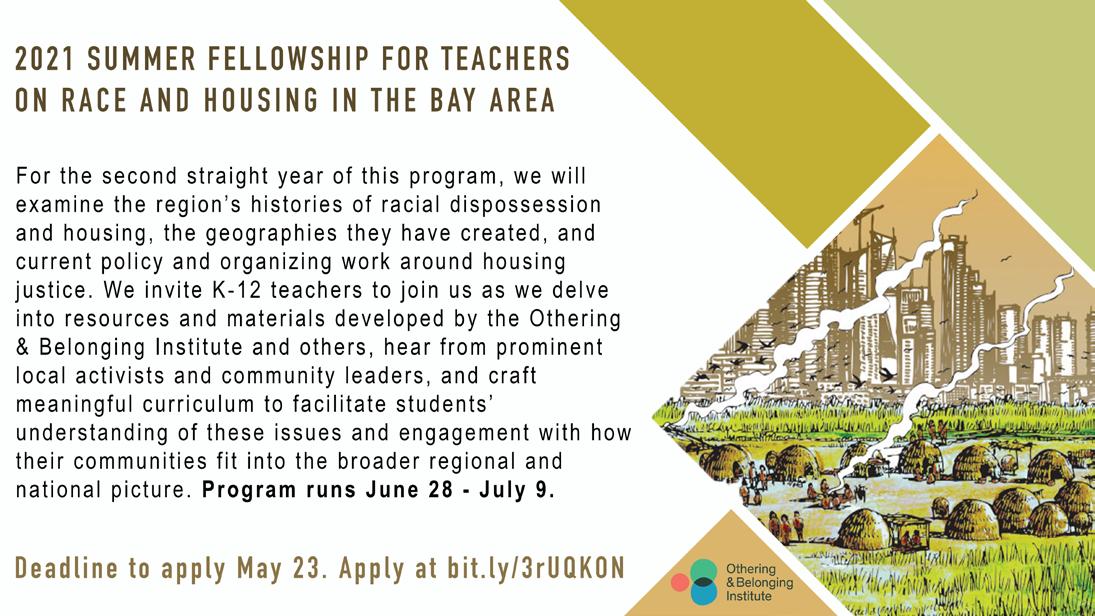
IIn my capacity as the Digital Content Manager at UC Berkeley Law School, Multimedia Associate at the Othering and Belonging Institute, and Digital Content Strategist for UC Berkeley’s Letters & Science Media Studies Department, I was entrusted with the responsibility of designing and crafting various promotional materials, which encompassed the creation of compelling marketing flyers, event programs, and informative guides. Leveraging my expertise in graphic design, I utilize industry-standard software such as Photoshop, Illustrator, and InDesign.
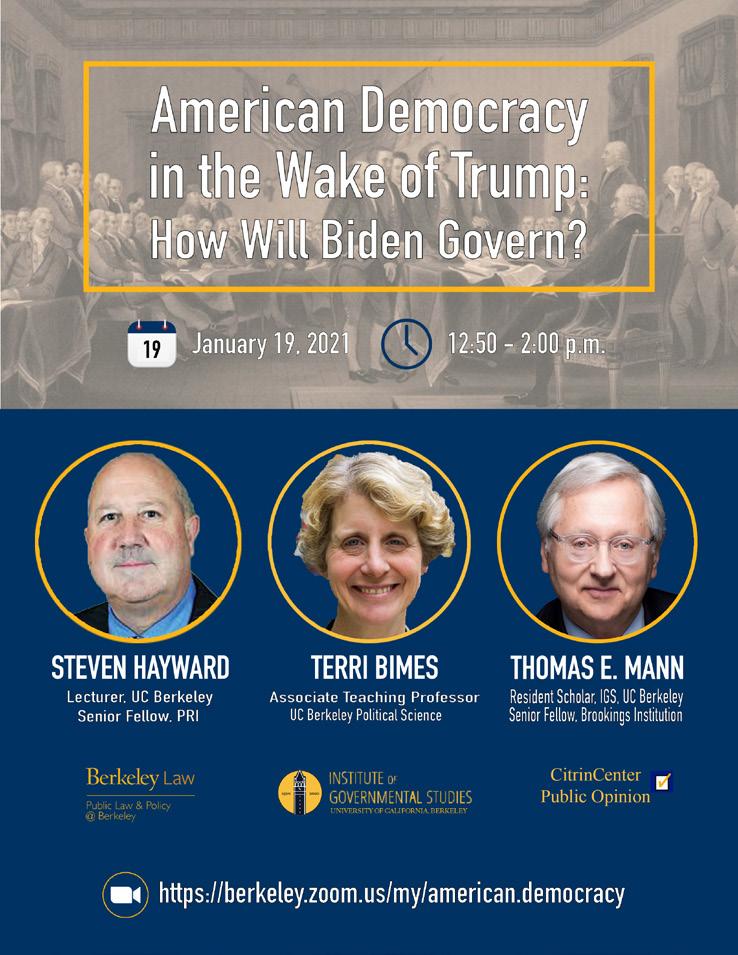
Above: Berkeley Law Flyers
Right: Othering and Belonging Institute Flyers



YouTube and Blog
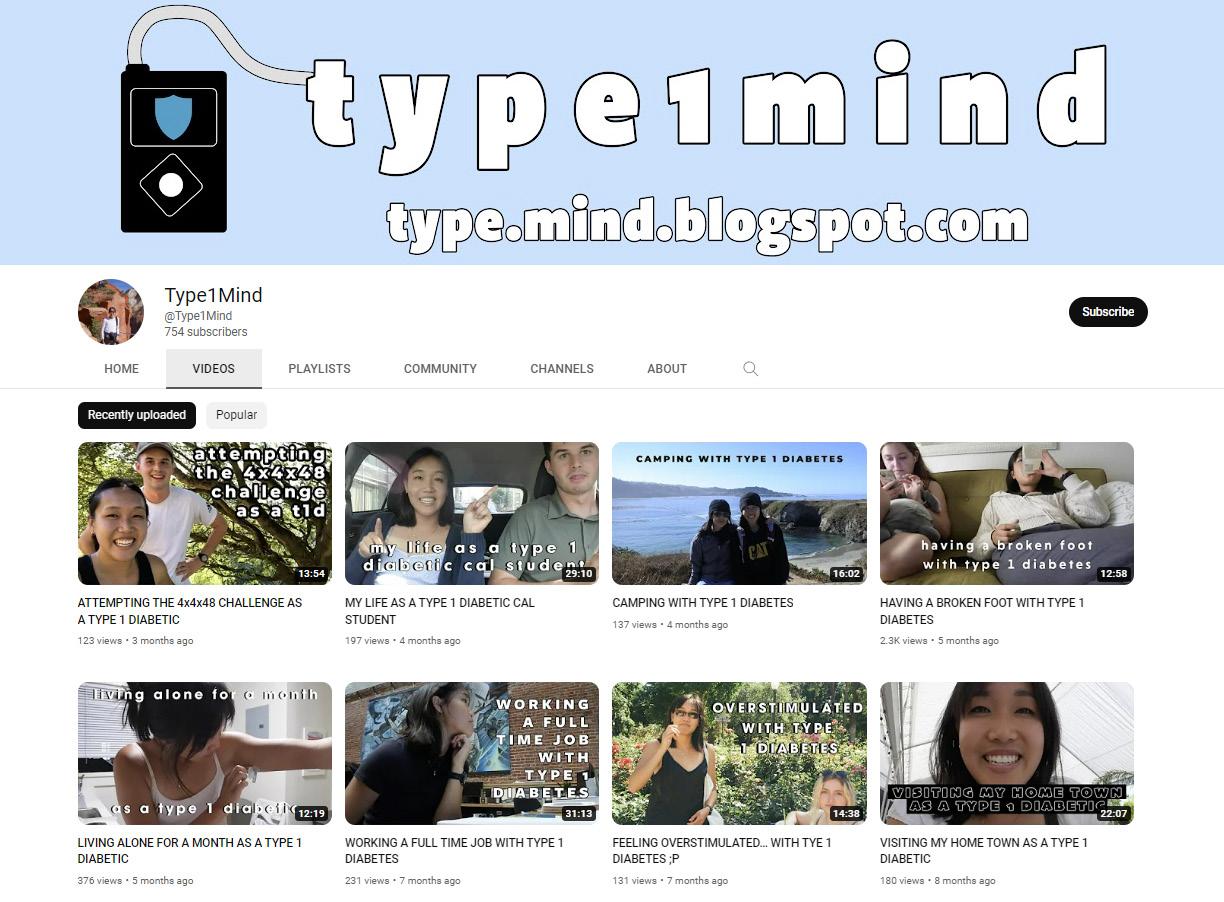
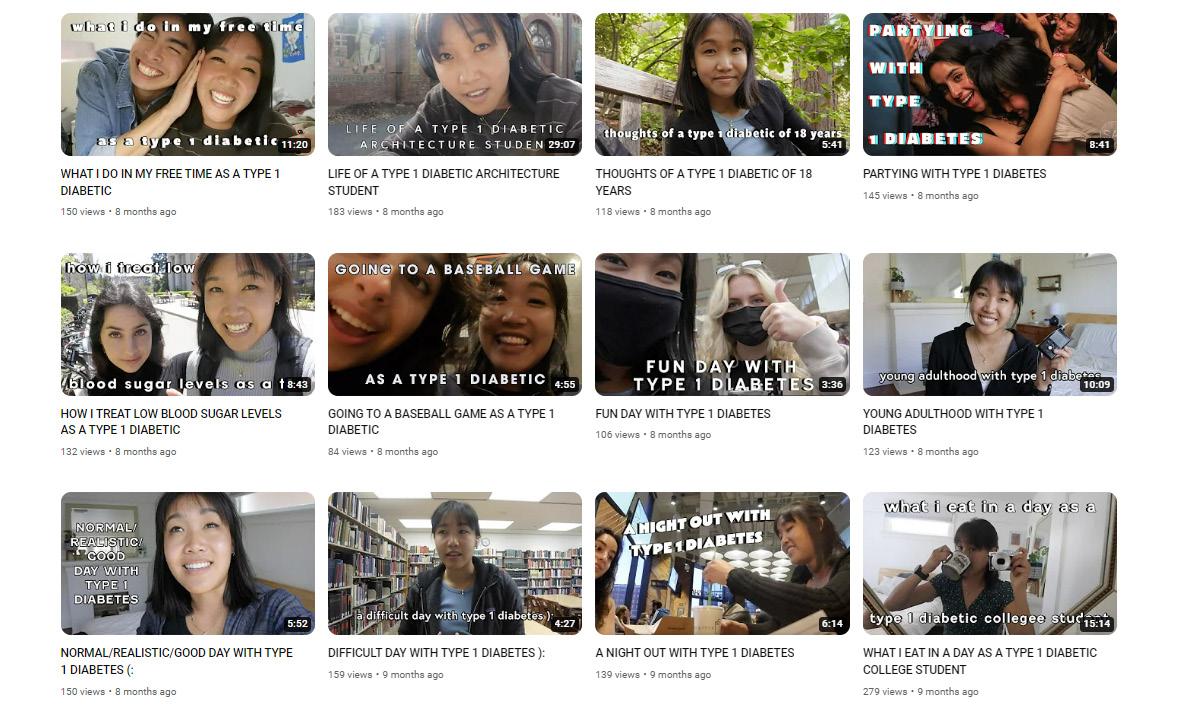
YouTube: youtube.com/c/MeganDang Blog: type1mind.blogspot.com
As an individual who has been living with diabetes for nineteen years, I have harnessed my graphic design skills acquired through my professional experiences and college education to create compelling content that spreads awareness and supports fellow diabetics. Managing and producing diabetic-related content on my personal YouTube channel and blog, I utilize my expertise to design visually engaging informational guides, tutorials, and advice, catering specifically to the needs and concerns of individuals facing similar challenges.
By leveraging graphic design techniques, I strive to enhance the effectiveness of my content, enabling me to reach a wider audience and foster greater understanding of diabetes. Through these platforms, I not only aim to assist and connect with fellow diabetics but also educate those seeking to expand their knowledge about this condition.
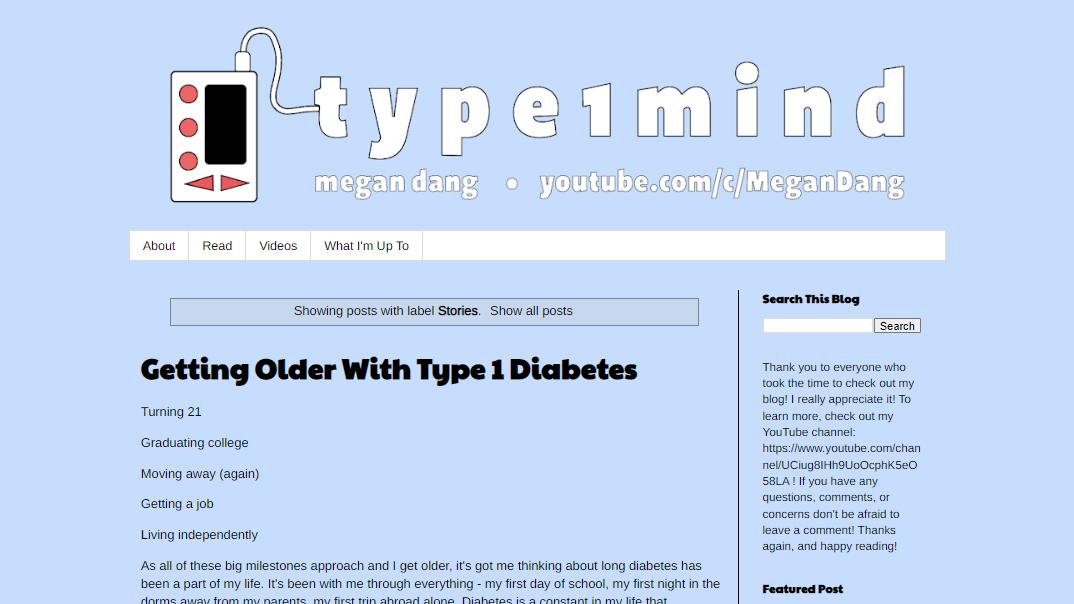
Above: Blog
Right: YouTube Channel
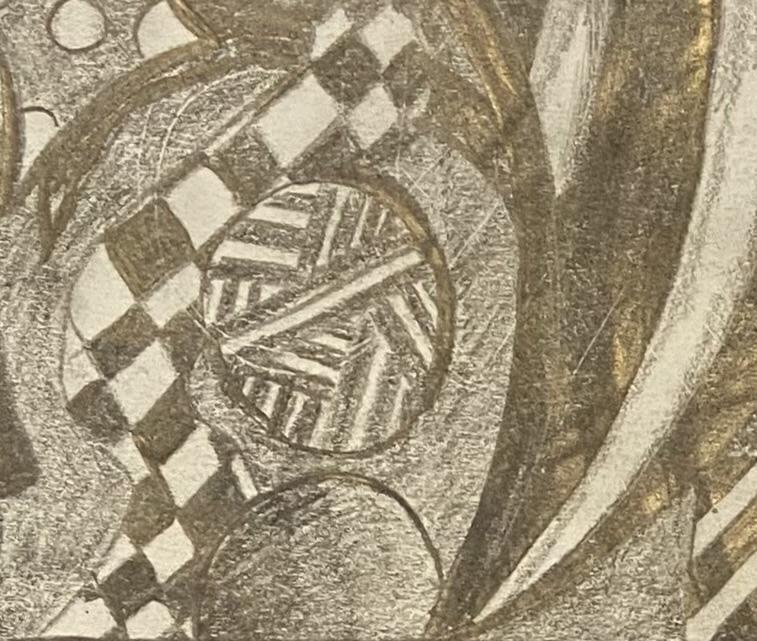
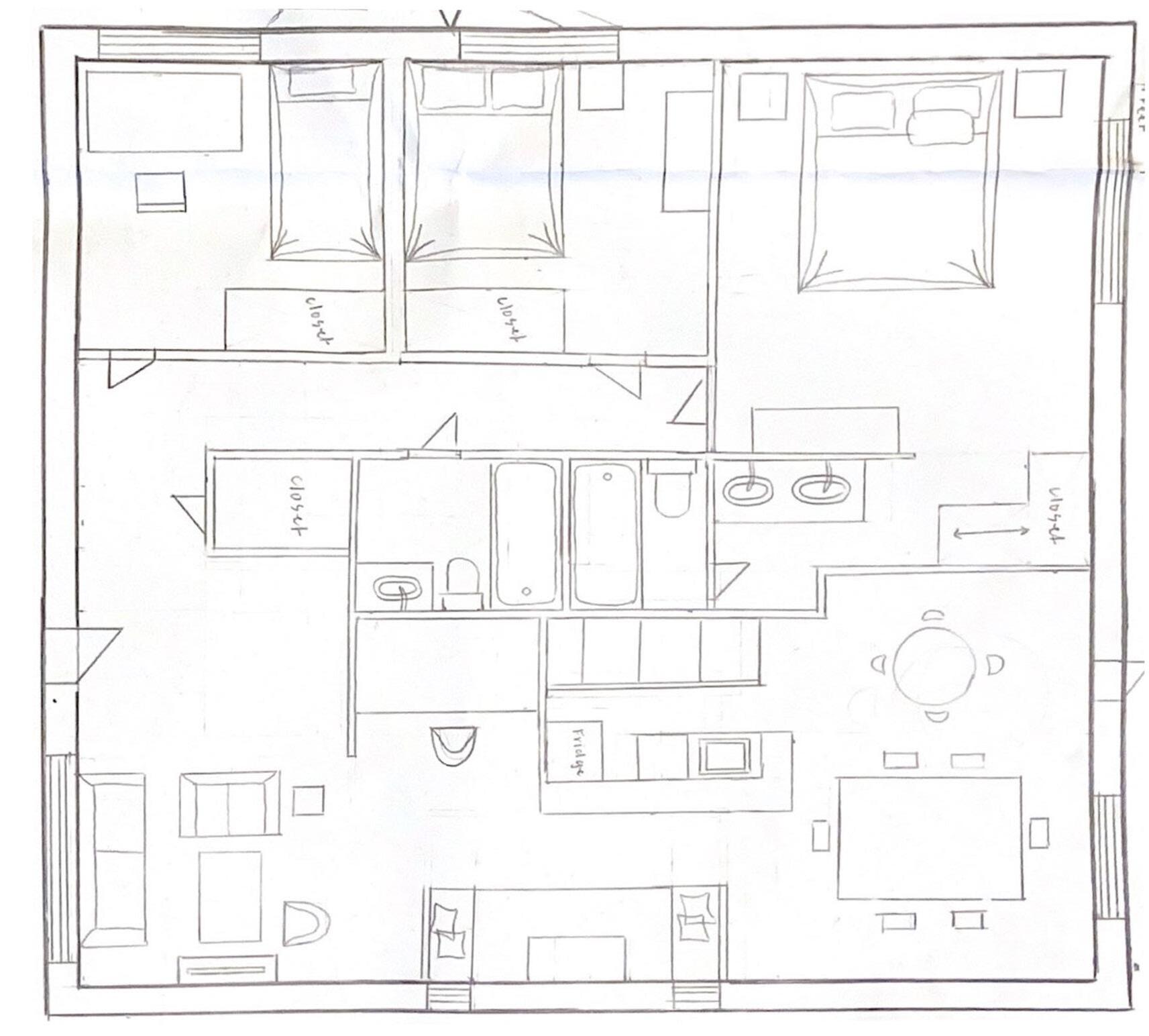
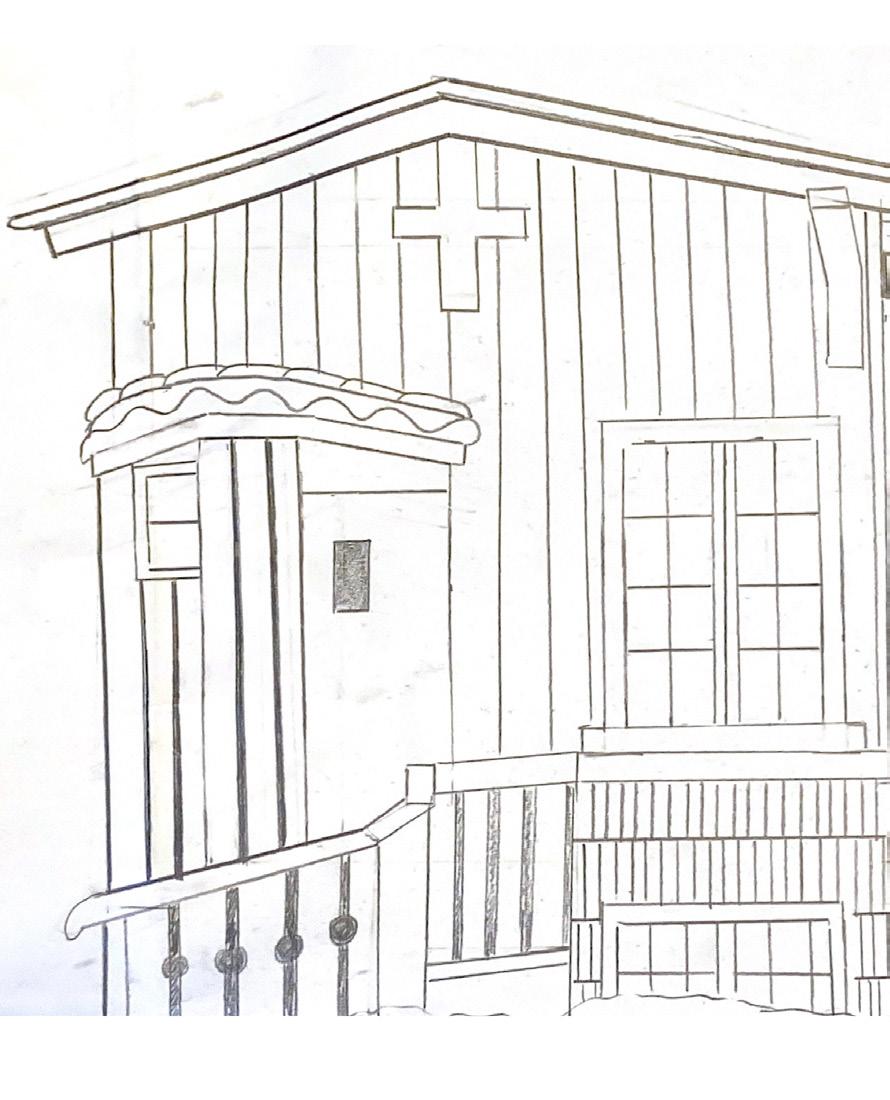
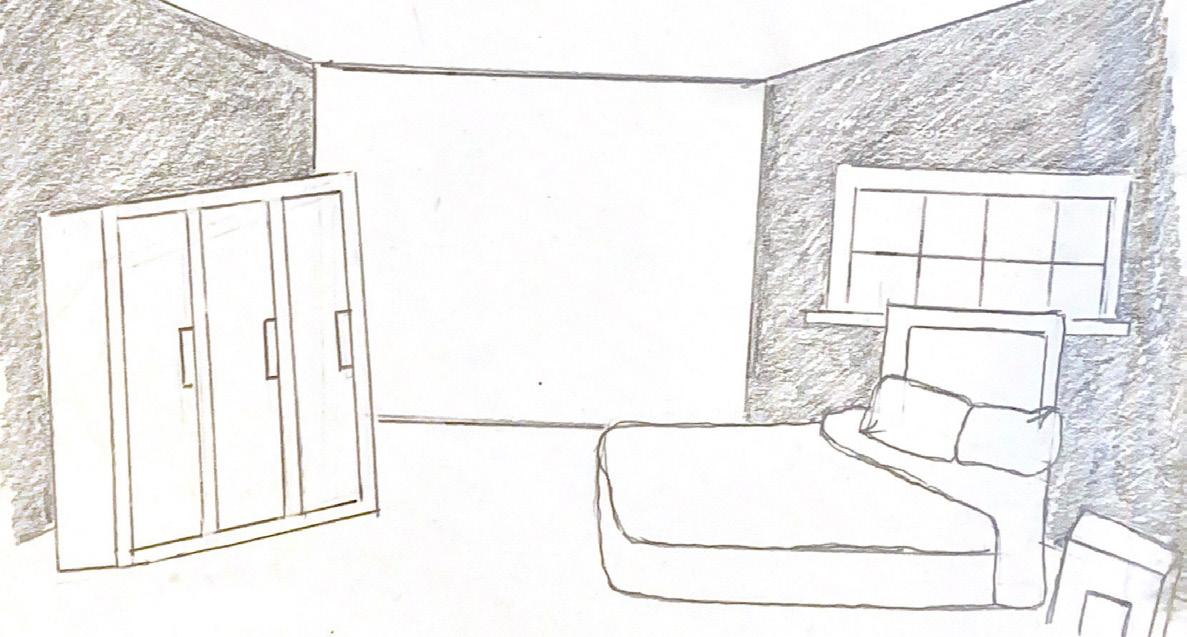
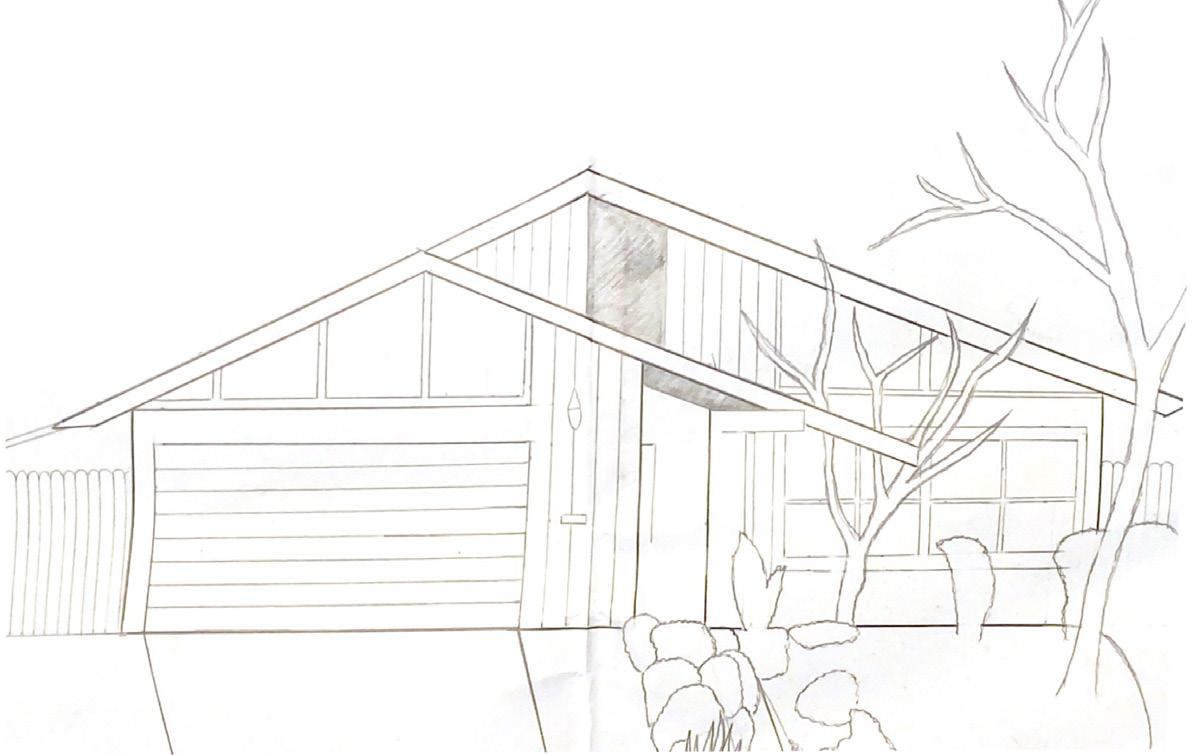
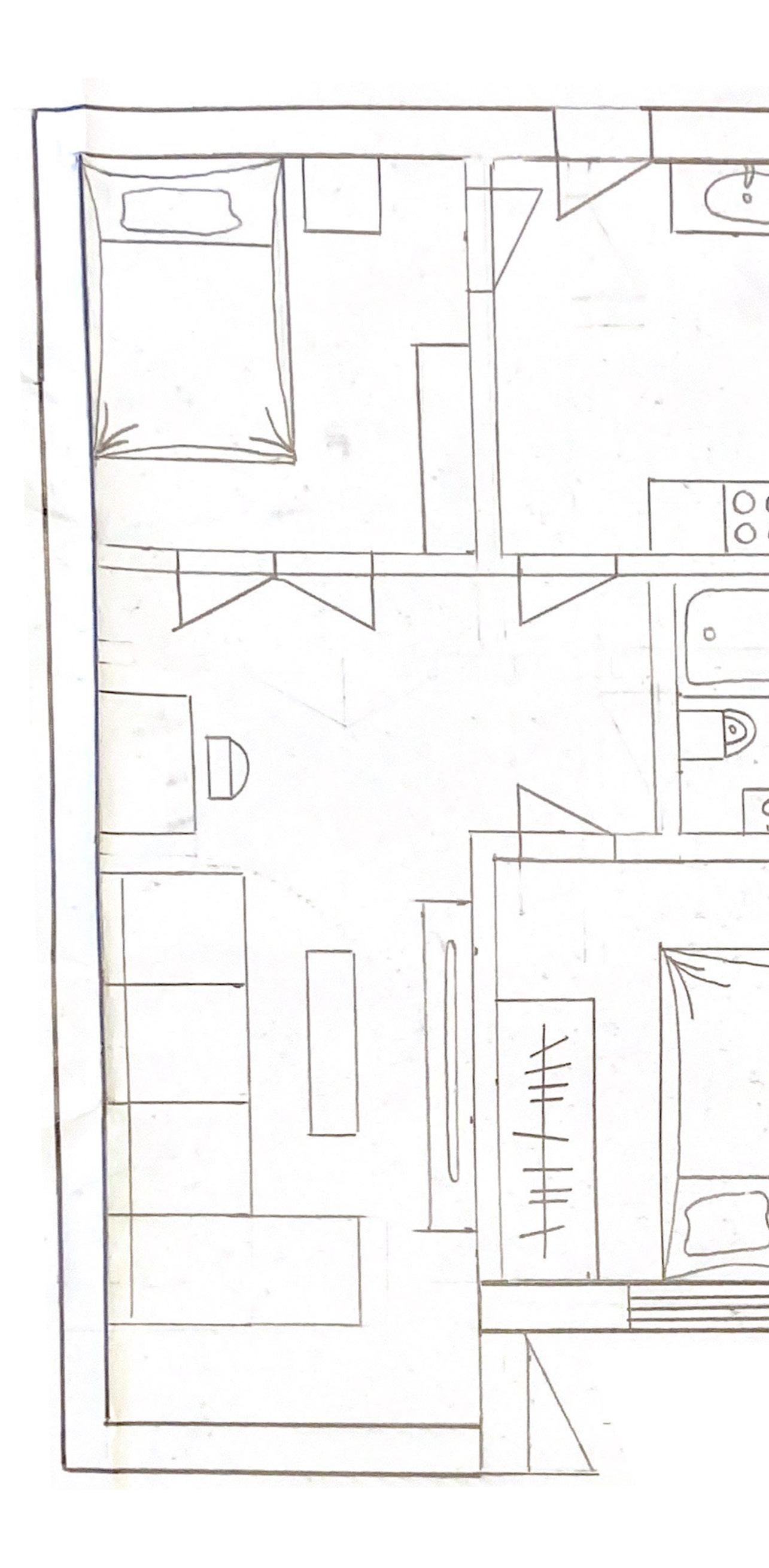
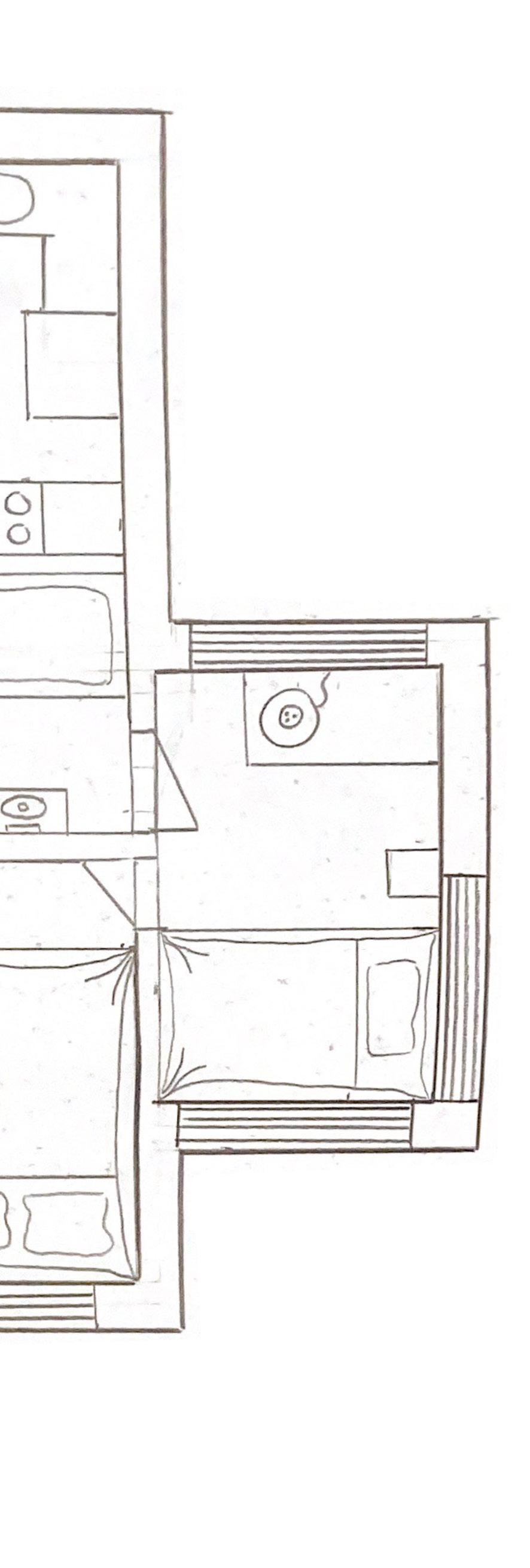
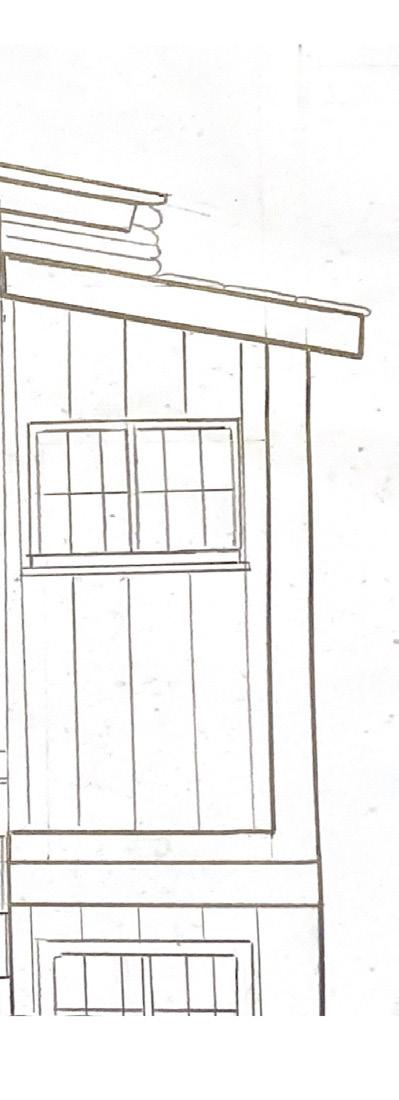
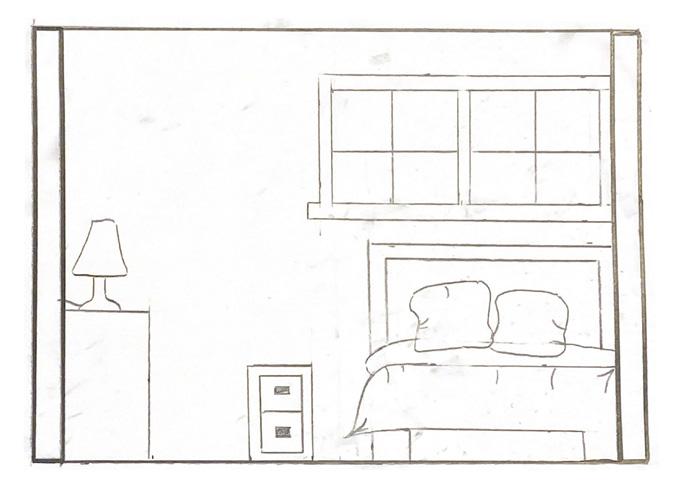
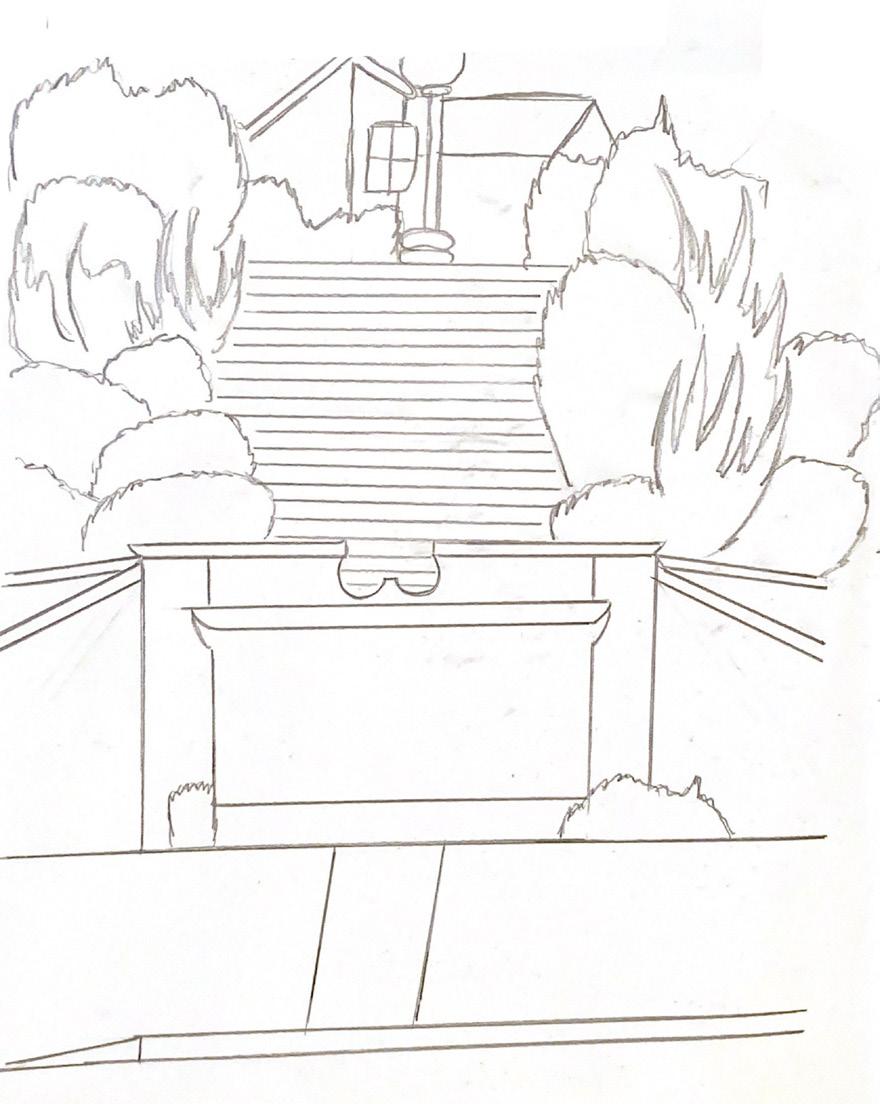
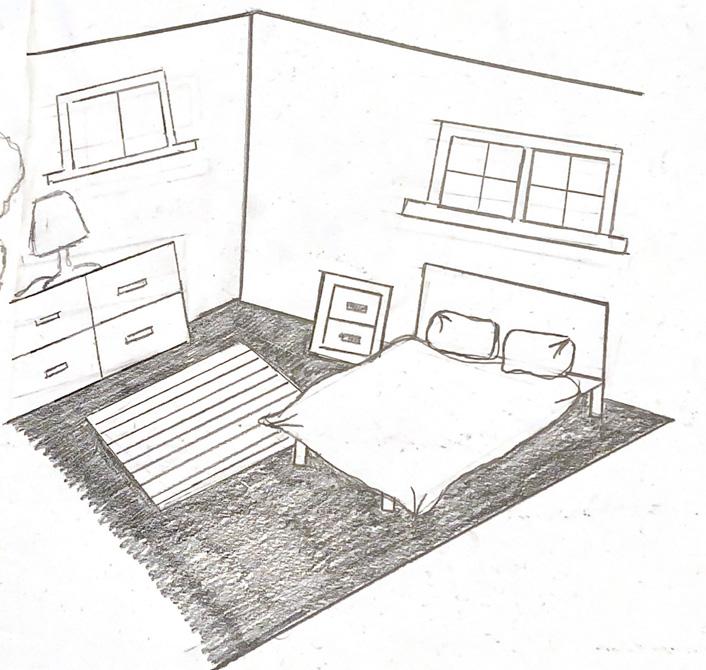
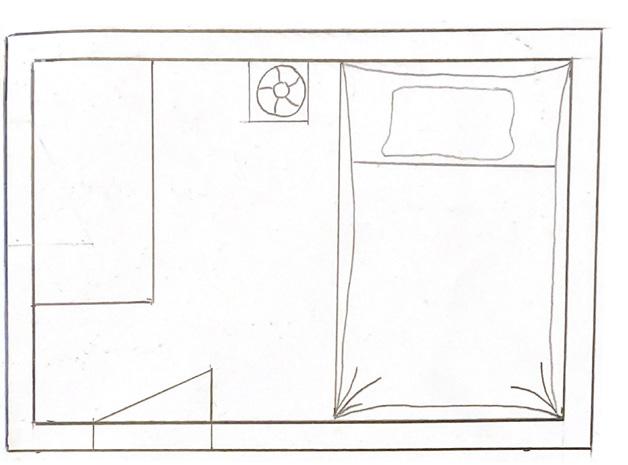
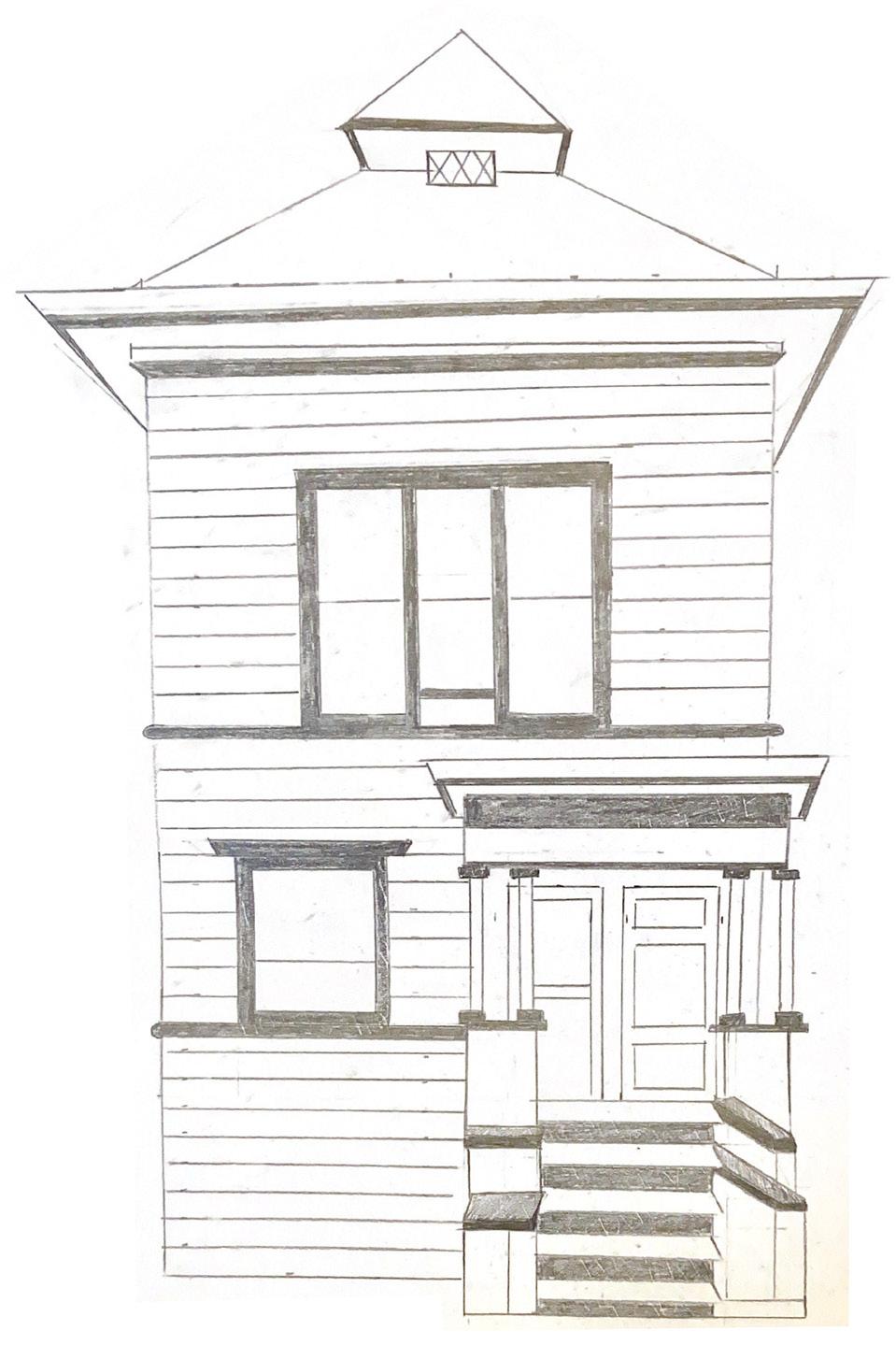
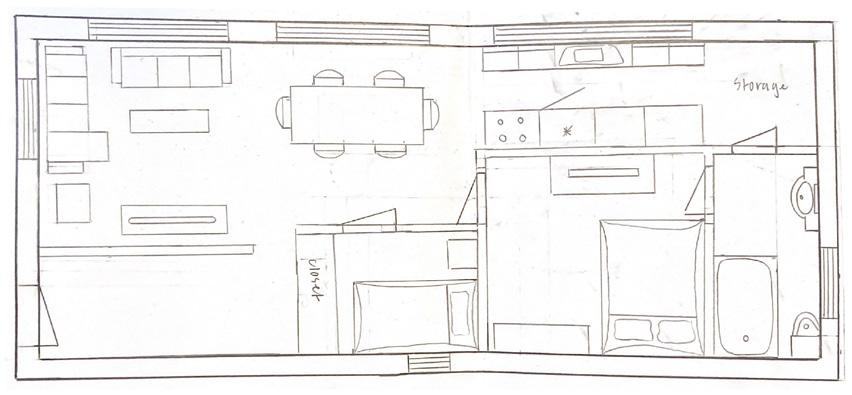
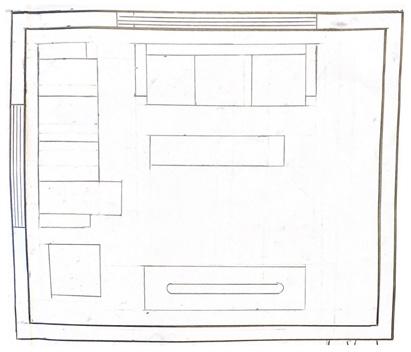
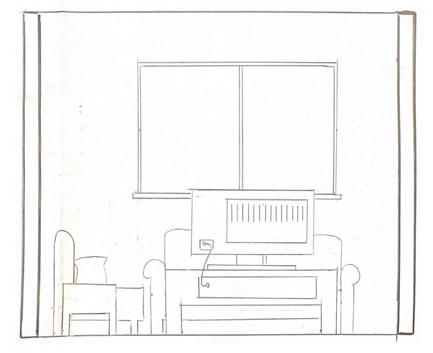
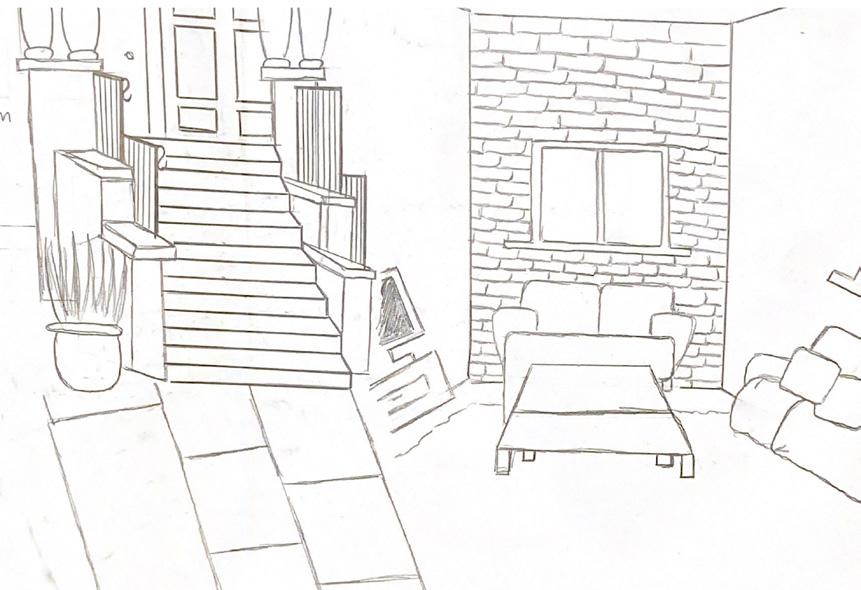
Hand Drafting Sketches
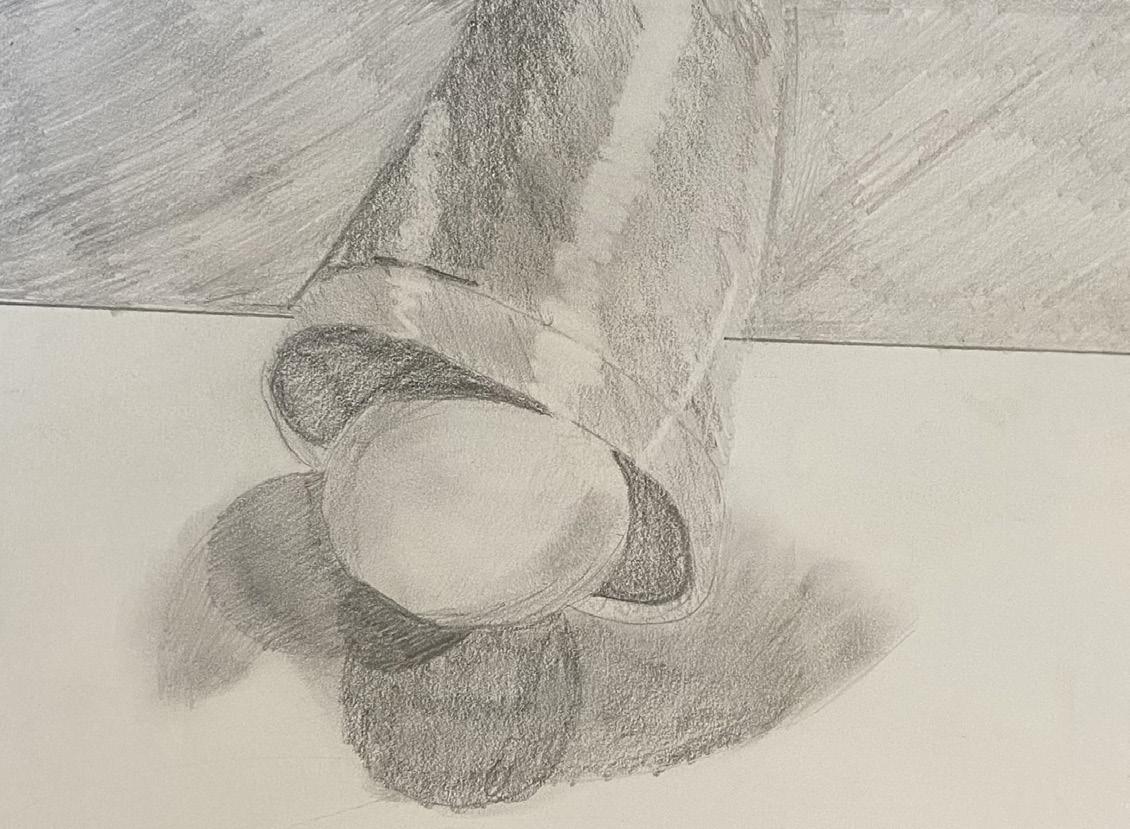
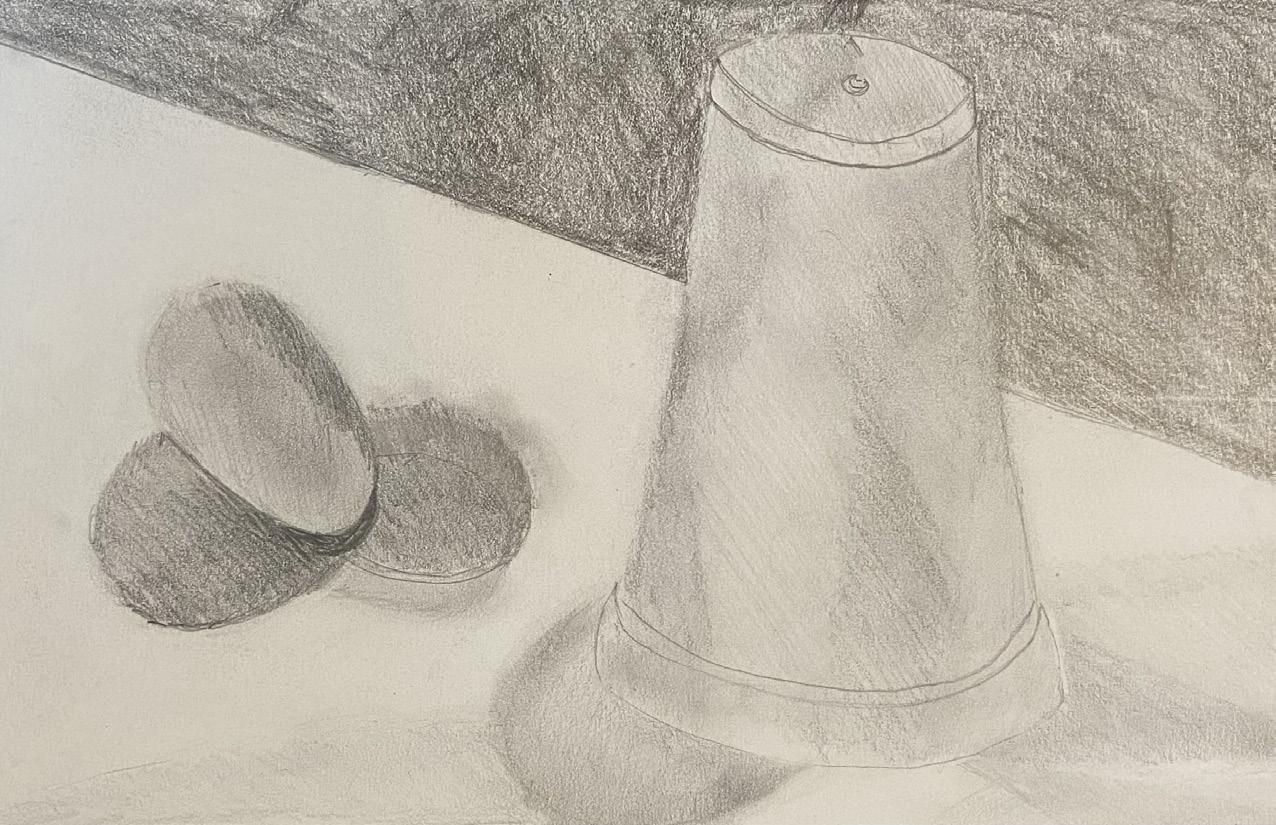
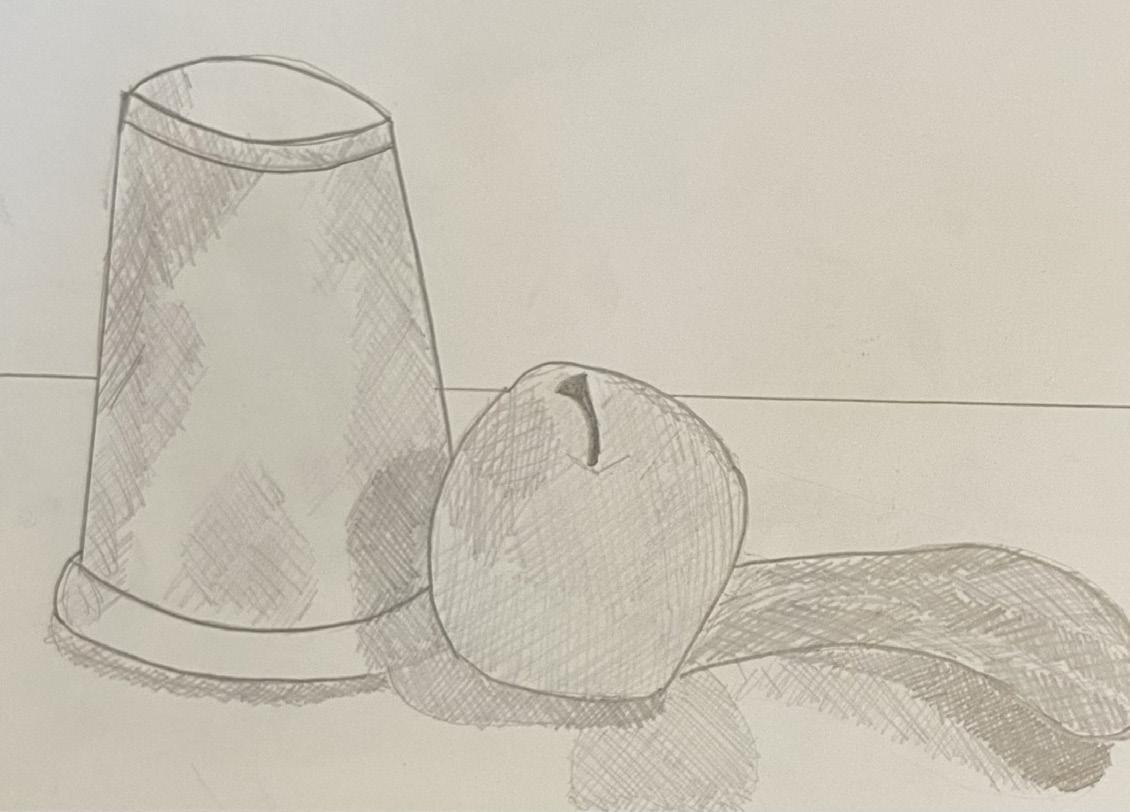
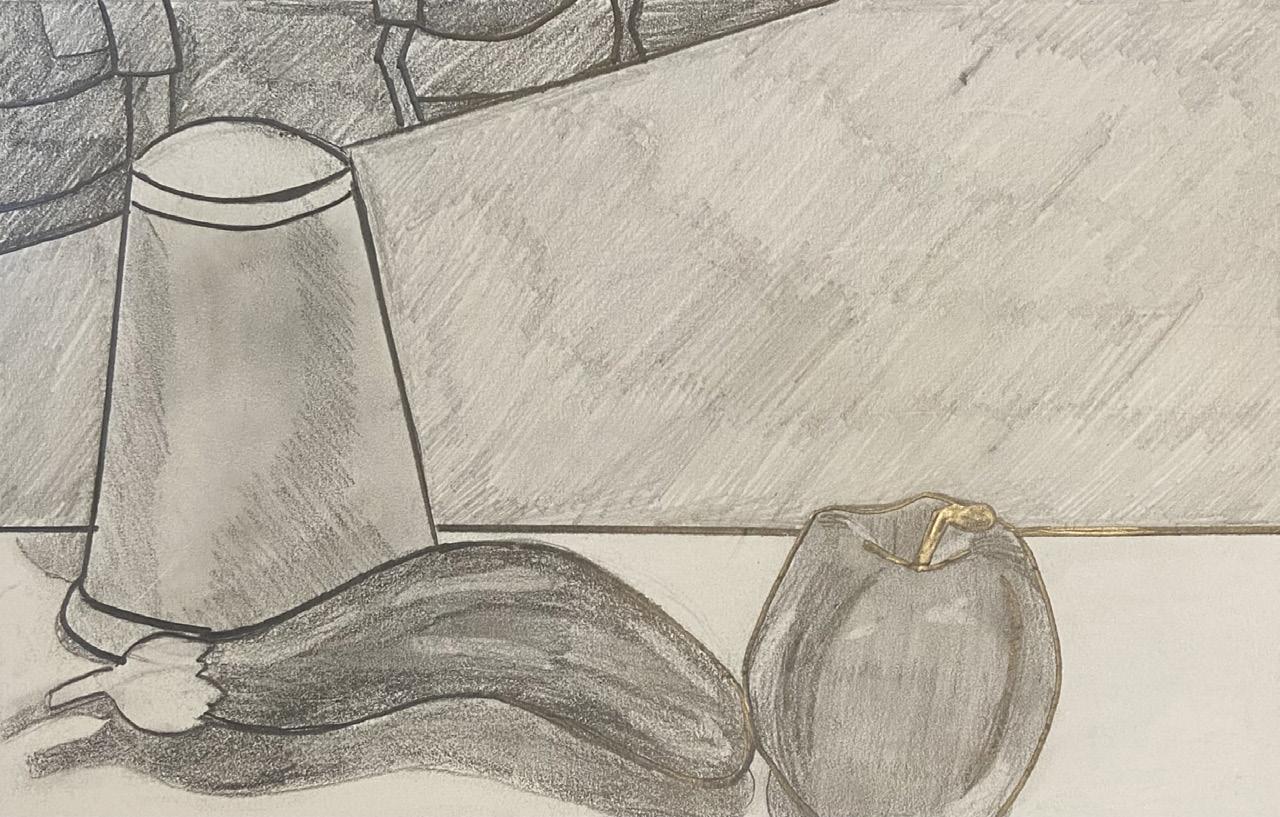
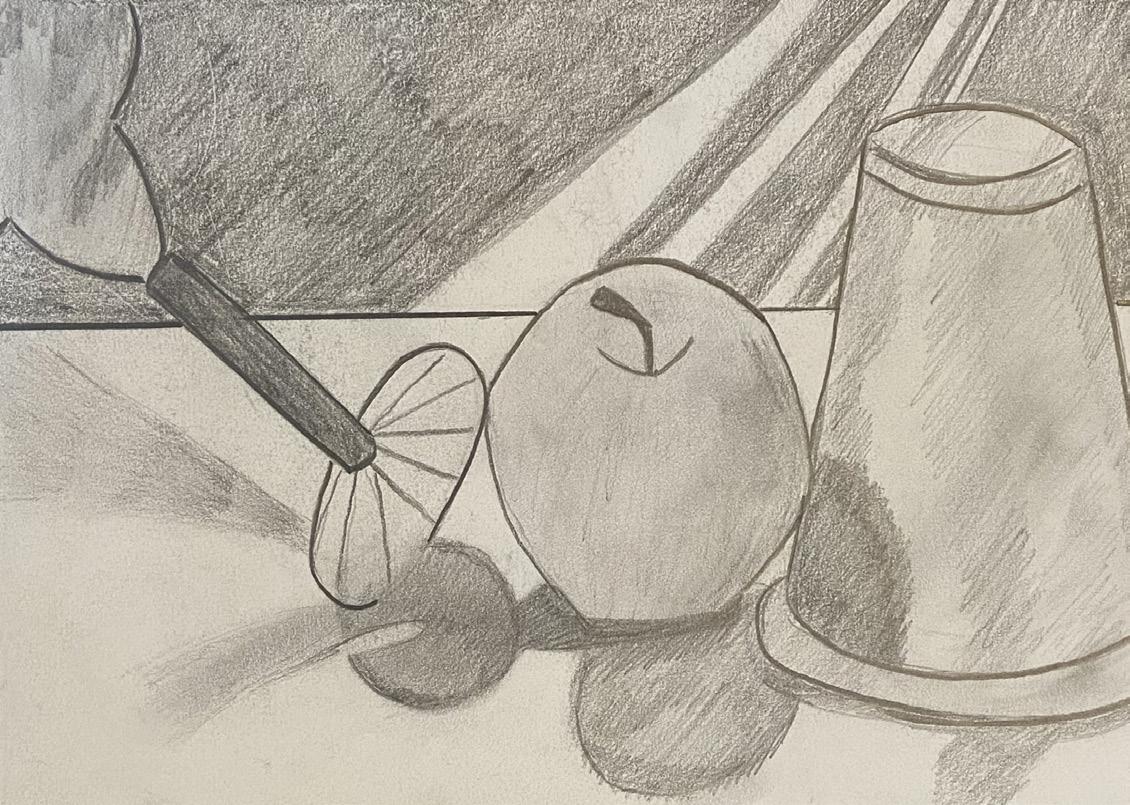
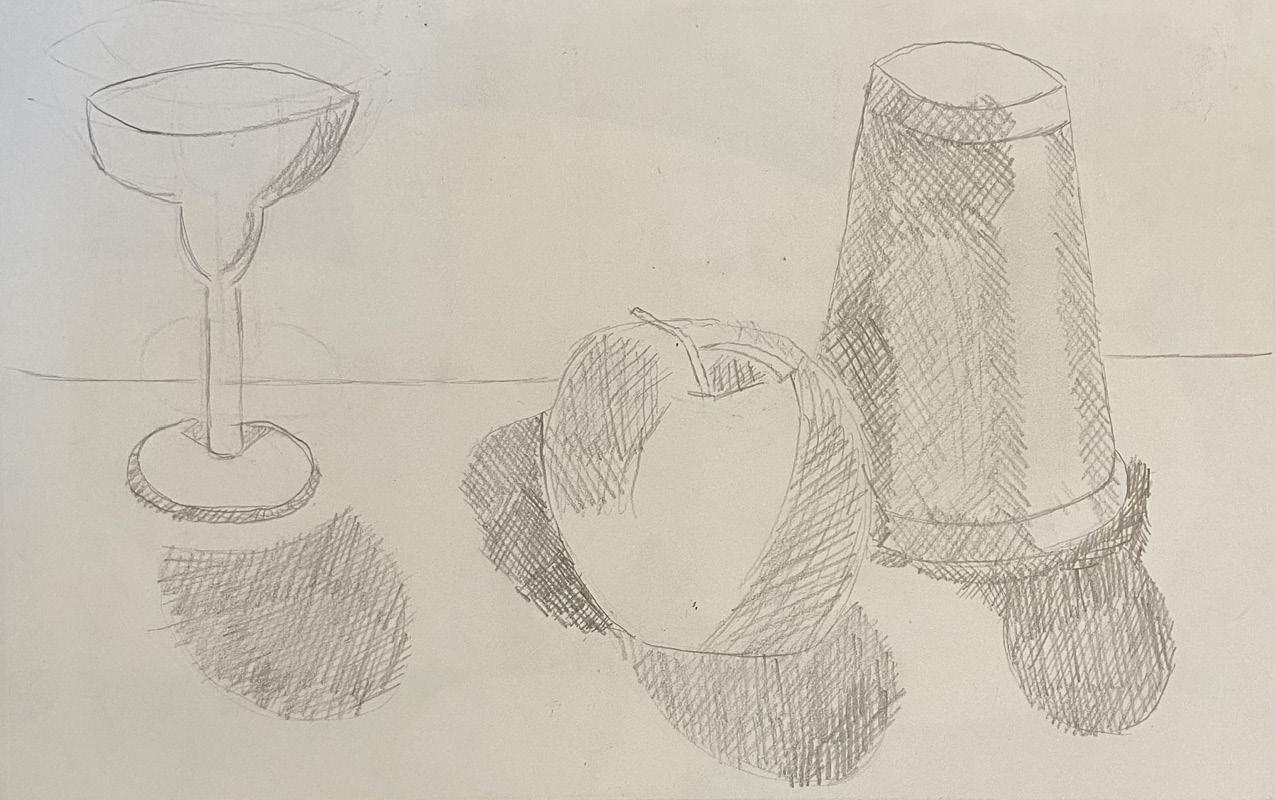
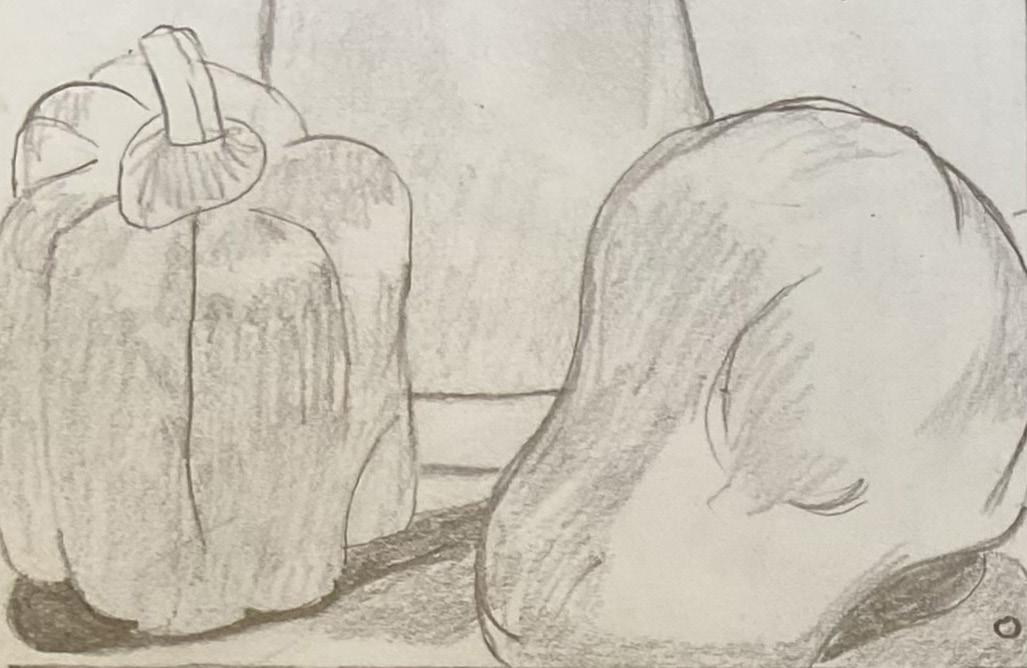
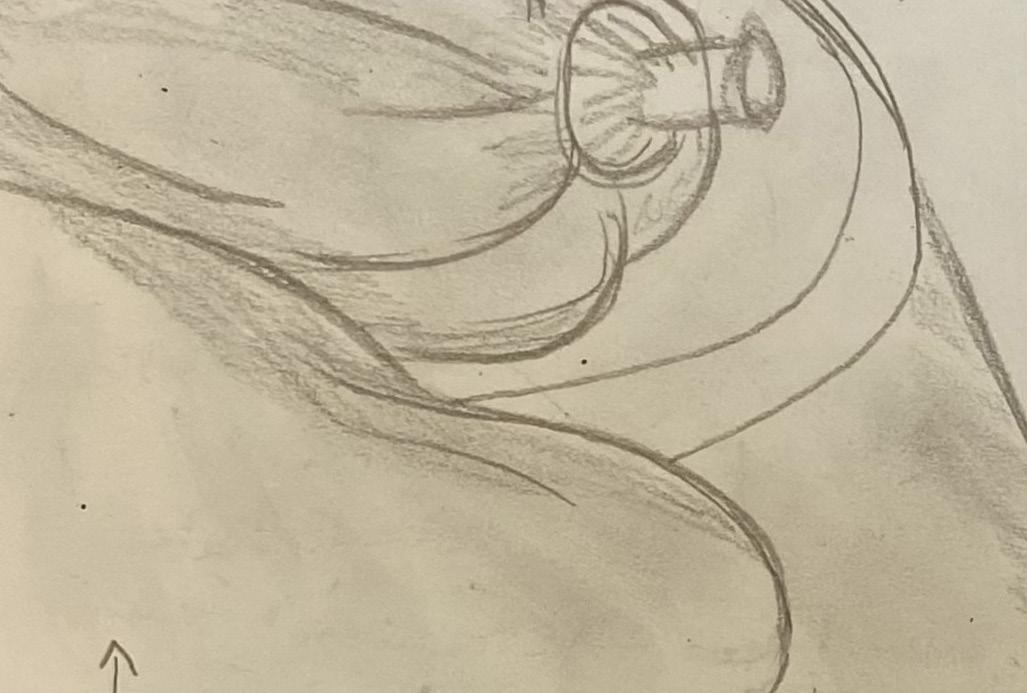
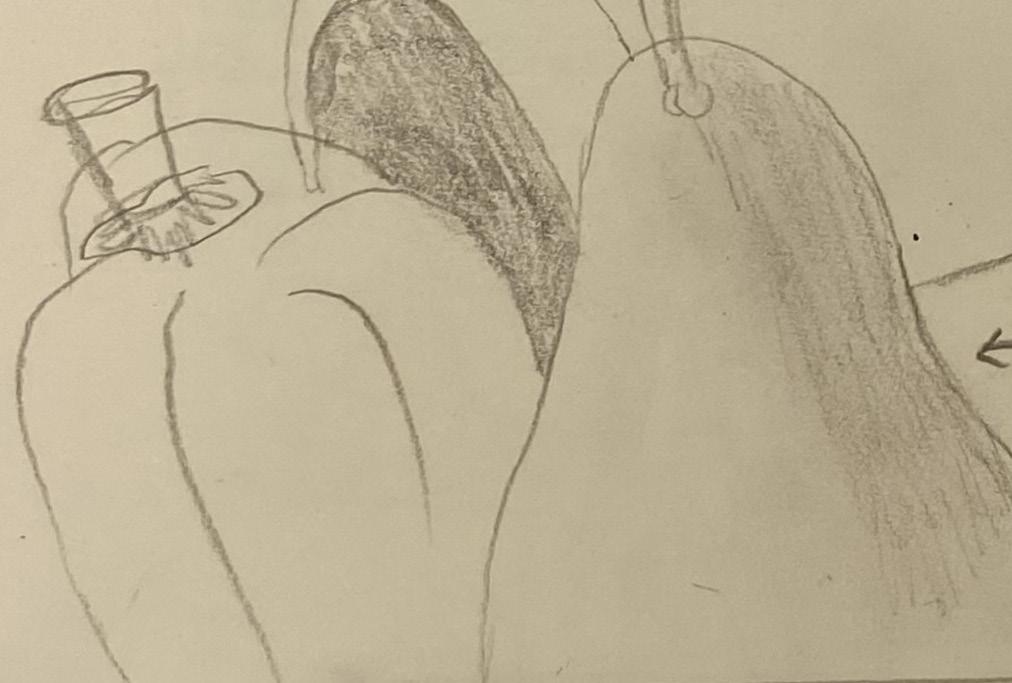
Object Sketches