M E G A N P A V L O W S K I UNDERGRADUATE PORTFOLIO

941 Throop Street, Dunmore PA 18512
mmpavlowski@m.marywood.edu
pavlowskimegan@gmail.com
(570) 815 - 2475
Marywood University - August 2019 - May 2024
Bachelor of Architecture, Minor in Sustainable Design GPA 3.86
Relevant Courses:
Design Studio I - X, Environmental Systems I & II, Global Urban Ecologies I & II, Structures I & II History of Architecture I & II, Community Design Build, Public Design, and Building Assemblies
ISI Florence - September 2021 - December 2021
Study Abroad in Florence, Italy
Dunmore High School - August 2015 - June 2019
Occupational Therapy Aide - June 2022 - August 2023
Transported patients and coordinated schedules to ensure best care possible. Assisted with therapy workouts and activities with patients in preparation of their discharge.
Covid-19 Screener - March 2020 - June 2022
Administered temperature checks for employees and visitors who entered and exited the various rehabilitation centers and other facilities during the Covid-19 pandemic.
Student Aide - December 2019 - March 2020
Answered phone calls and filed paperwork to ensure the best patient care possible at the human resources front desk.
Student Internship - May 2023 - Current
Supported the design team in creating schematic drawings, concept presentations, and design development documents using softwares and graphic design tools. Assisted in the creation of digital models, renderings, and visualizations, helping to communicate design concepts effectively to clients and stakeholders while honing skills in design software and presentation techniques.
Student Shadow - April 2018 - August 2018
Analyzed and examined the daily routine of an architect for over 40 hours.
Ambitious and dedicated architecture student with a desire to create detailed 2D and 3D technical images while solving complex design and sustainability issues. Passion and talent for contributing to a team by effectively expressing individual creativity. Eager to grow professionally utilizing the educational foundation obtained and collaborate with colleagues and higher-level decision-makers.
• Revit
• Rhino
• AutoCAD
• SketchUP
• Enscape
• Adobe InDesign
• Adobe Illustrator
• Adobe Photoshop
• Adobe Acrobat
• Microsoft Office
• Problem Solving
• Critical Thinking
• Attention to detail and precision in design execution
• Delta Epsilon Sigma National Scholastic Honor Society
• Time Management
• Adaptability and willingness to learn new tools and techniques
• Tau Sigma Delta National Honor Society in Architecture and Allied Arts
• Tau Sigma Delta President and Mentor
• Deans List 2019 - 2024
• AIA NEPA Scholarship Recipient
• Jacobsian Scholar
• Living City Lab Ambassador
• Solar Decathlon Associate
• Community Design Build Member

01
Community / University Chapel Spring 2023
Pages 6 - 9
University Dormitory Fall 2022
Pages 10 - 13
University Research Facility Fall 2021
Pages 14 - 15
04
Entry Sequence
GARDEN OF CEDAR
Community Garden
Spring 2023 - Current
Pages 16 - 17
05
UNITY
Cultural Winery
Fall 2023 - Current Pages 18 - 19
06
PHYSICAL MODELING
Collective Fall 2019 - Spring 2023
Pages 20 - 21
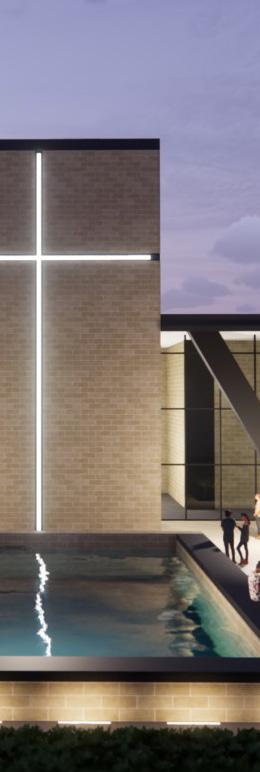
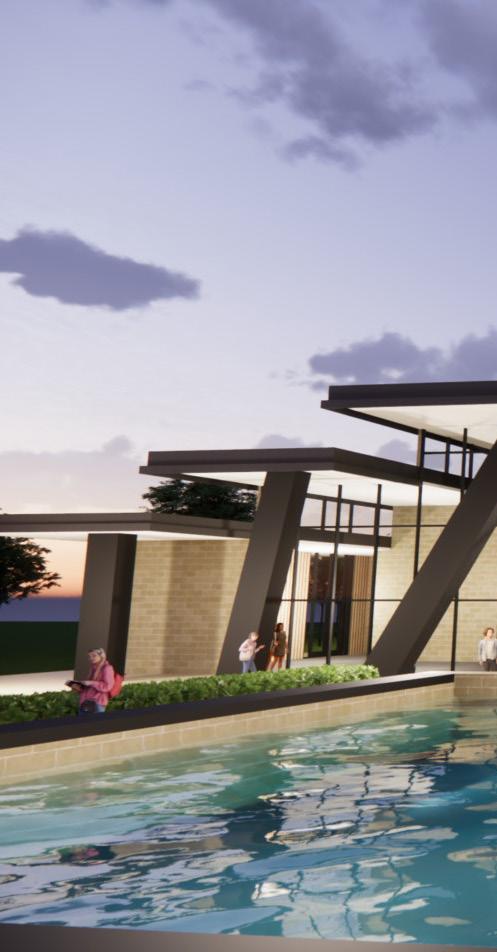
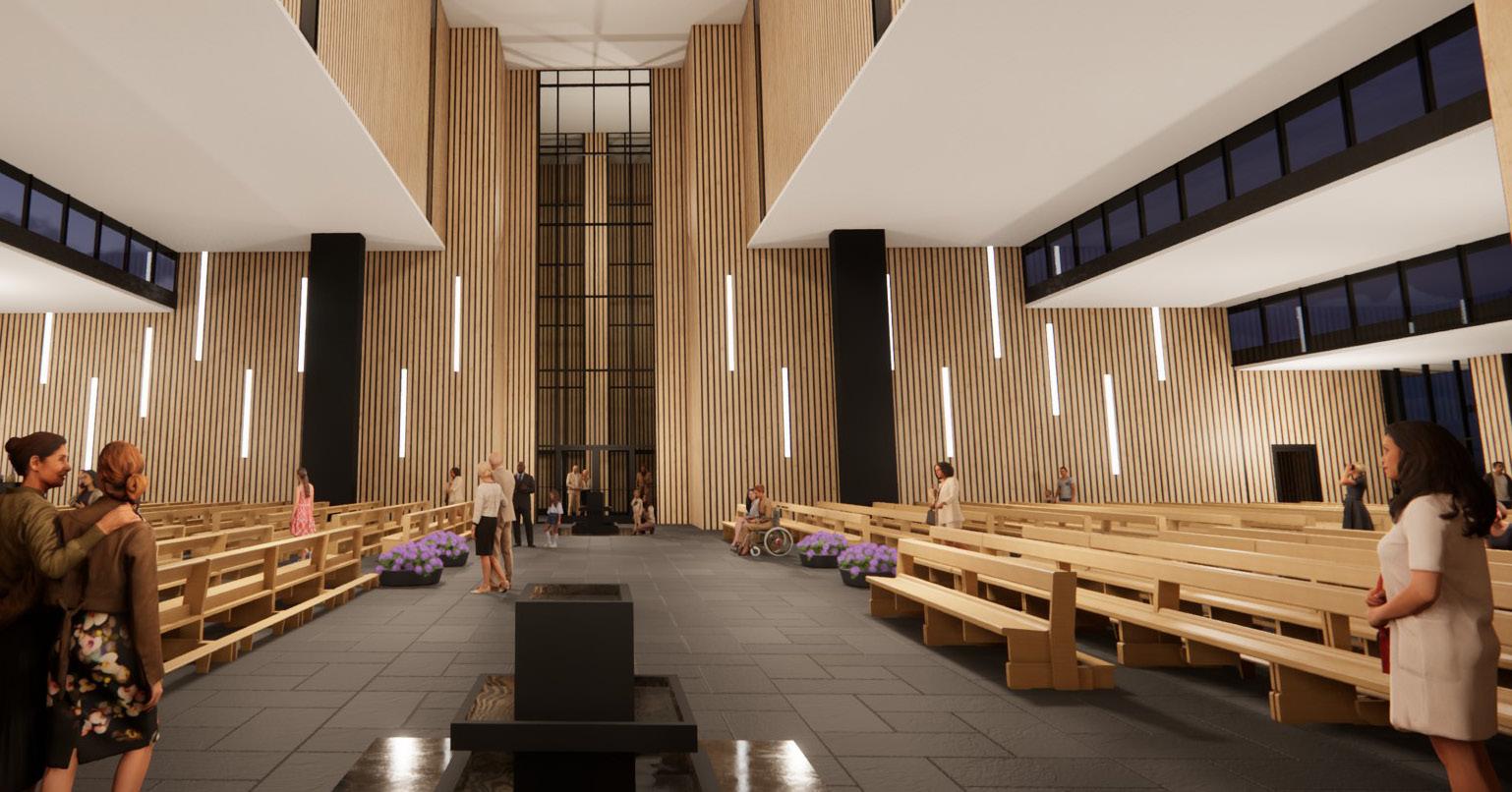
The Chapel of Reflection is intended for the University of Scranton campus, and can be utilized by their students, faculty, staff, and citizens of Scranton. The formal gathering space, which is roughly 1,200 square feet, can accommodate a total of 808 people, as well as areas for handicap accessible seating. The chapel contains public restrooms, formal gathering space, mechanical room, storage room, and a sacristy. The addition of the reflection pool was designed to reflect the landscape and surrounding elements throughout the area. The main purpose of the pool is to create an attractive element for visitors to interact with, as well as reflect, pray, think, and relax. The use of a water element is also added throughout the interior of the chapel with holy water fonts. These can be utilized by incoming visitors.
LOCATION: Scranton, Pennsylvania
PROGRAMS: Revit, Enscape, Illustrator, Photoshop
YEAR COMPLETED: Spring, 2023
PROJECT TYPE: Community / University Chapel

1. Front Lobby
2. Public Restrooms
3. Stoup
4. Nave
5. Chancel
6. Alter
7. Pulpit
8. Mechanical Room
9. The Sacristy
10. Rear Lobby
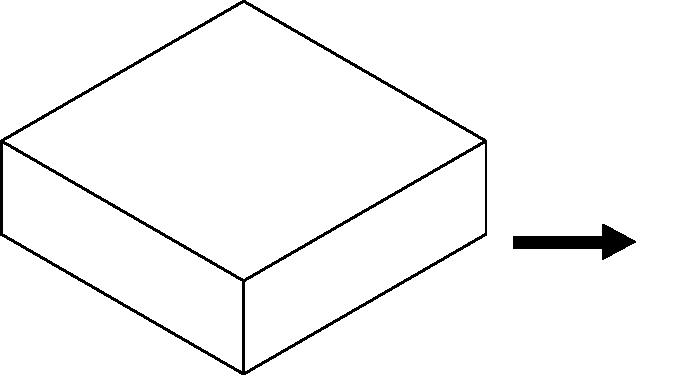
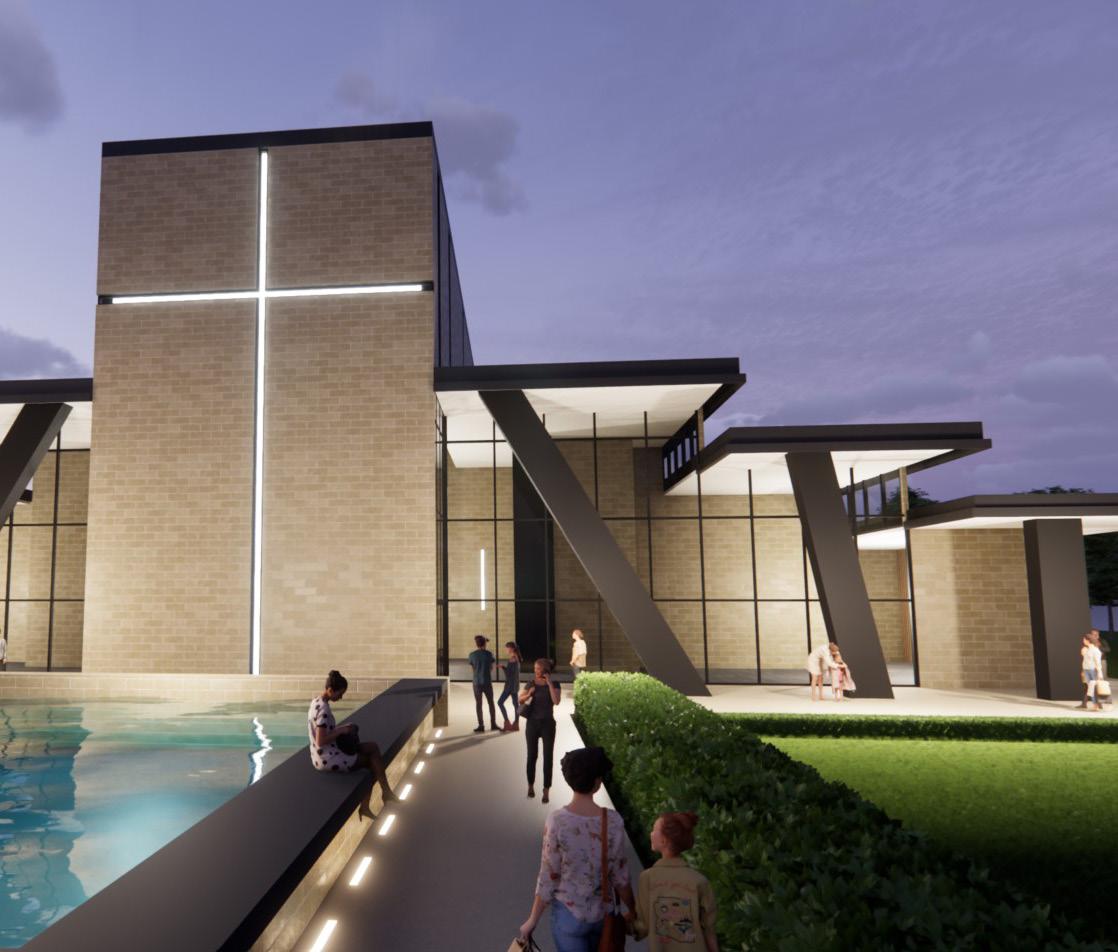
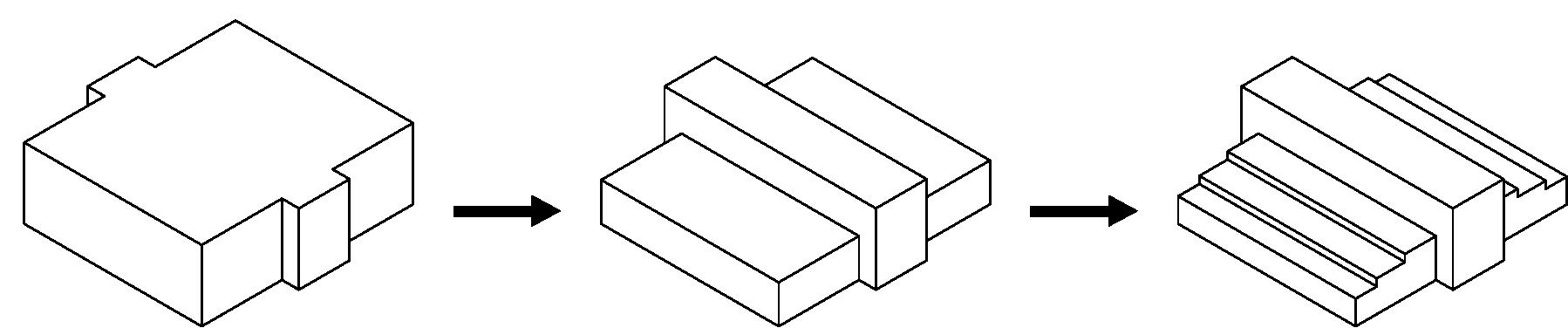
The exterior of the chapel utilizes a light tan brick and glass, to match the previous design of the dormitory on the site. The columns found in the front of the structure are a black non-galvanized steel. The stepped roof allows for the entrance of natural light to cascade throughout the interior of the chapel. This grants visitors the opportunity to have a natural lit space, while refraining from the use of harsh overhead lighting.
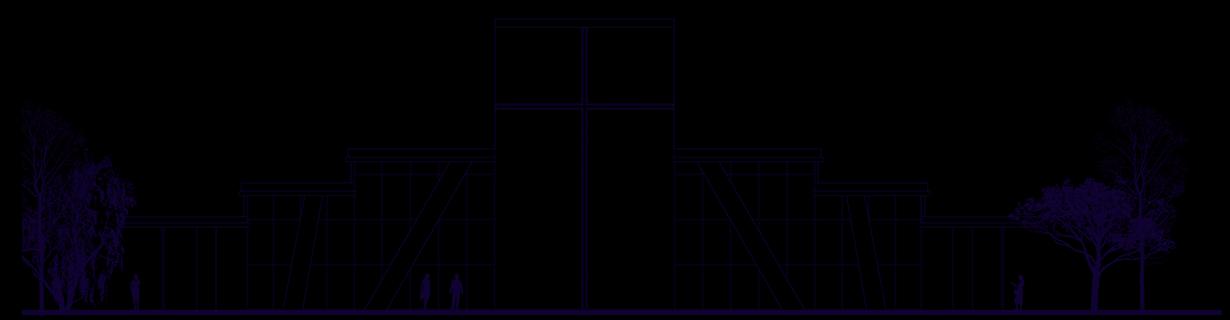
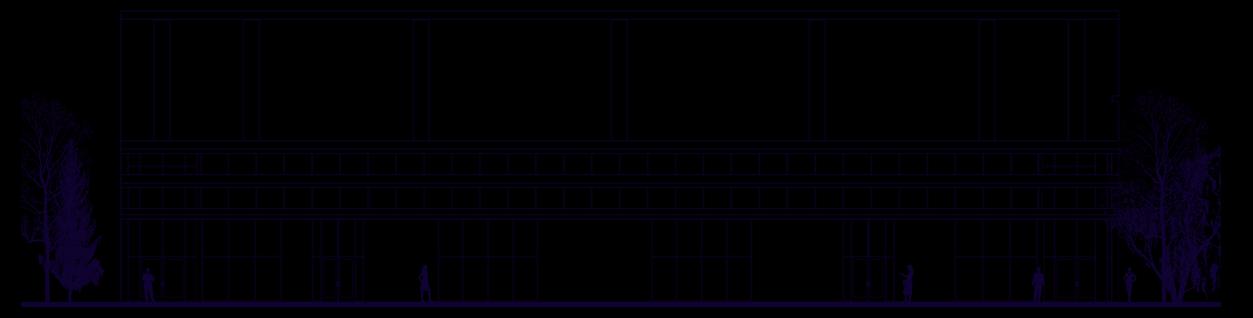
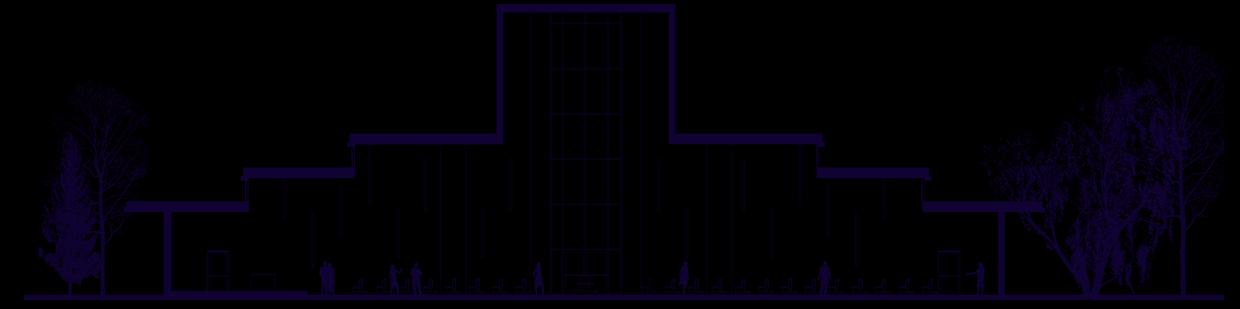
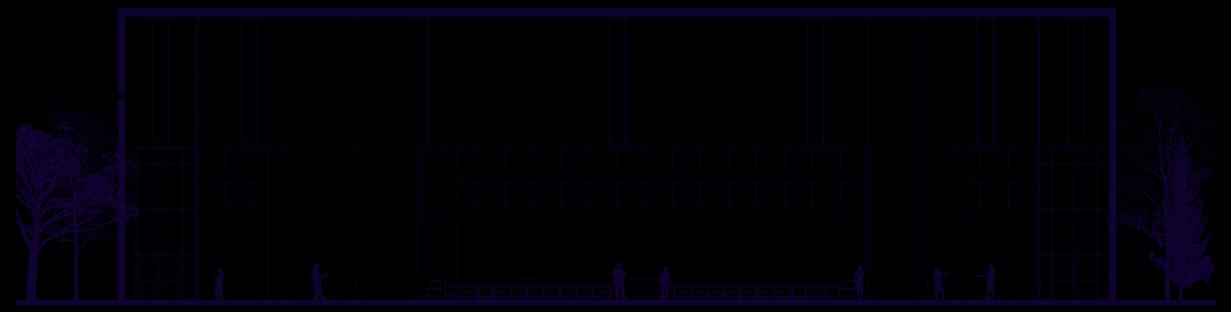
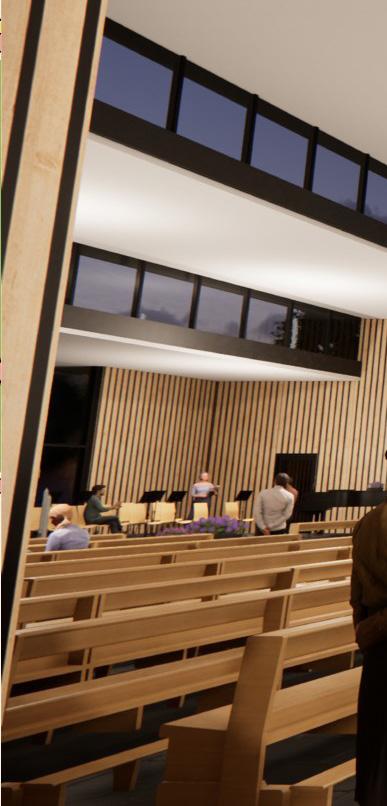
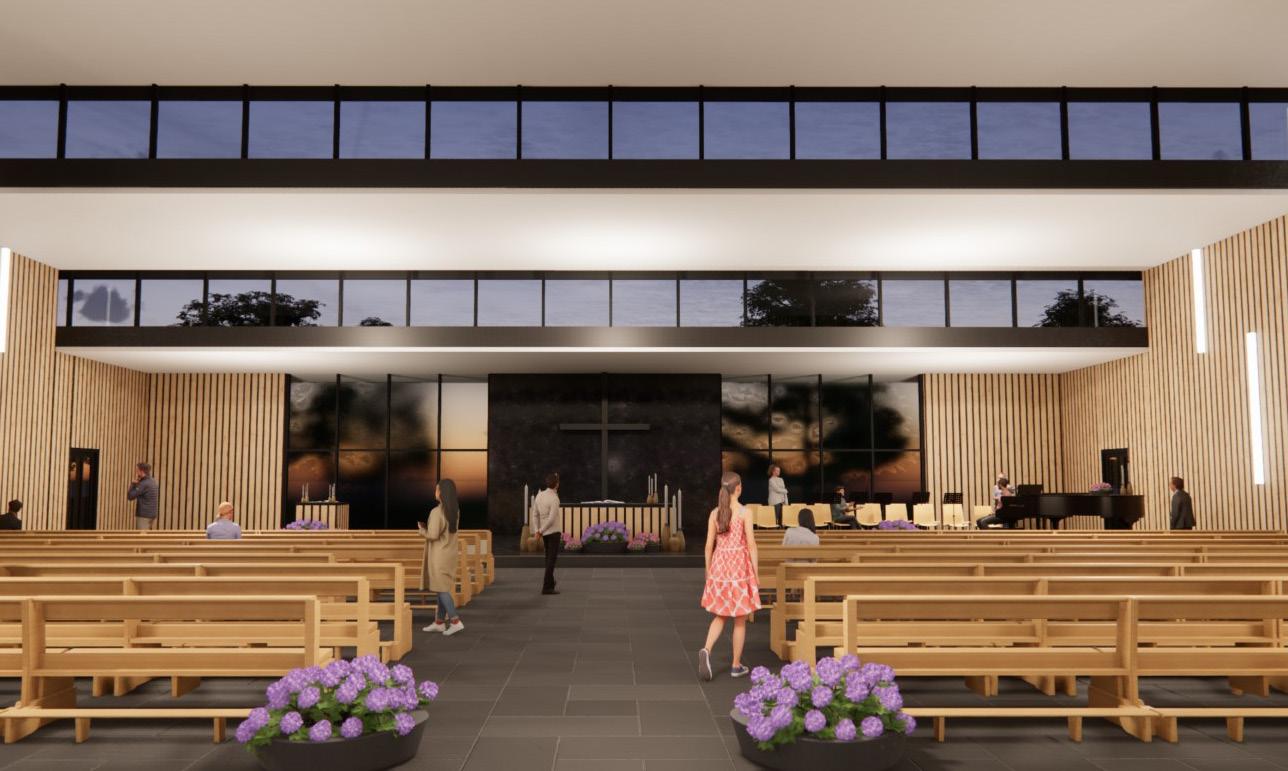
The interior of the chapel utilizes a combination of wood acoustic panel walls with beams of light cascading out. The addition of these elements were added for aesthetic purposes, but also as an addition to the idea of reflection and light.
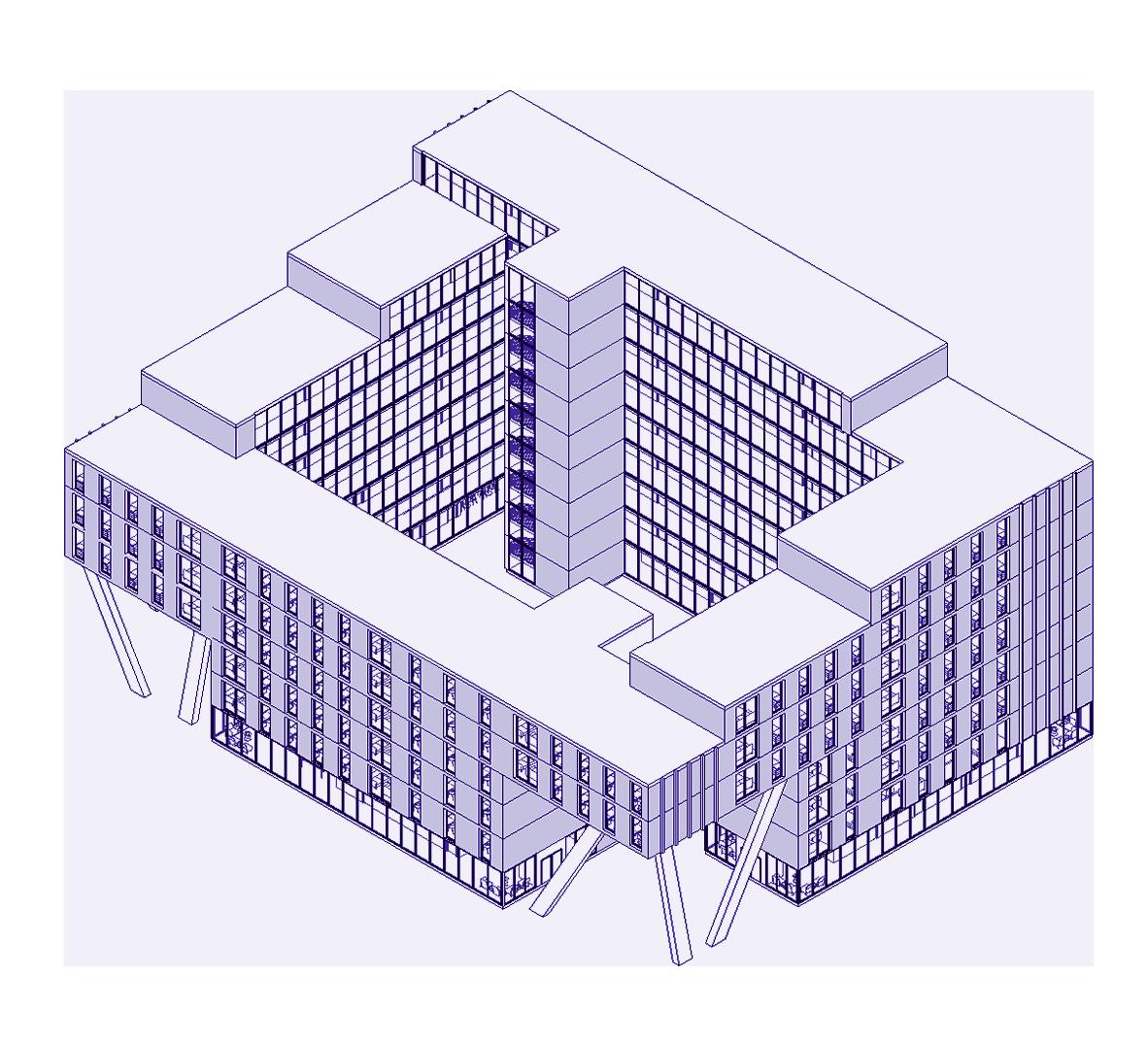
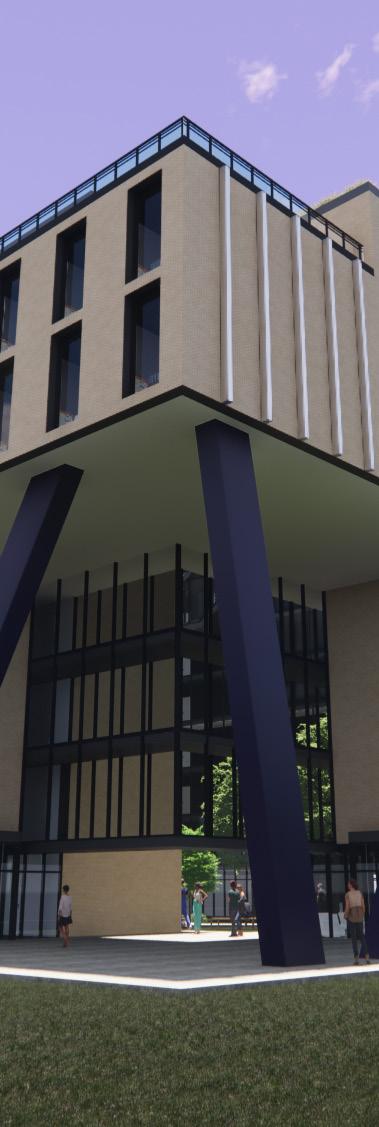
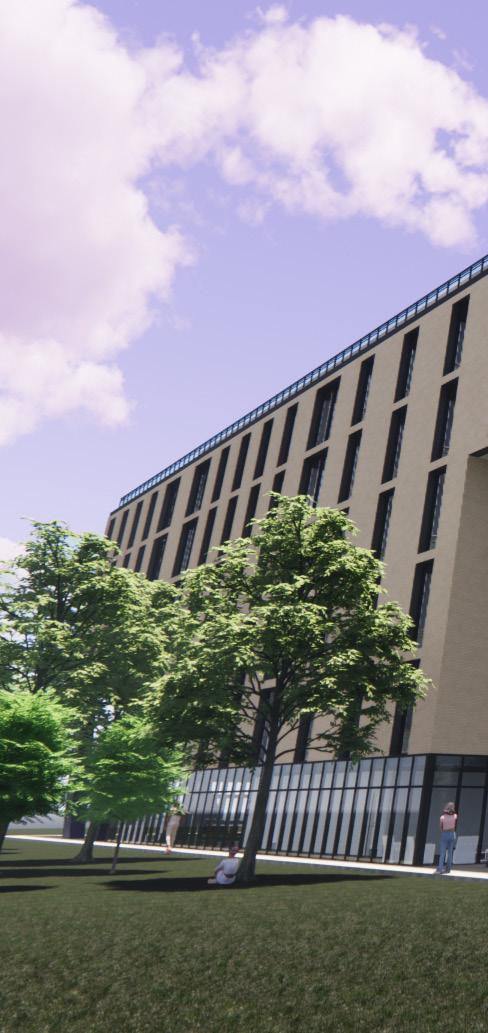
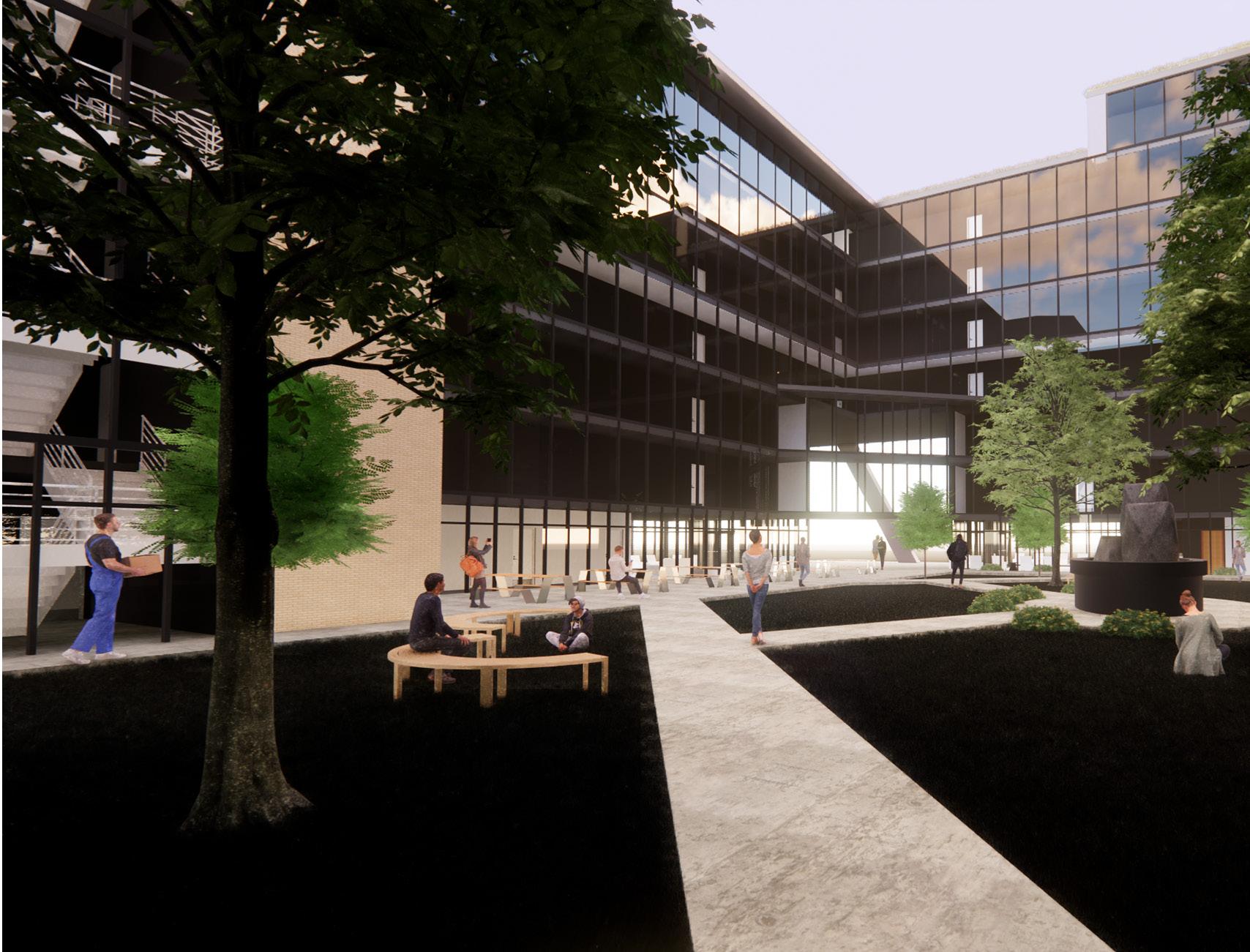
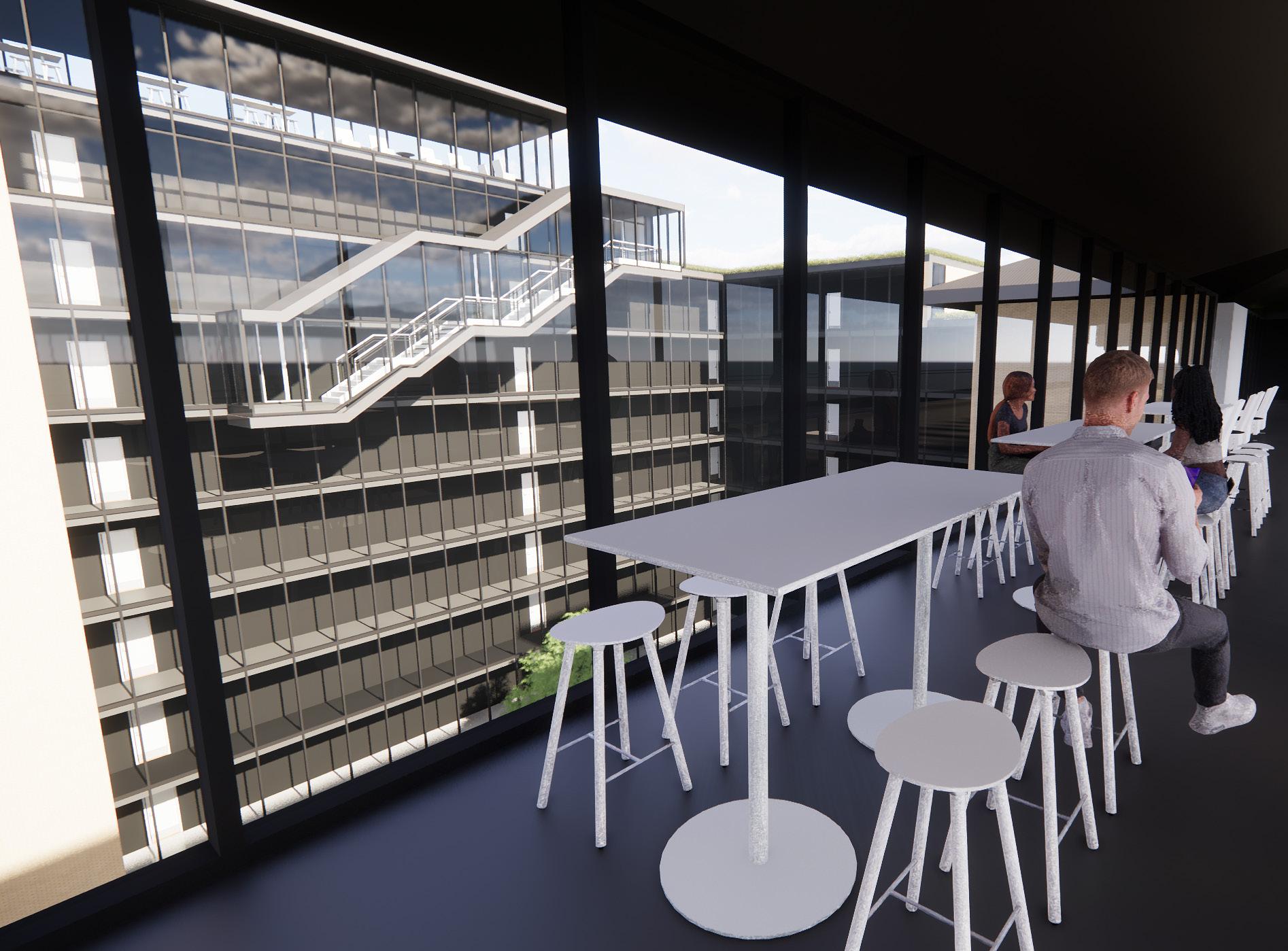
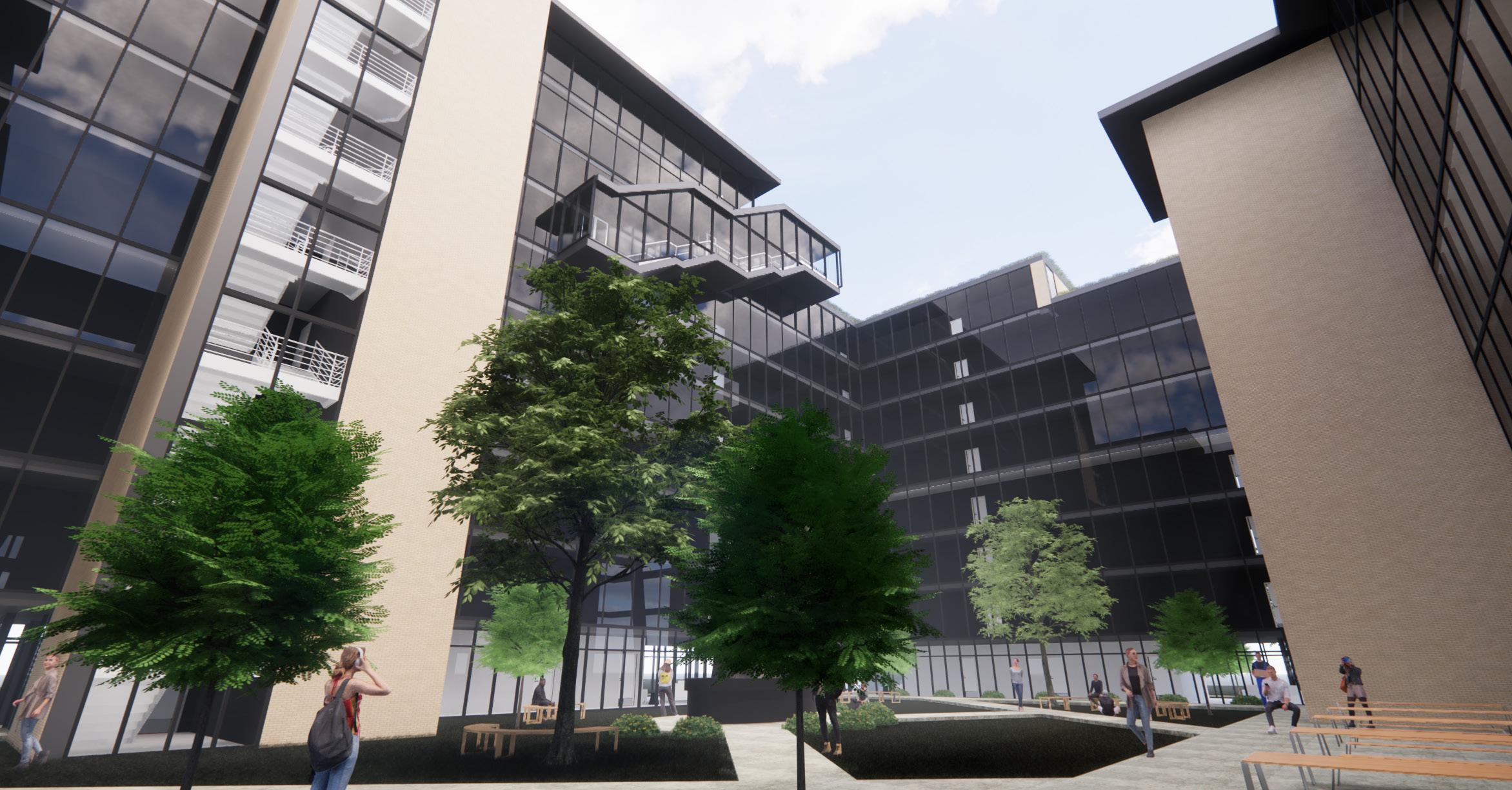
This dormitory is intended for the University of Scranton students, and can house a total of 257 students. It contains a total of 73 living units from the second floor to the ninth floor. The first floor is open to the of the University and consists of a cafe, dining area, private study rooms, public restrooms, and two laundry facilities containing 30 washers and 30 dryers, in each, for the students residing in Royal Hall. The “lookout” spaces on floors seven and ten are intended lounge and study areas for residents to utilize, while also being able to view the city from a new perspective. The courtyard space is designed for the students use, and to have full rein of the space for dining, studying, relaxing, etc. All room typologies include many amenities including private bedrooms, bathrooms, kitchenette, dining table, and living room. The individual bedrooms house twin xl beds, a desk, and a closet for the students personal use. The kitchenette consists of a refrigerator, microwave, stove, oven, and plenty of cabinets and drawers.
LOCATION: Scranton, Pennsylvania
PROGRAMS: Revit, Enscape, Illustrator, Photoshop
YEAR COMPLETED: Fall, 2022
PROJECT TYPE: University Dormitory

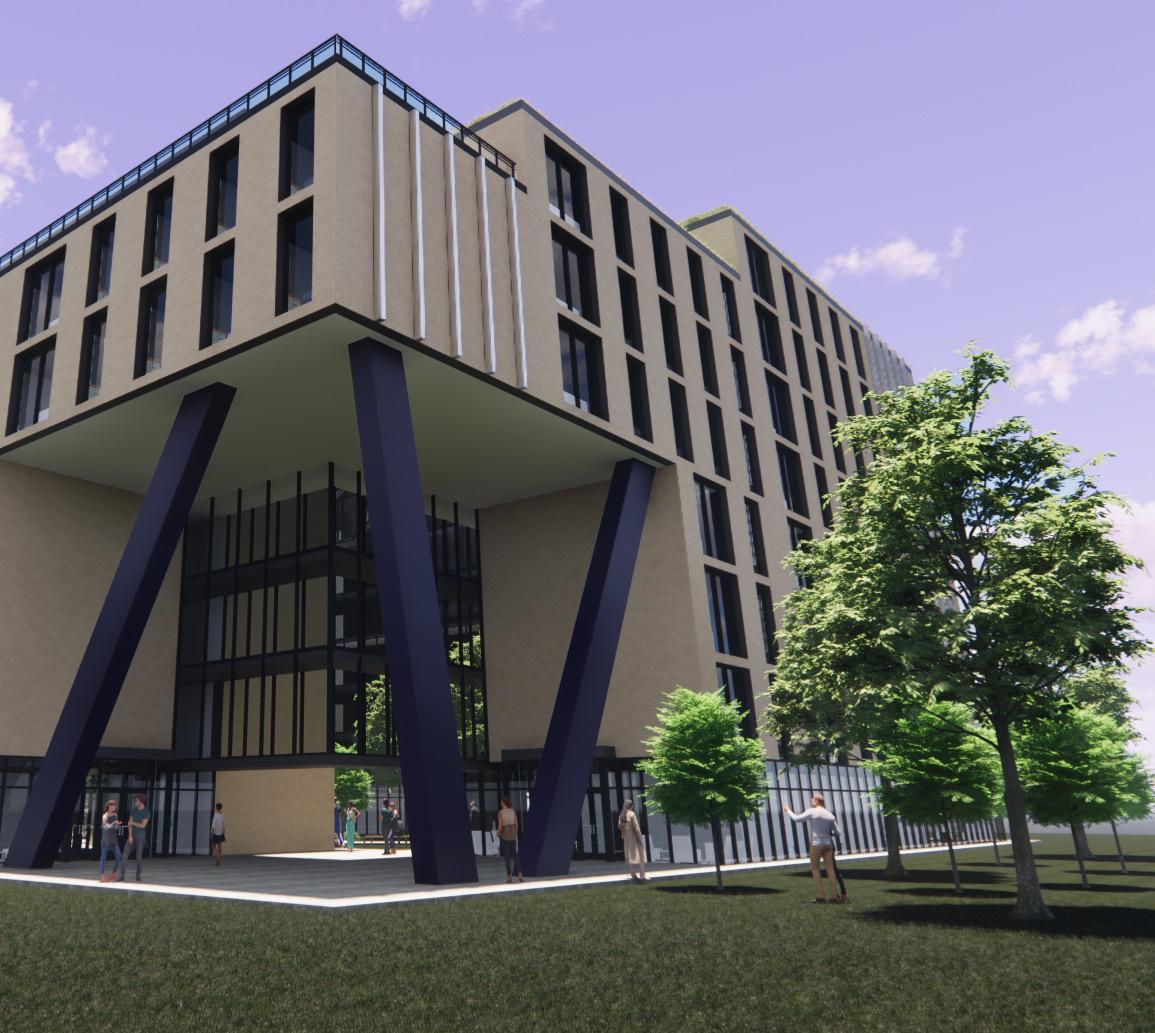



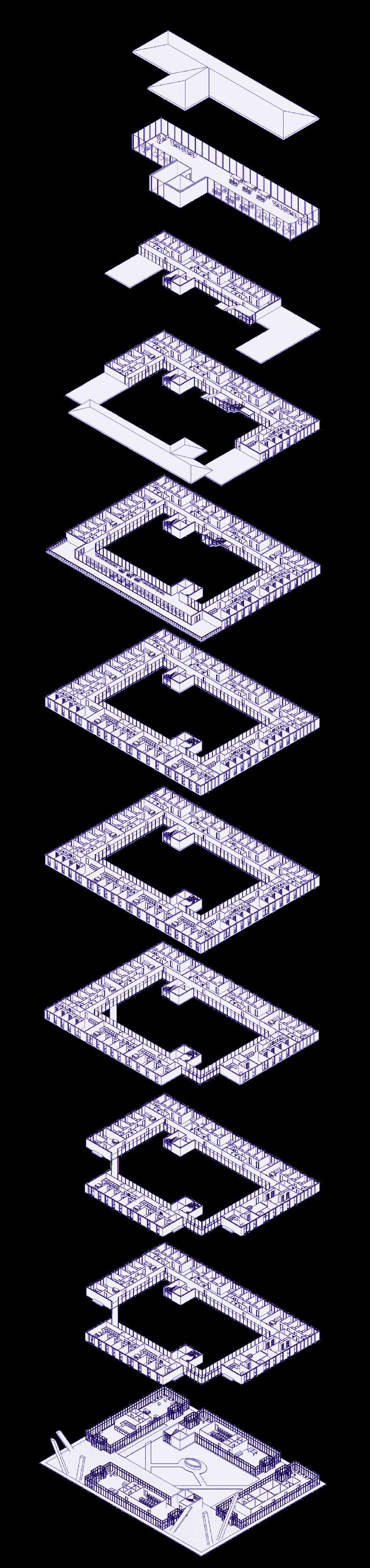
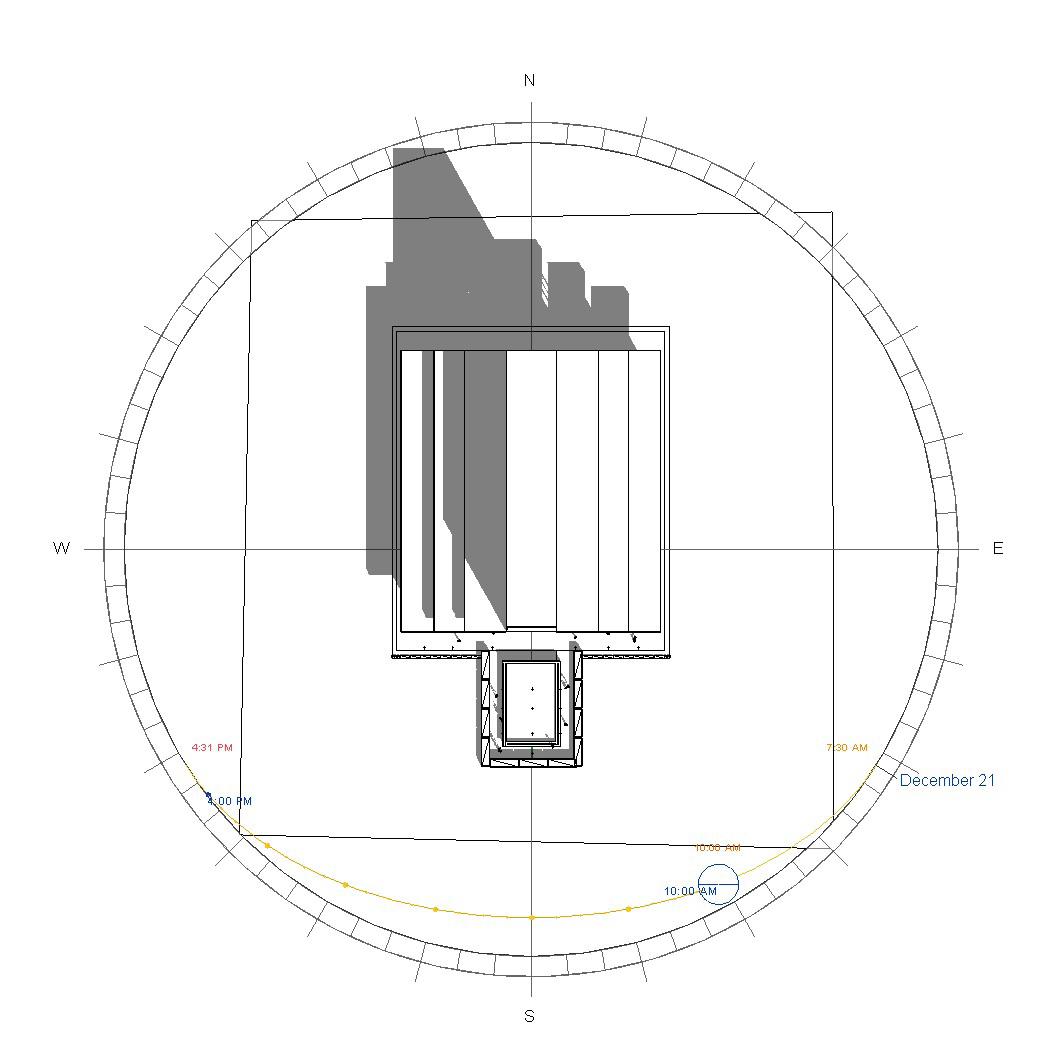
The “cutouts” to the structure are intended to allow for natural light and ventilation to occur throughout the dormitory. The “stacked” concept of the structure allows for sun shading throughout particular seasons. This allows for passive design strategies to be implemented ensuring the reduction of artificial heating and cooling.
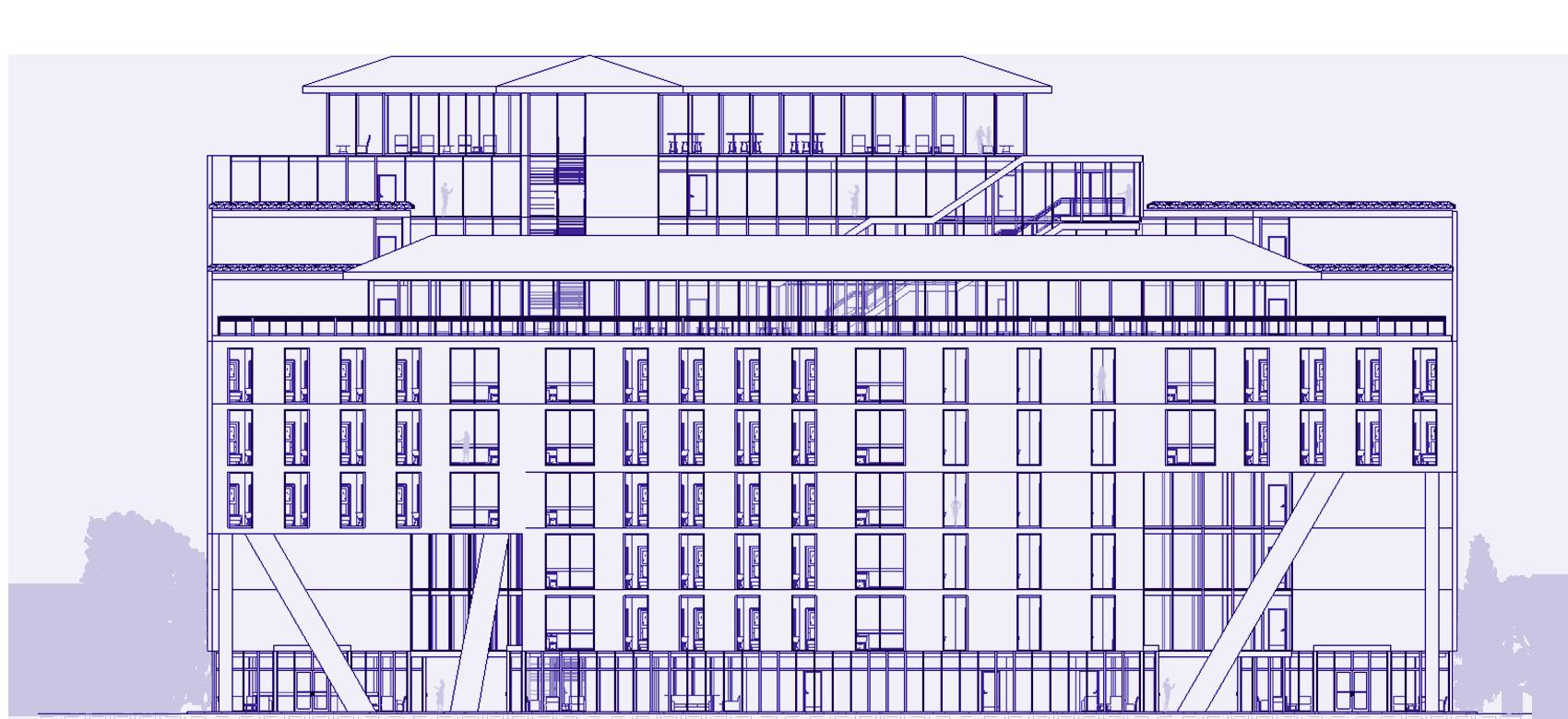
South Elevation
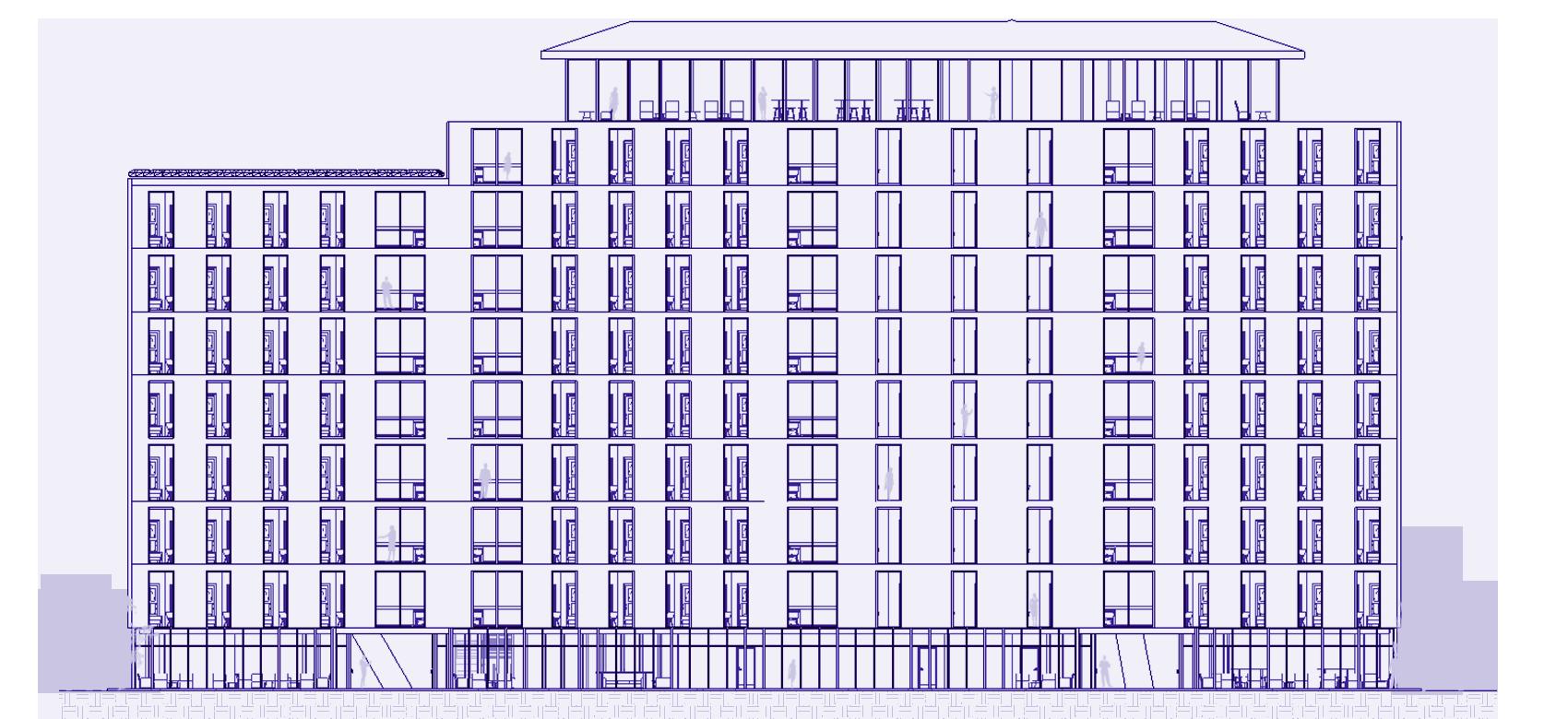
North Elevation

The ground floor possesses a glass exterior, this is to give a“floating” effect on the nine floors above. The facade of the upper levels consists of a brick exterior with metal studs, to allow for a connection to the many other structures on the University’s campus. The facades facing the courtyard are glass, to allow for students to have a connection to the outdoors, while remaining indoors.
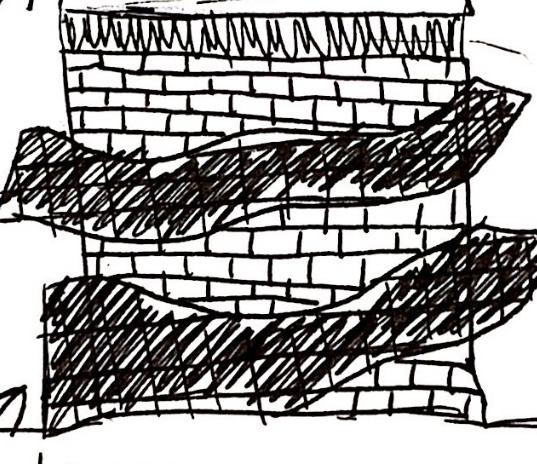
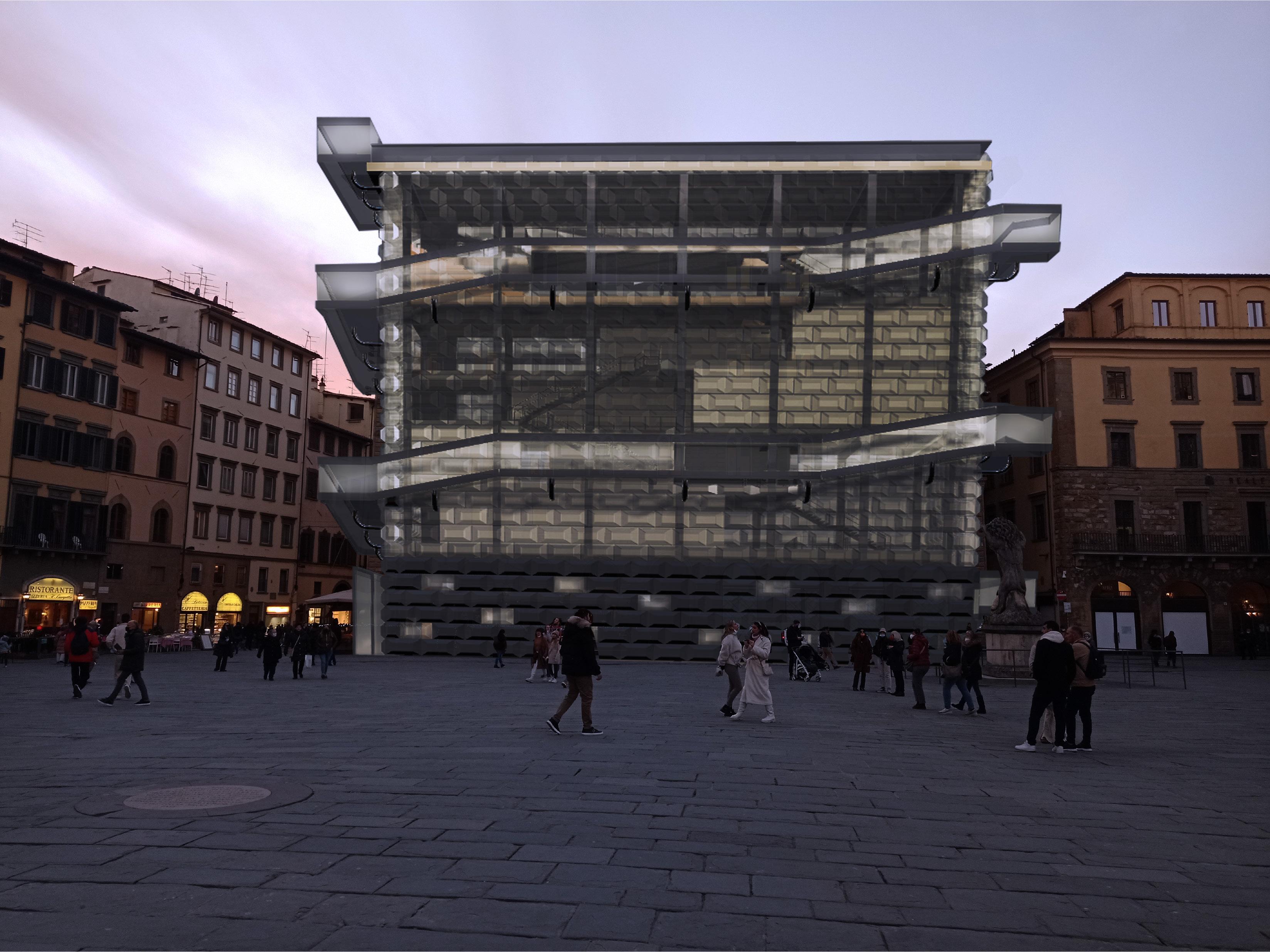
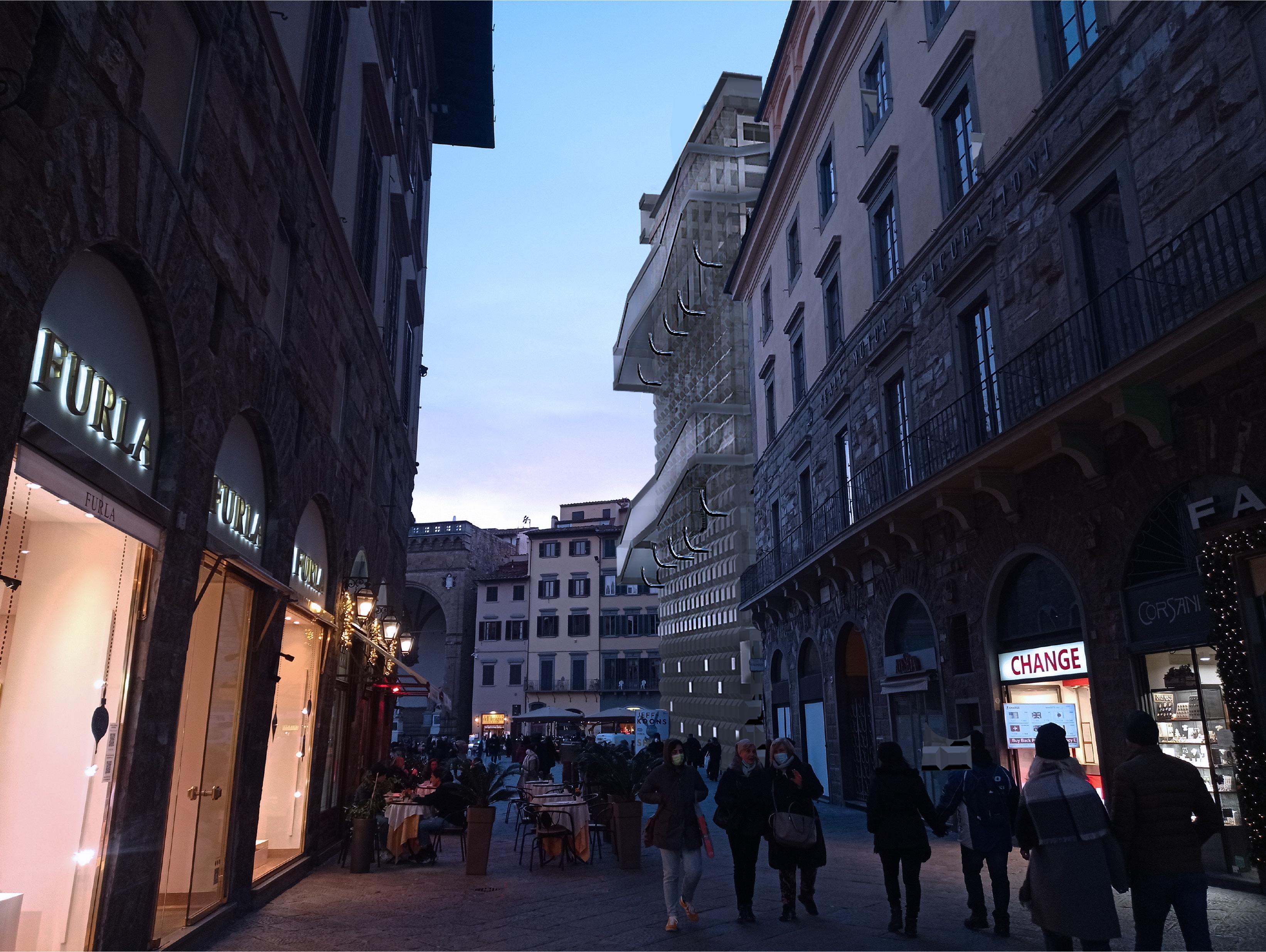
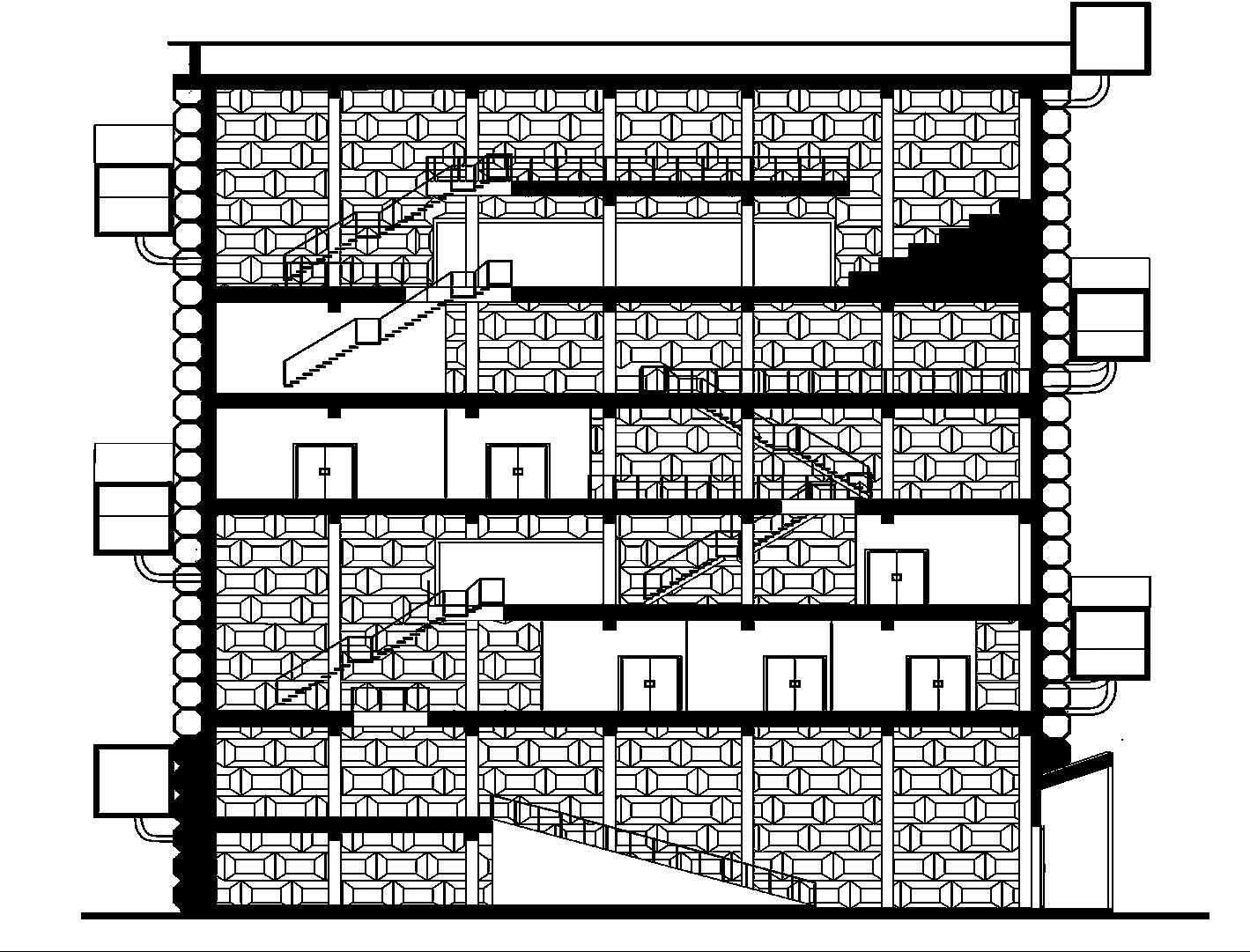
Nestled within the historic Piazza della Signoria, teeming with landmarks and rich cultural heritage, this project unfolded against the backdrop of Florence’s architectural splendor. Collaborating in pairs, students undertook the challenge of designing a modern incarnation of the Palazzo for the city. Our focus honed in on the Palazzo delle Assicurazioni Giovanni, situated within the bustling square, where it was reimagined as an institution tailored to college students exploring the nuances of optics. Commissioned by Leonardo Del Vecchio, the visionary behind Luxottica, a global eyewear conglomerate boasting brands like Chanel, RayBan, and Oakley, this project served as an educational nexus, allowing students to delve into both the science of optics and the entrepreneurial journey behind Luxottica’s iconic eyewear. With meticulous attention to detail, the repurposed building was designed to offer versatile spaces for work, study, collaboration, and contemplation, fostering an environment conducive to academic growth and innovation.
Individual Contribution: Model, Drawings, and Renderings
Collaborated with: Piper Johnson
LOCATION: Florence, Italy
PROGRAMS: Rhino, AutoCAD, Illustrator, Photoshop
YEAR COMPLETED: Fall, 2021
PROJECT TYPE: University Research Facility
0 10 20
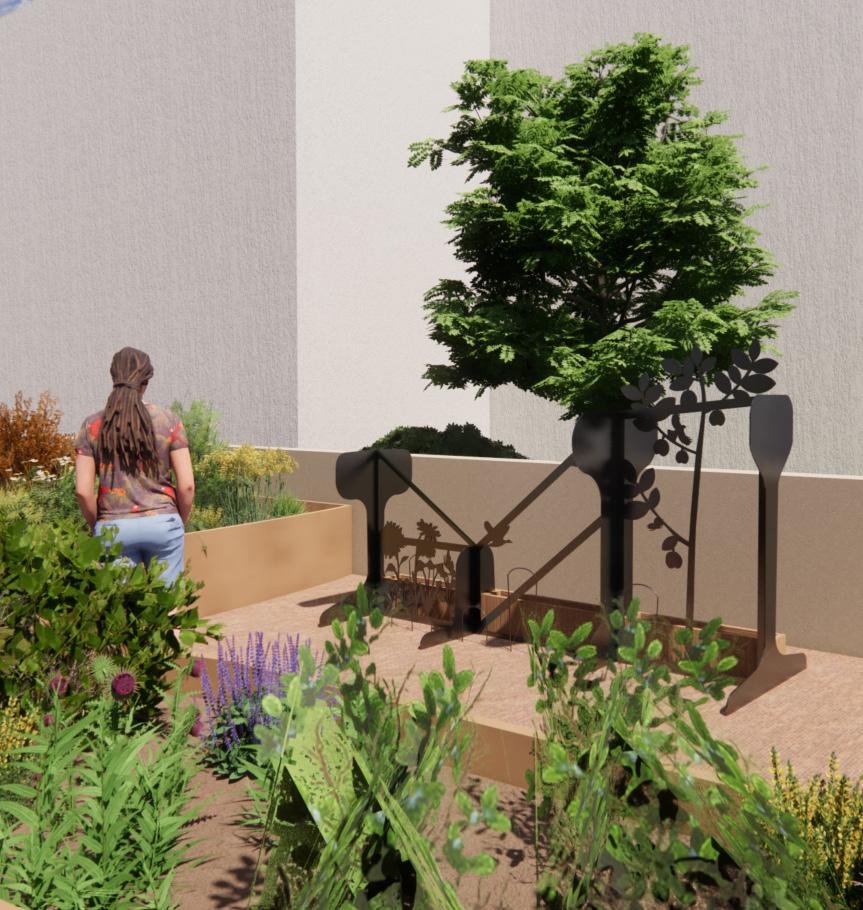
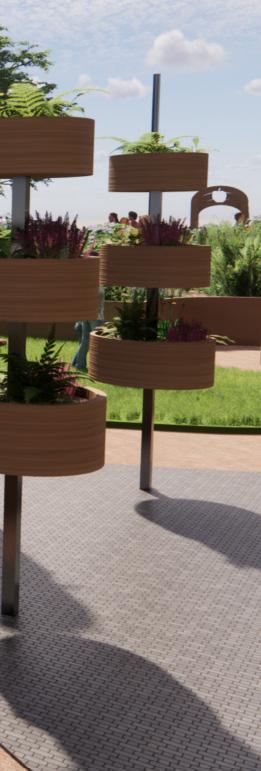
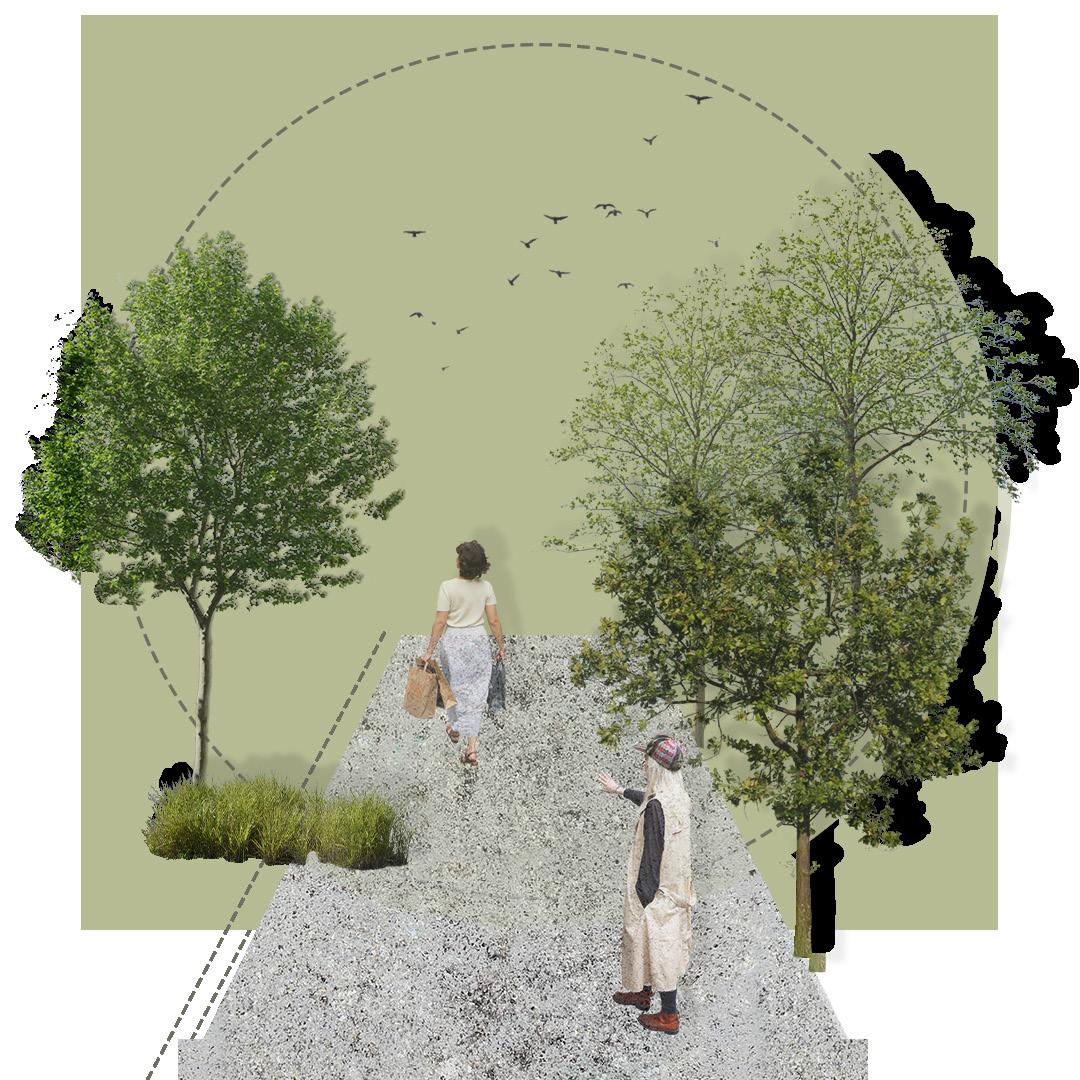
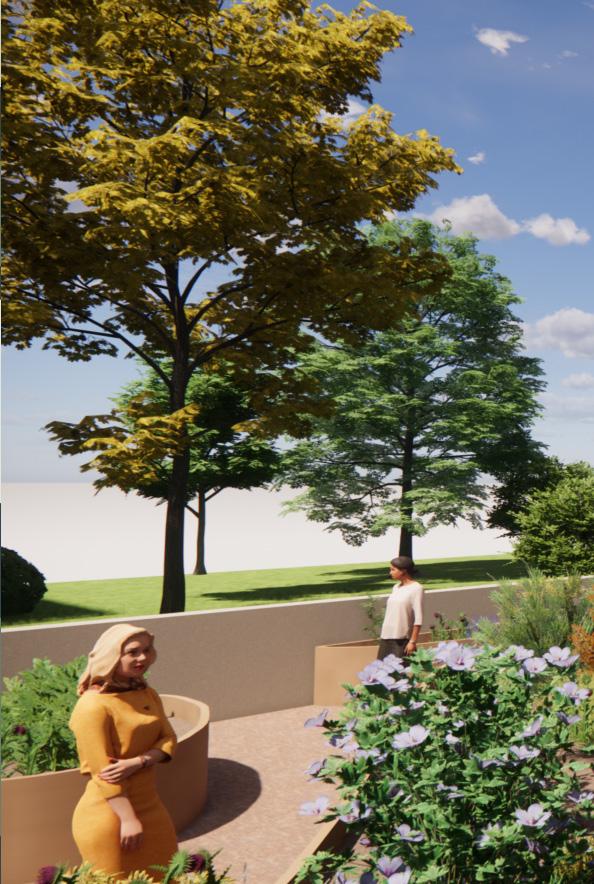
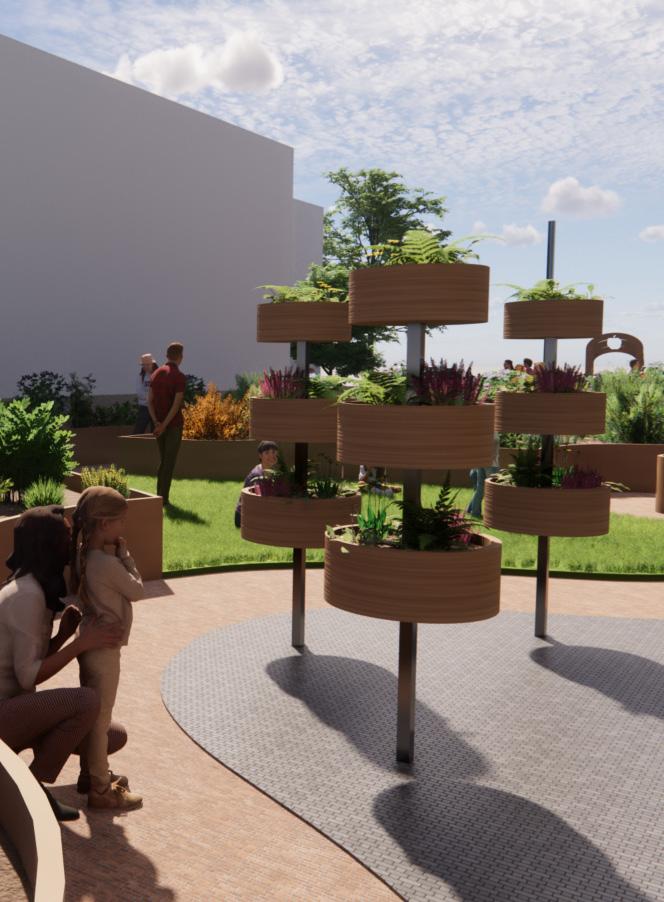
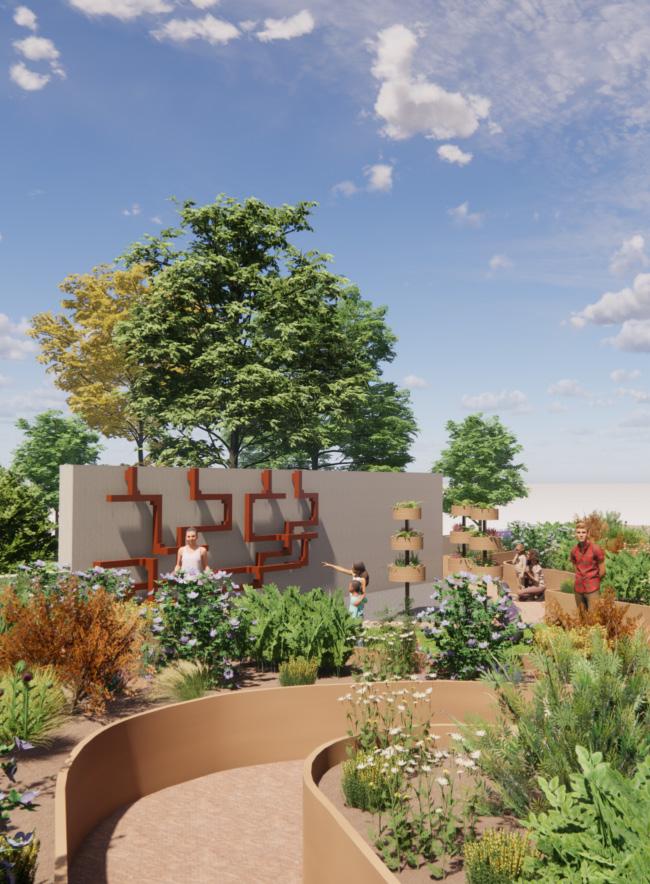
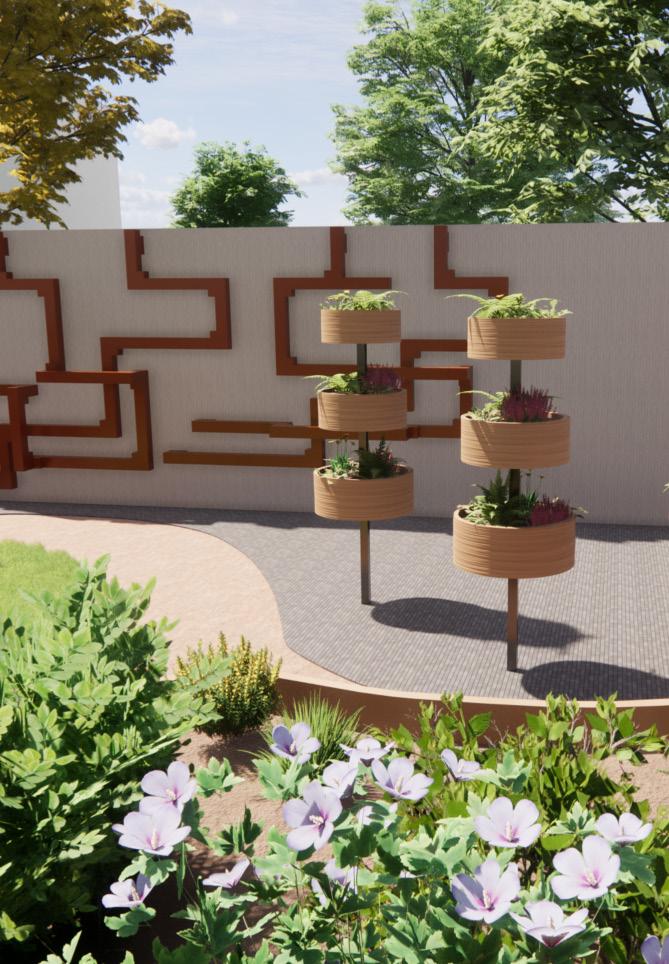
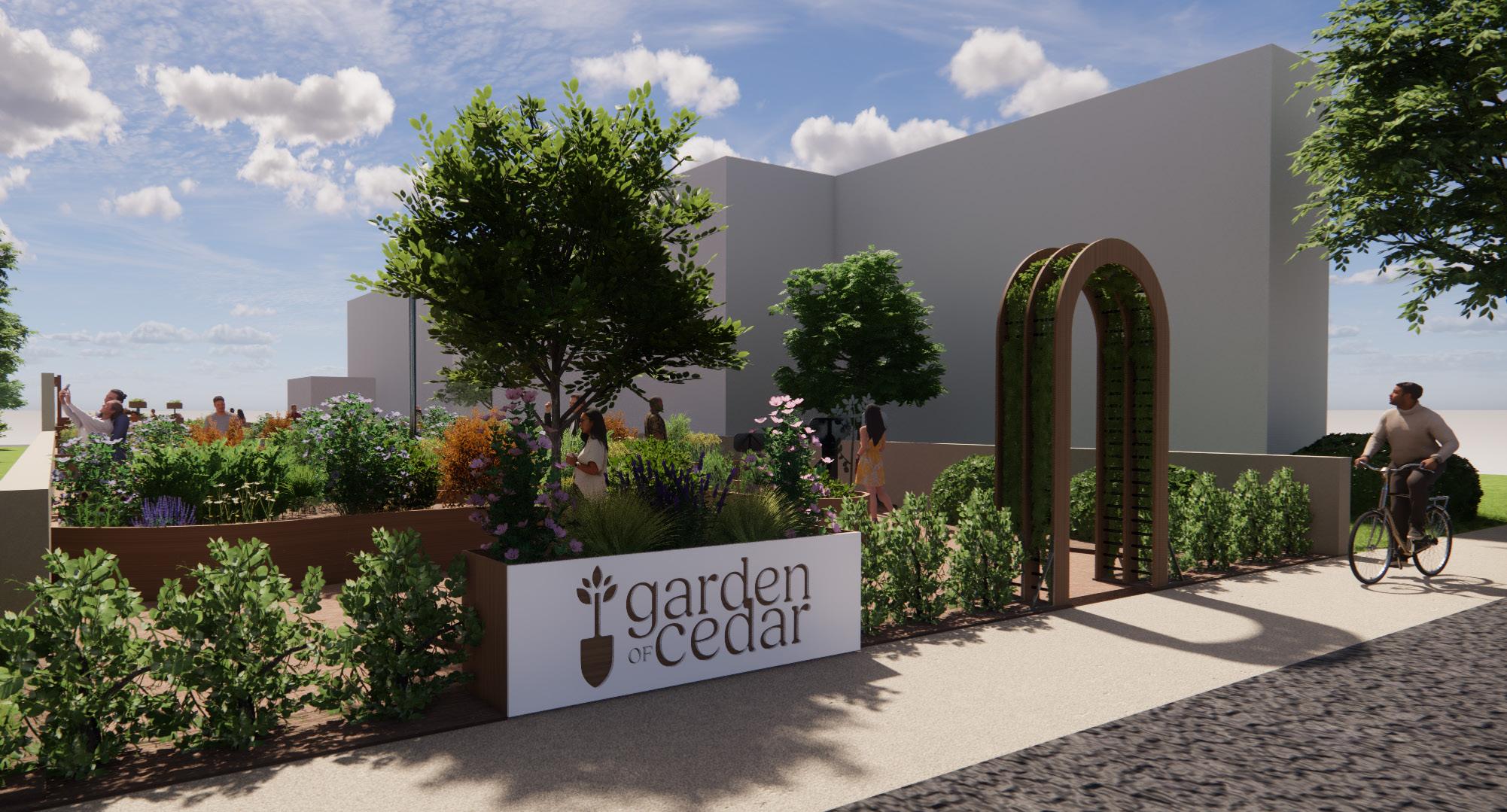
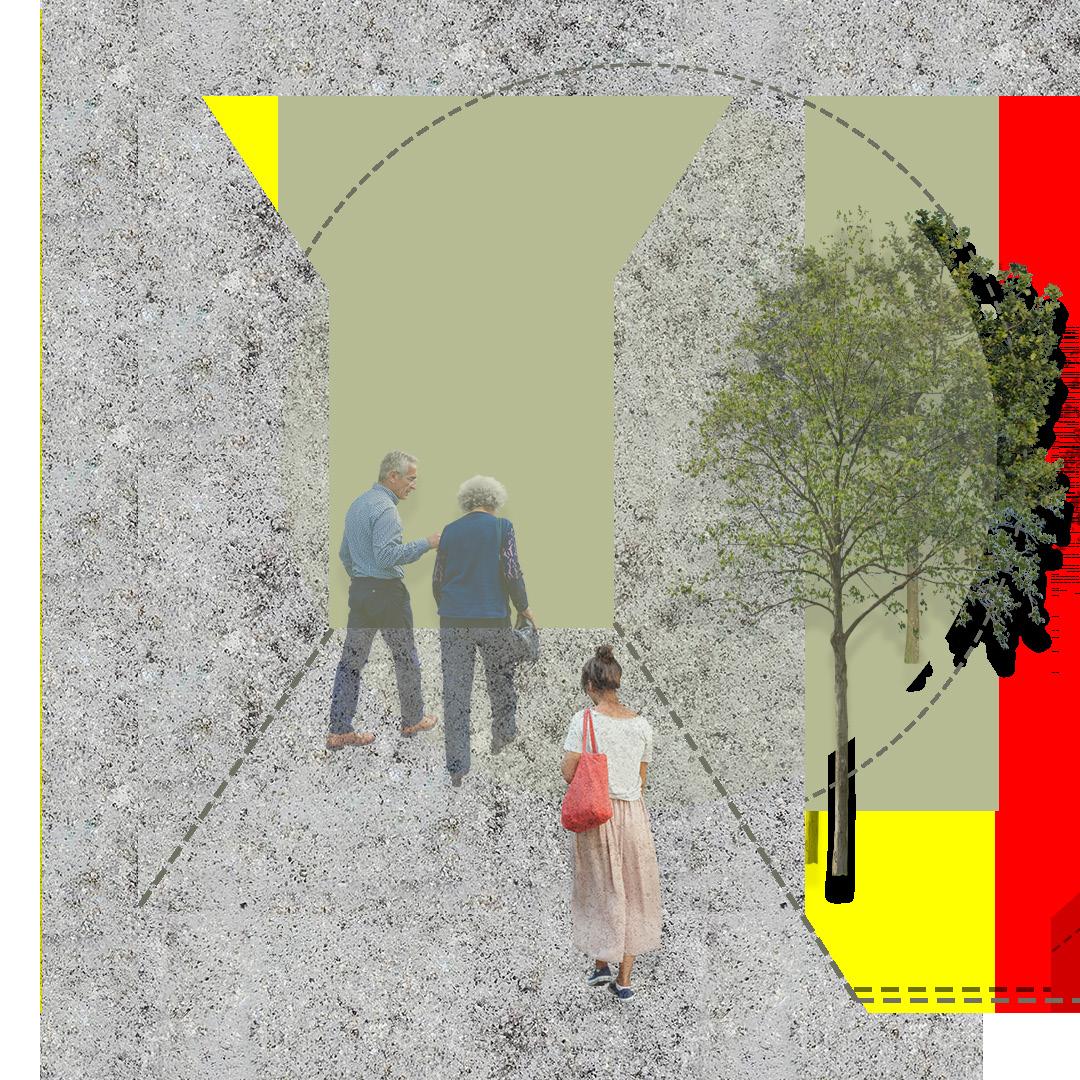
The Design Build team was tasked with creating enhancements for the newly established Garden of Cedar, situated in South Scranton. Our designs aim to enrich the garden’s identity, fostering a strong sense of community through thoughtful additions. Emphasizing functionality, movement, life, prominence, and togetherness, our proposals seamlessly integrate with existing elements while amplifying community engagement. Our ultimate objective is to not only elevate the site’s aesthetic quality but also cultivate a tangible embodiment of community spirit, promoting connection and interaction among visitors and local residents alike.
Individual Contribution: Digital Modeling, Renderings, and Designs of Front Entrance and Vertical Planters
Collaborated with: Design Build Team
LOCATION: Scranton, Pennsylvania
PROGRAMS: Rhino, AutoCAD, Enscape, Photoshop
YEAR COMPLETED: Spring, 2023 - Current
PROJECT TYPE: Community Garden
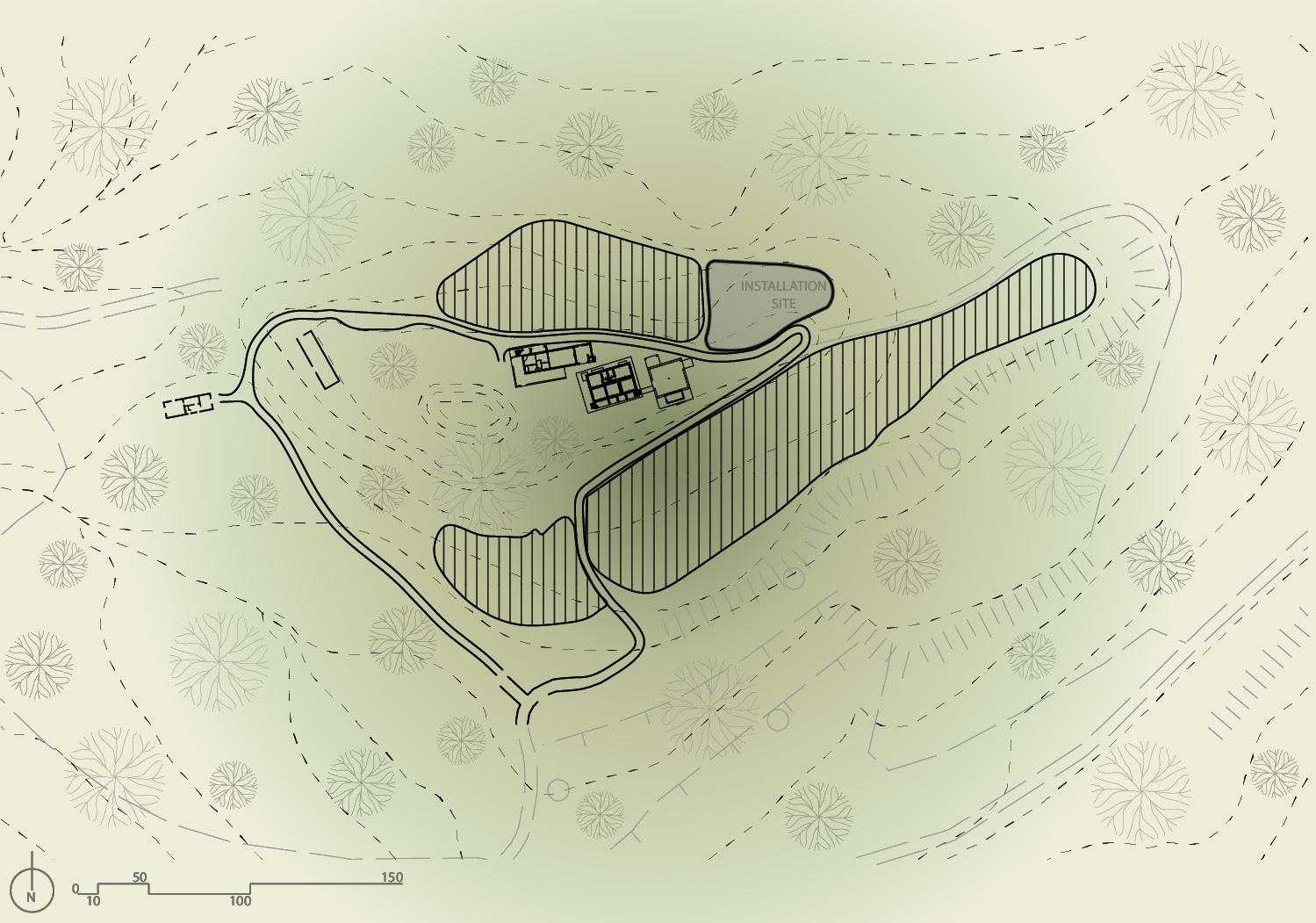
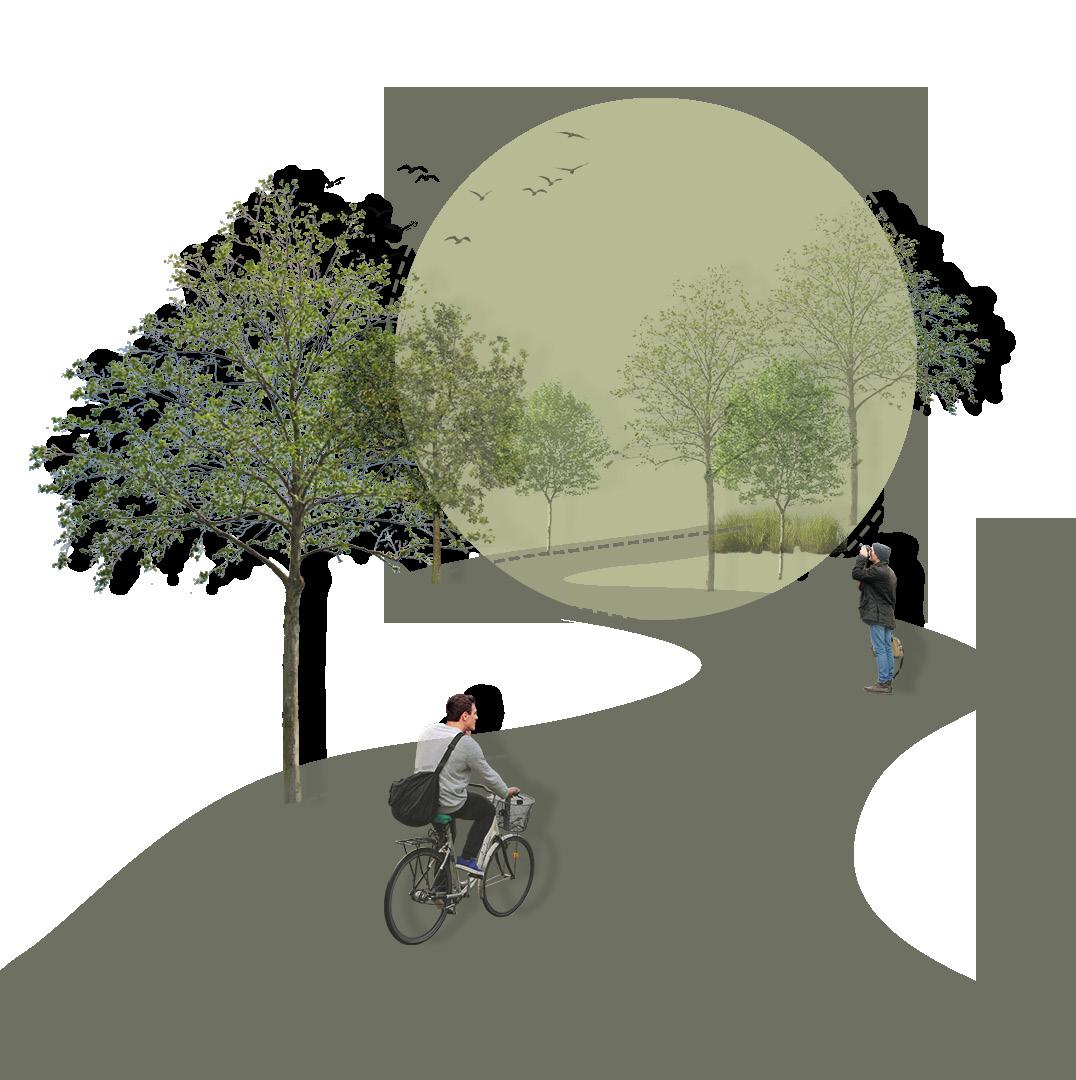
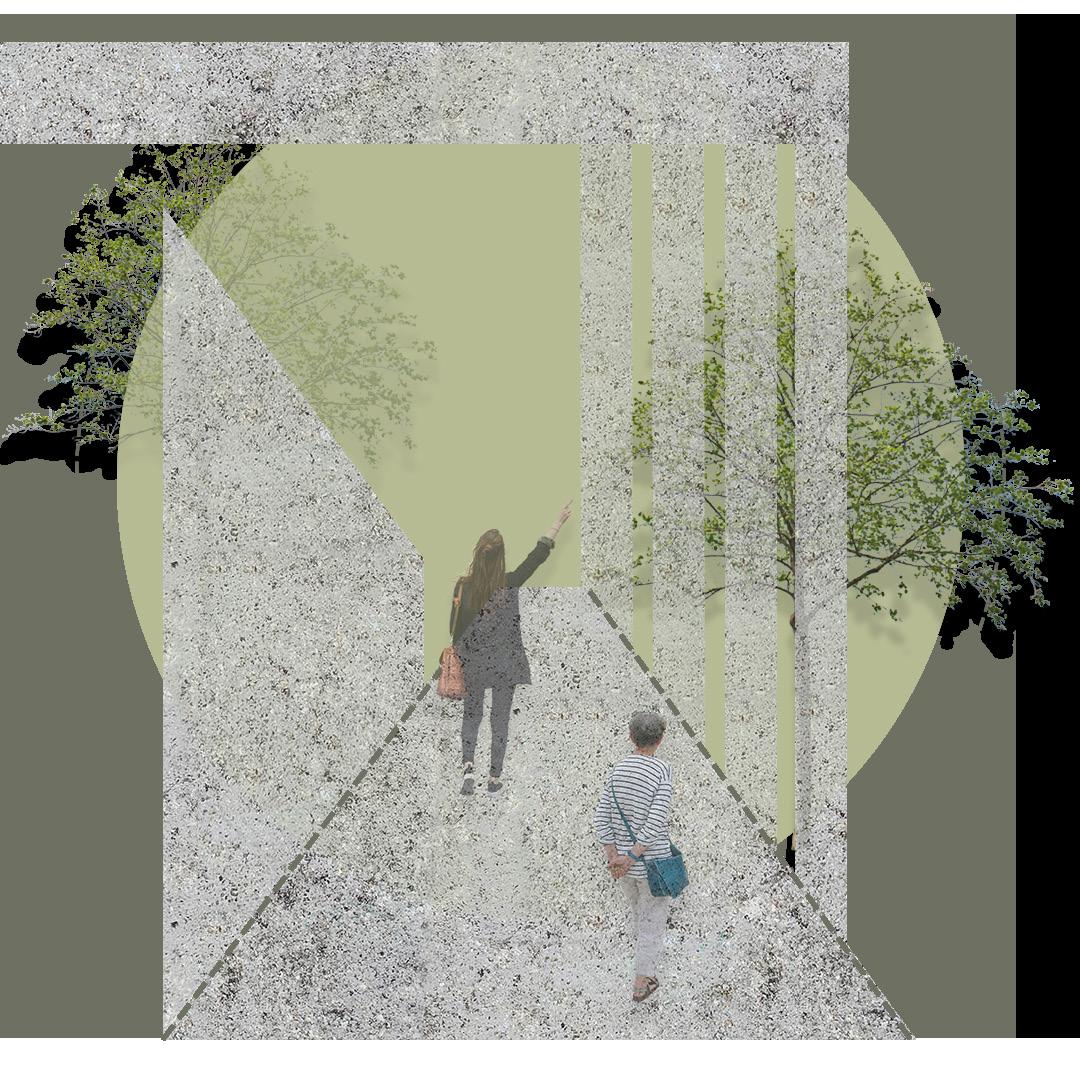
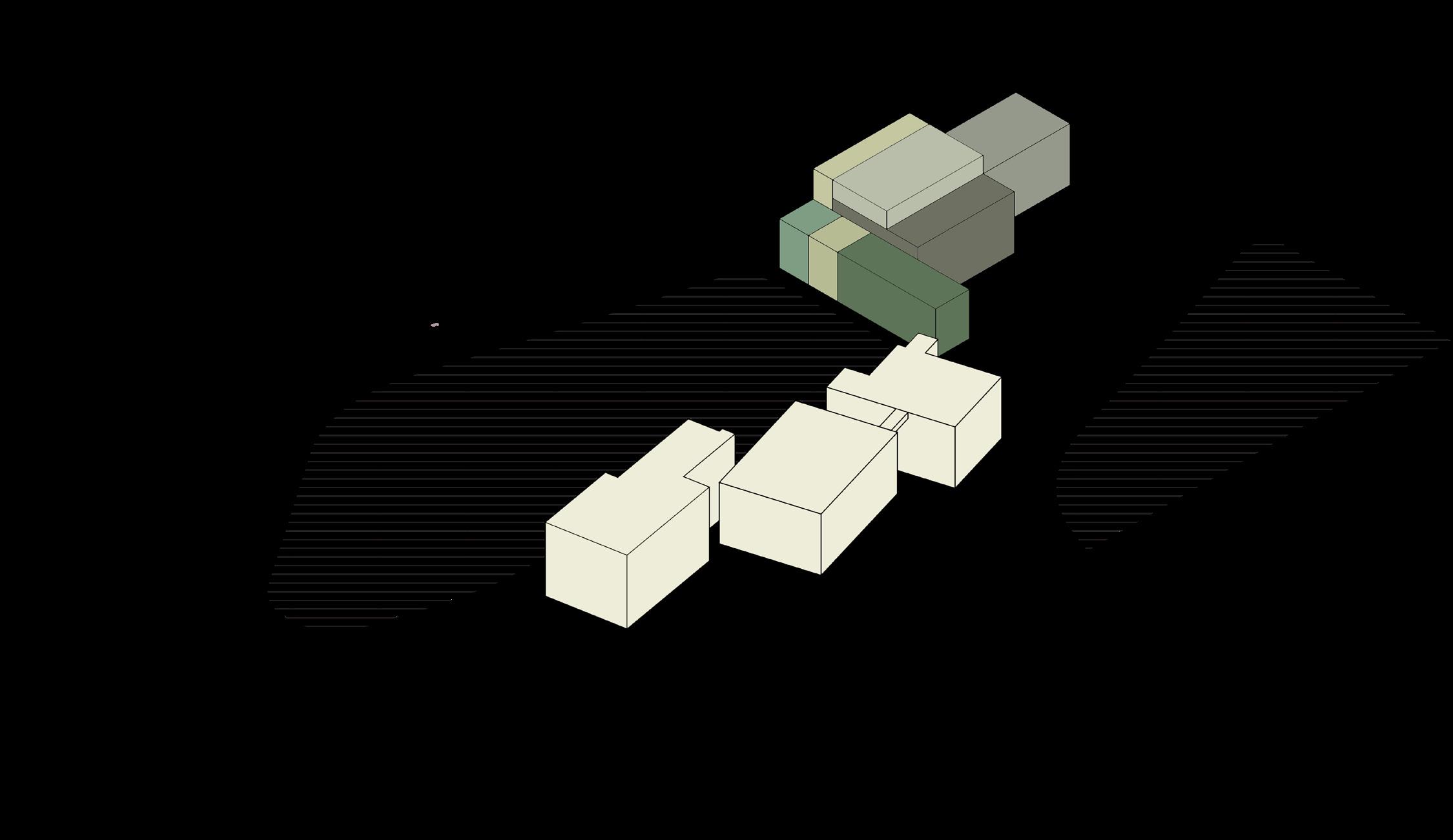
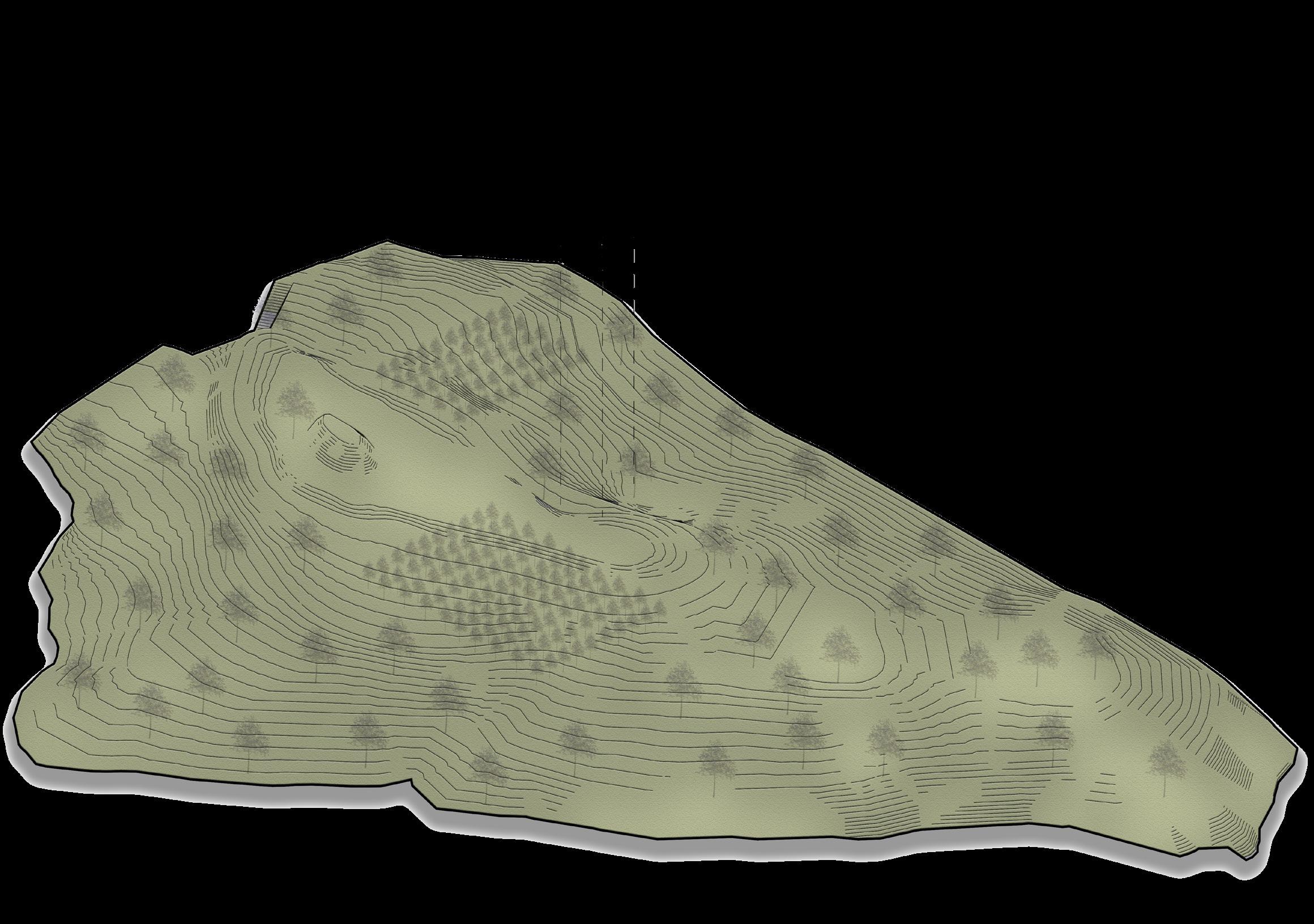
“Unity” represents the culmination of a year-long capstone endeavor, exploring the intersection of wine and architecture. The project marks the initial stages of a submission for an esteemed international architectural competition, aiming to conceive and design a multifunctional addition integrated harmoniously with the surrounding context. Encompassing various programs such as tasting rooms, a reception hall, a restaurant, and gallery spaces, the vision caters to the diverse experiences associated with wine culture. Situated amidst three existing structures, the design approach prioritizes seamless integration while honoring the rich heritage of Italian wine country. With a focus on preserving the site’s cultural roots, the design seeks to establish meaningful connections with the existing architectural fabric, fostering a harmonious dialogue between tradition and innovation. Through meticulous attention to detail and a commitment to authenticity, the endeavor aims to create a captivating destination that enhances functionality and celebrates the essence of conviviality and community, inviting visitors on an immersive journey through the enchanting world of wine.
LOCATION: Tuscany, Italy
PROGRAMS: Revit, Enscape, Illustrator, Photoshop
YEAR COMPLETED: Fall, 2023 - Current
PROJECT TYPE: Multi-Functional Winery Addition
Restaurant
Kitchen
Viewing Area
Restrooms
Service Area
Reception Hall
Store
Tasting Room
Offices
Circulation
Vineyards
Roads
Existing Buildings
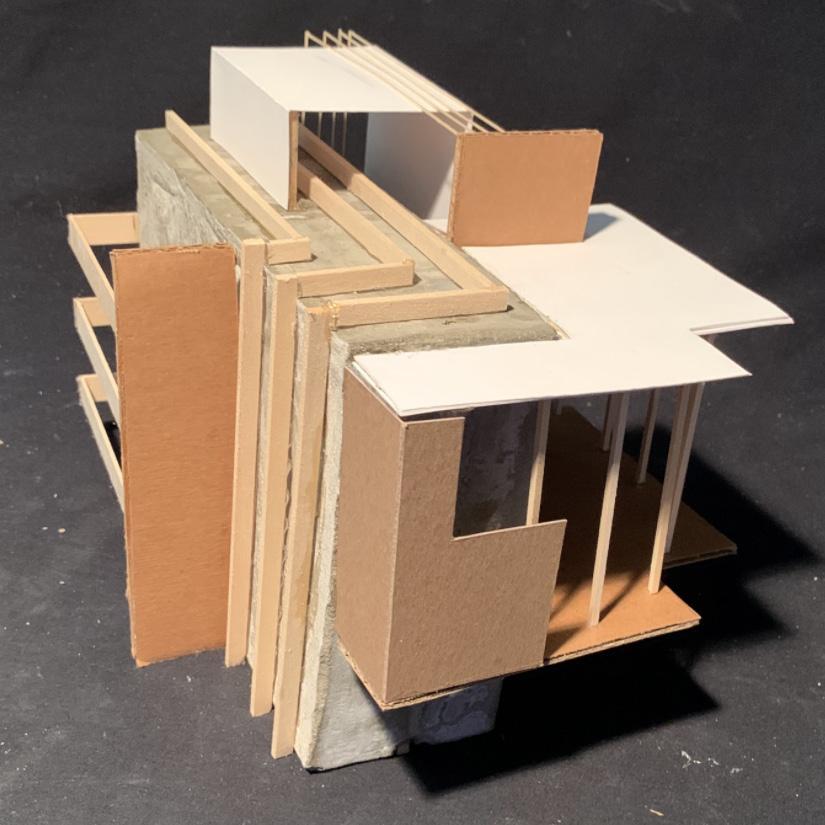
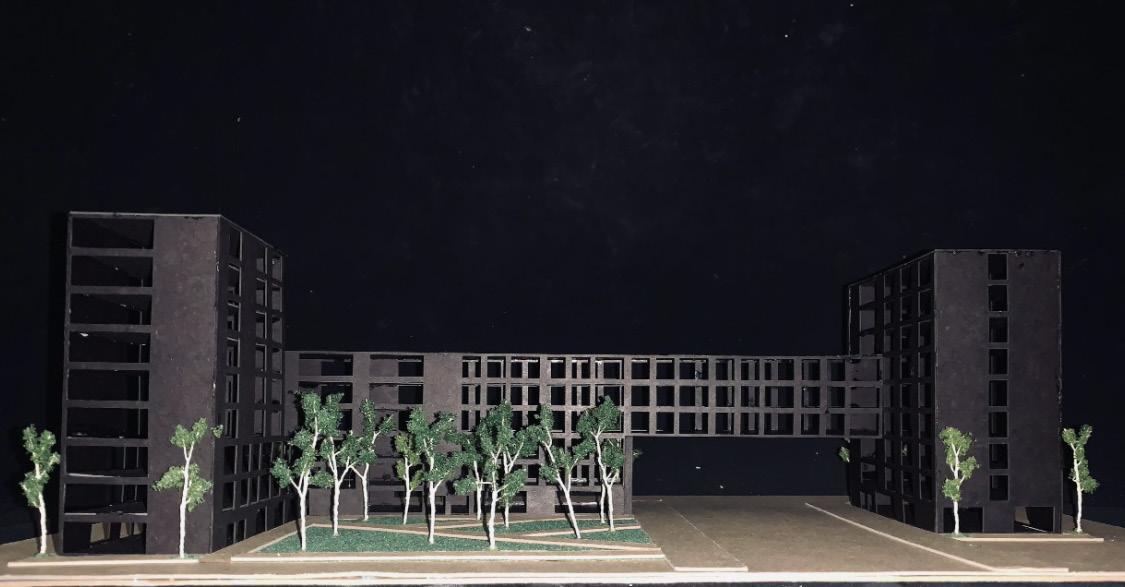
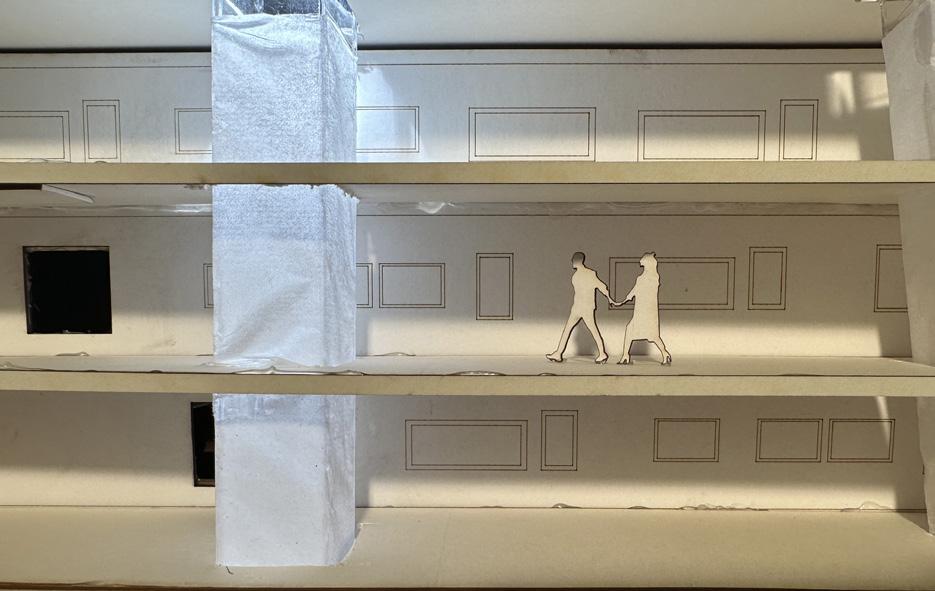
Physical modeling is of paramount importance for aspiring architects, providing a tangible platform to explore and enhance design concepts. Unlike digital softwares, physical models allow architects to interact directly with their designs, fostering a deeper understanding of spatial relationships, materiality, and scale. Through hands-on manipulation of materials and observation of light and shadow dynamics, architects gain valuable insights and refine their designs iteratively. Additionally, physical models serve as potent communication tools, enabling architects to convey their ideas effectively to clients, stakeholders, and collaborators. Ultimately, physical modeling acts as a catalyst for creativity and innovation in architectural practice, empowering architects to push design boundaries and craft impactful built environments.
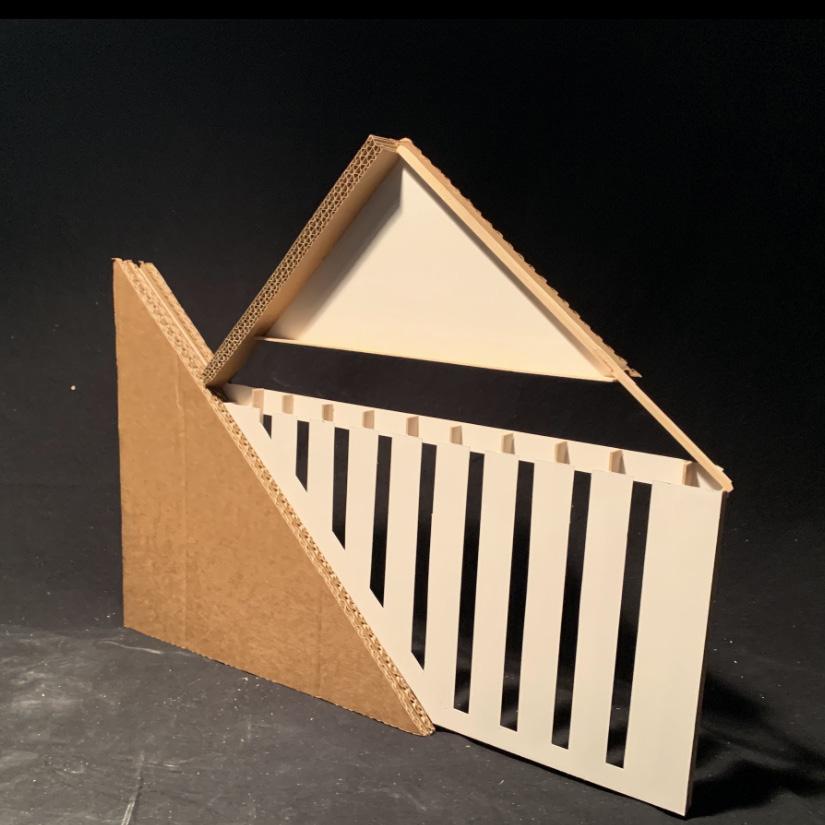
The model was assembled with concrete, wood, cardboard, and paper. The design of this particular model was developed from a series of diagrams, models, and drawings from the analysis of the song “Lose Yourself” by Eminem.
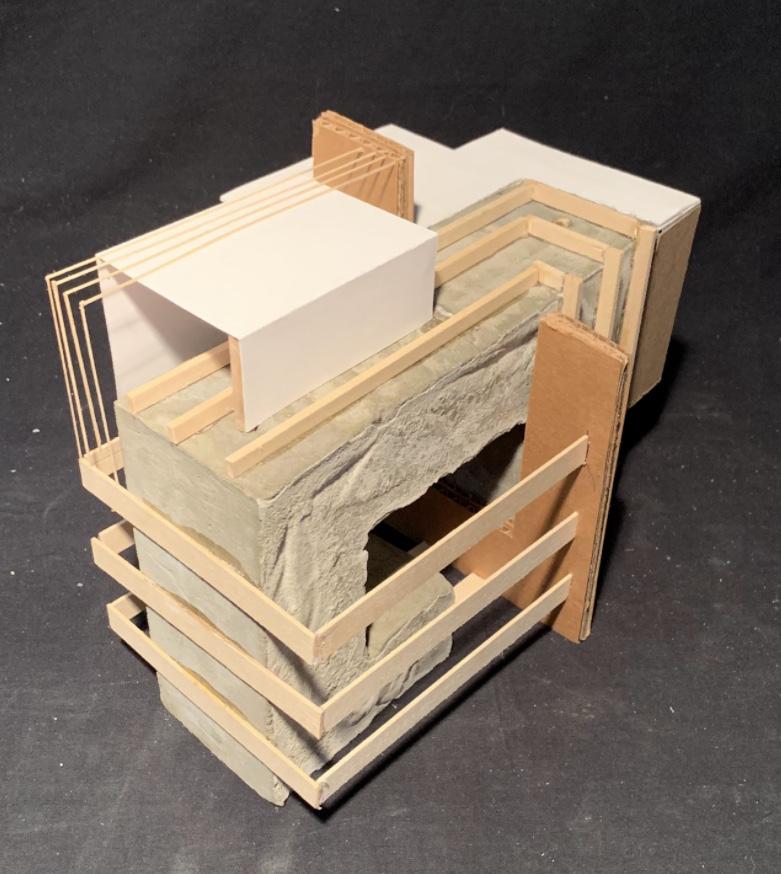
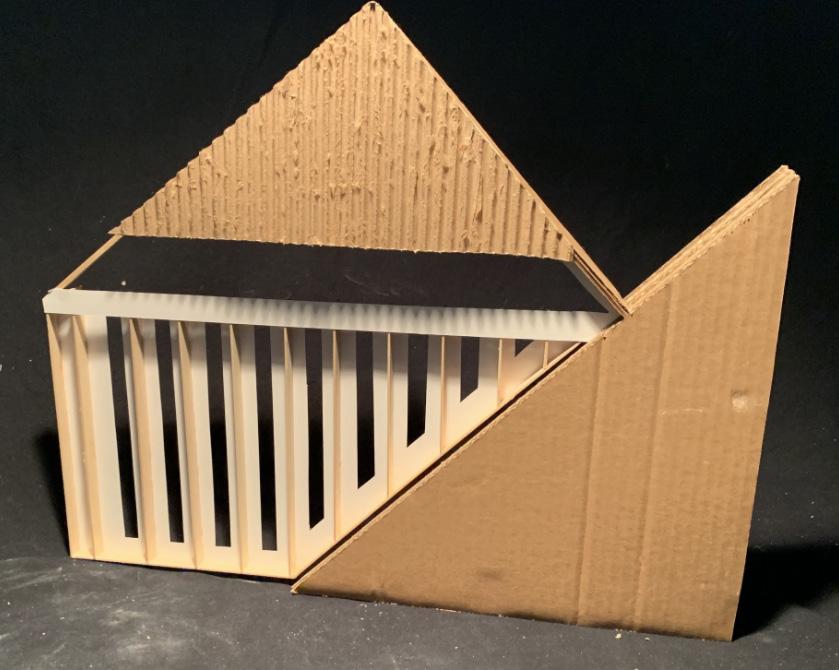
Crafted through the manipulation of wood, cardboard, and paper, the model embodies the culmination of iterative design processes. Its conception stems from a series of models and diagrams developed throughout the semester.
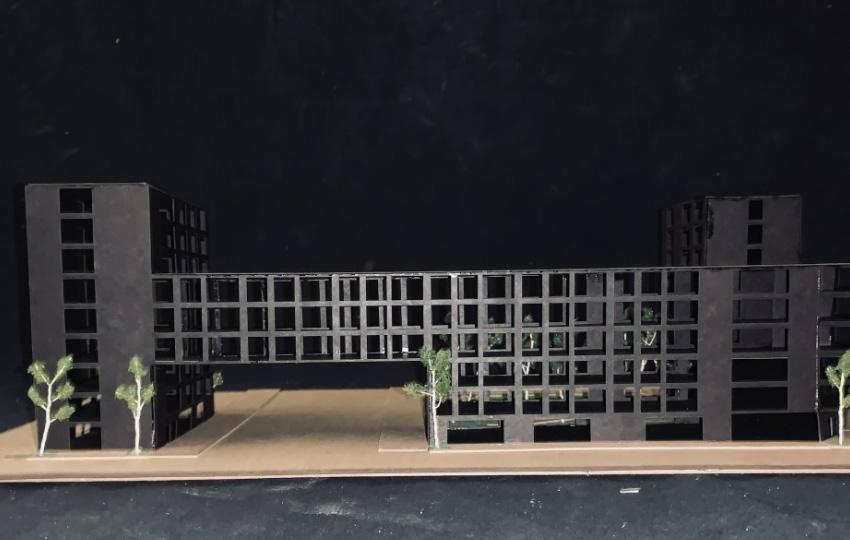
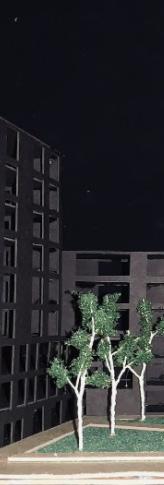
The model was crafted utilizing chipboard and cardboard. It is a scaled model of the dormitory designed for the University of Pennsylvania.
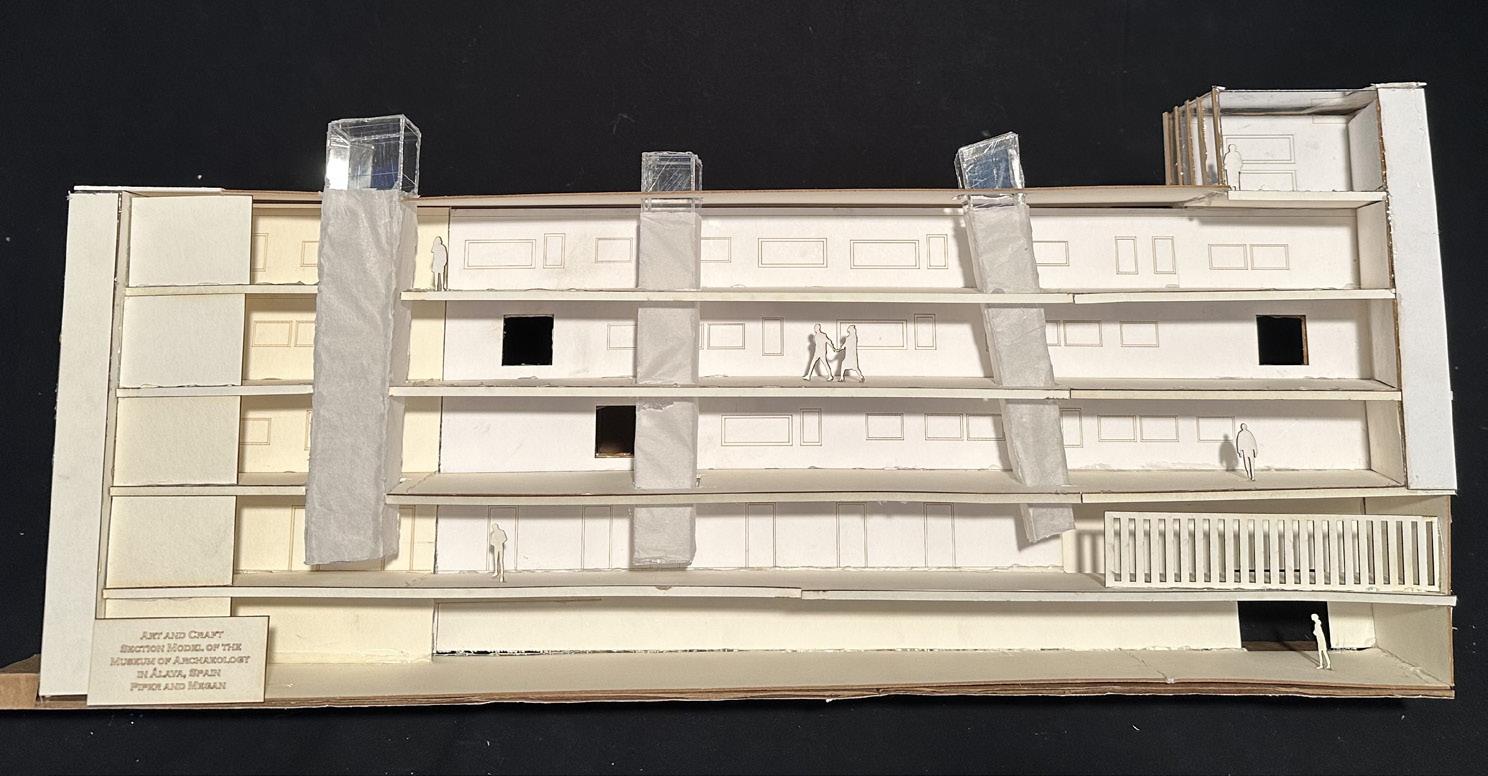
Art & Craft of Building | Fall 2023
Fashioned from chipboard and cardboard, this model represents a scaled rendition of the Archeology Museum in Spain, designed by Francisco Mangado.
Collaborated with: Piper Johnson