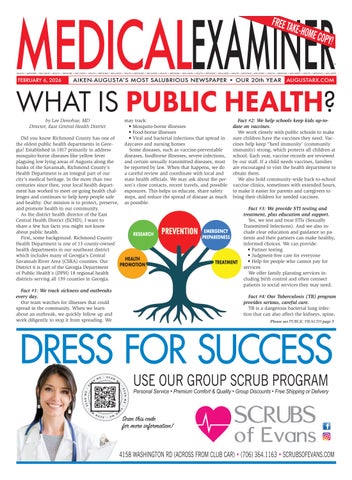

WHAT IS PUBLIC HEALTH?
by Lee Donohue, MD Director, East Central Health District
Did you know Richmond County has one of the oldest public health departments in Georgia? Established in 1817 primarily to address mosquito-borne diseases like yellow fever plaguing low-lying areas of Augusta along the banks of the Savannah, Richmond County’s Health Department is an integral part of our city’s medical heritage. In the more than two centuries since then, your local health department has worked to meet on-going health challenges and continues to help keep people safe and healthy. Our mission is to protect, preserve, and promote health in our community.
As the district health director of the East Central Health District (ECHD), I want to share a few fun facts you might not know about public health.
First, some background. Richmond County Health Department is one of 13 county-owned health departments in our southeast district which includes many of Georgia’s Central Savannah River Area (CSRA) counties. Our District 6 is part of the Georgia Department of Public Health’s (DPH) 18 regional health districts serving all 159 counties in Georgia.
Fact #1: We track sickness and outbreaks every day.
Our team watches for illnesses that could spread in the community. When we learn about an outbreak, we quickly follow up and work diligently to stop it from spreading. We
may track:
• Mosquito-borne illnesses
• Food-borne illnesses
• Viral and bacterial infections that spread in daycares and nursing homes
Some diseases, such as vaccine-preventable diseases, foodborne illnesses, severe infections, and certain sexually transmitted diseases, must be reported by law. When that happens, we do a careful review and coordinate with local and state health officials. We may ask about the person’s close contacts, recent travels, and possible exposures. This helps us educate, share safety steps, and reduce the spread of disease as much as possible.
Fact #2: We help schools keep kids up-todate on vaccines.
We work closely with public schools to make sure children have the vaccines they need. Vaccines help keep “herd immunity’ (community immunity) strong, which protects all children at school. Each year, vaccine records are reviewed by our staff. If a child needs vaccines, families are encouraged to visit the health department to obtain them.
We also hold community-wide back-to-school vaccine clinics, sometimes with extended hours, to make it easier for parents and caregivers to bring their children for needed vaccines.
Fact #3: We provide STI testing and treatment, plus education and support. Yes, we test and treat STIs (Sexually Transmitted Infections). And we also include clear education and guidance so patients and their partners can make healthy, informed choices. We can provide:
• Partner testing
• Judgment-free care for everyone
• Help for people who cannot pay for services
We offer family planning services including birth control and often connect patients to social services they may need.
Fact #4: Our Tuberculosis (TB) program provides serious, careful care.
TB is a dangerous bacterial lung infection that can also affect the kidneys, spine,
DRESS FOR SUCCESS






PARENTHOOD
by Dr. Warren Umansky, PhD
You were watching a news show following the deaths of Rob and Michelle Reiner, allegedly at the hands of their son. The commentator was discussing the challenge that parents of a child with mental health problems face. He said, “As a parent, you are only as happy as your unhappiest child”. It got your attention. You have been living that truth for years as a single mom with your child, hoping that he will eventually work through his persistent gloom. Several years ago your child’s pediatrician said this is typical behavior, so just give it more time. You changed pediatricians a year ago. The new pediatrician encouraged you to seek help from a mental health professional. The mixed advice was confusing and you have resisted taking that advice. After all, it reflects poorly on you, right? What do you do?
A. Give it more time. Sometimes kids do grow out of these periods of unhappiness and defiance.
B. Get some guidance from your friends on social media. Others have surely had similar experiences.
C. You’ve put it off long enough. Get professional help now.
D. Dad has been after you to have your son live with him. Maybe that would solve the problem.
If you answered:
A. No, no, no! Children want to succeed. They want to please others. If they cannot do that, they need help, and maybe you do too. Most children are sad sometimes; maybe they don’t get what they want or get to do what they want. But most children don’t stay sad. When sadness persists, it’s time to seek help.
B. If the people with whom you communicate on social media are truly friends, they should advise you to seek professional help for your child. Everyone their own story, but your child is your concern and your responsibility. You want him to grow into a happy and productive adult. Talk with someone who can help make that happen.
C. Good decision. Your pediatrician can help direct you to a respected professional. Your Facebook group may help to identify professionals who have provided good outcomes for them.
D. There are a lot of factors to consider here. Has dad been a positive force in your child’s life or does he contribute to your child’s problems? Does he support you as the primary caregiver? Your child is a shared responsibility, so both of you should be objective in identifying the source of your child’s sadness. Maybe living with dad will be helpful if you have your own problems to address, but maybe it will cause a divide between you and the father, making your child’s problems worse. Consider that all three of you would benefit from talking with a mental health professional. That may not be easy for you or for dad to accept. At the very least, your child needs to see someone. We want our children to be happy and successful. It lets us know that we probably are doing a good job as a parent. When our children are not happy and successful, it’s difficult to consider that we might be part of the problem. At minimum we should feel that we are doing the best we can against the many stressors and bad influences around. Some outside help is often just what we need. It may be a hard decision, but your child is too important to ignore his needs.
Dr. Umansky has a child behavioral health practice in Augusta.

THOUGHTS ABOUT THOUGHTS THOUGHTS
IMPOSTER SYNDROME
“I DON’T BELONG HERE”
Editor’s note: Written by local mental healthcare professionals, this series explores how people may think and act when affected by common and lesser-known mental health conditions.
Danielle is a 34-year-old physician assistant who consistently receives strong performance reviews. Patients request her by name. Colleagues seek her input on complex cases.
Yet before every shift, Danielle feels a familiar knot in her stomach. She double-checks charts excessively, worries she’ll “miss something obvious,” and secretly believes her success is due to luck rather than skill. When praised, she shrugs it off. When she makes a minor mistake, she replays it for days.
Danielle isn’t underqualified or incompetent. She’s experiencing Imposter Syndrome—a psychological pattern in which capable individuals doubt their abilities and fear being exposed as a fraud.
What Is Imposter Syndrome?
Imposter Syndrome (also called Imposter Phenomenon) refers to persistent self-doubt and the inability to internalize accomplishments, despite clear evidence of competence.
People experiencing it often attribute success to external factors such as luck, timing, or other people’s mistakes, while attributing setbacks to personal failure.
Although not a formal psychiatric diagnosis, Imposter Syndrome is widely recognized in behavioral health and is associated with anxiety, depression, perfectionism, and burnout— especially in high-achieving environments such as healthcare, academia, and leadership roles.
Signs and Symptoms
Cognitive Patterns:
• Persistent fear of being “found out”
• Discounting praise or achievements
• Attributing success to luck or external factors
• Overestimating others’ abilities while underestimating your own
Emotional Features
• Chronic self-doubt
• Anxiety before evaluations or new responsibilities
• Guilt related to success
• Shame after minor mistakes
Behavioral Patterns
• Overpreparing or overworking to avoid failure
• Avoiding new opportunities due to fear of inadequacy
• Difficulty delegating
• Perfectionism that leads to stress and exhaustion
Functional Impact
• Burnout
• Reduced job satisfaction
• Career stagnation due to avoidance of advancement
• Strained work-life balance
What Causes Imposter Syndrome?
Imposter feelings often arise from a mix of psychological, social, and environmental influences:
• Perfectionistic standards that make normal human error feel like failure
• High-pressure environments where performance is constantly evaluated
• Early life experiences involving conditional praise or high expectations
• Major transitions, new job, promotion, or academic advancement
• Underrepresentation in a field, which can intensify feelings of not belonging Imposter Syndrome is not a sign of incompetence—it is often found in highly capable individuals.
Common Misconceptions
8“If someone feels like an imposter, they probably are.” Imposter feelings occur despite objective competence and success.
8“Confidence fixes it.” Even outwardly confident individuals may privately experience intense self-doubt.
8“It goes away with success.” New responsibilities often trigger stronger imposter feelings, not relief.
8“It’s harmless.”
Chronic self-doubt can lead to anxiety, depression, overwork, and burnout.
Treatment and Management
While Imposter Syndrome is not a disorder in itself, treatment focuses on reducing distress and building healthier self-perception.
• Cognitive Behavioral Therapy (CBT) helps identify distorted beliefs (“I only succeeded because I got lucky”) and replace them with balanced thinking.
• Self-Compassion Training teaches individuals to respond to mistakes with understanding rather than harsh self-criticism.
• Exposure to Mastery Experiences gradually takes on new challenges and reflects on successes to help build internal confidence.
• Addressing Co-Occurring Conditions treats anxiety, depression, or perfectionism often reducing imposter symptoms.
or brain, and, if left untreated can be fatal. TB is easily transmissible to and from others. Our public health nurses help people who have been exposed to TB, or who have latent (dormant) or active TB. Our TB program staff educate patients and their families, create treatment plans, and follow strict safety procedures designed to protect you, the public.
Finishing TB treatment is critically important. Sometimes nurses watch patients take their medicine to make sure treatment is completed and to help prevent the development of drug-resistant TB.
Fact #5: Restaurants grades and safety checks keep you safe.
Our robust Environmental Health division inspects restaurants twice a year, providing helpful review of food temperatures, handling, storage, and sanitation. Inspections are essential for guiding safe, best hygiene practices for restaurants and other eating establishments, including food trucks.
In addition to reviewing restaurants, Environmental Health inspectors examine septic systems’ sites, and public swimming pools. Investigations of reported animal bites also fall under the Environmental Health purview.
We’re here for you!
Our county health departments are proud to work with community partners, including businesses, universities and
THOUGHTS
… from page 2
• Workplace Interventions
Mentorship, feedback clarity, and supportive leadership cultures can significantly reduce imposter-related stress.
Prognosis
With support and skill-building, many individuals learn to recognize imposter thoughts without being controlled by them. Confidence grows not from eliminating doubt entirely, but from developing a realistic and compassionate view of one’s abilities.
Left unaddressed, persistent imposter feelings can contribute to burnout, avoidance of
their schools of public health, allied health sciences, and nursing, as well as regional hospital systems to promote health and prevent disease. Hundreds of people count on us to protect their health, educate them, and provide their care. If you have not visited your local health department, please know we are here to serve you, your family, and our community. Please join us for future installments in this series in the first issue of the Medical Examiner each month.
About the author: Dr. Lee Donohue, Director of the East Central Health District, is an internal medicine physician
The “What is Public Health?” Series is authored by public health experts at the Georgia Department of Public Health, East Central Health District (ECHD) with administrative offices in Augusta, GA. Learn more about the ECHD at our website: https://ecphd.com
Facebook www.facebook.com/ECPHD Twitter http://twitter.com/eastcentralph

advancement, and worsening mental health— particularly in high-responsibility roles.
If self-doubt is interfering with work performance, well-being, or career growth, a behavioral health evaluation can help identify effective strategies for change.
About Us
IPS provides inpatient and outpatient mental health services, with or without a referral, to help patients and their families progress through the care journey. To make an appointment, call 706-204-1366 or visit integratedpsych.care.





WHAT IS MANOPAUSE?
This not a word you’ll find in a medical dictionary, but Urban Dictionary has some definitions interested parties may read at their own peril.
Manopause is more of a pop-culture term, but that doesn’t mean it isn’t real. It’s just easier to say than “agerelated hormonal changes in men” and even easier than “late-onset hypogonadism.”
Doesn’t manopause seem better already?
Let’s describe what we’re talking abouts: simply put and greatly oversimplified, manopause describes the gradual decline in testosterone levels that can start in midlife.
Manopause might be confused with menopause, but the two conditions have fundamental differences. While every woman experiences menopause, not all men go through manopause. And for those who do, unlike menopause it can be a gradual process that takes place slowly over decades.
But there are similarities. Either or both can result in reduced energy and motivation at all times, including in the bedroom. Mood shifts like depression and irritability are common, and many men report sleep disruptions and even hot flash-like episodes (although that symptom is less common).
The whole subject is related to advanced age, but not as much as you might think. That “late-onset” label mentioned earlier might suggest something that happens in the 50s, 60s or later. Actually, testosterone levels in men typically start declining around age 30. “Late-onset” is added to distinguish the condition from ordinary gardenvariety hypogonadism, a condition in which the body doesn’t produce enough of the hormone testosterone, and which can even be a condition at birth, or which can arise at any time regardless age due to injury or infection.
The cause of the condition and when it starts (whether it’s hypogonadism or late-onset hypogonadism) affect what can be done to treat the condition. Testosterone replacement therapy can be effective in some cases.

www.AugustaRx.com
The Medical Examiner’s mission: to provide information on topics of health and wellness of interest to general readers, to offer information to assist readers in wisely choosing their healthcare providers, and to serve as a central source of salubrious news within every part of the Augusta medical community. AIKEN-AUGUSTA’S MOST
Direct editorial and advertising inquiries to: Daniel R. Pearson, Publisher & Editor E-mail: Dan@AugustaRx.com
AUGUSTA MEDiCAL EXAMINER
P.O. Box 397, Augusta, GA 30903-0397 (706) 860-5455
www.AugustaRx.com • E-mail: Dan@AugustaRX.com TM
www.Facebook.com/AugustaRX
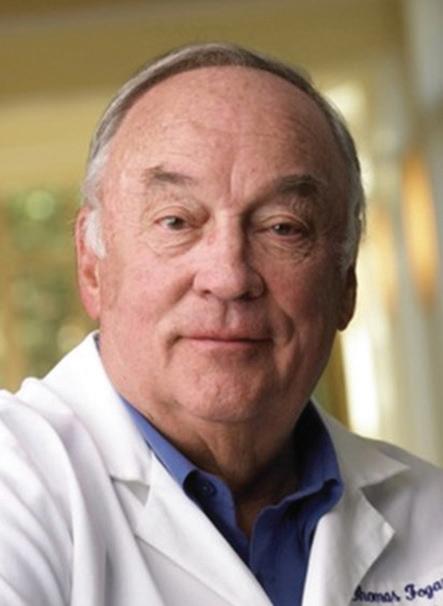
Who is this?
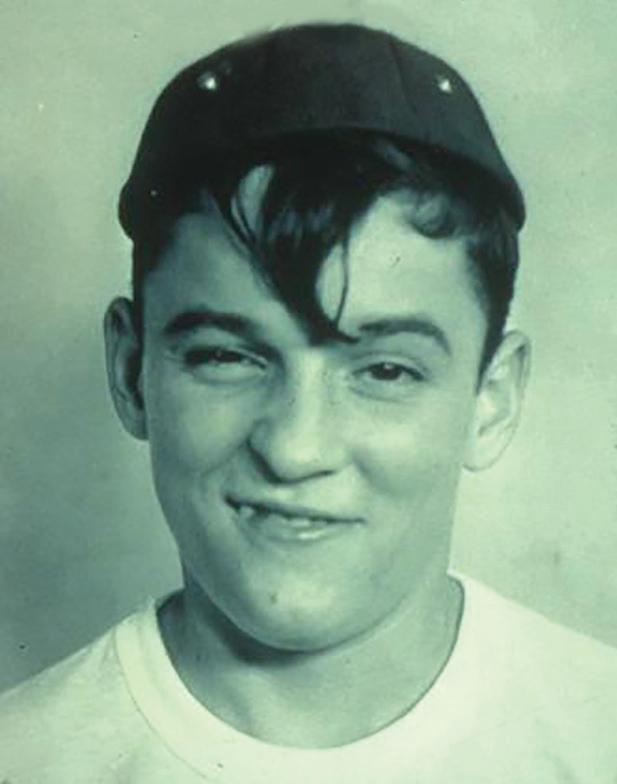
ou might find this hard to believe, but you’re looking at one of the most brilliant physicians and medical innovators of all time, Thomas Fogarty. The picture above was probably taken during his boxing career, which ended when his nose was broken during a fight. From boxing he went into — you guessed it — medicine. In eighth grade.
At that tender age he got a menial job cleaning medical equipment at a hospital near his home in Cincinnati. It was only part time, so he had plenty of time for his favorite pastime, fishing. But his on-the-job performance was good enough to get him a promotion and a raise. His new job: scrub technician, the person who hands instruments to surgeons during operations. His new pay rate: 5 cents an hour. By this time, he had reached the ripe old age of 15.
Fogarty had a front row seat to many surgeries, one of the most invasive of which were operations to remove blood clots. At the time (the late 1940s), these procedures involved large incisions, significant blood loss, many complications resulting in amputations, and a 50% mortality rate.
During his senior year of high school, Fogarty decided he wanted to become a doctor, but his grades were so poor that he was on academic probation at college from day one. (Not to worry: he aced college and went on to graduate summa cum laude from the University of Cincinnati College of Medicine.) His hospital job continued, and through it he worked with one of the most prominent vascular surgeons of the day and witnessed many of the aforementioned procedures to remove plaque, clots and embolisms.
Fogarty had an idea that combined his love of fishing with his knowledge of vascular procedures. Tinkering in his attic, he cut the pinky finger from a small latex glove and, using his lure-making and fly-fishing skills, created what we would today call a balloon catheter. There was plenty of trial and error, but he finally designed a prototype flexible enough to move through veins, be inflated and then dragged out, bringing the clot with it, all without breaking. His vascular surgeon mentor was eventually persuaded to try it, upon which he exclaimed, “Holy cow! This really works!” It was the first minimally invasive surgical device.
Not everyone was as impressed.
‘Only someone as inexperienced and uneducated as a medical student would think such an idea would work,’ said one surgeon. Nor could manufacturers be found. Fogarty made by hand every balloon catheter ever used for quite some time. That would be a tough job today: some 300,000 procedures using his invention are performed every year worldwide, along with another 650,000 balloon angioplasties. The Fogarty catheter alone is estimated to have saved the limbs and lives of some 20 million patients.
Middle Age
BY J.B. COLLUM
My blood work and I are now in a longterm relationship. Every few months, I show up. They take my blood. A few days later my doctor calls and says, “Well… your vitamin D is low again.”
Again. Every. Single. Time.
At this point, my vitamin D and I are no longer acquaintances. We’re estranged family members. So they put me on mega-doses. The kind of pills that make you feel like you’re being treated for something exotic. I take them faithfully, feeling very responsible and grown-up… and then the next round of labs comes back and my vitamin D is still hiding under the couch, making it look like I didn’t follow the doctor’s orders. Recently, though, I ran across something interesting. Apparently vitamin D doesn’t just jump into action on its own. Your body has to “turn it on,” and no, you don’t put on a Barry White record and pour it a glass of wine to do that. It turns out that magnesium makes the magic happen.

are basically acting like a bouncer at an exclusive club and saying, “Thanks for stopping by—we’ve already let enough vitamin D in. Come back when it’s vitamin D night and you’ll get free drinks and no cover.”
Then there’s sunscreen. And yes—skin cancer is serious, so I’m not suggesting we roast themselves like a rotisserie chicken at Costco. But sometimes I wonder if we’ve become so good at avoiding the sun that we’re also avoiding one of the easiest health boosts available. Add in cold, dreary winter weather, and suddenly the sun becomes something you vaguely remember from childhood stories.
{ It’s like a posh resort for viruses
Meanwhile, flu season rolls around every year right on schedule. Turns out that sunlight and UV rays can help knock down viruses, and winter gives germs a nice cozy environment inside: less sunshine, more indoor crowding, and everyone breathing the same recycled air while waiting in line at the pharmacy.
It’s like a resort spa for viruses.
Which means all this time I may have been swallowing vitamin D while it just sat around in my bloodstream like a lazy teenager at work, scrollin g on its phone and waiting for magnesium to show up and say, “Hey! Quit loafing and do your job, punk.”
I guess I’m imagining magnesium being like Clint Eastwood in the Dirty Harry movies. That would scare anyone—or anything—straight.
No wonder my vitamin D wasn’t getting anything done.
Now, I’m not saying magnesium plays the leading role, but it does seem to play a supporting role in helping vitamin D do its job. And suddenly a few things started to make sense.
Like how, when we were younger, we accidentally got vitamin D just by existing. We were outside. We played in the yard. We went places. We had skin exposed to sunlight without needing a written permission slip.
Now? We go from house to car to store to car to house like we’re in the witness protection program.
On top of that, older skin doesn’t make vitamin D as efficiently as younger skin. So even when we do go outside, our bodies
So here’s where I’ve landed, standing in my backyard with a vitamin bottle in one hand and a confused look on my face. Maybe we all just need to get outside more.
Not to burn. Not to tempt fate. Just to exist in daylight for a while. Take a walk. Sit on the porch. Let your brain remember that the sky is real.
And if your labs keep coming back low like mine, maybe it’s worth having a conversation with your medical professional—not just about vitamin D, but whether something like magnesium might also be part of the picture.
Because middle age already comes with enough surprises. I don’t need my vitamins quietly staging a work slowdown on top of everything else.
So this winter, if you see me standing in the yard staring at the sun like a confused houseplant, don’t worry. I’m just trying to recharge my vitamin D.
J.B. Collum, author of this column and Special Forces Parenting, is a local novelist, humorist and columnist who wants to be Mark Twain when he grows up. He may be reached at johnbcollum@gmail.com

Dr. Thomas Fogarty, who died on Jan. 26, 2026 at age 91

Special Forces Parenting
Once upon a time, we were going to do it right. No screens. Well… almost no screens. We made one exception early on for Freyja: Disney movies. The same Disney movies. Over and over again. Because for her, they aren’t just entertainment — they’re therapy. They help regulate her, spark vocalizations, and give her something joyful to focus on. And for us, they provide a brief window to breathe, regroup, or finish a cup of coffee while it’s still warm.
So yes, Moana has practically become a member of our household. Elsa and Anna are distant relatives. And the cast of Sing! and Sing! 2 might as well have their own bedrooms.
The unintended side effect of this arrangement is that everyone in the house now knows every lyric, every line of dialogue, and every musical cue backwards and forwards. I can recite large portions of Frozen from memory, which was not a life skill I anticipated developing in middle age. Still, Freyja has good taste. If you’re going to be subjected to something on repeat, it helps when the music is actually decent. For a long while, that was the extent of her screen time. But relatively recently, we decided to try something new. We introduced learning games on tablets and phones, carefully locked down so she couldn’t wander off into the digital wilderness. No accidental trips to parts of the internet not meant for children, and no surprise emails to my boss consisting entirely of symbols like “#*~$HD)~,” which might reasonably be interpreted as, “Take this job and—”
Well. If you’re reading this column, you’re probably old enough to remember Johnny Paycheck’s helpful guidance on that subject. I’ll just leave that there. If you don’t know, ask a boomer or a Gen Xer.
Anyway. Freyja, our eight-year-old granddaughter with Angelman syndrome and severe autism, who is nonverbal, took to these games in a way that surprised all of us. At first, she treated them like toys. She was perfectly content to get answers wrong, just to hear the funny sound effects that come with failure. There’s a certain wisdom
in that, honestly. Many of us adults could learn something from finding joy in our mistakes.
But then something changed. She started trying to win. And not just trying — succeeding. She began matching shapes. Identifying colors. Completing levels. Where she once happily mashed buttons for auditory entertainment, she now focuses. She concentrates. She finishes.
Her schoolwork has improved too. Assignments that once stalled halfway now get completed. Concepts that seemed slippery before are starting to stick. And perhaps most remarkably, she has become even more vocal since starting these games — experimenting with sounds, attempting approximations, and finding new ways to express herself. I am pretty sure she said, “cool” the other day. I heard it at least twice. That’s cool!
None of this is miraculous or instantaneous. Progress in our world tends to come in inches, not miles. But inches add up. What we’re seeing feels like another small door opening.
It gives us hope.
Hope that this newfound motivation might carry over to other skills later on.
Hope that this desire to “win” might translate into persistence with harder tasks.
Hope that somewhere down the road, these simple games about colors and shapes could become stepping stones toward bigger victories we can’t yet imagine. Parenting special needs children is like that. You learn to celebrate things most people never think twice about. You become deeply grateful for progress that might look tiny from the outside. You live in a world where a correctly matched triangle can feel like a championship trophy.
And through it all, you learn flexibility. We once thought screens were something to avoid almost entirely. Now they’ve become another tool in our ever-growing arsenal — right alongside patience, prayer, humor, coffee, and a near-encyclopedic knowledge of Disney soundtracks.
Raising Freyja continues to be the most challenging and meaningful mission of our lives. Some days are hard. Some days are exhausting. And some days, your living room turns into a karaoke lounge hosted by animated characters.
But then there are days when your granddaughter completes a learning level on her own, looks up with pride, and lets out a happy sound that says, in her own way, “I did it.”
And suddenly, you don’t mind hearing “Let It Go” one more time. No, really. I’m not joking.
Because in this mission, every small victory matters. And every hopeful note — whether sung by Elsa, Moana, or an eight-year-old finding her voice — is worth listening to. +
Who is this?
Not everyone in healthcare can be Florence Nightingale, right? Despite the long-running series on page 4, there are clunkers in medicine, and we will examine some of them in this series. Unfortunately, there’s enough material to keep this side of the page going for a while.
Where do you stand on the abortion question? This man’s view was apparently “babies equal money.” He made nearly $2 million a year operating an abortion clinic in West Philadelphia. A pill mill running from the same location (an operation which dispensed more than half a billion oxycodone pills and 400,000 Xanax pills) was raking in up to $15,000 a day.

Born in Philadelphia in 1941, Kermit Gosnell was recognized as an all-round good guy in his early days. He spent four decades providing healthcare to the poor, opened a teen aid program as well as a rehab clinic for drug addicts in an impoverished part of West Philadelphia. In the early 1970s he was a finalist for the “Young Philadelphian of the Year” awarded by the Junior Chamber of Commerce.
He opened his abortion clinic in 1972, telling The Philadelphia Inquirer that year, “As a physician, I am very concerned about the sanctity of life. But it is for this precise reason that I provide abortions for women who want and need them.” The only slight problem was that Gosnell was not trained in either gynecology or obstetrics.
Content warning: the faint of heart really should stop reading at this point. Really. We’re not kidding.)
When a raid of the facility finally took place (the first time any inspector or oversight organization had set foot in the clinic in 17 years), the scene they encountered was described as “deplorable,” “disgusting,” “horrendous,” and “by far the worst” any of the experienced investigators had ever seen. There was blood on the floors, the stench of urine everywhere, and in milk jugs, garbage bags, specimen jars, and freezers throughout were the partial and wholly intact remains of dozens of babies, some of them clearly born alive, healthy, and full-term. The filthy surgical procedure rooms were described a resembling “a bad gas station restroom.” Patients (some of them minors) were given labor-inducing drugs by untrained staff, then sat on toilets once labor began. After the fetuses dropped into the toilet, they were fished out “so as not to clog the plumbing,” according to the grand jury report.
Gosnell, his wife, and several staff members were arrested on a host of charges, including manslaughter, multiple counts of first degree murder, and drug conspiracy. Although suspected of killing hundreds, Gosnell was officially charged with eight counts of murder and convicted in three of the cases. He received a sentence of 30 years on federal charges (mostly drug related) and life imprisonment on state charges brought by Pennsylvania.
+
THE FENTANYL BLAME GAME
John is a solid family man. National defense computer expert for many years. Top security clearance. Stationed in various countries. He has seen and heard things you and I can only dream about. But he is not perfect. Sometimes he drank too much at night. He controlled it. He functioned. Never missed work. Never failed to perform. He was self-controlled. I trust John.
John and I saw a family on TV whose 15-year-old son bought a “Percocet” pill online. The pill was delivered to the family’s front yard. The kid took the pill. Parents were oblivious. A fentanyl overdose ripped his soul from his body. The parents cried on national TV while announcing a non-profit to “stop cartels from killing American kids.”
Our hearts wept for their loss. But not once did they blame their son for buy-
ing and taking an illegal, non-physician prescribed drug. Physicians have a quarter century of education before they prescribe a known drug. Even then, doctors don’t prescribe for themselves. And here we have a 15-year-old kid prescribing for himself.
John and I commiserated and agonized profusely over our society’s drug problems. It is a sad situation to be sure.
A few days later the problem hit home like a ton of bricks crashing through a house of glass.
John’s daughter invited her boyfriend to their family home for dinner. Boyfriend had a colorful history. He had spent a few months in jail for a minor drug offense. Came out of jail and into court-ordered drug rehab. He was doing well. Working. Getting back into the swing of the good life. He and daughter were considering marriage.

BASED
ON A TRUE STORY
(most of the time) A series by Bad Billy Laveau
Daughter had some college and a job.
After dinner, daughter used the bathroom. Boyfriend sat down on the bed. When she came out, he was laying face down on the bed. She thought it was one of his jokes. He was a funny guy. She rolled him over. He was comatose. John responded with skilled CPR until the EMTs and police arrived.
ily setting and normality had failed. He preferred mind-altering drugs. Fentanyl sooths perception and increases pleasant sensations. Meth increases consciousness and excites. In his case, Fentanyl won. Breathing stopped. Heartbeats stopped. All in a matter of minutes. His life was gone like a thief in the night.
A
EMTs figured it was a heart attack and transferred him to the ER. Continued CPR and drug resuscitation failed. He died. He was 36. Blood test later shed dark light on the real problem. Fentanyl and methamphetamine overdose.
Rehab had failed. Fam-


Boyfriend’s story was local. He bought drugs he knew were illegal and not rigorously manufactured under the oversight of the FDA and corporate America. The aforementioned kid on TV did the same thing. Both elected to pay a few dollars for illegal drugs of unknown origin, unknown content, unknown compound(s), unknown chemistry, unknown concentration, and unknown quality. Both wanted to “thrill and chill” … whatever that means.
Who do we blame for these two representative deaths? China selling precursor drug compounds to Mexican cartels? Cartels manufacturing fentanyl and meth for export to the US?
Undocumented illegals hauling drugs across the border? Fishing boats without fishing poles speeding across the Gulf of America?
Drug wholesalers buying in bulk and suppling distributors? Street dealers selling pills in small amounts to anyone who can walk a dark alley or use a cellphone in suburban homes? Or our government’s former open borders letting in 20 million (+/-) unknown people? The answer is as hazy as a moonless night in the dark Okefenokee Swamp.
Neither you nor I can alter any of the above.
But we do have a responsibility herein. Cartels won’t smuggle drugs if they can’t sell them for high profits. End users must stop buying illegal drugs. Period.
We must teach our children self-preservation, responsibility, integrity, duty, and civility.
Children must grow up to
be moral individuals. Children must learn real history, the good parts and the bad parts. Children must learn math, science, and proper English. They must learn both at school and at home. Moral fiber, we used to call it. Political parties matter not. Integrity does. No one ever fails to get a job (or loses a job) because he knows the 3 R’s. Because he has good manners. Because he respects others. Because he is sober. Because he is drug free. Because he has a skill. Because he refuses profanity. Because he doesn’t bully. Because he respects women. Because he supports his children. Because he obeys traffic laws. Because he doesn’t steal. Because he is honest. Because he is truthful. (“He” is used herein to indicate male or female.)
Each adult is responsible for himself. If you don’t buy or consume illegal drugs, you will not overdose and die. We must make sure our kids grow up to embody this simple but profound concept. Don’t play the “blame others game.”
One of the most beautiful girls I have ever known said she liked “pleasant opioid feelings.” She was introduced to opioids secondary to a car crash and fractures in her neck. When she could no longer get them legally, she went into an outpatient rehab program and was prescribed buprenorphine. The treatment was successful. No street drugs. But the desire for altered mental states lingered. Her doctor thought that was ill-advised and continued the successful treatment.
She changed doctors. Moved to a bigger city where things were more available. Two years later she was still beautiful. She was 28. But she was dead. Guess why? She overdosed on meth and fentanyl. Have you heard that story before? It happens everywhere. It wrings tears from your soul.

TRYTHISDISH
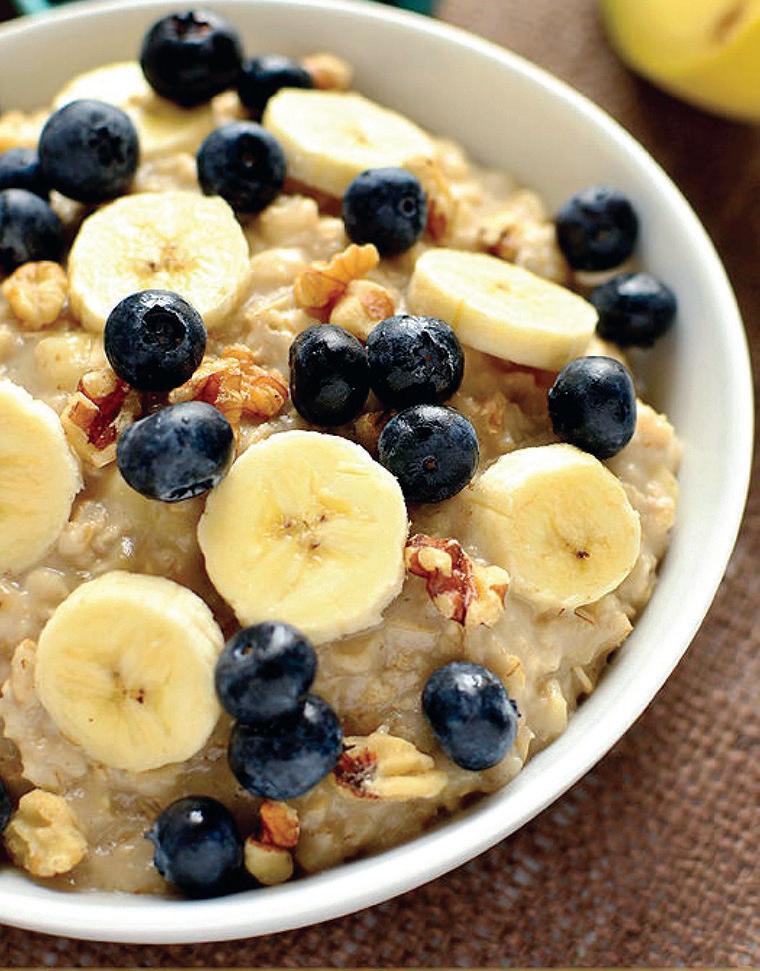
QUICK OLD-FASHIONED OATMEAL
Yes, old fashioned oatmeal can be microwaved. It is more nutritious than instant oatmeal and less expensive too.
Ingredients
• ½ cup oatmeal
• 1 cup skim milk
• 1 tsp. ground flax seed (flax meal)
• 1 tbsp. raisins
• 1/8 tsp. cinnamon
• 1 tsp. honey or brown sugar (optional)
Instructions Combine oats, flax meal, and milk in a large microwavable bowl. Microwave for 2½ minutes. Add raisins, cinnamon, and brown sugar and stir to combine.
Yield: 1 serving
Nutrition Breakdown:
Calories 310, Fat 4.5g (0g saturated fat, 670mg Omega-3 fatty acid), Cholesterol 5mg, Sodium 135mg, Carbohydrate 55g, Fiber 6g, Protein 16g.
Percent Daily Value: 10% Vitamin A, 30% Calcium, 20% Vitamin C, 15% Iron
Carbohydrate Choices: 3½ Carbohydrates
Diabetes Exchange Values: 2 Starches, 1 Milk, ½ Fruit, ½ Protein, 1 Fat



*Note: Be careful the first time you try this recipe since microwaves vary in strength. It is possible this could boil over. This is also why a large bowl in important. +







BAD BILLY
from page 6
Most likely you know someone on this Road to Destruction. Don’t just stand there. Do something about it. The question is not: CAN YOU HELP? The question is: WILL YOU HELP?
Show them a normal, drug free lifestyle. Direct them into rehab programs. Church sponsored groups often work well and are free in many cases. Get them professional help. If you fail to do that, you have failed them. Don’t give me the “I got a head full of doubts” cop out.
Adults are responsible for themselves. Parents are responsible for their children. Adults must live right to teach their children to live right. All it takes is time and dedication on your part.
This is the rent you pay for your room on Earth.
Failing that, you and yours might be the subject of somebody’s future column. Nobody wants that.
Certainly not me. I don’t like how I feel while I write such profound, but truthful sadness.
Just remember. There is always hope. And hope is free.
A NOTE TO READERS
After many years of writing some of the most memorable content to ever appear in this newspaper, Bad Billy has announced this will be his final column for the Medical Examiner. It has been a great run stretching back to our earliest issues, with many visits to back roads and back porches along the way, all done not for pay (since there wasn’t any) but simply for the pure joy of writing. And it showed. Bad Billy, from all of us, thanks for the ride. +

SOCIAL MEDIA EPIDEMIC

by Justin White
Part II
Focusing solely on the negative aspects of social media isn’t entirely fair. Many people use social media as an outlet and as a way to communicate with others to find support and companionship. The reason behind this need, though, springs from flaws in our mental healthcare system itself.
For example, a survey in 2022 found that 60% of psychiatrists, psychologists, and counselors in the US report no openings for services/appointments. It is hard to imagine that things have gotten better since 2022. On top of that, about 45% of psychiatrists do not accept insurance, forcing patients to pay out of pocket. Even with insurance, 43% of adults with mental health needs do not receive care due to high cost.
In addition, geographic disparities mean that more than 25 million people live in areas underserved by sufficient mental health
professionals. Rural residents typically have to travel twice as far for mental health care as their urban counterparts. And then comes the stigma and inequity. Despite progress in these areas, 60% of those accessing mental health care report that social stigmas remain a barrier, with marginalized communities facing even greater hurdles. As a result of these and other obstacles, many people are desperate for proper mental health support. In the face of this void, social media becomes the most convenient support system available. A study in 2023 found that 32% of people follow therapists, about one in four follow people with the same condition, and 20% follow mental health advocates. Surveys show that more than one-third of all teens get their mental health information from social media.
Although that could be a good thing in a perfect world, excessive social media use is linked to de-
pression and anxiety, with people using social media more than three hours daily having twice the risk for poor mental health. Cyberbullying is also on the rise, with roughly 59% of teens experiencing some form of it on social media.
Social media can’t be discussd without addressing the subject of addiction. Some 210 million people report having at least some level of social media addiction. Close to half of all people queried in one survey say they couldn’t live without their phones, with 59% of them checking social media within 15 minutes of waking up.
The issue goes even deeper: 71% of survey respondents say social media makes them anxious; 70% say that it makes them feel depressed; 59% say it makes them feel lonely; and 50% say it makes them unhappy.
Forty-five percent say that social media makes them stressed and 40% say it makes them feel overwhelmed, with many also reporting feelings of jealousy, anger, guilt, and shame.
This is what millions of people are addicted to?
Social media has also been blamed for issues with relationships. A quarter of survey respondents say social media has caused a fight with their partner. One in seven blame social media as the cause for a breakup. One in eight blame it for causing a divorce. One in ten have blamed it for the loss of a job, with the same percentage blaming it for the end of a friendship. Missing out on sleep, life events, and even work have also
all been blamed by social media.
However, there are people with mental health issues who have good experiences with social media. Nearly half say that it has helped them feel less alone. Since mental health issues are often accompanied by social anxiety, many social media users turn to it because they feel more comfortable communicating with others from behind the relative anonymity of their computer screens. They say the platform provides a way for people to feel more connected and less alone, and frequently offers a wealth of information regarding mental health and the issues surrounding it. It lets people connect with each other and makes the individual
feel less alone in the world.
Social media definitely has its downsides but not all of it is bad. When used properly, social media can be an asset and be a good source of information and communication within the community.
However, there is another important aspect to look at regarding social media: the news and AI-generated content presented as true and real that is running rampant on social networks. That’s something we will discuss in Part III.
Justin White is an Augusta writer with an interest in computers and information technology. His work has appeared in the Metro Spirit, NAMI’s Augusta Azalea, and in past editions of the Medical Examiner.
CRASH COURSE

Many drivers are very conscientious about safety behind the wheel. They are models of good driving on the highways and byways.
But many people fail to recognize the perils that aren’t on the highways. Here are a few of them.
Slow Motion Danger
Most cars in parking lots aren’t moving much faster than walking speed, but that doesn’t mean parking lots are safe places. They are densely congested and full of blind spots, cars traveling in reverse, pedestrians darting out like targets in a video game, limited sight lines, and drivers who zip across the painted lines to make their own traffic lanes.
Whether on foot or behind the wheel, everyone in a parking lot should be on high alert.
Fueling
Fiascoes
The pumps seem like another unlikely place for mayhem, but looks can be deceiving. Unexpected moves are to be expected. Cars are pulling in and out, sometimes at odd angles, sometimes trying to squeeze out of tight spaces, and pedestrians are also present. People aren’t always paying attention: they’re looking at their phones, walking and texting, juggling keys, snacks, and gas station coffee cups.
There’s also the occasional irritation factor caused by drivers cutting off others (or at least seeming to), whether through impatience, inattention or meanness. News reports of altercations at gas pumps are unfortunately not exactly rare — and sometimes they involve guns. Or maybe one person drives off to end the confrontation while the other person hangs on to the argument — and the departing vehicle — and is dragged away to an unknown fate. Seriously?
Getting a fill-up can be perilous without a little caution and a little patience.
The Perfect Pickup
Line
Oh, if only such a thing existed. Instead, school pickup lines are sometimes places
where adults act like children. Parents may be stressed, rushed, and distracted. And exhausted. And impatient. Plus little kids are darting around unpredictably.
School car lines could be perfect laboratories for studies of aberrant human behavior.
The “I’ve Made It” Syndrome
Some traffic safety experts refer to a safety risk they alternately call The Comfort Zone or The Last Mile Syndrome. Perhaps without conscious realization, we get close to home and let our driving guard down, going into autopilot mode. Maybe you start to think about the plans for later or what you need to do as soon as you get home. Drivers magically transport themselves from behind the wheel to the kitchen or the book club meeting later on. This syndrome is part of the explanation for the fact that most crashes take place close to home, within a few miles at most, rather than 50 miles away on the interstate.
Safety Begins at Home
Conversely, safety can end at home before it ever gets started. Over the years, how many times have you heard about someone backing over a bicycle or even a child in their own driveway? A young girl tragically lost her life in Aiken County just a few weeks ago in her own front yard, her mother at the wheel. Much less seriously, people accidentally back over flower beds and shrubs, or hit trees all the time. In their own yard! Trees that have been there for decades! Even more unexpectedly, feel free to call our esteemed advertisers, Overhead Door (see ad to right), and ask them how often they get calls from homeowners who have backed out of their garage (or at least started to) without first raising the door. Their answer may surprise you.
Yes, avoiding problems behind the wheel starts early — right in our own driveway — and doesn’t end until we return there. It includes all the place we travel to, even the ones off the roadway where we may travel at only 2 or 3 miles per hour. +

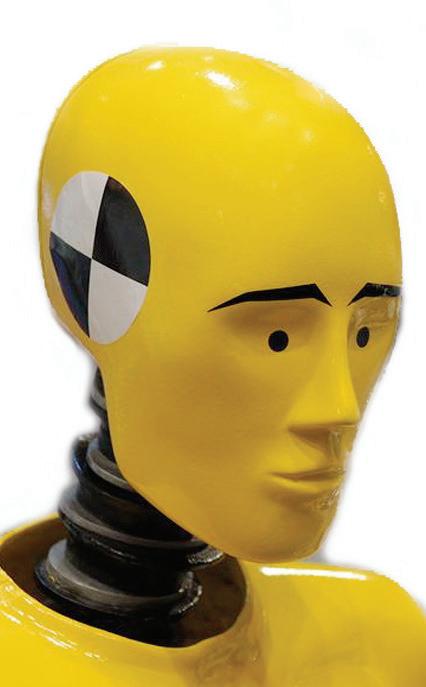
Write your most appropriate, clever, or funny caption to the photo shown for a chance to win whatever cool swag we decide to give away.
Email your entry to Dan@AugustaRx.com (Multiple entries ok)
DEADLINE TO ENTER: 5:00 PM FRIDAY, FEB. 13, 2026



I WAS THINKING
by Pat Tante
WHAT SHALL I DO WITH JUNE? (PART I)
It had been a sad, sad day. My best friend, June, succumbed to a horrible illness that took her so quickly that her family and friends were still reeling because this dear, albeit quirky, woman had – as she would have put it –thrown in the proverbial towel.
Not normally a sickly person, not a depressed person, this woman went through life with a smile and an uplifting manner that made us all happy to be with her.
I lingered a while staring at the funeral home’s brand of mahogany cremation container – their official Keepsake Cremation Box. It was so plain and so, so stuffy? If June had a choice, I would be staring at a finely-baked raku urn, a red glass vase or even a Hav-a-Tampa cigar box.
She would have picked something funny, something incongruous as her final container. Being regular was not June’s forte. Her family would kid her about being adopted as she swirled around her kitchen in cowboy boots –red hair flying.
I was thinking about how much I would miss her as her younger brother, Ned, approached me. “Here, Pat. June would want you to have this.” He held up the mahogany box to me and I automatically took it before I even realized what it was. “You knew her better than anyone. She would have liked for you to pick her final resting place.”
“Me?” I said, as I tentatively held the brown box at arm’s length. “You were her best friend,” said Ned. “Surely, you spoke about such things.”
“Not really, “ I replied. Ned looked at me. “Is this too much to ask?” he implored. This was the same Ned who lived in another city and who only saw his sister at holiday gatherings. I pulled June to me. “No, of course not. She and I were like family. I’ll take care of June.” With that I turned and walked to my car, tucking June under a seatbelt so she would not slide off the seat.
When I got home, I tried several places where I thought she might enjoy sitting. On the mantel? No. In the bedroom? No. In a closet?
Definitely not. I finally chose my sunny kitchen window. June and I loved to cook; she’d enjoy being there and near me when I baked.
Over the next several days, I thought long and hard about an appropriate place for June, but then my daily life took over and I forgot about looking for a place. I missed her though and would talk to the box from time to time. I even asked where she wanted to be, but she never said. I did investigate the local cemeteries and mausoleums. Too many white marble crosses, concrete angels and huge rectangular granite headstones. Ugh, nothing appealing about those places.



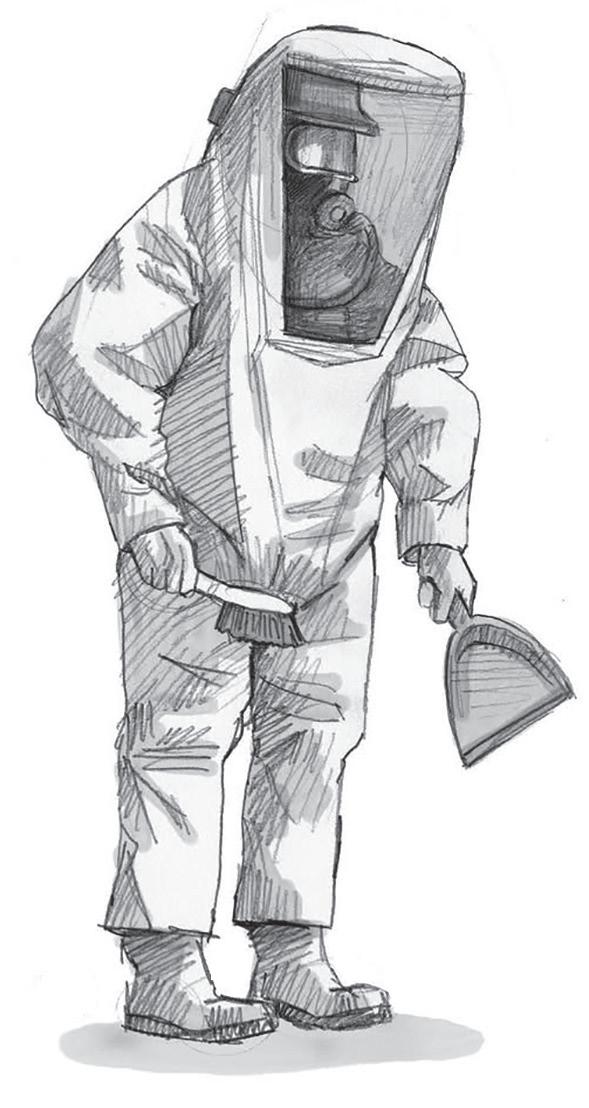




Examiners
I have been absolutely living in the bathroom lately. What seems to be the problem?

ACROSS
1. Part of a pirate’s logo
6. Medic beginning
10. Cone dropper
14. Lofty nest
15. Money of Cambodia
16. An addict
17. Desert region of Israel
18. Not written
19. One of 18 in golf
20. Unity
22. Disagrees
24. Destiny
25. Long fish
26. Late anti-apartheid activist
30. Nutritional abbrev.
31. Polychlorinatedbiphenyl, for short
34. Think too much of
36. Australian marsupial
38. Pleasing
39. Saint Kitts and _______
42. Secondhand
43. 2008 Liam Neeson film
45. Overealous environmentalist
47. Low ranking nav. officer
48. Eccentric
51. Blight on the landscape
52. Lymph follower
53. Derelict
54. Athletic shoe
57. Convert 02 into 03
62. One way to serve potatoes
63. Lance prefix?
65. The “R” of R.E.M.
66. Black Beauty author Sewell
67. Principal
68. Surrounded by 69. Small duck
70. Lump of earth
71. Flat shelf
WORDS NUMBER
I’m no doctor, but it sounds like RDS.
by Dan Pearson
Basically, everything I eat is running right through me. RDS? What’s that? Rump Derangement Syndrome.

CAPTION THIS
Check out our new reader contest on p. 10 Write your most appropriate, clever, or funny caption to the photo shown for a chance to win whatever cool swag we eventually decide to give away! Email your entry to Dan@AugustaRx.com
DEADLINE TO ENTER: 5:00 PM FRIDAY, FEB. 13, 2026 Have fun!
E X A M I N E R
DIRECTIONS: Every line, vertical and horizontal, and all nine 9-square boxes must each contain the numbers 1 though 9. Solution on page 14.
1. Augusta follower of 26-D
2. Sharp
3. Exhort
4. Mortgage
5. A mason’s trowel can be one
6. Gland in men
7. Atmosphere
8. What cards are scanned by
9. ______ health professions
10. Uses a pipe
11. Small island
12. Close
13. Energy units
21. Gannet or goose
23. Anti-aircraft fire
26. Augusta intro to 1-D
27. ____ Flu
28. The narrow tops of bottles
29. Daughter of Mariel (Hemingway)
31. Leisurely stroll (Literally, “step” in Spanish)
32. Bell description
33. Noted Augusta burn survivor Shirley
35. Character famously played by Joanne Woodward
37. Belonging to us
40. Like a frozen lake
41. Soviet spacecraft
44. Small recess
46. Relating to the thigh
49. Local Tricare hosp.
50. Pertaining to skin
52. Relating to the nose
54. Quick!!!
55. Not one
56. Sicilian volcano
58. Title
59. Apple music player
60. Zest
61. Verge
64. Life prefix
QUOTATIONPUZZLE

DIRECTIONS: Recreate a timeless nugget of wisdom by using the letters in each vertical column to fill the boxes above them. Once any letter is used, cross it out in the lower half of the puzzle. Letters may be used only once. Black squares indicate spaces between words, and words may extend onto a second line.
Solution on page 14.
Use the letters provided at bottom to create words to solve the puzzle above. All the listed letters following #1 are the first letters of the various words; the letters following #2 are the second letters of each word, and so on. Try solving words with letter clues or numbers with minimal choices listed. A sample is shown. Solution on page 14.

THEBESTMEDICINE

ha... ha...

Ablonde stops by a café on her way to work to get a quick coffee to go. As she’s about to leave she sees a sticker on the lid of the cup that says “Peel & Win!” She peels it back, screams, and starts jumping up and down.
“I won a motorhome! I won a motorhome,” she yells.
Smiling, the barista walks over and says, “That can’t be right. The top prize we’re giving away is a free lunch.”
“No!” the blonde insists. “I’ve won a motorhome!”
The manager walks over and says, “Miss, I’m quite sure we don’t have a motorhome to give away.”
“See for yourself!” the blonde says, handing him the ticket.
The manager reads the ticket out loud: “Win a bagel.”
Two burglars are ransacking an apartment when they hear someone putting a key in the door and trying to open it.
“Hey! They’re about to come back home!” says one of the burglars. “Quick!
Jump out the window!”
“Are you out of your mind?” says the other. “We’re on the thirteenth floor!”
The first guy replies, “This is no time to be superstitious!”
Police Officer: I’m looking for a man with one eye.
Helpful Citizen: If you use both eyes, you might have a better chance of finding him.
Math Teacher: 50 percent of this class failed the test.
Student in Back Row: There’s not that many kids in this entire class!
Moe: My doctor told me the procedure has a 50% chance of success.
Joe: What did you decide to do?
Moe: I asked if he could do it twice.
Moe: In this cold weather I love putting on underwear straight from the dryer.
Joe: Ok... sure.
Moe: Plus it’s fun looking around the laundromat and wondering who they belong to.
Husband: Look st this! I haven’t worn this in ten years and it still fits me!
Wife: Dude, it’s a scarf.
The Atlanta Falcons visited an orphanage. “It’s heartbreaking to see all those faces with no hope,” said one of the orphans.
popular demand we’re making at-cost subscriptions available for the convenience of our
If you live beyond the Aiken-Augusta area, or miss issues between doctor’s appointments — don’t you hate it when that happens? — we’ll command your mail carrier to bring every issue to your house!
NAME ADDRESS
CITY STATE ZIP
Choose six months for $26 or one year for $48 . Mail this completed form with payment to Augusta

Dear Advice Doctor,
I was at a store the other day when something caught my eye that I definitely need but really can’t afford. Simple: don’t buy it, right? But here’s the thing: it’s on sale right now. If I wait until I can afford it I will end up paying considerably more. But if I charge it, even at this lower price I will be paying interest charges on my card balance, which will cancel out some of the savings. What should I do? — Either Way I’m Screwed
Dear Either,
Thank you for asking this important question here so that you and hundreds — perhaps even thousands — of others can benefit from the answer. Why is it so important? Consider this:
A 2022 survey of 2,000 Americans asked, “Which of the five senses is the most important?” The overwhelming winner? Vision (77% ranked it #1), followed by hearing, touch, smell, and taste So when something catches your eye — or mine, for that matter — it is a matter of great concern. But there is good news. Some eye injuries heal faster than almost any other part of the body. What you described, which sounds like a minor scratch (a corneal abrasion), can heal in as little as 24 hours. The regenerative capabilities of the cornea are exceptional, especially when compared with other body tissues. A skin abrasion can take a week or more to heal; pulled muscles, even longer; fractured bones: 6 to 12 weeks; tendons and ligaments: months. Some body parts (ligaments, for instance) heal slowly because they lack blood supply; ironically, the cornea heals quickly because of the same lack of blood supply, which means inflammation that slows healing is not a factor. The eye, the cornea in particular, is a champion healer.
That’s the good news. The bad news is that deeper, nonsuperficial eye injuries can heal very slowly or not at all, and can result in permanent vision loss. Injuries to the lens, retina, and optic nerve may only experience limited recovery.
Because our eyes are delicate, and because vision is universally recognized as our most precious sense, any eye injury that isn’t extremely minor should be promptly evaluated and treated.
I hope this answers your question. Thanks for writing! Do you have a question for The Advice Doctor about health, life, love, personal relationships, career, raising children, or any other important topic? Send it to News@AugustaRx.com. Replies will be provided only in the Examiner.

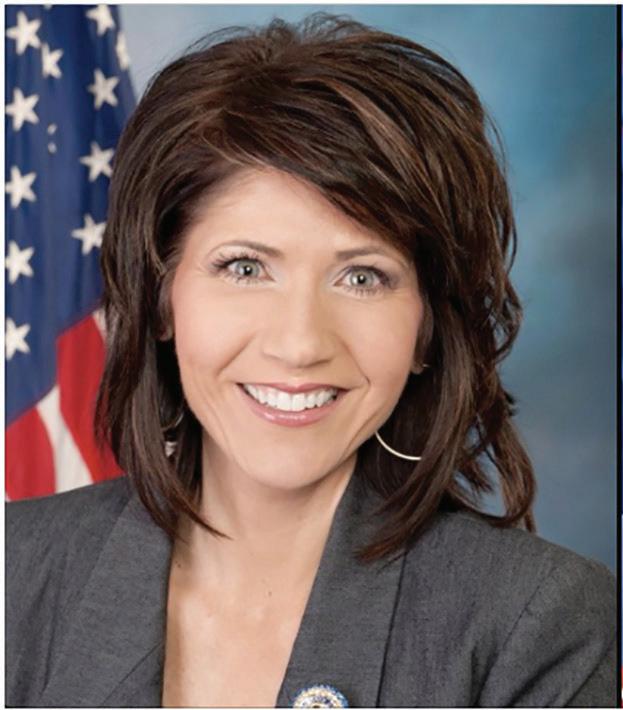
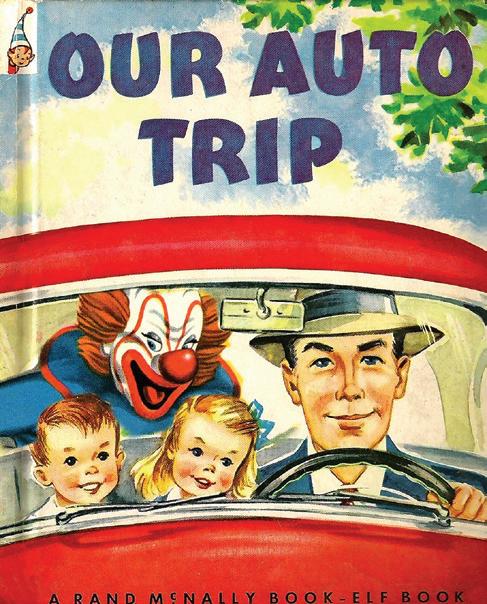
READERS: YOU ARE THE BEST! Which one is your favorite? Email your caption for this issue’s picture to Dan@AugustaRx.com
1. Are we there yet?
2. Quit clowning around back there!
3. We don’t need no stinkin’ seatbelts.
4. Mommy wears too much makeup.
Experience is what you get when you don’t get what you want. — Italian proverb
WORDS BY NUMBER
The height of cleverness is to be able to conceal it. — Francois de La Rochefoucauld


PROFESSIONAL DIRECTORY
ACUPUNCTURE
Dr. Eric Sherrell, DACM, LAC Augusta Acupuncture Clinic 4141 Columbia Road
706-888-0707 www.AcuClinicGA.com
CHIROPRACTIC

DERMATOLOGY


DEVELOPMENTAL PEDIATRICS
Evans Chiropractic Health Center Dr. William M. Rice 108 SRP Drive, Suite A 706-860-4001 www.evanschiro.net

Karen L. Carter, MD 1303 D’Antignac St, Suite 2100 Augusta 30901
Jason H. Lee, DMD 116 Davis Road Augusta 30907
706-860-4048 Floss ‘em
706-396-0600 www.augustadevelopmentalspecialists.com

Georgia Dermatology & Skin Cancer Center 2283 Wrightsboro Rd. (at Johns Road) Augusta 30904 706-733-3373 www.GaDerm.com SKIN CANCER CENTER Steppingstones to Recovery 2610 Commons Blvd. Augusta 30909 706-733-1935



Pharmacy 437 Georgia Ave. N. Augusta 29841 803-279-7450 www.parkspharmacy.com PHARMACY








study
A clinical research study for people who have or are at risk for heart disease or stroke and have high Lp(a) levels

MOVE-Lp(a) is a clinical research study from Eli Lilly and Company. The MOVE-Lp(a) study will test if an investigational medicine safely lowers Lp(a) levels and reduces the risk for heart disease or stroke.
Can I join the study?
Yes, you may be able to join the study if you:
• are at least 18 years of age
• have a high level of Lp(a) in your blood
• already have heart disease or have had a stroke or are at risk for a first heart attack or stroke
https://e.lilly/3FddF4u or scan the QR code

Lipoprotein(a) is also known as Lp(a). Lp(a) is an important risk factor for heart disease and is largely determined by your genes.
Lp(a) carries cholesterol (a type of fat) in the blood. If you have a high level of Lp(a), you may have a higher risk for heart disease or stroke. You may have a high level of Lp(a) even if you have a healthy lifestyle or are taking other medicine for your cholesterol.