www.nzmanufacturer.co.nz


www.nzmanufacturer.co.nz
-Sean Doherty
2025 was a brutal year for most New Zealand manufacturers, with many focused on staying afloat rather than growing. Rising costs for electricity, gas, labour, and raw materials squeezed margins across almost every subsector.
Official data shows manufacturing employment fell by 2.6% meaning around 6,300 jobs were lost in just 12 months. The pain was felt from the factory floor to senior leaders, with many firms freezing hiring, cutting shifts, or closing lines to survive.
New Zealand’s traditional strengths in meat, timber, and dairy processing were not enough to shield the manufacturing sector from mounting cost pressures. Even large, historically resilient processors were forced to seek offshore funding and recapitalisation to keep plants running.
These moves reflect a deeper reality: high input costs and intense international competition are eroding the ability of local processors to reinvest in plant, technology, and people at the pace required to stay globally competitive.
Manufacturers tied to the domestic building and construction sector took the a big hit in 2025. As the pipeline of new housing and commercial projects shrank, demand for building-related products dropped sharply.
Several major timber mills closed, leading to hundreds of job losses. While high electricity and operating costs were part of the story, the real challenge was a combination of a weaker local construction pipeline and new international competitors, which made large, capital-intensive investments in New Zealand mills increasingly hard to justify.
The need for capital and stability drove some of the most significant ownership changes the sector has seen in decades. Farmer-shareholders at Alliance Group voted to sell a 65% majority stake to Ireland’s Dawn Meats for $270 million, ending 77 years as a fully farmer-owned co-operative.
Fonterra is also reshaping itself, moving to divest its major consumer brands, including Anchor and Mainland. The planned sale of these brands and associated foodservice and ingredients businesses to French dairy giant Lactalis, reportedly worth $4.22 billion, signals a major strategic shift towards a tighter focus on ingredients.
Similar capital-raising moves by Synlait Milk and Bostock Brothers in 2024 show this is now a clear trend, not a one-off.
Amid the gloom, there were genuine bright spots that point to where future growth may come from. Food and beverage exports performed strongly in 2025, helped by a weaker New Zealand dollar and solid global prices for red meat.
High-tech manufacturing has now firmly established itself as New Zealand’s third-largest export earner. Sectors such as aerospace (for example, Rocket Lab) and HealthTech (including Fisher & Paykel Healthcare) are stepping into the gap left by slower-growing traditional manufacturing.
The last Callaghan Innovation survey showed 80% of manufacturers report they are now familiar with, or actively deploying, Industry 4.0 tools such as automation, AI, and data analytics, an encouraging sign that the sector is
serious about lifting productivity and competitiveness.

For 2026 to mark a shift from survival to sustainable growth, three things need to happen: more investment, smarter policy, and targeted support.
Lower interest rates and the Government’s Investment Boost Scheme create a window for manufacturers to invest in efficiency-boosting technology and modern equipment while capital is more affordable.
Science and innovation policy also need to move faster. Advanced manufacturing should sit at the heart of any new national science and technology institutions, not on the periphery.
continued on Page 16
Secure supply of energy and data to moving industrial equipment.
• Large size range
• Vertical travels
• Energy tubes

• Hygienic chains
• Solutions for long travel
• Guide troughs
• Readychain
• Robotic, 3D
• Circular movement

HUGE range of high quality flexible cables
• Control cables
• Single cores
• Data cables
• Sensor/Actuator
• Intrinsically Safe
• VSD/EMC cables
• Halogen Free cables
• High temperature
• Harsh Conditions
• Crane cables
• Profibus cables
• Bus/DeviceNet
• Solar cables
• Instrumentation
• Flat cables
• Curly cords

Largest range of flexible conduits for cable protection
• Conduits
• Conduit fittings
• Divisible systems
• Jumbo systems
• Conduit Accessories
• Braided cable protection
• Fire barrier solutions
• Food and beverage
• EMC systems
• Ex, ATEX, IEC EX

Industrial connectors for many industries
• Rectangular multipole connectors from ILME
• Single pole Powerline connectors from TEN47
• EPIC connectors from Lapp Group
• M23 circular connectors from Hummel
• Circular connectors specifically for the entertainment/stage lighting industry from Socapex

Safety engineering solutions from EUCHNER
• Multifunctional Gate Box MGB
• Transponder-coded safety switches
• Electromechanical safety switches
• Magnetically coded safety switches

Sensor technologies for automation
• High-Precision Laser Distance Sensors
• Ultrasonic Sensors
• Inductive Sensors
• Fluid Sensors



The tough year that was 2025.
BUSINESS NEWS
Auckland Council programme wins national economic development award.
It won’t be the new machines that win in 2026. It will be the people running them.
THE YEAR IN REVIEW
2026: It’s Now or Never
The Argon Academy: Turning capability into competitive advantage.
A year of supporting innovation, safety and export growth.
Apex Valves: From garage to global.
From hesitation to action: How robotics, data infrastructure, and trade strategy are reshaping supply chain agility.
The Year in Review: A Seconded View of NZ Manufacturing in 2025.
Seimens brings unified multiphysics and optimisation with Simcenter X.
THE YEAR IN REVIEW
What 2025 taught us about sustainability and resilience.
Moving forward together: Competenz deepens support for learners and employers. Reflections on 2025: Infor
Open Automation: New Zealand’s opportunity to compete in a digital world.
Reflecting on 2025: Circularity, Sustainability and Transformation for Steel Manufacturing.
PRODUCT UPDATE
Clean relief for beverage producers. CoroMill MS20 for precision shoulder milling in ISO P materials.
Emerson relaunches solenoid valve with enhanced features.
THE YEAR IN REVIEW
Reflecting on a year of New Zealand manufacturing.
Business Exit Landscape.
ANALYSIS
Why ISO 45003 Matters for New Zealand Manufacturing.
Could a ‘grey swan’ event bring down the AI revolution?
THE LAST WORD
A tale of two manufacturers.
Ian Walsh
Ian Walsh is a leading expert in designing and implementing transformational improvement programmes, with over 30 years of experience helping businesses drive operational excellence and long-term success. A Six Sigma Master Black Belt, he has worked with both New


Zealand’s top organisations and global multinationals including Kimberley Clark, Unilever, Guinness to unlock productivity, reduce costs, and optimise business performance. Ian has been at the forefront of operational improvement, working at all levels—including Boards—to deliver high-impact change. Ian continues to play a key role in advancing business excellence, supporting Auckland University and The Icehouse with expert insights on productivity, operational improvement, and best-practice methodology.

Dr Barbara Nebel
CEO thinkstep-anz
Barbara’s passion is to enable organisations to succeed sustainably. She describes her job as a ‘translator’ – translating sustainability into language that businesses can act on.
Chris Penk Minister for Small Business and Manufacturing.


6 9 11 14 15 20 27 28
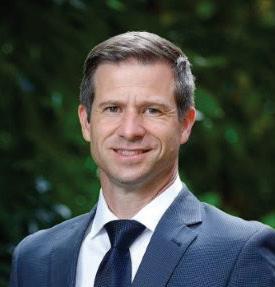
Mark Devlin
Having owned food manufacturing and distribution businesses for a decade, Mark Devlin now runs Auckland public relations agency Impact PR. Mark consults to several New Zealand manufacturing firms.
Insa Errey
Insa’s career has been in the public and private sectors, leading change management within the energy, decarbonisation, and sustainability space. Insa holds a Chemical and Biomolecular BE (Hons) from Sydney University. She is a member of the Bioenergy Association of NZ and has a strong passion for humanitarian engineering, working with the likes of Engineers Without Boarders Australia.
Insa is a member of Carbon and Energy Professionals NZ, been an ambassador for Engineering NZ's Wonder Project igniting STEM in Kiwi kids and Engineers Australia Women in Engineering, increasing female participation in engineering.


Simon Devoy is the Head of Membership, Export & Manufacturing at the EMA. He’s a seasoned executive specialising in strategy, change management and stakeholder relations. Simon has led major operations in HR, banking and sports, including senior roles at Auckland and NZ Rugby and the Bank of New Zealand. At the EMA, he guides membership growth, export development and manufacturing support, leveraging deep expertise in people, operations and business performance.
PUBLISHER
Media Hawke’s Bay Ltd, 121 Russell Street North, Hastings, New Zealand 4122.
MANAGING EDITOR
Doug Green
T: 027 280 1992
E: publisher@xtra.co.nz
CONTRIBUTORS
Holly Green, EMA, Business East Tamaki, Ian Walsh, Mark Devlin, Nicholas Russell, David Altena, Chris Penk, Sean Doherty, Barbara Nebel, Dr. Troy Coyle
ADVERTISING
T: 027 280 1992
E: publisher@xtra.co.nz
DESIGN & PRODUCTION
:kim-jean:
E: kim.alves@xtra.co.nz
WEB MASTER
Julian Goodbehere
E: julian@isystems.co.nz
PUBLISHING SERVICES
On-Line Publisher
Media Hawke’s Bay Ltd
DIGITAL SUBSCRIPTIONS
E: publisher@xtra.co.nz
Free of Charge.
MEDIA HAWKES BAY LTD
T: 027 280 1992
E: publisher@xtra.co.nz
121 Russell Street North, Hastings
NZ Manufacturer ISSN 1179-4992
The seasonally adjusted PMI for October was 51.4, 1.3 points higher than September. We’ll take it, because anything over 50.0 is not contraction and is moving in the right direction. The PMI is now above the breakeven 50.0 mark for four consecutive months for the second time in three years.
Given that, 2025 was a difficult year for most manufacturers, with 6,300 jobs lost. No one was spared – from the workshop to the office with much downsizing and belt tightening – less hiring and reduction in activity.
As Sean Doherty puts it, in his article (Page 1) “High input costs and intense international competition are eroding the ability of local processors to reinvest in plant, technology and people at the pace required to stay globally competitive”.
Food and beverage exports did well, assisted by a weaker NZ dollar and solid global prices for red meat. Fonterra divested its major consumer brands and similar moves by Bostock Brothers and Synlait Milk show this to be a clear trend, not a one off.
High-tech manufacturing is our third-largest export earner and more manufacturers are deploying Industry 4.0 tools such as automation, AI and data analytics – needed to lift productivity and competitiveness.
Ian Walsh, Argon & Co (Page 9) believes confidence is on the up and activity is starting to move and change is coming to shore up our future.
Simon Devoy, EMA (Page 10) sees us as an innovative nation, with greater emphasis on exporting in 2026.
On (Page 13) Caliber Design takes a seconded view of New Zealand manufacturing in 2025.
Hon. Chris Penk (Page 24), Minister for Small Business and Manufacturing reflects on a year of resilience and progress for New Zealand’s manufacturing sector.
The views of these and other contributors to The Year in Review highlight the challenges and opportunities the nation faces. Better times are to be had.
Enjoy the read and best wishes to you and yours for a relaxing Christmas with family and friends.
Doug Green, Publisher

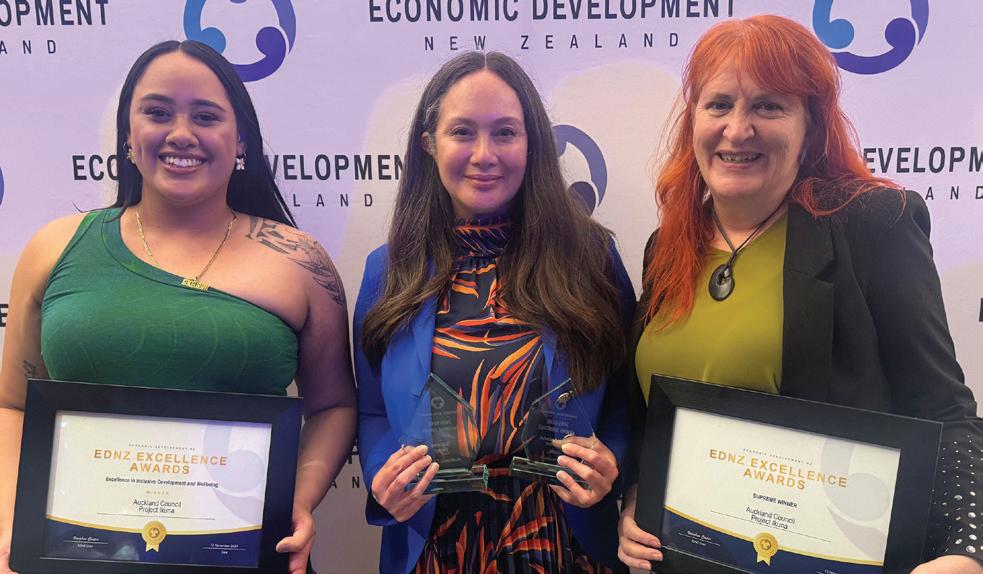
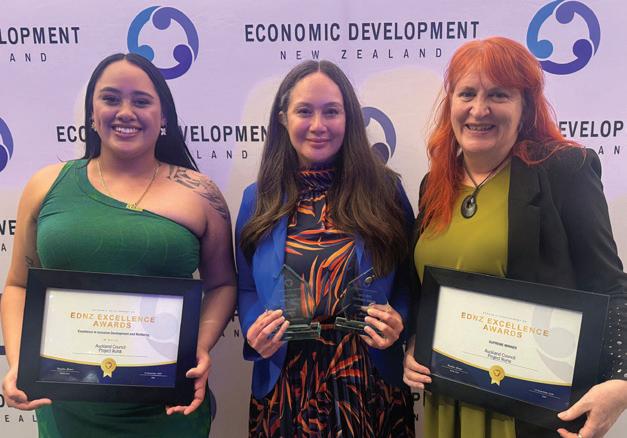
Auckland Council’s delivery of Project Ikuna, a successful professional development programme for Pacific peoples, has won the Supreme Award at the Economic Development New Zealand Excellence Awards.
Project Ikuna was announced overall winner at the Economic Development New Zealand (EDNZ) annual conference gala dinner, held at Pipiri Lane in Wynyard Quarter on 12 November.
The Ministry of Business, Innovation and Employment (MBIE) has funded the programme, run by Auckland Council.
Auckland Council has worked directly with Tāmaki Makaurau education providers and in liaison with businesses to deliver 12 ‘Future Ready’ short courses. Pacific employees have completed their choice of short courses at their workplaces during work time.
More than 5100 short-course credentials have so far been achieved by 3800 learners since Project Ikuna launched in July 2021.
Pam Ford, General Manager of Auckland Council’s Economic Development Office, says the top EDNZ accolade recognises the successful collaboration with MBIE and the effective approach taken by Project Ikuna working with education providers, employers and learners.
“We are absolutely thrilled with this recognition of the excellent work undertaken as part of our Pacific Economic Development strategy,” she says.
Auckland Council’s work on Project Ikuna was led by Sarah Leo, Manager Economic Development – Pacific, who worked with Project Manager Candy Elsmore and Project Co-ordinator, Dion Bond.
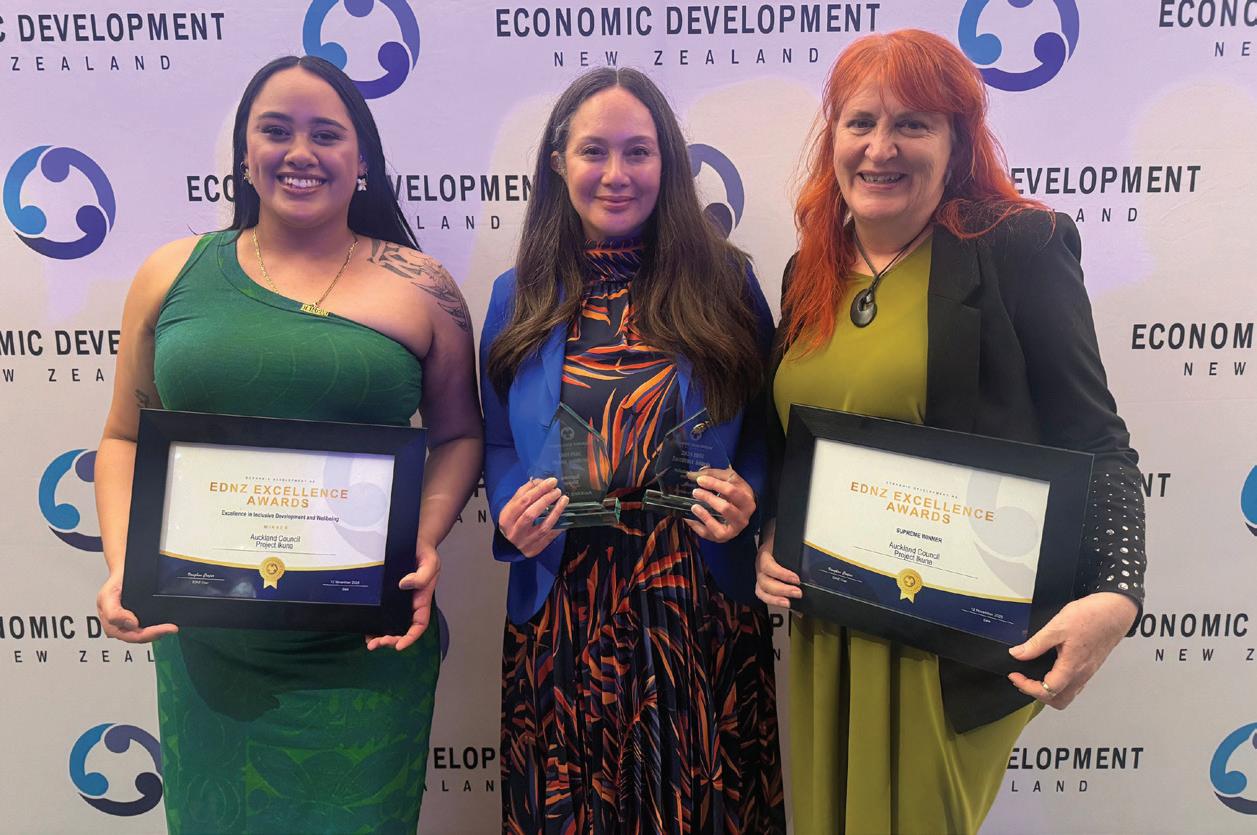
“Project Ikuna has brought results and highlighted Pacific peoples’ very valuable contribution to Auckland’s economic prosperity. Feedback we have received from both enrolled businesses and students is incredibly inspiring,” says Sarah Leo.
“We’re really proud to have delivered Project Ikuna so successfully in partnership with central Government,” she says.
“We look forward to continuing the momentum of Pacific economic development
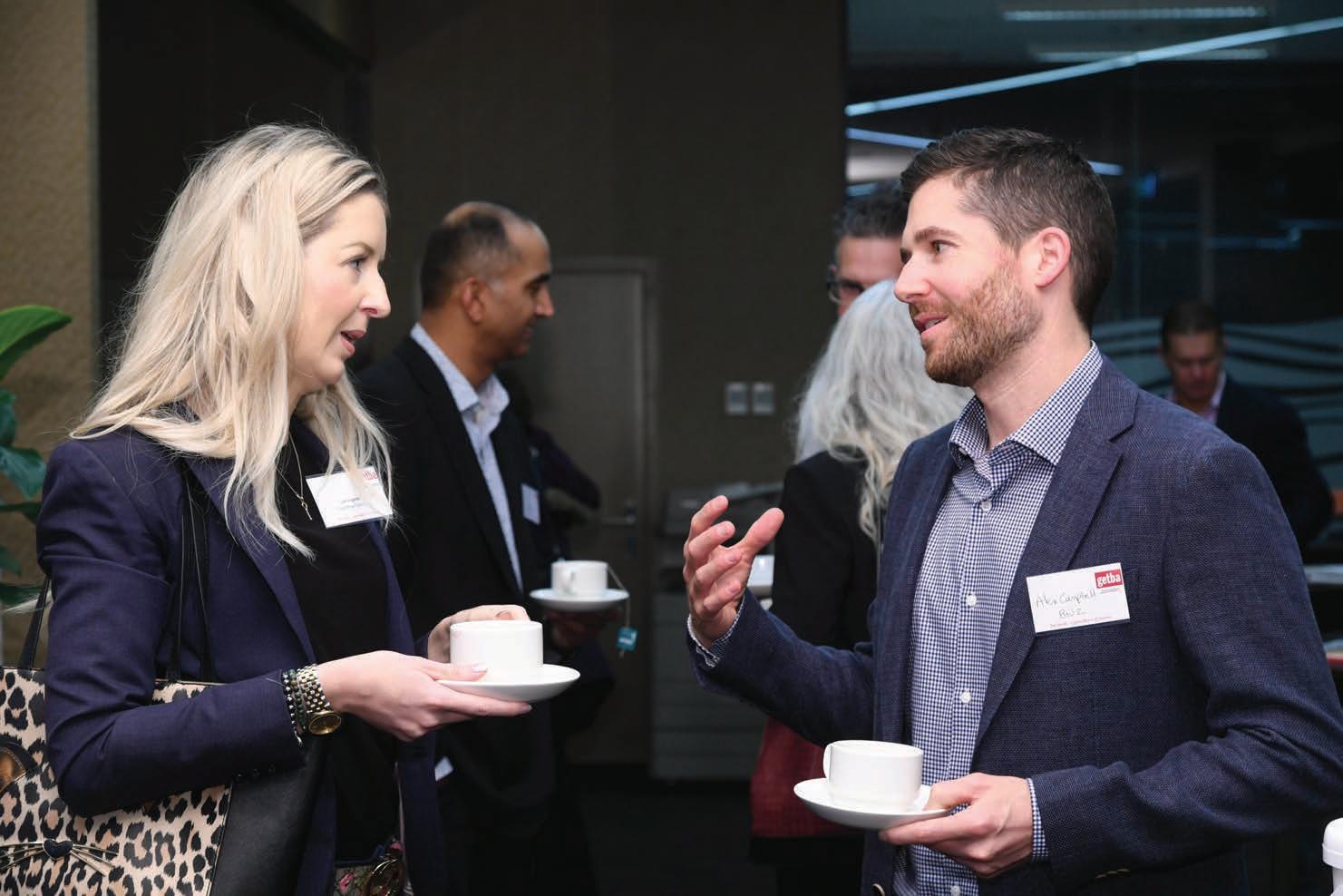

Business East Tāmaki (formerly the Greater East Tāmaki Business Association) is here to make it easier to do business; working alongside business leaders and property owners in the region on
It won’t be the new machines that win in 2026. It will be the people running them
Adam Harvey, Business Performance Partner – Manufacturing, The Learning Wave
What if next year looked different?
Picture this: Same pressures. Same market conditions. But instead of starting 2026 already firefighting, you’re ahead of demand.
Your people anticipate issues before they hit production. Technology accelerates performance instead of slowing it down. The morning meeting is about what you’re improving, not what you’re recovering from.
That’s the position some manufacturers have put themselves in this year.
And let’s be honest. They didn’t get there because 2025 was easy.
This has been one of the toughest planning cycles in recent memory. Margin squeeze. Labour shortages. Compliance tightening. Digital expectations rising. Budgets dissected line by line just to keep the lights on and the line moving.
But while most held back waiting for “the right moment”, the bold manufacturers, big and small, doubled down on capability. Not because it was part of a grand strategy. In some cases, because the same issues kept cropping up, and the old approach wasn’t working.
Not because they had spare time.
Because they knew they couldn’t afford to wait. We saw it everywhere:
• Lion invested in teams’ problem-solving capability and OEE improved
• Altus backed their leaders to own and solve problems and culture and collaboration liftedthis piece of work paid for itself 3X
• Tegel moved safety from reactive to proactive by growing rep capability
• Ashburton Meats and Kraft Heinz built their leaders ahead of operational change
• Tasman Tanning, Essity, AFFCO, George Weston Foods, Vitaco and Inghams built performance skills. Their frontline teams now act earlier, make better decisions, solve problems faster, reduce waste, and speak up when performance is at risk
• Buckleys continued building capability at every level
• Foot Science International, Baker Boys and Argus

ManuTech prepared their teams for digital transformation
They didn’t just chase more capacity. They built capability. And performance followed.
They still have issues. Every site does, but they surface earlier, and teams move faster to correct them.
Most importantly, they’re entering 2026 with momentum, while others are still getting off the starting blocks.
When we sit alongside manufacturers during business planning, the same insight keeps coming up: The biggest risk to future performance is capability, not capacity.
And interestingly, this shift was often led not from head office or HR, but by operational leaders who were simply tired of fighting the same fires shift
continued on Page 21

Ian Walsh, Partner, Argon & Co NZ
We have finally seen the “green shoots” and those businesses still going can finally tick the survive (till) 2025 box. Confidence is on the up and activity is starting to move, what a ride! But what have we learned? Here are a few reflections from me.
1. Traditional approaches to getting through the hard times are no longer enough. Many businesses tightened their belts, let people go, stopped all discretionary spending, travel etc. and didn’t make it.
2. Waiting for things to get better is not a strategy. This is just giving your competitors, especially those overseas, a free pass.
3. We can no longer rely on distance and separation for protection. NZ is easy to access and service from anywhere, if you think you are safe you may be deluding yourself.
4. It is all about productivity. We must face into this reality, we can’t work harder or longer we already top this league, we must work differently and recognise the rest of the world is and has adapted, and so must we. There’s no avoiding it or waiting for government intervention.
5. We have some core industries and capabilities which are world leading. Our dairy and tech sectors are world-leading, with aspirational companies. Let’s not be complacent; let’s push on and assert and grow these advantages.
6. We have a window of opportunity. Carpe Diem. Now is the time, before the next global uncertainty. It is now or maybe never. Identify
your strategic competitive advantage and actualise it? Need help? Seek it.
7. We are brave and innovative, the pioneering spirit lives strong, we can do this. There are enough tall poppy killers out there, lets celebrate the go getters, the achievers, the adopters and the triers and applaud that they are working to make our standard of living better. Surely supporting the naysayers is not an option.
So, as we move into 2026, I have complied my top 5 list for a successful 2026 and beyond.
1. Identify and support key strategic businesses with incentives to upskill and implement global best practices. We mobilise government, institutions, financial institutions to align behind investing in productive assets and building capability
2. Introduce industrial engineering, supply chain, and logistics capabilities in universities and institutions to support businesses with talent that can enhance productivity. Current offerings are limited compared to international standards, and we are in dire need of capable change agents.
3. Government implements support for programs that drive building productive capability, as
Scott Adams, Managing Principal, Argon & Co NZ
In today’s manufacturing landscape, technology, automation, and efficiency are no longer enough. Your real competitive edge comes from your people — their capability, confidence, and ability to adapt, innovate, and perform. That’s where The Argon Academy stands apart.
For more than 20 years, Argon & Co has worked alongside New Zealand and global organisations to lift performance by strengthening skills, embedding continuous improvement, and developing leaders who drive transformation from the inside out.
The Academy exists because we saw a critical gap: too much training focuses on delivering content, not building capability. Most programmes are taught by facilitators — not practitioners who have actually led the change and delivered results. The Academy was built to change that.
Our learning approach is different. Every programme is grounded in real-world experience from practitioners who have managed transformation, driven productivity gains, and delivered measurable business outcomes across sectors like food and beverage, packaging, industrial manufacturing, and logistics. This means your teams learn from people who’ve done the work — not just talked about it.
Rather than providing off-the-shelf courses, The Academy partners with clients to co-design tailored, best-practice learning pathways that align directly with your operational goals. We build capability that sticks — embedding new skills, behaviours, and mindsets into the way people lead, collaborate, and perform every day.
This practitioner-led approach transforms training from a cost into a strategic investment. It creates measurable uplift in productivity, safety, and employee engagement — turning learning into a sustained competitive advantage.
As businesses face mounting pressure from digitisation, sustainability, and global competition, the need for a digitally capable, future-ready workforce has never been greater. Building that capability takes long-term investment, government and industry collaboration, and access to world-class learning solutions. Quick-fix training won’t get you

they do in Australia!
4. Reintroduce the SIRI assessment program and double down on AI education and implementation capability. AI is more than improving personal efficiency with co-pilot; it is about reinventing businesses and supercharging competitive advantage
5. If we are really bold, we could implement a NZ framework for best practice and benchmarking which would help businesses truly understand how big the gap is and the roadmap for improvement.
Theres a lot to do, I am excited for 2026, as I feel we are on the cusp, and we are about to embrace the change that will shore up our future. I am ready.... join me!!

there — a sustained capability development system will.
The Argon Academy gives manufacturers a proven way to build that system. It’s structured, scalable, and focused on delivering real results — enabling your people to perform today and adapt to the challenges of tomorrow.
Your journey to world-class performance starts with developing your people — and The Argon Academy is your partner in making that transformation real.
By EMA Head of Membership, Export and Manufacturing Simon Devoy
It’s not news that New Zealand’s economy remains heavily reliant on commodity-based exports. Yet the country is steadily carving out a reputation for hightech, highvalue manufacturing.
While we’re known globally for milk powder, meat and timber, we are increasingly competing across advanced sectors, including aerospace, agritech, medical devices and precision engineering. The ambition is to be seen as an innovation nation, but there are significant challenges that must be addressed.
Throughout 2025, the EMA’s focus in the manufacturing sector has been on two linked priorities: reducing workplace harm and helping the sector modernise and become better connected so businesses can scale and export with confidence. Despite the sector’s strengths, stubborn rates of workplace injury continue to drag on productivity and impose high costs.
In response, we partnered with ACC and data specialists Flock to launch the Manufacturing Safety Dashboard, an anonymised benchmarking tool that allows manufacturers to compare reported incidents across subsectors and identify where to focus safety improvements.
This tool converts raw accident data into actionable insight. It highlights where injuries cluster, identifies high-risk tasks, and demonstrates which businesses
are making measurable progress.
This approach moves safety conversations from awareness to actionable intelligence, and anonymised peer data provides a clear pathway for improvement rather than a spotlight on failure.
The sector has also shown a strong appetite for peer-led guidance and practical tools that enable measurable improvement. To address this, we partnered with ASB to run the Manufacturers’ Workshop Series exploring the impact of Industry 4.0 technology on New Zealand manufacturing.
These workshops offered a practical examination of automation, data integration, and digital technologies through interactive demonstrations, including digital twin simulations. This handson approach enabled manufacturers with lower levels of automation to see the potential of technology to improve efficiency, safety and quality.
Export promotion has remained central to our work. In 2025, the AllofGovernment Roadshow brought together key government agencies across eight New Zealand locations to provide exporters with direct access to support, trade policy updates, market opportunities, and networking.
Participants gained insights on global trade challenges, supplychain disruptions, emerging markets, and financial tools such as trade credit insurance and guarantees. This approach makes it
easier for businesses to reduce barriers and scale into new markets.
The Global X Summit held in Auckland provided a practical forum for businesses to explore export growth opportunities. The event focused on market entry strategies, distributor sourcing, cost management, and regulatory navigation. While one-off trade missions are valuable, sustainable export growth relies on repeatable access to market intelligence, quality accreditation support, and introductions anchored in long-term commercial relationships. Building and nurturing these connections remains a central objective of the EMA and our export arm, ExportNZ.

The business environment is improving as 2025 draws to a close, helped by targeted government reforms. Coming changes to the Resource Management Act will simplify consenting processes, reduce unnecessary barriers, and make it easier for industrial sites and exportoriented manufacturing plants to continued on Page 19
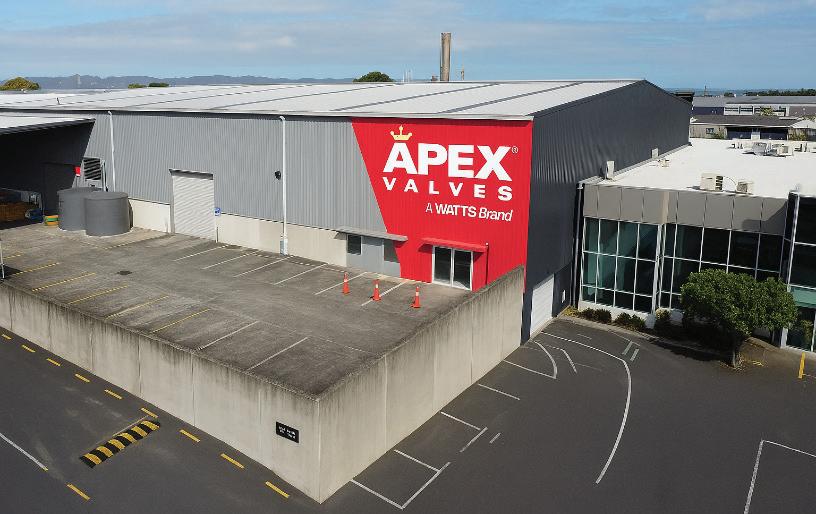
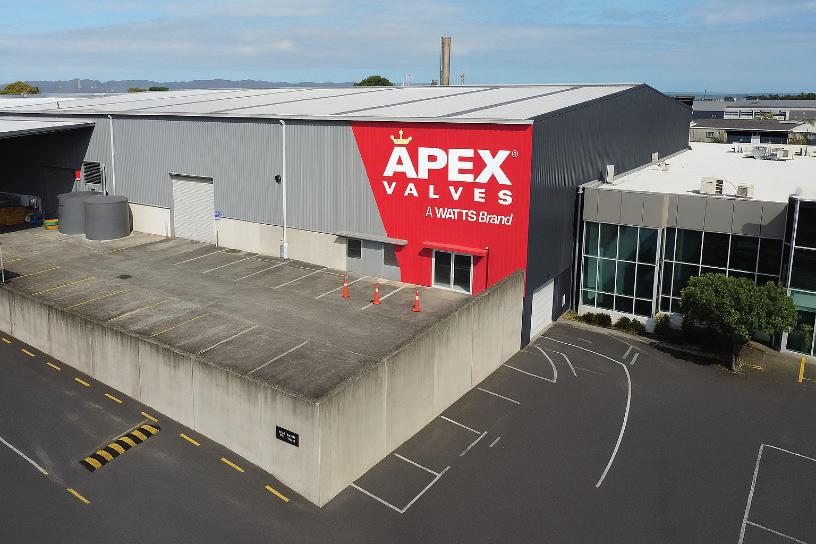
From humble beginnings in a Titirangi garage, Apex Valves has grown into one of New Zealand’s standout manufacturing and export success stories. Built on precision engineering and commitment to quality, the company now supplies high performance water control valves to homes and farms around the globe.
The EMA’s Nicholas Russell sat down with Apex General Manager Mark Gracie to talk about the competitive edge that comes from manufacturing excellence backed by decades of innovation.
Q: How did Apex Valves’ journey begin, and what triggered your move into larger-scale manufacturing?
Mark Gracie: Apex was founded in 1982 by my father, Alan Gracie, in a Titirangi garage. At that time, New Zealand had almost no domestic manufacturers of valves for home hot-water systems.
If you needed one, you imported it, often at high cost and with long delays. That gap in the market sparked the idea: could a Kiwi manufacturer produce a reliable, locally made alternative?
From that question, Apex grew steadily. We expanded from residential hot-water valves into broader plumbing fittings, and then into agriculture when a rural-supply customer asked if we could engineer a heavy-duty trough valve that would not break under high water pressure or daily farm use. That product became our breakout success. More than 40 years later, that trough valve remains one of our biggest sellers, used on farms across New Zealand and in multiple export markets.
As demand grew, we shifted into proper manufacturing facilities, but over time those sites became limiting. Our last location served us for 28 years, but we were spread across four buildings, with production split into disconnected pockets.
For a company that prides itself on quality and efficiency, the layout created unnecessary complications and increasing constraints.
Q: What has changed now, after the move to your new facility at Rosebank Road?
Mark Gracie: The Rosebank Road move has been transformational. It is not just a relocation but a complete rethink of how we manufacture. Our retrofitted 4100m² facility allowed us to engineer a coherent flow through the whole production cycle. Instead of piecing operations together over the years, we were able to design for efficiency, safety, ergonomics and growth.
Our old layout had forklifts crossing walkways, benches fixed at one height, and assembly staff improvising, sometimes literally standing on boxes, to work comfortably.
Now every station is height adjustable. Lighting is optimised for precision work. Forklift and pedestrian routes are physically separated. We have laid out production in a clear U-shaped flow. Raw materials come in at one end, move through machining, processing and assembly, and leave through dispatch at the other.
That seems simple, but the impact on productivity, safety and morale has been enormous.
The new space is also about investing in people. When staff saw the new building for the first time, their reaction said it all. There was pride, excitement, and relief that their daily environment finally matched the professionalism of the work they do.
Q: What upgrades have helped the most?
Mark Gracie: The wet lab is one of the most significant upgrades. Valves endure huge variations in pressure, flow and temperature when used in real environments, especially in agriculture where water may arrive freezing, muddy, high pressure, or full of sediment.
You can only guarantee performance by replicating those conditions during testing.
Our wet lab lets us do exactly that. We harvest rainwater on-site, filter and sterilise it with UV treatment, then circulate it through a controlled test system. Pumps, chiller units and temperature-controlled tanks allow us to simulate years of wear in a compressed timeframe.
We run thousands of cycles to test endurance, pressure spikes, flow rates and thermal extremes. This gives us confidence before products reach farms, homes or export markets.
The wet lab speeds up R&D, strengthens quality control and helps us meet global certification requirements.
Q: How has that journey been for Apex?
Mark Gracie:Apex has been exporting for decades, mostly to countries with strong agricultural sectors. Today we ship to about 13 countries. One milestone we are particularly proud of was winning the Whirlpool business.
It’s one of the top global manufacturers of whiteware and they tested valves from five suppliers
around the world. Ours was the only valve that passed every requirement. That opened the door to a long-standing supply partnership and validated the reputation we had been building. Kiwi-made products can and do outperform global competition on quality.
Q: How has your partnership with the EMA evolved?
Mark Gracie: The EMA has been a significant part of our journey. We have been members for many years. In our early growth stages, the EMA’s support around HR, employment law, health and safety and general compliance was essential.
Like many manufacturers, we were strong technically but needed guidance on people management and regulatory frameworks.
I went to the EMA’s Global X summit earlier in the year and it’s great to join a community of manufacturers who share knowledge and experiences.
For a country like New Zealand, which is small, remote, and heavily reliant on exporting, these EMA networks are vital in building confidence, knowledge, and opportunities for growth.
Q: Where does Apex fit into New Zealand’s broader manufacturing story?
Mark Gracie: We design and manufacture high-precision, high-reliability products that solve specific, real-world problems. What we see emerging across the country is a manufacturing sector that may never match the scale of global giants but consistently excels in niche innovation, specialist engineering and technologies designed for harsh environments.
That is where New Zealand shines, and it is exactly where we want to keep pushing.

Sandra Lukey
Sandra Lukey is the founder of Shine Group, a consultancy that helps science and technology companies accelerate growth. She is a keen observer of the tech sector and how new developments create opportunity for future business.

Gareth Mitchell, Associate Partner Iris by Argon & Co
Experienced executive and consultant across organisations in NZ, Australia, South America and the UK.
Business Transformation Specialist and top 50 NZ CIO having worked across multiple industries, with a focus on business improvement and digital transformation in services and manufacturing settings.

Johnathan Prince
Jonathan Prince is a Director at Caliber Design, a project-based mechanical engineering consultancy with engineers all around the country. With a background in product commercialisation, sustainable design, and business strategy, Jonathan is passionate about helping Kiwi companies turn ideas into reality and building engineering capability within New Zealand Inc.
Sean Doherty
Has extensive experience in Industry 4.0 technologies, He focusses on supporting the manufacturing sector to implement digital solutions that enhance productivity, efficiency, and resilience. Drawing on a background in engineering, innovation, and Government policy, Sean applies a strategic and evidence-based approach to advancing programs that deliver sustained industrial and economic benefits.

Patrick McKibbin
CEO – Hutt Valley Chamber of Commerce
Patrick joined the Hutt Valley Chamber of Commerce in September 2021. His passion is identifying and connecting with manufacturing & technology businesses, other businesses, local government, central government and industry associations.
By Mark Feathers, Epicor Software
The 2025 Supply Chain Agility Index from Nucleus Research reveals a landscape in transition. While robotics and automation were once met with caution, they’ve now moved to the centre of strategic investment conversations.
Yet adoption remains uneven, and success hinges on more than just technology; it demands integrated data infrastructure, cross-functional planning, and geopolitical foresight.
In 2024, more than half of organisations had yet to adopt robotics in the warehouse. The most common barriers included integration complexity, concerns about suitability for existing operations, and challenges tied to change management.
By 2025, the tone has shifted. Although adoption remains moderate, 51.8% of organisations now rank robotics and automation as their top non-AI technology investment.
This pivot from curiosity to commitment is largely driven by persistent labour shortages, mounting fulfilment pressures, and the rising complexity of global supply chains. Robotics is no longer a fringe innovation—it has become a strategic lever for operational resilience and productivity.
Robotics alone won’t deliver agility. Increasingly, organisations are investing in real-time data-sharing platforms, which now represent the most widely adopted collaboration tool, with 50.6% penetration. These platforms serve a critical role: they connect legacy systems with modern planning tools, enable seamless data flow across departments, and lay the groundwork for advanced capabilities such as AI, forecasting, and digital twins.
Notably, companies with mature data infrastructure are 1.4× more likely to have deployed AI and tend to score higher on digital acceleration metrics, especially those tied to geopolitical uncertainty. The message is clear: before deploying decision-layer tools, the underlying data plumbing must be in place.
Despite this progress, gaps remain. Only 25.7% of manufacturers have implemented cloud-based supply chain visibility suites, suggesting that many still rely on fragmented integrations or manual data consolidation. This limits agility and slows innovation.
Nucleus uncovered a strong correlation between maturity in Global Trade Compliance and investment in Integrated Business Planning (IBP). Organisations that treat trade as a strategic function, rather than a regulatory obligation, tend to be more advanced in

cross-functional planning.
This connection makes sense. Both domains require structured, multi-tier data, robust scenario modelling capabilities, and full cross-functional visibility. When trade and planning functions are aligned, organisations gain the ability to simulate tariff impacts, adjust sourcing strategies, and forecast landed cost variations with greater precision.
This alignment transforms reactive operations into proactive strategy, an essential shift in today’s volatile trade environment.
Southeast Asia emerged as the most geopolitically exposed region, with 61% of respondents citing trade restrictions and tariffs as top concerns. In response, 73% of organisations are actively diversifying suppliers across regions. Nearly half are pursuing nearshoring or reshoring strategies, while many are adopting AI-driven risk analytics and inventory buffers to mitigate disruption.
The UAE presents its own set of challenges, due to its strategic location and exposure to regional instability. Organisations operating in this region are increasingly holding local inventory buffers, using analytics to hedge against border delays, and navigating sanctions and export controls with greater precision.
Meanwhile, organisations in the USA, Canada, and Europe report similar concerns but appear more insulated, likely due to more mature trade management capabilities and established risk mitigation frameworks.
To navigate this shifting marketplace, Nucleus offers four key recommendations. First, prioritise robotics adoption with a change management lens, success requires operational alignment, not just capital investment.
Second, invest in real-time data platforms, which serve as the foundation for AI, forecasting, and visibility. Third, integrate trade and planning functions, treating compliance as a strategic enabler rather than a siloed obligation.
And finally, localise risk strategies by region, using analytics and inventory buffers to mitigate geopolitical exposure.
As robotics, data infrastructure, and global trade planning converge, supply chain leaders must shift focus from aspiration to execution.
Manufacturers that invest in real-time data platforms, integrated planning, and localised risk strategies will be best positioned to scale efficiently and respond to disruption.
Ultimately, success will hinge not on technology alone, but on how effectively it’s aligned with processes and people.
Working inside engineering teams throughout New Zealand gives us a practical view of how the sector is moving. This year we saw steady progress and exciting developments, even with the head winds. Companies continued to advance capital projects, refine equipment, develop new products, and pursue leading edge innovation in emerging fields. While each sector had its own pressures, the overall feel has been one of steady momentum.
Manufacturers continued to deal with stretched internal resource, long project lists, the need to keep work moving without disrupting production, and uncertain economic times. Yet across our secondments and conversations, the intent to improve and invest remained consistent, and that intent shaped much of the engineering work carried out this year.
In processing, materials handling, dairy, poultry, and food and beverage sites, we saw ongoing investment in practical upgrades. These were not large transformation programmes, but they mattered. Many involved service layout adjustments, safety improvements, reliability work, and design changes that reduce maintenance effort or improve workflow.
This work is almost always carried out in operational environments, which means planning, communication, and sequencing are as important as the technical solution. The projects are varied but typically share a common goal of keeping plants running safely and efficiently while making incremental improvements that compound over time.
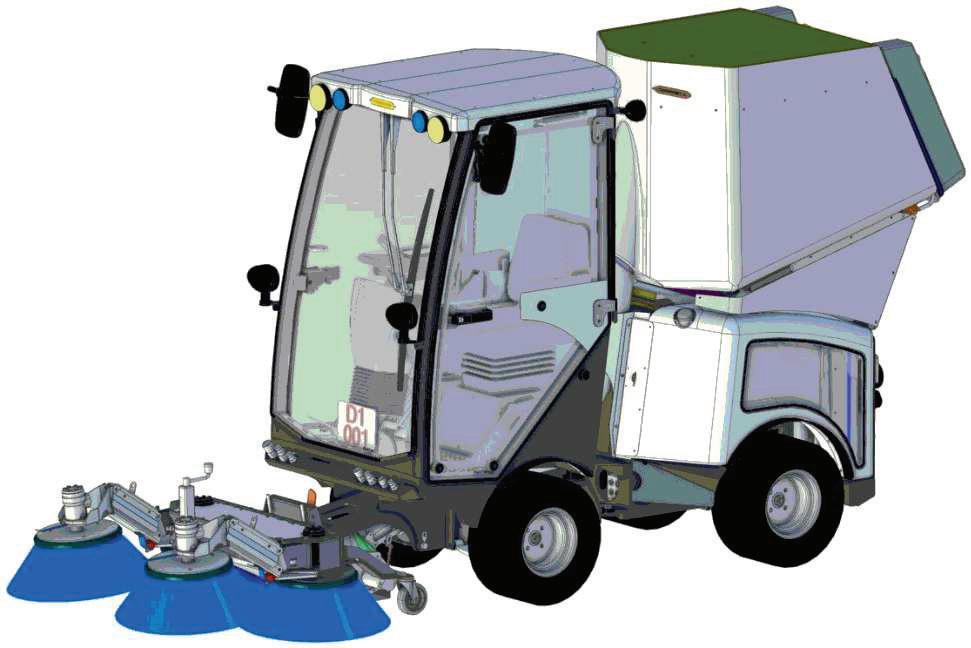
At the other end of the spectrum, 2025 saw significant activity in emerging technology. We set a goal to work with seven emerging technology companies this year and ended up partnering with nineteen. That growth is a strong indicator of how much innovation and technical development is happening in New Zealand.
Projects spanned aerospace, clean materials, innovative transport, robotics,
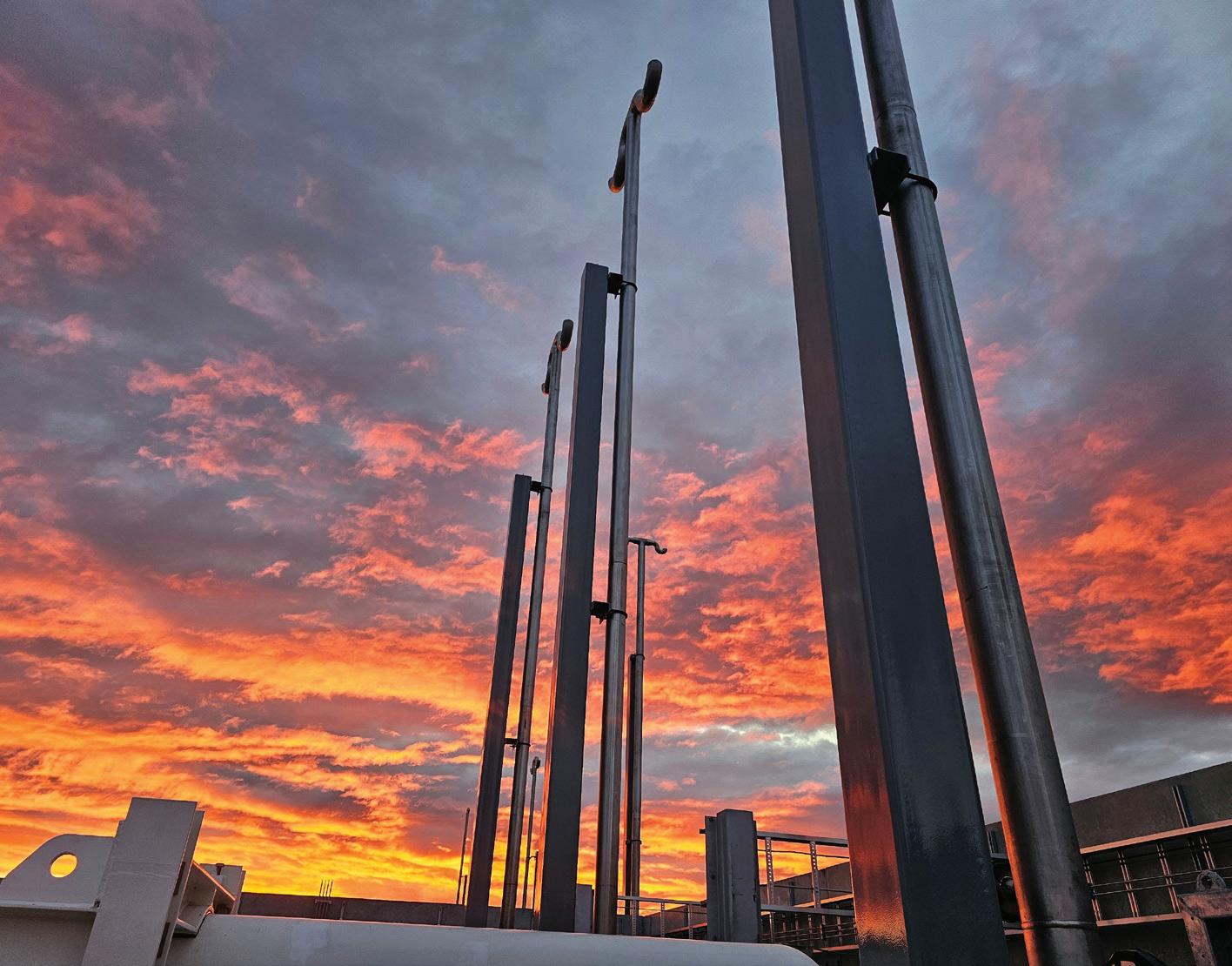
advanced energy systems, and specialised manufacturing. These companies move quickly, iterate rapidly, and often need targeted engineering support to bridge gaps during hiring or scale-up phases. For them, the value is speed, clarity, and access to capability without long ramp-up times.
We also supported an increasing amount of offshore work this year, with projects in oil and gas, aerospace, and agritech. It provided another reminder of the strength of New Zealand’s engineering capability, from early concept development through to detailed design and on-site delivery.

Across the work we supported this year, a recurring theme was the handover between design and delivery. The design work was often well understood, but progress depended on supplier coordination, installation planning, documentation updates, and working within the constraints of a live site. These tasks require practical engineering judgement as much as organisation. We saw that mechanical designers who step into project engineering roles bring a useful mix of skills. They understand the intent behind the drawings, the constraints that shaped them, and how to adapt when site realities shift. They bridge design and delivery to keep projects on track.
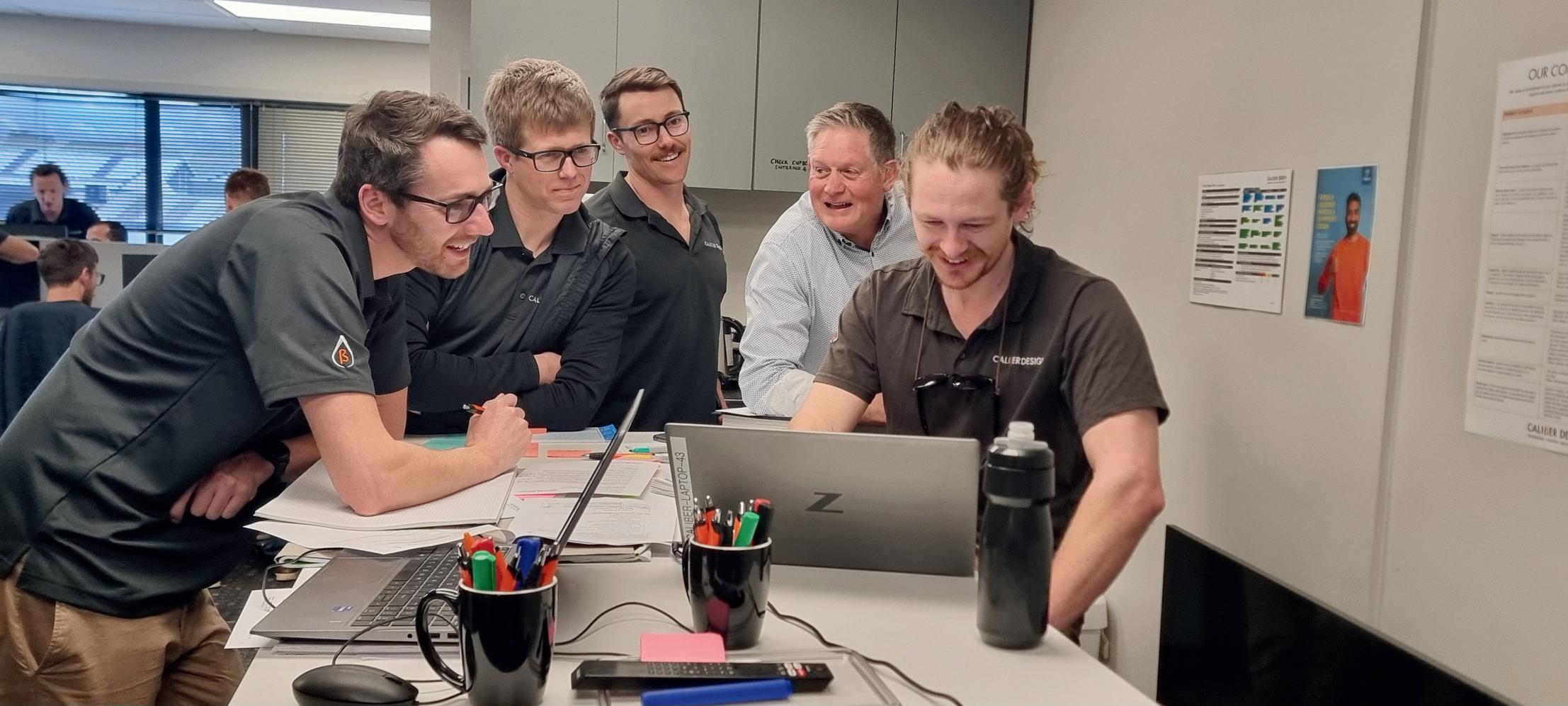
This year also marked Caliber’s tenth birthday. We grew beyond sixty engineers, expanded our customer base around the country, and strengthened our internal leadership while maintaining the culture of excellence, connection, learning, and fun that anchors how we work.
Recruitment remained challenging across the sector, but 2025 was also a year of success. Through our accredited employer programme, we welcomed engineers from South Africa, America, Brazil, and the UK, bringing in new experience and diversity at a time when engineering capability is tight across the country. It has been rewarding to see overseas engineers choose New Zealand and contribute to the work being done here.
We expect more of the same in 2026. Established industries will continue refining equipment and processes. Emerging technology will keep moving at pace. International work is growing, and companies are rethinking how they build engineering capability.
Throughout the industry, we see green shoots and genuine opportunity. New Zealand’s ability to combine hands on engineering with advanced technical development continues to produce work of a world-class standard. We are proud to contribute wherever we can make a difference.
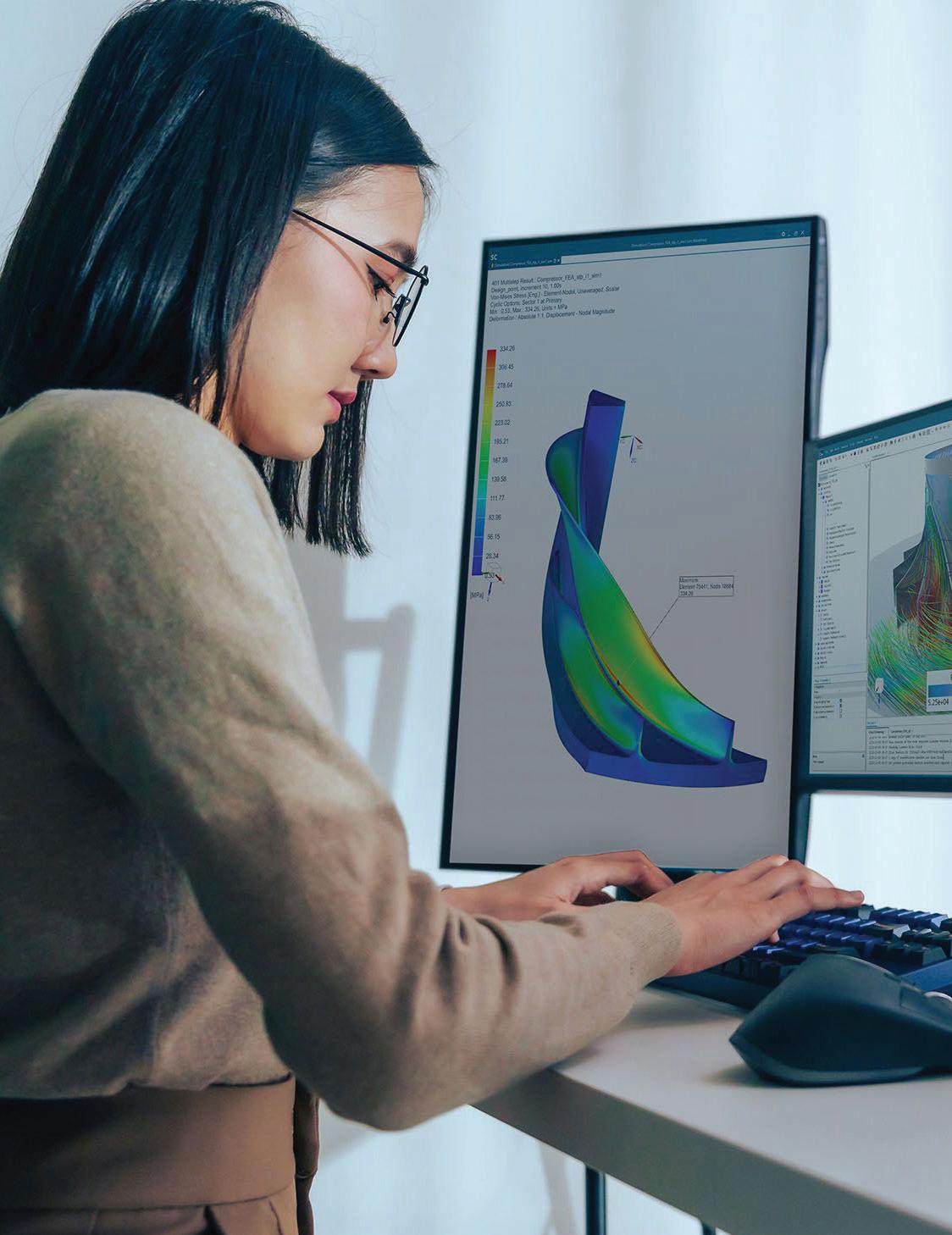
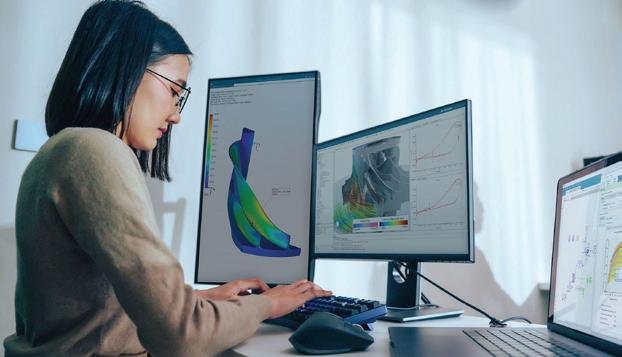
Siemens has unveiled the latest significant updates to its Simcenter X software, a cloud-based environment that brings together the full breadth of simulation and optimisation technologies in a single, unified solution. With universal access to computational fluid dynamics (CFD), systems, mechanical simulation and multidisciplinary design analysis and optimisation (MDAO), engineers can now collaborate, explore and innovate faster.
At the heart of the newly released Simcenter X Advanced is Siemens’ Simcenter multi-domain simulation portfolio enabling users to access and combine trusted, industry-leading tools in a data
managed environment with a single license and common token pool.
The tight integration of applications - including Simcenter STAR-CCM+ software, Simcenter Amesim software, Simcenter HEEDS software, Simcenter 3D software and Simcenter Femap™ software - eliminates silos, reduces IT overhead and boosts productivity through concurrent preand post-processing sessions, flexible solvers and advanced capability access.
“Simcenter X Advanced is the next logical step in our strategic goal to democratise access to advanced multiphysics and optimisation for our community of innovators and industry leaders,” said Jean-Claude Ercolanelli, senior vice president, Simulation and Test Solutions, Siemens Digital Industries Software.
“By unifying our multiphysics and optimisation technologies and enhancing them with robust data management, collaboration capabilities, AI-driven guidance and design exploration, we’re empowering every engineer to accelerate innovation that matters, reduce complexity and make smarter decisions faster — anytime, anywhere.”
Industry consulting and analyst firm, CIMdata, believes that “By combining well-established Simcenter modelers and solvers under a unified SaaS entitlement including Teamcenter X data management with embedded AI assistance, Siemens is expanding access to multidisciplinary simulation while enhancing its digital-thread and SaaS leadership across engineering fields.”


files for CNC

Engineers now gain on-demand access to capabilities wherever and whenever they need them, with seamless license management. Built-in data management is powered by Teamcenter® X software for product lifecycle management (PLM).
Key capabilities now available in Simcenter X
Centralised SaaS deployment: Customers retain desktop workflows while benefiting from cloud-managed entitlements, reducing onboarding
3D Design Solid Modelling Soware Powerful and affordable.
30% off list prices of New License

30% off list prices of Version Upgrades No Lapsed License fee to update old licenses
time from days to minutes
Scalable collaboration: Every user has access to secure, traceable and scalable simulation data management and collaboration with Teamcenter X AI-enhanced productivity: AI features include a chat for documentation support, and setup guidance. Optimisation studies are boosted with AI-augmented design exploration techniques
CFD simulation with HPC and remote desktop: Enables instant, elastic compute and browser-based access to Simcenter STAR-CCM+ - no installs, flexible credit-based licensing and seamless integration
Simplified licensing and flexible multidomain access: Named-user licenses guarantee concurrent pre- and post-processing access, while floating tokens unlock solver capabilities across domains.
Simcenter X Advanced provides the foundation for embedding further engineering simulation applications from the Simcenter and Altair portfolio. It is available globally starting November 2025, with deployment options tailored to customer requirements.
To learn more, visit https://blogs.sw.siemens.com/ simcenter/simcenter-x-advanced-simulation/

Alibre Design Expert costs less than a cup of coffee per day to produce your designs. When you can't afford SW, get Alibre! Buy it and own it—no subscripon or cloud. Lifeme license with oponal updates. Most cost affecve 3D CAD program to own.
In 2025 we saw something important: progress on sustainability continued, even as regulations shifted and economic conditions became challenging.
For many organisations, sustainability has become central to resilience, competitiveness and long-term planning. Rather than slowing down, they took more confident steps to manage risk and prepare for the future.
One of the major changes this year was the government’s plan to reduce the number of businesses that need to report their climate-related risks and opportunities. This shift removes the pressure of mandatory disclose and allows businesses to take a more pragmatic approach.
It also raised a fair question: if fewer organisations need to disclose, does that mean the financial impacts of a changing climate are becoming less relevant?
At thinkstep-anz, we know the answer is no. Climate disclosure has always been more than a compliance task. For manufacturers and other businesses with complex supply chains, it is a practical tool for managing risk.
Regulations may shift, but the physical and transition risks of climate change remain. Extreme weather, changing markets and new policies will continue to affect operations, logistics and access to materials.
That is why we integrate climate risk and scenario analysis directly into clients’ risk management frameworks. When climate insights sit within existing decision-making processes, they guide investment, planning and strategic direction.
After two years of supporting organisations on their disclosure journeys, we are seeing a clear shift: clients are not just reporting; they are preparing for the future with greater clarity and confidence.
Changing regulations also brought more time for some organisations to measure and report their scope 3 supply chain emissions.
For many, scope 3 includes the upstream materials they purchase and the downstream use of their
products. It often makes up the largest share of a manufacturer’s footprint, yet it is the hardest to measure.
To support this, thinkstep-anz released an updated and audited set of spend-based emission factors for New Zealand. By linking emissions to dollars spent in different sectors, they allow organisations to start measuring their footprint using the financial data they already have.
Spend-based emission factors are built on a simple idea: every dollar you spend has an average carbon footprint. Instead of asking suppliers to track every litre of fuel or tonne of material from day one, organisations can start by analysing their spending.
Multiply the spend by the relevant factor and you have an initial estimate of emissions.
Spend-based factors provide a reliable starting point and can be replaced with more accurate activity-based data as it becomes available.
Avoiding greenwashing: choosing credible certifications
Another strong theme this year has been growing awareness of greenwashing. Certifications now appear on everything from packaging to clothing, but not all are equal.
For manufacturing businesses in particular, choosing credible certification is essential. Get it right and your brand earns trust and business value. Get it wrong and you risk compliance issues or public criticism.
To help organisations navigate this, our team developed a guide outlining ten key things to look for when assessing certification credibility - from the strength of the methodology to the independence of the verifier.
Circular economy gained strong momentum in 2025, supported by the new ISO 59000 series, which provides clear guidance on transforming business models and avoiding greenwashing. As sustainability becomes a central focus in global markets, these standards will help manufacturers stay competitive,

reduce waste and align with global expectations. But circularity is about far more than cutting waste. It is increasingly a strategy for economic resilience.
Circular approaches can reduce reliance on volatile global supply chains, protect against resource scarcity and price spikes, strengthen local economies and lower the need for imported materials. They also extend the life of local products and create new jobs in repair, remanufacturing and materials recovery.
For manufacturers facing material shortages, high input costs and ongoing uncertainty, circular strategies are becoming essential tools for building stability and long-term value.
At thinkstep-anz, we offer modular circular economy services that help organisations use resources more efficiently and build more resilient operations, wherever they are on their journey.
Across 2025 one message became clear: sustainability is no longer optional. It is essential for managing business risk, staying competitive and planning with confidence. Organisations that invest in understanding their emissions, assessing climate risks and adopting circular practices are building stronger, more future-ready operations.
Ready to take the next step?
If you want to strengthen your business, reduce risk and prepare for 2026 with confidence, get in touch with me at engage@thinkstep-anz.com.

By Toni Christie: Competenz General Manager – Employer and Learner Experience
With apprentices and employers across the country navigating an evolving sector, Competenz focused on stability, support and momentum — strengthening learner pathways and employer capability ahead of the 2026 shift to Industry Skills Boards.
More than 7,000 apprentices and trainees are developing their careers through Competenz-supported programmes across New Zealand - everywhere from engineering workshops to plastics manufacturing lines, heating and ventilation rooms, forestry operations and fabrication floors.
And in 2025, that collective momentum has only grown. Even as the vocational education system continued to evolve, our focus remained clear: equip learners and employers with the support and confidence they need to make real progress.
A major driver of that progress has been the continued strengthening of our Learner Support Framework. The needs across our network have become more varied, and this year the framework supported apprentices everywhere from engineering workshops and plastics plants to fire protection crews and forestry teams.
By early 2025, more than 1,000 learners were joining our fortnightly study groups - a sign not just of demand, but of trust and belonging.
Support for priority learners has continued to deepen. Whether someone needs help with literacy, numeracy, drawing, or navigating neurodiversity, we’ve ensured there’s a pathway that meets them where they are.
Accessibility has remained a priority too, with 300 Chromebooks circulating nationally — many in the hands of learners who would otherwise struggle to engage online.
Wellbeing has been another steady thread through 2025. Our partnership with Vitae continued to provide vital mental-health support.
Employers have also played a pivotal role in setting apprentices up for success, and in 2025 our nationwide Train-the-Trainer workshops helped build that capability even further.
The series focused on practical, real-world coaching skills — exploring how effective on-the-job guidance can unlock learner confidence and potential.
Sessions introduced employers to simple, repeatable frameworks that lift workplace training from routine instruction to genuine development.
continued from Page 1
While the primary sector still absorbs a large share of government R&D spending, advanced manufacturing offers some of the highest potential for export growth, quality jobs, and spillover benefits to the wider economy.
Where Budget 26/27 can make a difference
For policy to really shift the dial, Budget 26/27 will need to back manufacturing in a more deliberate way. Two key areas stand out:
• Workforce development: Dedicated co-funding for training in Lean Manufacturing and digital skills so manufacturers can maximise the benefit from the new technology being installed.
• Technology adoption: New tools beyond traditional R&D tax credits, such as a Productivity Growth Grant, to de-risk investment in advanced technologies that are not yet widely adopted in New Zealand.
If 2025 was about surviving, 2026 needs to be about positioning: using investment to build a more productive, technology-enabled, and globally competitive New Zealand manufacturing base.

Delivered across the country, these workshops also created valuable space for employers to connect, share approaches and learn from one another.
Feedback has been exceptional, with many noting how the tools and support from Competenz are helping them upskill their own teams while strengthening the wider employer network.
These workshops have helped lay a solid groundwork for improving learner outcomes at scale as we move toward 2026.
As we prepare to transition into the new Industry Skills Board structure, one thing remains constant: our commitment to learners and employers.
Whatever changes lie ahead, our mission stays the same - ensuring every apprentice has the chance to succeed, and every employer feels confident backing the next generation of skilled workers.
More than 7,000 apprentices and trainees are developing their careers through Competenz-supported programmes across New Zealand
High input costs and intense international competition are eroding the ability to reinvest at the pace required to stay globally competitive.
Matthew Addley, Senior Director of Product and Industry Market Strategy, Infor
This year delivered a few unexpected turns for manufacturers. Evolving regulations and increasing market pressures prompted organisations to overhaul the way they source products and validate data from suppliers, helping them stay compliant, manage risk, and advance sustainability goals.
Meanwhile, rapid innovation, rising customer expectations, and broader economic shifts intensified the push for change – such as moving to automated, real-time verifications platforms – and highlighted the importance of a technology-first approach. With supply chain risks increasing, many businesses are moving to ‘just-in-case’ resilience by diversifying and nearshoring. How can businesses balance this approach with keeping operations lean and profitable in 2026 and years to come?
With recent geopolitical developments and weather events, companies have moved from ‘just-in-time’ models to adopt ‘just-in-case’ strategies, which include diversification of suppliers and nearshoring.
However, the balance is now to ensure that ‘just-in-case’ doesn’t mean inventory blow-out and lost profitability.
Technology is a critical enabler of this shift, with platforms offering end-to-end visibility and real-time data from suppliers and logistics partners to mitigate the risks with a balanced, ‘just-enough’ approach. It’s the convergence of innovation, increasing
customer demands, and global economic factors that drive this need for transformation, and the viability of a technology-centric response.
How do businesses take action on their initial, urgent needs for new capabilities while still working towards their long-term ambitions?
The rise of automation, AI, and robotics isn’t about replacing workers, but should be seen as augmenting their capabilities to create the ‘connected worker’. Enterprise applications are evolving to be more intuitive, providing workers with real-time data, insights, and guidance, along with the choice of how and where to deliver information, such as kiosks, glasses, and tablets, empowering them to make smarter decisions, optimise tasks, and respond to disruptions.
The demand for new skills – like data analysis and AI literacy – is growing rapidly, making workforce upskilling and reskilling a top priority for manufacturers but it’s important to focus on both the initial need as well as long-term ambition.
For some employees, such as machine operators, the immediate need might be as simple as in-context safety checks, work instructions, and quality measures deployed on a mobile device. Analytics and efficiency insights can come later.
How can intelligence and technology integration drive profitable and sustainable growth?

The pursuit of improved productivity and profitable growth remains constant. This is becoming more complex as companies seek to grow their market share without sacrificing quality while also responding to demands for improved sustainability.
The key is to leverage technology to achieve both. For instance, AI and machine learning can be used to optimise production processes, reduce waste, and improve resource efficiency, directly impacting the bottom line, a company’s energy consumption, and environmental footprint.
How can technology help with supply chain visibility and traceability and what are the implications for businesses long term?
For many manufacturers and distributors ESG is now a strategic imperative. Regulations are tightening, and consumers and investors are demanding greater transparency.
Technology can provide the necessary tools for supply chain visibility and traceability, allowing businesses to track the origin of materials, monitor ethical labour practices, and ensure compliance with environmental standards.
By Carlos Urbano, Vice President - Industry, Schneider Electric
Rising costs and ongoing skills shortages continued to challenge New Zealand’s manufacturing sector in 2025.
As many businesses look for new ways to improve efficiency and reduce expenses to “fix in 26”, the global shift from closed automation systems to software-agnostic, open automation presents a real opportunity not only to ease financial pressures, but also to lay the groundwork for broader use of AI and future innovation.
Using separate automation systems can be expensive, especially when updating old software means you have to replace the equipment too.
At the same time, with staff coming and going more quickly, valuable know-how is being lost. It’s also getting harder to find and keep skilled engineers who can look after these specialised systems.
According to global research from Omdia, closed automation systems cost industrial companies between 7.5 per cent and 25 per cent of their revenue each year due to inefficiencies, downtime and delayed production.
The research highlights that most companies operate across two to more than 10 distinct platforms, each with unique maintenance needs.
This fragmentation drives vendor dependency. 30 per cent of issues require specialised support, straining workforce efficiency at a time when companies are
facing skills shortages. Siloed systems also hinder predictive maintenance and fast issue resolution, leading to costly downtime and lost productivity. Worldwide, open-source systems that enable a single software platform to connect and manage all operational technology (OT) equipment are becoming more mainstream.
By decoupling software from hardware, manufacturers gain the flexibility to integrate multi-vendor systems, adapt quickly to market shifts, produce small batches efficiently, and close engineering skill gaps.
A unified system also enables an overview of data in real-time, providing actionable insights that drive smarter decisions.
Instead of each piece of technology requiring its own proprietary software and vendor-specific expertise, a generalist software specialist can monitor equipment, troubleshoot, and even update systems without needing rare proprietary skills. Open automation allows companies to recruit more broadly.
Better yet, the software can simply be upgraded centrally without needing to replace a single piece of equipment.
Through an open-source approach, businesses reduce waste, extend asset lifespans, and lower emissions, all while removing the hassle of dealing with multiple software vendors to maintain their plant.
When will we see the industry-wide shift?

This isn’t just theory. The Universal Automation Organisation (UAO), a non-profit body dedicated to advancing plug-and-play automation software, now counts more than 80 global members including Schneider Electric, ExxonMobil, Nestlé, and Hyundai.
As one of the founding members, Schneider Electric developed its own EcoStruxure Automation Expert solution to embody the principles of open automation, giving industrial operators the flexibility to integrate and scale systems without vendor lock-in.
Operators no longer have to redo the code when deploying software from one piece of equipment to another. This approach also future-proofs operations, enabling manufacturers to leverage other software down the road and upgrade software without replacing equipment.
To sustain a thriving manufacturing industry in this country, we can’t continue with the status quo. Partnering on and integrating shared automation solutions represents the sector’s best opportunity to tackle many of its most pressing challenges in 2026. The shift is happening overseas. It’s time we got on board.
Autex, market-leading producer of modern acoustic panels and insulation products, has unveiled its groundbreaking Autex Future Lab (AFL) - a new home for research and development (R&D) that provides a clear pathway to developing high-performance materials, products and solutions that respect and preserve our natural resources.
With a 58-year history in New Zealand, Autex now has a global presence, supplying a diverse and sophisticated range of products to the architecture, design, and building industries.
AFL will serve as a revolutionary new platform to progress the adaptation and innovation that have been hard-baked into Autex’s culture from the very beginning.
With firmly backed science and revolutionary new manufacturing and agriculture systems, Autex is leading an industrial re-evolution from the front.
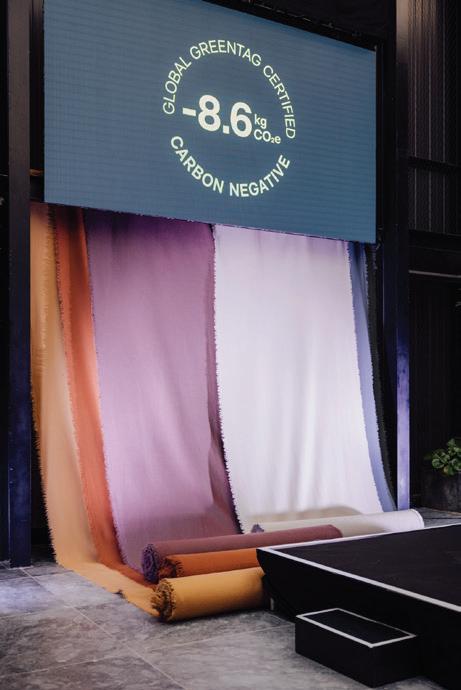
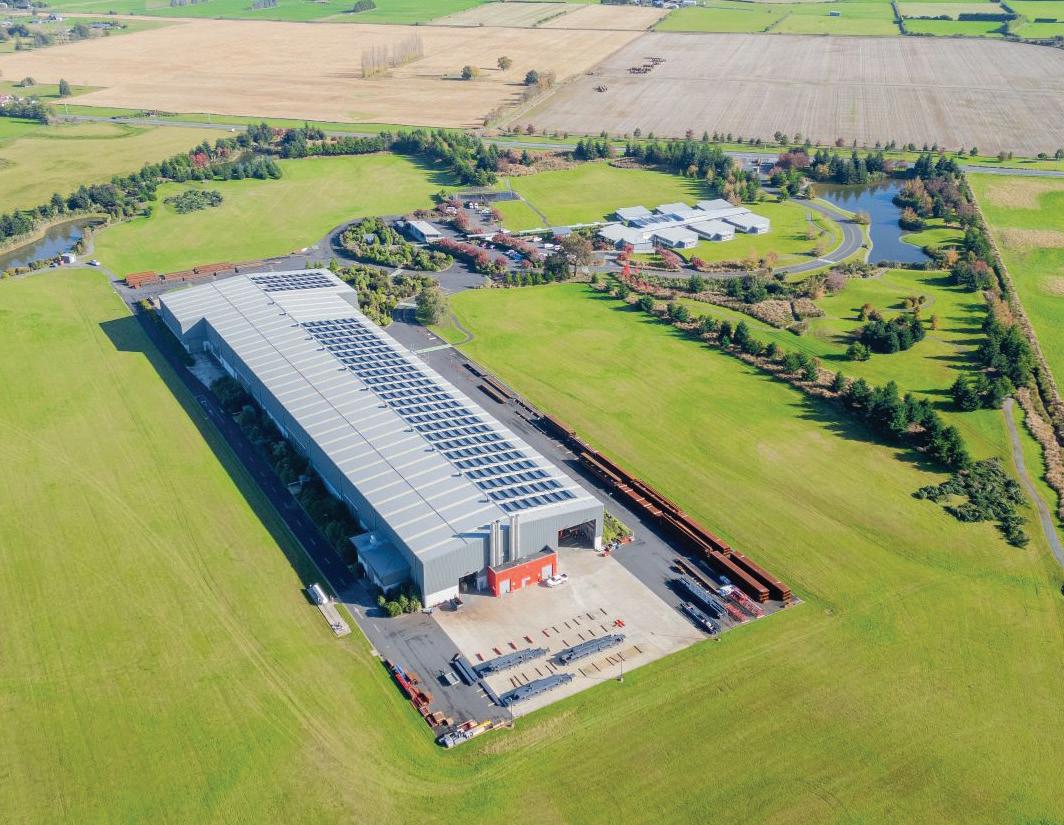
A landmark $3 billion privately funded development in Otago is set to create New Zealand’s largest inland port, boosting the export capacity of the country’s primary industries and future-proofing South Island freight logistics for the next century.
Dunedin’s seaport is NZ’s sixth largest by export volumes and provides critical access to sea freight for Otago and Southland’s forestry, dairy and aquaculture sectors.
Capacity constraints at Port Chalmers had threatened to impact the region’s economic growth, with a search for alternative sites underway.
The Milburn Quadrant development, located north of Milton, will span over 200 hectares, including a 55 hectare inland port, and connect directly to State Highway 1 and the South Island’s main trunk rail line. The site is already zoned for heavy industrial use and will require no public infrastructure investment.
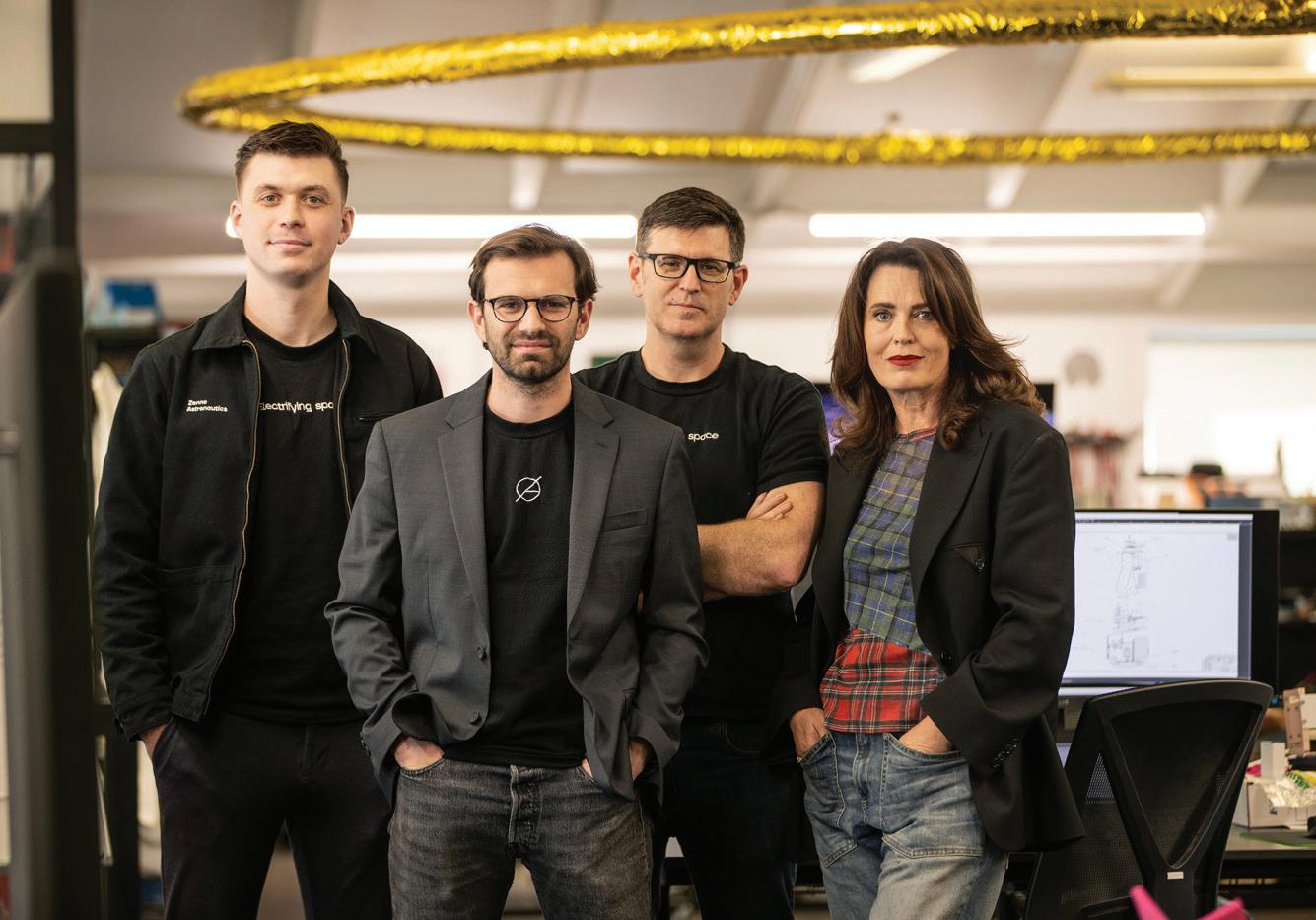
Zenno Astronautics, Wellington UniVentures, and Paihau—Robinson Research Institute have formalised a collaborative partnership to advance the development of superconducting magnet technologies for space, and further strengthen New Zealand’s position as the global centre in this critical field.
This collaboration marks a major step forward for New Zealand’s sovereign space capabilities. It brings together Zenno’s industry-first invention and commercialisation of superconducting systems for space, Wellington UniVentures’ expertise in research translation, and Paihau—Robinson Research Institute’s globally recognised leadership in high-temperature superconductivity and applied electromagnetics. Together, the three organisations represent a significant opportunity for New Zealand to advance superconducting space technologies with a wide range of applications.

Plastics New Zealand in collaboration with industry has two reports outlining strategies for addressing New Zealand’s construction and packaging plastic waste crisis.
Over 5,000 tonnes of Expanded Polystyrene (EPS) packaging enters New Zealand’s supply chains every year, yet nearly 77% currently ends up in landfills or as environmental pollution due to limited collection and recycling systems.
Meanwhile, Auckland alone sends approximately 25,000 tonnes of construction and demolition (C&D) plastics to landfill annually. Two comprehensive reports have been developed outlining strategies aimed at dramatically improving how these problematic plastics are managed across the country.
The Construction & Demolition Plastics Report highlights specific strategies for managing the three largest plastic waste streams from construction sites: soft plastics, PVC/HDPE, and EPS.
It emphasises the need for improved on-site practices, targeted recycling infrastructure, and clear accountability measures to reduce waste significantly. The EPS Product Stewardship Report identifies viable pathways for recovering EPS packaging used in consumer goods, medical, and seafood sectors. It advocates for a robust, industry-led national stewardship scheme, highlighting opportunities for both regional and trans-Tasman recycling solutions. Both reports and detailed recommendations are available online at https://www.plastics.org.nz/news-events/news/1063-press-release-two-major-reports-released
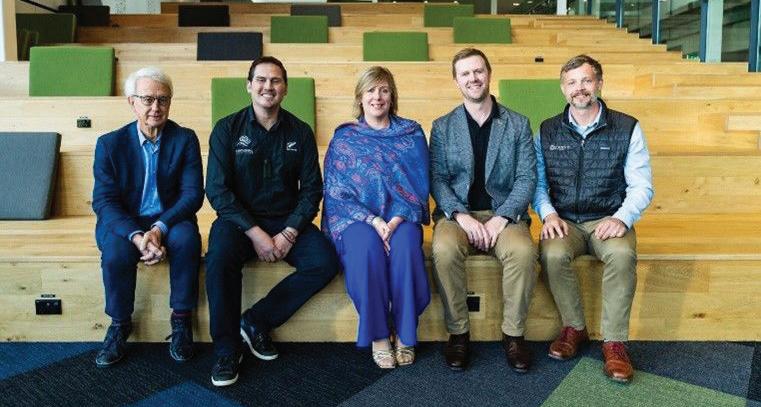
Seequent, The Bentley Subsurface Company, has announced a strategic partnership with the International Geothermal Association (IGA) to boost geothermal energy’s role as a sustainable and reliable renewable energy source.
Geothermal draws energy from hot fluids travelling through the Earth’s subsurface. These fluids are utilised to drive turbines producing electricity, directly to heat homes or in industrial processes.
Traditionally, geothermal energy has been viewed as energy restricted to environments where it is visiblehowever new technological breakthroughs and the realities of needing 24/7 access to energy are changing the investment landscape.
From
Left: Mike Allen, Vice President of NZ Geothermal Association; Dr

Electrical training provider Skills Group is offering a new suite of micro-credential courses in solar energy systems designed to help electricians meet the Electrical Workers Registration Board’s (EWRB) new registration requirements which came into force from 1 September 2025.
The new registration requirements are in response to unique safety risks in particular working environments, including mains parallel generation systems such as grid-connected Solar PV and battery systems.
Starting this May, E-Tec which is part of Skills Group will offer three NZQA-registered micro-credentials covering the design and installation of grid-connected photovoltaic (PV) systems, grid-connected battery storage systems, and stand-alone power systems.
Artificial intelligence could deepen inequality and create ‘AI-poverty traps’ in developing nations, write economists Dr Asha Sundaram and Dr Dennis Wesselbaum in their paper ‘Economic development reloaded: the AI revolution in developing nations.’
Sundaram, an associate professor at the University of Auckland Business School, and Wesselbaum, an associate professor at the University of Otago, say developing countries lack the necessary infrastructure and skilled labour force to capitalise on AI’s potential.
“The downside is that there isn’t a lot of capacity in some countries in terms of digital infrastructure, internet, mobile phone penetration,” says Sundaram.
continued from Page 10
grow or upgrade.
The EMA supports the government’s direction of travel on this legislation, and we have made the frustration of our members clear about at the complexity and difficulty of obtaining consents for expansions or upgrades to existing facilities.
These reforms should enable development to proceed more efficiently while still protecting the environment and property rights. Labour and employment law reforms have also delivered longawaited improvements.
The government’s move to replace the outdated Holidays Act 2003 with a simpler, hoursbased leave system under the new Employment Leave Act is a long-overdue fix.
Further, in 2025 the government expanded immigration pathways to include 10 skilled trades occupations, such as metal fabricators, welders and fitters, under the Green List Work to Residence scheme.
This fills longstanding gaps in labour, especially for manufacturing companies that require those technical skills. This is a practical response to productivity chokepoints that had constrained growth.
Despite what can seem like a gloomy economic backdrop at times, we believe there was solid progress in 2025. The manufacturing sector is becoming safer, more modern, and better connected.
Our members have told us that benchmarking safety, developing skills, adopting technology, and pursuing export promotion through EMA support has produced real improvements.
At the same time, government reforms to resource management, employment law and immigration should make the businesses environment easier. Challenges remain. Global demand continues to fluctuate, while skilled labour shortages and
supplychain disruptions still create pressure. However, with improved regulatory settings, smarter workplaces, stronger export networks and targeted immigration settings, New Zealand manufacturers are positioned for growth.
As we enter 2026, our focus will remain on creating practical tools and opportunities for Kiwi businesses to succeed internationally. Global X will return alongside export acceleration initiatives combining masterclasses, awards, factory tours, and tailored export clinics to turn relationships into commercial opportunities.
These initiatives will complement our industryleading health and safety training as well as our newly launched Safety AdviceLine and Safety Culture Assessment Programme.
Our aim is to strengthen New Zealand’s reputation as an innovation nation while ensuring businesses are equipped to compete confidently on the global stage.
Dr. Troy Coyle, CEO, HERA
As 2025 draws to a close, it’s clear this has been a year of transformation and momentum for Aotearoa New Zealand’s steel manufacturing industry and for HERA.
The national conversation around sustainability and circular design has matured significantly, with steel once again proving itself to be the rockstar of the circular economy.
One of the biggest milestones for our sector was undoubtedly the announcement of the Electric Arc Furnace (EAF) at New Zealand Steel.
This long-anticipated investment represents a major step forward for domestic steelmaking, enabling the production of lower-carbon steel from locally recycled scrap. It’s a tangible example of how industry can decarbonise while strengthening regional manufacturing resilience.
The EAF signals a new era where circularity, innovation, and sustainability sit at the core of our national manufacturing.
At HERA, we’ve seen that growing interest in low-carbon and circular design first-hand. Our newly released update to “How to Specify Low Carbon Steel” guide, has rapidly become our most downloaded publication, reflecting the appetite among engineers, designers, and specifiers to make informed material choices that reduce embodied carbon.
This surge in demand shows that Aotearoa New Zealand’s construction and manufacturing sectors are ready to move from ambition to action.
Circularity goes beyond just lowering emissions. It’s
about designing systems that keep materials in use for as long as possible and few materials perform better than steel in this regard.
That’s why one of HERA’s proudest achievements in 2025 was launching our Low-Carbon Circular Design Guidance. This guidance provides a practical framework for designers and manufacturers to apply circular economy principles in real projects, helping to close the loop between design, fabrication, and reuse.
It showed that >50% reductions in carbon emissions were readily achievable through clever design and material selection.
This work has been further strengthened by our successful application for Building Research Levy funding to develop Aotearoa New Zealand’s first digital material passport.
This initiative will create a system that records and shares material data across a product’s lifecycle, enabling easier reuse, remanufacture, and recycling. By improving traceability, we are helping to ensure that steel can continue to be the backbone of sustainable construction not just once, but over multiple lifetimes.
In parallel, we’ve advanced our own commitment to sustainability through the construction of the HERA Industry X.0 Innovation Centre.
After years of planning, construction is now well underway, marking a significant milestone for our organisation and the wider industry.
The Centre will be a national hub for applied research, industry training, and collaboration; designed to accelerate our journey towards advanced manufacturing and circular innovation. It will also be a 6-star greenstar building.
Our focus on circular design and environmental accountability was also reflected in our planetary accounting assessment of the Innovation Centre, which is the first of its kind in the world.
Unlike traditional carbon accounting, planetary accounting measures environmental performance across multiple boundaries, including water use, biodiversity, and pollution.
Through this lens, we predict that future sustainability conversations will move well beyond carbon, recognising the interconnected nature of our planet’s ecological systems.
We are also proud of the strong international partnerships that have supported this direction, particularly with the Australian Composites Manufacturing Cooperative Research Centre (CRC). Together, we are exploring the intersections of AI, automation, and circular design. These areas that will be essential to the future competitiveness and sustainability of heavy engineering.
This supports our focus on circular design in our MBIE Endeavour funded project focused on Construction 4.0.
Supporting our growing focus on circularity, HERA welcomed Structural Sustainability and Circular Economy Engineer, Osama Mughrabi, to our team this year. Osama’s expertise will strengthen our ability to support members and projects that are navigating the transition to low-carbon, circular futures.
This will ensure that Aotearoa New Zealand’s heavy engineering industry continues to lead in responsible innovation.
In many ways, 2025 has been the year that circularity became more than a concept. It became a movement. From low-carbon steel production to digital traceability, from circular design frameworks to world-first environmental assessments, HERA and our partners have demonstrated that sustainability and industry performance go hand in hand.
Looking ahead to 2026, HERA’s focus is on enabling a high-tech, low-environmental impact manufacturing, fabrication and design future – one where automation, digital tools, and beyond-carbon circular-thinking drive both competitiveness and sustainability.
continued from Page 6
with the 28 November release of the Quantifying the Pacific Economy report, in partnership with MBIE,” Leo says.
Project Ikuna was initially expected to wrap up in June 2024, but the programme’s demonstrated success, benefit and impact saw MBIE extend its rollout until the end of December 2025.
Findings from 2024-2025 pre-and post-course participant surveys showed 90 per cent of Project Ikuna participants said they learned what they hoped they would. Nearly 90 per cent felt more confident in the workplace and 96 per cent felt they now knew the personal leaderships skills needed to develop their careers.
As well as the Supreme Award, Project Ikuna also won the Excellence in Inclusive Development and Wellbeing award.
Four further Auckland Council Economic Development Office initiatives earned finalist spots. Overall, the 2025 EDNZ Excellence Awards recognised 20 finalists in seven categories.
The EDNZ Excellence Awards were known as the EDNZ Best Practice Awards until this year. Entries were open to members of EDNZ, a national membership organisation for economic development organisations and individuals.
continued from Page 7
Auckland Council Economic Development Office finalists and their categories
Project Ikuna Supreme Award winner and Excellence in Inclusive Development and Wellbeing winner
Climate Connect Aotearoa
Excellence in Collaboration finalist
Find Your Franklin (Franklin Local Board) Highly commended Excellence in Collaboration finalist
He Kete Mātauranga
Excellence in Innovation finalist
Energy Sharing Excellence in Sector and Cluster finalist
The Project Ikuna programme has been available to Auckland businesses that want to invest and upskill their Pacific workers, enabling them to adapt to the changing nature of work, while creating a better employee experience.
It won’t be the new machines that win in 2026. It will be the people running them
after shift. Leaders who realised that unless teams learned to think differently, tomorrow’s metrics would look like yesterday’s.
Those leaning in this year did three things differently:
1. They treated learning as a tool to build performance, not something to fit in when time allowed
2. They made time for learning even when the roster said no, because not acting meant more time lost later
3. They built pathways that start where people are, instead of hoping for “ready-made” capability to arrive
CI stopped being a programme and became part of daily work because the people closest to the problems were equipped to solve them.
They still firefight, just less often, and with more people able to step in.
Those who invested early aren’t entering 2026 hopeful. They’re more ready, not because everything is perfect, but because when something goes wrong, people know what to do about it.
Your people are capable of more than you may think
Some still hold the view that skill gaps are too big or too hard to tackle. I get it.
Most plants are running hot, and people are tired. But that pressure is exactly why capability matters, not a reason to delay it. Too often training sits at the bottom of the planning agenda. My mission is to help manufacturers see things differently.
This year showed that when workers understand their value and see how they influence outcomes, they bring curiosity and ownership that shift site performance.
Those leading in this space highlighted an important lesson: You don’t need to find better people. You need to unlock the ones you’ve already got.
In 2026, performance won’t come from gear. It’ll come from people.
Industry strategy is starting to catch up to what leading manufacturers already demonstrated: capability is shaping up as the most powerful lever for productivity. Conversations have shifted. It’s no longer about finding people. It’s about helping the people already there perform differently. Problem-solving in real time,
communicating under pressure, leading improvement, using digital tools, and analysing data.
The manufacturers who smash 2026 won’t see these things as waffly soft skills. They’ll see them as skills critical to the bottom line. And they’ll act.
The best bit? The government is ready to chip in with funding that is easy to access. We’ve given our millions of dollars in funding in 2025, and we’re ready to do the same in 2026.
Now imagine it’s this time next year.
One version of you spent 2026 waiting for the right moment to prioritise capability.
You struggled to release people for learning. You’re still reacting to performance issues, still relying on a few individuals to hold things together. That new kit you fought so hard for hasn’t delivered half the volume you thought it would.
The other version of you carved out time for building performance skills, even when it hurt. You accessed government funding to grow your people. Your people are solving problems before they become stoppages. Your leaders on the floor are driving improvement without waiting for instruction. New tech has been embraced. Volumes are up. Wastage and rework are down.
Same sector. Same challenges. Different decisions.
The question isn’t “When will we have time?”
It’s “In 12 months, will our people be ready to deliver the performance we’re planning for?”
“If your team isn’t there yet (and for most of us, it isn’t), then capability building is the performance strategy.”
It’s ok to start small. Pick one team.
Start now.
Not when it becomes urgent.
Reach out and let’s have a chat about how The Learning Wave can help your people realise their potential, and drive your results.
Sandvik Coromant has expanded its CoroMill MS20 shoulder milling concept to include grade GC1230, specifically engineered for ISO P materials.
CoroMill MS20 combines high-quality cutter bodies with precision inserts to deliver excellent surface finishes and optimal wall quality in repeated shoulder milling. The robust cutter body provides tight tolerances on both axial and radial runout, enhancing component quality and reducing scrap rates.
The inserts, manufactured using advanced pressing technology, offer superior dimensional accuracy, further enhancing insert tool life and component quality.
CoroMill MS20 has already proven its value in ISO
M and ISO S materials. With the addition of grade GC1230, it becomes a first-choice solution for ISO P applications, particularly in the general engineering and automotive industries.
Its versatility makes it ideal for repeated shoulder milling, face milling, linear and helical ramping, full slotting and plunging applications.
Steel milling grade GC1230 features advanced coating and substrate technologies that provide excellent wear resistance and edge line security. Users will benefit from predictable tool life and consistent performance, even in demanding conditions.
The CoroMill MS20 assortment includes cutter bodies ranging from 15.8 to 84 mm (with inch equivalents), along with a new cylindrical shank option with
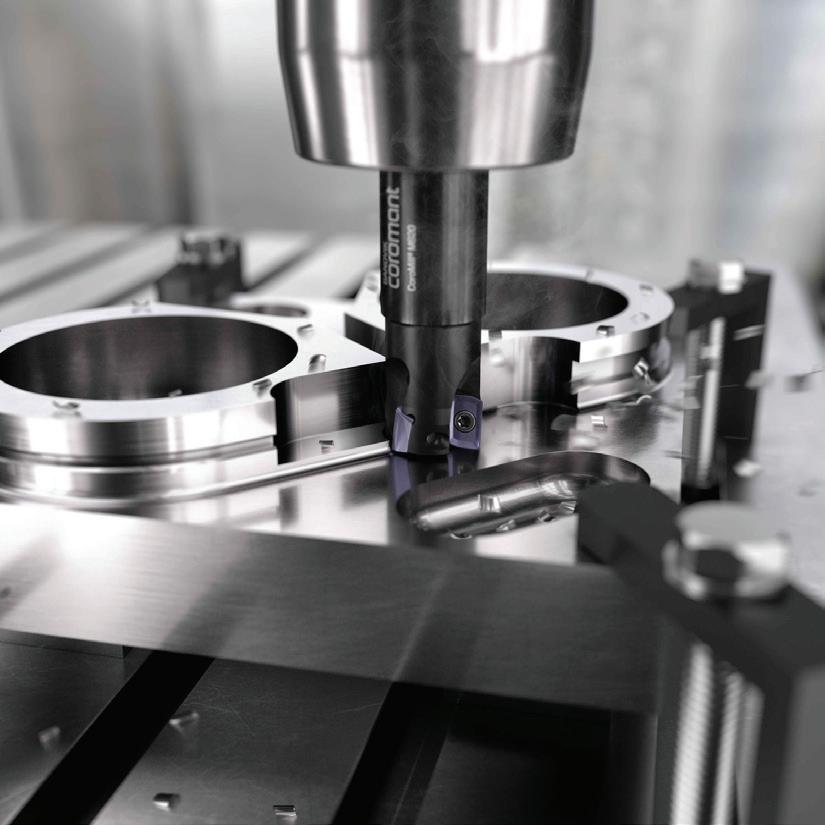
Silent Tools integrated damper, enhancing stability and performance in demanding operations. The insert range features geometries optimised for steel, stainless steel, and heat-resistant super alloys.
HMS Networks has released the Anybus Safe2Link Remote IO-CS, a rugged, type approved I/O device designed to simplify the integration of functional safety into AGVs, AMRs, and other mobile machines. With TÜV-certified safety functions and support for CIP Safety over EtherNet/IP, the Anybus Safe2Link Remote IO-CS provides the fastest, most reliable path to compliance with ISO 3691-4 and the upcoming EU Machinery Regulation 2023/1230.
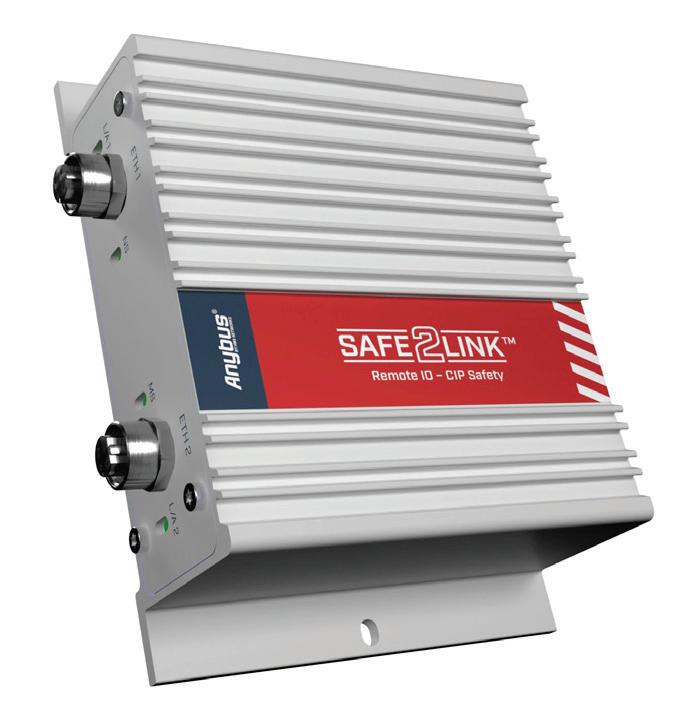
Easy to install The Anybus Safe2Link Remote IO-CS mounts directly on the machine, enabling system integrators and machine builders to add a safe remote stop and manage local or remote safety
signals without custom hardware design.
Since the Anybus Safe2Link Remote IO-CS connects with existing local safety logic, system integrators can implement the same safety functions across AGV/AMR platforms from different suppliers.
This significantly simplifies integration and reduces the effort required for the recertification of functions such as safe remote stop.
Advanced safety features such as SafeBound (fast local and slow remote safe reaction) and SS1-t (controlled safe stop) allow machines to react predictably, protecting both people and equipment.
Fully certified with certification up to SIL 3 (IEC 61508) and PLe/Cat. 4 (ISO 13849-1), the Safe2Link Remote IO-CS is type-approved and ready to deploy. Its rugged IP54 enclosure, dual M12 Ethernet connectors, and straightforward D-Sub I/O interface make it well-suited for harsh industrial environments.
The launch of the Anybus Safe2Link Remote IO-CS expands HMS Networks’ functional safety portfolio, which also includes embedded hardware options and TÜV-certified safety protocol software.
This flexible approach allows OEMs and system integrators to choose the right level of integration for their applications — from plug-and-play devices to fully customised safety hardware.
Functional safety is no longer optional — it’s essential for accessing global markets and building trust with customers.
The Anybus Safe2Link Remote IO-CS gives system integrators or machine builders a plug-and-play solution to meet the latest requirements with minimal integration effort. This means faster time-to-market and safer, smarter machines.
The pressure on beverage manufacturers to produce hygienically is increasing: consumer demands for product safety are growing and global standards from authorities such as the FDA are becoming stricter.
As a result, the demands on machine and system components are also increasing. To enable machine builders and operators to achieve hygienic, low-maintenance and fail-safe production, including a design study for a ready-to-install SHT linear axis.
This not only fulfils FDA and EU requirements, but also meets the EHEDG guidelines with regard to cleanability.
In times of stricter regulations, companies in the beverage industry must ensure that their equipment for filling, labelling, packaging and inspecting bottles and tins can be cleaned easily and thoroughly. This also applies to machine components such as linear technology, which is used for the adjustment and movement of filling heads, label dispensers and camera systems, among other things. “ Machine manufacturers are looking for ways to further reduce the risk of contamination in their systems while lowering cleaning effort and thus operating costs.
For this balancing act, igus will be presenting a growing product portfolio at BrauBeviale 2024, which is being developed in accordance with the guidelines of the European Hygienic Engineering & Design Group (EHEDG). These require that components must either have a gap-free design or be encapsulated accordingly.
SHT linear module for hygienic positioning tasks It is suitable for filling stations, for example, allowing for precise and hygienic movements to position bottles and tins. The axis uses stainless-steel round shafts as guidance and relies on dryspin lead screw technology from igus made of corrosion-free stainless steel for the drive.
The truss assembly consists of two housing halves that are sealed with an FDA-compliant silicone flat gasket and hygienic screws. Specially developed wiper seals protect the shafts and prevent dirt and moisture from entering the shaft end support. In addition, igus has designed the lead screw nut on the lead screw in such a way that there are generous gaps.
This prevents deposits and makes it possible to clean them efficiently. Says Hornung: “We are working on developing more and more products consistently in accordance with the hygienic design guidelines and
have now also joined the EHEDG so as to facilitate new types of certification for open moving parts.” Growing portfolio proves its worth in numerous applications
Last year, igus presented the world’s first sliding carriage for linear guides in hygienic design, which is made of 100% food-grade plastic with FDA and EU 10/2011 approval.
www.treotham.com.au
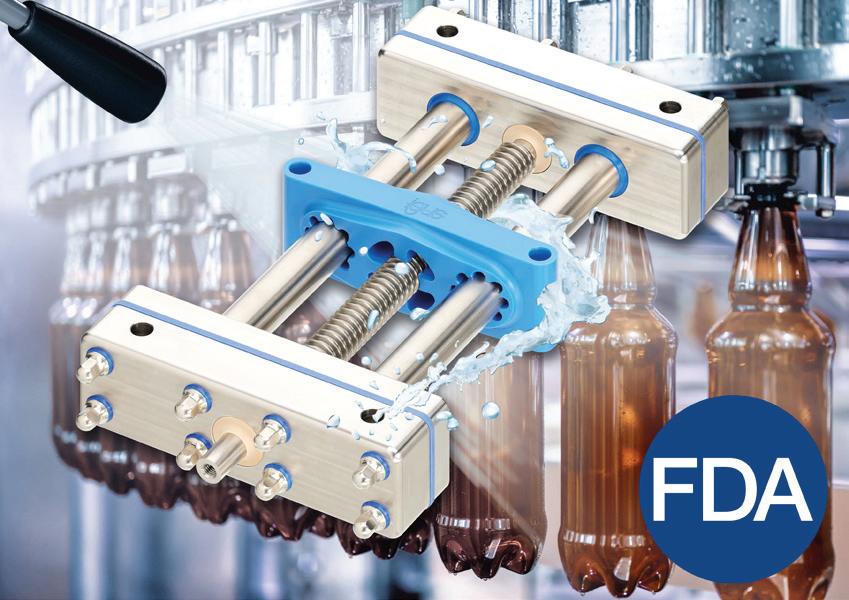
To enable machine builders and operators to achieve hygienic, low-maintenance and fail-safe production, igus develops lubrication-free linear and drive technology such as the ready-to-install SHT linear axis in hygienic design. (Source: igus GmbH)
Emerson is enhancing the ASCO Series 327C solenoid valve, featuring new Intrinsically Safe and Manual Reset construction versions.
The valve is designed with a direct-acting, high-flow technology that offers superior flow-to-power ratios, making it ideal for high-demand industries such as power plants, refineries, and chemical processing facilities.
The ASCO Series 327C offers a balanced poppet construction for high-flow efficiency and is capable of operation in harsh environments, with temperatures ranging from -60 to 90°C.
The valve’s unique two-layer dynamic seal technology reduces friction and ensures stiction resistance, providing reliable and consistent performance over its lifecycle.
New to the Series 327C are the Intrinsically Safe and Manual Reset versions, providing faster response times and greater reliability. The intrinsically safe model eliminates the need for an electronic booster, enabling more consistent partial stroke testing and faster response times, a significant advancement for these types of valves.
The solenoid valve offers a globally approved solution, reducing supply chain complexity for industrial users and simplifying valve specifications. Its features, including a unique electrical test connection, help streamline field commissioning and prevent moisture ingress during storage, providing added value to OEMs and end users.
www.emerson.com
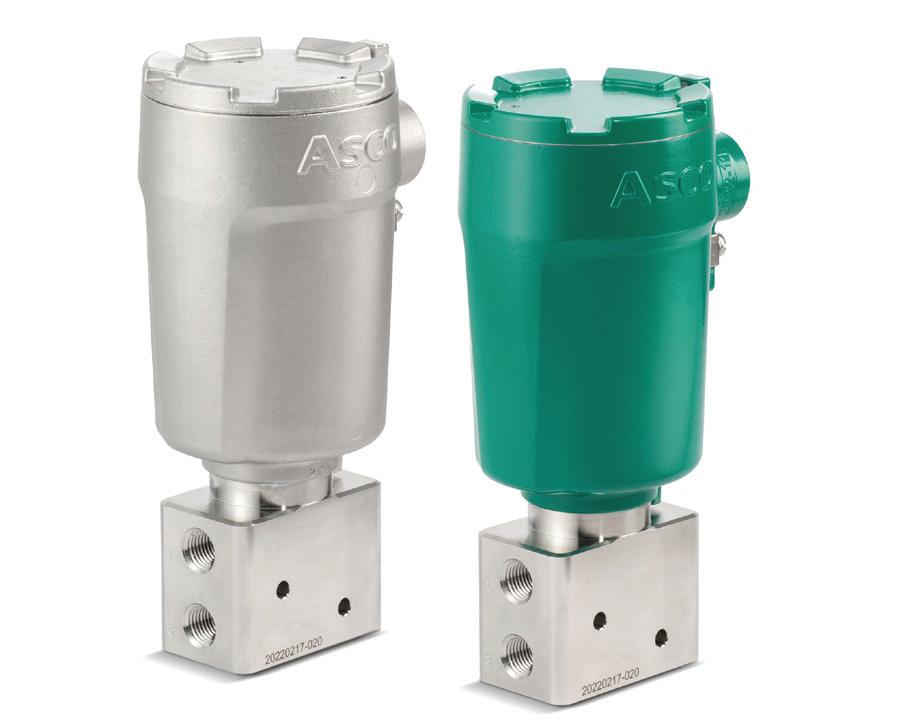
ASCO Series 327C solenoid valve features direct-acting, high-flow design for superior flow control performance and operational certainty.
Does your plant contain designated hazardous ar eas or areas that contain potentially dangerous amounts of combustible dusts or gases? MEO4 Electrical & Automation Services specialises in the following:
• Installation, maintenance, and inspection of electrical equipment in combustible dust environments.
• Installation, maintenance, and inspection of electrical equipment in explosive gas environments.
• Upgrades from non- compliant electrical equipment to devices compliant with AS/NZS 60079
• Initial and periodic inspections.
• Compliance with the AS/NZS 60079 series of standards
By Hon Chris Penk, Minister for Small Business and Manufacturing
As 2025 draws to a close, it’s a good moment to reflect on a year of resilience and progress for New Zealand’s manufacturing sector. The year brought challenges, but there is much to celebrate, and I’m proud to represent a sector that spans so many different industries.
Manufacturing is at the heart of our economy. It’s the petroleum processor in Taranaki, the wood miller in Rotorua, the food and beverage producer in Hastings, the metal fabricator in Hamilton, the chemical technician in New Plymouth, the machinery engineer in Christchurch, and the equipment assembler in Dunedin that we have to thank.
The sector employs more than 220,000 people, generates roughly 8 percent of GDP, and accounts for 60 percent of our exports. Over the past year, export growth has been strong, reflecting the dedication and innovation of manufacturers across the country.
One highlight for me was hosting the first Minister for Manufacturing Awards at SouthMACH in Christchurch in May, supported by Advanced Manufacturing Aotearoa.
These awards celebrated leadership and creativity, with 38 entries narrowed to 16 finalists across four categories. It was a fantastic opportunity to recognise excellence and connect as an industry.
More recently, I have been inspired by Kiwi manufacturers winning awards at regional, chamber, and national business events. Gallagher New Zealand Trade and Enterprise received the Supreme Award at the International Business Awards. RML Machinery in the Waikato, AROTEC Diagnostics Limited in the
Hutt Valley, and United Machinists in Dunedin each earned top honours in their regions.
These successes show how manufacturers are fueling regional prosperity, boosting our competitive edge, and showcasing worldclass expertise. Many parts of the sector are not standing still; they are growing and shaping the future in innovative ways.
Collaboration and practical solutions are driving this progress. Advanced Manufacturing Aotearoa’s Earn as You Learn pilot demonstrates what is possible when industry, educators, and government work together. In Waikato, completion rates exceeded 80 percent, graduates are already employed, and plans are underway to expand the programme to Wellington and other regions. Initiatives like this address skills shortages and strengthen the manufacturing base.
Looking ahead, the Government’s Going for Growth agenda focuses on creating conditions for manufacturers and small businesses to succeed. It rests on five pillars:
• Innovation, Technology and Science: with expanded funding for the NZ Product Accelerator and initiatives to help manufacturers modernise and compete globally
• Developing Talent: through immigration Green List changes, residency pathways for trades, an Industry Skills Board, and programmes like Earn as You Learn and vocational pathways
• Promoting Global Trade and Investment: using InvestNZ, the Active Investor Plus visa, trade missions, and work to remove barriers to market access
•Infrastructure for Growth: including energy reforms, the Wood Energy Strategy, the National Infrastructure Plan, and Resource Management Act reform to give businesses confidence to invest

• Competitive Business Settings: through the Investment Boost, allowing businesses to expense 20 percent of new asset costs, and procurement changes that encourage government investment in Kiwi companies.
These initiatives are helping manufacturers innovate, grow, and compete on the global stage. The groundwork laid in 2025 now sets us up for a strong year ahead, and the outlook for 2026 is positive.
As we move into a well-earned break over Christmas, I want to thank every manufacturer, business owner, and worker who has kept driving the sector forward. Your dedication is building a stronger, more competitive New Zealand. The Government will continue to stand alongside you, supporting a productive economy where manufacturing delivers high-quality jobs and lifts living standards.
Nga - mihi nui, Merry Christmas, and best wishes for the year ahead.

Looking for a marketing edge?

70% of licence holders say signing on has positively affected sales.
Mike Warmington, Platform 1
This year has been marked by fluctuations in the business exit landscape. The first quarter saw lots of activity and some deal flow. The middle two quarters saw business owners contemplating transitioning out, more likely to hold off as they endured a tougher sales environment putting the squeeze on their businesses.
Our meeting numbers with business owners we had not previously met were significantly up on 2024, however this did not translate into as many engagements as we would normally expect from that level of activity.
The market is experiencing record demand from individuals seeking business ownership or transition opportunities.
Three Reserve Bank OCR cuts since August and lower interest rates made a noticeable positive difference ,along with increasingly positive business confidence survey results.
We have found more business owners we spoke to during the year are only now prepared to either push the button on engagement now or indicate they will take action in early 2026.
Having held off through COVID and the recent recession many owners are years behind in their exit planning or executing .In our opinion NZ faces the largest business ownership transition it has ever seen:
• Over 50% of New Zealand SME owners are aged 55 or older
• Over 40% of business owners plan to exit in the next 5 years
• Over 70% of business owners plan to exit in the next 10 years
While exact numbers are assumptions, figures from a variety of other sources all quote essentially the same statistics.
This demographic reality means thousands of businesses will change hands in the next decade creating both challenges and opportunities.
Here’s what I’m seeing in the market:
• Management Buy-Ins are gaining awareness and traction - external talented entrepreneurial people transitioning in over time.
• Employee Ownership Models are emerging to keep businesses locally owned and resilient.
• Businesses who have evaluated all options first and have a clear strategy, get the best outcome.
The next five years will reshape business ownership in NZ. Those who plan early will benefit, but those who wait, risk losing control of their exit.
The market is experiencing record demand from individuals seeking business ownership or transition opportunities.


Theresa Grainger, General Manager, The Lean Hub
Every manufacturing site I visit, whether it is a busy factory floor or a small specialised workshop, I believe has one universal truth; and that is that people want to feel valued, supported, and safe to share their ideas and do meaningful work.
This is where ISO 45003 adds real value, released in 2021 as the world’s first global standard dedicated to managing psychosocial risks and it has become increasingly relevant as organisations recognise that wellbeing and high performance go hand in hand.
Building on the foundation established by ISO 45001, ISO 45003 extends workplace safety into an area many organisations still find challenging to define and measure: the mental, emotional, and social conditions of work. It provides guidance for creating environments where people can not only perform well but genuinely thrive.
The standard offers not just compliance guidance, but a roadmap for building resilient, high-performing and people-centric operations.
Personally, this is where it really resonates for me, I love what it represents because it speaks to something I have witnessed again and again in my work: when we design workplaces around people, when we honour their wellbeing, their voices, and their value, the entire organisation lifts.
It is also deeply aligned with the principles of Lean and Continuous Improvement, at its heart, Lean isn’t just about eliminating waste, it is about creating environments where people can collaborate openly, feel safe to speak up and bring their best selves to their work.
So what are psychosocial risks? At their core, psychosocial risks are the pressures and conditions within a workplace that can harm a person’s mental, emotional, or social wellbeing.
They show up in many forms, for example: stressful workloads, unclear roles,
bullying or exclusion, limited autonomy, job insecurity or poorly designed work processes.
These risks have always been present, but what has evolved is our understanding of just how deeply they influence organisational performance.
They are not signs of individual weakness, they are indicators that the system itself is under strain.

When psychosocial risks go unaddressed, they disrupt focus, communication, decision-making, and team engagement and cohesion.
Over time, this directly affects quality, safety and reliability. And in manufacturing, where precision, consistency, and strong collaboration are essential, it becomes clear that psychological safety isn’t a “nice-to-have” it is a core driver of productivity and operational excellence.
So where can organisations begin? Start small, start curious and start with your people. Begin by asking a few simple questions: Do our teams feel safe raising concerns? Are workloads realistic? Do people have clarity in their roles? Are there parts of our processes that consistently create stress or conflict?
From here, hold short wellbeing-focused Gemba walks and build psychosocial risks into your hazard registers, inviting workers to co-design solutions.
Psychosocial risks in a hazard register could include:
• Excessive workload or unrealistic deadlines
• Low role clarity or conflicting expectations
• Limited autonomy or control over work
• Poorly designed shift patterns or long hours
• Bullying, exclusion, or interpersonal conflict
• Poor communication or inconsistent leadership
• Job insecurity or unclear change processes
• Emotional strain from high-risk or high-pressure tasks
• Isolated work or lack of team support
• Processes that consistently create stress, confusion or rework
And with each hazard identified, a control should be added, for example:
• If workload is excessive, redistribute tasks, adjust planning and/or introduce workload monitoring.
• If roles are unclear, update role descriptions, improve handovers or create standard work.
• If conflict is present, introduce conflict-resolution processes or supervisor capability to navigate this.
• If shifts are fatiguing, redesign rosters, add rest breaks, or rotate tasks.
• If communication is inconsistent, implement daily huddles or clear information-flow routines.
Capturing hazards and controls formally signals that psychological risks are just as real, and just as manageable as physical risks. It enables leaders and teams to assess levels of harm, take action early and continuously improve the working environment.
ISO 45003 gives us the framework, but it is our daily actions, conversations, and commitment to genuine worker engagement that bring it to life.
When we design systems that protect, support and empower our people, we build workplaces where wellbeing and performance grow together, creating stronger, safer, and more productive manufacturing environments across Aotearoa. For a downloadable summary of the standard and deeper insights, click here: https://theleanhub.co.nz/2025/10/02/why-lean-starts-with-psychological-safety
Cameron Shackwell, Sessional Academic, School of Information Systems, Queensland University of Technology
The term “black swan” refers to a shocking event on nobody’s radar until it actually happens.
This has become a byword in risk analysis since a book called The Black Swan by Nassim Nicholas Taleb was published in 2007. A frequently cited example is the 9/11 attacks.
Fewer people have heard of “grey swans”. Derived from Taleb’s work, grey swans are rare but more foreseeable events. That is, things we know could have a massive impact, but we don’t (or won’t) adequately prepare for.
COVID was a good example: precedents for a global pandemic existed, but the world was caught off guard anyway.
Although he sometimes uses the term, Taleb doesn’t appear to be a big fan of grey swans.
He’s previously expressed frustration that his concepts are often misused, which can lead to sloppy thinking about the deeper issues of truly unforeseeable risks.
But it’s hard to deny there is a spectrum of predictability, and it’s easier to see some major shocks coming. Perhaps nowhere is this more obvious than in the world of artificial intelligence (AI).
Putting our eggs in one basket
Increasingly, the future of the global economy and human thriving has become tied to a single technological story: the AI revolution.
It has turned philosophical questions about risk into a multitrillion-dollar dilemma about how we align ourselves with possible futures.
US tech company Nvidia, which dominates the market for AI chips, recently surpassed US$5 trillion (about A$7.7 trillion) in market value.
The “Magnificent Seven” US tech stocks – Amazon, Alphabet (Google), Apple, Meta, Microsoft, Nvidia and Tesla – now make up about 40% of the S&P 500 stock index.
The impact of a collapse for these companies – and a stock market bust – would be devastating at a global level, not just financially but also in terms of dashed hopes for progress.
There are three broad categories of risk – beyond the economic realm – that could bring the AI euphoria to an abrupt halt. They’re grey swans because we can see them coming but arguably don’t (or won’t) prepare for them.
AI’s ability to generate code, malicious plans and convincing fake media makes it a force multiplier for bad actors.
Cheap, open models could help design drone swarms, toxins or cyber attacks. Deepfakes could spoof military commands or spread panic through fake broadcasts.
Arguably, the closest of these risks to a “white swan” – a foreseeable risk with relatively predictable consequences – stems from China’s aggression toward Taiwan.
The world’s biggest AI firms depend heavily on Taiwan’s semiconductor industry for the manufacture of advanced chips. Any conflict or blockade would freeze global progress overnight.
Some AI firms have already been sued for allegedly using text and images scraped from the internet to train their models.
One of the best-known examples is the ongoing case of The New York Times versus OpenAI, but there are many similar disputes around the world.
If a major court were to rule that such use counts as commercial exploitation, it could unleash enormous damages claims from publishers, artists and brands.
A few landmark legal rulings could force major AI companies to press pause on developing their models further – effectively halting the AI build-out.
Innovation is usually celebrated, but for companies investing in AI, it could be fatal.
New AI technology that autonomously manipulates markets (or even news that one is already doing so) would make current financial security systems obsolete.
And an advanced, open-source, free AI model could easily vaporise the profits of today’s industry leaders.
We got a glimpse of this possibility in January’s DeepSeek dip, when details about a relatively cheaper, more efficient AI model developed in China caused US tech stocks to plummet.
Risk analysts, particularly in finance, often talk in terms of historical data. Statistics can give a reassuring illusion of consistency and control. But the future doesn’t always behave like the past.
The wise among us apply reason to carefully confirmed facts and are sceptical of market narratives.
Deeper causes are psychological: our minds encode things efficiently, often relying on one symbol to represent very complex phenomena.
It takes us a long time to remodel our representations of the world into believing a looming big risk is worth taking action over – as we’ve seen with the world’s slow response to climate change.
Staying aware of risks is important. But what matters most isn’t prediction. We need to design for a deeper sort of resilience that Taleb calls “antifragility”.
Taleb argues systems should be built to withstand –or even benefit from – shocks, rather than rely on perfect foresight.
For policymakers, this means ensuring regulation, supply chains and institutions are built to survive a range of major shocks. For individuals, it means diversifying our bets, keeping options open and resisting the illusion that history can tell us everything.
Above all, the biggest problem with the AI boom is its speed. It is reshaping the global risk landscape faster than we can chart its grey swans. Some may collide and cause spectacular destruction before we can react.
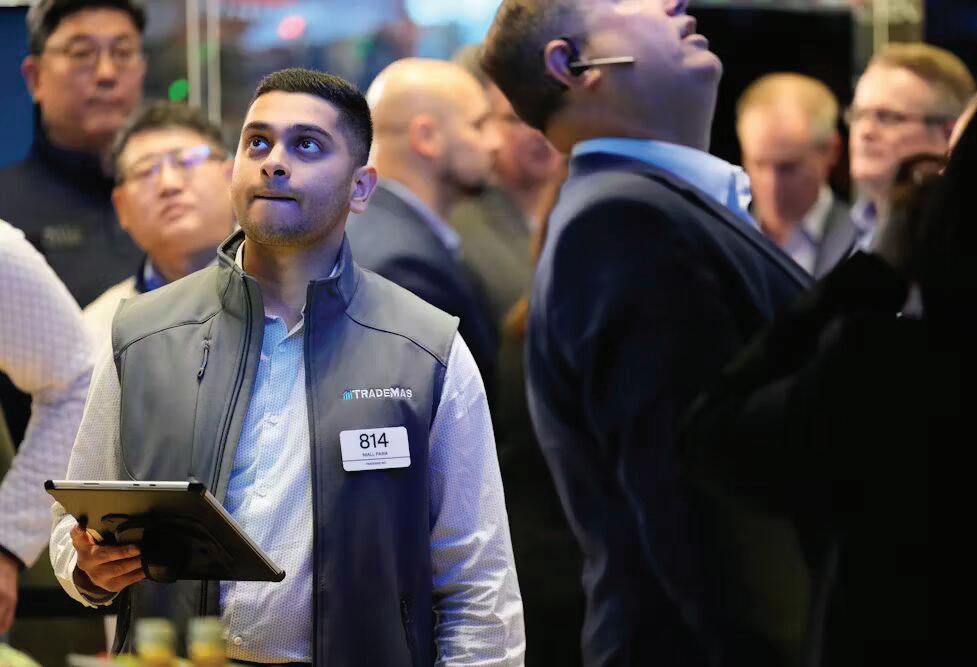
Christmas is almost here and for many it can’t come fast enough. Another year of holding on, fighting fires and telling ourselves we just need to wait for better times to arrive.
Yet look across the industry and you’ll see something striking: the same tough conditions producing completely different outcomes.
One manufacturer is crawling to the finish line; another is smashing targets and celebrating wins. The break ahead isn’t just an opportunity to rest, it’s a reset.
The biggest variable in 2026 won’t be the economy. It’ll be the mindset you choose over the holidays.
Because when you strip away the noise, this year has made one truth impossible to ignore: the same conditions are producing entirely different results. Some firms have spent 2025 wrestling the economy like an anchor, while others have treated it like a headwind to lean into… uncomfortable, but navigable. That contrast is the real story. It tells us the gap between struggling and succeeding may not be the market at all, but the mindset leaders bring to it.
This is where the tale of two manufacturers begins
The phrase we heard so much last year, “Survive till ’25”, was the hope we were clinging to, but it quickly morphed into “Survive 25,” reflecting how many manufacturers feel worn down by another long, slow year. Stories of closures, liquidations and persistent pressure have reinforced the sense that the economy is dictating our destiny.
It is easy to get swept into that narrative. Yet, if we look closer, we find a stark contrast, two manufacturers facing the same economic headwinds but producing radically different results. While one is struggling to keep the lights on, the other is celebrating record months, hitting aggressive targets and accepting business awards.
Is the problem truly the market, or is it the manufacturer’s mindset?
For too many of our small and medium businesses (SMBs), the economic climate has become a scapegoat for the inevitable consequences of standing still.
Manufacturers viewing the economy as “too hard” are allowing external factors to dictate their internal strategy. They see a glass half empty and therefore, they stop trying to fill it.
The purpose of this article is not to ignore the difficulties, after all supply chain complexity, inflation and a tight labour market are real. But for the successful manufacturer, these challenges are not insurmountable; they are simply the current operating environment.
They have adopted a “glass half full” approach that focuses intensely on the levers they can control, transforming pressure into performance.
A quick glance through the stories of success celebrated at the various business awards hosted by Chambers across New Zealand reveals a striking
pattern.
The difference between the thriving and the merely surviving is rarely capital or capacity; it is almost always leadership, focus and deliberate investment. The failing business and the successful one often face similar external paths. Both deal with challenging customers, rising material costs and complex regulations. But their internal responses diverge sharply.
1. Laser Focus on Customer Experience: Their product quality is non-negotiable, but their focus extends beyond the physical item. They view the entire customer journey as a unique selling proposition (USP).
The successful Bay of Plenty-based manufacturer, Archishade, serves as an excellent example. Despite market challenges, their focus on a unique quality product, combined with innovation and continuous learning, has led to overwhelming success and growth awards. They compete on value, relationship and reliability, not just price.
2. Investment as a Recipe for Success: Every resource (time, people and technology) it treated as an investment, not a cost. When facing stress points, their leadership doesn’t panic; they learn.
They actively seek support, advice and accountability from mentors, advisors, or industry networks, viewing this as an essential ingredient for scalable systems and continuous improvement.
Investing in a new piece of equipment, implementing new process mapping software, or hiring a consultant to train the team is seen as building a competitive advantage, not trimming the budget.
3. Curiosity and Innovation: Leaders in successful firms are innately curious. They are open to the idea that there might be a better, different way of operating that does not compromise customer experience.
This allows them to embrace systems thinking, automating repetitive tasks and re-engineering workflows to do things more efficiently, rather than simply working harder.
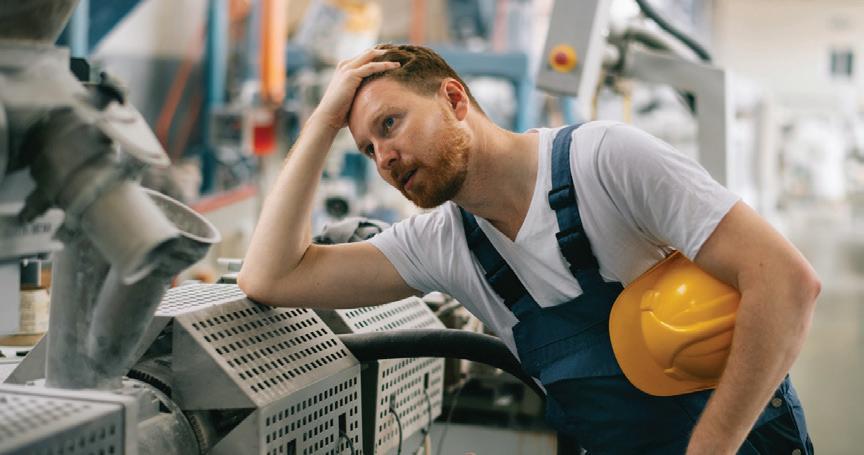

David Altena is Head of Growth & Partnerships at SmartSpace.ai & Co-Founder & Host of The Better SMB Podcast.
david@altena.solutions

Rob Bull Director of the New Zealand Lean Academy rob@nzla.nz
Contrast this with the manufacturer whose perspective is that the economy is “too hard.” Their default response to needing more income is to simply “work longer hours.”
This is the business equivalent of trying to bail out a leaky boat with a spoon. Working harder is ineffective and the least scalable form of growth. It is a path that often leads to a predictable, detrimental sequence:
• Quality Suffers: Speeding up jobs without improving processes leads to errors, rework and damaged customer goodwill.
• Support is Cut: Additional support, whether administrative, sales, or production process improvement, is viewed purely as a cost, not an investment. This removes the very capability needed to create systemic change.
• The Business Drifts: Without a competitive edge, continuous investment, or a resilient system, the business inevitably drifts to a point in history where it can no longer compete with those who have innovated.
In short, they fail to slow down long enough to implement the very systems thinking and efficiency measures that would allow them to speed up in a sustainable manner.
We are not suggesting the path of success is simple. There are a myriad of issues that can impact a single business that are complex and often frustrating. But the core learning we can take while standing in the shadows of success is that mindset precedes opportunity.
The “Survive 25” mentality becomes a self-fulfilling prophecy for any manufacturer who keeps working the way they always have.
However, the “glass half full” approach, sees the current climate as an opportunity for consolidation, strategic investment and winning market share from those who have become complacent or demoralised. For manufacturers, the challenge is clear: stop lamenting the half-empty glass and start focusing on how you are going to refill your half, through systemised quality, relentless focus on customer value and a leadership mindset that views support and efficiency as essential investments in competitive advantage.
The market is low and slow, but success is still available for those willing to innovate their way out of the slump.
Choose your story. Choose success.