
IB DIPLOMA OPEN EVENING
Tuesday 30 September 2025
6.00 – 6.25 Welcome and Opening Presentation (Aud.)
6.25 – 7.15 Subject Fair (Auditorium & Room 20)
7.15 – 7.30
Next Steps and Closing Remarks (Aud.)
AIMS
• What is the IB Diploma/IB Courses?
• Why study the IB Diploma/IB Courses?
• Why study the IB Diploma/IB Courses at Marymount London?
• What courses should/could I study to realise my future aspirations?
’10 EMERGING SKILLS FOR PROFESSIONALS’
The World Economics Forum’s ‘Future of Jobs’ report, identified the following emerging skills as being critical for employers:
• Analytical thinking and innovation
• Active learning and learning strategies
• Creativity, originality and initiative
• Critical thinking and analysis
• Complex problem solving
• Leadership and social influence
• Emotional intelligence
• Reasoning and problem-solving
• Systems analysis and evaluation
• Technology design and programming
6
SUBJECTS:
THE IB DIPLOMA – AN OVERVIEW
3 x HL 3 x SL plus CORE
i. Extended Essay
ii. Theory of Knowledge
iii. CAS EXAMINED BY: Internal Assessment & Public Examinations
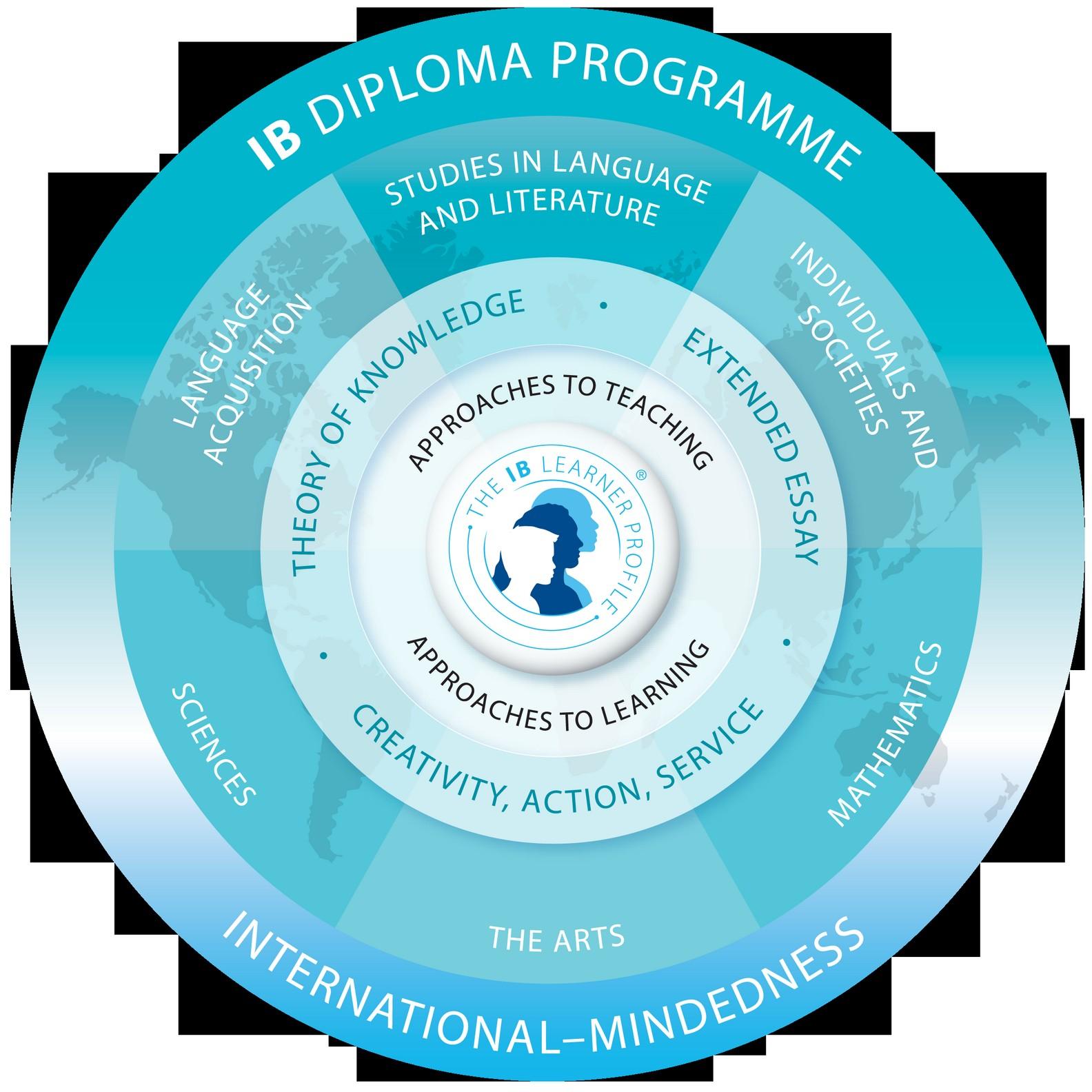
STRUCTURES OF THE IB DIPLOMA
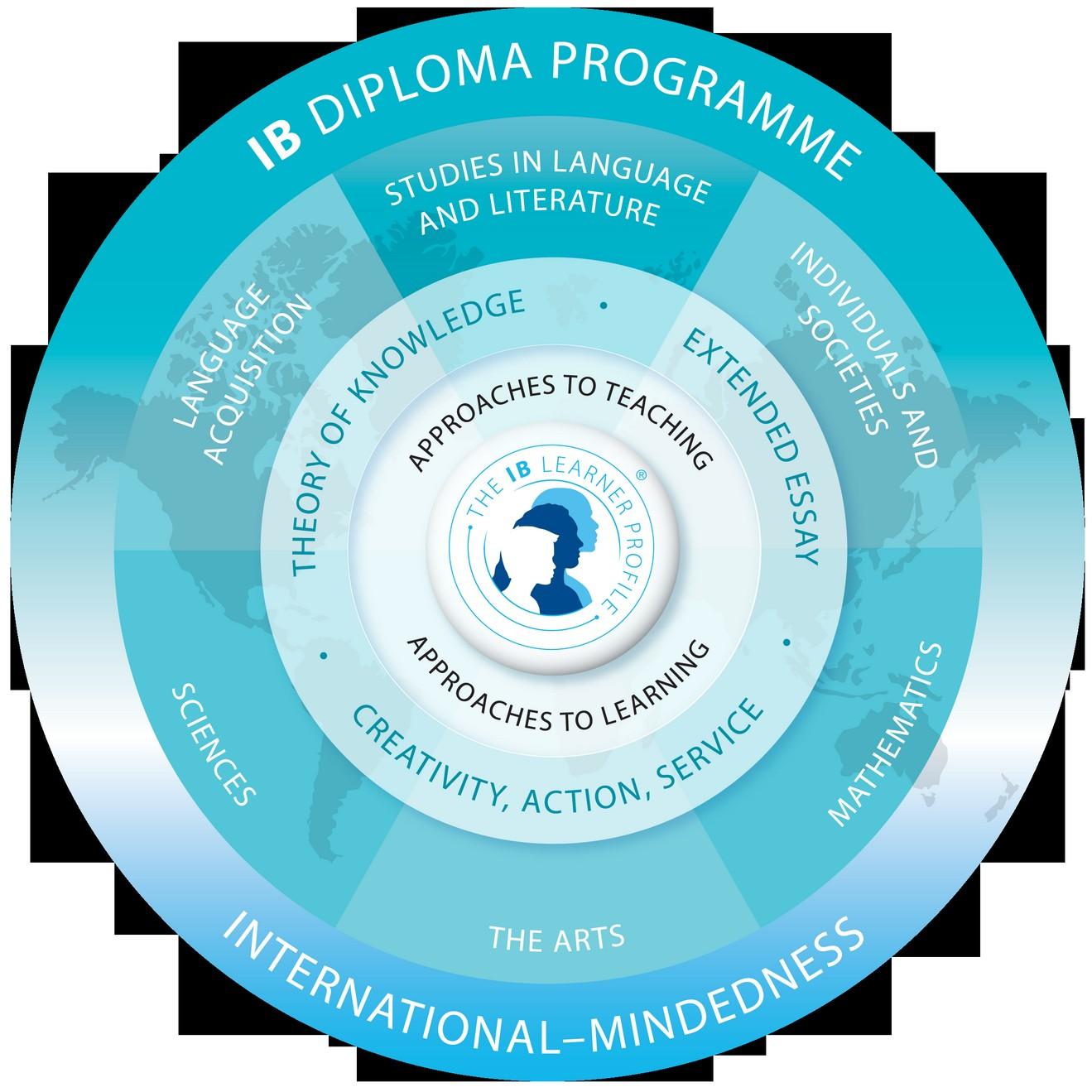
6 SUBJECT GROUPS:
• GROUP 1: Studies in Language & Literature [Lang. A]
• GROUP 2: Language Acquisition [Lang. B]
• GROUP 3: Individuals & Societies [Humanities]
• GROUP 4: Sciences
• GROUP 5: Mathematics
• GROUP 6: Arts
REQUIREMENTS:
• 1 x Subject from each of the first 5 groups
• 1 x further subject either from Group 6 or an additional subject from Groups 1 – 4 (i.e. second Science, second Humanities etc.)
• IB Diploma CORE – Extended Essay, TOK and CAS
WHAT IS IB DIPLOMA COURSES?
• Students have greater freedom to select courses of study suited to their interests and specialisms
• Fewer restrictions - students are not required to study 6 subjects or to complete all components of the Core
• Individual IBDP Course certificates are awarded for each subject studied/examination completed
• Each IBDP Course is worth a certain number of UCAS Tariff Points, depending on the final grade achieved
• IBDP Courses can be used to gain access to both foundation and some undergraduate degree programmes at universities
INHERENT EDUCATIONAL VALUE
• Distinctive ‘student-centred’ pedagogy
• Breadth as well as depth
• Skills & attitudes as well as knowledge and understanding
• Critical thinking
• Emphasis on effective communication
• International mindedness and a global outlook
• Interdisciplinarity
• Holistic – development of the whole person
“In the IB, you grow not only as a student, but as a human”
https://www.crimsoneducation.org/uk/blog/test-prep/pros-cons-ib/
UNIQUE, CHALLENGING & DIVERSE
IB Diploma students:
• Are encouraged to think critically and solve complex problems
• Drive their own learning
• Appreciate breadth and well as depth
• Are more culturally aware, internationally minded and are people of principle and values
• Develop strong academic, social and emotional characteristics and are therefore more likely to perform to their potential
• Are prepared for and can manage challenge
• Effective communicators and powerful advocates
• Know themselves and are prepared for life!
THE IB DIPLOMA: PREPARATION FOR UNIVERSITY
Critical thinking
Independent thinking
Creative thinking
Curiosity - an inquiring mind
Effective approaches to learning
Effective selfmanagement
Openmindedness
International mindedness (a global outlook)
Effective communication
WHAT UNIVERSITIES SAY
• When asked to compare the effectiveness of different secondary school programmes in preparing students for university, admissions officers around the world are in total agreement; the IB is the most effective programme for:
• Developing independent inquiry
• Nurturing an open mind
• Developing self-management skills
• Encouraging a global outlook
• Developing approaches to learning skills – time management, research, planning etc.
• Developing cultural sensitivity
• Developing leadership and the impetus to take action
• Recognition of rigour affords preferential offers
INDEPENDENT RESEARCH
• A June 2021 study found that DP students tend to be intrinsically motivated and have high academic aspirations, both in terms of where they study and what they study.
• An October 2020 study suggests that IB students have significantly higher levels of critical thinking than their non-IB peers. In interviews, DP students and teachers shared a belief that TOK, EE and the DP subjects themselves foster the development of critical thinking.
IN SUMMARY
Research suggests that IB Diploma students…
• Are more likely to enroll in top ranked universities
• Are better equipped to manage the demands of their course – skills, attributes and approaches to learning
• Demonstrate higher levels of persistence
• Are more likely to graduate with a first-class degree
Global research findings on the Diploma Programme
https://www.ibo.org/globalassets/public ations/ib-research/dp-infographic-2018en.pdf
THE IB DIPLOMA: NOT JUST A ROUTE TO UNIVERSITY
The IB is for life, not just for College!
The rapid increase in the rate at which technological change is occurring around the globe creates a world that is increasingly volatile, uncertain, complex, ambiguous and thus hard to predict. Such an unpredictable context requires an increased capability for humans to engage with complex challenges, adapt to new situations and develop a diverse set of individual competencies. An increased number of occupations in the future will involve complex problem-solving, creative thinking and social interactions. Deliberate effort and innovative pedagogies are needed to address the challenges of the 21st century and needs of the labour market.
While the knowledge dimension matters, the skills, character and meta-learning dimensions are just as important, and all of them need to be fostered for individuals and societies to prosper. ‘Study on
THE IB DIPLOMA AT MARYMOUNT LONDON

MISSIONS IN HARMONY
• Holistic – formation of the whole person
• Lifelong learning - Marymount girls lovetolearnandlearntolove
• Marymount students question, challenge and contribute meaningfully as intellectual and compassionate global citizens
THE IB DIPLOMA AT MARYMOUNT LONDON
• Experienced - teaching the IB Diploma for over 40 years
• Top IB World School – ‘Proudly IB’, not a dual economy!
• Teacher/Examiners
• Bespoke Timetable – MMI offers a wide range of subjects
• Currently 10 Mother Tongue Languages (Literature)
• Both Mathematics courses at HL and SL
• Wide range of Arts, Humanities and Sciences
• An outstanding university guidance programme
• Excellent results:
• Outstanding pass rate (5-year average 99.6% pass rate)
• Consistent average points score (5-year average of 37 points)
• High proportion of Bilingual Diplomas (5-year average of 37%)
• Outstanding support structures – students know themselves and are known!
THE IB DIPLOMA: NOT JUST A ROUTE TO UNIVERSITY
Thoughts from alumni of the IB Diploma…
The Diploma was a passport to university…however, it’s the education and the learning foundations that the IB at Marymount gave me that ultimately made it possible to succeed in a fast-changing world. Instead of learning for a quiz, I learned really how to think – critically, analytically, globally –and I learned about myself. I learned that weaknesses bring out your strengths, and that success isn’t always the highest grade in class. Resilience. Adaptability. Staying curious. These are qualities that the IB encourages because its not structured [just] to play to your strongest suit, as much as it asks you to push yourself out of your comfort zone. Think about how we think, and then look at a problem and find solutions. It’s a model that will get applied every day, in any given situation – whether it’s work-related or just understanding the world at large.
‘Is the IB still relevant?’, Study International Staff, December 2020 https://www.studyinternational.com/news/international-baccalaureate-benefits/
SKILLS IN HIGH DEMAND BY EMPLOYERS IN 2025
Analytical thinking
Resilience, flexibility & agility
Leadership & social influence
Creative thinking
Motivation & self-awareness
Empathy & active listening
Curiosity & lifelong learning
Technological literacy
AI & big data
Talent management
Service orientation
Systems thinking
Dependability & attention to detail
Resource management
Quality control
Environmental stewardship
Global citizenship
‘Wells, R, April 2025 ’20 Skills Hiring Managers Look For In Resumes In 2025https://www.forbes.com/sites/rachelwells/2025/04/17/20-skills-hiring-managers-look-for-inresumes-in-2025/
NEXT STEPS
• IB Diploma/Courses subject fair in the Sports Hall
• Take a copy of the DP Information Guide
• Visit each of the subject group desks and ask relevant questions
• What do you study? What type of tasks do you complete?
• What skills do your develop?
• What might this lead to at university/career?
• Make some notes about each subject and begin to put your provisional course selection together
• Be back in the Auditorium by 7.15 for final thoughts
NEXT STEPS:
• IB Diploma Information Evening – an opportunity to speak with subject specialists about the nature and type of work in the various disciplines and begin to shape your initial thoughts about subject balance.
• 10th Grade IB MYP – continue with MYP courses and Personal Project
• Students discuss preliminary ideas with teachers, Advisors and/or IB Coordinator
• Advisor presentations and taster classes
• Preliminary IB Diploma Course Selections in November
• Course guidance meetings with IB DP Coordinator & College Counsellor before Christmas
• 10th Grade Scholarships
SOME WORDS FROM OUR ALUMNAE