
Marta Mattioli PORTFOLIO
MARTA MATTIOLI
07. 03. 2000
Cinisello Balsamo, Milan, Italy
E-mail: marta1.mattioli@mail.polimi.it
EDUCATION:
MASTER DEGREE in Architecture, Built-environment, Interiors 2022 - Currently studying | Politecnico di Milano, Italy. Course taught entirely in English.
* Erasmus: Interior Design at ESAD _ Escola Superior de artes e design. 25.09.23 - 31.01.24 |Matosinhos (Porto), Portugal.
BACHELOR DEGREE in Architecture
2019 - 2022 | Politecnico di Milano, Italy. Graduated with honours 110L/110L
LICEO SCIENTIFICO SCIENZE APPLICATE (High school) with double diploma 2014 - 2019 | ITIS Cartesio, Cinisello Balsamo, MI, Italy. Applied sciences program with a specialization in computer science. Dual diploma: Canadian & Italian.
* Year Abroad: Canadian high school with a diploma obtained. 2017 - 2018 | Breton Education Centre, New Waterford, NS, Canada.
PROFESSIONAL EXPERIENCE:
INTERNSHIP for STUDIO VENTURONI
04.2024 - 05.2024| Architecture & Interior design Studio, Via Tito Livio 31, Milan, Italy
E.REPORTER for FUORISALONE.IT
17.04.2023 - 23.04.2023 |Milan, Italy. Photographic reporter for Fuorisalone.it. My work here
INTERNSHIP for STUDIO CONGIU
09.2021 - 10.2021| Architecture & Interior design Studio, Via Neera, Milan, Italy.
PUBLICATIONS:
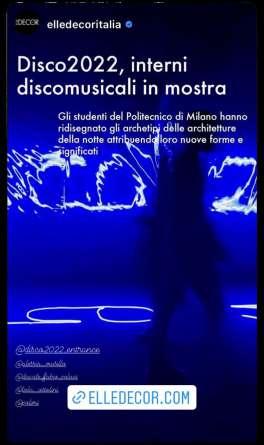
“STORIA E FUTURO DELLA DISCOTECA: DISCO 2022” - Partecipation in the project and construction of the Discomusical Interior event in collaboration with Xilografia and Polimi. www.elledecor.com
SOFTWARE:
Autocad Revit Rhinoceros Cura (3D printing)
LANGUAGES:
PROJECT:
DEFINING THE WALL THE MYCO LAB
THE MILANESE COURT
DISCO 2022 - Exhibition
THE ROCK PAVILLION
DEFINING THE WALL
Architecture of interior design
Studio - Politecnico di Milano
Professors:
Arch. Gennaro Postiglione, Prof. Paola Briata, Arch. Barbara Brollo.
Team Work: Marta Mattioli (Italy), P. Salunkhe (India), B. Screk (Croatia).
Period:
Febr. - July 2023
Via Don Minzoni, Bologna, Italy.
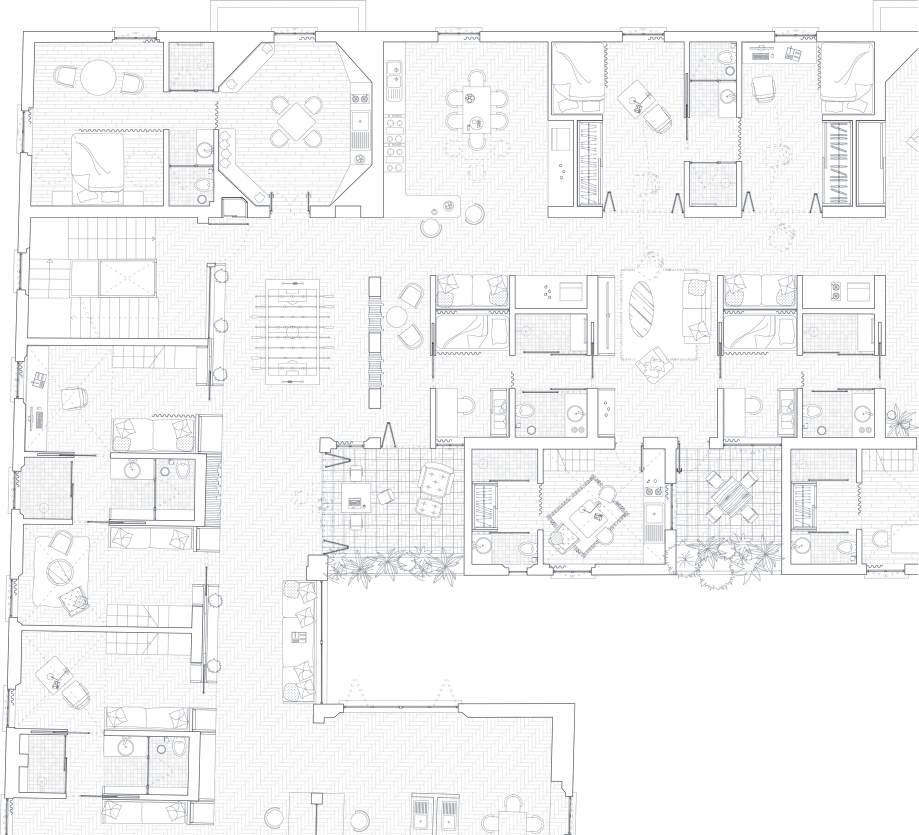
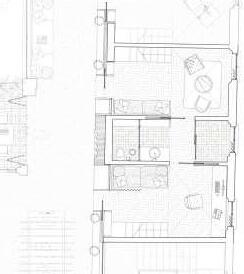
The project aims to create a building complex that provides various levels of privacy to its inhabitants, catering to individual needs while promoting interaction within a community setting. This is achieved through three main types of units.
FORTREES: This represents the highest level of privacy, with each unit functioning as an independent apartment equipped with private amenities. However, these units are still integrated into communal spaces, encouraging interaction among residents. The size of the apartments and the design encourage inhabitants to utilize shared spaces.
FENCE: These units offer a balance between privacy and community. They have a private space with a secondary sleeping area, and the bathroom shared between two units. Flexible partitions allow for the extension of the living space into communal areas when desired.
TRACE: This type blurs the boundary between private and communal spaces entirely. Reserved for artists in residency, these units serve as multifunctional spaces for living, working, and socializing. The residents lead an eclectic lifestyle, fostering flexibility in sharing and interaction.
Rather than categorizing residents based on traditional social classifications, the project focuses on their desired level of privacy and their willingness to engage with the community. This approach aims to create a diverse and vibrant community in Bologna, where individuals from different backgrounds can coexist harmoniously, minimizing stigma and conflict.
The programs used for this project were: Autocad, Rhino, Enscape, Miro, Cura (for 3d printing), Illustrator, Photoshop, and Indesign.
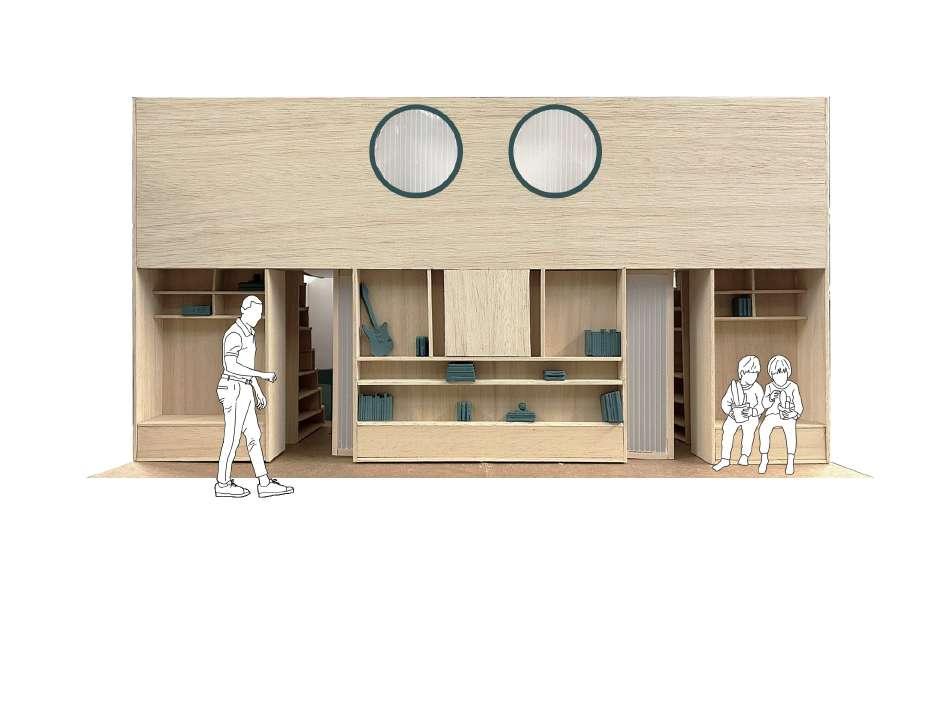
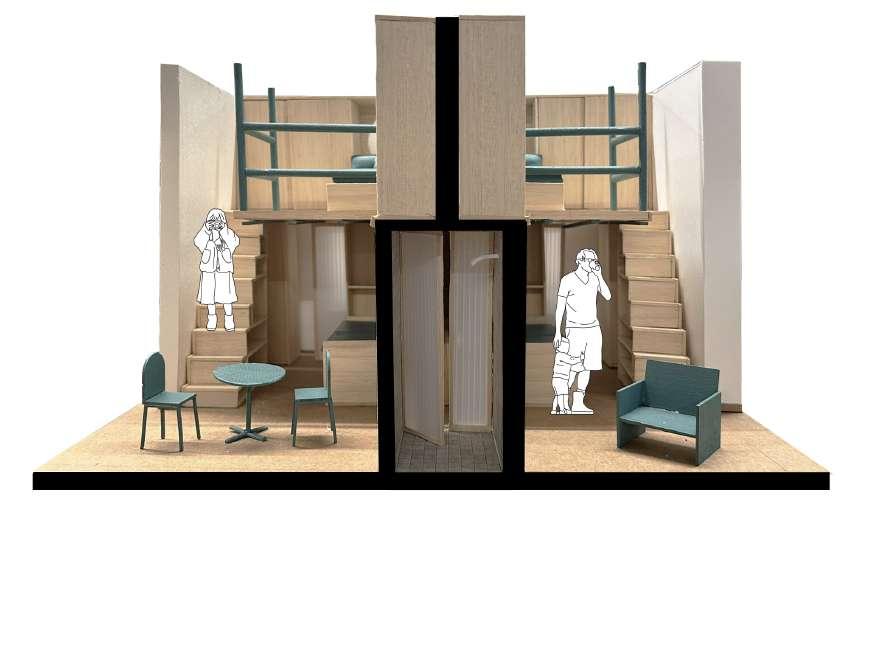
Model - Fence room - Scale 1:20
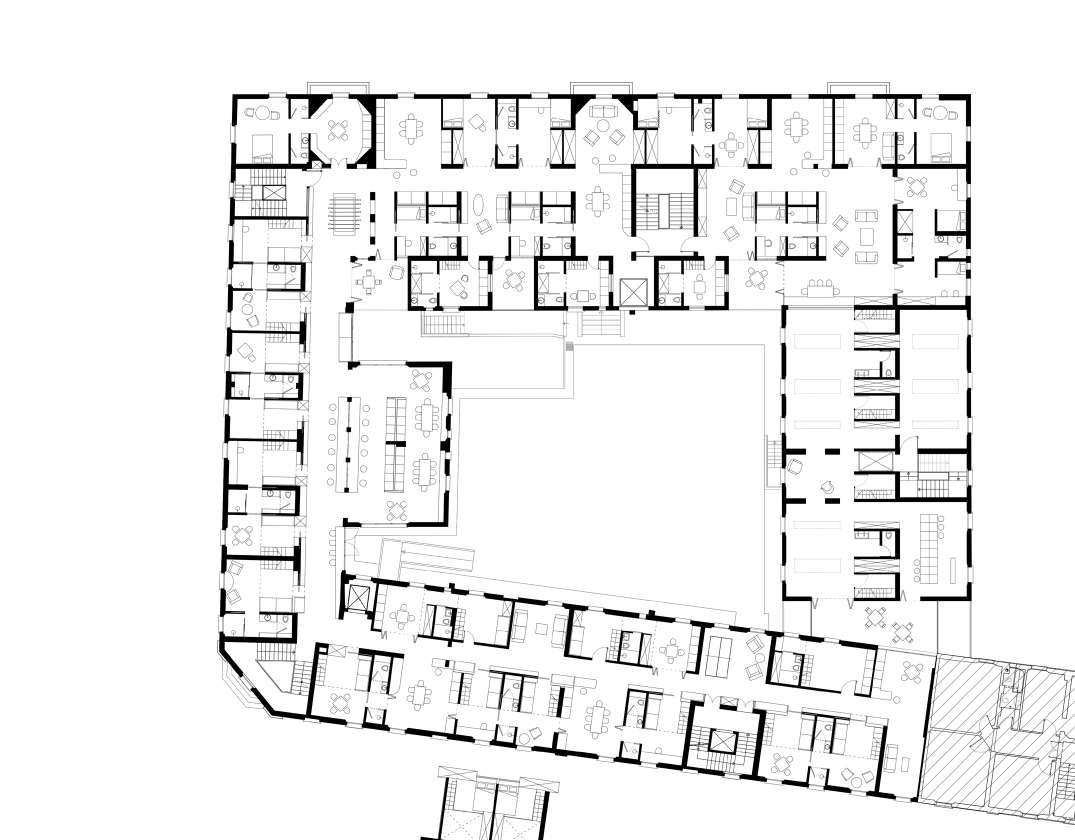
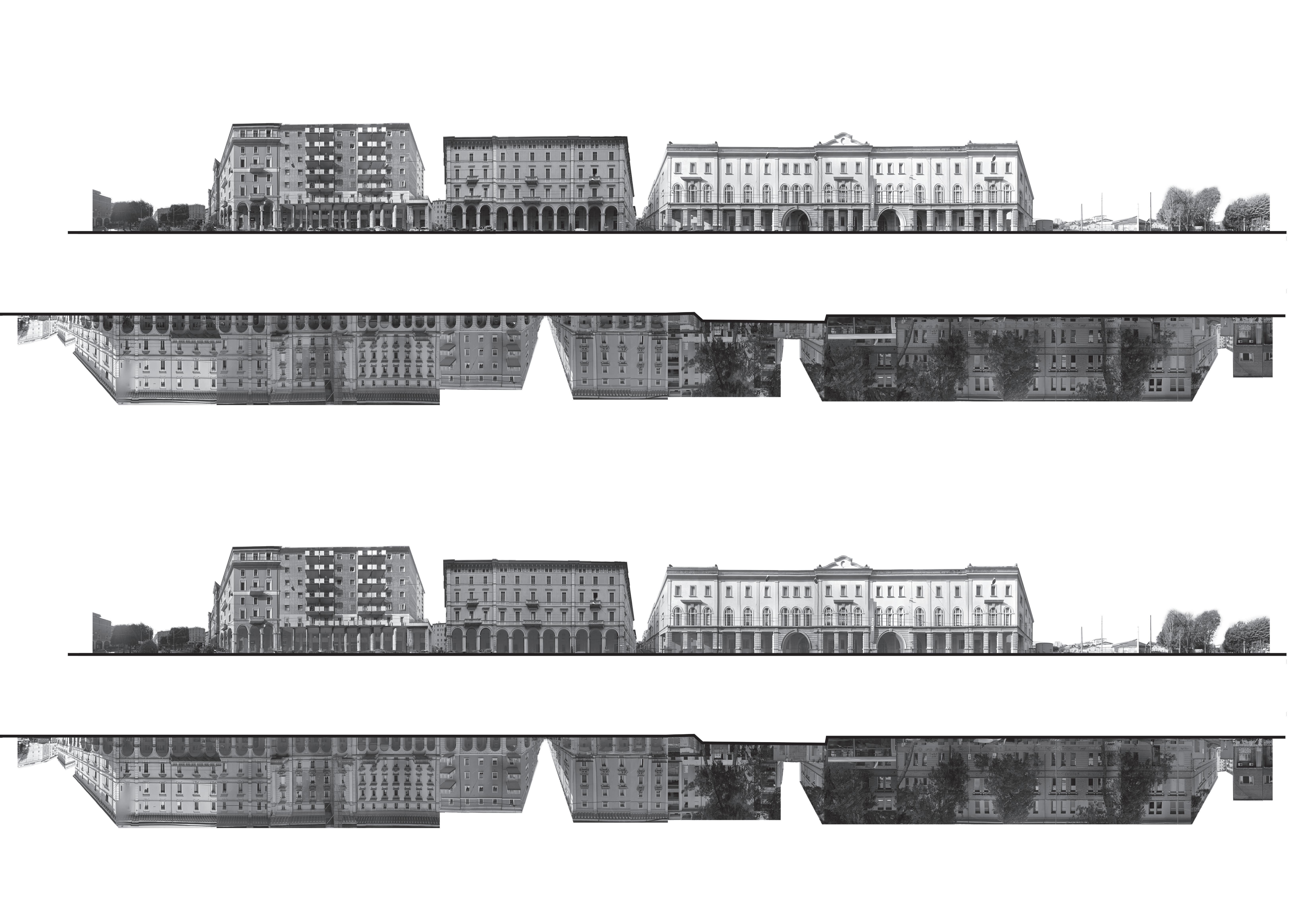
BOLOGNA
Aiuto Materno Palace
Type floor
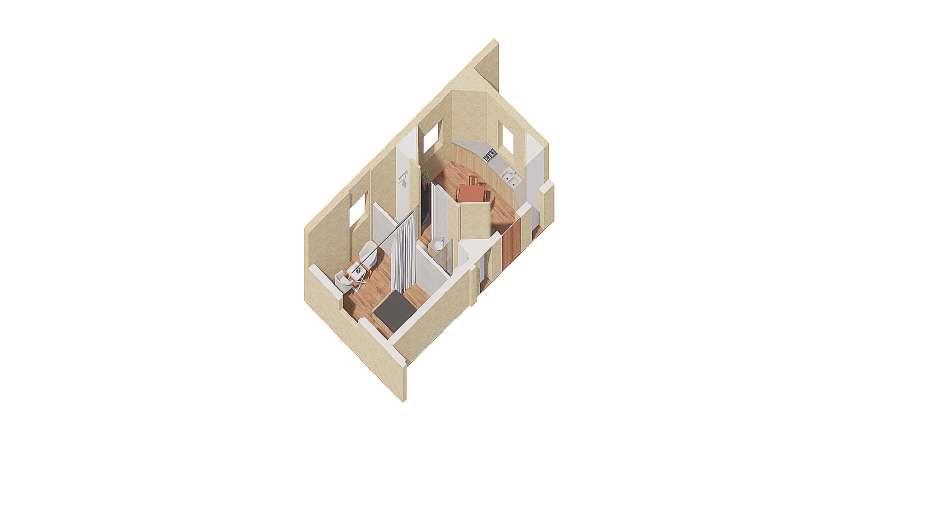
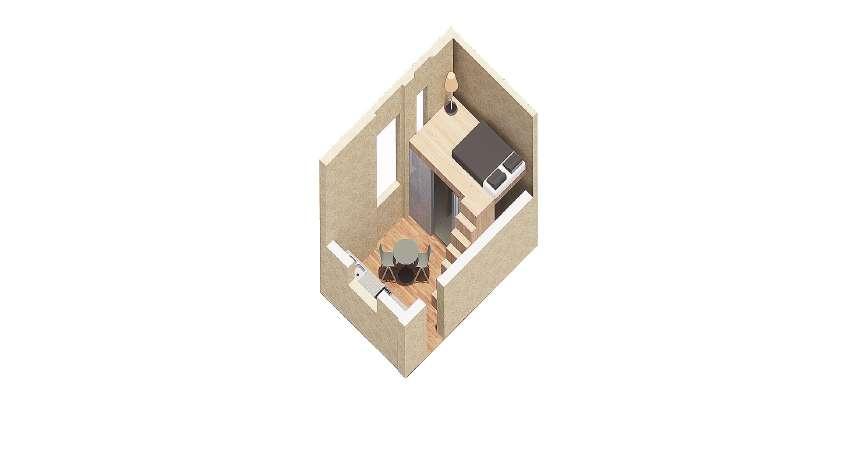
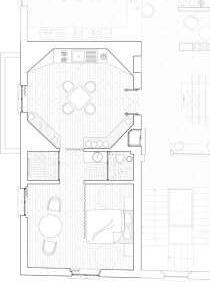
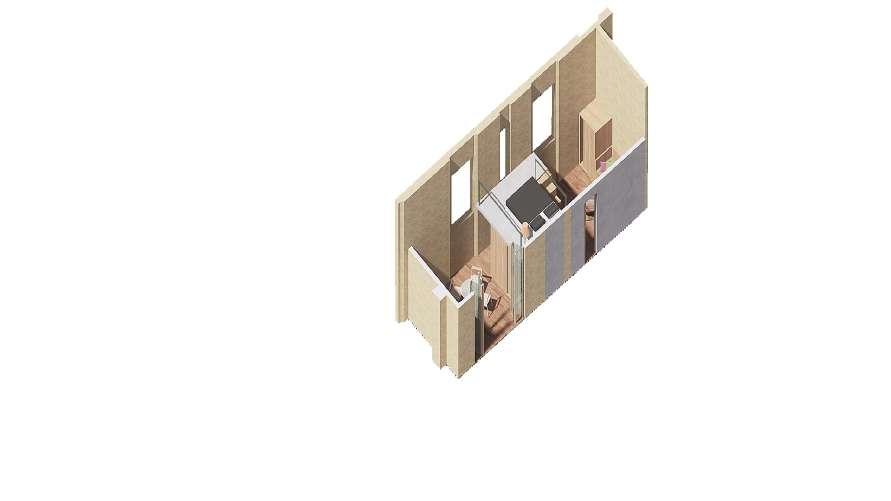
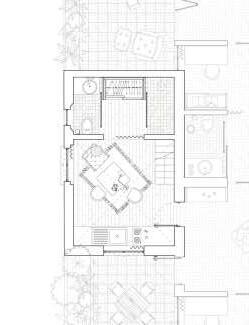
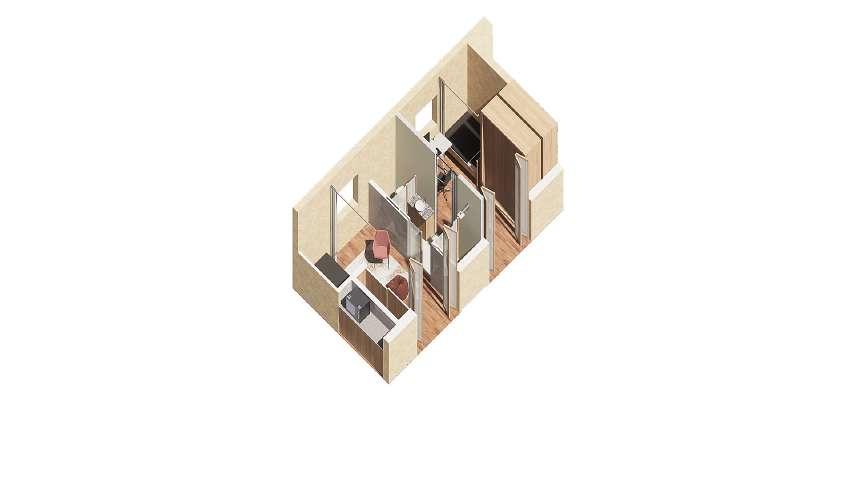
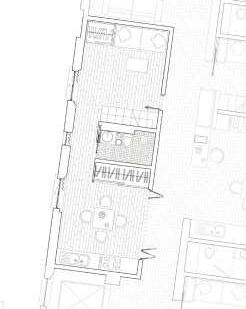
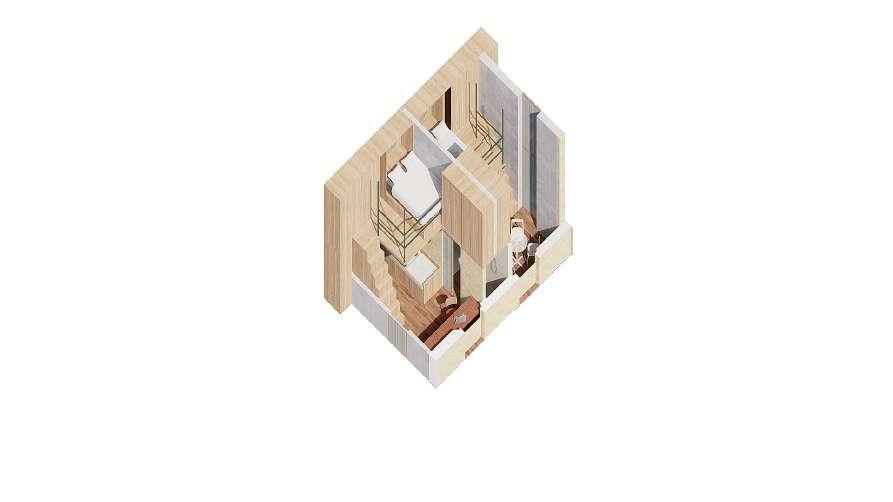
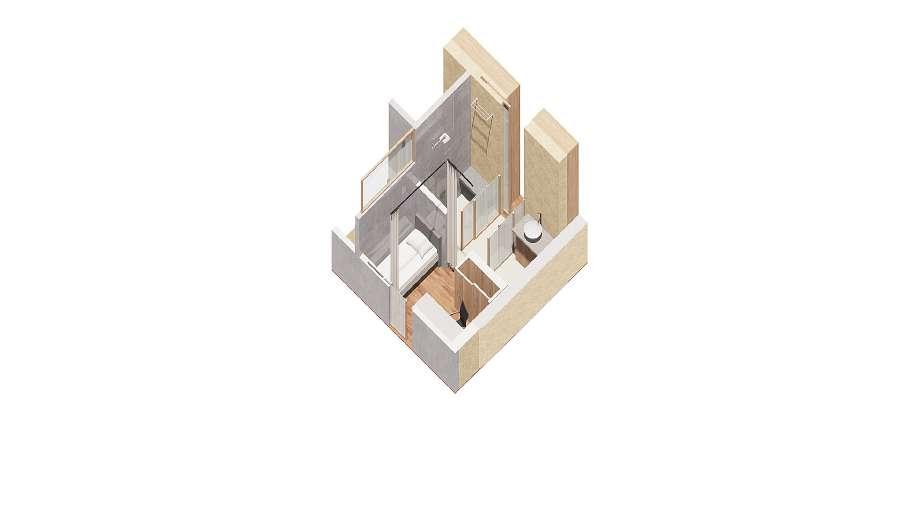
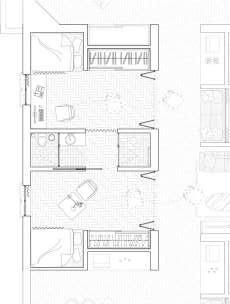
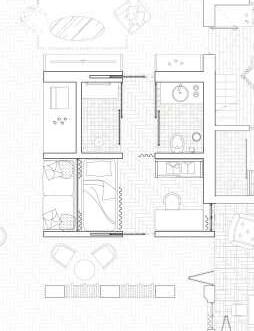
Fence
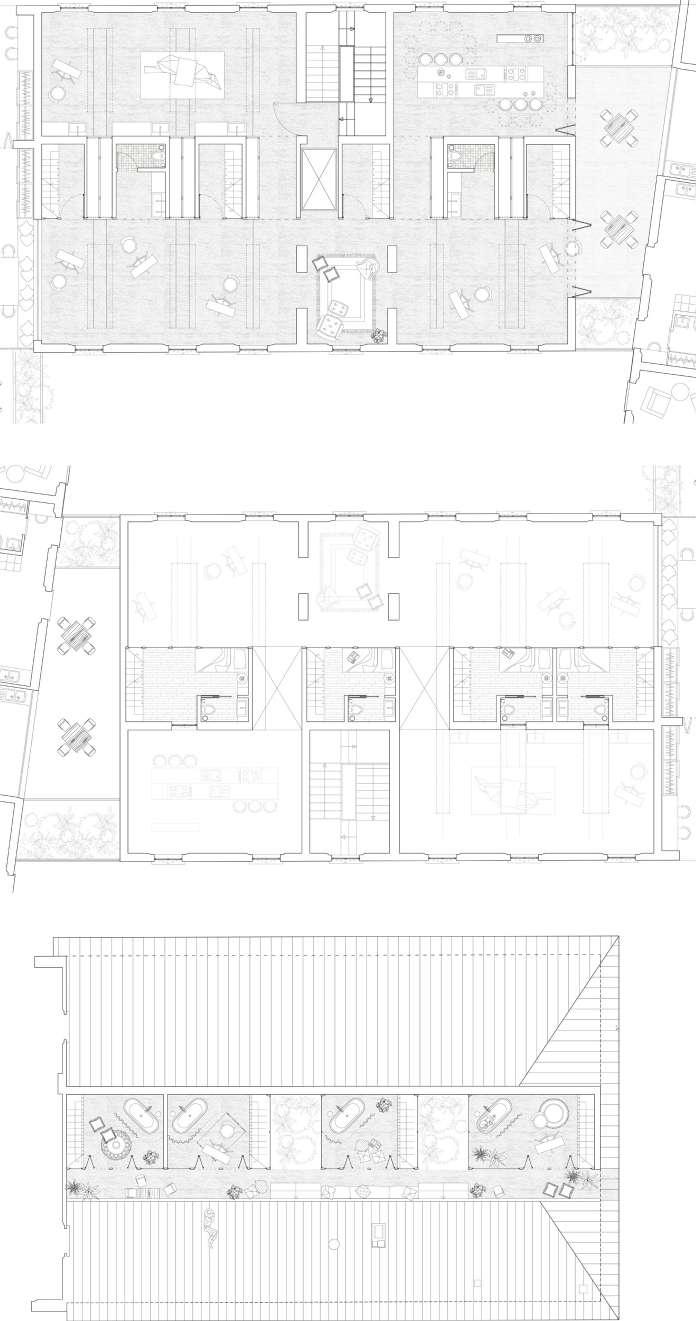
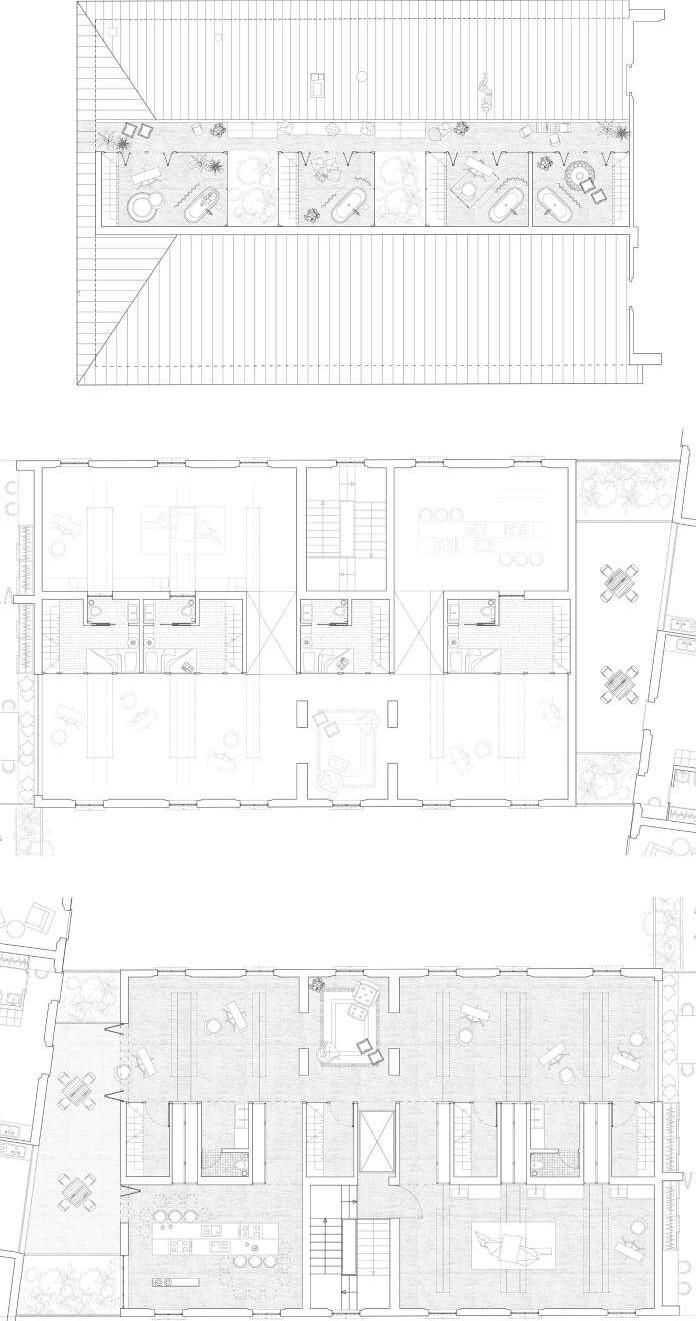
First Floor
Mezanine
Rooftop
THE MYCO-LAB
Design and Construction
Studio - Politecnico di Milano
Professors:
Arch. Ingrid M. Paoletti, Ing. Elena Mola.
Turtor: Arch. G. Castellano
Team Work: Marta Mattioli, A. Crocicchia, C. Assirelli (Italy), Y. Li (China).
Period:
Febr. - July 2023
Research center for Mycelium in an imaginary forest.
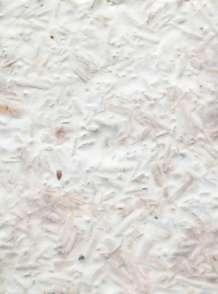
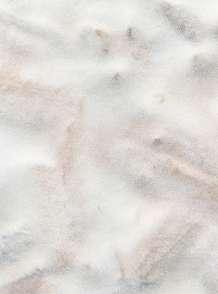
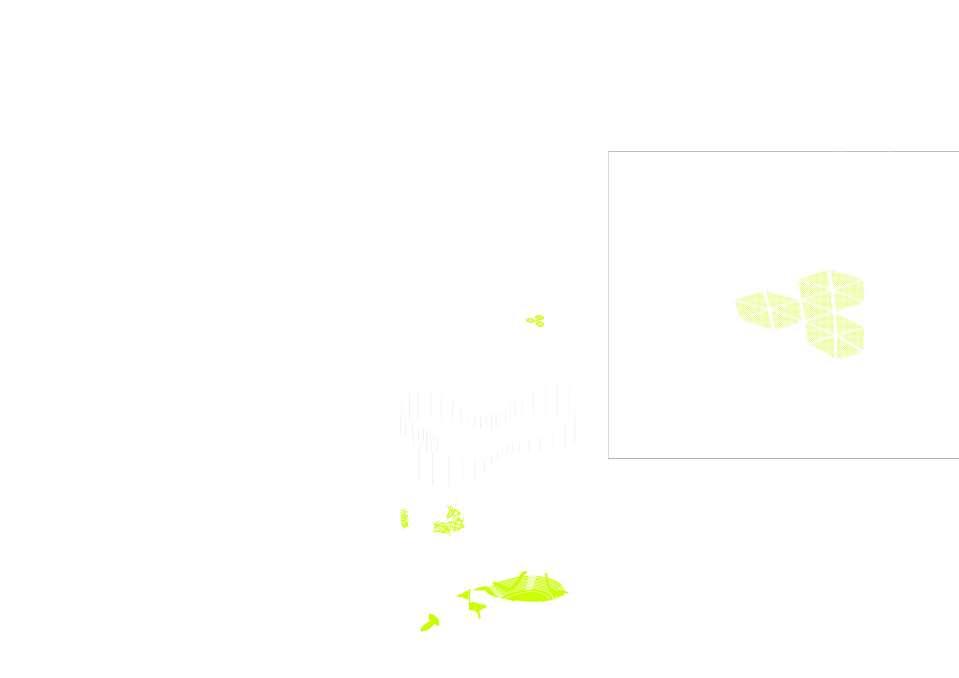
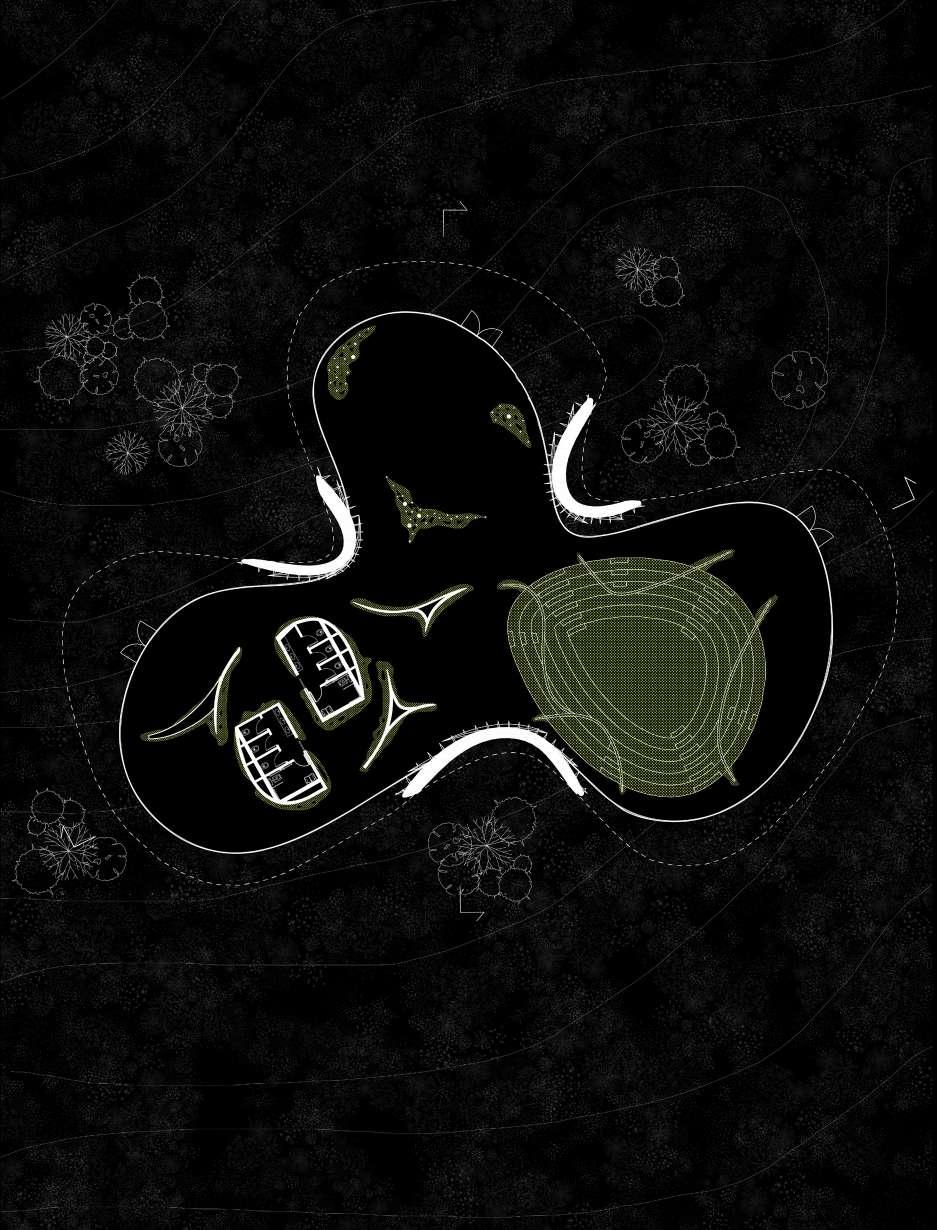
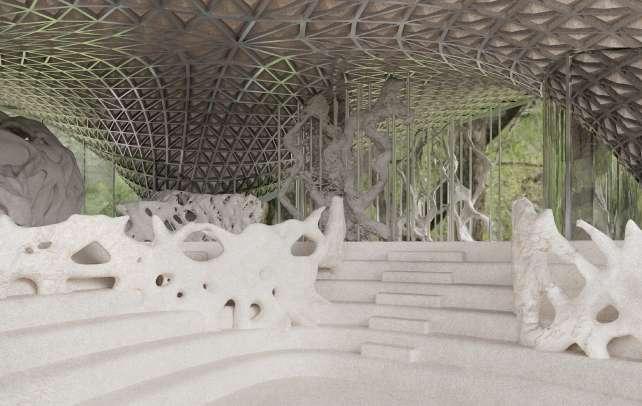
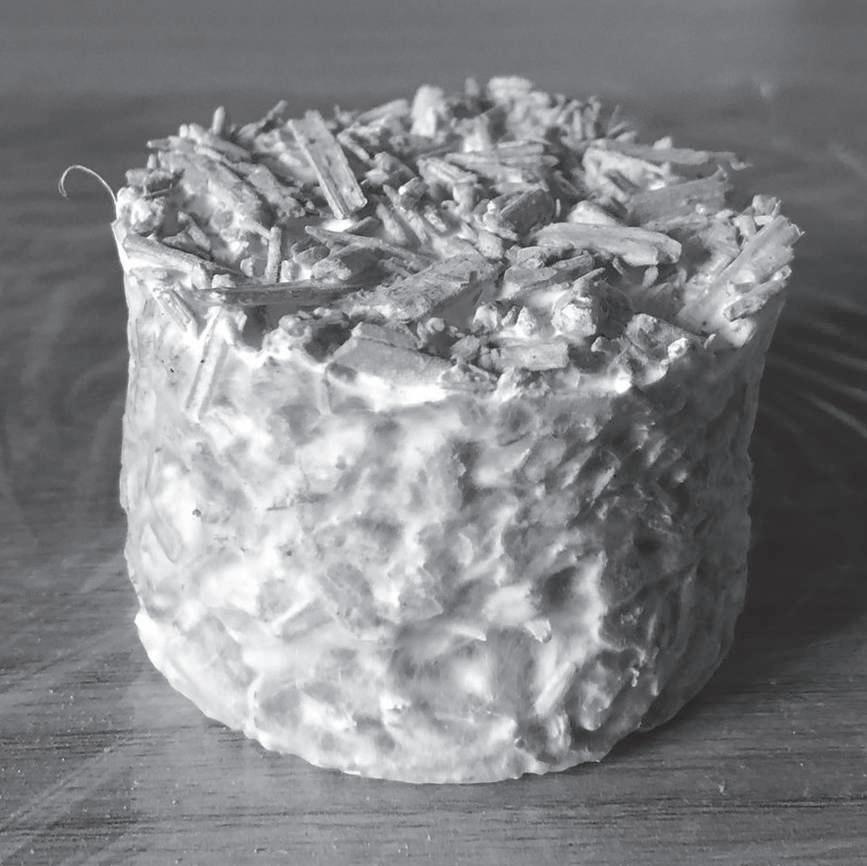
The Myco-lab is an innovative research center nestled within an imaginary forest, dedicated to exploring the potential of mycelium. Encased in a distinctive greedshell structure, it serves as a hub for experimentation and the dissemination of discoveries related to mycelium.
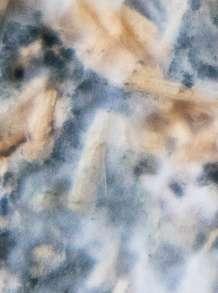
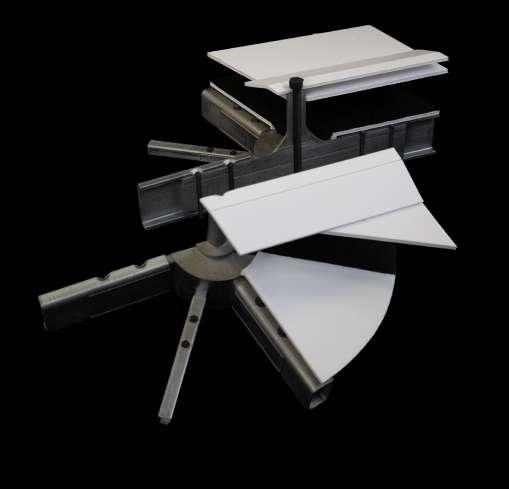
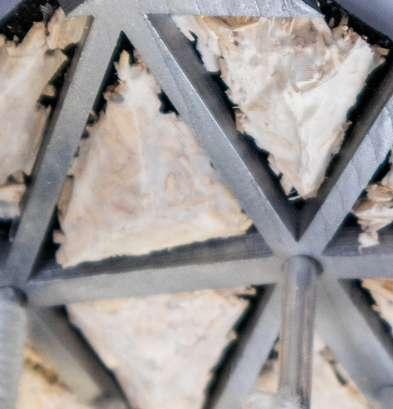
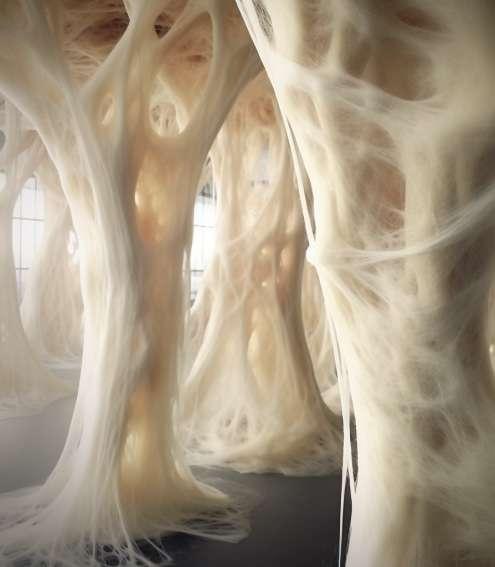
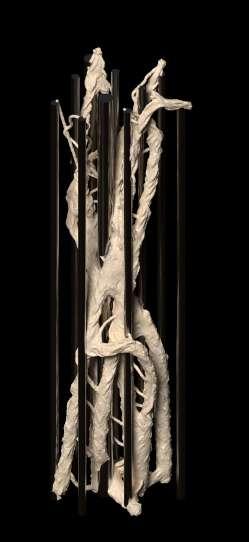
The building’s is characterized by a steel framework entirely enveloped in mycelium (inside). This unique choice of covering not only enhances the structure’s acoustic properties, but also contributes to its aesthetic appeal. Inside, mycelium is ingeniously utilized throughout, akin to a pervasive weed grass, adorning every corner from the toilette to the theater. Here, the material is leveraged for its remarkable comfort properties.
Towards the conclusion of the structure lies an area delineated by pillars, some of which serve as load-bearing elements. Each pillar is sheathed in mycelium, facilitating the creation of partitions and demarcating the boundary between the research laboratory and the remainder of the center.
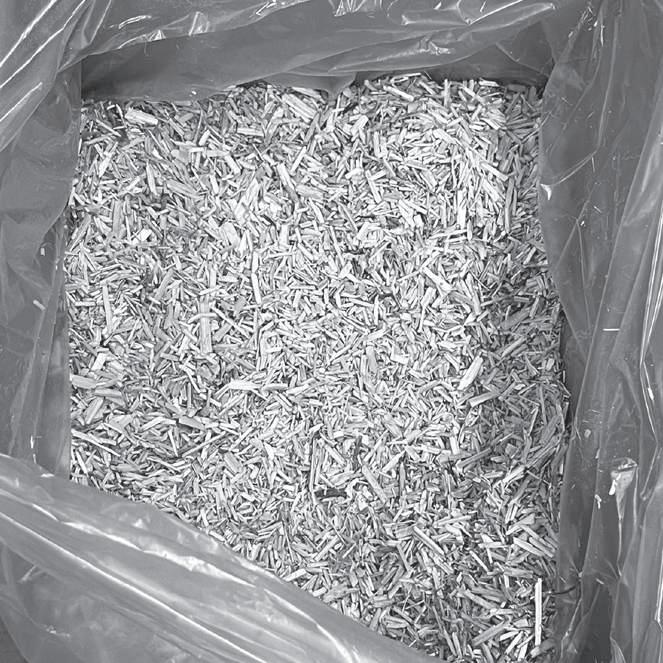
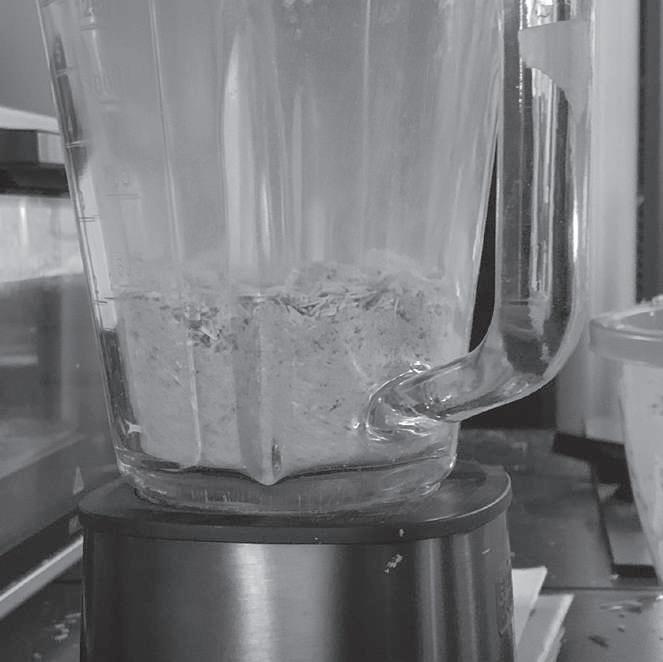
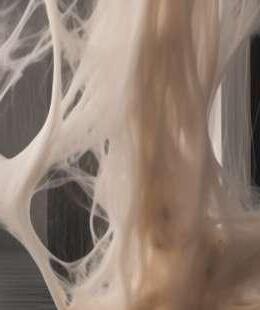
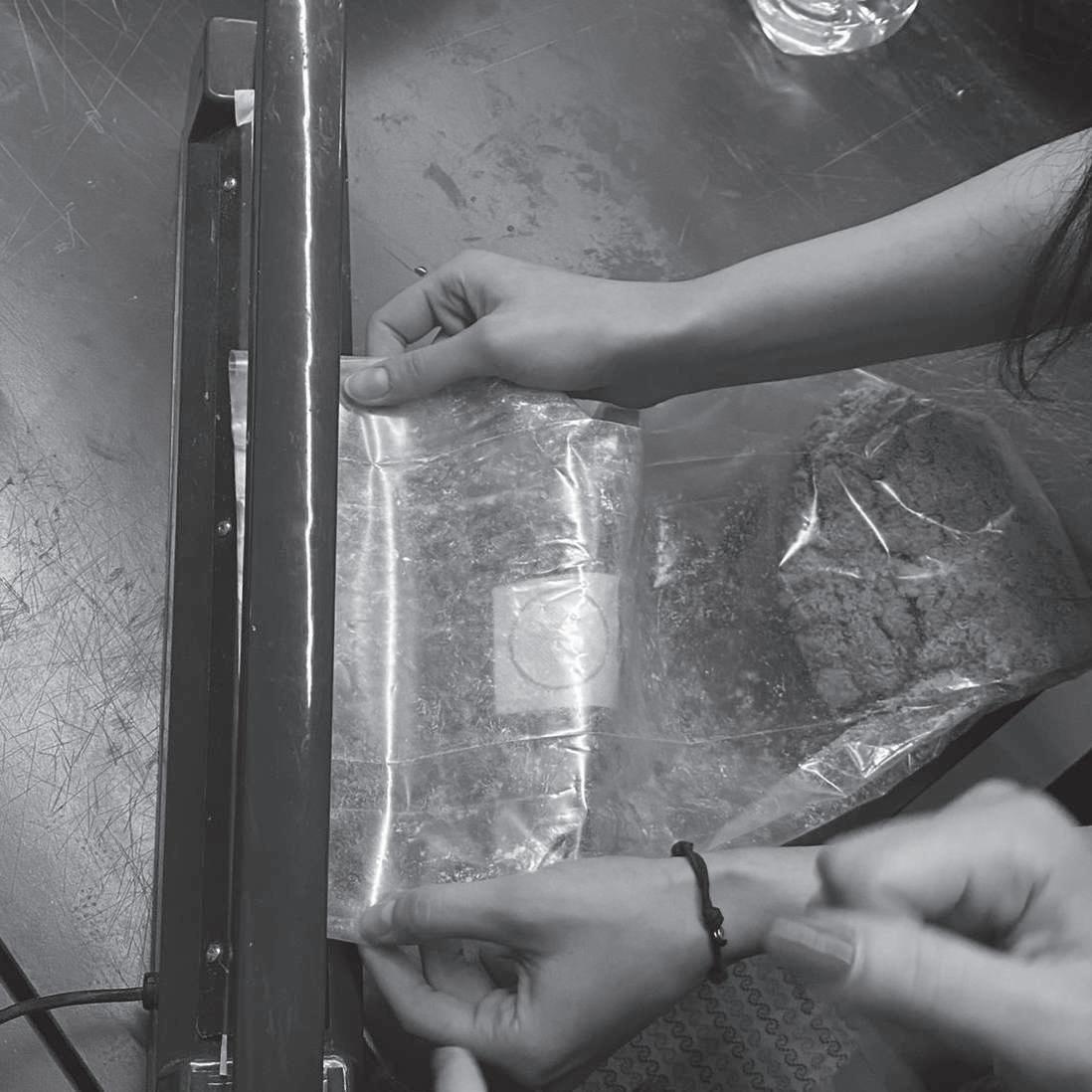
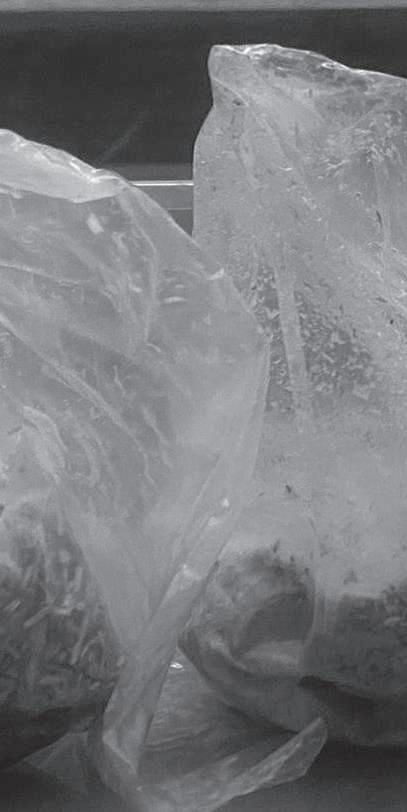
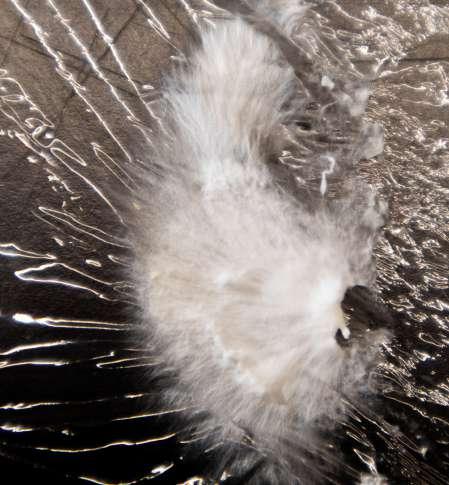
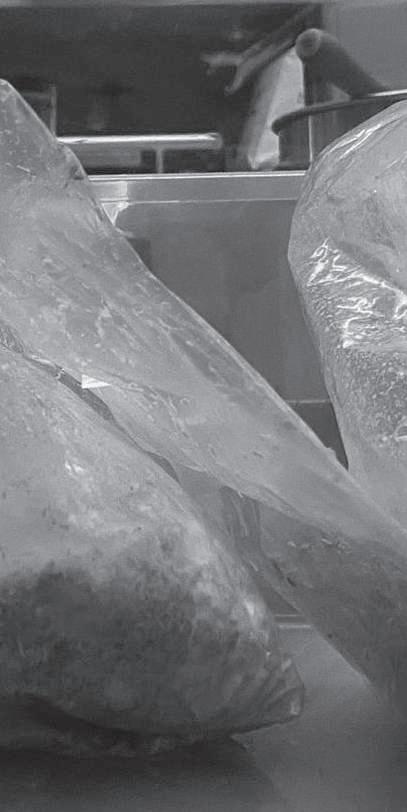
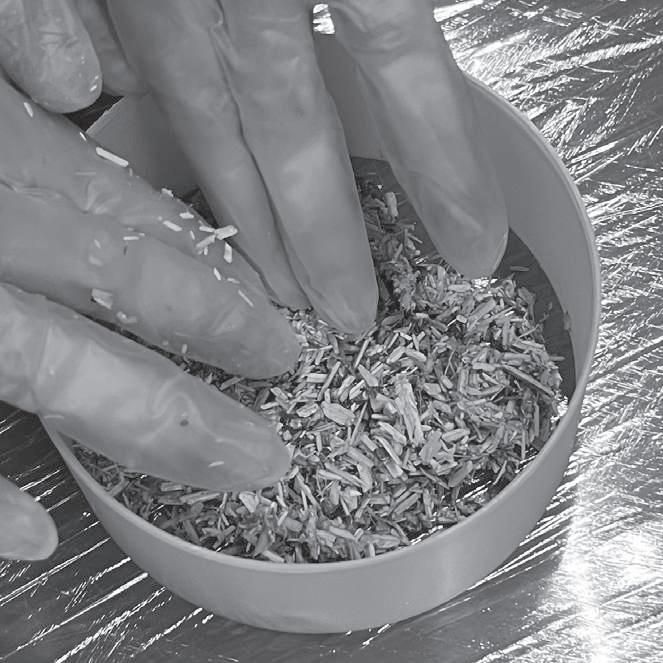
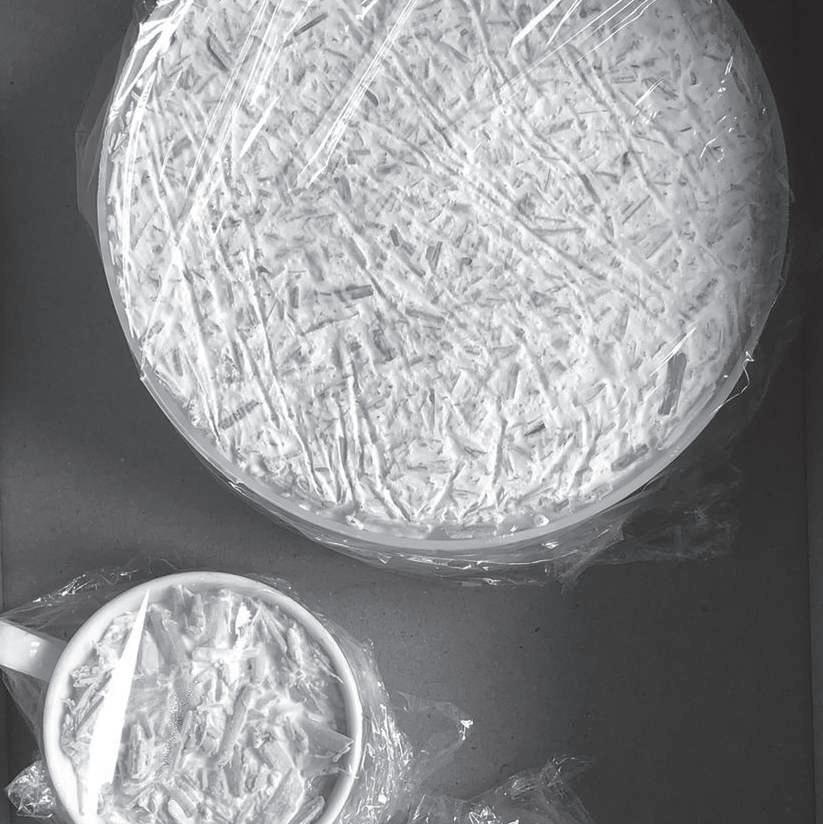
Throughout the project, extensive experimentation is conducted within the laboratory to further understand and harness the properties of mycelium, yielding valuable insights, and samples.
The programs used for this project were: Autocad, Rhino, Miro, Cura (for 3d printing), Midjourney, Illustrator, Photoshop and Indesign.
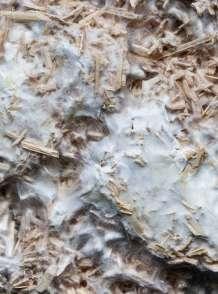
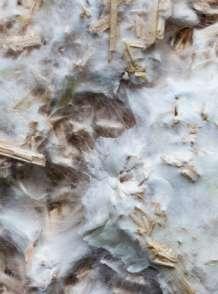
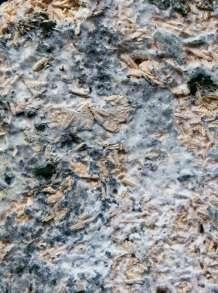
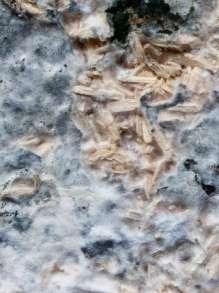
Technological Design: Materic Tests
Material Category: Mycelium
Materic Test 01
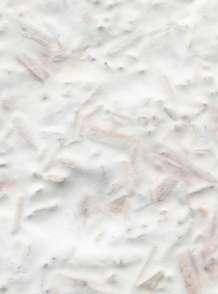
Materic Test 02
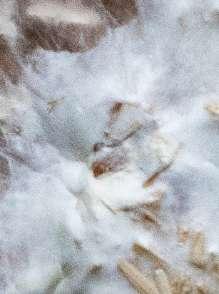
Materic Test 03
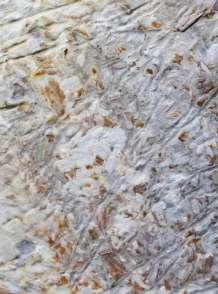
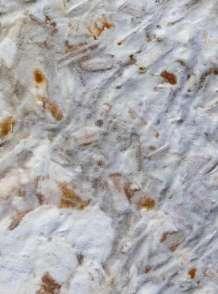
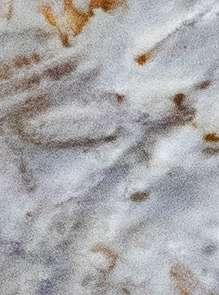
Materic Test 04
Ingrid Maria Paoletti, Elena Francesca Anna Maria Mola
Materic test

Rooftop
Structural node
Interior view
Mycelium cover
THE MILANESE COURT
Architectural design StudioPolitecnico di Milano
Professors:
Arch. Cino P. Zucchi
Team Work: Marta Mattioli, V. Brusadin (Italy).
Period: Sept. - Febr. 2022
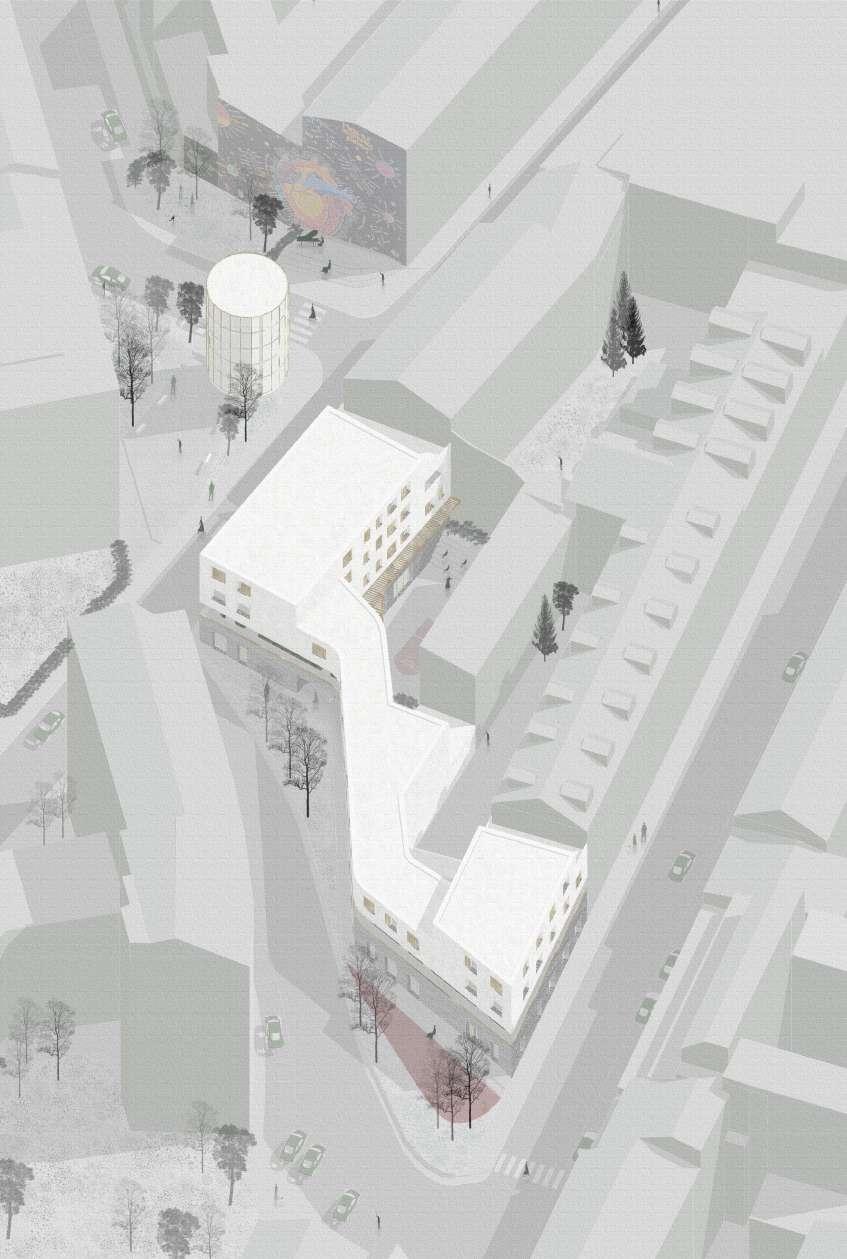
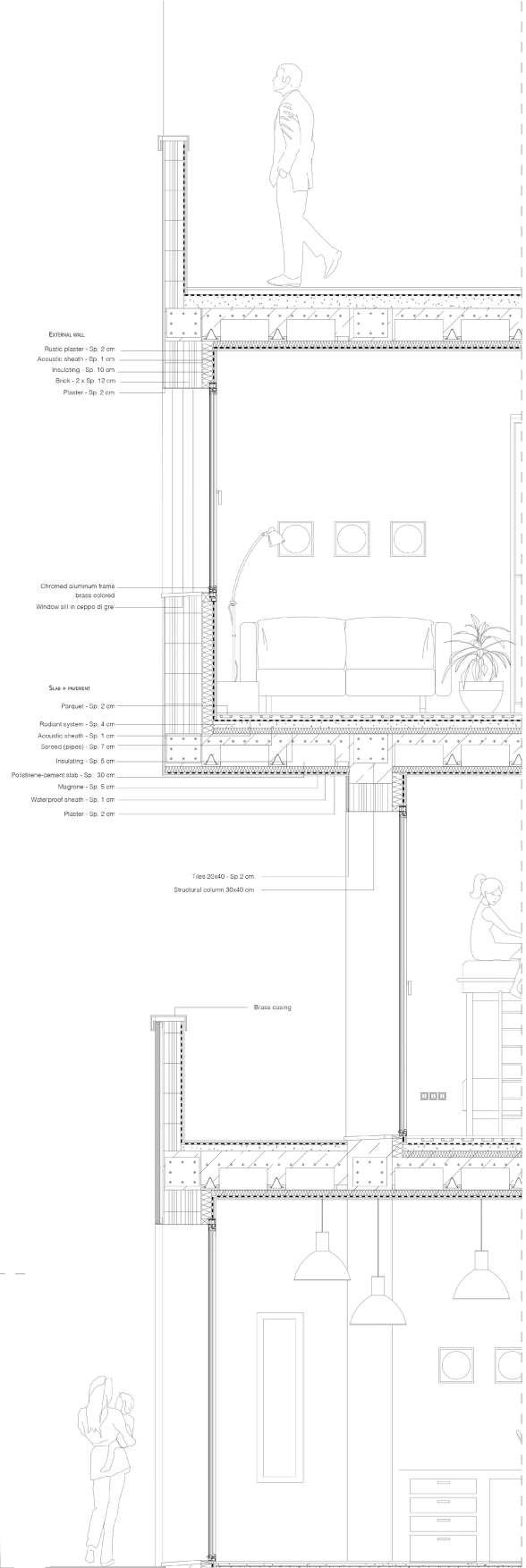
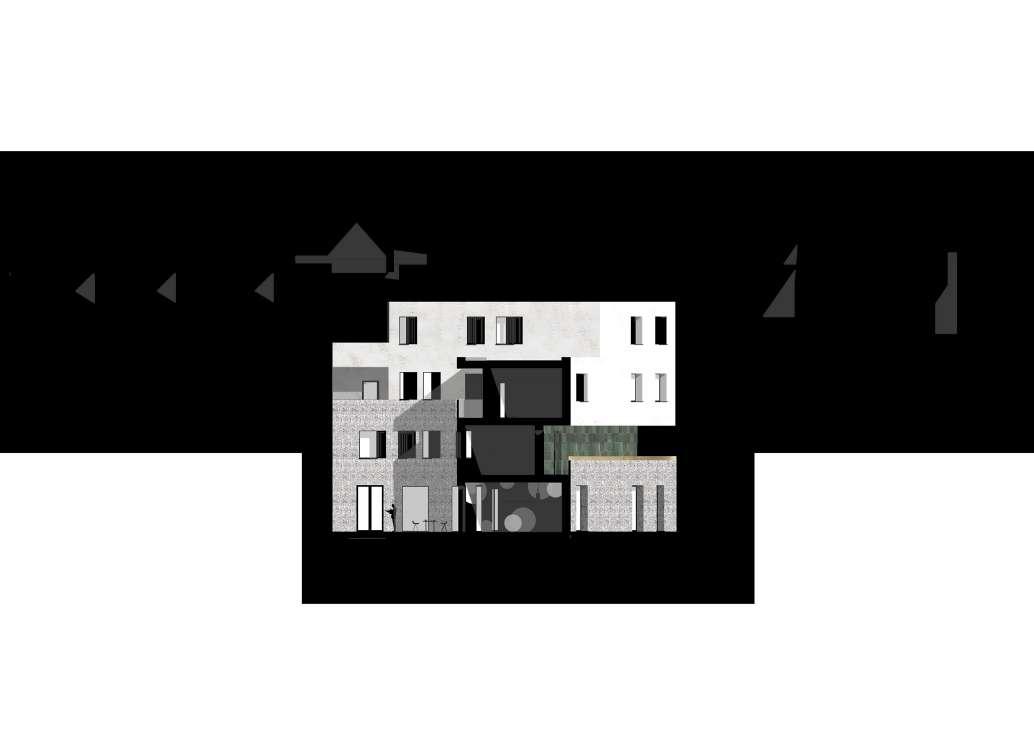
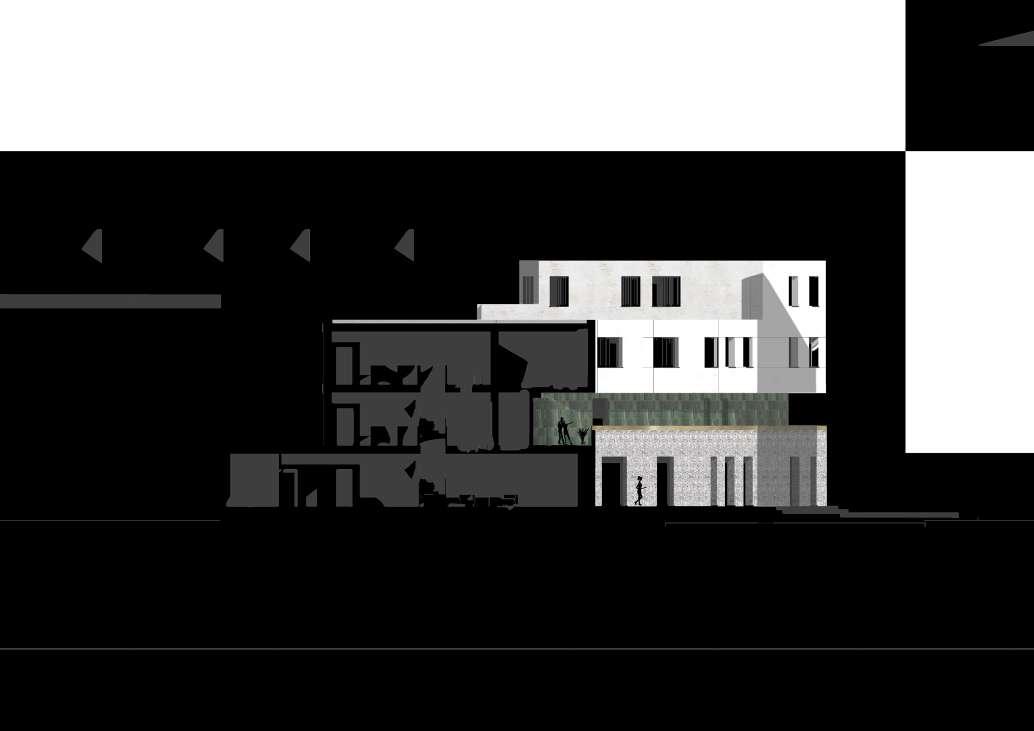
Hostel located in Via Cocchiarella, Milan, Italy.
The studio’s project culminated in the creation of a hostel situated in the heart of Milan, adjacent to the Navigli, within a challenging urban environment characterized by dense buildings. This hostel was envisioned to cater to the vast demographic of travelers drawn to Milan, with the primary objective of revitalizing a residential area that lacked significant activity. From its inception, the project encompassed both architectural and interior design considerations, deeply rooted in the rich history of Milan. The hostel derived its name from the distinctive two courtyards, emblematic of Milanese architectural tradition. The expansive lodge, occupying the first floor, evoked the essence of post-war Milanese housing, featuring external room access. Additionally, meticulous attention was given to the selection of materials, favoring locally sourced elements such as Ceppo di Grè for the ground floor and green tiles adorning the upper lodge. The interior spaces were meticulously crafted to offer optimal comfort to budget-conscious travelers without compromising on aesthetic appeal. The ground floor was conceived as a vibrant communal area, with a bar/restaurant located on the northern side and various activity spaces within the courtyards. Meanwhile, the southern portion of the ground floor was dedicated to travelers, housing a welcoming lobby, and relaxation area. On the upper floors, the focus shifted to accommodation, with rooms and communal areas thoughtfully arranged to maximize functionality, and comfort.
The programs used for this project were: Autocad, Revit, Illustrator, Photoshop and Indesign.
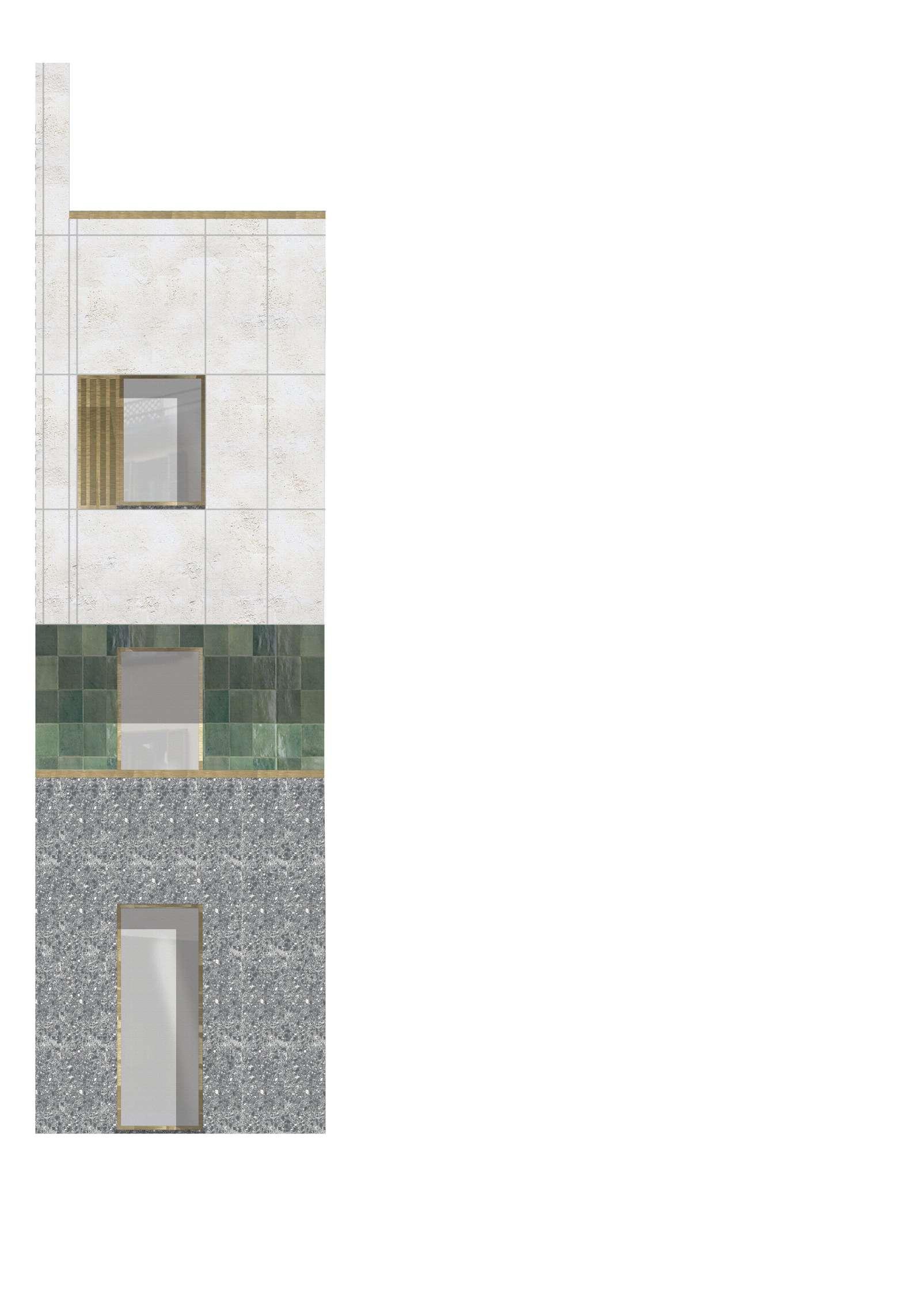


South elevation
Section - middle block
North interior elevation
DISCO 2022
Architecture of interior design
Studio - EXHIBITION
Politecnico di Milano
Professors:
Arch. Davide F. Colaci, Arch. Lola Ottolini.
Team Work:
Marta Mattioli, V. Brusadi, C. Mauri A. Milazzo, R.Marvulli, F. Preda, G. Grimoldi (Italy).
Publication on:
“Storia e futuro della discoteca”www.elledecor.com
Period: Sept. - Febr. 2022
Exbition located in Via Biondelli 5, Abbiategrasso, Milan, Italy.
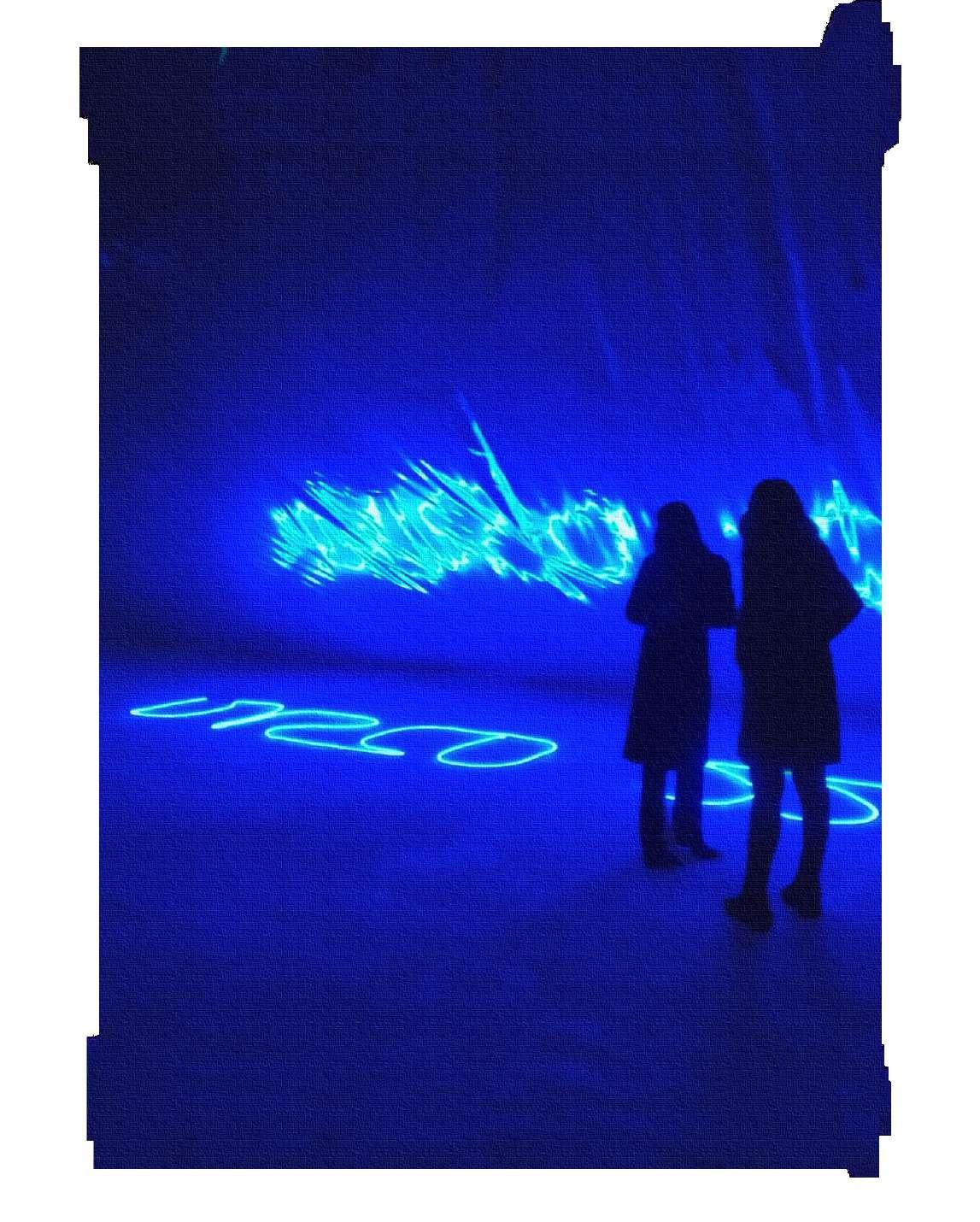
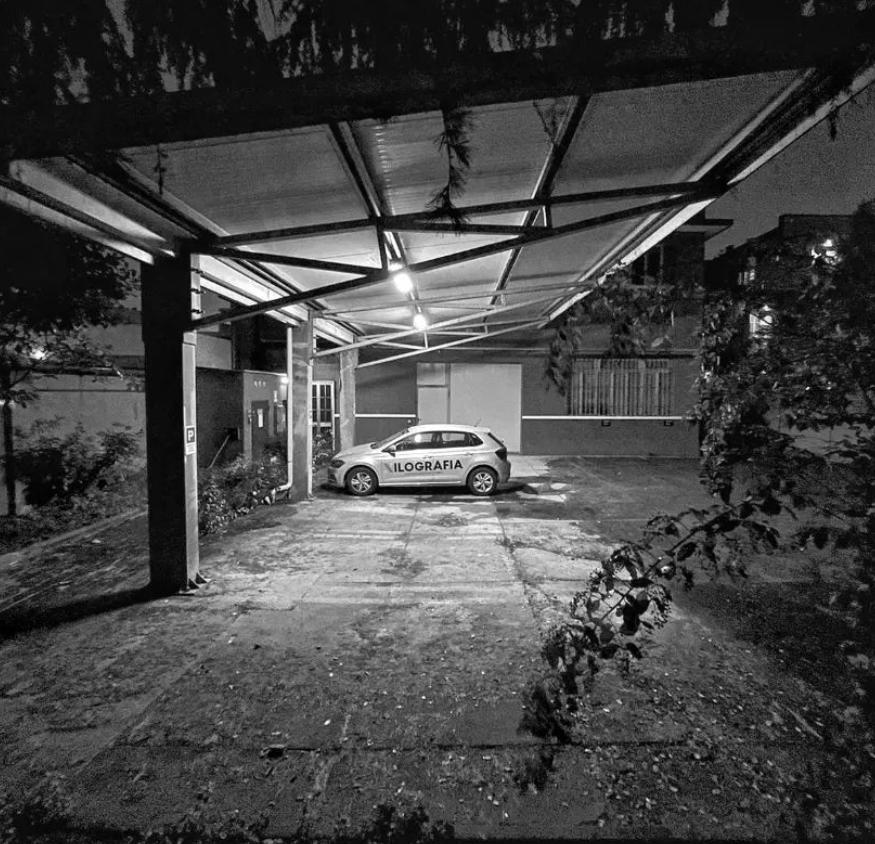
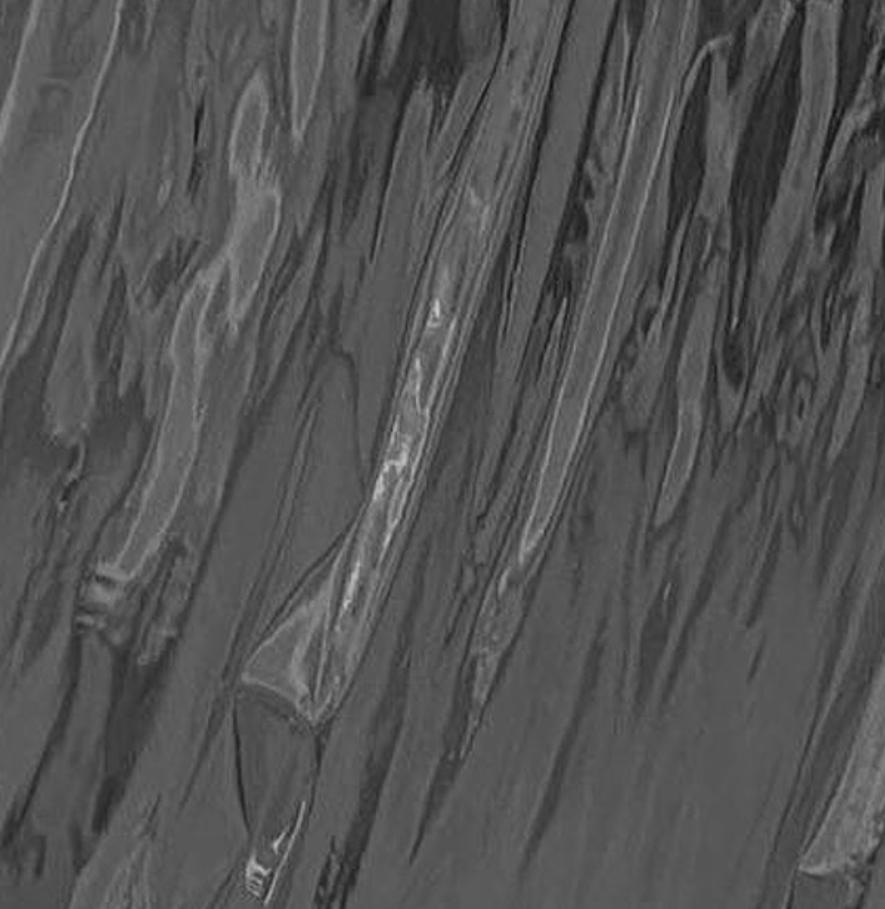
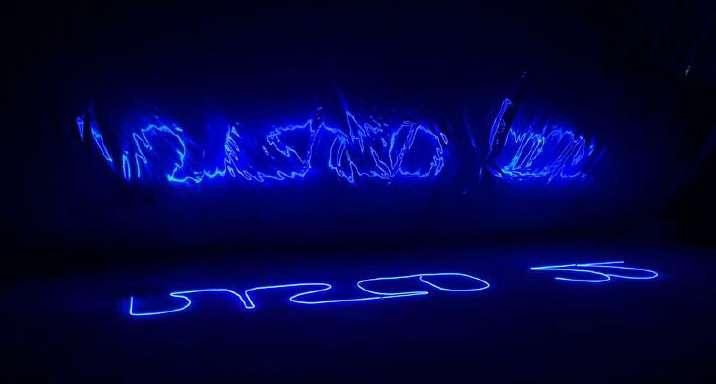
As part of our interior design studio course, we were tasked with conceptualizing a disco club within a tight three-day timeframe, drawing inspiration from the case studies explored throughout the course. Each group was assigned a specific aspect of the club to develop, and our group was tasked with designing the “Entrance”. The location was an ex-industrial building, owned by Xilografia, the design company that financed us, and the project aimed to interpret the archetype of the threshold. Our approach revolved around crafting an experiential journey from the entrance gate to the disco club’s foyer, fostering a social moment for arriving guests characterized by a sense of anticipation and transition. To seamlessly connect these two thresholds, we utilized a mirrored sheet composed of twelve Mylar modules, which reflected the LED text “DISCO 22” onto the ground, effectively guiding guests along the pathway. The ultimate goal was to generate a deeply immersive space for those entering the disco club, creating a disorientation effect achieved through a progressively sharper visual effect.
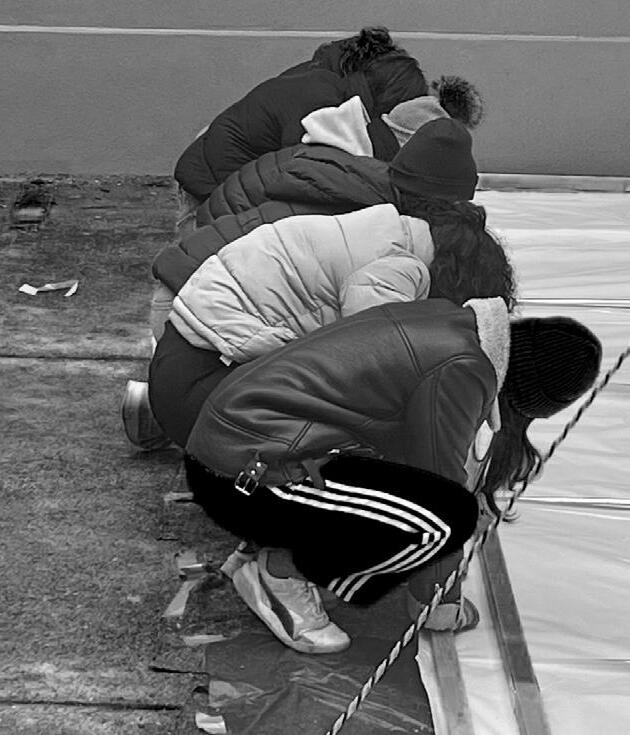
The programs used for this project were: Autocad, Rhino, Illustrator, Photoshop, and Indesign. In this case, manual work was required to assemble the structure.

Wooden Slats
Existing shelter Rope
Reflecting sheet -Mylar
Power supply Led
THE ROCK PAVILLION
Architecture design StudioPolitecnico di Milano
Professors:
Arch. Valerio Tolve, Arch. Luisa Ferro
Team Work: Marta Mattioli, G. Mattaini, D. Maurelli (Italy).
Period: Sept. - Febr. 2022
Pavilion in Temple Valley, Agrigento, Italy.
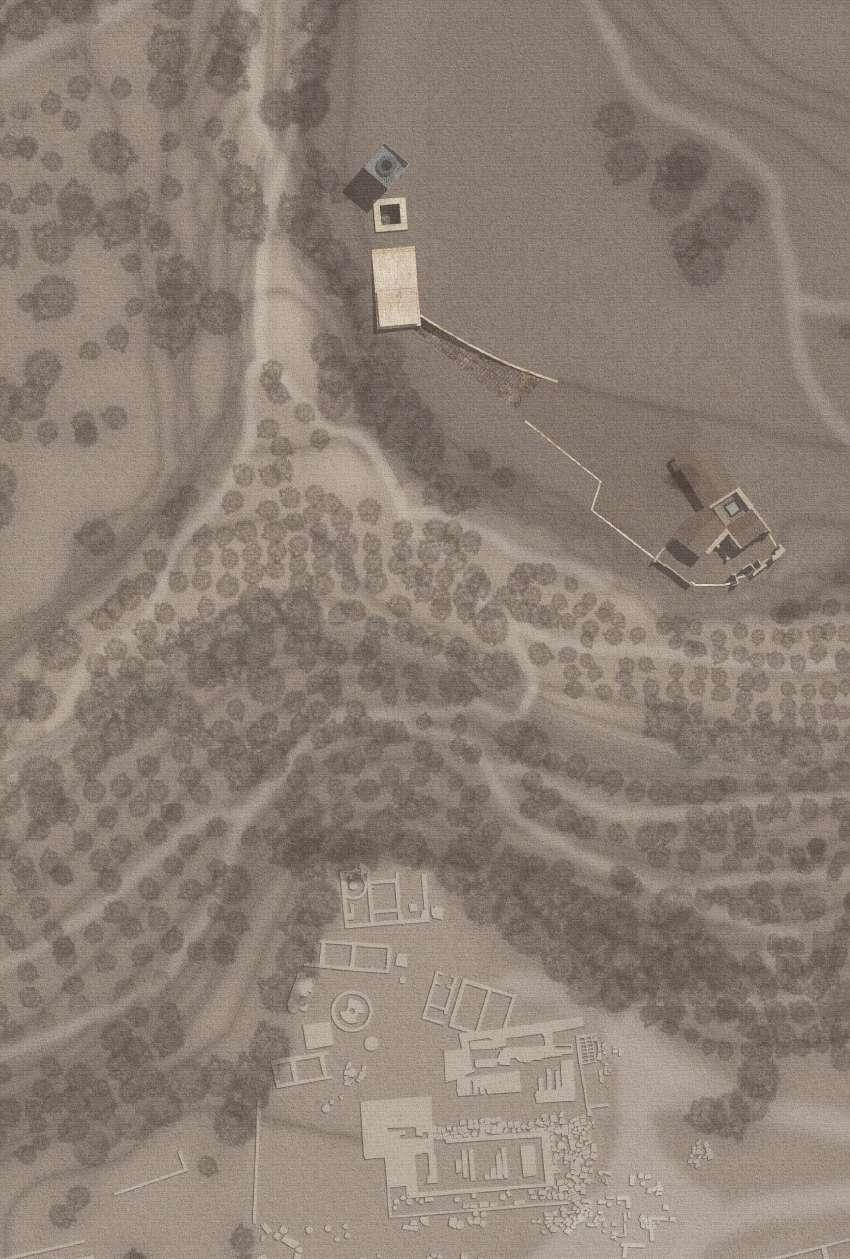
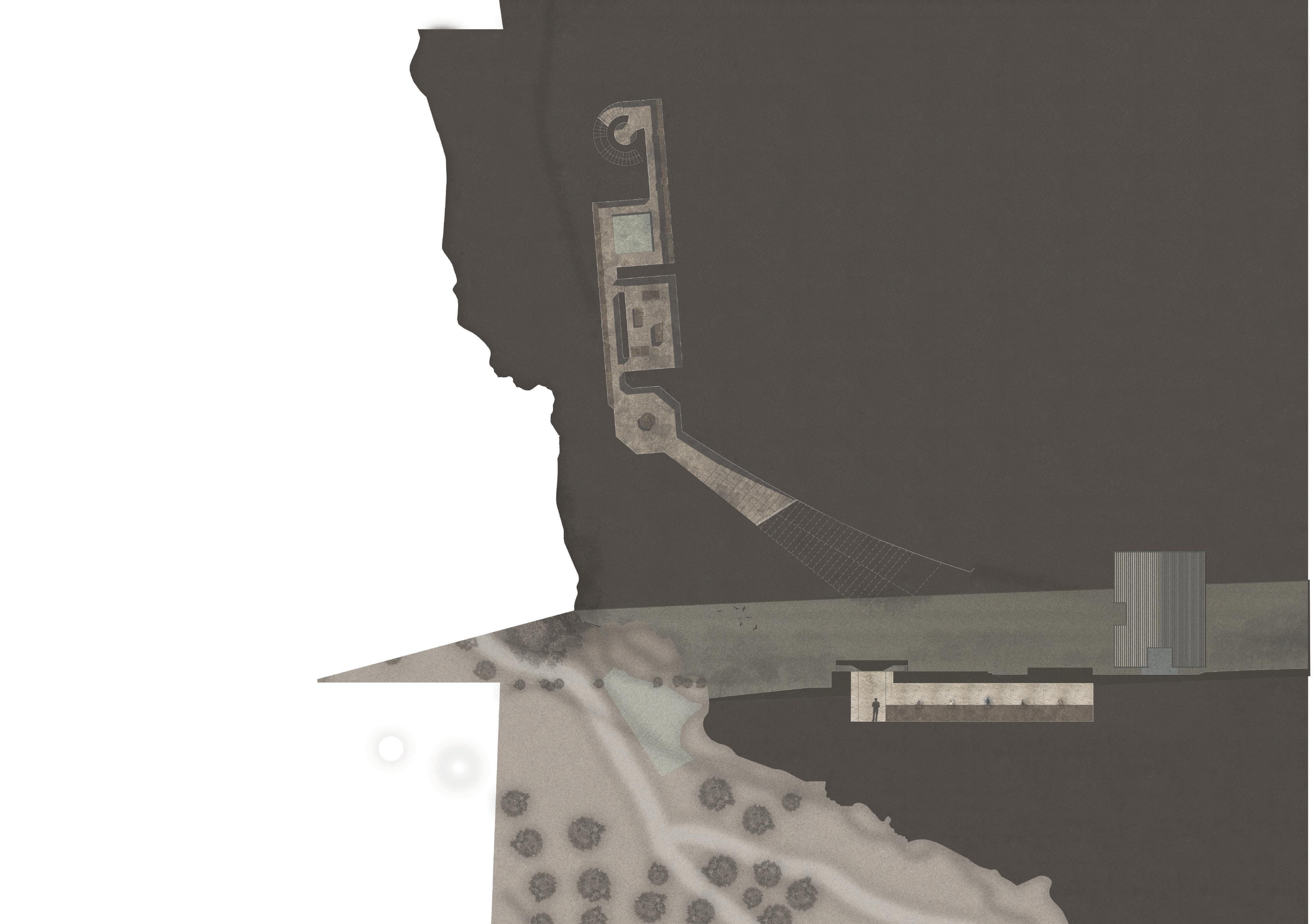
Given the UNESCO heritage status of the project area, it was imperative to create a structure that seamlessly integrated with the natural environment and preserved its intrinsic character. Our pavilion was carved into the tuff rock, and it was placed on the hill, on the orthogonal intersection of the axes of the temple of Dionysus and the one of Hephaestus, where the tower was located. This was an observation point, and the only elevated part of the building.
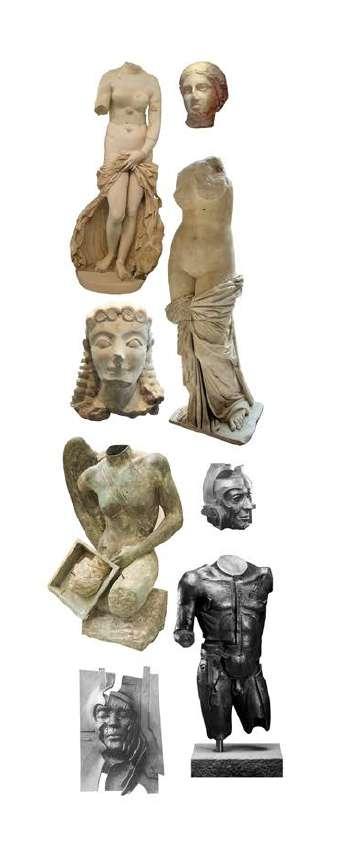
Central to the design concept was the visitor journey that started from the pre-existing Montana Houses and culminating in an ascent up a grand staircase leading to the exhibition pavilion. From that it was possible to access the interior space, a sequence of exhibition rooms, all finished with natural materials, with a system of pedestals, an exhibition bench, and a water court, to emphasize the statues and the installations. This arrangement fostered an immersive and contemplative experience for visitors as they traversed the space
The programs used for this project were: Autocad, Rhino, Illustrator, Photoshop, and Indesign.
Central core with a statue
Water court
Exhibition bench
Wall carved into the rock
Pedestals
Exhibition bench
Staircase
Mattioli
Info: marta1.mattioli@mail.polimi.it
Marta