
Teacher: María Miranda
Subject:Didactics of teaching in English
Student: Marleni jimenez

◦ The glossary presented below is intended to provide a practical guide to understanding and applying key concepts in language and literature methodology.
◦
An activity is an action that an individual or an institution carries out on a daily basis, as part of their obligations, tasks or functions.

• Gives rise to methods, the way of teaching someting

◦ An article is a text that presents the personal position of a journalist, an analyst or a thinker (even a certain group of authors), regarding a certain event, problem, current issue, of general or historical interest.

In the article, listening comprehension refers to understanding and interpreting what you hear. It is not a mere receptive skill of decoding and discriminating sounds (syllables, words, phrases or sentences).

◦ Scientific, literary or any other work of sufficient length to form a volume, which may appear in print or on another medium.
Competence can be defined as the aptitude that a person has, made up of abilities, skills and abilities that they have to carry out an activity or meet an objective within the work, academic or interpersonal field.


◦ It is the form of communication that exists in different indigenous peoples, regardless of the language in which it is enunciated; It is a way of communicating knowledge, agreements, joy, etc.

◦ A conversation or a talk is an oral, written, or sign language dialogue between two or more people who intervene alternately, expressing their ideas or affections without the need for planning.

communication
◦ is an exchange of information and emotion, where a transformation occurs because different elements participate such as the message that is transmitted, the context in which it is given, the language that is used and the roles that participate.

◦ It is an approach to language teaching in which interaction is given maximum importance as a means and as a final goal in learning a language.

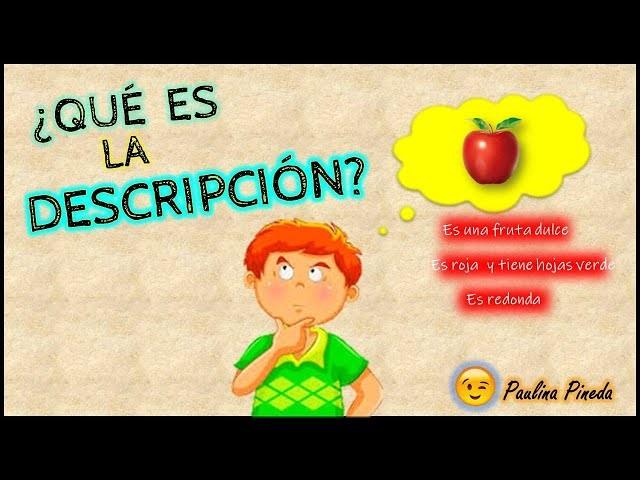
Describing is a discursive tool that allows us to explain, in a detailed and orderly manner, what people, animals, places, objects, etc.
Development
is
a social condition in which the authentic needs of its population are satisfied with the rational and sustainable use of natural resources and systems.

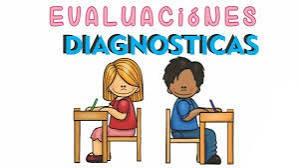
◦ It is carried out prior to the development of an educational process, with the intention of exploring the knowledge that the students already possess. It can be carried out at the beginning of the school year or at the beginning of a didactic situation or sequence.
◦ It is the obtaining of information, in terms of knowledge and abilities that are considered necessary to successfully initiate new learning processes.
◦ Dialogue is a form of verbal or written communication in which two or more people communicate in an exchange of information, alternating the role of sender and receiver.

It is the process of facilitating the refinement of the individual's own skills or abilities, through learning, the construction of knowledge or various experiences, as well as virtues, beliefs, habits, or other characteristics of the being.

◦ Efficiency is the ability to have someone or something available to achieve the proper fulfillment of a function
Intonation is the variation in the pitch of the voice with which a statement is pronounced. The pitch or, in acoustic terms, the fundamental frequency, Fo, corresponds articulatorily to the frequency of vibration of the vocal folds.


Put emphasis on the expression of something. Highlight, highlight, accentuate, enhance, emphasize, underline, exaggerate.

Evaluation is a process used to systematically determine the merit, value and meaning of a job or ability, whether intellectual or physical.

◦ This evaluation allows us to know what, how, when and how much students are learning, which offers us the possibility of regulating strategies, resources and activities.

◦ It is carried out to assess the progress of learning and improve teaching and learning; its function is to improve an intervention at a given time.
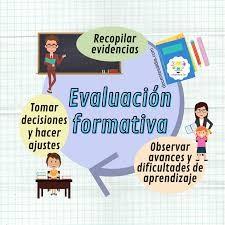
◦ Fluency It is the process that allows the smoothness, rhythm, continuous flow, without pauses or repetitions, with which sounds, words and phrases come together in oral language.

◦ Part of linguistics that studies the elements of a language, as well as the way in which they are organized and combined

Including
◦ Put something or someone within a thing or a set, or within its limits Interactive
◦ The term interactive will designate everything that comes or proceeds through interaction.


◦ Knowledge is familiarity, awareness, or understanding of someone or something, such as facts (descriptive knowledge), skills (procedural knowledge), or objects (familiarity knowledge).

◦ textParticular way of speaking of some or on some occasions.
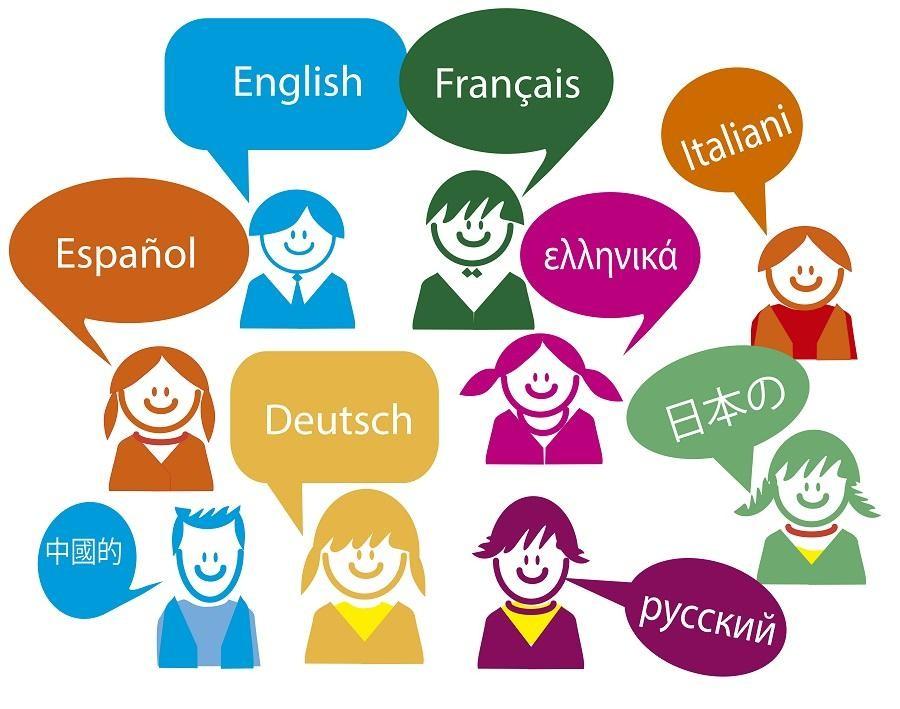
Literature is a type of artistic expression that uses the use of oral or written language Life
life is fullness, freedom, peace, love, joy, gratitude, sharing, coexistence, well-being, health, tolerance, success, future and service to our fellow human beings


◦ To live is to mention or identify the place where you are residing,
◦ Refers to the set of rational procedures used to achieve the objective or range of objectives that govern a scientific investigation, a doctrinal exposition or tasks that require specific skills, knowledge or care.

◦ Methodrefers step by step guidelines

◦ Mobilization in teaching is a pedagogical approach that seeks to actively involve students in their learning, encouraging their participation, interaction and commitment to the content.
◦ Motivation, often driven by curiosity, is what keeps us moving forward in life. It encourages us to learn and improve, and to set and meet goals.

Optimizing
◦ Optimizing means seeking better results, more effectiveness or greater efficiency in the performance of some task.

◦ Discipline is the ability of people to put into practice a series of principles related to order and consistency, both for the execution of daily tasks and activities.

◦ General plan, methodically organized and often of great scope, to obtain a specific objective, such as the harmonious development of a city, economic development, scientific research, the functioning of an industry, etc.

◦ A production company is responsible for the development and filming of a specific broadcast production or media. In entertainment, the production process begins with the development of a specific project.

◦ Reading comprehension or comprehensive reading is the ability to understand what is read, both in reference to the meaning of words that make up a text, and the meaning inside and outside of the total argument.

◦ said of an exhibition or a sample: That chronologically presents the works of an artist or a group in order to fully show their career.
• Resources in education refers to all types of materials, tools, techniques and devices that are used to facilitate the teaching and learning process.


◦ Worhs as independiente language

• The structure is the arrangement and distribution of the parts that make up a whole, whose order and relationship allow the functioning of a certain system

Strategy
Setting goals and priorities determing actions to achieve the goals mobilizing resources to execute The actions.

It is used to evaluarte Student learning, skill qués tío, and academic achievement at the conclusiopn of a defined instructional

◦ Teaching is the process of transmitting knowledge, skills, values and attitudes from one person to another. It involves the interaction between an educator and the students with the aim of facilitating learning.

◦ Technology in language and literature teaching provides opportunities to personalize learning, foster creativity, improve understanding, and promote collaboration between students and teachers.

◦ It is the set of procedures, rules, norms, actions and protocols that aim to obtain a specific and effective result, whether in the field of computing, science, art, sports, education or any other activity.
A writing is a letter, document or any other handwritten, typed or printed paper.