
Paul Fraser Chairman | Paul Fraser Collectibles
It gives me great pride to be able to say, that today, we hold the world’s largest private stockholding of rare collectibles.
Our clients have exclusive access to thousands of rare pieces unavailable to other collectors. We have spent decades building a network of contacts throughout the industry, including dealers, auction houses, authenticators, and leading private collectors.
Our dedication to quality and authenticity is the foundation of our longevity in the industry. It’s a commitment we take seriously, and we back it up with a Lifetime Guarantee of Authenticity on the items we offer you.
Best regards,

Paul Fraser Chairman Paul Fraser Collectibles
£50M+
The world’s largest private stockholding of rare collectibles
Whether you’re looking to buy a one-off showpiece, or assemble a diversified portfolio based on your own personal passions, we’ll work closely with you.
Our aim is to establish long-term relationships with our clients based on trust, expertise and exceptional customer service.
We specialise in building investment-grade collections for our clients, using decades of experience and inside knowledge of the market. We’ll source you rare items that can bring you a lifetime of pleasure and profit.
With offices in the UK and the Channel Islands, our team of experts and dedicated account managers is always on hand to provide the comprehensive service you need.
By way of example, we have recently been entrusted to sell the largest and most famous stamp collection ever assembled covering the early British postal system.
In our trading history, we have secured historic artefacts for the Smithsonian, sold major rarities for the British Postal Museum and acquired unique items for Ripley’s Believe It or Not.
The rare collectibles market enables you to invest in your passions with confidence. Utilise data and expertise to help predict future growth potential. Diversify with tangible assets that have historically out-performed more traditional investments.
The market spans a wide range of items including postage stamps, coins, autographs and memorabilia, historic documents, fine art, watches, vintage jewellery and luxury handbags.
These pieces are valued for their rarity, quality and historical significance, and the desire to own them is predominantly driven by personal passion, often developed over a lifetime of collecting.
This means prices are not directly correlated to other financial trends, which ensures the market can remain stable in periods of economic turmoil.
In times of financial uncertainty, high-net-worth (HNW) individuals increasingly turn to these 'alternative' assets as mainstays of their diversified portfolios.
They can serve as a hedge against high inflation, and have proven to hold or increase their value through periods of recession, due to their independence from fluctuating stock market trends.
During this period of looming global recession, almost every category in the rare collectibles market recorded record figures.
Leading auction houses Christie's,
Rare collectibles enable you to diversify with tangible assets that have historically out-performed more traditional investments.
Sotheby's, Heritage and Phillips all achieved the highest annual sales totals in their histories in 2022. In each case more than 35% of their clients were first-time buyers, illustrating the surging popularity of the rare collectibles market.
This growth was also aided by exciting developments in technology. Because in recent years the rare collectibles market has experienced a digital revolution.
The creation of these instantly accessible sales platforms has increased the liquidity of these assets, creating a dynamic and truly global marketplace.
The world of rare collectibles investment is a place in which joy of ownership works hand in hand with financial stability, where centuries of tradition combine with cutting edge technology. Paul Fraser Collectibles stands at the forefront of this exciting market, ready to guide you on your journey.

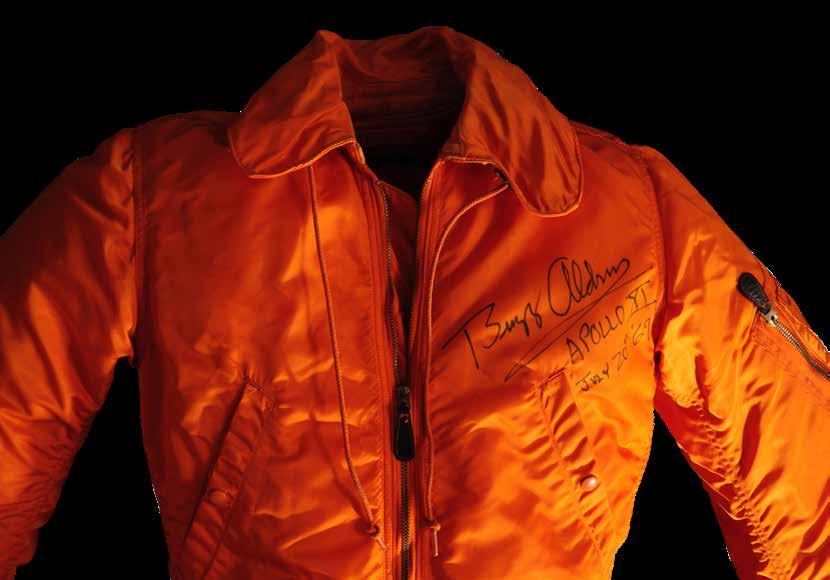
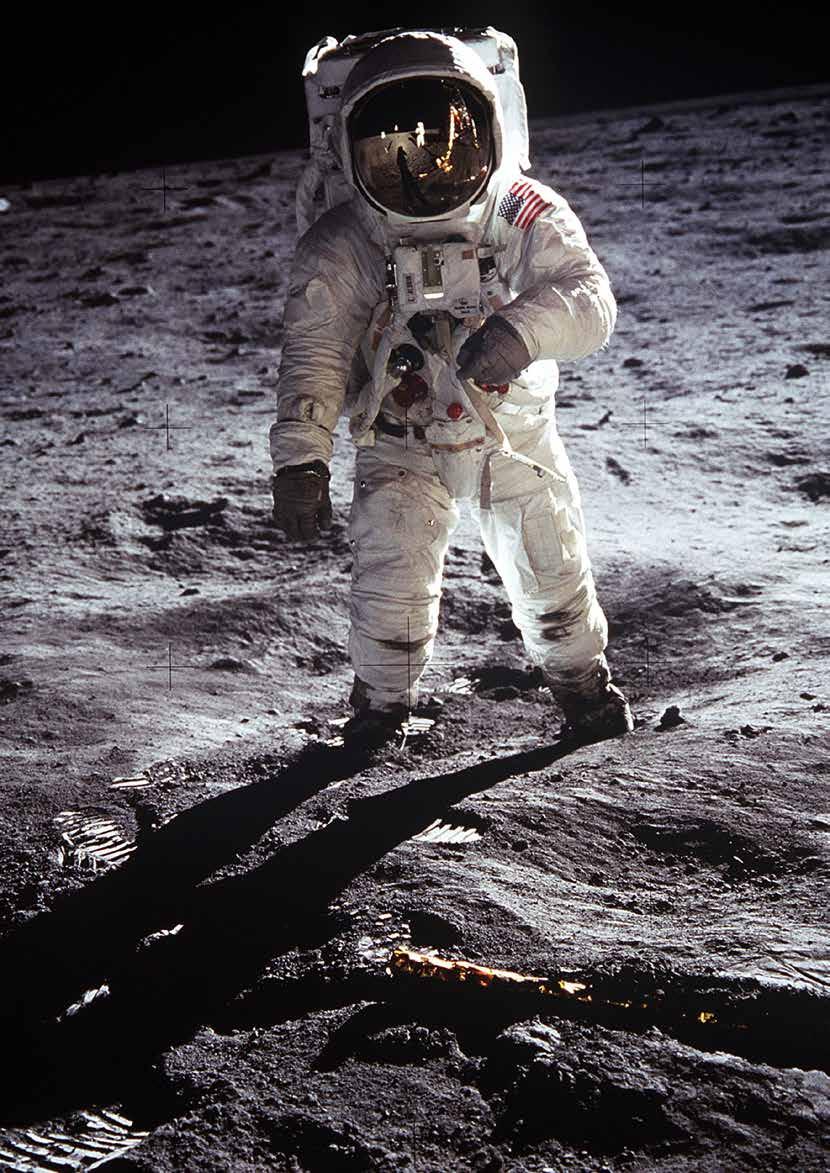
Buzz Aldrin’s personally owned and worn NASA flight training suit from the Gemini 12 and Apollo 11 missions. This suit is one of the few major items relating to the Apollo 11 mission that remains in private hands.
This flight training suit was worn by Buzz Aldrin during training for both of his spaceflights: Gemini 12, where he conducted three successful space walks and Apollo 11, when he and Neil Armstrong took the first steps on the moon.
The bright orange coverall, which was manufactured by L.W. Foster Sportswear Co Inc, was supplied to NASA on 3 May 1961, five years before Aldrin’s first spaceflight aboard Gemini 12 and eight years before the launch of Apollo 11.


It has been boldly signed by Aldrin above the left chest pocket: “Buzz Aldrin, Apollo 11, July 20th 1969”.
Though not flown in space, this suit was integral in the training for the spaceflight and is therefore an historically significant piece of Apollo 11 memorabilia. Due to the historical importance of the mission, many related items are now held in institutions such as The Smithsonian National Air and Space Museum.

Anthony is a relationship manager who genuinely cares about his clients’ best interests. His strongest skill is in finding the best value acquisitions for clients, based on their areas of interest.
Anthony began his career as a portfolio manager at stamp specialist Stanley Gibbons in 2009, where he spent eight years building a large client base and overseeing numerous multi-million dollar sales for ultrahigh-net-worth individuals. Day to day, he guided clients to the rarest and most soughtafter stamps and coins, forging lasting relationships along the way.
In 2017, Anthony joined Paul Fraser Collectibles as Head of Collections, with over 300 clients from his time at Stanley Gibbons choosing to follow him - a true testament to the exceptional service he is dedicated to providing.
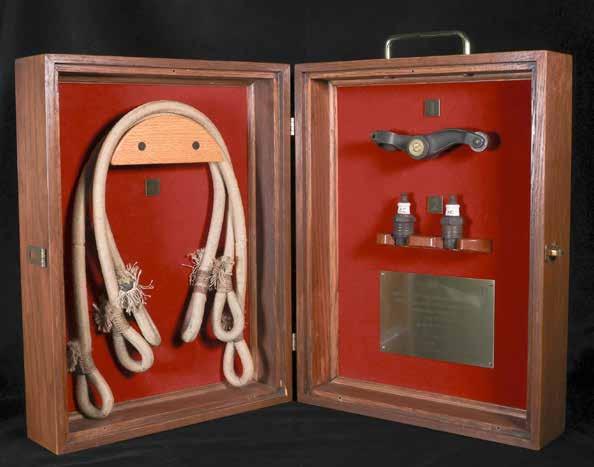
An extraordinary piece of aviation history.
Original parts of the Spirit of St Louis used during Charles Lindbergh’s record-setting New York to Paris flight in 1927.
These are the only parts from the plane to have ever been offered for sale. The parts, which all show considerable flight wear, include:
A rocker arm from the Wright J5-C “Whirlwind” engine (serial no. 7331). Two AC Type N spark plugs from the Whirlwind engine. Three shock absorber bungee cords from the plane’s tail skid or landing gear.
One of the largest pieces of original Spirit of St Louis fabric ever offered for sale, signed by Charles Lindbergh.
The parts are beautifully presented in a custom-made oak case (17 x 12½ x 6 inches) with explanatory plaque. Superb provenance from
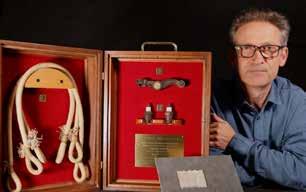
Kenneth Lane, engineer at Wright Aeronautical Company, which supplied the engine that powered the Spirit of St Louis. Lane was one of four Wright Aeronautical employees who worked on Lindbergh’s plane before and after its recordbreaking flight. Lane fine-tuned the aircraft at Curtiss Field on Long Island from May 12, 1927 to the day of take off on May 20.
Whatever your passion, we believe that building an award-winning collection has the power to enrich your life not only financially, but in profound ways.
There’s something deeply satisfying about bringing order and completeness to a collection. It’s a personal journey, often marked by moments of discovery and triumph.
For many collectors, the ultimate goal is to showcase their treasures at prestigious industry events, earn recognition through awards, or perhaps even open a museum. Many of the world’s finest museums today were established by private collectors, who found they wanted to share their passion with the world. These include the Guggenheim, the British Museum, and the Ashmolean.
To achieve such a goal, it’s vital to specialise. Collectors who concentrate on a specific theme tend to get more emotional rewards than simply buying whatever catches the eye. By narrowing your focus, you can approach collecting with both purpose and knowledge. Through diligent research you’ll find that dedication to a focused area pays off. You’ll avoid costly mistakes and hone in on the pieces that genuinely meet your criteria.
Another major advantage of building your collection around a theme is that when the time comes to sell, the expertise and patience you’ve invested are embedded within the collection itself. Your reputation for deep knowledge ensures buyers know that any item in your collection is of the highest quality. Your expertise can add significant value to a piece.
The more you learn about your chosen field, the greater the rewards.
Collecting makes us happier, reduces stress, and can even help us live longer. President Franklin Roosevelt, for example, spent half an hour each evening in the White House immersed in his stamp collection. For him, it was the ultimate stressbuster.
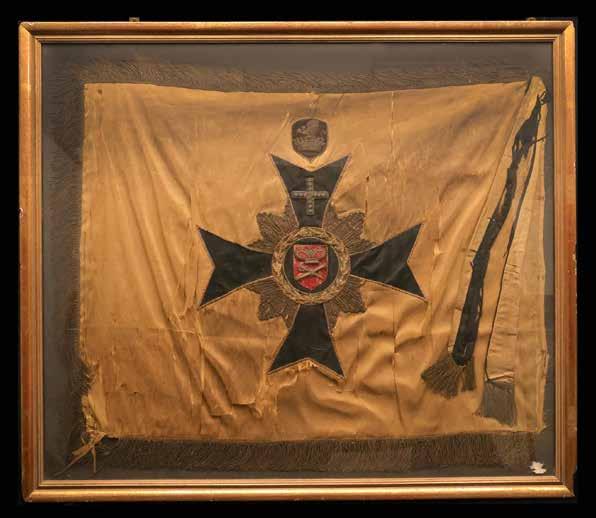
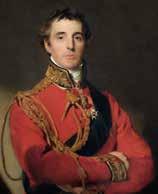
Hand-embroidered silk banner, carried in the Duke of Wellington’s state funeral in November 1852.
Arthur Wellesley, 1st Duke of Wellington (1769-1852) is one of Britain’s greatest military leaders.
He also twice served as Prime Minister during his later political career, and when he died in 1852 he was granted a state funeral by Queen Victoria.
The Duke of Wellington’s funeral on November 18, 1852 was the largest of its kind in Britain in the 19th century. An estimated 1.5 million people lined the streets of London to pay their respects.
10,000 soldiers, representing every regiment of the British Army, took part in the parade which stretched back two miles and lasted more than four hours. When the procession reached St Paul’s Cathedral, up to 20,000 people were packed into the galleries to witness the service.
This beautiful hand-embroidered silk banner was carried in the funeral procession. The design features a Maltese Cross in sombre black silk, with a central design of Wellington’s Field Marshall baton surmounted by a coronet. Above the cross is Wellington’s personal crest, featuring a lion emerging from a ducal coronet.
The banner, with its gilt fringe, survives in worn condition but remains remarkably intact after 172 years. It is framed and glazed in a vintage gold frame from the Rowley Gallery in London, to a size of 30 by 34 inches.

Mike Hall CEO | Paul Fraser Collectibles
We only acquire rare collectibles we want to hold as long-term investments on our balance sheet.
This approach ensures our interests are, inherently, always aligned with our clients’. Our team of experts has a proven track record of successfully buying and selling rare collectibles for profit.
In a similar fashion to a fund manager picking stocks, our team constantly studies the market and carefully selects shortlists of rare collectibles that are becoming available.
Our stringent due diligence process focuses only on the rarest, highestquality items with impeccable authenticity. We acquire only those pieces we believe, based on our deep understanding of market dynamics,
“Our team of experts has a proven track record of successfully buying and selling rare collectibles for profit. The following pages expand on how we operate as a business, enabling you to benefit from our industry knowledge and experience.”
> Strategic Buying
> Selection and Purchase
> Due Diligence Approach
> Exit Strategies
> Achieving Full Market Value
have the potential to appreciate in value over time.
Importantly, we only purchase when we can secure an item at below our internal valuation of its “market value”. This built-in margin of safety enables us to pass on that advantage to our clients, giving them a head-start on the value of the item versus the price paid.
Most of our clients are building collections. These either blend different categories, or focus on a specific passion. They enjoy the thrill of discovering exciting new pieces and the pride, prestige, and pleasure of ownership.
Building such a collection allows value to mature over time. Clients can decide either to sell the collection as a whole or retain it as a store of wealth and pass it down as a family heirloom.
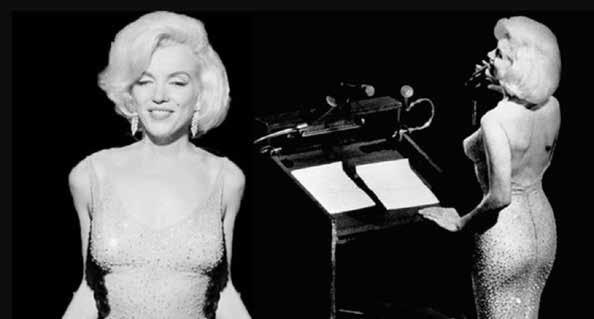

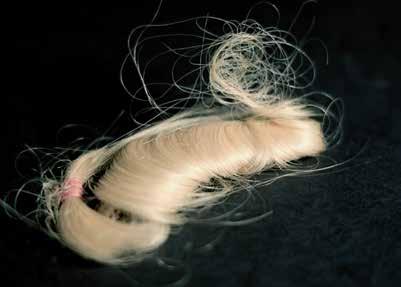
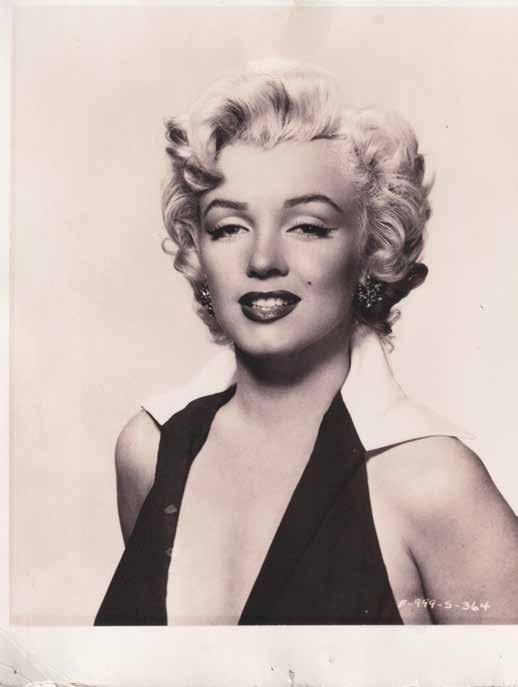
This large lock of blonde hair was trimmed from Monroe’s head by Robert Champion (her hairdresser), just prior to that iconic performance, and remained in his personal collection for decades.
On the night of May 19, 1962, Marilyn Monroe gave one of the most famous performances of her career, during a celebration for President John F. Kennedy’s 45th birthday at Madison Square Garden in New York.
Monroe sang a sultry version of ‘Happy Birthday Mr President’ whilst wearing a virtually seethrough dress, fuelling rumours of a secret affair with the President which have endured to this day.
Just hours before her performance, Monroe visited her personal hairdresser Robert Champion at the Coiffures Americana Beauty Salon, housed within the luxury department store Bergdorf Goodman on Fifth Avenue.
The lock measures approximately 2.57” by 1.18” (7cm by 3cm).
It is accompanied by an instant Polaroid photograph of Monroe, taken at a party following the event.
The image captures Monroe smiling radiantly, perhaps in relief after getting through the performance, and bears her lipstick print in place of a signature on the reverse.
We employ several key strategies to acquire the finest rare collectibles at below market value:
• Global Network of Experts
Our team works with an extensive, worldwide network of specialist experts in each collectible category.
• Auction Tracking
We diligently monitor auctions worldwide, targeting key rarities that appear in less optimal markets. For example, a Lord Nelson-signed document would achieve less in the US than in the UK.
• Smaller Auctions
We follow and attend smaller provincial auctions where exceptional items occasionally surface. These often lack the marketing reach of larger sales, allowing us to acquire key pieces at a significant discount to market value.
• Forced Sales
Opportunities occasionally arise through unfortunate circumstances - debt, divorce, or death - enabling us to buy items or collections at artificially lower prices.
• Hidden Value
We excel at spotting items others have overlooked. A cheque signed by Marilyn Monroe on August 3, 1963 gains significant value when you know she died the following day.

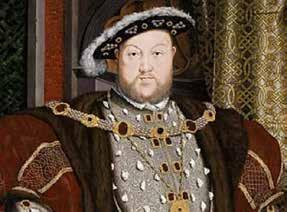
Rare document signed “Henry R” by one of England’s most iconic monarchs in 1542.
King Henry VIII’s bold, clear signature features prominently on this exceptionally large document, measuring 20” x 11.5”. Henry’s signature is followed by a large R signifying the words, Rex Omnibus, meaning “King of All” in Latin. Of the utmost quality, this piece
is in pristine condition, a truly remarkable feat considering its age. There are few comparables on the open market.
Original, signed documents - such as the example offered - would have been kept in the Crown Office. This patent was successful and can be seen on the Patent Rolls dated Westminster, 6th March 1542. In the upper left corner is a small notation reading, “Given me 8th June 1797 by Mr. Betts of Colchester”presumably an addition from one of its early owners after it left the Crown Office.
It is very rare for a document such as this one to leave the Crown Office. Unsurprisingly, few documents have survived the 470+ years since Henry’s death. Those that have withstood the tests of time are mostly held in institutions such as the British Library, the National Archives and the British Museum, leaving very few in private hands.
1. Rarity
We focus exclusively on rare collectibles where only a few examples exist, and we always seek out unique pieces where possible.
2. Quality
We aim for the finest-known examples of collectibles or, at the very least, items in excellent condition. Discerning collectors consistently pay more for the bestpreserved pieces.
3. Authenticity/Provenance
Our in-house specialists rigorously authenticate each piece. In cases of doubt, we rely on independent specialist authorities. We prioritise items with traceable, cast-iron provenance.
4. Liquidity
We only acquire rare collectibles in markets with a strong base of passionate collectors, avoiding niche areas with limited buyer interest.
5. Price
We acquire items either as a value investment - where we secure them below market value - or as a momentum investment in markets where prices are rising, enabling us to turn a quick profit for our clients.
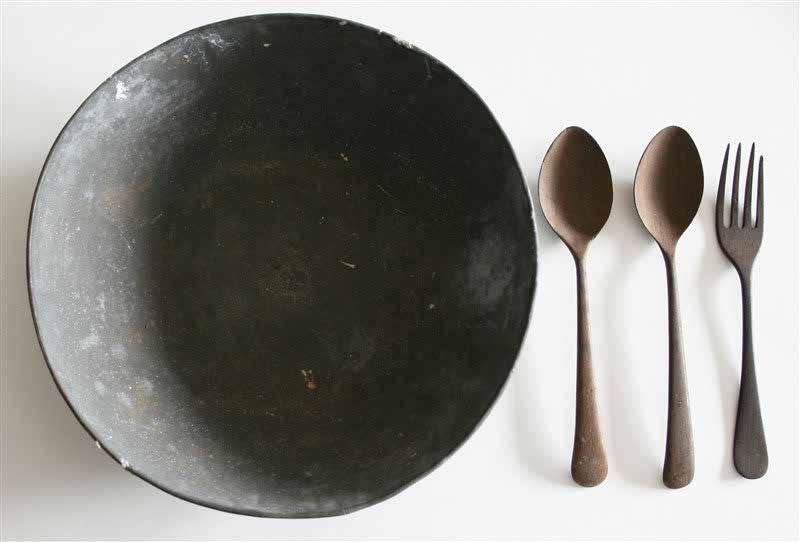
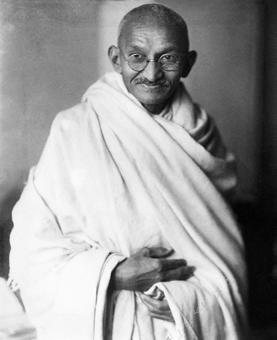
Historically important metal food bowl, two wooden spoons and a wooden fork owned by Mahatma Gandhi, “Father of the Nation”.
Used by Gandhi during his incarceration at Aga Khan Palace in Pune, as well as at the Palm-Bun house, Juhu Beach, Mumbai.
Provenance from shipping magnate Sumati Morarjee, owner of Palm-Bun house, who cared for Gandhi while there.
The food bowl measures approximately 2½” high by 8” in diameter and carries the stamped numbers to its base ‘208/42’. The spoons and fork are approximately 6½” in length.
All items are in good condition.
Provenance: The collection of Sumati Morarjee.
When the time comes to sell, your dedicated collectibles portfolio manager, with whom you will have developed a close relationship, will guide you through the process. Your exit strategy is underpinned by our careful acquisition process, ensuring you’ve bought below market value.
Our commission will always be lower than mainstream auction houses.
We provide several exit options:
• Private Treaty Sale
We promote your item to our international database of buyers at an agreed price, led by our expert market valuation. We have a long history of achieving results for our clients that match those of major auction houses. However, our commission is lower, so you keep more from the sale. Our skilled marketing team promotes your items across multiple channels, including email, social media, digital brochures, videos, and our quarterly magazine.
• Periodic Auctions
We hold periodic auctions, agreeing on a reserve price with you beforehand. We promote the auction to attract the highest possible price.
• Third-Party Auctions
Sometimes we recommend selling through a major auction house to achieve the best possible price. Thanks to our preferential terms with these auction houses, our clients pay no seller’s fees, which can be as high as 15%.
We provide expert valuations for you and your clients, offering insights into current market trends and recommendations on the ideal time to sell. Clients receive comprehensive annual valuations for their entire collectibles portfolio, with detailed assessments of each individual item. A dedicated account manager will offer commentary on a portfolio’s progress and provide strategic advice tailored to your time frame.
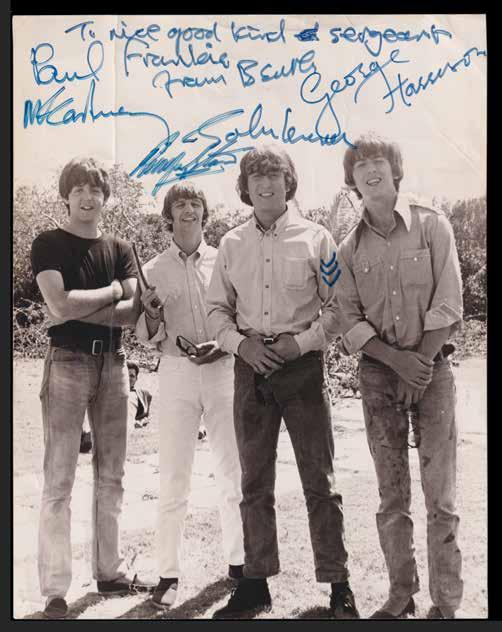
A rare 8” by 10” signed photograph of The Beatles. Signed in 1965 and gifted to a crew member on their film ‘Help!’, while on location in the Bahamas.
The Beatles’ classic albums were integral to the development of 1960s counterculture, and had a lasting effect on everything from fashion and film to the recognition of pop music as an art form.
Fifty years after they split up in 1970, the band’s songs continue to inspire millions of fans around the world and every generation of musicians that has followed them.
Inscribed in John Lennon’s hand, “To nice good kind sergeant Frankie, from Beatles”, and signed by all four members in blue felt tip pen ink.
Lennon has also added three sergeant’s stripes to his arm in the photograph. The signatures are all bold and clearly visible against the lighter portion of the photograph.
The photograph measures 8” by 10” and is in fine condition. It features a slight horizontal fold to the left hand side which has been professionally restored.
Provenance: Christie’s, 2006; Ex Stanley Gibbons.
When it’s time to liquidate and bring a portfolio to market, selling rare collectibles through Paul Fraser Collectibles offers you the best possible return on your initial outlay.
We achieve this for you through:
• Global Network
Our global network of high-net-worth clients helps ensure you find a buyer willing to pay full market value for your rare collectibles.
• Lower Commission
We charge lower commissions than many of our competitors. Most auction houses charge 25% to 50% when you factor in seller’s fees and the buyer’s premium.
• Item Descriptions
The way an item is described matters. Our knowledge base enables us to craft detailed, compelling descriptions that increase engagement and value.
• Matching Sellers with Buyers
Our client relationship managers know their clients’ assets, aspirations, and interests intimately, enabling us to match sellers with the right buyers.
• Public Relations and Media Coverage
We excel at securing media coverage. Our clients regularly enjoy the pleasure of seeing their items featured in national and international outlets.
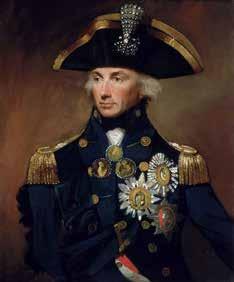
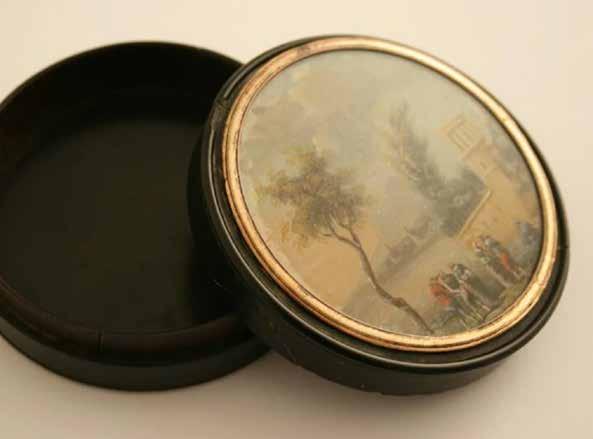
A snuff box belonging to Admiral Lord Horatio Nelson. Admiral Lord Horatio Nelson (17581805) was a British naval officer famous for his victories against the French during the Napoleonic Wars and is remembered as one of the greatest British war heroes in history.
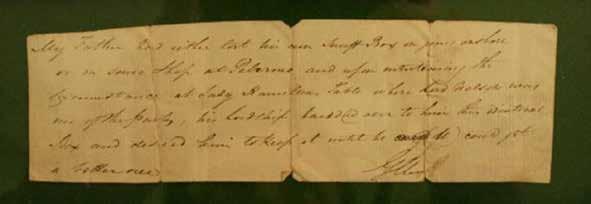
This is a snuff box Lord Nelson gave to Secretary George Unwin at a dinner party hosted by Nelson’s mistress, Lady Emma Hamilton, in Italy. The snuff box, which has a watercolour miniature of the Amalfi coast fitted into the lid, is accompanied by a note from Unwin’s son that reads as follows:
“My Father had either lost his own snuff box on going ashore or in some shop in Palermo and
upon mentioning the circumstances at Lady Hamilton’s table where Lord Nelson was one of the party his Lordship handed over to him this identical box and desired him to keep it until he could get a better one.”
The box has been in the possession of Unwin’s family ever since. It is most likely that this incident occurred in late 1798 or early 1799 when Lord Nelson was in Sicily with Sir William and Lady Hamilton and the King of Naples. It was in Sicily that Nelson and Lady Hamilton first began their affair. It seems very likely that Nelson generously gave this gift to Unwin in an attempt to impress his future mistress.
Our experience and quality of our stockholding has earned us global credibility, enabling us to operate at the highest levels in the industry.
We have secured historic artefacts for the Smithsonian, sold major rarities for the British Postal Museum, and acquired unique items for Ripley’s. Our experts have also advised the Discovery Channel, the BBC, the Wall Street Journal and many more international publications on the rare collectibles market.



International coverage





Institutions sourced for


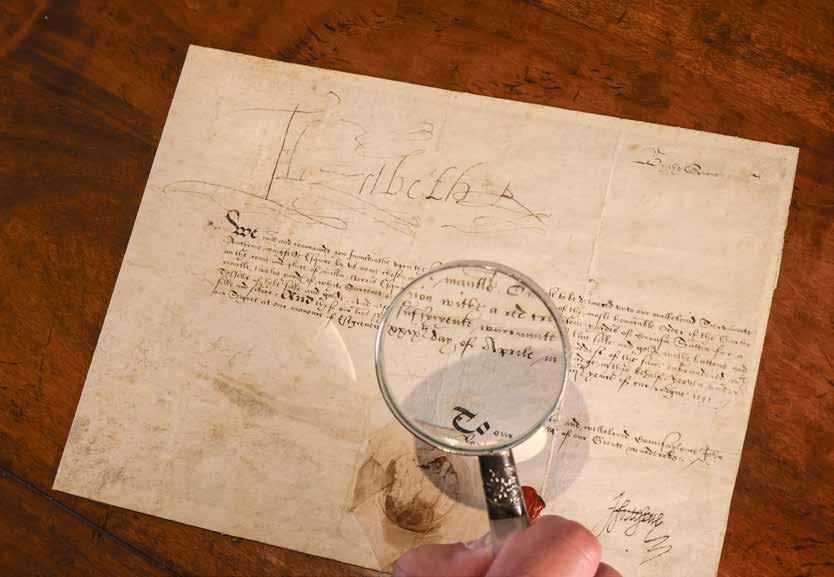
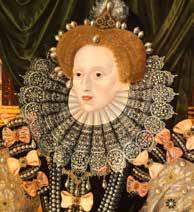
display piece which would grace any collection in the world.
The document measures 10.5” by 8” and is presented in superb condition. It remains fully intact, with crisp edges and no paper loss; faint vertical and horizontal folds; and minor stains common in a manuscript of this age. It also retains its original wafer seal, attached by another official red wax seal from the royal court. Elizabethan documents such as this with their wafer seals intact are remarkably rare.
Elizabeth I signs boldly with her famous flourish at the top of the document. Her signature is
The document is a royal warrant issued by Elizabeth I to her Chancellor of the Exchequer John Fortescue on April 29, 1591. It requests a quantity of fabric and ceremonial garments to be supplied to Anthony Wingfield Esquire, who was set to become a member of the Order of the Garter.
The ceremonial robes described in this manuscript are almost identical to those worn by members of the order today. This fascinating content gives the document a superb historical context, spanning more than 650 years of English history and tradition.

Museums are expanding at an unprecedented rate, with 4 new museums opening every day, and 1,450 new institutions opening each year worldwide. From the Louvre Abu Dhabi to M+ in Hong Kong, major museums continue to launch - and they all require artefacts to fill their halls.
This global museum boom is creating a scarcity of pieces available for private sale, which in turn is driving up prices across sectors - from fine art to postage stamps and film memorabilia.
For savvy collectors, this presents a unique opportunity. Buying the right piece now could position you to sell at a premium in the next decade. By then, many similar works may be housed permanently in museums, leaving the private market with limited supply.
The British Museum only displays 1% of its collection at any given time - that’s 80,000 objects out of around 8 million. The Metropolitan Museum of Art in New York fares slightly better, showcasing just 5% of its holdings.
• The British Museum alone spent £109 million on new acquisitions
• New York’s Museum of Modern Art (MoMA) spends $50 million in a typical year
• The Getty in LA has to spend $100 million each year to retain its charitable status
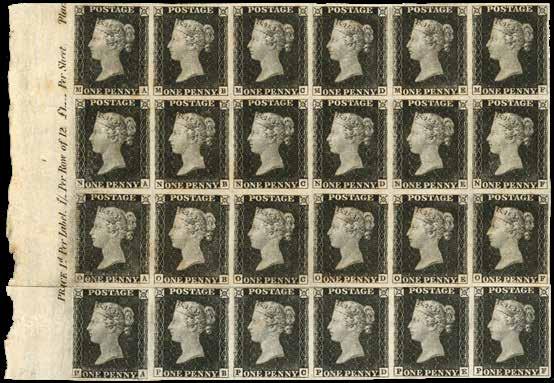
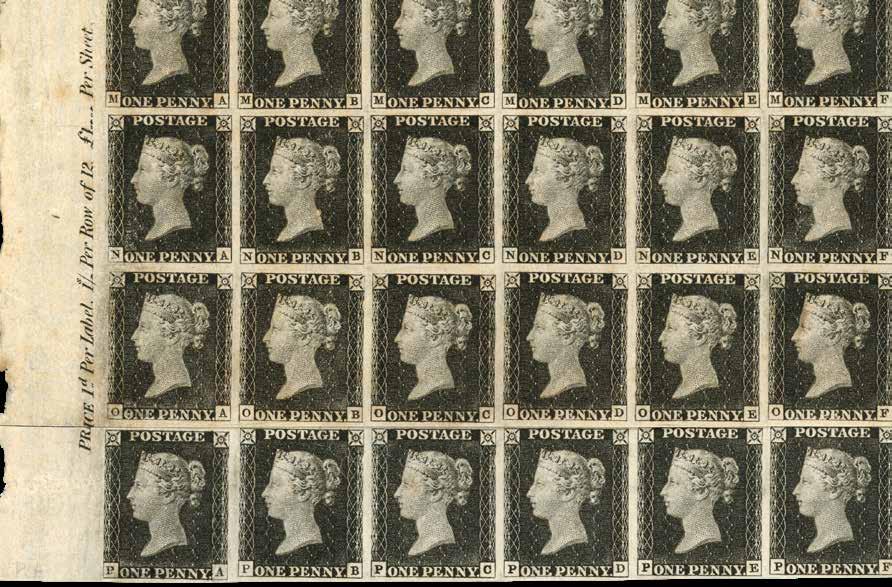
The largest surviving multiple of the world’s first postage stamp, the ‘Penny Black’.
A stunning showpiece of the highest exhibition calibre and the largest surviving mint multiple of the world’s first postage stamp remaining in private hands. It should rightfully be displayed in a museum being one of the most iconic pieces of GB philatelic history. The opportunity for private ownership of the top items in philately is becoming increasingly challenging as museums take key items out of the market each year.
Unsurprisingly, the largest mint block of penny blacks in existence has graced
some of the finest stamp collections ever formed, with the most recent famous owner being Bill Gross, the US billionaire fund manager of PIMCO.
Accompanied with a 1996 independent certificate of authenticity issued by the British Philatelic Association.
The last time the block of 24 mint penny blacks appeared for sale on the open market was in the Bill Gross Spink Shreves auction in 2007, where it realised $1,150,000.
One of the great classic rarities of Great Britain and world philately.
High-value collectors are known to build and enjoy their collection for a number of years, then receive substantial tax deductions, through donating their collection to museums. That’s exactly what collectors like Bill Gross, the “bond king,” have done. Gross has donated $700 million in stamps and other collectibles to institutions like the Smithsonian.
In many countries, donations to museums are 100% tax deductible. Similar benefits apply to gifts to charities, universities, and libraries, ensuring your collection inspires future generations while offering you financial advantages.
Tax breaks for artefact donations in the UK
1. Acceptance in Lieu (AIL) Scheme
Allows taxpayers to transfer significant heritage objects to public ownership in place of paying Inheritance Tax, often resulting in a tax reduction that exceeds market value.
2. Cultural Gifts Scheme
Individuals and companies can donate valuable objects to public collections, receiving a tax reduction spread over five years: 30% for individuals and 20% for companies.
Rare collectibles can make wonderful family heirlooms. They can be passed down through the generations as a secure means of protecting and growing wealth over the very long term.
Beyond the financial aspect, the emotional pull of collectibles as heirlooms is undeniable. There is something uniquely moving about the thought, that decades or centuries from now, the rare objects you had the foresight to acquire are giving pleasure to your descendants.
As the world becomes increasingly computerised and intangible over the coming years, physical heirlooms you can treasure will gain ever more wonder and importance.
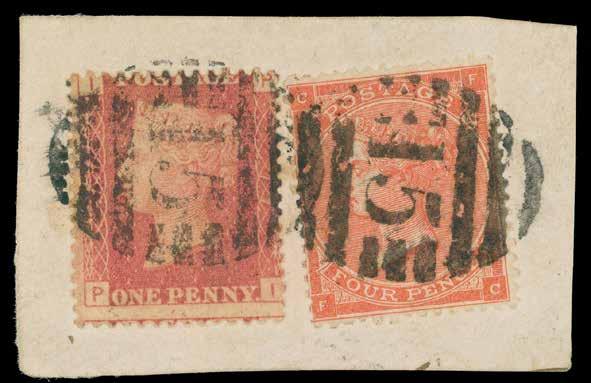
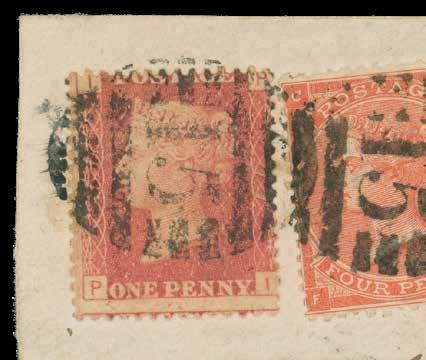
Great Britain 1864 1d Rose Red Plate 77. It is not only a magnificent exhibition piece but one of the great rarities of GB and World Philately.
It holds the undisputed title of Great Britain’s most valuable single stamp.
Of the three examples of the legendary plate 77 penny red remaining in private hands, this is considered the finest example.
The Plate 77 Penny Red is one of those few stamps in the world which has reached legendary status. In terms of its philatelic importance, it shares a podium with the world’s most valuable stamp, the British Guiana 1856 1c magenta, which sold in 2021 at Sotheby’s, New York for $8.3 million.
It is believed only one sheet was printed. There are official records which confirm the plate was rejected because of poor alignment, causing some stamps to be misperforated. This sheet should have been destroyed, yet a small number clearly escaped destruction.
The legend of the elusive plate 77 makes it one of those philatelic greats and this is the only opportunity in the market to enjoy the ultimate privilege of owning it.
Building a collection is about enjoyment. The experience of holding history in your hands is something very special; a unique blend of pride and pleasure. It’s a feeling you have to experience firsthand.
• Holding a 500-year-old vellum document in your hands, knowing Queen Elizabeth I once did the same as she signed it
• Running your fingers over the ink of Charles Dickens’ signature, penned as he paused from writing Great Expectations
• Playing the same guitar Bob Dylan once used in the studio
The enjoyment goes far beyond simply being in the physical presence of the object. It runs much deeper.
• Becoming a custodian of history
Many items are sought after by museums, so it is a privilege to be a custodian of history and own these items in your private collection.
• The thrill of the chase
It’s not just the pleasure of ownership. Many collectors enjoy the thrill of the chase. They take pride in owning a long-sought object.
• Stock market risks
Unlike other investments, you can enjoy rare collectibles during your period of ownership. You don’t need to worry daily about price fluctuations. Collectibles don’t hold the risks the stock market does. Government red tape, war, and climate events. All have the potential to destroy share prices. Collectibles do not show the same volatility.
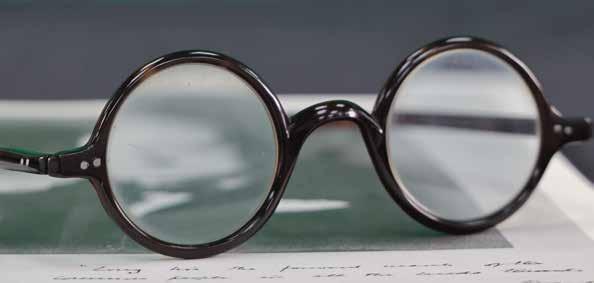
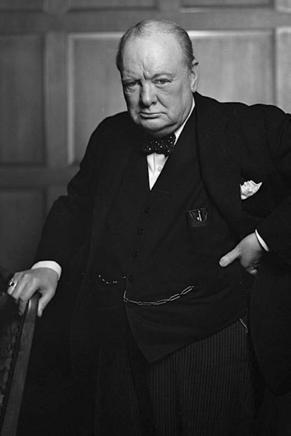
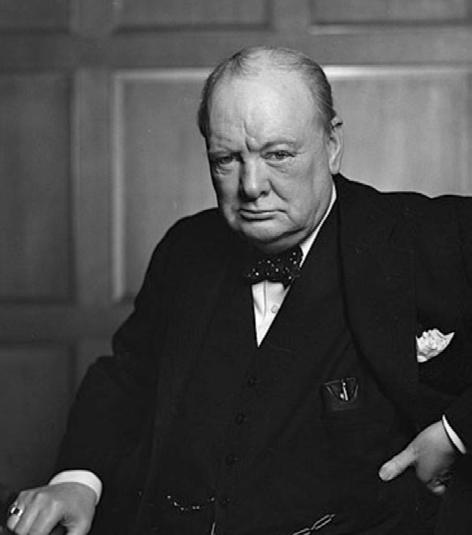
Winston Churchill wore these tortoiseshell reading glasses in 1954, during his second tenure as prime minister.
The glasses were manufactured by CW Dixey & Son, the oldest independent eyewear company in the world. They were subsequently left with the optician after Churchill returned them for repairs.
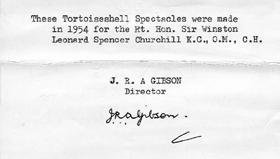
They come with their CW Dixey and Son blue leather case and a compliments slip from the optician, which reads:
“These tortoiseshell spectacles were made in 1954 for the Rt Hon Sir Winston Leonard Spencer Churchill, KG OM CH”.
These quintessentially Churchillian glasses are in fine condition and carry a special allure as they were used by the prime minister while in office.
Rare collectibles offer unmatched portability, privacy, and protection from currency fluctuations. They can be traded seamlessly in major cities around the world, acting as a medium of exchange across currencies and offering a safeguard against any one currency’s instability.
In times of hyper-inflation in the past, collectibles were used extensively as an alternative currency. For example, in the last period of high inflation in the UK, between 1975-1980, British rare stamps increased in value by over 600% on average. Many of our clients see the added benefits of owning rare collectibles as a proven hedge against inflationary risks.
Unlike bank accounts or stocks, collectibles resist government seizure, providing you with greater control over your wealth. Their compact nature also allows for discreet transport - valuable assets stored in hand luggage have been used by those fleeing conflict or political upheaval throughout history.

Historically, collectibles resist government seizure, and hedge against inflationary risks.

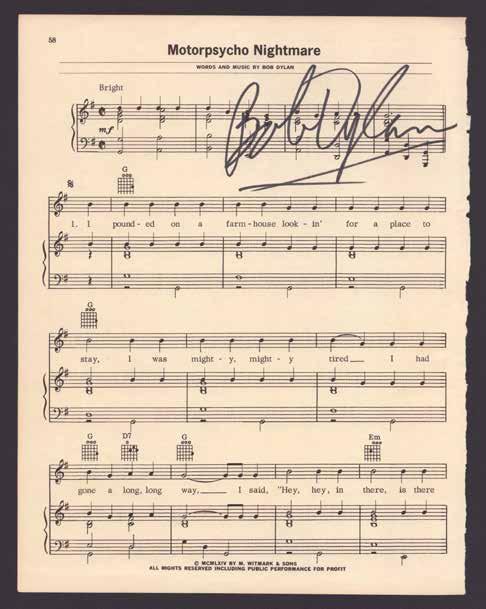
A Bob Dylan signed page of sheet music for his 1964 song ‘Motorpsycho Nightmare’. Featuring a large bold example of his autograph.
Bob Dylan (1941 - ) is one of the greatest songwriters and most significant musical artists of all-time. Over the course of more than 60 years he’s sold more than 150 million records. His songs such as ‘Like A Rolling Stone’ changed the creative landscape of popular music forever and inspired everyone, from The Beatles to Bruce Springsteen.
And in 2016 he became the first musician to be awarded the Nobel Prize for Literature.
This page of sheet music, is boldly signed by Dylan in black felt tip pen, and measures approximately 277mm by 216mm (10.9 by 8.5 inches).
It is in very good condition, with a slightly ragged right-hand edge where the page was originally removed from the book.
The song ‘Motorpsycho Nightmare’ appeared on Dylan’s 1964 album ‘Another Side of Bob Dylan’, which proved to be a major turning point in his career.
As such, this is a superb autograph - with a strong visual appeal, and links to the musical period in which Dylan found his voice as an artist.
There are two principal methods of enjoying your collection. Take your collection out of a vault occasionally and spend time with the items. Or, enjoy them on a daily basis, allowing family, friends, work colleagues and your clients to experience them too - giving them insight into your personality and aspirations. Here are some display suggestions:
• The Hallway – a glimpse of your personality
Make your hallway a captivating introduction to your home. It’s the perfect space to showcase items that reflect your taste, spark curiosity, and open up conversations. Greet your guests with rare Picasso prints, autographs from US presidents, or even handwritten documents by Tudor kings.
• Office or Home Office – a source of inspiration
Turn your workspace into a sanctuary of inspiration, filled with items tied to those you admire. A letter penned by Charles Dickens could fuel your creativity, while a book signed by Martin Luther King might serve as a reminder of resilience and vision. Or perhaps a signed cigar once held by Winston Churchill will be the perfect accompaniment to a day of strategic thinking.
• Games Room – celebrate sporting legends
Deck your games room with the memorabilia of sporting greats, and let their achievements inspire you to aim higher. How about a Brazil jersey worn by Pele during a match, or a signed photograph of Muhammad Ali? You could even display an Olympic torch to evoke the spirit of competition.
• Cinema Room – a homage to film icons
Transform your cinema room into a shrine for the silver screen’s most iconic figures. An original Star Wars poster might set the scene, while Marilyn Monroe’s lipstick mirror or James Dean’s high school yearbook could add a personal touch to your cinematic tribute. Create an immersive experience where each piece tells a story of Hollywood glamour.
• The Garage – A tribute to the power and speed
For the car enthusiast, the garage can be a space where history and horsepower unite. Picture a signed photograph of Ayrton Senna watching over you as you tune your car, or Steve McQueen on his iconic motorbike as a constant reminder of cool, classic style. You might even display a pair of raceworn overalls from Michael Schumacher for that extra dash of racing pedigree.
All items mentioned above are pieces we’ve handled in recent years.