









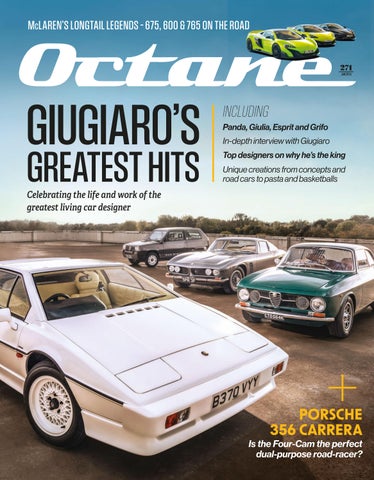
Celebrating the life and work of the greatest living car designer

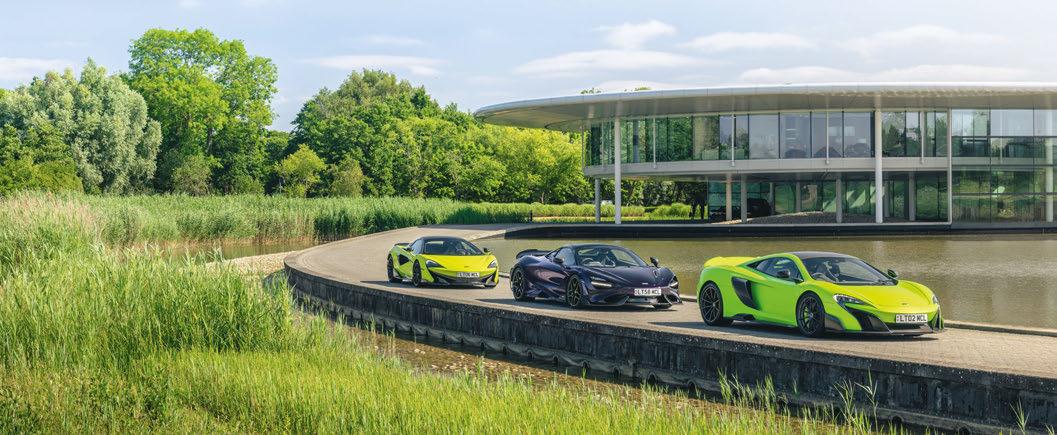
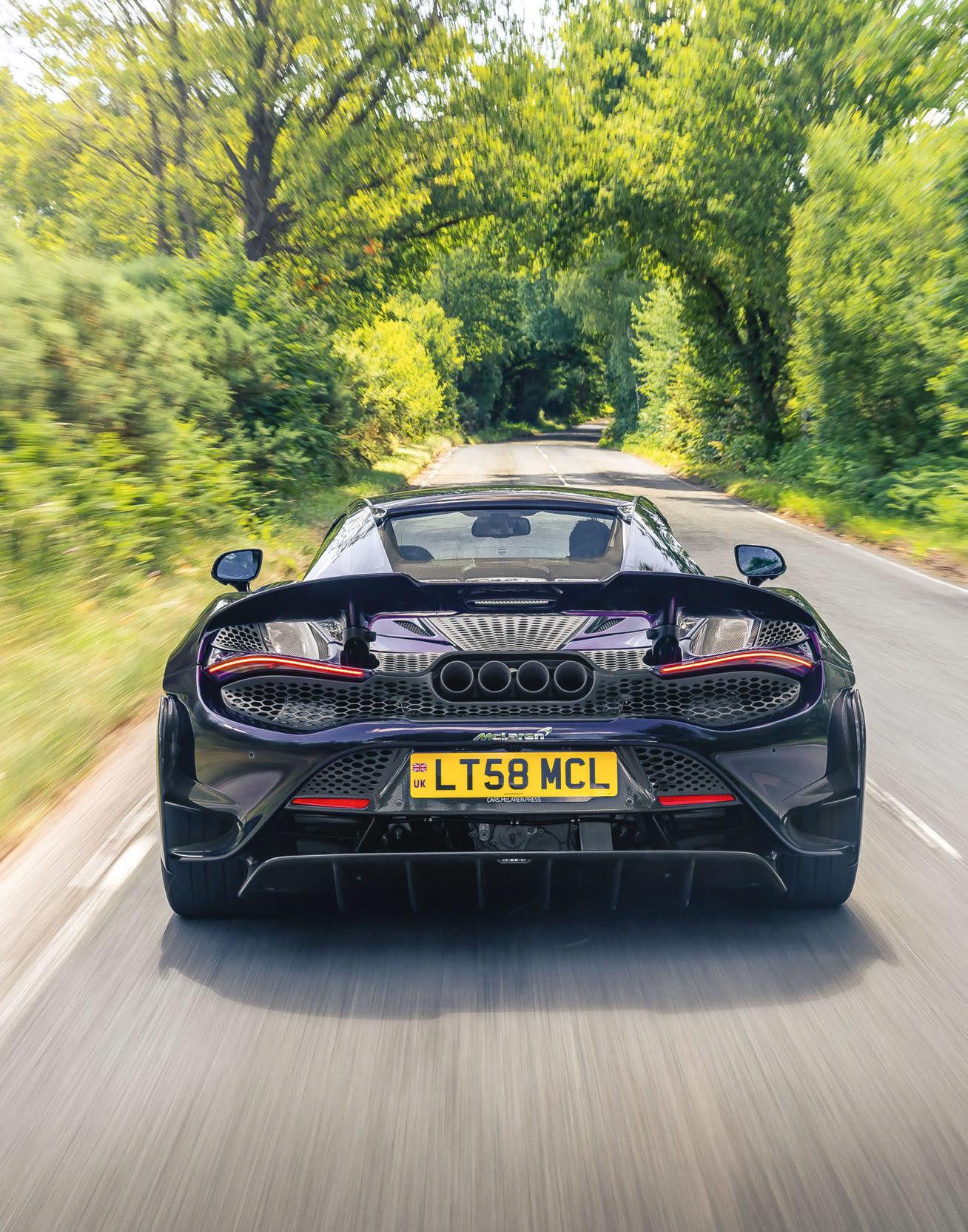
M CLAREN’S LONGTAIL LEGENDS – 675, 600 & 765 ON THE ROAD















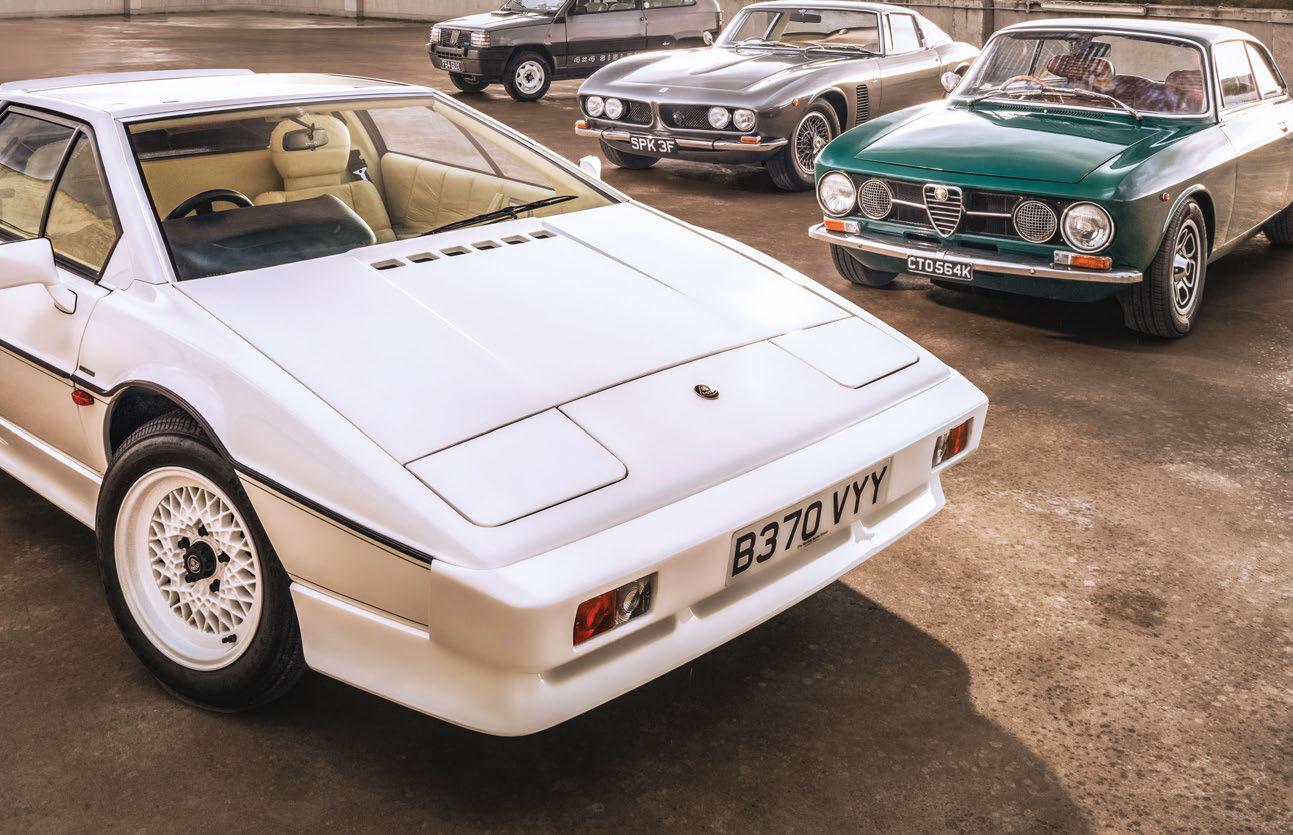
Panda, Giulia, Esprit and Grifo


In-depth interview with Giugiaro

Top designers on why he’s the king
Unique creations from concepts and road cars to pasta and basketballs







Is the Four-Cam the perfect dual-purpose road-racer?



















































110 PAGE
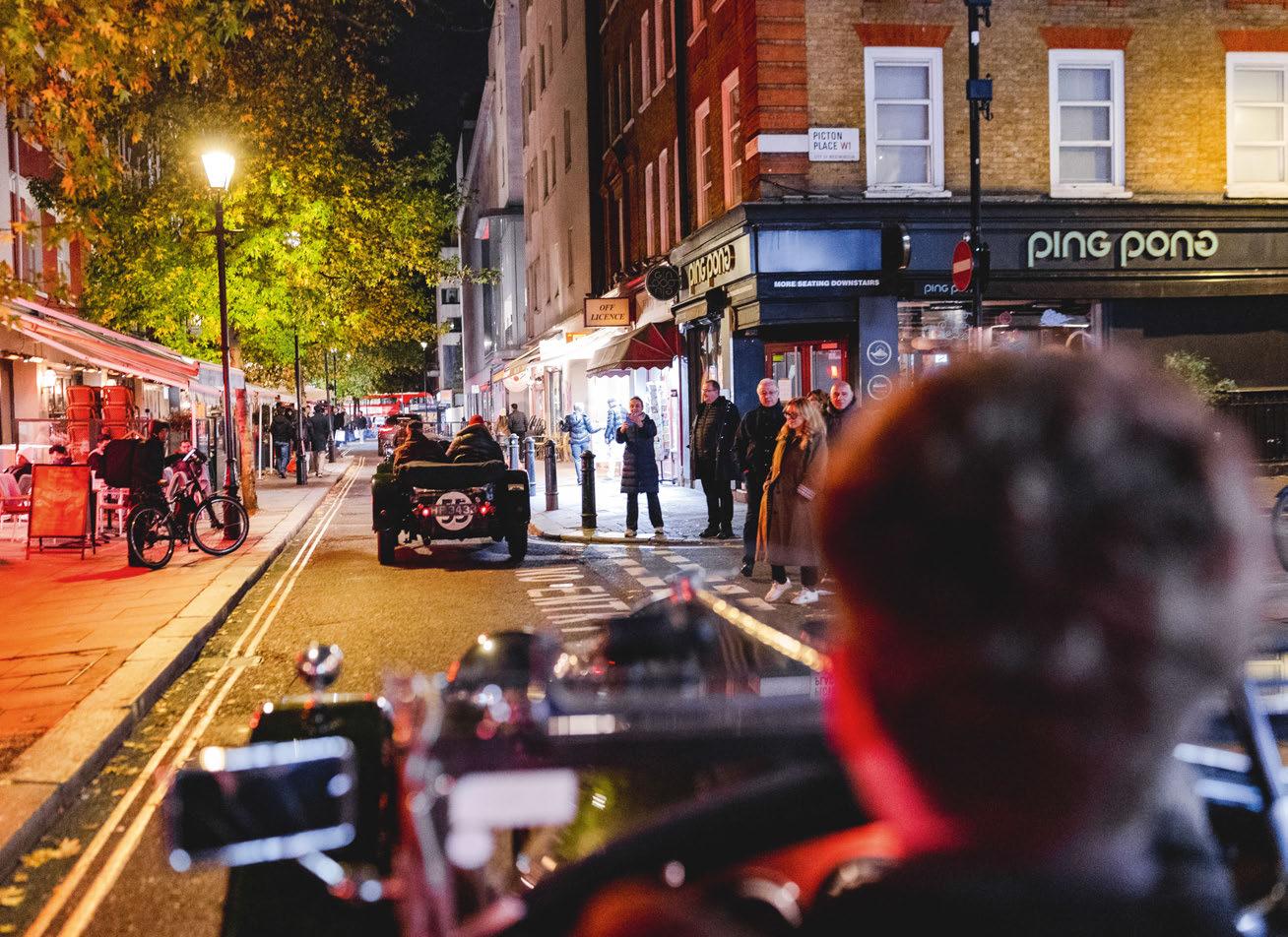
‘FIRST A SLOW, HEAVING WHIRR FOLLOWED BY A COUGH, THEN AN UNEVEN BELLOW AND A BURST OF GATLING GUN RAPID FIRE’ VINTAGE LONDON RALLY
WHAT DESIGNERS THINK 46
The great and good on the greatest of all
THE OCTANE INTERVIEW 48
Octane meets the genius designer in Italy
CARS AS ART 54
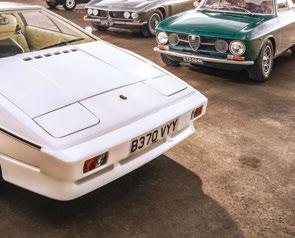
Stephen Bayley on Alfa Giulia Sprint, Iso Grifo, Lotus Esprit and Fiat Panda
ALL THE CARS 66
The show stars and those we could drive
…AND THE REST 74
Pasta, cameras, basketballs and more
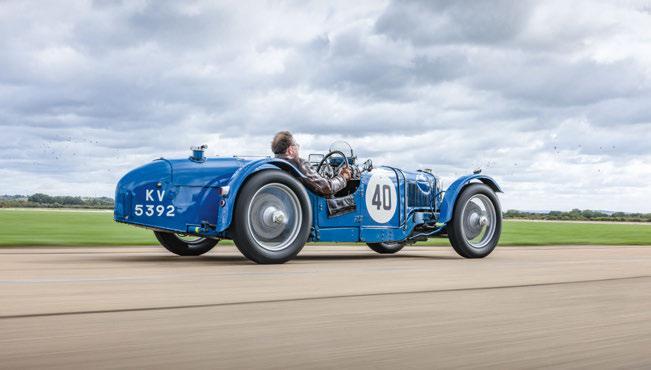
WORKS RILEY 78
The last Riley Brooklands built, fifth at Le Mans in 1934 – and raced ever since
McLAREN LONGTAILS 8 6
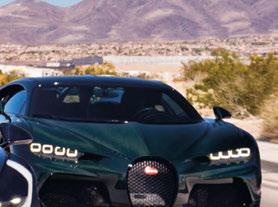
675LT, 600LT and 765LT: three supercars spanning a decade of special McLarens
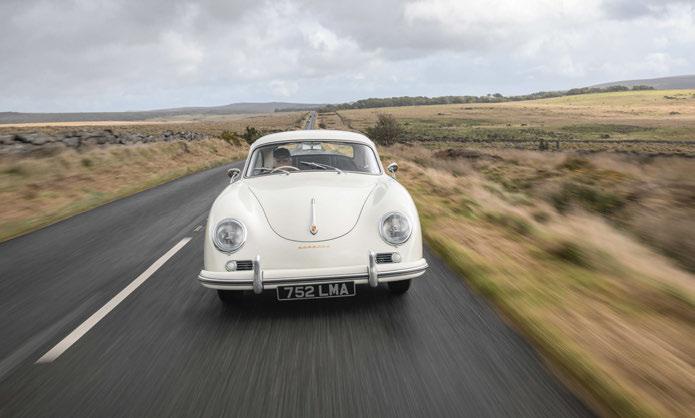
PORSCHE 356 CARRERA 96
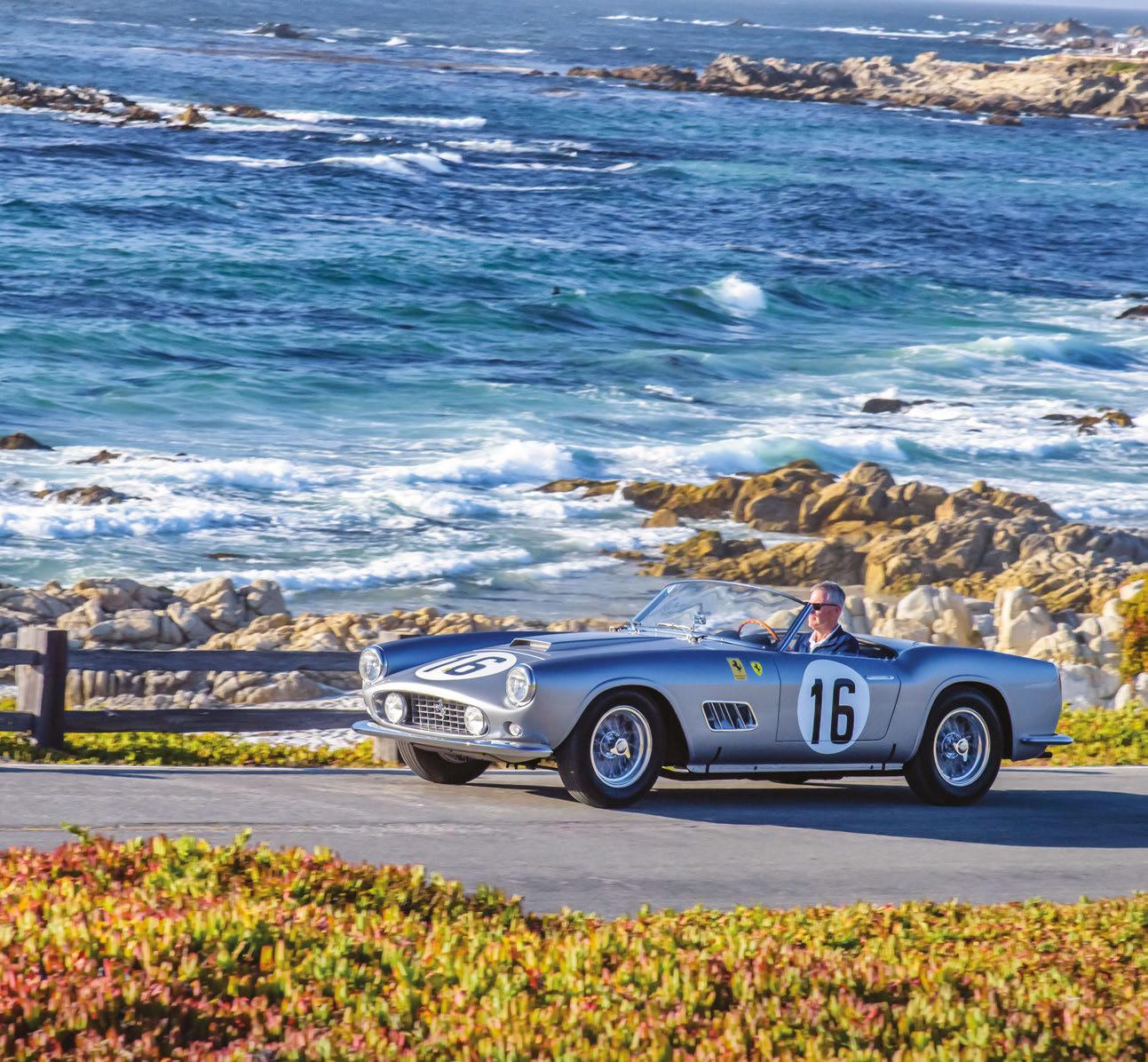
Ultra-rare 1950s Porsche with the celebrated four-cam engine: Octane drives a legend
ROLLS SHOOTING BRAKE 104
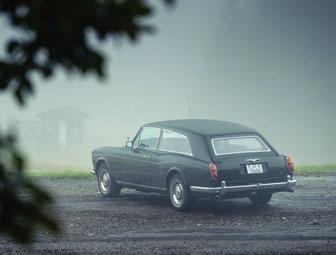
In one family from new, this Corniche gains a new lease of life as a coachbuilt estate
VINTAGE LONDON RALLY 110
On the night-time vintage raid on London that is blooding scores of new enthusiasts
SUNBEAM TIGER 118
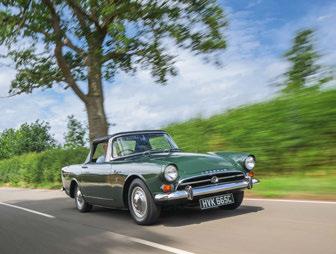
Driving the world’s most original example of Rootes’ unlikely Cobra competitor
The month’s best events; top dates for your diary; 2025 International Historic Motoring Awards winners announced
COLUMNS 35
Leno, Bell, Bayley and Coucher: monthly mouthings from Octane’s motoring muses
LETTERS 43
The Ace Cafe: a reader remembers OCTANE CARS 128
A rather special Rover P6 V8 joins the fleet
OVERDRIVE 134
How to improve an MX-5? With a big V6
GONE BUT NOT FORGOTTEN 136
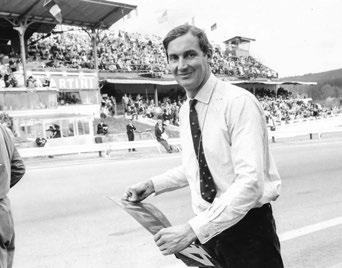
Engineer and racer of note, Mike Parkes
GEARBOX 138
Pebbe Beach’s very own Sandra Bu on ICON 140
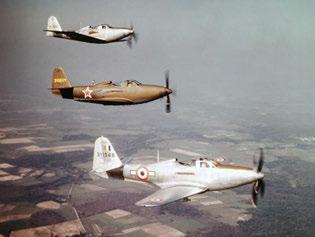
World War Two’s ‘killingest’ fighter aircra CHRONO 142
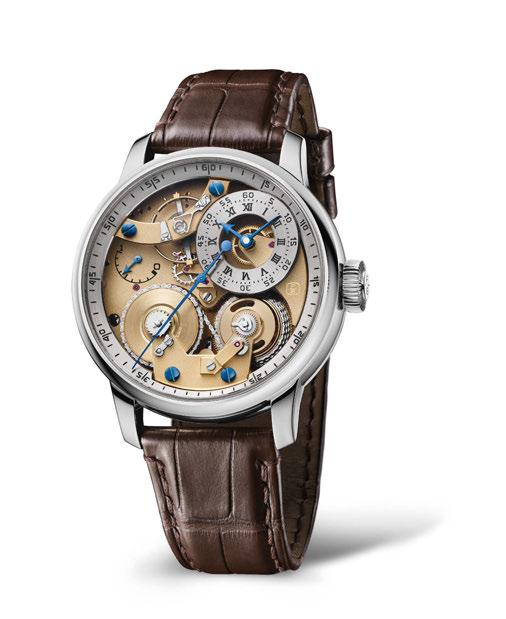
Watch royalty: Ferdinand Berthoud’s latest BOOKS 144
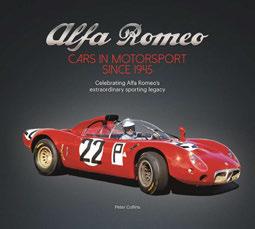
Superb new volumes on Astons and Alfas GEAR 146




Still time for those Christmas list wishes THE MARKET 150
Insider tips, auction news, facts and figures, cars for sale, Renault Sport Spider guide
AUTOBIOGRAPHY 186
Scalextric brand guru Simon Owen












































































James Elliott , Editor in chief
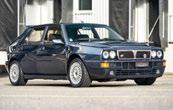
I HAD A QUICK browse of the 30 or so cars I have owned since my first in 1986 and was surprised to see that only one of them had been designed by Giorgetto Giugiaro. That was a 1989 Lancia Delta Integrale 16V that I ran as a company car – the only company car I have ever had – from 1999 when I was editor of another motoring magazine. It was a joyously fractious relationship full of breakdowns, fuel stops and smiles, but this tempestuous marriage lasted only until the first service bill. At that point the ashen-faced accounts department bailed out, the car was sold for a pittance, I opted out of the scheme and spent the cash on a 1966 Lotus Elan S2 as my daily driver.
The thing is, I expect that everyone has owned a car designed by the Car Designer of the Century (official) at some point, even if not by choice. Sure, there are those that seek out his hallmark features (gently falling curves, panoramic glasshouse etc), but such is his ubiquity within motoring, such is the vastness of his influence and output, that you are just as likely to have run one of his cars by accident. The list of his key road cars we have in this issue is far from exhaustive, but already throws up lesser-known curveballs like Isuzu Piazza and Hyundai Pony as well as multi-million sellers such as Panda and Golf.
Of course, as well as that article, plus another on nearly 30 of his concept cars from Testudo to Scighera, there is an in-depth interview with the man himself –recently awarded the Lifetime Achievement Award at the International Historic Motoring Awards – while style guru Stephen Bayley casts a critical eye over Giugiaro’s life and career via four of his benchmark designs.
There is also a fascinating piece on the polymath’s non-car work, which ranges from the more predictable (boats and trains) to the more unexpected (basketballs and cathedral organs).
It’s kind of weird to think that I have owned more cameras designed by Giugiaro than cars, but that is just testament to the unique breadth and depth of his talent. The master.
FEATURING…
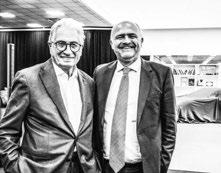
GIORGETTO GIUGIARO
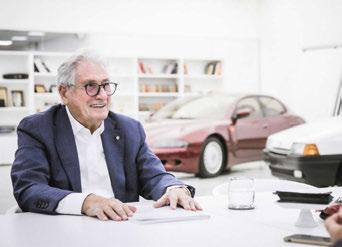
‘It is easy to create a car when you have few technical impositions and a generous budget. To be successful without money and within endless constraints, well, that is a completely different challenge.’ Giugiaro spoke to Massimo Delbò (on right), Octane’s resident Italian. Read his intimate and revealing interview on pages 48-53
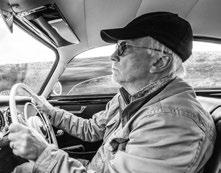
KEITH SEUME
‘The devil on your left shoulder says give it some beans, the angel on your right shoulder reminds you that this Porsche 356 Carrera is worth £750,000. Life is full of difficult decisions but somehow I was feeling devilish on that particular day…’ Who better than Porsche expert Keith to tell us all about this iconic sports car? See pages 96-102.

ALEX GOY
‘While you could never call a Rolls-Royce Corniche impractical, I loved the idea of this Shooting Brake, beautifully executed with all the right details in all the right places. Niels van Roij Design has done a wonderful job creating something that its owner will cherish for years.’ Find out more on pages 104-108




































Frohe Weihnachten und ein glückliches neues Jahr
I migliori auguri per un buon Natale e un felice Anno Nuovo
Joyeux Noel ainsi qu‘une bonne et heureuse nouvelle année





AND

Feliz Navidad y un próspero Año Nuevo


Zalig Kerstfeest en een Gelukkig Nieuwjaar


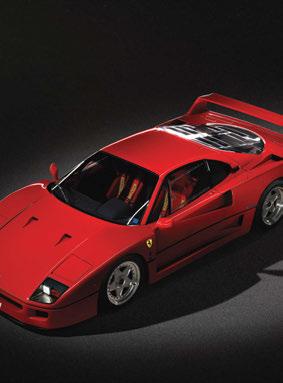
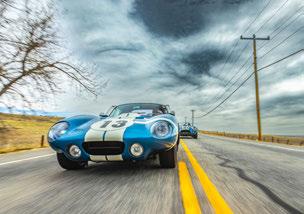
Celebrating 140 years of ground-breakers ISSUE 272, ON SALE 24 DECEMBER
Editor-in-chief James Elliott james@octane-magazine.com
Associate editor Glen Waddington glen@octane-magazine.com
Art editor Robert Hefferon roberth@octane-magazine.com
Markets editor Matthew Hayward matthew@octane-magazine.com
Founding editor Robert Coucher
Contributing
Shelby special
Cobra 427 and Daytona; inside the Shelby American Collection; meeting Carroll’s grandson, Aaron
Alfa Romeo 8C Zagato Doppiacoda
Exclusive drive of this unique beauty
Microcar rally madness
Octane takes part in the ‘world’s smallest car’
Hot Ford Escorts driven RS1600i and RS Turbo: the Mk3 homologation cars
(Contents may be subject to change)
Group advertising director Sanjay Seetanah sanjay@octane-magazine.com
Account director Samantha Snow sam@octane-magazine.com
Dealer account manager Marcus Ross marcus@octane-magazine.com
Lifestyle advertising Sophie Kochan sophie@octane-magazine.com
Advertising inquiries
Tel: +44 (0)1628 510080 Email: ads@octane-magazine.com
Inquiries to info@octane-magazine.com SUBSCRIPTIONS, BACK ISSUES, HELPLINES
Subscribe online at octane-magazine.com/subscribe Tel: +44 (0)20 3966 6695
Email: customerservice@octane-magazine.com
Back issues can be purchased at octane-magazine.com

To take advantage of our special offer and get three issues of Octane for £5,either visit octane-magazine.com/subscribe or call +44 (0)20 3966 6695





Octane is available at the usual branches of UK shops, such as Tesco, Sainsbury’s, Waitrose and independents, as well as WH Smith Travel. You can order the latest magazine or a back issue, delivered direct to your door, by visiting octane-magazine.com
Download the Octane Magazine app on Android or Apple and you will be able to enjoy the new issue. Alternatively you can source the digital edition via either Zinio or Readly.
Subscribe
You can find superb offers on print and digital at octane-magazine.com/subscribe
Order before 12 December to start with issue 272.
Problems with your subscription? Please email customerservice@octane-magazine.com
PUBLISHING AND MANAGEMENT
Managing director Geo Love Editorial director David Lillywhite
Marketing and events manager Rochelle Harman
Marketing and events executive Hannah-Maria Ward
Accounts administrator Jonathan Ellis accounts@hothousemedia.co.uk
Magazine operations coordinator Elaine Briggs
Hothouse Media Unit 16, Enterprise Centre, Michael Way, Warth Park Way, Raunds, Northants NN9 6GR, UK www.hothousemedia.co.uk
Syndication and licensing Geo Love geo @hothousemedia.co.uk
Germany Ulrich Sa erling Japan Shiro Horie Netherlands Ton Roks France Yan-Alexandre Damasiewicz Hong Kong, China Chi Chai Chan
Octane is available for international licensing and syndication


Sea and Air Freight
Worldwide Customs Brokerage
Race and Rally Transportation
International Storage
UK and European Trucking
Vehicle Registration
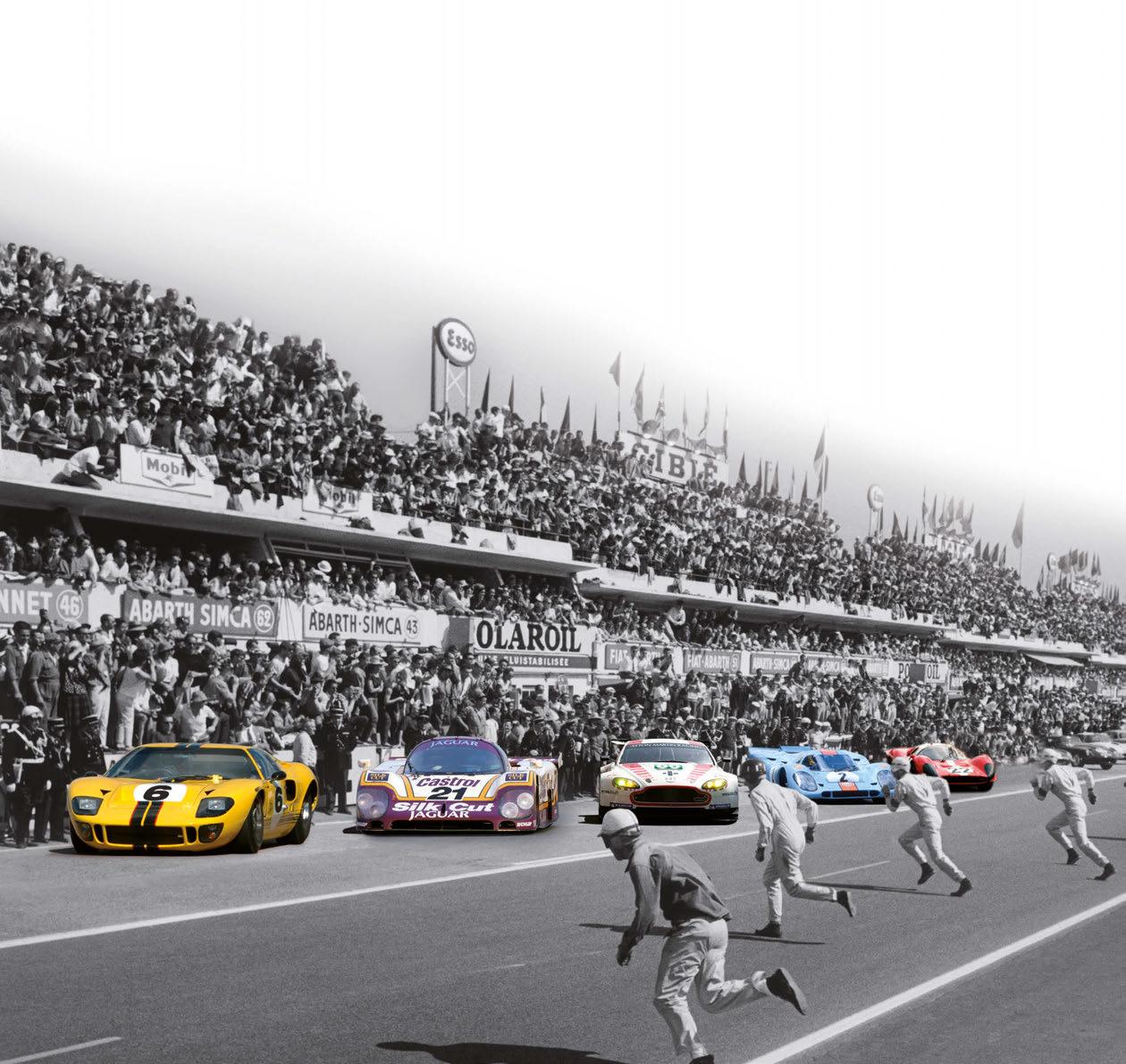


Owning a collector’s car goes beyond driving — it’s about the experience, the finer details, the passion. Our concierge service ensures that every aspect of your automotive lifestyle is seamlessly taken care of. From routine maintenance and bespoke care to door-to-door transport and VIP event access, we tailor every service to your needs. No request is too small, no expectation too high. Your car, your passion — handled with precision, discretion, and expertise.
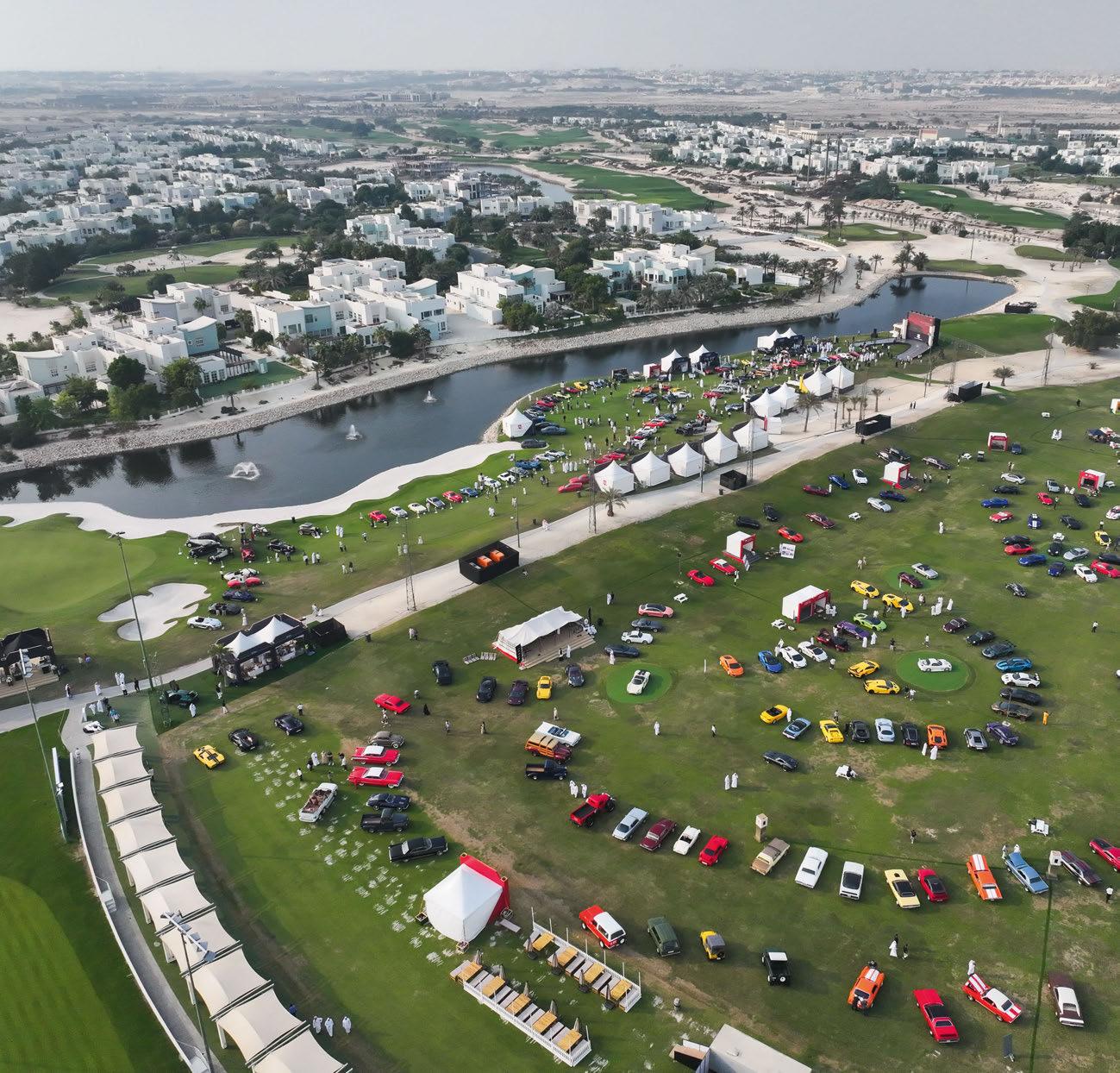
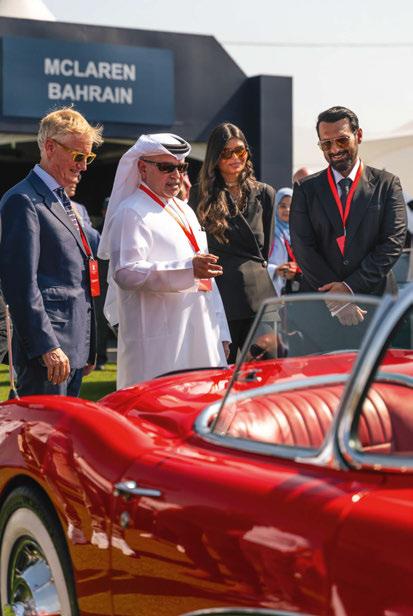
7-8 November
This inaugual event at the Royal Golf Club in Riffa was held under the patronage of His Royal Highness
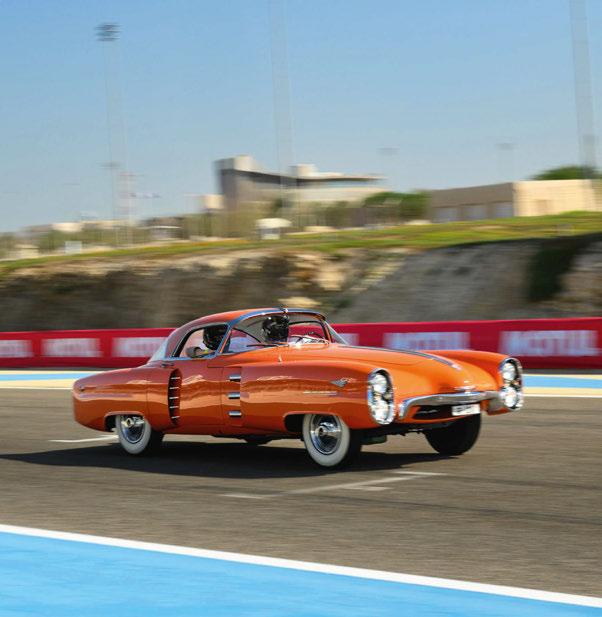
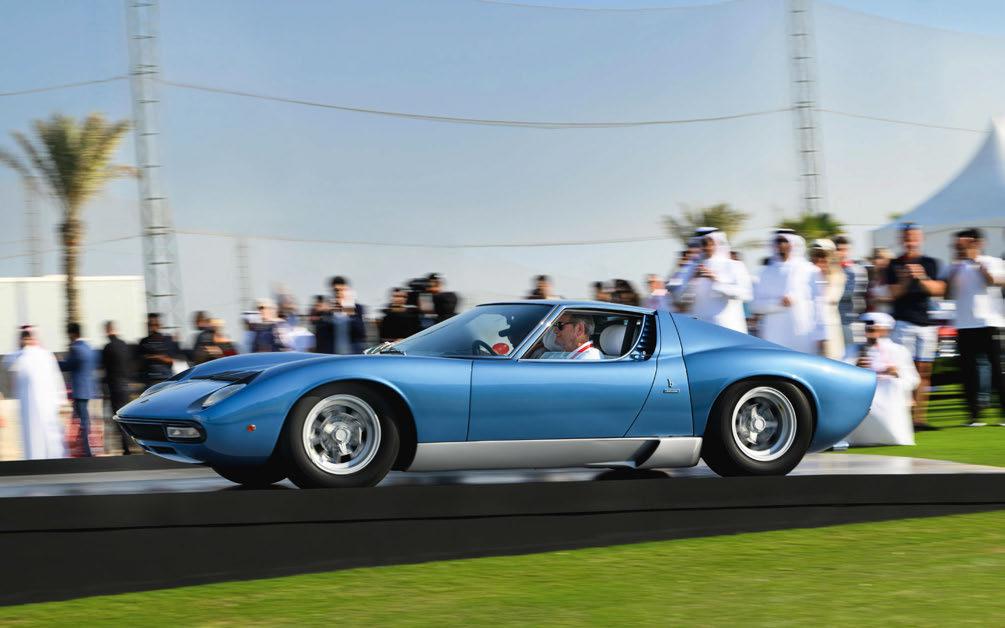
Prince Salman bin Hamad Al Khalifa, Crown Prince and Prime Minister of Bahrain. It showcased 60 cars, around 40 from the region and 20 from across the globe, plus 300 club cars. The winners were selected by the entrants rather than judges and Best of Show went to the ex-Shah of Iran 1972
Lamborghini Miura SV (right) owned by Dr Khalid M Abdulrahim of Bahrain. After the revoltion in Iran the car disappeared for over a decade before re-emerging in Italy and being restored over three years by Top Motors Salvioli. Fritz Burkard’s striking Boano 1955 Lincoln Indianapolis (top right) show car was another star of the event. Tim Scott / Fluid Images
Concours
Wynn Las Vegas
30 October – 2 November
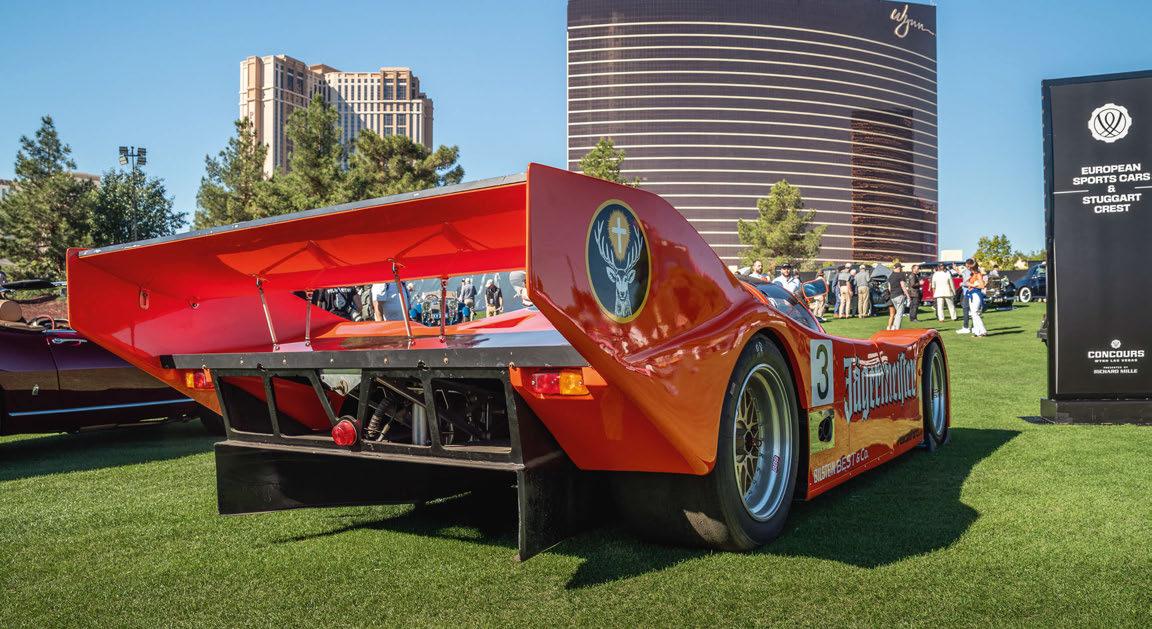
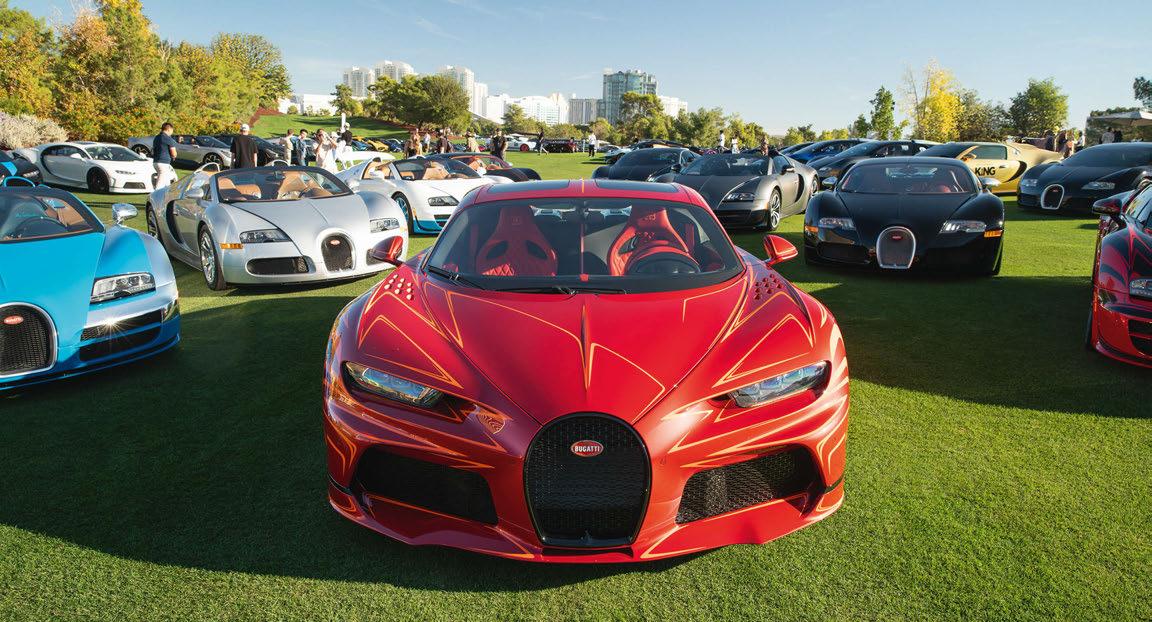
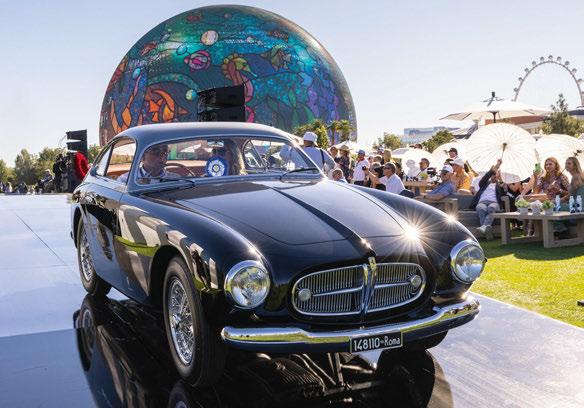
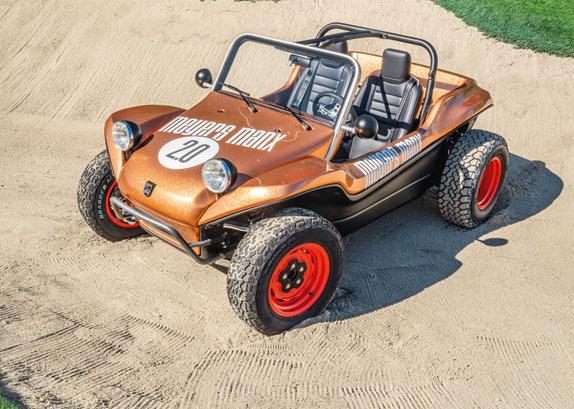
There were 12 classes and two Bests of Show at this huge event held on the Wynn Resort Golf Club, the top awards going to Bruce McCaw’s 1929 Mercedes-Benz 680S Barker Tourer (pre-war) and Brian and Kimberly Ross’s 1951 Ferrari 212 Export (post-war).
Highlights were the biggest-ever gathering of Bugatti Veyrons (46) for its 20th anniversary, 40 Paganis – including the world debut of the Huayra Codalunga Speedster – and 230 Lamborghinis.
Wynn Las Vegas
THURS 29 JAN I LIVE AUCTION
PARIS EXPO PORTE DE VERSAILLES
ONLINE BIDDING AVAILABLE
OFFICIAL AUCTION HOUSE OF RÉTROMOBILE
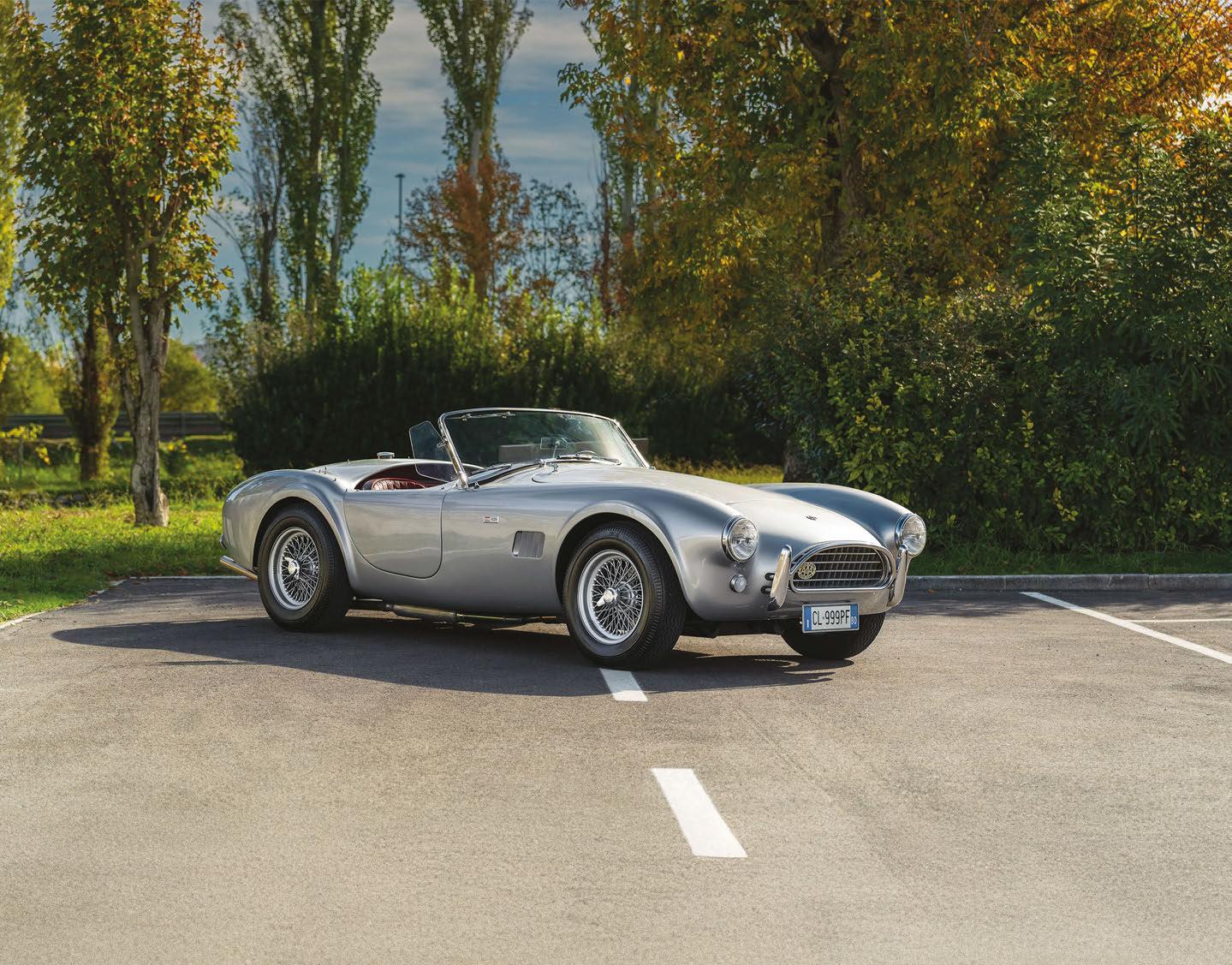
5 –6 I LIVE AUCTIONS
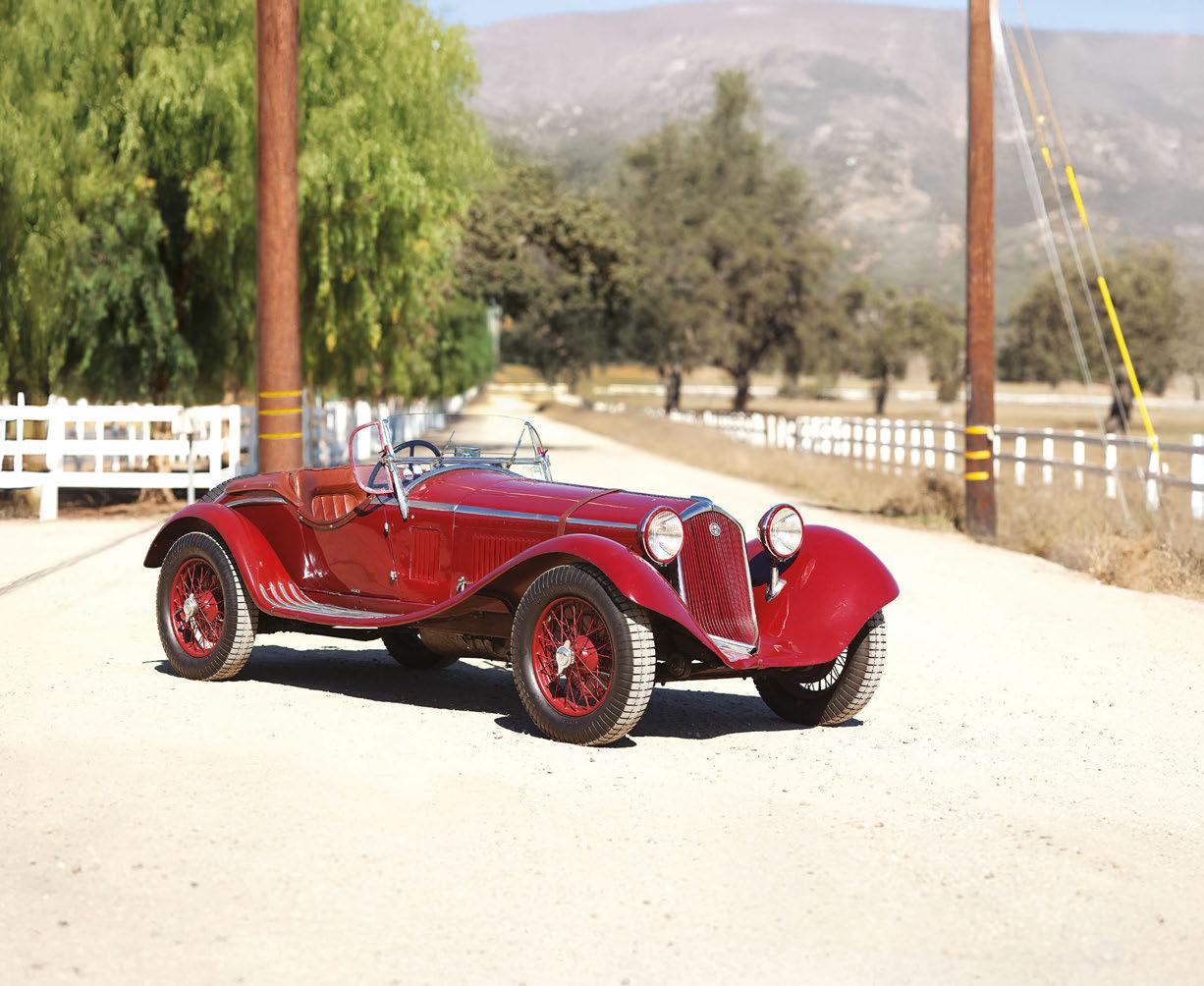
1932 ALFA ROMEO 6C 1750 SERIES V GRAN SPORT
From The Curtis Leaverton Collection I An Exceptional Example of the Desirable Fifth Series Gran Sport
Matching-Numbers Engine and Original Coachwork by Zagato I Known Ownership History from New I Without Reserve
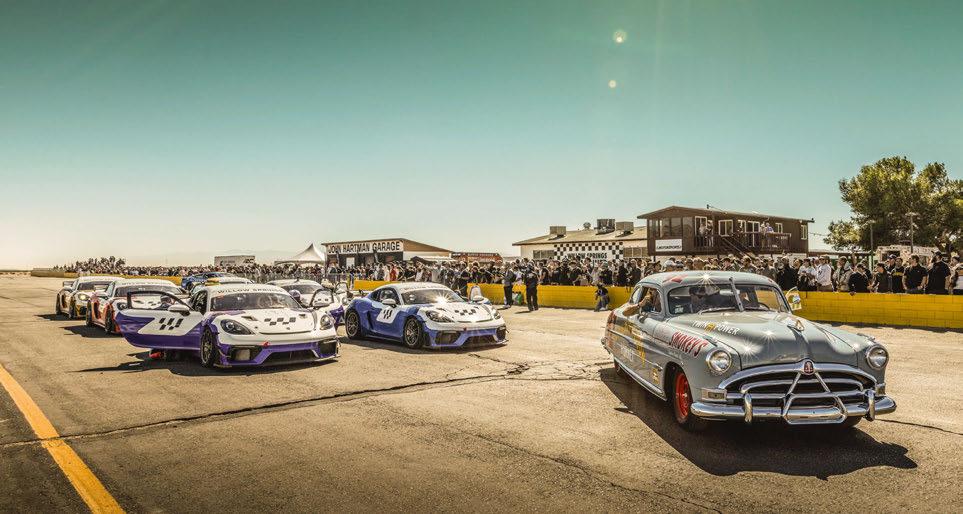
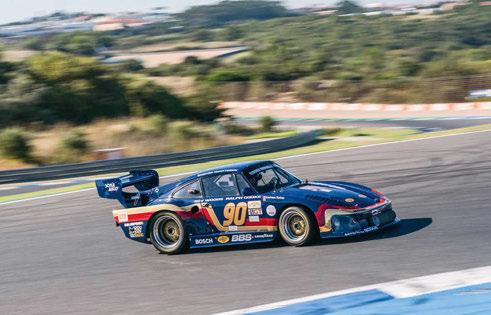
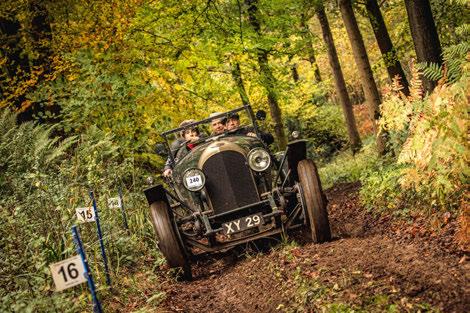
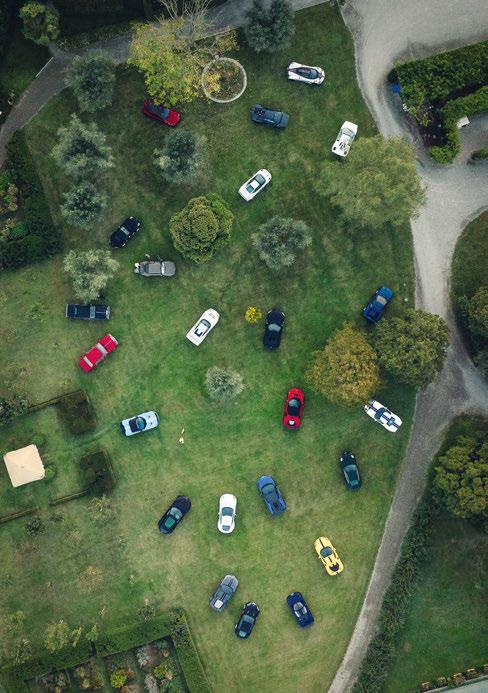
CLOCKWISE, FROM TOP Willow Springs Reimagined 11 October
The US’s oldest road course had a party for 5000 people and 200 cars, with guests including Jimmie Johnson and Dario Franchitti, to mark its reopening. Evan Klein
Cotswold Trial 25 October
Archie Collings’ Bentley 3/4½ during the second round of the VSCC’s trials championship. Joy Richings
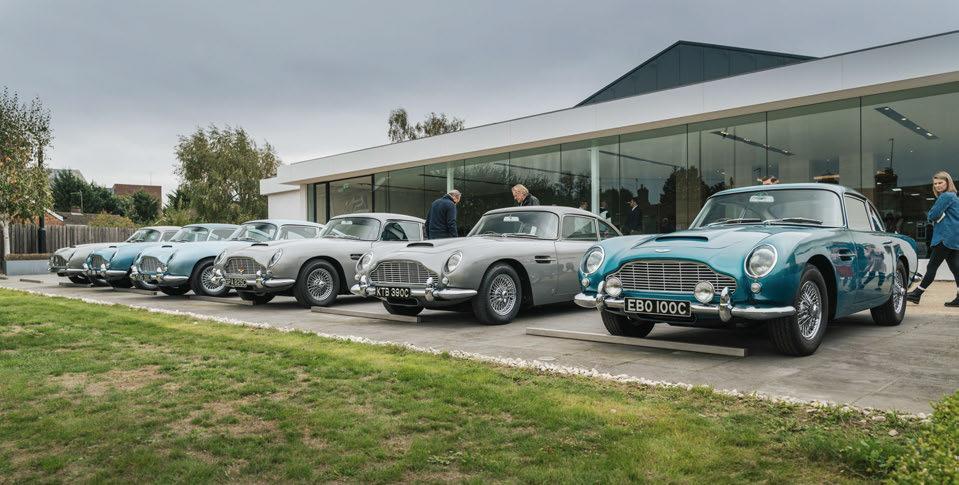
Aston Martin Works 70th 11 October
More than 100 classic Astons gathered at Newport Pagnell for the 70th anniversary party for Aston Martin Works. Guests included Ian Callum and Ray Mallock. Aston Martin
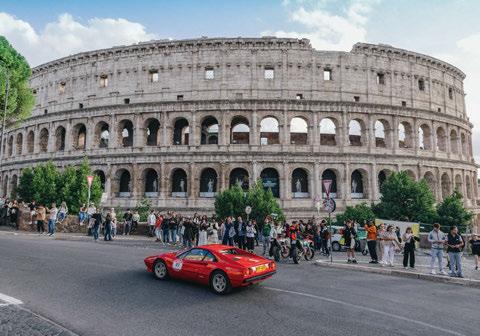
Modena Cento Ore 5-11 October
Five circuits plus ten special stages made up the 25th running of the Italian rally. Canossa Events
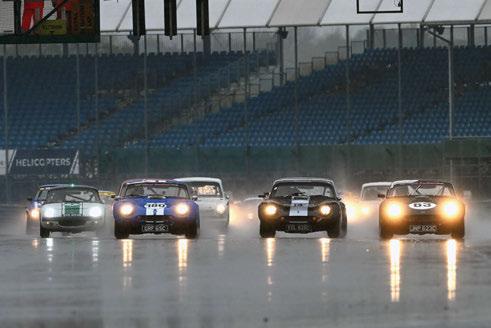
MRL Silverstone 18-19 October
The start of the HRDC Allstar race at the festival that also included the launch of Motor Racing Legends’ innovative Generations Trophy. Eric Sawyer
Estoril Classics 3-5 October
Peter Auto’s series grand finale in Portugal, to settle its 2025 championships. Valentin Pagnier
CLOCKWISE, FROM TOP
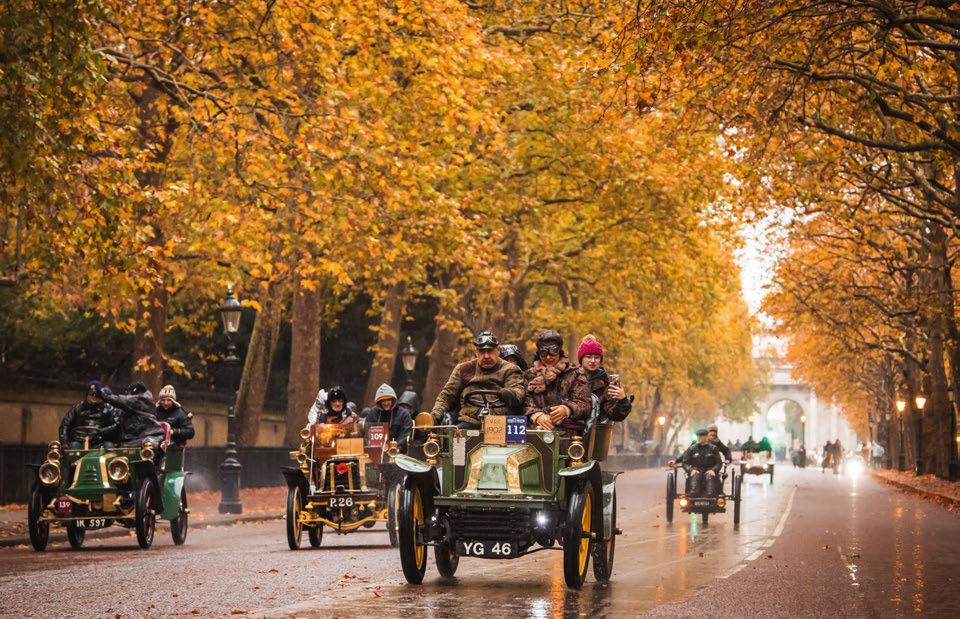
RM Sotheby’s Veteran Car Run 2 November
Some 384 veteran cars left London’s Hyde Park en route to Brighton, and 340 of them made it to the Madeira Drive finish before the 4:30pm deadline, led by a Renaux tricycle.
Royal Automobile Club
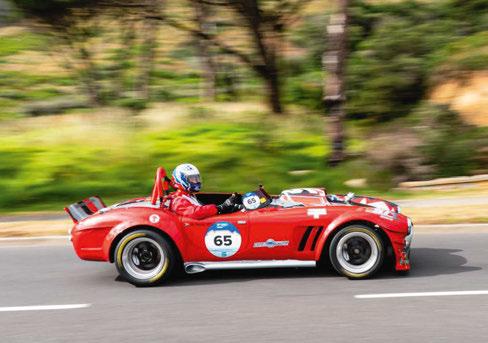
Speed Classic Cape Town 25-26 October
Heinrich du Preez’s AC Cobra during a new hillclimb that attracted 150 competitors and 15,000 spectators. Charles Arton won Classic Car Saturday in his 1979 March 79B with a 40.143sec time. Speed Classic Cape Town
Tour de Corse Historique 4-11 October
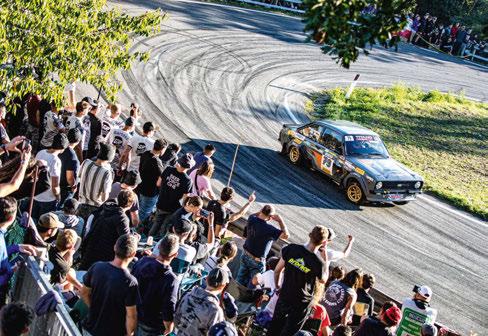
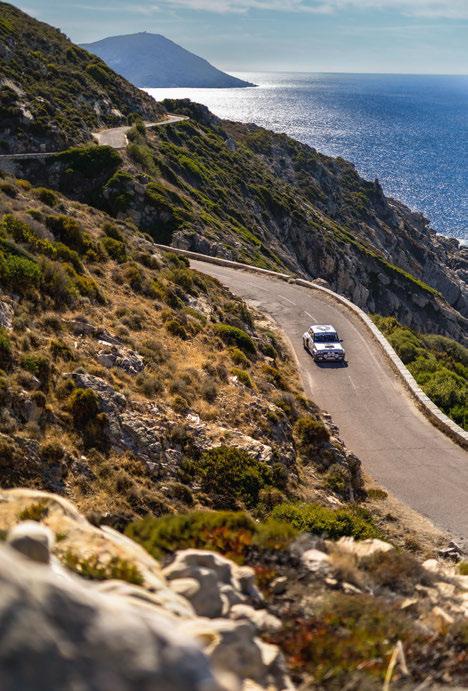
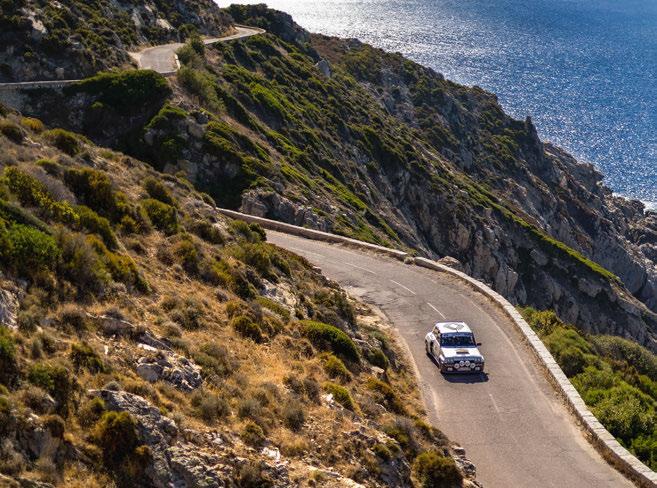
Local driver Olivier Capanaccia and Mathieu Tyran won the 25th edition of this 10,000-turn rally on the Isle of Beauty in their BMW M3. It was the PortoVecchio driver’s fifth bid for the title.
Classic Media
Rally Legend 2-5 October
The pairing of Nemo Mazza and Andrea Ercolani Volta was just one of 420 entries on this epic San Marino event. Rally Legend
Villa La Massa Excellence 17-19 October
A Lamborghini Countach 5000 QV scooped the Coppa d’Oro Villa La Massa at the spectacular event near Florence. Canossa Events
29 November
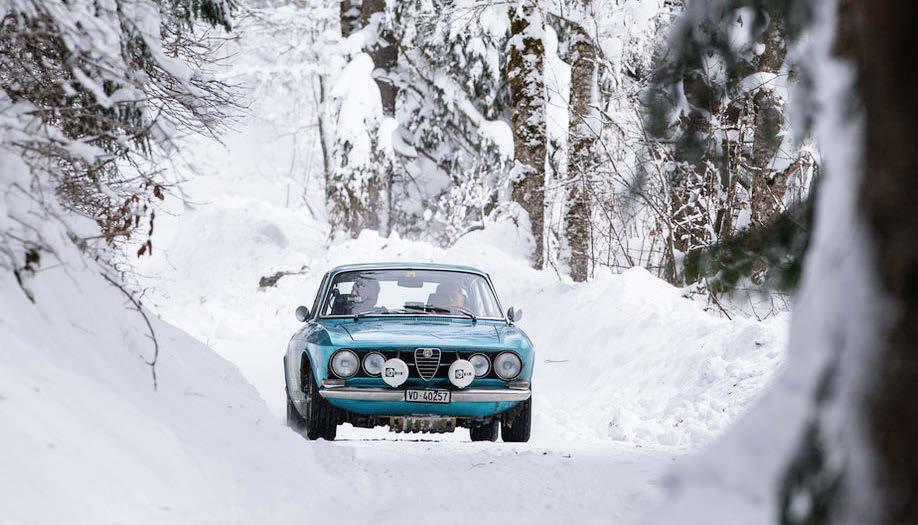
VSCC Winter Driving Tests
Bicester Motion hosts the VSCC’s final event of the year, which sees entrants attempt car-control challenges in conditions often not conducive to precision driving! vscc.co.uk
30 November
Scramblers Assembly
Members of Bicester Motion’s Scramblers club gather for the last time in 2025. bicestermotion.com
30 November
New Forest VW Santa Run
Organised in aid of the children’s cancer and haematology unit at Southampton General Hospital, the Santa Run sees classic and custom Volkswagens – many covered in Christmas decorations – assemble at Beaulieu before travelling in convoy to the hospital to drop off presents. beaulieu.co.uk
30 November – 4 December
1000 Miglia Experience UAE
Landmark cars will follow a 1600km route through the United
Arab Emirates and into neighbouring Oman. 1000miglia.it
4-7 December
Sebring Pistons and Props
Classic competition cars do battle at Sebring Raceway, where vintage aircraft also vie for the attention of the spectators. hsrrace.com
5-7 December
Masters Racing Legends at the Abu Dhabi Grand Prix
Before the 2025 Formula 1 season reaches its climax at Yas Marina Circuit, spectators will enjoy two 25-lap support races for F1 cars from the period 1966-85. mastershistoricracing.com
5-7 December
Cavallino Classic Middle East
The Yas Links golf course in Abu Dhabi hosts a concours for classic and modern Ferraris. cavallino.com
6 December
Gasparilla Cars in the Park
Hundreds of collector cars old and new go on display in the heart of Tampa, Florida, at an
event that is free to attend for the public. gasparillaconcours.com
6-9 December
Le Jog
The famous Land’s End to John O’Groats Trial was absent from the calendar in 2024, but it’s back to reclaim the title of ‘the hardest endurance rally in Europe’. hero-era.com
7 December
Haynes Breakfast Club
Cars finished in festive red will star at this Breakfast Club meeting at the Haynes Museum. haynesmuseum.org
7 December
The Classic Motor Hub
Christmas Party Petrolheads roll up to the Classic Motor Hub in Bibury to enjoy some Christmas cheer and a helping (or perhaps two) of seasonal treats. classicmotorhub.com
1 January 2026
Brooklands New Year’s Day Classic Gathering
The UK’s biggest New Year’s Day
gathering, featuring hundreds of classics, music and barbecue. brooklandsmuseum.com
1 January
Vintage Stony
Vintage cars and motorcycles take over the Buckinghamshire town of Stony Stratford. vintagestony.co.uk
11 January
Bicester Motion
January Scramble
The first Scramble of 2026 will include a display marking the 40th anniversary of the 1986 WRC season – the last to feature the wild Group B cars. bicestermotion.com
15-18 January
Interclassics Maastricht
The central exhibit at this edition of the show in Maastricht is titled ‘Legends of the Rising Sun’ and features a score of the greatest sports cars and racing cars to come out of Japan. interclassics.events
17 January
VSCC Measham Rally
The VSCC’s testing overnight navigation rally, run again on the roads of rural Leicestershire. vscc.co.uk
24-30 January
The Winter Trial
Starting in Salzburg and finishing near Lake Garda this time, and featuring a brand new 2500km route that will take crews south through Austria, into Slovenia and then across the Dolomites. classicevents.nl
25 January
Traversée de Paris Hivernale Classic vehicles trundle across Paris in convoy, the route taking them past some of the city’s world-famous landmarks. vincennesenanciennes.com
28 January – 1 February
Rétromobile
The 50th edition of the Paris
show is set to include a special display of the seven BMW Art Cars that have raced in the 24 Hours of Le Mans, including the 3.0 CSL painted by Alexander Calder and the Andy Warhol M1. retromobile.com
29 January – 7 February
Rallye Monte-Carlo Historique
Significant changes are being made to the Monte-Carlo Historique for 2026: the event will feature some closed-road regularity stages, and it’s now open to cars of a type rallied between 1911 and 1986. acm.mc
30-31 January
International Concours of Elegance St Moritz
The spectacular ‘ICE’ St Moritz is held on Lake St Moritz, which by the end of January is frozen to a depth of around 60cm. Classes at the 2026 event will include ‘Legendary Liveries’ and ‘ Birth of the Hypercar’. theicestmoritz.ch
30 January – 1 February
Bremen Classic Motor Show
‘4x4 Performance’ is the theme for the special exhibit at the 2026 Bremen Show; the organisers are bringing together a collection of significant four-wheel-drive road and racing cars, including one of two surviving Type 53 Bugattis. classicmotorshow.de
30 January – 1 February
Grand National Roadster Show
At the Fairplex in Pomona, California, 500 hot rods compete for the title of America’s Most
Beautiful Roadster and the famous, nine-foot-tall trophy that goes with it. rodshows.com
13-15 February
Cavallino Classic
The Boca Raton resort on Florida’s Gold Coast hosts a Ferrari-only concours before classics and sports cars of all types gather at the nearby Mar-a-Lago Club. cavallino.com
14 February
VSCC Pomeroy Trophy
Entries spanning a century of car design compete against one another in this handicap event, which begins with driving tests and ends with a 40-minute blast around Silverstone Circuit. vscc.co.uk
14 February
Concours in the Hills
A relaxed concours held in Fountain Hills, Arizona, in aid of a local children’s hospital. concoursinthehills.org
14-18 February
Rallye Neige et Glace
Based in the French village of Malbuisson, this one very much does what it says on the tin, serving up wintry entertainment for crews in pre-1998 cars. zoulouracingheritage.com
19-22 February
Retro Classics Stuttgart
Some 90,000 petrolheads flock to Stuttgart each year for this show, which welcomes everything from iconic racing cars to scooters. retro-classics.de
Secure your place; make travel plans
Coppe delle Alpi 12-15 March
Dubbed the ‘1000 Miglia winter race’, in 2026 the event will be based in St Moritz, covering 645km across Italy and Switzerland over three days of competition and returning to base each evening. The stakes are high for the 60 pre-2000 cars, with eight guaranteed entries to the 1000 Miglia 2027 up for grabs. 1000miglia.it/en/events/coppa-delle-alpi
Charlotte AutoFair 9-11 April
Hershey may be the best-known open-air autojumble extravaganza in the USA, but each year some 50,000 people visit Charlotte Motor Speedway in North Carolina for AutoFair. With 5000 vendors spread over four massive fields, it has been running since 1978 and is so big you can rent a scooter to get around. The Heritage Invitational at Ten Tenths Motor Club is across the road. charlotte-autofair.com
Driver’s Rally Chamonix 3-7 June
After Bolgheri in 2023 and 2024, and Cap Corse in 2025, Franz Hummel’s event goes back to its 2022 origins in Chamonix for 2026. Based at Hotel Mont-Blanc, no stage will be more than 250km yet they will venture into Italy and Switzerland as well as France. High-end cuisine is promised throughout, plus a clebration of the 24 Hours of Cham, the endurance ice race that grew out of 1970’s Ronde Hivernale. driversrally.com
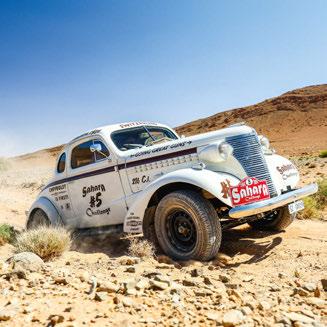
Sahara Challenge 19 September – 9 October 2027
HERO-ERA’s 5th Sahara Challenge will tackle a new 5250km route from Lisbon to Dakar and serve as a ‘qualifying round’ for the 2028 Peking to Paris Motor Challenge. Expect desert, forests, mountain passes and gravel tracks. A ferry from Tarifa to Morocco connects the Portugal start to the Riff and Atlas mountains; cultural experiences aplenty are promised. hero-era.com/rallies/2027/09/sahara-challenge-2027
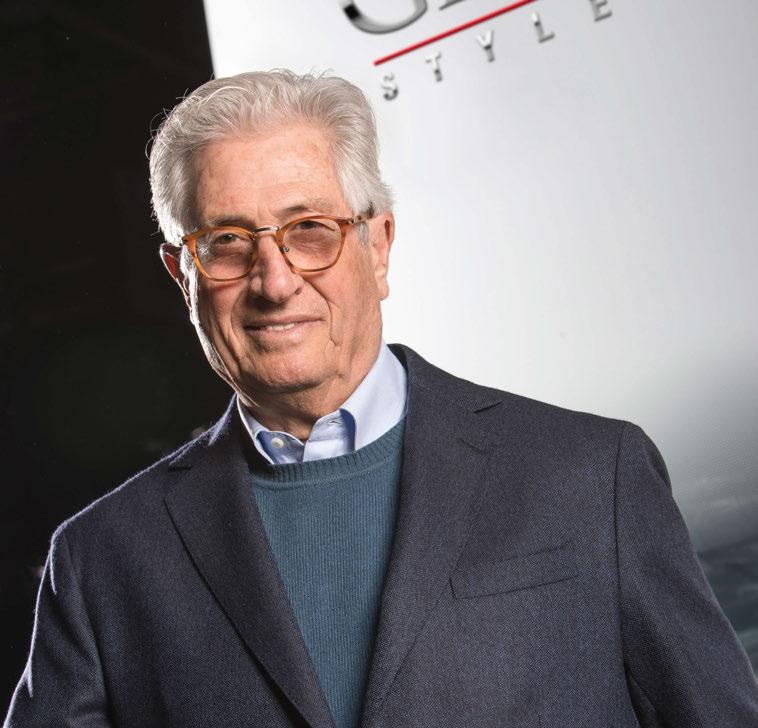
The International Historic Motoring Awards honour the leading lights of the industry – including a hero of car design
LEGENDARY CAR DESIGNER Giorgetto Giugiaro has joined the select list of winners of the Lifetime Achievement Award, at the 2025 International Historic Motoring Awards, Presented by Lockton. The 87-year-old Italian icon received the accolade on the day that Octane went to press, in a glitzy ceremony at The Peninsula hotel in London, following an introduction by Aston Martin design guru Marek Reichman. Giugiaro is only the second designer to receive the award; the other was Leonardo Fioravanti, in a roll-call of greats that includes Sir Stirling Moss, Bonneville Speed Week and Tony Dron.
The award was the culmination of a gala evening presented by Amanda Stretton to a sold-out room of 400 notables from the global classic car industry.
It followed the announcement of Car of the Year, which went to the Ford Escort Alan Mann 68 Edition by Boreham Motorworks. With the trophy decided by a public vote, the Blue Oval contender fought off spirited competition from a host of blue-blooded rivals, including the €51m Mercedes-Benz W196R Stromlinienwagen, Blue Bird, and the Pebble Beach-winning Hispano-Suiza H6C Nieuport-Astra Torpedo.
There were 15 further awards that were decided by a jury of nearly 40 experts from the classic and performance world. They include such dignitaries as Pebble Beach chairman Sandra Button, Jay Leno and Jay Ward, ‘Supercar Blondie’ Alex Hirschi, Christian Philippsen, Wayne Carini, McKeel Hagerty and Donald Osborne.
We’ll bring you the full story of the ceremony next month, but for now here are the rest of this year’s winners.
Rising Star of the Year
Ethan Blake-Jones (Paddock Speedshop)
Having got his first classic – an MGB – the 25-year-old Ethan founded his own TV production company to make a show that would blend restoration, racing and storytelling, all from a youthful perspective.
Specialist of the Year
SPONSORED BY CASTROL CLASSIC OILS
Tom Hartley Jnr
It was a stellar year for the Leicestershire specialist, who is soon to move to a huge new complex in the Cotswolds. He scored national headlines twice, first by selling nigh-on 70 F1 cars from Bernie Ecclestone’s collection and then the Mansour Ojjeh collection of McLarens.
Restoration of the Year SPONSORED BY CLASSIC CAR REGISTER
Hispano-Suiza H6C ‘Boulogne’ by Jonathan Wood
This is not only one of the finest restorations the world has seen in recent years (it took an eye-watering 18,000 man-hours), it is also one of the most emotive, the original owner being Bentley Boy Glen Kidston and the current owner his nephew Simon.
Tour or Rally of the Year Tour de Corse Historique (Modus Vivendi)
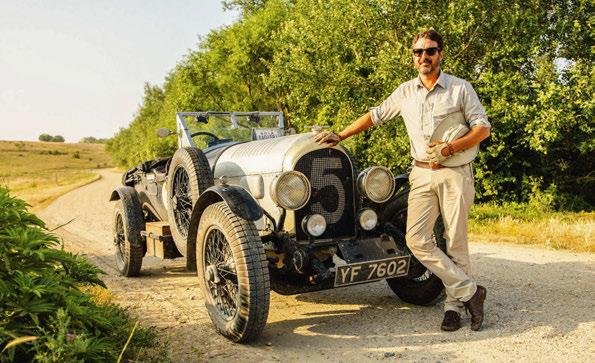
Clockwise, from above Giorgetto Giugiaro; the RAC Concours; Audrain Newport Concours; Indy Museum; that Ford Escort; Tomas de Vargas Machuca.
This hardcore event (dubbed the rally of 10,000 turns) on the Mediterranean isle of beauty goes from strength to strength. It is attracting an ever more impressive roster of cars and drivers, including Bruno Saby (Lancia Delta Integrale), Philippe Gache (Porsche 911) and Patrick Bernardini (BMW M3).

Club of the Year
SPONSORED BY LOCKTON PERFORMANCE
Aston Martin Owners Club
There were fabulous events throughout the year to mark the club’s 90th anniversary, but the highlight was the ‘International Anniversary Weekend’ at the Hotel Gut Brandlhof in Saalfelden, Austria, on 26-28 September, attended by 350 members from 18 countries.
Museum or Collection of the Year
SPONSORED BY MAGNETO
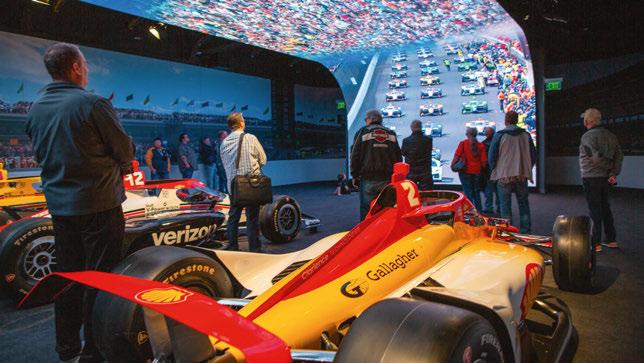
Indianapolis Motor Speedway Museum
A sensational year for the Indy Museum as it shed some of its less relevant exhibits and raised a huge amount to secure its future, then reopened after an extensive and brilliant makeover.
Industry Supporter of the Year
The Heritage Skills Academy
Founded by John Pitchforth in 2015, the Heritage Skills Academy is dedicated to fulfilling the need for a younger generation to learn and master roles within the heritage industry that will keep classic cars on the road for generations to come.
Race Series of the Year Endurance Racing Legends (Peter Auto)
The most modern cars competing in Peter Auto circuit events are real thrillers for youngsters and non-youngsters alike: 1990s and 2000s GTs and prototypes. This means GT1 cars such as Ferrari F40 LM and 550, McLaren F1 GTR, Porsche 911 GT1, GT2 icons such as the Porsche 993 GT2, and prototypes including the iconic Audi R8 LMP.
Motorsport Event of the Year
SPONSORED BY REVS INSTITUTE
Rolex Monterey Motorsports Reunion
Truly one of the big beasts of historic motorsport could be seen at its brilliant best in 2025. There was no shortage of ‘F1 at 75’ celebrations around the globe this year, but this was among the best. The 2025 Reunion, held at Laguna Seca during Monterey Car Week, also hosted an unprecedented gathering of 24 of the original International Race of Champions (IROC) cars.
Digital Media of the Year
Petersen Automotive Museum
The museum’s superb multi-platform approach fulfills a brief to educate, inform and entertain in equal measure.
Motoring Book of the Year
Power Unleashed: Trailblazers who Energised Engines with Supercharging and Turbocharging, by Karl Ludvigsen (published by Evro)
A very strong and characteristically authoritative tome, 15 years in the making, that carries 4000 illustrations and weighs 8.5kg in its slipcase.
Motoring Event of the Year
SPONSORED BY NYETIMBER
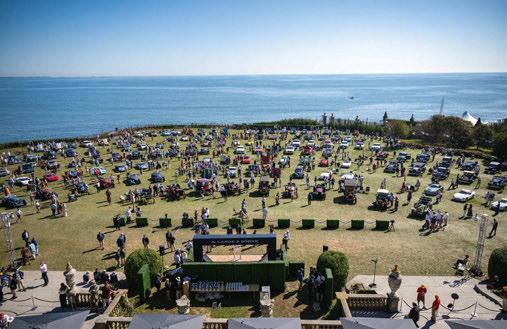
Audrain Newport Concours & Motor Week
Many say that, finally graced with fine weather, this was the year that the spectacular Rhode Island week comprising concours, seminars, auction and much more came of age.
Personal Achievement of the Year
SPONSORED BY THE PETERSEN AUTOMOTIVE MUSEUM
Tomas de Vargas Machuca
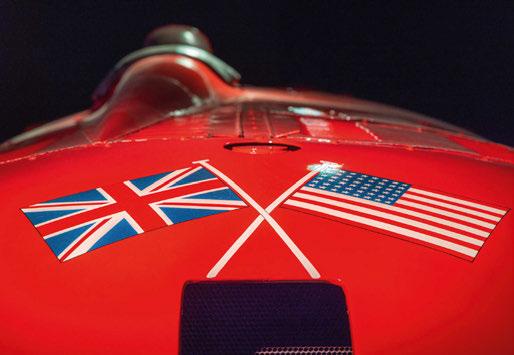
Awarded to Tomas for becoming the first person ever to drive the Peking to
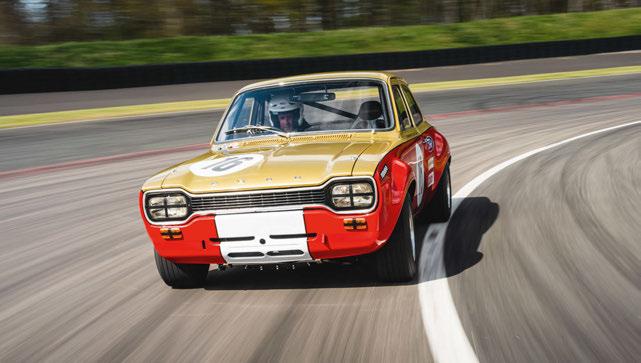
Paris Motor Challenge solo, some 14,889km over 37 days in his 1927 Bentley 3/4½ Litre.
Bespoke Car of the Year
SPONSORED BY OCTANE Lightweight GTR by Eagle
The development of Eagle’s already sensational Lightweight GT takes the formula to another level. This
is quite possibly the greatest E-type ever created.
Breakthrough Event of the Year
The Royal Automobile Club Concours
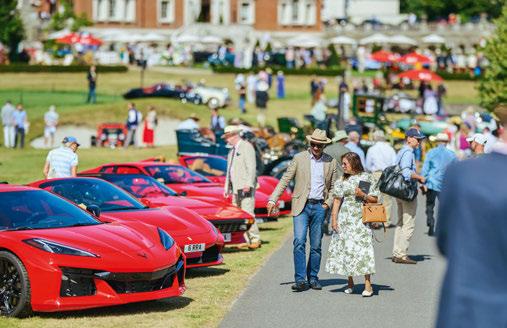
A rare chance for non-members to see behind closed doors at the club’s Woodcote Park estate, as well as what sensational cars the members own. It attracted 200 cars and 2000 visitors.
THE SUNBEAM 1000HP, the first car to achieve a Land Speed Record of 200mph, has added a prestigious new date to its itinerary when it heads to the USA to mark the centenary of its finest hour by re-enacting it on Daytona Beach. Known as ‘The Slug’, the Sunbeam – currently being restored to run again, one of its two 22.4-litre Matabele V12 aero engines having been fired up for the first time in decades at Beaulieu’s International Autojumble in September – is also to take centre stage in a special class at next year’s Pebble Beach Concours d’ Elegance.
The appearance puts pressure on the National Motor Museum’s small team to finish its restoration (three years so far), which will return Henry Segrave’s British engineering icon to Florida in 2027, marking 100 years since it set a new world best of 203.792mph on 29 March 1927.
‘The process of restoring a one-off car like this takes real dedication,’ noted Pebble Beach Concours Chairman Sandra Button. ‘We are thrilled to know that the museum intends to send the restored car to Pebble Beach, to share with enthusiasts here.’ Lord Montagu of Beaulieu added: ‘This car has been at Beaulieu since before I was born and feels like a member of the family, but one I never expected to run again. Watching the restoration has revealed so much I never knew about the car. It will be quite a thrill to have the car at Pebble Beach and a great opportunity for us to wave the flag for the National Motor Museum!’
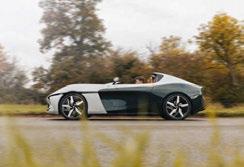
British company Longbow has unveiled its Aesthetic Dynamic Demonstrator a mere six months after it was sketched. Claimed to be the world’s first Featherweight Electric Vehicle (FEV), the first-year production of the ₤84,995 Speedster is already allocated, with deliveries in 2026.
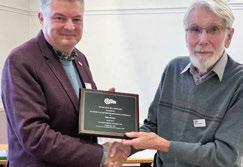
Though the Michael Sedgwick Award for the best motoring book skips a year, the SAHB’s Malcolm Jeal Award has been given to Mike Oakins for his article The Paulin Bentley and Soltau Hay, which formed the entirety of an issue of 1888, The Journal of the Bentley Memorial Foundation.

Graham and Marina Goodwin’s 1925 Bentley won Rally the Globe’s month-long, 7000km island-hopping tour from Sapporo on Hokkaido, the northernmost of Japan’s four main islands, all the way to Fukuoka on Kyushu, the southernmost. Some 22 crews tackled the marathon and Nigel and Sally Woof’s homegrown Datsun 240Z took top honours in the Classic category.
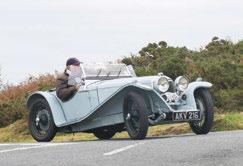
Entrants on this year’s REVS Pilgrim Tour spanned over 90 years, from a 1934 Aston Martin MkII to 2025 Morgan Plus 4. The event, run by the REVS Community team, was based in Lllandeilo and explored North Wales, which will also be the venue for 2026.
The 2026 ICE in St Moritz will be on 30-31 January, Canossa Events’ Terre di Canossa and Modena Cento Ore will be on 7-10 May and 6-11 October respectively and Peter Auto’s 35th Tour Auto will be on 3-9 May. Heveningham Concours returns to Suffolk on 27-28 June, while the Anantara Concorso Roma will make its postponed debut on 16-19 April.
The pictures of the Teardrop Talbot-Lago in issue 270 were incorrectly attributed. Our thanks and apologies to the Petersen Automotive Museum and Ivan Illagan/MITOKINO who should have been credited for them.
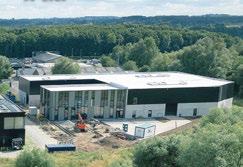
Marreyt Classics, which has been based in Aals, Belgium, for the past 25 years is moving to new premises in Ternat, near Brussels and where the company started out. The new premises, including showroom, workshop and bodyshop, opened on 18 November and are three times the size of the former facility.
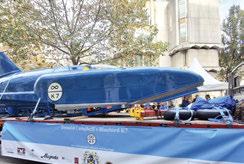
Bluebird visits London
Donald Campbell’s jet-engined hydroplane Bluebird K7 was broadcast to millions live on BBC1 as it starred in the Lady Mayor’s Show in London on 8 November, accompanied by Campbell’s nephews Don Wales and Peter Hulme. In May, K7 will run again at Coniston, where it set four of its seven world records before claiming Campbell’s life.
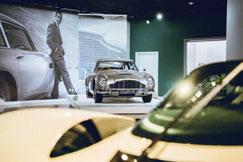
The Petersen Automotive Museum has opened its first-ever explicitly Aston Martin exhibition, ‘Performance and Prestige: A History of Aston Martin’. It features more than a dozen rare and iconic vehicles from Aston Martin’s 112-year history, including DB4GT Zagato, Bulldog and Valkyrie Spider. See Petersen.org/exhibits.
Auction appointments
As Gooding Christie’s expands into Europe, the auction house has announced two senior appointments. Oliver Camelin, previously of RM Sotheby’s, will be MD for the EMEA regions based in Geneva, while Jamie Knight, long associated with Bonhams, will be senior specialist and consultant in London.

Aston Martin and Goodwood have been recognised in the Walpole British Luxury Awards. The Goodwood Art Foundation received the Cultural & Social Contribution Award for its support of artists, curators and communities, while Aston Martin took the Game Changer award for its F1-inspired Valhalla.
Paul Fricker
Largely unsung he may be, but Paul worked on the DeLorean when he was at Lotus before moving to Cosworth to run the YB programme, followed by the YBD (RS500) programme and the 4x4 and Escort Cosworth engine programmes. He also set up Cosworth’s North American operation in Detroit.
Anthony Pozner
Anthony Pozner, the renowned classic car enthusiast and boss of Hendon Way Motors since the mid-1960s, has passed away. When he took the helm of the family Renault dealership aged just 20, he guided it first towards contemporary sports cars and exotica and then his preferred classics. A distinguished collector and connoisseur, Anthony regularly attended concours and historic rallies such as the Modena Cento Ore, where his passion for iconic vehicles and his humour shone brightly.
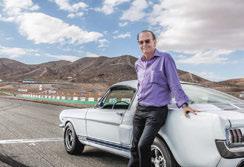
Quentin Willson
Although most biographies of Quentin start with his stint on Top Gear, the Leicester-born car dealer was plucked from forecourt obscurity by Autocar’s Steve Cropley, then of Buying Cars, and quickly flourished as an incisive campaigning journalist. He subsequently joined Top Gear in 1991, after a recommendation from Cropley, and even there played to his strengths as a used car expert and consumer champion. When Top Gear was shelved in 2001, he quickly joined Channel 5 start-up Fifth Gear Although he left after only four years he remained a regular in magazines, Mirror Group newspapers and on TV, not least with The Car’s the Star and the shortlived The Classic Car Show, which he co-hosted with former model Jodie Kidd. Quentin was actually extremely passionate and knowledgeable about classics, but this often came across more off-screen than on. Having campaigned for years against high fuel prices in the UK, he spearheaded the FairFuel campaign from 2011 before embracing EVs as his new cause.
Peter may have always shunned the title of the father of ground effect, but, having stumbled across it in the Imperial College wind tunnel, he was instrumental in applying the aircraft tech that propelled Lotus to the 1978 world title. His curiosity and determination to innovate made him a natural fit with Colin Chapman, and he was quick to explore active suspension and other advances in a career that remained close to F1 his whole life. Latterly the technical consultant for Racecar Engineering, he had lost none of his hunger for analysing cutting-edge technology.
The historic vehicle world is currently stronger and more influential than ever
THE FEDERATION OF British Historic Vehicle Clubs has released the results of its huge 2025 survey and the outlook is overwhelmingly positive, though notes of caution are sounded.
The survey, which the FBHVC says is the ‘most comprehensive study ever conducted into the UK’s world-leading historic vehicle movement’ and garnered 20,000 responses, found that the classic car industry continues to grow – contributing £7.3billion to the UK economy annually, supporting 34,500 jobs and attracting record numbers of enthusiasts.
The key findings were:
• The number of historic vehicles registered with the DVLA in the UK has risen to 1,934,178.
• The UK is home to an estimated 690,777 historic vehicle owners, and more than 22.7million adults regard historic vehicles as a vital part of Britain’s heritage.
• Over 9.7million people say they would like to own one, and 4.3million attended a historic vehicle event in the last year –a 100% increase since 2020.
• Historic vehicles account for only 0.2% of all miles driven in the UK, with the average vehicle covering just 837 miles annually.
• 45% of businesses in the sector already offer or plan training schemes to ensure vital historic skills are passed on.
However, despite the training schemes, the biggest non-legislative threats to a prosperous future are the risk of core skills dying out and
an ageing ownership base, with the average age of owners having risen to 66.
David Whale, Chairman of the FBHVC, said: ‘This report underlines just how vital the historic vehicle sector is to Britain’s economy, culture and communities. It’s worth a record £7.3billion a year, supports 34,500 skilled jobs, and unites millions of people through a shared love of our motoring heritage.
‘But we cannot take that success for granted. The average owner is now in their sixties, and we urgently need to inspire and train the next generation. Programmes like our new Youngtimer initiative and industry apprenticeships are key to ensuring these vehicles – and the skills to maintain them –survive for the future.’
See fbhvc.co.uk/survey.
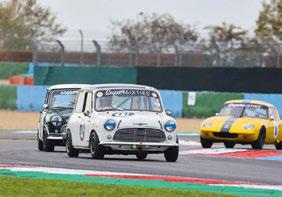
New body set to protect and police historic racing
organisation has been set up to ‘preserve the rich legacy of motorsport and promote historic car racing on an international level’. The group has held its first meeting at the Royal Automobile Club and elected a raft of specialists to its steering committee. They include the likes of Patrick Peter, who last year retired from historic motorsport behemoth Peter Auto; long-term Rolex Monterey Motorsports Reunion kingpin Barry Toepke; Andy Dee-Crowne, CEO of the HSCC; plus Historic Motor Racing News editor Carol Spagg.
According to the group, it has been ‘established by a coalition of motorsport enthusiasts and professionals, including event organisers, drivers, clubs, and preparers who are committed to ensuring that historic racing continues to thrive and attract new drivers.
‘Historic racing flourishes from its sense of community, honouring and preserving the sport in its historic and authentic form. HMA members endorse the principle that historic vehicle competitions should not have the sole objective of winning trophies.’
Unsurprisingly, the authenticity of cars and the ongoing debate over replicas and continuation cars in historic racing will be core to the HMA, as will be taking historic cars too far beyond their original specfication. It plans to hold discussion groups and seminars on such topics.
In a joint statement, Carol Spagg and Patrick Peter said: ‘We aim to create a supportive environment that allows organisers and drivers to share their views and expertise, ensuring that this aspect of motorsport continues for generations to come.’
See historicassociation.com.

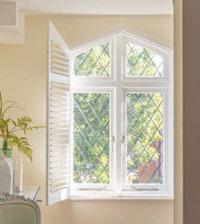
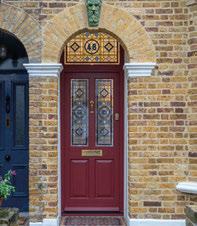
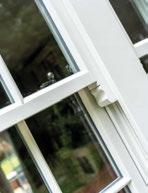
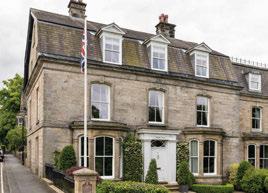
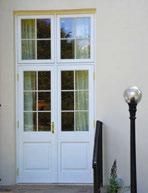
Naturally beautiful, our award-winning timber windows and doors are the logical choice. Constructed from engineered timber slow grown in cold climates, their strength, stability and beauty are guaranteed.


Our collection has been carefully and sensitively tailored to complement the English home. Unlike timber windows of old, our products will not twist, will not rot and require very little maintenance. High levels of insulation and security ensure there is no need to sacri ce beauty for comfort.
With a15% discount off all windows & doors in our Winter Sale, explore the range in 56 showrooms nationwide.






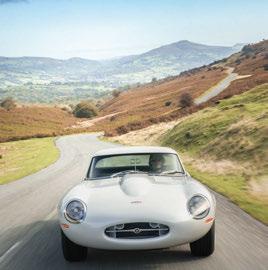


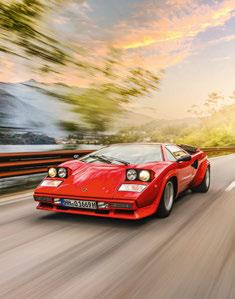




• Pay just £1.66* each for your first three issues
• All subscriptions now include access to the magazine archive via the Octane digital app
• Nev er miss an issue
• Money -back guarantee –cancel and we will refund your remaining issues
• Unique subscriber -only covers
Please note our updated website (below).
Order and manage your subscriptions online, or call our helpline on +44 (0)20 3966 6695












Aero-engined cars are cool; modern aircra tech is even cooler
Although I love aircra engines I’ve never been much of an aeroplane guy. I love the era when aircra engines were just bigger, more powerful and be er-built versions of car engines. at’s how you went fast a er World War One. You put an aircra engine in.
I’ve got a number of these fascinating vehicles. e oldest is a car called Rabbit One. It was built on a 1910 Mercedes chassis to run at Brooklands racetrack and in 1921 it lapped at 113mph using a 230-horsepower Benz four-valve-per-cylinder aero engine. Next up, a 1914 Fiat race car featuring a Fiat A12 six-cylinder aircra engine, also four valves per cylinder. And that one’s 22 litres! Also a 1915 Hispano-Suiza with an 18.8-litre V8 aero engine, designed by Marc Burkigt, which was the rst modern aero V8 with overhead cams.
To my way of thinking, the last great aircra engine that could be put in an automobile was the 27-litre Merlin. We put that one in a 1934 Rolls P2 chassis (see Octane 215), and no, we didn’t break up a car – the chassis came from a junkyard.
If I took up ying it would have to be with something really early like a SPAD, which featured my Hispano V8, or a Sopwith Camel. I love that era when you could go out to your barn, drag your ’plane out and just y it. ere’s a place in England that’s the epitome of this dream and it’s called Old Warden Aerodrome in Bedfordshire. It’s managed by the Shu leworth Trust, a collection built by racer and aviator Richard Ormonde Shu leworth. You open these enormous barn doors and you’re greeted by acres of lush green grass. Watching vintage aircra bouncing over a homemade runway right next to your house is the most romantic image to me.
Of course, the penalty for error with aircra is so much greater. In the last couple of years, I’ve broken bones on motorcycles and set myself on re with steam cars, but as bad as those incidents were, it’s still be er than falling out of the sky. Yet that might also one day be a thing of the past and for a large number of people it already is, thanks to a company called Cirrus. ey built a ‘failsafe’ aircra .
I’ve lost a couple of good friends to small aircra mishaps so the idea that they would still be around today, if the planes they were ying had this technology, is pre y sobering. Large commercial
aircra have some variation of this technology, but the fact that the average yer could get it on their single-engine aircra is pre y impressive. Every Cirrus aircra comes with the Cirrus Airframe Parachute System: a parachute secured to the centre of the aircra . In the case of a mid-air collision or running out of fuel it will land safely, like a space capsule coming down in the ocean.
ere’s something called Safe Return Emergency that, with the push of a bu on, initiates an autonomous landing; it even talks to the tower and keeps passengers informed. For the price of a high-end supercar, you can have a single-engine plane with this technology. Jets are also available. I once asked a pilot friend of mine, who crashes the most? And he said ‘Doctors’. When I asked him why, he said: ‘Because they’re doctors!’ When you tell them they shouldn’t y they always say, ‘Ah, I’m a doctor, I know what I’m doing.’ Phil Hill, America’s rst F1 world champion, told me the only time he was scared in a car was when friends tried to impress him by showing what good drivers they were.
Much like a kid told not to touch the stove to see if it’s really hot a er being warned not to, I had to nd out for myself. Cirrus sent over one of their best pilots, a woman named Ivy McIver, with over 5500 hours of experience ying these ’planes. e Cirrus SR22 features the Continental Motors IO-550-N, a 552ci naturally aspirated, fuel-injected, air-cooled six-cylinder engine. It has 310 horsepower and ies at 211mph. It’s priced at just under a million dollars.
A er about half-an-hour ying around the Los Angeles area, I said to Ivy, let’s pretend you’re dead! And I reached overhead – the bu on is easily accessible to all passengers – and pressed it. What happened next was truly amazing. e ’plane contacted the authorities to tell them about our situation, communicated with the tower. e screens in front of us provided all the pertinent information: air speed, fuel remaining, the answer to any question we might have was available. We made a very calm, uneventful landing. I’m told, as of this writing, that a few hundred lives have been saved already by this technology. Many of those are entire families.
So next time your supercar ies o the road, you’re gonna wish you were in this aeroplane.
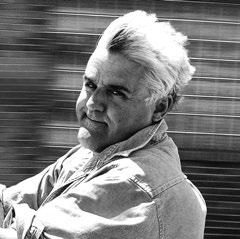
Jay was talking with Jeremy Hart.
‘THE LAST GREAT AIRCRAFT ENGINE THAT COULD BE PUT IN A CAR WAS THE 27-LITRE MERLIN’
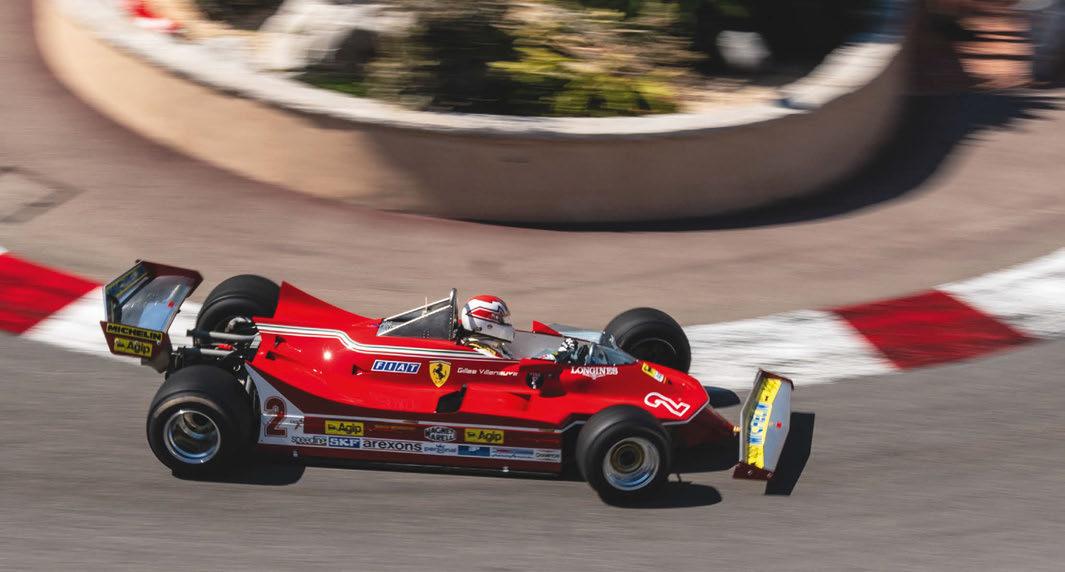
A TOUR THROUGH PROVENCE TO THE MONACO HISTORIC GRAND PRIX
21ST – 27TH APRIL 2026
Since 2016 we have been organising tours of the south of France to coincide with the Historic, and we are delighted to be returning in 2026 with a 6-night event combining the magic of Provence with a weekend of 5-star hospitality in Monaco.
During the tour we’ll be visiting the finest hotels in Provence, and driving some of the most spectacular roads anywhere in Europe. Then, after lunch on the Friday, we go up a gear and head into Monaco for a packed programme of historic racing, and superb hospitality throughout the weekend.
Entry is limited to just 20 cars (both classic and modern), and we hope that you will join us for an unforgettable week.
For further information, and to receive a brochure please contact Chris Bucknall. chris@v-management.com 01635 867705
v-events.co.uk



In Las Vegas, to drive a racing car for the road
iven how much time I spend in the USA, it’s funny that I have largely avoided Las Vegas. Please don’t read anything into that: I don’t mean it as a loaded comment. It’s just that I have generally skirted around it or travelled through its airport en route to somewhere else. And the reason for me mentioning this? Well, this column is being wri en only a few days a er my birthday, which was spent in Sin City. Not that any sin was involved, you understand. It was a family ‘do’ so there were no shenanigans. It bookended quite the car-related itinerary.
To be honest, I have reached an age at which ‘milestone birthday’ gets bandied around. Merely reaching your birthday is considered an achievement in some quarters, not that I think like that. Quite the opposite. Anyway, I had my lovely wife Misti with me and my two boys, Justin and Sebastian, plus my godson Aiden de Cadenet. Las Vegas is something of a second home for Justin in that he records his weekly motorsport podcast from the Wynn Las Vegas hotel. ey’ve created a studio for him where he interviews the great and the good of racing.
It’s a surreal feeling to walk into a hotel and see an illuminated photo of your eldest son. Talk about the proud dad! Name a xture in the pitlane and chances are he’s had them on his show, and I have to say that he’s a natural at this sort of thing. He’s also a born master of ceremonies, and he and I did our bit on stage during a McLaren launch. As you all know by rote, Justin and I raced together at Le Mans in 1995 aboard an F1 GTR and nished third. Well, McLaren was in town to launch its ‘Project Endurance’ hypercar, which will be hi ing the tracks in 2027. I don’t wish for this to sound like an advertorial, but I have to say that I am delighted that McLaren is taking a sports car programme seriously. It has such a rich history of success in all disciplines of circuit racing, from Formula 1 to Can-Am, IndyCar to GT racing. As such, it should be represented in top- ight sports car racing, and I look forward to it taking on Ferrari – another marque close to my heart – at Le Mans and elsewhere, in addition to Formula 1. Given that McLaren last won the 24 Hours in 1995, at its rst a empt no less, a second victory is overdue. e unveiling was part of the fourth running of the Concours Wynn Las Vegas, which Justin was also
hosting. I was on hand to drive a McLaren 750S on the ancillary tour. What a thing! It produces more than 700bhp but is just so tractable. I remember racing a McLaren M8E in Interserie way back when, which had similar horsepower. at was an animal. It’s amazing the di erence half a century makes because you could tootle in the 750S, not that I wanted to. I am constantly amazed at how far road car exotica has come in recent years.
Seriously, I remember a time when driving a supercar was more like a ba le of wills. ey would o en look amazing, make plenty of noise and maybe even put a smile on your face. at didn’t necessarily equate to you wanting to drive them long distances. ere were some that I wouldn’t want to drive around the block. e sad thing is, while designers and engineers have created the unthinkable – road cars with race car performance that are genuinely usable – most owners won’t scratch the surface of what they’re capable of. Cars will spend their lives in storage and be sold years later with delivery mileage. ey’re mere commodities.
From modern road cars to modern race cars.
I hope you will forgive me for talking about Formula 1 again, but I have been fascinated by the ba les among the top drivers in the second half of the season. Earlier this year, the general consensus was that McLaren’s Oscar Piastri had no chinks in his armour, that he invariably remained composed under pressure – but then he had two shunts in one weekend in Azerbaijan. en there’s his team-mate, Lando Norris, who some viewed as being a bit too emotional for his own good, but then he went and put on a bravura performance in Mexico and shut that down. Oh, and we can’t forget Max Verstappen, who everyone wrote o earlier in the year because Red Bull seemed to have forgo en how to win.
I am a huge fan of Oscar and Lando, but Max [interviewed recently in Octane 270] is something else. ere have been times in the past where he has overstepped the mark in much the same way that Ayrton Senna and Michael Schumacher o en did. ey were ruthless and Max has that same killer instinct. Nevertheless, something has changed. I guess he has matured to the point that he no longer makes crass moves. I am not saying that he is the best Formula 1 driver of all time, but I would posit that he’s the nest we have seen so far this century.
‘I REMEMBER A TIME WHEN DRIVING A SUPERCAR WAS MORE LIKE A BATTLE OF WILLS’










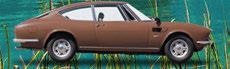
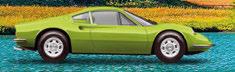
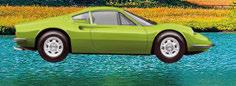
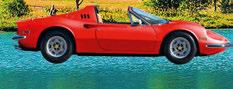
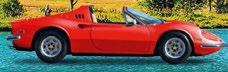

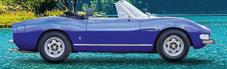

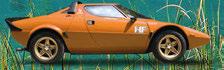


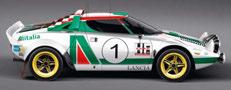





Once, smart was smart. Now it’s less so
The original smart was one of the great car designs. I know, as Wi genstein said, whereof I speak: I had four in succession. Every time I used one, I smiled. It was rather as Harley Earl described the designer’s mission: when you get into a car, it should feel like going on vacation. e idiosyncratic lower case ‘s’ was mandated in the stylebook, typical of this miniature would-be disruptor. e smart was completely original and had neither precedent nor in uence. smart’s ultimate commercial failure is a dismaying indictment of the unfolding calamity that is the European motor industry. Its successor, an ugly God-less ‘mobility system’, is made in China.
Idiosyncrasies in 1998 included very peculiar handling. It is perhaps the only rear-engined car with profound understeer. On some pre-production cars they even experimented with ballast to correct its waywardness, a quirkily de ant snub to the engineering grail of lightness. Gordon Murray, also an owner, told me that the handling could be xed by changing the sizes of the wheels, but I never did this because I am mechanically inept and, besides, I could not remember whether Gordon had advised pu ing larger wheels on the front or the back. en there was the ride, ne on smooth surfaces but terrifying on bumpy ones. e high centre of gravity contributed to the feeling of instability. But you got used to this. Also on the charge-sheet was a jerky transmission, but you got used to that, too.
Now for the vacation part of the story. smart’s styling was unique and, a quarter of a century later, is still fresh. It made no reference to anything other than itself so it cannot date. e car was beautifully built, packaging was Issigonis-level genius: within its 2.5m length, two occupants enjoyed the commodity, rmness and delight of a proper car. And, before the Lime Bike, it was the fastest way about town: its narrowness meant, in real-world urban conditions, a Lamborghini Aventador would struggle to keep up. en there was a pervasive sense of irreverent amusement, smart being a collaboration between Mercedes-Benz and Swatch, the la er of which had brought playfulness, funk and colour to the drably conservative Swiss watch industry. e name was coined by Manfred Go a, ‘the foremost name nder in Germany’ according to Der Spiegel. It’s a mash-up
of Swatch-Mercedes-Art. Go a also gi ed the world with Cayenne, Twingo and Vectra.
But the ‘design’ intelligence went deeper than cute looks and recyclable plastics. To reduce costs, suppliers were required to manufacture and instal sub-assemblies. us Krupp did the suspension, Magna the chassis and, my favourite, Dynamit Nobel (which gave us nitroglycerin) the doors. e PR cheerfully called this ‘a new modular partner-based production process’; the reality was that it allowed smart to make suppliers liable for warranty claims. It is notoriously di cult to a ribute something as complex as a car to an individual, but the dominant design inspiration for smart came from Johann Tomforde, a Hochschule Pforzheim Design PF Fakultat fur Gestaltung lecturer who had worked with Bruno Sacco on the R129 Mercedes-Benz SL. I imagine Tomforde was dismayed when he saw the new #5 smart, a dreadful consequence of MercedesBenz’s collaboration with Geely of Hangzhou.
But I cannot imagine what an ecstasy of boredom was being experienced in Leinfelden-Echterdingen when they announced that #5 smart represented ‘Love, Pure, Unexpected’. at might be the what3words address. However, my rm belief is that you should show, not tell. If people need to be told this transport solution is about purely unexpected love, then its design has failed. ey didn’t need to do that with the original smart: it spoke for itself.
e waste of shame here is that the simple delight of the ur-smart with its neat ICE, extraordinary character, unexpected comfort and human-related functionality has been replaced by a culture of 100kWh NCM, ISO 15118 and an AMDV2000 chipset. In a small gesture of wistful creativity, #5 has oating wheel centres that remain upright in motion, one of few things in common with the Rolls-Royce Phantom. I would call it ‘Mess, Pure and Predictable’. But then my idea of an HMI (Human Machine Interface) is a chubby Momo steering wheel.
Aristotle, who was right about almost everything, said that a good play should have an end that was ‘surprising, but inevitable’. For me, these were qualities of the ur-smart. It was the inevitable conclusion to a European design tradition commi ed to a belief that small and inexpensive should not mean miserable. And surprising in that it was so marvellously likeable.
‘I HAD FOUR SMARTS IN SUCCESSION. EVERY TIME I USED ONE, I SMILED’


A personal thanks to Giorge o Giugiaro for an all-time great
Giorge o Giugiaro is regarded as one of the best automobile designers of all time. Unlike the more audacious of his ilk, such as Giuseppe Figoni (of coachbuilder Figoni et Falaschi), Harley Earl (former overlord at GM) and Marcello Gandini (maestro of the supercar), Giugiaro’s designs are understated and timeless. Yes, he was a leader in the ‘folded paper’ look of the ’70s, but many of his creations still appear contemporary.
Like Alec Issigonis (Mini) and Dante Giacosa (Fiat 500), Giugiaro created some world cars of real importance, including the Alfasud, Volkswagen Golf Mk1 and Fiat Panda, providing quality motoring for the masses. Of course, he could not resist a ourish with the beautiful Maserati Ghibli, Iso Grifo, even the DeLorean. en, of course, there’s the gorgeous Alfa Romeo 105-series Giulia Sprint GT.
In comparison to today’s bloated creations, Giugiaro is a master of restraint: several manufacturers seem to have lost the design plot. Some years ago, Chris Bangle met with criticism for his (in)famous ‘ ame surface’ design language, characterised by dynamic, sculpted surfaces that blended sharp lines with convex and concave curves. Bangle retorted: ‘ e CEO of BMW asked me if the newly designed E46 3-series (in 1990) had too many lines, and I replied by paraphrasing Mozart, when the King told him “Too many notes”. To which Mozart replied “Please tell me which ones to take out.”’
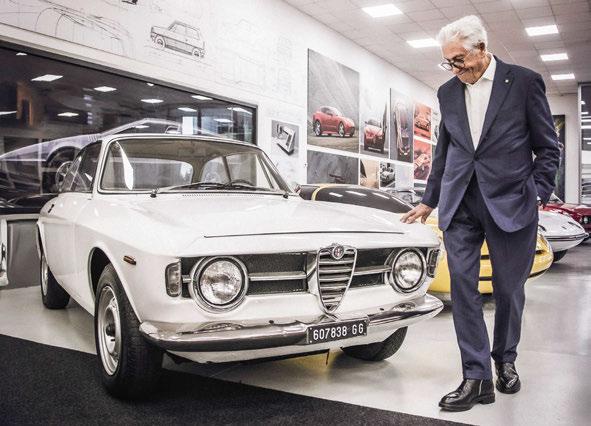
As must be the case for many of you, Giugiaro has touched my motoring life with several charismatic cars, including a number of Golf GTIs, but the most memorable was the Alfa Romeo Alfasud. is has to be one of the all-time most underrated drivers’ cars you now cannot nd. e ’Sud was brilliant in design, function and execution and pre-dated the Golf GTI by some ve years. Mine was a 1.5 Super with a single carb, mustering an underwhelming 85bhp. But it did have a ve-speed gearbox, four-wheel disc brakes, rack-and-pinion steering and a suspension package to delight any press-on driver. In what was probably the worst car deal in history, I swapped my Lancia Aurelia GT ird Series for the ’Sud. I was sick of trying to make my almost completely shot Aurelia run properly and was presented with a freshly repainted ’Sud that looked almost new. Its owner ran one of the best bodywork
and paint shops in town, so I fell for the gleaming Rosso Corsa Alfa and enjoyed one of the nesthandling cars styled by the great Giorge o. ere was even a racing series, the Alfasud Trofeo, organised for these cars, in which Gerhard Berger was a leading proponent.
My Alfasud was one of the ultra-rare First Series cars, with steel bumpers and smooth bodywork unsullied by add-on bits of plastic trim. It had a single Weber carb and naturally I removed the air lter for ‘be er air ow’ and the back box for the full, free- ow exhaust ‘upgrade’. e li le car was a delight to drive at-out everywhere, accompanied by a wonderfully fruity exhaust note thanks to its revvy at-four engine. But, never satis ed, I soon replaced it with a Sprint Veloce, the two door-coupé version of the Alfasud. And the example I ended up with was a very special car.
Produced on the South African Alfa Romeo factory production line in a place called Brits, my Sprint was built as a Group N production racing car. It was seam-welded, complete with a roll-cage, stripped interior and a blueprinted 1.5 Veloce engine that featured twin Weber carbs and gave about 110bhp. It was painted in the Italian Tricolore ag scheme of red, white and green, sprayed diagonally across the bodywork, and it sat on regulation black steel wheels, shod with racing tyres. Ludicrously, I used this street-legal racer as my daily driver in Johannesburg, and it managed very well. Ge ing into the racing seat over the roll-cage was a bit of a hassle, as were the full harnesses; the rm, lowered suspension was unforgiving, the interior boomed like a giant Coke can and the brakes squealed like banshees until they were warm.
But, mamma mia, when it was hot to trot the diminutive Veloce was like a kart on steroids. ink Italian Mini Cooper. Sure, it su ered massive torque steer under full acceleration, but you just drove around that, and it was noisy as hell. And on twisting roads it was uncatchable. Being front-wheel-drive, light of weight and clamped to the Tarmac, it could be chucked into any corner and I’d just sort everything out on the exit. I had a favourite bend on a favourite road; a long fast sweep, best taken in third gear in most cars. e ’Sud would a ack it at-out in h, just wanting more speed.
ank you for the memories, Signore Giugiaro.
‘GIUGIARO HAS TOUCHED MY LIFE WITH SEVERAL CARS, BUT MOST MEMORABLE WAS THE ALFASUD’






Car Rally | 15 March - 11 April 2027


Namibia - Botswana - Eswatini - South Africa
Embark on the adventure of a lifetime, expect world-class rallying on stunning desert and mountain roads, breathtaking landscapes, and bucket-list wildlife moments. From towering dunes and salt flats to lush jungles and private game reserves, this rally blends competitive driving with unrivalled safari experiences. Stay in luxury game lodges, enjoy sunrise and sunset wildlife drives, spot lions, elephants and whales, marvel at waterfalls, taste world-class cuisine, and finish at Cape Town’s iconic V&A Waterfront. This is a once-in-a-lifetime rally across Africa’s most enchanting terrain. Iconic roads. Elite hospitality. Pure rallying spirit. Bookings strictly limited secure your place.




FERRARI PARTS SPECIALIST
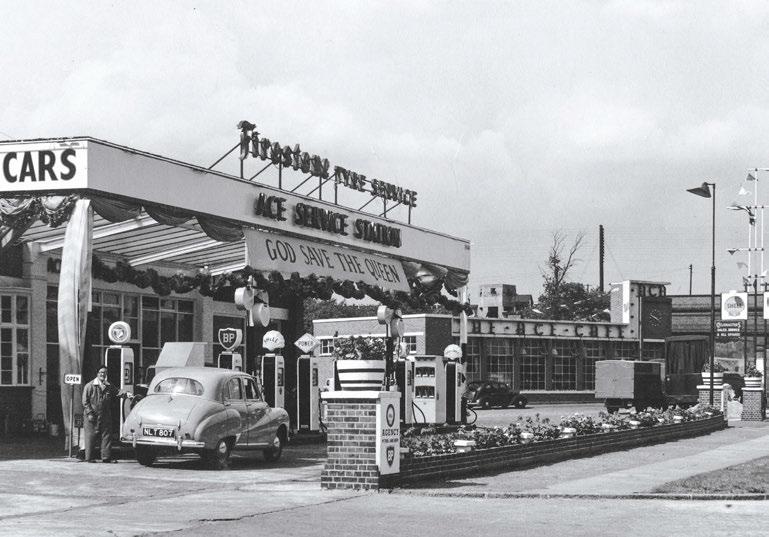
I WAS PERHAPS about nine or ten years old and we had spent the day at Frensham Pond in Surrey with our neighbours, my father’s Vauxhall 14 following our neighbour’s Standard Vanguard (in two-tone blue and yellow – how cool was that?), when my father’s car broke down right outside The Ace Cafe that you featured in Octane 270.
Café Racers seemed to be everywhere, ridden by young guys in leather jackets and accompanied by young ladies who were also all leathered up and looked like film stars. I’ve never seen so many BSAs, Nortons, Ariels, Matchlesses and many other makes. As for the ROARRR – I can still hear it.
Then, as we walked into The Ace to use the phone, Elvis Presley was singing All Shook Up on the jukebox. It was simply amazing.
It turns out that a family friend’s son used to own The Ace after the dark days of the past. Lots of hard work brought it back to its present glory.
Now to read the rest of the glorious Octane 270! George Wilkinson, St Albans, Hertfordshire
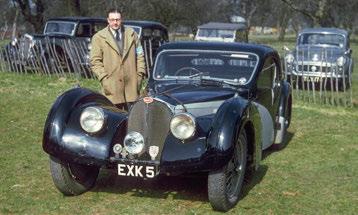
In Octane 270, Massimo Delbò describes driving a Bugatti Type 57S Atalante across the USA to Pebble Beach. My father used to own a Type 57S Atalante, UK registered as ‘EXK 5’, for some six years from 1954 to 1960, which happened to span the years I was learning to drive.
My father, John Virr, used the car for everyday driving including going to work. At weekends we often drove to race meetings such as the Easter
OF THE MONTH wins a Ruark R1S Smart Radio, worth £299
Polls show that radio is still many people’s favourite entertainment. With wi-fi and Bluetooth built in, the R1S is not just a radio, but a complete musical solution that’s small enough to fit easily into your house or garage.
Ruark is a family-owned British company, passionate about sound and design. Its aim is to make premium music systems that look and sound fabulous, products that will enhance your home and life, including radios, compact active speakers and all-in-one music systems – all with Ruark’s long high-fidelity heritage at their core. Visit ruarkaudio.com for more information.
meeting at Goodwood as well as Silverstone and Prescott. The photo [below left] shows him at Prescott, where for many years he sat on the Bugatti Owners Club competition committee.
At one race meeting at Goodwood he had a dice with Peter Collins, a friend who lived near us at Chaddesley Corbett, Worcestershire. Peter was driving a new works Jaguar XK120 but the Bugatti managed to beat him in the wet. Peter complained that his drum brakes faded, which was quite possible in those days. The Bugatti’s large drum brakes held, despite being cable operated.
On 19 November 1959, the car climbed Prescott in 56.14sec, quite a respectable time today. I still have the certificate.
This grand touring car had remarkable performance for its day so it’s no surprise it can still be driven across continents with some confidence.
Mike Virr, Connecticut, USA
Almost Tuckered out
Maybe Octane has too much to read but I’m still only halfway through issue 267! It has a great Gordon Murray tribute and I’m now on Stephen Bayley’s Tucker 48 ‘Torpedo’ article. Phenomenal. Please pass on my admiration for his research and perfect prose –it’s a joy to read. Stephen follows the hallowed path of Mel Nichols! Jonathan Botting, London
As a subscriber in Sweden, I’m always a little late to the party but your magazine makes the wait worthwhile. I was particularly pleased to see the Ferrari 412 feature in Octane 268. Such an elegant design and a model often (and unfairly) overlooked by the motoring press over the years.
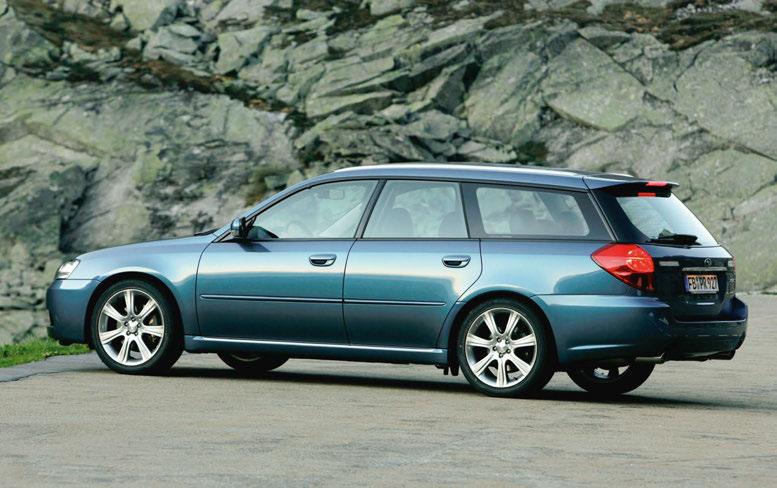
Talking of cars that are ignored… I was thrilled to read the ‘rocketship estates’ feature in Octane 269 but I think you missed a trick by not including the fourth-generation Subaru Legacy 3.0R spec.B wagon [above]. The run-out facelift model, which I believe was introduced to the UK in 2006 before being phased out a little over a year later, was a particular gem. Subtle styling changes and improvements in other areas, plus that wonderful 3.0-litre six-cylinder boxer engine, made for a great everyday, practical car. OK, it wasn’t the quickest thing on the road, but with 245bhp and 219lb ft it could reach 60mph from standstill in a smidge over six seconds and would go on to top 150mph. With all-wheel drive and a sorted Bilstein suspension set-up, it could be hustled along quite nicely, thank you very much. Couple all of that with Subaru’s rally pedigree (Subaru’s Legacy RS came before the iconic Imprezas) and you have a winner in just about every respect. I owned one for a couple of years and I’ll be the first to admit that the ‘flappy paddles’ mated to a standard automatic gearbox made it a bit dimwitted; a manual gearbox was available for those who couldn’t do without a clutch. Can I suggest you do a separate
feature on the model one day?
Andrew Manig, Flen, Sweden
We’re big fans of the Legacy here and yes, it could certainly have been part of that group; we just felt it was a few bhp shy of the bigger hitters among its rivals. We ran a Buying Guide on it in Octane 252 – GW
All hail the prancing elk I thoroughly enjoyed your feature on fast estates, which brought back a flood of memories.
In my case, it wasn’t the T5R but the ‘humble’ 850 T5 estate with manual transmission that I drove – my father’s car – slightly lowered by TWR and sitting on those sexy 17in five-spoke alloys that were very exotic then!
Sadly, there are no photos of it from those pre-digital days. But I remember it vividly: the sound, the balance, the sheer surprise it could give to much more exotic machinery when the boost kicked in. It was a real ‘sleeper’.
Once, fully loaded to the roof with Volkswagen parts for a swapmeet, I found myself dicing with a Ferrari 328 GTS on the Antwerp ring-road. The Volvo held its own with Scandinavian dignity! Its life ended rather less gloriously, in an accident with a police car setting up a speed trap – but that’s another story.
Frederic Peeters, Ninove, Belgium
classmate. We talked about cars, shared magazine articles and, living in the borough of Queens, New York, took the bus and subway into Manhattan to visit the exotic car dealerships that existed there.
Unfortunately, we later lost touch. In recent years, I tried a few internet searches but, as his name is a fairly common one, I didn’t have any success. Turns out he had done the same but also with no luck.
Earlier this week I received a message from him on LinkedIn that asked if I attended that particular junior high and if I had a passion for Lamborghini cars in the mid-1970s. Turns out that he also reads Octane and saw my letter and my location.
Marcos omission
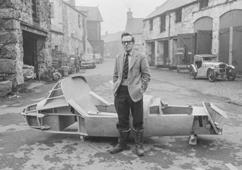
Richard Heseltine’s Gone But Not Forgotten article about Frank Costin in Octane 270 showed the man himself in front of the first Marcos Gullwing chassis [below].
However, while there was mention of many of Frank’s numerous projects and one-offs, there was nothing at all in the text about this, the world’s first wooden monocoque automobile – surely one of Costin’s more memorable achievements. It is common knowledge that Marcos is an amalgamation of Marsh and Costin, the surnames of its two founders. So why the omission?
Rory MacMath, Former MD of Marcos Heritage, Wiltshire
Friends reunited
Thank you for publishing my letter about Lamborghinis in Octane 270. Its appearance has had a quite unexpected benefit. I first got into cars in my early teens in the late 1970s and shared my enthusiasm with a good friend who was a junior high school
We’ve now reconnected and had a long conversation catching up, not just about our personal lives but also our car histories. We are both very grateful to you! Tom Haas, New Jersey, USA
‘X’ marks the date
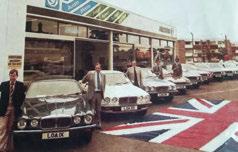
This photo [above] was included with paperwork that came with a 1988 Jaguar XJ-S I bought this year. It was taken outside the Jaguar dealer Archers, in Stratford-upon-Avon, probably in August 1981. Ten new Jaguars for the same company – all the X-registration numbers are in sequence – would surely be a rare event; does anyone know more?
My 3.6 manual XJ-S covered 38,000 miles in its first year, including 8000 in the first month Jaguar’s reliability problems had obviously been solved by then. David Andrews, Suffolk
Send your letters to letters@octane-magazine.com
Please include your name, address and a daytime telephone number. Letters may be edited for clarity. Views expressed are not necessarily those of Octane.
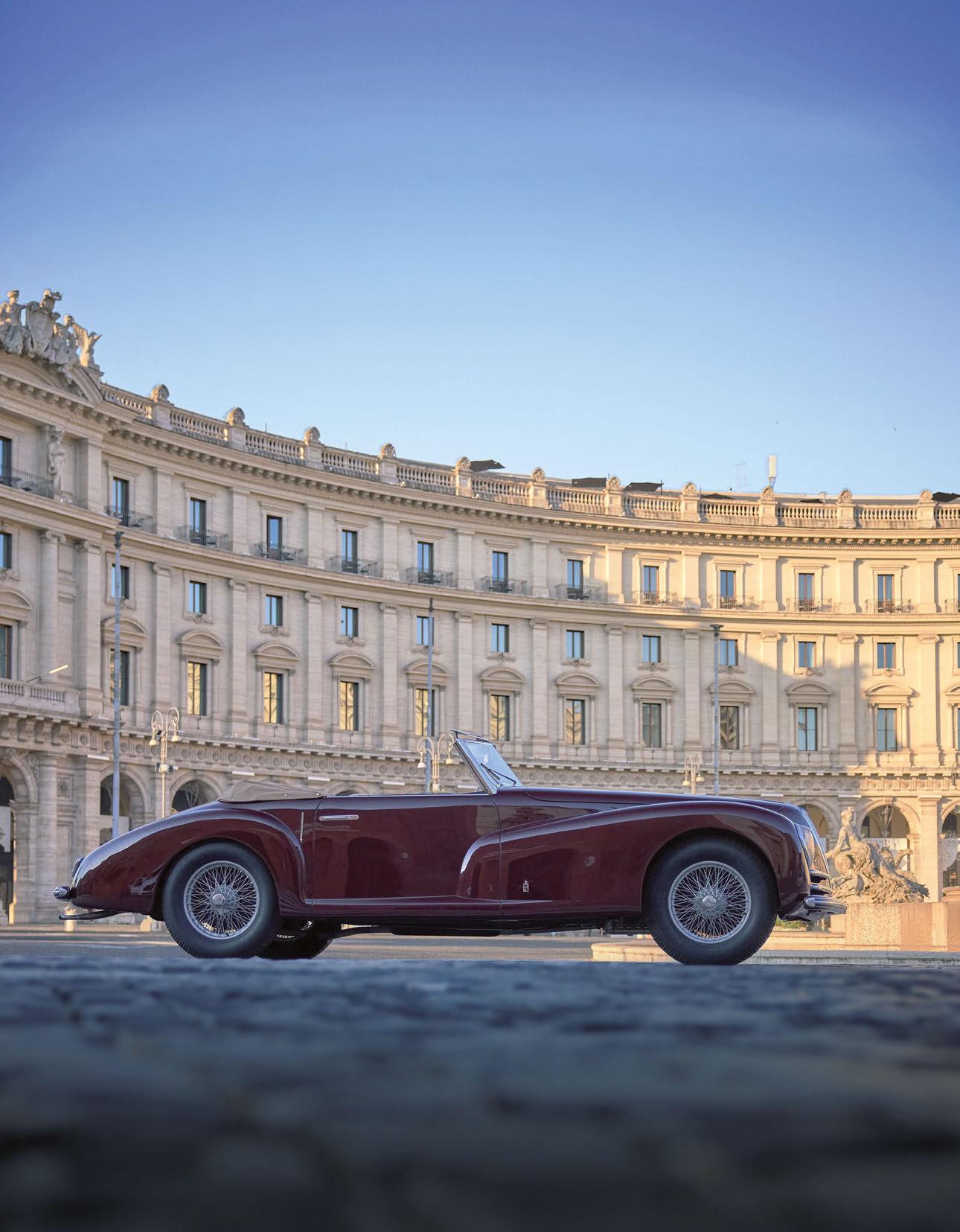
YOUR INVITATION TO THE ANANTARA CONCORSO ROMA
A gathering of the rarest and most significant historic automobili italiane in the heart of historical Rome. Join us for a vibrant three-day celebration of the very best in Roman hospitality, Italian cuisine and luxury style. Visit the website to enter a car into the Concorso, for exclusive VIP guest packages and for entry tickets.
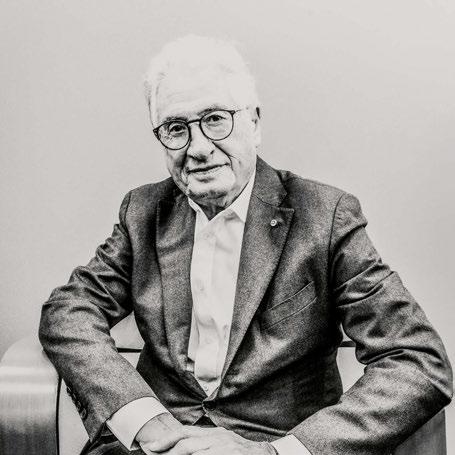
The amazing life, career and designs of the newly crowned Lifetime Achievement Award winner, still working – and trials biking – at the age of 87
WELCOME TO Octane’s celebration of Giorgetto Giugiaro, the Italian designer whose genius has straddled 60 years (and counting) and who recently received the Lifetime Achievement Award at the International Historic Motoring Awards.
Over the next 29 pages, you will read a brand new, in-depth interview with the man himself, conducted in his native Italian for added detail and insight. Then there is our overview of his talent through four benchmark cars that demonstrate the breadth and significance of his canon, from people’s car to glamorous GT. Our resident design guru Stephen Bayley assesses the cultural, historical and design significance of the Fiat Panda, 105-series Alfa, Lotus Esprit and Iso Grifo.
With a back catalogue as packed as Giugiaro’s, we could not just focus on four cars, so we outline all his significant road-going cars, his concepts and even his non-motoring inventory – from cameras to pasta.
We start by putting Giugiaro’s genius into perspective via his peers. Trust us, car designers are rarely so united in their opinions so it is testament to Giugiaro that so many big names were queuing up to pay tribute to Il Maestro.
48-53

KEVIN RICE
ItalDesign alumnus and former Pininfarina chief creative officer
‘He was so good, so consistent and prolific in his heyday that he created more in one of his days than most designers do in their lifetime, constantly re-drawing design’s rules. Many a country’s entire national car industry is indebted to him.’
The first part of my quote is inspired by a story Ford design executive Graham Symonds told Coventry design students in the early ’80s. He and Giugiaro were driving from Italy to London, Graham in a Fiat 500 and Giugiaro with a beautiful lady in a Maserati Ghibli. Graham set off hours before, but Giugiaro flashed past, only for Graham to catch up when Giorgetto stopped to eat at a top restaurant with his glamorous passenger. This ‘tortoise and hare’ caper continued with Giugiaro and passenger variously dancing by a lake, or sipping Champagne in a meadow as Graham chugged along. They arrived together in London, Graham, tired and dishevelled having driven all day and all night, Giugiaro bright and energetic.
The moral was that Graham had the experience of a lifetime, but Giorgetto had experienced a lifetime in a day.
SHIRO NAKAMURA
Former Nissan chief creative officer
In high school, I was thrilled to see Mr Giugiaro’s early works, the Testudo, Canguro and Mangusta, but then only through books. Ultimately, he influenced me to become a car designer. The first car I saw on the road was the Isuzu 117 Coupé; its elegance was breathtaking.
After starting as a young designer at Isuzu in the 1970s, I learned a great deal from his mastery of meticulous proportion and graphic sensitivity, as expressed in the Golf.
24 more
70-73 ROAD CAR GREATS Isuzu to Maserati and all else between
74-76 BEYOND CARS From basketballs to cathedral organs
Still active in his late 80s, he remains my inspiration, and I aspire to have enduring passion and energy like his.

President and chief creative officer of Hyundai Motor Group and Genesis
Giugiaro is one of the culprits that led me to become a car designer. From the Boomerang to the Mangusta, plus Panda, Aztec, Esprit and Pony, these are only a few of his masterpieces.
When I invited him to Korea to see what had grown from his original Hyundai Pony design, he won the hearts of the Koreans with his humility and smile. Whenever I sought his view on a project, whether Murciélago, third-generation Seat Leon, Bentley EXP 10 Speed 6 or Genesis G90 X Gran Coupé, he offered undiluted advice.
Neither a diva nor a prima donna – and you meet plenty in car design! – he is the examplar of what designers should be: authentic, humble, incredibly talented, passionate. He is beyond design royalty.

Dutch design legend: BMW Z1 and three decades worth of Porsches
Of all the car designers who inspired me most to become a car designer myself in the late 1960s, Giorgetto Giugiaro stands out by far!
His ability to design not just radical concept cars but also countless production cars, over so many decades, has been unique and unforgettable. Sometimes shocking, but – when necessary – very elegant. His creative abilities remain timeless, inspiring and were always future-oriented.
I think Giorgetto was a ‘flexible trailblazer’ in the world of automotive design, but he knew how to adapt or enhance his design proposals to the needs of a customer. However, he was even able to bring their brand design up to a completely new level! A true virtuoso.
‘HE WAS SO GOOD, SO CONSISTENT AND PROLIFIC IN HIS HEYDAY THAT HE CREATED MORE IN ONE OF HIS DAYS THAN MOST DESIGNERS DO IN THEIR LIFETIME’

GERRY McGOVERN OBE Chief creative officer Jaguar Land Rover
Giorgetto is an automotive design visionary; his work inspired my own path into the field. From VW Golf to Lotus Esprit, his ability to blend innovation with elegance is unmatched. He elevated design from its perception as a styling service to a respected discipline, within what was then an engineering-led industry. His legacy lies not only in the vehicles he shaped but in the way he redefined design as an artform. This influence goes beyond automotive design, leaving an indelible mark on design history. He also remains a gracious and generous figure.

WAYNE BURGESS
Design director at DRVN Automotive Group
Giugiaro was the car designer who inspired me to try to become part of this industry; I actually wrote my dissertation on the work of Giugiaro as part of my Design & Technology A-level! What I’ve always admired most about Giugiaro’s work was the sheer breadth of vehicles he created with such apparent ease, be it a Mk1 VW Golf or Lancia Delta, or a Maserati Bora or BMW M1 (still my favourite BMW, by the way!). Every vehicle seemed to be a paragon of proportional harmony and tastefully executed graphics. Truly one of the greats!

Former BMW group chief of design; now heads Chris Bangle Associates
Cavaliere Giugiaro deserves all the admiration and praise for the great car design he inspired the world with, but I would also ask you to remember that he is an extremely gifted fine-artist as well, and Italy can be proud to be the home of his creativity in both worlds.

Aston Martin chief creative officer
Giorgetto is one of the true greats within the creative industries and an icon within the sphere of both product and influence in the automotive sector. Driven by passion and belief, and wanting to create legends not mere products, he designed an ethos and a philosophy, not just a car. He was at the forefront of change and created design movements that will forever be in our history. A true hero.

Consultant, designer and lecturer: XJR-15, McLaren F1
Imagine you have just designed a totally re-bodied version of a seminal design from The Master – the Lotus Esprit. You are on the Lotus stand at Geneva and he is walking down the aisle towards you. Then this charming man gives you a bear hug and says ‘Bravo, you have done a beautiful job.’ We remain friends today. He says that when a new car is designed ‘everyone becomes a designer or design critic; this does not happen to the guy who designs the rear axle’ and I never tire of quoting this. He is the top designer, ever.
THE OCTANE INTERVIEW
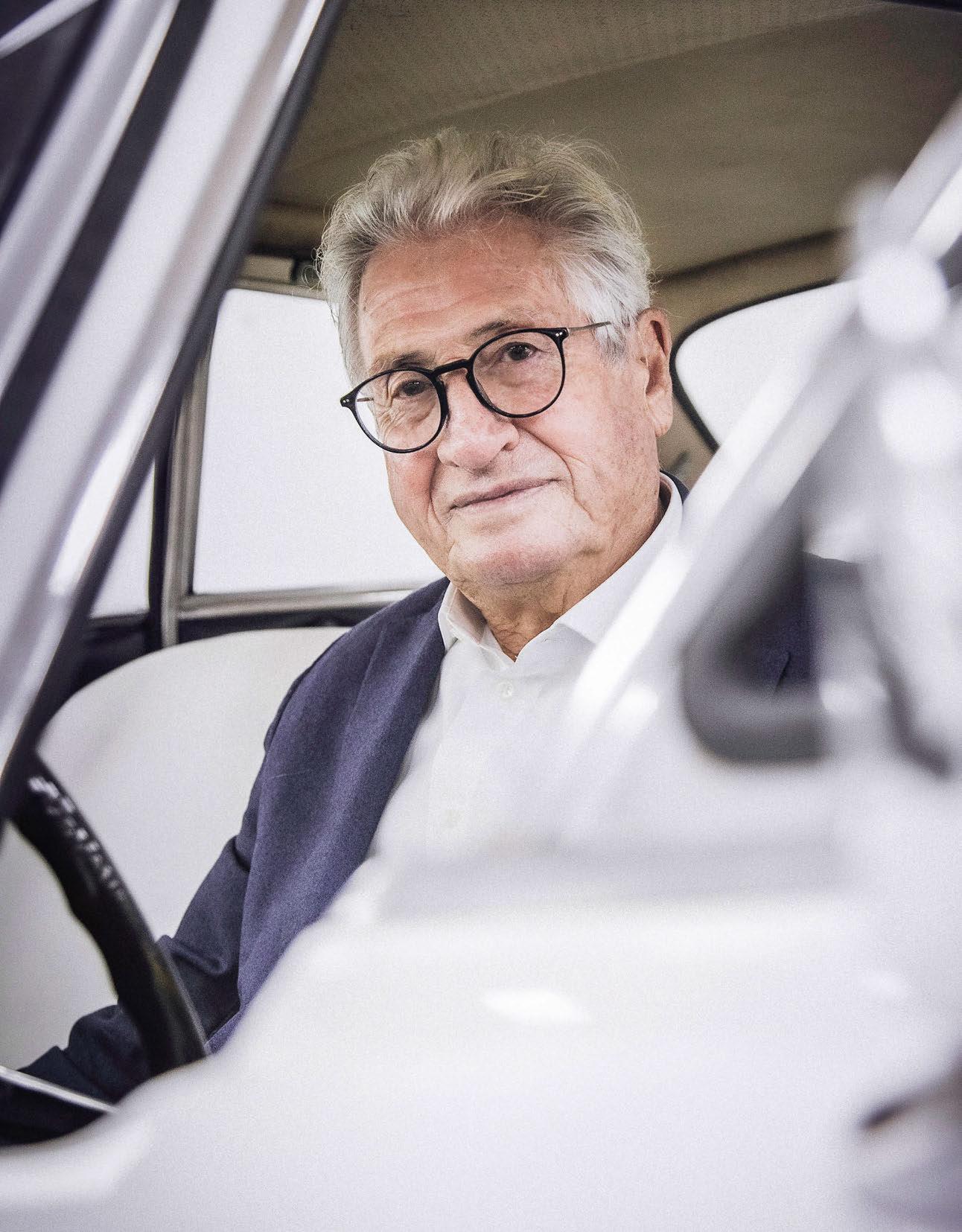
He was crowned Designer of the Century in 1999. Now it’s time for the great Giugiaro to look back on his stellar career
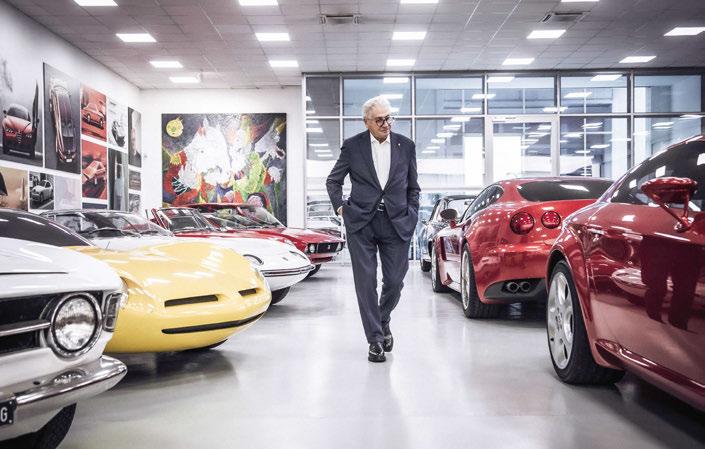
OF ALL THE cars this fabled designer is responsible for, his favourite may or may not surprise you. It’s the archly utilitarian Fiat Panda. But we’ll get to that.
‘It is somehow easy,’ he says, ‘to create a car when you have few technical impositions and a generous budget. To be successful without money to spend and within endless constraints, well, that is a completely different challenge.’
We meet Giugiaro at his GFG Architettura building in Moncalieri, on the outskirts of Turin (GFG being the initials of Giorgetto and son Fabrizio). But to better understand the man behind the creation of some of the most admired cars of the 20th Century, we must first look back. Giugiaro was born in 1938 in Garessio, a village of 3000 inhabitants about 100km south of Turin, within a few months of Marcello Gandini and Leonardo Fioravanti. He comes from a family of artists, who worked as painters decorating interiors with frescoes. His father soon spotted the young Giorgetto’s talent but, being a practical man, steered him towards a technical school.
‘My father was a very pragmatic artist and realised that in the post-war years in Italy there was little to spend on decorating houses or for art. He saw a future for me at the technical drawing school in Turin. He was right, though his plan was disrupted. He discovered that I was skipping lessons when I was 14, preferring to escape with my friends instead of studying, so he enrolled himself in the class, too.’
Then came an intervention. ‘My teacher, who was the uncle of Ingegnere Dante Giacosa of Fiat, suggested that I should design cars for my “end of year” display. I was not at all into cars – they were too far removed from my life because nobody in my family could drive or owned a car. But, for the first time, I was able to combine my artistic skills with technical competence. Car shapes, at least those of mass production, were then mostly created by engineers: pragmatic, straightforward, but not able to express a visual message or create an emotion.’
The exception was the USA, where car styling was
quite an advanced practice. In 1927, Harley Earl had established the Art and Color Section at General Motors, which became the first in-house automotive design department and was later renamed the Styling Section.
‘The day of the display came and Giacosa asked who was the guy, the only one in the school, designing cars instead of the usual subjects,’ remembers Giugiaro. ‘He was planning a design studio like the Americans had been doing, and after being made aware that I studied at both art and technical design schools, he hired me.’
Giugiaro was only 17 when he joined Fiat’s engineering team. ‘I was the “artist” and I was capable of making the engineers’ projects look better. I remember my early work colouring a 1:1 scale project. Usually an engineer would do so quickly; instead I worked hard to make a painting of it – wheels, rims, chrome, details, shadows and so on. It looked wonderful and I was noticed, because Giacosa immediately understood the importance of showing, in the very first steps of a future car, the emotions linked to it. Working in that office for Fiat taught me a lot about how a car is made and the organisation of the work, but after four years I realised that, as I was not an engineer, I couldn’t make a career of it. So I went looking for something else.’
That ‘something else’ turned out to be Carrozzeria Bertone where, in his own words, ‘the real fun began’ at the age of 21. He goes on: ‘I was free to create at least a prototype a year, and countless projects. And there I met a real genius, Franco Scaglione, a talented man living a carefree life. For him, going to work after a night out was not a priority. When Bertone saw my sketches, and was told that I was very serious at work, doors opened for me. He even promised that, working for him, I could skip military service. That turned out not to be true, but when I got my call to join the army, he rented an apartment for me, near the barracks. With a drawing board in it.’
Bertone gave Giugiaro the time and opportunity to fulfil his scope and to get his imagination onto paper.
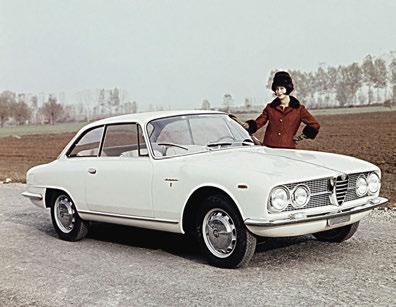
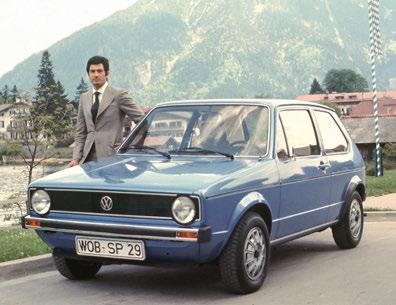
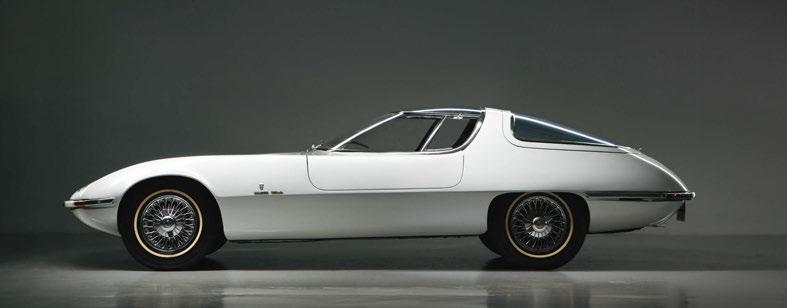
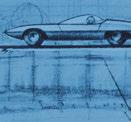





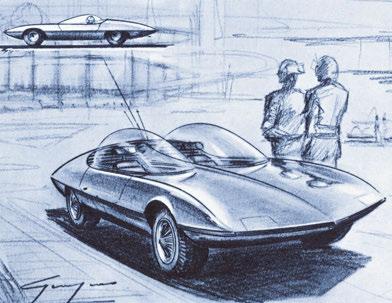
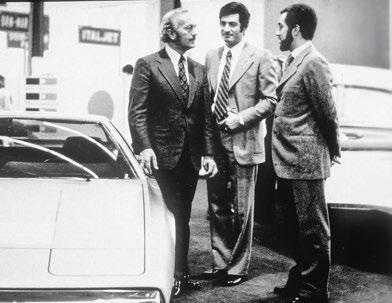
‘Bertone is where I designed the Alfa Romeo Bertone 2000 and 2600, which entered production. I was 22. en followed the 105-series Alfa Romeo Giulia GT. I believe that in my ve years at Bertone I designed 50 cars. ere I created the Chevrolet Corvair Testudo show car, a one-o I’m very proud of, as it brought a new formal language to the sports car world.’
e Testudo made its debut at the 1963 Geneva motor show, two years before the end of Giugiaro’s time at Bertone – which is signi cant. ‘When I le Bertone in 1965, the sketches and the work that generated the Testudo would inspire Marcello Gandini in creating the shape of the Miura. And about this, I want to be absolutely clear: I never designed the Miura, Gandini did. But I le behind a lot of sketches that in general form portrayed a rear-engined sports car with a rounded shape. Gandini replaced me at Bertone, and to me was one of the best designers ever, with a magic touch. He took inspiration from these sketches for the general volumes.’
Giugiaro is clear that there is nothing controversial about this. ‘We all take inspiration from others. I did, too. When I was 17 and skiing at Sestriere, I was greatly inspired when I saw for the rst time the Flaminio Bertoni masterpiece, the Citroën ID19. It looked like a spaceship, so far ahead of everything else. at is the car that deeply in uenced me.
‘I believe that being in the same surroundings in uences us, and that Italian designers, when growing up, absorb a sense of proportion and beauty from the arts and architecture that surround us. A sort of inner core
that stays with us, even if we don’t realise it. As Italians, especially a er the war, we had nothing and we came out with shapes that were simple. We had to follow logic more than anything else.
‘Back then, if you were a successful actor and you wanted to prove your status, there was nothing be er than a big, chromed Cadillac. e shape and function were not linked to needs or logic. Today is di erent, as market research forces you down a speci c path and exploring radical styles is risky; there are so many cars around that doing something di erent, and still beautiful, is not so easy.’
A er leaving Bertone, Giugiaro moved to Carrozzeria Ghia. ‘I had an argument with Bertone,’ he says. ‘A er so much e ort and responsibility, I wanted to be promoted to a managerial position. Bertone o ered me a cheque, for a good amount of money, but I wanted the title. He was very clear in his reply: “At Bertone only myself [Nuccio] and my father are managers.” And I quit.’
A er a stint at Ghia that was long enough for him to father the De Tomaso Mangusta, Giugiaro established his rm ItalDesign with his historic partner Ingegnere Aldo Mantovani in January 1968. ‘I was ready, still young and with massive experience,’ Giugiaro says. ‘Aldo was the perfect partner: I was the artist, he was the technical guy. e rst prototype was the Bizzarrini Manta, but the rst big project was with Rudolf Hruska of Alfa Romeo for the Alfasud. He’d known me since the Bertone years, and trusted my vision. I still consider the Alfasud one of my best designs ever.’
‘THE CITROËN ID19 LOOKED LIKE A SPACESHIP, SO FAR AHEAD OF EVERYTHING ELSE. THAT IS THE CAR THAT DEEPLY INFLUENCED ME’
en came an encounter with Ferdinand Piëch, the Porsche family member in charge of saving a disrupted Volkswagen. It led to a partnership that generated, among other designs, the Golf (Rabbit in the USA), and resulted in the resurgent Volkswagen Group buying ItalDesign to use as an external design centre to compete with its internal design o ces, challenging the processes involved in the gestation of every new model.
‘My rst work with Volkswagen was the Passat,’ he remembers. ‘Because of its success, our relationship became strong. In those years VW was trying to reinvent itself, imagining a future a er the ageing Beetle. I was deeply impressed, a er visiting their production lines, by the organisation and the number of tools they created to make assembly be er. It was a pure engineering rm.
‘One day, Gerhard Richard Gumpert [in charge of Autogerma, the VW importer for Italy] asked if I was available to host “a talented engineer, a member of a good family”, so he could see our work and get some experience in coachbuilding and designing. I was given a ight number and a date for his arrival at the airport. I went in person but he arrived on a motorcycle. He just rode from Germany and introduced himself as Ferdinand Piëch from Porsche, and was at the airport to collect his luggage.
‘I remember his approach, very meticulous, and his taking notes and making charts about everything. At 8am, every morning, there he was at his desk, standing up to greet me. He was a great test driver too and really appreciated the technical competence of Mantovani.’ en came the VW Golf, an ‘easy project’ according to Giugiaro. ‘ ey came with a technical drawing, and when I went visiting, I spo ed a dismantled Fiat 128, a car I knew every single measurement of, and they told me that the 128 was the car to refer to. at helped me a lot when I met their engineers and we were discussing technical topics. But the project was suspended and Bertone was assigned to create a small two-door. I was given the production of the Scirocco instead. But the Golf was needed too much to be le behind and we went back to working on it – even though many inside VW believed that it would not be a success.’
ItalDesign moved on to work with the Fiat Group on cars such as Fiat’s Panda, Uno and Punto, and Lancia’s Delta, Prisma and ema. ‘ e Panda cost me a summer holiday and one of the greatest scares of my working life,’ Giugiaro laughs. ‘It was July 1976 and I had rented a house in Sardinia. I was craving three weeks of sea, beaches and relaxation. en on 26 July I got a visit
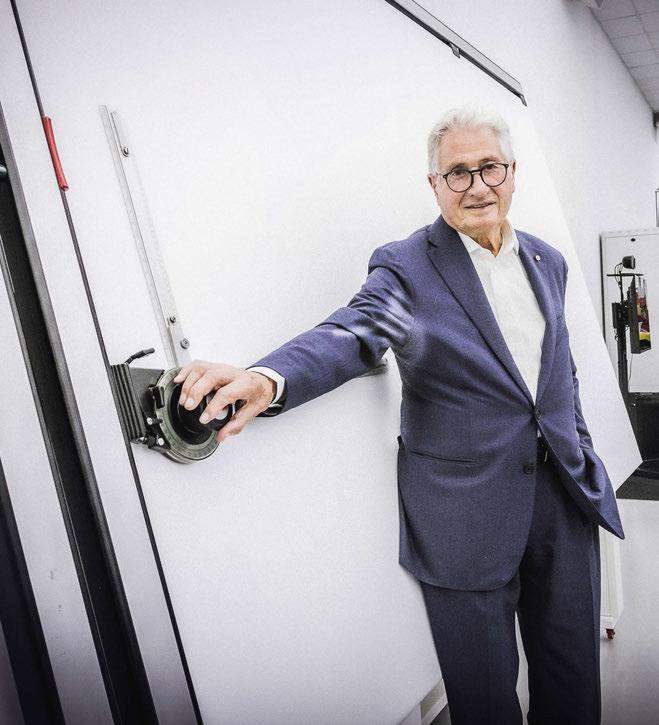
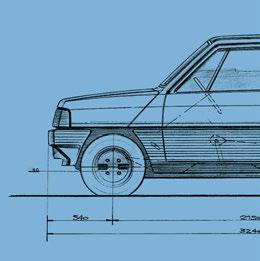
Opposite, clockwise from top le ; below Some of Giugiaro’s favourites: Alfa Romeo 2000 Sprint (1960), the Chevrolet Testudo one-o (1963), with Colin Chapman and the Lotus Esprit (1976), one of the early Testudo sketches; with the Volkswagen Golf MkI (1974); original sketch of the Fiat Panda (1976); GFG Sybilla (2018).
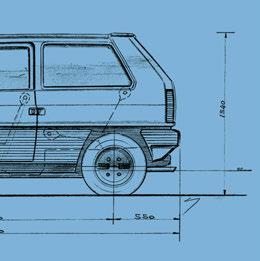
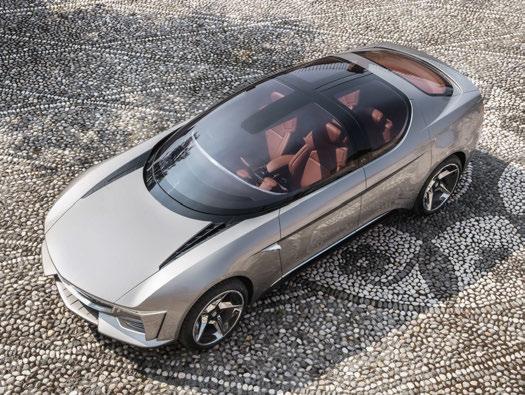
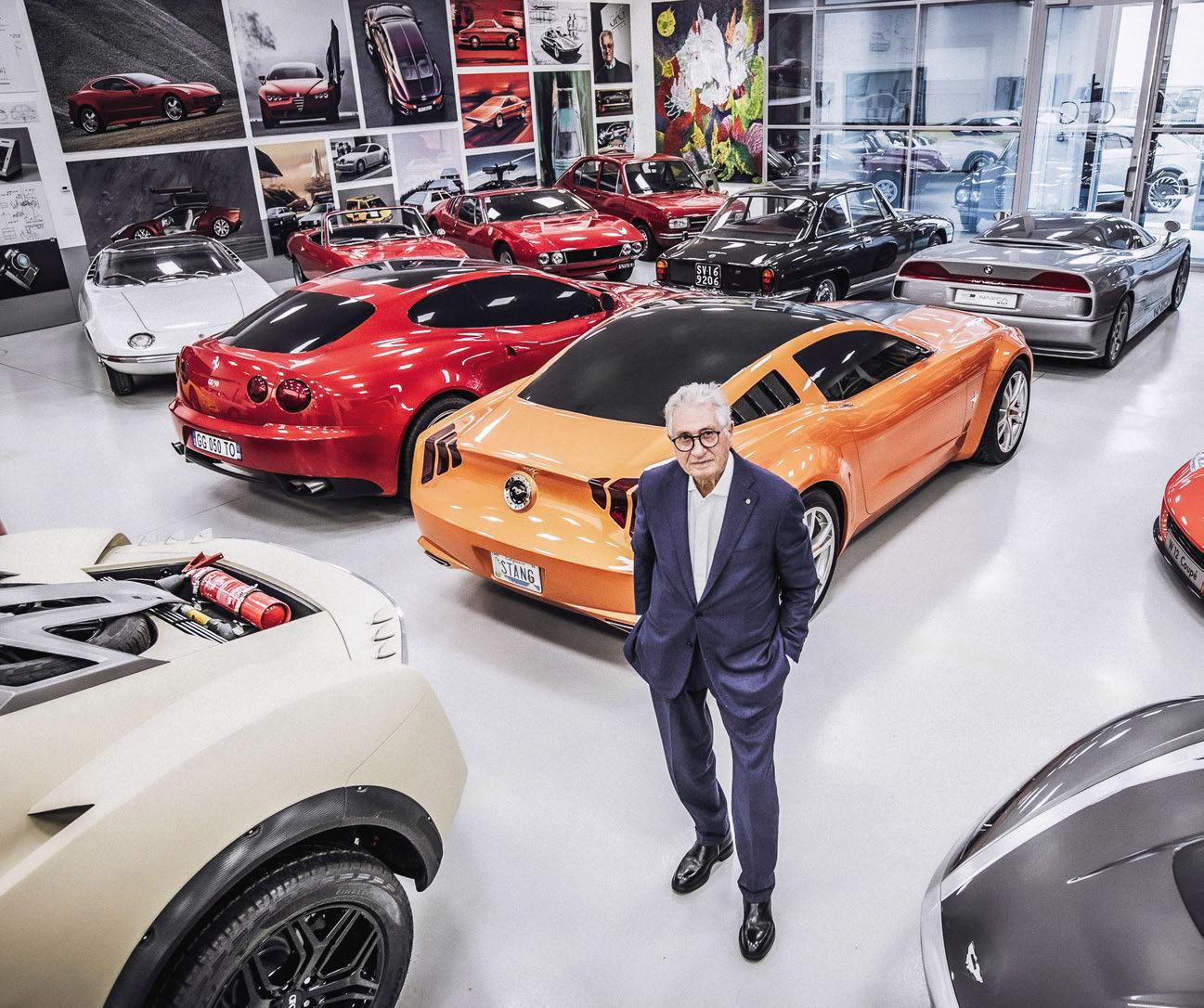
from Carlo De Benedetti, then CEO of Fiat. He told me that they wanted to put the 126’s flat-twin engine in a more modern car. It was to be a simple car, in a “French way”, cheap to manufacture and to run, very practical and ready to adapt to the different needs of workers, farmers included. No other stipulations except the engine, not even where to position it. I promised the work would be done as soon as I got back from my holiday… but there was no way. They needed it “now”.
‘De Benedetti had a house in Sardinia, too, and fixed a meeting for 15 August. I worked very hard indeed, as did Mantovani on the technical side from his summerhouse in the mountains, and when the time came I called De Benedetti’s house to arrange a meeting – only to discover that he was not in Sardinia any more. Back in Turin, I read the newspaper and found that De Benedetti had been
fired from Fiat. I froze! I had no contract, no agreement. I thought Mantovani and I had worked for nothing. But amazingly, less than half an hour later, I got a call from Nicola Tufarelli [then Fiat’s R&D boss] saying that he knew what I was working on and that the project was not dead. So this is how the Panda originated!’
Giugiaro’s enthusiasm for the Panda is clear in his animated speech. ‘In this car the concept of simplicity reaches its peak: it’s bigger than the 126 but weighs the same and has much more space inside; it’s got flat surfaces, easy to manufacture and repair, and an extremely flexible interior. We went through a severe weight reduction as the engine was not powerful. We did so well that, when Fiat added the four-cylinder, poor Mantovani had to recalculate all the structure as the original was too weak to sustain the extra weight and power!
‘SEEING NOW THAT THE EARLY PANDA IS COVETED AS AN IMPORTANT CLASSIC CAR BY COLLECTORS MAKES ME FULL OF JOY’


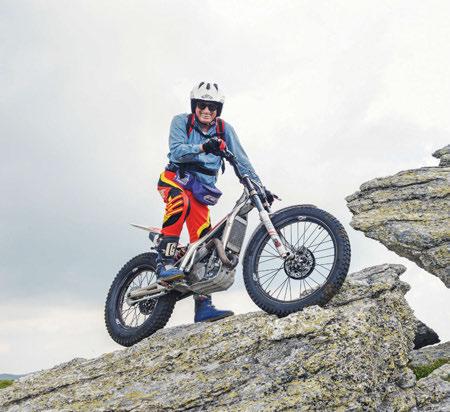
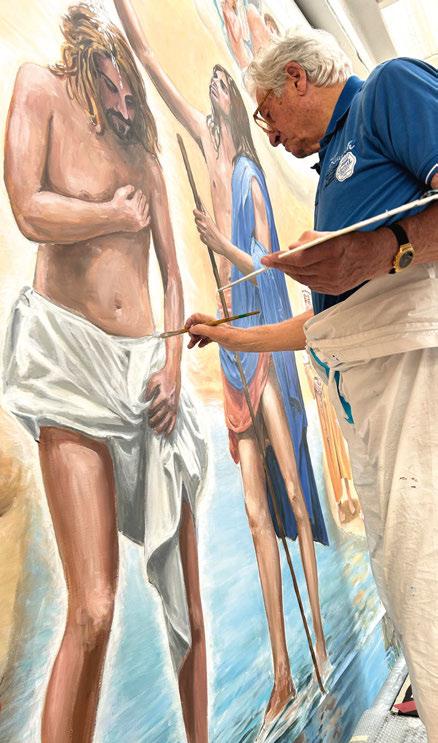
‘This is the car I’m most proud of, because in a world that refers to hedonism – and cars are an important expression of that – everybody believes that I can only be proud of myself when I have created the best possible aesthetic shape of the dream. The Alfa Romeo Brera is an example of that. But that is too easy. I strongly believe that the best car I ever made was the Panda because each one of its parts was created while keeping its function in mind. And this fits my pure idea for a car, where function is the main parameter to follow.’
He continues: ‘In designing a car, you have to ask yourself many questions and find all the right answers. Who is going to use it? Why have they chosen this car and not another? Is it comfortable to be in, to get in or out? Does what I’m creating answer the specific needs? And seeing now that the early Panda is coveted as an important classic car by collectors makes me full of joy. I believe that part of its success now is because we feel guilty for the way we treated it when in production: it was considered the car for the working class, a mere workhorse. I had friends teasing me for designing it.’
With so many successful models behind him, it is natural to ask Giugiaro about his feelings towards facelifts and revisions made to his original designs. ‘I don’t really care,’ he says. ‘I’m prone to looking to the future more than the past. When a project is done, to me it is finished. I have to move forwards. Yet sometimes, when looking at what others do to my original designs, I wonder about the real reasons behind some decisions they take.’
Then he points to his car collection, which surrounds us. ‘If you look around you, you see some of the models that have been created by me or by my son. They are not here because of me: the idea of having them was 100% my son Fabrizio’s. I complained when I discovered how much he ended up paying to buy them back, but I admit that it is beautiful to have them around.’
Some important models are missing: there is no Panda MkI or Golf MkI in the collection. ‘You’re right,’ he smiles, ‘though many are in the ItalDesign collection, and they are very kind, they lend them to me. They still have the Golf GTI five-door, one of only two made, for me and for the conductor Herbert von Karajan. There is a story behind it. When the first Golf GTI was launched, VW wanted me to have one. Problem was, my son had just been born and, as I said before, practicality in a car is the key. So I expressed my concerns and their answer was a five-door. That car was a rocket, because Karmann gifted me an Oettinger engine, and I had quite a lot of fun in it, killing the egos of drivers of more powerful cars on twisty roads and at the traffic lights.’
For Giugiaro, still working at GFG Style, founded with Fabrizio in 2015, cars are a visual form of ambition: they state who you are. ‘Automobiles ended up being more than simply a practical thing,’ he says. ‘Today they are more perfect in terms of pollution and safety but they are all quite similar, forcing people to conceive them more as a tool than as a form of beauty with a function.’
And if we were in the perfect place and time to create beauty, as in the Renaissance? ‘Well, that was when the real art was made; we just design cars. If Leonardo da Vinci had known the automobile, I’m quite sure he would have been a perfect technician and designer of them.’
I would add: just like Giorgetto Giugiaro.
Stephen Bayley takes us on a journey through cars as art, via
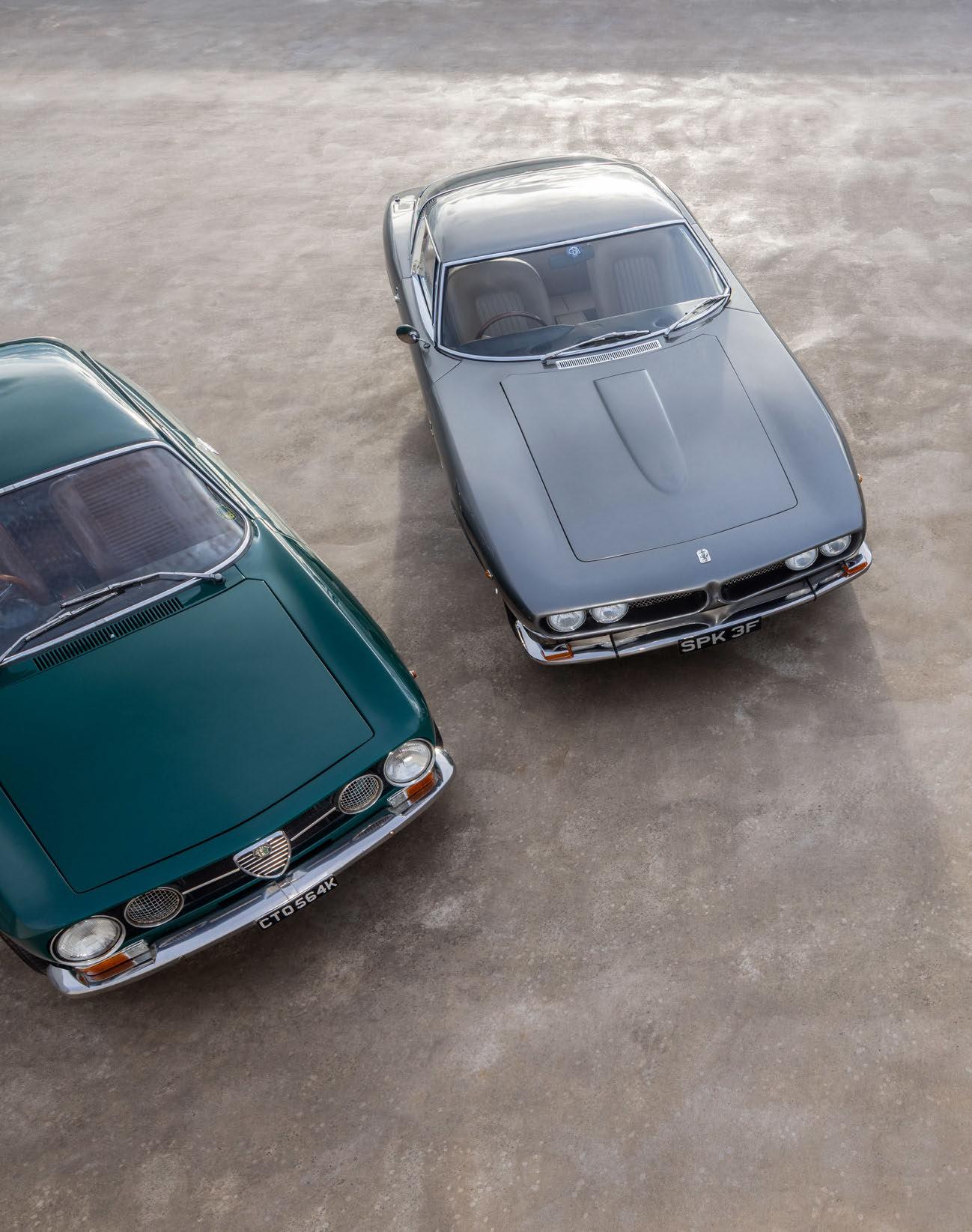

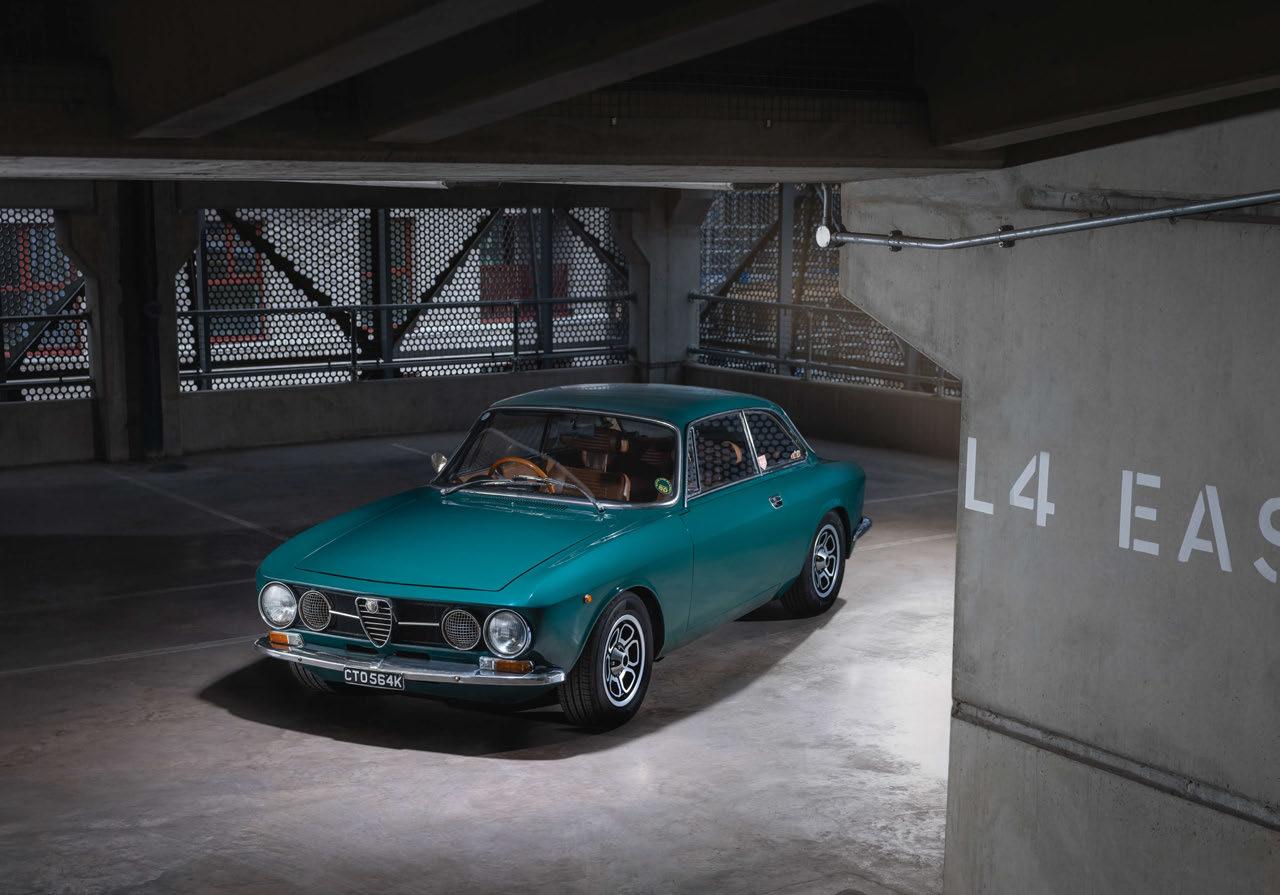
Opera is dead. And has been for quite a long time. I don’t care what anybody says about Poulenc and Prokofiev, I cannot be persuaded that any listenable music theatre has been written since Puccini. (His Turandot, unfinished at his death, had its first performance at Milan’s La Scala on 25 April 1926.) Dopo? Niente!
Car design is dead, too. I don’t care what anybody says about all that stuff you see on the streets, you cannot convince me that any beautiful cars have been made since Giorgetto Giugiaro’s ItalDesign was sold to Lamborghini Holdings SpA in 2015. (Lamborghini is, of course, a Volkswagen brand and this was a financial device to consolidate German business in Italy.)
Opera and cars are art forms at which the Italians always excelled, since extravagant drama and beauty are involved in each. But no more, they are both defunct. Huge historical forces are at work. Long ago, the disappearance of the chassis (to which an artist-craftsman
might attach a tailored body) undermined ‘coachbuilding’. And, more recently, the gradual accumulation of in-house expertise in the motor industry made all but the very best design consultants redundant. The exception was Giugiaro.
ItalDesign, Giugiaro’s creation, was, from 1968 to its sale 47 years later, the outstanding independent design studio, out-performing –both artistically and financially – the traditional carrozzerie of Bertone and Pininfarina, which were presenting symptoms of exhaustion.
Historically, if Pininfarina with its handsome and sustained work for Ferrari and Lancia had established a reputation for elegance, then Bertone was better-known for adventurous shape-making. Think of the 1953 Berlina Aerodinimica Tecnica (BAT) cars: bravura demonstrations of aesthetic audacity, if not of technological mastery of the science of airflow.
In contrast, Pininfarina’s 1964 Ferrari 275 GTB was the last and best expression of an old typology: the front-engined V12 coupé. It was, perhaps, exceeded only by Giugiaro’s Maserati Ghibli, in a completely different register of style, two years later.
‘OPERA AND CARS ARE ART FORMS AT WHICH THE ITALIANS EXCELLED. EXTRAVAGANT DRAMA AND BEAUTY ARE INVOLVED IN EACH’

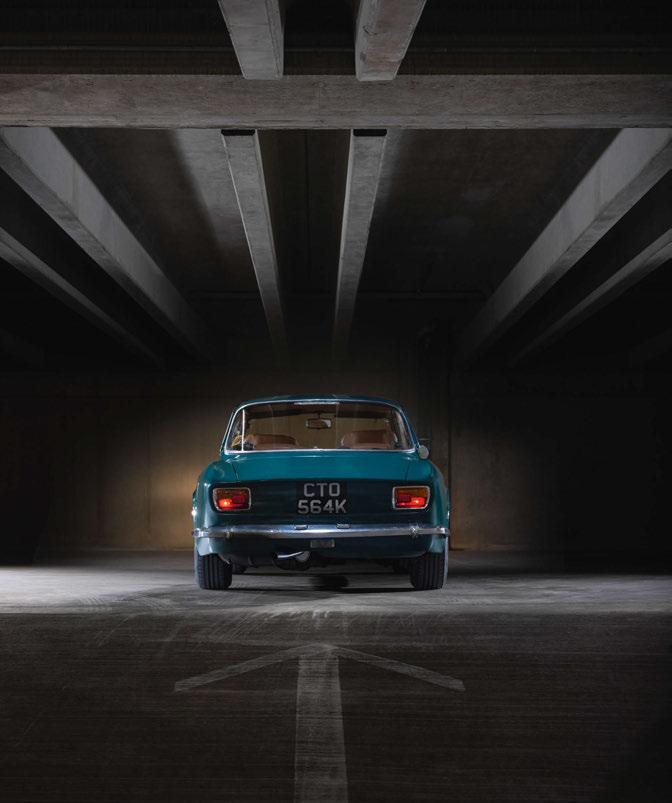
1972 ALFA ROMEO GT JUNIOR
Jamie, well known on Instagam as @woody.gt, is fresh from a 2000-mile jaunt to the Basque region (organised by the Classic Car Company’s David Peters) in his Alfa and is still buzzing. The lettings agent, who runs his own business in Surrey, bought it 17 years ago and, while patchy, his car’s history is emblematic of a huge proportion of 105-series cars.
‘I bought it from a guy in Essex. I’d just written off my Alfa Spider –or rather, someone else had – in a ve-car crash on the A3. My daughter had just been born and I needed four seats, so it was the perfect car. It was a 1300GT Junior that had been tted with a 2.0-litre engine after a barn- re, but still had the 1300 body and interior.
‘I’d always wanted the twin-headlight look so I tted a 2000 GTV grille but went for the Giulia Super style of having mesh on the inner lights. I found some rough 2000 GTV seats and had those recovered, too, and painted it my preferred Muschio Verde, from the original Pino Verde.’
It’s been a workhorse and over the years has had two sets of sills, wheel wells and valances, which seems to be par for the course for daily drivers whose days off are spent going to Le Mans, Shelsley Walsh, Shere hillclimbs or track-days.
The Wheatley eet also includes a Series III Land Rover, a classic Range Rover (which belonged to his father), plus the Morris Minor Convertible he bought wife Denise for a big birthday. They have an Alpine A110 and BMW E28 520i as dailies, plus one other car, the infamous ‘Rat’, a 2.0-litre twin-spark-powered 1967 Alfa Giulia Ti that belonged to specialist Ian Ellis before being bought by the late Charles Evans (@douzecoupes). Charles co-founded the Southside Hustle car meet with Jamie. ‘When Charlie passed away, he left it to me,’ he says. ‘I use it as much as possible, exactly how he would’ve wanted – driving the hell out of it.’


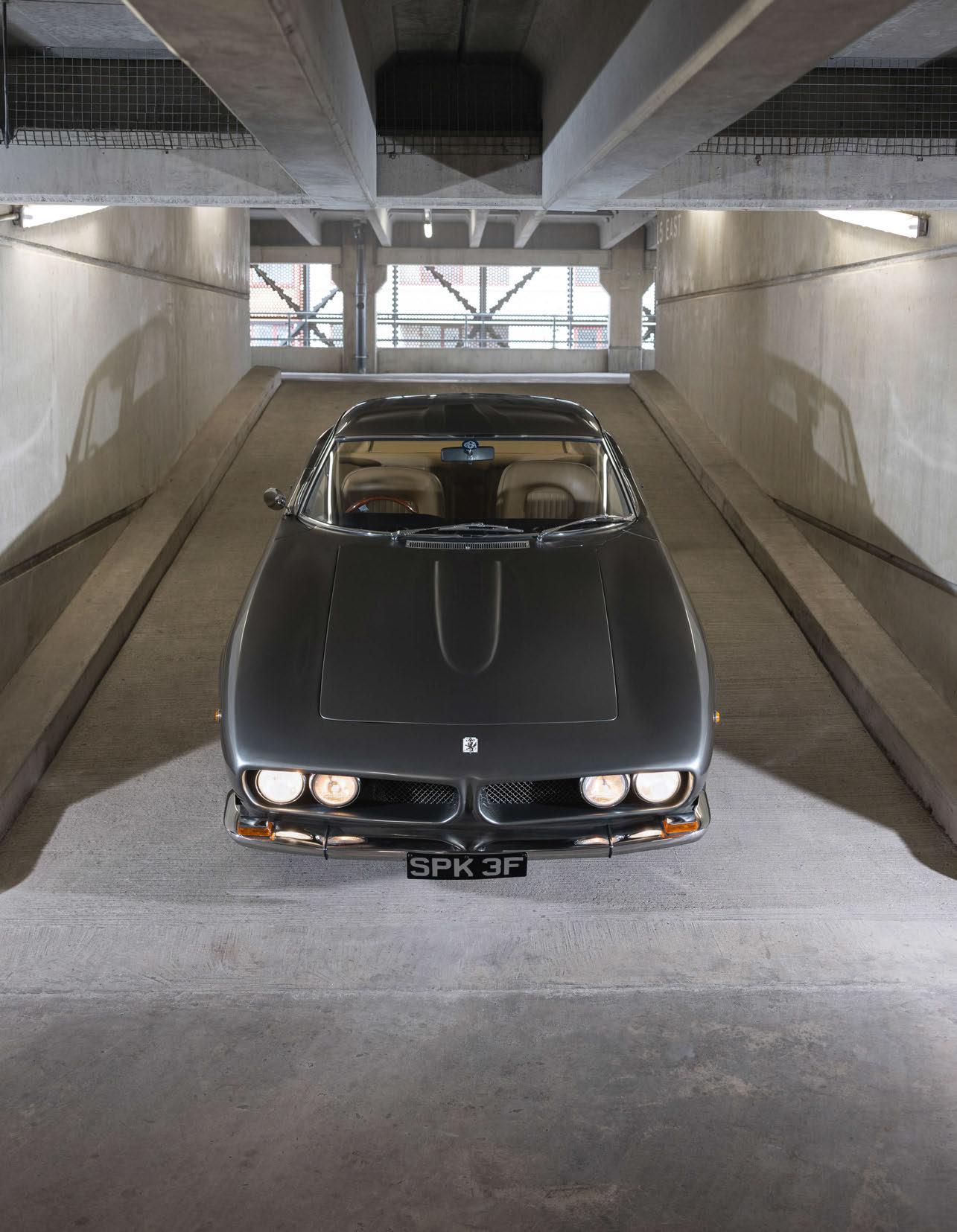
‘THE GRIFO LOOKED AS IF A 250 GTO HAD BEEN DESIGNED BY GIUGIARO RATHER THAN ITS SHAPE DETERMINED IN A WIND TUNNEL’
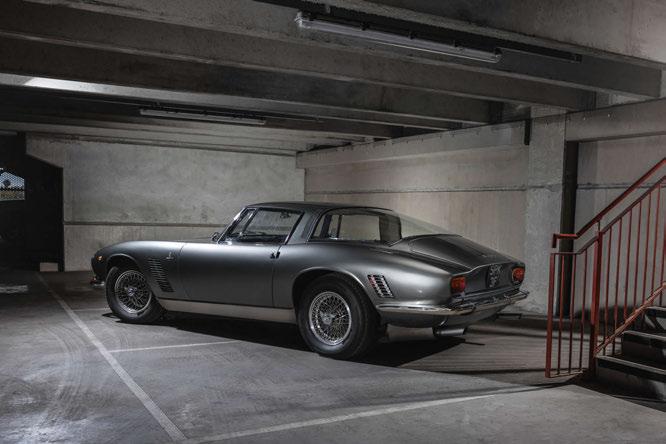
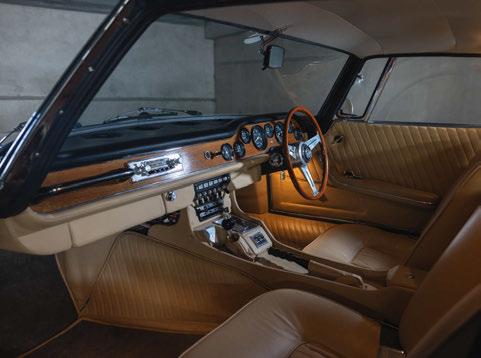
e facts are simple. Giugiaro was born in 1938 and studied at the Accademia Albertina di Belle Arti di Torino, an institution dating from the Renaissance. From 1955 to 1959 he worked at Fiat, the local employer, under Dante Giacosa, famed for the original Topolino, the nuova Cinquecento and the Fiat 128. Giugiaro learned aesthetic economy and technical ingenuity from a master.
A er this apprenticeship, he established himself at Bertone, where his protean genius and gentle charm made the imperious proprietor uneasy. ere followed two short years at Ghia, soon bought by the intemperate Alejandro de Tomaso. Giugiaro decided it was time to fare solo. Hence ItalDesign.
Turin was a Royal city. ere the House of Savoy maintained a vast Cavalarizza Reale –the Royal Stables – which created a demand for regal carriages. e great coachbuilders
designed the transition from horsepower to internal combustion, and the rst Italian cars were aristocratic playthings.
ey all had sonorous names: Pinin Farina and Bertone, of course, but also Allemano, Balbo, Boano, Castagna, Fissore, Frua, Michelo i, Touring, Vignale, Zagato… e name ItalDesign, an anglophone coinage, suggested a new way of doing business. It made no claim on tradition. Just modern.
But before ItalDesign, Giugiaro had shown himself the master of the slippery business of beauty. To coincide with the opening of Alfa Romeo’s Arese plant just outside Milan in 1963, Bertone’s 105-series Giulia Sprint was launched. Clearly based, in terms of general arrangement, on its predecessor, this car was, however, startlingly fresh. e relationship of the generous glasshouse superstructure to the hull was unusual for its day. e surfacing was
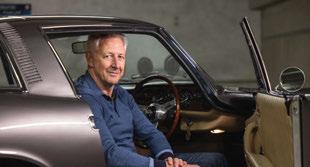
1967 ISO GRIFO
Rob had a 1:43 model of a Grifo as a child. He still does, but now he has the real thing to go with it. It is chassis 138 and in 1967 was UK delivered, in white, via HWM to Roy Woodford, who took it to Monte Carlo when appointed the of cial photographer to the Grimaldi family. It was then sold to Brentford FC chairman Martin Lange and later restored by his son Matthew before being sold at Bonhams’ Goodwood Festival of Speed auction in 2014, by which time it was Grigio Ferro. During the Langes’ ownership, the two-speed Powerglide transmission was uprated to a TH350 three-speed and the Grifo received uprated brakes and radiator, plus an electric fan.
When the rare (fewer than 15) righthooker came back on the market via Barkaways a couple of years later, Rob, an investment manager from Reigate who also has a penchant for Maserati GTs and races an Austin A40 Farina, snapped it up before even seeing it. He explains: ‘I had been looking for the right car for a while and knew instantly that this was the one, so put a deposit down on holiday and bought it when I got home. It was on Miura wheels so I changed those for wires, but even though it’s a 90-point car I use it properly – classics sulk if you don’t use them; regular miles keep them sweet – and have gone to Scotland a couple of times. The dream trip is back to Monaco.’
His ownership hasn’t been trouble-free yet that revealed an unexpected upside:
‘The rebuilt Chevy engine lunched itself.
I had the original factory blueprinted engine rebuilt, but for everyday use tted a 1960s-spec crate engine that cost £2000 – how many exotic GTs could compete with that? The Grifo might be seen as a mongrel, but to me it’s a nerd’s delight –Giugiaro design, Bizzarrini roots, American V8. Bizzarrini designed Lamborghini’s V12, yet for his own car chose the Chevy. He knew what he was doing!’


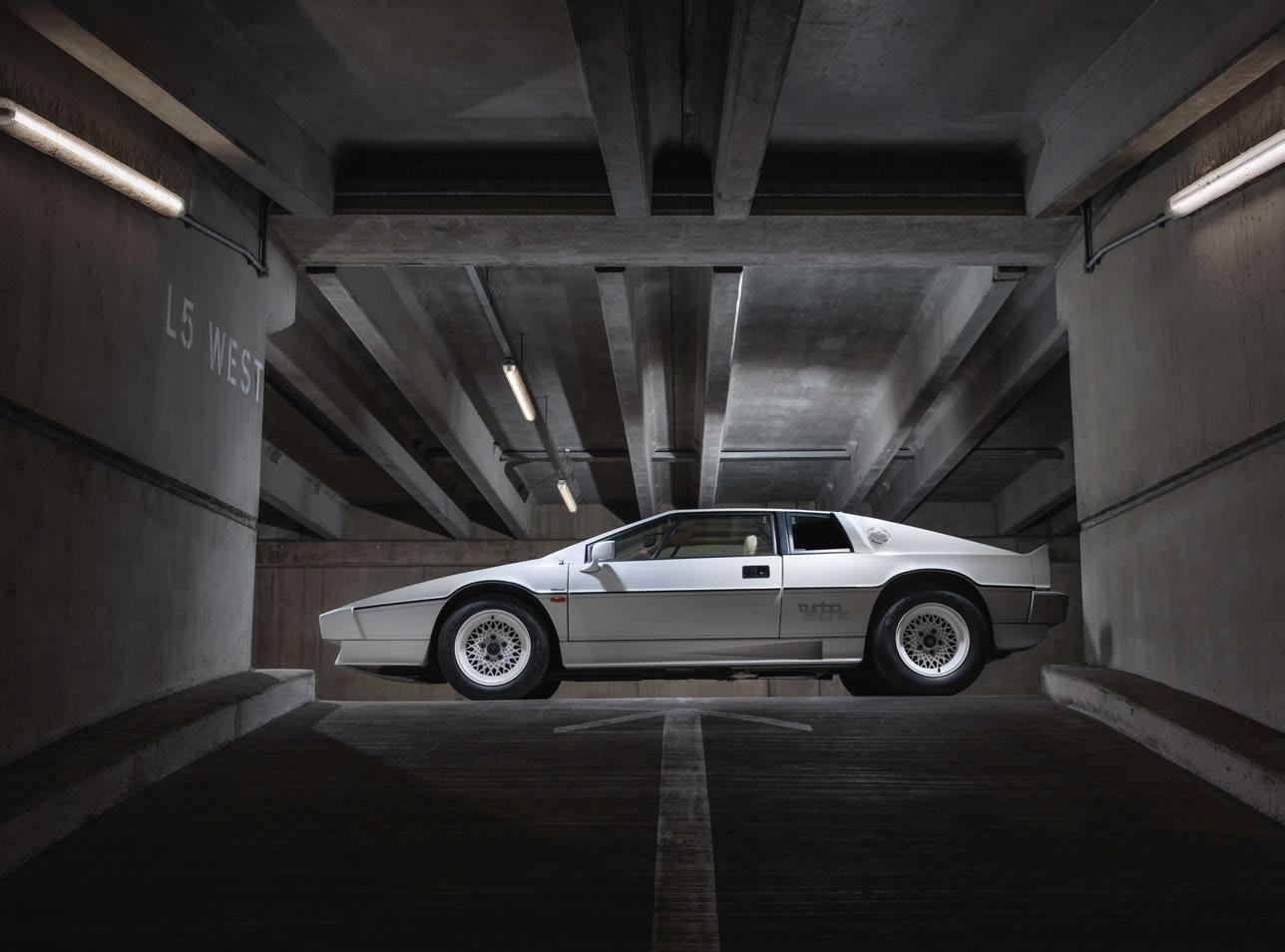
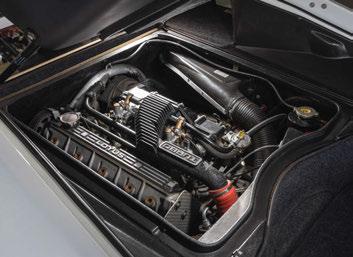
Clockwise, from above Only four cylinders but turbo power; an unmistakable silhouette; pop-up headlights were a supercar calling card; interior is just as dramatic as outside.
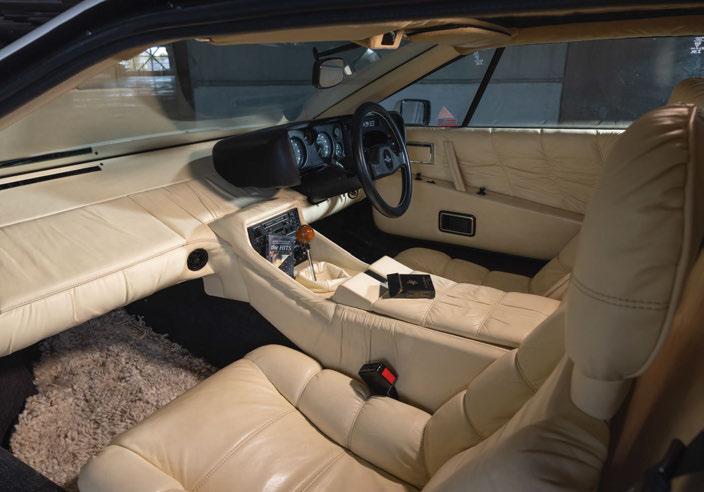
‘THE ESPRIT HAD PROPORTIONS THAT TESTED THE POSSIBILITIES OF THE MID-ENGINED FORMAT TO THE LIMIT’
so con dent that no super cial decoration was required.
It is poised, polite and lean. Stance is perfect, with the wheels in exactly the right place in relation to everything else. But the 105 is more mysteriously beautiful than those words suggest. A wonderful detail on the earliest ‘step-front’ cars is the scalino, a 1cm gap at the leading edge of the bonnet. is may or may not have had something to do with cooling but it is an artistic device of genius, adding the most subtle hint of aggression to a digni ed composition, as if a woman in a discreet cocktail dress clenched a dagger between her teeth.
To test the enduring beauty of Giugiaro’s design, just look at the 105 convertible by Touring, which lost all Giugiaro’s welljudged purity and careful joints and connections. Or Ercole Spada’s slightly mad GTZ, as weird a car as Zagato ever designed.
If you have an eye for these things, any even insigni cant alteration of or addition to Giugiaro’s original 105 simply seems wrong. Smoothness, as Roland Barthes observed, is always an a ribute of perfection. You don’t mess with perfection. Giugiaro himself owned one in period, though only a 1.3 – the 105 was beautiful where you couldn’t see, too. It was engineered with modernity, featuring disc brakes, a ve-speed manual transmission, a properly located live axle and a twin-cam four-cylinder engine that was peppy and characterful beyond its o en limited swept capacity.
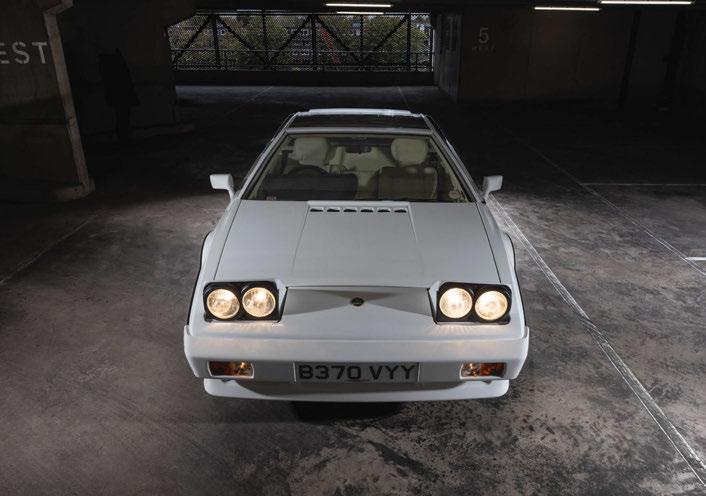
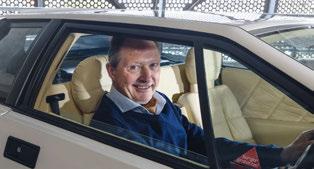
1984 LOTUS TURBO ESPRIT
This car has been in Octane before, back in issue 220 (October 2021) when, with its professional drummer owner Peter Boita, it was featured in a Man & Machine article.
The Esprit was remarkable then and still is, because Peter, after landing a gig on Les Miserables, bought it new and drove it only 2000 miles in the following 36 years, keeping the car factory original in every single respect.
Since that 2021 article, however, Peter has more than doubled that mileage, with his now-famous Esprit featuring on the lawn at both London Concours and Salon Privé, and even being displayed in the Royal Automobile Club’s renowned rotunda for a week. The highlight, however, was a trip up to Norfolk for Classic Team Lotus’s Lotus Garden Party, an event honouring the 50th anniversary of the Esprit and boasting Giorgetto Giugiaro as guest of honour.
‘It was fantastic,’ says Peter. ‘The car didn’t miss a beat driving up there and back. Because it featured in Mike Taylor’s seminal book, I asked Giugiaro to sign that, and he also signed a piece of paper which I later had turned into a brass plaque. It was great meeting him and he loved the originality of my car.
‘Fabrizio Giugiaro had his Esprit there as well. We’d actually seen him before when this car won its Preservation Class at Salon Privé. He’d come across when he saw it and said: “Great car – I must take a photo and show my father.” He did – and at the time his father was halfway up an Italian Alp on his motorbike!’
But does Peter, who also owns a modded 1968 VW Beetle 1500, 1972 Lotus Elan Sprint Drophead and a 1970 Porsche 911T Sportomatic, enjoy the Esprit more now he is using it more? ‘Originally, it was just about the design and the shape, but now what’s lovely is that every time we take it out, it’s an occasion. It still feels special every time.’

Then came the awesome trinity of the Iso Grifo, Maserati Ghibli and de Tomaso Mangusta. The Grifo was drawn while Giugiaro was at Bertone – it was a project of Giotto Bizzarrini to avenge himself over an unceremonious departure from Ferrari. The Ghibli of 1966 was from Giugiaro’s residency at Ghia, as was the Mangusta of 1967.
The Grifo looked as if a Ferrari 250 GTO had been designed by Giugiaro rather than its shape determined in a wind tunnel. It is not his most elegant work, some might say, and yet it was so low that a hand put out of the window could touch the pavement, an experience best enjoyed while stationary. And within its hunkered-to-the-ground profile beat not the sonorous thoroughbred V8 or V12 of its Italian rivals; instead, power comes from a raucous American V8.
At the Salon Auto Torino in 1963, Bertone showed the Grifo A3/L (for lusso) prototype while Iso unveiled the unpainted competizione version: the Iso Grifo A3/C. Each became successful in its own right, the road car receiving praise from the press, while the race car performed as intended despite a much tighter budget than Ferrari’s. So maybe the Grifo’s brutality is an expression of its different breeding. It looks like it sounds.
Giugiaro was, in fact, given carte blanche for the Grifo, and the original intention was that it wouldn’t go further than a concept. Yet when Autocar evaluated the production version in 1966, its 161mph top speed made it the fastest production car the magazine’s crew had tested. Brutal, maybe. But entirely on-brief as a superGT for the super-wealthy Jet Set.
In contrast, for just as many, the Ghibli is very nearly perfect, but of this triumvirate for me the Mangusta is the best. Perhaps the very best mid-engined shape of them all. Proportions are exquisite, judgement flawless. It is a glorious shape not held together by welding and rivets, but by adroitly judged volumes and lines.
That said, its centre-hinged ‘bonnet’ was a novelty and I have been told that weight distribution does not work in favour of optimal dynamics, but going backwards into a hedge is a small price to pay for beauty.
Deftness in motion was guaranteed in East Anglia, of course. In 1974 Marcello Gandini revealed his idiosyncratic handwriting in the sensational Lamborghini Countach. Sensational in that it was sensationally impractical, but a unique visual sensation, too. It set a new standard. Giugiaro’s Lotus Esprit appeared two years later.
It too was a sensation and can be seen as a response to the Countach. Equally, Lotus founder Colin Chapman and the company’s then-future MD Mike Kimberley had been impressed by Giugiaro’s wedge-shaped Maserati Boomerang and Porsche Tapiro concept cars.
Earlier beauties by Lotus – the Mark Eleven, Elite and Elan – had been defined by gentle curves, but the Esprit was a radical linear composition with scarcely a single gentle radius in sight. And it had proportions that satisfyingly tested the possibilities of the midengined format to the limit.
It was these proportions that created the drama, rather than the execution and detailing in production. Giugiaro’s fine concept was, of course, value-engineered in Norfolk: Lotus, always on exiguous budgets, had to outsource components, including doorhandles from an Austin Allegro, and GM suspension parts.
En route to production and the realities of rendering a coachbuilt concept car in glassfibre, perhaps some of the delicacy of Giugiaro’s template was translated into audacity, yet there’s no doubting its impact. Squint away the bumpers and it remains sharp. It looks like a supercar, even though beneath the moulded bodywork lies a backbone chassis that, in
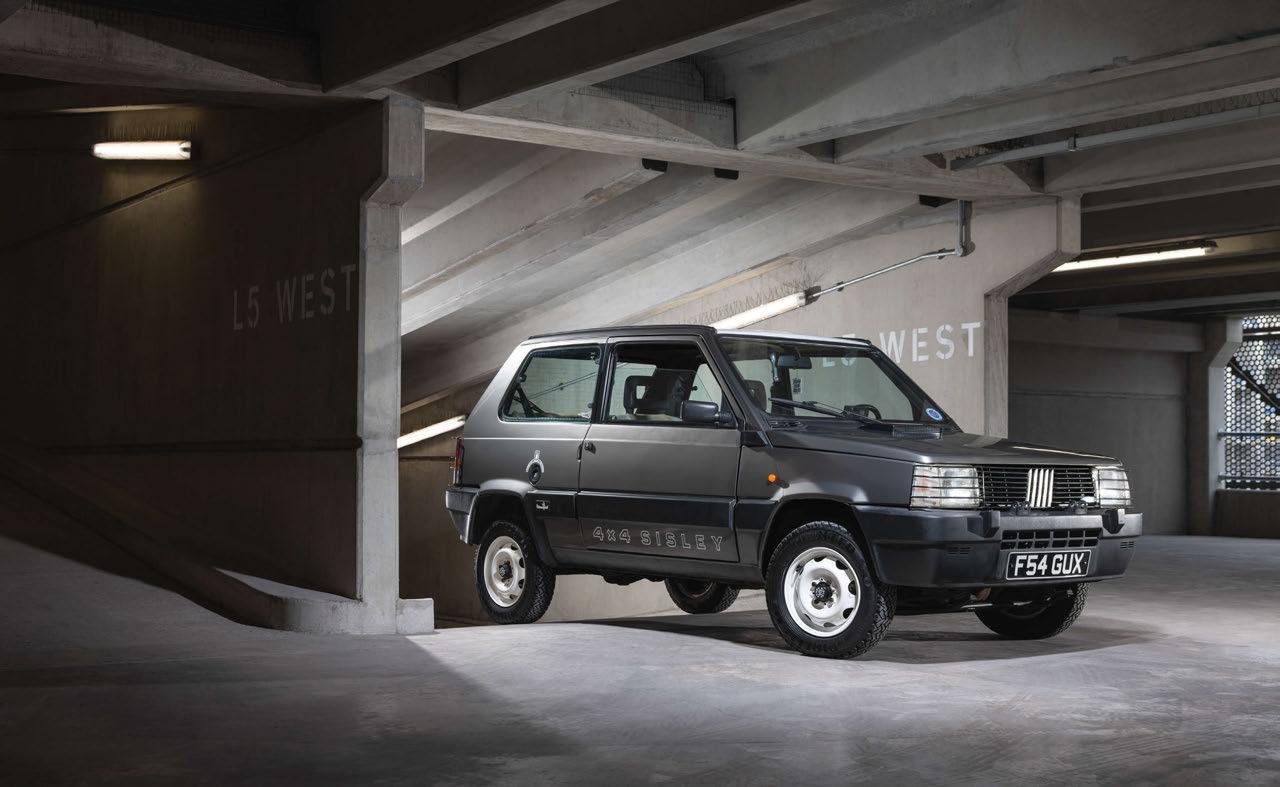
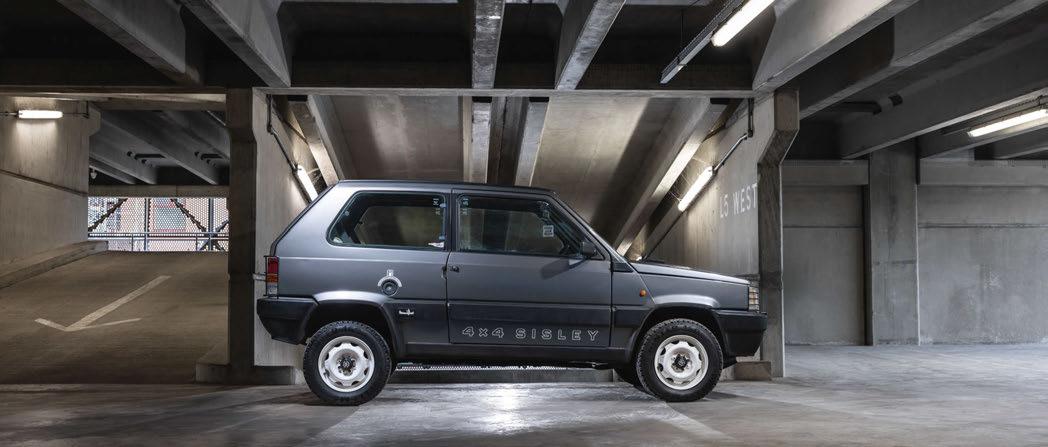
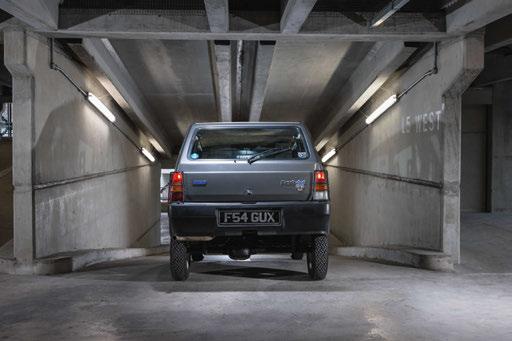
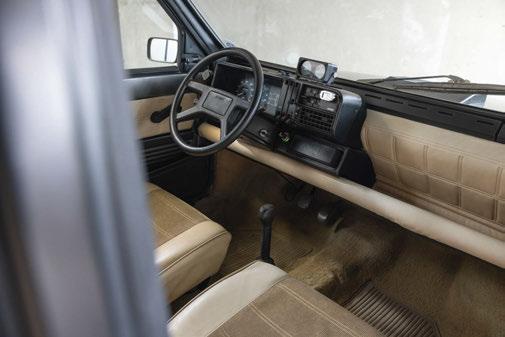

1988 FIAT PANDA 4x4 SISLEY
The Panda is the first classic for this 34-yearold from the Surrey Hills who runs an advertising agency, but he was brought up in a classic and performance car enthusiast family and suitably indoctrinated.
‘My first car was a Mini, then a couple of hot hatches including a Renault 200 Cup, but
up until the Panda my cars have always ended up slightly track-oriented – roll cage, bucket seats, that sort of thing.’
He bought the Panda about three years ago: ‘What prompted buying it – and spending more time driving it than my other cars, which are lower, stiffer, bumpier – was moving to the countryside. Plus I’m a mountain biker and I’ve lived out in the Alps, where I saw loads of these little 4x4s. I think that subconsciously planted the idea.
‘When I moved to the Surrey Hills – all little lanes and byways – I wanted something I could put the dog in, grab a coffee, and not worry about bumps and scrapes. I looked at newer stuff like the new Jimny, but then thought, “No, it’s got to be one of those” and found this one locally, even though it had previously been a GP’s car at an Italian ski
resort. I didn’t buy it as a fashion accessory, I bought it as a workhorse: I put the dog and mountain bike in it, I drive it all the time, I go green-laning.
‘I liked the boxy shape. A lot of people from my generation and younger seem drawn to square cars – Integrales, E30 M3s, that kind of thing. I’m definitely drawn to that aesthetic and I am clearly working my way towards an Integrale because everything I buy echoes its boxiness.’
Has the Panda been on track? ‘Absolutely not! It’s quite agricultural, like a very small Defender, and the steering is rather vague.’

essence, is a development of the rather more prosaic-looking Lotus Europa’s. Likewise, the four-cylinder twin-cam lived up to the futuristic outline only when turbochargers force-fed it from 1980.
The Esprit was re-drawn in 1987, not by Giugiaro but by Peter Stevens, and the essential beauty of the original concept was made explicit. In 1996 it received, too, the bespoke V8 its looks had always hinted at – by when the Esprit was about to start its third decade.
These cars will be remembered forever as the ultimate industrial expression of bella figura. But, to emphasise his extraordinary talent, Giugiaro’s greatest achievements were not in the area of gran lusso and gran turismo: they are to be found in the everyday. His astonishing assurance in handling form has led to comparisons with Michelangelo. And he began a creative period as if the designer of the Laurentian Library had been briefed to work on garden sheds.
Giugiaro’s important relationship with Volkswagen began when Ferdinand Piëch interned at ItalDesign in 1972. I cannot say that this was the source of the 1974 Golf, but here was an interesting connection. Giugiaro’s creation was conceived as a successor to the struggling Beetle, a completely new phenomenology: straight lines, absolute clarity and no ambiguity. The Golf carried no weight of history, but pointed to the future. There were no shadows here.
Yet the Golf was not Giugiaro’s greatest design. That was the Fiat Panda. Here ItalDesign demonstrated how supernumerary the old carrozzerie had become. Instead of presenting ravishing renderings for Fiat Tipo 141 and expecting the engineers to get on with it, ItalDesign produced concepts, production studies, tooling, pre-production prototypes
and 20 rolling chassis. This was an altogether larger view of what ‘design’ meant.
Of course, there was an origin myth. Fiat’s brief had been to create a ‘container’. For 15 days in the summer of 1976, Giugiaro and his technical partner, Aldo Mantovani, sequestered themselves in Sardinia’s Porto Cervo to work on their container studies. No doubt, at the time they had in mind the experimental Lancia Megagamma, a bold single-volume design that predicted the Renault Espace, but frightened Lancia too much to productionise.
The simple container that was presented to Italy’s President Sandro Pertini at the Palazzo Quirinale in 1980 included many sophistications, not all of them rational. When interviewed by La Stampa, Giugiaro compared the Panda to a pair of jeans: utilitarian, but universal. He also said inspiration came from military helicopters. The design was senza fronzoli (without frippery) yet included some gloriously endearing quirks. The specification for the ‘container’ included the requirement to carry two 50-litre demijohns of wine.
This fine purpose was facilitated by a floor that was virtually flat and could easily be accessed by removing the rear seats. Those, inspired by garden furniture, could be arranged in seven different positions, including one as a bed. In Italian markets today, you can find Pandas deployed as fishmongers’ stalls.
The dashboard was a capacious lateral tube, minimal instrumentation housed in a pod, and the ashtray (compulsory in Italy) could slide along it. Metal-pressing was flat and simple, requiring the lower part of the doors to be lightly corrugated to avoid drumming noises. These flat monosides were welded to the roof, avoiding the expense of sheet metalwork.
Flat glass was specified. Although this was an important symbol of economy, in fact it
‘ THE VW GOLF WAS NOT GIUGIARO’S GREATEST DESIGN. THAT WAS THE FIAT PANDA’
proved difficult and expensive to source. Delightfully, the radiator intake was asymmetric, deposed on one side for the aircooled twin, on the other for the four.
The interior was painted metal and on first sight the marketing people assumed it was unfinished. On the most basic models, there were no doorcards. Outside, there were no doorhandles, just a recess with a button. Seventy-thousand orders were taken in the first two months and Gianni Agnelli owned 24 Pandas. One for each of his houses.
Throughout his exceptional career, Giorgetto Giugiaro has remained a charming and understated individual. He has shown me pictures of his grandchildren on his iPhone (while Gandini sent me letters from his Milanese lawyer). Best of all, he has a sense of humour. When shown Harris Mann’s Triumph TR7 with its dramatic scallop along the side, he said ‘My God! Have they done that on the other side as well?’ That’s real style for you.
THANKS TO Duke of London for the location, dukeoflondon.co.uk.
PASSING OFF AND
When in the early 1960s Marcello Gandini petitioned Nuccio Bertone for employment, Giugiaro resisted. Perhaps as revenge, when Gandini eventually succeeded Giugiaro at Grugliasco, he claimed sole authorship of the Lamborghini Miura.
The Miura was going through Bertone’s studio as the succession took place. But Gandini’s claim that this epochal Lamborghini was an autonomous act of his own creativity is surely absurd. Car design is a collaborative process. Gandini might well have refined and brought to production what already existed.
What already existed were designs for a mid-engined Bizzarrini that, recently digitised, look similar to the Miura. Bertone himself said the Miura design was ‘clearly already set out’ when Gandini arrived. The rascal even claimed some credit himself! This question of authorship has smouldered for more than 50 years, during which time Giugiaro has been tactful and self-effacing. Meanwhile, as his Fiat Uno was prepared for production in 1983, Giugiaro received a commission from a subsidiary of Barilla of Parma, Italy’s largest pasta manufacturer. This was the decade of design and of nouvelle
cuisine: Giugiaro responded enthusiastically, proposing 12 different pasta shapes, each vigorously tested by production engineers for their ability to retain sauces.
The result was named ‘Marille’ and presented at Milan’s Centrodomus in a setting designed by Alessandro Mendini, a celebrity of the day. Marille was a media sensation and Giugiario said ‘I owe my popular fame to that pasta.’
Yet it was a commercial flop. ItalDesign’s ‘architectural’ shape made production difficult and it proved impossible to cook the pasta evenly. It was a rare failure.
Giugiaro The concept cars
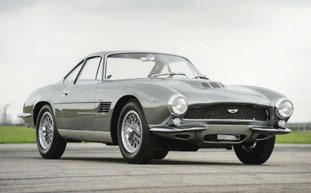
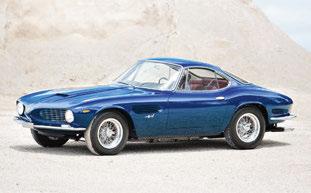
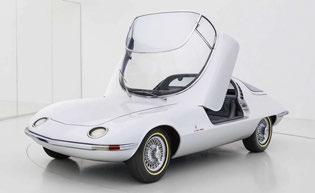
The Jet was based on a DB4 GT platform that departed the UK in December 1960. Giugiaro rustled up a new outline with breakneck speed, while Bertone’s artisans fashioned the new body inside three months, ahead of its debut at the Geneva motor show in March 1961.
This striking one-off followed a prior Bertone Ferrari that was built in 1960. Here, a 250GT SWB was clothed in a new body that bore not even trace elements of the donor car’s Pinin Farina-shaped origins, though it shares themes with the DB4 Jet.
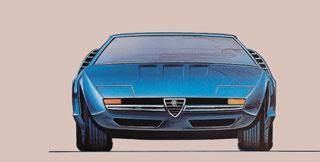
This Chevrolet Corvair-based creation remains one of Il Maestro’s favourites. It was exhibited at the 1963 Geneva motor show and Giugiaro later used it for his wedding. He tried to buy the car after leaving Bertone in 1965 but his offer was rebuffed. He nally acquired it in May 2011.
These are the concept cars, from 1960s Aston Martin to a 12-cylinder VW
Words Richard Heseltine Images Giorgetto and Fabrizio Giugiaro archive
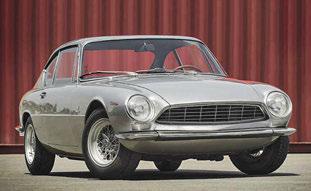
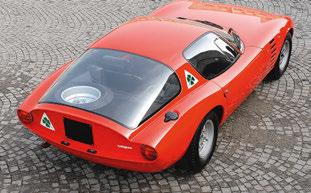
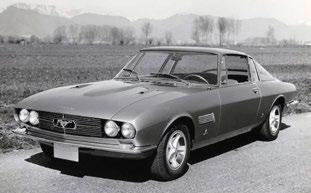
Fernando Innocenti’s desire to create a range-topping GT led to a collaboration in 1963 with Ferrari on the creation of a 1.8-litre V6 to power this coupé, which was styled by Giugiaro during his spell at Bertone. Two were built, yet this handsome GT sadly didn’t make the leap to production.
The Canguro was rst seen at the 1964 Paris Salon de l’Auto. It was based on a TZ1 chassis and sat just 1060mm (41.7in) off the deck and weighed 650kg (1433lb). However, despite the motorsport connotations, the Canguro (Italian for Kangaroo) was always destined to remain a one-off.
This 1965 offering was dreamed up by Automobile Quarterly founder L Scott Bailey. Based on a Mustang fastback, it was intended to signify the ItaloAmerican GT ideal, and the only external parts carried over were the grille badge and petrol ller cap.
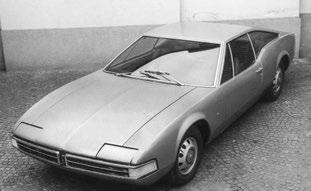
Something of an anomaly here, the Thor was an adaptation of an existing production car: this 1967 Ghia offering was based on an Oldsmobile Toronado but signi cantly altered. Giugiaro shortened the overhangs, lowered the beltline, moved the bulkhead forwards and dropped the bonnet line.
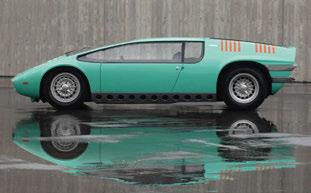
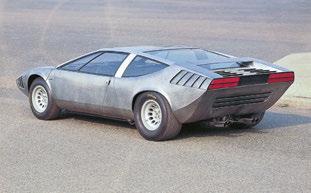
The rst car styled by Giugiaro as an independent designer, the Manta acted as a calling card for Studi Italiani Realizzazione Prototipi (soon rebranded ItalDesign). Based on a Bizzarrini P538 chassis and powered by a smallblock Chevrolet V8 engine, it emerged at the 1968 Turin show.
First seen at the 1969 Turin show, this Alfa Tipo 33-based car was bodied partly in glass bre and painted in Metal ake grey. However, the skeletal roof structure plus the A- and B-pillars were nished in brushed metal – a treatment that was later applied to the DeLorean DMC12.
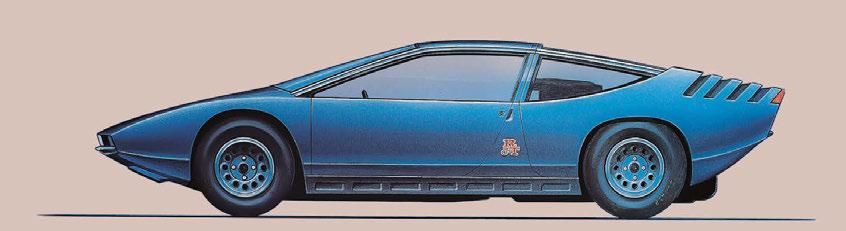
‘THE IGUANA WAS BODIED IN GLASSFIBRE BUT WITH BRUSHED METAL ROOF, A- AND B-PILLARS’

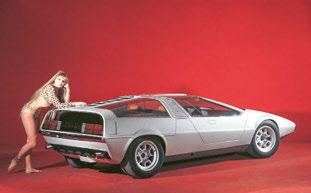
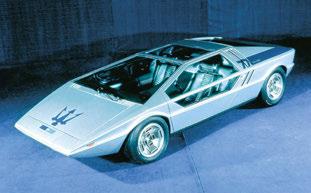
The 1600GT was displayed on the Abarth stand at the 1969 Turin show. It was based on a Fiat 850 platform, but powered by a more powerful 1592cc twin-cam four-cylinder engine. It displayed many of Giugiaro’s hallmark styling ourishes, not least the upswept window line.
This Porsche 914/6-based offering was unveiled at Turin in 1970. It was later acquired by a Spanish industrialist, only then to be severely re damaged. Depending on whose version of history you believe, this was either the result of an accident or a bomb beneath the car. It clearly inspired the DeLorean DMC12.
Unveiled at the 1971 Turin show as an engine-less ‘pushmobile,’ to use designer parlance, the Boomerang was running under its own steam in time for Geneva the following year. A midmounted 310bhp, 4.7-litre Maserati V8 drove the rear wheels. Its stark, wedgeshaped pro le de ned the era.
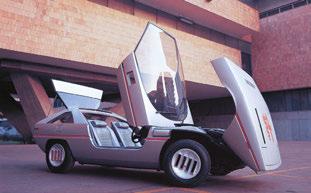
While the Giugiaro-styled Alfasud took centre-stage at Turin in 1971, the great man couldn’t resist creating a concept on its platform. The Caimano’s signature feature was a domed canopy that also included the doors. The B- and C-pillars incorporated a cockpitadjustable spoiler.
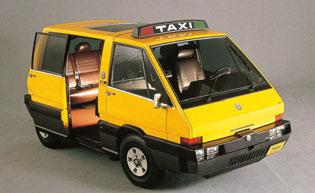
In 1976, Giugiaro, along with rival designers, was invited to create ‘individual urban transportation’ to a brief provided by the New York Museum of Modern Art. His design featured a at oor, complete with a retractable ramp, plus space to store wheelchairs.
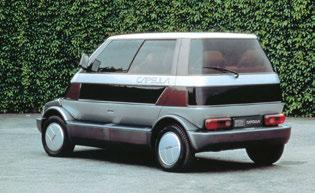
In 1982 Giugiaro took cues from bus design in creating a car with a rolling ‘double- oored’ chassis that incorporated everything from the engine to the spare wheel. Any kind of body could be attached: hatchback, pick-up, ambulance, taxi, tow-truck, re engine…
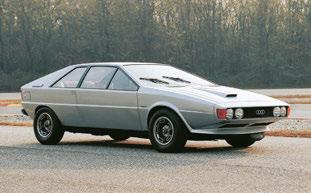
The Audi-badged ‘Ace of Spades’ from 1973 was the rst in a series of concepts. The BMW 320-derived Asso di Quadri (Ace of Diamonds) was displayed at the 1976 Turin show, while the Asso di Fiori (Ace of Clubs) subsequently morphed to become a production car: the Isuzu Piazza.
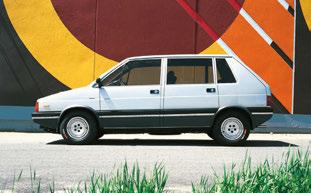
While perhaps not the rst ‘people carrier’ in the accepted sense, the Megagamma’s arrival at the 1978 Turin show represented year zero for the MPV with car-like attributes as we now know it. The sad part is that Lancia’s parent company, Fiat, baulked at manufacturing it.
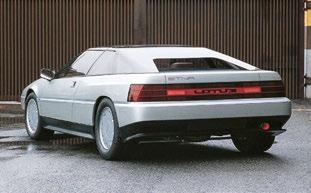
The Etna was a cover star the world over when unveiled at the 1984 British International Motor Show. The body boasted a drag coef cient of 0.29. Sadly, Lotus’s precarious nancial status resulted in delays. GM then acquired a 91% stake – but pulled the plug. It survived and appeared in Octane 91.
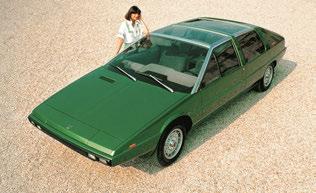
The initial Medici prototype was displayed at the 1974 Turin show and expanded on themes established on the Asso di Picche. The second car, which made its debut two years later at the Paris Salon, was pitched as a replacement for Maserati’s Indy production model.
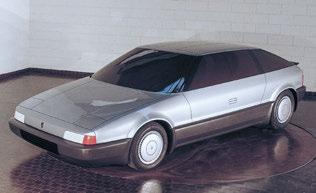
ItalDesign talked up a storm about it having a drag coef cient of just 0.24, but it has been suggested that this Lamborghini-badged, gullwing-doored offering from 1982 was rooted in a DeLorean project – stillborn following DeLorean’s collapse.
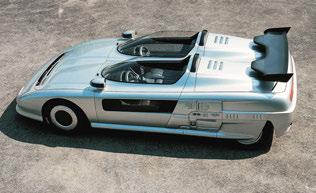
The loony Aztec emerged at Turin in 1988 with the xed-head Aspid coupé and the 6+2 Asgard people-carrier, all sharing the same platform. Only the Aztec was a runner. Powered by a vecylinder Audi 200 Turbo engine, it represented Giugiaro’s take on how the sports car should evolve.
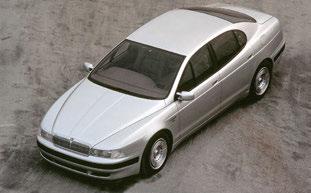
Unveiled as a mock-up at Geneva in 1990, the Kensington was displayed in functional form at the British International Motor Show six months later. An Italian take on a modern Jaguar Sovereign, its outline was subsequently reworked for numerous other ItalDesign offerings.
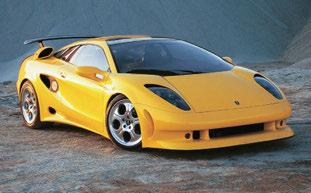
This carbon bre-bodied show-queen was a big hit when rst seen in 1995. A production variant could, conceivably, have been powered by a supercharged and intercooled variant of a Lotus V8. Negotiations were under way between various parties, but the project
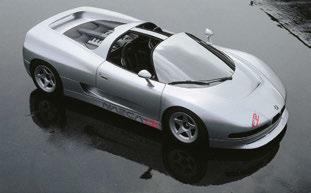
Giugiaro tried to tempt BMW into sponsoring a new breed of supercar in the early ’90s, the Nazca C2 boasting a V12 from the 850i that was sited amidships. This carbon compositebodied wonder featured conventional doors but with gullwing-hinged glass roof panels.
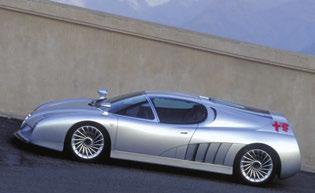
Giugiaro reworked the Nazca C2 after BMW chose not to adopt it, which resulted in 1997’s Scighera. Much was carried over but beneath the car’s carbon bre skin sat a mid-mounted 3.0-litre Alfa Romeo V6. Oh, and two turbochargers. Plus a supplementary
ultimately came to naught. supercharger!
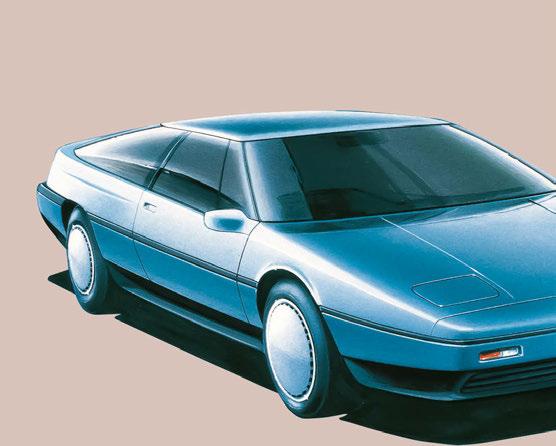
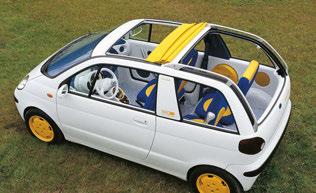
This cute city car grew out of the ID Cinquecento, which had been shown in static model form at the 1992 Turin show. It was conceived by Giugiaro as a modern-day small Fiat, but the Italian giant wasn’t receptive. Instead, the design subsequently formed the basis for the Daewoo Matiz.
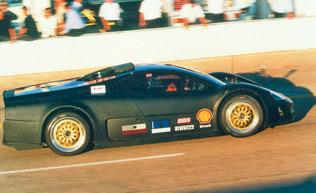
VW CEO Ferdinand Piëch tasked Giugiaro and his team with creating a supercar that could accommodate a W12 engine amidships and VW’s Syncro all-wheel drive system. The W12 Syncro broke cover in 1997, followed by the open Roadster in 1998 and the recordsetting Nardò (above) in 2001.

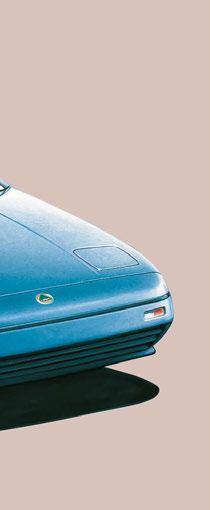
‘THE ETNA WAS A COVER STAR THE WORLD OVER WHEN UNVEILED AT THE 1984 BRITISH INTERNATIONAL MOTOR SHOW’

We’ve had the show cars – these are the stars of the road
Words Richard Heseltine Images Giorgetto and Fabrizio Giugiaro archive
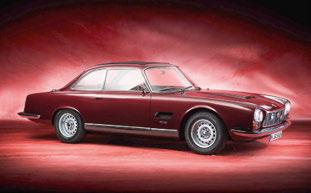
The Gordon GT broke cover at the 1960 Geneva motor show, and took until 1964 to reach (limited) production. It marked the jumping-off point for Giugiaro’s career as a designer: its outline made the leap from sketch intact, a masterwork of balance and proportion.
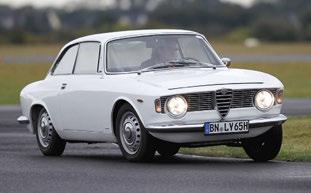
The ‘step-front’ Giulia Sprint GT of 1963 remains a styling masterclass. Nuccio Bertone envisaged a small-series coachbuilt offering, but showed renderings to Alfa management. They were immediately smitten.
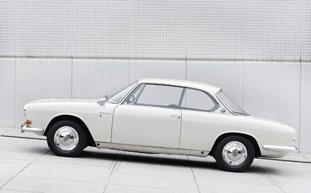
This elegant BMW coupé emerged at the Frankfurt show in September 1961. Many of its styling features would lter down to the Munich rm’s more mainstream offerings, such as the angled ‘Hofmeister kink’ at the rear of the C-pillars.
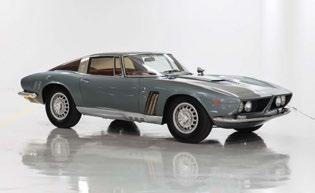
Giugiaro was given virtual autonomy in shaping this super-GT. It was conceived in 1963 as a concept car, but reaction was such that Iso was practically forced to put it into production. That said, the Spider variant would always remain a one-off, more’s the pity.
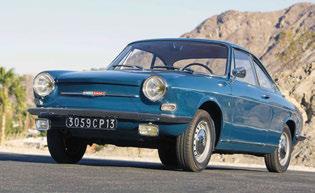
It is widely held that the pretty Simca riffed on themes established by the Felice Boano-penned Fiat 850 Coupé. However, this Giugiaro/Bertone offering was rst seen in 1962, three years before its rival from Turin. So perhaps that’s the wrong way round…
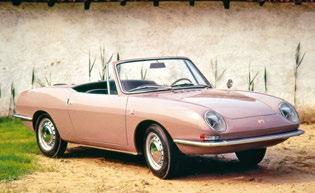
Launched in 1965, the Spider borrowed styling cues from Giugiaro’s muchloved Testudo concept car, albeit transposed onto a much smaller canvas. A facelifted Series 2 arrived in 1968, but sadly it was not the work of Giugiaro.
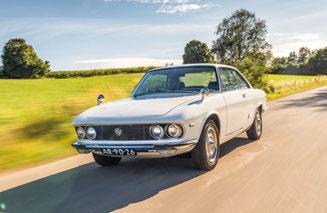
Mazda commissioned Bertone to shape the Luce saloon, and Giugiaro’s crisply styled offering entered production in 1966. He followed through with the RX-87 concept, which spawned the Luce Rotary Coupé.
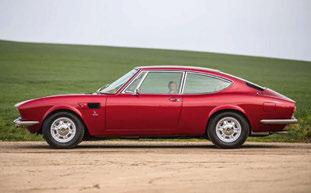
This Giugiaro/Bertone production was less showy than the Pininfarinadesigned Dino Spider. It echoed the smaller Isuzu 117’s outline, although some sources claim that it was nished off by Marcello Gandini after Giugiaro departed for Ghia.
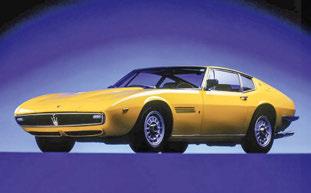
A landmark design for Maserati in 1966, its silhouette among the nest of its era. Its dry-sumped V8 allowed Giugiaro a dramatically low bonnet line. Underestimating demand, Maserati envisaged shifting a mere 100 cars; 1295 were built over six years.
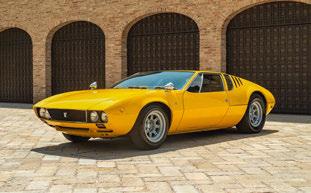
The Mangusta’s great styling ourish was its centre-hinged rear end, which allowed access to the Ford V8 engine.
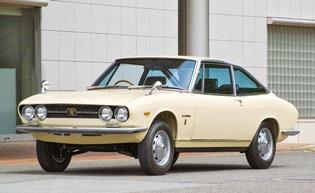
Unveiled as a prototype at Geneva in 1966, handbuilt at the rate of 50 per month from 1968, then volumeproduced from 1973, the 117 Coupé remained on sale to 1981, when it was superseded by the Piazza – another car with Giugiaro roots.


created for a would-be Iso. Few
As an aside, the original renderings on which it was based may have been supercars can match it for beauty.
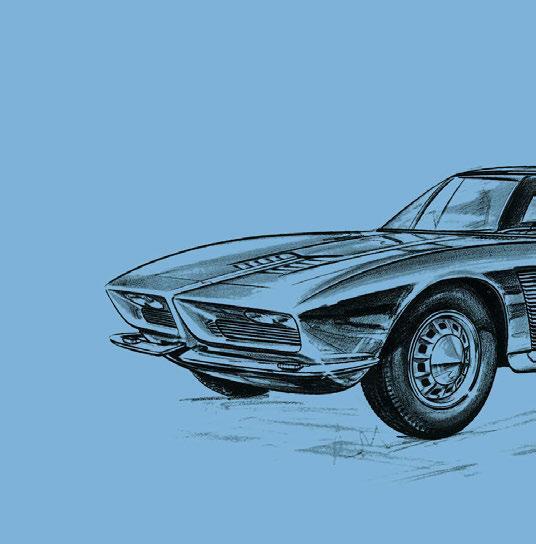
Having shaped the Ghibli while a (captive) Ghia employee under Alejandro de Tomaso, Giugiaro styled the midengined Bora as an independent. If the factory’s stats are to be believed, it had a drag coef cient of 0.30cd. Stunning, fast and also civilised.

‘THE ISO GRIFO WAS CONCEIVED IN 1963 AS A CONCEPT CAR, BUT REACTION WAS SUCH THAT ISO WAS PRACTICALLY FORCED TO PUT IT INTO PRODUCTION’
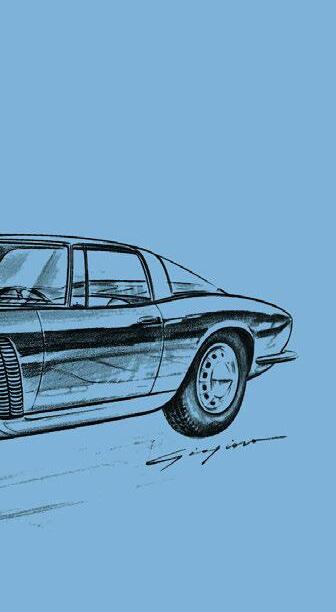
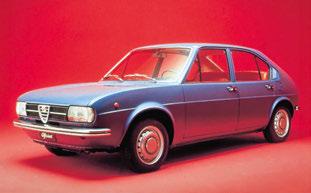
The Alfasud was much lauded when introduced in 1971 (Giugiaro petitioned for it to be called Sfida, which translates as ‘Challenge’). He also styled the Sud Sprint and the Alfetta GT, although he disowned the latter due to outside interference.
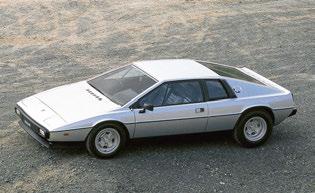
A lengthened Europa chassis plus a dummy engine were dispatched to ItalDesign. The resultant show car, referred to simply as ‘The Silver Lotus’, was displayed at the 1972 Turin motor show to great acclaim. The production version went on sale in 1976.
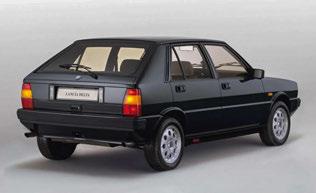
A product of Giugiaro’s ‘cubist period’ and also the 1980 European Car of the Year. It shared DNA with the Fiat Ritmo/ Strada, though there was little physical carryover. Originally a shopping car for posh Milanese, it later ruled the rally stages in Integrale form.
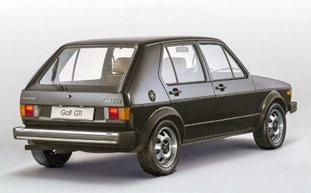
It’s hard to comprehend the impact the Golf had on Volkswagen’s image and share price when introduced in 1974. Arguably it was the first classless car since the Mini, and set a template that still underpins its class. Giugiaro also penned the first Scirocco and Passat.
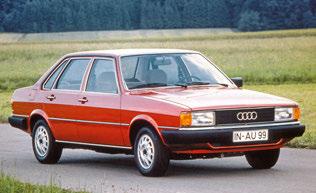
ItalDesign was tasked with creating the second-generation 80, Audi’s mediumsize saloon. The new strain emerged in 1978 and would remain on sale to 1986. It helped to reposition the brand upmarket. And how. Spawning the quattro did Audi no harm, either.
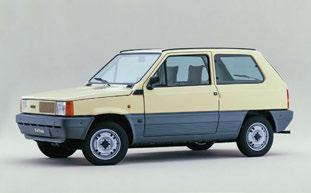
This car made more of an impact in the real world than any supercar. The firstgeneration model was as proletarian as cars get, with flat glazing and 18% fewer body components than rivals. Nearly five million were built between 1980 and 2003.
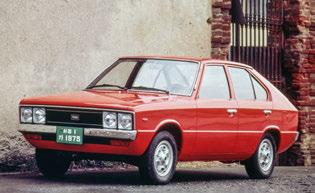
The Pony arrived in December 1975 and followed on from a prior Giugiaro concept car displayed at the 1974 Turin show. Giugiaro also styled future Hyundai models such as the Stellar, Sonata and Excel: truly a democratisation of design.
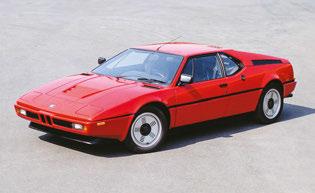
Shaped by Giugiaro in the spirit of the brace of 1972 Turbo concept cars styled by Paul Bracq. Production began in 1978, with bodyshells bonded to their frames at ItalDesign in Turin before being transported to Baur in Stuttgart for drivetrain installation.
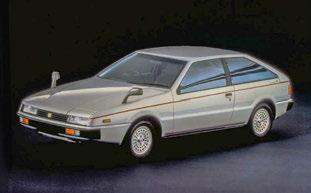
Hyundai again approached Giugiaro in 1978, this time to pen a replacement for the 117 Coupé. The Asso di Fiori concept car was shown at Tokyo in 1979 and fast-tracked into production for 1980. Its humble underpinnings were transformed by Lotus in 1987.
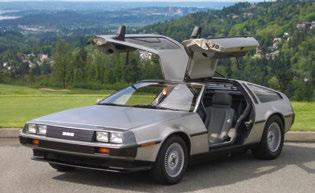
Giugiaro did his best to talk his paymaster out of going with gullwing doors here, but they became its signature feature. The front end echoed the Maserati Medici II concept saloon’s. Sadly, a raft of sister models never made the leap to reality.
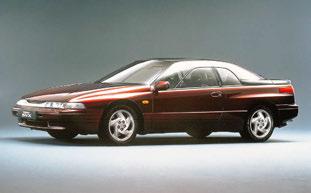
The ‘Subaru Vehicle X’ was rst seen in concept form at the 1989 Tokyo Motor Show, and went on sale two years later with a at-six and much of its styling creativity remaining intact. Four-door and estate versions were proposed but not produced.
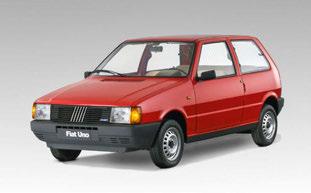
Having rede ned the city-car with the Panda, Giugiaro did much the same in the next market segment up with the Uno. The 1984 European Car of the Year would go on to be made in one form or other as late as 2014. Giugiaro also designed its successor, the Punto.
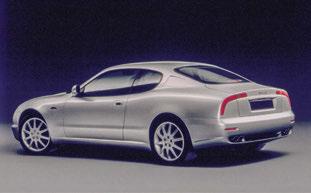
It’s easy to forget that the 3200 GT was showered with praise on its release in 1998. This Giugiaro-penned coupé was considered a return to form for the storied marque. The ‘boomerang’ taillights were deemed controversial, though it’s hard to see why in retrospect.
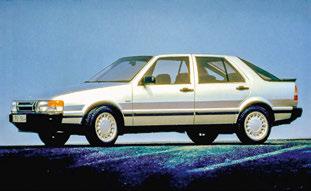
The ‘Type Four’ platform-sharing programme led to the Saab 9000, Lancia Thema, Fiat Croma and Alfa Romeo 164. Giugiaro styled all bar Pininfarina’s Alfa, and the 9000 with Saab’s design chief, Björn Envall. Saab, Lancia and Fiat also shared doors.
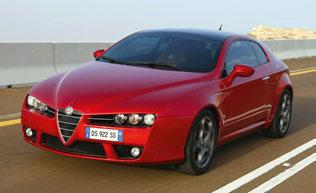
A tsunami of purple gush followed the unveiling of the Brera Concept at the 2002 Geneva motor show. Some styling cues had already been mapped out by Alfa Style, mind. Sadly, the production version didn’t quite hit the mark so squarely.

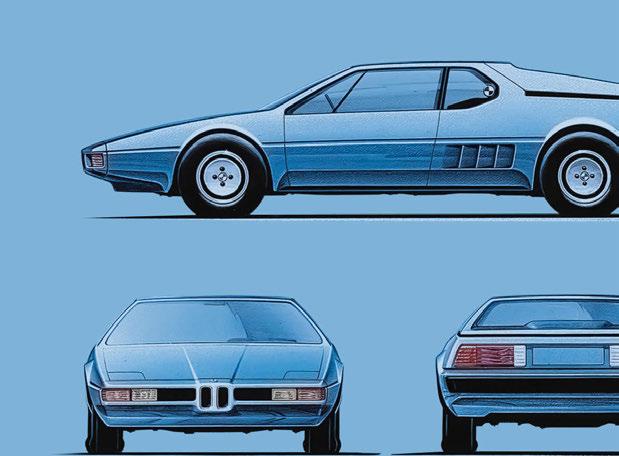


‘BMW
M1 BODYSHELLS WERE BONDED TO THEIR FRAMES AT ITALDESIGN IN TURIN BEFORE BEING TRANSPORTED TO BAUR IN STUTTGART FOR DRIVETRAINS’
More than just cars
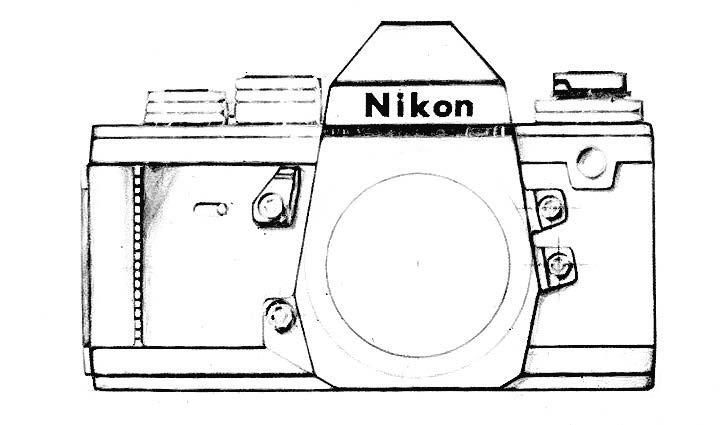
While primarily a car designer, Giugiaro frequently strayed into other realms
Words Richard Heseltine Images Giorgetto and Fabrizio Giugiaro archive, ItalDesign
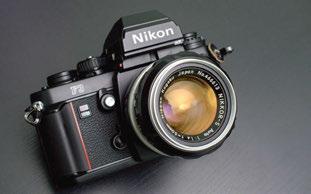
Giugiaro shaped cameras for Nikon over a 15-year period. The F3 arrived in 1979, his first, and Nikon’s third professional single-lens reflex camera body. Each subsequent model featured rounded forms plus a red stripe on the grips.
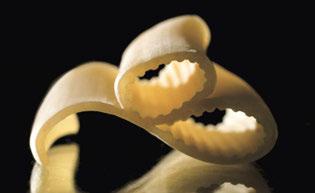
Giugiaro stamped his mark on pasta with the Voiello Marille range, which went on sale in 1983. Its success in the trade soon faded because its complex shape resulted in a longer cooking time. ‘Marille’ is a German word for ‘apricot’.
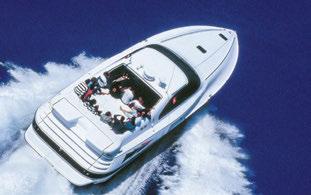
The late 1970s saw Giugiaro collaborate with a firm fêted for offshore powerboat racers. The outcome was this 21-metre cabin cruiser, which belatedly arrived in 1989 yet still looked futuristic.
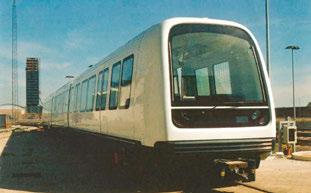
A collaboration with the AnsaldoBreda rolling stock company led to this automated underground/overground ‘mixed train’, which linked Copenhagen to Amager island and Ørestad. The mock-up was first seen in 1989.
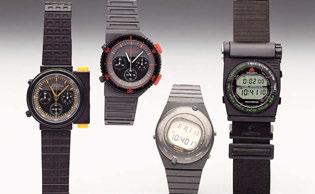
Giugiaro’s quartet of Speedmaster watches featured canted faces so that wearers could read them at a glance when driving or riding a bike. The straps could be attached to handlebars or steering wheel spokes.
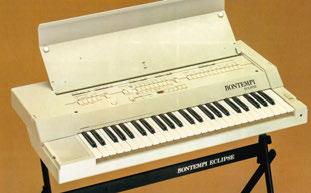
This relatively lightweight and easily portable electronic organ was designed in 1984 and aimed at younger players. The product was completely monotone in colour save for the black raised keys.
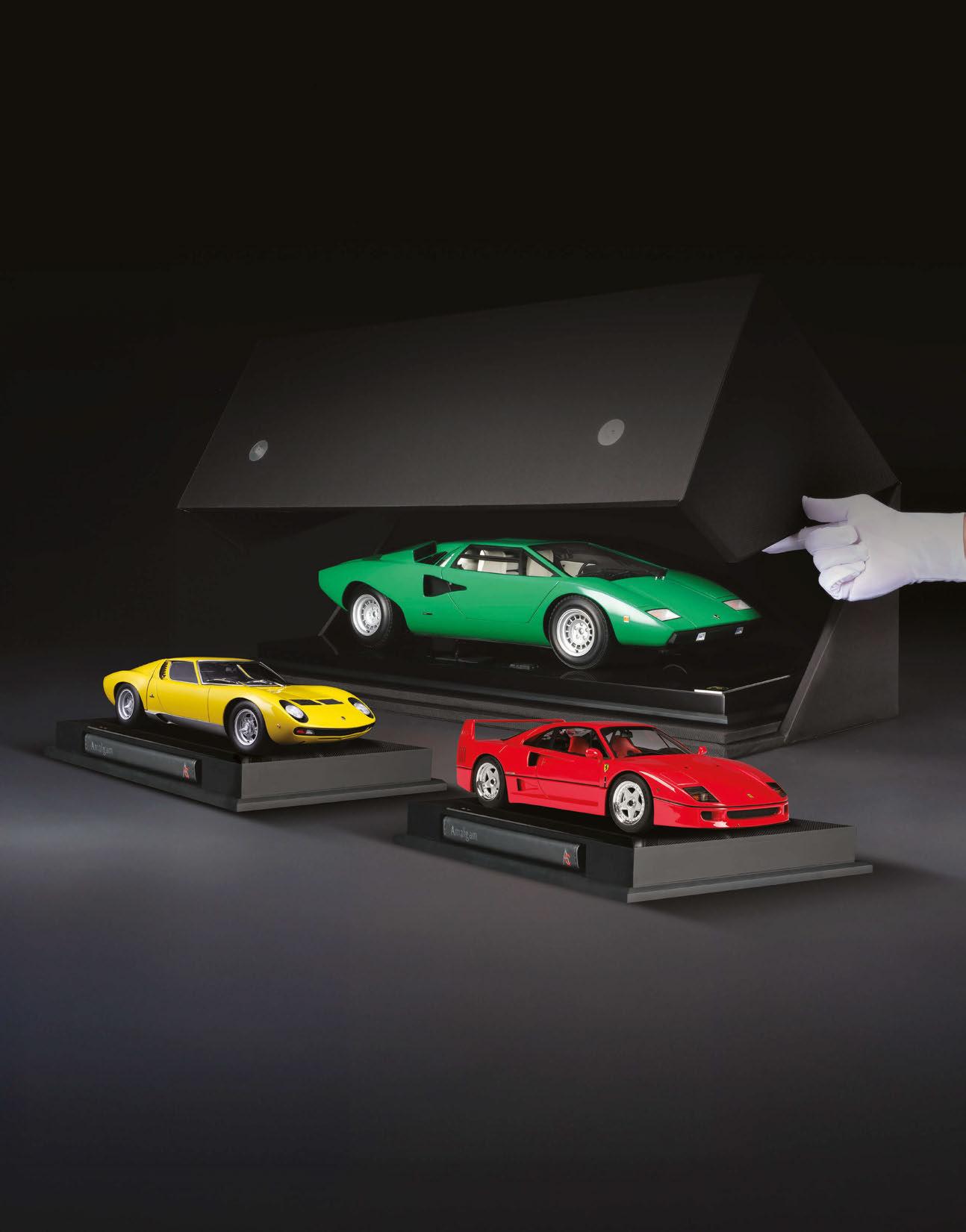
1:18 scale Lamborghini Miura - £1050
1:18 scale Ferrari F40 - £1050
1:8 scale Lamborghini Countach LP400 - £17,995


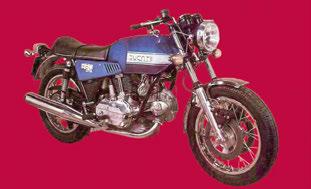
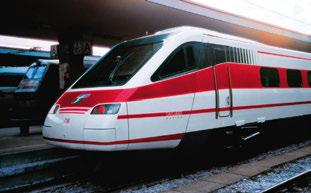
Giugiaro and his team conjured this ball for the Italian basketball federation. Four extra ‘panels’ were added to the eight you would expect; its chromatic colour combo further differentiated it from the norm.
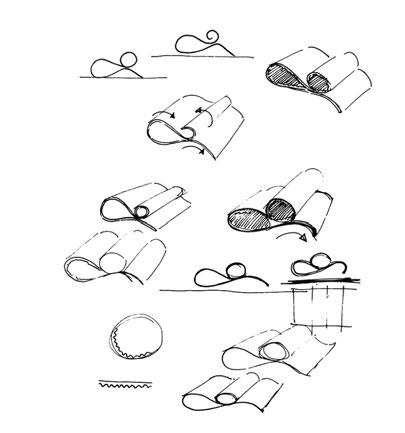
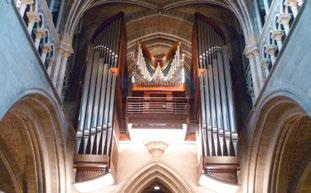
Ten years in the making, this 7000-pipe, 40-tonne double-console great pipe organ was designed by Giugiaro. It was built by the American organ builder CB Fisk, at a cost of CHF6m.
The 860 GT was rst seen in late 1973 and went on sale a year later. Ducati customers were resistant to its charms, the angular tank proving divisive. Sales limped along to 1975; ironically, survivors are highly prized.
The ETR 460 (aka Pendolino) high-speed train tilted to an 8 º angle and was created in conjunction with Fiat Ferroviaria. It was rst seen publicly in 1993, and the nose treatment proved in uential on rolling-stock thereafter.



This deceptively simple-looking telephone was designed by Giugiaro in 1987. It was the rst landline phone in Italy equipped with multi-frequency dialling. The Sirio Plus made hands-free calling possible at the touch of a button.
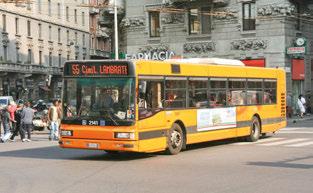
Giugiaro’s bus was announced in 1995. Around 7000 went into service across Italy, with licensed variants also being adopted in Spain. The CityClass is available in various lengths, including an 18m articulated version.

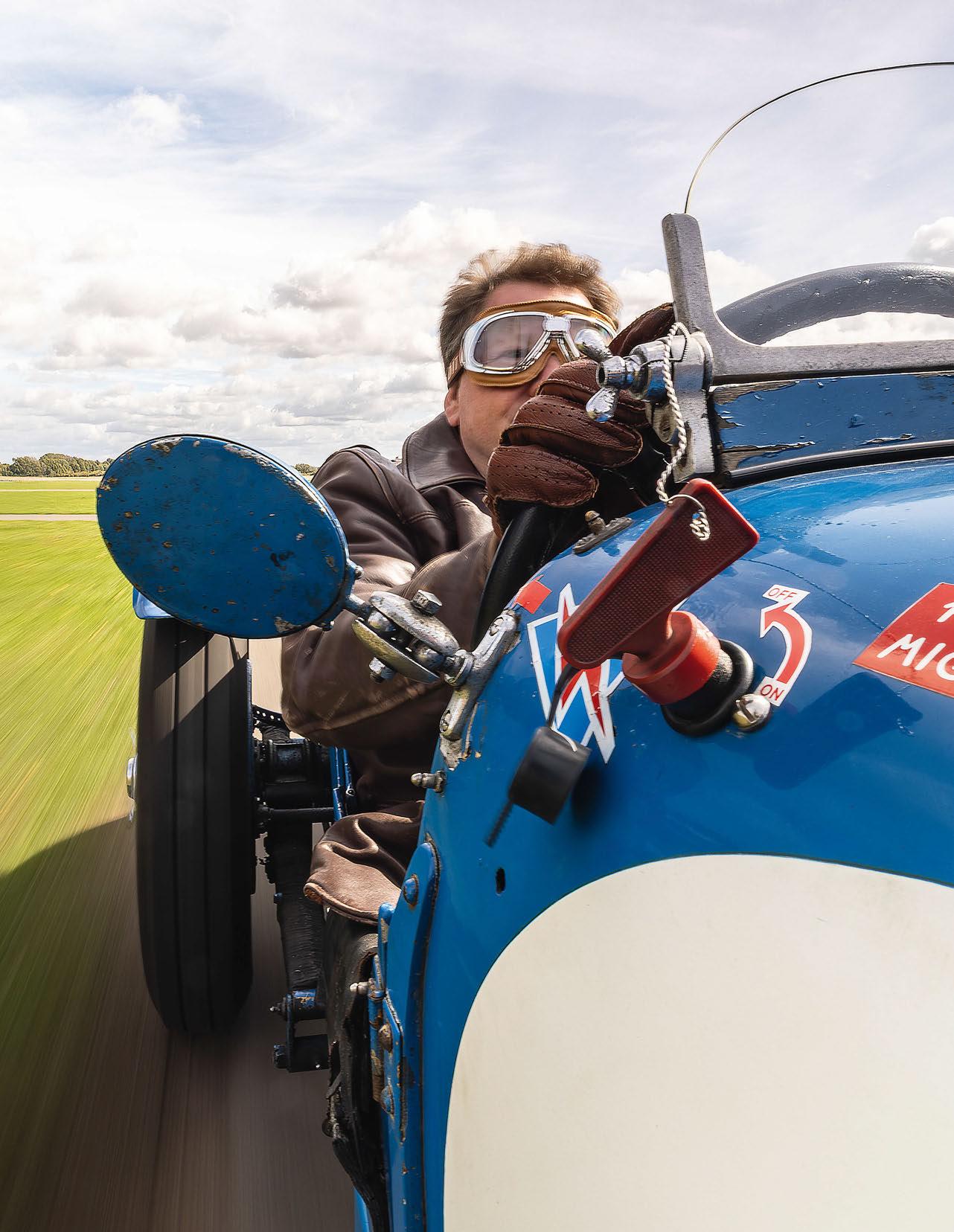
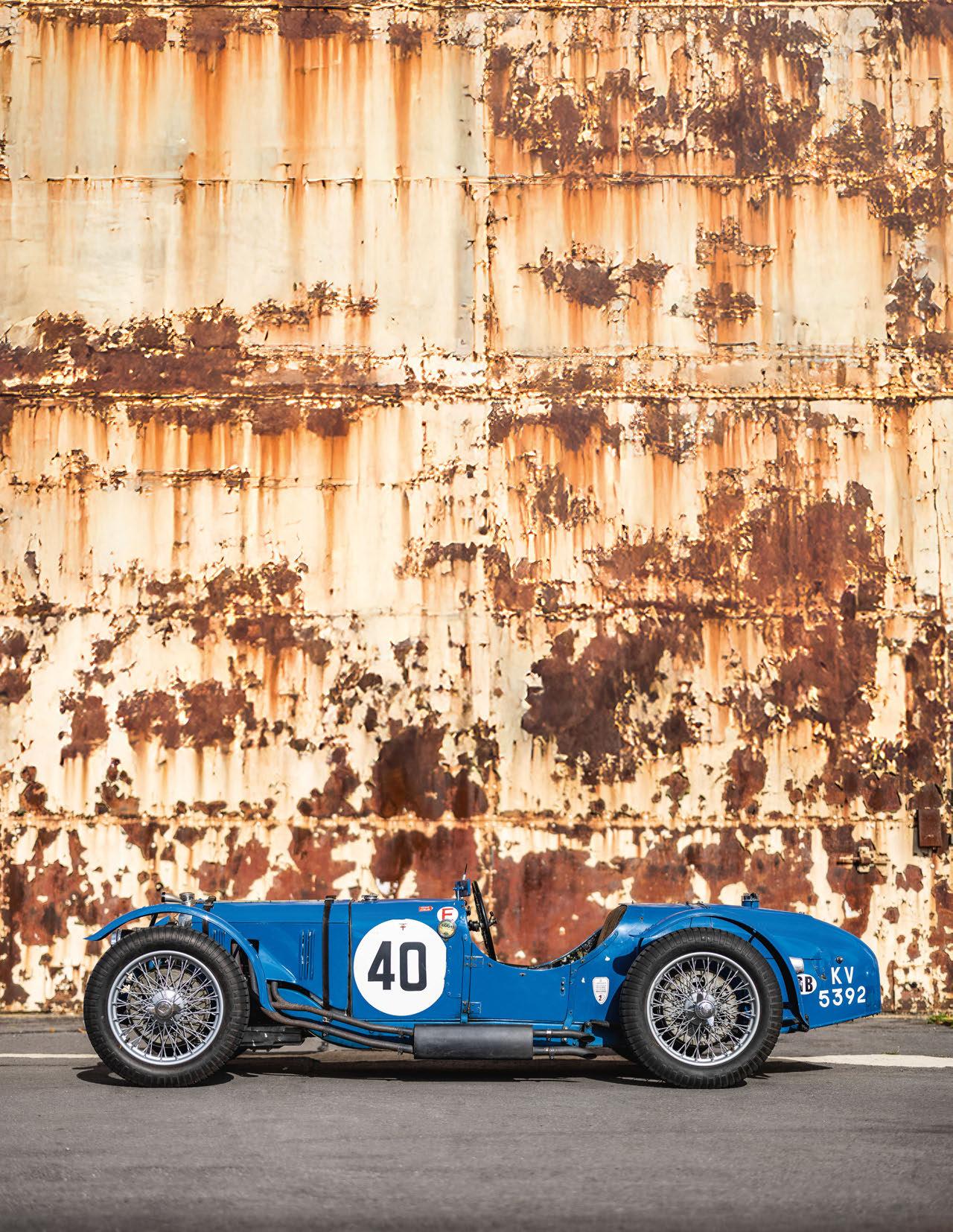
The last Riley Brooklands built, winner of the Biennial Cup, fifth at Le Mans in 1934 and raced ever since: Octane drives one of the most remarkable competition cars of all time
Words James Elliott Photography Lee Brimble












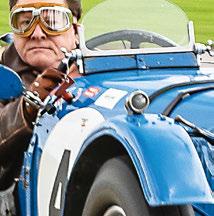
Brake hard, drop to second, wipe the wheel as you thrust forwards again and gather the second apex, run wide on exit and then gun this Riley Brooklands down the very short straight accompanied by what sounds like Gene Krupa wigging out in Sing Sing Sing, just one silky upchange to third en route to braking hard and dropping a gear for the ‘squarepin’ (© J Ellio ) at the other end. en work that very forgiving second-third plane hard as you head back up to the top via a jinking ess (singular) and a slight kink. And repeat. Ad in nitum.

e atmosphere can’t be faulted: the sounds, smells and touch of this car in this location are invigorating and don’t seem anachronistic in the slightest. But for a low mist, a covering of dew and a de Havilland Moth instructor plane landing shakily in the background, the scene is Merchant Ivory perfect.

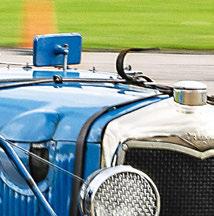
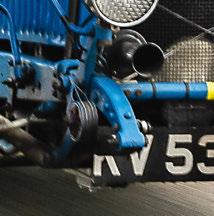







Yet however much fun it is negotiating this uncomplicated onekilometre Bicester Motion sinew, it’s hard to evoke what it might have been like at 3am on the pre-chicane Mulsanne in 1934, surrounded by 7.0-litre Duesenbergs, wailing supercharged Alfas and darting blown Buga is. at was a big year for Le Mans, the changes that had started in 1932 – and would largely see it through to today – nally completed. e circuit had developed a paunch to incorporate the new pit complex and, circuit-wise, everything from Maison Blanche to Tertre Rouge was new. Safety was increased (though ‘introduced’



might be a more appropriate word) for both drivers and spectators via earth banks and tree-felling, plus large portions of the track, notably the Mulsanne, were resurfaced.

Despite British cars making up half the eld in 1934, these invading small- and medium-engined minnows were not expected to feature, the press, spectators and commentators barely looking beyond the previously dominant Alfas and Buga is with their ‘name’ drivers. To begin with it went to plan, the Alfas steamrollering the opposition and ghting among themselves as expected, but as the big-engined cars fell away, the angry swarm of British sports cars came to the fore. When 4pm approached on 17 June, Luigi Chine i and Philippe Étancelin had amassed a massive lead in their 8C 2300 – the secondbiggest winning margin to date – of over 100 miles, but the rest of the top 20 was made up of braces of Astons, MGs and Amilcars, solitary Tracta, Lagonda and Buga i, four Singers and six Rileys. SIX! And those out of six starters.





What’s more, the Rileys were second, third, h and sixth overall and had a clean sweep of rst to fourth in the Index of Performance. is very Brooklands was the one that came h overall and won the Index, piloted by Ken Peacock and Bill von der Becke. More than that, it took the Rudge Whitworth Cup, yet another arcane trophy based on total mileages covered over two outings by returning cars. It might even have nished second overall but for team orders to ease o to protect its Biennial Cup lead.


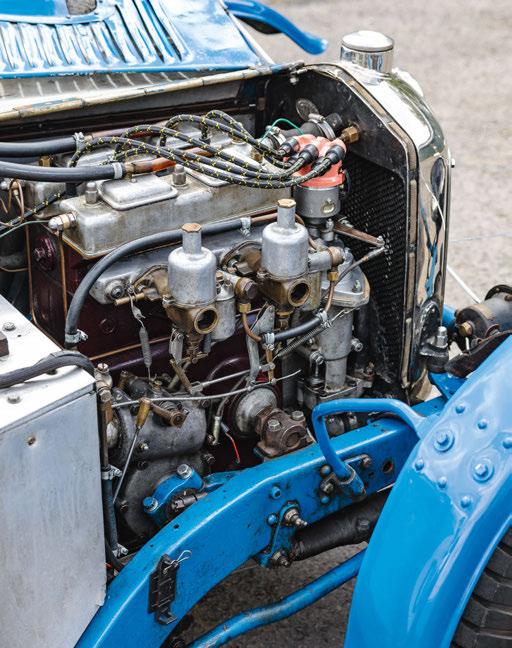
Clockwise, from opposite Rakish Riley looks exquisite out on the track, despite diminutive dimensions; engine is gutsy way beyond its 1100cc capacity – and SU carb set-up; big drum brakes behind skinny wire wheels; li le space for feet by the gearbox; well-judged proportions evident from above.
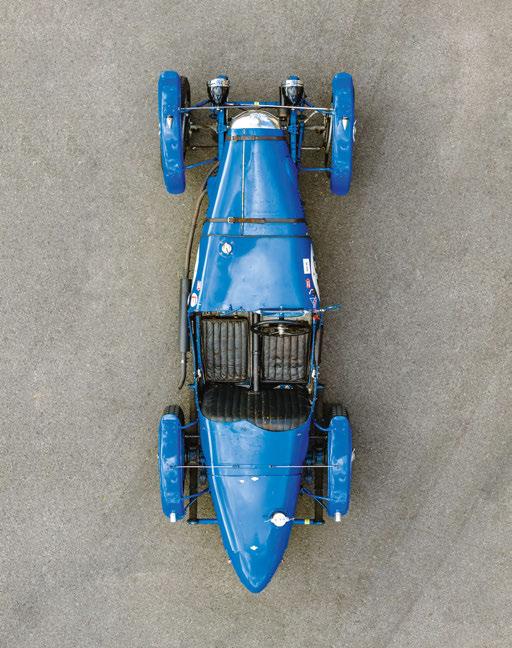
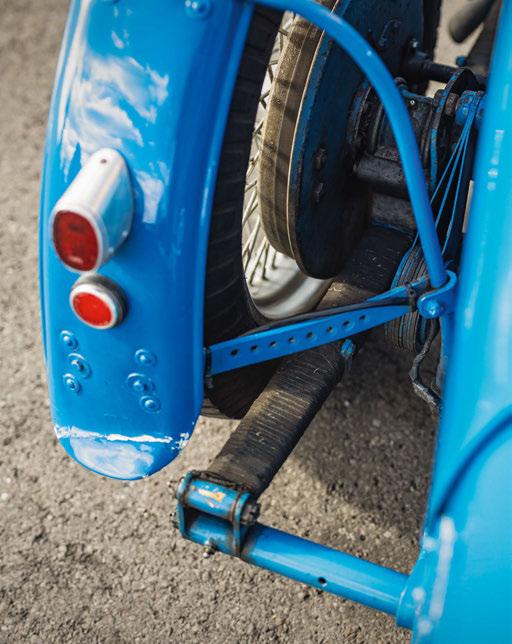
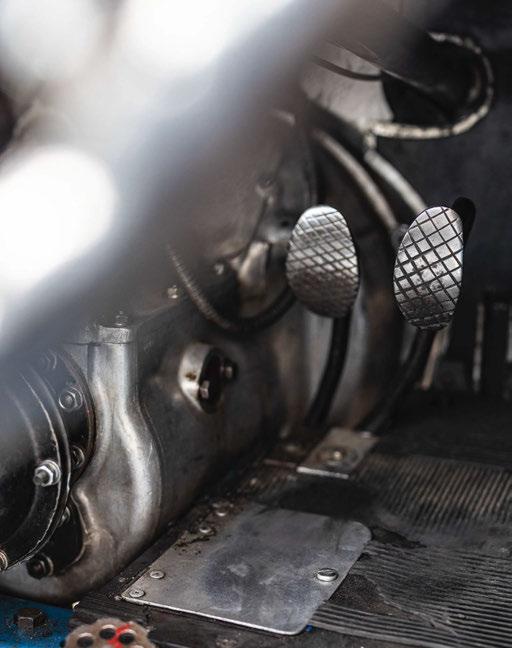
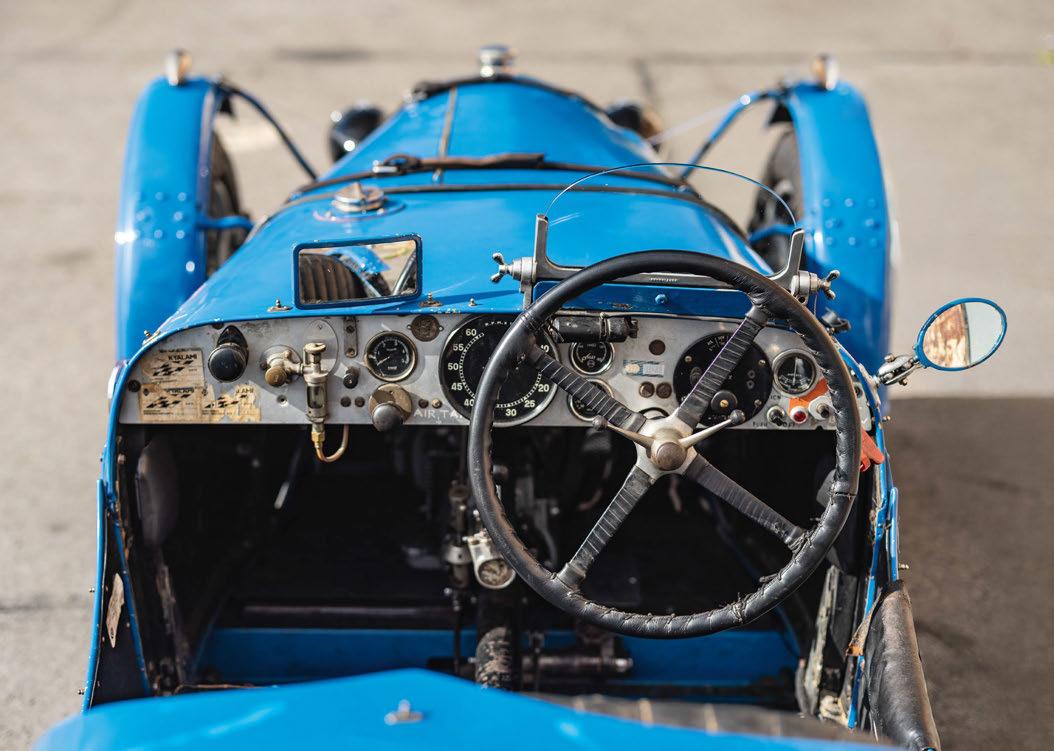
‘SHINY
This glorious foray to La Sarthe wasn’t quite the start of this factory racer’s competition career – French duo Jean Sébilleau and Georges De La Roche had piloted it at Le Mans in 1933, when it retired after just 12 laps with a stuck tappet – and, boy, was it not the end.
Officially this is chassis 8093, but so familiar is it that it is now universally known by its registration, KV 5392. It exited Riley’s Coventry works, purportedly the last of the 110 Brooklands, in 1932 – and has been active from then until today. The Brooklands was one of myriad twists on the Riley Nine, powered by a 1087cc four and introduced in the mid-1920s. Quite apart from a plethora of body styles in a choice of metals and fabrics on the base models, the small sporting saloon soon evolved and mutated into something rather more potent. This would culminate in the diminutive Ulster Imp in 1934, plus the TT Sprite and six-cylinder MPH, but these were preceded by the Brooklands Speed model.
Sitting in a chassis that was shortened by almost a foot and
masterminded (at Brooklands, hence the nickname) initially by Land Speed Record great JG Parry-Thomas and then by engineering genius Reid Railton at Thomson and Taylor, the Speed model was lowered to a groundhugging degree and the sweet little twin-cam came with twin carbs, different cams and higher-compression pistons to boost output to approximately 50bhp (from 40-ish).
The engine that attracted these speed merchants, as well as so many racers and specials-builders ever since, was the work of Percy Riley and was a little jewel, being the foundation for all Riley engines until the late 1950s. The all-iron unit featured hemispherical combustion chambers, a crossflowed head, and had its (non-overhead) camshafts mounted high in the crankcase and operating the valves via short pushrods. It drove the rear wheels through a four-speed gearbox and torque tube, and the standard live rear axle was, predictably for the time, suspended by semi-elliptic leaf springs.
The Riley Nine Brooklands Speed, along with other Nines, was
immediately successful in competition and carried on being so long after it was supposed to have been supplanted by the larger-engined alternatives. As well as Le Mans, they chalked up multiple class wins and one overall victory in the TT, with similar triumphs in the 500 Mile Race at Brooklands and even on the Monte.
And of all that rich history from so many cars born to race, KV 5392 is renowned as one of the most campaigned of all. Most likely the most. Serving initially as a works car, which included those two Le Mans appearances as well as the Alpine Trial with Donald Healey (second in class), it was retained by the works in 1935, during which time it received a replacement Ulster engine, before being sold to Group Captain Briggs and, after one season driven by him and wife, on to Ian Cunningham in 1937 for £125. Cunningham raced it frequently and fitted doors for the 1939 TT at Donington, which was subsequently cancelled due to World War Two. One former owner insists that Cunningham taught Jim Clark to drive in it, but that would rather usurp the accepted Ian Scott-Watson and DKW story. There may be some truth in the claim, however, because there was certainly a connection: Alec Calder, Jim Clark’s brother-in-law, was next to extensively campaign this Brooklands before passing it on to its most famous owner, Innes Ireland, in 1955.
a most exciting, low-slung racy-looking machine tucked away in the corner of a barn. I knew immediately it was a Brooklands Riley Nine. Painted in French Racing Blue, it had twin aero-screens, outside exhaust pipes, leather straps over the bonnet, cycle-type wings covering square-treaded Dunlop racing tyres, and a large screw-on chromed fuel tank filler with a crossbar on top… I’d never been so carried away with desire.
Opposite and below
Not a huge amount of room behind the wheel, but who cares when you have this degree of patination; a reclined driving position keeps the driver’s head out of the slipstream – handy when there’s only a tiny aero-screen for protection.
‘I tackled the farmer about the car. His name was Alec Calder and he had raced it in Ireland and other places against such heroes as Freddie Dixon and Mike Hawthorn. Alec hadn’t even thought about selling his little car but by employing various youthful wiles, such as jumping up and down a lot with enthusiasm, wringing my hands and screwing up my face in agony any time Alec sounded as if he might not part with it, somehow I managed to persuade him this would be his best course of action. If memory serves me correctly I agreed to part with something like £175.’
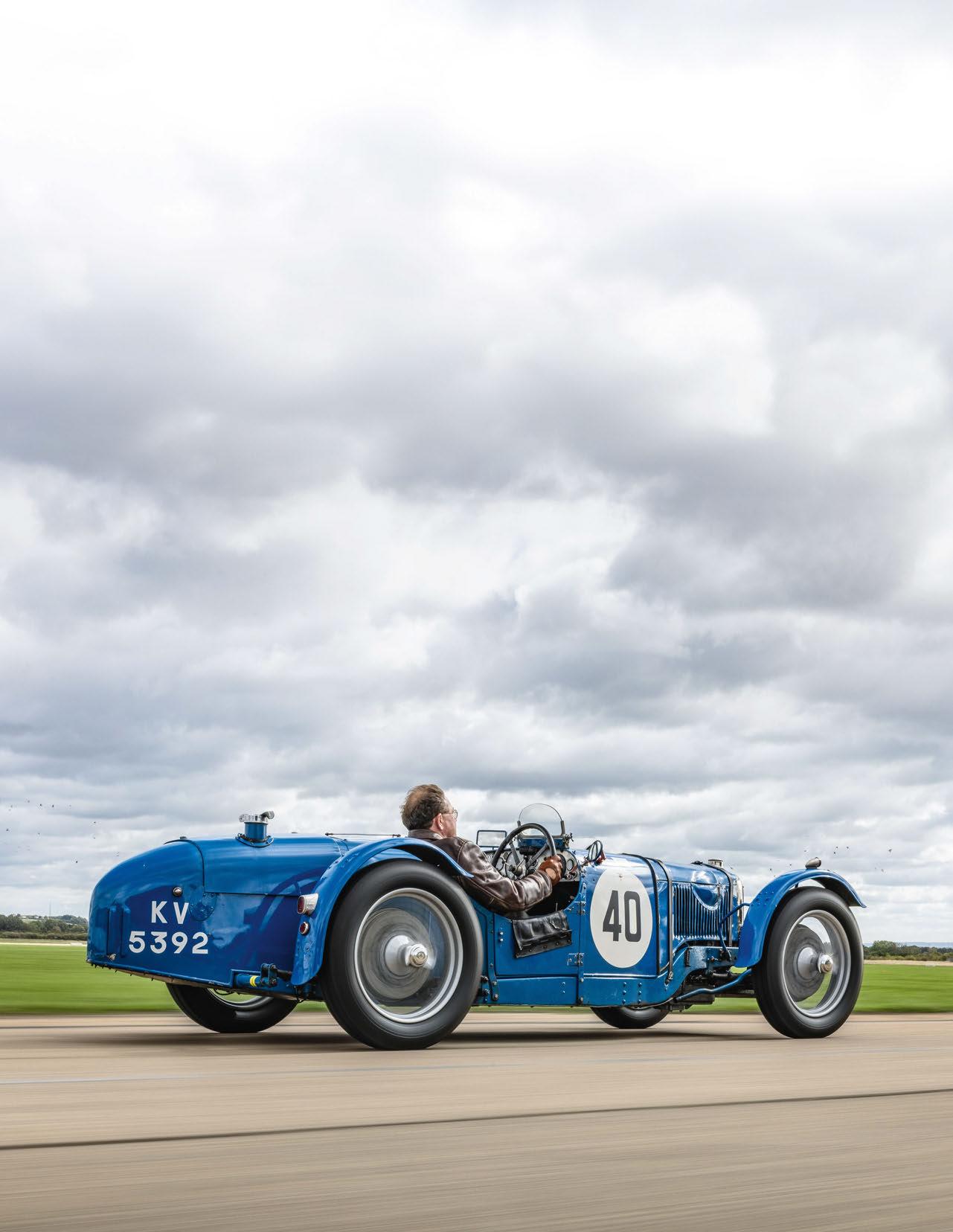
Ireland, of course, combined brilliant skill as a gung-ho racer with equally exceptional talent on a typewriter, and the Riley, despite already being more than 30 years old, was an important stepping stone in his career, contesting events such as a Six-Hour Goodwood relay as part of a Riley Nine team doing much to raise his profile. He also used it as a road car during his army service and, in 1988, wrote enthusiastically of its acquisition: ‘On a farming round… I spotted
Ireland moved the Riley on as his career took off – by 1959 he was a Team Lotus driver and would be Chapman’s golden boy until Jim Clark arrived – and it passed to Robin Purcell, who embarked on a four-year rebuild, including conversion to hydraulic brakes using parts from the Riley Ulster Imp KV 9475, before selling to Stanley ‘The Riley Man’ Burville in 1960. Burville’s most notable action with the car was to sell the quad Amal carb set-up, which a later owner would refit!
Another five owners got their name on the logbook before Graham White, who owned it for 15 years, then Renaat Declerck, who clocked up another ten, and finally the current owner, who acquired it in 2023. Since then there has been a complete engine rebuild at specialist Blue Diamond, just a sparkplug’s throw from where we
This image
This very car at Le Mans in 1934, when it came fifth overall and won the Index of Performance and the Rudge Whitworth Cup.
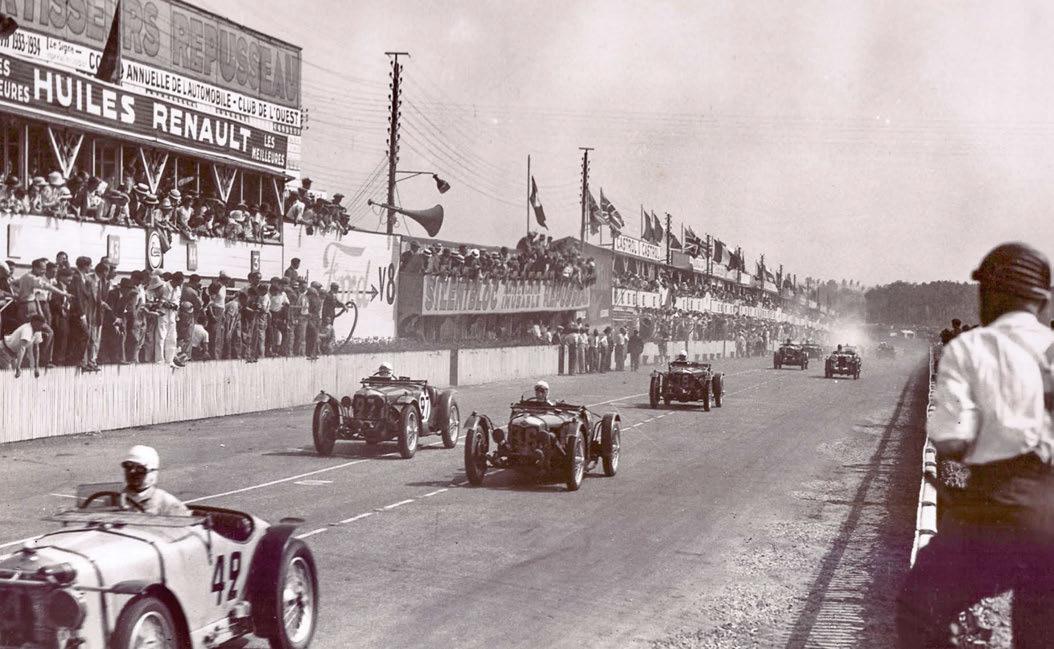
gather to test this storied and more or less continuously raced Riley at Bicester Motion.
Remarkably, it is said still to wear the Duchess Blue paint applied by Purcell in the early 1960s, a touch darker than the shade it wore at Le Mans in 1934, though its ever-changing carburettor set-up has settled at a pair of original-spec SUs. This Riley looks ready to race –hell, it looks as if it has just finished racing, the seats aged and battered, the big four-spoke wheel dominating the cockpit, the huge central Jaeger rev-counter running to just over 6000rpm.
The intrusive central tube keeps passenger and driver separated but it is tight in there, as it is in the driver’s footwell, where pedals cut for grip early in its career sit alongside a roller-throttle fitted far later in its life. Wide feet are a problem. The Brooklands is so low and the doors so small that you just step over them and drop down, careful to mind the still-fizzing exhaust if on the passenger side.
Settle your foot on the roller, ease down and push the button for it to start immediately and urgently. This is a 1.1-litre with a chip on its shoulder, spitting defiance to anyone who’ll listen. And that’s with a pair of SUs. Just imagine…
The pre-pre-selector gearbox has a reputation, and the smooth second-to-third just makes it worse when the other gears – accessed via a chunky lever in a tight open gate sprouting rearward of the ’box – are difficult to find. On occasion I think they don’t want to be found. Even so, once in the rhythm of double de-clutching, a slightly harder rhythm to find than usual due to the slippery roller-throttle, the gears will line up and allow you to squirt the Brooklands fiercely between corners, its centre of gravity so low it feels like you would have to consciously hit a ramp or kerb to unsettle it.
Even so, the steering is solid and feelsome and the new-looking 5.00 19H tyres are grippy as anything. Soon the air, thick with the
glorious chatter and odour of the hard-working engine, is rushing by as you sit low behind that single aeroscreen, in my case stretching for the pedals (cushion needed next time). Suddenly the changes are clean and come thick and fast as the planted Riley dips and dives like a boxer on rocksteady feet. The experience is complete.
And it is all about experience, craggy in this case. Shiny cars are lovely, but sometimes the very opposite can appeal more. A battlehardened veteran such as this shouldn’t be all Botox and filler and make-up, it should be as ready to play today as it was in 1933. And it is. Chipped paint, stickers and tags abound – Silverstone, Kyalami, you name it – the seat is worn down to sagging comfort like your grandfather’s favourite Parker Knoll, and the steering wheel cover, far from being impeccably stitched by a £120-an-hour trim shop, is held in place by a shoelace with the aglet dangling between the spokes. It is inexplicably but utterly perfect.
And then there is the history. Folders and folders of it, all wonderful, but all thoroughly upstaged by a scrapbook that looks at first like a Year 5 project, but just keeps giving more and more warmth and nostalgia. Even accounting for the racing prowess, the desirability, the history and sheer joy of driving this Brooklands, it is perhaps that scrapbook that leaves the most lasting impression, that sticks in the mind and elevates KV 5392 above others. With cuttings, photos, annotations and running commentary on the car’s owners, multitudinous outings and mechanical repairs and upgrades up to 1967, it is the most charming history document I have ever seen.
Of course, £235,000 is a lot to pay for a scrapbook, but you do get a rather special Riley Brooklands thrown in for free.
THANKS TO Robert Glover and Broad Arrow Private Sales, broadarrowprivatesales.co.uk.

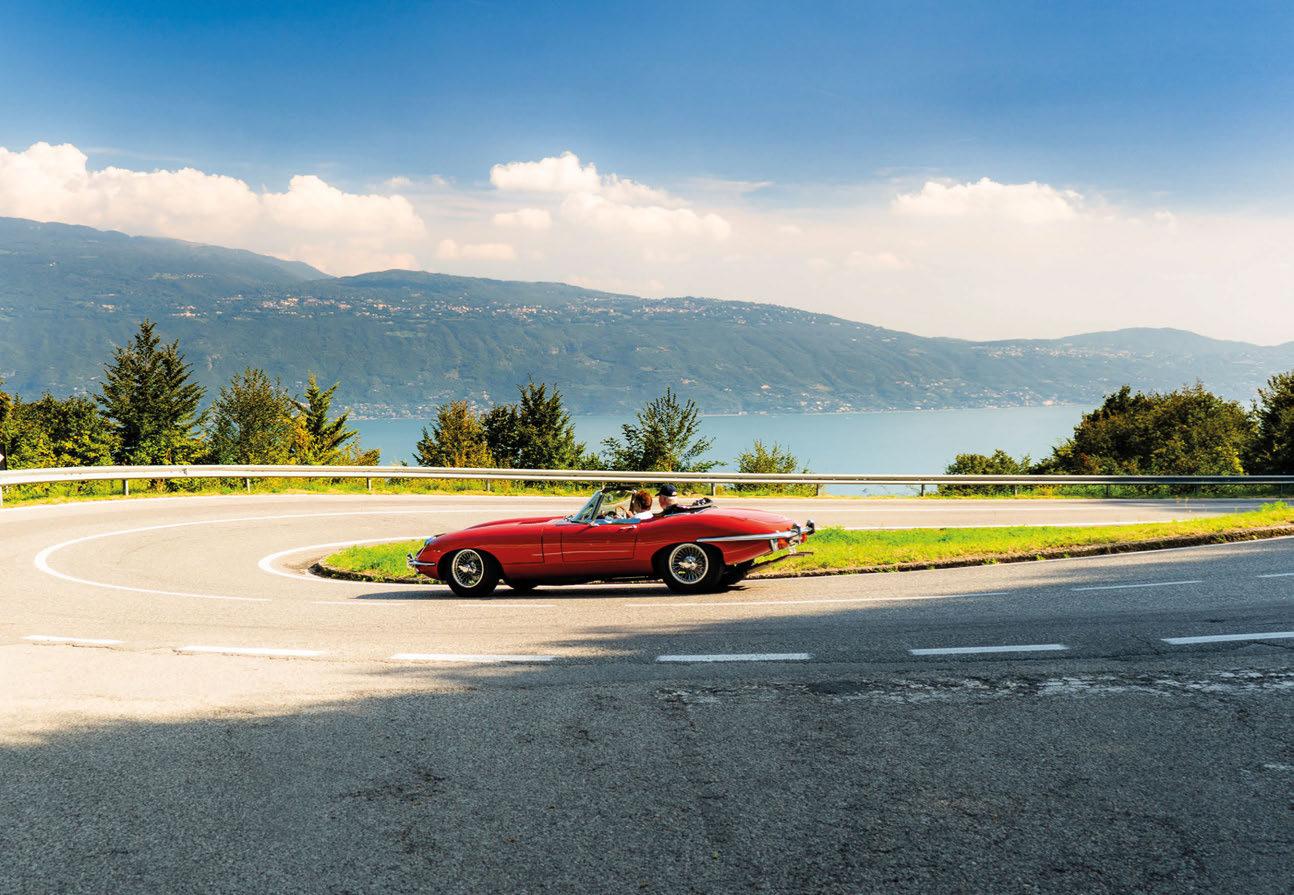






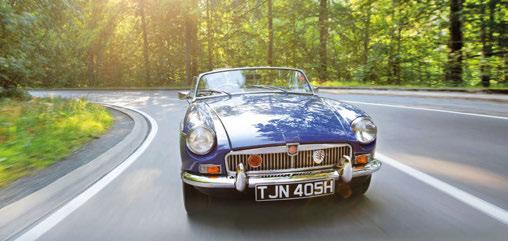

‘club tours’ are also available to non-members with classic Jaguar cars.


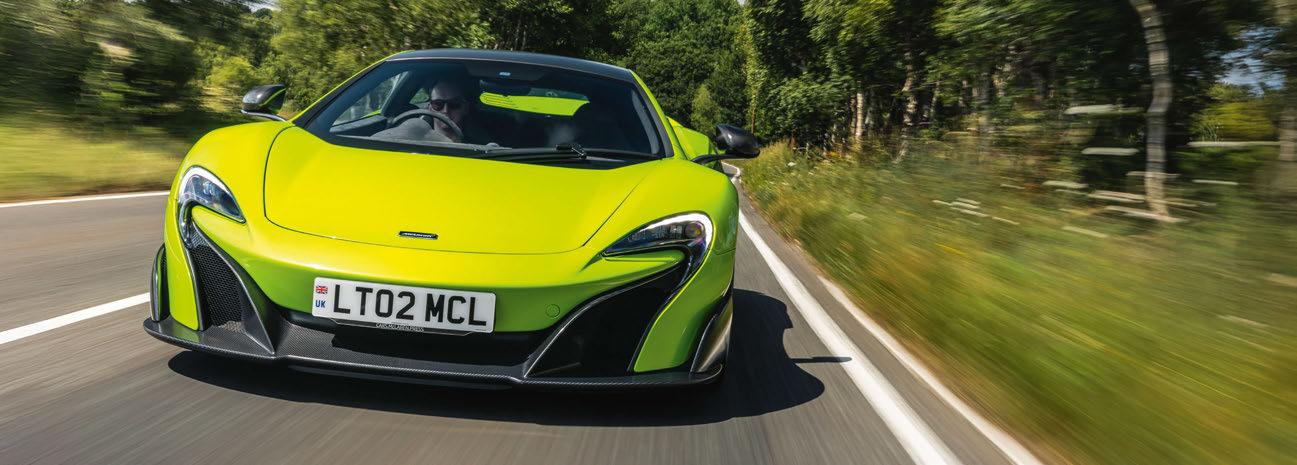
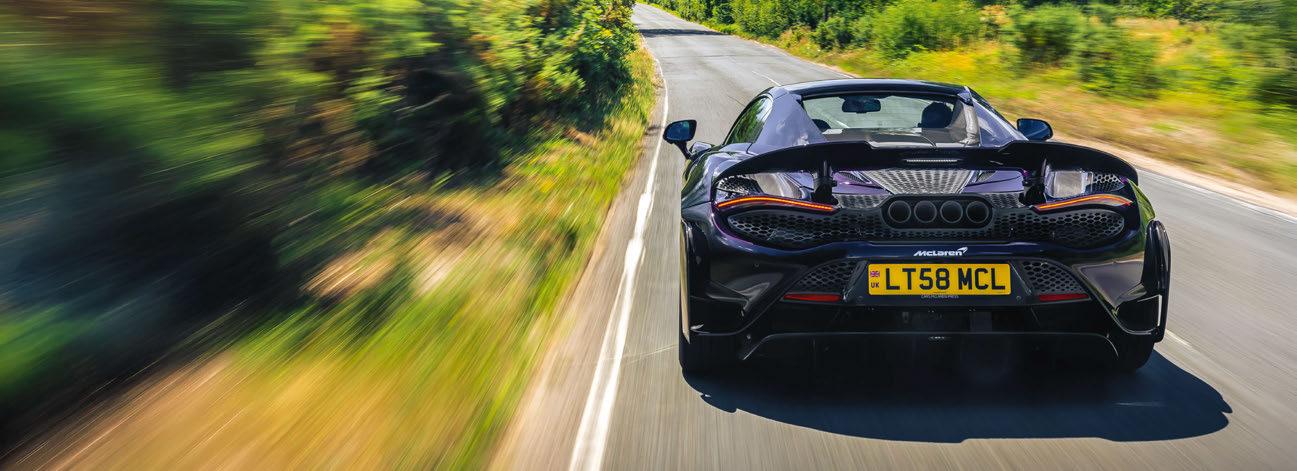
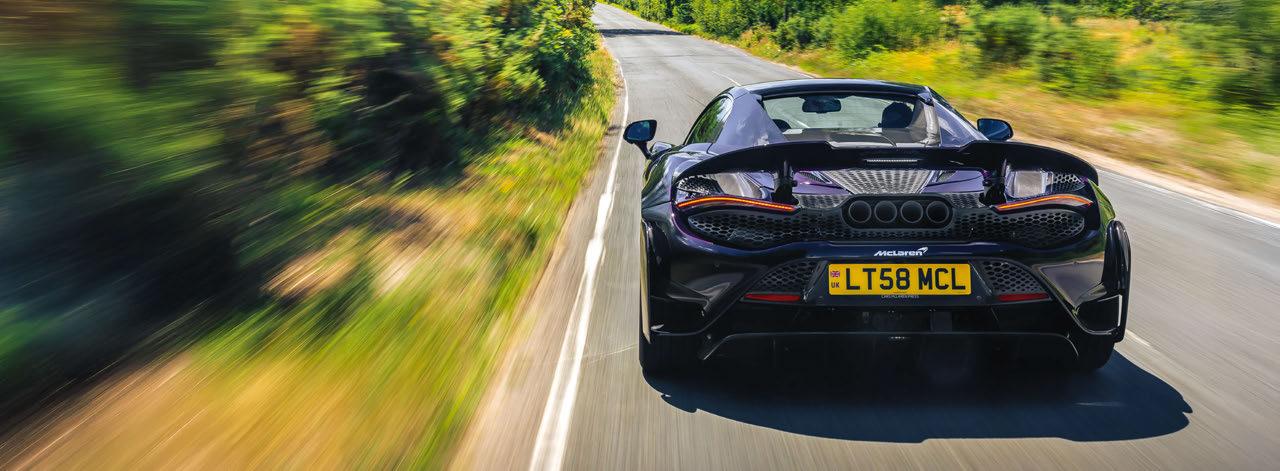
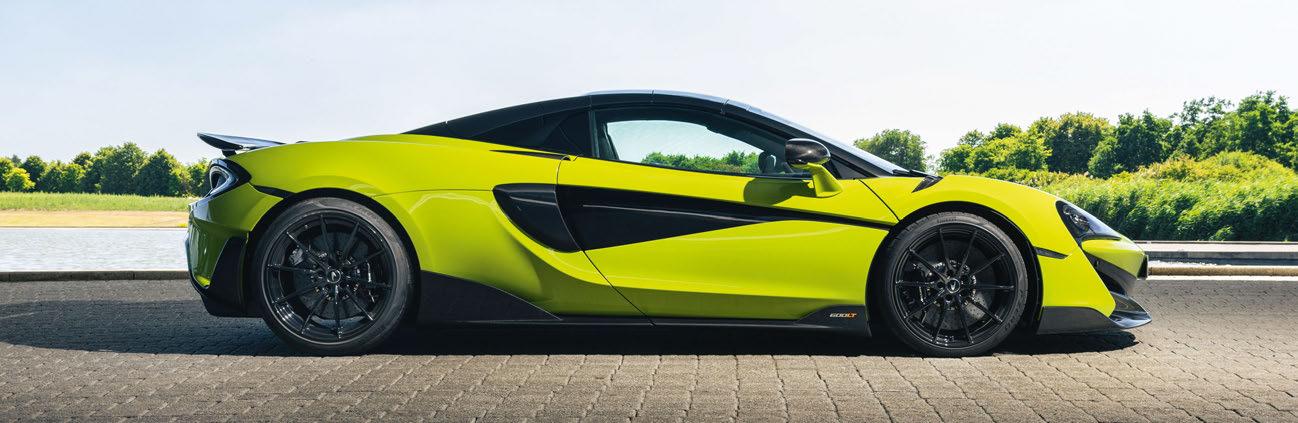

Octane celebrates a decade of McLaren Longtails with an exclusive triple-test of the 675, 600 and 765 LTs
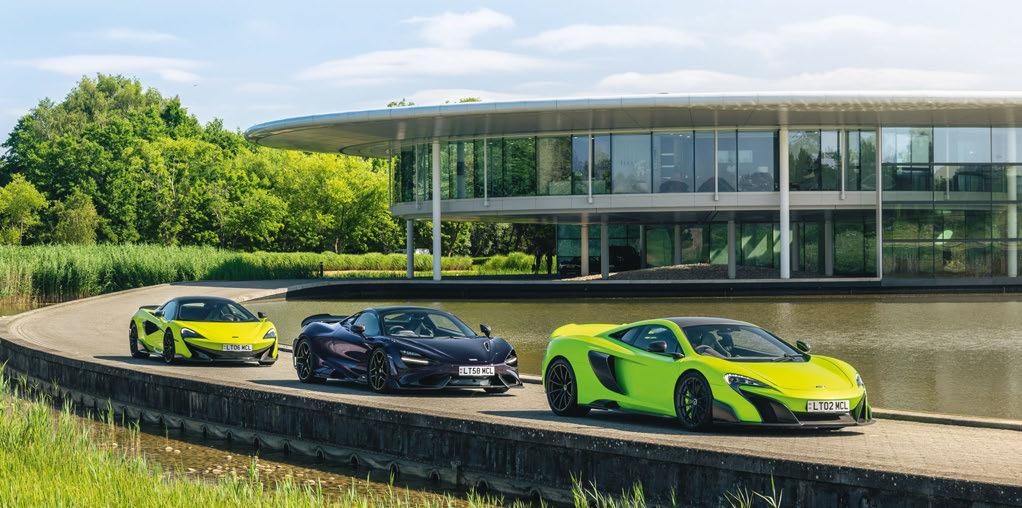
Automotive manufacturers often like to talk about evolution, DNA and lineage as if their products are biological creatures, but as I set foot inside the McLaren Technology Centre –itself a very organic-feeling, living, breathing Norman Foster-designed masterpiece – there’s no denying the familial connection between all the road cars on display. I’m instantly drawn to one of the very first MP4-12Cs, the car that kicked off the McLaren Automotive journey in 2012 and the starting point for all that followed: mid-mounted turbocharged V8, carbonfibre MonoCell structure and a focus on weight-saving.
Today is all about celebrating the tenth anniversary of something very important to the company’s development: the LT family. The moniker is short for ‘Longtail’, and the three cars sitting just outside the reception represent the pinnacle of McLaren supercars this side of the far more extreme (and expensive) Ultimate Series cars – such as the Senna and Speedtail. If you’re not familiar with the names then I apologise in advance, as this might get a little hard to follow – especially as two of the cars are a very similar shade of green!
The real genesis of the LT series is, of course, the legendary 1997 F1 GTR ‘longtail’, the ultimate racing development of that fabled car. Although McLaren had won Le Mans with a lightly modified road car in 1995, the battlefield of GT1 racers had changed significantly, requiring a significant evolution in order to stay competitive. New bodywork helped to optimise downforce, with extended front and rear clamshell sections; modifications that saw weight reduced even further. While the longtail GTR is not directly related to the newer family, it was that same ethos of lightness and more extreme aero that McLaren says inspired these LTs.
We’re joined at the MTC today by Jamie Corstorphine, McLaren’s director of product planning. Importantly, he has been part of the team that helped shape the LTs right from conception. ‘My role in product planning is to be the intersection between customers, retailers and our engineering team, and we provide something that’s called a briefing document… something I actually went back to look at quite recently. The project started in mid-2013; it was roughly a 24-month programme.’
The 675LT was the result. It turned up the aggression and shifted the focus to a more track-capable proposition, something customers had demanded – although the brief was for it to remain a fantastic road car above all else. Effectively an evolution of the 650S, itself a development of the 12C, a huge number of changes transform it into the car we see before us today. Weight is down by around 100kg over a standard 650 – which is hardly a heavyweight at 1428kg – thanks to thinner glass, a titanium exhaust system, lighter wheels and even carbonfibre seats almost identical to the ones used in the P1 hypercar.
When the 675LT first landed in 2015, contemporary road tests suggested that it was the first McLaren to really nail the delivery of class-leading involvement and connection, at a level that allowed the driver to exploit –and enjoy – its sophisticated active chassis set-up. This addressed one of the few criticisms levelled at the hugely capable but slightly sterile driving experience offered by the 12C and 650S.
Jamie confirms that McLaren really stepped up in this regard with the LT: ‘We learned a lot through the programme about how to deliver emotionality in the car. Some of it comes from taking 100kg out and some is down to different hardware, particularly in the suspension systems. But a lot of it comes from the tuning and calibration, such as the software in the transmission
Clockwise, from above
A trio of Longtails at the McLaren Technology Centre; Jamie Corstorphine was involved from the start; 675LT was first of the breed.


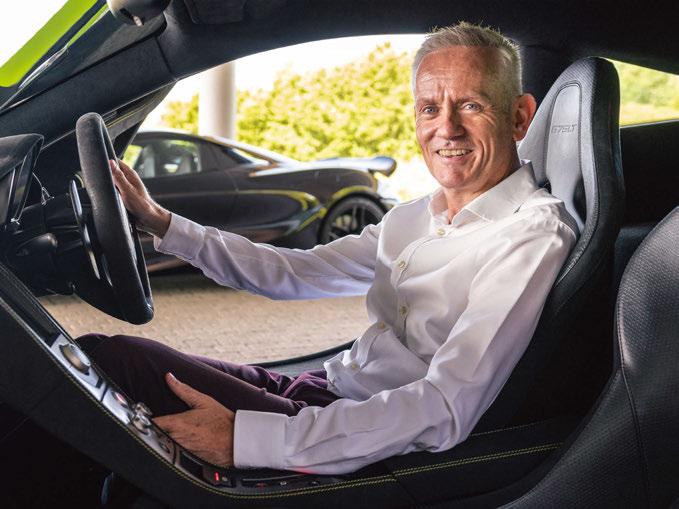
‘THE F1’S ETHOS OF LIGHTNESS AND MORE EXTREME AERO INSPIRED THESE LTS’
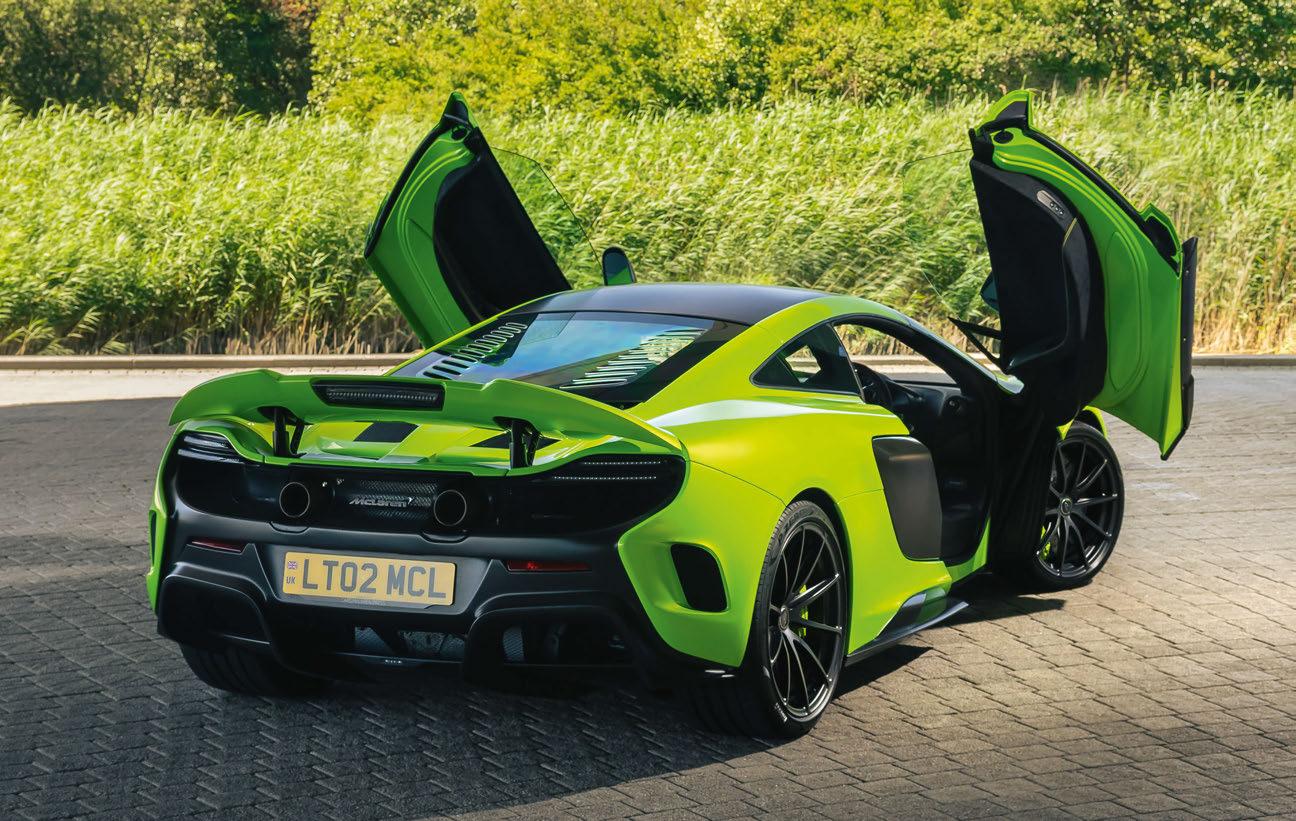
‘THE 675LT WAS THE FIRST M c LAREN TO DELIVER CLASSLEADING INVOLVEMENT’

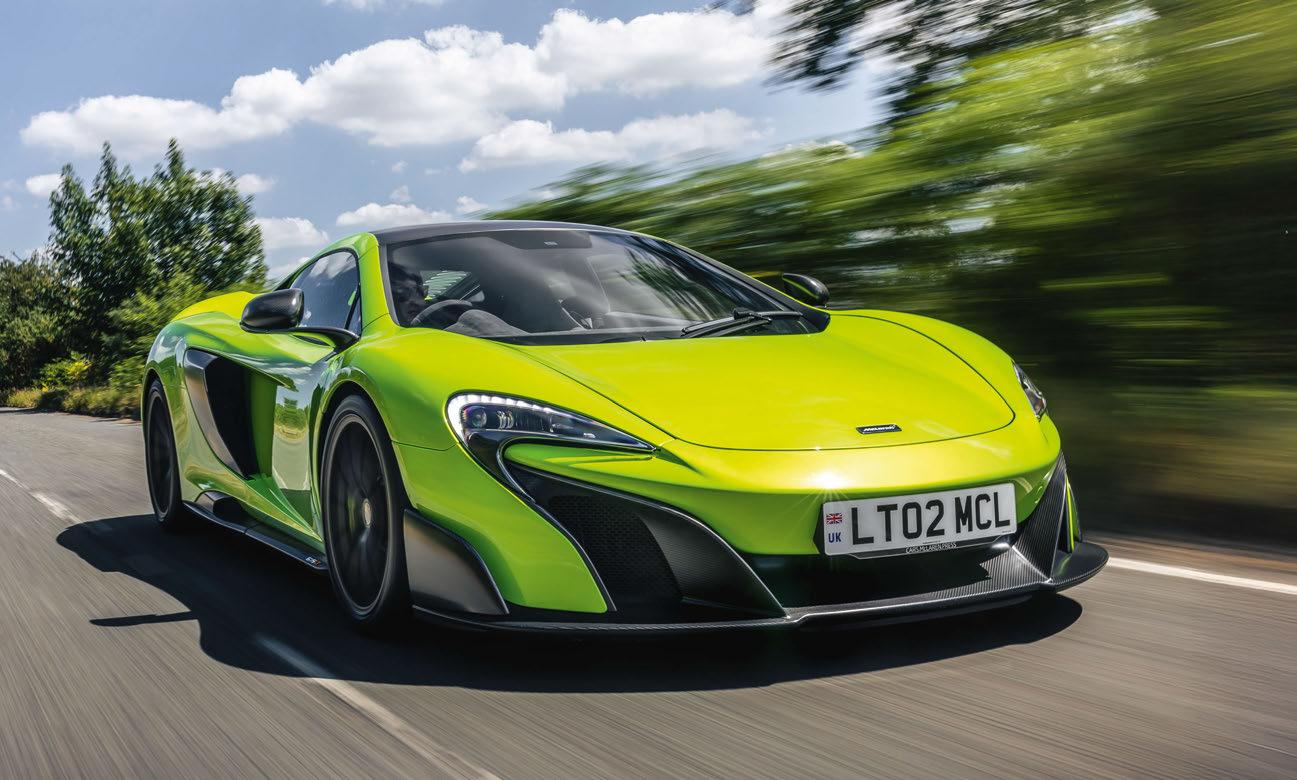
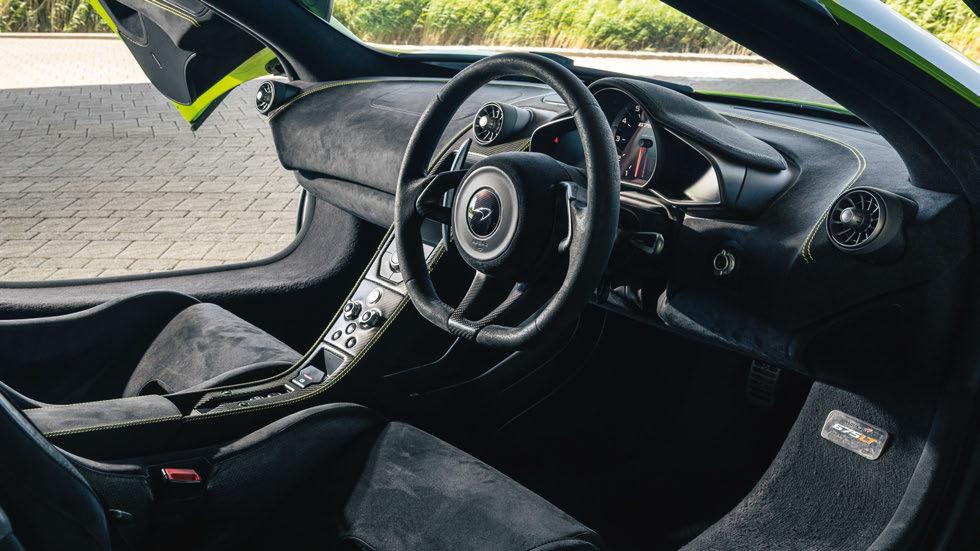
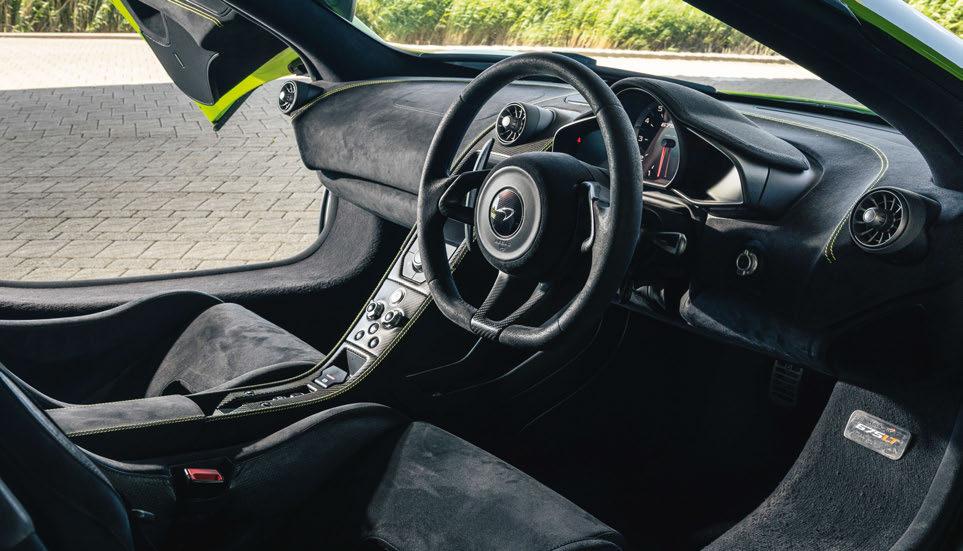
Clockwise, from opposite 675LT’s twin-turbo V8’s power boosted to 666bhp; no air-con in here; lighter, better aero, tuned suspension make for a more focused drive.

and engine mapping. A lot of that character comes from the team that delivered it, too. If you’re making a car that’s all about being fantastic to drive, it helps if you’re a real car enthusiast.’
One of the biggest changes, both visually and in terms of production complexity, involved the rear bodywork: not only restyled, but made exclusively from carbonfibre rather than GFRP composite, right down to bespoke quarter-panels – a big investment to make for a limitedrun model, with only 500 coupé and 500 convertible versions produced. The rear wing, which acts as an active air brake, is 50% larger than that of the 650.
Today is turning out to be one of the warmest days of the year, a fact that is painfully apparent in the 675LT, which in a bid to shed as much weight as possible was specified without air conditioning as standard. ‘It doesn’t have a front chassis lift either, so watch the front lip,’ warns McLaren heritage fleet technician Andy Finnen. As well as intimate knowledge of each car, Andy knows some great test routes. Useful.
I lift the door and step over the broad sill. The cabin is smothered in Alcantara, said to save 3kg over the equivalent leather, and the layout is centred around the driver, with a perfectly sized steering wheel and no distracting buttons. There are F1-style rocker-mounted paddles for the transmission, so you can pull or push either side, and it’s heartening to see a set of traditional gauges, albeit with a small screen amid the cluster.
To say the Ricardo-designed flat-crank, twin-turbo V8 was lightly tweaked would be a huge understatement. Sure, headline power jumped to a devilish 666bhp (or, as the name suggests, 675PS), but around 50% of its components were changed or improved in order to raise
power and improve responsiveness, and some of them are shared with the P1.
Much work was done to make the LT sound more exciting, but that V8 has never been the most musical. In every incarnation I’ve driven it usually sounds quite flat until you really pile on a few revs, and that’s the case here. Although a decade is an eternity in the world of supercar development, 666bhp certainly still feels more than adequate, especially on the road. Yet the real magic of the 675 quickly comes into focus: that magnificent chassis.
It’s firmer than that of the 650S but, thanks to the same ‘Proactive Chassis Control’ hydraulic anti-roll-bar set-up, it still demolishes all but the bumpiest of Surrey countryside roads with startling composure and comfort. And not only is that steering wheel the perfect size, it’s connected to a wonderfully transparent hydraulic rack – a quick ratio, but without the nervousness you might expect. This really is a supercar for people who value poise, precision and the sensations of driving.
The seven-speed dual-clutch gearbox is sharp, and becomes even more aggressive as you cycle through the driving modes. The simplicity of two rotary knobs – one for drivetrain, the other for chassis – is intuitive and a joy to experiment with. Talk about setting the bar high!
Next up is the baby of the group, the 600LT. Launched in 2018, this was a more hardcore version of the smaller, entry-level 570S, resulting in a somewhat different package to its predecessor. Jamie explains: ‘The 675LT allowed us to hone our expertise in making cars that are super-emotive to drive, and it really gave us a recipe for what the LT cars are, and also how to make them. So we know the recipe, but it’s not exactly the same ingredients every time across the three models. With the 600LT,
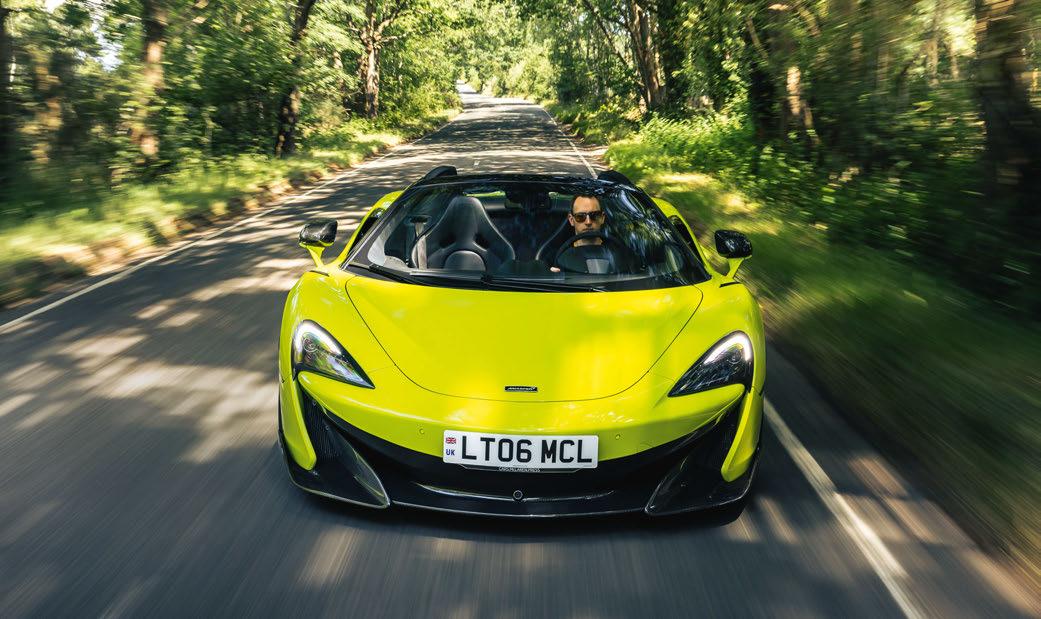
coming off the Sports Series base car meant that it had different things we needed to work with. It doesn’t have active aero like the 675, and has a different suspension system, so the character of the car is different. Customer requests were for something more focused and more emotive, but our way of responding to that was different. It’s a lot more about the chassis than it is the powertrain.’
Those chassis changes are substantial, with thicker and lighter anti-roll bars, forged alloy wishbones, a quicker steering rack, and stiffer engine mounts all contributing to the baby LT’s much sharper set-up. Weight-saving is key once again, with carbon ceramic brakes from the 720S, lighter wheels and carbon bucket seats contributing to a 96kg weight reduction from the 570S’s 1356kg. Changes to the bodywork are less extreme in this case, though the 47mm extension at the rear and more aggressive splitter at the front add 150kg of downforce.
There’s more power, too. Here the 3.8-litre V8 is tuned from 562bhp up to 592bhp, making performance very close to its older, more powerful brother. In order to improve the drama and sound of the engine, a new topexit exhaust was fitted. This is one of Jamie’s favourite elements: ‘On paper this was a great idea, but it came with a lot of technical complications to make it workable in reality. It was obviously great for weight-saving, by reducing the length of the pipework, but it’s amazing for drama and emotional response, too. We had to find ways to manage the sound and the heat and exhaust gases.’
We drop the roof on the 600, as Andy suggests it really helps to bring out the best in that reworked exhaust. It immediately feels more compact on the road, which is always a bit of a confidence-booster, and the adaptive dampers and conventional anti-roll bar set-up convey
a more immediately playful, almost chuckable character – and that’s not something you’ll say often about a 592bhp supercar. Thanks to the hydraulic steering rack, the set-up becomes hyper-alert and yet again almost telepathic – you feel instantly at one with the car. The noise from the engine, thanks to that top-exit exhaust, is loud. It certainly has its own voice.
Finally there’s the 765LT. This is the most recent, most extreme Longtail, and I’m keen to find out just how far it has come. Jamie continues his thoughts on the slightly different ingredients for this incarnation: ‘When we came to the 765, we already had a very light car in the 720, which was lighter than its predecessor. To find a further 82kg of weight-saving was incredible in itself, but the 765 is very much completed by its bombastic powertrain.’
After opening the car up for the first time, I concur. It’s absolutely explosive; this cruise missile pulls with increasing exuberance right up to the redline. Now in 4.0-litre form, the V8 gets all sorts of upgrades to increase its output to 755bhp, including forged pistons and a stronger head gasket from the exclusive McLaren Senna. If the 0-62mph sprint time of 2.8sec doesn’t really convey quite how quick this car feels, imagine travelling from rest all the way to 124mph in seven seconds flat!
To put that into perspective, it’s almost a full second quicker than the 675, and it crushes the 1994 McLaren F1’s 9.4sec time. This added performance is also, in part, thanks to the car’s lower final drive, which is really noticeable on the road. This incarnation of the engine seems like a bit more of a top-end screamer than the other two, which is hugely satisfying.
Once again, there’s more downforce thanks to the LT’s aero changes, and this one gets tweaked electronics for


Clockwise, from above left 600LT is the baby of this group; bodywork changes add 150kg of downforce; it feels surprisingly chuckable to drive; 765LT is the most extreme of the trio.
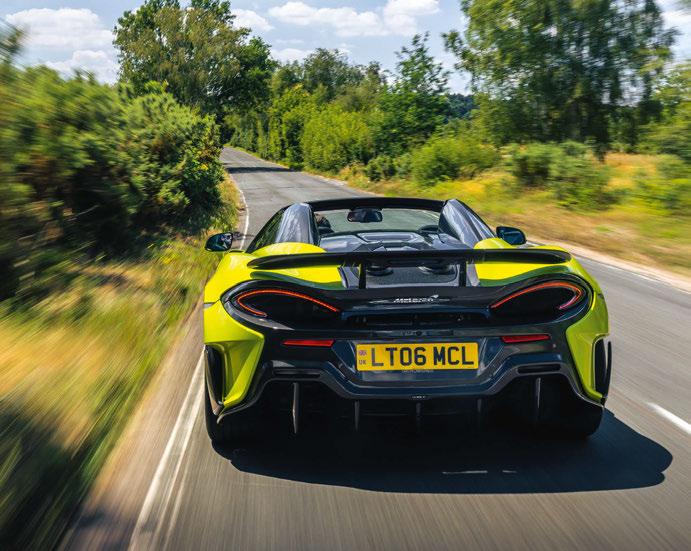
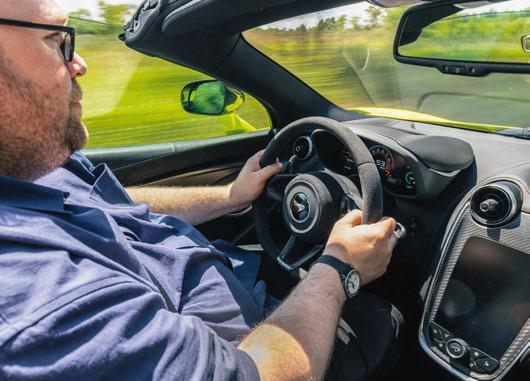
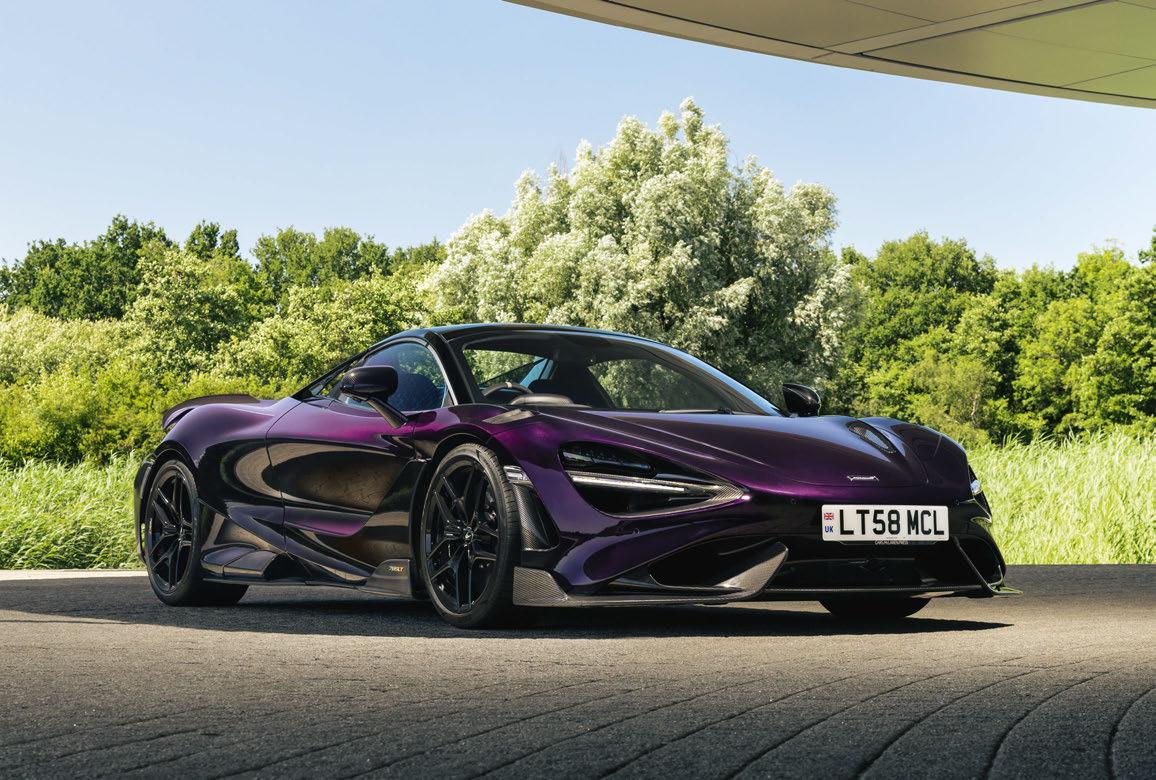
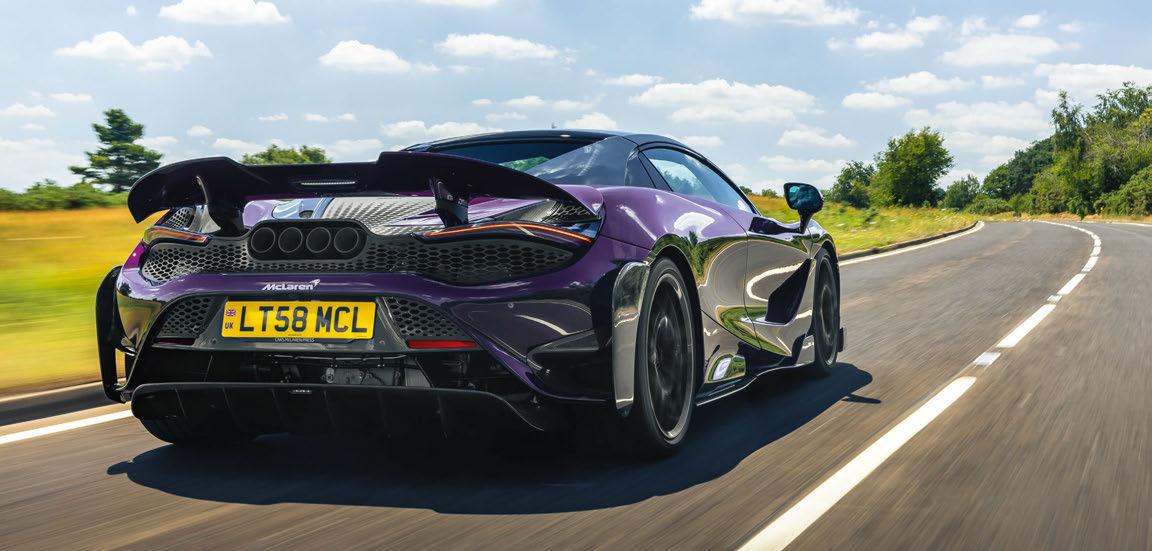
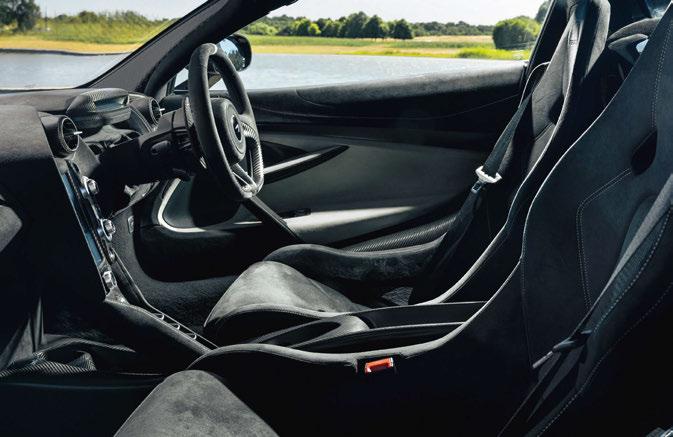
Top and above
Tweaked aero and electronics plus an 82kg weight-saving make the 765LT mind-blowingly quick; interior features a trick rotating instrument display.
the Proactive Chassis Control 2 set-up. Upgraded brakes come courtesy of the Senna, as do the super-light carbon seats. It’s a particularly cool interior, too, with the theatre of a rotating instrument display – it changes into a slimmer, more focused segment when in Track mode.
Without a circuit to test the 765 in extremis, I’m glad (and surprised) to discover that it’s extremely engaging and entertaining on the road. Again that’s mostly down to the fabulously communicative steering, a supremely balanced chassis and (frankly) amazing stability control systems, meaning that this is a far less intimidating car than anything so fast has any right to be.
After returning to base in the 765LT, I’m asked: ‘Which one is your favourite?’ It’s genuinely a question I’m struggling to answer, as the character of each car is unique. I am perhaps most surprised by the 600, because although I really adore the more sophisticated suspension set-up of the bigger McLarens, there is something playful and rewarding about its slightly simpler approach. The 765 is by far the most mind-blowingly quick, without being intimidating. Yet I can’t keep my eyes off the 675. It’s still exceptionally capable, and while not as quick as the extreme 765, nor quite as engaging as the 600, it’s still an incredibly special experience.
As the first of its breed, and one that represents a key moment for McLaren, it’s something Jamie is keen to reflect on: ‘Personally, the 675 would be my favourite. Is that choice a consequence of me thinking it’s the best to drive, or is it because I was there to witness the beginning of that car? I’ve been involved in all of them, but that car made such a step-change in the reaction to the brand at that point. For me, it’s the one that stands out.’
I’m not going to argue.
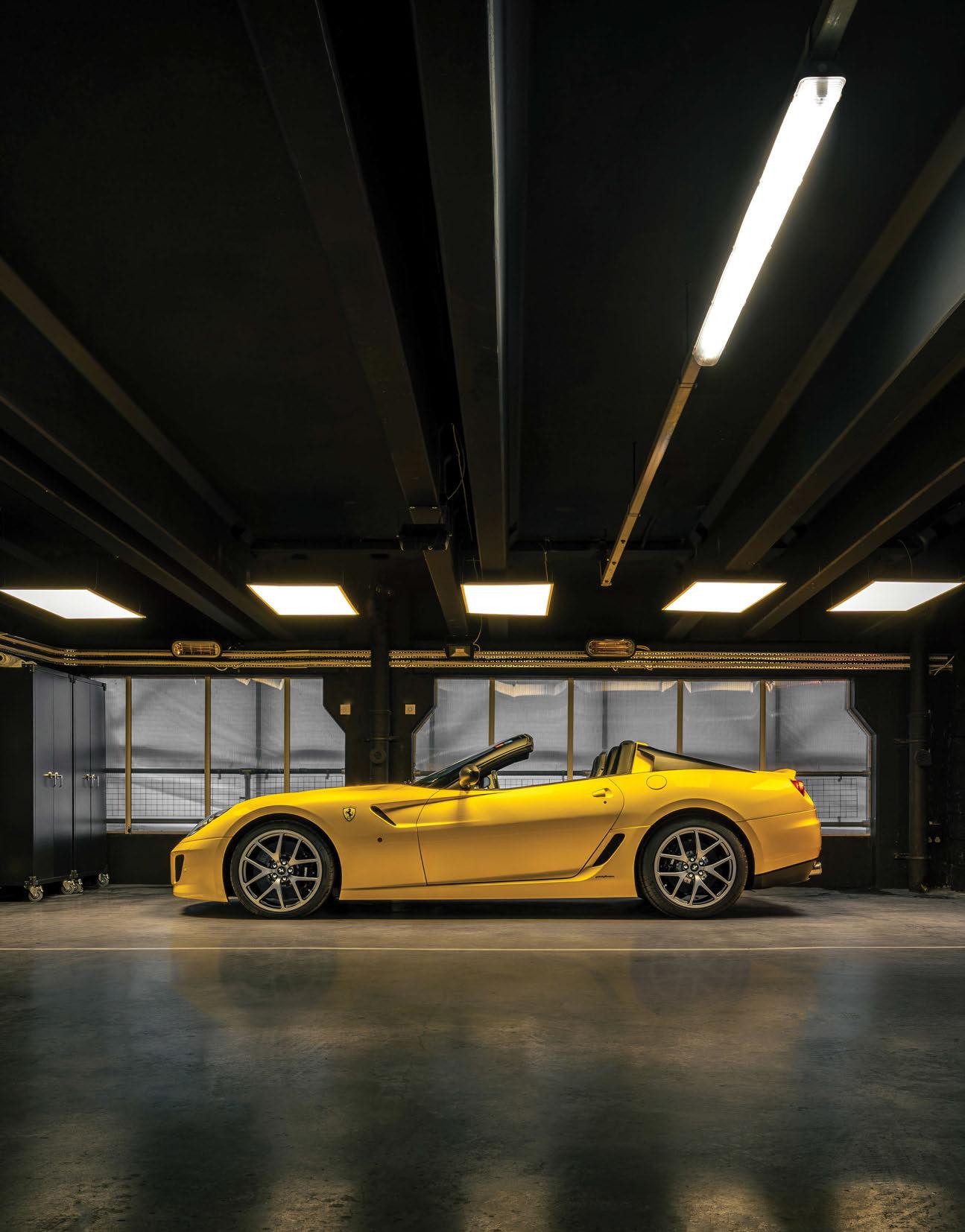
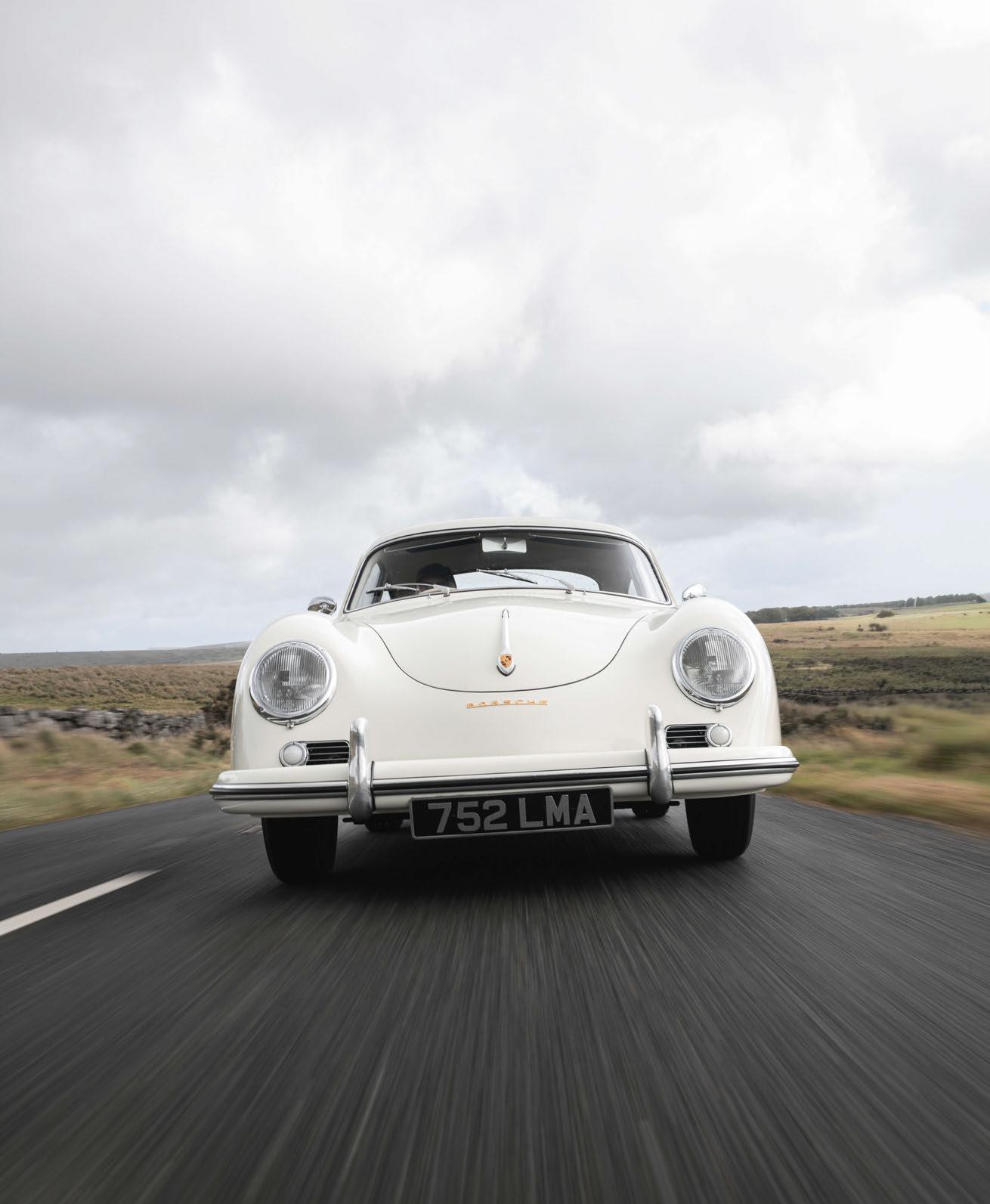
Ferry Porsche himself described the 356A Carrera Four-Cam as the perfect dual-purpose road-racer. Octane drives a prize-winning example of this competition-bred rarity
Words Keith Seume Photography Rich Pearce
It’s all about the fours: four cylinders, four valves, four camshafts, all conspiring to make Porsche’s 356A Carrera the stuff of dreams. Created at the behest of Ferry Porsche himself, the Carrera’s Type 547 four-cam engine represented the pinnacle of race-bred engineering when launched in 1955. It was the brainchild of Ernst Fuhrmann, who later became chairman of Porsche AG.
Fuhrmann had studied engineering at the Vienna Technical University, aptly completing a thesis on the subject of ‘Camshaft drive for the control of high-speed combustion engines’. He was in at the start, joining Porsche Konstruktionen GmbH & Co KG in March 1947, then largely run by Ferry Porsche, son of founding father Ferdinand, out of a converted sawmill at Gmünd in Austria. The company’s first production car – the 356 – was launched in 1948, and in 1952 he was charged with designing a new high-performance engine loosely based on the Volkswagen Beetle’s air-cooled flat-four.
The target was 70bhp per litre, and Fuhrmann realised the existing VW-derived 356 engine was at the limit of its development. Its pushrod design restricted engine speeds, and cooling would be an issue in extended periods of highspeed use. He soon found an enthusiastic ally in Porsche’s competition manager Huschke von Hanstein. Known as the Racing Baron, von Hanstein was all for improving Porsche’s chances of victory on the track.
Capacity was set at a shade under the international 1.5-litre class limit, at 1498cc. The engine was unusual in being oversquare when long-stroke engines were still popular, allowing for larger valves and a reduction in stress on the pistons and rods at high revs, as well as typically running cooler – obvious advantages for a competition engine. The downside is a relative loss of low-end torque.
Fuhrmann and his team managed the impossible by taking just six months to draw up plans for a whole new engine, which was granted the design number Type 547. Although its intended use was initially for competition, Fuhrmann had other ideas, stating later: ‘I kept the motor as compact as I could so that I could use the new engine in my company car…’
As it was horizontally opposed, the double-overheadcam layout required four individual camshafts: two for each bank. This dispensed with the need for pushrods, vital for a reliable high-revving engine – Fuhrmann’s team anticipated a rev ceiling of at least 7000rpm. Normally those camshafts would be driven by chains or gears, the latter allowing precise cam timing, another prerequisite for a race engine. But again Fuhrmann had other ideas. He had worked on the
Type 360, a flat-12 destined for use in the post-war Cisitalia Grand Prix car, which had borrowed its cam-train layout from the pre-war Porsche-designed Auto Unions. It’s complex stuff, to say the least.
The layout focuses on a series of gear-driven shafts, starting at a pair of helical gears located on the crankshaft close to the flywheel, which turn a short secondary (or counter-) shaft that runs at half crankshaft speed. On the end of this is a pair of bevel gears, which rotate two hollow shafts that head up towards the overhead cams. There, another set of bevel gears rotate the lower (exhaust) camshafts, while the same gears also rotate shafts that head up to the upper (inlet) camshafts, these being turned by yet another set of bevel gears. Yes, it does sound complicated and yes, it does require a lot of careful setting up by the engine builder, but the end result is an engineer’s dream –and a mechanic’s nightmare!
Rather than operating directly on the valve stems, the camshaft lobes are in contact with pivoted ‘finger’ lifters, which reduces the side-loading on the valve stem at high revs. With the four valves canted at an angle, the combustion chamber accommodates large valve faces, along with highcompression domed pistons. The design also offered Fuhrmann the chance to use two spark plugs per cylinder, for improved ignition. This required two distributors, one on the end of each camshaft – made possible on both ends, to facilitate mid- or rear-mounted engine applications.
New dual Solex 40PJJ twin-choke carburettors were chosen, necessary to sake the thirst of this high-revving engine, and an ingenious belt-driven double-sided cooling fan kept temperatures down. A dry-sump oil system completed the package, to keep the low-friction rollerbearings lubricated. On 2 April 1952, the Type 547 engine ran on the dyno for the first time, producing in excess of 100bhp and thereby comfortably fulfilling requirements.
The Type 547 first saw action in a revised 550 Spyder; the following May, Hans Herrmann and Herbert Linge won their class and finished sixth at the Mille Miglia. Less than two months later, the 550 won its class at Le Mans. Then, in 1954, Herrmann won his class in the gruelling Carrera Panamericana race across Mexico. The Type 547 had proved itself beyond all doubt.
Fuhrmann then installed the new four-cam engine in his own 356 and it exceeded his expectations, remaining tractable on Stuttgart’s busy roads. Suitably inspired, von Hanstein entered one of the original aluminium-bodied Gmünd-built coupés, powered by a Type 547 engine, in the gruelling Liège-Rome-Liège rally of August 1954. With Weber carburettors in place of the Solexes, its power output was reduced by around 10bhp to 105bhp in the name of reliability. And how did it do? It won, which served to strengthen the arguments for building a limited run of four-cam road cars. Further test cars were built, including one given to Ferdinand Porsche as a 75th birthday present shortly before his death; a convertible was also built for Ferry Porsche. The die was cast.
Initial plans were to build 100 cars in the first year, based on the then-forthcoming 356A, satisfying the FIA’s homologation requirements for running in a Grand Touring class. The new model was to be called the 1500GS, its Type 547/1 engine defined by a lower compression ratio (reduced from 9.5:1 to 8.7:1) and a quieter exhaust system. These changes caused a drop in the power output
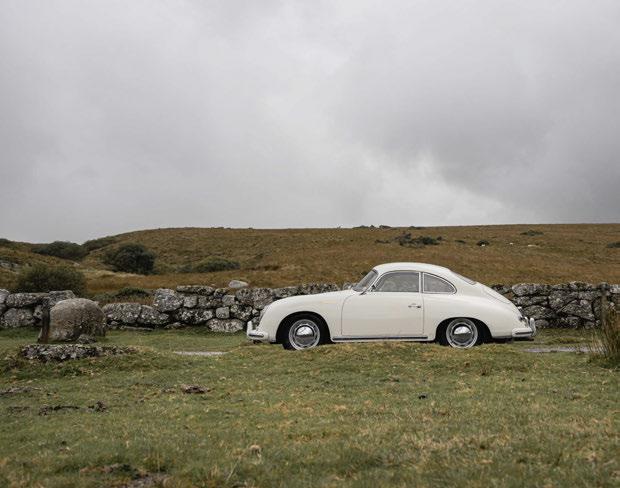
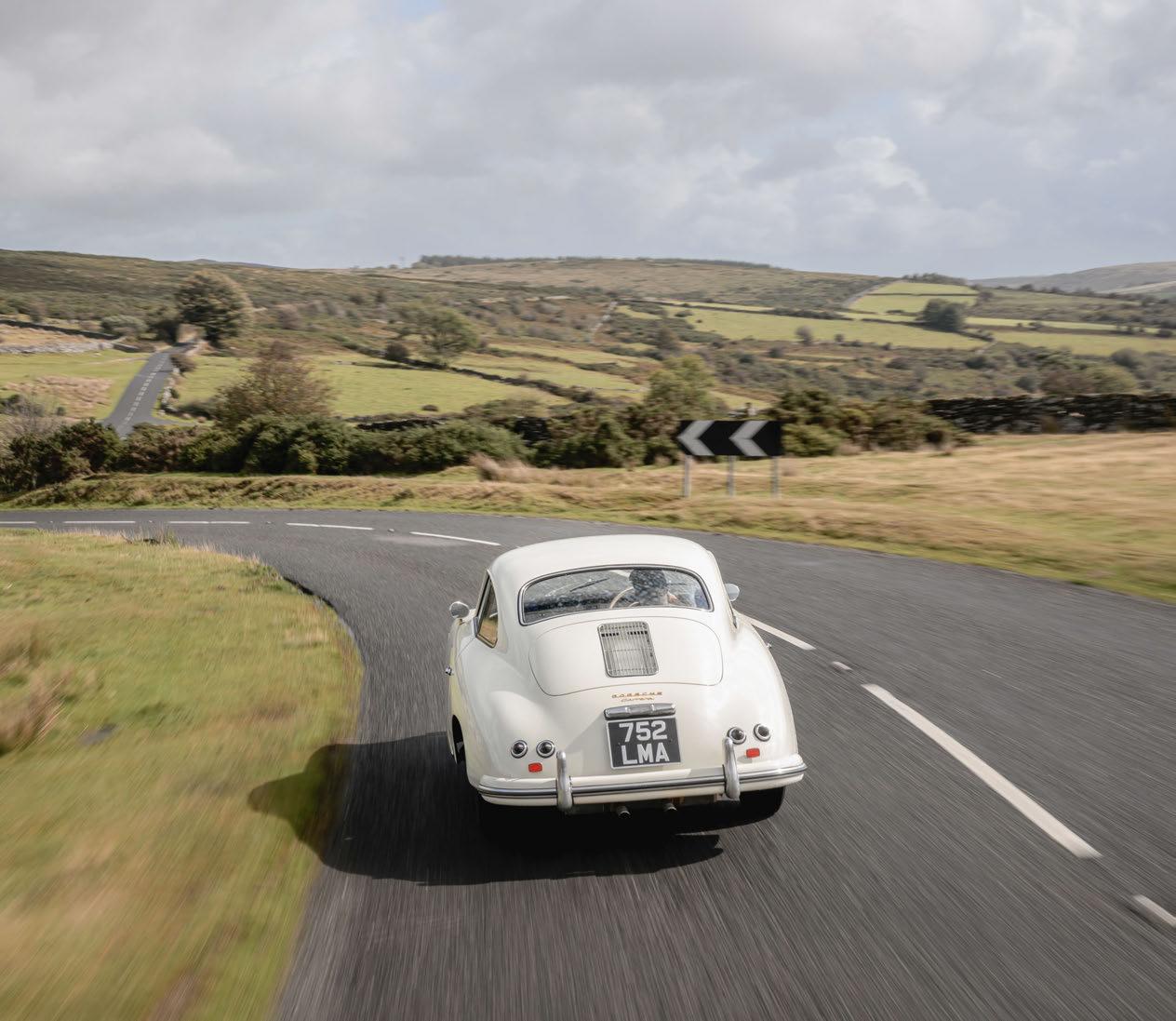
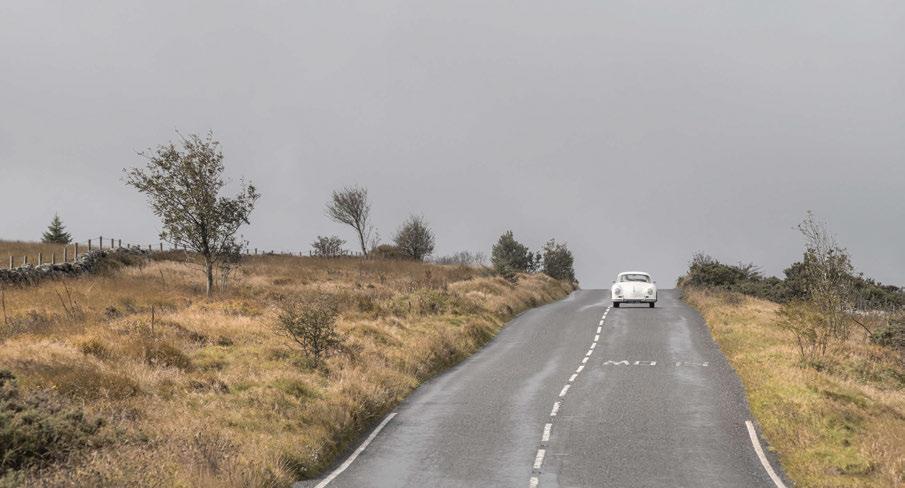
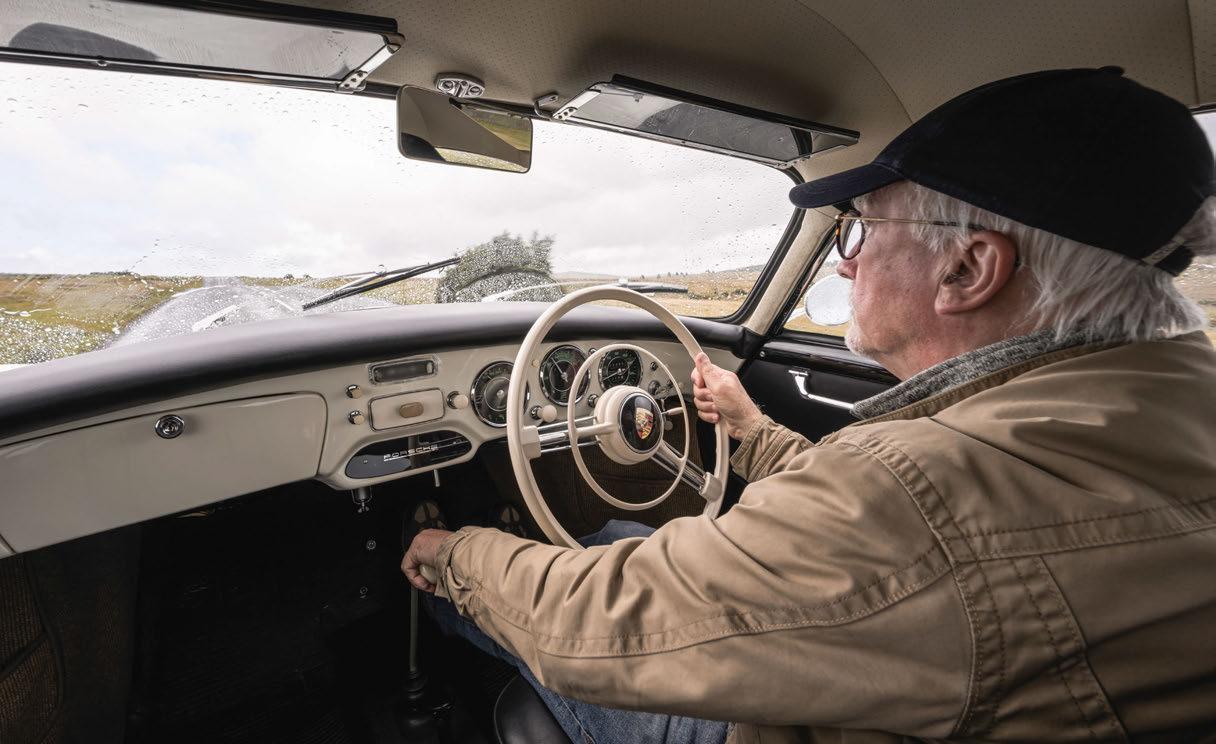
to 100bhp at 6200rpm, though it was available up to 6500rpm and began to drop off only at the 7000 mark. Peak torque came at 5200-5500rpm. A later ‘GT’ version for competition-minded customers featured aluminium panels, lightweight seats and the high-compression engine.
As fitted in the 356A coupé and Speedster, with the drysump oil tank located under the left-hand rear wing, the engine increased overall weight by just under 48kg, its distribution altering from 43.5:56.5 to 41:59 front-to-rear. To compensate, the rear torsion bars were ‘tweaked’ by 2.5º to raise the back end. Other differences included wider tyres (5.90-section instead of 5.60) and a larger-diameter steering wheel to lighten the steering effort.
The new model was first shown at the Frankfurt motor show in September 1955, and soon after at the Paris Salon. The ‘Carrera’ name, chosen in celebration of Herrmann’s race victories, was formalised by the addition of scripts on the front wings and engine lid. Eagle-eyed visitors would also have noticed the new dual tailpipes – and the increased price. In 1955, the Carrera would have cost a German customer around £400 more than a standard model. In common with all road-going Porsches, the 356A Carrera was available in left- and right-hand drive. According to the sales records of UK importer AFN curated by Carrera expert Mike Smith, just six right-hand-drive Carreras were sold in the UK in 1956 (some sources claim four, and two
the following year). It’s believed that only two of them survive in the UK today.
Chassis number 55-735, seen here, was the third to be sold in the UK, completed in April 1956 and registered as EBW 617. The customer, Edgar Wadsworth of Boldsworth Industries in Burnley, was a successful racing driver in his own right, having competed at Le Mans in 1955 in a Cooper T39, finishing 21st overall. Clearly aware of the intricacies of the four-cam engine, he drove his exotic new car back to Stuttgart for its annual service despite having only one leg. He paid a total of £2615.17.0, including delivery charges and tax. The price of an average house in the UK then was well under £2000…
The second owner, Cyril Corbishley of Cheshire, acquired the car in 1960, when it was allocated its current registration number, 752 LMA. Corbishley was an experienced rally driver, competing seven times in the Monte Carlo Rally. He shipped the car over to Jim Wellington of Rennsport Werke in California for an engine rebuild.
From 1962 the car passed through several hands until 1986, when it was sold to Enrique Coma-Cross and exported to Spain. He was a former racing driver who, after losing sight in one eye, turned to publishing and became renowned as an expert in Pegaso cars. In 2002, the Carrera returned to the UK, where it was reissued with its current registration number, and then sold to Philip Taysom.
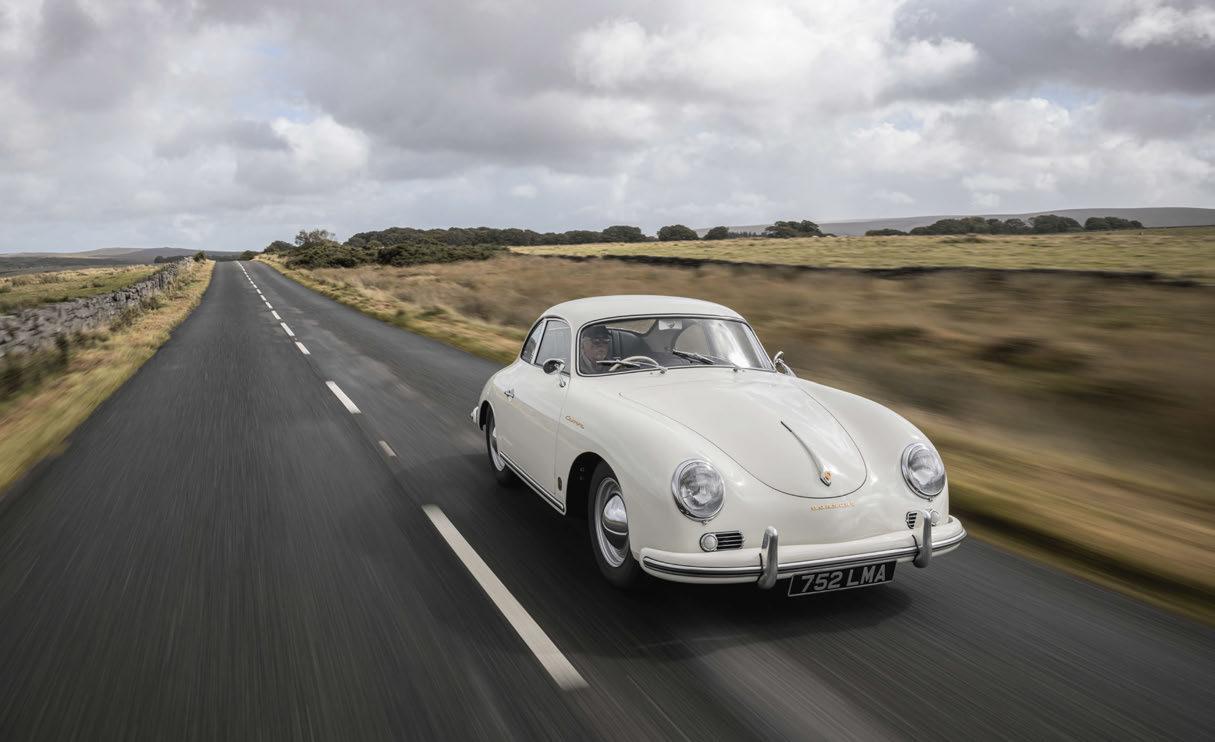
The new owner had an inspection carried out by the aforementioned guru Mike Smith, who declared it a sound example although in need of attention to some body damage and corrosion. Significantly, it was confirmed that the car retained its original four-cam engine (number P90587) and matching transmission.
A restoration began in 2003 under the watchful eye of marque specialist Robert Gant at Gantspeed Engineering in Lincolnshire. The bodyshell was stripped and repairs carried out by a local bodywork specialist. There was evidence that the car had possibly been rolled at some point in its life, which is not entirely surprising when you consider the kind of treatment a Carrera might have endured in the hands of race and rally drivers.
An inspection of the engine showed traces of metal in the cam boxes and excessive backlash in the cam gear drive, leaving no option other than to carry out a full engine rebuild, including refurbishment of the roller-bearing crankshaft. The costs were starting to mount up…
Eventually, in 2012, the part-finished car found itself sitting unfinished in Gantspeed’s workshops, where it was spotted by David Harrison, himself already a keen 356 enthusiast with a penchant for long-distance rallies in both ‘Molly’, his Porsche 356, and a Jaguar XK120. The Carrera changed hands once again and so began an exhaustive restoration carried out to the highest standards.
The result is nothing short of breathtaking. The car is arguably better than new – accurate in every detail, it stands as a benchmark for future restorations. Proof of its calibre came at the 2018 Salon Privé concours at Blenheim Palace, to which David drove it into position alongside the world’s best examples of coachbuilts and exotica – fresh from restoration. He was delighted when his 356 was voted the Best Carrera in the 70 Years of Porsche display, and runnerup in the Owner’s Choice category – and then proceeded to amaze everyone by firing it up and driving it back home. This is no trailer queen.
What’s it like to drive a ‘new’ 356A Carrera? Only one way to find out. We head to Cornwall and specialist Williams-Crawford, where 752 LMA is now for sale. The door shuts with that characteristic, reassuring ‘thunk’, and after a quick turn of the key, the four-cam spins over before settling to a deep, throaty rumble. This is clearly no regular pushrod 356.
The gearlever has an improbably long throw and the umbrella-style handbrake is tucked under the dashboard, out of sight and almost out of reach. Let’s face it, ergonomics were never Porsche’s strong point. Out on the open road, once the oil is warm, it’s a pleasure to explore the upper limits of Fuhrmann’s four-cam. Although it’s safe to rev to 7500rpm or more, Porsche recommended not taking it over 6500rpm, not because it might self-destruct, but because
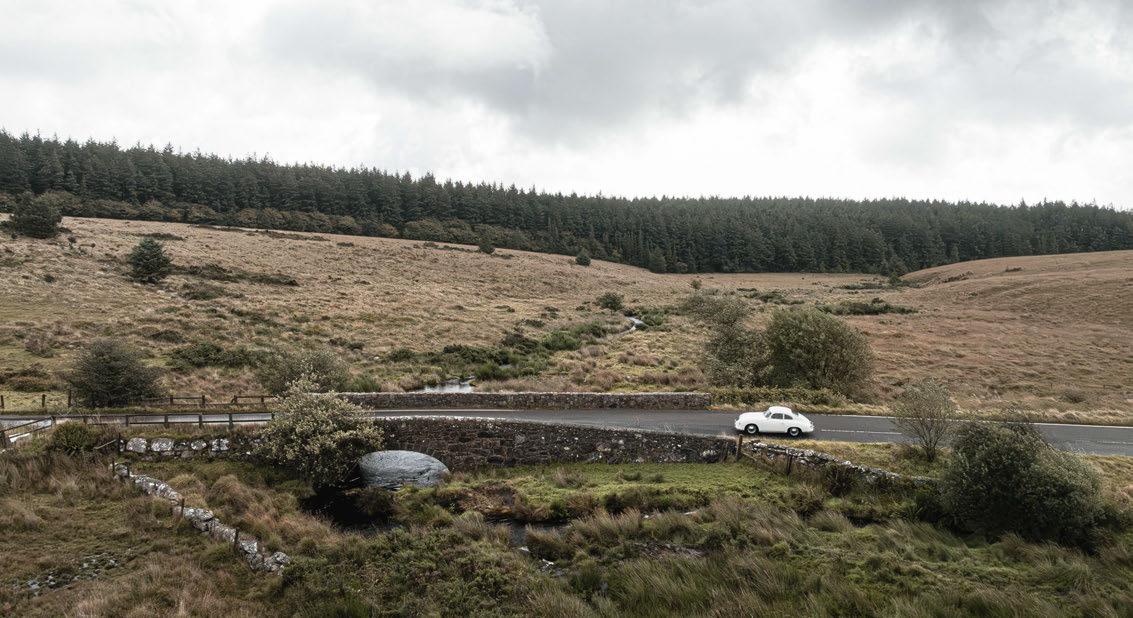
fuel economy would suffer! On the other hand, it’s bad practice to drive a four-cam without wringing it out, granny-shifting your way through the delightfully smooth gearbox. Such driving techniques result in fouled spark plugs, and plug changes are best carried out by a contortionist. Worse still, you risk damaging the rollerbearing crankshaft by forcing the engine to labour.
The Carreras handle differently to regular 356s, thanks to the wider stance and fatter tyres. Yes, they understeer in the wet and are easily provoked into alarming oversteer if you’re not careful, but there is so much feedback through that large-diameter, thin-rimmed steering wheel that it doesn’t take long to build confidence. Experienced racers of old soon learned to master the handling by adopting the wischen (meaning ‘wiping’) driving method, whereby you provoke oversteer with a flick of the wheel, instantly unwinding it before repeating the exercise again… and again. This sawing action on fast bends proved to be the magic formula, though we wouldn’t necessarily recommend it on rain-soaked British roads.
Weighing a modest 924kg, the 356 Carrera soon achieved a reputation for great performance. Autocar tested one in 1955 and recorded a 120mph top speed and 0-60mph in 11.5sec. By the standards of the day, those were impressive figures for any car, let alone one with such a small engine.
But we’ll let Ferry Porsche himself have the last word: ‘These early Carreras were, I think, the ideal compromise for sports-minded drivers who could afford only one car. They would serve all week as quite docile go-to-work transportation, then on the weekend could be driven to a racing event and “converted” on the spot…’
You might expect to pay £600,000 for a four-cam, twice that for a Speedster, so the value of an original Carrera such as our subject may preclude that kind of daily use. No matter. The fact remains that they are among the finest examples of a dual-purpose sports car ever produced.
THANKS TO Williams Crawford, williamscrawford.co.uk.
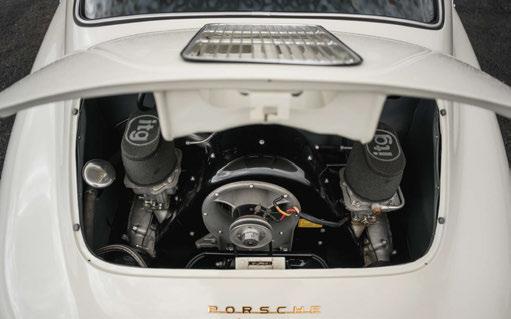
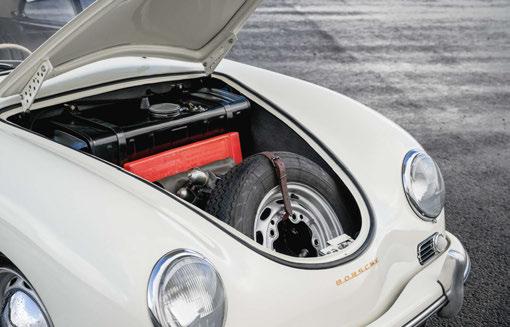































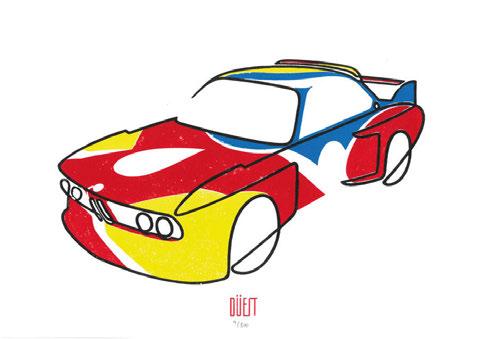



























A stone’s throw away from Goodwood, Kevin Schrickel is capturing the character of iconic automobiles and motorcycles with one continuous line. You can choose from a range of b/w or multi-coloured lino and le erpress prints or something a bit more elevated (literally): Waterjet cut art pieces from sheets of stainless, alu or birch ply, locally manufactured and hand finished in West Sussex. Just over a dozen motifs are available, but ask Kevin about commissions. Pre y much everything is possible, whether you’re in love with your Reliant Robin or (if you’re lucky enough to own one) your McLaren F1. £75 (pictured lino print). duest.co.uk














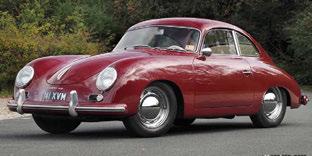























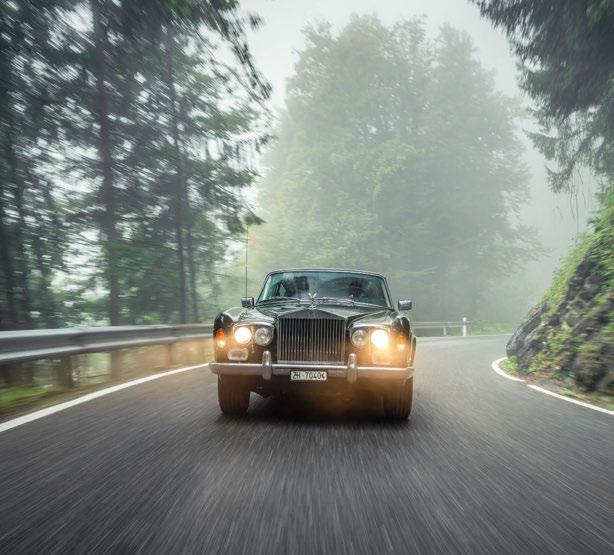
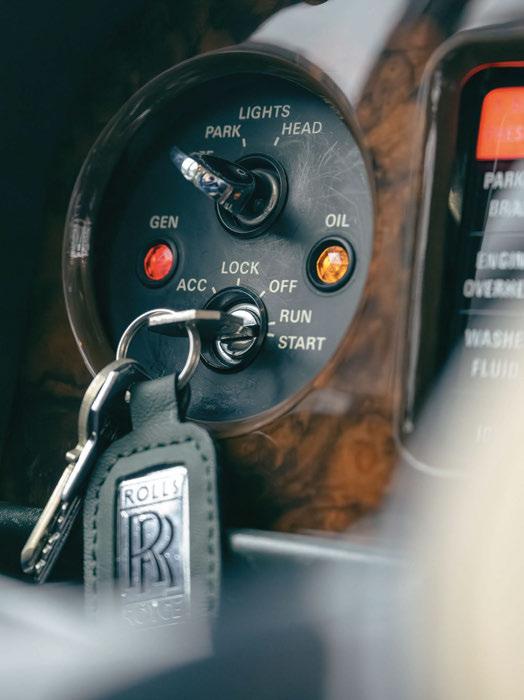
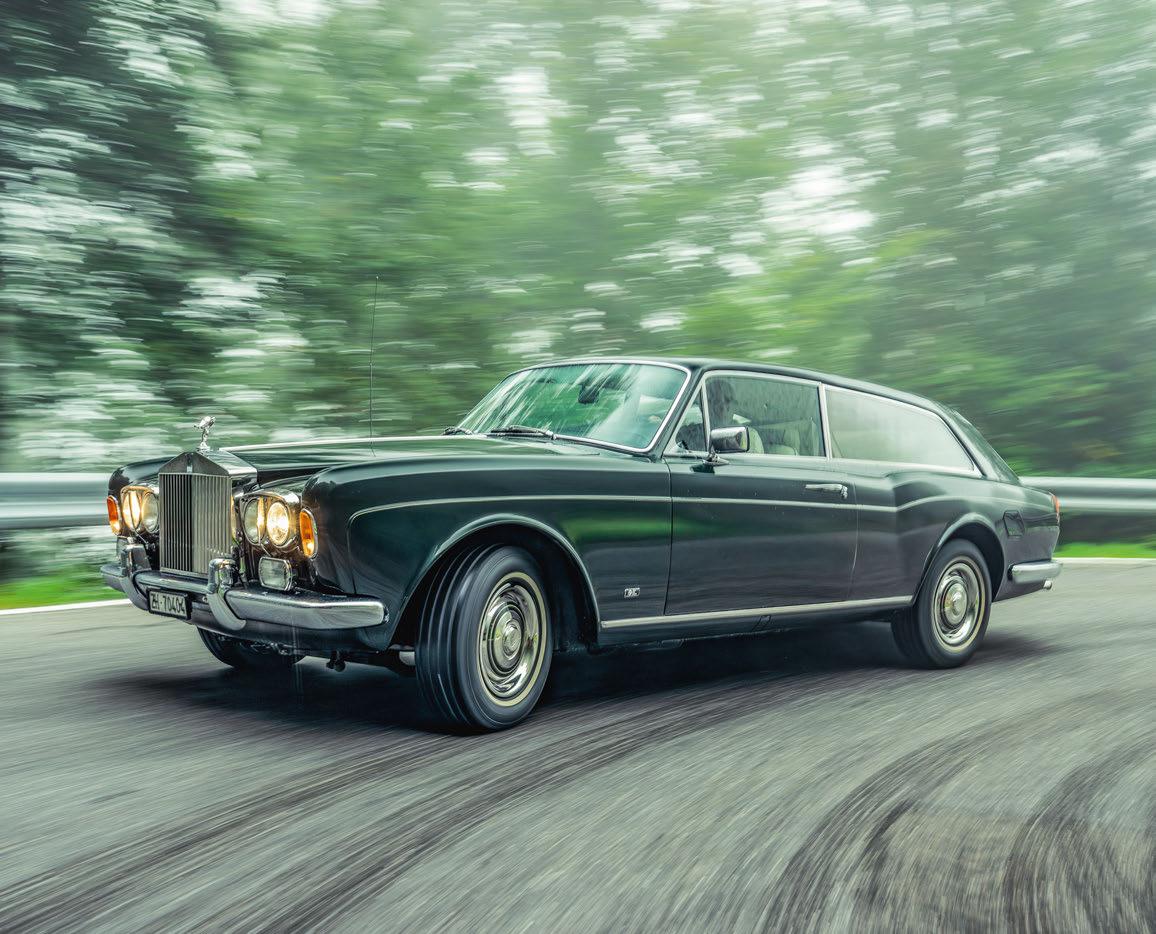
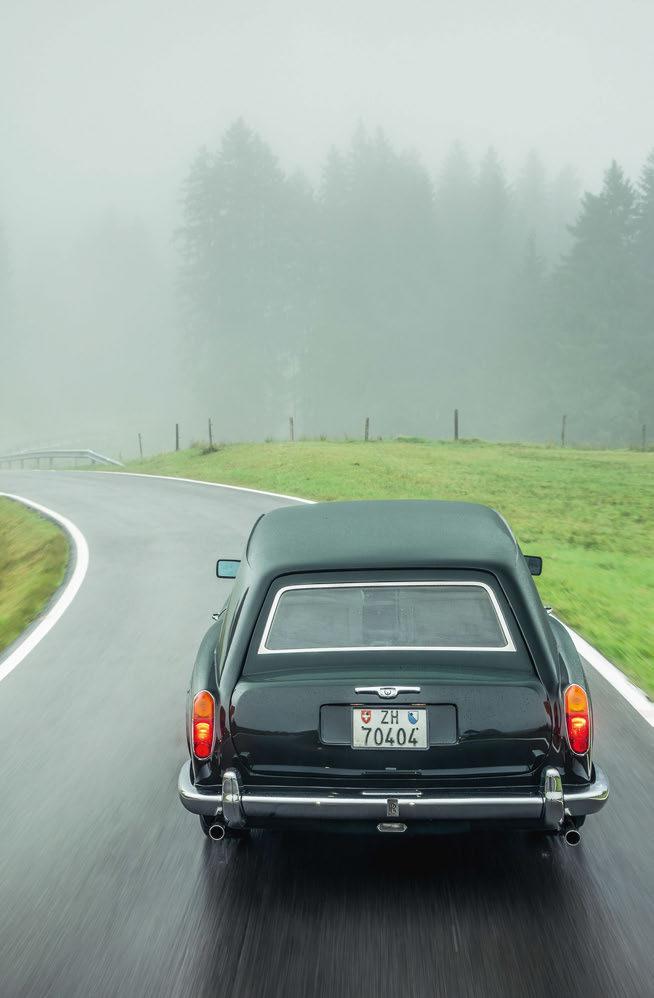
Rolls-Royce didn’t make a Corniche shooting brake, but Niels van Roij
Design has – and Octane gets to drive it
Words Alex Goy Photography Luuk van Kaathoven
ONE OF ONE has a nice ring to it, don’t you think? Something made just for you, to fit your life, to your spec, so you can go about your day knowing there’s nothing out there that’ll match it. There are plenty of people who’ll offer you a car specced to the nines, but more often than not it’ll be one of some. That, for Niels van Roij Design, won’t do.
This 1981 Rolls-Royce Corniche shooting brake is the firm’s latest completed work. It started life as a Corniche Coupé lovingly called Henry. Its current owner inherited it from their uncle and has fond memories of the car – it has been part of their life for decades – but they wanted to leave their mark on it and turn it into something a little different, and just as special. ‘The client had Henry in the family for 40 years, and it was a bit tired, needed some restoration, and they decided, well, maybe I can make it a bit more mine rather than my uncle’s,’ says van Roij. This isn’t the work of a moment. The project took two-and-a-half years of consultation, planning, and some rather brutal cutting.
As with most things design, it all starts with a sketch… well, lots of sketches. Van Roij explains: ‘Thousands and thousands of quick thumbnail sketches are made. You have the first ideations, which ask do we have a black-out A- or B-pillar or not? Do we have chrome? Or are we going to do something else? You want to explore even very radical ideas. That’s what we always do for our clients. We show everything, including the things they sometimes say they don’t want to see, just to verify. There’s a lot of exploration.’ Through exploration comes plenty of ‘no’ but also a lot of ‘yes’, which leads to something with the client’s personality in every crevice.
In the case of Henry II – as the car is now known – there were some must-haves. The paint had to be the same colour the client knew and loved, the veneer facia couldn’t be replaced as they considered it was part of the soul of the car. New wood elsewhere would have to match the grain – a daunting task, though not impossible. It also had to be something that could transport two triathlon bicycles. The car will be used on Rolls-Royce rallies, too, and in its original form it came with timing equipment placed somewhat indelicately on the centre stack. During Henry’s glow-up this would have to change. During these conversations with the client, the team had the idea of tweed trim and sketched it up. It fit well with the final vision. ‘Henry is very British. A bit of tweed would be a nice touch,’ notes van Roij.
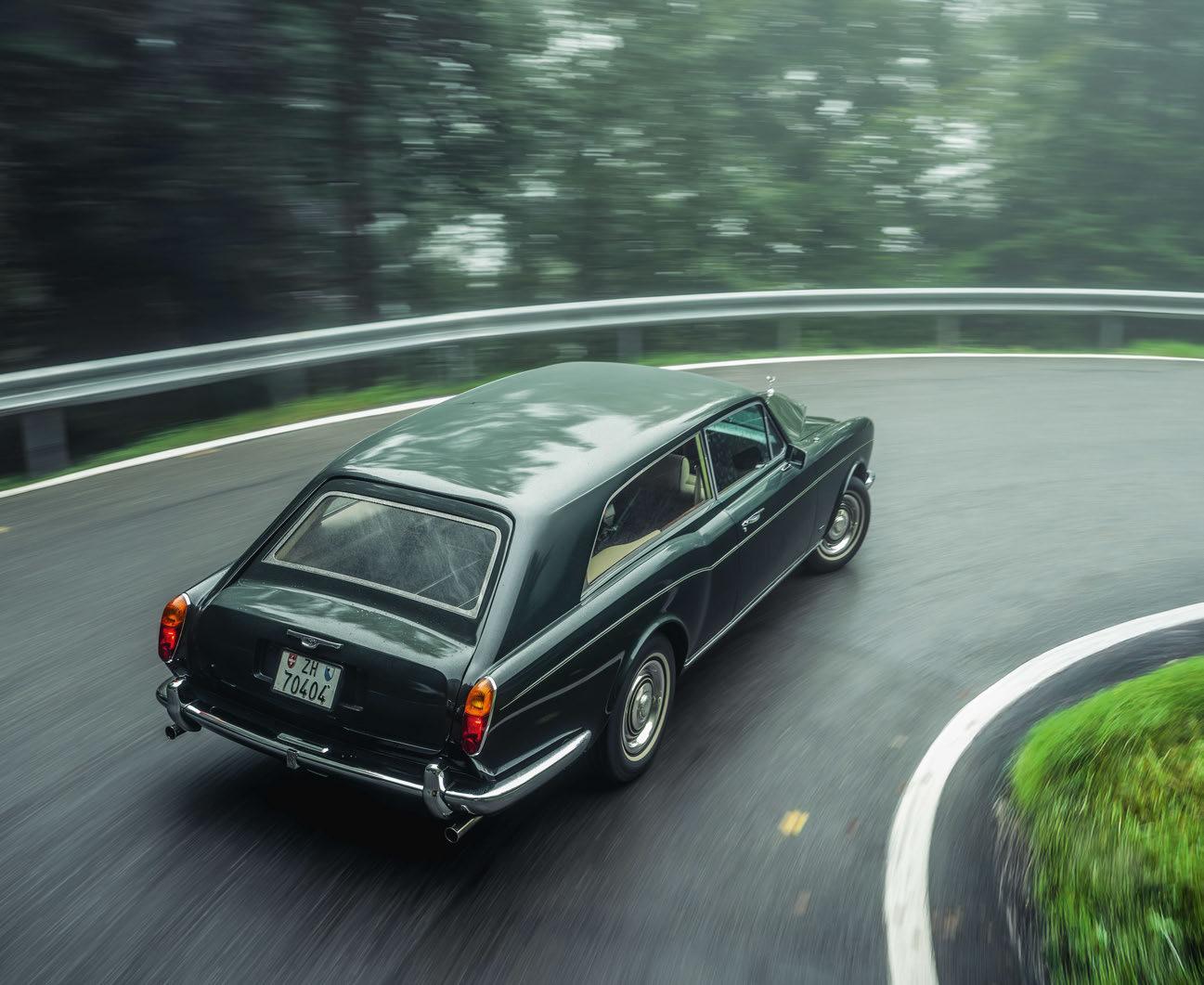
This is far from the first Niels van Roij Design vehicle, of course. The firm shot to fame with a Tesla Model S shooting brake, launched at the Dutch Embassy in London in 2018, and has since built the Adventum Coupe two-door Range Rover, a Breadvan Hommage that evokes the spirit of that fabled Ferrari 250 GT, and even turned a Rolls-Royce Wraith into a longroof, dubbed Silver Spectre. Others are in progress, tailored to clients’ specific desires, naturally.
Van Roij himself began his design journey with a BA at the Design Academy Eindhoven, then moved to the UK and the Royal College of Art to complete a Vehicle Design MA before moving into the industry. He set up his own shop, looking to make things that people would actually see.
‘I realised everything I did for OEMs was under NDA,’ he explains. And if a project was cancelled, well… ‘What have I done for the last five years? I had to prevent that from happening in my future. I didn’t set out to become an entrepreneur. I just wanted to be a car designer.’
And here is Henry II. The brief set, designs signed off, what happens next? Engineering, mostly. Of course, the star of the show is at the rear. Its all-new rear. Where once there was a coupé, there’s now very much not. The new, longer roof obviously required a lot of work. While looking around the car it wasn’t uncommon to hear the team refer to ‘the cut,’ the first time saw meets metal to begin the transformation. Everything from the B-pillar forwards on Henry II is as it was, but behind that there’s an all-new steel structure. The original rear wings were refurbished and kept. The new roofline and wider C-pillars were handformed over wooden bucks. New brightwork was added.
A gentle curve in the roofline helps the car look purposeful and the boxier tail is like something that could have been idly doodled at Rolls-Royce in period. While you could never accuse a Corniche of being a small car, the extra room in the back makes it appear vast, though not ungainly. It’s a fine thing to look at, something of a scene-stealer.
Clockwise, from above
The most obvious difference is in the tail, but it’s not hard to imagine that it was built this way originally; rear seats flip electrically; bike rack is ingenious; loadspace dwarfs a Corniche boot; little changed from the driving seat; rally clocks can be hidden from view.
Even with a massive boot, there wasn’t quite enough space in the back for two bikes: it was an excuse to get creative. The rear bumper, at the flick of a switch, quickly and quietly extends outwards to reveal a beautifully integrated bike rack. It’s pleasingly Thunderbirds-esque to watch. Then there are the little touches. Normally you’d find tyre pressures on a sticker on your doorframe: Henry II has an etched plaque in its glovebox. There’s a bike cleaning kit, custom-made, that lives in a wrap made of the same tweed and leather you’ll find inside the car (van Roij has a suit in the same materials, as he has for every one of his projects). The client wanted occasional rear seats that fold flat to keep the loadbay as expansive as possible. When you flip them up, they’re perfectly upholstered and look rather wonderful. Scour the centre stack and you’ll find the allimportant rally instrumentation hidden behind an artfully integrated wood panel. If you didn’t know better, you’d expect it left the factory with them installed.
The drivetrain remains untouched, which means under the bonnet is the same 6.75-litre V8 engine, driving through the same three-speed gearbox, though necessarily there were tweaks beneath the skin. ‘The fuel tank originally sat behind the rear seat,’ says van Roi. That wouldn’t work for the car’s new layout so the team made a new, horseshoe-
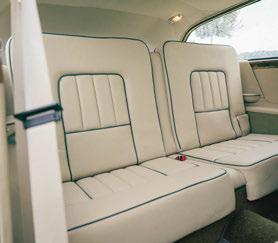
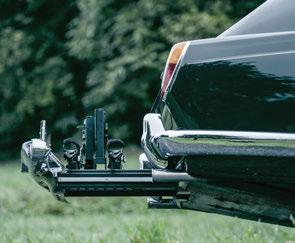
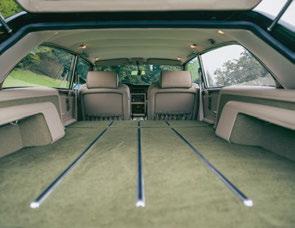
‘There wasn’t quite enough space in the back for two bikes: it was an excuse to get creative’
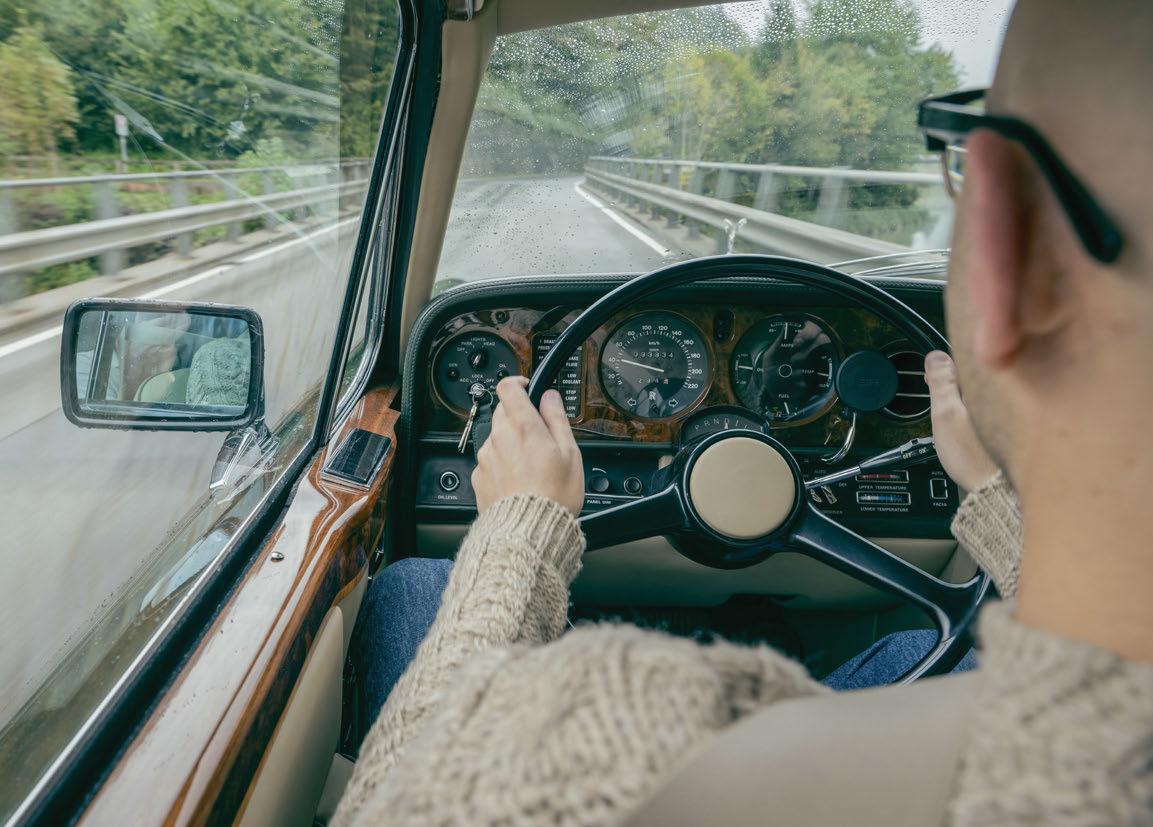
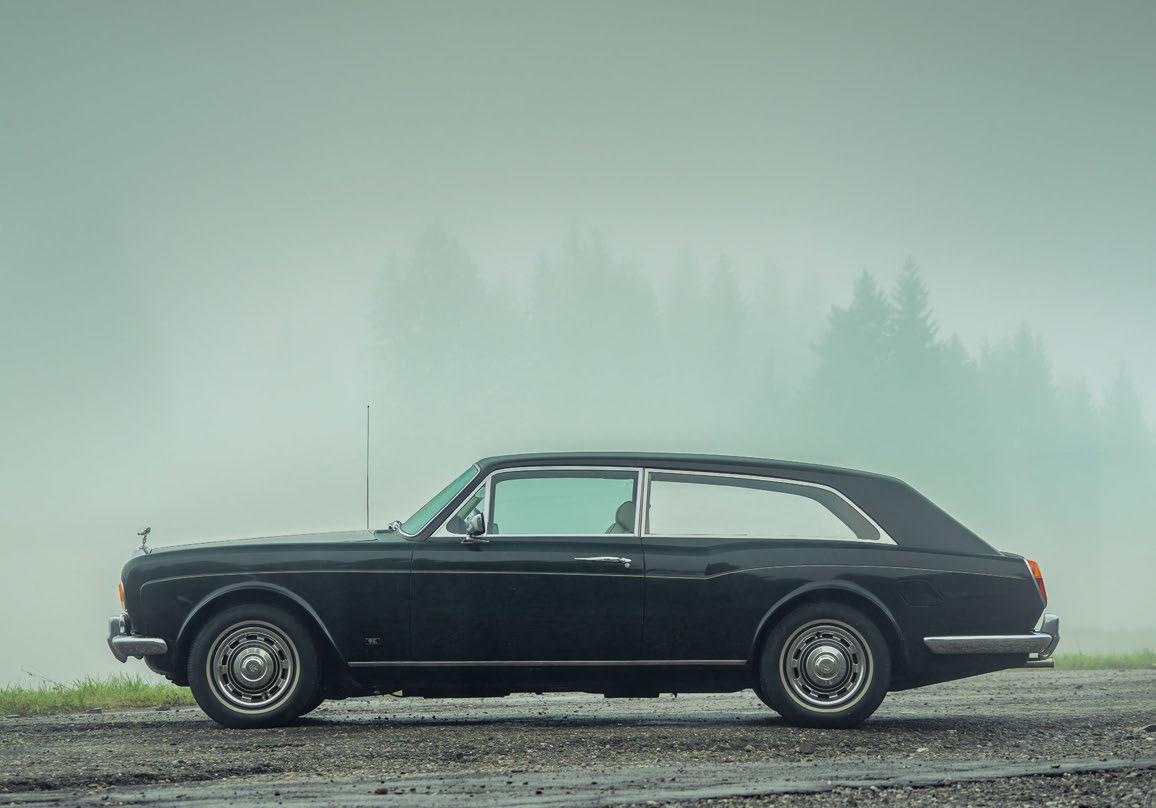
shaped tank to sit in Henry II’s new subframe. ‘It has the same capacity as the original,’ we’re assured.
Within metres of setting off, Henry II is getting waves, nods of appreciation; its uniqueness makes it memorable, a genuine highlight, though being a Rolls-Royce means there’s little drama when it comes to the driving. Slotting it into drive is the work of a gentle pull on the wheel-adjacent selector; moving off a calm, quiet affair. With around 240bhp when new, and glorious heft to shift, urgency isn’t something that comes easily to Henry II. You can give its throttle a good ol’ stab and it’ll take the suggestion that you might like to go a little quicker, think about it, and decide that you are, in fact, allowed to progress with a touch more vigour. In town it imperiously glides with pleasing quietude, only a hint of V8 rumble appearing when you press on.
Despite the encouragement needed to coax Henry II onwards, it behaves wonderfully on the highway, too. The freshly reupholstered seats are as comfortable as they come, and it rides smoothly, gently rising and falling with the road. Overtaking isn’t its forté, sure, but as Henry II quietly passes legions of grey SUVs it becomes apparent not only that the sight of an old Roller is enough to wake drivers and occupants out of their multi-lane hypnotic slumber, but that Henry II’s extraordinary shape is genuinely beguiling. It exudes specialness.
It’ll be used for rallies, and while, no, this isn’t a sports car by any means, van Roij’s latest creation can hold its own when the road becomes more taxing. It’ll ably, if gently, fire itself up hills, its engine burbling gloriously. With light,
delicate steering, you have to trust the car’s process when it comes to direction changes. You don’t really feel what the front is up to, but sheer faith keeps you safe in the knowledge that it’ll go the way you want it to. The soft springs mean there’s a fair bit of weight transfer at speeds approaching ‘a bit of a hurry’, but it all feels rather jolly. Find the car’s flow and, leaning from corner to corner, V8 hauling away, the needle barely moving, you’ll find a big grin on your face. And then you look in the rear-view mirror.
The vast cavern astern draws your eye to a small rear window that feels miles away from you. You can pick it out at the end of a long green tube and it’s almost useful. Anything directly behind you is visible, but cars/people/ hills much further aft are lost. Handily, the wing-mirrors give decent coverage, plus a stellar view of Henry II’s new shoulderline. And that’s what leaves the greatest impression: a view that few will ever get to see.
Henry II is a joyous thing, and has been built for one person to live their life in, to wear like a glove, and to make lasting memories for decades to come. Will van Roij and his team build another? If so, he says, it won’t be the same, and a client would have to commission it directly. When it comes to price there’s no firm comment, but it kept a team of highly skilled people employed for 7000 hours.
Here is a blend of hand-rolled metal, seamless joins, perfect leather, sumptuous wood, and wonderful design blended into a car designed solely for one person, and one person alone. It’s a good thing that their ideal car will be right up plenty of others’ streets as well.
Join us for an unforgettable, all inclusive adventure, driving a wide range of exciting front, rear and all-wheel drive cars across a frozen lake set in the beautiful Swedish countryside.
ALL INCLUSIVE PACKAGES
Our three and four day packages include flights, great accommodation, hearty meals, all transfers, two days of ice driving, tuition and tour managers.
UNRIVALLED EXHILARATION WIDE RANGE OF EXCITING CARS
Packages all include two full days of ice driving, maximising driving time shared with friends, dedicated tuition and premium race and rally car experiences with instructors.
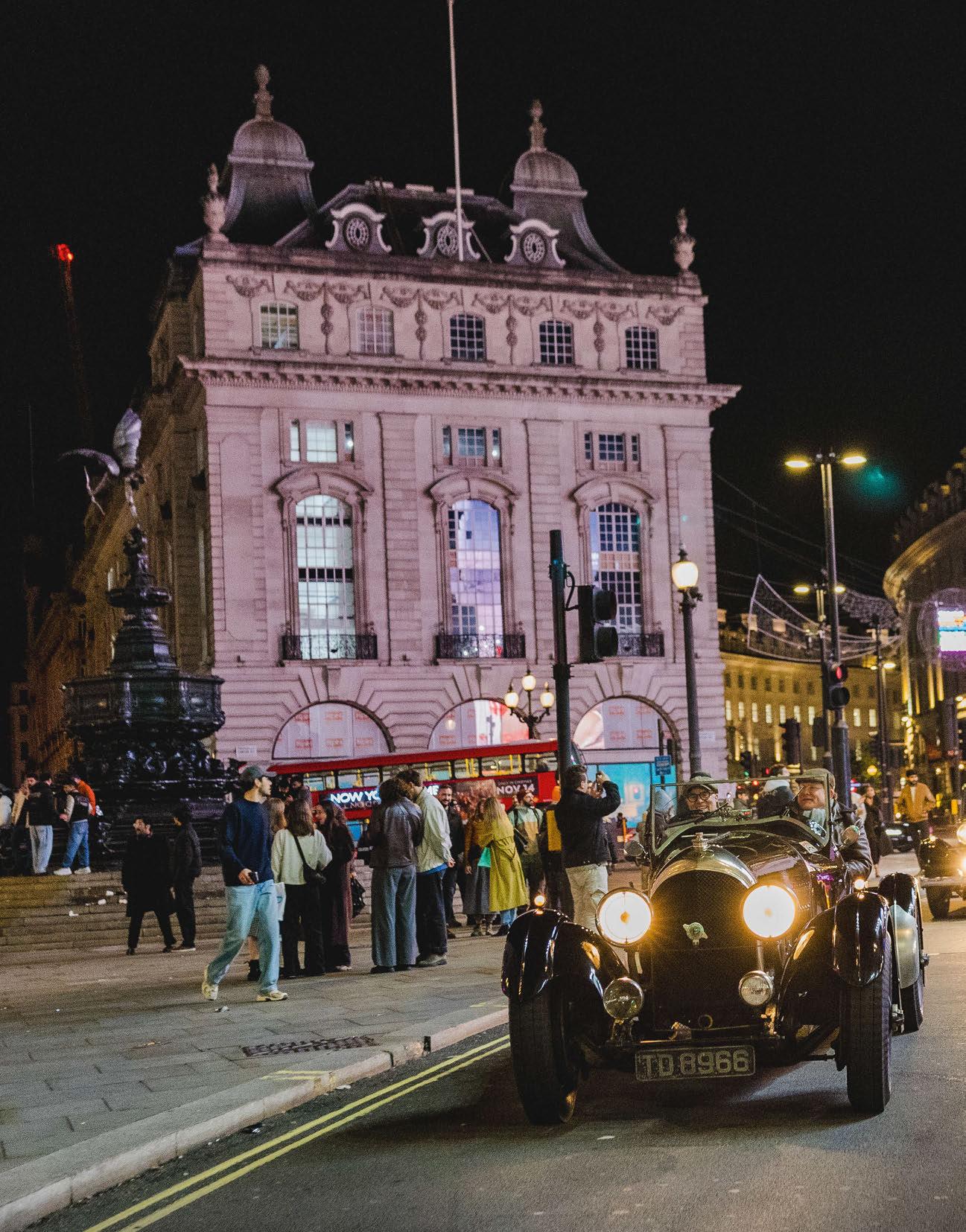
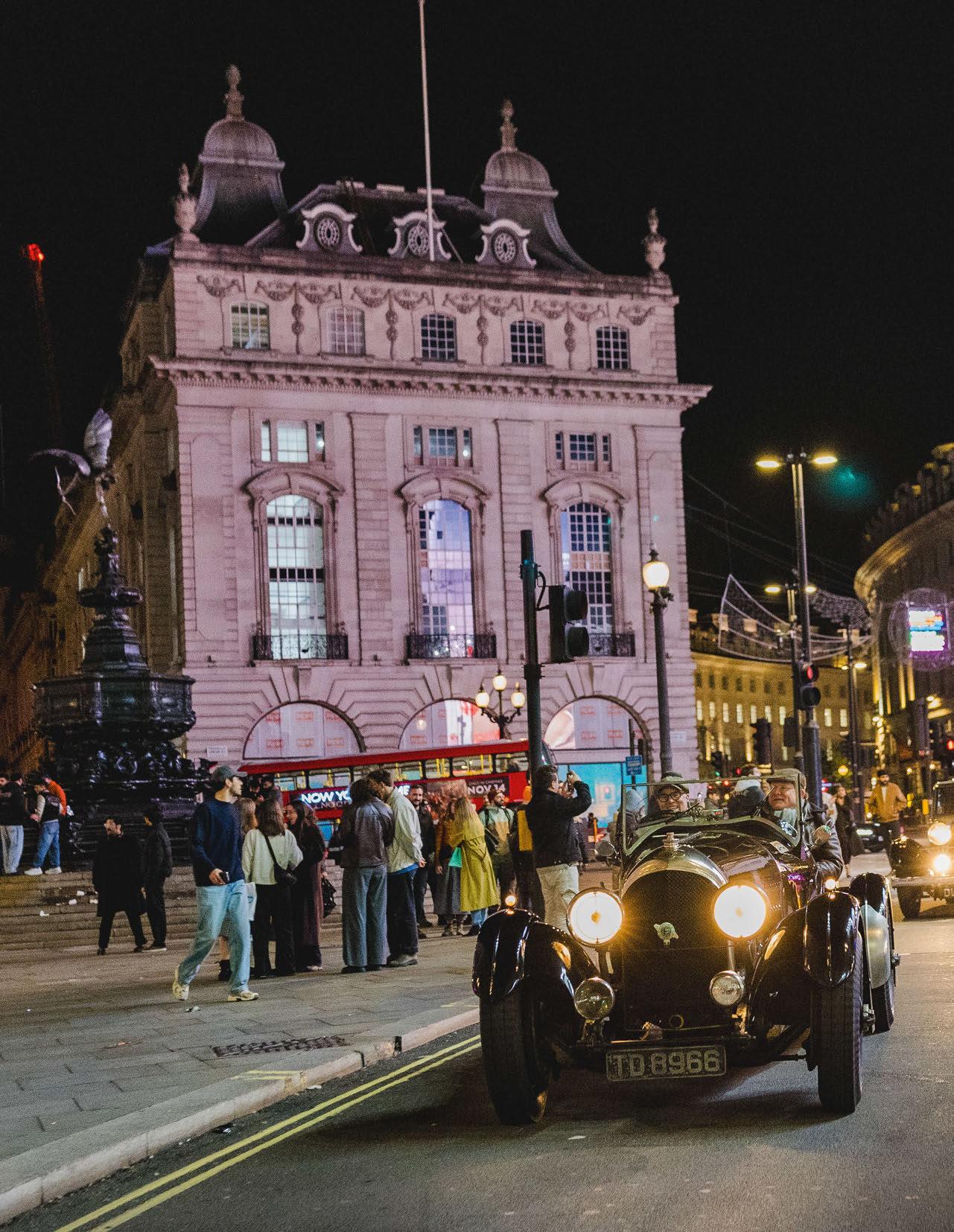






Octane joins the third Vintage London Rally, the motoring equivalent of secret cinema

Clockwise, from below Ready for action at The Spaniard’s Inn; Big Ben and Parliament Square; heaters not needed; Alta dashes through ‘Town’.
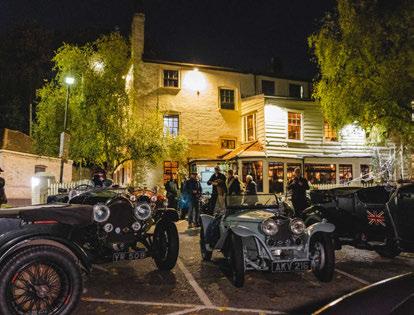
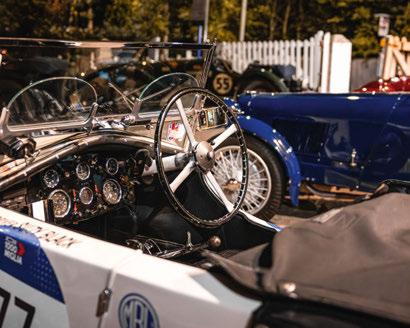
Until just a er 10pm, it was a normal Saturday night at e Spaniard’s Inn on Hampstead Heath. Glasses clinking, the background radiation of cha er and high spirits, sta dashing to and fro because it was busy, very busy, with a boisterous table of 30 youngsters outside under the awning and the hubbub of a similar number of slightly more mature folk squeezed into the private upstairs dining room. en, at 10.03 precisely, everything changed. First a slow, heaving whirr followed by a cough, then an uneven bellow, a burst of Gatling Gun rapid re diminuating into a slow, steady chug to the gasps of a table of surprised revellers. at was followed seconds later by another start-up, higher-pitched, more yappy, a four, and then an unmistakably taut straight-eight, more lumbering sixes until there was a cacophony, a choir of eager mechanical voices. e upstairs room and the long table under the awning rapidly emptied, abandoned co ees steaming, spoons lying across half-eaten desserts. At 10.09, the rst car – a Bentley, naturally; they are in the majority here – pulled out of the car park, followed by a stream of others as the choir became marching band through some of the more majestic North London streets. e third Vintage London Rally was under way.
e format is simple: vintage car enthusiasts meet for dinner, drive through the centre of London when it is at its busiest for people on the streets and, in theory, less busy for cars on the road, and then wind down before heading home. e objectives when this ‘raid’ started were to enjoy their cars in London in a manner that has become near-impossible, to share that camaraderie, and simply to do something a bit di erent. It has come to represent rather more, now a beacon for the joys of vintage motoring, sharing such joy with the teeming Saturday night streets and creating and cementing a link between younger enthusiasts and vintage cars.
It was devised by James Wheeler and Federico Gö sche-Bebert, inspired by a similar event in Paris last year. James, whose day job is at Martin Chisholm’s Classic Motor Hub, seems to be one of the busiest people in the classic car world, forever organising or a ending events, usually in his beautifully restored 1936 Austin Seven Ruby (see Octane 252). Federico is chief operations o cer for HERO-E , has lived in London since 2014 and has a vintage eet that includes a 1928 6C Alfa family heirloom in which he did the rst two Vintage Londons.
James says: ‘For years I frequently made latenight excursions around town in my Austin or Alfa: driving around when there was no other tra c, stopping, seeing the sights, taking photos. en some friends of ours held a run late last year in Paris. ey had ten or 12 cars and it looked fabulous.’
When James suggested in a WhatsApp group that something similar should happen in London, Federico mentioned that one had previously been suggested and they even had a route. He says: ‘You just knew this thing was going to happen – James was brave enough to say “I’ll organise it” and I was foolish enough to say “I’ll help plot the route.”’ ere were 15 cars in March, and loads of people, predominantly younger, who signed up to be passengers, most vintage novices. As soon as the photos hit the internet the next day, James and Federico were inundated with other enthusiasts who wanted to take part. Federico remembers: ‘I think it appealed to a bit of a ash mob mentality, people thinking, “OK, this is outside the normal rules of engagement.” Barriers to entry, even logistical or bureaucratic ones, can put people o .’
A rerun was hastily arranged, but the second event in June had a twist instigated by Federico and by Fiskens partner Christo Cowens, who both suggested a dawn raid, starting at Alexandra Palace and nishing at the Southside Hustle meet in Wimbledon. is format had the huge advantage of empty streets for driving, but also the disadvantage of streets devoid of spectators. James says: ‘It was wonderful, but more about the driving rather than the people. One of the things I love about the night-time one is the interaction, when you pull up at the Connaught and passers-by get caught up in the beauty and atmosphere and come up to chat or admire the cars.’
On 25 October it returned to a night rally. Here are 26 vintage cars, including a trio of Austin Sevens, a Low-Chassis Invicta, glorious Talbot 105 Airline, 14 Bentleys, braces of Rileys and Alfa 8Cs, Alta, SS100 and an Alvis.
‘As soon as the photos hit the internet, James and Federico were inundated with enquiries’


























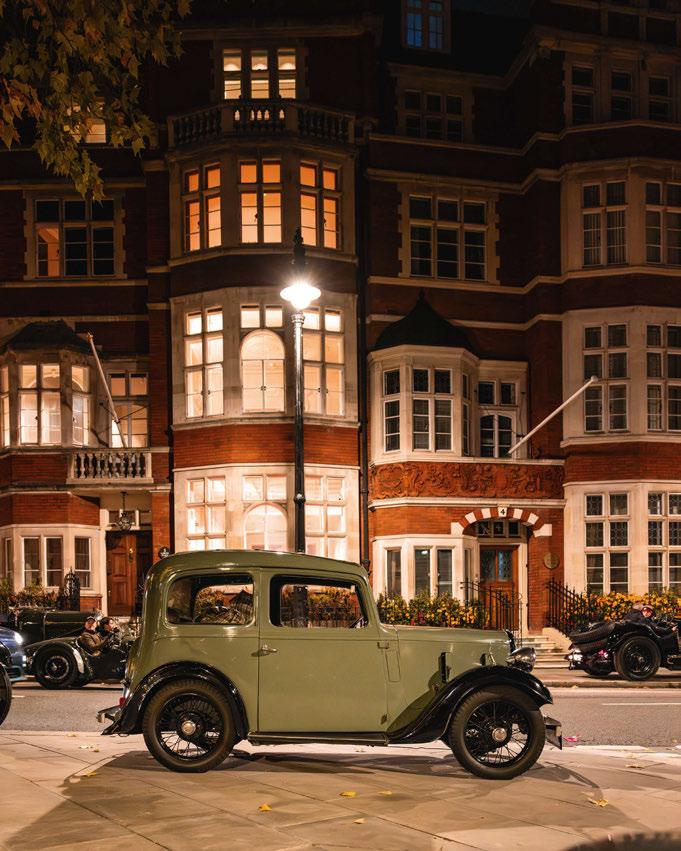
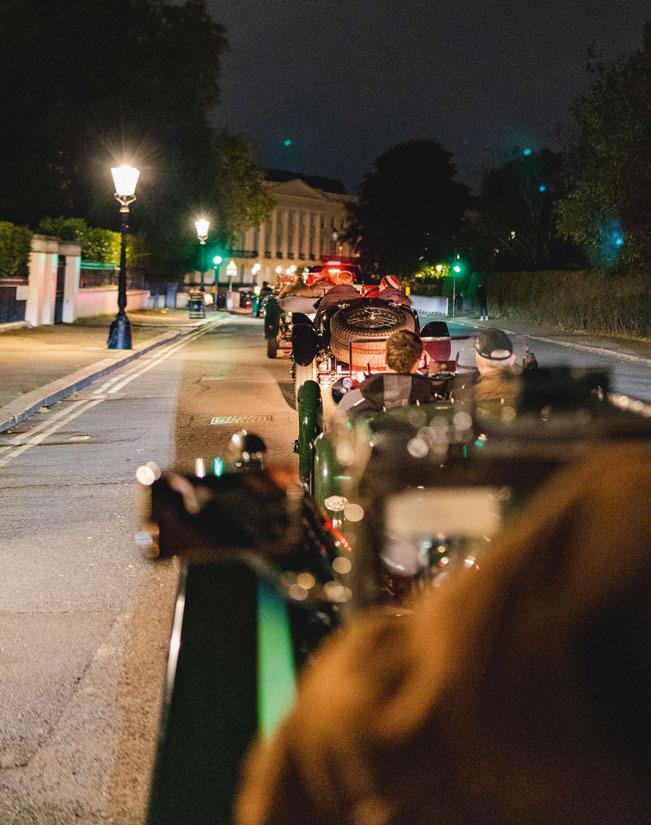
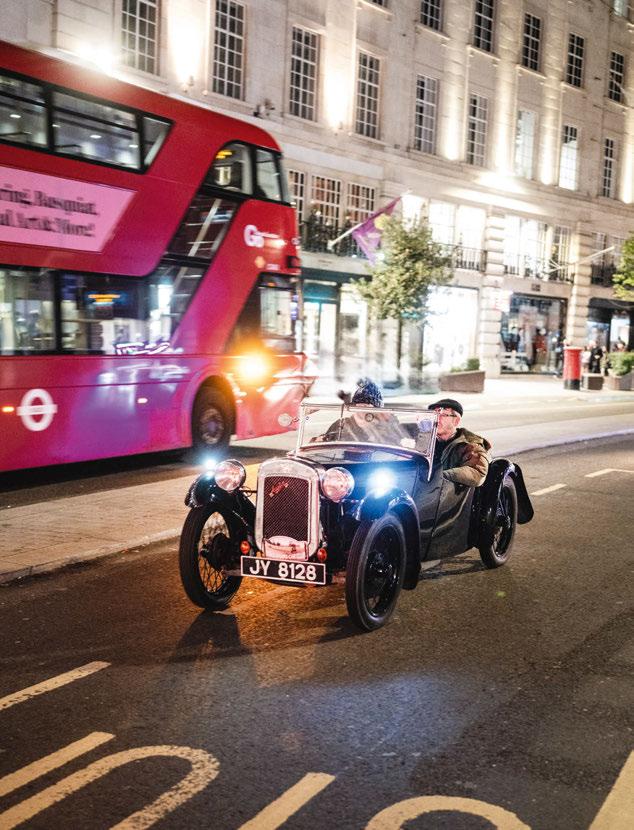
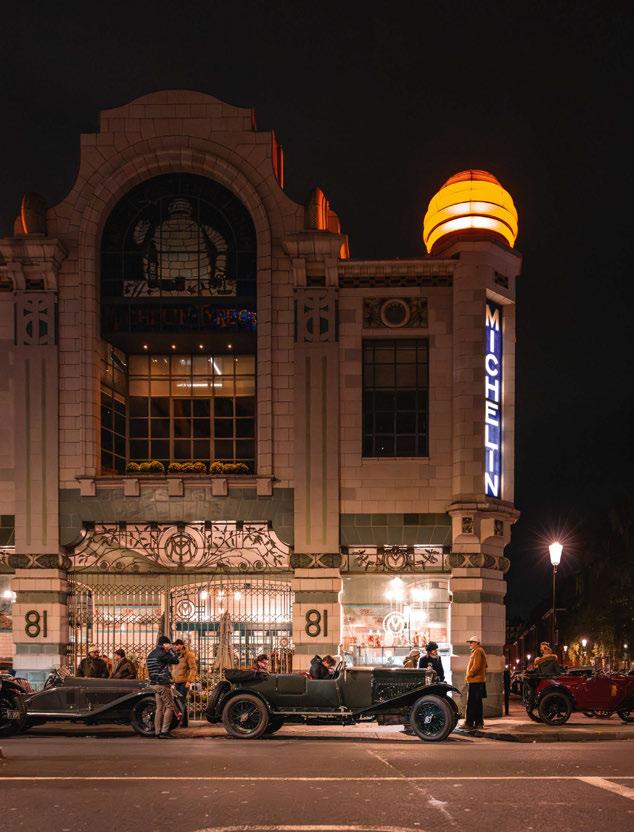
The cars range from 1923 to 1937, whereas the spread of the participants goes from similarly vintage to comfortably postmillennial. That youth element is especially close to the heart of William Medcalf of Vintage Bentley, which runs five special trackdays to ‘blood’ novices and youngsters. He had two cars running in the Vintage London Rally and says: ‘Everyone in our two cars was under 30. People that age drove these cars in period, so why not now? The experience is so analogue, they love it, and that’s why the simplicity of this event appeals – no entry fee, no drama, just a group of mates who turn up and have fun.’
One of the 14 Bentleys signed up is a 1927 3/41/2 by Corsica that Octane is sharing with its generous and laid-back owner Tim Weller, who explains some of its history as the cavalcade negotiates the speedbumps of North London. And they are legion, but little challenge to the wide track of this ex-Lieutenant-Commander
Christopher Tomkinson DFC two-seater with beautifully proportioned bob tail and swooping helmet wings.
Tim bought it two years ago. After he spent his holiday abroad reading every book and scrap of information he could find on vintage Bentleys to decide exactly what he wanted, this short-chassis serendipitously popped into his inbox the very morning he returned and within two hours it was his. It had been mechanically restored by Vintage Bentley, with the engine rebuilt to 4.7-litre spec for vintage rallying, a ‘D’ type gearbox from the first production Blower, ‘SM 3901’, and a 3:1 final drive ratio. The steering box had been stripped and overhauled using 4½ Litre-spec steering gears, but no body repairs or paintwork touch-ups were made unless essential.
Since then, Tim’s Bentley has done just enough events for it to settle (in Bentley terms), but with a Shamrock Rally, Carrera Iberia and Carrera Italia under its belt, a little jaunt through London is unlikely to challenge it. He says: ‘I saw the first rally on Instagram and contacted James to see if I could take part. It’s wonderful to be able to drive through the centre of London. I love the fact that there is no showiness or pretension at all, it is just fun.’
Tim takes the wheel as I take it all in and mess up the navigation at the first turn, but there are plenty of cars to follow – when one goes wrong, many do. The first stop is in the middle of Regent’s Park, giving time to pause and assess, but mainly to chat and release some of the pent-up adrenaline.
From Regent’s Park the convoy snakes down to the Connaught Hotel on the fringe of the heart of the West End. There the cars litter the pavements, but they are welcomed. Phone
‘The Connaught doorman, rather than shoo away these noisy latenight invaders, helps them park’
flashes play like a light show around them as they are engulfed by eager passers-by; the hotel doorman, rather than shooing away these noisy late-night invaders, keenly helps them park.
The next leg is more challenging. From the Connaught there is only a very short stretch to Regent Street, where the night-time traffic has not received the memo and the vintage cars squeeze into a near-static line of Ubers before inching their way towards Piccadilly Circus, which is both the highlight and a lowlight. The gnarly traffic detracts, but there is little better than driving through a lit-up Piccadilly Circus at night, crowds waving and cheering, before dashing down Haymarket into thinner traffic.
Then round the byzantine new layout of Trafalgar Square, across to Parliament Square to salute Big Ben and up to The Mall, where a map error (honest m’lud, Federico insists Google Maps autonomously plotted the stop) leads to an impromptu line-up of vintage cars directly outside Buckingham Palace. Better still, the photo-op is tolerated by the guards who close in around the cars, but say nothing until they gently let it be known in ‘direct’ Palace Guard speak that it’s time to move on.
The final waypoint is one of the few remaining testaments to the gloriously optimistic and colourful pre-war ‘new’ London that these cars would have encountered in period, François Espinasse’s Michelin Building (correctly Michelin House) on the Fulham Road. It is also at this point that Tim stops taking no for an answer and insists that I take the wheel for the final stint to Brentford, where Merlin McCormack has thrown open the Duke of London doors. ‘We owe Merlin a great deal of thanks,’ says James, ‘because we had nowhere to finish nicely in the middle of night. Then he suggested we all come to Duke for a coffee and some pizza before heading home. Its location so close to the M4 is perfect for those heading back out of town.’
From behind the wheel, Tim’s car is just as gorgeous as it is from the outside. The patinated dashboard is visual nectar, the sound and
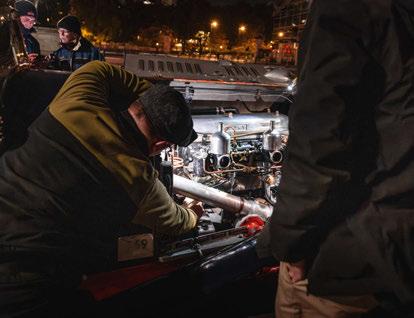
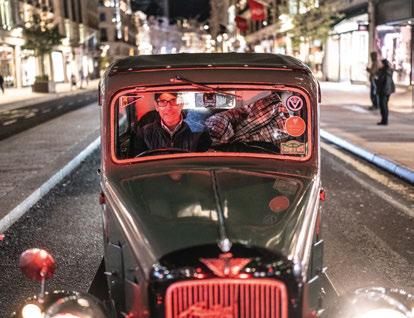
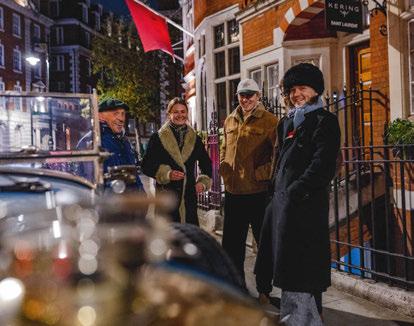
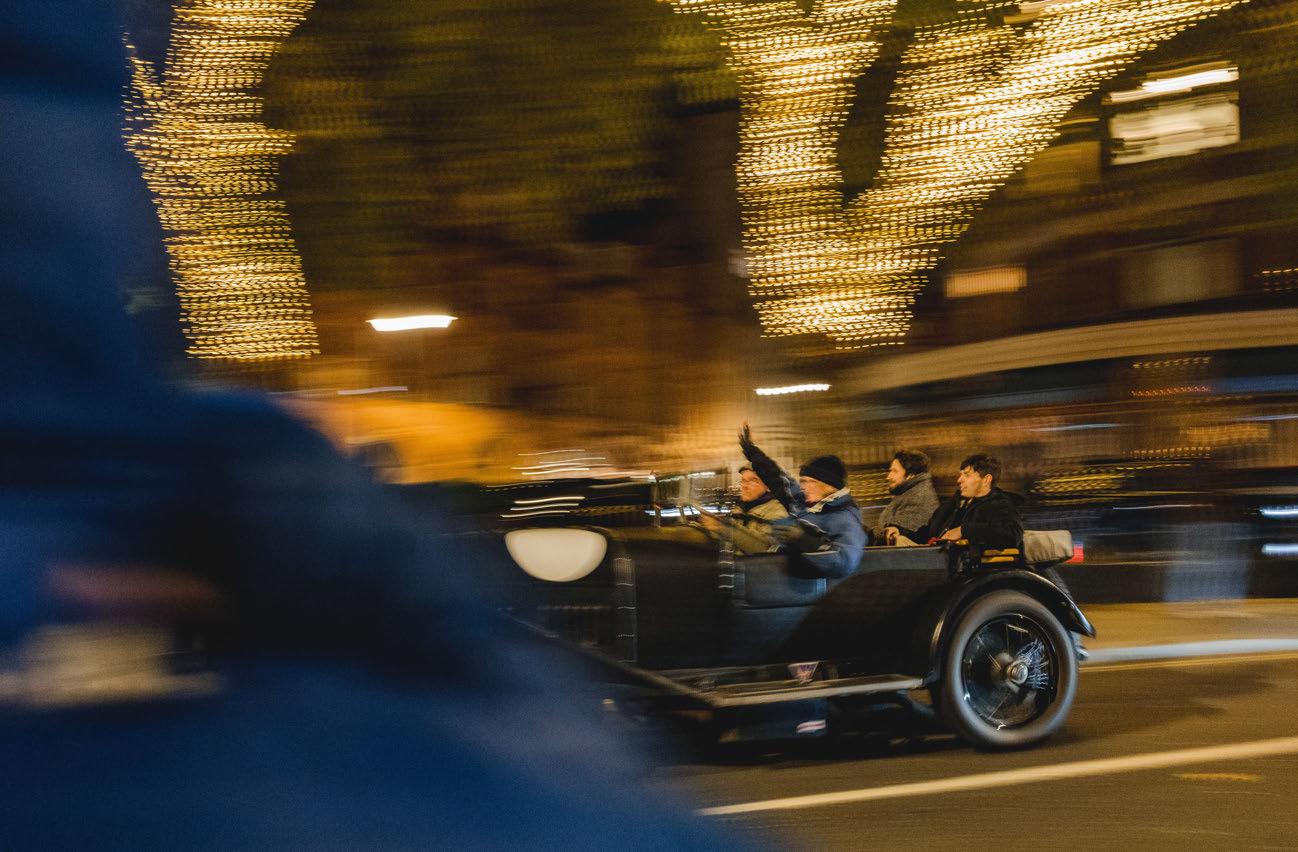
experience invigorating. With conventional throttle and gate, decent brakes and unsurprisingly heavy but manageable steering, the Bentley doesn’t feel like a chore at all barring the usual recalcitrant dog ’box, especially third, which is a bastard. We even break free of town and can open it up on the A4, decibels rising and mild air washing over the low screen for added thrill factor.
We arrive at Duke without drama and for the neighbours’ sake I coast the last 100 yards rather than wake an entire tower block with another graunchy downchange from fourth to third. As for other drama, an Austin Seven lost a wheel, which was rapidly replaced at the roadside, a couple of electrical systems struggled, and one car dived out early with fears of overheating, but, barring a Bentley 3 Litre coupé that broke down in Harrow en route to the start, that was it. Three hours’ solid driving, six hours all in, everyone ecstatic.
Given the way Vintage London has taken off and the speed with which its popularity is growing, how do the ‘organisers’ see its future?
James: ‘We’ll keep doing it because I get more out of it than I put in. The buzz, the posts afterwards – people enthusing about how
much fun they had. We want to do it twice a year, so another morning one in June and an evening one in October, but we might also do something in the countryside – Surrey or the Cotswolds, maybe. As for numbers, it felt like we were pretty full this time so it’s probably best to cap it at 25 cars.’
Federico adds: ‘I’ve seen plenty of grassroots events morph into things they were never meant to be, so some things are better left undeveloped. Fifty cars would probably be OK, but we don’t want to attract undue attention and we don’t want public opinion turning from “What fun!” to “What a nuisance”.’
They are both resolute on two things: that the Vintage London Rally will remain free to enter – ‘So many events are so expensive now, not intentionally excluding people, but they do,’ says James – and that it will remain just as ad hoc as it is now. ‘Being half-German, I’m acutely aware of rules,’ adds Federico. ‘We will keep it friendly and spontaneous; we’re just a group of friends who have dinner at a pub and then drive off in the same direction. We’ve got a WhatsApp group, dinner booked plus pizza at 3am; whatever people do between those two meals is up to them!’
‘We open it up on the A4, decibels rising and mild air washing over the low screen for added thrills’
I have to say that the Vintage London Rally is hands-down the best thing I have done for years. As far as the objectives go, it is very much job done, the cars and camaraderie are on another level, the frisson that it all might be a little bit naughty just adding to the fun. If they can maintain a cap on it to keep it this special, I predict that people will soon be buying vintage cars purely to take part. In fact, I predict that I will be among the first to do so.
CONTACT @jamesadcwheeler via Instagram for news about future events.





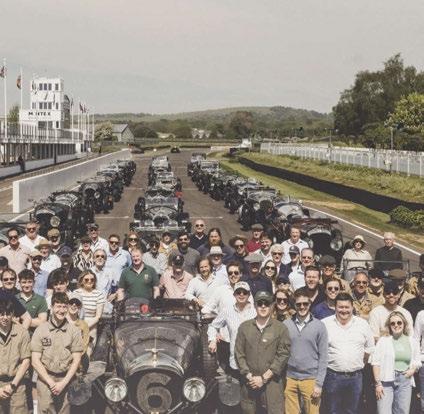


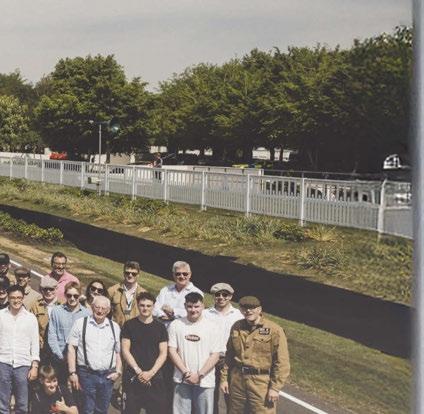

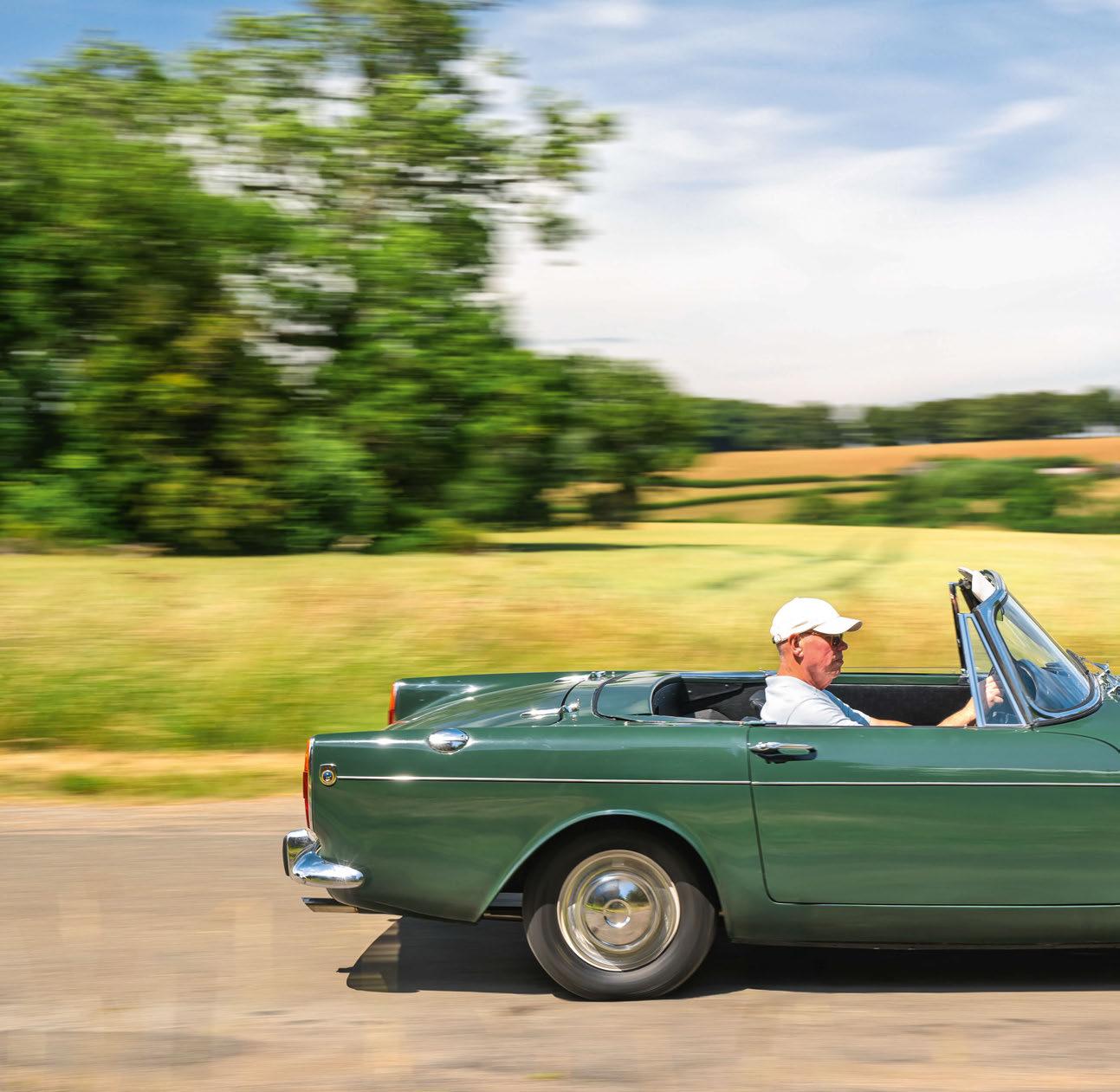





is completely original Sunbeam Tiger has just emerged from obscurity – and it provides a direct link back to its fabled origins
Words Julian Balme Photography Barry Hayden

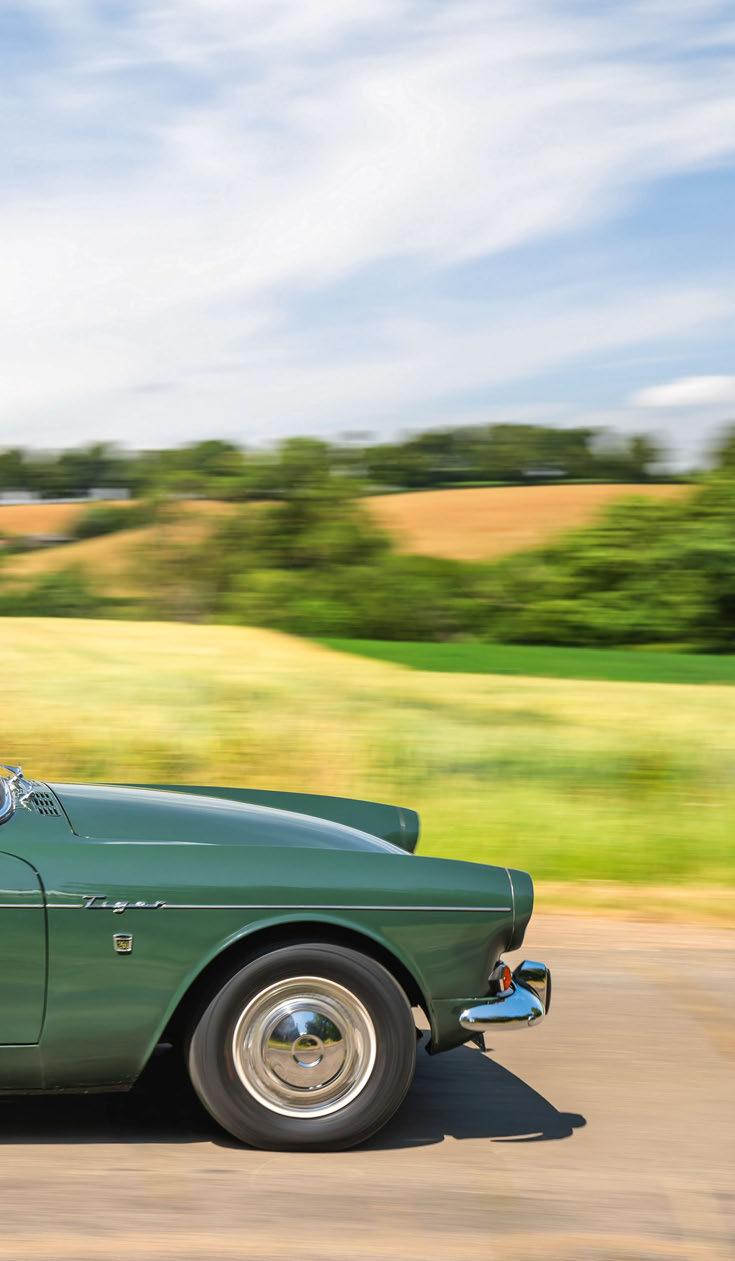

A 60-YEAR-OLD car with just over 20,000 miles on the clock, no ma er what the marque, is a rare beast. at it had remained in the same ownership all its life is unusual, and that it should survive unmolested is even more so. Finding a Sunbeam Tiger in ‘as it le the factory condition’ seldom, if ever, happens, not least because since the Tiger’s demise in 1967 owners haven’t been able to resist tinkering. If ever there were a car looking for a title of most modi ed, the Tiger would be a contender.
It starts with the wheels and tyres: the standard 41/2 x 13in steels, considered by many inadequate for its V8 power unit, are usually je isoned rst. Of the 102 cars a ending the Sunbeam Tiger Club’s 60th anniversary celebrations, only one was wearing its original wheels with chrome trim rings and hubcaps. en, of course, there is that smallblock Ford motor at the heart of the ma er. ese engines are so tuneable and parts so readily available that just substituting the two-barrel carbure or and associated cast-iron manifold with a four-barrel and alloy inlet is a beginner’s rite of passage. e original 260ci engine takes up exactly the same space as the larger 289ci and 302ci motors that powered the likes of the GT40 and Mustang. Consequently, nding a Tiger still propelled by the smaller engine is not a given, either.
As had always been the case, the model provided great bang for the buck and a lot of American owners upgraded their cars from the get-go. In the UK, by the early ’70s Tigers were still considered quick and, on the secondhand market, extremely cheap. As a result they became popular among the burgeoning hotrod scene, leading to a number being further modi ed, not just engines but bodywork, too. It was, a er all, the era of custom paintwork and Weller slot-mag wheels. One example I pulled out of a barn in 1985 had been painted metal ake orange, another wore a glass bre chin spoiler. Neither had its original motor and yet they weren’t even 20 years old.
Now, 40 years later, Tiger owners are still keen to upgrade their car’s performance, but less in terms of outright speed: they tend to be more interested in ve-speed gearboxes and bigger brakes, the la er achieved via largerdiameter wheels and lower-pro le tyres. ere are also considerably more Carnival Red examples than ever le the factory. All of which is why the originality of this particular Forest Green example is so unique.
To be fair, having been conceived in the epicentre of Californian hot-rodding culture, from birth the Tiger led a schizophrenic existence. Its parent company, Rootes, was a bastion of 1950s middle-class family motoring
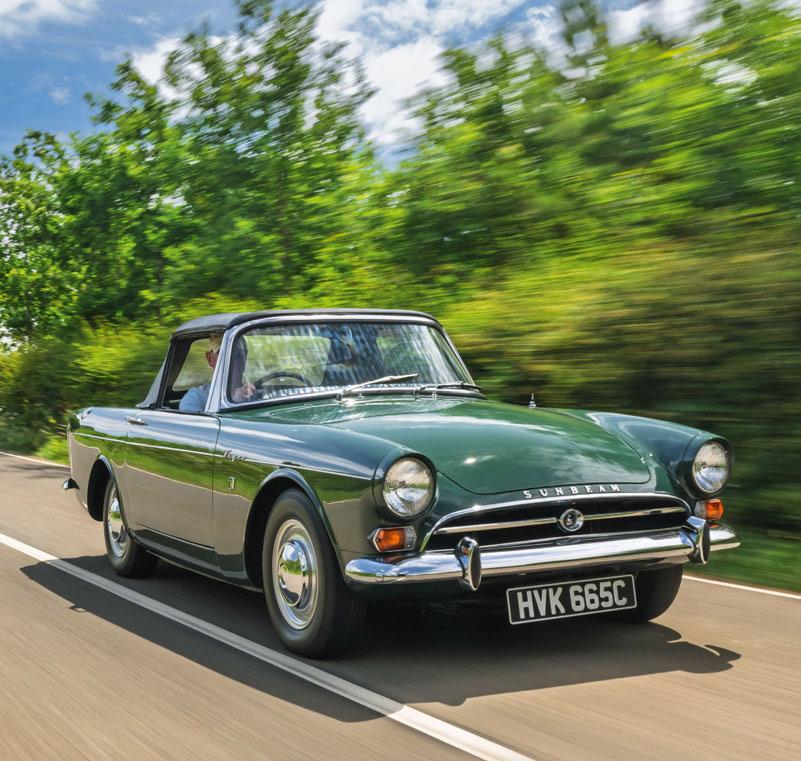
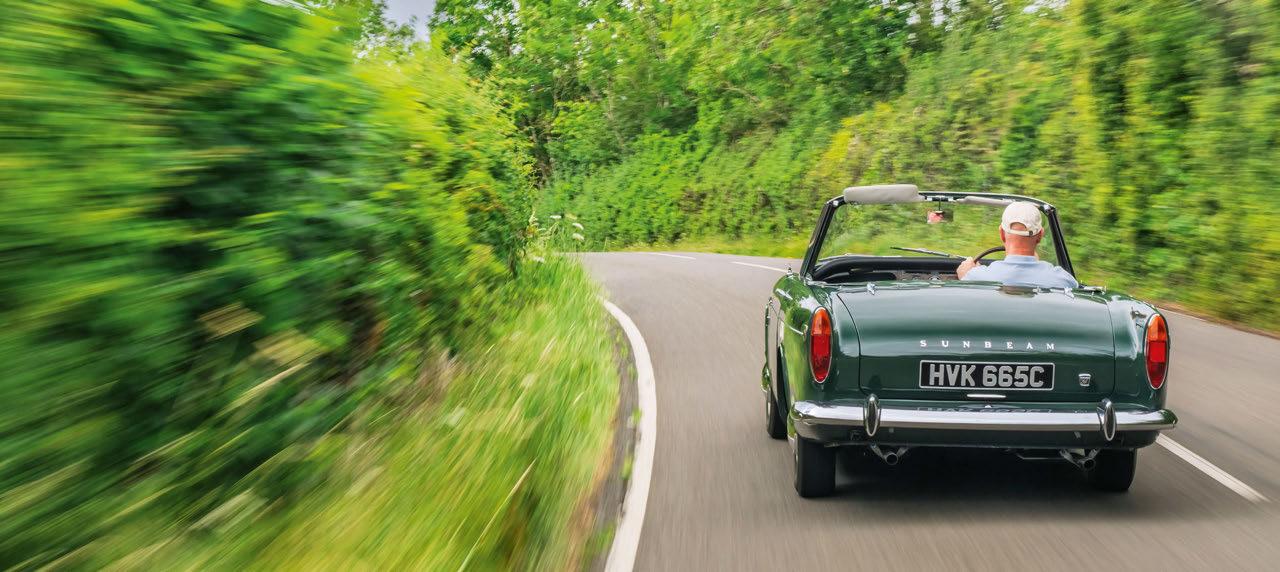
Clockwise, from top left
Proudly British badging doesn’t tell the whole story; pretty styling especially demure with the hood up; original dealer keyring; at home on British roads; ignore the redline, it’s all about grunt.
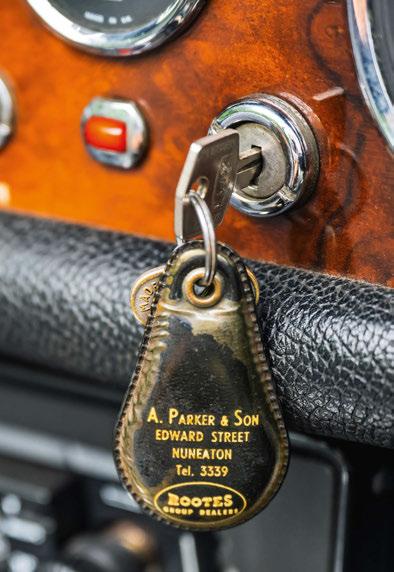
with marques such as Hillman, Humber and Sunbeam. Like their Coventry neighbours Triumph and Jaguar, they were at the forefront of the post-war export drive, sending the majority of their output to the US. Lip-service was paid to American customers via two-door pillarless coupés and the addition of tail-fins, but the Tiger was the only Rootes product to give its clients the V8 engines they had become accustomed to.
It was, of course, based on the Alpine, a ‘baby Thunderbird’ that sold well following its launch in 1959 and proved competitive against its four-cylinder MGA and TR3 rivals, both in the showroom and on track. With glamorous film stars such as Elizabeth Taylor and Sean Connery seen driving Alpines on the silver screen, it appealed to a younger audience, particularly on the West Coast, and it was there that the Tiger was born.
The shockwaves from the grenade that Carroll Shelby’s Cobra had lobbed into Southern California’s car culture shouldn’t be underestimated. By the early 1960s Ford’s Thunderbird had gained a rear seat and several pounds. Corvettes were north of $4000 (an Alpine was $2500 back then) and Italian exotica was too rich outside of Hollywood. Consequently there was precious little at the dealerships for the young and hip to get revved up about. The Texan and his gang of genius hop-up merchants, with their combination of ageing European chassis and American power, weren’t just establishing a US performance benchmark but a cultural one, too.
The Cobra harked back to Allard and, as had its 1950s UK counterpart, found a market in wannabe sports car racers. Like Sydney’s, Carroll’s creation was a race car first, street car second, an intoxicating brew to a young, speed-
‘SHELBY’S CREATION WAS A RACE CAR FIRST, STREET CAR SECOND’
obsessed audience. Kids had a new team to yell for and, if they couldn’t afford the actual car, the marketing-savvy Shelby could sell them a T-shirt or a carb set-up for their Falcon instead.
All this was unfolding in front of Ian Garrad, son of former Rootes competition manager Norman, and the company’s West Coast manager. If the guy in the Stetson could reinvent an old AC Ace, what sort of life could he inject into the four-year-old Alpine?
The Cobra made its competition debut at a three-hour endurance race in October 1962 – alongside six Alpines, three of which were piloted by Jack Brabham, Bruce McLaren and Ken Miles. In the subsequent debrief, Black Jack added grist to the mill by telling Garrad that the Sunbeam’s chassis could handle far more power. Garrad’s ambition was boosted by the attendance that day at Riverside Raceway of his boss, director of Rootes America Inc, John Panks. Legend has it that the pair adjourned to a hotel bar and concocted a plan to find some money within the ‘advertising budget’ – $10,000 – and approach Shelby to build a prototype. Soon the Rootes executives were drawn into the Texan’s orbit.
With the blessing of Brian Rootes, a deal was struck with Shelby American in early 1963 for $10,000 plus a royalty on each car sold, and a white Series II Alpine was delivered to its Venice workshops in the April. Just how clandestine this arrangement was is debatable, but what is known is that results didn’t come nearly quickly enough for the paymasters. In frustration, Garrad gave a second Alpine and $600 to Ken Miles.
The fruit of his labour is often cited within Tiger circles as a ‘proof of concept’, which is a grand way of describing an after-hours hotrod build. Miles still just about had his own workshop in North Hollywood and it was there that he adapted the Alpine, one of the last jobs he undertook there before closing the ’shop and joining Shelby full-time.
The Alpine was fitted with a 260 and automatic transmission, its powertrain located far forward in the engine bay due to Ken’s reluctance to fabricate a new firewall. In Cherry Red and on American Racing wheels, it was just the stimulus Garrad needed, even after a rain-soaked midnight test session with Miles behind the wheel. After an intense fortnight driving around California, even though it was a lash-up, the car was deemed viable.
Before long the second prototype was wheeled out of the Shelby workshop. This one was a lot closer to the production car, again powered by a 260ci V8 but driving through a four-speed transmission and sitting further back against a re-shaped firewall, with the crankshaft damper just above the front axle, where newly introduced rack-and-pinion steering was mounted.
Bodywork modifications included the much-enlarged transmission tunnel, complete with access holes to remove the rear plugs from both cylinder heads. Yes, it was that tight, but at least the exhaust manifolds ran downwards, unlike the Miles car, in which they ran forwards before doubling back under the floor and exiting in a single pipe.
Why a Ford engine? Apart from Shelby’s ready supply, the distributor was at the front of the V8 (unlike the Chevy or Chrysler), aiding location and servicing. The smallblock Ford was also compact, though there wasn’t an inch spare once the remote oil filter, header tank and brake servo had been added.
Initially nicknamed the Thunderbolt, the car’s potential audience for Garrad and Shelby was obvious. If priced competitively, in their eyes it would be a surefire hit among the Baby Boomers; they just needed to convince the folks back in Blighty that it was worth building. So in July the white prototype was shipped to England and, at Panks’ request, Garrad flew to the UK to present it to Lord Rootes.
In Josh Goode’s documentary Le Mans, Shelby & 2 Smokin’ Tigers, Baron Nick Rootes recounts the tale of how his grandfather, then 69, got behind the wheel and instructed his chauffeur to follow him in the Humber. Within a few miles the industry scion had lost the tailing saloon. On his return he declared that the car should be produced and immediately tracked down Henry Ford II to his yacht in the Mediterranean and secured a supply of engines.
Billy Rootes recognised that the V8-powered Alpine could be at the sharp end of his company’s assault on the US market, pitching it somewhere between a Big Healey and an E-type. The American duo no doubt saw it differently, but at least they were getting the car they wanted. They could sell to the JFKs while the parent company back home could appeal to the Harold Macmillans.
Without any drawings and without a factory to build them in, it would take the firm ten months not only to develop and formulate a plan to get the Tiger into production, but also officially to christen it. Panks suggested that it would be appropriate to recognise Sir Henry Seagrave’s V12 record-breaking car from 1926 – a Sunbeam Tiger known as Ladybird. Due to the number of cars produced at Ryton, the Tiger build was complicated. Semitrimmed Series IV Alpine bodies were constructed by Pressed Steel Co at Cowley and delivered to Jensen Motors in West Bromwich, which modified and motorised them before completing assembly. Garrad and Panks banked on selling 290 cars a month, so producing off-site wasn’t considered too onerous. Including various prototypes and pre-production cars, 7085 Tigers were produced. Only 875 stayed in the UK.
On the eve of the new car’s launch at the New York Auto Show in April 1964, Panks, to his horror, suddenly realised that, bar twin exhausts, it looked exactly the same as a standard Alpine. At the last minute a chrome strip was added to the side of the car just below doorhandle height, an inspired piece of customisation that made the Tiger look much lower and sleeker than its cheaper sibling. The wheels were also changed to the same type fitted to the Miles prototype, ARE Silverstones, resulting in a precedent set: the stock Tiger was modified before it was even launched!
The Rootes US management, according to one wag, probably shouldn’t have worried: ‘In New York we could always tell the difference between a Tiger and an Alpine. The Tiger was the one wrapped around a lamppost.’ They had left Stand 12 with £4.5million in orders.
It’s no coincidence that the Mustang was unveiled just a fortnight later, during the World’s Fair at Flushing Meadows, as although on the surface they appeared very different, in the States they were seeking the same audience. The pony car was offered with lots of options for owners to engage with and personalise, which inspired Garrad, in consultation with local racers, later to introduce the legendary LAT (‘Los Angeles Tiger’) performance options – a raft of aftermarket goodies including carbs, inlet manifolds, valve covers and wheels, and even T-shirts and keyrings.
By late June 1964 cars were rolling off the line and being shipped to the States. Using Carroll Shelby and the immortal line ‘You don’t just start it, you unleash it’, the Tiger was pitched at a performance audience in US advertising, and the American press loved it –though both Road & Track and Car and Driver thought it could do with wider wheels!
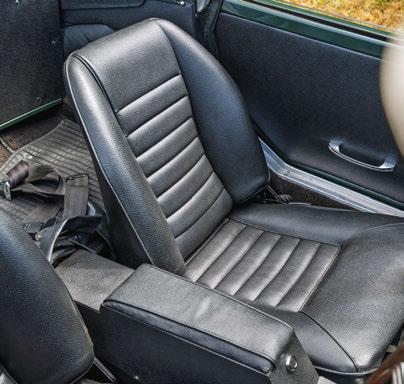
This image and far right Heavy-duty shifter is a giveaway in the otherwise cosy and familiar interior; 260ci V8 under the bonnet gave Sunbeam’s roadster real US appeal.
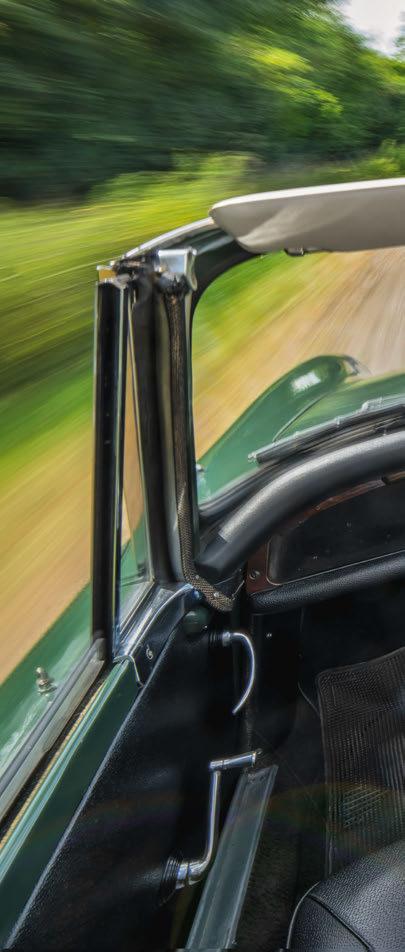
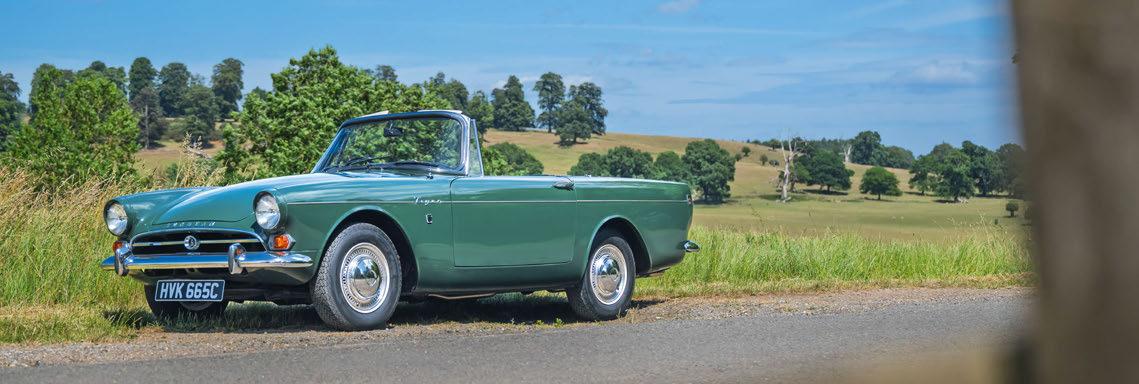
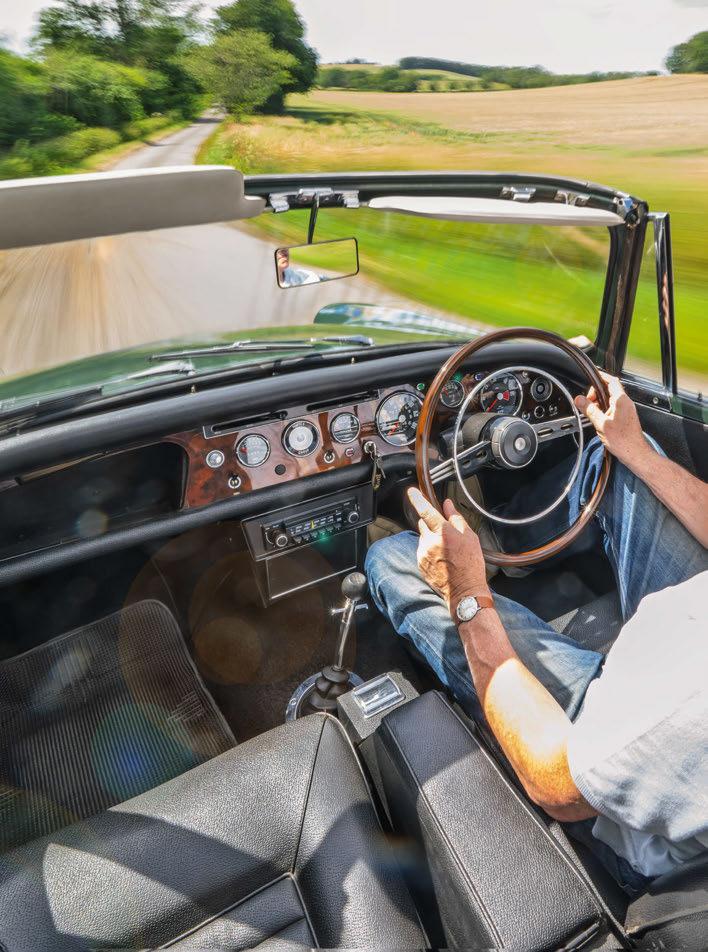
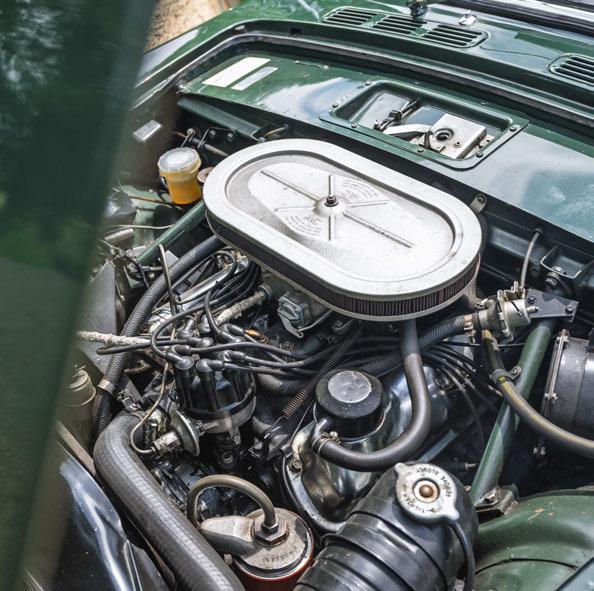
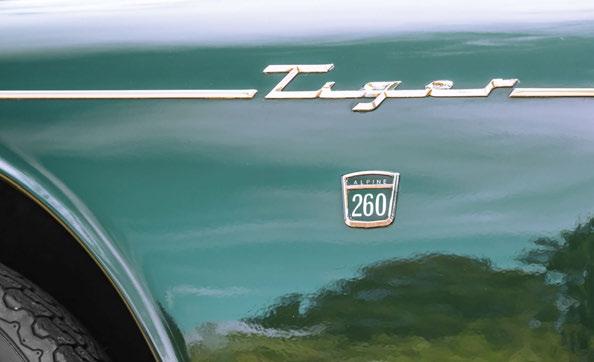
The latter reported: ‘All those concerned deserve a big pat on the back for having produced the Tiger – Ford for having made available the necessary engines and hardware in the required quantities, Ian Garrad for having the vision to see the possibilities in this combination, Lord Rootes for having the strength of character to do something that must run very much against the English grain, and all those at Rootes for having put together an automobile so well.’
Due to the rush to get cars to the US, the UK and Europe launches were delayed, British customers finally getting behind the wheel in March 1965. In April, Autocar wrote ‘the Tiger is somewhat mis-named, for it has nothing of the wild and dangerous man-eater about it and is really only as fierce as a pussy-cat’.
Maybe it was this supposed benign quality that urged Reg Parker to give his son Geoffrey an early MkI (one of the first 200 UK cars) for his 21st birthday. The Nuneaton-based Parker family had been involved with Rootes products since the 1930s, selling and servicing the likes of Singer and Humber until the Chrysler take-over and later ending with Peugeot. There
was a break during the war when they concentrated on making sure the area’s farming community had the equipment it needed, but four generations of Parkers have overseen the running of this family business.
Geoffrey and his bride used the Tiger for a honeymoon tour of Scotland, but his interests were mainly in pre-war cars and the Tiger spent most of its time in a heated garage. His son Andy recalls: ‘The garage was kept warmer than the house. He rarely used it and I think the last time he drove it was in the late ’90s.’
As a result it’s fabulously preserved, retaining all those detail items that so often get lost in restorations or are considered unnecessary when replicating parts. I’m thinking of the strap checks that are integral to the original soft-top, for example. It was fitted with a very early Philips radio – by trained Rootes mechanics – but this is the only non-standard piece on the whole of the car.
After Geoffrey’s passing, his family decided to sell the Tiger and it was duly put up for auction with RM Sotheby’s last year, much to the surprise of the owners’ club, which was totally unaware of the car’s existence.
Needless to say it didn’t fail to find a new home, the new custodian, Grahame Bryant, having an enviable collection of V8-powered sports cars in his stable. ‘I had one and used it every day in the early ’70s,’ he remembers. It took a while for the right example to emerge and, although some work had been carried out before the sale, marque expert Kevin Cooper was entrusted to recommission the car, in particular the exhaust system, which he remade by replicating the original exactly.
Being unmodified and so original, it fits very much the intention of the UK’s marketing department, in that it purrs along rather than roars. The power, and more importantly the torque, aren’t there to tear up the highway, instead to cruise in comfort without constantly having to change gear. The steering, gear selection, even the indicator stalk are nicely run in – nothing too tight, yet nothing worn out – and I would happily have followed in Geoffrey’s tyre-tracks and driven up to Scotland and back in it.
THANKS TO Simon Drabble, who has this car for sale, simondrabblecars.co.uk.
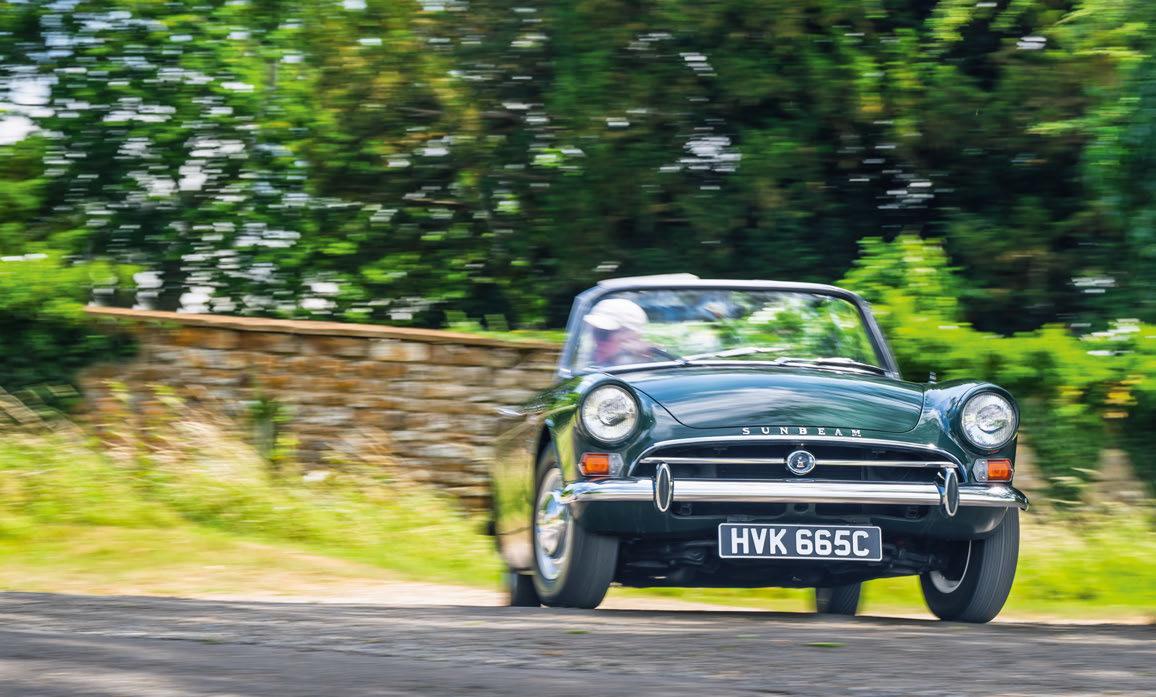


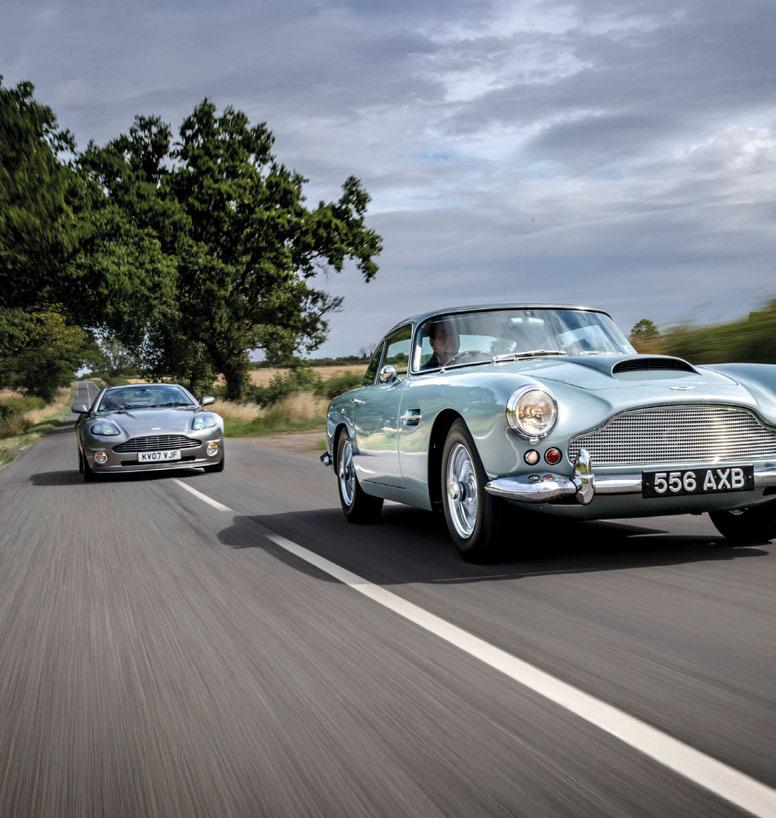











THE TEAM at JAR Car Storage are highly experienced motor engineers with hundreds of years of experience between them. Caring for customers’ cars is their top priority, their best reward being the fabulous feedback they receive from their clients. ‘Just wanted to thank you for the fantastic job you do. Whenever I have picked a car up – it looks better, feels better and drives better. Truly amazing,’ says Nigel Light. Or how about John and Jan, from Australia? ‘It seems rare these days to experience service of such a reliably high standard. You made owning and using our Porsches so easy from the other side of the world.’
JAR offers clients a high standard of dehumidified storage, with maintenance options, in purpose-designed buildings at two highly secure Kent sites: one close to Ashford station (great connections for London and France) and another at Tunbridge Wells on the East Sussex border. Visits are by appointment only to ensure JAR clients experience the one-to-one service they deserve. The approachable team ensures clients are fully engaged with the care of their vehicle.
JAR’s enclosed car transporters can take clients’ cars to and from destinations such as shows, events and auctions. Whether JAR is transporting a classic, an historic racing car or, say, a modern Lamborghini, your car is in safe hands, with an experienced HGV driver and motor engineer. The award-winning JAR workshop offers clients a high level of knowledge and experience unique to a car storage company – it includes a significant part of Team 3019, which was awarded with the title of Restorer of the Year at the 2023 Historic Motoring Awards for the restoration of a 1965 Shelby 427 Competition Cobra.
JAR offers clients a complete in-house service, from pre-purchase inspections to high-quality car storage, plus enclosed car transport and the renowned JAR specialist workshops.

Superior car storage, enclosed car transportation and specialist motor engineers. info@jarcarstorage.co.uk
+44 (0)1580 753939 www.jarcarstorage.co.uk
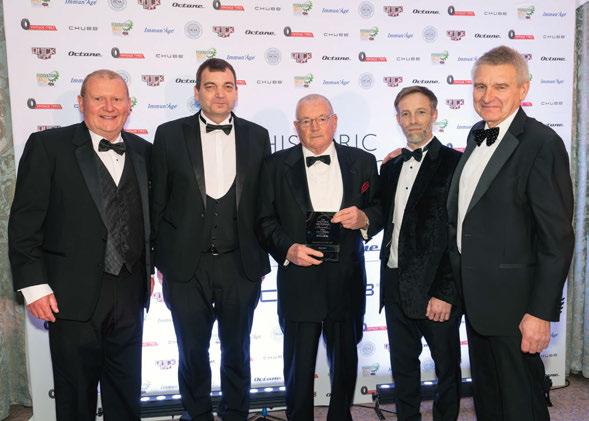
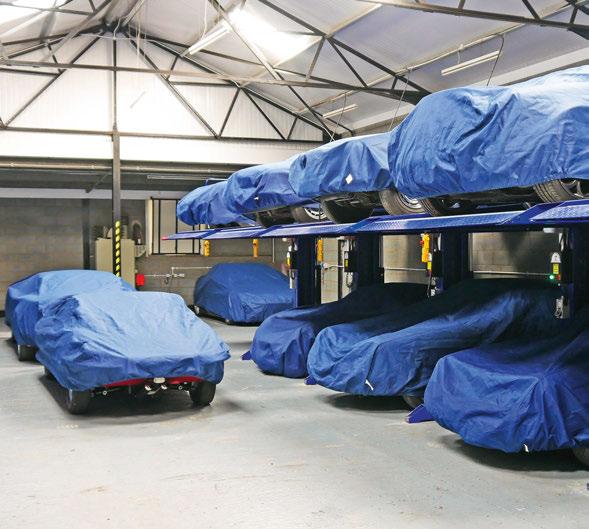

‘Restoring history, one ride at a time.’ Complete service from classic parts manufacture to full restorations. +44 (0)1295 771046 www.GP59.com

Specialists in the sale of historic cars for road and track, from Edwardian racers to analogue supercars. +44 (0)1869 357126 www.pendine.com
The world’s foremost global historic motoring events company, running rallies for classic and vintage cars. +44 (0)1869 254979 www.hero-era.com

Helping to keep your Jaguar on the road. +44 (0)1746 765432 www.sngbarratt.com
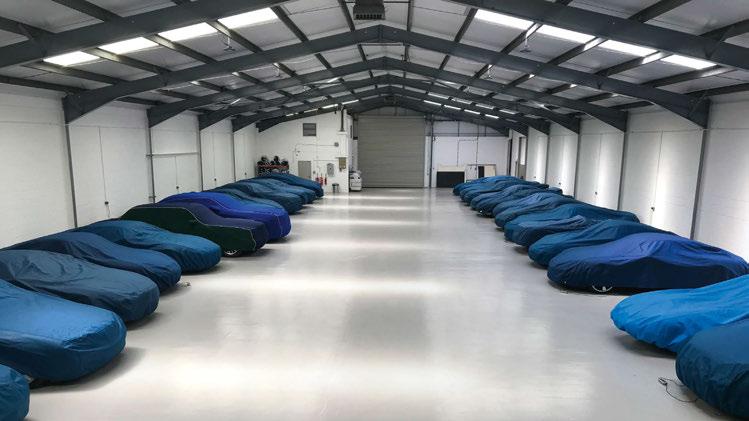
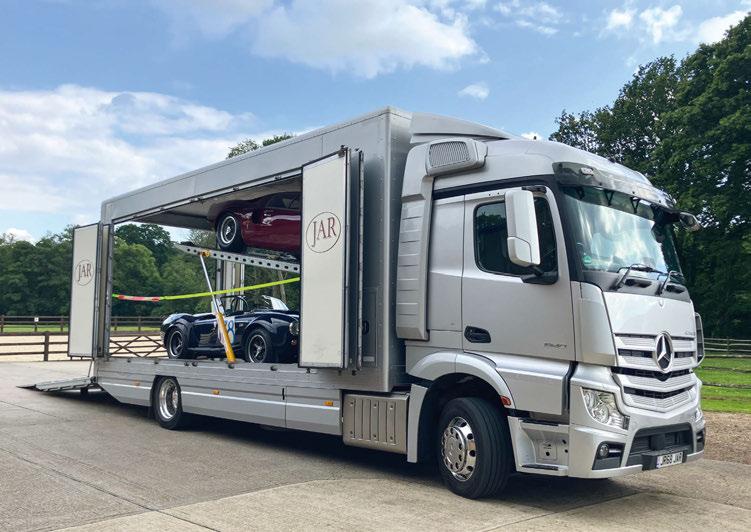




Autohistoric: specialists in the preservation and restoration of veteran and vintage vehicles.
+44 (0)1825 873636 www.autohistoric.co.uk

Jaguar preservation, restoration and servicing, specialising in cars from the 1950s and 1960s.
+44 (0)1789 507611 williamheynes.com

Harding Auto Services: 1920s to modern day, road, race and custom.
+44 (0)1483 487626 hardingautos.co.uk
The HCVA held its fifth Heritage Matters trade insight day in October at the impressive Jaguar Land Rover Classic facility. These informative events, which bring together over 120 industry leaders and the media, are open to all HCVA businesses and our public Fellowship members.
To support our theme of ‘Attracting the next generation’ we encouraged delegates to bring along younger team members to engage and be inspired by the discussions. A highlight of the day was a panel of under-30s from JLR Classic, GTO Engineering, William Heynes and Paddock Speedshop, who talked about their experiences, including what attracted them to the industry, their pathway so far, their ambitions, and what the industry can do better to attract more entrants like themselves. It was inspiring to the audience that, if we can attract and nurture a pipeline of talent like the calibre of the panel, then the industry will have a very bright future!
The challenge of an ageing demographic of owners and enthusiasts is well-known.
Data presented from Iconic Auctioneers showed green shoots with a healthy market for newer and useable classics, supported by a strong interest in online auctions from a younger demographic.
The demographic challenge also impacts many specialist businesses in our industry. The long-term nature of skills development and a proliferation of small- and medium-size businesses, combined with an ageing ownership and management, provides a unique set of challenges. We heard from member East Devon Law on the vital importance of succession planning in our industry to address these issues.
The big positive is that we remain a diverse industry with world-leading products and services, exciting opportunities, and amazing talent that can be a showcase for attracting the next generation and securing them onto a career pathway as future industry leaders.
With your support, we can make sure historic vehicles stay where they belong – on the road, for everyone to enjoy. Join us as a Trade member, Fellowship member or supporting enthusiast at www.hcva.co.uk.
Dale Keller, CEO
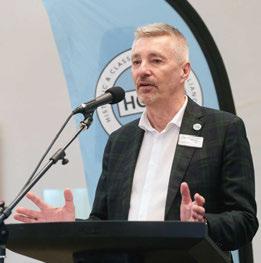
The trials and tribulations of the cars we live with
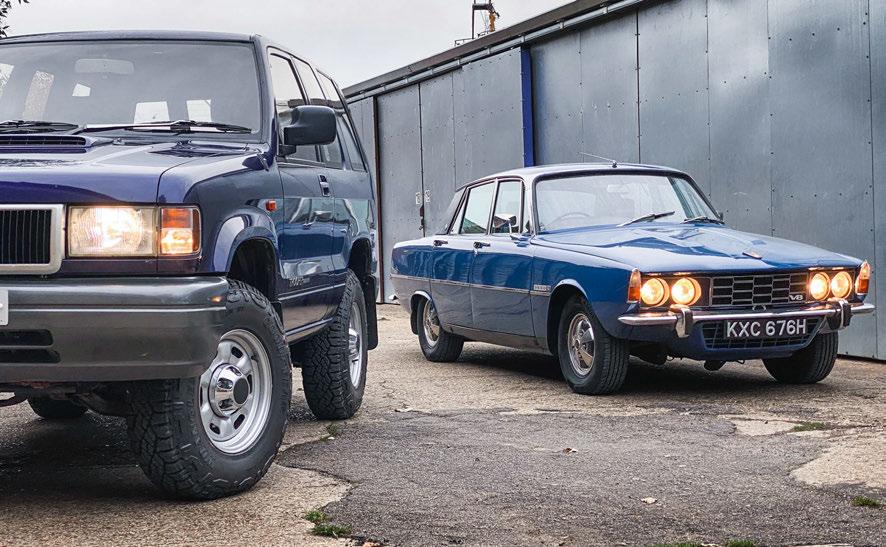
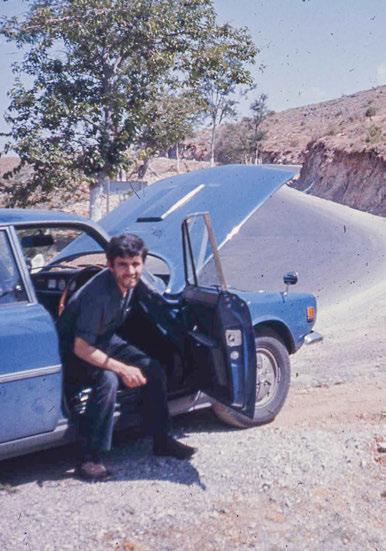
LOOKING BACK, it seems like fate. I was on my way to view a classic car that was coming up for sale at an auction when the automatic gearbox in my 2006 Volvo XC70 began to overheat and slip. It’s done this once before, nine years ago, which led to a gearbox-out rebuild and a £2000 bill. I turned around, limped back home and hired a cheap car so I could still get to the auction next day.
For some time now – ever since selling my 1966 Mustang early in 2023 – I’ve missed not having a really usable classic. Which got me thinking: could I run a classic as my everyday car and dispense altogether with a ‘modern’? The
Volvo, to me, definitely falls into the ‘modern’ category at a mere 19 years old.
Trouble is, living in the sticks as I do, if my car is off the road with a problem then I have no transport whatsoever. The obvious man-maths solution is to buy two classics, on the premise that at least one will be drivable when the other one’s being fixed. So that’s what I’ve done.
The Volvo’s demise was the impetus I needed to bid on that auction car, which was being sold by Manor Park Classics in Cheshire. It’s a 1970 Rover 3500S but rather a special one, the first manual-gearbox V8 car that Rover ever built, originally a
left-hand-drive North Americanspec P6 that Rover’s engineers pulled off the production line to turn into the prototype 3500S. They then used it for five years as a development car and it ended up with an experimental SD1 engine and five-speed LT77 gearbox, both of which it still has.
Chassis 0001M had a chequered life after Rover sold it in 1975 so it’s been rebuilt at least twice and had three or four different interiors. The allimportant base unit, onto which the outer panels are bolted, is the original, however – witness the bonnet slam panel, with its centre section cut away and bolted back in to make engine swaps easier
during its time with Experimental. The two cuts and the bolts either side are still present.
I was successful at the auction with a final bid of £8600 (£9890 including buyer’s premium and VAT) and two days later I drove my new purchase home. For the first few miles it was running like a pig; fluffing and missing as I hunted for a petrol station. Oh, what have I done? But, after filling up, I was straight onto a dual-carriageway – where the engine quickly smoothed out and turned into an utter joy. Within the next four weeks I did 1800 completely trouble-free miles, apart from what I think is a noisy wheel bearing.
These are the cars run by Octane’s staff and contributors
JAMES ELLIOTT
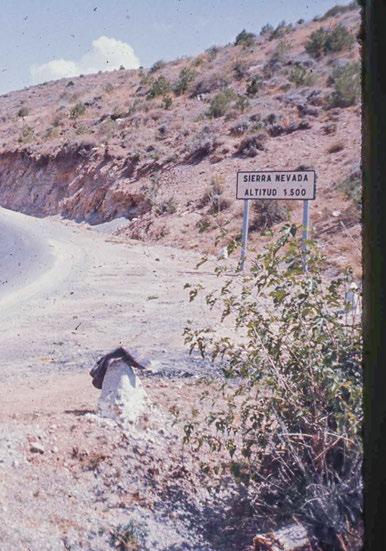
Clockwise, from top left Rover joins the fleet, alongside an Isuzu Trooper; pics taken of it on test in Spain, 1970, by Rover engineer Jim Shaw; tidy interior was originally black; it still has a prototype SD1 V8 and gearbox.
The Rover’s now in for that bearing to be changed and I’m using my other recent purchase: a very late second-generation Isuzu Trooper SWB. With a beefy 3.1-litre four-pot turbodiesel and separate chassis, it’s a proper old-school 4x4 – and it has a great exhaust note!
Just like Range Rover Classics during the 1990s, I think these Troopers are currently under the radar and most have been ‘farmed’ to death. I paid £3750 for this extremely solid example that had rarely been off-road before it was parked up under a car port for ten years. If any readers have fond memories of the Trooper, I’d love to hear them.
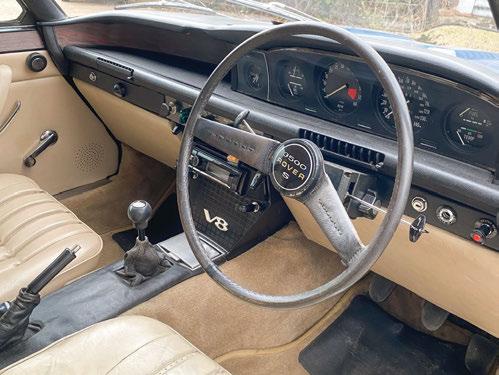
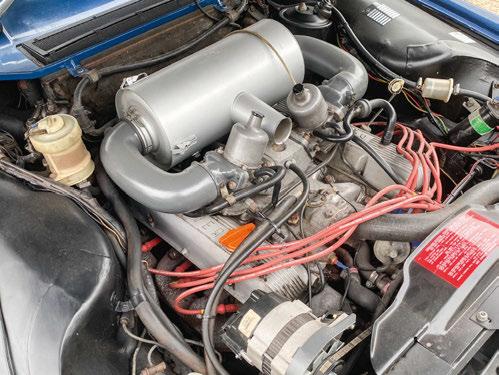
Editor-in-chief
• 1965 Triumph 2.5 PI
• 1968 Jensen Interceptor
• 1969 Lotus Elan S4
ROBERT COUCHER
Founding editor
• 1955 Jaguar XK140
GLEN WADDINGTON
Associate editor
• 1989 BMW 320i Convertible
• 1999 Porsche Boxster
SANJAY SEETANAH
Advertising director
• 1981 BMW 323i Top Cabrio
• 1998 Aston Martin DB7 Volante
MARK DIXON
Contributing editor
• 1927 Alvis 12/50
• 1927 Ford Model T pick-up
• 1955 Land Rover Series I 107in
• 1970 Rover 3500S
• 1998 Isuzu Trooper 3.1Td
ROBERT HEFFERON
Art editor
• 2004 BMW Z4 3.0i
DAVID LILLYWHITE
Editorial director
• 1971 Saab 96
MATTHEW HOWELL
Photographer
• 1962 VW Beetle 1600
• 1969 VW/Subaru Beetle
• 1982 Morgan 4/4
BEN BARRY
Contributor
• 2007 Mazda RX-8
MASSIMO DELBÒ
Contributor
• 1967 Mercedes-Benz 230
• 1972 Fiat 500L
• 1982 Mercedes-Benz 500SL
• 1985 Mercedes-Benz 240TD
SAM CHICK
Photographer
• 1969 Alfa Romeo Spider
JORDAN BUTTERS
Photographer
• 2007 Porsche 997 GT3
ROWAN ATKINSON
Contributor
• 2004 Rolls-Royce Phantom
BERTHOLD DÖRRICH
Contributor
• 1939 Alvis 12/70 Special
• 1958 Austin-Healey Sprite
• 1972 Porsche 911T
ANDREW RALSTON
Contributor
• 1955 Ford Prefect
• 1968 Jaguar 240
RICHARD HESELTINE
Contributor
• 1966 Moretti 850 Sportiva
• 1971 Honda Z600
PETER BAKER
Contributor
• 1954 Daimler Conquest
• 1955 Daimler Conquest Century
• 2005 Maserati 4200GT
• 2008 Alfa Romeo Brera Prodrive SE
DAVID BURGESS-WISE
Contributor
• 1924 Sunbeam 14/40
• 1926 Delage DISS
JOHN MAYHEAD
Contributor
• 1946 MG TC
• 1970 VW Type 2 Westfalia
• 1988 Porsche 944
MATTHEW HAYWARD
Markets editor
• 1990 Citroën BX 16v
• 1994 Toyota Celica GT-Four
• 1997 Peugeot 306 GTI-6
• 2000 Honda Integra Type R
• 2002 Audi A2
JESSE CROSSE
Contributor
• 1968 Ford Mustang GT 390
• 1986 Ford Sierra RS Cosworth
MARTYN GODDARD
Photographer
• 1963 Triumph TR6SS Trophy
• 1965 Austin-Healey 3000 MkIII
DELWYN MALLETT
Contributor
• 1936 Cord 810 Beverly
• 1937 Studebaker Dictator
• 1946 Tatra T87
• 1950 Ford Club Coupe
• 1952 Porsche 356
• 1955 Mercedes-Benz 300SL
• 1957 Porsche Speedster
• 1957 Fiat Abarth Sperimentale
• 1963 Abarth-Simca
• 1963 Tatra T603
• 1973 Porsche 911 2.7 RS
EVAN KLEIN
Photographer
• 1974 Alfa Romeo Spider
• 2001 Audi TT
2005 Maserati 4200GT
Peter Baker
WITH SUMMER ALMOST
over, we at last managed an all-too-short driving holiday, discovering the Val de Loire region of France over seven days in our 2005 Maserati Cambiocorsa. That the Loire is one of the greatest wineproducing areas of the country is, of course, pure coincidence. It rained most of the time. Even so, from our hotel in Amboise we were within easy motoring reach of four châteaux, two vineyards and one motor museum. As to be expected, every street in town also led to a starred restaurant.
Having crossed during the day on the Portsmouth to Le Havre ferry, our first night was spent just 40km into the journey at Manoir Les Sous Bois, where, after an aperitif or two with owner Paul, he served us dinner. Next morning, cows, sheep and chickens (the latter now minus one) close by our open bedroom window provided us with a unique countryside wake-up call just in time for a late breakfast.
A bit behind schedule, we crossed the Seine via the magnificent Pont de Normandie bridge and eventually joined a near-empty A28 autoroute: direction Le Mans. The arrowstraight road took us some 140km
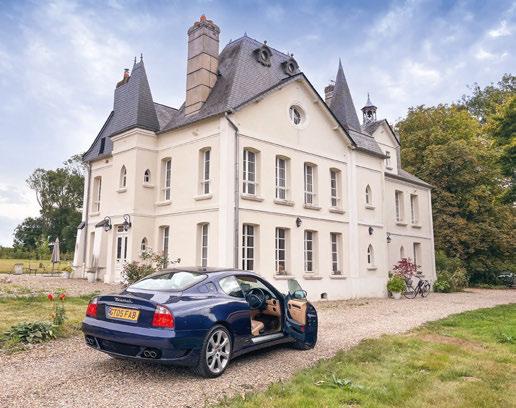
beyond the famous circuit until, after a left turn to follow the river and a ‘Wow, blimey, look at that’ moment, the magnificent 15th Century Château d’Amboise hove into view.
Three days in, and after topping up the Maser (again) we followed a delightful 50km linkage of backroads to Valençay, home of Le Musée de l’Automobile, a small but perfectly formed 60-car collection owned by the local Guignard family, whose motoring connections go way back to the days of the horse and cart. Naturally, French cars dominate, with a fine Bugatti Type 57 Stelvio taking pride of place. I wasn’t absolutely sure which country owned Molsheim at the time, so I checked: Germany handed the place over to France in 1919, following the Treaty of Versailles. With that sorted, it was time to get the umbrella out and visit yet another château.
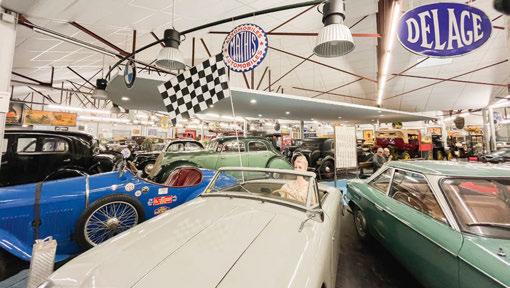
Time passes quickly when you’re having fun, and before you could say Leonardo da Vinci (seems he owned half of Amboise and is buried there) we were heading up to Caen, spending our final day in nearby Bénouville, home to the Pegasus Bridge of D-Day fame. The local church bears testament to the struggle that took place on 6 June 1944. Saving the best till last, I had booked a table at Restaurant La Glycine just around the corner –a good decision as this superb eatery is packed, even on a Monday. That left one more overnight bill to pay before rushing to catch the ferry. We covered 1600 trouble-free kilometres in our Maserati, a grand tourer if ever there was one, and enjoyed every minute.
Above and below
Four châteaux, two vineyards, one motor museum, a lot of rain – and a trouble-free Maserati.
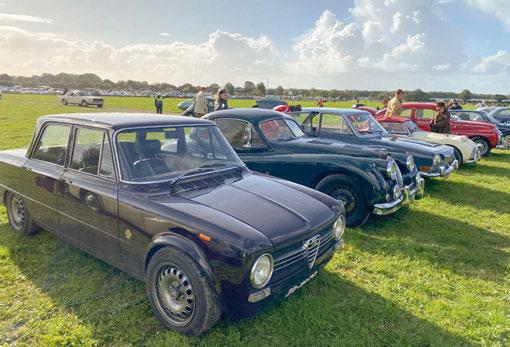
1955 Jaguar XK140 Robert Coucher
AND SO ANOTHER classic car season comes to a close. I recently took the XK out to gatecrash the 96 Club gathering in Chesham Place, Belgravia, which is always extremely enjoyable but is just a trundle up the road as part of my Tour de Chelsea.
The run down to Hampton Court Palace in early September for the Concours of Elegance gets the Jaguar’s juices properly warmed through with a fast blast along the A3. I thought this year’s concours was superb, helped by lovely sunny weather and a great crowd of Octane friends, including Peter Wallman and Richard Charlesworth doing the commentating. I met two Octane readers with their Aston Martin DB6 (actually, the wife’s DB6) in the car park before I even set foot in the Palace gardens. I did think the £20 parking charge was a bit steep, but the traffic was all directed quickly and conveniently.
I had a new cooling fan thermostat fitted by Gary at Graeme Hunt Ltd, as reported in issue 269, and he asked me to check the top radiator hose was watertight. Thankfully this road test proved all was well.
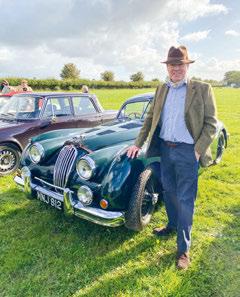
suitable old lorry for the green lanes of West Sussex.
Completely by chance, I parked next to the Alfa Romeo Giulia (at top) of Octane Netherlands editor Ton Roks, which was a nice surprise, and then we enjoyed watching some fabulous racing in challenging, wet conditions. Maybe it should be renamed the Goodwood Survival meeting!
Later in the month it was down the beautiful A283 through Petworth to the Goodwood Revival meeting. Again, the sun was shining to start with and the XK was singing. It’s an entirely +400%
The XK successfully navigated the muddy fields out of a very busy Goodwood and is running beautifully. I still stick to the notion of owning and running just one classic car, making sure it is mechanically tip-top and on the button. Of course, that’s easy in busy London, where I ride a bicycle to the shops and use the Number 19 bus and the Tube for getting about while the Jaguar rests in its lair.
additional tyre-bearing surface from these specially designed product lines of cushions to avoid, seriously, the tyre flat spot phenomenon.
ALTairEGO cushions sets offer a tyre-bearing surface +400% greater than when the car is parked on the ground, thus avoiding the tyre flat spot.
3 product lines Comfort STD, Comfort 4RD and SToraway 21 models in respect to your car’s specific kerb weight category, between 500 kg / 1100 lbs and up to 4000 kg / 8800 lbs.
since 2009 tyre cushion sets
info@altairego.it www.altairego.it
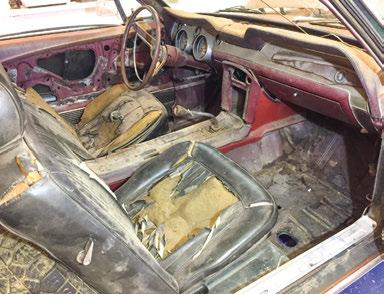
1968 Ford Mustang GT390
ONCE I’D FINISHED restoring some metal parts and reupholstering the front and rear seats in my ’68 Mustang GT390, it was at last time to install the new carpets (which I already had ‘in stock’) and fit the seats to complete the interior. There were a few other jobs, too, such as installing the ingenious trapdoor that opens from the boot. The rear seat is a carpeted fold-down affair, its two fabricated steel pieces joined by a chromed piano hinge with the re-upholstered seat frames attached to them.
I’d already broken the rear seat panels down (each one is a thin, 20mm-deep box section) to treat some light surface rust and prime the hidden interior surfaces, then built them back up again. A third section forms the rear of the loading bay and screws down onto the bodyshell. Luckily, all three panels are assembled with countersink machine screws and just a couple of spot welds.
Remnants of dusty carpet scraped off easily and the surfaces were prepped before I used spray adhesive to cover them with new carpet. After that came the chrome trims, which screw to all four edges of each panel, and I joined the panels using the piano hinges.
The finished two-piece assembly is hefty and it was clear that getting it into the car, in position and fitted without
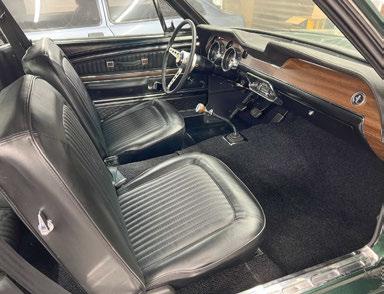
damaging paint, the snug-fitting glassfibre interior side panels or my fingers would be a ‘take your time’ job needing care. When rolled back into the upright position, the seat clicks into two latches either side and the heavy-duty hinges that bolt the assembly to the floor are shimmed to line them up.
Nothing is simple in this car but this is a cool and innovative feature. The hatch quickly opens from the boot and, with just a tug on a single latch, it swings up and locks to form a smart loading bay.
I’m always nervous about aftermarket carpet sets and these were moulded to fit over the front seat box section and transmission tunnel. I wasn’t optimistic and, once freed from the boxes they’d arrived in from the States many moons ago, they looked pretty crumpled. After I’d got them in and warmed with a heat gun they actually fitted very nicely, which was something of a relief.
The gear-lever gaiter made me stop and think as I’d assumed it screwed down over the carpet with the chrome finisher on top – but instead it screws directly to the floor, the finisher held in place by the folds of the gaiter and covering the hole in the carpet.
So that’s that. I’d fitted a new headlining and the overhead console before installing the glass, so all that was left was to screw the sunshades in place and bolt down the seats. There are a few small trim gaps I need to tweak here and there and I’m waiting for some glue with which to attach the mirror to the windscreen, but otherwise the interior is officially ticked: ‘job done’.

‘About to head out on a 200-mile round trip in the Boxster to view a car in Kent. Could be another straight-six joining the fleet’ Glen Waddington
‘It’s been several months since I wrote about the Alfa Spider here but the finished bodyshell is now in primer and the engine is stripped for its rebuild’ Sam Chick
‘After the self-levelling suspension on my Mercedes 240TD was replaced, it was too high at the rear and needed a visit to the shop to be adjusted. That wasn’t possible until October –I just hope I can drive it before winter comes’ Massimo Delbò
‘A cryptic message from my dad led me to a very early 1988 Citroën BX GTI 16v – and now we’re about to collect it! One of my other cars will have to be sold, though ’ Matthew Hayward
‘At last I’ve bought another car to replace the ’96 Impreza – a 1991 VW Golf GTI Mk2 in great condition. It’s a predictable choice for me but I love it already’ David Lillywhite


















































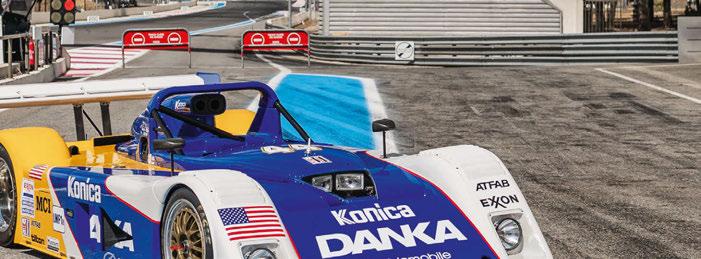














































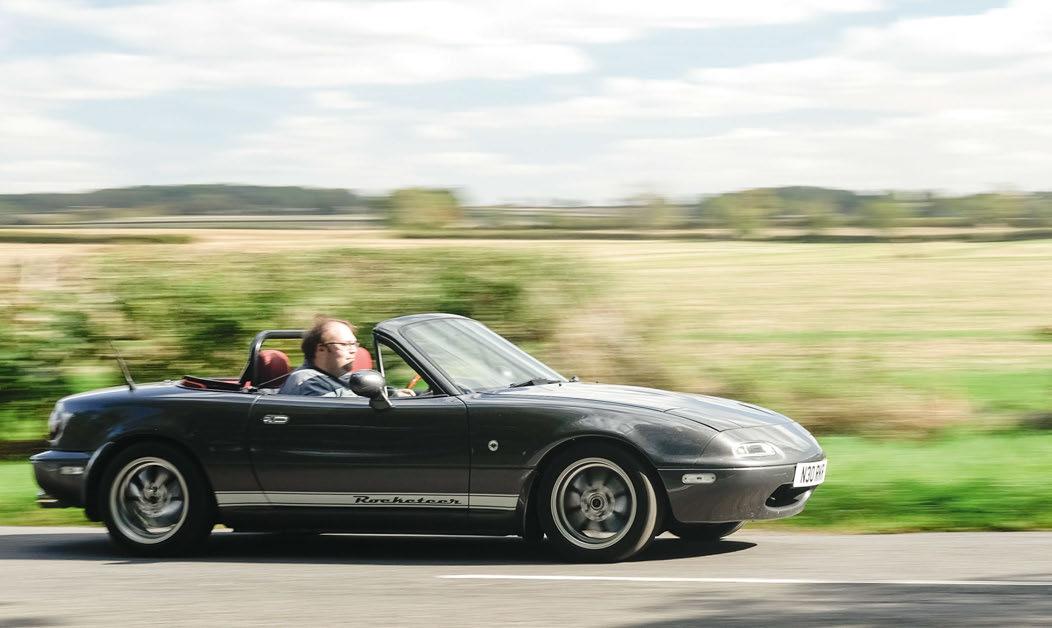
1996/2025 Rocketeer MX-V6 Matthew Hayward
IT’S BARELY TWO months since I was gushing over Mazda’s bone-stock 1.6-litre heritage fleet car on these pages, so the idea of replacing that engine with a 3.0-litre V6 (of more than twice the power!) seemed a bit rash. Would its inherent balance and poise be destroyed?
A chat with Rocketeer founder Bruce Southey quelled my fears. The MX-5 ticked most boxes on his sports car attribute wishlist, lacking only power and an exotic soundtrack. So, forced induction? A Rover V8? Maybe a Busso V6? Then a colleague suggested a hidden gem of a V6, under the bonnet of a Jaguar S-type.
The AJ-30 in question is a Ford unit, originally developed by Porsche and further developed by Cosworth. It produces 230bhp in standard form but, fully rebuilt, blueprinted and remapped, it’s good for around 280bhp in the Rocketeer. It fits perfectly into the Mazda’s engine bay, too, bolting up to the original gearbox and fixed to the original mounting points via Rocketeer-engineered brackets – so no cutting or modifications to the ’shell.
The best part? All-in, the all-alloy V6 weighs the same as the original four. Some time after developing the Rocketeer kit, Southey found out that Mazda
had built a V6 MX-5 prototype in period, using a close relative of this engine. It was meant to be. Turn the key and the noise will raise the hairs on the back of your neck. There’s an exotic quality to the exhaust note, even hints of a hotted-up 1960s racer. This is Rocketeer’s development car, with aftermarket suspension set to a sensible ride height, thicker antiroll bars, a set of 15-inch wheels and 195/55 Michelin Pilot Sport 2 tyres. It isn’t some extreme track car, but developed to be enjoyed on the road – just like the original. And it feels every bit as agile as an MX-5 should. The V6’s throttle response and low-down torque
make exploiting the fabulous chassis even more of a joy than it is in the standard car. It feels effortlessly quick, even just cruising up to the national speed limit. That engine begs to be pushed harder, and the more you explore the upper rev range, the more confidence you will find in this car’s ability to handle its newfound power. It’s exciting, seriously quick, and never feels like it’s overwhelming the chassis. What’s even more impressive – as someone who has driven (and even owned) a fair few engine-swapped cars – is how well-developed the Rocketeer feels. There are no untoward
vibrations or resonances and there’s even a tuneful exhaust that doesn’t drone on the motorway.
In a world of £100,000-plus restomods, the Rocketeer is arguably one of the most reasonable options out there. The company will sell you a kit that includes everything you’ll need to convert your own, or it will build one for you – to a variety of levels of finish and tuning.
This one is what Rocketeer calls ‘Turnkey Plus’, which takes a good base car and adds all the goodies – in this case a beautifully re-trimmed leather and Alcantara interior (and wonderful bespoke gauges), as well as all the mechanical changes, added chassis strengthening and roll bar, for £36,540 plus VAT. The full ‘Restomod’ option will take an
MX-5 down to the bare ’shell and rebuild it as a better-than-new car to your chosen spec.
Southey started the project in 2013 and turned the business full-time in 2021, during which time Rocketeer has sold roughly 170 engine kits and built around 30 complete cars for customers all over the world.
My time with the Rocketeer is tinged with a note of sadness, as it comes a few days after the death of Tsutomu ‘Tom’ Matano: the man behind the MX-5. Southey recalls speaking with Tom about the project a few years back, and was over the moon to discover that he was aware of what the team had been doing, and even approved, simply describing it as ‘the MX-5 amplified’. I couldn’t have put it better myself.
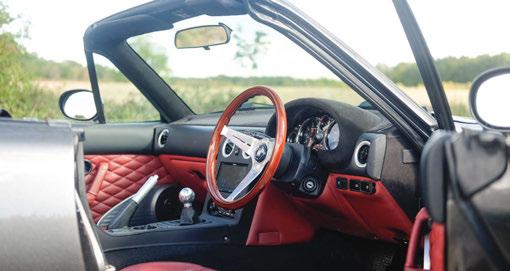
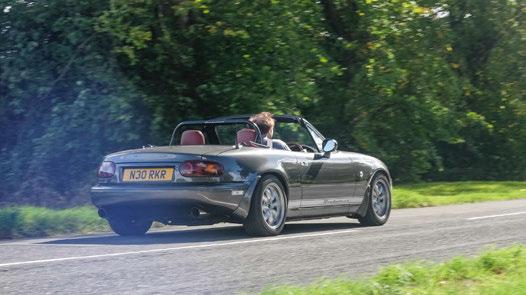
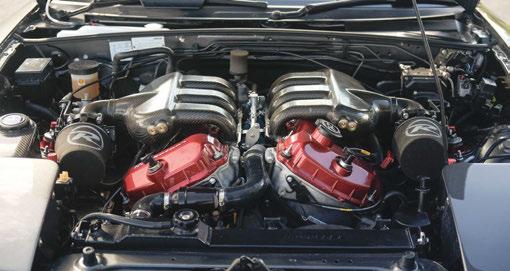
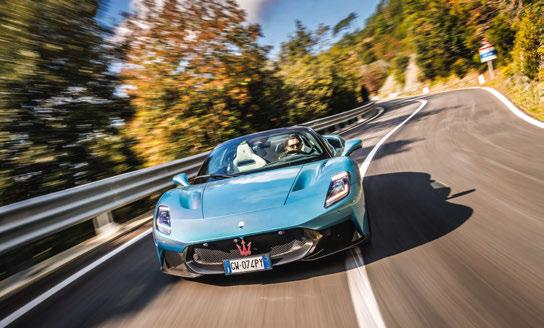
2025 Maserati MCPura Elliott Hughes
ONE OF THE perks of this job is seeing the newest and most exciting cars before the public. So I was understandably excited when Maserati emailed ‘Private Preview – New Model Reveal.’ ‘What’s coming embodies the true spirit of our sports cars,’ it promised. ‘Performance, intelligence and evolution in its [sic] purest form.’ My anticipation was sky high, but the word ‘evolution’ proved to be closest to the mark.
When the Maserati MCPura was unveiled over the summer, it looked rather like the five-year-old MC20. The familiarity continues underneath: the 3.0-litre twin-turbo V6 with its F1-inspired pre-chamber ignition is unchanged, as is the Dallara-developed carbonfibre tub. Outputs stay at 621bhp and 538lb ft, with 0-62mph in 2.9sec and a 202mph top speed. Accordingly, the technical briefing in Tuscany is brisk. Upgrades amount to aerodynamic refinements from the shark-like nose, reworked floor, side-skirts and diffuser. New alloys and fresh colours – including the striking Al Aqua Rainbow launch paint – complete the exterior. The interior is now trimmed entirely in Alcantara and features a flat-topped steering wheel with optional shift lights.
Having already driven the MC20 in drop-top Cielo form, I’m not exactly crestfallen at the chance to drive its – let’s be honest – facelifted sequel on a route that takes in the Miami-esque boulevard of Forte dei Marmi and the seaside town of Sestri Levante. There is everything here, including sinuous mountain roads punctuated by picturesque Italian villages, and wideopen stretches of autostrada.
Those roads allow the MCPura to stretch its legs, and serve as a reminder of how good Maserati’s five-link suspension is at shrugging off bumps in its softer settings, while also providing spirit-level-flat handling. The powertrain remains more than potent enough and still produces that characterful and unashamedly turbocharged soundtrack.
I wasn’t entirely convinced by the soft pedal feel of the carbon ceramic brakes in the MC20 and it seems better in the MCPura than I remember. Software tweaks, I’m told, could have been responsible for the improvement, though the difference is less than night and day.
Despite what Maserati says, the MCPura clearly isn’t a ‘new model’. But putting the semantics to one side, it remains what the MC20 always was: a fantastic leftfield supercar with a huge bandwidth of capability. I still like it very much.
Words by Richard Heseltine
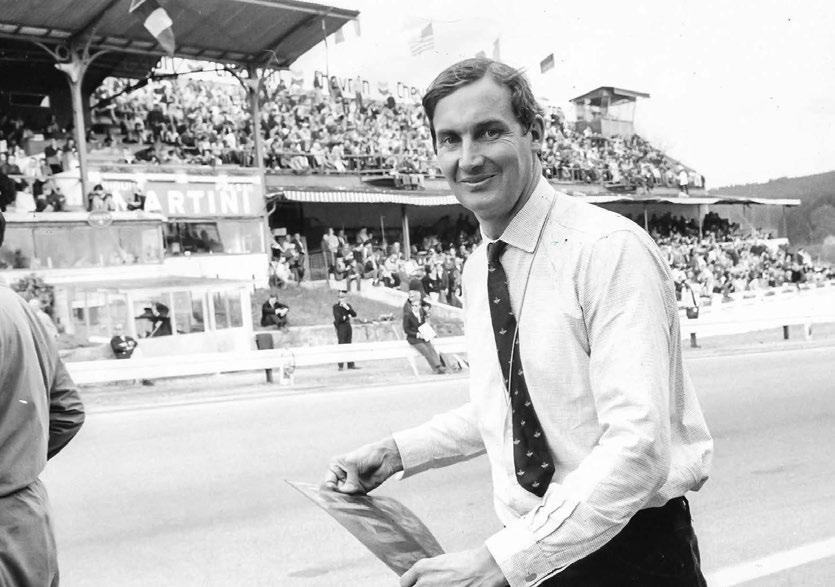
Ferrari works driver – and co-creator of the Hillman Imp
CONVERSATION WAS conducted at high volume, and with many emphatic gestures. It was a typically chaotic Ferrari press conference, or at least it was until Il Commendatore spoke, held in December 1966, three months after lead driver John Surtees had come close to losing his life following a crash at Mosport Park. Naturally, the identity of the driver who would take his place in F1 in 1966 while Il Grande John recuperated was a hot topic. Enzo talked in hushed tones of an ace wheelman who was the obvious choice.
‘We have, at the present time, a driver-anda-half,’ he declared, before describing him as being ‘the only complete driver’. The 100-strong assemblage was mystified; even more so when the name of this superstar was revealed. Mike Parkes had earned legendary status as a test driver at Ferrari. He also excelled in racing sports-prototypes, but a ‘driver-and-a-half’? Perhaps the Old Man was referring to the Brit’s six-foot-four stature. Nobody was ready for the mantle of ‘only complete driver’ to be placed so firmly on Parkes’ lean shoulders, it seemed.
Not even the man himself. After Enzo gave his blessing, the anointed one found himself interviewing Stirling Moss – in Italian – for local TV. He asked him: ‘Do you think I can
make it in Formula 1?’ Always the polished pro, the future knight replied: ‘I’ve watched you from the beginning, Mike. Of course you can make it.’ Truth is, this was more than just PR puff. Parkes was good. Better, perhaps, than even he realised. The glamour of driving for the Scuderia was a long way removed from his early professional life, though.
Parkes was born in Richmond, Surrey, on 24 September 1931. His father had been a prominent figure in Britain’s aircraft industry and later the chairman of Alvis. Young Mike was educated at Haileybury College in Hertfordshire, prior to joining Humber Ltd in 1949 as an apprentice. Three years later, he first ventured on-track aboard a 1933 MG PB. This, in turn, made way for a TD and a Frazer Nash, which he campaigned in VSCC events for two seasons. Nevertheless, motorsport was something he did in his downtime.
Parkes moved onwards and upwards within the Rootes Group to the point that the 20-something found himself appointed the co-desiger of a small family car. It took six years to make the leap from idea to production model as the Hillman Imp. He was still an engineer first, racing driver second, the move to Ferrari being the stuff of folklore. Bit by bit, Parkes’ on-track exploits for the likes of
Ecurie Endeavour, Maranello Concessionaires and The Chequered Flag got him noticed. Nevertheless, he arrived at Le Mans in 1961 ostensibly to oversee Rootes’ bid with a brace of Sunbeam Alpines.
During the Test Weekend, he was asked if he would like to try out a works Ferrari. Parkes was instantly on the pace and subsequently found himself driving in the 24-hour race aboard a 250 TRI/61 sportsracer. He and team-mate ‘Wild Willy’ Mairesse finished second overall. Parkes was living in Maranello before the year was out. Urbane, sophisticated and a tireless worker, he made an instant impression in his new home, not least on Enzo Ferrari. He also enjoyed a close relationship with designers and mechanics, plus the Scuderia’s roster of drivers – with the exception of Surtees.
The two men didn’t attempt to disguise their mutual disregard, even though they shared honours in the 1966 Monza 1000 Kilometres. However, far from keeping the team leader’s seat warm in F1 while he recovered, Parkes didn’t get the opportunity because Surtees unexpectedly returned to action in early 1966. He did so only to depart for Cooper in June of that year. ‘Parkesi’ thus squeezed his lanky frame into a 312 F1 car for his belated World Championship debut at Reims. He finished second. He qualified on pole for the Italian Grand Prix at Monza that season, and was runner-up to his team-mate, Ludovico Scarfiotti.
A year later, Parkes was chasing Jackie Stewart at Spa when his scarlet Ferrari spun off on oil at Blanchimont. The car flipped and he was dragged along behind it. He was in a coma for a week and came close to having his legs amputated. Even so, Parkes was hobbling within three months and ventured trackside again in June 1969. Enzo Ferrari then made him an offer: quit racing and become his heir apparent in all but name. Astonishingly, he rebuffed the offer. Instead, he departed and made sporadic starts elsewhere, but he clearly wasn’t the same driver.
His skills as a test pilot and engineer were, however, undimmed (the early 1970s saw him tasked with developing the Lancia Stratos). Scroll forward to 28 August 1977 and Parkes was driving at night, south-east of Turin. His Lancia Beta collided with a lorry in heavy rain. He didn’t stand a chance.
How good was Parkes? If anything, too gifted, too multifaceted to focus on just one thing. Think on this: imagine one of today’s F1 stars designing a mainstream production car en route to the big time. It seems unlikely now. It was no different 60 years ago.

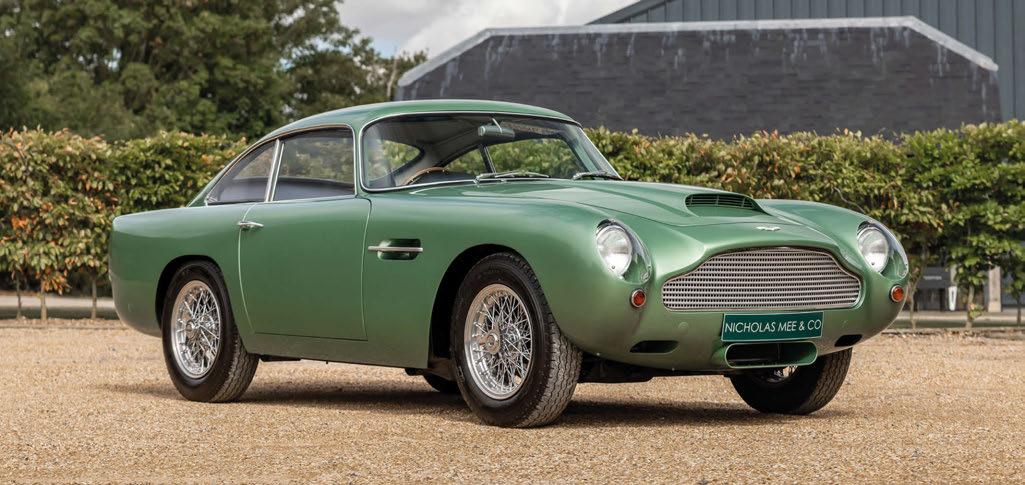
1960 ASTON MARTIN DB4 GT £POA
We are delighted to offer this sensational DB4 GT, finished in Sea Green with VM3253 Connolly Green hides, as it was when delivered new. This superb example of the rare and highly coveted DB4 GT, has an excellent history, been the recipient of a world class restoration and has covered only very limited mileage, since completion of the restoration in 2015.
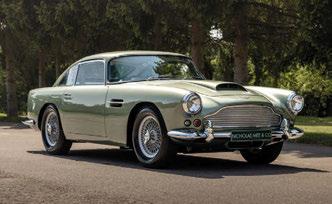
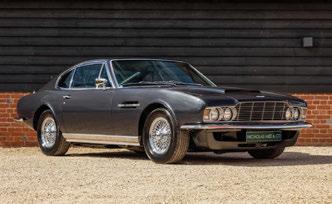


Nicholas Mee & Co Ltd, Essendonbury Farm, Hatfield Park Estate, Hertfordshire, AL9 6AF 0208 741 8822 info@nicholasmee.co.uk nicholasmee.co.uk

Chairman of the Pebble Beach Concours d’Elegance since 2002, global judge and participant in myriad motoring events










1. This painting captures my husband Martin and me, enjoying a Mercedes-Benz 300SL rally. Our car is perfect for any tour or rally; it can go anywhere and do anything.
2. A favourite moment is welcoming entrants onto the Pebble Beach Concours showfield as the sun peeks through the clouds to start the day. A er coming across some car-themed wrapping paper, I had a similar design printed on leather to make this car coat. I first wore it for Dawn Patrol in 2016 and it is now a staple.






3. I was very proud to help establish the Pebble Beach Tour d’Elegance as a part of the Concours – cars are not just beautiful, motion is essential to their magic.





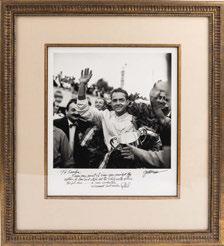

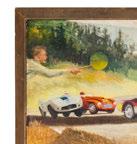









4. Family is important to me, so I hold tight to family mementoes, including artwork from my daughter Ruby. When I need a smile, I flip the bowl over to see where she signed not only her name, but her age – ‘8 & a 3rd’.
5. This is the original model that French sculptor Emmanuel Zurini created in 1990 for the awards we give to cars placing First, Second, or Third in Class. These trophies represent the true spirit of the Concours.
6. I was in Berlin in 1989 as the wall was taken down and have an art piece comprising an entire section of the wall complete with East German ridge-less rebar. Some local guys pried out a significant piece for me and I was able to take it home as part of my checked luggage!























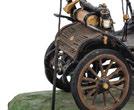





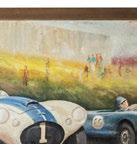
7. The Jesse Alexander photo signed by Phil Hill and the stu ed bear given to me by Sir Stirling Moss (it ‘revs’ when you ‘switch gears’ with its paws) remind me that cars are more than machines, they’re the basis of community. Through cars I’ve built lifelong friendships and even met my husband Martin.
8. It takes all of my focus to shoot sporting clays well, so it’s a great way to release stress and clear my head… and I’m not a bad shot, apparently. This hobby is my version of golf, but with a gun. My gun is a beautiful classic Ithaca 12 gauge over-under, and I love it!
9. Gardening is one of my great passions. The simple act of picking favourite flowers and arranging them is both creative and calming. Hydrangeas love the climate here in Carmel. Pounding their woody stems with a hammer, to help them hydrate, is another stress outlet.
10. Many of our entrants develop a deeply personal and lasting connection to Pebble Beach. Roy Fisher conveyed his emotions by sculpting a miniature model of the 1897 Henriod he showed in 2007. He was first in line to drive onto the show field, with his car’s cut-glass headlights glowing with candlelight.
11. Si ing in my o ce, I face this captivating mural, gi ed to me by Steve Morton. His brother, Frank, paid $200 to rescue it when a Chicago bar called the Steering Wheel closed. It depicts race cars navigating Turn 5 of Road America in the ’50s, and features many famous Pebble Beach Road Race cars and drivers.
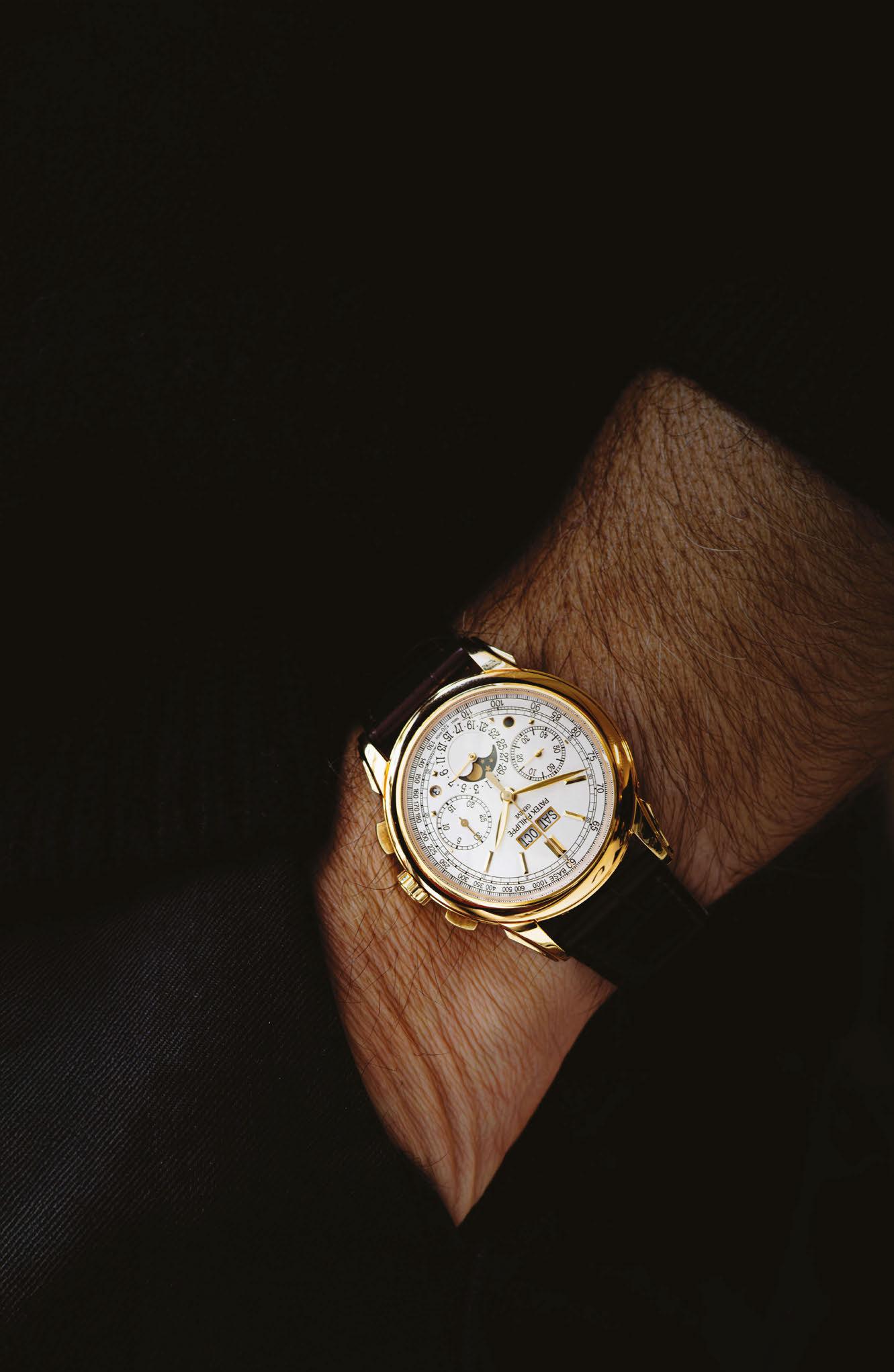
Words by Delwyn Mallett
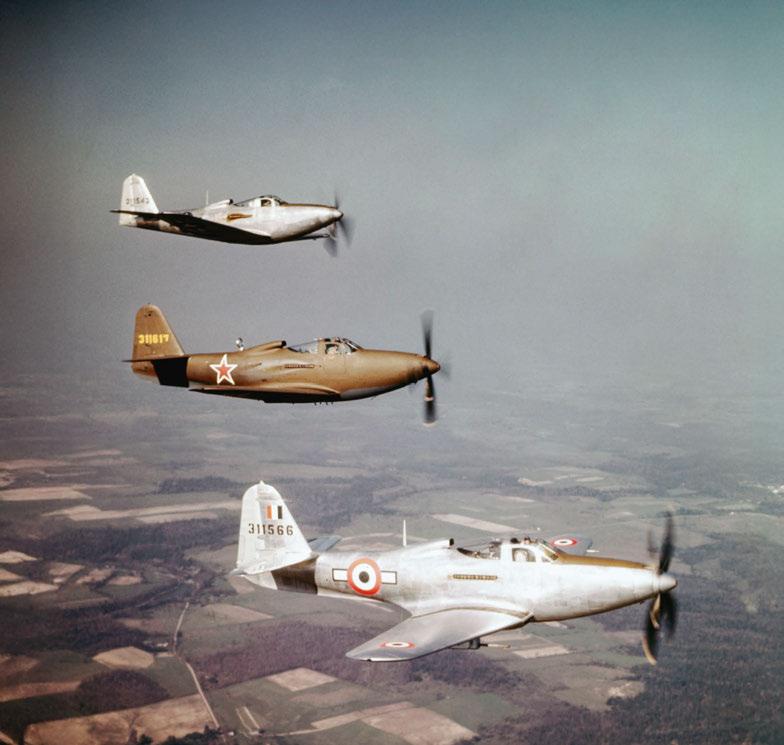
Compromised from the start, this fighter found a unique niche
DESPITE BEING largely derided by the US Army Air Corps and rejected as unsuitable by the RAF, the P-39 ended World War Two with the highest enemy kill tally of any US fighter.
In February 1937, recognising that its ‘pursuit planes’ were falling behind in development and were slower even than its own bombers, the United States Army Air Corps issued a directive for a new highaltitude interceptor. Power should come from the V-1710 Allison 28-litre supercharged V12 engine, with an additional General Electric turbocharger to endow it with high-altitude performance and a level flight speed of at least 360mph (marginally faster than the first Spitfire or Messerschmitt Bf 109.) Also specified was a tricycle undercarriage, then unusual in the fighter world, as well as a cannon as the main armament.
The recently established Bell Aircraft Corporation of Buffalo, New York (later famous for the Bell X-1, the first aircraft to break the sound barrier), submitted a radical proposal with a ‘mid-engine’ configuration. Rather than the 20mm cannon fitted to British and German fighters, the boys at Bell adopted a ‘bigger is better’ attitude and opted for the explosive stopping power of the massive
Browning 37mm M4 cannon. And, because the Browning was a tad under 90in (2.27m) long, the only way to fit it into a single-engine fighter was to locate the engine behind the gun and the pilot.
This, of course, meant the V12 was a long way from the propeller, necessitating a 10ft propshaft running forward from the engine, underneath the floor and, disturbingly for some, between the pilot’s ankles to a nose-mounted gearbox that transferred the power up to the propeller.
The cannon, also mounted astride the propshaft, fired through the propeller boss, the projecting muzzle earning the plane the nickname ‘Peashooter’. Some ‘pea’: a strike from one of its high-explosive shells was usually enough to blast an enemy plane out of the sky. As many as six machine guns were also carried.
The raised air intake for the carburettor on top of the fuselage aft of the cockpit canopy gave the Airacobra a unique and distinctive profile. Also unusual were car-style doors, complete with wind-down windows that pilots were warned not to open above 150mph! They were difficult to bail out from in an emergency and not popular with pilots.
The mid-engined configuration aided streamlining by reducing frontal area, and it positioned the engine’s weight closer to the centre of gravity, but despite this the P-39 prototype suffered drag primarily because the turbocharger hung in the cooling airflow below the fuselage. Perhaps because Bell was under pressure to get the ’plane into production, it persuaded the Army that the turbo should be deleted.
That turned out to be a bad move as it severely compromised performance: the P-39 would run out of puff well below the altitude it was commissioned to fight at, so much so that the first batch delivered in 1940 to an RAF hungry for aircraft was rejected as not suitable. Some RAF wit even composed a ditty that ran ‘Don’t give me a P-39, because I value this life of mine / It will spin, it will roll, it will dig a deep hole, so don’t give me a P-39.’
Those cast-offs found their way via Lend Lease to an equally desperate Russia, where most air-to-air combat was conducted at a relatively low level – and that played to the strengths of the P-39’s manoeuvrability. Of the 9588 built, around 5000 ended up in Russia, whose pilots loved it as much as the Spam (see Octane 212) that was also arriving in bulk from the US.
Despite the P-39’s lacklustre reputation among American pilots, Chuck Yeager later claimed it was one of his favourites, even though he was badly injured when he had to bail out through those awkward doors due to engine failure during training. The legendary British test pilot Eric ‘Winkle’ Brown, although he never flew one in combat, was also rather fond of the P-39 he used as his hack for ‘commuting’ around Britain in 1945.
The pre-war Thompson Trophy Air Races resumed in 1946 and a brace of Airacobras was prepared for competition by Bell, stripped of military hardware and fitted with hot engines. The debonair Alvin ‘Tex’ Johnston won at an average speed of 373mph, outpacing the Mustangs and reaching over 430mph on the straights. (Johnston gained notoriety in August 1955 when he performed an unscheduled slow barrel roll of the prototype Boing 707 airliner in front of a crowd of thousands gathered at Lake Washington for a speed event.)
By the final year of the war a much improved and bigger version of the P-39, the P-63 Kingcobra, had taken to the air.
Developed with significant input from Bell’s biggest customer (Russia), it addressed the deficiencies of the Airacobra particularly in the adoption of a twin-stage supercharger. However, the USAF concluded it was inferior to the Mustang and didn’t place significant orders. Of the 3033 eventually built, twothirds were delivered to the Soviet Union.































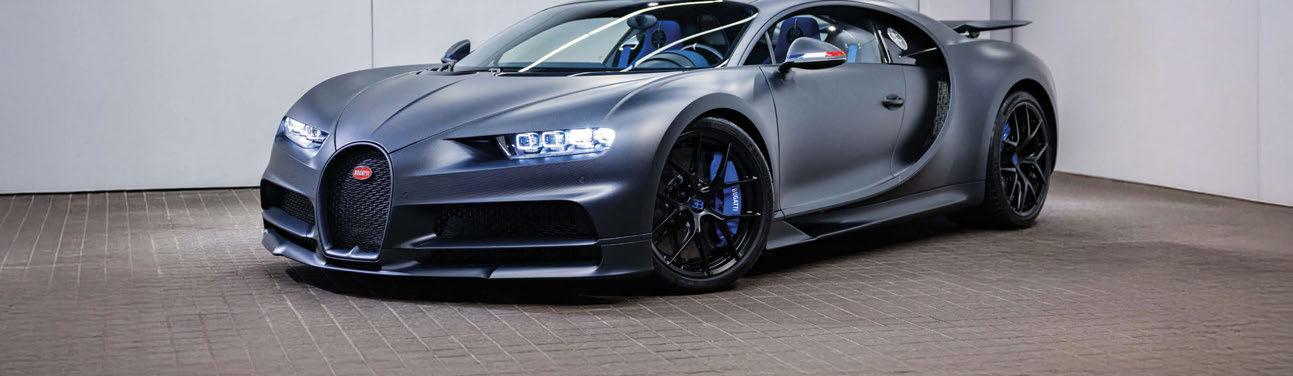
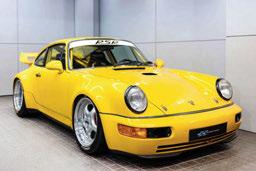
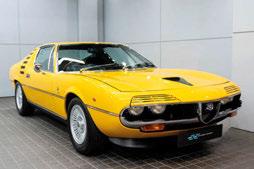
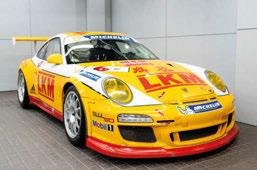
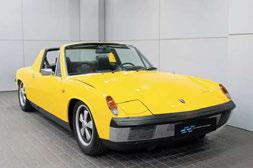
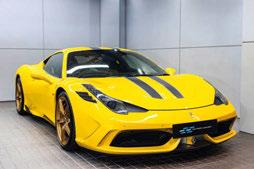
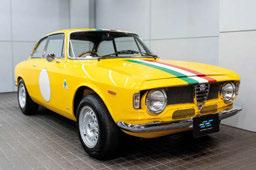



Chrono by Mark McArthur-Christie
Watchworld, like the classic car world, is working to protect its traditional skills
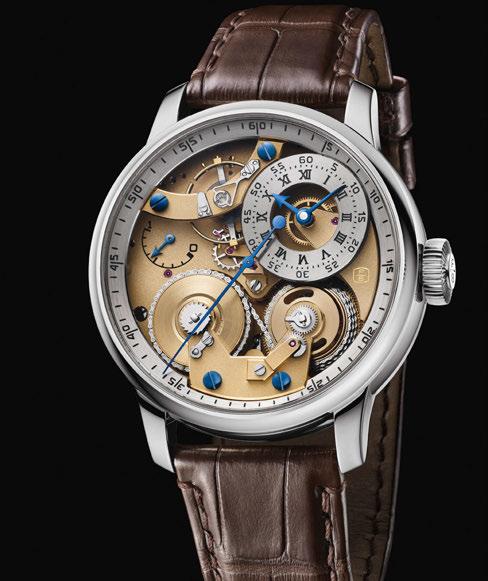
YOU KNOW THERE’S something special happening when the room is packed with more Watchworld royalty than a Friday night in Geneva’s Hotel Beau-Rivage bar.
e evening was all about Ferdinand Berthoud’s new watch – the Naissance d’une Montre 3. It’s not o en a new watch gets introduced by Chopard’s Karl-Friedrich Scheufele with Aurel Bacs riding shotgun and pre y much anyone who’s anyone in the audience. Octane’s watch desk was there, too – we snuck in at the back thanks to the kindness of Escapement’s Angus Davies. No.3 (and its two predecessors) exists thanks to a group of watchmakers who have been far-sighted enough to see well beyond their benches. e Naissance watches began when Robert Greubel, Stephen Forsey and Philippe Dufour realised just how fast

watchmaking was losing traditional skills to automated, computer-controlled processes. ey initiated the Time Æon Foundation, which records, protects and preserves endangered cra s and helps pass them on by training the next generation of watchmakers.
Hang on – isn’t traditional watchmaking ourishing a er years of quartz-created doldrums? Well, not exactly… mechanical watches are certainly in the ascendant, but traditional cra watchmaking? Not so much.
It’s easy to see why. A modern CNC machine turns out a small pile of movement baseplates in about an hour. Metal blanks in at one end, milled and drilled baseplates out at the other with all the e ciency of a microwave. A skilled, time-served watchmaker would take days – and machinery made in the 1960s – to produce just one.
A metalwork sculpture for the more discerning wrist
It’s an irony. In an industry that makes a virtue of traditional values and techniques, even when most top-end watch movements are nished by hand, the parts themselves are o en CNC-manufactured. is is simple commercial reality, though. e mechanical watch on your wrist would be una ordable if that skilled, time-served watchmaker had made it by hand on analogue machinery. e Foundation’s advocacy and funding of watches like the Naissance is making sure we get the bene ts of both approaches.
With the No.3 we’re talking a level of human skill that allows for variation as an individual tool wears, workshop temperature alters throughout the day, even in response to the changes as a cu ing machine warms up from a cold start. At the end of the process, the human hand and eye have produced a movement in which tolerances are measured to less than a thousandth of a millimetre. e watch itself, even though it involved 11,000 hours of handmaking (800 hours on nishing alone), is so un-bling you could (almost) wear it safely on Oxford Street. at’s because the design is based on Berthoud’s original Astronomical Pocket Watch No.3 – a functional navigational tool. It’s unlikely London’s roadmen are su ciently horologically discerning to spot a bimetallic split balance (so it adjusts automatically for temperature), hand-cut and blued (or mirror polished) screws, and a constant force escapement that uses a fusée-and-chain (with 285 handmade links, each smaller than 0.5mm). Even the hairspring is hand-cut, then blued and centred by hand, too.
e remarkable thing is that Berthoud himself would have used these techniques and worked to the same tolerances in the early years of the 19th Century.
All this would be hard enough to achieve in a single, one-o watch – a pièce unique. But there will be 11 No.3s, the rst of which will be auctioned by M. Bacs this month, the proceeds going back to the Foundation.
In an AI world, human thinking and cra like this ma er more than ever.
TALKING OF handmaking techniques, guilloché deserves a mention. You’ll nd one of the most interesting examples on the dial of Schwarz Etienne’s Geometry. To produce guilloché work, you need a lot of experience and a distinct type of lathe – a rose engine. As you turn the rose engine’s handle (no electric motors), the cu ing tool removes fractional slivers of metal. e pa ern comes from a selection of circular dies, each with a di erent pro le, that move the dial to produce di erent pa erns. e Geometry isn’t just a pre y face; inside it has a 198-part, microrotor cal. ASE 200.02 movement that’s just as gorgeous. Of course, you pay for such quality: the price is circa £25,000 (converted from CHF).





















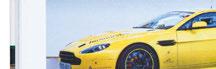























RUSSELL HAYES
Evro Publishing, £195, ISBN 978 1 910505 60 1

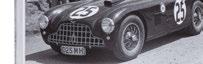




Sometimes a book deserves this slot just because it does exactly what it says on the tin –or, more accurately, the cover. That’s the case with Aston Martin – The Entire Story, which is a straightforward account of one of the UK’s most, er, storied car manufacturers. There are no great revelations to be found here, just a well-written and comprehensive history that covers all the bases.
That said, the particular value of this retreading of familiar ground lies with the second of the two slipcased volumes, which spans the 1980s to the present day. The 21st Century has seen Aston Martin develop a remarkably complex model range, with new cars seemingly appearing every few months. The author does a fine job of profiling them all, including some almost-forgotten concepts.














Which of us now, for example, remembers the Lagonda SUV concept of 2009? It appeared six years before the Bentley Bentayga and nine years before the Rolls-Royce Cullinan so was well ahead of its time, but came to nothing. Ironically, later the same year Aston Martin unveiled the diametrically opposed Toyota iQ-based Cygnet, a car panned by critics then but that now has a strong collector following. Both are given their dues here. Thankfully, while the ‘Bond Astons’ are of course profiled, they have been relegated to an appendix at the end of this volume, where there’s also a second appendix for the various Continuation models of the DB4 and DB5.
Volume One is just as in-depth and there are interesting digressions of which many Aston fans may not be aware. One such is the pre-war Aston Le Mans team car, LM6, which at the end of the 1931 racing season was experimentally fitted with a supercharger by Birkin & Couper – the only blown Aston sanctioned by the works. Then-apprentice Inman Hunter recalled that when ‘Bert’ Bertelli gunned it off the line, it left ‘the longest black marks, or rather channels, in the gravel that I have ever seen… [but] troubles seemed endless, and after several rear axles had had their innards torn out, not to mention the firm’s bank balance, the blower was removed and left to rust in a corner of the stores’. Aston wouldn’t bother with supercharging again until the DB7 of 1997. While this latest Aston history is not cheap at nearly £200, picture reproduction is first-class and you get a lot of very well-researched reading material for your money. It’s all that most of us will ever need.
Classic Car Auction Yearbook 2024-2025
For 30 years now, this Italian-produced but English-language book of auction results and market analysis for the year from 1 September to 31 August has been the ‘go to’ reference work for anyone who is interested in classic car values. Heart of this latest edition is its detailed data about 11,808 cars from 386 marques that went under the hammer, and the usual informed opinion pieces, but this year there’s also a summary of each of the last 29 volumes.
ADOLFO ORSI, Historica Selecta, £100, ISBN 978 8896 2321 7 0
Jackie Stewart World Champion
Originally published in 1970, Sir Jackie Stewart’s account of his 1969 World Championship-winning year has been redesigned and extended, with extra explanatory text by Ian Dymock – all in the name of charity Race Against Dementia, which will receive royalties from its sales. Dymock’s additions are printed in blue italics for the sake of clarity – a great idea –and this is a useful little book that’s supporting a great cause.
SIR JACKIE STEWART, OBE & IAN DYMOCK, Dove Publishing via Amazon, £23.75, ISBN 978 1 9993 647 4 8

Looking for the Real Red Robbo
In Britain during the 1970s, the name Derek ‘Red Robbo’ Robinson was notorious. Supposedly responsible for 523 strikes at British Leyland that cost the company something like £200million, and that was back when £200m was a lot of money, Red Robbo was the man we loved to hate.



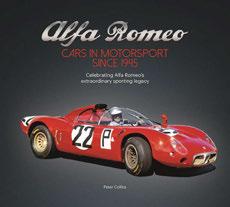











As the author drily remarks in his introduction, ‘Many will say, “Oh no, not another Alfa Romeo book.”’ But when you open this large-format hardback at random and find a photo of a 1949 6C 2500 Super Sport being autocrossed in a muddy British field during the early 1960s, you realise that this is definitely not just ‘another Alfa Romeo book’.
In essence it’s a picture book with extended captions. It opens with the first post-war Grand Prix – held on a road circuit at Nice on 22 April 1946 – and continues until the present day. In between, Peter Collins covers a huge variety of Alfa competition cars, not forgetting non-Alfa racers that were powered by the engines from Milan. That means, of course, all the wonderful machines produced by the works’ competition arm Autodelta – TZs, T33s and so many more –but also Formula 1 cars, Touring Cars, Procar and so on. Some fairly obscure subjects are featured, such as the Montreal Group 4 racers and the Italian/French Prototipi of the late 1980s that used the Giuseppe Busso V6. As Terry-Thomas might have drawled: ‘It’s a Lucchini!’
What sets Collins’ book apart from most photo albums is the research he’s put into captions, never taking previous info at face value. So, for example, beneath a fabulously complex shot of an Alfa TZ1 leaving the pits on the 1965 Targa Florio, he explains how both of the only two petrol pumps had been ‘bagged’ by a Ferrari mechanic – until Alfa deployed the biggest member of its pit crew to forcibly repossess one… Entertaining stories like these will keep you engrossed for hours.
PETER COLLINS, Veloce, £80, ISBN 978 1 845849 16 0
However… there’s no evidence whatsoever, says the author of this cheap ’n’ cheerful paperback, that Robinson was the cause of anything like that number. Like so much of the mythology surrounding him, it was media-generated – some of it by a shadowy research organisation called IRIS that was part-funded by Government from its intelligence services budget. Without doubt, he was a devout Communist but one who really wanted BL to succeed, albeit under the control of the workers. Given the sheer apathy and bloodymindness of much of the workforce – something that Duisberg convincingly argues was at least partly down to the tedium of repetitive manufacturing processes imposed by an unimaginative management – that utopian ideal was always going to be a hopelessly lost cause.
Like the author’s previous book about racing driver and Great Train Robber Roy James, this one starts at the end of Robinson’s life (he died in 2017) and runs backwards. It works surprisingly well as a concept since it allows him to take established ‘truths’ and dissect what actually lies behind them. He’s tracked down several men who worked with Robinson and even secured a rare interview with Harold Musgrove, chairman of BL’s Austin-Rover division 1982-86, which is a genuine scoop.
On the downside, this is a self-published work and the lack of even basic proofreading is very frustrating – a key figure is alternately spelled throughout as ‘Etheridge’ and ‘Ethelridge’ – and the author’s sense of humour definitely won’t appeal to all.
There’s also very little about Robinson’s career at Longbridge before the BL days, which is more forgivable due to the paucity of historical sources. Even so, this is the only biography yet published, or ever likely to be, about a hugely influential figure in British industrial history and as such is well worth its very modest asking price.
RICH DUISBERG, self-published via Amazon, £12, ISBN 979 8 3113 428 0 3
Compiled by Chris Bietzk and Sophie Kochan
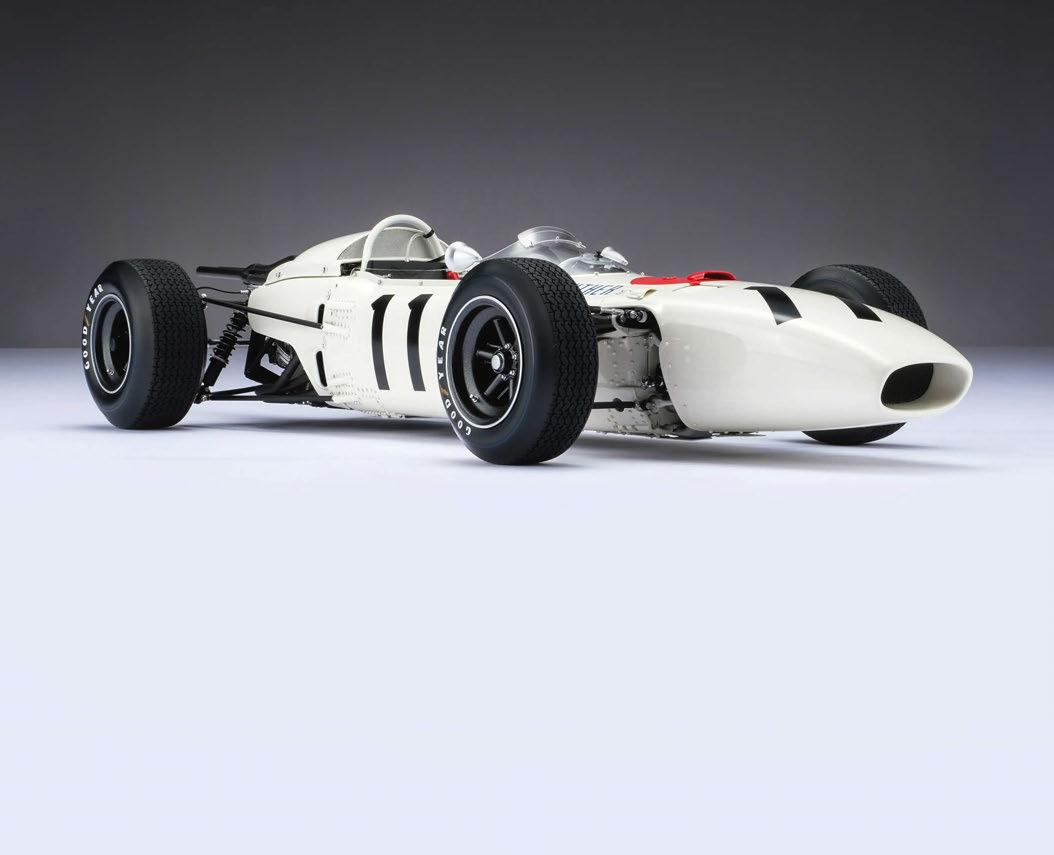
At the time of writing it is 60 years to the day since the 1965 Mexican GP, the final event of that year’s F1 season and, indeed, of the 1.5-litre era in Formula 1. It was not the most keenly anticipated race; the Drivers’ title and the Manufacturers’ Championship had long since been wrapped up by Jim Clark and Lotus. But it turned into one for the history books thanks to Richie Ginther, who led every lap in his RA272 to secure a maiden F1 win for Honda – a company, remember, that did not even build road cars until 1963! Ginther’s beautiful mount has now been exactingly modelled by the folks at Amalgam, who were guided by 3D scans of the real thing, which lives in the Honda Collection Hall in Motegi, Japan. £21,650 (1:18 scale model also available at £1295). amalgamcollection.com
East Sussex-based outfit Orro has refreshed its range-topping endurance bike, with the new version designed to be at once more comfortable and faster than the old. The carbonfibre frame now weighs a mere 830g, and it incorporates features of Orro’s uncompromising Venturi aero bike, meaning that the updated Gold STC will hold its own in a competition environment if your legs are up to a bit of racing. £4999.99 as pictured (other specifications from £3499.99). orrobikes.com


For reasons that remain unclear, Barbour elected in 1997 to discontinue a British classic, the short Spey waxed jacket, originally designed to be worn by fly fishermen standing in deep water. Happily it has since been reintroduced, and here it has been given a twist, with Western-style pockets, shank bu ons and a rear cinch all borrowed from pieces of Levi’s workwear. £429. barbour.com

Epson’s new smart projector is a diminutive thing (25cm tall) that looks a bit like a table lamp, and which is similarly easy to move from one room to another (it weighs 4kg, including the adjustable stand). It’s Google TV-equipped, features integrated speakers tuned by Bose, and o ers 1000 lumens of brightness. It’s not going to put your local IMAX cinema out of business, but it’s about as convenient a way as you’ll find to get a taste of the big-screen experience at home. £1149.99. epson.co.uk

Seiko Rotocall
A most welcome – and faithful – reissue of the multi-talented digital watch commonly worn by NASA astronauts during the 1980s and ’90s. It was given the nickname ‘Rotocall’ on account of that octagonal bezel, which is rotated to cycle through the various functions, obviating the need for more than two bu ons. Like the original, the reissue measures 37mm across, and it’s available in three period-correct colours, of which this is the pick. £480. seikoboutique.co.uk



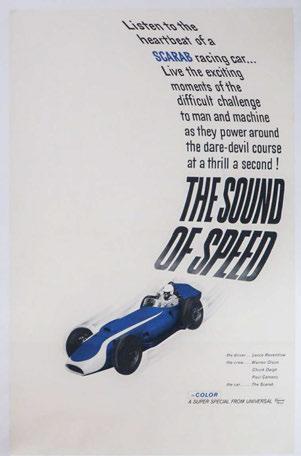

The Sound of Speed, a curious but innovative short film showing a mute Lance Reventlow testing a Scarab F1 car, was chosen to compete in the 1962 Cannes Film Festival, but even today few people have seen it (though it is available on YouTube). Fewer still have set eyes on an original example of the poster produced to promote the film, but one has turned up at the At The Movies gallery in Marylebone, London. £3250. a hemovies.uk


Lotus driver John Miles joked that the 62 went fastest before the li -inducing body was fi ed, but we’ve always loved the scienceproject look of the car with all the remedial aero gubbins added, and especially this version that Miles and Brian Muir raced (without much success) in the 1969 Brands Hatch 6 Hours. £297.95. grandprixmodels.com




It has become an annual custom for Porsche and Head to design a range of skiing equipment together, and this winter’s o erings include these photochromatic goggles, suitable for use in everything from bright sunshine to low light and shaped to fit perfectly with the new Porsche x Head skiing helmet. £195. shop.porsche.com

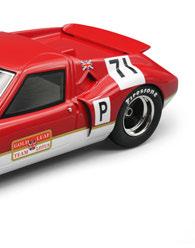





It was in 1967 that John Lennon’s iconic Phantom V acquired its bonkers paint job, but chassis 5VD73 was actually built by Rolls-Royce two years earlier, meaning that it turned 60 this year. To mark the occasion, Kevin Schrickel of Chichester-based art studio Düest created this delightful linocut in his signature style – using a single, continuous line to capture the essential form of his subject. £75 (A3 size). duest.co.uk


Though it was not the first to bring a wristwatch with a high-frequency movement to market, Longines was the first to develop such a thing, and this understated model is closely based on the much-admired hi-beat Ultra-Chron that arrived in 1967. £3150. longines.com
Richard Pietruska’s new 30in-long sculpture, cra ed from glassfibre and set against an etched plexiglass panel featuring colour-changing lights, does a wonderful job of conveying the exhilarating (if bracing) experience of driving Aston Martin’s mad open-top plaything. $POA. rpmart.com
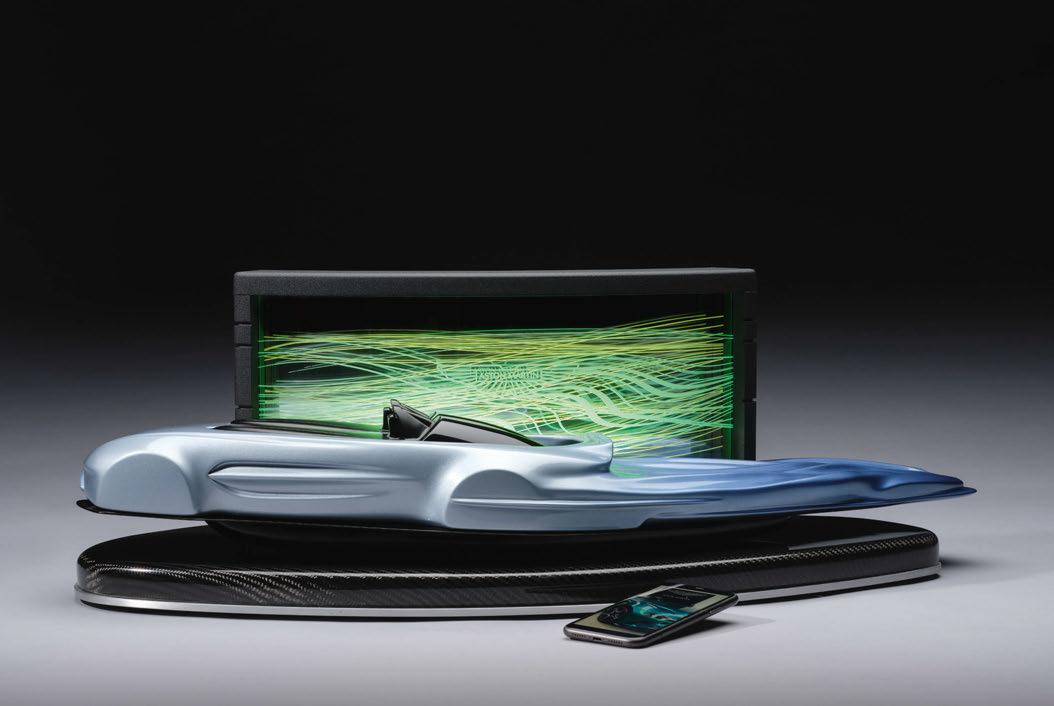




‘Christmas Trees’ diffuser by
Perfumer Jo Malone has started the countdown to the festive season by bringing back the popular Jo Loves ‘Christmas Trees’ room fragrance –think fresh pine needles and cloves plus soothing lavender to help you tolerate the presence of the in-laws… £100. joloves.com
A Christmas treat cooked up with the help of Robin Bark. The motoring artist penned the cars – Lotus 33, Blower Bentley, MGA and Cobra – featured on the drums, which are filled with all-bu er shortbread, oatand-honey biscuits, caramel-and-sea-salt biscuits, and double-choc-chip cookies. £35. meandmycar.co.uk



The first of many tributes to the Miura that we expect to see in the coming months: in case you were unaware, Lamborghini’s greatest creation, revealed to the world at the 1966 Geneva motor show, has a big birthday coming up. £19. rearviewprints.com
Edited by Matthew Hayward
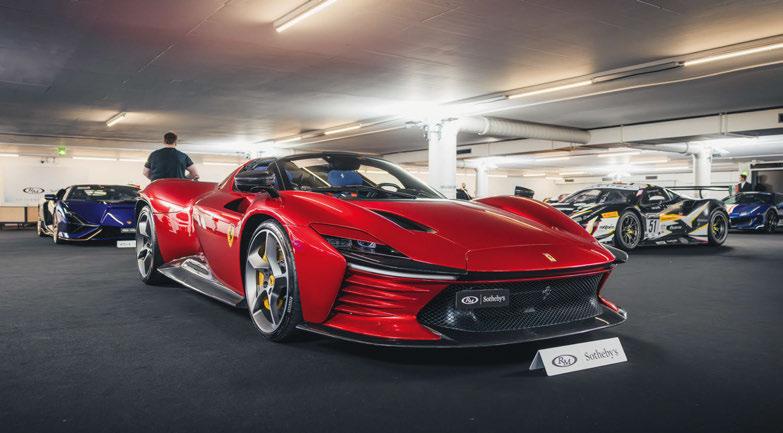
A busy month in the auction world, with the top end dominated by hypercars
IF YOU WANT a good visual representation of just how many significant results the RM Sotheby’s Tailored for Speed auction produced, take a look at the top ten auction results on the right-hand side of this page. It’s not unusual to see several results from one auction, especially during a quiet month, but October has been jam-packed and all but two were sold in this exceptional sale. With 42 lots from a single owner, it totalled CHF70m, making it RM Sotheby’s highest-grossing European auction ever.
There were several low-volume hypercars in Zurich but low-mileage, limited-production Ferraris were the name of the game, with the biggest seller a 2024 Ferrari Daytona SP3 at CHF5,348,750. A new record was achieved by the 1998 Ferrari 333 SP, a well-raced example, which made HF5,208,125. A trio of Corse Clienti cars also set new records.
RM Sotheby’s also held sales in Munich and London. The German sale was the most successful in the company’s four-year run, with a €26,078,500 total, topped by a €4,842,500 Ferrari F50. Preceding the London to Brighton Run, the UK auction (on 1
November) took in £23,703,910 and, although there were a number of healthy pre-war car results, it was headed by a 2015 Ferrari FXX-K Evo at £4,730,000.
Broad Arrow’s two-day Las Vegas auction made $13.7million with 82% of lots sold, led by a lowmileage 2010 Bugatti Veyron at $2,205,000. The auction house also had success with its inaugural Zoute sale, raising €26.3m via a 78% sell-through rate. Headlining was an exceptional Pino Verde 1967 Ferrari 275 GTB/4, which achieved €3,015,625. Another highlight was Daniel Ricciardo’s 2023 Aston Martin Valkyrie, which made €2,284,375.
Bonhams has always done well in Zoute, and a little rivalry didn’t seem to have much of a negative impact – with the UK auction house recording a €15.5m total and a strong 87.5% sale rate. A 1991 Ferrari F40 was top seller at €2,645,000.
Iconic Auctioneers’ £11million NEC Classic Motor Show sale (on 8 November) again delivered record auction prices. A 1990 Ford RS200 S found a buyer at £382,500 and Harry Metcalfe’s 1978 Jaguar XJC V12 made £157,500. Matthew Hayward
£5,011,779 (CHF5,348,750)
2024 Ferrari Daytona SP3
RM Sotheby’s, Zurich, Switzerland, 11 October
£4,959,072 (CHF5,292,500)
2017 Ferrari LaFerrari Aperta
RM Sotheby’s, Zurich, Switzerland, 11 October
£4,906,366 (CHF5,236,250)
2016 Ferrari FXX-K Evo
RM Sotheby’s, Zurich, Switzerland, 11 October
£4,880,013 (CHF5,208,125)
1998 Ferrari 333 SP
RM Sotheby’s, Zurich, Switzerland, 11 October
£4,247,950 ($5,725,000)
2022 Bugatti Chiron
Super Sport Bonhams, Newport, Rhode Island, USA, 3 October
£4,205,227 (CHF4,481,250)
1996 Ferrari F50
RM Sotheby’s, Munich, Germany, 18 October
£4,194,832 (CHF4,476,875)
2021 Pagani Huayra
RM Sotheby’s, Zurich, Switzerland, 11 October
£3,799,535 (CHF4,055,000)
2023 Bugatti Chiron
Super Sport
RM Sotheby’s, Zurich, Switzerland, 11 October
£3,799,535 (CHF4,055,000)
2008 Ferrari FXX Evo
RM Sotheby’s, Zurich, Switzerland, 11 October
£3,114,354 (CHF3,323,750)
2014 Ferrari LaFerrari
RM Sotheby’s, Zurich, Switzerland, 11 October
There could be a quick buck to be made from buying DB Astons in the UK and selling in the US
STARE AT THE clouds for too long, and images start to appear. Data is the same: look at a spreadsheet for long enough, and pa erns emerge. Whether they’re real or not is open for debate and, sometimes, you just need to step back. is week, I did just that. I was delving into the di erence between US Hagerty Price Guide values and their UK equivalents for the same models and spo ed a host of anomalies. At rst glance, it looked like (in general) Aston Martin DB 4, 5 and 6 models were much more valuable in the US than the UK, as were Jaguar E-types, various Porsche 911 submodels and others, such as the Lancia Delta Evo. Conversely, Lamborghinis, in particular the Espada, Murciélago and Gallardo, seemed to be much more valuable here in the UK than in the States. However, when I stepped back and took a wider view, most of these potential pa erns could be explained. Di erences in the way that models are listed, grouped and tracked meant that most of the anomalies were not as pronounced as rst thought. But one group remained: 1960s Aston Martins. When I checked auction results, it con rmed what the Price Guides suggested: ignoring anomalies such as continuation models, the average value of these cars sold at public auction so far in 2025 was $780,000 (£593,000) in the US, compared to just £211,000 in the UK. Sales rates were also extremely di erent: 47% of cars o ered at public live auction this year in the UK sold, compared with an extraordinary 100% sell-through rate in the US. e age of the owners varied, too: in the US, 72% of Aston Martin DB 4, 5 and 6 owners insured by Hagerty were born before 1965; in the UK, it is ten
points lower, the di erence seemingly being down to increased popularity with Gen X in the UK (34% of owners) against the US (24%). is is odd, because Gen X is seen as the market’s current economic powerhouse, and its demand o en pushes up values.
Condition may be one of the key reasons for this. e UK results included restoration-case cars but the US examples were described as being carefully restored or maintained and so were, generally, of higher quality. at, though, begs another question: why have the cars sold in the UK not already been restored when prices rocketed a few years ago?
Some were part of a major collection that has been trickling out to auction over the past decade or so, all stored away and then released onto the market in a wave that depressed values and lowered buyers’ price (and quality) expectations.
Another answer could be rarity. e overall UK classic car market is about 3.5% of the size of its US equivalent, but Hagerty insures 73% of the number of Aston Martin DB 4, 5 and 6s in the UK compared to the US; they’re just more plentiful here. ere’s also the cultural in uence that 1960s Aston Martins exert thanks to James Bond; maybe that still carries more weight with an older, wealthier US audience.
Whatever the reason, values of 1960s Astons do seem lower in the UK than the US, especially for Vantage, drophead/Volante and other rarer cars. And where there is such a delta, so usually the market follows. It hasn’t happened yet – just four ’60s Aston Martins were shipped from the UK to the US in the 12 months to Q2 2025 – but it will be fascinating to see if a correction follows. I will be watching sell-through rates and export data with interest.

John Mayhead Hagerty Price Guide editor, market commentator and concours judge
Below: percentage per demographic group of Aston Martin DB 4, 5 and 6 owners insured by Hagerty in UK and US.
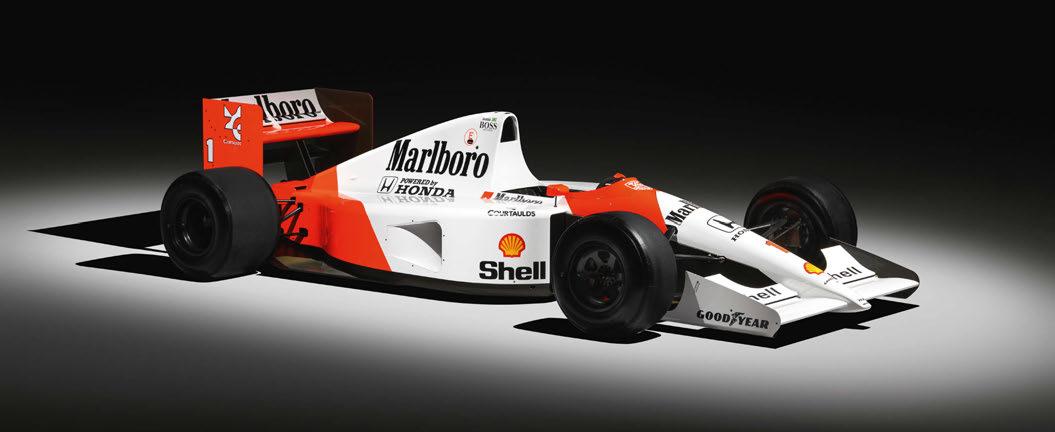
RM Sotheby’s, Dubai, UAE
11 December
THERE’S SO MUCH you could say about this car, but F1 fans of a certain age won’t need to be reminded of its significance. In 1991, McLaren’s MP4/6 not only became the last ever V12 manual-transmission F1 car to win a World Championship title, it was also the car that delivered Ayrton Senna his third and final Drivers’ Championship. More than that, this car – MP4/6-1 – was responsible for one of the most incredible victories of his career, in his home race at Interlagos.
After Senna led from the start, his gearbox progressively failed, leaving the car stuck in sixth during the closing laps. Through sheer force of will, he wrestled the car to the flag, taking a deeply emotional win in front of
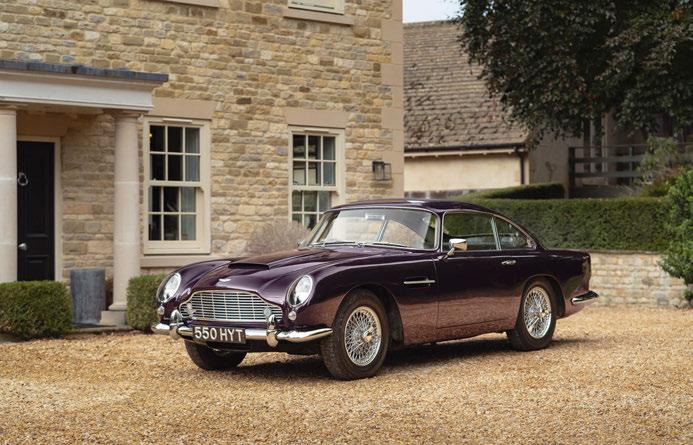
70,000 fans. Exhausted and cramping, he needed help to lift the trophy, later calling it the hardest race of his life.
After this single Grand Prix appearance, MP4/6-1 continued to serve as a development chassis for Senna, Gerhard Berger and McLaren’s test team before being retired at the end of the season. It remained with the team, finally being recommissioned by McLaren Heritage ahead of its sale to its current – and only – private owner in 2020.
Standing as one of the most historically significant Senna cars ever offered publicly, it will be sold via the RM Sotheby’s Sealed online bidding platform with an estimate of $12,000,000-15,000,000. rmsothebys.com
H&H, Milton Keynes, UK 3 Dec
IT’S FUNNY HOW some car colours phase in and out of fashion, but one constant seems to hold true: not very many people specify purple cars straight from the factory. And while there are just a handful of DB4s finished in this shade of Roman Purple, this happens to be the sole Series IV Vantage.
That wonderful deep hue was refinished in 2022 as part of a major overhaul, but because this is such a well cared-for example – a single owner from 1969 to 2021 – the patinated leather upholstery remains original.
In a world where unique factory colours and paint-to-sample Porsches seem to be in vogue, this might just be one of the most desirable non-GT DB4s out there. H&H has suggested a £375,000-425,000 estimate. handh.co.uk
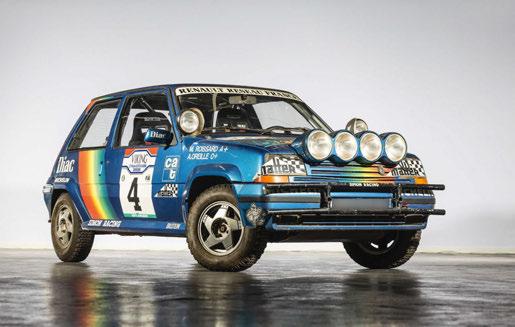
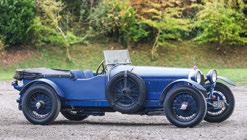
1929 Alfa Romeo 6C 1750
Gooding Christie’s, Paris, France
29 Jan, goodingco.com
One of a quartet of 6Cs owned by the late Angela Cherrett and her husband Allan, this 1750 Super Sport Series III Tourer was the first Alfa Romeo to race at Le Mans. Driven by Earl Howe and Leslie Callingham in 1930, it placed fifth overall and first in class. Restored in 1965, it retains its original supercharged engine and is estimated at €600,000-700,000.
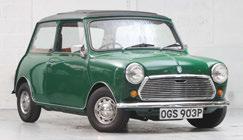
1976 Leyland Mini 1000 Special MPC, Runcorn, UK
6 Dec, manorparkclassics.com
As much as everyone loves a Cooper, there’s something refreshing about seeing one of the more regular-spec Minis on the road today. This one is a bit different, though, being one of 3000 Specials built, which are known by enthusiasts as the ‘Stripey’ models thanks to sharing 1970s seat-trim with the MGB. The guide price is £5000-6000.
One hundred and eighty million years before the area around Stuttgart became famous as the ‘Cradle of the Automobile’, it was under water. During the Early Jurassic period, the region was covered by a warm, shallow sea teeming with aquatic and semi-aquatic creatures – some of which we know about thanks to exceptionally well-preserved fossils discovered in Holzmaden, a tiny town to the south-east of Stuttgart. (Just this past summer a specimen dug up in Holzmaden in 1978 was re-examined and determined to be a brand new species.)
Several Holzmaden fossils will be sold in Dallas on 2 December, when Heritage Auctions will disperse an impressive single-owner collection. Among them is the humdinger pictured here. The remains are those of a 3m-long example of Macrospondylus bollensis, a reptile that most closely resembled modern gharials, and which existed alongside plesiosaurs and ichthyosaurs. The experts at Heritage Auctions expect some hunter of prehistoric big game to pay at least $150,000 to bag it.
Thought you’d like to know: Muhammad Ali’s draft card (see Octane issue 270) was not sold.
1990 Renault 5 GT Turbo Artcurial, Paris, France
7 December, artcurial.com
As well as the incredible F1 cars and prototypes coming to auction from the Renault collection (previewed last month) there are other fascinating artefacts. This Group N 5 GT Turbo took second place on the 1990 Ivory CoastBandama Rally, driven by Alain Oreille. It hasn’t been rallied since, and is estimated at €30,00050,000 – including remnants of African sand still in the cabin.

1999 Peugeot 406 V6 Bonhams, Paris, France
28 Nov, cars.bonhams.com
If you don’t instantly recognise this 406, then we would suggest watching Luc Besson’s Taxi series of films (well, the first three at least). Bonhams is currently offering this example – driven by Jean Ragnotti for scenes in Taxi II and originally purchased from the Peugeot Reserves – as part of a movie car collection sale. It’s estimated at €60,000-80,000.
29 November
Barons Manor Park Classics, Southampton, UK
Historics, Weybridge, UK
30 November
Aguttes, Paris, France
3 December
H&H Classics, Millbrook, UK 4-6 December
Mecum, Kansas City, UK
5 December
RM Sotheby’s, Abu Dhabi, UAE 5-6 December
Manor Park Classics, Runcorn, UK
6 December
WB & Sons, Killingworth, UK
7 December
Artcurial, Aubergenville, France
10 December
Brightwells, online
Mathewsons, online
11 December
Bonhams, London, UK
12 December
Ewbank’s, Send, UK
15 December
Osenat, Fontainebleau, France
29 December
Oldtimer Galerie, Gstaad, Switzerland 6-18 January
Mecum, Kissimmee, USA 17-25 January
Barrett-Jackson, Scottsdale, USA
23 January
Bonhams, Scottsdale, USA
RM Sotheby’s, Phoenix, USA
24 January
Barons Manor Park Classics, Southampton, UK
27 January
Artcurial, Paris, France
28 January
RM Sotheby’s, Paris, France
29 January
Bonhams, Paris, France
Gooding Christie’s, Paris, France
SWVA, Poole, UK
31 January
WB & Sons, Killingworth, UK
31 January – 1 February
ACA, King’s Lynn, UK 4-6 February
Mathewsons, online
7 February
Morris Leslie, Errol, UK
14 February
RM Sotheby’s, Boca Raton, USA
AUCTION DIARY IN ASSOCIATION WITH

Now it’s back, the original version of this lightweight roadster looks like a bargain
A VERY UNUSUAL car just popped up on a list judged by Hagerty to be among the most collectable of the past 25 years still available for under £25,000: the Zenos E10R. It was the most powerful iteration of the original E10, a car built from 2015 to 2016 in Norfolk and designed to be the spiritual successor to the affordable, pared-down, high-performance roadsters that had been built nearby at Lotus.
The car came with great DNA, thanks to its founders Ansar Ali, Mark Edwards and Chris Weston and their history at Lotus and Caterham, plus an impressive design: a reported 800kg of glassfibre, carbonfibre, thermoset plastic, alloy and steel parts set around an aluminium spine.
It’s impossible to avoid comparison with the AC Cobra. In the case of the Tiger, Jack Brabham spotted the potential of transplanting V8 power into the four-cylinder Alpine. Shelby engineered the prototype and from take-off the Tiger followed the development path of the Cobra, first with a small-block 260ci Ford V8, then the 289, both in milder tune.
It’s no wonder that the Tiger has been tagged ‘the poor man’s Cobra’ but for those who appreciate it for what it is, rather than what it isn’t, that’s just one on the list of pluses. The Cobra is specialist, the Tiger more versatile: street rod, circuit racer or long-distance GT. Works cars raced at Le Mans at 1964 but distinguished themselves more in European tarmac rallies
Power came initially from either a 2.0-litre Ford Ecoboost engine delivering 200bhp (E10) or 250bhp in supercharged E10S form, then the 350bhp 2.3-litre E10R, launched in January 2016. Improvements included a six-speed gearbox, uprated brakes and suspension, and reduced weight for (reportedly) 0-60mph in 3.0sec and 155mph. Cost savings included recycled carbonfibre honeycomb, and prices ranged from £24,950 for the base E10 to £43,995 for the E10R Drive Edition. More than 100 were built before trading ceased in 2017.
But that wasn’t the end of the Zenos story. The brand, designs and tooling were purchased by AC Cars, which in September
2025 announced the launch of the Zenos E10RZ, a development of the earlier car. This time it is lighter still, powered by a 380bhp Volvo 2.0-litre turbo four, and has an improved cockpit. Reports on early prototypes promised a sorted, balanced, fun car, but the c£140,000 price puts it against serious and well-established rivals and also makes the original seem extraordinarily good value!
The current Hagerty Price Guide ‘excellent’ value of the E10R is £24,900; nearly all original models are priced between £14,500 and £28,000. Plus, the company has just announced that it is remaking carbonfibre parts for the legacy models, which will surely help existing owners. John Mayhead
508bhp/tonne
(unlike the Cobra), with a fourth overall in the 1965 Monte Carlo. Another big tick could be today’s comparative pricing.
In 1964 the Mk1 Tiger cost £1446, a little over half the price of a Cobra. In the US, where the Tiger cost $3425, the price differential was similar. Today a Cobra is broadly ten times the price of its distant cousin.
The launch of the Tiger at the 1964 New York Auto Show revealed its aspirations, and the USA still remains the heart of the market. The vast majority of the 6000 or so 164bhp Mk1 260 Tigers went there; the rarer 200bhp, 125mph Mk2 289 (around 600 built) was USmarket only, though six righthookers were made as UK Metropolitan Police pursuit vehicles and another four for important UK Rootes dealers.
Over the last five years the Tiger pricing trajectory has been basically flat, achieving just 1.17% compounded growth, while the overall collector-grade market, as recorded by the HAGI Top P&F
(which excludes Ferrari and Porsche models), has achieved 4.92% compound annual growth over five years. In contrast the dollar-based S&P 500 equities measure has put on 14.74%.
In essence, £50,000-65,000 places you in the realm of uncompromised Mk1 260 Tigers, and even the more potent and much rarer Mk2 289 is rarely a £100k proposition. Works and storied cars, of course, operate at a higher level. Add in five-year inflation (20-25% depending on
the market), and the Tiger is cheaper now in real terms. If that represents value to you, a Tiger could be a great buy, particularly if you agree with the original assessment of British magazine Motor Sport, which noted that ‘no combination of an American V8 and a British chassis could be happier’. HistoricAutoGroup.com
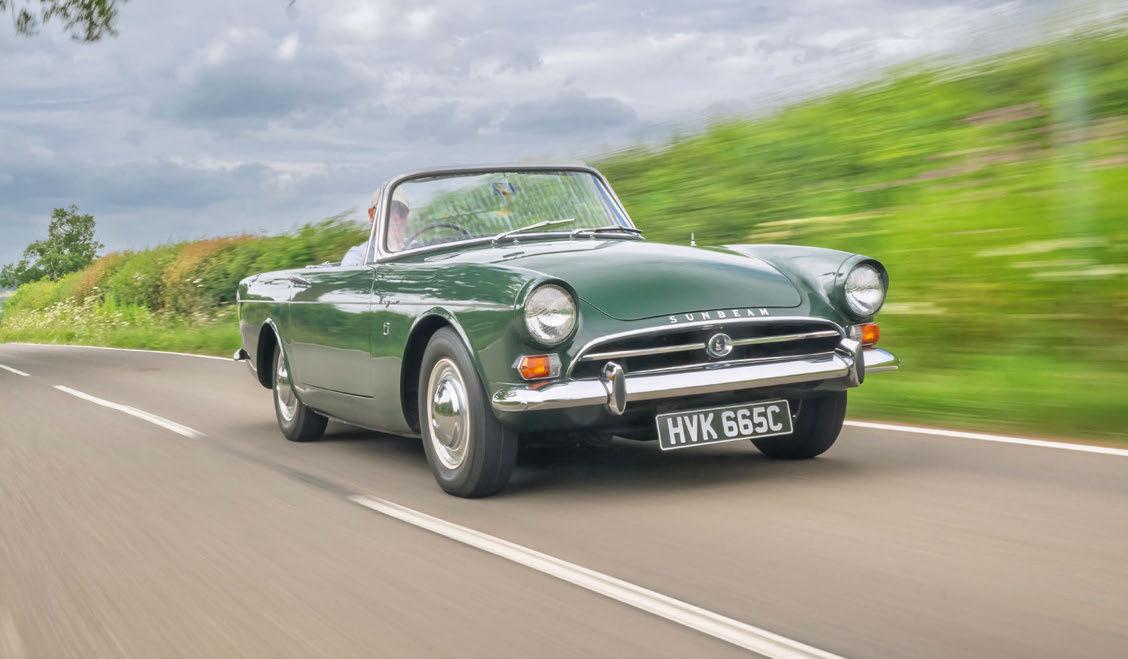
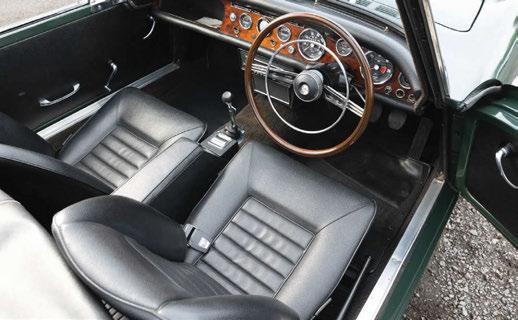
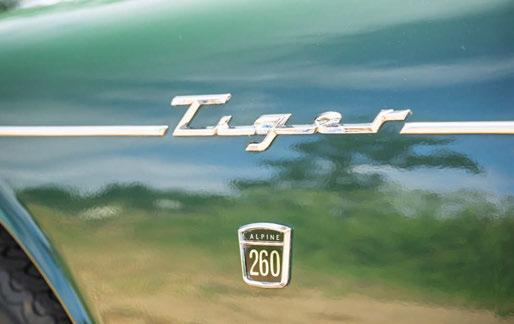
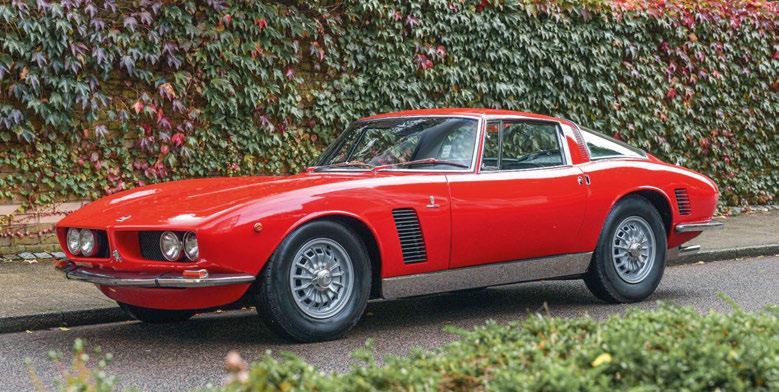
POA from DD Classics, London, UK
IF YOU HAVE already read this month’s wonderful celebration of Giugiaro and his many creations, then the Grifo needs no introduction. e package combines coachbuilt Italian bodywork – penned by the great man himself during his time at Bertone –with Gio o Bizzarrini-developed underpinnings, plus power courtesy of a seriously punchy yet reliable small-block Chevrolet V8 engine. e result was one of the most desirable Italian Grand Tourers of their 1960s and ’70s heyday.
Two versions of the Grifo were o ered initially: the GL300 and GL365. ese numbers tallied with each version’s metric horsepower gure, although both utilised the same 5350cc engines, built in the USA and modi ed in Italy. e GL300, as seen here,
Insider
retained a single Carter AFB two-barrel carbure or and a lower compression ratio. is eye-catching red example, the car’s original colour, is o ered for sale by DD Classics and it’s a real rarity, being one of only 35 right-hand-drive cars built. Commissioned by Sir Gordon O’Neil, the car was one of very few delivered new to the UK and, as chassis 005, was among the earliest Grifos to leave the Bresso factory. Notably, this example was later owned by racing legend Mike Hailwood. Today, this Grifo still boasts matching-numbers status, plus a continuous history since 1986. DD Classics describes the records as ‘meticulous’, with the history also including copies of the car’s original factory build sheets. ddclassics.com
HOW’S BUSINESS? Our business remains strong, with more buyers increasingly focused on quality. One collector will want a restoration with documented provenance, while another seeks a high-end classic with performance and comfort upgrades – you’ve got to cater equally for them both. A er four decades in the cra , we’ve found that doing the work properly is directly re ected in your success. What marques and models are most in demand? For us, Jaguar E-types and XK models remain our foundation, while early Porsches also a ract a lot of a ention. What’s great value at the moment? Jaguar XKE Series 1 and 2 driver-level models o er good, a ordable value.
What’s currently looking overheated in your home market of the USA? Domestics such as muscle cars, trucks and supercars are commanding huge dollars right now, but we don’t know how long that will last. Can you put your nger on the next big thing? No, whatever it is will be in uenced by large classic car auction houses and the media.
What’s your dream car? A 1949 Jaguar XK120 alloy roadster that we previously restored and which broke world records. At the moment we are restoring another XK120 alloy roadster (chassis 670121) that will be available in the spring of 2026.
1964 Bentley S3 Continental AUS $387,995
One of the last coachbuilt Bentleys, this was one of only 291 bodied by Mulliner Park Ward and is still fresh from a six-year restoration completed in 2021. classicthro leshop.com (AUS)
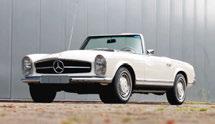
1969 Mercedes-Benz 280SL Pagoda, €120,000
Restored to a very high standard just over ten years ago, this desirable European-spec, manual transmission Pagoda simply ticks all the right boxes. carcave.be (BE)
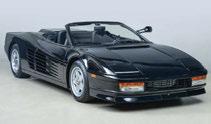
1986 Ferrari Testarossa Spider POA
Not only do you get Miami Vice vibes with this Stramanconverted Spider, it also starred in a Pepsi advert featuring Michael Jackson! canepa.com (US)
sales and purchase of
select
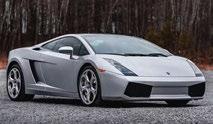
Lamborghini Gallardo £2500 per syndicate allocation
The Gallardo was a landmark car for Lamborghini, and the sound of its V10 is now legendary. Manual versions, like this one, are considered by The Car Crowd to be a sound investment. thecarcrowd.uk
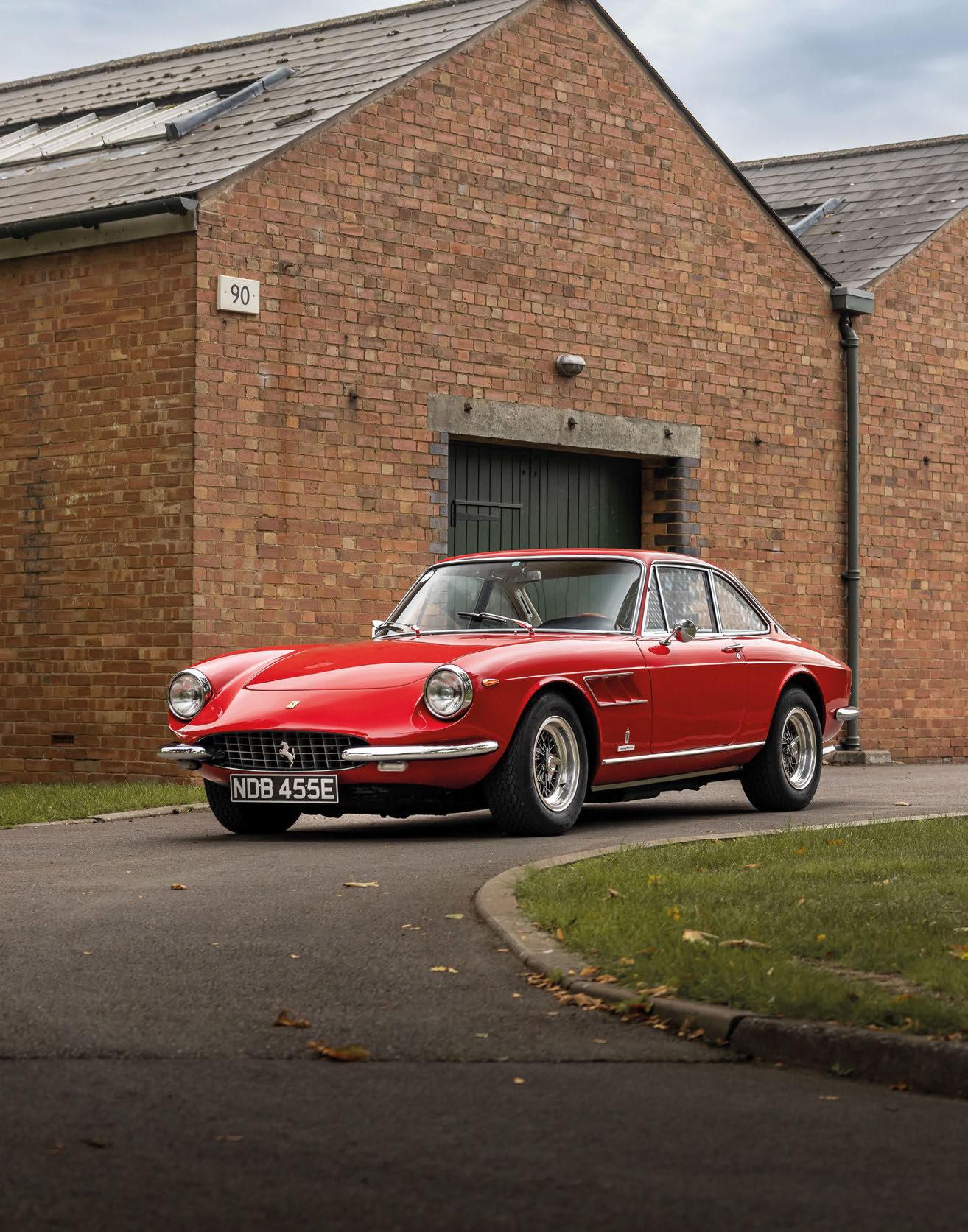
2023 PORSCHE 911

992 CARRERA T COUPE
GT Silver Metallic over black Sport-Tex, seven-speed manual gearbox, only 17,000 miles, freshly serviced and still under the manufacturer’s warranty £89,950






The 1954 Earls Court Motor Show car and one of nine built. Early competition history, long-term ownership and superbly restored. Highly original and eligible for premier events £375,000

2014 MERCEDES-BENZ SLS AMG GT FINAL EDITION
One of 7 delivered to the UK, just 718 miles and protected by PPF. An opportunity to own one of the last 6.2-litre naturally aspirated V8 Mercedes supercars £434,950
1967 FERRARI 330 GTC
A matching-numbers example with Ferrari Classiche certification, detailed history featuring a rebuilt engine and tasteful upgrades £479,500





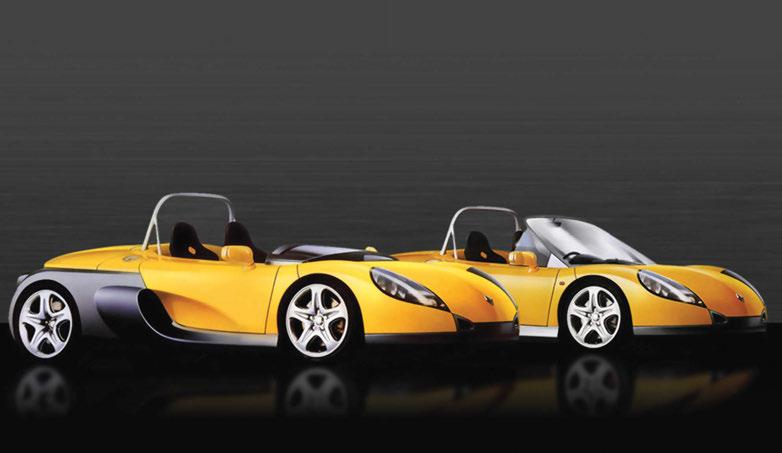
A genuine racing car for the road, the Spider remains a forgotten gem
IF ONLY LOTUS hadn’t launched the groundbreaking Elise, the Renault Sport Spider might have stood a chance. Alas, the genius of the gamechanging two-seat roadster from Norfolk left this considerably more expensive and compromised Spider standing. Which is a real shame because –like most of Renault’s more extreme creations –what it lacked in polish and practicality, it made up for with bucketfuls of drama.
Renault first dabbled with the idea of a two-seater speedster in 1990 with the Laguna concept, which soon evolved into project W94 – the Spider. Making its first public appearance at the 1995 Geneva motor show, it was a real chance for RenaultSport – born out of the ashes of Alpine in Dieppe – to build a low-volume, race-ready sports car. Racing car chassis designer Claude Fior was drafted and given a clean sheet of paper, with just one prerequisite: the Clio Williams-sourced 148bhp 2.0-litre four-cylinder F4R engine and five-speed gearbox must fit.
An extruded aluminium chassis makes up the main structure of the car, with highly adjustable, rose-jointed double-wishbone suspension front and rear. It’s clothed in glassfibre body panels, with a roll hoop at the rear. The interior was spartan: there’s no heater, no side windows and, of course, no fixed roof. And what most people will remember is that the earliest Spiders were sold without a windscreen, meaning a crash helmet was required.
Production started in 1996, and all of the right-hand-drive UK-spec cars (around 80 sold) had a proper windscreen fitted, complete with wipers, a feature that was offered as an option on later EU models. There’s a fabric tonneau cover for use at low
speed (up to around 55mph) or when parked to keep the worst of any rain out, but it’s a token effort that makes the Elise seem like a Bentley in comparison. Options were fairly limited, although a choice of yellow, red, or blue paint could be chosen, with full silver offered towards the end of production.
Practicality might not be the Spider’s strong suit, though there is a small front luggage compartment, but it looks, feels and drives every bit as much like a racing car as you would expect. It’s low, incredibly wide and just bonkers. On-paper performance isn’t the name of the game here: 0-62mph in 6.5sec and a top speed of 131mph don’t sound exceptional in this day and age, but the way it delivers that performance is more exciting than most cars with two or three times the power. It’s not a delicate, tactile flower like the Lotus, but with a chassis that is exceptionally poised and grippy it’s a real thrill-ride. Not to mention a physical experience, thanks to the unassisted steering and brakes.
With motorsport breeding from the outset, it’s no surprise that Renault always intended to produce a race-spec Trophy variant that would be used in a one-make race series. These cars had thinner panels, fixed doors with no internals, a full roll-cage and (somehow) even less interior trim. The engines were also tuned to various states up to around 200bhp, and coupled with a sequential gearbox.
Today the Spider remains an almost forgotten alternative to the ‘default’ sports cars out there. Assuming you’re willing to put up with the lack of a roof (or even a windscreen), you could end up with one of the coolest-looking and most exhilarating prospects on four wheels. Matthew Hayward
There’s no such thing as a cheap Spider, but £25,000 is the starting point for a road car in reasonable shape. Expect to pay upwards of £35,000 for a mint one, while the very best examples – such as the Renault UK heritage collection car that sold for £45,000 – offer a rough guide to where concours-level examples are in the UK.
Prices in Europe are broadly similar, although there you also have the choice of the earlier, non-windscreen version, plus a slightly broader availability.
Trophy racing cars are scarce, but when they come onto the market they tend to command between £25,000 and £35,000.
Rust isn’t a prime concern, as the extruded box-section chassis is aluminium (and these are not cars usually driven through winter!), but it is important to make sure the Spider hasn’t been involved in any serious accidents, as a bent chassis could mean a whole world of trouble.
For a while now, one of the biggest problems for Spider owners has been finding replacement body panels, should they ever be needed. Genuine panels are nonexistent, but some have been reproduced. It is also possible to use lighter Trophy-spec panels in some cases.
Replacement Perspex headlight lenses are pricey but available from France.
The Clio Williams-sourced F7R engine is reliable; just make sure it’s had a timing belt recently and is running well. Any difficulties shifting the five-speed gearbox are usually caused by badly adjusted or worn linkages rather than internal faults. One of the common failure points is the Twingo-sourced electronic speedometer, but these can be repaired.
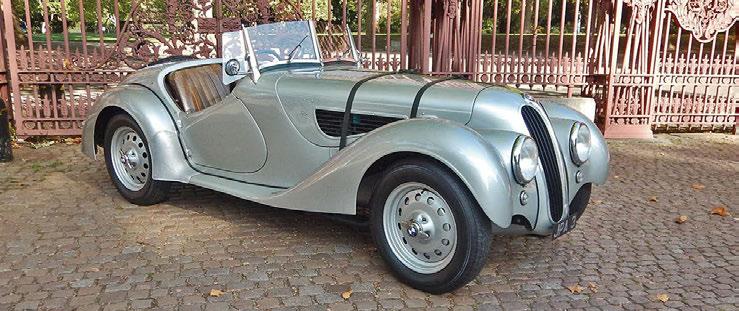
1939 Frazer Nash BMW 328
‘JPA 3’ is fresh from a 400,000 Euro mechanical restoration captured in over 2000 photos. Super history, rally winning potential and far from the most expensive.
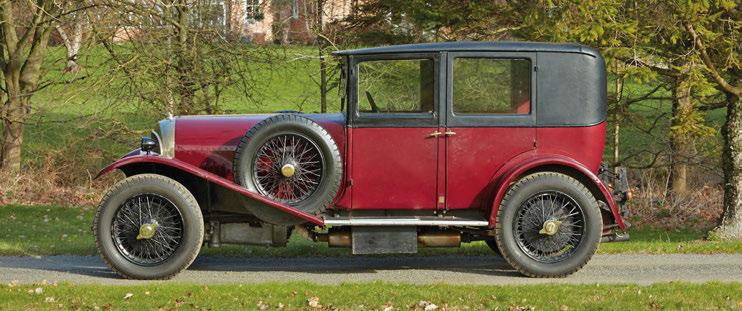
1926 Bentley Saloon by Gurney Nutting
A unique Short Chassis Speed Model by the best coachbuilder in exceptionally original condition. Matching numbers, Hay approval and with a price so low it feels wrong. It begins with a 1.
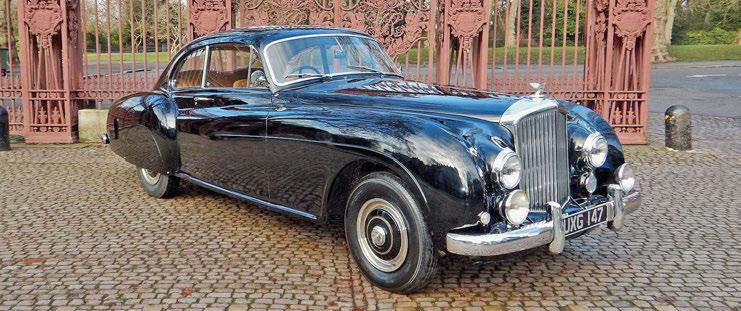
1952 Bentley R Type Continental by H.J. Mulliner
Outstanding condition with manual gearbox, lightweight seats, spats, air-con and fresh paint. At the top of the market a tidy example was £800k, BC 22 A can be bought for less than half of that.
Also available
1934 Invicta S Type by Carbodies 1952 Frazer Nash Targa Florio
See Website for more details




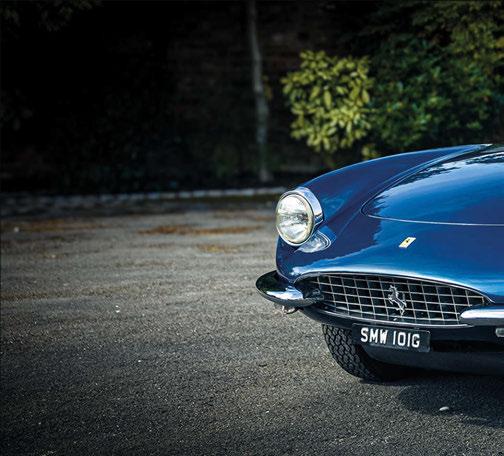
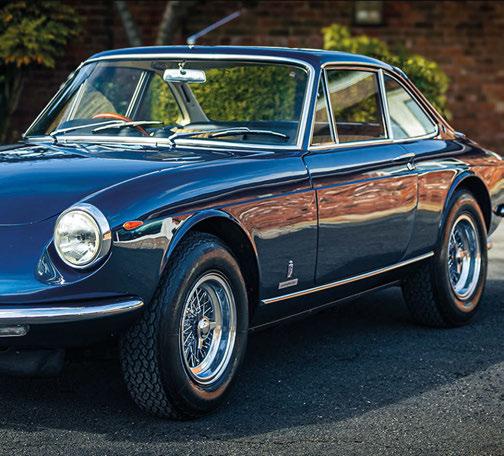

Blue Sera with cream leather, 1 of 21 UK cars made with great ownership provenance. In 1997 the car had a full bare metal respray and interior re-trim. A full engine overhaul was done in October 2000, an extensive history file comes with the car.
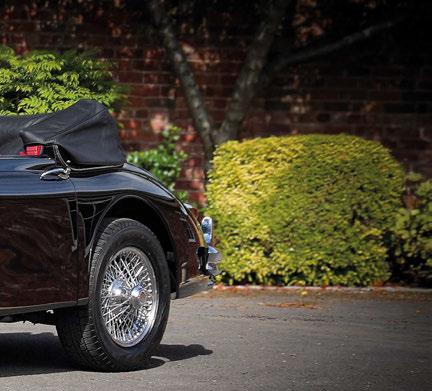

Black with red leather and a black hood. One of 662 drophead coupes made and equipped with overdrive. A 2-owner car from new with the first owner owning it for 62 years. Its second owner bought the car in 2014 and carried out a full nut and bolt restoration which was completed in 2016. The car is accompanied by a Jaguar Heritage certificate, full tool kit, original jack, tyre inflator and grease gun.

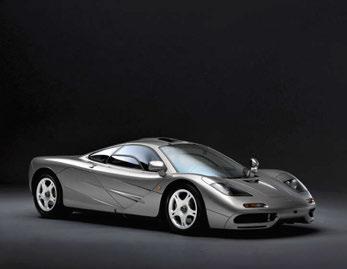
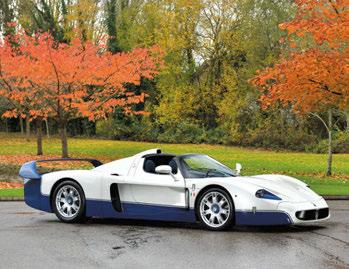
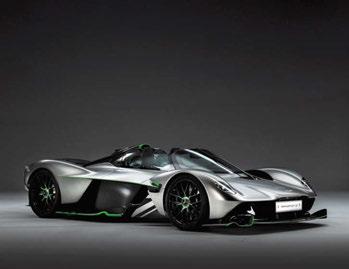
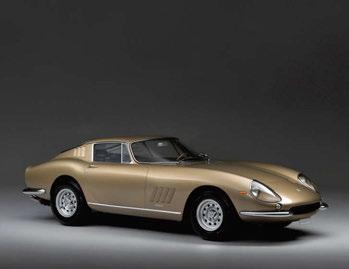
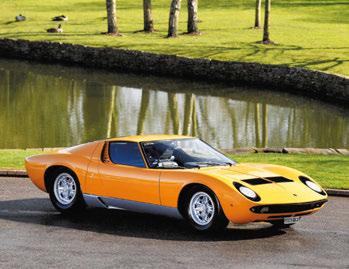
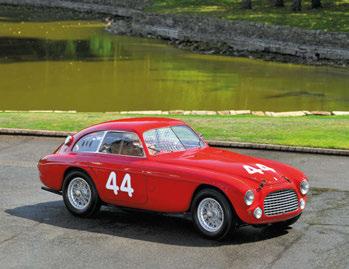
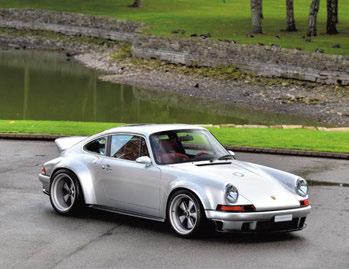
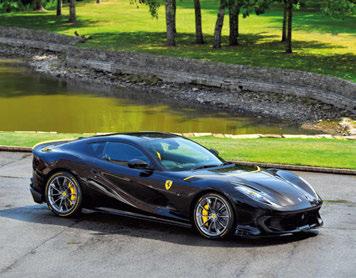


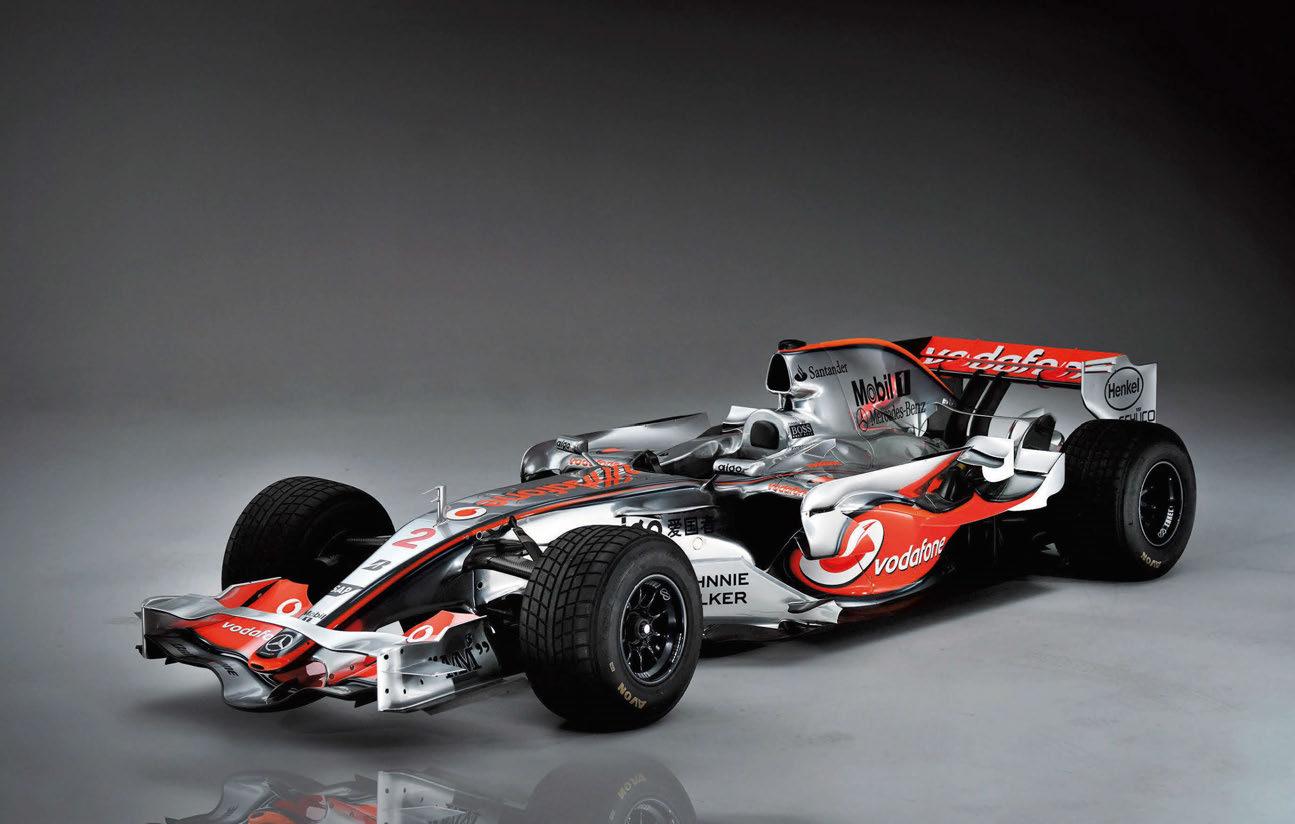
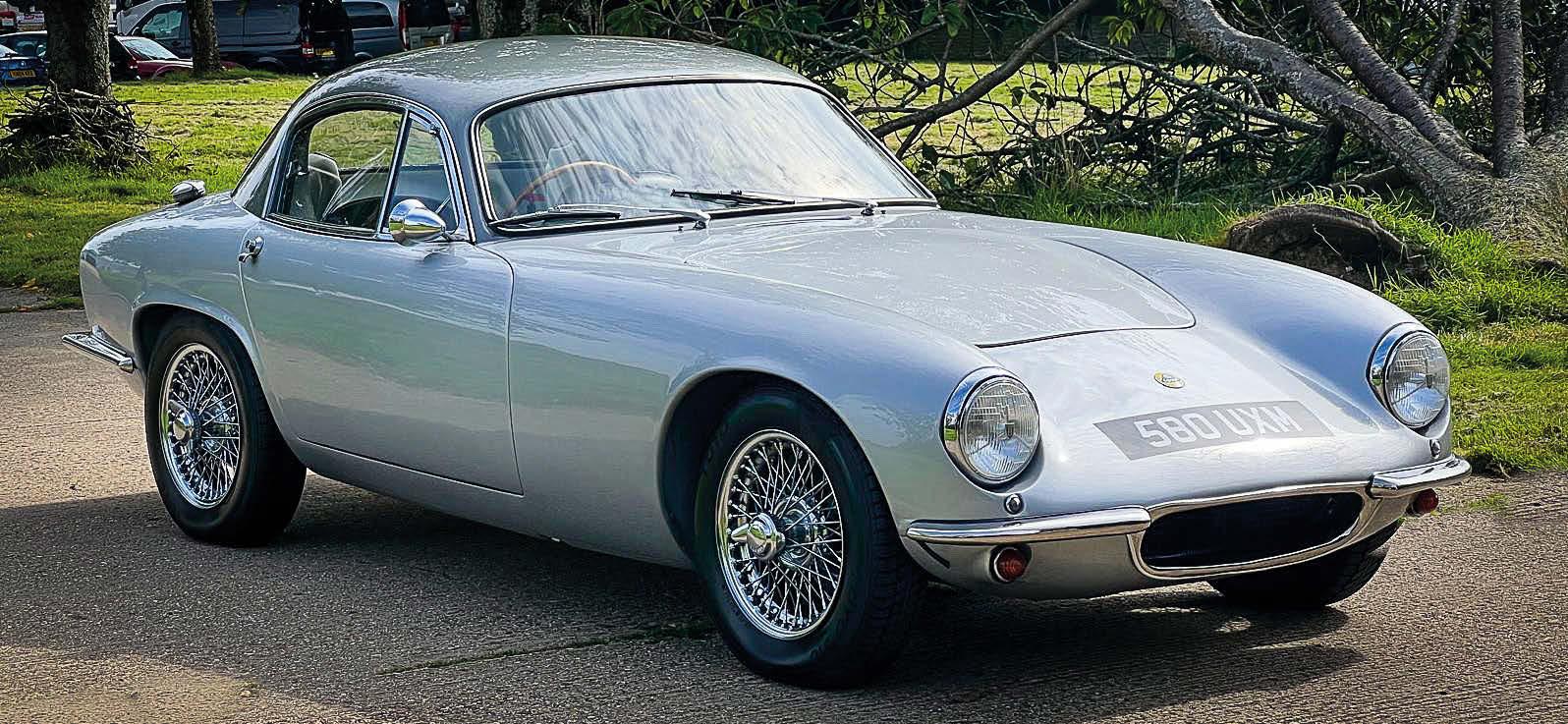
1959 Lotus Elite
Rarely avaiable, Colin Chapman’s sensational race bred design dominated its class on the race track well into the 1960’s. Equiped with the later series 11 ZF transmission plus a huge history file.
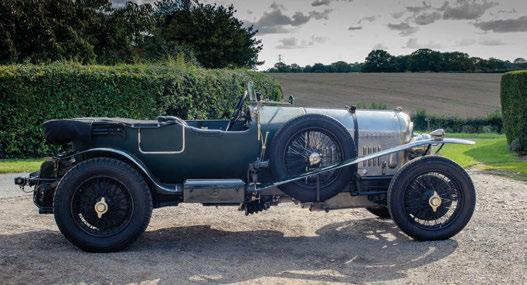
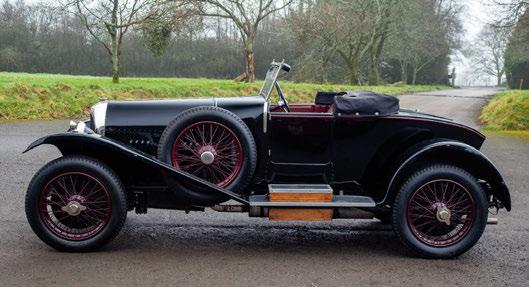
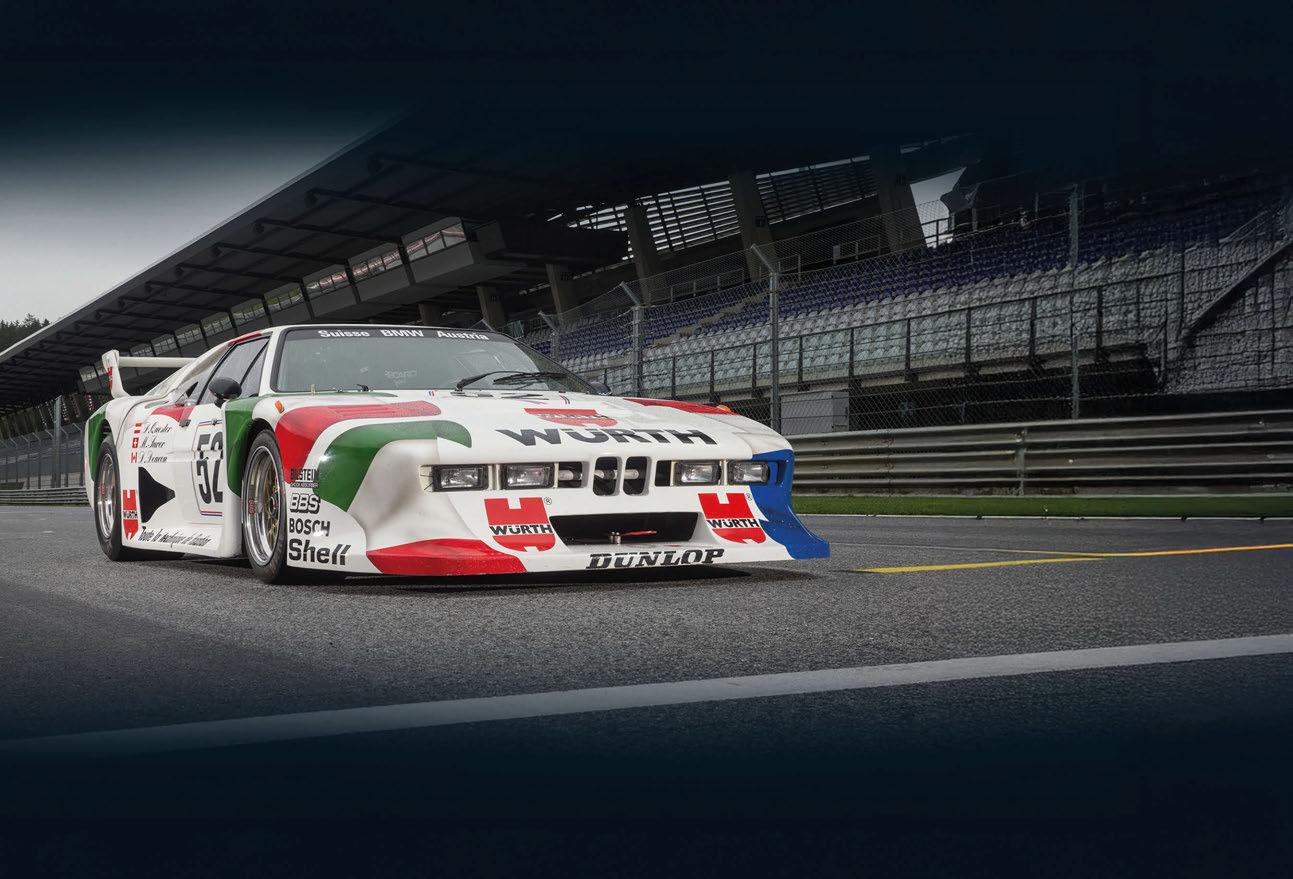
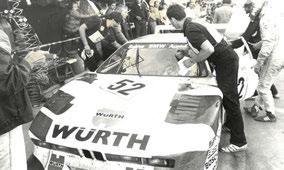
1980 Sauber BMW M1 Gr-5
Built Offered for the first time on public sale. The only surviving Sauber BMW M1 Gr-5 (chassis #81.M1R.01). It is one of the two vehicles built by Sauber and has a 24-hour Le Mans history. The Group-5 BMW M1 was developed and constructed by the Swiss Sauber team specifically for the «24 Hours of Le Mans» and the endurance races of the «World Sportscar Championship». The vehicle has a very well-documented history and was used regularly between 1981 and 1988. It has a complete and well documented ownership and race history. It still retains it’s original Swiss «Wagenpass», all original Sauber chassis drawings, as well as many period pictures. The vehicle can be driven at track days in its current condition. Further work is required for serious historic racing such as the «Le Mans Classic» or Peter Auto «Classic Endurance». This is a unique opportunity to acquire the remaining original Sauber BMW M1 Gr-5 and register it for the 2026 Le Mans Classic. POA
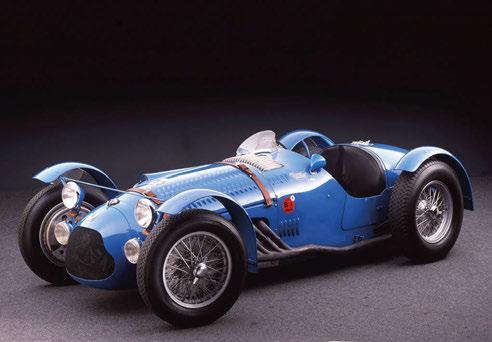
Built in 1952, this is the last of six two-seater Talbot racing cars, based on a shortened Lago Grand Sport chassis (2.50m wheelbase) with a unique Wilson box gear selector. It raced twice in 1952: at Le Mans (#9, Meyrat/Mairesse), retiring after 13 hours due to an oil pump failure, and at the Reims GP, where it finished 2nd (Mairesse).
Sold to Sweden in 1953, it later moved to England, the USA, Japan, and back to Europe. In 1993, a Swiss collector fully restored it and kept it for 31 years. Now in a «with fenders» configuration instead of its original racing body, it holds Swiss registration and is eligible for historic events. POA
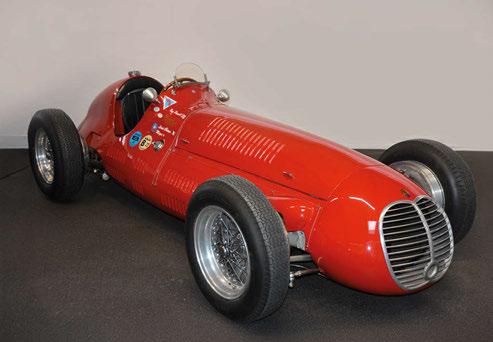
Ex-Reg Parnell Maserati 4CLT/48, Chassis #1596 – Engine #1593, 1.5 L supercharged Grand Prix monoposto producing 260 hp at 7,000 rpm. Powered by a 1489 cc inline-four with twin cams, four valves per cylinder and a two-stage Roots supercharger, mated to a four-speed gearbox. Parnell raced it through 1949 with major Goodwood wins, including the Richmond Trophy, which he claimed again in 1950. After a successful European career, the car went to New Zealand and returned to Europe in the late 1980s. Following a 1999 ownership change, the ex-Parnell Maserati was fully recommissioned and made race-ready. POA
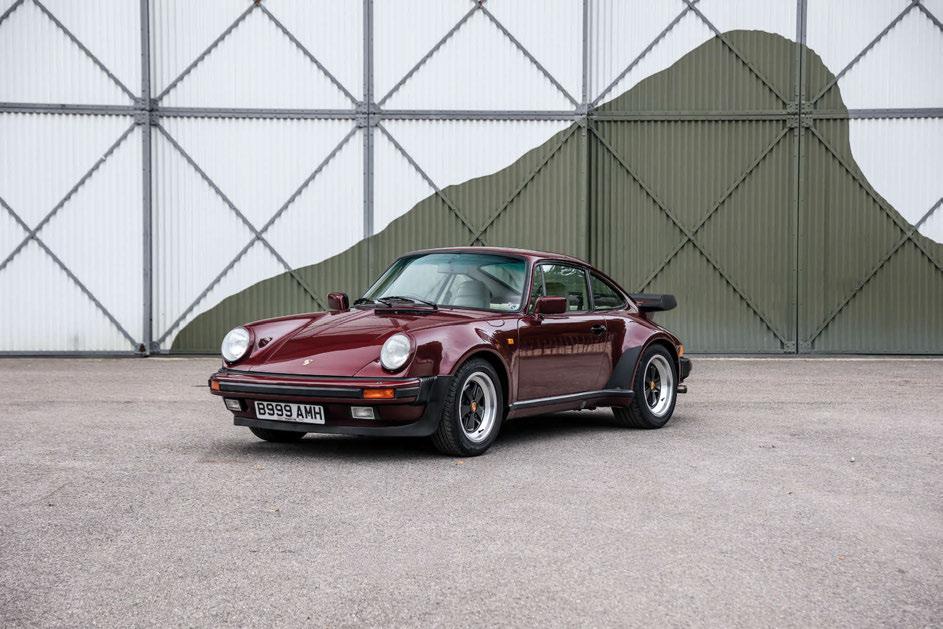
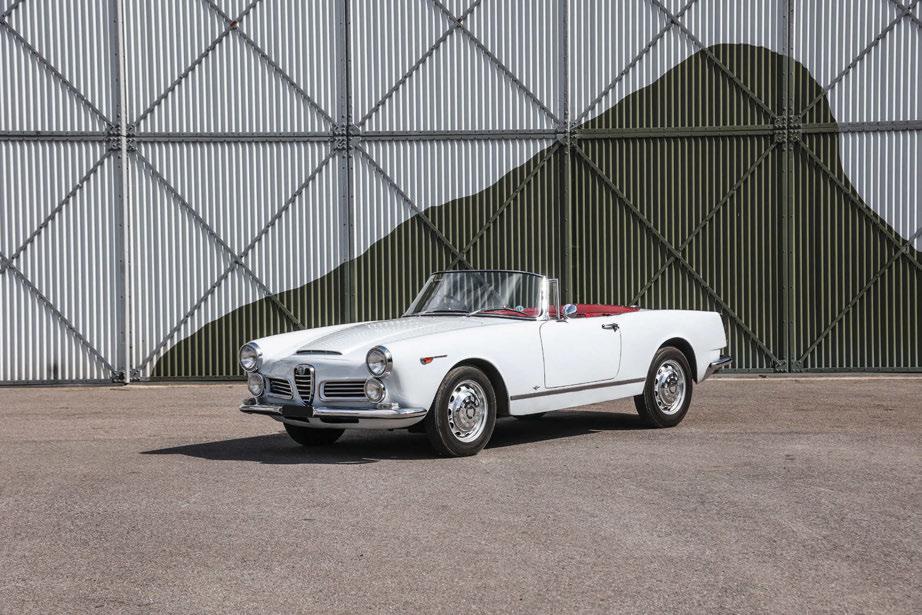
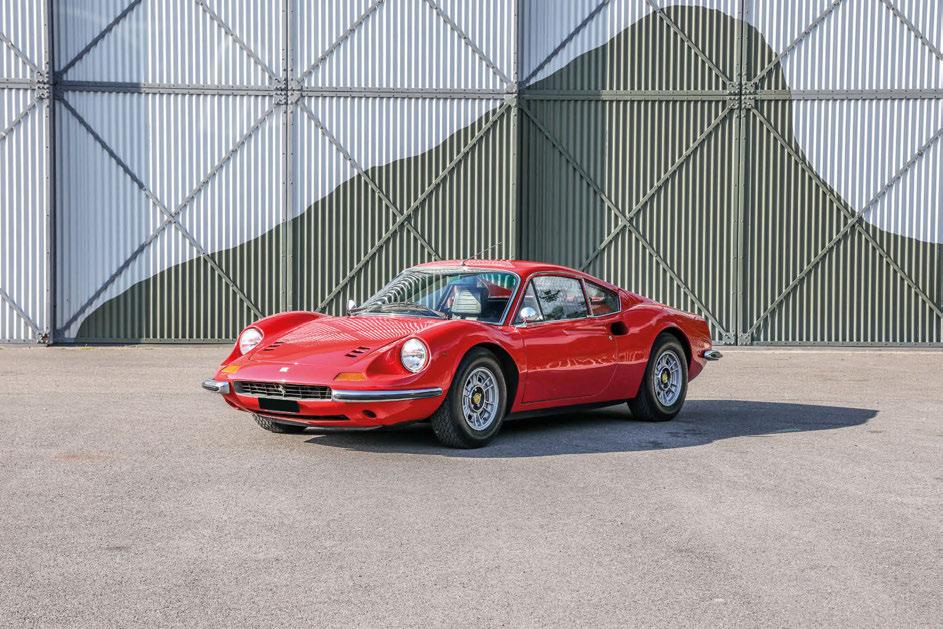
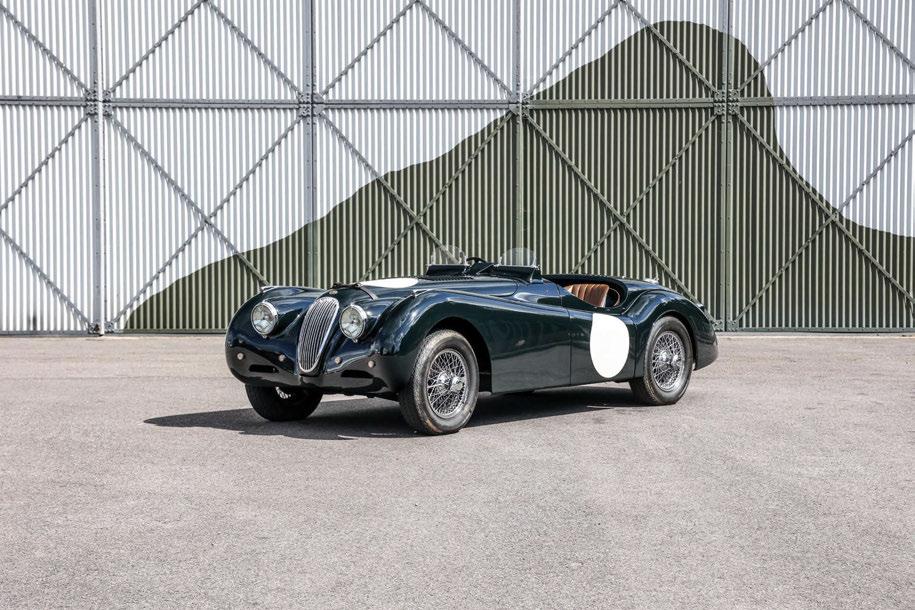
Chassis
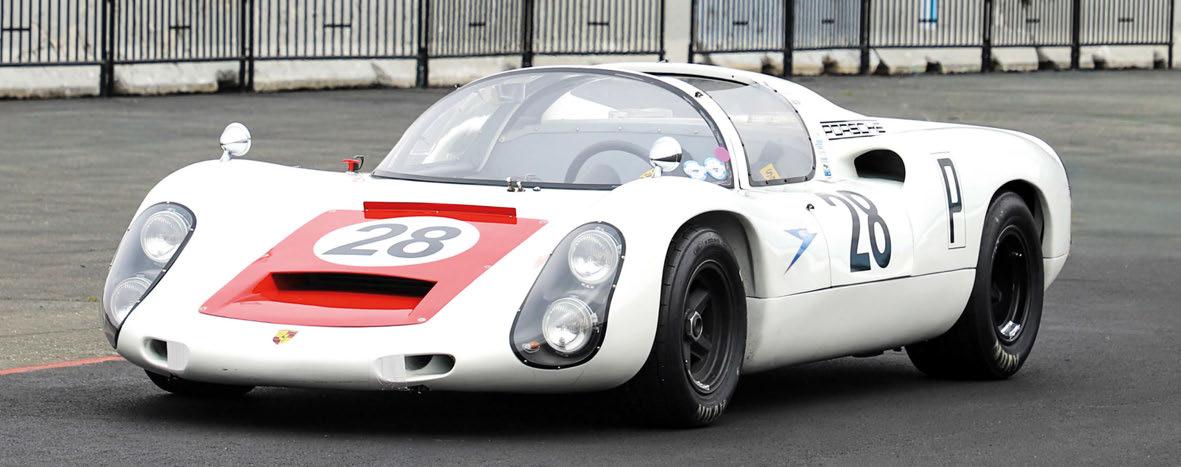


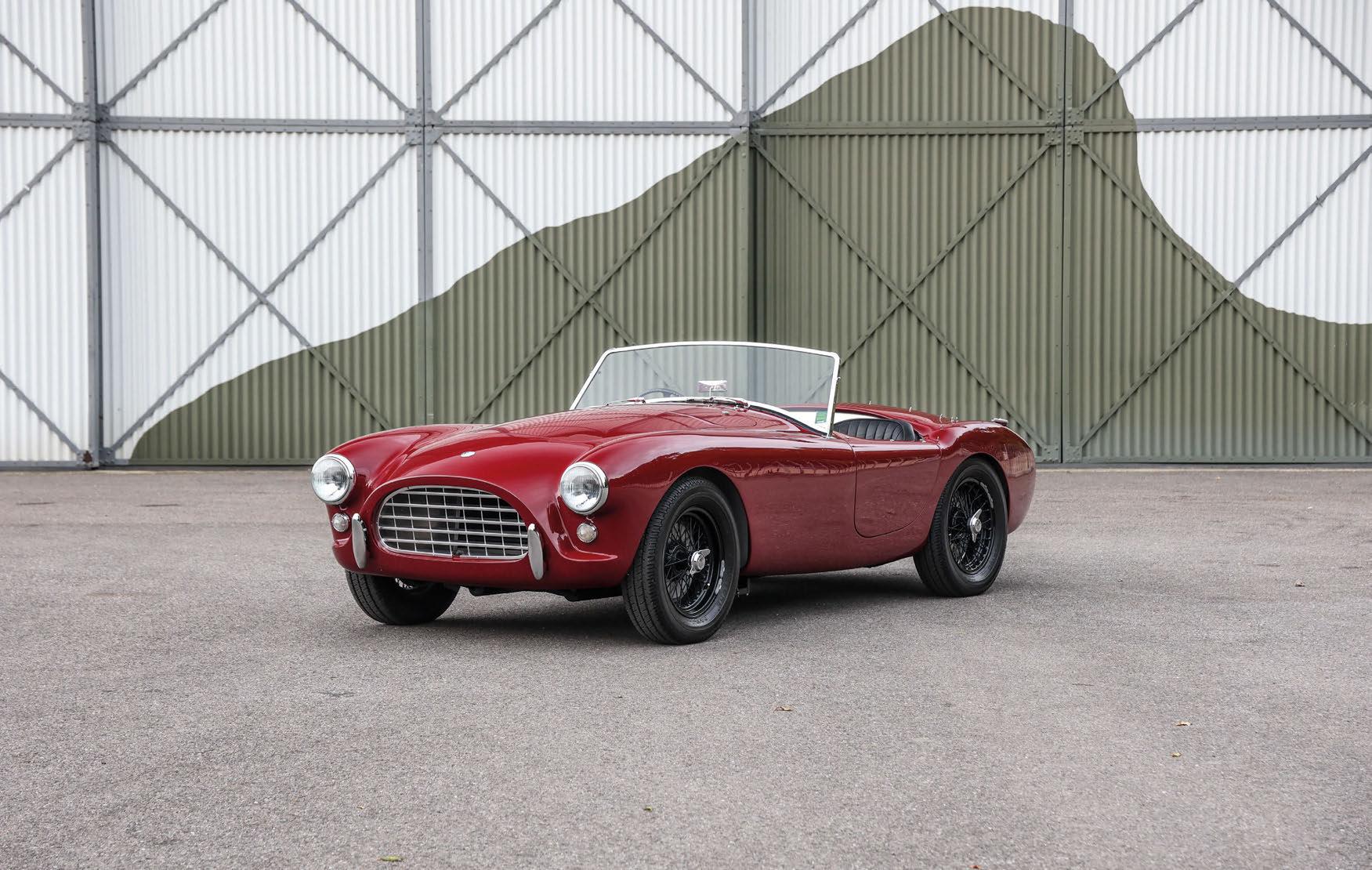
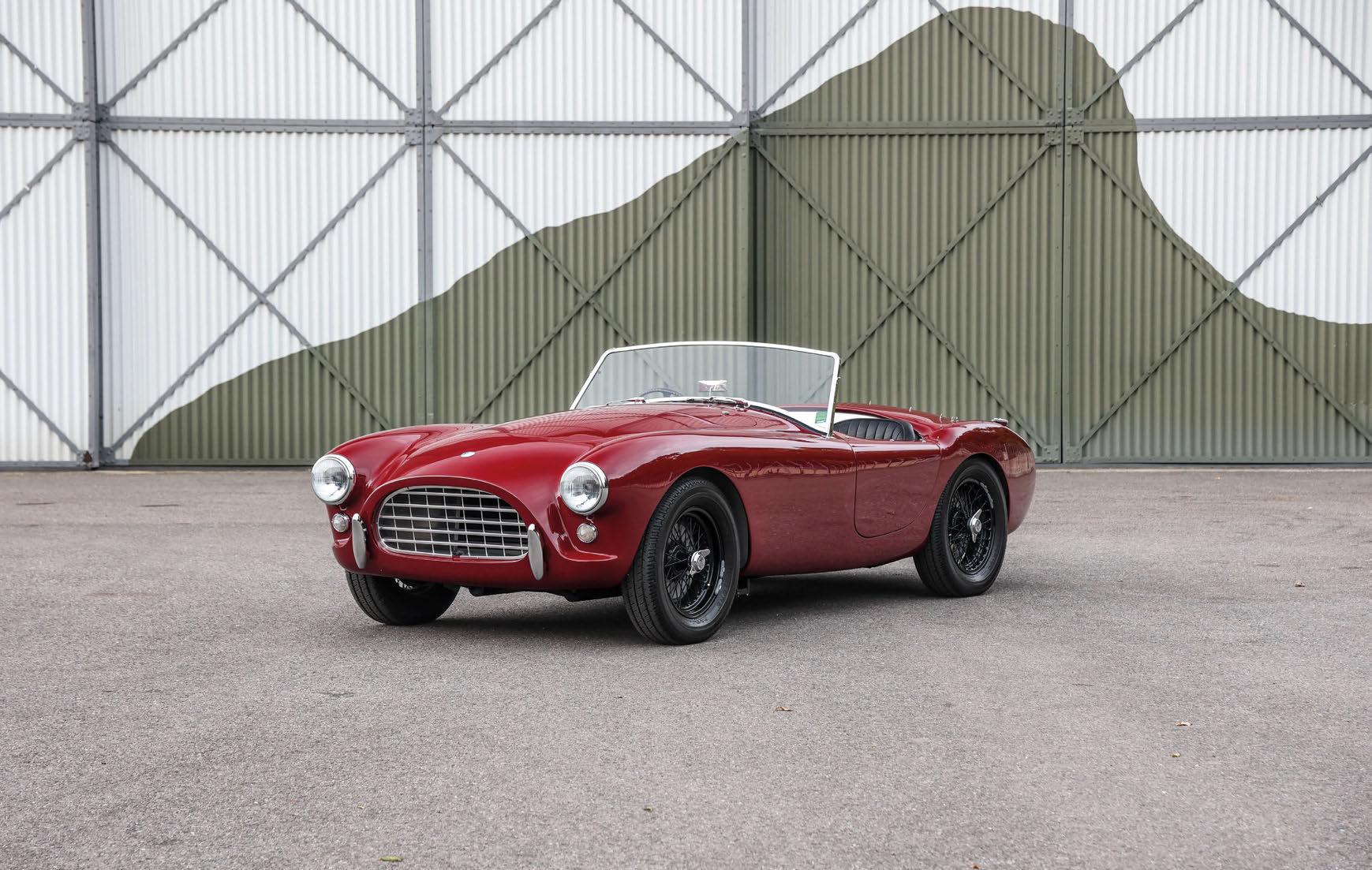
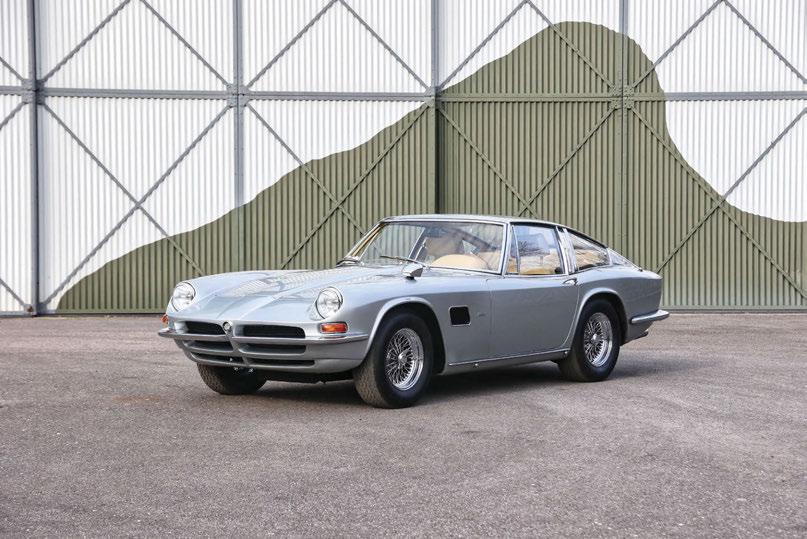
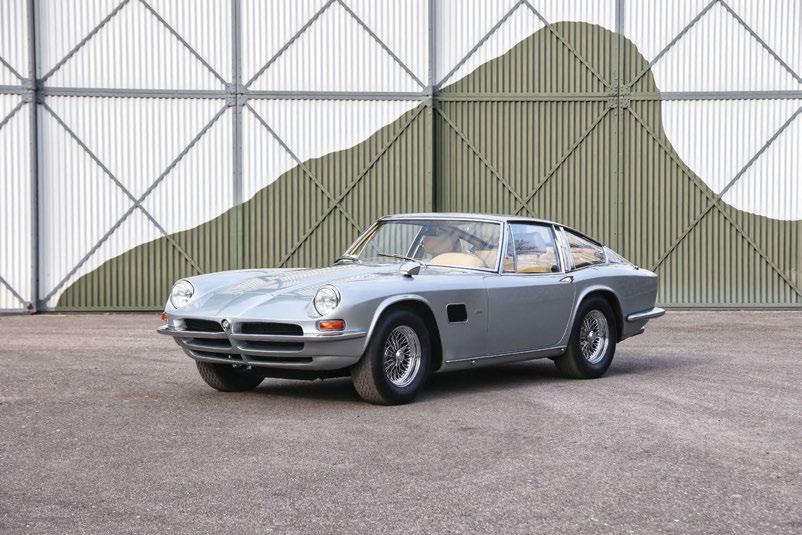
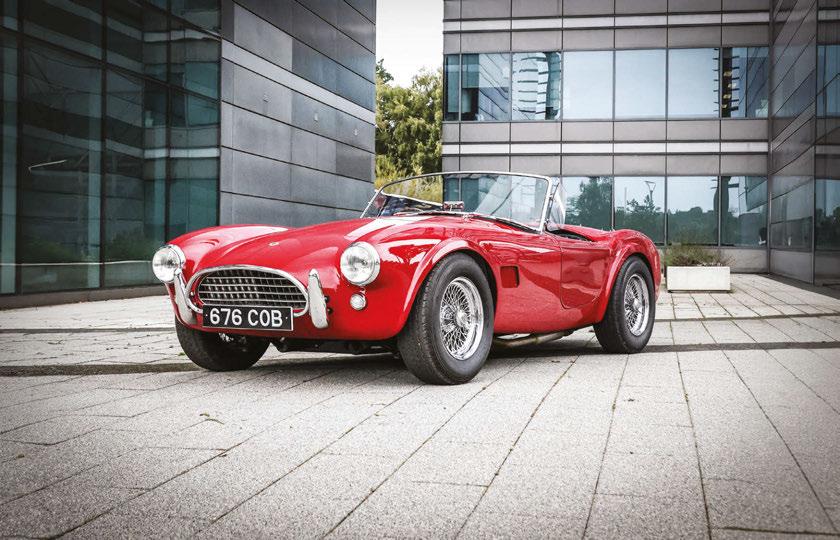
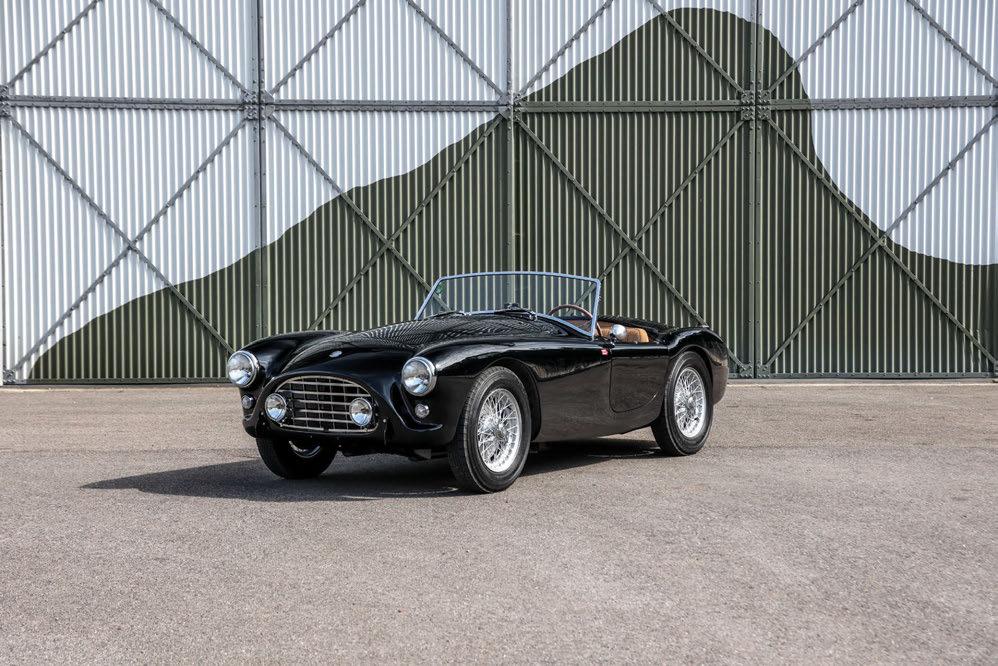
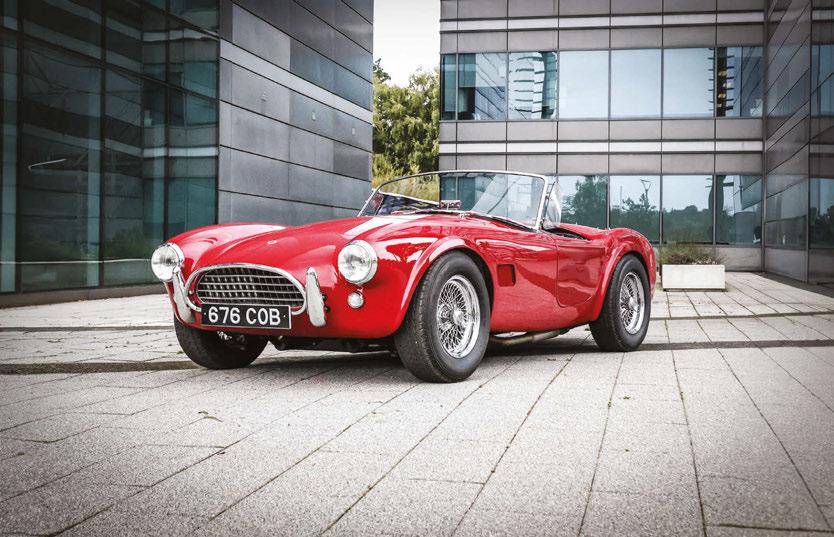
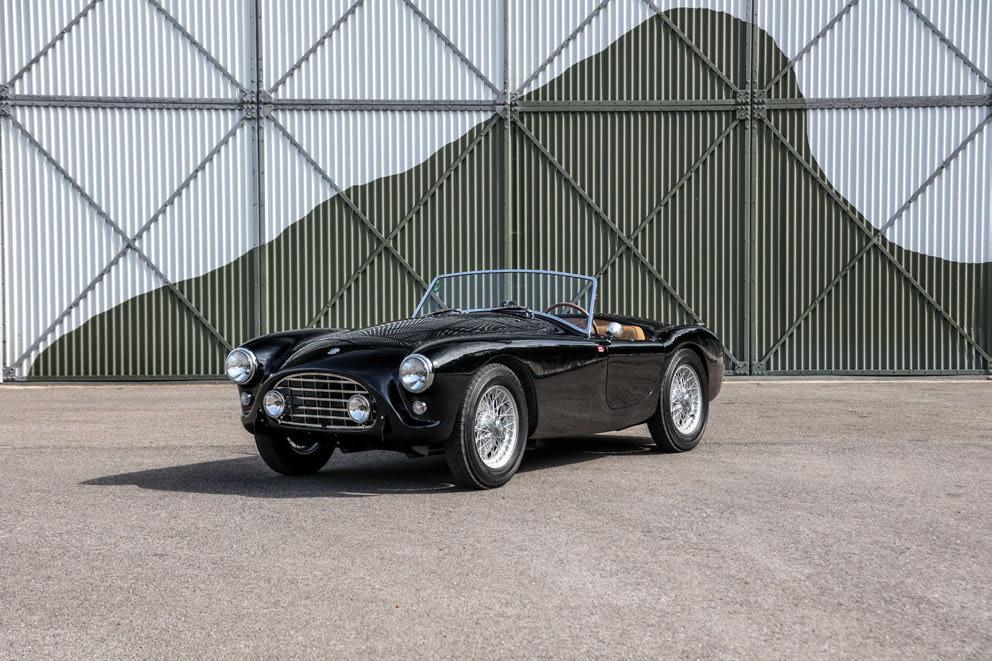
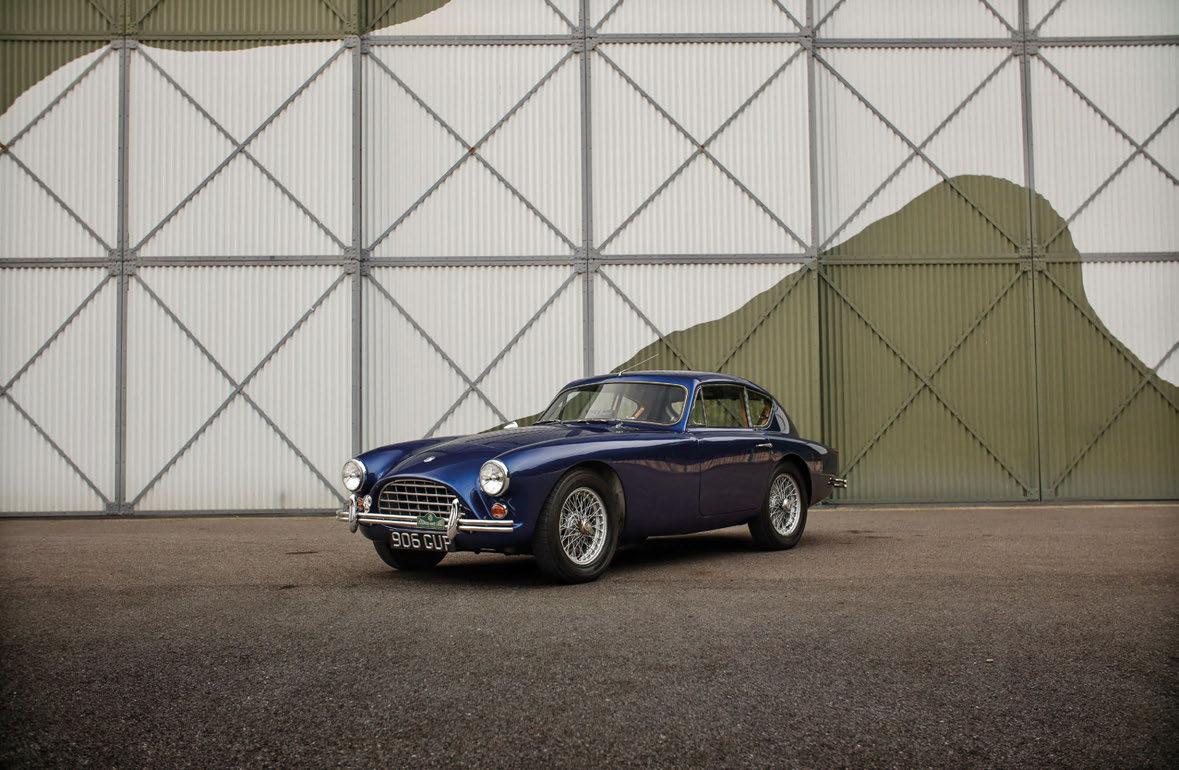
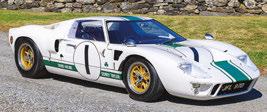
1965 Ford GT40 MKI: White with black interior. 289 ZF 5 speed transaxle. Comp Halibrands. Period history. Current FIA papers. A racer’s racer!
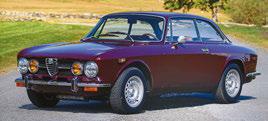
- full mechanical
Drives

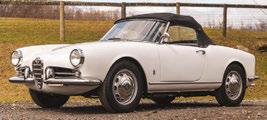
1



Poplar Farm, Bressingham, Diss, Norfolk, IP22 2AP
Tel: 01379688356 Mob: 07909531816
Web: www.asmotorsport.co.uk
Email: info@asmotorsport.co.uk
Aston Martin and Other Great Classics
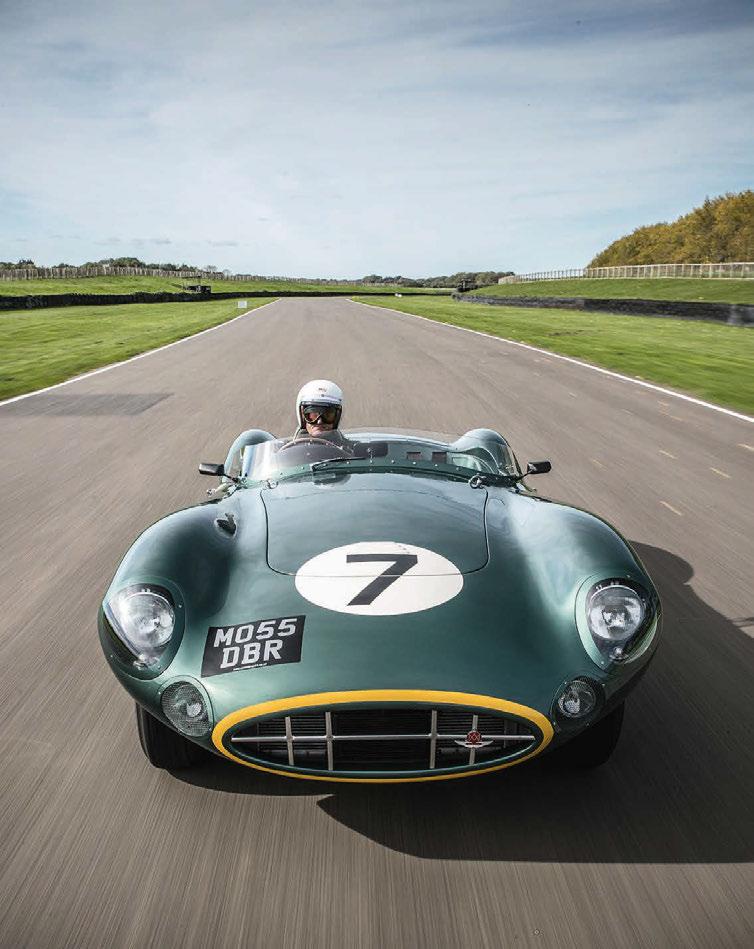
ASM R1 Stirling Moss tribute car enjoying track time at Goodwood. ASM hand build bespoke versions of the R1 roadster, inspired by the Aston Martin race cars that won Le Mans and the world Sportscar championship in 1959. Contact us for details of commission builds and stock.
2003 DB7 GTA as featured in Aston Martin Driver issue 16 - £29,995.
We can offer Winter storage of your Aston in a heated, dry and secure facility near to Winchester in Hampshire. Please get in touch for full details. Contact us for details. We are looking for all V8 and V12 Vantage models
Alresford, nr. Winchester Call Rupert Keyzar on 07595 954882 cars@racinglines.uk

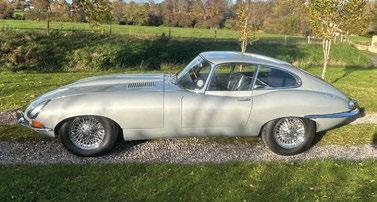
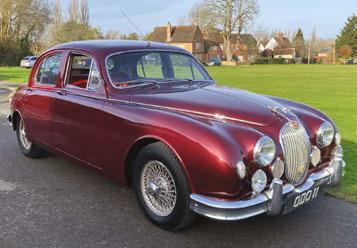
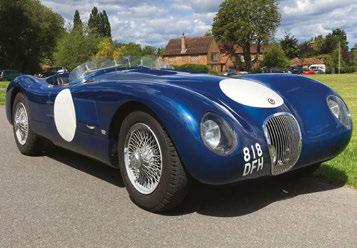


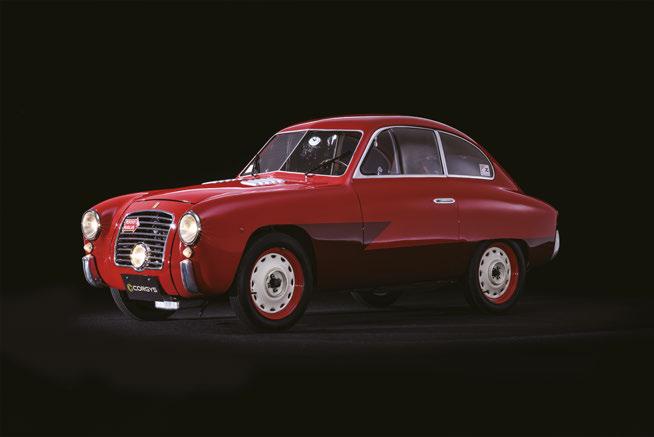
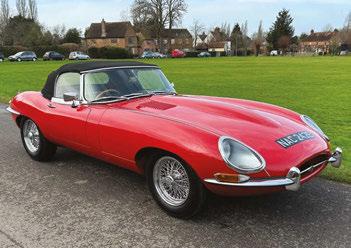
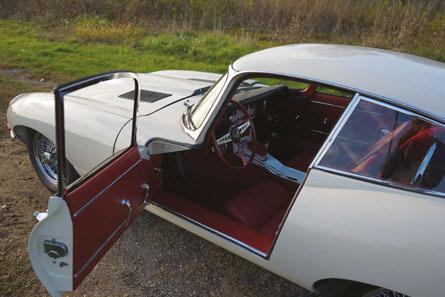
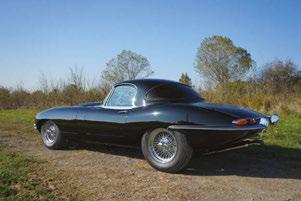
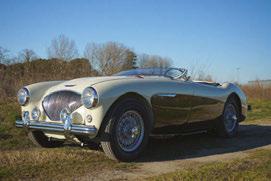





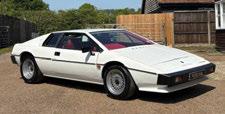


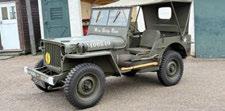


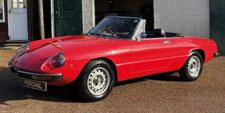
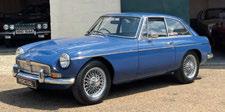

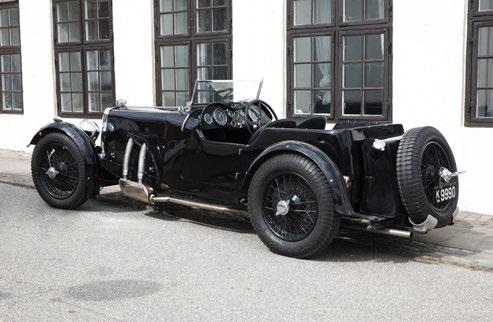
Selection of other cars available:
1931 Alfa Romeo 6C 1750 Gran Sport Zagato
1953 Alvis Healey 3Litre Sports Convertible. 1 of 25. Alloy body
1933 Aston Martin Le Mans Short Chassis. Matching #s. Superb
1923 Bugatti Type 30 w. T35A engine
1938 Delahaye 135M Figoni & Falaschi Cabriolet. Concours
1969 Ferrari 365GT 2+2. Azzurro Metallizzato over beige
1991 Ferrari Testarossa. 3 owners. 60.100km
1963 Mercedes Benz 190SL w. Factory Hardtop.
1965 Mercedes Benz 300SE Coupe. Silver Grey/Red leather
1969 Porsche 911T 2.0Litre. Matching #s. Rare ‘Goldgrün’ colour
2007 Porsche GT3 RS. 22.000km. Orange. Phone: +45 5363 8956 | Email: info@centurylimited.eu WWW.CENTURYLIMITED.EU

Get closer to the world’s greatest classic and performance cars with the all-new Octane app – redesigned for speed, style, and seamless reading. Enjoy enhanced features, exclusive digital content, and instant access to every issue, anywhere you go.
























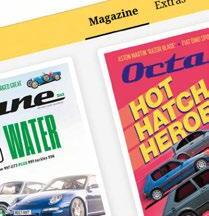
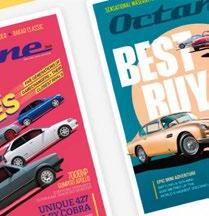
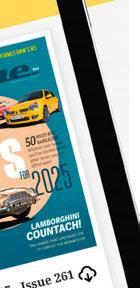


























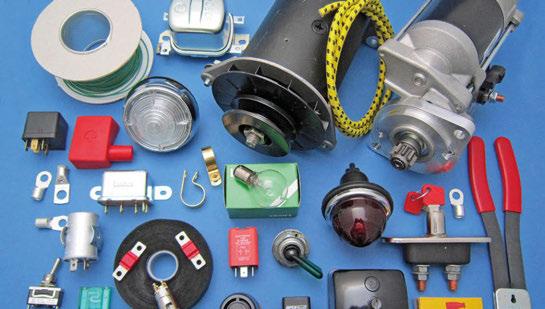



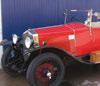





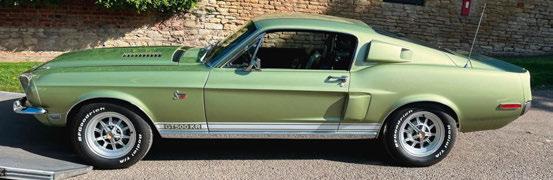




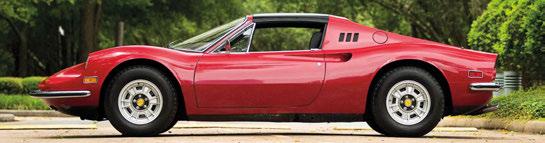
































CFS ethanol-free fuels ensure premium performance whilst being storage stable for at least three years. Our unique blend won’t affect carburettors or injectors, fuel lines, pumps or tanks and ensures easy starting. CFS fuels don’t absorb moisture which can cause corrosion or rust in fuel systems during storage.
+44 (0) 1929 551557






CFS storage fuels are excellent fuels to run on all the time – cleaner burning, easier starting, smoother running and better throttle response. For all types of vintage, classic and modern vehicles.
Available to order from 650+ garden machinery dealers in the UK or call for more information
















Situated 5 minutes from the A3 on the Surrey / Hampshire / Sussex borders convenient for Goodwood Discreet secure insulated storage facility for any car or motorcycle. For further information Tel: 01420 472 273 E-mail: southlandsccs@gmail.com Web: www.southlandscherishedcarstorage.co.uk
Onsite service and repair available

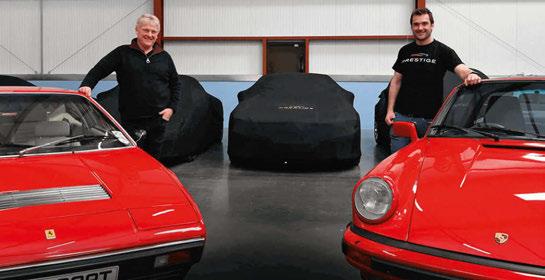









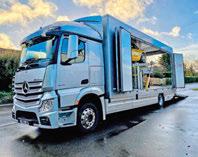





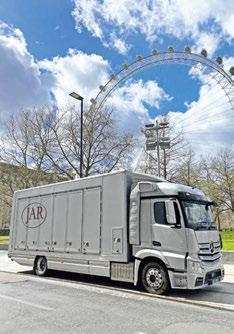














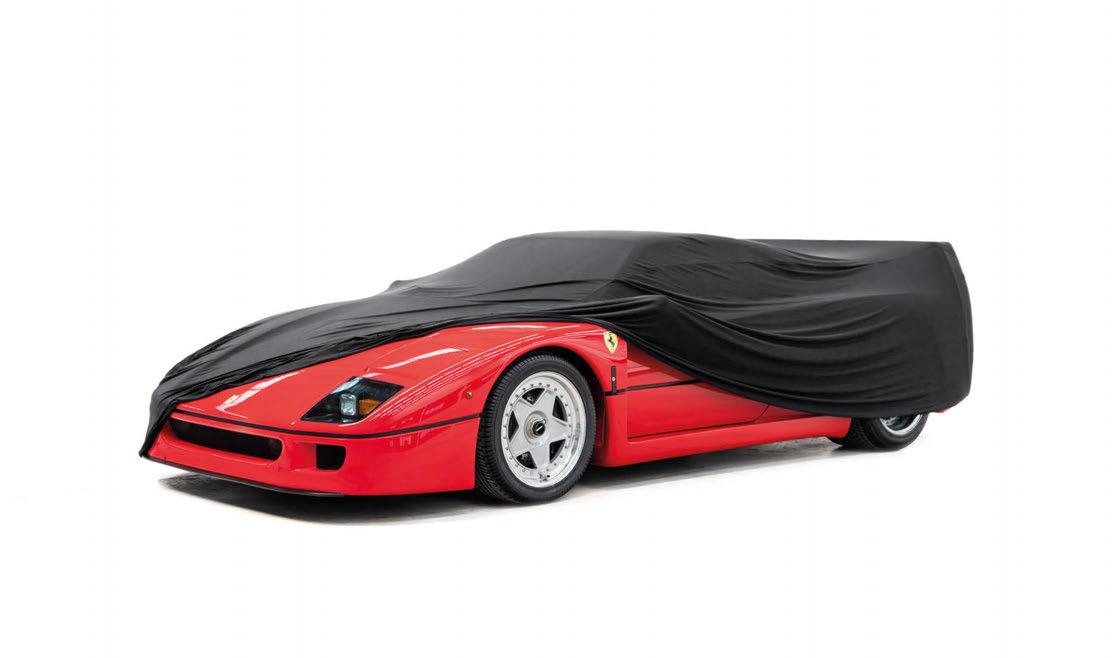

644599

Established 1978 Email: martin@runnymedemotorcompany.com
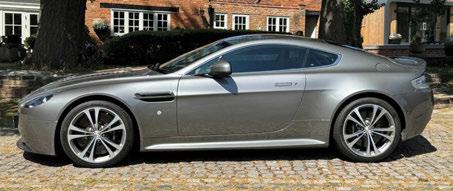
Indistinguishable from new in rare Lava red with bespoke black interior. Built to Launch specification, 2,745 miles only with full-service history. No 32 of only 99 cars produced, Very rare and collectable and competitively priced at £396,000
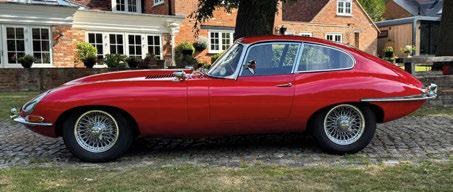
1997 Aston Martin Wide Bodied Virage Volante, (6.3 Cosmetic)
Finished in Oxford Blue with Cream hade interior. 25,000 miles only with huge service history, beautifully kept, very collectable, unlikely to depreciate. £79,950
Finished in Tungsten Silver with contrasting two tone pale grey 2+2 interior. Unbelievably good condition, 36,000 miles only with a chronologically kept record of all expenditure. Really not expensive at £49,950
1966 Jaguar 3.8 MkII
Finished in Opalescent dark blue with red had interior. UK supplied, matching numbers, never raced but built to fast road spec with high compression fully balanced engine, 5-speed Tremac box, uprated brakes and a handling kit, so much better than when it left Browns Lane. It’s a real driver’s car and wonderful value at £49,950
Finished in Artic White with unmarked black hide interior. This is a superbly maintained example with just 17,000 recorded miles from new with a complete service history. It is 2+2 configuration with an excellent specification, sitting on multi-spoke alloy wheels with contrasting red brake callipers. Sensibly priced at £59,950
1996 Aston Martin Wide Bodied Virage Volante, (6.3 Cosmetic)
Finished in Rare Cheviot Red with cream hide interior piped in red, 14,00 miles only form new with continuous service history, completely unmarked, Unlikely to depreciate, £ please ask
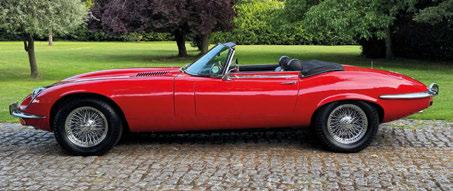
2007 Aston Martin DB9
RARE 6 SPEED MANUAL TRANSMISSION. Finished in Midnight blue with Sandstorm hide interior. 39,000 miles only with continuous service history. Last owner for 7 years, Extremely well kept. £31,950
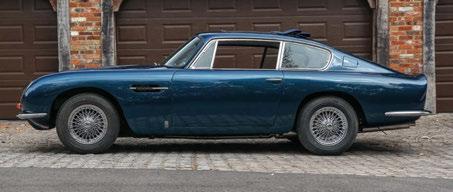
2021 289 Cobra Recreation By Hawk Cars who we consider produce the very best Cobra copies. Highly detailed throughout with superb build quality, Rover 3.9 tuned V8 coupled to a 5-speed gearbox, Cobra Rocker covers, adjustable pedal box. Sensibly priced at £49,950











Interview by Tamara Hinson

The Scalextric head of brand has a deep love of motorsport
I JOINED HORNBY Hobbies just under 16 years ago, starting out as a researcher for the Airfix brand. The job involved focusing on the detail and accuracy of our models, predominantly aircraft. I enjoyed it, but my real passion has always been automotive and motorsport – after all, one of my earliest memories is getting Scalextric’s Alpine Rally set for my fourth birthday – so, when the chance came up to work with Scalextric, I jumped at it.
I’d say the aspect of my job that I enjoy the most is its variety. One day I might be working with big national accounts such as Amazon, then I could be at the Silverstone Festival, speaking with the owner of a GT40 that’s caught my eye and wondering whether it would be a popular slot car with our core enthusiasts.
The process of adding new cars to the line-up starts with market and competitor research. We look at whether the model already exists, whether there’s demand for it, and whether we can produce it at a price that people are willing to pay. If the answer to all of those questions is yes, we approach the IP owner. If it’s a brand we already work with, we just add it to our existing agreement. If not, we start from scratch, creating a business plan and negotiating licensing terms.
For modern cars, the manufacturer supplies us with CAD files. For classics, we 3D scan a surviving example. The licensing stage alone can take anything from one to six months. The whole process – from initial design through to the finished product – usually takes between 12 and 18 months. For classic cars, the biggest challenge is fitting everything into such a small space. Our recent BRM P57 is a true 1:32 scale model, and the real car is tiny. Squeezing in a motor, guide blade, magnet and driver figure was a real challenge.
The first time a new car comes out of our 3D printer is always a special moment. It’s the first time you see a physical version of what the design team has been working on. This year, we’re producing the Volvo 850 BTCC estate driven by race car driver Rickard Rydell. We always see strong interest in iconic British cars and, while the Volvo is Swedish, it raced here and has a special place in the heart of British motorsport folklore.
I love our range of classic Touring Cars –the Ford Sierra RS500s and BMW M3s. We’ve nailed the shape and detail, and they perform just like the real cars: the RS500 is faster on the straights, but the M3’s chassis gives it the edge around the bends. My favourite movie-themed Scalextric products are this year’s Fast & Furious cars. I grew up watching the films, so adding Brian’s Toyota Supra,
Dom’s Dodge Charger and the Mazda RX-7 to the range was a special moment for me. They look great, perform brilliantly, and are exactly the kind of cars I’d have dreamed of owning as a kid.
As someone passionate about historic motorsport, my dream Scalextric car would be a Chevron B26 – ideally in the Chocolate Drop livery – or any of the later Chevron, Lola, Osella or Toj Group 6 sports cars. The trouble is, they’re very niche. A mainstream toy company needs products that will sell widely, and these just wouldn’t. Maybe when I’m about to retire, I’ll sneak one through the process and by the time anyone has realised it’s only me and 20 others who want it, I’ll be long gone!
One of Scalextric’s most fun collaborations is with the Classic Touring Car Racing Club, which we sponsor. Every series carries the Scalextric logo relevant to its era. So you’ll see 1960s Cortinas and Minis with our vintage logo, 1970s Escorts with that decade’s design, and modern cars with the current branding. Watching the cars roll out of the pits all stickered up is a fantastic sight – especially for a club racing fan like me.
There’s a fantastic club in the UK called the National Slot Car Club (NSCC), members of which have collections numbering in the thousands. If you’ve got even a passing interest, their swapmeets are well worth a visit – you’ll find bargains and plenty of people to chat with about Scalextric and slot cars in general. I won’t single anyone out by name because it wouldn’t be fair, but let’s just say that some are incredibly committed to the hobby! I recently came across a Scalextric seven-inch single featuring the engine notes of 1960s F1 cars. The idea was you that played it while you raced, which we thought was a bit unusual – a cool idea though!
My dream (real!) car would be a 1960s Ferrari, ideally driven around Goodwood. A 250 GTO would be just fine, but the Rob Walker 250 SWB would be even better. Or maybe a 330 LMB – it’s a bit quicker and not quite as valuable.
That said, I’d also be happy just getting more time to take my MX-5 for a track-day rather than it sitting on my driveway.
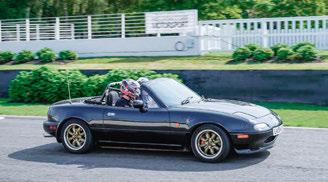




1936




A very special matching number early production SS100 finished to its original specification that has perhaps the finest and most complete history we’ve ever seen with a pre-war car. From new to date each of the car’s nine ownerships are fully documented in four leather bound files beginning with the three original buff logbook registration documents and ending with recent concours wins following a painstaking restoration.






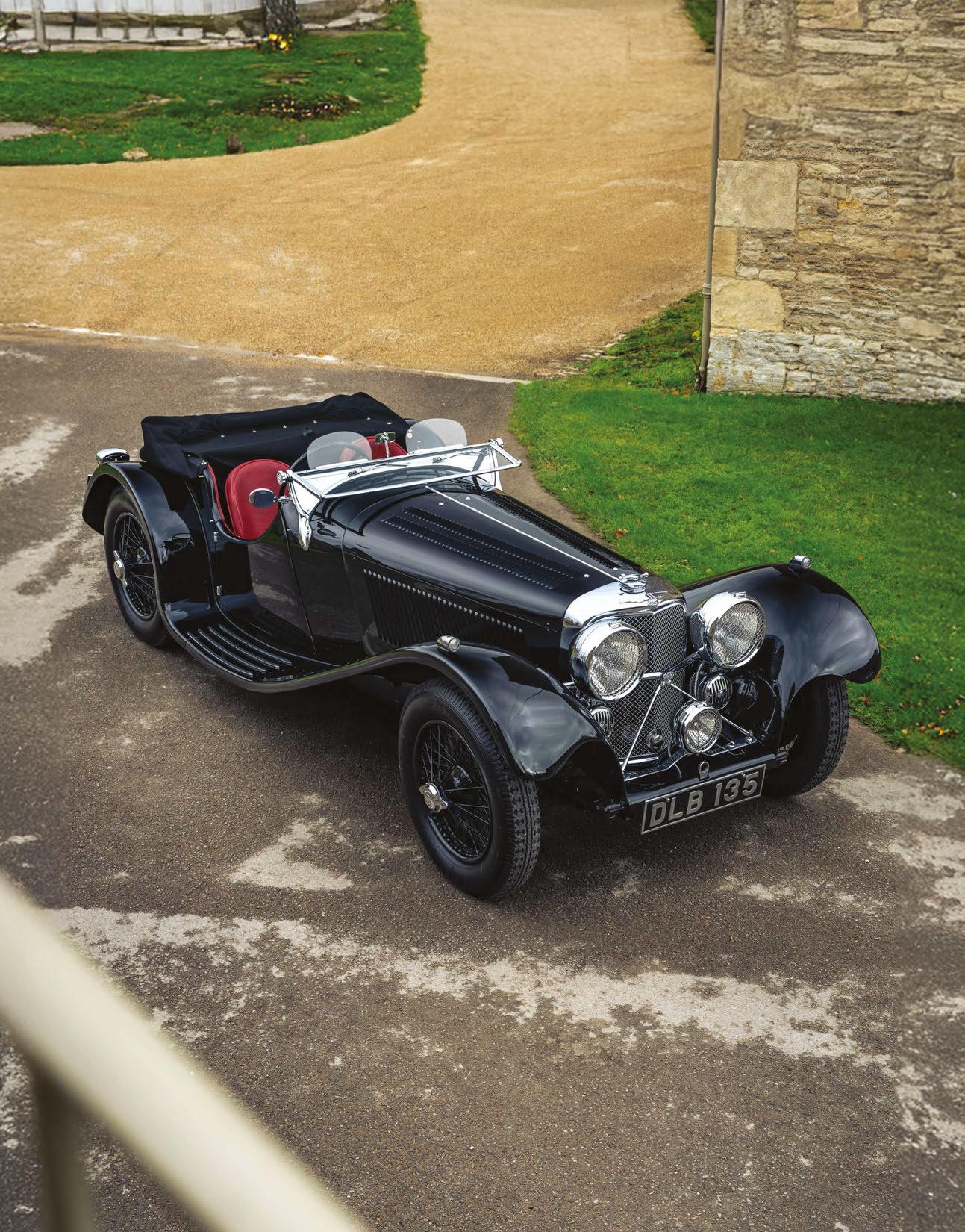
RM 30-01
Skeletonised automatic winding calibre
55-hour power reserve (± 10%)
Baseplate and bridges in grade 5 titanium
Declutchable variable-geometry rotor
Oversize date
Power-reserve indicator and function selector
Case in TZP black ceramic and Carbon TPT®