ARCHITECTURE
Lucio de Crescenzo
PORTFOLIO
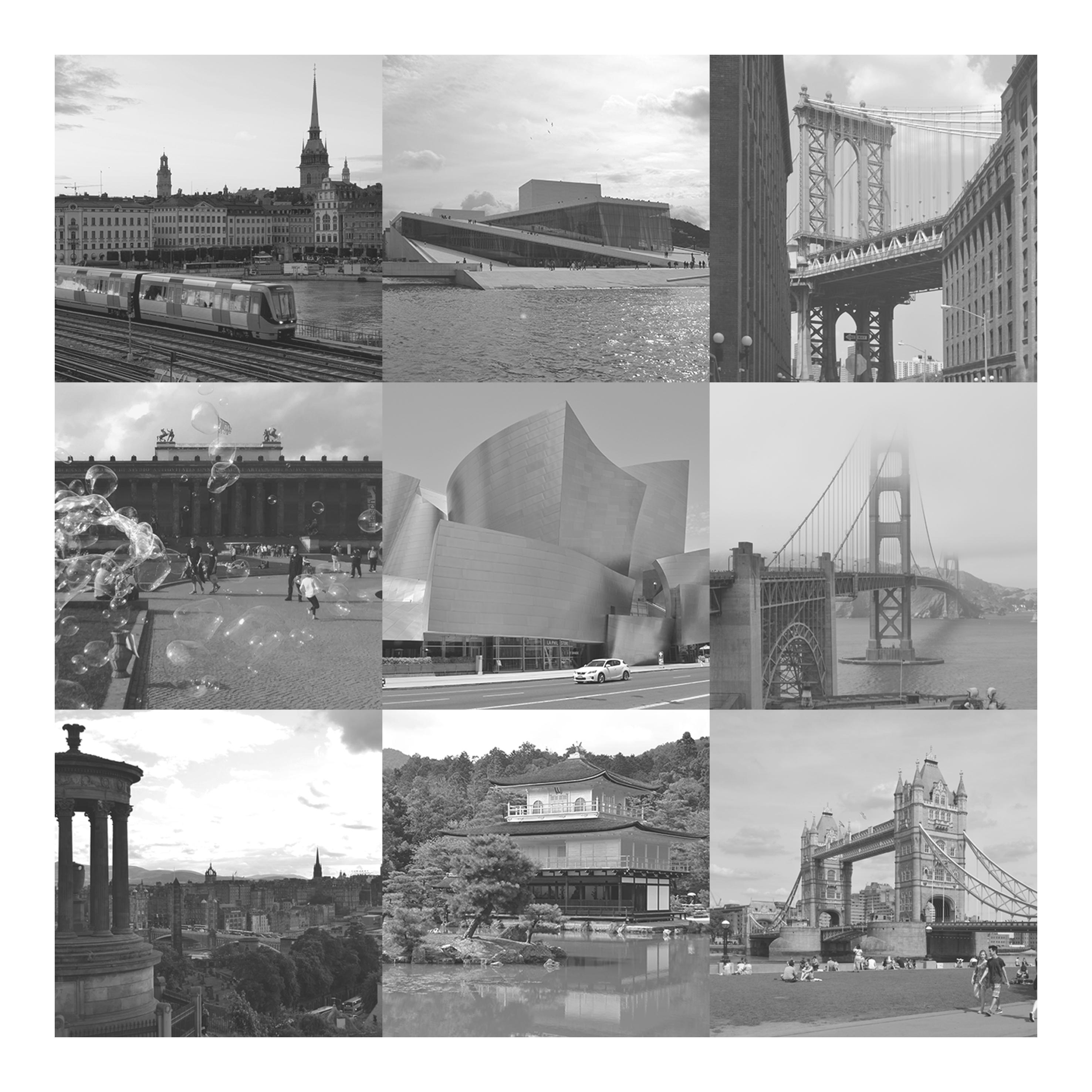
“ Every great architect is - necessarily - a great poet. He must be the original interpreter of his time, of his instant. ”
Frank Lloyd Wright
About me...
New Hub Di Vittorio Napoli, Italy
NET_Campus
Portici (NA), Italy
Urban Recovery project Ponticelli (NA), Italy
Armadillo House Highlands, Scotland Public Village Castel Volturno (NA), Italy
Sports Hall Berlin, Germany
“De Sivo” Castle Maddaloni (CE), Italy
1
INDEX 2 5 15 25 33 39 47 55



2
of birth:
lucio.decrescenzo@hotmail.it (+39) 3494240394 luciodecre Lucio de Crescenzo CONTACT
Crescenzo
in
Date
5 Dec 96 Nationality: Italian Gender: Male Address: Via Vincenzo Caprile, 12 80131 Napoli, Italy
Lucio de
About me...
I am a sociable person, I have initiative, flexibility and adaptability. I work with the same dedication both individually and as a team, I believe I have good communication and coordination skills and I am motivated, but not victimized, by a good dose of healthy ambition. This certainly drives me to want to achieve the best possible result for the work entrusted to me.
Through my experiences, first student and then professional, I was able to get passionate about the architectural design sector, especially in the field of BIM and integrated design. I have a tendency towards innovation, but I don’t consider it a condition to be achieved at any cost: sometimes ingenious solutions are already available to us, we just need to see them.
3
New Hub Di Vittorio
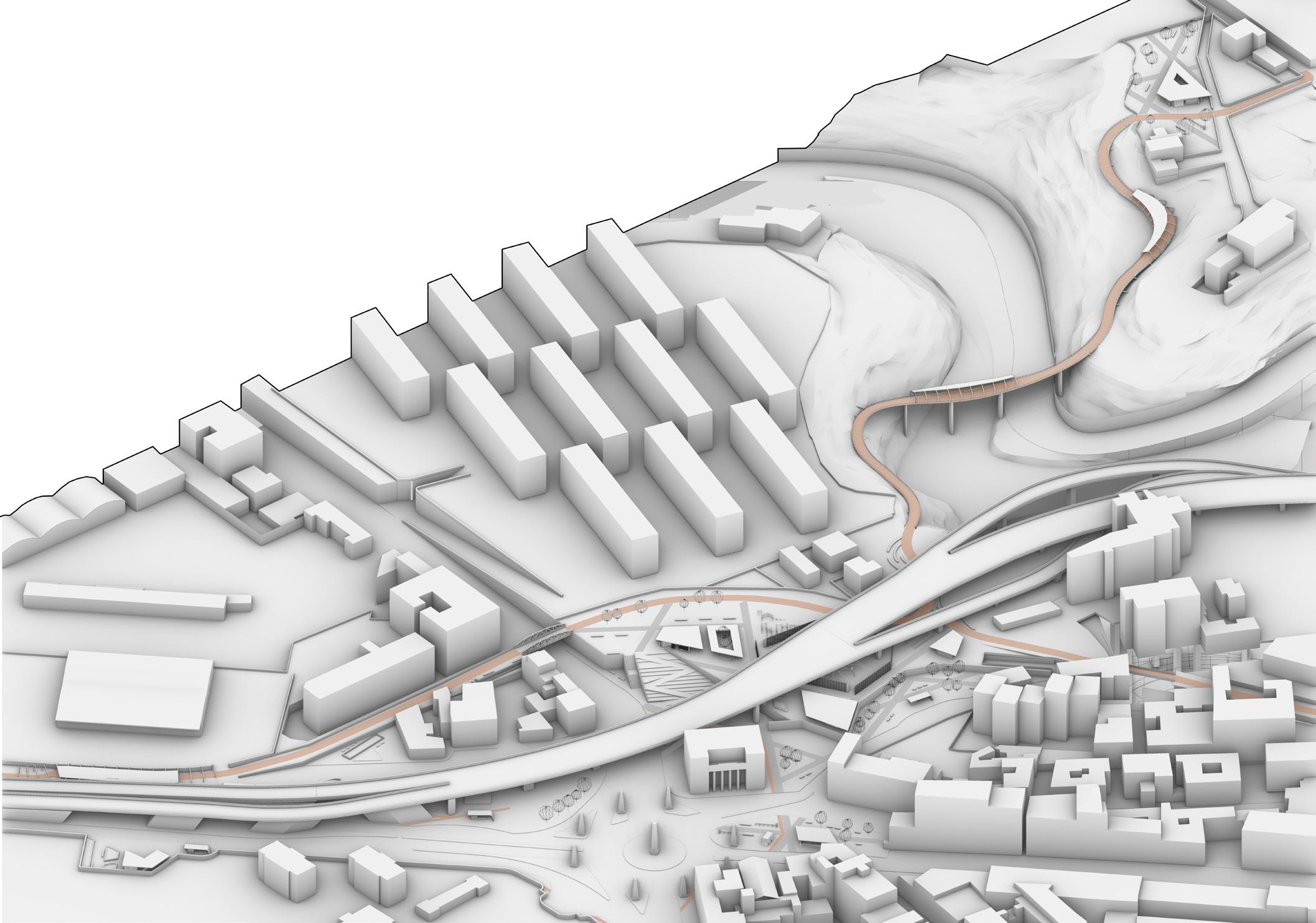
Napoli, Italy
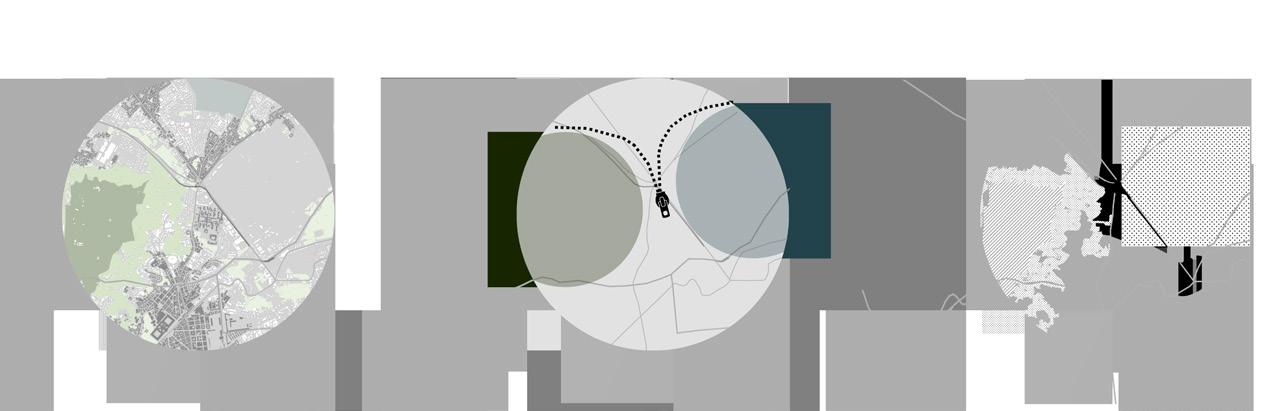
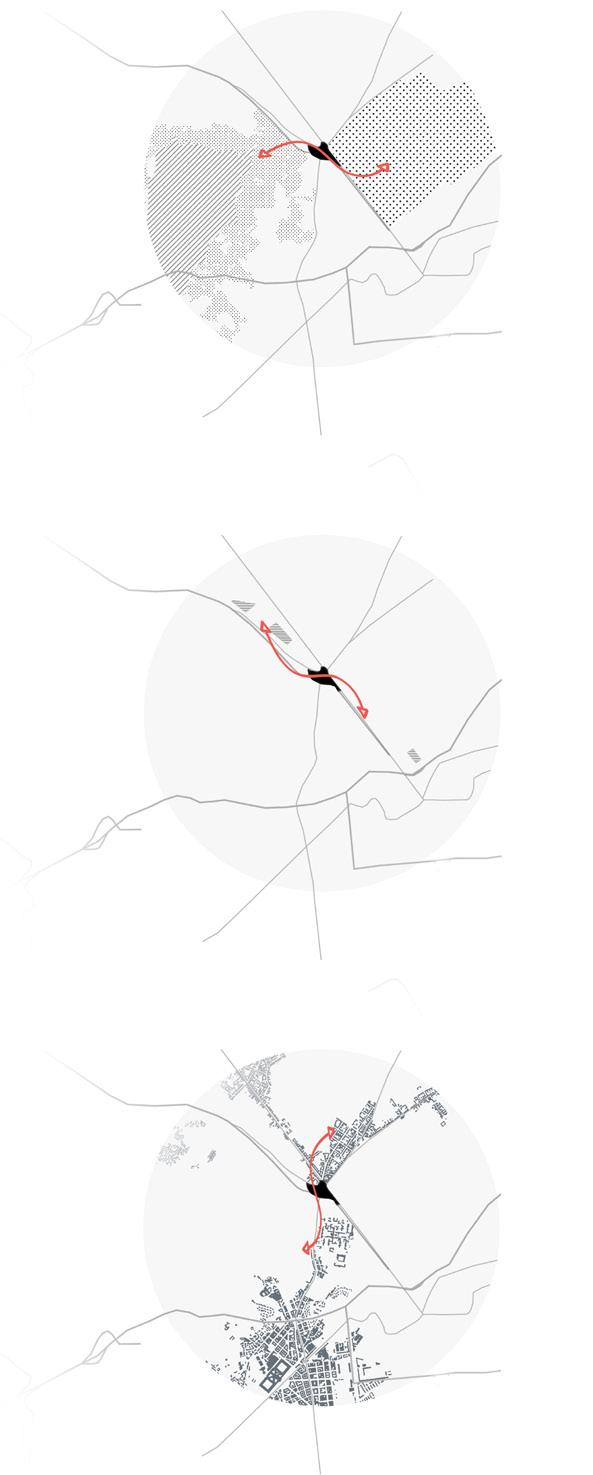
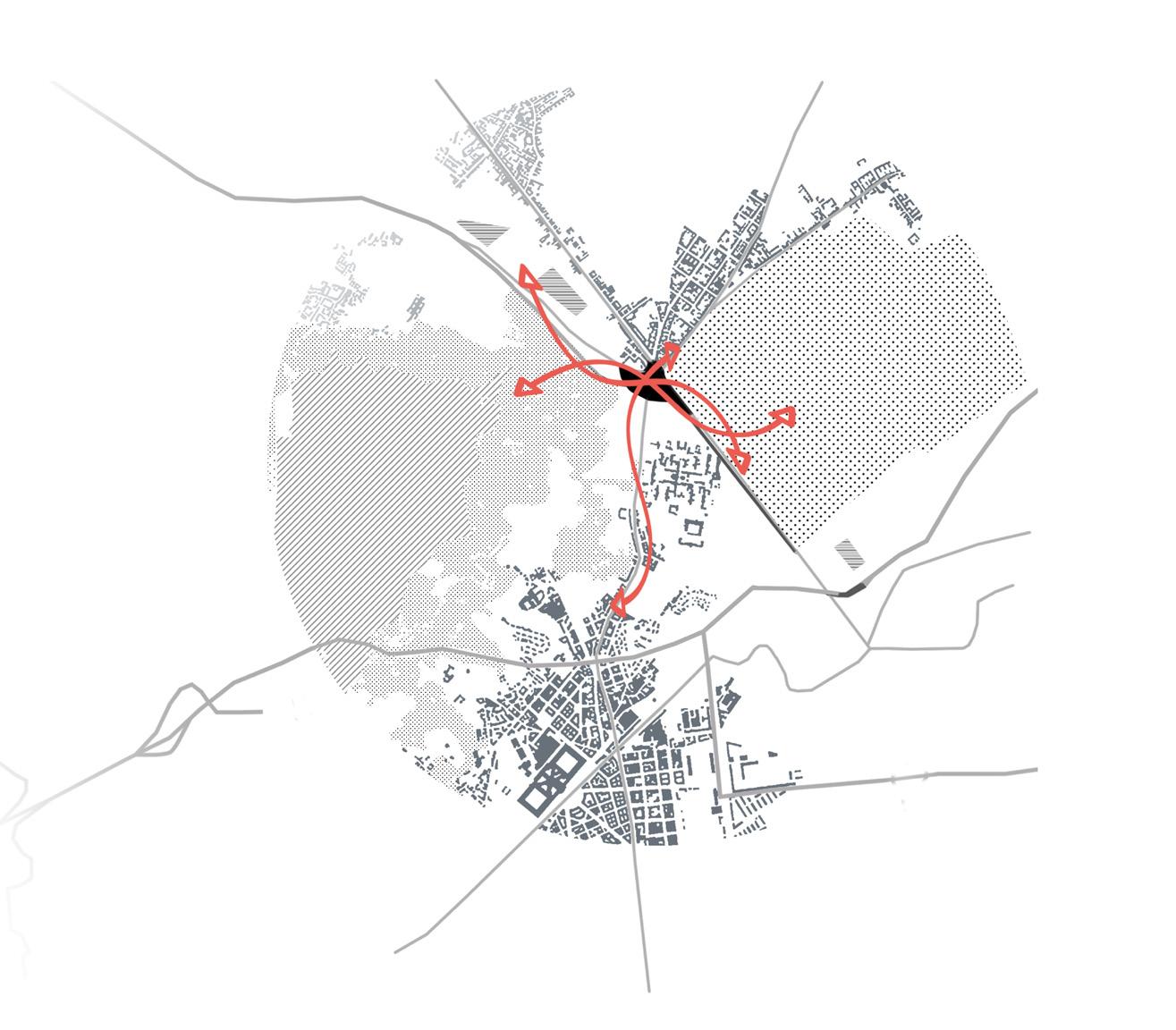
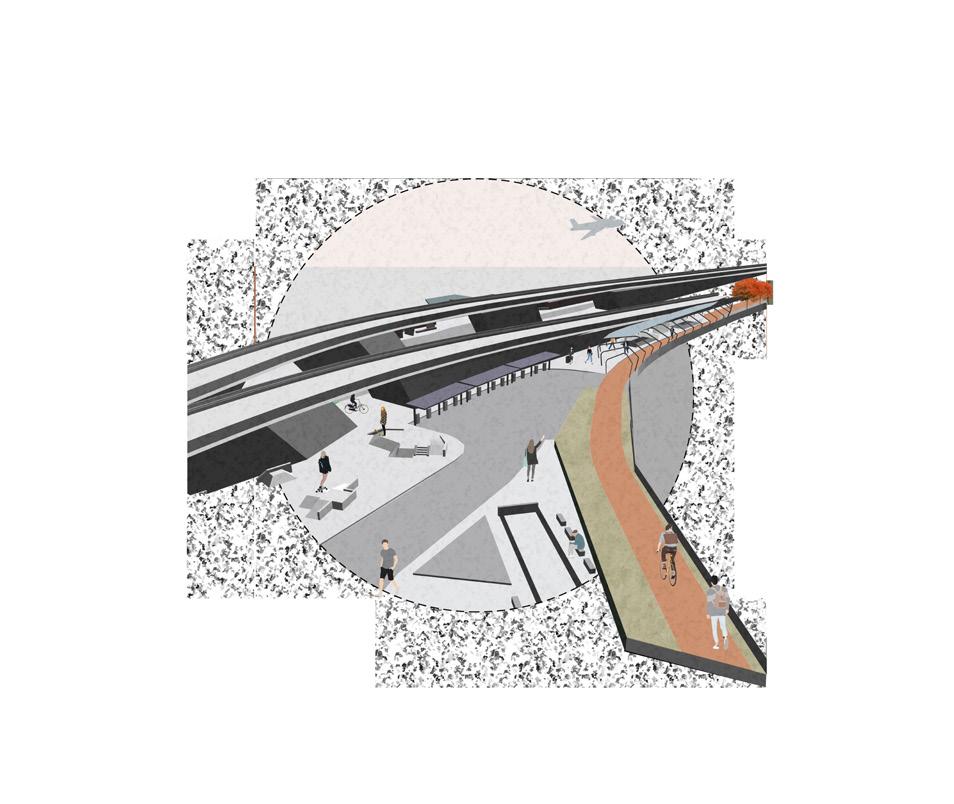
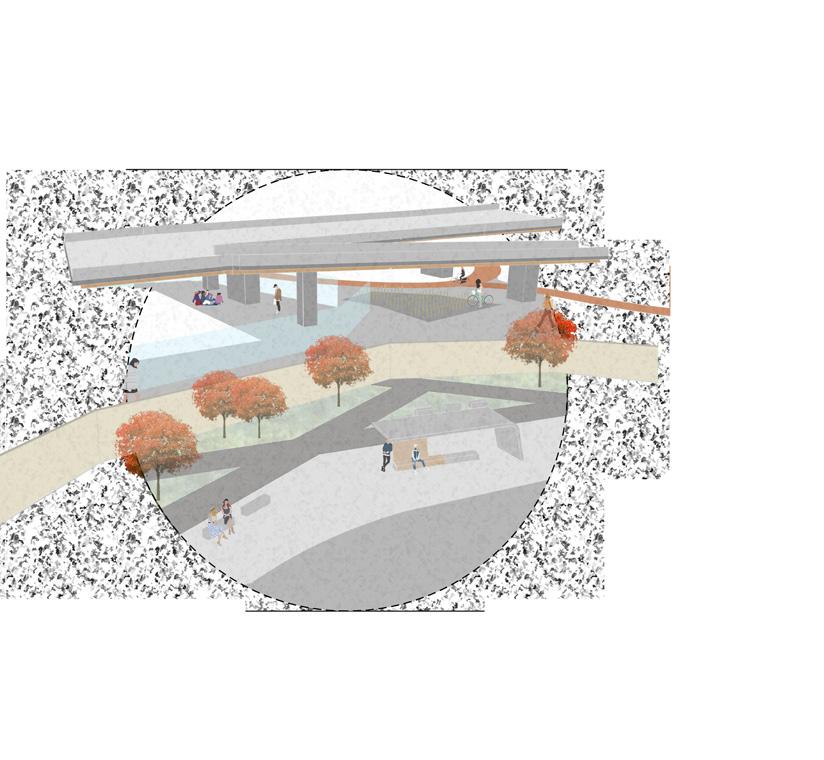
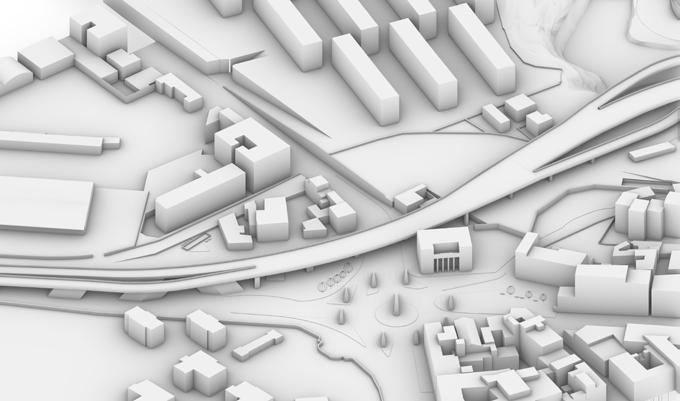
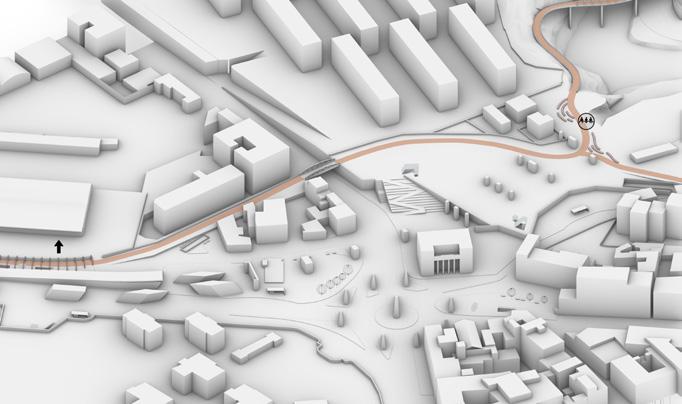
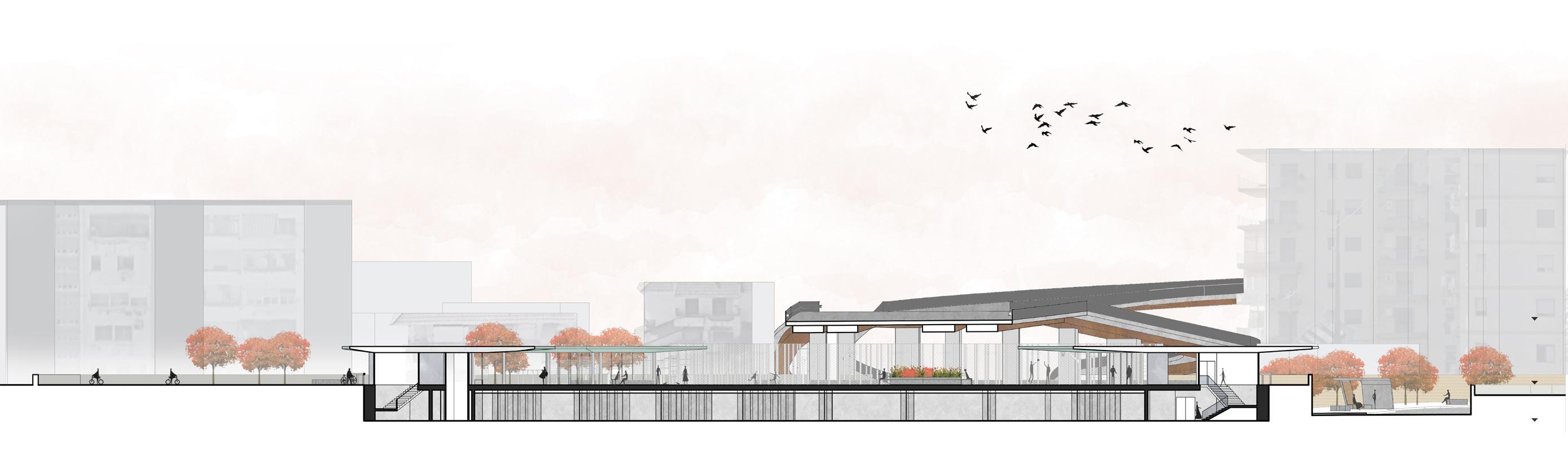
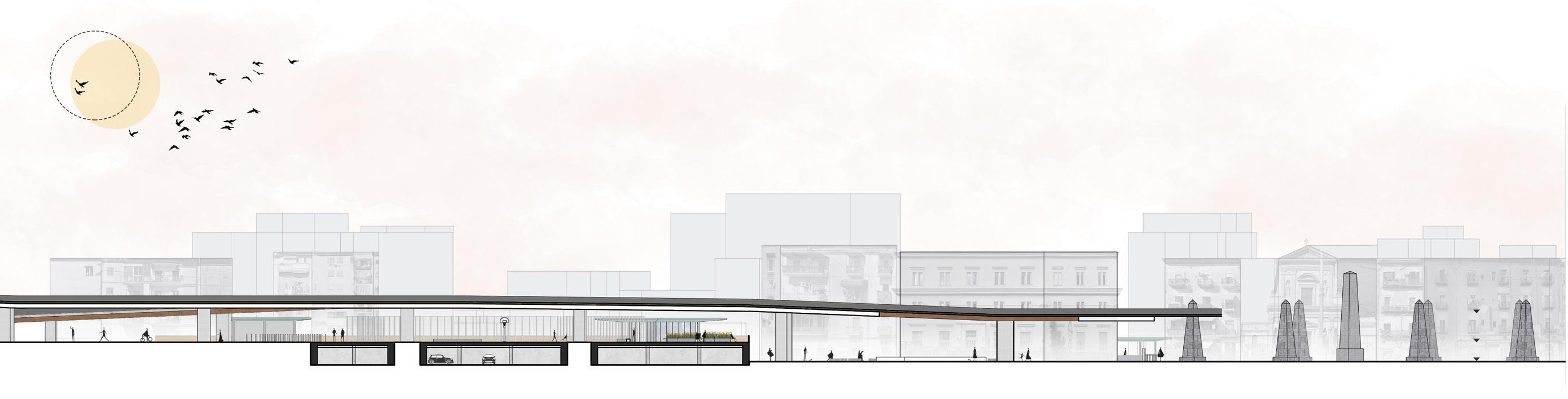
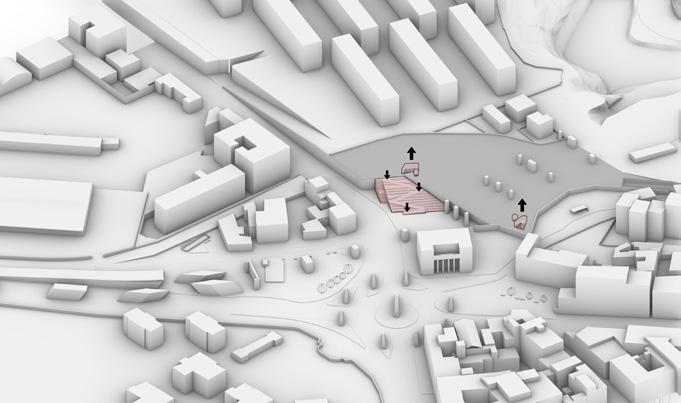
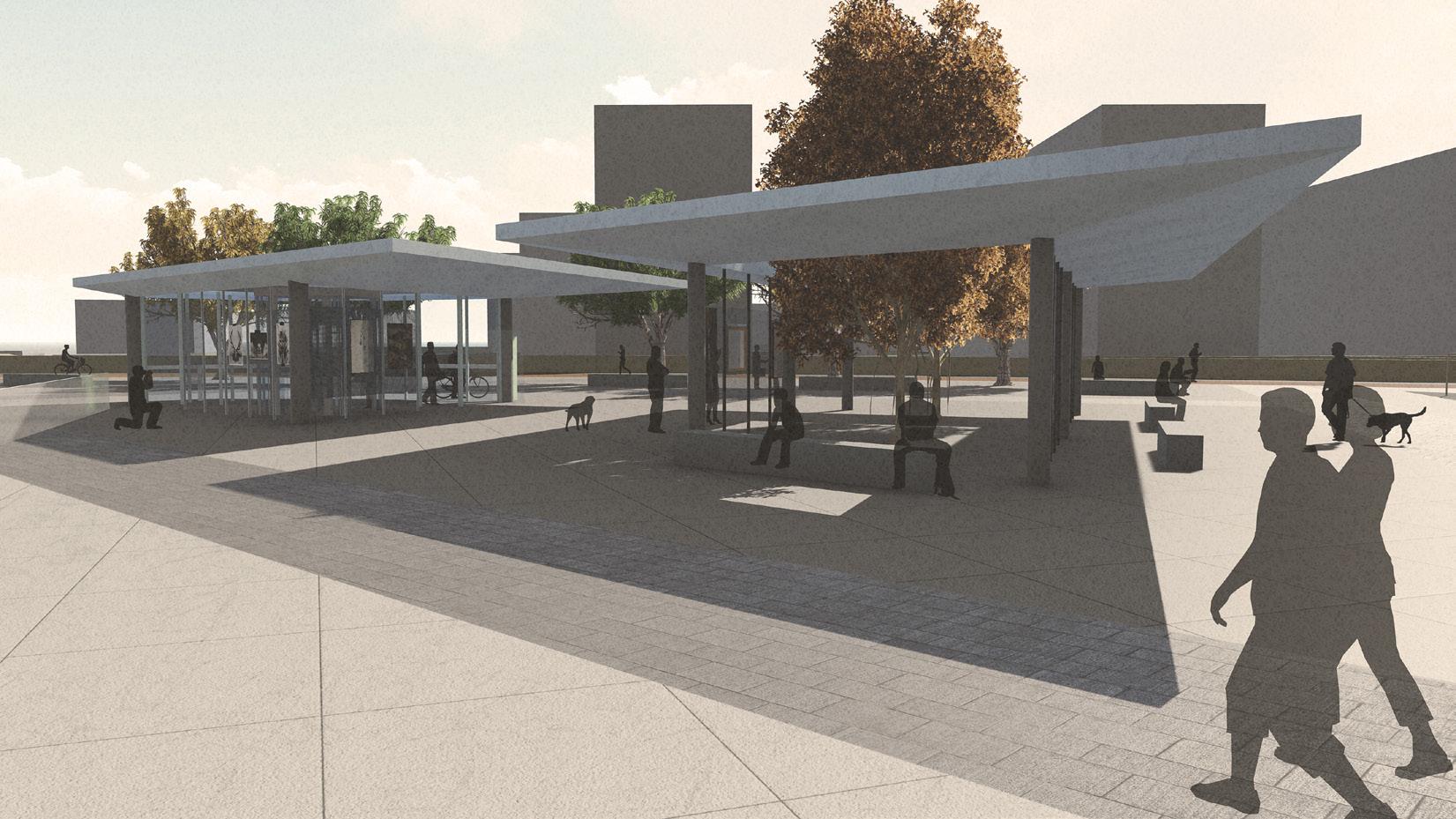
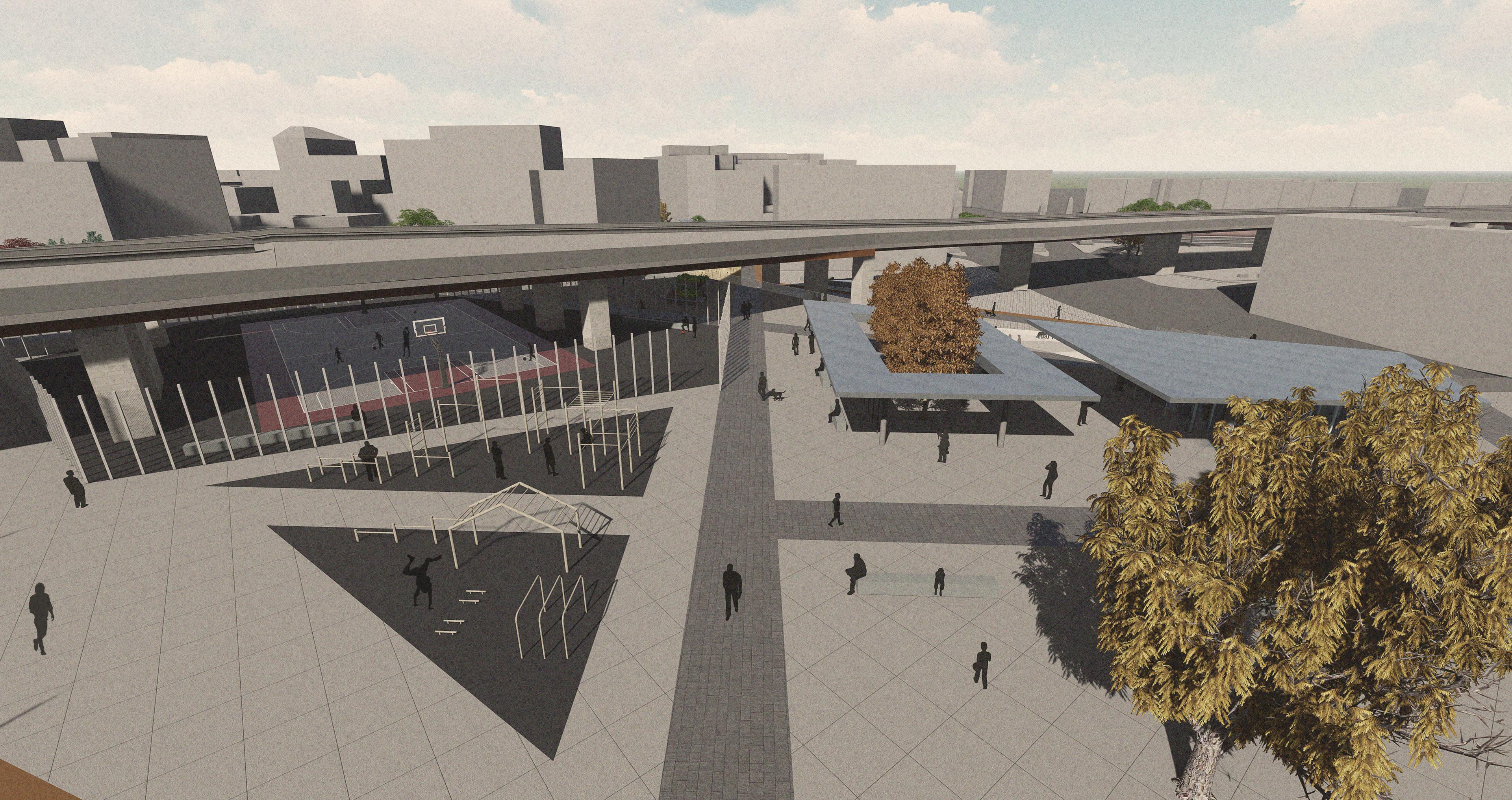
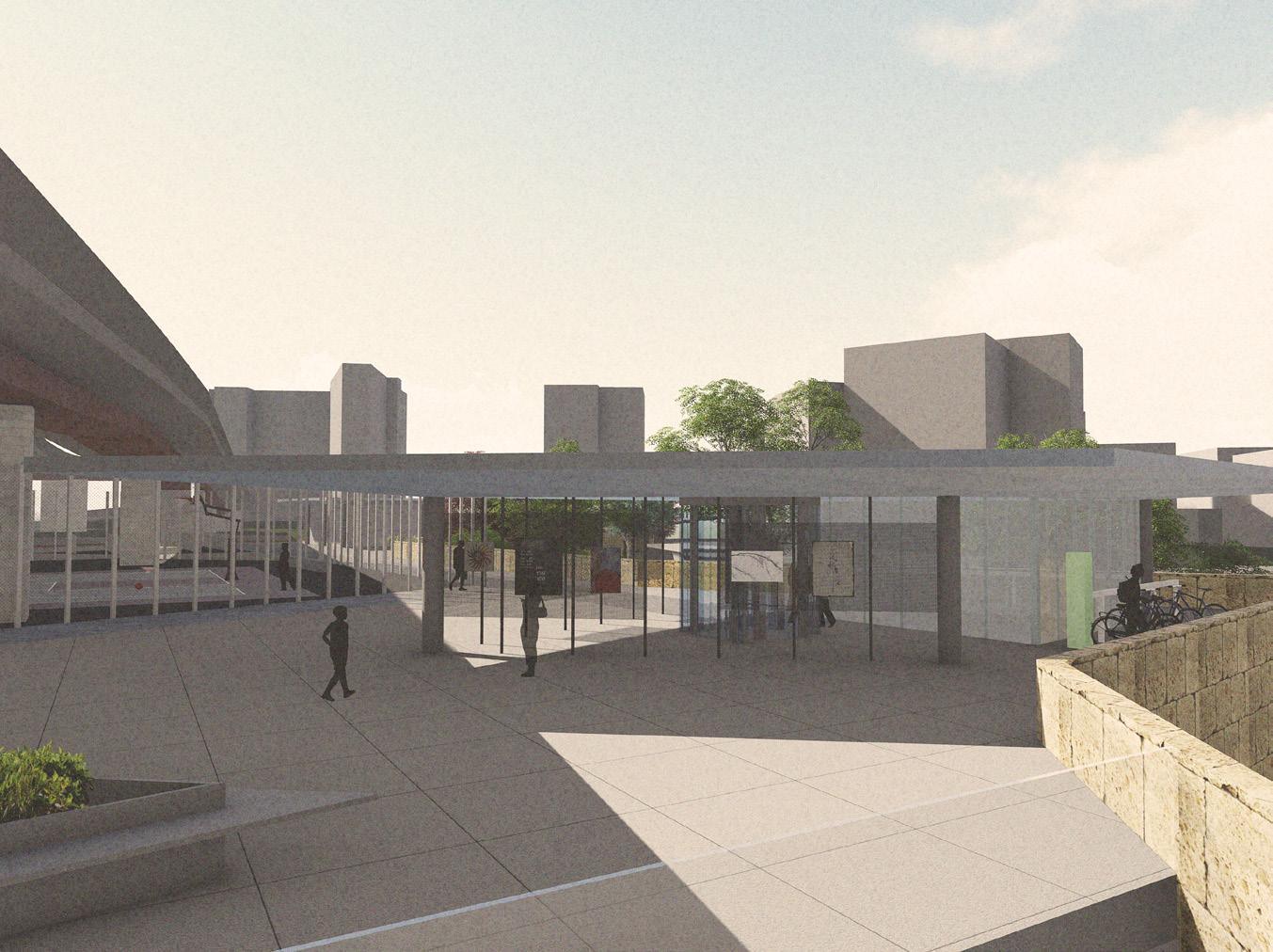
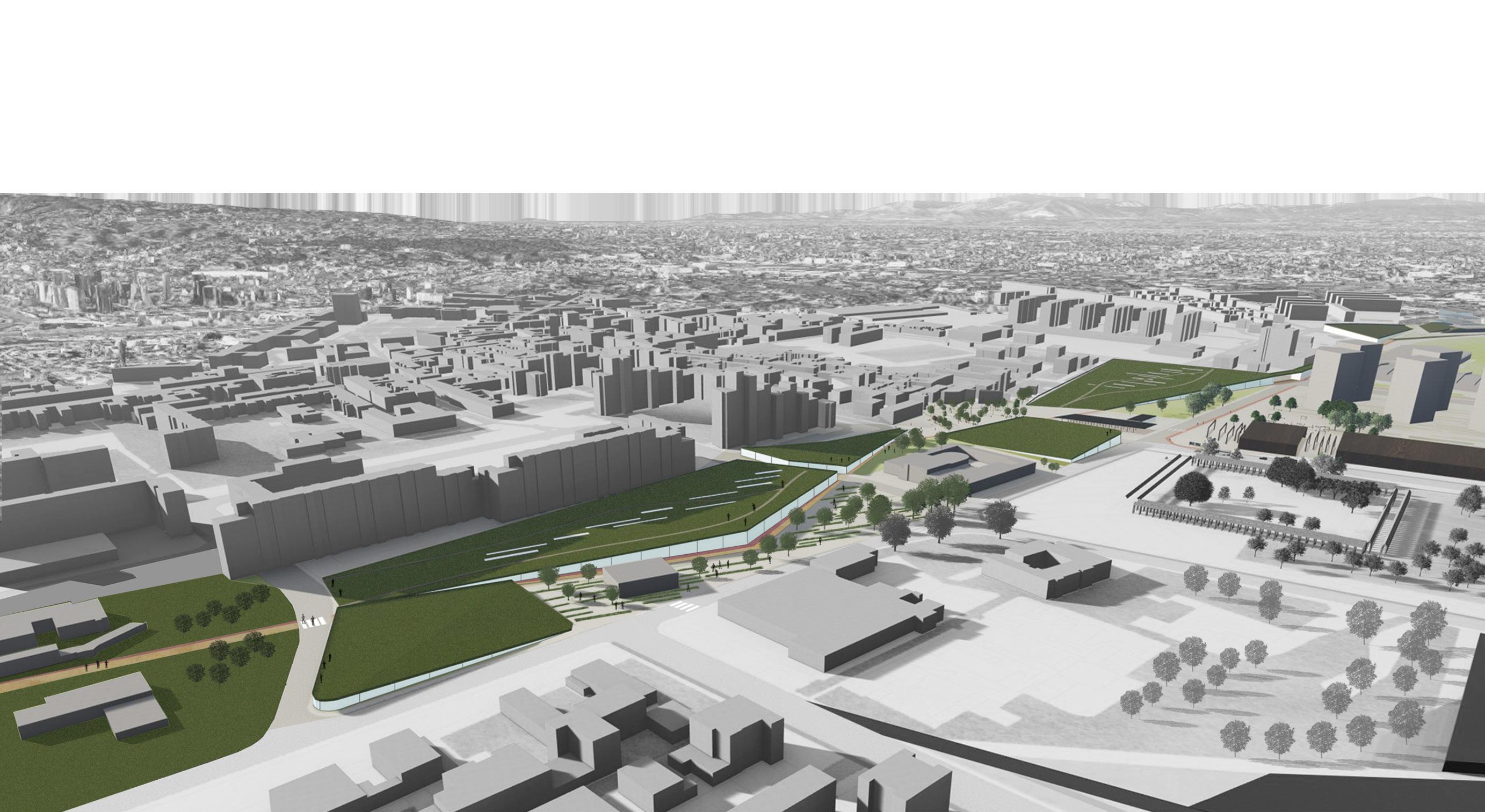
The thesis project focuses on a redevelopment and regeneration of the new hub in Piazza Giuseppe di Vittorio (formerly Piazza Capodichino). This design proposal was developed in light of a key idea that guided and oriented each phase of the construction, namely the vision of Piazza Di Vittorio as a hinge element between the Capodichino airport, the Capodimonte wood and the new section of underground line, which a renewed and improved ecological mobility as well as a profound redevelopment and partial refurbishment of the square could have revealed, making evident what was only potentially intuitive on paper.
5
PROJECT OBJECTIVES AND MASTERPLAN
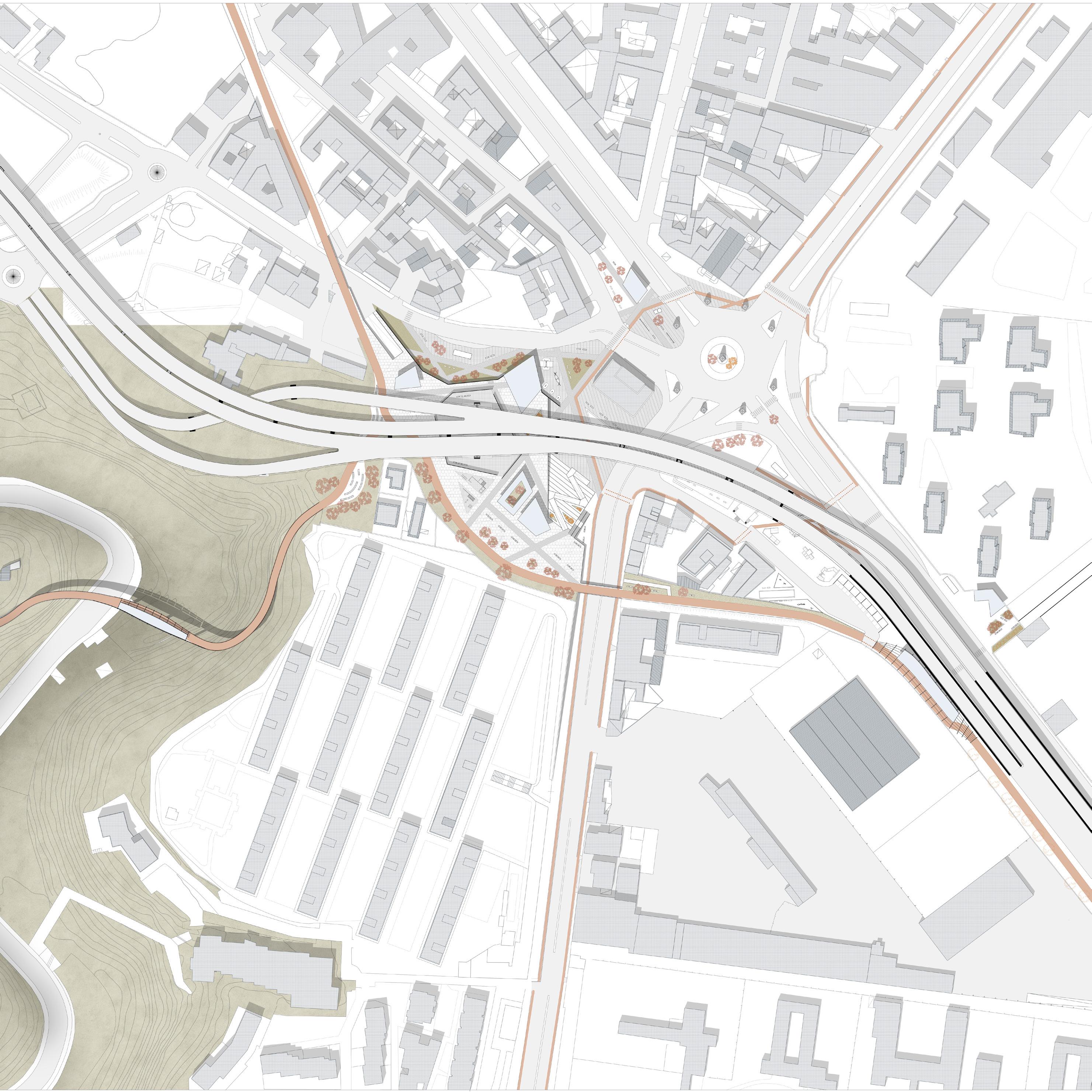
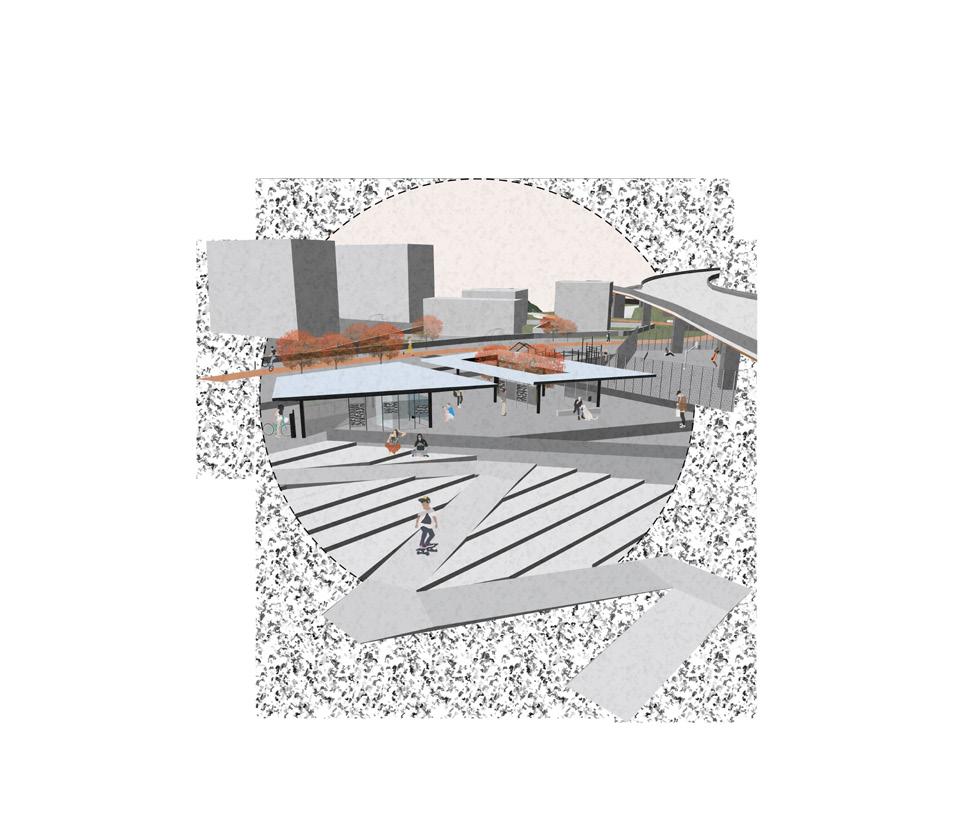
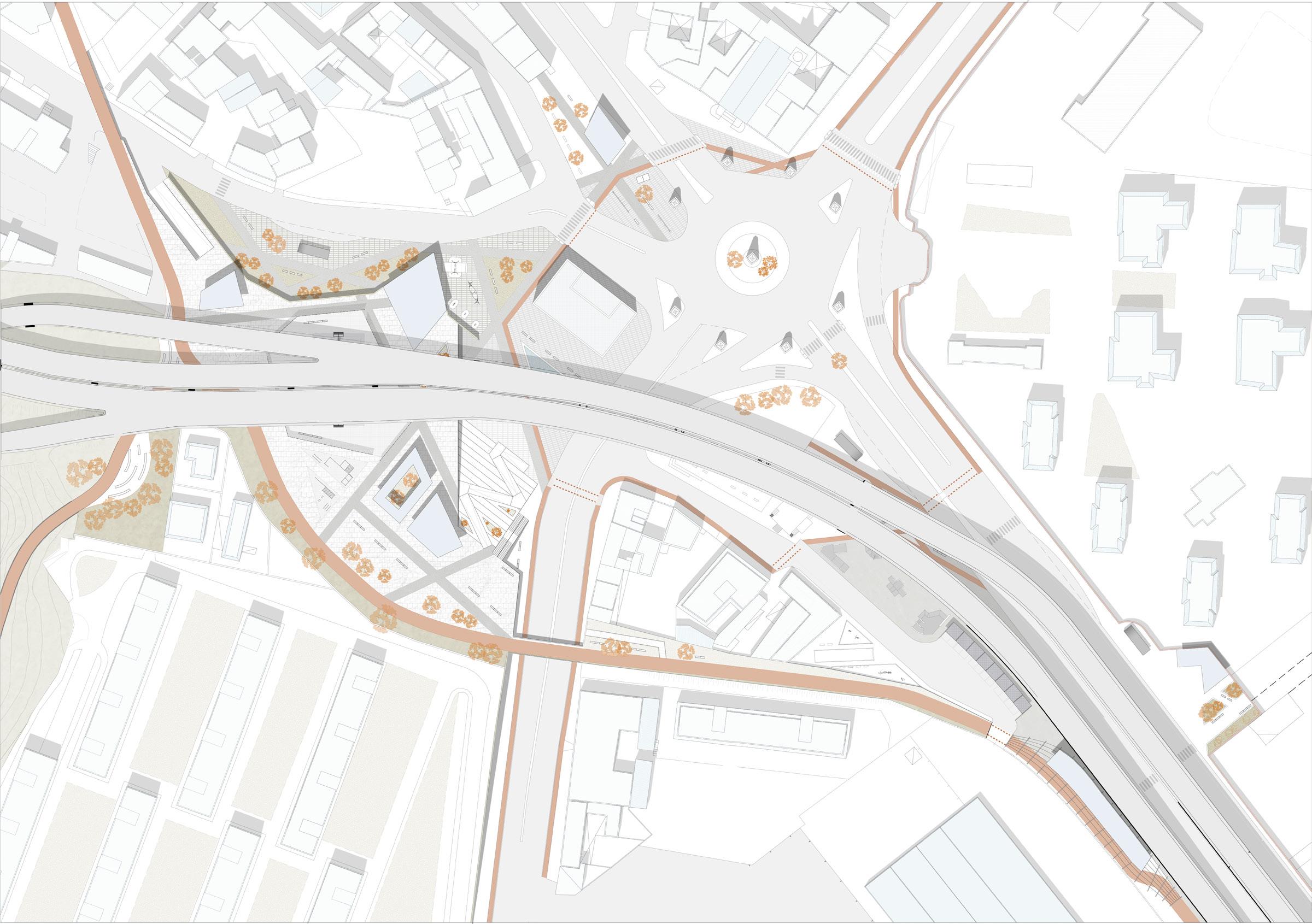
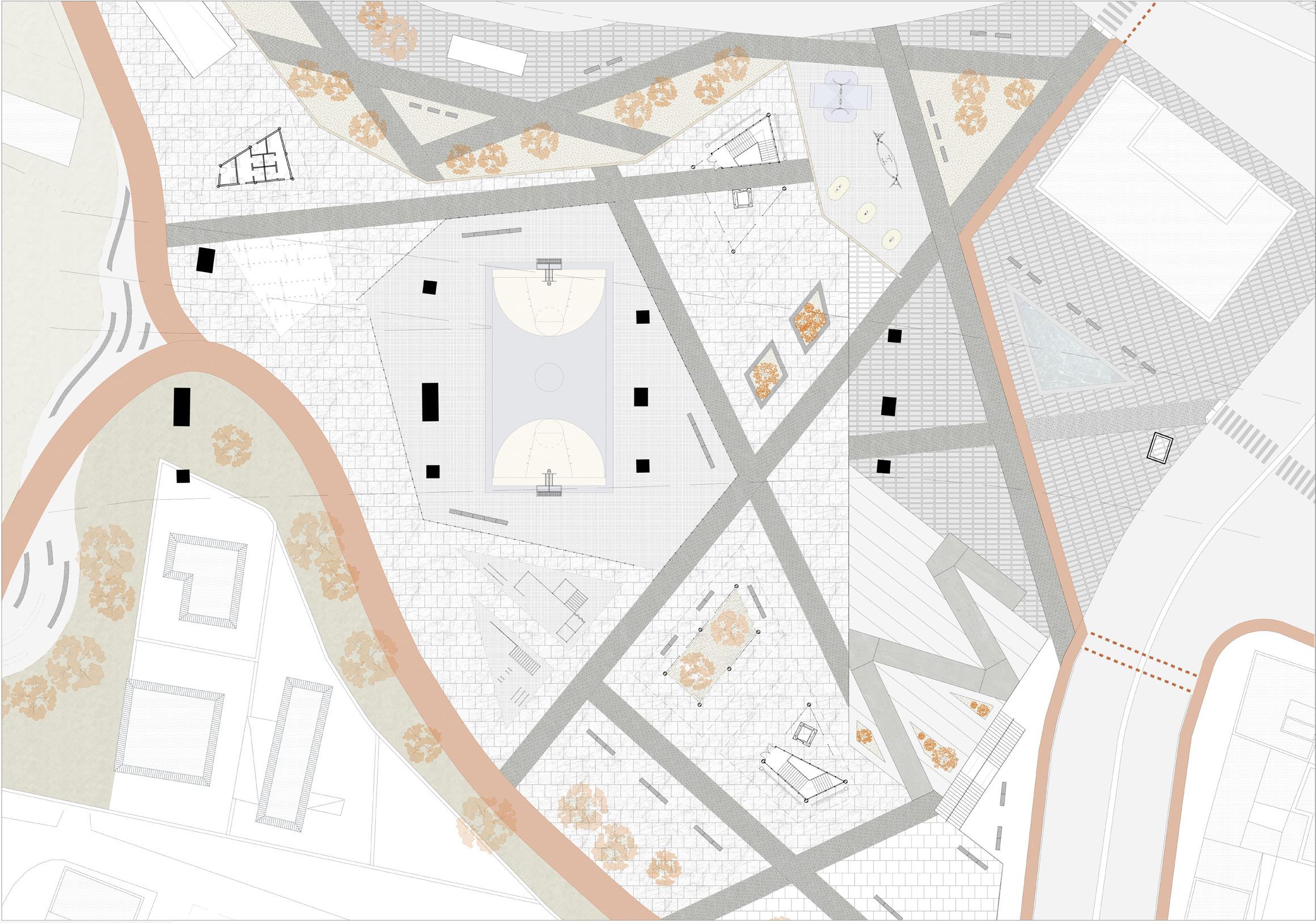
Redevelopment of the square and regeneration of spaces in conditions of abandonment and degradation and the introduction of new points of social aggregation and mobility with the aim of making the square a new intermodal and infrastructural node by reconnecting it to a series of diversified areas of the city.
CONNECTION WITH THE PARK
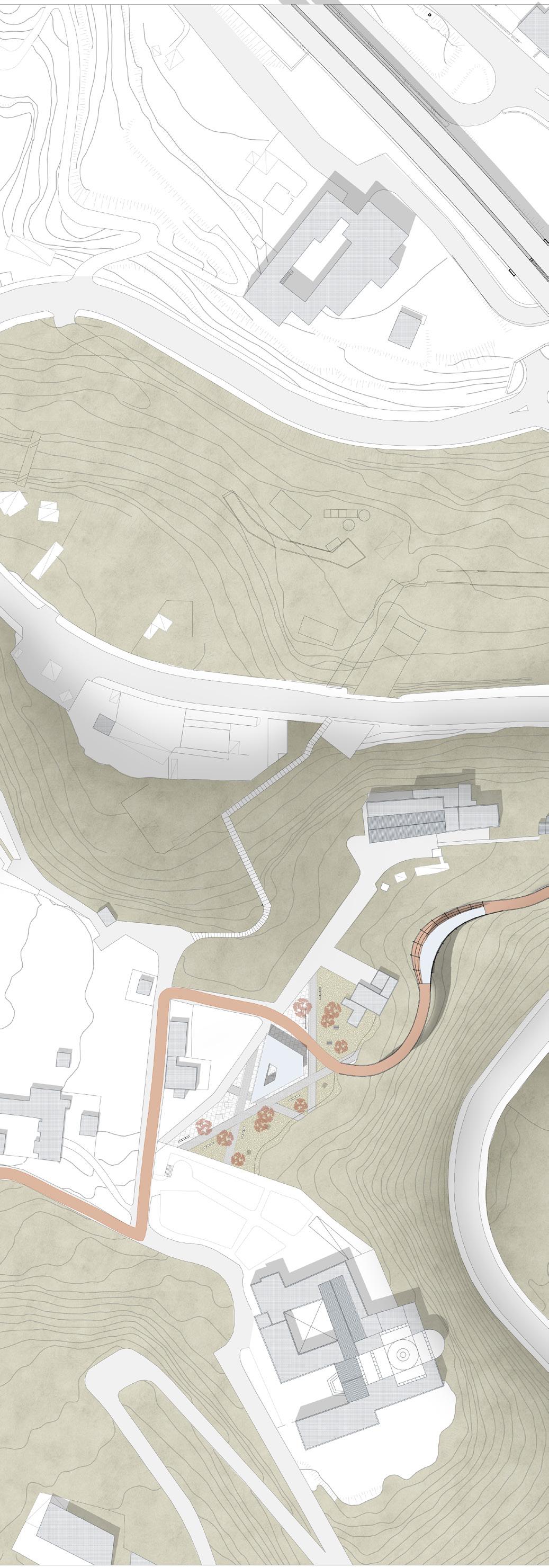
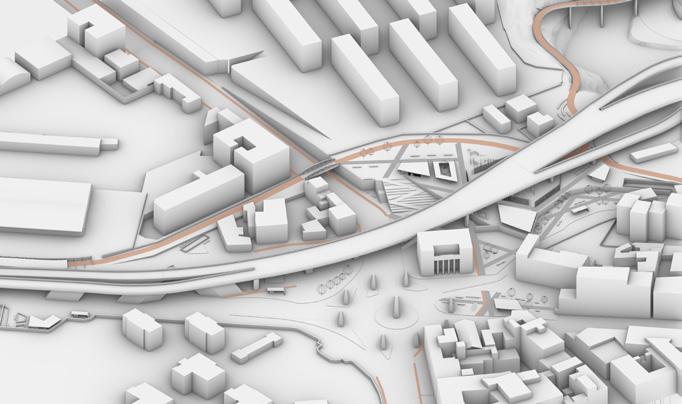
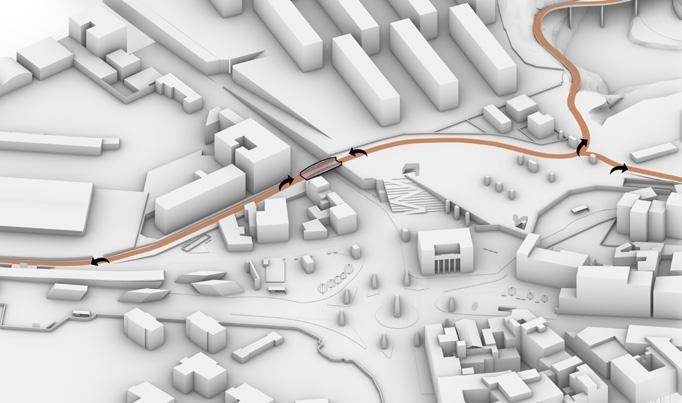
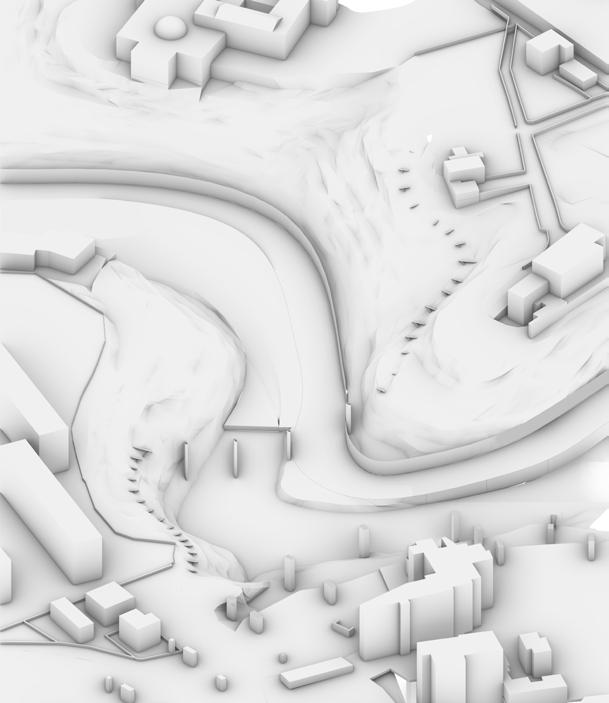
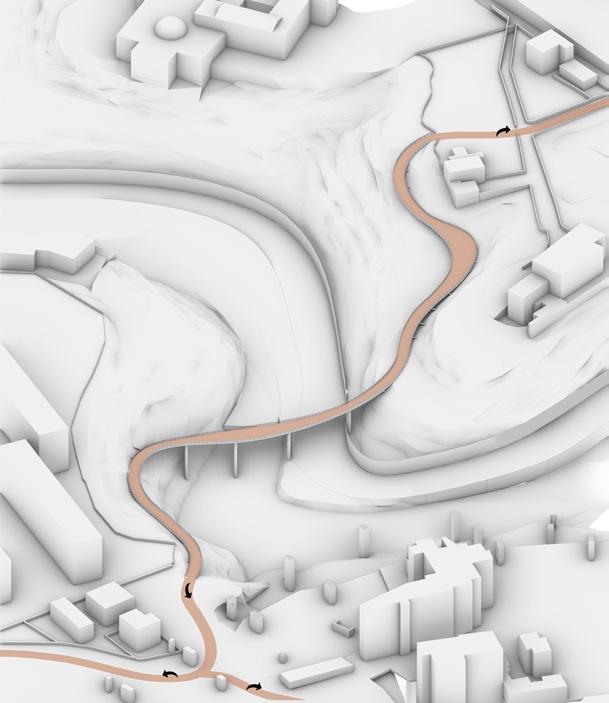
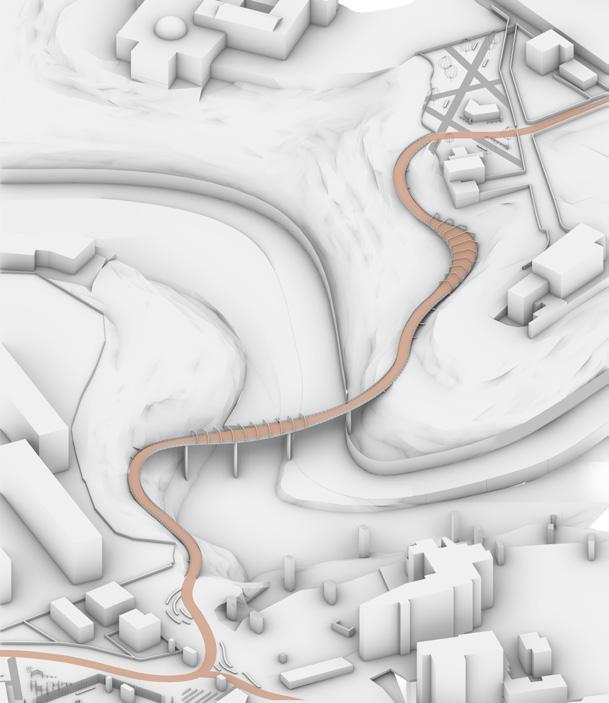
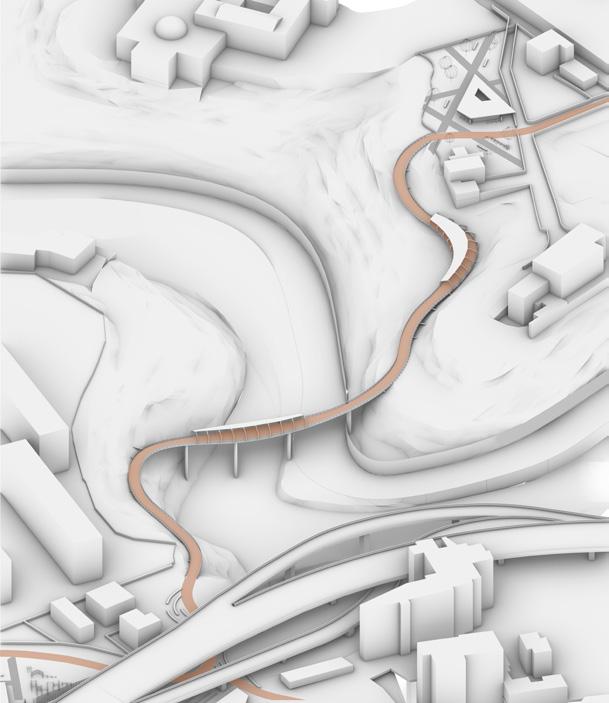
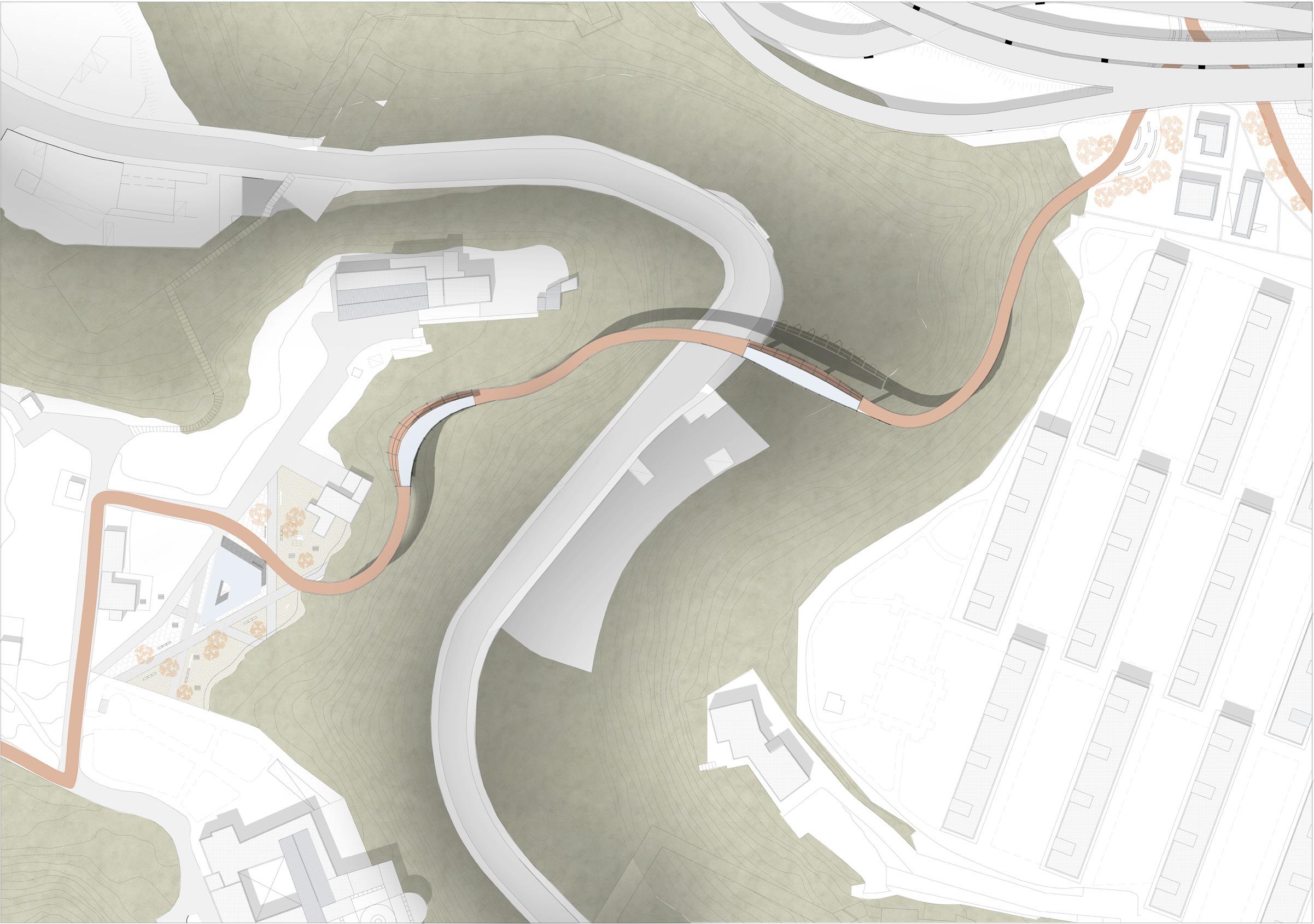
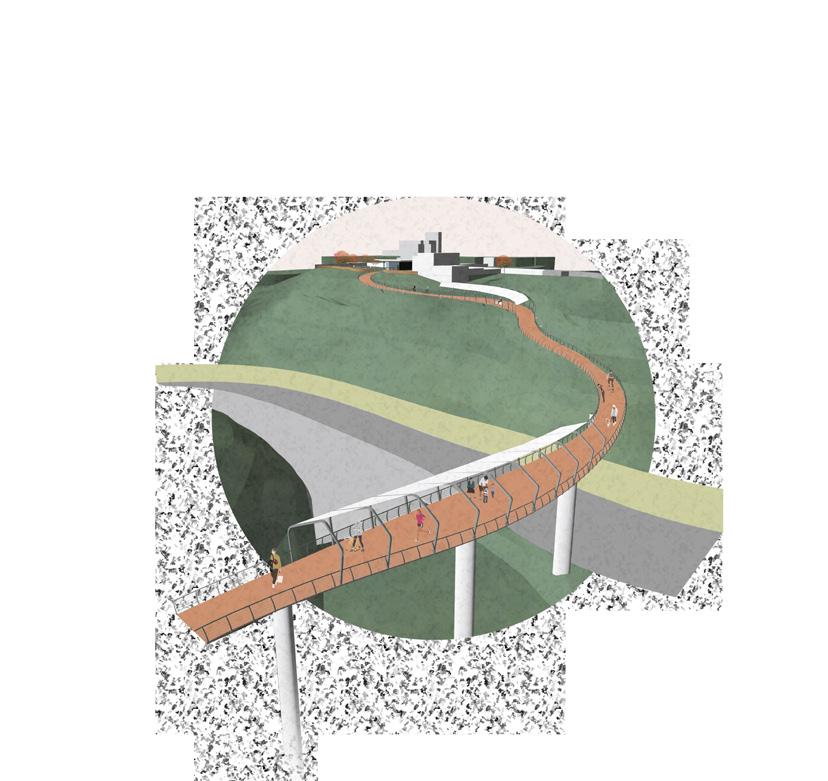
Creation of an elevated cycle / pedestrian path that connects Piazza Di Vittorio with the Park of the hills and from there directly to the upper entrance of the Capodimonte Wood, ensuring new access to the Park more convenient and faster.
CONNECTION WITH THE NEW URBAN CENTERS
Regeneration of the spaces in conditions of abandonment and degradation of the section of the former Alifana railway through a cycle and pedestrian path to reconnect the new stations of Line 1 of the subway and to systematize the new spaces subject to urban redevelopment.
NORTH - SOUTH CONNECTION
Reorganization of road layouts through the introduction of cycle paths that reconnect the new Di Vittorio hub towards the historic center of Naples on one side and the municipality of Casoria on the other.
Connection and construction of a new entrance to the Capodimonte
6
1 2 2 2 3 3 3 1 1 4 4 4 4 4 4 Pedestrian - cycle path Play and sport areas Rest and aggregation areas Equipment at the service of the urban space 1 2 3 4
PROGRAM
Capodimonte Park
FUNCTIONAL
Urban expansion and redevelopment of the Piazza Di Vittorio area
+91.0
ROOF
103.2
91.8
91.9 94.0 94.0 93.9
92.4 93.7
91.2
100.1 99.3 90.7
87.8
91.4
92.3 91.1 91.4
+94.0 0 15 40 75
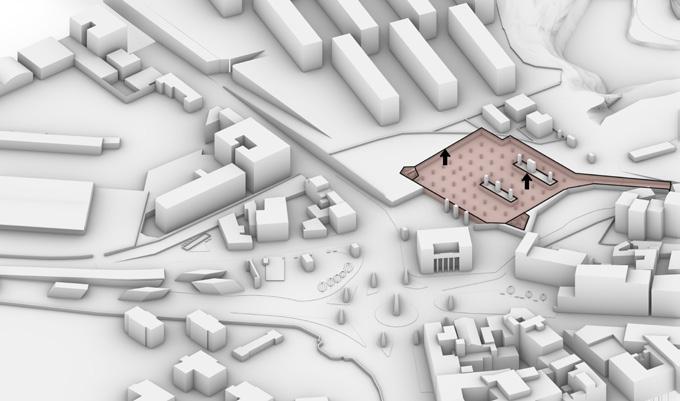
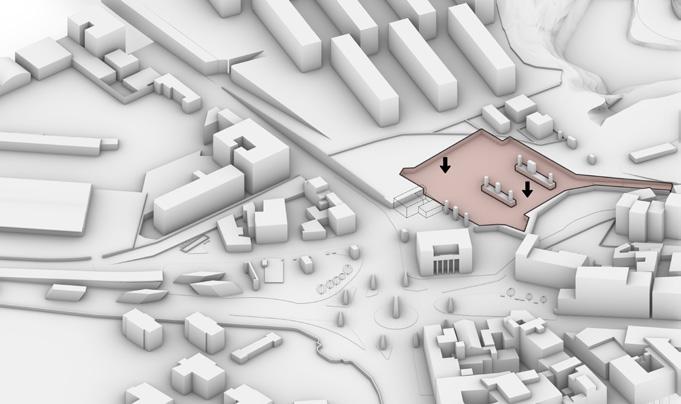
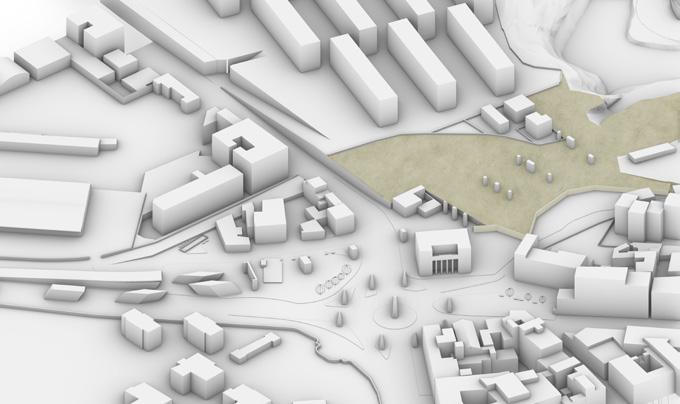
PLAN URBAN EXPANSION AND REDEVELOPMENT OF THE PIAZZA DI VITTORIO AREA
SECTION AA’
9.80
0.00 3.50
SECTION BB’
9
50
0 15 30
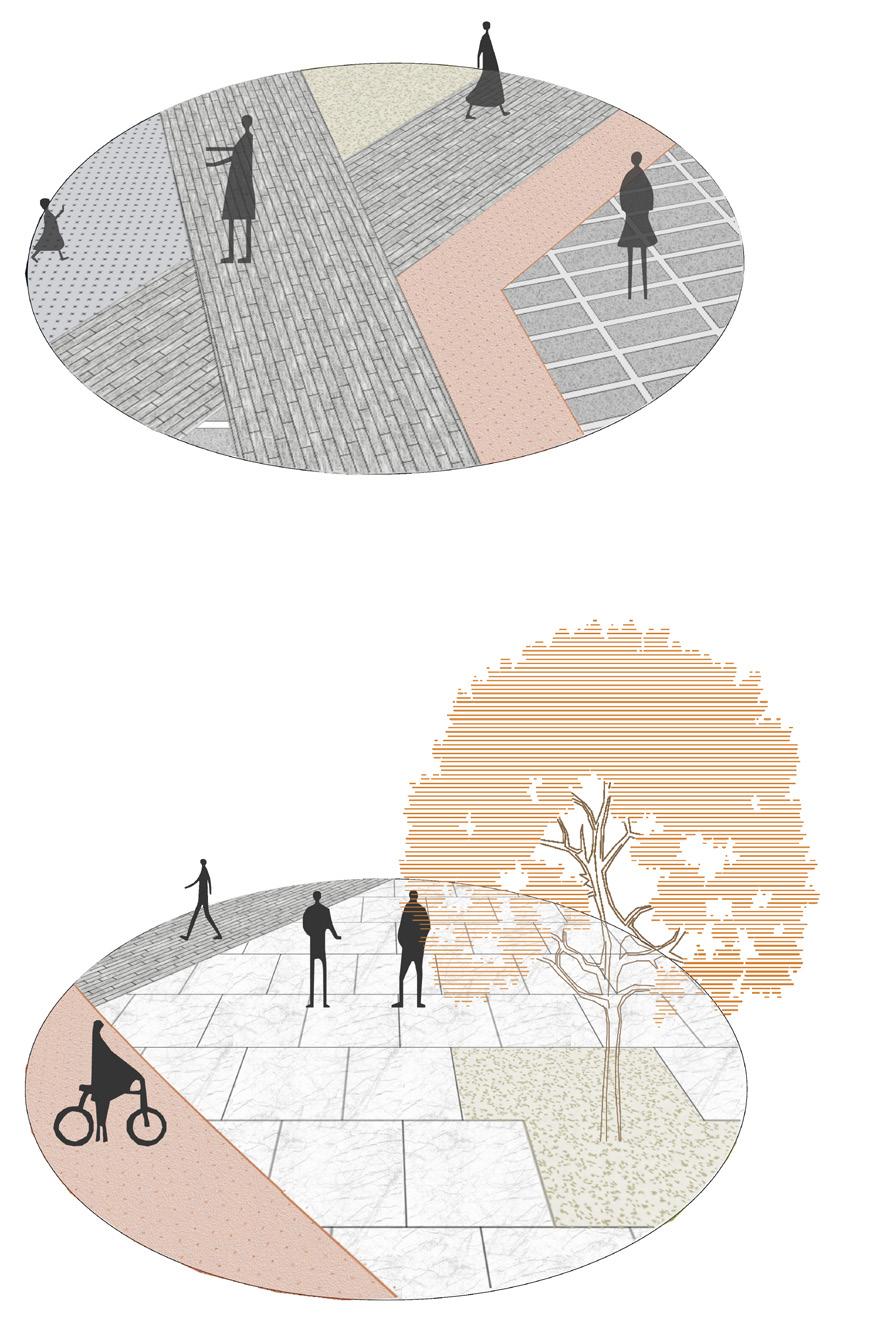
Paving in sandstone slabs (1200x1200x30 mm) with drainage substrate cast on site
Gray porphyry paving for pedestrian paths (200x600x30 mm) with a draining substrate cast on site
Colored recycled asphalt for cycle paths
Recycled rubber flooring for play and sports areas
Paving in draining concrete blocks for pedestrian areas laid on a layer of sand or crushed stone and compacted through the use of a vibrating plate
Trees and vegetation
10
4 1 3 2 5 1 2 4 6 5
3 4 5
2 4
3
IN-DEPTH STUDY OF MATERIALS
1 2
6
6
5 3 2 1 6
PROJECT DETAILS AND VIEWS
A
+3.50 +7.25 +0.00
Main shaped steel beam IPE secondary beams of various sizes (240; 200; 120)
Support structure with metal guides of the covering cladding Tubular steel column with circular section (273.0 x 25 mm)
Stainless steel cladding panels
A. B.
Flooring in sandstone slabs, Screed, Waterproofing covering, Vapor barrier, Insulation, Vapor barrier, Latero-cement floor, Internal plaster, Steel tie-rods, False ceiling panels
11
B 1 2 3 4 5
1. 2. 3. 4. 5.
Resin flooring, Lightweight concrete screed, Vapor barrier, Expanded polyethylene insulation panel, Cast concrete with electrowelded mesh, Plasticform type Igloo, Cast concrete, Crushed stone, Ground
12 0 15 40 75 68.0 66.5 63.1 79.3 86.1 90.2 95.0 94.3 90.6 93.9 58.0 60.5 95.1 92.4 95.1 95.6 94.9 91.2 93.3 62.1 73.9 74.0 CONNECTION AND CONSTRUCTION OF A NEW ENTRANCE TO THE CAPODIMONTE PARK
PLAN
ROOF
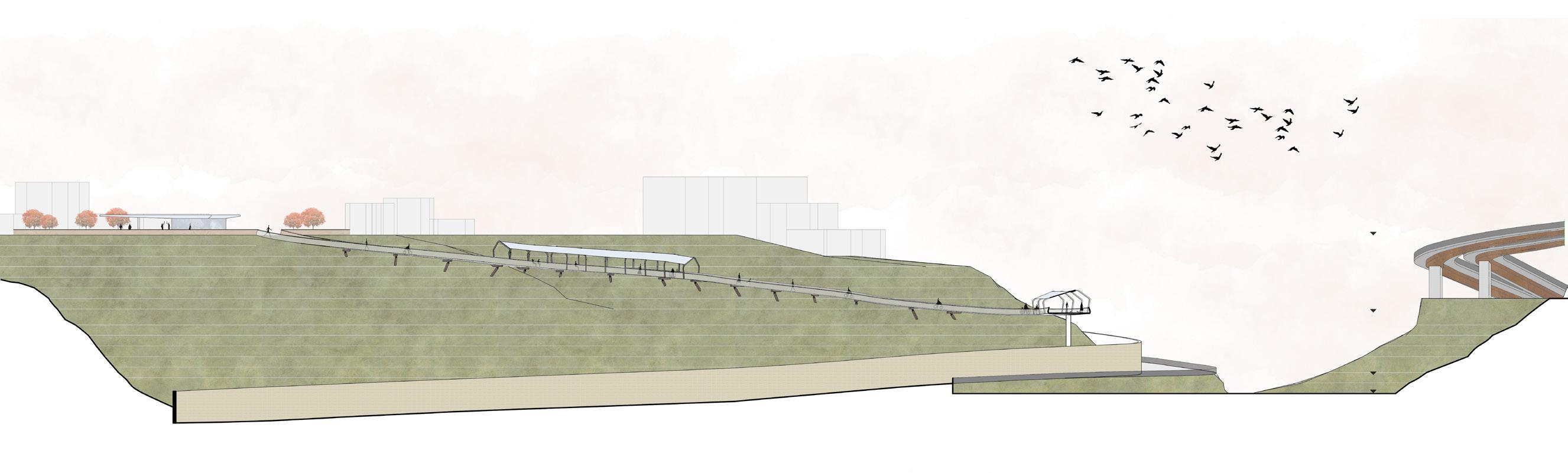
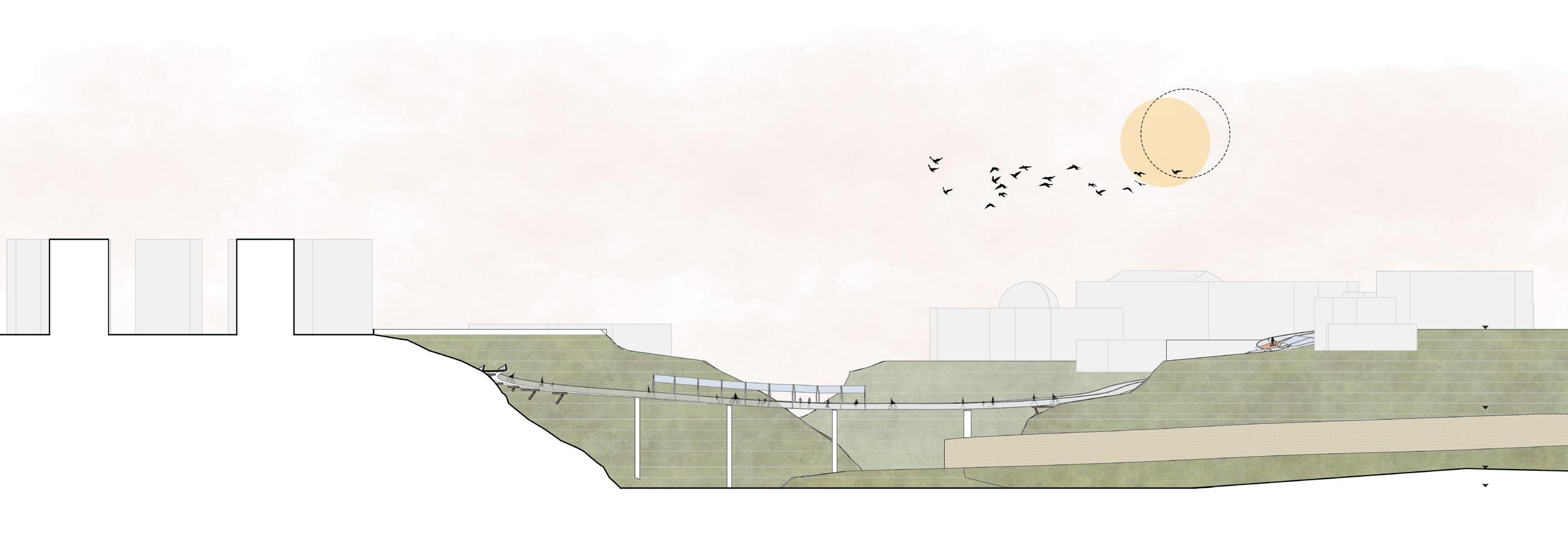
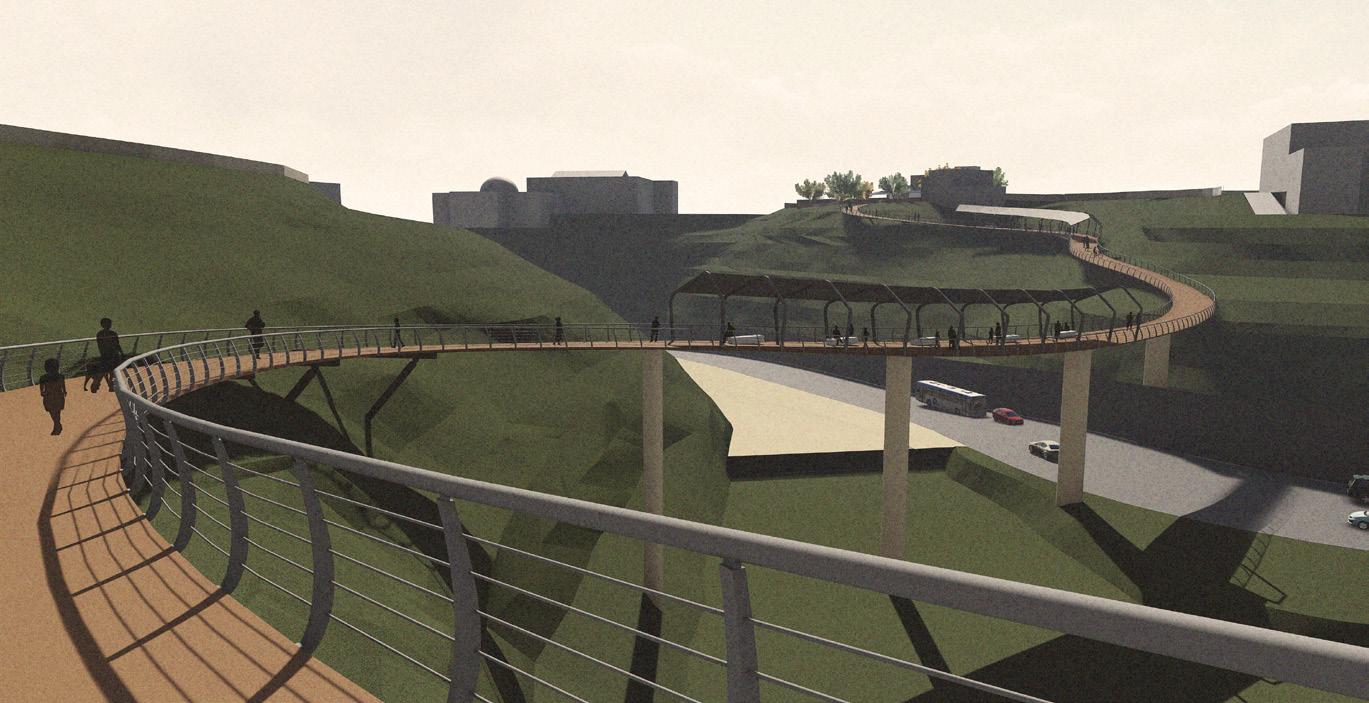
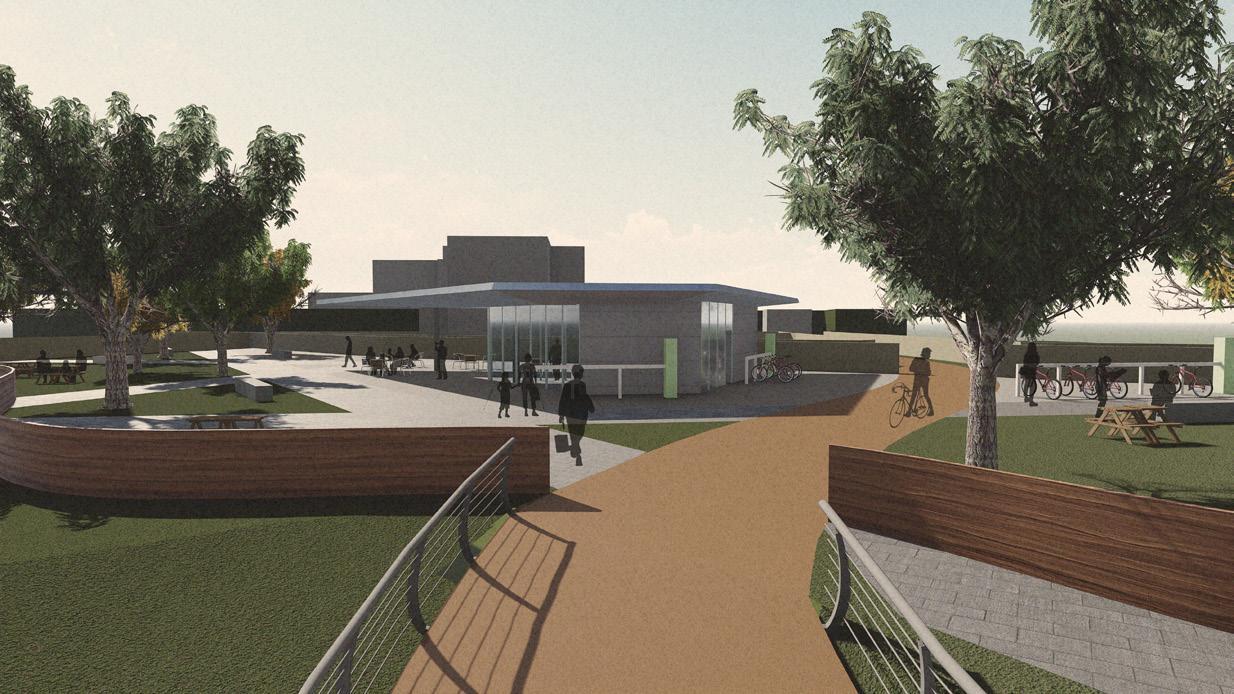
13 SECTION CC’ SECTION DD’ PROJECT VIEWS
NET_Campus
Portici (NA), Italy
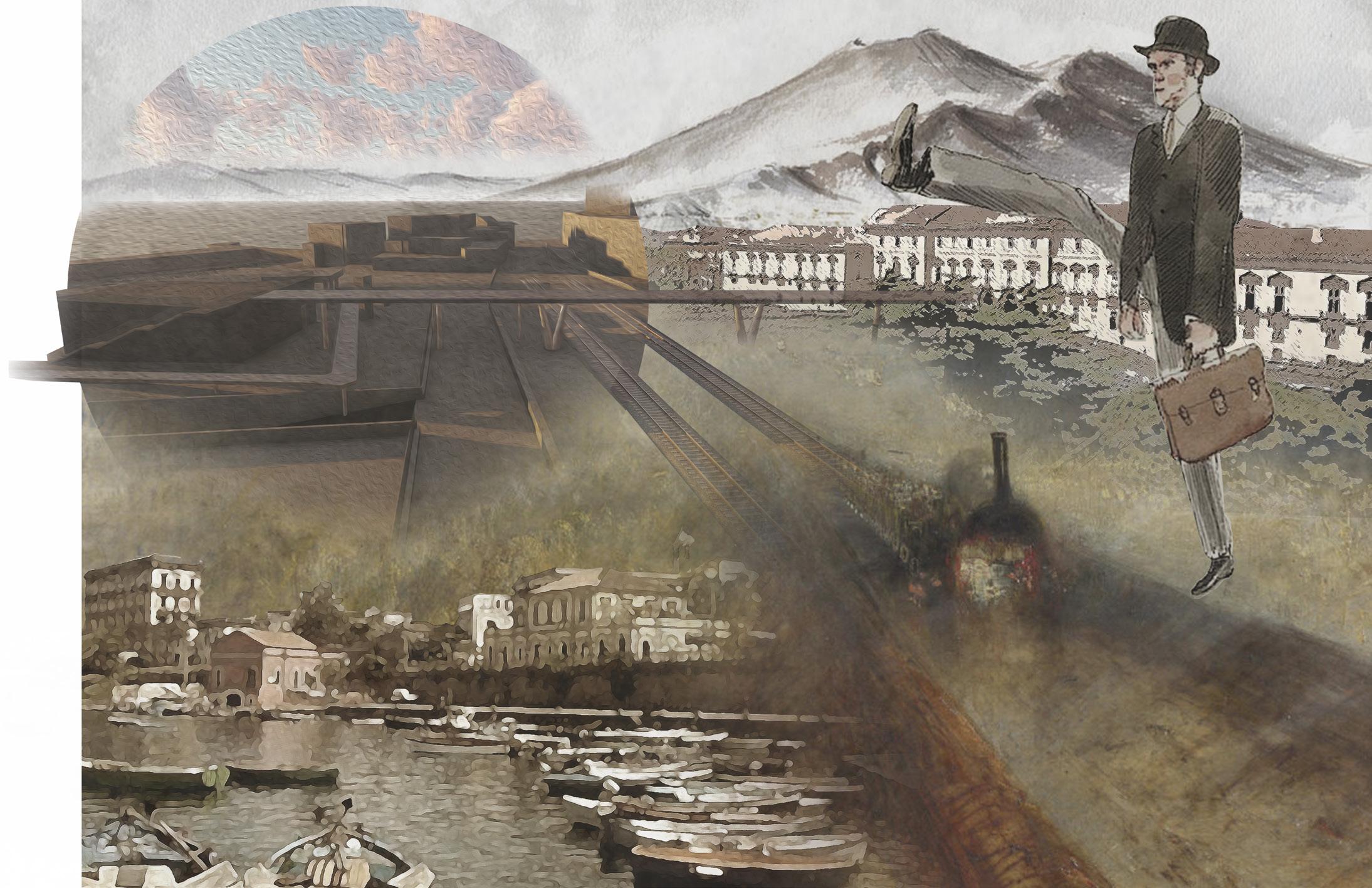
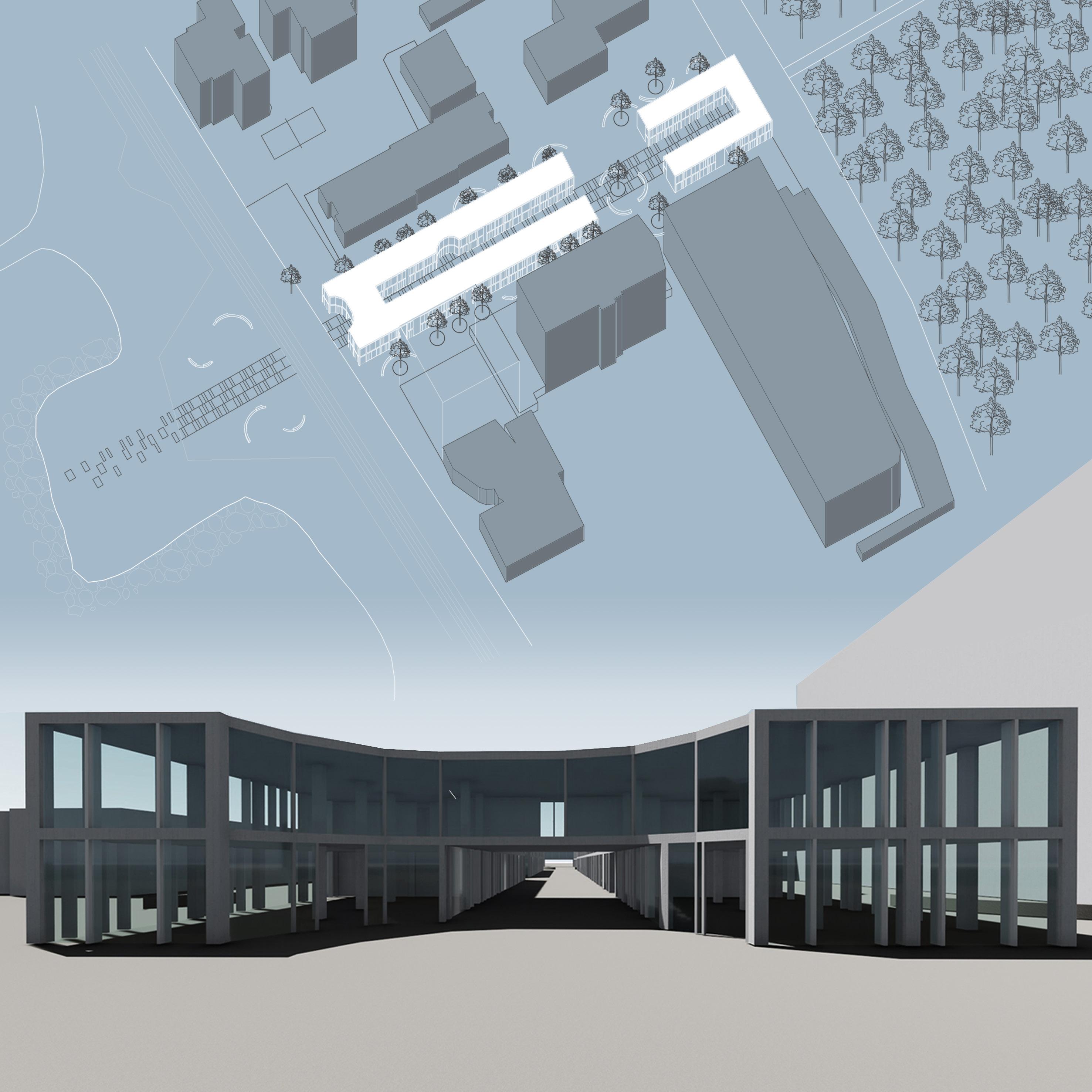
This project fits perfectly into the double meaning of the expression “urban project”, that is, a development strategy or positioning of the city as a whole and concrete intervention on delimited urban parts.
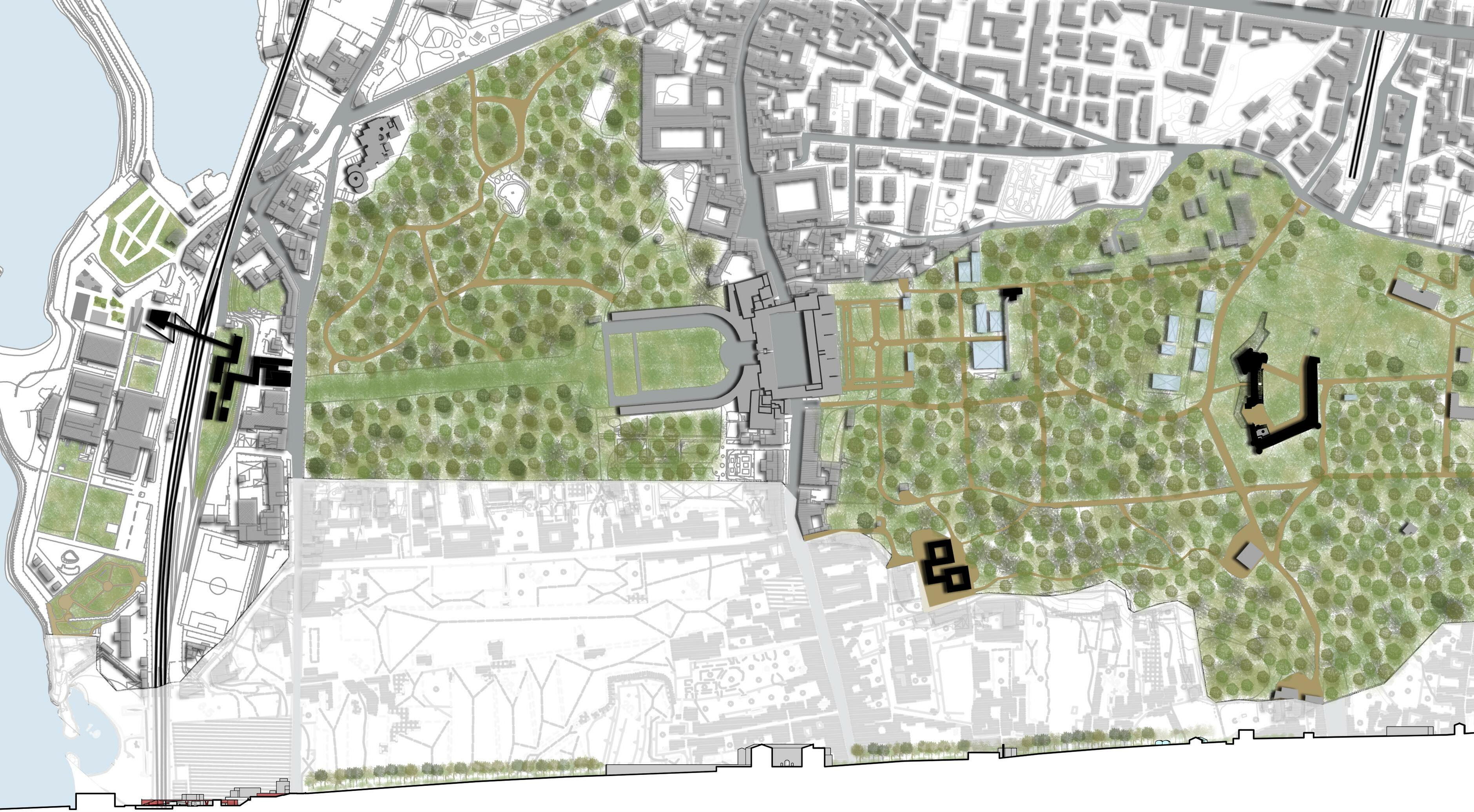
It aims to rediscover and emphasize the Vesuvius-Sea reconnection and to enhance the series of functional poles present and added on the transverse that connects the gardens of the Portici Palace to the Granatello port and the Mortelle beach.
The project, which is not by chance entitled NET_CAMPUS, starts from the idea of transversal reconnection developed by Gasparrini in the editorial office of the PUC in Portici and develops a rejoining that is not only physical to overcome the currently existing barriers, but also metaphorical and functional through the dislocation of reconnected functions, starting with the University center of Federico II with the ENEA scientific center.
15
16 MASTERPLAN
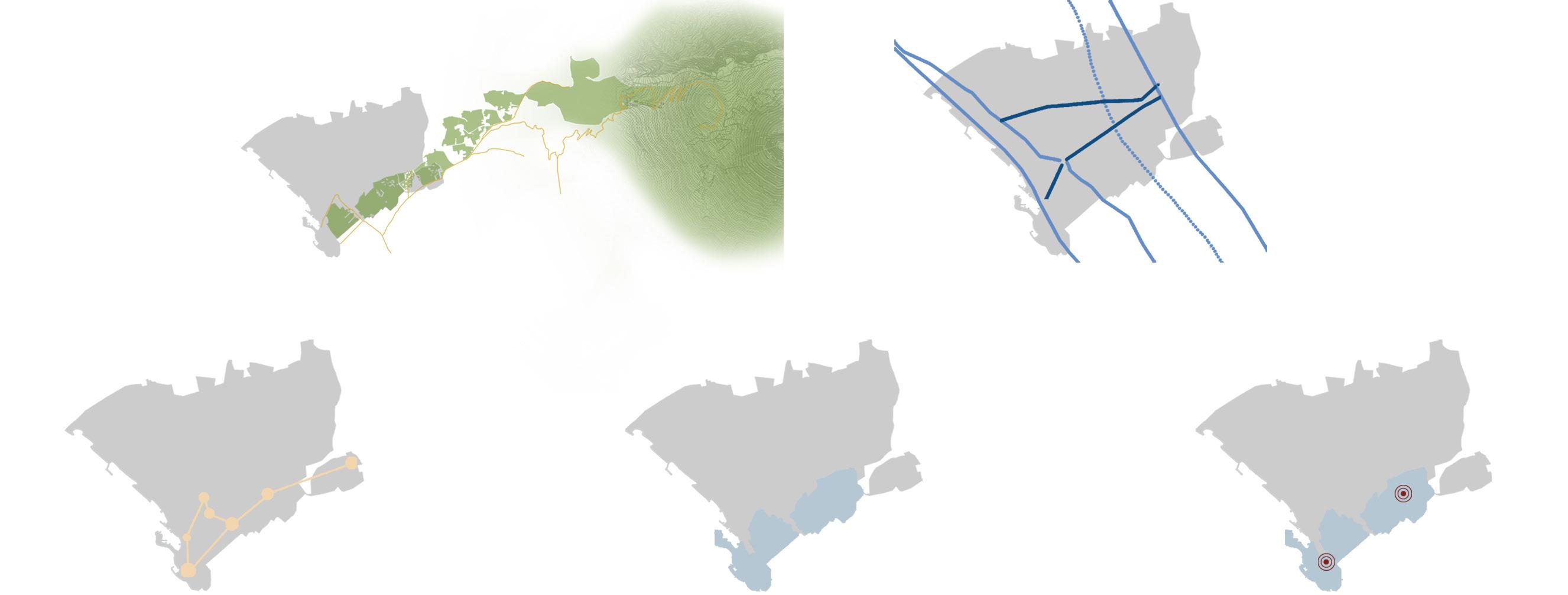
GREEN NETWORK PRE-EXISTING CONNECTIONS URBAN HUBS RECONNECTION REDEVELOPMENT AREAS IDENTIFICATION OF NEW ATTRACTIVE HUBS STRATEGY DIAGRAMS
17
PROJECT STATUST
SYNTHESIS OF ACTIONS ON AN URBAN SCALE
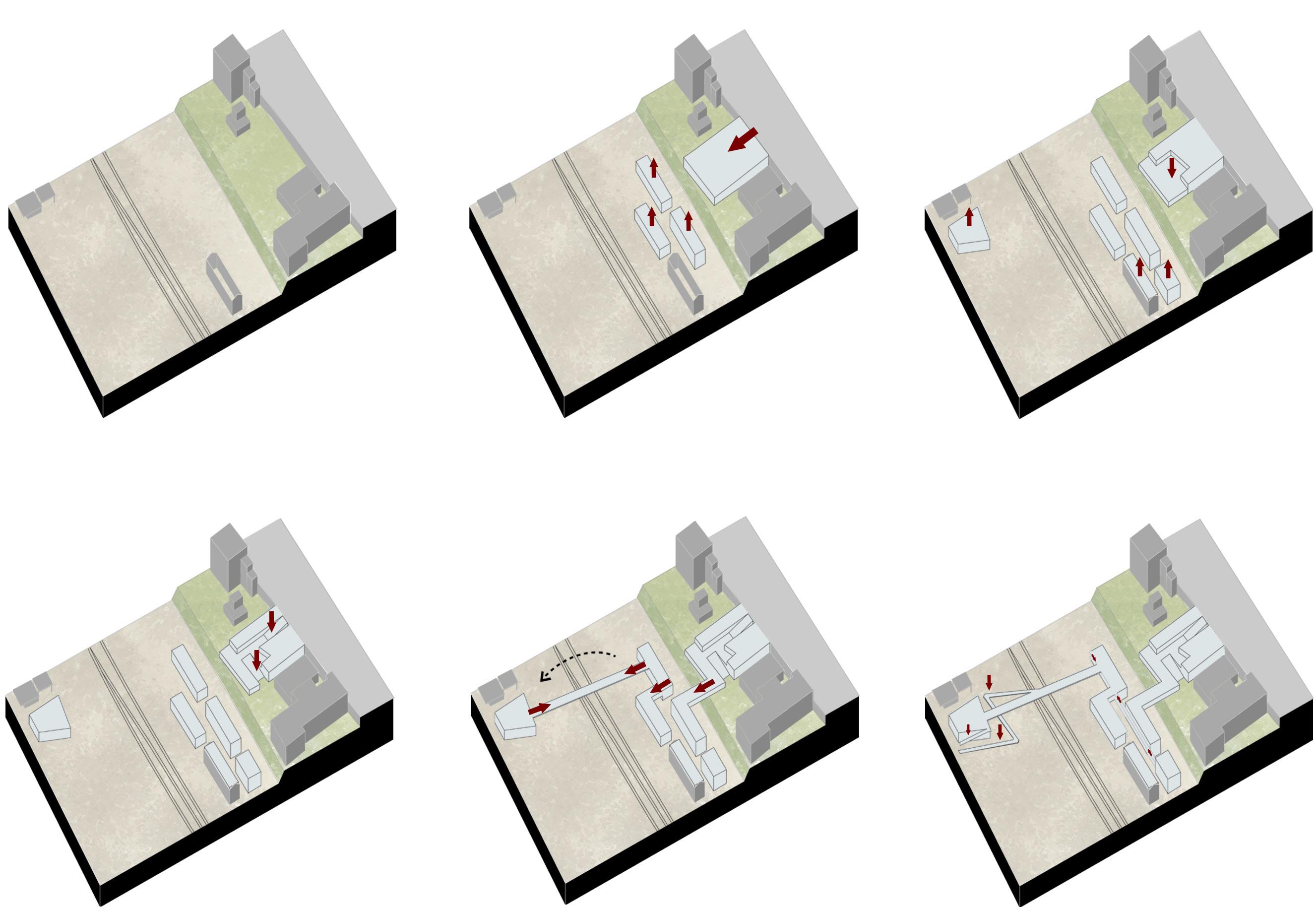
Overcoming the different altitude Reconnection and crossing of the tracks
Ascent and connection systems
18
State of affairs Extension of the road share and new modules Generation of new volumes
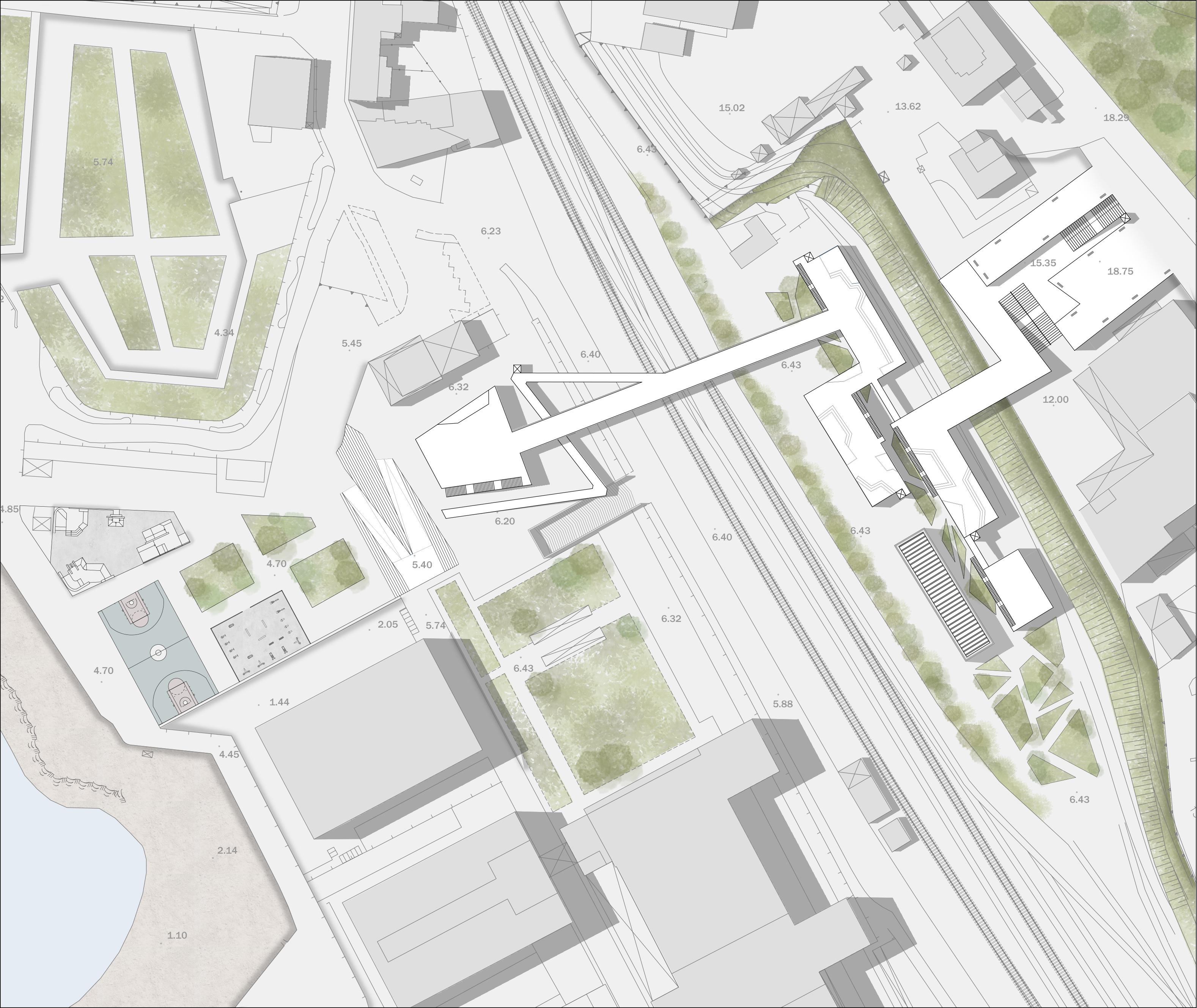
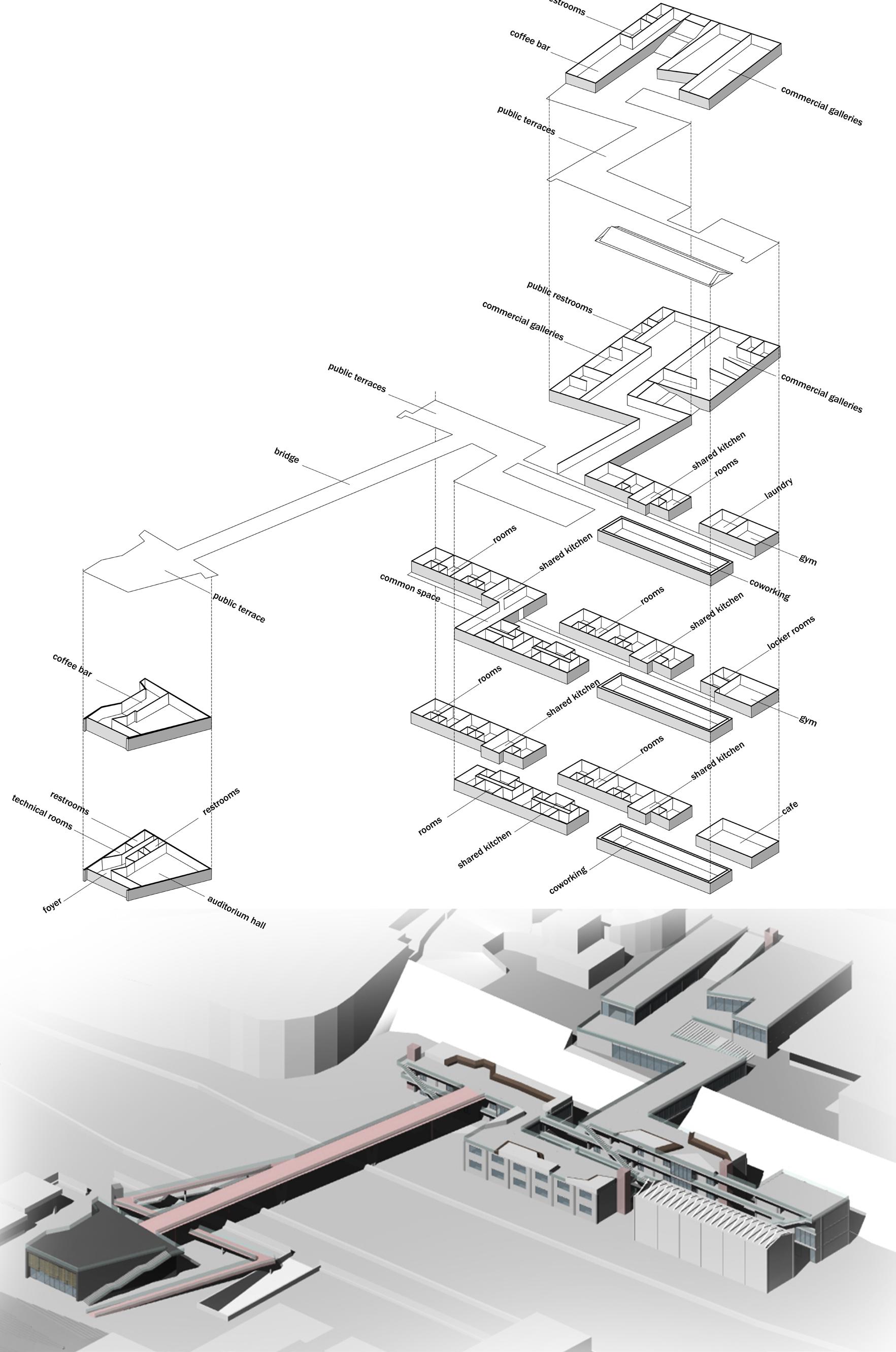
The overcoming of the jump in altitude is achieved thanks to the introduction of buildings and public services arranged in terraces that are linked to volumes obtained by repeating the module of the former freight yard present, all used for social and public functions. Specifically, the terraced buildings, which are developed on 2 levels, accommodate commercial functions such as shops and cafes and are connected to the slat buildings used instead for more social functions such as cohousing and / or student housing. The introduction of this function stems from the request of many citizens of Portici in search of apartments at not too high prices, as well as university students who are currently forced to commute from neighboring municipalities.
The buildings have external balconies that, in addition to reconnecting them as in a single housing block, allow you to reach additional services such as: coffee, gym, laundry. common kitchens and relaxation areas. You can also reach the roof terraces, all made practicable and equipped with seating and greenery in order to make them additional meeting spaces for both “residents” and anyone wishing to use them. The abandoned building of the former freight yard, on the other hand, has been left unaltered by planning to build a steel structure inside that is detached from the original
one and which plans to accommodate the function of coworking areas, always maintaining a principle of communion and aggregation as for the other buildings.
19
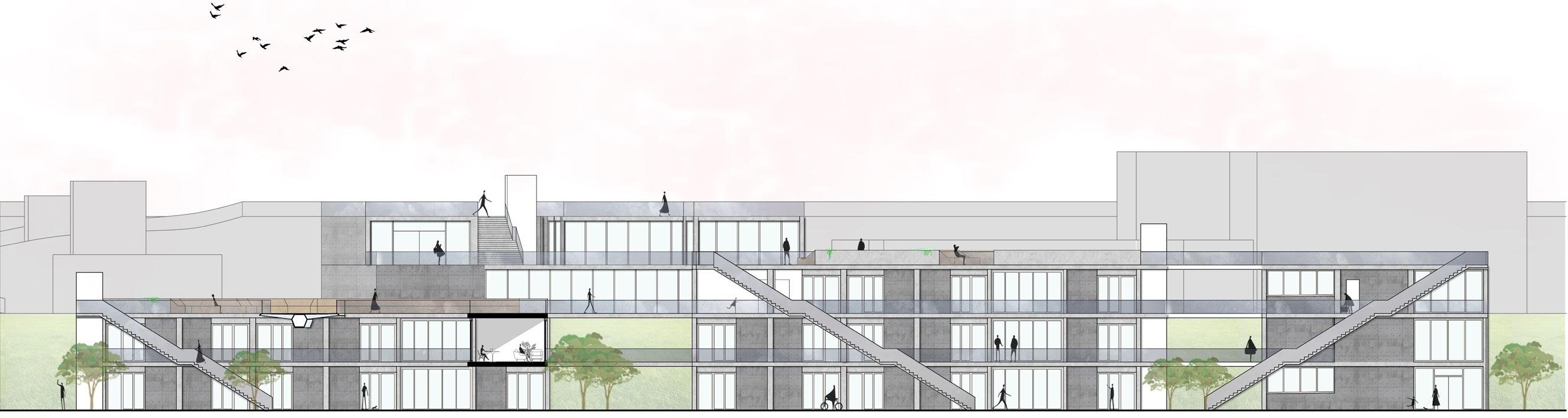
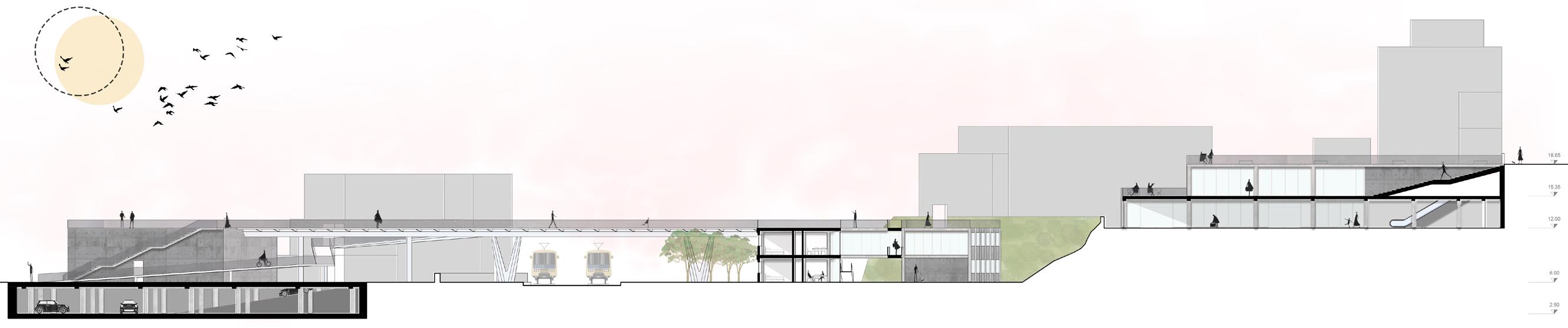
SECTION ALONG THE WHOLE SYSTEM
FACADE OF THE STUDENT HOUSING
20
VIEW FROM THE TERRACES OF THE SHOPPING GALLERY
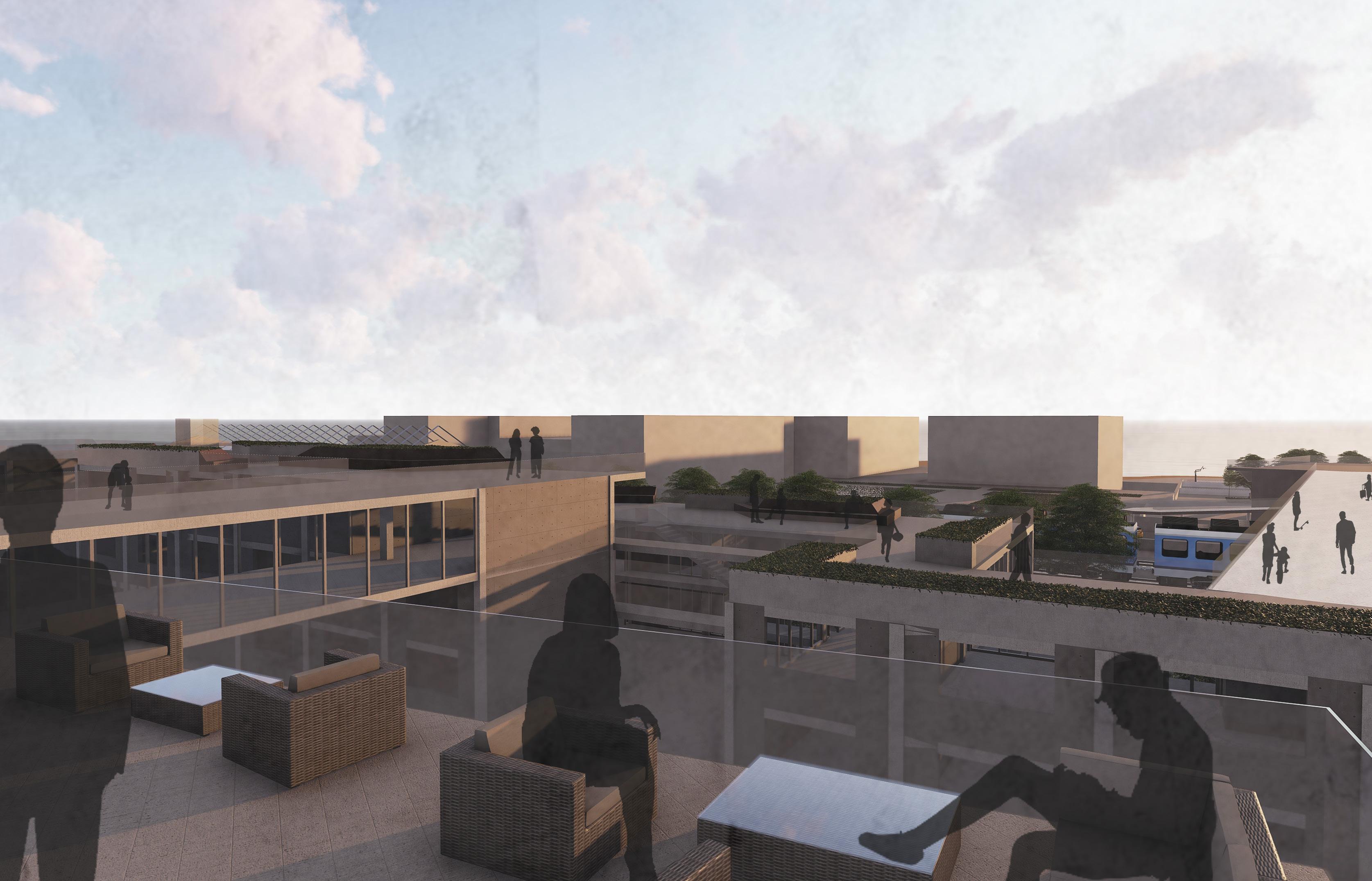
21
VIEW OF THE BRIDGE CROSSING THE TRACKS
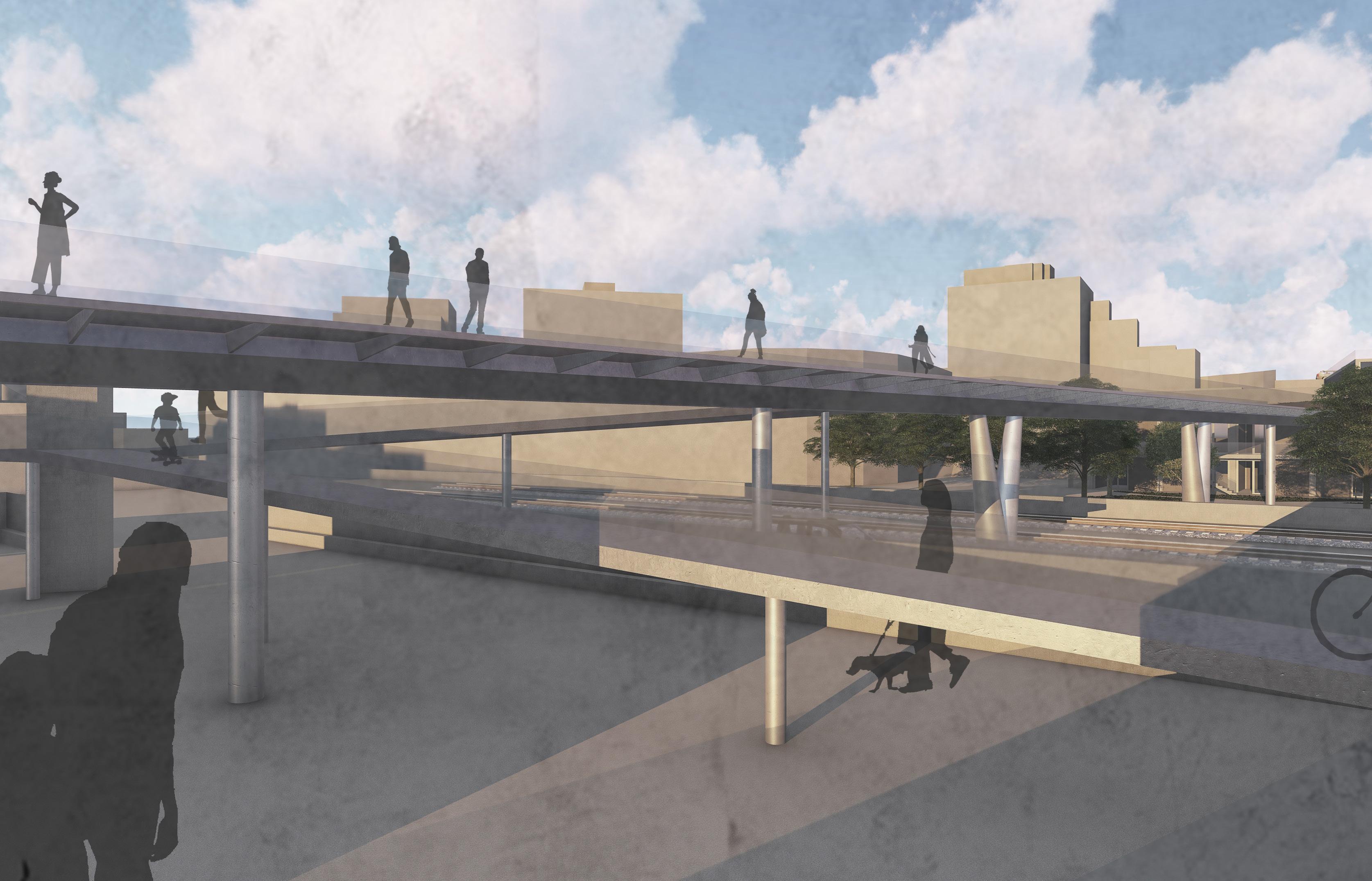
22
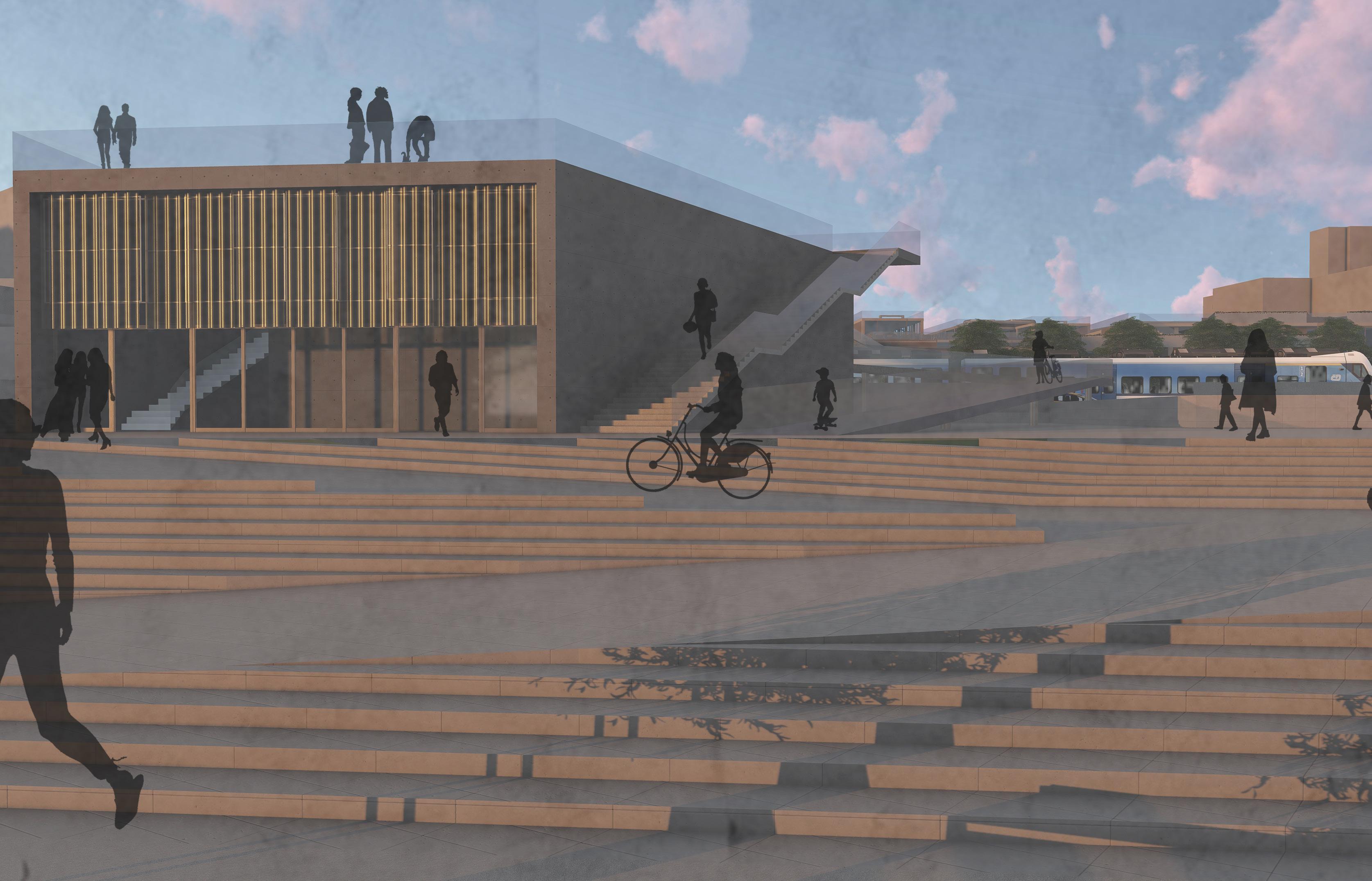
23
VIEW OF THE AUDITORIUM FROM THE SPORTS PARK
Urban Recovery project
Ponticelli (NA), Italy
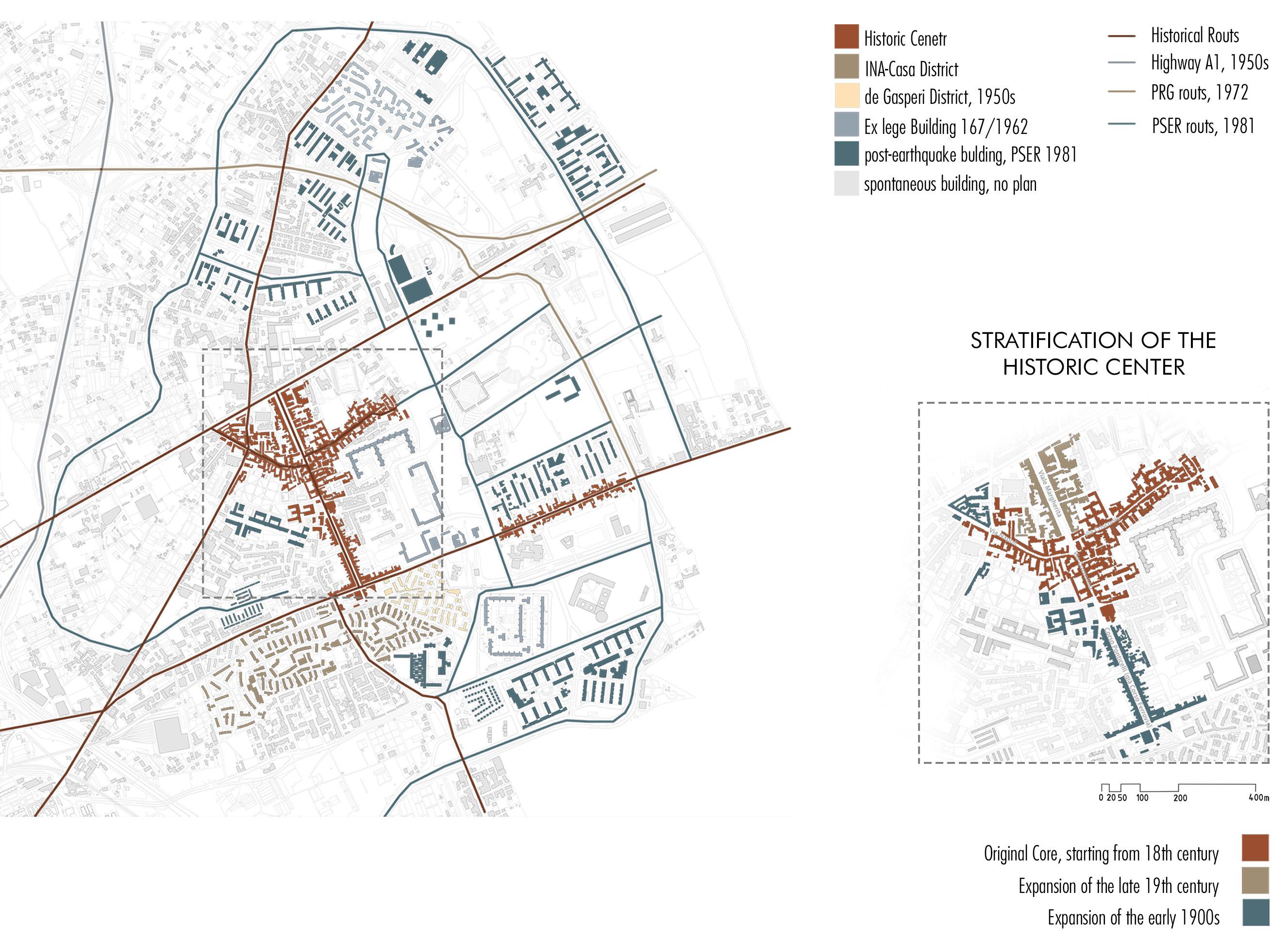
The project involves the introduction of a new network of roads that connect the different districts of Ponticelli (NA) to the surrounding areas, as well as the definition of a new hierarchy of spaces. The project actions therefore foresee different phases:
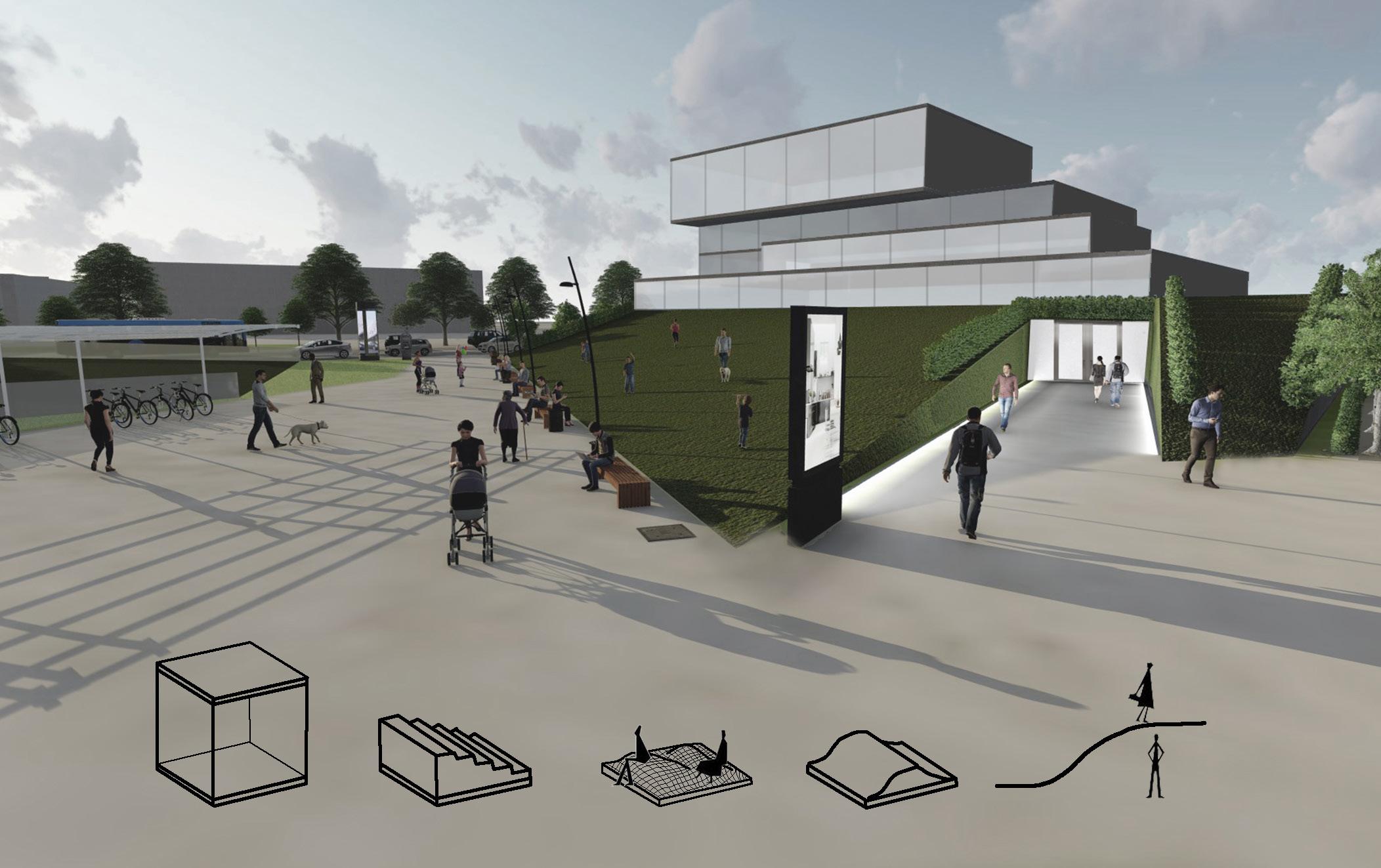
1. Create an internal network of roads by strengthening the transversal connections between the various attractive poles
2. Integrate driveways, while giving priority to pedestrian and cycle lanes
3. To connect poles and receptive activities through the generation of a single great ecological path
4. North-south use and permeability of the CIS spaces
5. Densify waste areas and build on a smaller scale by recomposing a new functional mosaic.
25
SETTLEMENT SYSTEM

26
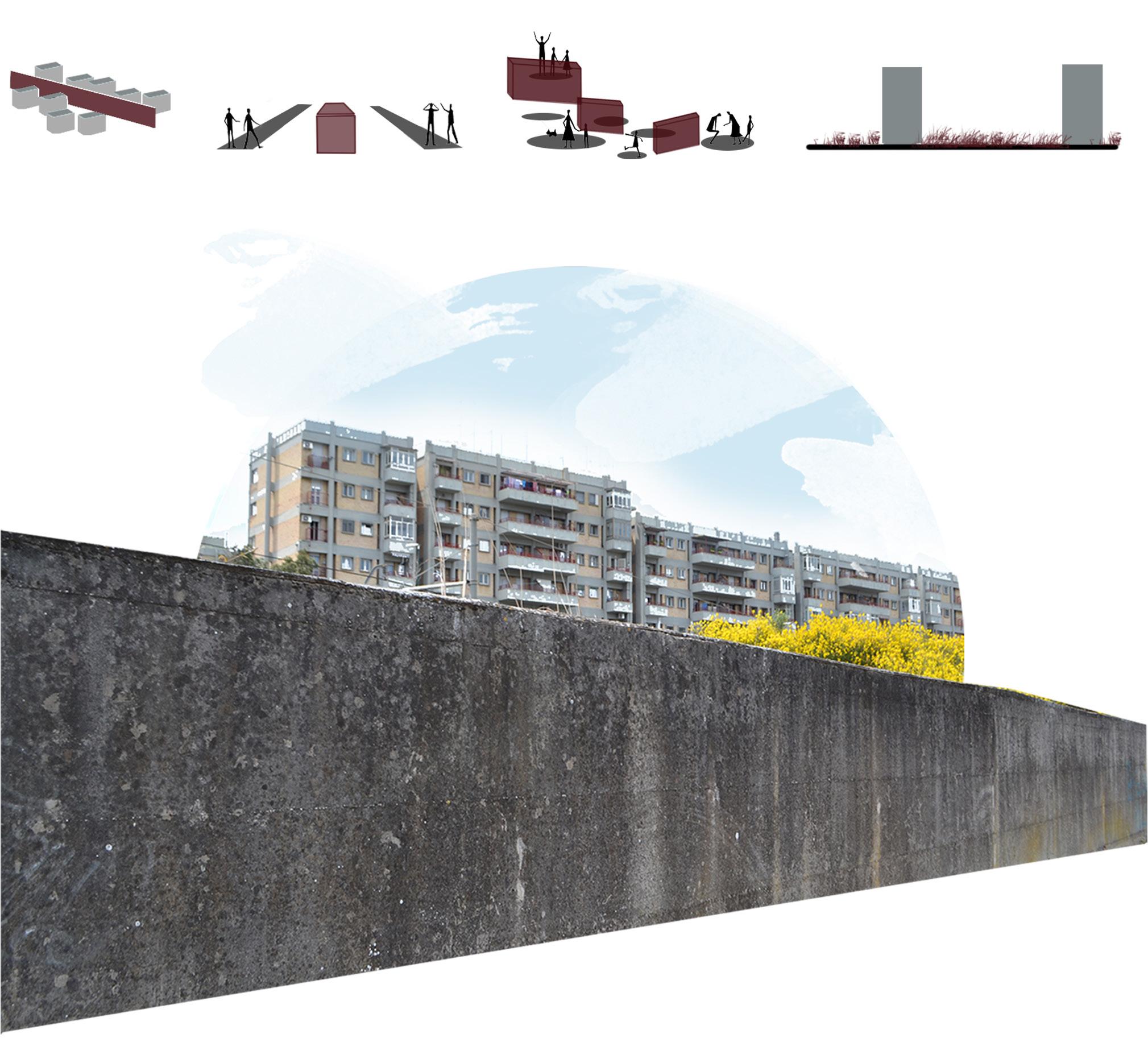
_ Oversized streets and lack of standards that mark the distances between the different neighborhoods and the neighboring areas.
_ Lack of an adequate hierarchy of spaces::
1. dormitory districts
2. oversized roads
3. dislocated attractive areas
4. waste areas and large isolated architectures
27
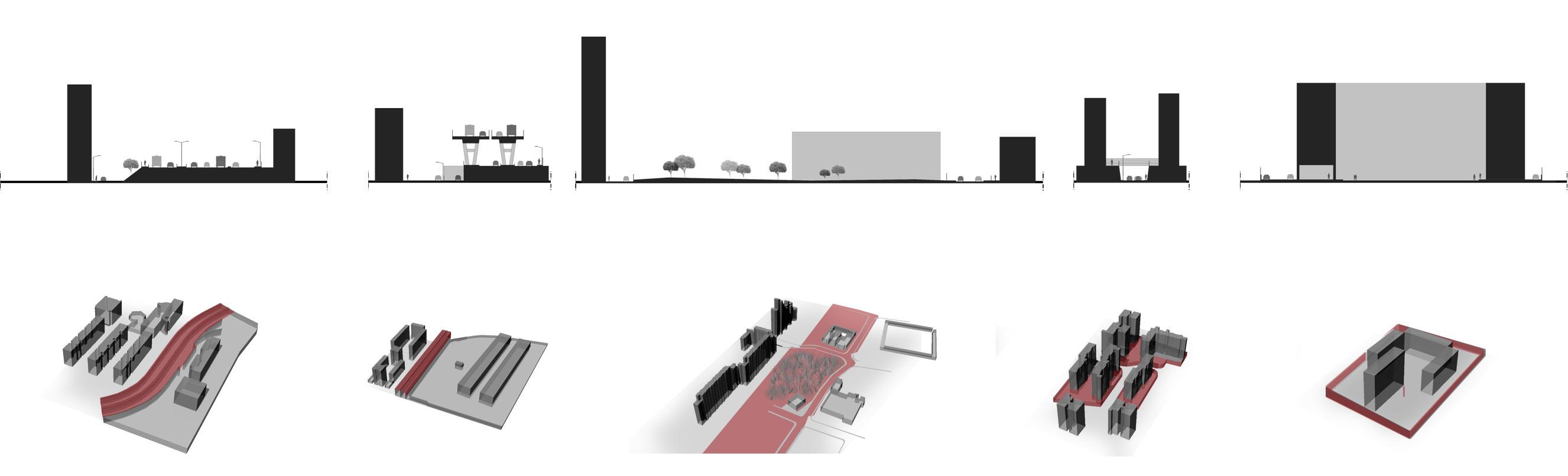
ANALYSIS OF URBAN BARRIERS
_Overcoming social barriers and global reconnection
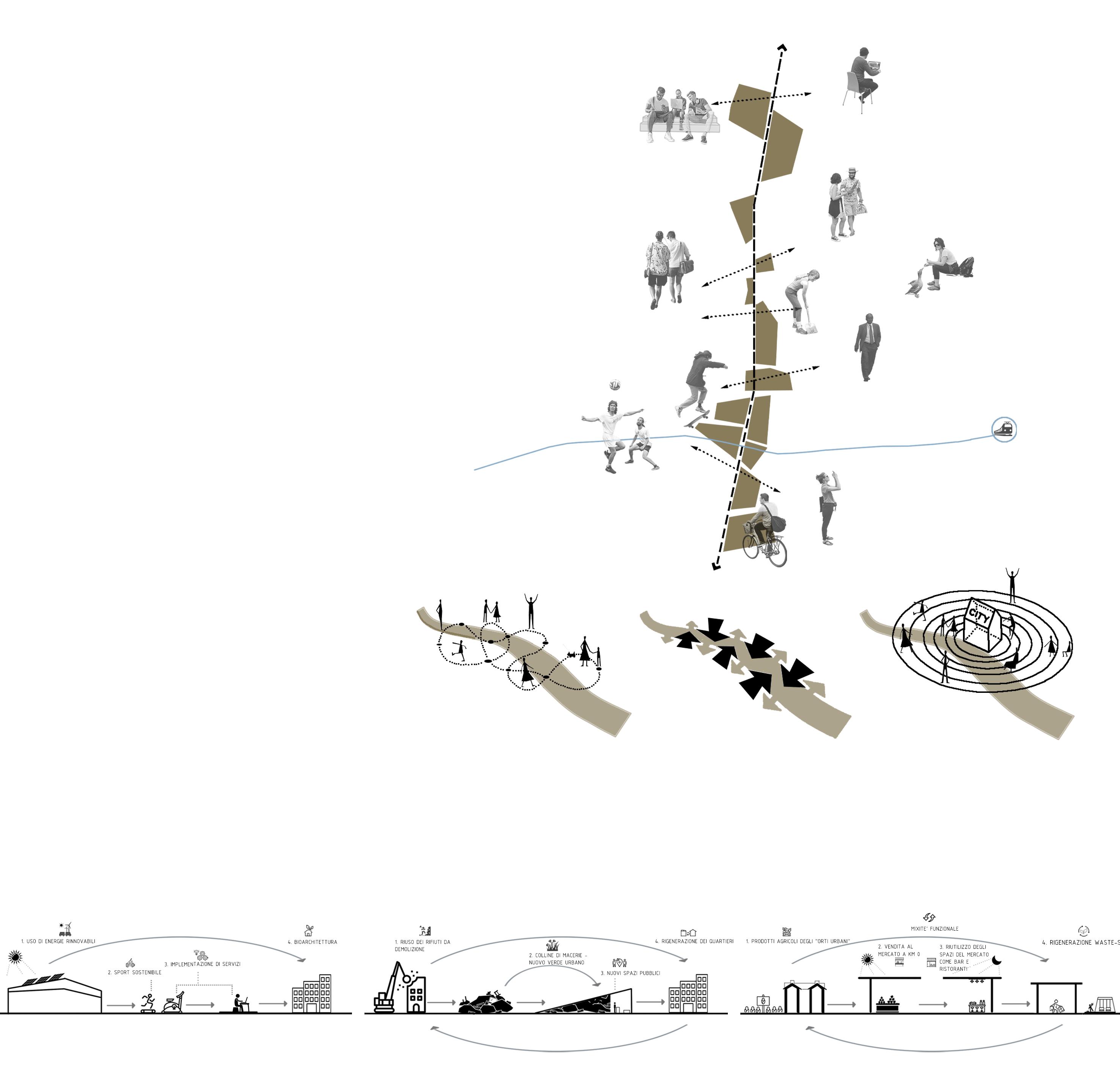
_Definition of a new network of services and public spaces as attractive hubs: 1. interconnected public spaces. 2. ecological public path. 3.connection of hubs and receptive activities.
According to the definition of the Ellen MacArthur Foundation circular economy “is a generic term to define an economy designed to be able to regenerate itself.” Adopting a circular approach means reviewing all stages of production and paying attention to the entire supply chain involved in the production cycle. This attention passes through the respect of some basic principles, which the Ellen Mc Arthur Foundation has identified in 5 fundamental criteria. 1.
28
2.
3.
4.
5.
RE_CONNECTIONE
ECO DESIGN
VERSATILITY
RENEWABLE ENERGIES
ECOSYSTEM APPROACH
MATERIALS RECOVERY THE CIRCULAR
ECONOMY
CONCEPT STRATEGY
& RE_USE
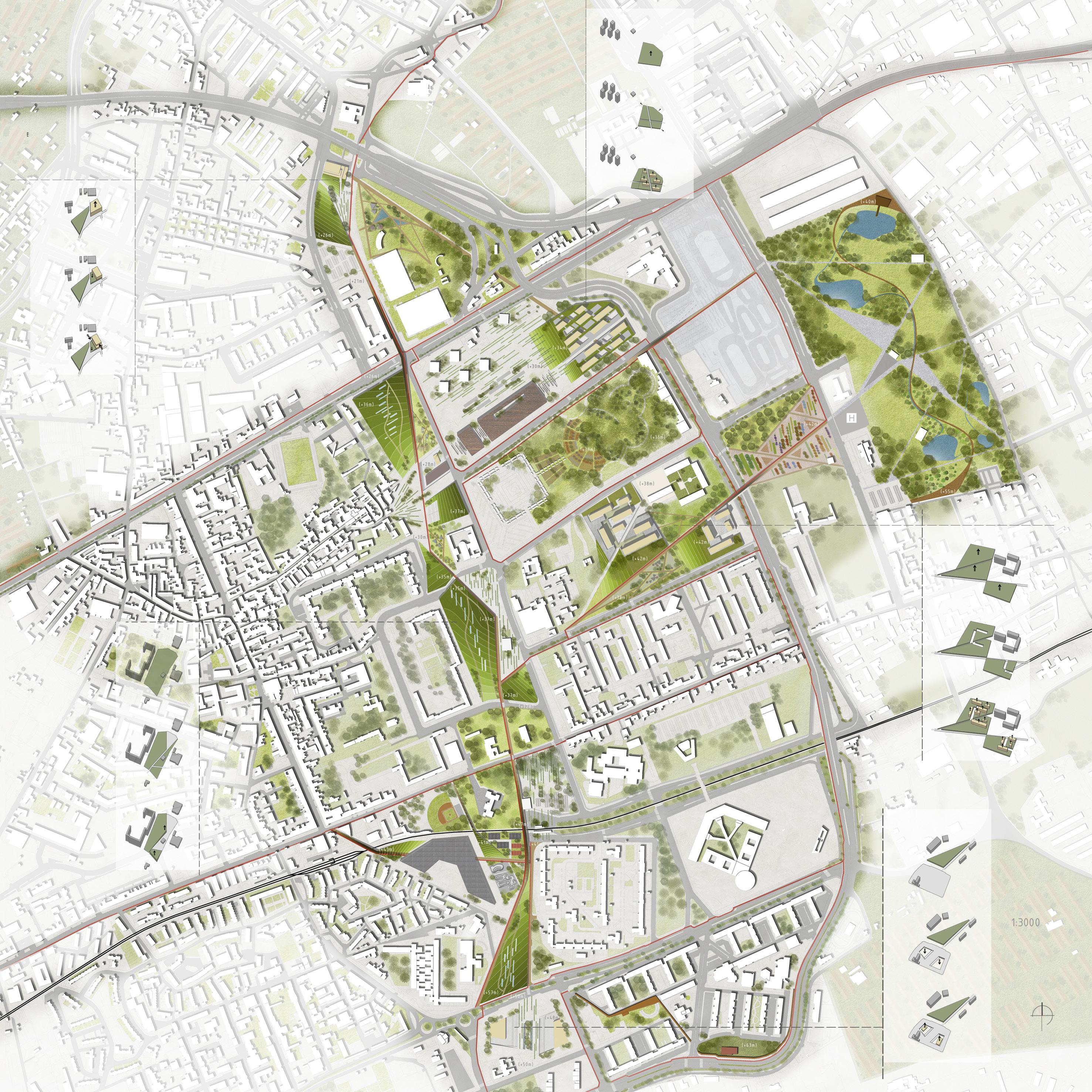
MASTERPLAN
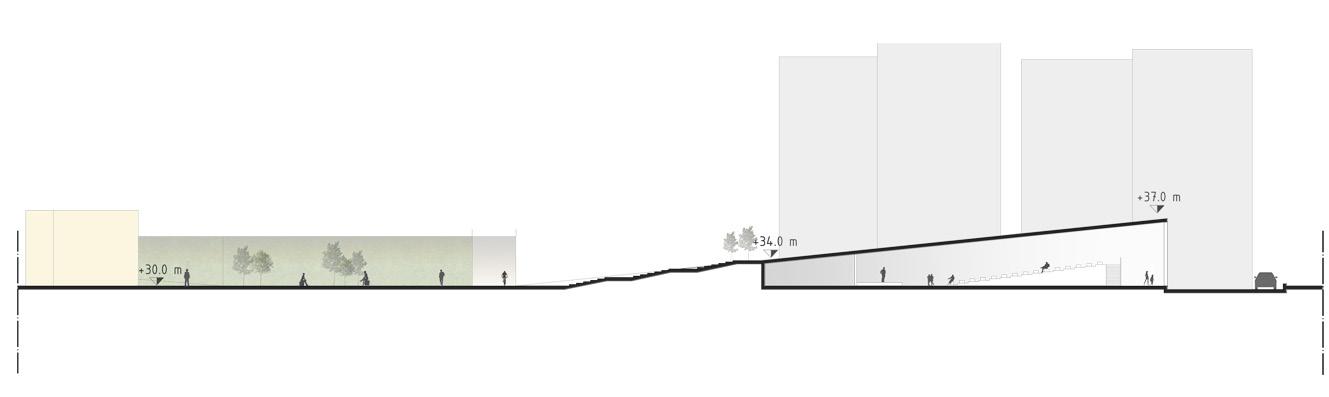
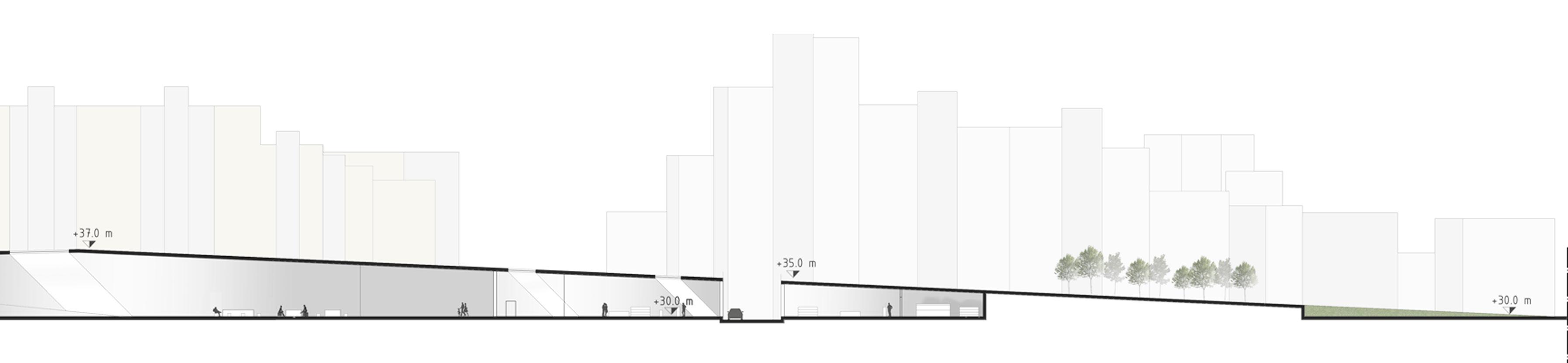
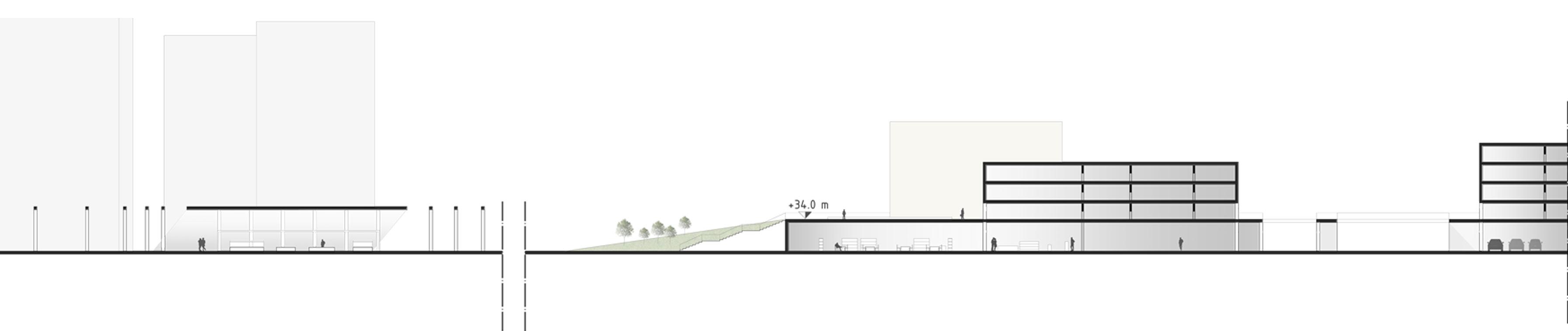
Section CC’ - Functional Mixitè
Section DD’ - Public ground building
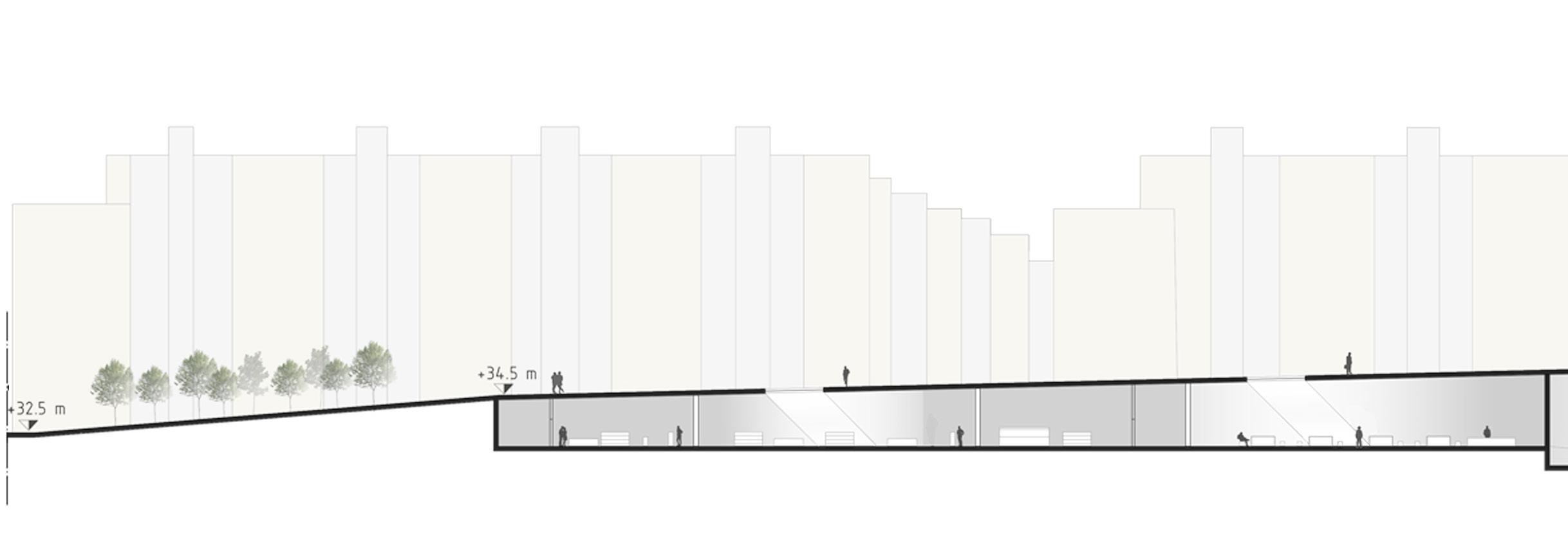
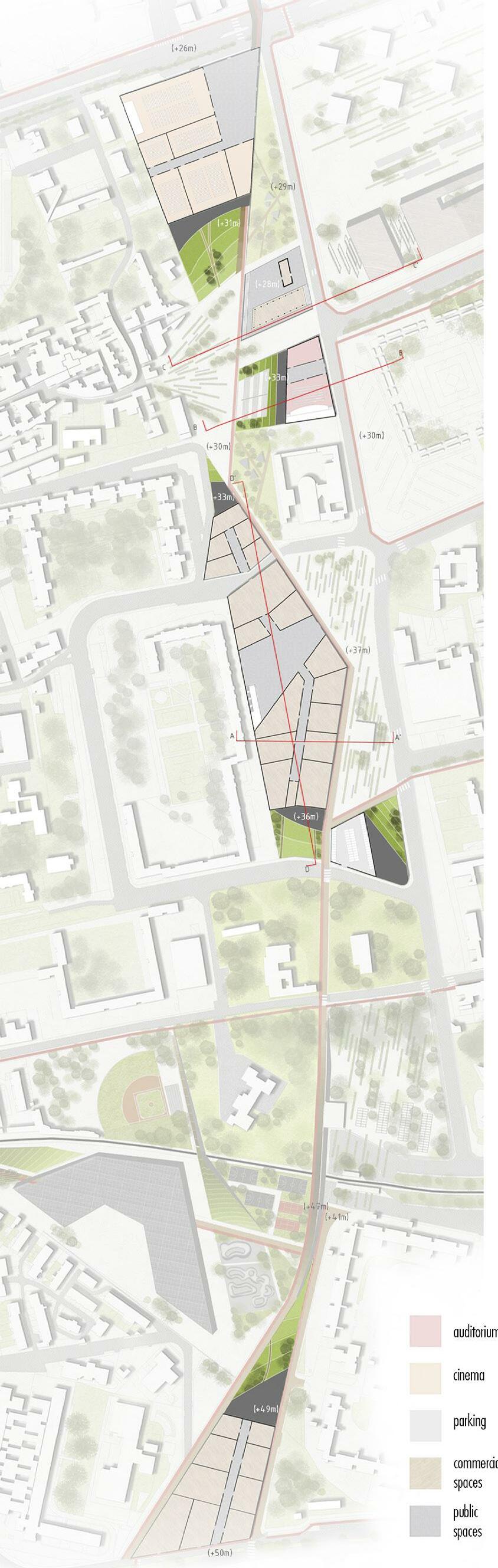
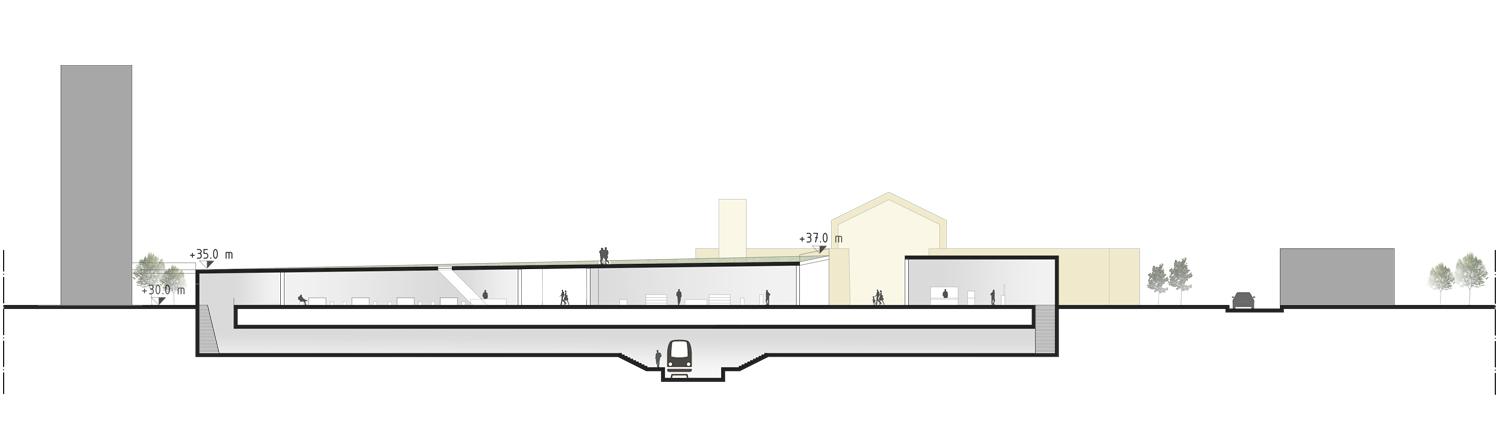
Section BB’ - Auditorium
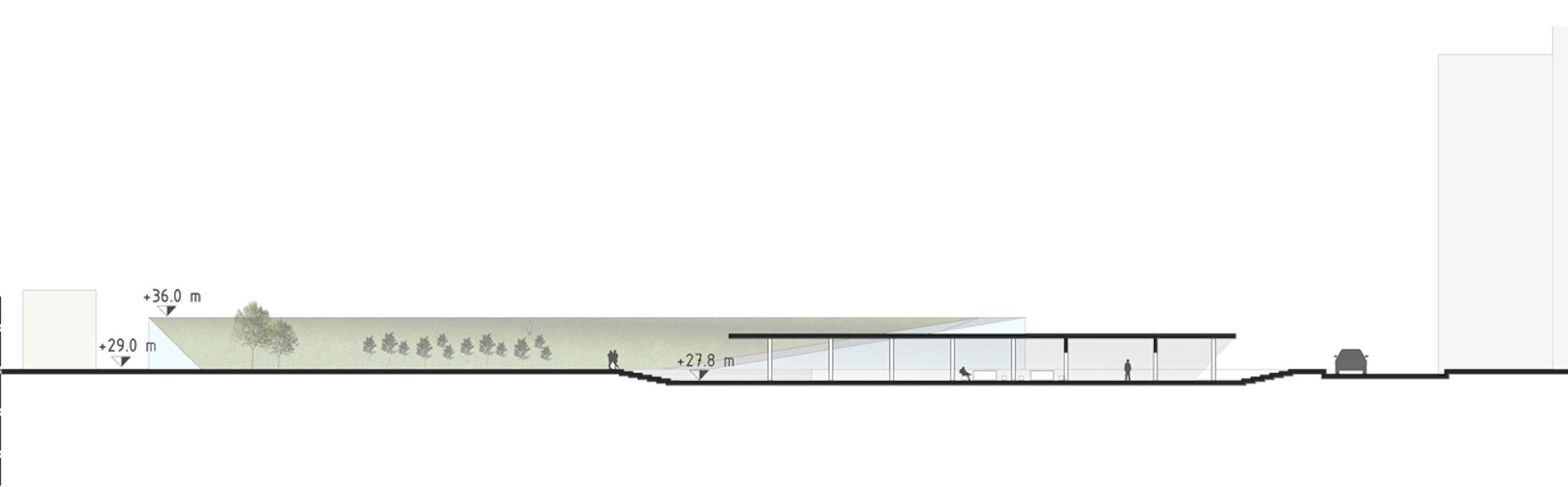
Section AA’ - Connection to the station
30
31
Armadillo House Highlands,
Scotland
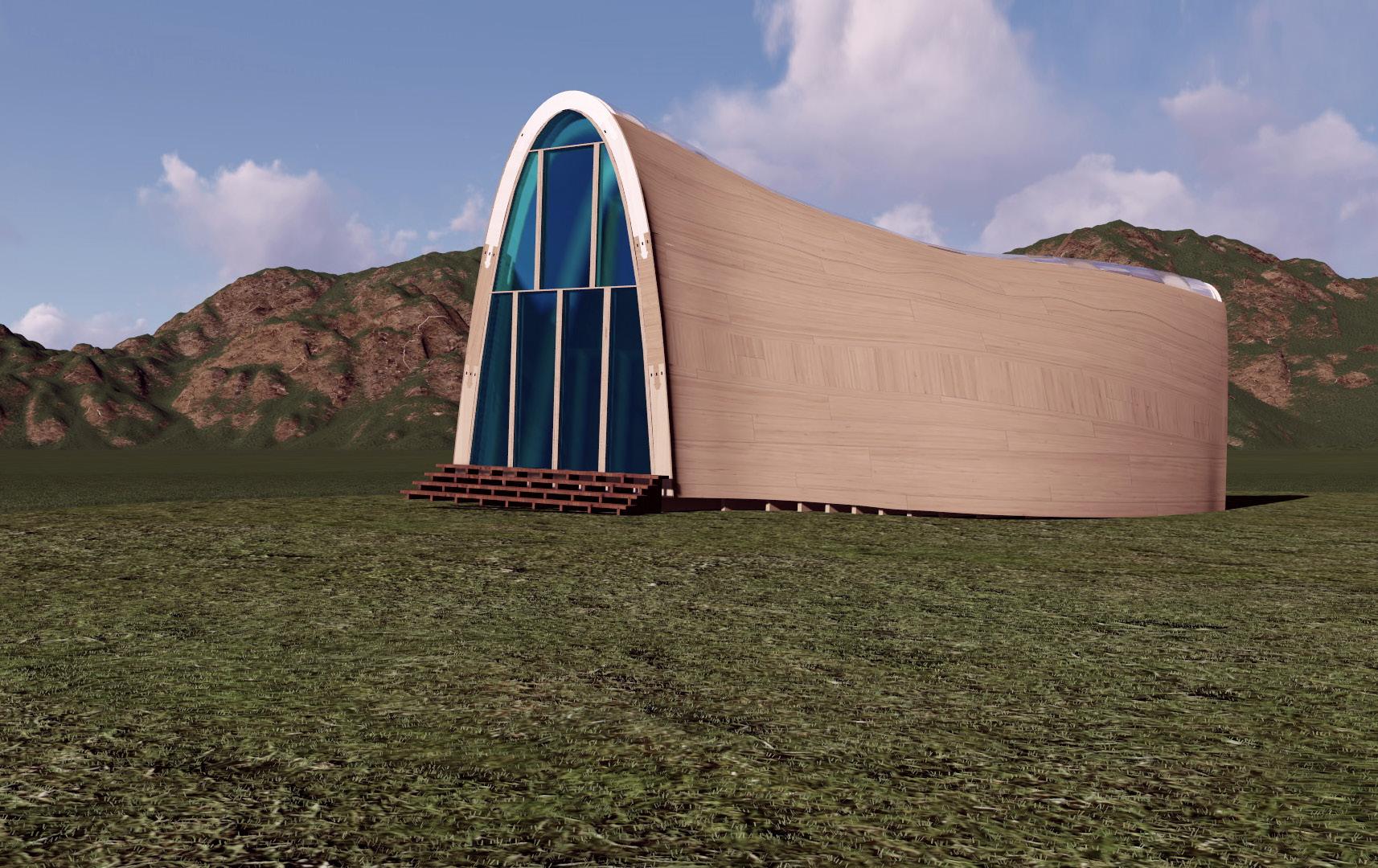
The work involves the design of a “studio apartment” that is entirely built through the use of a lightweight structure that can be transported and assembled by unskilled people.
The project therefore involves the design of numbered pieces to be assembled following an instruction booklet and the invention of a knot to fit the pieces together without the use of adhesives.
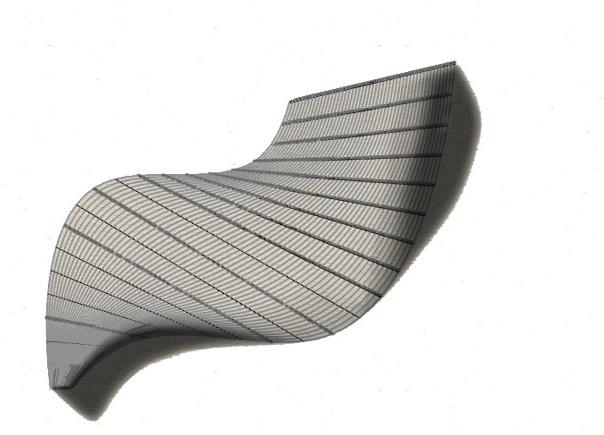
The shape of the building is given by the use of arches placed in sequence with different heights and sizes in order to give this particular organic aspect to the structure. Each arc reproduces the shape of a catenary, that is a hyperbolic plane curve (similar in appearance to the parabola), but positioned opposite to its natural downward trend. All of it realized using the Grasshopper softwar to obtain a parametric architectur.
33
HOUSING UNIT DESIGN
MATERIALS
ACCOYA


Durability, natural insulator, dimensional stability.
LARICE
Good resistance to stress, good workability.
OKUME’
Resistance to humidity and salinity, dimensional stability, easy workability.

TEAK


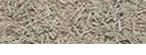
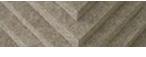
Moisture resistance, weather resistance, good resistance to deformation.
POLYCARBONATE
Transparent thermoplastic material, resistant to shocks and heat.
CELENIT N
Elimination of thermal bridges, phono-isolation, fire protection.
SHEEP WOOL
Thermal and acoustic insulation, hygroscopic.
ROOF PLAN
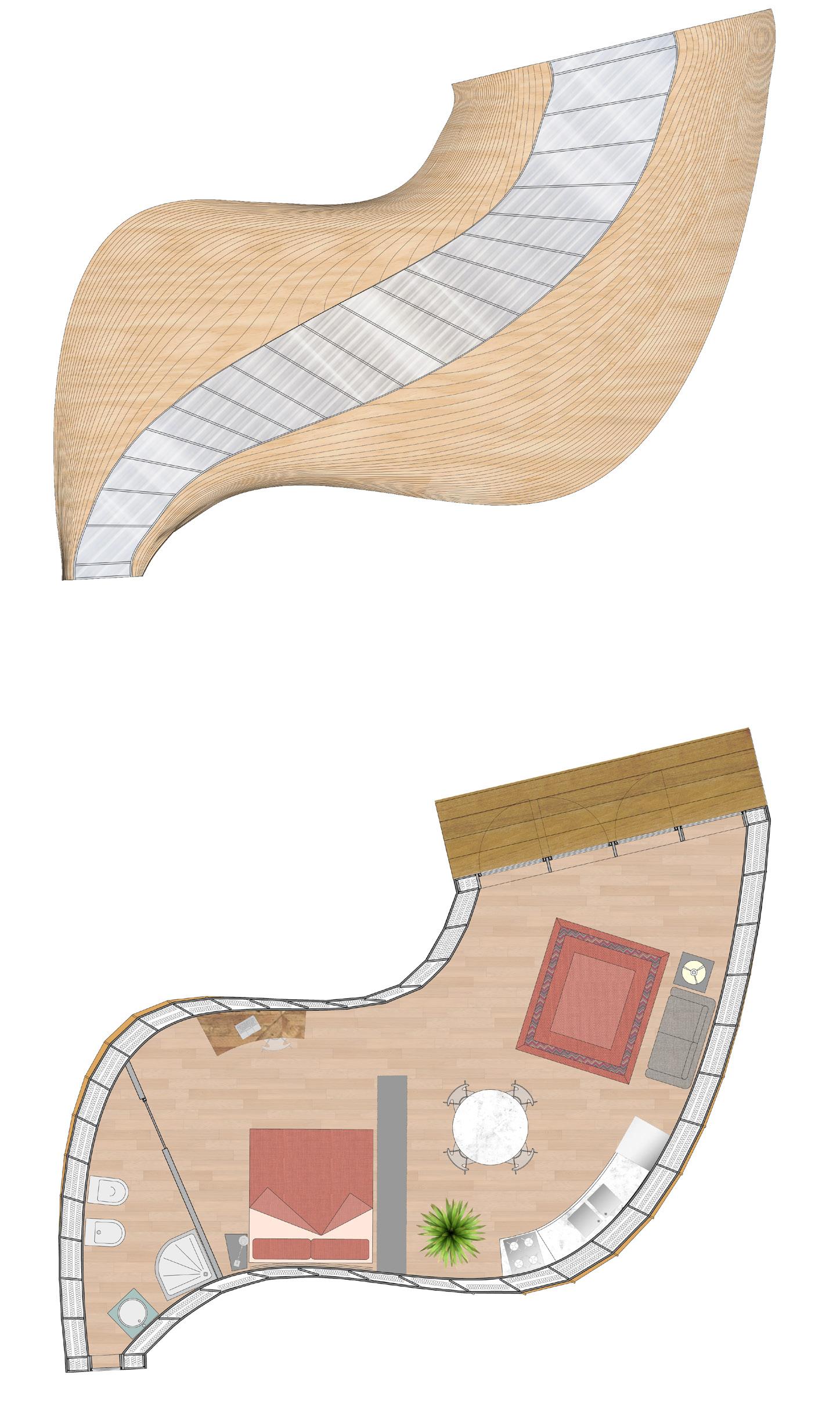
34
GROUNDFLOOR
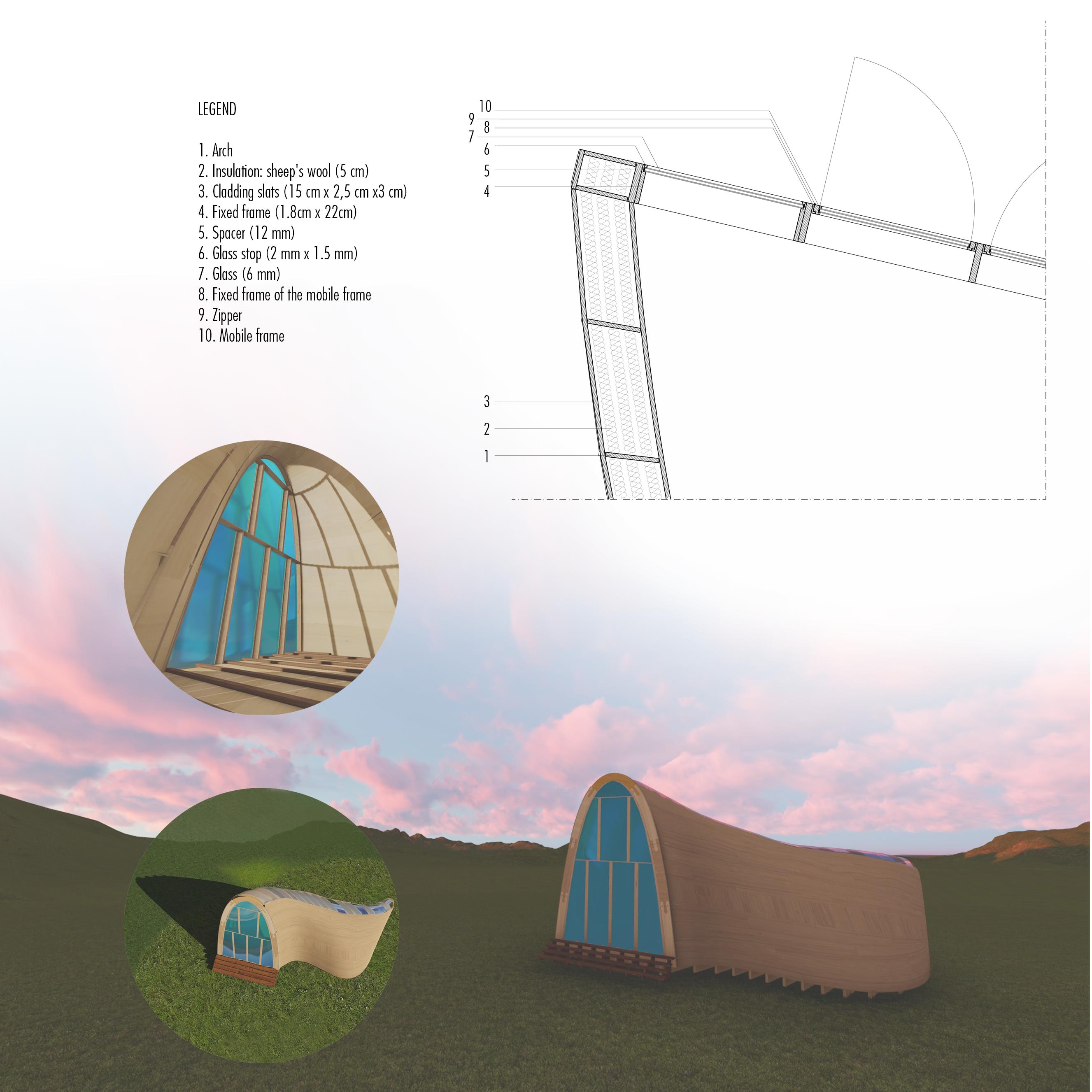
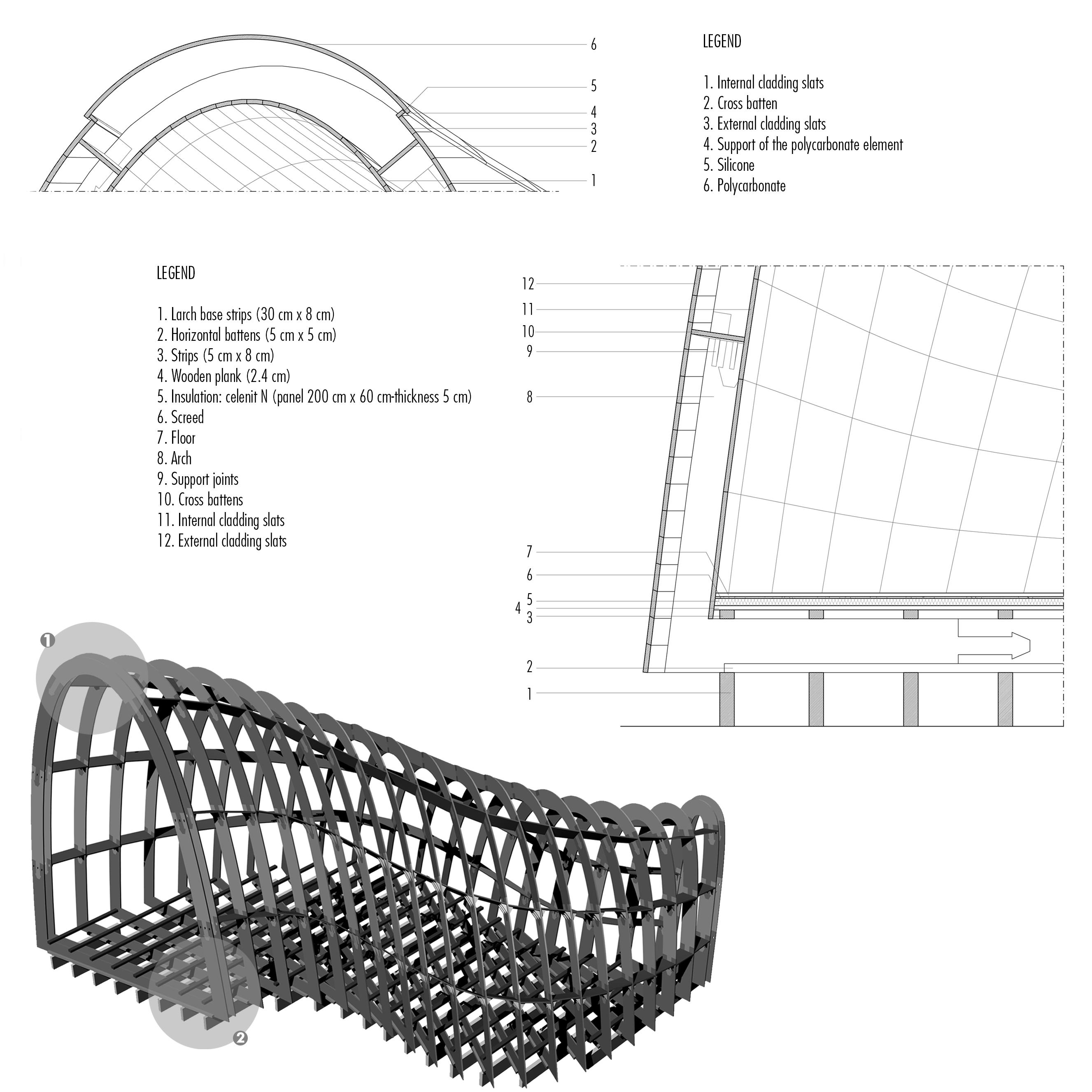
36 AXONOMETRY DETAIL 2
CONSTRUCTION
DETAIL 1
DETAILS
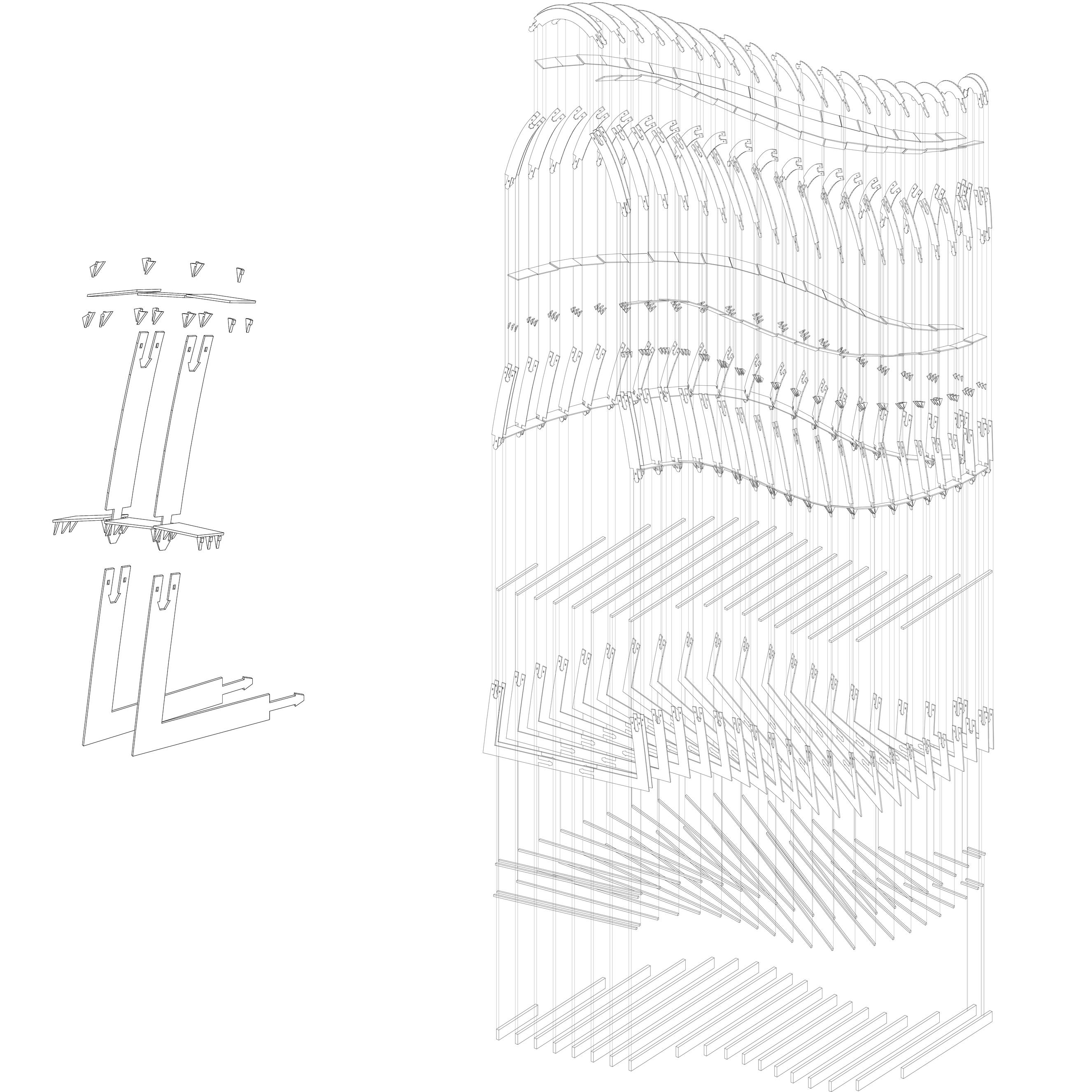
37
AXONOMETRIC CROSS SECTION
Public Village
Castel Volturno (NA), Italy
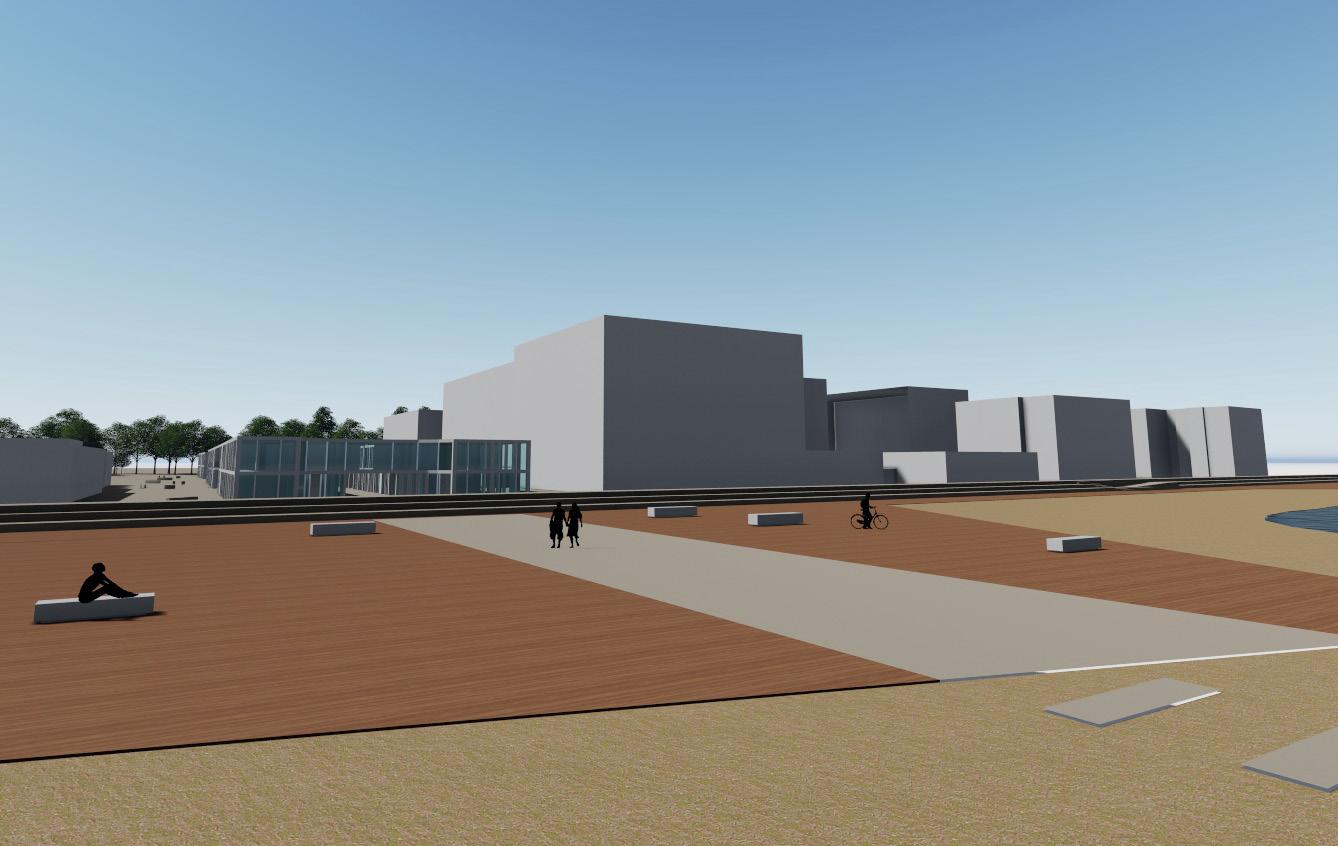
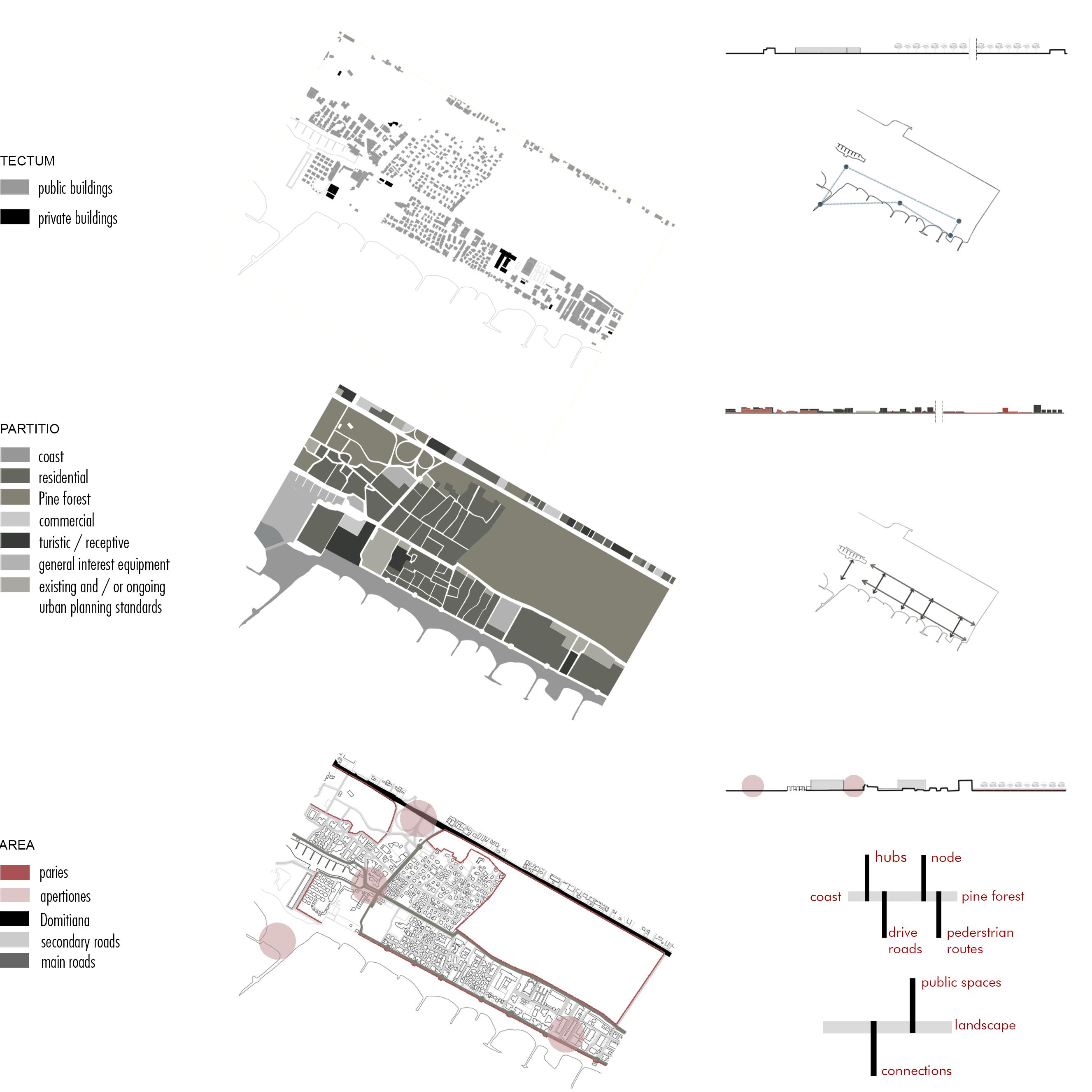
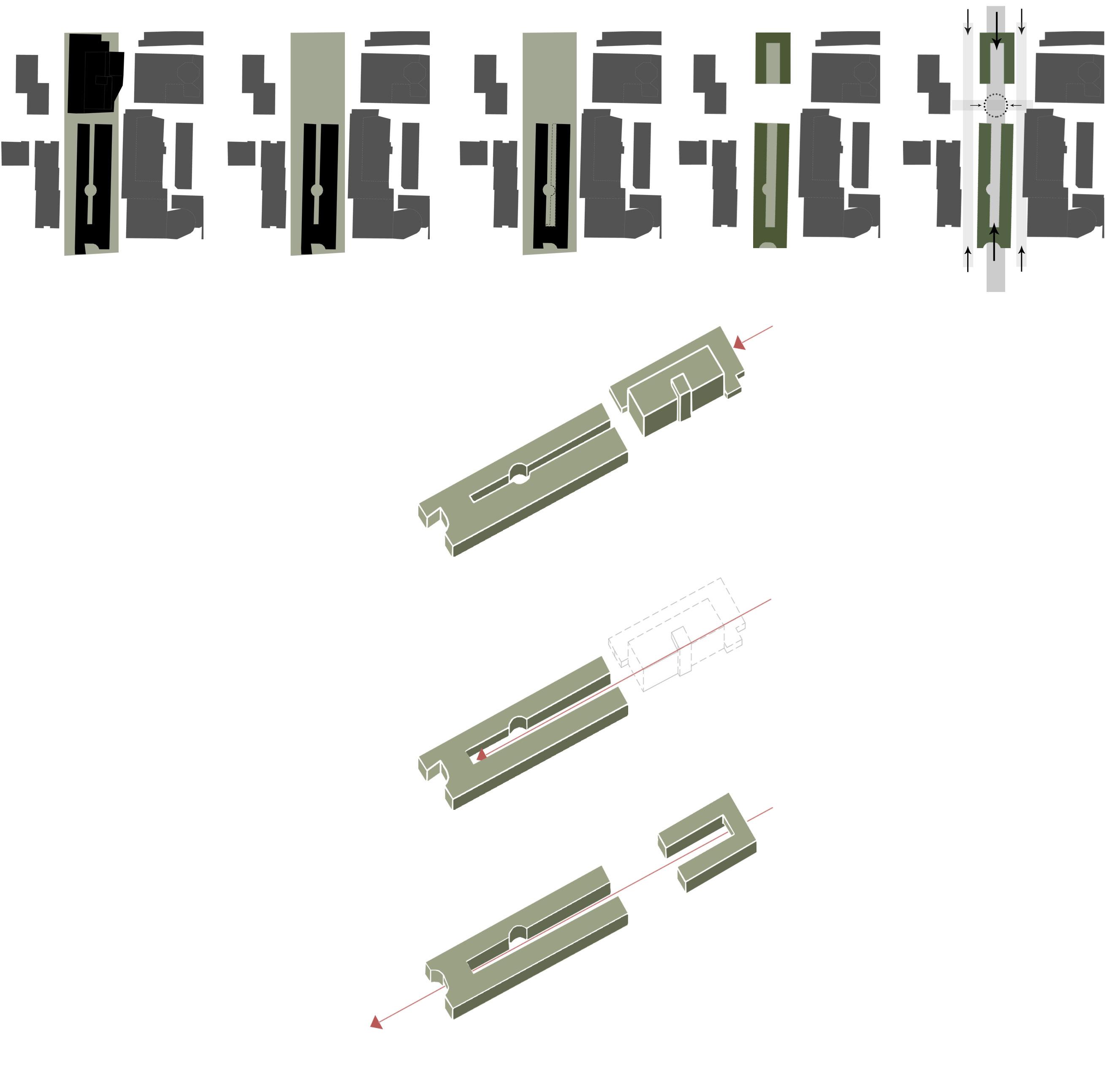
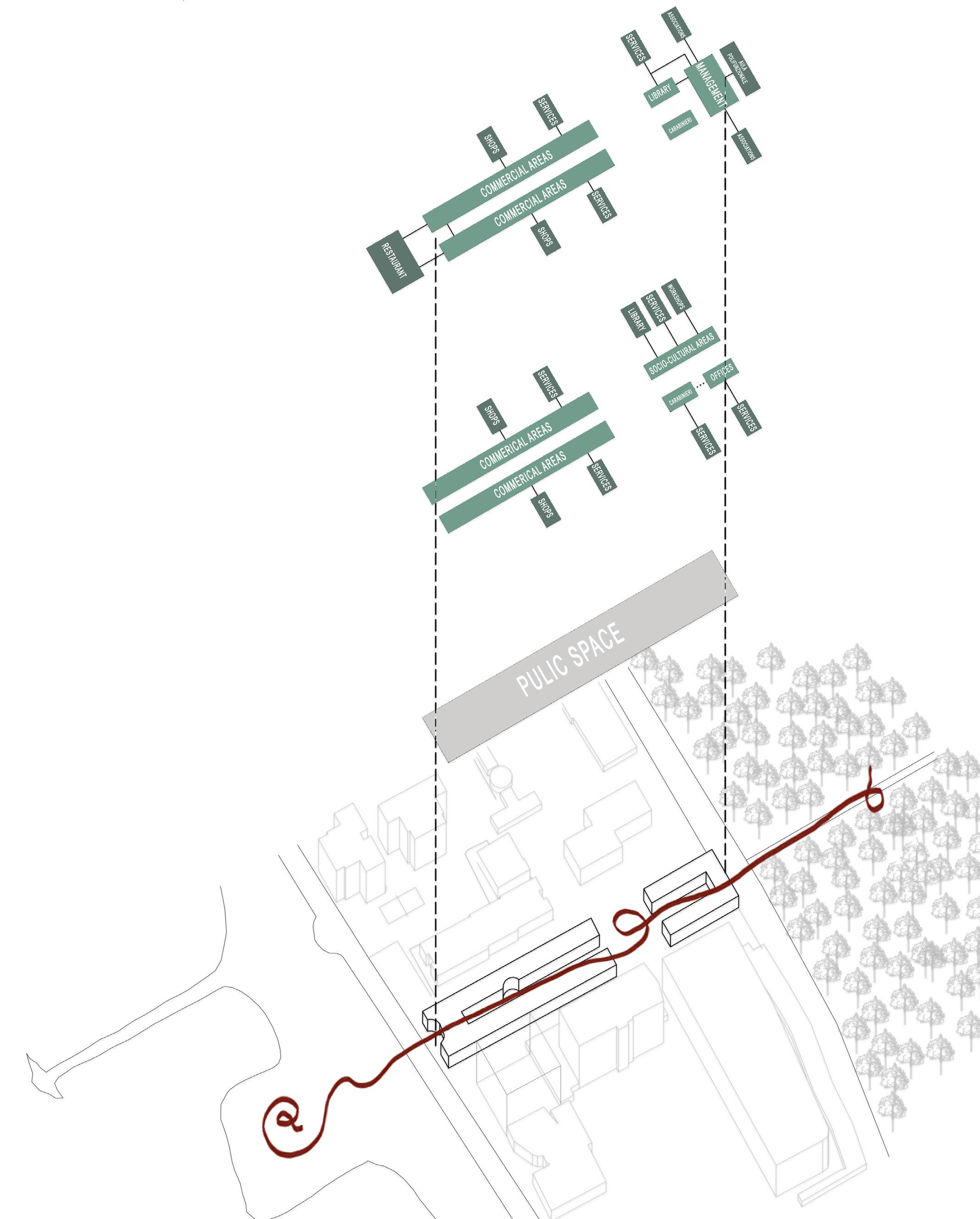
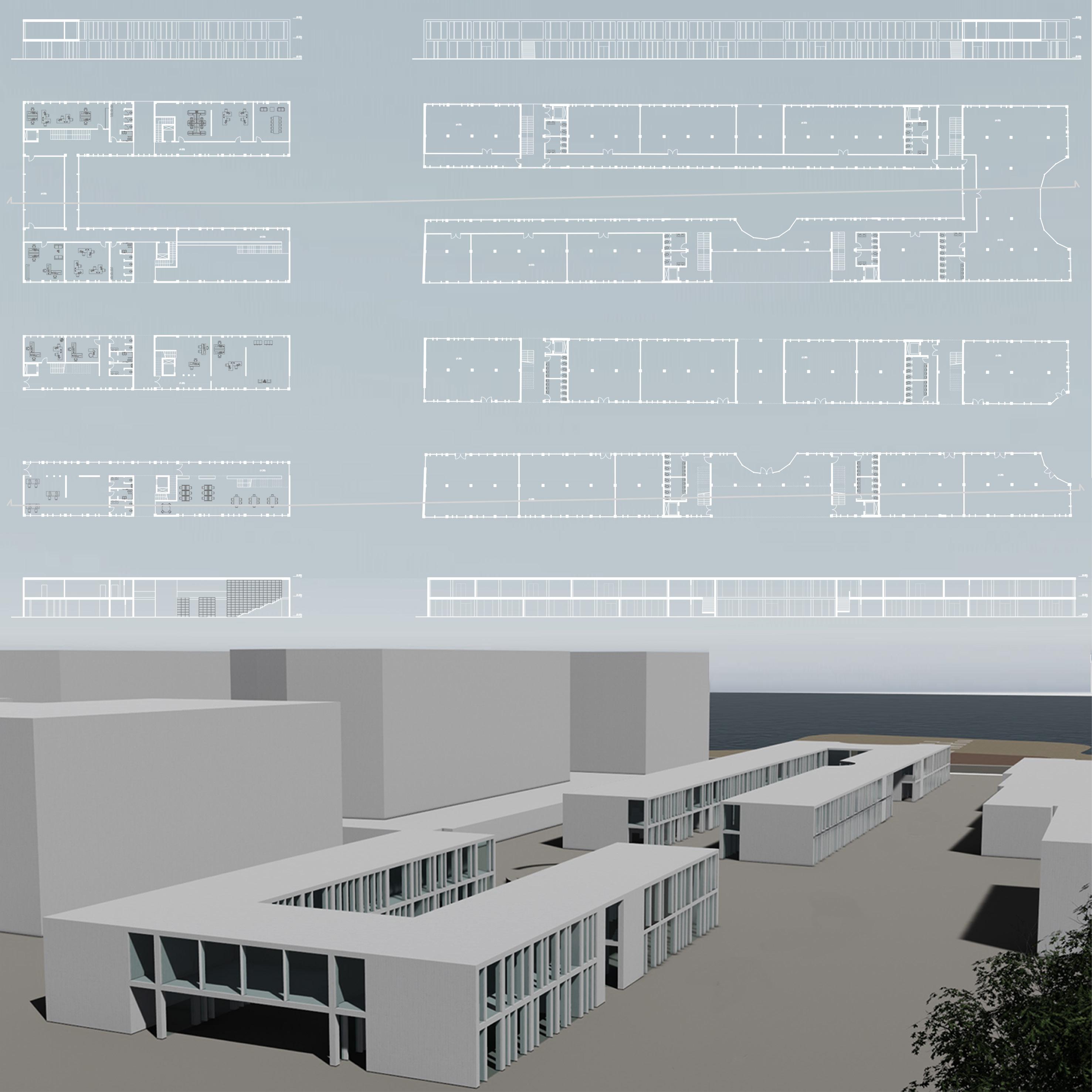
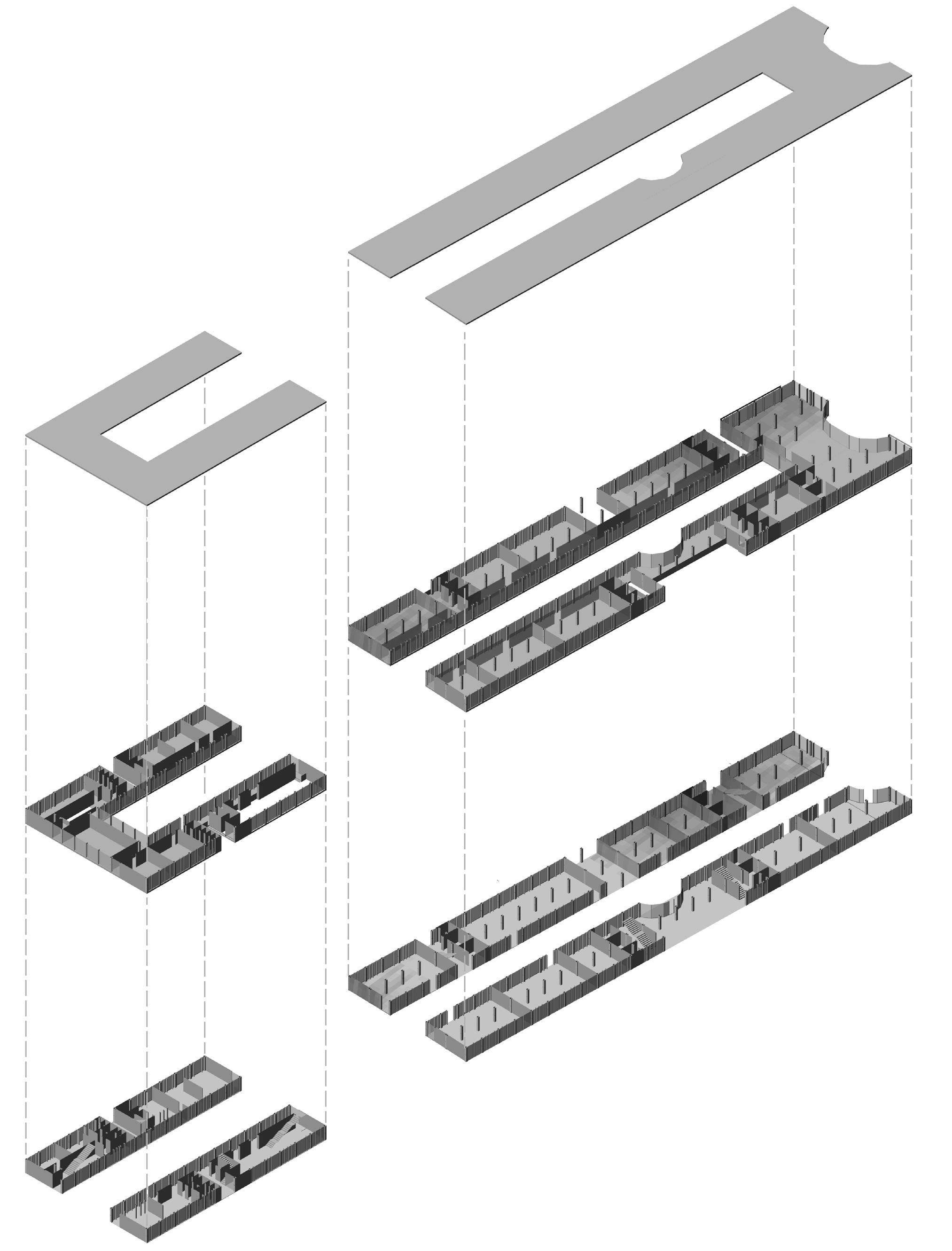
The project takes the name of Public Village because the public city is precisely the missing theme at Villaggio Coppola, so the attempt is to create and recover the functions of the humanized space, of the urban community that uses and respects the environment in which it develops.
Therefore, the project expands to include all the elements of the territory, the beach, the sea, the dock, the pine forest to relate them and make them interact with the urbanized spaces.
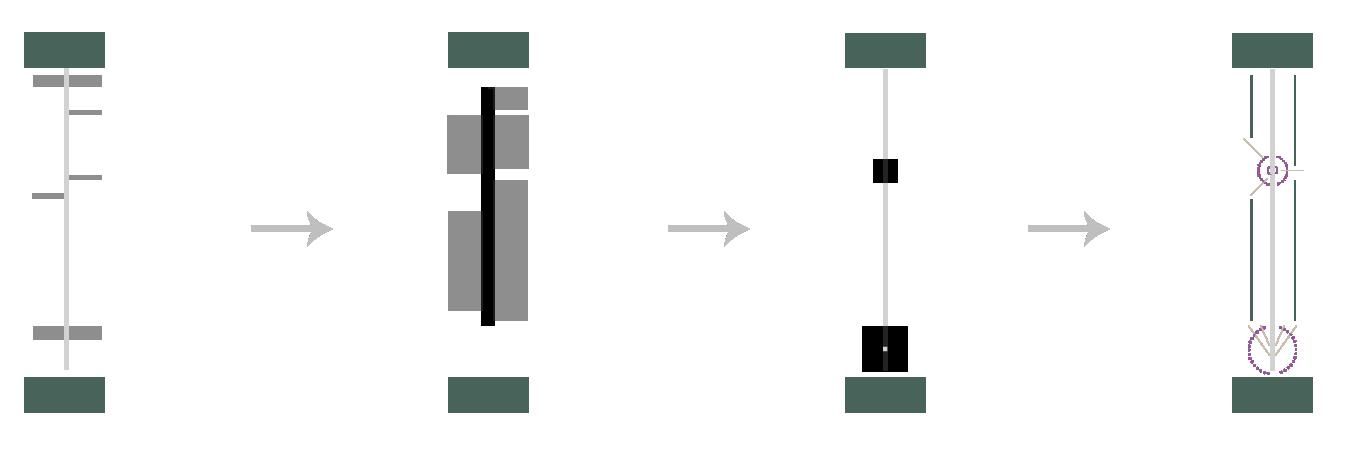
In particular, the aim is to generate hubs of social and collective aggregation, to outline the related interconnections so as to obtain an urban fabric that at least attempts to follow in the footsteps of the more specifically public one.
The connections are decisive for modifying the shapes and functionality of the area with a compact and exclusive appearance that residential construction gives it.
39
40 ANALYSIS
BARRIER
DEMOLITION CROSSABILITY
41
PROJECT ACTIONS
42
FUNCTIONAL ORGANIZATION CHART
Section BB’
loor plan
plan A B B’ A’ Section AA’
First
Groundfloor
44 AXONOMETRIC CROSS SECTION
Sports Hall
Berlin, Germany
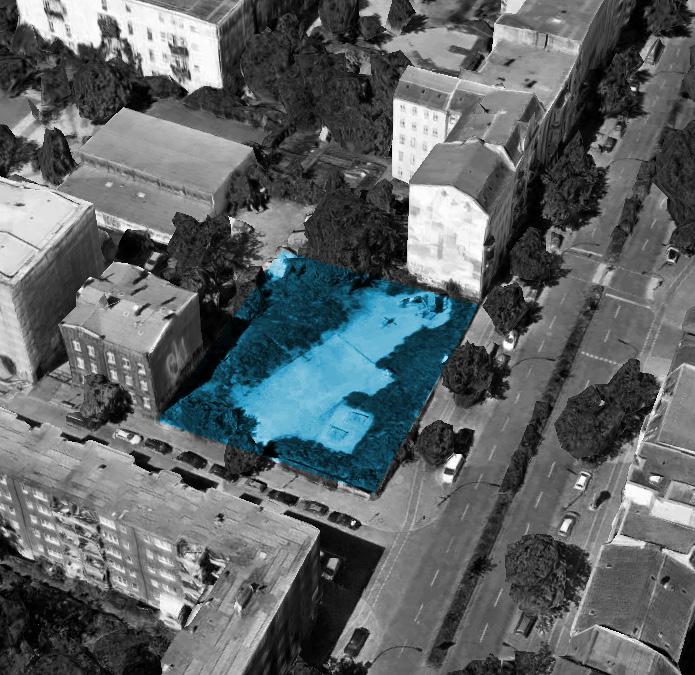
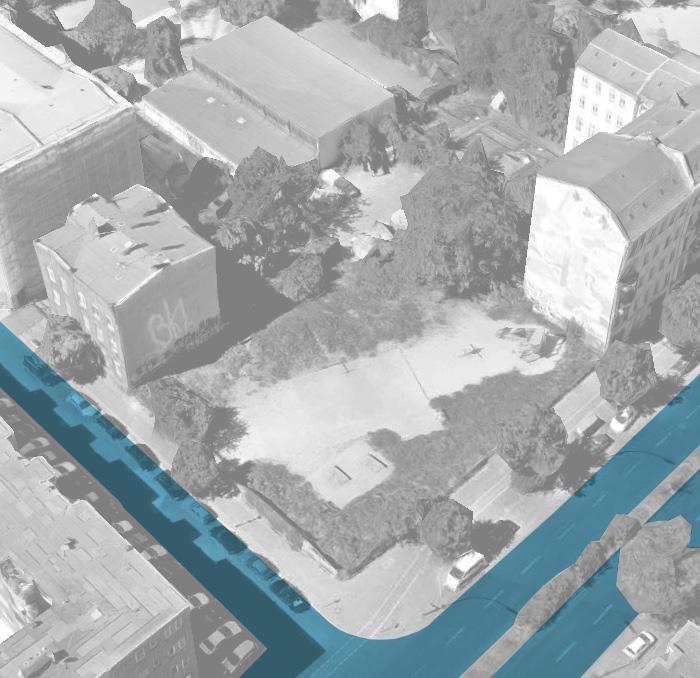
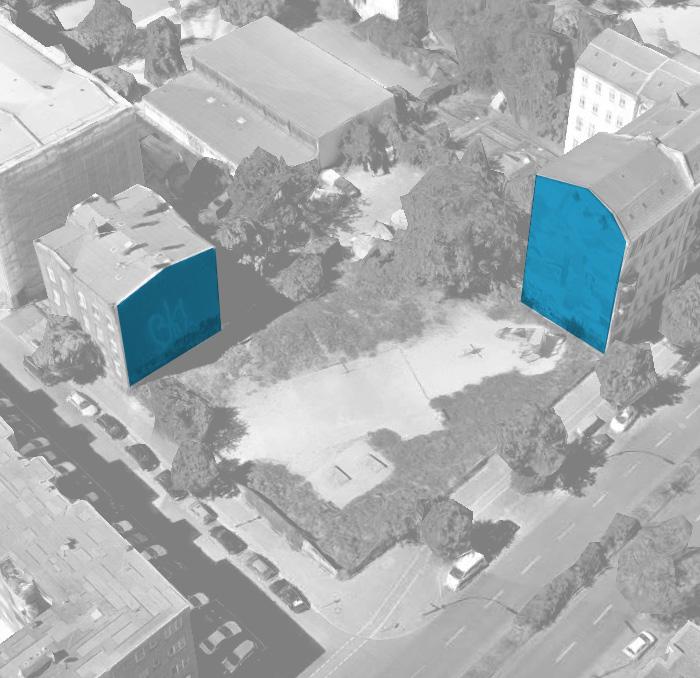
The project involves the construction of a sports hall in the Mitte district of Berlin, on the corner of Gotenburger Strasse and Prinzenalle. The corner lot connects to the existing buildings on the right and left and measures an area of approximately 35.50 m 44.50 m. The area currently in a state of deterioration and neglect would welcome a sports center that is spread over several levels and which would be used by the nearby primary school and local sports clubs.
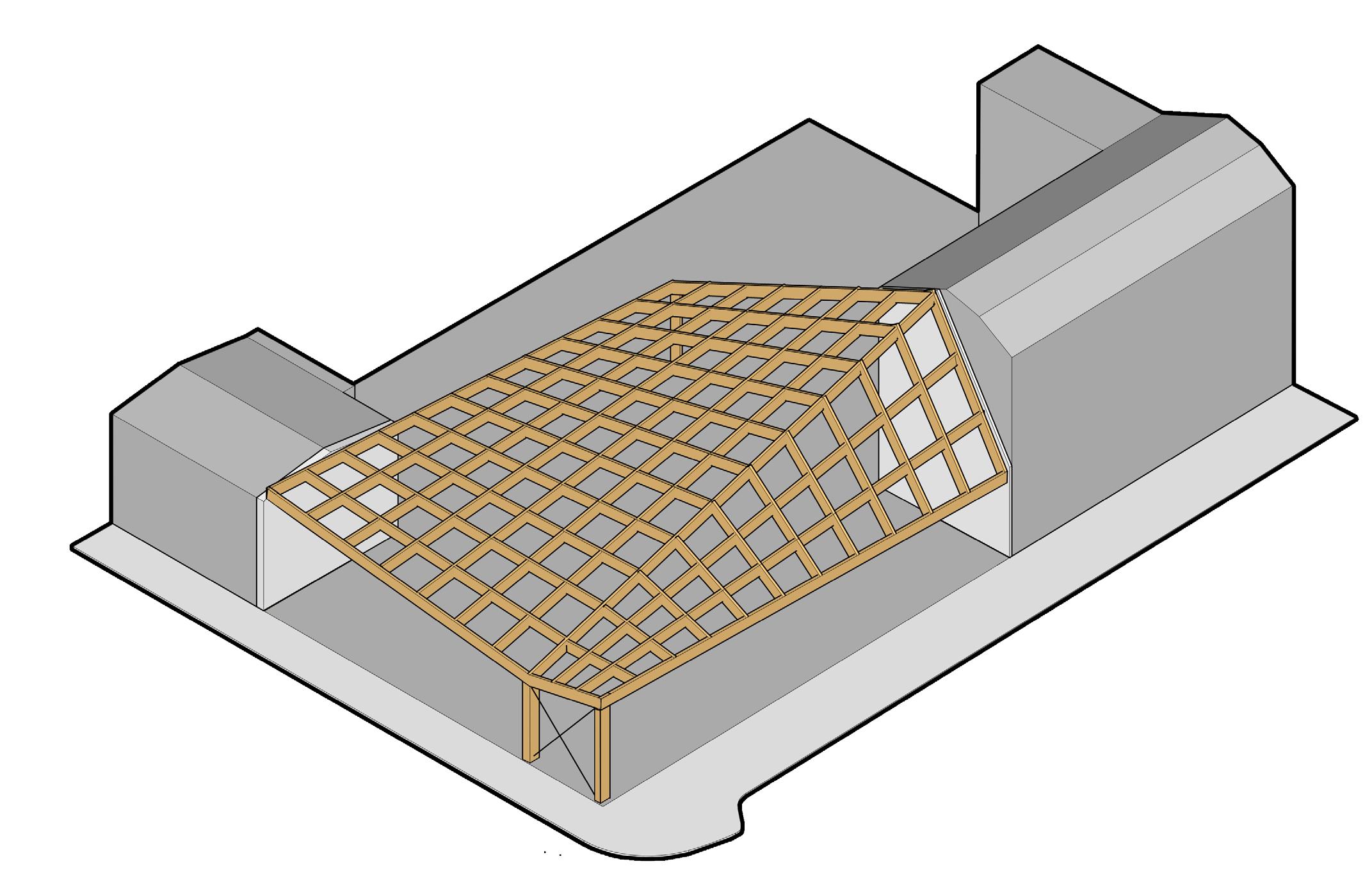
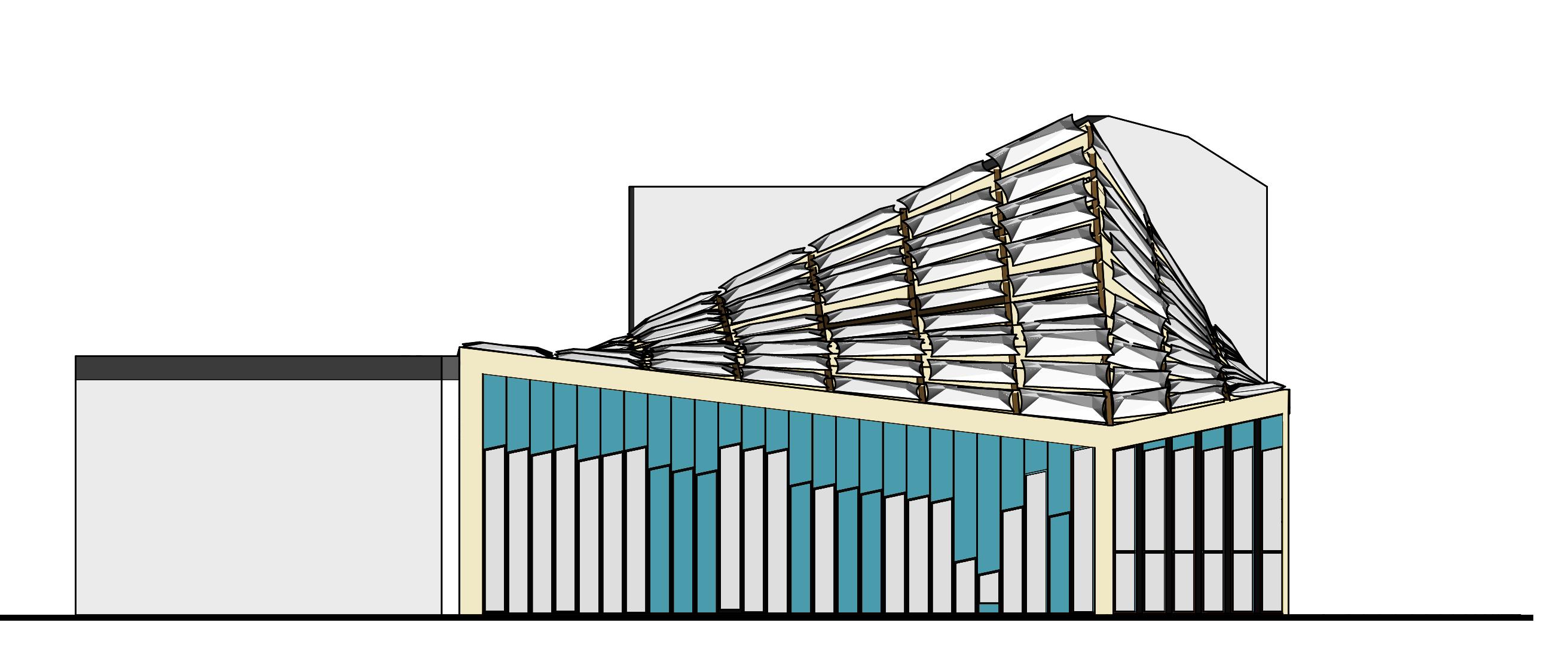
The most interesting part of the building lies in the roof made by using laminated wood beams arranged following the geometry of a double-curved hyperbolic paraboloid. This composition allows you to have large spaces for sports fields from the point of view of internal organization and from an external point of view to adapt to the surrounding context.
47
In terms of urban development, the basic idea for the project arose from local conditions.
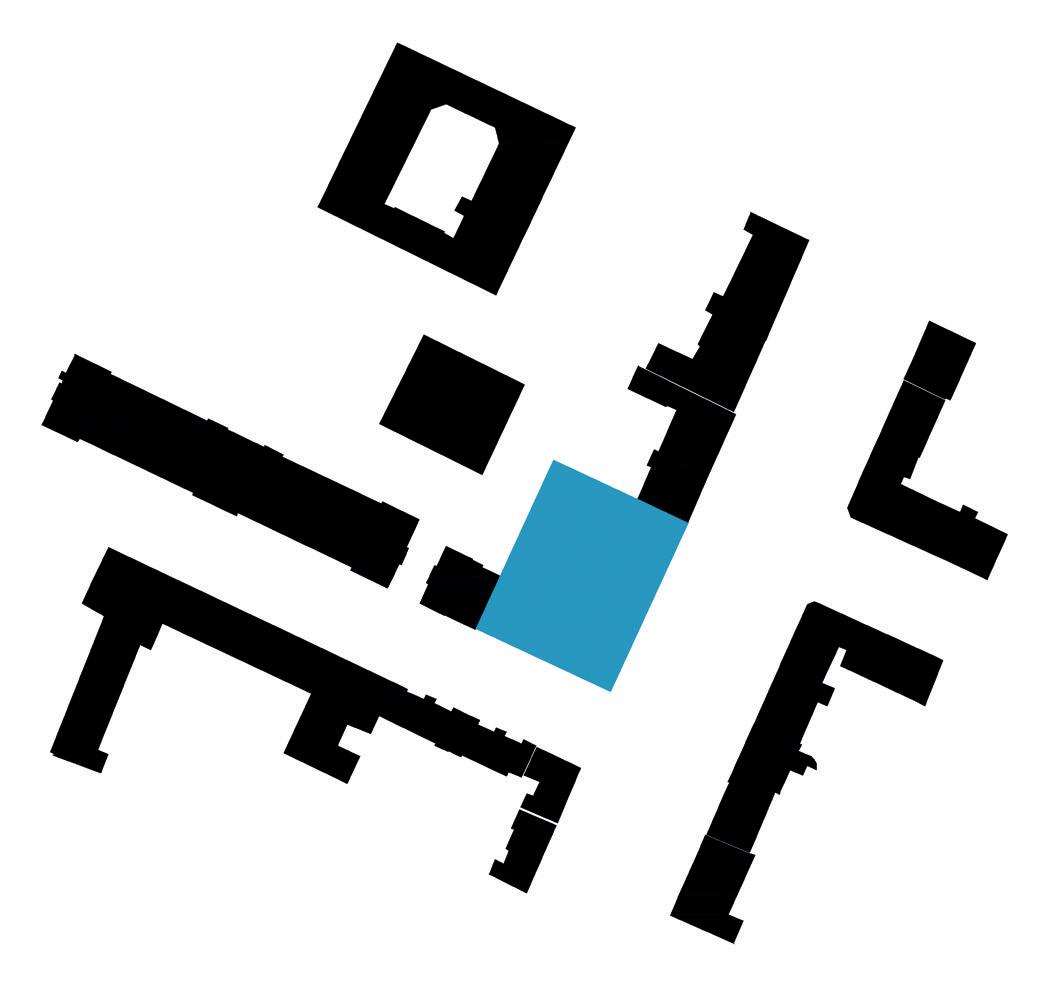
The project requires to respect the key data specified for the sports hall and to occupy the corner land in its entirety with an intervention not far from the overall urban development of the place.
48
The building should therefore connect to existing buildings, relating their heights and occupying the entire surface of the ground. The building on Gotenburger Strasse measures about 11m in height while the one on Prinzenallee Strasse about 21m. The architectural element acquires a particular reconnective meaning as it is at the convergence point of these two roads.
49
50 35 50 4 4 5 0 2 2 0 0 2 0 4 4 5 0 3 0 0 0 1 4 5 0 22 50 Ge ä e aum T a ne Te hn k Lage Lage Grundr ss EG Foye G 35 50 4 4 5 0 22 50 1 4 5 0 4 4 5 0 3 0 0 0 2 2 0 2 0 Umk e de He en Umk e de Damen Dusche Damen Dusche He ren Grundr ss 1 OG
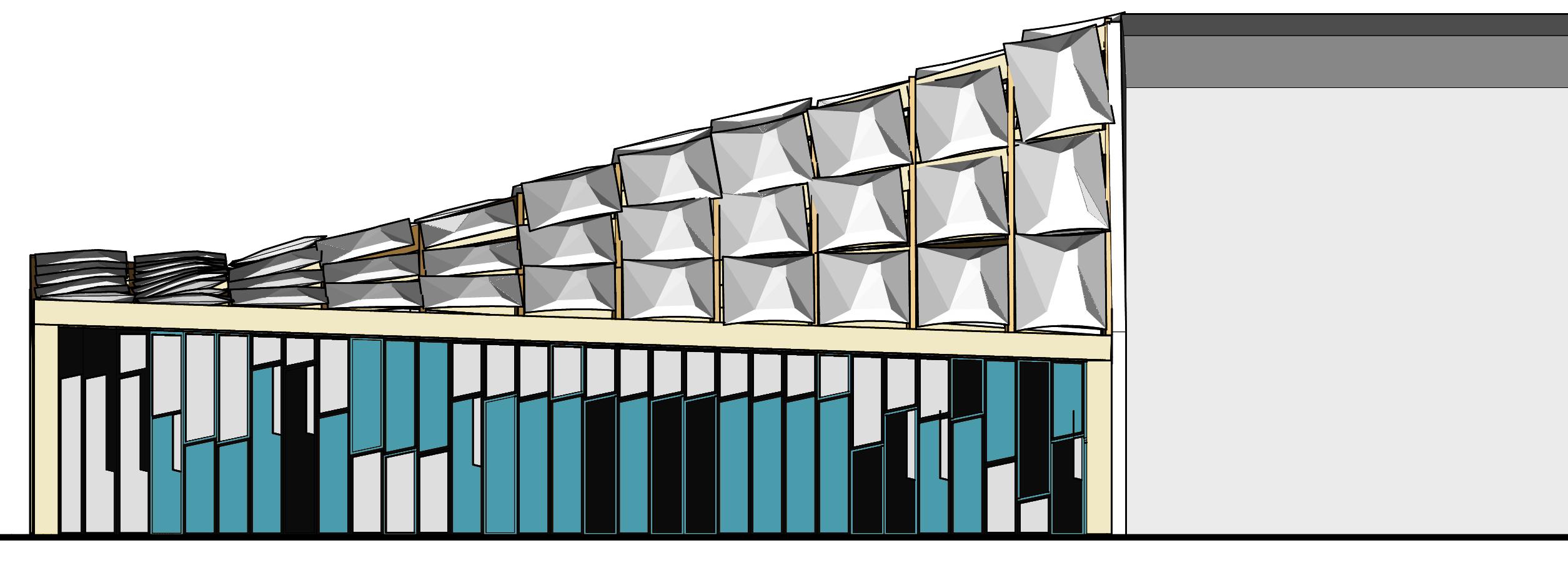
The facade is conceived as a mullion and transom facade and has both glass elements and closed panels, so depending on the internal function it is possible to bring more or less light into the rooms.

The design of the facades also takes the dimension of that of the facades of the existing buildings to which it connects.
The interior spaces are organized in such a way that a foyer leads to the sports hall and the ancillary rooms as well as to the upper floor, where there are the changing rooms, another health room, a balcony overlooking the foyer, as well as the access to the grandstand in the hall area.
51
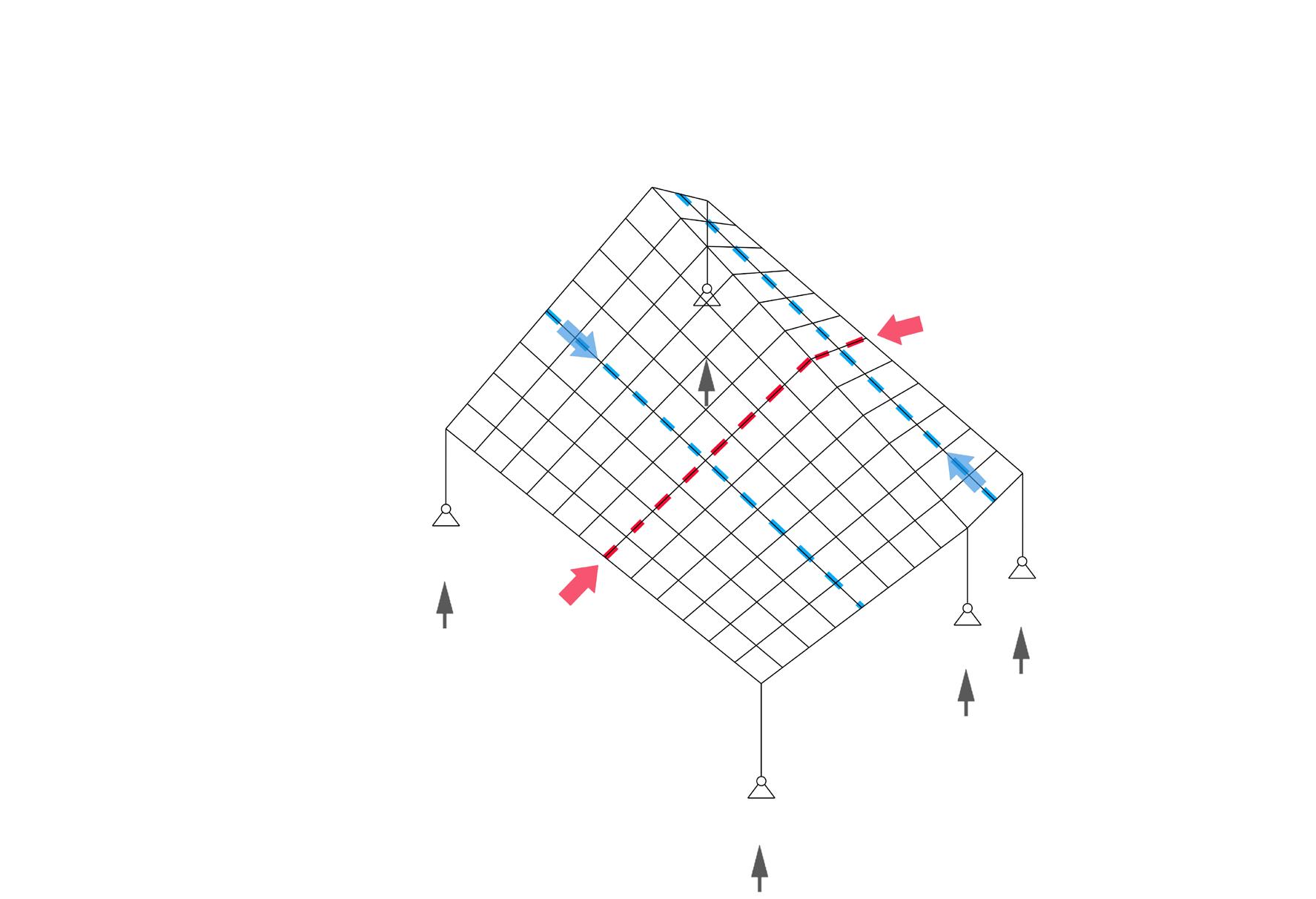
DIAGRAMS OF ACTING FORCES
STRUCTURE


A grid of laminated wood beams was created for the supporting structure. To adapt to the two different heights of the existing buildings, the support grid was further developed following the conformation of a hyperbolic paraboloid with a regularly double curved surface.
THE HYPERBOLIC PARABOLOID
In the case of the hyperbolic paraboloid, the tensile forces occur in one direction and the compressive forces in the other. The support takes place in two opposite corner points, so the rigidity of the construction depends on the difference in height of the corners.
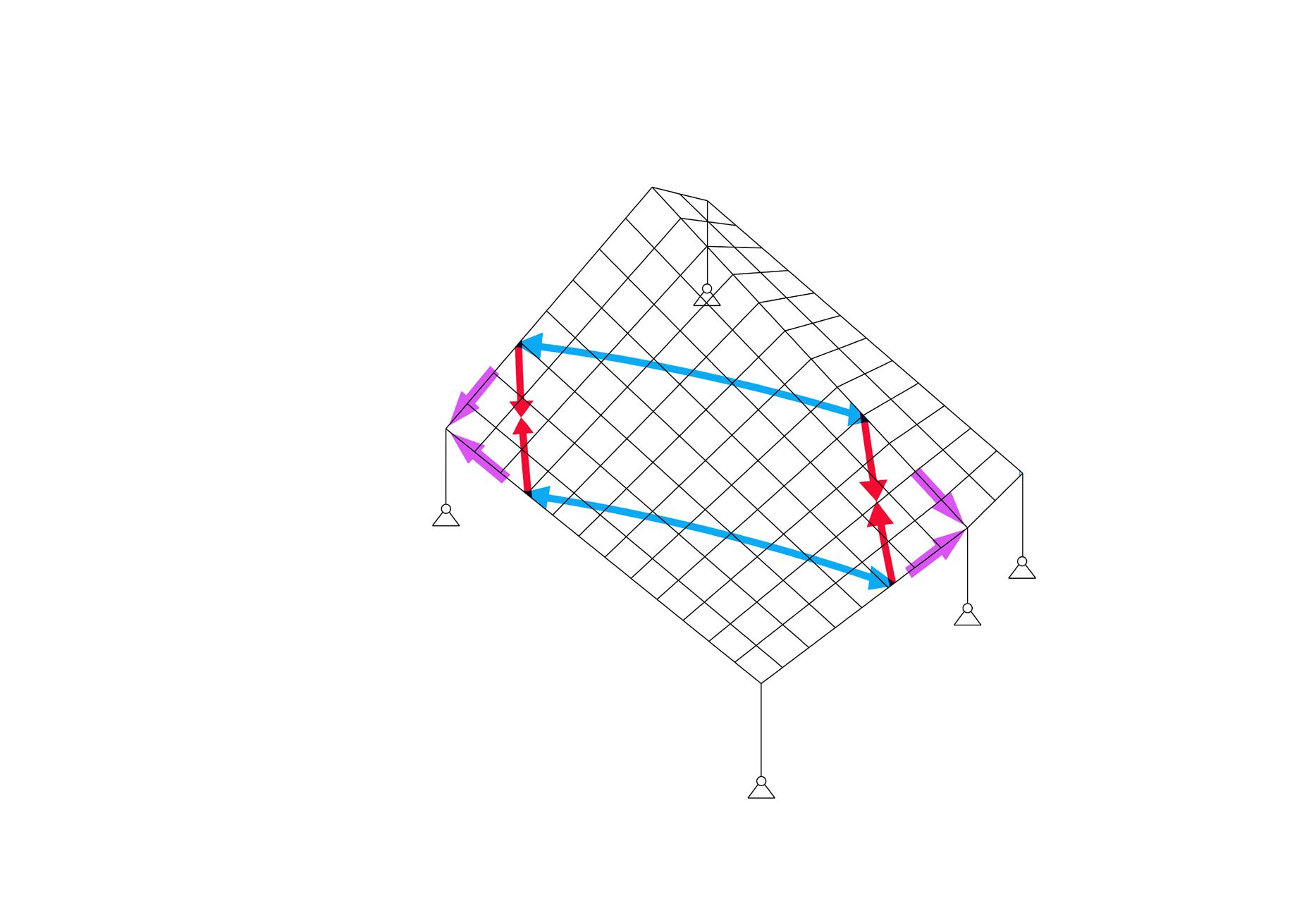
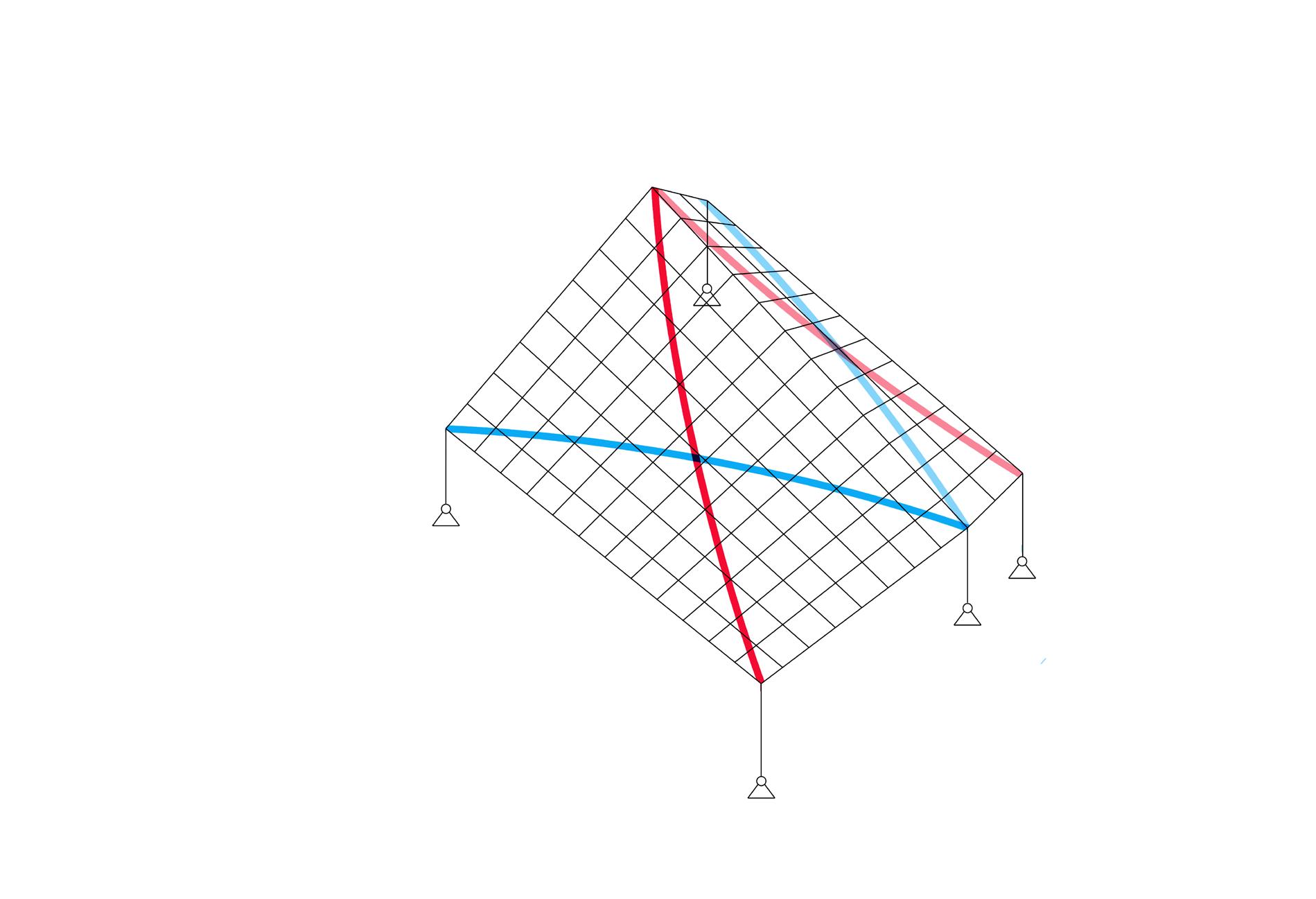
The normal forces pour over the edge beams, from there in turn to the supports or supports in the fire walls and from there they finally discharge into the ground.
To absorb the large horizontal forces that occur in the supports, the supports are stiffened with concentric bracing.
The role of the connections between the individual components is fundamental and must be seen as a system that integrates all the elements and allows the load to be transferred from one component of the structure to another and finally into the ground.
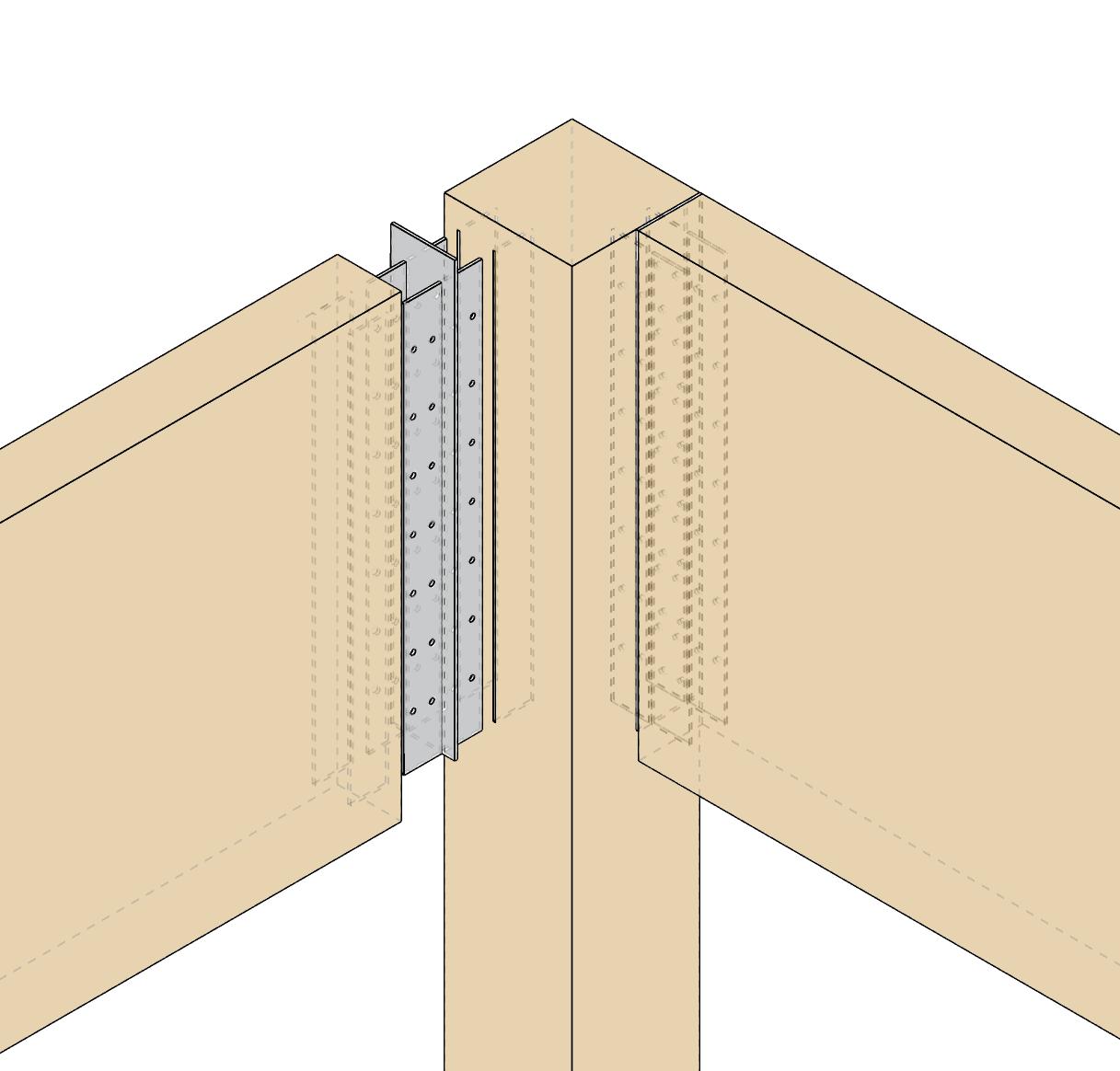
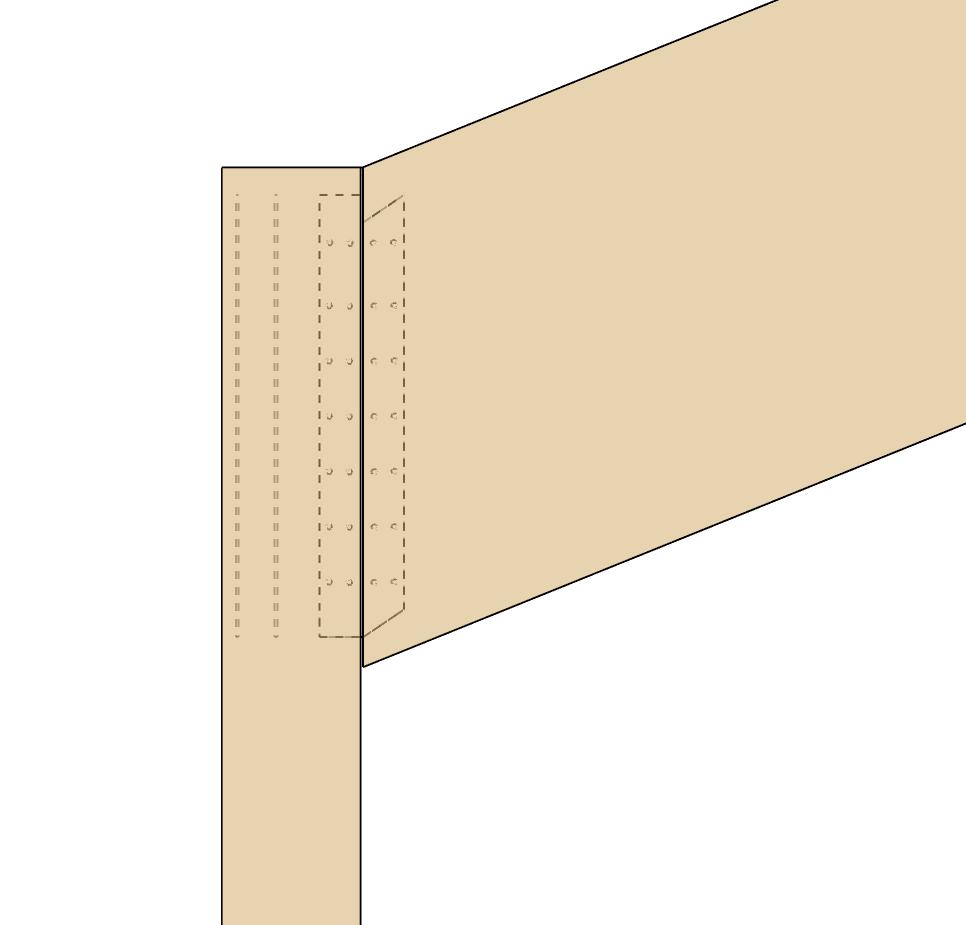
The system involves the use of self-drilling dowels for multilayer steel-wood connections that are inserted into the wood through the steel plates in a process that saves time without pre-drilling.
fire walls
steel - wood connection node
wooden pillars anchored to the ground
grid of glulam beams edge beams
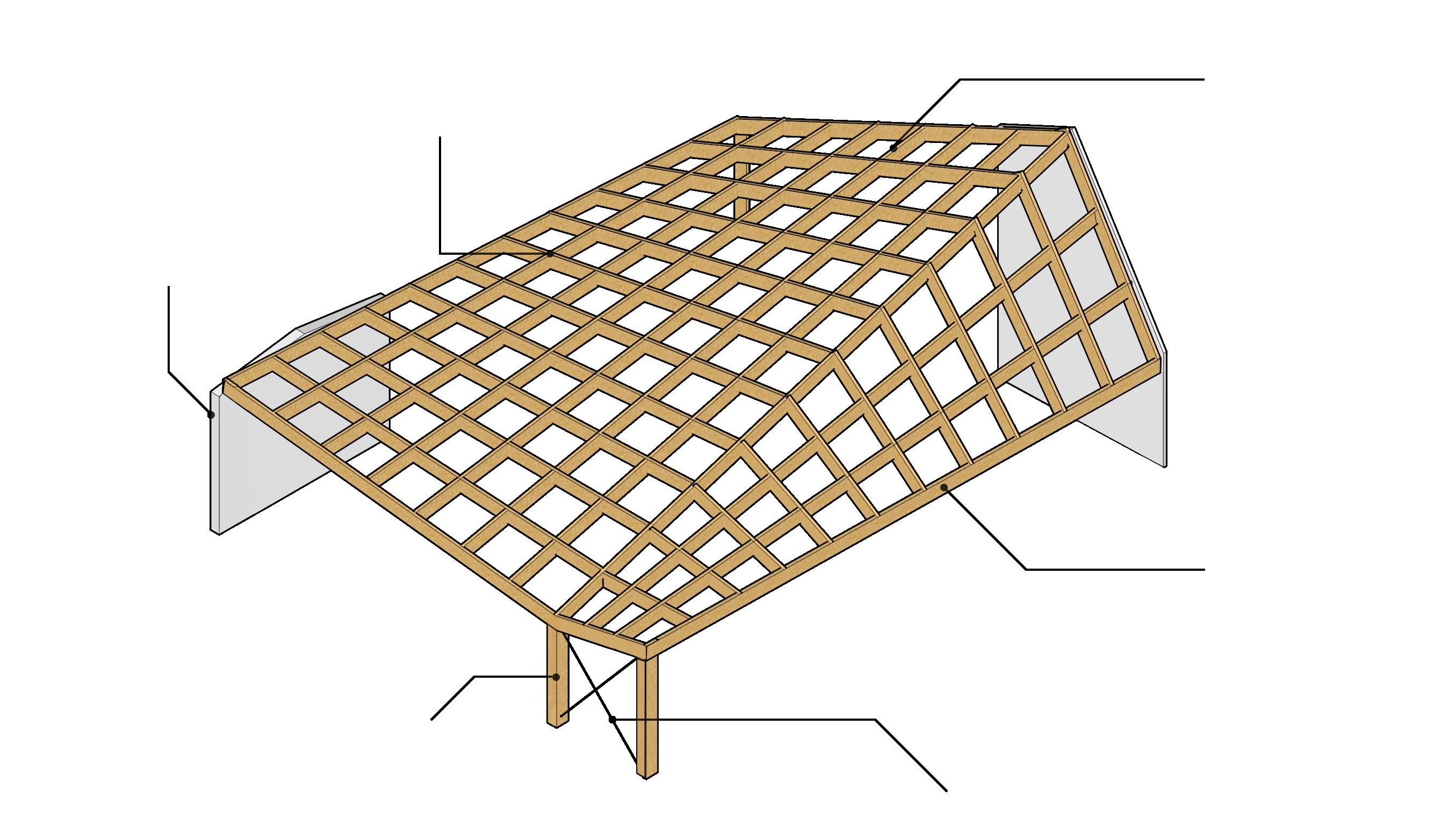
concentric bracing for stiffening
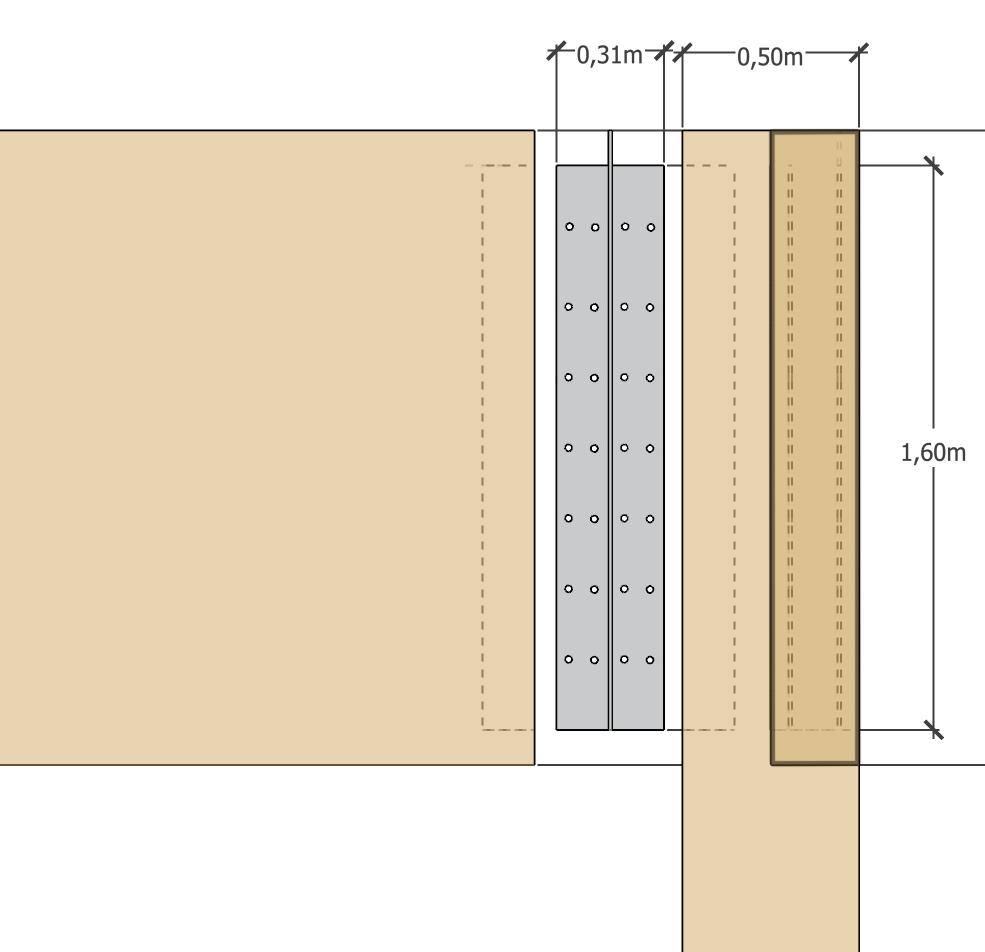
DETAILS OF CONNECTION SYSTEM
53
STRUCTURE
“De Sivo” Castle
Maddaloni (CE), Italy
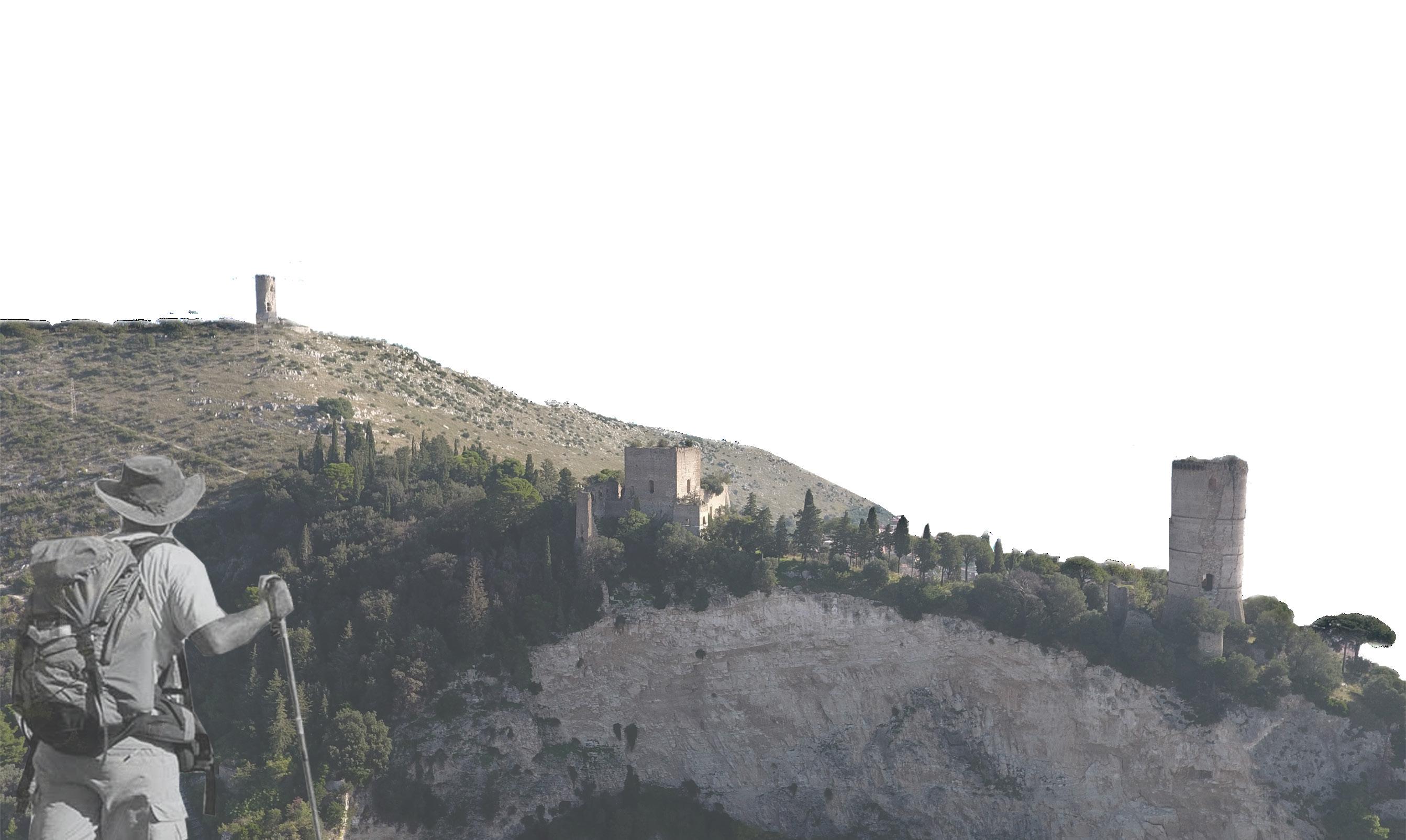
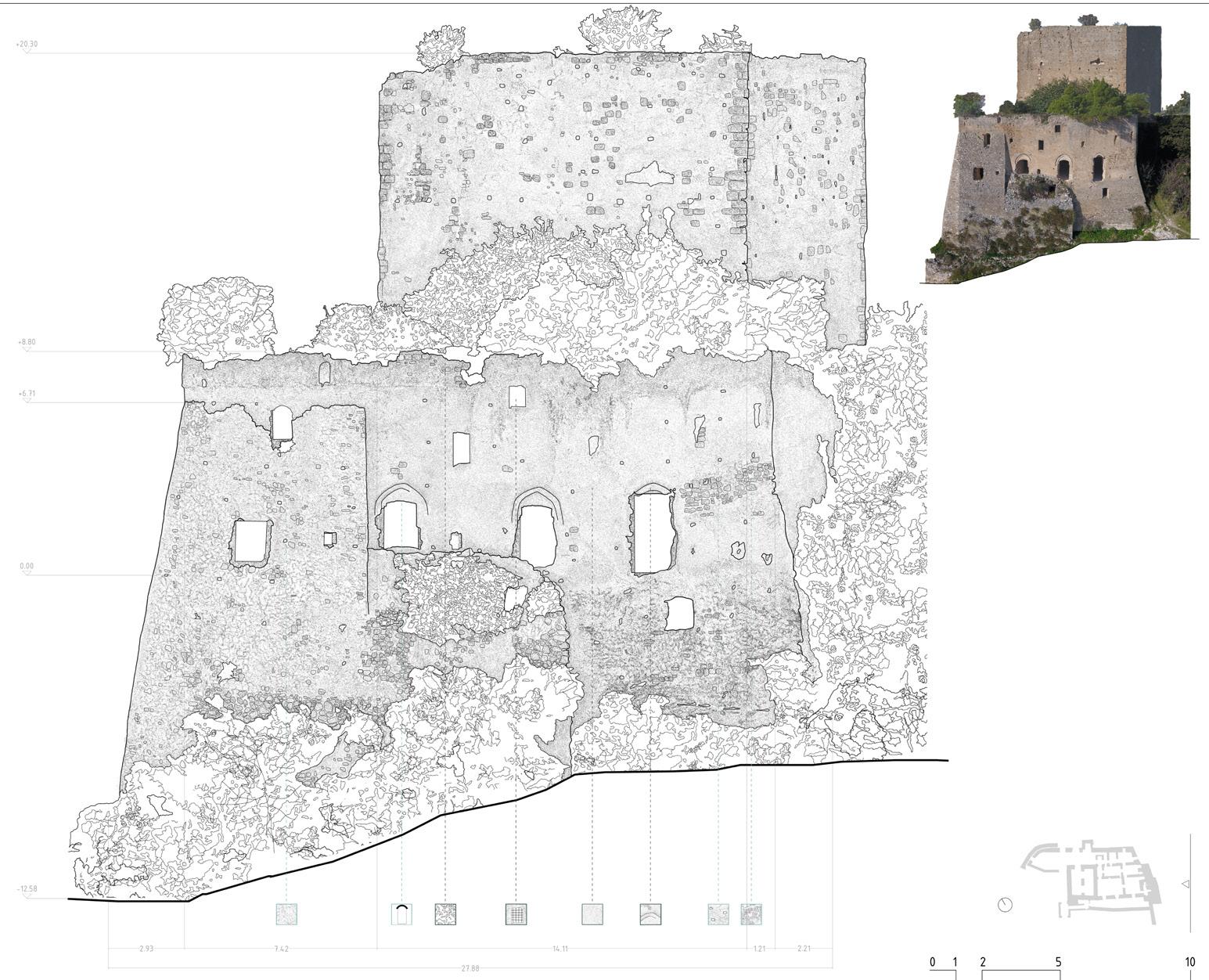
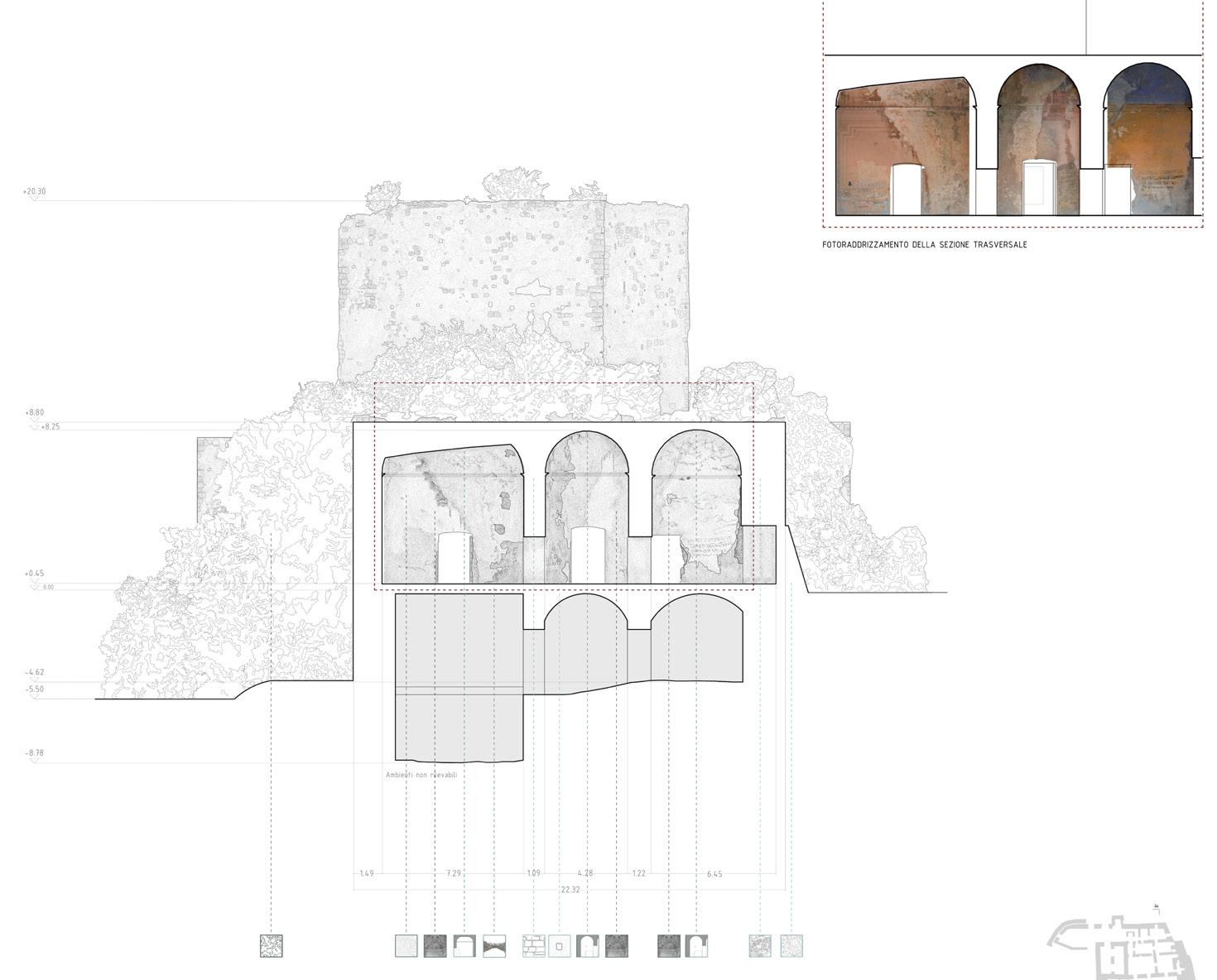
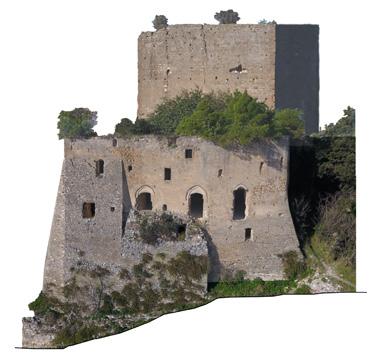
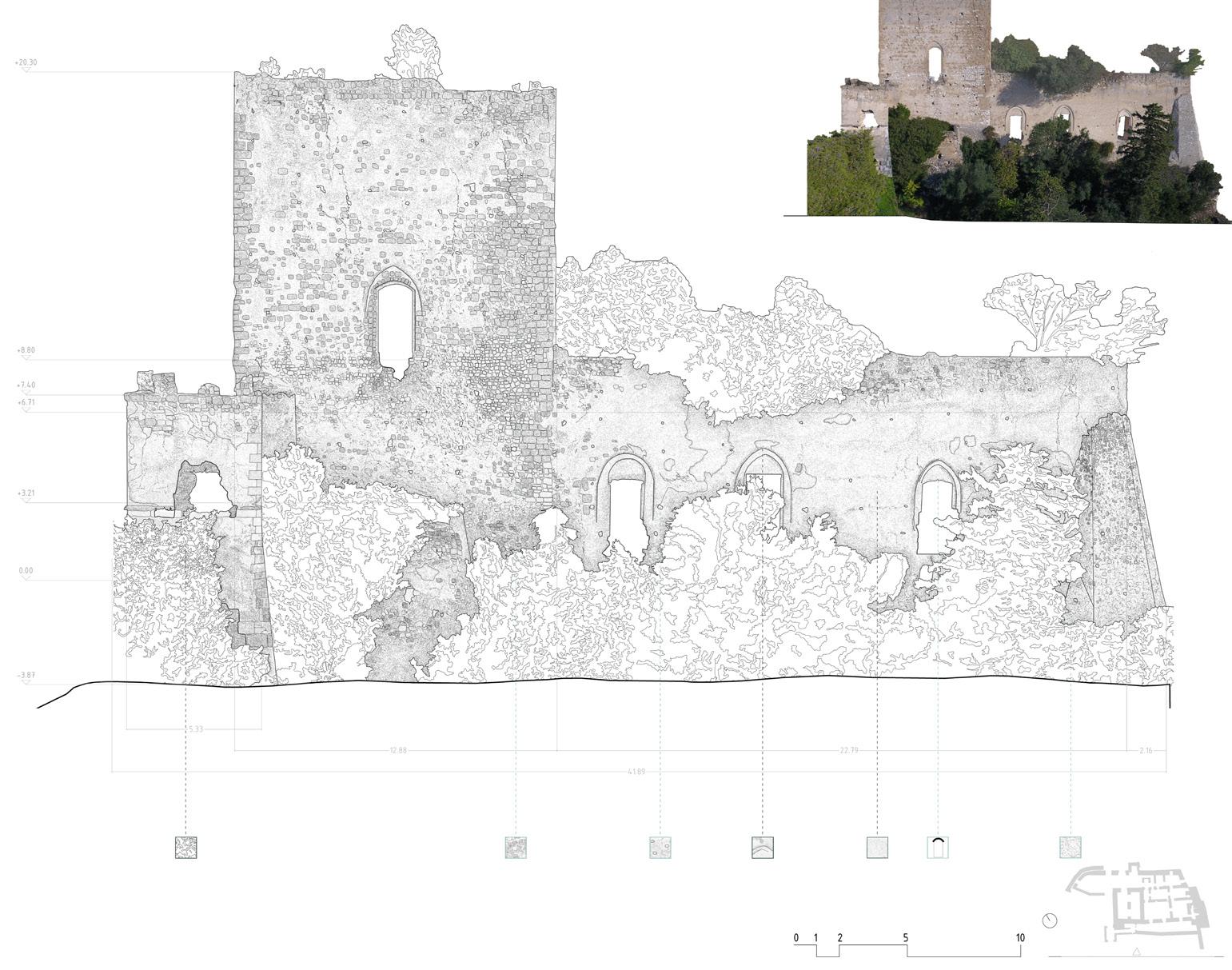
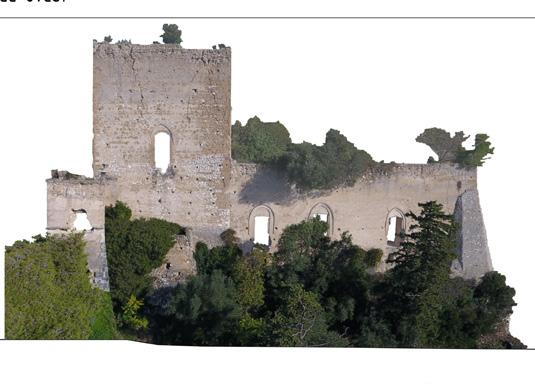
The restoration project of the Castello de Sivo is closely connected to the attempt to give a new life to what is still today the emblem of the historical, civil and cultural identity of the municipality of Maddaloni.
As reiterated in the PUC, the objectives are to redevelop the entire landscape area of Mount San Michele with a particular interest in the restoration of the castle and the two towers so as to favor, with reconversion interventions, accommodation activities for the reception, for the culture, for congresses, for events and exhibitions in general.
The initial phase was therefore characterized by the analysis of all connection systems and infrastructures. Subsequently, all the elements that in some way could be a reason for both tourist and urban attraction were identified, placing the monument within a historical-cultural network on both a municipal and provincial scale.
55

56
West Façade
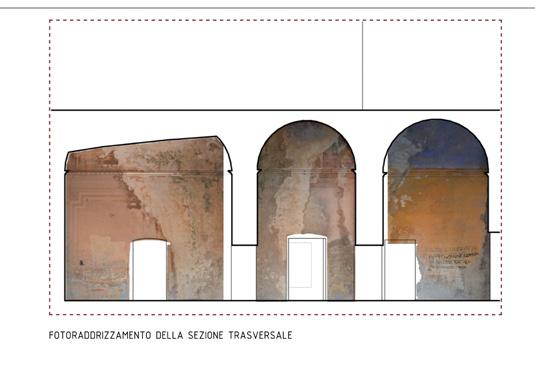
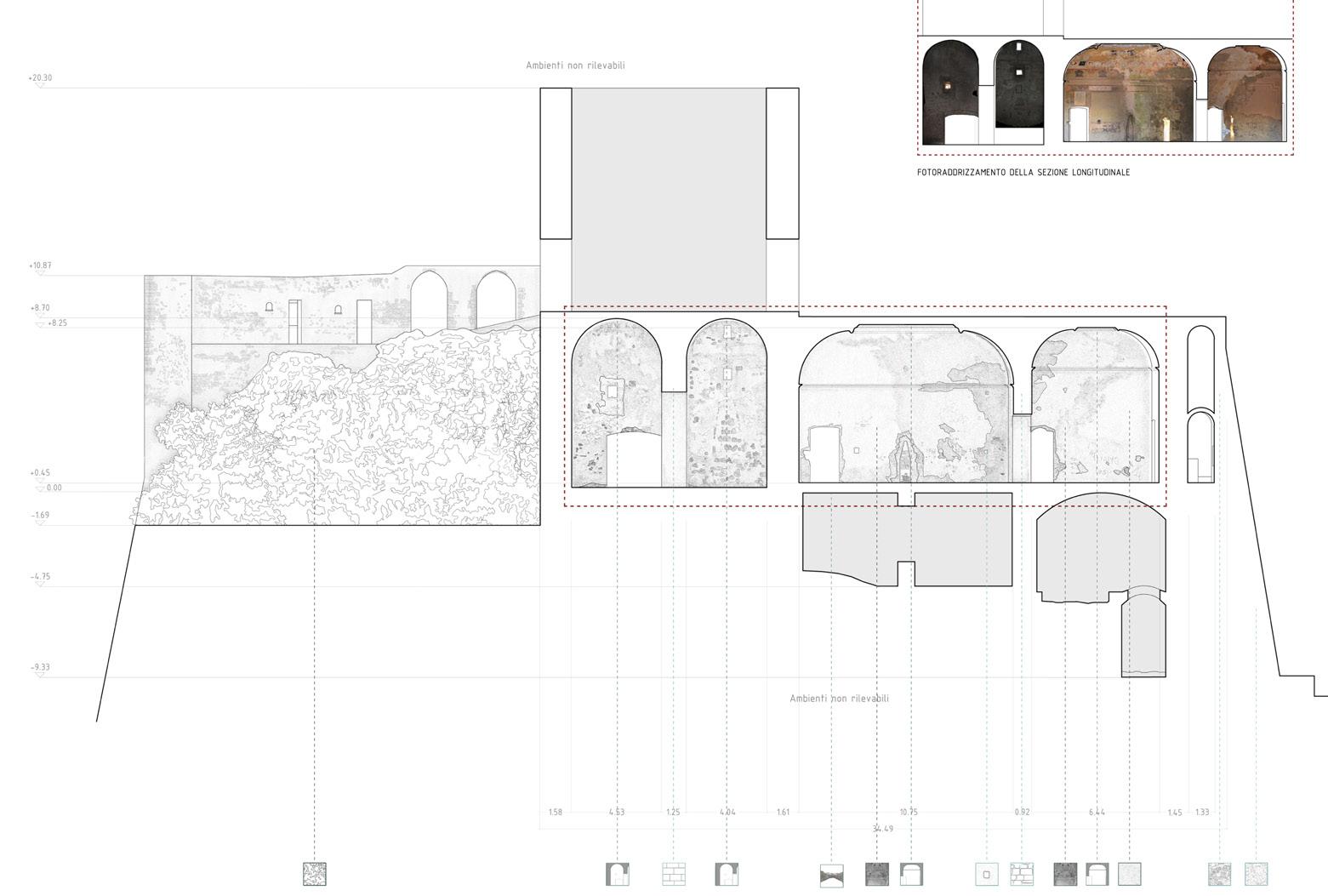
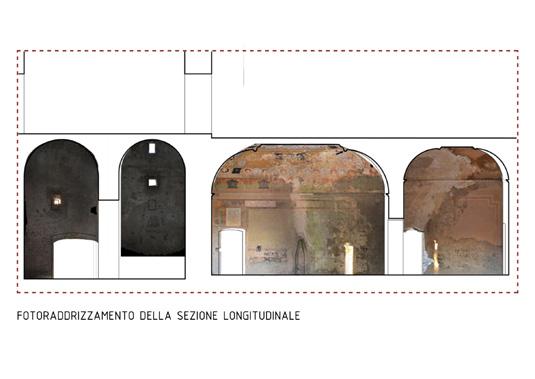
MATERIAL DRAWINGS_Elevations and sections
Cross Section
57
Sud Façade Longitudinal Section
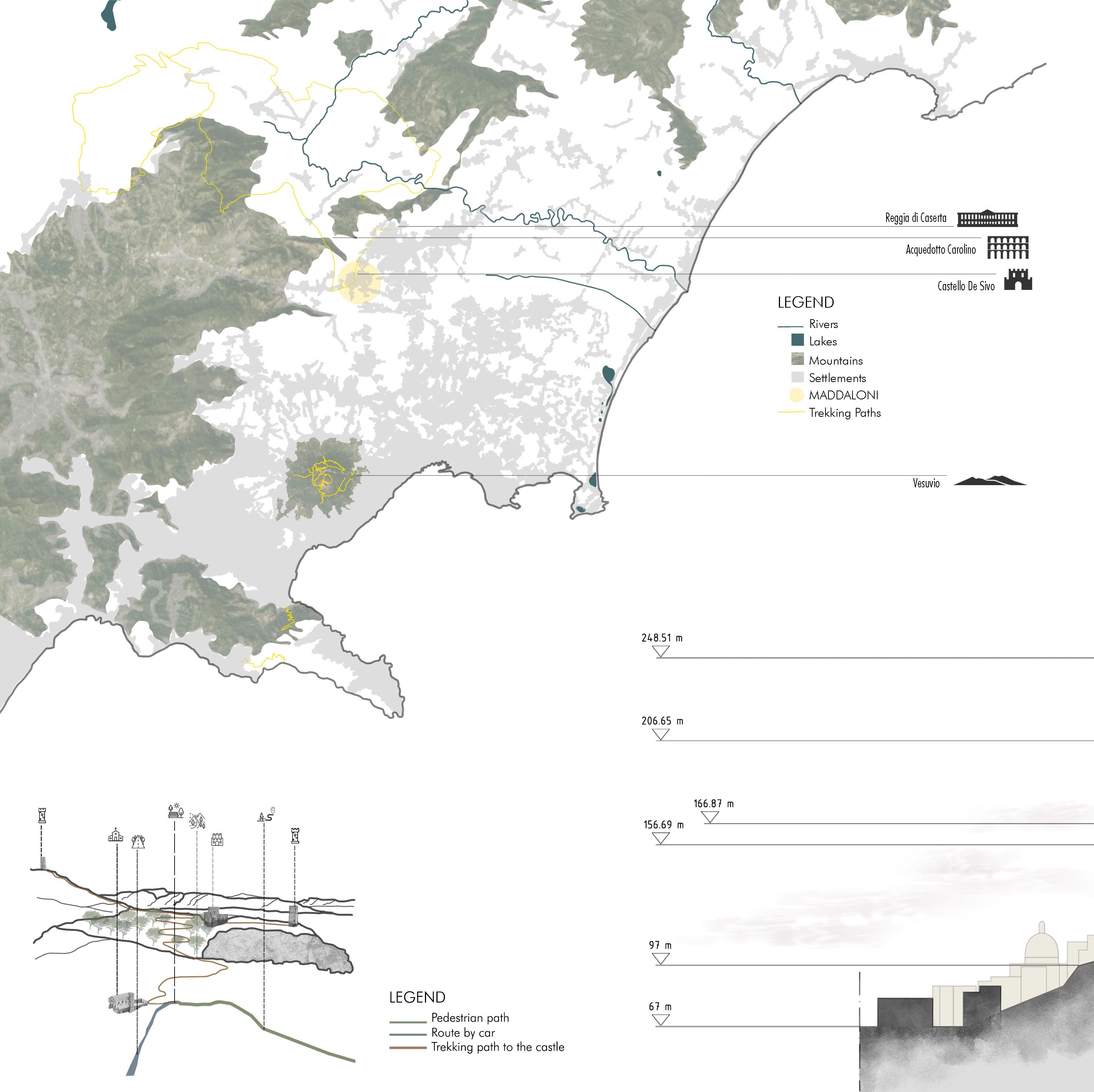
Territorial section
Accessibility and connection paths
RESTORATION OF THE CASTLE USERS
ACTIVITIES SERVICES



Redevelopment by the Associations operating in the city of Maddaloni
Generation of an environment that can be used by trekking enthusiasts, people passing through the sanctuary of St. Michael or simply citizens interested in going to the historic building
Possibility of using the rooms of the castle for activities carried out by the Associations, in order to increase the frequency of citizens in the castle, as well as to give it back a new life through a refurbishment that allows its use for various purposes throughout the year
Addition of services such as: cafes and relaxation areas, financed by the sponsors of the aforementioned Associations
Preliminary
timetable
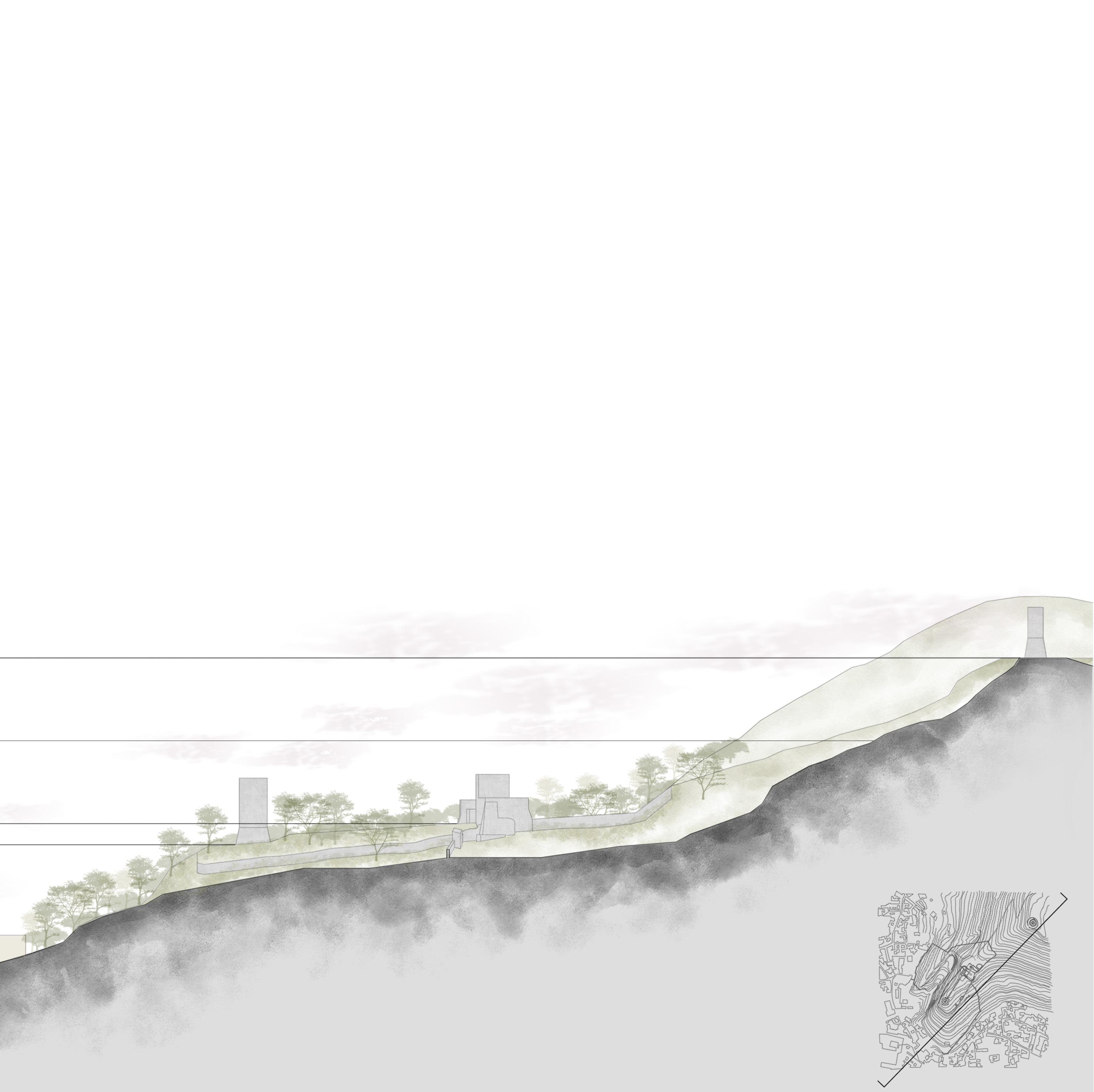
PERSPECTIVE SECTION
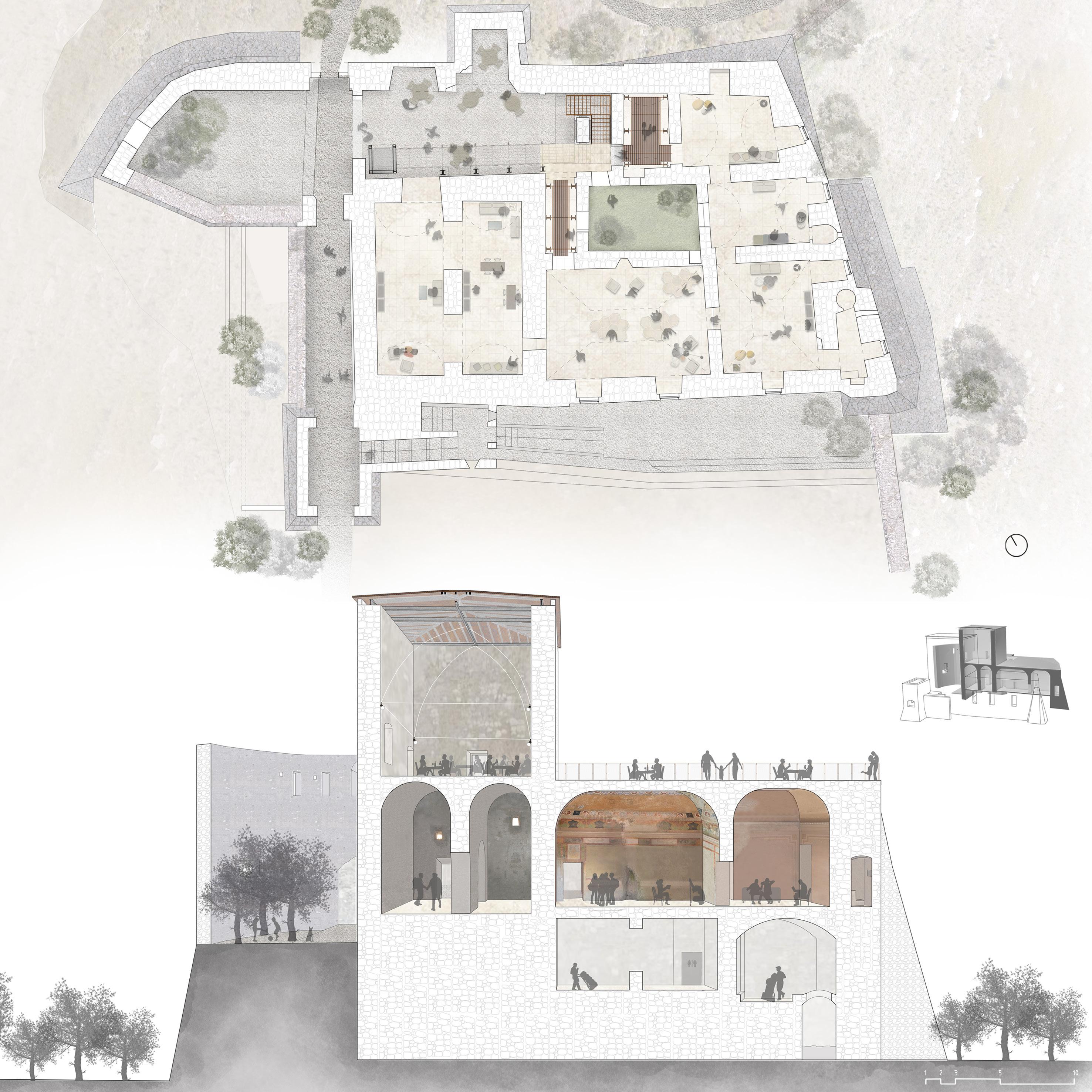
PLAN
VISIONS
A’ A
View of the entrance courtyard
Plan of the entrance courtyard
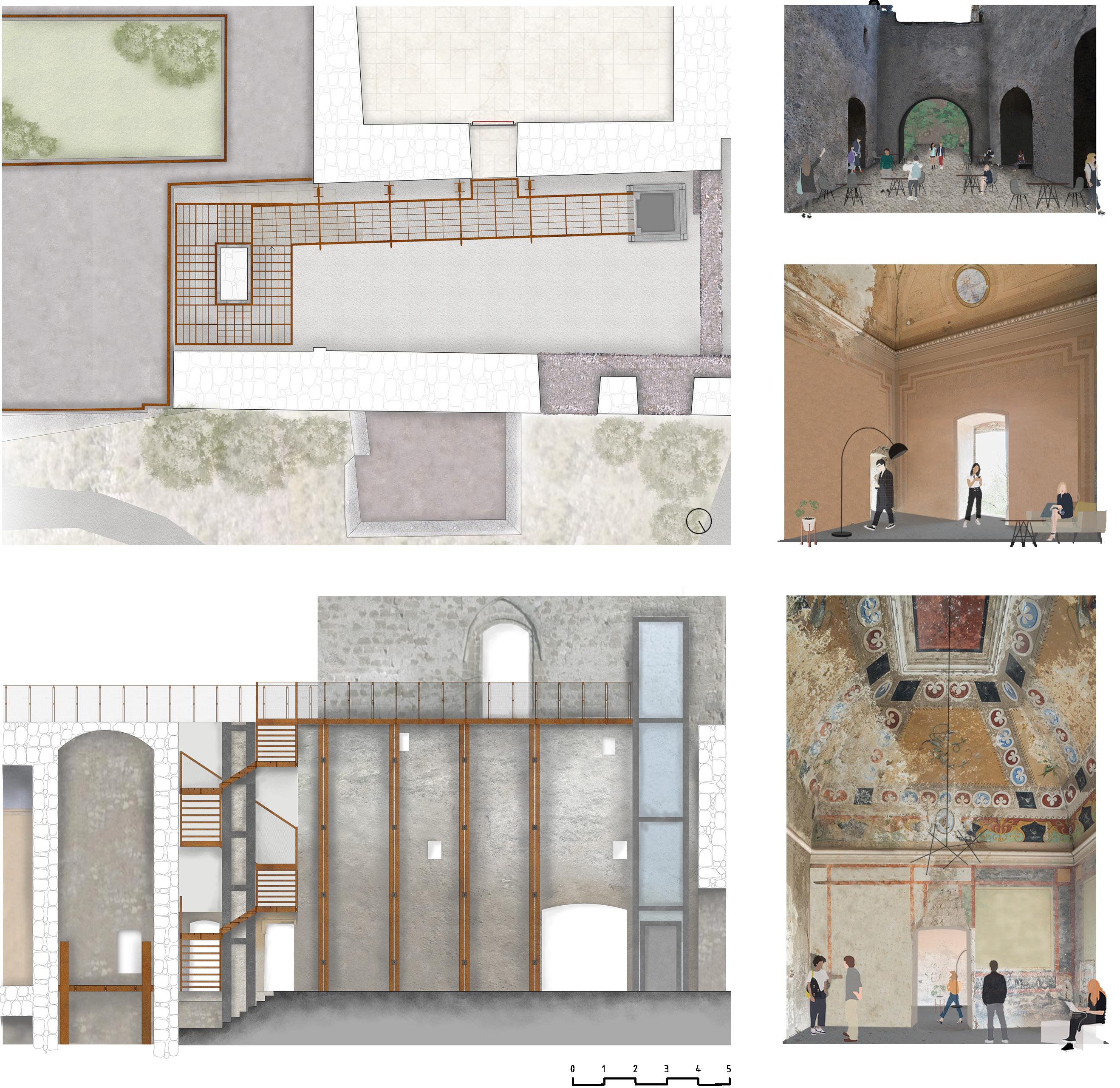
View of the corner room
Section AA’
View of the ancient dining room
61
OF
COURTYARD
DETAILS
THE ENTRANCE
lucio.decrescenzo@hotmail.it (+39) 3494240394 Lucio de Crescenzo