
PORTFOLIO
Lucas André 2017-2022
2
« When students’ project proposals come early enough, a real workshop spirit develops. The re sulting exchanges allow all the apprentice archi tects to take a step back from the question put to them and to anticipate questions. The high success rate we have had during this semester owes a lot to Lucas André. About fifteen mo dels and numerous drawings spread over the en tire wall of the workshop set the tone for the final jury: layout models, three-dimensional diagrams, numerous formal tests at various scales... The abundance of material on display illustrates the student’s iterative method. »
- Vincent Pierret (LPP Architectes)
3
Table of contents
4
01
Restoration island
Lazzaretto Vecchio, Venice 2017 - 1st Bachelor p.06
03
Window on courtyard
Rue de l’Escaut 151, Brussels 2019 - 2nd Bachelor p.20
05
Musicvillage on a parking
Blauwhondstraat 2, Mechelen 2020 - 1st Master p.42
07
Eau propre/eau sale
Vesdre valley, Belgium 2022 - 2nd Master p.70
02 Space, materiality and light Without context 2018 - 2nd Bachelor p.12
04
The sacred machines Mouscron, Belgium 2020 - 3rd Bachelor p.30
06
Inside Out Mechelsestraat 162, Leuven 2021 - 1st Master p.54
08
Rainwaterpockets
Verviers, Belgium 2022 - 2nd Master p.78
5
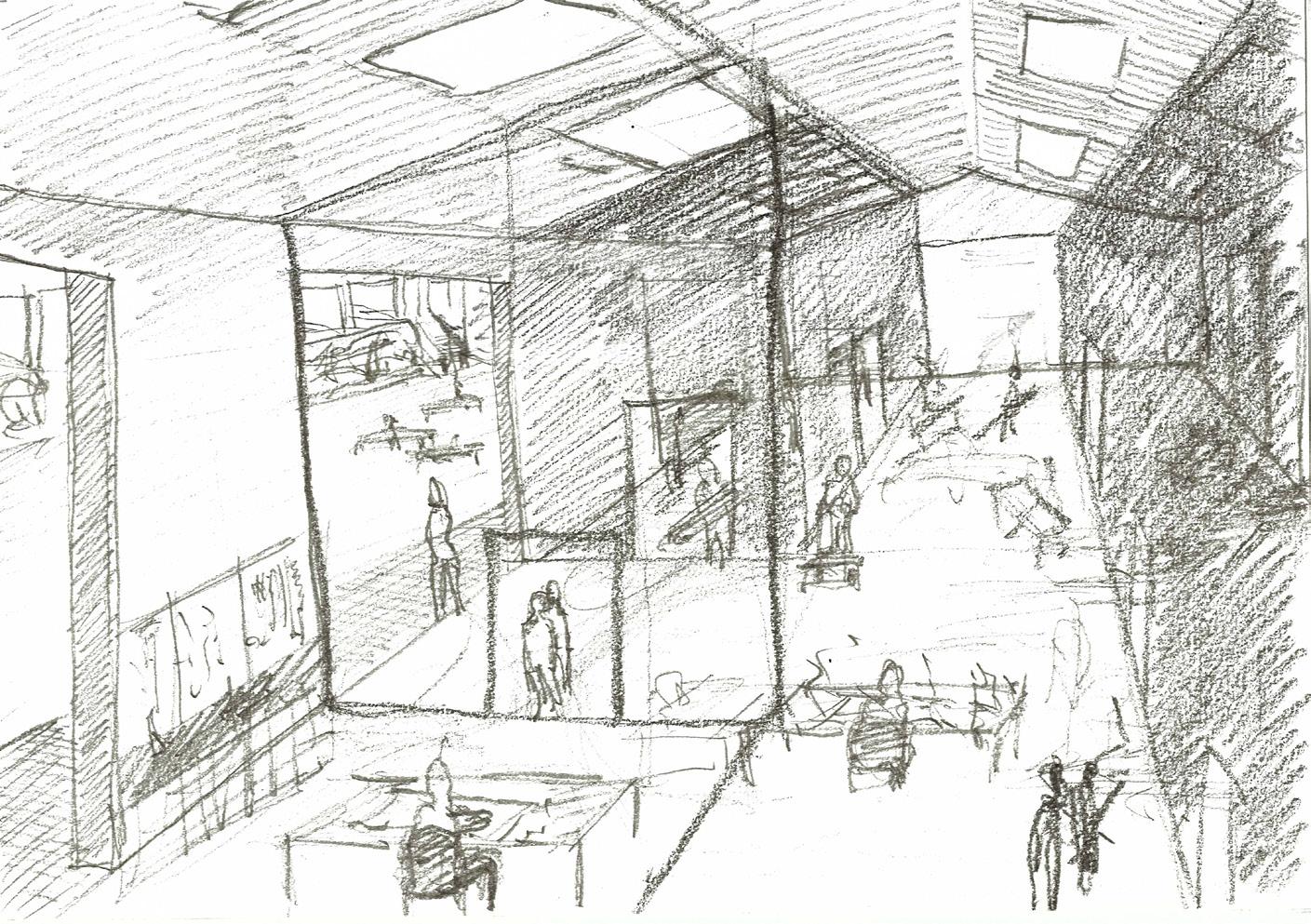
Restoration island
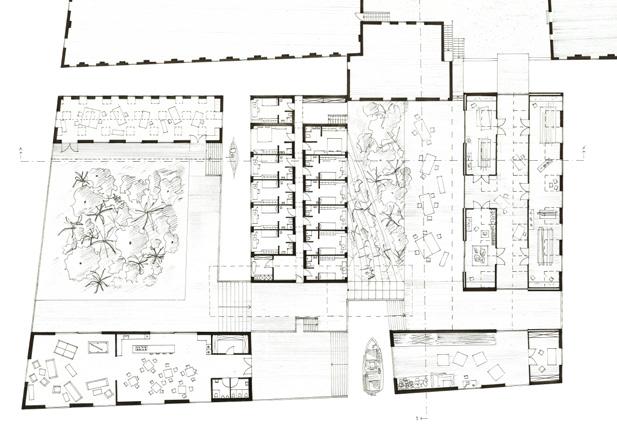
Housing for students and workshop spaces
Venice, Lazzaretto Vecchio
2017 - 1st Bachelor Atelier 05: Carlo Menon, Sara Cremer, Benoit Burquel
Sketch of the workshop spaces
6
01
«Established by the Serenissima in the 15th century, the two islands «Lazzaretto Vecchio and Lazzaretto Nuovo» were the first historical examples of public structures set up to deal with the health emergency caused by international trade: with the products coming from the East by boat, terrible infections and other incurable diseases also arrived, triggering real epidemics.
Sanitary usehaving ended in 1800 and after the military use of the site, the Ministry of Cultural Heritage intervened with a view to enhancing the island’s value as a centre for archaeological studies and restoration. Numerous interventions to protect and secure the main structures of the site have already been carried out and accompanied by archaeological and anthropological research, particularly on the mass graves linked to the period of the epide mics. However, much remains to be done in terms of maintaining and safe guarding the existing constructive structures. It is now thanks to an association of volunteers that the work of safeguarding, restoring and maintaining them is still in progress. Restoration and archaeo-anthropological research courses and training courses are regularly organised on the island. For example, a residence for student restoration trainees is planned on the island annexed to Lazzaretto Vecchio. This residence is accompanied by the infrastructures necessary for the preservation and restoration of the Lazzaretto Vecchio site.» - ULB Faculty of Architecture La Cambre Horta
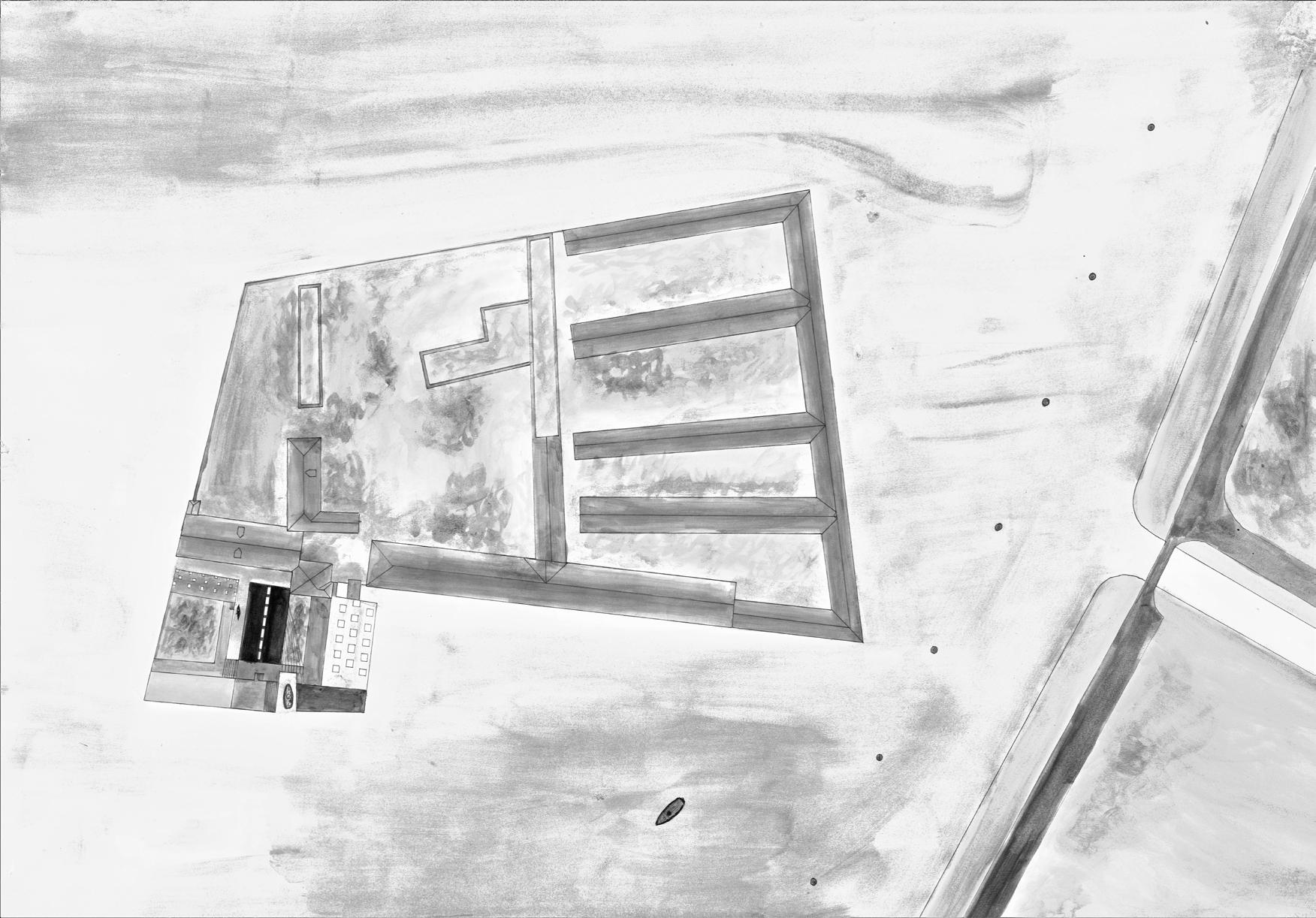
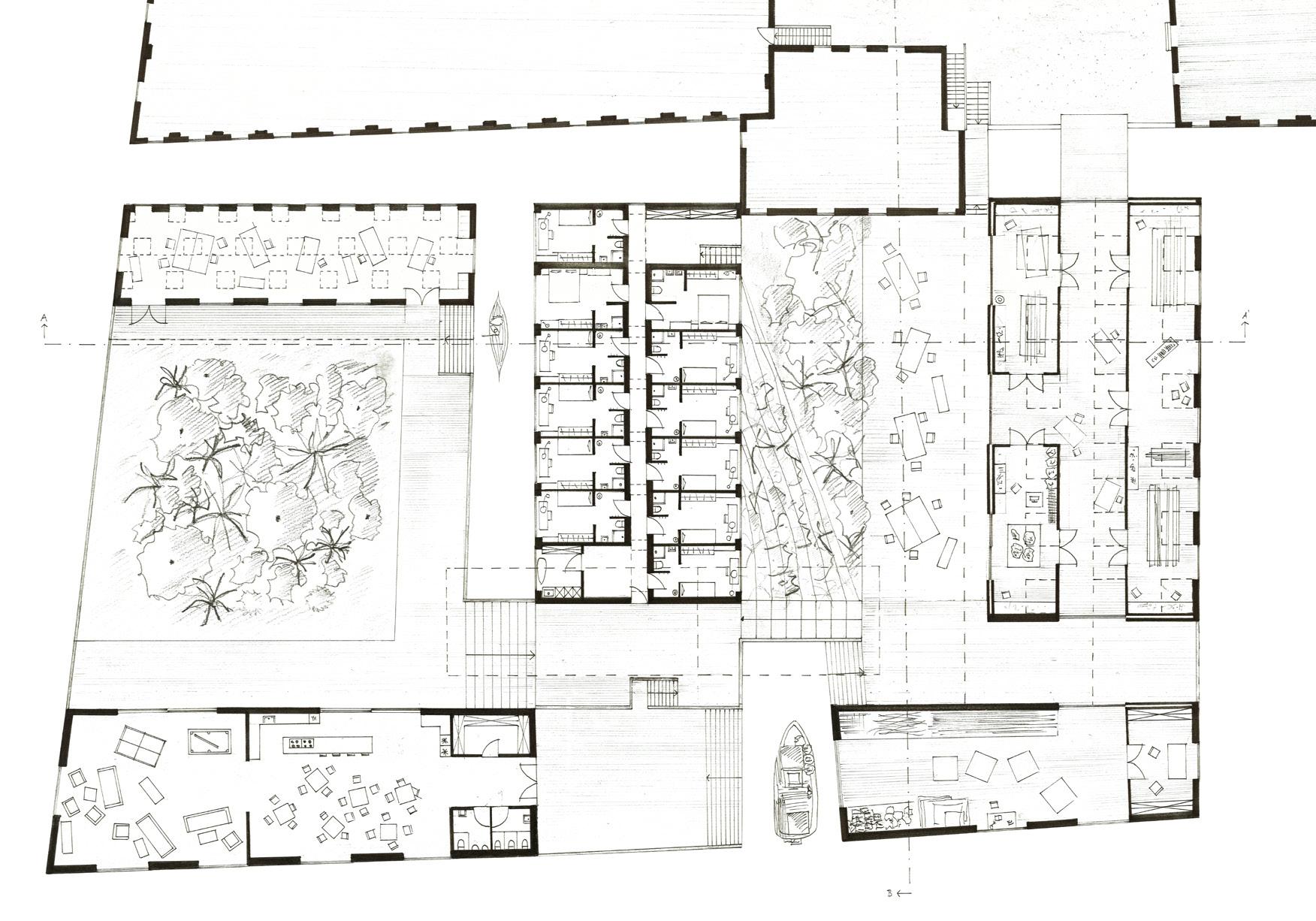
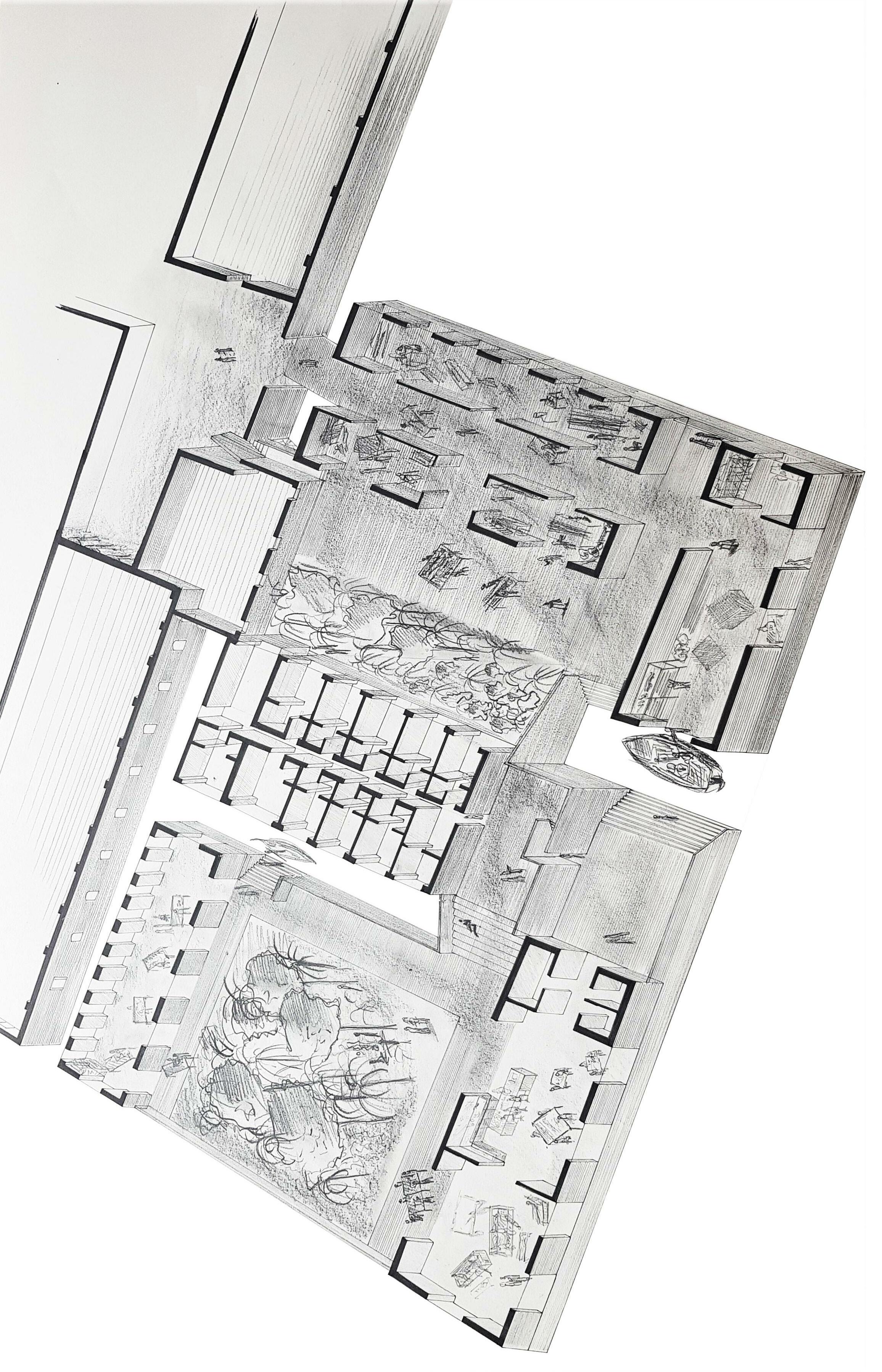
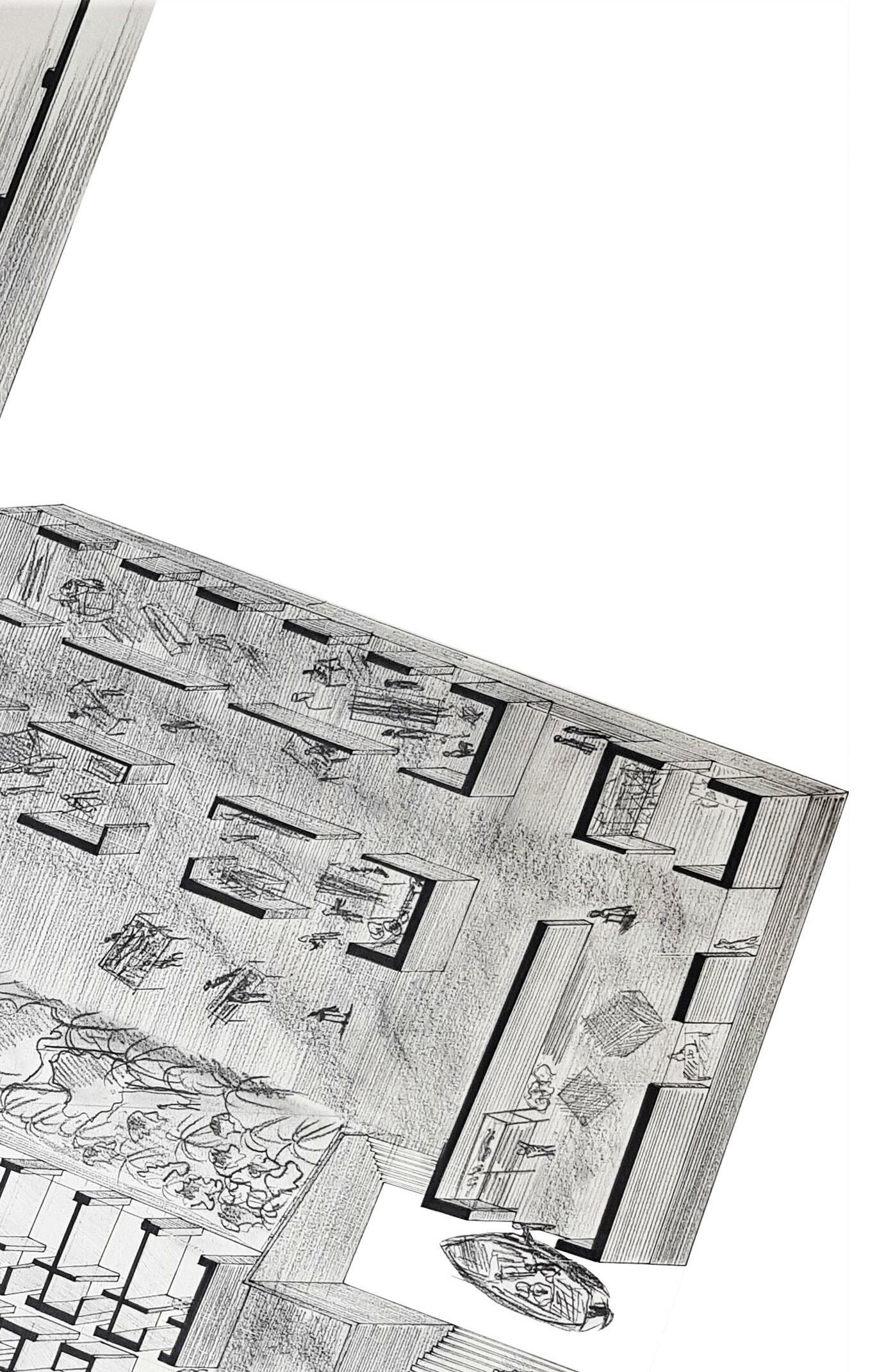
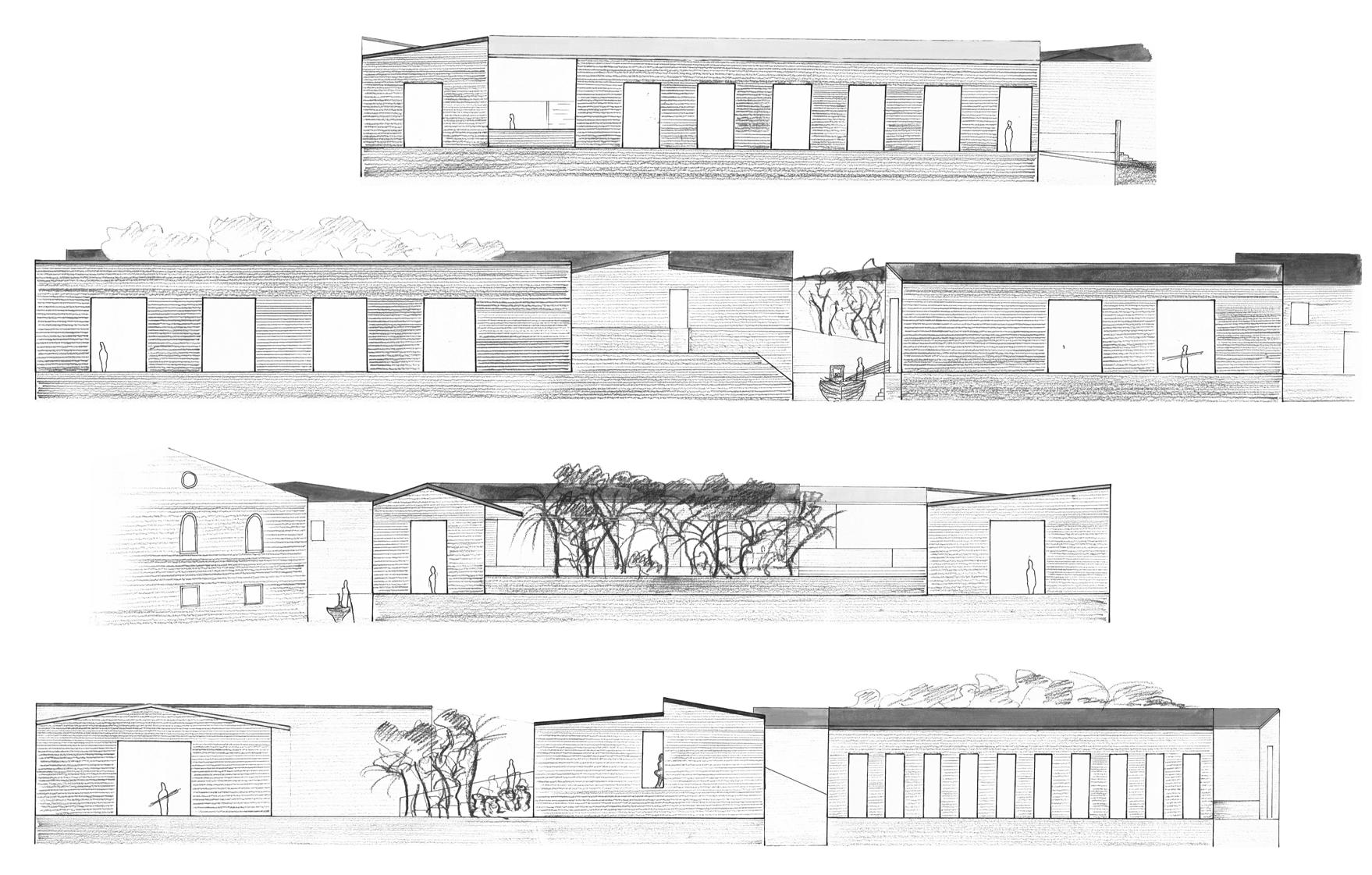
The way in which the various buildings of the «Student residence» project are set up on the island is strongly inspired by the island next door. In this contex tual concern, buildings of an archetypal typology extend lengthwise along the edges and the interior of the island subtly carving out the latter. In this way, common squares are created and views are opened up to the surrounding area. Two earthen trenches have been removed from the island to divide the island into two zones (a work zone and a living zone), and to create two separate accesses to the island. This land was reclaimed to raise the student accommodation in the centre to provide more privacy. Finally, the material chosen for the entire project (including the floor) is brick. This is both for contextual reasons but also to mark the horizontality of the project. The facades have been treated with a brick broken in two as can be found in Herzog&De Meuron’s «Schaulager».
7
Site plan
8
Ground floor plan
9
10
Cut axonometry
Elevations
11
02
Space, materiality and light
Exhibition space for an art work
Without context
2018 - 2nd Bachelor
Teacher: Paul Mouchet
12
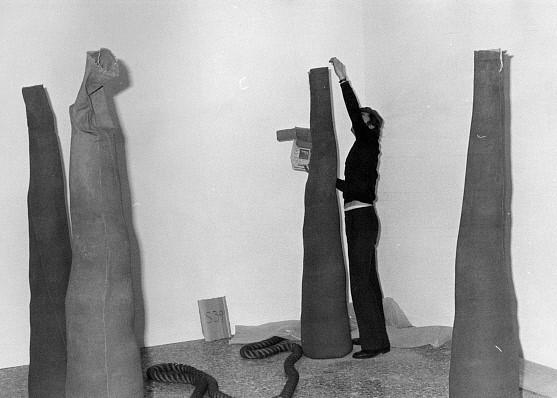
Barry Flanagan filling sandbags at the exhibition ‘Arte Inglese Oggi’ at The British Council in 1960-76.
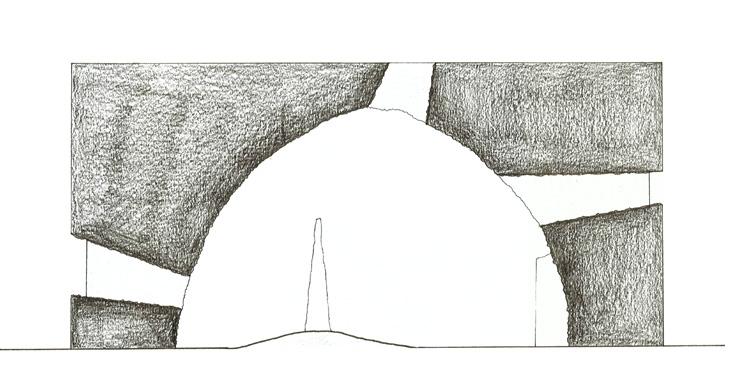
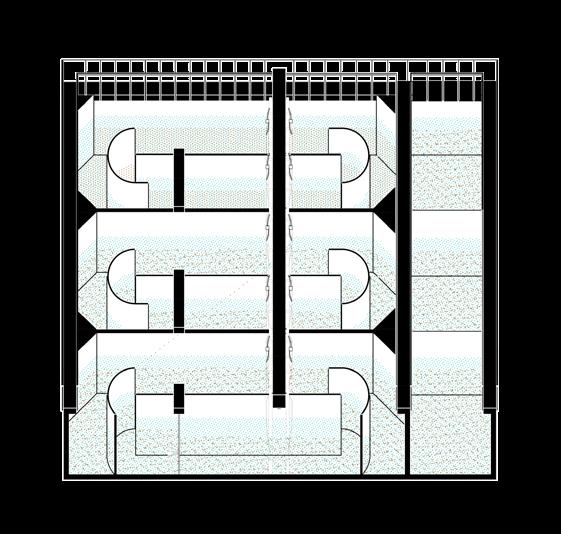
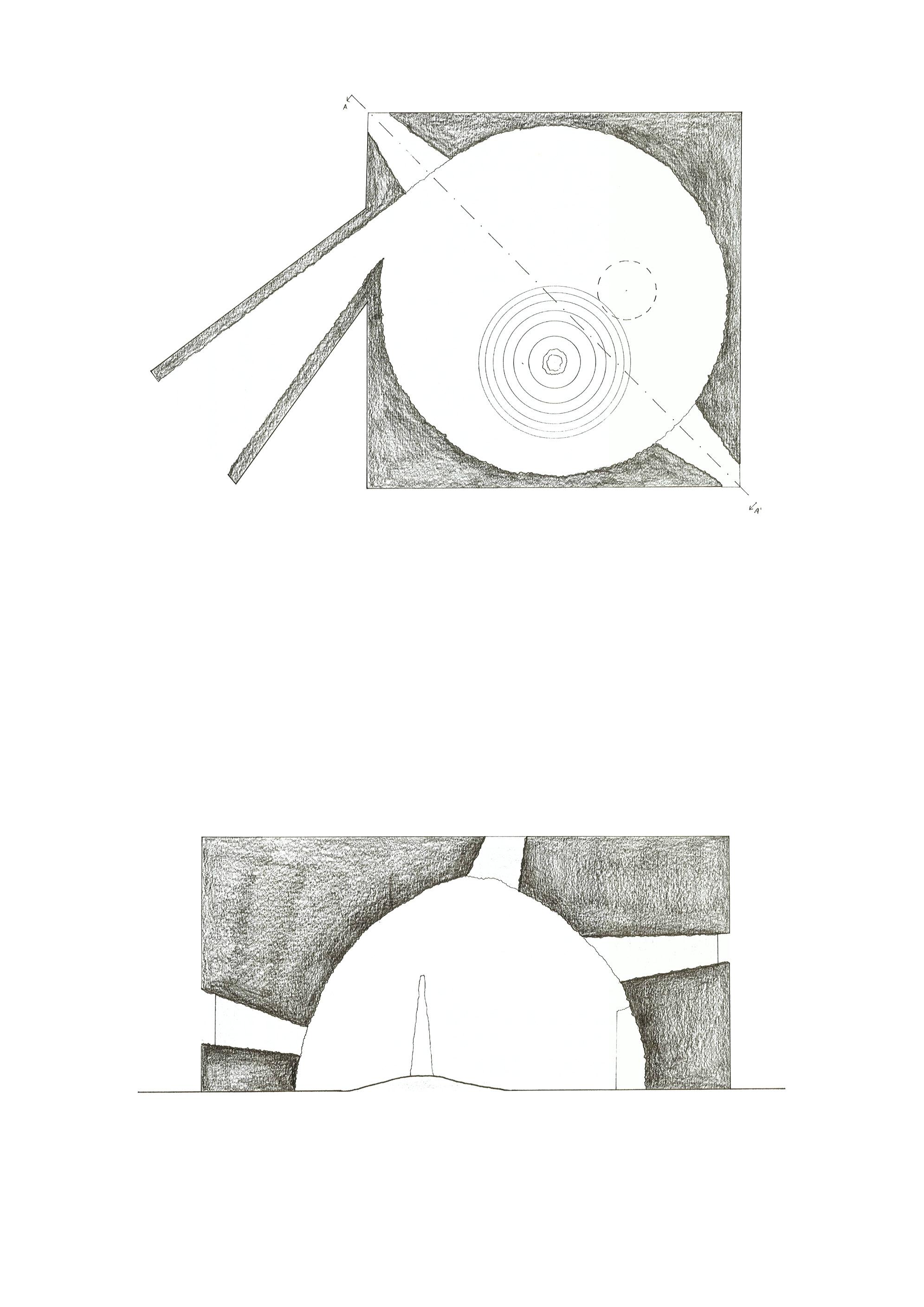
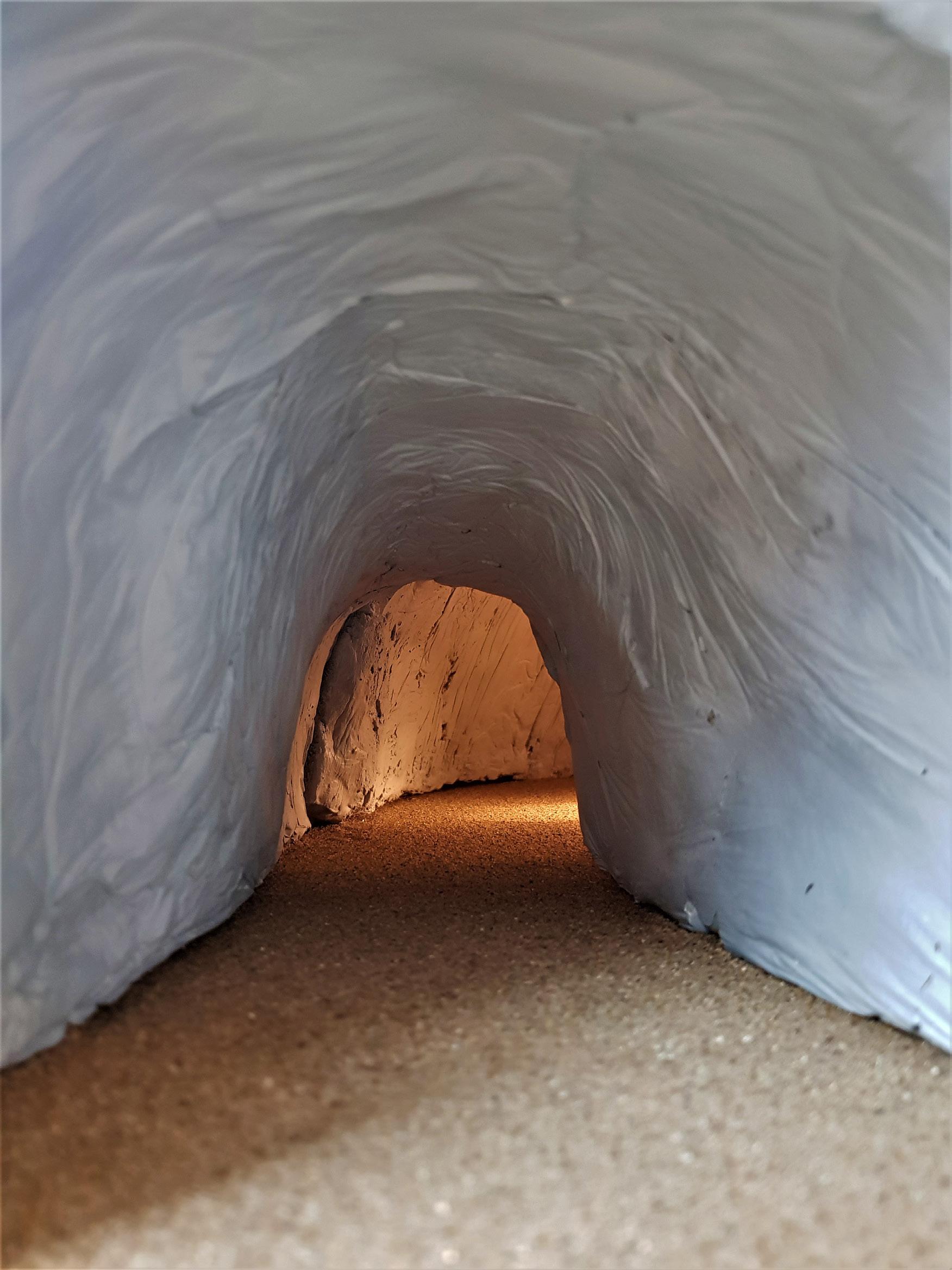
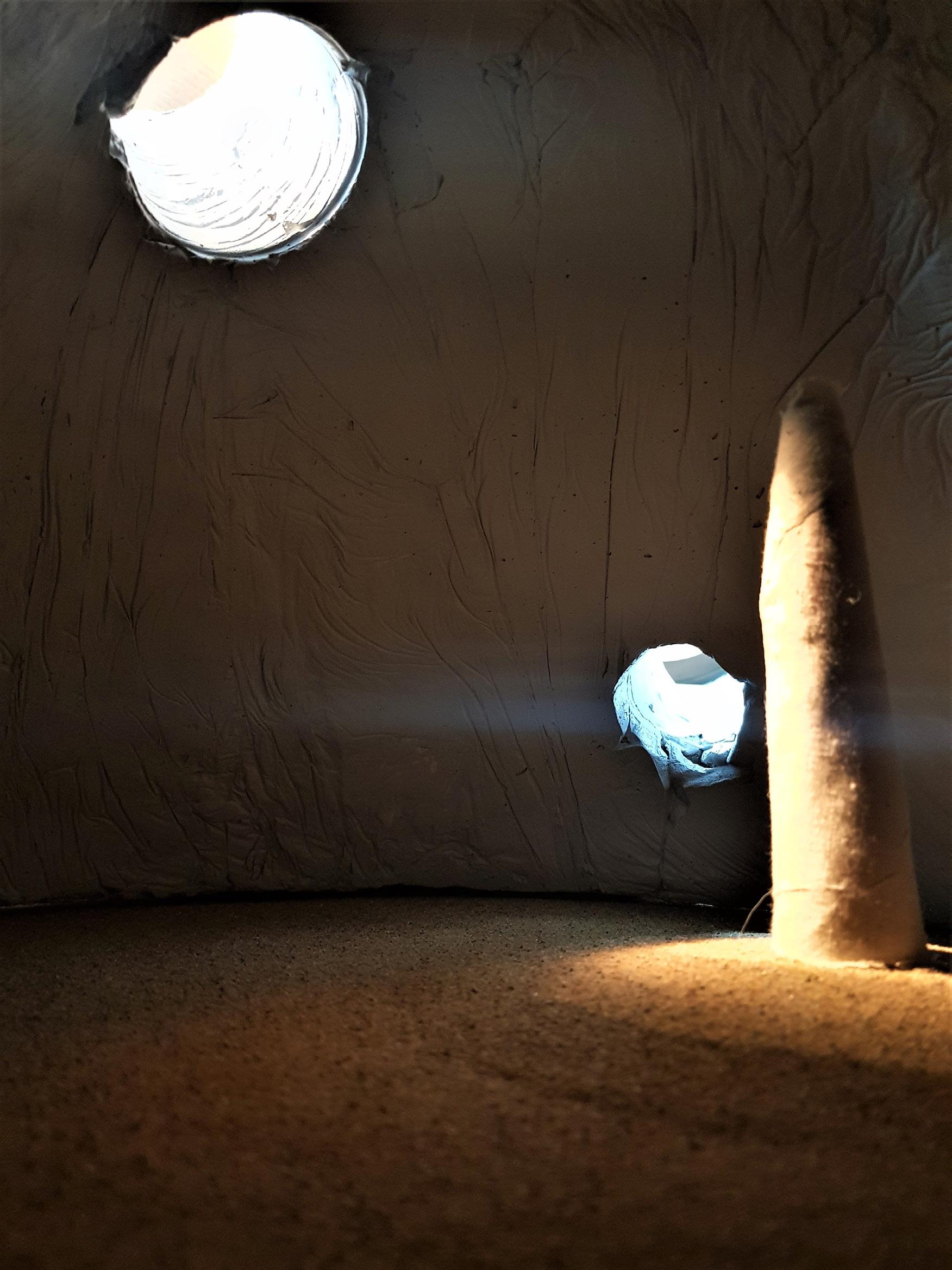
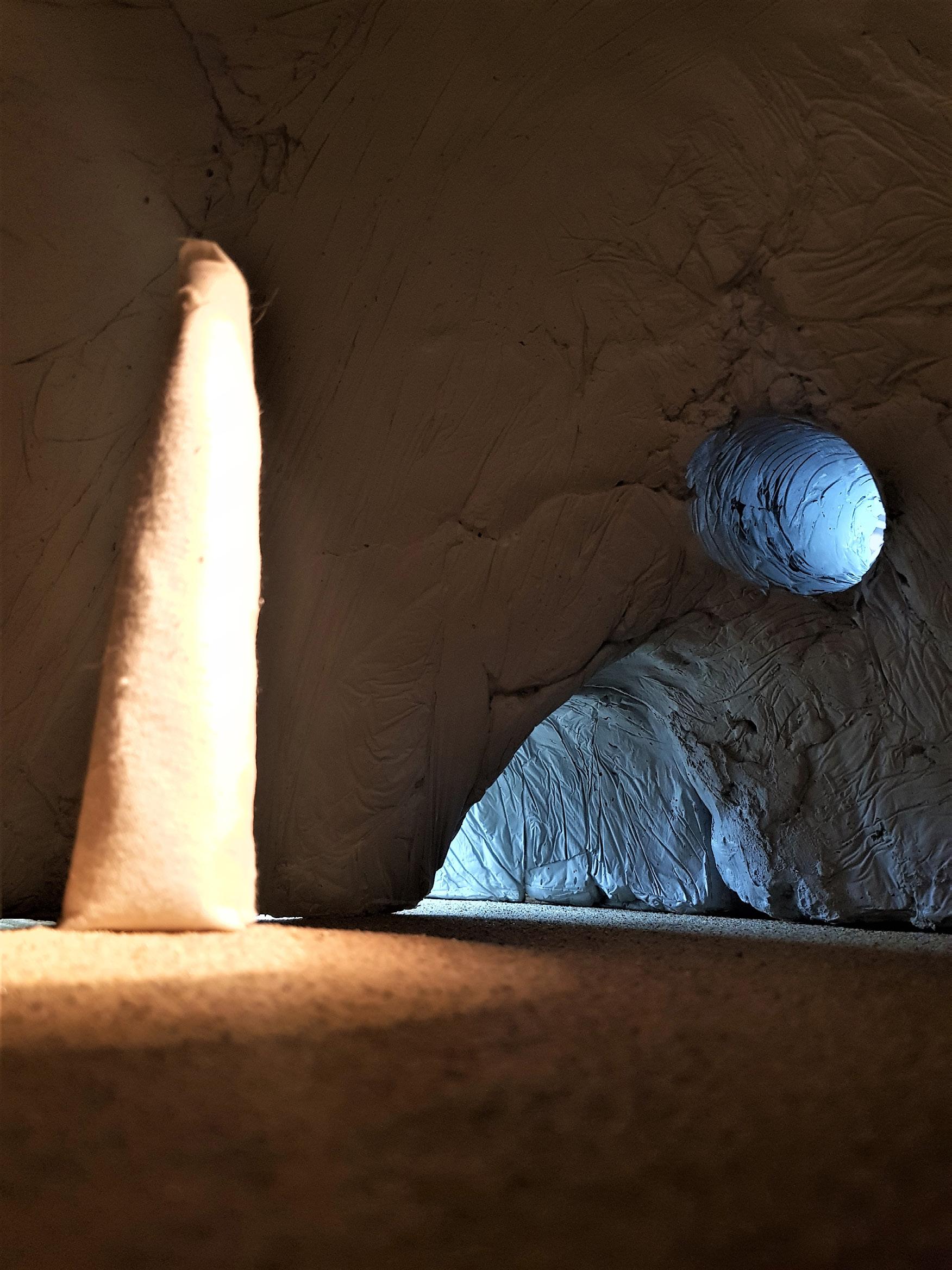
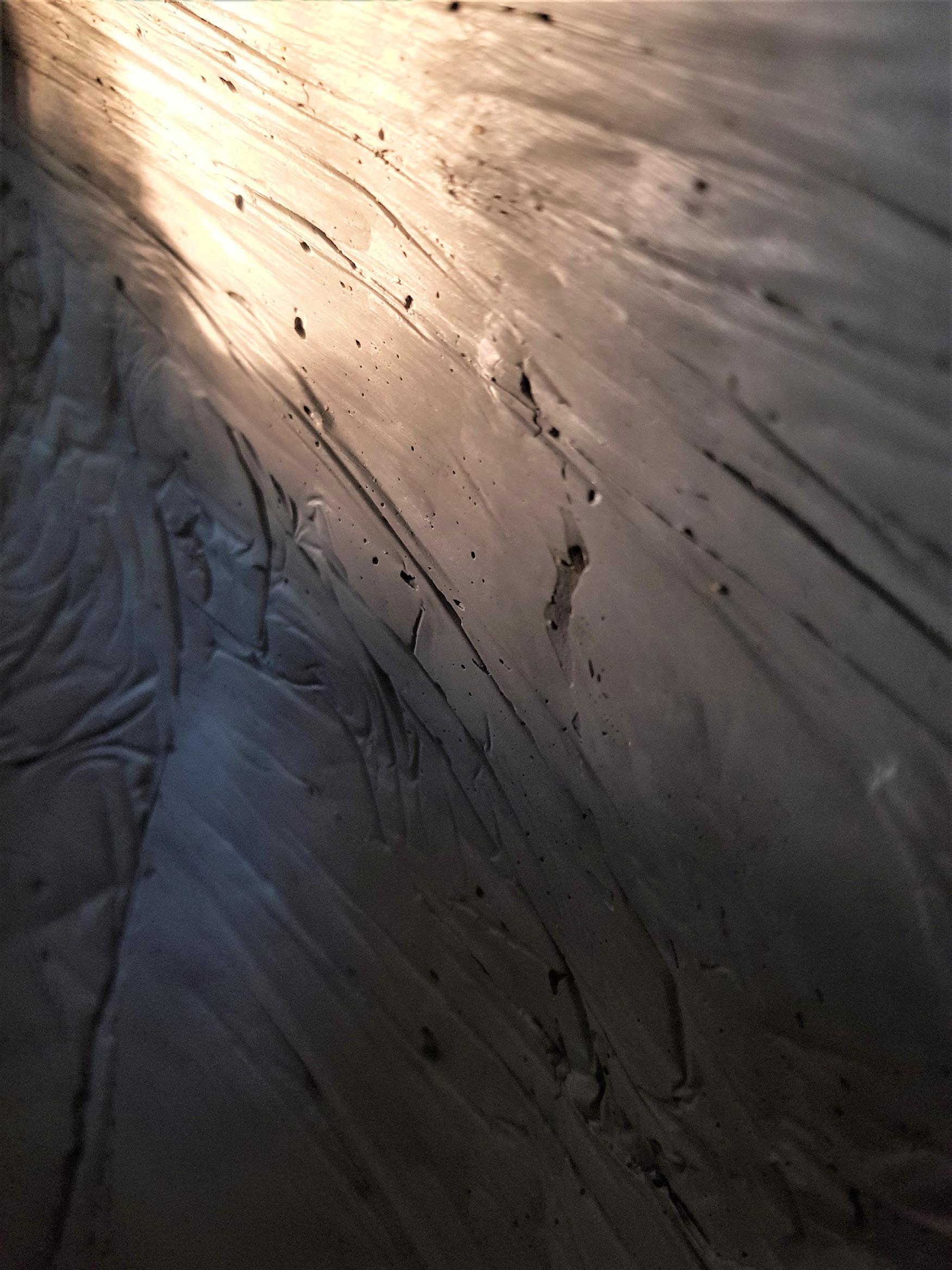
«Spaces, materials and light» is a project without context where the aim was to create an exceptional space to exhibit a work of art, in this case the work «Casb 1’67» by Barry Flanagan from 1967. It is a work that evokes a certain tension through the sand and fabric from what it is made. This tension but also the sand were the ma jor source of inspiration for the project. Thus a series of spatial explorations were made, but also of materials, to finally arrive at a project molded in concrete.
In the end, for me the project was more the production process of the model than the final result. There was this desire to feel a strong link between the architec ture created and the work exhibited. The tension of the sandbag is found in the little «crevasses» of the concrete walls created by the plastic film, the imposing height of the work is felt even more when it is placed on a small mound, its off-centre position allows a varied perception and finally, a series of strategically placed openings illu minate the work throughout the day, varying the type of light on the sculpture. References such as Anne Holtrop, Ensamble Studio or Peter Zumpthor were important in the design of the project.
13
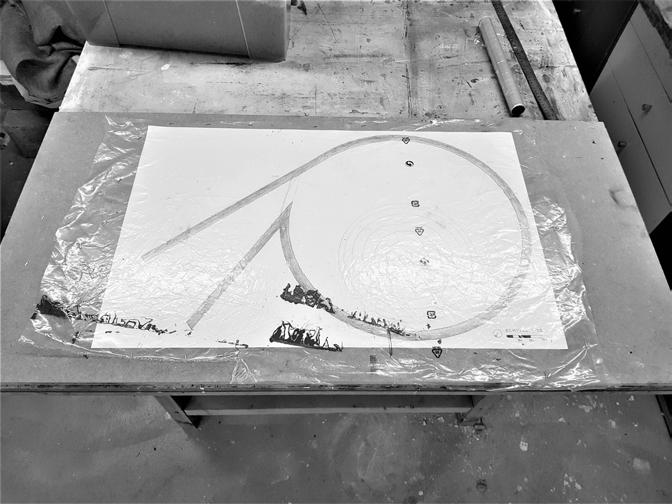
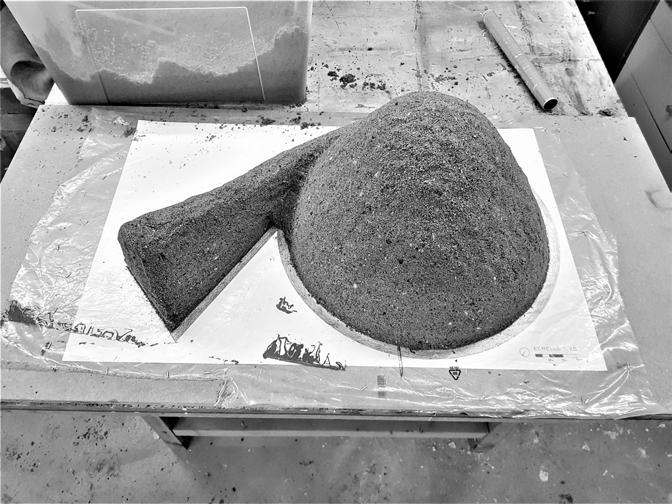
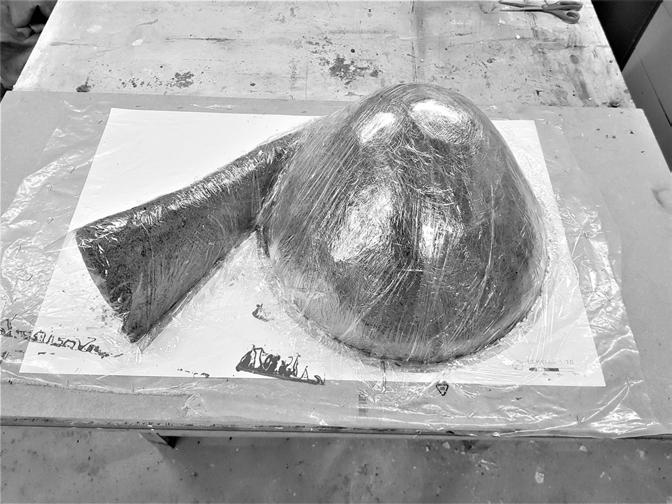
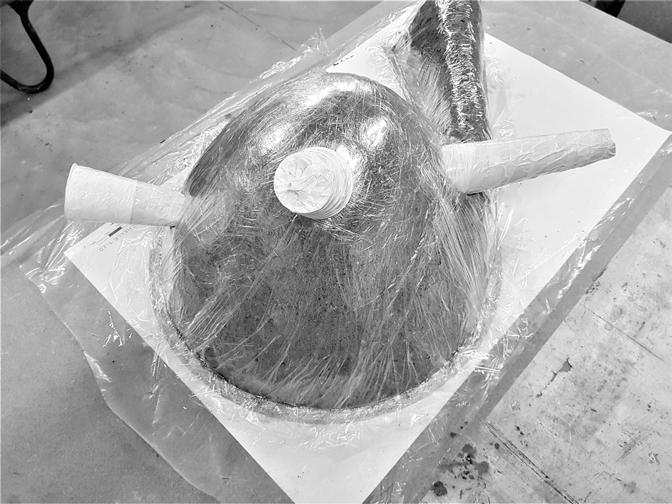
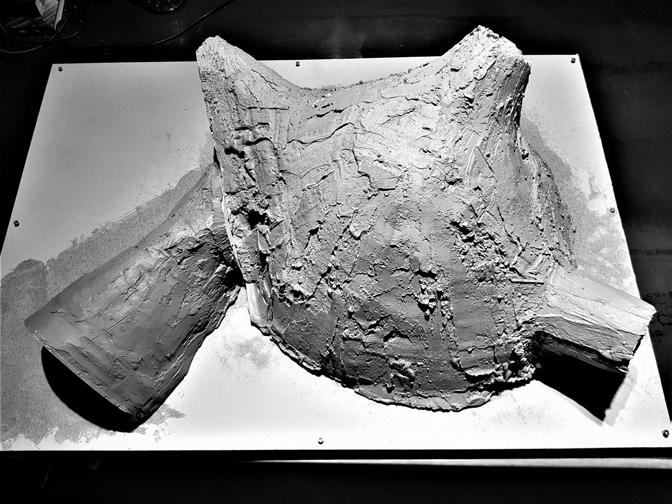
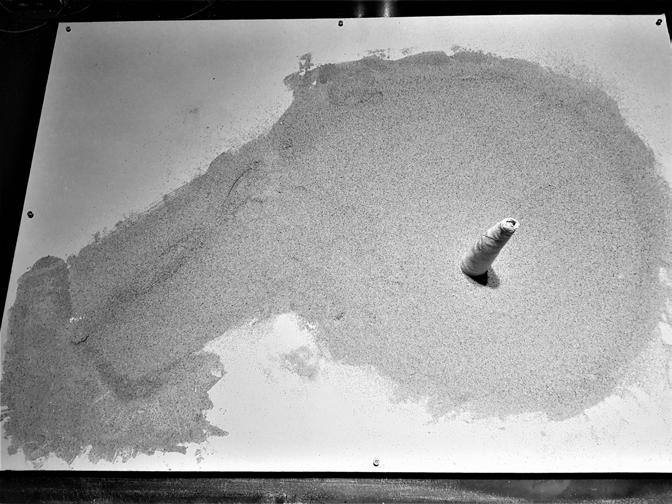
14 1. Plan 2. Sandmountain 3. Plastification 4. Opening cones 5. Creating a mound 6. Poured concrete
Ground floor plan Section AA’
15
16
Invitation
17
Warm
18
Cold
19
Tension
03
Window on courtyard
Housing with a sports hall and café Rue de l’Escaut 151, Brussels 2019 - 2nd Bachelor Architecture Teacher: Vincent Pierret
Site plan
20
«Architecture under constraint.
When students’ project proposals come early enough, a real workshop spirit develops. The resulting exchanges allow all the apprentice architects to take a step back from the question put to them and to anticipate questions. The high success rate we have had during this semester owes a lot to Lucas André. About fifteen models and numerous drawings spread over the entire wall of the workshop set the tone for the final jury: layout models, three-dimensional diagrams, numerous formal tests at various scales...
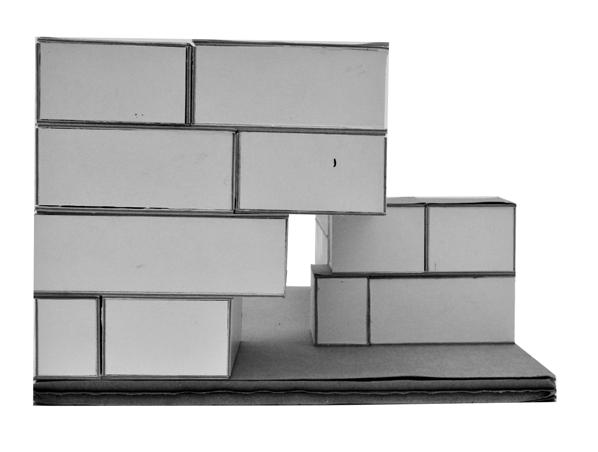
The abundance of material on display illustrates the student’s iterative method. His impressive work force is guided by the desire to stay as close as possible to the uses, with strictly formal or theoretical issues being relegated to the back ground. Architecture is first and foremost the putting in order of a programme at the service of users.
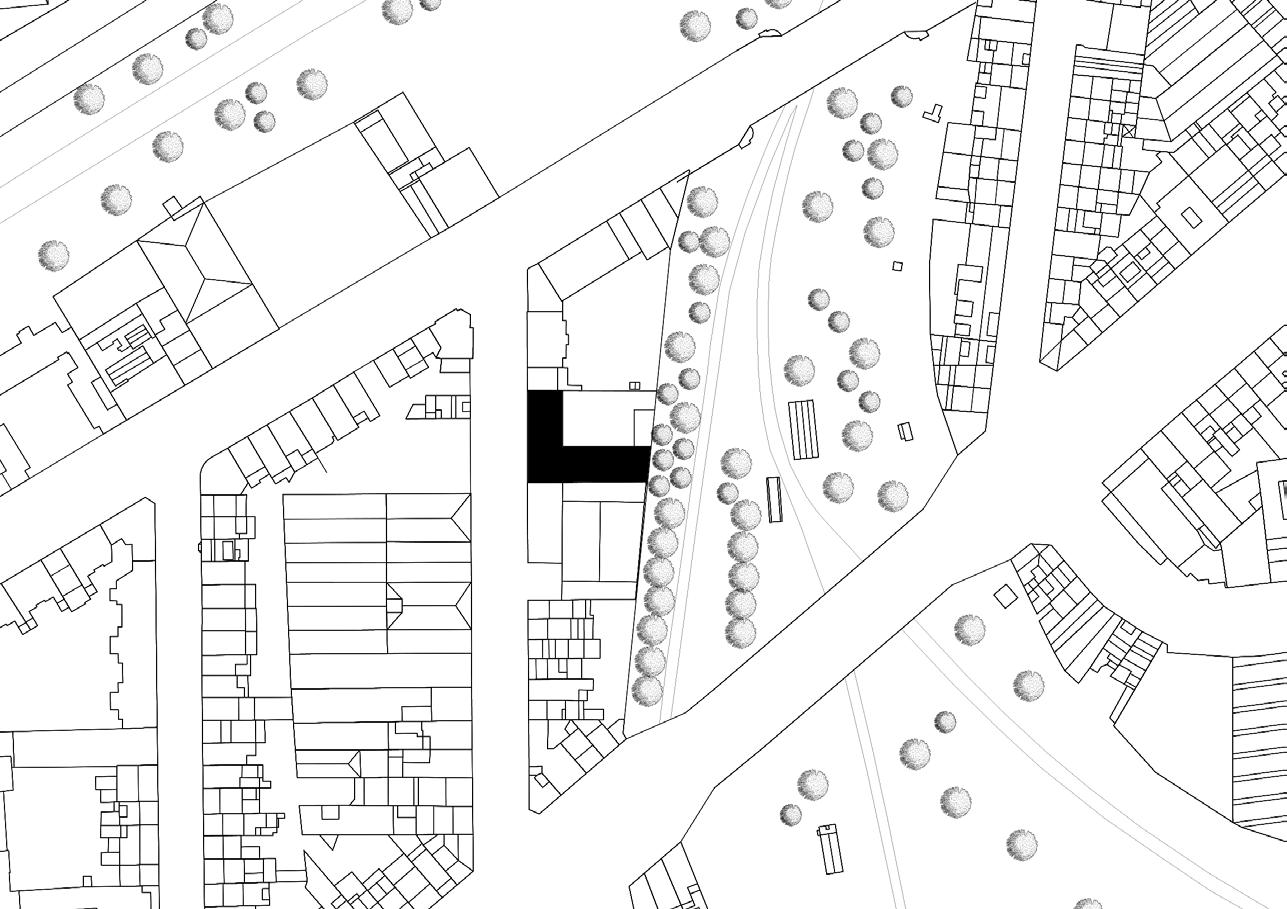
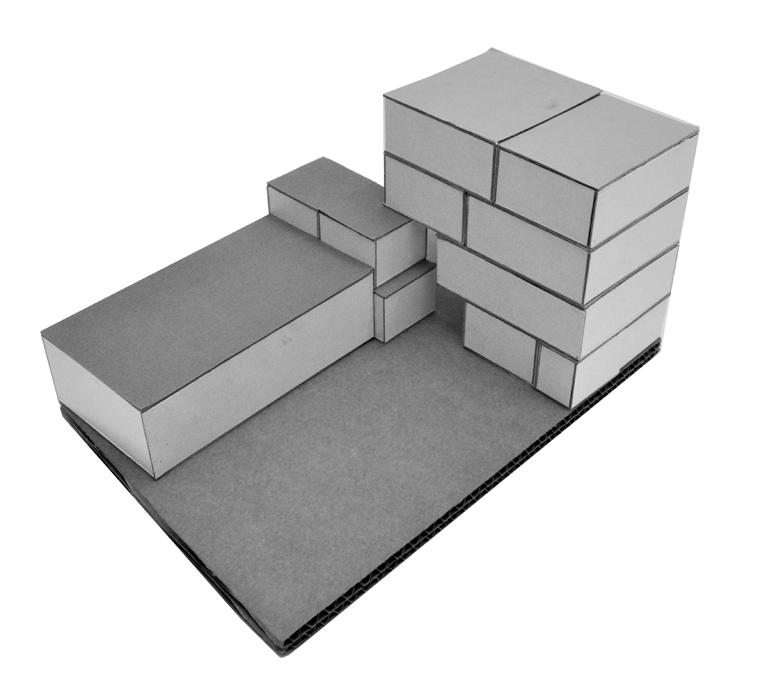
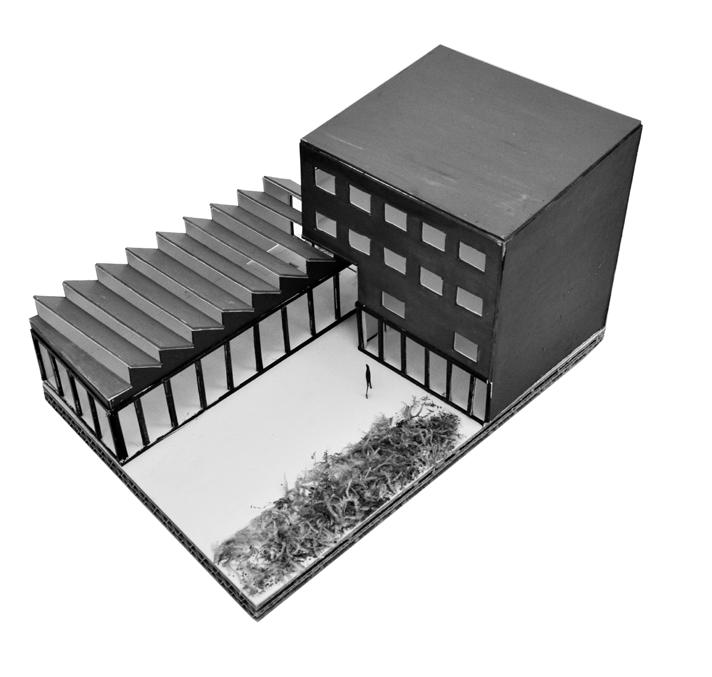
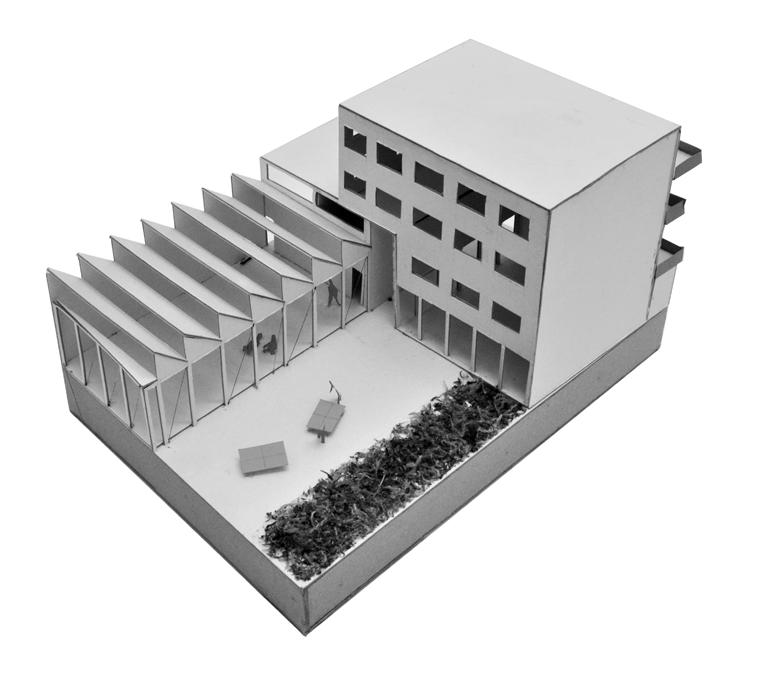
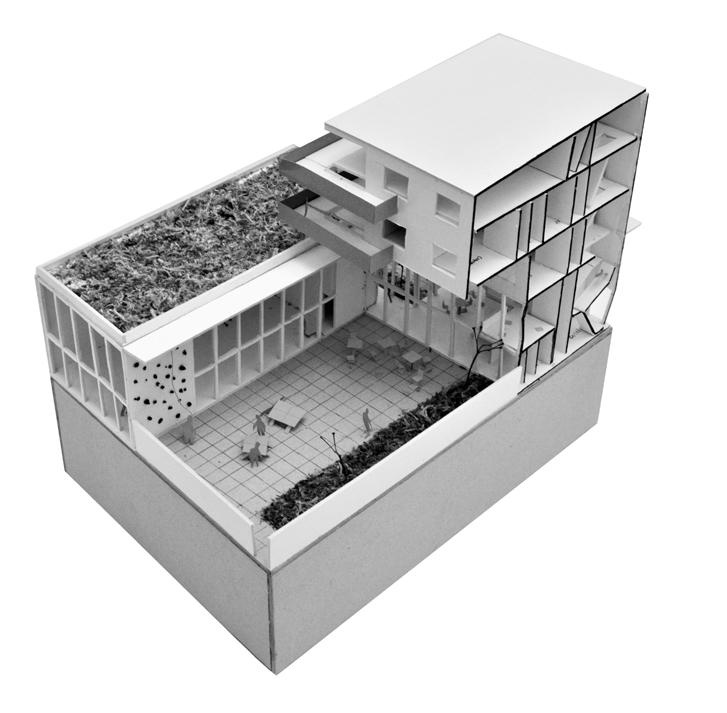
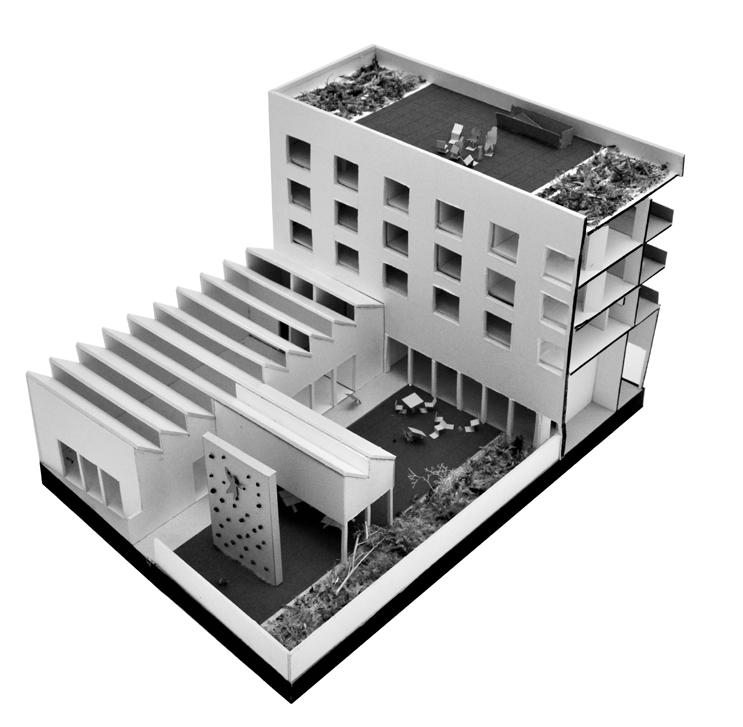
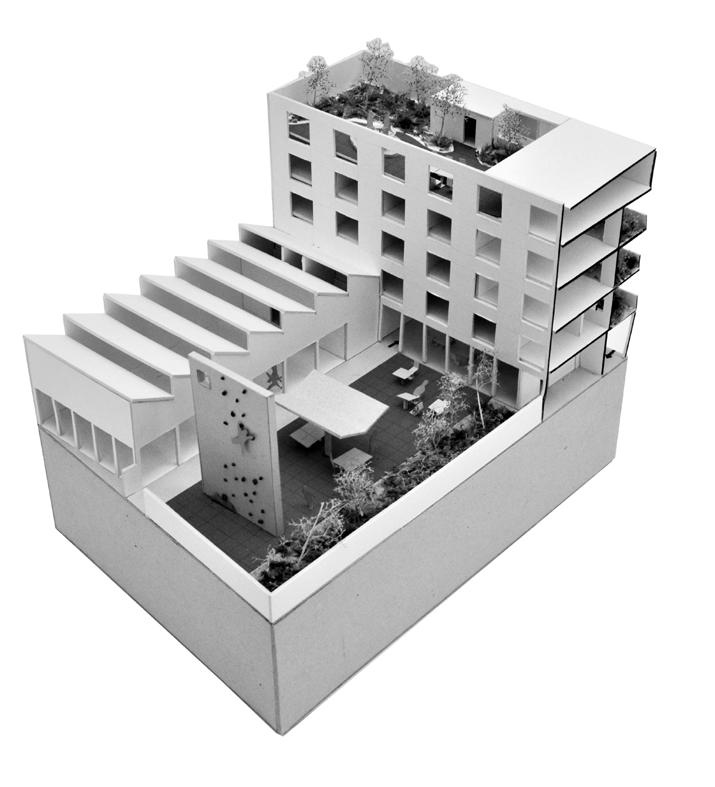
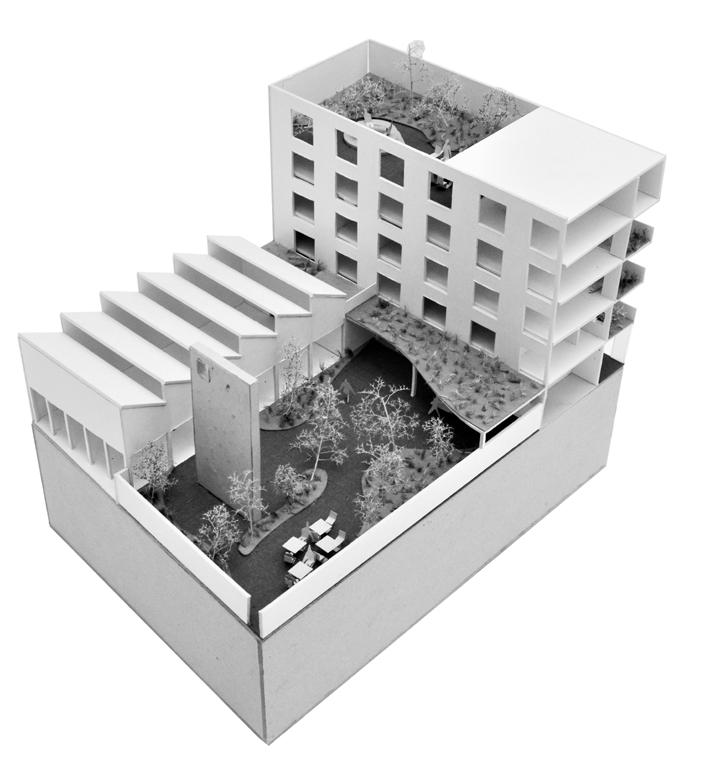
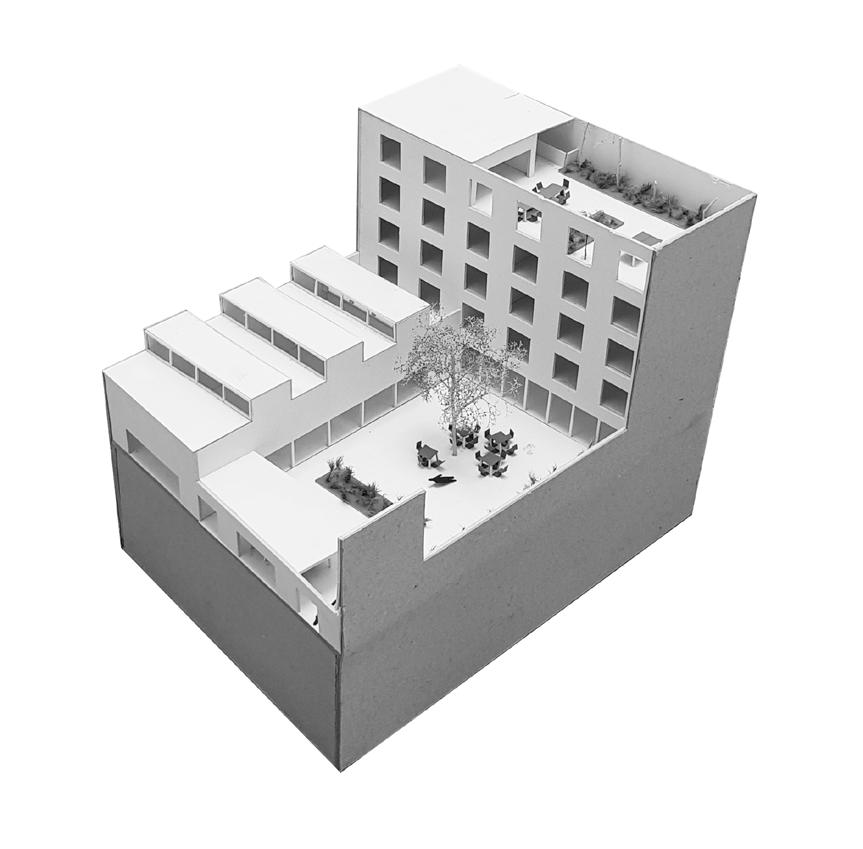
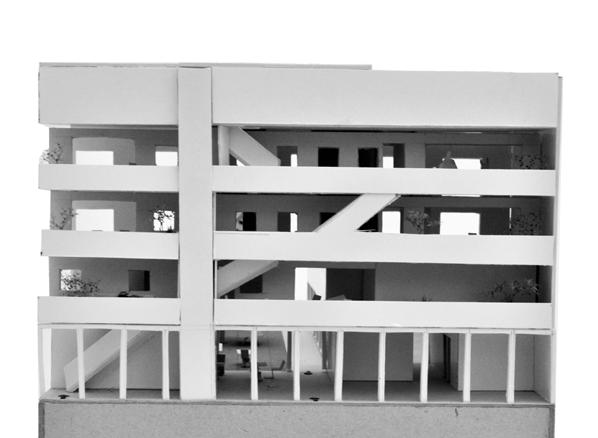
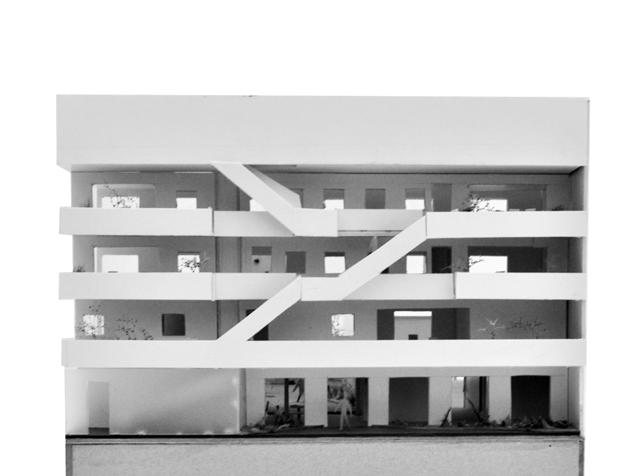
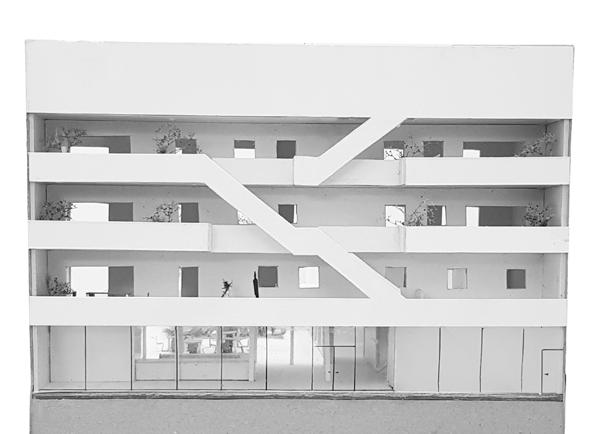
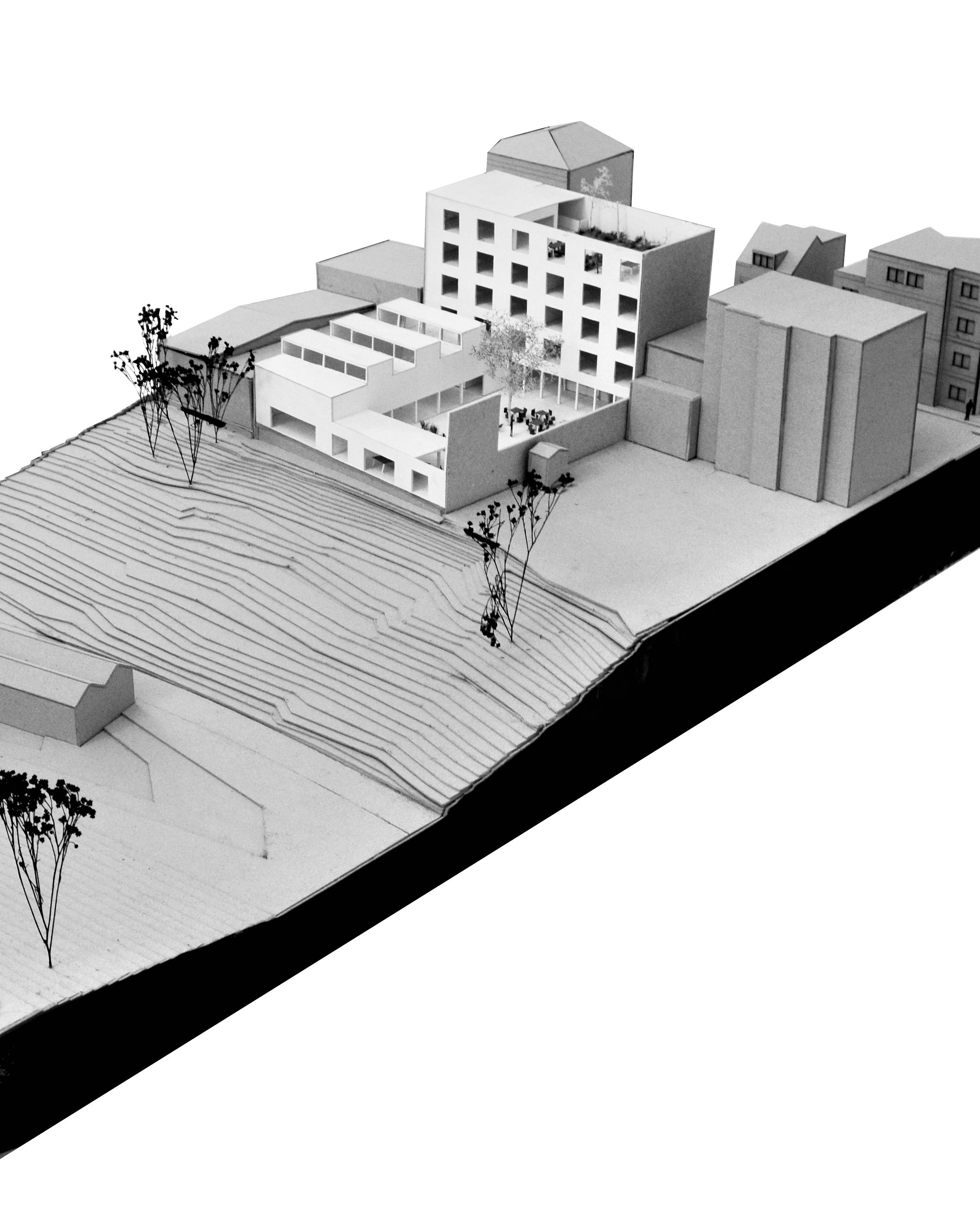
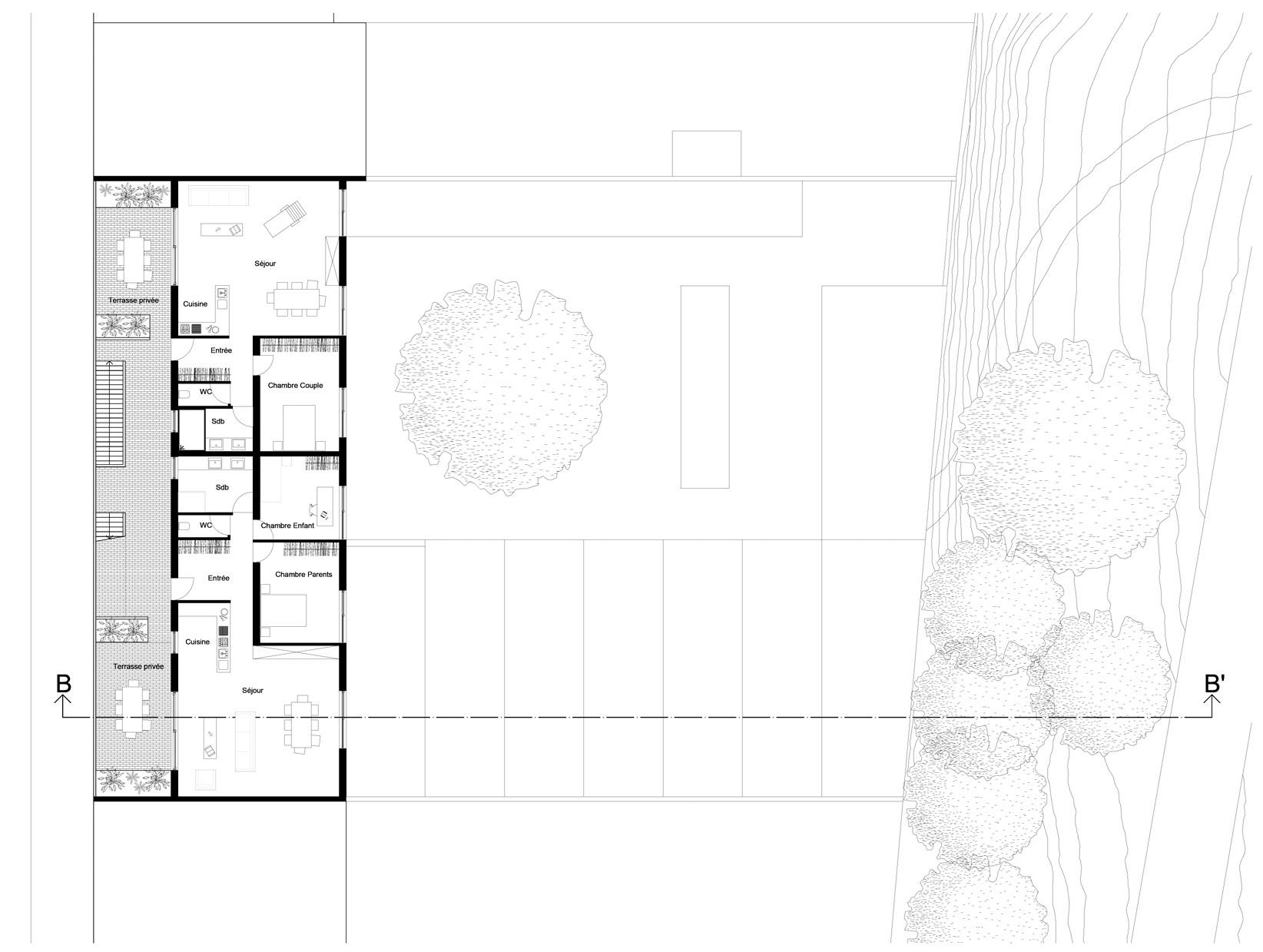
The L-shaped layout of the project is almost too simple. The housing focuses on the street. It is in line with the future shape of the surrounding urban fabric. The sports function opens naturally to the park at the back. The dividing wall, which is very present on the site, serves as a seat for the large mass of the sports hall, thus attenuating its volumetric impact. The courtyard opens onto the park and allows the public facilities to be integrated seamlessly into the existing garden area. This very rational layout perfectly meets the needs and spirit of the place. It is a fair and modest project that offers a rare economy of means. The image of the building on the street meets a more symbolic need. It shows the inhabitants that the changing district is the object of a policy that is both proactive and attentive to the citizens. Abstract balconies create an expressive, perhaps even severe silhouette. They herald the new public facilities. Above all, however, this façade has a rare habitability. The play of terraces, grouped together in a compact section, offers real added value to the homes. With a single gesture, this element of the project creates meeting places and generous outdoor spaces, well oriented and in direct communication with the interior spaces.
It is a project that manages to transcend constraints. From the layout, to the surfaces, to the organisation of the accommodation, the student has, each time, taken generous options adapted to the Molenbeekois context.
The Architecture, on the other hand, is a built architecture, with rigorously pa rallel walls, whose «correct and magnificent» rules are at the service of the user, like the roof terrace at the top of the building, another quotation from Le Corbusier and his Cité Radieuse project in Marseille».
- Vincent Pierret (LPP architectes)
21
22
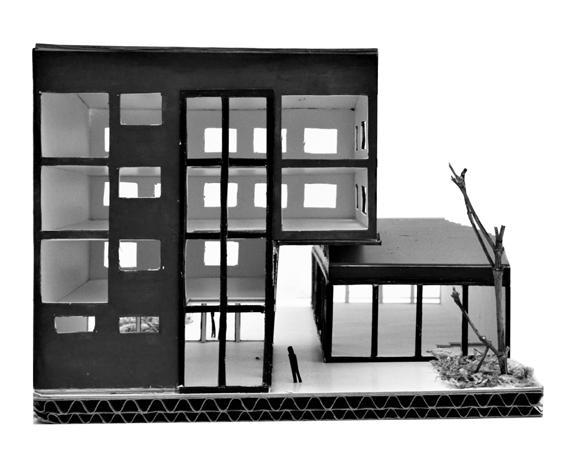
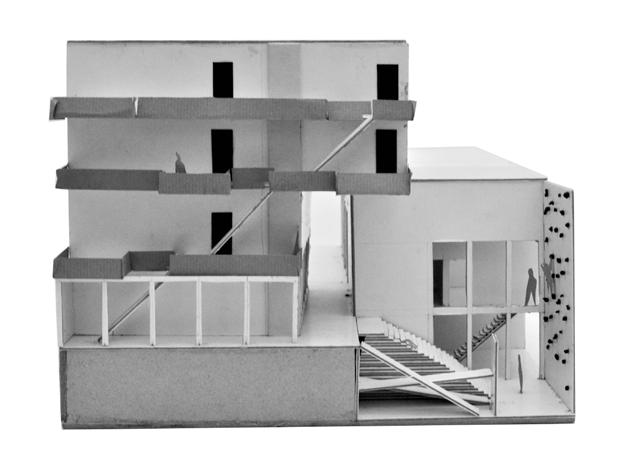
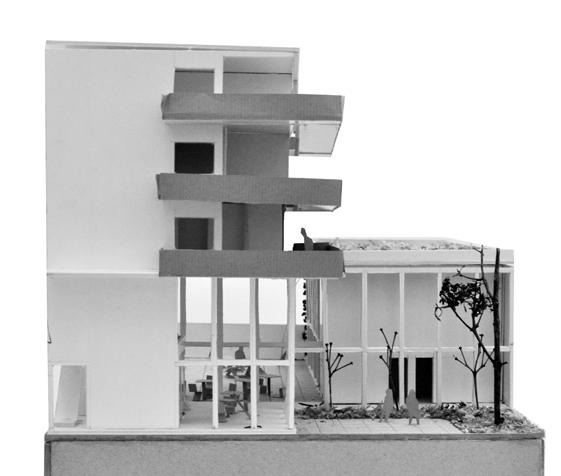
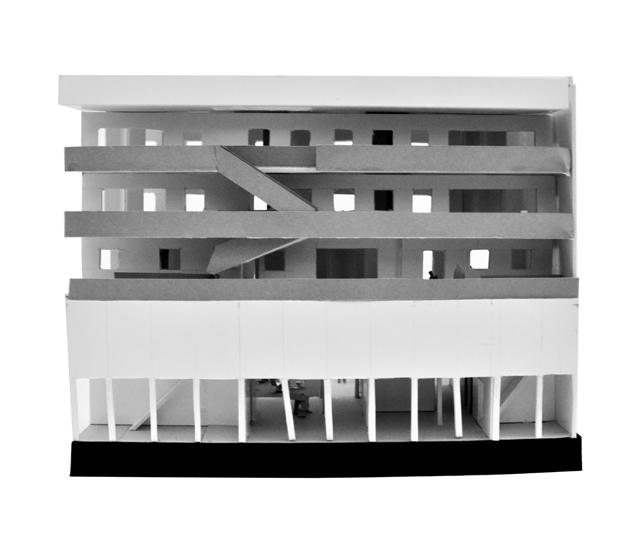
23 Week 1 Week 2 Week 3 Week 4 Week 5 Week 6 Week 7 Week 8
24 1/100 model
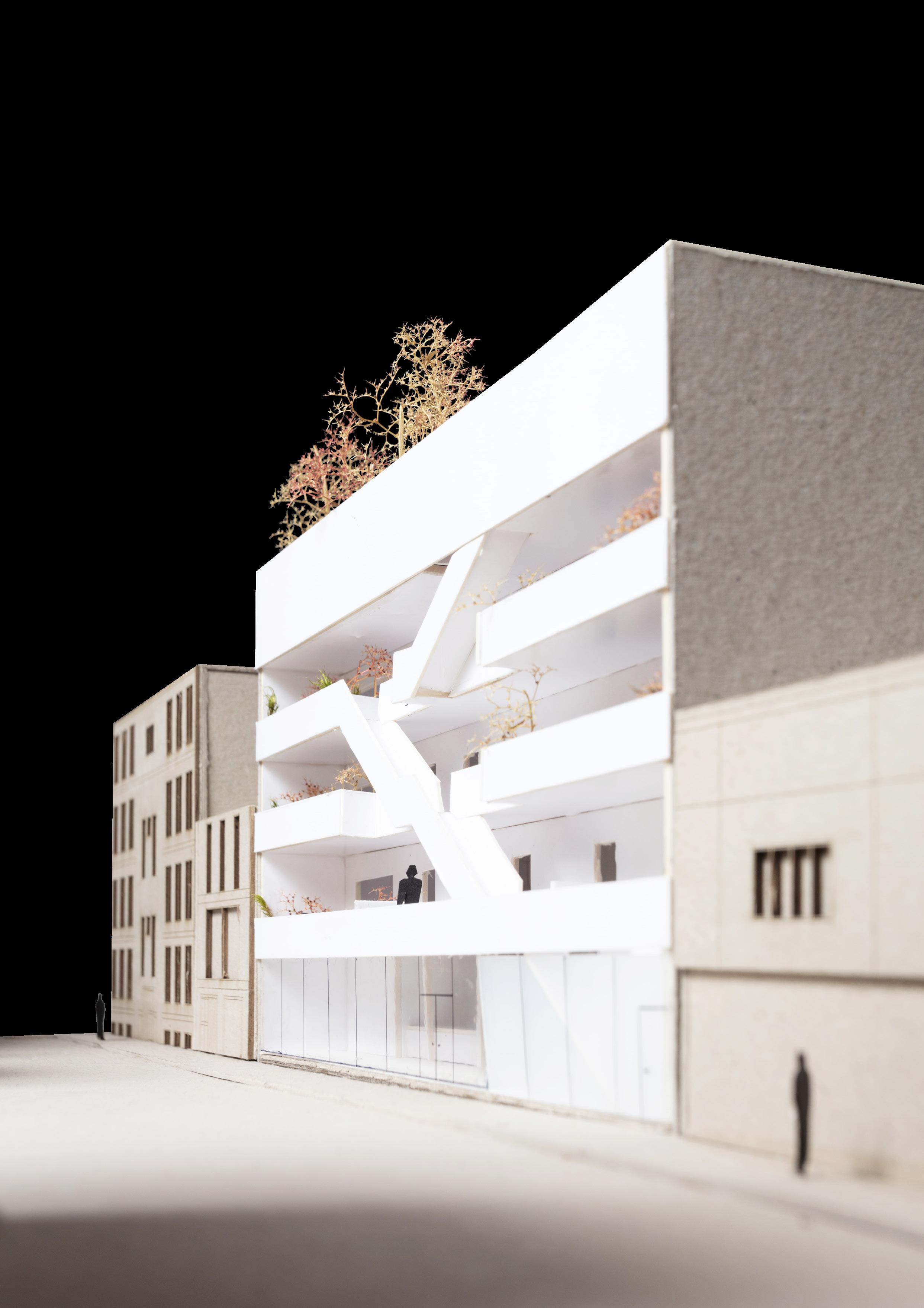
25 1/100 model
2nd and 3rd floor plan
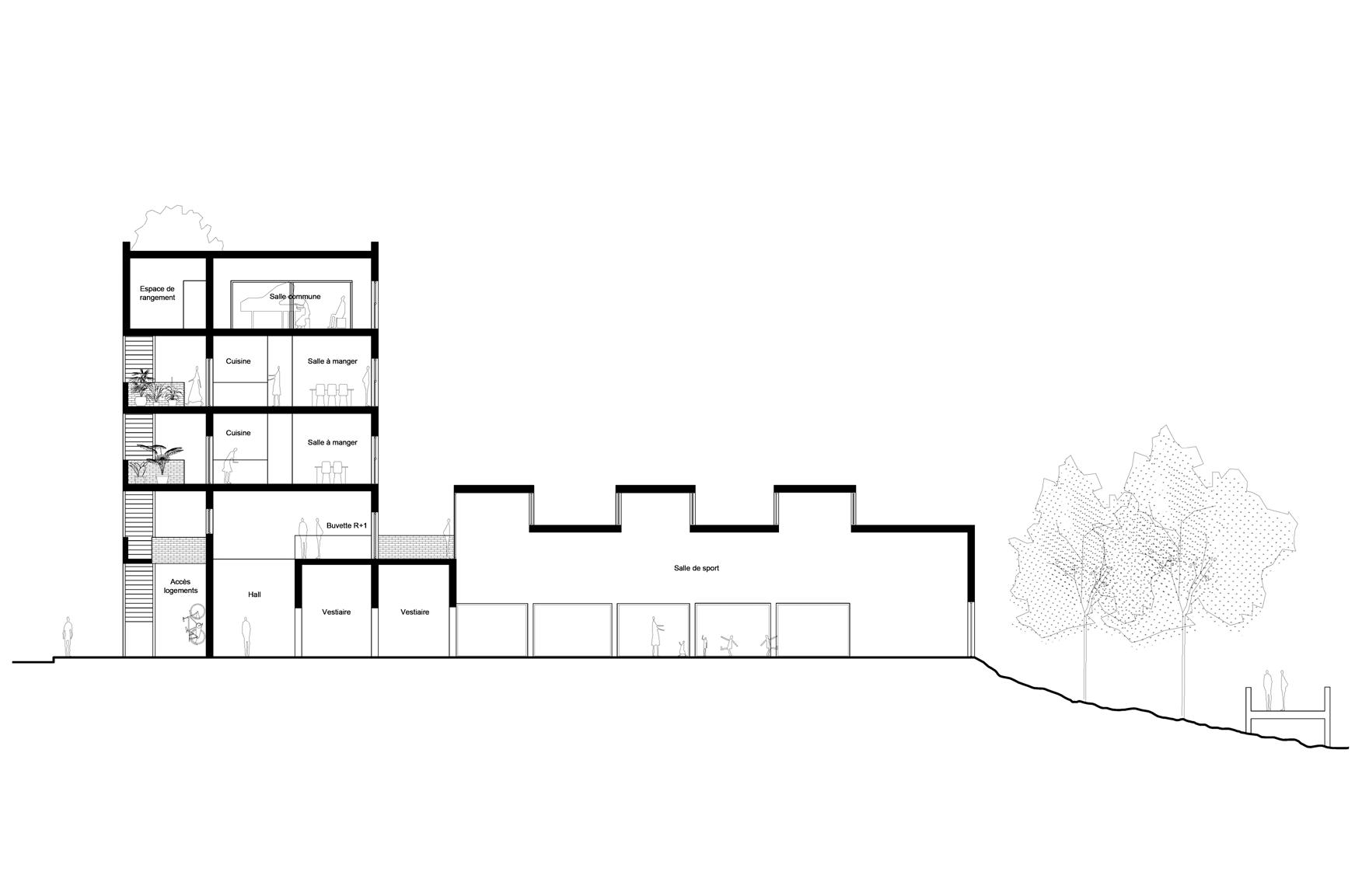
26 Section BB’
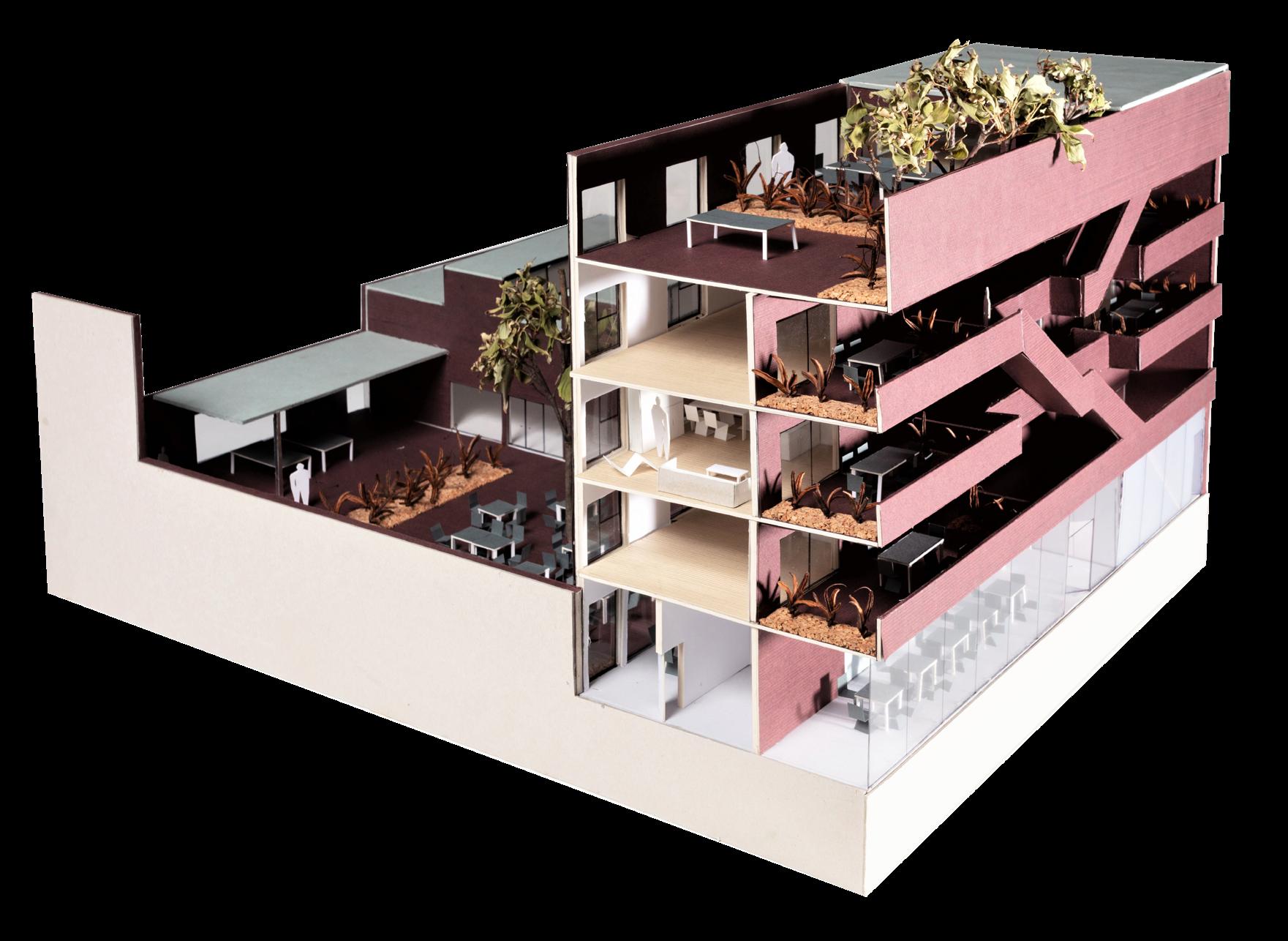
27 1/50 model
04
The sacred machines
Revitalisation of 3 abandoned churches Mouscron, Belgium
2020 - 3rd Bachelor Architecture Unité de production - Thierry Decuypere, Sophie Dars
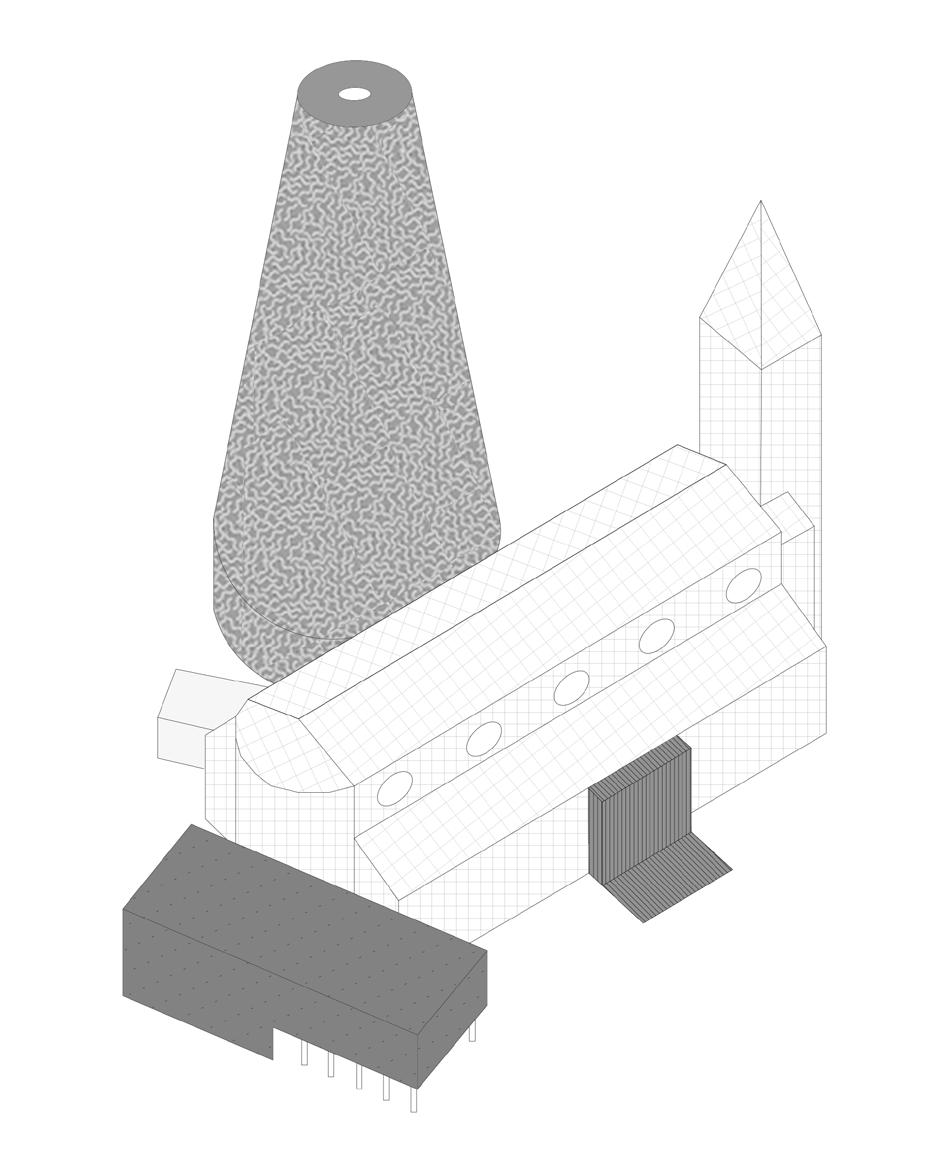
Scheme of Church St Paul
28
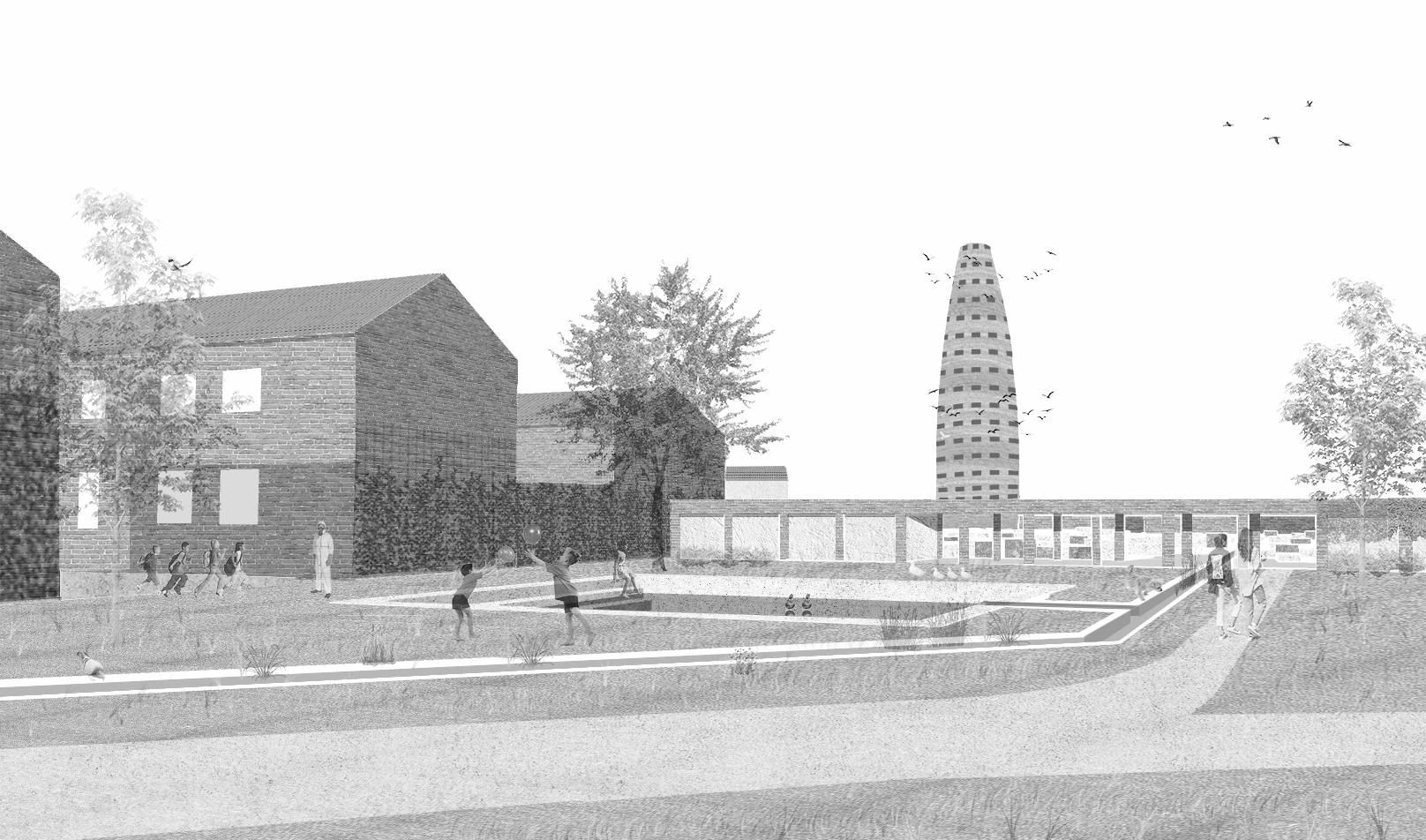
The project «The sacred machines» is dedicated to the way in which a half-real, half-chimerical city like Mouscron will calmly or loudly welcome the challenges and conse quences of the «new climate regime». For a century, this community has been living at the slower pace of uninte resting territories. This situation of a city without quality, without major architecture, is an opportunity to question our role as architects outside the comfort of planning and commissioning.
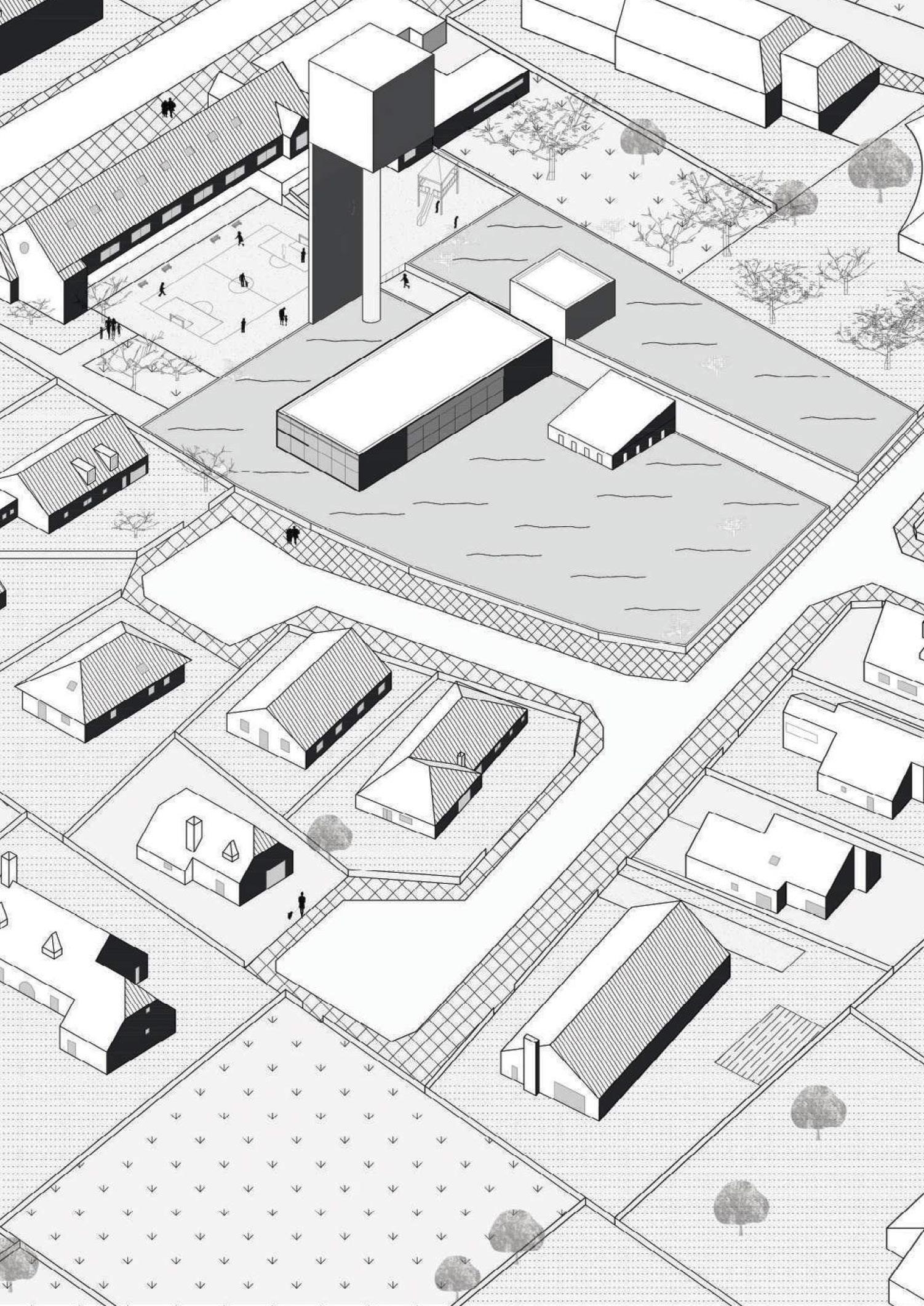
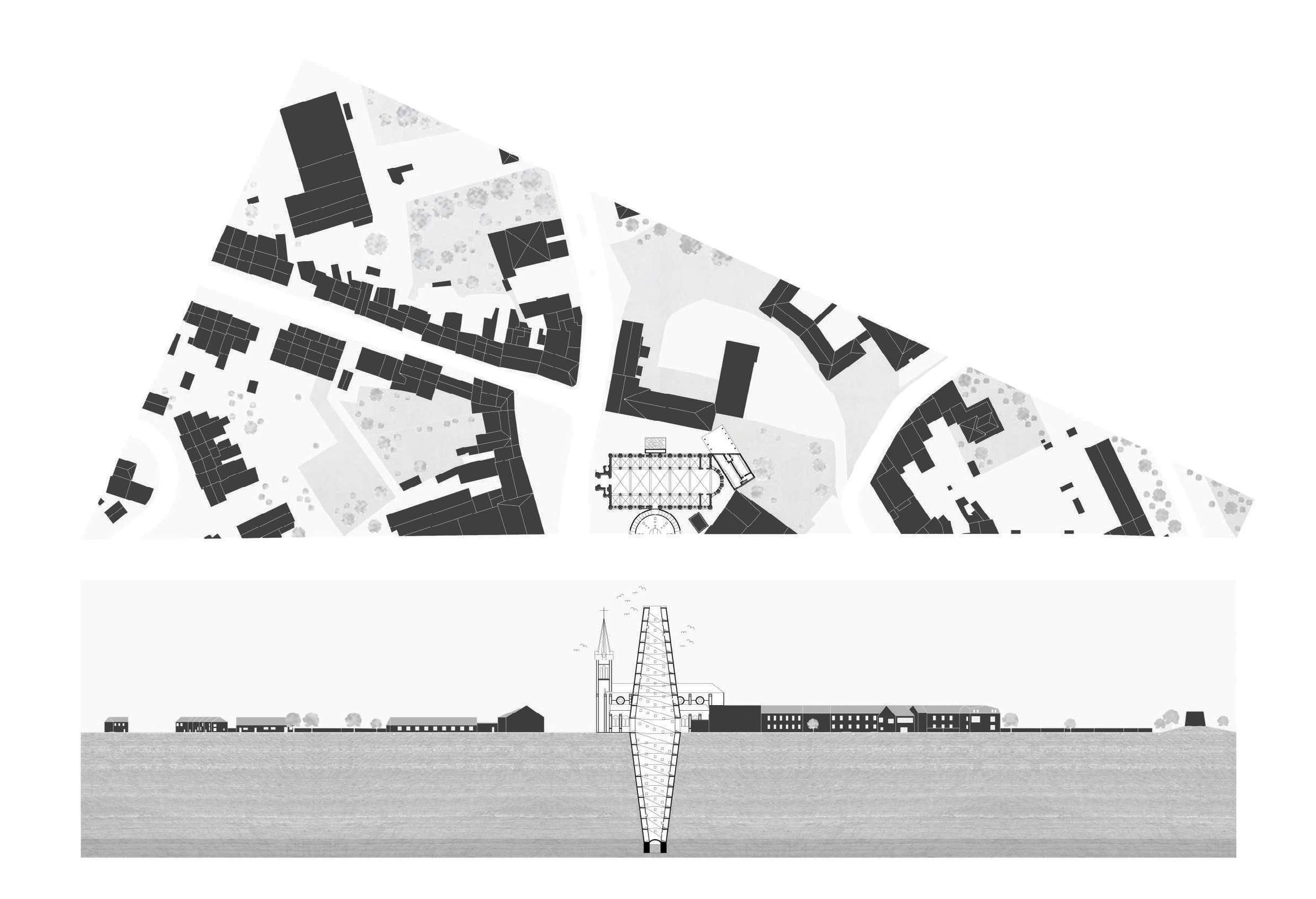
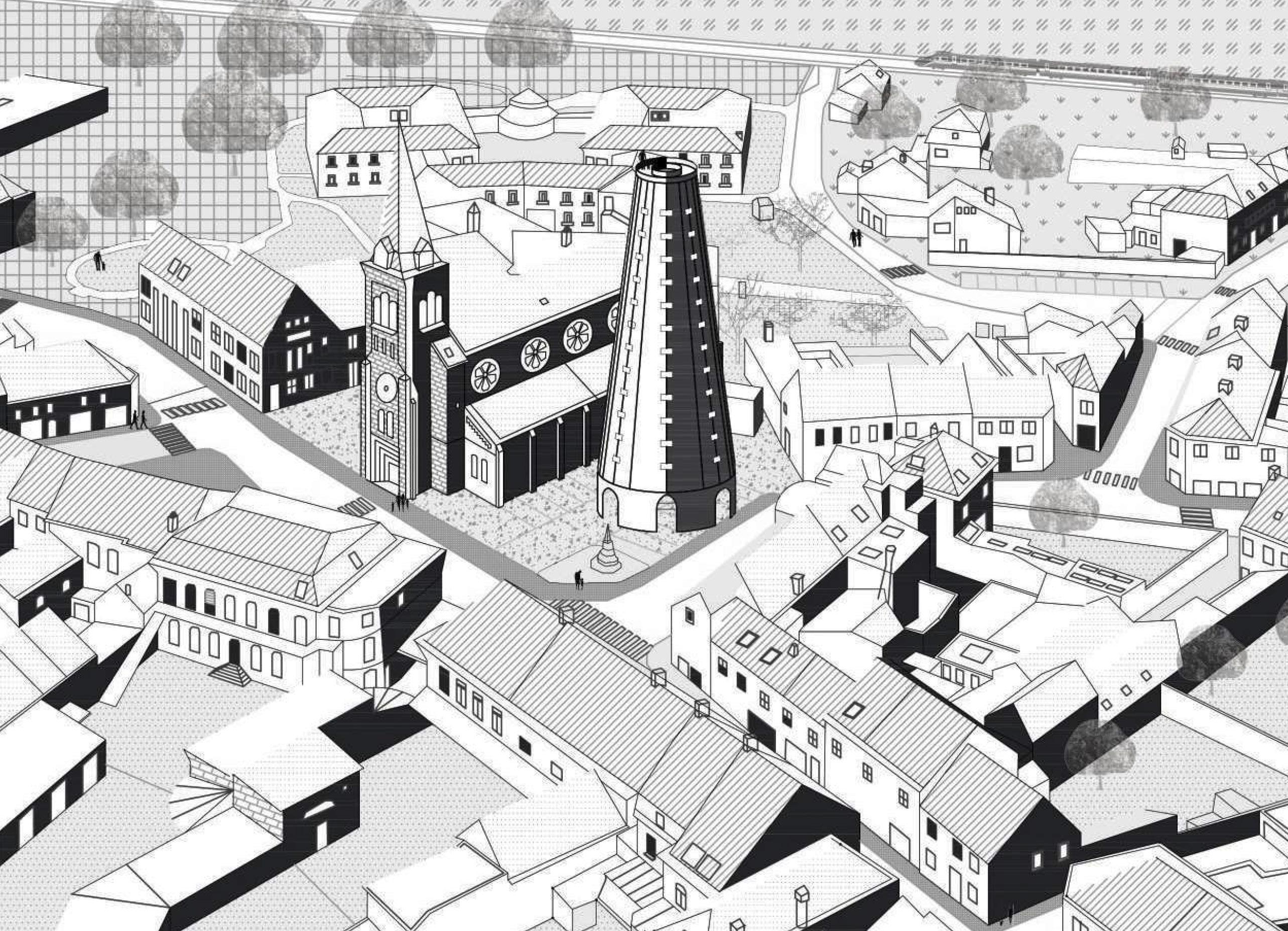
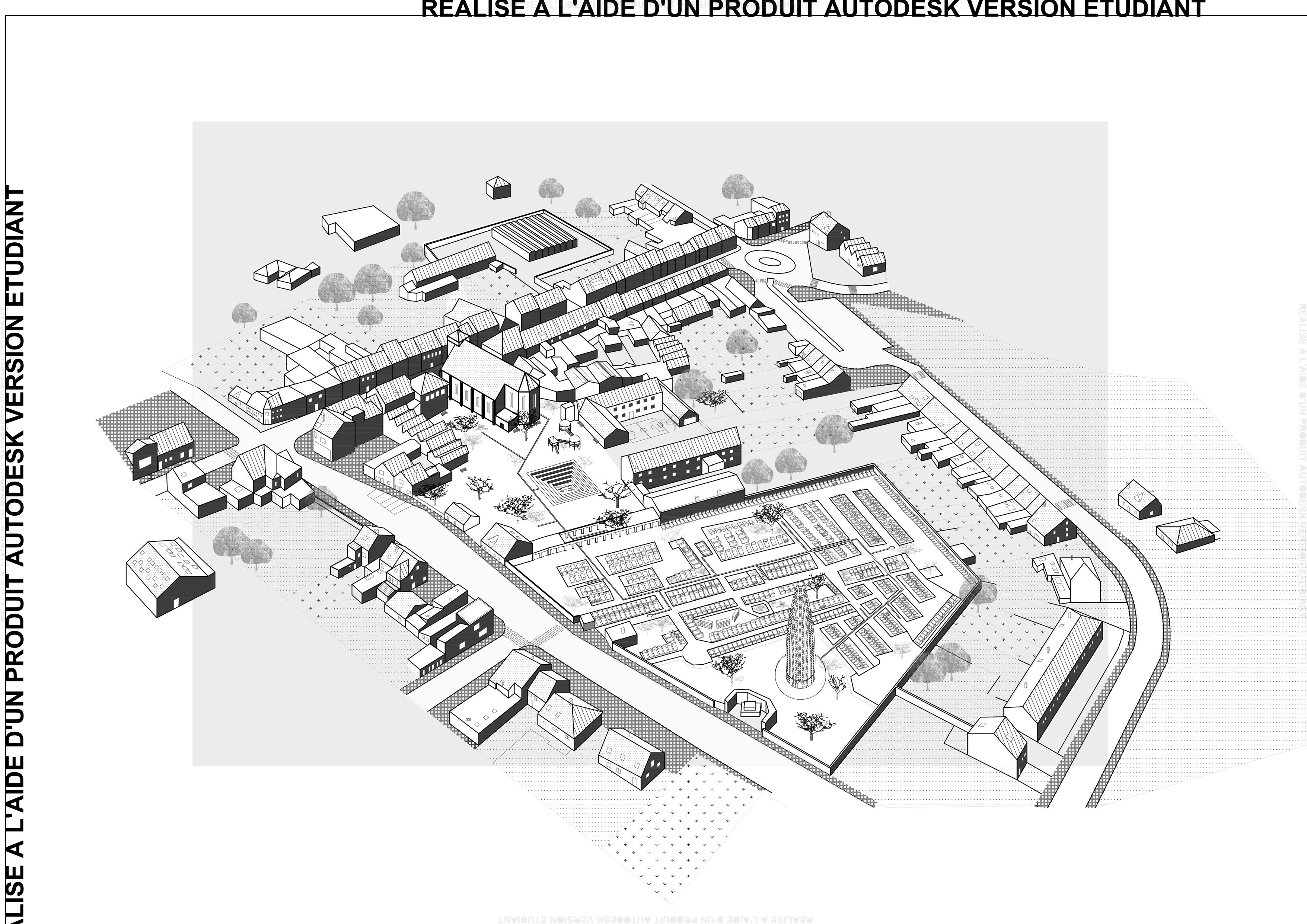
Mouscron has many empty churches. This project consists in treating these religious monuments that have become isolated from the city. By exploring a new meaning to the sacred, adapted to the anthropocene era, while respecting its history and architecture. Through various archives, we have observed that, in times of crisis, the function of the holy place was variable. However, the choice was made not to touch the interior because of its great qualities and its sacred function, but to engage with the perimeter of the church. This was based on a study and the adaptation of three recurring elements in the life of a parish: the well, the basin, and the water tower.
The church, treated according to its specificities, becomes a machine producing the common good. The intention is to re-establish life on the outskirts of this sacred place, which again affirms the church in the centre of the village.
29
Collage_Climbing Watertower


30
Collage_Retention basin
Site axonometry_Church Notre-Dame de la Paix
31
32
Plan and section

33
leisure garden
Collage_Public
Axonometry_Church St. Maur
Collage_Central water pit
Collage_Productive cemetery
34
35
Axonometry_Church St Paul
05
Musicvillage on a parking
Revitalisation of an abandoned parking
Blauwhondstraat 2, Mechelen
2020 - 1st Master Architecture
Micromegalab - Alain Simon, Eve Deprez
Aerial view of the existing parking
36
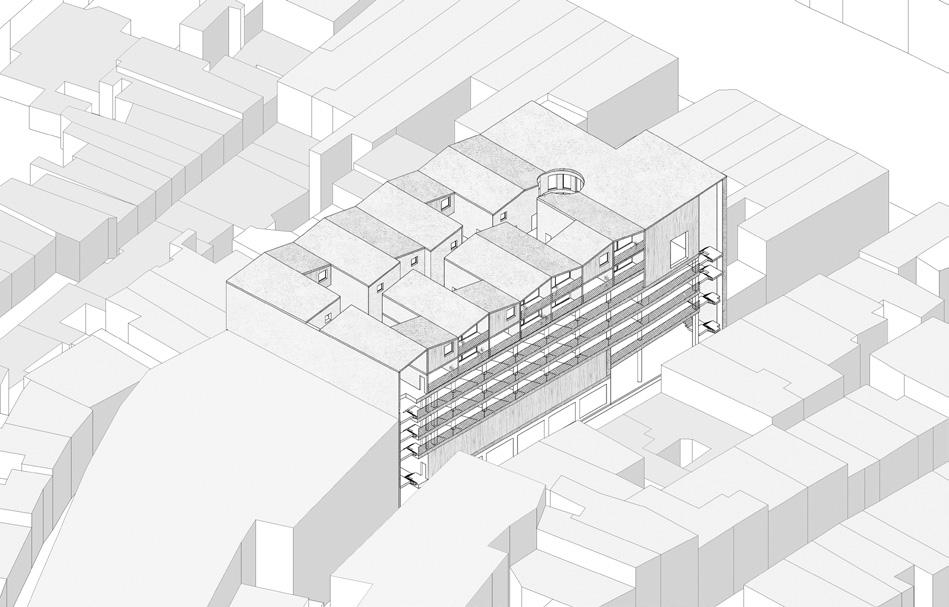
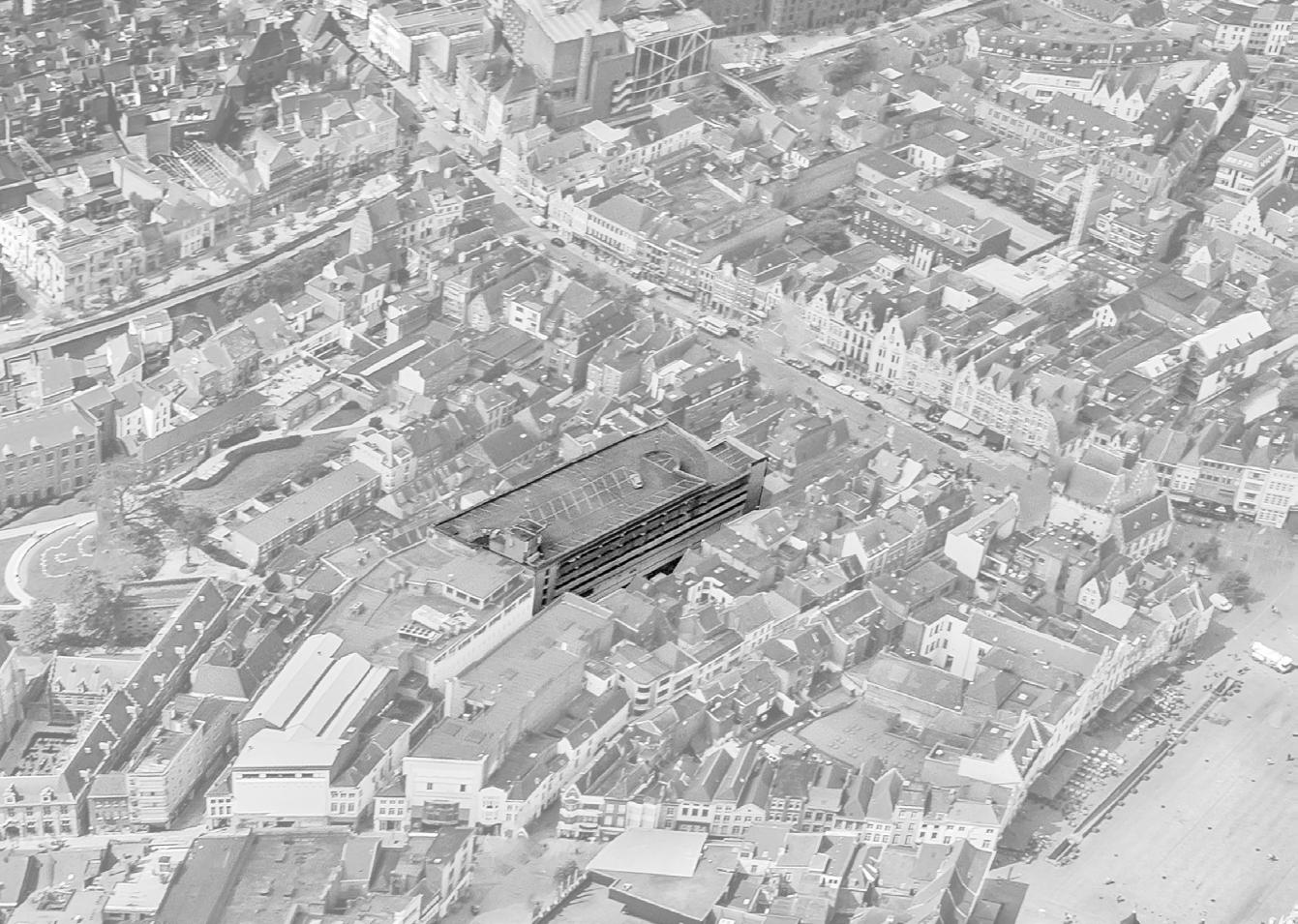
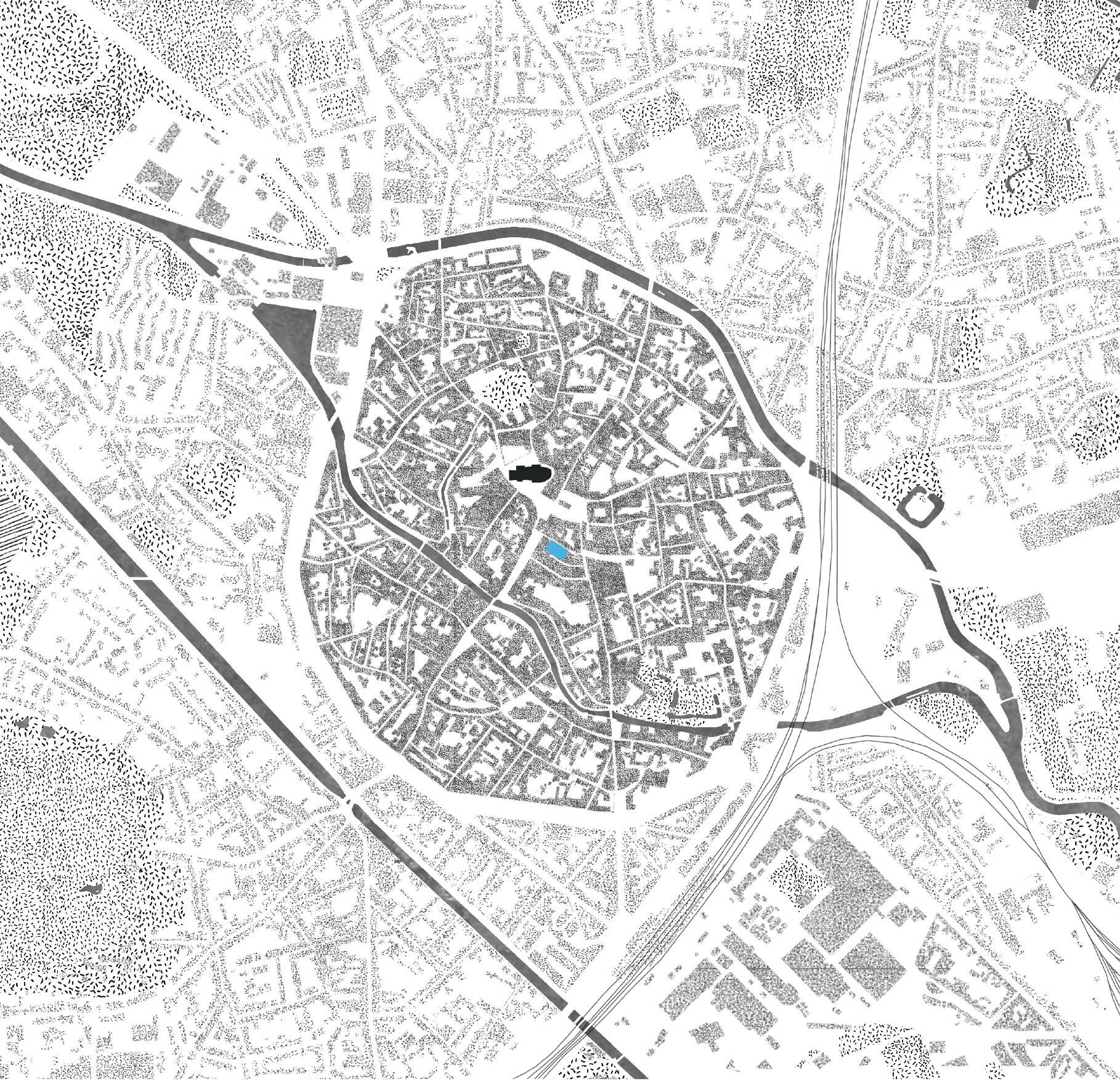
The question of the densification of Mechelen is beco ming more and more important today, especially be cause of the growing population and the environmental problems due to urban expansion. This raises the question: how else could densification be achieved in Mechelen?
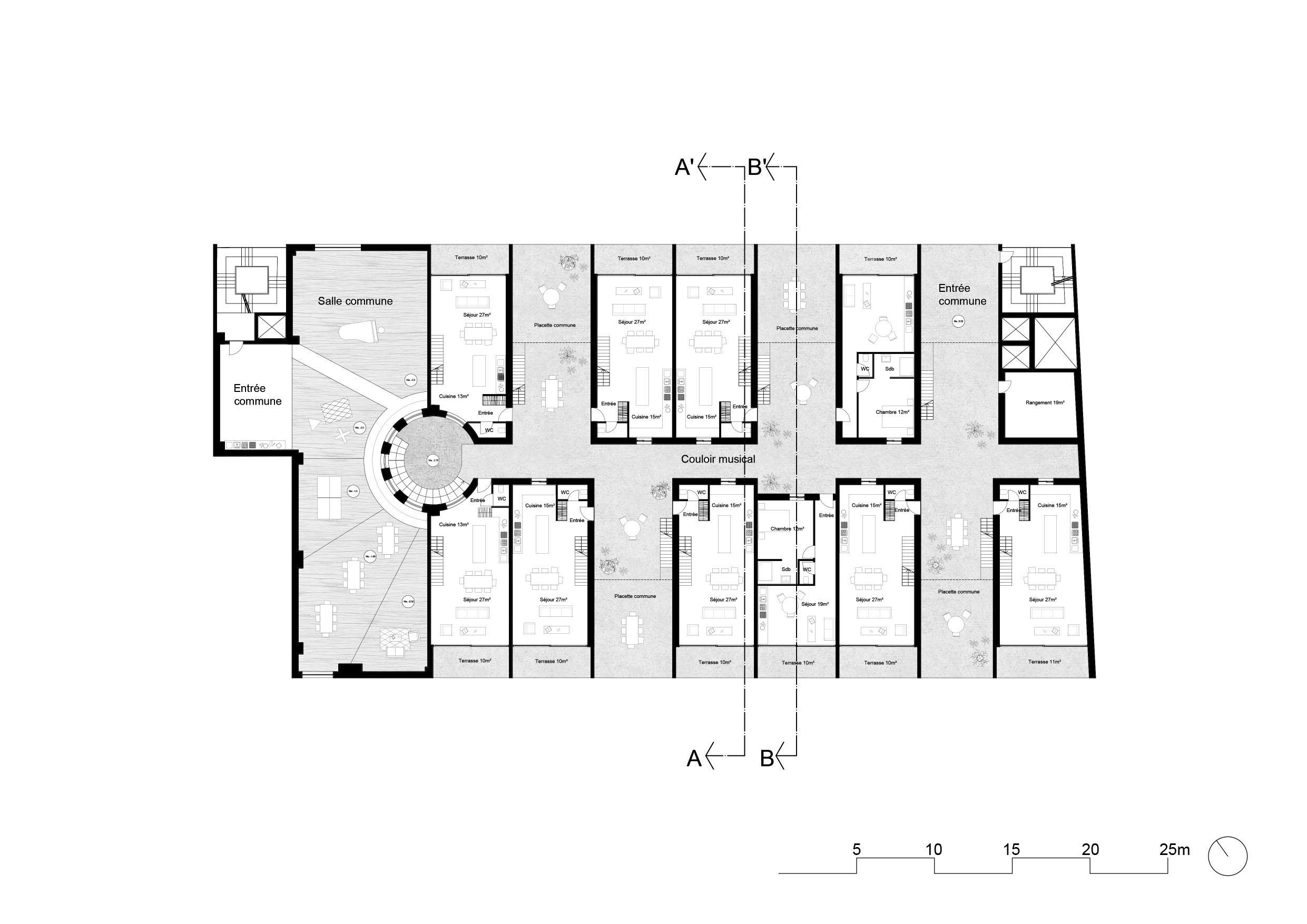
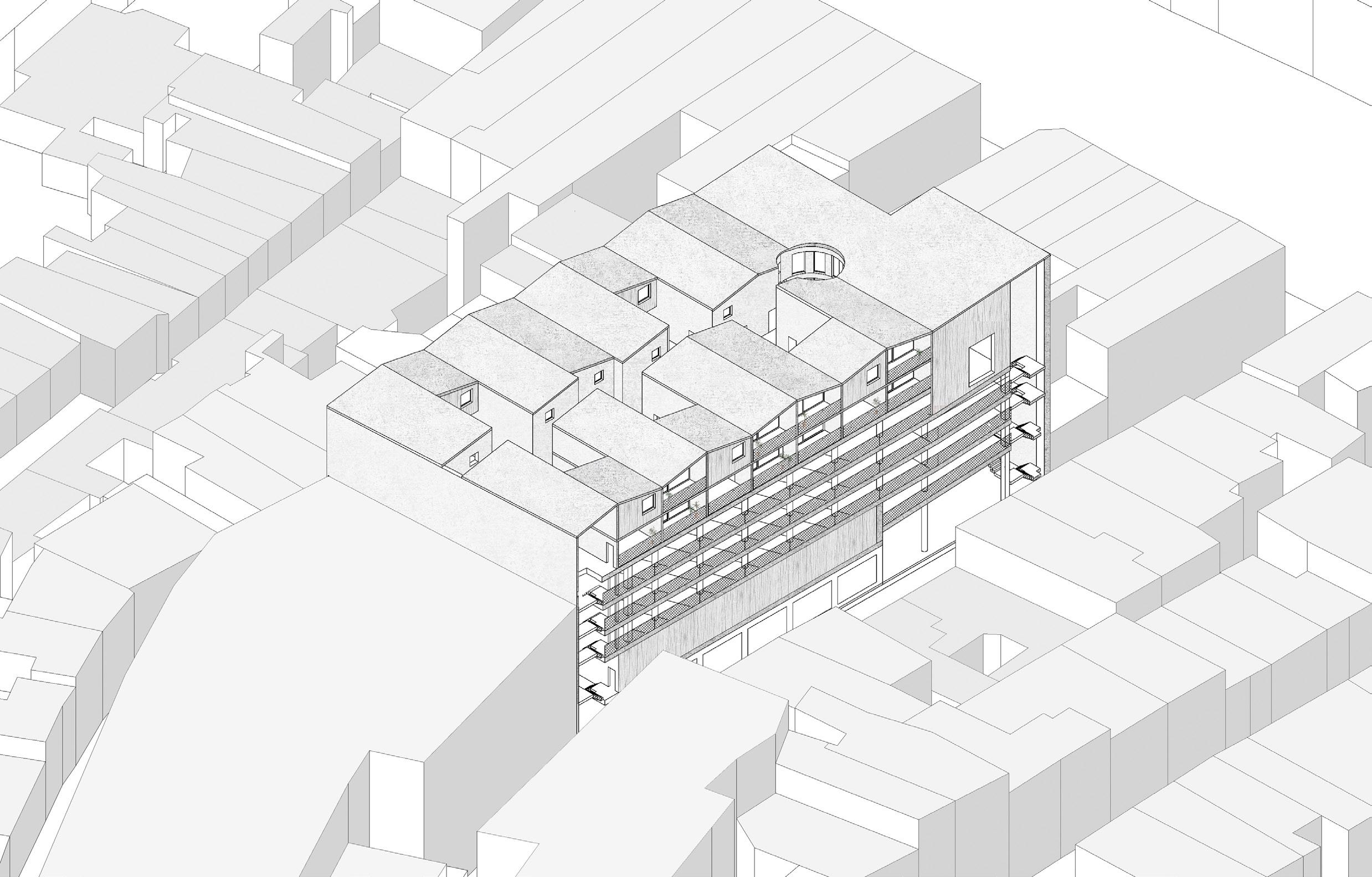
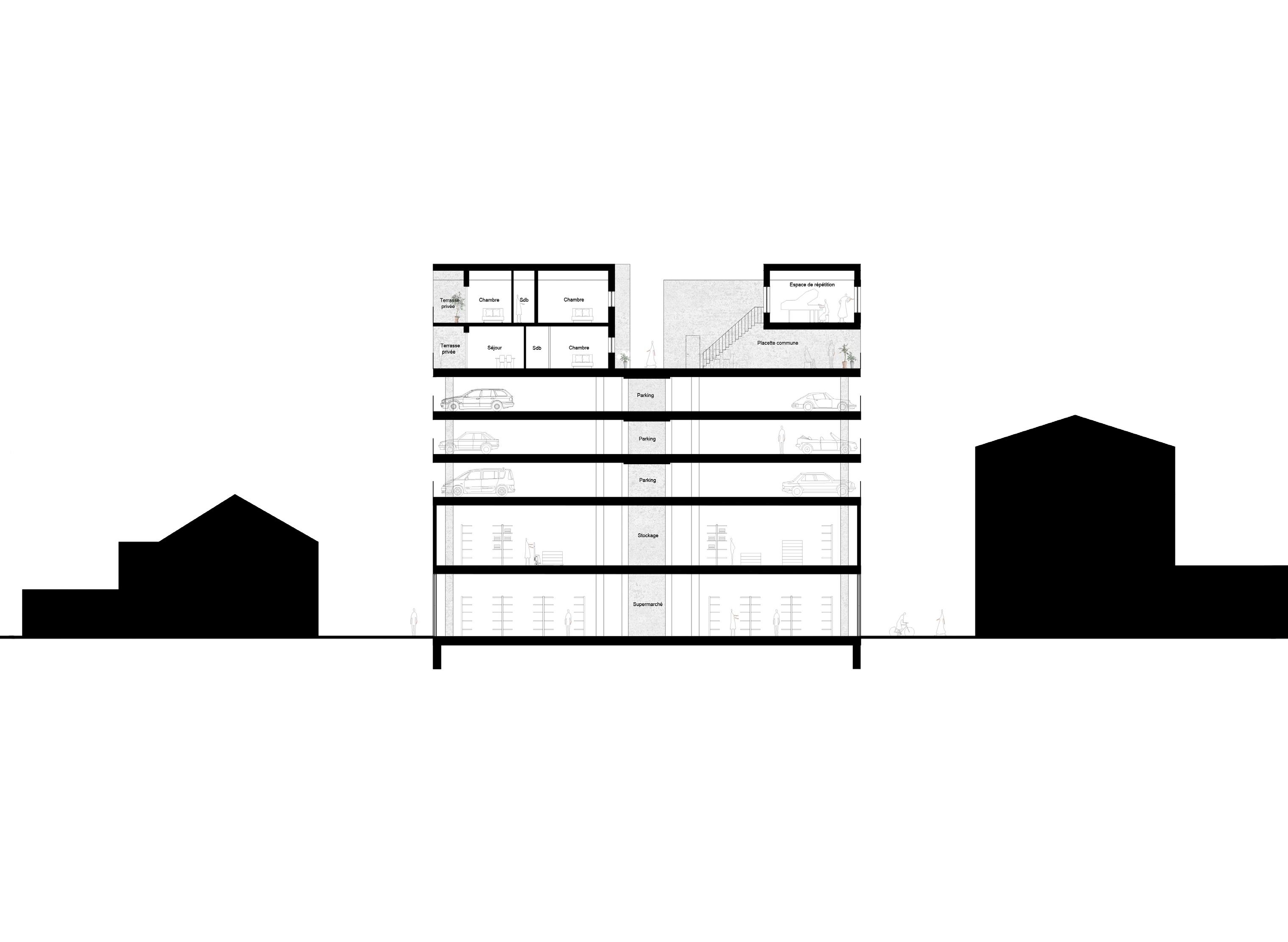
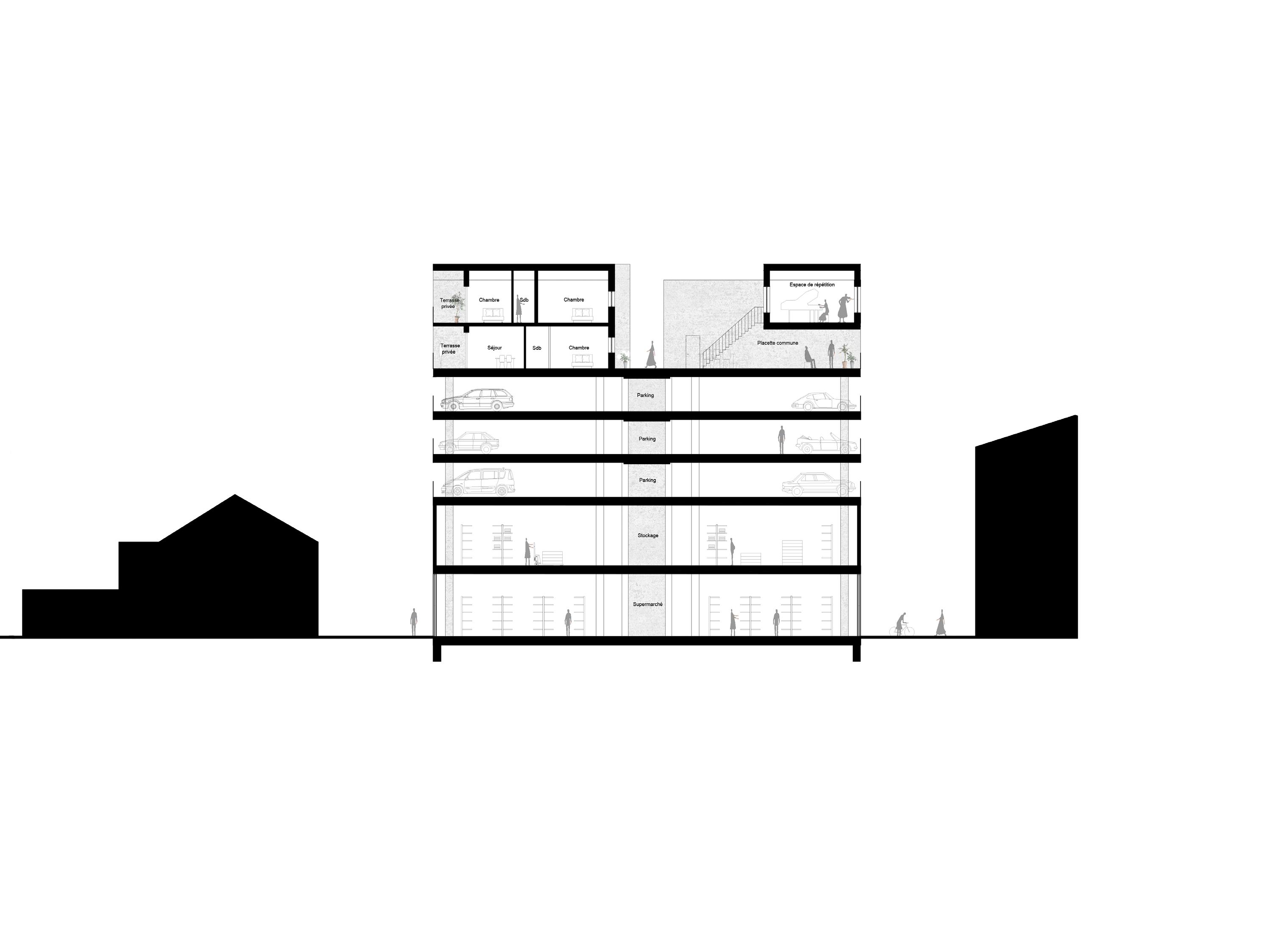
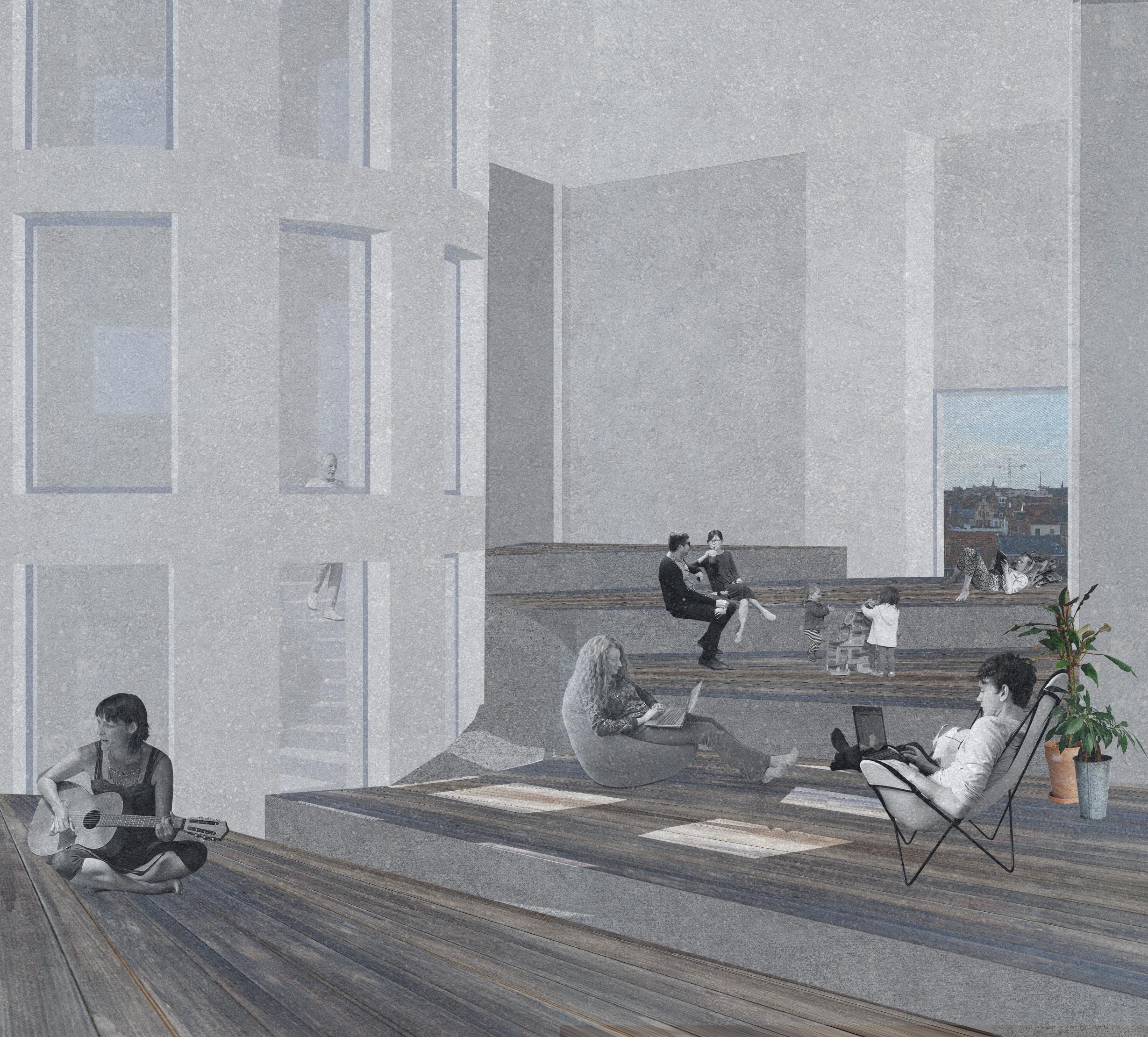
The project reinvests the «Center parking» located in the heart of the city centre of Mechelen. As the city pro motes soft mobility in order to reduce the presence of cars in the centre, the collective housing project replaces the last two levels of the parking building. The city has a number of music facilities, but above all a large conser vatory located close to the car park. Given this context, the project is aimed at musicians.
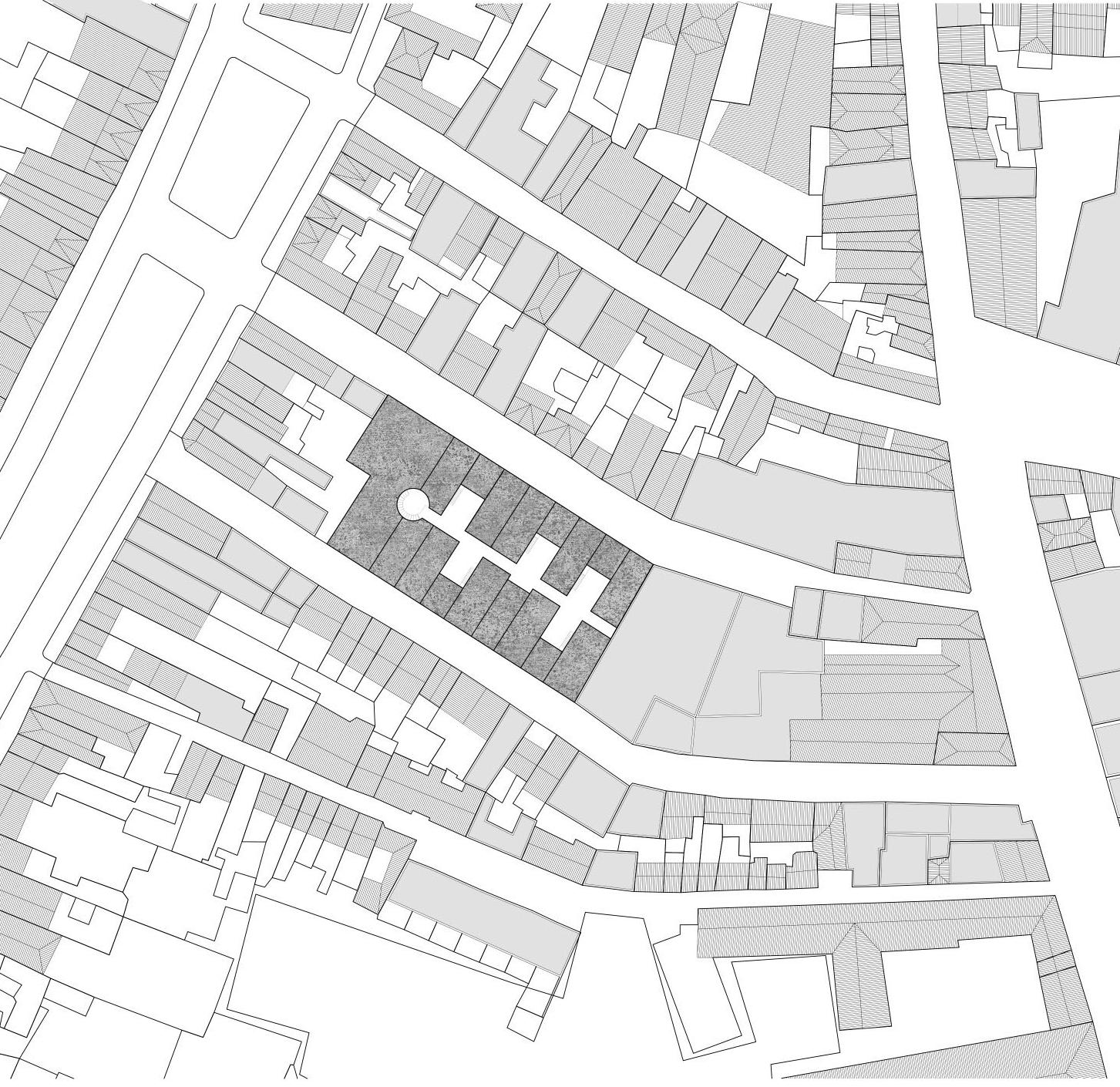
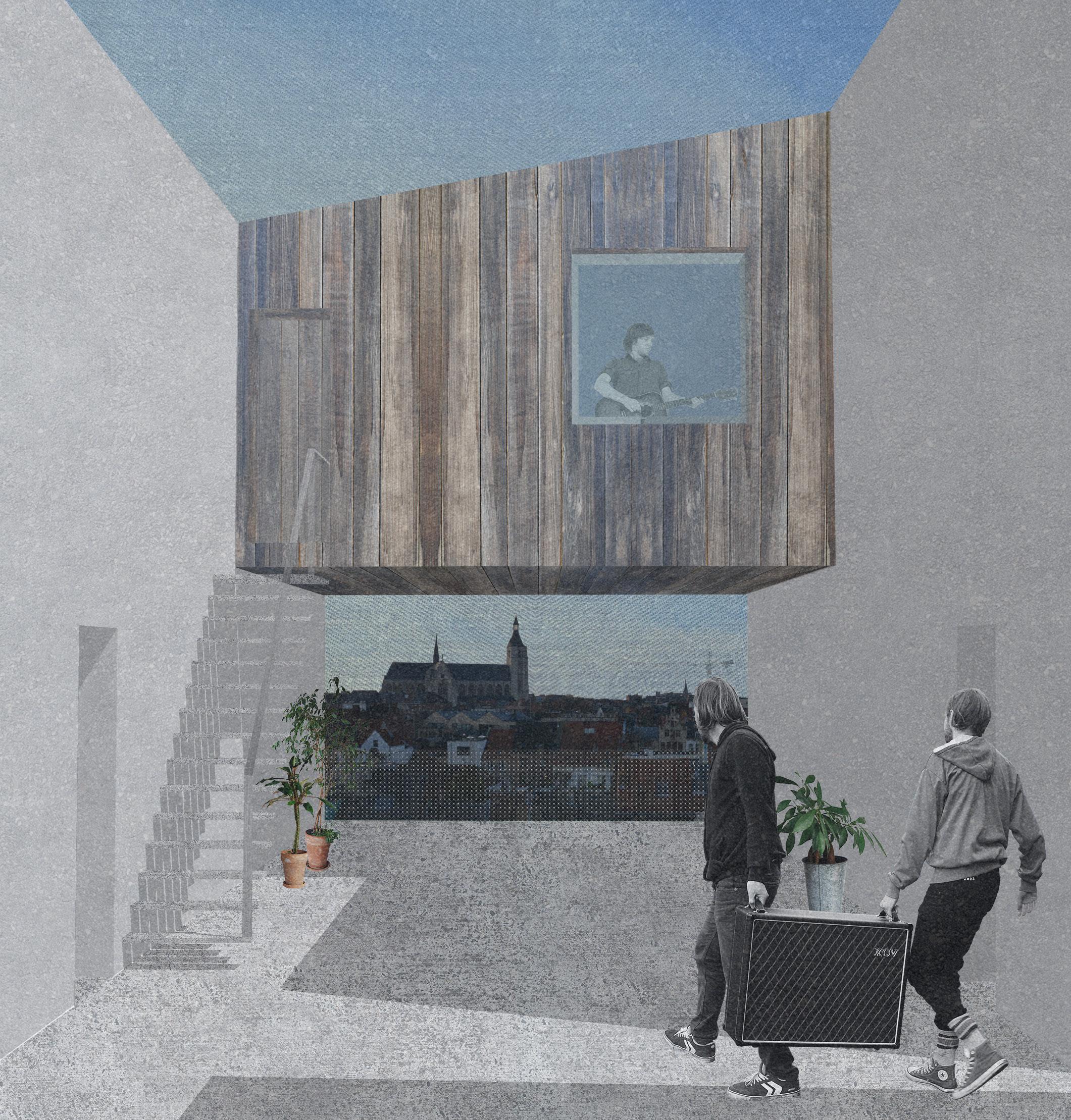
One of the biggest challenges in the design of the project was to compose while maintaining the structural constraints of the existing building. Thus was born the central «crevasse», opened by small plazas and distributing the dwellings, which gives the project its «city character». Music boxes are “hung” above the plazas, opening up the views over the city. The ramp has also been reinvested with a common room, aimed at bringing together musicians. By demoli shing the existing façades, the concrete structure is magnified. The project is composed of cast concrete walls, which evoke a singular atmosphere spe cific to the world of car parks.
37
Mechelen map
38
Implantation plan
39
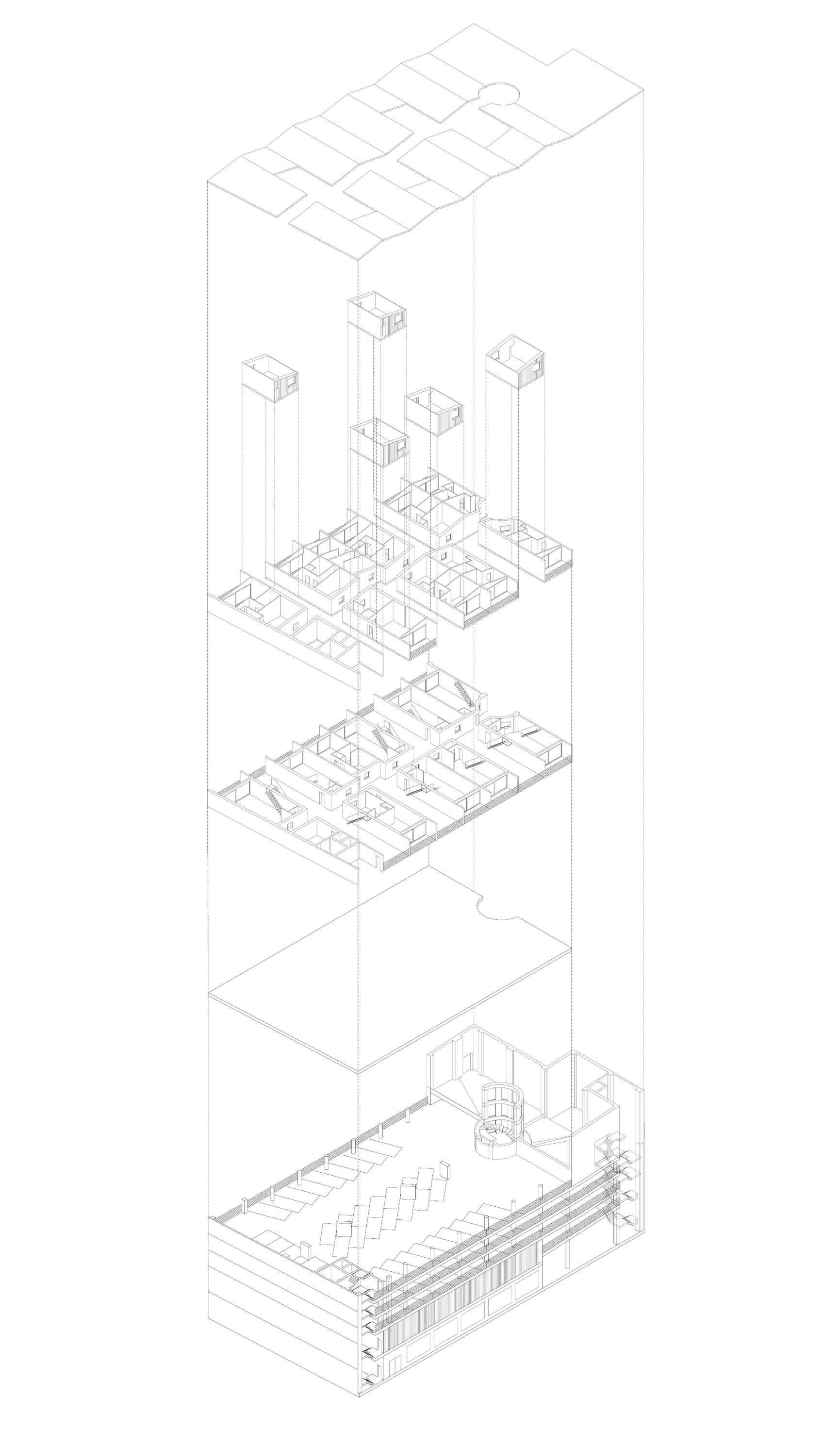
40 Exploded Axonometry
5th floor plan
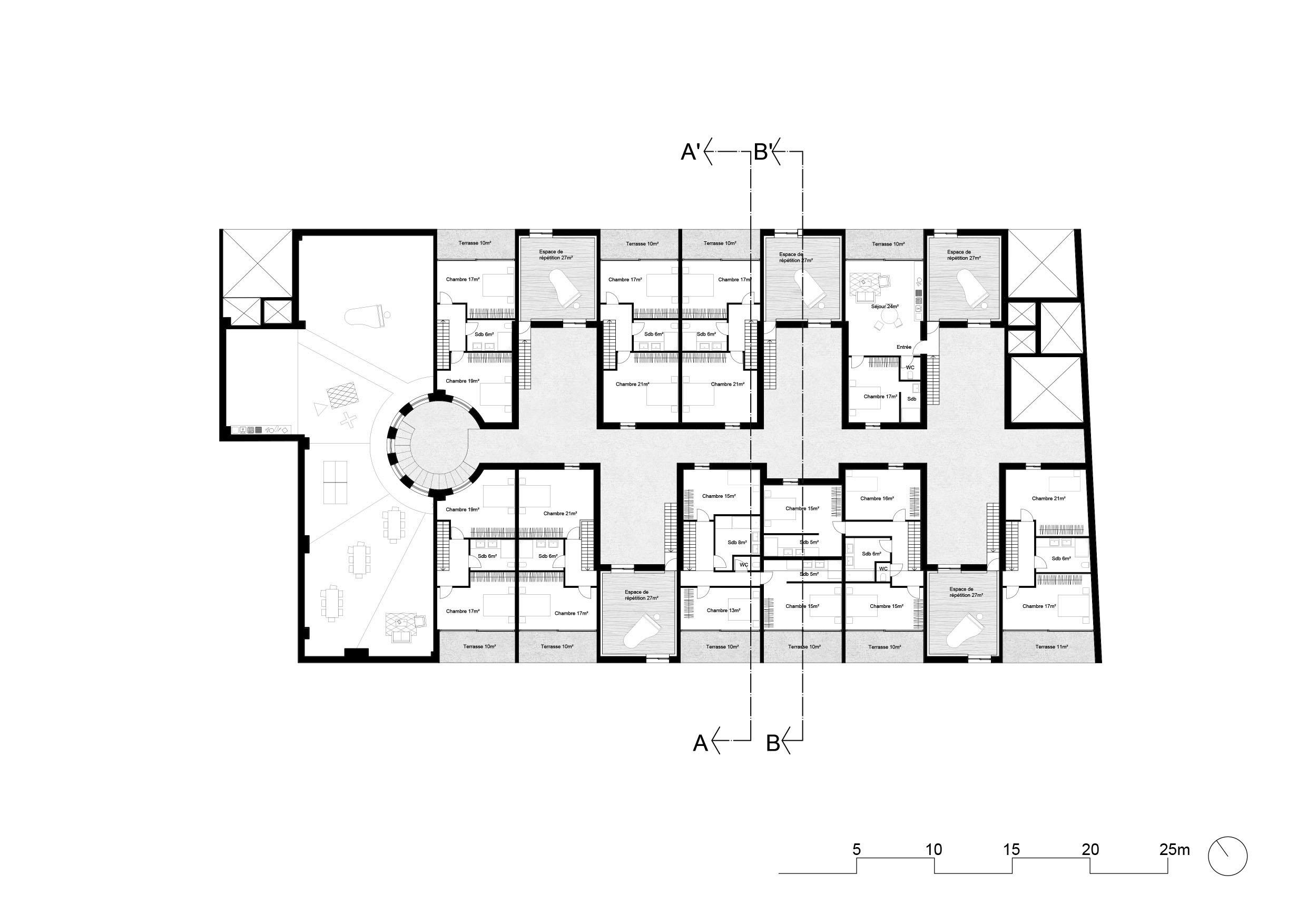
6th floor plan
41
Axonometry
42
43
Section BB’
The ramp
44
45
Music box
Inside Out 06
Exploring the outside space in a housing project
Mechelsestraat 162, Leuven 2021 - 1st Master Architecture
Micromegalab - Alain Simon, Eve Deprez
46
Masterplan Vaartkom
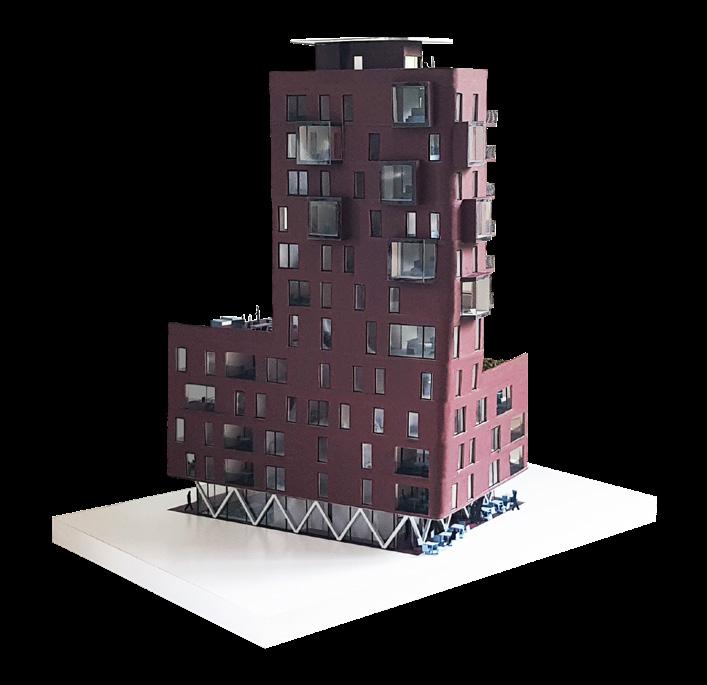
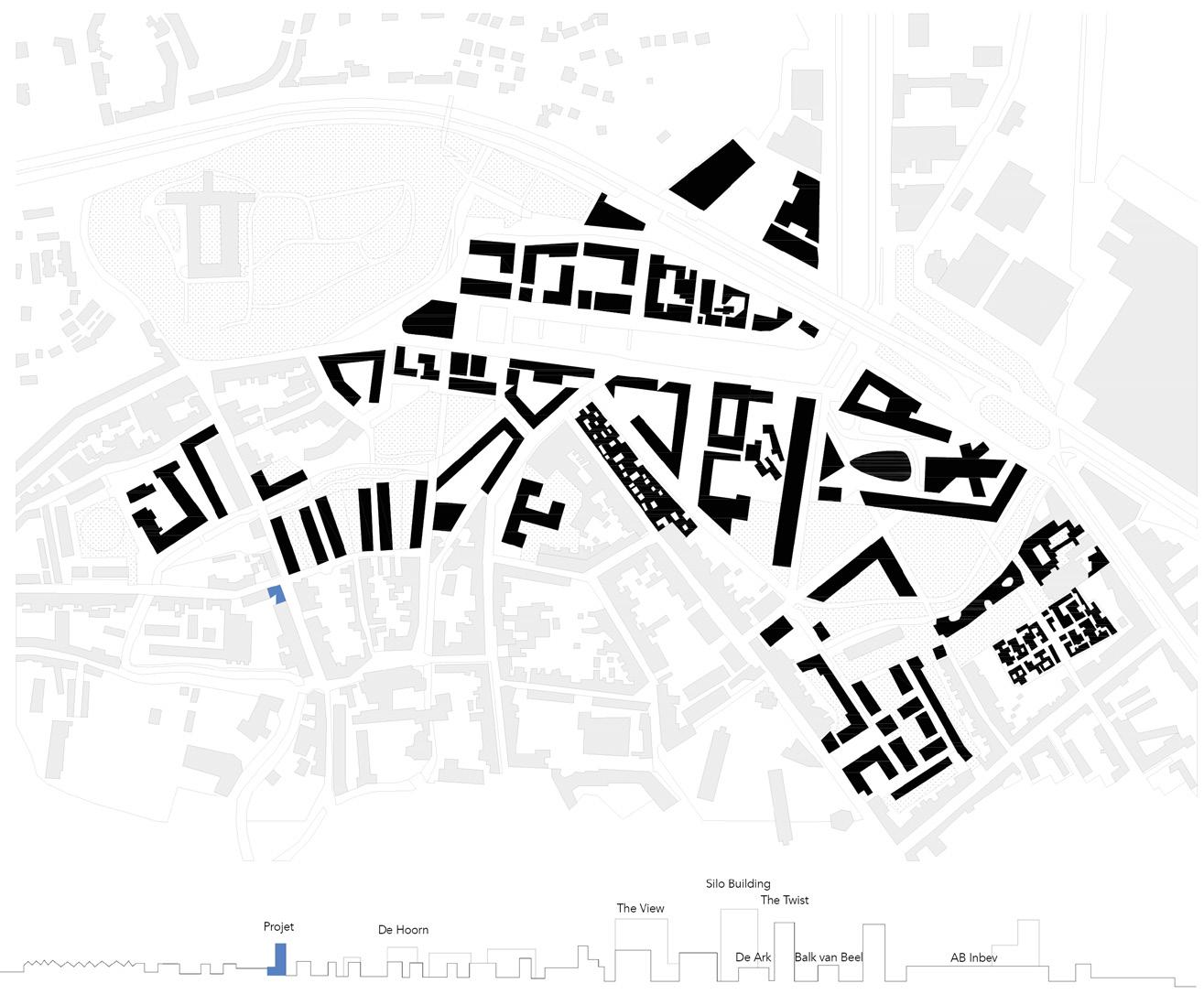
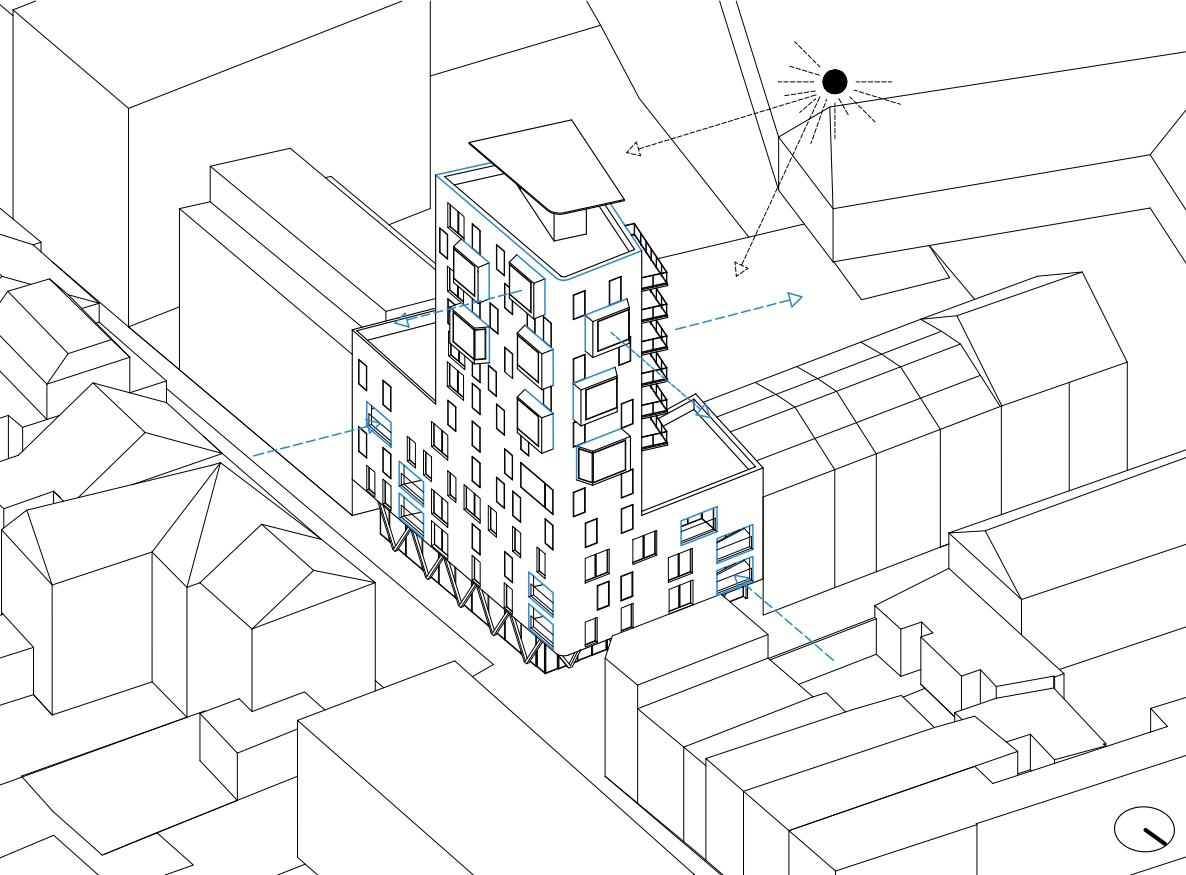
The project «Inside Out» aims to revisit the outdoor space within a housing project in Leuven. It was strongly influenced by its proximity to the new « Vaartkoom district », which develops a heterogeneous urban fabric. The buildings are denser and more open to the public space. Terraces, loggias and balconies enliven the facades, gradually integrating private life into public life. The project tends towards this heterogeneous urban form which, contrary to the rest of the city, does not only implants itself between two buildings, but rather aims for a general horizontality allowing punctually a vertical excrescence.
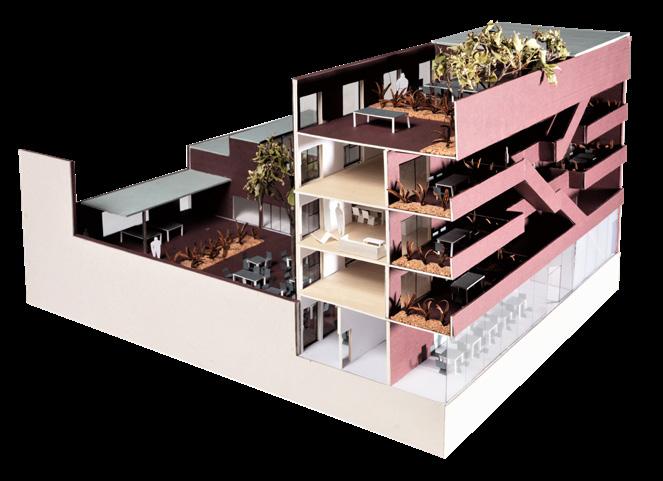
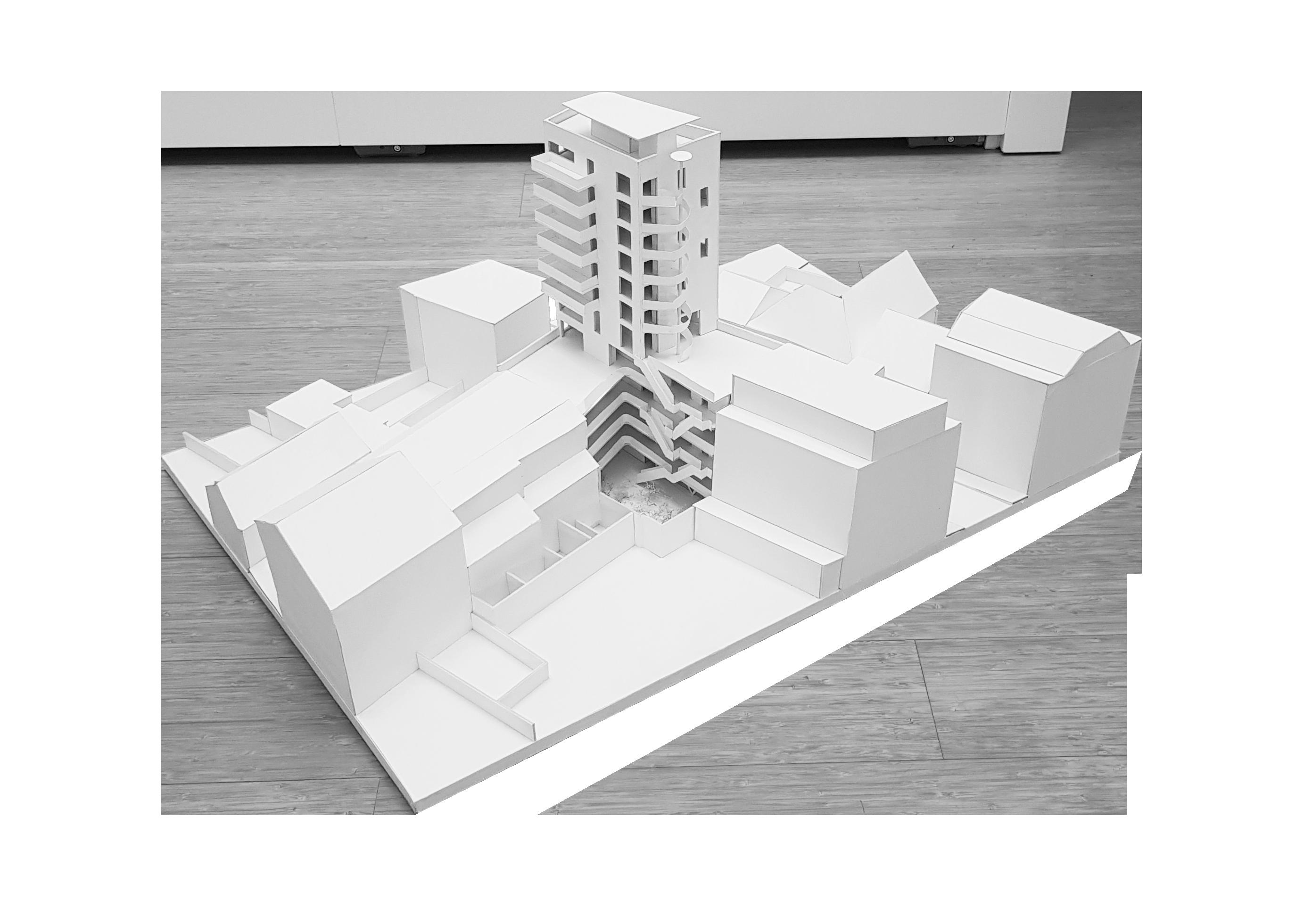
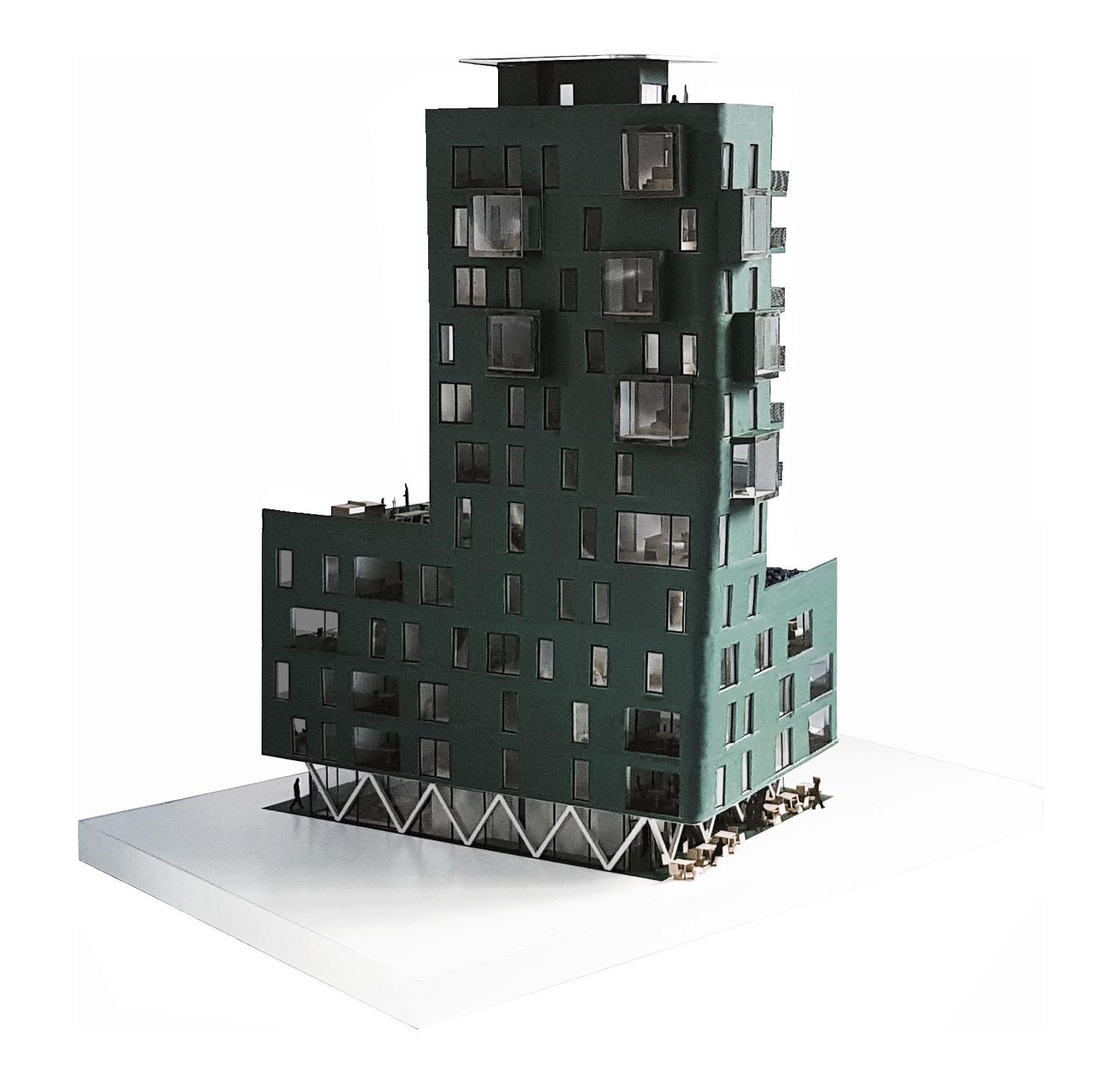
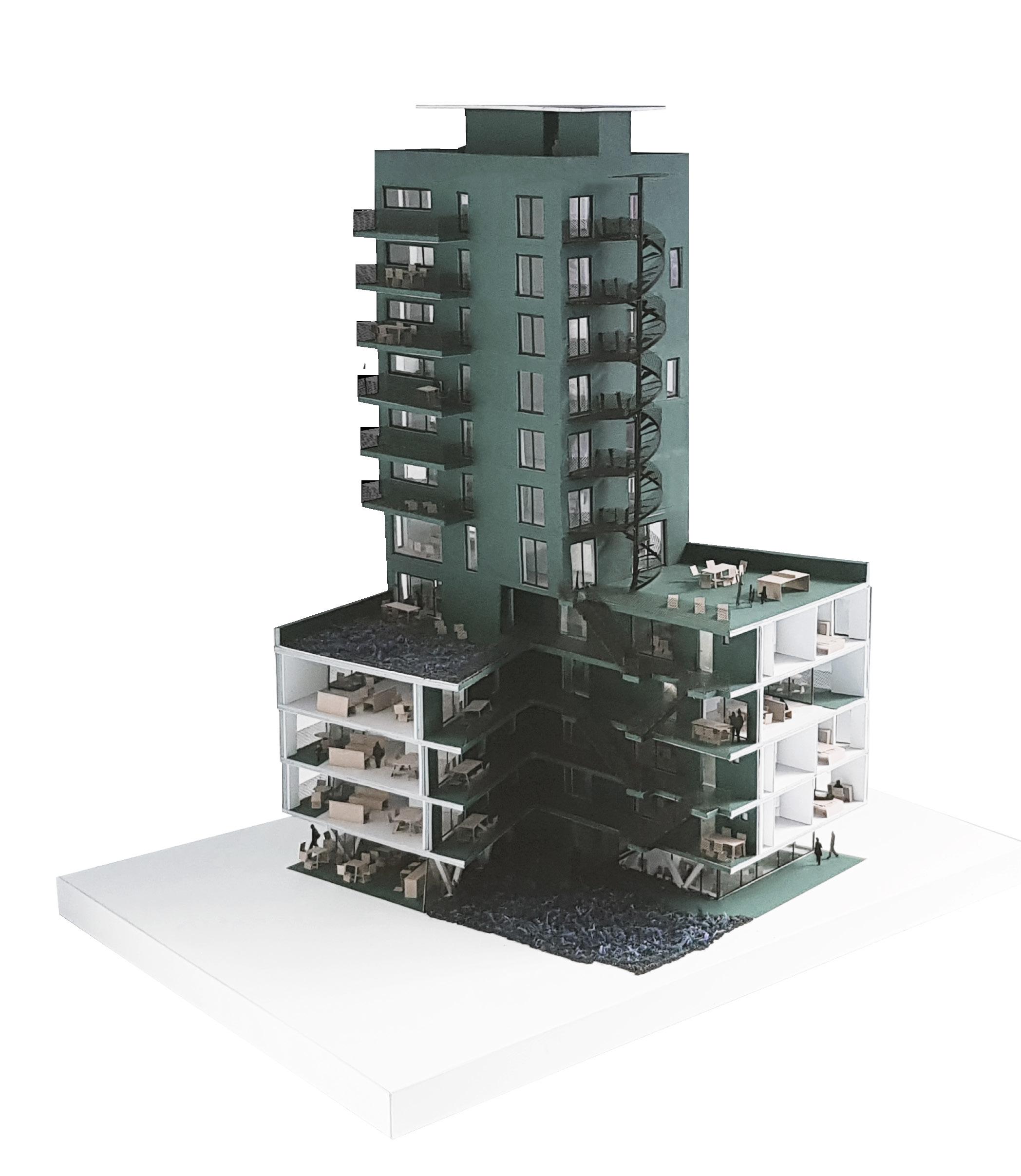
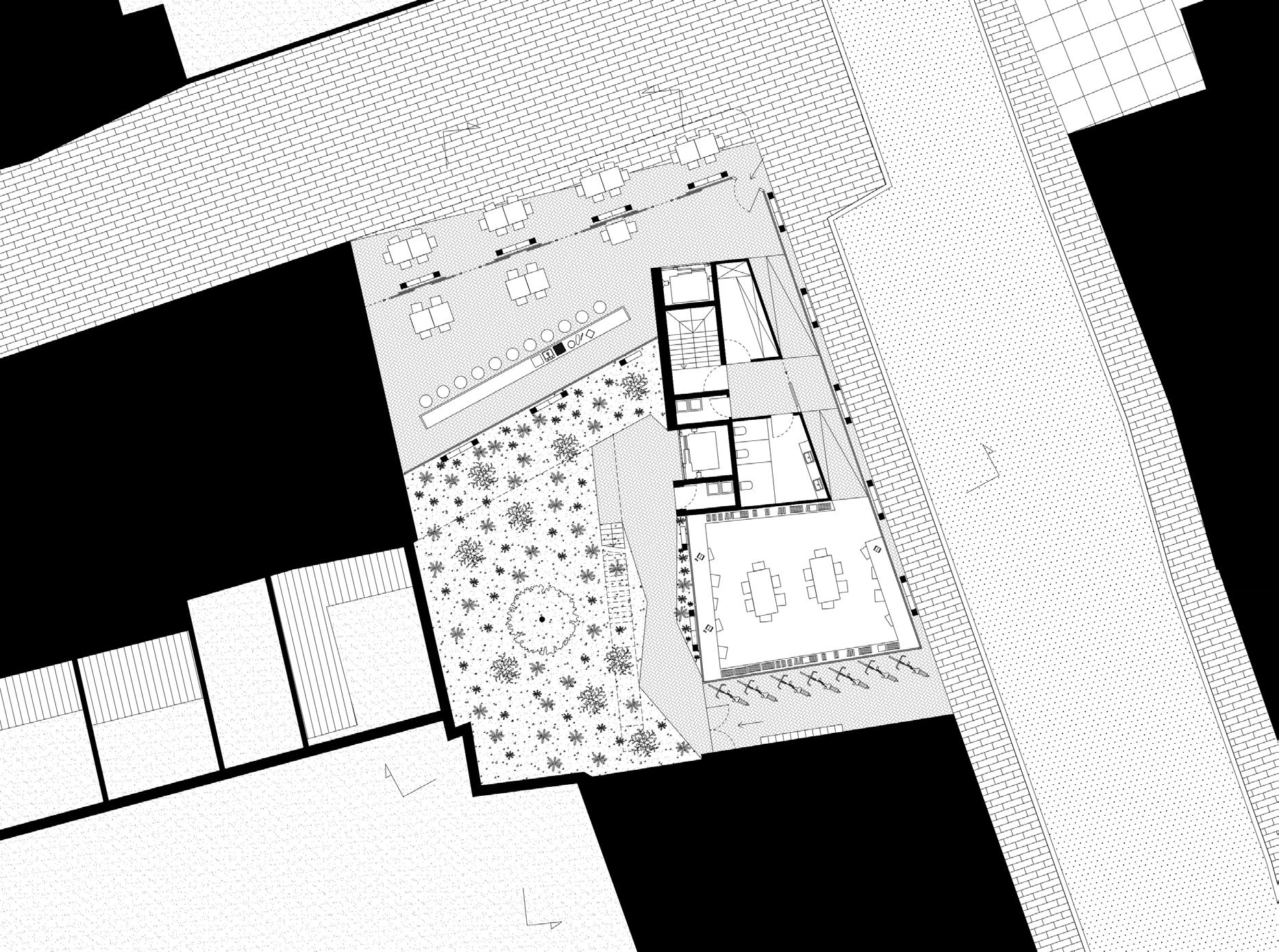
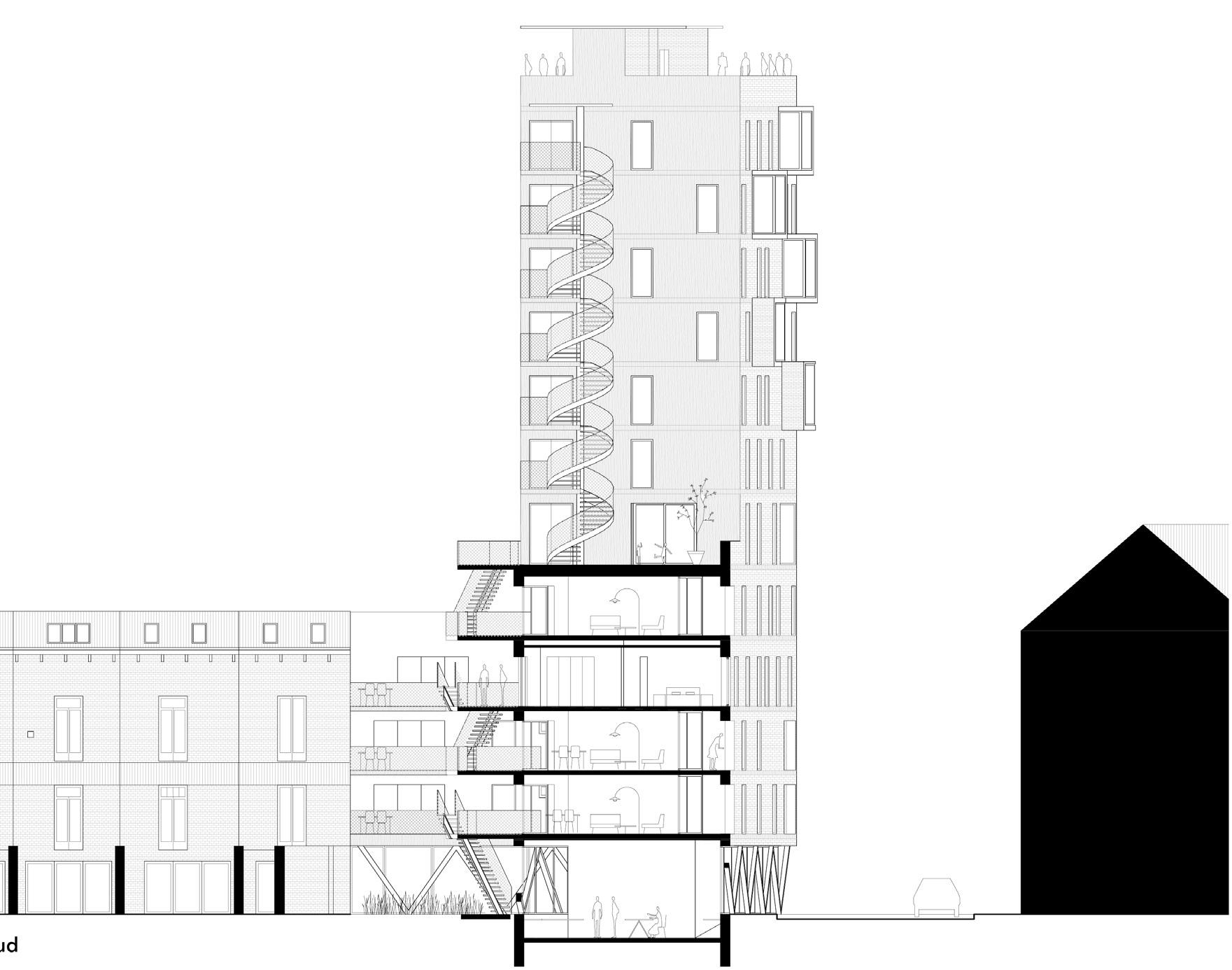
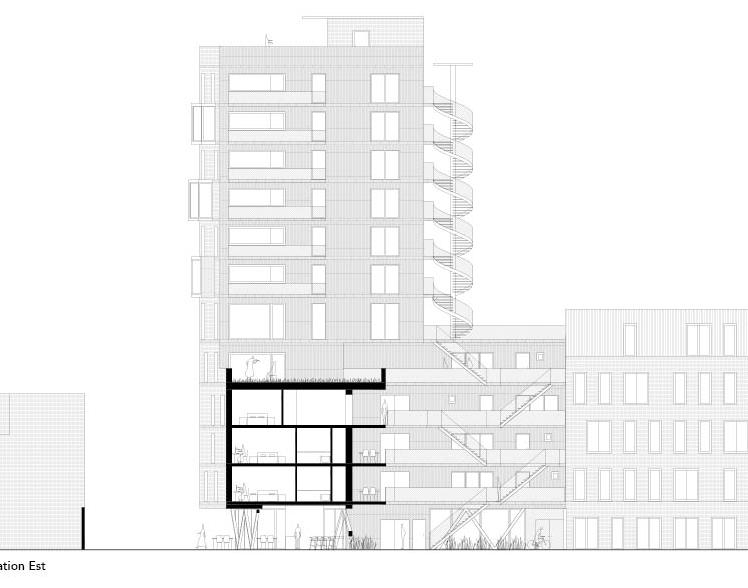
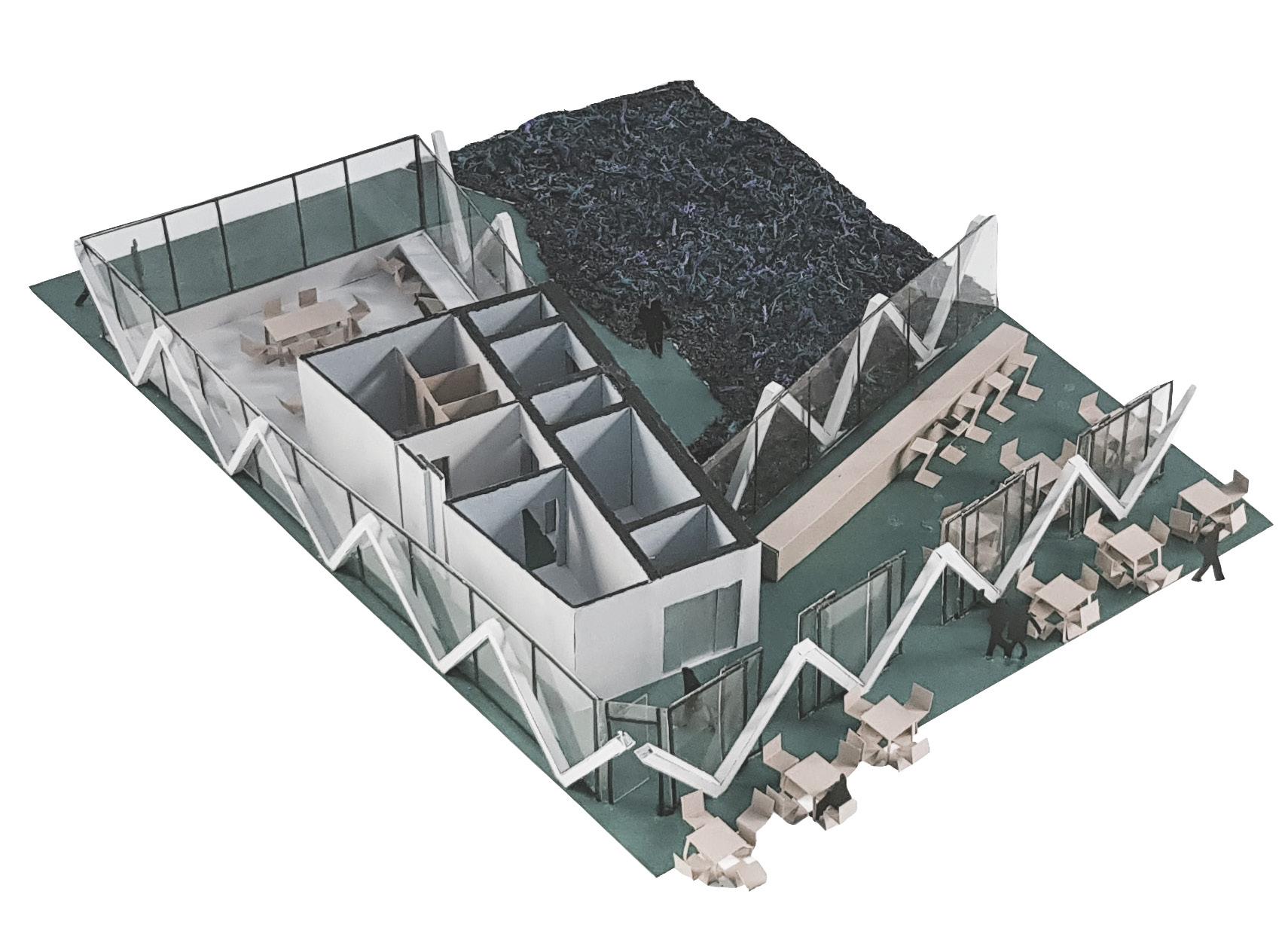
The building is located on a corner plot between the Mechelsetraat and the Penitentienstraat, in a low-density residential area. The pro ject is aligned with the near context at its ends and grows vertically at its furthest point. It consists of a central core around which all other spaces develop. Great care is taken to ensure that the ground floor is permeable while supporting a large ‘mass’ of housing. The V-shaped structure minimises the impact of the building on the ground and makes the façades more dynamic. The subtle interpenetration of public and private spaces within the same building accentuates the integra tion of the project into the city. The spaces are distributed by an archi tectural promenade materialized by unusual circulations and diagonal views participate in informal meetings.
The project offers various public spaces (notably a café linked to a rooftop) and housing of varying typologies that open up to the city thanks to a multiplicity of « architectural devices »: the loggiaa present up to the 4th floor on the street-side façades offer more privacy, as they develop in the mass of the building. The bow windows develop above the low context (Levels+3 and +4) on the eastern and northern façades, seeking out specific viewpoints in the Vaartkom, the Abbey of Mont-César and the church of Saint Gertrude. More open spaces such as the balconies, external walkways and terraces are oriented to the south and west, creating indirect exchanges through the eyes and the passage.
Finally, the cladding interacts with the structure, notably through diffe rentiated brickwork on the slabs, marking the levels while maintaining the monolithic appearance. The fishbone pattern on the floor marks the penetration of the exterior space into the building. Further more, a polished concrete floor gives a certain rigidity and shine to the white interior walls of the dwellings. This palette of warm and cold materials accentuates the « blurred boundary » between the exterior and interior space of the differnets spaces.
47
1/100 model
48
Axonometric scheme
49
1/50 model_north-east facade
50
1/50 model_south-west facade
51

52
A B B’ C
A’ C’
Ground floor plan Penitentienenstraat
Mechelsestraat
53 Section
CC’
54
Section BB’
1/50 model_Ground floor
55
Eau propre/Eau sale 07
Critical analysis of the production, consumption and treatment of water
Vesdre valley 2021 - 2nd Master Architecture
CUMA - Sophie Dars, Thierry Decuypere Eau microbiologique
56
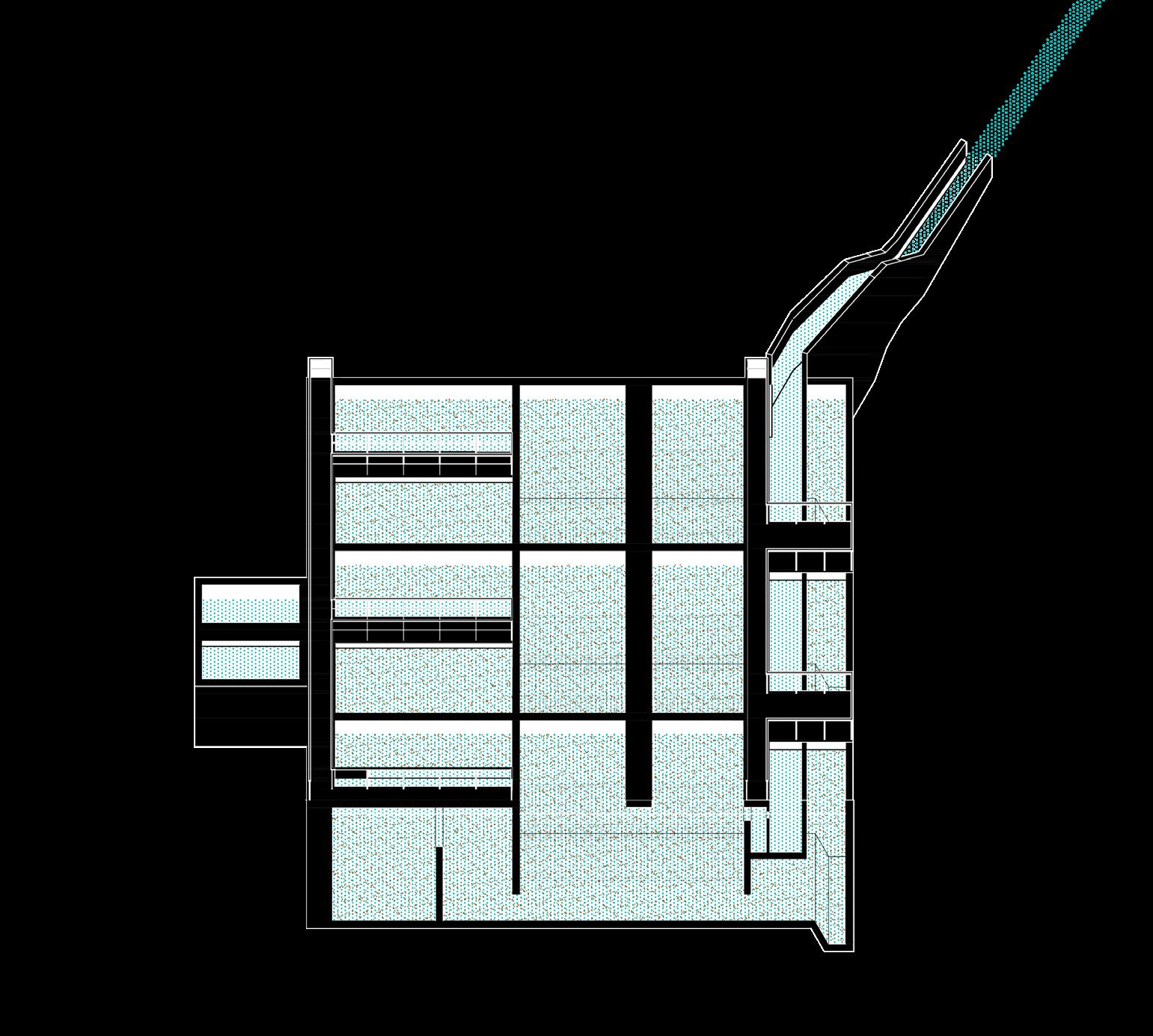
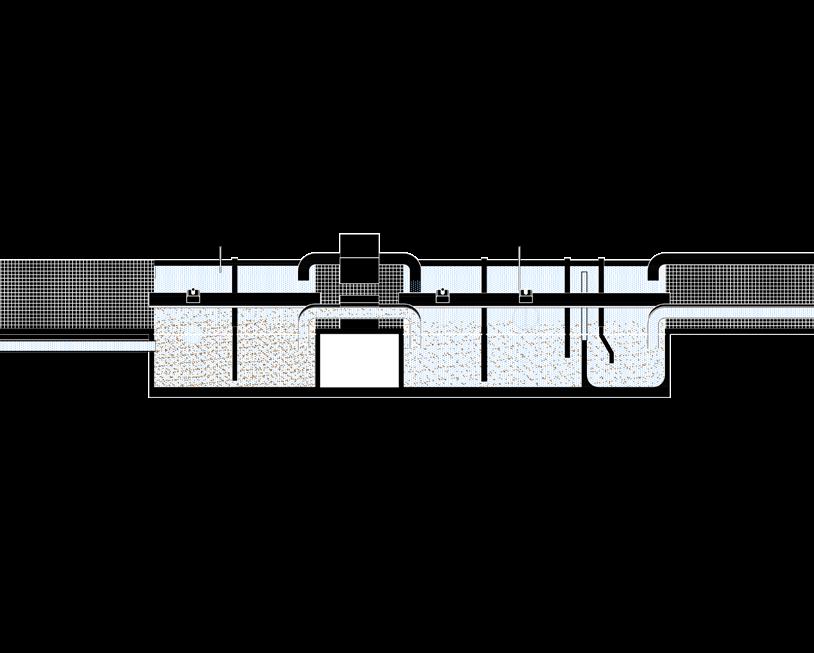
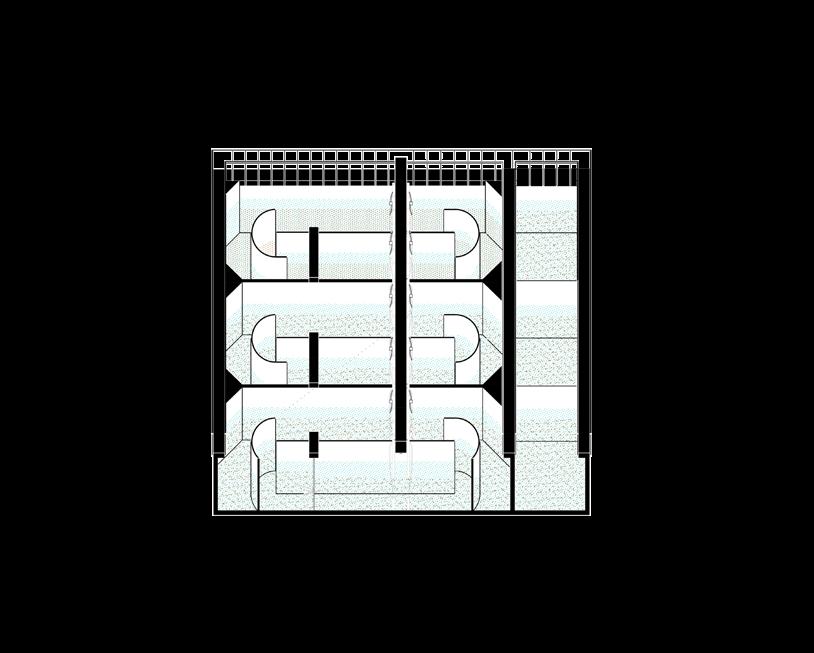
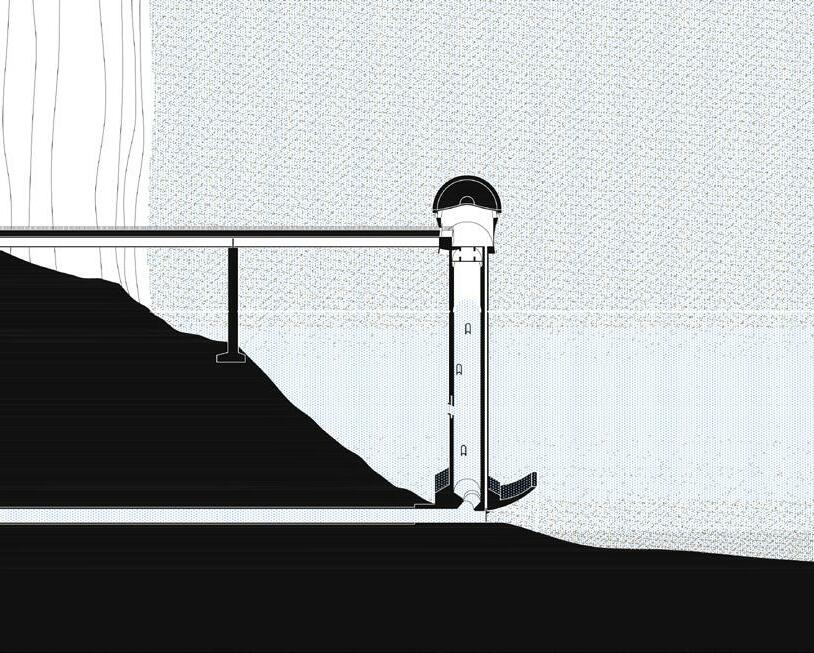
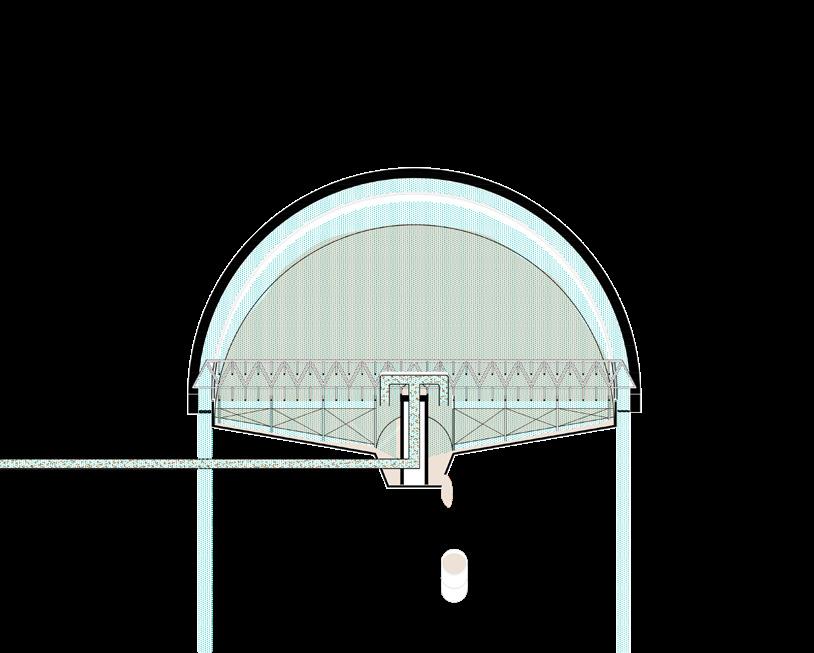
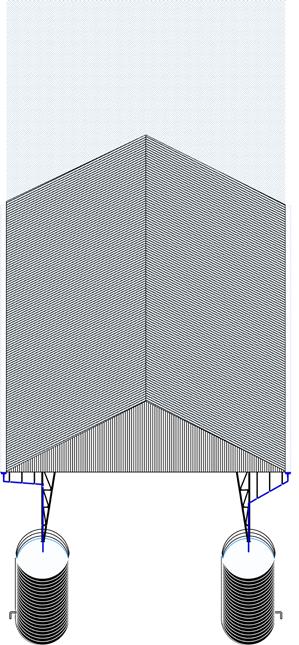
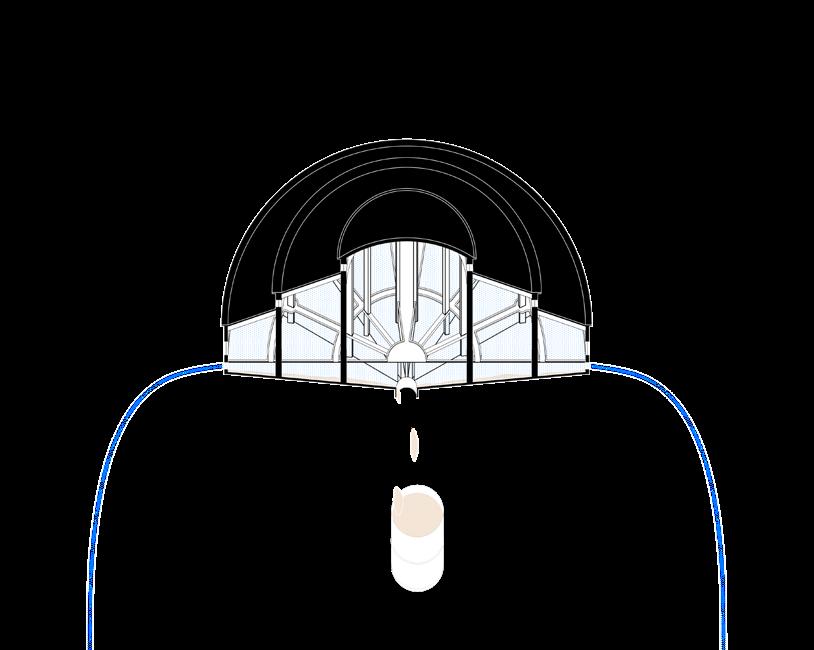
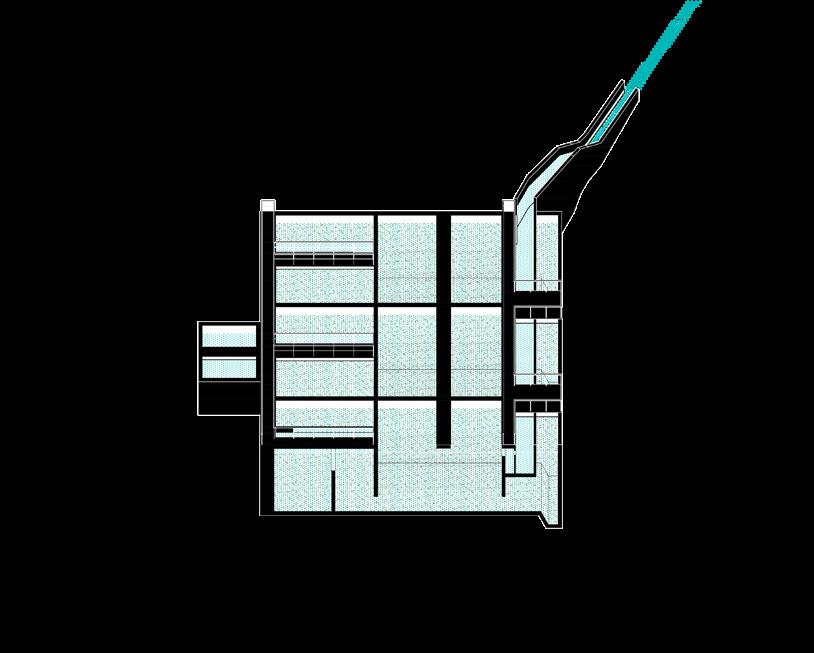
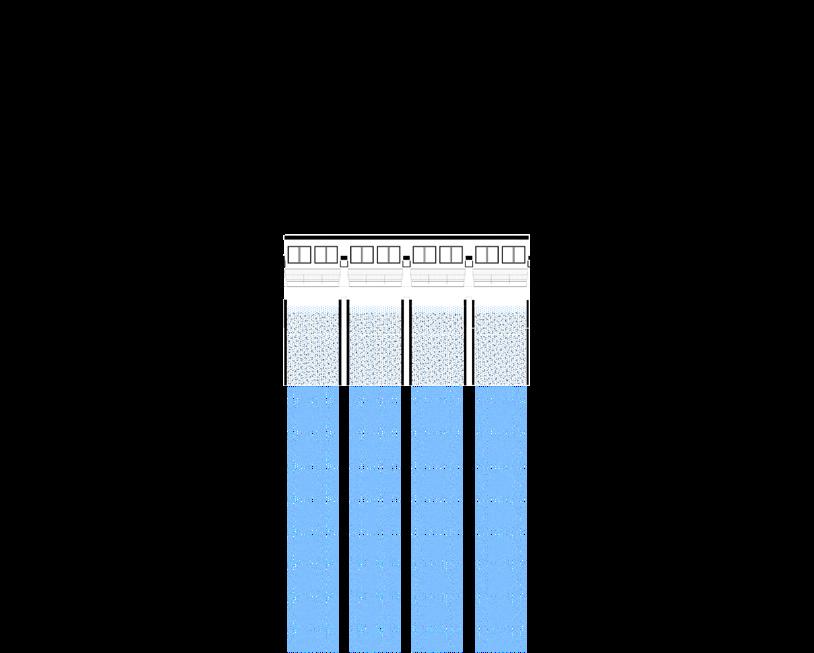
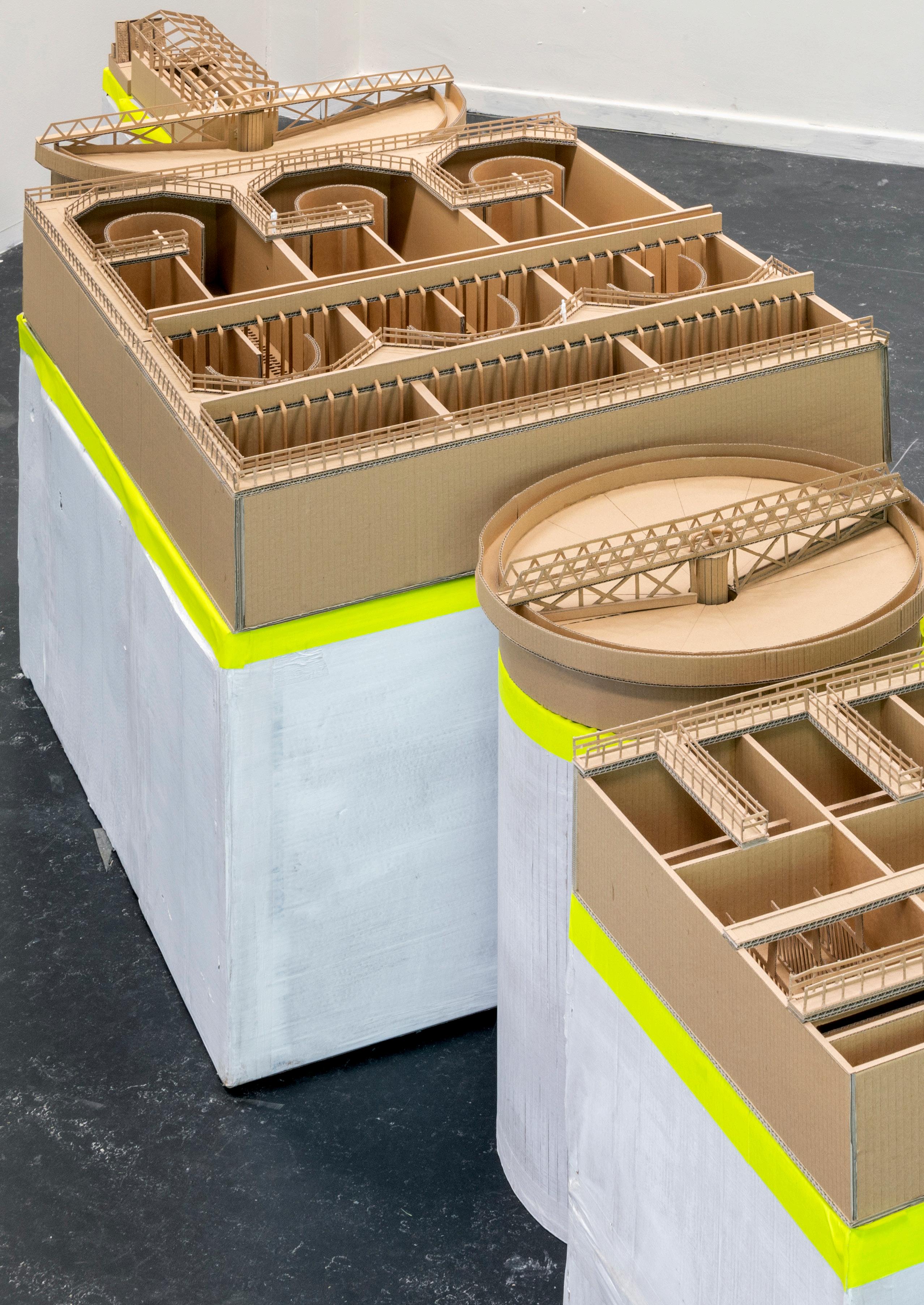
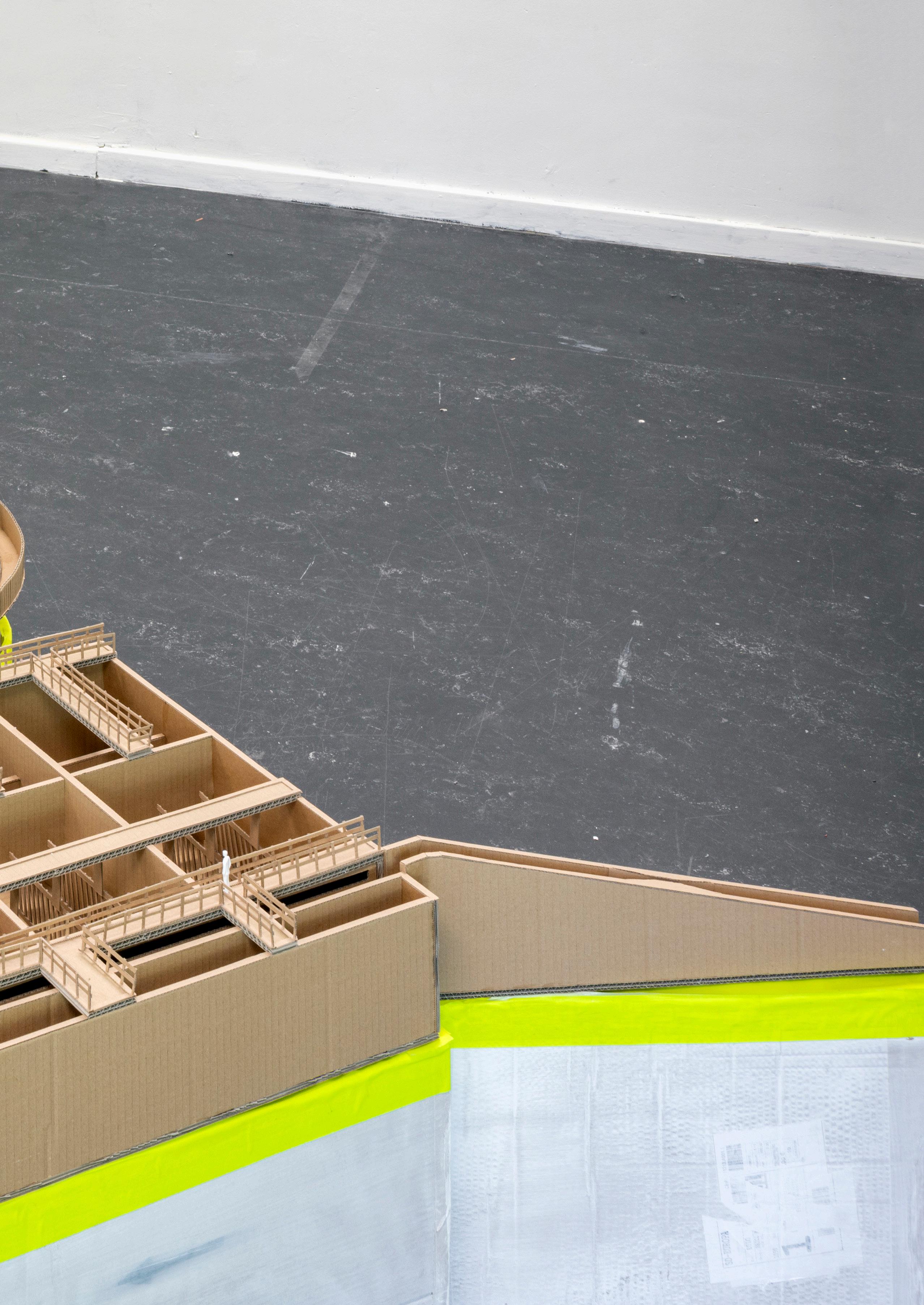
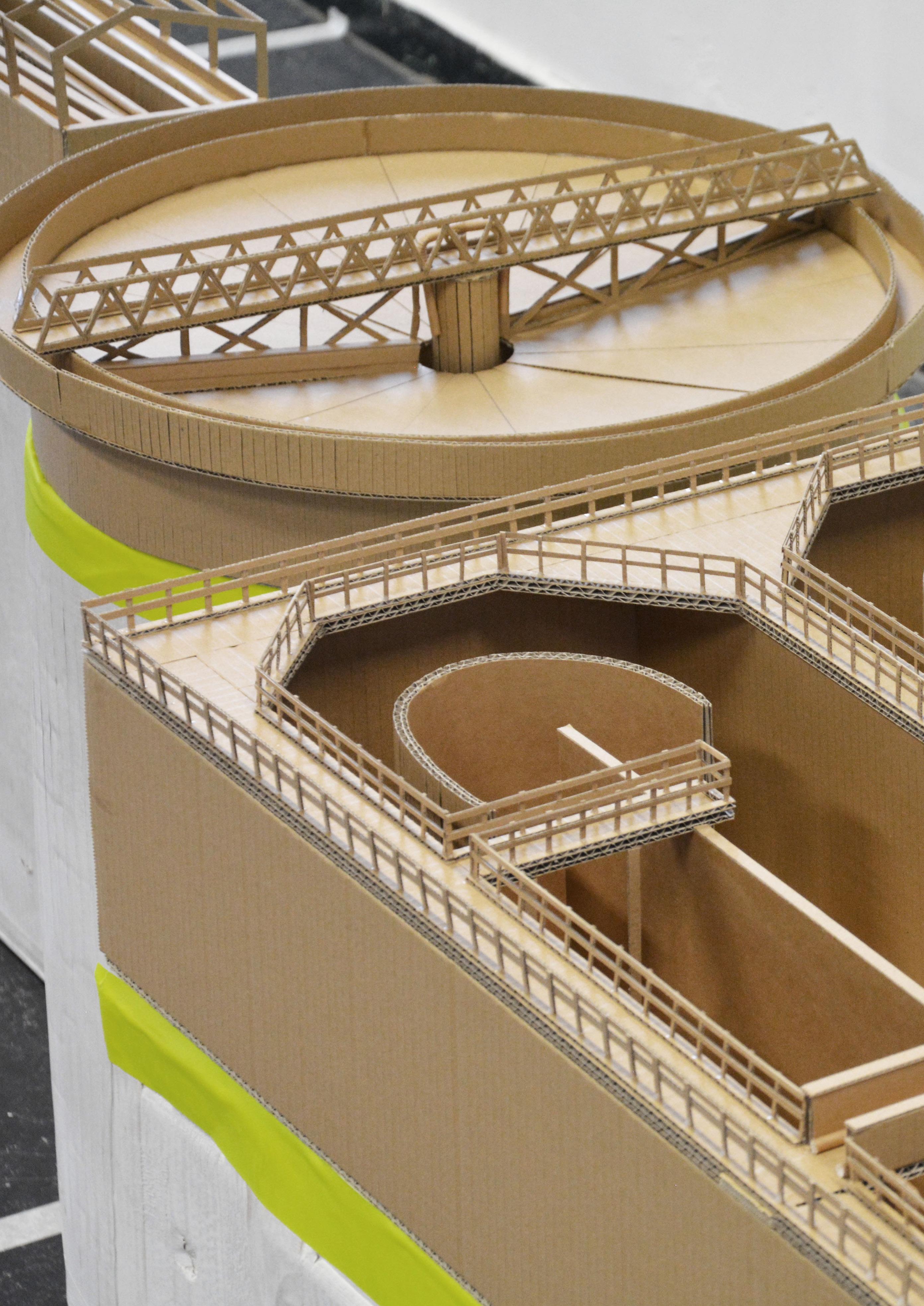
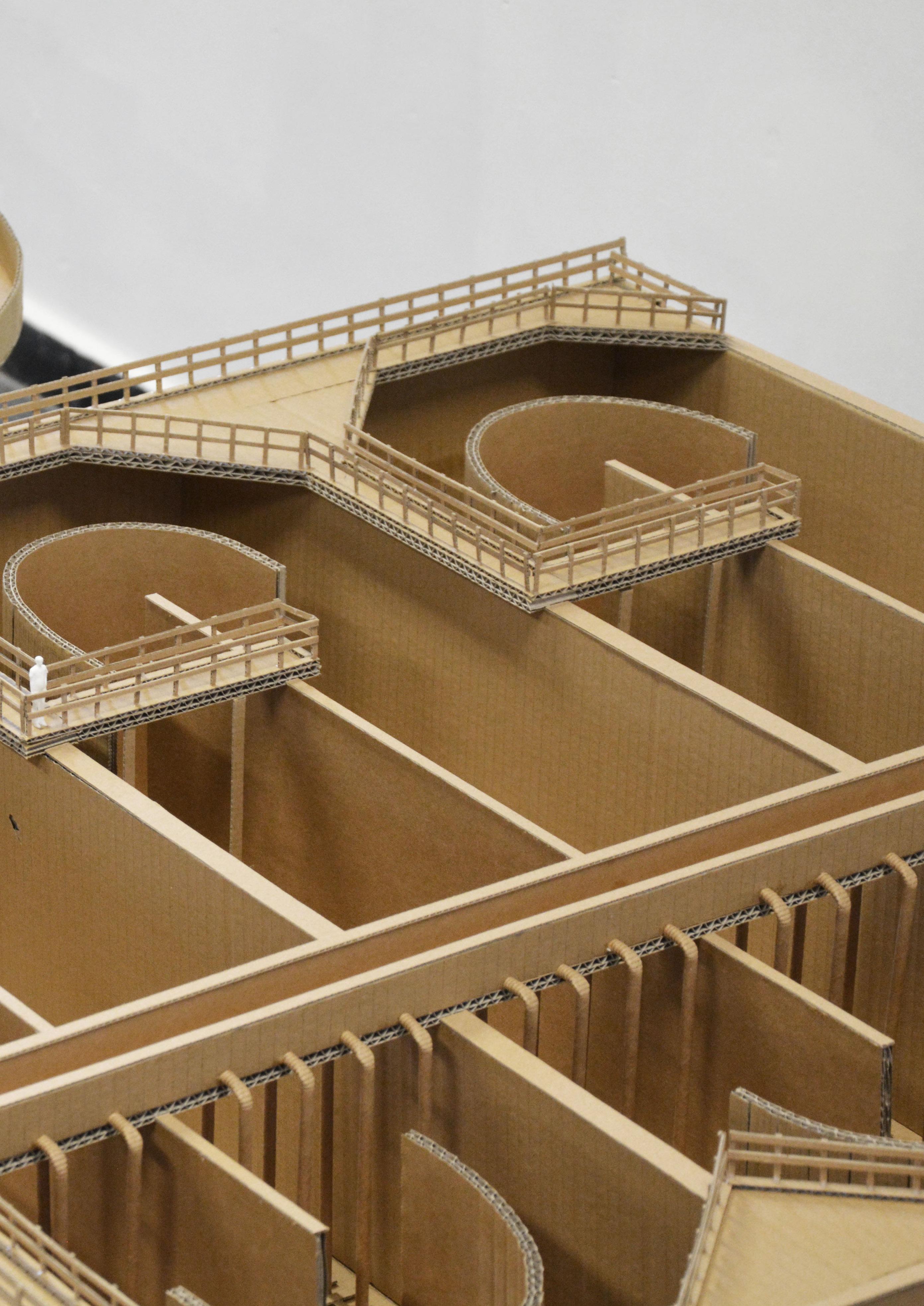
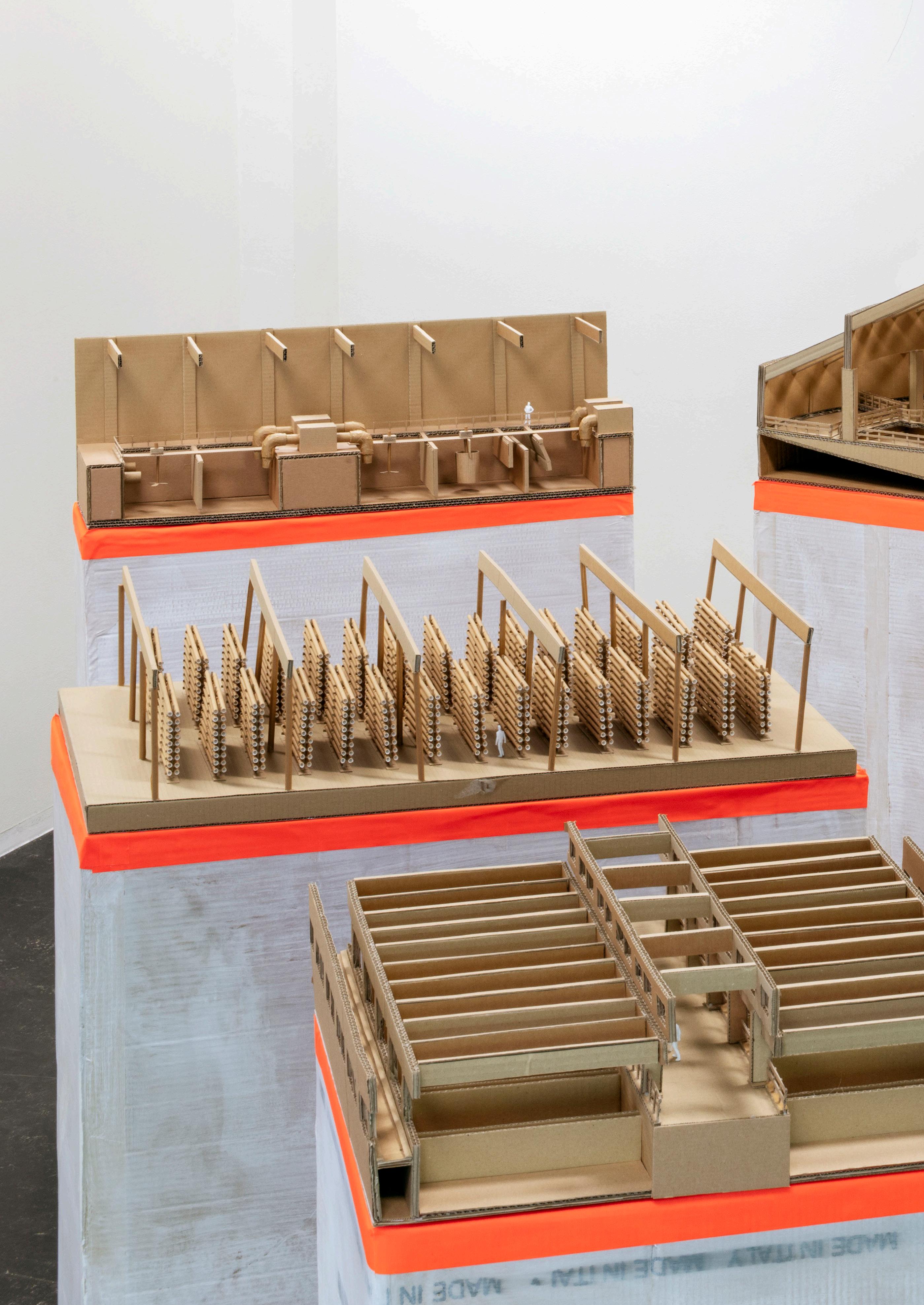
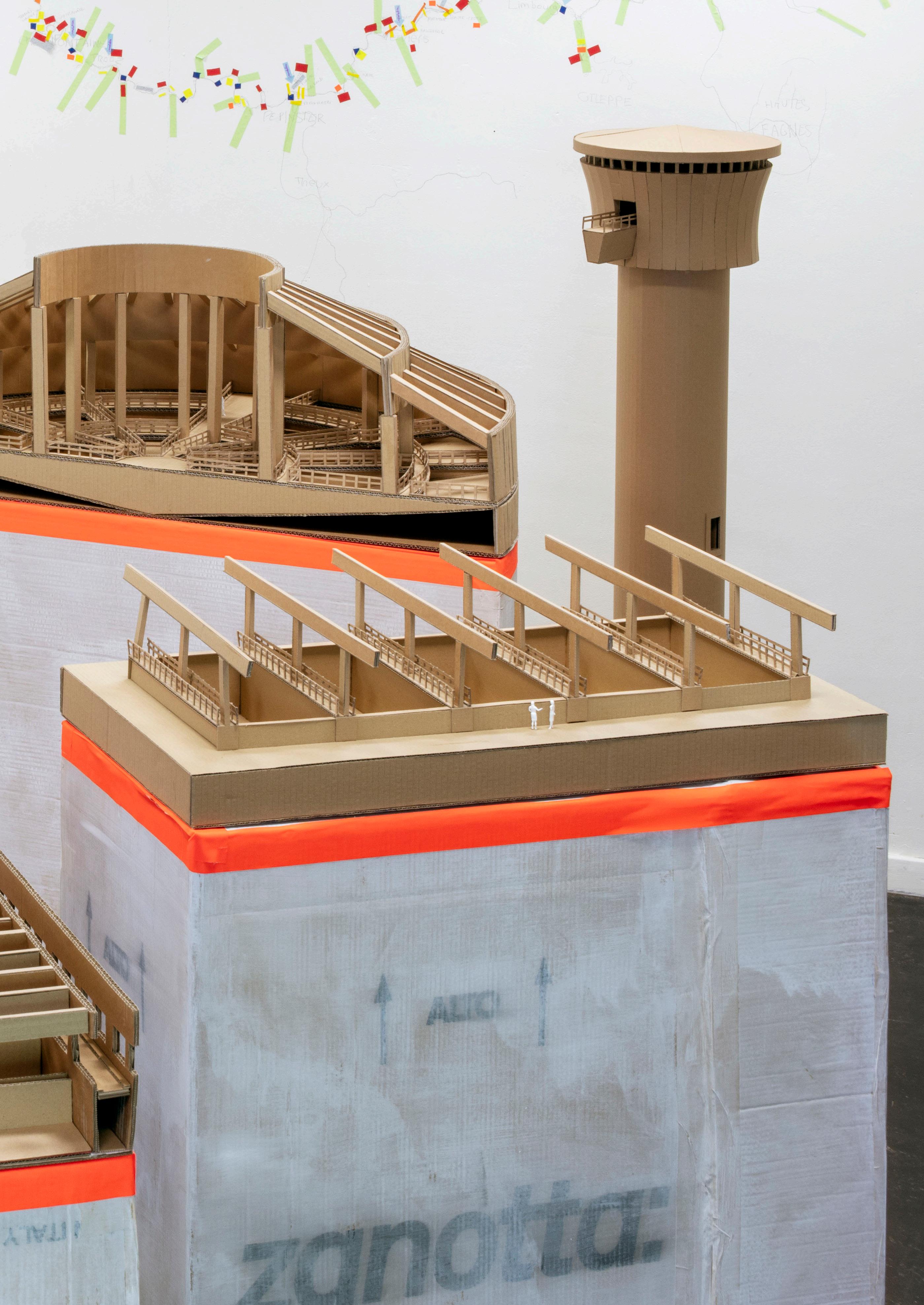
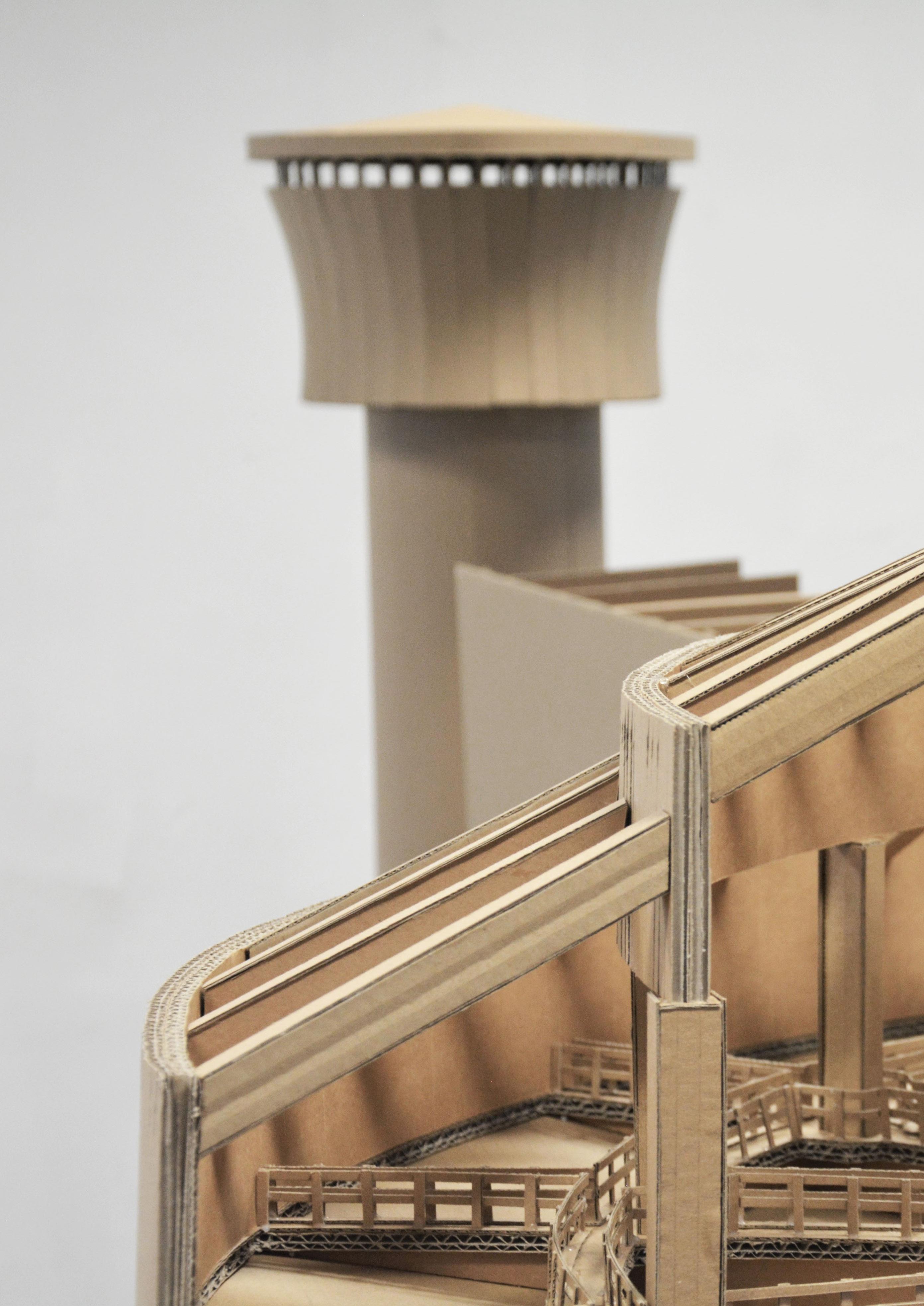
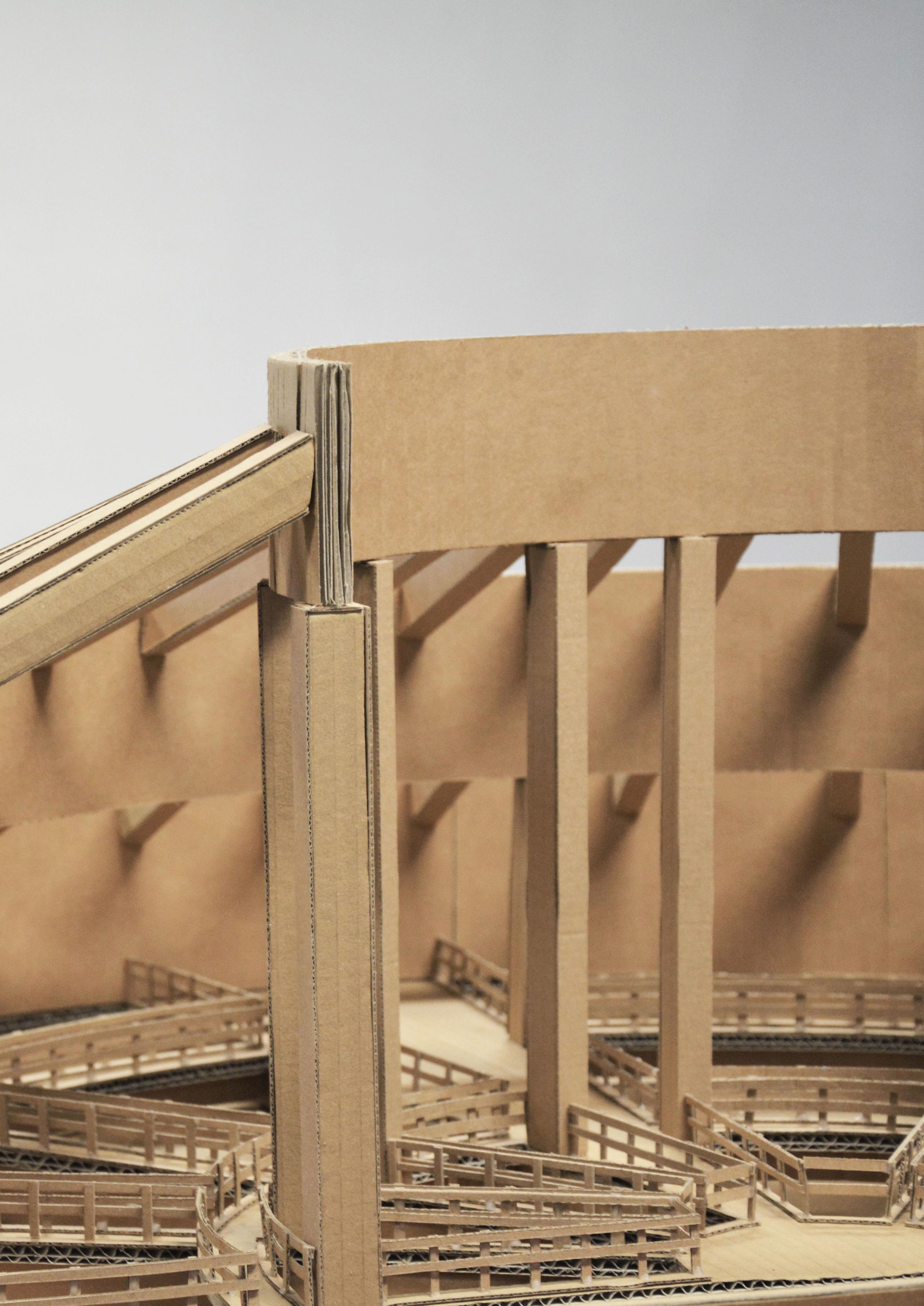
Today, water quality is governed by a set of standards that have led to an accumulation of infrastructures in the Vesdre valley. Despite the installation of dams, water treatment plants, wastewater treatment plants and other tech nologies, it is difficult to stabilise the course of a capricious river like the Vesdre. The re cent events of July 2021 have shown both the non-resilience of these installations and the dependence of the valley on them.
Our research aims to illustrate the accumulation of infrastructures necessary for water treatment in the Vesdre valley and to confront them with a more socially complex, technically simpler and therefore more resilient and diffuse water network: the water network before the centrali sation generated by the dams. This confronta tion leads us to question our way of consuming and disposing of water and aims to teach us a way that is more complex to manage collec tively but less complicated technologically and therefore more resilient.
57
Eau de surface
Eau construite
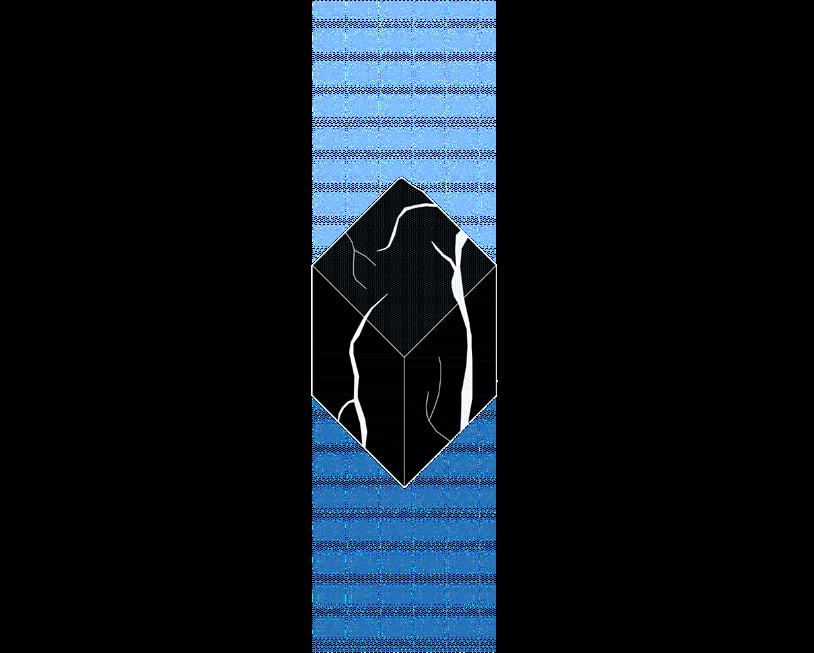
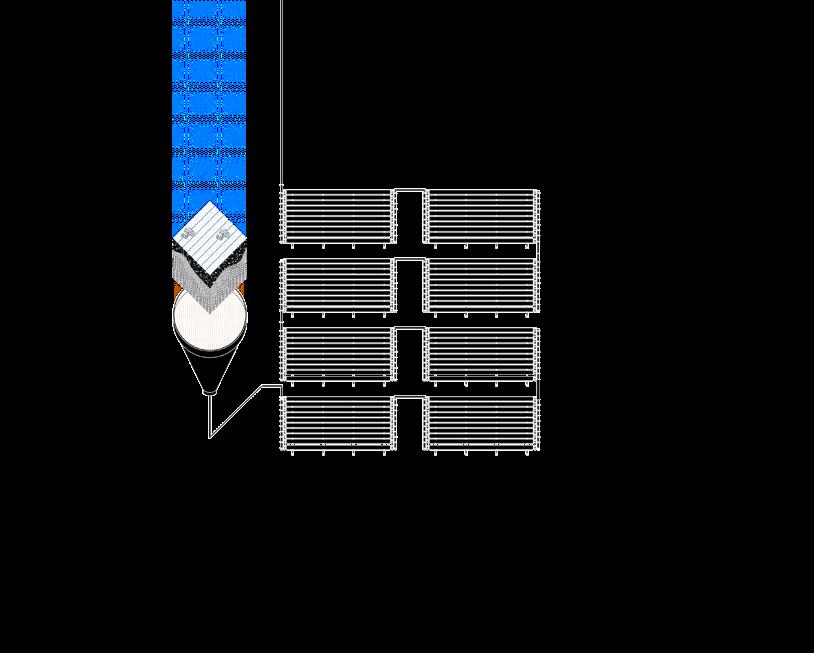
Eau coagulée Eau grise
Eau conditionnée
Eau clarifiée
58
Eau décantée
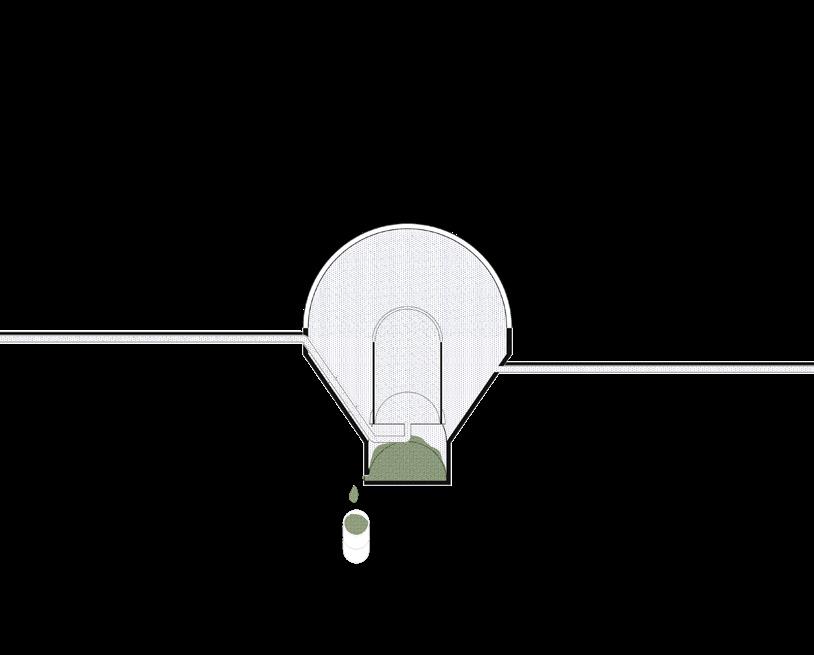
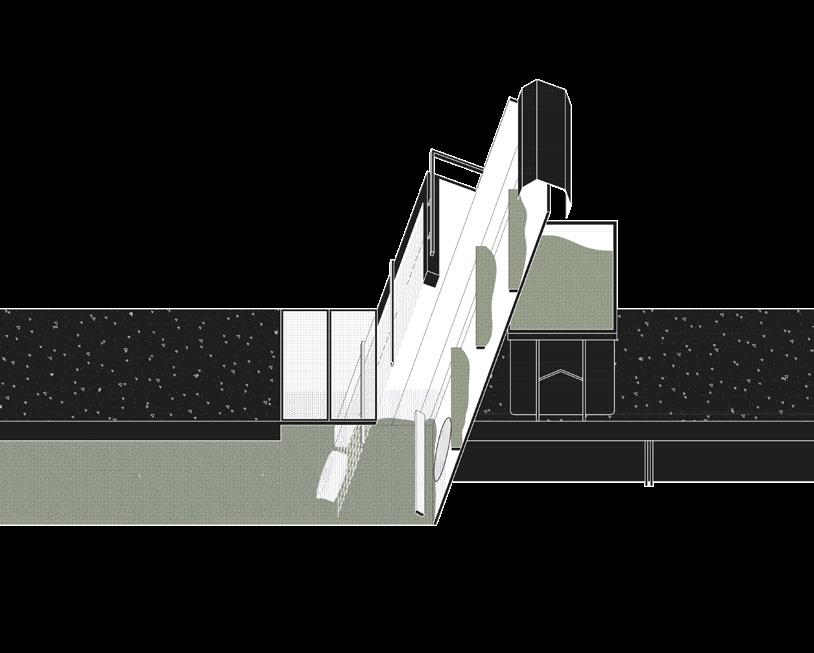
Eau consommée
Eau microbiologique
Eau potable ?
Eau usée Eau de pluie
59
60
61
Wastewater treatment machines (1/50)
62
Zoom on the microbiological purification basin (1/50)
63
Drinkingwater purification machines (1/50)
64
65
66
67
Zoom on the decantation machine (1/50)
Rainwaterpockets 08
Public spaces in an industrial zone offering collected rainwater from the roofs to the public Verviers
2022 - 2nd Master Architecture
CUMA - Sophie Dars, Thierry Decuypere
Conceptual drawing
68
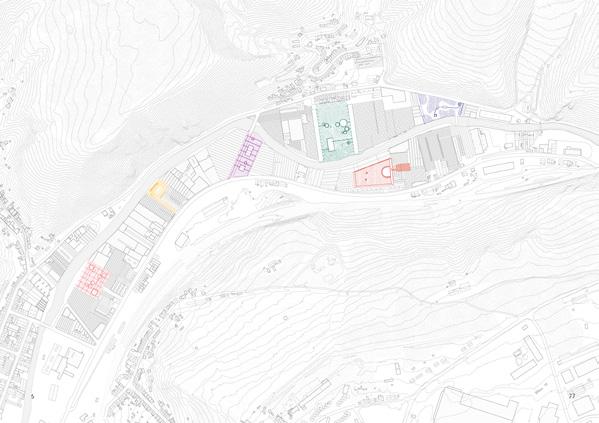
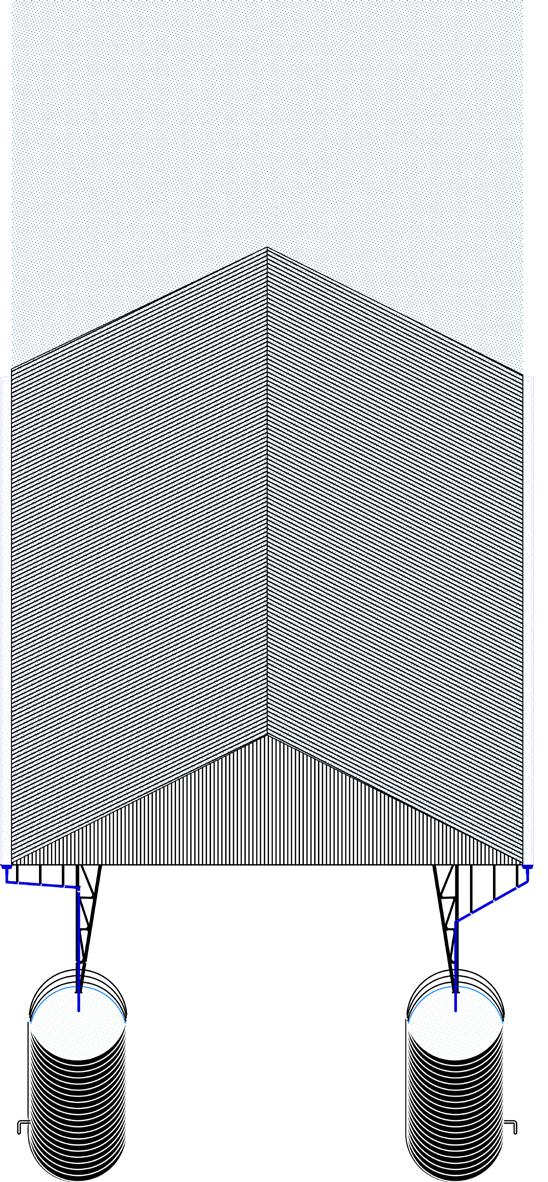
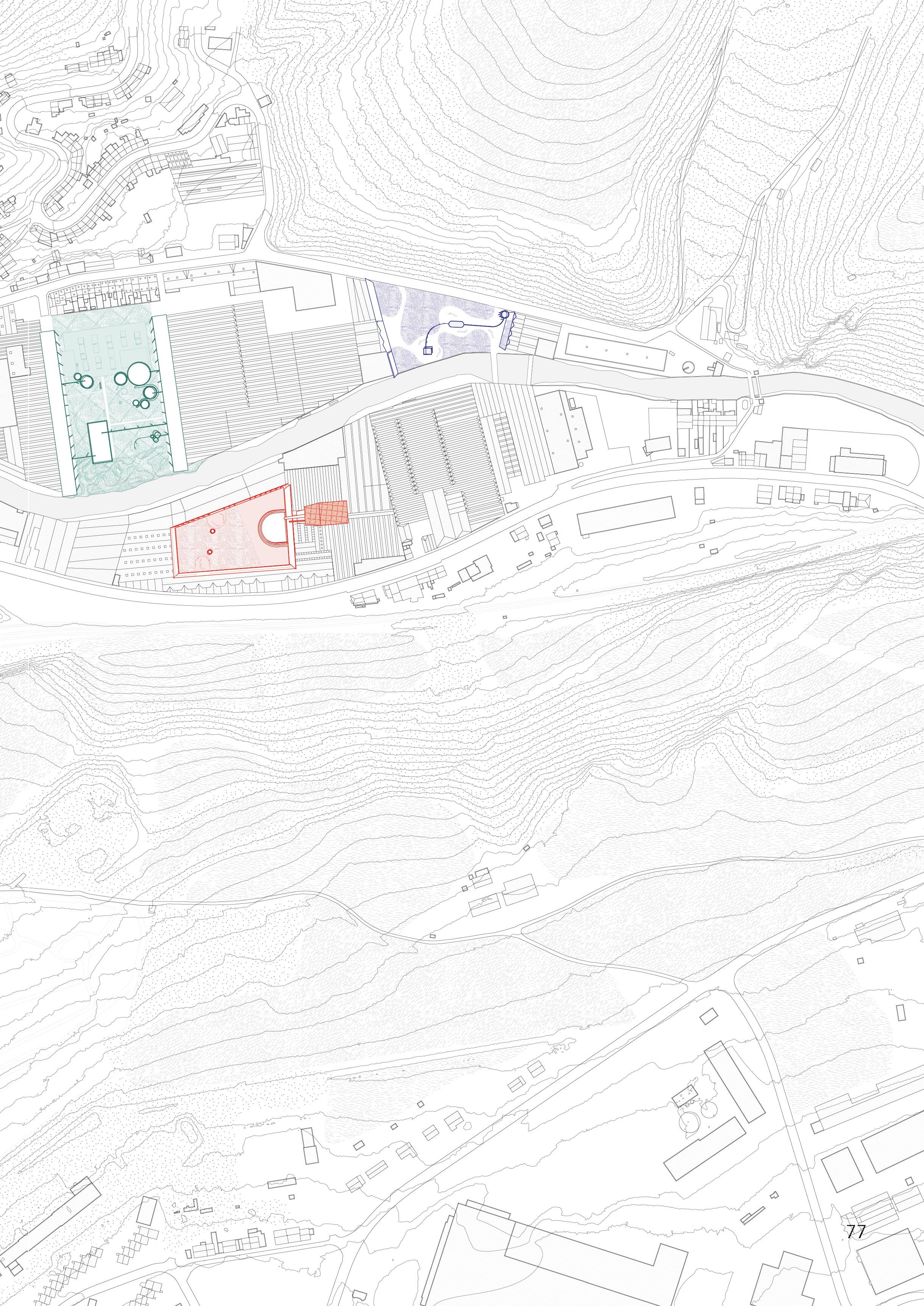
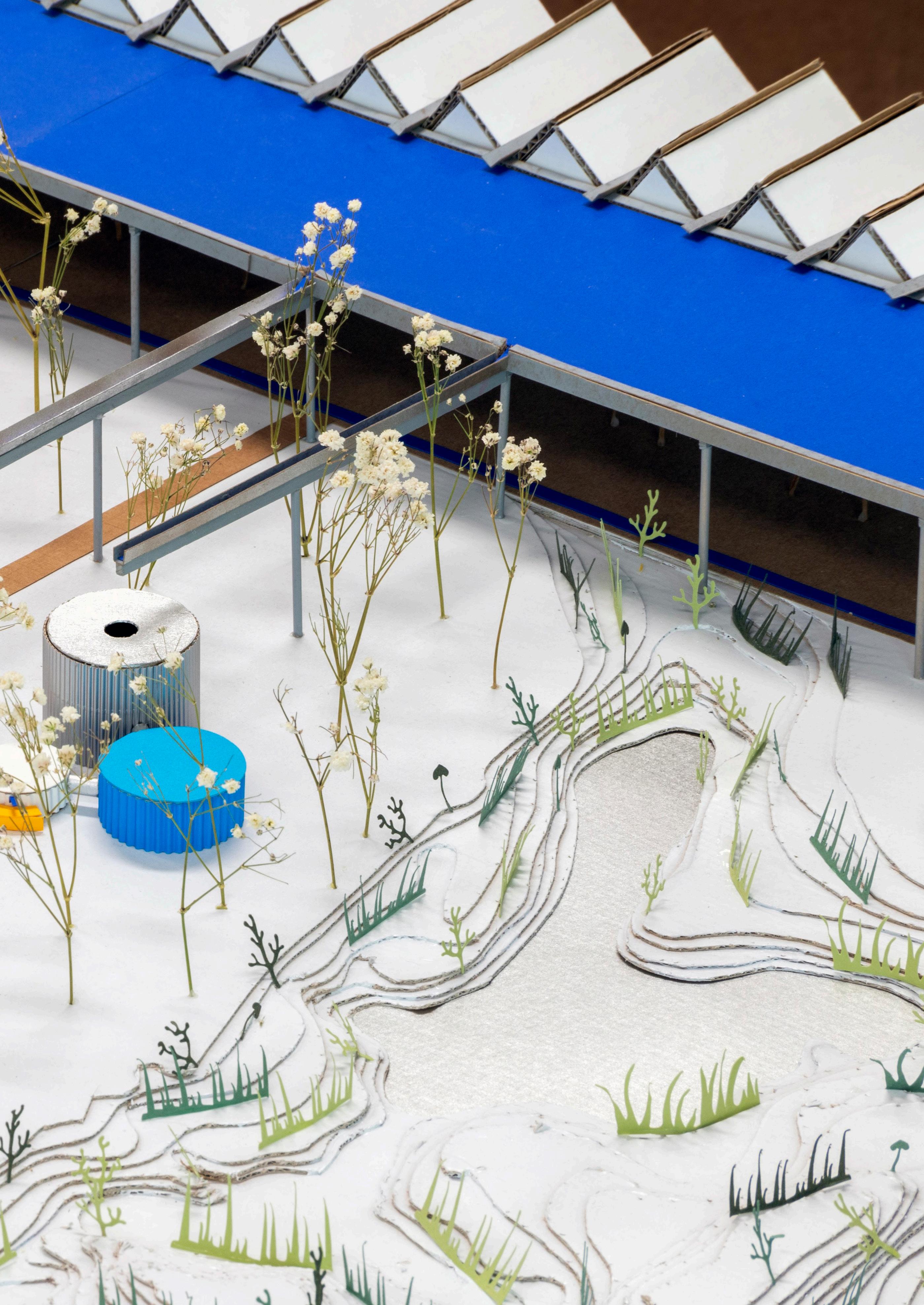
The community provides access to «recons tructed» water in exchange for a payment. Reconstructed water is water that has been purified and remineralised before being distributed. The water distributed today is used without distinction of use. Rainwater is massively rejected to the sewage system whereas it would be perfectly suitable for activities requiring less clean water.
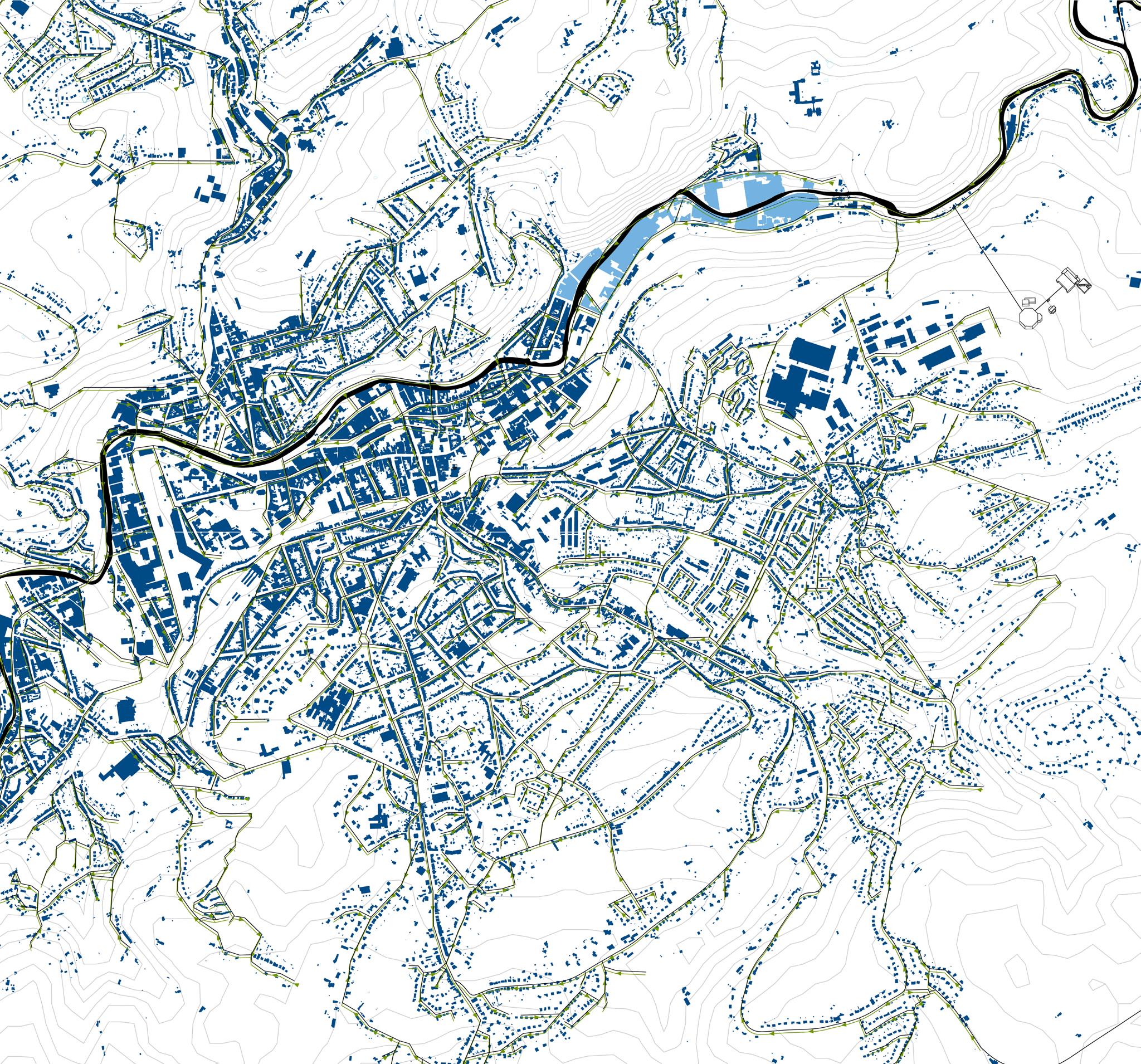
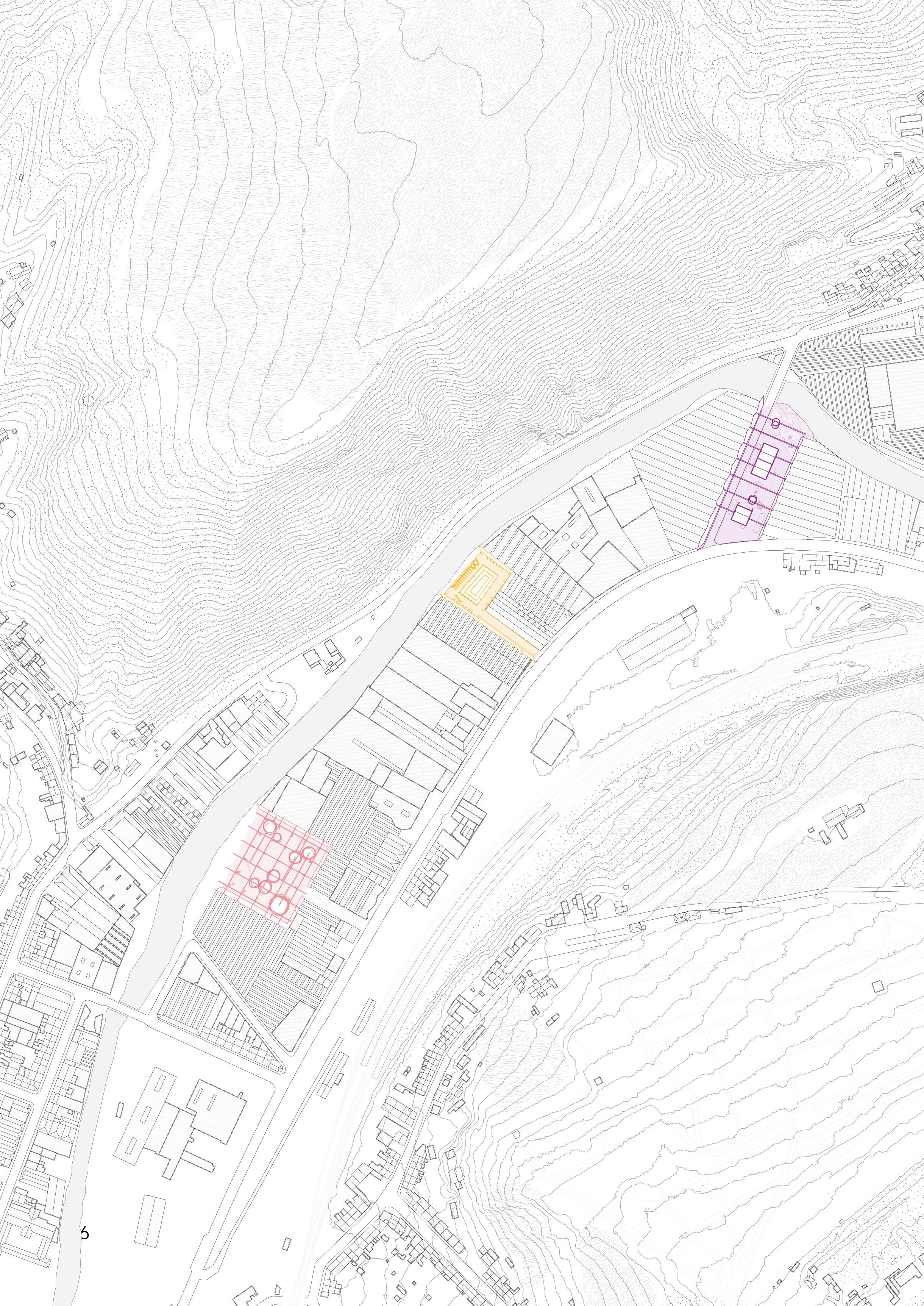
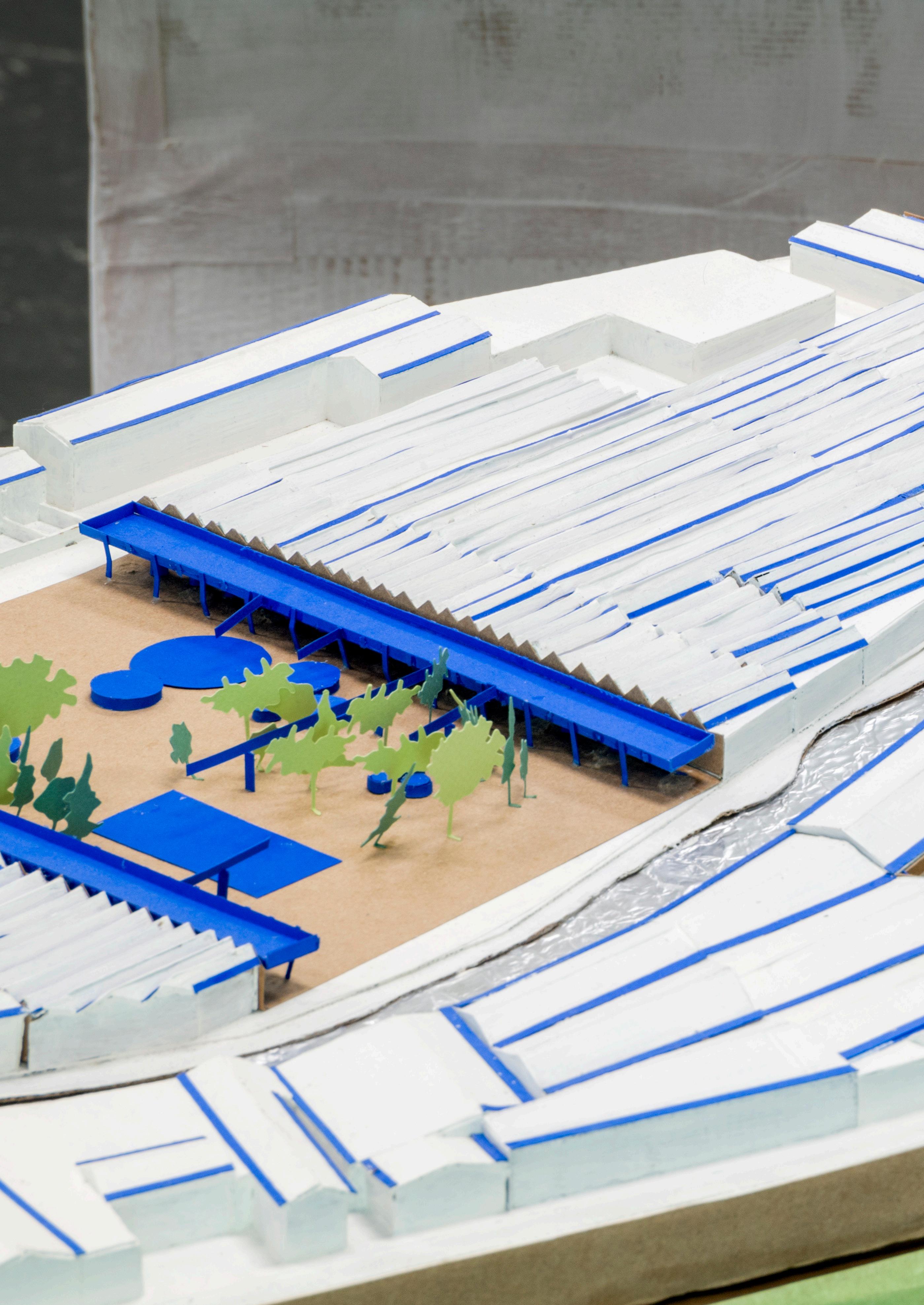
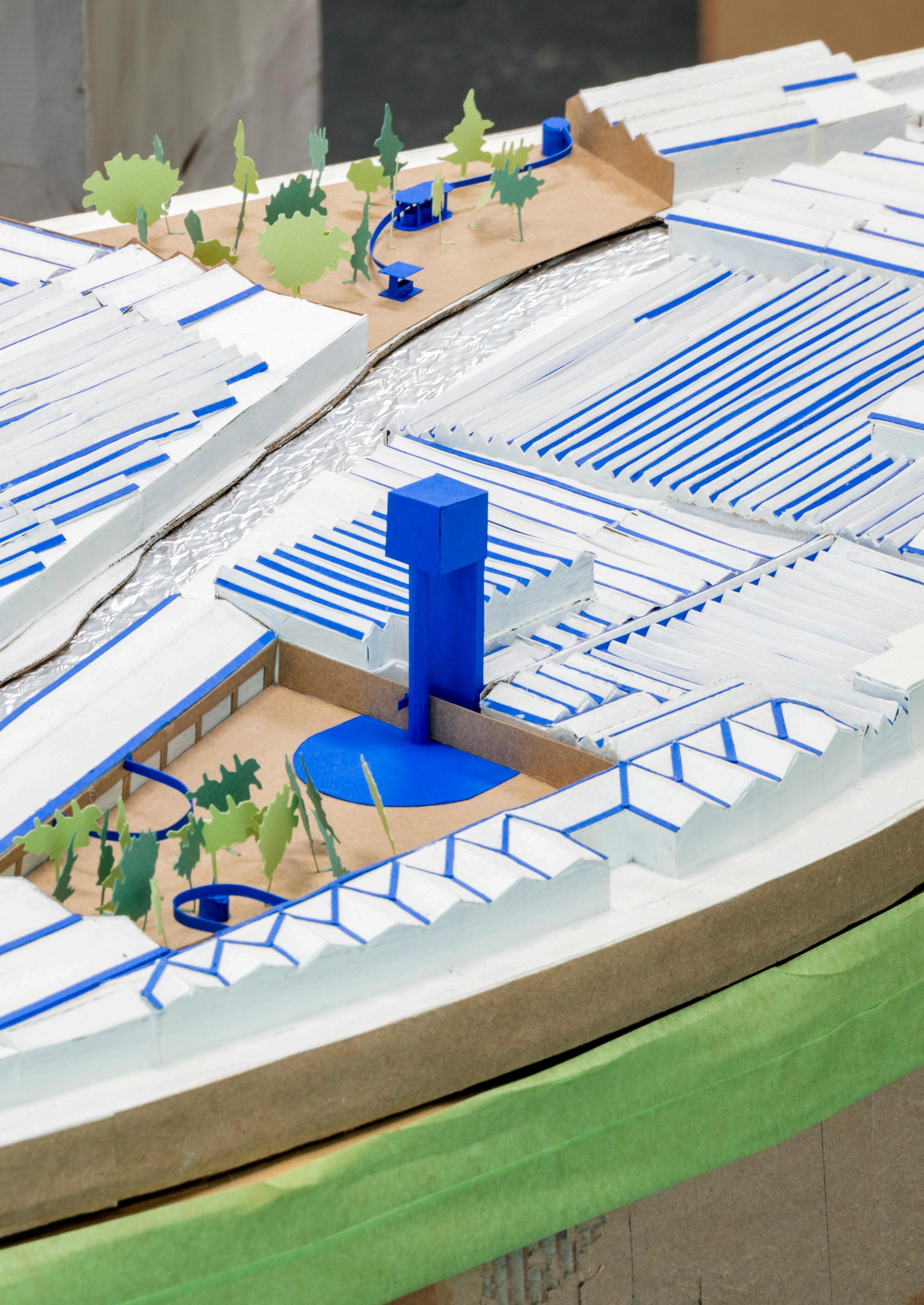
The «platform» consists of offering a series of free services based on rainwater harves ting. This hypothesis is developed in the north of Verviers, where industrial roofs allow for large-scale, centralised water harvesting and where basic common ser vices are lacking. These public water access infrastructures are installed in the interstices of the industrial zone. They contribute to the spatial enrichment and structuring of a monofunctional territory which today has only a limited relationship with the Vesdre.
69
Map of the north of Verviers
OTHER ROOFS SEWAGE SYSTEM + WATER DISTRIBUTION SYSTEM PROJECT SITE ROOFS 70
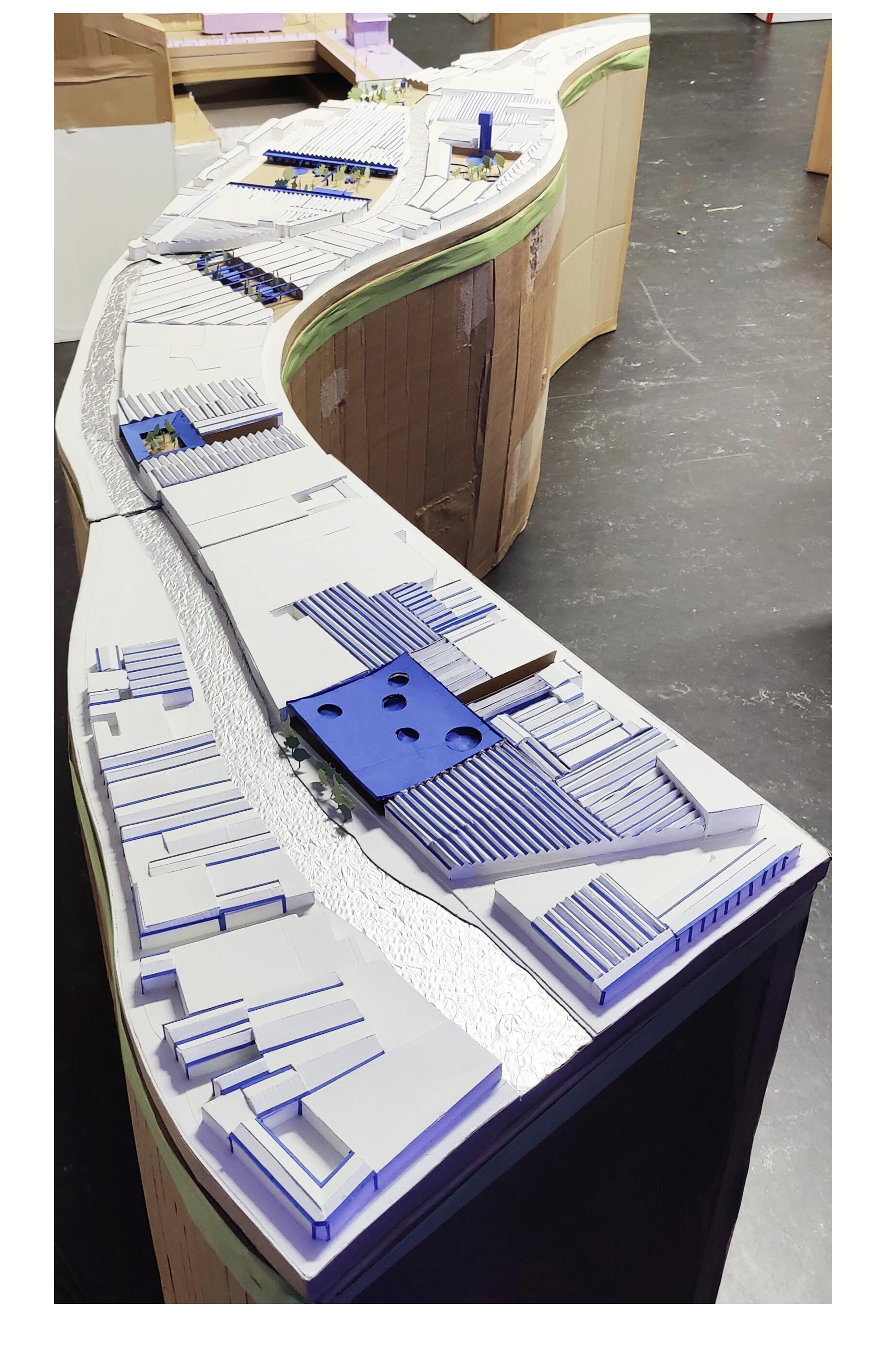
71 1/500
model
72
Masterplan of rainwaterpockets
73
74
1/500 model
75
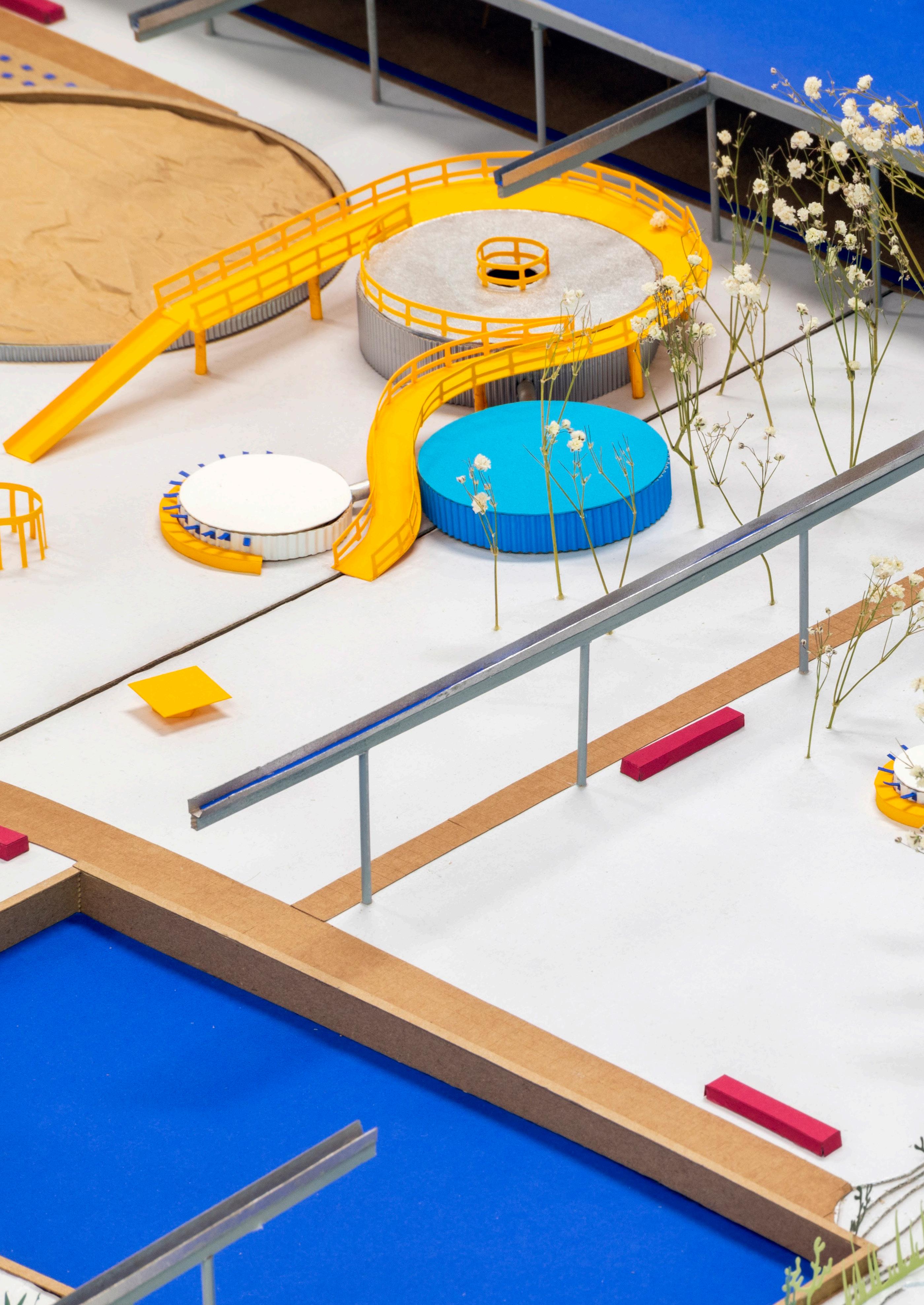
76 1/100
model
77
78
79