Accurate soil sampling
Department of Primary Industries and Regional Development
plan
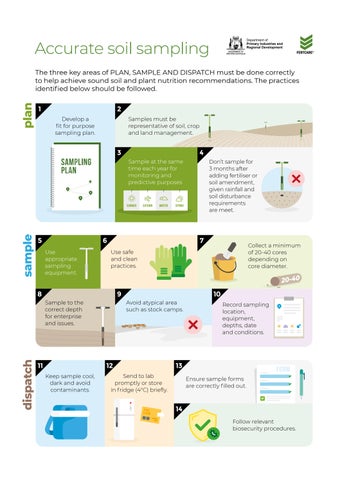
The three key areas of PLAN, SAMPLE AND DISPATCH must be done correctly to help achieve sound soil and plant nutrition recommendations. The practices identified below should be followed.
1
2 Samples must be representative of soil, crop and land management.
Develop a fit for purpose sampling plan.
3
SAMPLING PLAN
4 Sample at the same time each year for monitoring and predictive purposes
sample
SUMMER
5
WINTER
SPRING
6 Use appropriate sampling equipment.
7
20-40
9 Sample to the correct depth for enterprise and issues.
11
10 Avoid atypical area such as stock camps.
12 Keep sample cool, dark and avoid contaminants.
Collect a minimum of 20-40 cores depending on core diameter.
Use safe and clean practices.
8
dispatch
AUTUMN
Don’t sample for 3 months after adding fertiliser or soil amendment, given rainfall and soil disturbance requirements are meet.
Record sampling location, equipment, depths, date and conditions.
13
Send to lab promptly or store in fridge (4°C) briefly.
TO: LAB
FORM Ensure sample forms are correctly filled out.
14 Follow relevant biosecurity procedures.
Accurate soil sampling
plan
The three key areas of PLAN, SAMPLE AND DISPATCH must be done correctly to help achieve sound soil and plant nutrition recommendations. The practices identified below should be followed. Clearly defining the reasons why sampling is undertaken is essential when developing a
1
sampling plan. “What is the question your client wants answered?” Which of the following reasons are you sampling?
2
Samples must and be how much?), a (which nutrients » Develop Predictive do I need representative of soil, crop fit for purpose » Monitoring (have my soil nutrient concentrations changed over time?), and land management. sampling plan. » Diagnostic (explaining spatial differences in crop and pasture growth), or,
» Compliance (meeting industry or regulatory requirements).
3
SAMPLING PLAN
4
Sample at the same Don’tdecide sampleon: for Once you have defined the reason for sampling, you can then time each year for 3 months after monitoring and adding fertiliser or » The area to sample, based on similarity in soil, crop and management, predictive purposes soil land amendment,
» a sampling pattern, and » when to sample. SUMMER
AUTUMN
WINTER
SPRING
given rainfall and soil disturbance requirements are meet.
sample
» Select and check “fit for purpose” sampling equipment.
5
» Ensure cleanliness through the sampling and handling procedure while also following 6 safety guidelines. 7 work health and Collect a minimum similarity Useareas safe should aim to reduce variability and represent Use» Identified sampling of 20-40 cores in soil type, crop and land management. and clean appropriate depending on practices. sampling core diameter. » Take at least 20 - 40 cores per composite sample. Smaller diameter samplers need more equipment. cores. Err on the side of taking more cores particularly as soil and crop variability increases. » Sample the correct depth for the crop or pasture and issues to be addressed.
8
20-40
» Avoid atypical areas9such as stock camps, fence lines and 10 gateways, tree lines, previous fertilizer and lime dump sites, timber burns, headlands and poorly drained areas. Sample to the Avoid atypical area Record sampling correct depth geo-coordinates such as stockpatterns, camps. sampling equipment » Record of sample location, used, depth, date and for enterprise field conditions. equipment, and issues. depths, date and conditions.
dispatch
» Protect collected soil samples from heat, sun and contamination.
11
» Send to the laboratory shortly after collection. Avoid mailing samples toward the end of the week. Samples may be stored briefly in a refrigerator at 3 – 5°C prior to dispatch.
12on the sample submission 13 forms or in a sampling app. » Fill out all details FORM Send to lab Keep » sample Follow cool, relevant biosecurity requirements regarding sampling equipment and movement Ensure sample forms promptlybetween or store farms and shipping samples across state borders. dark of and avoid when traveling samples are correctly filled out. in fridge (4°C) briefly. contaminants. TO: LAB
14 Follow relevant biosecurity procedures.
For more information, read the Fertcare Soil Sample Guide by scanning this QR code.
Accurate as of April 2020