
LUKA JOVANOVIC
ARCHITECTURE PORTFOLIO
SELECTED WORKS 2021-2024
LUKA JOVANOVIC
ARCHITECTURE
STUDENT
Phone: 914-441-2762
E-mail: lukajovanov01@gmail.com
SKILLS
SOFTWARE
Rhinoceros 3D
AutoCAD
Revit
V-Ray
Lumion
Adobe Illustrator
Adobe Photoshop
Adobe Indesign
Cove.tool
Sefaira
FABRICATION
Woodworking
3D printing
Laser cutting
LANGUAGES
English (native)
Serbian (conversational)
Croatian (conversational)
SOFT SKILLS
Collaborative Worker
Active Listener
Detail-Oriented
2019-2024
EDUCATION
The Pennsylvania State University University Park, Pennsylvania
Bachelor of Architecture
Involvement/Clubs:
American Institute of Architecture Students
Student representative- 4th Year Architecture (Fall 2022)
EXPERIENCE/ INVOLVEMENT
May-Aug 2023
May-Sept 2022
Intern | Dahn & Krieger Architects Planners PC Rochelle Park, New Jersey
Produced schematic and construction drawing sets with aid of supervising architect.
• Performed site surveys on commercial and office units. Shadowed construction site visits.
Research Assisstant | Pennsylvania State University University Park, Pennsylvania
Produced study drawings of 100 untitled sculptures designed by Donald Judd and worked with professor on analysis of construction methods used.
Jun-Aug 2022
Intern | The Port Authority of New York & New Jersey
New York City, New York
Shadowed daily site visits to World Trade Center Site.
• Designed proposals for trailer relocations within WTC site. Consulted building code and performed occupancy calculations on the WTC PATH station to determine feasibility of temporarily altering means of egress.
Aug 2021Dec 2022
2022 2023
Resident Assisstant | Pennsylvania State University
University Park, Pennsylvania
Enforced campus residence policies, and provided counseling and information to first year students.
RECOGNITION
The 21st Annual Hajjar Memorial Competition
Honorable Mention
One of 14 finalists in a class of 67 students.
Buildner “House of the Future” Design Competition
Top 40 Shortlisted Project
One of 40 shortlisted design submissions in the world.
RESUME



HAMPDEN ONCOLOGY CENTER
LEARNER’S WHARF
TABLE OF CONTENTS 02 01 p.11-18 p.3-10 p.19-26 p.27-32 03 04
Civic Medical Science Residential JOURNEY FLEX-HOME
Fall 2021 Spring 2021 Fall 2022 Spring 2024
HAMPDEN ONCOLOGY CENTER
ENOLA, PENNSYLVANIA
SPRING 2024/ Academic Project
DURATION/ 15 Weeks
TEAM/ Luka Jovanovic (Architecture)
Marisa Calbi (Architecture)
Melanie Zhang (Landscape Arch.)
Adam Deemer (Landscape Arch.)
Steven Borgia (Structural Eng./ CM)
Noah Waldinger (Structural Eng./ CM)
Sophia Carter (Mechanical Eng.)
Madison Plesh (Electrical Eng.)
PROGRAMS/ Rhino, Revit, AutoCAD, Lumion, V-Ray, Photoshop, Illustrator
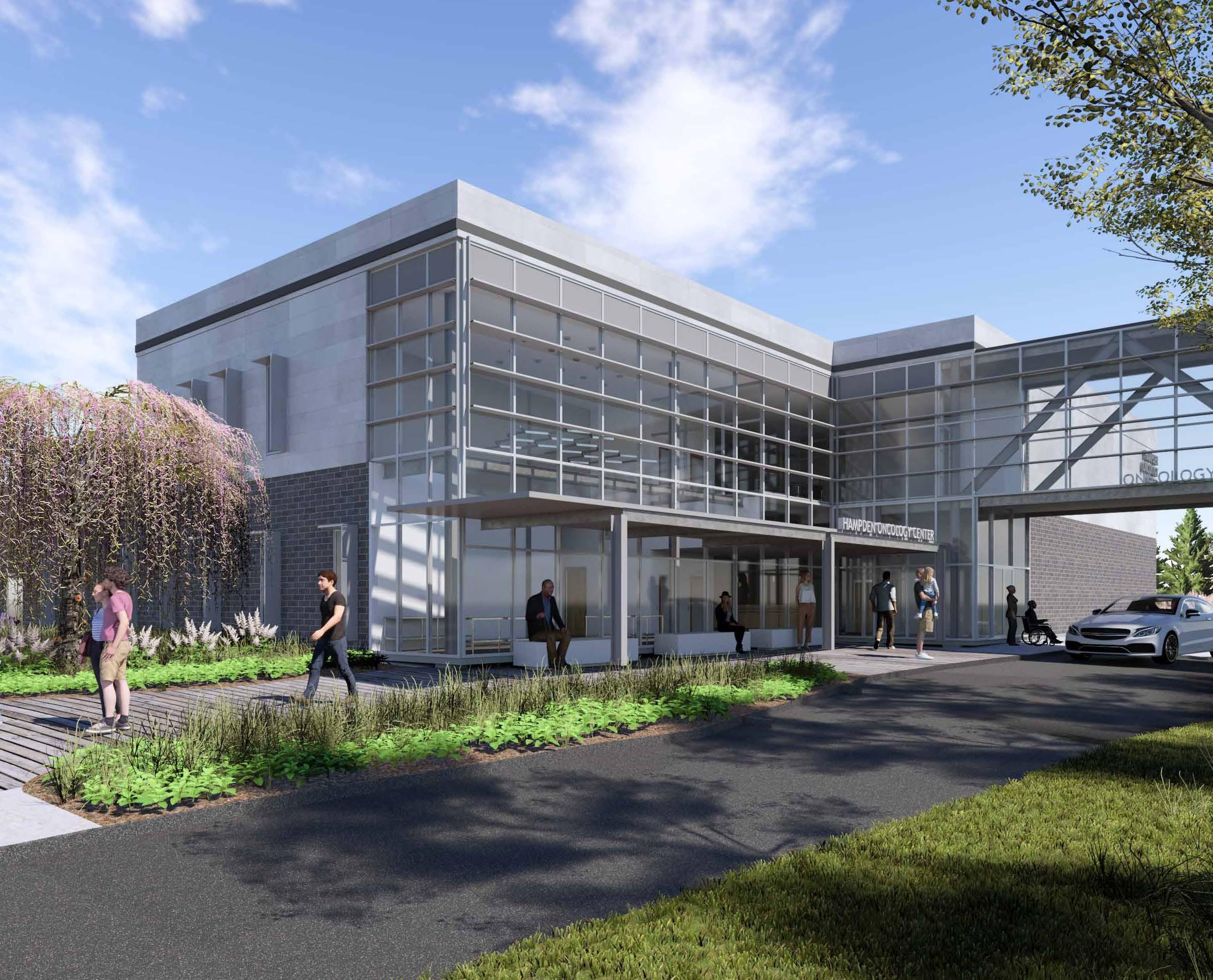
An extensive project done in collaboration with student peers from landscape architecture, and architectural engineering, the Hampden Oncology Center is a proposed extension to the existing Hampden Medical Center operated by Penn State Health.
Our team’s intent for the project is to design an oncology center that provides a welcoming atmosphere to patients and staff through the implementation of biophilia in the building, as well as creating connections to the existing hospital and surrounding community.
As part of this multi-disciplinary team, I co-led the design of the oncology center and collaborated with my team members to integrate our various systems and features into a cohesive design.
01.
03/ Jovanovic
/04
FRONT ENTRANCE
SKYBRIDGE (230 FT)
HAMPDEN MEDICAL CENTER
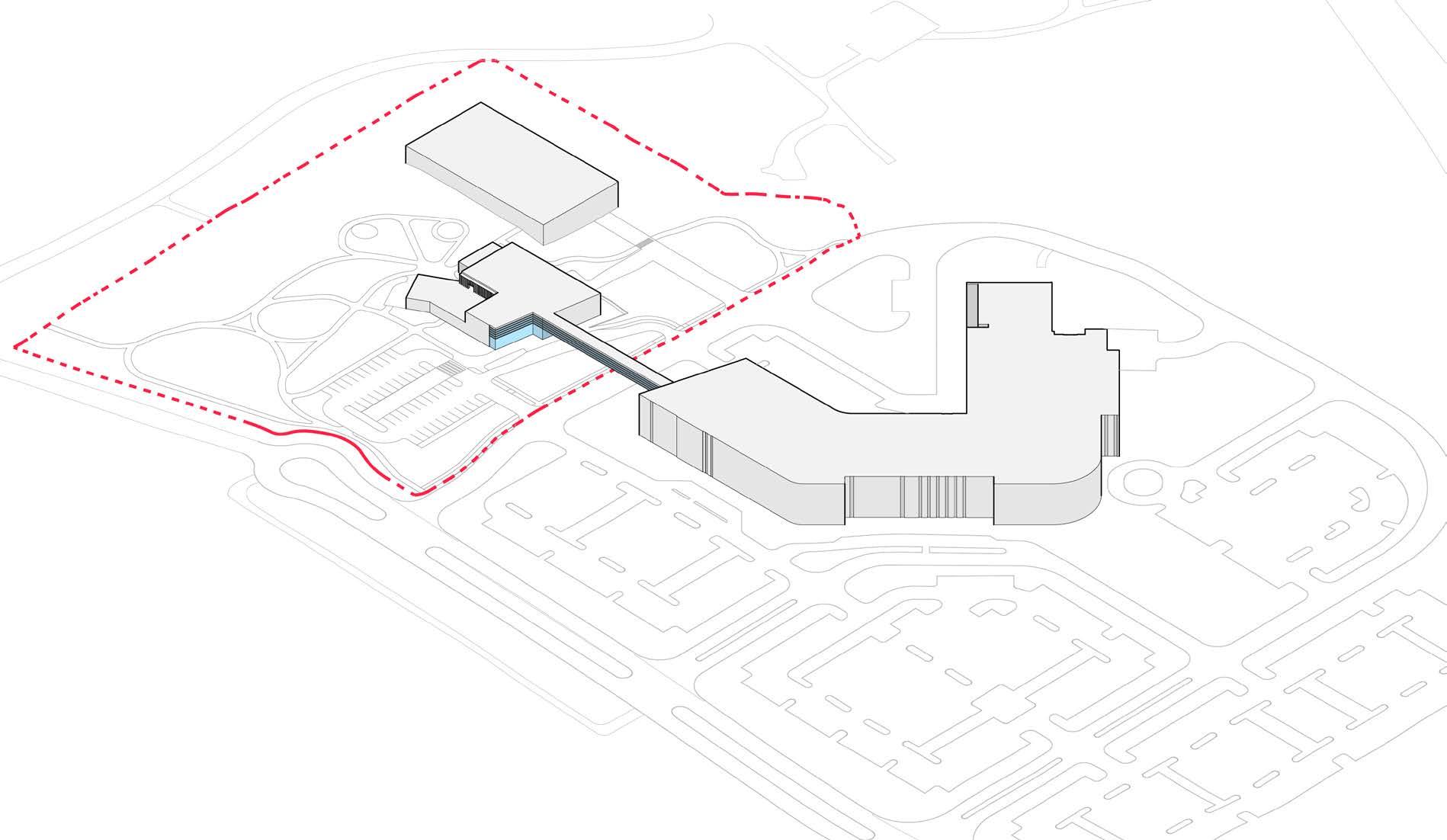
Massing and Landscape Made in Collaboration with A. Deemer, M. Zhang, M. Calbi. Diagram by Luka Jovanovic
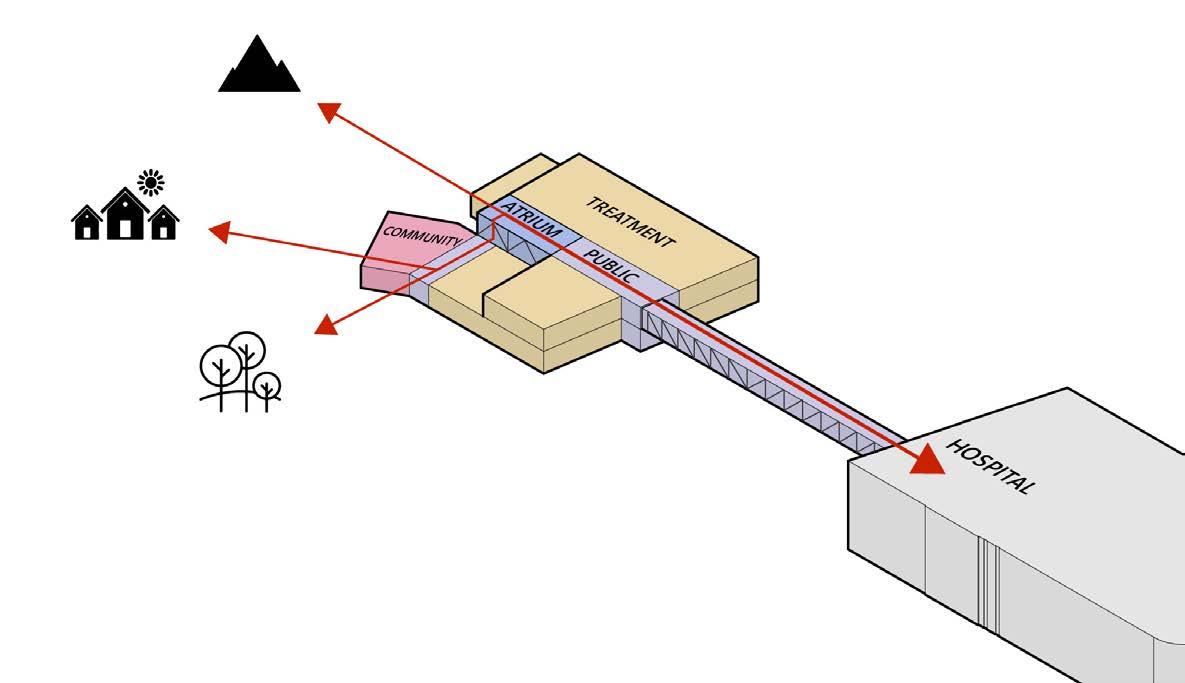
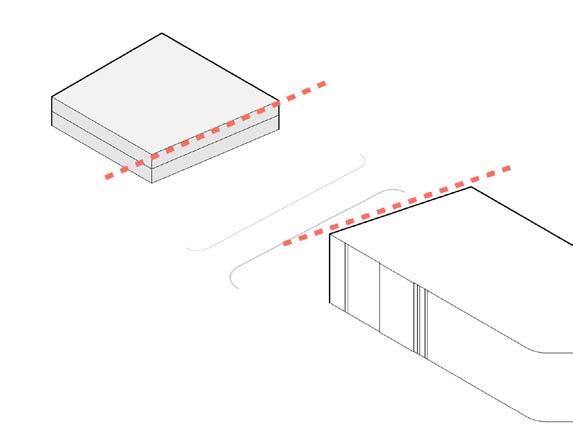
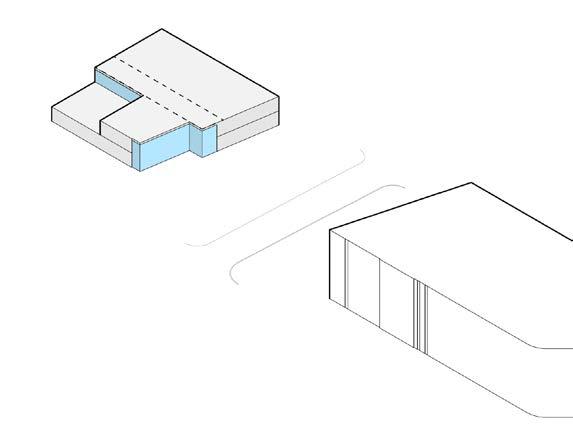
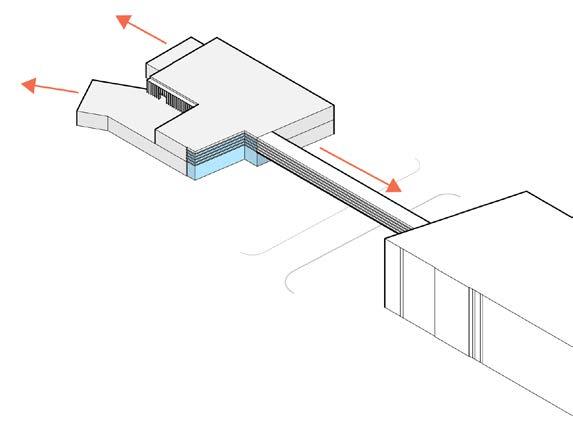
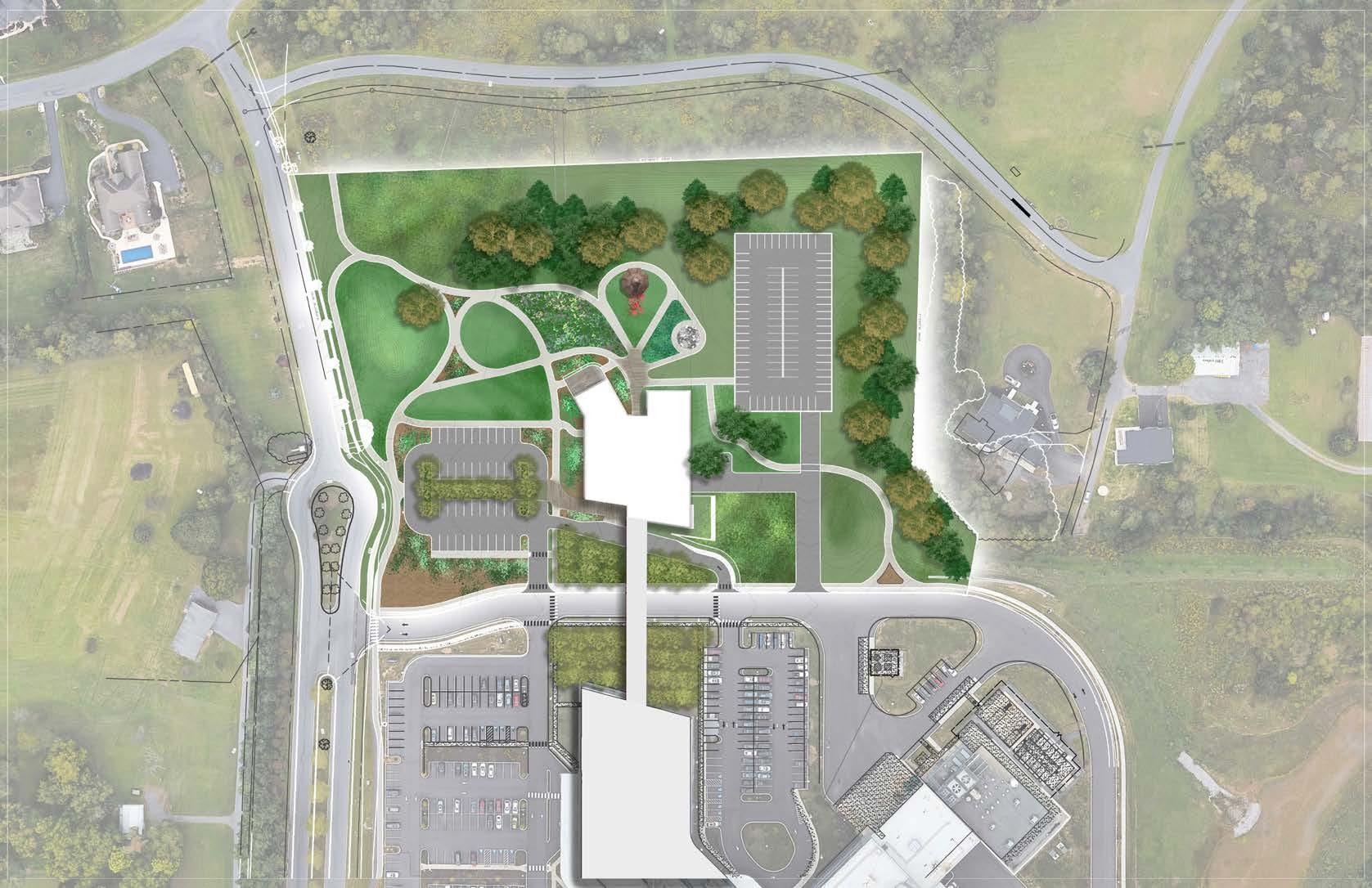
Conceptually, the Hampden Ocology Center aims to reach out and connect to the existing medical center campus and surrounding community.
Extensive work was done in collaboration with our landcape architects to create a seamless transition where biophilia is brought into the building from the outside.
05/ Jovanovic 1.
2.
CONCEPT
ALIGN
REDUCE/ OPEN
3. EXTEND/ CONNECT
HAMPDEN ONCOLOGY CENTER ONCOLOGY PARKING

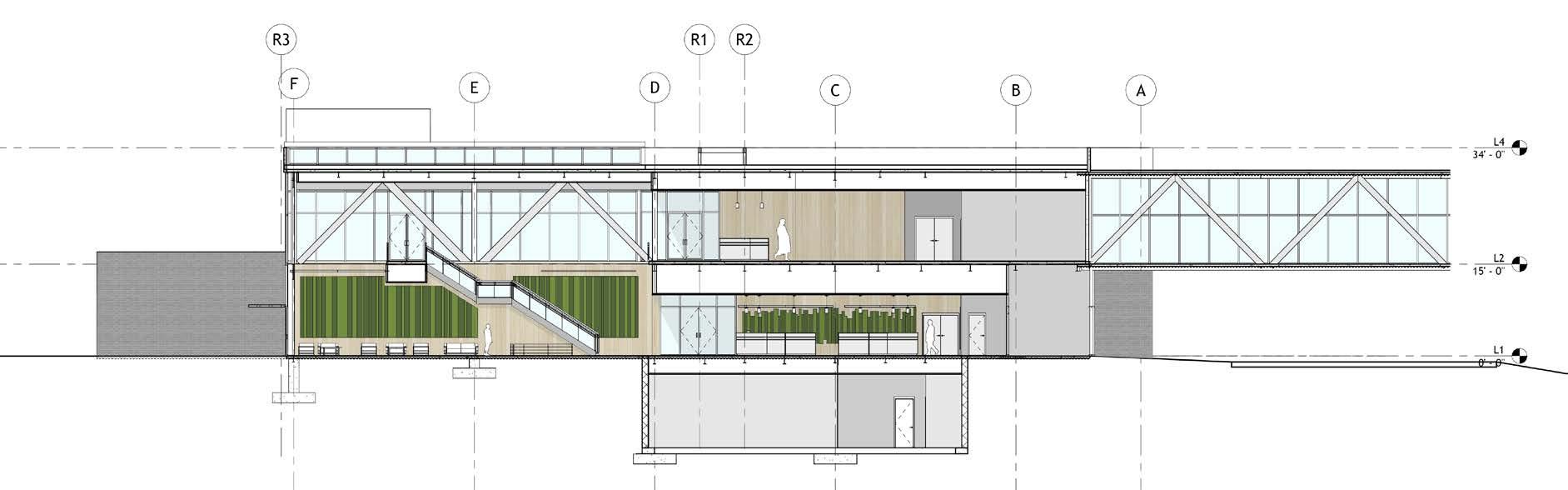
LONGITUDINAL SECTION
Hampden Oncology Center /06
SITE PLAN
SITE SECTION
Created by Adam Deemer and Melanie Zhang
Created by Adam Deemer
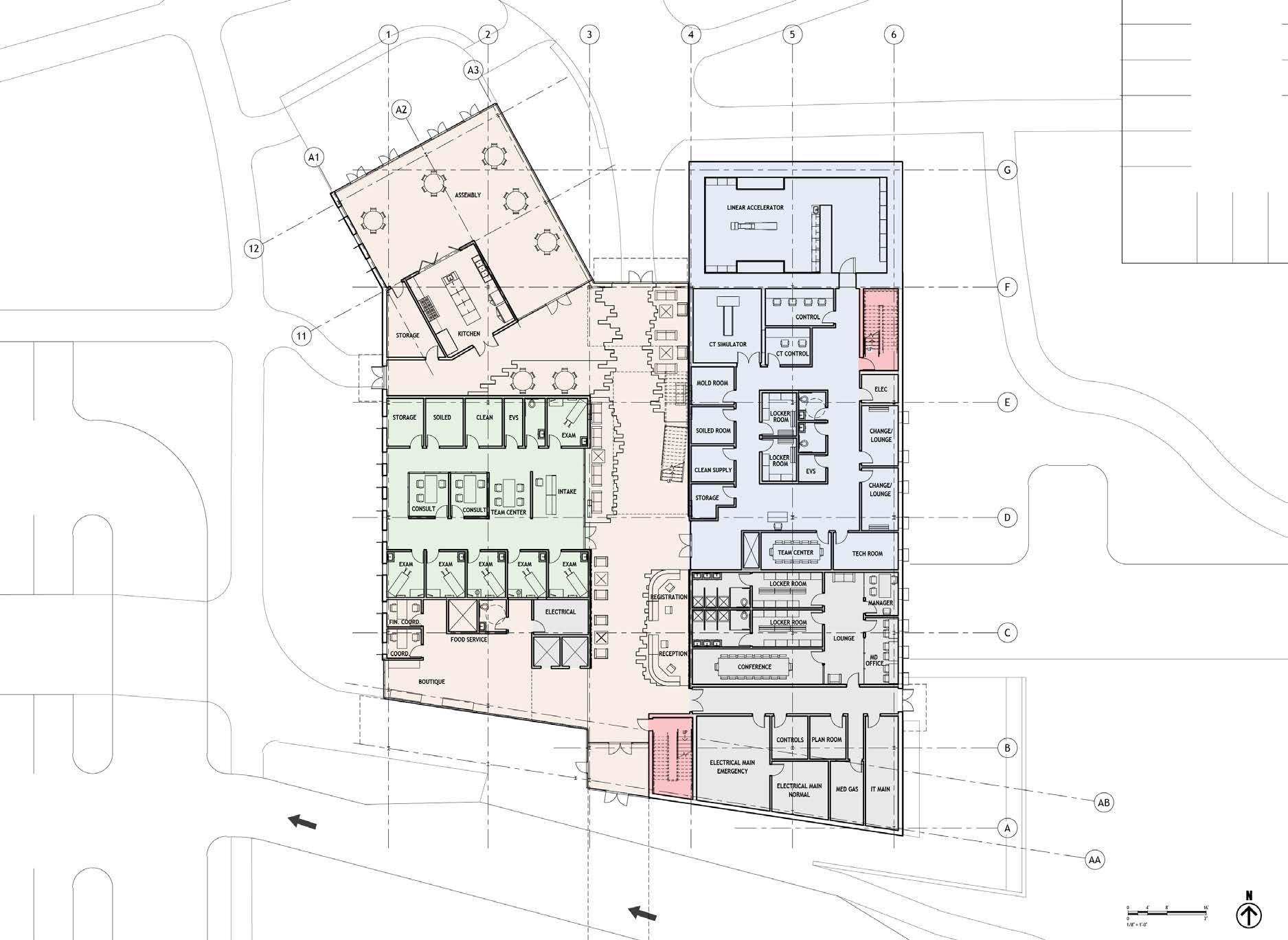
FIRST FLOOR PLAN
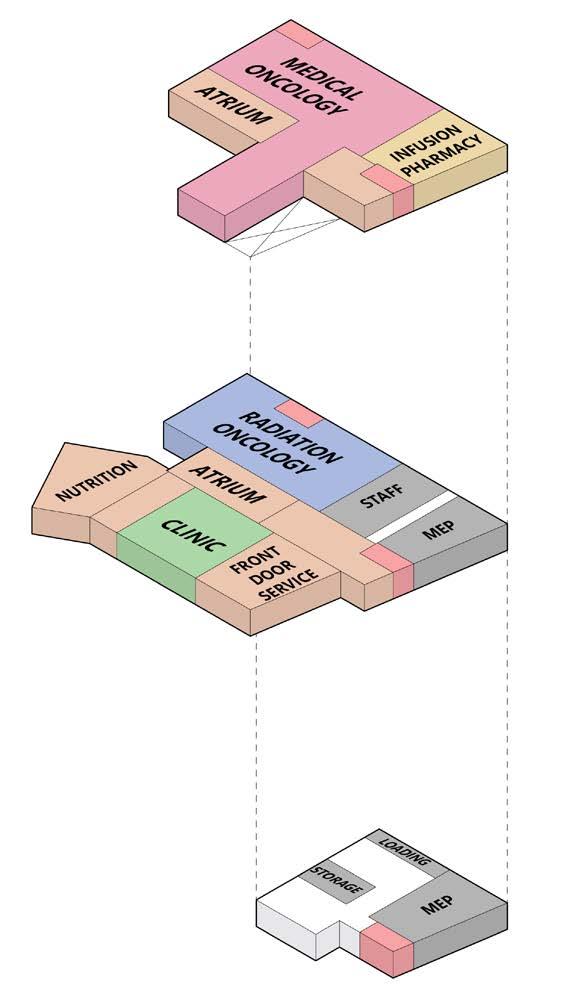
Programmatically, the various medical wings of the Oncology Center are arranged around a central corridor. In the middle of this corridor is a central atrium which acts as a large waiting room as well as a means for vertical circulation.
PROGRAM LEGEND
MEDICAL ONCOLOGY
RADIATION ONCOLOGY
INFUSION PHARMACY
MEDICAL CLINIC
STAFF/ MEP
COMMUNITY
07/ Jovanovic
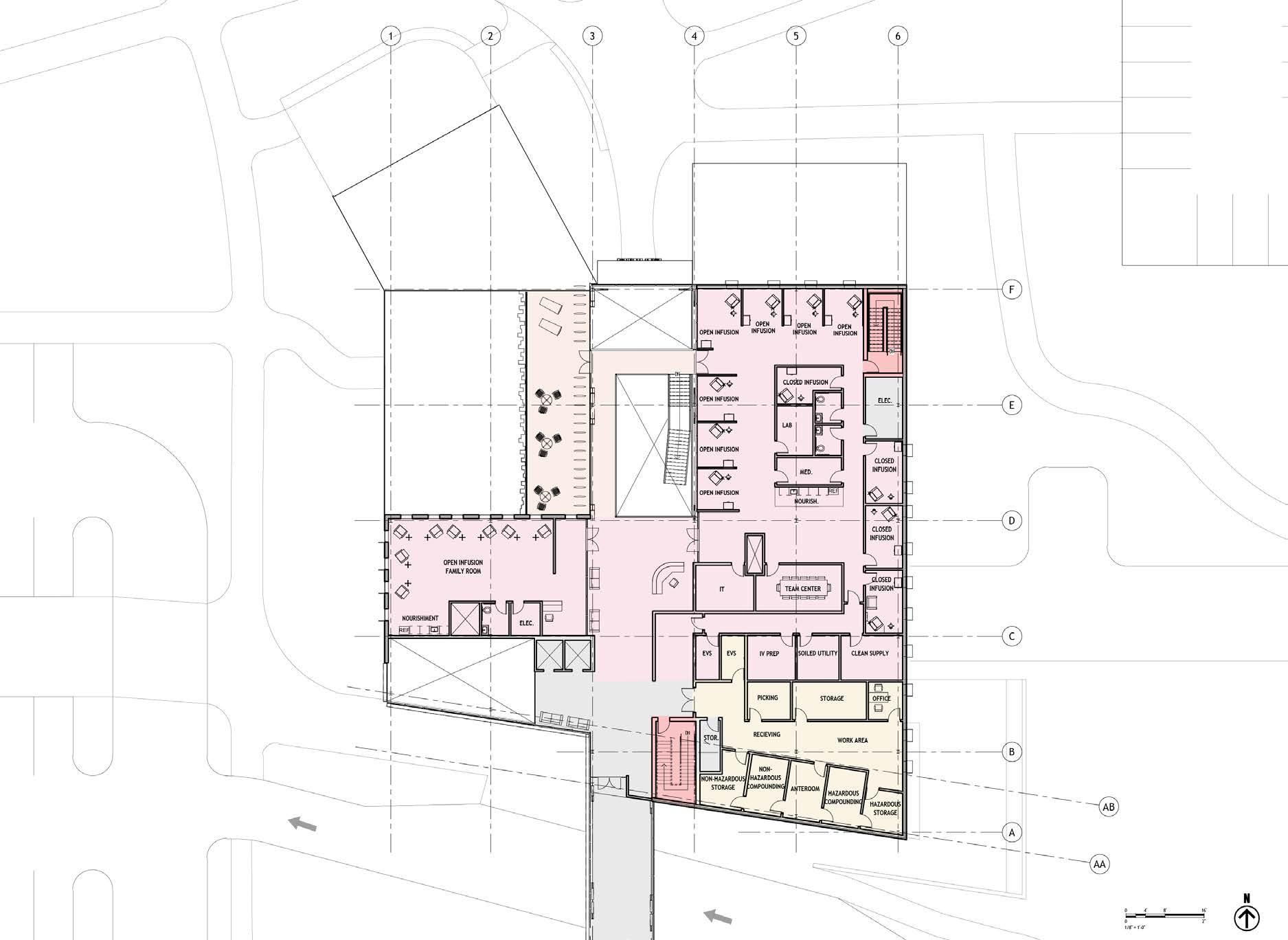
SECOND FLOOR PLAN
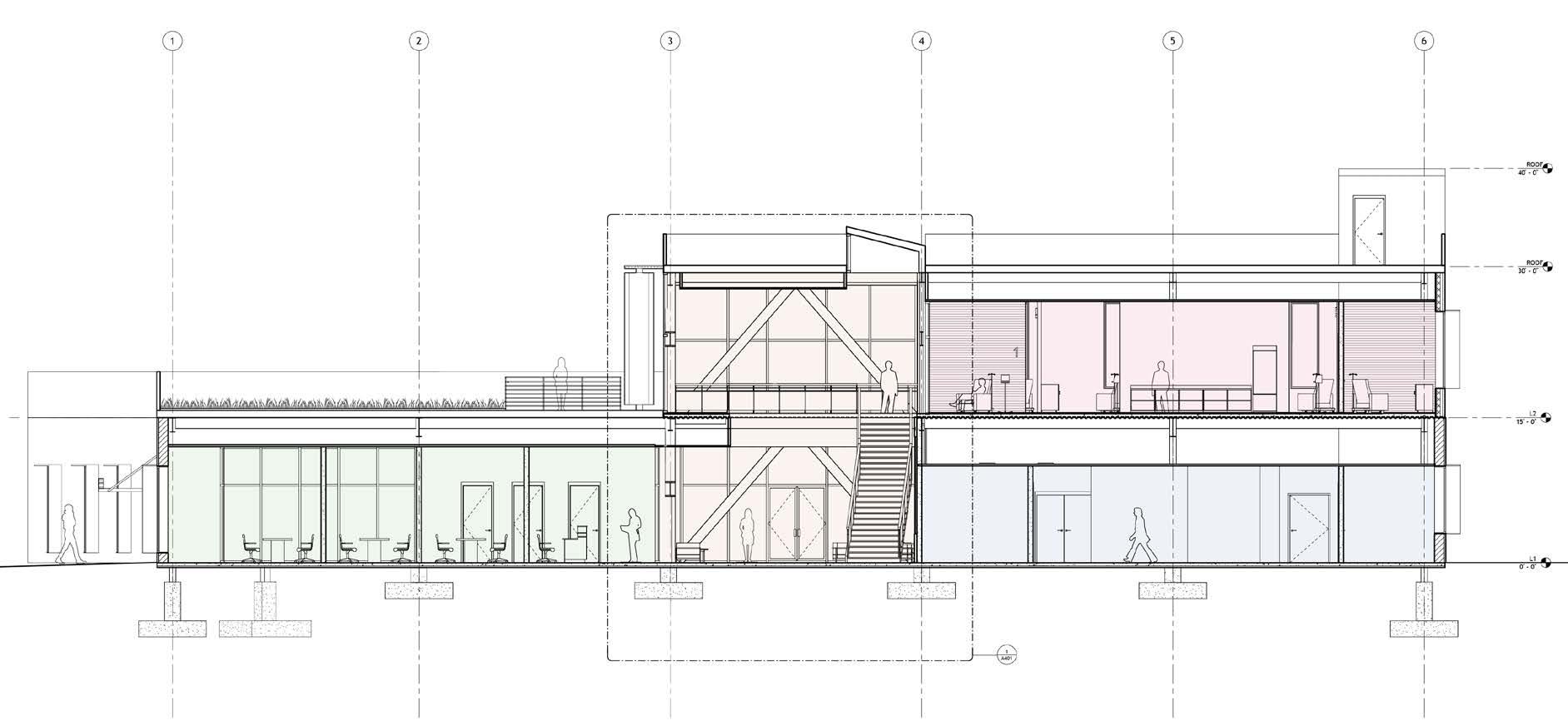
TRANSVERSE SECTION
Hampden Oncology Center /08
Floor Plans Made in Collaboration with M. Calbi Structure Made in Collaboration with S. Borgia and N. Waldinger
WEST | EAST
ATRIUM CALL-OUT SECTION HVAC COOL
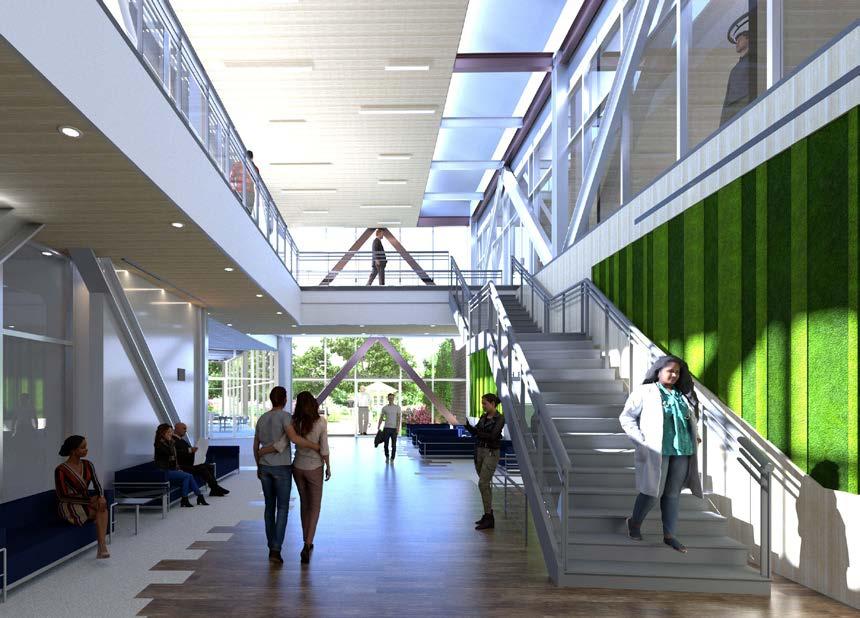
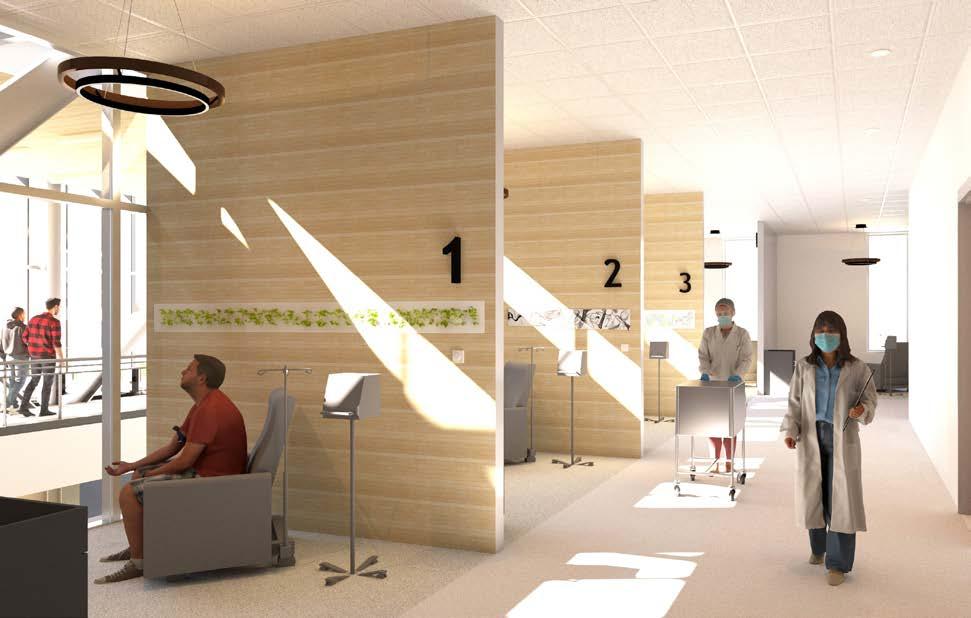
OPEN INFUSION STATIONS ROOF DECK RADIATION TREATMENT INTAKE
CLINIC INTAKE JUN. 21, 4PM (36 ) o 0 1 2 4 8 16 09/
ATRIUM
Jovanovic
AIR
SUNLIGHT
AIR
CIRCULATION
REFLECTION
1ST FLOOR OPEN INFUSION - 2ND FLOOR 01
SIGHT LINES ATRIUM -
01/ ATRIUM LOUVER DETAIL
TYPICAL WALL SECTION
TPO ROOF MEMBRANE
WATERPROOFING MEMBRANE
8" BATT INSULATION
3.5 VLI DECK
ALUMINUM FLASHING
ALUMINUM RAIN SCREEN PANEL
WATERPROOFING MEMBRANE
4" BATT INSULATION W/
STEEL STUD 16" O.C.
2X2 GYP. CEILING GRID
GYP. WALL
WOOD PANELING
ALUMINUM WINDOW COVER W14 X 22 STEEL BEAM
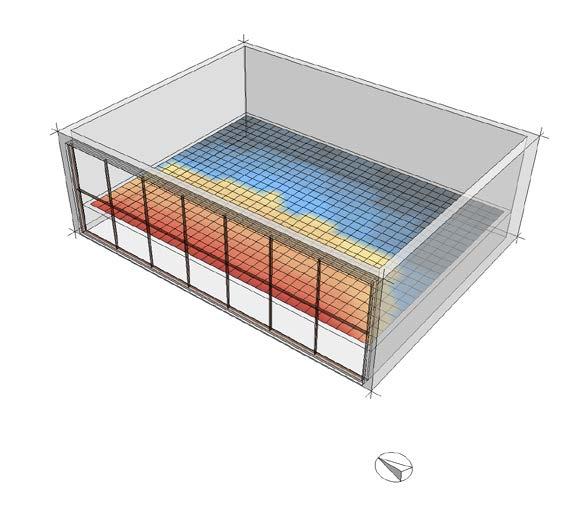
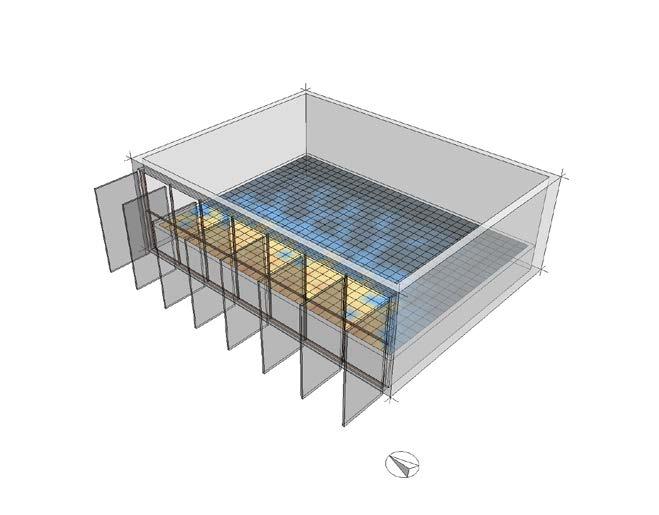
JUN. 21, 12 PM
DEC. 21, 12 PM
4" BRICK FINISH
WATERPROOFING MEMBRANE
6" BATT INSULATION W/
STEEL STUD 16" O.C.
GYP. WALL
Atrium Section Made in Collaboration with M. Calbi Structure Made in Collaboration with S. Borgia and N. Waldinger HVAC by S. Carter
L2 15' - 0" 3 Hampden Oncology Center /10
LOUVER SHADING STUDY
LEARNER’S WHARF
PHILADELPHIA, PENNSYLVANIA
FALL 2022/ Academic Project DURATION/ 14 Weeks TEAM/ Luka Jovanovic
John Martin
PROGRAMS/ Rhino, V-Ray, Photoshop, cove.tool, Sefaira
Designed as a library on a pier to serve the Old City neighborhood of Philadelphia, the Learner’s Wharf is designed to be as efficient as possible while also paying homage to it’s industrial past.
From performing embodied carbon analyses of materials to studies of passive design methods, the project aims to minimize the environmental impact of the building in its construction and daily operations. In addition to being environmentally sustainable, the Learner’s Wharf aims to serve the community through analysis of demographics and the surrounding urban fabric to see how best the library can serve the city.
As part of a two-person group, my main focus within the project concerned passive design analyses into solar heating and water management, as well as assesments into community impact. In addition, my responsibilities included model construction and renderings of the library and its site.
03.
11/ Jovanovic
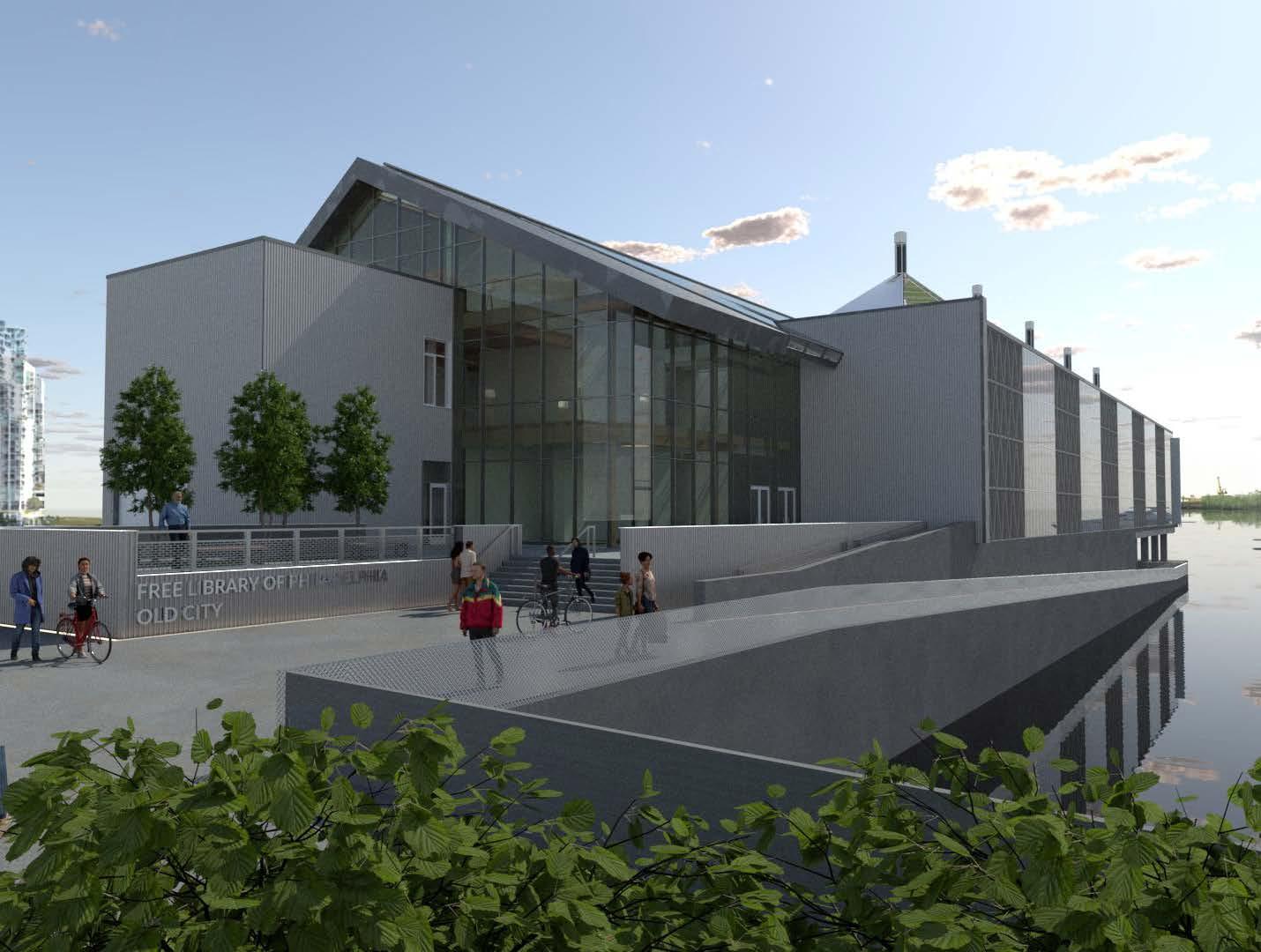
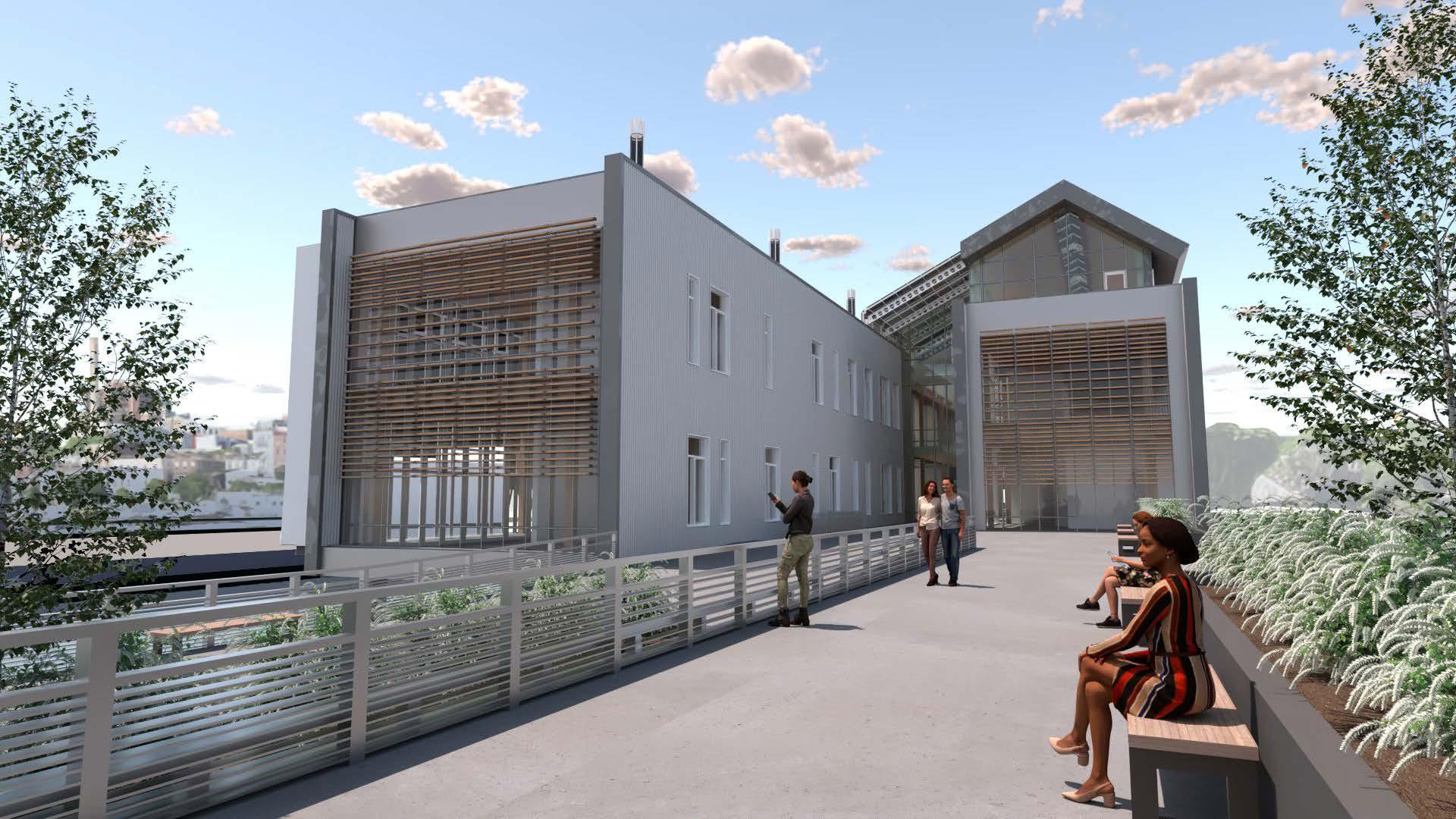
BUILDING STREET VIEW
/12
The library serves the dual purpose of a community center in addition to providing literature.
The building program is broken into three segments with community and reading spaces are divided by circulatory atrium.
Building segments are shifted to define public space in front of the library.
Segments further altered to meet code and enhance program arrangements.
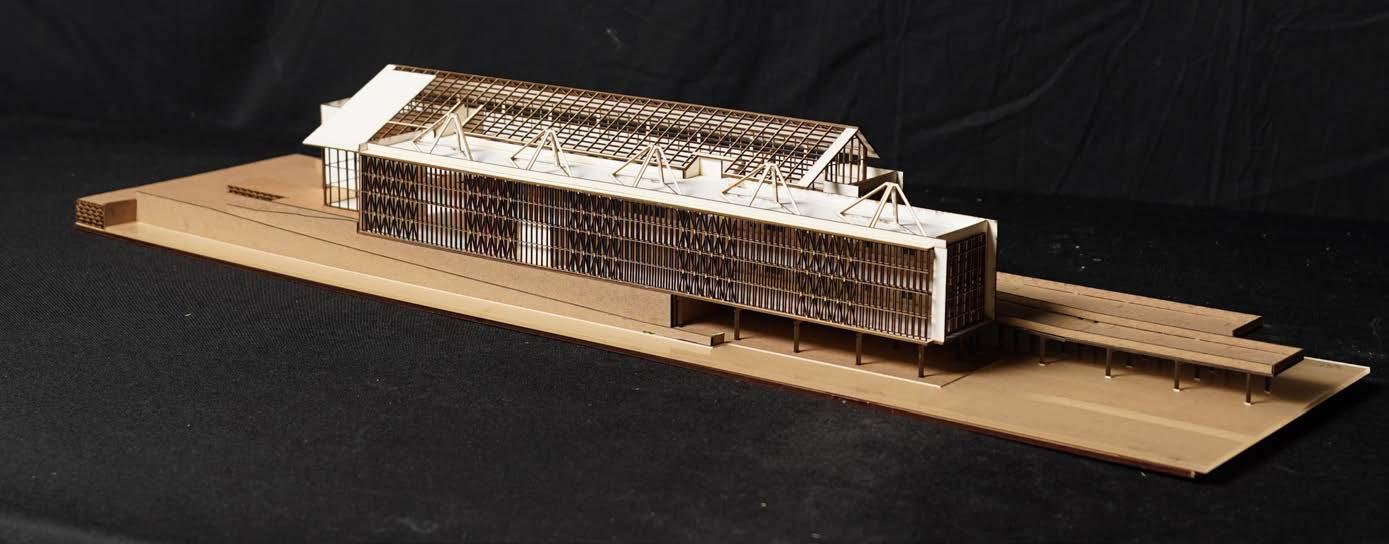
BUILDING MODEL, 1’ = 1/16”
BOULEVARD EXT. CONCRETE AND STONE WALL DEPRESSED CURB BULK HEAD LINE APPROVED BY SECRETARY OF WAR 10 SEP 40 BULK HEAD LINE APPROVED BY SECRETARY OF WAR 10 SEP 40 CHRISTOPHER COLUMBUS STAFF BREAK ROOM STORAGE OFFICE + 15' 5" 1:20 + 15' 5" + 11' 5" + 15' 5" + 11' 5" OFFICE OFFICE RECEPTION AREA OFFICE DISABILITY INFORMATION CENTER OFFICE LOADING DOCK 1:28 1:20 FAMILY RESOURCES CENTER INFO CENTER LIBRARY STORE MEETING ROOM MEETING SPACE MECHANICAL OFFICE + 11' 5" MECHANICAL MEETING ROOM 13/ Jovanovic GROUND
FLOOR/ SITE PLAN
CONCEPT
BOOK STACKS/ STUDY BOOK STACKS/ STUDY & BOOK STACKS/ STUDY BOOK STACKS/ STUDY ATRIUM ATRIUM ATRIUM COMMUNITY/ CREATIVE SPACE COMMUNITY/ CREATIVE SPACE COMMUNITY/ CREATIVE SPACE COMMUNITY/ CREATIVE SPACE
TRANSIT ROUTES
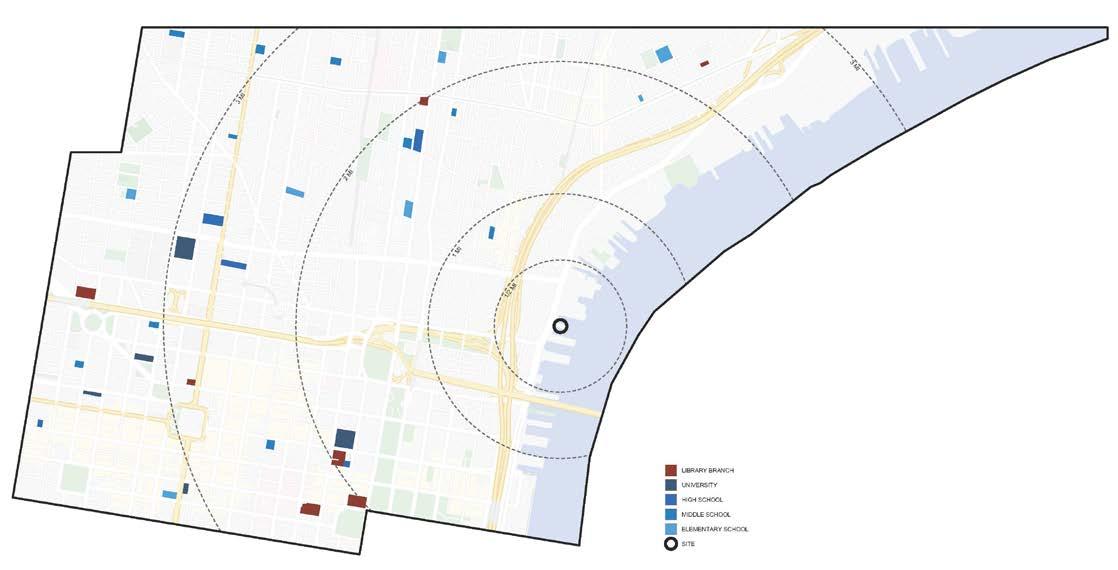
NEIGHBORHOOD MAP
BIKE PATHS
Extensive research was done to asses the demography and accessibility of the neighborhood the site is located in. By making these assessments, it helped inform the amenities that will be of use to visitors to the library and create a welcoming addition to the community.
Floor Plans Made in Collaboration with John Martin
P HE LI PPROVED BY SECRE TARY O WAR 10 SE RIVER DELAWARE 1:16 STORAGE STORAGE STORAGE +3'5" MULTIPURPOSE SPACE OFFICE GALLERY PREP ROOM ART STUDIO/CLASSROOM BREAK ROOM + 15' 5" +13' 5" ARTIST PRIVATE STUDIO MEETING ROOM PIER APPR SECRETARY OF RIVER DELAWARE STAFF BREAK ROOM 1:16 STORAGE STORAGE STORAGE CENTER OFFICE BREAK ROOM 1:28 LIBRARY STORE MEETING ROOM MEETING ROOM MEETING ROOM FIRST FLOOR PLAN ELEV. 15'-6" Transit Routes Bus Routes Unprotected Bike Lane Subway Route Dedicated Bike Lane Bike Paths ea enches es White 71% Family Resources Walking Infrastructure esibility es PIERHEADSECRETAR RIVER DELAWARE STORAGE 1:16 1:20 15' 5" 15' 5" + 11' 5" OFFICE +3'5" OFFICE RECEPTION AREA OFFICE ART STUDIO/CLASSROOM 1:20 + 15' CENTER +13' 5" 11' 5" MEETING ROOM FIRST FLOOR PLAN - ELEV. 15'-6" Transit Routes Bus Routes Unprotected Bike Lane Subway Route Dedicated Bike Lane Bike Paths Bike Racks/ Rest Area Green Space/Benches Acessibility Resources Family Resources Family Resources Walking Infrastructure Green Space astructure Accesibility Resources HEADLINE APPROVED SECRETARY WA RIVER DELAWARE 1:16 STORAGE PREP ROOM ART STUDIO/CLASSROOM 15' 5" 5" FIRST FLOOR PLAN - ELEV. 15'-6"
Unprotected Bike Lane Dedicated Bike Lane Bike Paths Economy Median Household Income $77,111 PovertyRate 16% White 71% Walking Infrastructure PIER HEADLINE APPROVED SECRETARYSEP RIVER DELAWARE 1:16 +3'5" PREP ROOM FIRST FLOOR PLAN ELEV. 15'-6" Communities Routes Routes Unprotected Bike Lane bwayRoute Dedicated Bike Lane Bike Paths Economy Demographics Median Household Income $77,111 PovertyRate 16% Race White 71% Walking Infrastructure orMore Hispanic 11% Learner’s Wharf /14
Communities
LIBRARY BRANCH UNIVERSITY HIGH SCHOOL MIDDLE SCHOOL ELEMENTARY SCHOOL
SITE
SECOND FLOOR PLAN
THIRD FLOOR PLAN
DN UP DN UP READING AREA MULITPURPOSE/STUDY SPACE COMPUTER LAB READING/STUDY SPACE ADULT COLLECTION SPECIAL COLLECTIONS GREENHOUSE GREENHOUSE TEEN AREA BALCONY CHILDREN'S COLLECTION TEEN STUDY /READING AREA 15/ Jovanovic
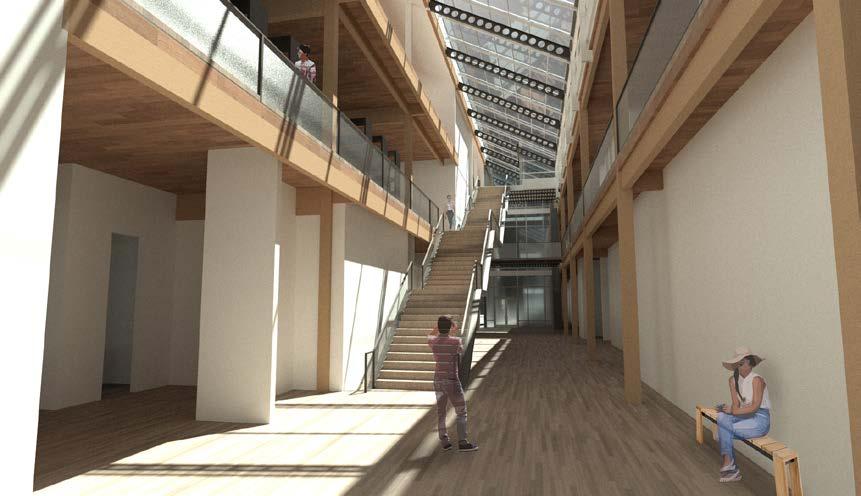
ATRIUM VIEW
The atrium acts as a central circulatory space where visitors ascend and branch off into different spaces.
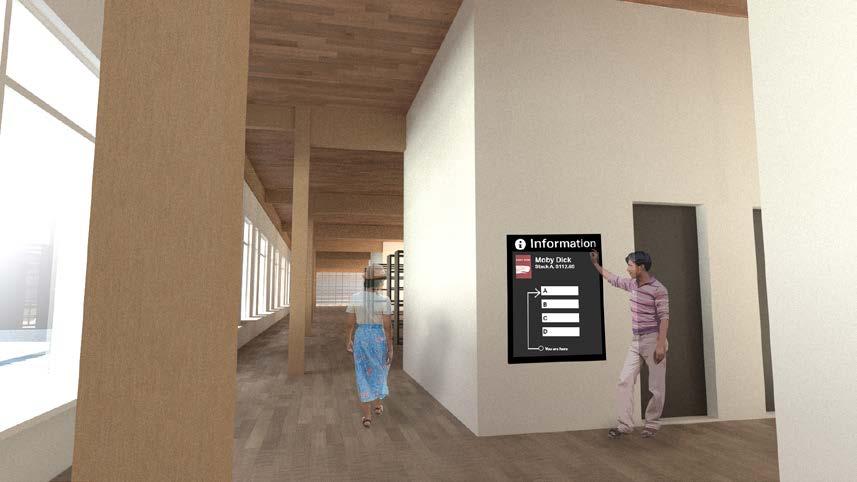
HALLWAY VIEW
Coming out of the stairs or elevator, visitors will be able to use touchscreen kiosks for wayfinding and searching for books.
Floor Plans Made in Collaboration with John Martin
DN UP DN UP UP READING AREA/STUDY AREA STORAGE STORAGE FABRICATION LAB FABRICATION LAB ADULT COLLECTION ROBOT LAB SECOND FLOOR PLAN - ELEV. 31'-6" 0' 2' 4' 8' 16' 32' SCALE: 1/8" = 1' 0" GREENHOUSE GREENHOUSE GREENHOUSE DN BALCONY READING SPACE TEACHING SPACE THIRD FLOOR PLAN - ELEV. 47'-6" 0' 2' 4' 8' 16' 32' SCALE: 1/8" = 1' 0" Learner’s Wharf /16
John Martin & Luka Jovanovic
RAINWATER COLLECTION SYSTEM
It is crucial for a high performing building to have an efficient water management system. The main water management strategies used in the building features stacked bathrooms to reduce plumbing runs in the building. Furthermore, a rainwater collection system is being implemented to recycle rain water for use in watering the building landscaping and for providing water for select plumbing fixtures.
Design for Ecosystem
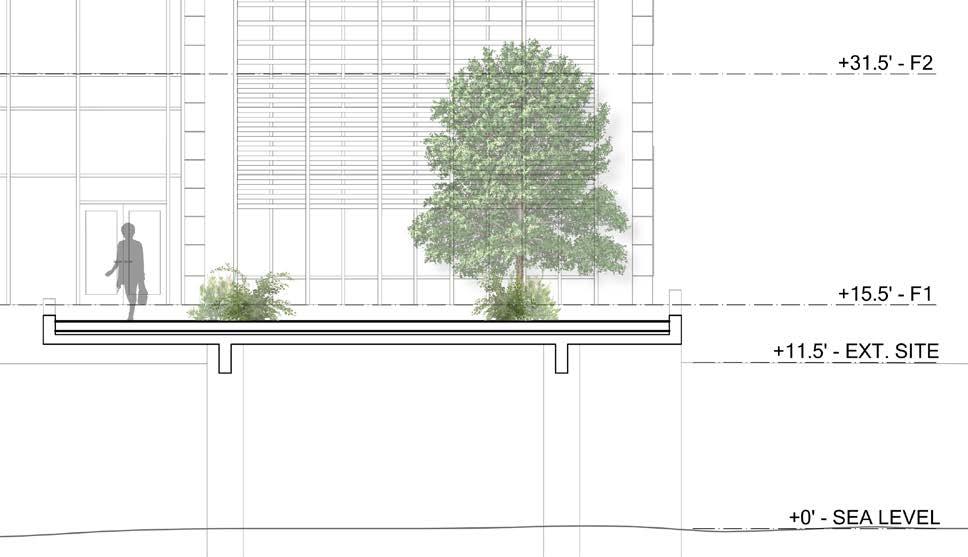
John Martin & Luka JovanovicThe design of the library supports and improves the ecological health of the site by utilizing the landscapign around the building. The lansdscaping is populated with plant species native to Philadelphia region and are selected for their ability to take in a lot of water in the event of heavy downpour or flash flooding. In addition to water management, the chocie of vegetation will contribute to to the creation of pleasant outdoor spaces for the library’s users.
Total Water Use (gal/yr)
Section Made in Collaboration with John Martin. Water Diagram by Luka Jovanovic.
LEED Pts. - WEc1-c2 Credit
Indoor WUI (gal/ft sq./yr)
Stormwater Managed Onsite %

WATER MANAGEMENT - VEGETATION SELECTION
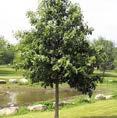
• Height: 60 to 80 ft tall
• Water Need: Moist
• Hardiness Zone: 3-9
• Sun: Direct sun, partial shade

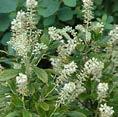
• Height: 4-8 ft
• Water Need: Moist
• Hardiness Zone: 3-9
• Sun: Partial shade, full shade
• Height: 1-3 ft
• Water Need: Weekly
• Hardiness Zone: 3-8
• Sun: Direct sun, partial shade
 Swamp White Oak (Quercus bicolor)
Summersweet (clethra alnifolia)
Maidenhair (adiantum pedatum)
Swamp White Oak (Quercus bicolor)
Summersweet (clethra alnifolia)
Maidenhair (adiantum pedatum)
17/ Jovanovic
GREENHOUSE MULTIPURPOSE/READING SPACE FAMILY RESOURCE CENTER CHILDREN'S COLLECTION +47.5' - F3 +11.5' - EXT. SITE +0' - SEA LEVEL +31.5' - F2 +15.5' - F1 ADULT COLLECTION ADMIN. OFFICE SECTION THROUGH COMMUNITY CENTER/COLLECTIONS 0' 2' 4' 8' 16' 32' SCALE: 1/8" = 1' 0" PLANTER FILTRATION ROOF RAIN WATER FILTERS RUNOFF PRIOR TO ENTERING FILTRATION SYSTEM SEDIMENT TANK STORAGE TANK UV / FILTER STORM OVERFLOW GREENHOUSE IRRIGATION BUILDING WATER USAGE DECREASES WITH FILTERED GREY WATER USAGE FOR PLANTS PLUMBING FIXTURES FILTERED GREY WATER USED FOR PLUMBING APPLIANCES DECREASES BUILDING WATER USAGE
SUNLIGHTING STUDIES

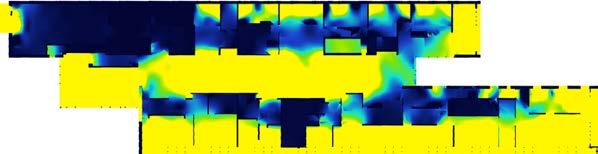
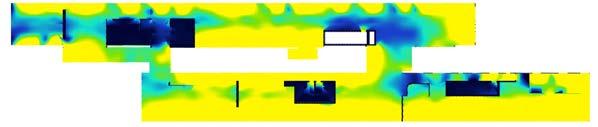

Section Made in Collaboration with John Martin. Sun
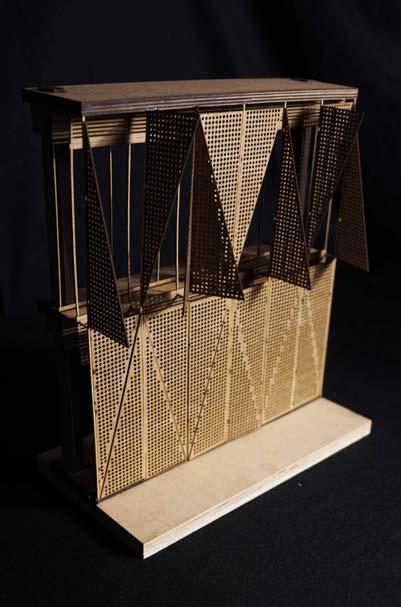
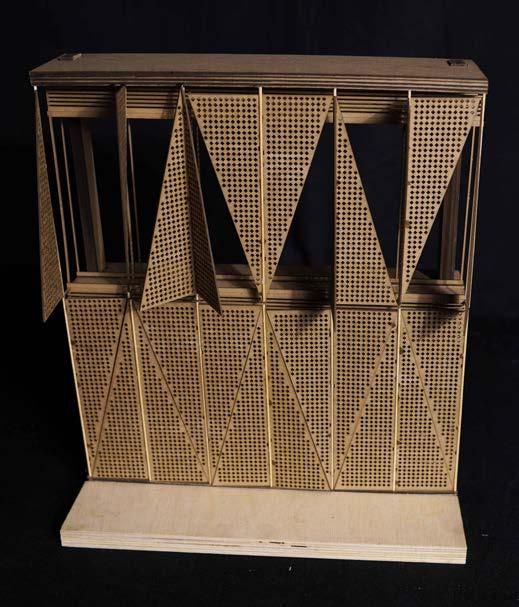
To reduce thermal loads on the building, the library features a series of operable shading panels on its south facade to help limit thermal loads during the summer months.
In addition, digital models were created to study water management within the building and site to reduce waste and enhance the resiliency of the site.
PIER GARDEN VIEW
& Luka
Level 1 ASE: 47% Sunlight Analysis sDA: 62% Level 1 Level 2 Level 2 Level 3 Level 3 ADMIN. OFFICE MULTIPURPOSE/READING SPACE +0' - SEA LEVEL FAMILY RESOURCE +31.5' - F2 +15.5' - F1 ADULT COLLECTION CHILDREN'S COLLECTION +47.5' - F3 +11.5' - EXT. SITE SECTION THROUGH COMMUNITY CENTER/COLLECTIONS Level 1 Level 1 Level 2 Level 2 Level 3 Level 3 SECTION THROUGH COMMUNITY CENTER/COLLECTIONS 0' 2' 4' 8' 16' 32' SCALE: 1/8" = 1' 0" Learner’s Wharf /18
Design for Well Being
Jovanovic
SHADING STUDY MODEL
sDA: 62%
Diagram by Luka Jovanovic.
JOURNEY
SAN ANTONIO, TEXAS
FALL 2021/ Academic Project DURATION/ 7 Weeks
TEAM/ Luka Jovanovic PROGRAMS/ Rhino, V-Ray, Photoshop, Illustrator
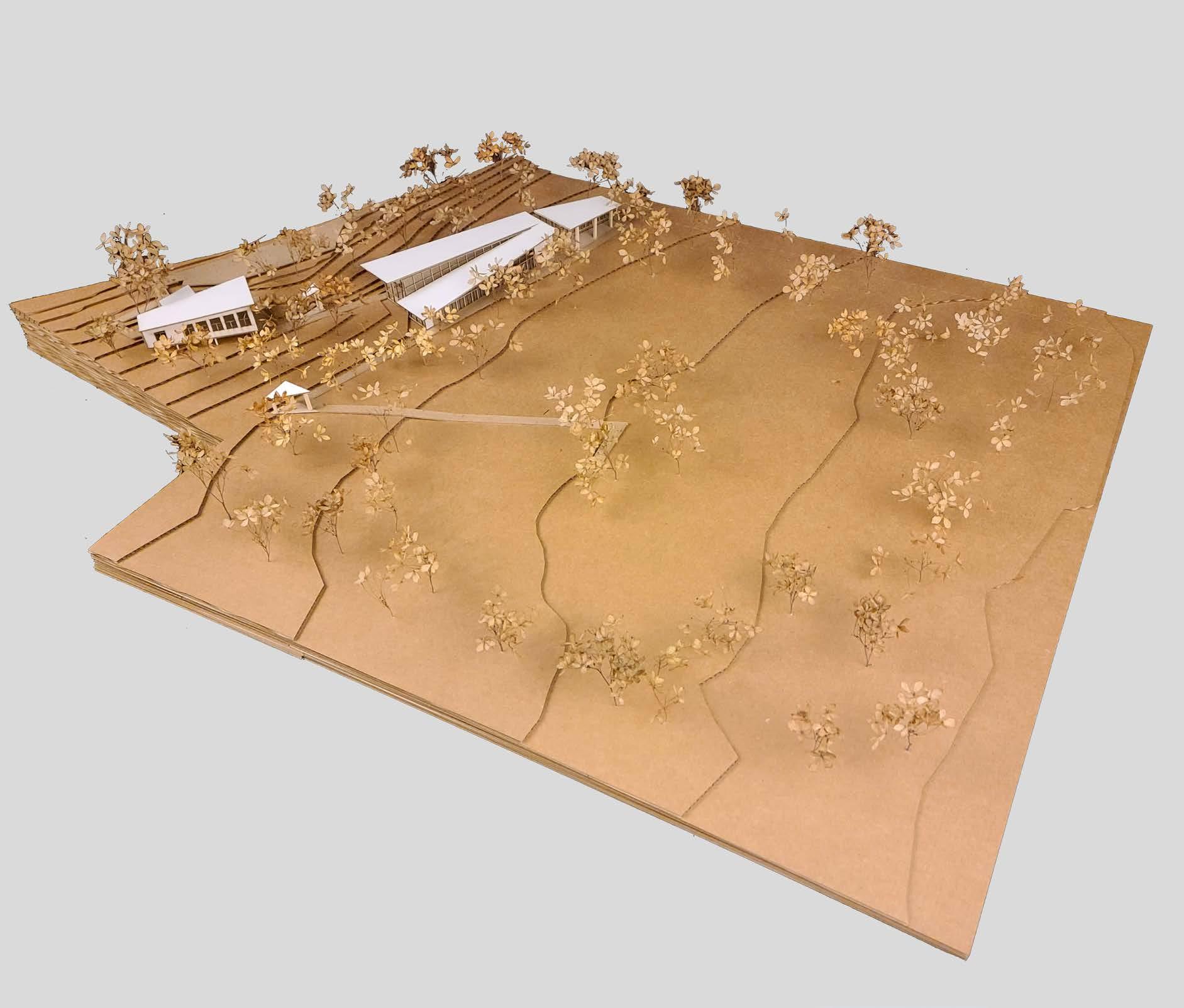
Designed as a space for scientists to further their study and archive of fossils in the nearby Freisenhahn Cave, this proposed research center seeks to take the occupants of the site on a journey consisting of a long switchback path which zig-zags down the slope of the site.
As visitors arrive at the site, they are enveloped into a wooded area which serves as a transition from the urban loacale they came from into a more natural environment. As visitors proceed down the path, their views of the site are limited by the trees around them with the exception of the buildings in front of them. At the each turn of the path as it moves down the slope, visitors will come across the buildings of the site which serve as the axial loci where the path switches back.
The buildings and the structures on the site reflect the nature of the path conforming to wedge-shaped floor plans and slanted roofs which slope down either to the switchback or reflect the sloping down of the path through the site.
03.
19/ Jovanovic
/20
SITE MODEL, 1’ = 1/16”
CONCEPT/ DESIGN DEVELOPMENT
Zigzag path adopted to allow gradual descent through slope of site
Buildings act as axial loci at the turning point of each switchback
Buildings adopt wedge shape in relation to the shape of the path moving through the site
Roofs are slanted to slope down either down to loci or relate to sloping down of path
SITE PLAN 0 SCALE 1’ = 1/16” 50 100 200 1172 1170 1170 1168 1166 1164 1162 1162 1162 1162 1160 1160 1160 1158 1156 1154 1152 1174 11781176 1. 2. 3. 1. FIELD HOUSE 2. RESEARCH CENTER 3. LIBRARY & OUTDOOR CLASSROOM A A B B C C D D F G G F E E 21/ Jovanovic
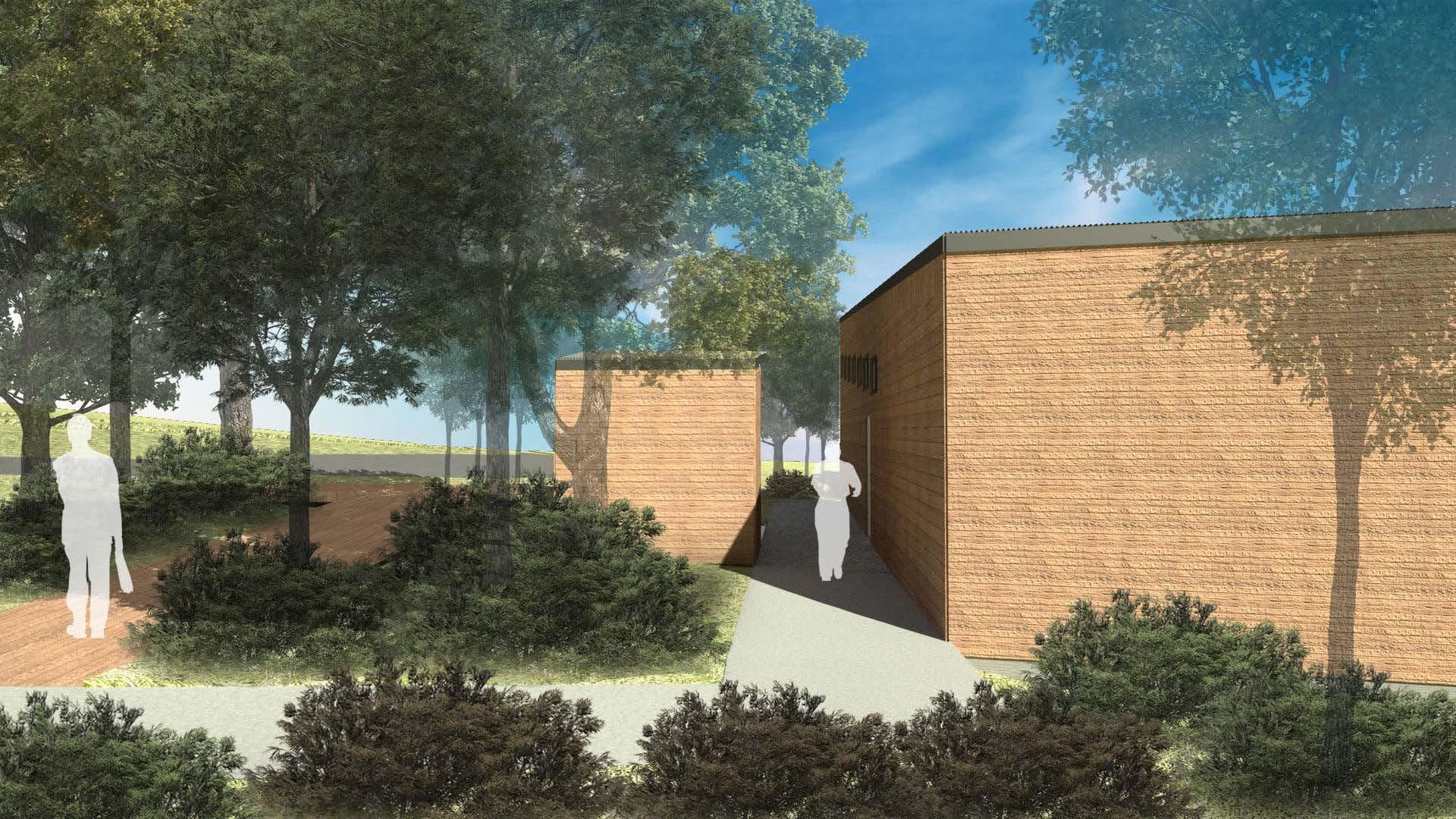
BEGINNING OF SWITCHBACK PATH
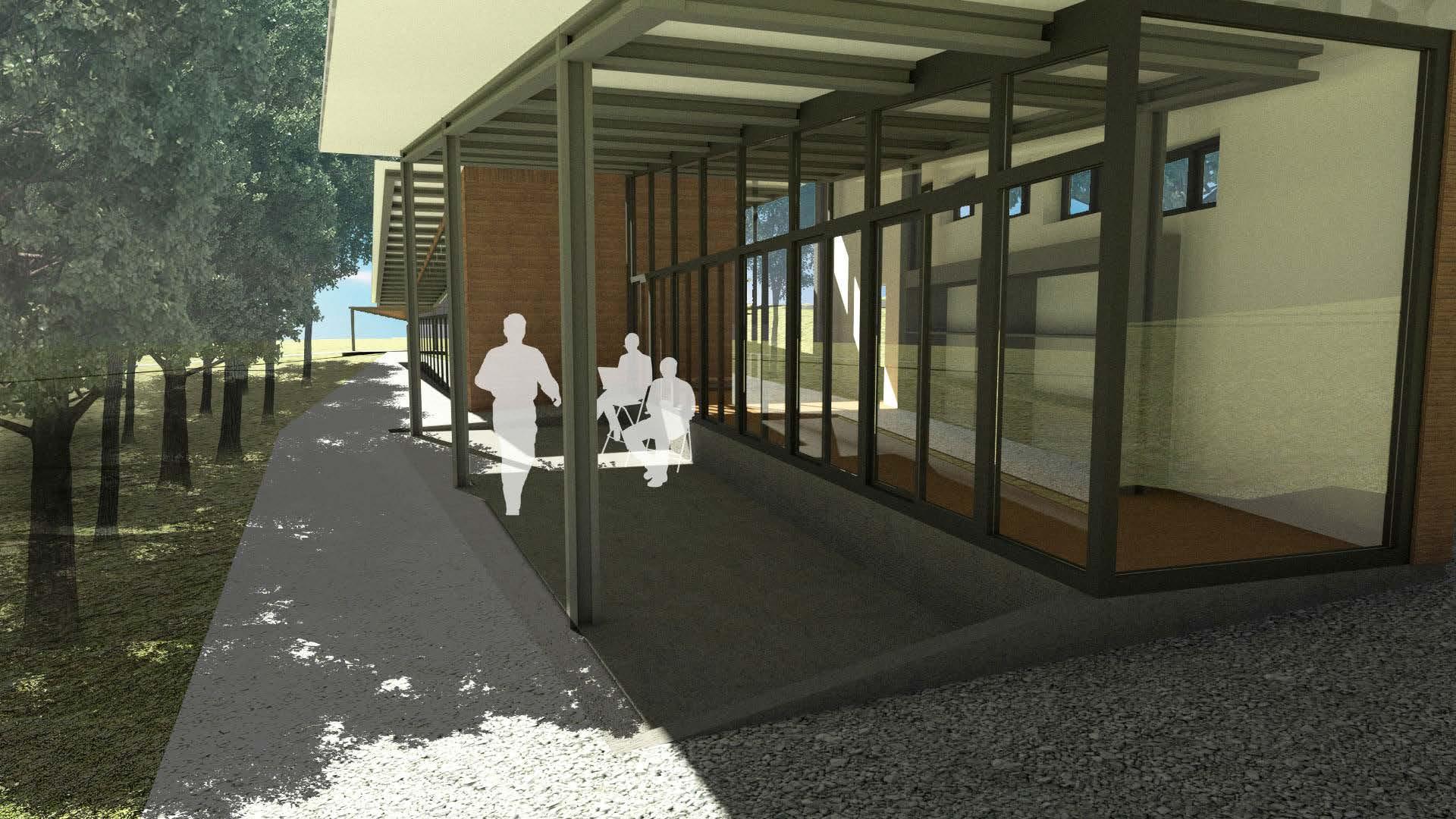
REAR VIEW OF CLASSROOM/ LIBRARY
Journey /22
FIELD HOUSE PLAN 0 10 20 30 40 SCALE: 1’=1/8” COMMUNAL BEDROOM/ KITCHEN W/C OVERSEER BEDROOM W/C STORAGE LIBRARY/ CLASSROOM PLAN 0 10 20 30 40 SCALE: 1’=1/8” LIBRARY OUTDOOR CLASSROOM 23/
Jovanovic
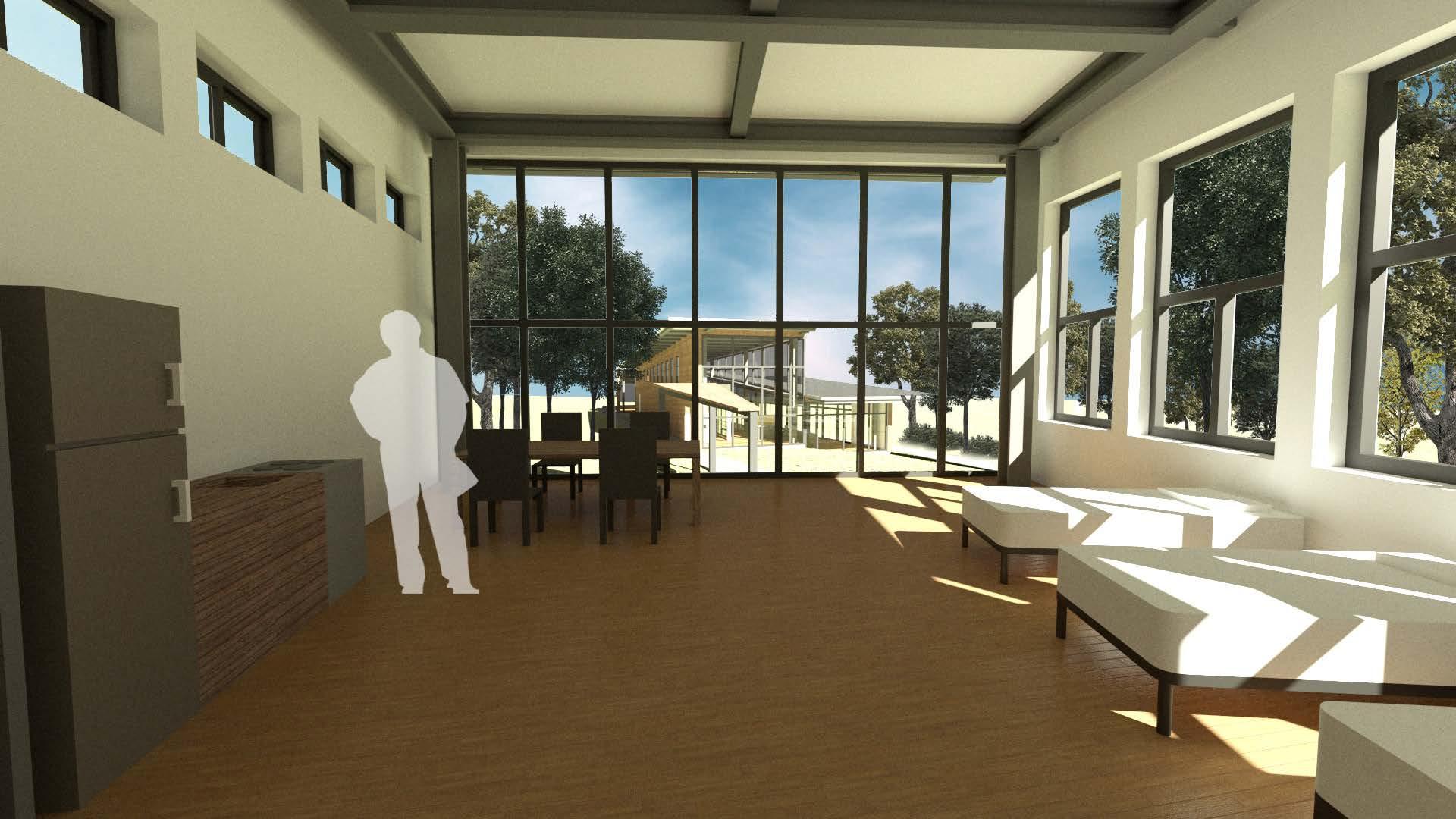
All of the buildings in the site feature cross-ventilation consisting of larger windows oriented towards the direction where wind is most prevalent, and smaller windows on the opposite side to allow air to pass through as well as create a stack effect.
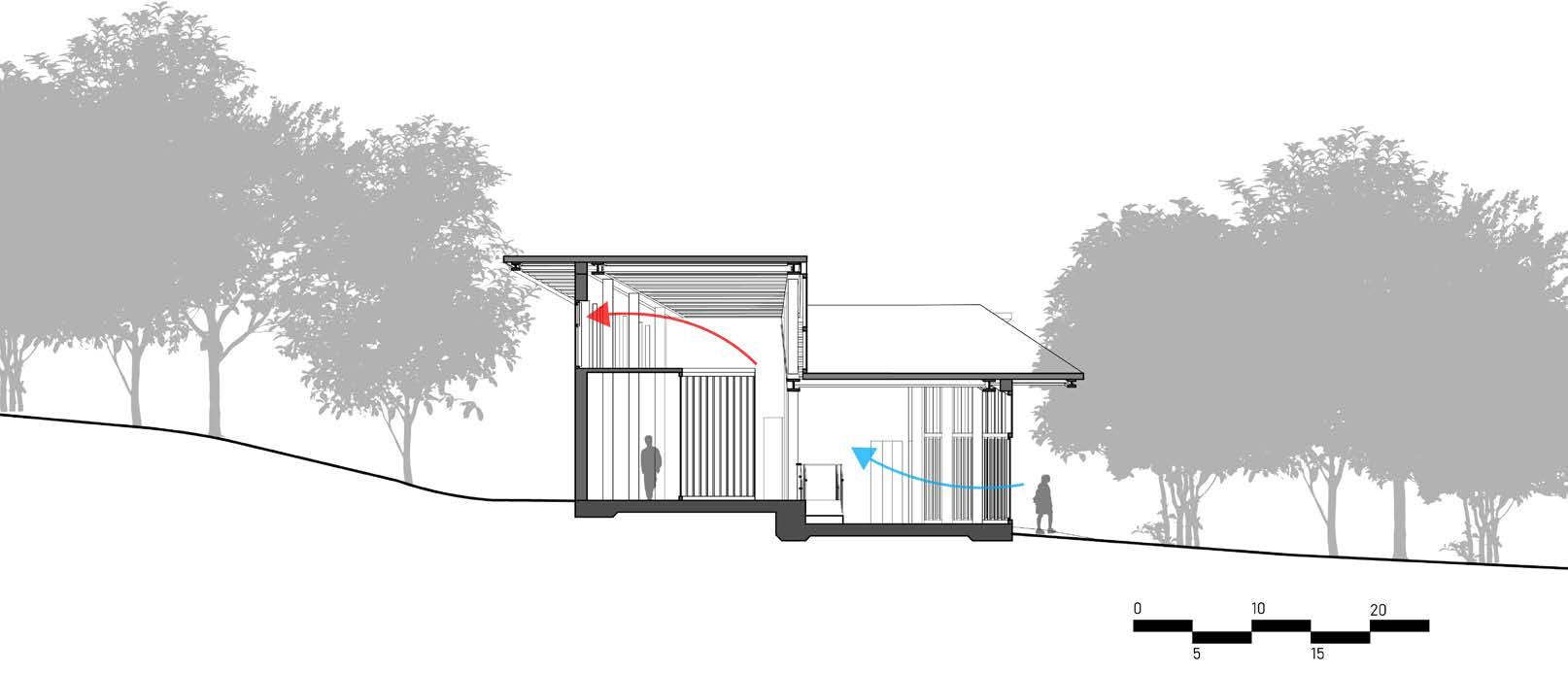
RESEARCH CENTER PLAN 0 10 20 30 40 SCALE: 1’=1/8” ARCHIVE SUPPORT OFFICE/ STORAGE LAB W/C STORAGE Journey /24
RESEARCH CENTER SECTION
ROOF FINISH
STEEL I-BEAM ROOF FRAMING
STEEL I-BEAM COLUMNS
WALL AND WINDOW FINISH
ROOF FINISH
STEEL I-BEAM ROOF STRUCTURE
STEEL I-BEAM COLUMNS
WALL AND WINDOW FINISH
CONCRETE SLAB
STEEL I BEAM FLOOR FRAMING W/ CONCRETE PILONS
CONCRETE FOUNDATION
25/ Jovanovic
FIELD HOUSE AXON
RESEARCH CENTER AND LIBRARY AXON
FIELD HOUSE INTERIOR
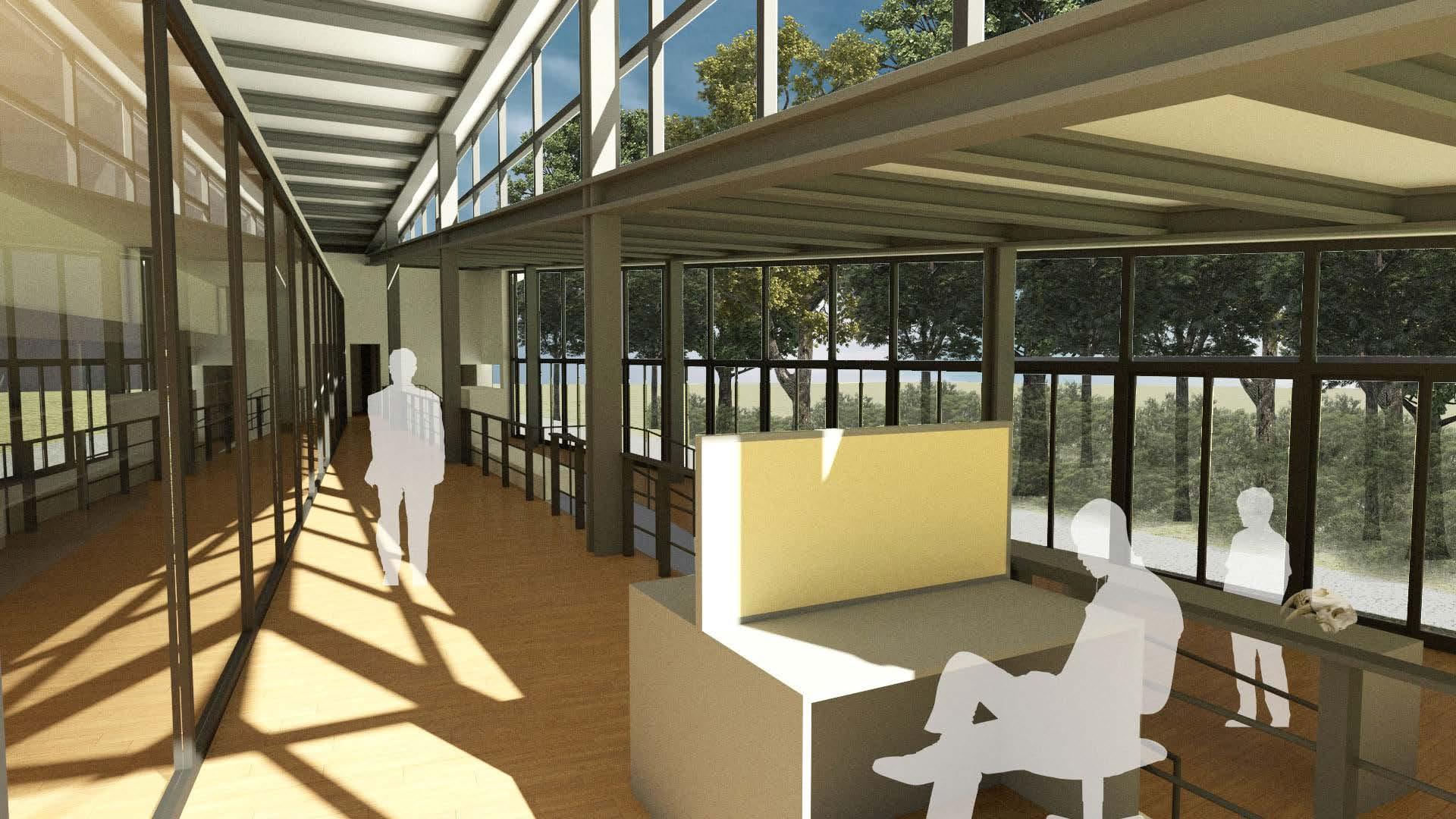
RESEARCH CENTER INTERIOR
Journey/26
FLEX-HOME
PORTABLE
SPRING 2021/ Academic Project
DURATION/ 5 Weeks TEAM/ Luka Jovanovic PROGRAMS/ Rhino, Photoshop, Illustrator
Good living can be defined as living in a space that is large enough to provide comfort and facilitate the desires and needs of its inhabitant.
In the context of this hypothetical client, who is a fitness instructor who likes to grow their own food and have large groups of friends over for meals, the need for space cannot be understated.
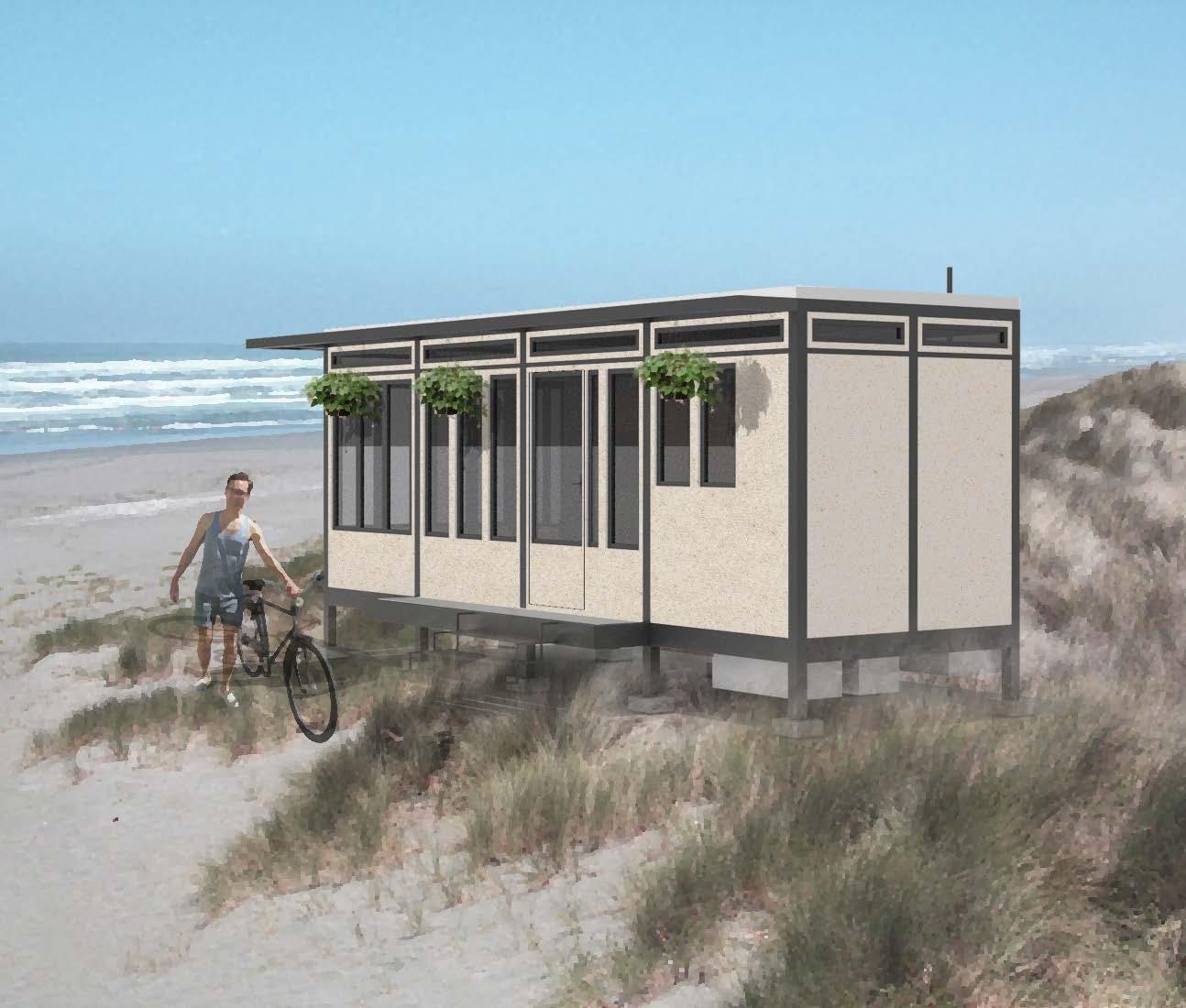
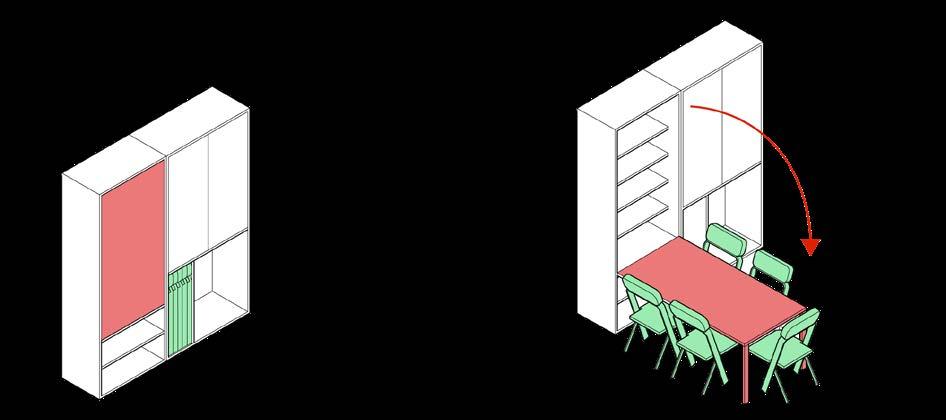
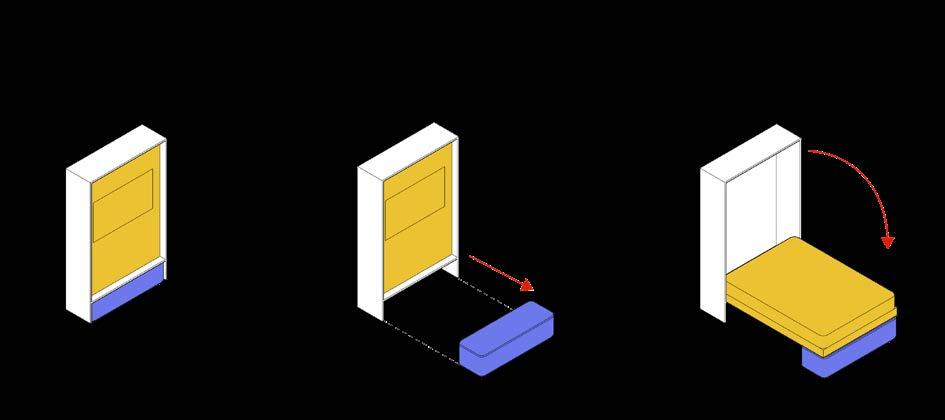
Featuring a flexible space with reconfigurable, custom furniture and components, the Flex-Home folds, slides, pulls down, and pulls out to accommodate the activities of the occupant while being contained within a rigid rectangular space.
Through its use of custom furniture, Flex-Home explores what is considered “comfortable space” and how such a space can be most efficiently used.
04.
27/ Jovanovic
/28
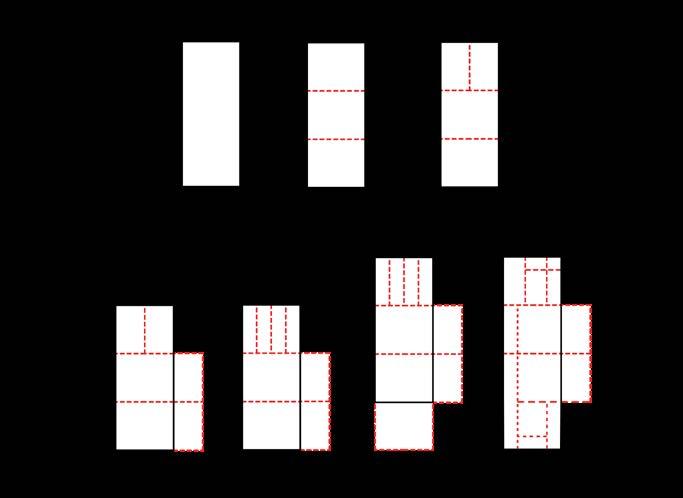
The spatial arrangements of the tiny home are broken down proportionally according to the prefabricated 2’x6’ floor panels. The placement of furniture and programs can take up from half a panel to 4 panels in a row.
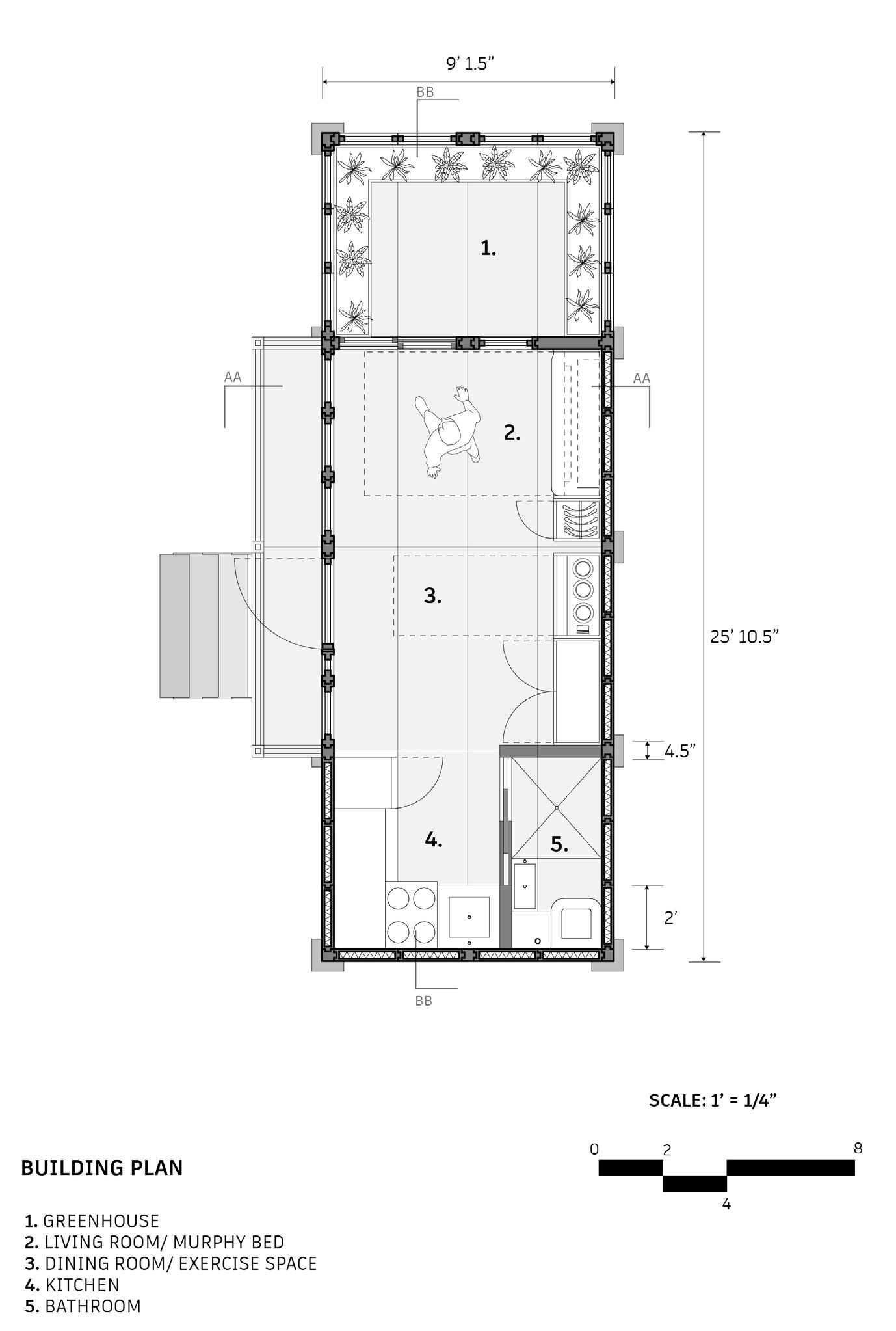
SPATIAL ORGANIZATION 29/ Jovanovic
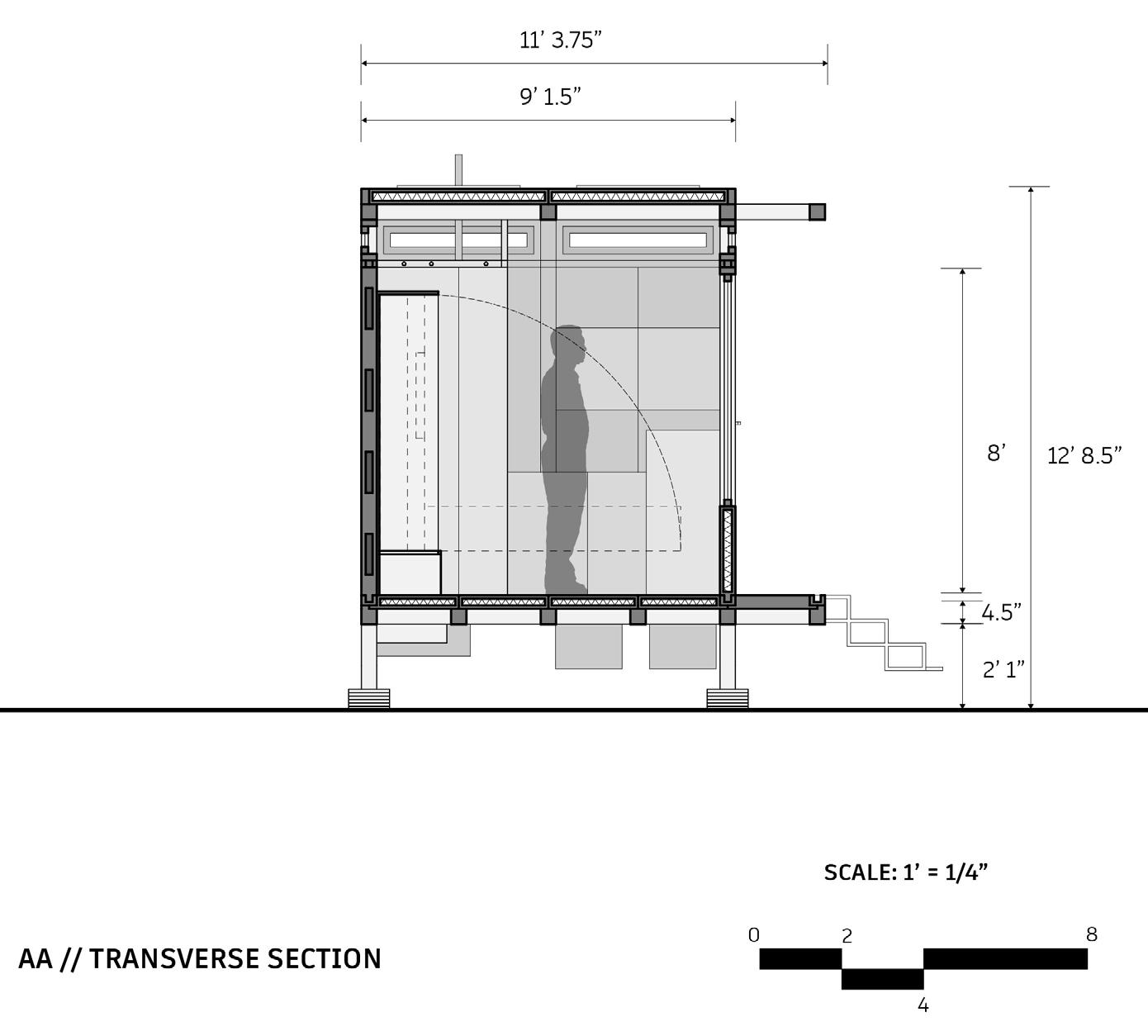
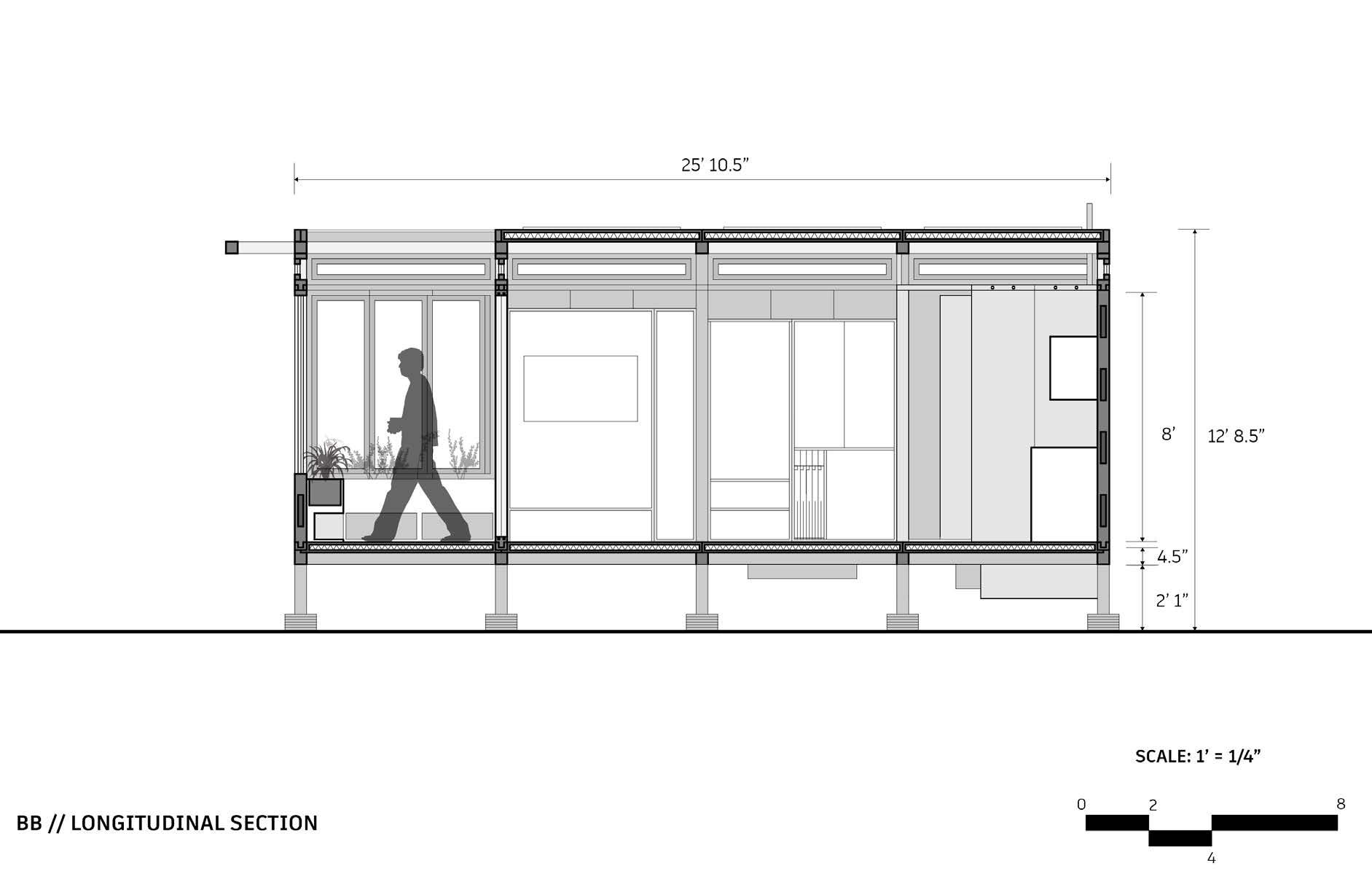
Flexhome /30
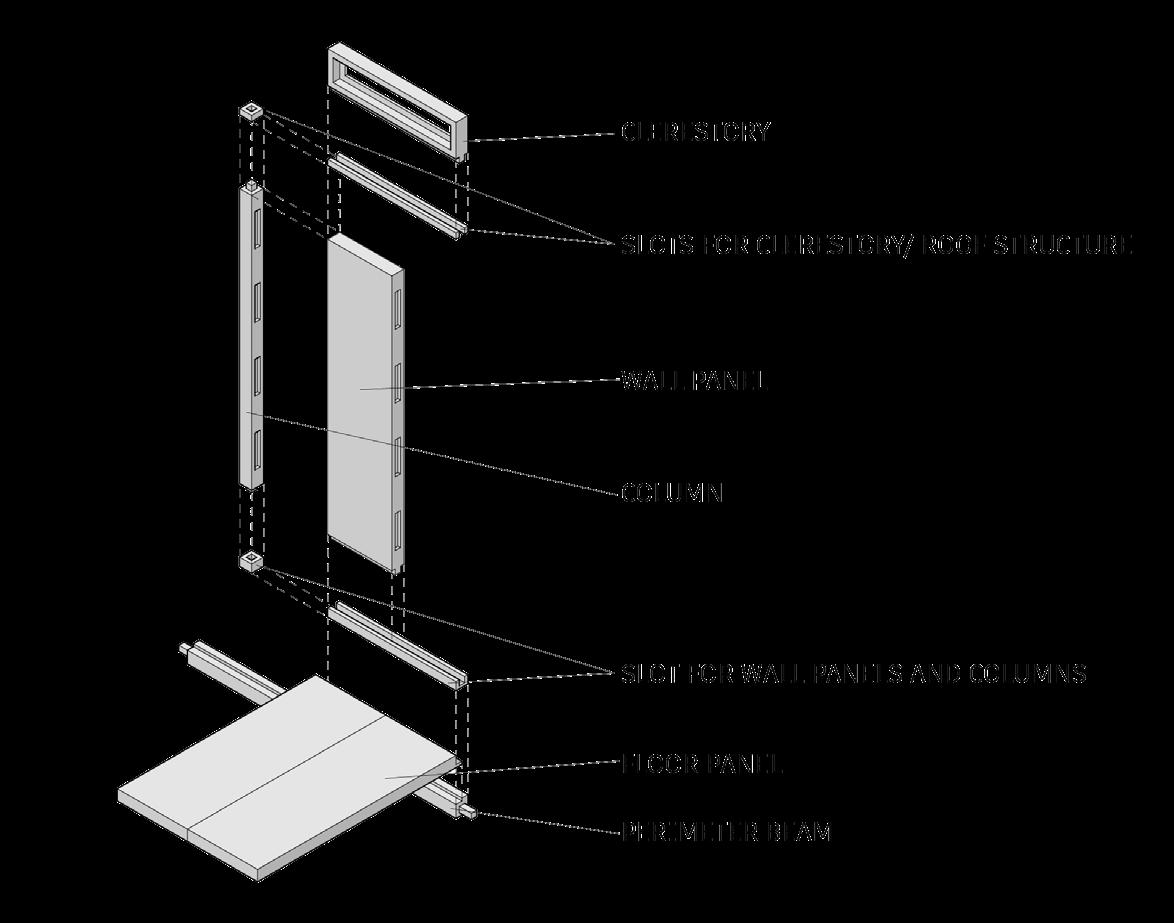
PULL DOWN DINING SET
MURPHY BED CONFIGURATIONS
OPEN SPACE
LIVING ROOM
BEDROOM
AIR CIRCULATION
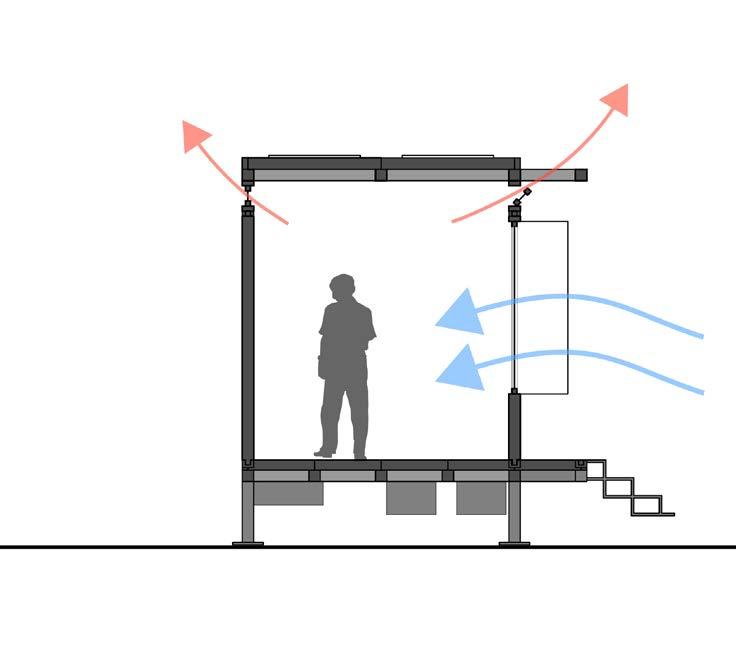
PASSIVE HEATING/ COOLING
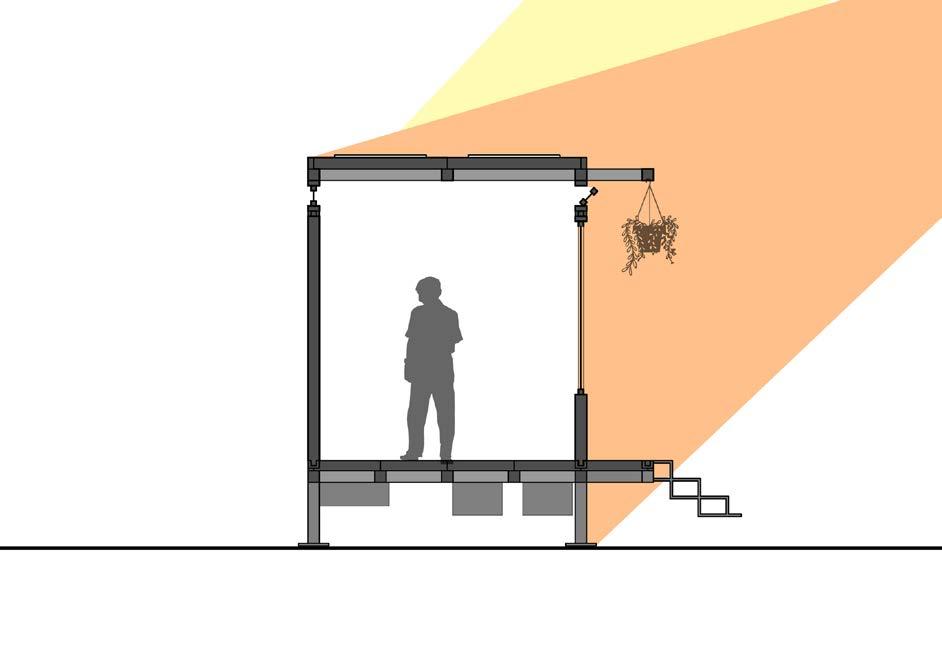
BASIC WALL SETUP
31/ Jovanovic
PV PANELS
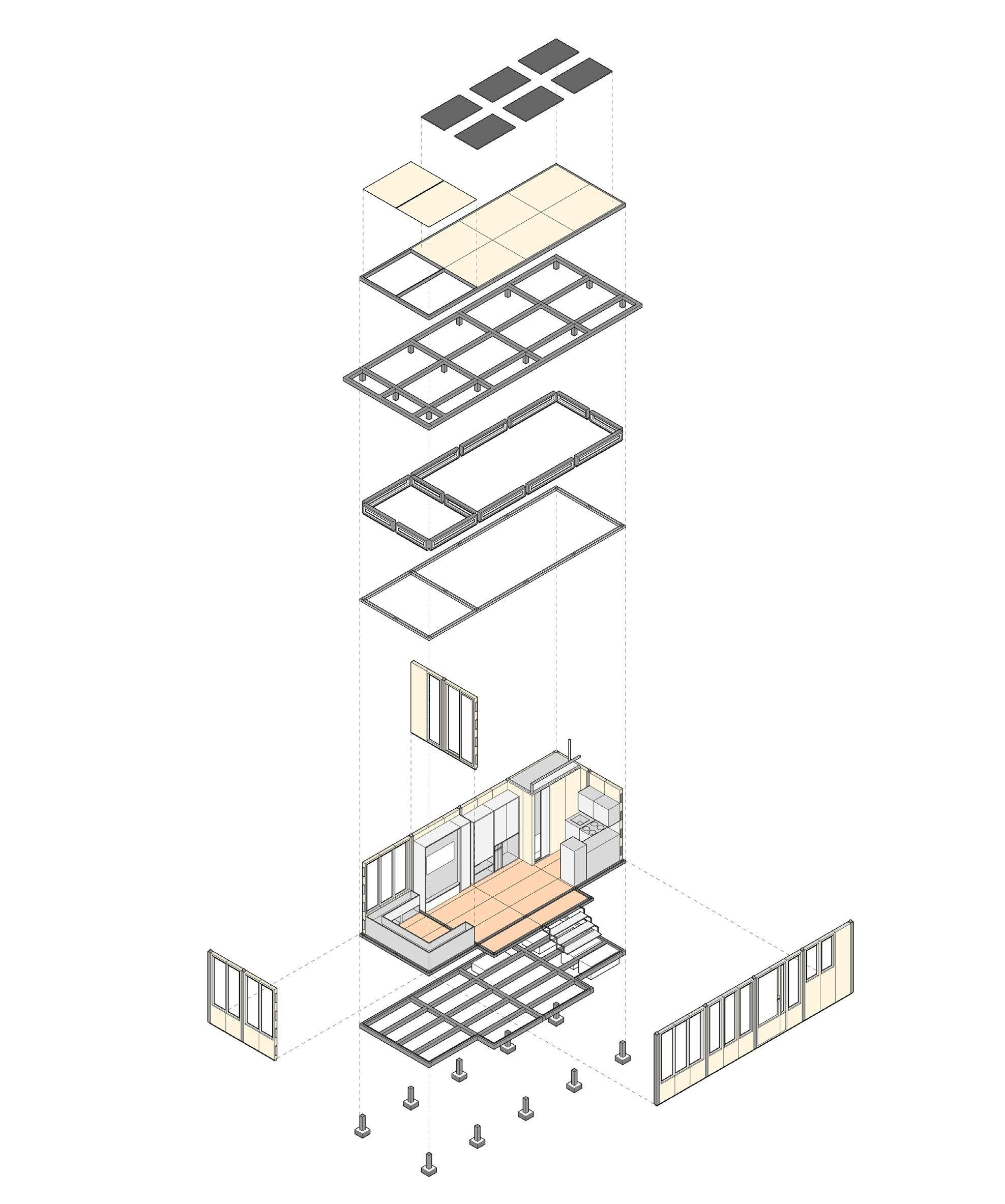
EXPLODED AXONOMETRIC
PRE-FABRICATED ROOF PANELS
ROOF FRAMING
CLERESTORY WINDOWS
PRE-FABRICATED WALL AND FLOOR PANELS
Flexhome /32
lukajovanov01@gmail.com Mobile: +1 914-441-2762