
December 2025
Reviewed and approved by Signature Matt Budd
Name Matt
Budd
Job Title Director Date December 2025
Disclaimer: This report and any related communications from AMION Consulting have been prepared in good faith and reflect our professional judgement based on information provided by the client and other sources available during the engagement. No warranty or guarantee is given, and AMION accepts no liability for the accuracy, completeness or reliability of any information, analysis or recommendations contained herein. Any projections or forecasts included are illustrative and not to be relied upon as predictions of actual outcomes. The achievement of any suggested outcomes or results will depend on factors beyond our control. Nothing in this report or related communications should be construed as a representation or assurance of future performance. This report is intended solely for the client and the specific purpose for which it was commissioned. It should not be relied upon by any third party or used in any other context without AMION’s prior written consent.

Liverpool John Moores University
Economic and Social Assessment
December 2025
The work we do at Liverpool John Moores University changes people’s lives.
Whether we are enabling someone to become the first person in their family to attend university, helping a business to innovate or carrying out research that will transform healthcare, we make a positive difference to the world around us.
It is gratifying to see the findings of this report, independently researched and written by AMION, provide evidence that we are succeeding in our mission.
The report clearly demonstrates that LJMU and our people make a positive impact in so many different ways, from furthering social mobility and giving back to our communities, to developing the highly-skilled workforce of the future and adding significant value to the local and national economy.
These are real, tangible impacts and they are made possible by the expertise and commitment of our staff and students, past and present, and the strength of our partnerships at home and abroad.
I’m extremely proud of the role our university plays in the life of our city and our communities, and we will look forward to building upon the findings of this report in the years ahead.
Foreword by Professor Mark Power, Vice-Chancellor of Liverpool John Moores University
Liverpool John Moores University has played a significant role in the Liverpool City Region for more than 200 years. Over that time, it has enabled so many people from across our area and far beyond to realise their ambitions and fulfil their potential.
As someone who studied at LJMU and is now incredibly proud to be an alumni ambassador fellow of this great university, I know just what a difference it can and does make to people from all backgrounds.
In particular, LJMU is crucial in helping to break down barriers, raising aspirations and providing opportunities to people who may not otherwise move on to higher education. It is heartening and inspiring to read comments in this report from LJMU graduates who come from disadvantaged backgrounds and have gone on to achieve great things in their careers.
As this report demonstrates, the university is integral to the success of our city region. The significant economic impact of its activities helps to support and drive inclusive growth, creating jobs, providing a skilled workforce and enabling our businesses to innovate and develop.
In our region, we’re more committed than ever to delivering a more prosperous future for our communities so that it is the best place to grow up, grow a family, and grow a business – where no one is left behind. LJMU is playing a huge role in that mission as a key partner organisation and through the expertise and dedication of its staff, students and alumni.
I have no doubt that Liverpool John Moores University will continue to help our region thrive in the years ahead.
Foreword by Steve Rotheram, Mayor of the Liverpool City Region

Liverpool John Moores University
Economic and Social Assessment
December 2025
Liverpool John Moores University (LJMU) gained its university status in 1992 but has a 200 year history tracing back to the establishment of the Liverpool Mechanics’ and Apprentices’ Library in 1823. This long history roots the university within the Liverpool City Region, bringing accessible education to the working class, promoting intellectual skills, practical knowledge and forging a closer link between industry, technology and instruction. Located within a port city, LJMU is naturally outward looking.
This pioneering ethos still runs through the university today. Celebrating its 200th birthday, LJMU launched its 2030 strategy with a vision “to be an inclusive civic university, transforming lives and futures by placing students at the heart of everything we do.”
AMION Consulting have been commissioned to assess the economic and wider impacts of LJMU The main purpose of this study is to assess LJMU’s current impact position, celebrate its achievements to date, and guide future activity towards realising this vision.
The quantitative economic impact assessment is undertaken at two spatial levels:
• Liverpool City Region (LCR); and
• the United Kingdom
The economic impact analysis focusses on the 2023/24 academic year, which is the most recent year for which information is consistently available. However, data where available from 2024/25, alongside up to seven years earlier, is also reported. Furthermore, the report presents comprehensive qualitative and quantitative data illustrating the university’s wider social impacts at local, regional, and national levels. Reflecting the university’s significant international reach, it includes several examples of its global influence.
This study included:
• A university wide data collection exercise: sourcing information from across LJMU. This has included collecting centralised: financial accounts, human resources (HR) data, student enrolment data, procurement expenditure data, and data submitted to the Higher Education Statistics Agency (HESA). We reviewed official University submissions to the Research Excellence Framework (REF), the Knowledge Exchange Framework (KEF), and the Teaching Excellence Framework (TEF). Alongside centralised information, we have collected de-centralised information such as departmental reports and case studies
• Primary data research exercise: alongside existing University data, we conducted surveys to collect additional data to inform the study. This includes a student survey was completed by over 640 participants, as well as an Alumni Survey that received over 550 responses.
• A Secondary data collection exercise: utilising available provision of statistics about the City Region and national economy from sources such as the Office for National Statistics (ONS).
• Internal university consultation programme: consulting senior leadership alongside academic and professional services staff to ensure a full and current understanding of the university’s activities and strengths, as well as to identify relevant sources of information.
Liverpool John Moores University
Economic and Social Assessment
December 2025
We spoke to those directly employed by the university, as well as representatives from organisations directly related to the university, such as the John Moores Student Union
• External stakeholder consultation programme: alongside members of staff from the University, we spoke to representatives from key local stakeholders and employers, such as the Liverpool City Region Combined Authority (LCRCA), Liverpool Chamber, and charity partners.
• An economic impact assessment: an assessment of core economic impact, covering employee and operational direct, indirect and induced impacts, alongside impacts arising from student and student visitor spending, and Research and Knowledge Exchange impacts. This assessment is undertaken within a multi-regional input-output (MRIO) framework.
• Wider impact analysis: detailing a broad range of impacts created by the work of the University across its teaching, research, cultural contributions, staff and student activity, global partnerships, and ability to be a catalyst for positive change.
• Case studies: spotlighting activity happening across the university.
1.2.1 Overview
LJMU is a large organisation with over 27,000 students and 2,780 staff with an annual income of more than £270 million in 2023/24. As such, the range of activities that LJMU engages in is vast, covering not only the core activities of teaching and research, but also additional contributions to economic development, culture, community, personal development, environmental sustainability, and advancing social justice.
This study’s goal is to capture the scale and character of the impacts arising from the university. This is done across two parts, the first analysing economic impacts, and the second examining wider social impacts. This study also illustrates LJMU’s contribution to the Secretary of State’s for Education’s priorities for higher education including
• expanding access and improving outcomes for disadvantaged students;
• making a stronger contribution to economic growth;
• playing a greater civic role in their communities; and
• raising the bar on teaching standards and improving world-leading reputation.
1.2.2 Part one: economic impacts
In line with best practice methodological approaches, we assess LJMU’s operational economic impacts across three channels:
• Direct Impact: the socio-economic activity generated by the university itself through the construction and operation of its facilities and the employment of research and ancillary staff.
• Indirect Impacts: the impact associated with the university spending money with suppliers of goods and services.
• Induced Impact: the impact associated with staff employed both directly and indirectly, spending their wages in the wider economy.
Liverpool John Moores University Economic and Social Assessment
December 2025
This analysis was undertaken within an MRIO framework. The IO tables provide a representation of economic interactions within the economy and enables the construction of a model of the LCR and UK economy, from which the university can be removed to estimate its impact. This method is detailed in Appendix A.
An analysis of LJMU’s contribution to economic growth and development is also presented. This section reviews the university’s role as an anchor institution, business support across the LCR, contribution to skills and workforce development, and sustainability and net-zero.
The broader impacts of LJMU are captured across the following areas:
• World-leading teaching standards and research: The high-quality of teaching delivered at LJMU, underpinned by pioneering research and international outlook.
• Expanding access and improving outcomes for disadvantaged students: university impact in widening access to higher education, supporting underrepresented groups during their studies, and setting graduates up for success.
• Contribution to community, public health and culture: LJMU’s contribution to civic life within its home city region.
Where possible, wider impacts have been monetised as part of a social welfare benefits calculation.
LJMU was officially established in 1992 as one of the UK’s new universities; however, LJMU has a long history rooted in the Industrial Revolution.
In 1823, the Liverpool Mechanics’ and Apprentices’ Library was founded, championed by MP and abolitionist William Roscoe, the institution set out to widen access to learning in an industrialising city. This laid the foundations for the establishment of a Mechanics’ Institute (initially known as the Mechanics’ School of Arts) in 1825. Liverpool, alongside London, was the first Mechanics Institute in England. Early lectures and classes covered the arts, humanities, and philosophy, as well as technology and engineering and the science of medicine and physiology. The Institute welcomed its first female students in 1835.
Across the 19th and 20th centuries, the original library and institute evolved through a network of specialist colleges, covering arts, pharmacy, nautical studies, teacher training, commerce, science and technology. Together, this network of colleges built the breadth of subject and professional training specialisms now associated with the university. In 1970, these strands were consolidated as Liverpool Polytechnic.
In 1992, following national reforms, Liverpool Polytechnic received a Royal Charter and became LJMU, taking its name in recognition of one of Liverpool’s great entrepreneurs and philanthropists, Sir John Moores (1896-1993).
Today, LJMU describes itself as a modern civic university shaped by the same pioneering ethos that characterised its founders. LJMU has engaged critically with its own past, through initiatives such as the Enslavement and Empire Project, to understand the institution’s historical links to empire and enslavement and to inform its future direction.
LJMU’s Strategy 2030 lays out a vision:
“Our vision is to be an inclusive civic university, transforming lives and future by placing students at the heart of everything we do.”
This vision is complemented by values that underpin university’s outlook and approach.
• ‘We are Student Focused: Caring for our students to give them a transformational university experience.
• ‘We care about our Community: Making a difference to people’s live’
• ‘We are Courageous: Speaking out boldly and acting for change.’
• ‘ We are Inclusive: Embracing and respecting diversity’
Two key principles are woven through the strategy and are a key basis for strategic decisionmaking within LJMU.
• Priority of people: The strategy is for LJMU’s people, both its staff and students who form the core communities, and the broader set of stakeholder, networks and communities of which the university is part . LJMU puts’ people first in every part of life as a university and strive to be a community to which its members belong, are proud, and are supported and empowered.
• Sustainability: LJMU seeks to operate sustainability in every aspect of its activity, from the management of its finances and broader resources to the care of the environment. LJMU has declared a climate emergency and are aligning activities both with the target of becoming net zero for carbon emissions by 2035 and with a broader call for a sustainable, prosperous future for people and planet.
The strategy identifies three aims that are its strategic goals:
• Education and Student Experience: Transforming lives and futures through an excellent education that equips our students with the knowledge, skills and mindset valued by employers.
• Research and Knowledge Exchange: Delivering curricula inspired by current and highimpact knowledge exchange through curiosity and creativity.
• Place and Partnership: Building skills, the economy, society and community through local and global collaboration.
These aims are supported by four enablers that express the culture and environment required to the deliver the goals.
• A positive culture which builds community, embraces diversity and supports wellbeing.
• A responsive organisation, marked by agility, efficiency and innovation.
• A digital and physical infrastructure, shaped by academic goals.
• Financial resilience that enables investment in the strategy.
The university’s impact is created by the flow of money through the institution, how it is spent, and the consequence of the activities of its staff and students. This sub-section provides a highlevel overview of the scale of LJMU
In 2023/24, LJMU had a total income of £270.9 million, the largest sources of which were tuition fees and education contracts (£217.4 million), funding body grants (£25.4 million) and research grants and contracts (£14.1 million).
LJMU has an annual expenditure of £261.5 million, including £159.5 million on staff payroll and £86 million on other operating expenses.
There are 2,780 staff employed by LJMU, of which 47% are academic, 31% are administrative, 8% are technical, 7% are research, and 7% are manual services support.
In the 2023/24 academic year, LJMU enrolled 27,189 students across 15 schools. Around 7,000 undergraduate and postgraduate students graduate from the university each year.
Figure 2-1 overleaf presents the student numbers by school in 2023/24. As can be seen, the three largest schools by student numbers are:
• Liverpool Business School with 3,951 students;
• School of Law and Justice Students with 3,948 students; and
• Nursing and Advanced Practice with 3,382 students.
Figure 2-1: LJMU student by school 2023/24
Liverpool John Moores University
Economic and Social Assessment
December 2025
Liverpool Business School, 3,951
School of Law and Justice Studies, 3,948
Nursing and Advanced Practice, 3,382
Pharmacy & Biomolecular Sciences, 1,967
Civil Engineering and Built Environment, 1,791
Sport and Exercise Sciences, 1,753
Engineering, 1,196
Education, 1,505
Liverpool School of Art and Creative Industries, 2,073
Humanities and Social Science, 1,415
Psychology, 1,002
Biological and Environmental Sciences, 1,141
Computer Science and Mathematics, 978
Public and Allied Health, 936
Astrophysics, 134
Liverpool John Moores University
LJMU has an impressive record of awards and achievement including:
• LJMU has been awarded a Gold rating for student outcomes and Silver overall in the national Teaching Excellence Framework (TEF, 2023);
• Around 73% of LJMU’s research rated as world-leading or internationally excellent by the Research Exchange Framework (REF, 2021);
• Earned Gold status for sustainability and environmental initiatives by EcoCampus (2025);
• The Student Futures team received the EDI Championship Award for their inclusive employability support;
• Liverpool Business School named Business School of the Year at the Educate North Awards;
• Holds a seat on the International Executive Board of the International Association of Maritime Universities;
• Chair of the UK-Malaysia University Consortium;
• Ranked 16th globally for Sport and Exercise Science by QS World University Rankings (2025); and
• First university recognised for creating social value across the region by the Cheshire and Merseyside Social Value Awards.
LJMU also performs strongly in several university league tables and rankings, such as:
• LJMU is ranked42nd nationally in the Guardian’s University Guide (2025);
• LJMU is ranked 76th in the Complete University Guide (2026); and
• LJMU is ranked 61st in the UK by the Times Good University Guide (2026) which was the university’s best ever outcome, whilst also placing in the top 300-400 globally by the Times Higher Education Impact Rankings (2025)

3.1
In this section, we outline the findings of the economic impact modelling exercise for the LJMU’s activities. Direct impacts are assessed in the first instance and are followed by individual reviews of capital spending, supplier spending, staff spending, student spending, tourist spending and finally, research and knowledge exchange.
The impact assessment is undertaken within a multi-regional input-output (MRIO) framework. Input-output (IO) tables provide a representation of economic interactions within an economy, detailing patterns of sales and purchases between sectors, sales for final use and profiles of related economic features such as Gross Value Added (GVA)1. More details of the methodology adopted and modelling framework are contained in Appendix A.
The IO modelling reports GVA and full time equivalent (FTE) employment.
The direct impact of LJMU reflects the economic contribution made through everyday operations. The scale of direct economic impact is, like any other activity, conventionally measured in terms of GVA and employment and is evaluated using information from the 2023/24 Annual Report published by the university.
This places staff costs at £159.2 million. Adding operating surpluses, interest, and depreciation, this places a direct GVA estimate of some £181.2 million. LJMU supports 2,572 direct FTE jobs based on the Annual Report and Financial Statement.
LJMU’s 2023/24 capital expenditure is reported at £12.0 million based on the financial accounts. LJMU’s investment in capital purchases not only stimulates economic activity throughout the wider supply chain but also contributes to the physical development and transformation of the city.
LJMU has supplied information on the nature and location of capital spend which suggests that some 38% of expenditure flows to suppliers in the LCR from which we infer a direct output impact of £4.6m. Around 1% of expenditure flows to suppliers outside of the UK, which is accounted for in the national assessment. Direct outputs are assigned across IO sectors in relation to the nature of the reported activity.
Taking these as the basis of activity in the IO models, analysis (see Table 3.1) defines:
• a direct GVA impact of £2 million for the LCR and £6 million for the UK, with respective employment impacts of 22 and 52 jobs2 .
• indirect and induced impacts of £4 million GVA with 65 jobs within LCR and £11 million with 125 jobs within the UK.
1 Gross Value Added (GVA) is the increase in the value of the economy due to the production of goods and services. It is the value of the amount of goods and services that have been produced, less the cost of all inputs and raw materials that are directly attributable to that production.
2 All employment numbers are expressed in FTE terms.
• a combined GVA impact of £7 million and 87 jobs for the LCR economy. These rise to £17 million and 177 jobs at UK level.
Supplier spend profiles reflect the pattern of goods and services purchased by LJMU to enable its operations. The spending of LJMU extends through its supply chain, contributing to further GVA growth and job creation. LJMU has provided detailed profiles of supplier purchasing by location, enabling assessment of the proportion of spend sourced within the LCR area and the UK at industry sector level.
With total 2023/24 purchasing reported at £93.4 million, scrutiny of the supplier database indicates that some 23% of total spend was placed in the LCR economy with 97% placed in the UK as a whole. In effect, supplier-related output in the LCR/UK amounted to £22 million and£91 million respectively.
With spend allocated across IO sectors in relation to the nature of the activities reported, model outcomes suggest (see Table 3.2):
• a direct GVA impact of some £11 million and 186 jobs for LCR, rising to £96 million and 1,271 jobs for the UK. The differential reflects the variation in initial spend distribution between areas.
• indirect and induced impacts of £14 million and 185 jobs in the case of LCR and £124 million and 1,486 jobs for the UK.
• total LCR impact is modelled at £25 million GVA and 371 jobs rising to £220 million GVA and 2,757 jobs at UK level.
Defining the economic impacts associated with LJMU staffing makes it necessary to determine the extent to which staff reside in the LCR and might thereby be presumed to spend from their wages and salaries in the LCR area. Anonymised data defining the spatial distribution of staff by salary bands have been provided by the university as part of the impact exercise. Salary bands are
matched against ONS ‘Living Costs and Food Survey’ profiles to determine typical patterns of consumption in the light of tax/social security deductions by salary band.
With 73% of university staff living in LCR, it is estimated that annual staff spend in the area equates to some £54 million for purposes of analysis. Modelling defines (as shown in Table 3.3):
• direct impacts of £17 million and 212 jobs at an LCR level rising to £22 million and 266 jobs at a UK level
• indirect and induced impacts of £25 million and 342 jobs at an LCR level rising to £46 million and 519 jobs at a UK level
• combined impacts of £41 million of GVA with 554 jobs at an LCR level rising to £69 million of GVA and employment of 785 at UK level.
Beyond core operations, universities generate a range of additional impacts through the attraction of domestic and international students, associated visits/tourism and research activities.
Students contribute significantly to LJMU’s economic impact through their spending on goods and services during term-time. This spending boosts local businesses by increasing their turnover and supporting jobs and has positive effects on wider supply chains. Many of these students might not have come to the LCR to study if it was not for LJMU, enhancing its economic influence.
Using an average 43 weeks residence attendance and distribution of spend from the LJMU student survey, we allocate to sectors via an economic matrix which provides the following estimates (see Table 3.4):
• combined direct impacts of £63 million GVA and 580 jobs at an LCR level rising to £63 million and 1,102 jobs at a UK level.
• indirect and induced impacts of £104 million and 1,306 jobs at an LCR level rising to £188 million and 2,059 jobs at a UK level.
• combined total impact of LJMU students in LCR of £167m GVA with 1,886 jobs rising to £291m GVA and 3,161 jobs at UK level.
The concentration of students provides opportunities for visitors to the LCR area. The student survey identified that domestic students, who did not previously reside in the LCR, attracted an average of 3.3 visitors per year, with an average length of stay of 1.8 nights. International students attracted an average of 1.6 visitors per year, with an average length of stay of 1.8 nights. Therefore, in total, there were a total of 43,267 visitors to domestic students and 3,348 visitors to international students. This is then assessed against average LCR tourism spend per night. This analysis shows a combined impact of domestic and overseas students as (Table 3.5):
• direct GVA and employment estimates are defined as £7 million and 110 jobs for the LCR economy, rising to £12 million and 174 jobs for the UK;
• indirect and induced LCR/UK impacts are subsequently defined as £7 million/£14 million GVA and as 110/187 jobs;
• total tourism related LCR/UK impacts sum to £14 million/£26 million GVA and 220/361 jobs.
LJMU research income amounted to £17.4 million in 2023/243. Research England research grants accounted for 58% of the total with UK Research Councils contributing another 21%. Other contributions came from UK industry (7%) and from overseas (14%). Removing UK public funding defines a net direct impact of some £3.7 million. Our presumption is that this income is used by LJMU to fund existing research staff as well as other forms of related expenditure and is already accounted for in staffing and procurement impact assessments. Accordingly, we do not assign it a separate impact. The methodological appendix contains more detail on the limited and debated nature of empirical evidence into this relationship.
Haskel et al (2014) assess the scale of spillover effects from public research across different UK industries.4 Their analysis suggests a rate of return on public sector research of approximately 20%. If we extract the LJMU Research Council from total research income, the product of this £13.7 and the rate of return factor suggests a direct spillover impact of some £2.7 million Table 3.6 reports on modelled impacts from this analysis:
• Total LCR research impacts of £30 million GVA and 401 jobs; and
• Total UK level research impacts of £62 million GVA and 671 jobs.
Table
In terms of knowledge exchange, LJMU reports contract research of £6.8 million. Turnover from spinouts is estimated at some £0.4 million with consultancy turnover also reported at £1.3 million Business course income is reported at £3.0 million, whilst IP licensing is less than £0.1 million Table 3.7 reports on the modelled impacts from this analysis including:
• Combined total LCR knowledge exchange impacts are defined as £9 million GVA or 127 jobs; and;
• at the UK level combined total LCR knowledge exchange impacts are defined as £14 million GVA or 161 jobs
Table 3.7: LJMU Knowledge Exchange Impacts
3 When including Research England funding.
4 Haskel, J., Hughes, A. and Bascavusoglu-Moreau, E. (2014) ‘The Economic Significance of the UK Science Base: a report for the Campaign for Science and Engineering’. Imperial College London. Working Papers 13751. London: Imperial College Business School
Liverpool John Moores University
Economic and Social Assessment
December 2025
Taking all components together, Table 3.8 reports the estimated total combined impact of the LJMU related activities in 2023/24 is:
• LCR Impacts: Up to £474 million GVA and 6,218 jobs in the LCR economy.
• UK Impacts: Up to £880 million GVA and 10,645 jobs in the UK economy.
Figure 3-1 presents the total job impacts by assessment category at the LCR and UK level.
At a UK level, the largest contributions are from student spending (3,161 UK jobs) and supplier spending (2,757 UK jobs).
The directly employed LJMU staff (2,572 LCR jobs) is the largest contributor at an LCR level, followed by student spending (1,886 LCR jobs). Staff spending and research/productivity spillovers are also important factors at an LCR level, totalling nearly 1,000 LCR jobs combined.
Figure 3-1 Total Job Impacts by Category
LJMU commissioned an impact assessment in 2017 which examined the employment and GVA impacts at that time. The job and GVA impacts at both the LCR and national levels have increased noticeably since 2017. It should be noted that the assessments used similar input-output modelling however, they were undertaken by different companies using bespoke assumptions. Therefore, although this is evidence that LJMU’s impacts are likely to have increased over this
Liverpool John Moores University
Economic and Social Assessment
December 2025
period, an element of this may be due to the slight differences within the methodological frameworks
Figure 3-2 compares LJMU 2023/24 impacts against other assessments undertaken for Post-1992 Universities. Our analysis considered eight Post-1992 university assessments5, which were judged to use a similar input-output methodology. The national level analysis has been used to ensure that the comparison is on a consistent basis, with the GVA assessments undertaken in previous years for other Universities uplifted to 23/24 prices using GDP deflators.
This analysis demonstrates that LJMU has a significant job and GVA impact at a UK level compared to universities of a similar nature and scale. LJMU is assessed to have contributed 10,645 jobs at a UK level, compared to an average of 7,070 jobs for the other eight Post-1992 Universities. Additionally, the national GVA contribution of £880 million exceeds the average of £738 million from the other universities.
Figure 3-2 Comparison to other assessments for Post 1992 Universities
LJMU is a vital regional institution which has a significant impact on the economic growth and development of the Liverpool City Region (LCR). LJMU staff occupy leadership positions in regional governance, including the Innovation Board, Freeport, and Business & Enterprise Boards. A significant number of senior staff at Liverpool City Council (LCC) and Liverpool City Region Combined Authority (LCRCA) are LJMU alumni. As an anchor institution, LJMU has driven economic growth across various sectors, including:
• Trade & logistics: LJMU has co-designed the new customs and international trade qualifications that support Freeport workforce development, directly linking education to regional skills needs. Through its expertise in maritime innovation and logistics, LJMU provides national leadership in the maritime sector, a cornerstone of the region’s inward investment strategy. The university’s work helps ensure Liverpool remains a world-class hub for trade and logistics excellence.
• Growth Platform: As co-lead of the £6.75 million MusicFutures Creative Cluster, LJMU is driving innovation, R&D and digital skills in the music and sound industries. By connecting research with industry, the university is supporting business growth, high-value jobs, and national leadership in creative sector innovation, positioning Liverpool as a centre for nextgeneration creative technologies. LJMU has collaborated with University of Liverpool and regional partners to lead the development of this Creative Cluster.
• Creative industries: LJMU’s expertise in film, media and creative technology ensures a strong local talent pipeline and accelerates Liverpool’s growth as a UK screen industry hub.
• Visitor economy: LJMU academics act as ambassadors for the LCR, promoting it through networks, partnerships, and international conferences. The university’s role in the Conference Ambassador Network helps attract major national and global events, strengthening the visitor economy and enhancing the city’s international profile.
• Capital investment: LJMU continues to invest in transformative capital projects, including the Copperas Hill campus redevelopment. The campus is a flagship £65 million development, which houses the Student Life Building and Sports Building, providing modern facilities that support teaching, research, wellbeing, and enterprise collaboration. Designed as a sustainable, multi-purpose hub, Copperas Hill connects students, academics, and businesses in one central location, symbolising LJMU’s commitment to urban regeneration, community engagement, and regional economic growth.
Across all areas, LJMU is highly active in engaging with businesses, schools, and community organisations, sharing knowledge through collaborative projects, enterprise support, and public engagement initiatives. These connections ensure that LJMU’s research and teaching directly benefit local growth, innovation, and opportunity.
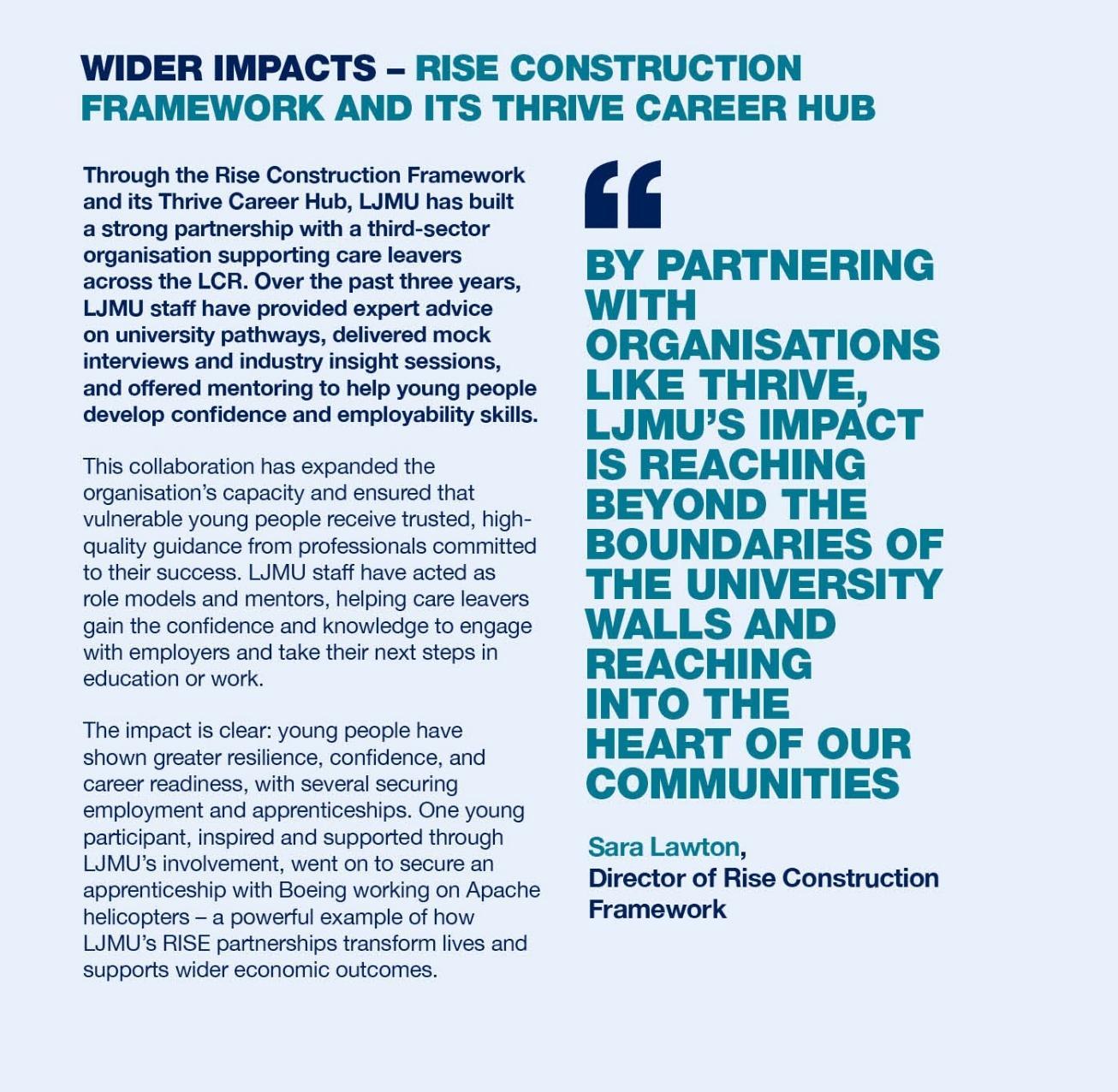
The Graduate Futures Programme, funded with £2.1 million, has supported 307 small and medium-sized enterprises and created 202 graduate-level jobs, with 104 positions filled by LJMU students and graduates. Beyond job creation, the initiative has strengthened SME capability through talent retention, leadership development, and digital innovation, addressing key regional skills gaps. The programme demonstrates LJMU’s pivotal role in connecting graduate talent to growth industries, fostering long-term employability and business productivity in the LCR.
The Low Carbon Eco-Innovatory (LCEI) is a flagship university-business collaboration that helps companies reduce carbon emissions and innovate sustainably, delivered in partnership with the University of Liverpool. LCEI provides access to university research expertise, emerging lowcarbon technologies, and funding support to enable businesses to cut waste and energy costs. Since its launch, the initiative has supported over 400 businesses in the LCR, helping to save more than 7,000 tonnes of CO₂ and contributing to the city’s net-zero and green growth ambitions. The programme underpins LJMU’s leadership in aligning research and enterprise with the UK’s clean growth strategy.
Through the LJMU Start-up Hub and entrepreneurship programmes, the university has supported over 1,000 new and scaling businesses. These initiatives provide mentoring, incubation space, and access to academic expertise – particularly for underrepresented entrepreneurs and early-stage founders. LJMU’s Start-Up Hub within Student Futures currently tracks 266 active firms (126 companies and 139 sole traders) supported through its entrepreneurship programme, together generating approximately £17.4 million in annual trade. Around 65–70% of these LJMUsupported firms remain within the Liverpool City Region.
LJMU’s Knowledge Transfer Partnerships (KTPs) form a core part of its business engagement portfolio, linking academic expertise with industry innovation needs. The university currently manages a portfolio of KTPs across sectors such as advanced manufacturing, maritime, and health technologies, enabling SMEs to adopt new products and processes while upskilling their workforce. These collaborations generate high-value research translation, support graduate employment, and increase regional productivity and competitiveness.
The student-led Business Clinic within Liverpool Business School was established to provide a wide range of support options to SMEs, start-ups, and not-for-profit organisations across the LCR. In 2024/25, the Business Clinic supported 75 LCR based organisations across 85,800 hours of consultancy with an estimated total value of £1.7 million. A social return on investment calculation estimates that for every £1 spent, there was an estimated return of approximately £3.62 in additional revenue for local businesses.
As part of the Accounting Clinic, accounting and finance students work with external charities with a gross income below £250,000, completing the organisation’s independent accounts on a pro-bono basis. The clinic support around 10 to 15 charities each year, offering work with an equivalent value of £14,000. A social return on investment calculation estimates an average social return on investment of £3.33 for every £1 spent on LJMU staff guidance.
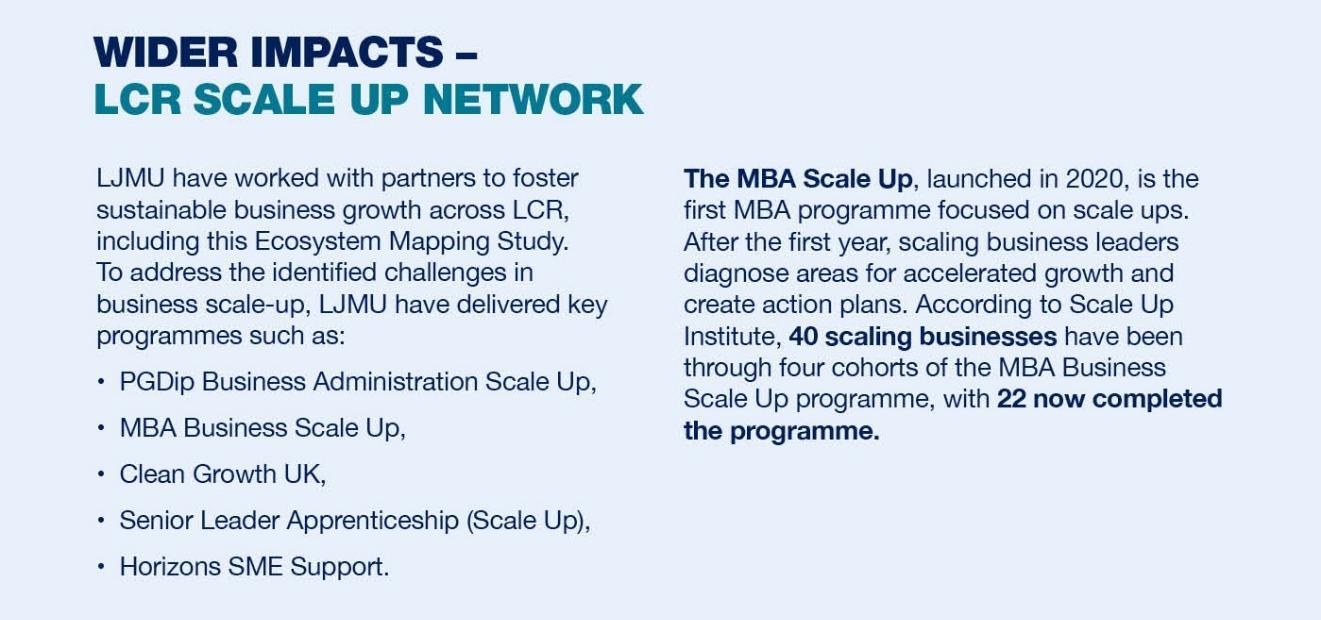
LJMU plays a critical role in shaping the LCR’s workforce, developing the next generation of professionals across healthcare, education, policing, and digital industries. Based on the latest student survey, around 47% of current students intend to remain in Liverpool after graduation, demonstrating the university’s central role in retaining talent and strengthening the city region’s long-term skills base. This proportion broadly aligns with the Graduates Outcomes Survey data in 2025, where 44% of graduates were working in the LCR 15 months after leaving LJMU.
Liverpool John Moores University
Economic and Social Assessment
December 2025
This sustained retention of graduates contributes directly to inclusive economic growth, public sector resilience, and local innovation capacity. LJMU has been a key partner in the drafting of the LCR’s Local Skills Improvement Plan As part of this, LJMU is working closely with Liverpool Chamber of Commerce to expand the Business Clinic programme into further education colleges throughout the region.
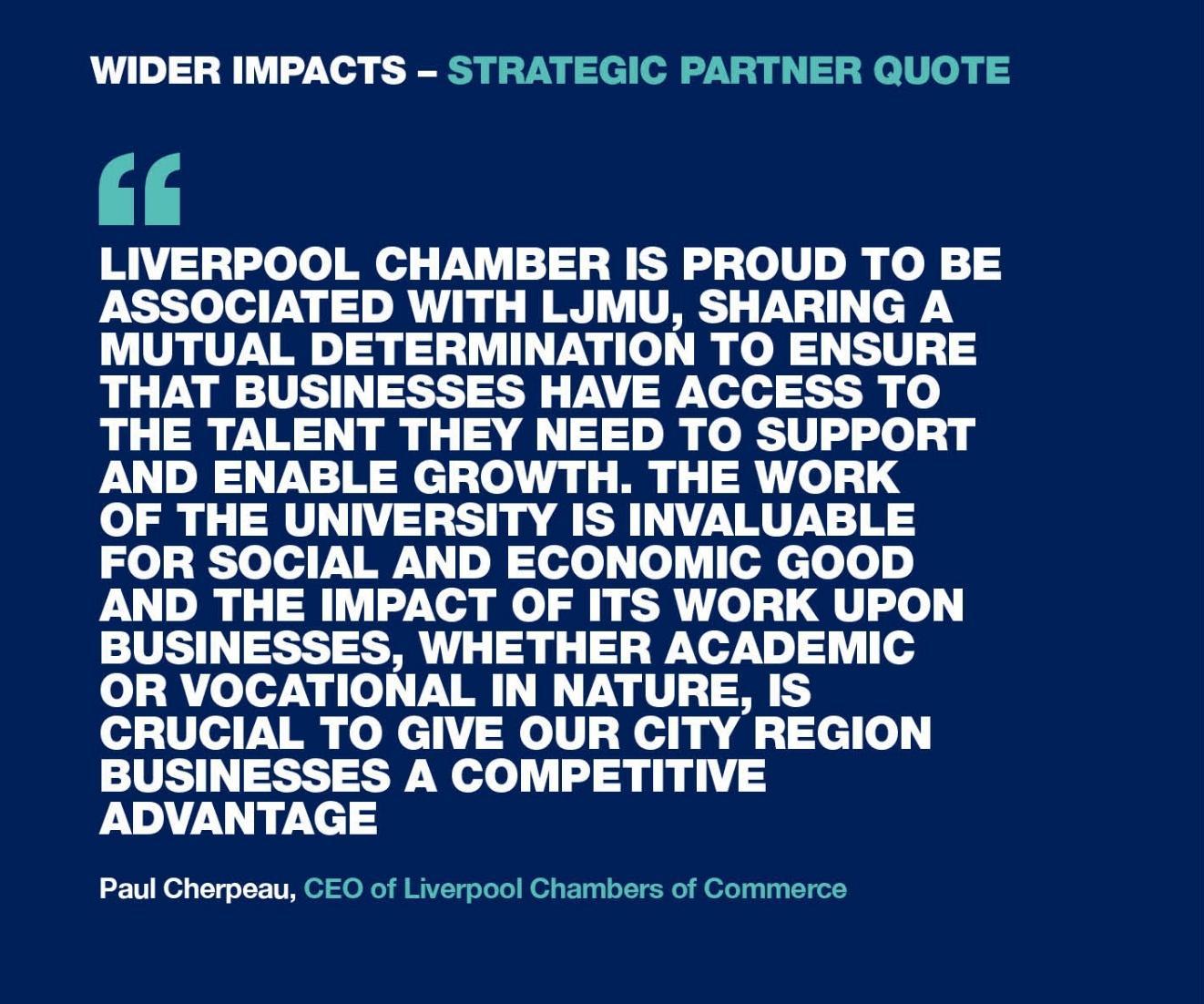
As the largest provider of nurses within the LCRCA area, LJMU delivers a continuous pipeline of qualified health professionals to the NHS and associated healthcare services. Between 900 and 1,400 students graduate each year from the LJMU’s Nursing and Advanced Practice programmes, providing essential skills in frontline and specialist care. These graduates are vital in meeting workforce shortages and ensuring that local hospitals, GP networks, and community healthcare services can continue to deliver high-quality patient care.
In the field of education and teaching, LJMU continues to be a leading regional institution for teacher training and professional development. Through its Education and Childhood programmes, LJMU trains approximately 500-600 experienced primary and secondary school teachers each year, with 538 graduates in 2024/25 alone. LJMU’s programmes emphasise inclusive teaching, leadership in the classroom, and research-led pedagogy, ensuring graduates are well-prepared to meet the diverse learning needs of children and young people across Merseyside. Good teachers are a cornerstone of child development and social mobility, and LJMU’s graduates contribute to improving outcomes in schools across the North West, many returning to teach within the same communities they grew up in.
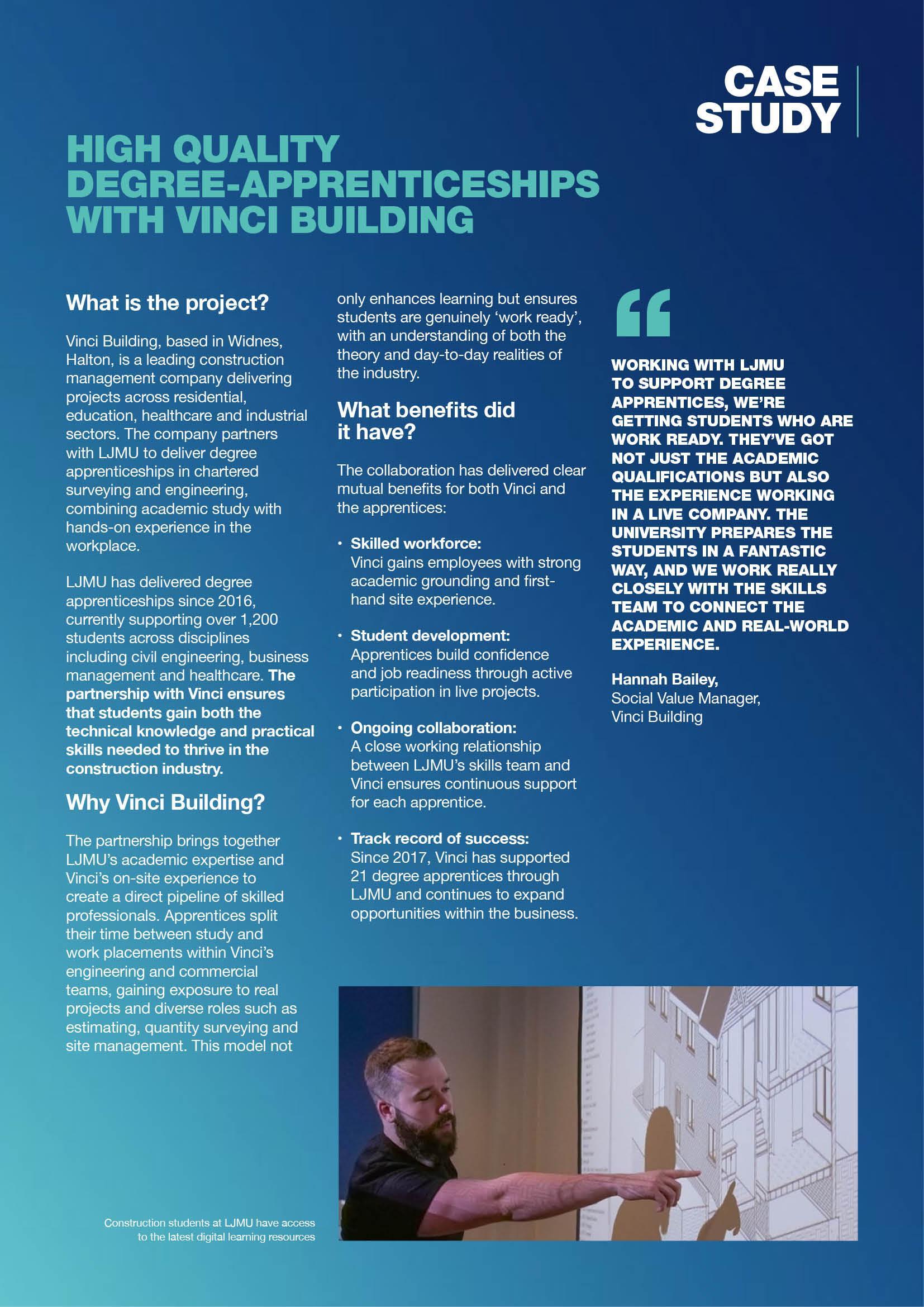
LJMU is also a key partner in policing education and workforce development. Through its Police Constable Degree Apprenticeship (PCDA) programme, LJMU supports 150 trainee officers
4.4
Liverpool John Moores University
Economic and Social Assessment
December 2025
currently in training and has produced more than 400 graduates to date, in partnership with Merseyside Police and other regional forces6. These graduates are already making a significant impact in community safety, leadership, and public trust in policing across the city region.
Beyond public services, LJMU also develops critical capacity in digital technologies, engineering, and creative industries, aligning its programmes with regional and national growth priorities. Graduates in cybersecurity, data science, and AI-related disciplines are helping to address urgent digital skills gaps, supporting innovation in both public and private sectors.
Together, these initiatives demonstrate how LJMU functions as an anchor institution for workforce development, underpinning the LCR’s economic resilience and social wellbeing. The university’s graduates not only meet current skills needs but also help drive transformation in key sectors – healthcare, education, policing, and digital innovation – ensuring the region is equipped for the future.
The positive impact of LJMU’s emphasis on employability and skills is demonstrated by supplying more graduate employees into the LCR economy than any other university – with 28% of the region’s overall graduate intake each year7 As shown in Figure 4-1, nearly 60% of alumni stated their university studies have been at least very well aligned with their career path. This proportion aligns with the Graduate Outcomes Survey, where 61% of LJMU graduates agreed or strongly agreed that they were utilising what they learnt during their studies during their current activity. Given a significant portion of students remain in Liverpool in key sectors, LJMU therefore plays a key role in the provision of skilled labour for the city and region.
Figure 4-1 AMION’s LJMU Alumni Survey – How aligned has your university study subject been to your career route since?
Source: AMION’s LJMU Alumni survey 2025
LJMU is a key driver of sustainable growth and the transition to a net-zero economy across the LCR. The university’s research, partnerships, and operational commitments position it as both a
6 https://www.ljmu.ac.uk/about-us/news/articles/2025/7/25/police-apprentices-nss
7 https://www.ljmu.ac.uk/about-us/news/articles/2024/12/2/graduate-salaries
thought leader and active delivery partner in decarbonisation, green skills, and environmental innovation. LJMU’s strategy aligns directly with the city region’s Net Zero by 2040 ambitions, embedding sustainability across teaching, research, enterprise, and operations.
A major example of LJMU’s leadership is its involvement in Future Homes LCR – a cross-sector alliance uniting public, private, and academic partners to tackle the housing crisis and drive sustainable construction and retrofit innovation. Drawing on its research in low-carbon housing, materials science, and digital design, LJMU is developing low and no-energy retrofit solutions that cut emissions, reduce fuel poverty, and improve energy efficiency across existing housing stock. These innovations contribute directly to regional regeneration and healthier, more resilient communities, ensuring the university’s work supports both social equity and environmental outcomes.
LJMU also plays a pioneering role in low-carbon innovation and SME support. Through the LCEI, led jointly with the University of Liverpool, LJMU provides match-funded grants, technical expertise, and access to cutting-edge facilities to help businesses decarbonise. The programme has already delivered millions of pounds in value and thousands of tonnes of CO₂e reductions across the LCR.
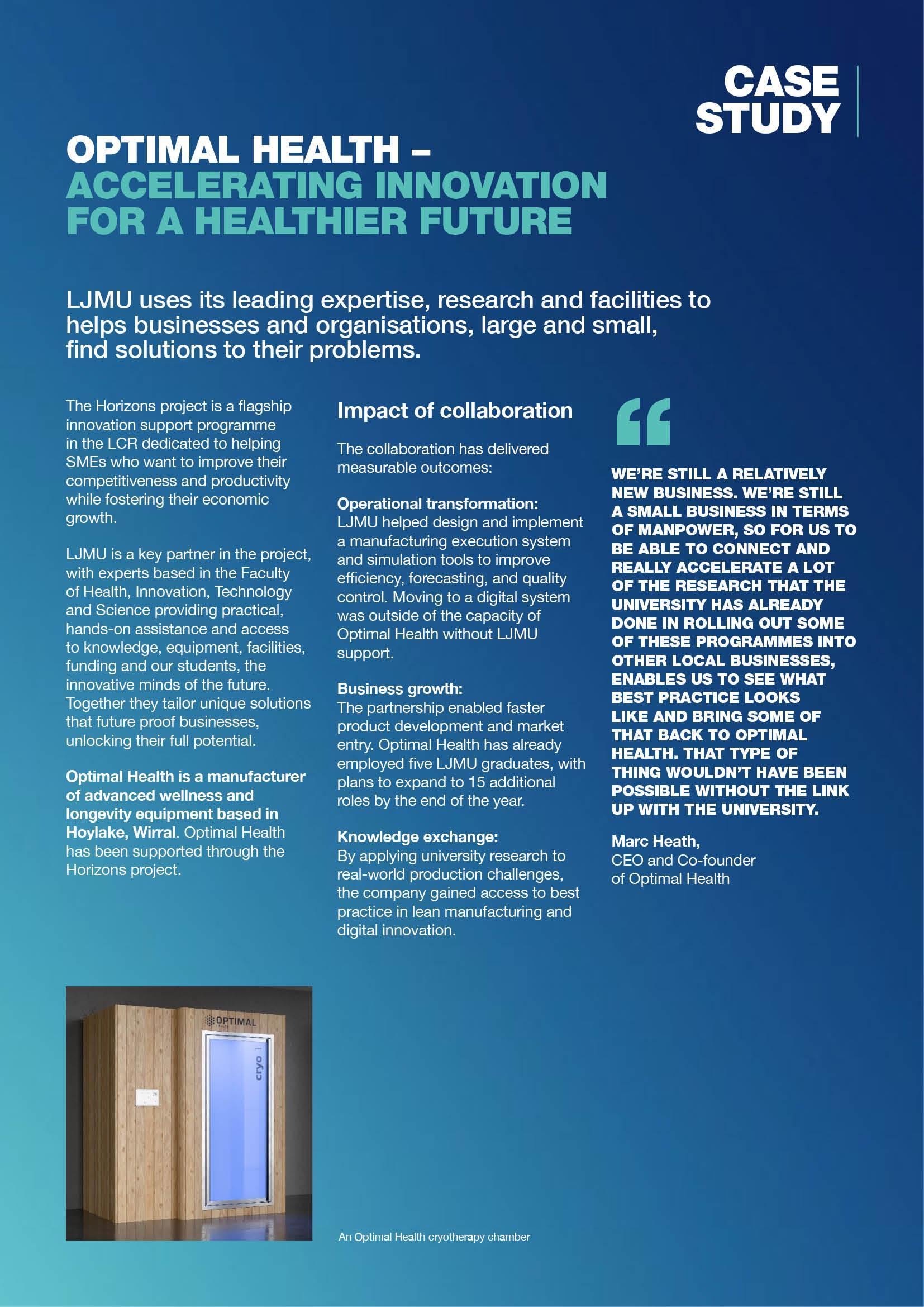
Funded through the UK Shared Prosperity Fund (UKSPF), LJMU also leads the Horizons programme with University of Liverpool and Edge Hill University This programme supports SME competitiveness, productivity, and sustainability. Together, these initiatives give smaller firms access to research, graduate talent, and low-carbon equipment – strengthening supply chains and enabling the region’s green industrial transition.
Examples of innovation emerging from these partnerships include Green Bell Packaging, which working with LCEI, developed the UK’s first compostable, plastic-free mailing bags, achieving a 35% reduction in water mass and significantly faster degradation in soil and water. Similarly, Risktec Solutions, an LJMU-informed training company, has embedded sustainability principles into professional safety training and now generates over £1.2 million in annual revenue. These cases demonstrate how LJMU’s research and enterprise programmes help commercial partners integrate sustainability into their operations and growth strategies.
Operationally, LJMU is committed to leading by example. The university’s operational energy use fell by 20% between 2021/22 and 2023/24, supported by an active sustainable travel plan and the implementation of the Climate Action Plan (2024–29). The university has been awarded EcoCampus Gold status for sustainability and established a cross-departmental Campus Management Group to coordinate progress toward net zero8. LJMU is also embedding Education for Sustainable Development (ESD) across all programmes, reviewing curriculum design guides to include ESD from 2024/25 and auditing teaching from 2025/26 to ensure every graduate is equipped with the skills and mindset for a sustainable future.

The social value of the activities undertaken by students at LJMU has been assessed using Green Book and other departmental guidance such as the Department for Culture, Media and Sport (DCMS) evidence base. The calculations are provided as per annum figures, based on LJMU’s contribution in 2023/24.
The university delivers undergraduate and postgraduate courses in a wide range of subjects. In the 2023/24 academic year, enrolled 27,189 students across 15 schools. Around 7,000 undergraduate and postgraduate students graduate from the university each year. The university attracts high calibre students from across the UK and globally, while also fulfilling the skills required within local sectors.
There is a wealth of existing evidence showing the generally positive impact of training and qualifications on employment and earnings. Publications from the previous the Department for Business, Innovation, and Skills9 presents the average marginal uplift from gaining undergraduate, master’s, and doctorate degrees compared to the population with Level 3 qualifications. Data from the Department for Education10 has been used to adjust these uplifts based on LJMU specific data for graduates compared to the average graduate wage data across higher education institutions
Table 5.1 demonstrates that the substantial marginal earnings return (above typical Level 3 qualifications) for the attainment of undergraduate, master’s, and PhD qualifications at LJMU in 2025/26 prices.
Source: Previous Department for BIS (2011); Department for Education (2025); AMION Analysis 2025
Note: The average wages and marginal uplifts are calculated using the typical earnings of people who hold the qualification, rather than the wages or uplift someone would receive immediately after obtaining it
These marginal premium effects have been applied to the student numbers at the university. Reflecting that not all individuals who register for a degree-level course obtain their qualification, average national completion rates have been applied at 85% for enrolled students LJMU specific data will be used if available at the Final Report stage
9 Department for Business, Innovation, and Skills (BIS), (2011); The Returns to Higher Education Qualifications
10 Department for Education, (2025); Longitudinal Education Outcomes – Provider Level Dashboard. Available from: https://department-foreducation.shinyapps.io/leo-provider-dashboard/_w_c8085d6f1a42438489bdd0f07e7c2217/#
11 Note that marginal analysis for Doctorate level qualification assumes that half of new entrants qualified to Undergraduate degree level and half qualified to Master’s degree level
Based on the application of these marginal premium effects, LJMU is expected to lead to wage uplift benefits of £102.3 million per annum (2025/26 prices) from the 2023/24 uptake. This wage premium is an average annual uplift over the length of their career, rather than an immediate uplift.
Table 5 2: Expected wage premium from LJMU 2023/24 learning activities (once complete)
Note: Numbers may not add due to rounding
Section 7 presents further details how LJMU widens access and enhances outcomes for disadvantaged students. Due to this, our analysis has incorporated distributional benefits into the calculation of the wage premium for LJMU. This adjustment reflects the university’s role in widening participation and enhancing social mobility, given that LJMU attracts a high proportion of students from more deprived backgrounds. The impact of this work is evident in LJMU’s student body – 45% of students come from the 40% most deprived neighbourhoods nationally, a figure that significantly exceeds the national university average.12
The approach used to calculate these social equity impacts is that set out in the HM Treasury Green Book, based on equivalised disposable household income and welfare weights (the estimate of the marginal utility of income). Using this approach, a distributional weight of 1.3 has been applied to the 45% of students from the most deprived 40% of neighbourhoods nationally. This ensures that the analysis recognises the greater social value associated with improving outcomes for individuals from disadvantaged backgrounds.
Based on this methodology, LJMU is expected to deliver £59.8 million per annum in distributional benefits relating to the wage premium effects for students who came from the 40% most deprived neighbourhoods nationally. Table 5.3 presents further details on this calculation.
Liverpool John Moores University
Based on the student survey by AMION, it is estimated that around 4,250 students at LJMU volunteer (18% of student population). In total, it is calculated that they volunteer 1.08 million hours per annum
The Green Book Wellbeing Guidance shows that life satisfaction improves based on undertaking volunteering activities with local charities and communities, with an annual value of £1,108 (2025/26 prices) for an individual undertaking regular volunteering. Guidance suggests that regular volunteering relates to 2 hours per week over the year. Once this has been applied, there is a volunteering wellbeing value of £10.7 per hour 13
This monetary value has been applied to the amount of volunteering undertaken by LJMU students in 2023/24. As shown in Table 5.4, the volunteering activities by LJMU students delivers a social benefit of £11.5m per annum (2024/25 prices).
Section 8.3 sets out the cultural reach of LJMU in detail. In summary, Liverpool John Moores University makes a distinctive contribution to the cultural life of Liverpool and the wider City Region. The university uses arts, heritage, research, and civic engagement to create inclusive cultural experiences that reflect the diversity of the city and provide opportunities for dialogue, celebration, and learning. In 2023/24, LJMU events and activities attracted 202,067 attendees to free public events, underlining the scale of the university’s cultural reach.
The Green Book Supplementary Guidance for Wellbeing shows that engagement with culture and heritage has wellbeing benefits for both users and non-users. To be prudent, only the benefits arising from the users have been considered as part of this assessment. DCMS guidance, such as their Rapid Evidence Assessment: Culture and Heritage Valuation Studies and its supporting Culture and Heritage Capital Evidence Bank14, has been utilised to capture the social value arising from the engagement with culture in Liverpool by LJMU students. A value of £4.7 per attendee (2025/26 prices) has been applied to the attendees to free public events based on a study into historic libraries as part of Historic England’s ‘Heritage and the value of place’ report in 2021
13 This figure aligns with an alternative shadow wages approach, which considers the foregone income that would have been achieved based on this level of work. This £10.5 figure aligns with minimum wage figures for student age groups
14 DCMS (2022), Rapid Evidence Assessment: Culture and Heritage Valuation Studies and its Culture and Heritage Capital Evidence Bank
Liverpool John Moores University Economic and Social Assessment December 2025
As shown in Table 5.5, LJMU’s public events are expected to deliver a cultural benefit of £1.0m per annum
Liverpool John Moores University Economic and Social Assessment
December 2025
LJMU has a reputation for excellence in teaching and learning, underpinned by its research strengths, centre of innovation, and local and global partnerships. The university continues to deliver high-quality education that is both academically rigorous and practically grounded, ensuring students are prepared for success in employment and life.
6.1 Teaching excellence and recognition.
National regulators have recognised Liverpool John Moores University (LJMU) for its high-quality teaching and learning that prepare graduates with the skills needed to succeed in their careers. In the 2023/24 Teaching Excellence Framework (TEF), LJMU achieved an overall Silver rating, with Gold (the highest rating) for Student Outcomes and Silver for Student Experience. These ratings reflect the university’s dedication to academic excellence and student success.
The Gold rating for Student Outcomes highlights LJMU’s strong performance in progression, attainment, and graduate destinations. It demonstrates that LJMU graduates achieve excellent long-term career prospects and life outcomes, with higher-than-expected rates of progression into employment or further study. This recognition underscores the university’s effectiveness in equipping students with the knowledge, confidence, and practical skills necessary to thrive after graduation. The Silver rating for Student Experience reflects the high standards of teaching quality, academic support, and learning resources at LJMU, as well as its commitment to continuous improvement.
LJMU consistently performs above the national average in the National Student Survey (2025) – achieving 89.3% for academic support (vs. 87.8% nationally), 91.7% for learning resources (vs. 87.9% nationally), and 82.4% for organisation and management (vs. 78.4% nationally). These results affirm LJMU’s ongoing dedication to delivering an outstanding educational experience for all its students.
LJMU’s strong performance is a result of institutional culture and curriculum design focused on:
• Practice-based learning and experience: All LJMU undergraduates complete assessed workbased or placement learning, ensuring that theory is connected to practice. Examples include the law and business clinics, and healthcare simulation facilities. LJMU’s degree apprenticeships are a flagship model of practice-based learning. Ofsted inspections across policing, health care, civil engineering, surveying and business highlighted high-quality teaching and learning for 1,200 apprentices, rating provision Good overall and awarding the highest grade of Outstanding for Behaviour and Attitudes.
• Research led learning: LJMU embeds research-informed teaching across all programmes, with over half of academic staff returning to the REF 2021.
• Employer engagement: Employers contribute directly to programme design and review through industrial advisory boards, ensuring graduates are prepared for the skills needs of tomorrow.
• Student partnerships and voice: Student voice is integral to continuous improvements. Two LJMU student union officers sit on the university’s Board of Governors and Academic Board. The Curriculum Enhancement Internship schemes have invested £250k since 2020 in 85 student-staff projects to improve the curriculum, including initiatives on decolonising teaching materials, inclusive resources and student wellbeing.
Liverpool John Moores University
Economic and Social Assessment
December 2025
• Support and resources for learning: LJMU has invested £110 million in LJMU’s estates since 2018, including the Student Life Building, which co-located support services and the Student’s Union. During the COVID-19 pandemic, LJMU invested £1.6 million in laptops and data bundles to tackle digital poverty, embedding digital equity.

Our student survey supports this and provides valuable insights into student perceptions, with the results showing strong net promoter scores (NPS)15:
• Social and Personal Development: out of approximately 650 respondents, the university scored a positive NPS of 7.1 for students’ social and personal development, reflecting a
15 A Net Promoter Score (NPS) is a market research measure based on the likelihood that respondents would “recommend” aspects of a place or an event they attended. After the event, attendees rate it from 0 to 10, with those scoring 9-10 classified as promoters, 7-8 classified as passives (neutral), and 0-6 classified as detractors. The NPS score is calculated by subtracting the percentage of detractors from the percentage of promoters, resulting in an overall NPS score of between -100 and +100. An overall NPS score for an event of 0-30 is considered positive, 50+ is excellent, and anything above 70 is outstanding, indicating strong attendee satisfaction and high likelihood of recommendations
Liverpool John Moores University
Economic and Social Assessment
December 2025
generally positive favourable view of how the university supports students’ personal growth and social engagement.
• Academic and Professional Development: out of approximately 650 respondents, the university received a positive NPS of 12.3, indicating that students feel positive about their academic and professional growth.
• Recommendation: the highest score was achieved in the area of recommendation, with an NPS of 23.0. This suggests that a considerable number of students would strongly recommend the university to friends and family as a preferred place to study.
These scores highlight strong overall satisfaction among students, particularly in their willingness to recommend the university. The breakdown of responses is provided in Figure 6-1
Figure 6-1 How students rate the following categories out of 10
Academic and professional development
Social and personal development
Recommendation
Source: Student survey, 2025.
LJMU’s teaching is underpinned by world-leading research across a broad disciplinary base. The Research Excellence Framework (REF 2021) placed the university in the UK’s top 50 for research power, with internationally excellent outputs identified in every discipline. Nearly three-quarters (73.1%) of research was classified as “world-leading” or “internationally excellent”.16
This represents significant growth for LJMU, with research power doubled since REF 2014 The university continues to grow the profile of its research strength, with four LJMU academics having been selected to help assess the quality of research in UK universities as part of REF 2029.
16 https://www.ljmu.ac.uk/aboutus/news/articles/2022/5/12/ref#:~:text=Key%20outcomes%20from%20REF%202021,Exercise%20Sciences%2C%20Leisure%20 &%20Tourism
Liverpool John Moores University
Economic and Social Assessment
December 2025
LJMU holds key subject strengths in Astrophysics, Climate and Sustainability, Forensic Science, Maritime Engineering, Public Health, and Sports and Exercise Science
LJMU is widely recognised as the founding home of UK Sports Science and celebrated its 50th anniversary in 2025. The School of Sport and Exercise Sciences continues to be globally ranked, with teaching and research covering elite performance, physiology, and biomechanics. The department is home to the Research Institute for Sport and Exercise Sciences (RISES) that emphasises the translation of research from “cell to community”.
LJMU, recognised as the founding home of UK Sports Science, celebrated its 50th anniversary in 2025. LJMU’s School of Sport and Exercise Sciences), continues to lead teaching and research from ‘cell to community’ REF 2021 rated 96.2% of its research as world-leading or internationally excellent, and the School consistently ranks among the top 20 globally.
LJMU research and expertise underpin advances in elite performance, health, and rehabilitation.
• Elite sport and nutrition: Professor Graeme Close supported the British & Irish Lions 2025 Australia tour, applying LJMU’s expertise in performance nutrition. His research on performance nutrition has also informed best practice in rugby, golf, and football.17
• Biomechanics and rehabilitation: Dr Mark Robinson’s collaboration with Liverpool FC has translated LJMU biomechanics research into player injury management and recovery. 18
• Alkpatonuria Breakthrough: Alkaptonuria (AKU) is a rare inherited metabolic disease leading to connective tissue and joint damage, early osteoarthritis and severe pain that impair gait, activities of daily living and quality of life. LJMU researchers helped develop and license the first effective drug therapy for this rare metabolic disease, transforming patient care in the UK.
• Cerebral Palsy research: Finding from LJMU biomechanism research are informing physiotherapy practice by improving the design of rehabilitation programmes and environmental assessments for children with Cerebral Palsy. This work supports clinicians in tailoring interventions to reduce falls, enhance mobility, and improve quality of life.19 Graduates from the MSc Sport and Clinical Biomechanics programme are now embedded in gait laboratories in Alder Hey Children’s hospital, nationally and internationally, supporting orthopaedic surgery planning for children with cerebral palsy and neurological disorders
The School’s influence extends beyond elite sport. Research in exercise and public health has informed UK policy on physical activity guidelines, while community projects address issues of obesity, ageing, and health inequality in the LCR.
6.2.2 Forensic Science and Digital Innovation
The Forensic Research Institute (FORRI) brings together over 100 researchers from law, science, and the arts
17 https://www.ljmu.ac.uk/about-us/news/articles/2025/6/16/close-joinslions#:~:text=%E2%80%9CI've%20known%20Andy%20Farrell,refreshment%20during%20training%20in%20Portugal
18 Paulo Barreira | Liverpool John Moores University
19 LJMU Research Online
6.2.3
Economic and Social Assessment
December 2025
Its Face Lab achieved national acclaim for humanitarian work on migrant disaster victim identification, winning the Times Higher Education Award for Arts & Humanities Research Project of the Year
LJMU’s forensic computing and cyber-security teams collaborate with police forces to develop advanced digital evidence tools, blending teaching with frontline innovation. Established to unite LJMU’s global expertise in forensic research and practice, FORRI works closely with police forces, NGOs, and international partners to apply cutting-edge science to real-world challenges.
LJMU’s forensic research is internationally recognised for its innovation and humanitarian impact.
• Migrant identification mission: FORRI’s Human Identification Network won the Times Higher Education Research Project of the Year for its work identifying deceased migrants crossing to Europe, transforming international practices through advanced craniofacial analysis and cross-border collaboration.
• Digital forensics innovation: Research by Dr Áine MacDermott has revolutionised the recovery of disappearing messages from encrypted apps, supporting UK police investigations and enhancing digital evidence integrity.
• Facial reconstruction leadership: The renowned Face Lab, led by Professor Caroline Wilkinson, pioneers facial depiction and identification in forensic and heritage contexts, securing over £2.6 million in research funding and international recognition, including the MOD’s Sanctuary Award and the Educate North Research Team of the Year Award.
Through its collaborative research and applied innovation, FORRI is redefining the boundaries of forensic science, combining technology, artistry, and ethics to deliver societal impact.
Astrophysics is one of LJMU’s flagship disciplines, combining world-class research with innovative teaching. The university hosts the Astrophysics Research Institute (ARI), internationally recognised for its work on galaxy formation, cosmology, and time-domain astronomy. A hallmark of LJMU’s approach is its ability to connect advanced research with public and student engagement. Around 97% of research was world-leading or internationally excellent
Its scientists lead major international collaborations and are key partners in projects such as the European Southern Observatory’s VLT Survey Telescope, the Liverpool Telescope (LT) in La Palma, the world’s largest fully robotic telescope, and the forthcoming New Robotic Telescope, which will be the world’s fastest large robotic telescope when completed.
ARI also leads The Schools’ Observatory, giving over 100,000 schoolchildren across the UK free access to robotic telescope observations and inspiring future generations in STEM. Through public engagement, citizen science, and open-access data initiatives, the Institute makes cutting-edge astronomy accessible to all.
Globally recognised for innovation and outreach, ARI exemplifies LJMU’s research excellence, advancing knowledge of the universe while transforming education, technology, and opportunity.
LJMU is a national leader in advancing research, teaching and knowledge exchange in climate, nature and sustainability. The university launched the UK’s first undergraduate course on climate change in 2020 20
Led by the interdisciplinary Liverpool Research Institute for Climate and Sustainability (LiRCIS) and Natural Capital Hub, LJMU brings together experts across nature, biosciences, engineering, health, business, and education to tackle environmental challenges.
Research spans climate resilience, energy transition, natural capital, biodiversity and green skills, translating academic insight into practical action. Key projects include:
• Nature for climate evaluation: Development of national evaluation metrics for the UK Government’s £640 million Nature for Climate Tree Planting Programme, creating the first national framework to monitor ecosystem and carbon benefits of large-scale afforestation
• Natural Capital Tool for Scotland: Creation of an open-access spatial natural capital tool enabling Scottish landowners, planners, and policymakers to integrate ecosystem services and biodiversity value into regional decision-making
• Liverpool City Regional Nature Recovery and Planning Support: Research from the Natural Capital Hub embedded natural capital mapping in the Spatial Development Strategy and Local Nature Recovery Strategy, informing planning, investment, and local nature market development across the city region. LJMU delivered natural capital literacy training to 28 planning officers across LCR.
• Climate education: LJMU have developed a number of partnerships targeting green skills delivery from as early as Key Stage 1. In partnership with Liverpool World Centre, LJMU helped to deliver knowledge on Nature-based Solutions for “Mock COP” events, reaching over 25 schools across the region.
• Curriculum integration: Sustainability is embedded across programmes, equipping all graduates with the skills and awareness needed to address climate change in their professional fields. For example, engineering students work on low-carbon construction projects, while business students explore the role of green finance and corporate responsibility.
LJMU’s research, teaching, and partnerships are delivering measurable change, supporting climate adaptation, protecting natural capital, and driving the transition to a fair, inclusive, and sustainable future.
LJMU has a world-leading reputation for excellence in maritime education, engineering innovation, and applied research, reflecting Liverpool’s global heritage as a maritime city. The university’s work drives technological transformation, decarbonisation, and digitalisation across the shipping, logistics, and offshore sectors, underpinning sustainable growth and competitiveness in the LCR and beyond.
Research and teaching are delivered through the Liverpool Logistics, Offshore and Marine Research Institute (LOOM), the School of Engineering, and the Department of Maritime and
20 https://www.ljmu.ac.uk/about-us/news/articles/2020/1/29/john-moores-to-run-uks-only-degree-on-climatechange#:~:text=John%20Moores%20to%20run%20UKs,Green%20city
Liverpool John Moores University
Economic and Social Assessment
December 2025
Mechanical Engineering, with cross-cutting collaboration through the Global Centre for Maritime Innovation and the Liverpool Research Institute for Climate and Sustainability (LiRICS).
Key projects and impact include
• Maritime and Last Mile Net Zero: The £2.5 million project is to modernise the LCR’s maritime sector by developing alternative fuels, retrofitting technologies, and digital efficiency models.
• European Research Council and EU collaborations: LJMU academics in engineering and applied sciences lead ERC- and Marie Skłodowska-Curie–funded projects such as Go-GREEN, SynAM, and ICE-Link, securing nearly €3 million in combined research funding. These projects embed LJMU within global networks of maritime and materials engineering scholars and strengthen its position in the European research landscape.
• Training and workforce development: LJMU delivers industry-leading maritime education and training, combining academic excellence with applied professional learning. Courses such as the MSc Port Management, developed in collaboration with global industry partners, prepare graduates for leadership roles across the maritime, logistics, and offshore sectors. The university’s Global Centre for Maritime Innovation and Department of Maritime and Mechanical Engineering provide advanced simulator-based training, professional certification pathways, and continuous upskilling for the global maritime workforce
A CEBR report estimates that LCR’s maritime sector, supported significant by LJMU expertise, directly employs nearly 11,000 people, and supports the employment of a further 10,000 across the North West. The sector has a total economic impact of £7.9 billion across the North West of England.
LJMU embeds the principle of expanding access and opportunity throughout its international engagement, ensuring global collaboration benefits students, staff, and partners alike.
6.3.1
LJMU provides a diverse range of study abroad and international experience programme, spanning from full-year placements to two-week summer intensives, ensuring inclusivity and flexibility. Recognising financial barriers, the university funds short-term mobility through its Go Global scheme, enabling students from low-income backgrounds to gain international exposure without risking employment or accommodation security. These shorter programmes, often codesigned with LJMU’s Transnational Education (TNE) partners, extend beyond the traditional scope of the UK Turing Scheme, exemplifying LJMU’s commitment to widening participation in global learning.
6.3.2 UK-Malaysia University Consortium (UK-MUC)
As Chair and Secretariat of the Malaysia-UK University Consortium, LJMU leads a network of 29 universities fostering equitable partnerships across teaching, research, and mobility. Since 2022, the consortium has delivered 78 joint activities, including workshops, conferences, and exchanges. Key activities include:
Liverpool John Moores University
Economic and Social Assessment
December 2025
• UK-MUC Student Conferences (2023- onwards). Hosted by University Malaya, the inaugural UK-MUC Student Conference brought together 84 students (44 Malaysian, 40 UK), and 24 staff from 29 universities to explore “Intercultural Perspectives on Sustainable Development and Equality in Higher Education.” Mixed Malaysian-UK student groups were tasked with research projects to work together online and then present their findings in person at the conference. Feedback revealed that 82% of participants found the experience highly rewarding and transformative, citing increased intercultural understanding and global awareness The conference has become an annual event since.
• Research Collaboration Workshop: LJMU brought together 38 members from 21 institutions, developing priority research themes and advancing share funding opportunities in areas such as sustainability, digital innovation, and inclusive education.
• Marie Skłodowska-Curie Actions (MSCA) Research Matchmaking Workshop (2023): Co-led by LJMU, this workshop connected 29 researchers from 13 UK and Malaysian universities to develop joint proposals for Horizon Europe and British Council funding, strengthening pathways for collaborative research and early career mobility.
6.3.3 Transnational Education (TNE)
LJMU supports more than 24,000 TNE students across over 15 countries (2024/25), ranking among the UK’s top six universities for global online provision. Through strategic partnerships in regions including South Asia, East and South East Asia, the Middle East, and sub-Saharan Africa, LJMU delivers high-quality UK degrees accessible and affordable to diverse international cohorts. These partnerships create educational pipelines connecting Liverpool to the world and expand access to higher education in regions traditionally underrepresented in UK university enrolment.
6.3.4 International reputation
LJMU’s global partnerships extend across continents, connecting the university’s research, teaching, and civic mission with international partners to deliver shared impact. These relationships strengthen academic excellence, promote intercultural collaboration, and enhance Liverpool’s global profile.
• Maritime leader: LJMU was elected to the International Executive Board of the International Association of Maritime Universities (IAMU) for 2025–2027, reinforcing its global influence in maritime education.
• Digital transformation – Digi Doi (Vietnam): British Council-funded digital pedagogy network engaging over 3,000 students and supporting more than 300 collaborative projects.
• Cultural and Science Diplomacy: Through initiatives such as the Liverpool Telescope 2 project in La Palma, LJMU collaborates with institutions worldwide, giving schoolchildren in over 70 countries free access to world-class astronomical data via The Schools’ Observatory. This flagship programme exemplifies LJMU’s role in global science education and outreach.
• Advancing international AI use in healthcare: LJMU leads a €6 million AI development work package as part of a nine-country consortium. The project, Aristotlea aims to advance trustworthy, personalised artificial intelligence for cardiovascular care. The project unites 18 partners across academia, healthcare, and industry to deliver predictive tools for atrialfibrillation management, positioning LJMU at the forefront of responsible, health-focused AI innovation.
Liverpool John Moores University Economic and Social Assessment December 2025
LJMU offers over 27,000 students high quality teaching and learning, developing them into well rounded graduates with academic and applied skill set. Student benefits from teaching underpinned by high quality research and centres of innovation, particularly in the interdisciplinary fields of sports science, forensic science, astrophysics, climate and sustainability, maritime engineering. The university is expanding access to high quality education and opportunities for home students and people across the world through its innovate Go Global Schemes, expansive TNE student partnerships, and UK-Malaysia University Consortium leadership.
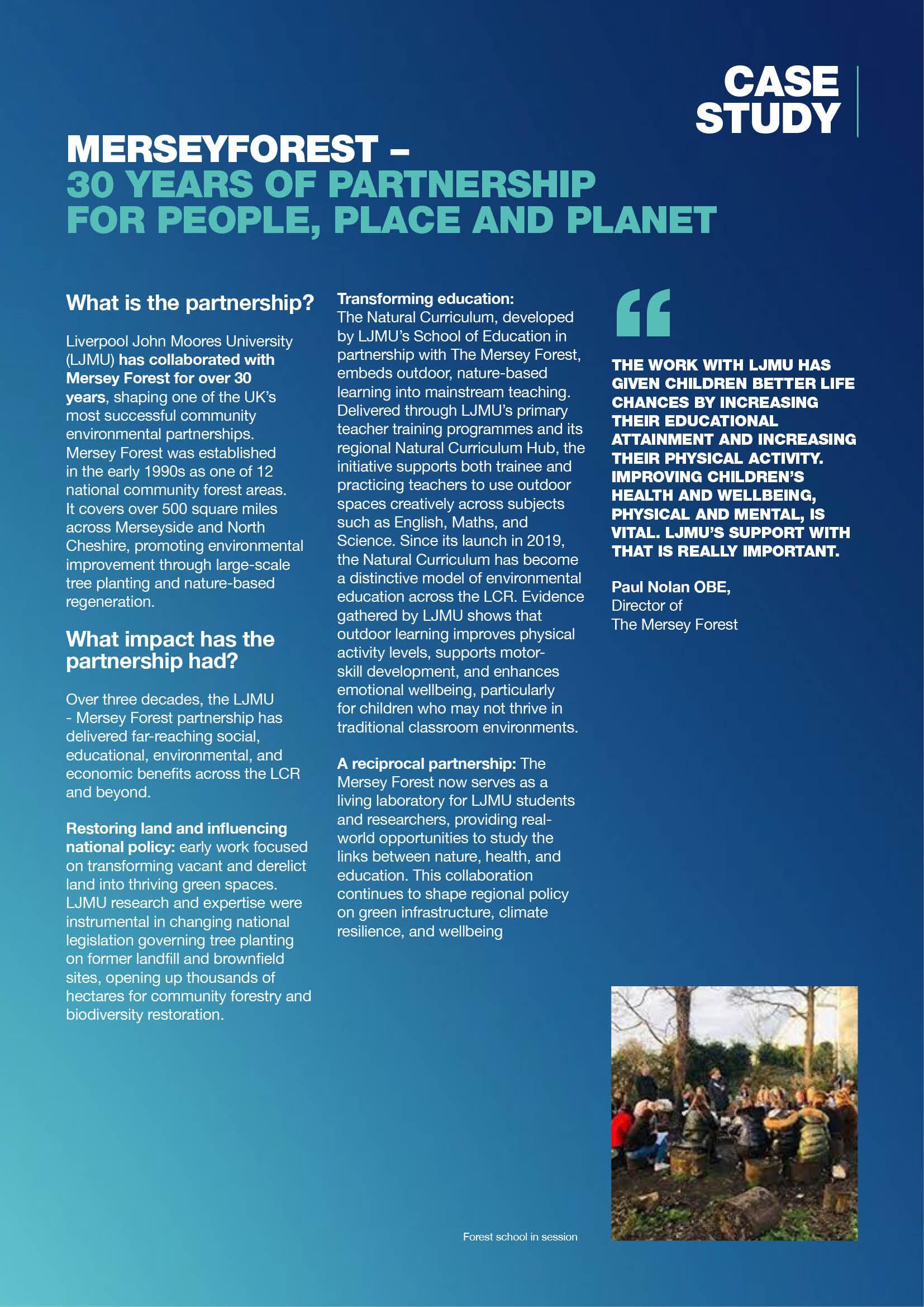
Equity of access and success is central to LJMU’s mission as an inclusive civic university. This ethos is embedded throughout the institution, with “we are inclusive” defined as one of its four core values. For LJMU, inclusivity means more than widening access to higher education: it is about creating the conditions for every student to succeed, regardless of their starting point, background, or personal circumstances.
As an anchor institution in Liverpool, LJMU recognises its responsibility to raise aspiration, remove barriers to opportunity, and close attainment gaps that too often persist in higher education. LJMU’s commitment spans the full student journey from early outreach in schools and colleges, through tailored support during study, and ensuring that disadvantaged students are equipped to progress into skilled employment or further learning.
LJMU’s ambition is to raise aspirations and widen participation by engaging young people across the LCR and beyond, providing targeted outreach that demystifies higher education and creates clear, supportive pathways into university for underrepresented groups.
LJMU plays a leading role in Shaping Futures, the Uni Connect collaborative outreach programme for the LCR, alongside a broad portfolio of its own initiatives aimed at widening participation. In 2023/24 highlights included:
• Advice and guidance presentations and workshops: More than 700 advice and guidance presentations and workshops to 43,401 pupils, providing advice on the post-16 education choices available to them, as well as more practical support such as navigating the application process and understanding student finance.
• Step-Up Programme: Engaging 375 pupils from across the City Region with career choice sessions and student-led subject tasters.
• Year 12 Residential Summer University (July 2024): LJMU invited 96 pupils from underrepresented neighbourhoods onto campus to explore media and engineering degrees. They got the opportunity to experience university life first-hand.
• Debate Mate: LJMU worked with 200 pupils across 11 partner schools to build public speaking and communication confidence.
• Education exhibitions: LJMU attended over 40 higher education exhibitions, such as UCAS fairs, in 2023/24
• Taster days: LJMU delivered 130 subject taster days on campus and in local schools. The aim of taster days is inspiring young people to pursue subjects and careers they may not have considered before.
Beyond these initiatives, LJMU provides a wide range of access routes into higher education:
• Degree Apprenticeships offer students the flexibility to combine study with paid professional experience. LJMU has 1,200 students currently pursuing degree apprenticeships in areas such as policing, health, engineering and business.
• Foundation programmes that offer flexible entry points for learners without traditional qualifications. Over the past five years, an average of 76% of students who completed a
Liverpool John Moores University
Economic and Social Assessment
December 2025
degree with a foundation year at LJMU graduated with a 2:1 or a first. This is in line with those studying a three-year degree (77%).21
The impact of this work is clear in LJMU’s student body. With 45% of LJMU’s student cohort from the 40% most deprived neighbourhoods nationally 22
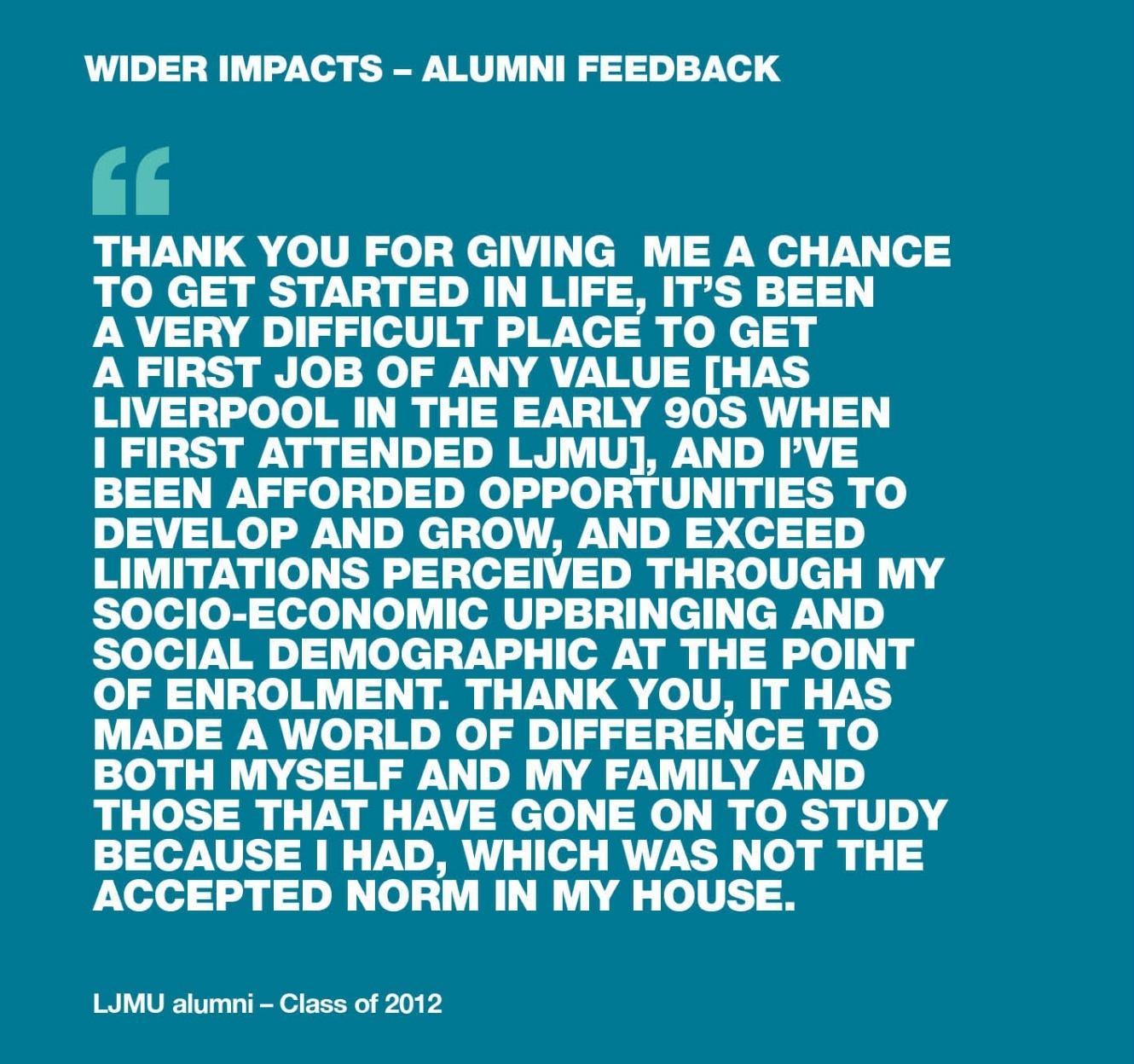
LJMU designs a comprehensive package of support for students facing additional barriers to success. The range of a measure are targeted to support those with mental and physical health challenges, and caring responsibility as well as those from low income or/and ethnic minority backgrounds to succeed in their studies.
Key strands of activity include:
• Co-creation: LJMU has established Co-Creation Internships with diverse students groups. They advise LJMU’s approach and resource development. Groups include students with disabilities, mental health, LGBTQ+, ethnically diverse, and care experienced & estranged
21 https://www.ljmu.ac.uk/study/undergraduate-students/study-a-foundation-year
22 LJMU Access and participation plan 2025-29
Liverpool John Moores University
Economic and Social Assessment
December 2025
students. LJMU was awarded the EDI Champion at the Association of Graduate Careers Advisory Services Awards. Co-creation interns shared their experience with BBC Merseyside.
• Neurodiversity:
• Transition days for neurodiverse students
• Inclusive Careers Webinars: Online sessions on Neurodiversity in the Workplace and Talking about Disability attracted strong engagement and highly positive feedback
• Mental health support, including
• On-campus counselling services and a self-help cognitive behavioural therapy programme called SilverCloud
• Strawberry Field Collaboration Steps for Students is a co-created podcast and internship model supporting students with mental health needs; participants reported increased confidence and sense of belonging.
• Netwalking for Wellbeing Informal outdoor networking events combining career conversations and mental-health support; students described the experience as “confidence-boosting” and “a sense of belonging.”
• Disability support: LJMU’s Student Advice and Wellbeing team provide individualised disability support, coordinated through offering academic adjustments and targeted interventions. LJMU is continuing to integrate assistive technology and software access for students with disabilities, helping to remove barriers to learning.
• Disability Co-creation Internships: Students worked alongside LJMU staff and partners to shape inclusive employability practice, producing video reflections and podcasts on accessibility, mental health, and workplace inclusion.
• Support for carers and parents:
• Carers and parents training: LJMU staff and managers are receiving training to better understand the challenges faced by carers and parents and to provide appropriate academic and pastoral support.
• Support system Systems are being developed to ensure student carers and parents are identified early, so tailored advice and financial support can be put in place
• Facilities and family-friendly spaces: LJMU has introduced breastfeeding rooms across campus (included in all new buildings), with maps being developed for accessibility.
• Support for students from ethnic minority backgrounds:
• Anti-racist and inclusive assessment training for staff, alongside curriculum review to make assessment practices more authentic and accessible.
• Graduate Tutor Trainee Scheme has recruited five trainees from underrepresented backgrounds, diversifying the academic pipeline and creating role models within the teaching community.
• Financial support: LJMU offers a broad package of financial support to ensure students from all backgrounds can access, participate, and succeed at university. In 2023/24, the university invested significantly in targeted bursaries, hardship support, and direct cost-of-living relief:
Liverpool John Moores University Economic and Social Assessment
December 2025
• Imagine Awards: £1,000 annual bursary for care-experienced and estranged students, alongside guaranteed 365-day accommodation and tailored advice on Student Finance and wellbeing.
• Progression Bursary: £500 per year for students from households with incomes of £25,000 or less.
• Student Support Fund: £2 million allocated; 2,536 students supported, with average payments of £716 per award.
• Food Discounts: A 20% discount in Core cafés, redeemed 559,593 times, providing immediate cost-of-living relief at the point of purchase.
• Discounted Gym Memberships: 4,995 memberships issued at reduced rates, lowering the cost of student access to fitness and wellbeing facilities.
• Cost-of-Living Aid: An additional £600,000 injected into the hardship fund; distribution included 800 free lunches and £9,900 in supermarket/food vouchers, supported by recipe packs to reduce spend and food waste.
• Free Period Products: Campus-wide scheme providing free menstrual products, equivalent to £11,153 of essential support.
LJMU is actively refining its student support package, evaluating its impact. The university is currently co-creating promotional materials with students and John Moores Students’ Union (JMSU) to increase awareness of the available support.
By 2028/29, LJMU aims to make sure every student has an equal chance to stay on, complete their course, and achieve good results, whatever their background or circumstances.
• Close the continuation gap so students from disadvantaged areas stay on at the same rate as others.
• Cut the completion and attainment gaps for students from low-income areas to 2% and 5.5%.
• Remove the progression gap so all students move into work or further study at similar rates.
• Reduce the degree awarding gap between black and white students to 14%.
• Narrow the gaps for students with mental-health conditions or communication differences, so their continuation and completion rates are within 1.5 to 5.5% of other students.

LJMU is committed to ensuring that every student leaves with the skills, confidence, and experience needed to succeed in life after university. This means embedding opportunity across all courses, tackling structural barriers to success, and providing targeted support to close attainment and progression gaps.
7.3.1 Embedding opportunity in the curriculum
All LJMU programmes include work-based or practice-based learning, ensuring students gain hands-on experience before graduation. Over 200 modules already embed placement learning, benefitting more than 7,000 students annually.
Programmes are audited to ensure that extra-curricular and co-curricular opportunities, such as volunteering, placements, and enterprise projects, are embedded and accessible to all students, regardless of background.
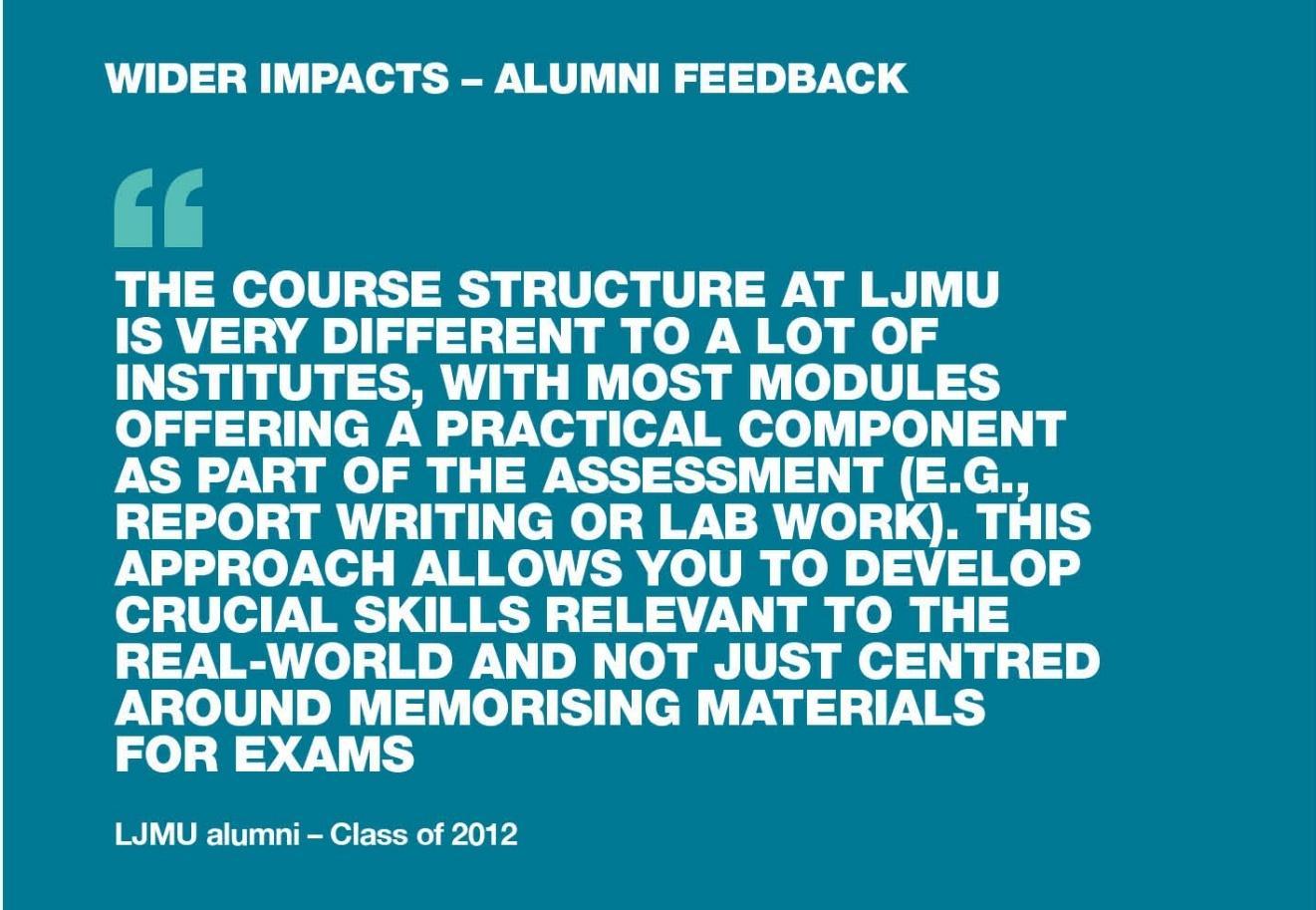
LJMU offers a broad range of opportunities and support to students to increase their employability and entrepreneurial skills. This includes:
• The Start-Up Hub provides funding, mentoring, and workspace to support entrepreneurial students. It has helped launch and scale student start-ups, linking directly to the LCR’s growth sectors. It is estimated have supported over 1,000 business launched by LMU students and alumni over the past 20 years, with an estimated contribution of over £20 million per year to the LCR economy.
• Careers and Employability Service: every student has access to career coaching, employer networking, and skills workshops. Services are embedded from induction to graduation and are tailored to different student groups, including care-experienced, disabled, and international students. Careers and employability advisers held more than 2,600 advice and guidance meeting with students through the year, with 46,000 logins to the Careers Zone 24/7 platform and 140,000 activities completed online.
• Discovery Internships: Students are provided fully funded, 105–140-hour projects in local businesses (~£2k in-kind value each), giving students structured, paid experience. helping students build professional networks while applying their skills. From 2021 to 2025, LJJMU has invested £1.24m; placed 700 students with 300+ LCR SMEs and third sector organisations. The Discovery Internship impact report (2025) found 93–100% employer satisfaction; over £1.2m direct regional impact.
• Law and Business clinics: £3.2 million worth of services delivered by students with realworld clients.
• LJMU’s Screen School has strategic partnerships with ITV and the Liverpool Film Office, giving students opportunities to work on high-profile TV and film productions. Liverpool is
December 2025
the UK’s second most-filmed city after London, and these partnerships ensure LJMU students gain access to placements and production credits on major dramas, films, and streaming projects.
• Next Gen Talent Experience: Nationally recognised employability event delivered with TG Consulting Ltd, connecting LJMU students with leading employers through live business challenges and networking. Students reported transformative confidence gains and career inspiration, with several invited to feature on the Next Gen Podcast series following the event.
• Unitemps, LJMU’s own on-campus recruitment agency Unitemps provides opportunities for flexible part-time work that students can undertake in support of their study – encouraging continuation while enhancing employability and professional networks. Launched in Winter 2019, in the 2024/25 academic year, Unitemps turnover last year was £3million and over 12,000 students are registered for the service. The diversity of students & graduates paid for assignments by LJMU Unitemps is greater than in the wider population:
• 27.2% of Unitemps payees were students with disabilities, compared to 17.2% of LJMU’s population;
• 33.7% ethnically diverse for Unitemps compared to 19.7% for LJMU;
• 62.2% female for Unitemps compared to 57.1% for LJMU.
LJMU’s Unitemps is part of a national network of Unitemps franchise holders (20 branches) and were awarded Branch of the Year in 2024 and won Job of the Year this year for a cofunded partnership with Liverpool Football Club’s operations & administration function
LJMU’s approach has demonstrated impact on graduate success LJMU’s approach has demonstrated impact on graduate success. The latest Graduate Outcomes Survey (Summer 2025) shows that 95.6% of graduates were in employment or further study 15 months after leaving (the standard Positive Outcomes measure). Although this includes all employment levels, LJMU’s unemployment rate (4.3%) compares favourably with the national average of around 5.9%.
The Office for Students’ Progression metric, which combines highly skilled employment and further study, records 70.4% for full-time first-degree students, close to LJMU’s benchmark of 70.9%. Over the past five years, high-skilled employment among LJMU undergraduates has grown at four times the sector rate (2.3% compared to 0.5%), demonstrating sustained improvement and alignment with sector-leading performance.
Figure 7-1 Student high skill employment and further study progression metric
Source: Office for students, 2025.
In the graduate outcomes data, published in Summer 2025, 87.9% of postgraduate students were in High Skilled Employment compared to 87.3% nationally. 100% of Postgraduate Research students were in High Skilled roles this year
Over the past five years, the variance in High Skilled Employment levels between disabled and non-disabled graduates has reduced from 5.2% (Graduate Outcomes Survey of 2018/19 leavers) to 2.8% (Graduate Outcomes Survey of 2022/23 leavers).
Within a survey of LJMU alumni, 54% of alumni agreed or strongly agreed that graduating from LJMU has improved their Social Mobility compared to their background. Only 12% of respondents disagreed with the statement.
Figure 7-2 Do you feel that graduating from LJMU has improved your social mobility compared to your background?
Source: LJMU alumni survey, 2025.
Liverpool John Moores University Economic and Social Assessment
December 2025
Longitudinal Education Outcomes data indicates that graduates from several LJMU subject areas aligned with Liverpool City Region growth sectors achieve higher earnings three years after graduation compared with the North West and, in some cases, the national average. These sectors include:
• Life Sciences (Pharmacology, toxicology and pharmacy) LJMU graduates are £5,900 above national average and £8,100 above north west average;
• Agriculture, food and related studies LJMU graduates are £200 above national and £2,700 above North West average;
• Sport & Exercise Science LJMU graduates are £400 above the North West average;
• Digital & creative (Media, journalism and communications) LJMU graduates are £700 above national and £1,800 above North West averages; and
• Performing arts LJMU graduates are £1,100 above North West average.
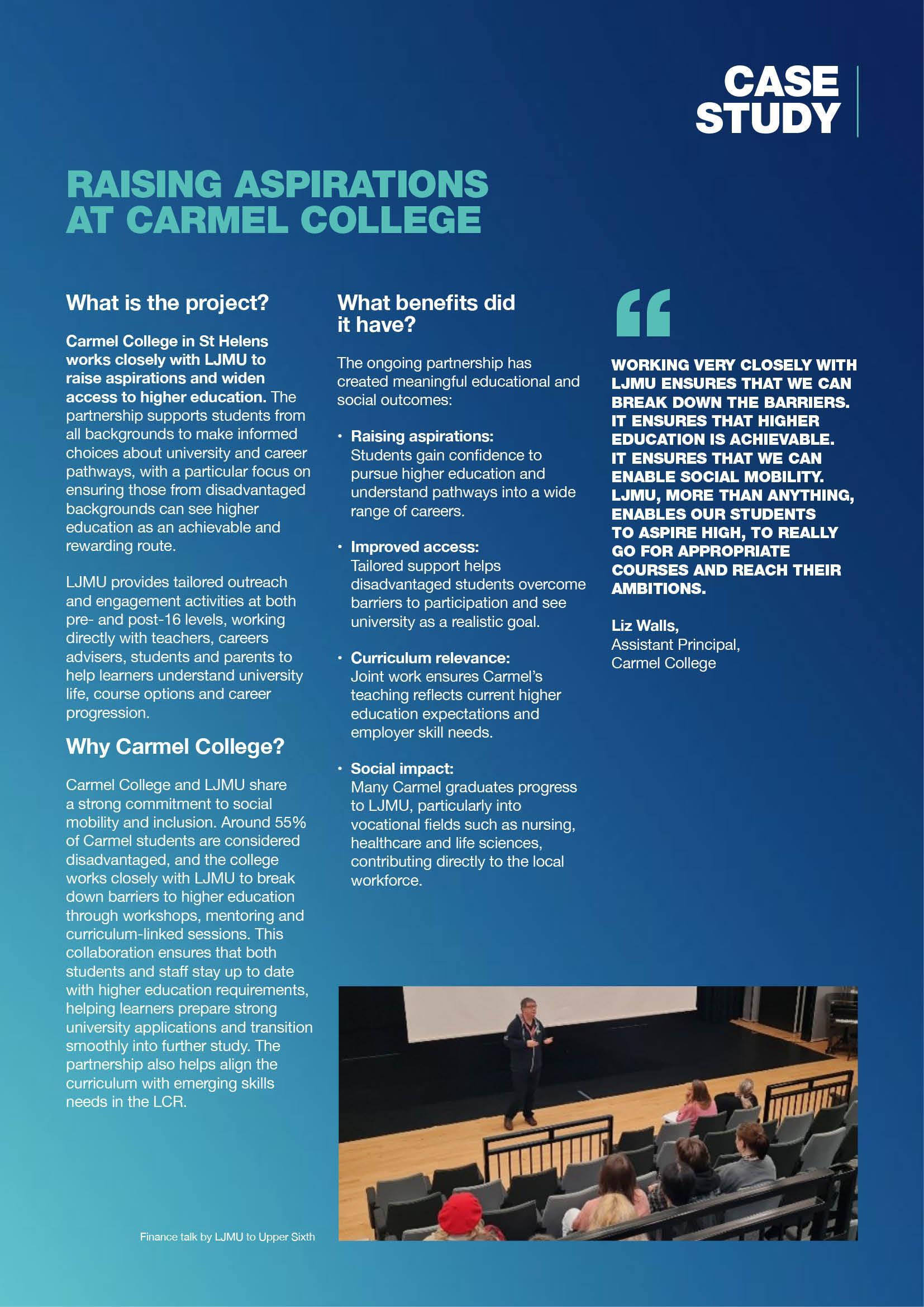
8.1 Community engagement and civic partnerships
LJMU plays a leading civic role in the LCR, with community engagement embedded in its Strategy 2030 and Place & Partnership Plan 2025-30. The Engage Watermark Award (2025) recognise LJMU for its leadership and culture of public engagement embedded throughout the organisation.
8.1.1 Charity partnerships
LJMU works closely with local charities supporting Merseyside’s Communities
• Claire House Children’s Hospice: Claire House provides support to seriously and terminally ill children and their families. LJMU recent support included sponsorship Mowgli Dog Show raising money for the hospice and volunteering.
• The Girl’s Network: Girl’s Network aims to inspire and empower girls from the least advantaged communities by connecting them with a mentor and a network of professional role model. LJMU helped Girl’s network advertise for mentor recruitment for our programmes in schools. This was done by advertising on screens around the university. Girls’ network also attended LJMU Students at the Heart Conference, connecting with staff who were interested in mentoring.
• Micah Liverpool: A social justice charity tackling the root causes of poverty within the LCR. LJMU raised money, pledging a donation to the charity for every responder to the national student survey and other internal student feedback survey. A total of £12,800 was donated. Students from the Law Clinic also supported LCR resident’s using Micah Liverpool’s emergency food aid services.
• Local Solutions: Since 1974 Local Solutions has been working to tackle homelessness across the LCR and North Wales. They provide temporary accommodation for those in immediate need, longer-term housing for those building towards independence and resettlement services to help young people transition into secure, permanent homes. They don’t just offer a roof; they offer hope, stability and a path forward. LJMU students took part in the annual big sleep out that raised £10,000 in 2024.
8.1.2
Civic participation is a defining part of LJMU student life, as shown by the following statistics:
• Student volunteering: Based on the student survey by AMION, it is estimated that around 4,250 students at LJMU volunteer (18% of student population). In total, it is calculated that they volunteer 1.08 million hours per annum.
• Around 7% of students have volunteered on community or charity projects. This equates to around 1,550 students volunteering on community/charity activities per year
• Student volunteering is supported by the John Moores Student Union (JMSU) JMSU has partnered with 119 organisations, including Wirral Hospice and L’Arche Liverpool, creating structured volunteering opportunities that boost employability while giving back to the community. Centrally, a total of 1,701 volunteers were registered.
Liverpool John Moores University
Economic and Social Assessment
December 2025
• JMSU champions student volunteers at the annual Society and Volunteering awards. Held at Baltic Triangle’s Camp and Furnace, awards are given for Volunteer of the Year, Outstanding Community Contribution, Micro-Volunteer of the Year, Officer’s Choice, and Organisation of the Year.
LJMU’s Law Clinic provides free legal advice across family, civil dispute, and human rights law. Staffed by six in-house solicitors, it trains 500 students a year and help around 1,000 clients annually. In 2022/23, the Law Clinic delivered an estimated £1.34 million in free legal support, achieving a social return of £1.60 for every £1 invested through improved employability and reduced court costs. Charity partner Micah Liverpool praised the outreach work LJMU law students undertook with Food Bank users, offering advice and helping address root causes of poverty.
Through the LCRCA Authority and its anchor institution network, LJMU contributes evidence, research and expertise on issues such as health inequalities, educational attainment and industrial decarbonisation. LJMU representatives sit on civic forums including the, LCR Creative Industries Cluster Board, and the Business and Enterprise Board, ensuring academic insight directly shapes regional policy and delivery.
The John Moores Students’ Union (JMSU) also plays a vital civic role, ensuring that student voices are heard locally and nationally. JMSU officers engage MPs in Westminster on issues such as the housing crisis, rent affordability, and student welfare, ensuring LJMU students help shape public debate and policy. Locally, initiatives such as Reclaim the Night, anti-spiking training, and the distribution of free safety packs have strengthened community safety and raised awareness of gender-based violence. Projects such as Leave Liverpool Tidy delivered direct environmental and economic benefits by reducing waste and channelling donations to local charities. JMSU also support a Student Sustainability Council with Student Ambassadors campaigning on ethical and sustainability issues. JMSU leads student-focused campaigns on the cost of living, housing, and wellbeing, providing emergency food vouchers and hampers in partnership with the university to support students most in need.
LJMU plays a critical role in advancing public health and wellbeing, combining internationally recognised research with local interventions that deliver measurable impact.
8.2.1
The Public Health Institute (PHI) continues to tackle urgent issues including violence, substance use, and inequalities. In 2024, LJMU supported the World Health Organization by reviewing 763 studies to evidence “what works” in preventing violence. The Institute’s outputs now include global resources on knife violence, elder mistreatment, and violence against disabled people, directly shaping policy and practice worldwide.
At a local level, LJMU has worked with the Pandemic Institute, Liverpool City Council, NHS Cheshire & Merseyside ICB, primary care and community organisations in an 18-month
partnership to address vaccine hesitancy in hard-to-reach communities, increasing confidence and uptake among vulnerable groups.
8.2.2 Addressing Liverpool City Region health challenges
The university also partners with frontline organisations to address key health challenges:
• Male suicide prevention: Through its collaboration with James’ Place, LJMU supports targeted interventions for men in suicidal crisis, particularly those under 35, the group at highest risk. The service has demonstrably reduced hospital admissions for people in suicidal crisis and provided life-saving support to hundreds of men each year.
• Suicide prevention in schools: The Multimodal Approach to Preventing Suicide in Schools (MAPSS) has been piloted in six schools across the LCR, reaching around 800 young people with suicide prevention education. Crucially, the project identified 113 at-risk pupils, who are now receiving pastoral or therapeutic support. School staff trained through MAPSS report greater confidence in recognising and intervening with students experiencing suicidal thoughts, and the Department for Education has consulted LJMU researchers, with suicide prevention to be integrated into the RSHE national curriculum from 2026.
• Cardiovascular disease risk screening: LJMU researchers delivered Cardio Vascular Disease (CVD) screening programmes across the LCR and North West Thirty different community organisations or venues hosted screening. 474 individuals participated in CVD screening. Around 61% of participants were from the most 20% deprived communities nationally. Over 20% of participants were of black, Asian, other or mixed ethnicity. Of all participants, 37% were referred to their general practitioner regarding out-of-range results. Alongside clinical screening, the project gathered lived experience interviews to understand barriers to accessing healthcare, ensuring early detection of cardiovascular risk and more equitable prevention strategies.
• Global Active City Movement: LJMU played a key role in creating the Global Active City certification model, implemented in Liverpool and cities worldwide to boost population physical activity and wellbeing, yielding measurable economic and health benefits.
Through these combined efforts of global research, local partnerships, and targeted community programmes, LJMU demonstrates a clear and measurable contribution to reducing inequalities, improving health outcomes, and supporting healthier communities. This work aligns strongly with the UN Sustainable Development Goals, particularly SDG 3 (Good Health and Wellbeing) and SDG 10 (Reduced Inequalities).
A survey of LJMU alumni found an estimated 14% of alumni are working within health-related sectors. Based on annual graduations per year, it is therefore calculated that around 1,120 qualified healthcare workers come from LJMU each year This alumni feedback aligns with student statistics, which indicates that between 900 and 1,400 students graduate each year from the LJMU’s Nursing and Advanced Practice programmes.
LJMU makes a distinctive contribution to the cultural life of Liverpool and the wider City Region. The university uses arts, heritage, research, and civic engagement to create inclusive cultural experiences that reflect the diversity of the city and provide opportunities for dialogue, celebration, and learning.
Liverpool John Moores University
Economic and Social Assessment
December 2025
In 2023/24, LJMU events and activities attracted 202,067 attendees to free public events, underlining the scale of the University’s cultural reach.
8.3.1 Civic celebrations and public festivals
LJMU contributes actively to the cultural calendar of Liverpool, providing both leadership and participation in city-wide celebrations, as follows:
• John Moores Painting Prize: Hosted at the Walker Art Gallery, this remains one of the UK’s most prestigious art competitions. LJMU’s sponsorship and staff expertise underpin the Prize, which attracts hundreds of entries nationally and international media attention, further cementing Liverpool’s global reputation as a city of art.
• Liverpool Pride (2024): The Diversity and Inclusion Team partnered with the LGBTQI+ staff network to organise the Pride celebrations. More than 100 LJMU students, staff, and alumni joined the Pride March, part of an event which attracted over 25,000 attendees across the city.
• Cunard 175th Anniversary “Three Queens” event: LJMU’s Face Lab contributed to the spectacular Amazing Graces projection show, by creating “average Merseyside faces” that represented the city’s communities.
8.3.2 Celebrating diversity through arts and media
LJMU uses its creative expertise to foster dialogue and inclusion, as follows:
• South Asian and East and South East Asian Heritage Month (2024): In partnership with filmmaker and academic Rosa Fong, LJMU’s Screen School launched the inaugural heritage salon. Artist Andrea Ku and illustrator Laura Evans contributed work that explored inclusivity through creative practice, sparking conversations about identity and belonging.
• LJMU Film Festival: Now a fixture in the city’s creative calendar, the festival showcases emerging talent, builds links between students and industry, and has fostered collaborations with ITV and the Liverpool Film Office, reinforcing Liverpool’s role as a hub for the screen industries.
8.3.3 Music, performance and innovation
Music Futures: The LCR has been announced as a new £6.75 million UKRI Creative Cluster for the music sector. Led by LJMU and the University of Liverpool, MusicFutures will, over the next five years, establish the LCR as a music research and development (R&D) powerhouse and ecosystem. The five-year funded programme, delivered by the Arts and Humanities Research Council (AHRC) on behalf of UK Research and Innovation (UKRI), will catalyse growth and innovation in LCR’s music sector. LJMU has therefore, played a leadership role in shaping the Music Futures programme, which links musicians, educators, and cultural partners to explore how Liverpool’s music heritage can be re-imagined for future generations.
Theatre as a tool to create social change – 8 hours there and back: Devised by All Things Considered with support from LJMU, 8 hour there and back used live theatre to share the lived experiences of children and young people with a parent in prison. Performed at eight venues, including Drake Hall prison, in 2024, the play aimed to reduce stigma and isolation, raise awareness, and influence policy and professional practice. An evaluation of the impact of the show found performance had profound emotional impact, breaking down stereotypes, inspiring empathy, and prompting immediate action among professionals. For example, prison staff
Liverpool John Moores University
Economic and Social Assessment
December 2025
pledged to redesign visitation spaces to be more welcoming and reconsider pricing at tea bars, while teachers and social workers reported a deeper understanding of children’s hidden struggles. By foregrounding young voices with authenticity, the project not only gave visibility to an oftenoverlooked community but also catalysed tangible improvements in policy and practice across the criminal justice and education systems
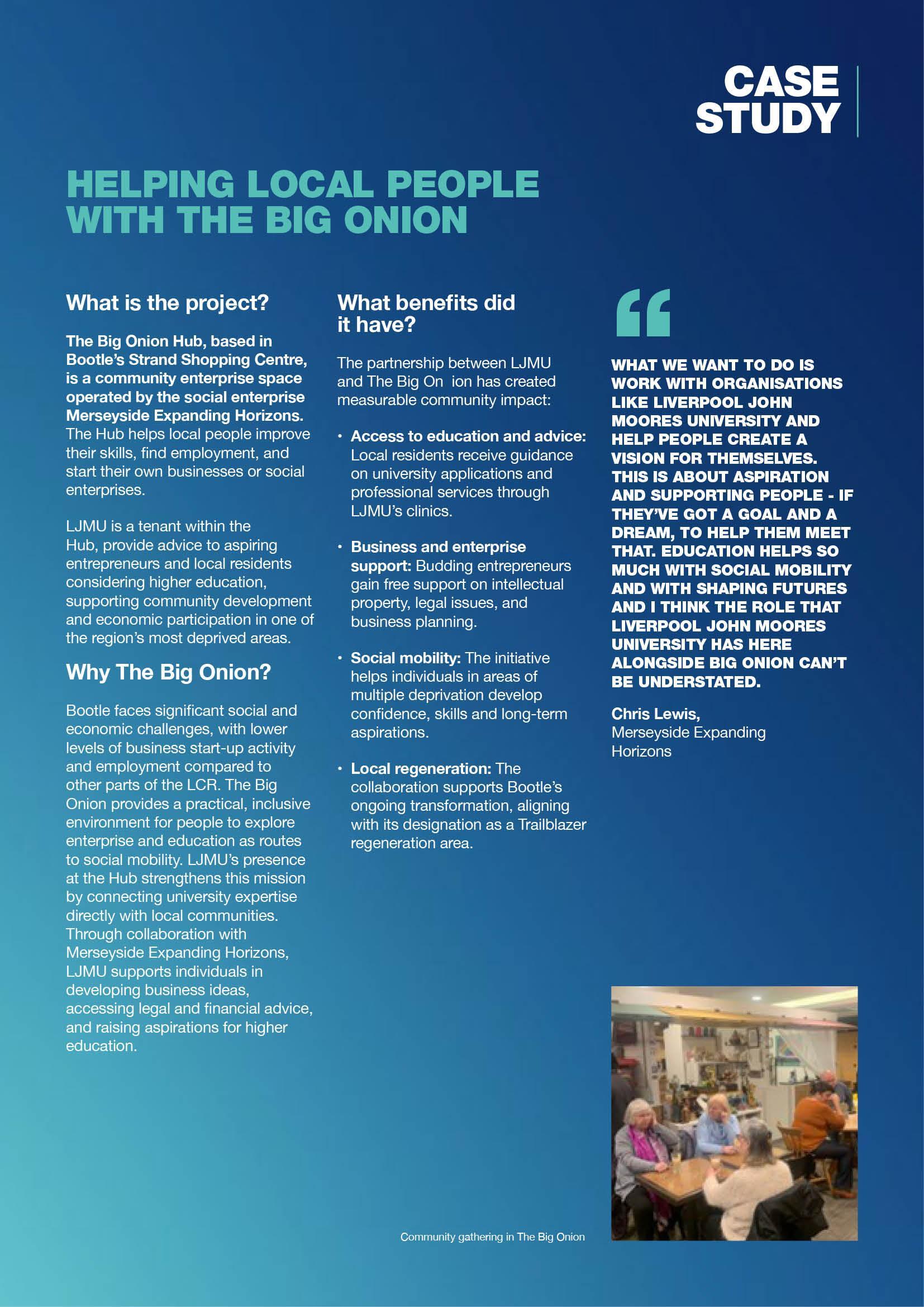
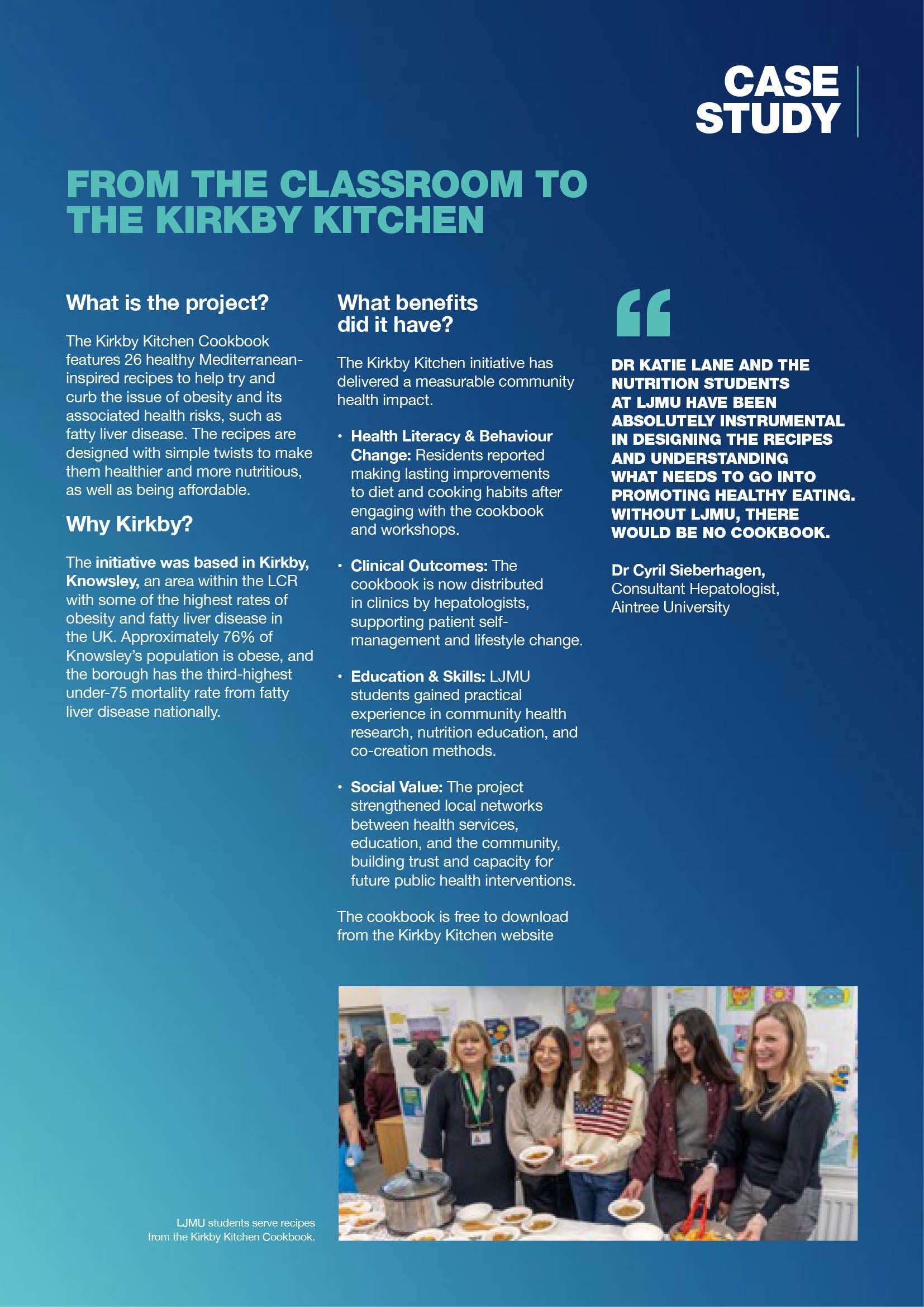

LJMU makes a significant and far-reaching contribution to the LCR, the wider UK economy, and society as a whole. This study demonstrates that the university is not only a major economic anchor institution but also a powerful driver of social mobility, public value, and long-term prosperity. Its scale, mission, and civic ethos combine to generate impacts that extend far beyond its immediate educational remit, influencing the future trajectory of the city region’s workforce, communities, environment, and cultural life.
9.1.1
In 2023/24, the university supported up to £474 million in GVA and more than 6,200 jobs within the LCR, rising to £880 million GVA and over 10,600 jobs nationally. These impacts flow through multiple channels: direct operational expenditure, extensive supply chain and staff spending, student expenditure and visitor impacts, and knowledge exchange activities. The university’s strong research portfolio also generates significant productivity spillovers, reinforcing its contribution to innovation-driven growth.
Compared to peer post-1992 institutions, LJMU performs strongly across both economic and employment benchmarks, reflecting its scale, strategic alignment with regional priorities, and deep integration with business and civic partners.
9.1.2
The economic contribution is complemented by a wide range of social benefits. The university’s role in supporting opportunity and social mobility is particularly pronounced. Nearly half of LJMU students come from the 40% most deprived neighbourhoods nationally, and the university’s programmes create accessible, flexible pathways into higher education.
The following social welfare benefits have been calculated to arise on an annual basis, using Green Book complaint methodologies
• Graduate wage premium benefits of £102.3 million per annum – enhanced lifetime earnings reflect the significant value of undergraduate and postgraduate qualifications, career progression, improved wellbeing, and increased productivity.
• Distributional benefits of £59.8 million per annum – as 45% of students come from the most deprived 40% of neighbourhoods, Treasury welfare weights demonstrate additional uplift in social value linked to improved equality of opportunity.
• Student volunteering wellbeing benefits of £11.5 million per annum – with more than 1.08 million volunteering hours annually, LJMU contributes major wellbeing and community capacity benefits across charities, schools, health, sports, and youth services.
• Cultural engagement wellbeing benefits of £1.0 million per annum – more than 202,000 attendees at LJMU cultural events generate wellbeing value linked to community cohesion, creativity, inclusion and public engagement.
9.1.3 Wider social impacts
These quantified impacts above are amplified by comprehensive support for underrepresented groups, including targeted financial assistance, mental health services, inclusive careers provision,
and a sector-leading co-creation model that ensures services are shaped by student needs and lived experiences.
LJMU’s societal contributions extend further into public health, community resilience, and cultural enrichment. Its research institutes and expert centres – such as the Public Health Institute, Sports and Exercise Sciences, Face Lab, Astrophysics Research Institute, and LiRCIS – focus on challenges that have both regional and global significance. Their work influences national policy, shapes international collaborations, and directly improves lives. Community partnerships, including those with The Big Onion, Mersey Forest, and healthcare providers across the region, translate academic insight into practical interventions that strengthen wellbeing, social cohesion, and environmental sustainability.
Crucially, LJMU plays a foundational role in addressing workforce needs within key public and private sectors. As the largest provider of nurses in the LCR and a major training partner in teaching, policing, engineering, and digital industries, the university ensures that the city region has the skilled professionals required to meet future challenges. Graduate retention rates remain high, with roughly half of students intending to remain in the region after graduation, reinforcing LJMU’s position as a cornerstone of the local talent pipeline.
The university’s commitment to sustainability further enhances its civic contribution. LJMU is both a thought leader and a delivery partner in the transition to net zero, supporting businesses through programmes such as the Low Carbon Eco-Innovatory, shaping national approaches to natural capital, and embedding Education for Sustainable Development across its curriculum. Its operational efforts, including a reported 20% reduction in energy use over two years and its EcoCampus Gold status, further demonstrate institutional leadership in sustainability.
Together, these findings confirm that LJMU is a vital and distinctive institution whose economic, social, cultural, and environmental impacts are extensive, interconnected, and enduring. The university not only supports regional prosperity today but is shaping the future of the Liverpool City Region through its research, partnerships, teaching excellence, and commitment to inclusivity. As LJMU delivers its Strategy 2030 and continues to invest in its people, infrastructure, and global partnerships, it is well positioned to deepen this impact – helping the city region to thrive economically, socially, and environmentally in the years ahead.

Reference Year:
Liverpool John Moores University
Economic and Social Assessment
December 2025
The analysis provides a snapshot of the LJMU’s impact for the academic year 2023/24.
Geography:
This study focuses upon Liverpool City Region (LCR) and the UK. The LCR comprises of the local authority areas of Liverpool City Council, Knowsley Borough Council, St Helens Borough Council, and Wirral Borough Council.
Economic impact methodology
A key goal of this study is to demonstrate the scale and scope of the LJMU’s economic impact. Most economic impact approaches have at their base, the evaluation of what are called the direct, indirect, and induced effects of an economic activity. Figure A1 can be used to illustrate the basic concepts involved and outlines the underlying framework used in the study.
Figure A1: Impact Framework
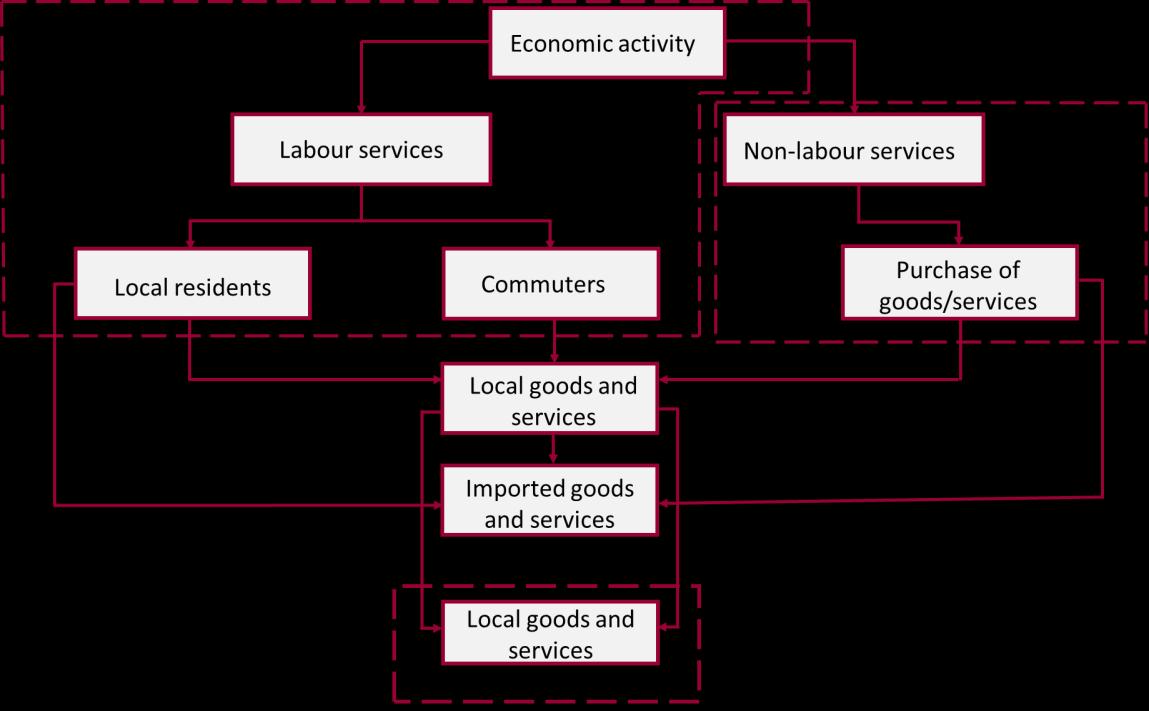
All economic activities conduct business by purchasing inputs with which to produce outputs. There are essentially two types of inputs, labour and non-labour (goods and services).
Analysis of these elements is important in impact studies since the extent to which inputs are sourced within an economy is a primary determinant of impact in that economy. The larger the proportion of staff that live within the economy and the greater the share of other inputs purchases locally, the more extensive the impact of the activity will be. Conversely, inputs then are sourced from outside an area means that spending will bypass that economy.
These features broadly correspond to the notion of direct and indirect impacts. Direct effects are primarily the jobs and incomes that accrue to an economy due to the construction/operation of a facility and the employment they generate. The indirect effects relate to flows of income (other than labour income) arising from the construction/operation of the activity. In most cases, these
latter effects reflect the supply chain of goods and services and will cover items such as materials, supplies and business and professional services.23
The final element in the impact structure focuses on the induced effect. This represents the process through which the spending of staff employed (i.e. both the direct and indirect income flows) helps to support other businesses in an economy, contributing to the wages and salaries of employees and covering material overheads. These employees and businesses, in turn, also spend a proportion of their incomes on goods and services and the process repeats itself over a number of rounds.24
It is important to recognise, however, that not all of the money being spent in each round will find its way into the wages and salaries of the next group of workers and businesses in the chain. Income tax (direct taxation), national insurance and VAT (indirect taxation) will all disappear from the flow. Some of the money will be saved and not all that is spent will be spent on ‘local’ goods and services. One would therefore expect the impact to decline in magnitude at each stage of the process. In addition, and in general, the smaller the economy in question, the larger will be the proportion of any spending on imports to that economy.
The LJMU impact assessment is undertaken within a multi-regional input-output (MRIO) framework. Input-output tables describe how products (and primary inputs) are used both to produce further products and to satisfy final use (consumption, investment, government and exports). In essence, IO tables provide a representation of economic interactions within an economy, detailing patterns of sales and purchases between sectors, sales for final use and profiles of related economic features such as GVA.
Input-Output tables are regularly constructed and published for the UK though, other than for Scotland, Wales and Northern Ireland, no additional tables are constructed for sub-national areas. While it is common practice to apply relationships from UK tables to lower-level geographies, rather than ‘approximate’ tables at lower spatial scales, in the case of this exercise we construct a synthetic IO table for the LCR economy.
There exists substantive and on-going discussion of options to generate these approximations. At the heart of UK IO tables lie a series of coefficients that detail the (sectoral) pattern and value of inputs required to deliver one unit of sector output. Most approximations seek to modify the scale of these coefficients to reflect the structure of local economies with the implication that under-represented sectors are likely to require imported inputs while overrepresented sectors export to other areas.
Many of these approaches employ a variety of location quotient adjustments. Here, we apply the well-established Flegg Location Quotient (FLQ) mechanism. In essence, UK level (technical) coefficients are modified to reflect patterns of employment at sub-national level with different adjustments made for on/off diagonal matrix elements.
We model impacts in the context of the 2019 UK analytical tables published by ONS to avoid distortions connected to COVID. Modelling also operates in a MRIO setting whereby investment in LCR interacts with a second broader geography (the rest of the UK) through a series of import and export mechanisms. This allows feedback loops in both directions and typically enhances the scale of impacts (increases multipliers).
23 The combination of direct and indirect effects is typically known as a type 1 impact
24 The combination of direct, indirect and induced is typically known as a type 2 impact
Finally, it is important to note that this exercise is intended to assess the ‘footprint’ or gross impact of LJMU operations with no attempt to assess additionality. Impacts are also assessed from a baseline LCR model which matches the 2019 GVA and employment profiles of LCR reported by ONS. As such, impacts represent reductions in GVA and employment from this baseline but adjusted to a 2024 price base.
Research impacts
LJMU research income amounted to £17.4 million in 2023/2425. Research England research grants accounted for 58% of the total with UK Research Councils contributing another 21%. Other contributions came from UK industry (7%) and from overseas (14%). Removing UK public funding defines a net direct impact of some £3.7 million. Our presumption is that this income is used by LJMU to fund existing research staff as well as other forms of related expenditure and is already accounted for in staffing and procurement impact assessments. Accordingly, we do not assign it a separate impact.
We do, however, seek to account for productivity spillover effects that stem from research activity although analysis is complicated by the limited and debated nature of empirical evidence into this relationship.
Haskel et al (2014) assess the scale of spillover effects from public research across different UK industries.26 Their analysis suggests a rate of return on public sector research of approximately 20%. If we extract the LJMU Research Council from total research income, the product of this £13.7 and the rate of return factor suggests a direct spillover impact of some £2.7 million
Assessing impacts from Research Council activity is open to significant debate. One common approach is to use results from a 2013 study by Haskel and Wallis (2013) which seeks to examine the relationship between productivity growth and (lagged) UK Research Council spending.27 This produces a series of high (regression) coefficients that reduce in scale as spending increases over time (with the last coefficient in the series taking a value of 15). Frontier Economics (2014) broadly replicate the Haskel and Wallis approach using slightly different data.28 This also produces high (though only weakly statistically significant) coefficient values with the final period outcome defined as insignificant.
The model and available data gives us no clear direction of the extent to which commercialization activities are provided to organisations within the LCR and thereby have assumed an industry benchmark which attributes 65% to the LCR with the remaining activity assumed to benefit organisations within the UK.
In assessing student impacts we define numbers in accordance with the 2023/24 AFR Table 7 data which reports 21,442 home students (92% full-time) and 2,050 overseas students (91% full time)
It has been calculated that 3,708 students, largely 1st year undergraduates, sent requests to be in LJMU halls in 2023/24. Data was provided on the estimated residency across student types and the residency locations of students not in LJMU accommodation. Using this data, we assume that
25 When including Research England funding.
26 Haskel, J., Hughes, A. and Bascavusoglu-Moreau, E. (2014) ‘The Economic Significance of the UK Science Base: a report for the Campaign for Science and Engineering’. Imperial College London. Working Papers 13751. London: Imperial College Business School
27 Haskel, J. and Wallis, G. (2013) ‘Public Support for Innovation, Intangible Investment and Productivity Growth in the UK Market Sector’. Economics Letters. Volume 119. No.2. pp.195–98
28 Frontier Economics (2014) Rates of return to investment in science and innovation
84.6% of domestic students live in the LCR during term-time and 100% of international students live in the LCR term-time.
Taken together, these assumptions define 13,999/6,065 domestic/overseas students living in non-LJMU supplied accommodation in the LCR alongside 15,911 domestic students in the UK as a whole.
The results of our student survey in terms of average weekly expenditure. In total students spent on average £280 per week, with 46% of this going on accommodation and household bills, 19% on shopping (including food), and 16% on going out
Using an average 43 weeks residence attendance, our student survey estimates of average domestic/overseas (£236/£396) weekly non-fees spend and assuming a nominal 10% of spend on campus
Tourism spend
Our primary source of data for visit patterns is our student survey which reports an average of 1.8 visitors per domestic student and 1.8 visit per overseas student in the course of an academic year. The length of stay in both instances is reported as 1.8 nights. The reported spend by tourists, using LCR Steam Data and the student survey, for domestic/overseas stays as £163/£195. Spend across consumption categories is allocated to sectors via ONS supply and use table profiles for tourism
Benefit mapping
The analysis commenced with an examination of the LJMU’s various activities to identify those likely to produce economic impact. Logic chains were constructed to describe how each activity generates economic value, which were then used to develop an economic model estimating the LJMU’s economic impact.
Avoiding Double Counting:
To avoid double counting, adjustments were made, such as excluding licensing impacts from spinout companies, as these are already included in spin-out impact calculations. Similarly, aspects of student spending included in the LJMU’s direct impact were removed to prevent duplication.
Data sources:
The findings presented are derived from multiple sources, ensuring a comprehensive analysis:
• University Submissions: Data includes submissions to key evaluations such as the Knowledge Exchange Framework (KEF), the Research Excellence Framework (REF), the Teaching Excellence Framework (TEF), submission to the HESA HE Business and Community Interaction (HE-BCI) survey data and rankings from the Times Education Supplement University League Tables. These submissions provide insights into various aspects of university performance and reputation.
• Financial Accounts and Statements: Financial data from the university’s official accounts and statements offers an overview of economic health, budgeting, and expenditure.
• Departments and Teams: Contributions from various university departments and teams, with special acknowledgment to Finance and Human Resources (HR), provide detailed internal insights and operational data.
• Student Survey: A bespoke survey conducted with approximately 650 students provides direct feedback on their experiences and satisfaction regarding academic, professional, social, and personal development.
Liverpool John Moores University
Economic and Social Assessment
December 2025
• Alumni Survey: Feedback from an alumni survey with around 550 responses offers perspective on the long-term impact of the university on graduates' careers and lives.
Limitations of the Study:
While efforts have been made to measure the LJMU’s economic contribution accurately, certain limitations must be acknowledged. GVA and employment metrics and the quantified cultural and social benefits do not capture all types of value created. Some of these were identified by the survey (e.g. contribution from students as a workforce, sports, graduate revisits) and the research and have been reflected in the text. LJMU’s economic contribution should be understood within this broader context.