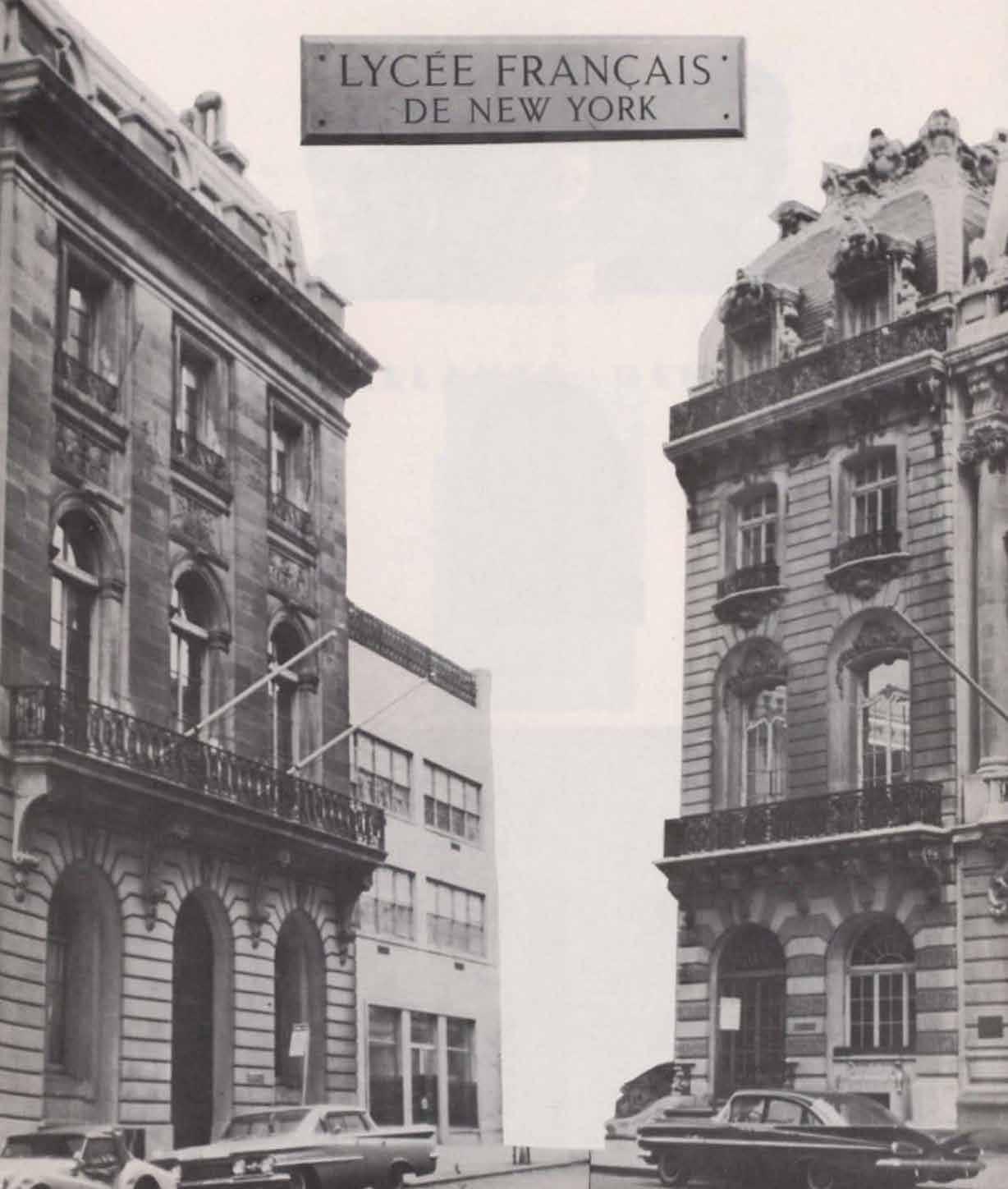
The Lycée Français de New York opens its doors in October of 1935
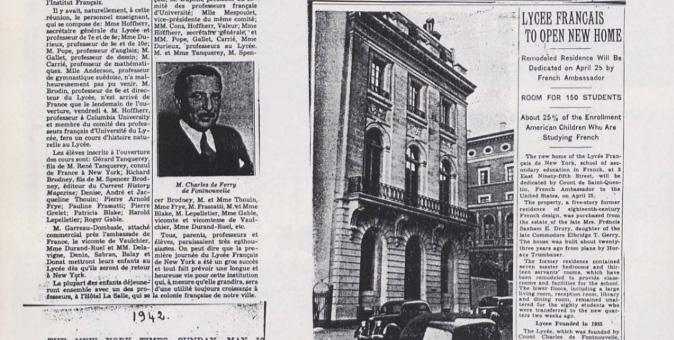
Founded by Charles de Ferry de Fontnouvelle, Consul General of France in New York, the school is established to serve French diplomats, expatriates and American families interested in a French education. By the end of the first year, 24 students had registered.
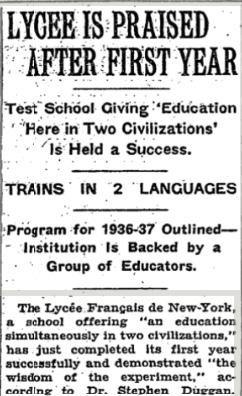
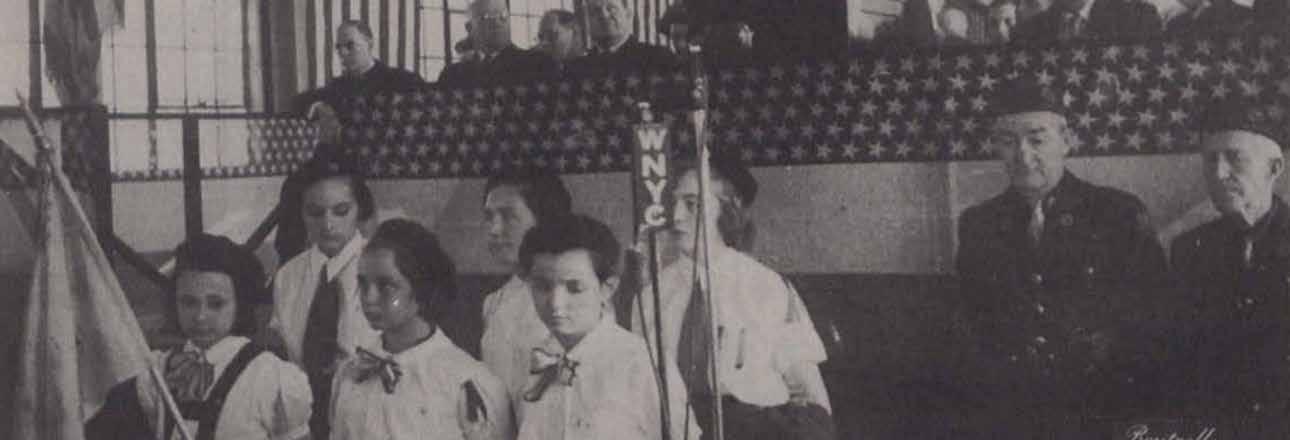
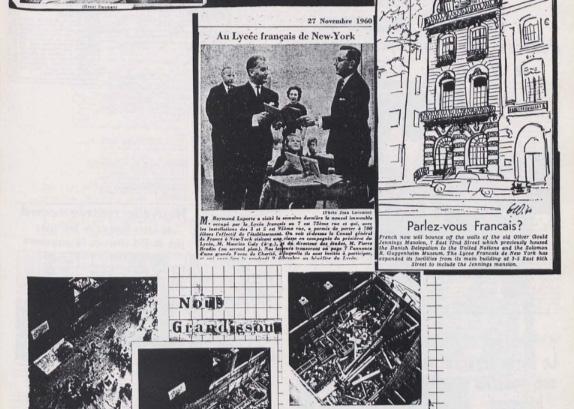
First newsclipping published, June 28, 1936 in the
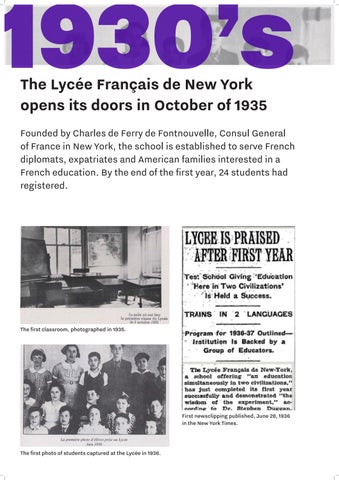
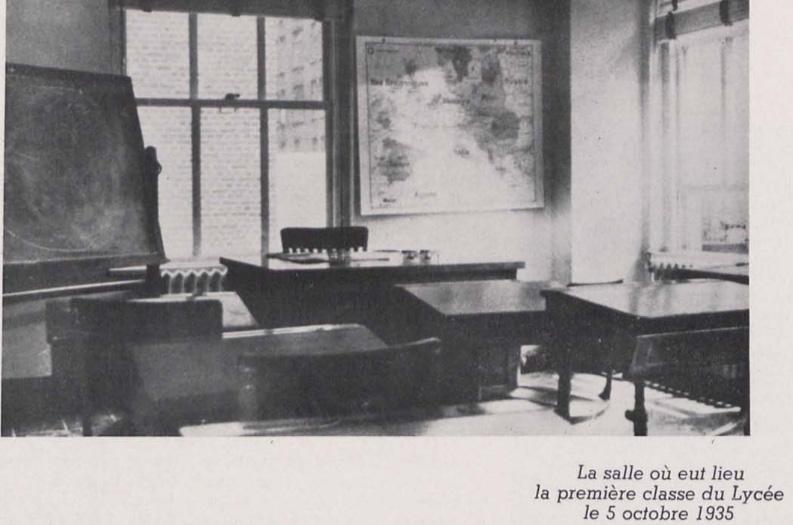
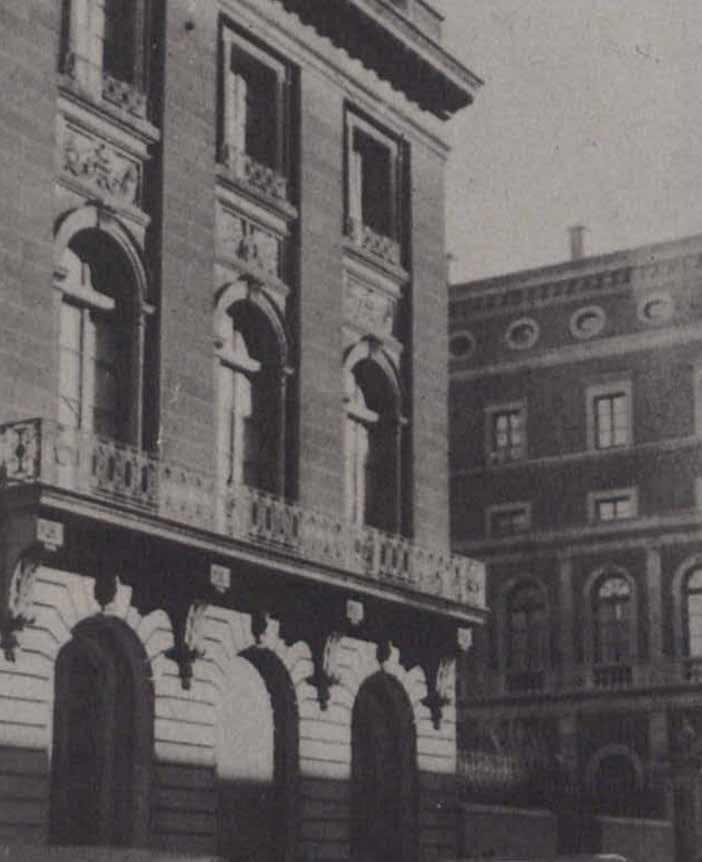
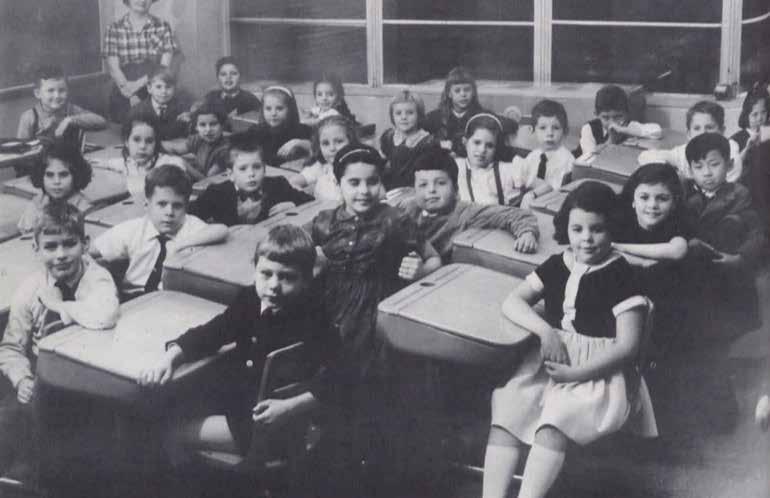
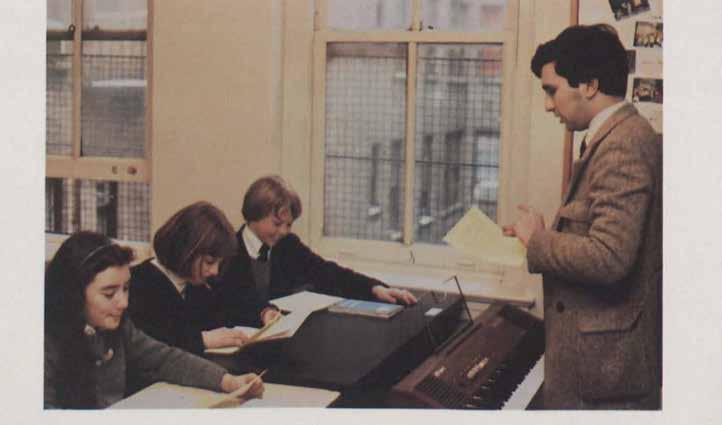
The first classroom, photographed in 1935.
New York Times.
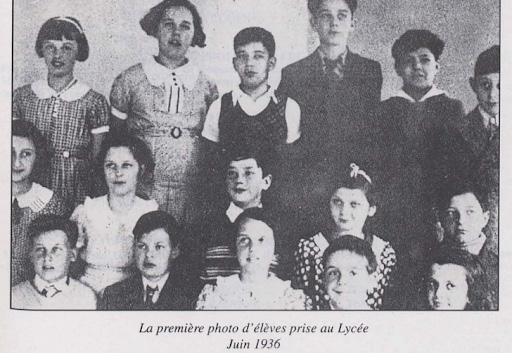
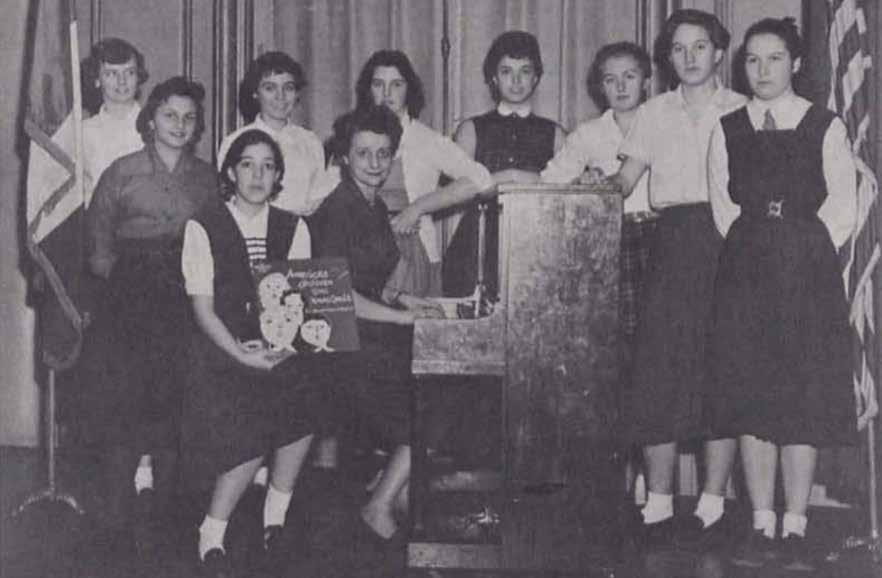
The first photo of students captured at the Lycée in 1936.
World War II touched the Lycée and its students deeply
School yearbooks spotlight the joy of daily life, and yet much activity was focused on the war effort. As European countries fell, a surge of French artists and thinkers arrived, along with refugees from across Europe, transforming the school into a vibrant cultural hub and a quiet guardian of French identity.
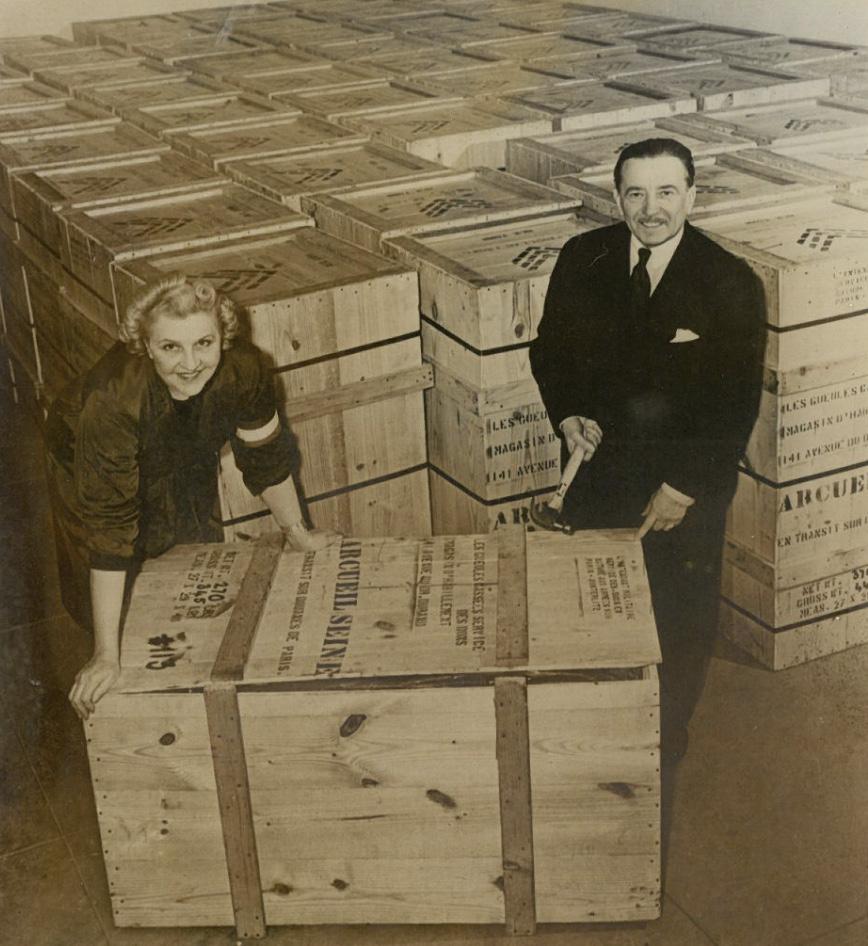
A committee, led by Charles de Ferry de Fontnouvelle and Mme Seton Porter, organized shipments of knitted goods for the soldiers of France. Here are the two directors of the “Paquets au front” initiative, personally applying the finishing touches by nailing shut one of the countless crates destined for nos poilus (the French soldiers).
Source: France Presse
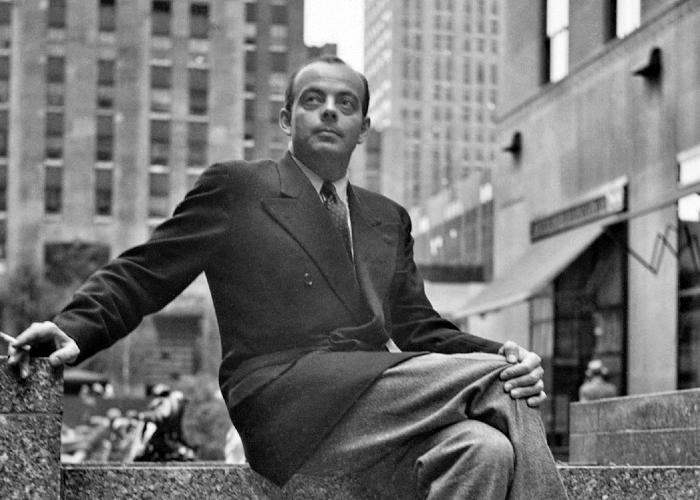
In December, French author Antoine de Saint Exupéry paid a historic visit to the Lycée and spoke to students in an assembly.
“M. de St. Exupéry nous a raconté d’une façon passionnante ses expériences dans le désert…et nous a décrit son rôle dans la guerre aérienne de 1940 en France. Les élèves fascinés sont restés figés d’intérêt.”
Source: France-Amérique
1943
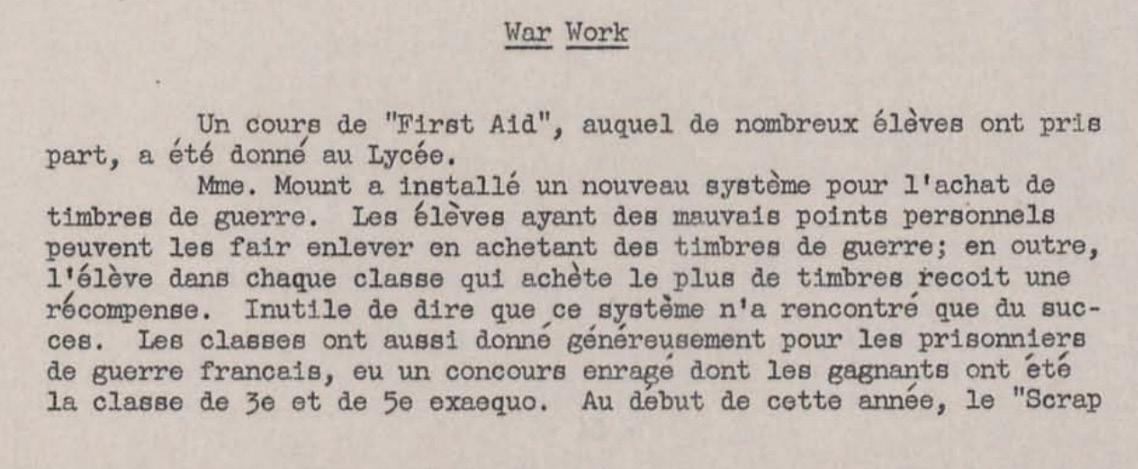
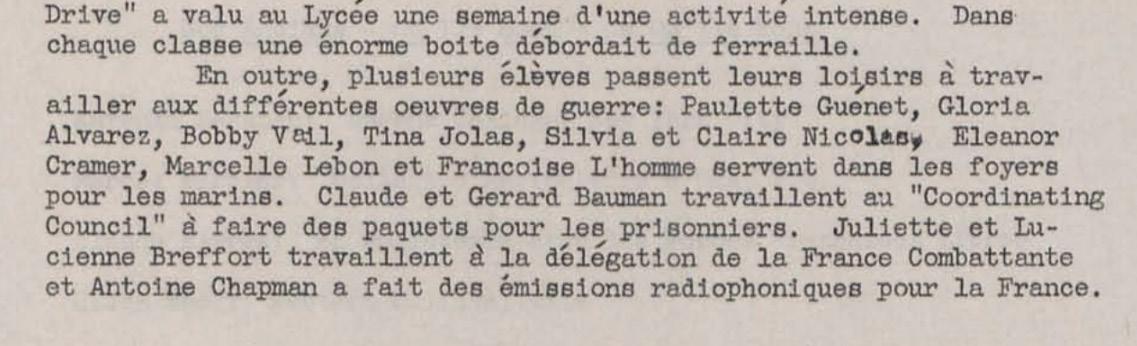
Lycée students and teachers adapted to wartime effort. An optional First Aid class was added to the curriculum. The school saw a surge in student volunteerism for armyrelated charities, including a scrap metal drive and care packages for prisoners of war. One student even anchored a radio show in France.
1945
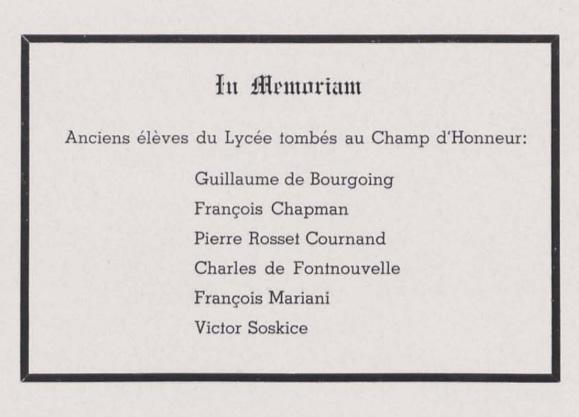
A number of Lycée graduates joined such forces as the Free French, the Norwegian Army, and the Royal Air Force. Sadly, six did not return, including Charles de Fontnouvelle, son of Charles de Ferry de Fontnouvelle. The 1945-46 yearbook memorialized them.
1946
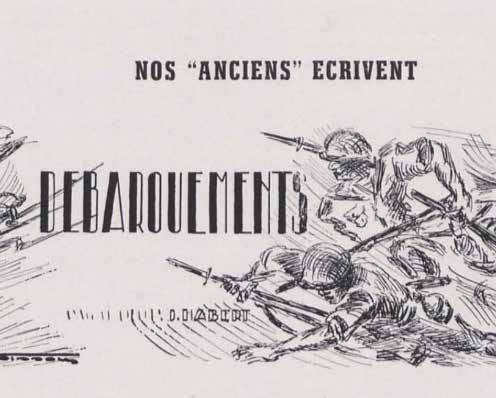
Alumnus Pierre Frye wrote to his classmates about his experience at D-Day. Here’s an excerpt:
“Sur le sable, j’éprouve un grand soulagement; ouf, la terre ferme! J’ai la sensation de ne plus être en danger. La détonation des obus sur la plage ne me frappe pas. Mes nerfs sont momentanément anesthésiés. Ce n’est qu’en voyant un camarade ne pas se relever que je me rends compte du sens de ces éclatements. Mais tous mes gestes demeurent mécaniques: j’agis comme on m’a appris à agir en pareille circonstance.”
1950s
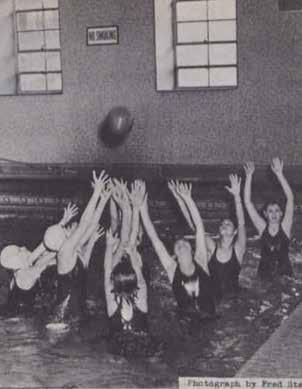
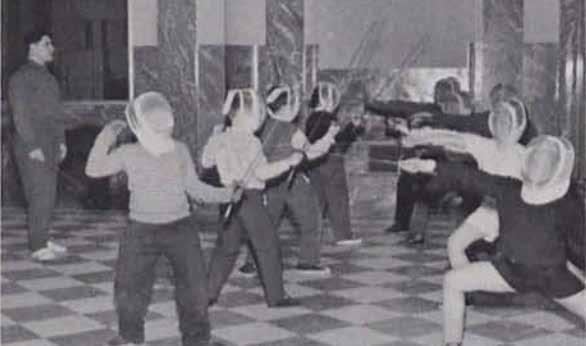
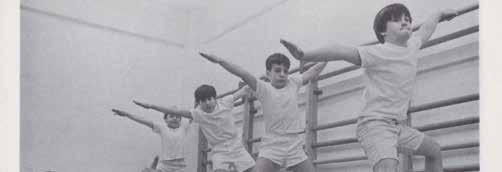
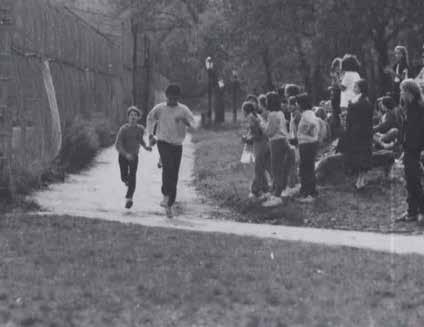
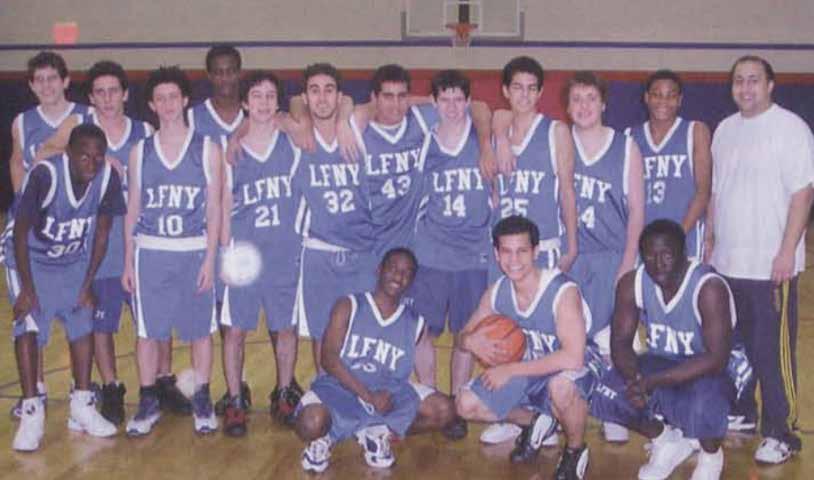
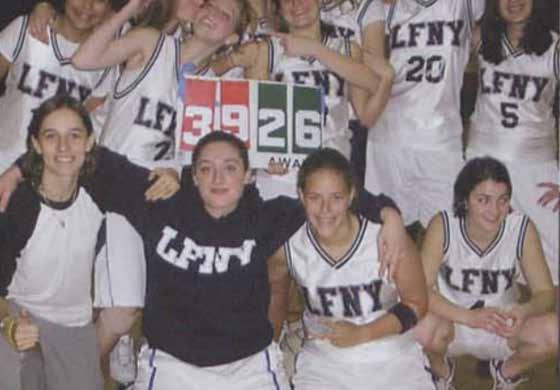
Continued expansion of the Lycée and a rise in interest in sports offerings at
the school, the beginning of true Lycée
team spirit!
1957
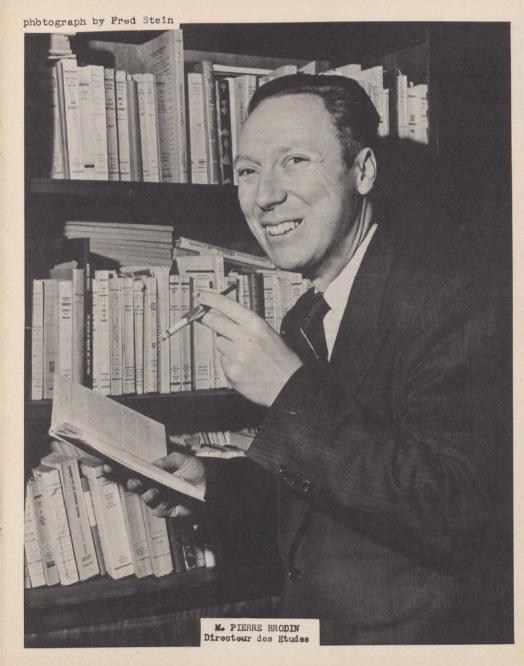
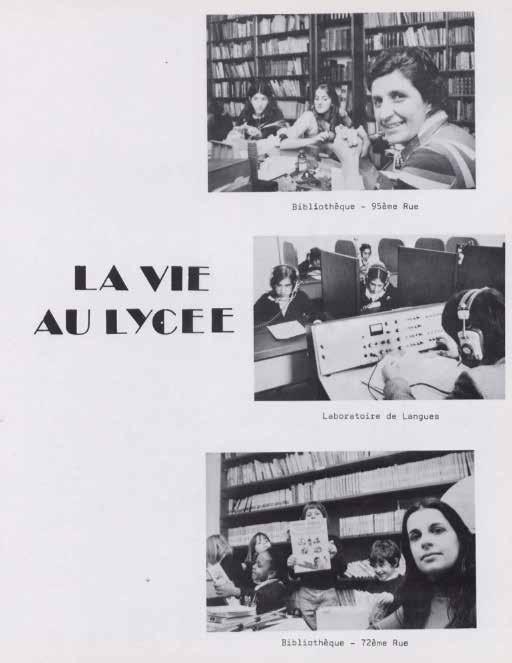
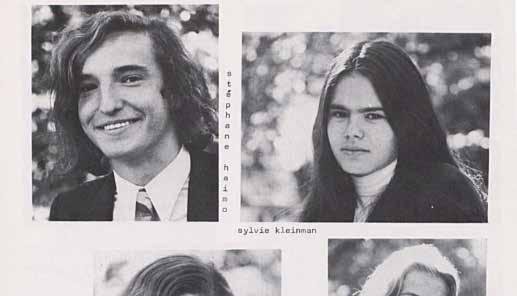
After 40 years as directeur des études, Pierre Brodin retired still strong in his belief in the French education he so cherished. “Stepping into his book-lined office in the 95th-Street building was an experience, whether as a victime of a Conseil de discipline or to seek some college placement advice,” Stephan Haimo, alumnus and past Board Chair shared.
“Il est encore possible de parler du ‘rayonnement français’...il s’agit d’une influence faite d’impondérables, de valeurs culturelles intangibles mais réelles, et ce ‘rayonnement’ représente, me semble-t-il, un élément précieux de confiance et une raison de ne pas désespérer de l’avenir,” Monsieur Brodin wrote to students in his final year at the Lycée.
1958
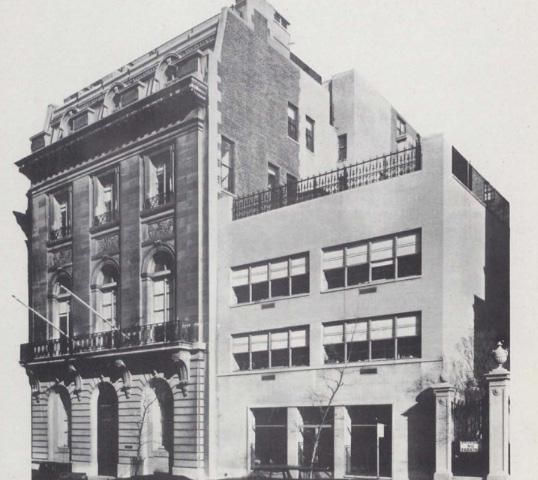
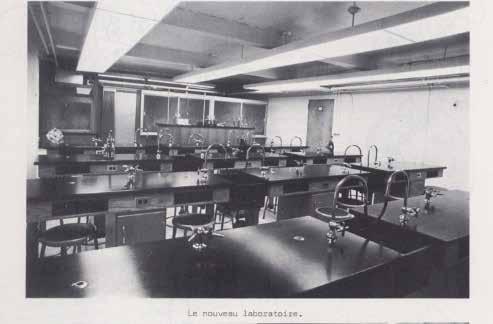
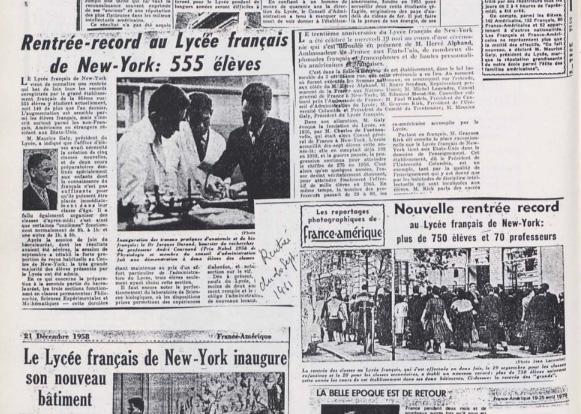
The Lycée opened a modern extension to its East 95th Street building. An inauguration ceremony took place on December 10, 1958, in the presence of many dignitaries, including a speech by M. Grayson Kirk, President of Columbia University and Trustee of the Lycée.
1951
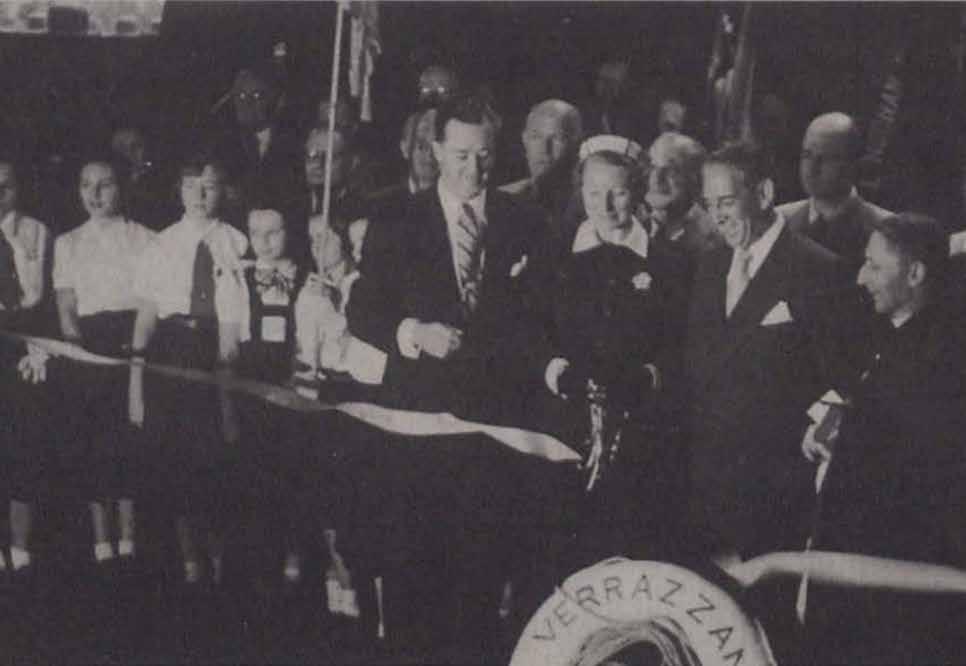
Inauguration ceremony of the
SS Verrazzano
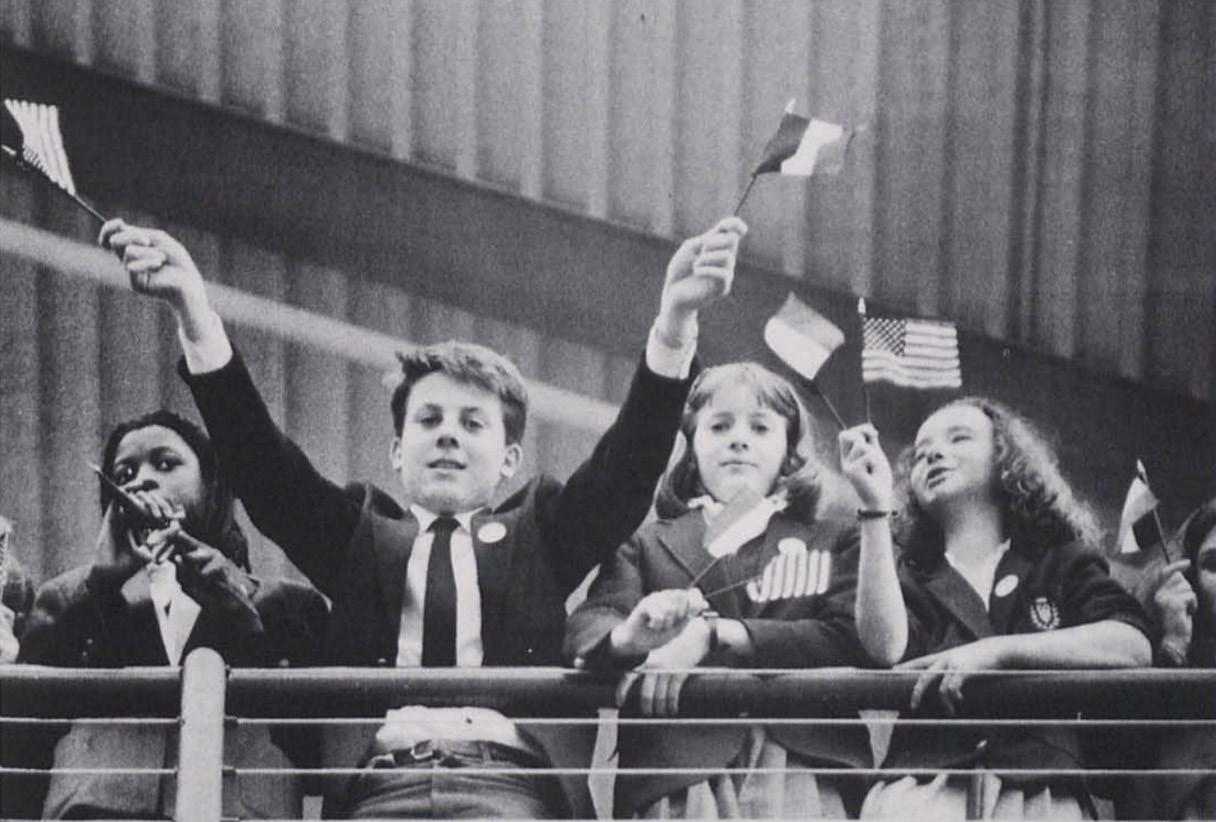
Students of M. Jacques Habert, who taught at the Lycée from 1947 to 1953, were present for the christening of a new ferry, the SS Verrazzano in June 1951. M. Habert was a passionate researcher, particularly on the subject of Verrazzano, who, in 1524, was the first European to visit what is now NYC, which, which he claimed for France and the city of Angoulême in the name of François 1er.
With a student body of 300 by decadés end, the school maintains its strong underpinnings in French education and culture, but also builds on its American side, with student leadership organizations, the growth of co-curriculars and competitive sports.
1960s
The 1960s were marked by the expansion of the Lycée, with a growing international community and new buildings to welcome them
Enrollment increased as the diplomatic presence of France and la Francophonie grew in New York, and as international business expanded. This international orientation was embraced by the Lycée’s new President, Maurice Galy.
1964
“We have truly entered a new and dynamic age, in which fundamental knowledge and scientific research are determining our destiny to a greater extent than ever before in man’s history. The motivating force for space travel is the quest for truth.”
- Wernher von Braun, Director, NASA, opening letter of the 1964 yearbook.
1967
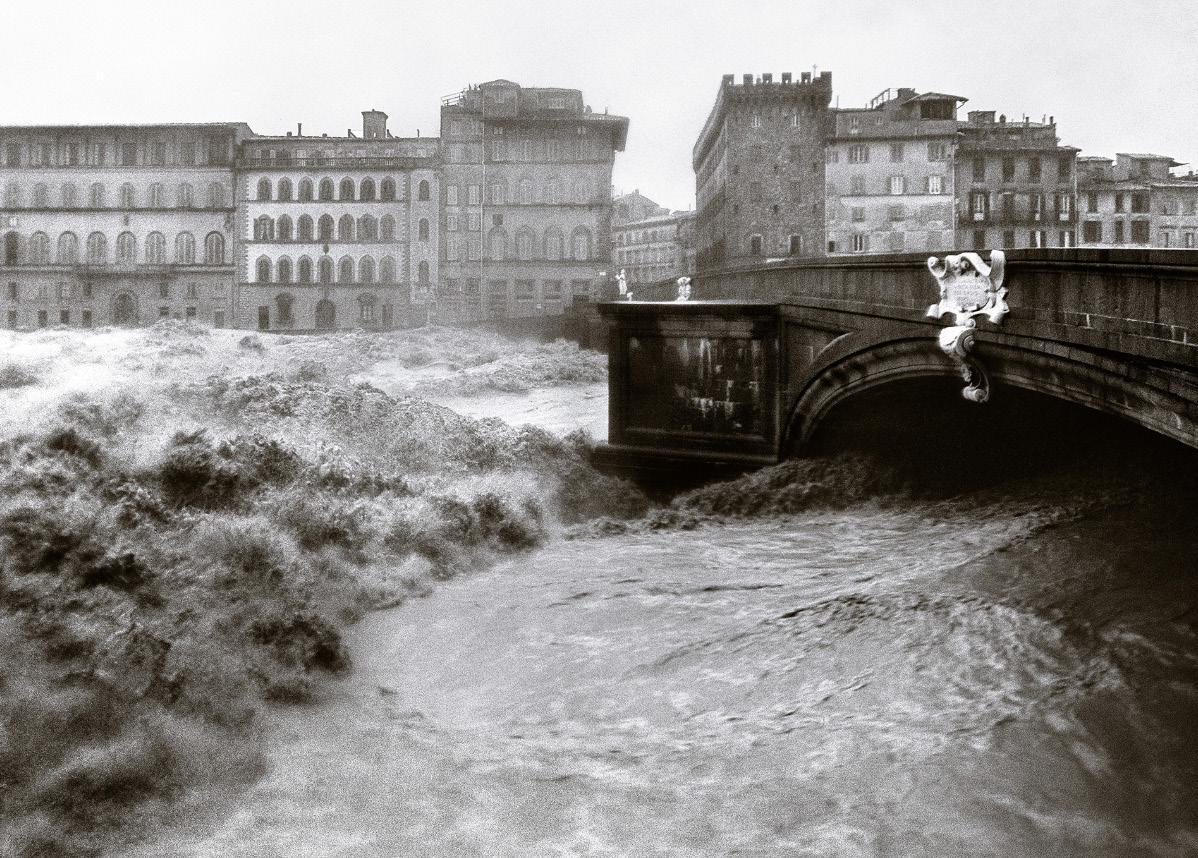
The Lycée instituted a Journée annuelle de la solidarité, a community-wide service day. In 1967, students supported relief efforts for the Aberfan Disaster (coal slurry inundation in Wales), the FDNY, Save the Children, the March of Dimes, and the American Red Cross.
Photo by Balthazar Korab
1961
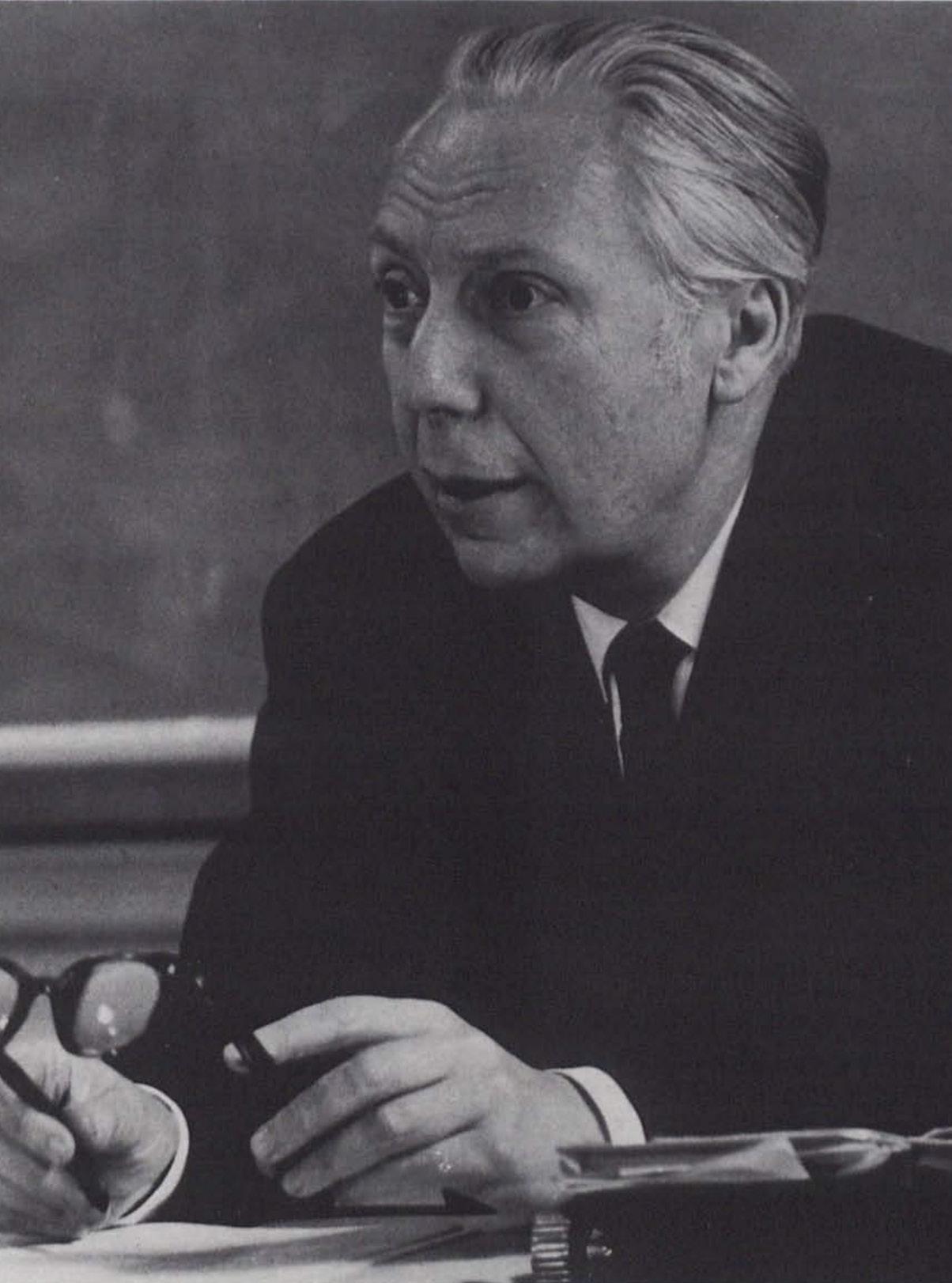
Maurice Galy arrived as President in 1959 and remained for 30 years. He wrote to students in 1961 about these years of rapid growth for the school.
“L’évènement marquant de cette année scolaire aura été l’ouverture de l’annexe de la 72ème rue qui nous permettra au mois de septembre prochain, d’accueillir les 750 élèves dès maintenant inscrits. Comment toutefois ne pas exprimer notre joie de voir le Lycée Français de New York jouer un rôle de plus en plus important dans le domaine des échanges culturels franco-américains et constituer à New York un des foyers de rayonnement les plus actifs de la culture et de l’enseignement français.”
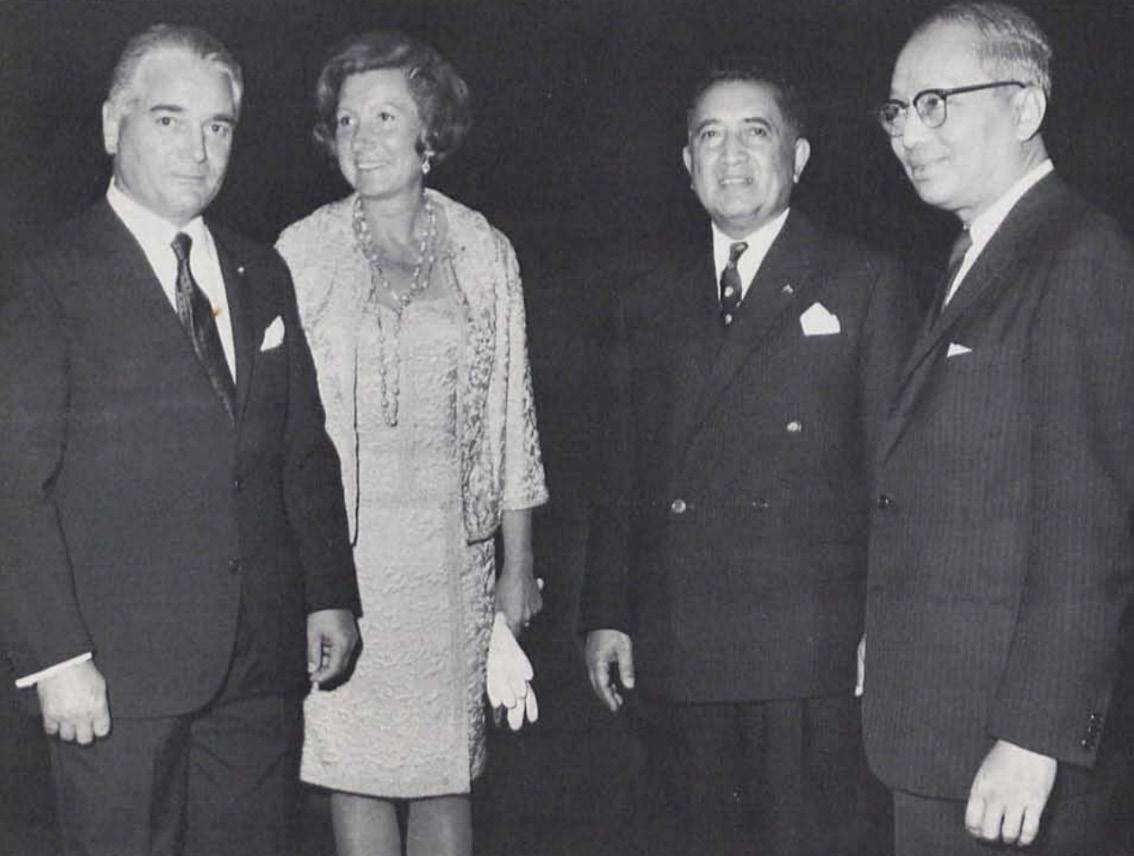
Mr. and Mrs. Galy are photographed at the Bal des débutantes internationales alongside Mr. U Thant, Burmese diplomat and Secretary General of the U.N., and Mr. Louis Rakotomalala, Ambassador of Madagascar to the U.S.
1968-69
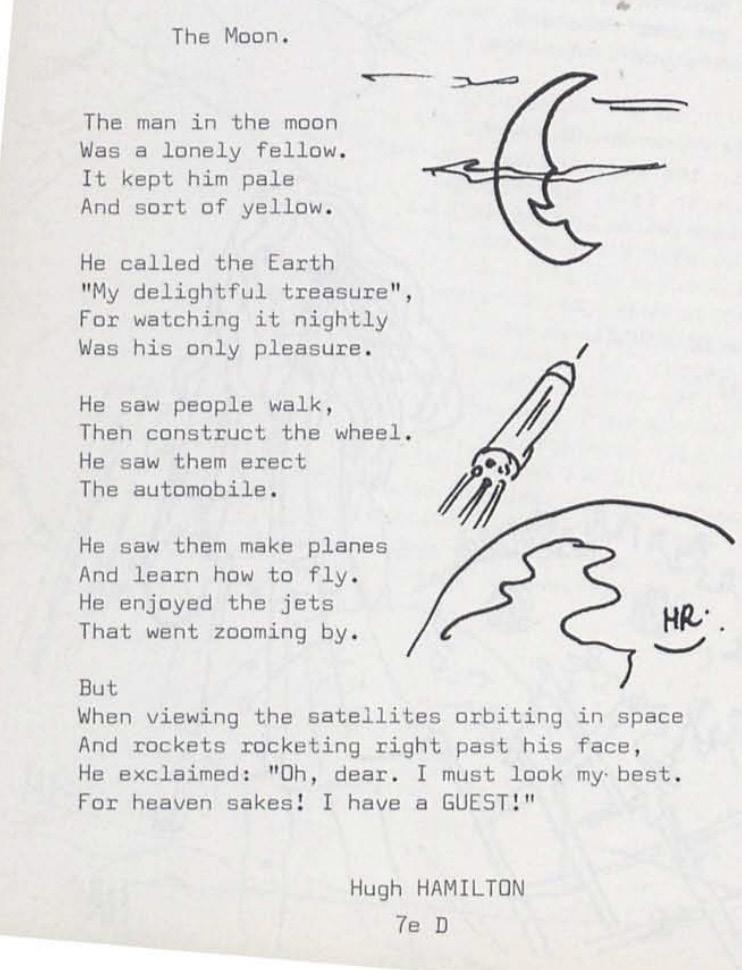
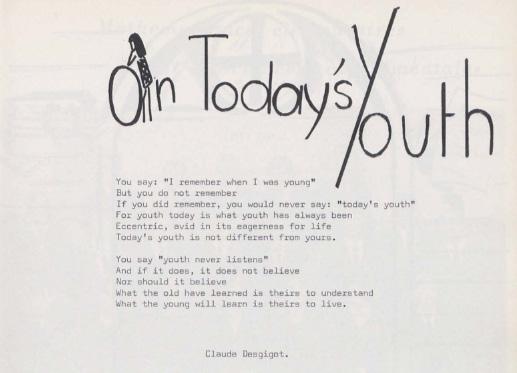
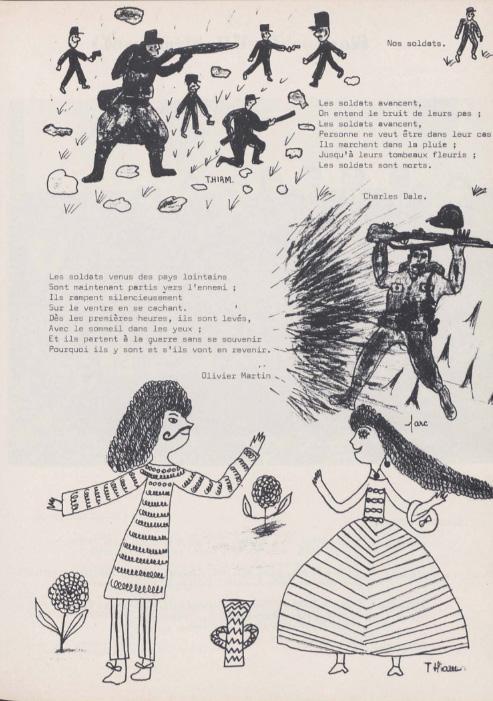
The rise of youth voices echoed at the Lycée in the late 1960s: the yearbook became a snapshot of the era, showcasing art and poetry that reflected student concerns and preoccupations–from war to generational differences to fashion.
1970s
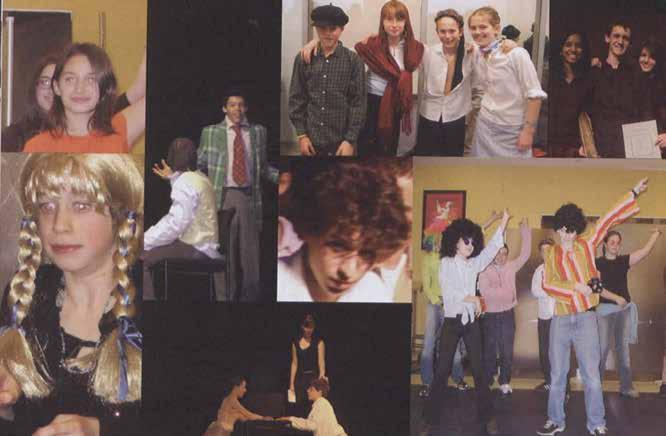
The Lycée’s ties with New York’s French cultural institutions strengthened in these years, and its arts and cultural programs flourished
The school also experienced continued growth and modernization of its facilities–“a school in constant evolution,” as we say, which remains true to this day.
1975
After 40 years as Directeur des études, Pierre Brodin retired, still dedicated to the system of French education he so cherished, as he wrote to students:
“Il est encore possible de parler du “rayonnement français”, expression pratiquement impossible à traduire en anglais parce qu’il s’agit d’une influence faite d’impondérables, de valeurs culturelles intangibles mais réelles, et ce “rayonnement” représente, me semble-t-il, un élément précieux de confiance et une raison de ne pas désespérer de l’avenir.”
1974
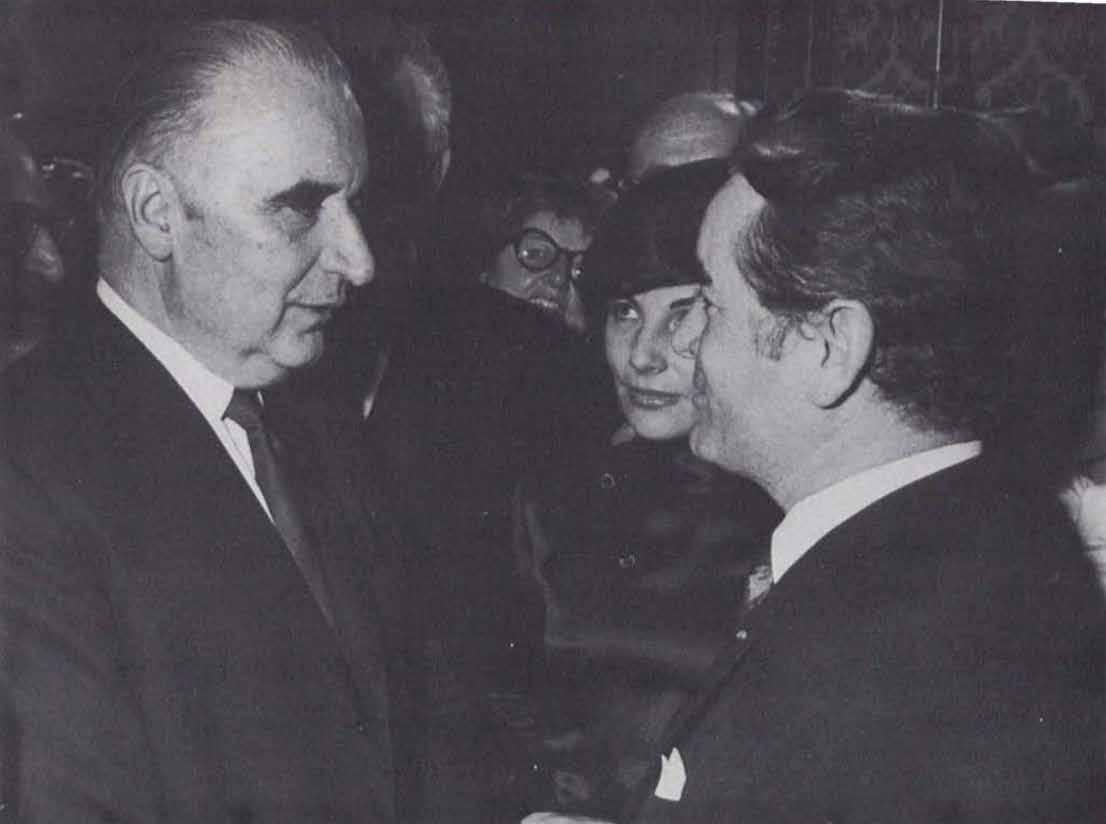
Lycée’s president, Maurice Galy, enjoyed high-level connections, meeting with French President Georges Pompidou in 1970 and, apparently, with General Charles de Gaulle.
Following Pompidou’s death, Galy paid tribute to the former educator in this homage in the 1974 yearbook: “Humaniste, homme de devoir mort à la tâche, personnalité brillante et courageuse, Georges Pompidou nous laisse l’exemple d’un grand Français, digne, de l’héritage culturel qu’il avait,trouvé sur les bancs de l’école, et qui avait formé son caractère et son idéal.”
With a student body of 300 by decadés end, the school maintains its strong underpinnings in French education and culture, but also builds on its American side, with student leadership organizations, the growth of co-curriculars and competitive sports.
1976
The bicentennial of the United States coincided with the Lycée’s 40th anniversary year, with celebrations of both.
1978
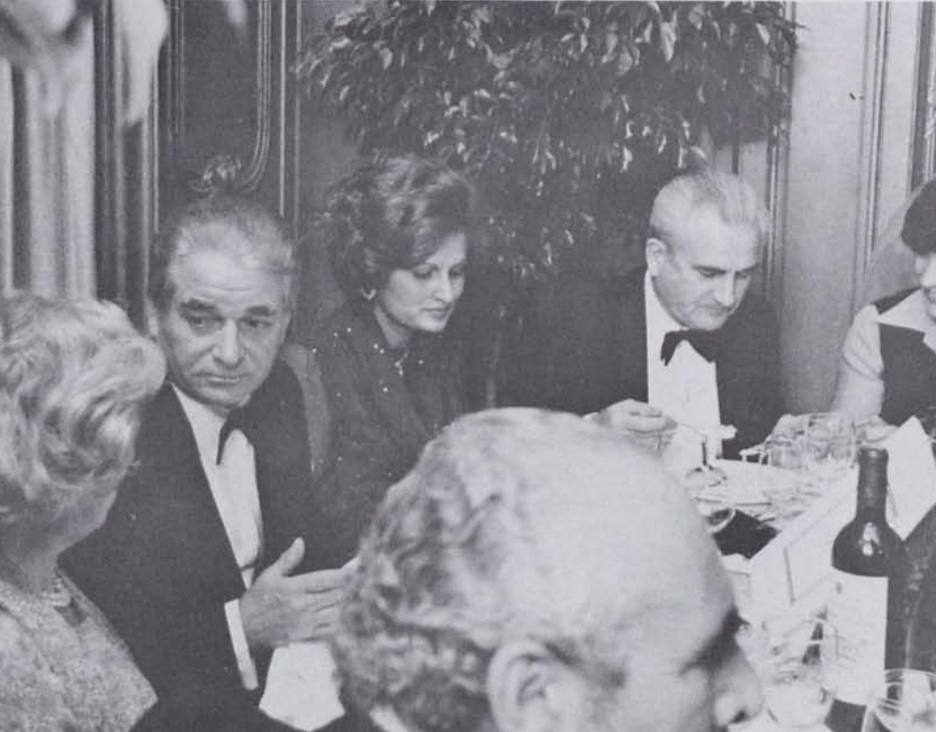
The first gala fundraiser debuted this year, establishing an essential tradition. Attendees included French Ambassador Gérard de La Villèsbrunne, Mr. and Mrs. Arpels, Estée Lauder, and Jean-Claude Baker, son of Joséphine Baker. A film crew from Télé France was also present, capturing the “elite Franco-American event.”
1980s
Years
of technological change and the first official American high school diplomas
awarded
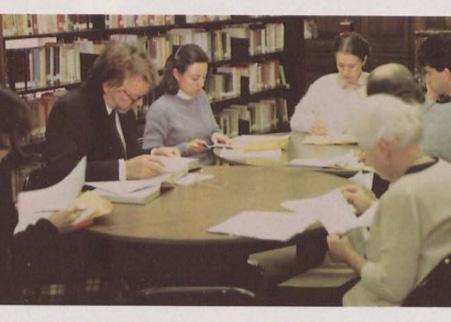
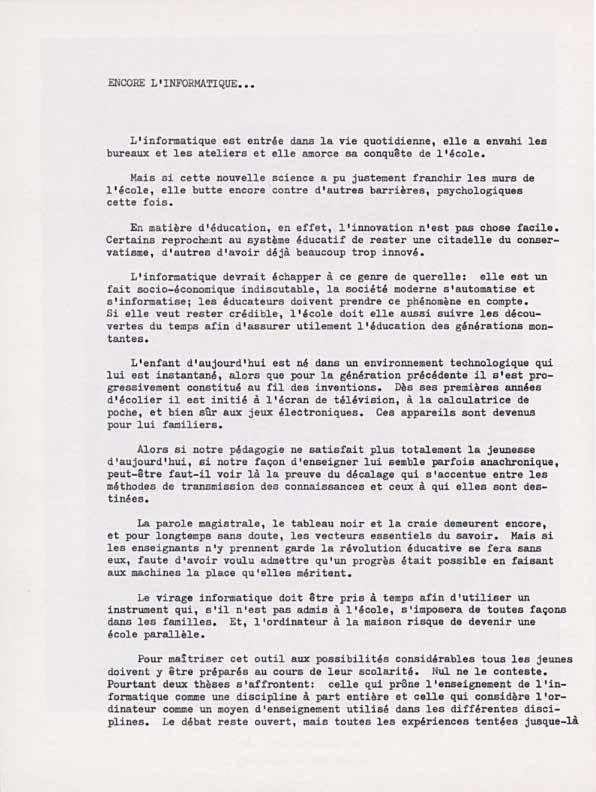
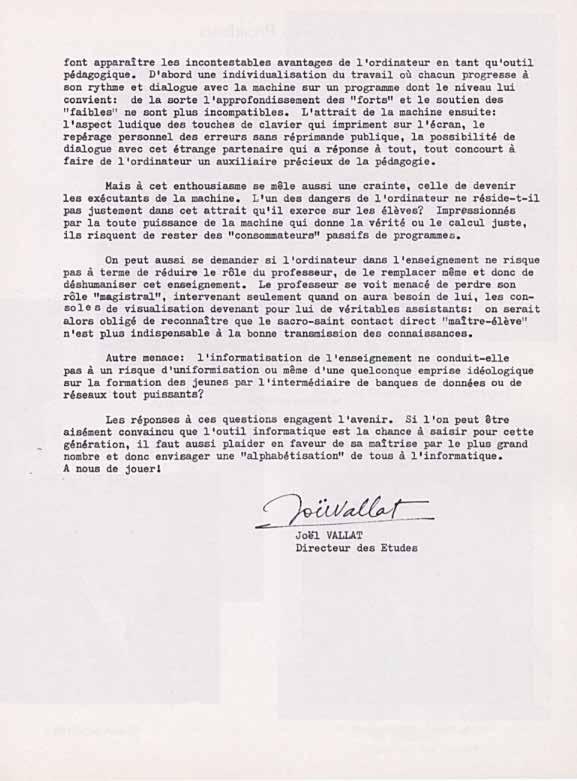
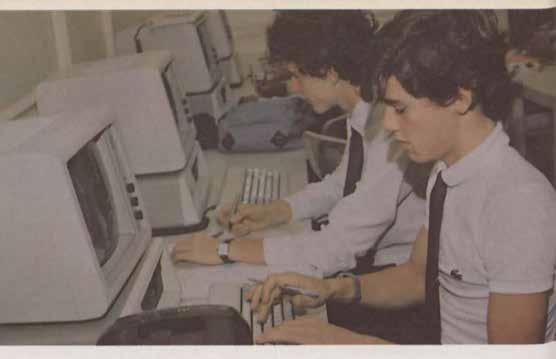
Surely the most notable technological change of this era was the introduction of the desktop computer and “informatique” classes at the Lycée. “L’informatique est entrée dans la vie quotidienne…elle amorce sa conquête de l’école,” wrote M. Joël Vallat, Director of Studies, in the 1981 yearbook.
1983
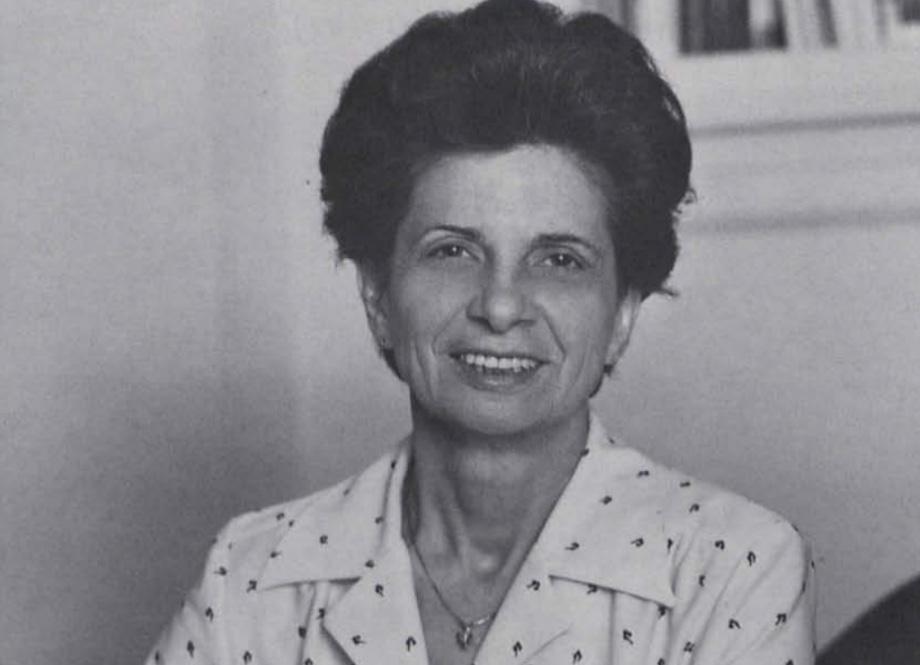
The Lycée creates the official role of “Proviseur” with the arrival of Christiane Lafon, the first proviseur and the first female academic leader of the Lycée. M. Galy stayed on as President of the school until his retirement in 1989.
1985
This photo is our first record of what has become the Lycée’s annual “Shakespeare Competition!” Guest judge Donald Sutherland presided over the event, shown here with English teachers Jane Ross and Catherine Pointelet. Student Laetitia Orti was the Lycée winner that year.
1985
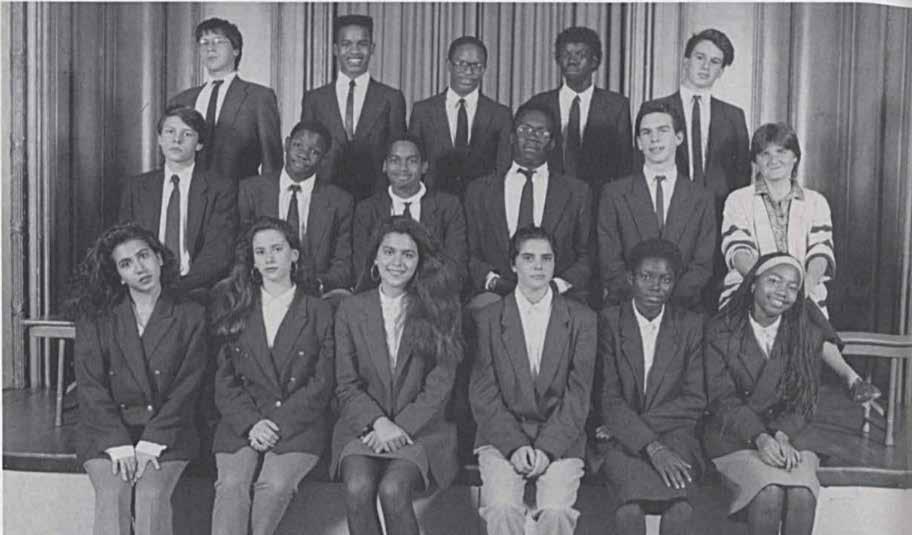
The Lycée celebrated its 50th anniversary in 1985, a milestone accompanied by a crucial pedagogical development: the school was officially granted the authority to issue its own high school diploma. This move made official the school’s unique French-American approach to education.
1987
Students joined celebrations of the 100th anniversary of the Statue of Liberty in New York Harbor, a four-day event, which included speeches by French President François Mitterand and U.S. President Ronald Reagan.
1989
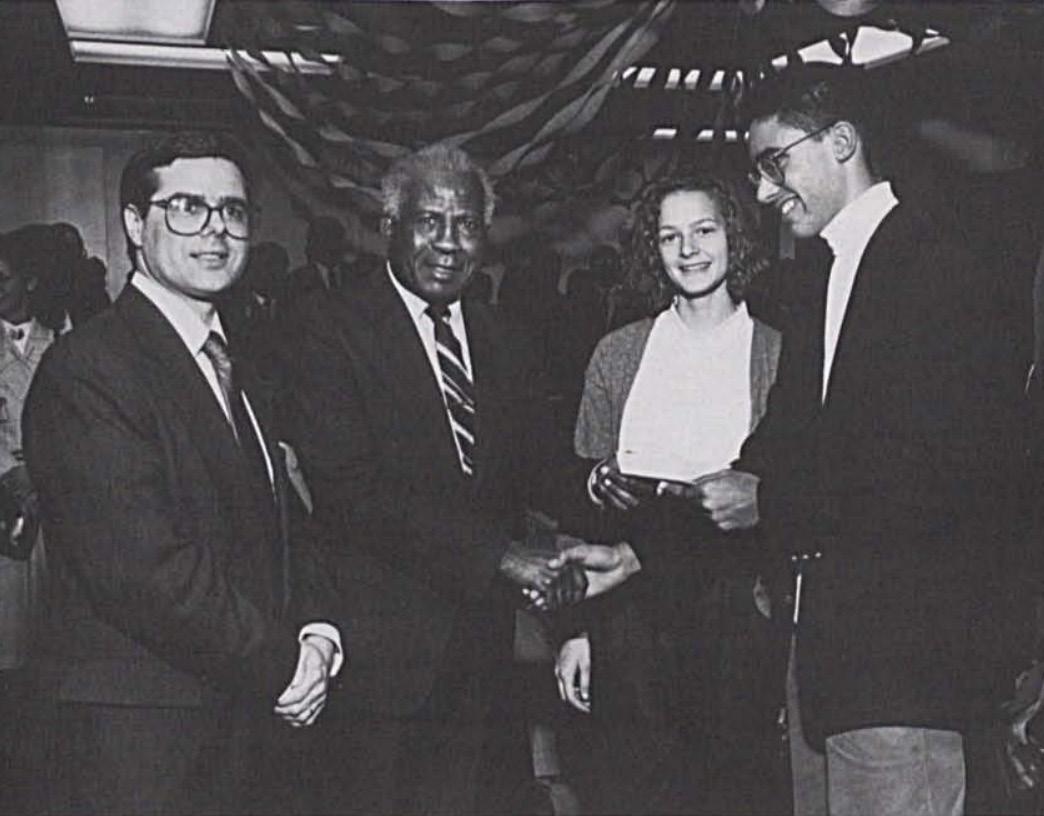
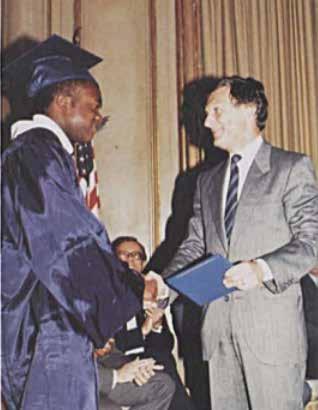
When Jamaica was hit by Hurricane Gilbert in 1988, Lycée students held a fundraiser to support victims. Here, students presented the Consul General of Jamaica with the proceeds of their efforts. It was the most damaging hurricane to hit Jamaica ever until Hurricane Melissa devastated the island in October 2025.
1990s
The Lycée strengthened its bicultural French-American underpinning, adopting the Option internationale du baccalauréat français
(OIB)
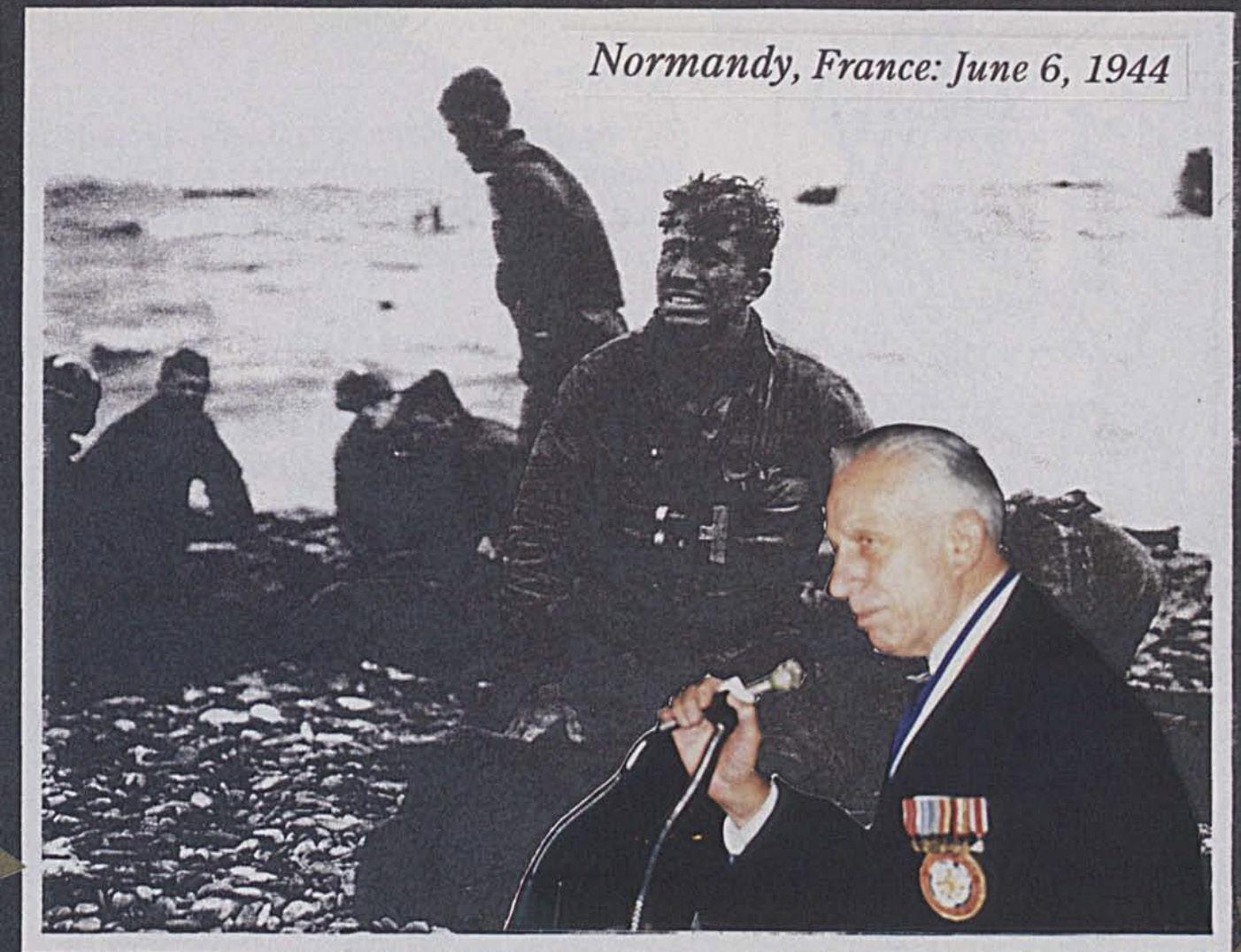
An unforgettable D-Day commemoration for our Lycée students. Marking the 50th anniversary of the Omaha Beach landing, the school hosted two living links to history for discussions with students: 2nd Lt. Walter Sidlowski, featured in this iconic landing photo, and the photographer, Walter Rosenblum of the US Army Signal Corps.
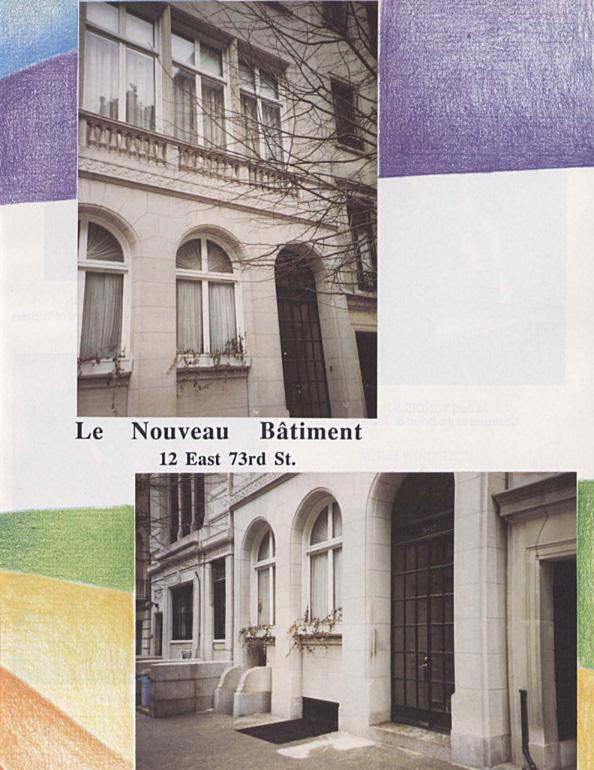
The Lycée acquires a new building, 12 East 73rd Street, to meet growing demand in the Elementary School.
The Lycée is officially accredited by the New York State Association of Independent Schools (NYSAIS) for the first time, deepening its connection with NYC’s private school system and strengthening its American credentials for a population of students increasingly interested in colleges and universities in the U. S.
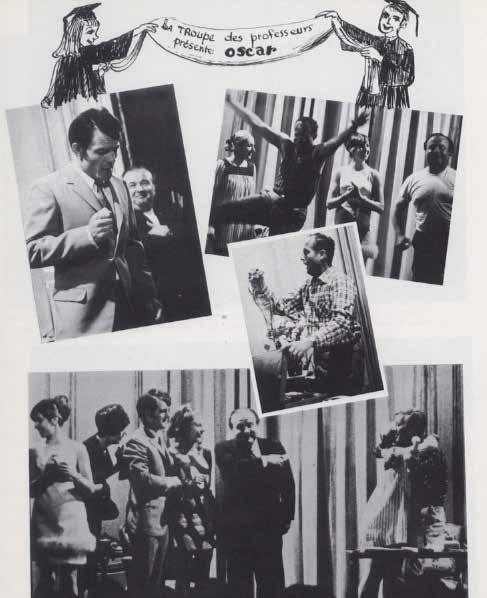
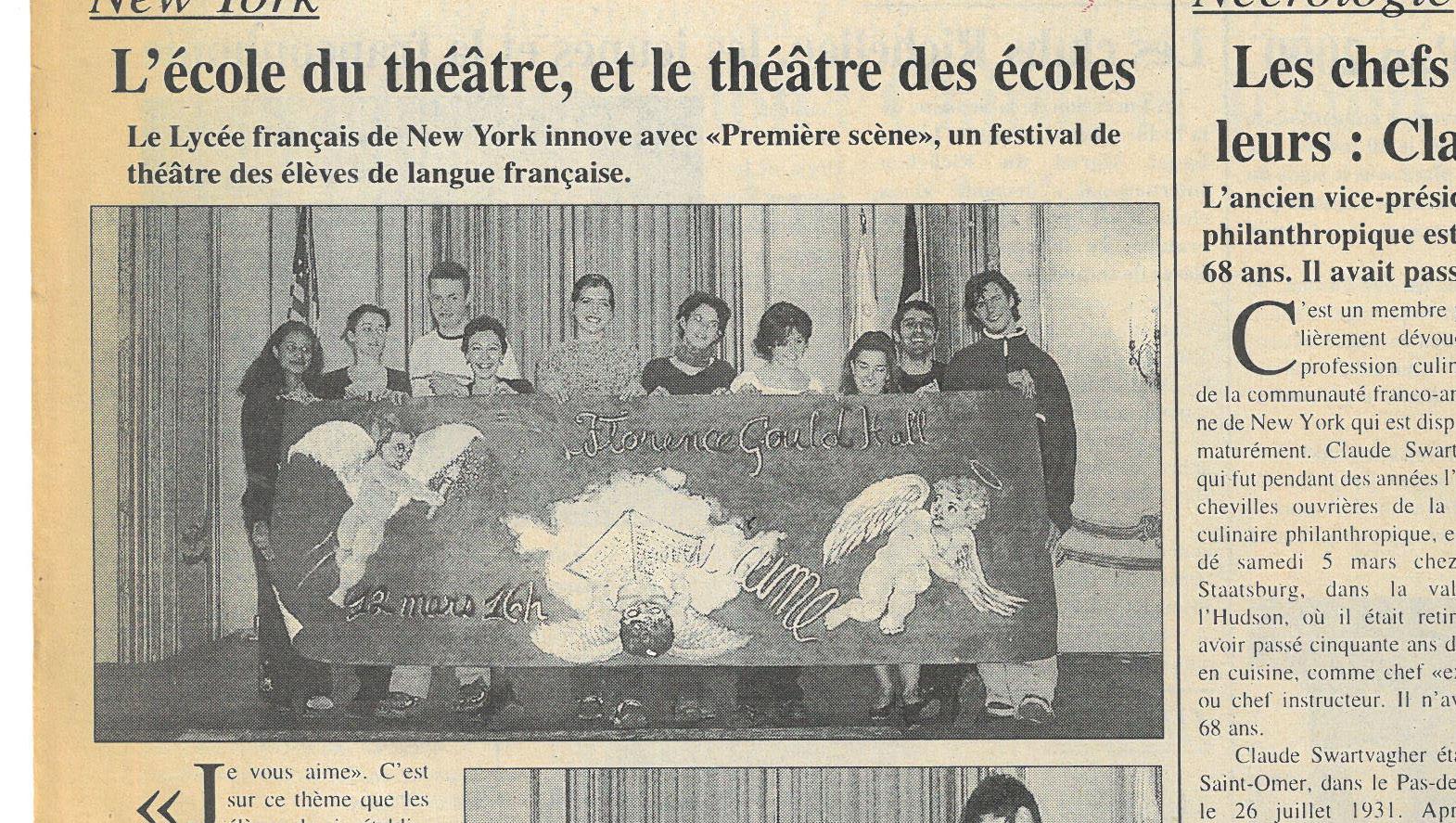
The Lycée launches its first Festival Première Scène - French Theater Festival competition for French students in New York City. Created by Nathalie Roussel and Frédéric Yvelin, the Festival remains an annual event at the Lycée.
1998
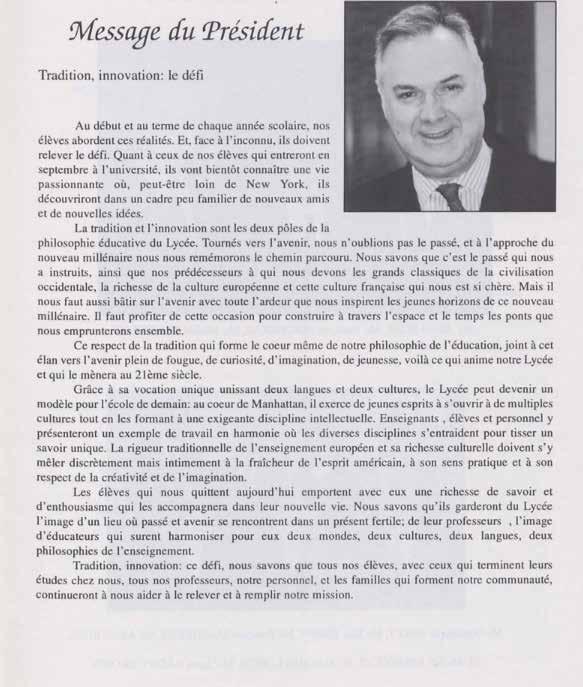
A shift began at the Lycée as a dedicated group of parents and Trustees started envisioning a bolder future for the school and its unique education. This initiative was highlighted by Michel Somnolet, then Chair of the Board, in his opening letter to the 1998 yearbook.
Ut istiur, nectam ium hit fugit alit ommolup tatusapicius pratur? Henda sendundi nonsequi repro occuptassint est dion commodipsae. Hene nis esto tem nosto ma quae voluptatur rerias nimporem quissus unt libust, tecum rescil et aute conem fugia incti aut des exere num idelign isciminto mi, ut aut exeratur reicatu riatum am, suscian dendisc itint. Aditas ipsaese rchici volest, ipsandesci coristiae nis volumentur aut re explit modi od mo quisitati totas dest, susam faccum fugitatus molores aut alit reriatu reiusania dolore
2000s
A New Campus Marks a New Era for the Lycée
The Lycée opens its current purpose-built, state-of-the art building at 505 East 75th Street, one of the first historic private schools in the city to take such a step, ushering in a new era for the school.
2001
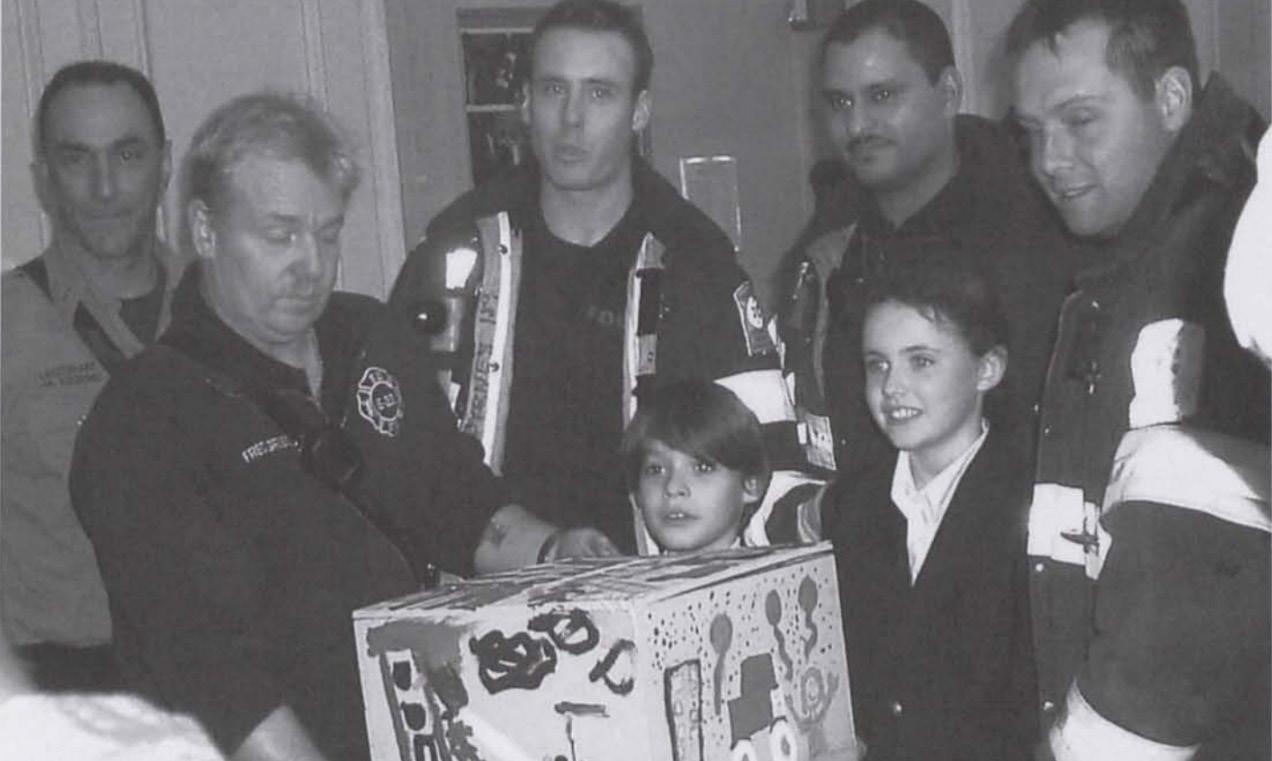
Yves Thézé, Head of School, was just one month into his role on 9/11, a crisis he managed across all five of the school’s buildings. Lycée students rallied to support our local FDNY outpost. Michel Colbert, Class of 1980, was the sole community member to perish in the attack.
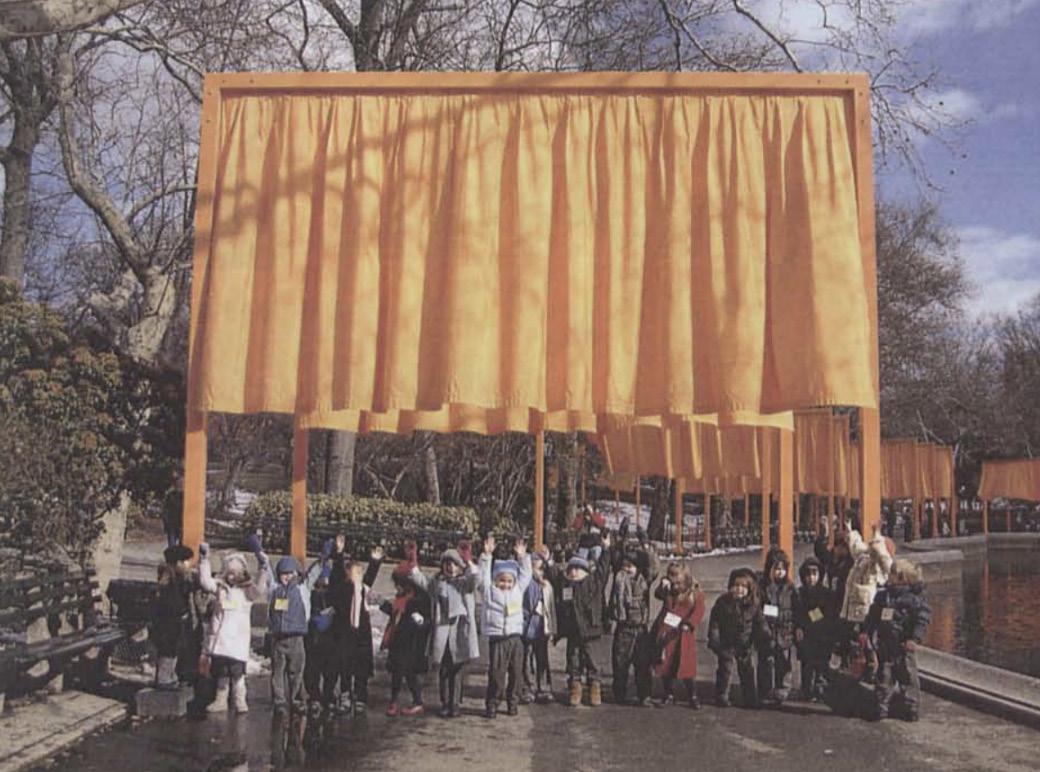
A memorable field trip: A Pre-K class visited the 7,503 “gates” of Christo and Jeanne-Claude’s iconic Central Park exhibit in February 2005.
2006
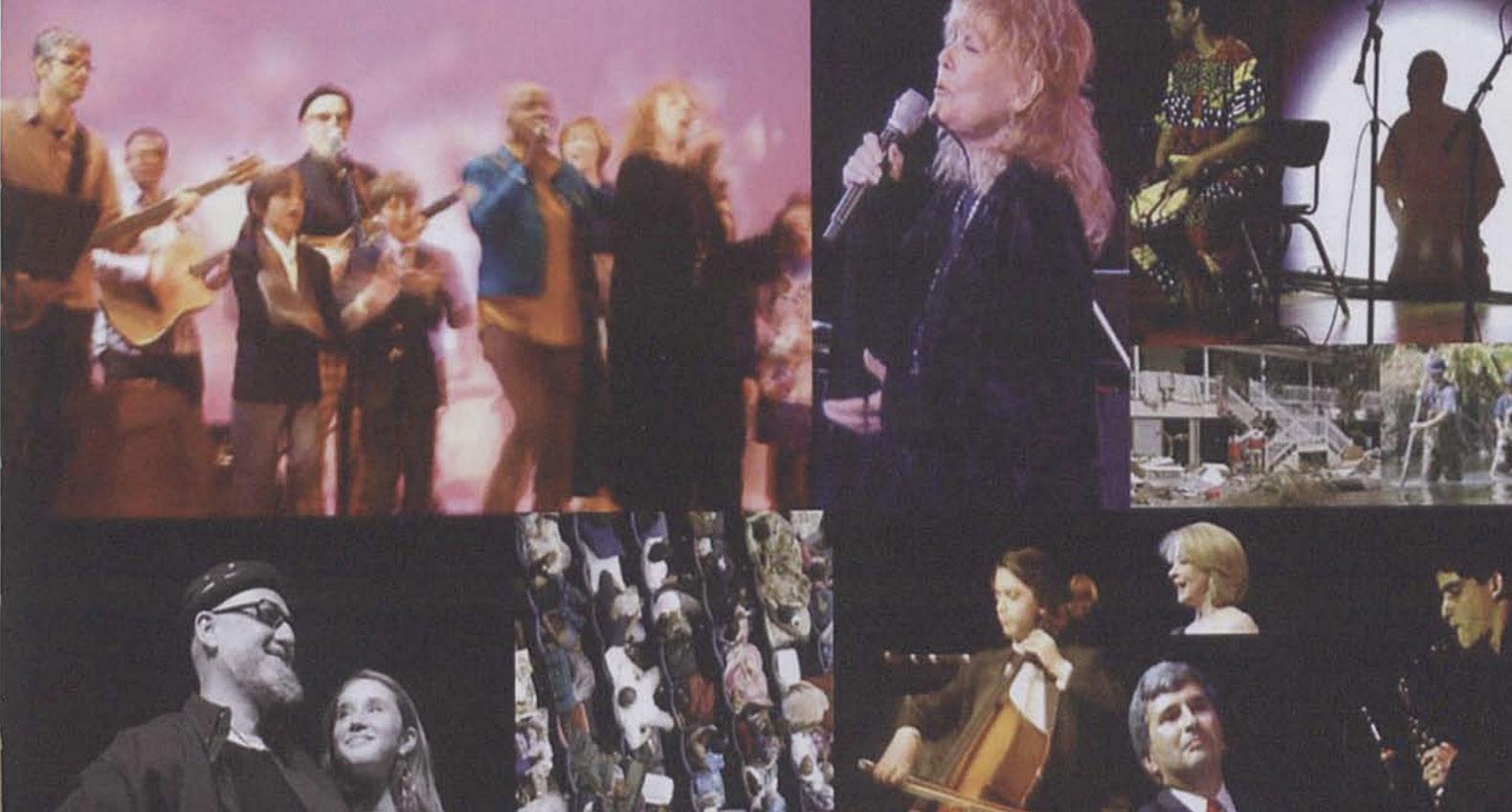
Hurricane Katrina struck ground in New Orleans in August 2005 becoming one of the deadliest weather events in U.S. history. In February 2006, the Lycée community held a special concert to raise funds for Habitat for Humanity in New Orleans. Created by Remy Loumbrozo, the evening featured performances by students and special guests Petula Clark and Angélique Kidjo. M. Thézé joined Petula Clark on stage for a song at the end!
2009
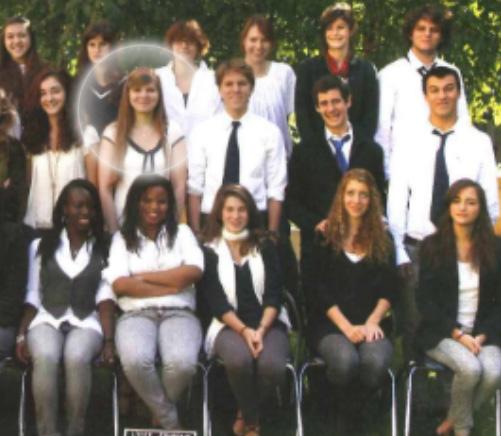
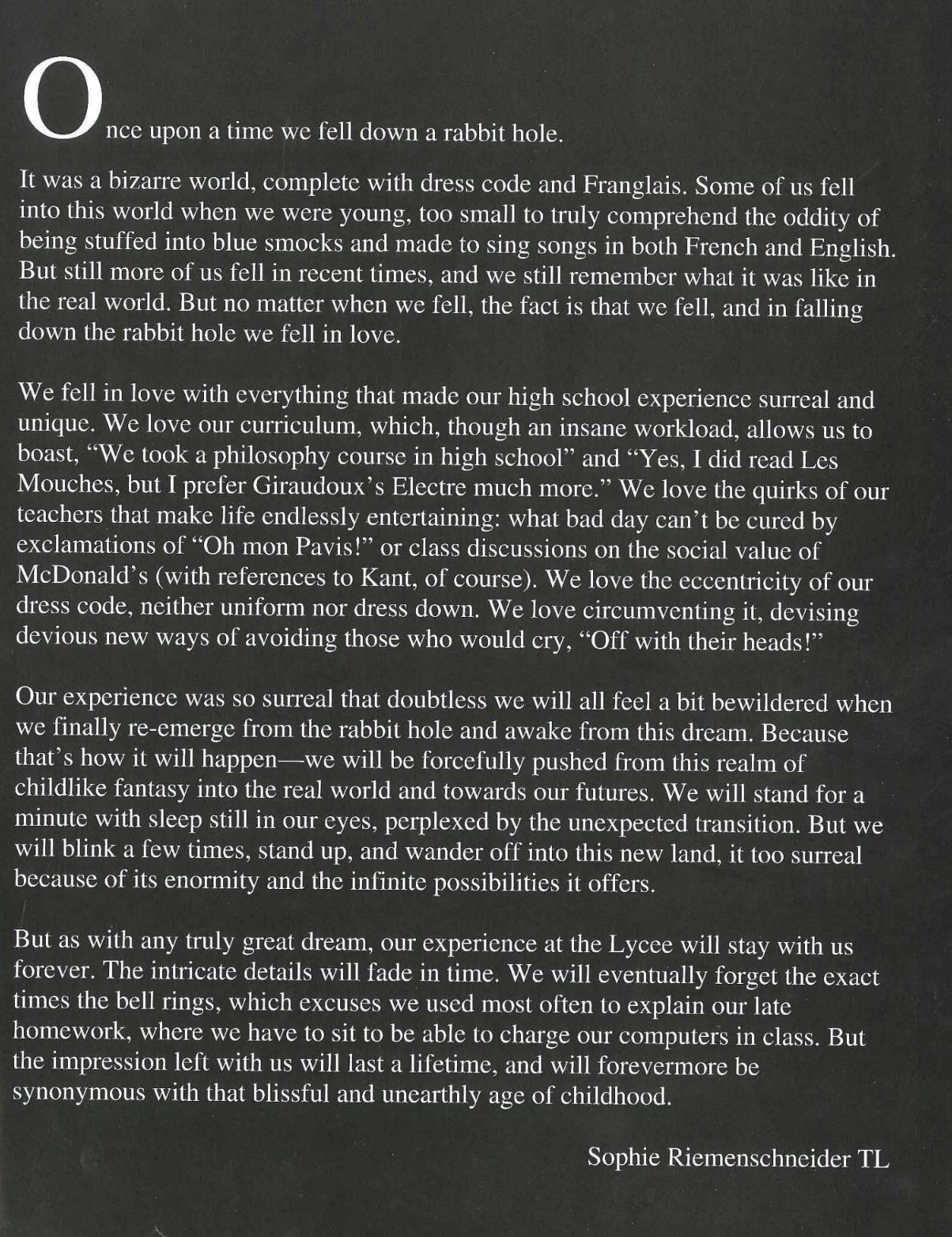
The Lycée counts seven alumni among its current faculty and staff: Nadine Kaston ‘80, Joëlle Reilly ‘80, Clarissa Sylvestre ‘99, Chris Haspil ‘01, Bienvenu Etsike ‘05, Sophie Riemenschneider ‘09, Fabrice Ulysse ‘16. Sophie wrote this essay to her classmates to close out the 2009 yearbook:
Ut istiur, nectam ium hit fugit alit ommolup tatusapicius pratur? Henda sendundi nonsequi repro occuptassint est dion commodipsae. Hene nis esto tem nosto ma quae voluptatur rerias nimporem quissus unt libust, tecum rescil et aute conem fugia incti aut des exere num idelign isciminto mi, ut aut exeratur reicatu riatum am, suscian dendisc itint. Aditas ipsaese rchici volest, ipsandesci coristiae nis volumentur aut re explit modi od mo quisitati totas dest, susam faccum fugitatus molores aut alit reriatu reiusania dolore aut aut et es molorpo riaspeditat arum esed que volluptius sam, tem. Nam, sume diam re odi-
2010s
A new mission for the Lycée, with an emphasis on bilingual excellence, student-centered learning, wellbeing, and innovation
2011-12
Sean Lynch arrived in 2011 and focused his first year on a school-wide study of student well-being. As a result of this effort, the school formally integrated social emotional learning into the Primary curriculum and a new advisory program into the Secondary.
2012-13
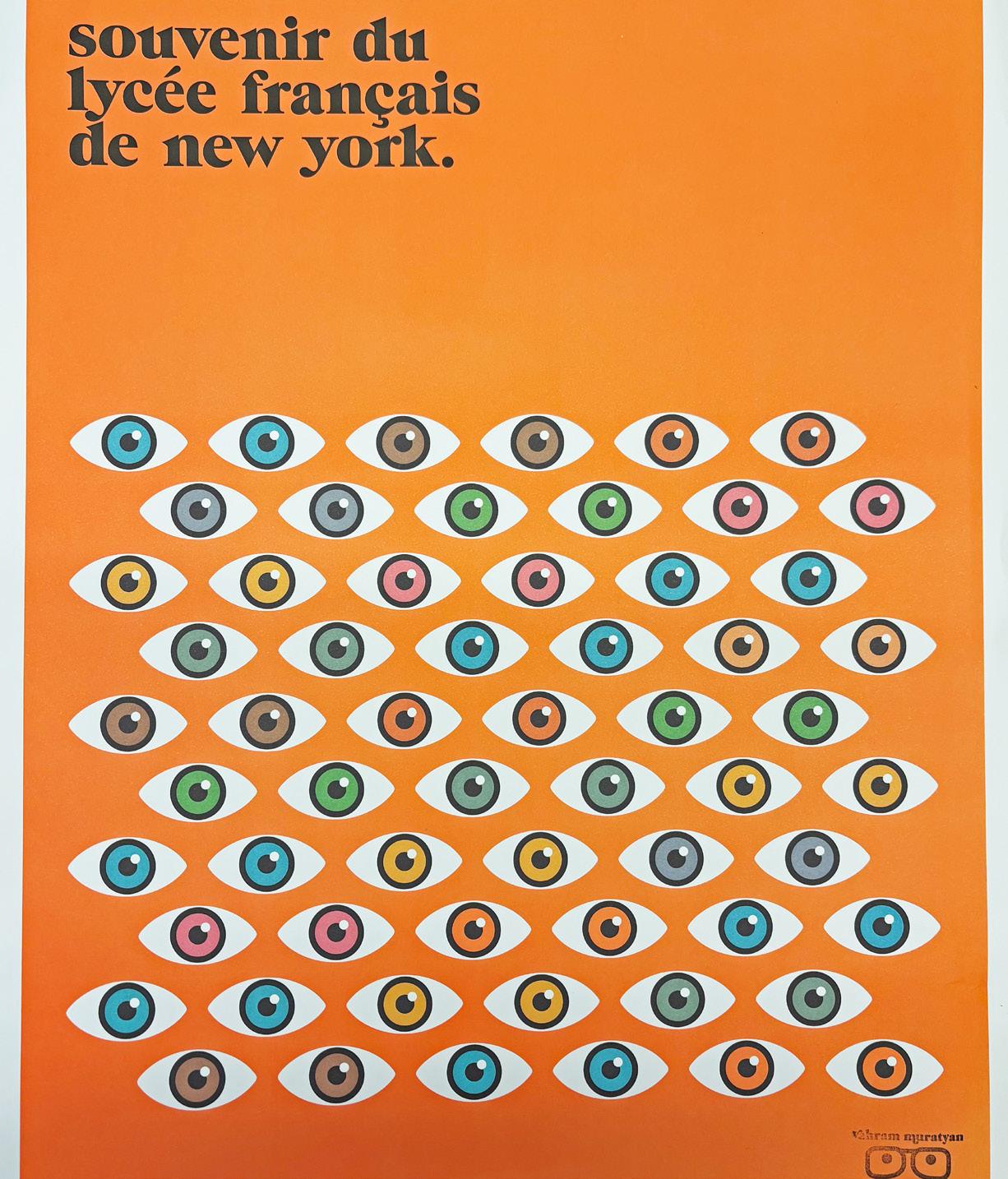
The Lycée’s Cultural Center was created in 2010, with Pascale Richard at the helm. She launched its artistin-residence program two years later, with Vahram Muratyan’s residency in graphic design with CM1/Y4.
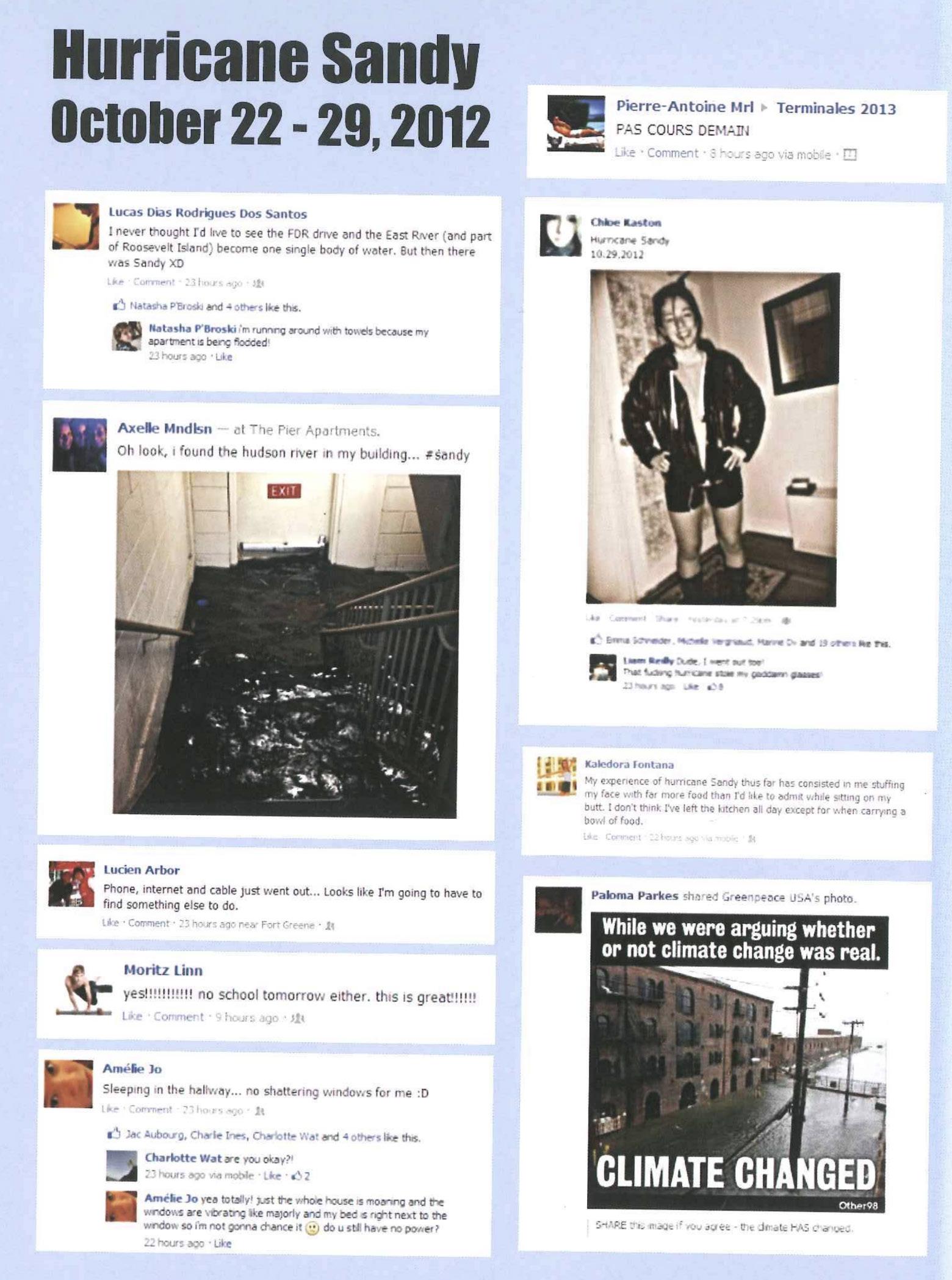
Hurricane Sandy hit New York. Lycée students shared both their excitement (no school tomorrow!) and fear about the environment.
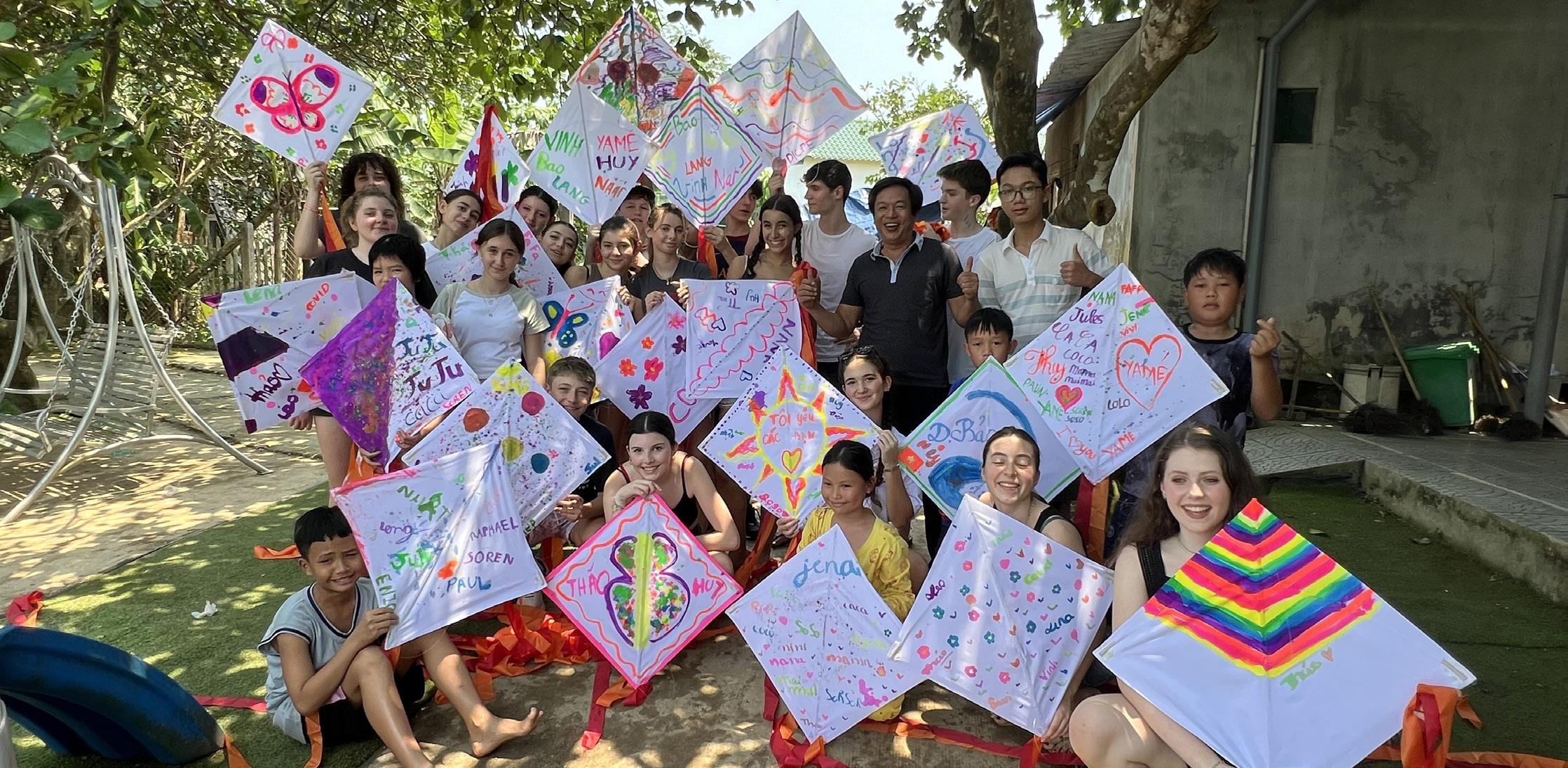
In 2013, the Lycée launched its Service Learning program, linking classroom learning with realworld engagement in service to nonprofits. That fall, ten 2de/Y10 students traveled to Vietnam to study water scarcity and support an orphanage in Da Nang—marking the start of the school’s enduring commitment there. Photo: 2024 Service Learning Trip (MO Couture)
2016
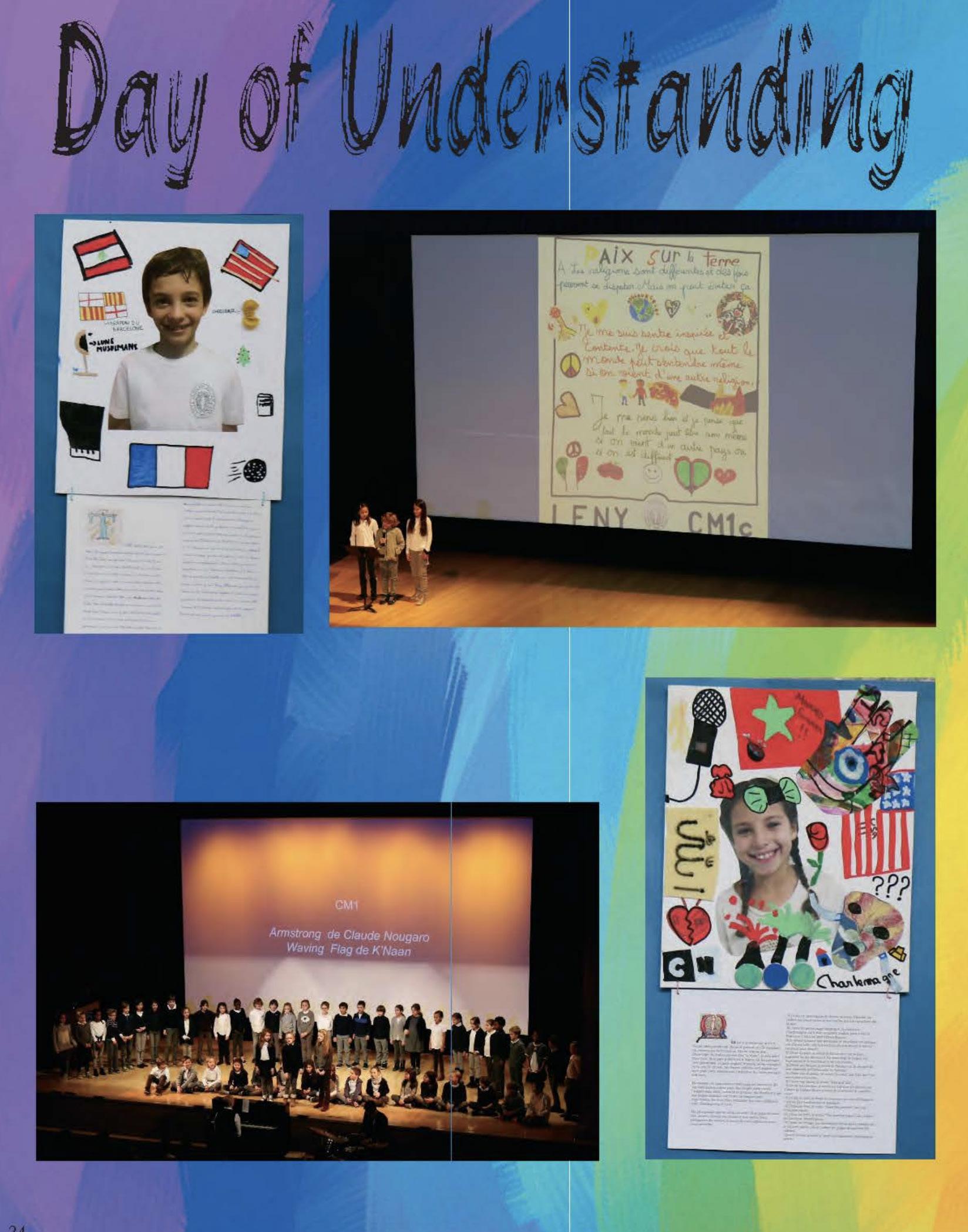
The Lycée introduced its annual Day of Understanding in the Primary School, led by Vannina Boussouf in partnership with the Tanenbaum Center for Interreligious Understanding. She wrote to the community about the new initiative, quoting poet Audre Lorde: “It is not our differences that divide us. It is our inability to recognize, accept, and celebrate those differences.”
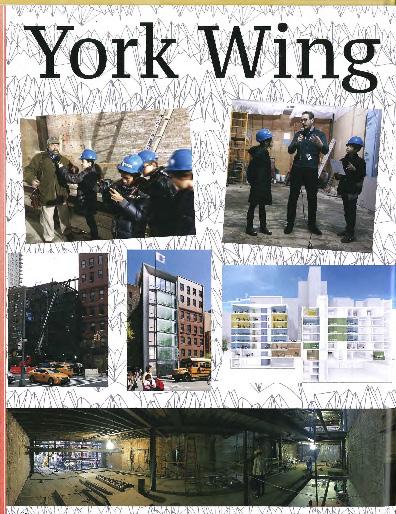
The York Wing, opened in September 2016, brought the school’s new vision to life with state-of-the-art classrooms, inviting student “breathing” spaces, and dynamic creative areas designed to foster collaborative learning among students, teachers, and staff.
2018-2019
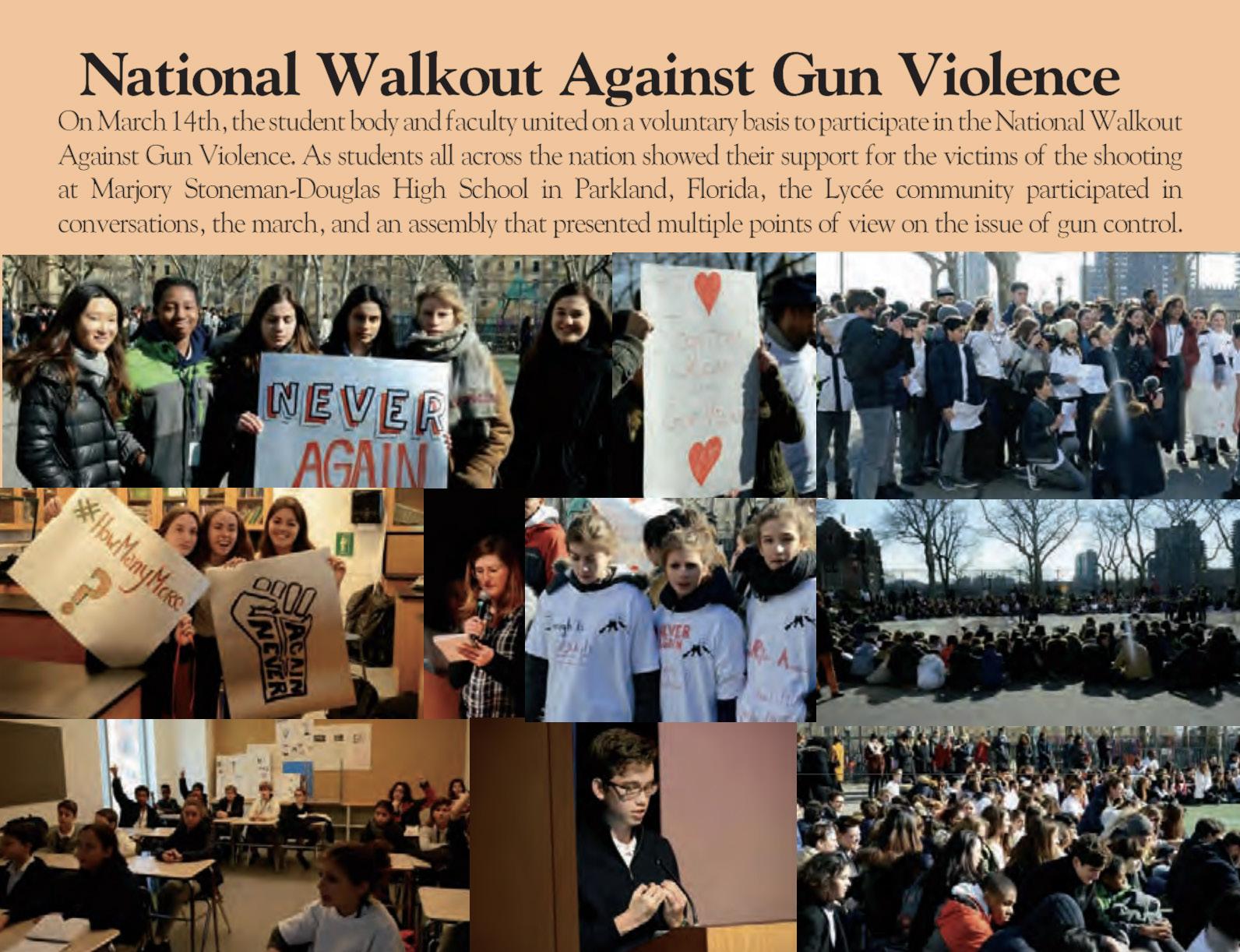
Lycée students and faculty participate in the National Walkout Against Gun Violence in support of the victims of the shooting at Marjory Stoneman Douglas High School in Florida.
Evelyne Estey was appointed Head of School. Past Trustee and CFOO, she would guide the community through the pandemic and further programmatic transformation at a challenging time in the history of the school, and the world.
2020s
A rise in student agency, engagement and leadership across school life–and excitement, as we look to the future of our Lycée!
2020 2022
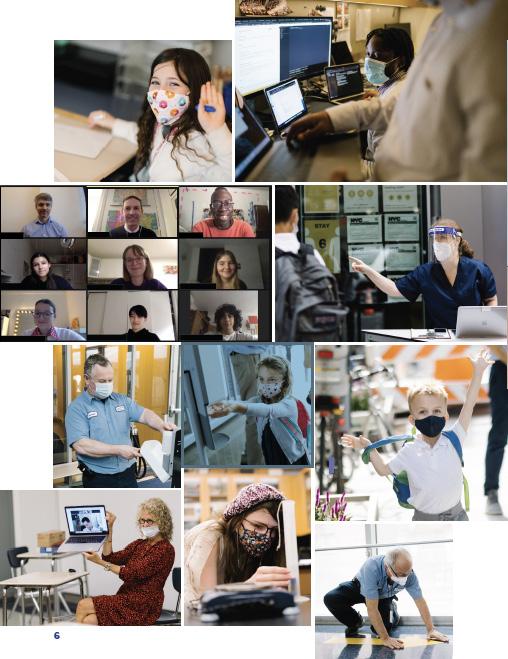
On March 12, 2020, the Lycée closed its doors for three months of fully Online Lycée. That fall, with rigorous health and safety procedures (and many masks) in place, the school opened its doors to hybrid learning on August 31, 2020–one of the first schools in New York City to do so.
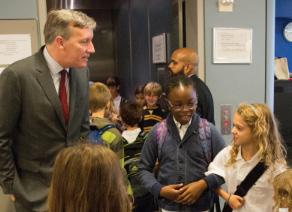
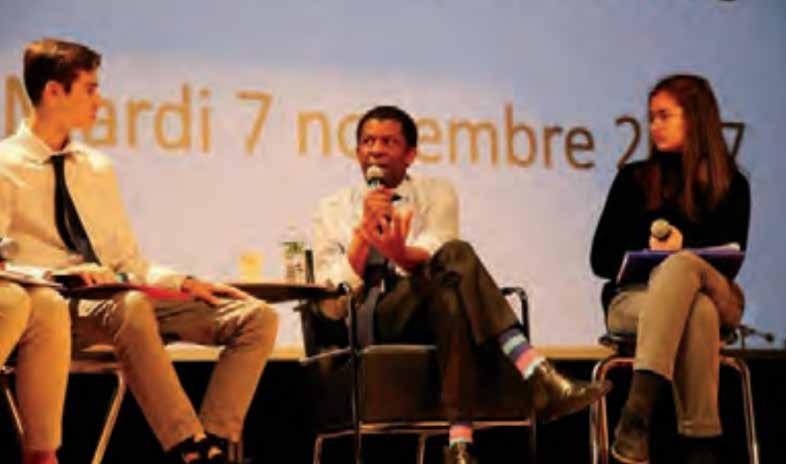
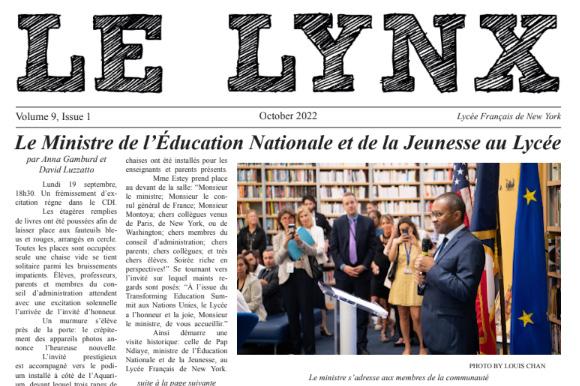
The French Minister of Education, Pap Ndiaye, paid a memorable visit to the Lycée in September 2022 to formally launch the American section of the Baccalauréat français international (BFI). A highlight was his warm, extended roundtable with student leaders in the CDI.
2020
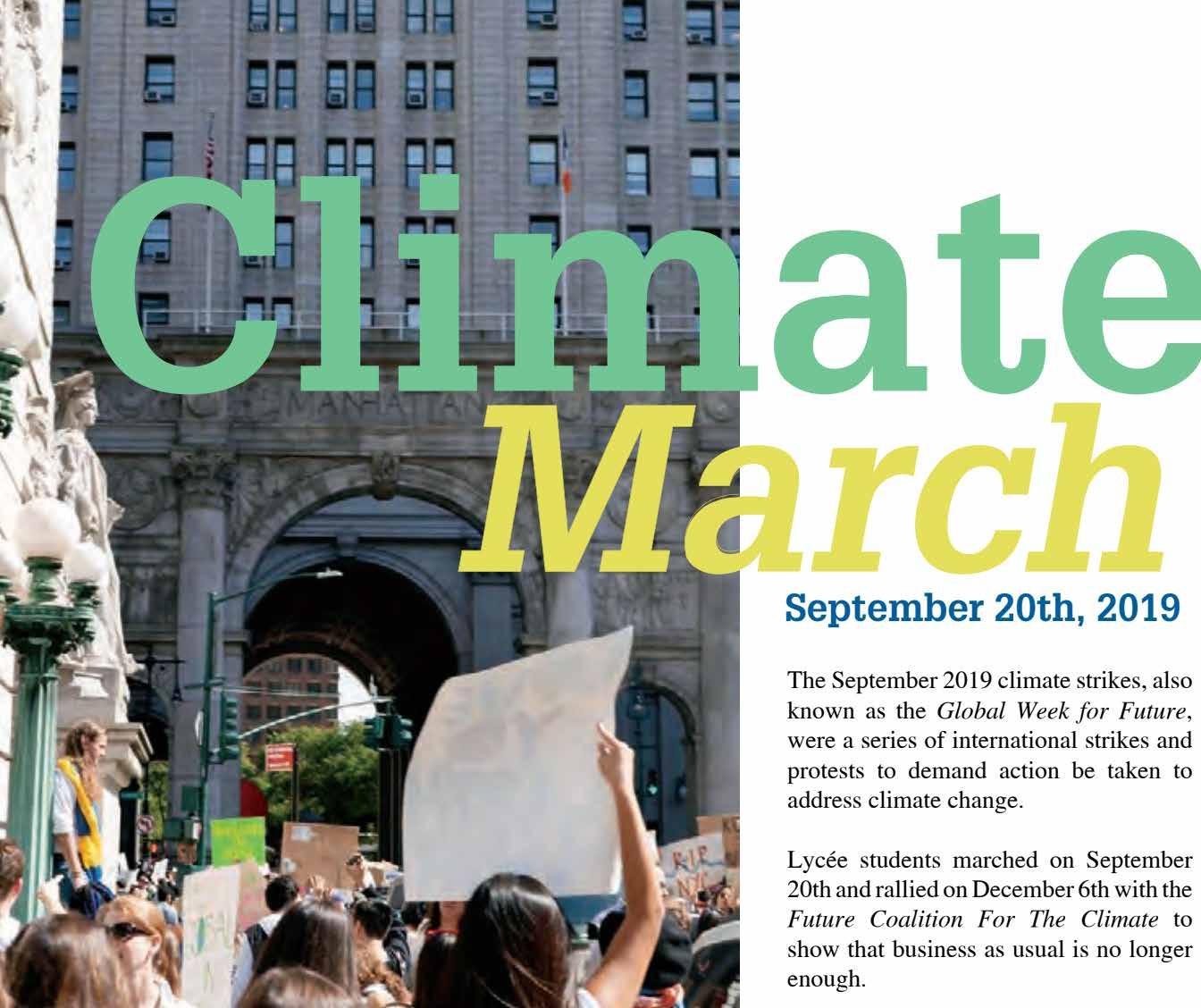
Lycée Students marched for the Future Coalition for the Climate
and Black Lives Matter.
2023
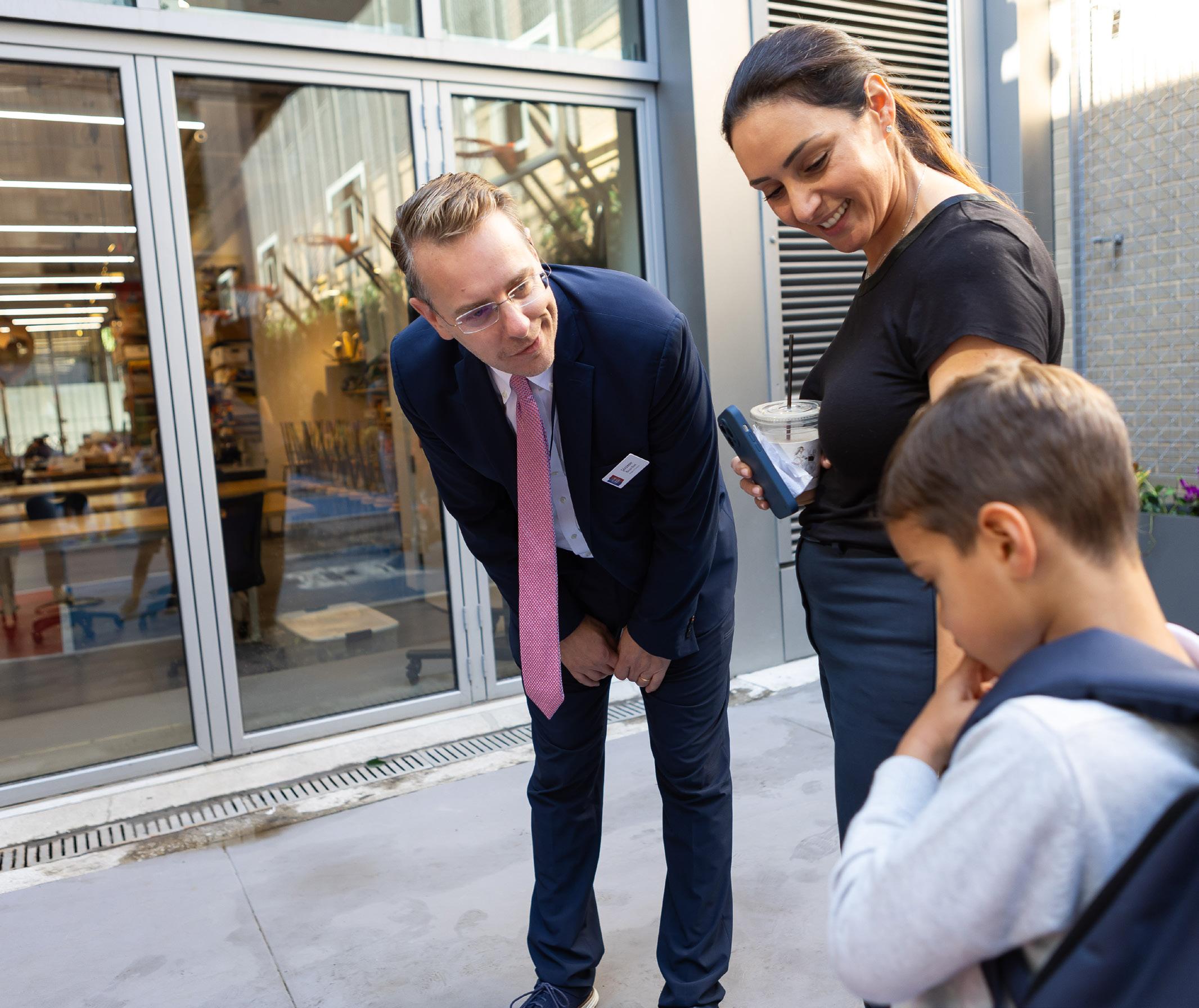
In October 2023, Jérémie Bourdon was appointed interim Head of School, and officially Head of School in March 2024. Under his leadership, the Lycée begins its next phase of evolution and growth.
2024
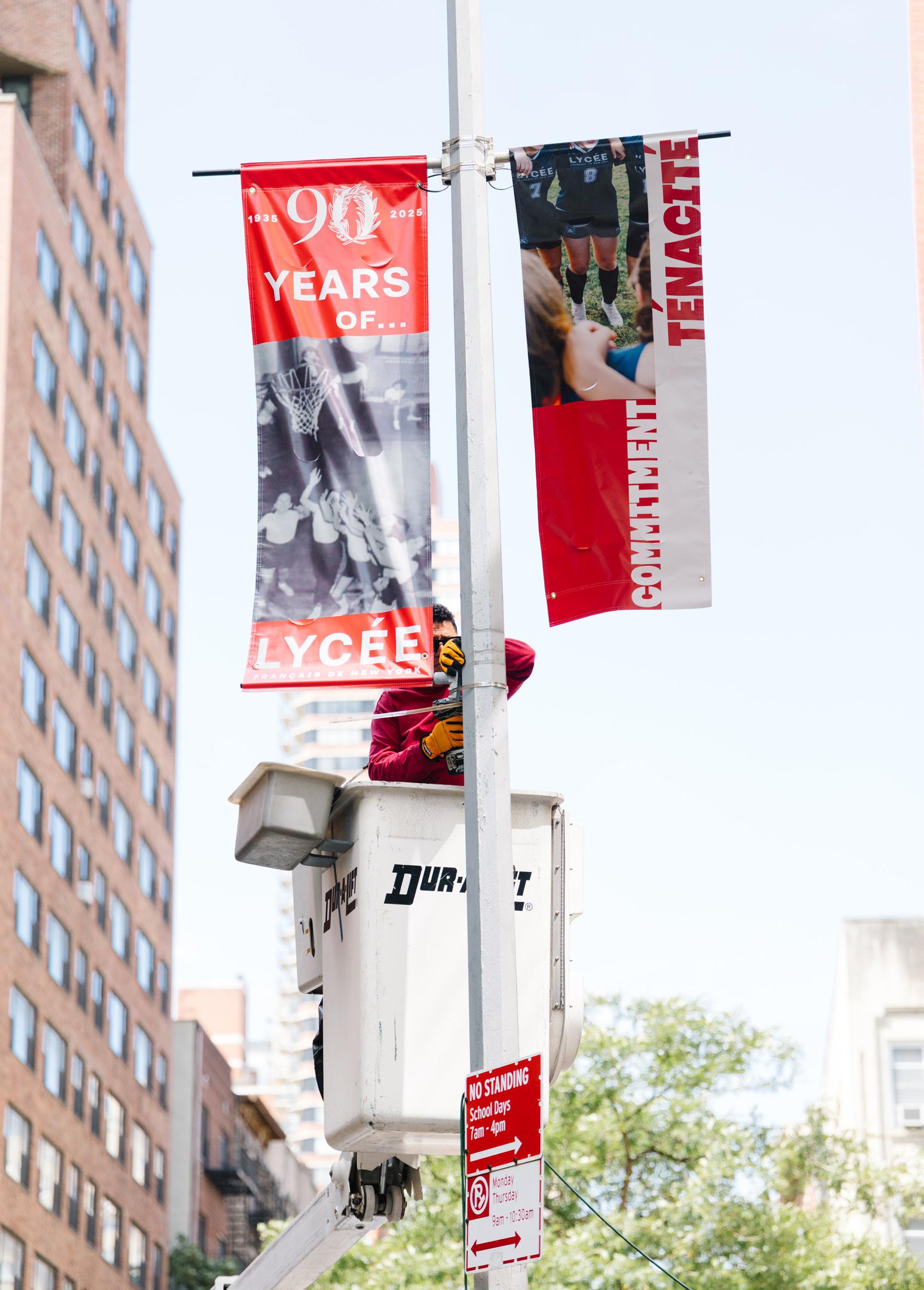
A community-wide project resulted in clearly articulated values for our Lycée that combine our historic French and American roots: solidaritécommunity, ténacité-commitment, esprit de découverte-open minds, and épanouissement-joy!
2025
The Student Council creates a new student government charter, which elevates the voices of student leaders across school life. At the same time, the Lycée’s student sustainability initiatives grow, with 51 eco-delegates now in place from CM1/Y4 to Tle/Y12.