RESILIENCE AND EQUITY IN COASTAL COMMUNITIES (1/2)
RESILIENCE AND EQUITY IN COASTAL COMMUNITIES:
a case study of Ada, Ghana at the intersection of social dynamics, environmental health, and architectural design
KU Leuven Faculty of Architecture
Leyla Abou Chedid
Resilience and equity in coastal communities: a case study of Ada, Ghana at the intersection of social dynamics, environmental health, and architectural design
Writer and editor | Leyla Abou Chedid leyla.abouchedid@student.kuleuven.be Academic promotor | Ignaas Back
All rights are reserved under international copyright conventions. No part of this publication may be reproduced in any form or by any means, electronic or mechanical, including photo-coping, recording or by any information storage terievel system, without permission in writing from the publisher or specific copywright owners. Work and publication made during the course of a personal master dissertation project.
KU Leuven, Faculty of Architecture Campus Sint-Lucas Ghent, www.arc.kuleuven.com www.internationalmasterofarchitecture.be
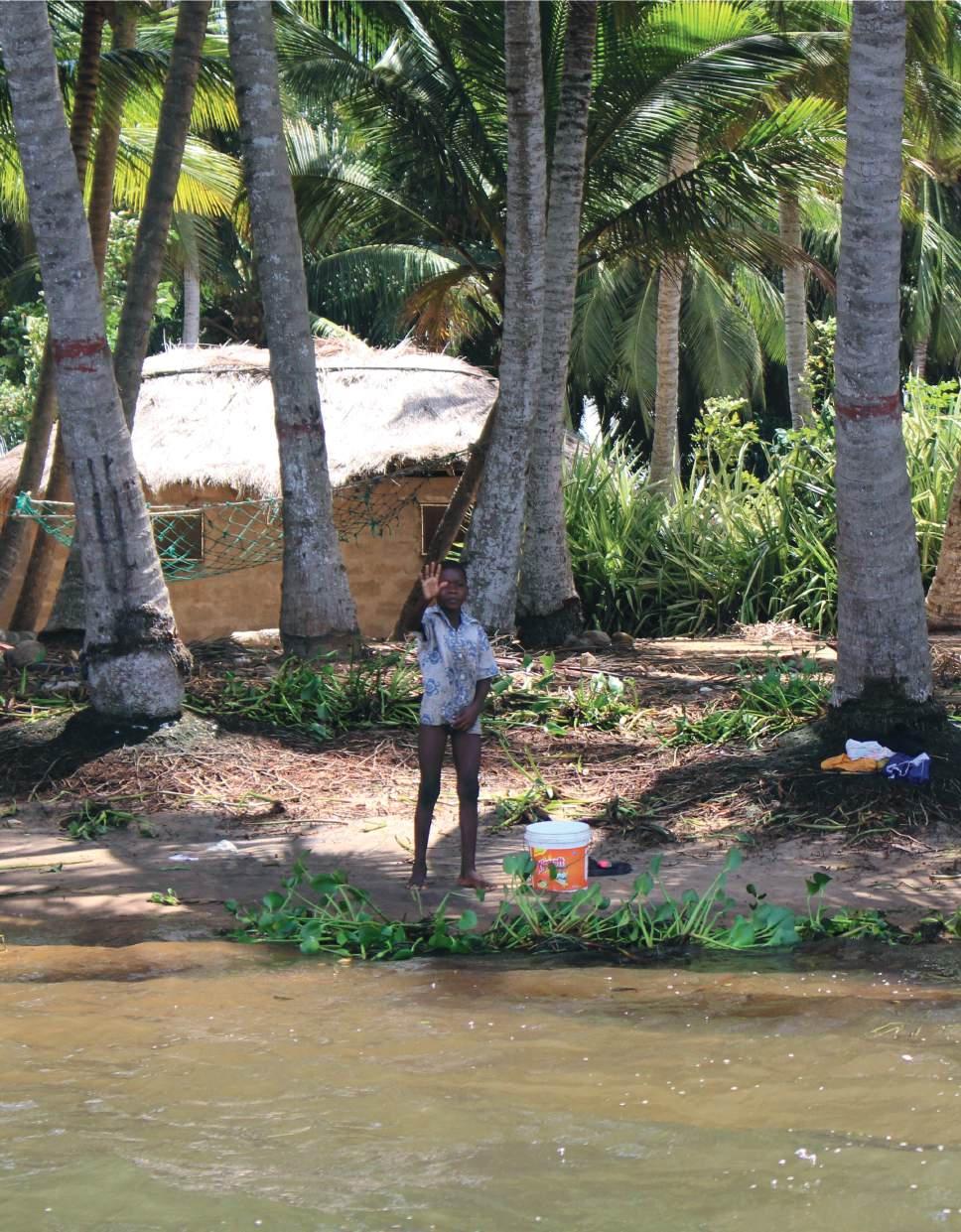
The purpose of this research is to honor the people of Ghana by exploring the rich history and architecture throughout the years and addressing the critical issue of access to clean water in rural Africa, focusing specifically on Ada, Ghana. In Ada, the river water is contaminated with Bilharzia, a tropical disease, and the informal settlements built with local materials lack proper water systems, forcing residents to rely on contaminated river water for daily needs. This study examines the complex environmental, social, and infrastructural factors contributing to the water problem in Ada. Through field surveys, community consultations, and technical assessments, this research identifies the specific challenges residents face in accessing safe and reliable water sources. Key findings highlight the urgent need for a comprehensive approach that addresses both water quality and accessibility while considering the community's socio-economic context.
In addition, this research delves into the history of Ashanti traditional buildings and the compound houses of the mid 20th century. With insights gained from these studies, we were able to design solutions for the people of Ada. The design proposal presents a multifaceted strategy for providing sustainable water solutions tailored to Ada's needs. This includes implementing water treatment facilities to mitigate waterborne diseases like Bilharzia and developing community-managed water distribution systems to ensure equitable access for all residents.
By addressing the root causes of water insecurity and promoting holistic development, this research aims to improve livelihoods and health outcomes in rural Ada. This proposition offers a replicable model for similar contexts across the Volta River, emphasizing the importance of participatory approaches and sustainable technologies in achieving water security for all.
01. Introduction: Ghana, Africa
Ghana is located on the West African coast, placed between the countries of Ivory Coast to the west, Burkina Faso to the north, and Togo to the east. Its southern border meets the Atlantic Ocean. Geographically diverse, Ghana features rainforests in the south, savannahs in the north, and the impressive Volta River meandering through its heartland. This varied terrain not only shapes the country's natural beauty but also influences its cultural tapestry. Ghana's culture is a vibrant and has a numerous number of ethnic groups, each contributing its unique traditions and languages. Among the most prominent are the Ashanti, Ga, Ewe, and Fante peoples, each with their distinct cultural heritage.
It is designated as the "Gateway to Africa" which signifies its central role in the transatlantic slave trade. Ghana's history is a rich tapestry interwoven with the legacies of ancient civilizations, the imprint of colonial occupations, and the enduring spirit of its people. Inhabited for thousands of years, Ghana bears the marks of glorious empires
such as the Ashanti Kingdom. Despite the scars of colonization, Ghana emerged as a bright example of resilience and determination in the quest for independence. Under the leadership of Kwame Nkrumah, it became the first sub-Saharan African nation to break free from colonial rule in 1957.
Music and dance are integral parts of Ghanaian culture, embodying the spirit of celebration and solidarity. Ghana's economy, one of the fastest growing in Africa, is fueled by its rich natural resources, stable political environment, and growing investment opportunities Despite its economic progress, Ghana still faces challenges such as income inequality, youth unemployment, and environmental degradation, which require innovative solutions and sustainable development strategies.
1680-1717 : Osei Tutu establishes the Ashanti Empire and becomes the first Asantehene.
1701: Ashanti victory at the Battle of Feyiase solidifies their dominance over the Denkyira Kingdom.
The Ashanti Empire was established in the 1670s in central Ghana, and quickly expanded under the leadership of Osei Tutu and Opoku Ware I, becoming an impressive and wealthy state through its control of gold resources and trade routes. Known for its military ability, the Ashanti Empire maintained dominance over neighboring states with a well-organized army. The empire displayed a sophisticated political system led by the Asantehene (king) and supported by a council of chiefs, while its rich cultural heritage included vibrant art, festivals, and a strong oral tradition. Engaging in trade with European powers, mainly the British, the Ashanti exchanged gold, slaves, and other goods, solidifying their economic and political influence in the region.
19th Century: Ashanti Empire expands and engages in conflicts with the British, leading to the Ashanti-British "Scramble for Africa."
1902: Ashanti Empire becomes a British protectorate following the Ashanti-British "War of the Golden Stool."
From 1902 to 1957, Ghana experienced significant changes under British colonization. Conflicts in the early 19th century led to several wars, ultimately resulting in the annexation of the Ashanti Empire and its incorporation into the Gold Coast colony in 1901. During this period, the British exploited Ghana's natural resources, particularly gold, cocoa, and timber. Western education and missionary activities introduced new social dynamics, fostering a Western-educated elite that increasingly advocated for political reforms and independence.
Previous flag of Ghana used up until 1957
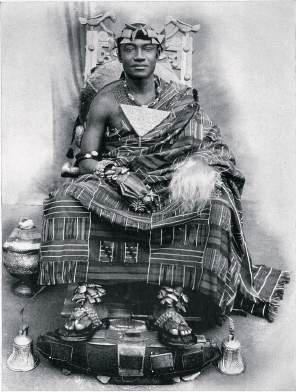
Osei Tutu I
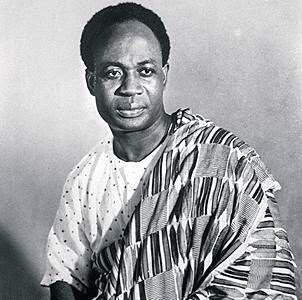
In the 40s, the movement for Ghana's independence increased in force, with Kwame Nkrumah soaring as a key figure. Primarily serving as the General Secretary of the United Gold Coast Convention (UGCC), Nkrumah created the more radical Convention People's Party (CPP) in 1949. He launched the Positive Action campaign in 1950, comprising strikes and non-violent protests demanding self-governance, which led to his imprisonment but increased his popularity. In 1951, the CPP's electoral victory led to Nkrumah's release and his appointment as Leader of Government Business. His continued efforts pushed in Ghana's independence in 1957 on March 6, this makes it the first sub-Saharan African country to achieve this milestone. Nkrumah then becomes the first Prime Minister and later the first President.
for independence.
1902-1957 : Ghana remains under British colonial rule.
Dr. Kwame Nkrumah
Current flag of Ghana
Kwame Nkrumah giving his famous independence speech on March 6 in 1957 in Accra, Ghana.
1947: Kwame Nkrumah establishes the Convention People's Party (CPP) and begins the push
1957: Ghana gains independence from British colonial rule on March 6, with Kwame Nkrumah as its first Prime Minister.
02. Why Ghana?
I am a third culture kid. A blend of French paperwork, Lebanese heritage, and a childhood rooted in the colorful tapestry of Ghana— that's me. Our family's story unfolds across continents and generations, sparked by my grandfather's leap of faith in 1959, seeking new horizons in Ghana.
The journey of Lebanese migration to West Africa is a saga of resilience and adaptation. Over the past 150 years, waves of Lebanese immigrants have sought refuge from turmoil and hardship, weaving themselves into the fabric of West African communities. Their spirit and contributions have become integral to the region's identity.
It all began with a twist of fate. According to Winder R.B. (1962) the first Lebanese immigrant to West Africa could have conceivably found themselves aboard a ship arranged by a Marseilles shipping agent. It's entirely possible that they only discovered their destination to be St. Louis or Dakar after the anchor had been lifted, rather than their intended destinations of New York or São Paulo.
From there, the community flourished, overcoming challenges like economic downturns and wartime upheavals. Despite the obstacles, the Lebanese diaspora thrived in West Africa, building businesses, forging connections, and leaving a permanent mark on the cultural landscape. Yet, as time passed, questions of identity emerged, especially amidst Lebanon's internal conflicts. Today, the legacy of Lebanese migration endures—a story of courage, resilience, and the enduring bonds of shared experiences across borders. It's a testament to the human spirit's ability to adapt and thrive, shaping the rich diversity of West Africa's cultural mosaic.
The Ashanti Empire, also known as the Asante Empire, was a remarkable state that emerged in the late 17th century in what is now Ghana. It was founded on the unity of Akan-speaking chiefdoms under the leadership of Osei Tutu, who became the first Asantehene (King of the Asante) in 1701. Tutu's vision, alongside his Priest Komfo Anokye, was pivotal in consolidating various independent chiefdoms into a centralized state, with Kumasi as its capital (Oyedokun O. D., 2023).
Under Tutu's reign, the Ashanti Empire flourished economically, primarily through the trade of gold. He asserted royal control over gold mines, making gold the official currency and developing a booming economy (Quintana, 2023). The empire's wealth and influence extended further with its involvement in the transatlantic slave trade, facilitated by trade relationships with European powers. This trade provided the empire with firearms and strengthened its military and territorial expansion. However, the empire's success faced challenges with the decline of the slave trade following Britain's abolition in 1807. This economic shift, combined with territorial disputes with the British, precipitated conflicts that weakened the Ashanti Empire. Despite initial successes in preventing British advances, the empire ultimately yielded to British conquest in 1900 after the War of the Golden Stool. This led to the formal annexation of the Ashanti Empire into the British Gold Coast colony in 1902 (Oyedokun O. D., 2023).
Despite British rule, the Asante retained elements of autonomy, with the establishment of the Asante Confederacy Council in 1935, allowing for some level of self-governance under the leadership of the Asantehene. Thus, the Ashanti Empire's legacy endures as a testament to the political, economic, and cultural prowess of pre-colonial West Africa (Oyedokun O. D., 2023).
Ashanti Traditional Building
In the 1970s, the management of Ashanti traditional buildings transitioned to the Ghana Museums and Monuments Board (GMMB), spotlighting a mere 16 existing examples of this unique architectural heritage across Ghana. Today, only ten of these structures endure, with none within Kumasi's bounds. These edifices primarily function as sacred shrines dedicated to deities in the Ashanti's traditional belief system, overseen by an okomfo priest. Acting as intermediaries between humanity and the supreme god Nyame, these deities, known as abosom, play a crucial role in spiritual communication.
Structure of Asante Shrines
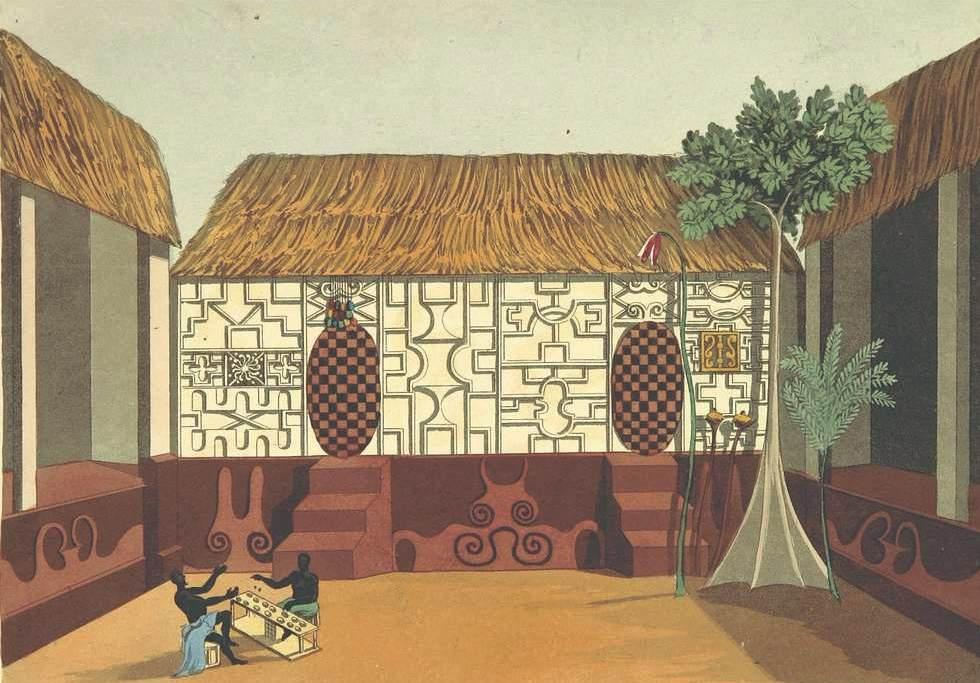
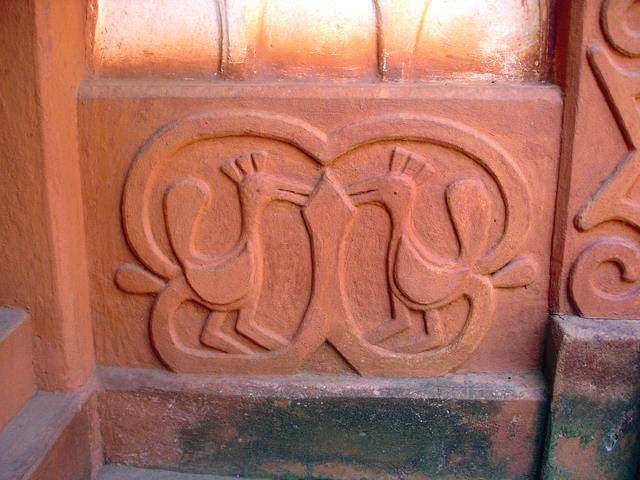
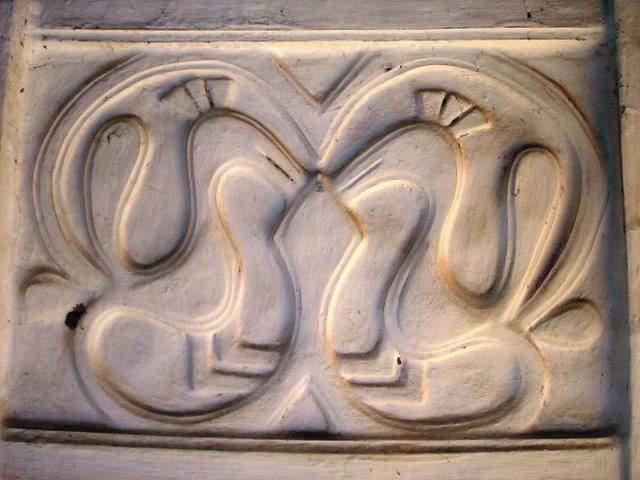
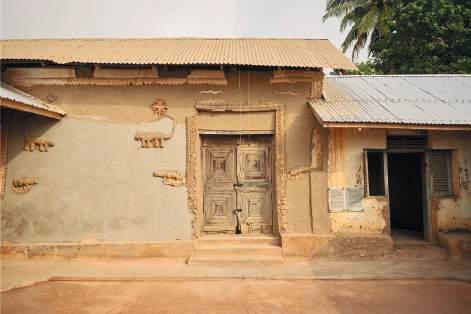
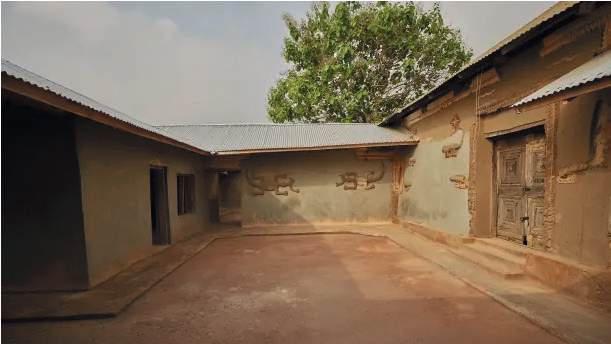
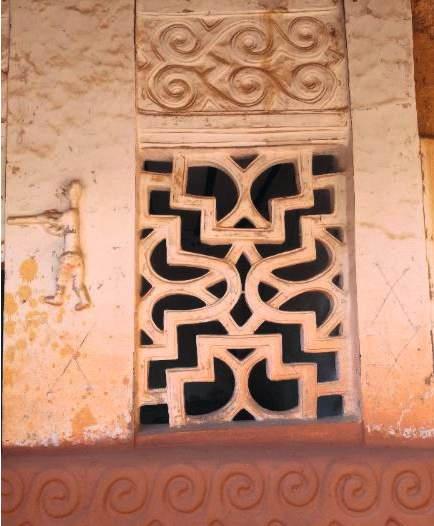
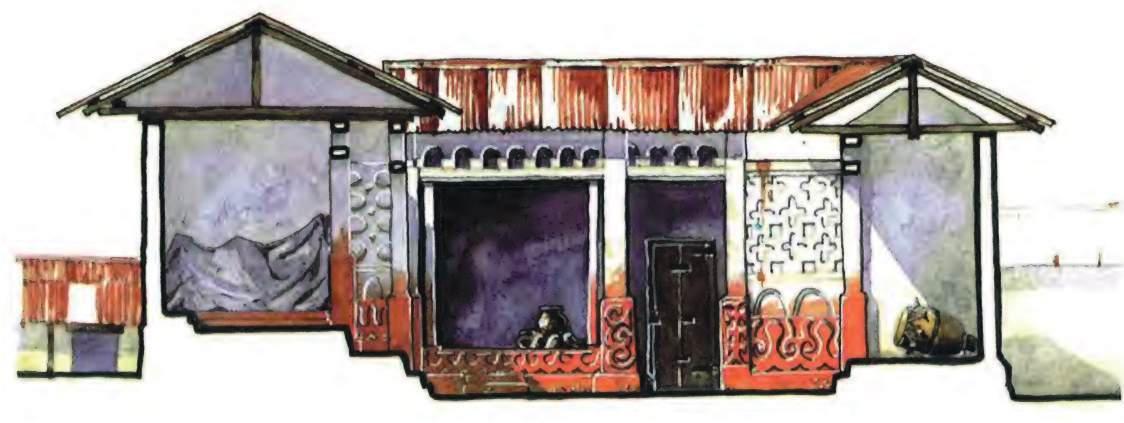
The design of Ashanti shrines usually consists of four rooms elevated on platforms encircling a central courtyard. While three rooms accommodate various ceremonial activities, the fourth chamber housing the shrine itself remains accessible solely to the Okomfo and shielded from view by intricate lattice work. Most of these buildings are constructed using wattle and daub techniques, which involve weaving horizontal wood strips over vertical stakes and covering them with earthen plaster. Distinguishing Characteristics of Ashanti Shrines include walls adorned with lime white and clay red hues often embellished with detailed geometric and figurative reliefs. Initially featuring roofs made from raffia palm thatch angled steeply for longevity, many have now been substituted with corrugated tin roofs.
Kumasi
Note:
Okomfo: Priest
Obusum: Divine status
CRAterre: «Centre international de la construction terre» also International Centre for Earth Construction. Based in Grenoble and Villefontaine.
GMMB: Ghana Museums and Monuments Board. Organisation preserving Ghana's material cultural heritage.
Drawing by Thomas Edward Bowdich, 1819, Mission from Cape Coast Castle to Ashantee.
A. Ejisu Besease
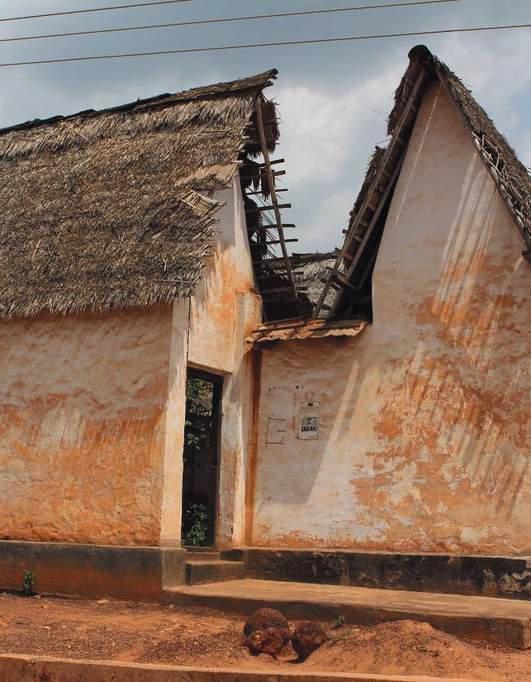
The building stands adjacent to a paved road in Besease, surrounded by growing residential and commercial developments that exert a direct influence on its surroundings. This structure represents a typical example of an Ashanti Traditional Building (ATB), attracting both local and international tourists due to its promotion as a tourist destination and extensive restoration efforts conducted by CRAterre and GMMB. Despite its significance, the spiritual activity at the shrine is somewhat restrained, with visitation primarily driven by tourism rather than ritual practices.
Courtyard
entrance Second entrance
Courtyard
Obusum kitchen
Bedroom
Bedroom
Kitchen Storage
Obusum
Singers' room
Drummers' room
Toilet
Shrine room Obusum Dan Drainage
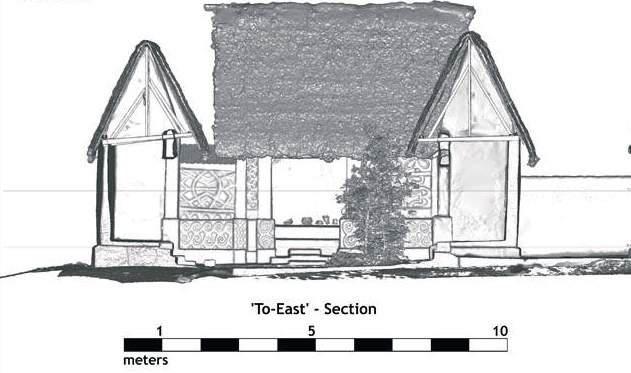
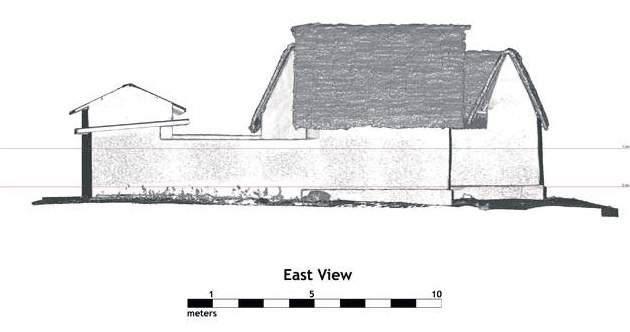
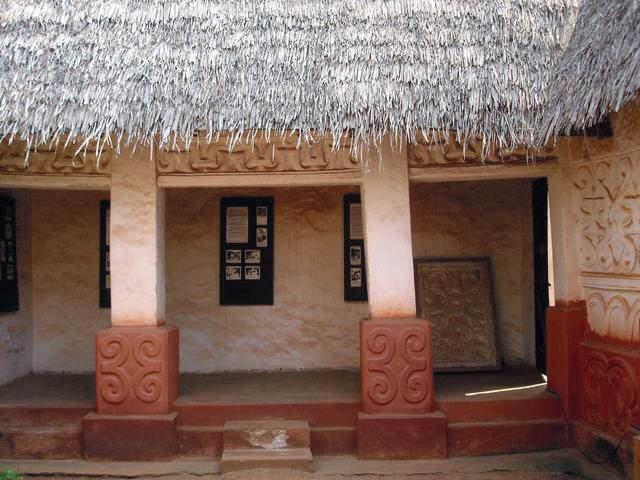
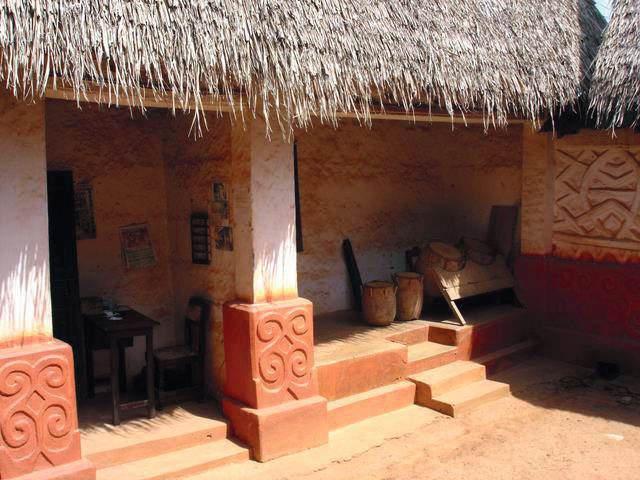
This site showcases numerous strengths. Its well-preserved decorative elements enhance its overall visual appeal. A traditional roof, meticulously refurbished in 1999, remains intact, with its raffia shingles replaced three times. The courtyard's cleanliness is consistently maintained, accompanied by an informative exhibition housed within the shrine building. Where the exhibition panels from 1999 remain undamaged, enriching the site's educational offerings. Additionally, the presence of sacred trees and altars emphasizes its spiritual importance. Regular repainting of the walls preserves their condition, while the bamboo roof structure's resistance to termites underscores its structural strength and endurance (Haney, Williamson, & Moriset, 2014).
However, this site also faces challenges. Certain roof components exhibit signs of leakage, compromising structural integrity. High humidity levels are adversely affecting decorative features, exacerbating cracks in the cement plaster at the plinth level. The dome-shaped courtyard contributes to elevated humidity levels in the wall base, posing preservation issues (Haney, Williamson, & Moriset, 2014).
Photos by Zamani Project, 2006
Photos by Gina Haney & Emily Williamson, Survey and condition assessment, 2014
Section by Zamani Project, 2006
Section by Zamani Project, 2006
Adinkras are visual symbols and representations originating from the Akan. These graphical symbols express specific concepts, also portraying proverbs. They are usually used in various forms of art and design where symbols carry a distinct meaning, reflecting traditional wisdom, philosophical thoughts, or historical events. There are a hundred of them however the most popular Adinkra symbols are "Gye Nyame" (Supremacy of God), "Sankofa" (Return and get it), "Dwennimmen" (Strength and humility), "Nyame Dua" (Tree of God), and "Adinkrahene" (Chief of the Adinkra symbols). Adinkra symbols are traditionally printed on cloths for special occasions and are also utilized in contemporary art and design to visually communicate deep meanings and values.
Photos by Zamani Project, 2006
Diagram by author.
Adinkra Symbols
Roof Courtyard
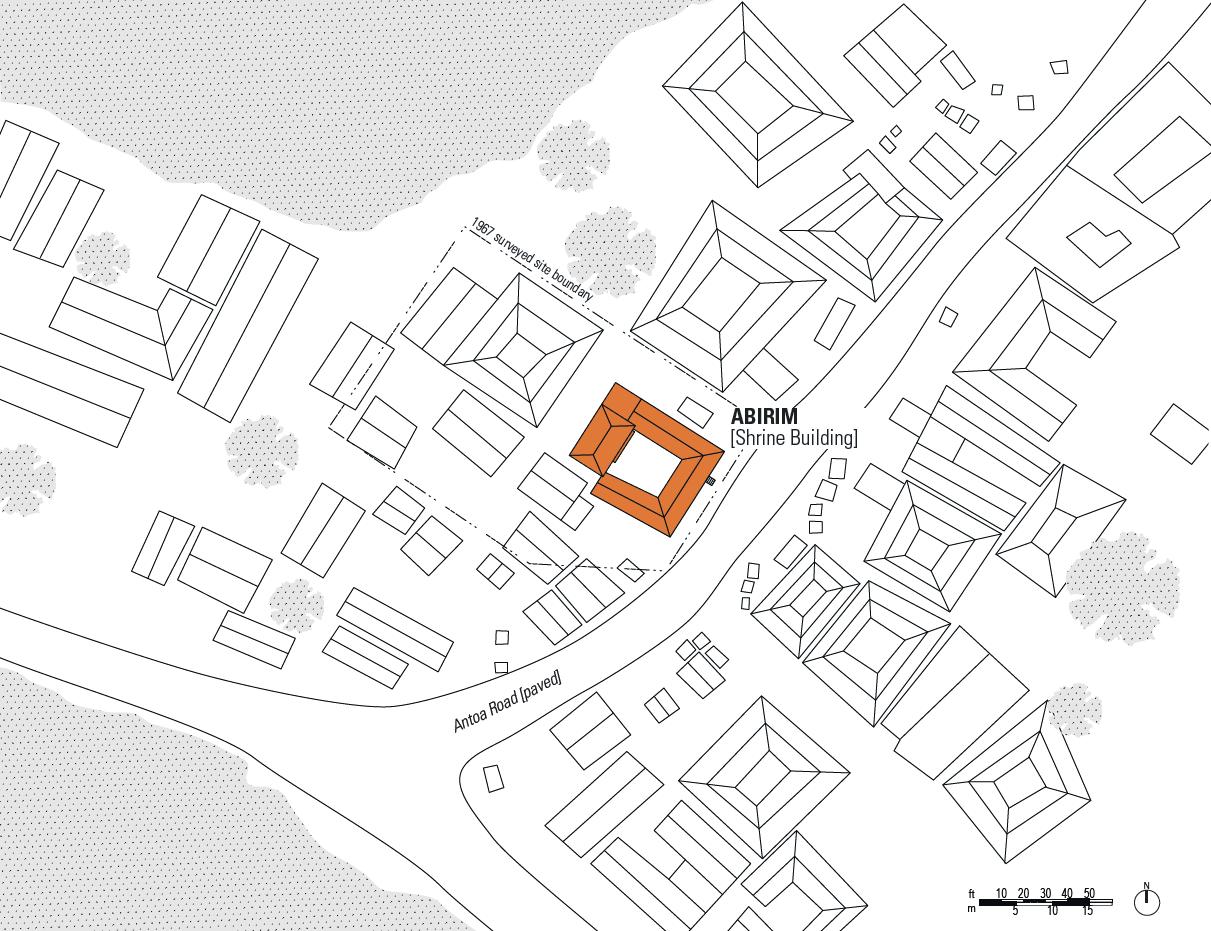
Situated in Abirim village near Antoa road, the Abirim Shrine stands out for preserving all its tangible and intangible elements, including the resident okomfo. The shrine's layout centers around a courtyard, enclosed by various rooms: the Shrine Room, Kitchen Room, Drummer’s Room, and Spectator Room. Sacred objects like Sky Altars and ritual items prominently displayed in the Spectator Room reflect deep cultural roots(Haney, Williamson, & Moriset, 2014).
B. Abirim
Courtyard
Shrine room
Obusum Dan
Drummers' room
Obusum
Obusum kitchen
Singers' room
Bedroom
Main entrance
Drainage
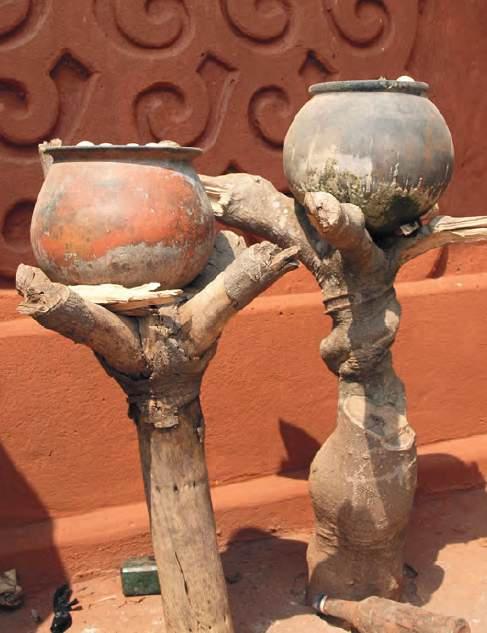
Architecturally, the shrine embodies Akan Traditional Building (ATB) principles, with each room serving a specific cultural function. The Shrine Room (bosom Dan) is the spiritual heart, facilitating rituals and daily offerings with partial screening and decorative elements enhancing its sacredness. The courtyard's elements, such as Sky Altars and weapons, are integral to the shrine's spiritual life, enabling meaningful engagement by practitioners and visitors. Traditional materials, like thick mud pillars and natural red clay, maintain the shrine's authenticity, though modern materials like concrete pose preservation challenges. The courtyard layout supports communal and performative aspects, making the shrine a dynamic, living heritage site.
Photo by Noah Alorwu, 2016. View of the shrine room with the sky altars placed in front.
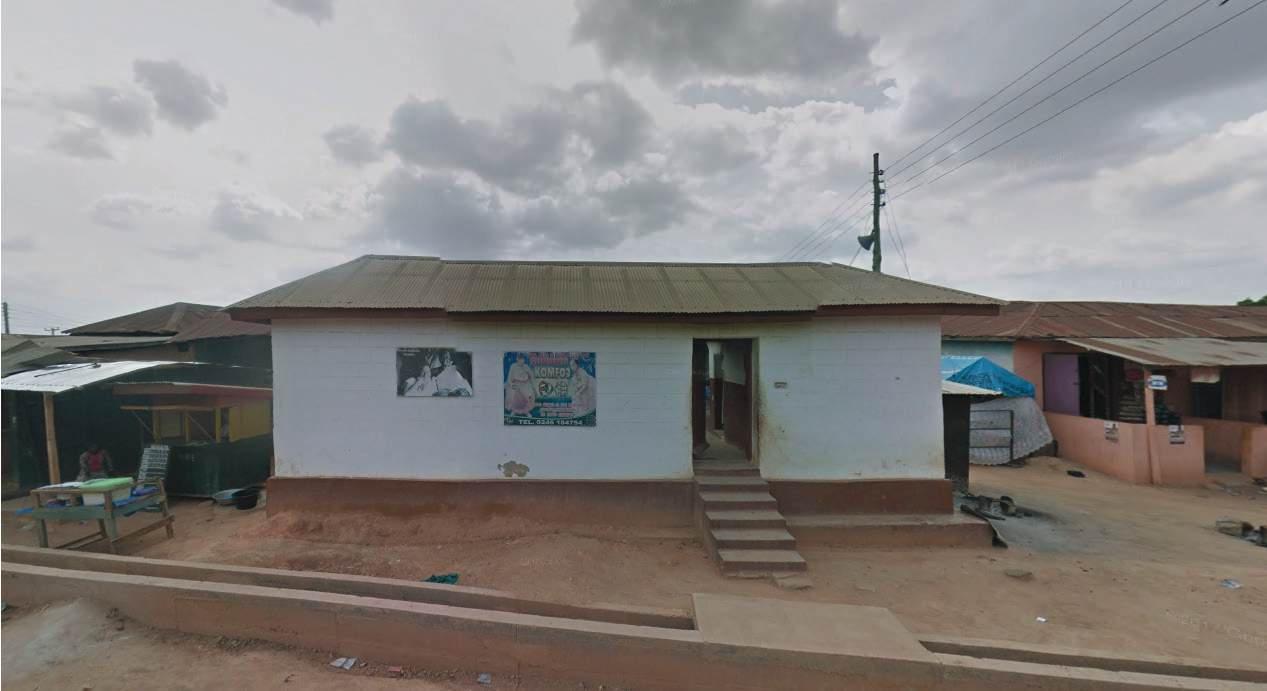
Photo from Google Earth streetview, 2024. View to the facade with the main entrance.
Photo by Gina Haney & Emily Williamson, Survey and condition assessment, 2014
Diagram by author.
Roof Courtyard
The "pottery object" is the decorative element on top of the Sky Altar. It's shaped like a pot and is often ornamented with intricate designs. This element serves both a decorative and symbolic purpose, representing the connection between the earthly and spiritual realms.
Photo by Gina Haney & Emily Williamson, Survey and condition assessment, 2014
C. Adarko Jachie
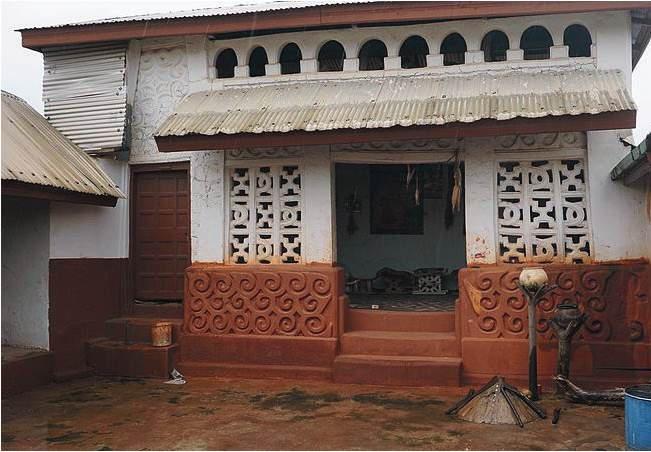
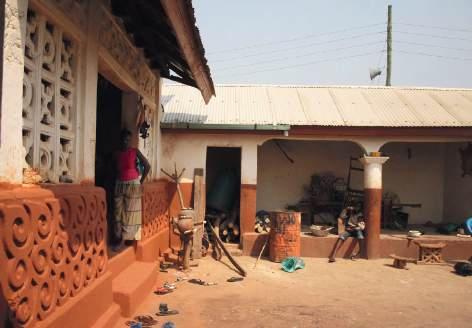
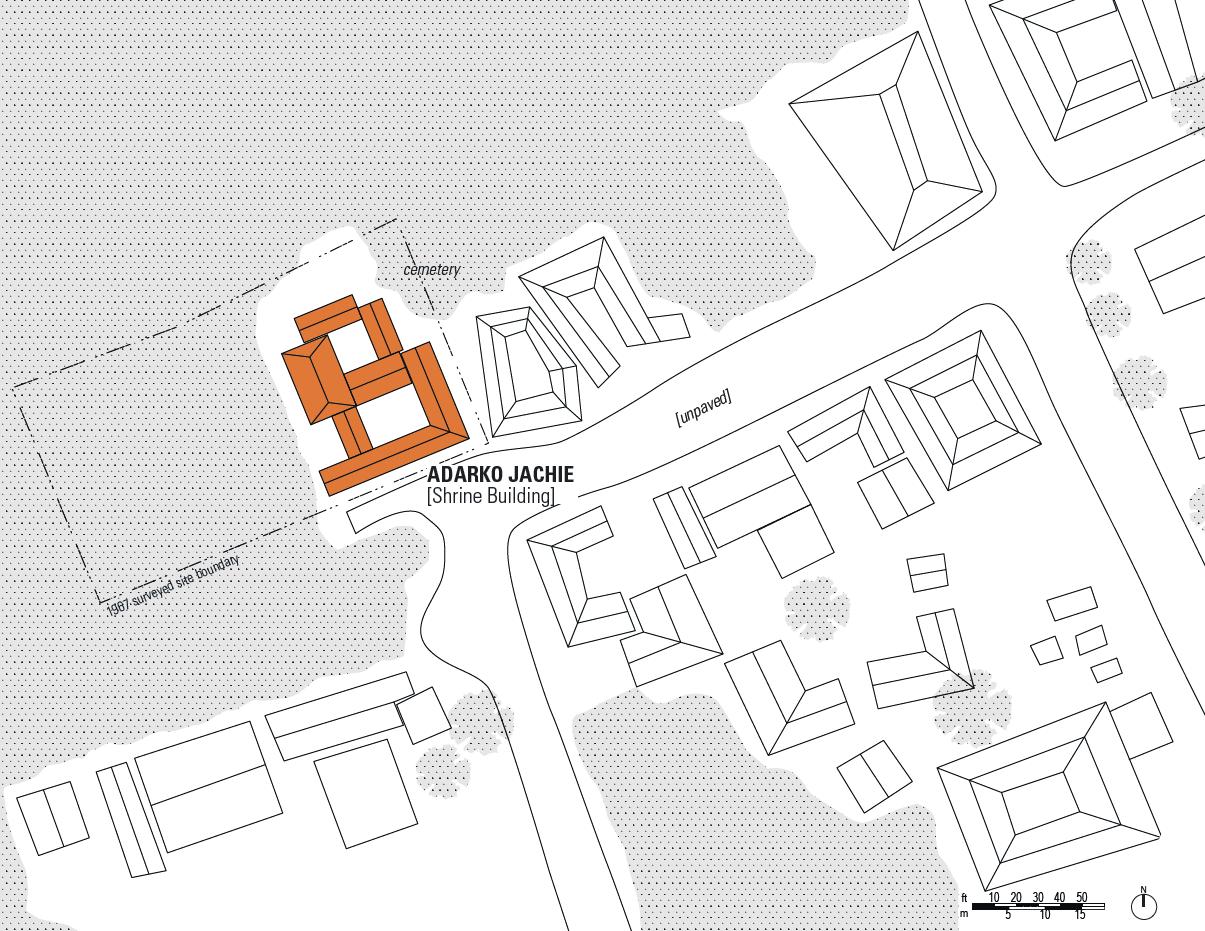
The Adarko Jachie shrine, located at the end of an unpaved road, is maintained by the Obaapanin Akua Badu family. It comprises two parts: a larger house at the front and an ATB at the back. The house features a large courtyard surrounded by small rooms, while the ATB, accessed from the house courtyard, has four spaces: the Singer’s Room, Kitchen Room, Shrine Room, and Drummers Room.
Courtyard
Courtyard
Courtyard
Obusum
Singers' room
The conservation state varies between the house and the ATB. The site is kept extremely clean, but the house suffers from missing wall sections, erosion, and a deteriorating roof. Conversely, the ATB is in good condition with a stable roof and effective drainage, though the cement-sand plaster on external walls is peeling. Decorative elements are in good condition but need repainting.
Diagram by author.
Roof Courtyard
Photo by UNESCO, 2024. Earth Network volunteer experts went to visit Ashanti Traditional Buildings in January 2024. View from the courtyard.
Photos by Gina Haney & Emily Williamson, Survey and condition assessment, 2014
Photo by Di Silva Lotti, 2020
In summary, Ashanti Traditional Buildings (ATBs) usually have several common characteristics. Firstly, the courtyard-centered layout, where they are typically surrounded by essential rooms. Functional Spaces are also found, each room serves a specific cultural or practical function, such as Shrine Rooms for spiritual activities, kitchens, and rooms for drummers or spectators. Thirdly, decorative elements are observed, Adinkra symbols enhance both visual appeal and cultural significance. Furthermore, the use of traditional materials is the most common. Where construction often employs thick mud pillars, natural red clay, and raffia shingles, maintaining cultural authenticity and historical continuity.
Other than the buildings infrastructure, it is crucial for ATBs to integrate sacred objects, adding elements such as altars and ritual items to the architectural form are crucial to support the spiritual practices and cultural heritage. All these structures facilitate community gatherings, ceremonies, and daily interaction, ensuring their role as living heritage sites.
It is important to note that the drainage system in ATBs are usually gutters and channels. Some Ashanti buildings featured basic gutter systems made from natural materials like bamboo or carved wood. These gutters channeled rainwater from the roofs to the ground, where it was directed away from the building through shallow ditches or channels.
These features collectively ensure that Ashanti Traditional Buildings not only serve their intended spiritual and cultural functions but also stand as enduring symbols of Ashanti heritage.
Section drawing of an Ashanti Traditional Building, by Ghana Museums and Monuments Board in collaboration with UNESCO- World Heritage, 2021 edition.
04. Compound Houses
Housing design typically follows a rectangular grid pattern for courtyard housing, often without much consideration for specific aspects or terrain features. This grid layout is inspired by the Ashanti architectural style and has demonstrated its effectiveness as an urban settlement design adaptable to different contexts. This approach enables the creation of a hierarchy of public, semi-public, and private spaces within the settlement, all while accommodating a high density of occupants. (Rutter, 1971).
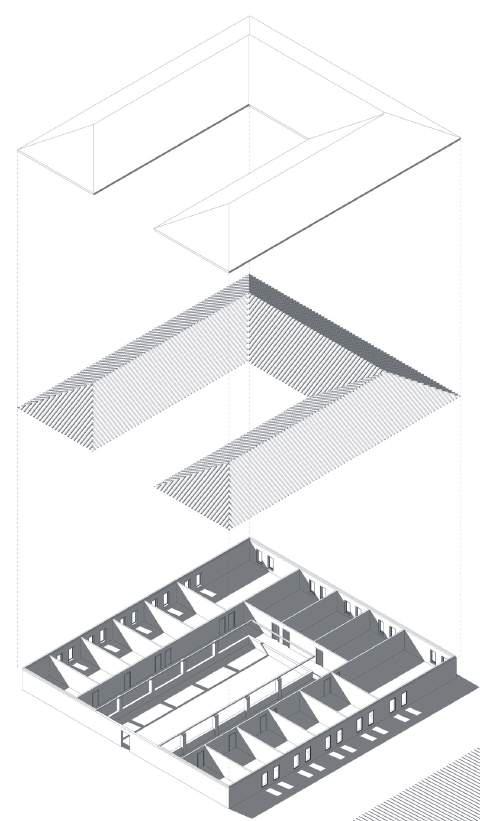
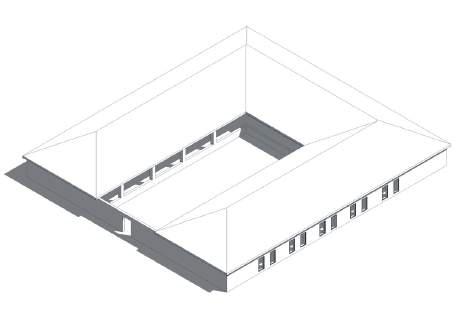
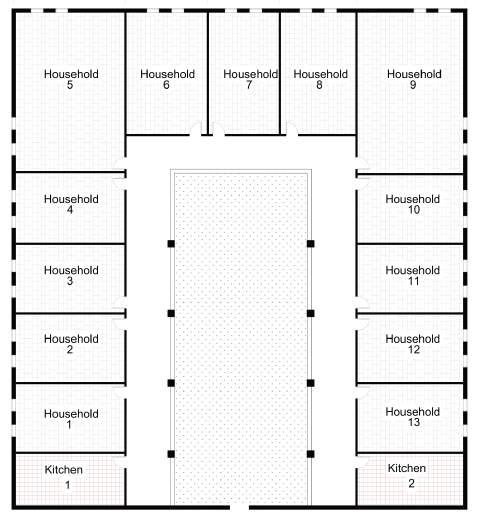
The courtyard house, also called compound house, comprises several rooms of uniform size, typically around ten square meters each, surrounding a central courtyard. There's usually only one entrance from the street shared by all rooms. While each room may feature a window facing the street, these windows are often fitted with shutters for security purposes, remaining closed most of the time, making them more ornamental than functional. Additionally, each room has a door leading directly to the courtyard or through a small enclosed private veranda. Within the courtyard, there are designated areas, sometimes covered and enclosed, for open-fire cooking. Furthermore, each house includes a screened enclosure for bathroom use, often situated outside the main building, though occasionally a room within the house is designated for this purpose. While some houses may have bucket toilets, these are relatively uncommon (Marilyn J., 1980).
Numerous houses feature supplementary rooms attached to the primary structure, accessible from the street, often via a covered veranda. These extensions sometimes connect to other rooms accessed from the courtyard. The rising need for living spaces and work areas within the settlement has resulted in a surge of extension construction, gradually encroaching upon street space. While tenants occasionally undertake these extensions, more commonly, they are built by the homeowners themselves. The characteristic of courtyard housing is its function as a central space facilitating access to surrounding areas. This naturally prompts consideration of whether interior spaces utilized in a similar manner might be considered as equivalents to courtyards. Furthermore, it leads to a reexamination of compounds found in various regions in Africa, Mexico, and ancient Peru, as well as spaces characterized by minimal or absent walls (Rapoport A., 2007).
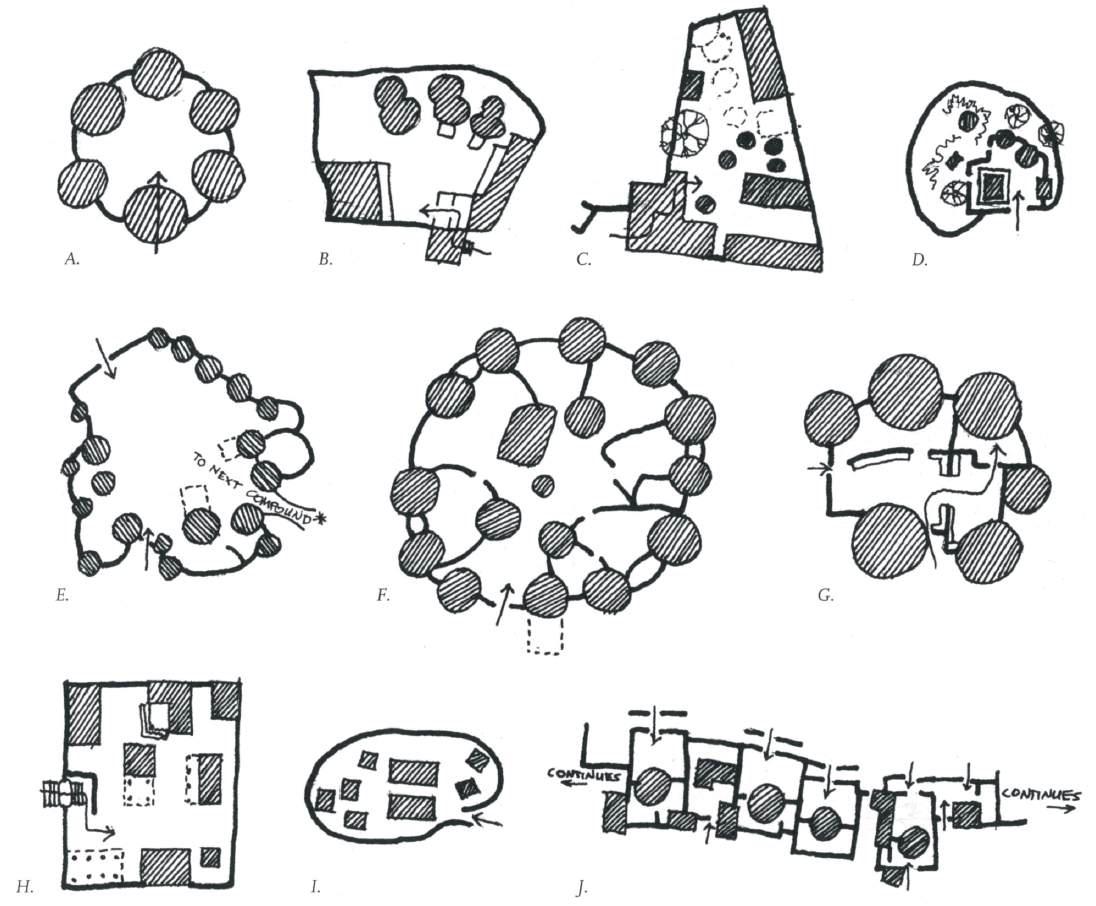
Drawing by Amos Rapoport, The Nature of the courtyard house: A conceptual analysis, 2007
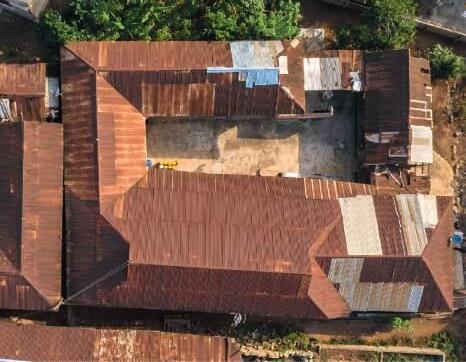
Top view photo by Nipah Dennis, 2021
Drawing by author
Source: Amos Rapoport, The Nature of the courtyard house: A conceptual analysis, 2007
(A) Nuba (South Africa), based on J. Walton, African Village (Pretoria: Van Schaik, 1956J, Fig.41
(B) Zaria, Nigeria based on Schwerdtfeger, Traditional Housing in African Cities, plan 4.5, p. 34
(C) Hausa (Daura, Botswana), based on J.C Settlements of the Hausa People," Town Planning Review, Vol.33 N0.1 (April 1964), Fig, .3, p. 23 (D) Tswana (Oodi, Botsw V. Larsson, A Documentation of Twelve Tswana Dwellings (Lund: Department of Functional Analysis, School of Architectu Ri, 1984), Fig. Oodi 1, p.89 (E) Malinké (Senegal), based on Bourdier and Minh-Ha, Drawn from African Dwellings, F pp. 13-214
(F) Kusasi (Zebila, Ghana), based on J. Stanley, personal communication, 1975 (G) Venda (South Africa), based Developments in the Rural Indigenous Architecture of Southern Africa of the Post Difagane Period," p. 343 (H) Bali (Tihin Parimin, " Fundamental Study of Spatial Formation of Island Village: Environmental Hierarchy of Sacred-Profane Concept in Bali," Ph.D. diss. University of Osaka, 1986, Fig. (3 .(5-1, p.42 (I) Wolof (Senegal), based on E. Johnson, "The Wolof of Senegal and Modernization Processes," term paper in Architecture 755, Department of Architecture, University of Wisconsin, Milwaukee, April 1992, p8 (J) South Amendebele (South Africa), based on Frescura, " Major Devel
Note: High walls indicate the presence of a privacy attribute, while low walls do not. The activities/settings and access attributes are consistently applicable. Despite variations in shapes and configurations, the fundamental form remains unchanged.
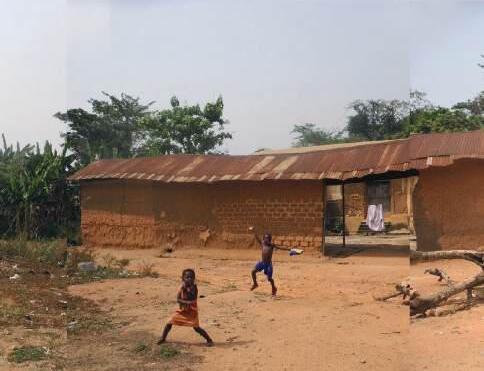
Compound houses in Ghana are constructed using locally sourced materials and provide a sense of community and shared living (Amoako & Boamah, 2017, p. 432). They us materials such as mud bricks, earth, thatch, or laterite blocks, traditional compound houses showcase indigenous building techniques. In contrast, modern versions may integrate concrete, cement blocks, and corrugated metal sheets for roofing. These houses offer flexibility in accommodating extended families, with each living unit functioning as a separate household within the larger family compound. This setup fosters a sense of community and shared living while preserving individual privacy for each family unit. Additionally, the central courtyard acts as a communal space for diverse collective activities, including gatherings, rituals, or even recreation space for the children.
These houses reflect traditional Ghanaian architectural and cultural values, emphasizing communal living. Which has been passed down through generations, they often symbolize family unity and heritage. Moreover, their design incorporates elements of climate adaptation, providing natural ventilation and shading to mitigate the tropical heat. Affordability is another key aspect, as compound houses are typically more economical to build and maintain compared to standalone houses. This affordability factor contributes to their popularity among various socioeconomic groups and allows for denser housing in urban areas where land is scarce and expensive.
In essence, compound houses in Ghana embody a blend of tradition, functionality, and affordability, making them a preferred housing choice for many Ghanaians. However, addressing the multifaceted challenges facing residents in these communities requires holistic interventions that consider housing typologies, socio-economic factors, and access to essential services.
The enclosed nature of compound houses offers a sense of security and protection for residents and their belongings. The shared compound environment fosters neighborly interactions and enhances community safety. However, challenges persist in accessing essential services such as waste collection and potable water, mainly due to settlement locations, affordability constraints, and unplanned urbanization. Land tenure issues and infrastructural limitations further hinder the provision of adequate water and sanitation services.
Despite being connected to the electricity grid, rampant illegal connections pose safety risks, highlighting the precarious nature of informal settlements. Secure tenure plays a pivotal role in accessing public services, with many housing units lacking formal approval, thereby impeding utility supply. Additionally, housing conditions often fall short of satisfactory standards, with sanitation challenges prevalent due to the absence of private toilet facilities and reliance on poorly maintained communal facilities.
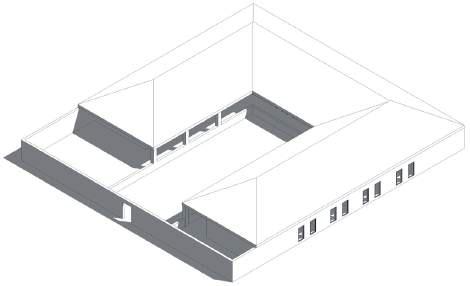
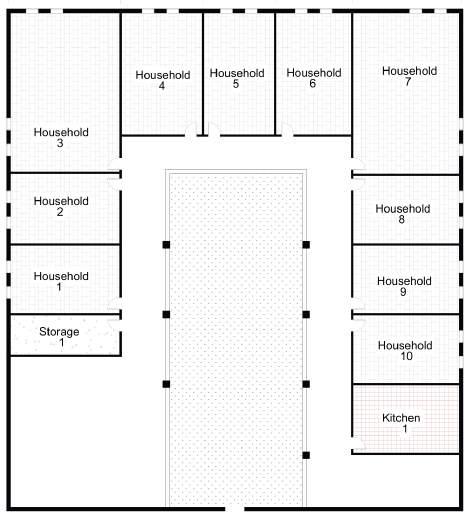
Maxwell Fry and Jane Drew are British architects, that were part of the network of professionals engaged in colonial development projects. The compound houses they designed in Ghana and specifically to Tema represent an important contribution to tropical modernism. Here are examples of compound houses found in Ghana until today with the influence of both architects.
Drawing by author, example of how a unit could look like. Note the toilet was added.
Drawing by author, axonometric showing the form and roof structure of a compound house type A with 13 rooms.
Drawings by author, of compound housing types proposed by Fry and Drew for Tema Manhean.
Other compound houses found in Kumasi
Drawings by author, of ‘flexible’ compound housing types proposed by Fry and Drew for Tema Manhean.
Drawings by author, of ‘flexible’ compound housing types proposed by Fry and Drew for Tema Manhean.
We have examined the characteristics of Ashanti buildings and compound houses, noting that both are constructed above ground due to weather considerations. Both feature slanted roofs, adapted to tropical weather conditions, and shared courtyards, reflecting the strong sense of community inherent in Ghanaian culture. However, a major difference lies in the materials used: traditional Ashanti buildings utilized clay and thatch, whereas modern compound houses are built with concrete and corrugated metal sheets. This shift is likely due to factors such as cost and maintenance, with people opting for more convenient and durable materials.
Ashanti era buildings 1950s
05. Ghana soils
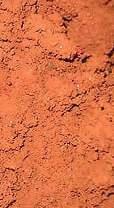
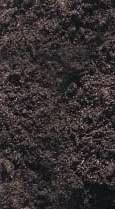
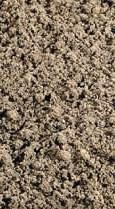
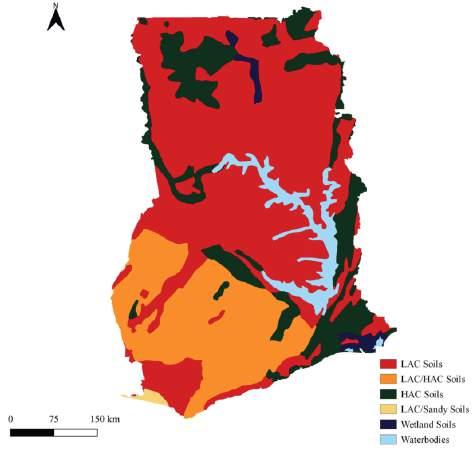
In Ghana, various soil types are crucial for building mud houses, reflecting the country's diverse geography. In the south, Acrisols are reddish-brown or yellowish, acidic, and low in fertility, but their clay content makes them suitable for construction. Ferralsols, found in central and northern regions, are rich in iron and aluminum oxides and are moderately fertile, providing stability and durability for mud houses. Lixisols, sandy soils in the northern savannah, can be mixed with straw or stabilizers for construction despite their low fertility. Nitisols, deep and clay-rich soils in southern forested regions, are highly fertile and ideal for mud houses due to their cohesiveness and resistance to weathering. Vertisols, found in limited northern areas, are clay-rich with swelling properties that pose agricultural challenges but offer good structural stability for mud houses. In areas where timber or concrete are scarce or expensive, mud houses provide a cost-effective and sustainable alternative. The choice of soil influences the mud's strength, durability, and thermal properties, with traditional techniques enhancing structural integrity.
Clay soil Loam soil Silt soil Sand soil
Soil map in Ghana according to the IPCC soil classification.
Source: From article, The Nationally Determined Contribution Expert Tool by Schiettecatte L., Audebert P., Umulisa V., Dionisio D and Bernoux M (2022).
06. Ada Foah throughout the years
In Ada Foah, a coastal gem where the Volta River kisses the Atlantic Ocean, opportunities and challenges dance in tandem, shaping the daily lives of its residents.
The town's picturesque landscapes and abundant waterways offer fertile ground for tourism and eco-friendly ventures. With its rich cultural heritage, Ada Foah holds the potential to become a cultural hub, attracting visitors eager to immerse themselves in local traditions and festivals.
Furthermore, the town's proximity to both river and ocean presents opportunities for sustainable fishing and aquaculture ventures, providing a livelihood for the local fishermen and villagers. Additionally, initiatives promoting community-based ecotourism and artisanal craftsmanship have the potential to stimulate economic growth while preserving the area's natural and cultural heritage.
However, Ada also faces its share of challenges. Climate change poses a significant threat, with rising sea levels and coastal erosion endangering both infrastructure and livelihoods. The seasonal fluctuations in water levels also affect agriculture and transportation, impacting the town's economic stability. Moreover, inadequate infrastructure, including limited access to clean water and sanitation facilities, presents health risks for residents, exacerbated by diseases like bilharzia. Balancing the preservation of traditional ways of life with the need for modernization and improved services remains a delicate challenge for the community.
Photo by author, 2024
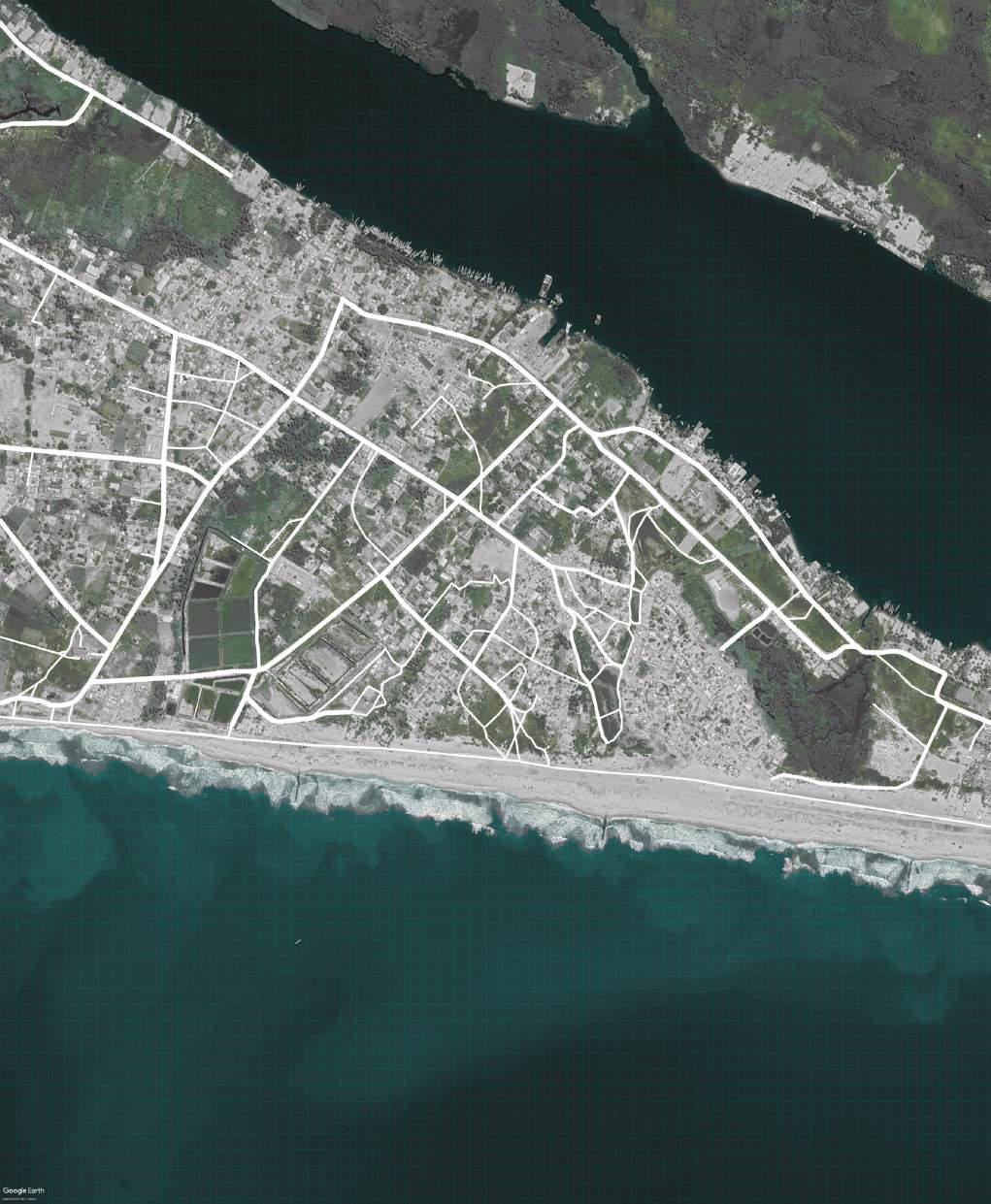
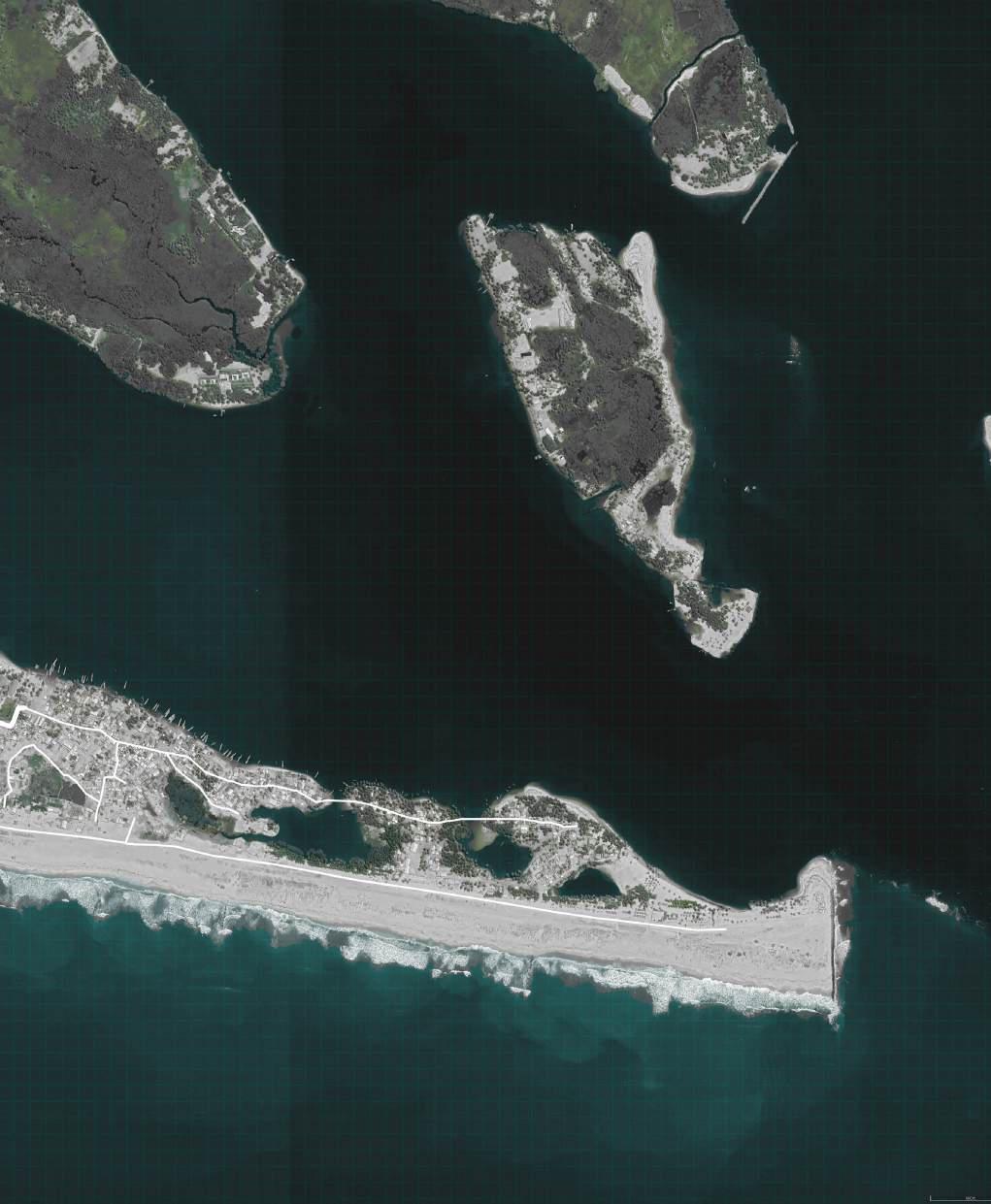
Over the years, it's fascinating to witness the transformation of Ada. With stronger waves, high tides, and the impacts of climate change, we're witnessing the gradual erosion of islands within the Volta River by the Atlantic Ocean. However, the past decade has brought about a more significant change than all preceding years. The diminishing landmasses are affecting nearby villages, some of which have had to relocate as islands vanish altogether. Fishermen and villagers face an ongoing risk of losing their homes over time.
While the government has implemented solutions such as placing large stones along the Atlantic coast, these are only short-term fixes. It's evident that these measures may become ineffective sooner rather than later, underscoring the need for more sustainable, long-term strategies.
Drawings
Diagrams
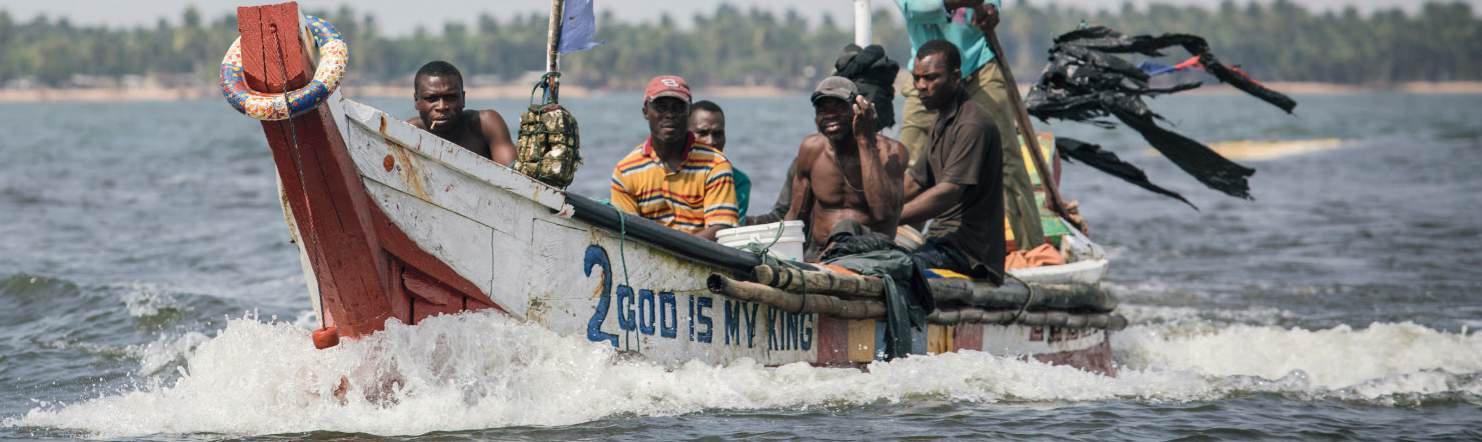
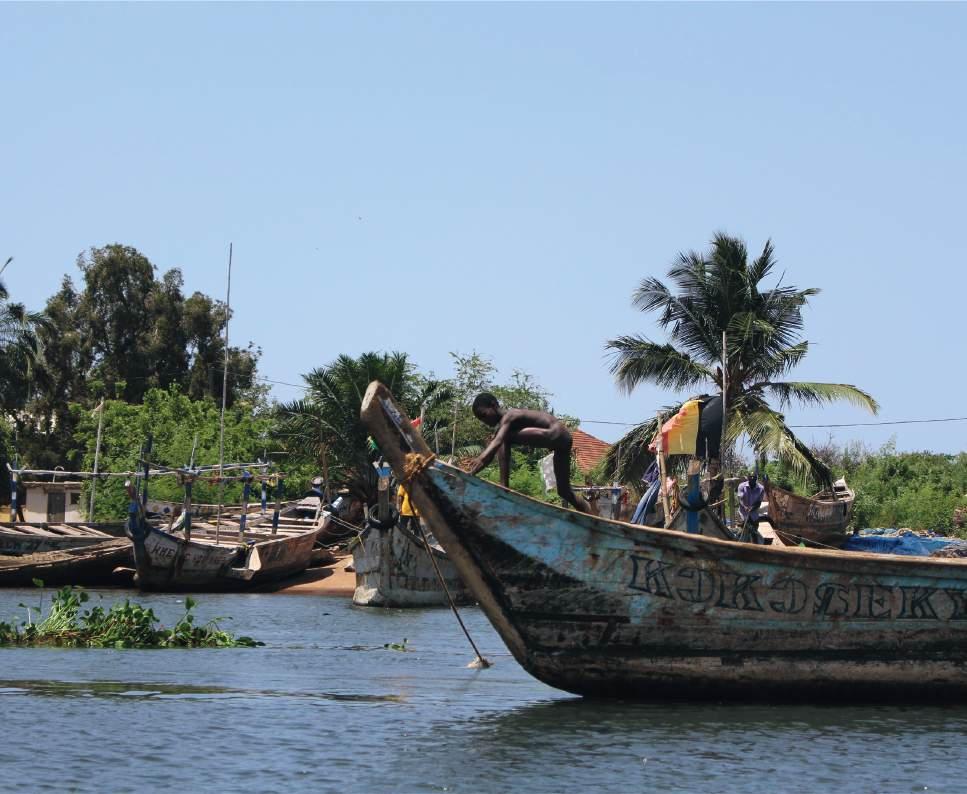
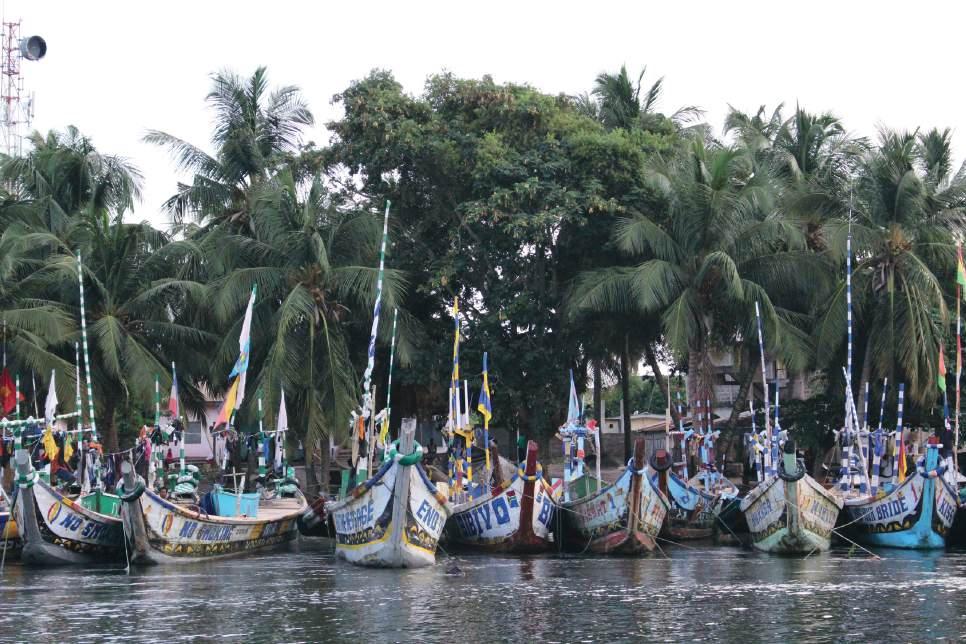
In Ada, as in many coastal areas of Ghana, fishing is integral to the local lifestyle, providing sustenance, income, and a way of life. For the community, fishing is more than just an occupation; it is a vital part of their daily existence. Typically, men venture out into the Volta River and sometimes towards the Atlantic Ocean to fish. Once they return with their catch, the women take over, selling the fish within the village and to nearby communities. This collaborative effort forms the essential cycle of fishing in Ada.
Photo of fishing boats in ada, shot by author, 2024
From Ocean to Market: The Ada Fish Tale
08. Bilharzia
Schistosomiasis is a tropical disease, caused by a group of parasitic worms, called schistosomes. These worms are also called blood flukes. This disease has affected people for thousands of years, it has even been found in Egyptian mummies. Schistosomiasis is also known as Bilharzia, named after Theodore Bilharzia who first described the parasite in humans. It is estimated that over two hundred million people around the world are infected with these parasites. In sub-Saharan Africa alone it causes over two hundred thousand deaths each year.
Schistosomes have a very complex and interesting life cycle involving humans, snails and fresh water such as lakes, pond and reservoirs. Five main types of schistosomes are responsible for most human disease, they differ in their distribution, the kind of disease they cause and the type of snails that they live in. Schistosoma haematobium, is mostly found in Africa and in the Middle East, it casues disease in the urinary and genital areas. S. mansoni, is mostly found in Africa and South America. S. japonicum, in China and South-East Asia. S. mekongi, in Combodia and Laos. And finally the S. guineensis in central Africa. These affect mainly the bowel and liver.
Infected humans pass schistosome eggs through their feces or urine into fresh water (1). These eggs hatch into larvae and infect certain species of snails (2). After a period of development in the snail, they are released back into the water in a form called cerceria (3). The cerceria swim and penetrate the skin of a human and can enter the body of someone using the water. (5) (4).
Once in the body, they find their way through the lungs and the liver, where they grow into adult worms. They then migrate into blood vessels surrounding specific organs where they can live for many years.
Some species of schistosoma like to live around the bowel whereas other species prefer to live around the bladder. These adults can lay thousands of eggs a day. Some of the eggs find their way back into the water through urine or feces and start the life cycle again. But some eggs get trapped in the organs. Schistosomiasis can cause both short term and long term disease. For short term disease, when cerceria penetrate the skin, some people develop an itchy rash called the swimmer’s itch or fisherman’s itch. Some people develop a disease called acute schistosomiasis also called Katayama fever. This occurs about four weeks after being exposed to the parasites for the first time. It usually presents with a fever and a range of other symptoms, such as diarrhea, rashes and respiratory symptoms. These are usually self-limiting. However, the long term effects of schistosomiasis are more serious and occur as a result of the eggs that are trapped in various organs. The trapped eggs can lead the changes in tissues characterized by the formation of granulomas with a lot of inflammation around them. For the bladder, this can lead to the hardening of the bladder wall, obstruction and can even result in a type of bladder cancer. This can present symptoms such as blood in the urine. Intestinal schistosomiasis can lead to symptoms such as abdominal pain, diarrhea and blood in the stool. In the liver, the eggs can cause scarring of the tissues around the vessels of the liver, obstructing them and can cause enlargements of the liver and spleen. Other organs that can be infected include the genital system, lungs, and sometimes even the brain. Chronic infection, especially in children can lead to anemia.
How can we diagnose this disease?
It can be diagnosed, in the urine and stool using special techniques or by biopsy of tissues and examining it under the microscope. There are also blood tests that can look for antibodies against the parasite. There is no vaccine yet against schistosomiasis. But there is effective medication to treat the disease, which usually works to kill the adult worms to no longer produce egg worms. Recovery of organs depends on the type and extent of the damage that has already taken place.
How do we prevent the disease?
Preventing the disease that occur at various points in the worm’s lifecycle. The spread of schistosomiasis needs an infected human who contaminates the water a snail and subsequent contact with another human who uses the contaminated water. The disease can be elimated in humans using medication. In areas that have a lot of disease entire communities or targeted at risk groups can be treated with medication. To reduce the incidence of disease, large-scale drug treatment has been an effective way to control schistosomiasis. Another approach is to reduce the contamination of water, this involves activities such as educating people on proper sanitation and providing necessary facilities such as toilets. Some countries have tried to eliminate snails by using chemicals or biological control methods their effectiveness has been variable. The other way to prevent the transmission of disease is through reducing contact with contaminated water, tourists are advised not to swim or wade in areas that are known to have schistosomiasis. However, avoiding water can be hard for people that live near water and depend on it for their livelihood or for basic function, providing clean water