New England Blade - Spring 2026

Page 1


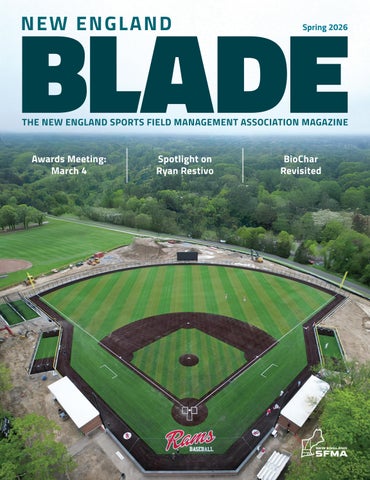
Awards Meeting: March 4

HOME FIELD ADVANTAGE

Products & Programs for Resilient Sports Fields

Harrell’s supports sports turf managers in producing highperforming fields, no matter the sport or season.

+ Consistent, Predictable, Dependable Nutrition

+ Proven Chemistry from Trusted Brands

+ Season After Season Support

+ Custom-Designed Programs

+ Renovation Planning & Support

JIM FAVREAU

jfavreau@harrells.com (978) 227-2785

TOM HOFFER thoffer@harrells.com (401) 871-2916

CONNOR CINQUE ccinque@harrells.com (603) 930-1861

JAMES STUDLEY jstudley@harrells.com (401) 743-7616

KENT LEMME klemme@harrells.com (413) 281-8087

JIM WIERZBICKI jwierzbicki@harrells.com (860) 424-7250

TOM LOPEZ tlopez@harrells.com (860) 488-2649

MIKE KROIAN mkroian@harrells.com (401) 265-5353

LANCE BLASS lblass@harrells.com (570) 956-0974

IAN WILLIAMS iwilliams@harrells.com (781) 664-4519

The official publication of the New England Sports Field Managers Association (NESFMA), the New England Blade is dedicated to educating, advising, and informing members of the profession and furthering the goals of the Association. The New England Blade carries news and features related to the sports field management profession. Publisher is not responsible for unsolicited material and reserves the right to edit any article or advertisement submitted for publication and to refuse advertising not in keeping with the goals of the Association. Publisher assumes no responsibility for the validity of claims in connection with items appearing in the New England Blade. Mention of a commercial product does not imply endorsement by the New England Blade, NESFMA, or Leading Edge Communications, or preference over similar products not mentioned. The New England Blade is published quarterly. Subscriptions are complimentary to members of NESFMA. Presorted standard postage is paid at Jefferson City, MO. Printed in the U.S.A. Advertising: For display and classified advertising rates and insertions, please contact Leading Edge Communications, LLC, 206 Bridge Street, Suite 200, Franklin, TN 37064, (615) 790-3718, Fax (615) 794-4524.

Officers

President Art Goodhind Town of Natick Natick, MA

President Elect

Ryan Bjorn Gillette Stadium Foxborough, MA

Treasurer

Andrew Carlisle, CGM Worcester Technical High School Worcester, MA

Past President Chris McGinty

Framingham Parks Department Framingham, MA

Official Chapter

Directors

Tom Barry, CSFM Greens Farms Academy Greens Farms, CT

Bryan Conant Nashua Parks & Recreation Nashua, NH

Brendon Connor Holy Cross Worcester, MA

Adam Ferrucci

Read Custom Soils Wareham, MA

Scott Lagana Turf Products Corp. Holden, MA

Christopher Lilly Blackstone Valley Regional Technical Vocational High School Upton, MA

Michael Malvoso

Needham Parks & Forestry Needham, MA

Scott Vose

Tom Irwin Advisors Tyngsborough, MA

Board of Trustees

Mike Lueders Medfield, MA

Edward Olsen

Needham Parks & Forestry Needham, MA

Victoria Wallace University of Connecticut Storrs, CT

Management Team

Virginia Wood

Executive Director

Charissa Sharkey

Membership Manager

Peggy Benjamin Bookkeeper

Technical Editor

Victoria Wallace University of Connecticut Storrs, CT

New England Sports Field Management Association, Inc. 67 West Street Medfield, MA 02052 (508) 653-1241 NE-SFMA.org

Celebrating SPRING!

Hello members and friends,

I hope this message finds you all well and that the winter season has been kind to you. What a cold start to our winter. I have always wondered what it would be like to be a plant. Seems like a tough gig.

As I write this message on January 15, the temperature is 50 degrees. Today feels somewhat like a glimmer of spring with sunshine that is more effective and daylight that is slightly longer. With the sun warming my face I am reminded not to be fooled by Mother Nature’s cruel carrot on a stick. My mentors have taught me patience, wait for the carrot to fall, that is when you make your move.

Speaking of moving I hope folks are planning to make the annual pilgrimage to the New England Regional Turfgrass Conference in Providence, Rhode Island. I have grown to value this event and opportunity to rejuvenate the sports turf soul. If you do attend, please plan to join us for our annual meeting & awards lunch on March 4 at 11:00 a.m. We’ll celebrate the success of our peers and inspire the next generation of sports turf professionals.

An exciting spring is on the horizon. Let all of us celebrate a rebirth of the seasons, as well as applaud a few NE-SFMA members who will have the fruits of their labor celebrated worldwide via the World Cup. Best wishes Ryan Bjorn and the entire New England World Cup turf team. Make it happen and make us proud!

Cheers,

These companies support NE-SFMA with their membership investment and involvement. Please be sure to thank them for their support of our industry as you do business with them throughout the year.

A-OK Turf Equipment – aokturfequip.com

A.R.Plante Materials & Earthworks, LLC –arplantematerials.com

Activitas, Inc – activitas.com

BASF – basf.com/us/en

Brock USA – brockusa.com

Championship Turf Services – turfchamps.com

Covermaster Inc. – covermaster.com

Finch Turf – finchturf.com

Franklin Paint Company – franklinpaint.com

G.P.S. New England – Greg Albanese

Game Ready, Inc – Gamereadyfields.com

Golf Course Management, Inc. – Michael Hightower

Greenhaven Turf Care – greenhaventurf.com

Harrell’s – harrells.com

Hayner Swanson Inc – hayner-swanson.com

Kaestle Boos Associates – kba-architects.com

Liberty Landscapes, LLC –libertyathleticfieldcontractors.com

Mainely Grass – mainelygrass.com

MJ Cataldo Inc. – mjcataldo.com

Mountain View Landscapes & Lawncare –mountainviewinc.com

MTE, Inc. – mte.us.com

Natural Tree & LawnCare – naturaltree.com/about New England Pro Greens & Turf – turfinstaller.net

North Turf Inc. – Northturf.com

Northeast Nursery Inc – northeastnursery.com

Osborne Organics, LLC – osborneorganics.com

PBI Gordon – pbigordon.com

Pioneer Athletics – pioneerathletics.com

R.A.D. Sports – radsports.com

Read Custom Soils – readcustomsoils.com

Replay Maintenance USA – replaymaintenanceusa.com

S & D Landscapes, LLC – facebook.com/LandscapeVermont

Sherwood Sportsturf – Chuck Sherwood

Silico Turf LLC – silicoturf.com

SiteOne – siteone.com

Sodco, Inc. – sodco.net

Specialized Turf Services, Inc. – specializedturfservices.com

Sports Fields Inc. – sportsfieldsinc.net

Sports Turf Specialties, Inc – sportsturfspecialties.com

Syngenta – greencastonline.com

Target Specialty Products – TurfFuel.com

Tartan Farms LLC – tartanfarmsri.com

The Charles C. Hart Seed Co. – HartsTurfPro.com

Tiny Mobile Robots – tinymobilerobots.com

Tom Irwin Advisors – tomirwinadvisors.com

Tom Irwin, Inc. – tomirwin.com

Tuckahoe Turf – tuckahoeturf.com

Turf Products Corp – turfproductscorp.com

Turf Robotics – turfroboticsllc.com

Turface Athletics – turface.com

US Playground Surfacing – USPlaygroundSurfacing.com

Welch Mechanical – Welchmechanical.com

Erik Anderson Brooks School North Andover, Massachusetts

Welcome New Members!

October 25, 2025 – January 25, 2026

Conor Ashe Ashe Turf Services Millis, Massachusetts

Adam Burke Wheeler School Seekonk, Massachusetts

Richard Douglas POGO Stevens Water Portland, Oregon

Zaheer McBill Babson College Wellesley, Massachusetts

Jason Paradise R.A.D. Sports Rockland, Massachusetts

Kyle Smith Smith Ridge Turf Installation, LLC Exeter, Rhode Island

Nick Warren Heritage Professional Products Group Plainville, Massachusetts

New England Regional Turfgrass Conference

Hundreds of New England’s sports field professionals will gather in Providence, Rhode Island March 3–5, 2026 for the 29th annual New England Regional Turfgrass Conference—the region’s premier educational conference and trade show. NE-SFMA is proud to be part of this valuable learning experience, connecting Sports Field Managers with industry experts, researchers, and academics from across the country.

Wednesday, March 4 and Thursday, March 5 feature leading speakers covering timely, real-world topics that impact your day-to-day decisions such as robotic mowing, organic options, irrigation strategies, aerification, field testing, and more (see sidebar). Many sessions are approved for a variety of valuable CEU credits, making it easier to stay current while investing in your professional development. Attendees can also take advantage of a wide selection of specialized pre-conference sessions on Tuesday, March 3.

The expo halls are sold out and packed with the latest equipment, technology, and innovations designed to help you work smarter, solve problems faster, and deliver safer, more consistent playing surfaces. With receptions, lunches, and special events scheduled throughout the conference—including NE-SFMA’s Annual Meeting & Awards Lunch on Wednesday, March 4—you’ll have plenty of time to connect with peers, share ideas, and expand your network.

Sports Turf Topics @ NERTC

WEDNESDAY, MARCH 4

Organic Options for Sports Turf

Dr. Beth Guertal

Auburn University

Integrated Management of Annual Bluegrass

Dr. Travis Gannon

North Carolina State University

Simplified Strategies for Irrigation Systems

Ashley Wilkinson GT Irrigation, Inc.

Using Soil Surfactants on Sports Fields

Dr. Stan Kostka

Penn State

Turf Pests & IPM on Sports Fields

Dr. Kyle Wickings

Cornell University

A Deep Dive into Aerification

Dr. Gerald Henry University of Georgia

THURSDAY, MARCH 5

Athletic Field Performance Testing & Safety

Dr. Gerald Henry University of Georgia

Programming Preventative Weed Applications

Dr. Scott McElroy

Auburn University

Sports Field Facility: Being Aware of Liability

Scott Bills

Sports Field Solutions

The Economics of Fungicide Use

Lee Butler

North Carolina State University

Using PGRs on Sports Fields

Dr. Evan Mascitti University of Massachusetts

For detailed program information: NERTF.org

Celebrating Excellence NE-SFMA at NERTC

Annual Meeting & Awards Lunch

WEDNESDAY, MARCH 4, 2026

11:00 a.m. – 12:30 p.m.

Rotunda Room • Rhode Island Convention Center

Join fellow NE-SFMA members for an engaging and forward-looking Annual Meeting as we celebrate recent accomplishments, recognize outstanding achievement in New England sports field management, and chart the path ahead for our industry.

Sports Field Manager of the Year

Chris McGinty

Thanks to our exclusive sponsor: Tom Irwin, Inc.

City of Framingham Framingham, MA Congratulations! Scholarship

Commercial Partner of the Year

Ben Leach

Specialized Turf Services Norfolk, MA

The Annual Meeting & Awards & Lunch is complimentary for current NE-SFMA members. Space is limited and reservations are required.

Please reserve your spot by February 20, 2026 at NE-SFMA.org.

The 2026 Charles Mruk scholarship will be awarded to Michael Doyle of Bourne, MA. Mike is a Bridgewater State University graduate who is currently studying turfgrass management at UMass-Amherst. According to Mike, “This scholarship will greatly support my advancement in the turf industry and help me continue working toward the career I am genuinely passionate about.”

NE-SFMA MEMBER SPOTLIGHT

Ryan Restivo

Parks Superintendent

Town of New Canaan Parks Department

New Canaan, Connecticut

How did you get your start in the sports field industry?

I’ve always had a passion for sports, the outdoors, and hard work. During high school and the early part of my collegiate career, I worked at a renowned golf course in Darien, Connecticut—Weeburn Country Club. I later joined Superintendent Doug Drugo and his grounds crew, where I gained hands-on experience maintaining high-level playing surfaces. That opportunity, combined with my love for sports, ultimately kickstarted my path into the turfgrass and sports field industry.

Where did you go from there?

That passion led me to earn a degree in Plant Sciences with a concentration in Turfgrass Management, along with a minor in General Business, from the University of Rhode Island. Along the way, I had the opportunity to work with outstanding teams, including the Weeburn Country Club grounds crew, the Gillette Stadium field crew, and the USGA at both the 2019 U.S. Junior Amateur and the 2024 U.S. Senior Open Championships.

Those experiences helped shape my approach to turf management and Parks and Recreation operations. Today, I serve as the Superintendent for the Town of New Canaan Parks Department.

Who was your mentor when you were first starting out in the industry, and why?

Other than my family and the work ethic they instilled in me, one of my most influential mentors was—and still is—Joshua Bergeron. Josh, who is three years older than me, was a fellow URI Turfgrass Management student and followed a very similar career path in both golf course and sports field management.

After graduating, Josh found success on the Gillette Stadium Field Crew before moving on to a different career path. Along with Field Crew Superintendent Jon Bengtson, Josh gave me the opportunity to intern with the Gillette Stadium Field Crew. To my younger self, that opportunity felt like a dream come true; to my adult self, it reinforced the belief that with hard work and the right opportunities, anything is possible.

In addition to Josh, I’ve been fortunate to learn from all of my professors at URI, as well as the many golf course and sports field professionals who have guided me throughout my career.

What’s the best business advice you’ve ever received?

While it’s not strictly business advice, the best guidance I’ve ever received is a saying I try to live by: “Find a job you enjoy doing, and you will never have to work a day in your life.” — Mark Twain

What is the next “game-changer” you see on the horizon for the sports turf industry?

The next major game-changer in the sports turf industry is the continued advancement of automated and GPS-based technology. Innovations such as automated paint machines and GPSguided sprayers promote greater precision, reduce misapplications, and allow operators to focus more on detail and quality in their day-to-day work. While skilled labor remains essential

and in high demand, advanced technology enables sports turf managers to be more accurate and consistent with field layouts and applications. I’ve had first-hand experience using automated paint machines, and I’ve seen how they improve efficiency and consistency.

What’s your favorite / most useful:

Equipment? Ventrac 4520 & various attachments Product? Seed Technology? Tiny Mobile Robot Paint Machine

What advice would you share with people starting out in sports field management today?

My advice is to always ask questions and say yes to opportunities—as long as they’re safe. Don’t be afraid to ask supervisors and peers for clarification and make it a priority to understand the why behind everything you do. Ask yourself questions like, “Why am I applying this product?” “What is its mode of action?”

or “Why am I doing it this way—and is there a more efficient approach?”

Opportunities often come when you least expect them, and growth happens when you step outside your comfort zone. If you’re hesitant but know the opportunity is safe, go for it. I can promise you that you’ll gain something valuable from the experience.

Can you share a bit about your family life and / or what you enjoy doing in your free time?

Family is everything to me. I come from a big family and am the youngest of three, and growing up, our lives revolved around sports and work. Those experiences helped shape who I am today. I consider myself a pretty simple guy—I enjoy spending time with my fiancée, Elizabeth, and with our families and friends. I like staying active and competitive, even if it’s through what I jokingly call “old man sports” like golf, cornhole, and pickleball. I also enjoy work-related and at-home projects. I see them as challenges that keep me engaged, help me continue

learning, and contribute to improvements I can apply both professionally and in my day-to-day life.

What have you enjoyed most / find most beneficial about being a NE-SFMA member?

The most beneficial aspect of being a NE-SFMA member is the networking opportunities it provides. For newer members— those with five years of experience or less—it opens the door to the knowledge and insight of seasoned industry veterans. We can all admit that we’ve made mistakes and learned through trial and error, and having access to experienced professionals allows us to ask questions, learn more efficient ways to perform tasks and make better-informed decisions.

That networking also encourages the exchange of ideas, exposure to new technologies, and honest discussions about what works—and what doesn’t. It’s an invaluable resource that helps professionals at every stage of their career continue to grow and adapt. •

YOUR FIELD IS ONLY AS GOOD AS YOUR TURF.

Keep your turf looking great and performing at its best with next-level solutions from SiteOne® With convenient locations, unrivaled product availability and direct delivery, we’ll help you keep your venue game-day ready all season long.

LET’S TALK TURF.

Craig Carley

CCarley@siteone.com

508.274.4034

Ray Kirby

RKirby@siteone.com

978.618.2070

Biochar Revisited: Rethinking Its Promise for Turf & Landscape Soils

recent years, interest in biochar has grown rapidly – but so has the confusion about what it actually is and how it works as a soil amendment. Turf managers searching for guidance may find thousands of articles and research papers, many of which make conflicting claims about soil health, nutrient retention, and carbon storage. What’s really going on?

Let’s start at the beginning with some key term definitions.

Biochar: What’s Is It?

Biochar is produced by heating biomass to a high temperature in an environment with little or no oxygen. This heating process is known as pyrolysis. To understand this fully, it is helpful to define biomass and pyrolysis.

Biomass is organic material derived from living or recently living organisms, primarily plants. Common examples include wood chips, walnut shells, crop residues, and manure. There are literally hundreds of different biomass materials that can be converted into biochar.

Pyrolysis refers to the process, and the equipment, used to convert biomass into biochar. When biomass is heated under lowoxygen conditions, most of the volatile components are driven off as gases and vapors, leaving behind a charcoal-like material that is rich in stable, mineralized carbon.

Modern commercial pyrolysis systems are far more effective at producing high-carbon, low-ash biochar than earlier or less controlled methods.

Not all biochar is the same; it comes in many forms, depending on the feedstock and how it’s produced, so not all biochar behaves the same. High-quality biochar offers a remarkable range of benefits for soil health and plant performance while a lowerquality biochar may contain excessive ash, low carbon content, or inconsistent physical properties.

Until recently, there were no commercial-scale pyrolysis plants in New England producing consistently high-quality biochar.

Charging Biochar: What’s the Purpose?

Raw biochar acts like a sponge. It readily absorbs moisture and nutrients from surrounding materials, which is why it is commonly used in filtration and remediation applications.

Before being blended into soil, biochar should be charged (also called inoculated) with moisture, nutrients, and beneficial microorganisms. This is most commonly done by mixing biochar with high-quality leaf compost and allowing the blend to age or stockpile for a month or more. This step prevents the biochar from temporarily tying up nutrients after application.

High-Quality Biochar: Practical Value for Turf Managers

When properly produced and inoculated, high-quality biochar offers a wide range of benefits to soil health and plant performance:

Efficiency: A Little Goes a Long Way

Using a high-quality biochar, even at just 5% by volume, can make a real difference in soils. When incorporated into rootzones or planting beds—about two five-gallon pails per cubic yard—premium, inoculated biochar has been shown to boost water retention, nutrient availability, and soil microbial activity. Depending on soil conditions and goals, blend rates of 5–10% of a high-quality biochar can deliver lasting improvements in soil health and plant performance.

Soil Physical Benefits

• Improved Soil Structure: Biochar improves aeration, drainage, and aggregation. Its porous structure creates space for air and water movement, supporting deeper and healthier root systems.

• Reduced Soil Compaction: Incorporation of biochar can reduce bulk density and improve root penetration in compacted soils.

• Water Retention: Biochar improves soil’s ability to retain moisture, reducing irrigation demand and helping plants tolerate drought stress.

Soil Nutrient and Microbial Benefits

• Nutrient Retention: Biochar has a high capacity to retain nutrients, reducing leaching and improving nutrient availability over time.

• Microbial Habitat: The pore structure of biochar provides habitat for beneficial soil microorganisms, increasing microbial diversity and enhancing nutrient cycling.

• Heavy Metal Sorption: Biochar can absorb certain heavy metals, reducing their bioavailability. This is particularly beneficial in disturbed or urban soils.

Plant and Environmental Benefits

• Carbon Sequestration: Since biochar is extremely stable, it sequesters carbon for decades – or even centuries – helping reduce atmospheric carbon dioxide.

• Enhanced Plant Performance: Collectively, these benefits support improved plant vigor, resilience, and overall performance.

• Odor Reduction: Biochar can help reduce undesirable soil odors, improving working conditions in landscape and urban environments.

• Long-Term Stability: Unlike compost, which decomposes over time, high-quality biochar remains stable in the soil for decades, continuing to deliver benefits long after application.

Evaluating Biochar: What Turf Managers Should Know

The only reliable way to evaluate biochar quality is by reviewing laboratory test results. Manufacturers should be able to provide basic analytical data for any product containing biochar.

Turf managers should at least check a biochar’s organic carbon and total ash content, aiming for higher carbon levels and lower ash to get the best benefits for soil health and long-term carbon storage.

As a general guideline, high-quality biochar typically has a high organic carbon content—often above 50–60% according to IBI and EBC standards—and relatively low ash content (<5%), with lower percentages considered preferable for soil and carbon sequestration applications.

Additional test parameters—such as pH, surface area, and stability—can provide valuable information, but carbon and ash content are the essential starting points before using biochar as a soil amendment.

Biochar Resources: What’s Available to Turf Managers

In the spring of 2024, Standard Biocarbon brought their modern biochar production facility online—the first commercial-scale plant of its kind in New England. Located next to a lumber mill in Enfield, Maine, the operation converts responsibly sourced woodchips into a stable form of organic carbon through the pyrolysis process.

With consistent, high-quality biochar now locally available, many view it as a major advancement in turfgrass and landscape soil management. Few, if any, soil amendments offer the same combination of physical, chemical, biological, and environmental benefits. Incorporating high-quality, inoculated biochar into rootzone or planting bed soils can lead to long-lasting improvements in soil health and plant performance.

|

Testing results, case studies, recent projects, and area distributors can be found on Standard Biocarbon’s website or by contacting the author of this article. •

Tony Will is Director of New Product Development at Read Custom Soils. Connect with Tony: Tony@readcustomsoils.com, or 617.835.3950.

Biochar in hand | Freshly produced high-quality biochar.
Microscopic structure | Magnified view of biochar’s porous structure, reveals microscopic channels that act as habitats for microbes and enhance water/nutrient retention.
Commercial-scale production
Germany technology used by Standard Biocarbon to produce clean, consistent quality biochar.

CULTURAL PRACTICES

Irrigation and Water Conservation

Turfgrass plants need water to survive. Plants access moisture through precipitation, irrigation and capillary flow. Plants lose moisture through evaporation, transpiration and drainage. To aid precipitation and capillary flow, and to make up for what is lost to evaporation, transpiration and drainage, water is supplied to turfgrass areas via irrigation.

Irrigation is important for healthy turfgrass growth due to the following reasons:

• Supplies moisture for turfgrass growth

• Helps maintain turf’s green color

• Necessary for photosynthesis

• Modifies turfgrass tissue temperatures on hot days

• Aids plant rigidity

• Decreases weed encroachment

• Improves tolerance to insect and disease pressure

• Washes in fertilizers and some pesticides following application

• Maintains sufficient surface moisture to promote germination of turfgrass seed

• Reduces surface hardness

• Reduces dust and improves traction on baseball and softball infields

Turfgrass should be watered on an as needed basis. Effective irrigation applies enough water to soak the rootzone but avoids loss to drainage or runoff. In general, turfgrasses require 1-1.5 inches of water per week, minus any rainfall, during their active growing period to remain healthy and resilient. Soil texture, compaction issues, rootzone depth and infiltration capacity all influence the frequency of irrigation events and the amount of water that is applied. Other special considerations, such as weather and climatic conditions, timing and soil moisture tools, will assist in the planning of irrigation events. •

Reprinted from SFMA’s Knowledge Center.

linkedin.com/company/theturfzone

x.com/theturfzone

facebook.com/theturfzone

TEAM

• De-compaction of Infill

• Deep Grooming

• Rejuvenation

• Magnetic Sweep

• Vacuuming

• Surface Cleaning

• Rotary Brushing

• Add Infill

• Seam Repair

• G-Max Testing

Program

Turn static files into dynamic content formats.
Create a flipbook
Issuu converts static files into: digital portfolios, online yearbooks, online catalogs, digital photo albums and more. Sign up and create your flipbook.