Josh Landreth, Vice President Ace of Blades • 479-530-7001 aceofblades@cox.net
Jay Randolph Sebastian County Park Admin. & Golf Course Superintendent jrandolph@co.sebastian.ar.us
Ricky Self Cypress Creek r.self@yahoo.com • 501-605-8000
THE TRANSITION ZONE
Transitions in life sure can be tough. Job changes. Kids moving off to college. Losing someone you care about. Retirement. None of these transitions are easy. I’m a fisherman, and even finding fish when they transition from summer to fall or shallow to deep can feel impossible!
From a turf perspective, if you were to put a bullseye on the United States map of “where is the most difficult place in the country to manage grass,” it would clearly be somewhere in the transition zone. It can be too cold in the winter for Bermuda greens, but good luck with that July humidity on your bentgrass. Our zoysia lawns look great in August, but in April the weeds are popping while the zoysia is only popping with patch disease. Try fescue instead, it stays green year-round they say (except when we’re in a drought from July through September and frozen solid from December to March). We are too dry when it’s dry, too wet when it’s wet, too hot when it’s hot, too cold when it’s cold, and heck that might be all in the same week. Transition is not easy!
Those of you that know me personally know that I’ve been in the middle of a career transition for the past couple of years. I’ve gone from starting, running, and succeeding in a business to…well…not. It has not been super easy. I knew that would be the case, but I may have underestimated the level of difficulty. Even transitions that seem like no-brainers on the outside often lead to uncertainty.
As I’m writing this letter, we are transitioning from fall to winter. Ahhhh, I used to love that transition. It was time to take a breath. But you know what? That’s when I used to kick all my competitors’ butts. While everyone else was taking a breath, I was planning, researching, growing, organizing, preparing, motivating, leading, building, simply getting better.
If at some point you find yourself in career transition or even just a transition to “off season”, maybe you need to take a breath. However, my challenge to you is simple… whatever transition you are going through, use it to get better. How can you use this time to improve your health or maybe your relationships? What problems are your business facing that you didn’t have time to solve from February through November? Why not get to solving them? How are you growing as a professional or a leader? What are you doing to give back to your community?
I hope you’ll take a minute to think about those challenges. As I struggle through my own transition, I promise, it’s an appeal to my own personal motivation!
If you are looking for ways to grow as a professional, the ATA is here to serve you. We hope you are making plans to attend the conference in January. Inside this issue of the magazine, you’ll find registration information, schedules, lists of sponsors and plenty more about the conference. In addition to the conference, we have provided two one-day workshops in 2025. They were both incredibly well attended and supported. Thank you! In 2026, we plan to host two more on new topics. Final thing, we need more sponsors for the conference. The ATA is a non-profit, and the vast majority of our revenues go towards hosting this conference. As our costs rise, we either need more vendors and sponsors, or we must increase the cost for attendees. We are extremely grateful for all the vendors that have helped us over the years. Without all of you, we couldn’t do this. Thank you.
Josh Landreth ATA-Vice President
2026 ARKANSAS TURFGRASS CONFERENCE
JANUARY 15 – 16, 2026
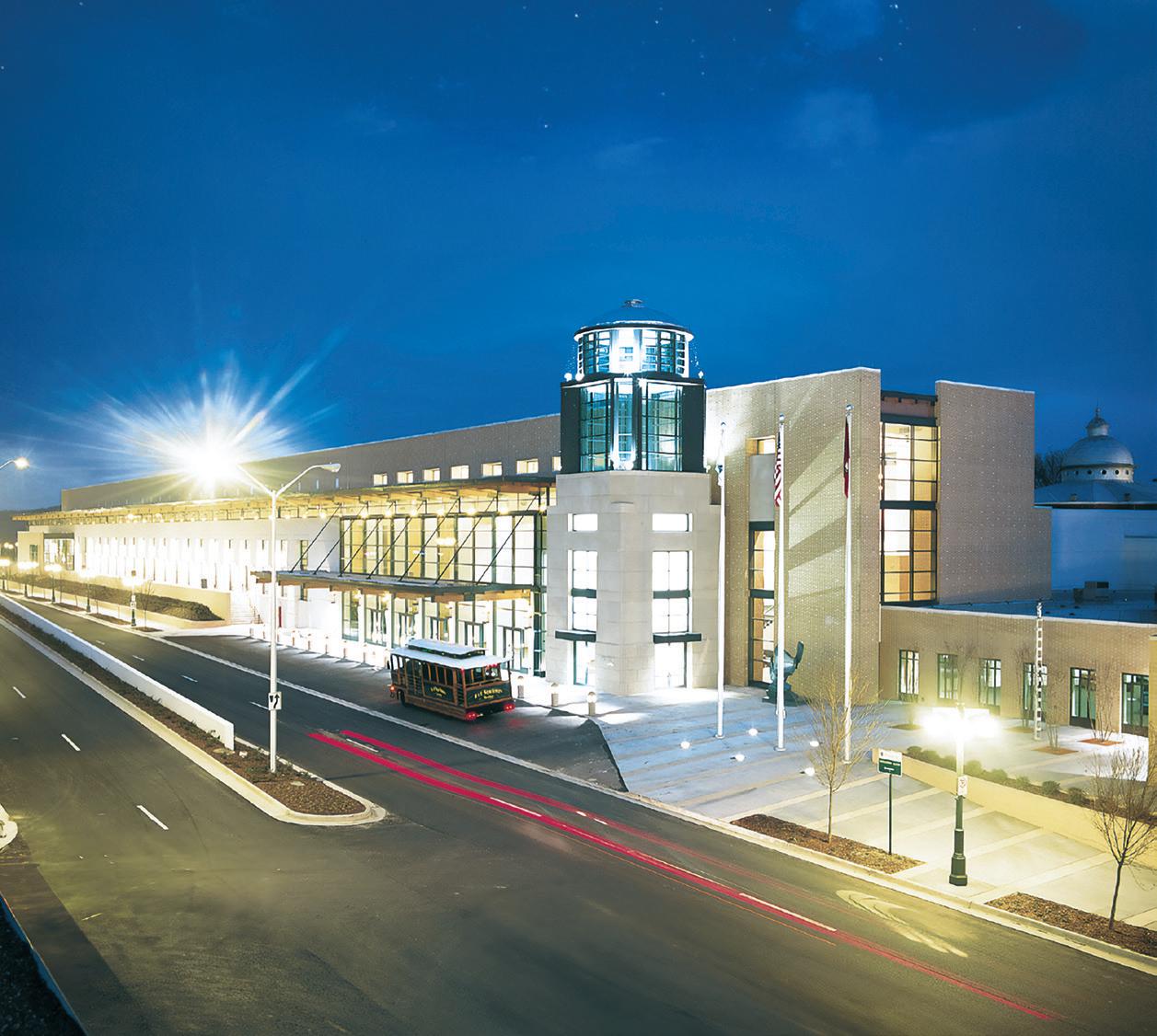
Hot Springs Convention Center 134 Convention Blvd., Hot Springs, AR 71901
REGISTRATION IS NOW OPEN
www. ARKANSASTURF .net
Scan QR-Code to Register on our Website or go to $150 per person
Lunch is included on Thursday during the “Lunch and Learn”
Register for the Conference and reserve a room at The Embassy Suites (room block open till Dec. 15th) or The Hotel Hot Springs. Links for the room blocks are on the website under the “Hotel” tab.
Companies that would like to be a Sponsor or Vendor at the Trade show, please contact:
Pesticide Calibration Techniques for Properly Calibrating Turf Sprayers
Turf Weed ID and Responsible Herbicide Usage Identifying Common Turfgrass Weeds in Arkansas
Update on Pesticide Regulations
Arkansas Pest Control Rule and Law Updates
Integrated Pest Management Managing Turfgrass Diseases Using an Integrated Approach
Environmental Concerns
Practical Use of Artificial Intelligence (AI) for Turfgrass Management
11:00 AM 11:45 AM Golf Session 3
Aaron Tucker
Graham Kornmeyer & Greg Jones
Friday Jan. 16th 2025 – LAWN & LANDSCAPE SESSION
9:00 AM 9:45 AM Lawn & Landscape Session 1
10:00 AM 10:45 AM Lawn & Landscape Session 2
11:00 AM 11:45 AM Lawn & Landscape Session 3
Garry McDonald
Agustin Boeri
Shawn Askew
Nematode management strategies for golf course putting greens
Weed management programs for golf courses in the transition zone
Bermudagrass to zoysiagrass fairway conversion
Bermudagrass to Zoysiagrass Fairway Conversion by Sprigs
Ornamental plant ID and selection
Nutrient management strategies for home lawns
Managing troublesome lawn weeds: annual bluegrass, dallisgrass, goosegrass, and others
Friday Jan. 16th 2025 – PARKS & SPORTS TURF SESSION
9:00 AM 9:45 AM
Turf Session 1 Mike Richardson & Brayden
10:00 AM 10:45 AM Sports Turf Session 2
11:00 AM 11:45 AM Sports Turf Session 3
Mingying Xiang
Agustin Boeri
Winterkill management for bermudagrass sports fields
Autonomous mowers vs. conventional mowers
Woody Plant Selection for Arkansas Landscapes
Strategies for Preventing and Managing Winterkill in Bermudagrass Sports Fields
YOUR
ARKANSAS TURFGRASS
Arkansas Turfgrass allows you to narrow the focus and get your message directly in the hands of your customers. The magazine is a key benefit of Arkansas Turfgrass Association membership – providing valuable research, education, and industry information. Readers can also access the Digital Edition through The Turf Zone website. Archived issues ensure that your advertising will continue to be seen indefinitely, for long-ranging impact. ATA Members Include:
Lawn Care Operators Golf Course Superintendents
Parks & Recreation Supervisors Landscape Contractors
Contact us today to learn about effective and unique advertising strategies that target turf industry professionals.
sales@leadingedgecommunications.com
linkedin.com/company/theturfzone
x.com/theturfzone
facebook.com/theturfzone
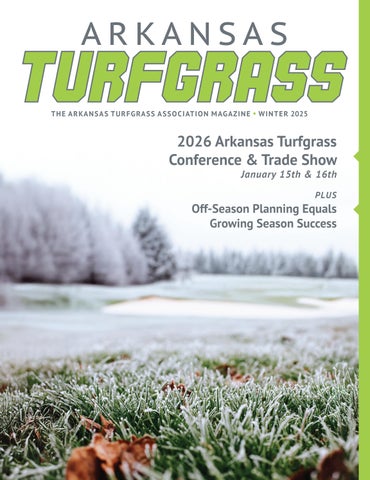
The EQUALS PLANNING OFF - SEASON GROWING SEASON SUCCESS
winter months are often viewed as downtime in the turfgrass industry—a pause between demanding growing seasons. Yet, for forward-thinking turf professionals, this quieter period presents an opportunity to set the stage for success in the year ahead. With fields dormant and turf maintenance demands reduced, winter is the ideal season to plan capital improvements, maintain equipment, address labor needs, and invest in personal and professional growth.
Strategic Planning and Goal Setting
Winter is the perfect time to take a strategic look at your operation. Without the daily pressures of mowing, irrigating, and fertilizing, you can focus on evaluating your past season and setting goals for the coming year. Reviewing turf performance data—such as soil tests, disease occurrences, and irrigation efficiency—provides a foundation for improved agronomic strategies.
Budget development should also take priority. This includes planning capital improvement projects, reinvesting in new equipment, forecasting material costs, and reviewing vendor contracts. By completing these administrative tasks now, operations enter spring with a proactive plan rather than relying solely on reactive solutions.
Off-Season Turfgrass Tasks
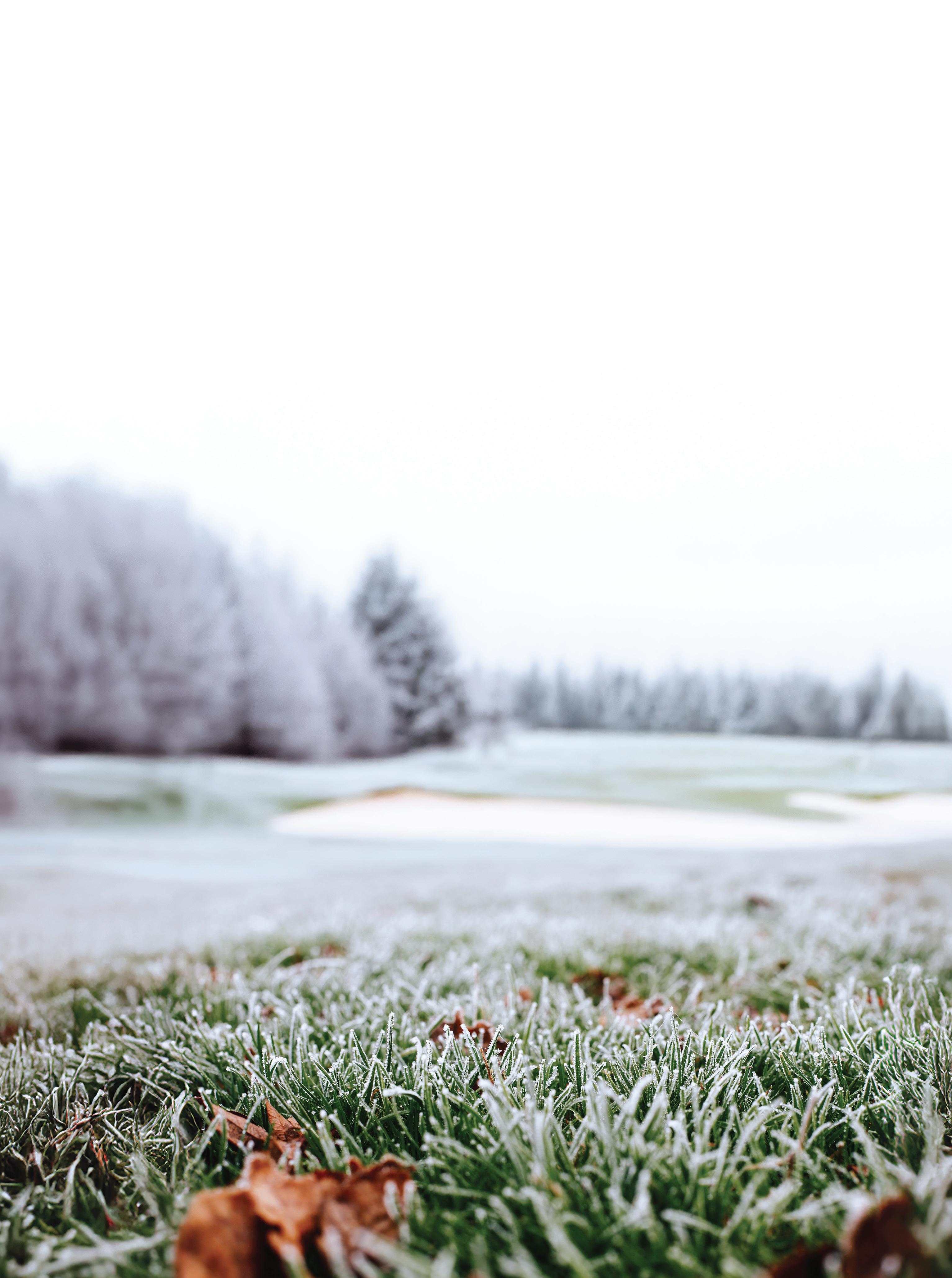
Although turfgrass growth slows significantly in winter, several vital agronomic tasks can still be accomplished. Deep-tine aeration helps relieve compaction before freezing sets in, promoting root health and improving water infiltration in the spring. Winter is also the time to remove debris and leaves that can smother turf or trap moisture, fostering mold and disease. If irrigation is part of your facility’s infrastructure, ensure the system is properly winterized to prevent frozen pipes and costly repairs later.
Sports turf managers should pay close attention to field coverage and frost conditions. Avoiding traffic on frosted turf prevents blade rupture and long-term damage that manifests during spring green-up. This season also offers opportunities to assess drainage issues and plan topdressing or leveling work before the busy season begins.
Equipment Maintenance and Readiness
Keeping turf equipment in peak condition during the dormant months is essential to maintain growing season efficiency. Winter is the ideal window to perform comprehensive maintenance routines, ensuring that machinery is ready for immediate use come spring. Begin with a deep cleaning—removing grass build-up, dirt, and dust from mowers, aerators, and spreaders. Follow this with essential mechanical checks: drain old fuel, replace oil and filters, sharpen blades, and inspect belts and bearings for wear.
Technicians should also verify that safety features, such as brake systems and protective guards, are functioning. Preventive maintenance during the off-season not only extends equipment lifespan but also reduces in-season downtime, which translates directly to higher productivity and cost savings.
Addressing Staffing Needs
Winter is also prime time to examine staffing operations. While fewer crew members may be needed in the off-season, maintaining engagement and continuity among core employees builds loyalty and retention. HR planning should include recruiting strategies to fill gaps identified in the previous season, particularly for part-time or seasonal crew members.
Some turf businesses use incentive programs to retain staff through winter, offering bonuses for referrals or encouraging temporary shifts into indoor maintenance tasks. Strategic partnerships with adjacent businesses—such as construction or snow management companies—can also help keep workers employed year-round while ensuring availability for spring projects. Additionally, reviewing workplace policies, updating safety manuals, and refining onboarding processes ensures teams hit the ground running when the growing season resumes.
Personal and Professional Development
Beyond field and equipment management, winter offers a unique opportunity for personal goal setting and professional renewal.
Turf professionals can use this period to attend industry conferences, renew certifications, or participate in turfgrass education programs. Winter workshops hosted by universities and professional organizations often focus on emerging topics such as soil microbiome management, environmental sustainability, and advanced irrigation technology.
Individual growth should extend beyond technical knowledge. Reflecting on work-life balance, leadership skills, and communication can elevate overall effectiveness. Mentorship within the organization—pairing seasoned technicians with newer employees—fosters both retention and the transfer of institutional knowledge.
Leveraging Technology and Innovation
Another productive off-season focus is integrating technology into turf management practices. Digital scheduling platforms, moisture sensors, and data analytics tools have become essential for efficient operations. Winter provides the breathing room to test new systems, upgrade software, or train staff on these innovations. Facilities implementing precision turf management often find reduced material waste, improved consistency, and measurable economic benefits when spring arrives. [10]
Furthermore, planning sustainability initiatives during winter, such as reducing chemical inputs or improving water management, aligns operational goals with environmental responsibility—a growing expectation among clients and communities.
Preparing for Contingencies and Market Changes
As economic conditions fluctuate, proactive managers use winter to anticipate market shifts. Reviewing supplier relationships, material sourcing, and pricing structures can mitigate supply chain disruptions common during peak season. Winter is also an ideal time to assess risk management practices, update insurance coverage, and develop contingency plans for weather extremes or pest outbreaks.
Forward-focused organizations also examine emerging labor trends. Many employers are adopting skill-based pay structures and clear advancement pathways to attract and retain quality employees in a tightening labor market. Implementing such strategies during winter—before hiring ramps up—can streamline recruitment and foster a stronger company culture. [11][12]
Synchronizing Plans Across Departments
A holistic approach ensures winter goals connect across departments. Operations, staffing, and financial teams should coordinate priorities, aligning turf management objectives with broader business plans. For example, HR training can coincide with planned equipment updates, integrating safety demonstrations with maintenance workshops. Similarly, budgeting discussions should involve both agronomic and administrative stakeholders to create a unified vision for the next season.
Embracing the Winter Advantage
Ultimately, the success of next year’s turfgrass season often begins in the quiet of winter. By combining thoughtful preparation, detailed equipment maintenance, workforce development, and personal goal setting, turfgrass professionals can transform the offseason into one of the most productive periods of the year. While the fields may lie dormant, the best operations never truly stand still—they use winter’s pause to think strategically, sharpen their tools, invest in their people, and set a clear course for sustained growth and performance.
In the turfgrass industry, excellence is rarely accidental. It is cultivated season after season through discipline, foresight, and planning—and winter is when much of that unseen work happens. Those who take advantage of this time position themselves not only for greener fields but for the kind of professional and organizational maturity that keeps their operations thriving year after year. •