
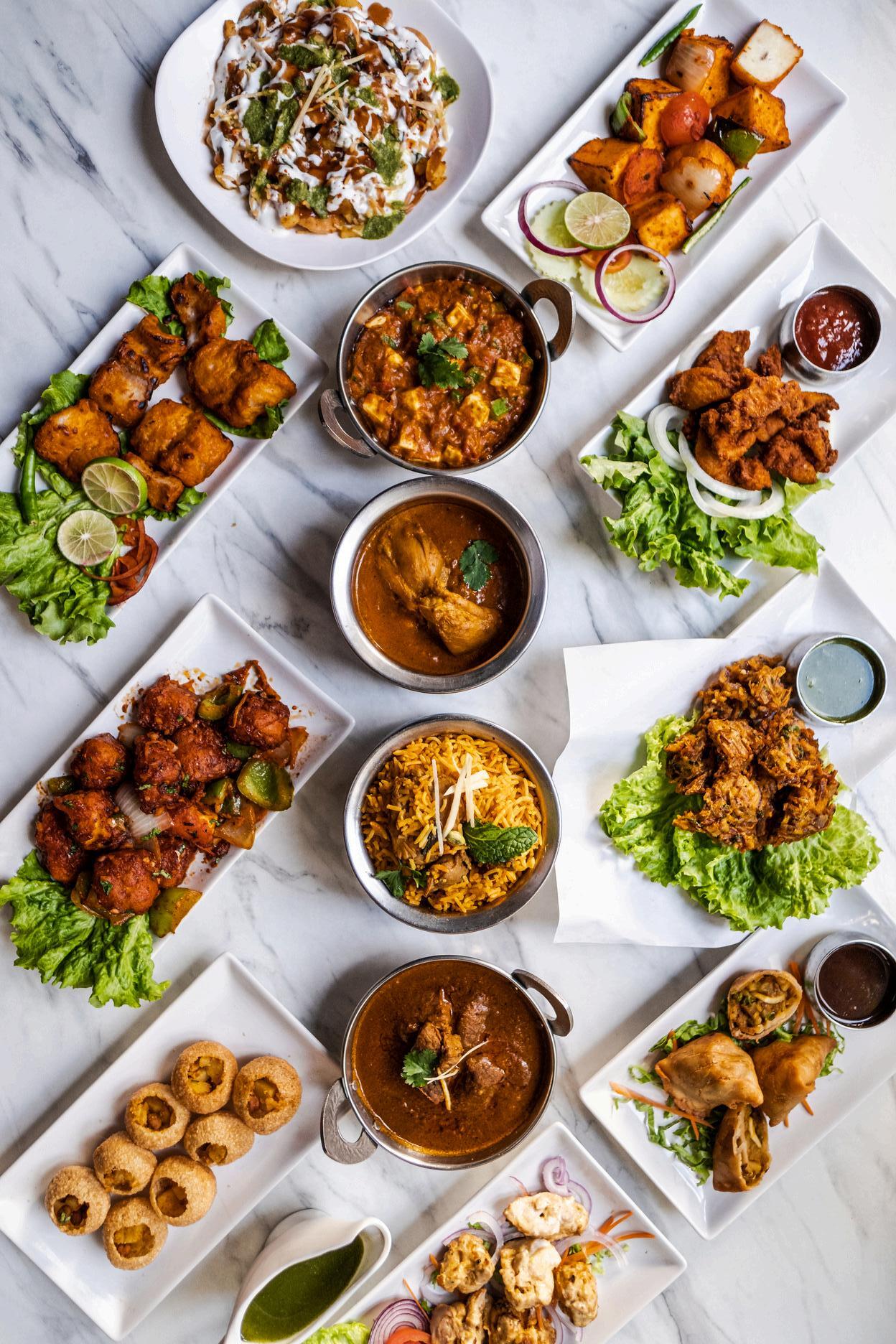
Intermediate Cuisine
Laura Sofía Rodríguez Martínez
ID: 0000296310
Profesor: Miguel Piñeros
Class 1
Cooking methods and heat transfer
There are some techniques to transform food from simple ingredients to complex dishes. In this first class we saw some of these, a topic of heat transfer and other things that are important for cooking in the class of intermediate cuisine.
Caramelization and Maillard reaction
Caramelization is one of the browning reactions and gives flavor. This technique produces different color becoming a syrup and finally turning food brown. The flavor gweet and odorless, develops acidity, some bitterness, and rich aroma. Its use most in candies and other sweets. The temperature for this reaction is 165°C.
Slow browning in moist foods
Not all browning reactions require temperatures above the boil. Watery meat or chicken stock will do the same as it's boiled down to make a concentrated demiglace.
Maillard technique was created by Louis Camille Maillard and is a reaction of a carbohydrate molecule and an amino acid to form an unstable intermediate structure, finally undergoes further changes producing hundred of differences. The result is the dark color and intense flavor that is more complex and meaty than caramelized flavors because of the mix of nitrogen and sulfur with carbon, hydrigen and oxygen. The temperature for this reaction is below than 50°C.
Dry cooking methods
Dry methods are grilling, baking and frying. Food cooking in water become cook at temperature of 100°C, and in oil or oven at 159°C - 260°C.
2
Forms of heat transfer
Transferring energy from a heat source into the food is a very important step at the moment of cooking. There exists different cooking methods with differnt materials and depends on different forms of heat transfer.
Convection: Is the movement in fluids. Is the movement of molecules in a fluid from a warm region to a cooler one. The fluid can be liquid or gases. It combines conduction and mixing.
Conduction: Its direct contact, so energy is exchanged from one particle to a nearby by collision. Is much slower process than electron movement.
Radiation: The energy of microwaves. Not requires direct physical contact. It's emited by atoms and molecules that absorbed energy.
Basic methods of heating food
Grilling and broiling (Infrared radiation): In grilling the heat source is below the food and in broiling is above. The heat sources emit visible light and are intense radiators.
Baking (Air convection and radiation): We surround food with a hot enclosure in the oven. It dehydrates the surface of food and will brown it.
Boiling and simmering (Water convection): Food is heated in hot water with a maximum temperature of 100°C. The surface of the food is in contact with the cooking medium, and water is dense enough that its molecules constantly collide with the food and rapidly impart their energy to it.
Steaming (Heat by vapor condensation and convection): Vapor is less dense than liquid water. Steaming does an especially quick job of bringing the surface of the food up to the boiling point, and an effective job of keeping it there.
Pan-frying and sautéing (Conduction): Conduction from a hot oiled pan. The temperature encourage Maillard browning and flavor development. Deep frying (Oil convection): Employing enough oil to immerse the food altogether.
Microwaving (Microwave radiation): Heat is transfer via electromagnetic radiation
3
Class 2
Gluten
It has three fundamental elements: water, gluten proteins and starch granules from its flour, create a homogeneous and cohesive (silky) dough.
More Flour than Water = Dough
More Water than Flour = Batter
It has temporary structure when its raw and solid structure when cooked.
Gluten is the flour muscle and its main components are proteins, form long chains that adhere to each other proteins formed by amino acids: gliadins and glutenins. It has two characteristics, plasticity that means malleability and elasticity that means to recovers the original shape and it changes shape when pressed but has resistance.
Intentional gluten development
Use high gluten content produce hard gluten. If it has low protein it is soft gluten. Wheat semolina is hard but elastic gluten.
The oxidizing substances in the flour aging and improving the dough giving greater hardness.
The proportion of water determines the protein concentration. If we use little quantity of water the gluten won’t development. In contrast if we use too much water the gluten will expand easily.
To develop the gluten we need to stirring and working the mixture
Ingredients like salt or water reinforces the mesh created by the gluten. And ingredients like sugar limits gluten development by diluting flour proteins. Also fats, oils and acidity makes the gluten weak.
4
History of pasta and noodles
Noodles in China
Marco Polo found noodles in China and introduced them to Italy. Its said that China was the first country to develop the process of making noodles but before Marco Polo there were pastas in the Mediterranean.
China develop the process of noodles and not only different shapes but also the mix of flour with meat broth and one made with egg. This country also invented filled pasta, the original ravioli, these becomes a luxury dish for the ruling class and gradually became staples of the working class
Pasta in the Middle East and Mediterranean
In the 6th century appear the first indications of pasta preparations, then in 9th century a preparation of semolina dought shapes recives a specific name. In 13th century in Italia appear the term macaroni that was used to different shapes, from flat to lumpy. In 18th century durum pasta had become street food in Naples. In the next century (19th) appear the term al dente, after the World War I.
Medieval cooks made pastas from fermented doughs, so they cooked pasta for an hour or more until it was very moist and soft, they served with cheese. The postmedieval cooks formed guilds and made fresh types from soft wheat flour throughout Italy, dried types from durum semolina in the south and in Sicily. Modern heat treatments have also made it possible to keep fresh pasta for several weeks in the refrigerator.
5
Recipes
Roman Gnocchis
125 g of butter
600 ml of milk
20 g of salt
240 g of semolina flour
3 units of egg yolks
100 g of parmesan cheese
Melt butter 1. Mix milk with semolina flour and salt, add it to the butter
2. Retire form heat and gradually add egg yolks and few of parmesan cheese.
3. Put the mix in the chiller and after 1 hour put away the mix and make the forms of gnocchis.
5.
4. Put in the oven with parmesan cheese above and then serve.
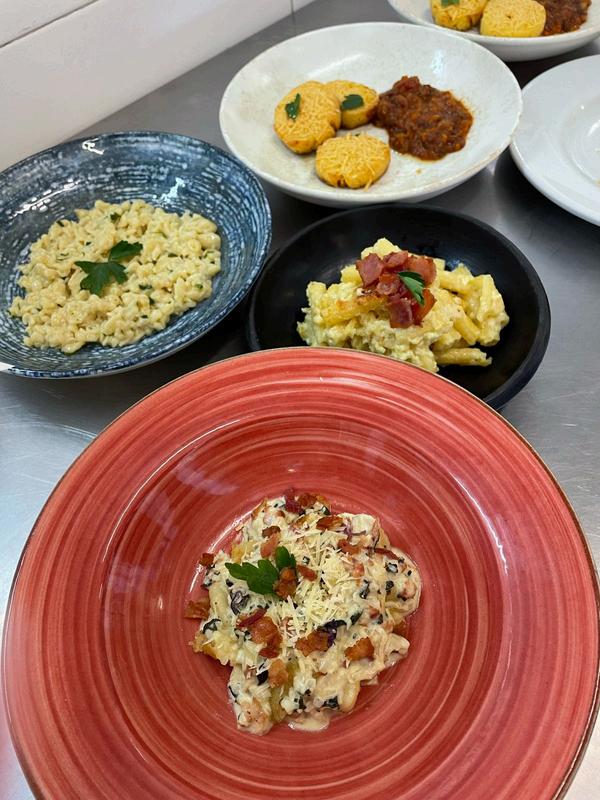
4 units of eggs
150 ml of water
170 ml of milk
466 g of flour
5 g of salt
1 g of nut meg
Garlic and parsley
Add egg and salt to the flour 1. Gradually add water until its formed soft and watery dough. 2. Boil water and add the mix with the help of a strainer. 3. The pasta will be cook in 3 or 4 minutes, 4. Serve with parsley and garlic. 5.
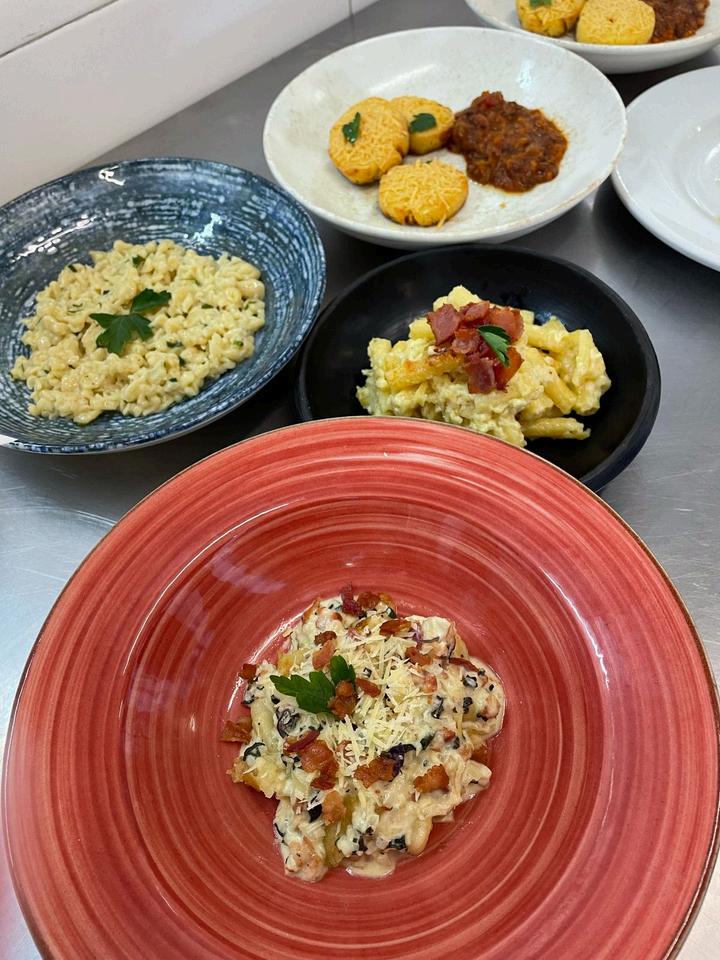 Spaetzle
Mac and cheese
500 g of elbow pasta
250 g of cheddar cheese
100 g of cream
200 g of parmesan cheese
500 ml of milk
150 g of onion
30 g of flour
30 g of butter
1500 g of patusa potato
6 eggs
300 g of flour
400 g of bacon
15 g of butter
100 g of onion
5 g of garlic
20 g of sage
300 g of cream
Parmesan cheese
100 ml of olive oil
250 g of onion
100 g of carrot
50 g of celery
10 g of garlic
1300 g of ground beef
100 ml of white wine
850 g of canned tomto
400 g of pasta for lasagna
300 g of grated parmesan cheese
30 g of tomato paste
500 ml of bechamel sauce
Make a bechamel. For this put the onion in the milk and apply heat. Remove the onion. Make a roux with flour and butter. Add cream, cheddar cheese and pasta. Put parmesan cheese and put in the oven.
Serve your mac and cheese.
Gnocchis
Cut the potatoes in half and cook in the oven.
After they are cooked, peel. 2. Make a pureé and add flour, egg and salt. 3.
Make the form of your gnocchis and cook in water.
Lasagna
Make the bechamel sauce.
Cook beef with tomato paste.
Pass the pasta in water and start making your lasagna.
Put a layer of pasta, then a layer of beef, bechamel and cheese. 4. Make the same the times you consider. 5. Put the lasagna in the oven with parmesan cheese. 6.
1.
4
1.
2.
3.
Class 3
More about gluten
A freshly milled flour makes the gluten weak. And after it rest with air the gluten improves and also the baking properties too.
Gluten and starch granules are minor components of the flour in 90%.
Gluten has 1% by weight in fat, fatty fragments and phospholipids that stabilizes bubbles, preventing them from breaking prematurely and they soften the bread structure and delay its hardening.
Also has some enizimes to provide sugar to yeasts
Candeal: Many types of wheat are derived. It has content with high quality of gluten proteins, and it has a high content of strong gluten and proteins 1. Durum: Its 75% production is in North America. 2.
Soft wheat: 20% of the crop with less gluten proteins. 3.
Racimoso: That has soft gluten. 4.
Poulard: Is a hard wheat for Italian pasta. 5.
Milling consists on break the grain with rollers or stone millstones until it becomes small. For refined flours we need to pass through several milling processes to eliminate the germ, the bran, the endosperm layers (rich in proteins) and the starch.
8
Types of wheat
Transformation of wheat into flour
Types of flour
There exist some types of flours:
All-purpose flours that have more protein.
Whole wheat flour which is a good source of protein, contains the germ and aleurone layer And it does not produce gluten
Flour used for cakes that has low level of weak gluten proteins and is ideal for soft and mild products.
Flours with yeast which contains baking powder and there is no additional yeast required.
Instant flours that has low protein level, to make it its ideal to pre-cook grains until gelled and then put to dry, that makes easier for water to enter them during the second baking.
Pasta is a mixture of wheat, flour and water, it has a milky aspect. Consist in dry flour particles that are transformed into a malleable dough and It is molded and dried to eat with other ingredients.
In Italy pasta is harder and that is why they have a great gastronomic culture that revolves around it. In pasta wheat flour found a cohesiveness with gluten proteins. In China, pasta is thinner, looser and with little gluten, so they focus on long noodles and thin wrappers.
Dough has 30% of water and after it rest the particles absorb water and form gluten Finally at the moment of cooking the starch absorbs water and expands To make pasta al dente, the center still slightly uncooked and the surface has from 80% to 90% of water until the center only has from 40% to 60% of water. Its ideal to cook in water 10 times its weight, applying constant movement so that the pasta don’t get stick.
9
Pasta
About the dough
Recipes
Basic pasta
100 g of eggs
100 g of flour
100 g of semolina
Optional:
30 g of tomato paste
30 g of squid ink
200 g of beets
50 g of basil
250 g of tomato
100 g of garlic
100 g of parsley
50 g of capers
50 g of anchovies
200 g of parmesan cheese
50 g of black olives
Alfredo sauce
1.5 lt of cream
200 g of parmesan cheese
Olive oil and Cayena
200 g of tomato
50 g of bacon
50 g of parmesan cheese
5.
Mix the two types of flour and whisk the egg 1. Add the egg gradually unitl it cover all flour. 2. Put the mix on a table and knead. 3. Put the mix in the fridge for some time. 4. Put away agian and extend the mass, to pass it in the machine.
Make the form that you want and cook it in water. 6
NOTE: You can add other ingredients to the egg like tomato paste, squid ink, beets or basil.
Puttanesca sauce
Cut tomato, garlic, capers, anchovies and black olives. 1.
2.
Put in a pan the tomato with garlic and cook for some time.
Add the caper, anchovies and olives and cook all . 3.
4.
Serve with pasta, parsley and parmesan cheese.
Put in a pan the cream with the parmesan cheese and let them some time to cook. 1. Serve it with pasta of your taste and topping with more parmesan cheese.
Amatriciana sauce
Cook bacon with oi. 1. Put the tomato, parmesan cheese and Cayena pepper. 2. Serve with a pasta 3
2.
Crab filling
100 g of cream cheese
200 unit of canned crab meat
2 units of lime zest
20 g of tarragon
Goat cheese
Cream cheese
Ricotta cheese
Carbonara sauce
Onions
Garlic
400 g of bacon
5 units of egg yolks
200 g of parmesan cheese
100 ml of cream
400 ml of cream
100 g of tomato paste
150 g of mozzarella cheese
50 g of parmesan cheese
Tomato in concasser
20 g of basil
Mix the ingredients. 1. Put some other things that you want 2. Fill pasta with this. 3.
Goat cheese filling
Mix the three types of cheese. 1. And put some other ingredients of your taste . 2. Use it to fill pastas. 3.
1.
Cut bacon and cook in oil, with onions and garlic.
2. If you want add cream. 3. Serve with some type of pasta. 4.
Mix the egg yolks with parmesan cheese and add it to the bacon.
All telefono sauce
Put the tomato and tomato paste in a sauce pan. 1.
Add the mozzarella, parmesan cheese and cream. 2.
Finally put basil and serve with pasta. 3.
Class 4
Herbs ans spices
Herbs are plant leaves, fresh or dried and spices are bits of dry seed, bark and root. Both of those gives flavor to foods and drinks so they add flavors that for example grains or meats don't have making those foods more complex and appealing.
Its aroma are volatile, and it increase with high temperatures. Odors are evocative of memories and emotions. Dry spices have 15% of essential oil and fresh and dry herbs have 1%. Its important to know that not all herbs and spices provides aroma as is the case of chillis and black pepper
Some herbs have toxic chemicals sustances and the purified essence of oregano and thyme can be bought form chemical supply companies, these damage skin and lungs. But they have medical uses because of the antioxidants.
Dilution is the process that makes herbs and spices nontoxic and edible and delicious.
Flavor families
The terpenes
Terpene are compound from a zigzag of five carbon atoms. These are volatile and reactive, so we can say that they are the first molecules to reach the nose.
The Phenolics
These are constructed from a simple closed ring of six carbon atoms and at least one fragment of a water molecule. They are more soluble in water than terpenes, also are more persistent in foods and in mouth as we eat.
12
To preserve aroma compounds the tissues must be killed and dried out, but gently as possible, so the water is removed without removing flavor. Also the dried material must be kept in containers in a dark and cool place.
The correct form of store fresh herbs is on refrigerator in partly open plastic bags. That’s becasue the flavor is presaved by freezing. It should be kept in the refrigerator with oil, so that the tissues don't damage and don't get dark and limp.
Dry fresh herbs
For drying fresh herbs, it is removed more than 90% of water, the problem is that with water is also removed flavor. Higher temperatures causes flavor losses rapidly than air-drying technique so it is recomend to use techniques with more air and less temperature.
Extract flavor
Cooking is a form of extact the flavor of herbs and spices, some herbs (fresh leaves) should be strewing on the dish. In some cases is better to add the extracts at the end of the preparation. Grinders, choppers and mortars generate heat and this produce the spice or herb get more volatile so the characteristics of these condiments will get lose faster. So the original flavor is best preserved by prechilling both spice and grinder to keep the aromatics as cool as possible. On the other side, in case of herbs chopping with a sharp knife leaves the herb intact to provide fresh flavor and cause less cell damage. But a dull knife makes brown-black discoloration and a damage on its characteristics.
Oils and fats dissolve more aroma than water while cooking. Alcohol extracts aroma efficiently but is so volatile so it can releases quickly.
The ideal percentage to cook with spices and herbs is 1% or less of the total weight of the other ingredients.
13
Preservation
Recipes
Fish fillet
1600 g of sea bass
150 ml of white wine
100 ml of white wine vinegar
30 g of shallots
200 g of butter
20 g of fresh herbs
380 g of onion
10 g of garlic
10 g of ginger
750 g of canned tomato
400 g of coconut milk
16 g of red hot chili pepper
1. Cut shallots in brounise, and add white wine and white wine vinegar to make a reduction.
Portion the fish and season with condiments, herbs and spices.
2. When the reduction is ready add butter in dices and mix.
3. Add herbs to the sauce.
5.
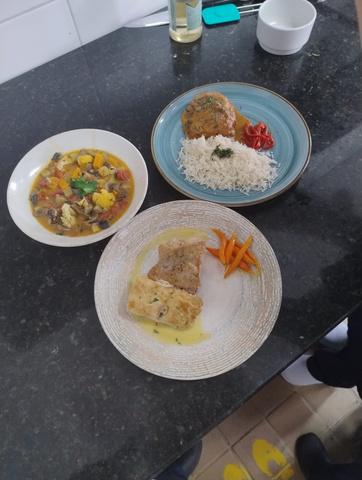
4. Grill the fish and serve with the sauce.
30 g of curry madras paste
250 g of cauliflower
300 g of zuccini
300 gg of egg plant
200 g of mushrooms
250 g of pumpklin
Cinnamon, cloves, coriander, fennel seeds, cumin, curcuma paprika and black pepper
1
Curry vegetable
Cut onion, zuccini, egg plant, and pumpklin.
2. Put vegetables in order from the one that spend more time cooking to the one that use less time.
In a pot put oil and onion, garlic and ginger, then add tomato coconut milk, chili pepper and curry paste and let it cook for some time.
3. Add condiments and let the curry cook together.
4. Serve curry and enjoy 5.
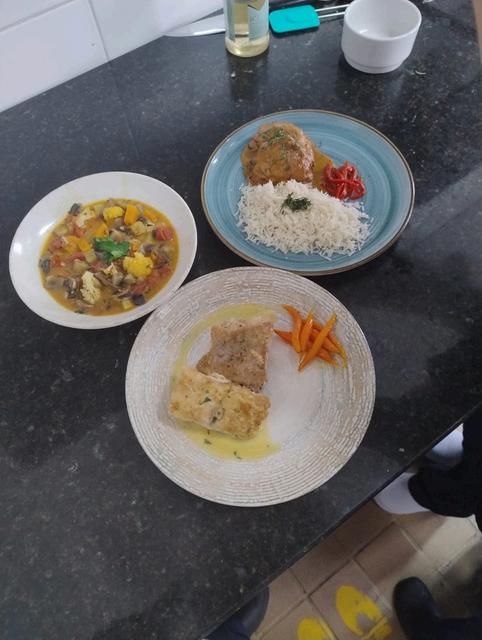
Hungarian chicken
1650 g of chicken
40 g of flour
20 g of garlic
100 g of onion
200 g of cream
250 g of sour cream
10 g of paprika
Salt and pepper
Put salt and pepper to the chicken 1. Cut the onions in brunoise. 2. Put the chicken in a pan, cook for 4 to 5 minutes per each side and reserve. 3.
Saute the onions until they have golden color.
Add pepper to the onions.
Add the chicken and let it cook.
Put cream, sour cream and paprika.
Serve the dish.
500 ml of milk
500 ml of cream
150 g of sugar
1 g of cardamom
1 unit of vainilla
20 g of ginger
10 g of sweet spices
4 units of black tea bags
20 g of gelatine powder + 100
ml of water
250 g of strawberries
150 g of balsamic vinegar +
60 g of sugar
Chai tea latte pannacotta
Pour the milk into a saucepan and add the blck tea bags, cinnamon, anis star, cloves and nut meg.
Heat over low heat, the cover for 15 minutes so that tea and spices steep. 2. Remove cinnamon abd cloves and squeeze the tea bags. 3.
Add the gelatin an dallow it grows for 5 minutes, dissolve it 4. Add sugar and stir, add vainilla. 5. Pur in dishes and refirgerate. 6. When serve it put strawberries on the to. 7.
4.
5.
6.
8.
7.
1
Class 6
Dairy products
How do cows make milk?
The imbalance of hormones towards the end of the gestation period activates the mammary glands, and milk extraction is a stimulus for further milk secretion.
The cow is fertilized 90 days after calving, milked for 10 months and left to dry for 2 months before the next calving.
Colostrum is the first liquid secreted by the mammary gland. It is yellow, creamy, has a high concentration of fats, vitamins and proteins.
Milk has live white blood cells, mammary gland cells and bacteria when it is collected.
Pasteurization removes vitality from the fluid. By removing the cells, it is more stable and has less risk of intoxication.
Characteristics of milk
It has a pH between 6.5 and 6.7, therefore it is slightly acidic.
Casein is one of the proteins in milk.
It has amino acids. It forms the body and metabolism of the baby
Milk sugar: Lactose
It is a compound of two simple sugars: glucose and galactose. It provides almost half the calories of human milk and 40% of cow's milk. It gives a sweet taste. A special enzyme is needed to digest lactose (lactase).
16
Milk fat globules have fat-soluble vitamins. They account for about half the calories of whole milk. More fat content = more cream or butter --> higher price.
After fresh milk leaving the udder is allowed to stand, many of its fat globules rise to the surface and form a rich fat layer. The globules rise because their fat is lighter than water, they rise fast due to their buoyancy.
Milk and cream can be boiled and reduced for hours, until they are dry. The heat causes many of the milk proteins to unfold and have more adhesion to the globule surfaces and other proteins. The globule becomes thicker as the milk is heated.
The fat in cold milk forms crystals that damage the globule's veil of phospholipids and proteins.
Milk proteins
Curd and whey
The curd proteins are caseins, which agglomerate under acidic conditions and form a solid mass. The whey proteins remain suspended in the liquid.
Caseins
Micelles are 4 different types of proteins assembled in microscopic family units. They are one tenth of the volume of milk. They provide amino acids and calcium to the calf.
17
Milk fat
Recipes
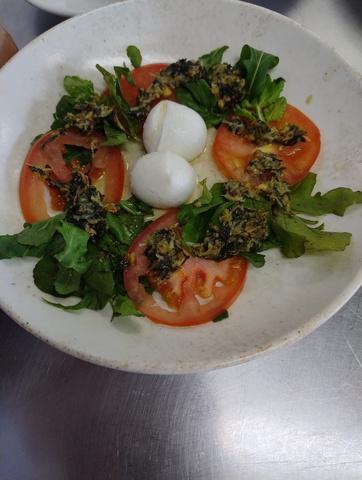
Burrata salad
Burrata cheese
Pesto
Tomato
Rucula
Olive oil
Wash the rucula
1. Cut the tomato in slices
2. Put the rucula and tomato in a plate.
3. Add pesto and put burrata cheese in the center of the salad.
4. Put olive oil in the top 5.
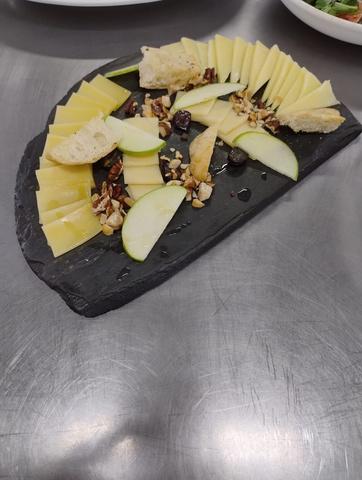
Cheese fondue
200 g of emmenthal cheese
200 g of gruyere cheese
1 g of nut meg
250 ml of white wine
15 g of corn starch
2 baguettes
2
1. Add nut meg, corn starch and white wine.
3.
Add the two types of cheese to a pan.
Toast baguettes and serve with with the cheese fondue.
Pesto
100 g of basil
5 g of garlic
30 g of parmesan cheese
30 g of almonds
150 ml of olive oil
2 g of salt
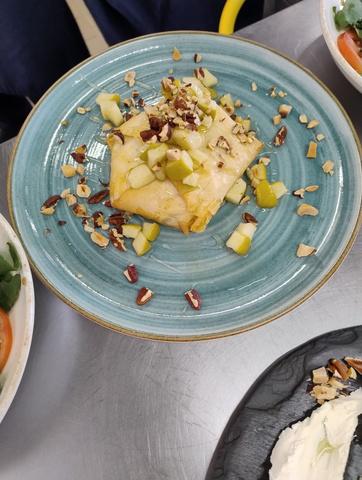
200 g of camembert
100 g of butter
50 g of green apple
20 g of hazelnut
200 g of phyllo dough
200 ml of honey
New york cheese cake
140 g of cookie crumbs
85 g of melted butter
25 g of sugar
500 g of cream cheese
139 g of caster sugar
45 g of flour
3 ml of vainilla extract
1 lemon zest
5 ml of lemon juice
2 eggs
1 yolk
160 g of cream
2
1. Add almonds olive oil, salt and parmesan cheese.
3.
Chew de garlic, then add the basil and continue chewing.
Add other ingredients if necessary.
Phyllo dough wrapped camembert
1 Put camembert into the dough and close, then put in the oven.
Put law of phyllo dough and butter, then other law of dough and butter, and continue like this.
2. Caramelized the apple with honey and hazelnut and put in the top.
4.
3. Serve the dish.
1. Mix cream cheese with caster sugar, flour and vainilla, add lemon zest, lemon juice, cream and eggs.
Mix the cookie crumbs with butter and sugar, then refrigerate.
2. Put the mix in the crust and put in the oven.
3. Make a jam.
5.
4. Serve with the jam in the top.
Class 7
Mushrooms
- Mushrooms are not true plants, they are fungi, they belong to the kingdom Fungi.
- Fungi do not have chlorophyll and do not capture solar energy.
- Fungi have a symbiotic relationship with other plants in order to live. Both living beings benefit from each other (boletus and truffles).
- Some fungi are parasites of plants and cause diseases. They live on the decomposing remains of dead plants (mushrooms).
Structure and qualities of mushrooms:
The edible part is a portion of the organism. It lives under the soil in the form of a fine, cottony network of fibers (hyphae), branching to absorb nutrients.
In one cubic centimeter of soil there can be 2000 m of hyphae.
The subway mass accumulates material and energy, then a group of intertwined hyphae form a water-filled body that rises above the surface, releasing reproductive spores into the air.
The mushrooms we eat are these water-filled fruiting bodies. They have a poison that can be deadly for their survival and defense against animals
Swollen mushrooms contain 80% - 90% water. They have a thin cuticle that allows for rapid moisture loss and absorption.
Their cell walls are not reinforced with cellulose but with chitin. They have a lot of protein and vitamin B 12.
20
Flavor of mushrooms
Almost meaty flavor, intensifies the flavor of many dishes. High content of free amino acids
Source of monosodium glutamate. Its aroma is due to octenol (8-carbon alcohol)
Cooking mushrooms
Cook slowly with dry heat to make their flavor more intense. This way the enzymes have time to work before inactivating. A large amount of water is evaporated to concentrate amino acids, sugars and aromas.
Storage and handling of mushrooms
They can continue to grow after being harvested
In 4 days of storage at room temperature they lose almost half of their energy reserves. They lose enzymatic activities
Refrigeration at 4 - 6°C slows down the metabolism of mushrooms.
Wrap loosely
Water can damage the surface cells and cause color change, so they are cooked immediately after washing.
21
Recipes
Truffle pizzeta
500 g of flour
5 g of salt
400 ml of water
4 g of fresh yeast
20 g of sugar
25 ml of olive oil
400 g of mozzarella
2 units of burrata
8 ml of truffle oil
25 g of of truffle paste
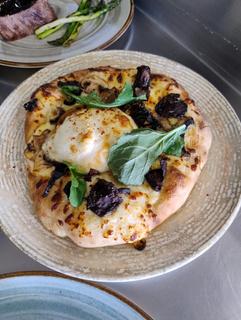
1. Put the mass in a pan.
3.
Mix the flour, salt, water, sugar, olive oil, and fresh yeast, knead and put in the fridge.
2. Add truffle oil and paste. Put mozzarella and burrata cheese.
Decore with some leaves and put the pizza in the oven
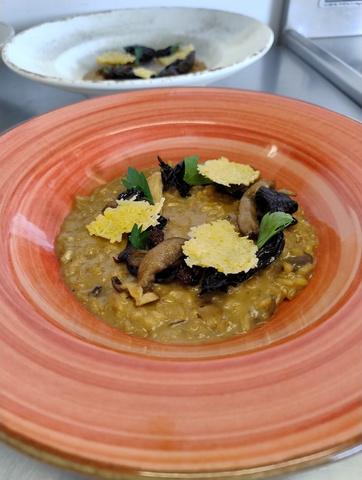
Fungi risotto
200 g of onion
20 g of garlic
150 g of white wine
480 g of arborio rice
400 g of mix of mushrooms
100 g of mascarpone cheese
Mushroom stock
1
Cut fresh mushrooms and hydrate the dry mushrooms.
Saute the onions with garlic.
2. Add the fresh mushrooms and rice.
3. Put water and stir with salt. 4.
5.
Pour the rice in a hotel pan to reserve.
Saute the dry mushrooms with salt.
6. Put the rice again in a saucepan and make a mantecatta with mascarpone cheese.
8.
7. Serve the risotto with dry mushrooms on the top.
4.
Croquette
100 g of onion
350 g of muhrooms
5 g of garlic
100 g of butter
100 g of flour
800 ml of milk
Bread crumbs
Eggs
1 baguette
30 ml of olive oil
7 g of garlic
300 g of mix mushrooms
100 ml of brandy
40 g of parsley
100 g serrano ham
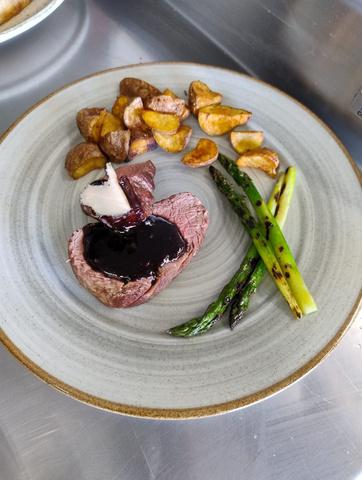
Beef perigaux
1 lt of brown beef stock
1400 g of beef bones
150 ml of port wine
25 g of butter
10 ml truffle oil
20 g of fresh truffle
400 g of salt
1200 g of beef tenderloin
400 g of asparragus
1000 g of richie potatoes
Make a bechamel with 20% of thickness. 1. Add the mushrooms to the bechamel. 2. Make small balls 3. Pass the balls in flour, eggs, and bread crumbs. 4. Fry and serve 5
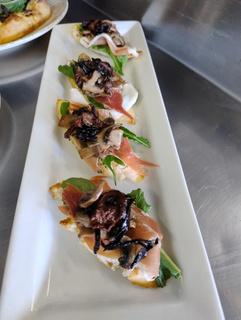
Mushrooms montaditos
Cut mushrooms and serrano ham. 1.
2. Put out of the oven and add brandy, mushrooms and serrano ham.
Cut and toast baguette with oil, parsley and garlic
3. Decore with parsley and serve 4.
Put the butter and oil in a pan. 1. Add the brown stock, port wine and beef bones.
2. Add the fresh truffle.
3. Make the beef tenderloin 4. Grill the asparragus 5
Make the potatoes in the oven 6. Serve the dish.
7.
Class 8
Cereal and legumes
Seeds are our most durable and concentrated foods
Lifeboats, designed to carry a plant's offspring to the harbor of a distant future.
At harvest, the sprout goes into suspended animation, to survive months of drought or cold waiting for the moment to come back to life.
The surrounding mass of tissue is a reservoir of food to nourish this rebirth.
They gave primitive humans the nourishment and inspiration to shape nature to meet their needs.
Seed composition and qualities
Parts of the seed
Outer protective covering.
Hard fibrous tissue layer
Phenolic compounds (pigments, anthocyanins and tannins)
Removed from kernels to accelerate cooking
Embryo
The germ contains oil and enzymes from the seeds.
Source of flavor
Reserve tissue mass.
Determines the texture of the seed.
Proteins, starch and oil.
Seeds and health
They provide nutritional benefits. Source of energy, protein and B vitamins
Storage
In a dry, cool and dark place. Moisture generates microorganisms and heat accelerates oxidation.
24
Seeds
These are structures with which plants create a new generation of themselves. They contain an embryonic plant with a food reserve to sustain its germination and initial growth.
Grains or cereals:
Cereals are plants of the grass family, they produce edible and nutritious seeds (the grains).
They are also those seeds themselves and the products made from them. They live in a season or two and are easy to harvest and handle.
Wheat, barley, oats, rye, corn, sorghum and millet.
Legumes:
They produce pods containing several seeds, rich in protein, thanks to their symbiosis with bacteria from their roots and provide air nitrogen.
Seeds are protected by seed coatings.
Lentils, broad beans, peas, chickpeas, soybeans and mung beans.
Nuts:
Large seeds enclosed in hard shells and produced by long-lived trees. They are large and attractive to animals that disperse them and to give the embryo an adequate supply of food to sustain slow growth in the shade. Their energy is stored in the form of oil and not embryo.
Wheat gluten
In wheat flour doughs it has reserve proteins. The flour is mixed with water and the gluten proteins bind with other proteins to form an elastic dough that can be expanded. Without wheat there would be no fluffy breads. It is necessary to knead with water to prevent the gluten proteins from separating from the flour. When cooked, gluten develops a leathery and slippery texture. Its fermentation turns it into a condiment thanks to the glutamic acid portion.
25
Recipes
Paella
450 g of chicken wings
500 g of pork belly
250 g of onion
25 g of garlic
250 g red bell pepper
700 g of bomba rice
400 g of tomato
0,5 g of zafron
3000 ml of fumet
200 g of shrimp
454 g of mussels
550 g of squid
700 g of flour
11,9 g of yeast
2,8 g of sugar
16,1 g of salt
420 ml of water
22,4 ml of olive oil
In a large pot, heat the fish stock along with the saffron
2.
In a paella pan, heat olive oil. Lightly fry the shrimp and squid.
Add oil and fry the red bell pepper strips, and the diced tomato. 3.
Add the garlic, parsley and sweet paprika. 4.
Add the rice, stirring to lightly fry 5
Add all the reserved fish and seafood, distributing them in the paella pan. Taste for salt and add more if necessary.
6. Once the paella is ready and all the liquid has evaporated, let the rice rest for a few more minutes Serve and enjoy 7.
Mix all the ingredients and put the mass in the fridge 1. Male balls with the mass and spread it circularly 2. Put in a pan on the stove 3. Put into the oven until the bread puffs up 4.
1.
Pita bread
300 g of chick peas
50 g olive oil
100 g of tahini
Lemon juice
Salt Paprika
5 g garlic
80 ml chick peas stock
Granola
Oats
Almonds
Pumpkin seeds
Sunflower seeds
Chia seeds
Flaxseed
Amaranth
Bitter chocolate
Honey
Strawberries
Banana
Blueberries
Humus
Put out the chick peas stock of the cheackpeas.
3.
1. Mix with tahini, lemon juice, salt, paprika, garlic and chick peas stock. 2. Serve with pita bread.
1. Mix all the cereals.
Toast each seed in a different pan.
2. Add the grated chocolate and honey at taste.
3. Put the mix on a hotel pan
5.
4. Put it in the oven at 180°C for approximately 5 minutes.
Put out of the oven
6. Serve with strawberries, bananas and blueberries.
8.
7. Decorate white honey butter and chocolate
Class 9
Duck and turkey
n this class we had a visit from the company "Pavos del Campo". An important fact about the company is that its main objective is to maximize turkey consumption, going from 36 g to 85 g per person. In this way, this protein will be consumed in the same way as chicken or beef.
Characteristics of the turkey
- It is originally from North America, more specifically from Canada.
- Arrived in Europe thanks to the conquistadors.
- Animal breeding produces new genetic lines, without the need for genetic manipulation.
- It is one of the healthiest proteins, like fish.
- Turkeys are only dedicated to laying eggs.
- Turkey is seasonal
Product
Pale pink color
Fresh saline odor
Texture firm and shrinks to the touch
Frozen -18, refrigerated -2, chilled 0-4
No cardiovascular saturated fats
28
Production stages
Birth
32 weeks for the rising
26 to 28 weeks production
108 - 112 eggs per hen
86 - 90 poults
Egg collection every 45 minutes
Egg disinfection with ultraviolet light
Storage room with special conditions
Breeding
They do not distinguish well, are clumsy, sensitive and territorial Nannies for 1 month to teach them to eat and drink
Turkey consumes a lot of water and feeding decreases as turkey gets older 6 mandatory vaccinations, turkeys get one in the eye only once, because if injected they may have more antibiotics after slaughter.
Incubation
28 days
Biosecurity
Isolated place without poultry farms
Before placing in the hatchery, a study of the existence of an embryo is carried out.
Fattening
○ Males: 112 days - 16.5 kg
○ Females: 84 days
Transport
○ 1 or 2 turkeys
○ 3 or 4 females
Myths
Turkey is not tough, it just needs more cooking, not more temperature. It is not only consumed in December
29
Class 11, 12, 13 Meat
Principles of cooking fresh meat
- It is cooked to make it safer, easier to chew and digest an to give more flavor.
- Temperature gives much more flavor to the meat and also creates the aroma (Heat + flavor). There is a release of fluids when there is low temperature so that later new recombined molecules are formed that smell like meat and other compounds such as nuts or herbs.
- When temperature is applied to the meat, it is translucent at first and gains a white opacity due to coagulation after denaturation. This ends in a reddish or pink color (heat + color). Undercooked meat has red juices, moderately cooked meat has pink juices and very well done meat is grayish-brown and transparent juices.
- When temperature is applied to meat, it causes more firmness and elasticity making it easier to chew (heat and texture). Optimum temperature for myosin coagulation is 50°C.
CORRECT TEXTURE
Two-stage cooking process
Initial roasting at high temperature and subsequent cooking at a much lower temperature.
Cooking is slower so that the inside is done properly. You can also coat the outside of the meat with layers of fat such as bacon to slow heat penetration.
Stopping cooking
Cooking time influences the initial temperature of the meat.
Fatty pieces cook more slowly than lean pieces. Measure internal temperature. Cut the meat and observe its color.
30
General information
What is it?
Body tissues of animals that can be eaten It is muscle tissue whose function is to move some part of the animal. Its energy supply and reserve is provided by fat, which is essential for the animal's life
Structure and qualities of meat
75% of water
20% of protein
3% of fat.
Muscle fibers are responsible for movement
Connective tissue is the physical harness of all other body tissues, including muscle
Fatty tissue store energy and is found mainly in the skin
Tissues and textures. The toughness of a piece of meat depends on the age and activity of the animal-
Types of muscle fiber
White are specialized in exerting force quickly and briefly Red are used for prolonged efforts The muscles of young calves and lambs usually contain 0.3% myoglobin and are light-colored.
After cooking
Let the meat rest after cooking and then carve. So that the heat finishes cooking the center.
When the temperature drops, the meat is firmer and more resistant. Its water retention capacity increases. This reduces the loss of fluid when carving.
It is carved perpendicular to the grain of the muscle fibers with sharp knives.
31
Tripe Madrilenian style
500 g of callo
100 g of onion
150 g of chorizo
60 g of jam
250 g of tomato
1 g of bay
400 g of chick pea
200 g of flour
250 g of carrot
Olive oil
Stock
Clean the tripe well and cut them into dices
2. Let the callo cook for 4 hours in a traditional casserole or 45 minutes if you use a fast cooker
Put them to cook with a bay leaf and a good handful of salt, adding also the jam and callo
3. Once they are cooked, drain them and reserve the cooking water, which will be thick and full of gelatin
4. One hour before the end of the traditional cooking time, add the chorizo and blood sausage,
5. Then we add a spoonful of tomato sauce, the cooked tripe, the chopped chorizo and flour.
Recipes
1.
6.
Pass the gizzards into flour, then egg and finally panko. 1. Fry until it get completely cooked 2. Eat with sauce ravigote and put salt. 3. Chicken gizzards croquettes 500 g of chicken gizzards Salt 60 g of flour 2 g of eggs 60 g of panko
450 g of lamb
100 g of onion
5 g of garlic and ginger
400 g of coconut milk
4 tomatoes
2 canned chickpeas
40 g of curry madras paste
Roasted lamb gigot
1 lamb leg gigot
20 g of garlic
250 g of onion
10 g of rosemary
350 ml of beer
Lamb curry
Cook the lamb in oil.
1. Fry the onion and garlic, and add coconut milk, tomatoes and curry paste.
2. Add lamb and chickpeas
3. Serve4.
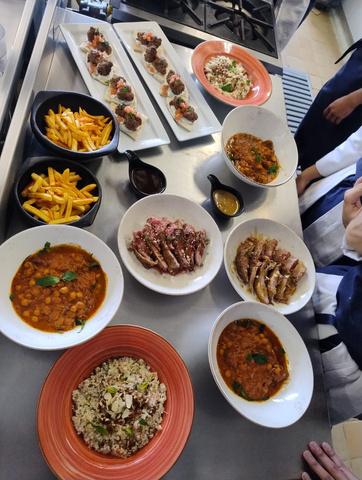
1. Stab the piece several times with a vegetable knife and put garlic cloves inside.
Clean the leg of chordee very well of all the tissue that covers it. Cut off the end and clean the last part of the bone. Put aluminum on the tip.
2. Season with salt, pepper and paprika. Place in a baking tin on a bed of thickly feathered white onion.
3. Put some rosemary, sprinkle with beer and put some butter on top
5.
4. Bake at 180, taking care until it is golden brown and the inside reaches 65 degrees.
Class 14, 15
AQUACULTURE
Advantages
Allows the producer to control the condition of the fish and the circumstances of the catch. A balance between energy consumption and exercise can be achieved by modifying water temperature and flow rate. Farmed fish are fatter and can be killed without stress and physical damage. They can be processed and refrigerated immediately to preserve their quality.
Mollusk
Disadvantages
Contamination of surrounding water with waste.
Genetically uniform fish escape and dilute the already endangered wild population. Limited water flow and exercise can affect the texture and taste of farmed fish.
Fish oils
It provides us with polyunsaturated fats that do good, thanks to the fact that they grow in cold waters and are cold-blooded.
Perishability of fish:
Aquatic cold is responsible for fish damage. Fish have to resort to polyunsaturated fatty acids that maintain fluids at low temperatures.
Cold water forces fish to have enzymes that work at low temperatures and bacteria that live in fish thrive at low temperatures.
34
Flavor
Sea fish is tastier than freshwater fish because of the amino acids they accumulate to balance the salinity of the water. The intensity varies according to the waters in which it was caught.
Aroma
Fresh and almost vegetal
Smell of the coast
Smell of mud
Fishy odor
Due to TMAO, responsible for balancing salinity as it is broken down into TMA.
Color
Its raw musculature is white and delicately translucent. It becomes opaque when it undergoes a cooking process.
Bluefin tuna: Its color is due to the pigment myoglobin.This can oxidize to meta myoglobin if stored at temperatures below -30°C. Myoglobins denature and change color at 60 to 70°C
Pink or orange salmon and trout is due to the pigment carotene (carrots). Generally fish accumulate them in the ovaries but salmon in the muscles. It is extracted from crustaceans.
35
Recipes
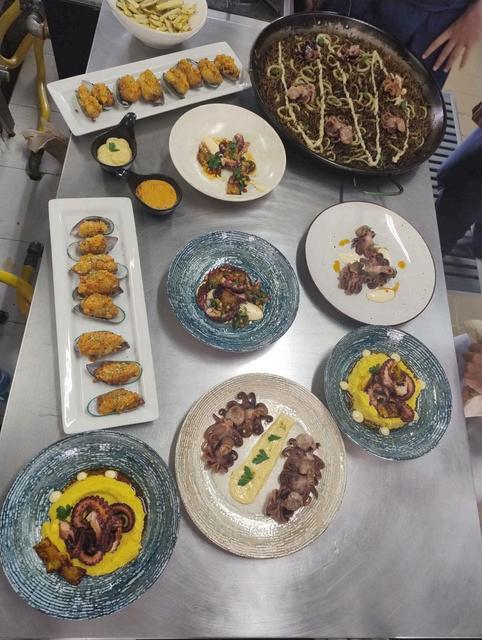
Black fideua
800 g of squid
24 g of squid ink
500 g of fideos
10 g of garlic
300 g of green bell pepper
200 g of onion Fumet
Octopus
Criolla potatoes
Parsley
Pineapple
Red bell pepper
Oregano
Red wine vinegar
Sunflower oil
1. Cook the onion and garlic until it get transparent. 2. Put de bell pepper. 3. Add the squid ink 4 Put the squid. 5. Add the fideos and serve 6.
3.
Toast fideos in oil until it get dark and put away.
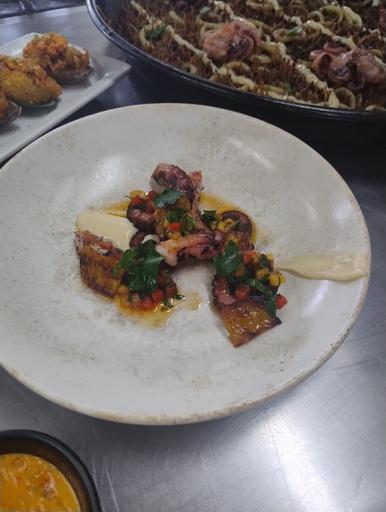
Grilled octopus
Cook the octopus in an express pot, scare it 3 times and then cook it for 16 minutes.
After this time put it in ice water and taste it. It should be soft and firm.
1. Cut some tentacles to fry in the pan. 2. Serve with mahi mahi mahi with french fries and roasted pineapple chimichurri and ali oil
350 g of Arboreo rice
150 g of onion
300 ml of white wine
500 g of shrimp
Canned tomato
Chonto tomato
Mascarpone cheese
Shrimp tempura
Flour
Eggs
Sake
Sparkling water
Shrimp
Risotto
Make a risotto but put canned and chonto tomato.
1. Sauté shrimp and add to the risotto when it is ready 2.
Serve3.
Clean the shrimp very well 1. Pass into sparkling water and sake 2
Pass into egg anf flour. 3. Fried until it is completely cooked 4.
Serve with chipotle mayo 5.
Laura Sofía Rodríguez Martínez ID: 0000296310
Profesor: Miguel Piñeros
Thank you!
¡