ENGINE ROOM OF THE REGION’S ECONOMY

MEET THE SMALL MANUFACTURERS EXPORTING AROUND THE WORLD


SEE PAGES 64-69
INTERVIEW
BOSS OF NOTTINGHAM

FIRM THAT IS A GLOBAL FORCE FOR GOOD

POLITICS
FUTURE OF ROADS, RAIL AND MOBILITY UNDER MICROSCOPE

network Keep up to date on latest developments at www.emc-dnl.co.uk/news

THE FIRST WORD
We are blessed in the East Midlands with some titans of industry – Rolls-Royce, Toyota and Alstom to name just a few of the major firms that employ tens of thousands of our population and contribute significantly to UK GDP.
But while we should certainly celebrate the major businesses on our doorstep, there are a great number of small firms that are also achieving so much on the global stage. These SMEs span numerous industries, but it is perhaps in manufacturing where our region’s presence is felt most.
When we boast about being an area that makes things, moves them and innovates in how we do this within our economic blueprint, A Centre of Trading Excellence: A Business Manifesto for Growth in the East Midlands and Beyond, we are talking about the small businesses that are the engine room powering the regional economy.
In a post-Brexit, post-Covid, global Britain, these are the companies we should be looking to as a nation to drive economic growth. In our focus feature (p64), we profile seven SMEs you quite possibly will never have heard about but are doing great things within their own niche specialisms while exporting across the world.
When collating these interviews, we found many of the business leaders were in and out of the country as they visited clients and explored new trading opportunities. One CEO used our Q&A exercise to pass the time away while in Taipei’s airport following a business trip. These firms are touching every corner of the globe.
One company you may have heard about, at least in recent times, is Copley Scientific, winner of the Chamber’s Nottinghamshire Business of the Year at last November’s Business Awards. It’s a family business and the third-generation CEO Mark Copley, who has spearheaded strong growth over the past few years via innovation and expansion into emerging markets, is the subject of this month’s big interview (p29), in which he reflects on its development into a global leader in making equipment used for testing asthma inhalers, tablets and detergents.
There are many other articles in this issue that may be of interest to manufacturers, whether it’s peer support via the East Midlands Manufacturing Network (p36 and p68), sustainability (p53-55), supporting schools to develop the next generation of talent in metalwork (p72) or the legal considerations when negotiating an international trade agreement (p80).
We also have our East Midlands Manufacturing and Trade Conference coming up on 6 April – more info on p37. We hope to see you there.
Dan Robinson, Editor, Business Network
CONTENTS
MARCH 2023
NEWS UPDATE
4MEMBER NEWS
Manufacturer wins two Queen’s Awards
26APPOINTMENTS
Law firm promotes three associates to partners
THE BIG INTERVIEW
29 Mark Copley, CEO of Copley Scientific
34 STRATEGIC PARTNERS AND PATRONS
Putting our region at the heart of UK manufacturing
36CHAMBER NEWS
East Midlands Manufacturing Network reaches 150 members
SUSTAINABLE EAST MIDLANDS
53 Bringing your carbon emissions under control
INTERNATIONAL TRADE
56 Unimed Procurement Services reaps global success
POLITICS
58 Region’s transport on the right track
FEATURES
62LOGISTICS, FREIGHT & TRANSPORTATION
Digitalisation: The road to recovery?
64FOCUS FEATURE
SME manufacturers trading globally
71CREATIVE INDUSTRIES
Five ways you can use video marketing in 2023
72 The toolbox for training engineers of the future
PERSONAL DEVELOPMENT & EVENTS
74 Development for your directors
DIGITAL & TECHNOLOGY
Editor Dan Robinson

T: 07764 431028 E: dan.robinson@emc-dnl.co.uk
Contributor Jasmine Thompson
All Submissions
E: magazine@emc-dnl.co.uk
Chamber Membership
E: membership@emc-dnl.co.uk
Follow the Chamber
W: www.emc-dnl.co.uk
Twitter: @EMChamberNews


PRIVACY NOTICE
Kemps Publishing Ltd process personal information for certain legitimate interest purposes, which includes the following:
• To provide postal copies of this publication to Chamber members and Kemps’ customers; and
• To offer marketing and promotional opportunities within this publication
Publishers Kemps Publishing Ltd
8, The Courtyard, 707 Warwick Road, Solihull, B91 3DA
T: 0121 765 4144
w: www.kempspublishing.co.uk
Managing Editor Laura Blake
T: 0121 765 4144
E: laura.blake@kempspublishing.co.uk
Designer Lloyd Hollingworth
Advertising
T: 0121 765 4144
E: jon.jones@kempspublishing.co.uk
Printers Warners (Midlands) plc
BUSINESS NETWORK is produced on behalf of East Midlands Chamber (Derbyshire, Leicestershire, Nottinghamshire) by Kemps Publishing Ltd and is distributed to members without charge. The Chamber and the publisher are committed to achieving the highest quality standards. While every care has been taken to ensure that the information it contains is accurate, neither the Chamber nor the publisher can accept any responsibility for any omission or inaccuracies that might arise. Views expressed in the magazine are not necessarily those of the Chamber. This publication (or any part thereof) must not be reproduced, transmitted or stored in print or electronic format without prior written permission of Kemps Publishing Ltd.
76 Digital support boosts footfall for Bassetlaw businesses
BUSINESS SUPPORT
80LEGAL
What to consider when entering into an international trade agreement
82FINANCE
Understanding ‘reasonable care’ and VAT penalties
84SKILLS
Helping students access career support
87PROPERTY
Future trends in commercial architecture
88MOTORING
Nick Jones tests the Toyota Yaris GR Sport
89INFORMATION
How full is your stress bucket?
THE LAST WORD
90 Chamber president Stuart Dawkins reflects on his first few months in office
3 March 2023 business network
to Chamber members and prospects. Whenever we process data for these purposes, we always ensure we treat your Personal Data rights in high regard. If you wish to, you can visit www.kempspublishing.co.uk to view our full Privacy Notice and to learn more about our legitimate interests and your rights in this regard.
BPR recognised for helping turn the NHS green
Mansfield-based BPR Medical has been shortlisted in the Medilink Midlands Business Awards for its climate change-tackling innovation for the NHS.
Its work at Newcastle University Hospitals NHS Foundation Trust – in partnership with Swedish company Medclair – aimed at tackling environmentally harmful nitrous oxide emissions, has been selected in both the Innovation and Outstanding Achievement categories.
The company’s nitrous oxide conversion unit converts the pain-relieving gas into harmless gases. It is one of the most popular methods of pain relief on the NHS, but nitrous oxide is 300-times more harmful than carbon dioxide in its global warming potential.
Reducing emissions of the gas has been identified by the NHS as a key part of its plan to become net zero by 2040.
Safoura Sardari, head of sales and marketing at BPR Medical, said: “This shortlisting will give our team further confidence as we look to scale out our project across the NHS. Looking at the other nominees it’s clear that the Midlands is a great place for innovative businesses and we’re proud to be part of that dynamic environment.”
Peak NDT at the double with two Queen’s Awards
Derby-based Peak NDT is one of only seven firms in the UK to be awarded two Queen’s Awards for Enterprise.
The awards in both the Innovation and International trade categories were officially presented by Elizabeth Fothergill CBE, HM Lord-Lieutenant of Derbyshire, during a celebration event at The River Mill in Darley Abbey in January.

Established in 1995, Peak NDT is a world-leading designer and manufacturer of high-performance multichannel conventional and phased-array ultrasonic instrumentation used for non-destructive testing (NDT) in a range of advanced engineering sectors.
The event was attended by about 40 guests comprising employees, suppliers and clients including Rolls-Royce and Transform NDT, as well as the Mayor of Derby, Councillor Robin Wood and Councillor David Wilson, chairman of Derbyshire County Council.
Peak NDT’s managing director Simon Parke said: “The Queen’s Awards recognise a long history of
innovation and export sales at the company, and are a fantastic endorsement of the achievements that the whole team has delivered over many years.
“This acknowledgement will help us to continue to develop our technology and export sales for our customers around the world.”
Peak NDT’s MicroPulse technology has been at the forefront of ultrasonic NDT technique development and used by leading research organisations. The company was recognised in the Innovation category for the development of a flexible, compact, lightweight and enclosed version of their premium instrument system range. It was recognised in the International Trade category for doubling its growth in overseas sales from 58% to 71% of total turnover over the past three years. Read more about Peak NDT and other SME manufacturers powering the East Midlands economy in the focus feature on p64.
Derby tech firm enjoys major turnover growth
Derby metrology company CoMech is on course to nearly double its turnover in just three years as a new management team gets its feet under the boardroom table.
The Pride Park-based firm, which provides specialist calibration services for some of the world’s best-known companies, is forecasting a record turnover of £3.6m by the end of its current financial year.

The increase, up from £2m in 2019, coincides with the creation of a new board under managing director Matthew Pallett, who succeeded his father and CoMech founder Keith Pallett in 2020. CoMech’s new finance director Ian Ball joined the board alongside technical director Hannah Jones, IT director Ezekiel Taylor and managing director Matthew. The company, which was founded in 2005 to mainly service
the rail industry, attributes part of its recent growth to a diversification into other industries, including aerospace, automotive, general engineering, and food and beverage.
Meanwhile, it continues to provide its precision calibration services to rail industry giants including Siemens, Alstom, Hitachi and Transport for London.
Matthew said: “Our origins lie firmly with the rail sector, and we continue to value the long relationships we have with some of the biggest names in rail.
“But we recognised that the expertise and proficiency we have developed in our laboratory over the years is also hugely beneficial to many other industries where precision and compliance is essential.
“CoMech’s newly appointed board has been structured to
complement our expansion plans and the fast-changing pace of the technology we use. And, with the management team now in place,
we are looking forward to continued growth and success, which will also mean more recruitment.”

MEMBER NEWS 4 business network March 2023
Peak NDT celebrates its two Queen’s Awards for Enterprise
From left: IT director Ezekiel Taylor, finance director Ian Ball, managing director Matthew Pallett and technical director Hannah Jones
Accolade set to help exports flow


One of the country’s biggest manufacturers of lateral flow tests is looking to access new markets all over the world after it was named as one of the UK’s top life sciences innovators by the Department for International Trade (DIT).
SureScreen Diagnostics, founded in Derby and now headquartered at Sherwood Park in Nottinghamshire, was the 2023 UK Life Sciences Innovator category winner in diagnostics and precision medicine. It will help the company to showcase its products and services at exhibitions across the globe this year.
The Life Sciences Innovator Showcase is a selective list of UK firms that embody the best of the UK’s life sciences sector across six categories. It was held by the DIT at the Arab Health Exhibition in Dubai in February.
SureScreen director David Campbell said: “We believe this recognition will help us boost our exports over the coming months and help people across the world with accurate, quick and cost-effective diagnostics.
“DIT has always been incredibly helpful and supportive of SureScreen and we would recommend other companies engage and work with DIT as its expertise can be invaluable, especially when exporting to new markets.”
SureScreen, which won Derbyshire Business of the Year at the Chamber’s Business Awards in 2021 after supplying millions of Covid-19 lateral flow tests to the UK and overseas, has produced diagnostics for more than 25 years.
It is estimated a SureScreen kit is used somewhere in Europe every two seconds, and the company is actively seeking new sales territories as part of its bid to give patients the ability to seek an early and accurate diagnosis.
And with recent investment into the new high-tech factory in Nottinghamshire and new innovations in the R&D pipeline, the company believes it is better placed than ever to increase its export activity.

MEMBER NEWS 5 March 2023 business network
Danielle Gillet
Legal team helps sale go smoothly
Geldards’ corporate team has advised Leicester-based EMB Group on the acquisition of research specialist Pye Tait Limited.
EMB, which is part-owned by the Chamber, delivers a range of specialist services to the public sector including programme management, business process outsourcing and grant administration, working for both local and national Government.
Pye Tait has worked in both the private and public sectors for more than 30 years, and delivered commissions for clients ranging from Government departments and large PLCs to local businesses, local and regional agencies, sector skills councils and professional bodies.
The deal was led by Geldards’ corporate finance team, headed by partner Jenny Chatten and supported by associate Manjot Shokar. Senior associate Caroline Findlay advised on the property aspects of the transaction, associate Stephanie Cooper advised on employment and partner Andrew Evans provided tax advice.
Danielle Gillet, managing director at EMB Group, said: “Pye Tait brings a very complementary skillset to the EMB Group and delivers services to many organisations that we already work.

“The service, support and advice we received from Geldards’ corporate team, and its specialist colleagues, has been excellent and we’ve really benefitted from its knowledge of EMB, timely responses and exemplary attention to detail.”
Historic building becomes a modern place to work


A historic building in Derby that was once at the centre of the city’s railway industry has been fitted with a host of hi-tech smart innovations to create the ideal modern place to study and work.
The installation at the “Engine Room”, within the former Grade II-listed Derby Midlands Carriage Works at Derby College, took place as part of a project to turn the building from a restaurant into a meeting and training space for the college’s business partners.
Gymshark, Severn Trent Water and Tarmac.
It was called in to ensure the new facility offered optimum user comfort while minimising running costs. A team installed AV equipment; movement-tracking sensors; temperature, CO2 and humidity sensors; and an intelligent power-over-ethernet (PoE) lighting system.
It also installed booking software for desks and rooms that lets users book space on site or remotely.

George Pritchard, technical director at Scenariio, said: “The Engine Room is a hugely important building in Derby’s history and it’s wonderful to think our technology has helped to give it a new lease of life as a work and study space that’s fit for the 21st century.
The work at the college’s Roundhouse campus on Pride Park was carried out by city-based IT and building technology firm Scenariio, which is based in Siddals Road and has previously carried out work on behalf of
“Just because the building is more than 100 years old doesn’t mean it has to be uncomfortable for people to work in or can’t be energy-saving, and it’s a great example of what we at Scenariio can do.”
Pane with gain for social housing
Derbyshire-based Liniar has helped Mansfield District Council deliver its first Passivhaus sustainable housing project.
Liniar was commissioned by the council to use its Zero|90 windows solution in four ultra-low energy homes for social housing rental, with the aim of achieving Passivhaus accreditation – the first of its kind for the local authority.
The company, based in Denby, was the first to launch a Passivhaus-certified PVCu casement window back in 2017. It has now invested £1.6m in updating its ultra-low-energy range to a full

window and door system, Zero|90, opening up the possibilities of vast energy savings to developers, builders and homeowners.
Chris Armes, design and development director at Liniar, said: “My team and I were very confident the Zero|90 windows specified would ensure the overall performance of the homes reached the Passivhaus standard. Everyone involved in the project was careful to ensure the houses would be the most energy-efficient for the tenants, but the team would also be able to take learnings and apply them to future social housing builds.”
6 MEMBER NEWS business network March 2023
‘It’s wonderful to think our technology has helped to give it a new lease of life’
Factory of the future also has a vision for tomorrow
Derby-based Bloc Digital is breaking new boundaries within data visualisation –demonstrating the power to transform manufacturing operations with a production line “digital twin” for JCB.
Introducing advancements in solution scale and visual fidelity, the technology company is marking its most successful year in smart production systems, otherwise known as “Industry 4.0”, by helping manufacturers improve quality and efficiency, while reducing costs in their processes and systems.
Its digital twin solution, which is a virtual representation of an object or system, in construction equipment manufacturer JCB’s “factory of the future” in Uttoxeter, was designed to enable production to be more easily monitored and managed, ultimately enhancing productivity.

The application combines realtime data with 3D-modelled
enviro nments to provide an accurate virtual replica of the factory, enabling the location tracking of specific units along the complete production line. It also records stock levels, ensures maintenance needs can be quickly detected, and monitors build progress against target efficiencies. Its scalability can accommodate the addition of
other factories, increased product demand and overall growth.
Keith Cox, co-founder of Bloc Digital, said: “We’re consolidating our sector growth with expansion in our own specialist research and development team, and will also be helping to ensure the next generation is equipped with the skills needed to continue to drive the digital revolution.”
Mental health project calls for SME support
Erewash Voluntary Action is calling for more small businesses across Derbyshire to get involved with its Mental Health and Suicide Prevention Outreach Project.
The project, funded by Derbyshire County Council’s public health team, is aiming to get small businesses –from hairdressers and beauticians to tattoo parlours and coffee shops –equipped with the right tools to be confident in discussing mental health and suicide prevention.

Businesses can access training opportunities, resources and signposting. Access is also available to the Mental Health First Aid Network, Mental Health Charter and National Suicide Prevention Alliance.
In the past two years, the project has worked with more than 250 organisations, including Chesterfield-based Great2Work, which has enrolled its staff on workshops and training sessions.
Great2Work’s social media and content specialist Lynne Pope said: “We are now much more aware of how to help ourselves and others, we have a pack of information available to all our members.”
For more information contact Ellie Scott on ellie@erewashcvs.org.uk or 07394 999655.
7 March 2023 business network MEMBER NEWS
‘Helping to ensure the next generation is equipped with the skills needed’
Uni research project set to aid patient safety
Research carried out at the University of Derby has found a simple change in the use of syringe trays (pictured) could help reduce errors in complex clinical environments.

The university was approached by Loughboroughbased healthcare innovation company Uvamed, which wanted its rainbow trays –colour-coded and compartmentalised syringe trays – to be evaluated.
Drugs used for anaesthesia and sedation are prepared and administered in complex clinical environments and distracting conditions, which can lead to human error. Data suggests that drug-related errors – such as accidental syringe swaps – occur in one in 133 anaesthetic administrations.
Dr Edward Stupple, Professor Frances Maratos, Andrew Baird and Dr Victoria Laxton from the university conducted independent objective trials on the trays, supported by funding from Innovate UK.
Prof Maratos said: “Our results are promising with respect to improving patient safety. For example, the organisation of colour-coded trays may facilitate secondary checks from theatre staff such as operating department practitioners, as an additional safety layer, with the aim of preventing drug errors in highpressured environments such as operating theatres.”
The results, which have been published in the British Journal of Anaesthesia, revealed that using the rainbow trays improved efficiency by making it quicker for users to make the correct choice first time.
Bev Fawdington, director of Uvamed, added: “This study provides clear evidence that a standardised system such as rainbow trays can reduce cognitive load and the risk of medication error during administration.”
Telephony upgrade is just the ticket for bus company
Derbyshire-based Invictus Communications has completed a telephony upgrade for bus company trentbarton to support its commitment to improve communications and customer service.
Invictus, which is based in Melbourne and specialises in telecommunications, IT and energy provision, has installed an internet-based telephony platform across trentbarton and its parent group Wellglade’s 12 sites from South Yorkshire to Loughborough, as well as at the main customer service call centre in Heanor.
‘Many businesses are not aware that analogue phone systems will become obsolete in 2025’

The system, which replaces the outdated analogue network, is designed to be a flexible, reliable and capable solution by enabling colleagues to better communicate, including through mobile apps.
Trentbarton group projects director Mark Greasley said: “Our various sites were all operating on individual phone systems that were restrictive and difficult to maintain.
“We therefore needed to upgrade to a robust, flexible and reliable telephony system, which is vital to support our 24/7 operations and to uphold our reputation with customers as ‘the really good bus company’.
“As well as reducing costs, the system now enables our colleagues to communicate with each other and with our customers more efficiently and will future
proof further developments in our multi-media customer service provision.”

Invictus Communications managing director Jonny McPhee added: “Many businesses are not aware that analogue phone systems will become obsolete in 2025. It is therefore vital to plan ahead and ensure that their telecommunications are fit for purpose in the digital age.”
Cowens is still growing strong after 50 years

Legal firm earns key accreditation

Shakespeare Martineau’s parent company has become the largest legal and professional services group to be named a certified BCorporation.
Ampa, which employs 1,300 people across 18 offices including in Nottingham and Leicester, has joined a list of organisations with BCorporation status.
Mansfield-based Cowens Group has recorded a 17% increase in profits as it enters a landmark year with a raft of celebrations.
The company has enjoyed rapid growth since 2019, when it launched its new Xpress Cover insurance product, and says it has never been stronger as it marks 50 years of trading in 2023 with a calendar of events headlined by an afternoon tea and charity ball in aid of The John Eastwood Hospice, British Heart Foundation, Cancer Research and the NSPCC.
Founded by Slav Kuchta and Bob Cowen in 1973 as an insurance broker, it now offers financial planning, mortgage solutions and employee benefits services, with more than 70 employees across three sites.

CEO Paul Chaplin said: “We have many employees who have been with us for 20 or 30 years. I think this is testament to the team we have built and the trusted, independent services we provide.”
This means it is legally required to consider the impact of business decisions on their people, customers, suppliers, communities and the environment, ensuring a balance between purpose, people and profit. The benchmarks in order to achieve accreditation are high and the auditing process is rigorous.
Helen Hay, group head of culture and sustainability at Ampa, said: “This is a huge achievement for us and demonstrates our commitment as a group to use business as a force for good for our people, planet, communities and clients.”
MEMBERNEWS 8 business network March 2023
Jonny McPhee (left) and Jeff Counsell

9 March 2023 business network MEMBER NEWS
Taking a brand new approach to marketing
Whether you’re a start-up, established microbusiness or more established business, it’s an openness and freshness of approach that makes all the difference in the marketing environment.
The difference that is created encourages better relationship development between you and your agency, which in turn results in the return on investment that you acquire.
status quo, leading to more effective and innovative solutions. It can also bring new ideas and approaches that align with current market trends, which can help improve your marketing efforts' effectiveness and, of course, results.
Apprentice is STAR of the firm
When working on a project, it’s all too easy to get caught up in the details and lose sight of the bigger picture. An outside creative agency will have no prior knowledge or bias of the company or the project.
But why is that a benefit to you, you might be asking. Well, they’d be able to provide a different angle, which can change a mindset and evolve the usual ways of thinking.
A fresh perspective can challenge assumptions and the

When it comes to receiving feedback, the agency can take an objective, completely impartial view, helping you to locate any areas that might need a little bit of attention or potential improvement. Why not even request a completely candid evaluation of your company’s marketing strengths and weaknesses, to give you a brand-new view of how you could overcome challenges and capitalise all opportunities that come your way.
In summary, a fresh perspective can bring new ideas, challenge assumptions, help you align with market trends, provide objective feedback, help you identify opportunities and solve problems differently, which combined can make the world of difference to the success of a campaign or project. Maybe it’s time to consider a fresh perspective.
Creative62 digital marketing executive
Leah Nelson has achieved a STAR award at the North Warwickshire and South Leicestershire College (NWSLC)
Celebration of Achievement event.
At the ceremony in January, which was attended by NWSLC’s graduates, apprentices, students and their supporting guests, Leah was presented with the STAR award for Digital Technologies Apprentice of the Year by principle and chief executive Marion Plant OBE FCGI.

The creative brand agency, based in Enderby, Leicestershire, welcomed Leah to the team in August 2021 as a digital marketing apprentice.
Leah said: “Starting an apprenticeship was the best decision for me – it's led to nothing but a more confident, qualified and experienced start to my career.
“To have been chosen as the winner of the Digital Technologies Apprentice of the Year Award is a super special recognition of the work I put into completing my apprenticeship and into improving the digital credentials of Creative62.”
Top cyclists take a ‘brake’ with The Stay Company
Dozens of elite cyclists have enjoyed “home from home” serviced accommodation at The Stay Company in Derby.
Team bosses at British Cycling say the openplan luxury apartments and self-contained flats provided the “perfect base” for cyclists and have revealed that Derby could become a “second home” to the British Cycling squad.
A 140-stong team took up a seven-month residency at Derby Arena’s velodrome ahead of the Commonwealth Games last year. The cyclists stayed in Derby when the National Cycling Centre in Manchester closed for a 10-month refurbishment.
But since the latter venue reopened, the British Cycling team is also keen to carry on using the Derby velodrome – strengthening an already solid partnership with The Stay Company.
The Derby-based business, which has its HQ and flagship accommodation in Friar Gate, provides contemporary, high-quality apartments,

offering spacious and flexible accommodation for clients looking for extended stays.
Guests can choose from secure studio, one bed and two bed apartments, all of which enjoy super-fast, reliable, and private Wi-Fi, fully-fitted and equipped kitchens, living rooms, ergonomic seating, and workspaces.
Tom Stanton, head of performance pathways at the Great Britain Cycling Team, said: “Moving out of the National Cycling Centre in Manchester and training at Derby Arena was quite straightforward. But finding decent accommodation for all this time could have been difficult.

“At the forefront of my mind was the real need to find something decent for my cyclists when we had to move out of Manchester. I didn’t want them living away from home and not feeling happy with their surroundings.”
Tom said working with Derby Arena and The Stay Company had been a rewarding partnership, and the team plans to continue training there.
10 business network March 2023 MEMBERNEWS
‘It’s all too easy to get caught up in the details and lose sight of the bigger picture’
The Stay Company’s HQ in Friar Gate
Mark Robinson (pictured), director of Leicesterbased Creative62, speaks to Business Network about how a brand agency can help businesses to identify new opportunities.


11 MEMBER NEWS March 2023 business network Contact us now T: 01623 825516 E: nfsl@notts-fire.co.uk
Scheme launched to create leaders
Derby-based Vibrant Accountancy has launched a leadership programme for entrepreneurs in the East Midlands.
Owner Bev Wakefield (pictured) will lead six likeminded business owners through a 12-month programme called Lean on Vibrant, which will focus on all aspects of running a successful company, from budgeting and understanding number to KPIs, cash and forecasting.

Special guests booked to speak to delegates throughout the year include Andy Goram, Rob Tice – managing director of HR and employment law specialists Precept – emotional intelligence expert Kul Mahay, Matt Symonds from TBAT, and independent consultant Simon Bursell.
Cromwell named among country’s best employers

Leicester-based Cromwell has been named among the UK’s top employers in the Glassdoor Employees’ Choice Awards 2023.
Cromwell, a global supplier of industrial tools, safety and workplace equipment, placed 22nd in the annual ranking of the UK’s top 50 employers, achieving an overall score of 4.6 out of five.
The list is compiled annually by Glassdoor, the worldwide leader on insights about jobs and companies, and uses the input of employees who have voluntarily completed an online review about their job, work environment and employer in the past year.
Cromwell managing director Neil Jowsey said: “The talent, hard work and passion of our team is central to our success, and we have worked hard to ensure we are a place where colleagues feel supported and where they can grow and perform.
“The impact of the Covid-19 pandemic further strengthened our


Family Business Awards to return after pandemic

The UK’s only independent, notfor-profit annual awards for family businesses is back for 2023.
Returning after a three-year break due to the pandemic, the Midlands Family Business Awards is entering its second decade to celebrate and shine a light on the region’s family businesses.
Organised by The Wilson Organisation – a third-generation Nottingham-based family business – the awards recognise the achievements and innovations of family-run and owned businesses across the region.
With 10 categories to choose from, there are accolades suitable for businesses of all sizes, across all
sectors, including Family Business of the Year, Rising Stars and Director of the Year – with a Sustainability Award new for 2023. The application deadline was 3 March.
Having previously attracted more than 300 guests, including sponsors, judges and finalists, the black-tie awards ceremony will take place on 29 June at Kelham Hall, near Newark.
Charlotte Perkins, group managing director of The Wilson Organisation and awards cofounder, said: “There are so many family businesses that are having a remarkable impact on the Midlands region and beyond, and we can’t wait to see what brilliant work they’ve been doing.”
focus on care and compassion for our colleagues, and we’ve been working especially hard over the past couple of years to listen to their needs and put extra measures and allowances in place.”
Cromwell was founded more than 50 years ago, and has a network of branches and offices in the UK and across the globe employing a team of more than 1,500.
University spinout firm gains investor support
Loughborough University spinout company Figura Analytics has successfully closed a seed funding round, led by a syndicate of angel investors, to bring its nanopore technology to the drinks market.
Taking out equity in the high potential start-up, in return for cash and know-how, the high-net-worth angel investors join SFC Capital in backing Figura, whose technology enables drinks manufacturers to detect abnormalities and contaminants rapidly and accurately during the production process, saving them time and money.
Founded in 2021 by chemistry researchers Dr Mark Platt and PhD graduate Dr Rhush Maugi, Figura has been on a fast track since launching at LUinc., the university’s incubator on its science and enterprise park.

After spending its first year building prototypes, testing and validating them in industry, Figura has just launched its new testing service for drinks manufacturers. This year will see the first commercial customers take delivery of this innovative hardware and software solution.
Jason Druker, investment manager at SFC, said: “We have been delighted with the progress that Figura has made since our initial investment in 2021. This follow-on investment will see the commercial launch of its technology to the drinks market, as well as the continued R&D that is required to ensure a successful long-term business.”
12 business network March 2023 MEMBERNEWS
Neil Jowsey
The 2020 award winners
‘The talent, hard work and passion of our team is central to our success’
The Figura team

13 March 2023 business network MEMBER NEWS
Kids encouraged to aim higher
Almost 17,000 young people in Nottingham are seeking to aim higher and achieve their potential after being supported by a partnership that breaks down the barriers to higher education.
The University of Nottingham joined forces with IntoUniversity in 2011, building on an existing programme of outreach work. In that time, this partnership has enabled 16,942 local young people to receive support and encouragement to do well at school and go on to university.
The three community learning centres set up in Nottingham provide seven to 18-year-olds with after-school support, university-student mentors, workshops and direct experience of university life.
They help to address the fact that young people facing disadvantages face educational barriers and are far less likely to aspire to or attend university than their more advantaged peers.
Professor Sarah Speight, provice-chancellor for education and student experience, said: “By working in partnership with IntoUniversity, we have more opportunities to inspire children and show them what can result from their hard work and commitment.”
Housing provider revamps space for community use

Social housing landlord emh group has transformed a community outdoor space for some of its residents in Derbyshire to enjoy.


The not-for-profit has 21,000 homes across the East Midlands and about 900 in the village of Kirk Hallam, near Ilkeston, where it carried out a makeover.
After approaching Kirk Hallam Community Centre last year to find out how it could support people who used the facility, its property services and grounds maintenance teamed up with supplier Travis Perkins to revamp the area.
It features new lighting that enhances the space during
Rotary Impact Group in callout for new members
A working group set up by the Rotary Club of Leicester during the pandemic to give the business community a focused outlet for community initiatives is seeking new members to help it grow.
The Rotary Impact Group is an informal and project-focused network that holds meetings twice a month.
Believed to be the first of its kind in the UK, it is aimed at busy professionals, entrepreneurs and students who want to create lasting change in the community.
Members plan projects and events, present on the philanthropic and voluntary work they do, and connect to build friendships with like-minded people.
Projects focus on the seven
rotary causes, which involve using a variety of business skills including problem-solving, project management and leadership.
Diana Esho (pictured), who chairs the group, said: The Rotary motto is ‘service above self’, and the Rotary Impact Group’s aim is to have as much impact as possible by connecting and tapping into those on the ground within various businesses to make things happen.”
The group meets at the University of Leicester School of Business’ Brookfield campus, in London Road, Leicester, on the first and third Wednesday of each month from 6.30pm to 8.30pm.
For more information, visit rotary-leicester.org.uk/rotaryimpact-club
evenings, as well as a gazebo, barefoot walking path and seating.
The space – which is used by an outdoor playgroup and groups for singing, community storytelling, gardening, Scouts and Brownies –was opened with an event in January attended by Erewash MP Maggie Throup and Erewash Borough Council leader Councillor Carol Hart.
Chan Kataria, chief executive at

emh, said: “It is important to us at emh that we support the local community and provide opportunities for people, and we hope this helps the community centre and residents to thrive. It’s a fantastic way to start the year and great to see first-hand people making the most of the space.”
Kirk Hallam Community Centre is a standalone charity that works to benefit residents and improve health, wellbeing and opportunity in the area. It provides a range of free or low-cost activities and groups for all members of the community, as well as empowering local people to set up their own groups.
Charity helps get clean water to earthquake zone
A Matlock-based charity that takes water filters and crucial supplies around the world is joining the emergency response in Turkey and Syria.

It has already prepared an initial shipment of filters that can provide clean water to more than 10,000 people, which is ready to be sent once it can establish a secure supply and distribution route into the disaster zone.
The 7.8-richter scale earthquake struck southern and central Turkey, as well as northern and western Syria, on 6 February, resulting in about 50,000 deaths, 115,000 injuries and affecting 24 million people.
Aquabox director Kevin Barclay said: “We recognise that this disaster will need our support for a considerable length of time so our filter assemblers are already working hard to produce more family filters, which can be used for further aid consignments going into the region.”
Find out how businesses can support at www.aquabox.org


14 business network March 2023 MEMBERNEWS emc-dnl.co.uk/EMComingTogether
‘It is important to us at emh that we support the local community’
A very good night’s sleep!
“One night can make a lifetime of difference” is the message as individuals from businesses and community groups in Derbyshire spend 12 hours overnight sleeping anywhere but their bed for a charity initiative.

YMCA Derbyshire has organised Sleep Easy 2023 to raise awareness and funds for young people at risk of homelessness.
Taking place on Friday 24 March from 7pm, participants will have the option of camping out in unconventional places around their homes or gardens, or as part of a larger community event held at Derbyshire County Cricket Club’s The Incora County Ground.

All monies raised from the evening will go towards delivering support including psychotherapy sessions, diversionary activities, employability programmes and trips that many YMCA Derbyshire service users may have never experienced before.
This support enables young people accessing services to move along their positive pathway and into
education, employment and independent living.


Gillian Sewell, chief executive of YMCA Derbyshire, said: "Events like Sleep Easy are essential for our organisation, especially during a time of uncertainty and impossible personal challenges. The cost-of-living crisis has hit everyone differently, but our local community is incredible. They adapt and unite to help those most in need.
“We are calling on our fellow community members to continue this support for our young people who are finding these times quite challenging. Together, we can show them that we care, that we are there for them, and to highlight the overwhelming difference this event can make to people’s lives. The efforts, the awareness and the money raised from Sleep Easy events fills our hearts.”
To register for Sleep Easy 2023, visit www.ymcaderbyshire.org.uk/sleepeasy or to find out about sponsorship packages, email fundraising@ymcaderbyshire.org.uk
Penguin PR’s winning team Pancake race will make things batter

Businesses across Derby went head-to-head in an annual Shrove Tuesday pancake race raising money for city children in the process.
Public relations agency Penguin PR “battered” the competition to lift the trophy, beating teams from doughnut maker Project D, sportswear firm HUUB and digital marketing agency Alphageek.
The annual event was organised by staff at carbon composite company Pentaxia, in Alfreton Road, and was designed to raise money for YMCA Derbyshire’s new nursery provision, Derwent Stepping Stones.
Penguin PR director Sarah Newton said: “We thoroughly enjoyed the race and, even though the combined age of our team was significantly higher than most of the others, it was flipping brilliant to win.”
15 March 2023 business network MEMBER NEWS
Region gets three news websites
News group National World has launched three new websites in the East Midlands – continuing a fast-paced scheme of expansion and investment.
It established news and sport website NottinghamWorld last month, with LeicesterWorld and DerbyWorld to follow in due course.
National World, which acquired JPIMedia Publishing in January 2021, owns newspapers including the Buxton Advertiser, Derbyshire Times, Mansfield Chad and Matlock Mercury.
Nancy Fielder, editor in chief for the city sites, said: “It is really exciting to be able to extend National World’s positive approach to local news and journalism into three brilliant cities.
“I have every confidence that people in Nottingham will quickly come to love NottinghamWorld and the team will smash through the million page views a month barrier in a very short space of time, as we saw with our other sites.”
Digital content director Mark Thompson added: “We have incredibly talented, digital-only editors and reporters across the UK, and these launches provide another fantastic opportunity for people to join our ambitious, creative and driven team.”
Encore highlights top truck stops for female HGV drivers
New research from Nottinghambased recruitment agency Encore Personnel has revealed the top truck stops for female HGV drivers.

Encore – which has 11 branches across the Midlands, including one in Middle Pavement in Nottingham, and was recently acquired by Gi Group – carried out the study to support an uptake of women in a traditionally male-dominated sector.
In 2021/22, 9.7% of all HGV tests were passed by females, a 3% increase since 2011/12. But the actual proportion of female HGV drivers on UK roads still doesn’t come close, with figures from Logistics UK showing there are 315,000 registered truck drivers but only 2,200 are female and only 1% are HGV drivers.
Identifying that there are not enough suitable stops to accommodate the rest-time needs of female HGV drivers when taking their mandated breaks or waiting for loads, Encore analysed and reviewed existing UK truck stops to determine which locations had the best facilities and security measures to make women feel safe while working.
It found the stops with designated female amenities – such as changing rooms, toilets and showers – and the best safety protocols were Ashford International Truck Stop in Kent, Formula International Truck Stop in Ellesmere Port, and Red Lion Truck Stop in Northampton.
Jan Smith, driver resource specialist at Encore who conducted the research, said: “What we are now calling for is for all truck stops in the UK to meet this high standard, ensuring that all HGV drivers across the UK have access to these facilities wherever they are in the country.”
Law firm offers tribunal insight
Business leaders were given a taste of what happens at an employment tribunal by a Derby employment law firm following news the Government will inject £2.85m into the system, in a bid to ease a backlog of cases in England and Wales.

BMcPrecept, which is based in Mansfield Road, collaborated with the Derbyshire and Nottinghamshire Chartered Institute of Personnel and Development (CIPD) branch at the University of Derby’s imitation courtroom to lead professionals through an unfair dismissal-related mock employment tribunal.
Delegates learned how a hearing works, how to put a case across effectively and the importance of being properly prepared.
Rob Tice, managing director of
BMcPrecept, said: “With employment tribunal hearings at a record level, it is important that leaders and HR professionals know

how to handle a case and, more importantly, how the decisions you make in the workplace play out in a tribunal hearing.”
Financial expert earns fellowship
Financial geography expert Professor Sarah Hall (pictured), of the University of Nottingham, has been appointed as senior fellow at UK in a Changing Europe (UKICE).

Prof Hall’s fellowship will analyse the uneven nature of the economy across UK regions and how they are impacted by significant global economic changes. She will analyse policy interventions aimed at supporting local economies, including the second round of funding from the Government’s Levelling Up Fund.
Her research will examine a number of locations, including Mansfield, Belfast and Teesside, to understand how firms and households are responding to changes in the UK economy, such as Brexit and the cost-of-living crisis.
Prof Hall said: “The implications of these geopolitical changes for the UK economy are often the source of intense public and political debate. This fellowship will provide impartial, accessible knowledge about these issues, grounded in social scientific research.”
MEMBERNEWS 16 business network March 2023
‘What we are now calling for is for all truck stops in the UK to meet this high standard’
Jan Smith, driver resource specialist at Encore (left), with Charlotte Redfern, Encore’s new HGV class I driver for AVARA Foods
Rob Tice (seated) and the BMcPrecept team


17 MEMBER NEWS March 2023 business network
Tom Moore Tax expert makes major acquisition
WestBridge Group has acquired Rowanmoor Executive Pensions Limited’s book of 3,500 small, selfadministered schemes (SSAS), for an undisclosed sum.
The firm has also taken the opportunity to rebrand the business to WBR Group to reflect the larger organisation.
The independent provider of SSAS services and tax experts is headquartered in Leicester and, following completion, now has offices in Bolton and Salisbury providing support to clients across the UK. There are now more than 4,000 SSAS and almost 150 employees across the three sites.
‘We are creating a hub of SSAS excellence’

Tom Moore, CEO of WBR Group, said: “We have made no secret that we are acquisitive for the right books of business and have shown how we can successfully integrate them into the model. This is the second major acquisition we have made and follows the purchase of the James Hay SSAS book in March 2021.
“We are creating a hub of SSAS excellence, with a dedicated account manager model that is hard to beat. We have been really pleased at the response we have had from clients, staff, financial advisers and other intermediaries and can’t wait to continue to develop our people and grow our business.”
Living wage commitment puts rail firm on right track
Derbyshire-based MTMS has underlined its commitment to helping its staff through the costof-living crisis by becoming an accredited real living wage employer.

The rail maintenance company, based in Swadlincote, has been recognised by the Living Wage Foundation after pledging to pay its 31 staff more than the Government national living wage and enough for them to meet their everyday needs.
It has joined more than 12,000 other UK employers to have voluntarily agreed to make a difference to staff by agreeing to pay the foundation’s recommended hourly rate, which is independently calculated and was set at £10.90 an hour last September.
This is more than £1 an hour higher than the Government’s
required national living wage of £9.50 an hour for people aged 23 and above, and living outside London, which is due to rise to £10.42 in April.
Rachel Forst, payroll and HR manager at MTMS, said: “Our staff are the lifeblood of our company, and we feel it’s our duty to ensure they are able to afford to support themselves and their families during these difficult times, and so
Aerospace centre flying high with research funds

Several projects led by the University of Nottingham’s Institute of Aerospace Technology (IAT) have received a total of £10m to fund research into the future of net zero aviation.
HECATE, NEWBORN and HERA are all part of the Clean Aviation Joint Undertaking, the EU’s leading research and innovation programme for making the aviation industry ready for a sustainable future.
Aviation needs to meet the ambitious targets of the European Green Deal, ultimately reaching climate neutrality by 2050, which means a step change is required to significantly reduce fuel burn.
Professor Serhiy Bozhko, director of the IAT at the University of Nottingham, said: “The aerospace industry hasn’t really changed since the jet engine revolutionised air travel in the 1950s. Therefore, technologies that will reduce our reliance on fossil fuel and improve the efficiency of flight are of ultimate importance to help us deliver the next great breakthrough in disruptive technologies.”
signing up to and honouring the living wage pledge was a straightforward decision
“We have a proud track record of supporting and encouraging our staff, and this latest initiative follows our silver award in the Defence Employer Recognition Scheme, which shows our support for staff who are current reservists or former members of the Armed Forces.”
FluidOne adds IT services partner
IT managed service provider Highlander Computing Solutions has been acquired by FluidOne.
By acquiring the Microsoft gold partner, which is based in Sheffield and serves the East Midlands, it expands the connected cloud solutions provider’s reach into the North and Midlands.
FluidOne hopes to create a centre of excellence for SME IT managed services, while the deal augments its existing services to mid-market and enterprise customers.

Highlander will continue to be led by managing director Steve Brown, and will become an IT managed services partner for the existing FluidOne customers with 10 to 200 employees.
It will combine the existing FluidOne IT teams based in Cheltenham, Colgate and London into a branch network providing local account management, engineering and centralised leadership.
18 business network March 2023 MEMBERNEWS
‘We have a proud track record of supporting and encouraging our staff’
The Aerospace Technology Centre
Rachel Forst

19 March 2023 business network MEMBERNEWS
Harj Dhanjal Training academy urges businesses to upskill staff
A Derby training academy is marking National Careers Week by urging businesses to upskill their employees and sign them up to apprenticeships.
Apprenticeships provider Blue Lion Training Academy is welcoming employers to its Pride Park office for a noappointment open week from 6 to 11 March, so companies can find out about how apprenticeships are a costeffective way of helping people with their career journey.
Helping your employees through the menopause
Menopausal women are reported to be the fastest-growing demographic in the British workforce, yet they often feel that their work is negatively affected and are unable to discuss it with their managers. Rebecca Bull (pictured), owner of HR consultancy My HR Hub, speaks to Business Network about how employers can support women in their teams who are experiencing menopausal symptoms.

In a UK-wide survey, the British Menopause Society found 45% of women felt that menopausal symptoms had a negative impact on their work, while almost a million women have reportedly left their jobs as a result of menopause symptoms. Given it mainly affects women in their late 40s and early 50s, this can lead to highly experienced women at the peak of their careers leaving work.
For women in the workplace experiencing menopause, common symptoms they may be dealing with include hot flushes, trouble sleeping and mood swings. Understandably, these symptoms can make it hard to focus at work and negatively impact productivity.
their employer the true reason for this, coupled with decreased productivity, can not only make staff feel isolated, it could also lead to disciplinary action by employers who are unaware of what they are going through.
Workplace support with menopause does not need to require a big upheaval. Simply working with managers to creative a positive, open environment for menopausal employees to discuss their symptoms can help them feel supported and understood.
Further supportive action could include providing a desk fan, flexibility with dress codes or uniforms, assigning a private “rest area” to manage symptoms, facilitating requests for changes to working patterns and allowing more frequent breaks.
Harj Dhanjal, founder of Blue Lion, said many businesses were not aware of how apprenticeships were not just for school-leavers, seeking an alternative pathway to university, but could be undertaken by people of any age as a cost-effective solution to help firms retain and upskill staff.

His company has trained many apprentices ranging in age from 19 to 60 on behalf of companies including Unipart Rail, Ineos, JCB, NHS and Certas Energy, drawing on the skills of industry experts to deliver high quality training.
Everyone who is interested in finding out more about how apprenticeships can benefit businesses is invited to visit the Blue Lion team at its offices at Pride Park, Derby, between 9am-5pm each day that week.
A further barrier to effectively managing the impact of menopause on women in the workplace is the stigma associated with it. The British Menopause Society found that 47% of women who needed to take a day off work due to menopause symptoms didn’t tell their employer the real reason they had to take time off.
An increased rate of sickness and an inability to tell
Employers can also consider introducing a right to “menopause leave” for affected staff. A proposal to trial this by Parliament’s women and equalities committee was recently rebuffed by the Government, placing it firmly in the hands of employers.
With menopausal women representing a growing chunk of the workforce, there’s a clear business case for employers to ensure they have the necessary support structure in place to enable menopausal women to feel supported, understood and able to continue in their role.
Survey proves a real education
Bakewell-based The Little Survey Company is helping a secondary school inform its wellbeing measures by delivering a staff engagement survey.
It developed a bespoke survey for Sir Thomas Rich’s School, in Gloucester, to gather candid staff views about what was working well, where improvement could be made, and what people valued most about working at the school.
The results will help inform actions to enhance the quality of education provided at the school, and identify effective wellbeing measures to further support staff to thrive and excel in their roles.
Headmaster Matthew Morgan said: “The ways in which The Little Survey Company shared the findings in-person, in a timely manner, meant that staff could see they had been listened to and that

actions are planned as a result. We now have a clear direction to furt her improve the wellbeing of staff because of the survey findings.”
The survey findings unveiled
opportunities for the senior leadership team to reinforce existing strengths and to make visible, people-focused improvements to ensure the longterm success of the school.
‘Many businesses were not aware of how apprenticeships were not just for school-leavers’
20 business network March 2023 MEMBERNEWS
‘There’s a clear business case for employers to ensure they have the necessary support structure’



21 March 2023 business network MEMBERNEWS

22 business network March 2023 MEMBERNEWS
MEMBER FOCUS: PEAK SENSORS
Tell us what your company does?
We’ve been manufacturing sensors since 1997, and unlike our competitors who make many types of sensors, we focus solely on temperature sensor manufacture and supplying related temperature sensor components. We also offer a range of allied services, including thermocouple calibration and platinum recycling, and our sensors are used in a wide variety of industries all over the world.
The company was formed by Peter Smith and Shekhar Nagarkar. In 2008, Peak Sensors moved to new premises due to its continuous growth, which doubled the capacity of the company. In 2017, the company employed me as managing director, and since then, we have developed and improved our processes and people leading to growth of our business.
Who are your main customers and what is your USP to them?
We offer our products to a wide variety of industries. Some of our biggest clients are General Electric, BA Glass and DANA, to name a few. We offer our clients free design and product development service, quality products built to ISO 9001:2015 standards, and very competitive pricing.
What is your position in the business and what does your day-to-day role involve?
As the managing director, my role involves all areas of the business, from marketing through production planning to interacting with customers.
It is a daily challenge to improve and grow the company. However, if it was not a challenge, it
would not be interesting. I like to learn, and I feel like I am learning something new all the time, which is one of the key motivators for me.
What challenges have you faced in recent times and how have you tried to overcome them?
In 2020, during the pandemic, we had to make a decision whether we serve our customers in the medical and food industries or we temporarily close. This came down to how we want to look after our customers. We wanted to help our customers and play our part, so we stayed open to help those key industries. We rapidly put in measures to keep operating in a safe way and get products to our customers.
What are the company’s plans for the future?
The future of Peak Sensors looks bright due to the fact we are investing in people and equipment, which will help us grow during the next few of years. As part of the growth plan, we want to further expand internationally in North America and Asia.
How long have you been a member of the East Midlands Chamber, and how have you engaged with the membership benefits to support your business activity?
In recent years, we have been using the Chamber a lot more to develop staff through its workshops, and for help with export documents. We have found the Chamber’s advisers very helpful and they have definitely contributed to our business growth.
Brickies enjoy time in the sun!
Brickies raised the roof after learning they were shortlisted alongside ITV’s Love Island in this year’s Broadcast Awards.
The six-part documentary series, which followed a team of young builders at Pride Parkbased Hodgkinson Builders, became an overnight sensation when it was first aired on BBC3 last Easter.

It was so popular that a second series was immediately commissioned, with Brickies II set to broadcast this spring, this time promoted to BBC1. The annual Broadcast Awards, which celebrate the best of British television, took place in February at the Grosvenor House Hotel, in London.
shortlisted against four other contenders in the Best Multichannel Programme category of the awards, with Drych: Fi, Rhyw ac Anabledd crowned the winner.
Ian Hodgkinson, founder and managing director of Hodgkinson Builders, said: “The real reason we agreed to do the show in the first place was to hopefully encourage more young people to take up apprenticeships, due to the severe skills shortage in the UK construction industry.
“The success of the show suggests we’ve done some good in that area. As far as we are concerned, just the fact we were shortlisted means we already won.”
Location: Beresford Way, Chesterfield
Number of employees: 12
Spokesperson: Roshan Aucklah, managing director

NEW MEMBERS
In January, the Chamber welcomed 31 new members:
• Abtec Network Systems Ltd
• Cloud-Busting Creations Ltd
• Conception Architects
• Derby County Football Club
• Digital Ghost Design Studio
• Edupro Limited
• Enviroelectronics
• FM Sudafix Group Ltd
• HEVA Ltd
• Juggling Octopus
• Mcanderson Associates Limited
• Midas Media UK
• Minileaf Apparel
• Motorfinity Group Ltd
• National World PLC
• New Tropic Pictures
• NFU Mutual Central Warwickshire
• One Studio
• One to One Training Academy Ltd
• PA Forum
• Quilter Cheviot
• Rob Johnson Consulting Ltd
• Social Fix
• Support Through Sport CIC
• Team Prom
• The Stay Company
• Thinkingitbetter Ltd
• TNX Consulting

• Translink Express Logistics Ltd
• Vehicle Consulting Leicester Ltd
• YHA (England and Wales)
23 March 2023 business network MEMBERNEWS

24 business network March 2023 MEMBERNEWS

25 March 2023 business network MEMBERNEWS
Media specialists fill senior roles
Derbyshire-based Purpose
Media has strengthened its team following the appointment of Lauren Sherwin as a senior account manager.
In her new role at the fullservice marketing agency, Lauren will be responsible for a variety of clients in the retail, manufacturing and sport sectors, helping them to define their marketing strategy, target audiences and marketing tactics.

Following this analysis, she will co-ordinate with the client and other specialists within the agency to deliver new websites, content and SEO strategies, branding projects, video and social media schedules, and email marketing campaigns.
Lauren, who lives in Derbyshire, has previously worked for a Nottinghambased global creative agency as a production account manager.
She said: “After coming back to the UK having lived in America for a year, I was looking for a role in which I could really make my own and have the opportunity to thrive. Having come from a creative background, I was impressed by Purpose Media’s reputation and its positioning to engage audiences, inspire customers and more importantly deliver a return on investment.”
Fulfilling the same senior role, Tania Garland has also joined the agency from the print and advertising industry.


Her client portfolio will include businesses in the tech, sporting, retail apparel and recruitment sectors.
Tania added: “As a company, Purpose Media is very client-focused, forwardthinking and innovative in the ways it ensures our client marketing strategies are focused, objectives are met and campaigns deliver an return on investment.”
Law firm promotes three associates to partners
As part of its annual promotion round, law firm Geldards has promoted three partners.
The firm, which has offices in Derby and Nottingham, now has 62 partners across a variety of disciplines.
The senior associates promoted to partner include Clare Hardy, Laura Alliss and Kevin McManamon.
Clare works in the public sector team, and in her new role will continue to advise on a range of public law matters, including procurement and subsidy control, governance, constitutional issues and public procurement.
In the private client department, Laura specialises in disputed wills, trusts and probate in the probates and estates team. The education team has been bolstered with the promotion of Kevin, who has a particular focus on mental capacity law.
Jeff Pearson, chief executive at Geldards, said: “This year has seen our colleagues rise to the challenge of providing outstanding
commitment to clients, while driving forward the ambitions of the firm.”
Elsewhere in the firm, five associates have been promoted to senior associates, and six solicitors have been promoted to associates.
Solicitor Sarah and friend are an instant hit
Law firm Nelsons has welcomed a new senior associate and solicitor specialising in commerce and technology to its Nottingham office as part of its continued growth.
Sarah Eley specialises in advising on commercial agreements, data protection and e-commerce terms, and brings a wealth of expertise having advised organisations on these matters throughout her career.
With more than six years’ experience, Sarah started her career with Mills & Reeve LLP before qualifying in 2016. She then moved to work in-house for Derby City Council in 2020.

She said: “Nelsons has a great reputation for its culture and for the service it provides to clients. It also has key values which align with my own, so this was the ideal next step in my career. My colleagues have made both my guide dog, Berry, and I feel incredibly welcome. In fact, Berry has already amassed a substantial fan club.”
Car dealer names new sales manager

Derby-based luxury and supercar car dealer Baytree has made a new senior appointment.
James Humberstone (pictured) joins as sales manager from Graypaul Nottingham, following a successful 30-year career in the business, 15 of which have been spent working with leading car brands, including Ferrari and Maserati. He will be responsible for managing the sales, buying, and marketing teams, as well as looking after key clients.

Two appointments for PR agency
PR and communications agency Nielsen McAllister has made a new hire and an internal promotion.
Hannah Woods joins the Derby-based company as account executive, while Rhiannon Hopper is promoted to senior account executive.
Hannah recently graduated from Nottingham Trent University with a degree in journalism, while Rhiannon, who joined the team in June 2021, has a new role that involves supervising new and existing accounts as well as managing junior members of the agency team.
26 business network March 2023 APPOINTMENTS
From left: Laura Alliss, Clare Hardy, and Kevin McManamon
Sarah Eley with her guide dog Berry
Lauren Sherwin (left) and Tania Garland
Nottingham accountant adds two key managers
The Nottingham office of national accountancy firm UHY Hacker Young has expanded its accounts, tax and audit teams with a series of appointments, including two key managers.
Lucy Durham, assistant accounts manager, and Owen Ward, accounts assistant, are the newest accounts specialists at the Nottingham base.

Lucy brings 11 years of working at Leicester-based accountants of varying scale, obtaining her ACCA qualification and gaining experience as a business services manager, before heading up a small practice.
She said: “At UHY, I am managing a portfolio of nonaudit clients with year-end accounts, VAT return and
management accounts to ensure their finances are moving in the required direction. I enjoy the variety of work, as helping to make internal processes more efficient and streamlining the accounting process is not limited to one sector.”
In the tax team, Des Pearson has been appointed personal tax manager, with Jefferson Johnson joining as a tax assistant. Des has worked in the personal tax profession since 1990, starting his career with the Inland Revenue. It also bolstered its audits team, appointing Tanaka Munemo and Oluwaseyi Adebayo as audit seniors. Kayleigh Widdowson and Oliver Wade have joined as audit semi seniors.
Financial planner aims to help young people
Nottingham-based Ryley Wealth Management hired new financial planner Gabriella Witek-Morgan (pictured).

Gabriella joins the financial advice firm after completing the St James’s Place Academy for Financial Advisers.
Prior to joining the academy, she graduated from Nottingham Trent University with a degree in psychology, and also represented Team GB as a competitor in synchronised ice skating.
She said: “One of my goals as a financial planner will be to champion the importance of financial advice for younger people, and to help close the gender wealth gap – especially as there are an increasing number of female business owners and entrepreneurs.”
Conor Davies
Client wins prompt expansion at Eden
Nottingham-based Eden Public Relations has welcomed a new account manager, following a roll of new client wins in the second half of last year.
The PR and marketing agency has appointed Conor Davies. He brings a range of skills to the Eden team, including strong journalistic and web copywriting, event management and client relations as well as social media content strategy.

He will be a core part of the agency’s growing account management team, helping to oversee work for a variety of Eden’s clients, as well as management of the junior members of the team.
Conor said: “The team at Eden has been incredibly welcoming so far, and already helped me to feel at home.
“Everyone is incredibly supportive of each other and I’m looking forward to continuing my own self-development, as well as overseeing the growth of our client base and fantastic junior staff at our Lace Market office.”
Liz brings experience to business coaches
The Alternative Board Derby & East Midlands has welcomed a sixth coach to its team.
Liz Horsey (pictured) joins the business coaching group as partner, facilitator and business coach.

She brings a wealth of experience, with a background in sales and marketing leadership in large household names such as Bass/Coors and Thorntons.
Over the past 10 years, Liz has run her own businesses as a marketing consultant, and owner of a retail outlet and coaching practice.
She said: “I am passionate about helping fellow business owners gain the clarity and confidence to achieve both their personal and business visions, while also maintaining a balanced and enjoyable life.
“Having run a business myself, I can relate to the challenges faced by business owners especially in today’s difficult economic climate and will bring knowledge gained throughout my 30-year career to help these owners thrive.”
27 March 2023 business network APPOINTMENTS
Lucy Durham and Des Pearson

28 business network March 2023 MEMBERNEWS
Global leader for inhalers earns local recognition


50 of those spent as a Chamber member – and during that time it has built a reputation as a global leader in manufacturing inhaler testing equipment. Yet only now is the Nottingham-based company earning local recognition, having been named the Chamber’s Nottinghamshire Business of the Year for 2022. Dan Robinson visits its headquarters to meet CEO Mark Copley (pictured).
If you happen to use an inhaler to treat asthma, or perhaps have a friend or relative who does, there’s a very good chance its existence owes a debt to the small team working in a family-run business tucked away in the east of Nottingham. Even if you live on the other side of the world.


Before they are cleared by regulators for use among the 262 million people estimated by the World Health Organisation to live with the respiratory disease, every inhaler must undergo rigorous testing.

29 THE BIG INTERVIEW March 2023 business network
How the Swiss Mills factory looked in 1946
The “vast majority” of these medical devices are assessed using equipment made by Copley Scientific, which from its base in Nottingham’s Colwick Quays Business Park exports to about 100 countries worldwide.
Mark Copley is the third-generation CEO who has helped to grow the business in recent years by creating new products, diversifying into adjacent markets and finding new international trading partners.

Turnover increased by a third to £14.7m in the two years to December 2021 – success that ultimately resulted in Copley Scientific being crowned the Chamber’s Nottinghamshire Business of the Year for 2022.
tree baubles that were relatively new at the time. After setting up his own company, it won a contract from Boots to produce glass droppers used for eye and ear drops at its Swiss Mills factory.
“For a guy with no education, he was smart and built his own machines to automate production of these glass droppers,” says Mark, sitting in front of the boardroom wall where the original company registration certificate is displayed.

In the mid-1950s, the firm diversified by adding pharmaceutical test instrumentation to its product range.
Unlike now, however, it was an import company whereby it represented predominantly German manufacturers of lab instruments in supplying the UK market. It also expanded into tablet dissolution testers and, after moving to Colwick and a first name change to Copley Instruments, the first equipment for testing inhalers was developed in the late 1980s.

“Knowing that products made in Nottingham are being used in labs around the world gives us a huge sense of pride,” he says.
“What’s driven our growth has been a desire to deliver the best technology out there and be the undisputed leaders in our field.
“We trade in every continent and are considered to be thought leaders for testing equipment. We have an established presence in the EU and North America but are now finding emerging markets too like China, which leans heavily on our expertise.
“It means we get invited to speak at various conferences and have previously given talks to the Chinese regulators about the future of inhaler testing. We also help various industry consortia to develop how products will be regulated in the future. It’s kept us at the cutting edge of respiratory product development.”
COPLEY SCIENTIFIC HASN’T moved too far from its original Beeston home but the company looks a lot different to how it did back in 1946.
That was the year Mark’s grandfather Frank set up F. Copley & Company to manufacture glassware for the pharmaceutical industry.
Born in Sheffield, he left school without any qualifications and trained as a glassblower, making products like neon lights and Christmas
Mark explains: “Our pharma customers were developing inhalers in-house for the treatment of asthma, chronic obstructive pulmonary disease (COPD) and other respiratory illnesses, and wanted us to help them develop the testing equipment.
“At that time, Boots was moving away from glass droppers to plastic bottles as the technology had moved on, so we sold off the glass manufacturing part of the company.
“We started working with companies like GlaxoSmithKline (GSK), AstraZeneca and Fisons (now Sanofi) on licensing testing technology developed by these companies, but then eventually started designing and manufacturing our own tablet and inhaler testing equipment.”
There followed a further rebranding in 1998 to its current guise of Copley Scientific, international expansion with an office opened in Switzerland in 2003, and a raft of new products and services. These included upgrades to the technology used in testing to improve reliability and better mimic human use, as well as creating software for analysing inhaler testing data and a modern platform for solid dosage testing. This innovation has been crucial to the company’s growth throughout its history but particularly in recent years since Mark took the helm.
He is a born innovator, joining the family business in 2000 with a master’s degree in
PLAYING A PART DURING THE PANDEMIC
A Chinese-made inhalable Covid-19 vaccine was tested using equipment made by Copley Scientific.
Approved by Chinese regulators as a booster vaccine in September last year, it is inhaled via the mouth from a vessel with a short mouthpiece, rather than injected like other vaccines.
Mark says: “It’s a big moment because to get an injectable vaccine rolled out quickly, you have to train up lots of staff in a very short space of time to administer it, as we saw in village halls and car parks across the UK.
“Having an oral vaccine that can be self-administered like an inhaler means this isn’t as necessary. Testing for this product was carried out on our systems, so it was great to play a role in this landmark achievement.”
Mark believes Covid-19 has raised the profile of respiratory diseases among the general public, which could have a broader impact on his corner of the pharmaceutical industry.
“The person on the street was suddenly aware of threats and treatments available,” he adds. “Historically, most inhaled products have been for treating conditions such as asthma, COPD and cystic fibrosis, where the disease state is directly in the lungs.
“But now we’re seeing inhaled biologics – drugs being developed for migraines and other pain relief that isn’t lung-based, but is delivered by the lungs to get a very rapid onset of the effect.
“Scientists have for a while looked at things like insulin, which is traditionally injected, and using nasal products to treat conditions including depression.
“We’re going to see increasing innovation in this area and at Copley, we’re developing our products to help these companies with inhaled biologics.”
‘We trade in every continent and are considered to be thought leaders for testing equipment’
30 THE BIG INTERVIEW business network March 2023
Pharmaceutical test instrumentation was added to the product range in 1957
Frank Copley, company founder, pictured in 1964
aerospace engineering. His first role was technical sales manager – when he was one of four members and three generations of the Copley family, along with uncle Peter, father Tony and Frank, who retired aged 86 – before progressing to sales director and then taking over the reins in 2018.
“Innovation has been a big part of our story in recent times,” he says. “Over time, we did less and less of reselling other companies’ products as an importer, and more in developing our own niche in inhaler testing equipment.
“We effectively became the word leader in this field as a manufacturer, speaking to our customers to meet their needs and the evolving regulatory environment.
“By becoming a manufacturer, it suddenly opened up the export market, which we’ve grown via a network of distribution partnerships across the world, and we now export 90% of everything we make to more than 100 countries.”
TODAY, COPLEY SCIENTIFIC has a core range of about 50 products, along with various accessories, used at every stage of development
IDEAS CAN STRIKE ANY TIME
Innovation can arrive in the most bizarre fashion, believes Mark. He recalls listening to a podcast in which Dragon’s Den investor Steven Bartlett discussed how innovation doesn’t happen around the boardroom table, but in unexpected moments.

“I can think of any numbers of times I’ve stood in the shower and just thought about new products or something has come to me while walking in the park,” he says.
“When you’re sat behind a desk, you go through the machinations of the day to day, but it’s that silence when you’re doing something completely different and your mind wanders off where the ideas can flow.
“A senior scientist of one of our big customers woke up in the middle of the night and said ‘I’ve got it’. He came up with this new inhaled drug formulation, which was a blockbuster for their business and is now worth nearly $1bn annually.”
for both innovator and generic pharmaceutical products in inhaler, tablet and detergent testing. About 1,000 units are sold each year to markets including Europe, United States, China and India.
There are typically two types of inhalers –relievers, which ease symptoms when they occur, and preventers to stop symptoms developing.
“We make equipment that tests the quality or output of an inhaler,” explains Mark. “It will firstly check the delivered dose – what’s coming out of the inhaler when you puff on it each time, so you can be confident you’re getting the right amount of dosage during its life.
“The second thing we do is test the aerodynamic particle size distribution. It’s important to measure the size of the particles so they can deposit in the lung – if they are too big, they get swallowed into the stomach and if they are too small, they just come straight back out when you exhale.”
Where the technology has developed is in its ability to simulate how patients use inhalers more effectively, with Copley deploying breath simulators, vacuum pumps and flow controllers to profile breathing.
31 THE BIG INTERVIEW
March 2023 business network
Tony Copley and Mark Copley celebrate 75 years of business
TOP TIPS ON BUILDING A NEW INTERNATIONAL MARKET BY MARK COPLEY

1. Understand the market needs
Part of it is about understanding what that market needs compared to your established markets. It’s important to have a partner or distributor that understands the language and market to build a trusting and lasting relationship.
2. Identify nuances
Get to know what the culture is – how do they buy things? Is it based on technology, relationships or price? Do they value or resist overseas products?
3. Build your presence
Get to conferences and exhibitions to understand who your customers are. Showing a western face at a show in Asia signals you are a bona fide company that cares about the local market.
4. Adapt your language
Produce your instruction manuals and marketing materials in the local language so it’s accessible.
Mark adds: “In more recent times, we’ve moved from rudimentary quality control tests to something that increasingly reflects how a patient uses an inhaler, so the data is more valuable in R&D. We’ve typically worked with academia and industry to understand what a patient does in a real clinical environment. Our equipment has been developed to reflect this
with lab-based throat models that mimic the shape and size of a human throat, and simulators that generate real human breathing patterns. By making the equipment more clinically-relevant, it means better product development for pharmaceutical companies and better products for consumers that are quicker to market and lower cost by de-risking clinical trials.”
AWARD WIN BOOSTED FIRM’S PROFILE
Being crowned the Nottinghamshire Business of the Year filled Mark with plenty of emotions –not least shock – but the accolade has provided a significant boost to its reputation locally.

He had already been joined on stage by colleagues twice to collect the Excellence in International Trade and Small Business of the Year at the Nottingham Belfry awards ceremony in November last year, when he found himself caught on the hop as the top award for the night was announced.
Mark recalls: “What happened at the awards was a complete shock. I nipped to the loo after the second award and thought there was no chance we would win the Business of the Year too.
“It was just as I was walking back to the table when I heard our name, and I couldn’t believe it – my jaw must have put a hole in the ground!
“The award was recognition for what a good job our team does. We have a fantastic culture with brilliant people doing something highly valuable across the world and it was great to showcase this at a local level.”
Copley Scientific was also rewarded for 50 years’ membership in the Chamber at the AGM in December.
One of the key areas in which it has used the Chamber is in export documentation and Mark wants to use the award to propel new closer ties with the local area.
He adds: “Our target market is global in a very niche field. There will be a small town in the United States with a lab where they know the Copley name, but people in Colwick will never have heard of us.
“That makes it difficult to build a team, especially when we don’t have the same footprint as companies like Boots, Experian and Rolls-Royce.
“As we’ve grown our business, we’ve realised how important it is to develop this local footprint from a recruitment perspective, as well as in establishing relationships with academia and other businesses.”
While Copley is the global market leader in inhaler testing equipment, it owns somewhere between 5% and 10% of the market when it comes to solid dosage testing for multinational groups. Similar approaches are taken in these spheres – in tablets, for example, it measures drug dosage levels and analyses how they dissolve in a stomach.
The company’s products are on display in a lab-style demonstration room at Colwick Quays, where it also has a small lecture theatre for external training on using these devices.
More will no doubt be added in future, with two patents granted and another two pending.
A culture of creativity has been fostered among the 35-strong and growing team. Employees are presented with the company’s four values of excellence, innovation, ownership and care on the walls at Copley HQ, which tripled in size to 16,000 sq ft in 2017.
Mark adds: “We have a great team here that thinks in a similar way because our culture here is to never stand still as a business.
“What drives innovation is this constant desire to move forwards because otherwise you’re
THE BIG INTERVIEW 32 business network March 2023
The Copley Scientific team at the Nottinghamshire Business Awards 2022
effectively getting left behind. We have lots of good thinkers and engineers, as well as people who are just inquisitive in how they look at ways to make a technology practical or meet a need. Innovation and excellence are a big part of our values, and that’s what we instil within the team.
“We encourage people to not just do things the way they’ve been done before, and try to give them the freedom to step back so they can think creatively. That’s led to new IP, which is the backbone of the business.”
LIKE MANY MANUFACTURERS with arms stretching across the globe, Copley hasn’t been without its challenges in recent times.
The impacts of Brexit and Covid-19 have significantly reduced the talent pool, says Mark, leading to difficulties in recruitment. It’s a common story, with Chamber research showing four in five businesses that have attempted to hire have struggled to fill roles over the past year.
Mark says: “There’s fewer European engineers here than previously and more people have been retiring early since the pandemic, so there’s been a generally tight labour market.
“We have four foreign nationals among our staff who came here before Brexit. They are highly skilled and contributed a huge amount to the business, but finding people like that now is extremely difficult.”
There have also been increased delays at borders and added administrative work. A lot of the equipment Copley exports must also be returned annually for maintenance, which requires extra documentation.
“Pre-Brexit, it was very fluid but it’s created so much red tape,” says Mark. “It frustrates our European customers, causing delays to their
testing programmes and puts us at a competitive disadvantage. We have integrated supply chains around Europe where things arrive just in time on a very efficient trading regime, and suddenly there’s a big barrier in the way.
“There’s one slim upside, which is that if you’re a company that was exporting only into Europe, you’ve now learned how to do the paperwork that is the same you will need for other parts of the world – so you are now better set up for having a global outlook.”
More broadly, he would like to see a more concerted effort to raise the profile of STEM subjects in schools and investment in locally trained, skilled people.

“The best way is to get children doing practical things in school by giving them a reallife problem to solve, as that’s what generates creativity,” he says.
“But we don’t have a culture in the UK anymore of engineering and science being ‘sexy’ –‘engineering’ is a dirty word. In Germany, they put the abbreviated title ‘Ing’ before your name if you’re a trained engineer, like we do for doctors, because it’s regarded as a highly skilled profession.
“Here in the UK, we think of engineers as someone who will fix a broken kitchen appliance, which is essentially a technician
REGION CAN LEAD THE WAY FOR EXCELLENCE

The East Midlands is well-placed to be a Centre of Trading Excellence, believes Mark. He has thrown his backing behind the Chamber’s Business Manifesto for Growth, which was launched in Parliament last November.
It features a call for Government to harness the region’s strengths in making things, moving them and innovating in how we do this, in order to create a formula for economic growth in the region and across the UK.
Mark says: “The East Midlands has an advantage nationally by being centrally located, with easy transport links to the rest of the country, and a great manufacturing heritage. In the healthcare industry, we have the strengths of BioCity, Boots and our universities to call upon, but there’s still a lot to be done for us to get the East Midlands on the map internationally and attract inward investment.
“I think this is part of the reason why British manufacturing, although still a significant part of our economy, has dwindled away in recent decades. That’s sad because British manufacturing is still well-respected internationally.”
TO UNDERSTAND THE size of the market it operates in, NHS England estimates more than 12 million people in the UK are affected by lung diseases such as asthma and COPD.
Sixty million inhalers are prescribed to treat these conditions, many of which are tested using Copley Scientific equipment and platforms – as are a range of medication for other ailments such as tablets, capsules, creams, ointments, gels, transdermal patches and suppositories.
Britain, however, represents just a fraction of the company’s turnover. Its wide geographical spread incudes established markets like the EU, US and Japan, but also emerging markets such as China, India, Brazil, South Korea, Vietnam and Indonesia.
“To grow a business, you have to either create new products or get the existing products to more people. So we’re always looking to expand into emerging markets and they have been a large part of our success. If you do that, you can secure the business’ future and make money to reinvest into growing the team, and build a business that adds value to the local community.”
Putting a Nottingham company – and its suppliers, the majority of which are local – on the global stage was an important factor in Copley Scientific winning three awards, including Business of the Year, at the Chamber’s Nottinghamshire Business Awards.
Ensuring the products emblazoned with his name are high quality also offers a sense of personal pride for Mark, who compares the company to being his “baby”.
But perhaps the most important element comes back to the vision that is captured in the office surroundings for staff to see every day.
“I’d like to see more businesses in similar sectors coming together to share experiences and ideas, so we can all work towards a common purpose.”
The manifesto includes a recommendation to bring businesses and universities closer together, something Mark supports given his company’s successful collaboration with the University of Alberta in Canada.
This partnership has helped to commercialise the university’s expertise in nasal geometries into a licensing agreement.
He would like to establish closer links with locally-based institutions too, but more broadly he believes there is a lot of work to be done to harmonise the worlds of business and academia.
“Academics aren’t always commercially minded so they want to get their knowledge out there and be seen as experts in that area,” he says.
“That goes against commerce because as soon as you release ideas into a public domain, other companies can rapidly take advantage of it.
“So they should be encouraged to hold back and get patents before publishing papers on their novel thinking and strike up commercial relationships that can help fund future research.”
“We’ve wanted to grow as a company but it was more about wanting to get our products in the hands of people who need them,” he adds.
“Most successful businesses, and particularly those that are innovative, come from having a vision, which is rarely monetary but about meeting a greater need.
“Our vision is to help scientists the world over to improve the quality of people’s lives, so getting products to the people who really require them gives me and my team a huge amount of satisfaction.”
‘We’re always looking to expand into emerging markets and they have been a large part of our success’
33 March 2023 business network THE BIG INTERVIEW
Mark Copley believes forming partnerships and understanding customer’s needs are crucial to developing international markets
Putting our region at the heart of UK manufacturing
By Professor Jan Godsell, dean of the School of Business and Economics at Loughborough University

The UK was at the heart of the first Industrial Revolution. Powered by coal, the UK was able to move from craft to mass production –creating new jobs, increased wages and improved standards of living.
Consumption-driven economic growth was fuelled by huge increases in productivity. Key to the UK’s success was its global access to raw materials, local access to energy (coal) and innovation to develop the technology that enables this shift to mass production.
Little thought was given to the broader environmental and social considerations, with cities engulfed in smog, and children working in factories. Over time, these issues were addressed but the long-term impact is only beginning to be fully realised.
We are now in the era of Industry 4.0, or the Fourth Industrial Revolution. Initially a name for the German government’s strategy, to reinvigorate German manufacturing in the post-2008 global economic crisis, the term has gained popular appeal.
At its core was the adoption of digital technologies to create the internet of things (IoT). Over the past decade, with increased awareness of the environmental and societal impacts of consumption-driven economic growth, it signifies a more fundamental shift.
GROWING COMPETITIVENESS THE RIGHT WAY

There is increasing recognition of the need to decarbonise the manufacturing ecosystem if the UK is to meet its net zero 2050 goals.
This is driving the adoption of low-carbon energy sources, and more resource-efficient methods of production. It is also creating a more fundamental change.
and remanufacture products has become more difficult.
The future manufacturing ecosystem is built on the principles of a “circular economy” – where we seek to keep products in their highest possible value state through reuse, repair and remanufacture.
United Nations Sustainable Development Goal number 12 identifies the need for more responsible consumption and production.
The need to consider new models for economic and business development that decouple consumption from production. Business models have traditionally been built on “linear economy” models where raw materials are mined, converted into components, assembled into products that are used, and sent for recycling, energy recovery or landfill at end of life.

As consumers have valued newness over utility, and manufacturers have sought to make products as cheaply as possible, the ability to reuse, repair
It’s a future where recycling is a last resort. Digital technologies enable the more effective monitoring of the physical location of assets, their condition and usage. They can also enable digital payment and technical support.
INNOVATING IN THE WAY WE MAKE THINGS
Innovation is key to supporting the transition to a more circular economy. It starts with the innovation required to develop the new digital technologies to enable the transition. Innovation may be more transformational and involve the development of new business models.
HP Instant Ink is a great example of how IoT technology in home printers enables the provision of home printing as a service.
For a fixed rate, subscribers can print an agreed number of pages per month with a guarantee that they will never run out of ink. The ink levels are remotely
monitored, and new cartridges sent in the post when required. Used cartridges are returned to be refilled and reused.
These new business models are often run in parallel with existing business models, such as the traditional purchase of ink cartridges, which may use innovation to improve the productivity and sustainability of existing manufacturing processes or supply chains
At the heart of the UK manufacturing ecosystem, the Midlands can lead the UK in creating the first regional manufacturing ecosystem that is low carbon and supports the principles of the circular economy.
Using innovation to create new business models, products, services and technologies that enable economic prosperity in a responsible and sustainable way.
Through the Made Smarter Innovation-funded Interact Project, Loughborough University is working with key stakeholders in the region to develop a 2040 Future Digital Manufacturing Ecosystem roadmap for the Midlands. Be part of the change, reach out and start to Interact.
Read more at interact-hub.org
Tributes paid to popular law partner
National law firm Freeths has paid tribute to the managing partner of its Leicester office, Mukesh Patel, who died unexpectedly on 18 February.
A popular member of both Freeths and the local community, Mukesh had been with the firm since 2009 and quickly established himself as a highly respected member of the business.
The firm said he always regarded his colleagues at Freeths as his second family, having led the dispute resolution team in Leicester and subsequently becoming managing partner of the Leicester office in 2014.
Regarded as a man of impeccable manners, courtesy and respect, Mukesh committed himself to
doing everything he could to create a happy and inclusive team within the firm. He leaves behind his wife and two sons.
Julian Middleton, chairman of Freeths, said: “He was an exemplary team player and would always place his personal interests second to those around him for the common good.
“Mukesh was very well known in the Leicester business community and was tireless in his efforts to raise the profile and reputation of the firm and his office.
“We have lost a real force for good in the Freeths community, but we will ensure his legacy lives on through our commitment to those shared principles that were so dear to him.”
‘There is increasing recognition of the need to decarbonise the manufacturing ecosystem’
34 business network March 2023 STRATEGIC PARTNERS AND PATRONS
Professor Jan Godsell
Demand prompts Vaillant expansion
Heating systems manufacturer
Vaillant is expanding into a second production site in Derbyshire to ensure it can meet increasing demand for heat pumps and associated parts.
The company, which already has a factory in Belper, will open its new 130,000 sq ft site at St Modwen Park, in Derby, next year.
The expansion follows the Germany-headquartered company’s announcement last year that it would become the first UK-based manufacturer of both energyefficient boilers and heat pumps after the launch of a multi-millionpound heat pump production line in Belper.

When complete, the second site will creating 200 new jobs, supporting the business with its plans to more than double production of its award-winning aroTHERM plus air-source heat pumps. The Government has a target to install 600,000 heat pumps per year by 2028.
Henrik Hansen, managing director at Vaillant Group UK, said: “Our investment into the UK production of heat pumps last year was a real milestone for the business, which not only saw us invest into the future of our industry but also into Derbyshire and the local community.
“Following the continued growth of low-carbon technologies, Vaillant remains committed to decarbonising the UK’s homes and commercial buildings.
“This new, custom-built site at St Modwen Park will play an instrumental role in delivering key components for low-carbon heating solutions needed to deliver a net zero future, while also creating valuable new jobs within the local community.”
Uni to create ‘super lab’
The University of Derby has been awarded £5.8m from the Office for Students (OfS) to develop a new Biomedical Science Super Lab.
The lab, to be located at the university’s Kedleston Road site and open by September 2025, is set to revolutionise the university’s student offer, creating an innovative, inspiring and interdisciplinary teaching facility focusing on core elements of biomedical science. This includes haematology,
immunology, histopathology, molecular biology, genetics and cell/tissue culture.
Professor Kathryn Mitchell CBE DL (pictured), vicechancellor of the university, said: “The new Super Lab aligns with the university’s strategic framework by ensuring our students develop the skills employers require, thereby enhancing graduate employability and contributing to the economic growth of our region and the wider skills agenda.”

Project will provide Access to training
Access Training (East Midlands) has been selected as a delivery partner for Nottingham City Council’s £8.6m share of the UK Shared Prosperity Fund.
Its “people and skills” project as part of the Access Works provision will start in April 2024, with the aim of upskilling the region’s workforce and supporting people into employment.
The project will support unemployed 100 city residents to develop improved social skills in a post-Covid environment, as well as manage personal finances and household budgets during a cost-of-living crisis.
Individuals will also learn digital skills to use online platforms such as MS Teams to boost their employment prospects, enhance communication skills, and rediscover teamwork, analytical and problem-solving approaches.
Business School offers funded upskilling
Business owners and managers at SMEs in the East Midlands can benefit from a new wave of fully-funded upskilling support via the Help to Grow: Management programme run by the University of Leicester Business School.
The next course begins on 5 May and runs for 12 weeks. This includes five hours per week of training, as well as four in-person workshops and 10 hours of one-to-one business mentoring during the duration of the programme.
It is aimed at individuals looking to develop their business or advance a management career. Topics include developing a growth action plan, adopting digital technologies to boost productivity and operational agility, and improving employee engagement to boost retention and recruitment.
Visit www.le.ac.uk/helptogrow or email ulsb.business@le.ac.uk
THE CHAMBER IS HONOURED BY THE SUPPORT OF ITS STRATEGIC PARTNERS AND PATRONS

35 March 2023 business network STRATEGIC PARTNERS AND PATRONS
‘Vaillant remains committed to decarbonising the UK’s homes’
Vaillant’s heat pump production line
East Midlands Manufacturing Network reaches 150 members
The East Midlands Manufacturing Network continues to grow – with 150 members now signed up.
It was set up by the Chamber last year in recognition of the importance of the manufacturing industry to the wealth of the East Midlands.
It was one of the initiatives that formed part of the UK Community Renewal Fund-backed East Midlands Accelerator project, although the Chamber always had the intention of continuing its support for the long term.
The Chamber recognised that very often, the challenges manufacturers face can be tackled via collaboration with others and engagement with the right people, through the right channels.
With its connections to local authorities and landowners, the region’s other support agencies and universities, and to UK government, the Chamber is well placed to help manufacturers navigate a multitude of issues ranging from planning control to lack of expertise.

Diane Beresford, the Chamber deputy chief executive, said: “It’s a challenging time for manufacturers. More than any other sector, they’ve been hit by the meteoric rise in energy costs and raw materials, against a backdrop of recruitment issues.

“The reason the membership continues to grow is because what's offered is very real and
UPCOMING MEETING DATES
• Nottinghamshire: 15 March
Boneham & Turner, Sutton-in-Ashfield
• Derbyshire: 21 March
Enterprise Centre, Derby
• North Nottinghamshire: 22 March
NTU University Centre, Vision West Nottinghamshire College, Mansfield
• Dales and Peak: 14 April
Devonshire Dome, Buxton
• Leicestershire: Date TBC
Leicester
Book a place at www.emc-dnl.co.uk/emmn
know that digital technology is an important growth enabler for manufacturers. In the spirit of collaborative learning, we’d like to develop a roadshow where network members can host such forums to showcase how they have embraced technology.
“Sharing best practice and lessons learned in this way is undoubtedly of huge benefit to those members at an earlier stage of the same journey.”
Network meetings are held every six weeks in Nottinghamshire, Derbyshire, North Nottinghamshire and Leicestershire. Topics to be covered are varied, and set by the membership in that area. They might include an update from Make UK, information on the adoption of Made Smarter in our region, an outline of Digital Upscaler technology support from the Chamber, or an announcement on the latest tailored manufacturing support on offer from the universities.
valuable support, and a safe space to share the concerns of running a manufacturing business at the present time. We’ve already seen several interesting collaborations that have sprung from the network.
“One area which we’re particularly keen to develop is the concept of technology forums. We
All meetings begin at 7.30am and end no later than 10am. Agendas for each meeting are added in advance to the East Midlands Manufacturing Network page of the Chamber’s website.
• Mark Goldby, chair of East Midlands Manufacturing Network, explains what he’s learned since the network was formed in the focus feature – p68

Region’s SMEs urged to make Smart move
More than 150 businesses have now applied for Made Smarter East Midlands – with twothirds already going forward to the next stage.
In excess of 100 eligible expressions of interest have been received since the programme launched in December.
Made Smarter East Midlands commenced after East Midlands growth hubs – including the LLEP Business Gateway Growth Hub –combined to win £3m of Government funding.
Its goal is to engage with more than 400 manufacturing SMEs in Leicestershire, Derbyshire, Nottinghamshire and Greater Lincolnshire. It estimates there are 2,790 manufacturing SMEs operating across those counties.
Applications are being accepted now from
manufacturing businesses with between 10 and 249 employees and a turnover of up to £50m.
All interested businesses need to do is register through the Made Smarter website. Eligible businesses will be moved forward through the programme, with ineligible businesses referred for alternative support.
Of the successful applicants, 130 will move on to digital transformation roadmapping, with 80 of those receiving free and intensive technical advice to develop their proposition.
Made Smarter has experts available across eight disciplines, including 3D printing, AR and VR, big data, mobile devices, internet of things, industrial cyber security and more. More than 50 grants are also available for capital or revenue products, based on 50% match-funded grants of up to £20,000.
During an event staged as part of Leicestershire Innovation Festival 2023 last month, three regional businesses described how digital technology had supported growth. The session, led by Made Smarter East Midlands programme director Dr Chris Owen (pictured), outlined how new digital technologies can help to reduce waste and inefficiency while increasing resilience and competitiveness.
Benefits cited by speakers included a cultural shift in how digital technology –sometimes viewed as taking jobs from people – is now regarded as reducing mundane tasks and freeing up engineers to instead focus on skilled tasks. Others spoke about its role in developing new skills and careers, and improved productivity.
Register for Made Smarter East Midlands at bit.ly/LLEPmadesmarter
36 business network March 2023 CHAMBER NEWS
‘A safe space to share the concerns of running a manufacturing business’
Manufacturing and Trade Conference makes return
The major economic, political and technological challenges experienced by the manufacturing and engineering industries over the past year will be on topic at the Chamber’s East Midlands Manufacturing and Trade Conference.
Held in partnership with Geldards LLP and Loughborough University, the event on 6 April will also seek to identify opportunities on the horizon, including the development of new and emerging markets.
Developing on the Chamber’s thematic work around the East Midlands as a Centre of Trading Excellence – which included the launch of a Business Manifesto for Growth in Westminster last November – the session will explore how the region can best utilise its assets of industrial heritage, universities, airport and location to build on its reputation as a centre for making, moving and innovating.
Additionally, it will consider how to grow our competitiveness in the right way, ensuring a just transition to net zero.
Speakers include:
•Charlotte Horobin, regional director for the Midlands and East of England at Make UK

•Prof Niels Lohse, professor of manufacturing automation and robotics at Loughborough University
•Mark Goldby, East Midlands Manufacturing Network chair
•Jamie Goldberg, partner at Geldards LLP
•Steve Atkins, head of global trades at Consultus

•Steve Griffiths, managing director of East Midlands Airport
•Nora Senior CBE, chair of East Midlands Freeport
A cabinet minister is also expected to attend to give an update on the Government's Export Strategy with a focus on the manufacturing and engineering industries. There will also be more information about the Made Smarter East Midlands programme and panel discussions
The East Midlands Manufacturing and Trade Conference will take
place at Loughborough University’s West Park Teaching Hub on 6 April, from 8am to 1pm.
It is free to attend and delegates can register at bit.ly/ EMCManufacturingConference23
Free business support available

Rushcliffe-based businesses can receive free advice and support from an experienced business adviser at surgeries across the borough.
Rushcliffe Borough Council is offering the free one-hour in-person appointments with expert Insan Farooqi, from the Chamber, to help SMEs, startups or residents who are thinking of starting a business. The consultations can provide a first step in the development of a new company, project or business development initiative, paving the way for business owners and entrepreneurs to find out what support could assist them and help plan their next steps.
As well as the surgeries, businesses could also be referred to other sources of advice, support and funding opportunities.
To book a place, visit bit.ly/EMCRushcliffeSurgeries
37 March 2023 business network CHAMBER NEWS
Charlotte Horobin
Spring Budget can get economy back on track by ‘getting the basics right’ for businesses, says Chamber
The Chamber is calling on the Chancellor to help kickstart the economy again by “getting the basics right” for businesses in the upcoming Spring Budget.
A list of measures to support firms has been set out ahead of the fiscal statement on 15 March.
It cited research from its Quarterly Economic Survey showing that, over the past year, business confidence had been steadily declining amid a cost-ofdoing-business crisis in which costs have risen, cashflow has tightened,
investment intentions have declined and the labour market has gridlocked.
Chamber chief executive Scott Knowles (pictured) said: “For any business to be successful, Government must address the dayto-day barriers that exist and create an economic landscape that instils confidence. By ensuring the basic building blocks of economic success are in place across people, taxation, regulation, and connectivity, businesses will be given the best chance to succeed.

“We have had three years of once-in-a-generation challenges that has really tested our region’s firms, and yet the vast majority are still here to tell the tale.
“This demonstrates their tremendous resilience and now it’s time to give them the tools to help our country achieve what has eluded us for too long – and begin a period of meaningful, long-term economic growth.
“To do this, it’s vital the Government starts by getting the basics right.”
Suggested economic measures within the “Getting the Basics Right” blueprint include:
PEOPLE
•Introducing flexible incentives for businesses that invest in staff training, similar to how the Annual Investment Allowance operates for capital allowances
•Setting the forthcoming Local Skills Improvement Fund at a level that allows education providers to properly respond to the priorities of Local Skills Improvement Plans
•Ensuring an authoritative business voice is fully incorporated into new structures for local skills accountability
•Bringing forward the introduction of the Lifelong Loan Entitlement to support retraining and the retainment of an older workforce
•Building on the success of the Government’s Kickstart Scheme, introducing new funding to support businesses that bring 16 to 24year-olds into the workforce
•Introducing greater flexibility in how the Apprenticeship Levy can be spent
•Putting a greater emphasis on enrichment activities throughout a young person’s time in education, with opportunities to experience local workplaces embedded in the curriculum
• Ensuring businesses have access to the international talent they need to succeed via an expansion of the Shortage Occupations List
TAXATION AND REGULATION
•Committing to no new business taxation for SMEs for the remainder of this Parliament
•Confirming long-term plans for reliefs to SMEs facing increased energy and fuel costs beyond March 2023
•Conducting a full root-and-branch review of the broken business rates system so it doesn’t penalise businesses that invest and recognises differences in operating models
•Outlining a long-term vision for business taxation in all forms, giving businesses the certainty to plan investments
•Speeding up the planning process to ensure investment can be applied at pace and opportunities are not lost due to the inefficiencies of the current system
•Keeping the national insurance rate paid by employers at the same level
•Making the small profits rate for corporation tax more generous
•Giving teeth to the Small Business Commissioner, enabling them to meaningfully tackle late payments
•Introducing more equitable public procurement practices, ensuring opportunities are accessible to businesses and requirements commensurate with any contract
•Lengthening the repayment terms of all coronavirus-related support loans for SMEs
CONNECTIVITY
•Speeding up the rollout of full-fibre broadband, with a specific focus on the 20% of the country that will require public funding to do this and prioritising business parks in each new coverage area
•Tackling mobile connectivity, working with network operators to eradicating the ‘not spots’ that still exist and roll out 5G technology nationally
•Enhancing funding available for businesses looking to invest in, and benefit from, new digital technologies
•Doubling the current Potholes Fund available to local authorities for highways maintenance and committing to a continuation beyond 2024/25
•Backing key regional road schemes, including the A46 growth corridor and A50/A500 corridor
•Ensuring East Midlands improvements within the Midlands Rail Hub project aren’t watered down and, as part of this, prioritising the reinstatement of direct rail services between Coventry, Leicester and Nottingham
•Speeding up delivery of the HS2 Eastern Leg by bringing forward its expected completion date.
To read East Midlands Chamber’s Business Manifesto for Growth, visit www.emcdnl.co.uk/manifesto.

38 business network March 2023 CHAMBER NEWS
The Chamber sets out its building blocks for success in its latest economic strategy, titled A Centre of Trading Excellence: A Business Manifesto for Growth in the East Midlands and Beyond, which was launched during a reception at Westminster in November attended by regional MPs and businesses.

39 March 2023 business network CHAMBER NEWS


40 business network March 2023 CHAMBER NEWS
New Chamber board chair shares vision for the future
In February, RSM UK’s Leicester office managing partner Kevin Harris (pictured) was appointed chair of the Chamber’s board of directors. He speaks to Business Network about what the role involves, his career to date and the vital role played by the Chamber in the East Midlands.

What are you looking forward to most about becoming chair of East Midlands Chamber?
I am looking forward to supporting and representing businesses across the region through what will undoubtably be challenging times. The economic landscape will present difficulties and the political landscape, including the important issue of devolution, brings with it uncertainty but at the same time opportunities.
The role of the chair of the board is integral in influencing the direction of the Chamber’s activities in supporting our great regional businesses achieve growth. I am very fortunate to be working with a strong team and experienced board that will help us build on the success of being recognised as the Chamber of the Year, with the aim of creating an environment for greater investment, innovation, infrastructure and international trade to help local businesses grow.
How will your past experience help you in the new role?
Tributes paid to former LLEP chief
The Chamber has paid tribute to Mandip Rai, the former Leicester and Leicestershire Enterprise Partnership (LLEP) chief executive who passed away in February.
Mandip worked in economic policy, development and regeneration for Hinckley and Bosworth Borough Council, Leicestershire County Council and Leicester City Council before joining the LLEP in 2011. He worked as head of LLEP, and head of strategy and engagement, before serving as chief executive from 2016 to 2022. After playing a key role in the formation of the partnership, he took responsibility for engaging local and national stakeholders, developing enterprise zones and for delivering its strategic economic plan.
‘The Chamber performs a vital role as a link between our businesses and wider communities’
I have a very strong grasp of the role and impact of the Chamber, having been part of the regional network for the past 15 years as former president and chairman of Leicestershire Chamber, and postmerger as a former president and non-executive director of East Midlands Chamber.
Added to this, I have a very deep knowledge of the key facets of the local economy. As Leicester and Leicestershire Enterprise Partnership chair for the past four years (and four years as vice-chair prior), I have been heavily involved in dealing with key stakeholders locally, including the public and private sectors, Government and local political representatives, and higher and further education leaders.
Finally, I’ve walked in the shoes of many business owners having
been one myself most of the past 20 years. In my day job, I’ve also spent more than three decades working closely with SMEs across the region while heading up the Leicester office of RSM UK. This all provides me with a very good understanding of the needs and wants of businesses, and the local markets they operate in.
What are your key objectives as chair?
My key objectives are firstly to drive the Chamber forward from the great position achieved by my predecessor Ian Morgan OBE as chair, and to use the Chamber of the Year recognition as a springboard to even greater things.
Secondly, I am keen to support our local businesses and communities to meet the difficult challenges ahead, and to deal with the impact of changes to the local
economic and political landscape.
Thirdly, to put the East Midlands region more firmly on the map and to help achieve a better level of investment than has previously been the case, establishing the region as a Centre of Trading Excellence.
Why is the Chamber an important part of the East Midlands community?
The Chamber performs a vital role as a link between our businesses and wider communities. Business success and wealth generation is crucial to achieve growth and help support a strong public sector, and it is key the various components of our regional economy collaborate well together and support each other. The Chamber is a standout asset and perfectly placed to support growth in our region in a way that no-one else can.
The Chamber’s chief executive Scott Knowles said: “Mandip was a good friend of the Chamber as we worked together closely on delivering projects such as the Business Gateway Growth Hub, and in lobbying local and central government to establish the East Midlands Freeport –which has huge potential to grow our region’s economy and create new jobs.
“Mandip was at the centre of forging important local partnerships between the public and private sectors, and the East Midlands will continue to see the fruition of his great work for a long time to come.”

Kevin Harris, the former LLEP chair, launched the LLEP’s Economic Growth Strategy alongside Mr Rai in December 2021.
Kevin added: “Mandip dedicated his working life to helping the growth and development of our city and county. It was a delight to work with Mandip in my time as chair of the LLEP and I am grateful for the support and help he provided.”
41 CHAMBER NEWS
Mandip Rai
March 2023 business network
Chamber is named great place to work
The Chamber has been recognised as a great employer in a national league table once again.
It was named the 29th Best MidSized Companies to Work for in the UK in the Q1 2023 listing by employee engagement specialist Best Companies. This marked its first time in the top 50 and a jump up from 148th in the previous listing.
Across all East Midlands employers, it rose from 53rd to 13th, and for the first time ranked inside the top 10 for the Best Business Services Company to Work For in the UK, placed in eighth.
Best Companies, which compiles its tables and accreditation using regular employee surveys, also awarded it the one-star “very good to work for” status for the second year in a row.
Key factors that contributed to the recognition were that 85% staff agreed their manager regularly expresses their appreciation when they do a good job, 96% said the Chamber encourages charitable activities, and 90% said they were “proud” to work for the organisation, citing its values of “be creative”, “celebrate success”, “take responsibility” and “support others”.
The Chamber, which employs 136 people across seven office locations, was named the UK Chamber of the Year by the British Chambers of Commerce for 2022/23.
East Midlands Freeport appoints its new CEO
East Midlands Freeport (EMF) has taken another major step forward by appointing its first CEO.
Tom Newman-Taylor will head up the UK’s only inland freeport, which is based across three tax sites in Derbyshire, Leicestershire and Nottinghamshire.
By offering specific tax, customs and economic incentives to businesses that locate in these sites, the Government’s freeports policy aims to create national hubs for global trade and investment; drive regeneration, levelling up and job creation; and create hotbeds of innovation. The EMF business case states it could deliver 61,000 jobs and £8.4bn economic uplift to the region over the next 30 years.
Tom, who starts his position with EMF in March, said: “I am hugely excited by the potential EMF offers to bring growth to a strategically significant part of the UK.

“A successful freeport will bring lasting benefits to the East Midlands. I cannot wait to help realise this ambition, and help bring together local public and private sector partners on behalf of the East Midlands and the UK.”
An experienced senior leader in Government, Tom latterly held positions in the Department for Levelling Up, Communities and Housing, and Department for Transport. He has a strong track
Deadline extended for Generation Next Awards

There is still time to enter the Generation Next Awards 2023 after the deadline was extended until 17 March.

The awards are the showpiece programme of the Generation Next network for young professionals and entrepreneurs aged between 18 and 35, which is run by the Chamber in conjunction with headline partner the University of Derby.
It features 11 categories, ranging from a Start-up Award and Customer Service Award through to Innovation and Technology Award and the Generation Next Future Leader.
The programme includes a new addition that recognises a “rising star” who shows ongoing growth and development, as well as refreshed guidelines for prizes recognising outstanding
contributions in diversity and inclusion, creativity, corporate social responsibility and sustainability.

Entries are open for the 2023 awards until Friday 17 March. They can be submitted either by individuals within the 18 to 35 age bracket or on their behalf by a colleague or line manager.
Applications can be downloaded at generationnextemc.co.uk/ awards and should be emailed to the Generation Next team at gennext@emc-dnl.co.uk.
record in delivering major commercial and strategic projects across the transport, energy and housing sectors, within and outside government.
As a deputy director in the Maritime Directorate, he established and ran the crossGovernment Critical Freight Taskforce, preventing a catastrophic failure of international and domestic freight networks during Covid-19.
Tom spent a period in industry as commercial projects lead with Associated British Ports, where he
Tom Newman-Taylor
was responsible for establishing its port master planning programme, delivering long-term commercial and geospatial plans for ports across the country.
EMF chair Nora Senior CBE said: “We are delighted to have attracted an individual of the calibre and with the experience that Tom brings.
“His knowledge of Government departments and policies will be a significant advantage in allowing the freeport to access and build on trade and innovation opportunities to the benefit of prospective occupiers on the site.”
GENERATION NEXT AWARDS 2023 CATEGORIES
•Generation Next Future Leader Award (sponsored by University of Derby)
•Apprentice of the Year Award (sponsored by Loughborough College)
•Start-up Award (sponsored by Nottingham University Business School)

•Entrepreneur of the Year Award (sponsored by Fraser Stretton Property Group)
•Innovation and Technology Award (sponsored by Hardy Signs)
•Equality, Diversity and Inclusivity Award
•Creators and Makers Award (sponsored by PPL PRS)
•Volunteering and Charitable Impact Award
•Environmental Warrior Award
•Customer Service Award
•Rising Star Award (new for 2023)
42 CHAMBER NEWS
Presenter Kaylee Golding at last year’s awards
business network March 2023
‘A successful freeport will bring lasting benefits to the East Midlands’

43 March 2023 business network CHAMBER NEWS
We need equity, not just equality
This year’s International Women's Day (IWD) on 8 March focuses on the theme of equity. But what is the difference between equality and equity?
Enterprising Women co-chairs
Jean Mountain and Eileen Perry MBE DL discuss this year’s theme, and the value of its message among the business community.
Throughout our time as co-chairs of Enterprising Women, we’ve spoken to hundreds of women across the Chamber’s network about the challenges they have overcome. We aim to start conversations so women working within our community don’t feel so alone in these challenges and are inspired to see others who have overcome them.
When IWD announced this year’s #EmbraceEquity theme, we wanted to find out more about what that means against equality-based solutions, and how we can support this through Enterprising Women.
THE DIFFERENCE BETWEEN EQUALITY AND EQUITY
Equality seeks to give all individuals or groups of people the same resources or opportunities, whereas equity recognises that each person has different circumstances, and particular resources and opportunities are needed to reach an equal outcome.
This IWD is therefore encouraging society and businesses to take into account the diverse lived experiences of individuals and communities, and adapt services and policies around these differences.
An important part of what we do through Enterprising Women is tell stories and showcase success, but also share the experiences of our members – be that through the awards programme or events – to support women across our community. That’s why, on behalf of the Chamber team, we are delighted to back IWD 2023 in the hope it will encourage conversations around creating equitable opportunities for all within the workplace.
Business Woman of the Year looks back on impact of her success
Last year, Emily Smith won the headline accolade Business Woman of the Year at the Enterprising Women Awards. Now the awards are back for another year, the managing director of AVW Fabrications and operations and finance director at Michael Smith Switchgear speaks to Jasmine Thompson about the recognition, and the importance of creating more opportunities for young women in the manufacturing industry.
Tell us about the companies you work for and your roles within them?
Michael Smith Switchgear manufactures low-voltage switchgear panels, along with various other electrical panels for either the end user directly or for electrical contractors that manage the whole project from start to finish. Our products are used in many different markets, from hospitals to data centres and distribution warehouses. We cover the whole of the UK and are Leicester’s largest switchgear manufacturer.
At Michael Smith Switchgear, I am responsible for the management of the accounts team, HR, health and safety, as well as production and operations.
AVW Fabrications specialises in laser cutting, sheet metal fabrication and powder coating. We provide services to a wide range of customers including automated storage companies, gun cabinet makers and ducting companies.
At AVW, I have overall charge of running the business and work closely with my management team, which takes care of the day-to-day running.
What challenges have you faced within your roles and how did you overcome them? Where to start – there are so many, but I’ll focus on the two biggest ones.
When I first came into the business in 2013, there was a real “1980s feel”, and I quickly recognised it was time to drive modernisation and cultural change.
As a young woman who had limited knowledge of manufacturing, I had a lot to learn and a lot of barriers to overcome. I drew on my experiences of working with my clients in accountancy, and spent many hours researching, asking questions and really understanding the processes.
That was the easy bit though. Despite consultation and keeping people updated with what I was doing and why, the resistance to the change from the team was difficult.
Manufacturing is a maledominated industry. I have been met with some awful comments over the course of my career, from people telling me I shouldn’t be a managing director because I’m a woman, to people assuming I’m “just the receptionist”.

I’ve now learnt not to let these comments get to me, but overcoming this and not allowing these to fuel self-doubt was a real challenge.
When were you introduced to Enterprising Women and how has the network supported you since?
I was introduced to Enterprising Women a couple of years ago and enjoy attending a variety of events on offer. To get to network with businesswomen who have experienced the same things and share your challenges is so valuable. The network supports us, and we support each other.
How did it feel to win an Enterprising Women Award last year, and how has it impacted your career so far?
Absolutely amazing! To be recognised among businesswomen I look up to and who have influenced and inspired my career is incredible. Business Woman of the Year is such an accolade, and to have independent recognition from people outside our businesses is really great.
What do you think is the main importance of networks like Enterprising Women for women in business?
Bringing us all together to discuss our experiences, share our challenges and our achievements.
There is so much value in listening to others, and you soon realise that, no matter what the sector, we all share common challenges. There is so much value in being in a space where you can talk to fellow businesswomen, who give you encouragement and share their ideas or solutions with you. And not only that, but the social side is also great too.
Even though the industry has come a long way, what steps could be taken to make the manufacturing industry more inclusive?
44 business network March 2023 CHAMBER NEWS
Emily Smith (right) at last year’s awards with former Chamber president Lindsey Williams
Women currently only make up 29% of manufacturing workforce, 8% of apprentices and 18% of board positions.
I believe this comes down to ensuring women have the opportunity to enter the manufacturing world without having anything to deter them. I was recently at a careers fair and one of the female students said to me she didn’t want to stop by our stand because “it’s a man’s job”. It really made me question where this thinking had come from?
It really highlighted there is still a large amount of young people who believe certain jobs are determined by gender. Although that may be true in a select few specialist cases, on the whole it’s about making young people (young women especially) understand they can do anything and that does not have to be defined by gender.
Schools, employers and parents need to give them access to information on all career paths and the variety of different workplaces they can be a part of. I believe manufacturers need to take steps to work with schools and colleges to try to tackle any bias and make the industry much more inclusive.
Ready to judge another cohort of applications
The Chamber’s Enterprising Women network is set to recognise another cohort of female leaders as it launches its 2023 awards programme.
Women in business across the Chamber’s membership base in Derbyshire, Leicestershire and Nottinghamshire can apply for the 10 category awards – which cater for a range of careers from apprentices and employees, to entrepreneurs and long-standing achievement.
The Enterprising Women Awards, held in association with headline partner Michael Smith Switchgear, were launched on Thursday 9 March at an International Women’s Day conference at the Nottingham Belfry, which was attended by 100 delegates.

Emily Smith, managing director of AVW Fabrications and finance and operations director at Michael Smith Switchgear, who was crowned Business Woman of the Year at the 2022 awards, was the keynote speaker. Coaching experts Sandra Whiles and Amanda Daly also ran informative
Last year’s winners
workshops on leadership and trust, respectively.
Enterprising Women is led by co-chairs Jean Mountain and Eileen Perry MBE DL, and through its networking opportunities and inspirational events, it creates an environment for women in business to connect and grow their knowledge, and equips them with the tools to succeed. They said: “We’ve been running our awards programme since 2013, and every year the calibre of talent never fails to impress us. We are looking forward to seeing another cohort of what undoubtedly will be fantastic applications this year.”
ENTERPRISINGWOMENAWARDS2023CATEGORIES
Business Woman of the Year (sponsored by headline partner Michael Smith Switchgear)
Female Entrepreneur of the Year (sponsored by Fraser Stretton Property Group)
Social Commitment (sponsored by She Inspires)
Small Business of the Year (sponsored by Unique Window Systems)
Female Employee of the Year (sponsored by Nelsons)

Team of the Year (sponsored by Breedon Consulting)
She Who Innovates (sponsored by Pick Everard)
Apprentice of the Year (sponsored by Futures Housing Group)
Rising Star (sponsored by The Turnaround CEO)
Lifetime Achievement (sponsored by Paradigm Wills)
Other supporters of the awards include music sponsor PPL PRS and video sponsor AVIT Media.
Entries are now open and the deadline is 27 April. To enter, visit www.emc-dnl.co.uk/services/enterprising-women/enterprising-women-awards
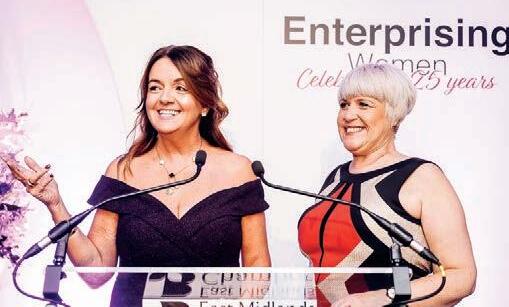
45 March 2023 business network CHAMBER NEWS
‘Every year the calibre of talent never fails to impress us’
Eileen Perry MBE DL and Jean Mountain
Key dates for East Midlands PA Awards
The inaugural East Midlands PA Awards were launched in January with the support of Lesley Young (pictured), the Chamber’s executive support manager and company secretary. She explains what happens next and upcoming events.
Initiative to help prison leavers into employment
A dedicated board combining business minds, community leaders and court contacts has been established with the ambition to get more Nottinghamshire prison leavers into work and out of the vicious cycle of reoffending.
HMP Nottingham has launched an employment advisory board (EAB) to offer job opportunities to current prisoners and those who are soon to be released, giving them a chance to turn their lives around.

The board works across multiple industries and features representatives from a number of Nottinghamshire employers, including the Chamber – whose employment services team supports people into work across various Government-funded schemes across Derbyshire and Nottinghamshire.
The EAB initiative is part of the Ministry of Justice’s New Futures Network (NFN), which was launched following the publication of the Education and Employment Strategy in 2018. It aims to reduce the proven reoffending rate among adult offenders in England and Wales, which was 24.1% in the most recent Government figures from January to March 2020.
Vic Holbrey is the representative for the NFN in the Midlands region and has worked closely with the board’s chair John Morgan, director at architecture practice Leonard Design, on its creation.
Vic said: “Part of what we will be trying to do is work strategically to link up with other prisons in the region to ensure we aren’t doubling up. It’s also about understanding the labour market and working with businesses that are willing to help prison leavers, or supporting
Lucy Robinson
those released on temporary licenses. Getting education and support into the prisons, even for simple things such as opening bank accounts, is essential to giving leavers the best chance on the outside.”
The Chamber is also represented on an EAB at HMP Sudbury, in Derbyshire. Director of resources Lucy Robinson said: “Businesses are grappling with a skills shortage that is severely hampering their growth prospects, with four in 10 East Midlands businesses that attempt to recruit struggling to fill vacant roles.

“With the region’s economic inactivity rate at a record high of 22.7% during a time of low unemployment, firms now need to widen their labour pool via inclusive recruitment strategies that tap into people from all backgrounds, including prison leavers.
“Some of our members have already started to do this and are hugely enthusiastic about the contributions they make because these individuals are very keen to make a new start, and will show great loyalty to the organisation that gives them a chance.”
The East Midlands PA Awards gives people in every business the opportunity to externally recognise and celebrate the achievements of executive and business support professionals.
Nominations for each of the seven categories have now closed and we are excited to be announcing and celebrating with all nominees and finalists soon.
Key upcoming dates include:
• 30 March, 6-8pm: Nominee celebration – The Nottingham Belfry Hotel
• w/c 17 April: Finalists announcement via email and social media
• 19 May: In-person judging day – Burleigh Court, Loughborough
• 20 June: Finalists networking event and celebrations – Sixes Social Cricket, Leicester
• 8 September: East Midlands PA Awards 2023 – Radisson Blue Hotel, East Midlands Airport
There are a number of sponsorship opportunities still available. Find out more by contacting PA Forum founder Daniel Skermer at daniel@pa-forum.co.uk.
FIND YOUR VOICE
Every year, the PA Forum receives feedback from our members asking for more events that will help to further build their confidence in public speaking, networking, dealing with challenging conversations and instigating change within an organisation, as well as support with leadership skills and building better relationships with senior leaders.
At our upcoming event, titled “Find Your Voice” and taking place at Leicester City Football Club on 29 March, inspirational speaker Nick Elston will aim to address these issues.
This event will encourage an incredibly supportive working group of like-minded peers and professionals in a confidential environment, leaving you with tangible and actionable takeaways that attendees could implement straight away into their personal and professional lives.
Our aim is to create a day that will leave people feeling uplifted, motivated and ready to take on new and exciting challenges.
We have 30 complimentary places available for anyone working within executive and business support. Register interest at bit.ly/PAForumFindYourVoice
Upcoming events
• 7 March: Discovery session with Jenny Cross, CHS Events

• 14 March: ASPIRE lunch and learn with Josh Taylor: Finance, mystery or magic
• 21 March: Second spring menopause group
• 29 March: Find your voice with Nick Elston
• 6 April: PA Forum roundtable discussions
For more information, sign up to the PA Forum membership portal at pa-forum.co.uk/membership
46 business network March 2023 CHAMBER NEWS
HMP Nottingham

47 March 2023 business network CHAMBER NEWS
THS+ Technical Helpful Systematic Technology Driven Quality Management
Quality management systems are the definition of vagueness and comprehensiveness at the same time. The term in itself can mean nothing to most, or a lot to some...
There are, however, standardised ways of quality management. The management world got together and defined the concept as well as standardised it. The standard is ISO9001 and the definition of a quality management system is a system “that aims to enhance customer satisfaction by meeting customer and applicable statutory and regulatory requirements”
To cover all that, companies have multiple systems bundled into one. Various ways of achieving the end goal of “consistent output”.
But, as you all know, a standard system with consistent output requires a methodology of doing things the same way. A repetitive iteration of processes... and whatever is repetitive can be automated!
As I’m sure you know, quality management systems are, by definition, ideal for automation, and therefore ideal for software implementation and here is where CanonMS comes in.
CanonMS is a pure quality management systems software created by experts and professionals for all industries.
It is a full-stack solution to meeting ISO9001, ISO9100 and ISO17025 requirements.

Be it certification or accreditation, CanonMS can accommodate it, and accommodate it elegantly!
Bespoke smart solutions are built in for all business systems, from document control, asset and resources management, to quality reviews, self-auditing and much, much more.
It is a solution that will simplify your business compliance and is made to emulate AnnexSL –or, in simple terms, to accommodate Quality, Health & Safety and Environmental management systems in one comprehensive Electronic Management System that the entire business has access to.
CanonMS accommodates any Health and Safety management system from, the basic HSG65 to the most comprehensive ISO45001 or bespoke systems. Features such as Snagging modules for site inspections and safety walks are built in. In addition, you can find the most ample risk assessment templates with suggestions and a complex, modular risk matrix and controls system.
When it comes to Environmental Management, CanonMS has it covered. It is built to accommodate ISO14001 and more. It is a granular to allow for the creation of waste transfer notes and monitor chain of custody. This ensures you meet your legal as well as regulatory obligations.

Implementations – which to a mainstream, established system from a big brand such as IBM would cost an arm and a leg – are simple and inexpensive with CanonMS. Organisations can choose to port their systems over or just pick CanonMS up and start using it.

THS+ offer CanonMS licences on an annual basis with or without full support and implementation.

Our model ensures full support 24/7 as well as a guarantee of continuity. At its basic level, CanonMS deposits the data into a folder structure that mimics the (or a) quality manual that can be downloaded and used off-line. This ensures that, whatever happens, your systems and documents are accessible on, off-line or hard copy.
What is the value proposition? Quality management with little or no resources. One person can do the job of an entire department You can truly have only one QHSE manager for a medium or even large size company and be confident in any audit… as long as you keep using the system and following its prompts.
Referring to the architecture and technology: at the front end, the app is fluid and elegant. Designed and built in React-Native, it has the best support and latest technology to back it up. It is available from the main app stores on every mobile device.
The web-app, also known as the backend, is a Laravel product (PHP-base). The use of this wellestablished technology ensures the latest libraries and a very high level of integration with all web platforms.
48 business network March 2023 CHAMBER NEWS
For further information please contact us on: T: 01332 323 989 E: info@thsplus.co.uk Or visit: www.thsplus.co.uk ADVERTISEMENT FEATURE
Innovation community applauded
The energy and passion of Leicestershire businesses and academics spearheading new ways of doing things has been praised by the boss of the UK’s national innovation agency.
Innovate UK chief executive Indro Mukerjee also spoke of a “great sense of local identity” as he gave a keynote speech at the LeicestershireLive Innovation Awards on 16 February.
The sold-out ceremony at the National Space Centre was part of the 2023 Leicestershire Innovation Festival, and Mr Murkerjee reflected on a day spent touring Space Park Leicester, meeting members of the Leicester and Leicestershire Enterprise Partnership (LLEP) Innovation Board, and talking with local businesses.
He said the launch of the new Innovative Leicestershire brand and website during the festival was an important step in forging an “innovation community”.
“Understanding at a local level is vitally important,” he told the audience. “The activity I saw today by the LLEP and the universities in this region, as well as its entrepreneurs, is very impressive.
“There’s clearly a vibrancy, and I got a sense of innovation and a great sense of local identity as well.
“These are great signals for optimism and the people and businesses I met give me confidence for the future. They inspire us to do more and go further.”
Mr Mukerjee spoke about the work of Innovate UK, his thoughts on the Leicestershire ecosystem, and how the country needs to “hone the skills and passion of innovators” to turn ideas into jobs.
Referencing the importance of diversity and inclusion in UK innovation in order to create the world-leading products and services of the future, he added: “The hope is to get our skills gap filled with more and more innovators from diverse communities. That is the game changer.”
He urged organisations of all sizes, from large public organisations to small businesses, to be bold in making use of local assets to go forward and inspire others.
Concluding with the importance of events such as the Innovation Awards to inspire potential innovators and for innovation to be viewed as more “rock and roll”, he said: “We need more success and stimulus to get people to want to be on that stage”.
Other speakers at the awards, in which 10 winners were named from
across business, education, nonprofits and research, included:
•Professor Gary James, head of manufacturing innovation at Rolls-Royce, who spoke about the people and power required to reach the next stage of space flight
•Professor Katie Normington, vice-chancellor of De Montfort University, who spoke about strategic innovation as a means of increasing productivity
•Professor Phil Baker, pro-vicechancellor for research and enterprise at University of Leicester, who described the university’s 100-year record of discovery and its foundation in its local area.
The fifth LeicestershireLive Innovation Awards was organised by news group Reach and was the flagship event of the Leicestershire Innovation Festival 2023.

The festival is organised by the Business Gateway Growth Hub and overseen by the LLEP Innovation Board.
This year’s theme was productivity, and the festival featured a series of events on how to get people thinking differently about products, processes and customers in order to improve efficiency, productivity and ultimately profits.

For more information about Innovative Leicestershire, visit www.innovativeleicestershire.co.uk
Places snapped up on growth programme
Fifty creative businesses have already applied for places on Create Growth East Midlands – just weeks after the £1.3m programme went live. East Midlands Creative Consortium (EMC²) began accepting applications from high-potential creative businesses on January 23 after winning Government funding.
The free programme of support will ultimately work with 100 regional businesses to help them accelerate business growth, create jobs and prepare for investment.
Led by the LLEP, it will run across four cohorts between this spring and 2025. Successful applicants must be based across Leicestershire, Derbyshire, Greater Lincolnshire and Rutland.
The initial response to the new EMC² website was outlined during a session in Leicester for creative businesses staged as part of the Leicestershire Innovation Festival.

HQ Recording Studios hosted the packed event (pictured) last month about how to build an agile creative community. It outlined work being done to tackle the sector’s scale-up challenge by forming a collective of creative entrepreneurs working together to bridge the gap between microbusiness and SME status needed to tap into growth funding.

Speaking after the launch of Create Growth East Midlands, LLEP cochair Andy Reed OBE said: “The creative sector has created almost 4,000 jobs since 2010 in Leicester and Leicestershire alone. The vast majority of those jobs are in microbusinesses and Create Growth will help these high-potential employers to scale up.”
For more information, visit bit.ly/EastMidsCreateGrowth
49 March 2023 business network CHAMBER NEWS
‘The people and businesses I met give me confidence for the future’
Photos by Hubert Kotlicki
Photo by Will Johnston Photography
Innovate UK CEO Indro Mukerjee (left) with LLEP Innovation Board chair Dr Nik Kotecha OBE
The red hot topic of devolution
UK East Midlands devolution was again the hotly-debated topic by this year’s Love Business “Question Time” panel, writes Jon Smart.
A year on from 2022’s fiery discussion, when the prospect of extra funding, decision-making powers and a metro mayor for the region was mooted, there was still uncertainty around whether a deal involving Derbyshire, Nottinghamshire and Leicestershire could be thrashed out.
Prominent business leaders from across the region formed a panel at the Love Business Expo last month to discuss the burning economic issues of the day, with Chris Hobson, director of policy and external affairs at the Chamber, facilitating the debate.
The group comprised Chamber chief executive Scott Knowles, RSM’s Kevin Harris, Sandra Wiggins from manufacturer DPI UK, Lewis Stringer from the British Business Bank, and Lisa Gilligan from law firm Freeths.
The big issue for debate was the intricacies surrounding the current devolution deal on the table for Derbyshire and Nottinghamshire, and what it might mean for the wider region.
Scott said: “One of the things we’ve been campaigning on as a Chamber for many years is the lack of parity regarding investment from central Government into the East Midlands compared to other regions. Investment is always welcome, so from our perspective, devolution, in principle, is positive.
“Devolution is not about any initial funding coming into the area – it’s about longer-term investment,
what might be available, and starting conversations with central government at the right level.
“There is lots of economic evidence available that devolved areas receive a much greater level of investment over time than nondevolved areas.”
However, he acknowledged there was “still a long way to go to get the right deal”, and the political will from local and national Government was still required, while it was important to ensure Leicestershire isn’t left behind the rest of the region in any potential deal it secures.
“You also can’t relegate businesses in Leicestershire to the back seat,” he added. “Bringing everyone together is the crux of the issue. There’s a stalemate, so conversations must continue at all levels because the numbers need to make sense for this to move forward.”
Sandra, whose Castle Doningtonbased company sits just within Leicestershire’s boundary, admitted a “real frustration” about being left out of the East Midlands deal, adding: “We are part of the East Midlands, and I think that would put us at a disadvantage.”
However, there was also a belief among panel members that provided the political will is there, a deal involving all three cities and three counties could be struck.
Kevin, who is chair of the Chamber’s board of directors, said: “It’s not dead. The key thing for us to recognise is that if we go ahead and succeed with a three-city, three-county deal, we’d potentially create the largest economic area in

the UK. We’ve seen what’s happened in the West Midlands with proper representation and what they’ve got as a result.
“If we get our act together, we
IN GOOD SHAPE
could have an area larger in size and economic scale. So, collectively, we need to ponder what that might mean for all of us in this region.”
While the devolution agenda was a central part of the discussion, there was also much talk of how the region is faring in the current economic climate and the support available to businesses.
DPI UK founder Sandra said: “We’re not the same business as we were three years ago, or even a year ago. We must consistently keep moving forward. We can’t wait for Government to help us or tell us what to do. We have to be out there and change our models of business.

“It’s not so much about confidence in business. It’s more that we don’t have a choice – we can’t sit around and wait for things to happen. We’ve got to find a way.
“That’s one of the great things about the East Midlands. Whatever challenges are out there, we’ll always find a way to get through them.”
ACCESS TO FINANCE
The funding landscape has changed since Brexit regarding finance for businesses to grow. Lewis Stringer, senior manager covering the East Midlands at the British Business Bank, was keen to stress that support is still there.

He said: “Over the past two or three years, we’ve quite rightly had to support a massive number of small businesses.
“It’s led to a situation where many businesses have been exposed to external finance for the first time. Pre-Covid, business owners, rightly or wrongly, were reticent about taking external finance to invest in their businesses and grow. Our region was no different from anywhere else in that respect.
“So, there’s been an education piece for many businesses. Consequently, many now carry debt and have suffered through other things, including the fallout from Brexit, supply chain issues and cost of doing business.”
With investment intentions declining due to uncertainty for businesses, Lewis believes there is much work to be done to continue informing companies there is still support available for them to invest and grow.
He added: “We have found that many innovative, go-ahead businesses have continued to invest using the finance available to them and take the opportunities.”
50 business network March 2023 CHAMBER NEWS
Scott Knowles Sandra Wiggins Lewis Stringer

51 March2023 business network CHAMBER NEWS

52 business network March 2023 CHAMBER NEWS
www.emc-dnl.co.uk/sustainability

Body to deliver fusion ambitions


A new delivery body for the UK’s nuclear fusion programme – which is spearheaded by a multi-billion-pound project in Nottinghamshire – has been established.
UK Industrial Fusion Solutions Ltd will oversee development of a prototype fusion energy plant at the West Burton A site near Retford, which is currently home to a coalfired power station.
In October 2022, it was selected by the Government to host the Spherical Tokamak for Energy Production (STEP) programme, which aims to demonstrate the ability to use fusion energy to generate green electricity for the national grid.
The plant is scheduled to be built by 2040, bringing 10,000 jobs and “billions of pounds” to the area.
Science and innovation minister George Freeman announced the new delivery body during a visit to the site last month.
He said: “Fusion energy now has the potential to transform our world for the better by harnessing the same process powering the sun to provide cheap, abundant, low-carbon energy across the world.”
The announcement came shortly after a major breakthrough for fusion in the United States, where the US National Ignition Facility in California conducted fusion experiments that released more energy than was put in by the lab’s enormous, high-powered lasers, a landmark achievement known as energy gain.
Fusion – which occurs when a mix of two forms of hydrogen are heated to extreme temperatures, creating helium and releasing huge amounts of energy – is many million times more efficient than burning coal, oil or gas, and the raw materials needed to provide the fuel are readily available in nature.
The STEP programme intends to address significant technical hurdles that remain and pave the way for commercialising fusion.
Bringing your carbon emissions under control
Changing climate conditions have placed increased emphasis on the role businesses can play in reducing carbon outputs and formulating part of a much wider net zero journey. But with emission outputs often directly and indirectly out of a company’s control, James Butcher (pictured), CEO at Supply Pilot, dissects how firms can retain a grasp on carbon targets via effective supplier engagement.
A CO-ORDINATED APPROACH
Back in 2015, a global promise was made that the rise in the Earth’s temperature would be kept within the limit of 1.5°C in an effort to avoid the detrimental effects of climate change.
The Paris Agreement, as it came to be known, has since been the foundation of many discussions and negotiations about how we will collectively stay within that limit. There is increasing stakeholder pressure on businesses, as well as newly emerging corporate regulations, which align to this science.
Businesses are very much included in, and fundamental to, the net zero emissions narrative. This is because of their sphere of influence compared to the average individual and the impact they have via global supply chains.
WHAT ARE CORPORATE EMISSIONS?
There are three types of greenhouse gas emissions related to a business – these are split into Scopes 1, 2, and 3.
Scope 1 and 2 are the simplest to understand. Scope 1 is the direct emissions from a firm’s operations and Scope 2 relates to the indirect energy the business purchases for its operations.
Scope 3 accounts for all other indirect emissions that are outside a company’s own operations. This includes both upstream and downstream activities within the value chain, and for manufacturing companies, consumer packaged goods (CPG) companies and retail, supply chain emissions normally make up over 80% (of Scope 3).
This makes supply chain emissions one of the most impactful areas for a business to focus on when it comes to being more sustainable. This,
in turn, ensures business continuity, commercial success and brand equity.
HOW DOES A BUSINESS CALCULATE ITS SCOPE EMISSIONS?
Emerging legislation and pressure from investors mean that calculating and reducing all Scope emissions is imperative to modern business success and brand equity.
Scope 1 and 2 emissions are both relatively easy to calculate by collaborating with internal finance teams. However, Scope 3 presents a more complex challenge for many due to the sheer amount of product and supplier information required and the need to engage with suppliers.
The most accurate emissions calculations come from your supply chain. The only way to influence and reduce those emissions comes from engaging with your supply chain.
This means that businesses – particularly those with large product portfolios or supply bases – often delay trying to calculate Scope 3 in this way. But without engaging suppliers to obtain this data directly, businesses are illequipped to make informed decisions.
Furthermore, without this transparency and accurate reporting of data, many companies will face the fate of being unable to demonstrate sustainability leadership – via tangible progress towards emissions or sustainability-related goals.
James is partnering with the Chamber to hold a webinar titled “Supply-chain decarbonisation: getting started” on Tuesday 14 March from 1011am, which is free for members. Sign up at bit.ly/EMCsupplychain

53 March 2023 business network SUSTAINABLE EAST MIDLANDS
Artist’s illustration of West Burton fusion plant
The new tool helps businesses find assessors

Guiding the way in energy efficiency
Businesses looking for ways to make their premises more energy-efficient and lower the impact of long-term heating bills can search for qualified energy professionals in their area using a new, free-to-use tool.
“Find an assessor” has been launched by Elmhurst Energy, the UK's largest independent provider of energy assessment, retrofit and property professional training, software and accreditation.
It allows anyone to plug in their location, type of property and professional they are looking for who can check their building’s energy performance and give advice on what measures they can take to save money on fuel bills.
Elmhurst Energy managing director Stuart Fairlie said: “The soaring cost of energy bills means business owners have never been more attuned to what they can do to make their premises or rental properties more energyefficient.
“For an untrained eye, it can be difficult to know what measures to take to improve energy efficiency – and taking a scattergun approach can mean pouring money down the drain.
“When considering alterations, it’s best to get the advice of a qualified expert who can determine what changes will work best together to save money on energy bills, make sure you’re compliant and support your business to reaching carbon net zero.”
Businesses can search for non-domestic energy assessors (NDEA), at levels three, four and five, who assess properties and determine the Energy Performance Certificate (EPC) rating.
The level of NDEA required will depend on the commercial assessment of a building needed. NDEAs can assess the energy performance of a small shop, large office building or even a skyscraper, depending on the diploma they hold.
The tool also signposts to display energy certificate (DEC) assessors, who measure the actual energy performance of public buildings; Energy Savings Opportunity Scheme (ESOS) assessors, who audit and measure corporate compliance with the mandatory Environment Agency ESOS; as well as overheating risk assessors.

It supports landlords in the residential and commercial private rented sector, including landlords of domestic private rented properties in England and Wales who need to check compliance against minimum energy efficiency standards (MEES), in order to let their building legally.
For more information, visit www.elmhurstenergy.co.uk/find-an-assessor
Case Study
Company: Total Industrial Engraving Ltd

Location: Saffron Lane, Leicester
Number of employees: Eight Spokesperson: Tanya Gordon, managing director (pictured)

What does your company do and how does your business model embrace the sustainability agenda?

As an industrial engraving specialist, we’ve been searching to find the best material for many years.

We needed to make sure it was recyclable, great quality and long lasting, regardless of location (inside or outside).
It isn’t cheap but we’ve worked to make sure we can engrave it as fast as possible to reduce labour costs and lead times. We reuse and recycle all materials, including packaging materials, and offer to recycle any labels that are finished with for our customers if they can’t.
It doesn’t happen very often as our labels are made to last many years. If people want to avoid plastic used altogether, then we advise them to use laser-engraved stainless steel which will, in all likeliness, outlive us all.
In the past year, we have switched to being as paperless as possible. In the past there were some quotes that would have used over 100 sheets of paper so it feel great to get away from that.
What prompted the decision to embrace the sustainability agenda and how has it impacted your business?
I’m passionate about providing the best quality and service we can while ensuring we
leave our planet in a better condition to how it was when we arrived.
Since having children, it has only intensified how I feel about sustainability. As a small business, it can be difficult to do as much as we can, while running the business day-to-day and educating the team to have the same values as me becomes more important. Together we can achieve more.
How important do you believe embracing the sustainability agenda is for businesses today?
I believe it is a non-negotiable for all businesses today – we shouldn’t be in business if we can’t do it ethically and sustainably. We can’t use size as an excuse, as there are far too many small businesses in the country for us not to do our bit.
What are your future plans for making your business more sustainable?
Our next step would be to look at solar panels but we need to be sure this location is where we will stay long term before taking that step.
I have recently installed them at home, where I work 50% of the time, so it feels like a step in the right direction. We have been on renewable tariffs with our energy suppliers for more than five years already so at least I know our energy is from green sources in the meantime.
54 business network March 2023 SUSTAINABLE EAST MIDLANDS
Study turns waste into insulation

Events agency boosts its green credentials

An events agency with more than 30 years’ experience has boosted its already distinctive eco plans by obtaining ECOsmart status from sustainability specialist Greengage. Corporate event specialist Eventurous, which operates across the Midlands, recognised the need to be eco-conscious after witnessing its rising importance in the events industry.
Company owners Joe and Joanna Garland have embraced a number of sustainability initiatives over the past 16 years, including on-site beekeeping at the company’s Mythe Farm home on the Leicestershire-Warwickshire border, generating almost all its own electricity via solar panels, and planting more than 11,000 trees and a wildflower meadow. Their activities have saved carbon emissions equating to 8,644 trees being planted.

Joe said: “Living in a rural community, the environment has always been a focus for us. We started our sustainability journey back in 2007 and it gives us great pleasure to see many others in the industry now doing the same. Being in this together, as a community of event professionals,
sharing knowledge is vital in making a difference.”
Joanna added: “We walk the walk when it comes to sustainability and are proud to have a team of mindful people who care about the environment. Being awarded ECOsmart certification has given us the drive to push on to the next stage of our sustainability roadmap.
“In 2023, we will launch our carbon calculator service, helping clients measure and reduce the carbon footprint of their corporate event, and new event formats that allow any business, big or small, to give back to the environment and the community.”
Andrew Perolls, CEO at Greengage, added: “Eventurous already has some great initiatives in place, which demonstrate that sustainability is a priority in the business. Its location and the work it is doing gives it a real advantage in the market from an event agency perspective.”
Waste materials, including egg trays and plastic takeaway lunch box lids, can be used to insulate homes in hot arid regions to considerably improve their energy efficiency, a new study shows.
Research by sustainable architecture and engineering expert Farres Yasser – a PhD candidate at Nottingham Trent University –shows a composite of egg trays, cardboard, polypropylene plastic lids and Styrofoam can be used to retrofit single-brick homes with exterior wall insulation.
A range of tests took place in Cairo, Egypt, where the materials are commonly available for free, with more than 23% of the city’s waste comprising paper, cardboard and plastic.
The study – which involved practical experiments with the support of local tradespeople – shows a sustainable way to insulate homes in countries like Egypt, where more than 70% of homes are considered to be insulated poorly.
Farres, of the School of Architecture, Design and the Built Environment, estimates it could save $1tn on new materials within the next decade.
He said: “Poor building materials, or single-layered red bricks homes, increase the use of heating, ventilation, and air conditioning (HVAC) systems, which produce carbon emissions all year round.
“This study shows how waste can take the place of conventional insulation materials which can be bad for the environment. These panels are affordable and unhazardous and could lead to a fundamental reduction of carbon emissions throughout a building’s construction and lifetime.”
Eco homes to bring affordable living to Nottingham
UK Nottingham Community Housing Association (NCHA) has received planning permission for 24 new eco homes.

The affordable rent homes will be built on the site of a demolished care home at the junction of Woodborough Road and St Ann’s Way in Nottingham.
The scheme, which is led by NCHA’s Pelham brand, and will be owned and managed by Nottingham City Homes, features a combination of 15 two and threebedroom houses, and nine one-bedroom flats.
Designed to provide affordable housing with low running costs, they will be fully
electric, include greater levels of insulation and come with solar panels that feed into battery packs to store unused electricity.
Parking, electric car charging points and bicycle storage are also included.
Councillor Toby Neal, Nottingham City Council’s portfolio holder for housing, said: “These new homes go towards meeting our overall target of 1,000 new affordable homes for local families.
“Their excellent environmental credentials not only contribute towards our ambition to be a carbon neutral city by 2028, but will help to keep tenants’ bills down.”
Farres Yasser with the egg trays
55 March 2023 business network SUSTAINABLE EAST MIDLANDS
‘We walk the walk when it comes to sustainability and are proud to have a team of mindful people’
The Eventurous team
Sustainability activities at Mythe Farm
Pioneering healthcare firm looks to trade on its success
In the past year, Unimed Procurement Services has reaped the success of its international activity, receiving the Excellence in International Trade accolade at the Chamber’s Leicestershire Business Awards in November. Founder and managing director Shameet Thakkar speaks to Jasmine Thompson about how the company is increasing access to healthcare worldwide.

WHAT DOES YOUR COMPANY DO?
We provide equitable access to healthcare around the world. We work with humanitarian aid and relief organisations to provide quality medical products to more than 44 countries. These organisations are often providing assistance to underserved populations, and Unimed helps them to deliver these healthcare products wherever they are operating.
WHAT DOES YOUR INTERNATIONAL TRADE OPERATION INVOLVE?
We work under several incoterms, including delivering product DAP (delivered at pace) to the most remote locations. We have supplied products to Asia, Africa, Australasia, South America, North America and Europe – in 44 countries and counting.
WHICH ARE YOUR BIGGEST MARKETS AND HOW WOULD YOU COMPARE YOUR RELATIONSHIPS BETWEEN EACH OF THESE?
We have an equal split between Africa, Asia and South America. We have one person from Unimed managing each partner to ensure a bespoke service.
No two partners are the same – they all have unique modes of operation, and we are able to provide them with a special tailor-made service.
HOW HAVE THE EVENTS OF THE PAST COUPLE OF YEARS AFFECTED YOUR IMPORTING AND EXPORTING ACTIVITY?
The supply chain constraints over the past few years have made our job difficult. We have worked hard to create a resilient supply chain, as our partners around the world are very reliant on our products. If our product is late, it means someone’s healthcare is delayed, which is simply unacceptable.
Even with the supply chain constraints, we have performed incredibly well, and this was recognised in 2022 when Unimed was awarded with the Queen’s Award for Enterprise in International Trade, and the Excellence in International Trade Award at the Chamber’s Leicestershire Business Awards.

WHAT MADE YOU TURN TO THE CHAMBER FOR SUPPORT AND HOW HAS THIS HELPED?
The Chamber has helped us to prepare all of our certificates of origin, and helped us gain access to additional international partners.
Unimed Procurement Services won a Queen's Award for Enterprise in International Trade in 2022

56business network March 2023 INTERNATIONAL TRADE
Shameet Thakkar meets King Charles
Putting airport at the centre of community
Last autumn, Steve Griffiths (pictured) was appointed as the new managing director of East Midlands Airport, moving to the region from London Stansted – where he drove it to become the UK’s fastest recovering airport following the pandemic. During a tour of the airport’s cargo operation, he spoke to Dan Robinson about his background in aviation, what the future looks like for the airport, and what role it will play in making the East Midlands a “centre of trading excellence”.
What has been your career background and what’s brought you to East Midlands Airport?
I've been part of Manchester Airport Group (MAG) for the past four years. During that time, I spent most of my time as managing director for London Stansted Airport before moving up to the East Midlands in late 2022.

Prior to that, I ran the tube network in the London Underground as chief operating officer for Transport to London. And before that, I had a long career in Virgin Atlantic, so I’ve been very much close to aviation, and the broader transportation industry, over the course of my career.
What do you enjoy about working in the aviation industry?
They always say that, once you worked in aviation, “there's kerosene in your blood”, and it never leaves you. What I love about it is that the operation can really touch what you do on a daily basis.
It's about our customers and making sure that we delight them. This gives me a lot of energy in seeing that happen and bringing it to life.
What's your first impressions of the East Midlands and the airport?
It's a fantastic airport – the location of it in the Midlands is particularly important for the connection of its cargo operations and logistics. I also think how we connect passenger flying to a really tight-knit community around this region is fantastic with our partners Jet2, Ryanair and TUI.
What are the future plans for the airport?
Since the pandemic, we've seen strong recovery in the East Midlands and that will continue into next year.
Cargo and logistics really expanded during that period by supporting critical supplies to industry and in delivering goods to people amid an increase in online shopping.
We have an opportunity for further growth within the cargo and passenger operations due to importance we hold within the East Midlands and beyond.
How important will the East Midlands Freeport be?
We're a great facilitator of what the freeport will bring to the region for the businesses – we are at the heart of enabling business growth.
Last year, the Chamber launched a Business Manifesto for Growth. What are your thoughts about the East Midlands being a Centre of Trading Excellence?
We're creating a broader community around this concept within the East Midlands and we’re now gaining greater recognition in central Government of the important role our airport, as well as all the businesses surrounding us, play in creating connectivity that drives ecommerce across the UK.
How important is it for the airport to work with business organisations like the Chamber?
It's really important that we're connected to local businesses to see what happens in the region. The Chamber can help steer and shape us, introduce fresh ways of thinking, as well as connecting us to the business community.
UPCOMING INTERNATIONAL TRADE TRAINING COURSES
Customs procedures and documentation
DATE: 9 March
TIME: 9-3.30
COST: £270 + VAT
Learn about details such as the critical data required for a customs declaration or the legal responsibilities of the importer and exporter
Incoterms 2020 rules
DATE: 14 March
TIME: 9-1
COST: £184 + VAT
Get a detailed and focused commercial view of the latest Incoterms 2020 standards
Letters of credit
DATE: 21 March
TIME: 9.30-4.30
COST: £270 + VAT
Learn how to be proactive in opening a letter of credit, how to work with the documents and present them to the bank correctly
Inward and outward processing
DATE: 22 March
TIME: 9-12.30
COST: £150 + VAT
Introduction to methods of obtaining inward and outward processing relief from customs duty and VAT on international transactions
Export foundations
DATE: 30 March
TIME: 9-4
COST: £270 + VAT
Get an overall picture of how the many elements of international trade fit together
Letters of credit
DATE: 4 April
TIME: 9.30-4.30
COST: £285 + VAT
Learn how to be proactive in opening a letter of credit and how to work with the documents
Export documentation
DATE: 5 April
TIME: 9.30-4.30
COST: £285 + VAT
Learn the necessary skills and knowledge to prepare and process documents when exporting goods overseas
Customs declaration
DATE: 5 April
TIME: 9-2
COST: £296 + VAT
Learn how to accurately produce a customs declaration or check one being produced by a customs agent for your company
Incoterms 2020 rules
DATE: 6 April
TIME: 9-1
COST: £194 + VAT
Get a detailed and focused commercial view of the latest Incoterms 2020 standards used for moving goods
Prices listed are exclusively for East Midlands Chamber members
Book on to courses at bit.ly/EMCinternationaltraining

57 INTERNATIONAL TRADE March 2023 business network
Region’s transport on the right track
The future of roads, trains and modern mobility options were under discussion at the Nottingham Transport Summit, held by regional transport body Midlands Connect in January. Dan Robinson was in the audience to find out what’s happening.

UPDATES ON KEY RAIL IMPROVEMENT PROJECTS IN THE EAST MIDLANDS

While the HS2 Eastern Leg, which will eventually create a new high-speed rail line between Birmingham and East Midlands Parkway, is the crown jewel of rail projects in the region, there are a number of shorter-term schemes in Midlands Connect’s strategic transport plan that are no less important to economic prosperity.
One project aims to reinstate direct rail services between Coventry, Leicester and Nottingham for the first time in two decades, creating more than two million extra seats.

The proposed improvements – which involve creating a rail link underneath the West Coast Main Line somewhere around Nuneaton – would introduce two news trains each hour, also calling at Loughborough and East Midlands Parkway. Journey times between Nottingham and Coventry would speed up from 104 to 70 minutes, and between Leicester and Coventry from 54 to 38 minutes.
Currently, passengers travelling along the corridor have to get off one train at Nuneaton station, change platforms and board another, culminating in a slow, inconvenient service. Because of this, just 3% of trips between Coventry and Leicester are made by rail, compared to 30% of trips between Coventry and Birmingham, which enjoys a regular, fast and direct rail connection.
Tawhida Yaacoub, senior rail programme manager at Midlands Connect, said: “It doesn’t encourage people to take rail between Coventry and the East Midlands cities, or to commute between them.

“Bringing these three cities closer together will create an estimated £170m in annual economic uplift, employment opportunities, and education and socioeconomic benefits, while also playing into net zero and levelling up objectives.”
As the scheme progresses through an outline business case, another project to improve the rail route between Nottingham, Newark and Lincoln is at the beginning of its journey with an online consultation taking place in January and February.
The proposed improvements would double the number of hourly train services along the route to two, while improvements to signalling and track would reduce end-to-end trips from 55 to 45 minutes by 2026.
“The cost of the infrastructure we’re proposing is minimal,” said Tawhida. “A new station can cost about £25m but improvements to the Nottingham to Lincoln corridor are £18m. We’re very excited about both these projects, which
PLANS FOR BETTER CONNECTIVITY
Midlands Connect’s flagship scheme is the Midlands Rail Hub, a £1.5bn blueprint for improved connections across the region.
It has an ambition to add more than 14 million more seats on the rail network each year. It also aims to provide faster, more frequent or new rail links for more than 30 locations, including Leicester.
The transport body proposes building two “chords”, as well as 11 further engineering interventions throughout the region “to deliver a massive step change in rail transport in the Midlands”.
The West Chord would create new connections from Birmingham to the South West and Wales, while the East Chord creates an access to Birmingham Moor Street from the East Midlands.
Benefits include an additional fast train every hour between Birmingham and Leicester, via Nuneaton, and another slow train every hour between the cities that stops at Coleshill Parkway, Nuneaton, Hinckley, Narborough and South Wigston.
For more information, visit www.midlandsconnect.uk/projects/rail/ midlands-rail-hub

are key to the broader goal of connecting the East and West Midlands.”
ENHANCING ROLLING TRAIN STOCK CAN HELP BRING BACK PASSENGERS
Alongside infrastructure projects, development work is ongoing with Network Rail to improve rolling stock, which can enhance journey reliability, efficiency and comfort while supporting decarbonisation targets.
East Midlands Railway will soon introduce bimode trains to replace diesel for its Intercity fleet on the Midland Main Line. These will be greener and quieter, while passengers will benefit from modernised interiors and facilities on board.
Small details can have a significant impact on passenger uptake, believes James Chapman, principal service strategy manager at East Midlands Railway.
“The Nottingham to Lincoln corridor is an exciting project for us,” he said. “Modelling shows that even when you decrease a journey time by a few minutes, it leads to a significant uptake because people swap the car for the train.
“You can build in a performance buffer with increased services to help with reliability and it gives us the opportunity to reassess journey patterns, so we can perhaps accommodate an additional stop that leads to attracting more passengers.”
All these considerations are in the mix when it comes to the recovery of the rail industry. James said passenger numbers dropped to just 5% of pre-Covid levels at the height of the pandemic, and although they are now at about threequarters – driven in large part by a buoyant leisure market – there is much ground to make up.
58 POLITICS business network March 2023
“We have huge funding challenges across the sector, so we have had to reassess the sustainability of our franchise agreements and service levels.
“But we are working towards reinstating those services by working with the Department for Transport, with the Matlock to Nottingham route one of those we have brought back recently.”
Transport connectivity holds the key to unlocking economic growth potential of East Midlands
It’s often said the East Midlands has bags of untapped promise – the Chamber has been banging the drum for the region being a Centre of Trading Excellence – but having a largely Victorian rail infrastructure and A-roads at full capacity is restricting this from being realised.
This why the HS2 Eastern Leg continues to be top of the regional agenda, along with other key
rail and road improvement schemes being promoted by Midlands Connect.

Sarah Spink, strategic partnerships lead at Midlands Connect, said: “We want to improve connectivity in our region not just because we like to go places, but because it creates growth in the economy by bringing the West and East Midlands closer together.

“It’s an ever-changing landscape and we have to be adaptable by addressing issues like reliability, which is what is stopping people from using public transport more.”

The East Midlands is a region of almost five million people that is growing at a similar rate to London and the South East, but the comparative scale of its rail network is quite limited, says Andrew Pritchard, director of policy and infrastructure at East Midlands Councils.
“Connectivity to Leeds, Birmingham and
Manchester is quite patchy – we don’t have that identity of rail services in the East Midlands as in the West Midlands and North West,” he said. “Eighty per cent of our population travel to work by car, which is quite high for the UK.
“But the good news is there’s plenty of growth opportunity in the East Midlands, which is an untapped market for getting more people to use rail.

“This has huge economic potential for our towns and cities, but also smaller places, because we know that rail connectivity has a direct connection to economic growth in communities.”
One major infrastructure project involves electrifying the Midland Main Line. A £1.3bn programme is underway to upgrade an 86-mile stretch of the route from South Wigston in Leicestershire to Sheffield, after a section from London to Corby was completed in 2021.
Andrew added: “There’s a lot of work to be done but after talking about it for 20 years, we’re now closer than we’ve ever been.”
NOTTINGHAM LEADING THE WAY IN TRANSPORT INNOVATION


Over the past 20 years, a lot of investment has been made in turning Nottingham into one of the foremost UK cities when it comes to embracing clean transport technologies and expanding transport options.
Nottingham City Transport (NCT), working with Colwick-based fuelling infrastructure company Roadgas, has created the world’s largest biogas fleet with 143 double-decker buses. Nottingham City Council has electrified half of its own transport fleet, including bin lorries and depot vehicles, and has installed electric chargers at many of its sites.
Nottingham recently hosted a trial for wirelessly charging taxis and is the only city outside London to have integrated ticketing across various transport operators, with the Robin Hood platform including NCT, trentbarton and the tram network.
Chris Carter, head of transport strategy at Nottingham City Council, said pioneering programmes like the workplace parking levy –which charges employers for car parking, with funds raised used to build the 2015 tram extension – and a shared ULEV and bus lane in Daleside Road proved it’s “not afraid to introduce big decisions”.
He added: “We’re in a different place to where we were before the pandemic. Technology is moving very fast and we think there’s a lot going on that will change the direction of travel.
“We need much more reliable and affordable transport that can also reduce carbon emissions and improve air quality. There is less business travel and commuting post-Covid, but a lot more leisure trips and working on the move.”
Nottingham is one of four Future Transport Zones being created by the Department for Transport, which has provided £16.7m funding. This will help it create electric mobility hubs encompassing alternative transport methods such as e-bike sharing and car clubs; a smartphone app that enables users to plan, book and pay for trips across multimodal transport; and a real-time data platform that provides a complete picture of transport use across the network to improve efficiency.
“This is about creating mobility-as-a-service (MaaS), which brings all forms of transport, including public transport and micromobility, into a group that promises to put the customer at the heart of their travel needs and offers the best pricing.”
59 March 2023 business network POLITICS
Clockwise from top: East Midlands Railway is set to improve its rolling stock; innovation panel roundtable session at Nottingham Transport Summit; Sarah Spink addresses the summit; e-scooters are a familiar sight in Nottingham city centre: as are trams; Lime Bikes is part of the e-bike sharing scheme


60 CHAMBER NEWS BUSINESS NETWORK business network March 2023

CHAMBER NEWS BUSINESS NETWORK 61 March 2023 business network
Digitalisation: The road to recovery?
By Ieuan Rosser (pictured), CEO of Freight Logistics Solutions


The freight sector, like every other, is trying to anticipate what it means to face a recession, what can be done to mitigate its impact, and plot a road to recovery.
Between soaring energy and fuel prices, ongoing driver shortages, supply chain pressures and escalating demands from customers against lowering rewards, freight carriers are facing enormous challenges.
Amid these ever-increasing constraints, traditional ways of operating are time-consuming, inefficient and costly. Digitalisation of operations has a significant role to play in the sustainability of UK businesses.
HAULING A TRADITIONAL INDUSTRY INTO MODERN AGE
Traditional freight forwarders are logistics experts that co-ordinate freight transports as an intermediary between a shipper and a carrier.
Most of the logistics industry is still a traditional sector operating with inefficient processes.
People miscommunicate with one another, an important document goes missing, and trucks drive back to their starting point empty. That’s where digitalisation can step in.
By digitising all processes, and the data this creates, it transforms the way we move and manage freight.

Data insights help shippers streamline their supply chain, optimise their deliveries, save time, save money, save carbon, and plan their future freight movements and
costs. Carriers benefit from better operational efficiency, fuller truck loads and fewer empty journeys.
Digital freight forwarders act as the connector between shippers and carriers, and act as an optimiser. Digitalising and automating road freight logistics processes saves money for shippers and increases earnings for carriers because inefficiencies are eliminated or reduced.
HARNESSING DATA TO IMPROVE OPERATIONS
A major distinction between traditional logistics and digitalised logistics is the creation and structuring of data. This allows digital freight forwarders, and the shippers and carriers that use them, to benefit from a wealth of data on past shipments, run analysis of operations and continuously improve on inefficient processes.
This technology can also focus on real-time proximity to collection points. This means carriers aren’t deployed because their depot is near to a collection point, but based on the proximity of an available vehicle regardless of its origin depot.
Real-time visibility, access to capacity in the market and innovation are what shippers need to help them plan, save time, make cost savings and, most crucially, keep their supply chain moving.
Overall, digitalisation is an opportunity to use the most advanced technology to make traditional road freight logistics simpler, more efficient and higher quality for everyone involved.
LOW-CARBON SOLUTIONS FOR ROAD FREIGHT TRANSPORT
The logistics industry is undergoing a fundamental change for the better – a change towards low-carbon operations and carbon monitoring becoming the standard.
Many of the world’s largest companies have implemented best practices regarding carbon.
Coca-Cola aims to reduce emissions by 25% by 2030 and be carbon-neutral by 2040, Ikea wants to be climate-positive by 2030, AB InBev has a goal to reduce emissions by 25% by 2025, and Amazon has a carbon-neutral goal 2040.
With these types of goals in place from the world’s largest companies, there is a strong demand to push and implement clear, provable reductions in carbon responsibilities from all the players in their supply chains.
As a manufacturer, getting your freight transport partner right can be the difference in leveraging new clients and losing old ones.
The transport sector and its shift to digitalisation has a strategic part to play in the UK’s road to recovery from this ensuing recession,.
The UK must have cutting-edge, forward-thinking and technologydriven freight forwarders and agents, which maximise and optimise the resources we have and fully exploit the UK’s potential for recovery and growth.
62 business network March 2023 CHAMBERFEATURENEWS LOGISTICS, FREIGHT & TRANSPORTATION


63 March 2023 business network LOGISTICS, FREIGHT & TRANSPORTATION FEATURE
SME manufacturers trading globally
The engine room of the East Midlands economy is filled with thousands of small and medium-sized manufacturers that play a significant role in international supply chains, exporting to every corner of the planet. Dan Robinson profiles seven such businesses from across the three counties.

as well as additional challenges in transport, import and export legislation, and supply issues. With regards to our supply chain, it is important to note that Aztec Oils takes a firm stance in support of Ukraine and will always put principle before profit. We are therefore unwilling to trade with Russia or anyone who is prepared to take advantage of the unethical opportunities presenting themselves. Sadly, it seems that not all operators share this stance, and we urge everyone in industry to consider the wider impact of decisions made within their supply chain. In terms of opportunities, one of our major 2023 objectives is to drive the Aztec Oils brand and its synonymous reputation for quality and reliability. Previously a predominantly white-label supplier, we now seek to convert sales to 70% Aztec Oils branded product within the next 12 months.
AZTEC OILS
Spokesperson: Mark Lord, managing director
Location and size of business: Bolsover, Derbyshire; 80 employees
What does your business do and what recent successes or growth have you had?
Aztec Oils is one of the UK’s leading specialists in highperformance lubricant manufacture and distribution. With a complete range of specialist products, we pride ourselves on being able to supply industrial lubricants for even the harshest environments while maintaining an exceeding level of excellence in both quality and performance.
With more than 25 years in the lubricant industry, recent years has seen Aztec Oils’ growth extend internationally.
In which countries do you trade and who are your main customers?
Aztec Oils trades internationally through a global distribution network. We have a strong presence in Europe, Asia and more recently South America, as the Aztec brand continues to grow in recognition and demand.
Our global partners have proved the distribution model to be lucrative, so this is something we will be actively promoting as a 2023 objective with the view to connect with further trusted partners in key international regions.

We have strict criteria for who we partner with, as all representative parties must uphold the Aztec Oils standards and values, ensuring quality, reliability and integrity at every level.
What are the biggest opportunities and challenges you face?
The past 12 months have been particularly challenging for the lubricant industry with price increases – the likes of which I’d never seen in my 38 years in the trade. The ongoing impact of Brexit, Covid-19 and now the war in Ukraine has driven up the cost of base oils astronomically,
What are the gaps in support your business requires to survive and thrive?
The success of Aztec Oils has been built from the attitude, commitment and dedication of our team. Despite excellent staff retention, as the company grows, we have found recruitment of the right calibre of staff to join our team increasingly difficult and therefore seek improved support in our recruitment process.
IMPACT AIR SYSTEMS
Spokesperson: Nick Ball, managing director

Location and size of business: Leicester; 38 employees
What does your business do and what recent successes or growth have you had?
We design and install air systems that automatically collect waste material where it is created in a production environment and separate waste within the recycling
64 business network March 2023 FOCUS FEATURE MANUFACTURING
sector. We also provide service and maintenance of those systems, and local exhaust ventilation systems and testing. We have had great success both in the UK and overseas. Despite all turmoil in the world, our solutions are soughtafter as they can boost productivity, increase the value of waste, and improve the working environment.
In which countries do you trade and who are your main customers?
We work all over the world, with our biggest customers being the main waste management companies and largescale general manufacturing companies in all different industries. We would like to continue to build relationships with representatives in large industrial countries, most recently including China and India. A huge boost to our turnover has come from large contracts in the US.

What are the biggest opportunities and challenges you face?
Our solutions can be rolled out all over the world at a competitive price, so we are attractive to endless customers. The problem is we can only get through so much work with the staff we have. Recruitment of people with the right skills and experience in our niche industry is our biggest challenge at the moment.
What are the gaps in support your business requires to survive and thrive?
We need more support in importing and exporting of goods, which seems to have become a minefield over the past year. Finding local people with the right skillset is also a challenge.
As a small company, it feels like you are left to find everything out for yourself, especially with regards to health and safety, HR, compliance with legislation and standards, which can be very time-consuming.
MEDIGARMENTS LTD

Spokesperson: Colleen Ward, managing director

Location and size of business: Long Eaton, Nottingham; 50 employees
What does your business do and what recent successes or growth have you had?
Medigarments Ltd is the company behind the internationally recognised brands Jobskin and SDO. We lead the way in rehabilitation therapy, and are the largest UK manufacturer of specialist bespoke compression garments supplied through therapy and orthotic professionals.
Our reputation for the design and supply of technically advanced garments has been built over more than 40 years supplying the highest quality made-to-measure products.
From our roots producing traditional corsetry in the 1950s to complex structural medical garments today, we are proud to say that 100% of our garments are still made in the UK. Our products are made to measure to the patient’s individual size and requirements. They are used in the management of scarring resulting from burns or trauma injury, and in the field of dynamic compression, where they are used to increase sensory and proprioceptive feedback, as well as to provide musculoskeletal support. We are also one of only a handful of companies still producing madeto-measure boned medical corsets.
In which countries do you trade and who are your main customers?
We supply our products globally, working with specialised distribution partners in the US, Australia, Middle East and throughout mainland Europe. Our partners supply our products in their home markets through the hospital networks as well as private clinics.
We are very focused on expanding our partner network and we have several new channels lined up for scale-up in the financial year.
What are the biggest opportunities and challenges you face?
Our biggest challenge today is the shrinking labour pool in the UK. We employ people ranging from sales, customer service, marketeers, and designers with pattern-making knowhow to skilled cutters, machinists, quality control and logistics in the factory.
Unlike a traditional garment factory where the work floor is organised as a production line with people making one part of a garment such as setting in a sleeve or putting in a zip, due to the bespoke and individual nature of our garments, our machinists are trained to produce the entire garment. The work throughout our business is highly specialised and must conform to medical quality systems around the globe.
The potential for our garments in the orthotics field is considerable, and we are investing in clinical trial development and material technology to expand the use indications for which our products can be used.
65 March 2023 business network FOCUS FEATURE
MANUFACTURING
‘Recruitment of people with the right skills and experience in our niche industry is our biggest challenge at the moment’
What are the gaps in support your business requires to survive and thrive?
There needs to be more visibility for jobseekers with respect to local opportunities. As traditional channels such as local newspapers have declined, reaching potential employees for such diverse roles is challenging. Platforms like Indeed don’t enable the broad awareness of the business and employment opportunities on offer.
Another aspect that has changed in recent years, and which is especially relevant to our business, is the erosion of textiles training in schools and colleges. This means there is a lack of new young candidates to learn these businesses. This is an issue we hear from other local companies engaged in upholstery.


Lastly, overseas trade has been massively complicated by Brexit. CE marking, US Food and Drug Administration and UKCA are just three regulatory platforms against which we must conform, creating heavy costs for any business.
PEAK NDT
Spokesperson: Simon Parke, managing director

Location and size of business: Jubilee Business Park, Derby; 18 employees
What does your business do and what recent successes or growth have you had?
Peak NDT is a world-leading designer and manufacturer of high-performance conventional and phased array (PA) ultrasonic instrumentation used for non-destructive testing (NDT) in advanced engineering sectors.

In essence, our equipment uses sound waves to check for defects (cracks, holes) in welds and materials in critical infrastructure such as pipework, vessels, rail track and aircraft wings.
For more than 35 years, Peak NDT’s MicroPulse technology has been used at the forefront of NDT ultrasonic technique development from high-performance multi-channel conventional technology to phased array (PAUT) and now full matrix capture (FMC), and other advanced techniques.

Peak NDT was recently honoured to receive two Queen’s Awards for Enterprise 2022 in the innovation and international trade categories. We were proud to be one of only seven UK firms to achieve double award status.
In which countries do you trade and who are your main customers?
Our international trade category award recognised outstanding growth in overseas sales over the past three years. Our main markets are the US, Canada, China, Germany, Hong Kong and Switzerland, and annual overseas sales have doubled during this time, growing from 58% to 71% of total turnover.
New customers have been established in most regions of the world, with recent sales channels being developed in India, Japan and Singapore. New developments mean sales
are set to increase significantly per annum, mostly overseas.
What are the biggest opportunities and challenges you face?

The biggest opportunity for Peak NDT is global growth across multiple sectors and territories, driven by our unique technology and the historic development it’s built on. The associated ongoing challenge is how to sustainably grow the organisation in order to successfully realise that opportunity.
What are the gaps in support your business requires to survive and thrive?
Firstly, it’s important to say that we’ve been fortunate enough to benefit recently from a range of support packages. Ascend, a £5m business growth fund run by Derby City Council and University of Derby, has been superb for accessing external supply chain and marketing support, while AerospaceUP funding has supported investment in equipment and systems, and Innovate UK funding has enabled ongoing R&D to further develop the product range.
If there was one gap I would suggest needs support it is in capital investment for things like equipment and building. This would potentially enable us to further invest and grow.
66 business network March 2023 FOCUS FEATURE MANUFACTURING
SMALL FIRMS HAVE A PART TO PLAY IN ‘THE BIG OPPORTUNITY’
In its Business Manifesto for Growth, the Chamber presented Government with “The Big Opportunity” to further develop the East Midlands as a Centre of Trading Excellence.

Launched in Westminster last November, the manifesto said the region can be a blueprint for economic growth across the UK given its key assets in its industrial heritage, leading-edge universities, central location, and the country’s largest pure freight airport. Being a Centre of Trading Excellence means it is a place where businesses want to trade more, trade differently, trade with new partners, and trade in a way that is cleaner and more effective.
Here’s what the business leaders profiled in these pages told Business Network about the role SMEs can play in this:
“There are a whole host of small companies like us in the East Midlands doing clever things and providing innovative solutions all over the world. It never ceases to amaze us that we are installing these amazing systems all over the world from our relatively small base in Leicester.”
Nick Ball, Impact Air Systems
“We believe our role as an SME is critical due to the bespoke nature of our product offering. We are required to be flexible and turn our products around within a matter of a week to 10 days. We export over half of our production, and the proximity to East Midlands Airport supports our flexibility in 24-hour delivery within the EU.”
Colleen Ward, Medigarments
“An SME’s size and responsiveness means it can more readily innovate to meet customer demand, to the benefit of the whole supply chain.”
Simon Parke, Peak NDT
“With the right support from Government, we can implement changes and improvements much faster than larger companies and offer competitive products to international markets.”
Mark Lawrance, Pressac
“SMEs in the East Midlands provide vital diversity, ensuring domestic products in manufacturing, engineering and service provisions are still pushing for growth in their sectors. We have all had a taste of Far Eastern supply chains volatility and cost rises in the past few years, so the East Midlands as a Centre of Trading Excellence helps to concentrate solution providers.”
Sylwester Wacht, Terra Nova Equipment
“SMEs are absolutely vital, but I have a concern the support infrastructure of small engineering businesses that Zeeko and many others rely on for their competitive edge find life increasingly challenging due to the lack of Government support, as well as disinterest from the financial institutions. I worry that Government may only realise the true worth of this infrastructure once it has disappeared.”
Richard Freeman, Zeeko
PRESSAC
Spokesperson: Mark Lawrance, director of strategic accounts

Location and size of business: Bilborough, Nottingham; 47 employees

What does your business do and what recent successes or growth have you had?
Pressac is one of the global leaders in the design and manufacture of cutting-edge internet of things (IoT) solutions. We enable our clients to turn their real estate into an intelligent workplace using discreet, low-power devices that form the foundation of their smart building strategy.
Working in conjunction with other intelligent building solutions, our devices are the first step in understanding the occupancy, environmental conditions and energy usage across a real estate portfolio.
Our customers are predominantly industry, real estate owners, software providers or facilities management companies. 2022 was our best trading year in 17 years, with 2023 looking to continue this rapid growth.
In which countries do you trade and who are your main customers?
We sell our hardware all over the world, with the majority going to Scandinavia, western Europe, Japan and US.
Our biggest customers are typically in the top 50 fastestgrowing software companies, providing energy consultancy services and solutions to the likes of Heineken, McDonalds and Dr Oetker, as well as many more companies that are heavy energy users, including those in the chemical sector and high-value manufacturing.
We also have a very good base of customers here in the UK, including several universities and Toyota Manufacturing UK. The ambitions to grow the business further and continue to expand is a part of our plan for this year.
What are the biggest opportunities and challenges you face?
Industrial IoT and smart buildings sectors both keep growing, and are far from reaching their market maturity. We have very relevant technology that provides the necessary data to make informed decisions about what can be improved to make a building more efficient, cheaper to run and less likely to experience maintenance-related issues. Talking about the challenges, it’s no secret that global supply chains and the energy crisis are everyone’s nightmare right now. We are looking into furthering our already significant use of sustainable energy solutions, which will enable us to maintain our current prices and reduce the environmental impact we make.
What are the gaps in support your business requires to survive and thrive?
The Government should incentivise manufacturing companies who want to modernise their machine park to keep up with competitors like in the EU countries. Also a significant support would be to enable smaller companies to have easy access to affordable, green energy either through no interest loans on sustainable improvements or government grants. We cannot do it alone.
67 MANUFACTURING FOCUS FEATURE
March 2023 business network
TERRA NOVA EQUIPMENT

Spokesperson: Sylwester Wacht, group managing director

Location and size of business: Clay Cross, Chesterfield; 29 employees

What does your business do and what recent successes or growth have you had?
Terra Nova Equipment Limited is a manufacturer and supplier of award-winning outdoor equipment and accessories including tents, bivis, gloves, hats, socks and gaiters.
The business is a part of a holding group that was sold to an employee ownership trust (EOT) in May 2022. This is a fantastic move that passes on ownership to the employees, empowering them to have a meaningful say in the business direction while providing a huge motivational boost.
The year-on-year revenue growth was 20% for 2022, which has cemented the decision to move to an EOT was in the best interest of the business and its employees.
In which countries do you trade and who are your main customers?
We currently trade in 18 countries. We’re planning to continue growth within our current markets while targeting new, untapped countries. The target for next year is for 11% revenue growth, which is predominantly based on international trade.
Although most of our business continues to be through wholesale channels, we’re also planning to grow our ecommerce business by 50% in 2023.
What are the biggest opportunities and challenges you face?
Since emerging from Covid-19, we’ve faced plenty of issues such as the cost of freight, supply chains and production availability. We are working hard to cost our products competitively while focusing on technology, innovation and sustainability.
The difficulties faced with supply were no match to the issues with exporting after Brexit. Challenges emerging from cross-border trading resulted in sales decreasing. We have been operating a worst-case scenario strategy and only very recently did the situation start to improve.
We believe there still is plenty to do to ensure international trade complications are kept to a minimum, and that exporting, documents and services such as deliveries are smooth.
What are the gaps in support your business requires to survive and thrive?
With extended manufacturing dates and difficulties in sourcing components, now more than ever we require support with customs processes – for example, in customs warehousing and funding options – to accommodate the growing gap from outpayment to revenue collection. The second significant difficulty is staffing for peak periods. It used to be much easier and more efficient to find labour required to get through spikes than it is now.
HOW SMALL MANUFACTURERS ARE THE KEY TO POWERING THE ECONOMY
By Mark Goldby (pictured), chair of East Midlands Manufacturing Network
Our region’s manufacturing sector may well employ more than 250,000 people, with the average wage at least 20% higher than the national average, yet it remains largely underperforming.
Manufacturing’s regional output is an impressive £18bn – mainly anchored in food and drink, transport equipment and metal products – and a large proportion of products made in the East Midlands are exported worldwide. What we make, we make well. The sector remains, however, a sleeping giant because of untapped potential. Our region’s manufacturers are typically of SME size, with innovation, creativity and collaboration deeply embedded at their core.
Whether they are OEMs, contract manufacturers or process equipment manufacturers, they are a highly adaptable and willing bunch – and this is where I see the opportunity. Adoption of digital technology will drive productivity, reduce costs, support sustainability targets, stimulate innovation and create new job opportunities. This, in turn, will help plug some of the UK’s regional inequalities the Government seeks to address through its levelling up agenda.
SUPPORTING THIS EVOLUTION is a key reason why the East Midlands Manufacturing Network was established by the Chamber last year. Manufacturing leaders come together to share knowledge, and discuss challenges and opportunities, in a trusted environment. Support from peers is bolstered by support from key stakeholders such as our universities and the trade organisation Make UK. Furthermore, the groups become focal points for targeted business support, such as the recently launched Made Smarter programme for the East Midlands – a focused digital adoption programme for manufacturers.
A great example of this stakeholder engagement is the University of Derby’s business support to 14 members of the Derbyshire-based groups, ranging from access to the regional economic observatory with strategic consultancy support, to the Government’s Help to Grow: Management programme and funded programmes such as Enscite, which works specifically with SMEs in manufacturing and engineering. These engagements are having a positive impact on business by helping organisations to grow, work better, and perform more competitively through operational improvements.
Furthermore, this spirit of collaboration between key stakeholders and members is happening across all our network groups.
Our five regional groups (Derbyshire, Dales and Peak, Nottinghamshire, North Nottinghamshire and Leicestershire) have attracted about 25 members per group meeting to date from an overall membership of 200 businesses. This entirely complimentary membership continues to grow each week.
I am confident the groups will only continue to grow and new locations introduced as the groups are entirely business-led, trusted and relevant.
68 business network March 2023 FOCUS FEATURE MANUFACTURING
ZEEKO LTD
Spokesperson: Richard Freeman, managing director

Location and size of business: Coalville, Leicestershire; 35 employees
What does your business do and what recent successes or growth have you had?
Zeeko Ltd designs, develops and builds ultra-precision machines for polishing high-accuracy mirrors and lenses, for applications ranging from astronomy (telescopes) and medical (hip and knee joints, as well as laser optics for DNA and virus sequencing) to energy production (fusion) and airports (X-ray sensors in baggage cameras).
Other notable applications include silicon chips, mobile phone and face recognition cameras, virtual and augmented reality, autonomous vehicle control and satellites. The satellite cameras that created the iconic pictures of the equipment left on the moon by the Apollo 11 astronauts were all made on Zeeko machines.
Our annual sales have grown threefold since the pandemic low point. This year, we will again grow by over 30% and still it seems our market is expanding.
Our most recent success is winning a contract to supply a machine to a French research institute for the fabrication
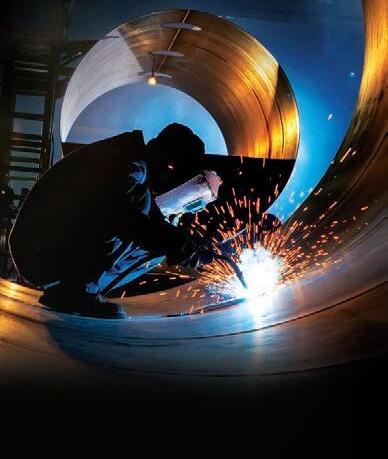

of further advanced optics to be used in detecting gravitational waves. While these were predicted by Einstein, they had never been shown to exist until an international group of scientists (of which our customer was one) detected them in 2015 using a very sensitive instrument called LIGO (laser interferometer gravitationalwave observatory).
Amazingly, these first gravitational waves happened when two black holes crashed into one another 1.3 billion years ago. Two key research scientists won a Nobel Prize for their work. It seems “we are standing on the shoulders of giants”.
In which countries do you trade and who are your main customers? What are your ambitions for future international trade growth?
We trade with the US, Germany, France, Belgium, Taiwan, China, Singapore and Japan. Many of our customers ask us not to publicise their names but it can be said they include the global household names in mobile phones, defence, general optics and space – and yes, we can say NASA uses our machines, while almost every major space project includes among its payload a component polished on a Zeeko machine.
What are the biggest opportunities and challenges you face?
Challenges include finding people with the skills, energy and passion to continue to build the company. Then there are the new border controls with Europe and other trading issues that all result from Brexit and post-pandemic supply chain bottlenecks.
There are lots of opportunities – in recent times, Elon Musk has single-handedly transformed the economics of space. This is a significant part of Zeeko’s past, as well as its future market and growth opportunity.
In the past few months, the National Ignition Facility in the US has proved the science of nuclear fusion and while there are different ways to achieve this, lasers and optics are at the forefront and represents another opportunity for Zeeko.

Autonomous cars, VR, AR and the boom in smartphones, computers and cameras, all involve high-precision lasers and optics – as do many healthcare solutions. Everywhere you look, the requirement for optical innovation is everpresent and is an indication that Zeeko’s market is growing exponentially. Since we were formed 23 years ago, the future has never looked so good.
What are the gaps in support your business requires to survive and thrive?
Day-to-day cash issues due to banks that don’t like exporting businesses, the feared reduction in support for scientific research that appears mired in petty post-Brexit arguments with the EU and the decline of our education system, and, in particular, the decline in science and engineering performance of all but our most prestigious universities.
BENEFITS OF JOINING THE EAST MIDLANDS MANUFACTURING NETWORK:
• Guidance and support on business growth challenges such as skills and recruitment
• Problem-solving in a trusted environment
• Better understanding of funding, specialist consultancy and advice on offer
• Opportunity to share and benefit from best practice
• Opportunity for collaboration
• Peer support and education on issues such as sustainability, digitalisation and automation
• Greater voice as a united trusted network with Government
For more information, visit www.emc-dnl.co.uk/services/east-midlands-manufacturing-network
69 March 2023 business network MANUFACTURING FOCUS FEATURE
‘NASA uses our machines, while almost every major space project includes among its payload a component polished on a Zeeko machine’


70 business network March 2023 FEATURE CREATIVE INDUSTRIES
Five ways you can use video marketing in 2023
By Lee Wheeler-Tomes (
), managing
Video is an essential part of any modern-day marketing plan, no matter the size of your business.
Millions of videos are watched every minute on mobile, tablet, televisions and desktop computers. There has never been a better time to tap into this powerful medium to engage with your audience and leave a lasting impression.
Every day, videos help customers discover new brands, products and services. In fact, research shows more than 80% of consumers say that watching a video has convinced them to buy a product – so they’re persuasive. While 39% of consumers love seeing explainer videos, and 20% expect entertaining videos.
So how does one stand out in an oversaturated market, where there are literally millions of videos out there? In short, your 2023 marketing plan should include content that explains, educates, engages and entertains your customers.
Here are five ways you can use video marketing in 2023 as part of your content plan:


1.

BRAND STORYTELLING
Humans have been telling stories for thousands of years – from cave wall doodles, religious texts, paintings, poems, literature and
film, right through to our favourite Netflix shows. It works as a form of communication because it’s embedded in our nature to connect through story. If you look at the very best marketing adverts, they don’t sell you a product or a service, but instead they make you feel something.
Brand videos can be used to tell your brand's story, showcase your company's mission, and communicate the values that set you apart from your competition. By telling your brand story through video, you can create an emotional connection with your audience and build brand loyalty.
2. PRODUCT FILMS
One effective way to use video marketing is to create product videos. These videos showcase your product features, functions and benefits, giving consumers a better understanding of what your product is all about.
Use videos to explain how your product can solve a customer's problem or pain point. These types of videos can be used on your website, social media platforms and other marketing channels.
3. LIVE VIDEO
Live video has become increasingly popular in recent years and it will
continue to be an important part of video marketing in 2023. Live videos can be used to engage with your audience in real-time. You can use live streaming to announce new product launches, host Q&A sessions or give a behind-the-scenes look at your company. Live videos are an excellent way to create an authentic connection with your audience and build trust. Authenticity makes for more memorable messages and more impactful communications that can touch your audience on an emotional level.
4. INFLUENCER MARKETING
Influencer marketing is another effective way to use video marketing in 2023. Partner with influencers in your industry to create video content that promotes your brand. This can help you reach a wider audience and increase your brand's credibility. Choose influencers whose audience aligns with your target market and work with them to create video content that showcases your product or service.
5.
INTERACTIVE VIDEOS
Interactive videos are becoming increasingly popular in digital marketing and will continue to be
an important trend in 2023. These can help you engage with your audience and keep them hooked
You can use interactive videos to create a more personalised experience for your customers by allowing them to choose their own path through the video content. This can be used for product demonstrations, surveys, training videos and even games.

In conclusion, video marketing is a powerful tool for businesses looking to increase brand awareness, engage with their target audience, and drive sales.
By incorporating these five strategies into your video marketing plan while remembering to explain, educate, engage and entertain, you can stay ahead of the competition in the year ahead.
CREATIVE INDUSTRIES FEATURE 71 March 2023 business network
pictured
director at Orange Fox Studios
The toolbox for training engineers of the future
In a quest to get hands-on metalwork back into education and develop the next generation of talent for manufacturing and engineering, Philip Mason (pictured), production director at Derby-based Tidyco, created the Toolbox Challenge for schools. He talks to Dan Robinson about what it involves, how it supports the skills agenda and what other businesses can do to get involved.

When did you start the Toolbox Challenge and what does it involve?
Having visited schools while doing work with Enterprise for Education (E4E), a Derby-based partnership linking employers with students, I noticed in a few schools there was very little, if any, provision for practical metalwork in the classrooms.
I decided if this was to change, I would have to come up with a practical solution that made the introduction of this work as straightforward as possible, and something that teachers and pupils felt comfortable doing.
In 2019, after two years working towards this goal, the Tidyco Toolbox Challenge was launched at Littleover Community School, which started with an engineering club. Over a number of weeks, pupils were tasked with assembling their own toolbox out of metal.

Running the trial in the engineering club allowed teachers to see how it would work building the toolbox in a classroom setting without the pressure of being in a lesson.
Once this trial was completed and the teachers were confident the boxes could be built, Tidyco supplied 100 free boxes for the pupils to build as part of their GSCE coursework. When we knew the model worked, we did the same process in Lees Brook Academy, which is now also building the boxes as part of the GCSE design technology coursework.
To date, more than 400 toolboxes have now been supplied between the two schools and the hope is that pupils not only do practical metalwork, but have a functional toolbox to take home with them.
Why is this an important initiative to your business and the local economy?
It is really important for Tidyco that local school pupils get at least the opportunity to do some practical metalwork as it may then encourage more young people, in particular girls, into engineering.
It also gives other pupils that may not be academically successful to excel at a subject, and then may
VIEW FROM A SCHOOL
Ruth Feeney, a teacher at Littleover Community School, whose class took part in the Tidyco Toolbox Challenge, says: “By participating in the Toolbox Challenge, our students have been introduced to new techniques, materials and tools that were otherwise unaffordable and difficult to deliver to pupils.
“To have had the opportunity to be supported by Tidyco has been invaluable to our students so that they have experience of industry and have a broader understanding of metals.
“Through the resources that have been developed alongside the project, students have developed their problem-solving skills and have a greater knowledge of engineering disciplines.
“Our students have been motivated and engaged with the project and feel a real sense of achievement on completion of their final toolbox.
“As a school, we feel it is important for students to have experience in a wide range of manufacturing processes to enable them in their future studies and careers. This project helps to fulfil metalworking skills that open opportunities for their further development.”
consider engineering and apprenticeships as a viable option.
Derby is famous for planes, trains and automobiles, most of which are constructed from metal, so it amazes me that more emphasis is not put on metalwork in a lot of schools as part of the curriculum.
Training young people and giving them this experience adds value to their personal skillset and makes them more employable in the future.
What support is needed to further progress this project and why should businesses want to get involved?
The aim of this project was to get 16 local businesses to commit to sponsor each of the 16 Derby innercity schools to make 100 toolboxes each year.
So far, we have had support from local suppliers like Eggleston Steel,
Pugh & Sanders, Learning Unlimited, Mercia Image and Protrade, which have helped with materials to get the project off the ground.
We now need other local businesses to commit to supporting a Derby school. This support can be as little as just supplying the boxes but could also be going into the schools to help with building the toolboxes and creating a long-term partnership.
The cost to supply the project in to each school for 100 boxes is about £1,500 per annum and Tidyco will also offer any support that is required to get the project up and running.
Anyone interesting in speaking to Philip about the Tidyco Toolbox Challenge can contact him on 01332 851 300 or email philip.mason@tidyco.co.uk
72 business network March 2023 FEATURE CREATIVE INDUSTRIES
The Toolbox Challenge is used in schools as a GCSE coursework activity

73 March 2023 business network BUSINESS NETWORK
Development for your directors
Directors and senior managers can gain key skills needed to lead teams at a five-day training programme run by the Chamber that returns next month.
The Director Development Programme, which begins on Tuesday 18 April and runs until 6 June, is designed for individuals who want to support and grow their business, or the department they lead.
The objective is to equip them with the skills and confidence needed to achieve objectives that will ultimately drive the business forward.
Delivered as a five-day modular programme with each session roughly two weeks apart, it covers the following topic headings:
• Developing vision, values and strategy (18 April)
• Planning and direction (26 April)
• Finance for non-finance directors (9 May)

• People management approaches (17 May)
• Driving performance and leading change (6 June)
The course is structured as progressive stages in a business development process, with participants having specific action steps to begin during the session and complete between each one.
At each subsequent session, they will be expected to discuss how they have applied the material covered during the previous instalment in order to ensure the process is grounded in practicality.
The Director Development Programme is delivered by course trainer Charles Barnascone at the Chamber’s office at NG2 Business Park, in Nottingham.
It costs £1,450 + VAT for Chamber members and £1,850 + VAT for non-members.
For more information, visit bit.ly/DDPApr23
OTHER LEADERSHIP TRAINING COURSES
Women in leadership Level 7
17 April
Online
Available to employees of SMEs in Derbyshire and Nottinghamshire, delegates will learn how to lead and manage high-performing teams, the importance of organisational culture and more. Delivered by Nottingham Trent University over five sessions, it is ideal for women looking to develop or pursue skills in leadership.
ILM Level 5 in leadership and management
Managing poor performance
13 March
Challenge Consulting
Nottinghamshire
9.30am-4.30pm
Gain an understanding of the legal and procedural aspects of performance management, and the confidence and knowledge to use the full range of corrective actions available to them.
ILM Level 2 – effective team member skills
17 March and 24 March
Challenge Consulting
Nottinghamshire
9.30am-4.30pm
Practical two-day programme focusing on the elements needed to be a highly effective team member, including self-management, time management and reflection on your own character traits.
20 April
Challenge Consulting
Nottinghamshire
9.30am-4.30pm
Nine-day course that is suitable for current and aspiring middle managers who wish to extend their skills to get the best from their teams and resources within their organisation.


ILM Level 3 in leadership and management
26 April
Challenge Consulting
Nottinghamshire
9.30am-4.30pm
Six-day course that develops individuals to work effectively in a first-line management role dealing with multi-faceted projects, identifying and managing activities to bring about improvements.
Learn more about personal development courses delivered by the Chamber at www.emc-dnl.co.uk/services/personal-development
Chamber to come together in celebration of culture

Music, dance and food from across the world will be on the menu at the Chamber’s Celebration of Culture and Communities when it returns this month.
Taking place on the evening of Friday 17 March at Athena, in Leicester, the annual event is an opportunity for businesspeople to come together and celebrate the cultural diversity that enriches the East Midlands’ communities and work environments.
Guests will have the opportunity to network and enjoy a three-course Indian banquet, while entertainment will represent the rich tapestry that makes up the region.
The Chamber’s chief executive Scott Knowles said: “We are delighted to bring back our Celebration of Culture and Communities, which is always one of the great nights in the Chamber calendar and attracts a wide range of delegates from across the region and different sectors.
“This event celebrates all the amazing people and cultures that make the East Midlands
fantastic. It will have a slightly less formal feeling than some other business events and we encourage attendees to wear their national dress.”
There will be a performance from University of Leicester’s Bollywood Dance Society, which brings together individuals to share their joy for Bollywood dance, music and movies.
The society has gone through a fascinating journey, from maintaining a strong social media presence throughout the pandemic in the form of virtual tutorials to running in-person dance classes.
Also performing is Leicester-based rapper Strizzy Strauss (pictured), who has established himself as one of the UK’s rising talents, having taken the stage alongside Wu-Tang Clan’s GZA and Big Daddy Kane. He balances his music career with working as a youth facilitator.
The night will finish with a traditional ceilidh, a traditional Celtic dance designed to be inclusive, fun and social for everyone. Festivities will be led by Derby-based entertainer Schuggie, who has

74 business network March 2023 PERSONAL DEVELOPMENT & EVENTS
A ceilidh will be part of the entertainment package
Nupur Arts performing last year

put a multi-award-winning twist on the traditional dance style.
The Celebration of Culture and Communities event, which takes place from 6.30pm until midnight, is run in partnership with sponsors emh group and De Monfort University in Leicester. It costs £70 + VAT per individual – with discounted rates of £50 + VAT for charity representatives and Generation Next members –and a table of 10 costs £650 + VAT.
To book a place, visit bit.ly/CultureCommunities23
DATES FOR YOUR DIARY IN MARCH AND APRIL CHAMBER EVENTS
Enterprising Women – International Women’s Day Conference
9 March
Nottingham Belfry
9.15am-2.30pm
The Chamber’s Enterprising Women network marks International Women’s Day with a networking event that features the launch of the Enterprising Women Awards 2023. Hear from keynote speaker Emily Smith, the Business Woman of the Year last year, who will share her career journey to date, while there will be two interactive sessions run by expert facilitators Sandra Whiles and Amanda Daly focusing on skills to cultivate your personal development.
Read more on p44 and register at bit.ly/EnterprisingWomenIWD23
Digital Marketing Conference and Expo
17 March
Derby County Football Club
8am-3pm
Find out what’s new in digital marketing in 2023 as it becomes ever-more sophisticated. Businesses will have the opportunity to learn about latest trends, real-life case studies and effective tactics to gain the best advantage for accelerating growth. Engaging conference speakers will cover artificial intelligence, machine learning, search engines, content creation, robots, automation and more.
Read more on p78 and register at bit.ly/DigitalMarketingConference23
East Midlands Manufacturing and Trade
6 April Conference
Loughborough University
8am-1pm
Hear from industry, business and academic leaders as a series of speakers and panel discussions explore the major economic, political and technological challenges experienced by the manufacturing and engineering industries over the past year. The conference will also seek to identify opportunities on the horizon, including the development of new and emerging markets. A cabinet minister is expected to give an update on the Government's Export Strategy
Read more on p37 and register at bit.ly/EMCManufacturingConference23
GENERATION NEXT EVENTS
Working session with Orangetheory Fitness
8 March Derby
1.30-3.30pm
Take part in a one-hour, fully-body workout that focuses on training endurance, strength and power. Orangetheory uses heart rate based internal training, which burns more calories post workout than a traditional exercise.
21 March
Wollaton Park Netwalk
Nottingham
9.30-11am
Networking with exercise as Generation Next members take a light 45-minute morning stroll around the grounds of Wollaton Hall. Get to know like-minded young professionals from the network while taking a break from the office to enjoy the park’s surroundings.
Developing healthier habits to improve your productivity
27 March Online
11.30am-12pm
Available to Generation Next members, guest speaker Charlotte Dixon, a psychologist and executive coach at Talk Staff will help delegates understand how healthy habits, such as healthy eating and regular exercise, can help reduce stress levels.

Attendees can also gain top tips on how to maintain a healthy routine to ensure a good work-life balance, and learn ways to practise mindfulness during the working day.
Connecting with nature and animals
30 March
Generation Next social at Twycross Zoo
3.30-5.30pm
Leisurely guided walk around the zoo and nature reserve, where visitors will get to meet several animals along the way.
The event begins with a short presentation on the benefits of connecting with nature for your wellbeing, and offers an opportunity to learn about the conservation work at the zoo while enjoying the natural rich assets and surroundings.
How to become an effective leader

18 April Online
9.30-10.30am
David Chabeaux, an actor, musician and leadership coach, will provide different leadership models and help delegates on how to apply them, with the aim of improving efficiency and achieving business goals.
See all the latest Generation Next events at generationnextemc.co.uk/event
75 March 2023 business network PERSONAL DEVELOPMENT & EVENTS
Guest speaker Charlotte Dixon
Digital support boosts footfall for businesses in Bassetlaw
Ninety businesses in Bassetlaw have been given the digital tools and expertise needed to increase footfall and attract new customers via an innovative scheme.
Support was offered by the Chamber under the Bassetlaw High Street Business Support Programme, which aimed to support high street businesses across the district to adapt to changing purchasing habits, such as a move towards online transactions.
WHO THE BASSETLAW HIGH STREET SCHEME HAS SUPPORTED
Paul Lane Private Personal Training, Retford
Paul Lane’s fitness business was quickly outgrowing his premises, but not at such a pace where he could afford to expand.

Support has allowed Paul to attract and retain customers through a more sophisticated website, allowing clients to order and pay for protein supplements and book onto group sessions.
Café Neo, Worksop
The businesses benefitted from one-to-one support from a high street adviser, and 78 of them received grant funding of up to £2,000 to help implement business improvement actions.
The Chamber’s deputy chief executive Diane Beresford said: “The Bassetlaw High Street Business Support Programme has helped businesses to improve their digital skills and implement online trading that complement, rather than replace, their high street presence.
“There are so many highly passionate business owners across the district who simply needed very practical support in boosting trade, for both the short and long term.”
The project, which ran from June 2022 to December, was funded by Bassetlaw District Council via the Government’s Welcome Back Fund, supported by the European Regional Development Fund and delivered in partnership with East Midlands Chamber.
Councillor Jo White, cabinet member for regeneration at Bassetlaw District Council, added: “It is wonderful to see so many businesses in Bassetlaw benefitting from the Bassetlaw High Street Business Support Programme.
“Purchasing habits have changed since Covid-19, with more people moving towards online transactions. The adoption of contemporary online trading methods will improve sales both now and in the future.”
Funding to invest in a digital menu screen and entice in new customers provided a welcome boost – as did an Kickstart wage subsidy via the UK Community Renewal Fund-backed East Midlands Accelerator. This enabled owner Diana Kaponas to take on an inexperienced member of staff, Gareth, and equip him with the skills needed at a minimal, no-risk cost to the business.
The Saucy Pizza Company, Retford
The takeaway business has received digital marketing expertise to build its local presence. Funding went towards a new Facebook live campaign called “Friday Night Takeaway”, which creates a buzz by giving customers the opportunity, every week, to win a pizza.


Learn more about the Bassetlaw High Street Business Support Programme at www.emc-dnl.co.uk/about-us/our-success-stories/ #bassetlaw
Digital support on offer for Rushcliffe businesses
Businesses in Rushcliffe are receiving targeted support from the Chamber to embrace digital platforms with the launch of a new programme.
The Rushcliffe Digital High Street project has received £25,000 from the Government via the UK Shared Prosperity Fund (UKSPF), following a successful bid from Rushcliffe Borough Council.
Fully-funded support is being offered to 20 businesses, with Chamber digital adviser Steve Phillips visiting Rushcliffe high street businesses to assess what digital help they need to increase footfall and in-person sales, and
how to match them to fully-funded specialist business advice.
Businesses will be supported through a set of short “how to” films, guides and a 12-week Digital Bootcamp programme of webinars that will provide advice on a range of topics and examples of good practice. The webinars are being held every Monday from 6pm to 7pm on topics such as reaching more customers online, improving the customer journey with social content, and increasing visitors with online advertising.
Diane Beresford, deputy chief executive of the Chamber, said: “Independent businesses thrive on

the passion of business owners and their dedicated teams, but it is often hard to keep pace with the tools and techniques that can help them grow.
“The targeted support being delivered by East Midlands Chamber is offering practical help in so many ways and I would urge Rushcliffe businesses to investigate what’s on offer to them.”
The programme of targeted support complements the Rushcliffe Business Adviser project, which is also being delivered by the Chamber. Funded by Rushcliffe Borough Council, the Government and the European Regional Development Fund, the project


gives businesses beyond the high street the support they need via the Chamber-appointed Rushcliffe business adviser Insan Farooqi.
For more information on support for Rushcliffe businesses, contact Insan Farooqi on Insan.Farooqi@emc-dnl.co.uk Steve Phillips on steve.phillips @emc-dnl.co.uk.
A series of Rushcliffe Digital Bootcamp webinars will run until June, and a workshop titled “Converting web visitors into leads and sales” takes place at Rushcliffe Arena on 15 March from 9.30am to 2pm. Find out more at www.emcdnl.co.uk/events
76 DIGITAL & TECHNOLOGY business network March 2023
‘It is wonderful to see so many businesses in Bassetlaw benefitting’
Diane Beresford


77 DIGITAL & TECHNOLOGY March 2023 business network
Pain at work toolkit trialled in workplaces
A digital toolkit designed to support employees with selfmanagement of chronic pain will be trialled in workplaces after the research team behind it received grant funding.
Professor Holly Blake (pictured), based in the School of Health Sciences at the University of Nottingham, developed the Pain at Work (PAW) toolkit with the aim of enhance their wellbeing at work and improve productivity.
After creating it in partnership with people living with chronic or persistent pain, employers, healthcare professionals and pain charity Burning Nights, the research project was one of six schemes to receive funding from The Nuffield Foundation and Versus Arthritis to begin a trial.
The PAW toolkit is an openaccess, free, online resource for people working in any role, organisation or sector.
It includes individual stories from those living with chronic or persistent pain alongside content covering topics such as understanding chronic or persistent pain, returning to work, reasonable adjustments in the workplace, physical and psychological selfmanagement techniques, and employment rights.
Prof Blake said: “We hope that, by using the toolkit, it will help employers retain people with chronic pain in the active workforce, improve the quality of people’s lives and reduce social inequality.”
The tech of the future on show at Chamber expo
AI, machine learning and robotics on the agenda at East Midlands Chamber’s Digital Marketing Conference & Expo 2023.

Businesses across Derbyshire, Leicestershire and Nottinghamshire are being invited to attend the Digital Marketing Conference & Expo 2023 to identify how they can accelerate their growth.
The event, which is delivered by East Midlands Chamber, takes place at Derby County Football Club’s Pride Park Stadium on 17 March 2023 and is expected to attract 300 business owners from across the region.
It offers delegates the opportunity to learn about the latest trends, real-life case studies and effective tactics to gain the best advantage for their businesses.
The cast of experts will be led by keynote speaker Katie King, former director of global media agency Text 100, and current CEO of AI in Business, as well as managing director of Zoodikers). She is a member of the All-Party Parliamentary Group on Artificial Intelligence taskforce.


The line-up of speakers will give informative talks covering artificial intelligence, machine learning, search engines, content creation, robotics, automation and much more.
Diane Beresford, deputy chief executive of East Midlands Chamber, said: “Digital marketing is such an important area in attracting and retaining customers and remaining competitive. There are some really exciting developments in AI and automation, some of which can seem perplexing. Our digital conferences are always well-received, and we’re very fortunate here in the East Midlands to count on the support of some highly knowledgeable speakers who are able to bring a subject enthusiastically to life via easy-to-understand and engaging delivery.
“The event also presents an opportunity for our region’s businesses to network with others, and to find out about the latest support on offer from the Chamber and leading suppliers in the area. All in all, it’s a great event at which to do business.”
This event is part-funded by the European Regional Development Fund (ERDF) and delivered by East Midlands Chamber. It is part of the Derbyshire Festival of Business – a schedule of events co-ordinated by the Chamber and the University of Derby.
To book a place at the Digital Marketing Conference & Expo 2023, visit bit.ly/3XLrjzZ


New partnership to offer travel time information
A Derby company is helping to shake up business travel and meetings via a new technology partnership.
In an industry first, corporate travel management specialist Agiito has joined forces with API developer TravelTime to provide meeting bookers with travel time information when selecting a venue.
Not only will this innovation streamline the venue selection process for bookers, but Agiito says it will improve attendee punctuality as it enables bookers to communicate travel times before the event takes place.
Understanding the walking time could also encourage people to walk to venues rather than using transport.
Agiito chief technology officer Carl Law said: “Currently, booking tools in the industry base the distance stated in venue searches on a straightline measurement.

“By making the search results more relevant and accurate, we can offer our customers a more convenient, reliable and personalised experience when booking meetings.
“We are proud to lead the way in the industry once again and take our technology in the right direction to be more booker and delegate centric.
“This will mark the first of what I hope to be an innovative partnership with TravelTime, as we work together to expand this functionality further and across other online booking tools.”

78 DIGITAL & TECHNOLOGY business network March 2023
Digital Growth Programme consultant Ian Lockwood addresses last year’s Digital Marketing Conference

79 DIGITAL & TECHNOLOGY March 2023 business network
Helen Salisbury
Update your will, warns solicitor


As new figures reveal nearly half of UK adults have outdated wills, a solicitor has urged individuals to take action.
Research by Solicitors for the Elderly showed 56% of adults have updated their will in the past five years, with half of adults having experienced a life-changing event such as getting married or divorced since reviewing the document.
Helen Salisbury, partner at Nelsons specialising in wills and probates matters, said: “We recommend that wills are reviewed and updated regularly, around every three to five years, or when a major change occurs that impacts you or your loved ones.

“By doing this and seeking legal advice, you'll be able to re-evaluate your circumstances, and be provided with specialist support and guidance as you discuss your situation and personal wishes.”
She listed multiple reasons why a person should consider updating or a new will, including changes to inheritance tax rules or other relevant legislation, getting married or divorced, buying or selling something that is included as a specific gift in a will, having more children, moving overseas, or the person they appointed as a guardian dies or is too ill to look after their children.
Updates to wills can be done by making a codicil – an additional legal document that explains or alters the will.
Helen said it’s important any codicils are done professionally as it could otherwise have unintended consequences further down the line. Codicils must also be signed, witnessed and dated in the same way as a will.
What to consider when entering into an international trade agreement
By Jamie
Negotiating commercial contracts with foreign entities, such as suppliers and customers, is often business-critical. Getting it right can add significant value to a company’s prosperity and future opportunities, whereas getting it wrong may cause serious legal and commercial issues if the contract does not give the flexibility a business may need – all the more so in these ever-changing economic times.
When drafting and negotiating a contract, it is important to accurately reflect the key commercial elements, such as price and service levels, in the terms of the contract. It is also crucial the boilerplate clauses, often referred to as the “small print”, are not overlooked and are considered carefully alongside these headline commercial terms.
Below we have listed some top tips you may consider when reviewing a business-to-business contract with a foreign entity:
PRICING
It may be helpful, especially in long-term supply agreements, to include the option for the supplier to be able to amend the pricing in the event of exchange rate or inflation fluctuations. This ensures the agreement does not become commercially unviable.
GOVERNING LAW
This provision will dictate which body of law will govern the interpretation and enforcement of a contract. Each respective party will typically opt to have the laws of its respective country govern a contract, as choosing an unknown foreign law could result in
unexpected and costly consequences.
For example, in the event of a dispute, the following key considerations may differ for a claimant depending on the governing law of the contract:
(a)Length of time they have to bring a claim (also known as the limitation period)
(b)Existence and extent of any duty of good faith
(c)Principles relating to precontractual negotiations and misrepresentation.
JURISDICTION
It can be costly and inconvenient to fight a dispute in a foreign jurisdiction, and therefore it is important to nominate a country of your choice to hear and determine any future dispute.
FORCE MAJEURE
The concept of force majeure commonly excuses contractual non-performance when such nonperformance is caused by unforeseen events beyond the control of both parties.
The term “force majeure” has no recognised meaning in English law and should therefore be expressly defined in the contract. This includes providing for scenarios that are likely to be detrimental to your bargain or make your obligations particularly difficult to comply with.
In a cross-border scenario in which there are two jurisdictions, certain government restrictions could impact your obligations. For example, post-Brexit import, export and customs restrictions can have an impact on a party being able to deliver its obligations.
CURRENCY
When doing business with a foreign company, the parties should not make an unspecified assumption as to which currency will be used for payment. If the parties desire to make or receive payment in sterling, then the contract should state that all amounts due shall be paid in sterling. Since many countries call their currencies “dollars”, the parties should specify which dollar they intend to use for payment.
LICENCES
As government licences or approvals may be necessary to import or export certain goods –such as sensitive equipment, technology and software – or to provide goods or services in certain countries, the contract should designate which party will be responsible for obtaining such licences or approvals.

It is important to consider these terms to ensure that you are not putting yourself and your business at risk commercially or legally.

80 LEGAL business network March 2023
Goldberg and Alex Needham, partner and solicitor in Geldards’ commercial team
Jamie Goldberg Alex Needham


81 BUSINESS NETWORK March 2023 business network
Penalties: What does taking ‘reasonable care’ actually mean?
It’s been a topic of conversation recently as to what sort of action, or indeed lack of, would trigger HMRC to add a penalty percentage charge to underdeclared tax. Liz Maher OBE (pictured), director of VAT specialist Centurion VAT, explains where taxpayers need to recognise “reasonable care” if they are to protect themselves from penalties for VAT errors that may arise.

Jim Harra, HMRC’s first permanent secretary and chief executive, recently told the public accounts committee: “If you take reasonable care but nevertheless make a mistake, you would be liable for the tax and interest if it‘s paid late. You would not be liable for a penalty. But if your error was as a result of carelessness then legislation says a penalty applies in those circumstances.”
While timescales for direct tax assessments vary from the four years normally covered by a VAT assessment, the basis of any penalty charged applies across all taxes in the same way.
The percentage of the penalty will be influenced by whether the error disclosure was “prompted“ by HMRC calling to arrange a visit or raise a query, or “unprompted" –where the taxpayer notifies HMRC of its own volition.
Mr Harra is then correct when he also says an innocent mistake shouldn’t attract a penalty. This is where the phrase "reasonable care" appears. Proving you have taken reasonable care is also a factor that can assist in reducing the level of the penalty charged by HMRC. What would HMRC see as evidence of reasonable care by a taxpayer with their VAT management?
In the day-to-day management of VAT, reasonable care would be evidenced through:
•Having written VAT procedures for staff to follow
•Undertaking relevant VAT training for staff on induction, or
periodically, to pick out VAT changes such as post-Brexit, internal systems changes and VAT liability changes from HMRC
•Taking advice on new or complex situations that might arise
•Retaining evidence of that advice
•Ensure a clear audit trail to the VAT return compilation
•Retaining good records – of property assets subject to options to tax, the capital goods scheme, and partial exemption calculations and annual adjustments. The level of the penalty charged
can range up to 30% of the tax liability where the error is deemed to be “careless”. Penalties where the error was regarded as deliberate or where it was concealed can then rise to 100% of the tax due – plus interest.
Any taxpayer – including a business, public sector body or charity – can find themselves facing a penalty for a tax error, as we've seen.
Getting good VAT management processes in place will protect you but it's about ongoing monitoring, not a “one-off” action.
Midlands Engine Investment fund creates jobs
The Midlands Engine Investment Fund (MEIF) has helped to create more than 2,370 jobs across 595 businesses in the region since 2017, according to a new study.
It has also delivered greater investment, innovation, and new products and services, while supporting the reduction of carbon emissions among SMEs across the Midlands, reported the evaluation commissioned by the British Business Bank (BBB) from independent research consultancy SQW.
The MEIF, supported by the European Regional Development Fund and operated by the BBB, was set up in 2017 to invest in debt finance, small business loans, proof of concept and equity finance funds, ranging from £25,000 to £2m, to help SMEs secure funding they need for growth and development.
Ken Cooper (pictured), managing director at the British Business Bank, said: “The findings show the MEIF often fulfils a vital role in providing funding to businesses that have the potential to become very successful, but which may not otherwise secure investment. We have seen many of those businesses go on to access further funding, which increases our

impact supporting more growth, employment and innovation.”
The evaluation found businesses funded by the MEIF have a strong track record of growth, with 41% of those backed going on to secure follow-on funding from other lenders. This additional funding is estimated to be worth about £65m.
In a region famed for innovation, the majority of businesses used their funding to launch new products or services, with 48% of these expected to reduce carbon emissions.
This focus on innovation has delivered, with 71% of backed firms recording an increase in sales – resulting in a regional economy boost of nearly £200m. A third (32%) increased exports as a result of receiving funding.
Three-fifths of businesses supported by investment from the MEIF say it helped them avoid closure during a challenging few years for business. Nine in ten (87%) also report being more resilient as a result of its funding.
Of the 2,370 new jobs created, a third (33%) of roles were in research and development. Four in every 10 roles (41%) were in the top 25% of UK salaries at more than £37,800.
FINANCE 82 business network March 2023
‘The basis of any penalty charged applies across all taxes in the same way’
Capital gains tax changes coming for separating spouses or civil partners
In July 2022, the Government published draft legislation which, if formally adopted in the Spring Budget, will introduce significant changes to the transfer of assets between spouses and civil partners who are in the process of separating. Dominic Lee (pictured), partner at Nottingham-based family law firm John Hooper & Co Solicitors, explores these proposals in more detail.

If adopted, the new rules will apply to “disposals” that take place on or after 6 April 2023. It should be stressed that at present, these are proposals and we will have to see if they are formally approved by the Government in the Budget.
At present, where there are assets –typically a property or shares in a business – to divide between separating spouses, any transfers between them will only be free of capital gains tax (CGT) if they take place within the same tax year as the date of separation, or if some other exemption applies.


Often, this does not leave sufficient time to negotiate a fair and sensible division of the assets before the end of the tax year. The arbitrary distinction between tax years, and the date an
asset is transferred between separating spouses, can have a significant impact on whether or not there will be any CGT to pay. It could result in a large tax bill.
If the proposed changes are formally adopted in the Budget, it will give separating spouses or civil partners up to three years after the year in which they separate to transfer assets between themselves free of CGT.
These proposed changes could potentially save separating spouses tens of thousands of pounds in tax and are to be very much welcomed.
In most cases, it is still prudent to get bespoke tax advice from an accountant before proceeding with a settlement so that the tax implications are fully considered and factored into any agreement.
83 March 2023 business network FINANCE
Help to build a strong workforce
A free guide has been published by the Leicester and Leicestershire Enterprise Partnership (LLEP) to help SMEs build resilient workforces at low cost while supporting business growth.
Building the Workforce of the Future is an updated 16page guide, designed specifically for busy SMEs, listing a host of opportunities and schemes available to local employers, such as apprenticeships, work experience placements, internships and T levels.

It sets out a series of typical skills-related challenges holding back growth, using case studies with organisations including Everards, CR Civil Engineering and University Hospitals of Leicester to set out practical options for overcoming blockages.
The guide is available at bit.ly/LLEPFutureWork
Helping students access the right career support
The D2N2 Careers Hub brings together schools and employers in Derbyshire and Nottinghamshire to support the delivery of “modern, 21st century careers education for every child, no matter their background or circumstance”. Operational hub lead Liam Jackson (pictured), explains how the programme has engaged more than 92,000 young people from 164 secondary schools and colleges, and how it helps to address employers’ skills gaps and recruitment needs.
The D2N2 Careers Hub links schools with employers, further education colleges, and apprenticeship and in-work training providers, to make sure young people in the region know about the options available to them after they leave education, including the different jobs open to them.
Research carried out by The Careers & Enterprise Company, which funds the hub, shows schools and colleges that are part of a careers hub deliver more support to students, have stronger links with local employers, offer more work experience opportunities and develop innovative ways of linking the curriculum with different jobs a student could go on to do.
The D2N2 Careers Hub works with member schools to ensure each has a fit-for-purpose strategic careers plan, while delivering a range of experience events and programmes for young people to access, made possible by the backing of supporting employers.
Research shows young people who receive four or more meaningful engagements with employers between the ages of 11 and 16 are 86% less likely to be unemployed or not in education, employment and training – and, on average, earn 22% more.
THE ROLE OF ENTERPRISE ADVISERS
A core function of the hub is supporting employers to work effectively with local schools and to do this we have voluntary employer roles called enterprise advisers (EAs).
The role of an EA is to partner with a secondary school or college to support them in the development and implementation of their careers strategy, ensuring all students are prepared and inspired for the fastchanging world of work.
Working with the careers leader, and wider senior leaders of the school or college, EAs help to build
connections between employers and education to improve young people’s career prospects.

EAs provide valuable employer perspectives to careers leaders, as well as supporting the integration of careers in the school or college’s wider curriculum, putting opportunities with local employers at the heart of a young person’s education.
They work with a school or college for at least one academic year, with most continuing for many years after.
Our network of EAs have a number of opportunities to meet other businesses supporting schools across the year, learning best practice for careers work and developing contacts they may use to support their schools. Our enterprise co-ordinators support them every step of the way.
To learn more about becoming an enterprise adviser, email hubs@d2n2lep.org
Entries open for Rolls-Royce STEM competition
Schools are urged to apply for a Rolls-Royce competition that backs projects with a science, technology, engineering and maths (STEM) focus.
The Rolls-Royce Schools Prize for Science & Technology is open for entries to all UK schools and colleges, with an April deadline to apply.
Running across two years, it helps teachers increase STEM engagement in their schools and colleges. Schools are invited to submit a stage one ap plication outlining an idea for a sustainable science, maths or technology project for development during the next academic year.
Judges will select special merit award-winning projects that will progress to a second stage, where
they are invited to provide more detailed information about how their project will be planned, implemented and evaluated.
These will receive a £1,000 award to help develop their project ideas and if selected as a finalist, will be awarded a further £5,000 to implement their action plan.
The winning schools receiving recognition in a number of categories, including a £5000 prize for the overall winner.
Rolls-Royce community investment manager Debbie Druro said: “The project could be a new idea or the progression of something they are already working on, but should demonstrate innovation, creativity and ambition in STEM education.”

84 business network March 2023 SKILLS
Ryders Hayes Primary School in Walsall was among the 2021 winners after students conducted a whole-school investigation into ways STEM technology is currently used in industry


85 March 2023 business network SKILLS

86 PROPERTY business network March 2023
Flagship development opens in Chesterfield

A new office development has opened in Chesterfield – a major step forward for the town’s waterside regeneration scheme.
One Waterside Place, which has become a striking new feature of the local skyline, was officially opened in January by Chesterfield Borough Council.
Future trends in commercial architecture
By Keshiv Sudera (pictured), managing director at Design Studio Architects

Designing commercial spaces for the modern era involves so much more than just creating a work environment.
The pandemic has been responsible for new ways of working, with an emphasis on addressing work-life balance, and many commercial office environments now incorporate spaces for employees to feel more at home, while maintaining dynamism and functionality.
For those of us in the architectural world, the coming years represent a time of innovation, so with that in mind, our team has broken down some of the design trends we expect to see in the coming 12 months and beyond.
TECH-ENABLED BUILDINGS
The internet of things, or IoT – a term first coined by Kevin Ashton back in 1999 – describes objects with sensors, processing ability, software and other technologies that connect and exchange data with other devices and systems over the internet or other networks.
Since the pandemic, the use of smart devices has accelerated beyond projected pre-Covid figures, meaning the spaces we now live and work in need to cater for this surge in technological advancements. Tech like 5G allows entire buildings to be managed with ease, either remotely or onsite.
Sustainable, green concepts

With a global shift towards sustainability and renewables, it's no surprise that workspaces have already started to incorporate green technology into their design.
The raw materials used in the design process have also changed, with less emphasis on materials that contain environmentally hazardous elements like concrete.

Renewable energy sources such as solar, hydro and biomass are being heavily incorporated into power sources.
DESIGN CONCEPTS BASED ON PSYCHOGRAPHICS
Psychographics is the psychological study of consumers, incorporating their core values, personality, attitudes, opinions and lifestyles. They help identify the “why” of an audience and, in the context of designing commercial spaces, this type of data can be extremely useful in crafting efficient and comfortable workspaces for those using them.
BUILDING AROUND HEALTH AND COMMUNITY
Even before the pandemic hit, there was a global shift towards improving connections, growing communities and looking after both our mental and physical health.
To combat the effects on health that both sedentary and stressful working conditions have, many
commercial builds have started to incorporate areas that were targeted to the wellness of workers and residents alike. Open-plan communal areas can be used to counter loneliness and improve social interaction, while on-site gyms help tackle the physical elements of health.
REPURPOSED INDUSTRIAL ARCHITECTURE
Disused commercial properties, such as old factories and warehouses, can be repurposed into modern state-of-the-art working environments and residential properties. This is a great way to save on the initial cost of the building's design, with the interior being remodelled and updated to fit the purpose of the property.
MODERN DESIGN IS CENTRED AROUND THE NEEDS OF PEOPLE
As the needs of people change, expect both the architectural interior and exterior of the spaces we use for work and recreation, and the space we reside in, to evolve further.
The 35,000 sq ft building features six floors of grade A, large floorplate office space that does not exist elsewhere in Chesterfield, along with a ground-floor retail unit.
Councillor Tricia Gilby, leader of Chesterfield Borough Council, said: “The opening of this new development is a key milestone for the £340m Chesterfield Waterside regeneration project. One Waterside Place represents our ambition to build a thriving borough and create new opportunities for our residents.”
One Waterside Place aims to provide a modern, highquality base for ambitious companies looking to grow and thrive in a central and well-connected location.
Peter Swallow, managing director of Bolsterstone Group, which project managed the delivery of the office and is delivering the Chesterfield Waterside scheme, said: “We are delighted to have worked with Chesterfield Borough Council to deliver this landmark building.
“Britcon began construction of One Waterside Place amid the pandemic, which brought many challenges in terms of staffing, health and safety and supply of materials. However, it has delivered an exceptional building that it has also used as a learning experience for local students during the build.”
One Waterside Place, which is being marketed by FHP Property Consultants, sits within the £75m first phase of the Basin Square neighbourhood of the £340m Chesterfield Waterside regeneration scheme. Once complete, the Basin Square neighbourhood will also comprise 320 built-to-rent apartments, a 400-space multistorey car park, a 140-bed hotel, retail and leisure units.
87 March 2023 business network PROPERTY
Looks can be deceptive
While the best new small car seller, the Ford Fiesta, continues to dominate the market, one such rival is seriously overlooked and it’s made locally at the Toyota factory in Burnaston, Derbyshire. Motoring journalist Nick Jones takes a look at the fourth-generation GR Sport Yaris.

Known to many as the Yaris, this good-looking small vehicle was launched in 1999 as Japan’s answer to the Fiesta and remains so to this day. It was no surprise then that it won Car of the Year in 2000, and is pushing for the accolade again with the latest model that has had quite a few changes.
Toyota has sprung no surprises with selling smaller petrol engines plus a full hybrid version with sportier looks – a basic model dressed up with styling mods and interior quips to make it look sportier than it actually is.
The GR Yaris is a beast of a car with a full-blown turbocharged four-wheel drive rally lookalike, which rewrites the rules and costs a small fortune.
But here, the Yaris GR Sport is more subtle and sensible with smart 18-inch alloys, a rear spoiler and sports interior.

‘The GR Yaris is a beast of a car with a full-blown turbocharged four-wheel drive rally lookalike’
There is only the one engine and gearbox option – a 1.5-litre full hybrid with E-CVT auto gearbox – and is a cracker. It pulls away neatly and swiftly under electric power, and when the engine kicks in, it’s seamless and is a hoot to drive.
At home, one would think, in towns and city streets where, given the tight conditions, it should run on electric power for all if not most of the time.
It’s spacious inside too, surprisingly so. Standard features on the Sport are high, and you just know driving a locally-produced car with that Toyota badge on the front will be a faithful servant.
FACTFILE MODEL
Toyota Yaris GR Sport
PRICE OTR
from £24,180
PERFORMANCE
Top speed: 104mph
0-60 mph: 11.8 seconds
POWER
100 Horsepower ECONOMY
62 mpg
CO2 EMISSIONS
89g/km
88 MOTORING business network March 2023
How full is your stress bucket?
Following a career in training and spurred on by the pandemic, Annie Litchfield (pictured), was compelled to understand how to support people’s mental health and subsequently qualified as a mental health first aid (MHFA) instructor. Fast forward to the present, she has now trained more than 100 mental health first aiders across the East Midlands and works as a training consultant at Derby-based Loates Workplace Wellbeing. She shares some insights into maintaining a healthy mindset in work and life.
Something that affects mental health is stress. Either the micro doses of stress we face each day – the bus is late, you’ve run out of milk, you forgot your lunch – through to the bigger life worries of health, kids, work, finances and relationships.
During an MHFA course, we talk about our stress container. We all experience stress but too much can leave us feeling overwhelmed. The stress container is a way to visualise this. Our daily stresses fill the container and if we don't have suitable coping mechanisms or tap to release the stress, the container overflows and the stress impacts. Learning which coping mechanisms
or self-care work is key to managing the overwhelm.
I am a massive fan of self-care –it's hugely important in building our resilience to be able to cope with some of life’s ups and downs. I call it our bouncebackability.

Self-care is the actions we undertake to look after ourselves physically, emotionally, and mentally.
It sounds basic, but doing things that make us feel good, makes us feel good. It’s not just eating well and exercising. Even the tiniest thing can help with low mood and our feelings of stress. I love to listen to music, go for a walk or catch up with friends. My manager loves to
cook up a storm in the kitchen, while others love a good stomp up a hill with their furry friend.
To get started with a self-care routine, I suggest:
• Determine which activities bring you joy, replenish your energy, and restore your balance
• Start small and choose one thing you’d like to incorporate into your routine in the next week
• Build up to practising that every day for one week
• Reflect on how you feel
• Get support through sharing practices with friends, family and loved ones

• Start a gratitude journal – each evening, note down something that you have been grateful for or has been positive, no matter how small.
We can fight the micro doses of stress with micro doses of self-care. Incrementally it's the small things that can start to make a big difference.
89 March 2023 business network INFORMATION
THE
LAST WORD
One of the pleasures of being Chamber president is being invited to such a variety of events. These are not only enjoyable, but also provide a great insight into the successes, concerns and outlook of our region, and the businesses and people in it.
My first event was to receive the presidential chains at the Chamber’s AGM, held at the Museum of Making in Derby. What better setting could there be for East Midlands Chamber in a wellrestored international landmark – the world’s very first factory. A real reminder that manufacturing began right here in the East Midlands.

This was followed by hosting the Chamber’s inaugural Annual State of the Economy conference, well attended by local businesses and with good, constructive input from Amber Valley MP Nigel Mills (Con) and Nottingham North MP Alex Norris (Lab), co-chairs of the AllParty Parliamentary Group for the East Midlands. Discussion covered a wide range of themes, including local devolution and a recognition that while the East Midlands is a resilient, diverse economy, it tends not to get the recognition or support provided to other better-known regions. Developments such as the East Midlands Freeport can, with the right vision, provide a real boost not only to the region but to the country more generally. Let us hope this vision can be focused and delivered.
Another clear message was the vital role the Chamber plays in pulling together policy for the East Midlands. The clearest example is A Centre of Trading Excellence: A Business Manifesto for Growth in the East Midlands and Beyond, which was launched at the end of last year. Both of our MP guests commented on the fact that if the Chamber was not doing this work so effectively, there would be a real vacuum of voices speaking for the region.
ENTERPRISING WOMEN AND CHARITIES UNDER THE SPOTLIGHT
The next event was Enterprising Women in the Community. Jean Mountain and Eileen Perry (coincidentally both former presidents of the
Chamber) do sterling work in continuing to drive the Enterprising Women network forward by hosting interesting, well-attended events. This one was no exception, a well-attended discussion of the importance of supporting our local communities.
It was also the first opportunity for the chief executives of my three charities of the year, our three county community foundations, to present together on the importance of ensuring that charitable giving by businesses and individuals is provided to those organisations which are the most effective and truly local. This message seemed to really hit home with the audience.
I was delighted to be a guest of honour at the Leicester Asian Business Association’s Hollywood Meets Bollywood gala evening (pictured above). This was a really fun and lively event – I even wore the presidential chains (I figured if you can’t wear the bling for a Hollywood meets Bollywood event, when can you wear it?).

The Minhas family organised the event as a celebration and also to raise funds for two recipients. Half of the proceeds went to support cardiovascular research at the University of Leicester. The presentation by the head of that team was a stunning example of the worldleading work that is done by not only Leicester, but also the other universities in our region.
The other half raised went to the Minhas’ charitable fund to support causes in Leicester and Leicestershire, a fund run for the family by the Leicestershire & Rutland Community
Foundation – one of my chosen charities of the year – ensuring its impact will be effective and local, exactly as spelled out at the Enterprising Women event.

SUPPORTING OUR YOUNG PEOPLE IN BUSINESS
Most recently, I hosted a president’s roundtable discussion. These events are really helpful in ensuring the policy messages produced by the Chamber are in synchronisation with the views of our members.
It was good to have input at the meeting from two members of Generation Next and, indeed, the discussion about the impact of the changing national age distribution on economics and on expectations was an interesting one.
This also touched on the role of education and the importance of exposing young people to the many career opportunities available to them. Much good work is being done in this area, but more can be, and I would encourage businesses to find ways to engage effectively to help.
Sometimes, even simply showing young people what your business does and what job opportunities exist can be a great start to increasing their aspirations.
KEY EVENTS ON THE HORIZON
Looking ahead, March brings the Enterprising Women Conference on 9 March, the day after International Women’s Day. It also brings the Celebration of Culture event on 17 March – always a highlight of the Chamber calendar and an event that celebrates the strength and diversity of our region (I may wear the chains for that one too!).
And looking into April brings this article fullcircle – back to manufacturing. The Manufacturing and Trade Conference on 6 April provides a showcase for those businesses that are following in the footsteps of the silk-makers of Derby over 300 years ago.
Making things that the world wants, selling them to the world and doing it well. Despite all the change, sometimes the turmoil, often the opportunity – some things never change.
90 COMMENT
Chamber president Stuart Dawkins reflects on his first few months in the role and importance of the manufacturing industry to the East Midlands economy.
business network March 2023


T: 01709 529709 E: rotherhamsales@daviesturner.co.uk W: daviesturner.com/specialist/rotherham-specialists
