


www.bas-uk.com
THE BRITISH ALPACA SOCIETY
www.bas-uk.com
THE BRITISH ALPACA SOCIETY
c/o Grassroots Systems Ltd,
PO Box 251, Exeter EX2 8WX.
Tel (within UK): 0845 3312468
Tel (Overseas): +44(0)1392 437788
Fax: +44(0)1392 437788
Email: info@bas-uk.com
BAS CHIEF EXECUTIVE
Dr Duncan Pullar
Tel: 07496 578781
Email: ceo@bas-uk.com
EDITORIAL
Editor: Liz Wright alpaca.ed@kelsey.co.uk
ADVERTISEMENT SALES
Wendy King Tel: 01959 543583
Email: Wendy.King@kelsey.co.uk
GRAPHIC DESIGN
Jo Legg 07306 482166 jo.legg@flair-design.co.uk
KELSEY MEDIA
The Granary, Downs Court Yalding Hill, Yalding, Maidstone, Kent, ME18 6AL 01959 541444
MANAGEMENT
Chief Executive Officer: Steve Kendall
Divisional Managing Director: Fiona Mercer
Retail Director: Steve Brown
Renewals and Projects Manager: Andy Cotton
Senior Subscription Marketing Manager: Claire Aspinall
Subscription Marketing Director: Kevin McCormick
Print Production Manager: Georgina Harris
Print Production Controller: Kelly Orriss
DISTRIBUTION
Distribution in Great Britain: Seymour Distribution Limited 2 East Poultry Avenue, London EC1A 9PT Tel: 020 7429 4000 www.seymour.co.uk
Distribution in Northern Ireland and the Republic of Ireland: Newspread Tel: +353 23 886 3850
Kelsey Media 2025 © all rights reserved. Kelsey Media is a trading name of Kelsey Publishing Ltd. Reproduction in whole or in part is forbidden except with permission in writing from the publishers. Note to contributors: articles submitted for consideration by the editor must be the original work of the author and not previously published. Where photographs are included, which are not the property of the contributor, permission to reproduce them must have been obtained from the owner of the copyright. The editor cannot guarantee a personal response to all letters and emails received. The views expressed in the magazine are not necessarily those of the Editor or the Publisher. Kelsey Publishing Ltd accepts no liability for products and services offered by third parties.
For more information of our privacy policy, please visit Kelsey Media takes your personal data very seriously. For more information of our privacy policy, please visit https://www.kelsey.co.uk/privacy-policy/ . If at any point you have any queries regarding Kelsey’s data policy you can email our Data Protection Officer at dpo@kelsey.co.uk.
4 CEO notes 6 The British Alpaca Society
Welcome to another Yearbook that celebrates the world of alpacas and gives you the information you need for the year ahead.
Bringing the legacy of a successful conference and looking ahead to the BAS Show to having an understanding of genetics and a look back on a more recent history, these pages reflect just how far we have come in Britain with our alpacas. Big thank you to everyone who contributed and look forward to another year ahead of learning, enjoying and sharing this fantastic fibre animal.
We welcome contributions – deadlines are, Spring – 1 March*, Summer – 1 June, Autumn – 1 September (*apart from BAS Show news) Email the editor Liz Wright: alpaca.ed@kelsey.co.uk
34 Importance of understanding genetics
8 Registration is what you need 10 BAS National Show
14 Updated dog attack law now covers alpacas
18 BAS Conference Celebrating alpaca ownership.
22 Bringing art to the science of alpaca breeding
24 EBV’s and their use in the British alpaca industry
28 Development of alpacas in the UK
Joy Whitehead reveals, their interesting history.
32 The new era of alpaca colour genotype testing
www.kelsey.co.uk
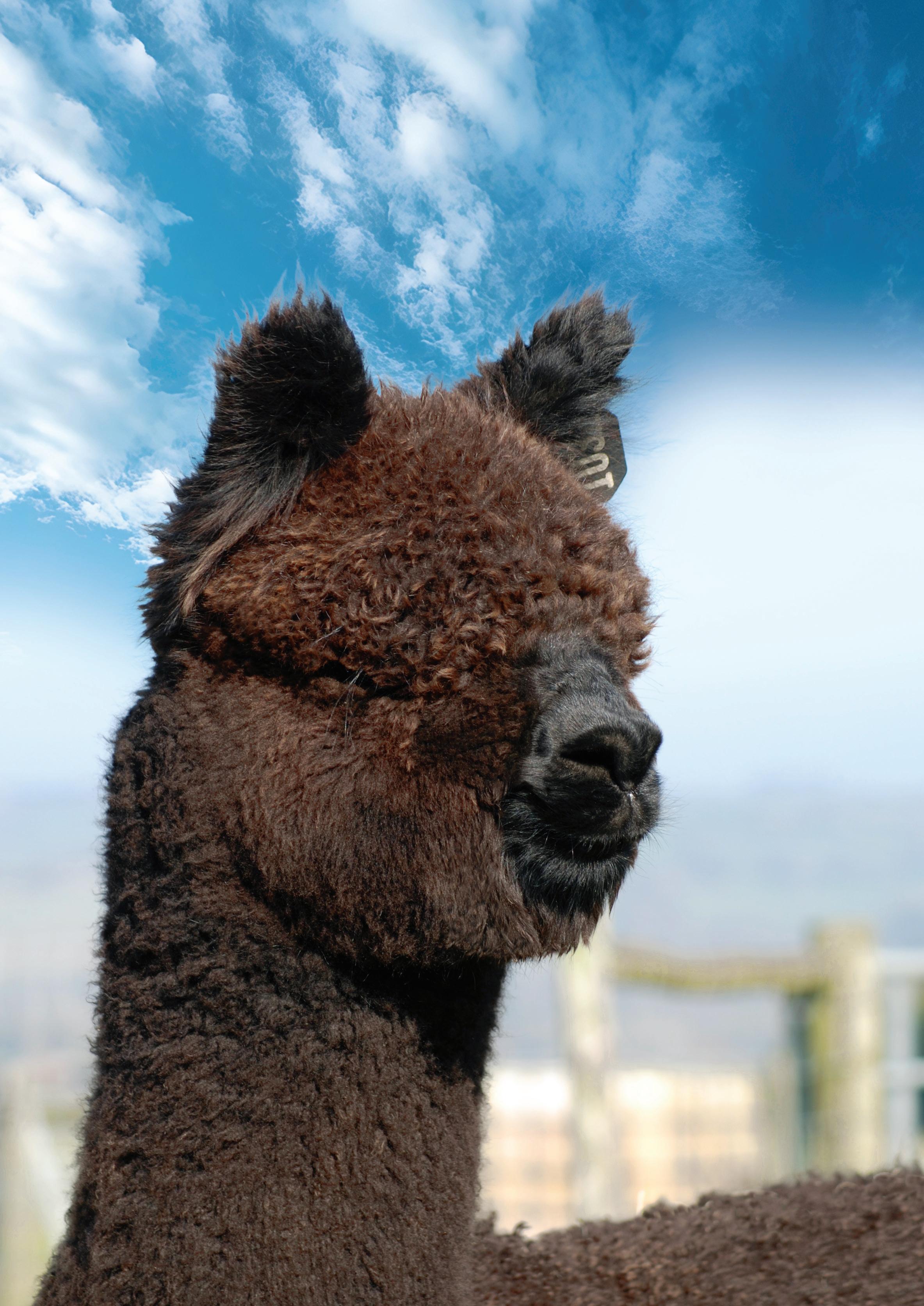
Cover photo:
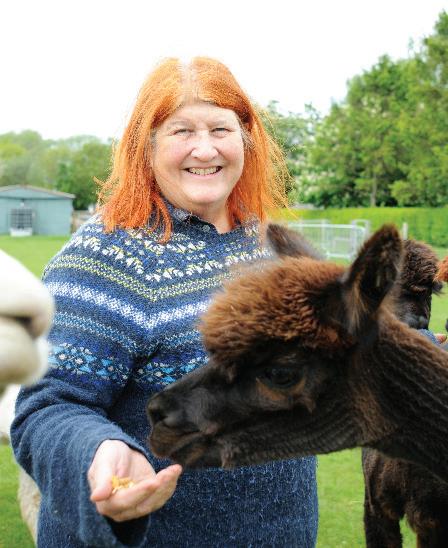
Barbara Hetherington can usually be found perusing the British Alpaca Society pedigree registry.
42 Old boys can still get it right
Or so says Paul Wills of Limestone Alpacas with his 2025 Heart of England Spring Fiesta Supreme Champion Huacaya.
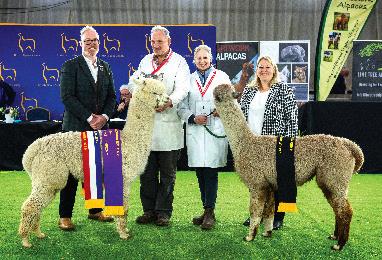
44 As seen on TV Jacki Barlow is now offering people an opportunity to stay in a unique holiday cabin on a TV location farm.
46 Get on course for life long learning
The British Alpaca Society gives access to a variety of courses for members from basic husbandry to advanced fibre recognition.
50 The alpaca annual
Dr Ami Sawran helps owners navigate a year of husbandry and health.
Owner organised
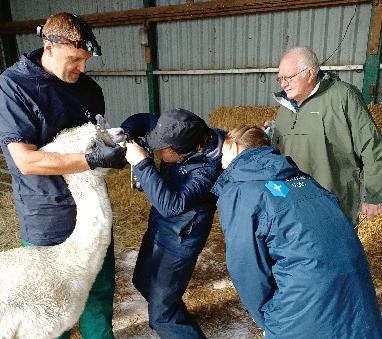
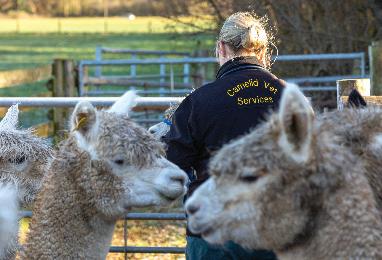
58 Herd health planning Are you up to scratch?
64 A drier, cleaner bed
66 Crackers about alpacas
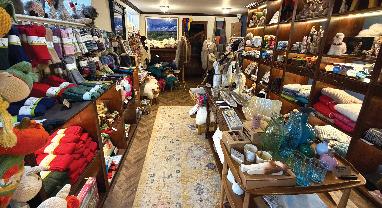
Neil and Michelle Payne of West Wight Alpacas tell us about their very own alpaca gift shop
70 Access to a fulltime alpaca shearer
72 Around the mills
78 Regional groups
There is a wealth of entertainment, education and experience across the UK alpaca groups. Did you know that you can join a group outside your area and benefit from even more skills?
BAS membership and alpaca ownership continues to be healthy. At the end of 2025 BAS had over 1,500 members with over 45,000 registered alpacas. There were 2,600 new registrations in 2025.
BAS welfare has been busier than ever in 2025 with advice to owners, Trading Standards and RSPCA. Perhaps because of the combination of weather and economics more alpacas have needed to be re-homed than in previous years. Many of the re-homing cases we support are related to owners who have, through ill-health, become unable to cope with the needs of their alpacas. It is very often a difficult decision for the owners to give up their alpacas but because they care about their alpacas, they realise a new home is the right thing to do.
Most re-homing cases involves a small number of alpacas – typically one, two, or three but in 2025 we have had two large herds to re-home each with over 30 alpacas involved. Re-homing on this scale is a big operation. Thanks to all members who helped in any re-homing this yearyour support is greatly appreciated.
BAS launched a “Trusted Seller” scheme this year with the aim of making the buying and selling of alpacas a good experience for both buying and selling parties. To be a Trusted Seller BAS Members agree to a set of standard sale documents and processes that will provide the buyer with everything they need. BAS check with buyers that the correct procedures have been adopted. Failure to follow the procedures could result in the Trusted Seller being removed from the listing. At the time of writing there
are 147 Trusted Sellers. BAS have followed up sales to 40 buying herds. Five trusted sellers have been contacted to discuss some elements of the sales process that did not follow all the Trusted Seller guidelines.
The National Show successfully moved to the Stafford Show Ground. The event went well with exhibitors giving positive feedback. Having run the event once, the organising committee are working on improvements for 2026. Making the best use of space is a challenge that the Committee have addressed so do expect some changes.
The regional shows programme went well this year with a couple of problems caused by Bluetongue virus (BTV) regulations. One show was cancelled and a couple of others had severely reduced entries because movement rules for alpacas were too complex or expensive for members to take on. Hopefully the 2026 show season will not be affected as the BTV rules develop.
We have had two judge retirements this year with Rob and Shirley Bettinson hanging up their judging badges. Congratulations to both on their judging achievements and best wishes for continued successful “alpaca lives” in a life without judging. There are new judges in training with two apprentice judges in action in 2025 and a certification process to be completed in the near future. The judge training “pipeline” is looking strong with a JT1 training weekend planned for 2026.
Bluetongue virus continues to be an issue in the UK. Government policy has developed with more focus on vaccination. BAS has had a meeting with DEFRA to try and simplify the rules around identification of BTV Vaccinated alpacas. It looks likely that BAS microchips will now be accepted as an official ID which will mean the APHA requirement for an APHA tag to be inserted in BTV vaccinated alpacas will no longer be in place.
BTV is currently blocking exports to EU countries. The export health regulations agreed between the UK Government and the EU are the sticking point. This issue is one BAS are actively discussing with DEFRA but without any significant developments to report at this stage.
The 2025 BAS Member Conference was a good example of how BAS is here to support its membership on their alpaca journey with help, advice and education. Over 100 delegates had an enjoyable weekend in Stoke on Trent listening to an array of speakers on a broad range of subjects. Well done to the organising team for putting on a great event that balanced formal and informal proceeding very well.
The society is dependent on the member volunteers who do much of the work for the society at National and Regional level. We are fortunate in having those members who do so much, from organising and running our alpaca shows, to everything else the society does, including education and training through to welfare and industry development. Thanks to everyone who puts in such an effort to make these events happen, and to everyone who attends.
Making contact is easy by phoning or emailing me, Duncan Pullar, for all your alpaca enquires.

PA CA S OF WA LE S
The British Alpaca Society (BAS) currently has over 1,500 members representing over 45,000 alpacas spread in various densities all the way from Lands End to John O’Groats.
As well as providing information and support to its members, one of the organisation’s most important functions is maintaining a pedigree registry for all alpacas in the UK national herd and a European directory for all BAS registered alpacas domiciled in Europe.
The alpaca industry is at an exciting stage of development and the BAS is working hard to support its members in their initiatives – both in the UK and Europe. By joining the Society you become part of a national community, dedicated to all things alpaca. Membership offers knowledge, networking and support to help you protect your investment and work towards your own alpaca aspiration.
The British Alpaca Society supports a national network of regional alpaca groups who meet on a regular basis to share experiences and knowledge, organise events and talk about the alpaca.
The autonomous groups provide an invaluable forum for sharing expertise through workshops, lectures, shows and related alpaca events, with the emphasis on self-help, accessibility and local initiative.
Whether you are an owner, a prospective owner or just interested in these fascinating animals, your regional group will always make you welcome.
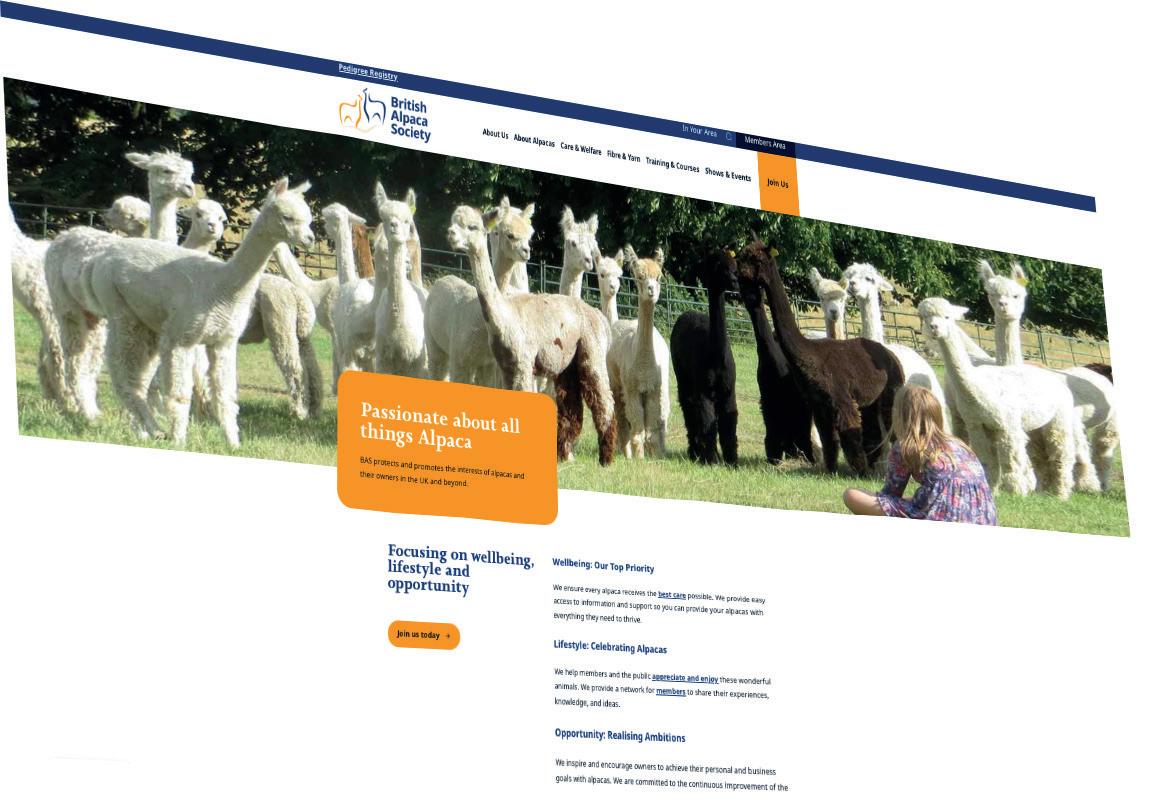
The BAS website is a one stop educational resource containing detailed information on the alpaca, the membership and the Society. BAS also has its own Facebook page which it uses to keep members updated on news and the latest information on events and shows.
BAS provides its membership with an informative quarterly magazine dealing with all aspects of alpaca ownership. The editorial content is applicable to the aspirant, beginner and established breeder within the UK and Europe. The BAS also provides its members with regular electronic information updates.
BAS provides members with a range of educational courses on alpaca assessment, advanced alpaca assessment, alpaca fibre and processing for breeders.
Through its comprehensive BAS judge training scheme, it provides the UK industry with certified qualified judges to support the show circuits and through its training and recertification programme, it maintains the standard and consistency of alpaca judging in the UK.
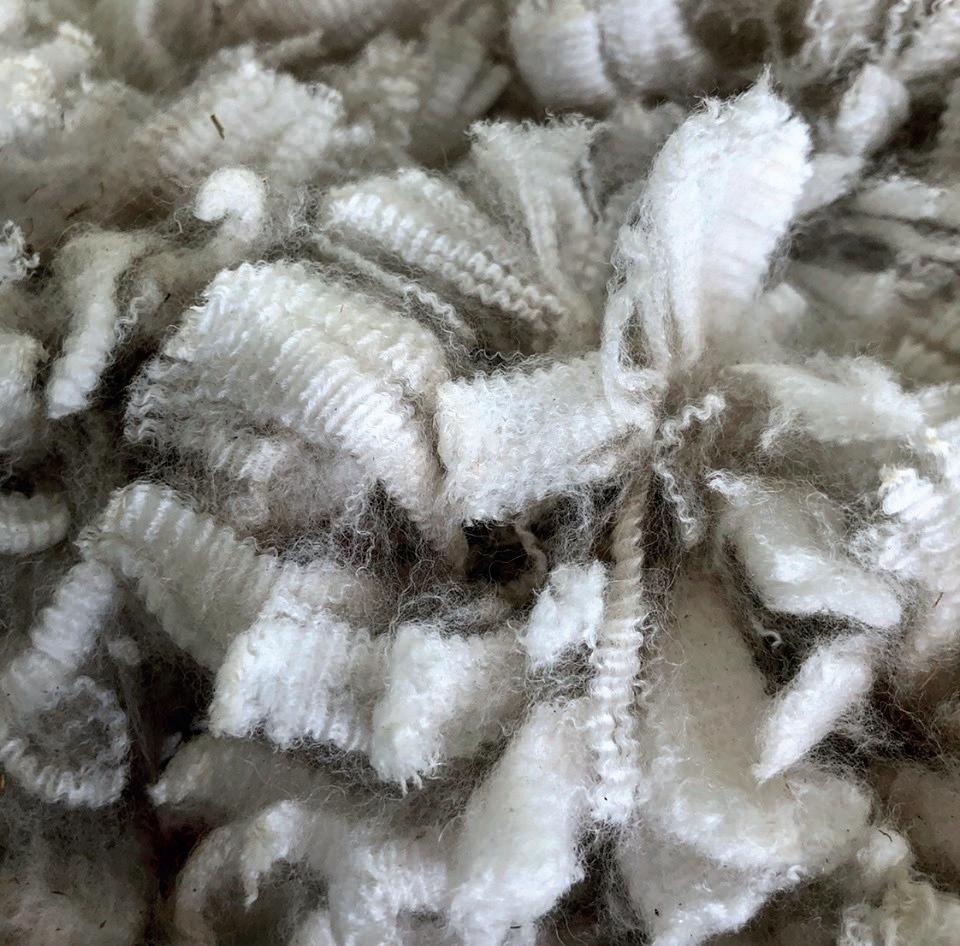
BAS provides members with information on shearing, skirting, sorting and processing alpaca fibre, keeping them up to date with all developments within the alpaca fibre marketplace.
The BAS is dedicated to the welfare of alpacas. It facilitates training and educational dvd’s and documents to aid husbandry and care of alpacas and is involved in all facets of government liaison regarding disease monitoring and exports. BAS have emergency contacts for welfare issues and support members who have husbandry related questions or need help.
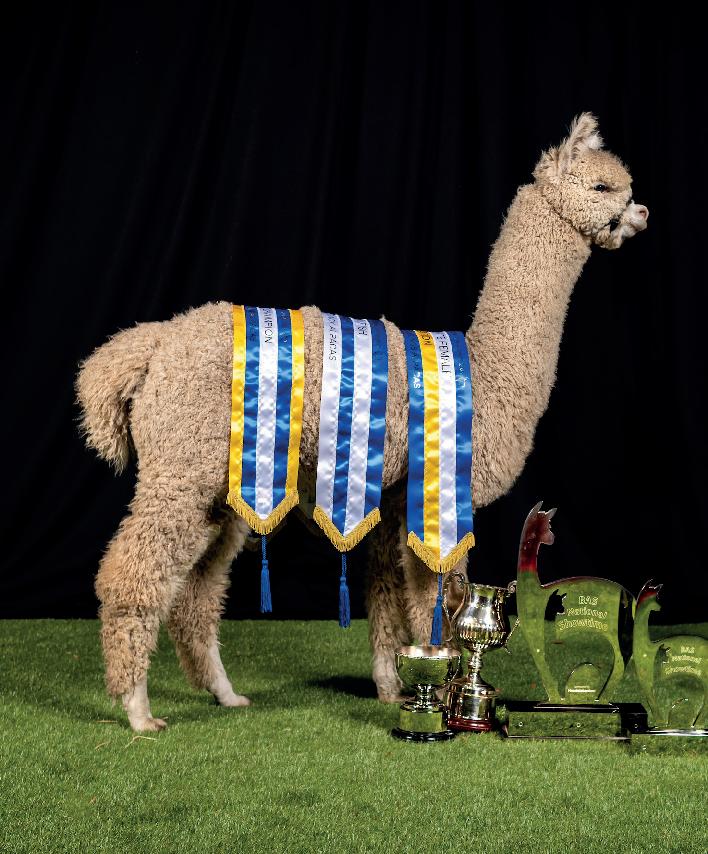
BAS Show Committees support a programme of BAS accredited halter and fleece shows throughout the length and breadth of the British Isles. Not only do these shows provide a showcase and learning experience for the general public, they also play a major part in educating and informing alpaca breeders throughout the UK.





Libby Henson from
A strong accurate pedigree database is an essential tool in the future development of our industry, and key to the development of a successful breeding strategy for all members. It provides the opportunity to look at trends within the national population, produce statistics for the BAS board, the marketing committee, Alpaca magazine, and potential new members. With easy access for all members the Online Registry holds a wealth of information on over 80,000 animal records including pedigrees, offspring, show results and images and helps members plan unrelated matings.
Please ensure that your alpacas are part of the future – check your herd records in the Online Registry, and get all your animals registered.
There are currently over 45,000 alpacas registered as living in the UK in BAS herds ranging in size from two or three animals to several hundred. Most herds consist of 10 to 20 registered animals. It is important that all UK born alpacas are logged with the BAS even when they are kept as pets or for fibre production.
All alpacas should carry a microchip which is the primary form of identification and is the quickest way to positively identify a lost or stolen animal. Tag numbers should be allocated but do not have to be worn in the ear.
All cria should be logged with the BAS registry as soon as possible, and before their first birthday. There are three sections of the
If you need help or advice please contact the Grassroots Office on 01392 270421 or email pedigree@grassroots.co.uk
Or write to: BAS Registry, PO Box 251, Exeter, EX2 8WX
registry – Registered, Notified and Listed.
• All females should be ‘Registered’ (£20 +VAT).
• All pet males which will not be used for breeding or have been castrated should be ‘Listed’ (free of charge). This is important because it keeps them in the registry, and maintains their mother’s breeding record.
• All other males, whose destiny has not yet been decided should be ‘Notified’ (£5 +VAT)
• Certificates are available for Listed or Notified males for an additional £5 +VAT.
• Males selected as breeding studs must be fully registered. (£50 +VAT to include the compulsory DNA profile). The DNA profiles can then be used to parentage verify cria in the future.
Late fees apply to all cria applications which are not reported to the registry until after their first birthday.
Animals which have been sold should be transferred on the registry to the new owners. The transfer fee applies to ‘Registered’ females, ‘Registered’ and ‘Notified’ males and is normally paid by the vendor. Transfer of ‘Listed’ non-breeding males is free of charge.
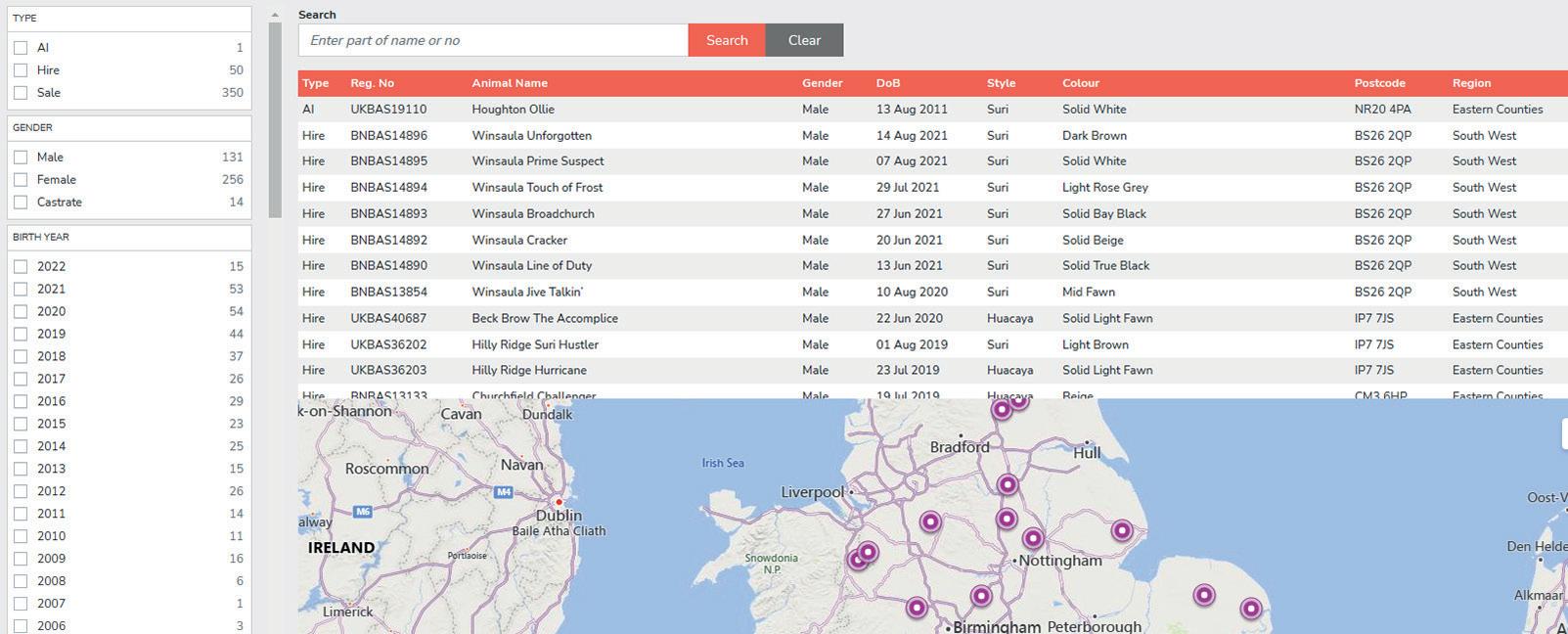
Search for animals for sale by location, age, sex, colour and style
The details of all ‘Registered’, ‘Notified’ and ‘Listed’ alpacas is available via the Grassroots Online Registry at breeds.grassroots.co.uk/bas
The landing page links to the animals you own (top left), your membership details and payment methods (bottom left). In the top right hand corner are the ‘action’ buttons:
• The magnifying glass – to search for people and the animals they own, any animals in the database, and animals which are available for sale or hire.
• Sort or filter the list offered, click on an animal to view its details; pedigree, offspring, show results and images if the owner has uploaded them from the Grassroots Mobile App.
• The menu icon – for a list of all the actions you can apply to make online: report births, register previously notified males, transfer ownership out of your herd, report deaths, apply for DNA profiles (this is automatically included in the application to register a male).
The online show entry system provides a full list of shows. You can go back in at any time to check which animals you entered, make changes up until the show is closed, and reprint fleece sheets. The entry system filters the classes to help you make the correct choice and reminds you of the shearing dates you logged for each animal at previous shows.
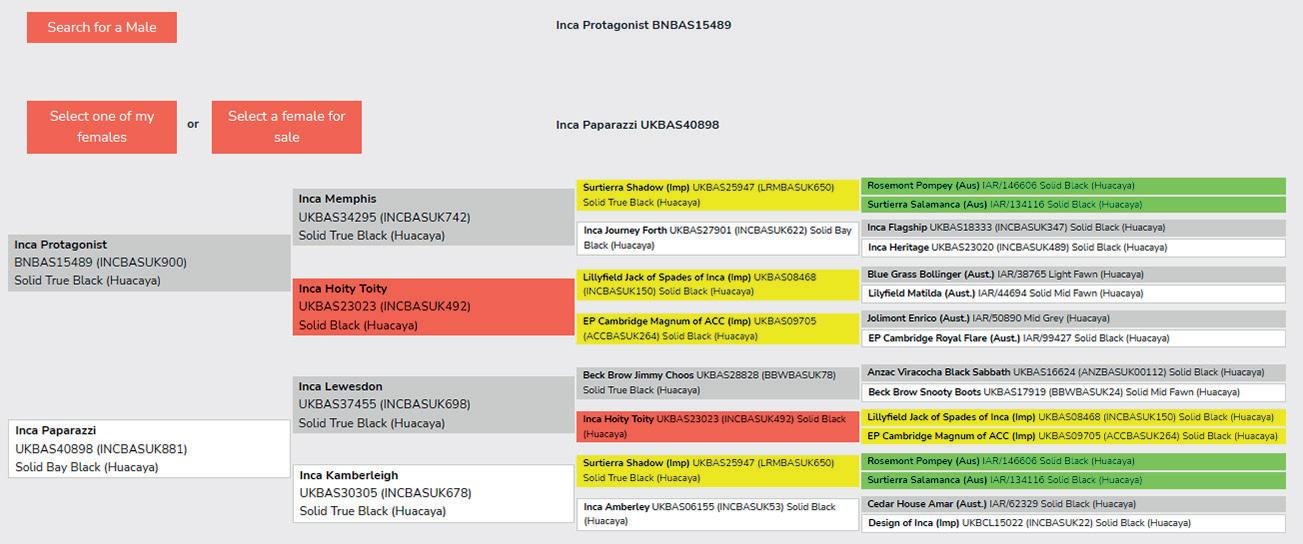
Use Check Mate in the menu list to look for common ancestors in potential matings, which appear in bright colours.
There are four ways you can apply to Notify, List or Register your cria with the BAS. You can:
1 2
3 4
Apply via the Grassroots Online Registry. You will need your herd letters and password. If you have forgotten them please click on the ‘forgot password’ link or contact the Grassroots office for a reset.
Apply via the Grassroots Mobile App which you can download from the Google Playstore or Apple Appstore. Search for Grassroots Systems.
Email a list of cria in an Excel spread sheet.
Send a paper application form or email to the Grassroots office with all the details.
Please note in 2024 the board decided that all applications MUST be paid for before they can be processed. If you have not already done so please ask for and sign a Direct Debit mandate which will avoid any possible delays.
Fees were waived for the first 20 females ‘Registered’ or males ‘Notified – this offer ended on 31st March 2025. All applications received or completed from that date will attract the normal registry fees.
New for 2026, you can run a full kinship analysis on groups of potential matings. This calculates the ‘what if’ inbreeding coefficient (IBC) of potential offspring and compares them to the Mean IBC for the current live population.
Please do check that the animals are on the BAS database or contact the Grassroots office for assistance on 01392 270421 or email pedigree@grassroots.co.uk. It is very important that animals are registered before you buy because cria can only be registered by the person who was the registered owner of their mother on the day they were born.
Use Check Mate to identify common ancestors in potential matings
If you purchase unregistered animals you will not be able to register them yourself, and any cria they subsequently produce will only be eligible for Listing. Remember if you are planning to show, or to breed animals you may wish to sell in the future, you must begin with pedigree registered stock. Registration is also important because the pedigree of an animal, its offspring, siblings and other relations are a good indicator of breeding potential and that of any descendants. If you want to breed to improve your stock, you need to know as much as possible about what you are buying.
If you do already own unregistered stock, please contact the BAS registry for advice. It may be possible to trace their registered parents and arrange for late registration and transfer. Failing that, there is a ‘grading-up scheme’ which enables unregistered stock to be brought back into the fold, over three generations.
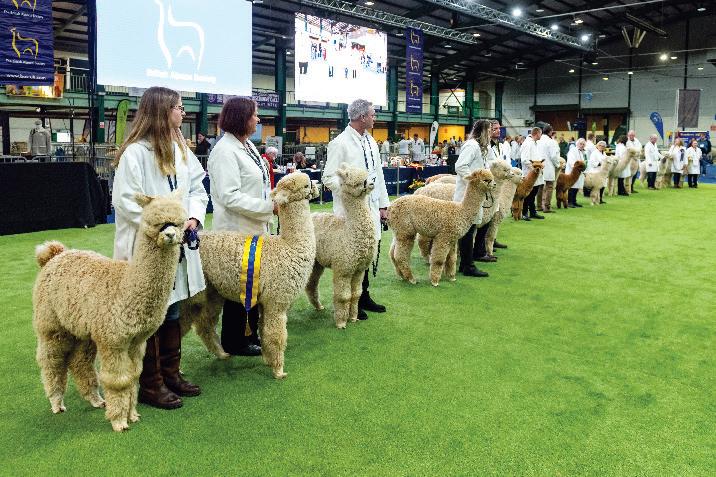
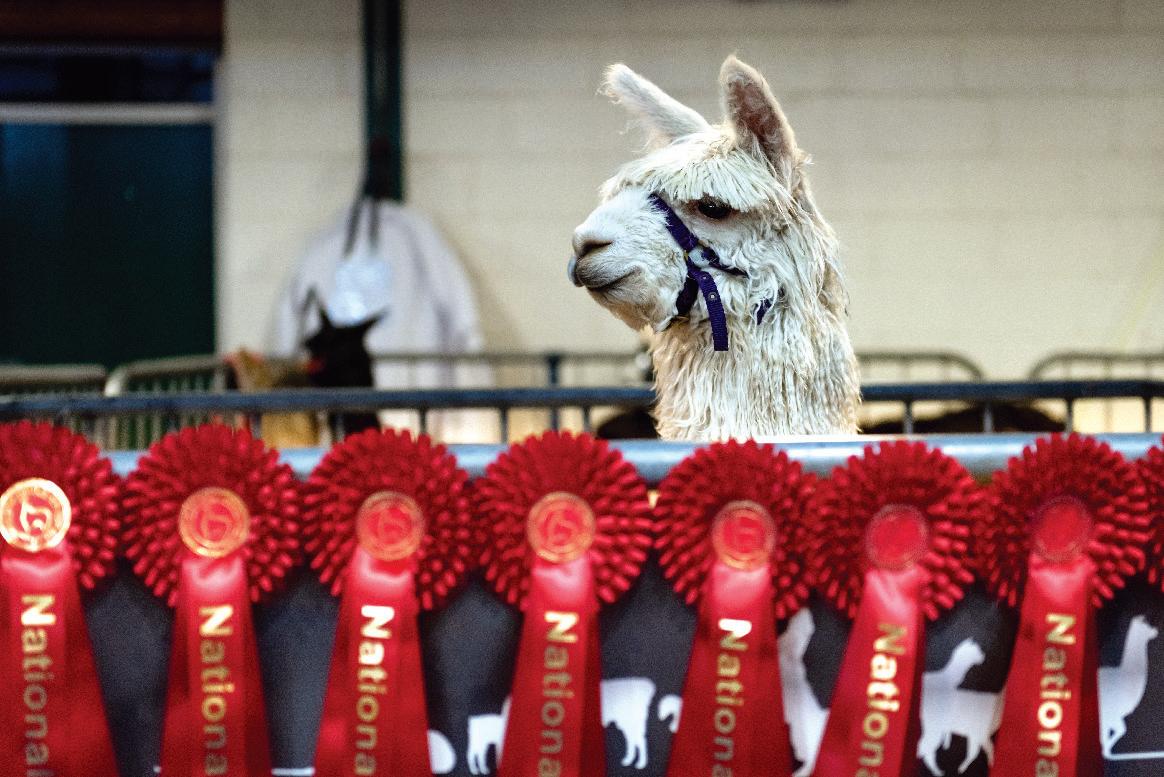
The BAS National Show is one of the largest and most prestigious alpaca shows in the world, with over 500 alpacas in the Halter Show, the winners of regional shows competing in the Champion of Champions Fleece Show and the Fibre Zone showcasing alpaca products.
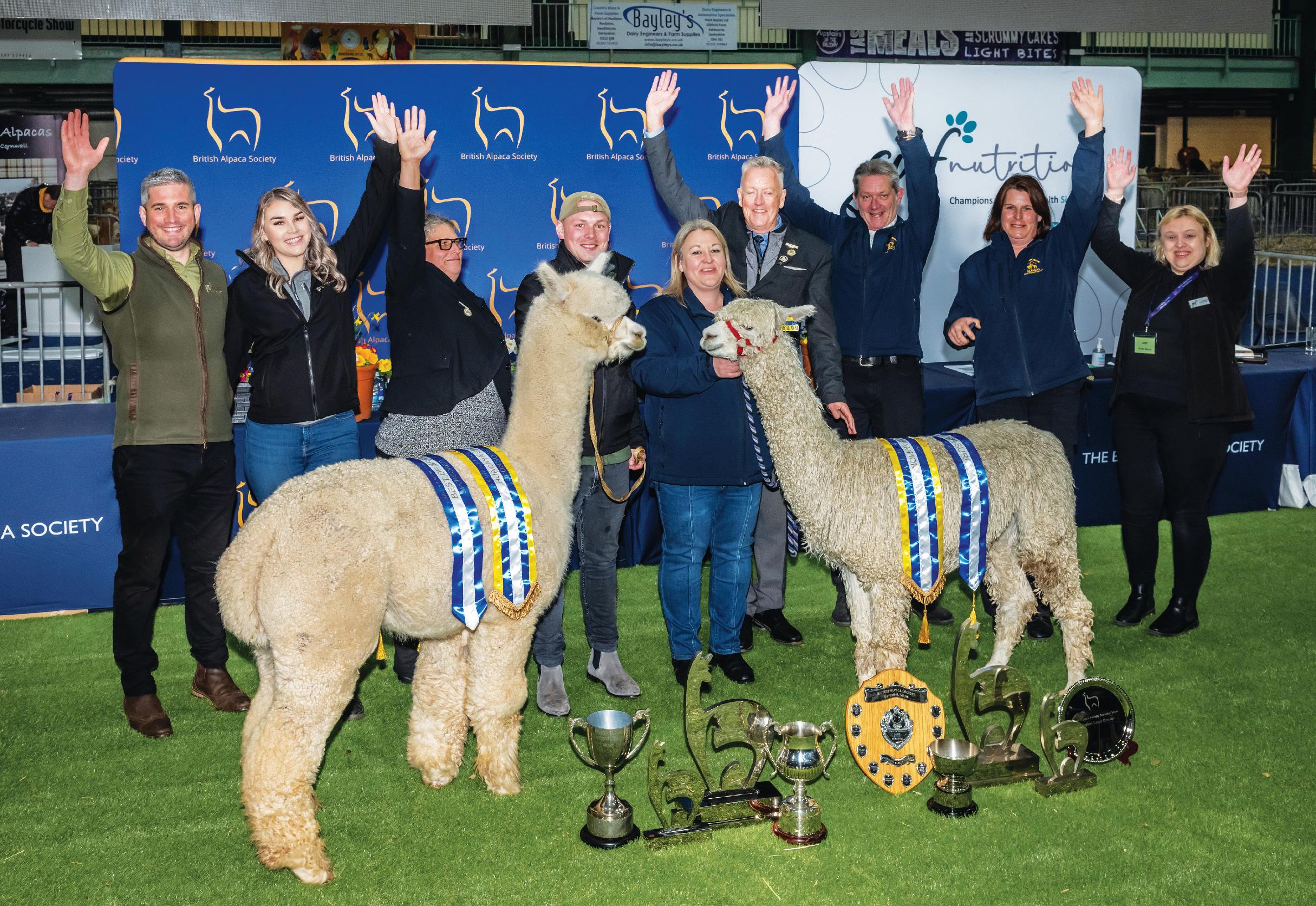
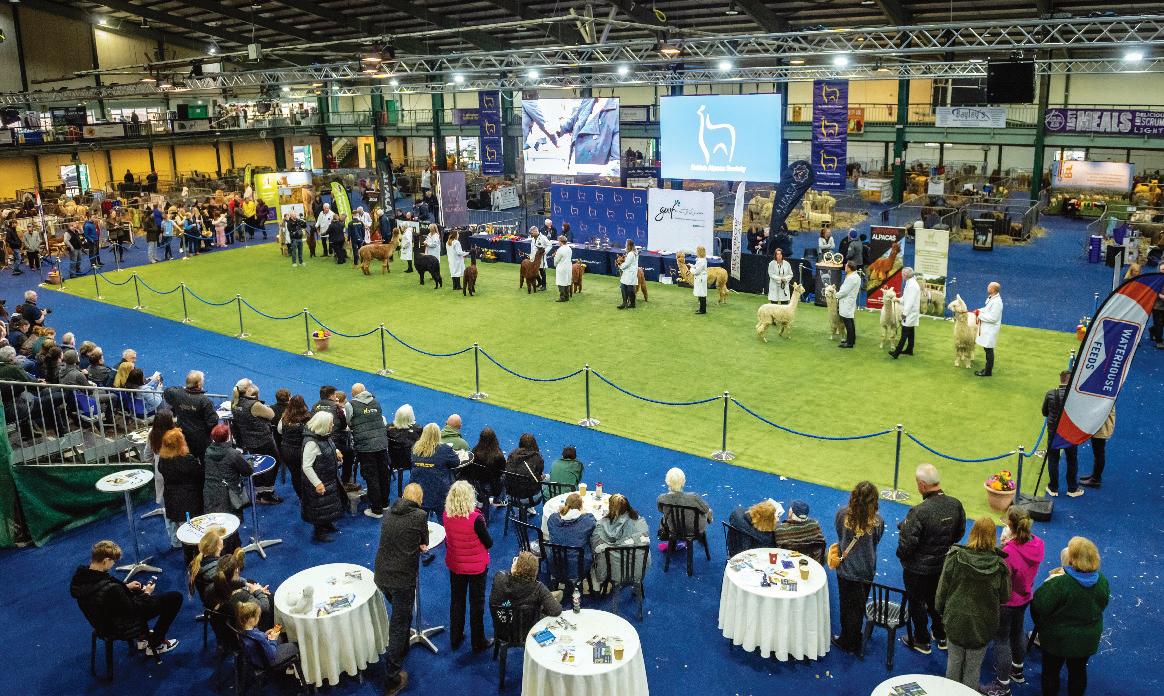
It’s our second year at the Staffordshire County Showground and we will be building on the success of year one. We already know that the showground gives us all the facilities we need to run one of the world’s most prestigious alpaca shows and with the feedback from 2025 we can tailor this even better for our annual alpaca showcase.
The Fleece Show, Fibre Zone and all the trade stands and exhibits are coming together in Hall 2 to create a really vibrant and busy atmosphere aimed at alpaca owners old and new and we hope to attract loads of visitors to join in the show.
Most obviously, the National Show is a chance for breeders to showcase their alpacas and compete for the prestige of being a colour champion and ultimately Supreme Huacaya or Suri in both the Halter Show and the Champion of Champions Fleece Show.
But the show is more than that.
The spectacle of over 500 alpacas representing some of the finest in the country is an exhibition of the quality of the UK alpaca industry.
For UK breeders, it’s a chance to catch up and compare breeding programmes and an important opportunity to learn from and trade with one another. It’s also a great chance to showcase to visitors from Europe who may wish to import to meet their breeding goals.
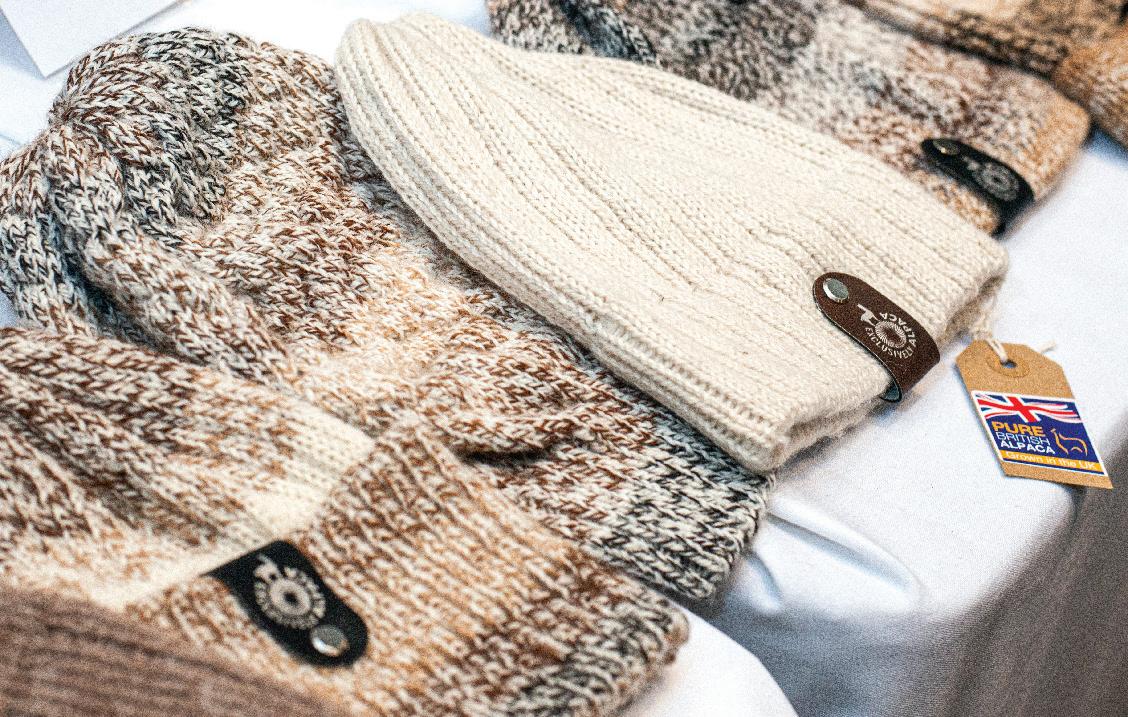
With the Fleece and Fibre Zone it’s a chance for all existing alpaca owners and those just coming into the industry to learn about the journey from fleece through to products. From the Champion of Champions Fleeces laid out for all to view, you can learn about shearing, and spinning with a specialist shearer and local alpaca mill on hand to answer questions about how to get your fleece made into yarn. It’s also a chance to sample and enjoy the luxury and utility of alpaca fleece with some beautiful products for sale and to gain inspiration from the Fibre Zone competition entries. Overall, a not to be missed opportunity designed to inspire and inform alpaca owners who want to use their fleece.
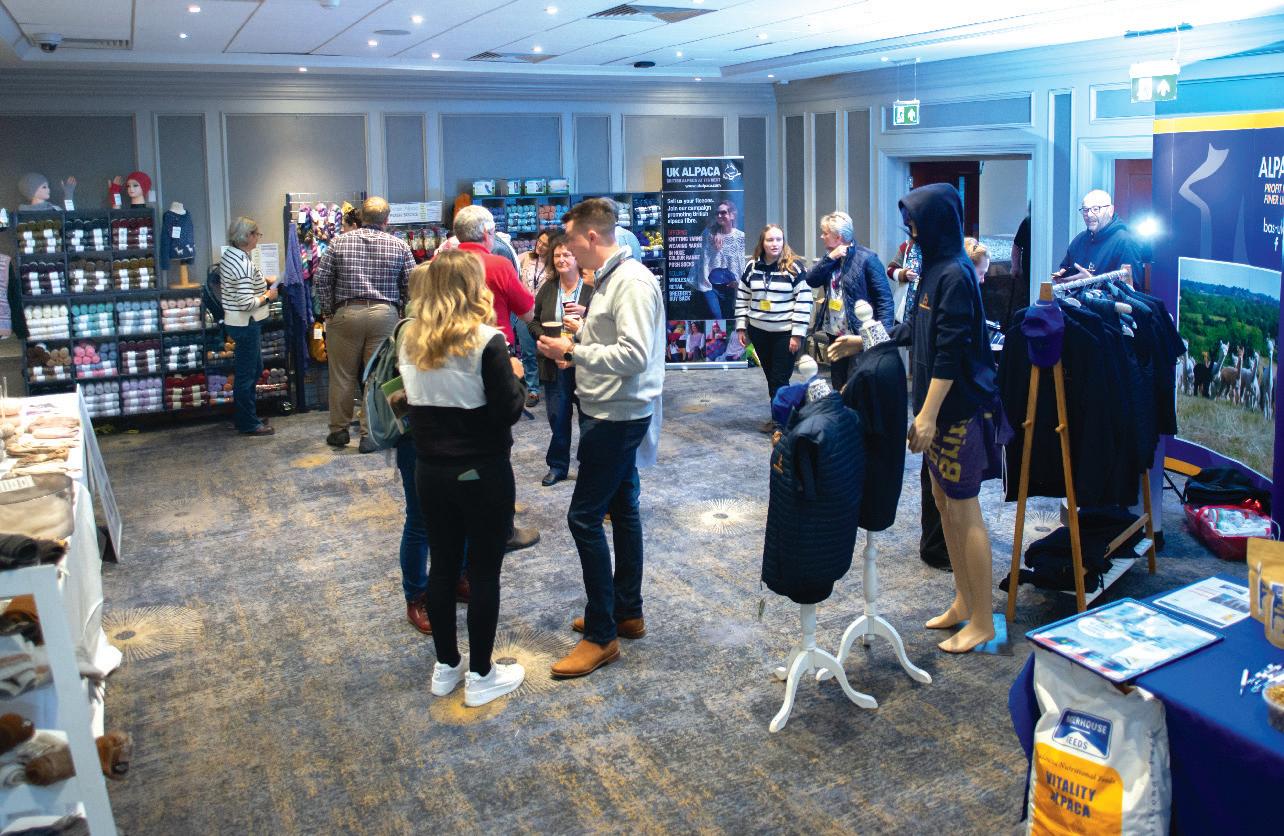
In the Products and Services Zone we bring together some of the very best trade suppliers so you can top up on your alpaca essentials and farm equipment. You can also meet the specialists who provide services like faecal egg counts, density and fibre testing and alpaca care.
And finally, this year brings a focus on education and support so you can find out about how to take the next steps in your alpaca journey with courses from BAS affiliate trainers and other providers. BAS and the regional groups will also be there, sharing how they can support members throughout the year.
With all this going on at the show, we open our doors not only to alpaca owners but to all who may want to come and learn more about these wonderful animals.
Overall, the gathering is a window on the health and vitality of alpaca ownership in the UK. Our aim is to inspire and encourage alpaca owners old and new and create the opportunity for all to enjoy a fun weekend.
A vibrant and welcoming Halter Show with all exhibitors in one hall
• Live streaming of the Halter Show judging from two rings via YouTube
• Tandem judging in both rings with UK and overseas judges paired up
• Competitions for best performing breeders at the show split between Huacaya and Suri
A packed second hall for alpaca owners old and new showcasing fleece and fibre, alpaca products & services and education & support
• In the Fleece and Fibre Zone see the journey from alpaca fleece to finished products
– Results of the Champion of Champions Fleece show with all the fleeces on display
– Shearing, sorting and spinning exhibits
– Fabulous alpaca products for sale
– Fibre Zone Competition offering classes for yarn, garments, homeware, toys and crafts
• In the Alpaca Products and Services Zone shop for all your alpaca needs and meet the service providers
– Alpaca and farm equipment trade stalls
– Specialist alpaca service providers
– Veterinary practices
• In the Education and Support Zone plan your next steps in gaining alpaca expertise
– Courses available through BAS and affiliate trainers
– Learning opportunities from other providers including Camelidynamics demonstrations
– BAS and regional group stands and information
• Also NEW this year in Hall 2:
– a presentation area with a programme of talks across the weekend
– a hot and cold sandwich van
Once again there will be loads of socialising opportunities with pub, café and dining all on site
• The Friday Night Supper returns in the main hall outside the Bingley Arms
• Saturday Night Show Dinner in the banqueting hall is set to be even bigger and better
• Improved menu at the café and addition of a sandwich van in Hall 2
• All are welcome to dine and enjoy the social occasion together – visitors from home and abroad, exhibitors in the shows and all our trade stands.
• BAS members have free entry to the show. Tickets for other visitors and all the hospitality options will be available from mid January.
To support the show there are loads of sponsorship opportunities
• Many thanks to all who have already come forward – every contribution is appreciated.
• Returning for another year is our main show sponsor, GWF Nutrition
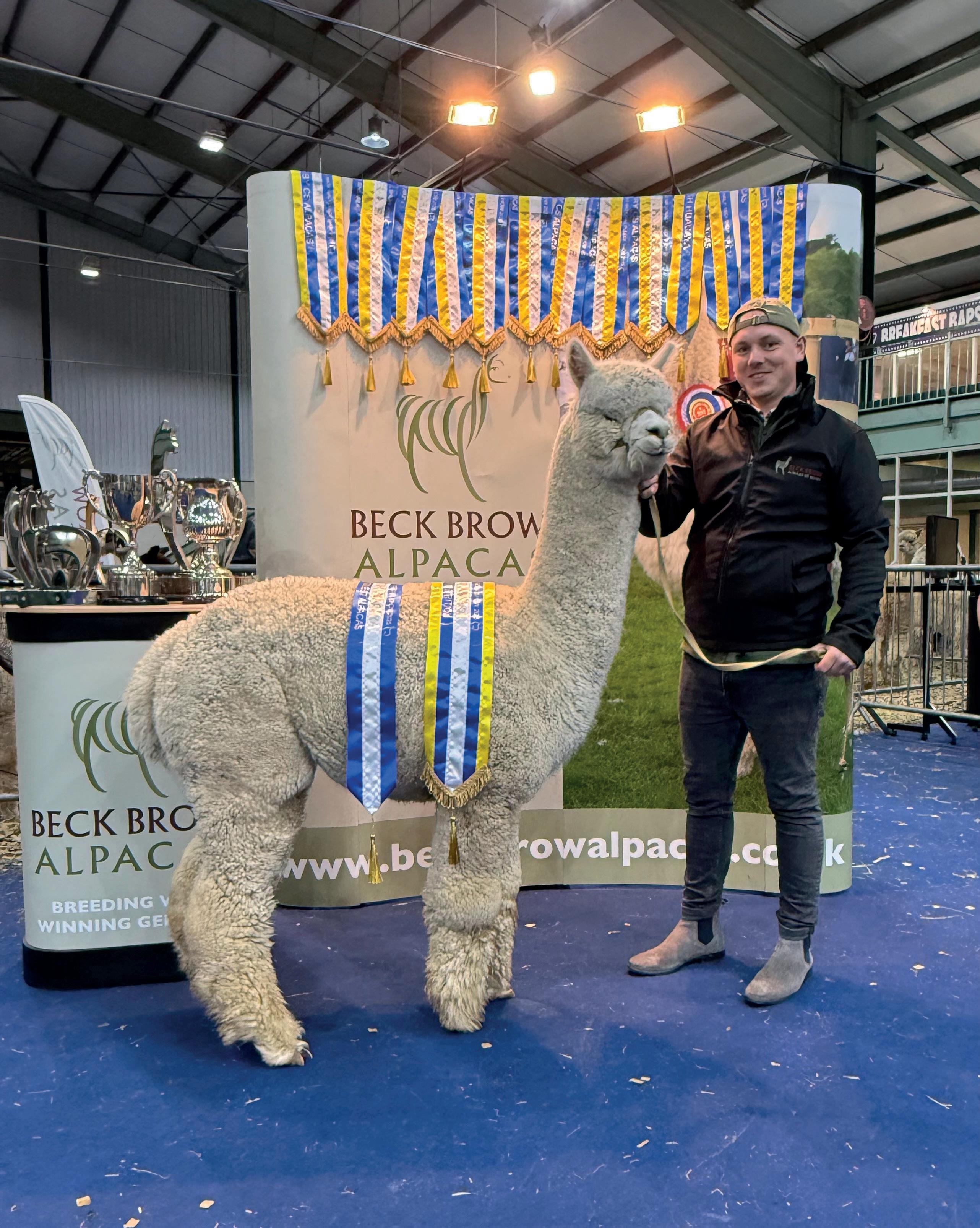
• Gold Pen sponsors for 2026 are: Acton Hill Alpacas, Artwork Alpacas, Beck Brow Alpacas of Wales and Dark Sky Alpacas
• All proceeds from the stud auction in February go towards supporting the show, making this a great chance to secure some of the most exclusive stud opportunities and also support the event.
Acustomary feature of the annual show is the opportunity to buy stud services from a fabulous selection of males from across the country.
Sold by auction over four weeks in February, the sale is the perfect opportunity to secure a special stud for one of your females, including some who are not available for any other outside matings.
The breeders kindly offer stud services without charging a fee, so all proceeds go towards the National Show fundraising. Every year this is an event in itself with all the excitement of seeing who is going to outbid who, particularly when the Irish contingent get going!
The stud males available are being advertised on the National Show Website throughout January along with all the details on dates and the process. If you spot just the one for you, we wish you good luck.
Many thanks to all who donate stud services and everyone who bids.

Doug Steen of Teesdale Alpacas has spent many years advocating for this and Liz Wright has written about the issues in farming magazines. They bring an overview of the current situation.
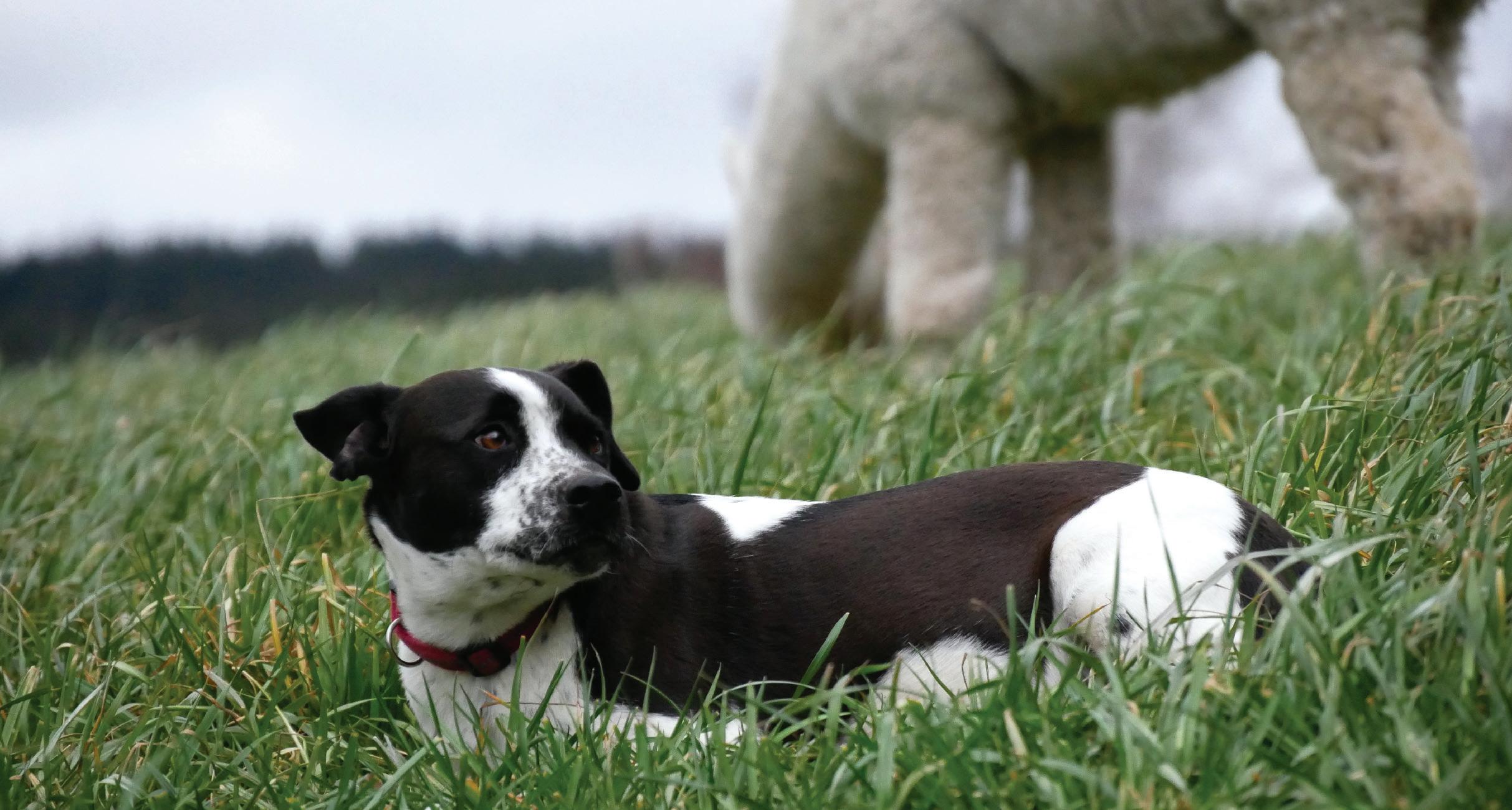
The Dogs (Protection of Livestock) Act 1953 was implemented to afford a level of protection to what was up until now considered to be ‘livestock’ ie cattle, sheep, goats, swine, horses and domestic poultry; of course a long time has passed since then and with much greater access to the countryside by the public. (The UK's first motorway was the Preston Bypass, an eight mile stretch only opened on 5 December 1958). There have also been increased levels of outdoor interest and greater ownership of dogs as pets. Based on recent data, dog ownership in the UK has experienced significant growth, particularly over the last decade, reaching an all-time high of approximately 13.5 million dogs in 2024, up from five million in
1970. Available reports show a steady, dramatic rise in the 21st century, with a massive acceleration during the Covid-19 pandemic. This ‘pressure’ on the countryside brought with it increasing conflict between those wanting to enjoy the outdoors and those who live and work in farming – with the numbers of issues due to out-of-control dogs and dog attacks on livestock becoming a significant problem. A survey of farmers from the National Sheep Association found that almost four in five (87%) sheep farmers have experienced a dog attack on their flock in the past year, with many reporting multiple incidents. NFU research published this year also found that the total cost of livestock worrying across the UK in the past year had reached £1.8 million.
>> Continued on next page
• Starter Herds
• Fancy Grazers
• Sheep Guards
• The Alpaca Experience
www.pennybridgealpacas.co.uk
joy@pennybridgealpacas.co.uk 01256 764824
Based in North Hampshire near the Surrey/Berkshire Borders. Less than 5 mins from M3 J5. Close to Ports & Airports.
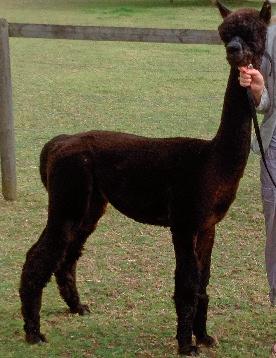
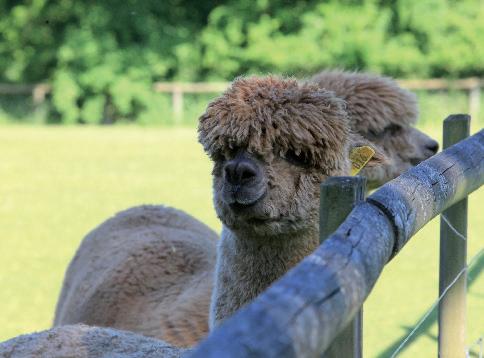

AMBERMOON ALPACAS IS A PRIZE-WINNING HERD OF ELITE BAS AND AAI REGISTERED HUACAYA AND SURI ALPACAS, REPRESENTING A UNION BETWEEN TWO OF IRELAND’S MOST SUCCESSFUL BREEDING HERDS: AMBERLY ALPACAS IN THE NORTH AND MOONHALL ALPACAS IN SOUTHERN IRELAND








The Midlands alone saw an estimated £452,000 worth of livestock harmed by dog attacks, followed by the south west at £225,000. Some alpaca keepers are also suffering tragic losses from dog attacks. From a camelid perspective the existing legislation had never anticipated additional species requiring protection and there simply was not the interest/political willpower in addressing that for such a ‘small’ number of animals and incidents. Most incidents were in any case never recorded. Around 2015 the British Alpaca Society started making contact with other groups (Kennel Club, NFU, Sheep Federation, RSPCA plus others) to see what could be done and to contribute to the effort to update the existing legislation in light of the increasing numbers of dog attacks both on sheep and camelids. Pending any progress, some signage was created and sent out to members to try to help but ultimately the difficulty lay in the inability of the police to do anything – very often the police would initially
be supportive until they realised there were no legal tools at their disposal other than some strong words.
Over the years even with cross party support in government updating the legislation proved ‘difficult’; Fast forward to 2025 and finally the Dogs (Protection of Livestock) (Amendment) Act 2025 received Royal Assent on the 18th of December. The police now have greater powers and can investigate incidents more effectively under the new laws which have come into effect as part of the Dogs (Protection of Livestock) (Amendment) Act 2025. These include entering premises to secure evidence or animal DNA, helping to prevent future incidents. Alongside this, Courts will also be able to require offenders to cover the costs of seizing and caring for a detained dog. The Act extends protection to incidents that happen on roads and paths, recognising that incidents can
occur when farmers move their livestock, for example along a road to another field. It also expands the definition of livestock to include camelids such as llamas and alpacas.
The Government indicated that the changes are designed to crack down on instances of livestock worrying and support the safety and wellbeing of rural communities. Farmers will have greater confidence that incidents will be investigated properly and that irresponsible dog owners can be held to account.
We are very fortunate that Camelids were kept in the bill whilst many other species which had been included previously (such as deer and ostriches etc.) were removed. The efforts of BAS and individual members to keep raising the issue must surely have helped this to happen. For camelid keepers this means we are now afforded all the same rights as other livestock owners within the bill – but it is important to note that camelids are considered livestock only in as far as it pertains to this piece of legislation.
If you are unlucky to suffer an incident please ensure you report the event to both the police, getting an incident number, and to the BAS: ceo@bas-uk.com
• The sign (left) is available from the BAS website
Harriet Main, Public Affairs Manager at the RSPCA, added: “We are really pleased to see the amendment to this legislation finally become enshrined in law. This will give police increased powers to investigate suspected incidents and will make vital changes to what constitutes an offence.
“It will also extend the species covered to include alpacas and llamas and broaden the locations covered by the law to roads and paths – making more animals safer, and in more places.
“We would have liked to see the Bill go even further and expand its scope to include protection for less commonly kept animals such as farmed deer, enclosed gamebirds, ostrich and buffalo, to name a few. We would have also liked to see woodland grazing land covered by the Bill which would bring this piece of law in line with the measures within Scottish legislation.
“But clearly this law is a massive step forward, and we are pleased that positive steps are being taken that will help keep livestock and dogs safe - ultimately, the best way to protect both dogs and livestock is for owners to keep their dogs on the lead.”
BOZFinishingTouch
WelshAlpacaHalterShow2025: SupremeChampionHuacaya NationalHalterShow2025: ChampionLightHuacayaMale ChampionLightFleece86.5pts ShearExcellencesince1989
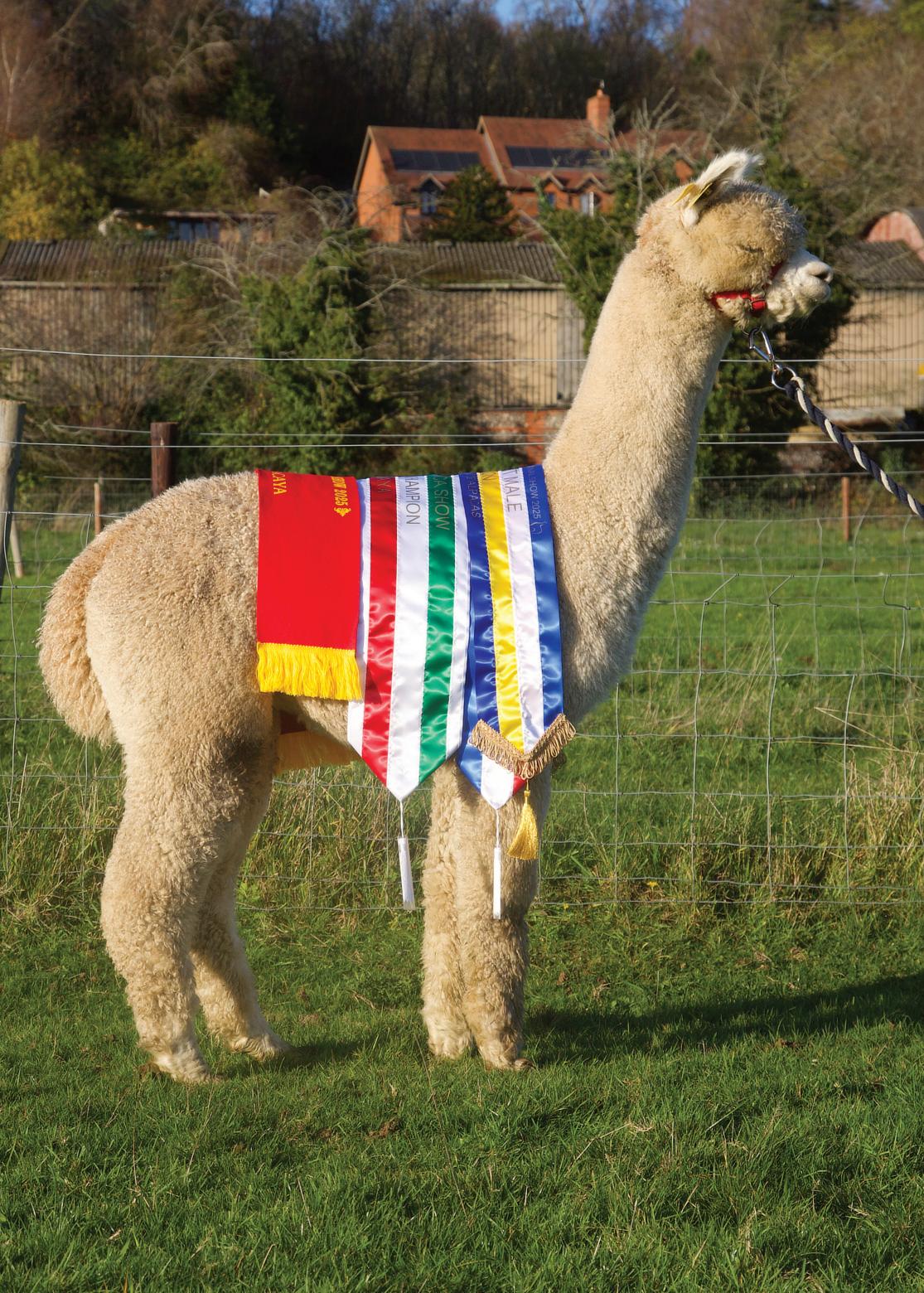
BOZFinishingTouch,siredbyBOZGenerationNow, willbeworkingexclusivelyinhousein2026. Alimitednumberofpremiumfemalespregnant tohimwillbeoffered Registeryourinterestnow.
OurOutstandingWorldClassGeneticsshinethrough inthesheerqualityofourChampionpedigreelines
HuacayasandSuriswithstrongframes, carryingexceptional fleeceswithlasting fineness, greatdensity,uniformityandconsistencyofmicron.
BozedownStudServices
Agreatselectionofestablishedandpromising youngStudsfromLegendaryBloodlines including BOZGenerationNow: WinnerNationalShowSire’sprogenyclass2025& WinnerofJudge’sChoiceHuacaya fleece attheHeartofEnglandFleeceShow,in2024&2025 withhis6thand7th fleeces!
☆In-DepthTrainingoffered atalllevelsfrombasictoexpert. Benefitfromour37yearsexperience Alpacasforsale
contactMary-Jo:07718750303 maryjo@bozedown-alpacas.co.uk www.bozedown-alpacas.co.uk
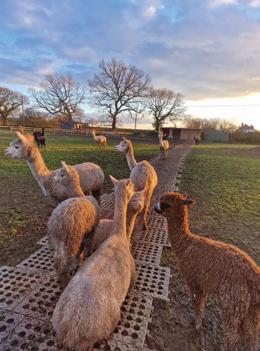










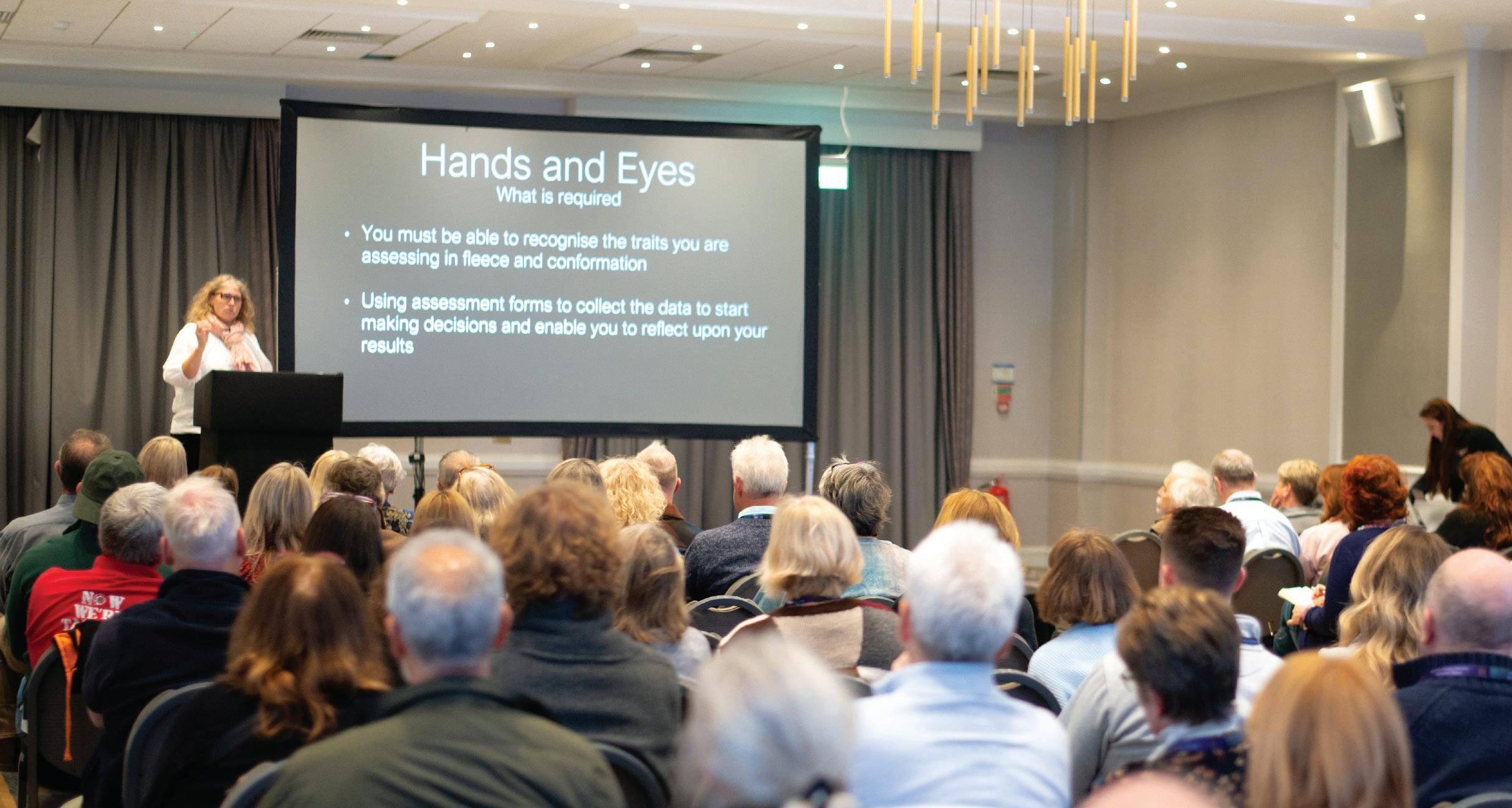
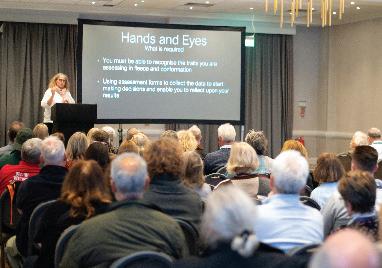
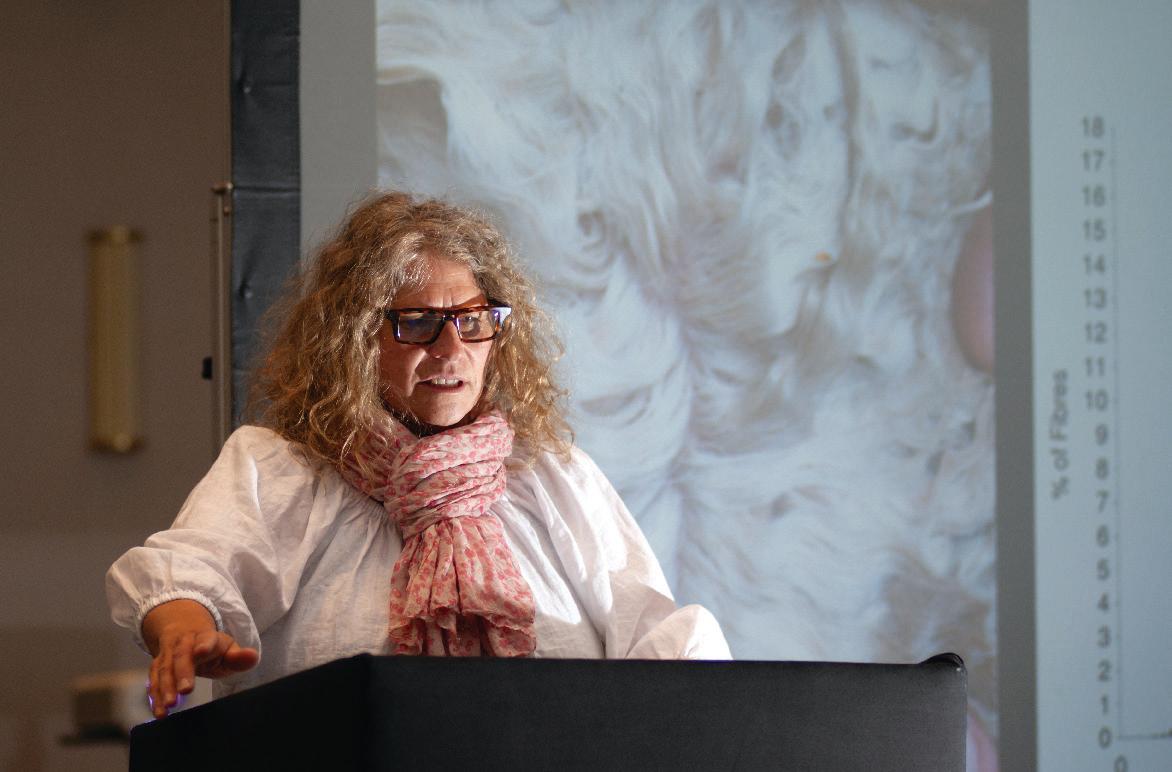
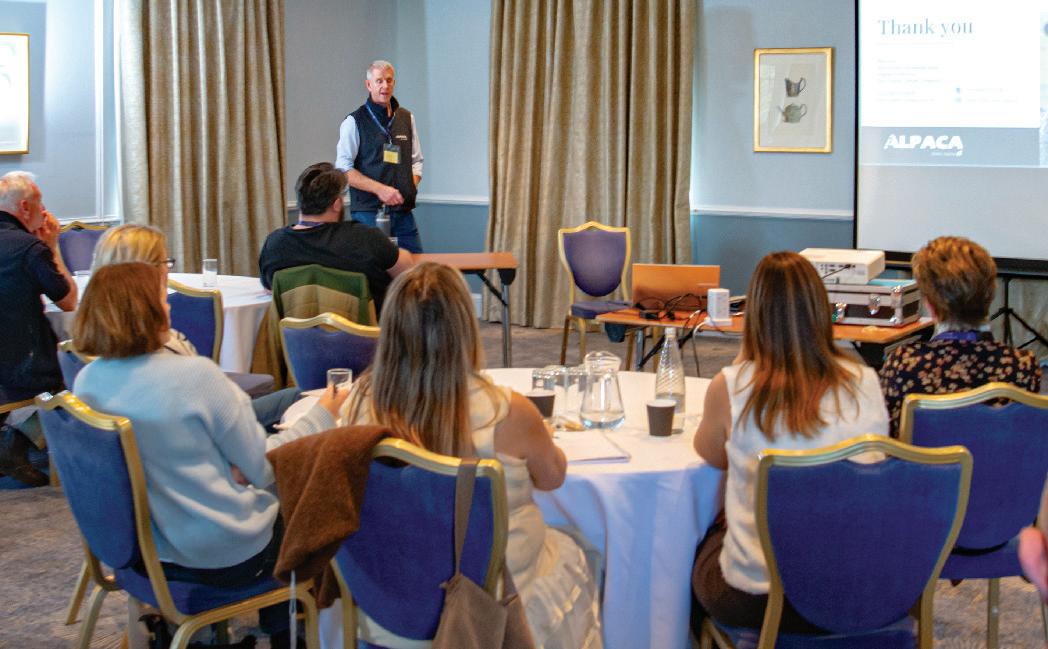
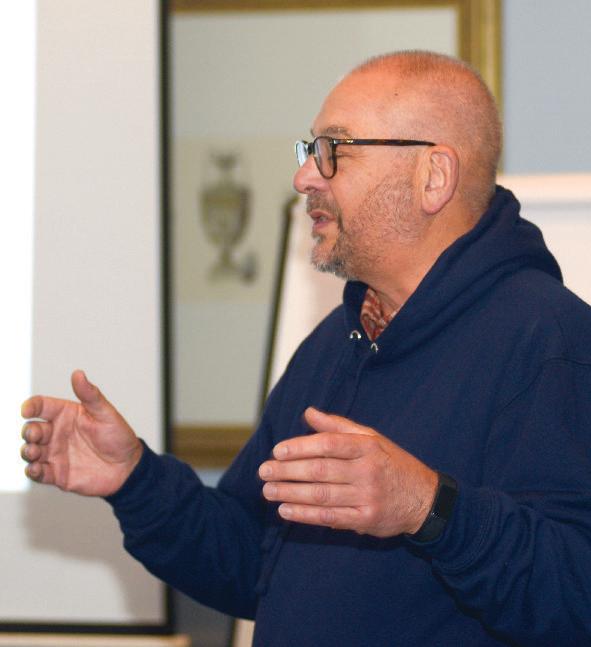
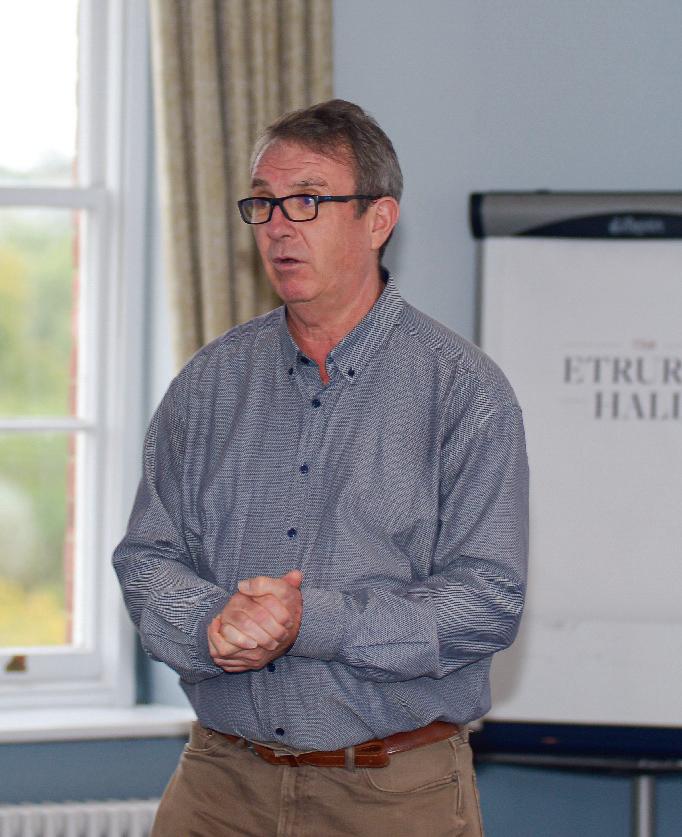
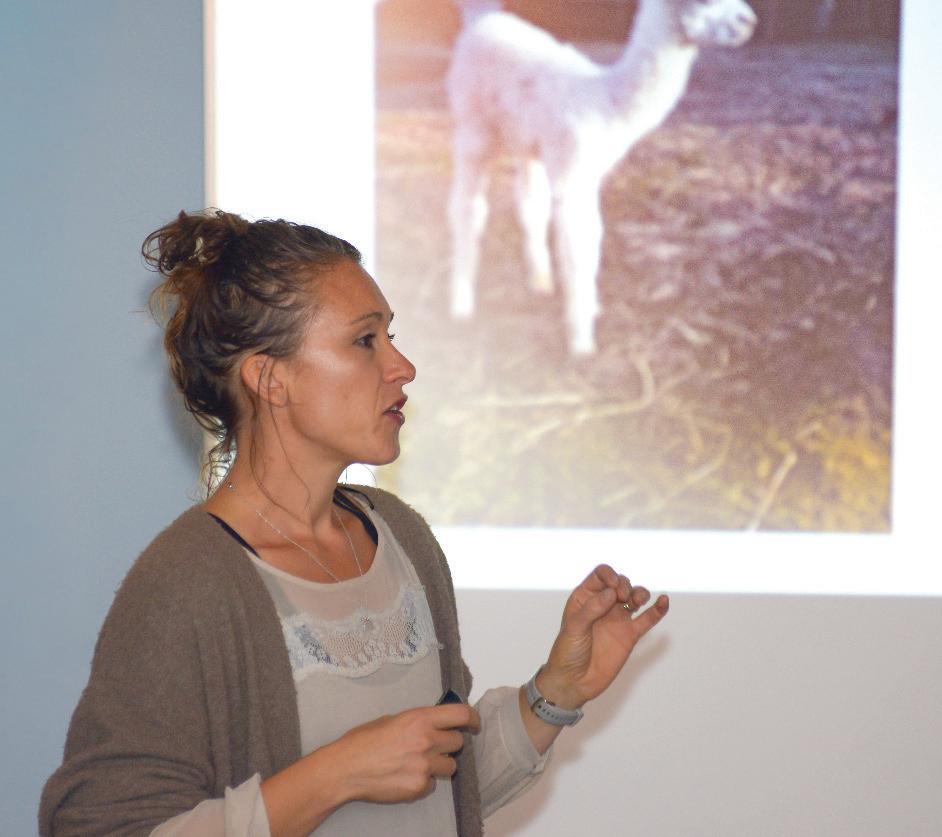
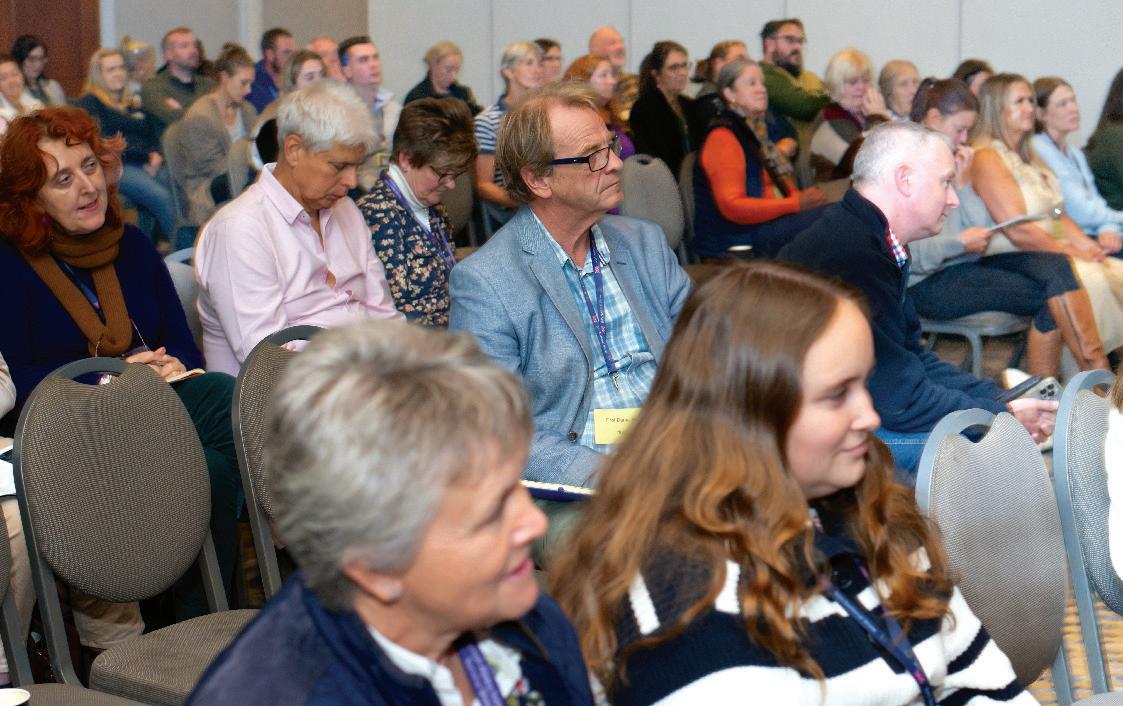
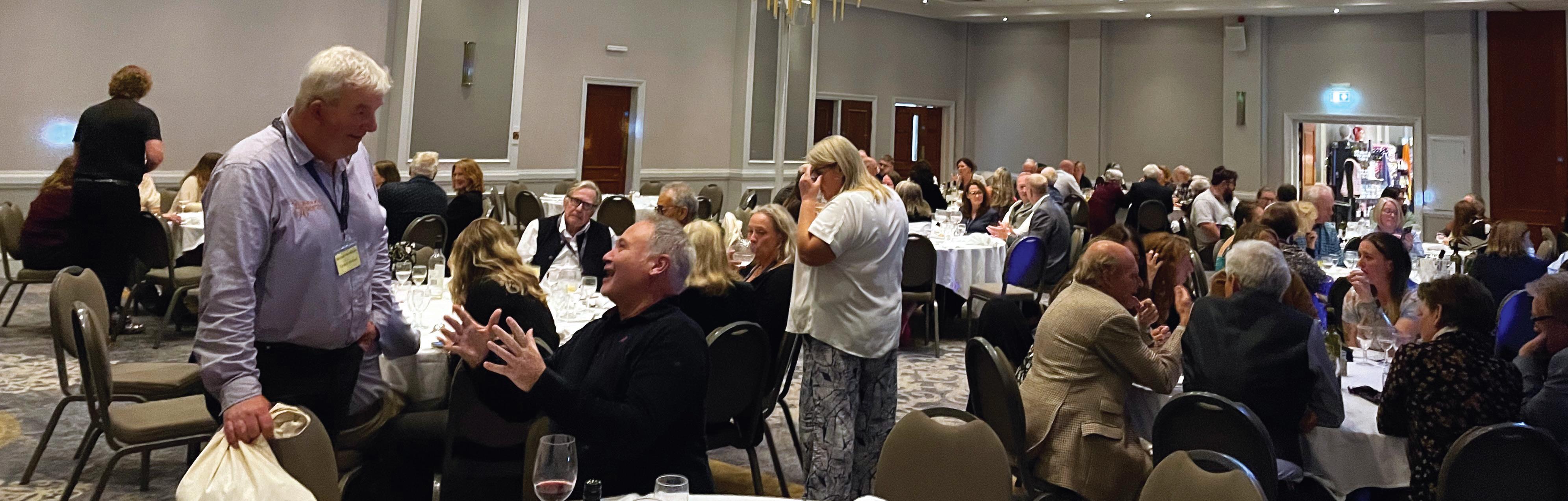
At the start of October, we welcomed more than 100 BAS members and speakers to our two-day conference in Stoke-on-Trent, themed ‘Celebrating Alpaca Ownership’.
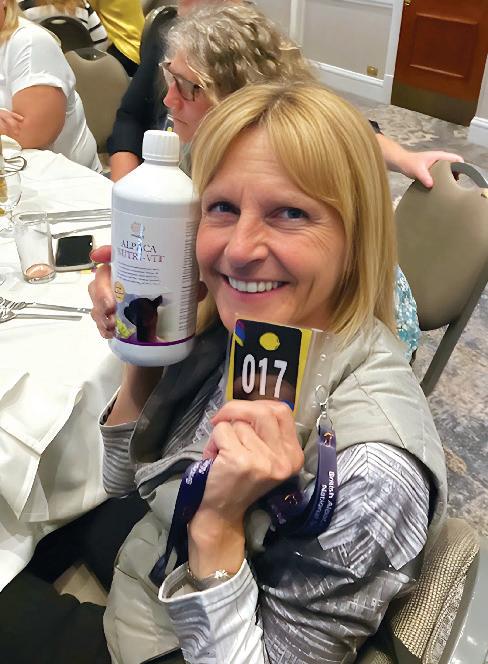
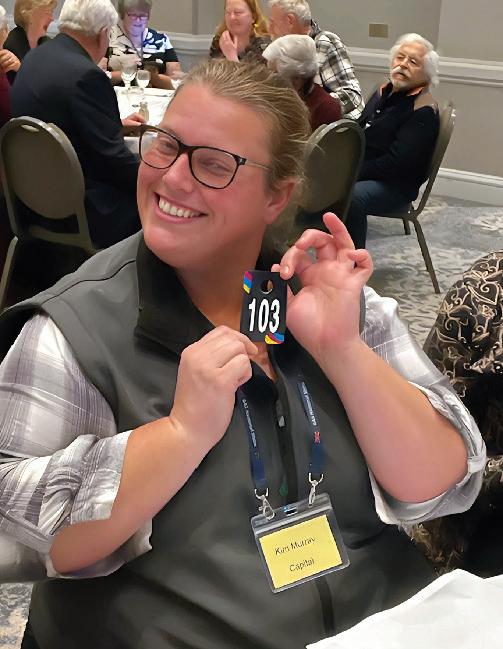
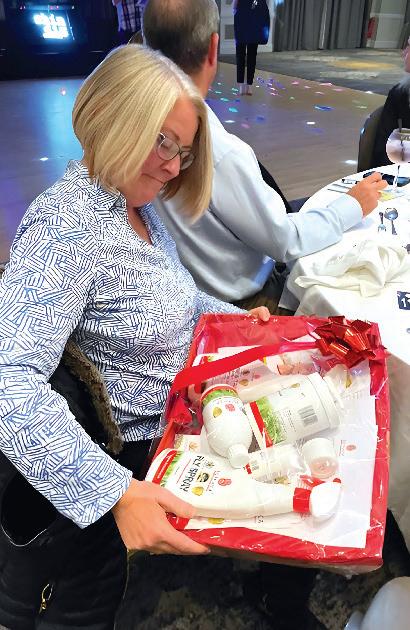
The event was designed to foster both learning and networking, featuring informative sessions and encouraging meaningful connections among attendees and was subsidised by the British Alpaca Society. Members also had plenty of opportunity to catch up and socialise, including at our three-course dinner where we held a complimentary member’s raffle with prizes generously donated by sponsors.
The event featured plenary sessions in which all delegates convened to hear presentations from our distinguished international keynote speakers Molly Gardner, and Professor Ahmed Tibary, as well as Professor Helen Cowie. Additionally, breakout sessions allowed delegates to choose from expert-led presentations or workshops tailored to the varied interests of the alpaca community.
For those who couldn’t attend, video recordings of the plenary
presentations are all available to view in the member’s area of the BAS website. The organisers are hugely grateful to everyone – speakers, sponsors, delegates – for making the weekend so enjoyable and informative!
The conference most importantly got everyone talking and thinking about the significant issues related to alpaca ownership and the future of our industry, particularly after Molly Gardner's inspiring opening talk.
We were privileged to welcome Molly from Thistledown Suri Stud, New Zealand, a breeder of champion coloured Suri alpaca and an internationally recognised alpaca judge, judge trainer, and educator. In her talk, ‘Changing Times and the Shifting of an Industry from Bloodstock to Fibre and the Strong Position Britain Holds in This Transition’, Molly persuasively argued that the industry has reached a pivotal point, requiring a strategic shift away from a concentration on bloodstock to prioritising fibre to ensure long-term sustainability. Alpacas, first bred in
South America for their fibre, are now primarily valued as bloodstock in Europe, Australia, and New Zealand, with a focus on breeding, buying and selling to increase numbers. These bloodstock markets that in the past supported ‘fledgling’ industries are experiencing decline for various reasons, and large-scale Alpaca fibre processing industries have yet to develop – a point that was reiterated throughout the weekend. Molly however claimed that, thanks to Britain's extensive fibre heritage, breeding expertise, and specialist knowledge, the country is well equipped to undergo this change concluding ‘you’ve got this Britain’!
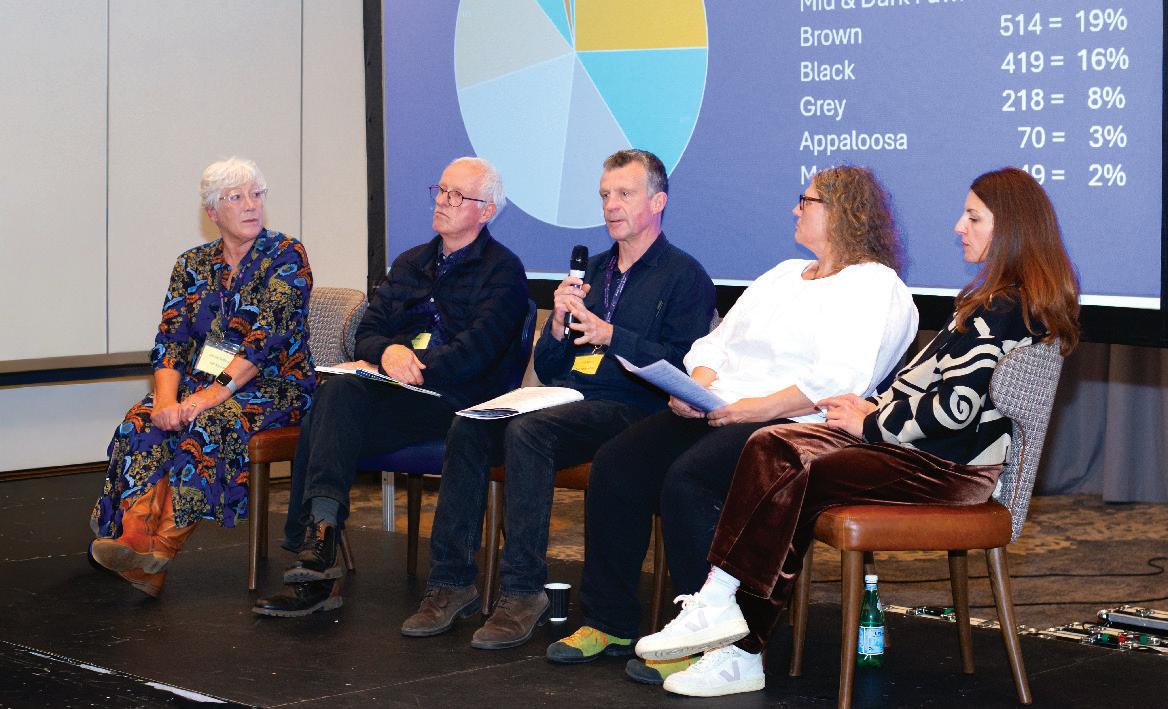
A follow-up panel discussion, moderated by Shirley Bettinson (TOFT Alpaca Stud, recently retired BAS judge), focused on the current lack of a fibre industry and ways to move forward. The conversation sparked lively engagement between attendees and our expert panellists: Gloria Mazzer (Wovenbeyond); Phil Allen (Two Rivers Mill); Chas Brooke and Rachel Hebditch (Classical Mile End Alpacas and UK Alpaca); along with Molly Gardner, who contributed an international perspective.
Continuing the theme of fibre, Emma Taylor of East Anglia Alpaca Mill and Alpacas of East Anglia conducted a practical workshop on fibre use and fleece preparation for processing, and we are also grateful to Courtney Pye from the Wool Testing Authority Europe for providing free fibre testing of members’ fleece samples at the Conference.
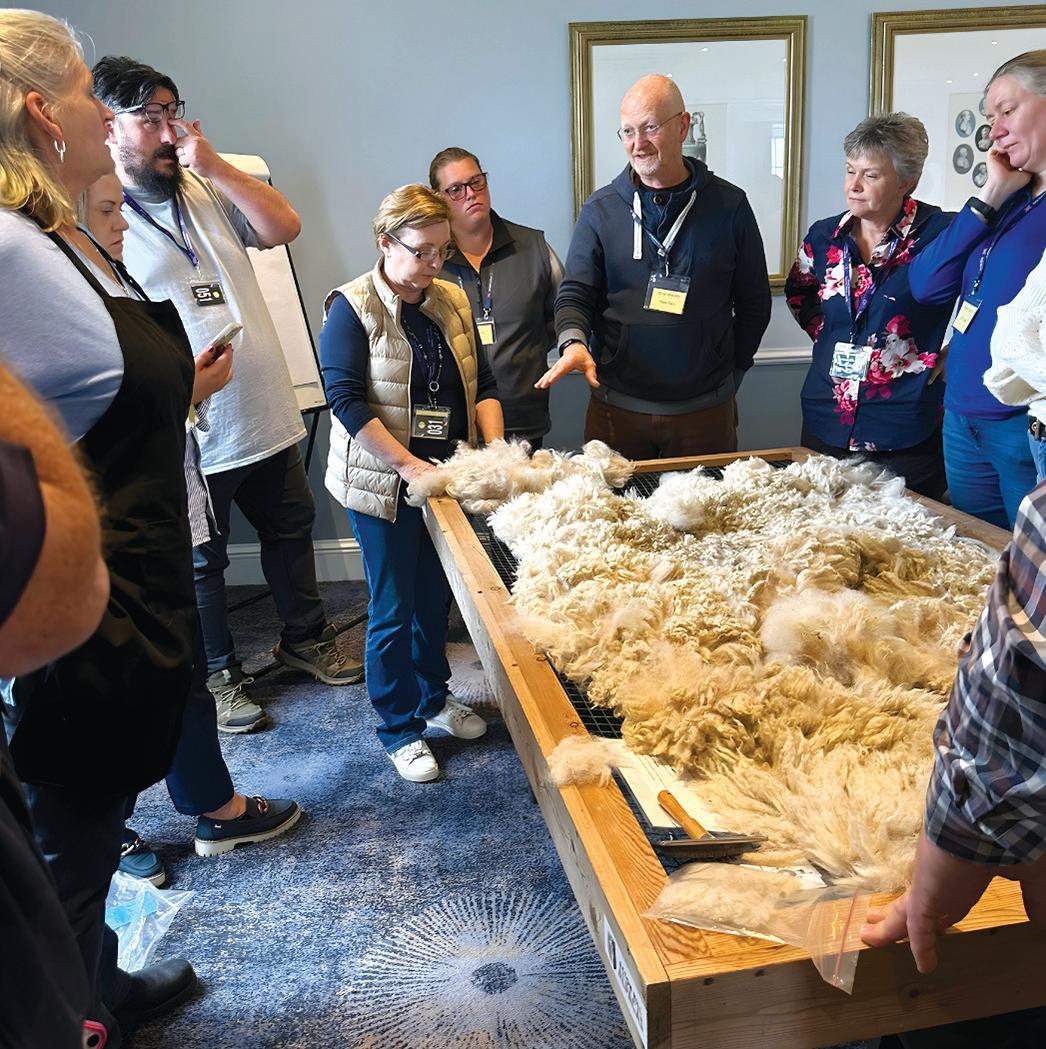
Molly Gardner’s second presentation, 'Are you getting the most out of your breeding programme?', leveraged her considerable expertise across various livestock species as well as alpaca to outline effective strategies for developing a structured breeding programme. She encouraged us all to identify our breeding goals and the tools for achieving this such as understanding fleece testing and fleece traits, colour genetics and conformational traits including evaluating which are heritable or not. Many of the themes covered in Molly’s talk were then developed in optional breakout sessions. Mary-Jo Smith (BAS Judge, Bozedown Alpacas) discussed the importance of assessing conformation. Roger Clarke (BAS Judge, Amberly and Ambermoon Alpacas) and Julia Corrigan Stuart (BAS Judge, CS Alpacas) led a workshop on showing and judging fleece that highlighted desirable traits such as fineness, uniformity, density and length.
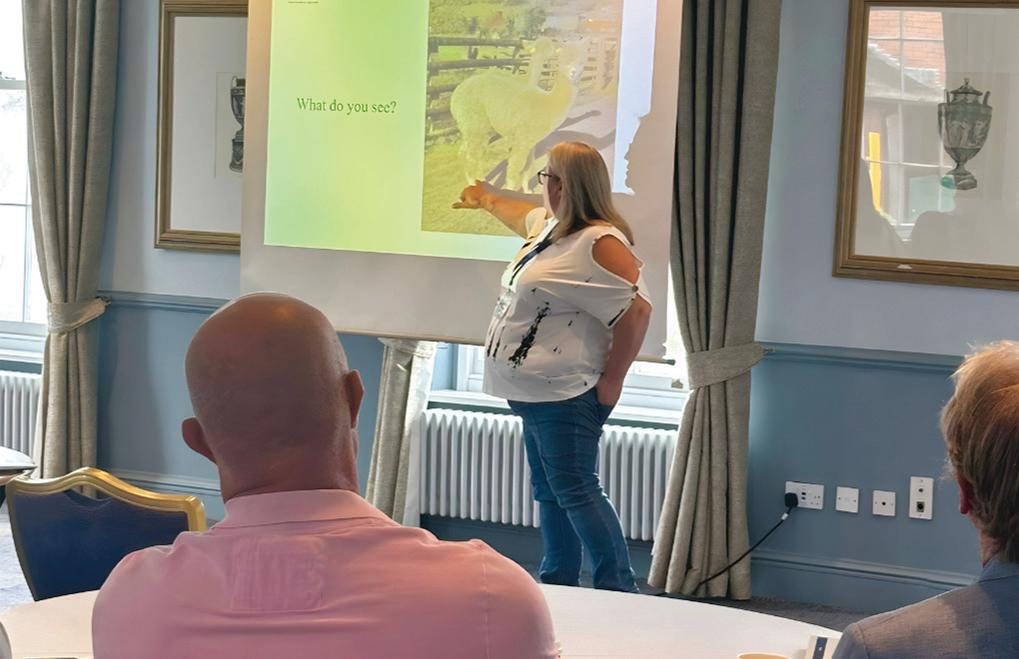
Duncan Pullar (BAS CEO) and Nick Harrington-Smith (BAS judge, Alpaca Evolution) showed how Estimated Breeding Values (EBVs) for alpacas can systematically measure breeding progress. By collecting and analysing key data on desirable traits, they described EBVs as a “game-changer”. Accurate pedigree data is obviously vital and Libby Henson (Grassroots Systems) in her talk ‘Pedigree Matters’, discussed how the BAS Pedigree Registry, run by Grassroots, can help members make breeding improvements through its wealth of information on type, colour, herd size as well as performance statistics such as EBVs. This discussion led into Professor Mike Coffey’s (SRUC, Head of Edinburgh Genetic Evaluation Services, EGENES) presentation on Genomic Improvement in Alpacas – Is it possible? Addressing a full audience, Professor Coffey referenced his research in dairy cattle to outline the potential application of genomic selection for enhancing desirable traits in alpaca breeding.
>> Continued on next page
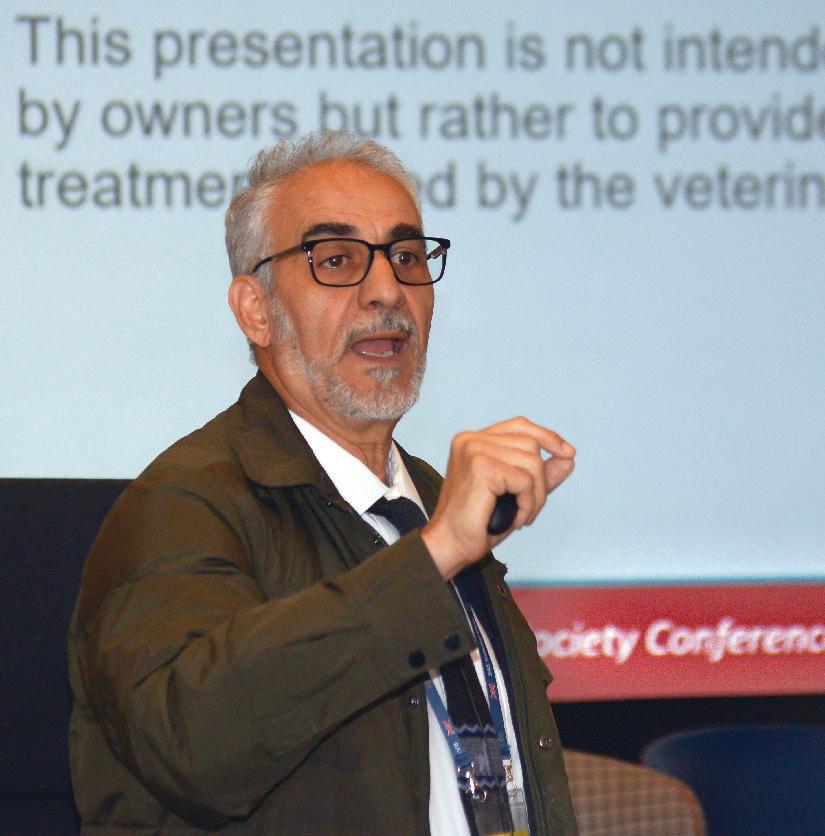
The conference also importantly focused on veterinary topics tailored to the different interests of the membership led by our second distinguished international keynote speaker Ahmed Tibary, Emeritus Professor at Washington State University's College of Veterinary Medicine and world leading expert in camelid reproduction (theriogenology).
Ahmed delivered two plenary lectures to packed audiences: the first addressed 'Fundamentals of Reproductive Physiology for Improved Management of Alpaca Breeding,' and the second focused on 'Infertility: Potential Issues in Both Males and Females'. Both presentations provided context for subsequent breakout session discussions led by our own foremost UK camelid vets – Claire Whitehead (Camelid Veterinary Services); Ami Sawran (Westpoint Farm Vets); and Lissie Gercke (The Livestock Clinic).
• Claire Whitehead – ‘The Mite Menace: Tackling Skin Problems in Alpacas’
• Ami Sawran – ‘Tailoring the Camelid Calendar to your Herd’s Needs’
• Lissie Gercke – ‘The Next Generation: Husbandry and Health Care Management of the Juvenile Alpaca’
We were also grateful to Victoria Barrett from Simply Alpaca, for her talk on why Camelidynamics can transform the ways we “understand, manage and train our alpacas” making husbandry and daily care easier.
In his first talk, Ahmed stated that reproductive success is best measured by how many healthy cria a female weans in her lifetime without risking her health. Achieving this, he argued, depends on a solid herd health programme and precise breeding record keeping. He outlined the fundamentals of reproductive physiology, factors influencing puberty and sexual maturity, and the reproductive cycle arguing that an understanding of these is crucial for effective breeding management and timely pregnancies.
The ensuing wide-ranging discussion addressed early pregnancy diagnosis, strategies for loss prevention, prepartum preparation, postpartum rebreeding, identification of birthing complications, and delivery of neonatal care. In his second talk on infertility, Ahmed drew on a large-scale research project to highlight common causes and associated behaviours linked to infertility in females that include repeat breeding, recurrent pregnancy loss, abnormal behaviour and abnormal sexual development. Among males, he advocated a breeding soundness examination to rule out subfertility and infertility including testicular examination, ultrasonography and semen assessment.
We held two presentations specifically for members either considering or engaged in alpaca farming as a business venture. Tim Hey (BAS Judge, Inca Alpaca) with over 30 years’ experience in the global alpaca industry delivered a lecture on ‘How to make an Alpaca Business Work’ while Neil and Michelle Payne (West Wight Alpacas, NW Suris) also discussed the ways in which their alpaca business had evolved over the years in their talk titled ‘A Diversified Alpaca Business’
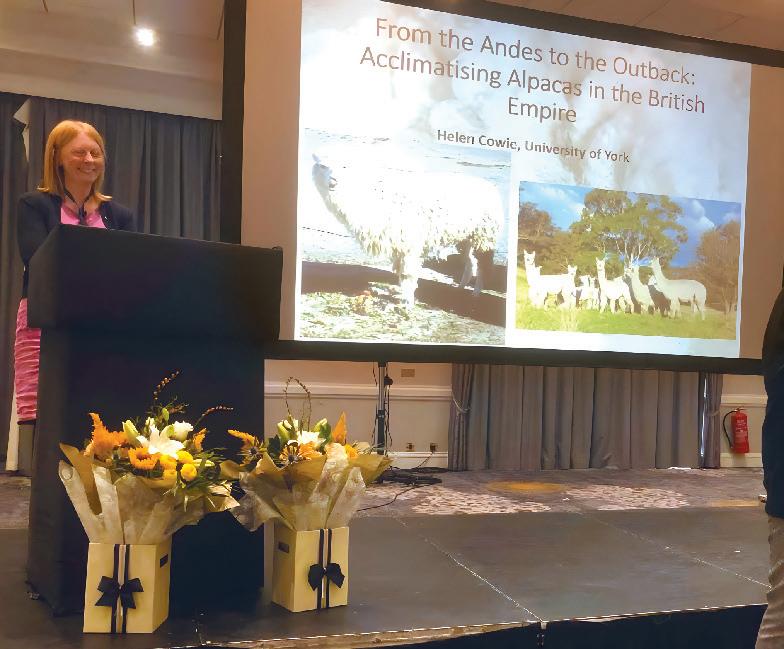
Our third keynote speaker was Professor Helen Cowie from the University of York where she researches the history of animals and Latin America including alpaca. Helen entertained us with a slightly different talk titled ‘From the Andes to the outback: acclimatising alpacas in the British Empire’ in which she traced the movement of alpacas to the British Empire and the Australian outback. She discussed the motivation for acclimatising alpacas and efforts to selectively breed them for fibre – a venture that ultimately failed in the Victorian period due to a combination of poor climate, management, lack of veterinary care and political opposition.
The Alpaca Vet
www.ukalpacavet.com
British Alpaca Society Merchandise www.bas-uk.com
Crackers about Alpacas www.crackersaboutalpacas.co.uk
East Anglia Alpaca Mill www.eastangliaalpacamill.co.uk
Eggs-Sport www.eggsport.co.uk/store
Skin Imprint www.skin-imprint.com
Two Rivers Mill www.tworiversmill.com
UK Alpaca www.ukalpaca.com
Waterhouse Feeds www.waterhousefeeds.com
Wool Testing Authority Europe www.wtaeurope.com/alpaca-testing
We were extremely grateful to the following companies, herds and organisations for their generous donations.
• Ahmed Tibary
• Alpaca NutriVit
• Amberly Alpacas
• A.N. Irwin Feeds
Avid Microchip Products
Botanica
British Alpaca Society
• Claire Whitehead
• EggSport
• Emerald Green Feeds
• Fangdale Alpacas
• GWF
• Hannaston Alpacas
• Kerry Lord, TOFT UK
• Lisduff Alpacas
• Lyme Alpacas
Mary Roach Harnesses
Salt Beer Factory
Skin Imprint
• Sorbeo Horse Bedding
• UK Alpaca
• Waterhouse Feeds
• West Wight Alpacas
We are grateful to the following sponsors who have contributed towards the running of the conference.
Alpaca NutriVit – www.ambermoon.ie
Avid Microchip Products – www.avidplc.com
DB Wools – www.standardwool.uk/db-wools
Emerald Green Feeds – www.emeraldgreenfeeds.co.uk
GB Equine Solutions Ltd – info@gbequinesolutions.com – @gbequinesolutions
GWF – www.gwfnutrition.com/pages/alpaca-llama-feed-supplements
Inca Alpaca – www.incaalpaca.co.uk
A.N. Irwin Feeds – www.irwinsfeed.com
Mary Roach Harnesses – 01299 896 827 – mary.roach@btinternet.com
NFU Mutual – Lymington_agency@nfumutual.co.uk
Sorbeo Horse Bedding www.sorbeohorsebedding.co.uk
Trafalgar Paddock Cleaner www.trafalgarcleaningequipment.co.uk/ ground-care-machinery/paddock-cleaners
West Wight Alpacas www.westwightalpacas.co.uk www.crackersaboutalpacas.co.uk/about
Ken Freivokh of Artwork Alpacas has a love for alpacas and a determination to seek breed improvement.
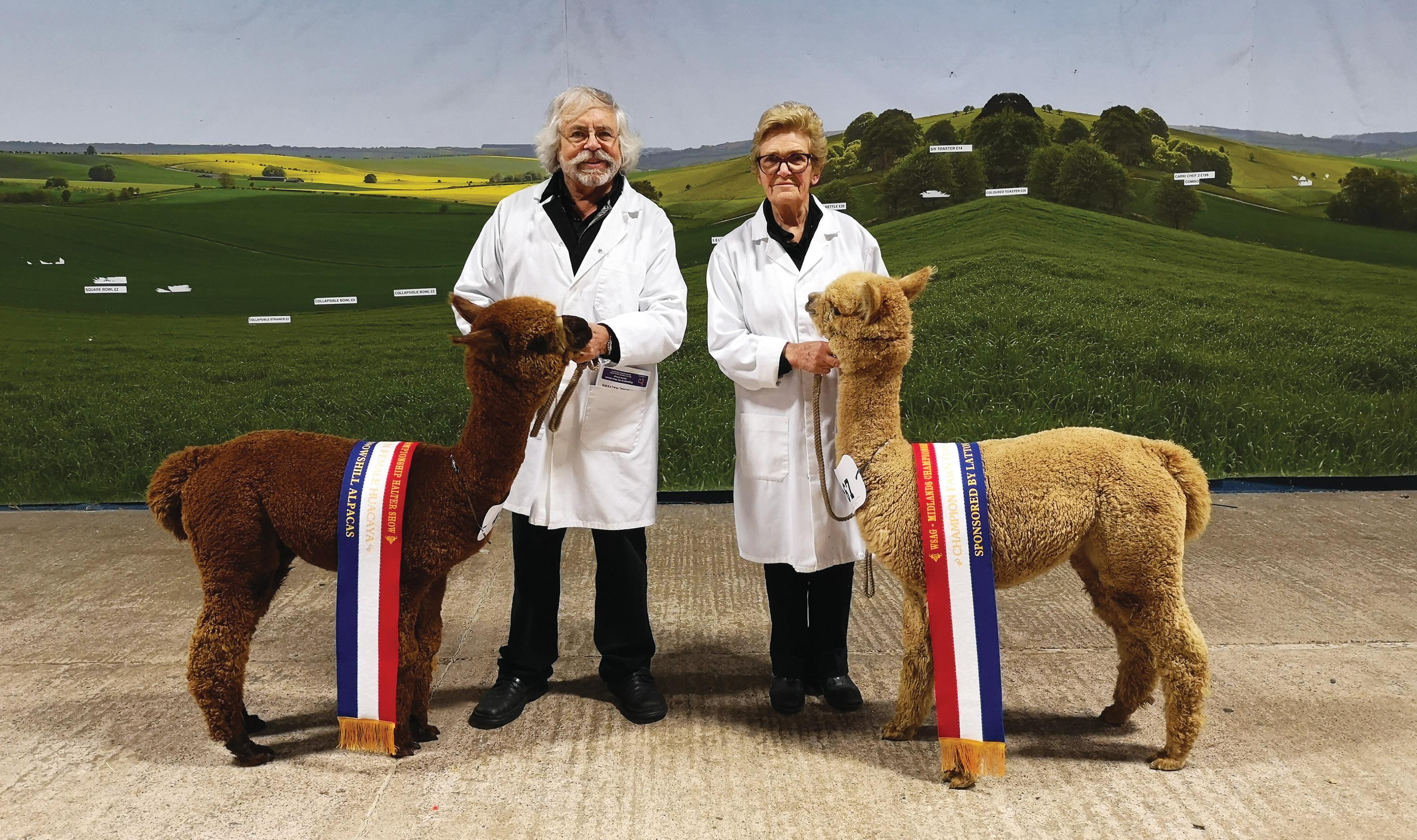
Although born in Los Angeles, California, most of my youth was spent in Peru, including car rallying in the altiplano and enjoying the stunning views of the Andes between Cuzco, Puno, Arequipa. Uniquely, it was the alpacas that fascinated me with their elegance, calm and poise... they looked as if they belonged there, and indeed they did!
Many years later, when my partner Liz and I had the opportunity to buy some land in front of our 400-year-old cottage, the opportunity finally presented itself. Initially our focus was on conformation, but the challenge to improve their amazing fleece became a teasing challenge. We were lucky to have the opportunity to join a syndicate with Nick Harrington-Smith, Karen Oglesby and Jay Holland to bring a first consignment of top-quality alpacas from Snowmass, America’s top show winning farm. Following two invitations to help with the colour checking at the Kansas Futurity, we became closer to Julie and Don Skinner, the
founders of Snowmass, and we were offered the unique opportunity to buy nine of their very best show-winning champion alpacas.
The intention was to bring them via Canada following the required quarantine period. However, an outbreak of bluetongue meant closure of the Canadian border, and we had to move our precious team to a new quarantine near Chicago ahead of attempting to bring them via the only other licensed country, namely New Zealand!
They had to be shaved to the skin in December, spend three months in quarantine, flown to New Zealand via Singapore, kept on a kiwi farm for six months to acquire citizenship, then three months in pre-movement quarantine and testing ahead of finally arriving at Heathrow a year later. In New Zealand, I took the opportunity to add a lovely Guilt Edge girl from Sarah Busby.
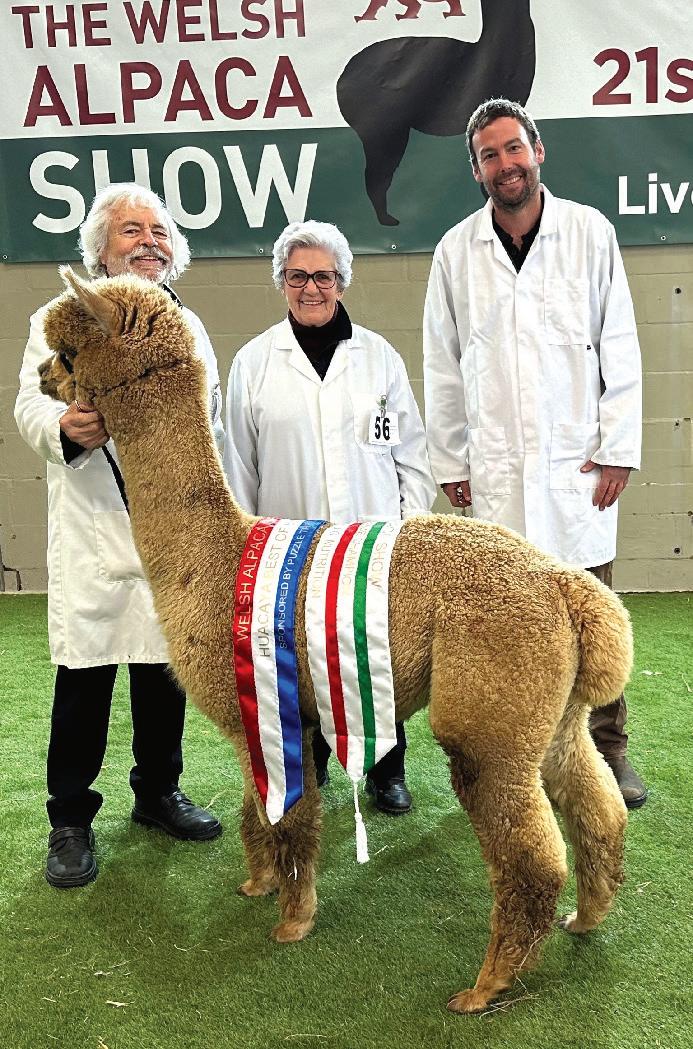
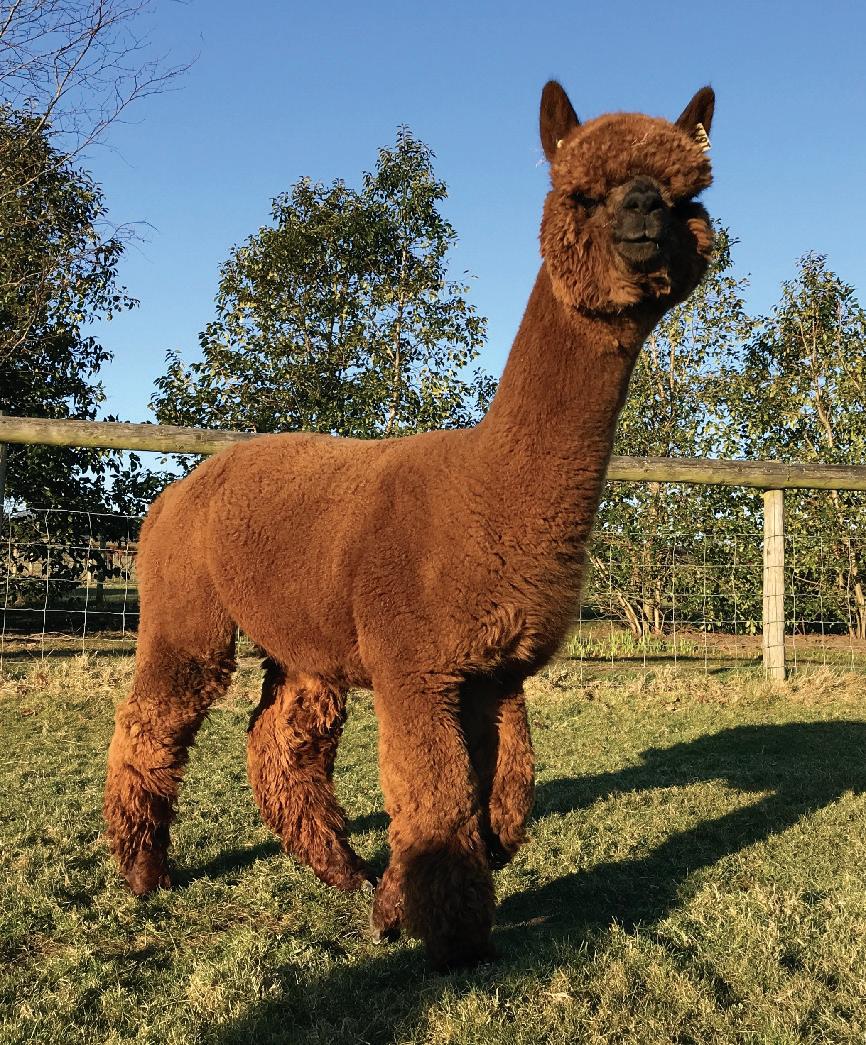
Definitely! Amazing genetics which transformed our breeding and provided very special opportunities to extract the best out of world-class genetics. Perhaps a review of this year’s mating programme three generations down the line may give an indication of the choice available at the farm.
Our breeding has not only benefited from purchases in the US and New Zealand. Very selectively, we purchased National fawn champion Aurelius from Fowberry, and the lovely Caton Juba at one of the few UK live auctions – the result from such mating was Jack the Lad, multiple Supreme Champion at both Fleece and Halter shows. More recently, we have made targeted purchases from very top breeders Beck Brow and Bozedown, bringing fresh genetics to our current breeding programme.
Of course, looking after alpacas and making breeding choices is all part of a learning process and, further to attending courses, visiting other farms and spending time with top breeders in UK and US, visiting Peru became a must.
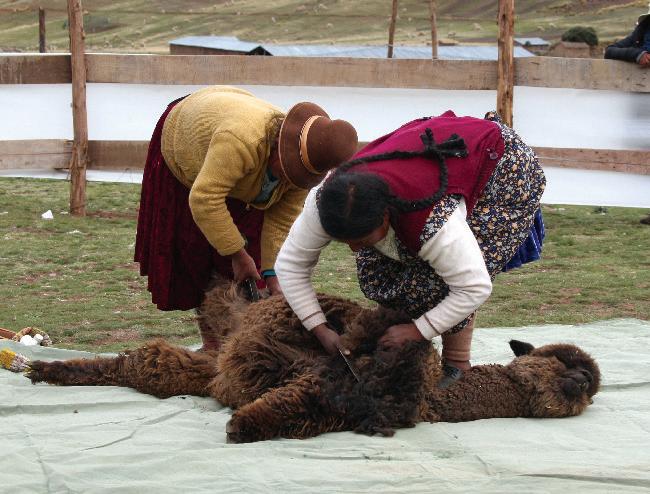
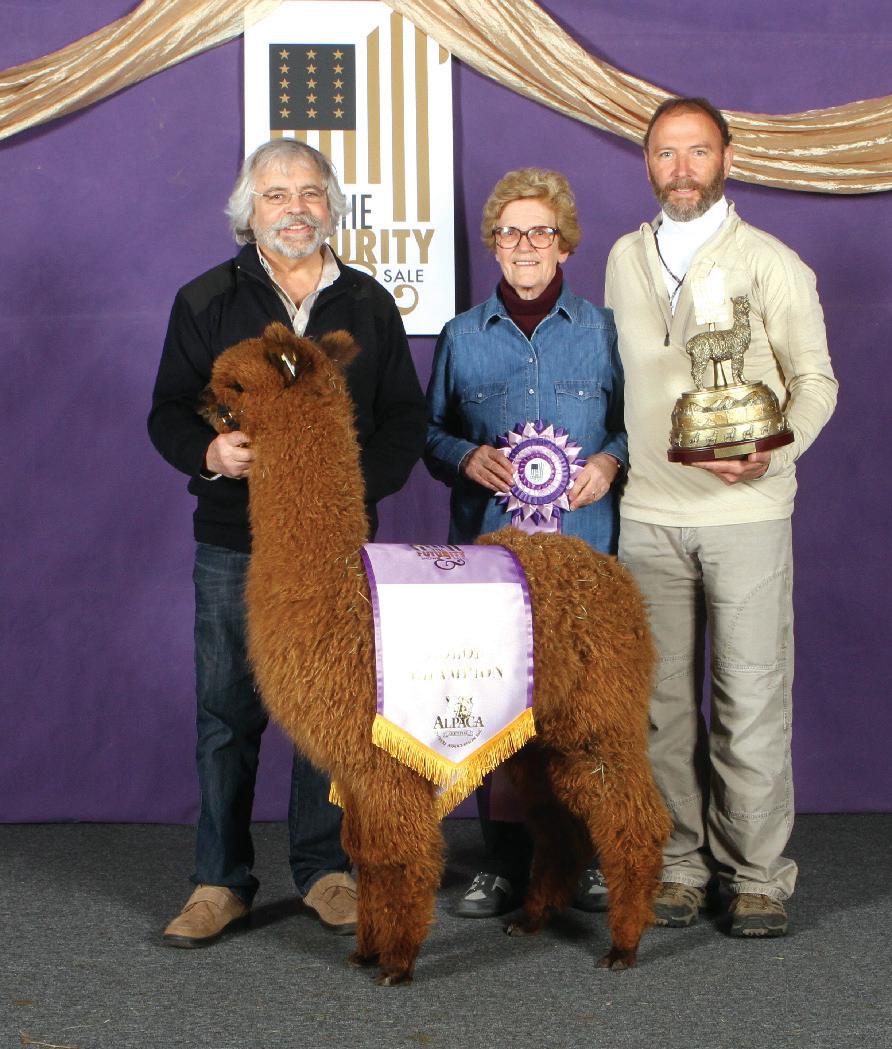
Our visits were a true inspiration, with meetings and visits to Inca and Mitchell groups, visiting top farms such as Rural Alianza and Malkini, participating in a vicuna chaccu and amazing local alpaca shows in the altiplano alongside Mike Safley, Amanda VandenBosch, Jude Anderson, Cheryl Gehly, Dale Cantwell – a true tour-de-force.
Designing some of the largest yachts in the world does not exactly leave one with enough time or energy to open our farm to visitors or engage in other alpaca related activities, but we have been very pleased to receive requests from top UK breeders to bring their best females to visit our boys, and the results have certainly been very pleasing. As we know at our cost, it is not too upsetting to end up with a Reserve Champion result when the Champion is from our breeding! Likewise, we have selectively sold some of our males and females with top genetics to some of the UK’s best-known breeders, and it is encouraging to learn that they have gone on to win shows and produce award winning progeny.
Looking after our alpacas, attending shows, being part of the BAS Board and the National Show team and working on our breeding programme could not be more distant from our work designing super yachts. There is certainly nothing better than poo picking to bring one down to earth!
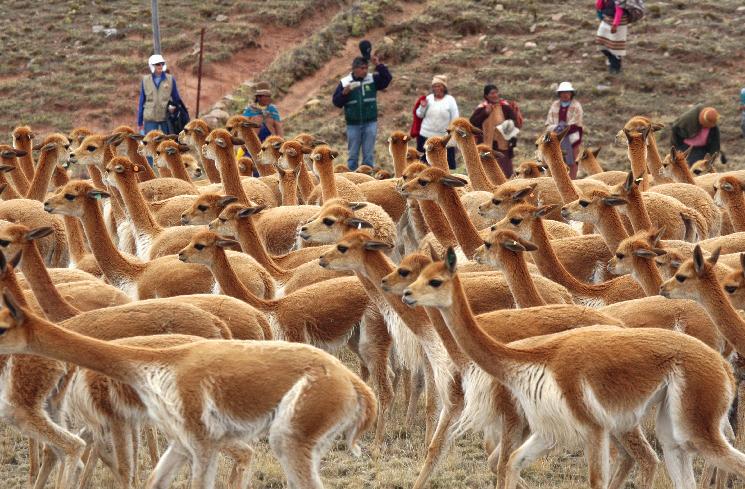
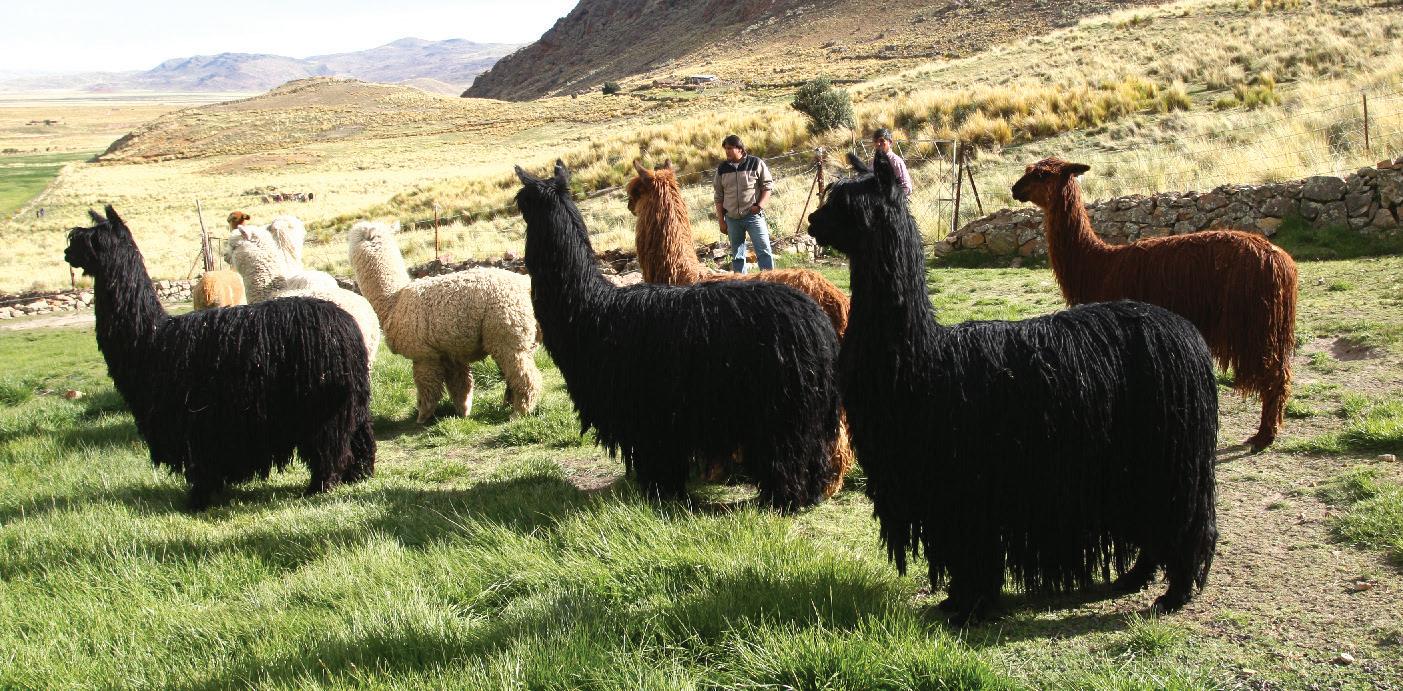
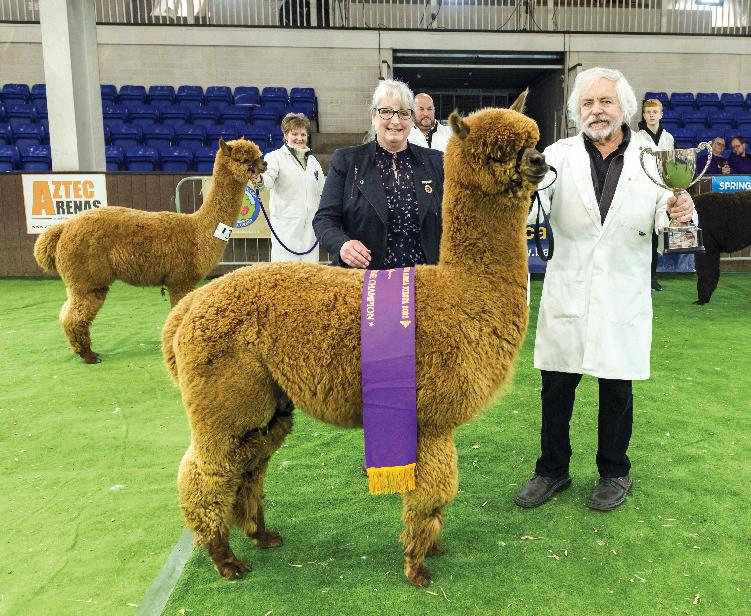
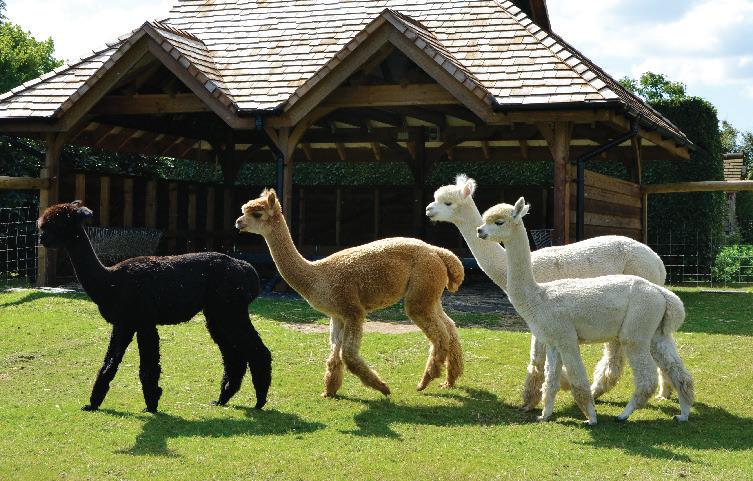
Nick Harrington Smith is passionate about these being the way forward to breeders of all size herds and he explains why.
There has been much talk recently amongst alpaca breeders about creating commerciality in alpacas with an obvious focus on the need for improving the value and use of the annual clip, or harvest. This was obvious at the recent BAS conference where many breakout sessions made much of the need to make sure high quality fibre is a breeding objective; indeed, some of the keynote speaker slots were focused on this very subject. So, you may think nothing new then, and you would indeed be correct.
After 27 years involvement in the British industry I could not help but be a little frustrated at hearing the same concerns raised now as were first raised in 1998; but then on thinking again I do see this as positive, quality is still at the forefront of dedicated breeders minds, and we must recognise that there has been some improvement in the quality of fibre being produced; perhaps not as much as we would like, but some. After all the British industry has only been going 28 years, or just over a quarter of a century, or if you prefer since the last century!
Now I can already sense some thinking what does this have to do with estimated breeding values (EBV’s) so hopefully the following might help further a better understanding of their use and relevance to alpaca breeders.
Firstly, we need to appreciate the influence that EBV’s had on the dairy and beef industries when utilised fully. First in the dairy industry in the 1960s then followed by the beef industry in 1985. I am old enough to have been part of those early years in the dairy industry and experienced first-hand the influence EBV’s had on both production and quality levels, seeing both improve exponentially over a relatively short period of time.
Even if you have a relatively small breeding programme, we all should buy in to the need for a sustainable fibre industry, no matter how far in the future this might be. Every alpaca produces an annual fibre harvest, all of which can contribute to an industry. How do we make sure we are part of the construct of that aspiration? Obviously good breeding is part of that, and it is incontrovertible that EBV’s have a major place in our breeding programmes, more especially at this stage of our industry in advancing the quality of fibre being produced.
To understand how EBV’s work there are a
few basic principles.
• AN EBV is scientifically calculated, it is NOT crystal ball gazing.
• The blood lines in the UK are reasonably closely connected with interaction and dispersal amongst many of the UK breeding herds.
• The more data that is collected the greater the accuracy of predictions.
• If false data is contributed it will be exposed in subsequent results i.e.” rubbish in rubbish out”.
• The more participants the more positive influence for the future.
The EBV data generation is in essence a fairly simple process, computing the data from: individual’s performance + relative’s performance + linked traits + heritability. There are of course complexities to these calculations but these are the base line for computation.
Whilst last on the list is heritability it is of major relevance in predictability of EBV results because it allows for the utilisation of data from related alpacas thus bringing in data across generations, improving accuracy of results.
To appreciate what we as producers need to provide, we only have to consider fibre traits most desired in the end product and whether we as breeders can produce accurate data that is usable in the EBV calculation, and be relevant to the processor, the end product and what will benefit a fibre industry most. In this we are most fortunate. Loosely speaking we can consider all measurable fibre traits as relevant to the current EBV programme, albeit a few that could, or in my view should be considered with caution. To appreciate how we can best appreciate the importance of heritability the chart below shows factors extrapolated from other livestock sectors but can reasonably be relied upon.
When considering heritability in livestock breeding any number above 0.40 is considered highly heritable so when looking at the table above fortunately those traits linked with uniformity of fibre are well above that 0.40 threshold, and crimp, a valued
indicator trait is also above the threshold. Spinning fineness is a calculation using Coefficient of Variation (CoV) and AFD (remember CoV is number derived from AFD divided by SD expressed as a percentile), with a CoV of less than 24% seeing spinning fineness better than the AFD, and again SF is highly heritable.
This leaves us with only comfort factor, staple length and fleece weight all lower, but not lowly heritable (below 0.15 is considered lowly heritable.) This is like the curates’ egg, good in part. With comfort factor, or perhaps better viewed in this case, fibres over 30 micron, which has a moderate level of heritability, we have a good chance of improving this trait, contributing to a more uniform fibre.
Now, what do EBV’s bring to breeding of alpacas that the current more public judgement of quality perhaps does not, that being the show ring, or indeed personal assessment.
• The results are permanent building generation on generation.
• Results are cumulative adding data of related animals from one generation to the next.
• Continued improvements are achievable provided there is genetic variation.
EBV’s are not a visual assessment or comparison of one animal against another, with perhaps a rather limited assessment of heritage via pedigree, but a scientifically measured assessment of an alpaca utilising all the available measured data of itself and all other related animals. In short, an in-depth genetic assessment.
From the foregoing we can see that the measurement of heritable factors is key, however we should not forget that there are environmental influences, such as weather, health and of course age, the latter of which we have no control over, however we can heavily influence health with good nutrition which in turn should assist in maximising genetic potential.
>> Continued on next page
To produce fibre that the buyers want and increase the value of the clip. As producers all we need to do to participate is to collect accurate data, most easily done at the time of shearing. The information needed is:
• Fibre test results from any fibre testing facility.
• Fleece weight.
• Date of shearing
• Previous date of shearing
• Alpaca registry number
The first four of which we as breeders have to record annually so this is the part where we need to be careful, insuring we provide accurate records. The fibre results are from an independent body; individual performance relies on consistent sampling of the latest data. Fleece weight EBV figures are in my view best viewed with caution. Some breeders will present skirted fleece weights, and others partially skirted
or even totally unskirted and are at risk of being the least reliable data. Remember the adage “rubbish in, rubbish out, and over a relatively short time the inaccuracies of erroneous data will become apparent.
There is no mystery to understanding how to use the data produced; just view it as you would normally view fibre data. The trait you are following where you would like to see values decreasing (minus) such as AFD, and increasing (plus) values in traits that you wish to see an increase in such as fleece weight. A major advantage of EBV’s is that you can see how your alpacas/herd rate in comparison with other alpacas in the national herd and spot trends in your own herd. Above all else it allows the selection of complimentary breeding and fleece attributes e.g. find a long-fleeced male to breed length into a short, stapled female. We do need to appreciate that fixes are rarely achieved in one generation.
I have heard it said “my herd is too small to use or participate”; this is simply untrue. Many herds data is relevant across the national herd given the heritage and relevantly small national herd we have so there will most likely be connected genetics somewhere. What we need is greater participation and more transparency; and by this, I mean a greater willingness to share data. Having long been a protagonist of our EBV scheme I believe there are a number of powerful reasons why we as British breeders should be growing the scheme.
• The BAS currently provide this service free of charge.
• We have in the BAS a CEO whose field of expertise this is.
• The UK has available through the BAS programme the most complete progeny testing program outside of South America
– EBV’s give a more complete picture and greater accuracy than EPD’s.
• Comparison by colour is possible giving a flexibility to the results and value no matter your colour preference.
• If we have a fibre industry in the true sense of the words we can guarantee better welfare for alpacas.
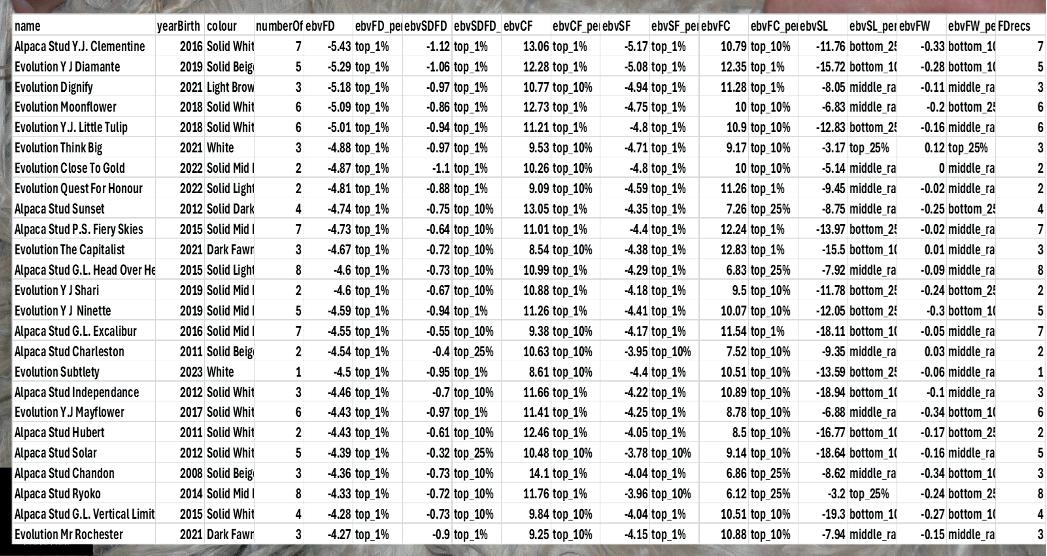
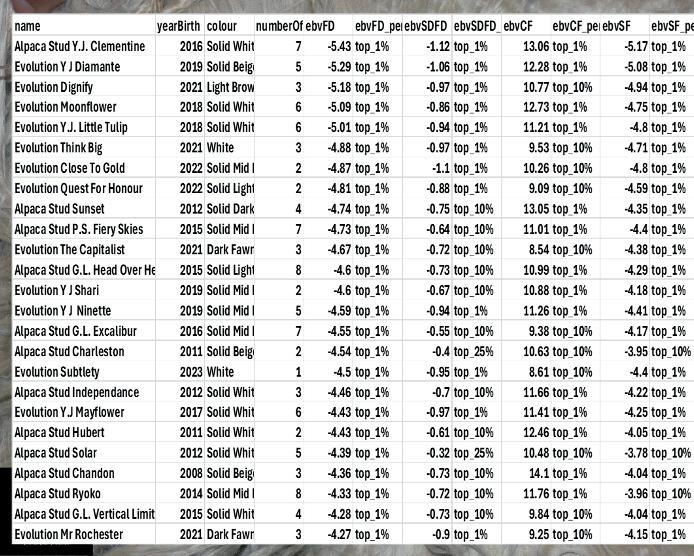
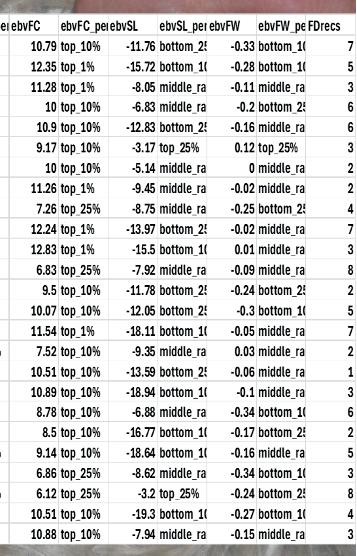
To make the most of this technology I have said we need greater transparency and sharing of results. Only when the data becomes public and is attributable will we be able to maximise the potential benefits of EBV’s. We will all have some alpacas that disappoint, some that will please and others that sit in the middle; but every one of which we will have a better understanding of strengths and weaknesses and enable better breeding decisions. Here at Alpaca Evolution we are happy to share our data, we would like to know how we compare with other herds and find what they can bring to our breeding programme, we just need to be able to fill in the blanks in the table below.
Now, if you have read this far I’m guessing by about half way through you will have thought there is no mention of conformation, fear not, you can see conformation so are probably already making good choices, but moreover, once we have a well-supported system running conformational traits can be introduced as part of an EBV programme.
This is the way forward so why not get on board and be part of securing British alpacas future as a source of world leading genetics. ebvFD_ percentile
ebvSDFD _percentile
ebvCF_percentile
ebvSF_percentile
ebvFC_percentile
ebvSL_ percentile
ebvFW_ percentile
top_1% top_1% top_1% top_1% top_10% average bottom_10%
top_1% top_10% top_10% top_1% top_1% bottom_10% top_25%
top_1% top_1% top_1% top_1% top_10% bottom_25% bottom_25%
top_1% top_1% top_1% top_1% top_10% bottom_10% bottom_25%
top_1% top_10% top_1% top_1% top_10% average average
top_1% top_10% top_10% top_1% top_1% bottom_10% average
top_1% top_1% top_1% top_1% top_10% bottom_25% bottom_10%
top_1% top_10% top_1% top_1% top_1% bottom_10% average
top_1% top_1% top_1% top_1% top_1% bottom_1% bottom_10% top_1% top_25% top_10% top_10% top_10% bottom_25% average
top_1% top_10% top_10% top_1% top_1% bottom_10% average
top_1% top_10% top_1% top_1% top_25% average average top_1% top_10% top_1% top_1% top_10% top_25% bottom_25%
top_1% top_1% top_10% top_1% top_1% bottom_10% average top_1% top_1% top_1% top_1% top_1% bottom_10% bottom_1% top_1% top_1% top_1% top_1% top_25% bottom_25% bottom_10% top_1% top_1% top_1% top_1% top_10% average average top_1% top_10% top_10%
Many people cannot remember a time when alpacas were not often seen in the UK but, as Joy Whitehead reveals, they have come a long way in their relatively recent history here in the UK.
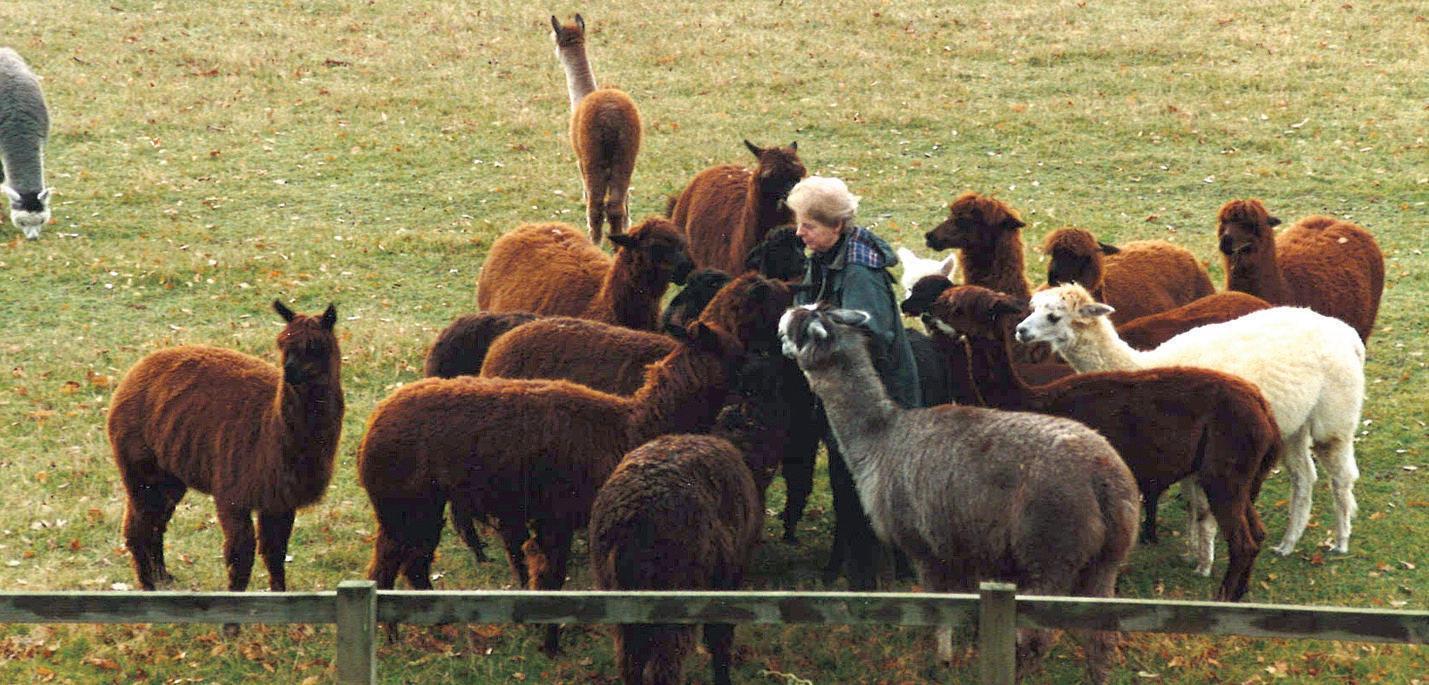
In the 1800’s Queen Victoria kept a small herd of alpacas at Windsor Park, while Sir Titus Salt, the politician and philanthropist, manufactured hugely popular alpaca cloth from imported Peruvian fibre, in his Saltaire mill in Yorkshire. This cloth was made into very durable black jackets and coats.
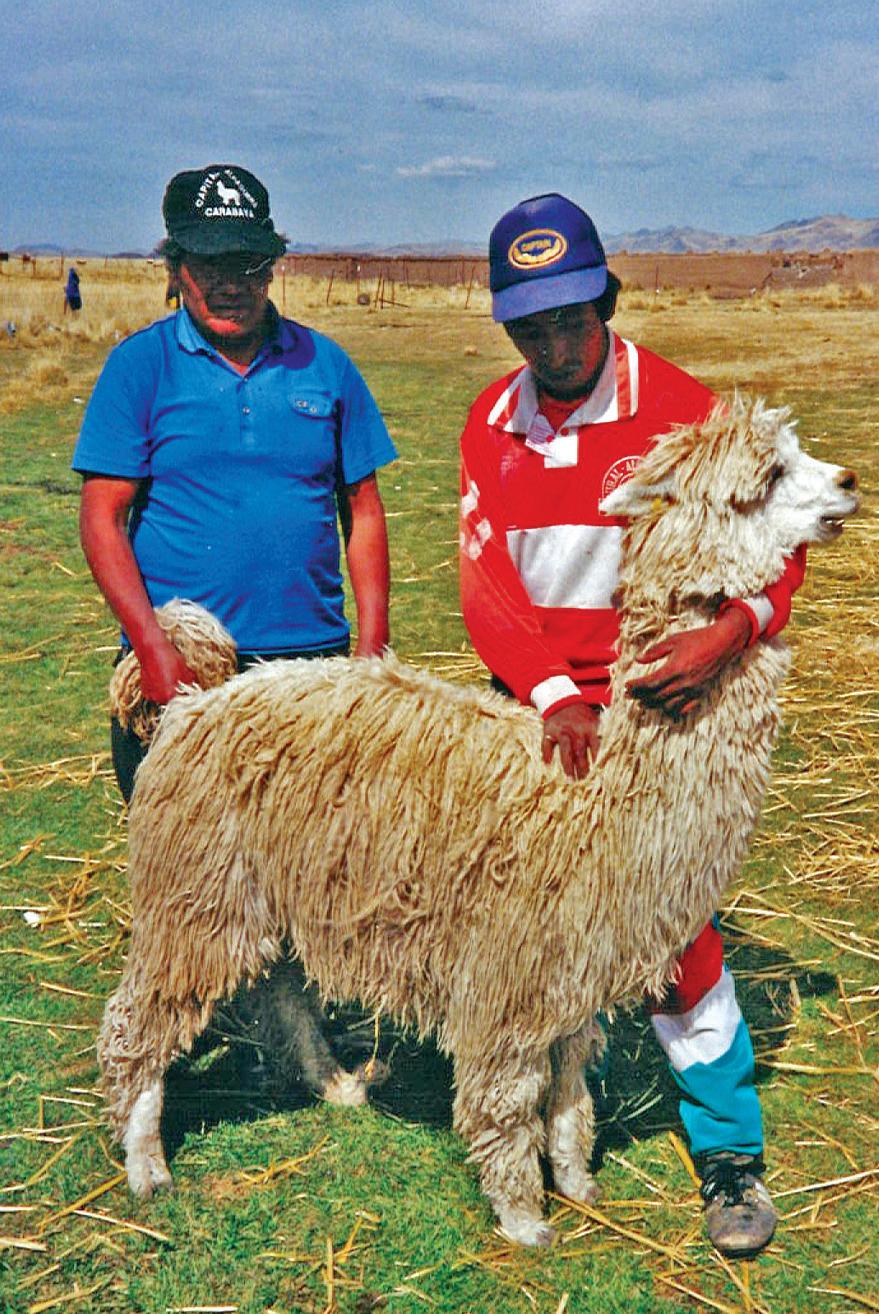
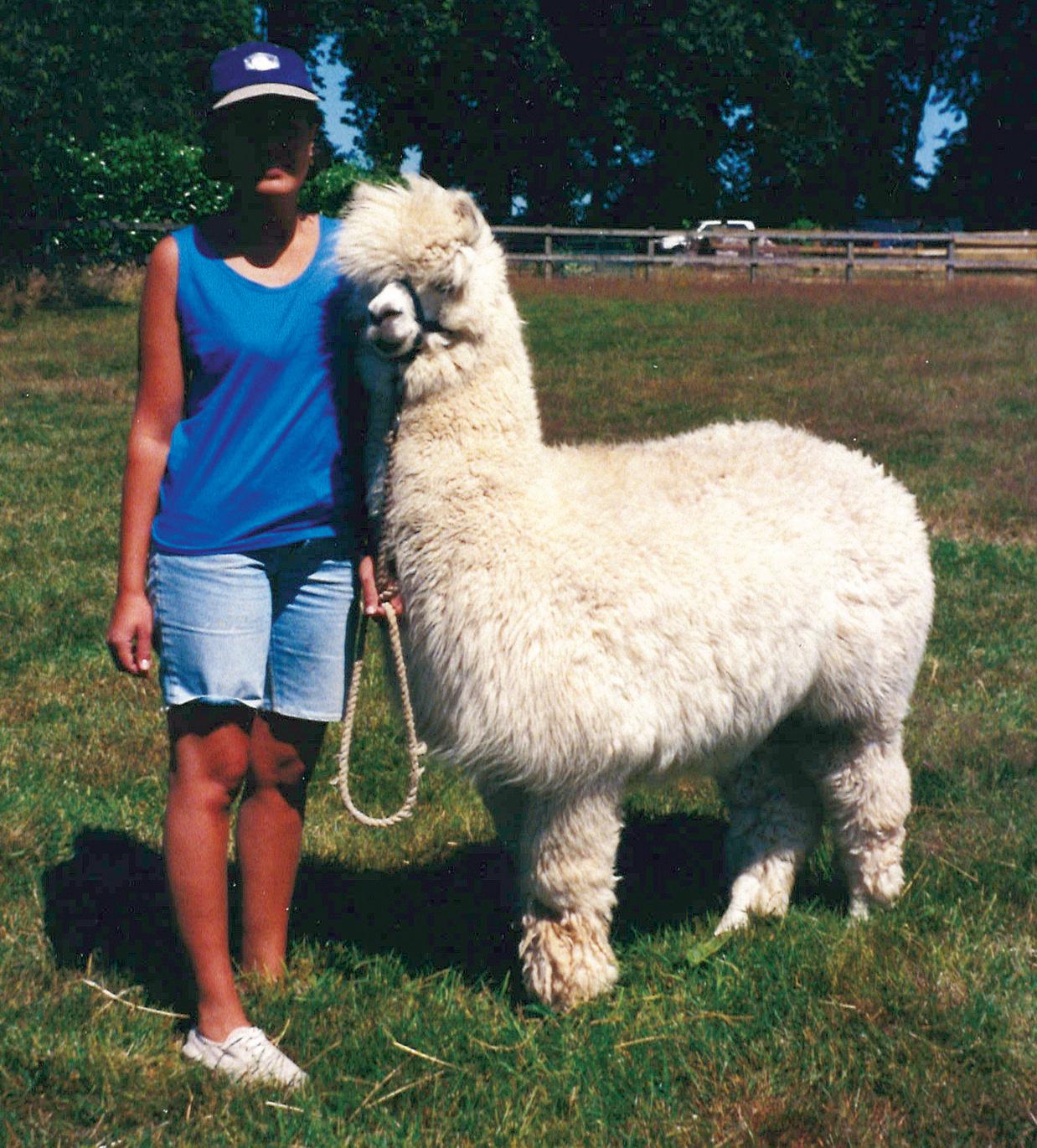
By 1989 there were just about 150 alpacas in the UK, mostly in zoos. The ancestors of all of the early alpacas in UK and Europe had been brought over from South America in the mid nineteenth century. I joined British Camelids on the day I went to a very small auction in Penrith in June 1989 and I bought my first five alpacas, which had been imported from European zoos. These were poor quality Huacayas by today’s standards, at high prices, due to their rarity value. Eight to ten thousand guineas for each of the females and six thousand guineas for the male. Three of the females were black with very low density and light bone structure but with low micron. The other female and the male were mid brown with coarse fleece. Not an ideal starting group, so it took a few years to start making headway.
My priority at the outset was to work out what to do with the fleece after I had the alpacas sheared. So I joined my nearest Spinners Dyers and Weavers Group, built myself a spinning wheel from a kit and got started. Then in 1991 Ken (my husband), Claire and I had our first visit to Peru: a fascinating walking/camping trek in the high Andes, studying the spinning, weaving and dying methods of the indigenous Quechua people.
British Camelids had been formed in 1987 to represent everyone interested in llamas, alpacas, guanacos, vicunas and camels, whether owners, breeders or just enthusiasts. At that time the British Camelids Society comprised mainly llama and guanaco owners, along with just a few alpaca owners. We all helped each other, learning as we went along.
We went to agricultural shows and the show circuit got started in a small way at the annual Henley Agricultural Show, with just a few animals in each class.
British Camelids had a regular newsletter, held meetings and seminars, and organised an annual conference, the first of which was held in about 1990 at the Rowatt Research Institute in Aberdeen, where I met Dr
Jane Wheeler. Our resulting friendship led to my going to Peru early in 1993 to assist with her fascinating archaeological research work on the desiccated and naturally mummified remains of dozens of one thousand year old alpacas and llamas, entire animals, from the El Yaral site, where they had been sacrificed to Pacha Mama, the earth goddess, and buried in the foundations of the houses. (You can see just how arid this desert area is from the photo showing the remains of the cane house walls in the foreground: those have not rotted even after a thousand years! An underground stream from the high Andes provides water to sustain life in this area.)
This important work led to a change in the scientific name for alpacas established by Linnaeus in the eighteenth century from Lama Pacos to Vicugna Pacos, as Dr Wheeler was able to establish from the DNA samples we extracted that alpacas were domesticated from vicunas.
A few small groups of alpacas of Chilean origin arrived in the UK during the early 1990s, still of poor quality by today’s standards, and the number of small alpaca breeders crept up. Then in about 1995 a much larger group of a few hundred Chilean alpacas arrived, imported by an Australian breeder. These still maintained high prices. This importation was the catalyst that created a good number of new alpaca breeders and suddenly the number of alpacas and alpaca owners in the UK exceeded the number of llamas and llama owners and this in turn led to the establishment in 1996 of a separate British Alpaca Society.
Lynda Scott and myself, who were both on the steering committee for BAS in 1996, started a quarterly news letter, and this led on to us becoming joint editors of ‘Alpaca’ magazine, which appeared for the first time in 1998.
In the early 1990’s several British Camelids members including myself undertook judge training for both alpacas and llamas from Maggie Krieger, a leading AOBA judge. For several years after this the qualified judges who were alpaca owners judged llama classes and the qualified
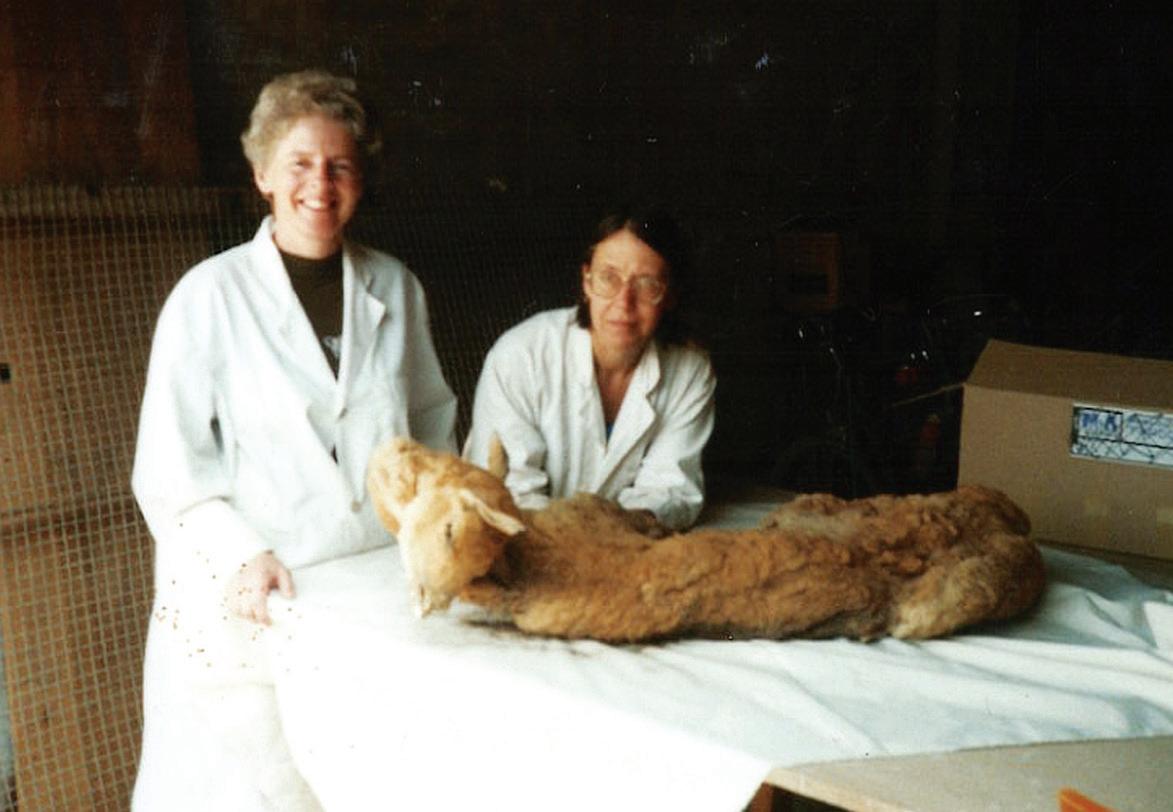
Joy and Jane in 1993 with ancient alpaca mummy: see its amazing preservation
judges who were llama owners judged alpaca classes as we all attended the same small shows. Then as the number of alpacas in the UK grew, and as the BAS came into being, both AOBA and AAA judges started to come to the UK to judge the bigger Shows that slowly got established.
In 2003 a Judge training programme run by Amanda VandenBosch (AOBA) resulted in the BAS appointing the first five BAS qualified Judges. Amanda ran the BAS judge training programme until 2006 after which the BAS developed their own Judge tutor programme which in turn developed into the BAS Judge training programme which continues to this day.
In late 1997 the first International Alpaca Fiesta in Arequipa, Peru, was held, and I was fortunate to be able to judge alongside Dr Julio Sumar, and get my hands into some truly wonderful fleeces. This was a real eye opener for us, as the quality of the alpacas we saw there, in both conformation and fibre, was streets ahead of the Chilean types we had in Europe at that time.
>> Continued on next page

The Americans and Australians had already exported alpacas from Peru for their own herds. A Swiss breeder Dr Josef Kuonen and I decided this was also the way forward for breeders in Europe, and six months later in May 1998, I was on the altiplano of Peru making our first selection of alpacas, Josef having obtained a licence to import them into Switzerland, where they arrived in September 1998: 150 alpacas, of which 115 arrived at Bozedown Farm the following year. In June 2000 my daughter Claire, who was a vet, went to Peru with Josef to make our second selection of 150 Peruvian alpacas. Then in 2001 Mary-Jo went to Peru and selected 12 stud males, among them our legendary Huacaya stud Bozedown Galaxy and our legendary Suri stud Bozedown Dazzler.
Getting the fibre processed commercially wasn’t easy for quite a while. In the early 2000’s BAS started a fibre co-operative but that turned out to have been premature as there still wasn’t sufficient quantity, quality or consistency and, in spite of the energy and commitment poured into it, this venture failed after a couple of years. Meanwhile a few small speciality mills which had appeared in the UK, enabled breeders to process their own fibre, which many still do. In 2005 UK Alpaca was set up by Chas Brooke and Rachel Hebditch, to buy and use the fleeces of alpacas farmed in the UK. They are now the largest buyers of British alpaca fleeces from breeders throughout Britain. They process the fleeces and sell standard and bespoke yarns of excellent quality.
In the early 2000’s there were a few other large importations, including two groups of 250 alpacas which Bozedown imported from Peru in 2005 just before Peru closed for any further exports. We felt it was important for us to have as wide a genetic base as possible in the UK to ensure a steady improvement in our breeding. By now the intermediate quarantine period in Switzerland had been reduced to six months from 12 months. Thus with alpaca numbers growing steadily, the way forward for serious fibre production was now clear, as a large proportion of alpacas in the UK now had the dense fine fleeces that we needed to move forward.
Since this time, along with a few small importations from USA, Canada, Australia and New Zealand, and with careful selective breeding, we have seen a gradual overall improvement in fleece fineness, density, consistency, weight and coverage, along with improved conformation in both Huacaya and Suri alpacas.
Over the years alpaca conferences and training opportunities have become common place in the UK, and nowadays there are plenty of opportunities for owners and breeders to learn more about alpacas. Courses are offered all over the country by BAS Affiliate Trainers based on a set of nine modules approved by the British Alpaca Society. Throughout
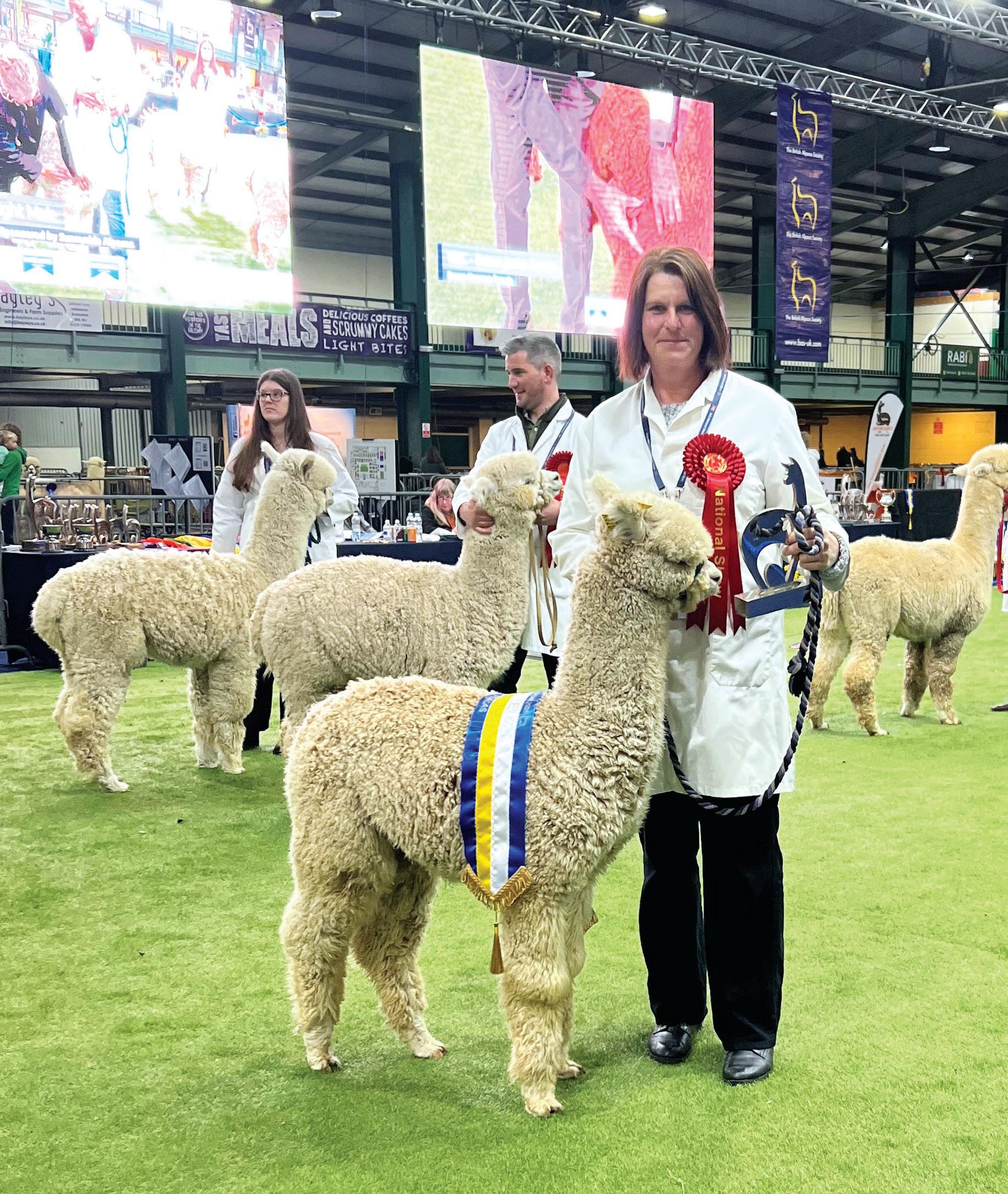
the year Camelid Vet Services, the British Alpaca Society and regional groups offer online webinars and courses delivered by experts covering, for example, veterinary topics, husbandry, breeding and genetics.
Vet training in UK universities still doesn’t routinely include alpacas and most new graduate vets will have had limited exposure to their routine care. Due to the unique physiology of camelids, treating them as other large animals isn’t always appropriate.
Liverpool University offers post graduate training qualifications in alpacas and llamas for qualified vets, and the British Veterinary Camelid Society, which was set up in the early 90’s, before BAS existed, organises an annual conference with eminent guest speakers. Camelid Vet Services offers post graduate alpaca training courses for vets, led by Claire Whitehead, the only recognised specialist camelid vet in Europe, who is also President of BVCS. BAS provides generous sponsorship to vets working in the UK who take this course. To ensure the best support for our alpacas in the future we should all encourage our vets to attend these training courses and conferences.














Carita Saarinen of Futuregen explains the benefits of testing.
What a fantastic way to start 2026. Futuregen is proud to bring Alpaca Colour Genotype testing to the worldwide alpaca community.
After a careful selection process conducted by Curtin University in Western Australia, Futuregen was chosen as the exclusive licensee for the alpaca colour genotype technology developed by Dr Kylie Munyard.
Futuregen had already demonstrated strong capability in providing and marketing these services for Neogen since March 2022. Sales in Europe increased by more than 4.2 times between 2022 and 2024, during which Futuregen’s owner, Carita Saarinen, managed customer service, marketing, and sales, while also assisting the laboratory with order-related details and feedback. These services were available until the end of May 2025, when Neogen discontinued alpaca testing.
Curtin University acknowledged Futuregen based on this strong track record, supported by positive feedback and a recommendation from Neogen Ltd, as well as Futuregen’s commitment to leading the European
alpaca industry toward the adoption of DNA testing for trait selection. Futuregen was selected from among many highly qualified license applicants worldwide.
A 10-year license agreement was signed in late August 2025, marking a significant milestone in the emerging era of alpaca genomics. As part of its long-term commitment, Futuregen has agreed to launch new tests as soon as these technologies become available. This is truly an exciting space to watch.
Curtin University also conducted a global search of suitable laboratories, and the new partner laboratory in Spain was selected from among carefully evaluated candidates. ANCCE, recommended by Neogen Ltd, met all required criteria and successfully completed accreditation and training under Curtin University and Dr Kylie Munyard. Curtin University was particularly impressed by ANCCE’s professionalism and excellent communication throughout the extensive selection process, identifying it as a laboratory of exceptionally high standard.
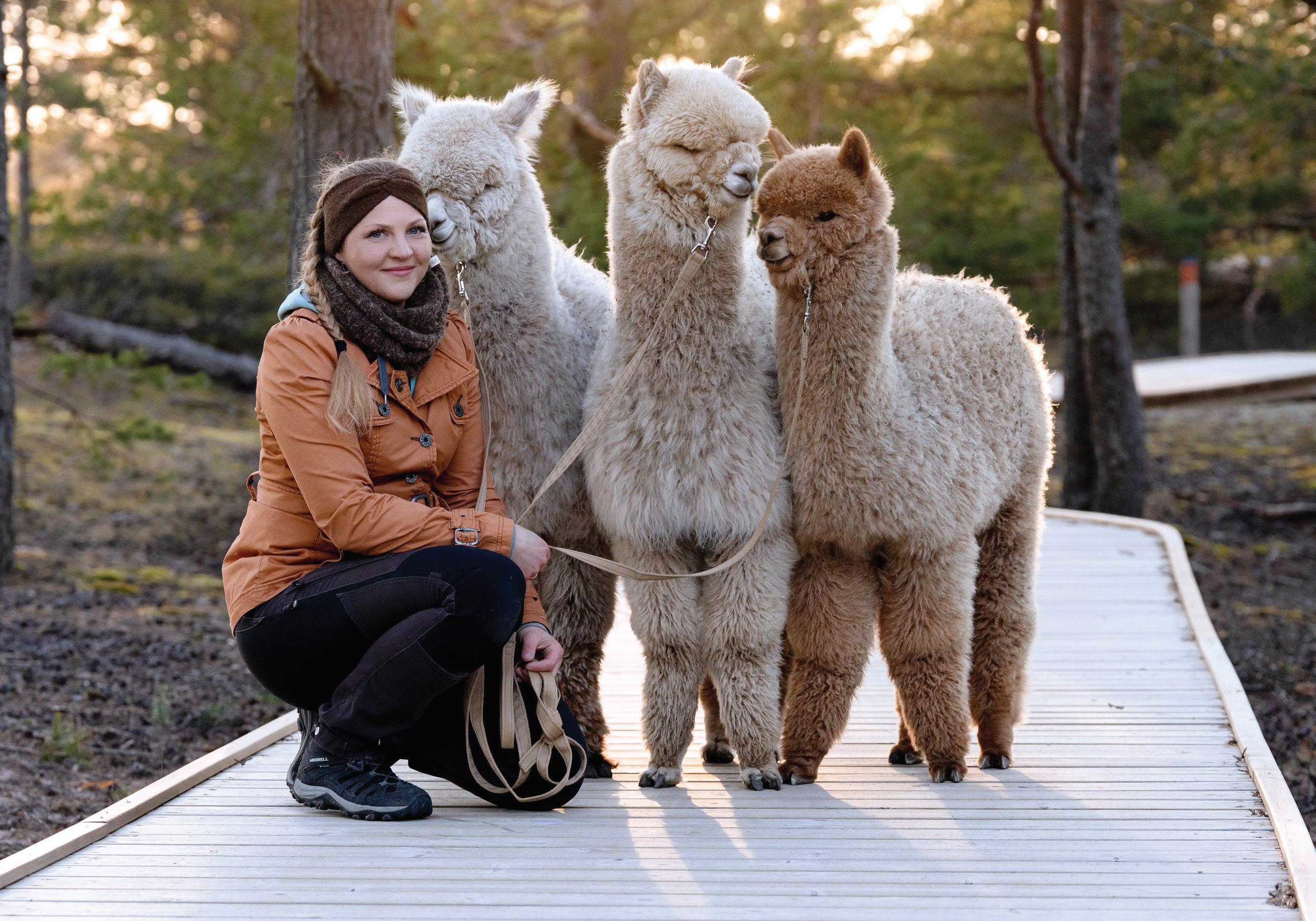
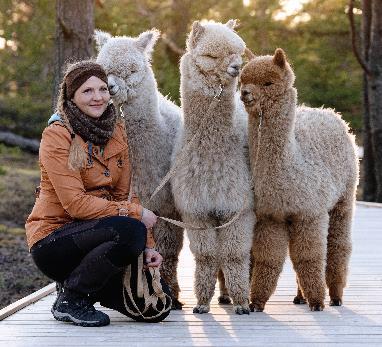
Saarinen and Wuthering Heights Saturno, Sol Invictus and Icon at Yyteri Beach, Pori, Finland
Together, we now offer a comprehensive, all-in-one service under one roof. Both Alpaca Colour Genotype testing and STR parentage identification and verification testing will be available to all alpaca owners and breeders globally at a very competitive price. When bundled together, these services offer a highly convenient and efficient solution to alpaca associations and private breeders. In addition, turnaround times are approximately 30% shorter, which is excellent news for our customers.
One of the key objectives was to keep the cost of these services affordable for the majority of breeders who wish to use this information in their breeding programmes. The price of the colour test has remained at a level similar to previous pricing, while the cost of parentage testing has been reduced. Visit www.futuregen.fi for current pricing.
Beyond securing an outstanding service provider, we also benefit from a foundation strengthened over several years of experience. There has been a great deal of learning along the way, and we are extremely proud of what has been achieved. We are also deeply grateful to Neogen for the trust placed in us throughout this journey. This experience has been truly eye-opening and has provided invaluable understanding and expertise. Now, we are ready to move forward with confidence – setting our course toward a future full of opportunities. Our vision is to deliver leading-edge services that set the standard for the industry.
While the text above crystallises the outcome, there is much more beneath it all – a real life lived in parallel. A life that included family and friends, alpaca farming and all its nuances, and persevering through a period that was impossible to predict. Looking back at the year 2025 and all the steps taken, it feels incredible to realise that I was, in fact, part of the story. I cannot recall a single moment when I could have predicted what would happen next. Life does test us, and this year taught me that these trials are better seen as opportunities to grow and transform our circumstances for the better, rather than as punishments. The greatest
achievements require determination and the courage to trust the unknown – to trust the purpose, while also remaining grounded in the reality of the path you are on. It is something felt and understood by the heart and spirit.
From a broader perspective, many can relate to the challenges that 2025 brought. For me, the greatest lesson was to learn patience amid chaos and the importance of prioritising clarity over speed. The industry is changing as the business environment is now different from what it used to be. Yet, this can signal a new dawn: new opportunities, new perspectives, new collaborations, and new partnerships. A new approach. Why not take a moment to pause and plan – to better understand where the true potential of your business, and of yourself, lies? What is it that you truly desire? How can things be made more cost-effective and better aligned with your long-term goals?
There are multiple angles and factors to take into consideration. It requires intelligence, creativity and the ability to trust your instincts. At the same time, there are concrete tools that can support goal-oriented planning, helping you make the most of your valuable resources. Genomic testing is designed precisely for this purpose in animal breeding. It enables increased productivity through fact-based decision-making, reduces risks related to health issues, and helps avoid undesired outcomes. I am extremely pleased to see how many breeders have already witnessed this development manifesting in their herds across Europe. It is truly magnificent – and makes the effort entirely worthwhile.
While early mornings might be considered a good time to catch up with the morning’s news, this is when Barbara Hetherington can usually be found perusing the British Alpaca Society (BAS) pedigree registry. A self confessed genetic nerd, here she explains what it is that keeps her so interested.
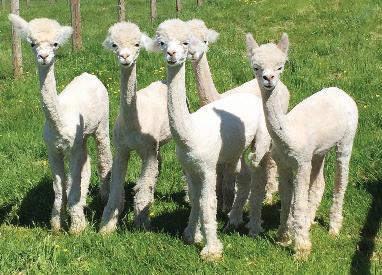
On the left are four progeny from a prepotent sire
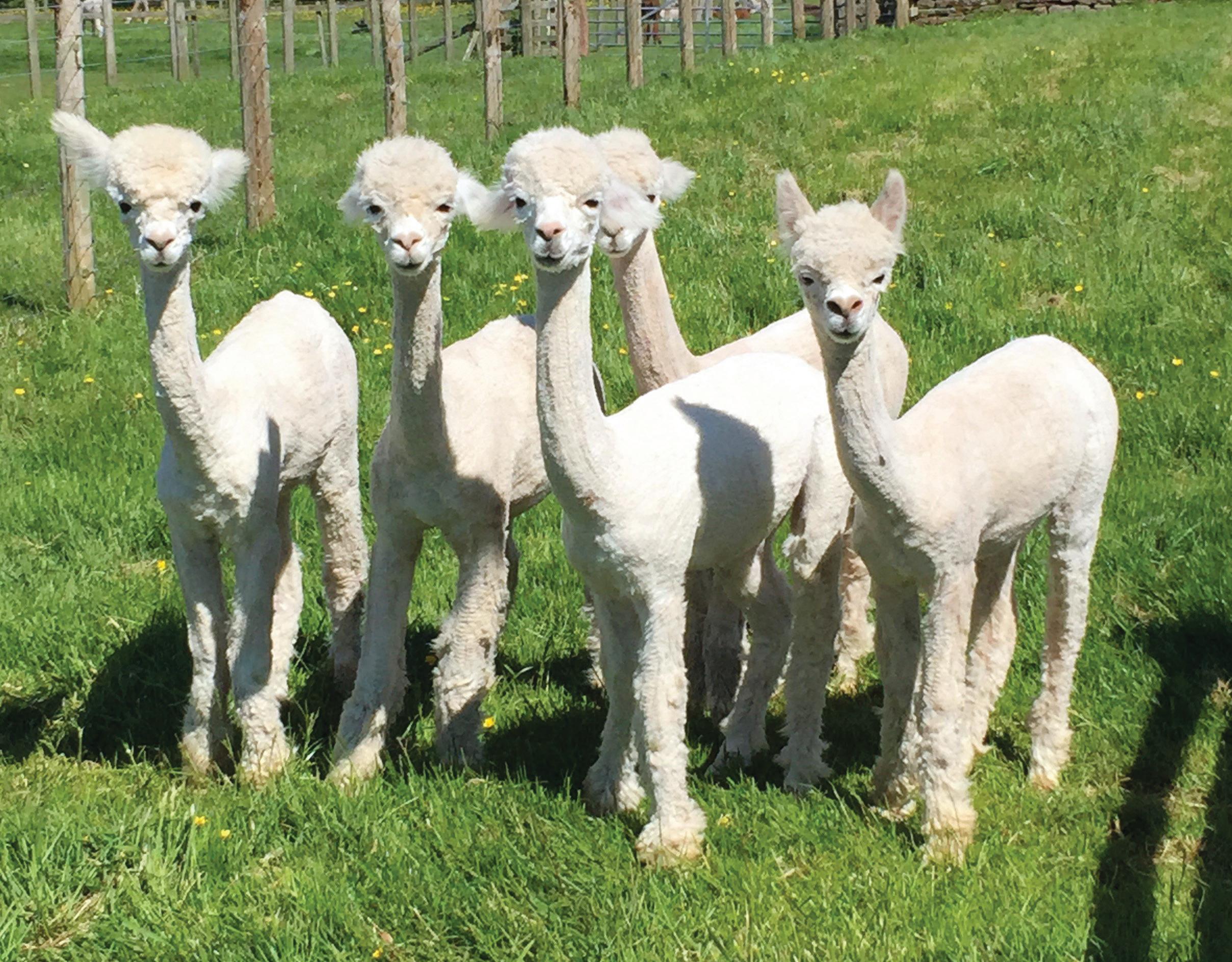
In the world of alpaca breeding few tools are as valuable as the pedigree registry. To the potential breeder, a pedigree may seem like nothing more than a list of random names, but this record of heritage is actually a roadmap of genetic potential and a serious guide for informed decision making. Many breeders rely heavily on the phenotype of the alpaca when making purchasing decisions, this combined with good marketing of show records, can lead to less reliable results than expected if genetics are not considered.
The BAS registry was founded in the UK in 1996, after the first alpacas were imported from Chile and Peru. This is fairly recent when compared to the Kennel Club (1822) and Shorn Horn Cattle herd book (1873). Hence, some early South American imports can still be seen in pedigrees today with unnamed parents. This ‘unnamed’ aspect was simply because there had to be a starting point. This should not be seen as a reflection on the depth of quality (or lack of), as many very influential males were imported within this category from highly regarded Peruvian breeders.
An alpaca pedigree is a four generational chart, listing the ancestors on both the sire and dam’s side. BAS pedigrees are structured left to right with the sire on the top. This is essentially the genetic makeup of the alpaca and the potential influence of that family tree. When looking at a pedigree it is important to consider the generational position of any ancestor. The closer the relationship the more shared genetics. Whilst having a highly regarded male four generations back is worthy, he will only have contributed 6.25% of the overall genetics within that pedigree (as demonstrated right)
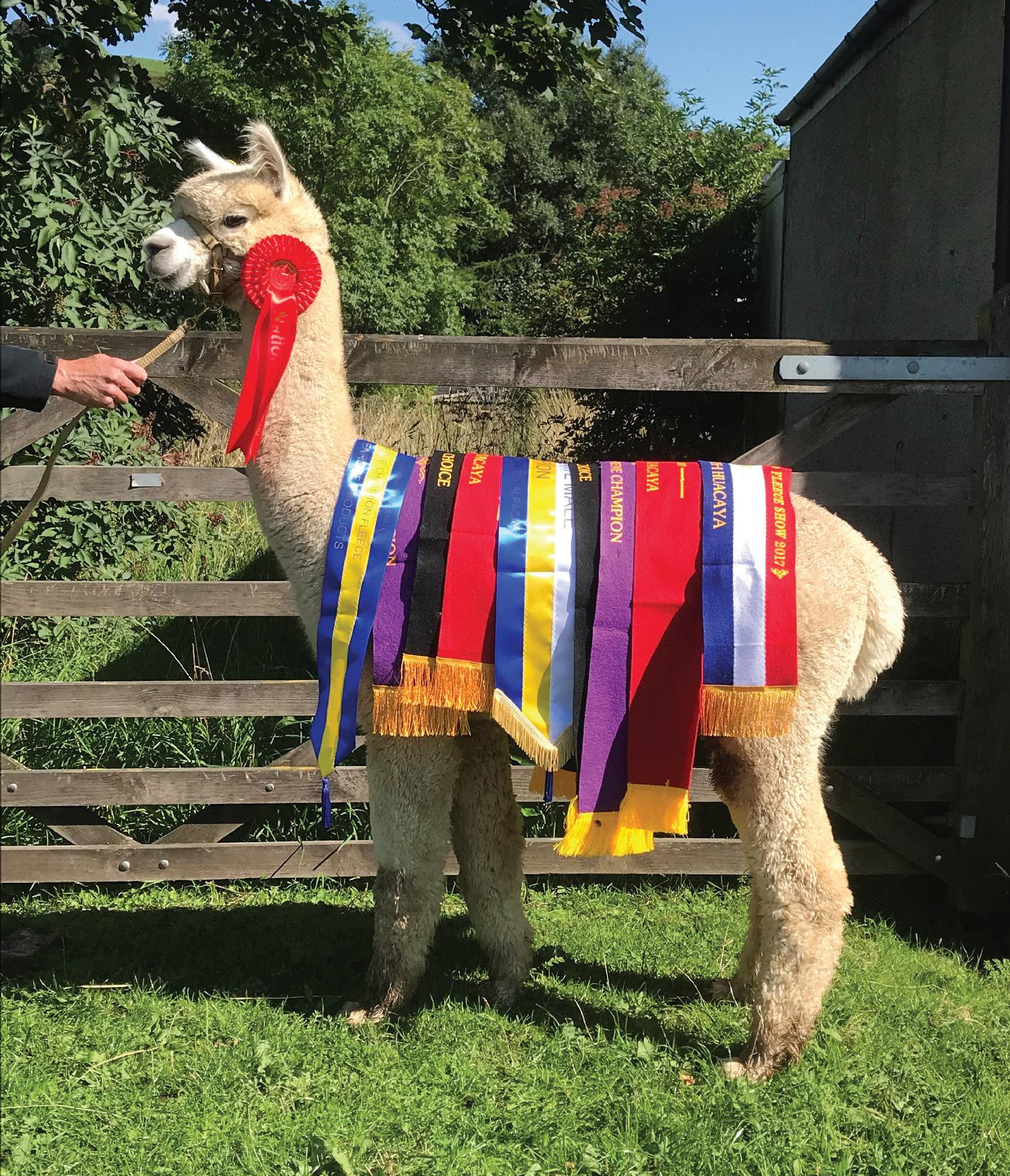
1. Genetic transparency
2. Improved breeding/purchasing decisions
3. Managing line breeding/reducing in-breeding
4. Tracking prepotency
5. Economic gain.
Genetics in general can be a complex subject, but a basic understanding should be beneficial to any breeder. First of all it is important to differentiate between genotype and phenotype.
Genotype is a term used for the genetic make up of any alpaca. It is referring to all of the genes that make up every trait, both visible and hidden. These are the traits given at birth. This is different to phenotype, which is about visual traits (both conformation and fleece) and can be influenced by both genetics and the environment.
Every alpaca has two genes (alleles) for every trait. This might be eye colour, fleece length, chest capacity, or unseen traits such as resistance to parasites. One gene is given from the dam and one from the sire. Thus, each parent has equal influence on the genotype of the alpaca.
Each of these traits will have a gene which is expressed (seen) and a gene which is hidden. For most traits it is 50/50 as to which gene is expressed (i.e that given by the dam or that given by the sire). Although, some traits such as the blue eyed white gene are always recessive and are only expressed when the recessive gene is given by each parent. In addition some genes, such as that for Suri phenotype, are always dominate.
So how do we use this knowledge to improve predictable outcomes?
One thing to consider is whether an alpaca is homozygous for a particular trait. This means that the alpaca carries two identical copies of a particular gene. For example if both parents gave their off-spring a long-fleece gene that alpaca is homozygous for good fleece length. They will always give a long-fleece gene.
However, if one parent gave a short-length gene and one a long-fleece gene, the off-spring would be heterozygous for fleece length. Meaning future matings from the resulting off-spring would not be reliable for that specific trait i.e it would be 50/50 as to which gene would be passed forward to the following generation. So in simple terms the alpaca may himself have a long fleece, but is equally likely to produce either shortfleeced or long-fleeced off-spring at random.
Obviously, there are many advantages of being homozygous for positive traits, allowing improved reliability and predictability. Studying pedigrees and measuring outcomes (particularly the consistent quality of progeny) is extremely useful.
A male or female who reliably passes on their positive traits to their progeny is described as being prepotent for those traits and is considered a valuable asset in any alpaca’s pedigree. The progeny classes on the show circuit are essentially a test of the prepotency of the parents, and winning is a sought after accolade.
The BAS online registry allows the user to study performance data on specific genetics as well as the actual pedigree. Whilst show records should be viewed in context of the show size and the competition, they can be a indicator of highly performing genetics. A male producing successful progeny from many different female lines may suggest prepotency in many traits.
Winners of the Suri Dam’s Progeny 2025 – note the likeness in head style
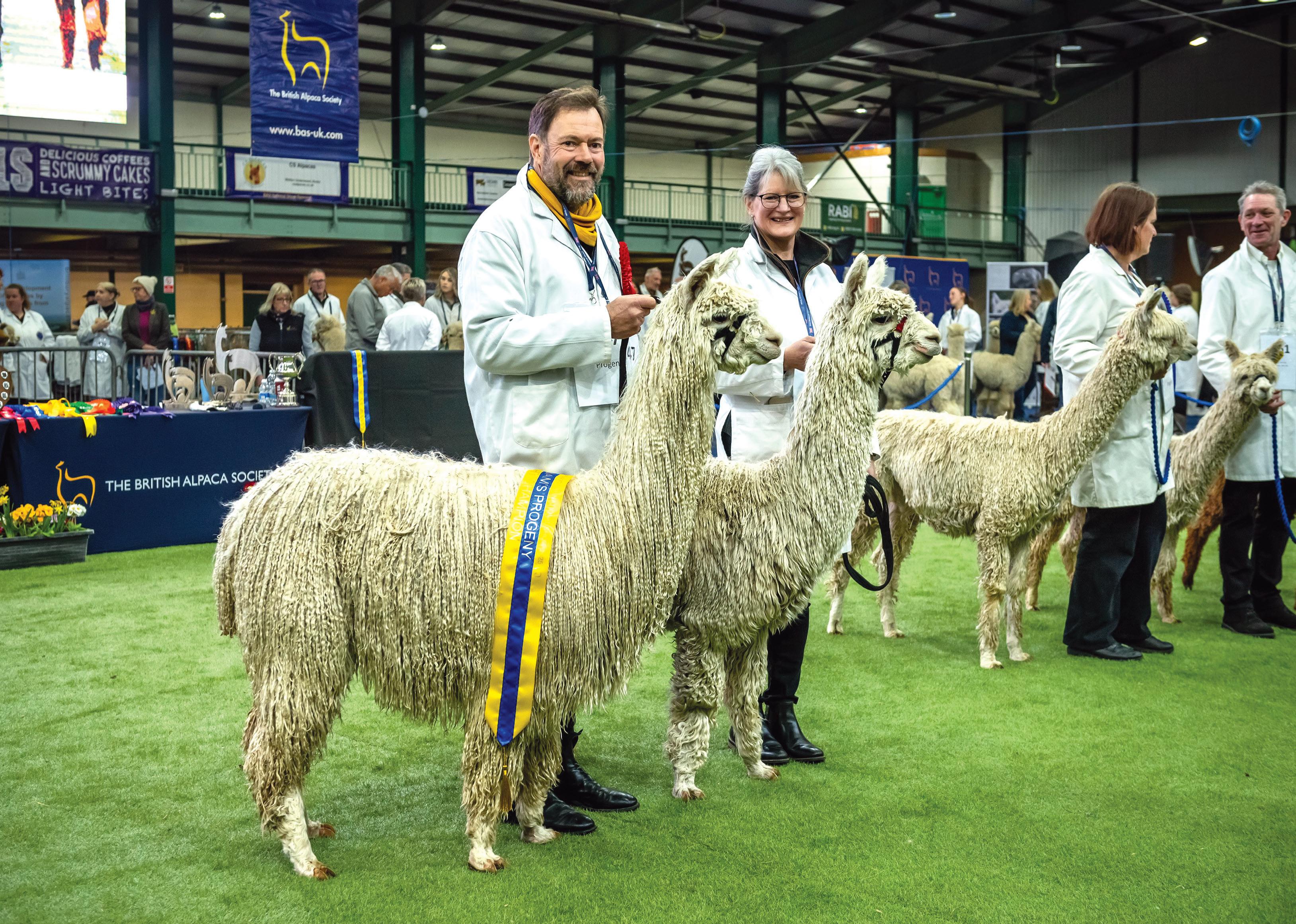
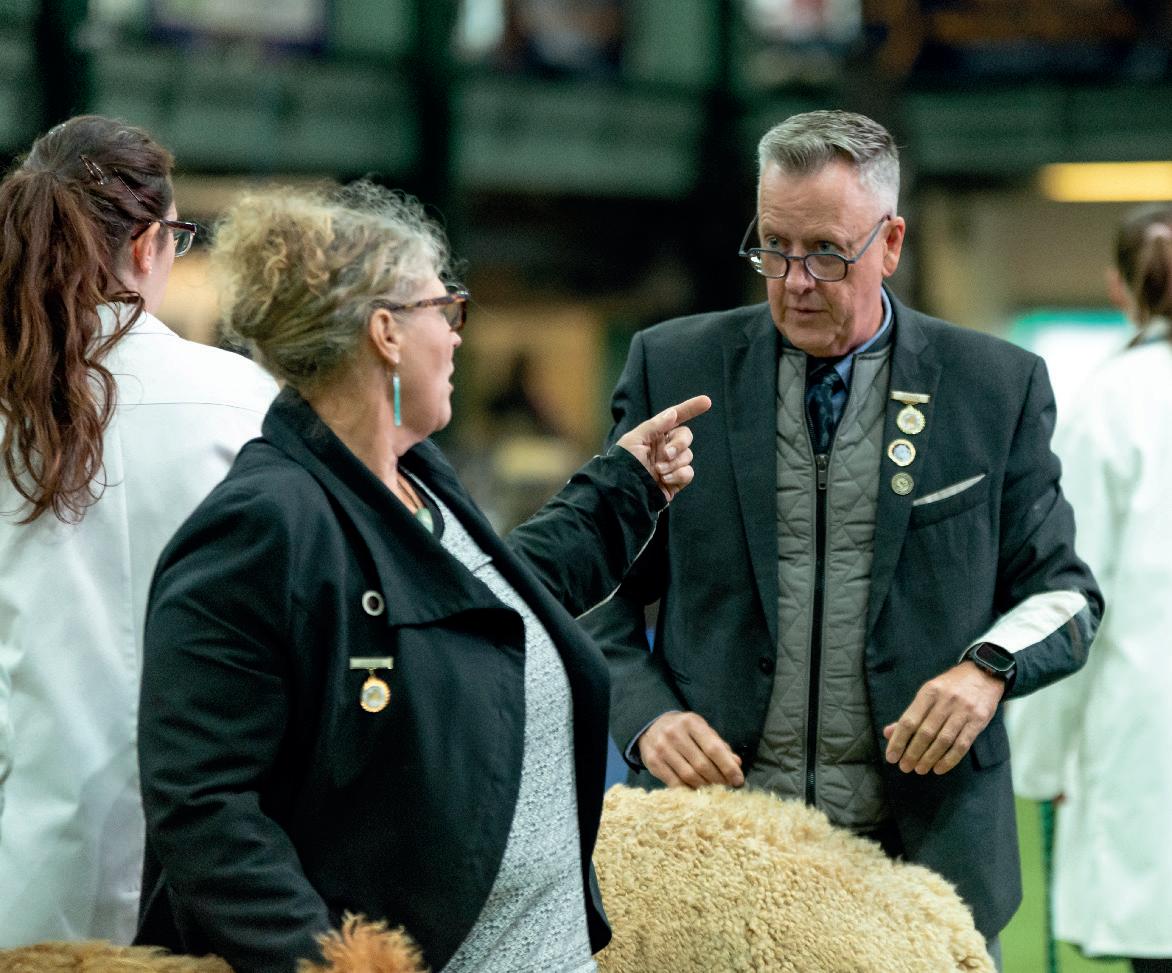
Other useful data can be gleamed about health, for example, a female who has progeny registered year after year suggests good fertility and breeding ability in general. Of course there can be lots of unknown variables, but there is lots to gain from spending time making yourself familiar with the information available.
One of the most important roles of keeping a pedigree registry is to avoid unwanted inbreeding. Full siblings would fall into this category and most would consider half siblings too close, whilst Wrights Coefficient of Inbreeding is a renowned system used to indicate how closely related two perspective parents are, it can appear complicated to those unfamiliar with it. However, the BAS registry (operated by Grassroots) provides a very useful tool called Check Mate, where common ancestors are highlighted when potential breeding details are inserted.
Increased risk of:
1. Genetic defects.
2. Weak immune system
3. Lower birth weights
4. Reduced fertility
5. Susceptibility to reduced resistance to parasites etc
6. Loss of genetic diversity.
Line breeding is, however, fairly common. Line breeding may be considered a mild form of inbreeding where animals share a common ancestor/s but the relationship is more distant. For example grandfather x granddaughter. Usually using highly performing genetics, it can give a structural approach to herd improvement. The aim is to concentrate desirable genetic traits, whilst keeping the coefficient of line breeding moderate. This increases the chances of homozygosity and also increases the predictability of quality. Proof, as always, will be in the progeny and some line breeds will prove to be more successful than others. All this is only possible with a good understanding of what a pedigree is and how to use the information to gain improved breeding outcomes.
An alpaca pedigree is a genetic history which keeps evolving with future generations. It reveals heritage, predicts potential, and helps breeders make responsible decisions. Whether, you are new to alpacas or a seasoned breeder a thorough understanding of pedigrees is a vital tool in building a healthy, productive and successful herd… and in my opinion makes much better reading than the daily news.
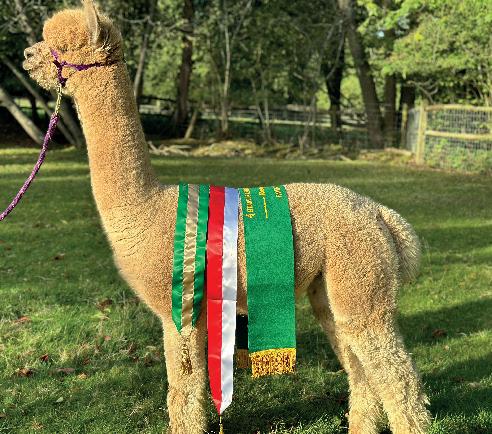

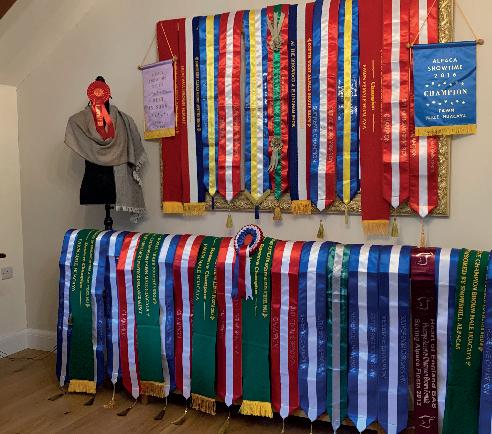
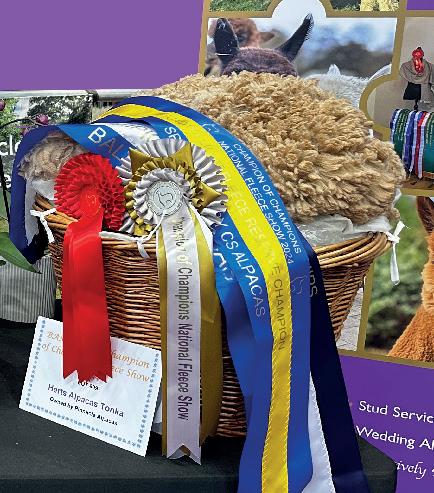
In the UK population it is expected breeders will want to continually improve all the traits. This BAS breed standard has been developed to encourage the objective assessment of the form and function of alpacas in the UK. It is intended as a guide for breeders to help promote the pursuit of alpacas exhibiting high quality fleece traits on a correct frame.
ABAS working group, led by Ken Freivokh, took on the task of developing a BAS Breed Standard. BAS are delighted to present the product of these labours below. Thank you to everyone who contributed.
The process of discussion and consultation with members was designed to try and involve as many people with an opinion and interest as possible. One of the guiding principles employed in the development was to keep the standard simple enough to be useable and relevant to as many BAS members as possible. The temptation to be too detailed was, hopefully, avoided.
The ideal alpaca should be fit for function and embody the best conformational and fleece traits of the breed. Simply put, an ideal alpaca is one that produces high quality fibre over a long, healthy, and
Phenotype
Side Profile
Head
Forequarters
Hindquarters and Tail
Genitalia and reproduction
Height
Movement and Tracking
productive life.
The breed standard describes traits as ‘ideal’ and ‘negative/ undesirable traits’, most alpacas will fall somewhere between the two on the continuum of the different characteristics. The “ideal” element of the breed standard promotes the goal of reaching the ideal through selective breeding, resulting in genetic gain and improvement in phenotype.
The traits are not listed in any particular order. In the UK population it is expected breeders will want to continually improve all the traits. Thoughts about what represents the ideal can, and do, change as new knowledge is acquired and this standard is not intended to be a static document, but to evolve alongside alpaca breeding in the UK and reflect the thinking of the time.
• Alpacas should have a balanced, proportioned frame, free moving, with a strong substance of bone and an alert stance
• The head should be carried high
• Squared-off appearance, neck and legs should be the same length and 2/3 length of the body
• Topline (back) straight and level rounding off at the croup to tail creating a slightly sloping rump
• Dense top knot (Huacaya)
• Dense top knot with well-defined locks (Suri)
• Wide and deep, wedge-shaped muzzle
• The eyes should be clear, bright, and set well apart
• The nose should exhibit two well-defined symmetrical nostrils
• The upper lip is divided and mobile
• The incisors should meet the front edge of the upper dental pad
• The ears are of medium length, erect and spear-shaped
• Chest should be broad and deep, well sprung ribs
• The withers well fleshed, set well into the shoulders forming a straight line with the back
• Forelegs should be strong and straight
• Pasterns should be firm and upright
• Feet should be neat and well-formed and bear two forward pointing toes
• The sole of the foot should be covered with a callused membrane
• Rump broad
• Well-spaced pin bones
• Tail should be straight and long enough to cover the genitalia
• Thighs should be well-muscled
• Hind legs should be straight from hip to the centre of the foot and parallel when viewed from behind and the correct angulation when viewed from the side
• Pasterns should be firm and upright
• Feet should be neat and well-formed and bear two forward pointing toes
• The sole of the foot should be covered with a callused membrane
• A female’s udder should show good capacity, with four uniformly positioned teats
• Females should have a normal size functioning vulva
• Males should have external genitalia correct in size, shape, and position, with two evenly sized, firm testicles descended into scrotal sacs of appropriate size for age
• A mature alpaca should measure no less than 32”/81 cm at the withers
• Alpacas should move soundly and exhibit an even stride length with two distinct tracks, the hind feet following the front ones
• Alpacas should have a fluid movement
NEGATIVE/UNDESIRABLE TRAITS
• Obvious lack of balance
• Light substance of bone
• Narrow head
• Obvious incorrect proportions
• Low neck set
• High tail set with tail straight from spine
• Swayback or humpback
• Curvature in spine, neck and/or tail
• Open, thin topknot
• Very narrow head, shallow muzzle
• Eyes with cloudy appearance, pale blue eyes
• Excessive fleece on the bridge of the muzzle beyond the age of three years
• Asymmetric nostrils
• Incisors excessively under or overshot
• Ears excessively out of proportion to head, banana shaped, fused or gofer
• Wry face
• Very narrow chest
• Loose shoulder blades
• Severely base narrow or base wide
• Buck knees, calf knees, severe knock knees
• Very prominent withers
• Weak, dropped or camped over pasterns
• Polydactylism
• Syndactylism
• Severe cow hocks
• Obvious sickle hocks
• Severe post legged
• Luxating patella
• Very narrow hindquarters
• Severely base narrow or base wide
• Weak, dropped or camped over pasterns
• Bent or kinked tail
• Steeply sloping rump
• Squared-off rump
• Tail absent or abnormally short
• Polydactylism
• Syndactylism
• Less or more than four teats
• Fused teats
• Testicles that are too small or of uneven size or undescended into scrotal sac
• Fused vulva
• Obviously undersized or oversized for age
• Paddling on the front feet
• Rope walking
• Obvious uneven stride and/or length of stride
HUACAYA
Uniformity of Micron
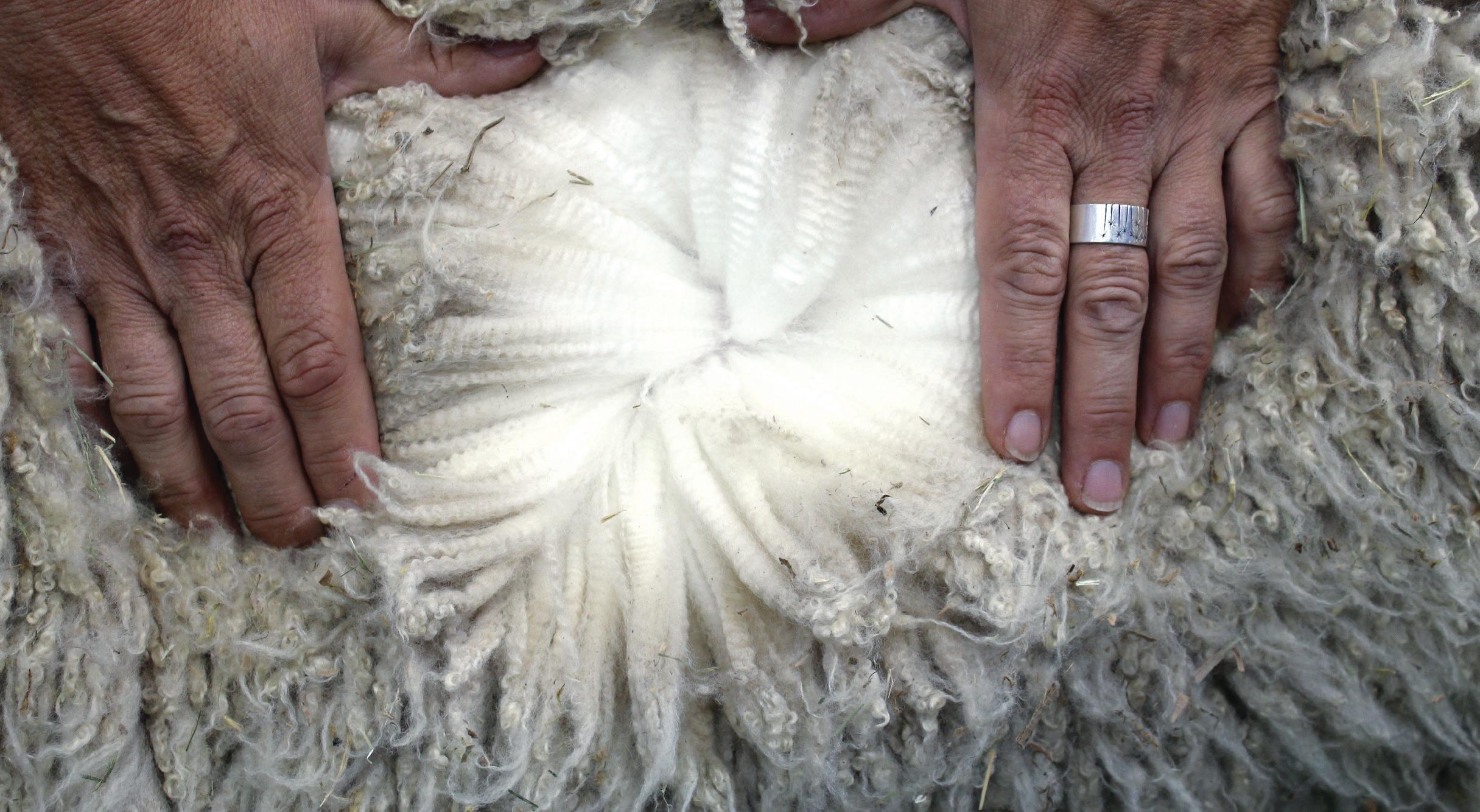
Fineness and Handle
Density
Character
Brightness
Uniformity of Colour
Staple Length
Guard Hair
• Uniformity of fibre diameter (micron) within the staple and across the body resulting in a low standard deviation measurement (SD)
• Minimal difference in micron between primary and secondary fibres
• Low micron not only in mid-side sample but across the animal into extremities
• Low transition line
• Soft and silky handling fleece
• Uniform, well aligned fibres both within the staple and across the body
• High ratio of secondary to primary fibres
• Highly aligned fibres with crimp definition
• Very well-defined staples which break into micro staples
• High degree of brightness displaying across the fleece which enhances handle
• Uniformity of colour in staple and throughout the fleece (on solid-coloured alpacas)
• Producing a staple length each year that is suitable for processing and is uniform in length across the body
• Low levels of guard hair across the body
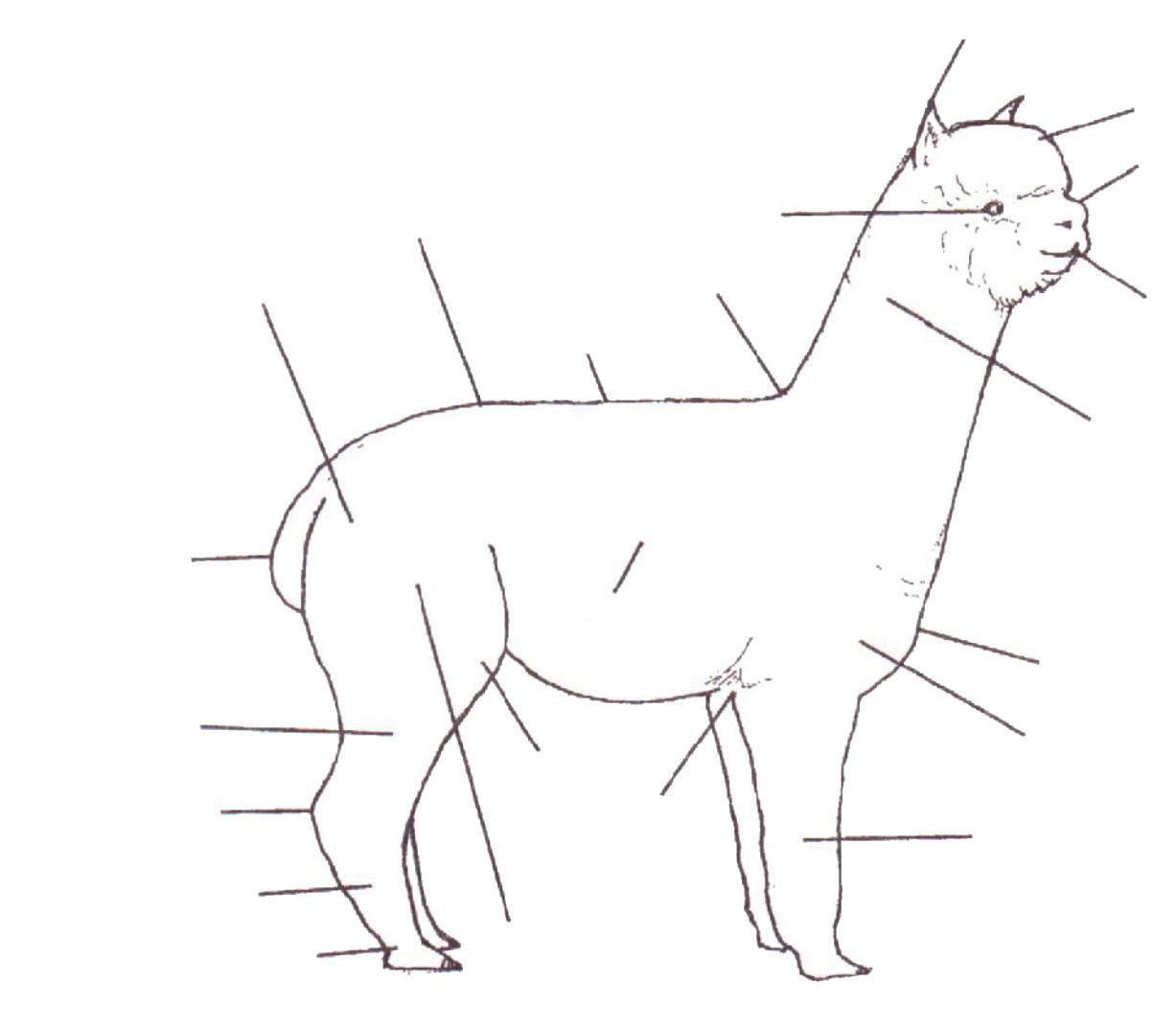
• High degree of variance in micron between primary and secondary fibres both within the staple and/or across the body (high SD)
• High levels of coarse fibres
• High degree of variability in the fibre diameter
• Harsh handle (prickle factor)
• Lacks density - open fleece
• Lacks any crimp definition or organisation
• Very dull
• Chalky look and feel
• Strong variance in colour within the staple, in patches or spots (multi-coloured alpacas and the white tuxedo pattern in traditional greys not included)
• Strongly differing colour in primary fibres compared to secondary fibres
• A length not suitable for processing
• Variable in length across the body
• High levels of guard hair (stronger straighter fibres) in main blanket area
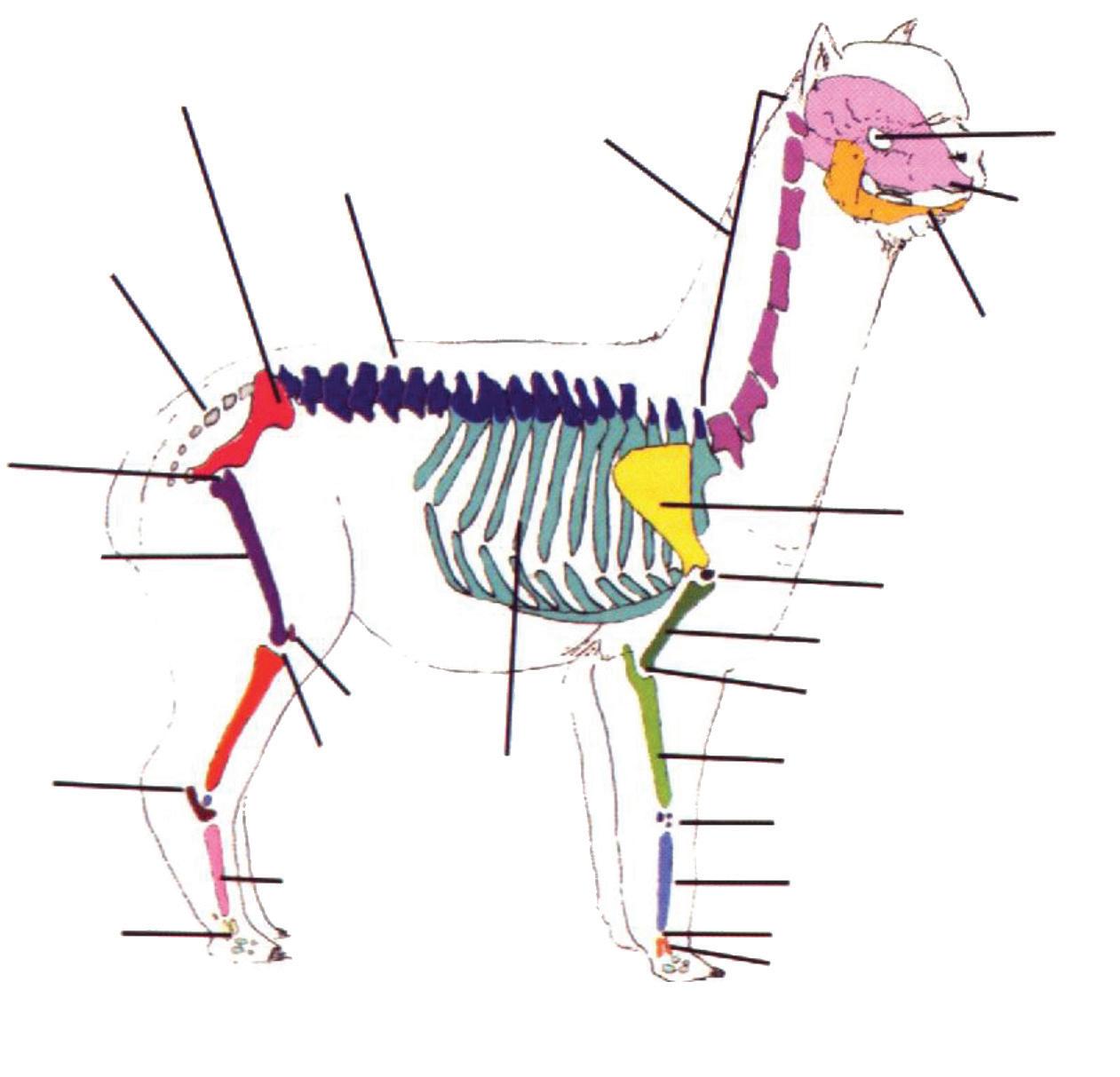
Lustre
Uniformity of Micron
Fineness and Handle
Density
Lock Structure
Guard Hair
Uniformity of Colour
• High degree of lustre
• Uniformity of fibre diameter (micron) within the lock and across the body, resulting in a low standard deviation measurement (SD)
• Minimal difference in micron between primary and secondary fibres
• Low micron not only in mid-side sample but across the animal into extremities
• Low transition line
• Silky and cool handling fleece
• Uniform, well aligned fibres both within the lock and across the body
• High ratio of secondary to primary fibres
• Lock can be wave and twist, tight twist, corkscrew, or straight but should be highly aligned and start close to the skin, layering and carrying solidity to the lock
• Individual locks breaking down into micro locks
• Low levels of guard hair across the body
• Uniformity of colour in lock and throughout the fleece (on solid-coloured alpacas)
Lock Length
• Producing a lock length each year that is suitable for processing and is uniform in length across the body
Balance Neck should be same length as legs and two thirds the length of the back
Base Narrow Legs set close together
Base Wide Legs set too wide apart
Blanket Prime fleece from shoulder to mid-section to rump, both sides
Buck Knees Knees bowed forward (viewed from the side)
Calf Knees Knees bowed backward (viewed from the side)
Camped over Bowed out at the fetlock (viewed from the side)
Character The demonstration of the crimp throughout length of staple
Consistency The uniformity of the micron, crimp, character, and density within the lock and throughout the fleece
Coverage The distribution of continuously growing fibre across the whole body of the alpaca
Cow Hocks Rear legs turned inwards at the hock (viewed from behind)
Crimp The natural wave or curl of individual fibres, grown into the fibre from the follicle
Density The number of fibres measured per square unit area
Dropped Pasterns Too much angulation at the fetlock (viewed from the side)
Fineness The diameter of fibres measured in microns
Fleece The fibre from a single live alpaca, in its natural state
Fused Ears Ears look normal from the outside, however, the inside of the ear’s cartilage is fused together
Fused Teats Front, back or both quarters teats are attached to each other
Gopher ears Very short stubby ears
Guard hair Coarse, modulated (hollow or partially hollow) primary fibre, usually greater than 30 microns in diameter and straight
Handle A tactile feel of the fleece to the hand – soft, harsh, etc.
NEGATIVE/UNDESIRABLE TRAITS
• Severely lacks lustre
• Extremely chalky, dull, or flat
• High degree of variance in micron between primary and secondary fibres both within the staple and/or across the body (high SD)
• High levels of coarse fibres
• High degree of variability in the fibre diameter
• Harsh handle (prickle factor)
• Lacks density - open fleece
• Lacks any lock structure or solidity to the lock
• Lofty
• High levels of guard hair (stronger straighter fibres) in main blanket area
• Strong variance in colour within the lock, in patches or spots (multi-coloured alpacas and the white tuxedo pattern in traditional greys not included)
• Strongly differing colour in primary fibre compared to secondary fibres
• A length not suitable for processing
• Short annual fleece growth
• Variable in length across the body
Humpback The backline is convex
Knock Knees Knees bending inward (towards each other – viewed from the front)
Lock A group of fibres of similar character, usually when referring to Suri Lustre The amount of light reflected by the fibre. The sheen or gloss. Can vary with lighting
Luxating Patella Loose patella (kneecap)
Mid-side An area midway between the front and rear legs on the side of an alpaca and approximately 6-8 inches down from the backbone
Organisation How the fibre lays within the lock/staples that make up the overall appearance of the fleece
Phenotype The alpaca’s appearance
Polydactylism More than two toes on a foot
Post Legged Rear Legs straight – no angulation from hock to fetlock (viewed from the side)
Rope Walking Front and back feet are walking on the same centre line, or crossing over the centre line
Sickle Hock Too much angulation at the hock (viewed from the side)
Staple The group of fibres or lock
Staple length The length of the staple from skin to tip
Strong Thick, coarser fibre having a higher micron measurement
Style A cumulative and overall aesthetic effect of fibre characteristics found in a fleece
Substance of Bone Circumference of bone
Swayback The backline is concave
Syndactylism Fusion of two toes on the same foot
Uniformity The even distribution of characteristics within a fleece – micron, crimp, length of staple, colour, fineness
Withers Area at the base of the neck along the first part of backline
Or so says Paul Wills of Limestone Alpacas with his 2025 Heart of England Spring Fiesta Supreme Champion Huacaya.
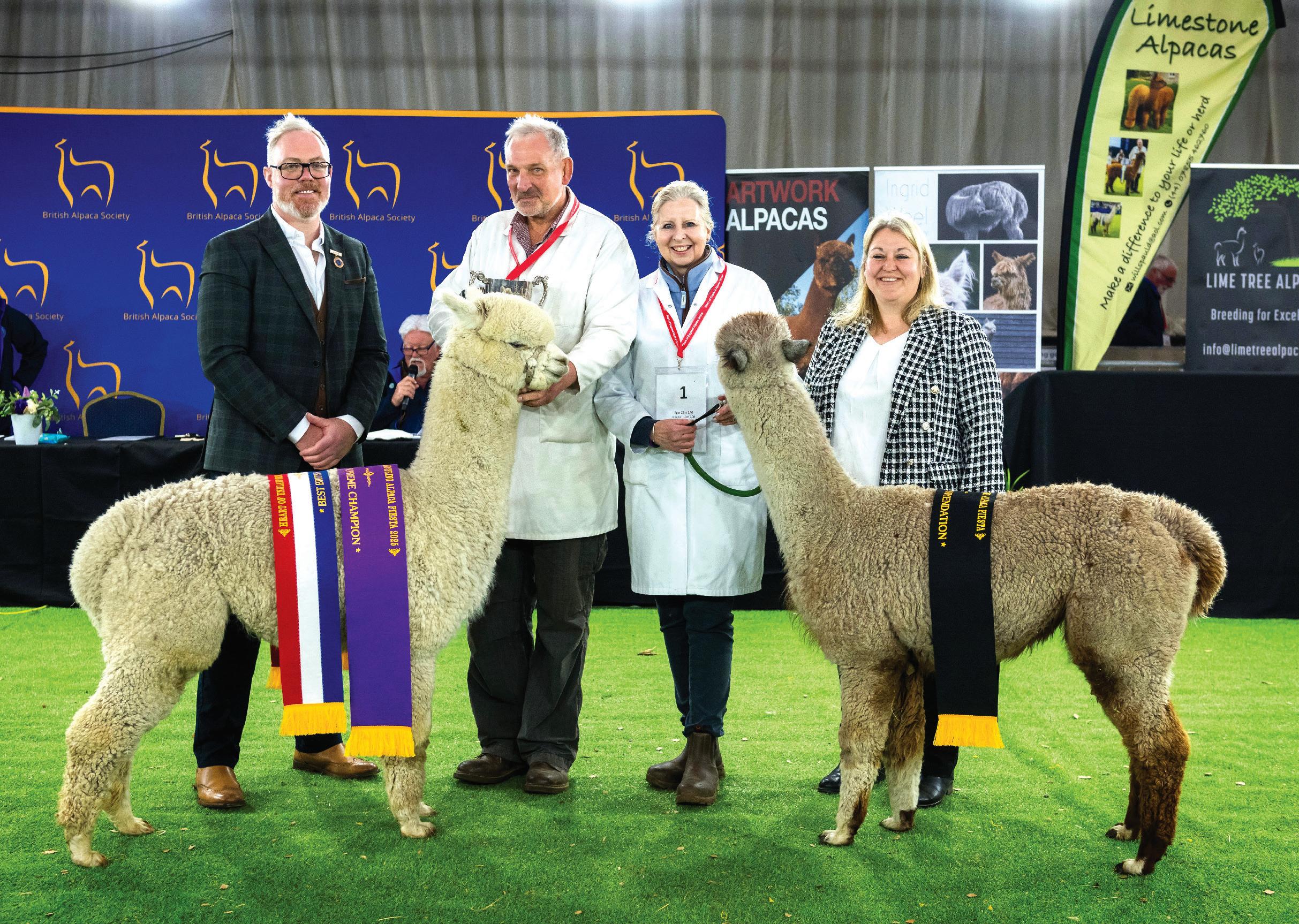
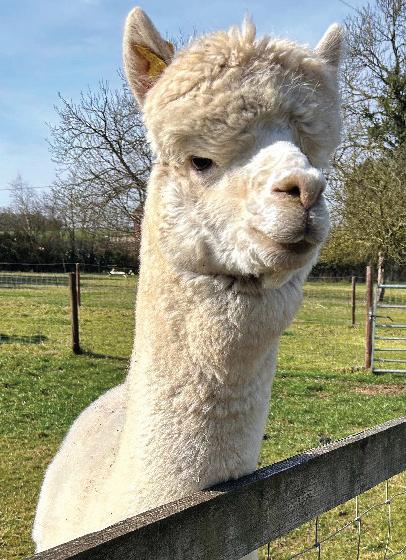
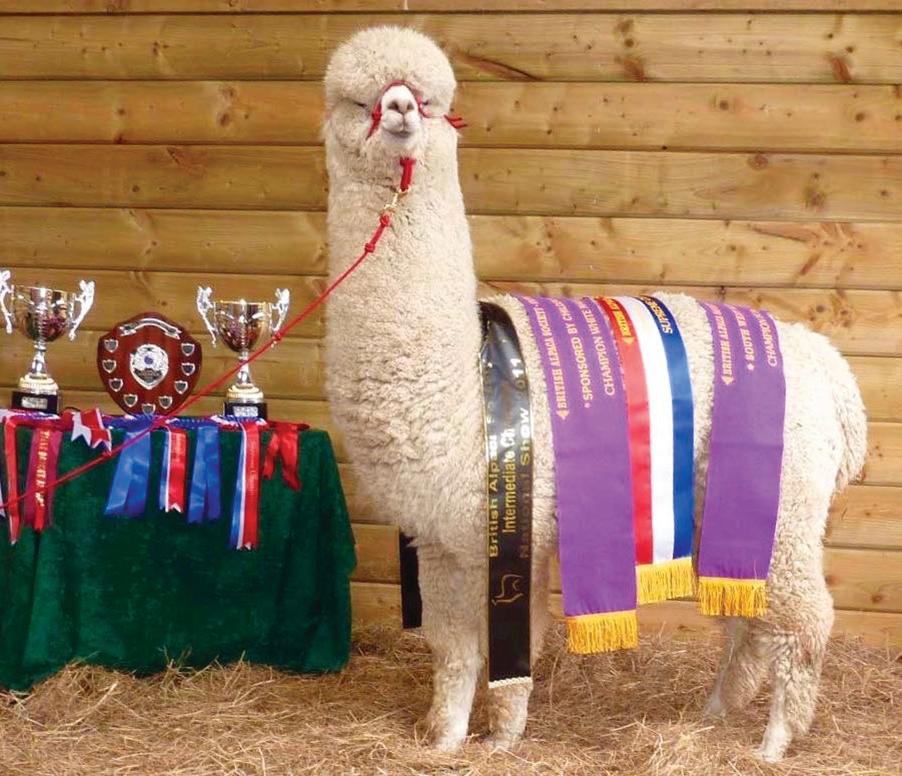
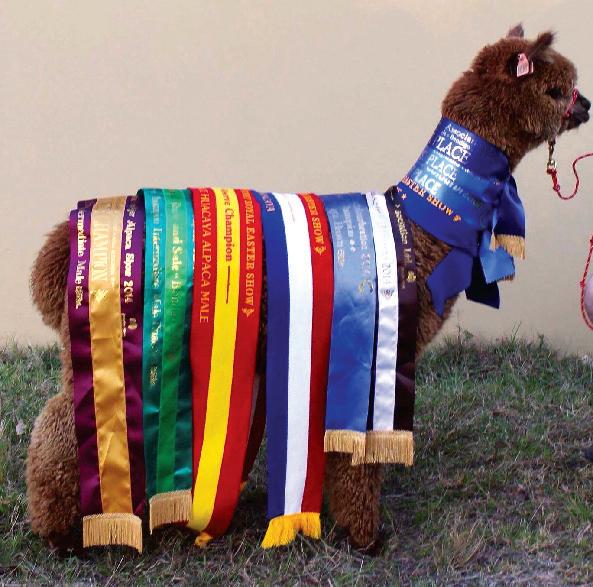
The headline is not referring to me, but to Dips or Dippers as he is affectionately known (Valley Alpacas the Diplomat) and his co-star, Rup or Koo Wee (Softfoot Koo Wee Rup of FPA). Dips, who will be 17 years old this year and Rup, a mere youngster at 13 years old, are still getting it right and it’s so good to see these ‘old boys’ still hitting the spot. Dips show career began with Championships and Supremes as a junior back in 2010 whilst Koo Wee’s exemplary show career was pre import from Australia.
The show winning progeny from these two old boys has been consistent and widespread for a number of breeders over the years but for me, 2025 was particularly special with the occasional combination from both sires working particularly well.
Limestone Bollinger’s first show was the BAS National 2025 and being placed first as an Intermediate was a good start against such tough competition, but tandem judging from Roger Clarke and Mary-Jo Smith at the HoE Spring Fiesta a few months later recognised him as both Champion White Male but most importantly as Supreme Champion Huacaya and Best of British.
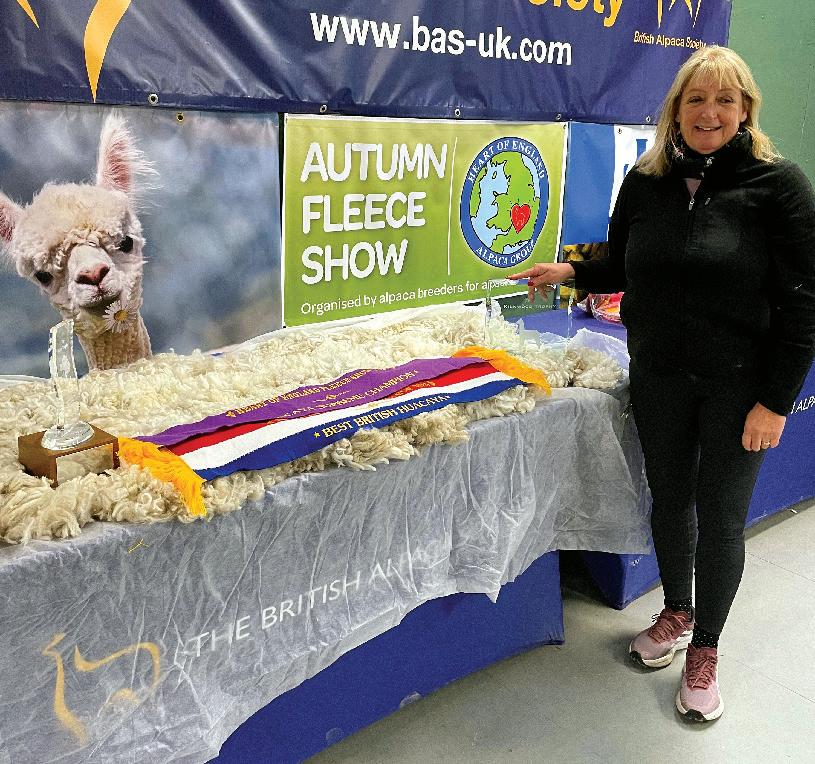
HoEAG Autumn Fleece Show 2025 judged by Barbara Hetherington –Supreme Champion Huacaya Fleece Limestone Bollinger
Bollinger’s sire is Dips from a white Koo Wee dam, Atlantic, and I believe this combination is the substance behind his quality of fleece that then went on to achieve Champion White fleece (86.75 points) and Supreme Champion Huacaya fleece at the highly competitive HoE Fleece Show in October judged by Barbara Hetherington.
The photo left also shows Limestone Bohai on the right, a Koo Wee daughter (he really does do it in all colours!) as Champion Grey female with her Judges Choice award.
The HoE Spring Fiesta wasn’t just one of the friendliest I’ve been to, but a real showcase for Koo Wee with his direct progeny also gaining four Championships in Light male (Limestone Sulu), Fawn female (CS Alpacas Just Dance), Black
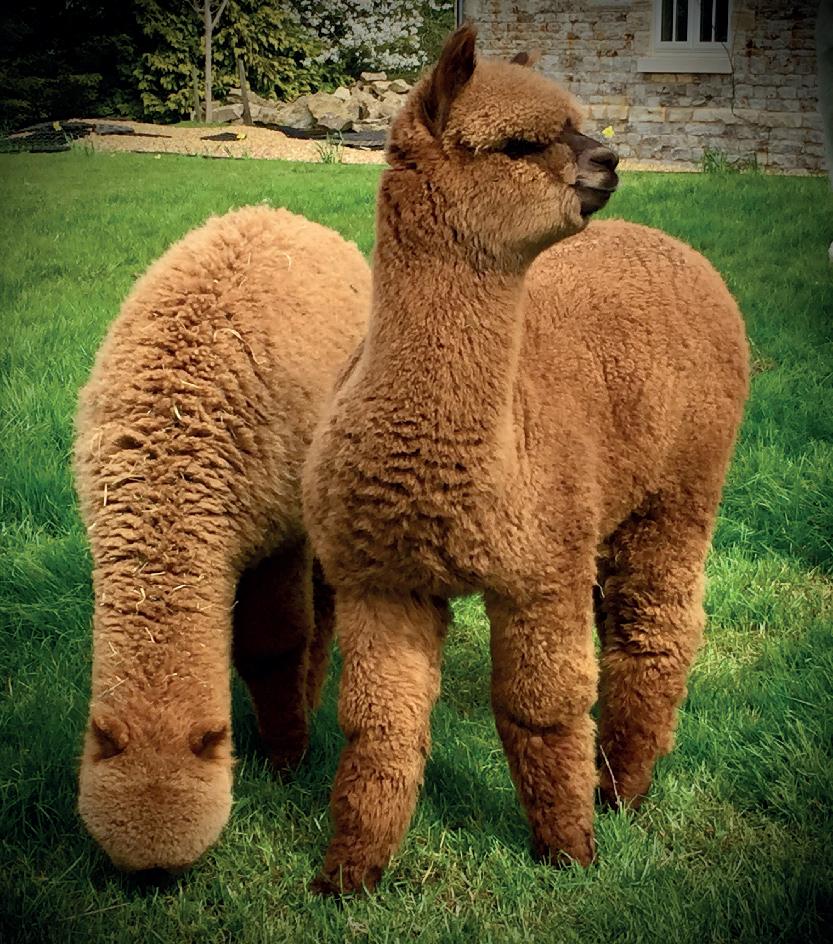
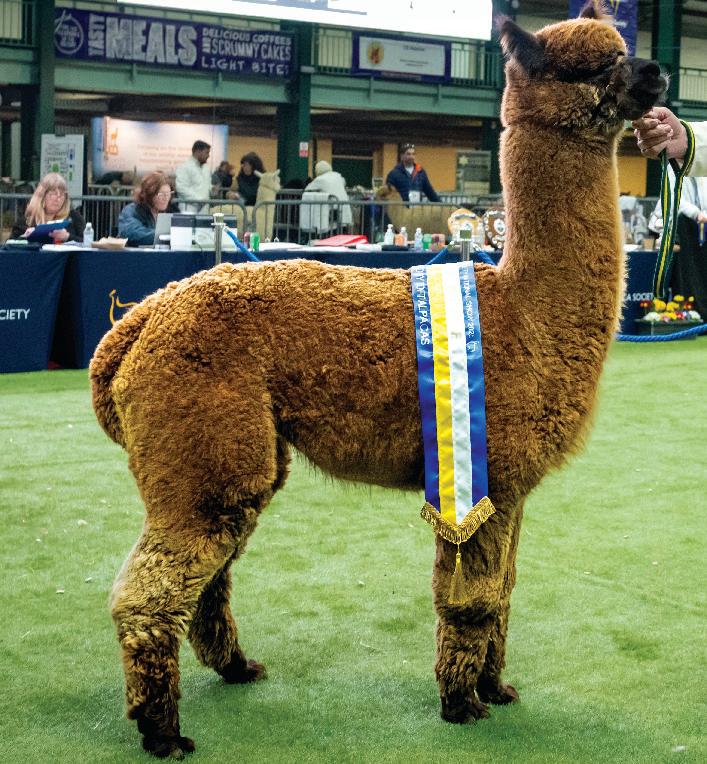
Limestone Bengal: Adult Champion Brown Male at BAS National Show 2025
male (Chinchero Flint) and Grey female (Limestone Bohai).
Koo Wee may be the much smaller of the two old boys, but his progeny are typically mighty, as evidenced in Bengal who was described by Molly Gardener at the 2025 National, as having the stature of a tree (complementary I think as he gained the Brown Championship as an adult). This was the icing on the cake for Bengal who was also National Champion Brown Male as Intermediate in 2024, and Reserve National Champion as Junior in 2023.
Well done old timers! Is there hope for me yet? The Diplomat and Koo Wee Rup are co-owned by Limestone Alpacas and Chinchero Alpacas.
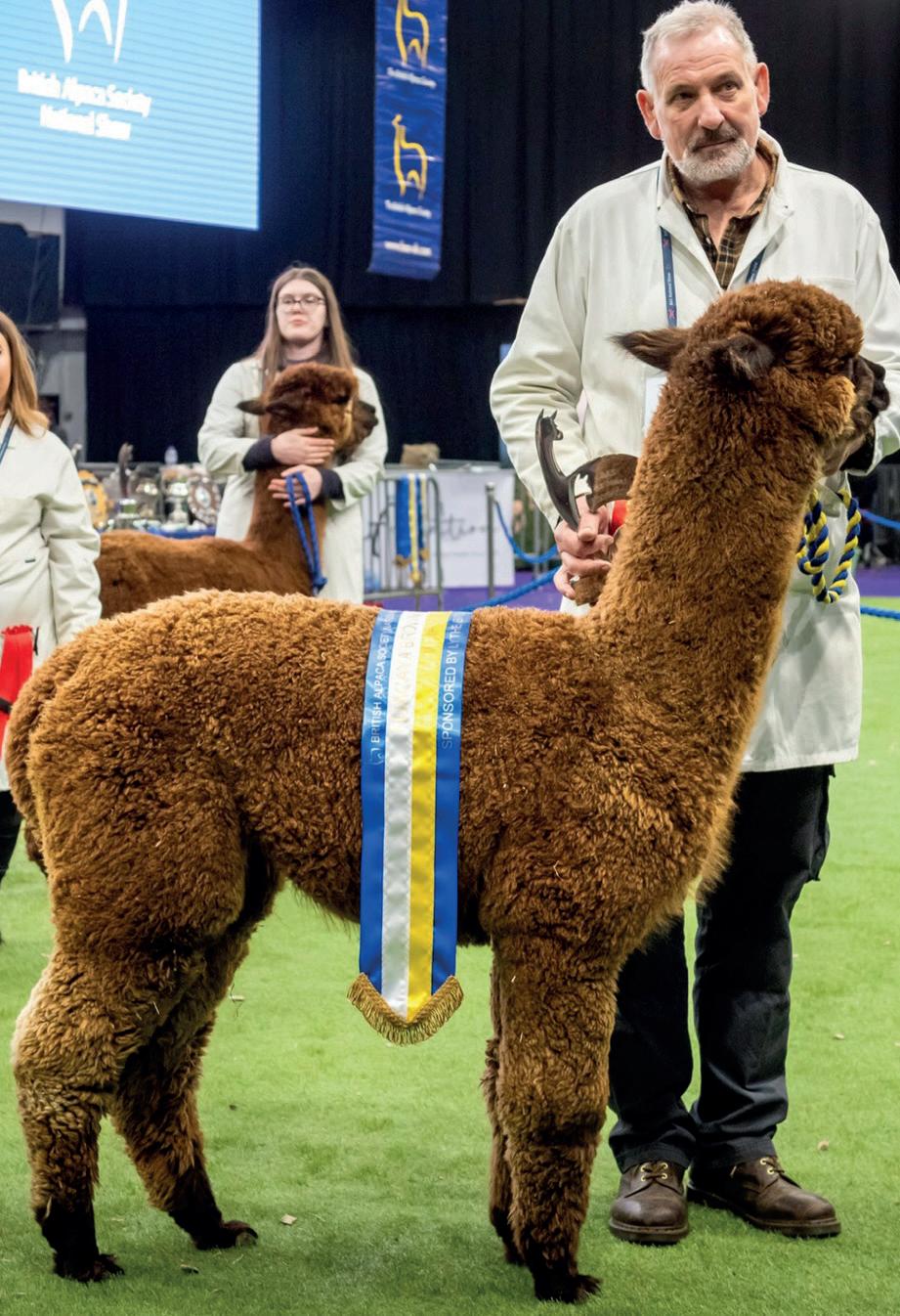
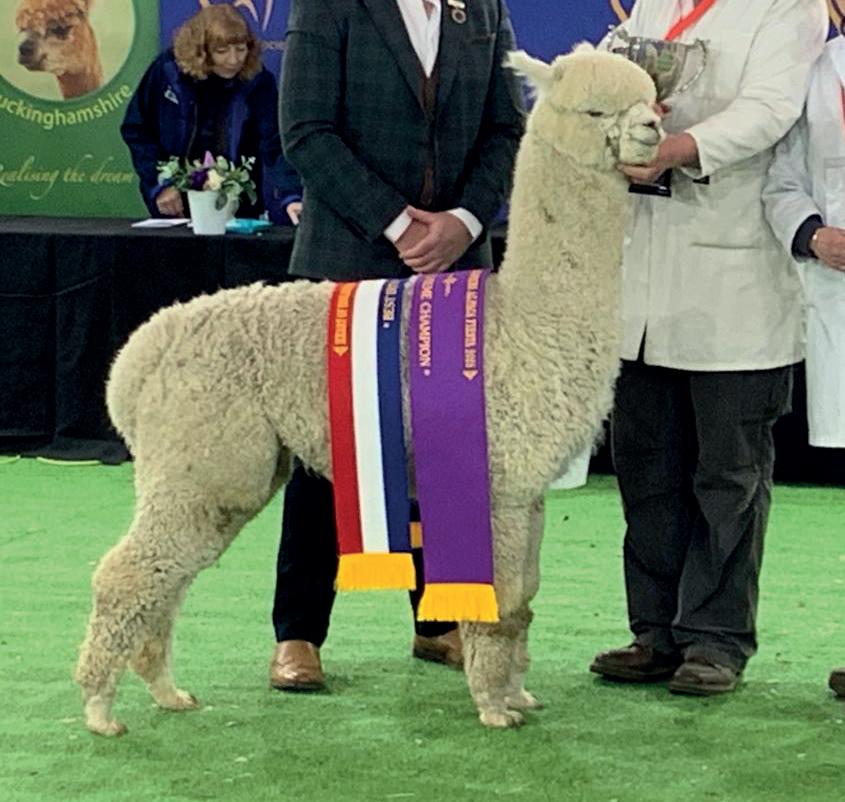
Jacki Barlow of Beacon Alpacas who is an affiliate trainer, says there is room for the family while you train.
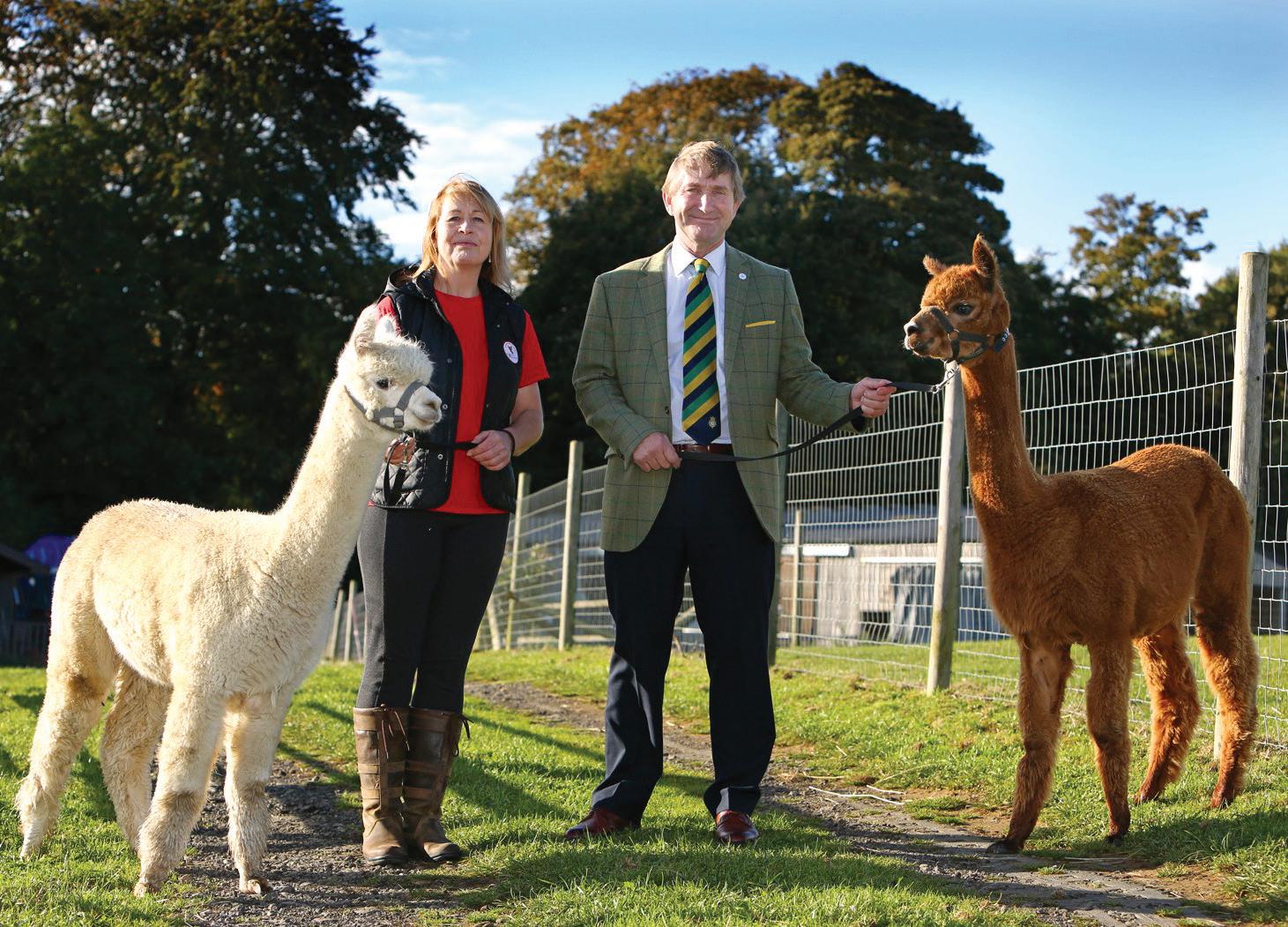
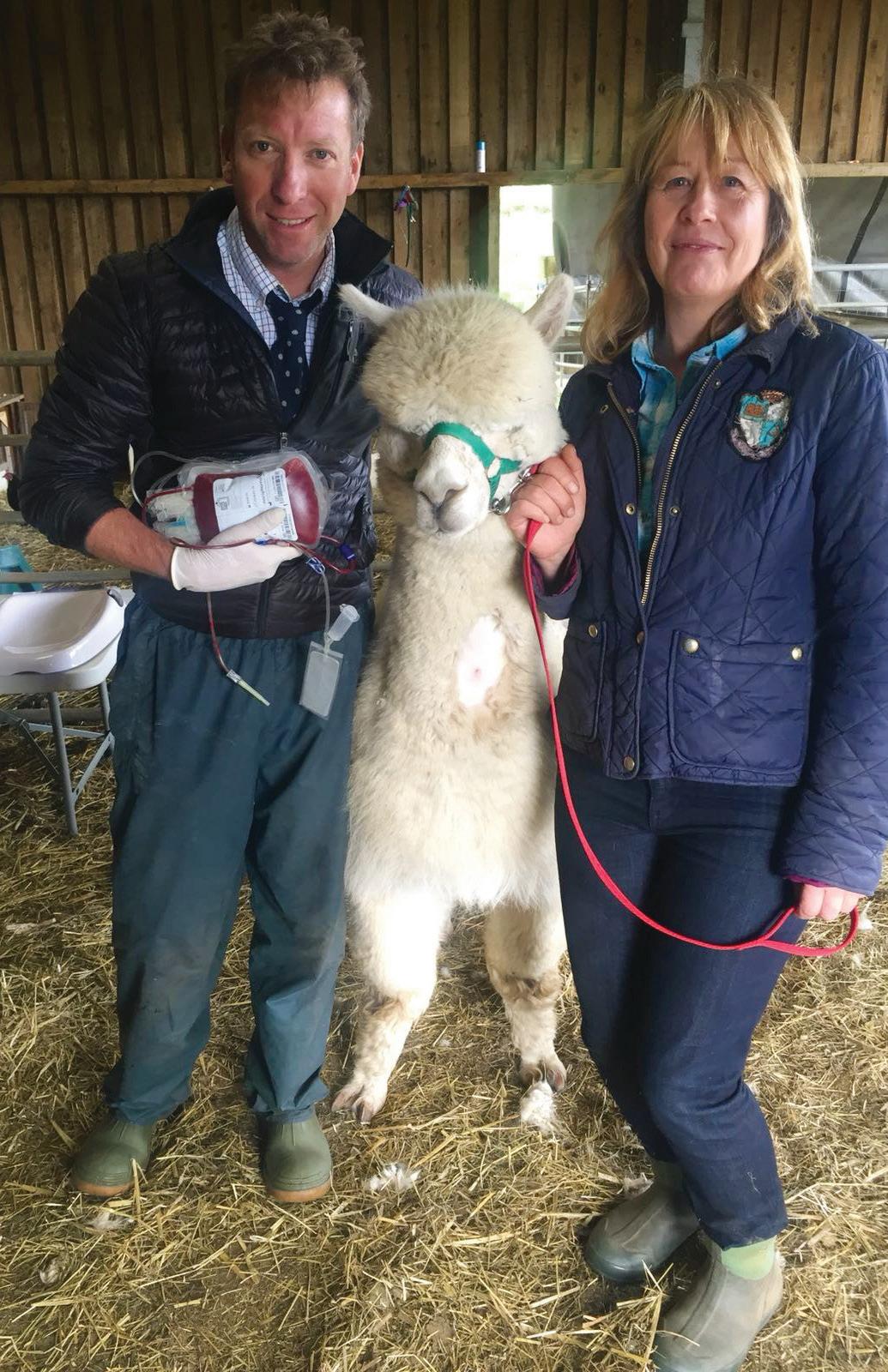
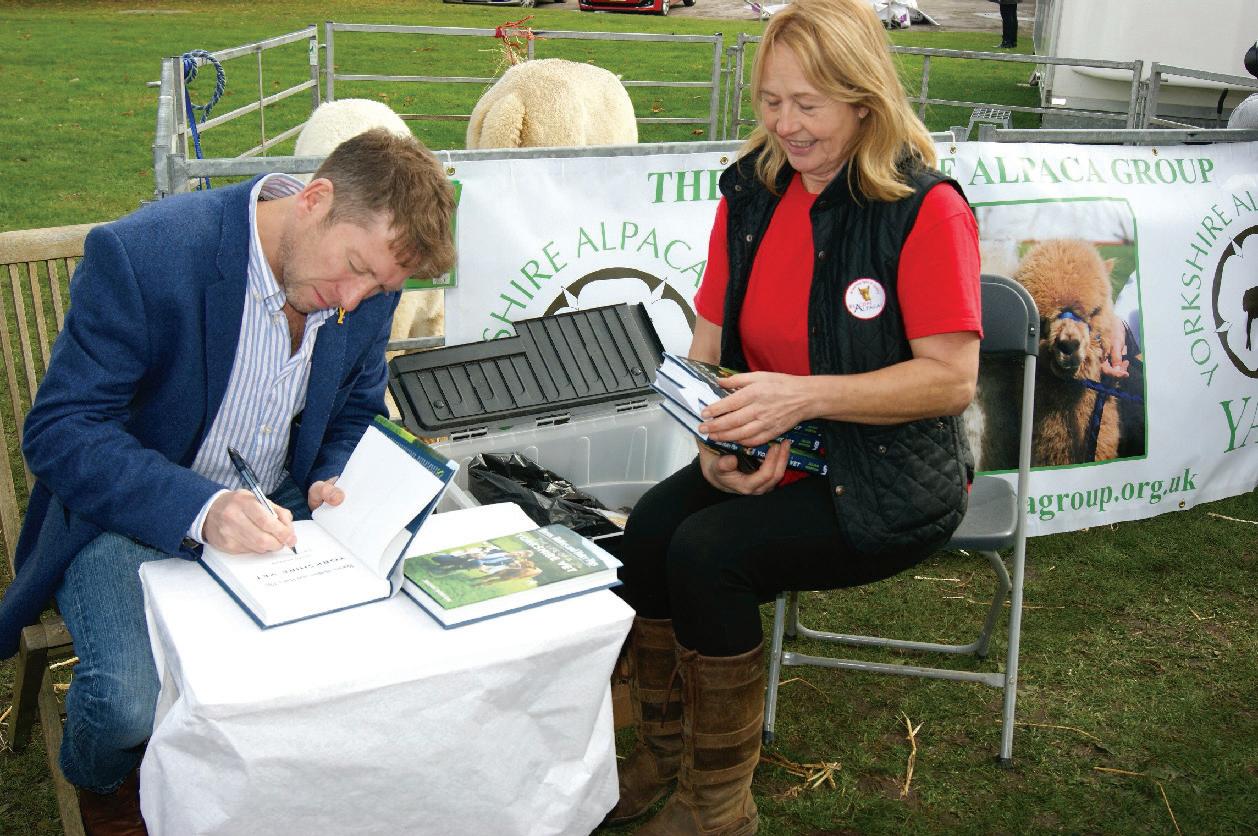
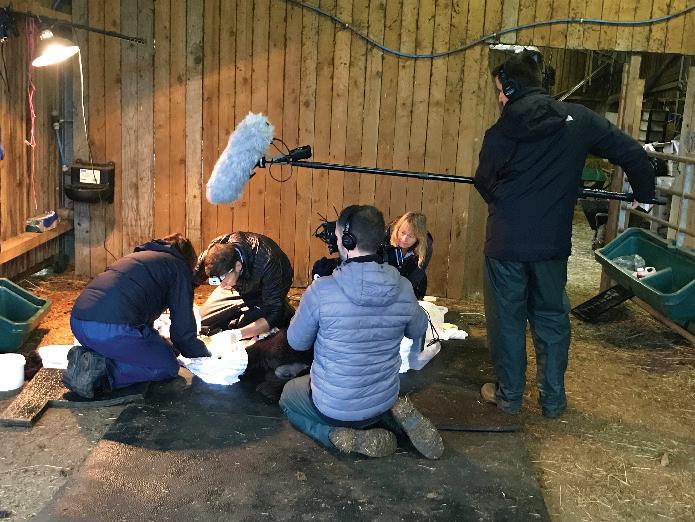
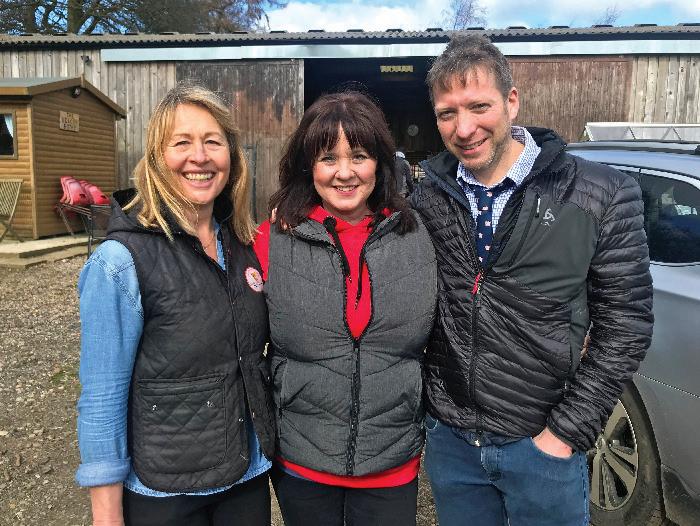
Always innovating, Jacki Barlow is now offering people an amazing opportunity to stay in a unique and peaceful holiday cabin on a TV location farm. She set up the farm in 2008 and has been breeding alpacas, providing stud services and offering alpaca walks since 2009. Beacon Farm has been seen on numerous episodes of Channel 5’s “The Yorkshire Vet”, as well as Escape to the Country, Celebs on the Farm, Four in a Bed, At Home with the Greens, Loose Women and Calendar. Visitors can now stay on the alpaca farm that they have seen on TV. Jacki Barlow of Beacon Alpacas has converted her former home into a holiday let for up to six people. It is in the Area of Outstanding Natural Beauty – the Howardian Hills and has great views into the Vale of York. Only eight miles to Thirsk, 20 miles to historic York, 40 miles from the east coast and the Dales, it’s in a great location for those that like the countryside.
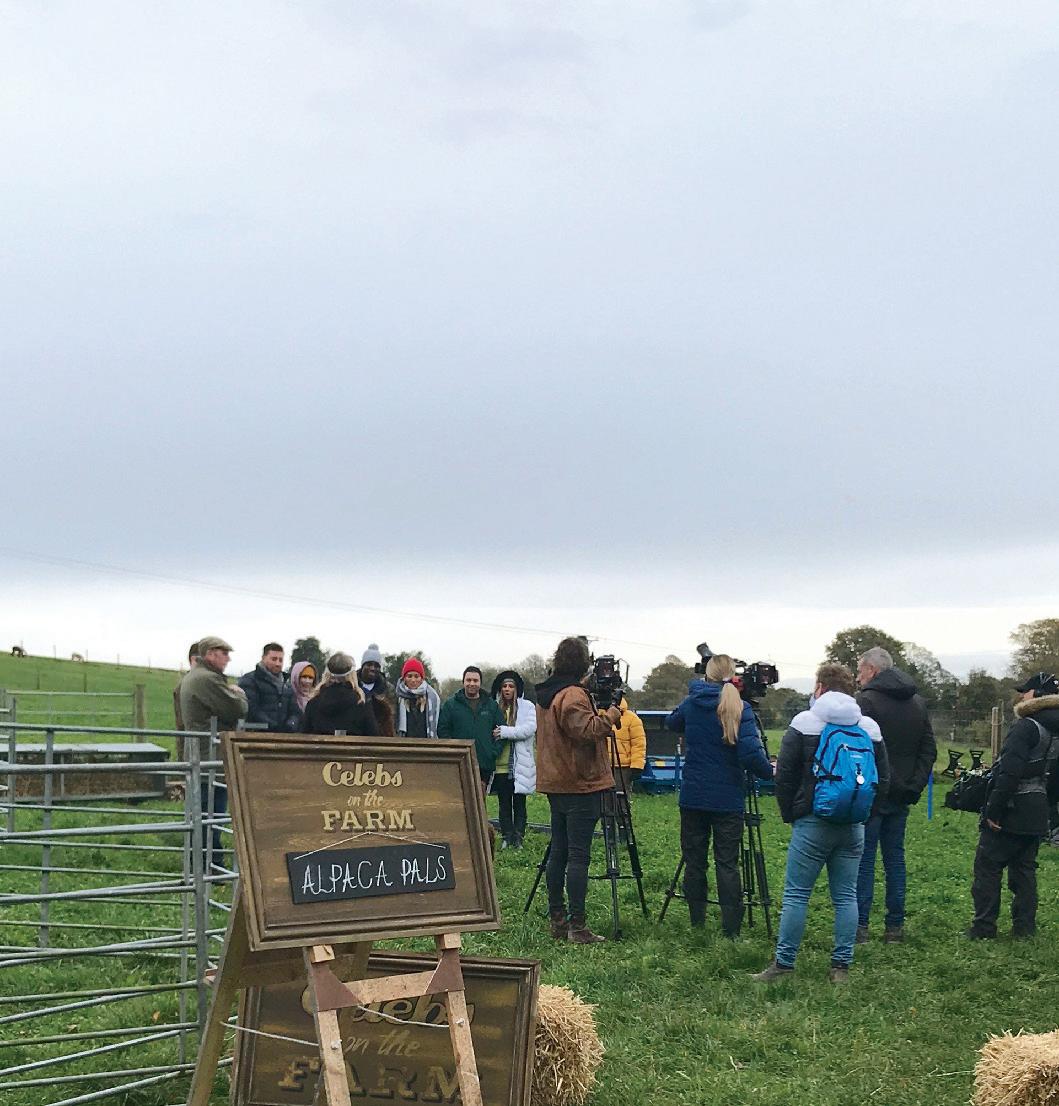
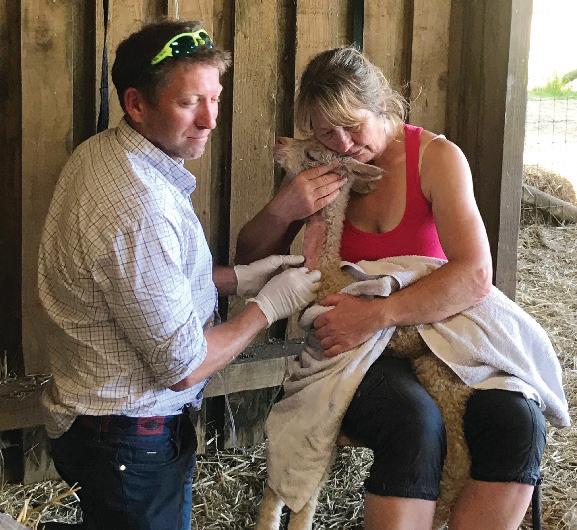
On the farm are horses, sheep, chickens and of course, alpacas and those staying at the cabin can book a half price alpaca walk or wrangler experience.
Jacki is a BAS affiliate trainer, and so it’s a great opportunity to book a course for yourself and bring the family for a break at the same time.
With two en-suite bedrooms and a sofa bed, this well equipped cabin can sleep four adults and two children, two medium well-behaved dogs can accompany the group for an extra charge. Husthwaite village has Dark Sky status so along with the peace and beauty of the Hambleton Hills you can star gaze at night and during the day what could be better than watching the alpacas with a glass of something or a cuppa or even getting involved in helping look after them.
There is lots to do in the area and the village has a great pub and at weekends the nearby Pizza Shack offers scrumptious pizzas.

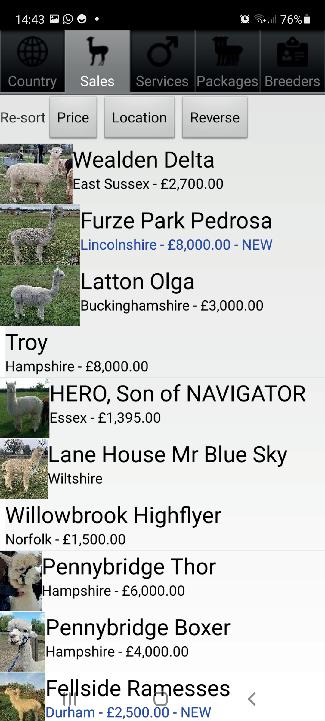

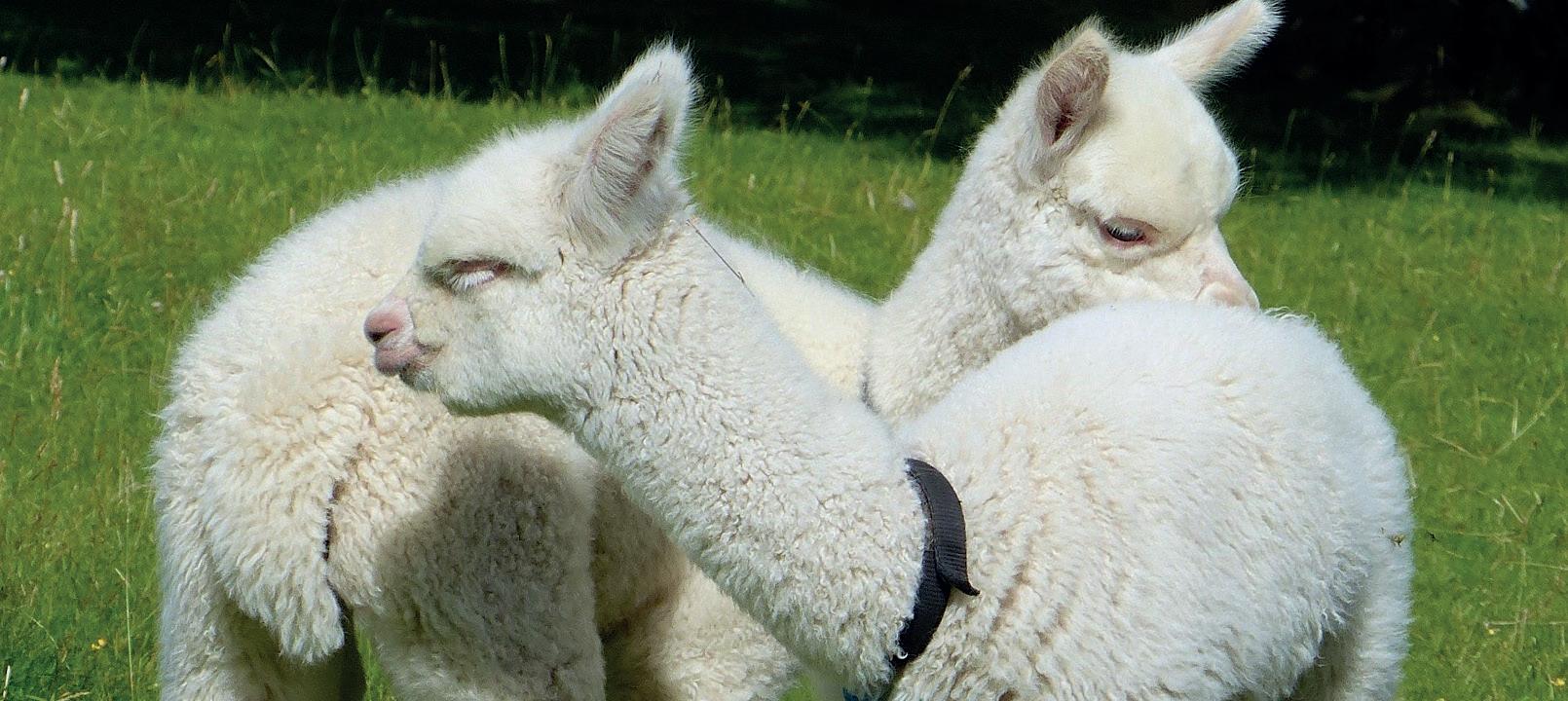
The British Alpaca Society gives access to a variety of courses for members from basic husbandry to advanced fibre recognition.
Courses offered by BAS Affiliate Trainers are on the set of nine BAS approved modules:
• Module 1: Feeding and basic management
• Module 2: Vaccination, Supplements, Illness and Ailments
• Module 3: Handling Alpacas
3a) Herding and catching
3b) Fitting a head collar
3c) Basic Halter Training
• Module 4: The Alpaca – What to look for
• Module 5: Understanding shearing day
• Module 6: Fleece – what to do with it
• Module 7: Breeding and mating
• Module 8: Birthing
• Module 9: Marketing your alpaca business
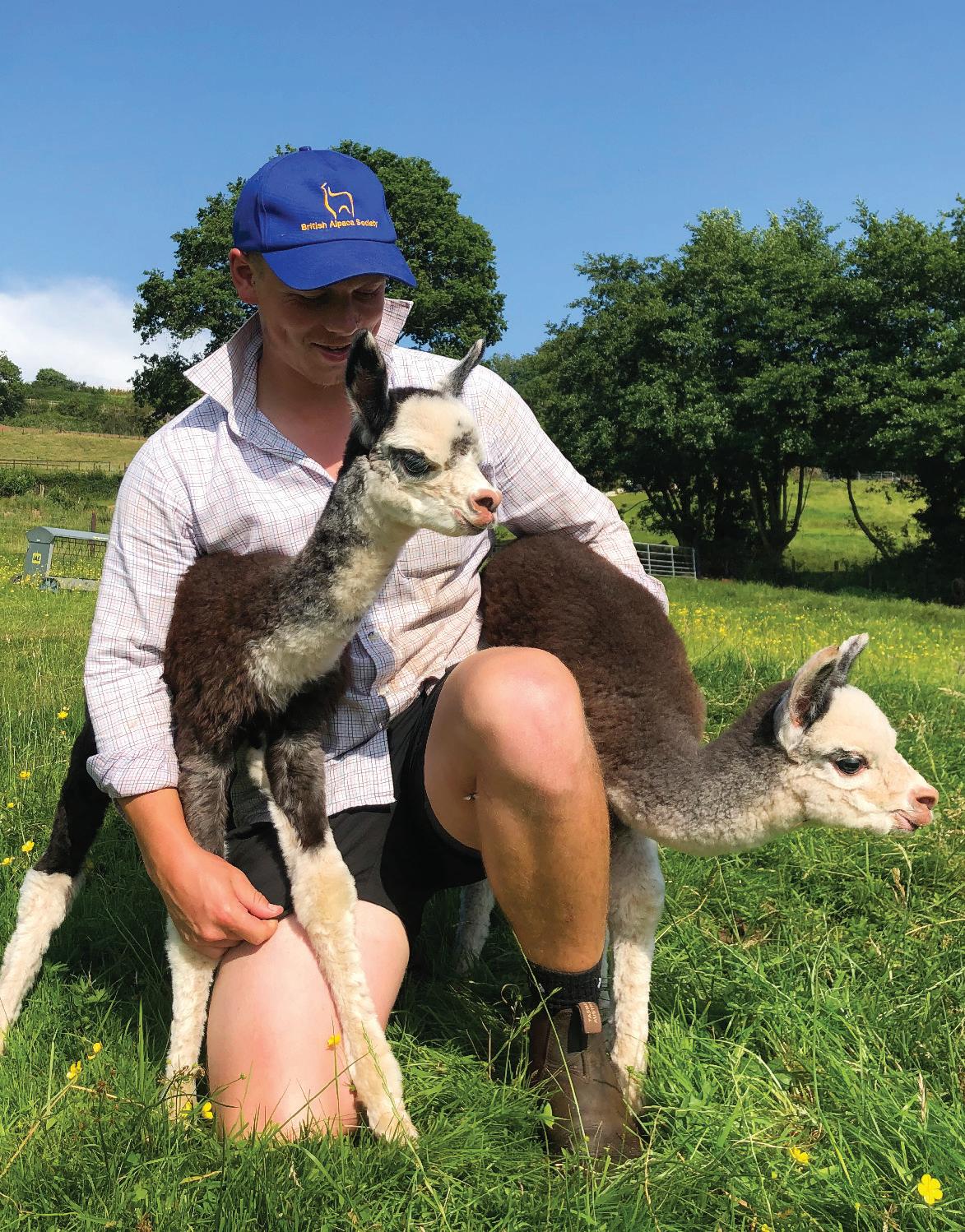
There are affiliates all over the country. To find someone near you check out the BAS website where there is a full listing. Scheduled affiliate training days are advertised in the fortnightly newsletter. If you are interested, make contact directly with the affiliate.
The affiliate training concentrates on husbandry. For learning about bred improvement and judging there are more courses to work through.
A one day course on alpaca conformation and fibre covering:
• Basic conformation including teeth, stature, genitalia, legs, gait and body scoring;
• Fleece – how to recognise the different qualities and traits of fibre including weight and value, fineness, density, crimp, uniformity, length, colour, amplitude and frequency and an introduction to histograms. You will have the opportunity to assess fleeces and discuss the merits of different qualities and styles.
Course notes will be provided including a glossary of terms.
There will be a maximum of 12 people on the day.
Cost: BAS Members £ 65 + VAT Non Members £85 + VAT
This course will only run if there is a minimum of eight people.
Regional groups are encouraged to arrange for this course to be held locally for the benefit of their members so look out for details on their websites or email or call BAS for more information.
Following on from this course there are two more available.
A three-day, in-person course on alpaca conformation and fleece for Huacaya and Suri – a thorough overview of the major fleece and conformational traits for both Suri and Huacaya alpacas. This enables delegates to:
• Gain confidence to assess and verbally deliver fibre and conformational characteristics to other owners and potential customers.
• Make informed selection decisions within their own herd, at shows and when buying stock in.
• Gain the necessary information to make appropriate breeding choices.
• Gain valuable experience at handling and assessing a high number of alpacas of varying quality, sex, and type.
Suitable for all members and overseas guests who are interested in learning more about assessing both conformational and fibre traits. This course is a comprehensive package in furthering alpaca assessment and applicable to all.
>> Continued on next page
• Alpacasforsale
• Agistmentservices
• Adoptanalpaca
• Alpacaexperiences
• Alpacawalks
• Handknitted alpacaproducts
Alpaca & Llama handler training with...
HANDLER COURSES:
28th-29th March 2026
23rd-24th May 2026
15th-16th August 2026
26th-27th September 2026
ANIMAL ASSISTED ACTIVITY COURSES
24th-26th April 2026
8th-10th June 2026
ANIMAL ASSISTED THERAPY COURSES
24th-27th April 2026
8th-11th June 2026
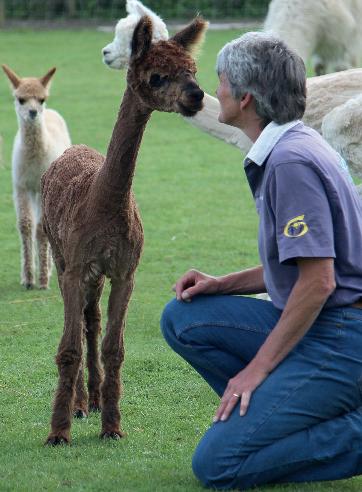
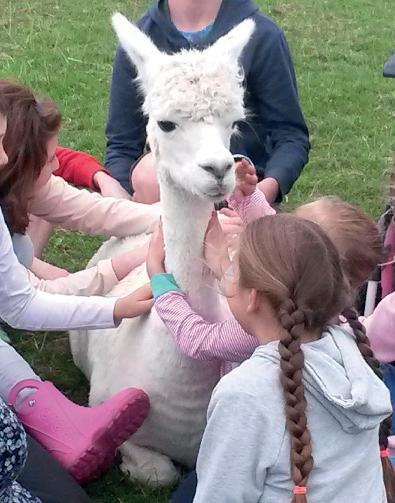
Is your relationship with your animals all you had hoped for?
How can Camelidynamics techniques help me on my alpaca journey?
Camelidynamics is an approach to and collection of methods that represent the most positive, least intrusive techniques for training and managing alpacas.
This two day handling course will change the relationship you have with your animals forever.
Understand why camelids behave the way they do and learn kind and efficient methods that are science-based, for safe handling and husbandry that’s fun.
Tell your vet that we have courses for them too.
For those interested in finding out how this approach can inform and support your human/alpaca interactions in the therapeutic arena, we are now offering courses for owners and professionals. Working with Alpacas in Animal Assisted Activity or Therapy.





A two-day course on alpaca conformation and fleece for Huacaya and Suri that builds on the Intermediate Course. Suitable for alpaca owners that want to develop their skills in breeding and those who may wish to become judges.
Content will be mainly practical and will be approximately one-third classroom, two-thirds hands-on practical. It will cover both Suri and Huacaya.
This course is part of the judge training programme but does not include formal oral reasoning. The course includes:
• A full and thorough overview of conformational traits and the way they impact on reproduction, growth and general fecundity.
• Advanced visual and hands on assessment techniques for alpaca selection for sale, purchase, showing and breeding.
• The ability to learn to orally compare and critique alpacas, in particular herd sires.
• An opportunity to exchange ideas and techniques with other likeminded breeders.
It is a fun couple of days fully immersed in the latest and most in depth alpaca assessment and breeding techniques.
Review of Basic Alpaca Assessment:
• Conformation positive and negative traits – more detail on limb angulation, dentition, testicles, and other issues
• Fibre – review
– Understanding follicular development
– Cell structure
– Primary and secondary follicles,
– Detailed examination of fleece qualities – density, fineness, character/ lock, micron
– Understanding fleece testing and histogram
– Relationship between characteristics
– Hands on alpacas – fleece
– Hands on alpacas – conformation
– Micron assessment
• Advanced fibre/fleece assessment
• Selecting a stud and heritability
• Multiple generations of progeny
A Practice Assessment includes:
• Looking for positive and negative traits passed down from the female or male and providing an explanation
• A group of alpacas to assess and put in order of preference and provide a reason why.
Tutors will provide written feedback to each delegate. There is no pass or fail. After completing the Advanced Alpaca Assessment the Judge Training Stage 1 can be attended.
Delegates must have attended the Advanced Alpaca Assessment course before starting this training.
Judge Training Stage 1 is a two-day course on the skills needed to be an effective alpaca judge. There is an exam for each element of training which must be passed to proceed to Judge Training Stage 2.
In advance of the course, participants are recommended to:
• have read the latest version of the BAS Show Rules and Fleece Manual
• helped at halter and fleece shows.
This course focuses in its entirety on the training of individuals to assess alpacas (Suri and Huacaya) using the comparative method for halter and the absolute method for fleece. This course will be primarily of a practical nature.
Delegates will:
• revise previous training courses
• be taught show ring procedure
• discuss ethics of judging
• be taught a system for delivering oral reasons
• practice judging of the shorn fleece using the BAS Fleece Manual
• practice judging halter classes of four
• be tested on each element.
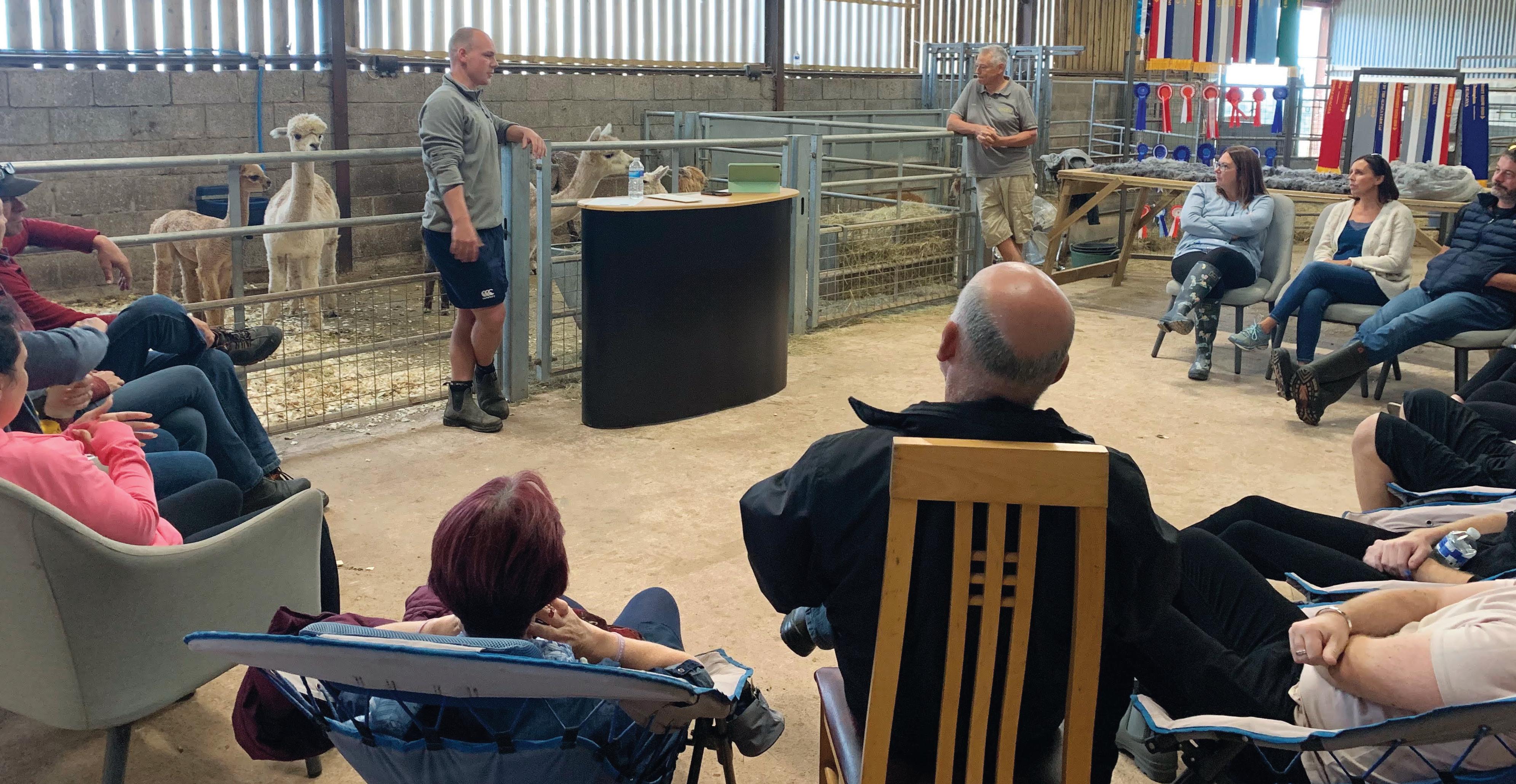
This is a two-day course on the skills needed to be an effective alpaca judge. There is an exam for each element of training which must be passed to proceed to Judge Apprenticeships.
Delegates must have attended and passed Judge Training Stage 1.
In advance of the course, participants are recommended to:
• have read the latest version of the BAS Show Rules and Fleece Manual
• helped at halter and fleece shows
This is a largely practical course with emphasis being placed on:
• Accuracy and consistency of class placements
• Oral reasoning, accuracy and the ability to justify placing and use of correct and varied terminology
• Improving speed whilst maintaining accuracy
• Fleece judging, accuracy
• Manner and handling of alpacas
• Detailed knowledge of BAS Rules
• Show ring management
• Judges’ presentation, presence, and etiquette. Course content:
• Review of judging criteria and oral reasons:
– Fibre and Conformation
– Description of fleece samples
– Any recent changes to criteria and rules
• Hands-on review in barn
• Judging halter classes of up to six alpacas including giving oral reasons
– Huacaya and Suri
• Judging classes of six fleeces
• Video feedback.
Course notes will be provided including a glossary of terms and copies of the show rules and fleece judging manual.
There will be a maximum of eight people on the day. Ideally this course will only run if there is a minimum of four people (at BAS Board discretion). Delegates must have completed and passed the Judge Training Stage 1. Exercise to develop oral reasoning: Produce written oral reasoning for 50 classes of alpacas (25 Huacaya and 25 Suri). This is practice and is not examined.
Judge apprenticeships: Following successful completion of Alpaca Judge Stage 2, candidates must apprentice with three different BAS qualified judges at three halter and two fleece BAS shows in the UK. One of the halter shows must have more than 100 entries present. An apprentice day must have a minimum of 60 alpacas judged to be considered a full day. On receipt of satisfactory reports, they may proceed to Certification.
Two-day theory and practical learning experience run by professional animal behaviourists Gwen Bailey, BSc(Hons), best selling author and Clinical Animal Behaviourist, and Louise Otter, BSc(Hons), Animal Training Instructor and pioneer in consent-based training

A powerful way to build trust!
For owners who want to deepen their bond and make handling easier and more positive 14-15 April 2026 West Midlands

www.hadzoralpacas.co.uk
Follow our journey on Facebook

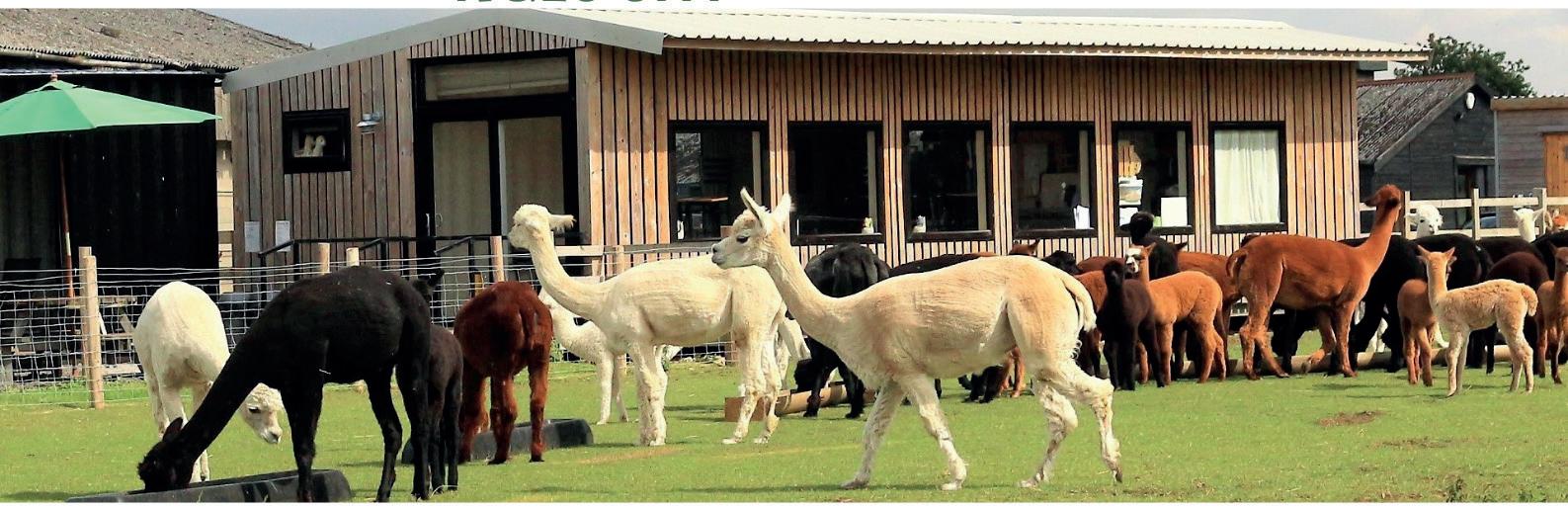
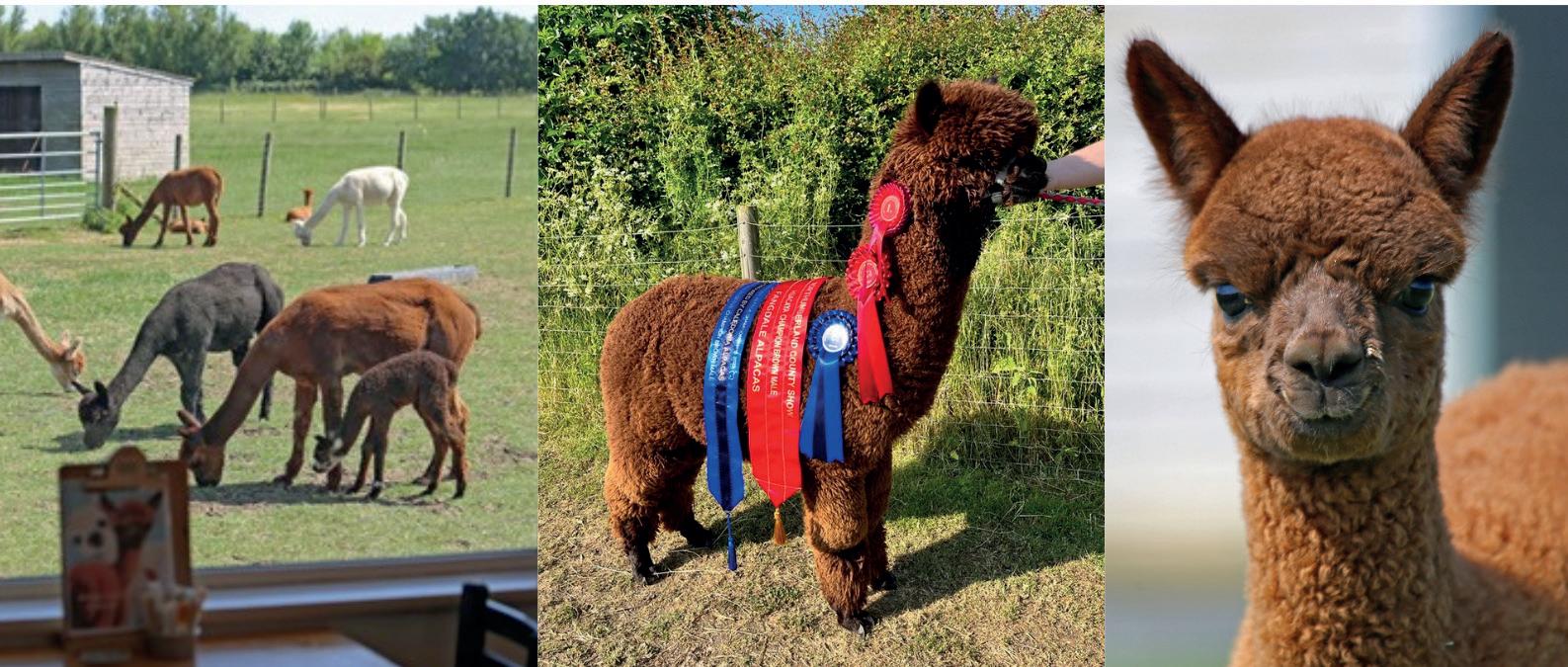
Dr Ami Sawran BVSc CertAVP (CP) PGCertVPS PhD MRCVS helps owners navigate a year of husbandry and health.
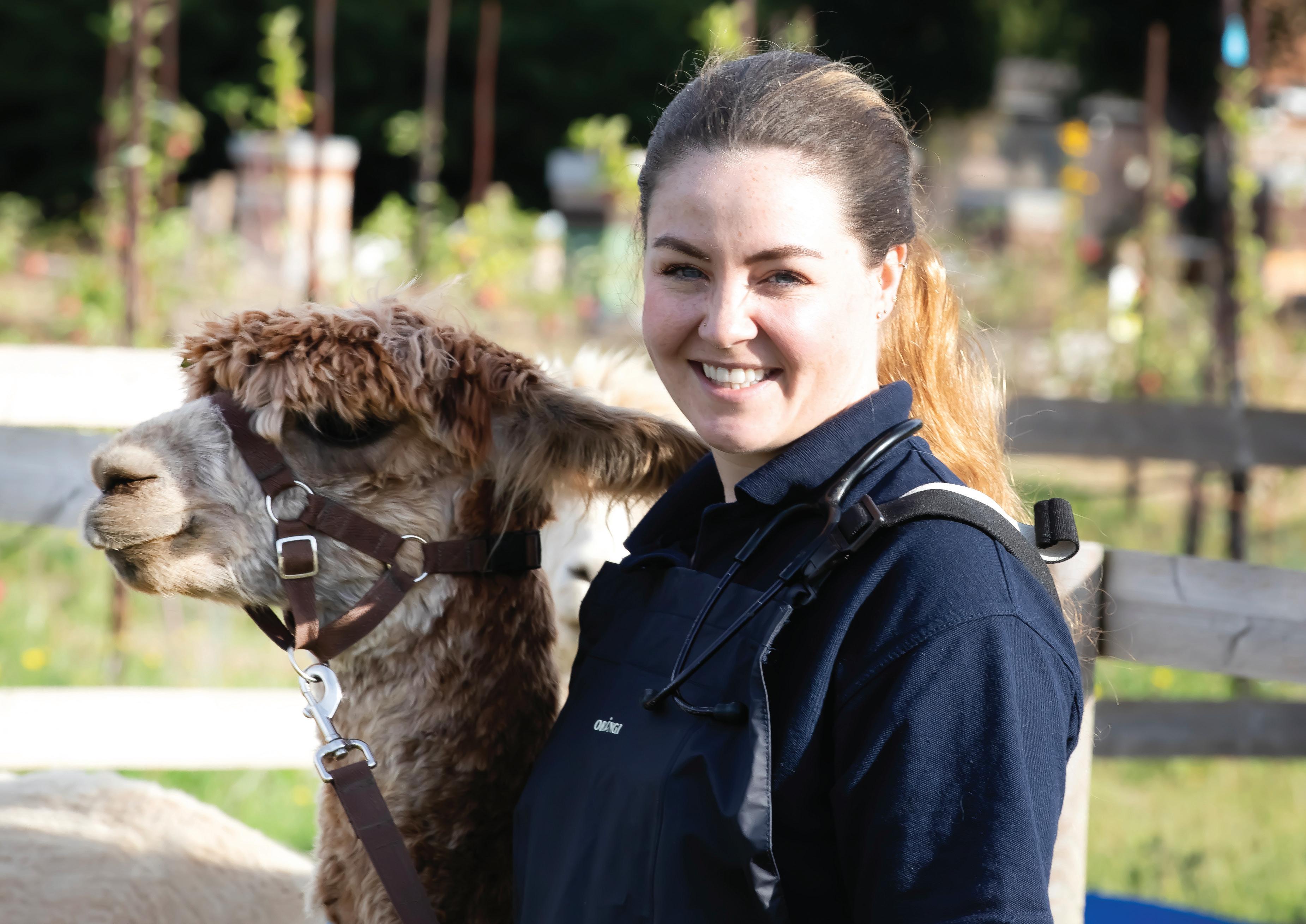
Ihope that the winter is being kind to you so far, and that your herds are thriving. Whether you are a seasoned owner or preparing your first paddock, alpacas rarely give us a moment to relax! Often in this review I am called upon to revisit the camelid calendar, to set the scene for the year ahead and provide reminders for seasonal risks and tasks. I will touch on this but will also provide some timely updates to challenges we have encountered in 2025.
As we welcome more people into the camelid owning community, I cannot stress enough the importance of registering your camelids with a capable veterinary practice before you run into trouble. We still see several issues that could be prevented with appropriate husbandry measures, so having a low-stress health planning meeting with your
vet to set your intentions and get a broad overview of good practice is a must!
Consider your farm a delicate ecosystem – you don’t want to disrupt it bringing disease in on your person, equipment or via incoming animals. Biosecurity is your first line of defence. Quarantine new arrivals for three to four weeks to screen for infectious diseases based on a risk assessment with your vet. These tests may include Johnes, TB, and certainly screening for parasites (both internal and external). This prevents pathogens from contaminating your land or existing stock. Once settled, a Herd Health Plan visit is the best way to move from reactive "firefighting" to proactive management.
>> Continued on next page



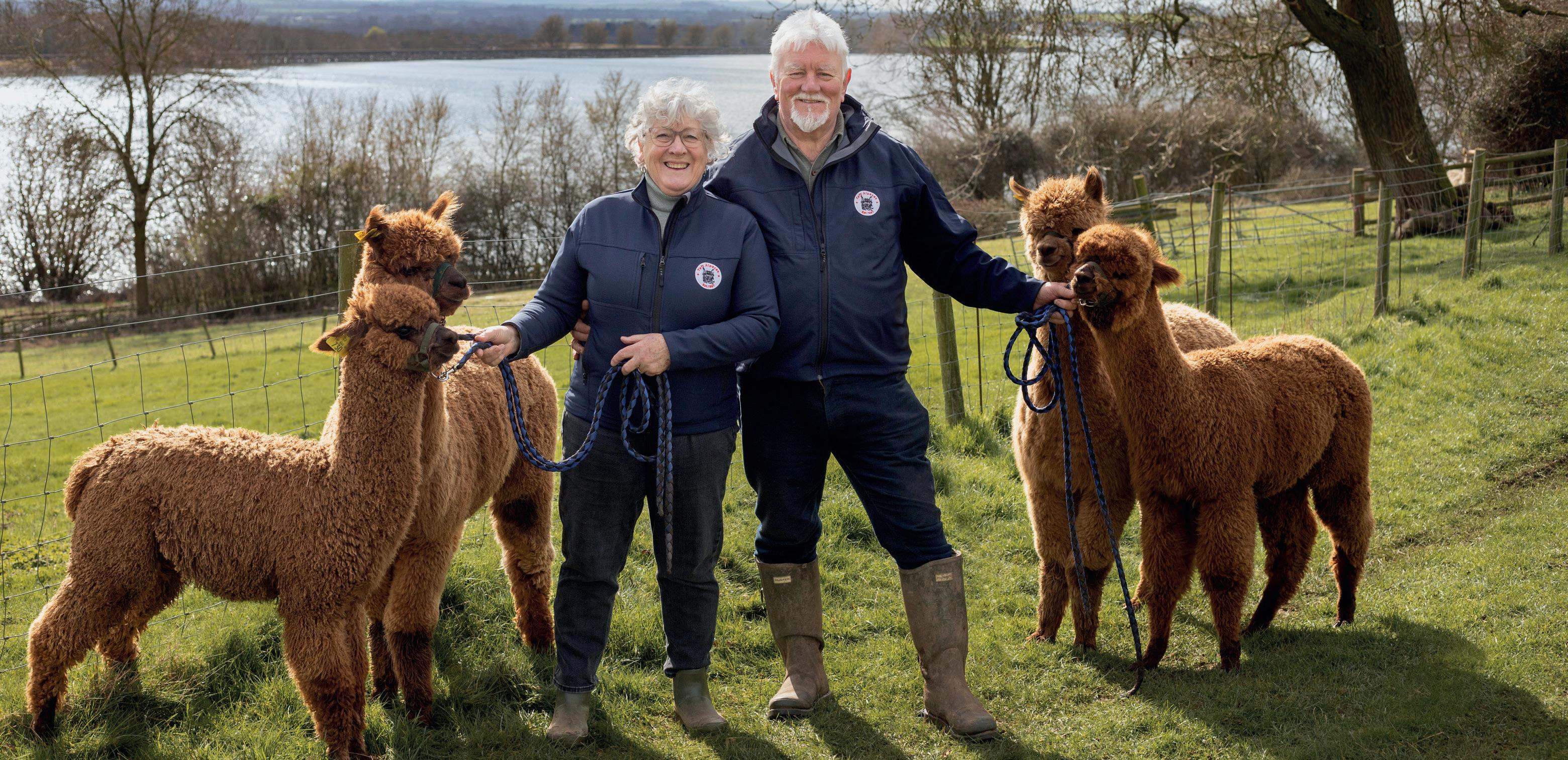
Bluetongue (BTV) has reemerged in novel cases in cattle and sheep this year. At the time of writing, no camelids have tested positive for the disease, however we must also consider that camelids are not part of routine screening, and don’t always behave the same way as other species when they have the same diseases. That said, if camelids are seen to display any of the following signs: crusting of the lips and nose, acute lameness, blistering of the skin, lethargy, facial swelling or excessive drooling, please seek veterinary advice. We are also unsure as to the potential effects on pregnancy when animals are affected by bluetongue, so any abortions or stillbirths should also be reported to your vet, who can arrange screening for BTV and other abortive infectious diseases.
Vaccination remains the best form of defence against BTV3, with no reported adverse effects in camelid recipients at the time of writing. The British Veterinary Camelid Society have provided advice on timing of vaccination to reduce any potential side effects that could impact fertility and pregnancy. While no adverse effects on fertility or pregnancy have been reported, we suggest waiting until after day 60 of pregnancy for pregnant females, and if vaccinating stud males, giving them six to eight weeks before putting them to work, to allow a full spermatogenic cycle to occur.
As UK soil warms, we enter a high-risk period for parasites – though the way our climate is going, we never seem to be out of a risk period! For alpacas, diarrhoea is not always a feature of a heavy parasite burden, so we must undertake faecal egg counts regularly. For those doing their own counts – please remember to do some quality control, ideally with a UKAS accredited laboratory, just to ensure your processes are giving you correct results.
• Faecal Egg Counts (FECs): Regular FECs help us understand the specific burden on your pasture, but the frequency depends on your enterprise – three pet males in a field are at lower risk than a breeding farm with animals of multiple ages.
• Watch for Haemonchus contortus (Barber’s Pole worm), which causes life-threatening anaemia without scouring, and Eimeria macusaniensis (E-mac). Ensure your lab specifically screens for camelid coccidia, and remember that haemonchus cannot be distinguished from other members of the trichostrongyle family by simple microscopy – it needs to be speciated in a lab.
• Plasma planning: Plasma is a lifesaver for cria with failure of passive transfer. But the regulatory landscape has changed, and plasma processing sites need to have a licence. Your first opinion vet may take blood from donor animals, but this blood may be sent to an officially licenced processing site, which means allowing for extra time before it can be used. Discuss this with your vet early; having a frozen supply of "herd of origin" plasma on-site is a critical insurance policy if you are breeding.
Summer is about prevention and the "shearing reveal."
• Heat stress: Shearing is essential for welfare. It is also the perfect window to check fighting teeth and toes. Trimming fighting teeth (and incisors if required) is a veterinary procedure – if they affect the animal’s ability to eat or maintain condition, please call your vet to make an accurate diagnosis and treatment plan.
• Flystrike: This is a true emergency that advances frighteningly fast. Use preventative repellents (usually if they’re safe for horses, they are suitable for alpacas) and investigate any "dark patches" in the fibre immediately.
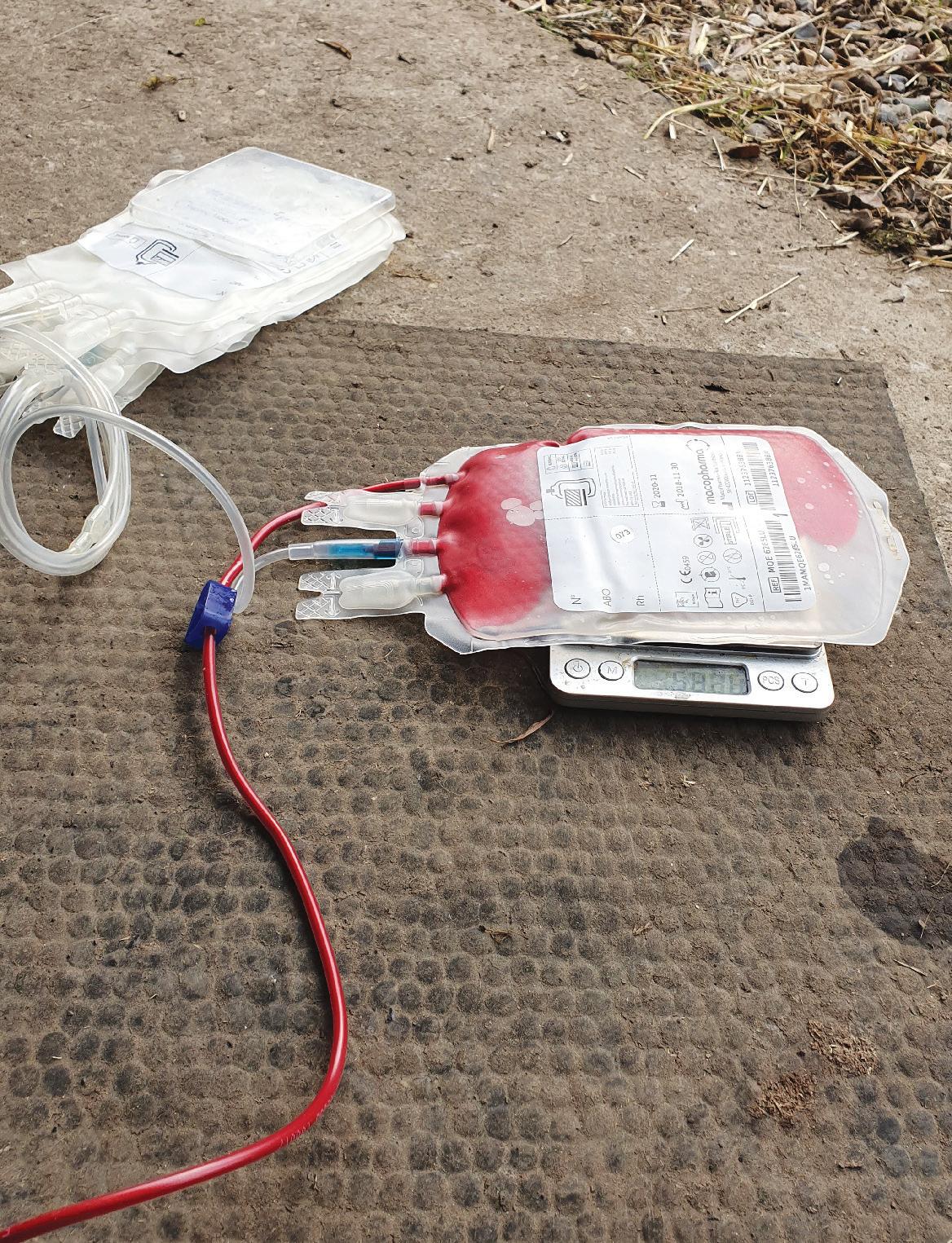
Plasma is a lifesaver for cria with failure of passive transfer
• Body Condition Scoring (BCS): With the fibre off, you can truly assess your alpaca’s body condition. Use a 1–5 or 1–10 scale to adjust nutrition now, rather than waiting for the winter chill.
As daylight hours reduce, alpacas in the UK struggle to absorb enough Vitamin D from the sun, especially as their fibre regrows.
• Rickets prevention: Vitamin D supplementation is generally required from October to April, particularly for growing cria and pregnant females.
• The "Cascade" conversation: Most camelid medications are used "off-licence" under the Veterinary Cascade. Your vet will ask you to sign a consent form. This isn’t bureaucratic awkwardness; it’s a legal requirement that allows us to provide the specialised care your herd needs.
Winter health is won or lost on hydration and high-quality forage.
• The ice breaker: Alpacas aren't adept at breaking ice. Dehydration can increase the risk of impaction colic. Check water sources multiple times a day.
• Ad-lib forage: Quality hay is essential – and you may also need to consider supplementing animals in lower body condition separately to make sure other, greedier animals don’t steal their food.
• Social dynamics: Keep a close eye on subordinates. Cold weather often sees dominant animals bullying others away from hay or shelter. Ensure there is enough space so every animal stays fed and dry.
This overview is a starting point for a proactive year. By moving from a "wait and see" approach to a "plan and protect" mindset, you ensure your herd doesn't just survive the year – they thrive in it. Here’s to a happy and healthy year in your herds.
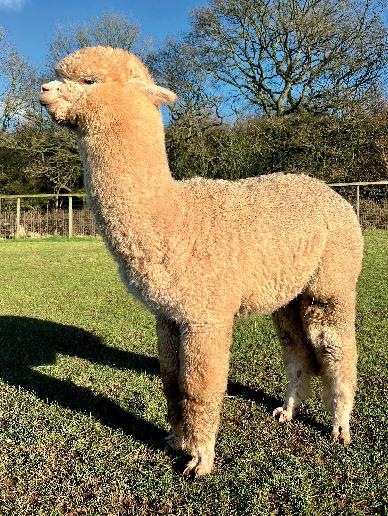

A select herd of quality alpac as with excellent pedigrees and genetics, located in Scotland.
A select herd of quality alpacas with excellent pedigrees and genetics, located in Scotland.
We
We provide: •
•
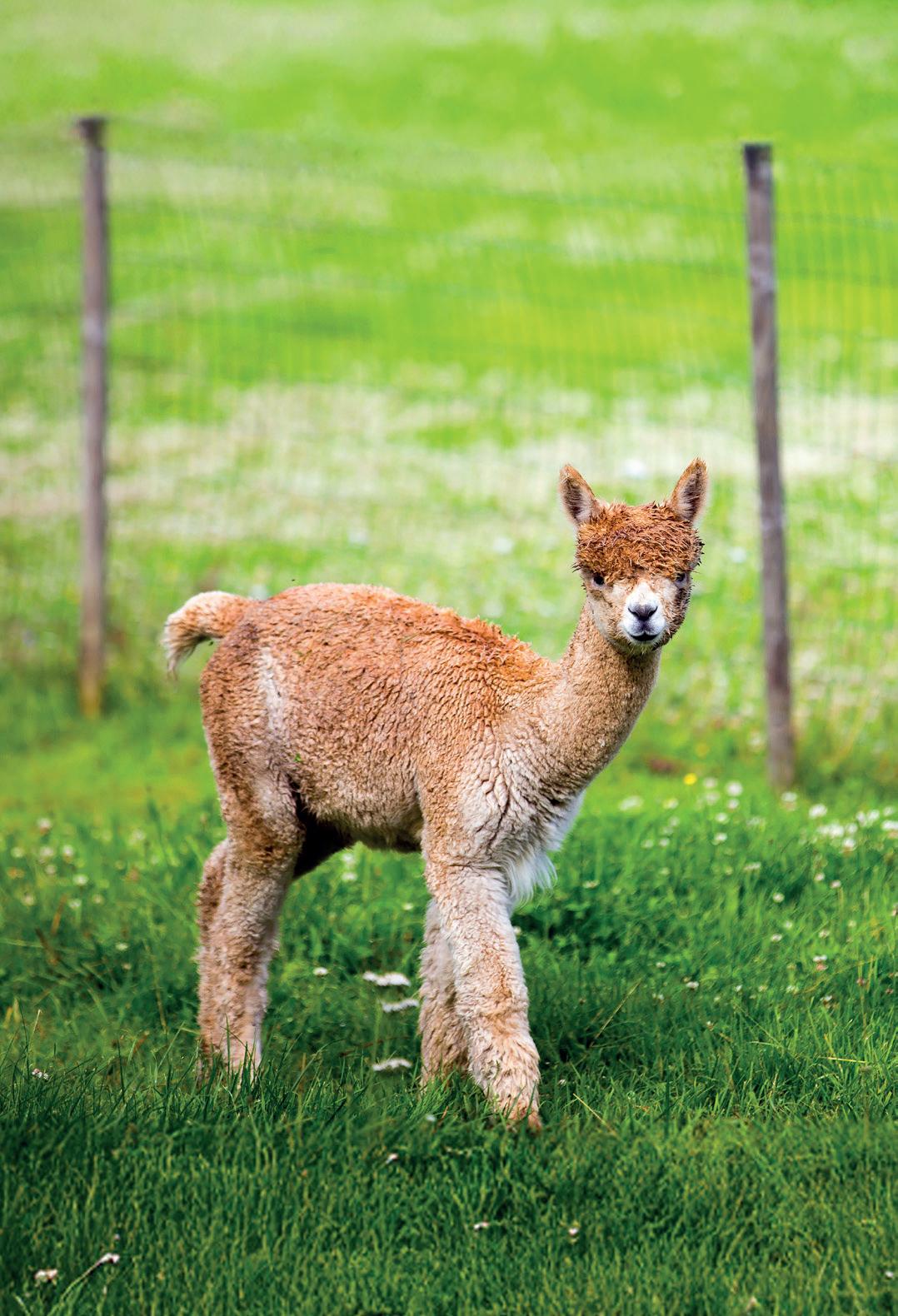
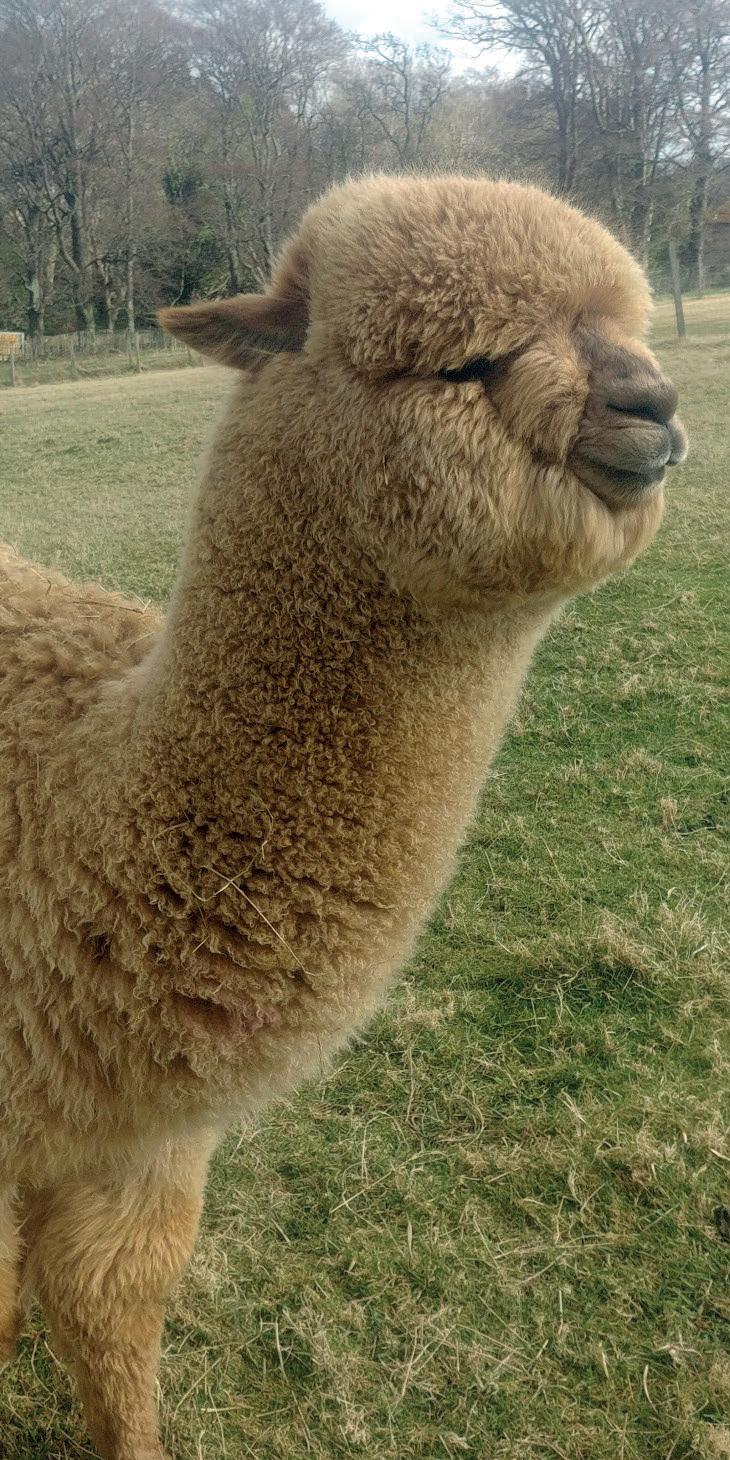
BobCat A lpacas
BobCat A lpacas
BobCat A lpacas
Edinburgh, Scotlan d
Edinburgh, Scotlan d
Edinburgh, Scotlan d
www.bobcat -alpac as.co.uk
www.bobcat -alpacas.co.uk
www.bbobcat -alpac as.coo.uuk
+44 (0) 7963324922
+44 (0) 7963324922
+44 ( (0) 796333224922
Dedicated to the care and breeding of quality alpacas
Dedicated to the care and breeding of quality alpacas
Dedicated to the care and breeding of quality alpacas

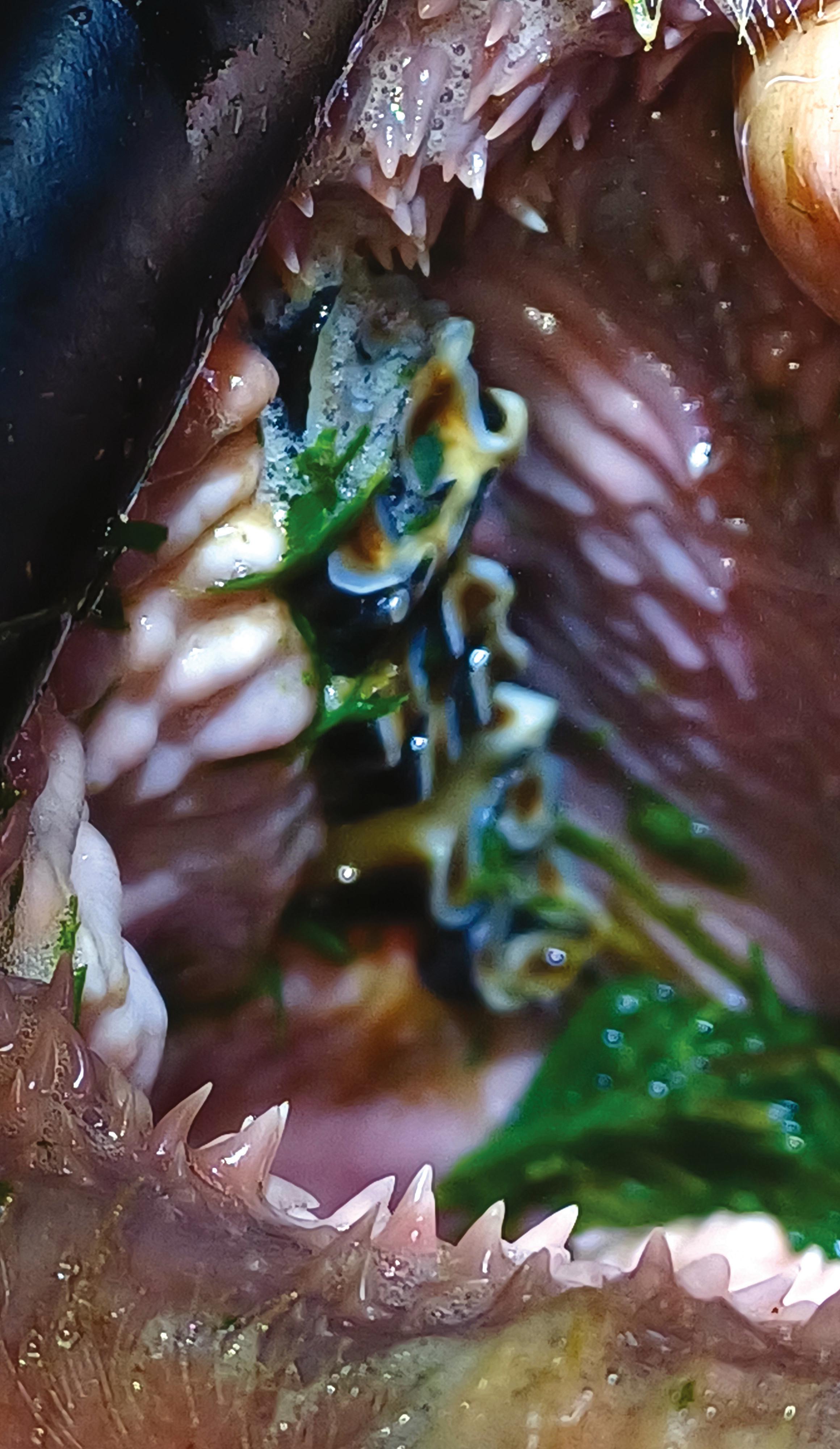
Ithink we can all probably agree that the veterinary support and knowledge for camelids have improved greatly over the last few decades even if the amount of training in the veterinary universities is still rather limited. This improvement is undoubtedly down to a few factors – some of which are the increase in popularity of camelids as ‘pets’ etc and therefore the numbers of (primarily alpacas) being kept leading to an increase in exposure of vet students to alpacas during placements and more literature on veterinary needs of camelids; however it is also true that there are big gaps around the country in the knowledge held within veterinary practices and there are still many areas of camelid health which are poorly understood.
One approach to addressing these shortfalls in knowledge is for vets to undertake training as part of their required CPD (Continual Professional Development) process. This is a requirement set by the profession for each practitioner to complete an amount of training each year (See fig1 below). This allows us an opportunity to ‘suggest’ to our vets that some training in camelid care might be:
• interesting and
• helpful in creating better outcomes for both the vets and their charges when they are faced with certain issues.
We as owners are often well placed to know where our vet practice perhaps has a lack of knowledge and so may be able to influence their choices when it comes to CPD topics.
We can also facilitate this because we have access to the animals and connections to other experienced camelid keepers, specialist camelid vets through the British Camelid Veterinary Society, and resources like the British Alpaca Society and various sessions arranged by regional groups etc.
If we can make it easier for the vets to choose some camelid CPD topics then we are much more likely to improve the level of care, we may need to rely on in the future…both investing for the future and a bit of self-help really. Hosting such sessions also allows us a unique opportunity to improve our own knowledge and ask questions when we have a group of vets and a specialist right in front of us.
>> Continued on next page
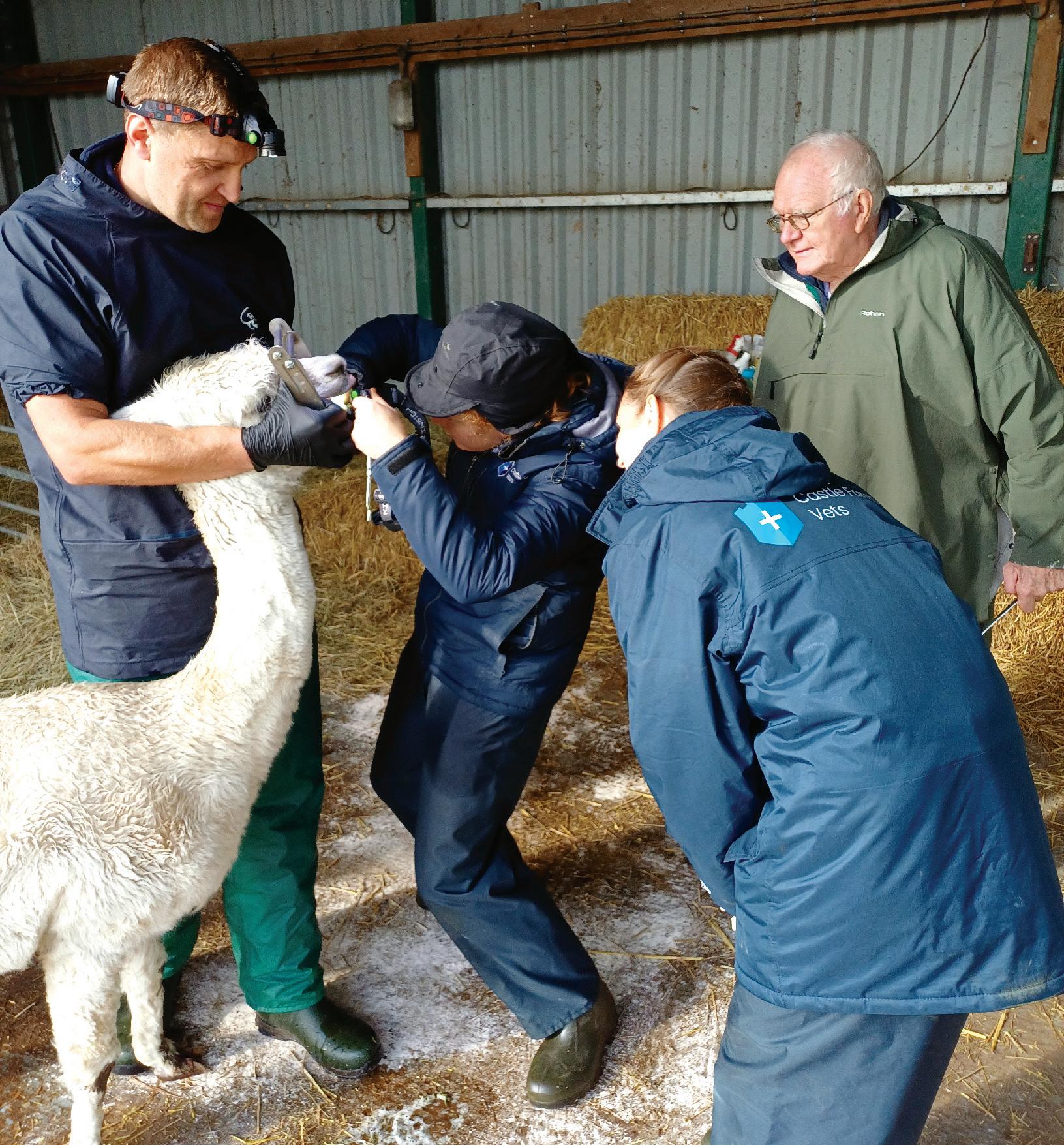
1. Define
Required amount of CPD undertaken per year – 35hrs.
4. Reflect
Use feedback and self-assessment to evaluate your progress.
• Find a topic that is useful for you and your vets – talk to them about what will be of interest and see how many in the practice would ‘sign on’
• Consider discussing with your local alpaca regional group to see if there are opportunities to address common concerns and consider venues.
• Find a vet willing to run the CPD session and check costs – again use your contacts, there will be someone who has some suggestions to consider.
• Confirm if/how the practice will pick up the costs and decide if you are happy to contribute –again this may be of interest to the regional group who may part fund. If not remember that you are, after all, getting a lot out of it yourself! It’s well worth having a discussion up front about this to avoid surprises.
• Check what the vets require – do you have the facilities? If not perhaps speak to your local regional group and see if there’s someone willing to ‘partner’ with you.
• Animals – If required do make sure you have a good selection that will give the best learning experience.
2. Assess
Reported/recorded by individual vets (can be inspected/ checked by RCVS).
Lots of courses and training for most areas but limited Camelid training.
3. Act
Can be formal learning (conferences, self-teaching including reading or participating in discussion groups).
Self-funded by vets although vet practices will usually pay CPD expenses for their employees.
• Equipment – Have a discussion with the vets and the trainer about what they need and / or will provide. eg. Electric, water (hot/ cold), presentation equipment, veterinary equipment and materials, food/drinks, toilet etc
• Contingency planning – what if the weather is bad etc – if you have a specialist travelling/ taking time they will probably still want to be paid!
• The easier you make it for your vets the more likely you’ll get a good result and a chance to repeat in the future.
• Remember you are there to enable the vets to learn and whilst you will (hopefully) get a lot out of it yourself this is not the place to ask off topic questions or get unrelated free treatments so be careful not to take advantage unreasonably.
• Discuss the benefit with your vets and decide on a couple of potential areas of mutual interest
• Check with your local regional group – members may be able to help or contribute and advertise to their own vets if different to yours
• Find a vet willing to lead the session and agree their costs upfront (don’t forget travel/ accommodation)
• Select a venue (consult with all parties to ensure it is suitable and include contingencies)
• If animals are required, make sure you have a good selection (check with your vets and double check costs if procedures are required – no surprises!)
• If you are organising with more than one farm/animals please remember your biosecurity
• Get feedback from participants – and share any nuggets of info –there’s always something new!
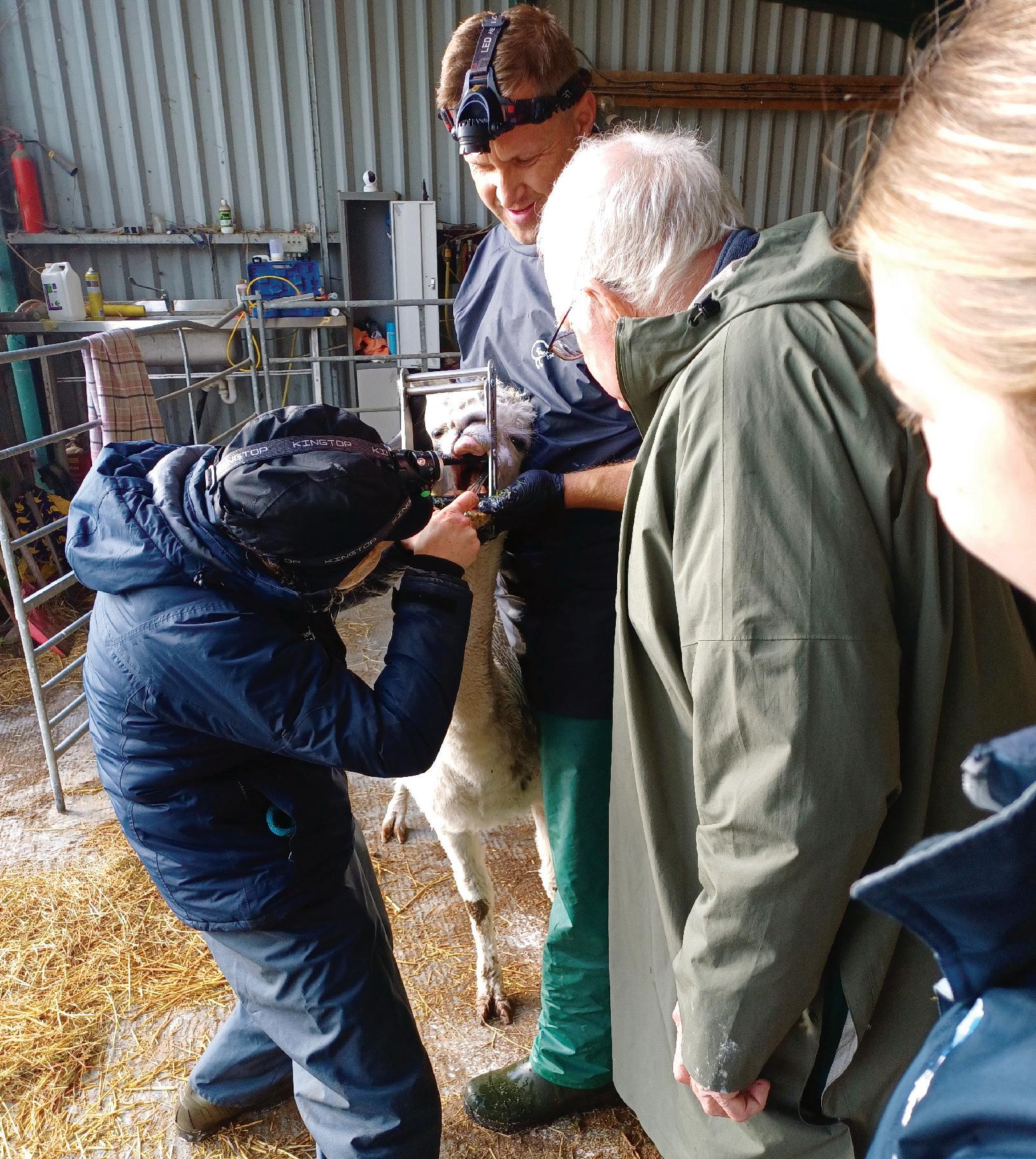
To put this into practise we at Teesdale Alpacas felt that an improvement in the knowledge around diagnosis and treatment of dental issues –specifically issues relating to molars (back teeth) usually of mature/aging animals would be interesting and valuable. We had a few animals ranging in ages from 12 to 19 who were ‘packing’ ie holding wads of food in their cheeks – most likely to protect from pain from ulcers, sharp edges, cavities or gum issues. Our veterinary practice, like most I expect, whilst being well equipped for small animals tend not to have the equipment suitable, or available, for camelids in this area. Large animals (farm) vet practices and Equine practices who typically deal with camelids have equipment which is simply too big.
Consequently, camelids are seen by the large animal side, where they may lack the training, skills and equipment to deal with these in an effective manner. Initially we were looking to purchase a suitably sized rasp for our vets to use to address at least that part of the issue as all the rasps in the practice were either too small or too large for a camelid mouth – this proved to be harder than we expected and as we discussed this with a few camelid vets we decided that it might be useful to not only source a suitable rasp but also get some training for our vets in the best way to identify the issues and some practical demonstration on how best to deal with them.
With that in mind we asked a few camelid vets if they would mind running a CPD day on our farm using our animals and using/providing a suitable rasp – we also broached the topic with our vets to see if it was of interest and looked at coordinating suitable dates.
Costs are obviously an issue, but veterinary practices have a budget
for CPD exercises and so a large chunk of the cost can be potentially carried by them.
We of course get a few benefits from this.
• Our animals get treated not by one but a number of vets; one of which is a “specialist”
• A number of our vets gain valuable training and hands on experience using the correct tools and
• We get a learning opportunity as well!.
Finding a “specialist” camelid vet may be trickier than in other species – with camelids we probably need to be rather broad in our interpretation of “specialist”. Just finding a vet with more experience than most may be good enough for now until such time as the ‘industry’ and the veterinary profession get better organised.
We received good feedback from our vet on our Teesdale Alpacas CPD: ‘It was a very good combination of refreshing the basics and discussing more advanced techniques, sharing practical tips and experiences’.
The BVCS can be contacted if you need help in finding vets who are members and have an interest in camelids.
TV www.camelidvets.org
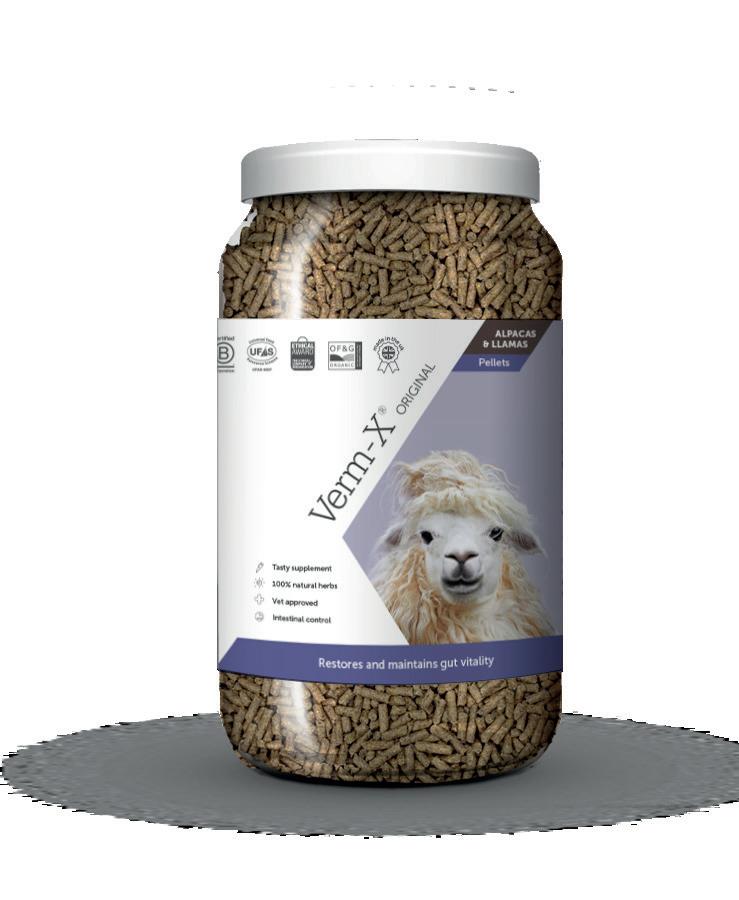
Are you up to scratch? Asks Claire E Whitehead
BVM&S MS FHEA MRCVS Diplomate ACVIM (Large Animal) of Camelid Veterinary Services Ltd, trading as The Alpaca Vet.
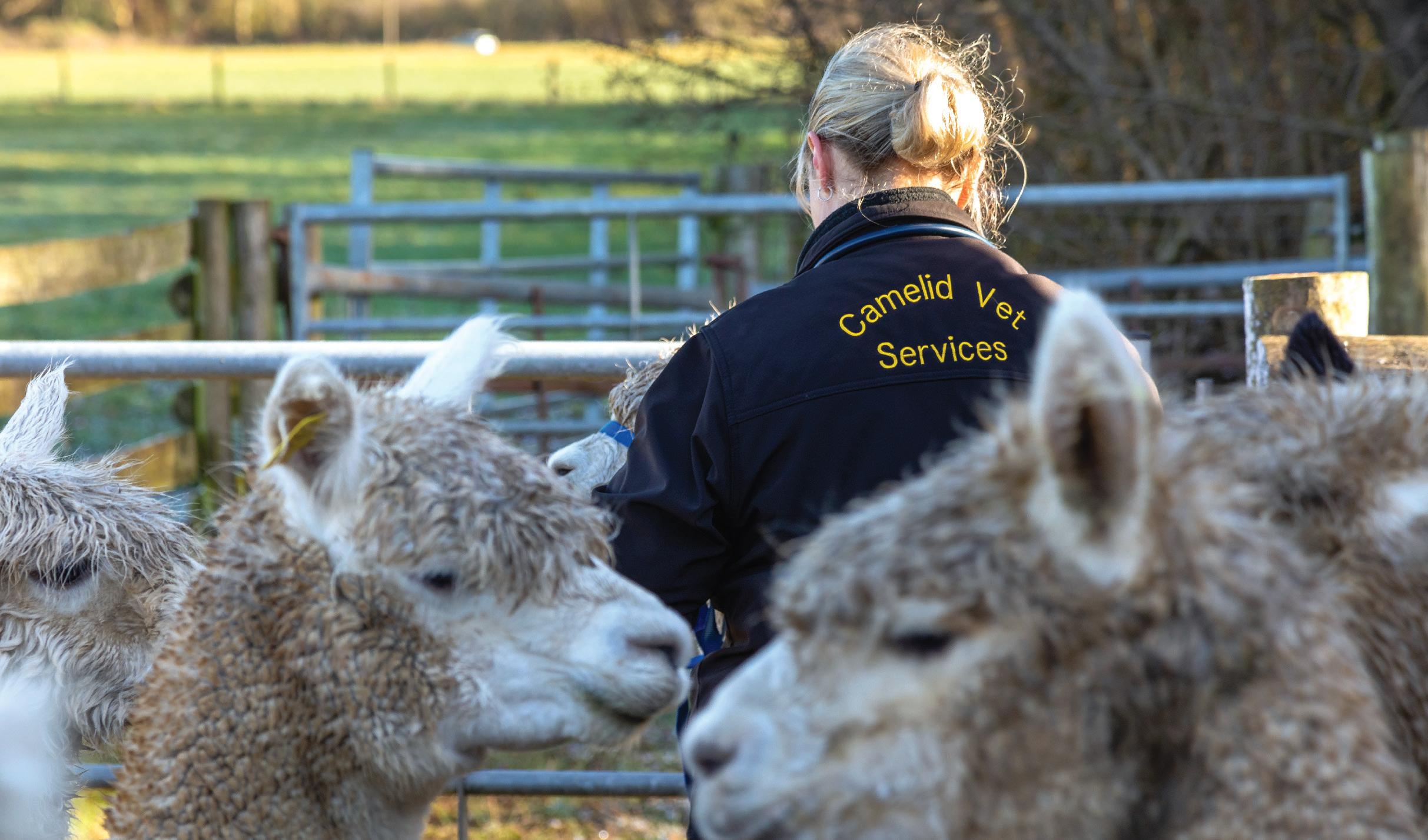
“ Prevention is better than cure” may be an old saying, but it remains the guiding principle of good herd management. For alpaca owners, whether you keep a handful as pets or run an expanding breeding enterprise, herd health planning underpins animal welfare, productivity, and long-term sustainability.
And in a market where alpacas are both a financial and emotional investment, proactive health planning isn’t a luxury. It’s an essential tool for protecting your herd, your time, and your peace of mind.
A herd health plan is a structured, forward-thinking strategy that helps prevent disease, reduce losses, and ensure your animals thrive. It brings routine, clarity, and confidence to the daily, seasonal, and annual decisions that keep alpacas healthy.
But no two farms are alike. Pasture type, local climate, soil conditions, stocking rate, animal age structure, breeding season, parasite pressure,
and even wildlife patterns vary enormously across the UK. A “one-sizefits-all” plan simply doesn’t work for alpacas.
This is why a tailored plan, specific to your farm and its unique set of circumstances, is vital and why periodic review, possibly with input from a camelid-focused vet, can identify weak points before they become costly problems. It’s very easy to get lost in daily routines and miss the bigger picture; sometimes you need a fresh pair of eyes to help you see the wood for the trees.
Camelid medicine has also evolved significantly in recent years. New research, improved diagnostic tools, and greater understanding of camelid parasite control strategies mean that best practice is continuously shifting. As alpacas remain a minority species in UK veterinary work, this knowledge does not always reach local vets quickly. In practice, owners often find tremendous value in the partnership between themselves, their regular vet, and a camelid specialist – a triad of care that ensures their herd gets the benefit of broad veterinary support and species-specific expertise.
>> Continued on next page
Ballymac Alpaca is situated in Gilford, Northern Ireland.
Our Championship prize-winning herd consists of carefully chosen bloodlines from around the world which are all British Alpaca Society (BAS) registered.
We breed Huacaya alpacas of all colours, including appaloosa. Available for export.
We are the Northern Ireland stockists of GWF Nutrition products. Our shop stocks additional camelid supplies available for collection. Alternatively contact us for postal options.
Our Champion Studs are available for On-Farm or Mobile Stud Covers. Check out our website for more information.
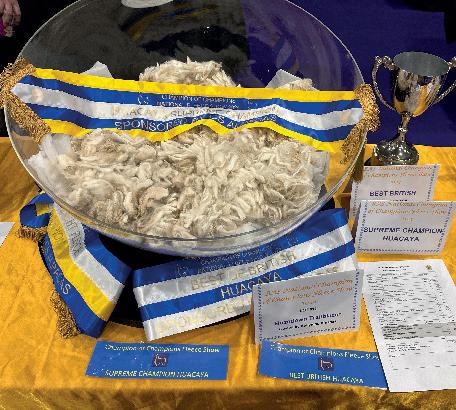
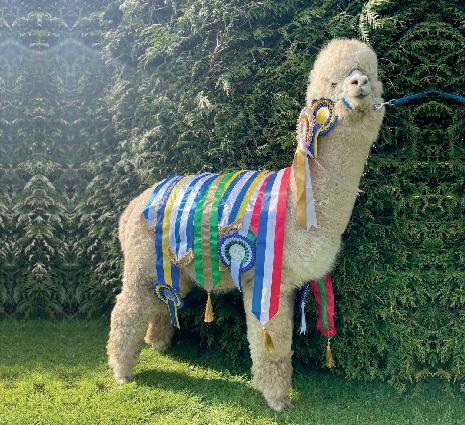
Contact us if you are interested in meeting the herd or for more information: Tel: 07546 929659 Email: mail@ballymacalpaca.com Web: www.ballymacalpaca.com
An independent testing service for faecal egg worm counts by a Qualified Medical Laboratory Scientist. AMTRA trained RAMA /SQP following BVA guidelines.
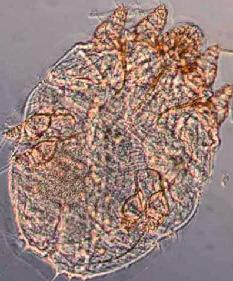
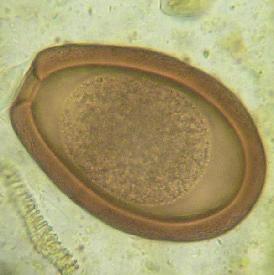
• Rotavirus • Giardia • Cryptosporidium Ectoparasite & Fungal testing
✓ FREE Royal Mail Postal approved Testing Kits.
✓ Fast accurate results using species specific testing.
✓ Detailed analysis & reports providing a superior well-informed targeted approach to worming.
✓ FREE Help and advice on worming programmes.
✓ Discounts available.
Please contact us now to see how we can help. Tel: 07779 667798
www.wildwoodwormcounts.co.uk sarah@wildwoodanimalhealth.co.uk
So, what does a strong and thorough herd health plan involve today?
<< treated without exposing the main herd.
Newly introduced animals pose the single greatest biosecurity risk. Before introducing any alpaca to your property:
• Investigate the health status of the source farm
• Visually inspect animals when purchasing and collecting them.
• Arrange a veterinary health check within a few days of arrival, including a proper skin assessment for mange.
• Carry out appropriate testing (e.g., faecal testing, TB testing, BVD screening).
• Review any pre-move worming: make sure you know what’s been used and get this in writing. You want to check that it is appropriate and they should have a zero egg count before moving onto your pasture.
A carefully managed quarantine period is essential. This is not simply a holding area but a time to observe behaviour, appetite, faecal output and body condition. Subclinical issues often reveal themselves only over several weeks. Quarantine allows these to be identified and
If you are buying a single alpaca, quarantine need not mean loneliness: placing a lower-value companion such as a gelding or non-pregnant female with the newcomer preserves welfare without compromising biosecurity.
A clean environment is one of your most powerful disease-prevention tools. Key steps include:
• Regular removal of faeces. When dung is removed daily or at least every 2–3 days, worm eggs are unlikely to hatch and larvae migrate onto pasture. This single practice dramatically reduces parasite exposure and reduces the need for wormers.
• Keep any bedded areas clean: moist damp conditions are perfect for pathogens such as clostridial organisms, other bacteria and coccidia to accumulate. Deep litter systems, in particular, can harbour significant disease risk unless carefully managed. Sick pens and birthing areas should be fully cleaned and disinfected between uses, and birthing paddocks rotated to reduce contamination pressure for vulnerable crias.
Alpacas are extremely sensitive to stress, and stress is a potent immunosuppressant. Stressors include handling and restraint, travel, regrouping and social instability, weather extremes, overstocking and showing. Good husbandry minimises these stresses. Provide:
• reliable shelter from wind, rain, snow as well as hot sunny conditions in summer
• calm, confident handling
• stable herd groups where possible
• appropriate nutrition and body condition management
• parasite and vaccination programmes based on evidence, not routine guesswork.
Remember that some diseases cause subclinical losses long before clinical signs appear. Parasites (worms and coccidia), skin conditions, dental issues, low-grade infections and mineral deficiencies can all silently suppress growth, fertility, milk production and fleece quality. A well-constructed herd health plan ensures these “invisible” issues are found and managed.
Alpacas are prey animals and are exceptionally skilled at concealing illness. By the time an alpaca “looks sick,” the underlying condition may already be advanced, so do not delay in seeking veterinary support. Owners should monitor animals closely, learning what is normal for each animal. Watch out for subtle behavioural changes and act early when something seems off.
When you or your vet cannot identify an obvious cause, insist on diagnostics. Bloodwork, faecal testing and imaging can uncover serious issues that are not yet externally visible. Early diagnosis saves lives and prevents spread.
This is also where the triad of care becomes powerful: here the Owner + Local Vet + Camelid Specialist can work together to ensure nothing is overlooked, and your vet has a camelid-specific expert to consult for complex or ambiguous cases.
Despite best efforts, illness will happen. When it does, always the affected animal immediately and pursue diagnostic investigat promptly. This will permit you to treat based on evidence rather than assumption and prevent further spread. Always review the case afterwards to see what you can learn and tighten future preventive strategies.
Rapid action not only improves outcomes for the individual but protects the wider herd.
For breeding herds, reproductive management is as important as disease control.
Key considerations include:
• Confirming pregnancies via ultrasound, rather than on behaviour alone
• Rebreeding non-pregnant females early, while options remain
• Performing male breeding soundness evaluations before the season
• Independently verifying fertility before purchasing a stud male
• Conducting postpartum reproductive checks 7–10 days after difficult births, assisted deliveries, or caesareans
• Monitoring body condition, nutrition and mineral balance closely throughout gestation and lactation.
A single missed pregnancy or fertility issue can cost an entire year of production. A reproductive plan ensures consistency and reduces the risk of unwanted surprises.
Are you looking for or in need of a little extra help with your animals and their routine husbandry tasks?
KW animal services offers that extra pair of hands. Jobs include: Shearing of alpacas | Vaccinations | Worming Halter training | Foot trimming | Microchipping
I can also offer advice and help with a range of other issues such as matings, birthing, common husbandry problems and paddock management. Reasonable rates
Why not contact me to discuss your requirements Tel: 07748 613771 | Email: kwilde1@yahoo.com

A strong herd health plan delivers benefits on multiple levels:
• Financial savings
– fewer vet visits for emergencies
– reduced losses from deaths or chronic poor performance
– reduced reliance on ineffective or unnecessary drugs
– better fertility and cria survival.
• Time savings
Investing time in planning prevents frustrating and avoidable problems later.
• Reduced emotional strain
There are few things more distressing than losing an alpaca you could have saved. Prevention spares owners that heartache.
• Protecting your investment
Healthy animals hold value, breed predictably and perform as intended.
• Proactive herd management
You are not firefighting. You are guiding your herd intentionally.
• Improved welfare and productivity
Healthy alpacas grow better fleece, raise stronger crias and reach their genetic potential.
After more than 35 years working with alpacas and over 23 years as a veterinarian focused almost entirely on camelids, my mission is to help UK owners give their herds the best care possible. Many vets, through no fault of their own, receive little or no formal training in camelid medicine. That’s why I place huge value on the triad of care: where owners involve their regular vet in their herd’s health on a routine basis, and involve a camelid specialist where needed, together we ensure:
• day-to-day veterinary support from someone who knows your farm
• immediate access to species-specific expertise when needed
• herd health plans that are practical, safe and evidence-based
• stronger outcomes for your alpacas.
My consultancy includes:
• Bespoke herd health plans, tailored to your farm
• Support for your vet on difficult or ambiguous cases
• Review of parasite control strategies, nutrition, biosecurity, cria care and reproduction plans
• Second-opinion guidance on chronic or unresolved health problems
• On-farm visits and remote consultations depending on your needs. This collaborative model has helped hundreds of owners elevate their herd’s health, improve fertility, reduce losses and feel more confident in their husbandry.
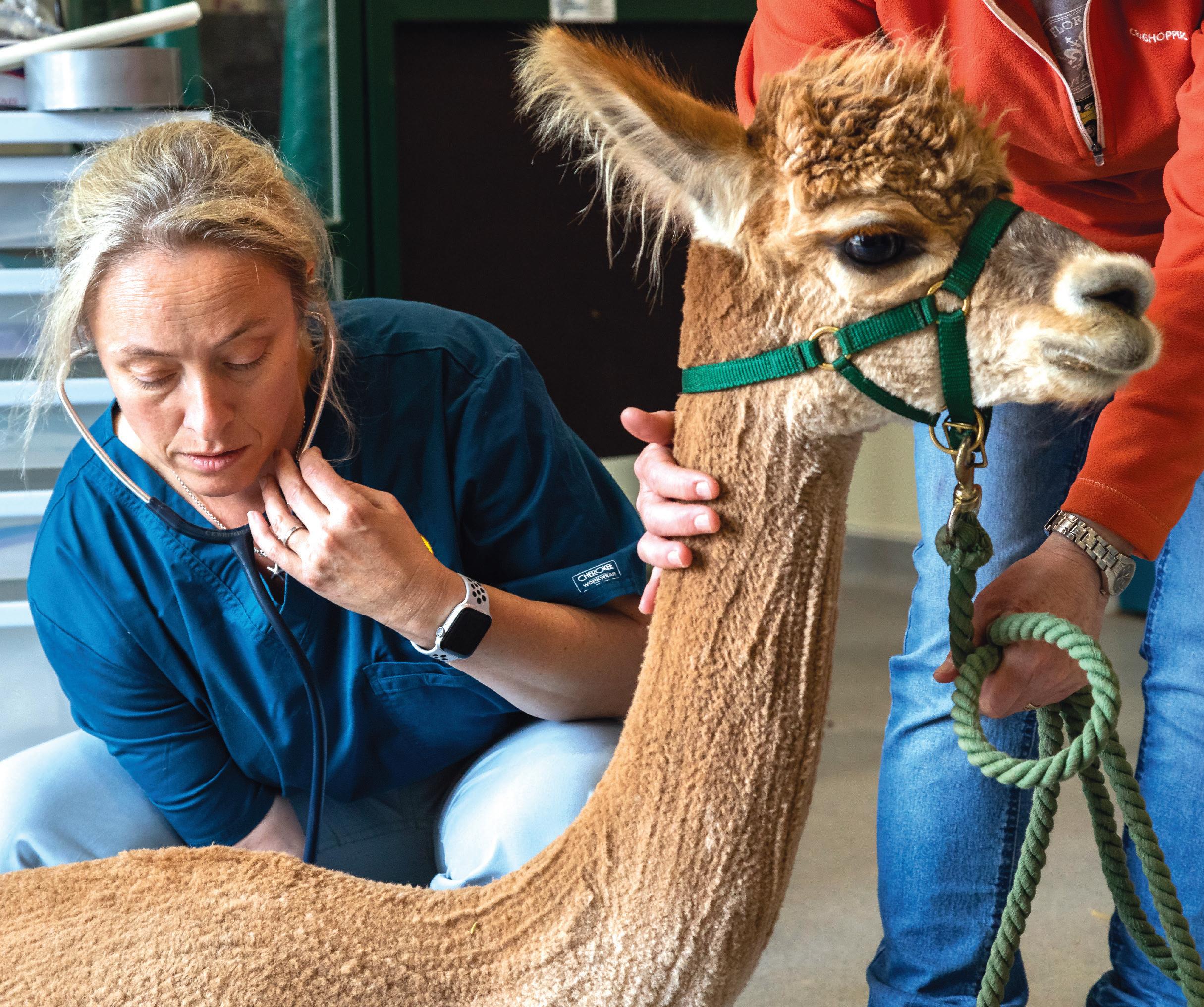
If you’d like support in developing or reviewing your herd health plan or want to explore how I can work with you and your vet to optimise your herd’s wellbeing, you’re very welcome to get in touch. �� 01491 680313
TV www.ukalpacavet.com
Many alpaca owners, new and experienced, want to understand the why as well as the how. To support that, I offer several resources that complement herd health planning.
Your essential guide for owners covering practical farm management, herd health activities, nutrition, biosecurity, parasite control, common diseases, and emergencies. This is the perfect companion for anyone developing or refining a herd health plan.
A comprehensive on-demand course covering camelid health from head to toe, ideal for owners wanting deeper understanding of disease prevention, diagnostics and day-to-day care. Includes on-demand training sessions, live support Q&A sessions online, downloadable resources and practical decision-making tools.
Taught by Dr Robert Van Saun, this course explores feeding, supplements, mineral balance, body condition and feeding strategies in far greater depth – a perfect complement to herd health planning.




We are a leading supplier and an approved repair centre. With 50 years trading in the cleaning industry. With our strong ties and long term relationship with the leading manufacturers 01825 705777
Unit 4, 72 Bell Lane, Uckfield, East Sussex TN22 1QL enquiries@pressureclean.co.uk
A rare opportunity to acquire a well-regarded alpaca supplies business with an excellent reputation within the UK alpaca community.
A rare opportunity to acquire a well-regarded alpaca supplies business with an excellent reputation within the UK alpaca community.
Established in 2008, Homestead Farm Supplies sells high-quality alpaca husbandry, handling and farm essentials to breeders, smallholders and enthusiasts nationwide.
Established in 2008, Homestead Farm Supplies sells highquality alpaca husbandry, handling and farm essentials to breeders, smallholders and enthusiasts nationwide.
Known for its reliability, knowledgeable service and strong customer loyalty, Homestead is ideally suited to someone already involved with alpacas, or those looking to diversify an existing agricultural or rural enterprise.
Known for its reliability, knowledgeable service and strong customer loyalty, Homestead is ideally suited to someone already involved with alpacas, or those looking to diversify an existing agricultural or rural enterprise.
Herd health planning should not be regarded as a once and done static document. It is a living, evolving framework that strengthens with experience, good data, and the right support. Every alpaca owner, large breeder or small hobby farm, benefits from a tailored, well-structured plan that prevents problems before they take root.
Key highlights include:
• Strong and trusted brand within the alpaca sector
• Loyal repeat customer base
Key highlights include:
• Well-established supplier relationships
• Scalable potential with scope for growth
With ongoing research and increasing understanding of camelid health worldwide, now more than ever it’s important to stay informed and supported. Through collaboration between you, your regular vet and a camelid specialist, you can ensure your alpacas receive the very best care, and enjoy the healthy, productive, peaceful lives they deserve.
Strong and trusted brand within the alpaca sector
• Can be run from home with flexible working patterns
Loyal repeat customer base
The business is being offered for sale due to retirement and represents an excellent lifestyle opportunity for the right buyer.
Well-established supplier relationships
Full handover and support. Serious enquiries only.
Scalable potential with scope for growth
For further details, please contact Matthew Tims: 01295 713188/ 07976 740397 info@homesteadfarmsupplies.co.uk www.homesteadfarmsupplies.co.uk
Can be run from home with flexible working patterns
The business is being offered for sale due to retirement and represents an excellent lifestyle opportunity for the right buyer.
Full handover and support. Serious enquiries only.
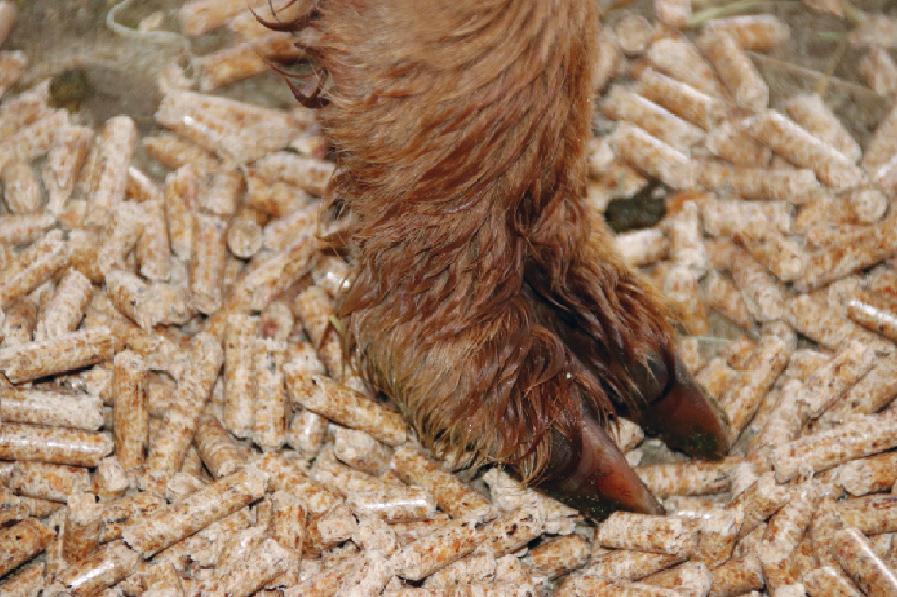
When it comes to alpaca welfare, bedding is often an overlooked detail – yet it plays a crucial role in health, hygiene, and day-to-day management. Increasingly, alpaca breeders are moving away from traditional straw and turning to Sorbeo Horse Bedding – and for good reason. What began as a premium equine product has proven to be exceptionally well suited to the specific needs of alpacas.
Alpacas are naturally clean animals, and they thrive in environments that are dry and well maintained. Traditional straw can quickly become damp, harbouring bacteria, mould and parasites. Breeders frequently report issues with mites when using straw, as it provides an ideal breeding ground for these pests. Sorbeo creates a drier, cleaner bed that is far less hospitable to mites, helping to reduce irritation, skin issues, and stress in the herd.
Alpacas have sensitive respiratory systems, and bedding with mould spores can contribute to coughing, eye irritation, and long-term respiratory problems. One of Sorbeo’s standout qualities is that it is virtually dust free. This makes it particularly valuable in enclosed shelters or during winter months when ventilation may be reduced.
Practicality is where Sorbeo really shines. Its super-absorbent nature means it soaks up moisture rapidly and efficiently, keeping the surface layer dry for longer. Unlike straw, which often needs to be fully replaced, Sorbeo clumps when wet. This allows for easy spot-cleaning, saving both time and labour. Breeders report that mucking out is faster and more straightforward, with less bedding wasted in the process.
From an economic and environmental perspective, this efficiency matters. Because Sorbeo lasts longer and requires fewer complete clean-outs, overall bedding usage can be reduced. Less waste, fewer deliveries, and lower disposal volumes all contribute to a more sustainable alpaca operation.
In short, Sorbeo Horse Bedding aligns perfectly with the needs of alpacas and the realities of modern breeding. More hygienic, dust free, resistant to mite problems, and easy to manage, it represents a thoughtful upgrade from traditional straw – one that prioritises animal welfare without compromising on practicality.
Deborah Sporton said: “We love using Sorbeo with our alpacas as it’s more hygienic and there’s no dust. It’s really easy to clean out and super absorbent – and it clumps!'

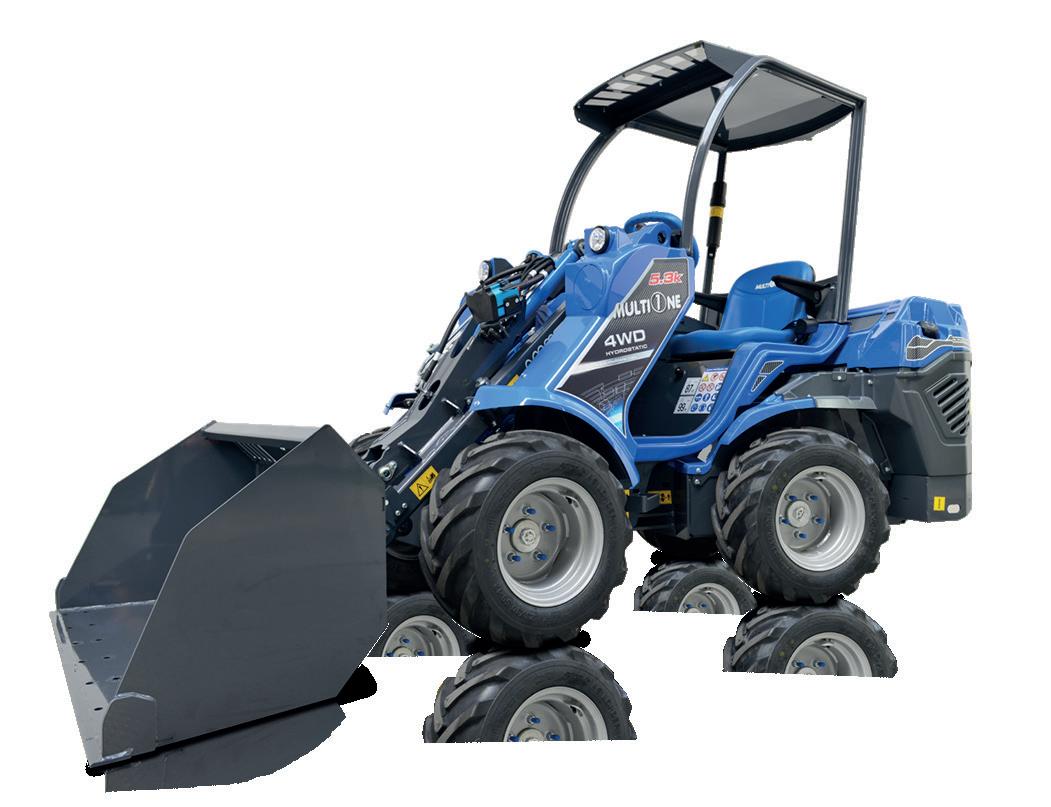
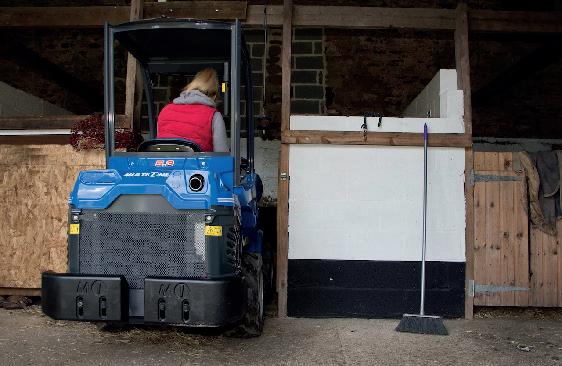
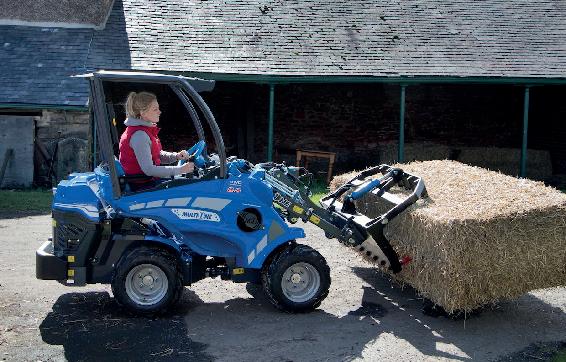
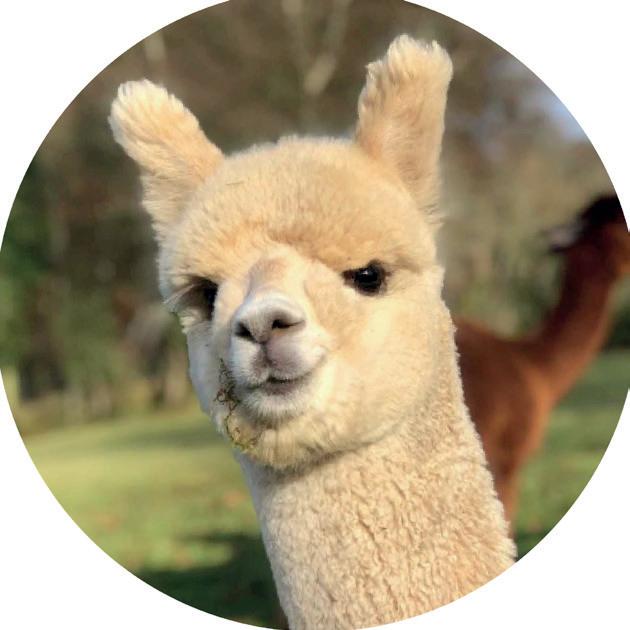

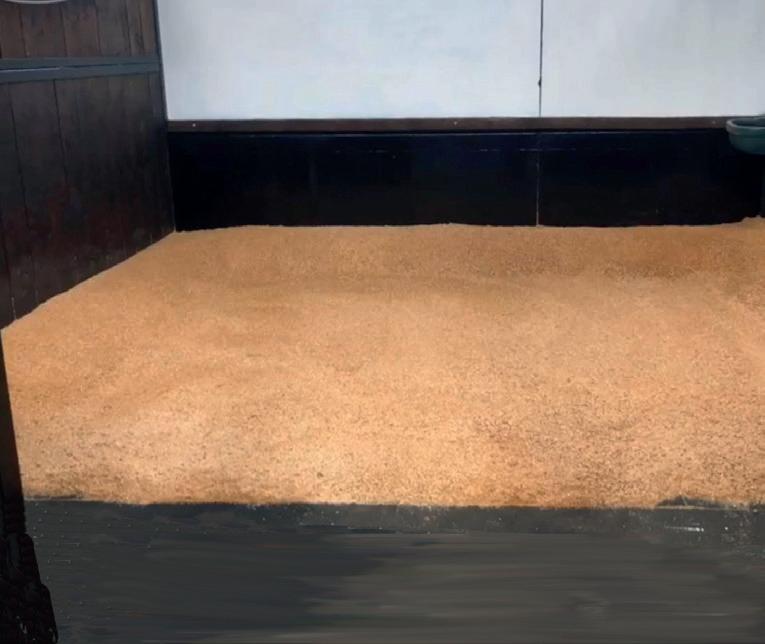
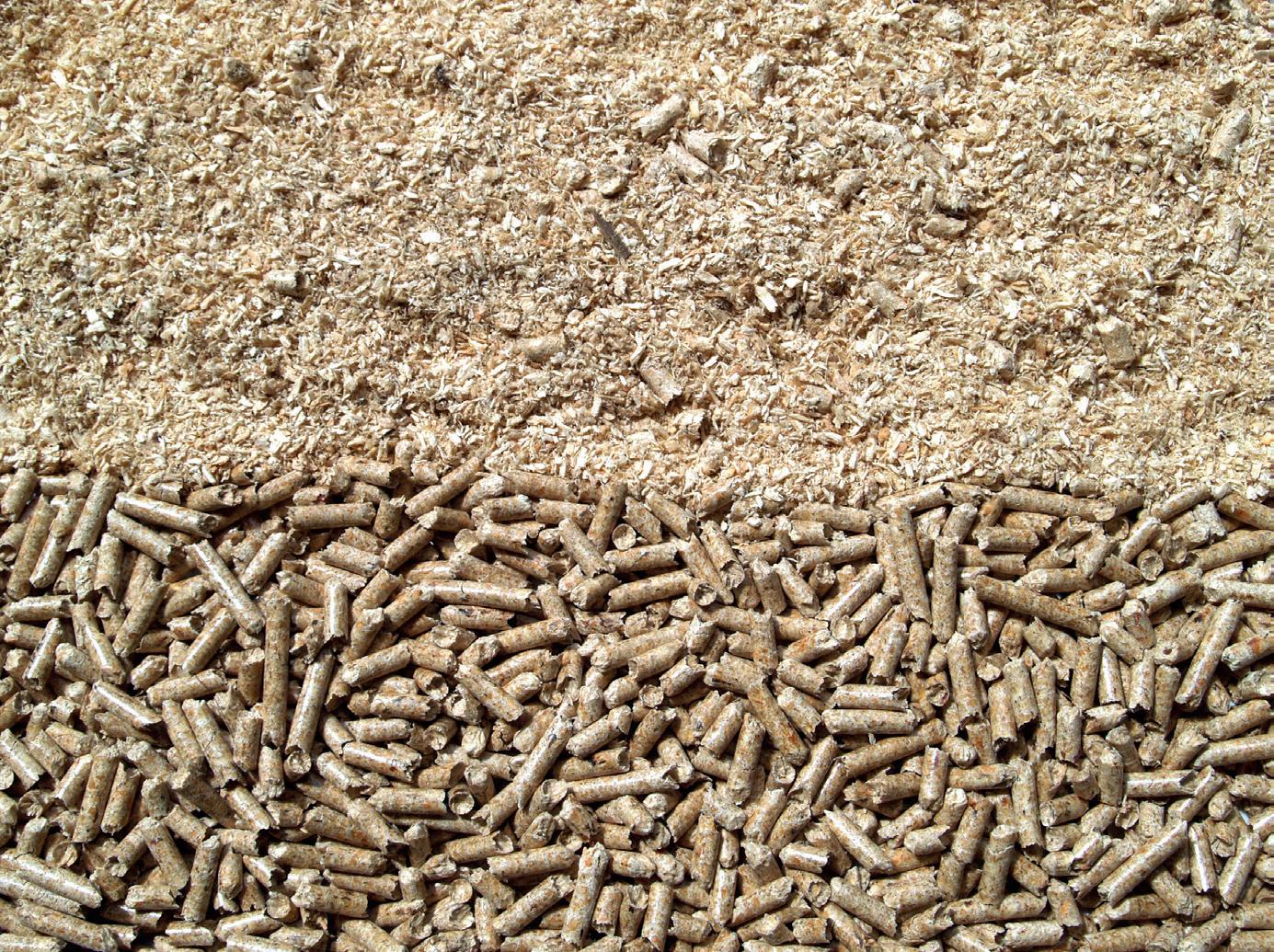
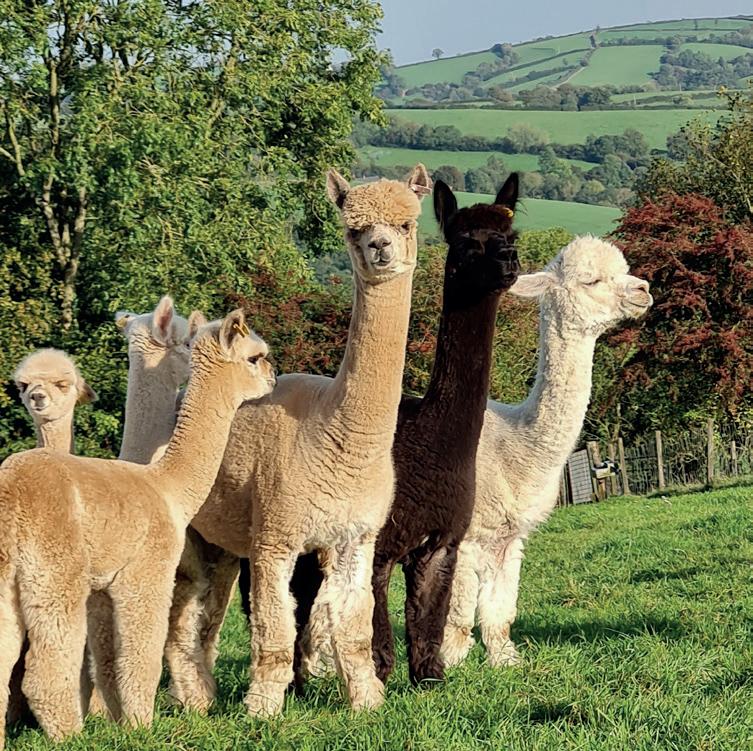
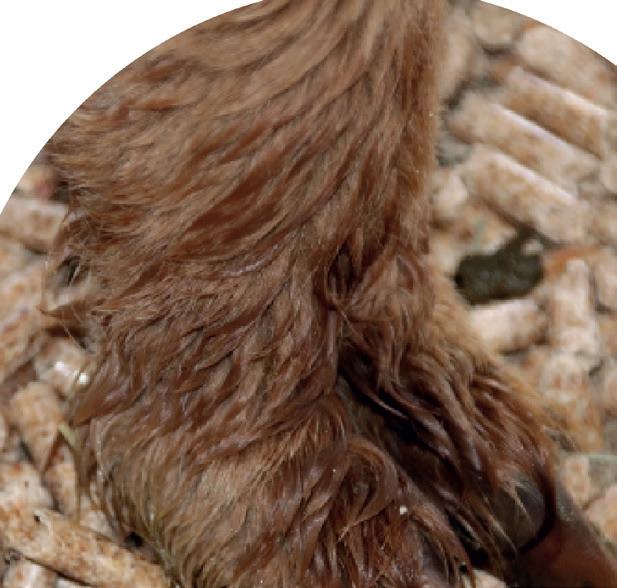
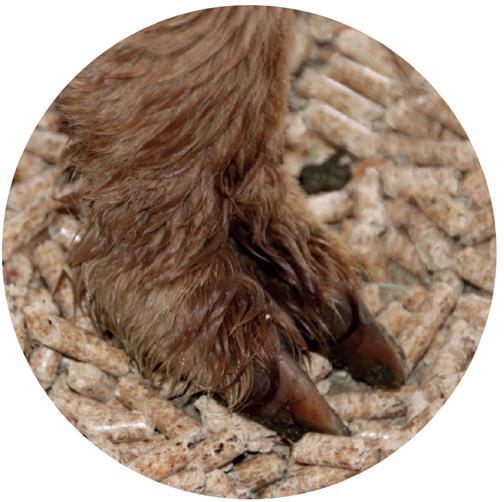
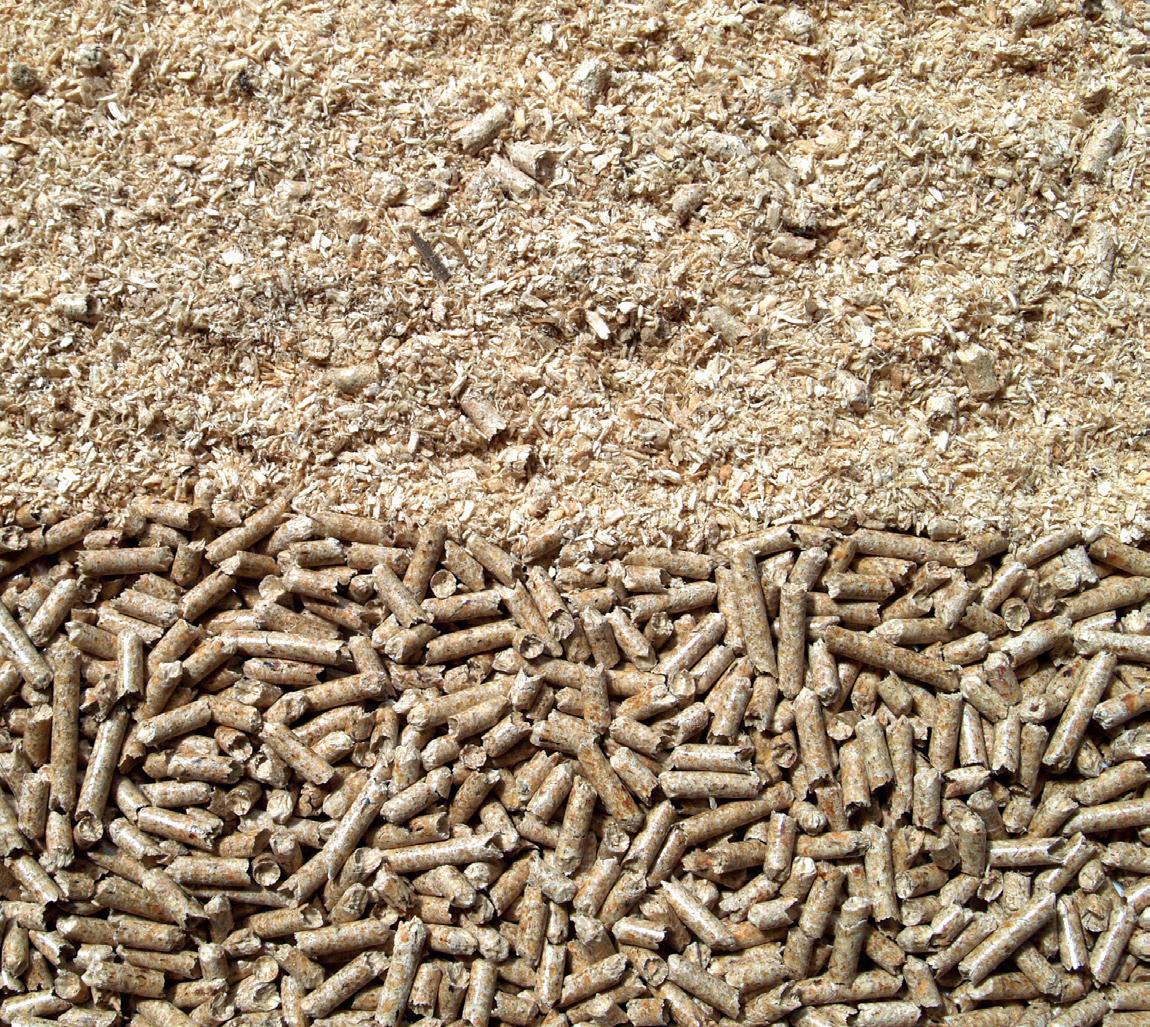

Neil and Michelle Payne of West Wight Alpacas tell us about their very own alpaca gift shop and a bit more besides.
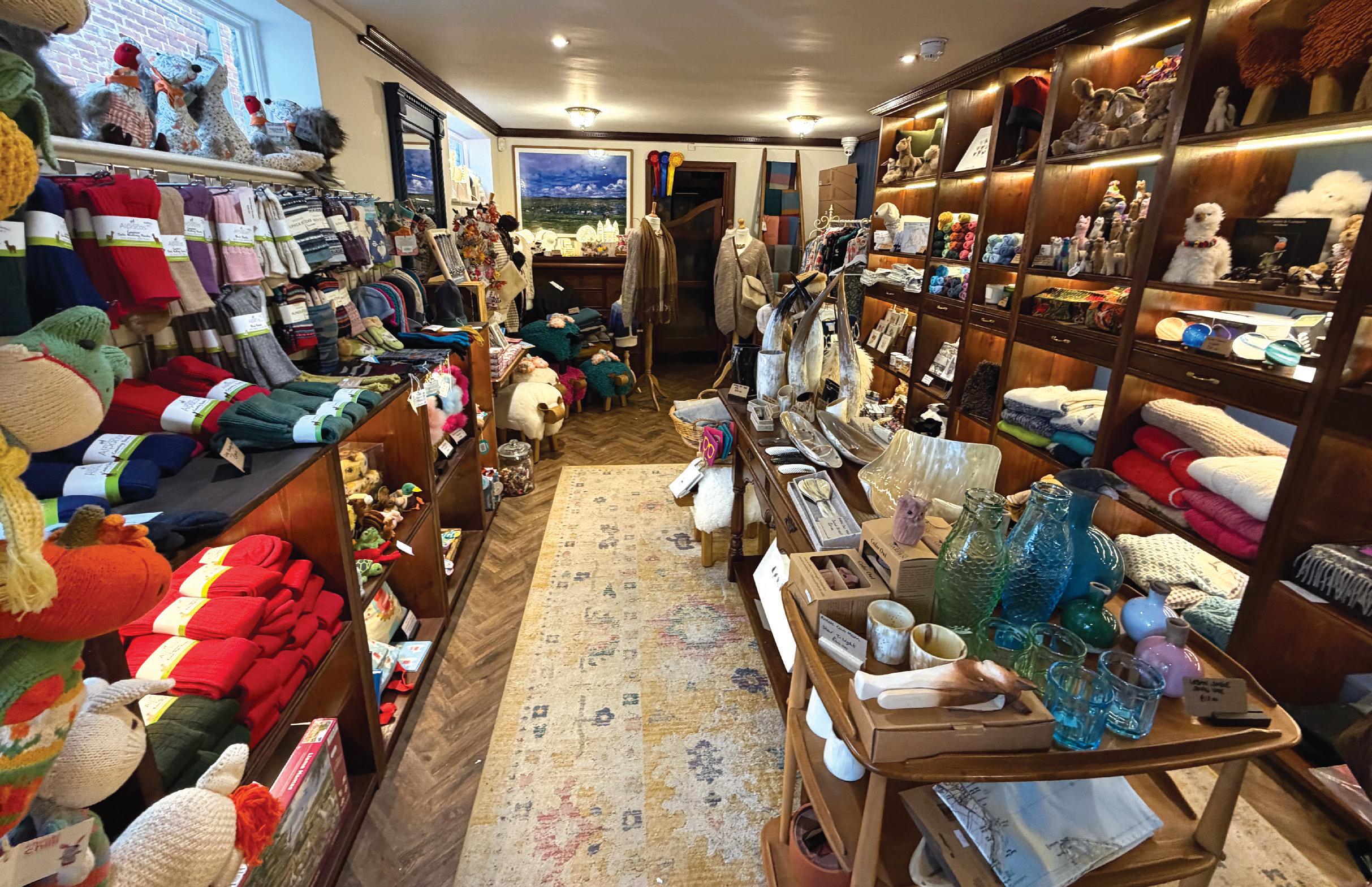
We have run West Wight Alpacas’s and Llamas now for almost fifteen years. We started with alpaca walking when it was a very unusual and unique thing to do with only one other farm in the country walking alpacas at the time. Our alpaca walking business evolved into a full-on (small) farm park in the West Wight which we have thoroughly enjoyed running ever since. Things in the last few years since Covid-19 however have changed and small tourism business’s, particularly on the Isle of Wight with the huge costs of ferries, are much more difficult so we have been looking for other things to do and other outlets.
Both Michelle and I are firm believers that if you are going to breed alpacas, they are a fleece animal and you should do something with the fleece that you produce. While we have been successful on the show circuit with the Suri alpacas that we breed culminating in the 2024 Supreme National Suri Champion, these animals are not just
show ponies and, in our view, treating them as such is going to lead us nowhere fast in the medium to longer term with alpacas in the UK.
Our farm shop has been successful selling alpaca products made from our own yarn – UK yarn that we have bought in and, dare I say it, products that we have bought in from Peru where Michelle has visited on a number of ‘occasion’s shopping’ as she calls it.
So, we have been looking for something different. We decided we should try and take some of our products to Winchester Christmas Market in December 2024. This was a good experience – hard work, enjoyable but sadly the huge costs involved meant that we worked very hard for nearly a month and turned over £32,000, but with the very high costs of attending, accommodation etc we made very little. I think with the experience we gained in 2024 we probably could turn that around and make money from one of the major Christmas markets but every pound would be hard won
with the high cost and margins we can achieve however it needs a huge amount of energy and with everything else going on in our lives at the moment we are struggling for time.
Something else we had been toying with for some time is to open a shop in our local town on the Isle of Wight. Yarmouth is small but it is one of the gateways to the island and the only ferry port that sits in a nice shopping area which is worthwhile for visitors to browse. It’s also an eclectic little town with lots of independent shops selling interesting things that are not your usual high street fare. We have been looking for the right premises for a couple of years to do something different. We also wanted to showcase the farm which is very close to Yarmouth, but might as well be a million miles away for some people, so using the shop as a booking office for the farm has also worked well.
We bought the shop with my pension fund in early 2025 and Crackers about Alpacas was born. A big punt in the current climate with retail struggling all over the country.
Why “Crackers about Alpacas”? That’s easy, because we are! Crackers for short, is an alpaca themed gift shop so not just alpaca products, between 40%-50%, but other high-end gifts as well. Michelle has been told frequently that her and her team have a good eye. We opened on 15 March 2025 and our local MP Richard Quigley came and cut the ribbon with our daughter Rosie.
So how has it gone? To be honest I am completely blown away. We have doubled my first year’s projection’s. I had not realised how much being a gateway town adds value with people turning up two or three hours ahead of their ferry times and then spending what they have left of their holiday money with us. Yarmouth is also an important leisure destination
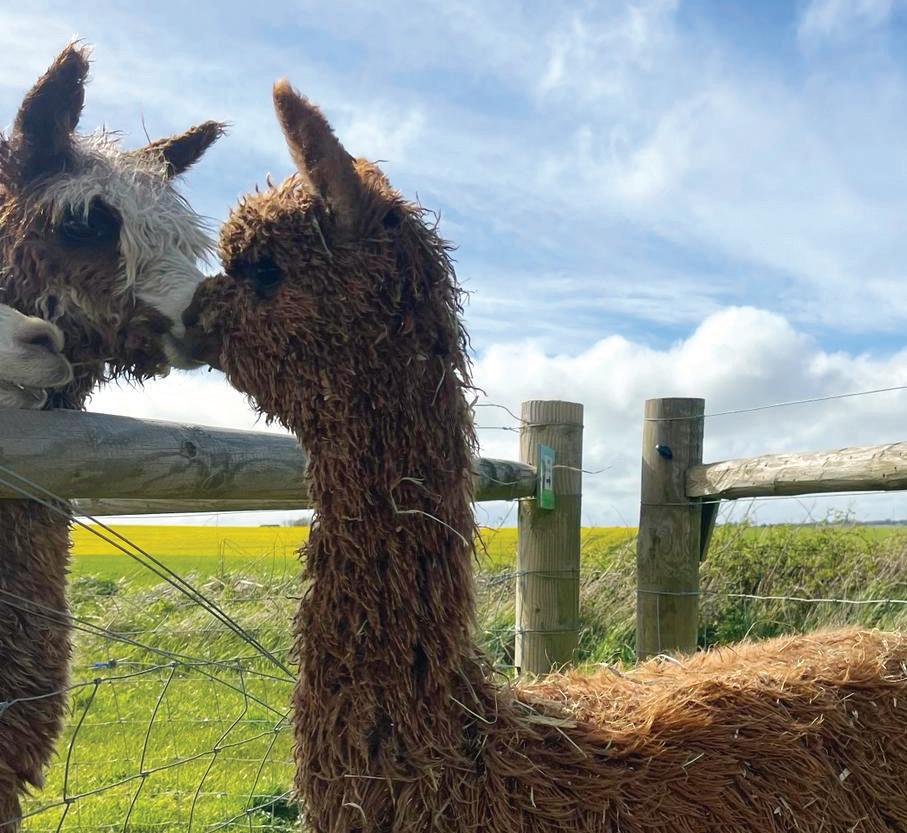
Wight_BAS
Champion and best of British Suri 2024 alpaca female Wellow Hip Hip Hooray
for yachts and motorboats and people that arrive by boat can't easily go elsewhere and are a captive market and alpaca socks, hats and gloves are ideal for cold sailors, but the shop has a really good eclectic mix of quality items, not just alpaca products. If I had a pound for every time someone walks past and says “Crackers about Alpacas” I could now properly retire.
The idea of the shop was because I have a big birthday next year and want to slow down a little bit, however there is now talk of another Crackers somewhere else, maybe Bath, Winchester, Brighton or somewhere similar. We would be open to a franchise conversation if anyone has any thoughts about their local town as well. I can see Michelle keeping me busy for a year or two yet.
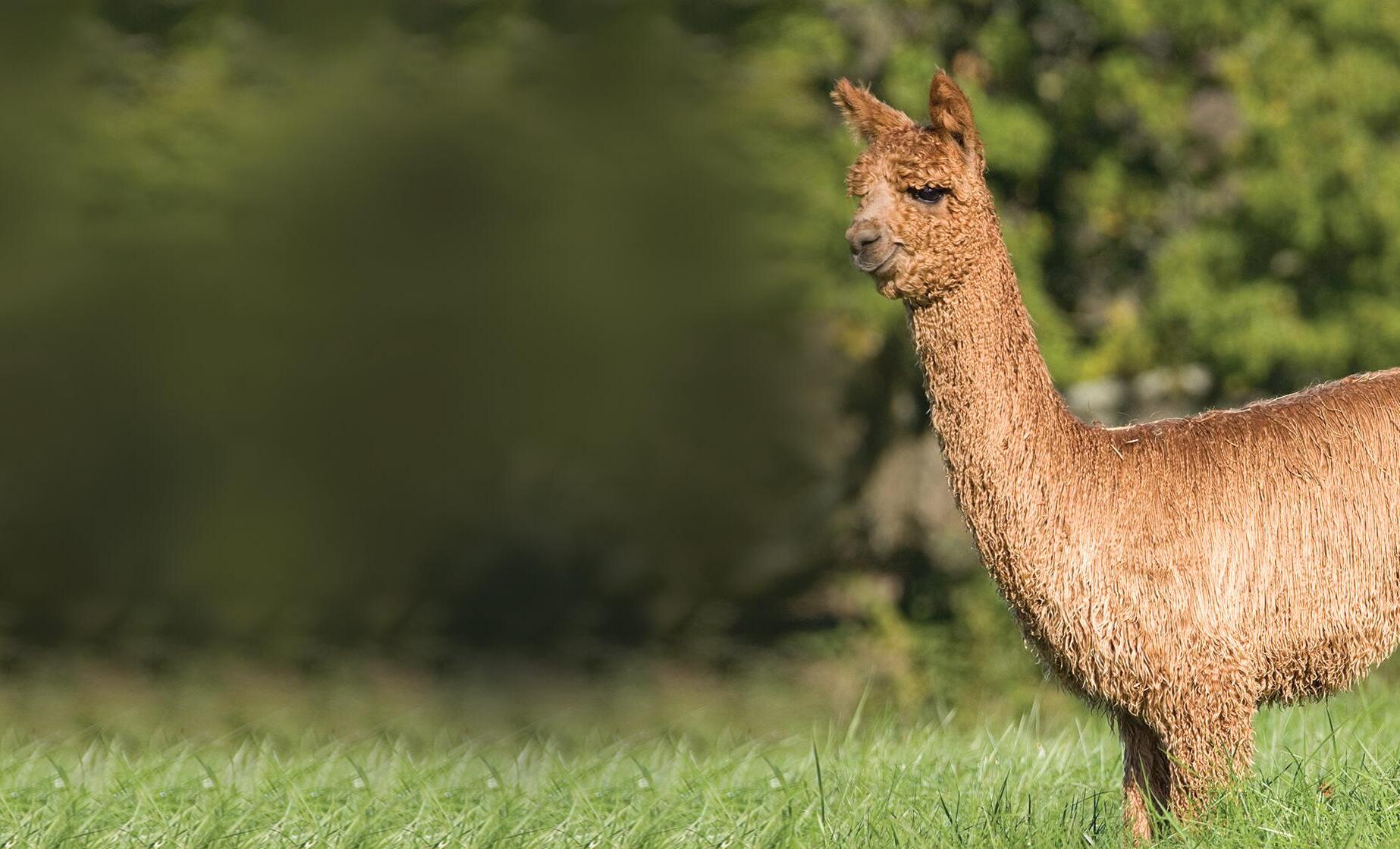
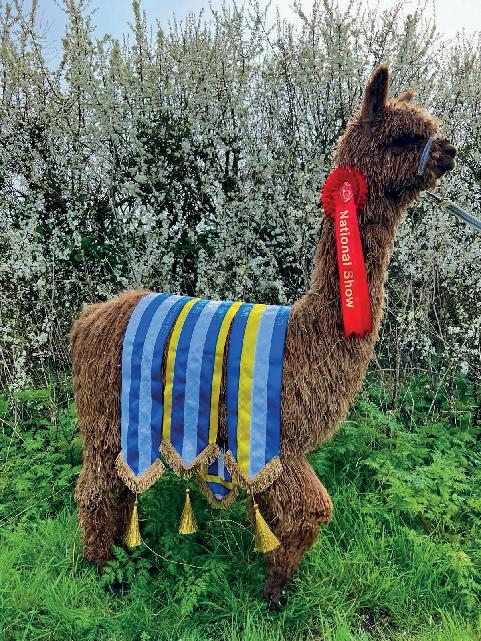
Shearing alpacas takes skill, care and opportunity.
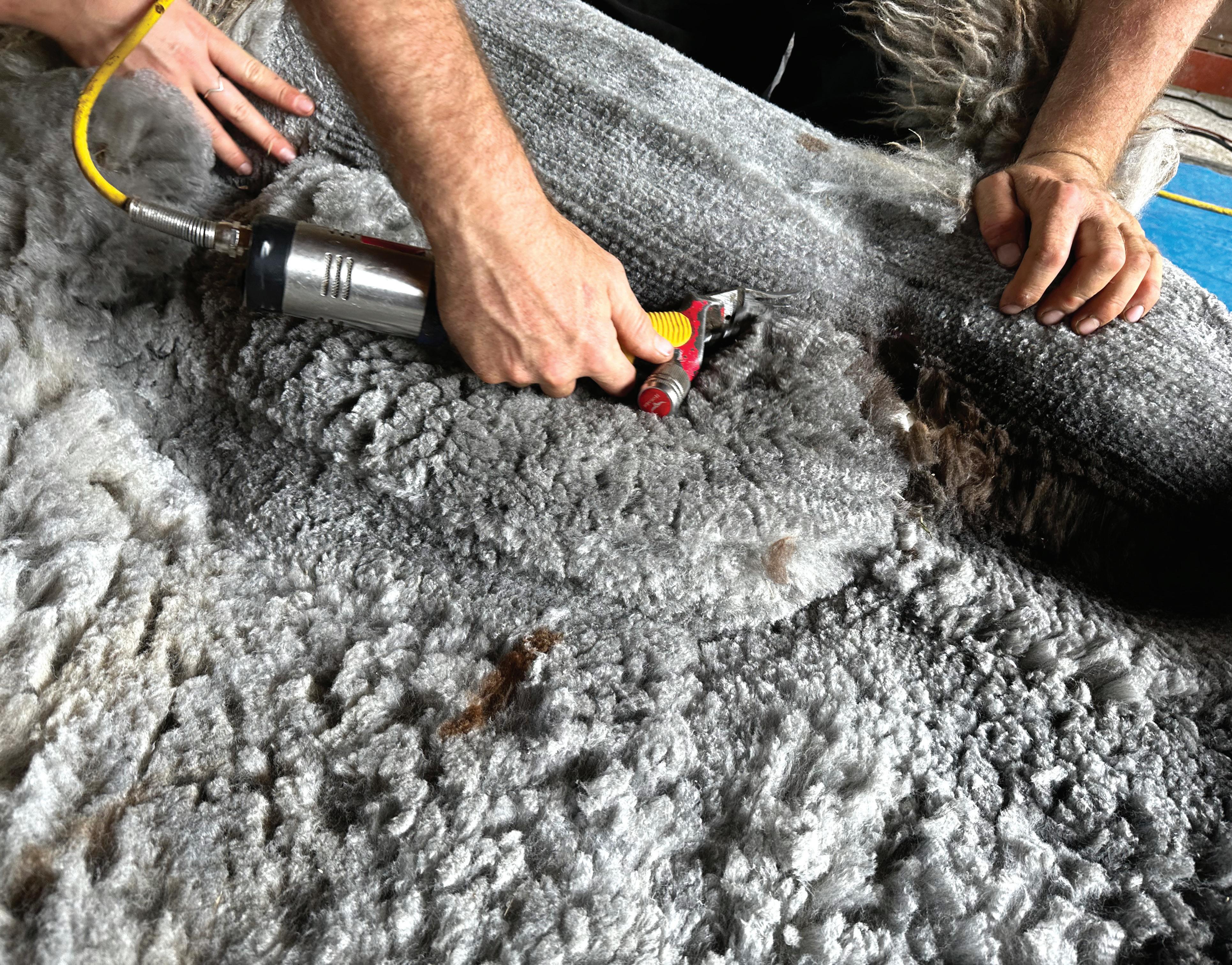
The British Alpaca Society is passionate about encouraging new shearers to enter the alpaca shearing circuit in the UK. If you have a passion for working hands-on with alpacas and their fibre, and would love the opportunity to travel the UK and further afield to countries such as Australia, New Zealand, Europe, or even America, then alpaca shearing may be the career for you.
Shearing an alpaca is a specialist skill. Ensuring the animal is safely handled and correctly restrained is the first step towards a successful shearing day. The shearer must also be trained to effectively harvest the fleece, ensuring firsts, seconds and thirds are separately removed from the animal, with little to no second cuts. This allows the alpaca owner to utilise
the fleece to its maximum potential. It is as much a passion as it is a skill, with attention to detail ensuring everything comes together on the day.
In 2024, the first round of candidates took part in the British Alpaca Society Apprentice Shearing Scheme, a dedicated initiative designed to educate and train the next generation of alpaca shearers in the UK.
The scheme involves two days of training under experienced and dedicated alpaca shearer Colin Ottery and has between 5-10 spaces available each year. To register interest and secure a place, applicants can find further details, along with a questionnaire to complete and return, on the BAS website. Apprentices should finish the scheme feeling confident in alpaca shearing techniques, with the hope that many will go on to add alpaca shearing to their professional workload.
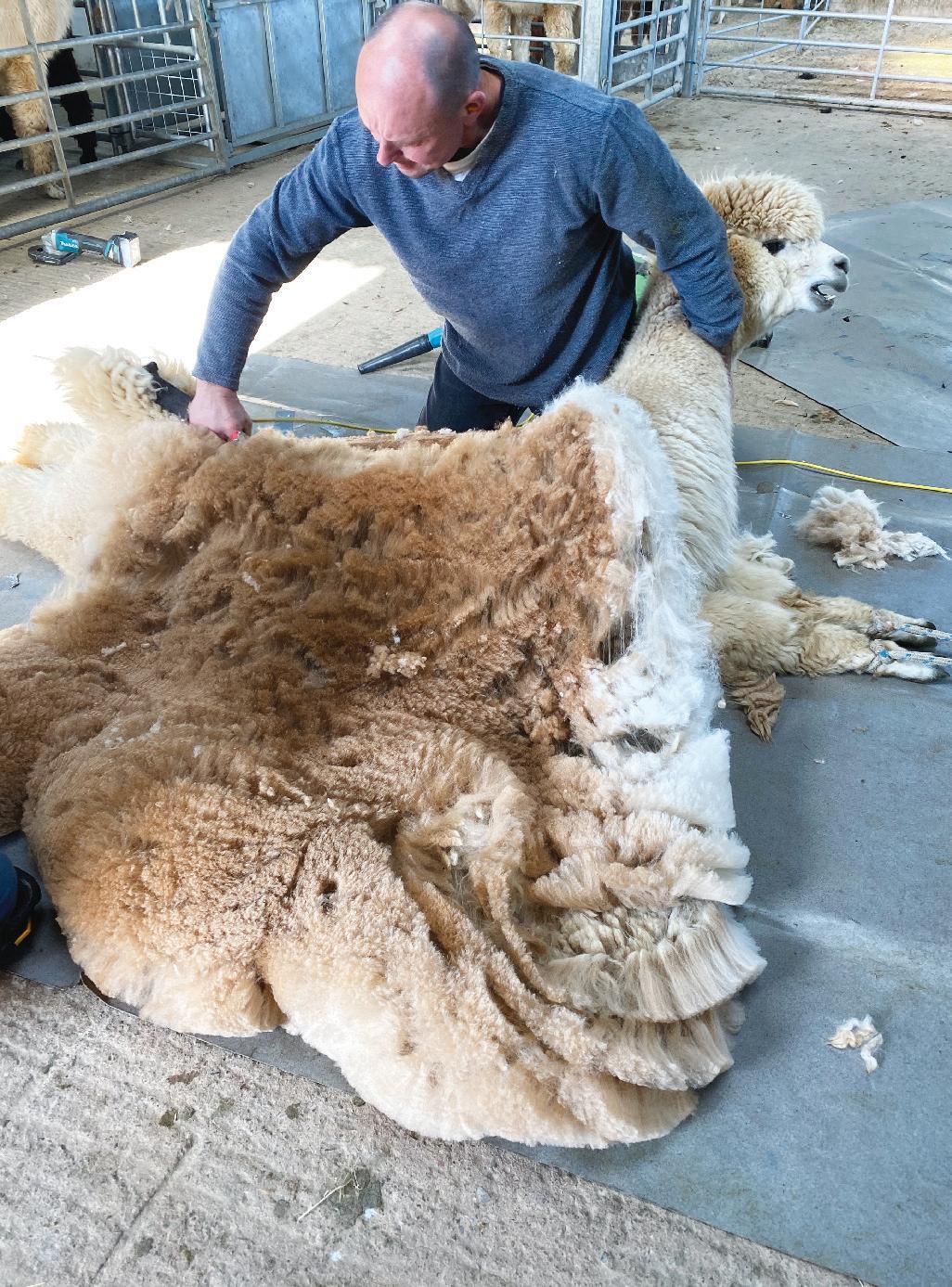
If you are new to shearing, or would like to brush up on your skills before taking part in the BAS Shearing Scheme, a British Wool Course is a great first step. British Wool runs approximately 95 shearing courses across the UK from April to August each year.
The beginner course takes place over two days. On the first day, participants are taught a basic sheep shearing pattern, as well as how to correctly set up and maintain their handpiece. Tutors will also help develop a sound shearing technique. In addition to equipment maintenance, participants are taught how to look after their bodies while shearing. From stretches to suitable clothing choices (such as wearing a long top to cover the lower back while bending), these are crucial skills to develop for longevity in the industry.
On the second day, participants hone their skills through continued supervised practice. Tutors will also cover comb and cutter maintenance and sharpening, including demonstrations on how to use a grinder to sharpen equipment. Assuming all requirements are met, beginners will finish the course having achieved either a Blue or Bronze Seal – a strong foundation before progressing on to the British Alpaca Society Shearing Scheme.
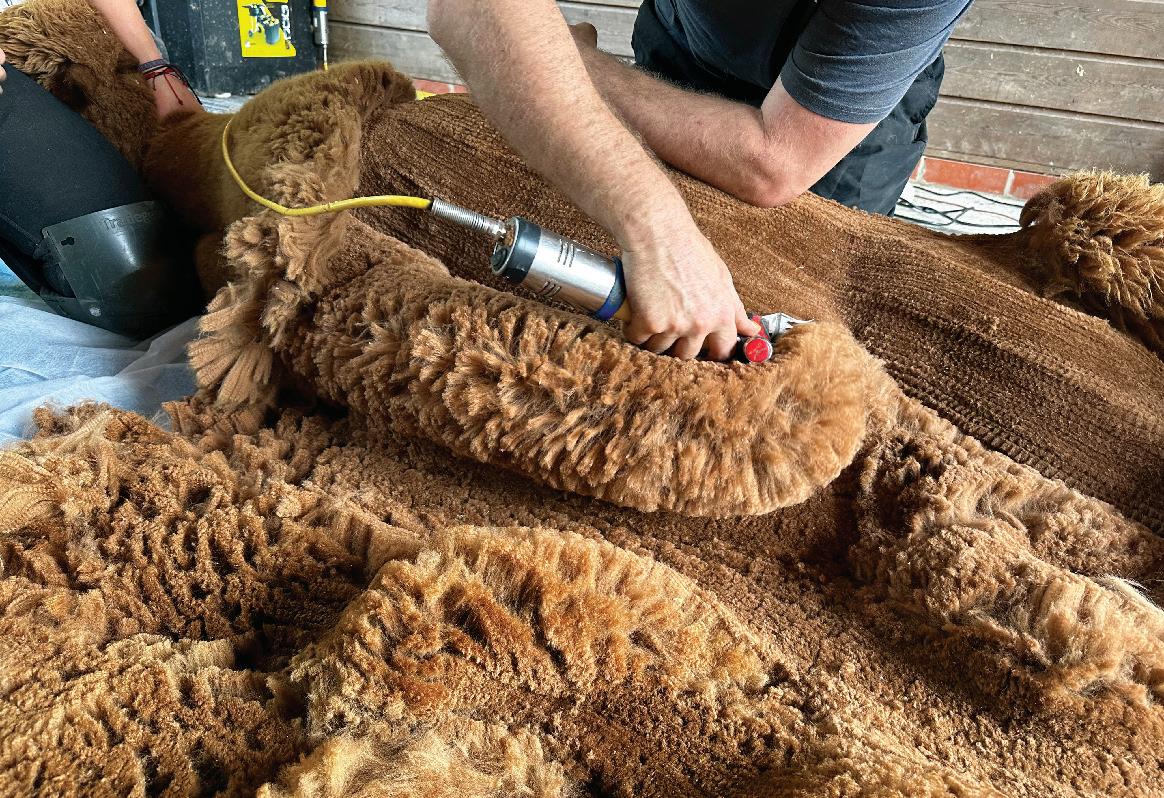


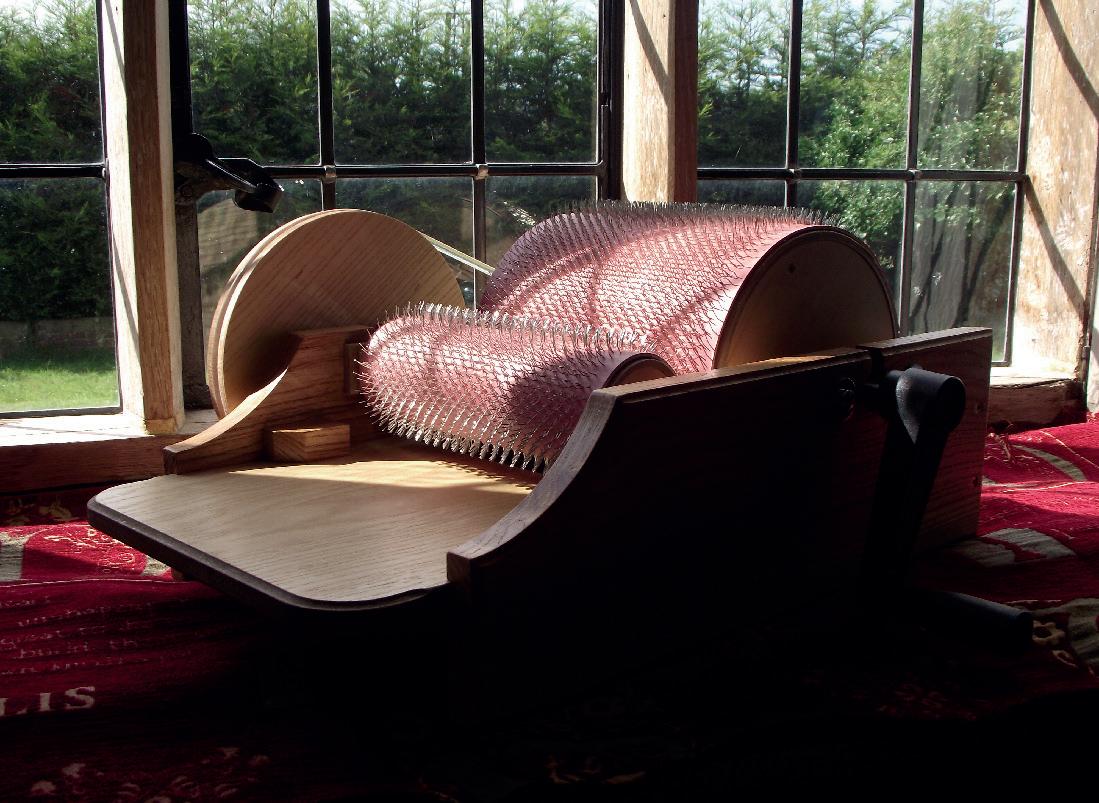
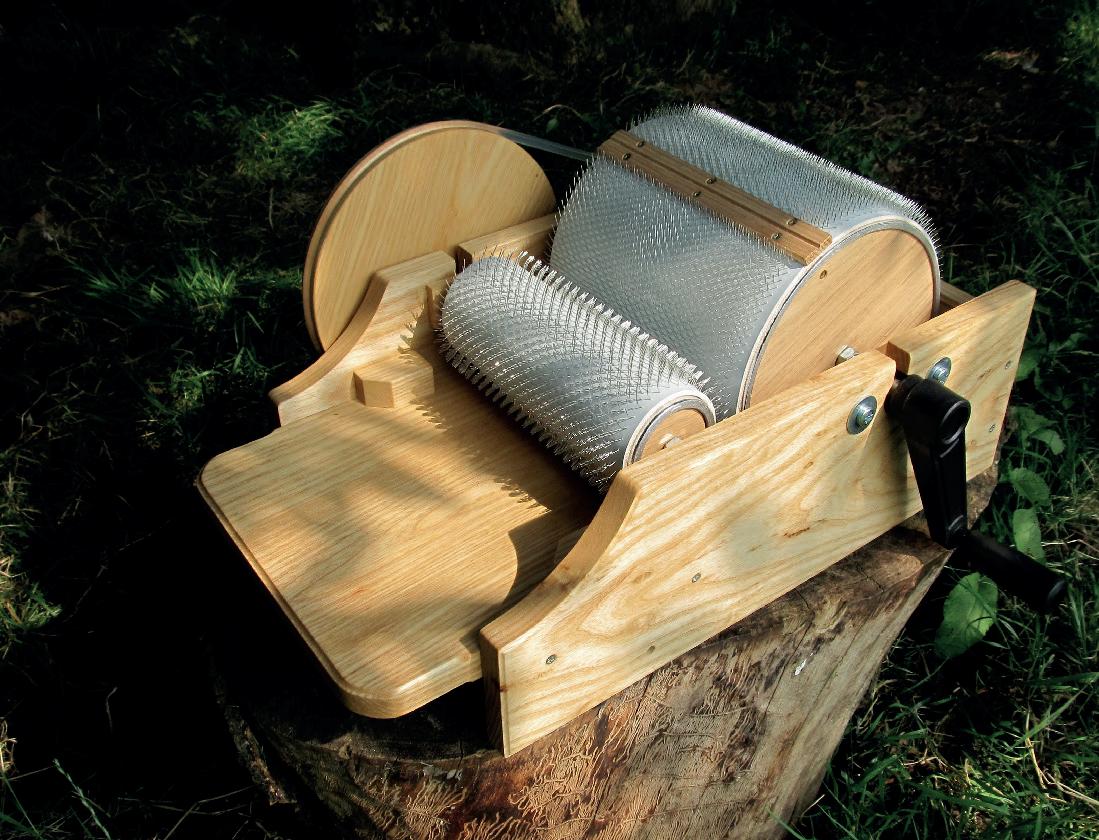

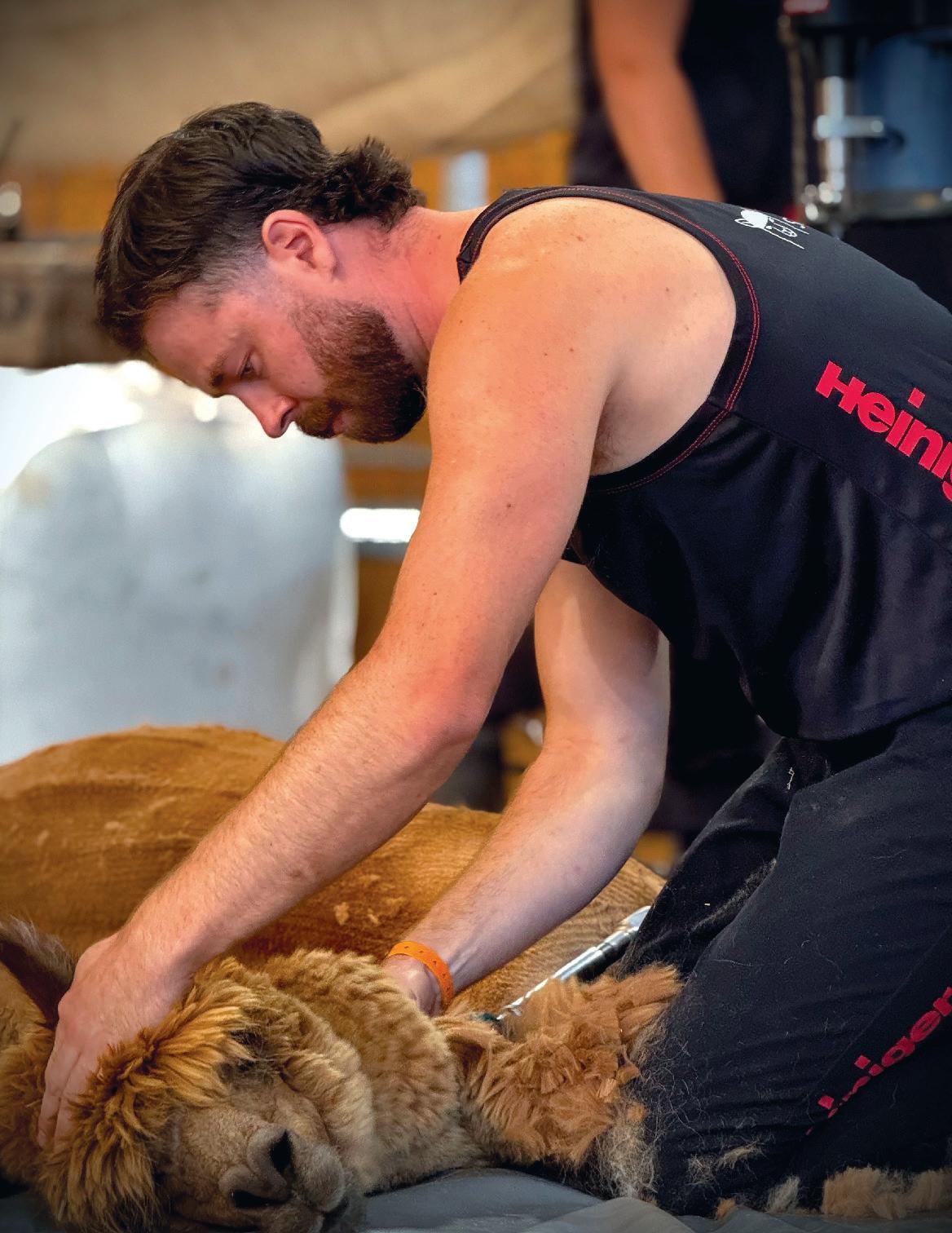
FJohn Dawson with an alpaca owned by Storybook Alpacas which was used for a shearing demonstration he gave at the Sydney Royal Easter Show in Sydney New South Wales, Australia. Also in the photo is Laura Fletcher who was his ‘rouseabout’ (handler)
rom 2026, I will be travelling to the UK to provide professional alpaca shearing services during April and May, with plans to extend my time in subsequent years.
This move will give UK breeders access to a full-time alpaca shearer with more than a decade of hands-on experience working across large, professionally run herds.
I am 29 years old and have been shearing alpacas for about 11 years, working full-time within the Australian alpaca industry. I grew up breeding alpacas alongside my mother, competing at the highest level and winning broad ribbons at major shows, including the Australian National Alpaca Show. This background has given me a strong understanding of fibre quality, conformation, and the standards breeders expect from both show and breeding stock.
My professional shearing career has included working for some of Australia’s largest and most established breeders, including
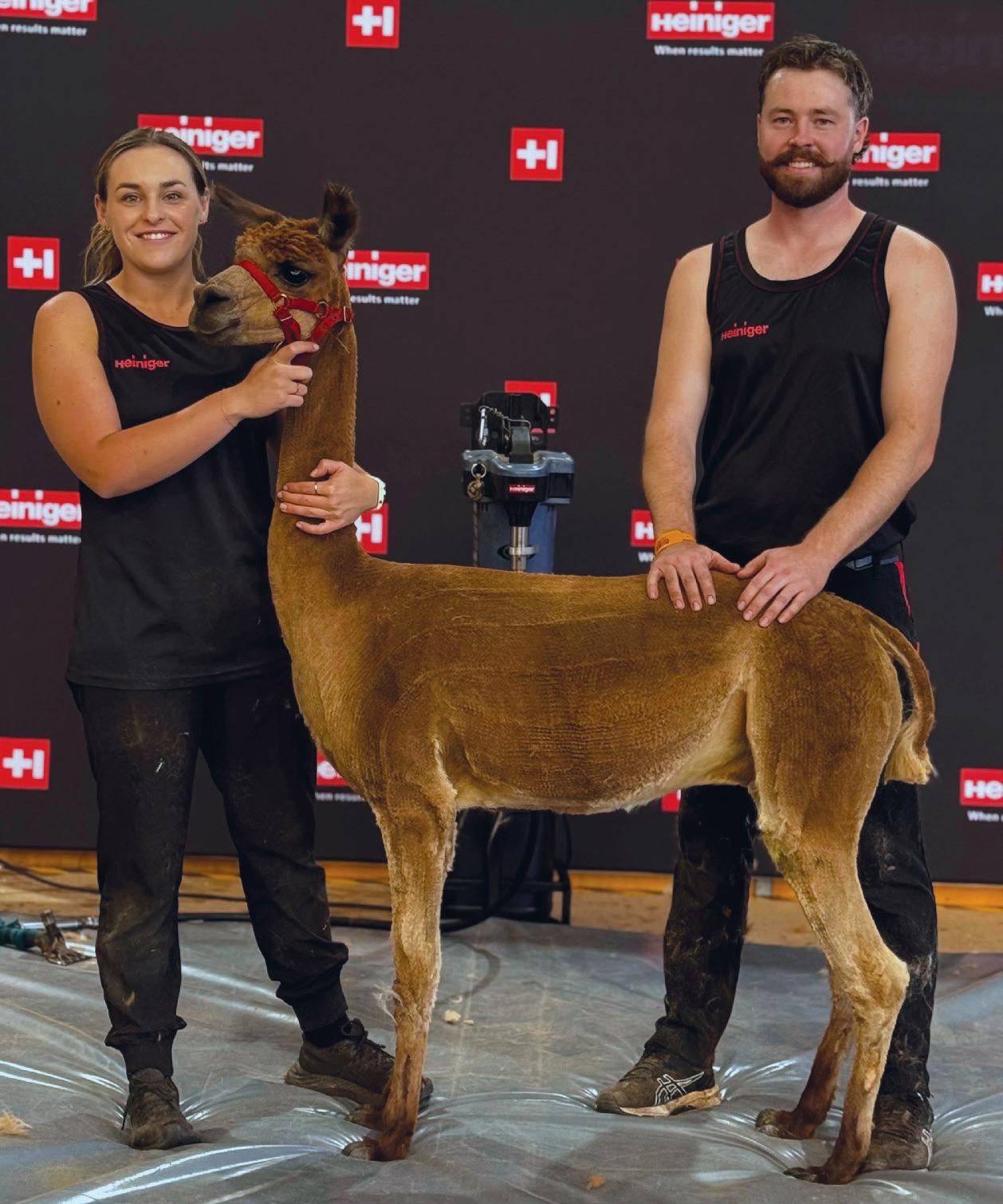
EP Cambridge, which currently runs approximately 2,000 alpacas. Working at this scale has required efficiency, consistency, and a strong focus on animal welfare, particularly when managing large shearing programs where calm handling and organisation are essential.
I’ve also been given the opportunity to shear alpacas in New Zealand in January of 2026, further expanding my international shearing experience.
My approach prioritises low-stress handling and well-managed shearing days, ensuring animals are returned to the paddock quickly and safely.
My UK seasons are intended as a long-term commitment rather than a one-off visit. I plan to return annually, building ongoing relationships with UK breeders and fitting in with existing shearing schedules.
With a background in both alpaca breeding and large-scale professional shearing, I aim to bring Australian shearing standards to the UK at a time when experienced alpaca shearers are in increasing demand.


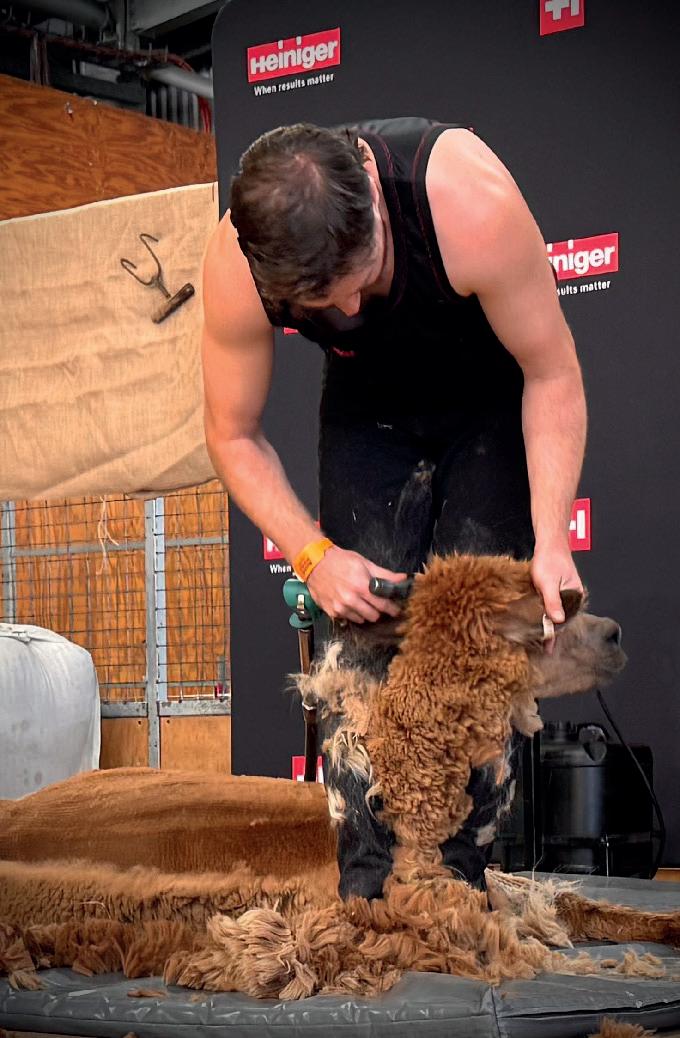
Offering annual shearing services across the UK starting 2026. Over 10 years’ experience shearing alpacas for large and small breeders in Australia. With experience also shearing in New Zealand. Contact through Facebook: John Dawson or Dawson Alpaca Shearing
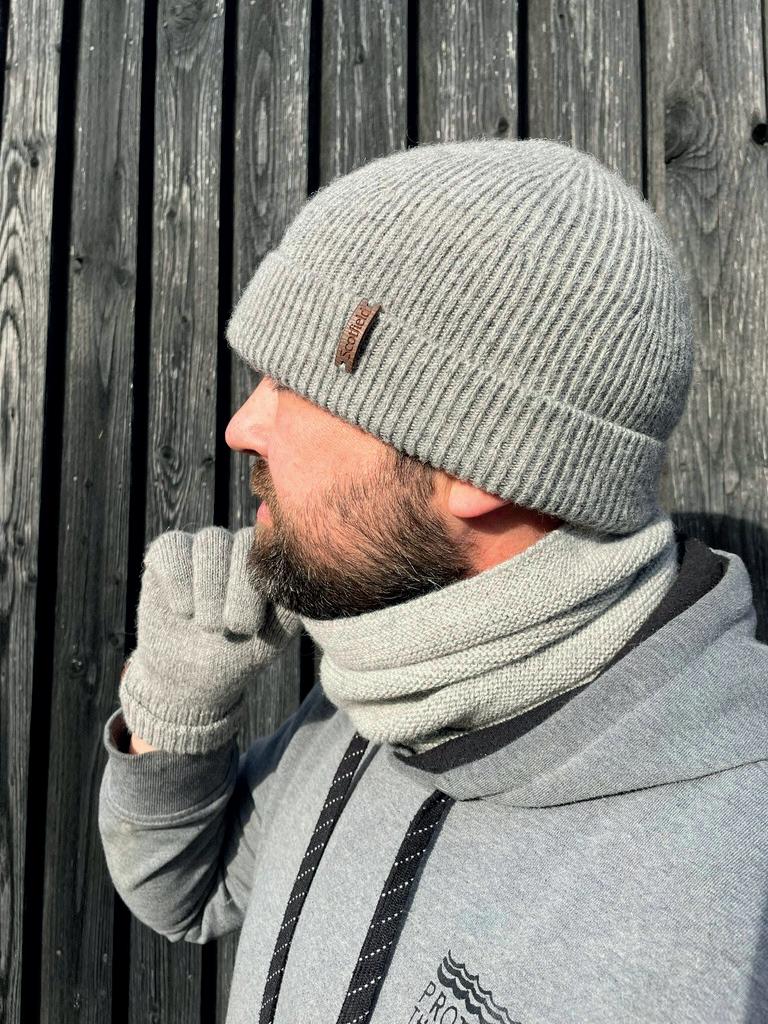

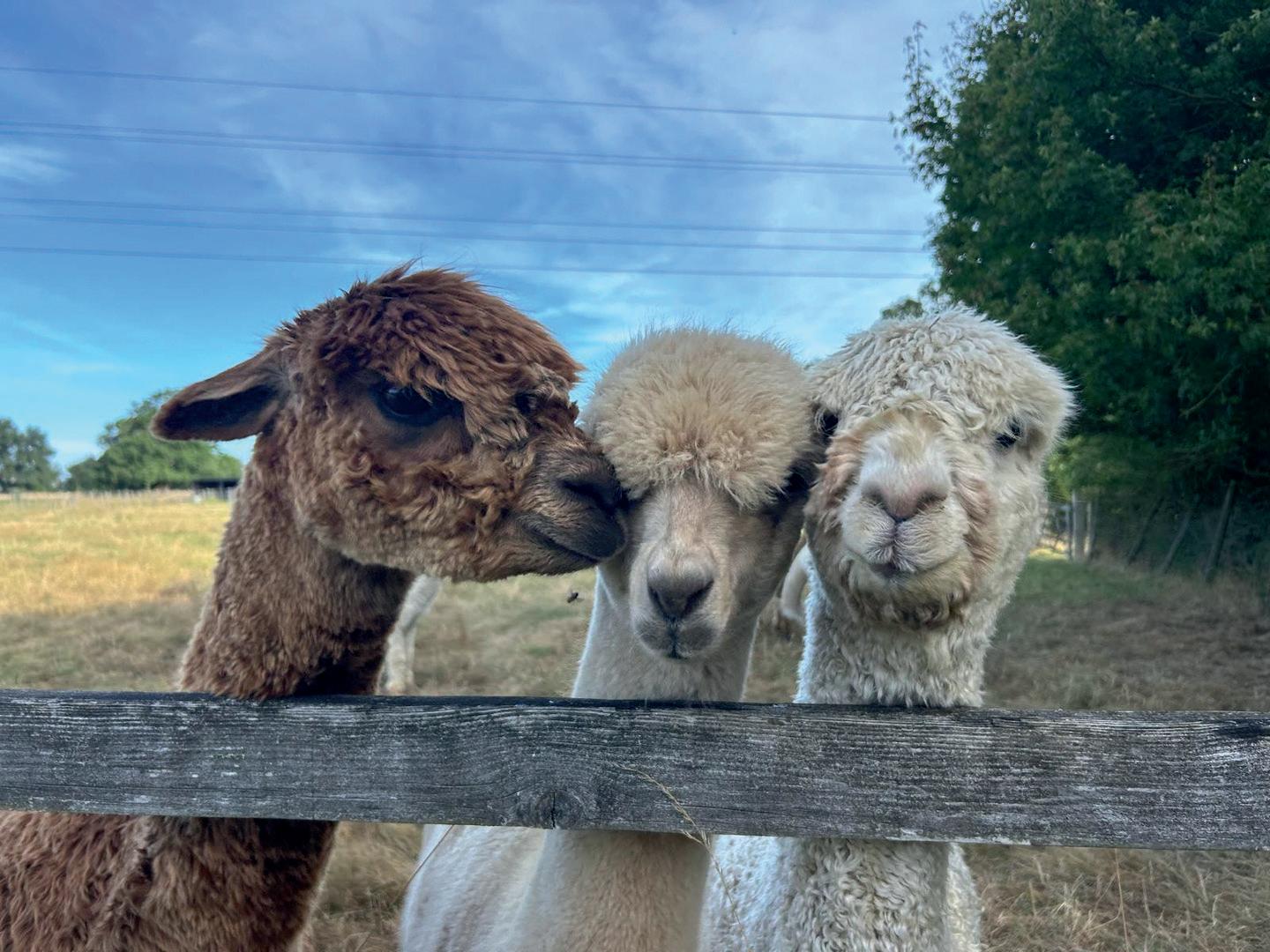
As we all know, alpaca fleece can be a magical fibre with a quality so exquisite that you cannot quite believe your animals grow this without even realising its beauty! But most of us do not have the time or money to commit to processing our own fleece and are often left wondering what we can do with the resulting product.
It’s important to understand alpaca fibre and all alpaca owners would benefit from taking one of the courses mentioned in this Yearbook. I found the basic alpaca assessment course an absolute eye opener and gave me some tools to make sensible evaluations of fleeces and to be able to understand what mills were talking about in

MAP-MARKER Vulscombe Farm, Pennymoor, Tiverton, Devon EX16 8NB Visitors welcome by appointment
�� 01884 243579
✉ info@ukalpaca.com
TV www.ukalpaca.com
Chas Brooke and Rachel Hebditch also run Classical MileEnd Alpacas. Featured in the Autumn 2024 issue of Alpaca magazine, this mill is unique in that it actively buys alpaca fleeces.
They prefer white and fawn as they can be dyed successfully though can buy black, grey and brown, usually at a lower price. The fleece will be graded by microns but even the ‘outsorts’ the fleeces that are too short or too coarse do have a good market for duvets for example.
Their website explains what they need when you send fleeces to them and also has a guide to skirting. They take only fleeces shorn in the current year, minimum of 88m (3.5 inches) – but see note about ‘outsorts’ above, and solid colours only.
Rachel emphasises: “Shearing is often a lost opportunity to make money from your fleece. Keep the area clean, sweeping up between animals and clean even more thoroughly between colours.”
Looking at their website will extend your knowledge of alpacas and the products that are available from their fleece. You will also find Rachel’s blog which is a great read.
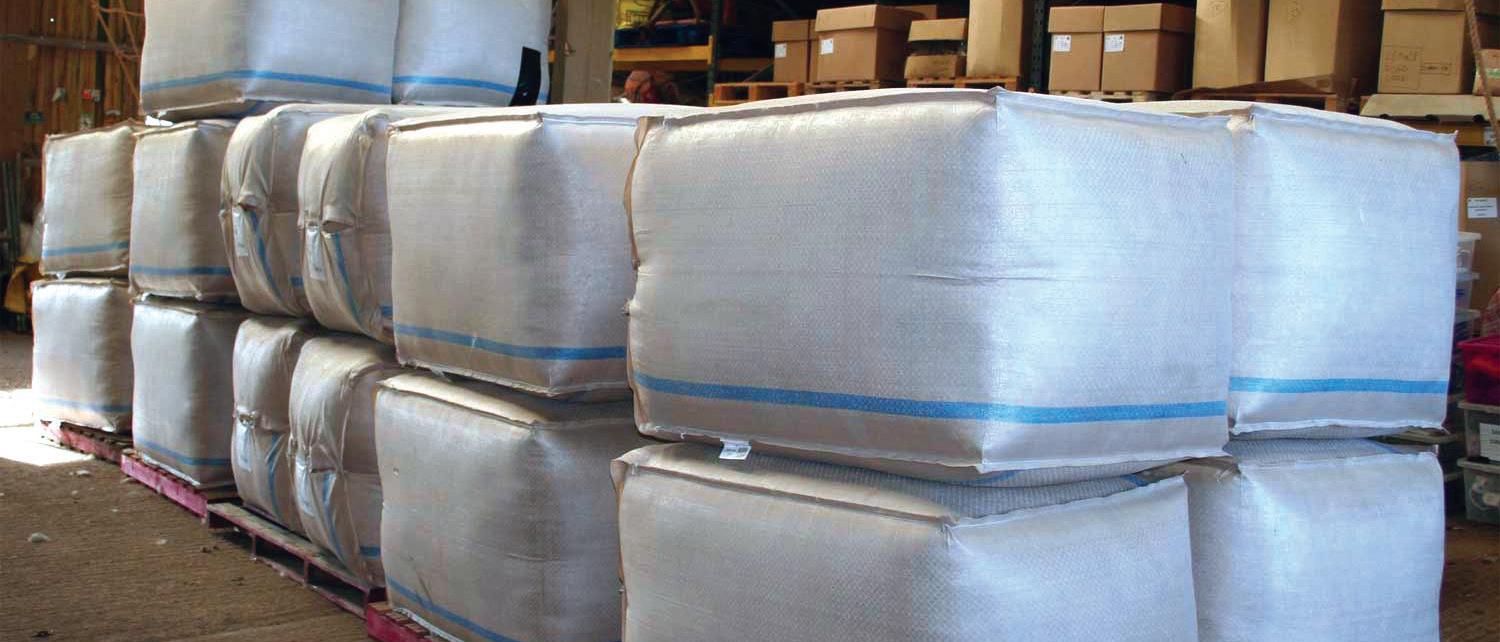
terms of quality and usage.
The next important thing to realise is that before you send to any mill, consider your shearing. We’ll look at that in more detail in the spring Alpaca Magazine but again, an affiliate course or your local alpaca group, can help with how to do the essential task of ‘skirting’ , and how to send a clean, well managed fleece to them so that they don’t have to charge you to do work you could do yourself.
Every mill I have ever spoken too has been enthusiastic and keen to share knowledge. That is why we are publishing a list of mills that can help you with alpaca and it is suggested that you contact them for further information long before you shear.

MAP-MARKER 5 Bushmills Road, Portrush, Co. Antrim BT56 8JF �� 07802 442228 ✉ phil@tworiversmill.com ✉ dani@tworiversmill.com
TV www.tworiversmill.com
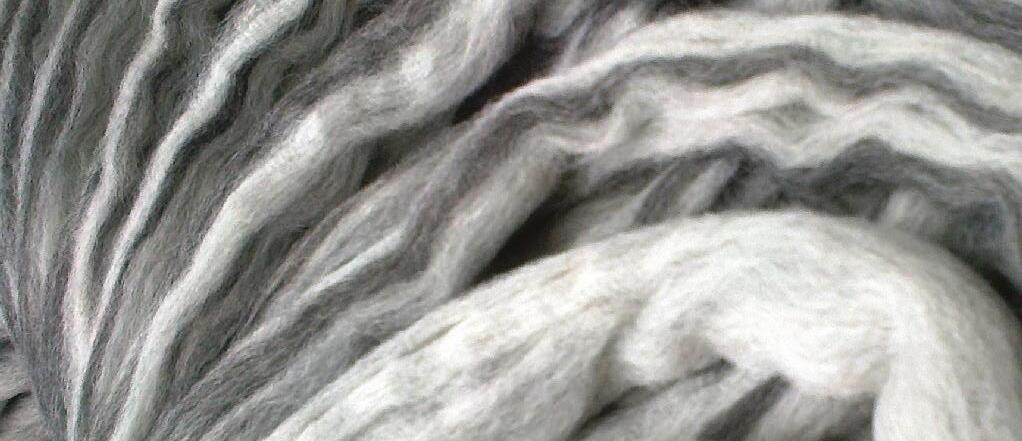
Located near the North coast of Northern Ireland, with easy trading links to customers on the island of Ireland, in GB, the EU and further afield.
Visitors to the mill are very welcome by prior appointment and they are always happy to discuss and demonstrate their work.
Two Rivers Mill specialises in worsted processing of alpaca fibres, either as pure Huacaya and Suri or in blends with other fibres to suit different applications.
They work with orders from 20kg to over 100kg.
They run their machines on electricity generated 100% from renewables and they use biodegradable cones and plastic bags to deliver your yarn. Their website is full of information including pricing structure and preparation. They made the move from Dorset in 2023 and you can read more about them in the Alpaca Yearbook of that year.
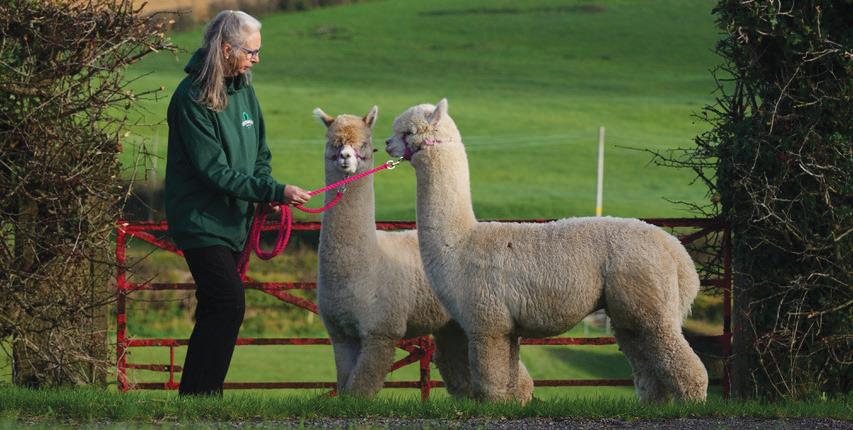
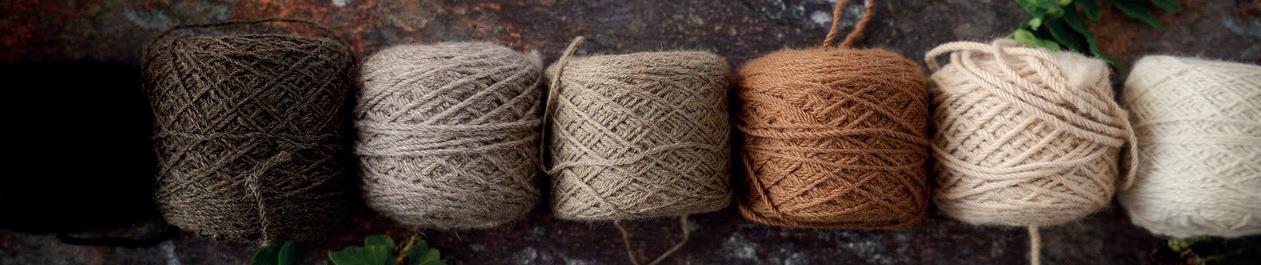
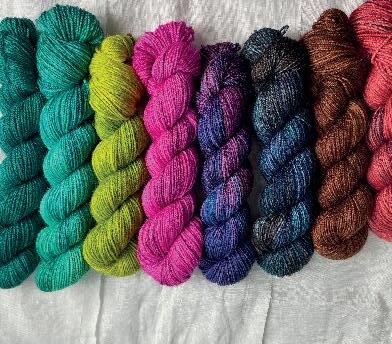
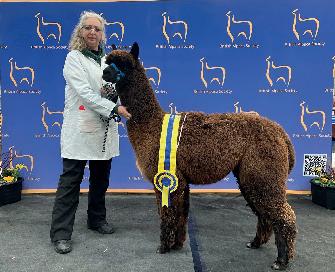

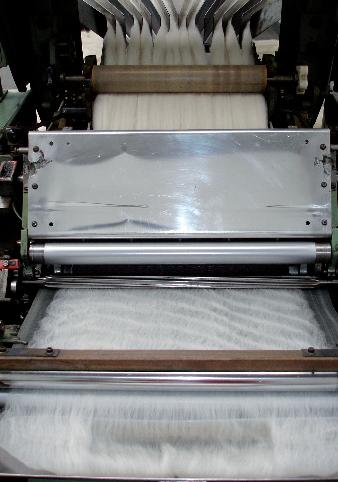
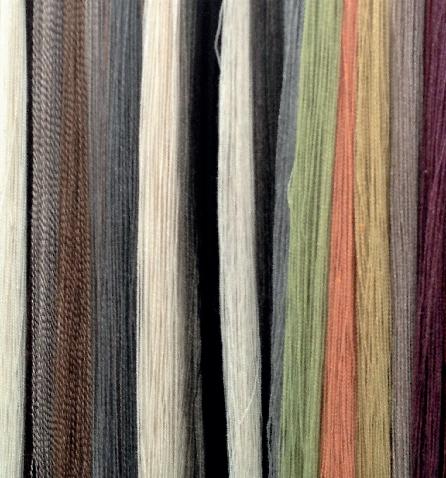
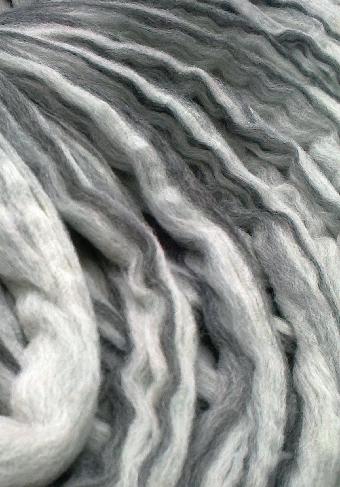
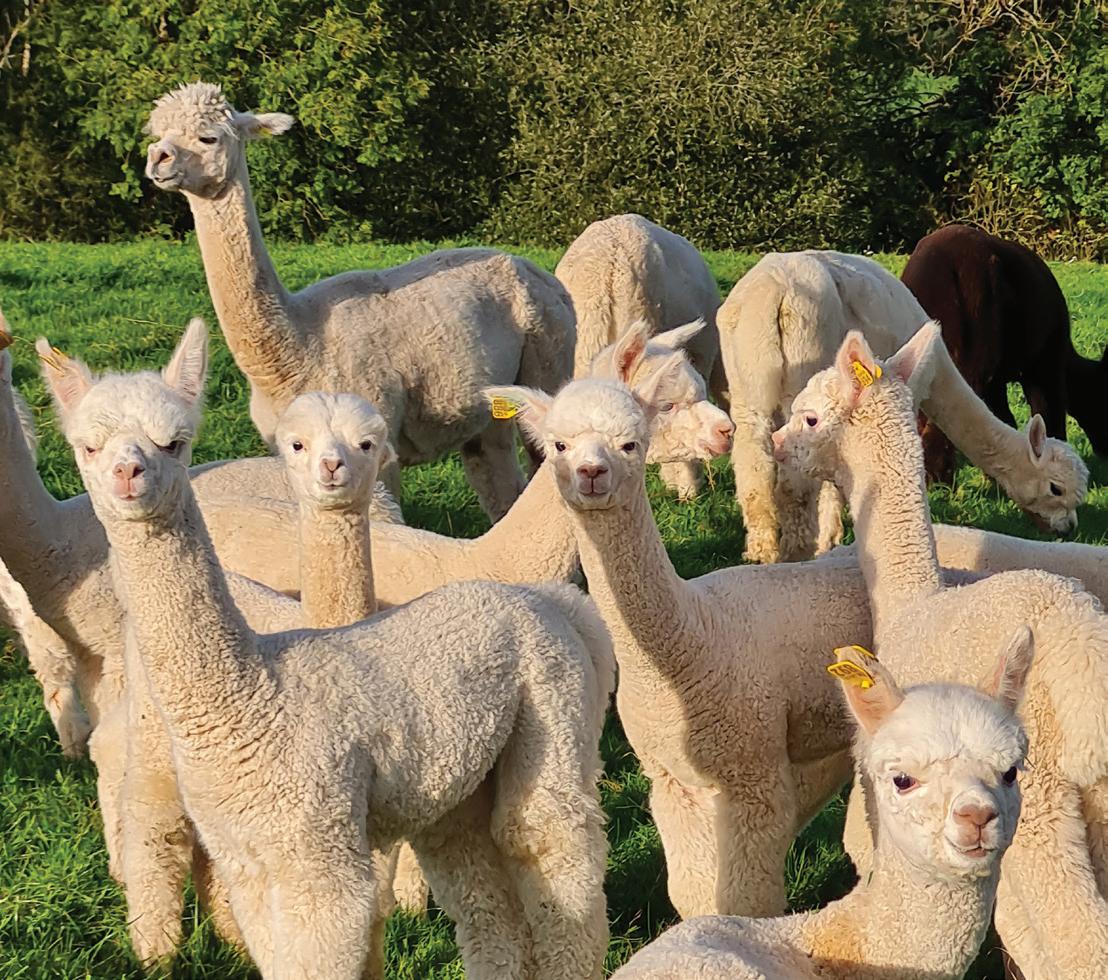
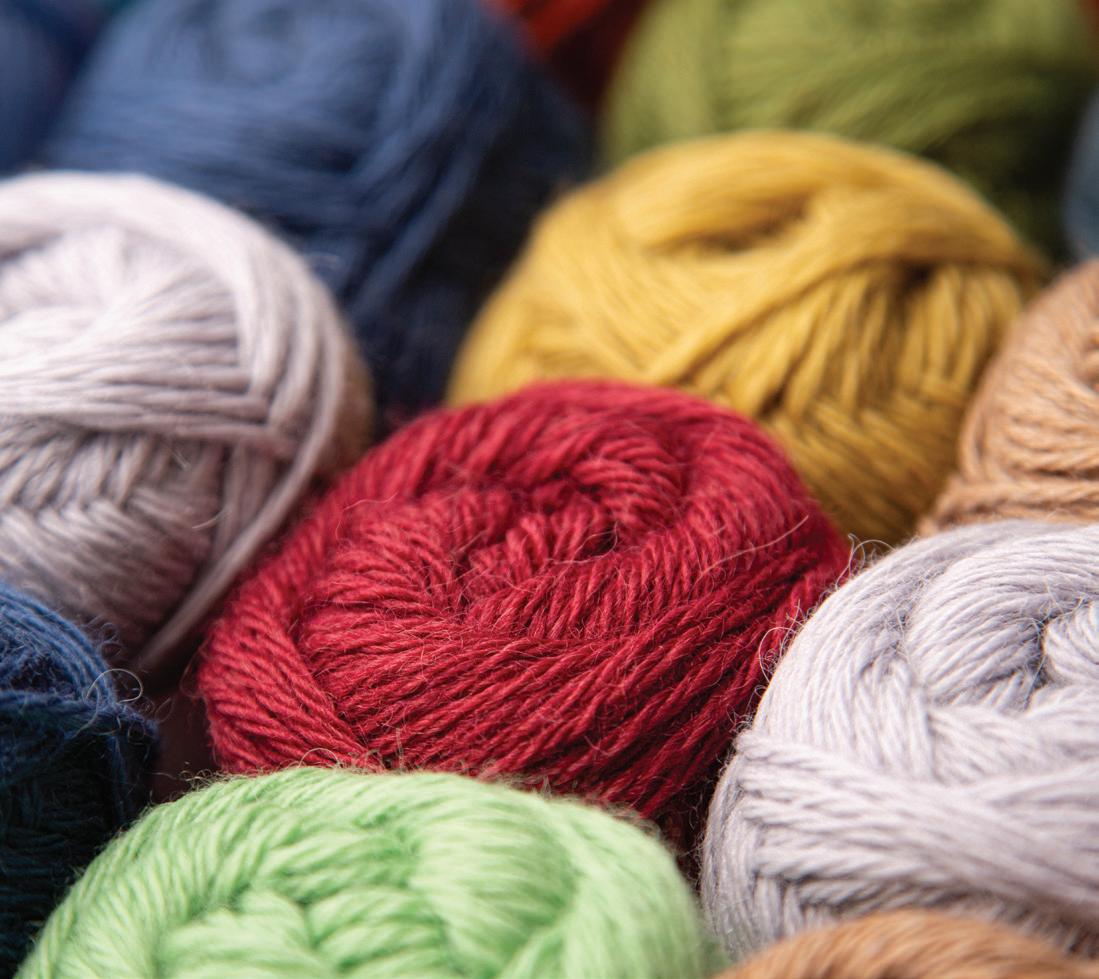


MAP-MARKER Unit 3 Cheeklaw Business Park, Station Road, Duns TD11 3HS
�� 01361 883692
✉ hello@thebordermill.co.uk
TV www.thebordermill.co.uk
The Border Mill specialise in spinning alpaca fleece but also process wool, especially from rare breeds, and other fibre-producing animals including llamas and angora rabbits. They can process any quantity from a single fleece upwards, and also blend in a variety of special fibres or dye fleece across the entire colour spectrum for something extra-special.
The Border Mill are very busy with fleece processing orders so if you'd like them to spin your fleeces, please plan ahead and book a space as soon as you can.
For information on the fleece processing process, options and charges, tips on preparing your fleece for spinning and all sorts of other things you never knew you wanted to know, please explore the sections on the website. But if you don't find what you're looking for, they say, “please feel free to contact us by phone or email – we're very friendly and we love blethering about alpacas, sheep and all things fleecey.”
East Anglia Alpaca Mill uses bespoke and custom built machinery specifically to process alpaca. The specialised equipment enables expert spinning resulting in cost-effective processing, superior quality end products and greater return of product to the customer.
East Anglia Alpaca Mill operates with an eco-friendly ethos, mirroring that of the alpacas themselves. They have embraced numerous environmentally conscious practices including rainwater harvesting, water recycling, green packaging, bio-degradable products and e-invoicing to name but a few.
East Anglia Alpaca Mill has made conscious decisions not to dye or blend the products we create, opting instead to embrace the rainbow of natural colours of pure alpaca. These choices align with our commitment to environmental preservation and sustainability.
The fleece is marked for its journey throughout the mill
The Natural Fibre Company specialise in turning shorn fleeces into processed fibre/used for felting or hand spinning/into yarns suitable for knitting, crochet, weaving or machine knitting.
Fleece is a very versatile raw material and it is wonderfully sustainable, with great high performance properties, and can be made into a huge range of end products from baby clothes to heavy duty carpets, from sculptured felt to insulation and from household goods to high fashion items. The animals they cover include sheep, goats and alpacas.
They can advise what to do with a particular fleece type and what you can do to adjust the results by using different processes or blending. They say “ we are expert at unravelling the technical aspects of processing.”
For further information check out the website.
Operating hours: 9am to 5pm Monday to Thursday, closed on Fridays.
MAP-MARKER Unit B Pipers Court, Pennygillam Way Launceston, Cornwall PL15 7PJ
�� 01566 777635
✉ enquiries@thenaturalfibre.co.uk
TV www.thenaturalfibre.co.uk
MAP-MARKER The Orchards, Beighton, Norwich, Norfolk NR13 3JU �� 07762 439923
✉ info@alpacamill.co.uk
TV www.eastangliaalpacamill.co.uk
An interview with Emma Taylor who owns and runs East Anglia Alpaca Mill with Chris, was published in the Alpaca Magazine Spring issue 2024 and explains their processes and ethos. Emma highlights the importance of time spent planning and ensuring fleeces are properly skirted, labelled and stored that will save you money in processing and is very happy to talk clients through what they can do. She says “ We are very proud that we have an increasing number of clients who are in our below the 1% weight loss in processing from fleece to fibre!”
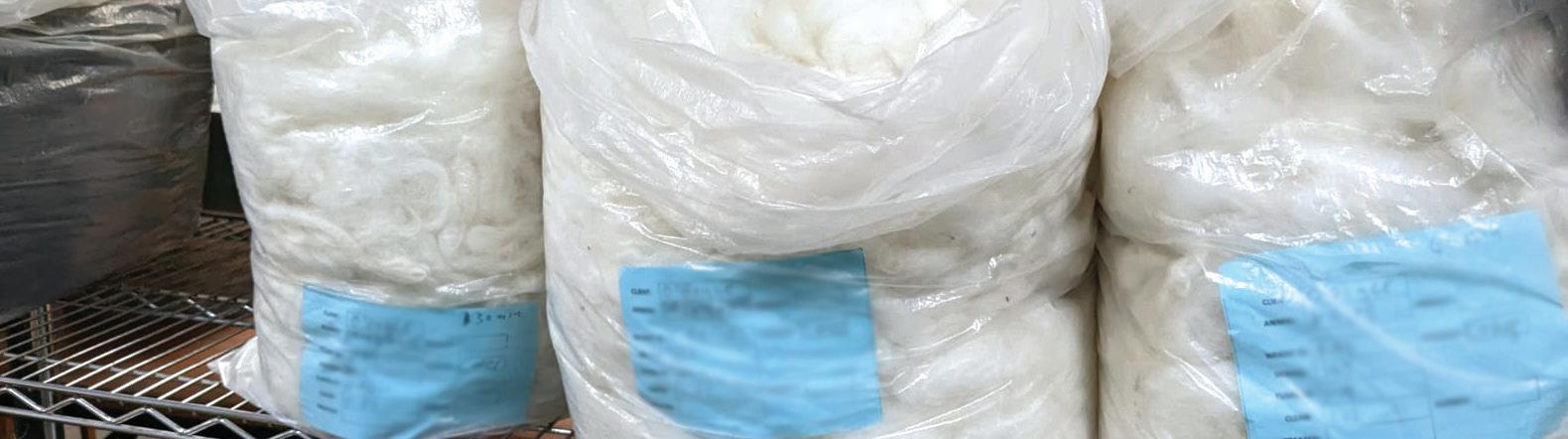
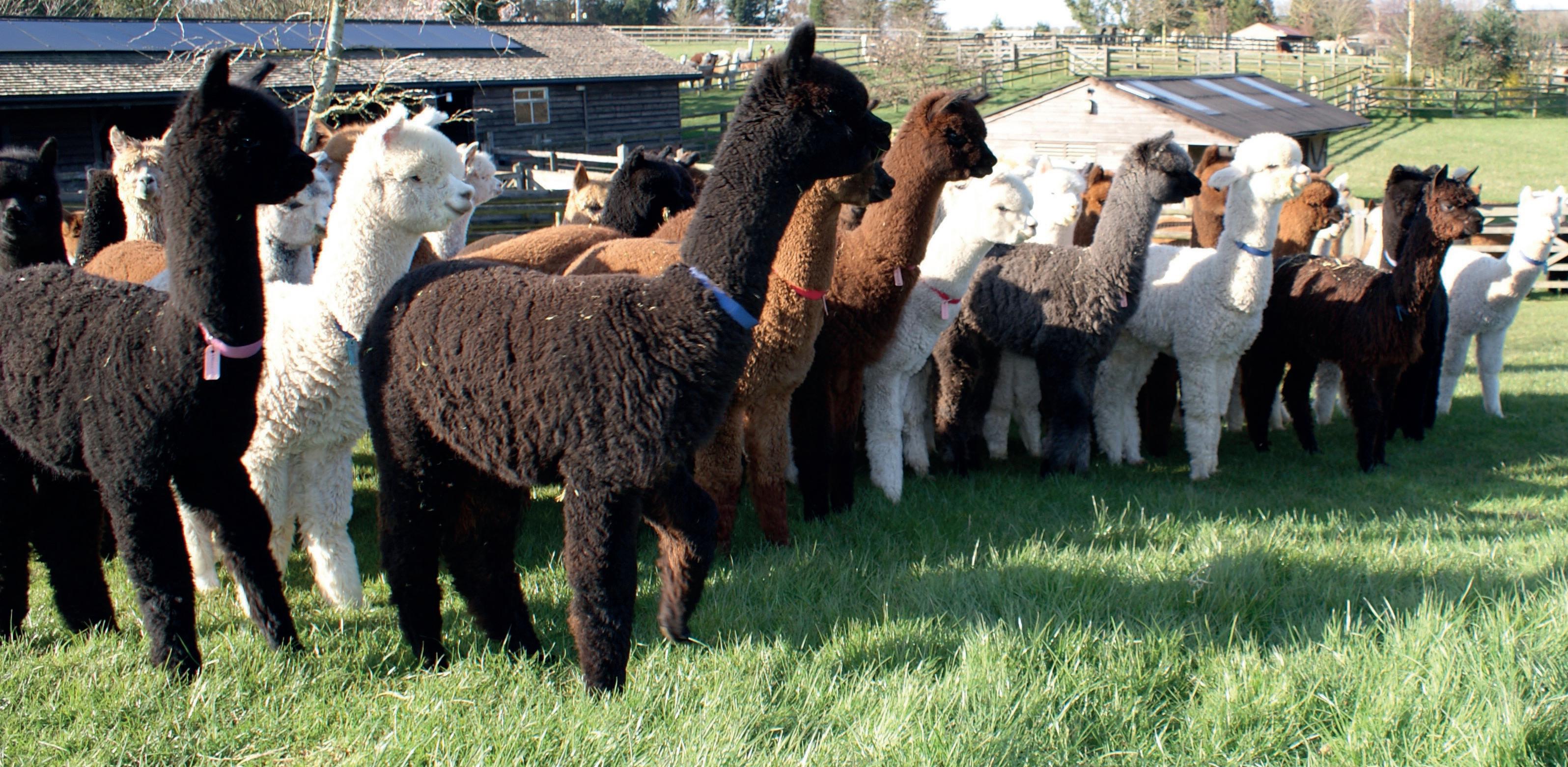
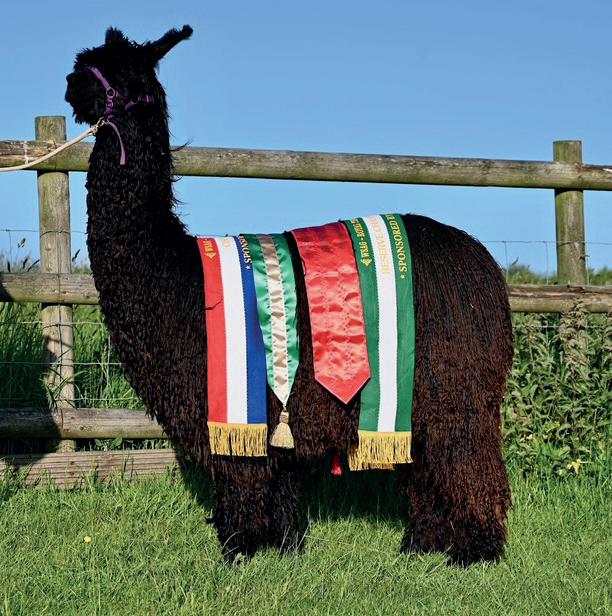

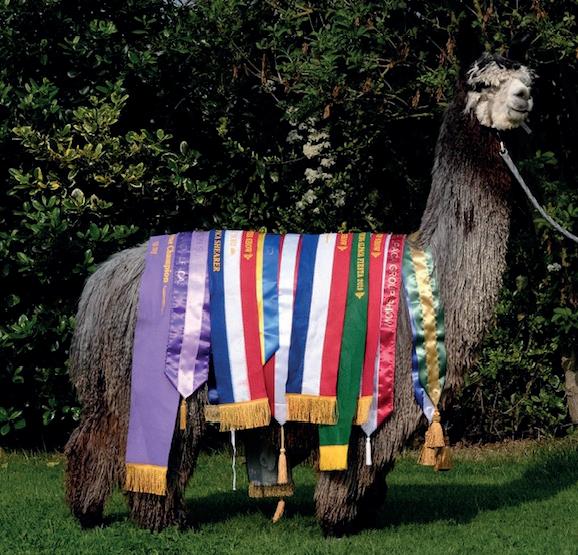
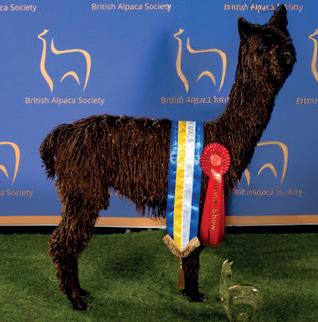
A list of BAS members who are breeders and advertising their alpacas for sale
The Pennybridge Herd and Stud. One of the first alpaca farms set up in the South of England, still producing show quality fine fleeced breed animals from champion stock. Good quality starter herds, proven and potential stud males and fancy field grazers available.
‘Home of The Alpaca Experience’.
Situated in North Hampshire, close to the Surrey and Berkshire borders with good access to ports and airports, less than five minutes drive from both J5 and 6 of the M3.
TEL: 01256 764824 or 07801 132757
EMAIL: joy@pennybridgealpacas.co.uk
WEB: www.pennybridgealpacas.co.uk
The family run JandJ Alpaca herd was established in 2005 with four breeding females, today we have over 90 beautiful animals. We are located in Lincolnshire on the Nottinghamshire, Lincolnshire, Leiceistershire border just off the A1.
With years of experience our aim is to help you choose the best alpacas to start you journey, whether it be breeding females, stud males or pet boys.
Stud services also available from top coloured genetics.
MARTIN OR CLARE: 01636 626990
EMAIL: sales@jandjalpacas.co.uk
WEB: www.visitalpacas.co.uk
Celebrating 28 years of continuous selective breeding for colour, consistency, fineness and density. Champion Stud services available.
We are a family run farm in Warfield, Berkshire, breeding high quality Huacaya and Suri alpacas from show winning sires. We would like to welcome you to Scotlands Farm to see our wonderful herd of both white and coloured animals.
We are happy to discuss your requirements, be it for pet males, stock guards, or breeding females to suit your budget but with no obligation to purchase. We have over ten years of experience with these adorable animals. Give us a call and let us see if we can help you.
SUE HIPKIN: 07770 455533
LISA HIPKIN: 07770 455534
WEB: www.scotfieldalpacas.co.uk

Located on the Solway Firth, in Cumbria, King Garth Alpacas is a family-owned herd where we aim to breed beautiful, happy, healthy and friendly alpacas with top show winning genetics.
We have alpacas to suit everyone and all budgets; from pet boys to starter herds, elite females and stud males. We offer full support and advice before and after sales. Please feel welcome to get in touch and chat about your alpaca needs.
We also offer stud services, alpaca experiences, luxury alpaca products.
TEL: 07762 286050
WEB: www.kinggarthalpacas.co.uk
Re-organisation Sale in progress: Show stock, Breeding Stock, Studs, Walkers, Fibre, Guard and Therapy alpacas for sale in all colours at prices to suit all budgets. Husbandry, Fibre, Processing and Management workshops available hosted by Rob & Shirley Bettinson – two former BAS judges with over 30 years’ experience in all aspects of alpaca breeding and showing.
We are dedicated to helping you realise your own alpaca aspiration.
SHIRLEY: 07970 626245 ROB: 07973 123008
EMAIL: shirley@toftalpacastud.com
WEB: www.toftalpacastud.com
Based in mid Wales, close to the Herefordshire & Shropshire borders, Fostings Alpacas is home to a mixed colour herd of friendly Huacaya alpacas. We offer both In-Person and Online Alpaca Husbandry Courses and bespoke Staff Training for Farm Parks and Sanctuaries.
Alice has over 17 years experience in animal care, having worked with a diverse range of birds & animals, whilst Kevin has a lifetime’s experience in agriculture, enabling us to offer extensive pre & post sales support and guidance. Whether you are looking for halter trained pet boys, a starter female herd or pretty paddock grazers, we’d love to help you find the right alpacas for you and your budget.
ALICE: 07882 135027 or KEVIN: 07875 243086
EMAIL: alice@fostingsalpacas.co.uk
WEB: www.fostingsalpacas.co.uk
Faerie-Tale Alpacas is a friendly family farm based in Kenilworth in Warwickshire. We focus on breeding sound, healthy, friendly, high quality alpacas with advanced fleeces and proven genetics. With over 10 years experience we offer a range of alpacas to suit every budget and specialise in new breeders.
We know all our alpacas and have most colours available. Discounts on multiple purchases and full support for new owners. Call to arrange a visit. We are located in central England, easily accessible by road and only 20 mins from Birmingham airport.
We offer: • Quality breeding stock • Starter herds • Stud services • Hand knitted alpaca garments and accessories from our herd TEL: 07950 671672 FACEBOOK: Faerie Tale Alpacas
EMAIL: info@faerietalealpacas.co.uk
WEB: www.faerietalealpacas.co.uk
At Fancy That Alpacas, we love colour and patterns! We also breed friendly, healthy and easy-tohandle alpacas. Our herd carries top-quality genetics, with excellent conformation and fleece traits.
Part of the Trusted Seller Scheme, and also Affiliate Trainers for the BAS, we feel that selling alpaca is a real responsibility. It is so important to us that new owners have all the information, training and support they need to look after their herd the very best
TEL: 07711 340658
EMAIL: tanya@tanyarussell.com
WEB: www.fancythatalpacas.com
Established in 2002 and situated on the North Cotswold hills close to the picturesque village of Snowshill, the current herd numbers over 300. We breed both Huacaya and Suri alpacas (approximately 75% are Huacaya). Although our breeding programme is biased towards the darker colours, we do also have superb quality whites and beige alpacas.
Full range of alpacas for sale, attractive pets to top show quality breeding girls and stud boys. Large choice of stunning stud males available to service your girls. Also offering natural alpaca fabrics made in the UK from the fleece of our own herd.
TEL: 01386 853841 or 07711 044106
EMAIL: snowshillalpacas@btinternet.com
WEB: www.snowshillalpacas.com



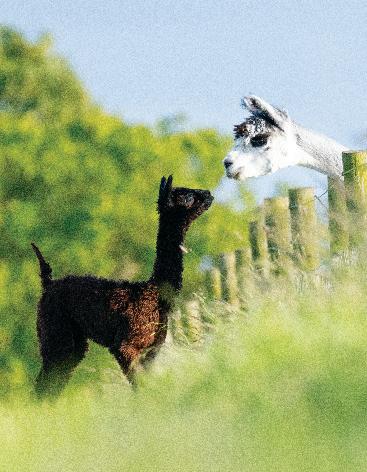

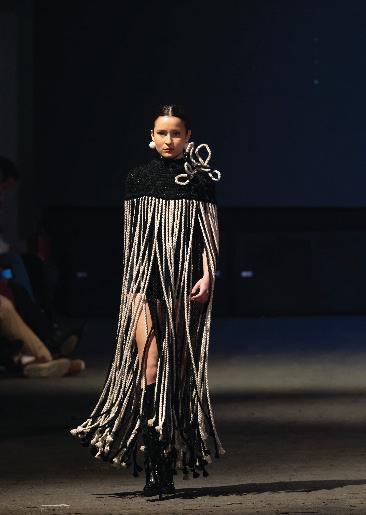
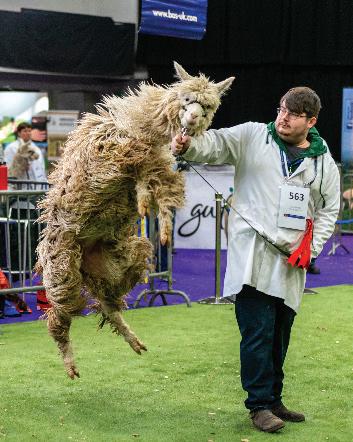
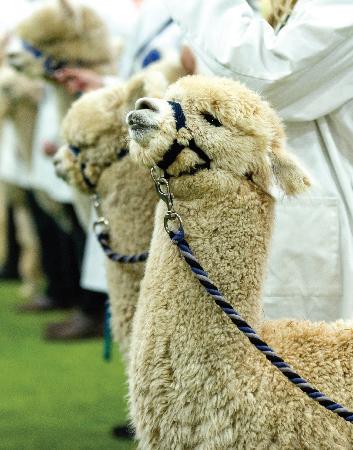
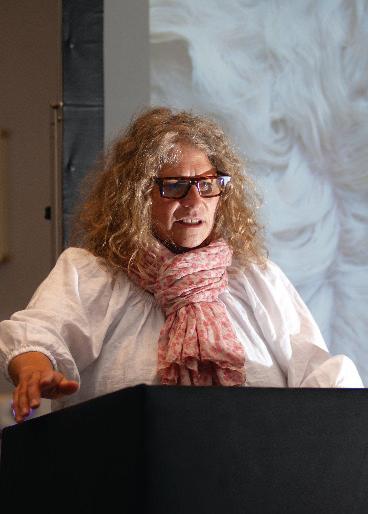
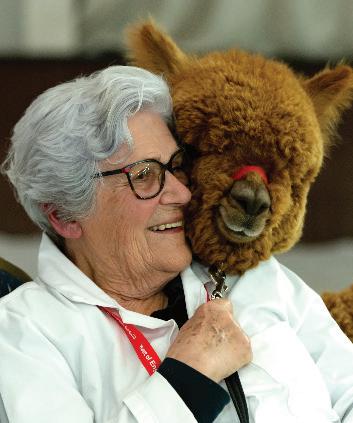
M.R.Harness was founded in 1995 after existing part time for a number of years. Mary herself is a qualified engineer and is well placed to assess materials and their useage. Company policy is to test as many of the webbing designs as possible before release, as each item is unique to the animal it is designed for. This has led M.R.Harness to become the supplier of choice for headcollars, leads, coats and harness for all the various smallholding animals, but specialising in alpacas and llamas, and working ponies.
All items are hand crafted ‘in house’, in England, so you can be assured of good workmanship and quality products that last.
So please come and try the ‘Choice of Champions’.
TEL: 01299 896827
EMAIL: mary@mrharness.co.uk
Everything you need for your alpacas delivered to your door! We are a one-stop-shop for alpaca supplies, including headcollars and leads, vitamins and nutritional supplements, healthcare and welfare supplies, colostrum, coats for cria and adults and microchipping equipment.
We also have a good selection for your other animals, including dogs, chickens and horses, as well as a range of farmhouse items and gifts, including our famous home cheese-making kits.
We are alpaca owners ourselves and we are always happy to help with your questions and enquiries.
Order direct from our website or by phone. You can expect fast, friendly service and advice.
TEL: 01295 713188
EMAIL: homesteadfarms@btinternet.com
WEB: www.homesteadfarmsupplies.co.uk
High specification organic chealated nutritional supplements suitable for all camelids.
• Premier Camelid Drench
• Premier Mineral Supplement
• Premier Mineral Bucket
• A, D3 & E Paste
TEL: 07866 607466
EMAIL: jganimalhealth@aol.com
WEB: www.jganimalhealth.co.uk



Members meet on a regular basis to talk alpaca, organise events, seminars, workshops, and generally share their experience and knowledge on all things alpaca.
The groups are not exclusive (to BAS members or by Geography) and are open to all. Their aim is to allow new and existing members to come together, socialise with other breeders in their locale and learn more about alpacas. Should you be an owner, prospective owner, or just interested in these fascinating animals, your regional group will always make you welcome.
The groups also provide invaluable expertise by providing qualified judges, welfare advice, nutritionists and lecturers, with the emphasis always on self-help, accessibility and local initiative. Each group organises its own area slightly differently; some hold their meetings in the same place and some move venues. Meetings are organised around barbecues, suppers, coffee mornings and workshops; most groups ask for a small contribution to cover the costs of the event.
No group in your area? Form your own.
The BAS Regional Groups are designed to provide local activities for and contacts between members within a region.
Groups organise their own meetings for members and for disseminating information from the Society to members and passing feedback to the Society.
Groups are responsible for their own financial affairs and meetings of the group should be financially self-funding.
Alpaca shows within the Group’s area would be organised by the Regional Group with assistance from Grassroots Systems Ltd (if required) with regard to online entries and catalogues. Shows are expected to be self-financing.
Groups are encouraged to provide reports of their activities to the Editor of Alpaca magazine.
Notices regarding Group events can be





included in the BAS Newsletter sent by email to all members, posted in the Facebook BAS Chat Forum and posted on the appropriate page(s) of the BAS website – www.bas-uk.com. Details of events should be sent to ceo@bas-uk.com
To be recognised by the Society, the Group must have an appointed Secretary and Treasurer. It must have its own bank account for Group funds. When these items are in place, details should be submitted to the BAS Board which will consider the formal recognition of the Group.
Minutes of meetings must be produced to the BAS CEO and be made available if requested. It is suggested that those interested in establishing a new Regional Group hold a meeting of members within the area to gauge interest and to determine what type of activities local members would support.

A list of all Regional Group contacts is included on the BAS website and it is also sent to all new members who are encouraged to join the one nearest to them.
• Northern Ireland Alpaca Group
• North West Alpaca Group
• North Shires and North Wales Alpaca Group
• West Shires Alpaca Group
• South Wales Regional Alpaca Group
• Cornwall Camelid Association
• South West Group (SWAG)
• Heart of England Alpaca Group
• South East Alpaca Group
• Eastern Alpaca Group
• East Midlands Alpaca Group
• Yorkshire Alpaca Group
• North East and Borders Alpaca Group
• Scottish Group
• Suri Network UK Group

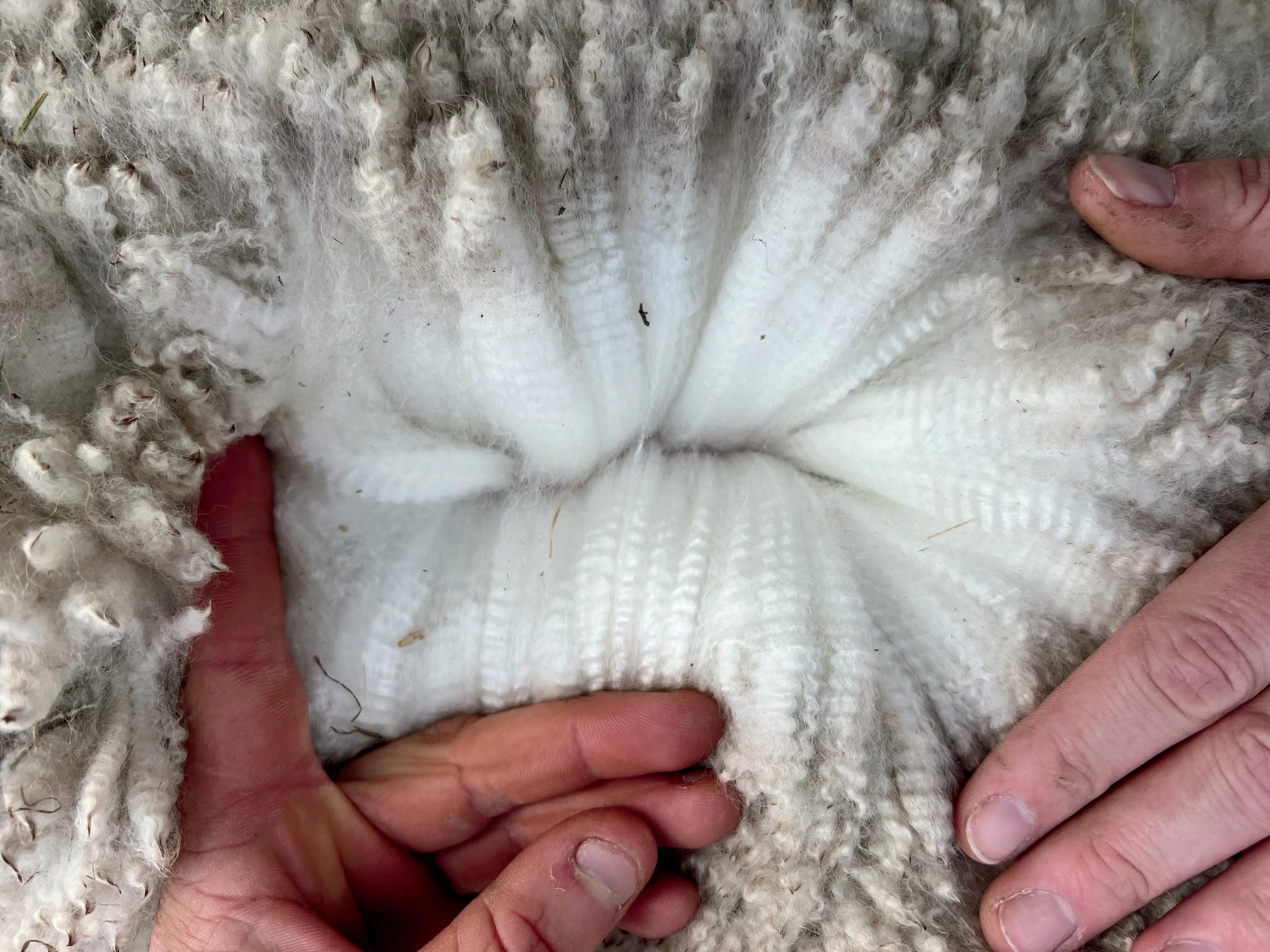
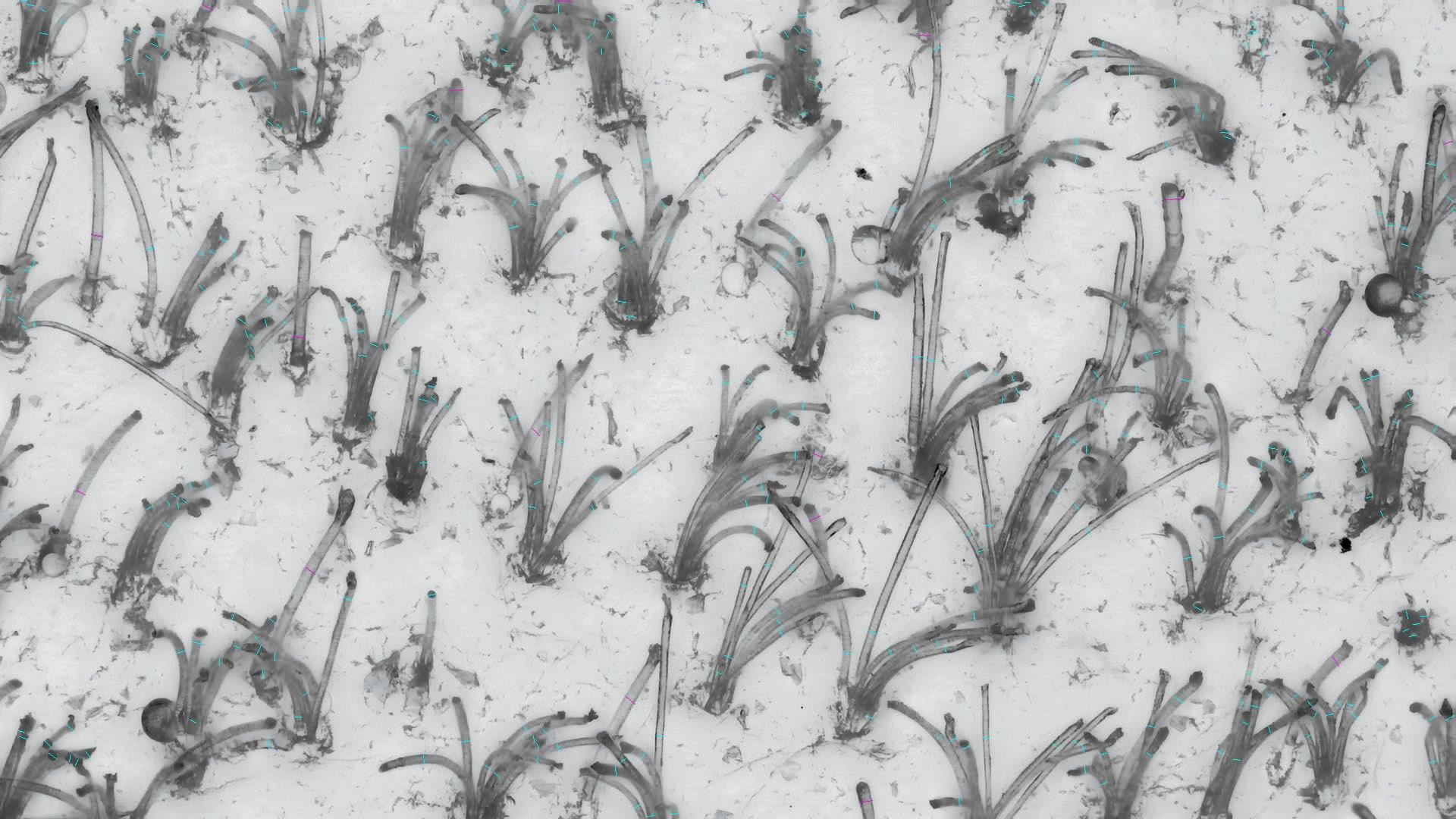

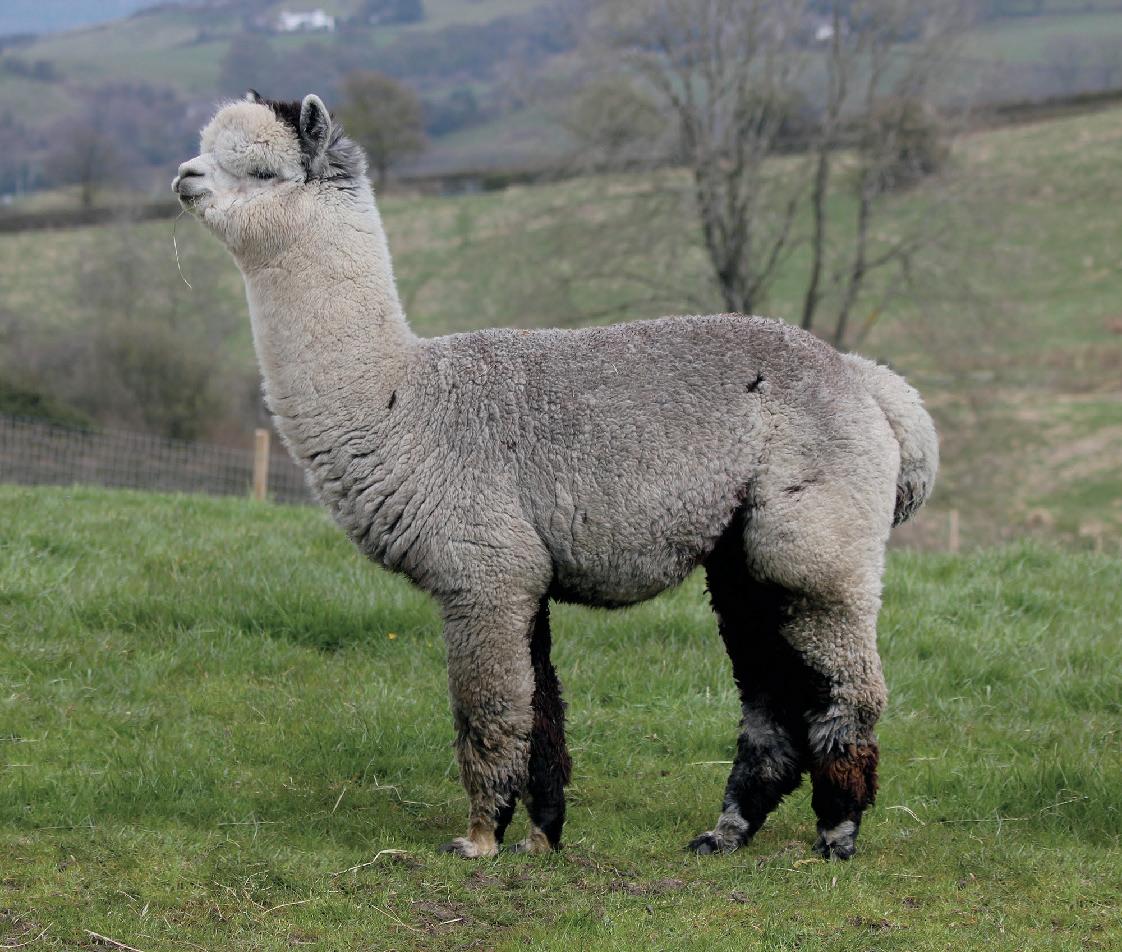

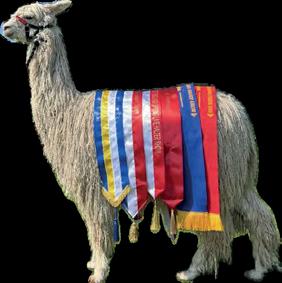
There is a wealth of entertainment, education and experience across the UK alpaca groups, so don’t miss out. Did you know that you can join a group outside your area and benefit from even more skills?
The Heart of England Alpaca Group exists to unite, support and educate alpaca owners. As one of the UK’s longest running regional groups, the group provides trusted advice, learning opportunities and a strong sense of community for members at every stage of their alpaca journey. Their extensive regional coverage brings together a diverse mix of individual owners and alpaca businesses with a wide range of experience.
HoEAG host two of the UK’s largest alpaca events, the Spring Alpaca Fiesta and the Autumn Fleece Show – these major calendar dates are the highlight of the year and bring together old friends and new faces. Alongside these, an annual craft competition, veterinary talks, fleece demonstrations, and farm visits add further value, and we continue to develop an engaging annual programme that reflects member interests.
HoEAG engage members, many of whom are BAS-registered, through an inclusive, varied programme that promotes education, welfare and connection. HoEAG provides a supportive community, major events, trusted advice, shared learning, and celebration of alpacas across central England.
To join visit the website: ✉ www.heartofenglandalpacagroup.co.uk
SEAG aims are to support the group by being friendly, accessible and interactive with up-to-date topics and information. Everyone is welcome to ask questions, give their thoughts, ideas and involvement. The group covers the whole of the southern England with the exception of Devon and Cornwall and currently have 70 members.
The group has hosted, and will host, a varied repertoire of webinars and fibre events aimed at providing information, to add to an understanding of health, fibre, training and behaviour. Information about events is provided on our S.E.A.G website and the new WhatsApp group. The group is here to help and support each other for the benefit of our animals and the wider alpaca community in the region, to broaden knowledge and have some fun!
To join contact: TV admin@heartofenglandalpacagroup.co.uk
NIAG are a group of alpaca breeders and enthusiasts from across Northern Ireland and further afield. They are there to provide advice, training, shows and support on all things alpaca. Their focus is to provide knowledge and support for any interested parties in relation to alpacas to build capacity and skills. Membership is just under 40 with owners having alpacas for breeding, to flock guards, and simply for the pleasure of owning such enthralling animals; most of the members are also members of BAS. Their biggest ever alpaca show was held in 2025 in Northern Ireland, judged by Barbara Hetherington, which included a craft and photography competition alongside stalls for the public. Look out for this year’s show on 8 March 2026 at Ecclesville Centre, Fintona (judged by Molly Gardner).
To join NIAG email for an application form or visit the website: ✉ chair@alpacani.org
The aim of NSNWAG is to support alpaca owners through education, welfare, and shared community events, meeting the region’s need for stronger networking and accessible guidance. There are currently around 160 members, ranging from pet and hobby owners to small breeders and trekking businesses. Most members are BAS-registered, who joined for support, learning, welfare guidance, and a fun friendly alpaca chat.
The parasite, birthing workshops and processing mill trip days have been real highlights, and the next initiative is developing more hands-on training days for new owners, understanding fleece and judging. NSNWAG achieve their aims through regular events, shared learning and an extensive webinar lecture series. As well as this there is a great WhatsApp community, and meet-ups throughout the year.
The Yorkshire Alpaca Group supports alpaca owners, breeders, and enthusiasts across the UK’s largest region and further afield. With about 50 members – most being BAS members – the group offers information, welfare guidance, and support, along with organising events and social gatherings. The group hosts a free series of talks and workshops, available on Zoom and in person. There is a face-to-face AGM and social event on 21 February. In addition, an annual BAS-accredited Halter Show is scheduled for November 2026 in York.
Contact the group if you’re interested in joining a welcoming community and connecting with others passionate about alpaca: ✉ yorkshirealpacagroup@gmail.com TV www.yorkshirealpacagroup.co.uk
The North East & Borders Alpaca Group is a friendly and supportive regional network for alpaca owners and enthusiasts across the North East and Borders. With 29 members, the group offers opportunities to share knowledge, practical experience, and trusted advice on all aspects of alpaca care, breeding, and welfare.
Alongside educational activities, the group also organises social events, helping members build friendships as well as professional connections. This year, activities include a mill trip, giving members the chance to learn more about fibre processing. The group also has an active WhatsApp group, providing a space for ongoing discussion, advice, and support between meetings.
The aim of the North East & Borders Alpaca Group is to promote good practice, encourage learning, and strengthen the alpaca community throughout the region. Chairman: Iain Smith
EAG aims to promote best practices in alpaca care and breeding by providing educational events, offering networking opportunities, as well as halter and fleece competitions. The group deliver this through a range of events held throughout the year, helping owners of all experience levels, connect, learn, and grow together.
Joining the group means becoming part of a friendly, supportive community of alpaca owners who share their knowledge and expertise. EAG have an exciting year ahead, with future events including a Mill Tour, as well as a talk on fibre analysis and how this can be used to improve breeding decisions.
EAG are always delighted to welcome new members.
join visit the website:
The WSAG aims to promote and protect the interests of alpaca owners, breeders and alpaca products. Our members are mainly interested in the maintenance of healthy alpacas.
There are currently 61 members owning anywhere between zero and well over 300 alpacas. Amongst the membership are a BAS Judge, the current Chair of BAS, spinners and weavers, fibre processors, an accredited Camelid Dynamics practitioner as well as several very experienced breeders and alpaca show organisers. Most members are also members of BAS, only a handful are not. Members have easy access to other members with a wealth of experience and a number of courses are provided, as well as the popular social events, throughout the year. The most looked forward to events are, in truth, the annual Christmas dinner and annual summer BBQ. A FaceBook page is used along with emails and the website (currently being updated) to engage with members.
SWRAG provides a friendly, supportive network that promotes confidence, enjoyment and wellbeing for both alpacas and their owners. Members range from experienced breeders to brand new pet keepers, including those offering glamping, alpaca experiences, fibre production and showing. With many new owners in the region, supporting best practice and welfare is central, alongside educating prospective keepers. SWRAG has 232 members, including breeders, non-breeders, vets and alpaca enthusiasts. A range of member and vet-led events and webinars are hosted, supported by an active WhatsApp group and quarterly Zoom meet-ups. The website and members map keep everyone connected. SWRAG is a welcoming, knowledgeable and fun community for all alpaca lovers, made possible by our dedicated volunteer committee.
SAG aims to promote happy, healthy and high quality alpacas. Of the 78 members, (mainly, but not only BAS members) from Scotland and south of the border, there are a mixture of those who show, those who breed but do not show and pet owners. Communication with each other is via a monthly newsletter and WhatsApp groups to circulate information and find out what SAG members want. SAG organises three shows a year, two with NWAG; regular events at the Edinburgh Vet School (eg herd health, birthing and parasite identification, led by Sue Thomas); and online seminars. A particular highlight is the ‘SAG on Tour’ trip to visit and learn from other herds (most recently Amberly and West Wight, next stop Ambermoon). You should join them because they are friendly, fun and supportive and you will get access to some fantastic learning opportunities.
As a group SWAG aims to provide all manner of support to members from advice on care, both every day and emergency, to practical help and opportunities to learn through our articles, socials and various courses. The group are lucky to have two BAS Judge Trainers among the members as well as several BAS Affiliate Trainers geographically spread throughout our region. SWAG organise and run two shows a year, the Devon and Dorset County Shows, where the group provide events for members to enjoy themselves socially and, of course, are always looking for volunteers. SWAG are particularly excited to be working on a social media advice portal specifically for members which will, hopefully, be launched later this year as well as regular newsletters and a rejuvenated programme of events.
CCA provide a supportive and friendly community, focusing on education and learning about all aspects of alpaca ownership. There are 85 members from a wide age range, with herd sizes ranging from those preparing to welcome alpacas into their lives to herds of over 100 alpacas, including two specialist camelid vets. This creates a strong pool of skills, knowledge and shared experience, allowing members to learn from one another.
A regular programme of events is run each year, organised by an active committee, and are particularly proud of their in-person vet days led by camelid vets. The group’s current initiative is the development of an interactive map showing the location of members and what they offer, such as alpacas for sale, fleece knowledge and weaving skills.
Members are kept up to date through a newsletter, website and Facebook page. Most BAS-registered owners in Cornwall and Devon are also members of CCA, and we welcome all new members.
cornwallcamelidassociation@hotmail.com
www.cornwallcamelidassociation.co.uk
The East Midlands Alpaca Group is all about creating a stronger support network and connection between alpaca owners across the region. The group is moving towards a more communityfocused approach – helping people meet, share experiences, and feel supported, whether you’ve just started or have an established herd. While shows and training still have their place and the group will be sharing all the fantastic work BAS and neighbouring groups do, this year we are putting more emphasis on the basics of welfare, day-to-day questions, and working with local vets on
NWAG is a very active group, having in excess of 70 members. The group has been busy working with the Scottish Alpaca Group to promote and organise the Northern Show (held January 2026). Together with NEBAG and SAG were part of the team that held a fabulous fleece show hosted by Barnacre Alpacas earlier in the year. The future of the industry depends upon us developing these inter-group ties still further in order to try to promote the positives of alpaca ownership to a wider audience who may want more than pets. Engaging the wider public is vital, and NWAG will be combining an alpaca show in April 2026 with a craft show aimed at introducing the general public to alpacas and offering expert advice to those that may be interested in becoming owners. As a group, NWAG are determined to help drive the industry forward into a more diversified future. The NWAG committee are always keen to welcome new and enthusiastic members.
The group was originally formed with the core remit of promoting, preserving, and protecting the Suri within the UK and is open to everyone who owns, has an interest in or simply wants to know more about Suri.
A seminar was held on EBV’s which, as a direct result, members agreed to collaborative groups using their data between herds to expedite this across the Suri gene pool with an on-going commitment to improvement of the breed.
In addition, the group has negotiated the long-term supply of Suri fibre and are operating a co-operative fibre purchasing scheme offering uplifts in value to members. With some exciting things to start already, other educational seminars and days being planned on some thought provoking subjects, which will be shared with the BAS through the newsletters, magazine, and Facebook pages but are hoping that you might want to become involved and gain the benefits of membership by joining the group.
things like vaccination schemes. We’ll also be working with BAS and wholesalers on making the most of your fibre. It would be great to have some more people involved in the running of the group too. If you can spare an hour or two a month, let’s have a chat.
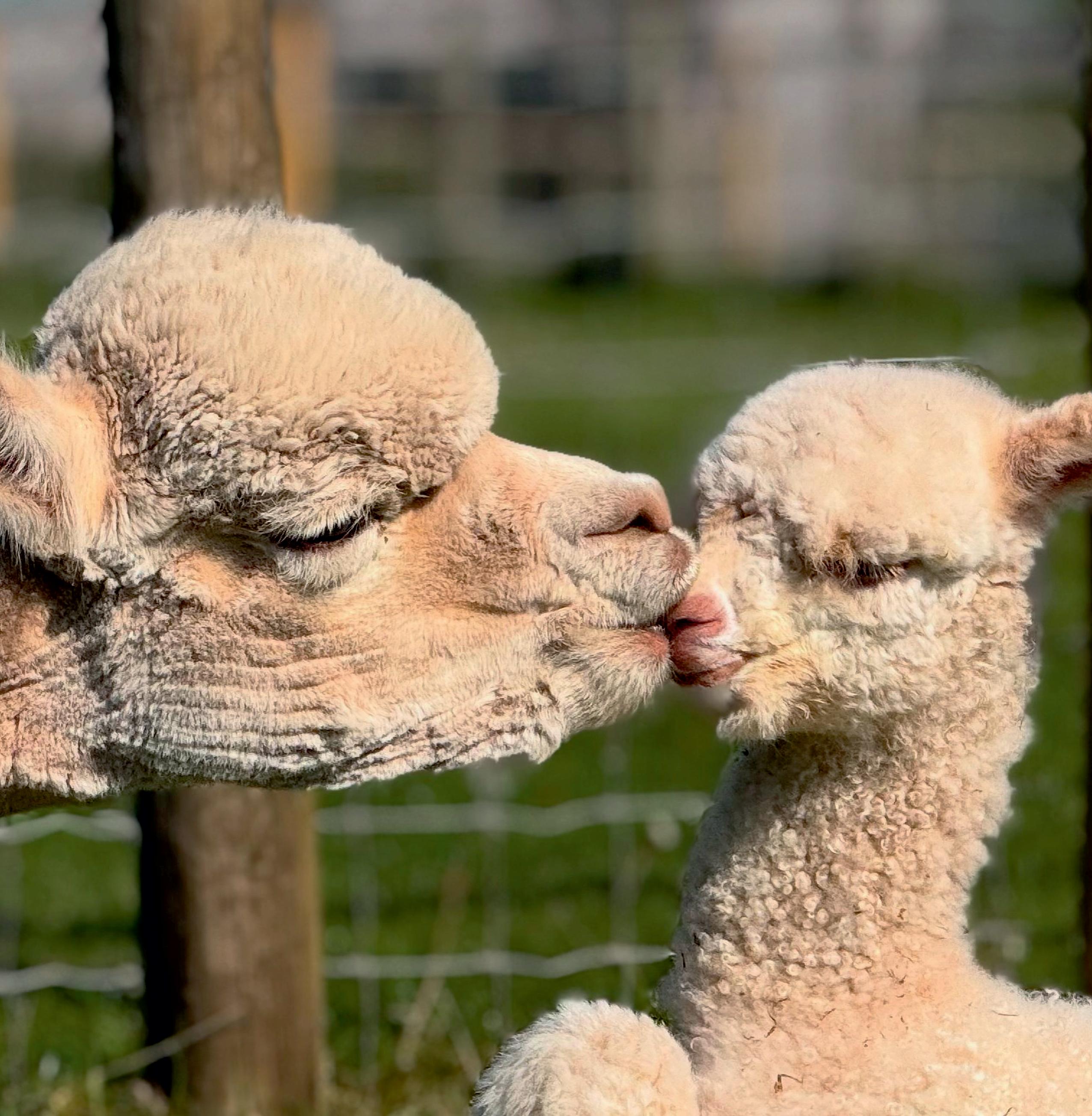

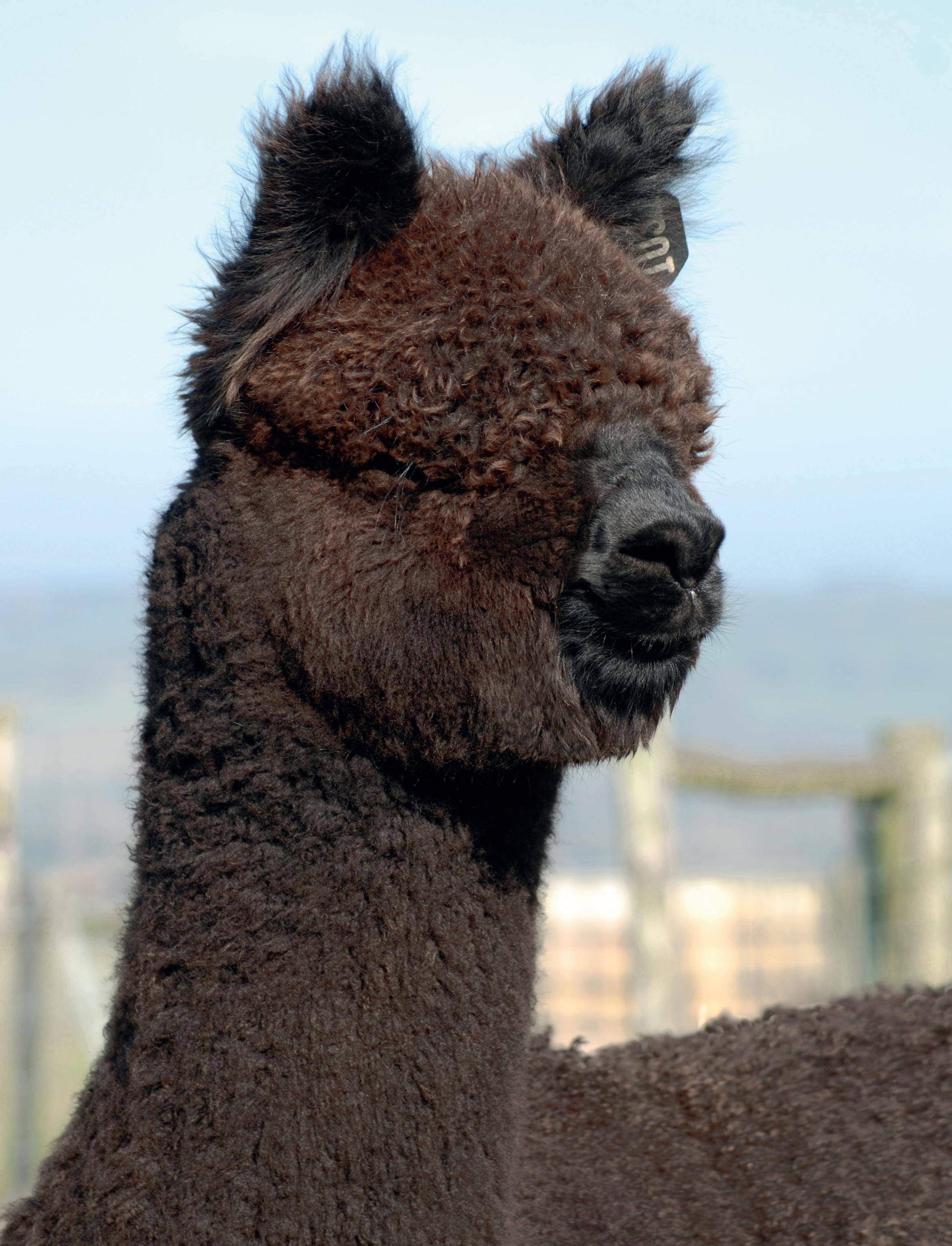
32 years of Alpaca expertise
• Strategic business planning for new herds and comprehensive herd assessments for established breeders.
• Elite pedigree and pet alpacas available in the UK and for export to the EU, Qatar, UAE, Saudi Arabia, and India.
• Proven guidance in securing planning permission for a dwelling using alpaca breeding as justification.
Please call Tim to talk more about alpaca ownership: +44 (0) 7875 532827