Kelsey Media takes your personal data very seriously. For more information on our privacy policy, please visit https://www.kelsey.co.uk/privacy-policy/ If at any point you have any queries regarding Kelsey’s data policy you can email our Data Protection Officer at dpo@kelsey.co.uk
8 Sloane Street Auctions launch their new wine department 9 Launch of a new winery 11 Welsh Vineyards Association celebrates excellence 13 The world’s first wine amphora made of high-performance concrete 14 Limited-edition commemorative red wine
22 Posing with alchohol
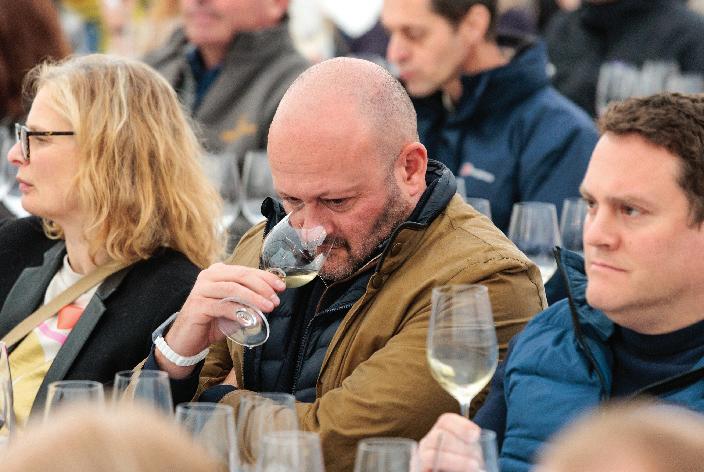
Reimagining the Champagne Coupe for modern Britain and the inaugural Crouch Valley Wine Fair.
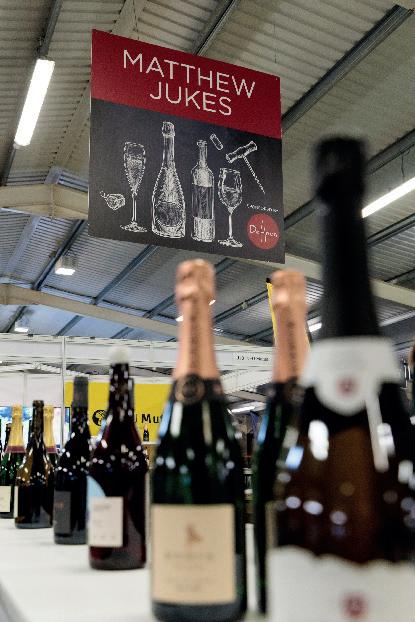
24 Matthew Jukes What I’m drinking.
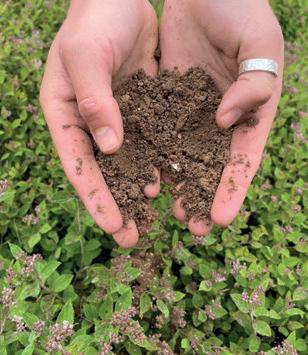
31 The Vine Post Early-season soil additions for healthy vines.
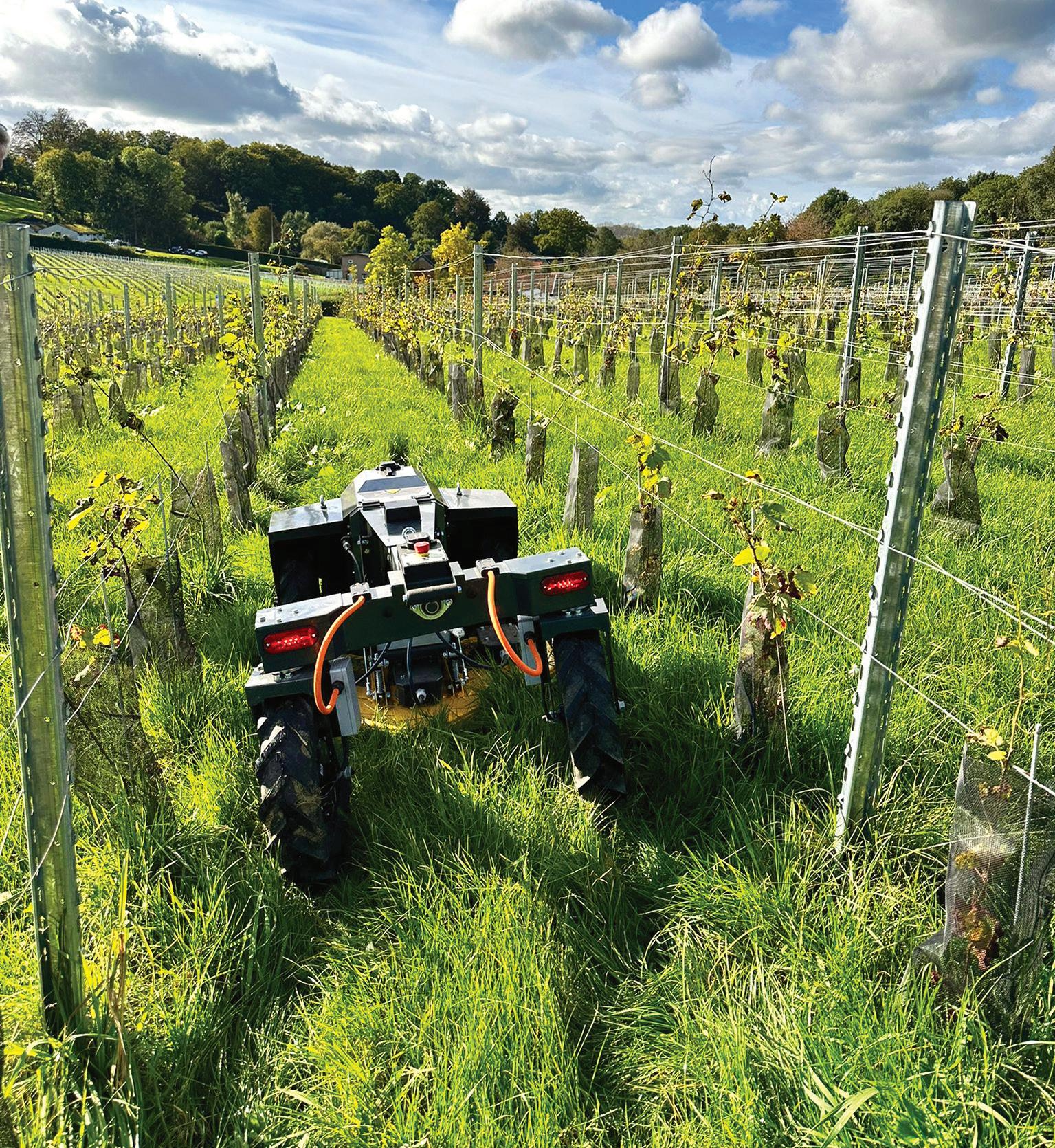
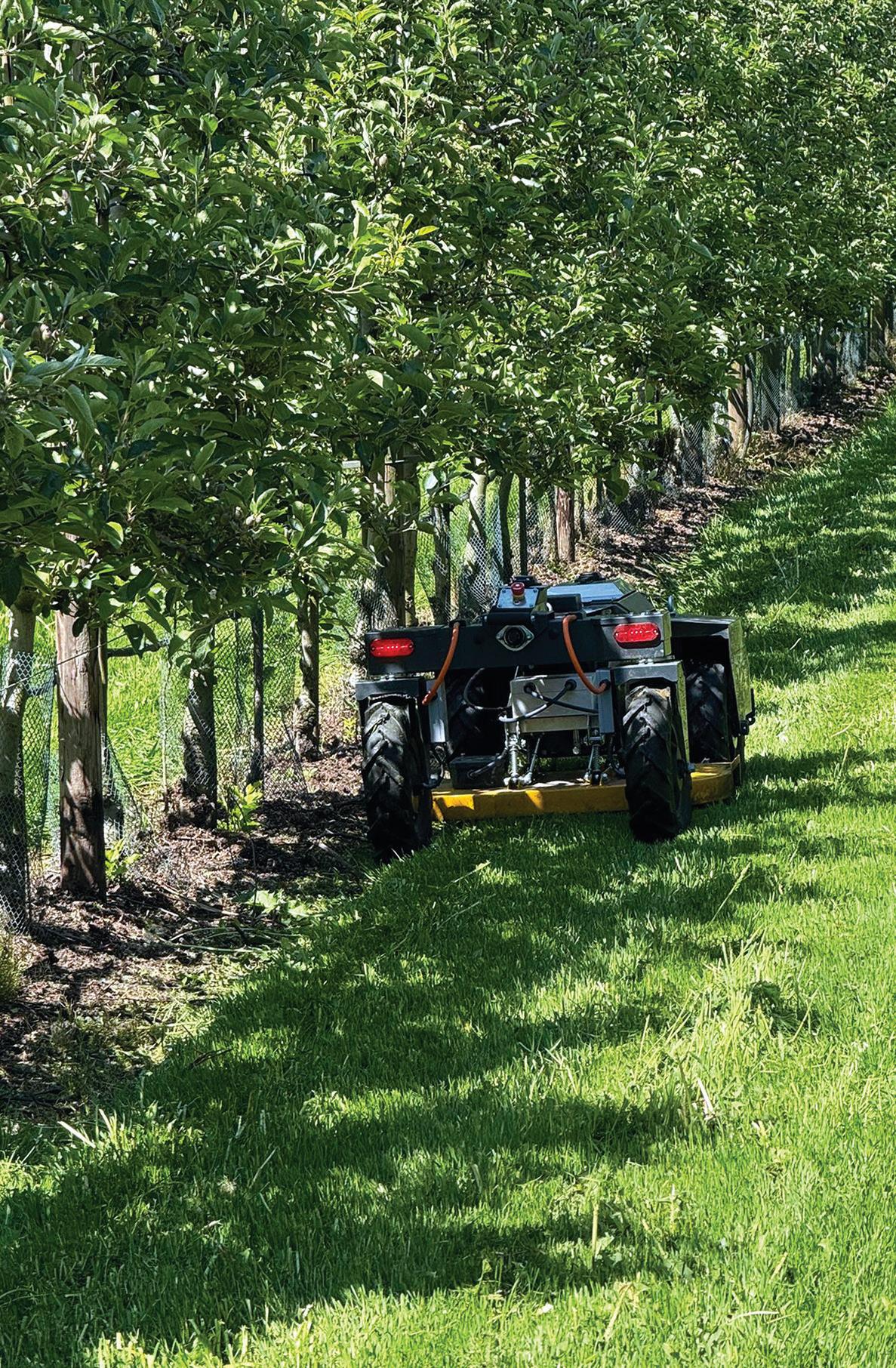
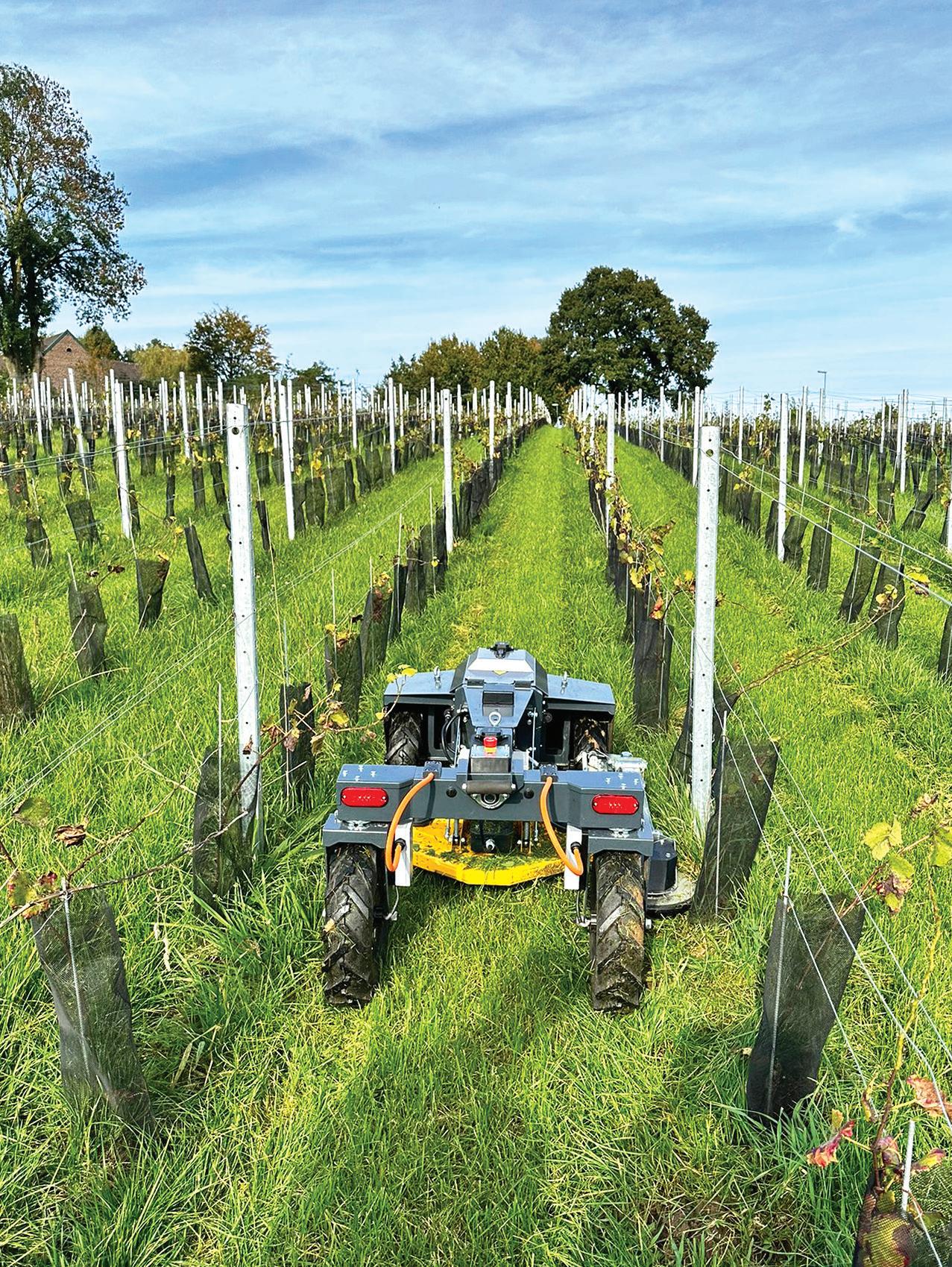
53 The agronomy diary Simple steps to avoid herbicide issues. 64 Light, manoeuvrable, and ideal for narrow spaces
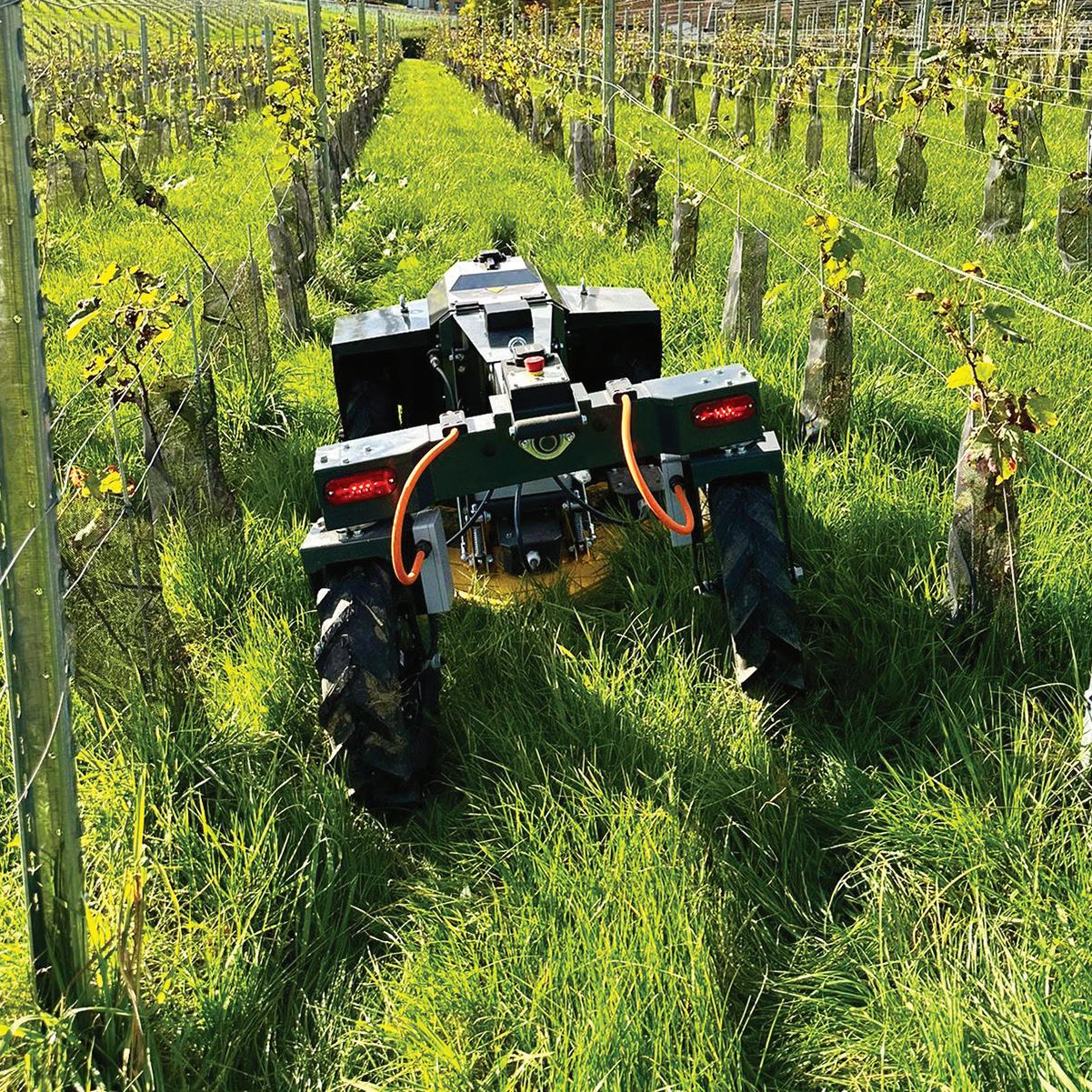
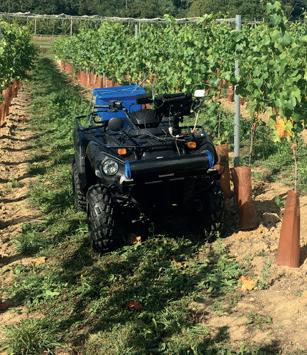
66 Smart weeding and mowing AIGRO: a Dutch ag-tech company with innovative autonomous robots.
19 Range of small changes Key takeaways for vineyard owners from the Autumn Budget 2025.
20 An overseas view of English sparkling wine
52 Post fermentation lees management
For yeast, the end of fermentation is just the beginning.
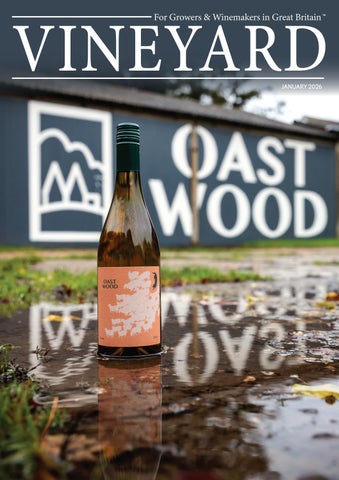
It was officially the first day of winter when Vineyard Magazine visited Oast Wood Vineyard in the Weald of Kent.
56
Sparkling vintage
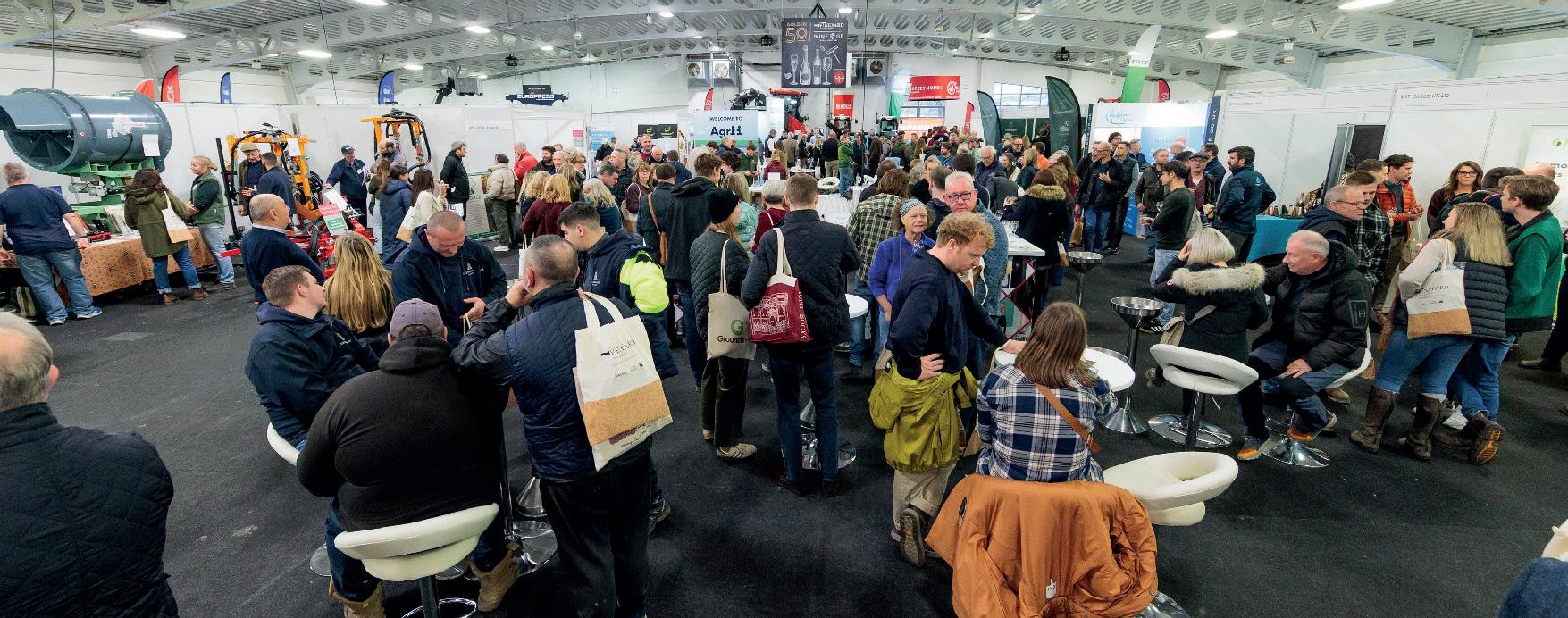
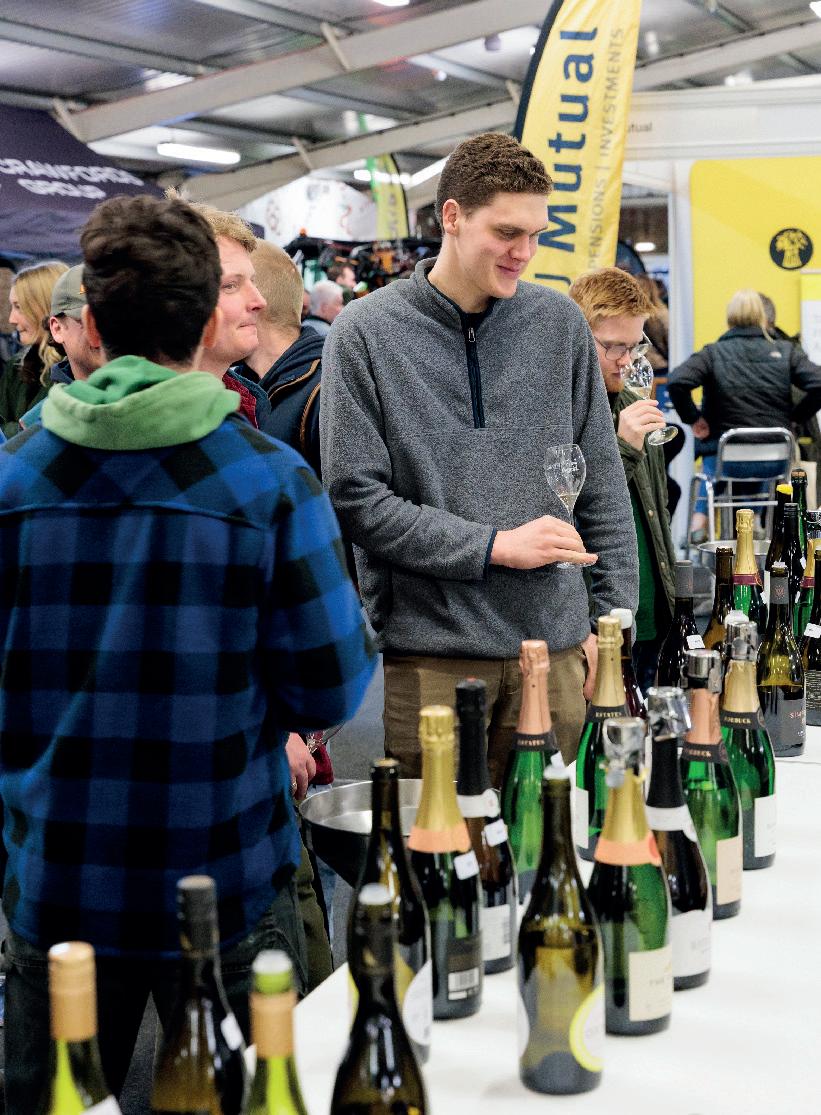
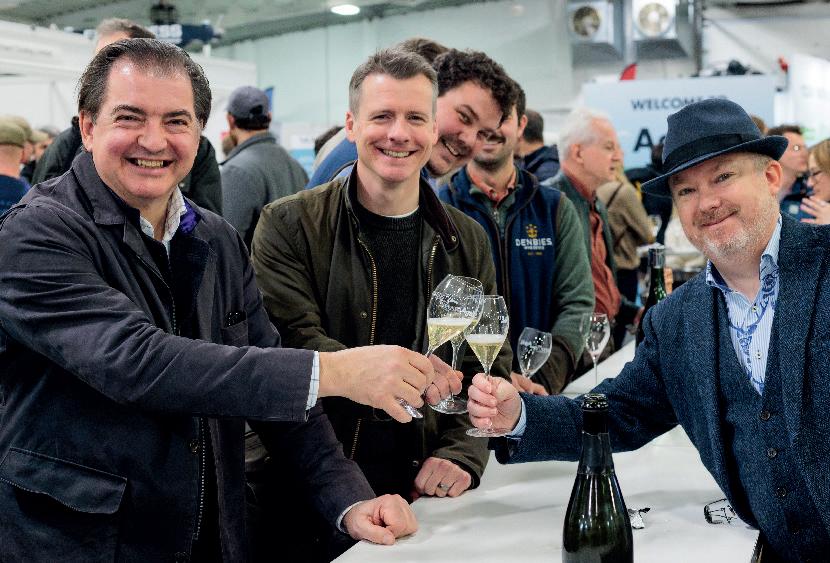
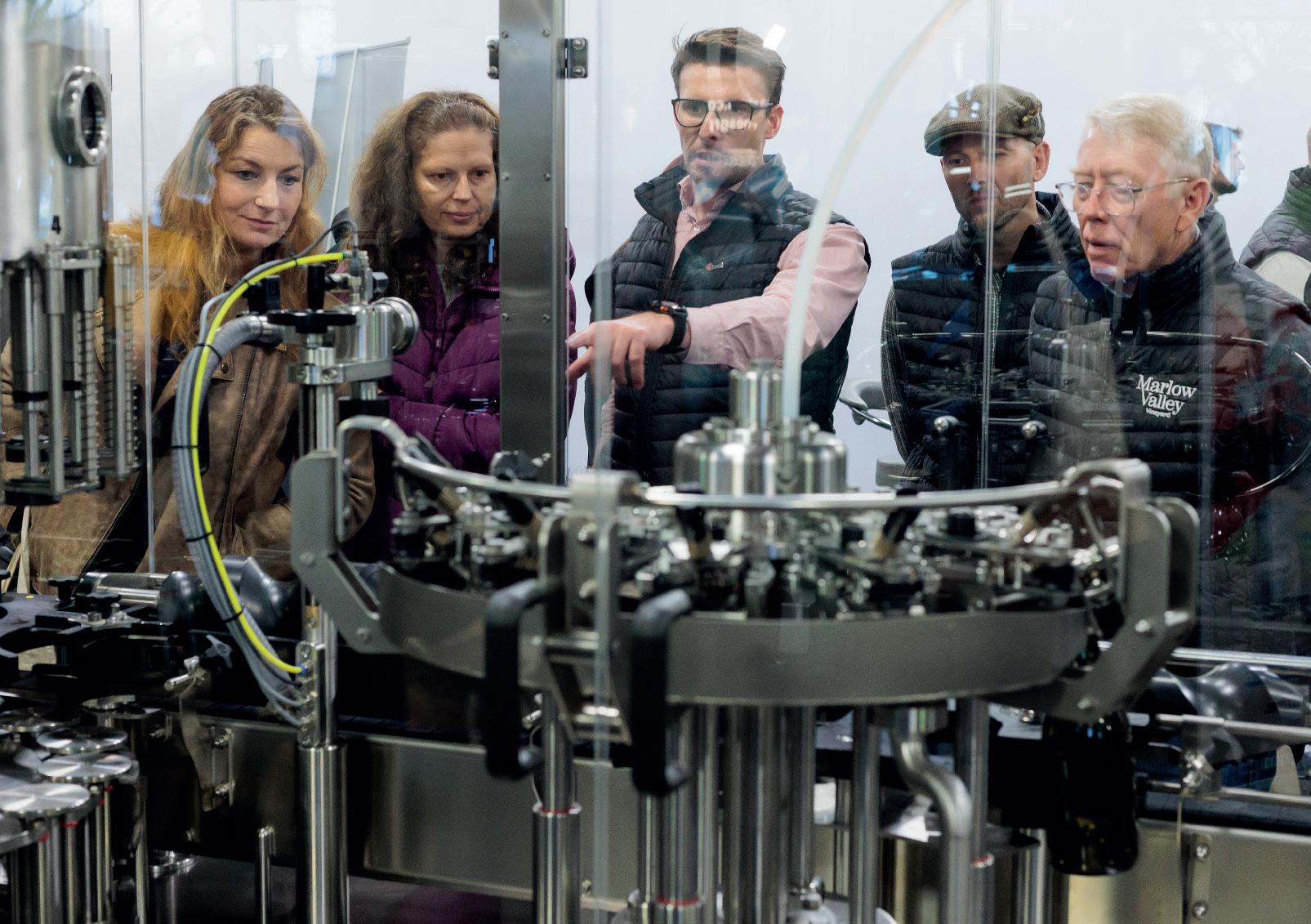
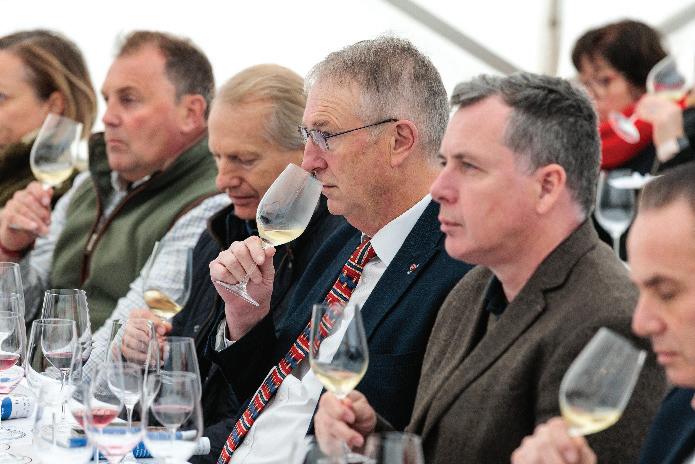
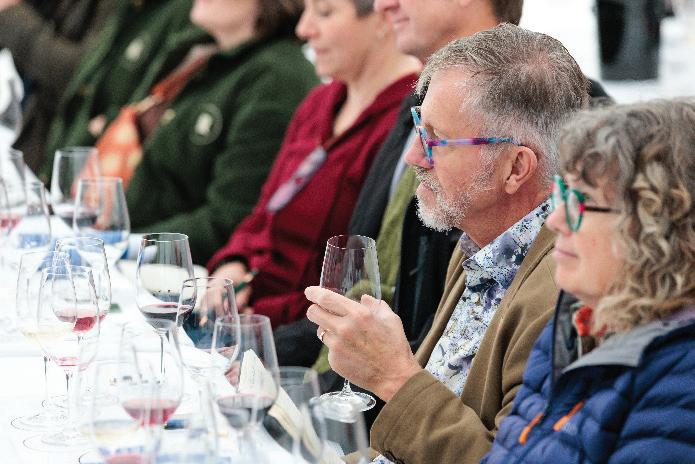
Like a fine wine, the Vineyard & Winery Show continues to improve with age –and the 2025 variety continued that trend.
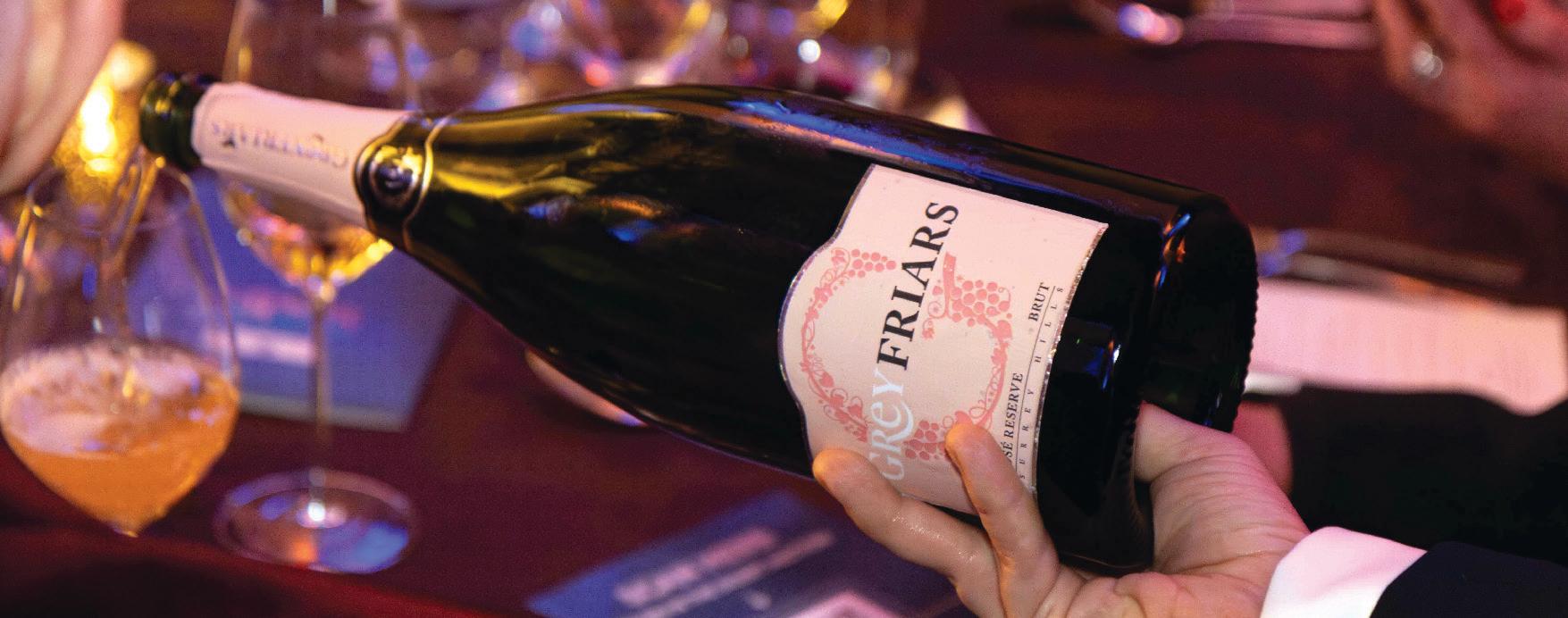
Representing you Réunion des Gastronomes serves English Sparkling Wine at its annual banquet for the first time.
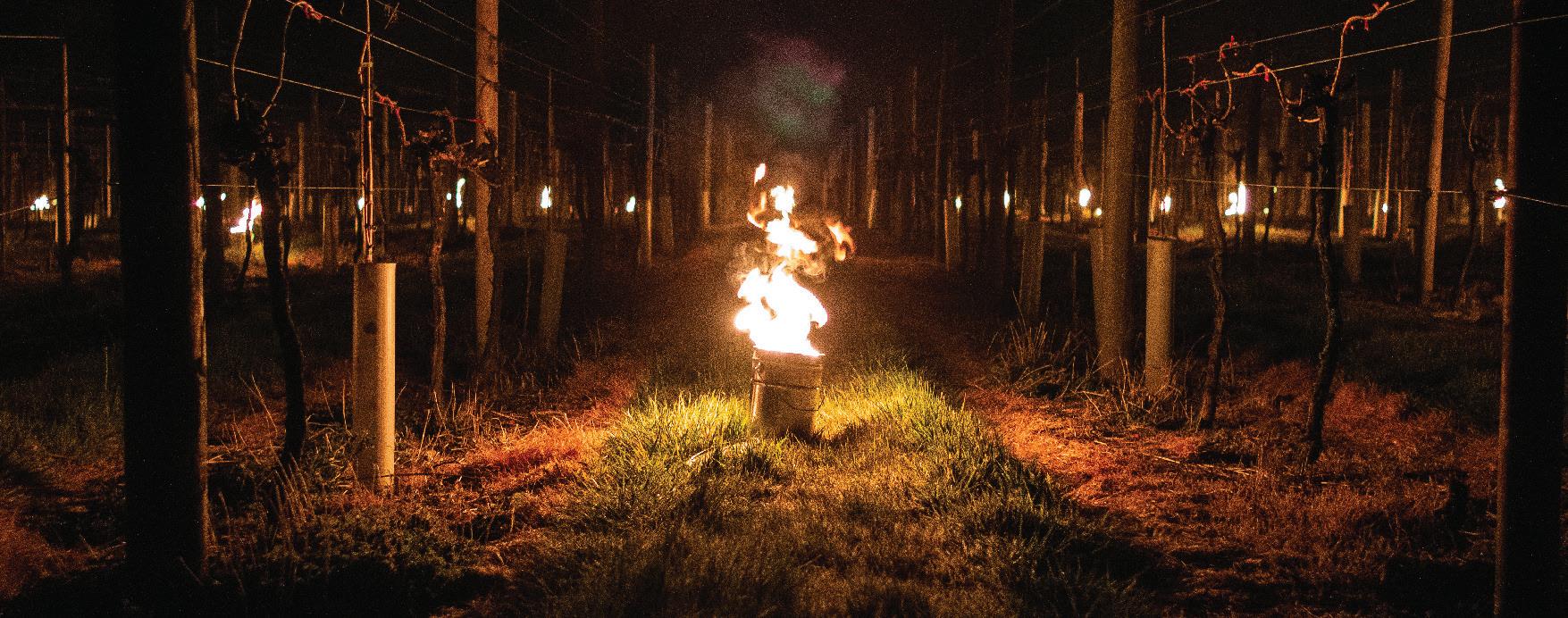
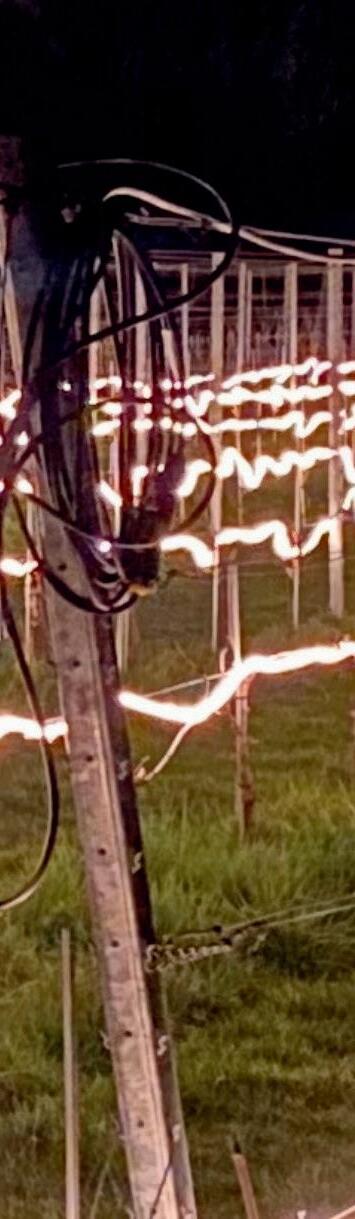
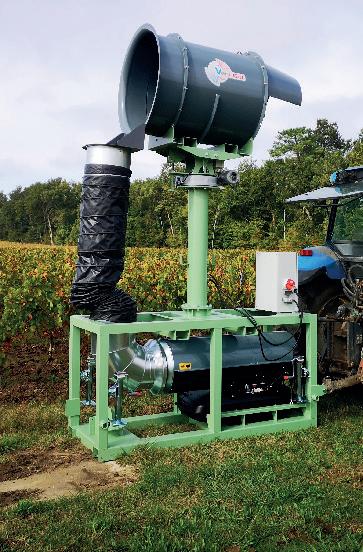
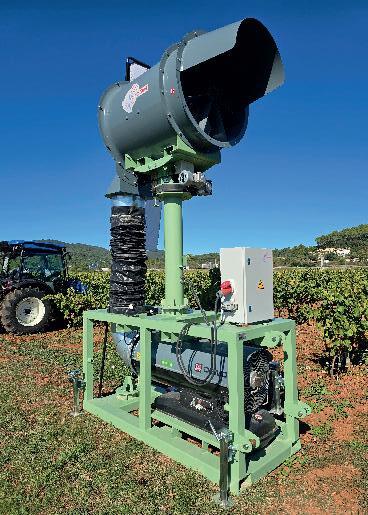
Active frost protection
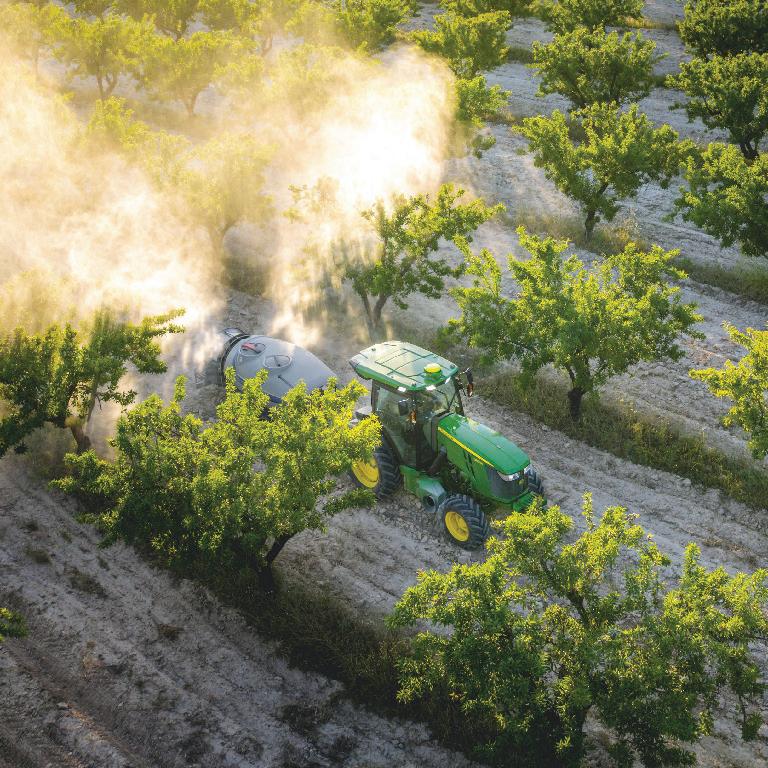
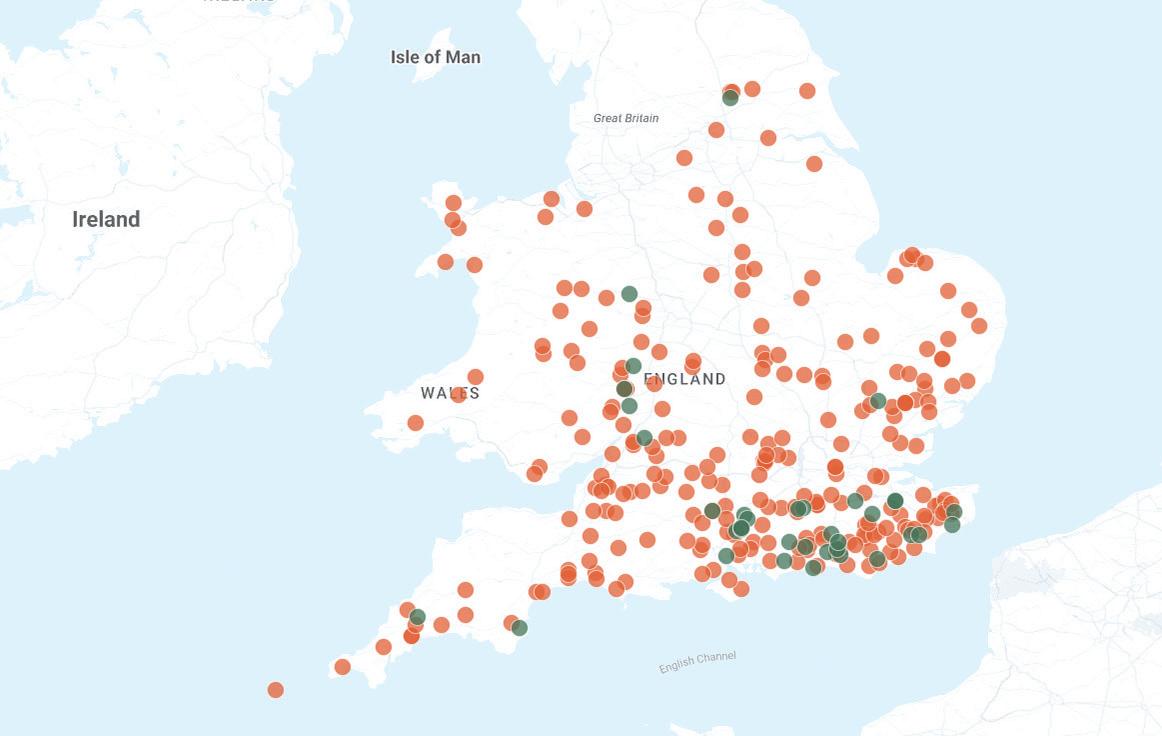
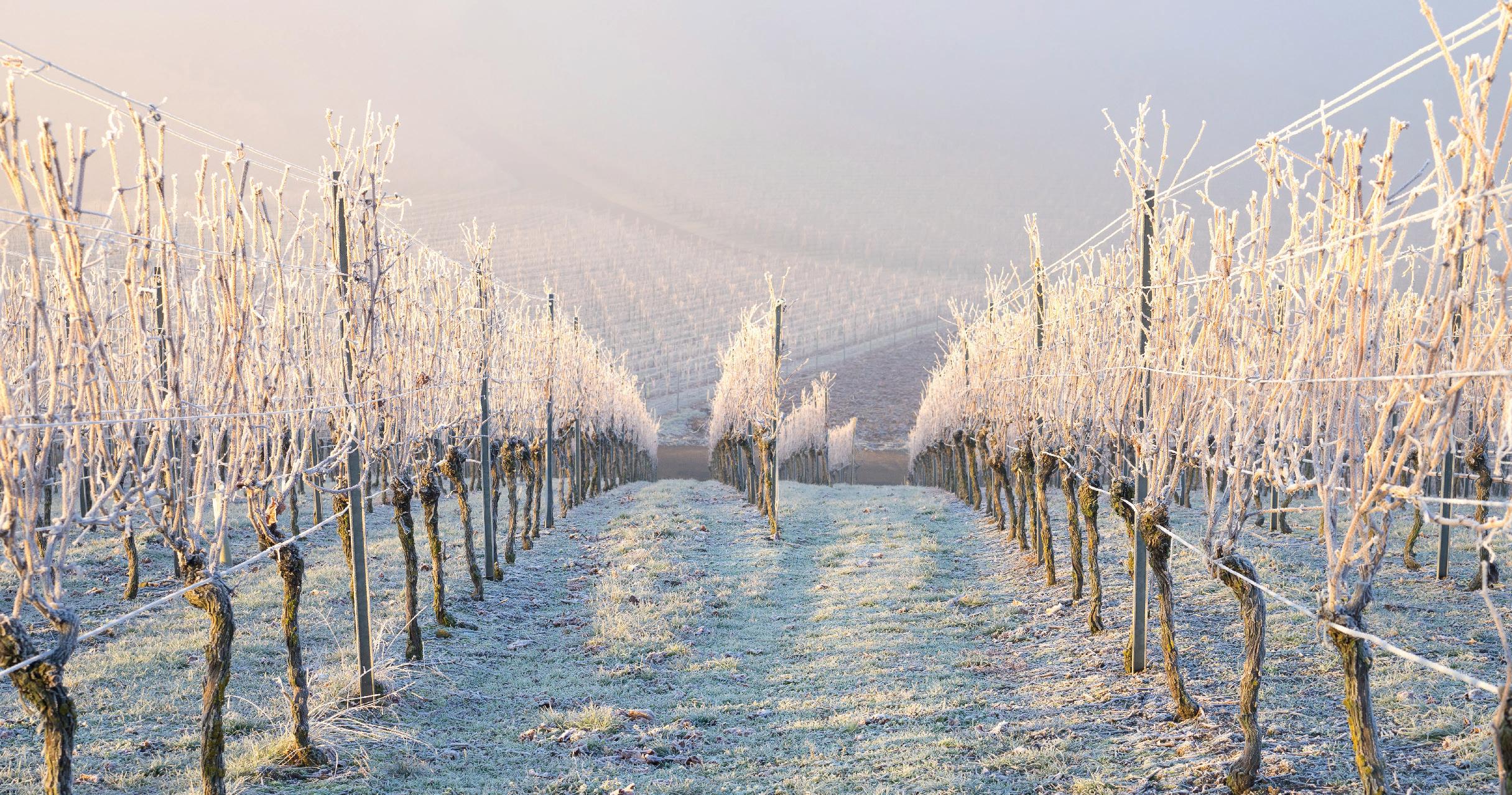
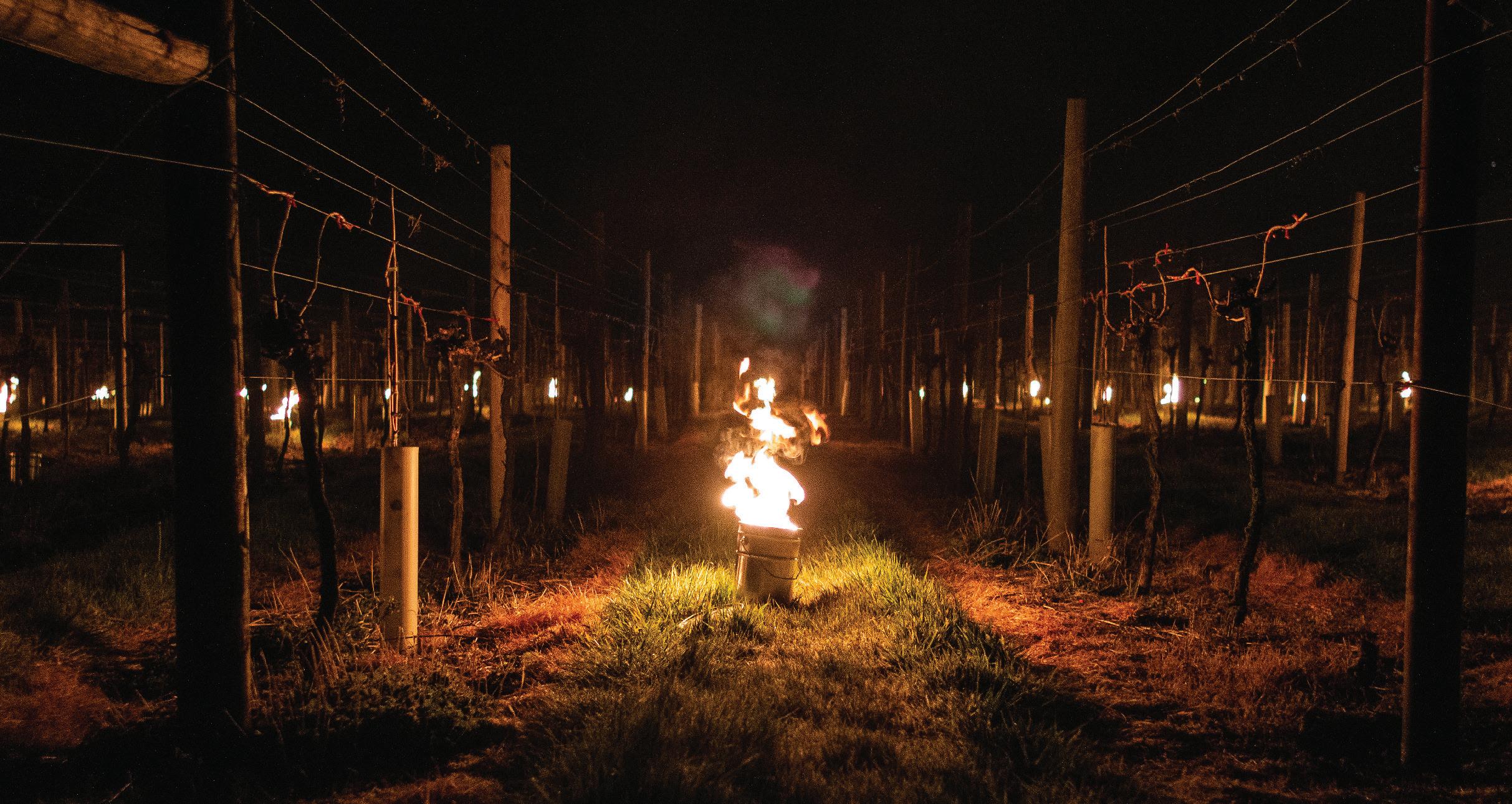
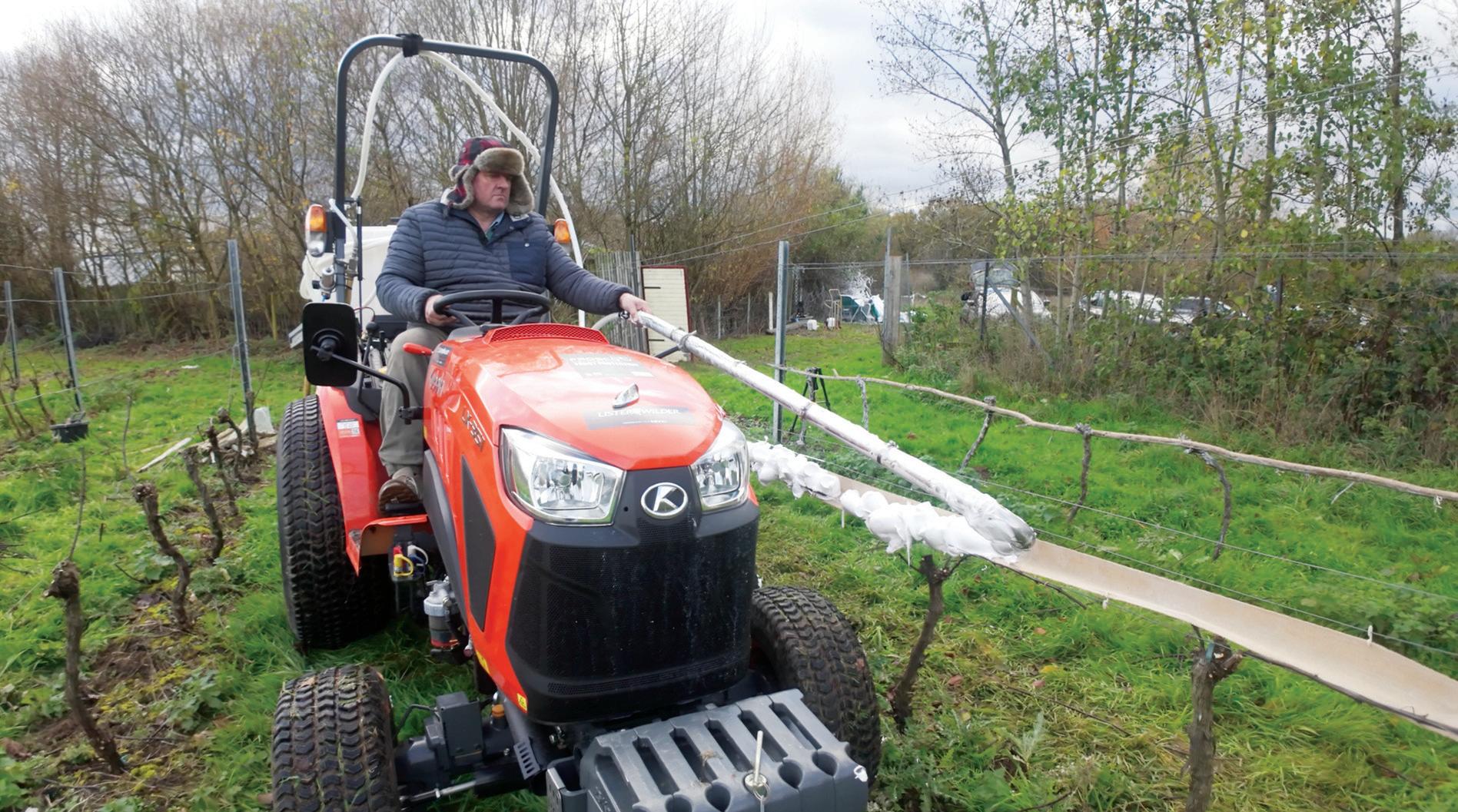
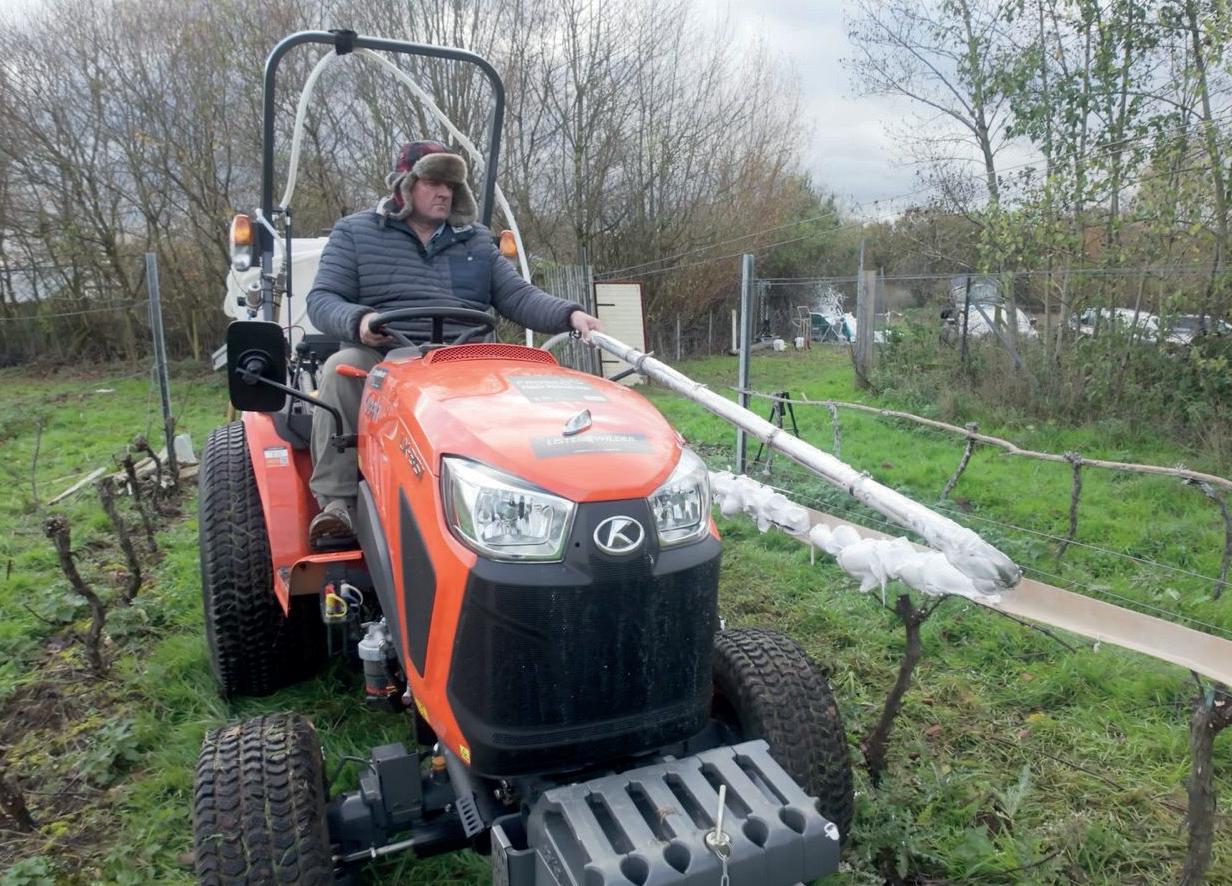
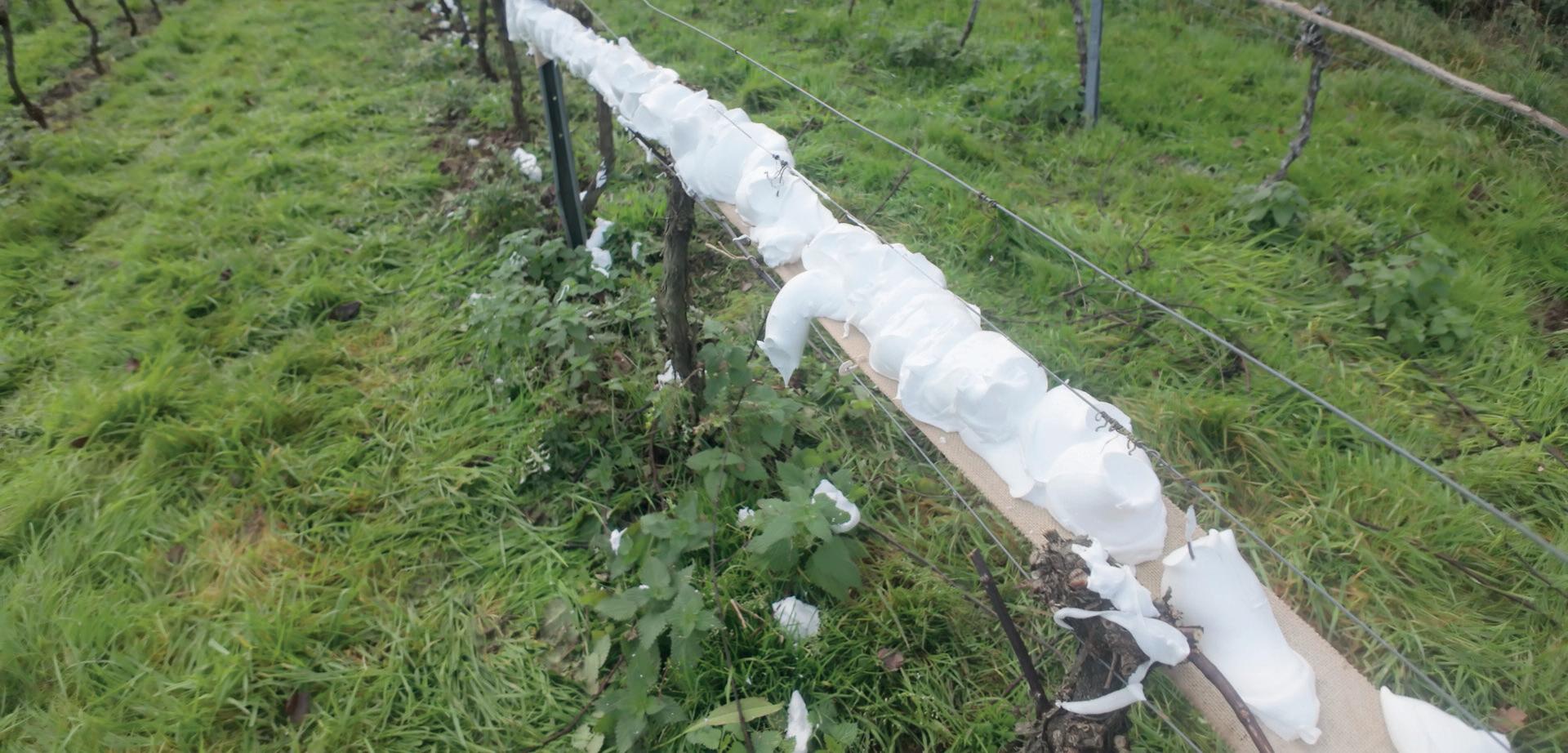
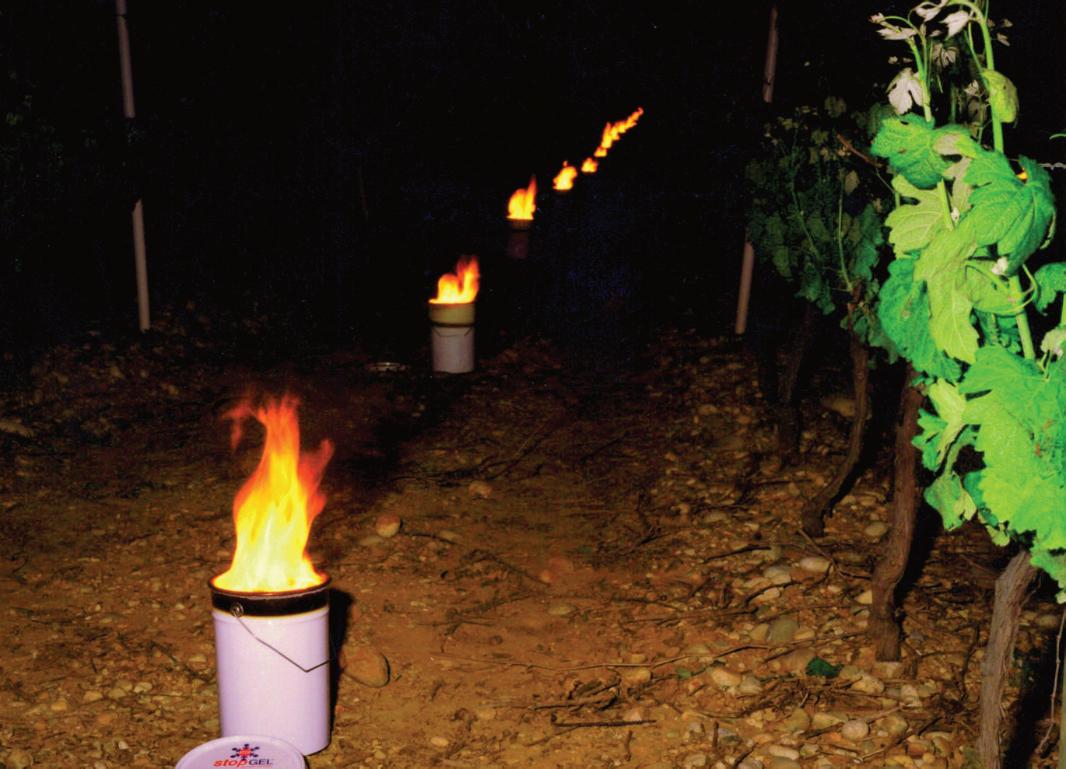
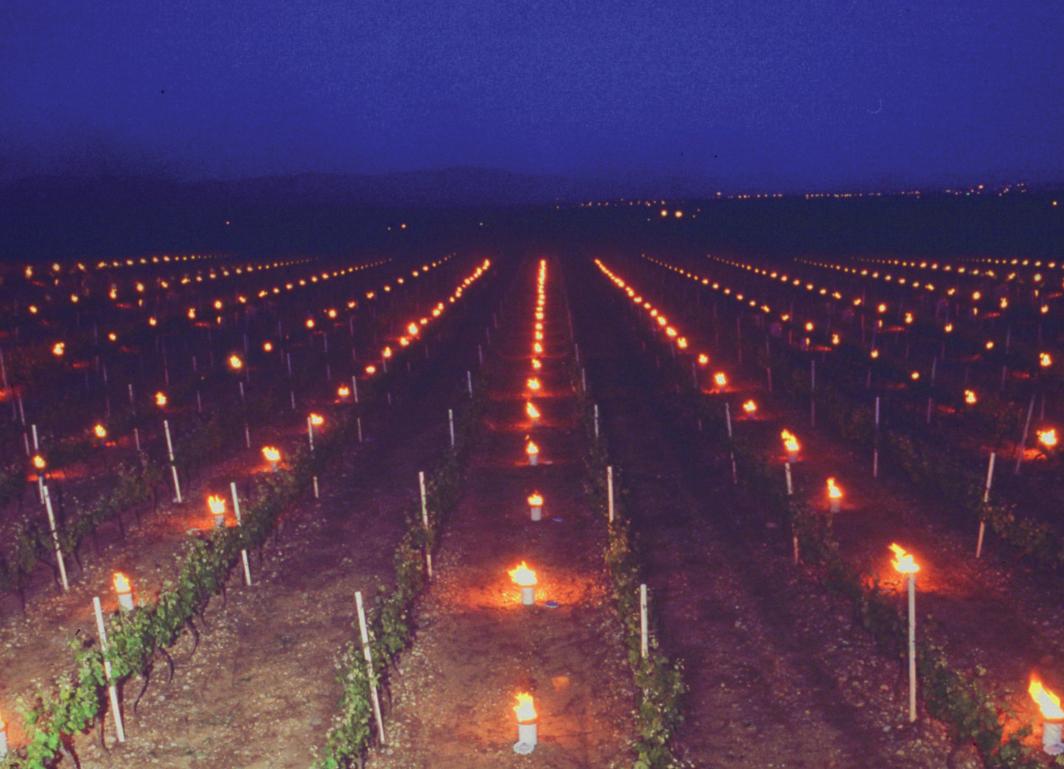
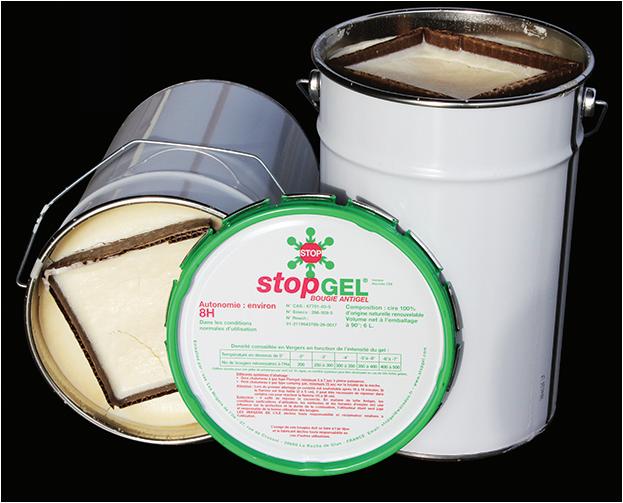
Late frost is now a recurrent threat to vineyard health in England and Wales, with climate change responsible for frost events extending into late May or even early June.
From the editor
“Be yourself; everyone else is taken.”
Oscar Wilde
We have all had the experience of watching a movie and there is a character that has an accent that is not quite authentic. It was during one such movie experience that this Oscar Wilde quote came to my mind.
No matter how studied or practised something is, if it is not natural it can be spotted even by the casual observer. What does this tell us? Authenticity is something that is treasured and valued in many aspects of everyday life. Celebrating the unique and appreciating our own individuality is a great strength of the vineyards and winemakers of England and Wales.
A visit to a vineyard in Kent (see page 26) was a reminder of just what can be achieved if you know what you want and you embrace the reality of life in cool climate winemaking. There will be seasonal variations and there will be good seasons and not so good seasons but leaning into that reality is what enables the creative process to grow. Through embracing the authentic we develop the outstanding.
This thought was also evident at the Vineyard & Winery Show (see full review pages 32-50) where it became evident that inspiration can come from many sources but is often found in our everyday life. These moments lead not just to new and innovative styles of wines but also to astounding advancements in technology.
Authenticity was on display this month through the early release wines available in late November from Sandridge Barton (Mad Ang/Bacchus) and Balfour (Pinot Noir). These wines put a unique signature on a well known wine tradition and it was a joy to share in the early examples of vintage 2025.
As 2026 begins, it is nice to be able to reflect at this point on what has been a good vintage for English and Welsh wine makers. The season was kind and hence we look forward to what should be some exciting wines entering the market from this harvest, which as the quote from the top of this page reminds us, will no doubt be authentic.
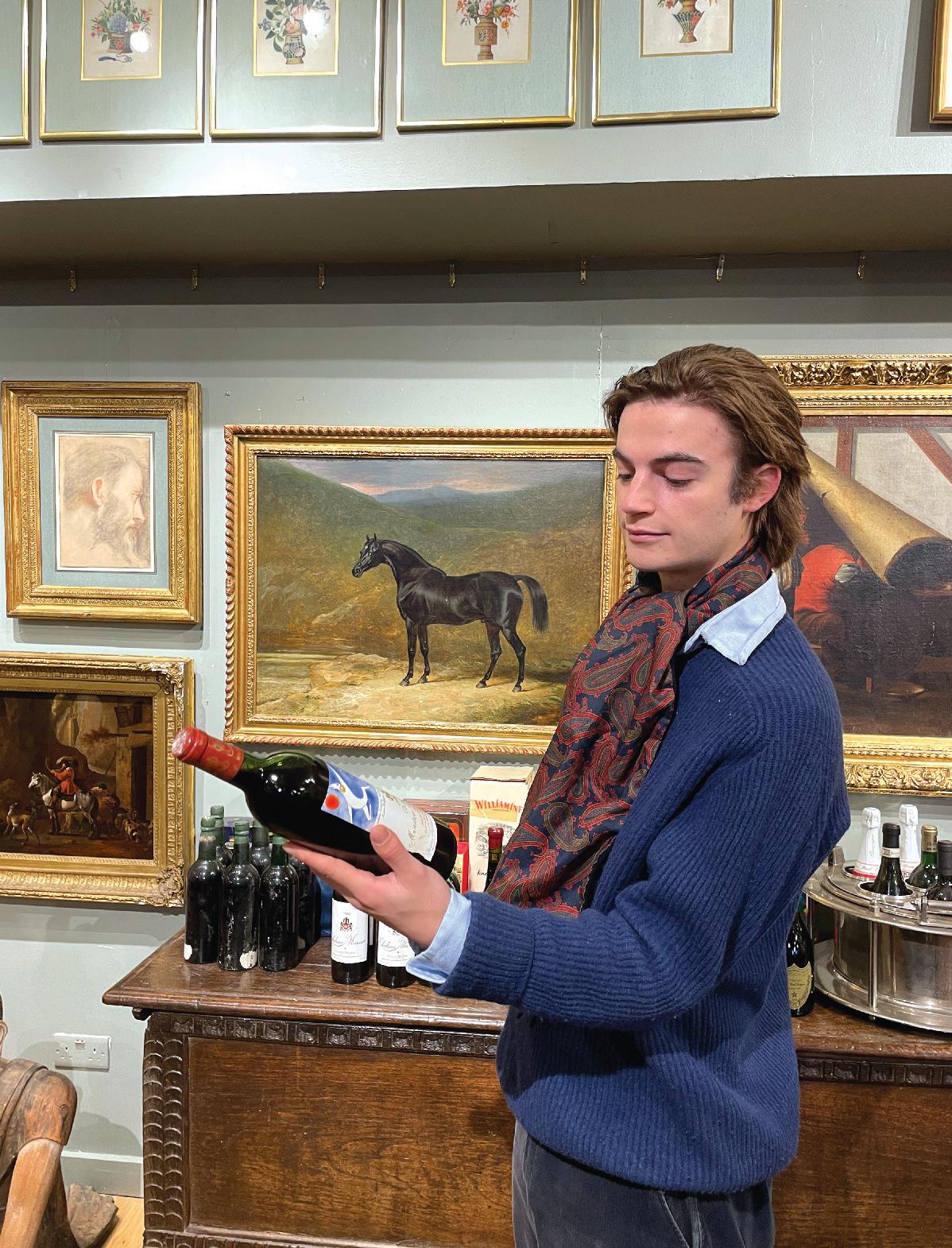
Sloane Street Auctions launch their new wine department
Sale exceptional includes highlights from Petrus, Château Mouton-Rothschild, Château Lafite Rothschild and others.
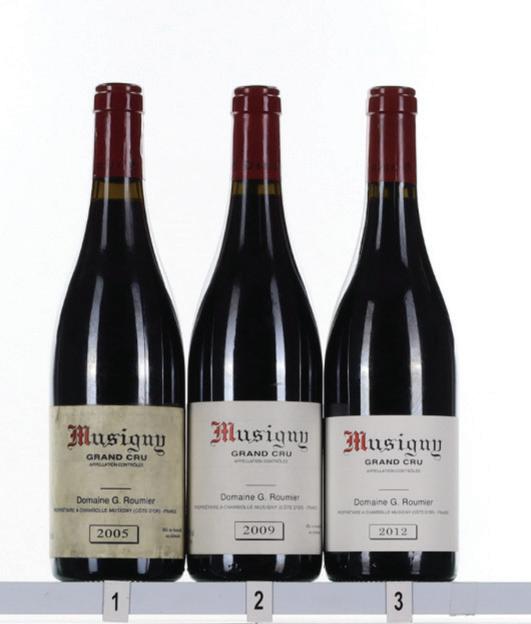
Three bottles of some of the most sublime wine ever to come out of Burgundy went under the hammer at Sloane Street Auctions on 5 December.
The rare Domaine Georges Roumier Musigny trilogy uniting three acclaimed vintages (05, 09, 12) formed just one lot in an extraordinary cellar offering to celebrate the launch of the auctioneers’ new Wine department.
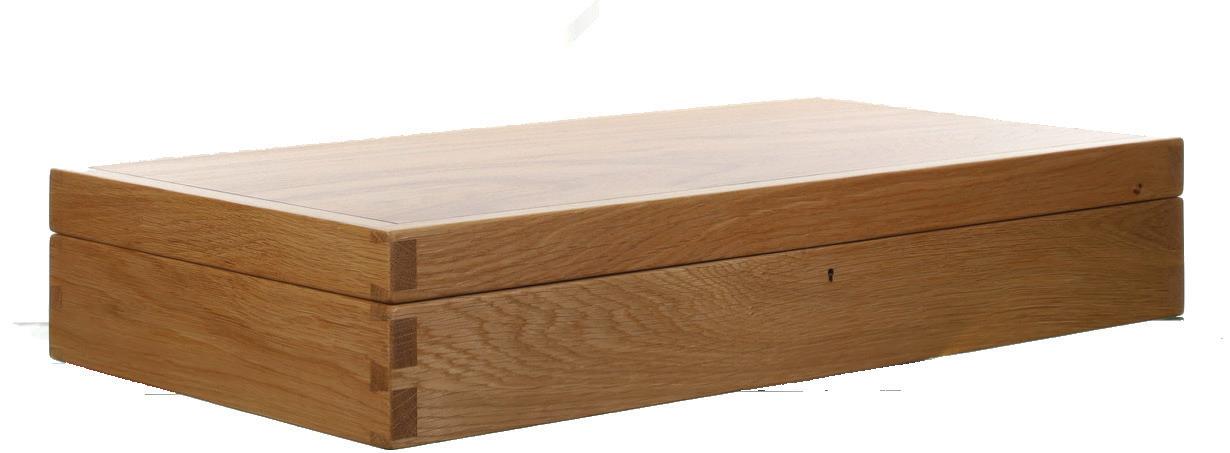
Repacked in a bespoke case hand-crafted by John Evans made from Burr Walnut sourced from a storm-felled tree in Bothwell, Lanarkshire, the trio was one of many exceptional wine lots in the sale from the Eton Park London City Bond, where it has lain for its entire lifetime.
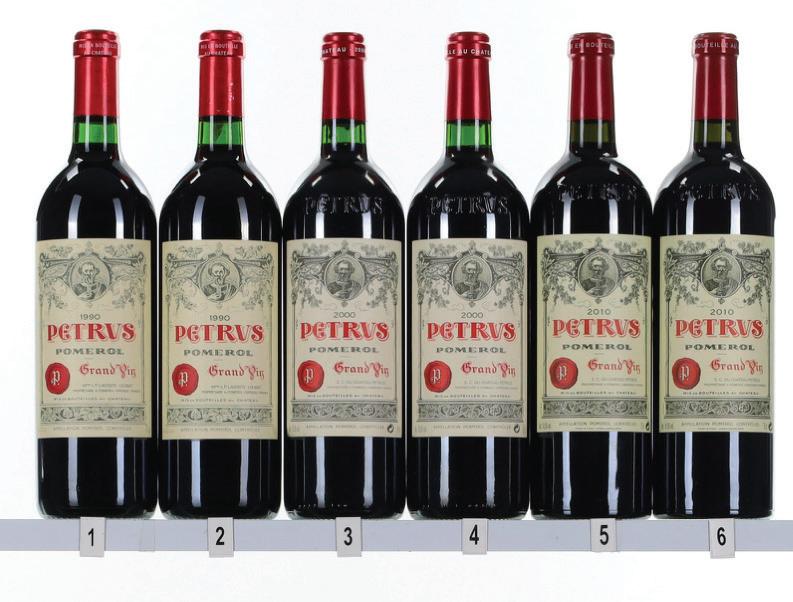
Other highlights from the same source included six bottles of cru exceptionnel from three monumental Petrus vintages (90, 00, 10) spanning 20 years of Pomerol perfection. Also repacked in a John Evans bespoke wooden case – this one made from centuries-old Brown Oak from Stembridge Farm on the Gower Peninsula, featuring oak hinges, chestnut suede lining – the wine reflects the vineyard’s legendary precision and unmatched age-worthy allure. The estimate guide price was £25,000-30,000.
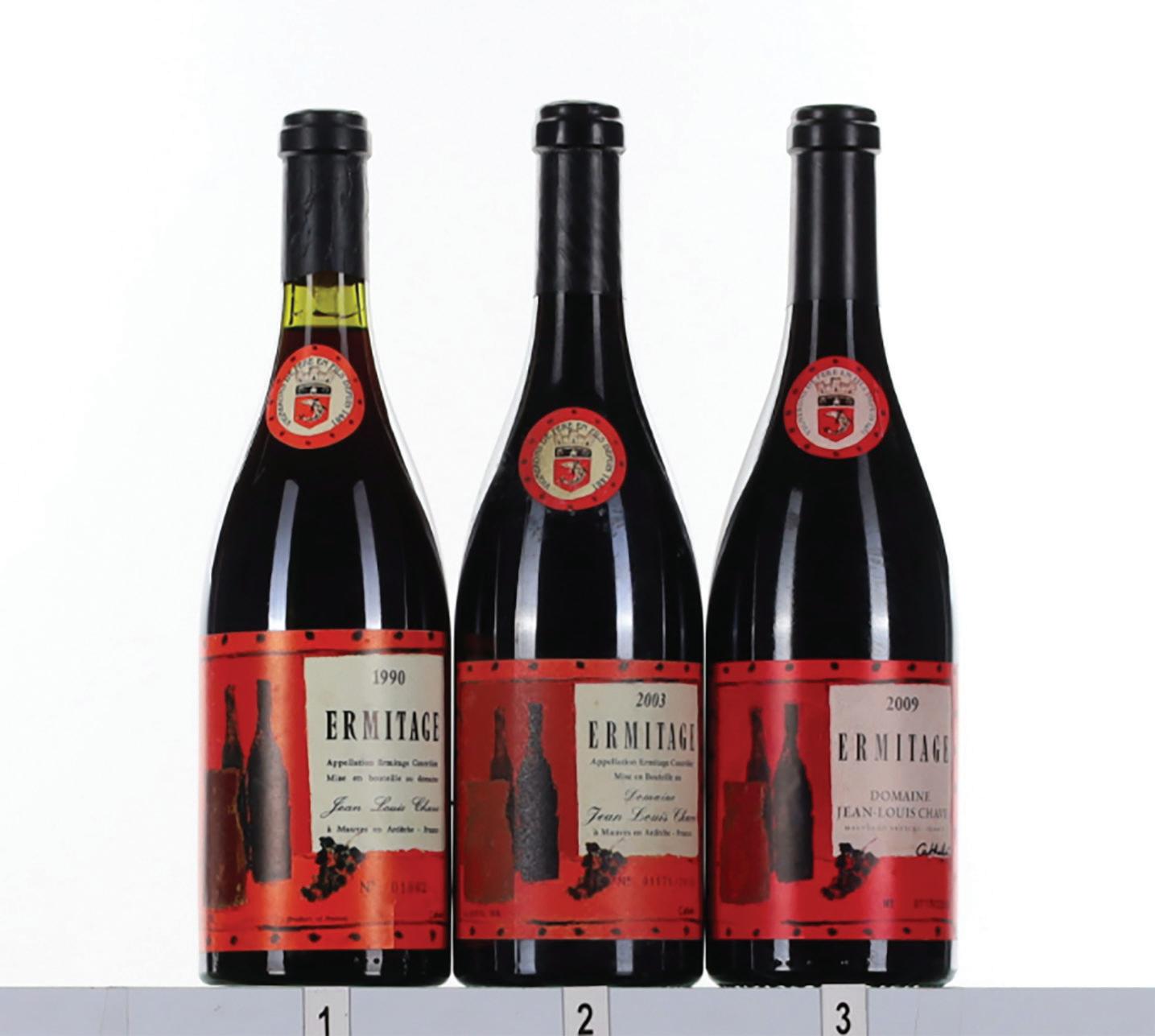
Three bottles of Rhone, Domaine Jean-Louis Chave, Ermitage ‘Cuvee Cathelin’ 1990, 2003, 2009, also had a new bespoke wooden case from Lanarkshire, and a guide of £27,000-29,000.
Other highlights from Petrus, Jean-Louis Chave, Château MoutonRothschild, Château Lafite Rothschild appeared alongside exceptional vintages from afar afield as California and as near as Spain. All from the Eton Park London City Bond, together they create an extraordinary offering for any connoisseur, with ongoing Bond potential.
Collectively, the Eton Park London City Bond wines were expected to fetch as much as £225,000.
“This is no ordinary offering,” said Sloane Street Auctions owner Daniel Hunt. “Having decided to open a Wine department, we
wanted to ensure that it launched with a level of quality that at least matched the best that could be found at any of the top wine auctions around the world. We are happy to leave it to the true connoisseurs to judge our efforts against this measure.”
Launch of a new winery
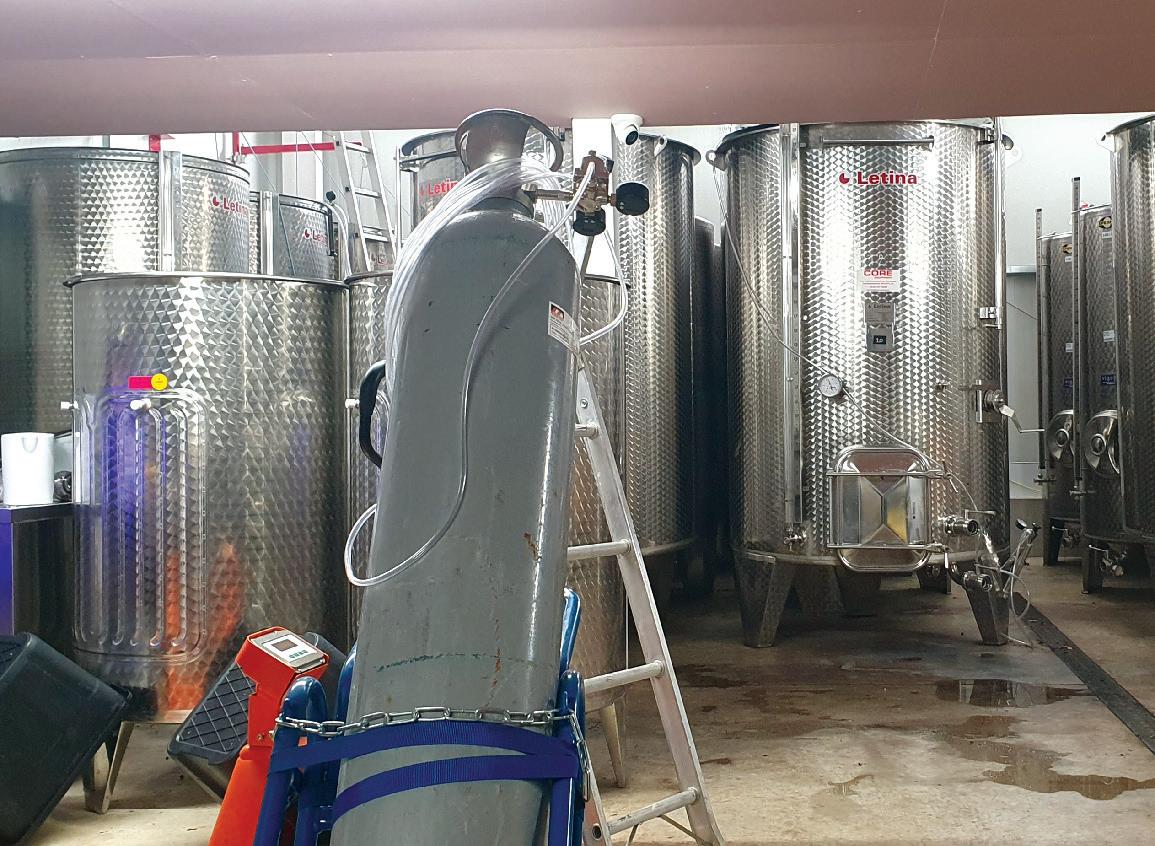
Warehorne Vineyard has reached an exciting milestone by now producing all of its own wines made exclusively from grapes cultivated within its own vineyard.
A new chapter in winemaking
The family-run vineyard, under the stewardship of Peter Constable, has transitioned from outsourcing wine production to bringing the entire process in-house. Peter remarked: “We are delighted that we are now able to make our own wine. Previously, we had our wine made at Defined Wines in Canterbury, who were excellent. By having our own winery, we are now able to produce our wine more competitively and flexibly.”
Expanding the wine range
Seb Constable, Peter’s son and Head of Winemaking, leads the production efforts supported by Salvatore Leone and his team. Seb highlighted the vineyard’s commitment to innovation: “Although Warehorne Vineyard has a complete selection of eight sparkling and still wines, we will be extending the range further. This year, we are introducing a small batch orange wine and a fourth red wine from our amazing harvest.”
State-of-the-art equipment
When discussing the winery’s equipment, Seb expressed his gratitude to WineGB for its member forum, which facilitated the acquisition of over 55,000 litres of pre-owned fixed, variable capacity, and red wine tanks. Many of these tanks were in superb condition—some nearly new and others never used—enabling the vineyard to equip its new facility effectively.
Production and future aspirations
Currently, Warehorne Vineyard produces three percent of all English red wine, utilising grapes from Pinot Noir, Pinot Meunier, Cabaret Noir, and Divico vines. Peter commented on the significance of this achievement: “It may sound a lot, but only three percent of English and Welsh wine is red, so producing three percent of three percent is not a big deal. Our longer-term objective is to produce up to 8%.”
CURIOUS VINES APPLICATIONS
Education Support Awards 2026
Continuing its mission to protect, uplift, and empower women in the wine industry, the Curious Vines Education Awards have been launched for 2026. With a commitment to advancing equity and opportunity through its cornerstone pillar of Education and Professional Development, these Awards help to pave the way for future leaders in wine. Since its inception, the annual Curious Vines Education Support Awards have supported nearly 80 talented women in achieving prestigious qualifications across the Master of Wine, Master Sommelier, Court of Master Sommelier Advanced, and WSET Diploma programmes, helping women to turn ambition into achievement and passion into possibility. New for 2026, five Award recipients from across all programmes will be offered a fully paid educational trip to Avignonesi in Tuscany. Created in response to the UK Women in Wine Survey 2023 which identified underrepresentation in leadership as a key issue, these Awards support those in
gender-biased environments by increasing both the efficacy in attaining higher level qualifications and furthering career advancement. Offering expert insights and strategies to succeed in exams, excel at blind tasting and perform under pressure, purposeful in-person group sessions further foster connection and collaboration, building new and long-lasting networks among the next generation of wine professionals. This initiative strengthens confidence, supports career progression, and nurtures ambition – securing the retention of experienced talent and ultimately enhancing diversity at leadership levels across wine for a brighter industry future.
“The breadth and depth of knowledge required in wine makes it more challenging to attain recognised expertise compared to other drinks sectors. Education is therefore essential in dismantling this barrier that is unique to wine. By providing equitable support that anticipates caring responsibilities, we enable women to
build authority in wine through their qualifications. Each year, Curious Vines helps women achieve their long-term educational goals while building their networks – strengthening the talent needed to help this industry reshape its future leadership and consumer appeal,” said Queena Wong, Founder, Curious Vines. Award winners will be jointly selected by supporting tutors and notified by Tuesday 23 December 2025.
The 2026 programme has been made possible by the following entities and people: Bordeaux Index, Pol Roger Portfolio, Avignonesi, Armit Wines, Hatch Mansfield, Christine Marsiglio MW, John Hoskins MW, Anne McHale MW, Stefan Neumann MS, Unwined in Waterloo and The White Horse Mayfair.
2025 WELSH WINE AWARDS
Welsh Vineyards Association celebrates excellence
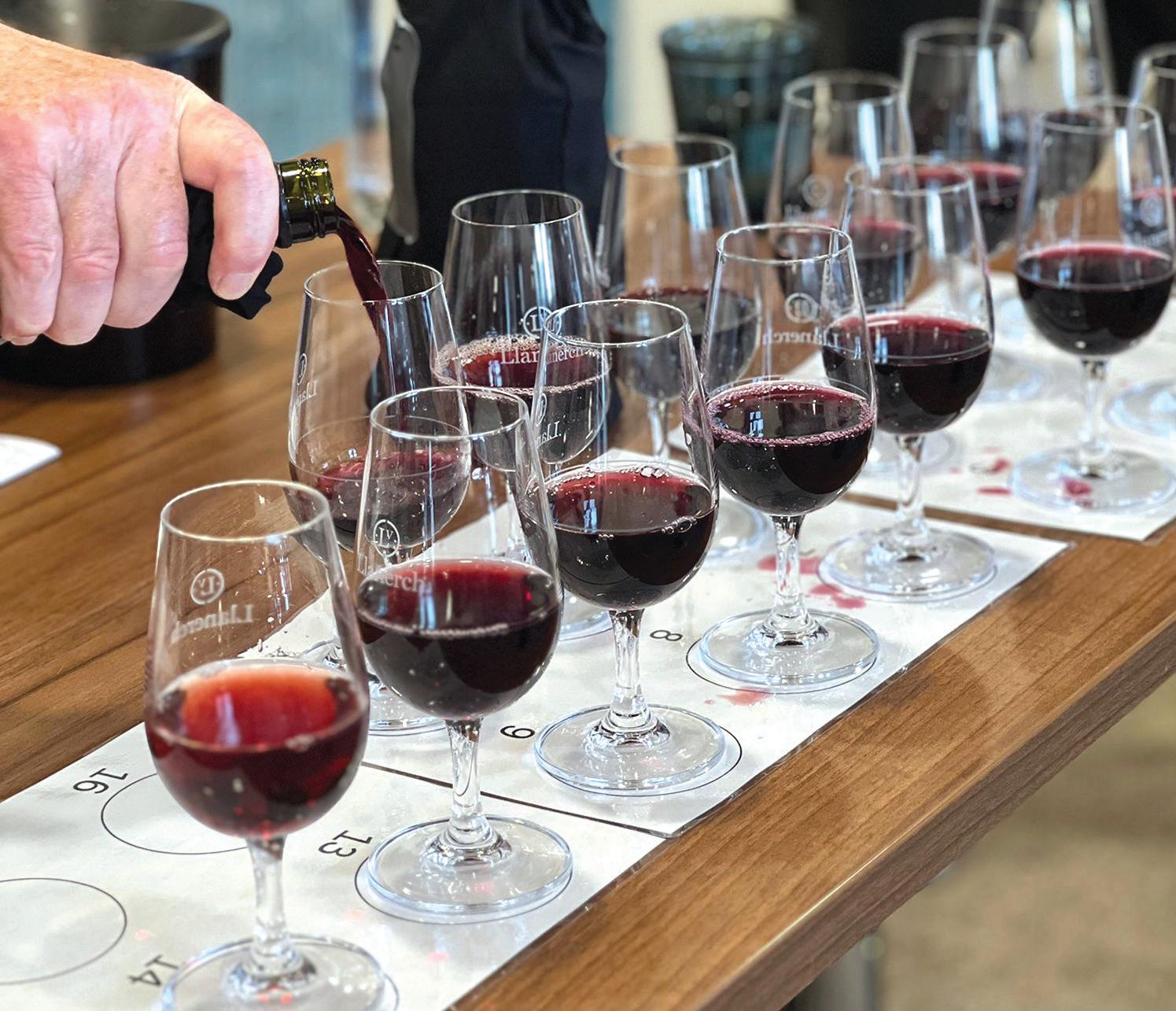
On 17 November, the Welsh Vineyards Association (WVA), part of WineGB, hosted the Welsh Wine Awards 2025 at the renowned Llanerch Vineyard, bringing together vineyards, winemakers, industry experts, and supporters from across Wales to celebrate a landmark year for Welsh viticulture. Nearly 60 wines were entered into the awards from vineyards across Wales.
A celebratory judging panel
This year’s judging panel included Oz Clarke and Jane Rakison. Both have long been advocates for the rapid rise of Welsh viticulture, and their expertise brought prestige and insight to the 2025 awards.
Oz Clarke, one of the UK’s most recognisable wine commentators and proud of his Welsh heritage, delivered an unforgettable speech during the ceremony. In it, he praised the extraordinary progress of the Welsh wine industry, highlighting the confidence, character, and increasing international competitiveness of Welsh producers.
“What we are witnessing in Wales today is the same spark I once saw in emerging regions like Tasmania, Oregon, New Zealand… Places that dared to believe they could stand shoulder-to-shoulder with established wine nations. And they did! Wales is now stepping proudly onto that very same stage,” he said.
His speech culminated in a rousing and emotional recital from Dylan Thomas, a moment that captivated the room and encapsulated the pride and passion driving the nation’s winemakers. The applause that followed reflected not just admiration for Oz Clarke, but for the flourishing industry he celebrated.
The panel was strengthened by two further experts: returning judge Sara Hobday of Vin Van Cymru, known for her deep knowledge of Welsh artisan producers, and Hugh Currell of Avant Wines, a respected voice in independent wine retail. Together, the four judges brought a balance of international perspective and local understanding, ensuring a fair, rigorous, and inspiring evaluation of this year’s entries.
The 2025 winners are:
◆ Champion Wine of Wales – Gwinllan Llaethliw, Ceredigion
◆ Best Overall Sparkling Wine – Gwinllan Llaethliw, Ceredigion
◆ Best PDO/PGI Wine – Gwinllan Llaethliw, Ceredigion
◆ Best Sparkling White – Gwinllan Llaethliw, Ceredigion
◆ Best Sparkling Rosé – Jabajak Vineyard, Carmarthenshire
◆ Best Overall Still Wine – The Dell Vineyard, Monmouthshire
◆ Best Still White – Vale Vineyard, Denbighshire
◆ Best Still Rosé – The Dell Vineyard, Monmouthshire
◆ Best Still Red – Llanerch Vineyard, Vale of Glamorgan
Celebrating the winning vineyards
This year’s Welsh Wine Awards honoured an exceptional group of vineyards whose dedication, innovation, and craftsmanship exemplify the very best of Welsh viticulture.
Gwinllan Llaethliw emerged as the standout producer of the 2025 competition, securing an impressive four major titles: Champion Wine of Wales, Best Overall Sparkling Wine, Best PDO/PGI Wine,
Medal winners
A full list of medal winners will be published on the Welsh Vineyards Association website: DESKTOP www.winetrailwales.co.uk
and Best Sparkling White. These achievements reflect the estate’s uncompromising commitment to quality and its growing reputation as one of Wales’ most dynamic and consistent wine producers.
Jabajak Vineyard claimed the award for Best Sparkling Rosé, showcasing the estate’s flair for crafting vibrant, elegant wines with a strong sense of place.
The Dell Vineyard took home Best Still Rosé and Best Overall Still Wine positioning The Dell as an emerging force in the still wine arena.
Vale Vineyard received the title of Best Still White. Its success reflects the vineyard’s focus on cool-climate expression.
Llanerch Vineyard, the host of this year’s awards, secured Best Still Red. As one of Wales’ most established and influential estates, Llanerch continues to demonstrate the depth and potential of Welshgrown red varieties.
Collectively, this year’s winners showcase the diversity, ambition, and rising quality within Welsh wine. Their achievements reflect an industry reaching new heights and earning greater recognition both nationally and internationally.
WVA Chair Andy Mounsey praised the achievements of this year’s entrants, saying: “The 2025 awards underline the exceptional progress of Welsh winemaking. The quality, creativity, and commitment we’ve seen this year reflect a sector continuing to strengthen its identity and push new boundaries.” The event was also attended by Huw IrrancaDavies (Deputy First Minister and Cabinet Secretary for Climate Change & Rural Affairs) alongside David Morris (Deputy Head – Food and Rural Affairs). Their presence reflected Welsh Government’s commitment to supporting this thriving industry and the WVA were honoured to host them for the evening.
Llanerch Vineyard provided a fitting backdrop for the celebration, offering guests the opportunity to taste medal-winning wines, meet producers, and experience firsthand the energy driving Welsh wine forward.
Simplified, more user-friendly Certified Regenerative
Nonprofit certifier A Greener World (AGW) has launched a major update to its renowned Certified Regenerative by AGW standards.
The revised standards are now consolidated, clearer, and more user-friendly – while ensuring the same rigorous outcomes that make Certified Regenerative by AGW one of the most trusted and credible programmes in the world.
First introduced in 2020, the Certified Regenerative by AGW program was designed to prevent “regenerative” from becoming just another marketing buzzword. Unlike many claims, it provides measurable outcomes, third-party auditing, and real transparency for farmers, food businesses, retailers, and consumers.
Listening, learning, improving
After gathering extensive feedback from farmers, ranchers, businesses, and auditors, AGW set out to simplify the program without lowering the bar. Key improvements include:
◆ Consolidated structure, thanks to removing duplication and merging related standards
◆ Plain language wording, with updated structure and clearer cross-references
◆ Built-in guidance notes under each standard to explain context and expectations
◆ A new “What We’re Looking For” section, offering transparency around audits
◆ Examples of acceptable records to help producers prepare for verification.
AGW has also introduced a new Regenerative Plan Template, designed to bring all requirements into a single, consistent format. This not only makes the application easier for producers but also streamlines the certification process for AGW auditors.
Emily Moose, Executive Director at A Greener World, said: “This revision reflects our ongoing commitment to keeping Certified Regenerative by AGW clear, consistent, and supportive. We’re listening to our clients and giving them practical tools to aid the application process, while maintaining the same positive outcomes and integrity that set this Certified Regenerative label apart.”
Hampshire estate combines innovative
viticulture with soil health and sustainability
Nonprofit certifier A Greener World (AGW) announced at the Vineyard & Winery Show 2025 that Penn Croft Vineyards is the first vineyard in England to be Certified Regenerative by AGW, an innovative sustainability certification providing whole-farm assurance of regeneration and environmental responsibility.
Penn Croft Vineyards, part of Penn Croft Farms Ltd, has been practicing regenerative farming for more than 25 years. In 2018, farmer Simon Porter joined forces with filmmaker and wine enthusiast Malcolm Walker to establish Itasca Wines Ltd and plant a vineyard that would embody regenerative principles from the ground up.
Working with leading French agronomist Frédéric Thomas, the Penn Croft team designed a vineyard that prioritises soil health and biodiversity. Key practices
include wide vine spacing to allow cover crops between rows, Scott Henry trellising to optimise yields, hand planting to preserve long-undisturbed soils, and diverse annual cover crops to feed soil life and sequester carbon. Sheep graze in rotation, wildflowers support pollinators, and trials with poultry are planned. Soil and leaf testing reduce the need for synthetic inputs, while biodiversity corridors and “scruffy is good” management enhance habitats for wildlife.
The vineyard’s regenerative approach extends to the winery, which is powered by solar energy, uses low-energy lighting and insulation, and features England's first winery-scale wetland system to treat wastewater.
Simon Porter, founder of Penn Croft Farms and Itasca Wines, said: “From the moment we planted these vines I knew
our vineyard had to be a mirror of the regenerative work we’ve done on the arable side of the farm. Healthy soils, diverse cover-crops, minimal disruption –when you work with nature the vines thrive and the wines carry that vitality. Being Certified Regenerative by A Greener World means we’re not just saying it – we’re proving it.”
Wayne Copp, Executive Director International at A Greener World, said: “Our certification provides a rigorous yet practical path to meaningful impact at scale. When consumers see the Certified Regenerative by AGW label connected with Penn Croft Vineyards, they can be confident they are choosing a wine that truly stands out – in quality and positive social and environmental impact. We are delighted to welcome Penn Croft Vineyards as the first Certified Regenerative by AGW vineyard in England.”
The world's first wine amphora made of highperformance concrete
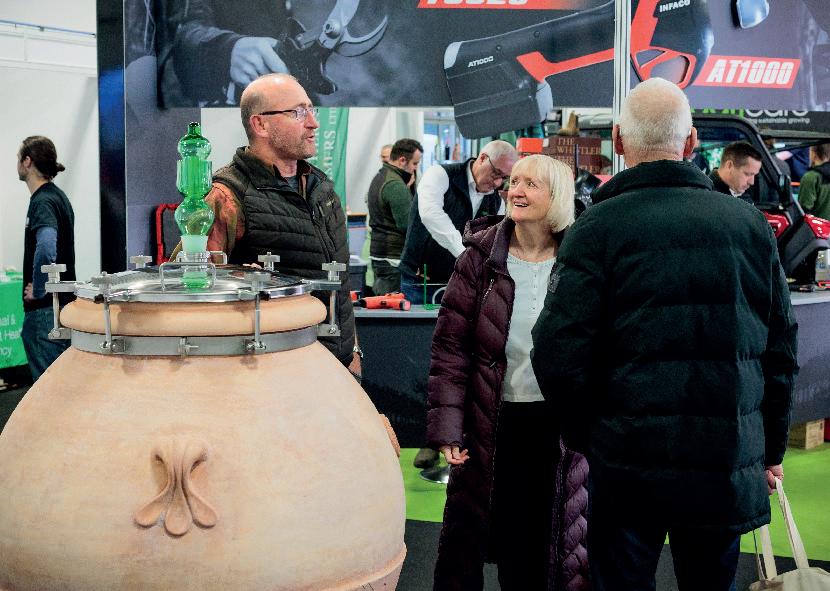
The Portuguese company WiseShape has announced the launch of the world's first wine amphora made of high-performance concrete, inspired by the classical Greek and Roman design.
The new and innovative high-quality wine fermentation and storage tank developed by WiseShape has a capacity of 500 litres and measures 1.59 metres in height.
"The success of WiseShape's innovative wine tanks inspired me to design an amphora that would bring the fermentation and storage of wine from antiquity into a contemporary formulation," explained Tatiana Sá Marques, founder and CEO of WiseShape.
"The WiseAmphora is also a design object that seeks to honour Portugal's long tradition of winemaking and its outstanding contemporary architecture."
From antiquity to innovation
Amphorae are a very ancient way of storing wine and water. The earliest examples found by archaeologists date from 6000 to 4800 B.C.
Until today, most vats of this type used for wine storage were made of clay, as are the so-called qvevri, a similar version of amphorae.
However, until now, no producer had used the original and fundamental shapes of Greek and Roman amphorae combined with high-performance concrete.
The few existing examples introduce alterations to the ancient forms and do not adopt WiseShape's single-core concrete formulation.
Simpler and more complex
The most complex exercise was to maintain the classical lines while meeting the technical requirements of this type of tank.
The truth is that the WiseAmphora minimises the use of accessories or design elements that would distort the shape of the ancient and original amphora.
"The greatest challenge of the WiseAmphora was to find a fine balance between design and functionality. This challenge demanded more than three years of research and development, between the initial sketch and the final prototype," said Tatiana Sá Marques
The WiseAmphora weighs around 1000 kilograms and has hidden handles for easy transportation and movement.
There is also an optional metal stand developed to allow 360-degree rotation of the amphora, enabling it to integrate intelligently and practically into cellars or wine tourism spaces.
"We used internally developed technology to achieve the final shapes, allowing them to fit perfectly into the mould we had previously sculpted," added Tatiana Sá Marques.
1,000 days of research and development
The WiseAmphora was designed and developed in secrecy in Coimbra over more than 1,000 days.
This new wine storage format will allow producers and oenologists to develop high-end wines in controlled and premium volumes, using special grape varieties.
Unlike stainless steel or wooden barrels, WiseShape's unique concrete formula allows for stable and controlled micro-oxygenation of the must and/or wine.
Finally, the design of the WiseAmphora allows easy access to the interior of the vat, facilitating its maintenance and cleaning.
The WiseAmphora is the ideal amphora for those passionate about winemaking experimentation and the creation of exclusive, small-scale wine collections. "The future of wine lies in the ability of this kind of equipment to harmoniously align with producers and oenologists committed to creating natural wines of the highest quality," concluded Tatiana Sá Marques.
Tatiana Sá Marques
Limited-edition commemorative red wine
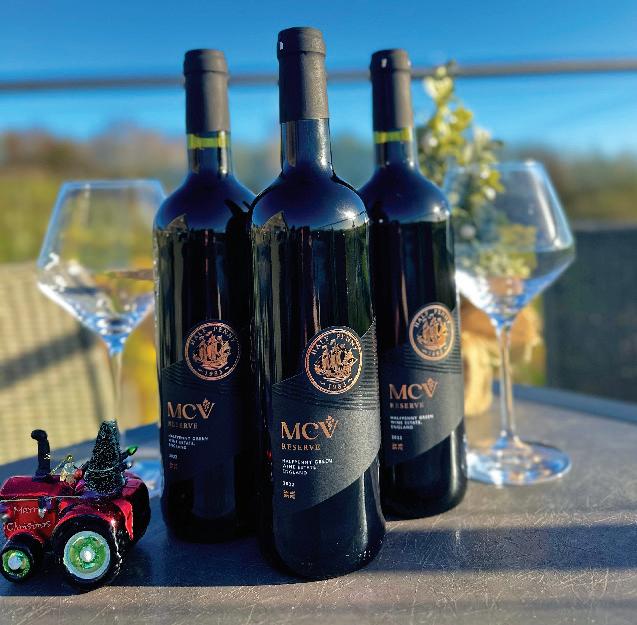
Halfpenny Green Wine Estate has unveiled a limited-edition commemorative red wine in honour of its late founder, Martin Charles Vickers, one of the most influential and respected figures in the English wine industry.
As the Staffordshire vineyard prepares to welcome up to 20,000 visitors across December, the finishing touches have been applied to its MCV Reserve, which will represent the focal point of a veritable grotto of festive products.
The red wine, taken from the 2022 harvest of rondo grapes, is the estate’s biggest tribute to Martin to date, with the idea first being mooted shortly after his death in September 2024.
Bursting with blackberry, plum and forest fruits, the wine also boasts a gentle warm spice, with only a limited number of bottles being available.
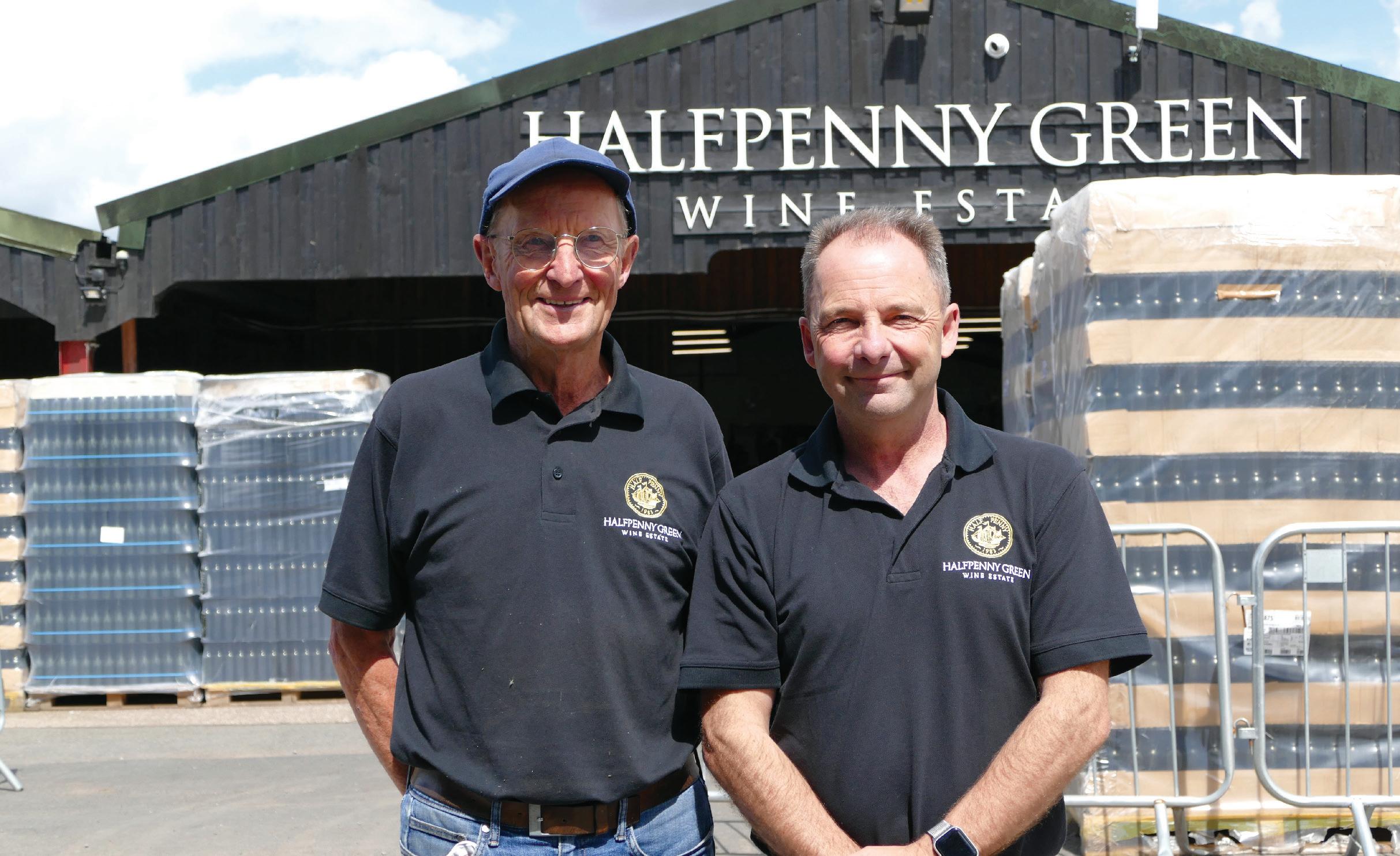
Martin’s legacy is deeply rooted in the region. In 1983, alongside his son Clive, he planted 400 vines on a small patch of their family farm. Today, that same patch
has grown into a thriving 30-acre vineyard, producing hundreds of thousands of bottles each year. His passion for the industry extended beyond the estate, even supporting the planting of a new vineyard at Harper Adams University in Shropshire to help train the next generation of viticulturists.
Clive, daughter-in-law Lisa and grandchildren Imogen and Emily described Martin as a much-loved dad, grandad and friend whose “forward thinking and indefatigable spirit” shaped everything the estate has become.
Alongside the release of the MCV Reserve, December is set to be the estate’s busiest month in recent history. Visitors are expected to flock to its gift shop, butchers, deli and restaurant for some festive inspiration ahead of Christas Day.
Local and regional suppliers are again forming a major part of the estate’s Christmas offering. On-site butcher Reg Phillips is also taking Christmas meat orders, with all produce sourced from across Shropshire and the surrounding
counties. His Christmas offerings include Christmas Meat Hampers and a full range of seasonal meats including turkey crowns, bronze and white turkeys, free-range geese, ducks, cockerels, chicken, venison, pheasant, three-bird roasts and game.
Meanwhile, the estate’s restaurant continues to draw strong demand with a seasonal menu comprising local ingredients and Christmas Wine Tours now available.
Clive Vickers said: “This is shaping up to be our biggest December ever, and releasing a wine in Dad’s honour makes it especially meaningful for us as a family. We’re incredibly grateful for the support we continue to receive from visitors across the region.”
Martin and Clive Vickers
DEFRA Minister’s innovation showcase
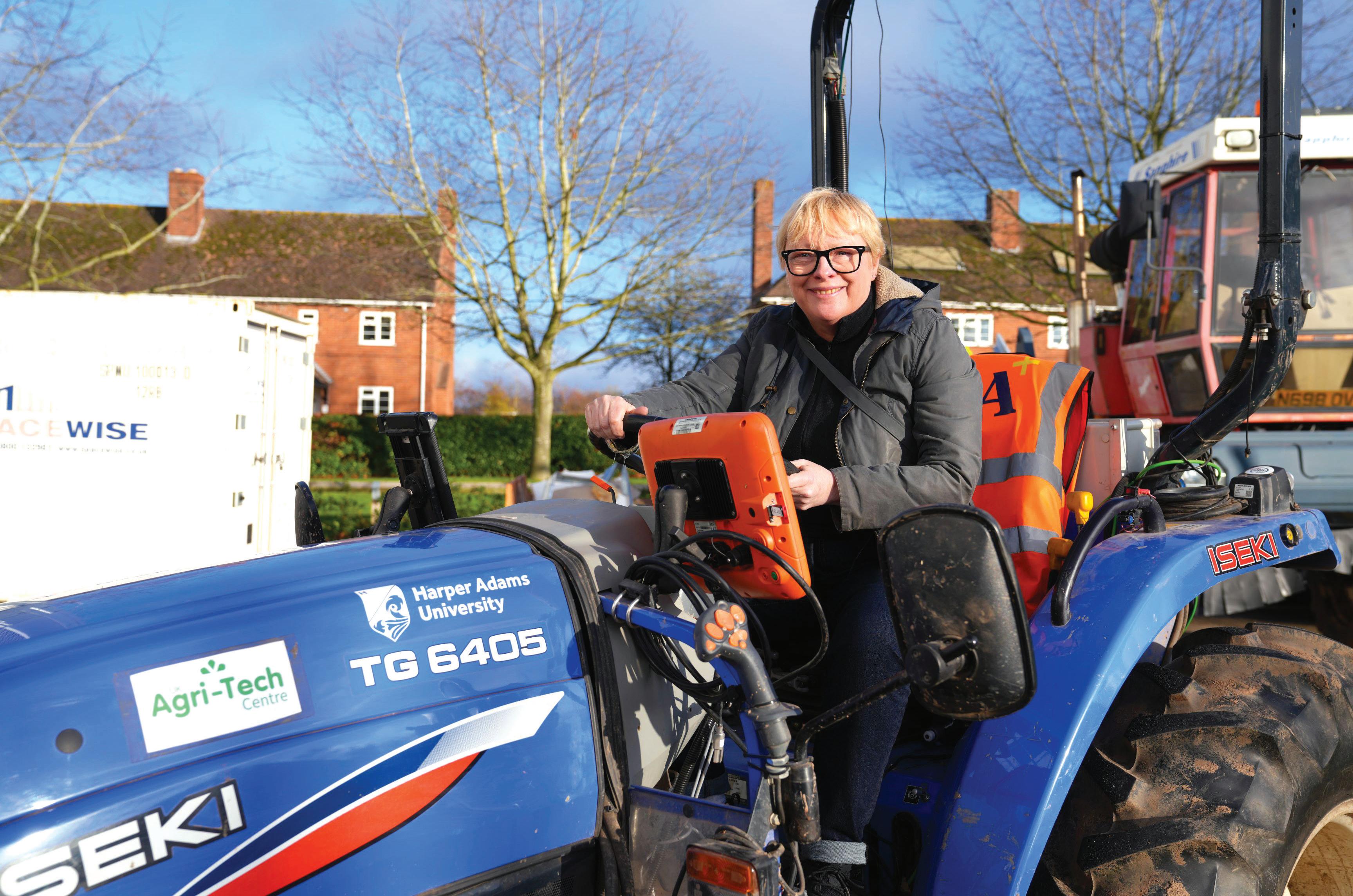
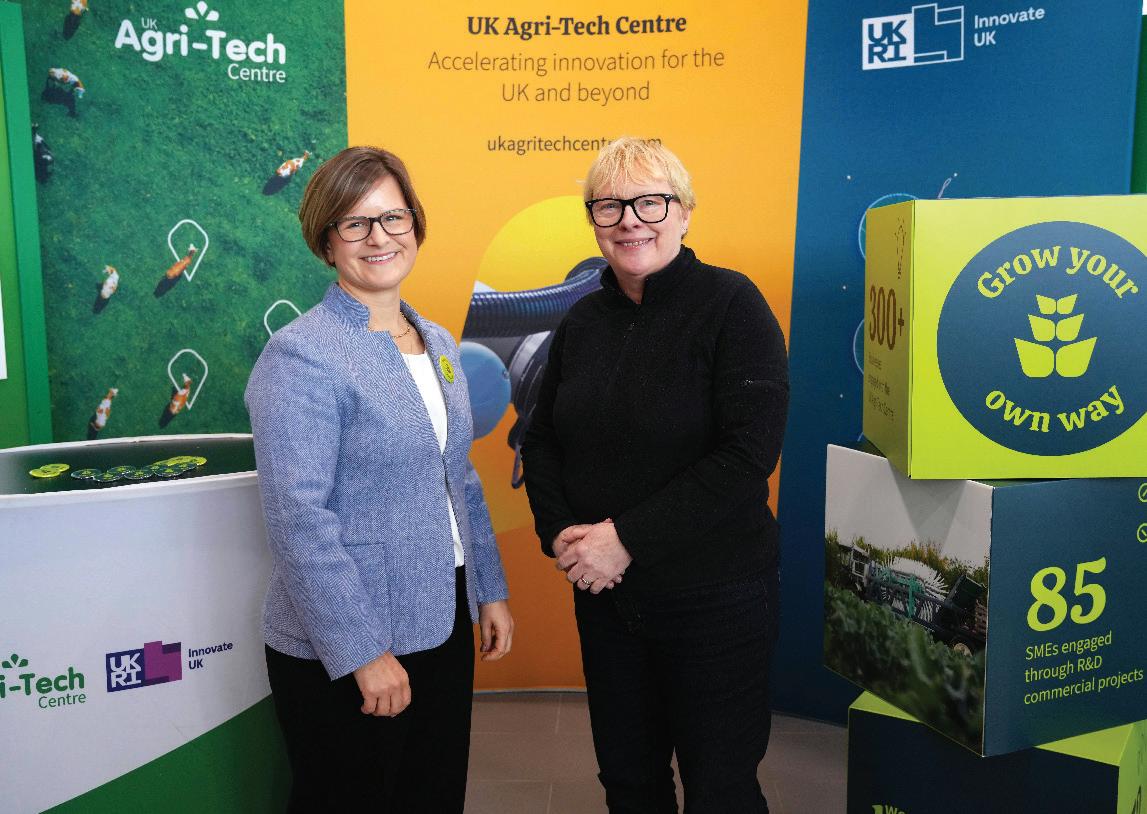
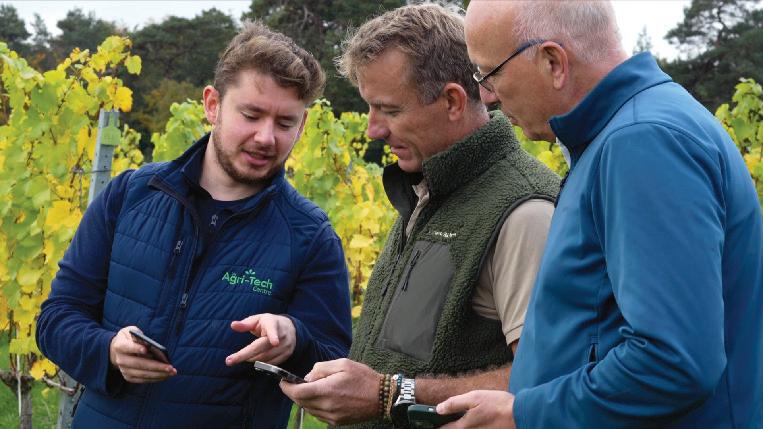
The UK Agri-Tech Centre has welcomed Department for Environment and Rural Affairs (DEFRA) Minister Dame Angela Eagle to its Midlands Agri-Tech Innovation Hub, highlighting the Centre’s pivotal role in helping agri-tech businesses grow faster and achieve greater success.
Minister Eagle experienced first-hand how the UK Agri-Tech Centre’s capabilities are helping innovative ventures and Hub tenants, such as MagrowTec and Upcycled Plant Protein (UPP) to test, trial and commercialise cutting-edge solutions.
The UK Agri-Tech Centre is working closely with Defra as it establishes a new programme of work to support the UK Government’s Modern Industrial Strategy, which highlights agri-tech as a key driver of national productivity and resilience.
The visit coincided with the launch of the UK Agri-Tech Centre’s new national campaign, “Grow Your Own Way: We Mean Business When it Comes to Agri-Tech”. The campaign celebrates agri-tech pioneers who are harnessing the latest developments in automation and robotics, data and sensors, controlled environment agriculture (CEA) and engineering biology, bringing them to market and driving economic growth in the UK and internationally.
Minister Eagle’s visit formed part of a wider tour of Harper Adams University campus, where the Midlands Innovation Hub is based. This demonstrates how the UK Agri-Tech Centre works, bringing together a vibrant network of partners and organisations, creating the connective tissue that powers the agri-tech ecosystem.
Hannah Senior, UK Agri-Tech Centre interim CEO, said: “We were delighted to welcome Minister Eagle to our Midlands Agri-Tech Innovation Hub and to introduce her to some of the innovative
ventures we work with, transforming agricultural systems and driving economic growth.
“The technologies these ventures are bringing to market will drive improvements in profitability, resilience and long-term sustainability for agriculture, horticulture and aquaculture across the UK and internationally.
“Our dedicated facilities at this site help businesses accelerate their journey to the marketplace. It has been brilliant to be part of the success story of UPP and MagrowTec since they joined us here. In addition to providing UPP with facilities, we are helping them undertake in-field tests and trials via our farm network; they are scaling and have recently raised £3million, driving their commercial growth.”
Dame Angela Eagle visits UK Agri-Tech Centre’s Midlands Hub
Hannah Senior, interim UK Agri-Tech Centre CEO and Dame Angela Eagle
STUDENT PROFILE
From public affairs to viticulture
Meet the politics graduate who won a BSc Scholarship at Plumpton College to study the science behind wine.
Can you give us a brief insight into your background and how you have ended up as one of Plumpton’s first ever Wine Scholars?
After initially graduating from a BA in Politics and International Relations at Reading University and considering a career in politics and public affairs, I decided to re-evaluate what I truly enjoyed and was passionate about, and came to wine. My interest in the wine industry was initially sparked by my family holidays to France – in particular to Soulac-Sur-Mer, in the Médoc region of Bordeaux, a world renowned wine-growing area. Whilst working in a local gastropub, I was able to share my passion with customers about different wines and decided to embrace my curiosity for the subject by deciding to study the science behind wine production which led me to Plumpton College.
What drew you to studying a BSc in Viticulture and Oenology?
I have always been interested in wine and have always tried to find interesting bottles and varieties to explore and share with my friends. After I decided a career in politics was not the right fit for me, I worked at Halfpenny Green Vineyard and Winery as a Cellar Hand, for a year and a half. This cemented my decision to pursue a career in the wine industry. The potential to be able to make wine was a big motivation for me to study at Plumpton. The current growth of the UK wine industry, coupled with Plumpton’s brilliant reputation meant it seemed like the perfect time for me to begin my journey into Viticulture and Oenology.
Open Events
Tell us about winning a place on the new Plumpton College Wine Scholarship programme*?
I am self-funding my studies and saw the opportunity online. I was honoured to have been selected in the first year that the scholarship launched and hope to demonstrate Plumpton’s ability to produce top winemakers and viticulturists. It has provided me with financial security in my studies, but also gives me the knowledge that my teachers have confidence in my ability by selecting me for the scholarship. I hope that I will stand out to future employers demonstrating my knowledge and passion for the industry.
*The Plumpton College Wine Scholarship Programme aims to remove financial barriers for passionate and talented individuals who wish to pursue careers in wine business, production, or science. The Plumpton Wine Scholarship covers 50% of tuition fee costs in year 1 and 2 of study and there are two scholarships available for academic year 2026/27.
What are your future aims and aspirations in the wine industry?
I would certainly like to be involved in the winemaking side of the industry. Being able to produce wine through all the stages from the initial harvesting of the grapes, through to the final bottling, gives me a great feeling of satisfaction and I love experimenting with new methods and styles. I want to gain as much experience as possible abroad and at home in the UK, but the growth of our industry gives me great excitement for the future that hopefully, I will be a part of!
William Gorner
◆ Born in 2000
◆ From Alcester, Warwickshire
◆ Currently studying BSc Viticulture and Oenology 2025-2028
◆ Plumpton College Wine Scholarship Programme 2025
◆ Wine production internship at Rathfinny Wine Estate
Can you give us an insight into your studies at Plumpton College – What does a typical day look like when studying viticulture and oenology?
In brief, the course blends practical and theoretical studies – ranging from learning to drive a tractor, to lab experiments, through to conducting academic research. I’m currently in the first year, where we have three days of timetabled studies. A typical week can look like this:
◆ One day will be spent at the College’s Vineyard, Rock Lodge to study ‘Vineyard Engineering and Operations’. Here we learn how to use different types of vineyard equipment, pruning styles and the overall running of a vineyard.
◆ The second day will be ‘Vineyard Establishment’ where we look at the most suitable conditions and sites for vineyards to succeed. This is followed by ‘Study Skills’ which aims to bring everyone up to a BSc standard of working.
◆ We have ‘Fundamentals of Wine Science’ on the third day, which looks at the science behind winemaking and the chemistry processes needed to make wine. This is then followed by ‘Understanding Wine Styles’ which is in the form of a WSET Level 3 Qualification. During this, we explore wine regions and their most well-known styles through a range of tastings.
For further information about Plumpton College’s scholarships and studying Viticulture and Wine-Making, book on to their next open events on 17 January and 21 March 2026 or find out more about their courses:
What are your thoughts on the new 5G Smart Vineyard project that has recently launched at Plumpton?
I think this is a really exciting opportunity, which will only further establish Plumpton as a key institution in training the next generation of winemakers and viticulturists. Changing climates have provided grape growers with greater possibilities in the UK; but it has also created new challenges due to the warmer climate and increased frequency of extreme weather conditions. Technology is, and will continue to be, crucial in helping us get better at doing the right things, to achieve the best grapes possible.
5G Centenary Smart Vineyard
Stay updated on the progress of Plumpton College’s 5G Centenary Smart Vineyard by visiting their website and social media accounts.
Any last thoughts on studying at Plumpton College and tips for scholarship applications?
Plumpton College is a beautiful place to study Wine. The tutors and staff are very good in helping students to achieve the best they can and the Wine Centre is a great place to learn; we have labs, the winery itself and the Rock Lodge vineyard which all provide great facilities to learn practical vineyard and winemaking skills.
Plumpton’s location is ideally located in the centre of the English wine heartlands, with strong connections to top English vineyards and wineries providing many opportunities for enrichment both in and out of College. In my case, I recently secured a part time job at Rathfinny Wine Estate, on the Wine Production Internship that runs in conjunction with Plumpton College. This means I can work around my studies whilst affording me plenty of opportunities to practise what I have been learning.
As for my top tip for applying for a wine scholarship at Plumpton; make sure you get your personality across and do not be afraid to apply if you lack previous winery or vineyard experience. It really is open to all.
Award-winning wines
Further information about Plumpton Estate Award-winning wines: DESKTOP www.plumpton.ac.uk/wine-division/plumpton-estate-wine/
Scholarships
Further information about accessing Plumpton College’s Wine Scholarships: DESKTOP www.plumpton.ac.uk/wine-division
West Flanders visit
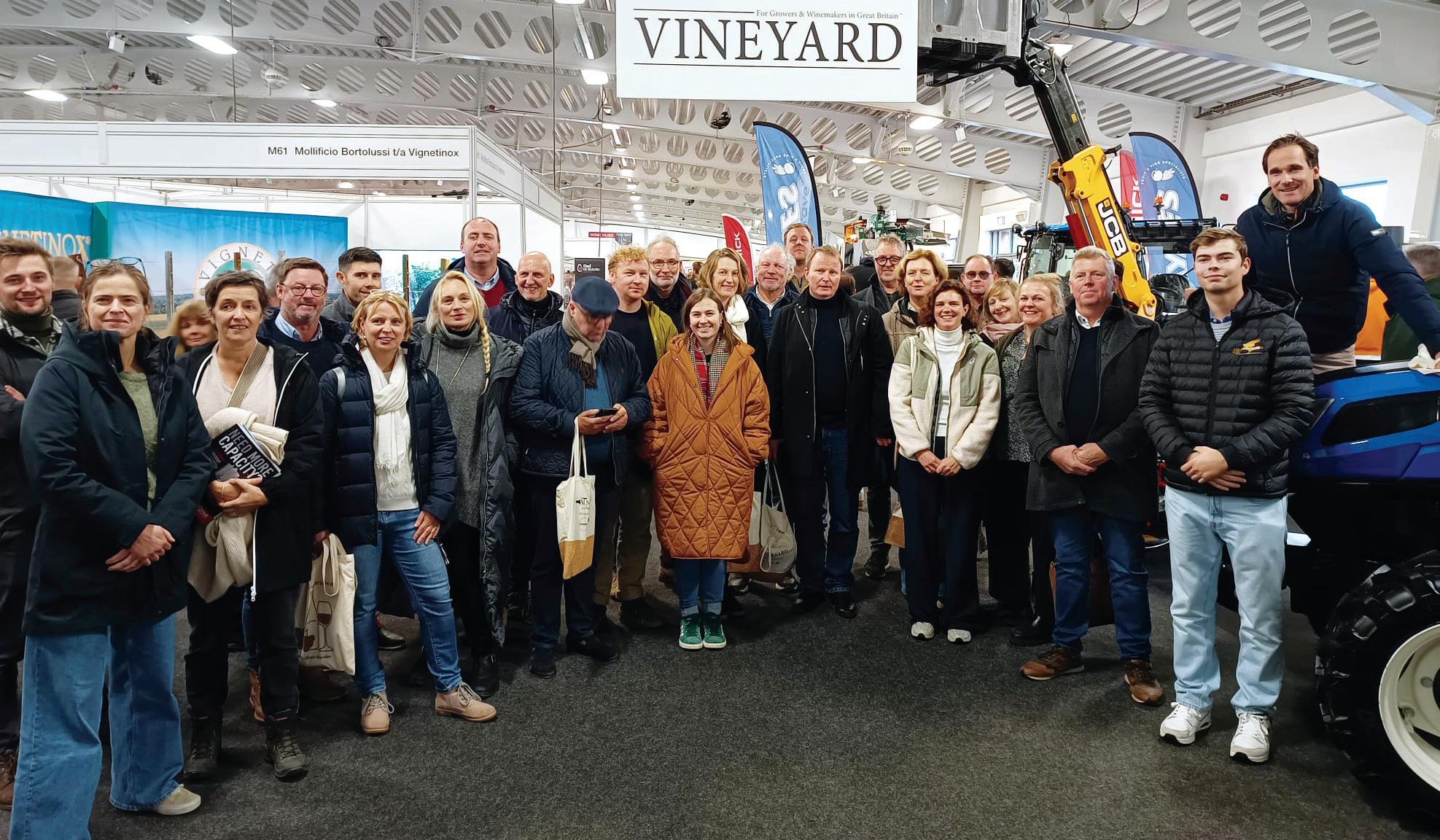
A delegation of vine growers, winemakers and wine merchants from West Flanders were in Kent for two days in November.
“Earlier this year, Kent County Council and the Provincie WestVlaanderen signed a two-year bilateral action plan for economic cooperation in the food and beverage industry. Within this framework, both authorities, in collaboration with POM West-Vlaanderen and Inagro vzw, organised an inspirational trip to Kent on 19 and 20 November for West Flemish winegrowers to learn about viticulture,” explained Huw Jarvis programme manager at Kent County Council.
Over two days, the 27 delegates visited:
◆ Vineyard & Winery Show – a hub for technology, networking, and knowledge sharing.
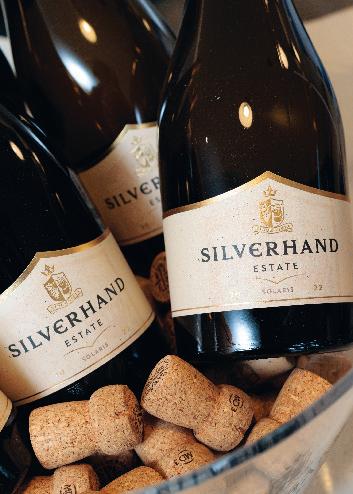
◆ Silverhand Estate – the UK’s largest organic vineyard, committed to biodiversity and carbon-negative operations.
◆ Niab/EMR – research institution that supports viticulture through research on plant physiology, soil science, and wine quality.
◆ Defined Wine Ltd– a contract winery enabling flexibility and growth for vineyards.
◆ Simpsons Wine Estate – a pioneer producing world-class English wines and co-founder of The Wine Garden of England”. Vineyard Magazine spoke to some of the delegates at the vineyard and winery show to gain their perspective on the visit:
Monteberg Wijngoed is the oldest wine Estate in Heuvelland, Belgium producing between 50,000 and 70,000 bottles a year. The vineyard was planted by Jean-Pierre Six in 1996 who has since passed the torch to his children Edward and Katrien. The vineyard has several varieties that are familiar to growers in Kent including “Pinot Gris, Pinot Noir, Rondo and Regent,” explained Edward Six who experienced English wines for the first time at the wine hubs at the Vineyard & Winery Show. “We do not have this kind of event
in Belgium,” said Edward. “It was interesting to see the wine tasting at the expo because people are tasting the wines with respect for the winemaker showing real appreciation for the wines,” Edward continued. Monteburg produce sparkling wines in the traditional method and still wines. The Monteburg Extra Brut is a blend of Auxerrios, Chardonnay and Kerner. Edward pointed to the English Blanc de Blancs as wines that had caught his attention because “they are not too sweet and show the freshness that we try to capture in the wines we make but we could not sell our wines at that price point in Belgium,” Edward added.
The Belgian Sparkling wine industry is experiencing tremendous growth and Edward spoke of the recent launch of a collective brand name, BelBul for quality Belgian sparkling wine made in the traditional method. To be able to use the term on a wine bottle there are several criteria that must be met including all grape cultivation and winemaking taking place in Belgium and the winery must be a Belgian family owned business. “The term has only recently been launched but is already catching on and gaining momentum,” said Edward with enthusiasm.
The trip brought together members of Kent County Council and The West Flanders Development Agency alongside representatives of the Belgian Embassy and the Flanders Department of the Chancellery and Foreign Affairs. Stefaan Verhamme, International affairs manager at POM West-Vlaanderen said: “There are now 43 wine farmers in West Flanders which is three times greater than the number of winegrowers in 2018. We are building innovative systems for regional products using regenerative viticulture and finding international connections helps us to build and learn together.” Members of the Kent wine community will be visiting West Flanders in the near future to continue to build these international relationships.
Range of small changes
Key takeaways for vineyard owners from the Autumn Budget 2025.
This may have been the most widely speculated budget in recent years, but many of the changes suggested did not materialise. Instead, we saw a range of small changes, mostly increasing tax liabilities across all sectors, with only minor easements.
Alcohol Duty
While it was expected, the confirmation that Alcohol Duty would rise in line with RPI was unwelcome and with Small Producer Relief remaining unavailable to winemakers, there seems to have been no thought given to the UK wine industry.
Employment costs
With National Minimum Wage levels increasing again, but no changes to National Insurance thresholds, employment costs will continue to rise. This is not helped by the cap on pension contributions via salary sacrifice that can be made without National Insurance.
Higher costs may be somewhat offset by increased funding for apprenticeships and the permanent reduction in business rates for the hospitality sector; but overall, businesses will see increased cost pressures.
Tax rates
While the main tax rates weren’t increased, the Chancellor extended the freeze on many thresholds and allowances. This means that many will see their overall tax bills increase due to inflation.
Many business owners choose to limit their income to avoid higher rates of tax, but inflation means that these limited incomes will have less buying power year on year. Upcoming changes to tax rates for dividend, property, and savings income will increase the tax bills of those who receive them. This will necessitate a review of remuneration strategies, as the traditional mix of salary and dividends may no longer be optimal.
The increase in rates also impacts incorporation and business structures, with the decision to incorporate a business becoming increasingly difficult.
Inheritance Tax
One concession that will be welcomed by some but seen as an empty gesture by many is the ability to transfer IHT allowance for Business and Agricultural Property Relief. This allows an estate to the claim the £1m allowance, as well as any allowance unused by their deceased spouse.
The change brings the allowance in line with the existing Nil Rate Band and Residence Nil Rate Band. However, many individuals had already made changes to their wills to achieve the same effect.
While the change allows a small simplification; continuing changes to IHT make estate planning essential. For more complex ownership structures and estates, proper planning is crucial.
Investments
Investment and savings see a number of changes, from a reduced limit for Cash ISAs and the reduction in tax relief for
How Carpenter Box can help
investments into Venture Capital Trusts, to an extension of the limits on Enterprise Investment Scheme investments. These changes, coupled with IHT changes will have many investors revisiting their strategies.
Mansion tax
One of the headline items for the Chancellor, this new charge will be levied on properties with a value of £2m or more, with the cost starting at £2,500 and increasing up to £7,500 for properties valued at £5m.
The hard value thresholds applied will see properties priced to avoid increased annual taxes, which even the Treasury admits will result in a loss of tax revenue in the short term. This is similar to the bunching seen when Stamp Duty was reformed with similar threshold charges in 2014. However, the government has said that the valuations will be provided by its Valuations Office Agency, not based on sales prices.
Few people will be pleased with the changes brought by this Budget but given some of the ideas floated in the media, there will be more than a few breathing a sigh of relief. Whatever your reaction, Carpenter Box can help you understand the implications for you, your business, and your family.
If you would like tailored advice on how these changes affect your vineyard, our award-winning tax specialists are here to help. Contact the Carpenter Box vineyard team on 01903 234094.
Sarah Fitzgerald, Partner, Vineyard Sector
✉ sarah.fitzgerald@carpenterbox.com
Sarah is a partner in the Business Services Group advising owner managed businesses from new start-ups to established family businesses. She specialises in the viticulture sector, advising in business development and strategic planning alongside providing professional tax and accounting support.
David Rainford, Tax Manager
✉ david.rainford@carpenterbox.com
David is a Chartered Accountant (ACA) and Chartered Tax Adviser (CTA). Working as part of the Tax Advisory team in Brighton and Worthing, David helps vineyard clients minimise their tax exposure and take the stress out of their tax returns.
An overseas view of English sparkling wine
By Andrea Ontiveros Flores, sommelier and marketing & communications.
There is no doubt that English wine is expanding faster than ever before, with rising revenues, growing production and demand, substantial investments, and headlines pointing to a promising future for English sparkling wine. But is this truly a global trend? Is there genuine demand not only within England but also abroad? What is the consumer perception towards English wine overseas vs long-established wine country producers?
Numbers clearly show that English wine – particularly sparkling varieties – is rising significantly. While climate change has been a key driver, benefiting English vineyards with warmer and longer growing seasons, other factors are equally important. Advances in vineyard technology, improved winemaking facilities, and the diverse terroirs of regions such as Kent, Sussex, Hampshire, and Essex have allowed experimentation with both sparkling and still wines. Consumer trends also play a role, with younger drinkers proving more adventurous and open to homegrown alternatives. But what about overseas? Are we seeing the same positive trend and growing interest in English wine abroad? And what are the perception and perceived risks, if any, when opting for English wine?
Recently, I’ve been fortunate enough to visit several sparkling wine vineyards in England, as well as Champagne houses in France. This gave
me the opportunity to reflect on the momentum English wine is gaining compared with some of the finest Champagne producers in Reims. One thing became clear: perception is key. Being objective while tasting a variety of wines is not only essential to understanding new consumer trends but also absolutely necessary if the wine industry is to adapt to changing generations and an increasingly international community that is embracing new regions and producers.
The experience at Champagne houses in Reims was, as expected, exceptional. Yet the vineyards of southern England proved undeniably competitive. The Mount Vineyard sparkling rosé 2019 (60% Pinot Noir, 20% Chardonnay and 20% Seyval Blanc & Phoenix), for instance, was superb. English wine has certainly earned its place among the options for a toast, an aperitif, or a special dinner – just as Champagne, Cava, or Prosecco would when one is in the mood for something sparkling and refined.
Not surprisingly when discussing these wine visits with friends from Italy and Spain, they did not necessarily share the same perception. Some were still hesitant about English wine, carrying certain prejudices. This again highlights the importance of perception and appearances in wine – and the need to break down mental barriers about what wine is “supposed” to be.
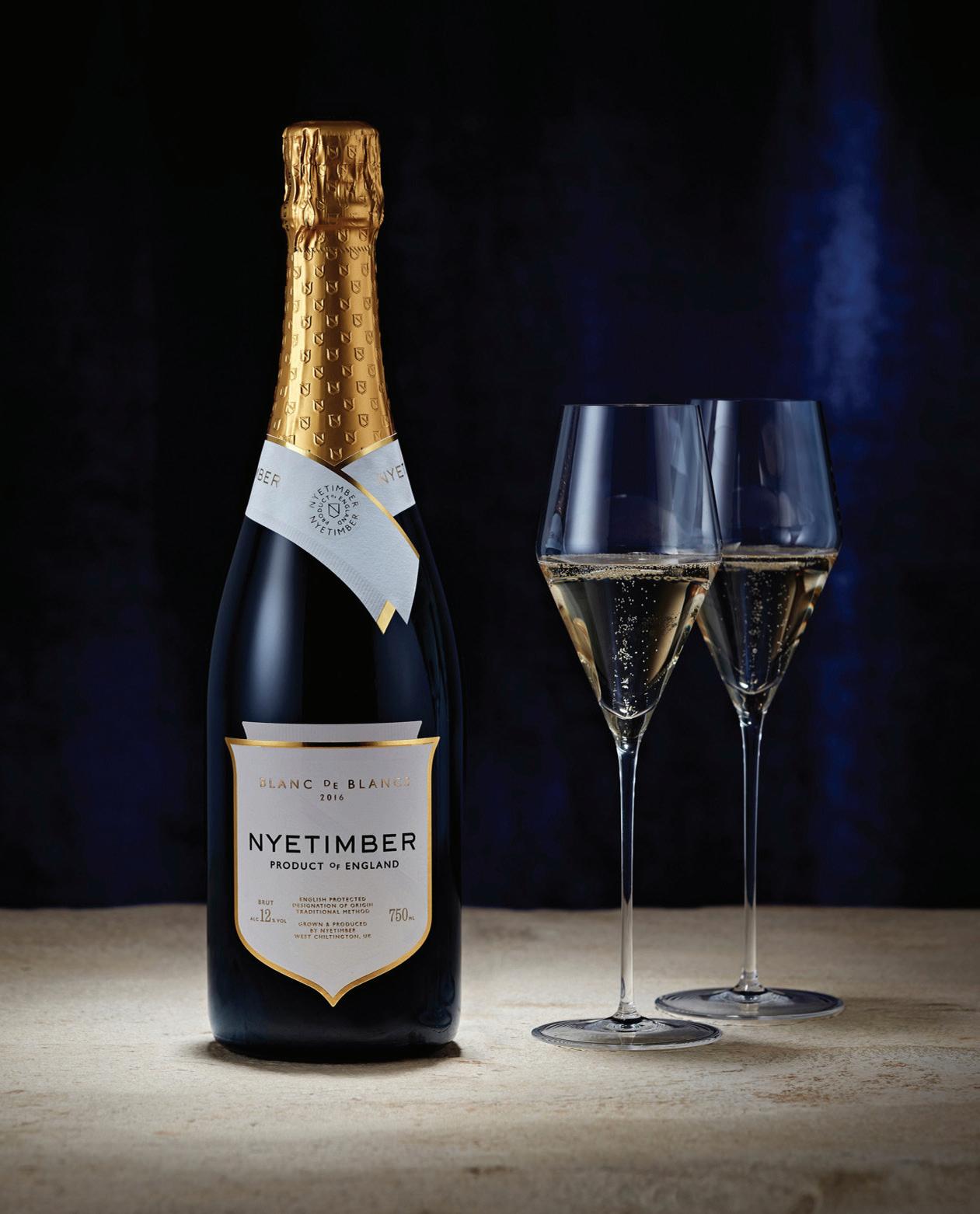
Nyetimber’s Blanc de Blancs 2016 magnum became the first non-Champagne wine to win the Champion Sparkling Wine trophy at the International Wine Challenge
The reality is that among the top ten wine-consuming countries, eight are European, with Italy leading the way at 90.5 litres per capita – more than ten times that of the UK. Most countries with higher per capita consumption than the UK have a long-established tradition of wine drinking, closely tied to their role as wine producers. In such cases, the country itself functions as a “brand” and often even as a perceived ‘guarantee’ of quality or taste for consumers. This is one reason why wine lists are typically organized by country. Wine preferences are frequently linked to the country of origin, and the risk associated with a specific country is highly relevant within the wine product category.
The perceived risk among traditional consumers toward English wine is strongly linked to the limited information and lack of experience with the product overseas. Compared to long-established wine-producing countries, English wine is relatively new, which reduces consumer confidence in evaluating it.
Perceptions shift once consumers are made aware of its country of origin, especially given that wine purchases often carry personal importance. As a result, four major perceived risks or prejudices emerge when choosing a new ‘breed’ of wines: taste, price, quality, and social acceptance.
The most significant perceived risk when purchasing wine is taste –specifically, whether the wine will suit a particular meal or occasion. Traditional consumers are therefore more likely to choose a wellknown sparkling wine from the Champagne region to ensure their expectations are met, particularly when price is a factor. Financial risk is especially evident in restaurant settings, where the cost of a bottle can be substantial; in such cases, consumers expect not only good taste but also high quality and a harmonious pairing with the meal. Equally important, however, is the social dimension: the approval of family, friends, or other reference groups. Social risk arises from the pressure to select the “right” wine, one that reflects shared expectations and secures social acceptance. This factor plays a central role in wine-purchasing decisions, underscoring the inherently social nature of wine and its strong association with occasions of shared enjoyment.
Locally, the consumer trend is undeniable. Wine tourism –including vineyard tours, tastings, and events – has flourished, particularly in Kent and Sussex. English sparkling wine also enjoys strong visibility in UK restaurants and retailers, where it is often positioned as a patriotic and sustainable choice. But overseas? A steadier but similarly positive trend is emerging, with growing international interest driven by shifting consumer preferences and strategic market expansion.
For instance, English sparkling wine is gaining popularity in North America and Asia, with exports to Canada rising 42% between 2020 and 2024 and exports to Japan doubling in the same period, supported by consumer appreciation for its fresh, delicate style. The United States ranked highest in UK wine exports in 2024, valued
at approximately £95 million, followed by Hong Kong, accounting for around £81 million worth of exports. Global recognition has added momentum, with Nyetimber’s Blanc de Blancs 2016 magnum becoming the first non-Champagne wine to win the Champion Sparkling Wine trophy at the International Wine Challenge, while Chapel Down recorded a 67% increase in export sales in 2023, underscoring English wine’s growing appeal abroad.
It may still be too early to say that English sparkling wine is positioned internationally on the same level as established wineproducing countries. Despite its growth, English producers continue to face challenges with brand recognition and consumer trust abroad, as many still perceive English sparkling wine as inferior to Champagne due to unfamiliarity and long-standing brand loyalty. Ongoing efforts in education and exposure are gradually reshaping consumer perceptions. However, it would be valuable for English wine producers and their marketing teams to focus on blue ocean strategies, rather than competing in saturated, traditional red ocean markets dominated by established wine-producing countries. Greater attention should be paid to the theory of perceived risk and how it can be turned into an advantage. This could involve not only strengthening distribution in key markets but also developing differentiated promotional strategies that resonate with the evolving buying habits of younger wine consumers. For example, advertising can play a central role in brand development by reducing perceived risks – particularly through strategic alliances, endorsements from recognised industry personalities, and efforts to address the social approval dimension of wine purchases. More broadly, advertising could help establish the brand identity of a new “breed” of wines, positioning English wine as both distinctive and credible. What is clear is that English sparkling wine is gaining traction overseas, particularly in North America and Asia, thanks to its alignment with consumer preferences for quality and innovation. While challenges remain, the industry’s commitment to excellence and strategic market expansion positions English sparkling wine for continued success on the global stage.
Reimagining the Champagne Coupe for modern Britain
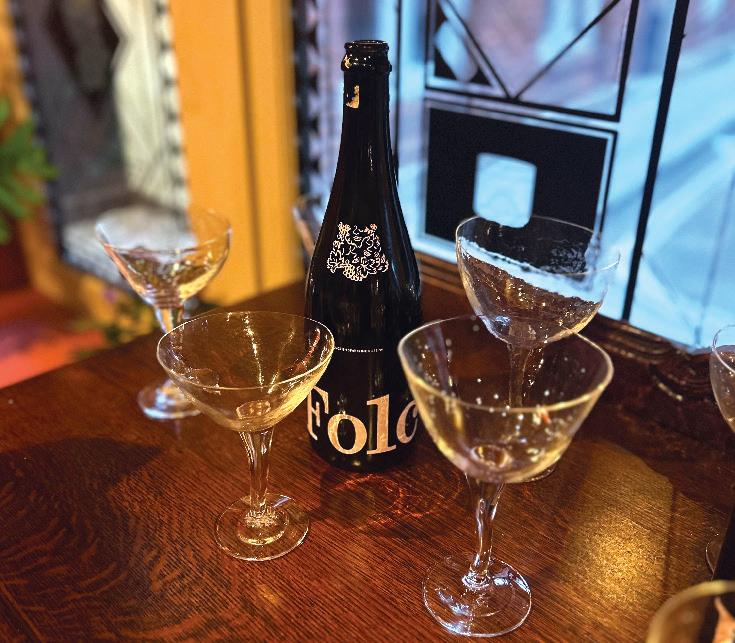
Folc’s English Coupe collection.
For nearly four centuries, wine lovers have been drinking sparkling wine from the champagne coupe, a wide, shallow glass with a legendary origin story.
According to popular myth, the coupe was modelled on Marie Antoinette’s breast in the 17th century, representing what was considered the “perfect” feminine form at the French court.
But in 2025, as English sparkling wine continues to prove itself as world-class, Kent-based wine producer Folc asked a simple question: why are we still celebrating French aristocracy every time we raise a glass of English wine?
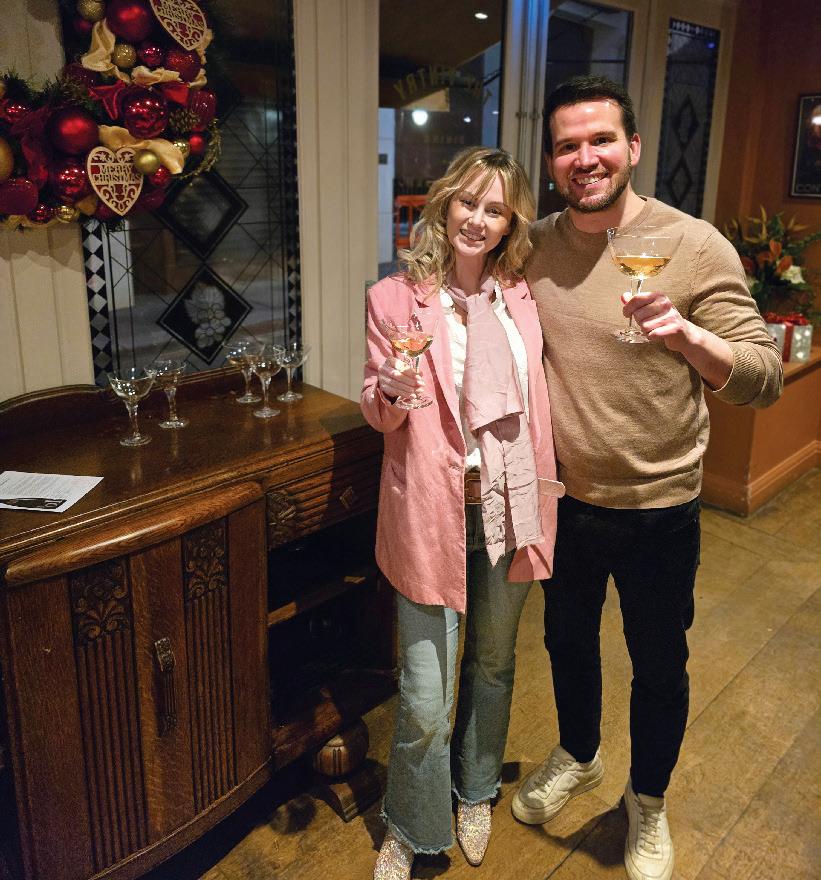
I was invited to a wine communicator lunch celebrating the launch of the English Coupe Collection, an afternoon that brought together the stories, artistry, and vision behind this groundbreaking project. Working with British artists Lydia Reeves, a body-casting specialist, and Phoebe Stubbs of Gather Glass, Folc has created a collection of hand-crafted coupes inspired by real British bodies. Each piece celebrates diversity over uniformity: different shapes, different curves, different identities, all equally worthy of raising in a toast.
The participants who chose to be involved in this project brought courage and authenticity to every piece, representing bodies and stories that have never been celebrated in luxury glassware before. “I hope people will see the importance of seeing diverse bodies and how beautiful and unique they all are,” Reeves said. “I love the fact that this is a usable product that is also a really unique, completely special art piece at the same time.”
The English Coupe Collection launches alongside Folc’s new English Sparkling Rosé. Sourced from vineyards across Kent, this vibrant wine embodies everything the brand stands for: quality, openness, and unapologetic British identity.
Katie Chubb, Folc’s Chief Marketing Officer, is honest about the technical limitations.
“Coupes may not be the ‘best’ choice from a purely technical tasting perspective. But here’s the thing, they’re fun. They’re fancy.
They’re joyful. Ours will be sure to start conversation at your next dinner party.”
Champagne’s obsession with rules and “correct” glassware is exactly the gatekeeping Folc is pushing back against. Whether you prefer a flute, a coupe, or even a tumbler, if it brings you joy, that’s the right choice.
Only twelve pieces were crafted for the debut collection, priced at £1,000 for the full set, and they have already sold out.
The English Coupe Collection is part of a broader movement: English sparkling wine establishing its own aesthetic, its own values, and its own culture.
The project taps into the “Folc It” mentality that lies at the heart of the company. “It’s about that disregard for rules, rebellion against the age-old traditions and constraints that are often associated with the wine industry,” Chubb explains. “We want to move away from that to a place of enjoyment for everyone.”
After 400 years, it’s time for a new story, and at Folc, they’re proud to tell it.
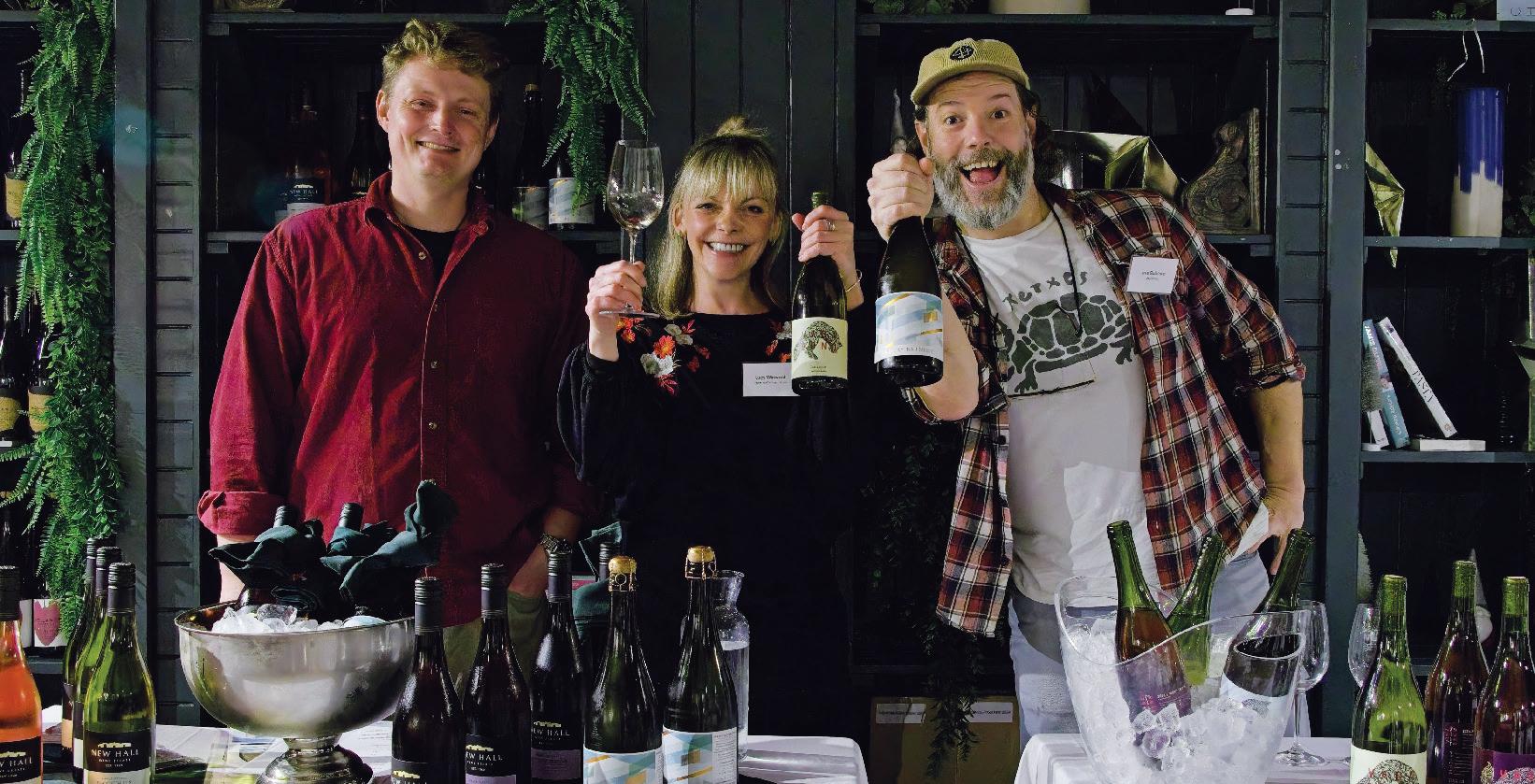
The first-ever Crouch Valley Wine Fair at Fête, Grays Yard, Chelmsford, marked a watershed moment for English wine: the collective debut of one of the UK’s most dynamic and promising wine regions. Bringing together producers from across the valley for an exclusive trade and press tasting, the event showcased wines made entirely from Crouch Valley fruit, offering a rare opportunity to understand the breadth, quality, and distinct character of a region that has quietly become England’s most densely planted concentration of vineyards.
More than a tasting, the fair represented the culmination of years of individual ambition now channeled into a shared vision through the newly formed Crouch Valley Vineyards Association (CVVA). For the first time, the producers of the Crouch Valley stood together, not just as neighbors, but as custodians of a terroir that deserves recognition alongside England’s more established wine regions.
The Crouch Valley’s reputation has been building steadily among winemakers and critics, and for good reason. Stretching along both banks of the River Crouch in Essex, the region benefits from conditions that are exceptional even by English standards: the warmest and driest climate in the UK,
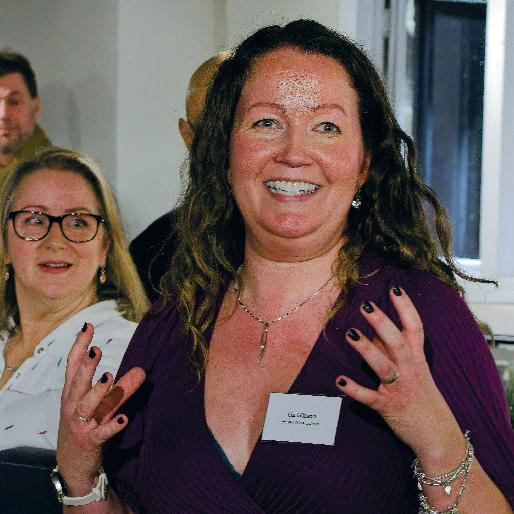
Alice Griffiths
Alice Griffiths is a wine communicator boosting the profile of English and Welsh Wine on social media, under the popular handle of Posing With Alcohol. Alice has worked within the agriculture industry for the past 20 years, spending time as a lecturer and a smallholder before discovering her passion for viticulture, winemaking and wine tasting. Get in touch to have your events featured:
warm estuarine influences, mineral-rich London Clay soils, naturally low rainfall, and remarkably high sunshine hours.
These factors combine to create Growing Degree Days comparable to respected cool-climate regions such as Central Otago, Oregon, and Burgundy, allowing producers to achieve impressive ripeness and consistency even in challenging vintages. It’s a terroir that rewards precision and patience, and the wines on show reflected exactly that.
The event also introduced the work of the CVVA, established to champion the region’s development through three core aims: promoting excellence in grape growing and winemaking, representing and protecting the collective interests of members, and raising the profile of the Crouch Valley as a premium wine region. Through improved communication, shared learning, and public-facing events like the Wine Fair, the CVVA is building the infrastructure for the region’s growing national and international recognition. It’s an approach that balances individual craft with collective ambition, a model that acknowledges that rising tides lift all boats.
The inaugural Wine Fair brought together an impressive roster of producers, each bringing their own interpretation of the valley’s
Posingwithalcohol@gmail.com
Alice can be found on social media under @posingwithalcohol on Instagram.
terroir: Althorne Estate, Clayhill, Crouch Ridge, Danbury Ridge, Flint Vineyard, Great Wheatley, Gutter & Stars, Hollands Marbury, Martin’s Lane, Missing Gate, New Hall, RAD Custom Winery, Riverview Crouch Valley, Sugrue South Downs, The Heretics, and Vagabond.
The range was striking. From elegant sparkling expressions to structured still wines, each bottle told a story of place and winemaking philosophy. What united them was a shared commitment to quality and a deep understanding of the unique conditions that define the Crouch Valley.
For those who attended, the message was clear: the Crouch Valley is no longer England’s best-kept secret. It’s a region stepping confidently into the spotlight, armed with exceptional terroir, talented winemakers, and a shared vision for the future.
As the UK wine industry continues to evolve, the Crouch Valley stands as a compelling example of what can be achieved when individual excellence meets collective ambition.
The first Wine Fair may be over, but the story of this remarkable region is just beginning.
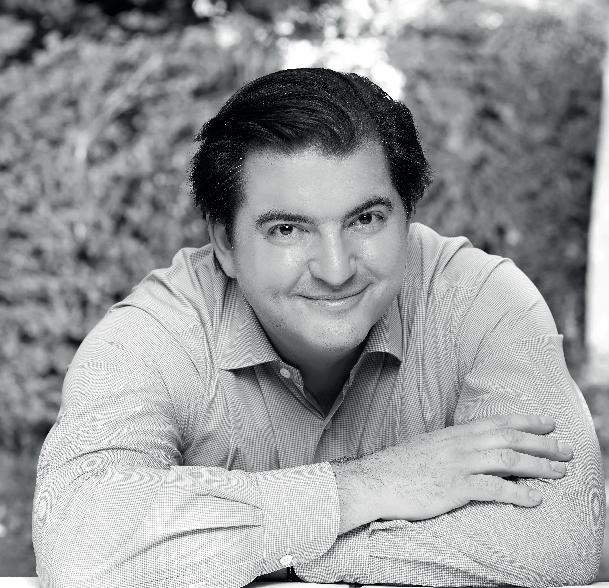
What I’m drinking
Perhaps I should have waited two more columns, until my 100th for this brilliant publication, to write such a personal piece, but it’s the festive season, and the perfect time to splash out, so here you go.
This is the ideal time to let you know what I will be drinking with my best friends and family this Christmas, and, by definition, this means these three wines are the most exciting and delicious I have come across in the last month.
It is not only essential to put one’s best wines possible on the table to share with your loved ones, but also a privilege to tell stories about their heritage, the people behind the labels and the stunningly unique flavours in the glass.
It helps if the wines are memorable, beautifully packaged and genuine, personal favourites. One can only expound on wines that one truly loves, and so this month, my independence and magnanimity are front and centre.
You will be selecting your own wines for your various gatherings, and there are lots of moving parts to consider. This month, I have ignored specific menus or dishes, like a traditional Christmas lunch, roast beef,
£28.00
www.artefactwine.com
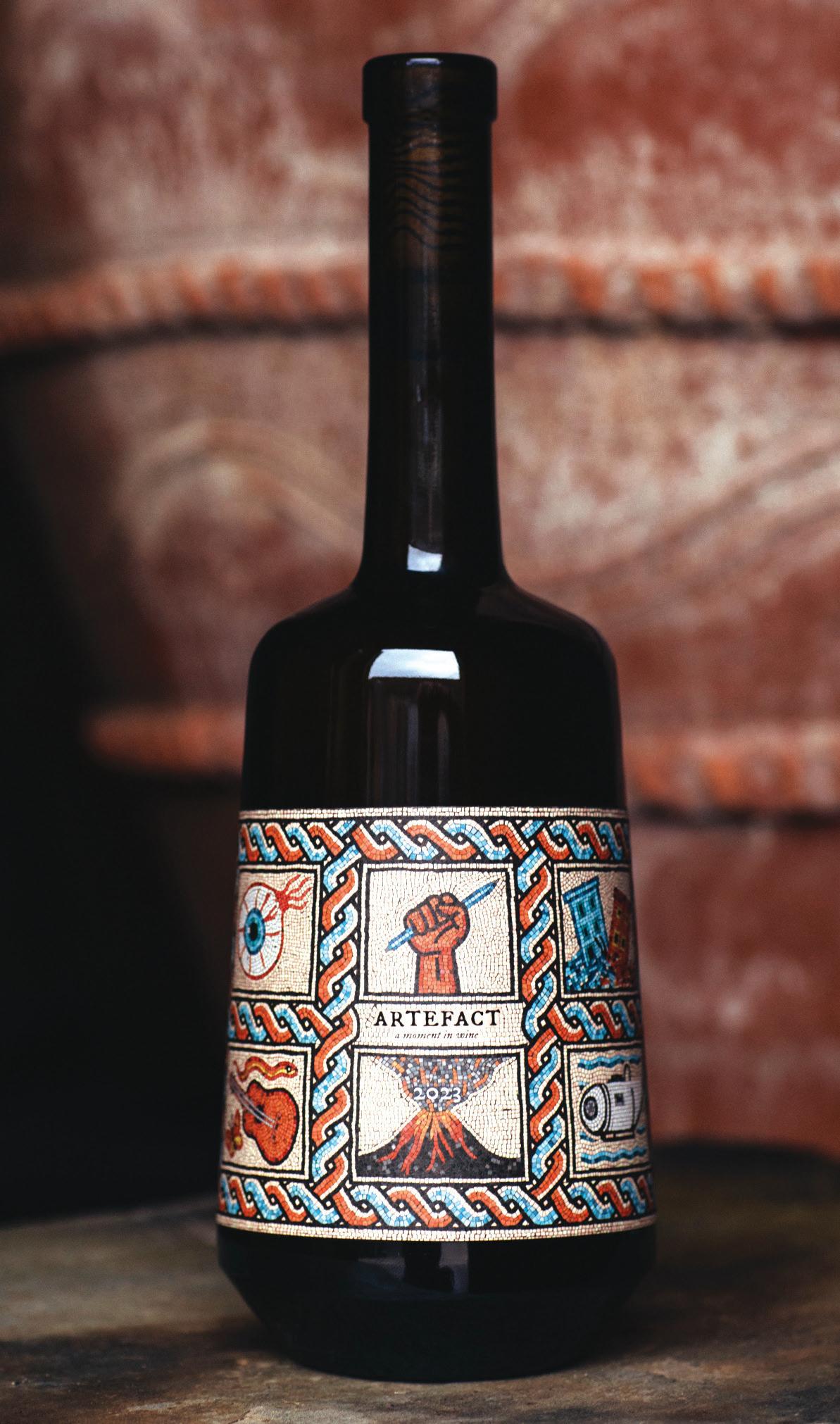
It’s hard not to be drawn in by the story of three mates from East Devon, Rob Corbett, Luke Harbor and Tommy Gillard, coming together to record the emotions and events of the year in the flavour and aura of a wine.
This lofty ambition might seem somewhat pretentious or, worse, a little kitsch. But when the packaging is this spectacular and the flavour so arresting, it commands complete commitment from the drinker, you are stopped in your tracks.
2023 Artefact is a Bacchus, crushed and destemmed into four 300-litre Tuscan amphorae, where it spent 21 days on skins before 18 months lees ageing. It is uncompromising, unique, toothsome and combative. It is slightly sherried, like an electrifying Manzanilla, except the perfume is that of an elegant, formal English garden, layered with meadow and orchard flourishes.
It is incredibly refreshing and arrestingly dry. It is unlike any apero white wine in the land, and the intricate mosaic label depicts a year of strikes, submarines, and pop stars.
The artwork was inspired by the Byzantine-era mosaic discovered under an olive orchard in the Bureij refugee camp, located in the Gaza Strip, Palestine. It is stunningly beautiful, and I cannot imagine that any one of the limited run of 1200 bottles will find its way to a bottle bank for recycling.
For my part, this vessel should spend its remaining days in my kitchen, alternating between olive oil duties and fresh flowers!
mince pies, turkey curry or smoked salmon blinis – all dishes we will devour. What counts is simply the flavours you will experience in the glass and the way these wines transport you to a higher plane. Selfish? Perhaps. Indulgent? Certainly. But the bottom line is that what I’m drinking this Christmas is the present I will give myself after a long 12 months working like a berserker. And you should do the very same, too, because you’re worth it. Perhaps you will consider this trio. I hope so. It would be awesome to think there are people out there raising the very same wines to celebrate the end of 2025 and usher in the New Year.
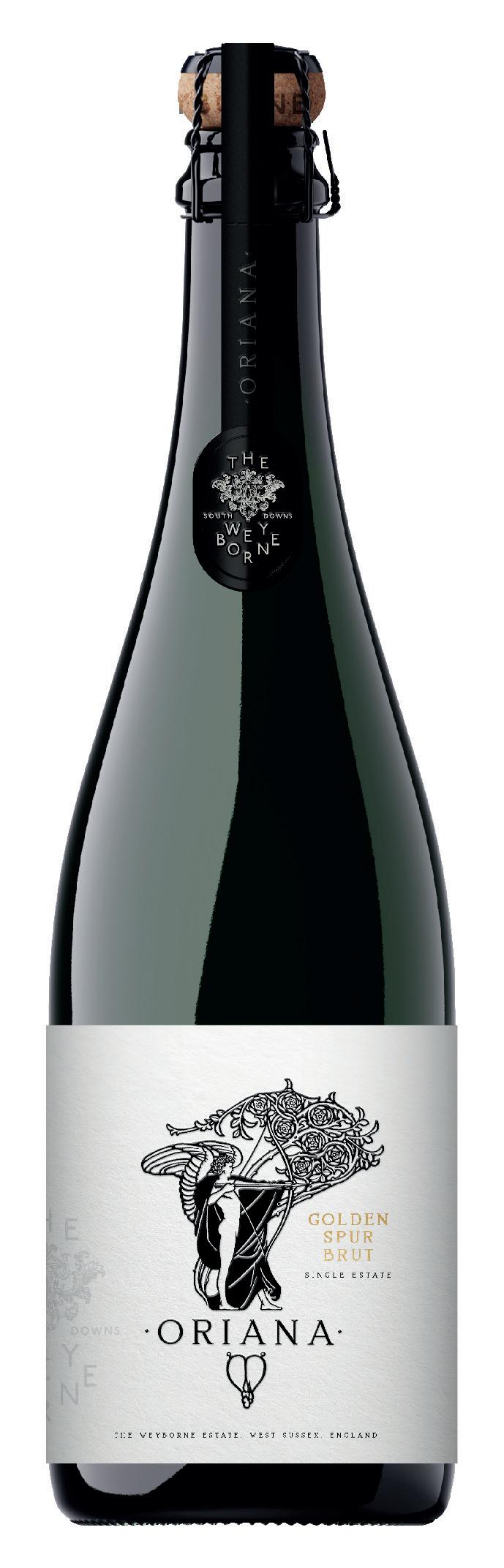
£45.00 www.weyborne.com
£222.00 per 6 bottles In Bond www.farrvintners.com
Named after Tennyson’s The Ballad of Oriana, discovered in a 1905 edition within the Estate’s own library, Weyborne is justifiably proud of this wine, which romantically embodies the spirit of love, loyalty and fate.
In fact, Golden Spur is an early release of a 2022 vintage wine which will see the light
of day in the Spring. With very little wine left in the cellar after winning gongs and praise (including from this writer on this page nine months ago) for their previous releases, Weyborne needed to conjure up a wine to keep their fanbase satiated. Golden Spur was born, and it is far more delicious and precocious than anyone could have imagined.
Super dry, shockingly floral, and with gorgeous rosehip moments bounded by a sternly acidic hem that realigns the senses after every sip, this is a handsome sparkler that employs just the right amount of oak to add gravitas without upsetting its equilibrium.
Golden Spur was summoned from its slumber six months earlier than planned and given the challenge of electrifying all-comers’ palates while sticking to the sonorous Oriana script. It should not be this good, this early, but I was utterly mesmerised by this wine, and its legend and performance are both breathtaking.
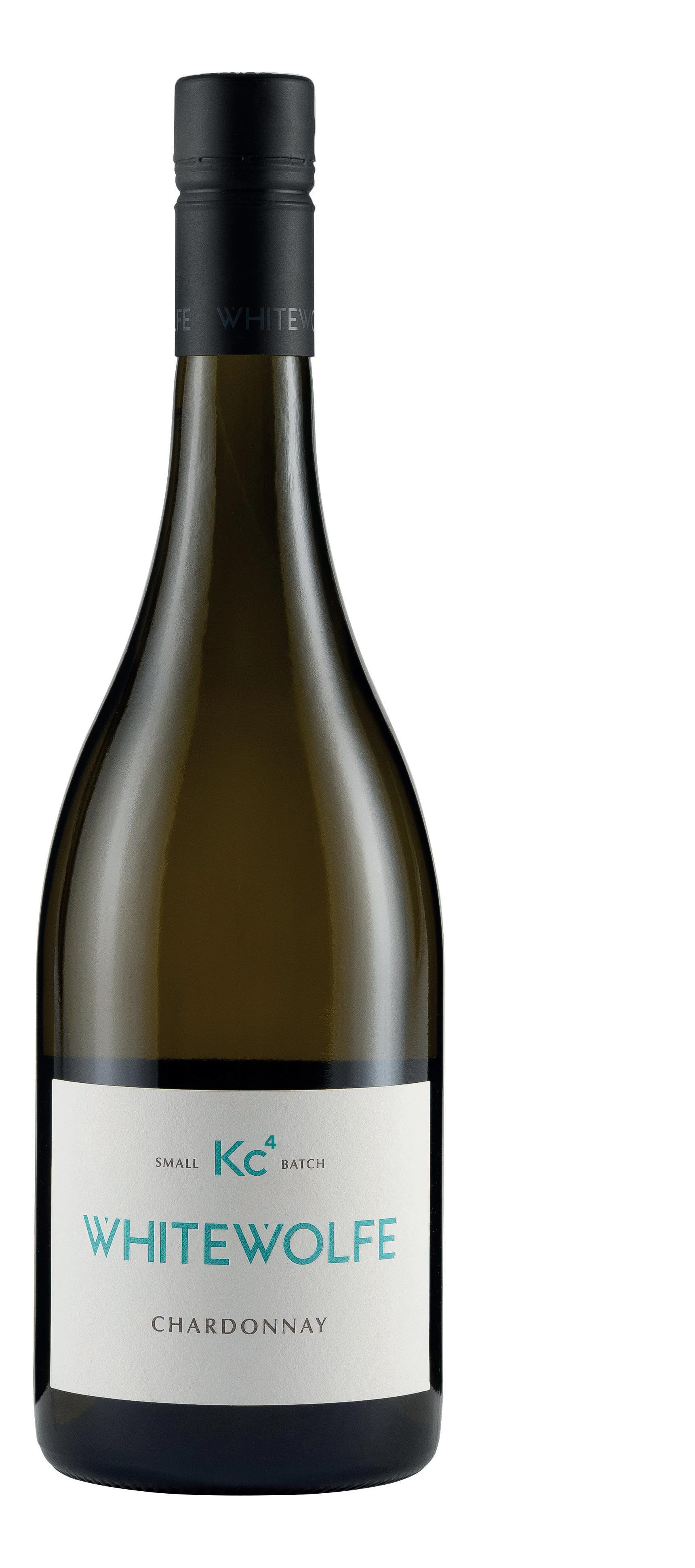
Regular readers will know that I was so gob-smacked by the inaugural releases from Whitewolfe I devoted an entire double-page spread to the wines in Vineyard Magazine last September.
A year later, would ‘second album syndrome’ affect this Kits Coty Chardonnay specialist? Not on your nelly. This wine is one of the most resonant and magical of 2025, and I wanted to tell as many people as I could in the shortest possible time.
So, I put my money where my mouth is and poured it at a series of festive, corporate events in November for gatherings of elite wine lovers. Here is a story within a story. At a particularly grand dinner, I noticed that two chaps kept fiddling with their phones when I was telling the throng about this stunning
wine. It didn’t put me off my stride, but it certainly niggled, so I made a point of walking over between courses to ask if they were enjoying the wines.
I felt like a fool when they told me they loved KC4 so much that they had to secure a few cases while I was talking. They knew that stocks were limited and did not want to miss out. I loved this story so much, I let Claire Whitehead know the next day, and she revealed that a decent order had come out of the blue the night before!
It just goes to show that some wines are so breathtakingly beautiful that people cannot live without them. I feel the same way about KC4 – it is a rare gem, and I will continue to give it as many chances as I can to cast its spell this Christmas.
Adapting and thriving
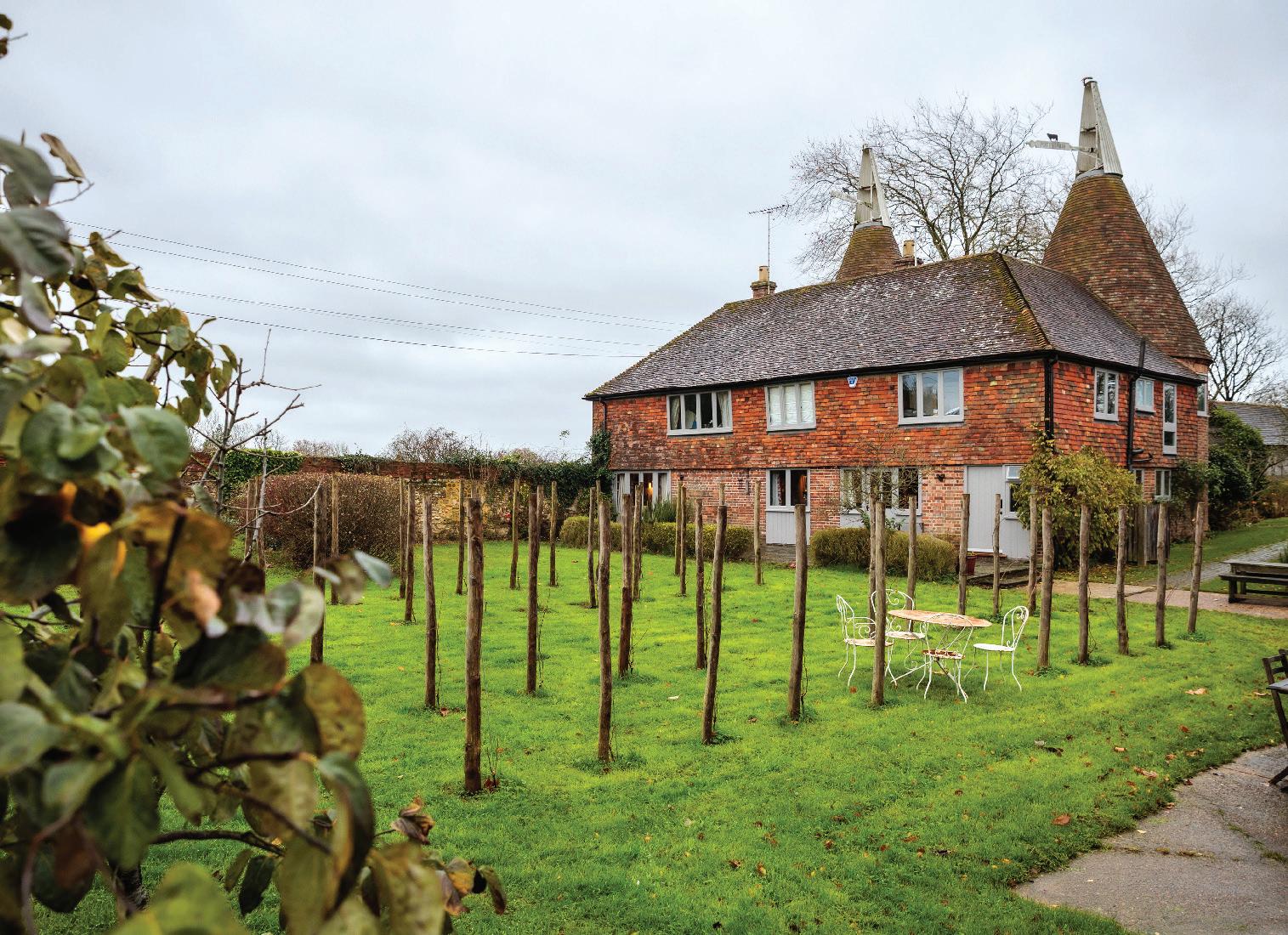
It was officially the first day of winter when Vineyard Magazine visited Oast Wood Vineyard in the Weald of Kent.
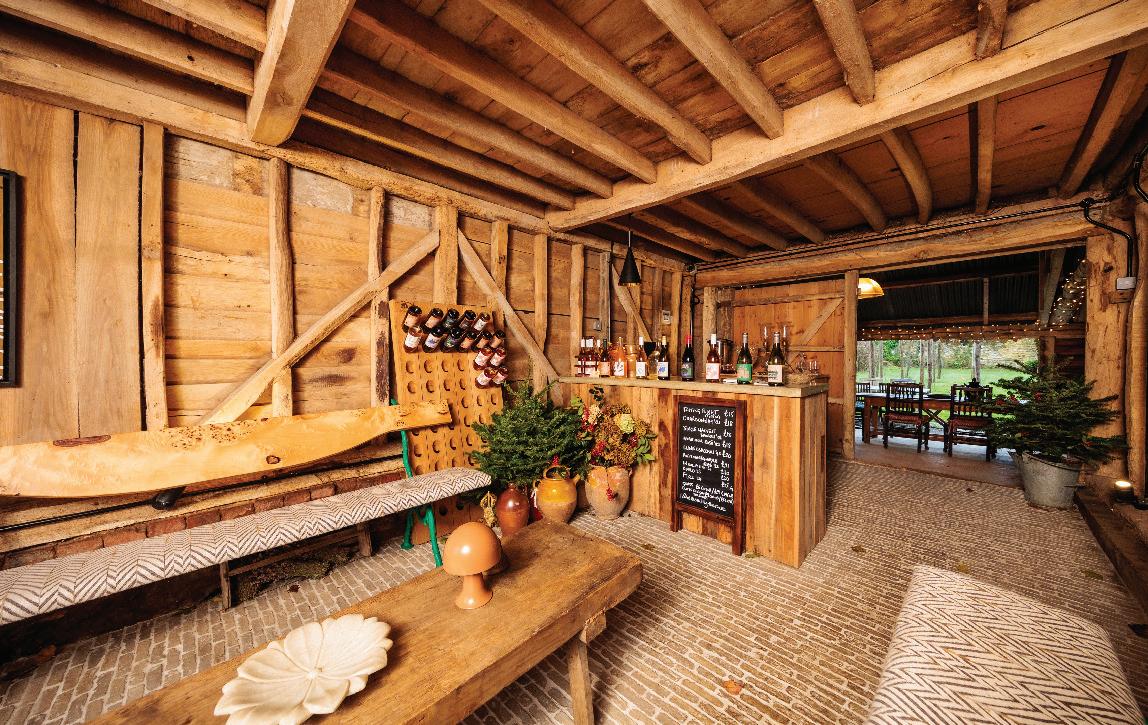
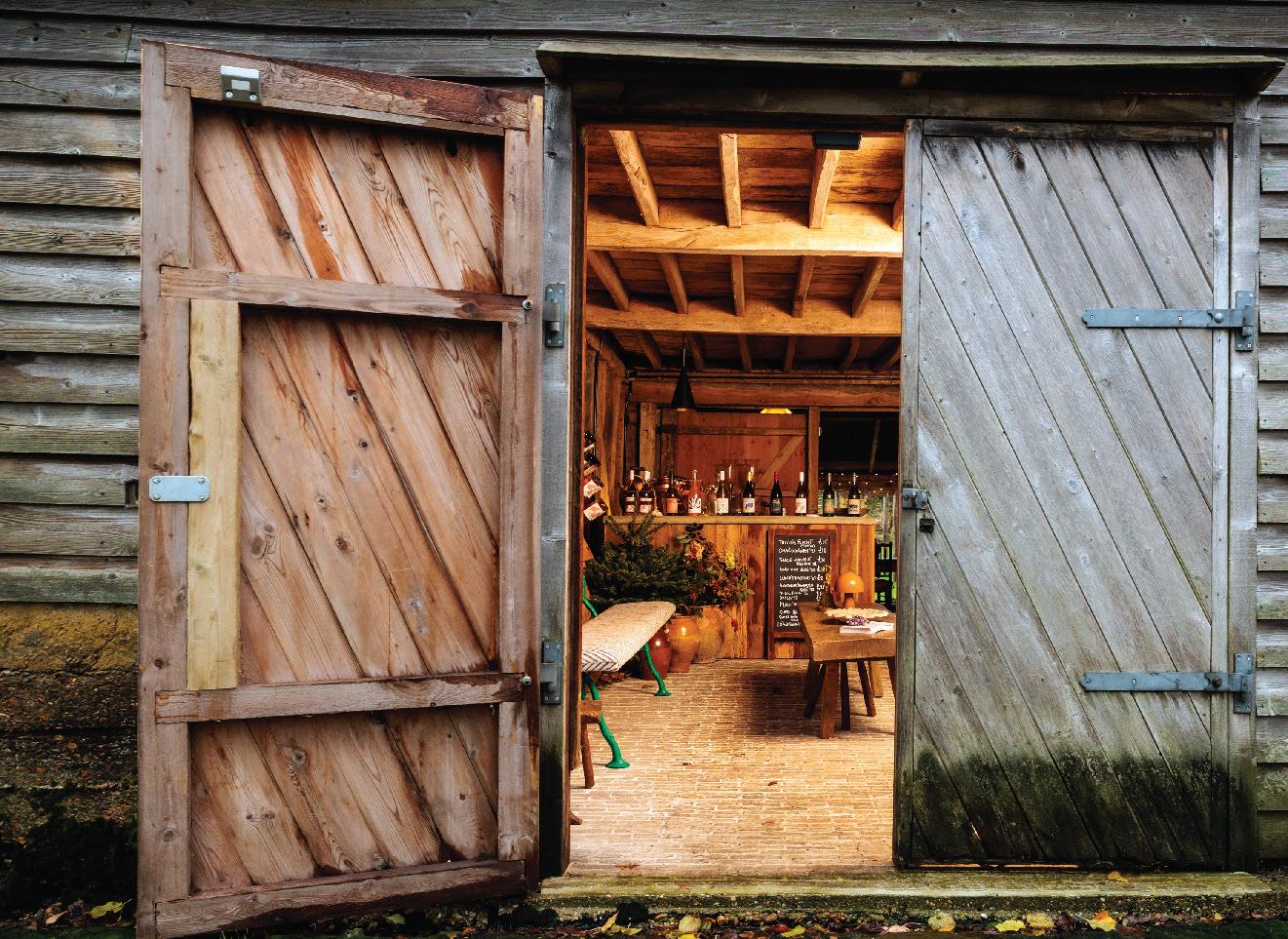
The agricultural calendar and the corresponding weather were however at odds with the warm atmosphere that instantly meets visitors to the tasting room at Oast Wood. There is a grace and elegance combined with a relaxed and friendly mood that gives visitors a feeling that this is the perfect place to be yourself.
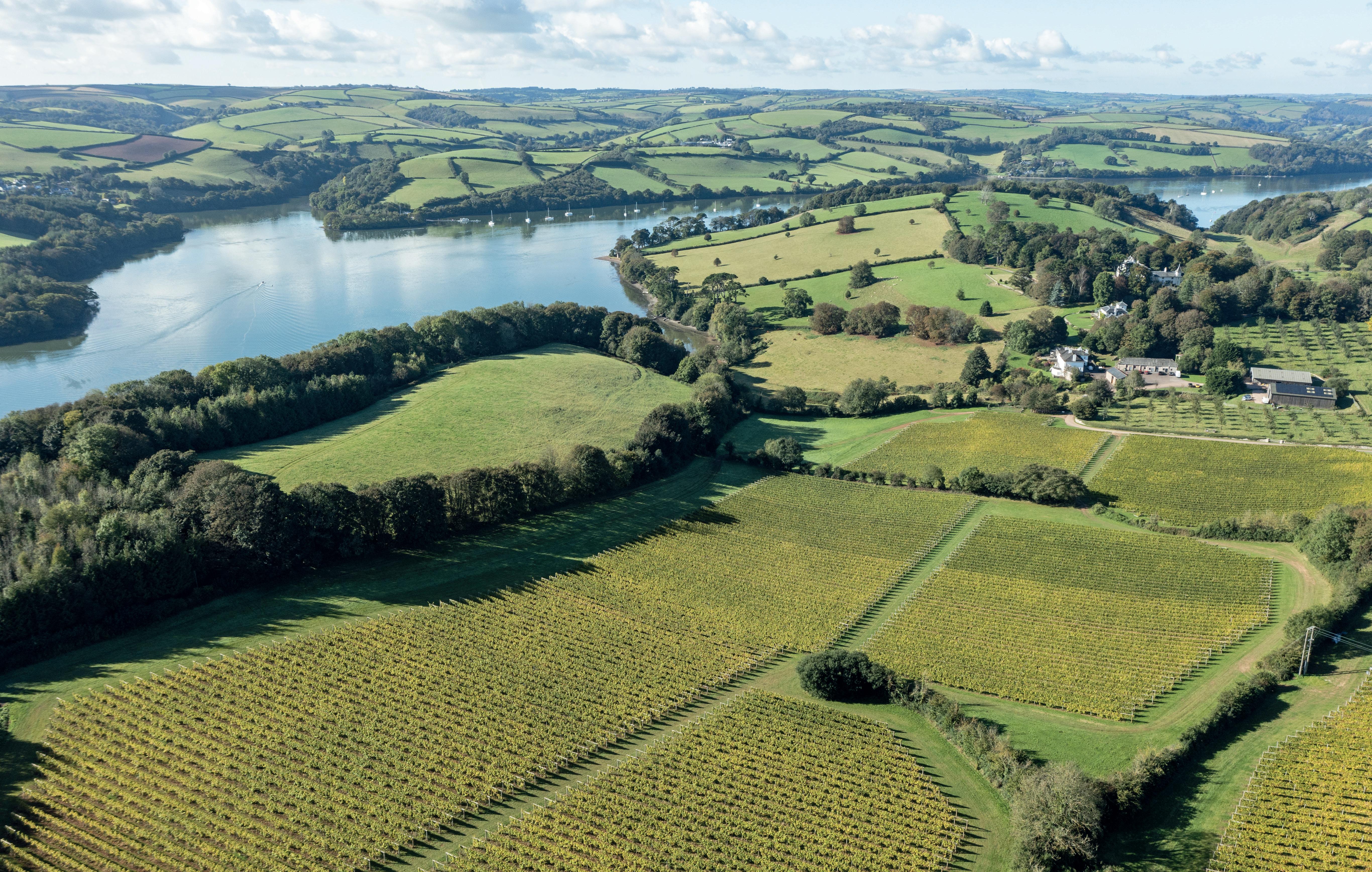
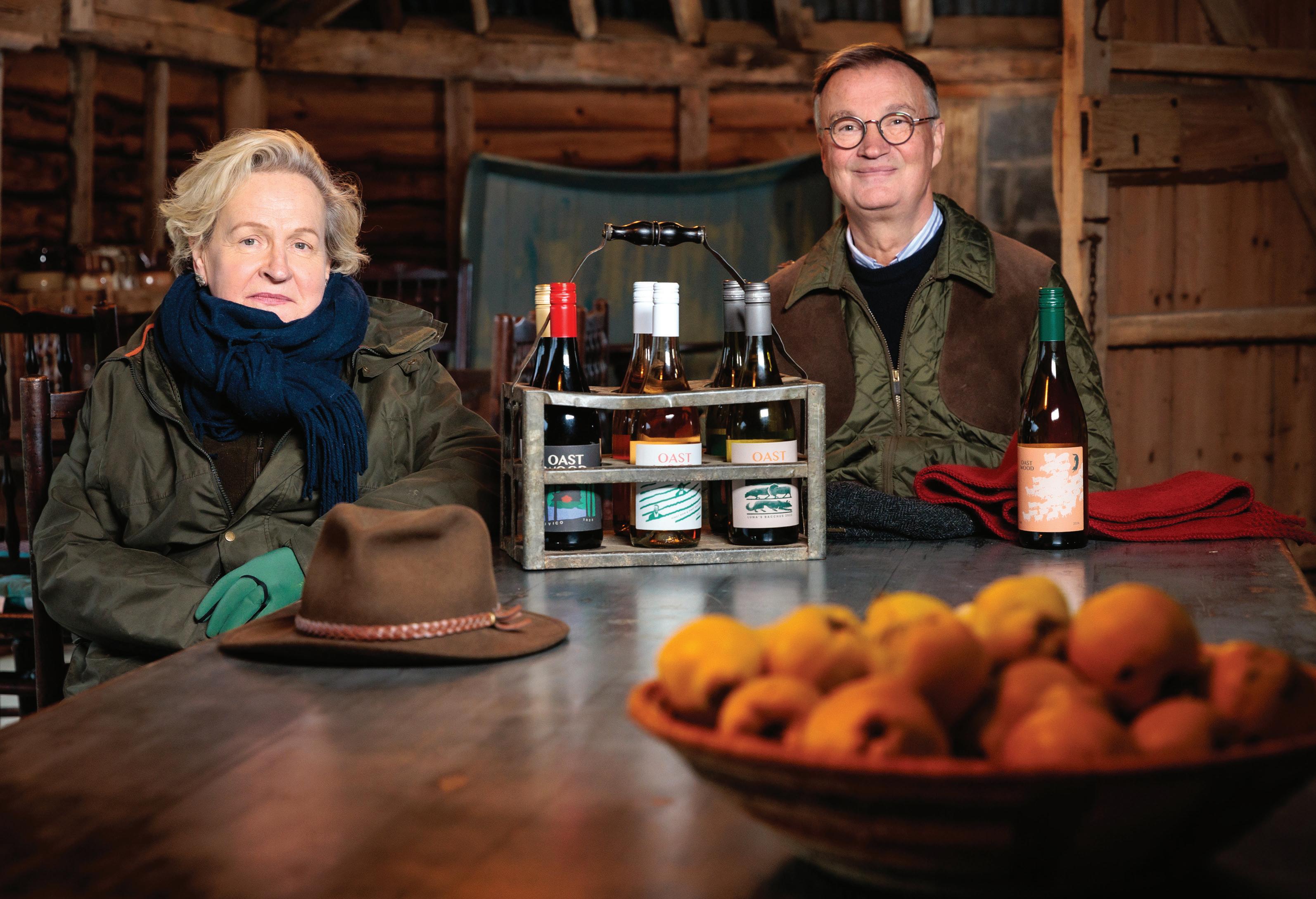
Stephen and Kate Sidebottom moved to the picturesque Potts Farm in Tenterden nearly 30 years ago and have farmed sheep on this land for decades. At the height of production the flock numbers were as high as 300 but production is now limited to Texels and Herdwick breeds. The Herdwick
Kate and Stephen Sidebottom
sheep are both independent and very unique and these characteristics seem fitting for this six acre vineyard planted at the northern end of the Rother Valley. Kate originally studied and practiced law but it is clear that farming and the farming community are where her real heart lies. Kate has embraced her role as a farmer and has also been welcomed into the local farming community. “One local farmer told me ‘they won’t make any more land so make the most of it, but be careful not to over extend yourself’ and I have taken that advice on board. Everything we have done has been a slow process here and we have thought about every project very carefully,”
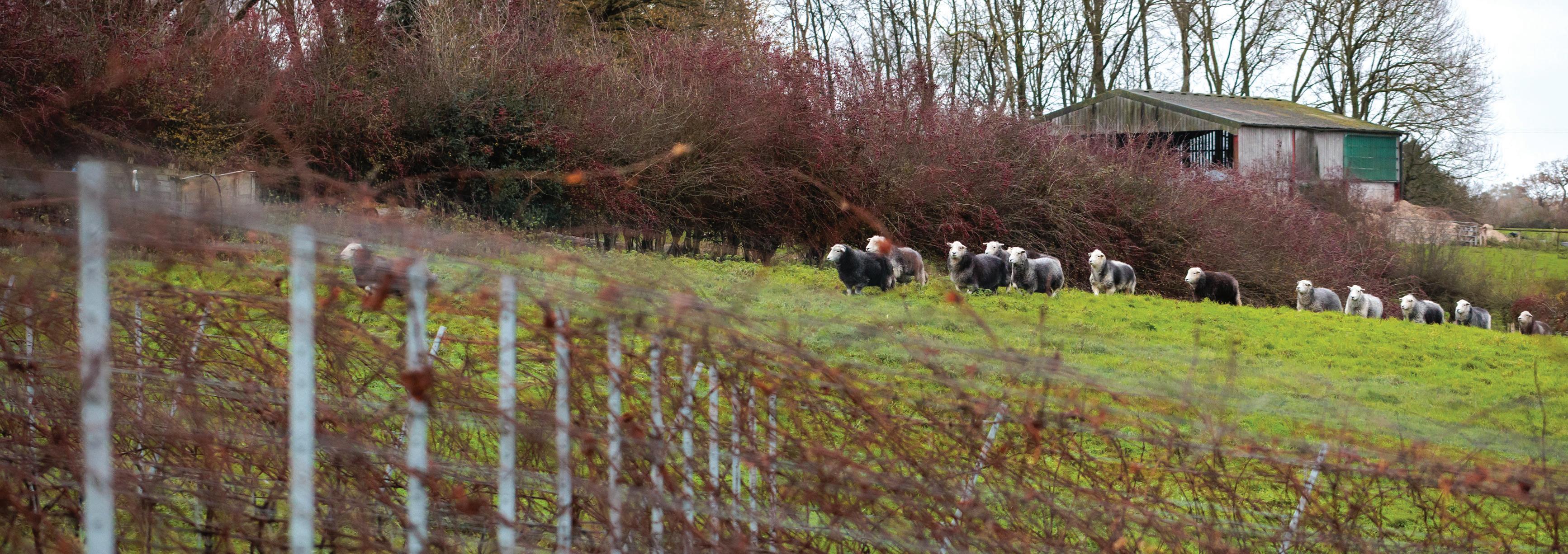
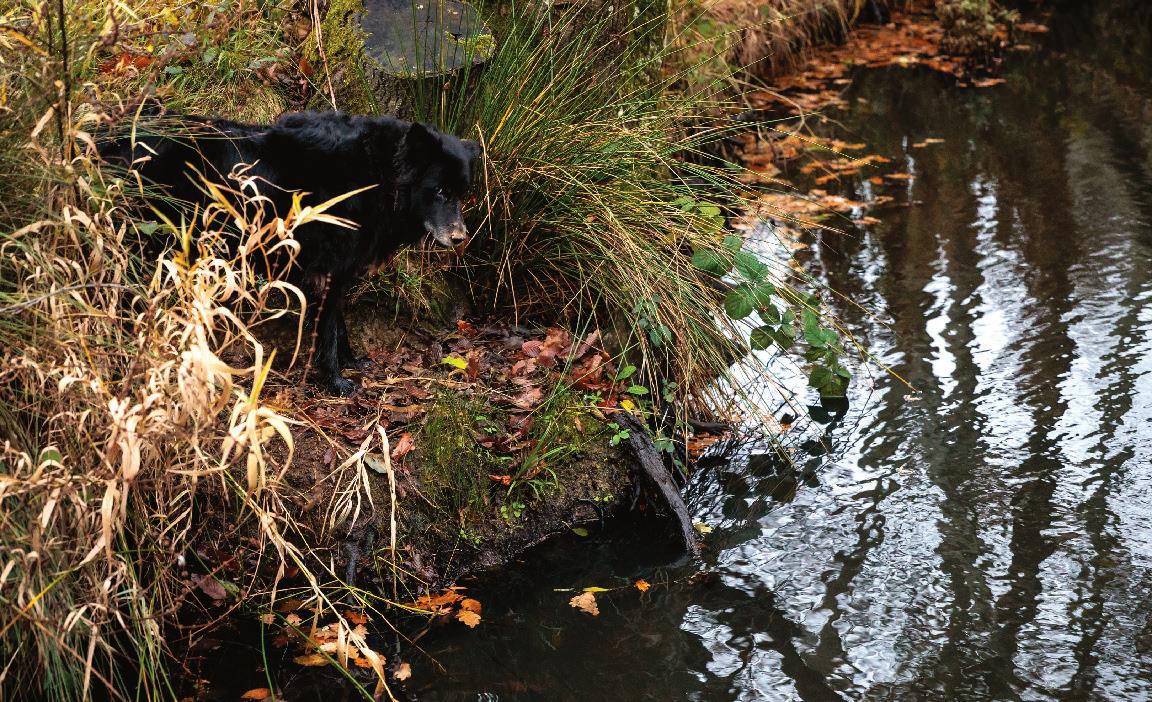
said Kate with real affection in her voice. Lookering the sheep that run through the vineyard at this time of year and walking the vines with her beloved dog Luna faithfully at her side Kate joked that at least the vines don’t run away and then added with a wistful smile: “I feel really privileged to work the land and enjoy this view every day.”
The farm has been run from the start with the intention of constantly improving the landscape. “Observing turtle doves or dormice is the best reassurance we can have that we are improving the landscape,” said Stephen. “Family farms need to adapt. There is no luxury of time to make nature gains, we have to act now,” said Kate.
Stephen explained that Potts Farm was part of an agricultural landscape that dated back to the 14th century. “There are ancient hedgerows, ancient woodlands and rights of way, along with hammer ponds across the farm. The farms in this area are all designed with a double or single open courtyard so that the pigs could be driven to Tenterden high street for the market,” he said. The landscape has continued to adapt and organically expand its reach with both hops and cattle added in the 18th century and now at Potts Farm vines are a new part of that old tradition.
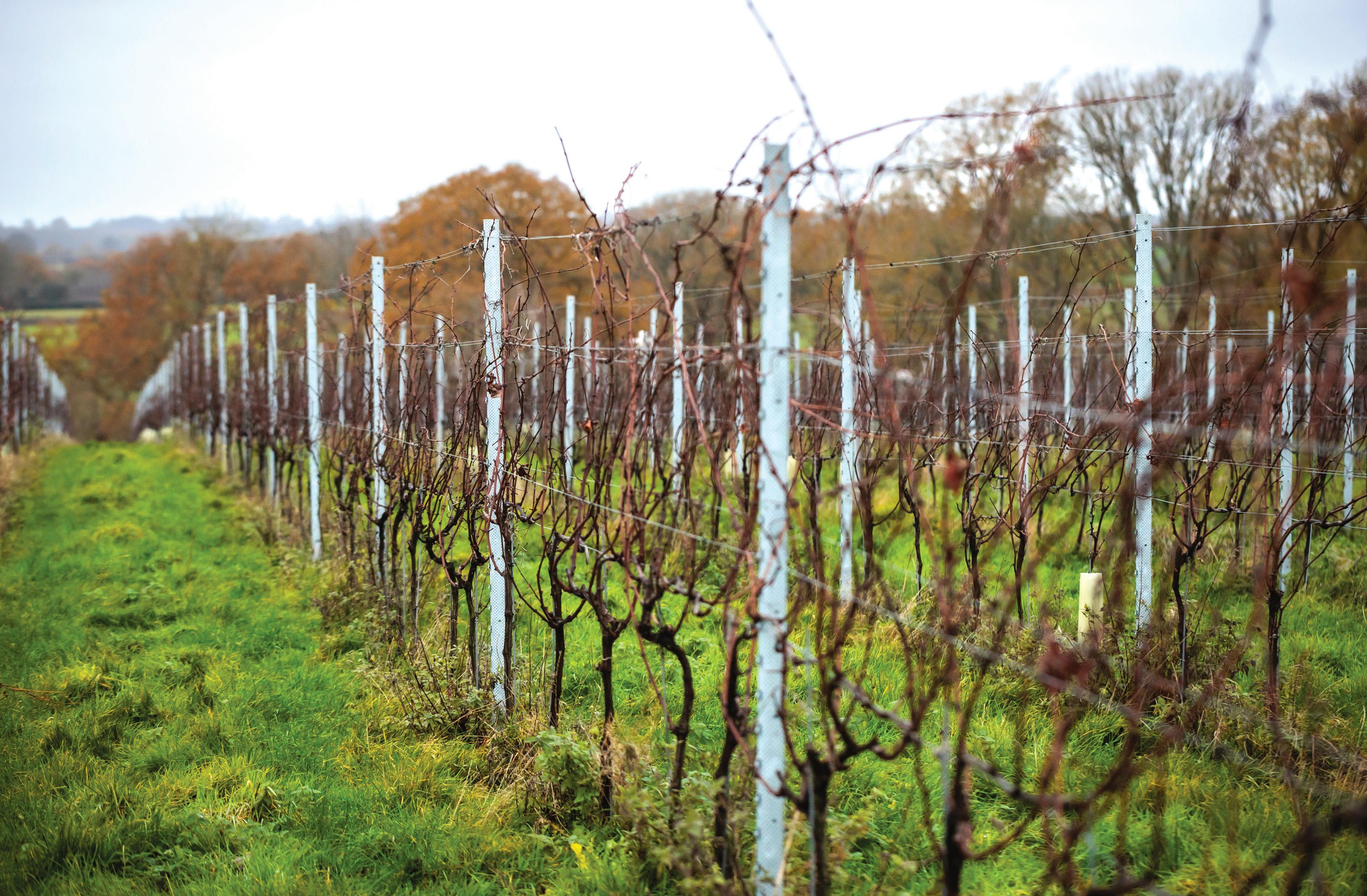
Planted in 2021 the 12,000 vines are reflective of a living landscape. The vines are planted next to an area of ancient woodland that is breathtakingly beautiful “preservation does not mean standing still,” said Stephen and the choice of varieties reflects this ethos. Alongside Pinot Noir, Pinot Gris and Bacchus is planted the PIWI variety Divico.
This being one of the earliest plantings of Divico in England and Wales, the choice reflects the same measured bravery that led Stephen and Kate to purchase this farm three decades ago. “We wanted to embrace new varieties that offer the chance to develop new and innovative wine styles but we also wanted to have very recognisable grape varieties planted here,” said Stephen.
The Pinot Noir may be a traditional choice but it is a versatile grape and Stephen and Kate alongside the team at VineWorks worked hard at the planning stage to maximise the wine styles that can be produced.
On a mixture of rootstocks selected to deal with the fertile soil that is a mix of sandstone, clay, loam and Ironstone, and there are five clones of Pinot Noir. “We have Pinot Noir 777 which was planted with the idea of still red plus we also have 386 and 521 which in 2025 have produced grapes that were selected to make a wild ferment still Rosé,” said Stephen who clearly has a passion for wine as an expression of the environment.
The Herdwick sheep are both independent and very unique and these characteristics seem fitting for this six acre vineyard
“We want to have fun, enjoy the grapes and be creative,” said Stephen. “We lean into what the harvest delivers which means the wines will be different year on year but what we always want is every wine to be good wine. The lamb and wool that we produce has always been of the finest quality and so our wine should be the same,” said Kate.
Tours of the vineyard are available for groups of varying sizes up to a maximum of 20 people. Stephen who conducts the tours said: “The tours are about a personal connection to the farm, the terroir and the wines.” Stephen and Kate both have been heavily influenced by their experiences of wine tourism in Georgia. They felt a connection with the vineyards and winemakers who had welcomed them into their personal space to experience the real
feeling of the wine and that is what they want to offer their guests. Offering tours and tastings is another example of the organic development of the farm.
“Ten years ago our workshop fell down and we replaced it with a guest annex for friends and family,” said Stephen. That space was then also made available as holiday accommodation and is now a sought after holiday location, being fully booked through the summer months. “Having the holiday cottage meant we had already got over the fundamental beginning of welcoming people onto a working farm, which can initially be quite daunting,” said Kate. Stephen and Kate also plan to hold events at the vineyard but “events are a discipline that you can easily get wrong, so we want to wait until we are ready,” said Kate.
<< There are some vines planted in a small parcel right outside the tasting room to bring the vineyard right up to the cellar door and these are of varieties native to Georgia as testament to the inspiration and experiences that Kate and Stephen enjoyed when touring that wine region. This highlights another theme of the wine experience at Oast Wood.
Stephen and Kate both enjoy sharing their vines, wines and knowledge with those that visit the tasting room. “Vineyards are so different to other parts of agriculture, you don’t often find that people want to visit the arable farmer that grows the grain for their bread but they do want to come and develop a connection with the wines they drink and that is something to be celebrated,” said Kate.
With quinces and medlars in large baskets, waiting to be processed into jams and jellies some of which will accompany the local cheese platters for the five wine tasting, the tasting room is full of examples of the traditional produce that the land supplies.
There are some vines planted in a small parcel right outside the tasting room to bring the vineyard right up to the cellar door
The idea of sharing is not limited to the human visitors at Oast Wood. Kate also takes in horses that need rehabilitation. Sharing extends even further “the badgers are extremely partial to grapes especially the Bacchus,” said Stephen with a laugh. When I ask about pest control both Kate and Stephen are quick to point out that the badgers and the birds were here before they owned the farm and that they are welcome to their share of the produce. “By keeping all the hedgerows and the other native trees the badgers and the birds have plenty of food to choose from so their predation of the grapes is not problematic,” explained Kate.
“We are happy to share with nature and it feels like everything is in balance, it does not feel like a war,” Stephen added with a gentle note in his voice.
“By keeping all the hedgerows and the other native trees the badgers and the birds have plenty of food to choose from so their predation of the grapes is not problematic”
The vineyard is planted on a windy site reducing the risk of disease which allows Oast Wood to have a minimal spray regime and Luke Wolfe at AgroPro works with Stephen and Kate providing assistance with some of the ongoing vineyard management tasks. “The wind is SW in summer and NE in winter and the ancient woodland and hedgerows provide natural windbreaks and the old hammer ponds at the bottom of the slope provide an effective frost drain on the site,” said Stephen. “I have even heard from people during a tour that they learnt to swim in the pond when they were young,” he added. Throughout the visit it is clear that Stephen and Kate have what can only be described as a proper working partnership. Their skill sets are very different but they seamlessly create this fabric of real life and they are willing to discuss ideas and take suggestions from each other and those around them. They talk freely about the advice they have received from the local farming community and from VineWorks and AgroPro, alongside the input of their winemaker Janneke Van der Merwe at Defined Wines Ltd.
Reality is something that keeps this couple moving forward and Kate speaks about some of the challenges for rural communities in general. “Agricultural salaries have not kept pace with house prices and this has left farming communities with a serious problem.
EDITOR’S VISIT
The vineyard has encouraged younger people to work on our farm. Since we planted the vines the average age of those of us that work here has come down significantly,” said Kate.
The benefits of the younger influences are highlighted by both Kate and Stephen. Both their daughters are actively interested in the vineyard and have contributed ideas to the business that would only have come through a multigenerational point of view.
“We want to make the vineyard as inclusive as possible which is one of the reasons we planted vines outside the tasting room, those that can’t or don’t want to walk through the vineyard are still able to experience the vines,” said Stephen. The wines on offer are inclusive as well with a vast range of styles providing something for everyone.
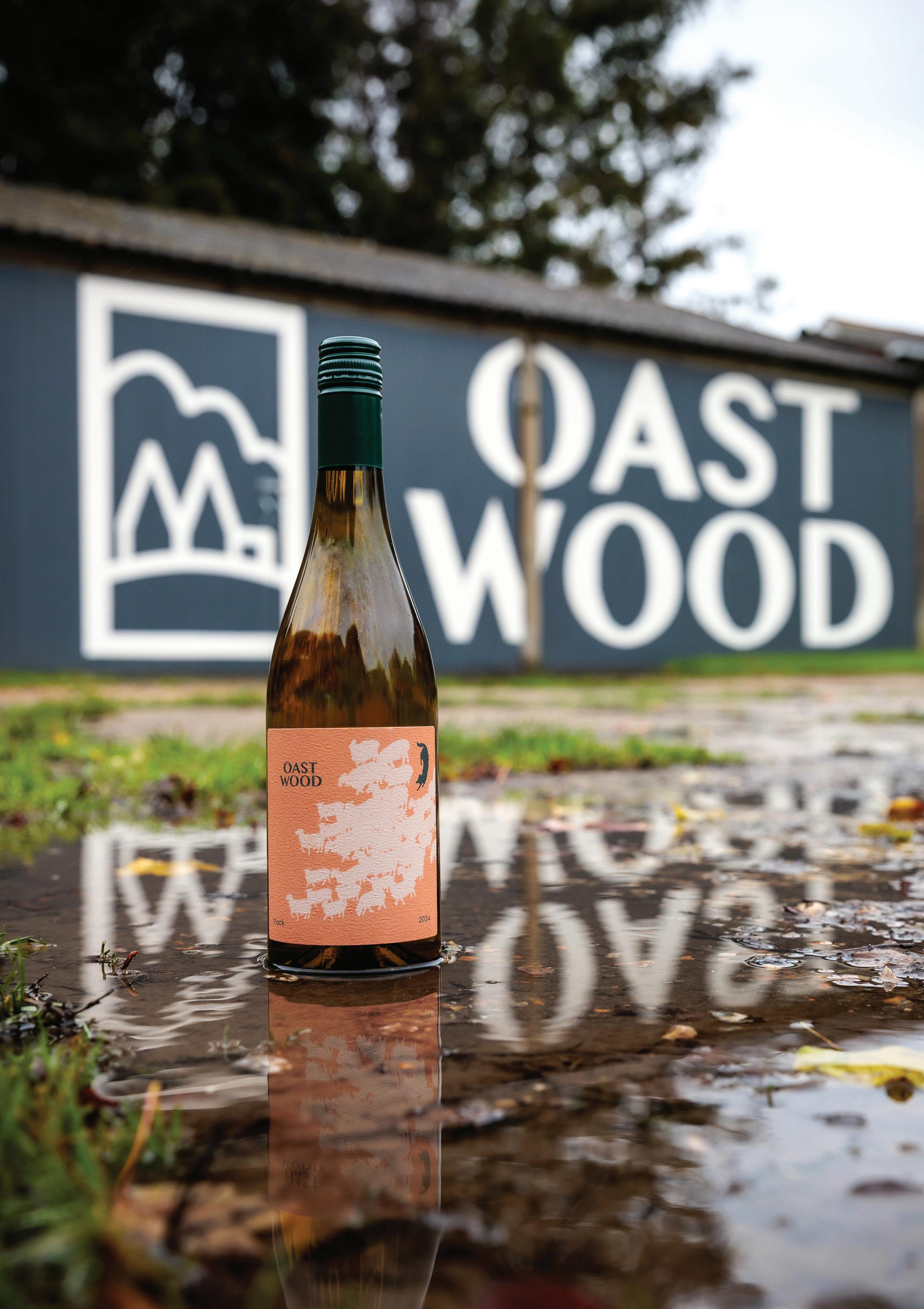
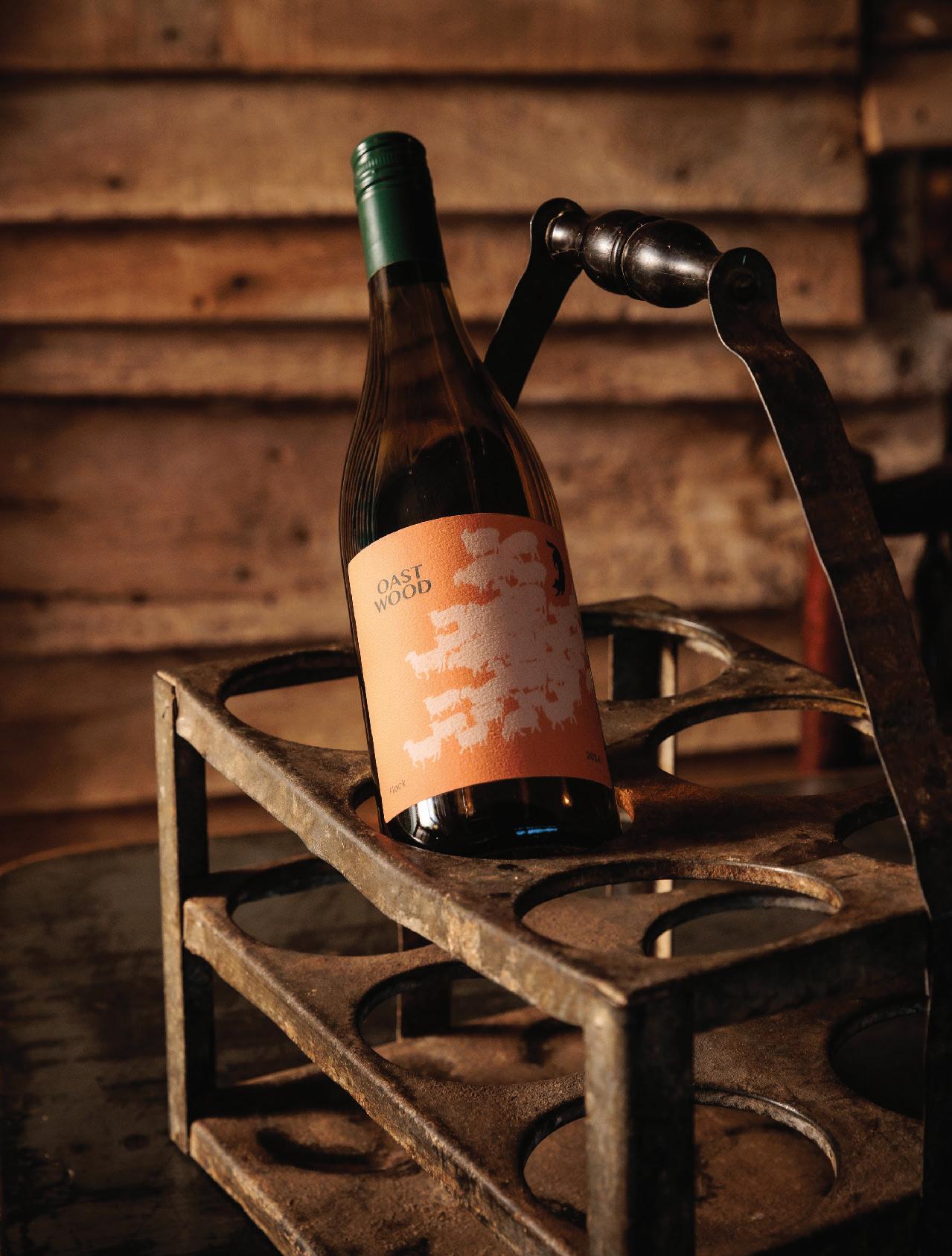
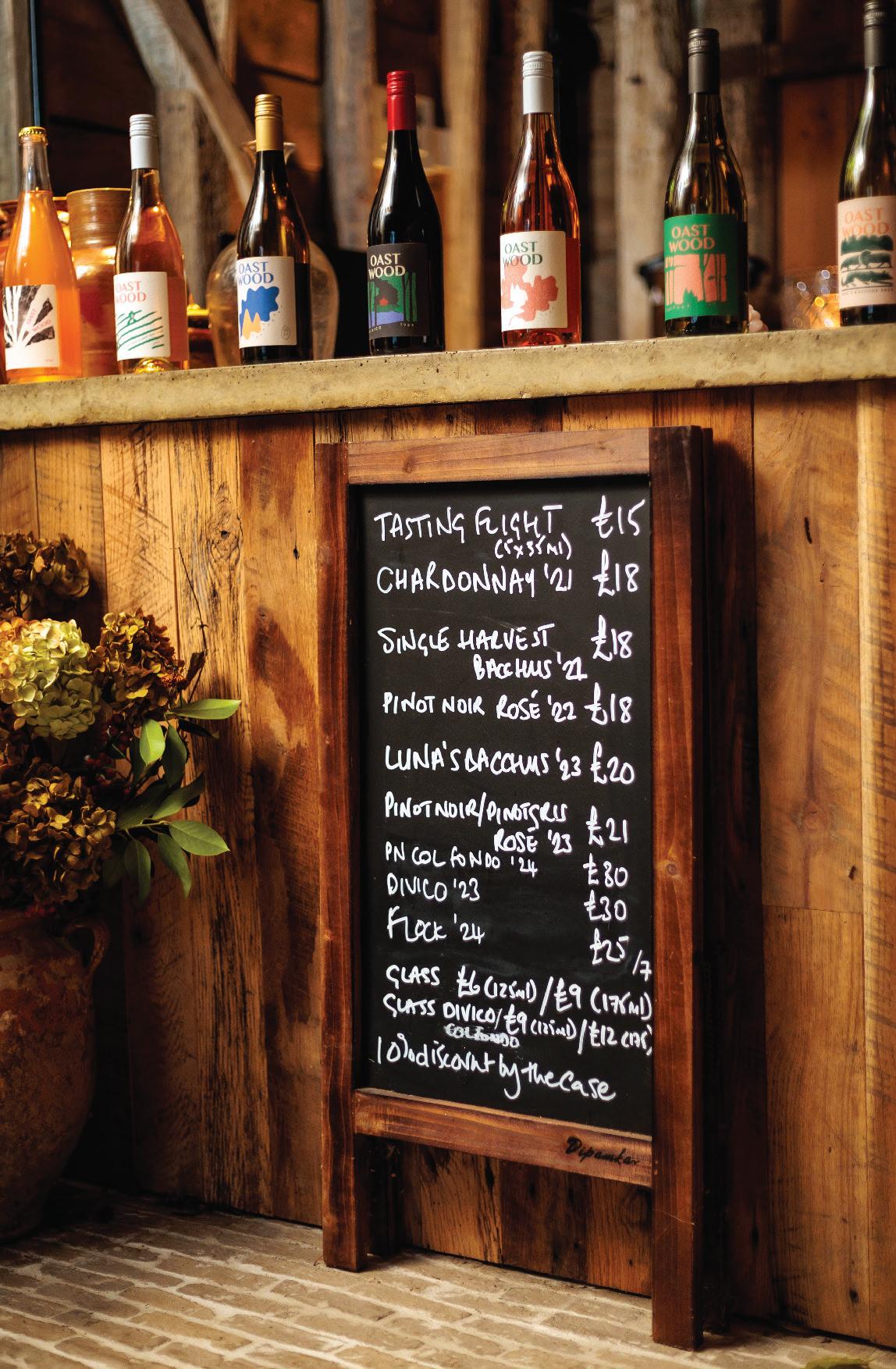
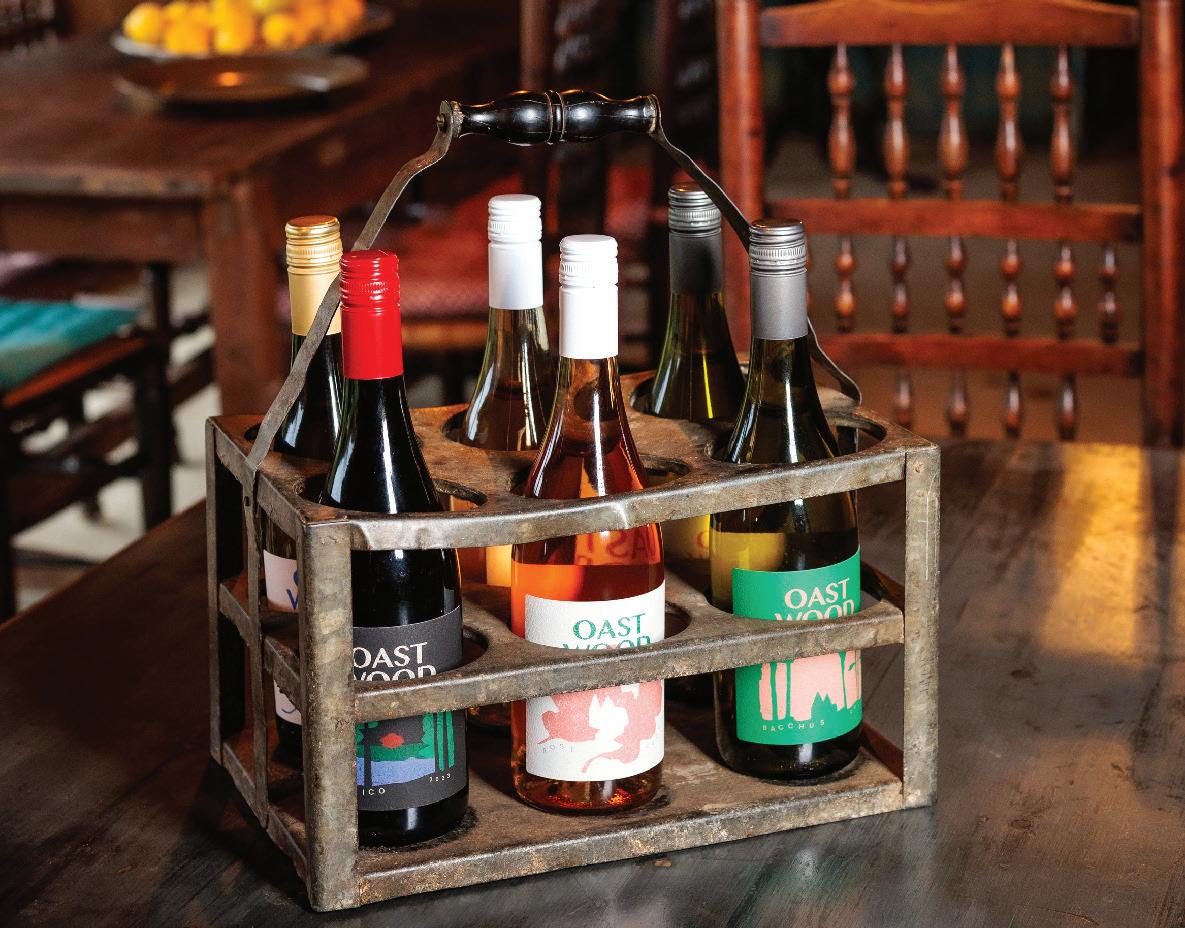
Luna’s Bacchus (with Luna featuring prominently on the label) will appeal to the wine connoisseur with a winemaking style that has a nod to aged reisling. Whilst the skin contact style of Flock (named to highlight the connection to the sheep that roam the vineyard in winter) which is 50% Pinot Gris and 50% Bacchus with notes of fennel seed and a beautiful colour will appeal to those who like to try the unexpected.
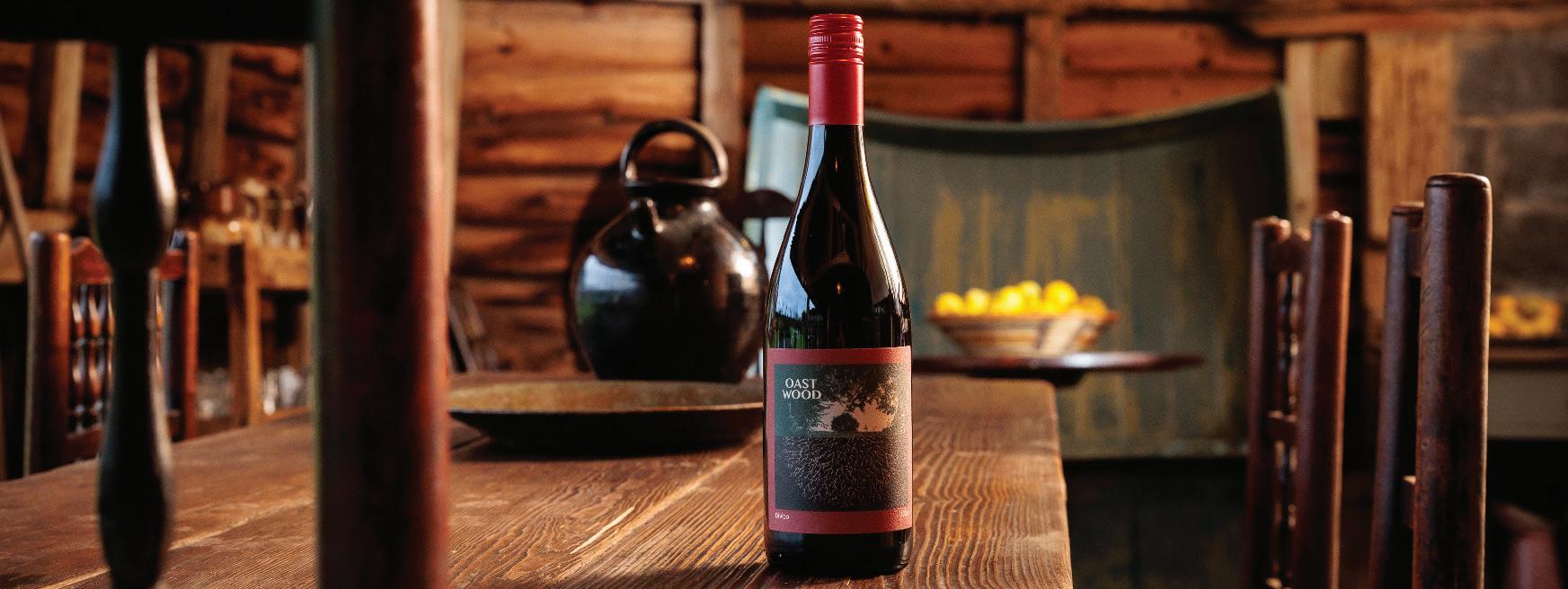
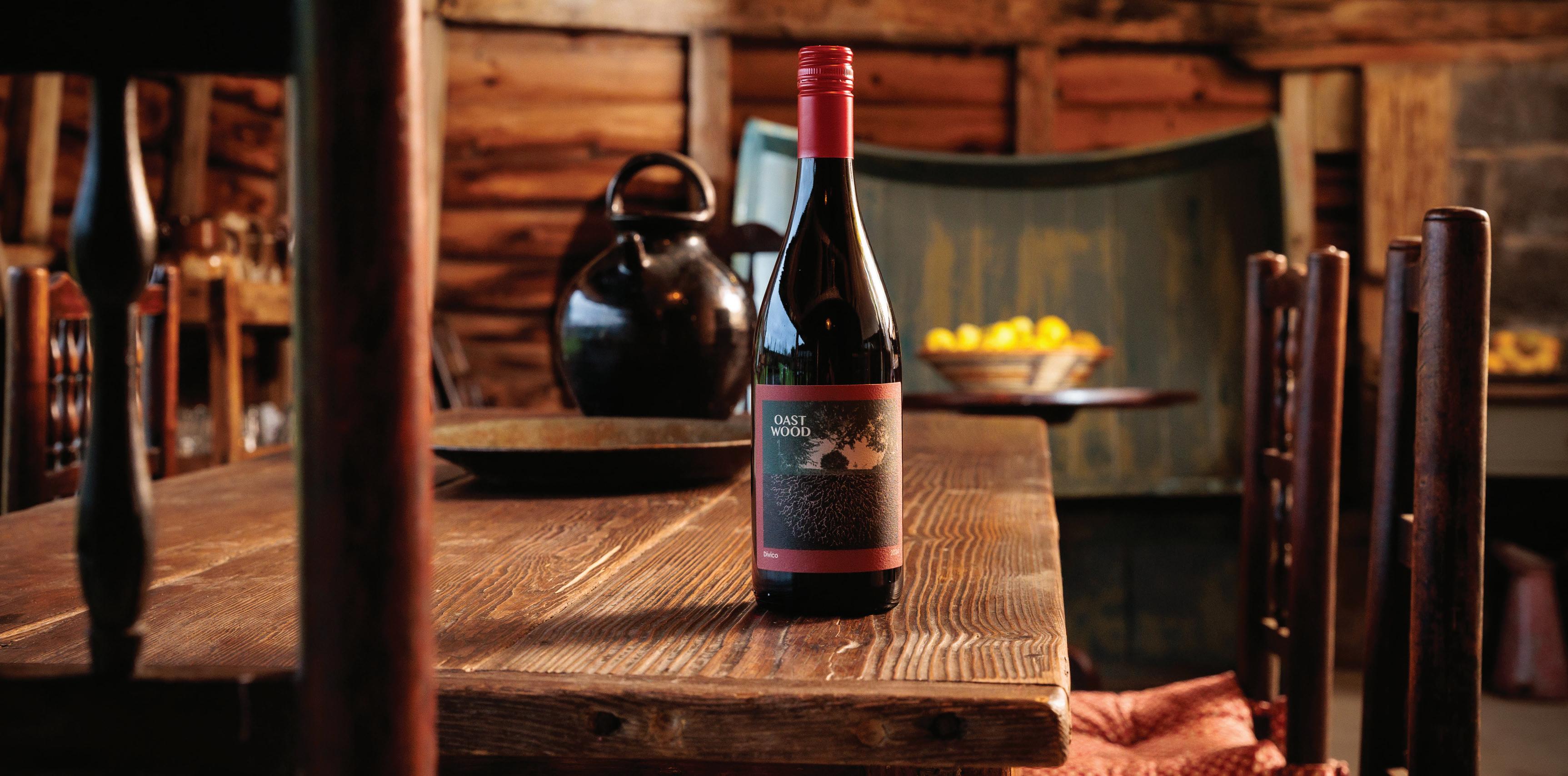
Aged in new Burgundian oak barrels the 100% Divico red wine has a fantastic purple colour with notes of cherry and vanilla and Oast Wood currently recommend pairing it with Cumberland sausage or roast lamb or stilton with spiced pear to accompany late nights and mellow play lists. The label has a wonderful depiction of an oak tree that sits in the middle of the vineyard. Planted 20 years ago to celebrate the wedding of Kate’s brother the vineyard has been sympathetically planted around this tree and now the label on this fantastic wine connects those that drink it to this story.
Luna gives her name to a Bacchus wine
With their customary nod to reality that deepens their connection with their consumers the Col Fondo pairing notes mention fish finger sandwiches, a criminal pile of kettle chips and a crisp winter walk. Those tasting notes make anyone and everyone feel that they too can enjoy the experience of a good food and wine pairing without any feeling of intimidation or judgement.
The wines are all labelled uniquely with each label telling a story of the vineyard. The Rosé 2023 is a wine that is fruit forward, balanced enough to journey from a starter to the main course and beyond but a wine you would be happy to open at anytime. The label is a depiction of Stephen and Kate in the vineyard rows and has a distinctive feel that is entirely appropriate for this most unique of vineyards. The intention is that every year for every wine there will be a new label to celebrate the individuality of each vintage, style and grape variety. The labels are all the work of local artist Tom Boucher who is also from a farming family which again reflects the connection of Oast Wood to the past and the future of agriculture in the Weald of Kent.
Kate and Stephen have an amazing desire to share with nature and embrace seasonal variety which produces an atmosphere of relaxed elegance and by recognising that real life is not flawless achieves that rare feeling of perfection without pretention. There is a unique sense that in every single bottle of wine that is produced at Oast Wood Kate and Stephen are sharing their joy of living and working in the Wealden countryside and it makes you want to have just one more glass…
Early-season soil additions for healthy vines
Soil is one of the most important aspects of a vineyard. What happens below ground matters as much as what happens on the vine.
Vineyard managers face increasing pressures in the UK’s wet, cool climate - from soil degradation and nutrient imbalances to copper accumulation and climate-related stress. Early season soil additions offer a practical way to restore soil vitality before budburst. By using organic matter, biochar, and vermiculture products, growers can rebuild soil structure, strengthen microbial life, and improve water retention and infiltration, setting the stage for healthier, more resilient vines.
Why soil additions matter
Soil is more than dirt. It’s a living ecosystem that supports root growth, stores water, retains nutrients, and hosts diverse microbial communities. Poor soil management can damage this ecosystem’s foundation through compaction, loss of organic matter, reduced biodiversity, nutrient leaching or erosion. Repeated use of synthetic fertilisers and fungicides can also lead to heavy-metal buildup over time, turning productive land into a biologically poor substrate.
As soils begin warming in early spring, vine roots start their first significant growth. This makes the period before budburst an ideal window to improve soil biology and nutrient buffering.
Soil amendments
Soil pH
Soil pH directly affects nutrient availability and vine performance. The optimal range for vines is 6.0–7.5.
◆ High pH (above 7.0) can restrict uptake of iron, zinc, boron, and manganese.
◆ Low pH (below 6.0) reduces availability of calcium, potassium, and nitrogen.
To adjust pH, apply limestone to increase it or elemental sulphur to lower it. Application rates depend on starting soil pH.
Compost and manures
Mature compost and well-rotted farmyard manure are cornerstones of vineyard soil improvement. They increase organic matter, improve aggregation, and fuel microbial activity.
◆ Compost adds stable humus, improves infiltration, and enhances nutrient retention, whether from green waste, winery by-products, or pruning residues.
◆ Well-rotted manure contributes organic nitrogen and phosphorus and introduces a diverse microbial load.
Only apply fully decomposed manure to avoid scorch, reduce weedseed viability, and limit nutrient loss. Blending compost and manure creates a balanced amendment with both immediate and long-term
Miltos Made is
effects. Typical application rates range from 25–50 t/ha, depending on soil condition and organic-matter targets.
Vermicompost
Vermicompost (worm-processed organic material) is a more microbially active form of compost. Its humified carbon and natural growth compounds support root development and nutrient uptake. Applied early in the season, it helps stimulate biological activity, especially in compacted or microbially depleted soils. Many growers blend vermicompost into compost or manure to boost biology without increasing overall application volume.
Worm Juice
Worm Juice is a liquid extract from worm castings rich in beneficial bacteria and fungi. Applied as a soil drench, via fertigation, or during weed spraying, it supports key nutrient-cycling processes such as mineralisation, nitrogen fixation, and phosphorus solubilisation. While it does not replace solid organic matter inputs, Worm Juice complements compost and manure by activating microbial processes and improving nutrient availability. Its impact is gradual and depends on starting soil health. Vineyards shifting away from high synthetic inputs may need more than one season to see measurable change.
Biochar and Zeolite
Biochar and Zeolite improve water retention, microbial health, and nutrient stability. Biochar enhances sandy soils by improving aeration and providing microbial habitat. Zeolite, with high cation-exchange capacity, acts as a reservoir for water and nutrients, slowly releasing them back to the soil. Both are often blended with compost or manure to reduce leaching and support long-term nutrient availability.
Building resilience from the soil up
Early soil additions are about long-term resilience rather than immediate results. These amendments work cumulatively - strengthening soil structure, building microbial networks, and improving moisture buffering. Applied early, when soils are moist, they incorporate more easily and stimulate microbial activity ahead of the spring root-growth flush.
The best time for UK vineyards to invest in soil is before budburst, which is why the viticulturists at VineWorks work closely with growers to ensure every addition supports the season ahead – one vine at a time.
Sparkling vintage
Like a fine wine, the Vineyard & Winery Show continues to improve with age – and the 2025 variety continued that trend.
Boosted no doubt by what one commentator described as a “phenomenal” harvest, the show expertly blended its various ingredients to come up with a sparkling vintage that celebrated English and Welsh wines and those who create them.
The two exhibition halls were packed with visitors from shortly after the doors opened, while the stands themselves featured a wealth of shiny machinery, from an imposing grape harvester through the newest, narrowest utility task vehicle (UTV) to the latest cordless secateurs.
Alongside the machinery, there was plenty of advice on offer from a wide range or professionals, including, but not limited to, agronomists, accountants, insurers, solicitors, government agencies and licensing experts.
While the vineyard machinery was eye catching, there was considerable representation also from bottling and labelling companies and those promoting all the things wine needs once the grapes have been harvested, from additives and corks to marketing advice and specialist packaging.
One particularly impressive showcase was the Itasca Technical
Services stand, which featured a Sraml bottling line, STS labelling machine and a hydraulic basket press and destemmer from Europress.
It clearly took a considerable amount of work to install such impressive kit in the Kent Event Centre’s Maidstone Exhibition Hall for a one-day show, but lead engineer Martin Smith said the effort had been worthwhile.
“We really like the Vineyard & Winery Show and we do it every year,” he commented. “It’s a great way to meet existing customers and perhaps pick up some new ones. “I think the footfall is up even on last year, which reflect this year’s good harvest.”
Martin said the early harvest had made life for the Itasca Technical Services team “challenging” as it shortened the installation window considerably. “Everything had to be ready for the end of August instead of October,” he pointed out.
Many other exhibitors had also gone to considerable efforts to create a real buzz around the exhibition halls, with Kirkland UK using the occasion to unveil the new Corvus DX4 800 and NP Seymour installing an ERO Grapeline 7000 grape harvester at the back of a stand that also showcased Fendt’s e107 Vario electric tractor. <<
“I managed to make it on Wednesday with my colleague from Amorim, Cork. We were very IMPRESSED with the attendance; it seemed to be busy from 9am right through until after 3:30pm. We left at this point due to flights and travel plans.
Scott McBain, Sales Manager Food & Drinks, Gaasch Packaging UK Ltd
Best Trade Stand
There were tractors and tyres, forklifts, mowers and many more pieces of specialist equipment on display, all backed up by standholders keen to share their thoughts on why it was just right for the job.
Agronomists were out in force, with big players Hutchinsons and Agrii at opposite ends of the Maidstone Exhibition Hall, while construction companies, land agents, establishment specialists and contractors of all kinds were on hand to help newcomers to the industry as well as established growers and winemakers.
WineGB property partners Knight Frank shared the wine producer association’s stand, with Ed Mansel Lewis and Bertie Gilliat-Smith on hand to answer property or land queries from potential start-up businesses or established companies looking to expand. Both said they were impressed by show and by the buzz created by the impressive number of visitors.
Richard Taylor of RT Machinery summed up the show as a “really focused, one-day event where we can get in front of so many owners and specialists in the industry. There’s nowhere better suited geographically, and a lot of people attend.”
Royal Warrant holder RT Machinery supplies and services a wide range of ground care equipment and was showcasing an OREC mower with retractable cutting wings for inter-row work.
But while the show, organised by Vineyard magazine, is about catching up with friends, colleagues and customers and checking out the latest machinery, services and equipment on offer, it is also very much about celebrating English and Welsh wines, and that once again played a major part in the 2025 event.
Matthew Jukes’ masterclass entertained a capacity crowd (see the review on page 32), while Hochschule Geisenheim University scientist Matthias Schmitt offered a more technical presentation with his masterclass on the dealcoholisation of wine.
The well-received session included a tutored tasting of a number of dealcoholised wines that had been treated in a variety of ways to improve their palatability. With low and no alcohol wine one of the fastest-growing areas of the wine industry, Matthias’ presentation proved fascinating.
Meanwhile the two central wine hubs were busy all day, with visitors taking time out from visiting the stands and seminars to sample some of the best home-grown wine around. While one hub featured all 36 of Matthew Jukes’ wines from his 2025 columns in Vineyard magazine, the other featured the industry’s ‘Golden 50’, wines that won a gold or higher medal across ten national and international competitions in the past year.
“Just a quick email to say a huge thank you for such a super show. So well organised and the team behind you were fab with comms running up to the event too – so appreciated! We had a good show and very much enjoyed the stand that you gave us –it was good to meet so many
KNOWLEDGEABLE, ENTHUSIASTIC VISITORS!”
Netty Palliser BVSc MRCVS, Aerworx
Matthew Jukes’ masterclass
While there are undoubtedly some Vineyard & Winery Show visitors who join Matthew Jukes’ masterclass purely for the expert insights he delivers on that year’s six chosen wines, it seems clear that many of us are also there for the pure entertainment value.
Other wine experts could deliver the same verdict and offer the same analyses of the same six wines, but somehow it just wouldn’t be the same without Matthew’s wicked sense of humour, ability to connect with his audience and pure enthusiasm.
Those who attended the 2025 lunchtime tasting were not disappointed, with the usual blend of outstanding English wines, wit and wisdom once again proving a highlight of the show.
By tradition, the six wines are those reviewed by Matthew in his November and December columns for Vineyard magazine, and this year, the fifth, was no exception.
As he uncorked proceedings at the event, sponsored by Gullands Solicitors, Matthew pointed out that he has now contributed an impressive 98 columns to the magazine.
His first three wines were based on an old “dinner party game” whereby Matthew would choose three wines that together came in under a fixed price. He had
sensibly increased the maximum figure for the game’s 2025 relaunch to a modest £75, but proved he was still adept at playing it.
First up to welcome the dinner party guests was Flint Vineyard’s MV Charmat, which Matthew described as “outstanding” and a “secret weapon”, adding that it was a “really glorious, even, but really quite complex white wine”
Matthew said that his attempt to find what grapes had been used in the Charmat had proved difficult, with a number of websites
mentioning different varieties, before adding: “But I don’t really care – just taste the wine.”
Oxney Organic’s 2023 Chardonnay was the next wine to be sampled, with Matthew introducing it by noting that the UK “really knows what it is doing with Chardonnay”. He said the wine had “a refined style” that would keep the party going and said that Oxney’s terroir had given the vineyard its own identity.
It is unlikely that in the original dinner party game Matthew would have been choosing a UK red wine, but the changing climate and the increasing skills of the country’s winemakers meant that for the 2025 edition he was able to offer his guests Vale Vineyard’s 2023 Robin Goch.
A blend that includes 65% Rondo, 22% Cabaret Noir and 9% Divico has given the wine, in Matthew’s view, “a seamless texture” and a polish that made for a smooth-drinking dinner party wine while helping to keep the total bill for the evening at under £75. The wine, which won WineGB’s Best Alternative Red Wine award for 2025, costs just £23 from the vineyard. Moving to December’s wines, Matthew introduced Walgate’s 2022 Pinot Blanc as the first in a category he called “If you like this, you will like this” – in this case comparing the wine with a good Chardonnay. Describing it as “a serious, serious piece of work”, he later described it as “off the bloody scale”.
The Simpsons’ 2023 Rabbit Hole Pinot Noir was put forward as a good choice for those who liked a red Burgundy, with Matthew describing it as “beautiful wine –light but not thin”. He said the vineyard’s wines were “increasing in gravitas and gaining in intrigue and length”.
The final comparison was between a “rich red wine” and Artelium’s 2023 Artefact #9 Cabaret Noir, a “beautifully balanced wine” but one whose labelling caused Matthew’s brow to furrow. While the grape used is described elsewhere, correctly, as Cabaret Noir, the bottle’s rather unconventional label shows it as Caberet Noir.
That confusion notwithstanding, Matthew was full of praise for the “forceful” red, which he said had “attitude” as well as plenty of colour. He expressed surprise that the “beautifully balanced” wine had an alcohol content of just 12% despite its intensity. It was, as always, an enjoyable hour during a busy day, and one which blended wit and wisdom with as much skill as a winemaker blends grapes.
Collaborative thinking
The seminar programme at the Vineyard & Winery Show was once again hosted by WineGB and sponsored for the first time by Reflex labels.
With topics ranging from frost protection to technology the packed audience was welcomed by WineGB Deputy Chair Ruth Simpson.
As the co founder of Simpsons Wine Estate in Barham, near Canterbury in Kent, Ruth explained some of the achievements of WineGB over the last twelve months and said: “As a Kent Grower it is a privilege to welcome you to Kent and to thank you for your ongoing support.”
Ruth provided an update on the three-year strategy which she explained is designed to help make wine, market wine and tell the story of wine. One of the major undertakings that has occurred since the 2024 event has been a redesign of the WineGB website along with many updated toolkits and guidance packs such as alcohol duty reporting. Of special note was also the celebration of skills that have happened throughout the year. Ruth highlighted the WineGB pruning competition alongside the Vintners apprenticeship programme, wine careers week and the most successful English Wine Week which had the tagline ‘create new traditions’. This resulted in significant media interest with in excess of 500 mentions across different media outlets.
Innovation –
past, present, future from an emerging talent/young winemaker’s personal perspective
Ruth handed over to Tommy Grimshaw of Langham Wine Estate who she described as a “multi award winning star young winemaker.”
Tommy addressed the topic of innovation in English and Welsh winemaking. Appointed as head winemaker at Langham in December 2019, Tommy explained why innovation is important to him. Defining innovation as “the process of implementing new ideas, products or processes that create value which can be achieved through invention or adaptation,” Tommy explained that adaptation is they key point “we really need to make sure that in the UK we are creating our own path,” he said.
“Innovation will help us improve our wines and the livelihoods of all those within the industry and the environment in which we are working, and there are so many in the industry that are working hard to improve every single day” he said. Tommy humbly paid tribute to those who had shaped modern viticulture in England and Wales including Hambledon with the first commercial vineyard, the
Ruth Simpson
“Innovation will help us improve our wines and the livelihoods of all those within the industry and the environment in which we are working”
late great Peter Hall at Breaky Bottom and Nyetimber planting the Chardonnay Pinot Meunier and Pinot Noir varieties. “These pioneers are the reason we are all sat here in Kent,” said Tommy.
Having started in the wine industry at the age of 17 Tommy had his head turned by the idea of Grower Champagne taking inspiration from the techniques of renowned French winemaker Anselm Selosse who wanted to make site specific, single vineyard champagne which had not been done before. “For me the biggest thing I have taken away is lowering the pressure of sparkling wines. The higher the pressure of the wine the more the acidity is accentuated. Acid is a hallmark of our wines so how can we take these techniques and integrate them into what we do? Our wines now sit at 4.5 bar pressure. This lower pressure integrates the acidity and works with it so we can lower the dosage,” explained Tommy.
The Langham Perpetual is the first wine to receive 99 points at the WineGB awards and Tommy explained that he wanted to have a multi vintage wine that nullified vintage variation (again taking inspiration from Anselm Selosse) so in a 2000 litre Slovenia oak foudre, there are now the best parcels of every vintage since 2017. “We bottle 800 litres and then we top the barrel up with the best parcels each year and we will keep that going perpetually,” he said.
Tommy explained that Langham have produced a Col Fondo Sparkling Wine working with Key Keg which was inspired from an experience during lockdown where he saw prosecco with 2 bar pressure being served on tap at a large pub chain. “I thought a low pressure cloudy wine would be great for a keg format. I tried to contact companies to make that style of wine and the answer was no but we went ahead and made a base wine with Madeline Angevine and Chardonnay and a small amount of sugar and we ended up with a fun experimental wine in a format that has really taken off this year proving that inspiration really can come from anywhere,” said Tommy sharing a laugh with the packed audience.
“As wine makers we are often alone in a shed,” said Tommy with his trademark humour and honesty, “but for new ideas we need to work together. It takes community and this year we did a grape swap. We swapped two tonnes of Chardonnay with a Kent vineyard.
I am used to cool climate Dorset chalk soils and I have never worked with anything grown on clay so currently in our winery we have Kent juice that has been grown on clay that is really ripe and the Kent vineyard has a tank with slightly higher acidity than they are used to. We will come together in the spring and exchange ideas.”
“Innovation is a chance to create and there is a responsibility on winemakers and winemaking teams to push each other to show individuality and to try something new. Don’t be afraid to fail because sometimes things go right and take you in a new direction. I feel so privileged to be part of the winemaking scene,” he concluded. <<
Tommy Grimshaw
SHOW REVIEW
The new face of regenerative viticulture
An update on The Frost project (see report by UK Agritech Centre on page 63) was followed by a significant number of questions from the audience before a discussion entitled The New Face of Regenerative Viticulture saw Anne Jones of the RVF joined by a panel of experts.
Becky Sykes started by asking the controversial question “Why are we talking about regenerative viticulture, what is wrong with traditional viticulture?” The answer started with pointing out that “conventional farming has caused soil degradation, most famously the 1930s dust bowl in America. Kelly Mulville started with a quote from American ecologist Aldo Leopold “A thing is right when it attempts to preserve the integrity, stability and beauty of the biotic community. It is wrong when it tends otherwise.”
Pointing out that the ecosystem also includes humans, Kelly made it clear that a better future is something that we should all be working toward. Ian Beecher Jones pointed out that we have more technology than ever before. Ian pointed to a device that he described as a fitness tracker for a plant. “I can connect this to a leaf and it will give details on the status of 15 different nutrients within that plant but I have to know how to apply that knowledge.”
Ian also pointed out that it takes time to know how new techniques and practices will affect the life of the vineyard and what works will vary from county to county. Ian finished with the important point “you can’t be green if you are in the red” highlighting that it is important for vineyards to still be profitable.
Andrew Baker, co-founder of Soil Acoustics has spent a career monitoring biodiversity. “Acoustics are a very easy way to measure how many creatures there are in a particular area. We can listen to birds, bats, crickets… anything that makes a sound. A few years ago, we had the idea to use this long-established technique to measure soil biodiversity. There is plenty of scientific evidence that points out that the more biodiversity in the soil the more productive your
soil will be economically. So linking with Ian’s point it increases the profitability of an agricultural enterprise.
Every agricultural system takes an ecosystem out of balance because we are trying to grow more of one crop than anything else, but we don’t want to take it too far, the more in balance our systems are the closer we are to an equilibrium where we can provide the crops that we need but not destroy the basic fundamentals that will undermine our agricultural productivity,” concluded Andrew.
Becky Sykes pointed to a new initiative for the UK called the one block challenge which encourages growers to dedicate a block of vines which can be as small as two rows or as large as half a hectare for one year as an initial starting point to implement a couple of regenerative practices. “A good starting point is cover crops because we already see cover in the inter row area, we are going to encourage people to stop using herbicide under vine in this dedicated block and then there are other things that can be added such as bringing animals or compost.” This challenge is a way to explore regenerative practices without making wholescale changes supported by a knowledge sharing community. The challenge has already seen significant results for growers in the Paso Robles, California. The Challenge has also launched in Sonoma and South Africa.
Ian Beecher Jones of Jo Jo’s vineyard asked for any growers who may be interested in being part of a New WineGB Technology Group. Ian pointed out that as an industry it is important to think about how technology can benefit growers and working together in a non-commercial way will ensure that growers can find the tools that they really need and that they are aware of the latest technology from around the world and how it could be implemented.
Nicola Bates concluded by thanking Reflex labels for sponsoring the seminar programme and the speakers who took part and also the small team at WineGB who worked so hard to put together the wide variety of topics covered. “We have seen throughout the programme that together we are stronger,” Nicola concluded.
Ian Beecher-Jones (JoJo’s Vineyard), Kelly Mulville, Andrew Baker (Soil Acoustics), and Becky Sykes (Regenerative Viticulture Foundation)
A passion for viticulture
Blago Dishkov has “a passion for viticulture”, and it’s one he’s keen to share with anyone who feels they could benefit from his experience.
Trading as Vitiforce, Blago can offer the full range of viticultural services and can provide a full management service, consultancy or cover for absent employees.
Blago’s great-grandfather was the first grower to establish a vineyard in Vetren, Bulgaria, and that passion for
grapes has been handed down through the generations. As well as studying at Plumpton College, Blago managed the vineyards there for two years.
“I can help with all aspects of vineyard work, from planting through to harvest, including pest control, canopy management, fertilising and spraying,” he said. Blago also offers machinery repair and tractor operations and can provide training in pruning, having studied Simonit&Sirch techniques.
Vetreria Etrusca were once again exhibiting at the Vineyard & Winery show. Mark Crumpton joined the team at Vetreria Etrusca in October 2025.
Bulk wine for sale
Specialists in controlled atmosphere stores
Rapid chilling systems for soft fruit and fresh produce
Secondary cooling systems with energy efficient defrosting using air source heat pump technology
Retrofitting of existing high cost electrical defrost heaters with air source heat pumps
Electrical engineers and contracting
Refrigeration and Electrical service, maintenance, and breakdown cover
Testing and certification to NICEIC
Mains power solutions for distribution and installations
Temperature controlled wine storage solutions using DX or Secondary refrigeration with heating options
Qualified to install EV chargers
Refrigeration gas leak detection systems
F-gas compliance and record keeping
Refrigeration system controls with remote monitoring
A beginner’s guide to growing wine
Potential newcomers to viticulture could pick up more than a tote bag, pen or bag of sweets on the Hutchinsons stand at the Vineyard & Winery Show.
The leading agronomy company, which now supports farmers and growers across more than one million hectares and employs over 500 staff across the country, was offering a comprehensive Hutchinsons Vineyard Guide to visitors to its impressive stand.
Described by horticultural agronomist Will Robinson as “a beginner’s guide to growing wine”, the guide is primarily aimed at new growers entering the sector but will also prove useful to those with more experience, acting as an ‘aide memoire’.
“It provides a wealth of useful information to help growers get started and will be particularly useful for diversifying farmers who won’t be as knowledgeable about things like pests and diseases when they set out to grow grapes for the first time,” he explained. “It covers topics such as establishment, plant spacing and how to calculate the number of vines per hectare in a concise and simple way.”
The guide is available for free, although an annual update which will provide the most up-to-date information on approved crop protection materials will mean signing up to Hutchinsons’ tailored subscription package costing just £285 a year.
The subscription package includes the Vineyard Guide and any updates, plus one leaf/petiole analysis a year, monthly agronomy bulletins and telephone agronomy support. Subscribers will also be able to book in-person visits during the season for an additional charge.
“The guide would be ideal for anyone who visited this show because they were thinking about getting started in viticulture and was looking for some initial advice – and it’s still available by registering on the Hutchinsons’ website,” Will added.
Will, who supports growers across 250 hectares in East Anglia, said the industry was “in good spirits” after this year’s “phenomenal” harvest. In a reference to the early ripening grapes, he said it had been “a good year for viticulture, but a bad one for Tate & Lyle”.
The ring-binder guide is divided into six easy-to-read sections covering soil preparation, rootstock selection and ongoing nutrition through to pest, disease and weed control, sprayer calibration and tank mix sequences plus conversion tables and the annually updated section listing crop protection materials and giving an outline spray programme.
Innovation agronomist Rob Saunders pointed out that many of the more than 1,000 vineyards registered in the UK were small sites covering as little as two acres. “Growers on these smaller sites may not necessarily be able to justify full, in-person agronomy support,” he said.
“Hutchinsons Vineyard Guide is part of a new service Hutchinsons is offering to provide those smaller-scale growers with access to sustainable, high quality agronomy advice and ongoing support.”
Will added: “We want to give new growers clear and helpful information that will allow them to get started with confidence. People don’t know what they don’t know; the guide will give them a helping hand and reassure them that they are getting things off to a good start.”
Keeping harvesting costs down
As the backdrop to N P Seymour’s impressive stand at the Vineyard & Winery Show, the ERO Grapeline 7000 reflected the focus on keeping harvesting costs down following this year’s large crop and falling price per ton.
With more grapes being grown, labour an increasingly costly factor and wineries becoming more open to the idea of machine-harvested grapes, quality machinery like the Grapeline 7000 can make a real difference to bottom lines, getting fruit harvested at the best time and at the cheapest cost.
While the ERO dominated the stand in terms of size, pride of place on the dealership’s comprehensive display of quality vine machinery went to the Fendt e107V Vario, the world’s first fully electric fruit tractor.
Ideal for viticulture, fruit and amenity work, the e107V has a battery life of up to seven hours, or around four when using the 75hp ‘dynamic’
drive mode to operate machinery such as a sprayer or mower.
“Switching to electric does not mean sacrificing on specifications or performance. The e107V Vario is an electric version of the existing Fendt 200 series that growers know and love; all attachments and implements are fully compatible, and operators will be sitting in the same comfortable cab environment,” said director Claire Seymour.
From the existing Fendt 200 series, a Gen3 Fendt 211V tractor was paired with an ERO-Binger pre-pruner fitted with the manufacturer’s new VITIassist, an AI-assisted camera that automatically opens and closes the machine head as it differentiates between posts and thicker vine stems.
On a smaller scale, Felco’s new 834 cordless secateurs, which feature an F-gold-plated blade and clever safety cutout system in a sensibly priced package, attracted considerable attention throughout the day.
Intelligent automated bird repellent system
Vineyard owners with a laser-like focus on protecting their valuable crop from hungry birds flocked to the Integrated Bird Management stand at the Vineyard & Winery Show.
Company boss Sean Byrne said he had “not stopped all day”, with exhibition visitors keen to learn more about the company’s broad range of bird control solutions.
The eye-catching centrepiece of the Integrated Bird Management stand was the Avix Autonomic Mark II, described as an “intelligent automated bird repellent system and claiming a 90% success rate in displacing feathered intruders.
Designed and manufactured by the Bird Control Group, the Avix Autonomic uses a continually moving laser light beam to scare away birds in an animal-friendly way, using technology the company says is used in 100 countries around the world.
“This system is far better than using gas bangers or netting, works 24 hours a day and delivers a 70% to 90% or more reduction in bird numbers,” commented Sean, who said there had been a great deal of interest in the system throughout the day.
Sean highlighted two trials of the system, one at Albury and one at Chilworth Manor. “At Albury the grower lost an estimated 4.5 tonnes of fruit to birds in three days before installing our technology,” he said. “The Avix Autonomic cut those losses to near zero, and we recorded similar results at Chilworth.”
Milton Keynes-based Integrated Bird Management has just been appointed the UK and Ireland distributor for the Bird Control Group,
with Sean “looking forward to helping vineyards and orchards across the country tackle their bird problem in a safe, environmentally sensitive and effective way”.
One Avix Autonomic can cover 12 acres, with the continually moving laser beam programmable using the Bluetooth-controlled Avix Connect smartphone app. The manufacturers say the technology has proved itself “effective over time”, and that birds do not become used to it.
Sean said that even in daylight the system had an effective range of 350m, while in the dead of night, Bird Control Group data suggests it can frighten off birds more than 1.5km away. The flexible equipment can be pole mounted or attached to a wall, with the company committed to working with growers to ensure maximum efficiency.
“Avix solutions provide immediate positive results with a fast return on investment. After the investment, we work together with our customers to reach their desired results. We continue to optimise the system for maximum effectiveness until the bird problem is solved,” said Sean.
The Avix Academy provides online and on-site training courses that aim to ensure safe and effective use of the laser technology and give users “the knowledge and capabilities to guarantee high performance along with safe deployment of the bird deterrent lasers”.
Integrated Bird Management also offers a range of other deterrent equipment including bird scarers, netting and spikes. “We have had a lot of interest from growers keen to protect their valuable crops,” commented Sean. “It’s been a really good show for us and we look forward to supporting the UK wine industry.”
Long-standing French pedigree
The UK, and particularly the south east corner, may now be rivalling some of its European neighbours for the quality of its grapes and its wine, but when it comes to experience in producing machinery, the French have some world leaders in their ranks.
One company that has taken advantage of that wealth of engineering heritage is Vitimech, which supplies a range of quality vineyard equipment including that manufactured by Collard and Calvet, which both have a long-standing French pedigree.
Chichester-based Vitimech is a relatively new entrant into the viticulture market but set out its stall from day one as a quality equipment supplier. “Our aim is to deliver customer-focused solutions to growers based around robust but flexible machinery,” explained sales manager James Brett.
The company’s stand at the Vineyard & Winery Show featured Italian-built Agrofer undervine weeders and cultivation equipment alongside machinery from Collard and sprayers from Calvet.
Vitimech also supplies the impressively flexible Avant range of loaders, and specialises in adapting those machines to carry a range of Collard equipment such as vine trimmers, leaf removers and pre-pruners. “Fitting an Avant 760 loader with a Collard LZP polyvalent frame that can then
be used with a range of different equipment is a cost-effective option for new growers,” James explained.
“That would give a smaller vineyard all the equipment it needs to establish and care for their vines, plus a flexible loader and multi tool, for about the same cost as a high-end vineyard tractor.”
He added that Collard, based in the Champagne region of France, had been designing leaf removers, pre-pruners and vine trimmers for three generations. “They are robust and effective, and they do exactly what they are supposed to do,” he said. “It’s a simple, efficient design, but it works well.”
Parent company Chichester Farm Machinery set up Vitimech to support customers who were looking for replacement parts for Collard machines they had bought direct from the French manufacturer, which invented the world’s first vine trimmer in 1962.
With demand clearly set to grow for quality vineyard machinery across the south of the UK, the company opened discussions with Collard and was invited to become the sole UK distributor for its equipment.
With that deal done, the French manufacturer introduced the Chichester Farm Machinery team to Calvet, a leading sprayer manufacturer with an equally welldeserved reputation for quality machinery that has already earned itself a strong
foothold in UK vineyards.
“Calvet offers a large range of sprayers that are ideally suited to both large and small operations,” explained James. “They have been in the irrigation business since 1956 and have established themselves as the market leaders, with 25% of the sprayer market share in their home country. Calvet prides itself on innovative technology and on its drift prevention system, operational precision and powerful fan in particular.”
Vitimech also offers the full range of Avant attachments, Dieci telehandlers, mowers from Teagle and Maschio, and Infaco electric pruning shears and tying tools.
Although Vitimech specialises in supporting vineyards, the company has access to a huge amount of other non vineyard-specific products as well as on-site workshops and mobile fitters to deal with repairs, fabrication, sprayer testing and safety checks.
DESKTOP
Corvus DX4s 800 revealed
Always keen to make their presence felt, the team at Kirkland UK didn’t disappoint at this year’s Vineyard & Winery Show stand.
Backed as usual by the food, beer and cider-dispensing vintage lorry, the display was fronted by a mystery vehicle covered for the first half of the day by red velvet material, removed after lunch to reveal a Corvus DX4s 800.
Heralded as the narrowest UTV (utility task vehicle) currently available, the newly launched DX4s is ideal for vineyards and smallholdings, as Kirkland UK sales manager Richard Pendry explained.
“The narrowness of this new model makes all the difference and gives it more scope than the standard UTV,” he said. “It’s ideal for haulage or for trailing machinery and it’s competitively priced. It’s also reliable, comfortable and economical, making it a great choice for anyone needing a robust but adaptable workhorse.”
The Corvus, which is just 145cm wide and has a rear cargo box with a load capacity of 250kg, high ground clearance and tight turning circle, also has a wealth of options and accessories.
As well as unveiling the Corvus, the Kirkland UK stand also featured the Rootwave F601 eWeeder for which the Sutton Valence, Maidstonebased company has been named the sole distributor in the UK.
The Rootwave F601 uses 18 kHz higher frequency electricity to kill off weeds across a variety of crops and working environments with no danger to the operator. The system automatically distinguishes weeds from the crop and is designed “to kill all weeds and their roots to give better weed control while protecting health and helping nature restore
its soils, water and biodiversity.”
Richard commented: “Rootwave uses electricity to generate heat within the weed, reaching deep in to the roots to kill the whole plant. Because it uses electricity at higher frequencies it is inherently safer. We have carried out a number of trials which have given very good results.
“As well as being good for organic growers it will be increasingly useful as glyphosate is withdrawn. It is not affected by the wind or drizzle and there’s no harvest interval to consider. As an alternative to mechanical weeding, I think it’s a winner.”
Also attracting significant attention on the Kirkland UK stand was the Burro Grande, an autonomous ‘robot’ vehicle that uses machine learning and high-precision GPS to perform a range of tasks within an orchard or vineyard.
“The Burro Grande is ideal for haulage, with a carrying capacity of 1,000 lbs, and it’s perfect for towing,” explained Richard. “It can tow two tonnes, a mower or sprayer, for instance, making it ideal for nurseries as well as vineyards.
With a range of 15 miles and a top speed of nearly six miles per hour, the four-wheel drive Burro Grande uses Lidar to ‘see’ 40 metres through 360 degrees, enabling it to avoid obstacles, while using GPS to navigate.
“With the minimum wage making manpower increasingly expensive, this is a real breakthrough in making autonomous vehicles accessible to a broader range of growers,” said Richard. “It can replace a tractor and driver in many cases, and it can be viewed on a smartphone app.”
Carefully hand-picked
There’s a good reason why Wayne Russell of WR Services takes a lot of care over choosing the new and used equipment he supplies and services to wineries across the UK.
“I am very selective about the kit we buy and sell because we have to look after it once it’s installed,” he said. “It’s carefully hand-picked because then I know we can stand by it. Second hand equipment is refurbished
in-house to make sure it will offer many more years of reliable service.” WR Services is the UK agent for French manufacturers Coquard, Oeno Concept, TDD Machines, Cazalux, Mecamarc, MDC and TR Equipements, as well as Portugal-based R.CORK, offering full winery setups along with sales, parts and service. Clients include Nyetimber, the largest owner of Coquard wine presses in the world.
Reap a healthy harvest, not the grapes of wrath Rebecca Alle
With the continued interest among landowners and investors to develop new vineyards and wine-related facilities, Rebecca Allen, Associate at law firm Birketts, which has a Sevenoaks office, examines the key legal questions to be considered.
Is your project on solid ground?
It goes without saying the ownership of the land is pivotal to the success of any viticulture venture. Whether you’re looking to grant or take a tenancy, or expand, restructure or refinance an existing vineyard, making sure everything relating to the legal title is in order, must be the priority. If you are considering opening a winery or tasting room, do you have the necessary ownership or rights of way over the access to allow members of the public to visit the winery? Early discussions on issues such as this are likely to be better than waiting for the neighbour to receive a notification of a planning application, and so early legal advice is crucial before making big decisions.
Can you actually grow grapes there?
While your land might be suitable for viticulture, thanks to the terroir, planning permission may be required for planting vines, building wineries, or opening tasting rooms. From planning permissions to land use regulations, early legal and planning consultation can ensure your vineyard would comply with local requirements and may avoid costly delays.
Do your wine growing plans protect nature?
Environmental regulations affect many development proposals. They influence land uses and compliance with environmental protections. This can be an opportunity to showcase your vineyard’s commitment to sustainability and the environment.
Some cases may require an Environmental Impact Assessment (EIA) before planting vines. Birketts’ legal experts can help you navigate biodiversity and nutrient neutrality regulations and check the ever-changing environmental regulations before considering planting or expanding your vineyard.
How do you get all your bottles in a row to sell?
Selling wine requires specific licences for wholesale, retail, and tastings. Non-compliance with these requirements can result in fines or business closure. It is vital to meet the licencing requirements, and our lawyers can check those requirements both for new businesses and existing winemakers to help them maintain their records and audit their current licences to ensure there is no interruption to your business.
Who’s responsible for what?
Clear contracts are essential when working with investors, suppliers or co-owners to avoid disputes. If you are setting up a business or partnership, you need to consider how best to protect your interests and your investment. Birketts’ viticulture team can help draft agreements
that define roles, responsibilities and profit-shares, or review/update any existing agreements to reflect changes in business structures or partnerships over the years.
Do you need to plan for the future?
Getting help with inheritance planning can avoid unexpected costs or disputes. You should seek advice on tax implications and consider long-term succession planning to protect your assets and your vineyard. To preserve the vineyard for future generations, you may need to consider succession plans under existing tenancy agreements or locations of any winery or tasting room.
How do you protect your hard-fought assets?
Protecting your intellectual property (IP) is crucial for safeguarding your innovation, reputation and brand. Legal advice helps you secure intellectual property rights, reinforcing your brand’s reputation and value in a competitive market.
Whether planting your first vine or expanding an existing vineyard, early expert legal advice is key to supporting and sustaining your viticulture business and offering you peace of mind before making a large investment.
Post fermentation lees management
For yeast, the end of fermentation is just the beginning.
It is during this stage that wine begins to take shape, gaining structure, finesse, and its character is defined. Let’s begin at the end of the fermentation when yeast is exhausted (in every sense!) and undergoes a process called autolysis.
Autolysis is the enzymatic breakdown of yeast cells during which a variety of compounds are released into the wine: proteins, mannoproteins, amino acids and more. When carefully managed, these elements can significantly enhance the final product, adding body and structure, stabilising colour, and offering protection against oxidation.
What types of lees are found after fermentation?
After fermentation not all lees are created equal. Understanding their composition and behaviour is essential for guiding the wine towards quality and longevity.
Gross lees
This consists of grape skin residues, seeds, possibly fining agents, and other heavy residues. Gross lees is microbiologically unstable and can lead to undesirable aromatic changes if left in contact with wine for too long. That’s why prompt racking is crucial immediately after fermentation.
Fine Lees
This primarily consists of intact yeast cells or those undergoing autolysis. During autolysis, enzymes such as betaglucanase break down yeast cell walls, releasing beneficial compounds such as mannoproteins and glutathione. Mannoproteins contribute to a smoother mouthfeel and enhance the perception of volume and softness. Glutathione acts as a powerful antioxidant, helping preserve the wine’s aromatic integrity by preventing oxidation of its volatile compounds, ultimately supporting greater ageing potential.
Clearly, the compounds released during autolysis can offer significant benefits to wine, but only if the process is carefully managed under controlled conditions. When done right, this quiet phase can elevate the wine’s texture, stability, and aromatic finesse.
Lees management
For white wines, prompt racking of the gross lees at the end of fermentation is essential for preserving sensory cleanliness. For structured reds and whites destined for longer aging, extended contact with healthy fine lees can significantly enhance complexity. In this context, batonnage becomes a key technique. By periodically stirring to keep the fine lees in suspension, batonnage promotes the release of antioxidants while minimizing oxygen exposure. This helps maintain freshness during ageing and prevents the development of oxidative
aromas. It also inhibits the formation of anaerobic zones which could otherwise lead to emergence of undesirable reductive notes. However, working with fermentation lees is a slow process, often misaligned with production timelines. Moreover, yeast cells may have undergone stress during fermentation compromising lees quality and releasing unwanted compounds such as acidic acid, volatile phenols, or biogenic amines, all which can negatively impact wine aroma and taste. A common issue is reduction, caused by the activity of sulfite reductase, an enzyme naturally present in yeast. This enzyme catalyses the formation of volatile sulfur compounds such as mercaptans which can severely impair a wine’s aromatic potential. In these situations, it is necessary to turn to controllable alternatives.
Enartis lees management tools
When traditional lees aging is too slow or unpredictable, targeted technical solutions such as Surlì Elevage and EnartisZym EZ Filter offer a precise and efficient alternative. Surlì Elevage is an inactivated yeast with an exceptionally high concentration of free mannoproteins. Unlike traditional lees, it releases its active compounds within just 24-28 hours. Wines treated with Surlì Elevage show enhanced stability, aromatic complexity and persistence on the nose. On the palate, mannoproteins contribute to a creamy texture, adding softness and roundness. It has also been shown to significantly reduce the copper content further protecting wines from oxidation reactions. When used in conjunction with EnartisZym EZ Filter, an enzyme with high betaglucanase activity, you will release more polysaccharides in a shorter period.
Comparison between control wine and wine with 20 g/hL Surlì Elevage. Five months after treatment, wine is more balanaced and has greated aromatic complexity
Simple steps to avoid herbicide issues
Indirect damage to vines from herbicides can occasionally be an issue on some sites, but a few simple steps will help mitigate the risks, writes Hutchinsons agronomist Will Robinson.
When it comes to the effects of herbicide damage to vines, there are two main aspects to consider; one is the impact of applications within your own vineyard; the other is the potential risks from certain actives that may be applied to neighbouring arable or pasture land.
In either case, vines are sensitive to many herbicides, with exposure resulting in issues like leaf curling, cupping, or wilting, poor berry formation, uneven ripening and potential yield loss.
Within the vineyard
Of course, the aspect that growers and vineyard managers have most control over is herbicide use within their own site.
During the dormant winter period, this often involves the application of a specific glyphosate formulation (Roundup Powermax) to help maintain the weed-free strip around and below vines that are more than four years old. Propyzamide is another option that can be applied up until the end of January, and may suit particularly weedy sites, and/or where growers want to reduce the reliance on repeated glyphosate applications, which they can select for less glyphosate susceptible weeds. Always follow label instructions regarding application conditions, water volumes, nozzle choice, forward speed, etc, and make sure sprayers are set up and maintained correctly.
All spraying equipment must be tested by an approved NSTS test centre before it is five years old, and after that, air-assisted sprayers must be tested every three years and small boom sprayers every six. Knapsack sprayers do not need testing, but should be regularly inspected by a competent person.
Once we move into spring and the
warmer conditions typically experienced pre-flowering and post-flowering, extra care should be taken when applying any chemistry that volatilises easily, or is more prone to drift.
Carfentrazone-ethyl, for example, is prone to producing small droplets, which in certain conditions, can rise up to the canopy and cause ‘peppering’ of vine leaves (pictured), so it is best practice to include a suitable drift retardant to reduce this risk.
Avoid applications in high temperatures, and try to spray when there is a gentle breeze (3-10 mph), to keep air moving. Perfectly still conditions may seem ideal, but they can potentially increase the inversion potential and risk of crop damage.
Work with neighbours
The second aspect to consider is the risk of spray drift onto vines from certain herbicides that are being applied to any neighbouring land. In some situations, such as when carfentrazone-ethyl is applied to desiccate an adjacent potato crop, for example, this could pose a risk to vines in the rows nearest the field edge.
Another to watch is the broadleaf hormone herbicide 2,4-D, commonly used in many crops, notably sugar beet pre-emergence, and also on horse paddocks to control ragwort.
Even just a very small exposure to 2,4-D on one vine leaf, can result in damage to the whole plant, with leaves curling up, caps becoming stuck preventing berry set, and chlorosis appearing. Symptoms can look very similar to the Grapevine fanleaf virus (GFLV), and soil testing for the nematode that spreads GFLV is the main way to determine whether that is the cause or not. Generally,
2,4-D damage tends to affect isolated vines rather than whole blocks.
A good working relationship with neighbouring farmers and growers is the main way to manage and minimise any risks associated with spray drift into the vineyard. A good relationship where both parties understand the situation and can take appropriate steps to avoid any damage to sensitive crops before issues occur will make all the difference in the long run.
Drift out of the vineyard into neighbouring crops should not be overlooked either, especially if using actives that are only approved for use in GB and are not allowed elsewhere in Europe, such as dimethomorph.
Herbicide damage
Representing you
Working in partnership with Vineyard magazine for a developing UK wine industry.
WineGB is the national association for the English and Welsh wine industry. WineGB represents, leads, and supports the sustainable growth of the Great British wine sector.
If you are interested in wine production in the UK find out more about WineGB and join us. Visit our website www.winegb.co.uk
Global momentum
Réunion des Gastronomes serves English Sparkling Wine at its annual banquet for the first time.
There is global momentum for English Sparkling Wine. With export growth of 35% in a year, key international wins for our wines and now, adding to the growing number of accolades, for the first time the Réunion des Gastronomes toasted the hospitality sector at its annual banquet in Lambeth Palace with English wine instead of the traditional Champagne.
Greyfriars Reserve Rosé 2014 was served to guests on arrival in magnum, having won multiple gold medals and the 2019 International Wine Challenge English Sparkling Rosé Trophy. The meal was then finished with another English wine; Hattingley Valley Entice Dessert Wine.
During the event, which took place prior to Rachel Reeves Autumn Budget, WineGB CEO Nicola Bates provided the response to the new President of the Réunion; Martin Dibben, AKA “Mister Bubbles” and Drinks Ambassador at Searcy’s.
Nicola spoke about the success and challenges faced by UK wines and took the chance to point to where we can learn from Europe and how other countries support their wine industries.
“We still have much to learn from the world about wine, especially ways governments can drive a wine market,” she said. “It is sad to have
to remind people that the UK has the highest duty rate in Europe for a domestic wine producing nation.”
However, to hear that English Sparkling wine has been welcomed by such leading figures within the on-trade is surely a sign of good things ahead.
Nicola continued: “We are honoured that the Réunion des Gastronomes has chosen to celebrate with our wines. With exports expanding at pace and some of the biggest awards coming to English producers, all of these incredible opportunities really highlight the understanding of the quality of English wines, especially by overseas audiences. We are thrilled to showcase the fantastic quality of our wines to these more traditional audiences and shake things up. All these events demonstrate the strength we have as a sector and we will build on this as we enter 2026.”
Martin Dibben, President Réunion des Gastronomes said: “Our hospitality industry is having difficult times due to the economy, but innovation and a focus on quality will enable us to fight back. At this special dinner, I wanted to celebrate English wines that have achieved so much through their own innovation and production of quality wines that have gained world recognition. Lets’ all raise a glass to our resilient and talented winemakers whom we need to support this Christmas.”
“Innovation and a focus on quality will enable us to fight back,” said Martin Dibben, President Réunion des Gastronomes
WineGB UK Wine Map makes 2026 vineyard visits a breeze
There are over 1,000 vineyards in Great Britain of various shapes and sizes with more than 300 open to the public, and that number is growing. If you are looking to explore the newest, most exciting sector of hospitality and tourism, it might be a struggle to know where to start.
That’s where the UK Wine Map comes in. WineGB has evolved its former online alphabetical producer directory to an interactive UK Wine Map, which enables users to postcode search WineGB members against key criteria to tailor winery or vineyard visits.
From cellar door shops and on-site accommodation to award-winning vineyard restaurants and picnics in the vines, it’s easy to search for your next visit in 2026 and beyond. Many people are already doing so – the page is the fourth most visited page on the new WineGB website.
Discover distinctive tours and tastings, fine dining, corporate event spaces and more. From winery slides and wine trains to festivals and wildlife walks, the UK wine tourism experience is diverse and engaging and the UK Wine Map is a practical way to get people to visit local and make the most of UK wine.
Active frost protection
Old hands and new ideas.
For wine growers in England and Wales, the spring of 2025 was markedly dry, particularly when compared to the March and April of 2024. Disease pressures were low and the warm weather helped to accelerate vine development. Despite that, Mother Nature wasn’t entirely quiet, with an intense, but mercifully brief, frost in the third week of May. There was some localised damage reported, but all in all, the impact was minor and recovery was relatively swift.
However, late frost is now a recurrent threat to vineyard health in England and Wales, with climate change responsible for frost events extending into late May or even early June. To exacerbate the problem, milder winters are leading to increasingly early bud burst, leaving young shoots open to damage from cold spells.
Case Study: Alder Vineyard
Alder Vineyard in Okehampton, Devon, wrote an excellent blog detailing their first experience of using frost candles in the spring of 2021. A prolonged series of freezing nights meant that while the candles worked excellently, they found themselves running out of burn time by the end of the cold snap.
Active methods of frost protection go beyond key decisions in site selection that avoid frost pockets. They take direct action against the cold air that looks to settle on the land. These methods require supplemental energy, hence why they are named active.
Heated wires, frost candles, mechanical heaters, hydrophobic particle film and sprinklers are all examples of active anti-frost measures. Each offers their own benefits and drawbacks, depending on the topography of the vineyard and its susceptibility to frost as well as the access to labour available to deploy these measures in a timely fashion when a frost event takes place.
Some of these methods are tried and tested over a long period of time, but new products are also coming to the market that give vineyard managers new options when fighting against crop losses.
The team was still able to limit the damage to around 10% of the vineyard, rather than a plausible 75% if no action had been taken. This is a cautionary tale to encourage stocking up and even overstocking on candles if possible since the winter weather is unpredictable, even in short range forecasts.
READ MORE ABOUT CTIFL’S RESEARCH INTO THE PROTECTION OF ORCHARDS FROM SPRING FROST PUBLISHED IN ENVIRONMENTAL EVIDENCE 10: The authors say “the review covers on-site frost damage prevention mechanisms and interventions for the most important temperate pome, stone and citrus fruit trees as well as grapevine.”
https://tinyurl.com/CTIFL-research-frost
The old: bringing the fire
For decades, fire has been used to keep the air around the vines above 0°C. Bougies, also known as frost candles or smudge pots are labour intensive to deploy across frost-prone areas when the alert is sounded, but they are undoubtedly proven to work. As well as warming the air immediately around the candle, they also keep the air moving to prevent frost from settling.
The French brand Stopgel was created in 1995 by a company who were, and remain, grape growers and farmers themselves. They wanted to create a product that answered their own needs, for use in their own vineyards. That goal was to produce candles that were not made from petroleum but still had a high quality performance. In 2016, they were finally able to move away from using paraffin in their candles altogether, switching to stearin obtained from colza oil. Stearin is a natural raw material that is also used in the production of chewing gum and soap. The Stopgel
Green anti-frost candle became the first environmentally friendly product of its kind. Thanks to this shift in materials, the Stopgel Green candle offers very low smoke emissions compared to the traditional petroleum derived models. The stearin also offers a better performance, as they have a higher calorific value per hour than the petroleum equivalent – up to 50% more energy can be produced. According to research undertaken with CTIFL -–the French Technical Institute for Fruit and vegetables – around 12.5m KJ of energy is required per hour, per hectare, to prevent heat loss during a spring frost. The Stopgel Green candle generates more than 25,000 KJ per hour, which means that 200 to 500 candles are required per hectare, depending on the intensity of the frost episode. This high calorific value per hour also means that fewer candles are required than when using a paraffin equivalent. Stopgel estimates that for every two of their candles, three petroleum based candles would be needed to reach the same calorific power.
Stopgel have looked to make their products as green as possible, by introducing wicks made of recycled cardboard and supplying the anti-frost candles on pallets that are made from wood which is sourced from responsibly managed forests in France. The move away from fossil fuels has led to a biodegradable product that is made with a biofuel unique to Stopgel.
The candles are provided in metal buckets with a handle and a lid. The buckets are stackable for easy storage and convenient for clean handling. They are simple to both light and extinguish as required, so that they can be deployed precisely as required and as the weather patterns demand.
Stopgel green candles keep the layer of air in contact with the vine above 0°C even when the peripheral temperature reaches down as low as -7°C. The candles have a burn time of around eight hours, and the six litre candles are big enough to allow for the circulation of heated air at the height of the vines.
STOPGEL HAVE PRODUCED A COMPARATOR LOOKING AT THE RELATIVE CALORIFIC POWER OF THE DIFFERENT OPTIONS: www.stopgel.fr/wp-content/uploads/2020/11/191213_ComparateurBougiesAntigel_Anglais.pdf
The new: harnessing latent heat
Aspersion is considered to be one of the most effective methods of protecting vines from frost because it does not rely on the availability of warm air above the vineyard. The traditional method of using aspersion to attack frost is by continuously spraying above the canopy with water from a sprinkler system.
As it turns to ice, the freezing process releases latent heat that creates a warming microclimate and helps to protect the vines. A thin layer of ice continually forms and melts on the plants themselves and the energy released by this process is sufficient to prevent the plant cells themselves from freezing.
However, one company has now developed a new way of using aspersion for frost protection both in the vineyard and for other crops too. Frosco was founded in 2022 to see if an alternative to sprinklers could be developed that would protect plants on demand and at scale without any environmental harm. Founder George Klat picks up the story.
“The inspiration came from a blanket of snow which covered my root crops when I was organic gardening in Herefordshire. It insulated them from the freezing conditions so they were still viable. It’s not a new idea to replicate snow as an insulating blanket, it’s been tried since the 1950s in Canada.
“What occurred to me was that trying to use an insulating blanket on a vine will never work because it’s off the ground and there’s no real thermal mass to insulate. You need something which can insulate but at the same time actively keep the temperature above zero.
“I went to Imperial College’s engineering hub and worked with them on a self-assembling water-based foam that created a
sacrificial layer which would freeze first and protect the plant. The magic is that when water freezes it releases a lot of latent heat. By containing that water within a foam structure it acted as an ideal site for ice to form on the surface of the foam. The latent heat that is created flows through to the liquid foam underneath, rather than being wasted to the environment, and it acts like a thermal shock absorber for the plant.”
The foam freezes from the outside in, but since it is generating latent heat on the inside of the ice, between the frozen foam and the liquid, the freezing front cannot reach far enough to affect the plant. Each bubble acts as a surface on which ice can nucleate and cumulatively it makes up a huge surface area, all folded up into tiny compartments. Rather than building up layers of ice by continuous spraying with a sprinkler, all the air-to-liquid layers are neatly presented on a microscopic level.
George has demonstrated that the foam remains stable even in temperatures of -20°C, preventing the ice from permeating far enough to potentially cause damage.
Thanks to the molecular structure of the foam, it freezes coherently, in a controlled fashion, so none of the heat energy is wasted. This makes it more efficient than a sprinkler system, not to mention more water efficient. When applied, the foam is composed of 90% air, 9.9% water and 0.1% prebiotic molecules.
The foam is ultra stable and different compositions have been developed that can withstand either one or several frost events, for use with different types of plant. It is rainproof to a degree, although heavier rain may disperse the product.
£10/litre of concentrate 40 litres required per acre
The innovation has been tested for over a year at temperatures going down as far as -10°C. The study took place at CRAM, the Centre de Recherche Agroalimentaire de Mirabel in Montreal, and the results of the work are set to be published in a peer reviewed paper by CRAM Director, Andréanne Hébert-Haché.
In terms of practicality, the foam is applied by using a regular tractor sprayer linked to an air compressor. Through a simple assembly of valves and a hose, the pressurised air goes into the pressurised liquid feed and the foam is created in the hose. There is a custom nozzle which controls the application of the foam.
Work is underway to test a system where a wide jute ribbon under the fixed wires is used to form a gutter to which smooth pre-bud burst canes are tied down during pruning. This allows for an even faster and more efficient application of the product early in the season. After the leaves open the plants can be sprayed from both sides at once with a simple over the vine gantry, as the foam adheres very readily to open leaves and stems.
The prebiotic molecules that create the structure of the foam are plant based and 100% non-hazardous, so it presents no danger to soil life when it disperses. It is sold as a concentrate usually in 10 litre or 20 litre barrels, although larger quantities are available. The concentrate is diluted by 10 parts water, with 40 litres of concentrate being sufficient for application over one acre. Of course, the product can be applied only in the areas where frost is likely to pool to make Frosco’s use more efficient.
Frosco are currently looking into organic and Demeter accreditation for their products so that they can offer peace of mind for all types of vineyard looking to utilise the interesting new frost solution.
The foam is applied by using a regular tractor sprayer linked to an air compressor
A guardian against advection frosts?
A current investigation in Sweden is examining Frosco’s potential for use in the battle against advective frosts. While the strong winds usually render traditional frost protection methods ineffective, the foam is creating a hard frozen shell in sub zero temperatures which can prevent the wind from permeating to the plant as well as benefiting from the release of latent heat.
At the moment the work is being done with sugar beet plants, but the formulation will need little adaptation to make it suitable for use on grapevines too. This would be a really innovative step forward in the tools available to vineyard managers who wish to take action to prevent spring frosts from causing significant damage to the nascent growth of the new season.
•Capacity:6Litres
•Weight:5.1kgNetofwax
•Duration:about8hours
•Packaging:180candlesperpallet
•CaloricValue:25.5MJ/hr(40MJ/KG)
•Origin: 100% EUROPEAN RAPESEED WAX. Nopalmoil.
•Upto50%moreenergythanmineralcandles
Well established: biostimulants
CropAid International Ltd have been harnessing the power of the vine’s natural stress-response pathways to help improve their natural protections against lower temperatures. For 20 years now, they have been at the forefront of research into how biostimulants can be used to support growers when extreme temperatures threaten yield and quality.
CropAid AntiFrost is a concentrated liquid which contains organic material and natural enzymes and has been approved for organic use by the Soil Association. It encourages crops including vines to produce their own antifreeze proteins, which provide protection during frost events by preventing ice nucleation. AntiFrost has also been shown to encourage further vitality right through to harvest.
A vineyard trial at Mallard Point Vineyard in Lincolnshire took place in 2025. Temperatures dropped as low as -4°C during the late frosts in May, but the vineyard recorded no frost damage at all.
Mallard Point Vineyard had made three applications of CropAid AntiFrost at a rate of 1l/ha across 200-300l of river water, using an orchard sprayer to ensure full canopy coverage. This included an application as a pre-frost protection measure. The protection lasts up to 14 days per spray, which allows for cover across multiple nights of plummeting temperatures.
As well as impressive levels of frost protection, the Mallard Point vines also exhibited stronger lignification and enhanced canopy growth across all treated vines.
“We’ve never seen leaf health so abundant. I am a firm believer,” said Andrew Beamish, owner and winemaker at Mallard Point. “It’s 100% obvious – why would you not be smiling to see vines as they are?”
Another vineyard, Yorkshire Heart Vineyard, had commented that they had applied it and had no issues at all with the frost and they decided to incorporate it into their spraying programme.
Tim Spakouskas of Yorkshire Heart Vineyard said: “We first used CropAid as a frost protection in May this year, we were forecast a -1°C frost, so were quite concerned. We applied it 24 to 48 hours before, our thermometer recorded -0.8°C during the frost, we had no issues at all. We decided we would add it as a monthly addition, and we feel it really helped with the health of the vines and improved the yield and quality at harvest.”
Growers using CropAid products have reported better level of bud survival after frost events, as well as a reduction in shoot necrosis and better fruit set as the spring progresses. CropAid’s own research has indicated that the AntiFrost product increases the natural cold tolerance of some vines up to 4°C below their normal levels.
Raquel Tanseli from CropAid and Andrew Beamish at Mallard Point Vineyard
Innovative frost forecasting Management
systems provide frost-related vineyard crop protection.
An innovative frost forecasting and management project is exploring the way our frost systems are currently used and how owners can forecast weather risk to prevent yield loss.
Freezing temperatures can be a major issue for many UK vineyards, specifically for the emerging buds and new shoots.
The ‘Vineyard Frost’ project is helping to put systems in place to reduce the threat of yield loss and allow vineyard workers to focus on risk areas.
The project, titled ‘Smarter Forecasting, Communications and Management of Frost Risk in Vineyards’, is an innovative frost forecasting and management project, funded by Innovate UK and the Department for Environment, Food & Rural Affairs (DEFRA), which aims to revolutionise frostrelated crop protection.
Current frost protection methods are labour intensive, making it costly to run. But this project, as well as helping to aid the development of domestic viticulture and the UK’s expanding agricultural sector, has the potential to reduce labour efforts and costs whilst offering a preventative solution to one
of viticulture’s biggest problems.
UK vineyards are expected to remain vulnerable to frost events as climate change is causing warmer springs and earlier budburst.
Knowing when a frost is likely to hit can help warn vineyard managers when they need to take preventative measures to protect their crop.
This not only helps to protect this year’s harvest, but also the year after.
The project will create hyper-localised, site-specific and variety-specific frost risk forecasts, enabling vineyard managers to make more informed, targeted and sustainable choices when responding to frost events.
It uses site topographic information and AI modelling to provide information specific to bud height, as opposed to the standard weather measurement height, whilst monitoring the variability of temperature in the vineyard.
In addition, advice can be given based on the type of frost that is identified, radiation frost or advection frost.
Data can then be collected from the vineyard to produce results in a web app on
the VineBuddy portal.
The information can be viewed on any device at any time by the vineyard manager, which will show measurement and forecast details.
Frost alerts can also be sent as a direct notification to the vineyard manager’s phone with warnings of incoming frost and the time it is likely to arrive.
These forecasts will reduce the threat of yield loss and allow vineyard workers to focus on at-risk areas and the intervention techniques based on the conditions.
The project, delivered by a consortium composed of WeatherQuest, Plumpton College, Vinescapes, Vinewatch, Wines of Great Britain (WineGB) and the UK Agri-Tech Centre, will help to support UK vineyard efficiency, profitability and sustainability, while providing an open standard that can be adopted in other parts of the world.
It builds on valuable data from the Bud Burst Hub completed by vineyards across the UK earlier this year, which explores the systems currently used by vineyard owners and managers to monitor the data they collect as well as monitor frost risk.
Light, manoeuvrable, and ideal for narrow spaces
John Deere introduces new 5EN tractor series: compact power.
John Deere has announced the launch of its new 5EN Tractor Series, designed to meet the evolving needs of European farmers working in vineyards, orchards, greenhouses, and traditional village settings. Building on the proven DNA of the 5ML tractor series, the 5EN offers a compact, agile, and highly capable solution for specialty crop producers.
Compact yet capable
The 5EN series includes the 5075EN, 5090EN, and 5105EN models, all engineered for narrow row spaces and low-clearance environments. With a wheelbase of 1,950 mm or 2,250 mm, and widths ranging from 1.35 to 1.70 metres, the 5075EN is ideal for tight spaces.
Powered by the reliable 2.9L and 4.5L John Deere PowerTech engines, the 5EN series delivers up to 106 max hp while maintaining fuel efficiency. The 5075EN models require no DEF, and the larger models use only 3%, minimising operating costs. The tried and trusted PowrReverser™ transmission from the 5E series is available in 12x12 (30.5 km/h) and 24x12 (38.5 km/h) configurations. A factory-installed creeper gear allows speeds as low as 0.3 km/h, ideal for precision tasks.
With up to 2.4t rear lift capacity and a 1.4t front lift capacity, the 5EN series is ready to handle demanding implements with ease. Electronic Hitch Control and left-hand fender controls simplify implement connection and operation.
The 5EN series features open operator station and cab variants for the 5075EN model. The open operator station versions offer easy tractor access, isolated floor frame, ergonomic controls, an 8” digital display, and a foldable front Roll-Over-Protection-System for maximum driver safety. The cabin versions provide enhanced operator comfort with panorama doors and windshield, a new righthand console, and air-conditioning in base equipment. Optional Category 4 cab filtration ensures operator safety from dust and aerosols and can be enabled from the comfort of the cab.
Smart farming ready
All 5EN models come JDLink-enabled and are compatible with AutoTrac™ Universal 300, allowing farmers to retrofit precision guidance systems even on open station tractors. With speeds as low as 0.5 km/h, the system is ideal for high-value crops. The G5 display enables remote display access, task planning, and fleet optimisation, bringing advanced data capabilities to these compact tractors.
Designed for longevity, the 5EN features metal fenders, fuel tank shielding, and optional underbelly protection. Servicing is simple with unobstructed engine access and a 500-hour service interval.
“Not only will customers find the 5075EN to be reliable, nimble and easy to use”, said Scott Mackenzie, Go-To-Market Manager Tractors for Europe, “they’ll be surprised at how much John Deere Precision Ag Technology is available to help them monitor, manage and maximise their vineyard.”
Smart weeding and mowing
How AIGRO is changing vineyard management.
In recent years, the pressure on growers and producers has only grown. Rising labour costs, shrinking skilled labour availability, stricter environmental regulations and the push for more sustainable practices make tasks such as weed control, mowing and inter-row maintenance increasingly challenging. Into this gap steps AIGRO: a Dutch ag-tech company with innovative autonomous robots the AIGRO UP. The technology promises to transform day-to-day crop care, reduce manual labour and support more sustainable soil and plant management.
The AIGRO UP is fully autonomous and finds its way using various sensors. What makes it unique is the ability to navigate in difficult conditions as GPS is only used to switch between rows and fields, so the robot can find its way even under thick foliage. Swappable batteries with an average battery life of 8-10 hours allow the robot to be sent straight back to work with a quick battery change, eliminating the need for docking or overnight charging and maximising daily use. The intuitive app alerts growers instantly if any issues arise, ensuring smooth, reliable operation with minimal input.
For vineyards, the key attraction is its tool flexibility: growers can equip the unit with a standard mower, swing mower for undervine reach, or mechanical hoeing equipment for chemical-free weed control. This gives estates the ability to tailor the system to their floor-management strategy, whether that means keeping swards tidy or reducing reliance on herbicides. Working closely with the manufacturer Vitifruit Equipment hopes to have a unit to show in the UK in 2026. Find out more at www.aigro.nl