
“Green”
businesses and philanthropies of Bill Gates
Letter and discussion by Franco Battaglia and Terigi Ciccone
Link: https://stephenheins.substack.com/p/headline-open-letter-tobill-gates
Please see the link above for the source text.
To: Bill Gates
Seattle, Washington, USA
From: Franco Battaglia Trieste, Italy
November 4, 2025
Dear Bill Gates,
After carefully reading your letter – «Three solid truths about climate: Here’s what I wish everyone at COP30 to know» –which, it seems, has received wide attention around the world, I decided to write you this one. My decision stems from a very specific reason — your words, which are so important that I will quote them in the original: «From the standpoint of improving lives, using more energy is a good thing».
You should know that I wrote almost exactly those same words 25 years ago (and several times afterward). Back then, while commenting on those who — like you — had been advocating for decades that a sound energy policy must be based on energy efficiency and energy saving, I humbly pointed out that while pursuing energy efficiency is an excellent commitment, pursuing energy saving is a foolish one. For two reasons. First, because saving energy contradicts energy efficiency: the more efficient we become in accessing a resource, the more of that resource we tend to use — and that’s true for energy as well. I won’t go into further detail here; I’ll leave you to think about it. The second reason is precisely the one expressed in your words, which for 25 years I have been writing as follows: «The more energy we use, the better our well-being». In other words, those who tell us to save energy are really asking us to live worse. The most foolish among them used to say: «The first source of energy is saving».
You just turned 70 a few days ago, and I am 71 — so we’re almost the same age, except that you have only now realized things I was already saying 25 years ago. Naturally, I’m not writing this to boast that I was faster than you. No. I’m writing because, reading the rest of your letter, I can see that you still haven’t understood much. And since we live in a world that keeps confusing having with being, I — a nobody — can easily be ignored, while you are important enough to be heard. But the world cannot wait another 70 years for you to understand the rest of what you’ve missed. So, if you have the patience to read on, I’ll point out some of the nonsense you wrote (not all of it — space would not be enough).
It’s true that you wrote: «It’s wrong to believe that in a few decades cataclysmic climate change will decimate civilization,
and that nothing matters more than limiting the rise in temperature». But it’s also true that, in the same letter, you basically said the opposite. Let me quote you.
1. «Climate change is serious. We need to keep backing the breakthroughs that will help the world reach zero emissions». No, Mr. Gates. Climate change is no more serious than the alternation of day and night, and there’s nothing we can do to stop it. In any case, reaching zero emissions will have no impact on climate change whatsoever. When you say that «innovation will allow us to drive emissions down much further», you don’t give innovation the credit it deserves, since there’s no virtue in reducing CO₂ emissions.
2. «Climate change will hurt poor people more than anyone else». That’s poorly phrased. Climate change — which, in any case, is inevitable — could just as well bring improvements. You’re probably confusing climate change with unpleasant weather events, and yes, poor people suffer more. But this holds for any unpleasant event – wars, illness, earthquakes – because poor people have fewer means to cope with them. However, extreme weather events have nothing to do with CO₂ emissions, and pursuing emission reductions — or, worse, pursuing net zero — is a futile exercise that diverts resources from real emergencies. I could list hundreds of examples unrelated to CO₂, but here’s one with global consequences: in 1877, a worldwide climate shift caused by a strong El Niño led to devastating droughts across Brazil, Asia, and Africa, killing over 20 million people from famine.
3. «Call me a hypocrite because of my own carbon
footprint (which I fully offset with legitimate carbon credits), but I want to be clear: climate change is a very important problem that needs to be solved». Here you feel guilty for your high standard of living — but you shouldn’t. You’re rich, and it’s perfectly natural to use your wealth to maximize your wellbeing. Your comfort doesn’t mean someone else must suffer; and your suffering wouldn’t make anyone else better off. What strange notions you entertain! However, there is some hypocrisy in thinking you can redeem yourself by buying carbon credits. Let’s be clear: you don’t need to redeem yourself from anything — you just think you do. And yet, paying for carbon credits doesn’t ease anyone’s suffering, nor does it improve the climate. That money goes into the pockets of those selling “solutions” to a problem that doesn’t exist — and that, in any case, are not solutions. No poor person benefits from your carbon credits.
4. «Every tenth of a degree of heating that we prevent is hugely beneficial because a stable climate makes it easier to improve people’s lives». Surely, Mr. Gates, you can’t believe this quadruple nonsense. First, tenths of a degree have no relevance to climate stability. Second, why lives would be improved by preventing tenths of a degree of heating and not by preventing tenths of a degree of cooling? Third, how could a difference of tenths of a degree make the climate “more stable”? And fourth, what does “stable” even mean? For the planet, a series of sunny days is no more “stable” than a series of storms. “Good” and “bad” weather are merely human labels for planetary dynamics that don’t care about us.
5. «In short, climate change, disease, and poverty
are all major problems». Again, no. Mixing two truths with one falsehood to make the falsehood sound true is childish. Climate change is not a problem — it’s an unavoidable fact of the planet, like earthquakes. The difference is that earthquakes are bad for us, while climate change can even be beneficial. If by “climate change” you mean “unpleasant weather events,” then yes — we must protect ourselves from them, just as we do from earthquakes. But trying to alter the global temperature by a few tenths of a degree will not change those events, and cutting CO₂ will not change the temperature. Put it this way: if humanity disappeared from the Earth tomorrow, do you really think there would be no more typhoons, hurricanes, droughts, or floods?
6. «Ten years ago, the International Energy Agency predicted that by 2040 the world would emit 50 billion tons of carbon dioxide every year. Now, the IEA’s forecast has dropped to 30 billion. Read that again: we’ve cut projected emissions by more than 40%». Mr. Gates, do you realize what you’re celebrating? You’re cheering that forecasts have improved! Either you’re being naïve, or I don’t know what to think. Not the forecast but the hard truth is that despite all promises to reduce emissions, they’ve actually increased — and today they’re 60% higher than in 1990. I do celebrate that reality — but I have no idea what exactly you’re celebrating.
7. «To get net zero will become even more important if new evidence shows that climate change will be much worse than what current models predicts, because we’ll need to accelerate the transition to a zero-emission
economy». Oh dear, Bill — you are finally saying the truth out loud. This is exactly what many of us have suspected for 30 years: that the real goal of this entire narrative is to impose the “energy transition,” using climate change as the excuse. The worse the climate sounds, the easier it is to sell the transition.
In the rest of your letter, you indulge heavily in wishful thinking — talking about nuclear fusion plants, zero-emission steel and cement, geologic hydrogen, carbon capture and storage — all supposedly lowcost. But none of these things exist, not even at high cost.
You do seem sincere, because you recognize that prosperity reduces the risk of dying. But you phrase it wrongly. You say: «The number of projected deaths from climate change falls by more than 50% when one accounts for the expected economic growth of low-income countries». No — economic growth reduces the number of projected deaths. Period. It is improper to specify “from climate change”.
Eventually, we are back to the starting point: prosperity comes from energy that is abundant, reliable, and affordable — exactly the opposite of what your energy transition promises.
I did, however, appreciate the closing message of your letter to COP30: «Prioritize on the things that have the greatest impact on human welfare. It is the best way to ensure that everyone gets a chance to live a healthy and productive life, no matter what kind of climate they’re born into». Exactly: Let’s stop talking about climate.
Sincerely,
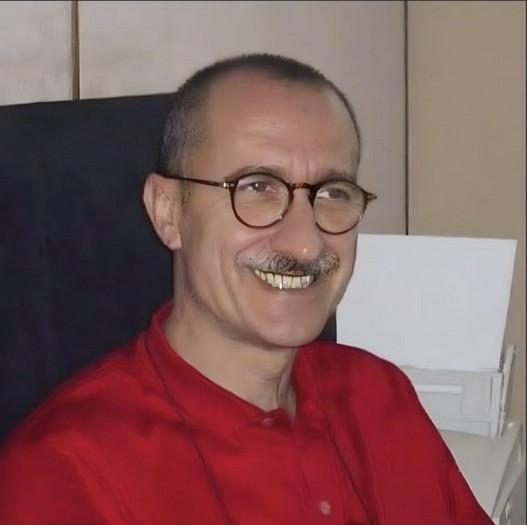
Franco Battaglia
From: Terigi Ciccone Fort Myers, Florida, USA
To: Franco Batagallia
Trieste, Italy
Franco,
Thank you for the letter to Bill Gates. In this regard, I would like to provide a more complete green profile of Bill Gates. While the general public views him as one of the green champions combating climate change, a nuanced look shows that his primary climate efforts are channeled through separate for-profit investments rather than direct Foundation donations. The Bill & Melinda Gates Foundation itself allocates only a small portion (~1-2% historically) to climate-related grants focused on research and mitigation (e.g., agricultural resilience in developing countries). Instead, the vast majority of his "green" capital—primarily from personal wealth via Breakthrough Energy Ventures (BEV)—has been directed toward high-potential technologies like nuclear (e.g., sodium-cooled fast reactors), green hydrogen, carbon capture, and advanced batteries, which are designed to yield commercial returns and potentially grow his fortune through equity stakes and exits. Below is a summary of a detailed discussion I had on this subject with Grok 4 about a week ago. Expanded Summary of Our Discussion on Bill Gates and Nuclear/Green
Our conversation on Bill Gates centered on his influential role in advancing nuclear energy innovations, particularly through his founding and funding of TerraPower, which we explored in detail as part of a broader thread on sodium-cooled fast reactors (SFRs). This tied back to earlier segments on Oklo Inc.'s Aurora reactor, where Gates was noted as an early investor (holding ~4.8% stake as of October 2025) before stepping down as chairman to sidestep conflicts with OpenAI's energy needs. We highlighted how Gates' vision— rooted in his climate advocacy—has funneled resources into modular, recyclable nuclear designs like Natrium (TerraPower's 345–500 MWe SFR with molten salt storage) and PRISM (GE Hitachi's precursor tech), positioning them as scalable solutions for AI data centers and grid stability amid renewables intermittency.
Gates' involvement extends beyond these specifics: In our recap, we touched on his 2006 co-founding of TerraPower with experts like Nathan Myhrvold, evolving from traveling wave reactor concepts to the DOE-backed Natrium demo in Wyoming (delayed to 2030 but advancing with a favorable NRC EIS in October 2025). This underscores his push for HALEU-fueled, closed-fuel-cycle reactors that recycle waste, drawing on EBR-II heritage for passive safety and efficiency.
Gates Foundation and Breakthrough Energy: Funding Viable Green and Nuclear Technologies
While our discussion focused on nuclear, Gates' broader "green" portfolio merits expansion here, as it intersects with his personal and philanthropic strategies. Contrary to narratives of direct selfenrichment via the Bill & Melinda Gates Foundation (which is a nonprofit focused ~90% on global health, education, and poverty alleviation, with total assets ~$75B as of 2025), his climate investments flow primarily through Breakthrough Energy Ventures (BEV)—a for-profit venture capital fund he launched in 2015 with $1B+ initial capital from his personal fortune (Microsoft dividends and Cascade Investment holdings). BEV operates separately from the Foundation, pooling funds from co-investors (e.g., Jeff Bezos, Michael Bloomberg) to deploy ~$3.5B across 100+ startups by October 2025. This structure allows returns to Gates'
private entities, but it's not a Foundation conduit; any "enrichment" stems from equity stakes in successful exits, not charitable recycling.
Key allocations to viable green and nuclear tech (based on public disclosures and 2025 filings) include:
● Nuclear Focus (~25% of BEV Portfolio, $800M+ Invested):
○ TerraPower (2010–present): Gates' flagship, with $1B+ personal/ BEV infusion matching DOE's $2B ARDP grant. Funds SFR R&D, HALEU supply chains (e.g., Centrus partnerships), and the Kemmerer demo— aiming for 10+ GW deployments by 2040. Potential returns: Equity valuation could yield 5–10x on commercialization, per analyst models.
○ Oklo Inc. (2019 SPAC): $50M+ early BEV round; supports Aurora's recycling tech. Gates' stake appreciated ~650% YTD amid AI hype, generating paper gains but no direct Foundation tie.
○ X-Energy (2020): $100M for Xe-100 hightemperature gas reactors; advances pebble-bed modularity for industrial heat.
○ Other: Seaborg (molten salt), Last Energy (microSMRs)—totaling $200M+ for proliferation-resistant designs.
● Broader Green Tech (~75% of Portfolio, $2.7B Invested):
○ Clean Energy Storage/Transmission: QuantumScape ($300M for solid-state batteries), Commonwealth Fusion ($250M for fusion magnets), Form Energy ($200M for iron-air storage)— addressing renewables' intermittency.
○ Carbon Capture/Direct Air Capture: Climeworks ($100M for DAC plants), Carbon Engineering ($80M, acquired by Occidental for $1.1B in 2023—BEV exit yielding ~3x returns).
○ Sustainable Materials/Fuels: Sublime Systems ($50M for low-carbon cement), Twelve ($100M for e-
fuels), Prometheus Fuels ($30M for CO2-to-gasoline).
○ Electrification: Commonwealth Fusion and pivoted bets like Commonwealth Fusion's SPARC tokamak, plus grid tech from Atom Power.
These investments target "hard-to-abate" sectors, with BEV's 2025 IRR estimates at 15–20% for early exits (e.g., Carbon Engineering). Gates' personal wealth (~$140B net worth) benefits via Cascade (BEV's holding co.), but the Foundation sees gains through taxdeductible donations of Microsoft shares (~$20B gifted since 2000, avoiding capital gains). No evidence supports Foundation funds directly funding BEV; instead, Gates uses BEV returns philanthropically (e.g., $500M climate pledge in 2024). Critics argue this "philanthrocapitalism" amplifies influence (e.g., lobbying for nuclear subsidies), but it has de-risked tech: TerraPower's milestones and Oklo's partnerships trace to this capital.
In essence, our thread portrayed Gates as a catalyst for nuclear revival, with his green bets via BEV driving viable innovations— enriching his ecosystem through strategic returns while advancing decarbonization."
Cheers,
Terigi Ciccone Fort Myers, Florida, USA