The Energy Advocate
A monthly newsletter promoting energy and technology December 2022 (Vol. 27, No. 5) 785 S. McCoy Drive, Pueblo West, CO 81007 Copyright © The Energy Advocate

A monthly newsletter promoting energy and technology December 2022 (Vol. 27, No. 5) 785 S. McCoy Drive, Pueblo West, CO 81007 Copyright © The Energy Advocate

The UN’s 27th annual Conference of Parties took place in Sharm el-Sheikh, Egypt 6-18 November 2022. It was lovingly referred to as a “climate conference,” though no climatologist on the planet would find anything in the agenda that would have any bearing on the climate. To be fair, they did have a (misnamed) Science Day with one session called “Dust Particles as regulators for the climate system.”

COP27 doesn’t even get that part right. The only regulation is that the heat radiated to space must equal the heat absorbed from sunlight. IPCC models show the albedo (reflectivity) of the earth increasing because of dust and aerosols, whereas the climate models could balance the conservation of energy by a considerable decreasein albedo (if they knew how to justify it).
Here is the outline of the activities [1]:
• 9 Nov: Finance Day
• 10 Nov: Science Day
… and Youth & Future Generations Day
• 11 Nov: Decarbonization Day
• 12 Nov: Adaptation & Agriculture Day
• 14 Nov: Gender Day
• 15 Nov: Water Day and ACE & Civil Society Day … and Energy Day
• 16 Nov: Biodiversity Day
• 17 Nov: Solutions Day
COP27 is about policy and money. They set about to “Accelerate Global Climate Action,” “Tackle Climate Change,” provide “One Health for all,” “Improve Africa’s Resilience to Climate Change,” and “discuss International policy paper addressing possible scenarios of achieving sustainable food production under climate change.”
Perhaps as a paean to a Swedish teenager, COP27 had a session on “Children and Adolescent-led Action for Climate Change.” As everybody knows, children are born with an
There is no reason to expect the politicians (“world leaders”) attending COP27 to understand science. Generally speaking, their minds go on vacation when their eyes see an equation. Unfortunately, the failure to apply scientific reasoning to climate is not limited to politicians and journalists. For
inherent knowledge about climate. The COP27 attendants intend to decarbonize the steel industry, the oil and gas industries, the fertilizer industry, and the cement industry, while leading Africa into “Low-Carbon Development Pathways.” (Never mind that the warming in the tropics is negligible.)
There was an Official Launch of the “Climate Responses for Sustaining Peace (CRSP) Initiative.” Of course, in case we lose sense of direction, they will lead us forward: “Shaping the way forward on Adaptation Action and Support.” All farmers everywhere are on the edges of their seats awaiting COP27’s plans about “De-risking the Agriculture Sector.”
When you have a panacea, you have a panacea! Here’s a session in Gender Day: “Covid-19 & Climate Change: Women at The Center of Planning & Response.” The session “Women Livelihood Within Just Transition” will “focus on how to leverage opportunities for women living in different communities namely: urban areas, rural areas and coastal areas, within just transition and to support them in dealing with the consequences of climate change in the context of achieving sustainable development.”
COP27 officially launched the “AWARE (Action for Water Adaptation and Resilience) Initiative,” to make everybody aware that heavy rains and droughts are caused by “climate change,” the universal cause of all untoward events. Sea level is rising at the rate of the thickness of a nickel per year, but COP27 leaders recognize that not everybody knows what a nickel is, so they have a session devoted to sea rise adaptation.
ACE is shorthand for “Action for Climate Empowerment,” a UN plan for people (including Swedish teenagers) to control the climate. A COP27 session is “The Role of Civil Society In Mobilizing And Ensuring Delivery Of Climate Finance Commitments And Pledges.”
Energy Day was all about how to produce “green hydrogen,” “green ammonia,” “e-fuels,” and a “Clean Energy Transition.” In case that sounds complicated, be assured that everything was clear because of “High level opening remarks.”
On and on it went, ad nauseum.
[1] https://cop27.eg/assets/files/COP27-PRESIDENCY-VISIONTHEMATIC-DAYS-FULL-PROGRAM.pdf
example, the writers of MIT’s Technology Review seem to believe that CO2 =climatechange. Casey Crownhart presents three charts that “show who is most to blame for climate change” [2]. The three charts are, of course, about CO2 emissions; nothing more, nothing less.
Because of plate tectonics, some seacoasts are falling, some are steady and some are rising. Correspondingly, if there were no change in eustatic sea level, the local sea level would be
rising, holding steady, or falling, respectively. In fact, eustatic sea level is rising at approximately 1.8 mm per year, as determined by the numerical average of sea level changes at a great number of ports throughout the world. The important fact is that at every station, sea level is changing steadilywith time; there is no acceleration at the tidal stations How could this be if there were an acceleration in eustatic sea rise?
The notion that sea rise is accelerating came from satellite measurements, which involve a different kind of averaging. The satellites show a sea rise of 3 mm/year. Perhaps they are correct; perhaps the average of the direct measurements is correct. I pretend no expertise.
What is not correct, however, is to splice satellite data onto historical tide-station data and pretend that the “trend” is one of acceleration. See Figure 1 Physics.org has regurgitated a Nature Communications article originating at Imperial College [3] claiming that sea rise is going to eat away at rocky cliffs at an accelerating rate, owing to the alleged acceleration in sea level rise.
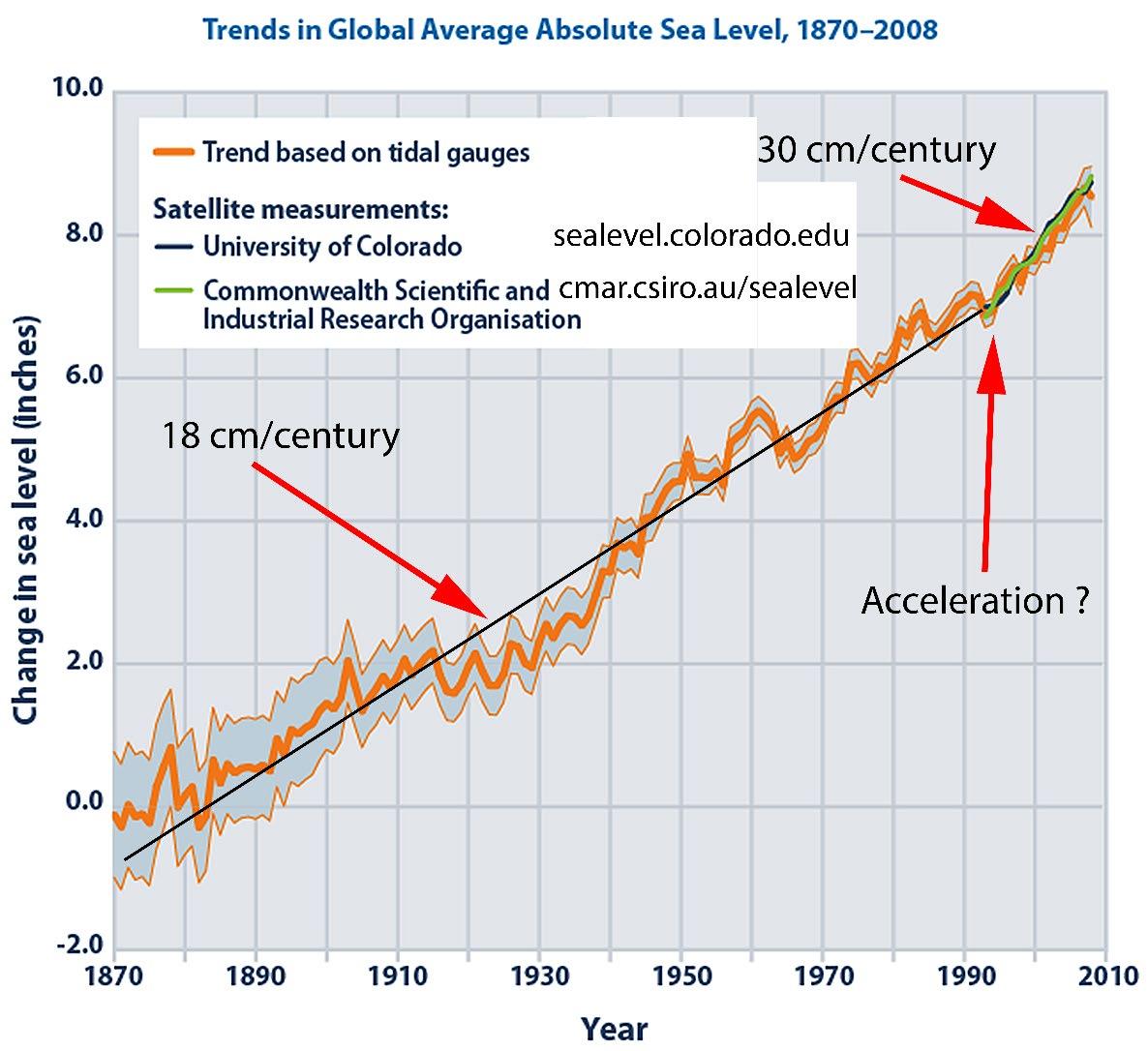
Figure 1: Splicing two kinds of averages together results in absurdity.
Phys.org says [3]
At the UK study sites in Yorkshire and Devon, this will cause rock coast cliffs to retreat by at least 10–22 meters inland.
This rate of erosion is likely between three and seven times today's rate, and potentially up to tenfold.
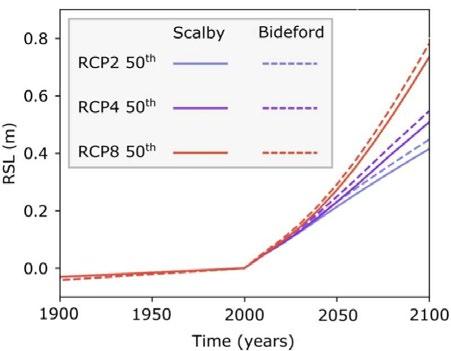
Data from the two sites in question show a multi-millennial average rate of 5 cm (2 inches) per year of erosion of the rocky coast. Sea rise of a few tenths of a cm (about one-eighth of an inch) per year will obviously cause the sea cliffs to come crashing down.
You would think that somebody writing for PhysicsWorld about climate would realize that the all-too-frequent claims that local weather events are caused by “climate change” are bogus. You would be wrong. For example, Kate Gardner writes [4]:
Dhaka, the capital city of Bangladesh, is home to 10 million climate refugees – people who have been internally displaced as monsoons and flooding destroy homes and farmland. With another 2000 arriving in the city every day, it’s proof that
human migration caused by climate catastrophe is already a realityandacceleratingfast. [Emphasis added]
Gardner reviews a book (Nomad Century) written by environmental-science journalist Gaia Vince without a hint that either IPCC or Vince could be slightly in error [4]:
As she leads us through the climate scenarios detailed by the Intergovernmental Panel on Climate Change (IPCC), it is clear that even if we limit global heating to 2 °C (an outcome she deems unlikely), vast swathes of the Earth will be uninhabitable by 2050, displacing hundreds of millions of people. With a 4 °C temperature rise, billions of people will be affected in this way.
Vince’s book is not entirely without virtue. She says we can avoid catastrophe at least the part caused by massive migration by moving people before climate-caused local weather disaster strikes [4]:
She explains how we can use the little time we have left to start planning – and begin moving people before disaster strikes them.
Yes, by all means! Let’s move those wealthy retirees out of Florida and into Canada or maybe even Siberia!
Physics World writer Kate Gardner finds relief in Vince’s book [4]:
Nomad Century deftly led me from the terror of what humans have done to sincere belief that we can and must create a better world that is liveable [sic] for every person.
Horror of horrors! FIFA may not be carbon-neutral! James Dacey, in an hour-long podcast for Physics World, interviews Gilles Dufrasne from Carbon Market Watch (none of whose personnel are scientists) about how the World Cup (of soccer, aka football) advertises itself as being “carbon neutral” but is not. Dishonesty in advertising is no more common than dishonesty in politics, of course, but the real problem here is that the World Cup feels the need to promote itself as valiantly fighting the horrors of climate change by being carbon neutral.
The concept of a tipping point derives from the process of tipping something over. In the figure to the right, if the box is pushed to the right until the vertical arrow representing the downward force on the center of mass moves past the support point, the box tips over. Importantly, the tendency to flop toward the horizontal increases with every increase in tip angle. In other words, more begets more.
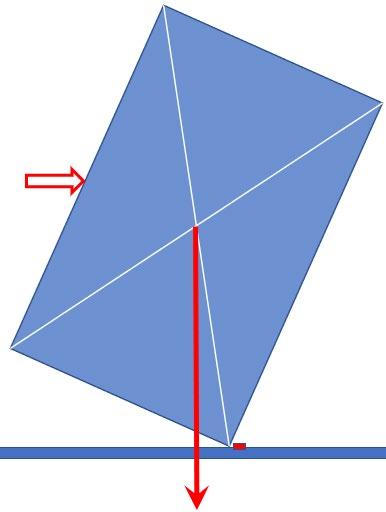
In a PhysicsWorld article, James Dacey perverts the word twice. For example, he defines the melting of ice as a tipping point, although it is normally called a phase change True, there is a sudden change, but the conversion of a milligram of ice into water does not trigger the conversion of two milligrams of ice into water, thence to four and so on. It is not a tipping point in the physics sense of the word. Then Dacey steps into the field of sociology and again re-defines tippingpoint [6]:
But imagine if an unfortunate combination of intense local flooding in one part of a country unleashed travel chaos across an entire nation.
Such an event is an example of a tipping point in a socioeconomic system – when a relatively small input triggers a disproportionately large outcome that brings about social and economic consequences that cannot be easily reversed.
Again, this sociological definition lacks the essential aspect of tipping points: morebegetsmore
Even the IPCC sometimes understands the nature of a tipping point, even if they predict it where it will not occur. In their view, additional CO2 will cause warming, which in turn will cause melting of ice and snow, exposing darker land to the sun’s rays, causing more heating. Also, warming of the Arctic will release methane and CO2 trapped in (some) permafrost, causing more heating, according to the IPCC. However, their glossary says:
A tipping point is a critical threshold beyond which a system reorganizes, often abruptly and/or irreversibly.
Perhaps neither Mr. Dacey nor the IPCC realizes why we use different words for different concepts. For that matter, neither do the participants in a recent New York Times video about tipping points [7].
[2] Casey Crownhart, “These three charts show who is most to blame for climate change: Getting to the bottom of which countries have contributed most to climate change is complicated, but a few pieces of data can help,” November 18, 2022, https://www.technologyreview.com/2022/11/18/1063443/responsi ble-climate-change-charts/
[3] “Sea level rise to dramatically speed up erosion of rock coastlines by 2100,” Imperial College London, November 18, 2022, https://phys.org/news/2022-11-sea-erosion-coastlines.html, parroting https://www.nature.com/articles/s41467-022-34386-3
[4] “Humane solutions for the massive human migration caused by climate catastrophe,” Kate Gardner reviews Nomad Century: How to Survive the Climate Upheaval by Gaia Vince, Nov. 14, 2022, https://physicsworld.com/a/humane-solutions-for-themassive-human-migration-caused-by-climate-catastrophe/
[5] James Dacey, “Is the 2022 FIFA World Cup really carbon neutral?” 28 Oct 2022, Is the 2022 FIFA World Cup really carbon neutral? – Physics World
[6] James Dacey, “Climate tipping points: retreating from the brink and accelerating positive change,” 08 Nov 2022 https://physicsworld.com/a/climate-tipping-points-retreatingfrom-the-brink-and-accelerating-positive-change/
[7] “How Close Are We to a Climate Change Tipping Point?” NYT video. Max Bearak & Raymond Zhong, (Dr. Johan Rockström, Hoesung Lee) https://www.youtube.com/watch?v=mFYE4CfeIj0
How Close Are We to a Climate Change Tipping Point? –YouTube
National Geographic has been a mouthpiece for the Climate Crisis industry, spewing nonsense about polar bears and walruses, blaming both global cooling and global warming on fossil fuels, and parroting the IPCC. A recent article, however, shows some cracks in that mindset. Marto Boscolo has written an article that admits that CO2 is a friend, although the article had to have the usual complaints about CO2 [8]:
If carbon dioxide (CO₂) were a politician, it would be worried about its bad press. The greenhouse gas is the primary pollutant responsible for climate change Not only are scientists, leaders, and activists trying to halt its production, but they also want to capture it directly from the air and lock it underground where it will do less harm.
On the good side, Boscolo notes that CO2 is used in fire extinguishers, and that “CO2 supports life;” however he does not note that CO2 is necessary for life. He lists some uses in the food industry [8]:
Once food has been produced, carbon dioxide is essential for preserving it in its packaging. High concentrations of the
gas prevent bacteria from spreading. In baked goods, it penetrates air bubbles, preventing mold and fungus from forming.
When carbon dioxide comes into contact with any water present in packaging, the chemical reaction of the two substances lowers the environment’s pH, which also helps preserve baked goods.
A minor, but important use of CO2 is in surgery, especially in laparoscopy to inflate the abdomen.
National Geographic does not have the audience of (say) ABC, NBC, or CBS, but it does have millions of readers. It is to be hoped that the negative view of CO2 normally espoused by the magazine will be partially offset by Boscolo’s article. [8] Marco Boscolo, “Why carbon dioxide is both friend and foe: The gas is an essential part of life on Earth but right now we have too much of a good thing, NationalGeographic , December 2, 2022
Alex Epstein, who wrote the recent book The Moral Case for Fossil Fuels, has a blog at EnergyTalkingPoints.com. He recently wrote about how the EPA will [9]: “make things much worse with 7 policies that gravely threaten 10-20% of our reliable capacity in the next 7 years.”
Epstein notes that [9] “electricity shortages are now routine throughout the US,” and that Federal Electric Reliability Commission (FERC) Commissioner Mark Christie said, “We’re heading for a reliability crisis.” Of course, the cause is the shutdown of reliable power plants (coal and nuclear) and the replacement with unreliable solar and wind.
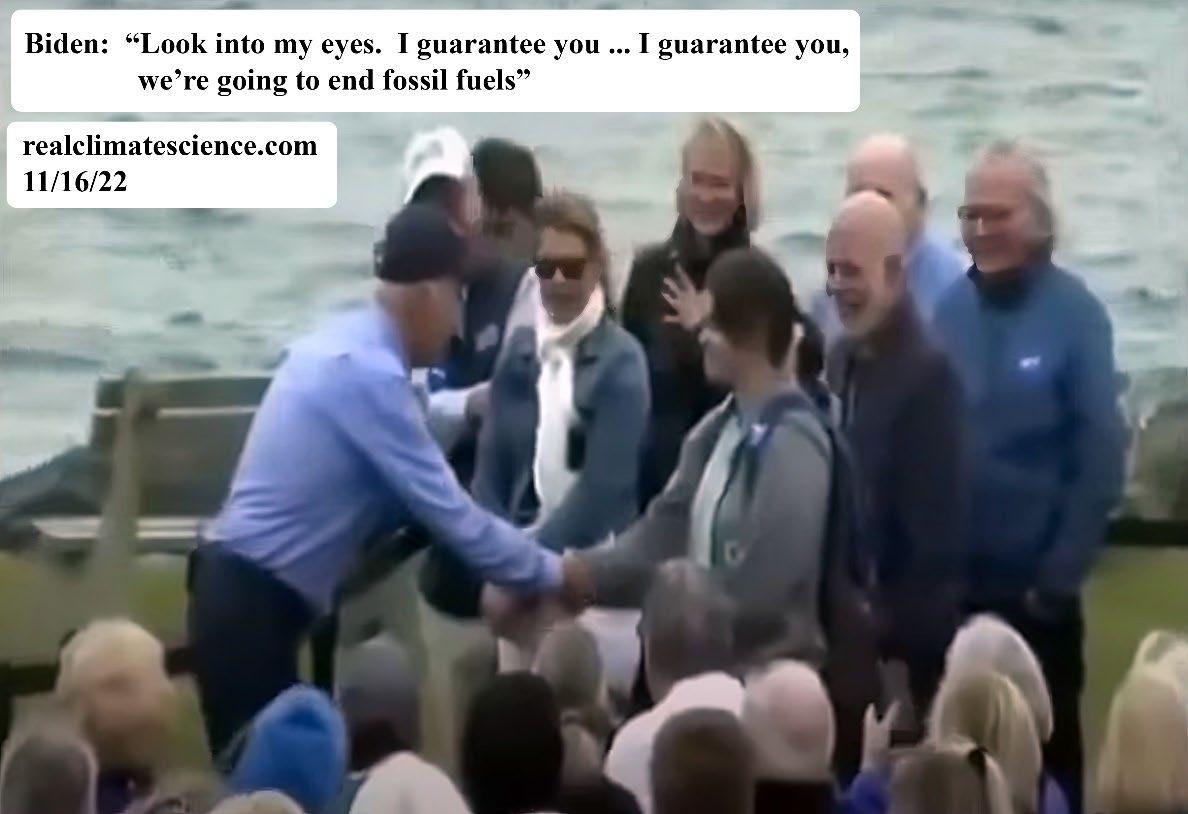
Figure 2: This screen shot comes from a video often posted at realclimatescience.com in which President Biden walks over to a young lady to shake her hand and promise to her that “we’re going to end fossil fuels.”
Oblivious to the needs of humans, the EPA has a “7-pronged attack on the grid” with pernicious effects but innocentsounding names, namely [9] “Coal Combustion Residuals” rule, “Good Neighbor” rule, “Regional Haze” rule, and “Effluent Limitations Guidelines,” and others. The crux of the matter is that they are all designed to make it impossible for coal-fired plants to operate.
The late Petr Beckmann (A History of Pi; The Health HazardsofNOT GoingNuclear, originator of AccesstoEnergy) said that we need an APE-EPA: an Agency to Protect the Environment from the EPA. An example of the EPA’s antienvironment policy is its “New Source Review,” which [9] considers an existing, upgrading plant a “new” plant that then must follow every rule for new power plants. This perversely encourages plants not to make individual upgrades.
Epstein says [9]
…we need significant reform of the regulatory apparatus and major legislation to take into account the true cost of regulation and to prevent executive agencies from exercising so much arbitrary power.
• A first step is for the EPA to use a decision-making framework that considers ALL risks and side-effects regulations have, including damage to the economy in general and affordable energy in particular.
Epstein’s recommendations are getting dangerously close to logic and science, so their adoption is highly unlikely. [9] Alex Epstein, “The EPA vs. the grid: We’re in an electricity crisis, with reliable power plants shutting down far faster than they are being built. The EPA plans to make things much worse,” EnergyTalkingPoints.com, 11/16/2022
In 2021, Massachusetts used about 50.8 billion kWh [10] of electricity, amounting to a year-round average electrical power of about 5.8 billion watts. Only 38% of the commonwealth’s electricity is generated within its borders.
Massachusetts has been in “pursuit of establishing cleaner offshore wind power. Contracts, or power purchase agreements (PPAs), for the projects were filed with the Department of Public Utilities in May” [11] The Commonwealth Wind project involves installation of wind turbines with a total of 1,200 (nameplate) MW by Avangrid, and Mayflower Wind plans a 400-MW installation.
Offshore wind turbines have an annual capacity factor of about 50%, versus 35% for on-shore machines. So, the two projects, if they live up to expectations, would produce an average of about 800 MW, about 14% of the state’s average demand.
It would be nice to know several things about these projects: the nameplate power of each turbine, the number of turbines, the total area occupied by the array of turbines, and so forth, but the websites of the companies are vastly deficient in that respect. Avangrid, “a leading clean energy company,” provides no useful energy information.
Economics raised its ugly head. As Robert Bradley explains [12]:
“As has been publicly reported in recent weeks, global commodity price increases, in part due to ongoing war in Ukraine, sharp and sudden increases in interest rates, prolonged supply chain constraints, and persistent inflation have significantly increased the expected cost of constructing the project. As a result, the project is no longer viable and would not be able to move forward absent amendments to the PPAs,” attorneys for Commonwealth Wind wrote in their motion.
In other words, this offshore wind project is going to cost a lot more than previously thought. Surprise!
[10] https://www.eia.gov/electricity/state/massachusetts/
[11] Colin A. Young, “Major Massachusetts offshore wind project no longer viable: Commonwealth Wind seeks one-month delay in process, citing economic turbulence, October 30, 2022, https://newbedfordlight.org/major-massachusetts-offshore-windproject-no-longer-viable/
[12] Robert Bradley Jr. “Massachusetts’ 1,200 MW Offshore Wind Project ‘no longer viable’ (rough waters ahead?),” /wattsupwiththat.com/2022/11/04/massachusetts-1200-mwoffshore-wind-project-no-longer-viable-rough-waters-ahead/
I recall a flap about a physics demonstration device in which you tightened a screw to increase water pressure in a glass vessel until the vessel broke. A physics teacher complained in a letter to the editor that an article about the apparatus did not tell people to put on protective eyewear. As I recall, the teacher earned a rebuke from Professor Mario Iona of the University of Denver.
In the words of the late Hawai’ian engineer Alan Lloyd, “There are two kinds of volcanoes: the ones that go BOOM, and the ones that don’t.”
The relationship between these two items is the nature of expansion and contraction. Water is basically incompressible: if one cm3 of water is compressed by 10,000 times atmospheric pressure, the volume is compressed only 3 percent to a volume of about 0.97 cm3. If the pressure is released, the volume increases only 0.03 cm3. In the physics apparatus discussed, the increase in volume cannot possibly send shards of glass hurling toward students’ eyes.
Gases, however, are highly compressible. One cm3 of gas at atmospheric pressure becomes ½-cm3 at a mere two times atmospheric pressure. One cm3 of liquid water expands to 700 cm3 of H2O gas when it evaporates into the air.
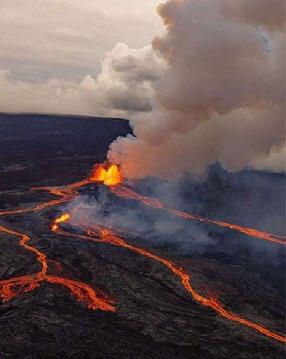
Similarly, molten lava is highly incompressible. Mauna Loa, on the big island of Hawai’i “erupts” as lava eats through a thin layer on the side of the mountain and then the lava flows downward toward the ocean, as tourists are now seeing in Hawai’i.
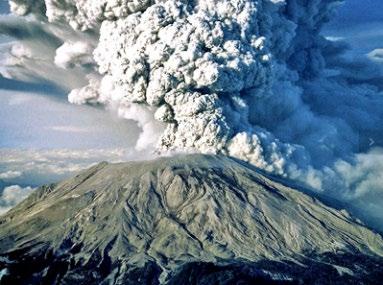
By contrast, explosive volcanoes such as Krakatoa boil water and contain steam until the pressure is great enough to blow a hole in the mountain. The expanding gas (steam) can blow volcanic ash far into the atmosphere.
“It’s Too Late, Baby…”
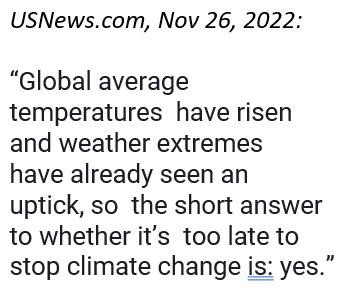
Come to think of it, it is too late. We should have stopped climate change at least a billion years ago.
Publisher: Vales Lake Publishing, LLC. Editor Howard Hayden, Ph.D., (for identification only) Professor Emeritus of Physics, University of Connecticut. The Energy Advocate, 785 S. McCoy Drive, Pueblo West, CO 81007. ISSN: 1091-9732. e-mail: corkhayden@comcast.net. Website: http://www.EnergyAdvocate.com. Subscription $40 for 12 monthly issues. A Primer on CO2 and Climate 2nd Ed. $11.00 and A Primer on Renewable Energy $16.00 for subscribers. Bass Ackwards: How Climate Alarmists Confuse Cause withEffect$18. Energy:ATextbook, $25. (Add $5.00 for Priority Mail) Checks must be drawn on a US bank. VISA, MasterCard, Discover/NOVUS accepted.