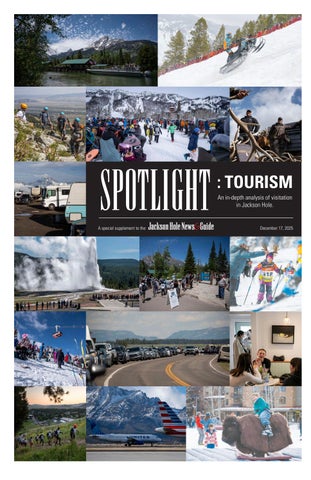
An in-depth analysis of visitation in Jackson Hole.
A special supplement to the December 17, 2025
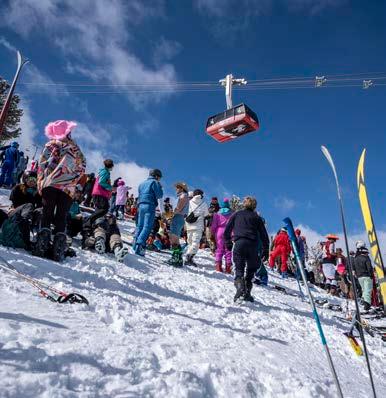
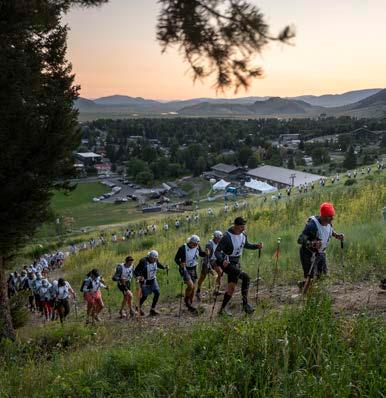
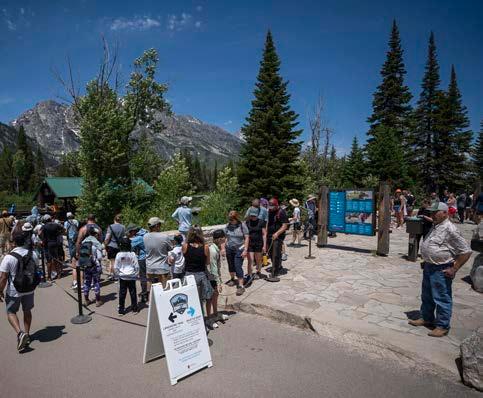
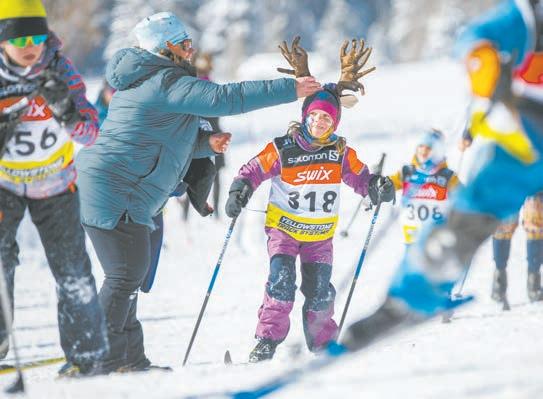
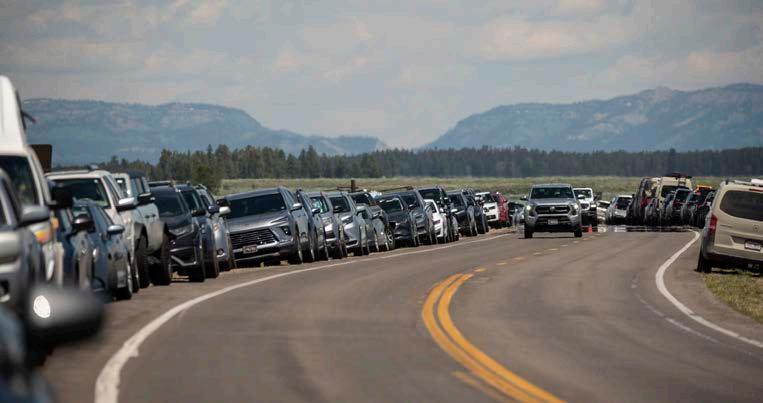
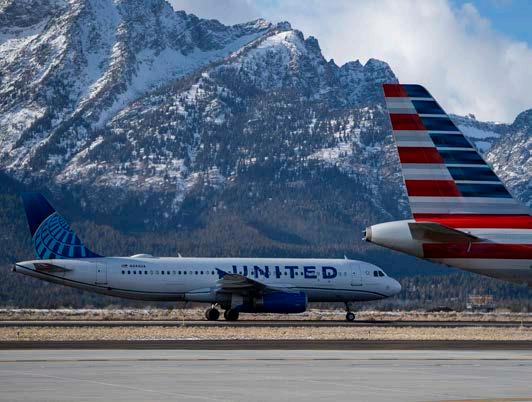

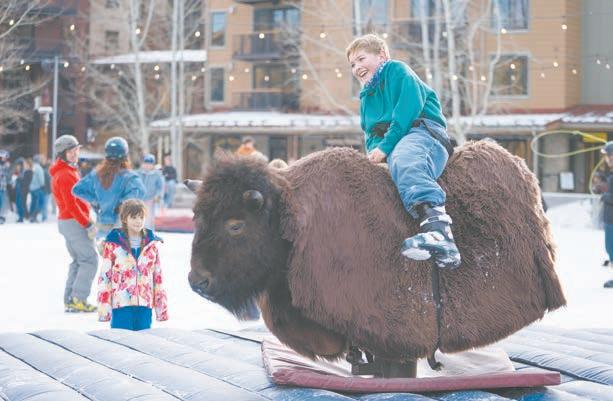
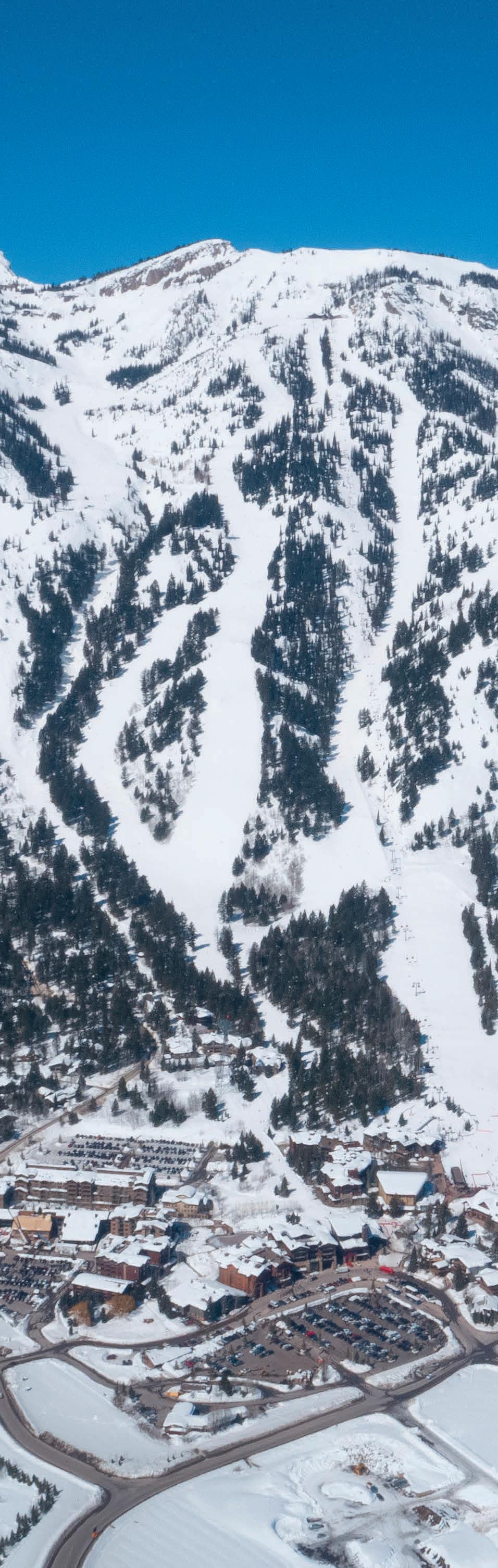
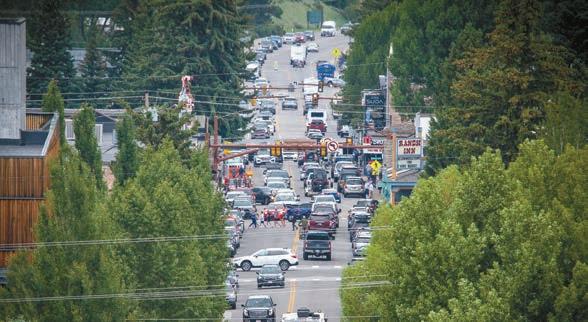
Humans need air and water to live. In Jackson Hole, as we know it today, tourism provides a living. Like it or not, the millions of people who pass through the valley every year pay the bills. For some people, that’s obvious. For others, it’s less so. Servers and bartenders cater to visitors during the long summer season. National Park Service rangers answer the same questions day after day after day, guiding people through Grand Teton National Park. But, through special sales tax collections, visitors have funded some of the largest infrastructure projects in Jackson. They help pay the salaries of plow drivers and planners. Businesses, hoping to advertise to visitors in coffee shops, even keep this local newspaper and its staff of almost 60 people alive.
But, in a surprise to exactly no one, tourism is a double-edged sword. It’s frustrating. Angry August is real. People with Utah license plates often seem to ignore stop signs. The traffic never seems to stop from July to September and, now, October. The grocery stores are crowded, trash is
left on public lands, wildlife is fed inappropriately, leading managers to put bears and other animals down, and visitor-forward workers’ mental heath plummets in peak season.
So, it’s no surprise that the community is asking a question: How much is too much? Can we really put a cork in the bottle? Or do we just have to adapt to where we are?
Tourism helped grow Jackson Hole from a quiet cow town to an internationally recognized name. It also helped convince John D. Rockefeller Jr. to protect what is now Grand Teton National Park, which was controversial at the time, but an unmistakable gift in our present day.
The question is, are we at a tipping point? And, if so, what direction will we tip? Each of the stories in this section tries to answer that. And we recognize we’re only scratching the surface.
Know that the News&Guide will continue to report on the essential — and existential — industry going forward. Tips and story ideas welcome. Happy reading.
— Billy Arnold, managing editor
Published by
PUBLISHER
Adam Meyer
EDITOR IN CHIEF
Johanna Love
MANAGING & SECTION EDITOR
Billy Arnold
PHOTOGRAPHERS
Bradly J. Boner, Kathryn Ziesig, Erin Burk
EDITORIAL DESIGN
Andy Edwards
CONTRIBUTORS
Jasmine Hall, Charley Sutherland, Alex Viveros, Christina MacIntosh
COPY EDITING
Morri Stewart
CREATIVE DIRECTOR
Sarah Wilson
ADVERTISING DESIGN ARTISTS
Lydia Redzich, Luis Ortiz, Chelsea Robinson
DIRECTOR OF ADVERTISING
Karen Brennan
MULTIMEDIA SALES MANAGERS
Tim Walker, Chad Repinski
DIGITAL CAMPAIGN, MULTIMEDIA SALES MANAGER
Tatum Mentzer
DIRECTOR OF OPERATIONS AND SALES
Tom Hall
PRODUCTION MANAGER: Dale Fjeldsted
PRESS SUPERVISOR: Stephen Livingston
PREPRESS SUPERVISOR: Lewis Haddock
PRESSMEN: Gunner Heller, Angel Aguilar
CIRCULATION MANAGER: Jayann Carlisle
CIRCULATION: RuLinda Roice, Gunner Heller, Angel Aguilar, Anthony Sosa Sedeno
CEO: Kevin B. Olson
©2025 Teton Media Works
Jackson Hole News&Guide
P.O. Box 7445, 1225 Maple Way, Jackson, WY 83002
Phone: 307-733-2047; Web: JHNewsAndGuide.com
The Town Square webcam is delivering eastern Europeans free drinks, and a taste of America.
By Alex Viveros TOWN AND HEALTH REPORTER
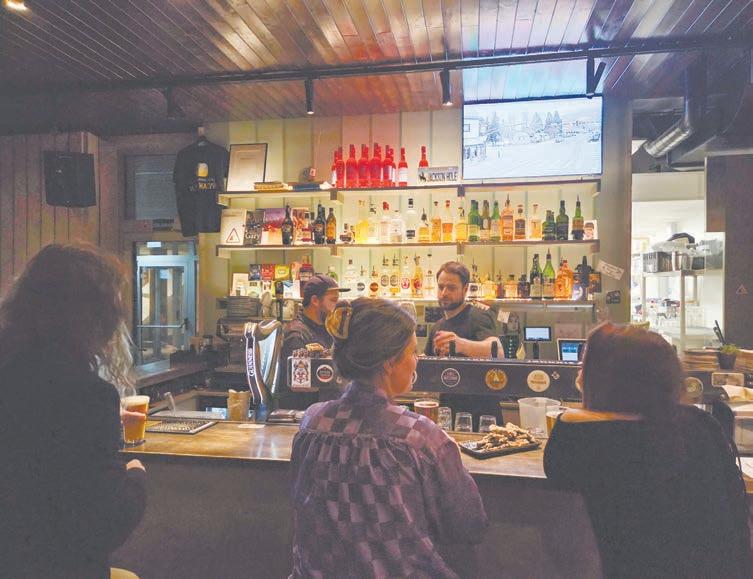
On any given night, in a bar more than 5,000 miles away from Jackson Hole, Lithuanian patrons are keeping their eyes peeled for yellow cars on the Town Square.
For years, the establishment has played a live-streamed webcam feed of the intersection of Broadway and Cache on a television over the bar. When a yellow car — the rarest type, in the owners’ telling — pops up on the screen, it means one thing: free shots.
“You need to deserve it, you know?” said Mantas Tolocka, a former bartender at the establishment who now runs a sister bar.
The bar, called ŠMC kavine / Vejai, is in Vilnius, the capital of Lithuania. But Tolocka and Donatas Tarasevicius, who also worked as a bartender and now runs the bar, have never stepped foot in Jackson Hole. Instead, they watch from afar, virtual travelers at a bar that loses money every time a yellow vehicle passes the antler arches. Nothing, they say, will get them to change the channel.
“We will not change it for any money, for any sort of occasion,” Tolocka said. “We will just show Jackson Hole, all the time.”
In some ways, the nightly ritual in Vilnius is not new. In an increasingly digital age, tourists don’t only make in-person pilgrimages to the Greater Yellowstone Ecosystem. Instead, they’re connecting with its wild places over social media, visiting the Tetons’ peaks in prime time documentaries — and studying livestreams, like the See Jackson Hole link played in the Lithuanian bar.
People who connect with destinations like Jackson Hole digitally are virtual travelers, according to David Jarratt, a tourism expert at the University of Lancashire in England who studied virtual travel through webcams during the height of the Covid-19 pandemic. In Jackson, the trend is even older. In 2016, virtual visitors watchdogged the See Jackson Hole livestream, searching for red trucks, creating a viral craze that saw one sheriff’s deputy dab in front of the camera.
But while webcam watching has been popular for at least five years, the bar’s ritual is something else.
“I’ve never heard anything quite like that, I’ve got to say,” Jarratt said. What is virtual travel?
During the Covid-19 pandemic, Jarratt noticed that many more people were traveling virtually through webcams, keeping an eye on places that they couldn’t visit physically. Some people checked in on destinations where they had been before, while others explored hard-to-reach places, like a volcano.
Though Jackson Hole might seem random, Jarratt said tourists are often drawn to destinations representing places they imagine — in this case, America through Eastern European eyes.
“It’s buying into a vision of America,” Jarratt said. “It might be quite an aspiration to go to the states, and connect to the states and the whole Americana thing.”
Whether or not the Lithuanian bar’s watching of the Town Square counts as tourism in a virtual form is debatable. Some people would certainly say it is not, arguing that tourism involves the physical movement of people, Jarratt said.
But Jarratt argued that the webcam might just be the “stage before the visit.”
“We used to have postcards and photographs, obviously, and I think this is just an extension of that,” he said. “You need to think of tourism as not just being there, but before you go, and afterwards.”
‘The dreamland’
Though yellow vehicles may be rare in Jackson Hole, patrons of ŠMC kavine / Vejai spot one almost every night. On Dec. 4, when the News&Guide interviewed Tolocka and Tarasevicius, the bartenders, Tarasevicius said a yellow car passed through the intersection — free shots! — only an hour earlier.
The bar opened in 2016.
While other bars in Vilnius play soccer games or MTV music videos, bartenders wanted to separate themselves with a focus on literature and poetry. Many poets, Tarasevicius said, write of America as a dreamland, and the crew decided they wanted to show American destinations on the screen.
The bartenders cycled through several livestreams before a bartender stumbled on See Jackson Hole’s Town Square feed. Jackson Hole was appealing because of its nature and landscape, a sharp contrast to Vilnius. It represented an oasis of quiet life, something that
Lithuanians wish for and strive for.
“That’s the dreamland,” Tarasevicius said.
Wyoming also seemed like a destination for Lithuanians who were tired of skiing in the Alps, Tolocka said. He remembers fielding calls from Lithuanians who had made the trip to Jackson Hole, telling the bar’s patrons to keep an eye on the screen.
“They were going through that crossroad, once with a Lithuanian flag, another time with a poster of the bar in their hands,” Tarasevicius said. “They knew that we were watching, and we were going to see that.”
Over the years, even the Lithuanians watching from afar have become familiar with downtown Jackson. They’ve figured out that one certain yellow car belongs to a local, given that it parks on the street quite often. They’ve witnessed festivals, car accidents, protests against President Trump and Fourth of July parades — a bummer, Tasevicius said, because there’s a lack of yellow cars during the parade.
“We noticed some seasonal shifts, traditional American holidays — Thanksgivings and stuff like that — we notice your national events,” Tolocka said. “Either we are sober, or we are trashed.”
There are a couple of ground rules for shot-giving. School buses don’t count, and neither do parked cars. But the rules are also negotiable.
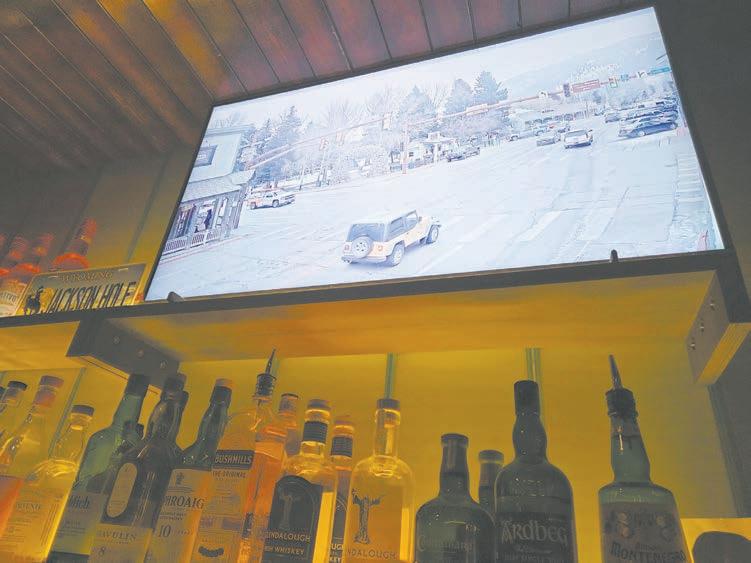
Once, on a day devoid of yellow cars, someone tried to make the argument that someone wearing a yellow jacket should count. Patrons sat for an hour, then two, then three — without any sign of a yellow car. On that day, Tarasevicius changed the rules. The yellow jacket counted.
One car, two car
Cameras watching Jackson have been popular for over two decades, said See Jackson Hole Founder Bob Strobel. In 2001, to follow what was happening in town and to stay connected to the region , virtual crowds kept their eyes on a camera that would up load still photos every 30 seconds. Today, a community of virtual onlookers tune into a live stream of the Town Square on YouTube, Strobel said.
“It doesn’t surprise me that folks are looking at it,” Strobel said.
“Jackson Hole, Grand Teton, Yellowstone — it’s a magnetic place, and revered as that around the world.”
Strobel wasn’t surprised that Lithuanians posed in front of the camera while visiting. People did so even when the camera captured still frames. But the yellow car game intrigues him.
“I think it takes a special kind of person to own a yellow car,” Strobel said. “I think that’s great.”
The Lithuanian bar’s ritual is a call back to the “red truck era,” Strobel said. In 2016, the livestream of the Town Square went viral on YouTube, prompting thousands of virtual visitors from around the world to flock to the camera. The craze largely centered around red pickup trucks. Viewers would digitally squeal in the comments section whe n one passed.
Strobel suspects that ŠMC kavine / Vejai patrons caught onto the Jackson Hole webcam amid the red truck movement.
People at the bar used to drink when they noticed red pickup trucks, Tolocka said. But there was one problem.
“The red pickup, it occurs really, really often,” Tolocka said. “So we used to get trashed in an hour — really, really quick.”
The game eventually transitioned to yellow cars, which reduced the number of free shots poured. Contenders are limited to people who sit at the b ar and who know the game.
The rules can change. If drivers of rare yellow cars start circling around the Town Square to drain the bar of its liquor, the bar may switch course.
“Keep that in mind,” Tarasevicius said. “We can change the color.”
The exchan ge of tourists stemming from the bar’s tradition could go the other way in the future. After learning about the bar, Strobel said he plans on visiting it in Vilnius.
“I’m going to go there,” Strobel said. “I need a trip to Eastern Europe, so I’m going to look into it, and see if I can make that part of the deal.”
Nights at the Lithuanian bar end similarly to those in American time zones several hours away. With one twist.
“We sit for a couple of beers, because we are tired after the shifts,” Tarasevicius said. “And then, someone says ‘it’s getting dark in Jackson Hole. It’s time to leave.’”
The high cost of rentals, economic uncertainty, changing travel patterns — and a lack of snow — may be depressing travel to Jackson Hole this winter, tourism pros say.
By Charley Sutherland GOVERNMENT REPORTER
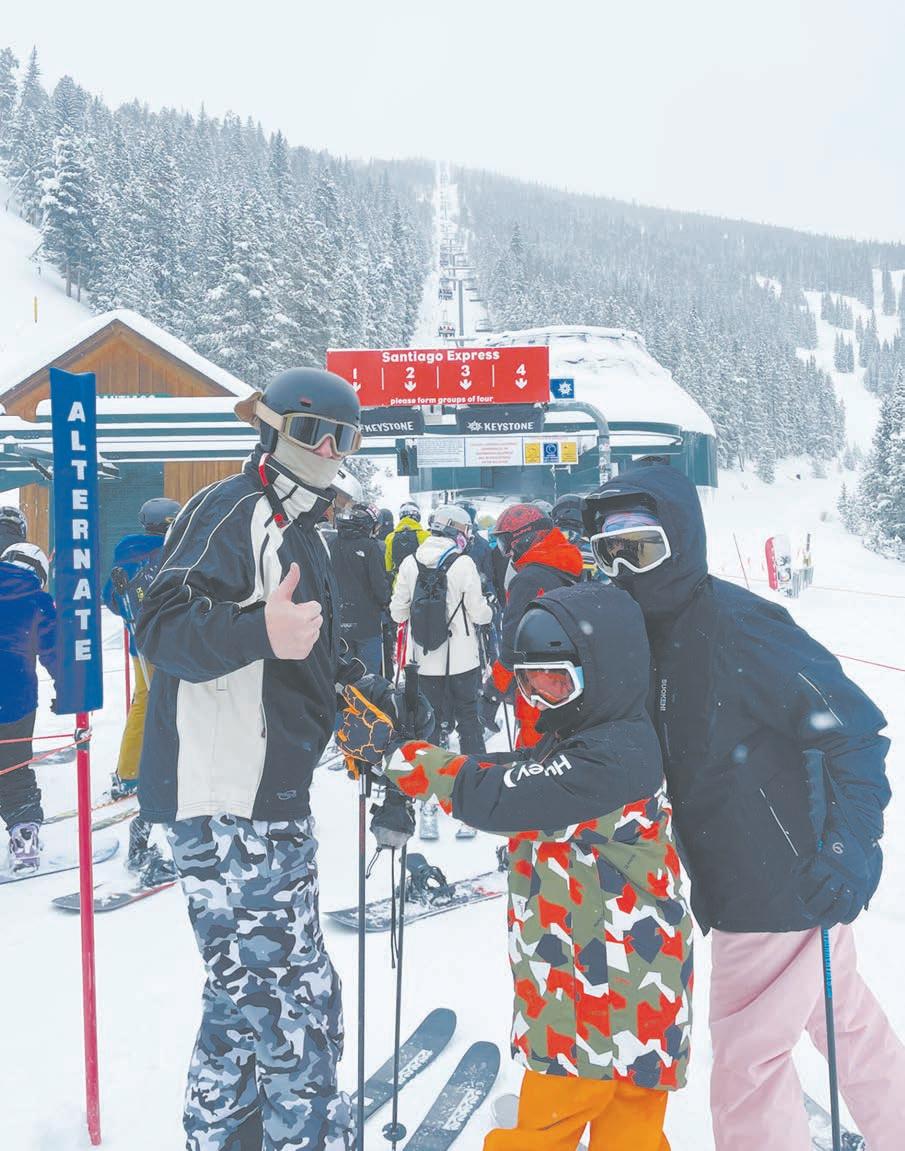
This winter, Mary and Al Hietpas will again head to Colorado for their family ski trip — and not because the Tetons lack snow, but because the cost of skiing has climbed beyond their reach in Jackson Hole.
Despite having friends in the Tetons, the Hietpas clan, who hail from the steel town of Pittsburgh, plan to return to Colorado for their trip out West.
It’s just too expensive to visit Jackson and their Epic passes don’t work at Jackson Hole Mountain Resort, Grand Targhee or Snow King, Mary Hietpas said.
“We can’t afford it,” she said. “We just quit looking.”
With warm temperatures and low snowfall in November, projected occupancy rates are lagging for winter, according to the Jackson Hole Travel and Tourism Board’s publicly available Destimetrics report. Meanwhile, guests who do come to Jackson may pay more for their rooms.
The average daily rate — the average price a guest pays for a hotel room — is up compared to previous years.
According to Destimetrics, every month of 2025, except March, has seen a higher average daily rate compared to the same month in previous years where data is available And it’s not just winter, though the winter dip has tourism officials concerned.
“It’s quite expensive,” Julie Calder, chair of the Jackson Hole Travel and Tourism Board, told officials in November. “We’re seeing pushback.”
In a follow-up interview, Calder said price does play a factor in Jackson Hole’s visitation trends but other factors are impacting visitation as well. Those factors include changes to travel patterns after the Covid-19 pandemic, nationwide economic uncertainty and reduced international travel.
Despite high prices over the summer, visitors still flocked to Jackson Hole.
With access to two major national parks and millions of acres of public land, Jackson has long had a strong summer economy and tourism officials don’t need to advertise summer in the Tetons. Promoting winter tourism, in contrast, has been key to creating a year-round economy and jobs for residents. Winter travel is heavily advertised to support businesses seeking colder-season guests. High rates
For December, the average daily rate is projected to be $813.02, up $148.33 from December 2024, according to data published by the Travel and Tourism Board.
For January, the average
daily rate is projected to be $663.43, up $94.80 from January 2025.
“On the books” occupancy rates in December and January, meanwhile, are hovering around 25%, down from about 60% in January 2024 and 2025 and about 45% in December 2023 and 2024.
The comparison isn’t exact, however, because the “on the books” projections are forward-looking, while historic occupancy rates reflect what actually happened in a given month.
Forward-looking data can also overestimate prices and underestimate visitation, said Calder, who is also Jackson Hole Mountain Resort’s vice president of guest experience. People tend to book expensive holiday travel early, which can drive up average daily rate projections. Snow on the ground and in the forecast can bolster occupancy rates later on.
Tourism officials are aiming to ramp up winter promotion in response to the early figures and are paying particular attention to promoting January.
“We’re down on a year that was already down for January,” Calder told Tourism Board members in November.
By comparison, Summit County, Colorado’s average
daily rate is projected to be $521 for the 2025-26 ski season, according to the Summit Daily. Sun Valley, Idaho’s average daily rate is expected to be $552 in December, $410 in January and $472 in February, according to Visit Sun Valley.
Last winter, airlines reported 90,000 empty seats on Jackson Hole flights, said Kari Cooper, executive director of Jackson Hole Air, a nonprofit that coordinates and subsidizes air service to Jackson Hole.
That’s too many empty seats, Cooper said. Airlines have begun reducing service to Jackson Hole, including dropping flights from Denver, Salt Lake City, Los Angeles, Dallas and Chicago this winter.
“They’re making those decisions based on supply and demand,” Cooper said.
Demand is changing, Cooper and Calder said, largely because of shifting travel patterns. During the Covid-19 pandemic, for example, people were working remotely and school schedules didn’t inhibit travel. Skiers and sightseers came to Jackson Hole during nonholiday periods.
Now, travelers are return-
this winter.
He wants to push himself as a skier and considers Jackson Hole a “mecca” for challenging skiing. He is a business owner and “does pretty well for himself,” he said. Last year, Cantrell stayed at The Hostel in Teton Village, where he plans to stay again this year. In the future, high prices might push him to town instead. But, for Cantrell, Jackson Hole is worth it, even if he has to pay a lot to come.
“You are going to as good of a place as you’re ever going to go,” Cantrell said.
On the other hand, the Hietpas family is price sensitive, and willing to seek out cheaper, more convenient options.
Flights to Colorado are cheaper and lodging in the Centennial State is about half the price of comparable options in Jackson Hole, Mary said.
The family can fly direct from Pittsburgh to Denver International Airport, rent a car, drive up I-70 into the mountains and use their passes both for lift tickets and discounts on rental gear.
That’s what they intend to do again this year, planning to ski Keystone Ski Resort or Breckenridge Resort, despite wanting to come to Wyoming.
“I’d love to take my kids there. I want to take them to see the mountains and the town and the history,” Hietpas said. “But Jackson Hole was completely out-priced.”
ing to a “traditional visitation cadence,” Calder said, meaning people are taking trips when they have time off work and their kids aren’t in school. The federal government shutdown and general economic uncertainty have also led travelers to “take a pause,” Calder said.
More people are booking trips later in the season. “Snow seekers” tend to book their trips just before leaving.
Traveling to Jackson Hole has become more expensive, Calder acknowledges.
But many guests aren’t price sensitive. They are seeking a unique experience and are willing to pay for it.
Preserving that experience is important, Calder said.
“In some cases, if you lower your rates, you’ll drive more volume,” Calder said in an interview. “In other cases, you have a more high-end luxury traveler who’s less sensitive to rates or prices and looking for more of the experience, and is still willing to pay more.”
Price sensitive vs. not
One of those people is Christopher Cantrell, a skier from Albuquerque, New Mexico. He came last year for Jackson Hole Mountain Resort’s “Steep and Deep” camp. Cantrell plans to return
This winter, lodging leaders, ski resort executives, and tourism officials have formed a stakeholder group to meet and try to incentivize winter travel.
“Our mission is to try to react in a way that helps move the needle up,” said Rick Howe, president of the Jackson Hole Chamber of Commerce.
In the 43 years Howe has spent in Jackson Hole, people have always been concerned during soft periods.
What’s important is how businesses react, Howe said. The task force is being proactive and that makes Howe less concerned.
Attracting visitors requires more than just dropping prices, Howe said. Many travelers are one special deal away from booking their trip, he said, adding that Jackson Hole has room for a wide range of visitors, including budgetconstrained travelers. But high-income travelers spend more and provide more benefit to Jackson’s economy, Howe said.
“There’s nothing wrong with people that visit this place that have a higher income level,” Howe said. “It makes us a really desirable community.”
Contact Charley Sutherland at 307-732-7066 or county@ jhnewsandguide.com.
Aligning with nature, local tourism boards are taking a leadership role in funding and managing wildlife conservation projects to sustain native wildlife amid rising visitation pressures. Simultaneously, travelers are increasingly investing in the protection and restoration of the habitats that make their journeys more meaningful.
Jackson Hole and other nature-centric destinations have adopted a progressive approach: not just preserving ecosystems, but proactively supporting the health and survival of native wildlife populations. Rather than promoting passivity, these places encourage direct visitor engagement in stewardship. In Costa Rica’s Osa Peninsula, where jaguars and tapirs thrive amidst one of the world’s most biodiverse rainforests, lodges work with local NGOs for wildlife monitoring— inviting guests to help log sightings of scarlet macaws or track endangered sea turtles. Here in Jackson Hole, tourism funds go directly to conservation and visitors leave as invested allies in native species’ futures.
The “Being Wild” campaign, which ran from October, 2020 through June, 2025 and was funded by the Jackson Hole Travel and Tourism Board and Jackson Hole Wildlife Foundation and implemented by the JHWF, reached travelers before arrival. The website, social media, and newsletters
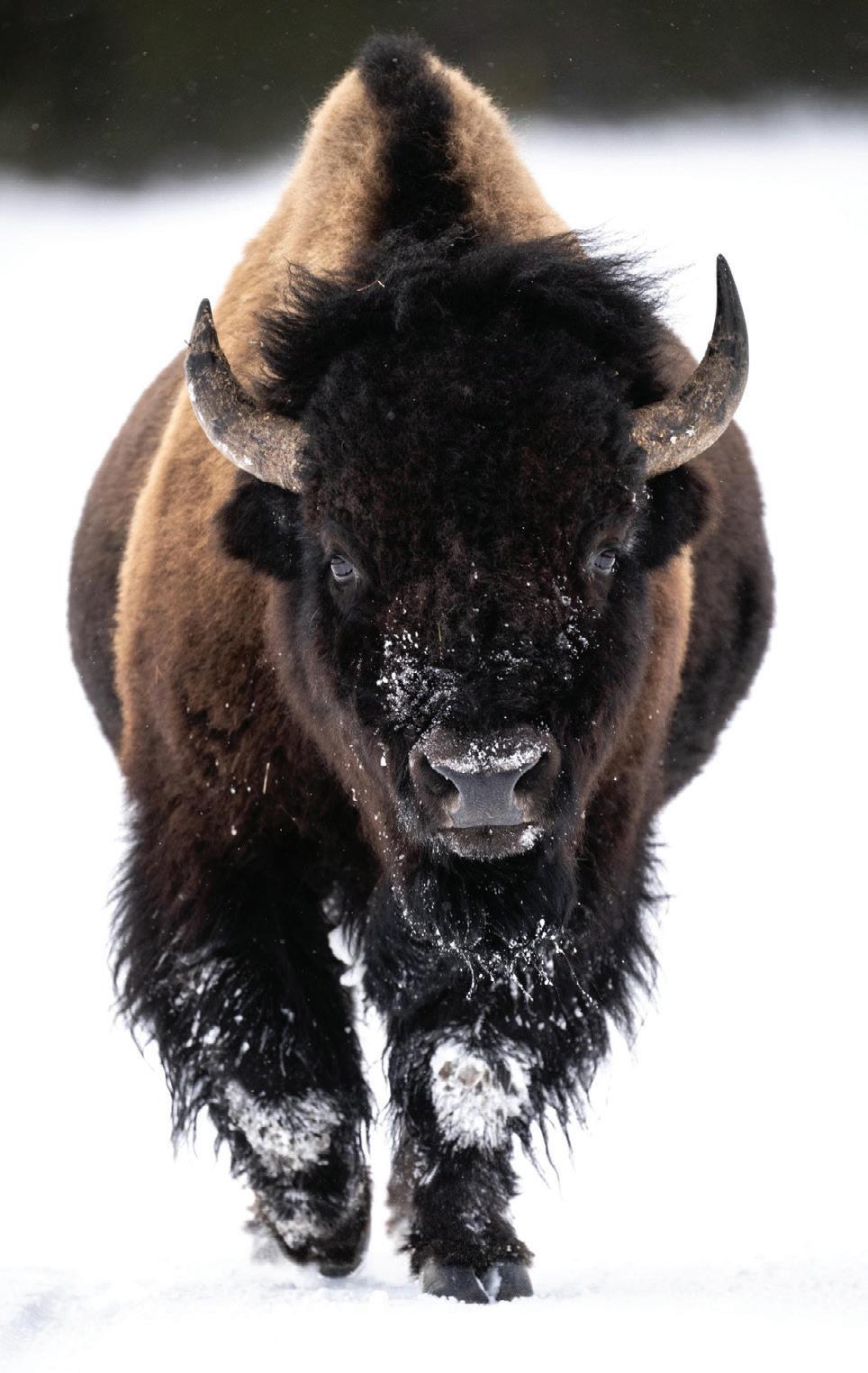
provided information about conservation initiatives and tangible volunteer opportunities—such as fence removal and invasive weed pulls—so visitors could work alongside locals. “The goal was to create a visitor community that helped conserve our wildlife,” explained Renee Seidler, executive director of the foundation.
The trajectory of natureforward tourism suggests
an expanding role for destinations as custodians of wildlife in an era of ecological fragility. As climate pressures mount, multi-sector cooperation—combining government regulation, local leadership, scientific expertise, and engaged travelers—is critical to sustaining these models.
The message is increasingly clear: for tourism to endure, the wild must too.
Read the full story, and explore other examples of tourism dollars benefitting our community
The Jackson Hole Travel & Tourism Board (JHTTB) uses visitor-paid lodging tax dollars to support and protect native wildlife? In recent years, the JHTTB has funded:
• Voluntourism opportunities in wildlife conservation
• Education about food storage in bear country
• The replacement of 85 trash cans to bearresistant models
• Selfie Control: a national wildlife safety campaign Did you know?
Written by Dina Mishev, sponsored by the Jackson Hole Travel & Tourism Board
To have your business featured call 307-732-7070 or email adsales@jhnewsandguide.com
Big business has always operated in the valley. Now, residents fear a tipping point.
By Charley Sutherland and Alex Viveros
As guests ambled though Inn on the Creek’s cozy dining room on a late November morning, they asked the innkeeper, Jackson’s former mayor, what to do with their day.
It was cold and lightly snowing. Ski resorts weren’t open yet. The Teton Park Road was closed to cars. Hailey Morton Levinson suggested walking the Snake River levee.
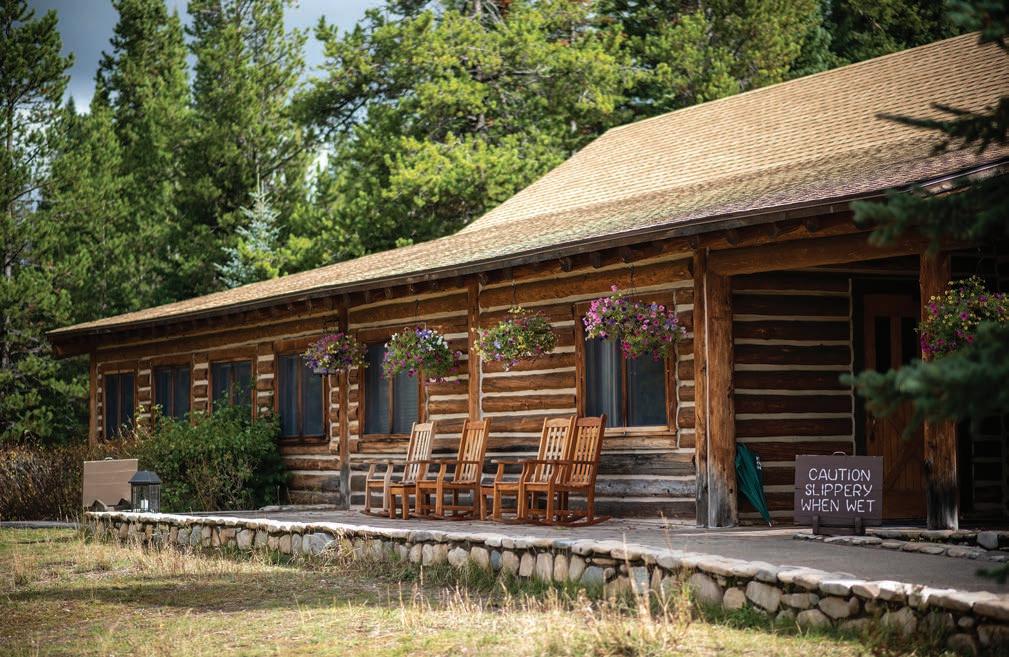
That’s the kind of personal touch that Morton Levinson believes makes her family’s bed and breakfast stand out. A friendly voice in the lobby, or on the phone when guests are booking rooms. People who know about Jackson’s history and who want to chat and hear stories from trips gone by.
“Part of our service to our guests is providing that really in-depth insider knowledge,” she said.
Morton Levinson grew up in the Jackson Hole hospitality industry. Her family ran the Sundance Inn, which used to stand on the site of the Wort Hotel’s parking lot. Morton Levinson has seen the hotel business change a lot in her 40 years. One of the biggest changes she and her family have seen? Bigger businesses are increasingly at the helm of Jackson’s hotels — not Jackson families.
“It’s all more corporate,” said Amy Morton, Hailey Morton Levinson’s mom who helps run the Inn in the Creek. “Sometimes they’re not as fluffy.”
Big businesses have long played a role in Jackson Hole’s economy. In Grand Teton National Park, for example, Vail Resorts has owned Grand Teton Lodge Company, the firm that operates Jackson Lake Lodge and Jenny Lake Lodge, since 1999. In 2018, Aramark, an international firm that owns Togwotee Mountain Lodge, bought Sands Whitewater and Scenic River Trips. Four years later, Aramark acquired Signal Mountain Lodge in Teton park as well as two other outfitters: Mad River Boat Trips and Scenic Safaris.
And while a business like Jackson Hole Mountain Resort is still independently owned, it’s arguably corporate, with multiple departments, thousands of employees, and owners with Wall Street backgrounds.
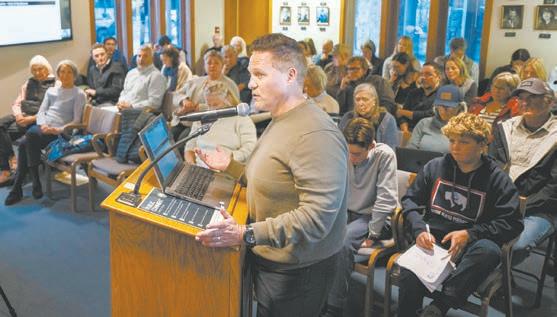
But, as large, out-of-state firms pitch massive hotel developments in downtown Jackson, Teton County residents have had a more visible view of corporatization, and have been debating it in public venues. Some residents feel outside investment has gone too far, and fear that it could change Jackson’s character.
Others say it already has.
“We have been discovered by Wall Street,” Town of Jackson Planning Director Paul Anthony said in October. “In terms of real estate funds, Jackson as an investment is as good as anything on the market.”
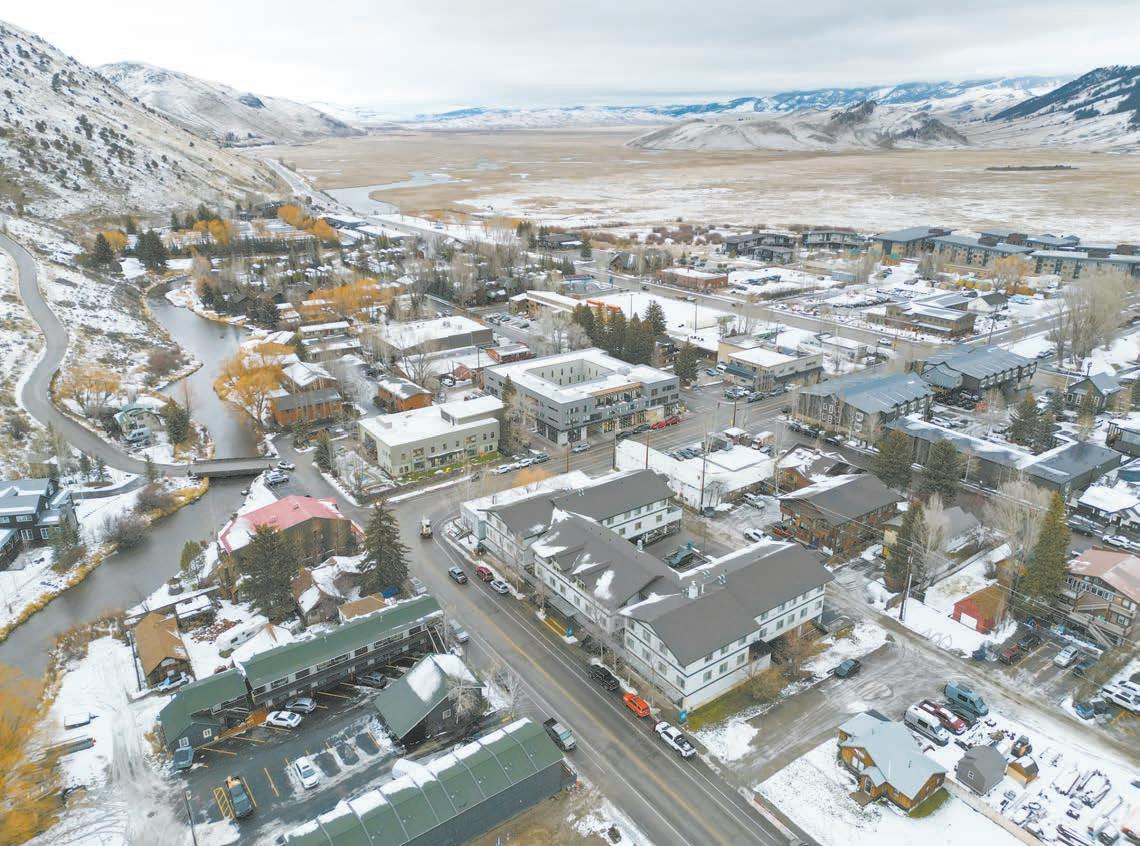
When the Utah-based firm Mogul Capital proposed a 362,000-squarefoot megahotel and condo project at the northern gateway of town, Morton Levinson was Jackson’s mayor, and led the Jackson Town Council through initial deliberations about the proposal.
Residents said Jackson was at a “tipping point,” and the town enacted a “moratorium” on big buildings. Mogul eventually scaled down and divided the project into smaller buildings, winning preliminary approval from the Town Council in June.

Mogul CEO Brad Wagstaff declined an interview request for this article.
More change could be on the horizon.
In September, the Jackson Town Council rejected Dauntless Development’s plans for a hotel that would have dug three stories underground and included a fully-automated parking garage, shocking community members. Though those plans are put off for now, the developer could return with a new proposal in the future.
Dauntless Development did not return a request for comment from the News&Guide, marking the fifth time a reporter unsuccessfully attempted to secure an interview with the firm.
In Jackson, the Inn on the Creek is one of a handful of hotels owned and operated by a Jackson family.
Larger owners often hire a separate firm to actually run the hotel. The operator then returns profit to the owner.
To be sure, the Inn on the Creek isn’t the only locally-owned lodging outfit in Jackson.
The late lodging maven Clarene Law started Town Square Inns, which owns 49er Inn and Suites, Antler Inn, Cowboy Village Resort and Elk Country Inn. Her descendants still own and operate the business.
In downtown Jackson, just north from Town Square, the Darwiches are finishing a renovation and expansion of Hotel Jackson. And, only a few blocks away from Inn on the Creek,
the Lexington Inn of Jackson Hole rebranded as the “Rockwell Inn” in 2024 after its owners, the Waycott family, decided to leave a larger hotel group and go independent.
But Inn on the Creek is just across from Homewood Suites, a national chain. And it’s only a quartermile-or-so away from the block that Mogul Capital plans to redevelop for its megahotel.
Large hoteliers that are franchisees of big brands have access to tools that mom-and-pop hoteliers don’t, including nationally-branded reservation systems and far-reaching marketing departments, said Dan McCoy, a tourism expert at the University of Wyoming’s Haub School of Environment and Natural Resources.
Smaller operators have to take reservations and market while running the hotel on a skinnier budget.
“It’s always a challenge for the small owner-operators to really succeed at the same level as those national-level brands that really come with a lot more plug-and-play things,” McCoy said.
Those challenges are exacerbated by Jackson Hole’s high cost of living, McCoy said.
Hoteliers often consider housing employees a cost of doing business, albeit an expensive one. That can be harder for family-run businesses than national conglomerates.
If the Morton and Levinson family want to take a vacation, they have to
temporarily close the business.
There is no one else to run the inn.
“You’re kind of always on,” Morton Levinson said.
The influx of national interests has changed relationships between hoteliers, said Steve Meadows, Clarene Law’s son.
“It’s not really the same sense of community,” Meadows said. “We cooperate sometimes, and talk to each other. [That’s a] little harder to do when your fellow hoteliers are corporate and private equity. That changes the equation.”
Jackson hoteliers’ livelihoods are not the only things at stake as corporate interests reach the valley.
David Jarratt, a tourism expert at the University of Lancashire in England, said that tourist destinations have a carrying capacity.
If popular places continually develop without thinking about sustainability, tourism can hit a peak, after which visitation stagnates.
“If you sell out too much, people stop coming,” he said. “You lose the thing that made your town special.”
Maintaining Jackson’s character is on the mind for Ben Weinberg, co-CEO of Castle Peak Holdings, the New York City-based investment firm that bought Snow King Resort for at least $84 million in April. Castle Peak plans to
Snow King Hotel and is not looking to build anything new, Weinberg said, even though it owns the 5-acre KM6 parcel, where it could add hundreds of thousands of square feet of development. The new ownership group has also made efforts to reach out to the community.
While Weinberg said that commercialization can have benefits to a place like Jackson — like introducing new restaurants — he said companies can go too far.
“It’s a balance,” Weinberg said. “You want some level of commercialization, but if Jackson loses the charm and the old-Jackson feel that it’s preserved, that would be concerning to a lot of people, including me.”
Preserving a community’s charm is challenging, Weinberg said.
But to him, Jackson has managed more thoughtfully than other destination markets. Keeping money local
Communities often want tourism to support local small- and medium-sized enterprises, Jarratt said. When tourists spend money on momand-pop hotels, that money gets recirculated several times locally, he said. That changes when an outside corporate entit y gets added to the mix.
“If you get a company from New York coming in and setting up a hotel there, then where’s that money going?” Jarratt said. “It’s going back to New York.”
Keeping small- and medium-sized enterprises is essential to preserving the authenticity of a destination and keeping locals on board with tourism as a whole, Jarratt said.
“Those are the exact people you want to help, because tourism is there for the local community,” Jarratt said. “Once you go too much down that corporate route, you disenfranchise the locals, and the locals will become anti-tourism.”
Many Jacksonites have already appeared to reach that point, saying the community has reached its tourist-handling limit.
In town, leaders are responding to those concerns, pushing this fall to review the town’s land development regulations that dictate what property owners can build.
“It is a significant concern,” Jackson Mayor Arne
Jorgensen said. “It’s one of the reasons why I’ve continued to push discussions about changes to land development regulations.”
The challenge, Jorgensen said, is finding a legal way to regulate what corporate entities can build in town. The town’s best option, in his mind, is to tweak the 2012 Jackson/Teton County Comprehensive Plan. The plan sets the high-level vision for guiding future development, but doesn’t actually set policy.
“There is no silver bullet,” Jorgensen said.
Time to sell
When a family does decide to sell a hotel in Jackson, it’s increasingly uncommon for another family to step in and buy the property because of soaring real estate costs.
Morton Levinson’s family bought the Sundance Inn in 1987, when real estate costs were lower.

They bought the Inn on the Creek during the Great Recession.
“The point of entry is a lot higher these days, especially in Jackson,” Morton Levinson said.
In addition to buying a property, business owners may need to wait out a multi-year review process if they want to develop their property or make zoning changes.
Jackson and Teton County’s development review process is vigorous, McCoy said. That raises the barrier to entry and could further discourage smaller players. Not many family businesses can afford to sit on a property for years as town and county officials review permitting or zoning changes.
“There’s a pretty complicated set of hoops,” McCoy said. “It’s uncertain too.”
Contact Alex Viveros at 307-732-5909 or alexv@ jhnewsandguide.com.


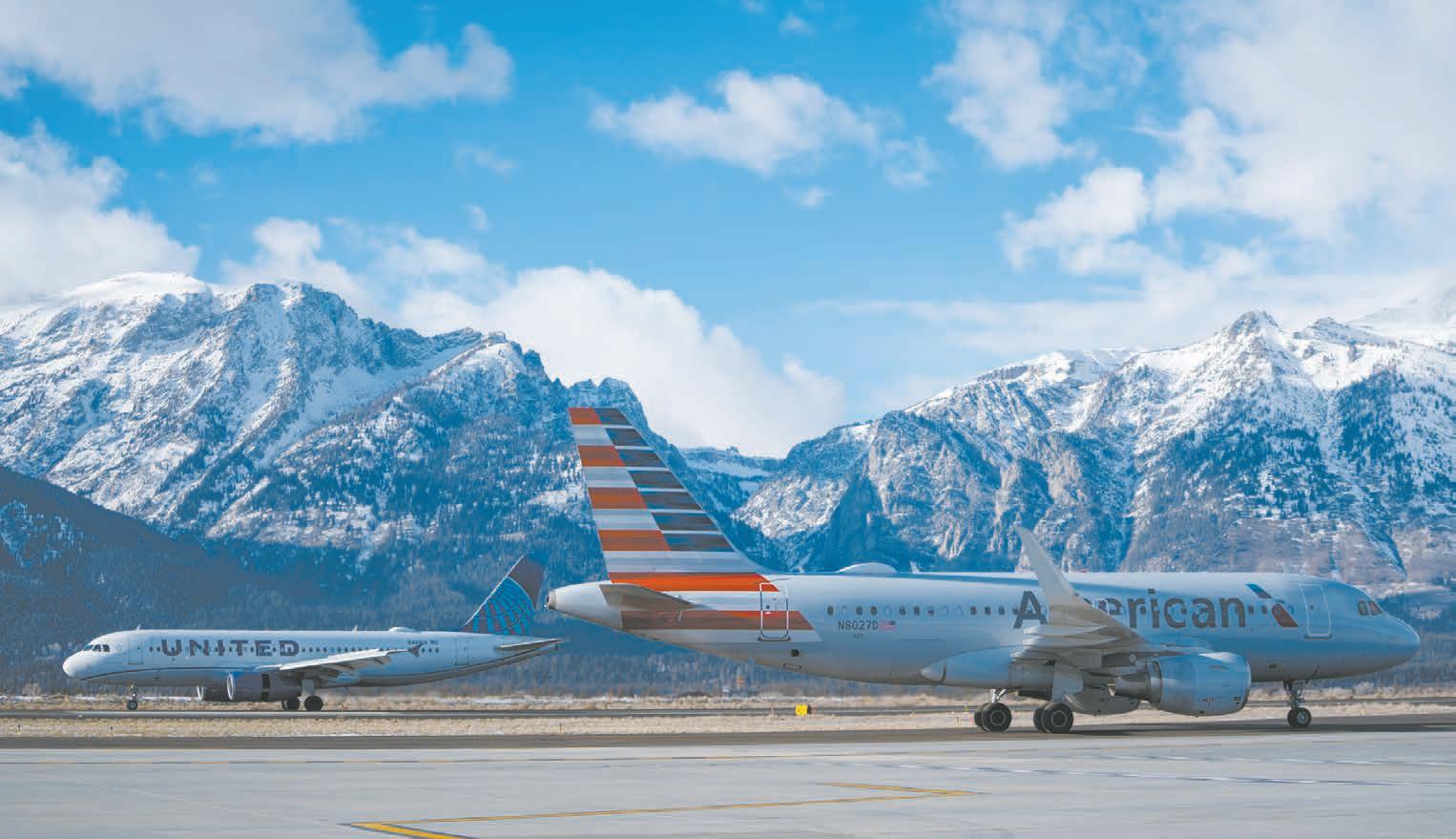
The Jackson Hole Airport is an invaluable node in the tourist economy. That’s not without challenges.
By Christina MacIntosh ENVIRONMENTAL REPORTER
No matter who you ask about life in Jackson Hole in the 1970s, you’ll likely get a clear answer: Living in the Tetons, for all its perks, was inconvenient.
Very.
A large number of homes were heated with wood. There was less work to go around and it was hard to buy anything on a payment plan, because no one made any money in the winter. When it got really cold — the 60-below-zero kind of cold — residents would light fires under their cars to get them started and keep them warm. Reaching the outside world by air meant driving to Idaho Falls or Salt Lake City for a flight.
“It was a certain character of person that was going to make the effort to live here in the 60s and 70s, and part of the 80s,” said Teton County Board of County Commissioners Chair Mark Newcomb, who was raised in Jackson.
Fifty years later, that’s changed.
On the one hand, the winter economy has been booming. Summers are explosive, tourism-wise. Business owners who used to pinch pennies and drink heavily in the darkest seasons of the year now have no trouble making payroll. And traveling, for the thousands of transplants who live and work in Jackson Hole — or live here and work remotely — is quick and easy.
On the other hand, the valley’s population is record high. There are more people than ever in the national parks. Wealthier people who made their living elsewhere are finding it easier to live and visit here. And Jackson Hole’s skies are the busiest they’ve been since the Covid-19 pandemic high.
To be sure, other factors help explain why the valley is changing.
The Covid-19 pandemic, for one, drove demand for Jackson living to new heights. And Jackson Hole’s outdoor lifestyle is desirable and
The airport has seen non-linear growth in aircraft traffic over the past 25 years, with peak private traffic before the 2008 financial crisis and after the Covid-19 pandemic. Commercial traffic has grown almost tenfold in the past 25 years.
promoted worldwide
But the Jackson Hole Airport stands at the center of the change, an increasingly frictionless portal for people entering and exiting the valley. Traffic in and out of the airport is highly visible to valley residents, making it a bogeyman for those concerned about overdevelopment.
The airport is a crucial link for visitors who prop up the valley’s tourism economy. But its growth remains controversial, even though business owners once pushed for more flights to make life in Jackson more liveable — and profitable.
“I don’t think people envisioned this kind of traffic decades ago when they realized the airport was important to the valley,” said John Turner, 83, whose family owns Triangle X Ranch.
People like Mike Gierau, a state senator, business owner and pioneer of JH Air, the nonprofit that was instrumental in bringing winter commercial service to Jackson, think the airport and its growth has done good
for the valley.
He knows the airport’s trajectory has naysayers. As an elected official, he gets an earful, he said.
“Some people think we may have overshot it, but there’s nothing wrong with Jackson Hole that can’t be fixed with what’s right about Jackson Hole,” Gierau said. “I have nothing to apologize for.”
But people like former state representative Pete Jorgensen, 90, still don’t think the airport, and its impacts on Grand Teton National Park, are worth it.
Jorgensen does not fly into or out of the Jackson Hole airport.
“For me, it’s like pissing in church to take off from that airport,” he said.
The airport has been built in fits and starts, beginning in the 1930s, when it was just a gravel runway. At that point, it wasn’t part of Grand Teton National Park, which later expanded around it. In the 1970s,
the National Park Service decided to close the airfield, prompting discussion about moving the facility to Daniel or Cora. But President Ronald Reagan’s Secretary of the Interior reversed that decision about a decade later.
It is the only commercial airport in the United States entirely within a national park, a position that comes with the privilege of welcoming visitors to the Tetons — and the responsibility of mitigating aviation’s impacts on the park.
It’s also overseen by the Town of Jackson and Teton County, which established the Jackson Hole Airport Board in 1968. Now, councilors and commissioners elect airport board members and approve its budget each year, but exercise little other oversight.
The airport is a public facility, not a for-profit organization, said Jim Elwood, the airport’s director.
“The airport is not here to try to
Continued from 8E
grow, to market itself, to be bigger or carry more passengers,” he said. “It’s here as a key piece of infrastructure for our community.”
Under federal law, the airport cannot turn away private or commercial flights unless there’s a direct safety issue, such as lack of air space or insufficient space on the ground, Elwood said.
During peak times there isn’t room for growth, like mornings during the summer or midday during the winter. But outside of that window there is opportunity, Elwood said.
The airport board is the primary way in which local government has influenced the direction of the airport, Mayor Arne Jorgensen said.
The board has become more representative of the community over time, rather than heavy on business owners, he added.
The current board has done its best to respect th e values of the community and the park, said Board President Rob Wallace, who was assistant secretary for Fish, Wildlife and Parks during the fi rst Trump administration.
“We’re doing what we can with the tools that we can to try and manage it that way,” he said.
Resort seeks subsidies
In 1983, commercial air service began with a Frontier flight from Denver to Jackson.
“The ski area had been pushing for that for 20 years,” said Town Councilor Jonathan Schechter, a member of the JH Air board. “It was a pain in the ass to get here.”
Previously, skiers had to fly into Salt Lake City or Idaho Falls and drive if they wanted to reach Jackson Hole Mountain Resort, which is a “true destination” resort. That means it is far from any major population center — and air travel is essential for its customers, said Jerry Blann, the former resort president and a cofounder of JH Air.
Delta then began flying nonstop from Salt Lake City. But there weren’t many flights, which were variable, and airlines pulled in and out. Jackson Hole Mountain Resort continued to push for more flights and more reliable service.
Jan.Feb.Mar.AprilMayJune JulyAug.Sept.Oct.Nov.Dec. 2022 Jan.Feb.Mar.AprilMayJune JulyAug.Sept.Oct.Nov.Dec. 2023 Jan.Feb.Mar.AprilMayJune JulyAug.Sept.Oct.Nov.Dec. 2024 Jan.Feb.Mar.AprilMayJune JulyAug.Sept.Oct.Nov.Dec. 2025
is not successful.
The organization was raising money, but not enough to cover the contracts if it didn’t go well, Gierau said. The ski resort backed up the rest, promising to cover the contracts if JH Air lost more than it raised.
JH Air was particularly interested in getting direct flights that did not go through Salt Lake City and Denver, hoping to bypass the competitive great skiing near the two metropolitan areas.
To this day, JH Air negotiates winter air service with airlines each year, though only a handful of routes now have subsidies in place.
At JH Air’s inception, 80% of winter flights were subsidized, Blann said. Now, fewer than 20% of those flights are.
Businesses continue to contribute to JH Air, in part because it’s the only way for a business to get transferable ski passes that can be shared between employees.
JH Air supports the remaining subsidized flights because they either connect Jackson to an emerging market, or to an airline’s hub. The JH Air board has thought about cutting subsidies altogether, but the organization thinks that everyone is better off for JH Air having discussions with airlines about pricing and the amount of service.
Winter air service has not increased at all in the past three years, Gierau said. The organization has asked airlines to not add more seats.
“We try very, very hard to keep that flow at a level that works for the business community and doesn’t oversaturate the market,” Gierau said. “A lot of folks will find that very difficult to absorb, but it happens to be the truth.”
JH Air does not work with airlines on summer flights. But sometimes Gierau thinks that getting involved in summer air service could benefit the community.
“Sometimes I think we should talk to the airlines about lowering their numbers,” he said. “When left to their own devices, they’re very hyper-competitive.”
JH Air, for example, could go to the airlines and tell them to fly less and charge more, to make more money and have less flights, Gierau said.
supporting summer tourism.
Studies by the airport and Teton park suggest that only 10% of park visitors arrive by plane, said Superintendent Chip Jenkins.
This summer, 2,810,786 people visited the park and 287,054 boarded a plane at the airport, according to park and airport data.
By October of this year, commercial enplanements had already broken the airport’s yearly record. In the first 10 months of this year, 528,496 people boarded planes, compared to 527,292 for the entire year of 2024, which previously held the record.
This year, through October, 30,816 planes took off from or landed at the airport: 8,770 commercial planes and 19,732 private planes.
At the end of October 2025, the total number of flights into and out of Jackson is ahead of the last three years, but not on track to break the 2021 record of 40,120 flights.
Tower operations at the airport have yo-yoed over the years, but are now squarely above where they were in the mid-2010s. In 2024, there were 3,434 more commercial flights and 3,013 more private flights than there were in 2015, about 17 more flights per day.
The record number of flights in one day is still 254 flights on Aug. 15, 2021. In contrast, there were 169 flights in or out of the airport on Aug. 14, 2025, the busiest day for the airport this year.
Airport growth looks different depending on the timescale you look at.
When Elwood says air traffic hasn’t grown, he’s looking back to the early 2000s. Between 2000 and 2007, there were between 21,787 and 33,994 private flights per year. That’s more than in any year since, besides 2021.
But private traffic fell to below 20,000 flights in 2009 — following the 2008 financial crisis — and remained below 20,000 flights per year until the pandemic.
Now, the private and commercial planes flying into the airport are larger than they used to be.
For commercial operations, this makes airline operations more efficient in terms of take-offs and landings, Elwood said.
On top of supporting the tourist economy, increased traffic to the airport allows Jackson residents to come and go easily, including to leave more quickly in the case of a family emergency, Elwood said. It also allows doctors to come into Jackson and serve the local community. About 25% of the traffic in and out of the airport is local.
“Sometimes what the airport brings to the community is lost,” Elwood said.
That convenience comes with tradeoffs.

JHMR and business owners may initially have solicited more air service to attract tourists, but many now believe that the airport is one of the many Jackson amenities that attracts more full-time and part-time residents, including remote workers and second-home owners. Along with high quality medical care, a performing arts center and three grocery stores, including a Whole Foods, the airport helps provide a high quality of life for a remote part of the country, said Jenkins, Teton park’s superintendent.
“Both living in and visiting Jackson Hole has become easier and easier,” he added.
Arne Jorgensen and Newcomb, who were raised in Jackson, joke that if the community wants to go backwards, it could close the airport and stop spraying for mosquitoes. To live here in the 70s and 80s, someone had to be willing to live in a remote place with few services, Newcomb said.
“Now, the primary determinant of whether you can live here is how much money you have,” he added.
But not everyone believes that increased accessibility has benefited businesses across the board.
Leith Barker, a co-owner of Barker-Ewing Float Trips, said that with more tourists, more raft companies have moved in to compete.
“I sound like a hypocrite saying I don’t want more tourism when I’m in that industry,” she said. “But I would rather lose some business and have a better quality of life in the valley.”

In 2003, Gierau, along with some resort executives and other local business owners, started JH Air. The organization raised money in the community to start a “minimum revenue guarantee” program for airlines that flew to Jackson. The program doesn’t guarantee airlines a profit, but sets a floor for how much money they can lose on a route by promising compensation if the route
“That may be very good news to some people in the community, because there’d be less flights,” he said. “Now, if you’re a family of four and you want to go on vacation somewhere, and you live in town, that may not be such a nice idea.”
In the 20 years since JH Air started, commercial air service has expanded. It has grown almost 10fold, jumping from 1,146 flights in 2000 to 10,763 flights in 2024.
Though the airport is busiest in the summer, it plays less of a role in
“The fact that it’s more visual and more noticeable could be a factor” in the perception of increased traffic, Elwood said.
Still, the airport’s noise footprint shrank between studies conducted in 1984 and 2024, Elwood said.
But some residents of the flight path are skeptical. For Turner, a former director of the U.S. Fish and Wildlife Service who lives just north of Moose under the landing path, more flights means more noise disturbances each day.
“In the height of the season, every few minutes an aircraft penetrates the airspace,” Turner said.
For some, the issue with the airport is the way in which it disturbs the natural experience of Teton park and the Snake River. To those people, economic rationalizations mean little.
“National parks and the values for which they were created are violated by the airport in every respect,” Pete Jorgensen said. “If there’s one thing that a national park should be able to provide, it’s silence. In a busy world, that’s worth a lot.”
Contact Christina MacIntosh at 307-732-5911 or environmental@ jhnewsandguide.com.
Voters can’t repeal tax any more. Town, county want more cash. Legislators might too.
By Jasmine Hall and Alex Viveros
Teton County’s lodging tax has raked in millions and boosted tourism.
But its future is uncertain. In a state known for lenient taxation, officials have long viewed the statewide lodging tax as an attractive revenue stream. It’s a tax paid by visitors, rather than residents.
The Town of Jackson and Teton County may ask voters to approved a larger tax next year, which would generate more money for both governments. Some prominent hoteliers have already opposed the pitch.
In Cheyenne, lawmakers may also make changes that reduce the amount of money that stays in the Tetons. And the community is torn. A large chunk of lodging tax must be spent promoting Jackson Hole. Some residents see that as a path to overtourism. Others see the tax as a boon for business.
“The lodging tax has been the single greatest thing that’s happened to this valley,” said Rick Howe, president of the Jackson Hole Chamber of Commerce and a former town councilor.
Judd Grossman, an East Jackson resident, believes the lodging tax should be abolished entirely.
“We are absolutely overpromoted. Too much tourism, too much traffic, too much development,” he said. “All of it is bad, none of it is good for Jackson Hole to remain the amazing place it is.”
For Jackson Hole Travel and Tourism Board Executive Director Crista Valentino, the lodging tax helps community members control Jackson
The lodging tax now generates millions a year for the Jackson Hole Travel and Tourism Board, and town and county governments. The board gets 60% of local collections, while the town and county receive 30% for mitigating visitor impacts, and 10% for general spending.
Hole’s image. If it were taken away, that narrative control may shift. The board does not promote Jackson in the summer, only the winter and shoulder seasons. Since the Covid-19 pandemic, however, it has promulgated summer messaging intended to help encourage responsible recreation.
“My question would be: do you trust influencers? Do you trust marketing executives at hotels that live in Santa Fe or New York City or LA?” Valentino said. “Do you trust them to tell the story of your community, or would you rather your neighbors do it? You lose
the lodging tax, you lose that control.”
Counties first had the opportunity to levy lodging taxes in 1986.
The new law gave each county the option to vote for a tax of between 1% and 4% on overnight stays at hotels, condo rentals and campgrounds.
Many communities opted in. Teton County voters approved a 2% tax in 1986, the first year it was available, and kept it for about eight years. In 1994, they rejected it.
But voters reinstated a 2% lodging tax in the 2010 election, which was first collected in 2011. In its first year, the tax brought in just under $4 million. The Jackson Town Council and Teton County Board of Commissioners voted to create the Jackson Hole Travel and Tourism Board.
The goal for Stephen Price, the first chairman of the board and owner of Spring Creek Ranch, was to have a “year-round, functional economy so people aren’t laid off in the shoulder seasons.”
The board invested in advertising, special events, social media and more.
Over the last decade and a half, those efforts have been successful. The shoulder season has shrunk and Jackson Hole has continued to grow as a world-renowned tourism destination.
Voters backed the lodging tax again in 2014 and 2018, even as the 2018 election cycle saw fierce community debate. More than $150,000 was spent on lobbying.
The debate would have returned in 2022, but the Legislature took away voters’ ability to remove the local tax in 2020. That year, they passed a law implementing a 5% statewide lodging tax, with 3% going to the state and 2% to local governments.
“It was the last tax increase that we passed in the state,” Sen. Mike Gierau, D-Jackson, said.
How does it work?
The lodging tax brought in close to $67 million statewide in fiscal year 2025. Teton County collected $28.9 million, about 43% of the total.
The Wyoming Office of Tourism’s
See LODGING



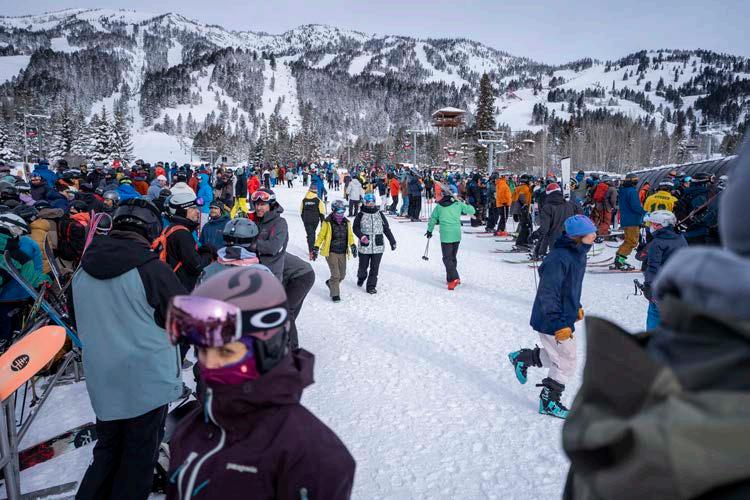
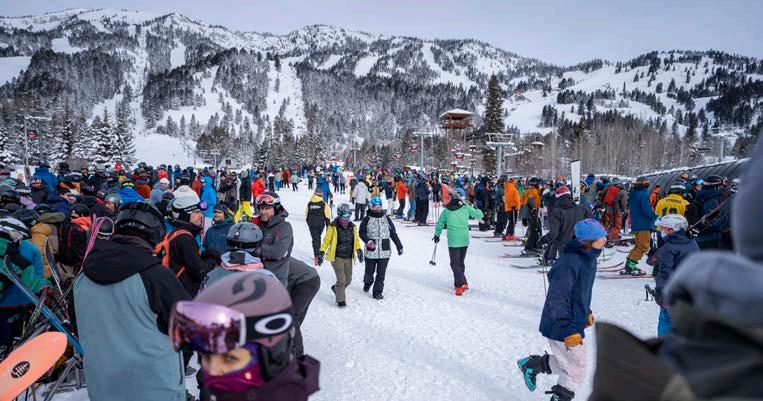
The lines for Sweetwater and Bridger Gondola extend beyond the base of Jackson Hole Mountain Resort in March 2024 after heavy snowfall. As the town and county propose increasing the lodging tax, some Teton County officials worry that lawmakers may take some of that money away. Teton Village hoteliers are opposed, worried it will make them less competitive.
Continued from 10E
entire $39.5 million budget is funded by lodging tax.
That means the department is funded by visitors, rather than the state’s general fund, which is supported by revenue from mineral extraction. That frees up money for education, prisons and social services. It also help the tourism office stay competitive with other states.
Of the $11.5 million dollars collected in Teton County that stayed here, $6.9 million, or 60%, went to the Jackson Hole Travel and Tourism Board. $4.6 million, 40%, went to the Town of Jackson and Teton County.
Unlike other taxes, which can support any kind of town and county spending, Wyoming state statute has rules about how local governments can use their lodging tax dollars.
The 60% that goes to the Travel and Tourism Board can be used for destination marketing, tourist education, events and other tourism initiatives.
Three-quarters of the 40% that goes to the town and county must be spent to mitigate tourism impacts. That chunk primarily supports public transportation, but also bolsters parks, law enforcement and Jackson Hole Fire/EMS. The remaining quarter supports general spending.
Under the 2020 statewide lodging tax, local governments can impose an additional 2% tax if voters approve it, bringing the maximum combined lodging tax in that county to 7%. Teton County is currently considering that increase. The increase would generate roughly $2 million each for the town and county, and about $6 million for the Travel and Tourism Board.
What’s it used for?
Over the last decade, the Travel and Tourism Board has started spending money differently, according to Executive Director Crista Valentino. In late 2019, the board began considering “managing” tourism, particularly in the summer. The Covid-19 tourist boom only exacerbated the rethinking. The influx helped start the Travel and Tourism Board’s first “Responsibly Wild” campaign intended to educate visitors.
Teton County relies on tourism.
“But how do we balance that with the needs of the community, but also stewarding and protecting our environment?” Valentino said, describing how the tourism board is thinking now.
In January 2023, the board adopted its “Sustainable Destination Management Plan,” which outlines its five-year plan. The plan paved the way for funding new programs, including putting $750,000 last year towards ambassador services provided by Friends of the Bridger-Teton and Friends of Pathways.
Mayor Arne Jorgensen said the
plan is one of the main reasons he supports increasing the lodging tax.
“We are investing those dollars in a way that’s very different than we’ve done in the past,” Jorgensen said.
“Much more holistically.”
Tax increase?
Whether the town and county will put a lodging tax on the November 2026 ballot is unclear. On the council and commission, support for the increase has been mixed.
“People don’t want to promote Jackson Hole any more,” Councilor Devon Viehman said at an October meeting. “I feel like we’re a couple steps away from people with water guns and tourists here.”
Most local businesses support the current lodging tax, according to Howe, president of the Jackson Hole Chamber of Commerce and a former town councilor.
“In my view, there’s no con to the lodging tax. It helps us continue to be a vibrant, attractive and relevant community,” Howe said. “If you took it away, that would be the greatest con I could ever think of. Because you don’t just turn a light switch on, and people automatically come.”
But, despite strong support for the status quo, Howe said most businesses are still weighing their positions on a potential increase. They hope to learn more about how the money will be spent, he said.
Some Teton Village hoteliers have already opposed the increase, arguing that it would make it harder to compete with other resort towns in states like Colorado and Utah.
In Cheyenne, Gierau, the state senator, wonders whether Wyoming lawmakers will alter the lodging tax to direct more money to the state, using it to fund schools and other projects.
Gov. Mark Gordon has requested more lodging tax money to bolster small, rural airports.
After property tax cuts, governments are thirsty for revenue but most lawmakers have signed a pledge to not raise taxes, Gierau said.
“Nobody ever signed a pledge not to steal anyone else’s,” he added.
John Bear, the chair of the Wyoming Legislature’s Appropriations Committee, and a leader in the Wyoming Freedom Caucus, did not respond to a request for comment about the lodging tax’s future.
Howe, the president of the Chamber of Commerce, said he has attended meetings where lawmakers have referenced re-examining the lodging tax. Details are scant, but he’s concerned.
Tweaks, he said, “probably won’t end well for a place like Teton County.”
Contact Alex Viveros at 307-732-5909 or alexv@jhnewsandguide.com.
Climate change projected to shorten western Jackson Hole’s ski season, but less than other locations’.
By Christina MacIntosh ENVIRONMENTAL REPORTER
Climate change may not be as bad for the Jackson Hole ski industry as it will be for the Tetons’ snowpack.
The bad news is that as the climate warms, projections indicate that snow will start falling later, more rain-on-snow events will occur at higher elevations, particularly early and late in the season, and snowpack will melt out faster. Models project that if emissions continue at their current clip, Rendezvous Mountain, the highest peak at Jackson Hole Mountain Resort, may see much more winter rain by 2100.
“Maybe we should all hold onto our rock skis a couple of years longer,” said Mark Newcomb, the mountain guide-turned-environmental consultant who chairs the Teton County Board of County Commissioners. “They might be needed more often.”
But the good news, depending how you carve it, is that Teton County ski resorts could stand to gain skiers in the near-term as the climate warms.
Resorts in California, the Pacific Northwest and Utah are projected to see a lot more change. Those resorts are either closer to the existing rain-snow line, or warming more rapidly, said Bryan Shuman, a geoscientist at the University of Wyoming studying how climate change will affect snowpack and water resources in the Upper Snake River Basin.
Shuman and his colleagues call that possible future the “warm refuge” scenario.
“Teton County is going to be warmer than it is now, but it’s not
In the next 20 years, the rain-snow line may become higher in elevation, especially in the early season. By the end of the century, without emissions reductions, the top of Jackson Hole Mountain Resort may be like town is today.
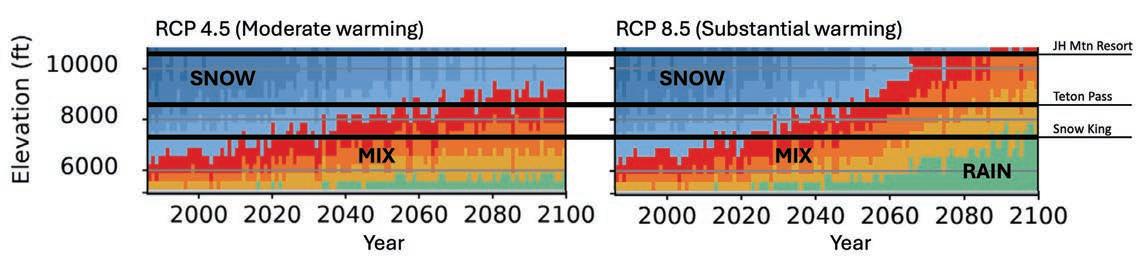
The blue shows elevations where winter precipitation is primarily snow. Shades of red to orange show the elevations where rain and snow will both be likely throughout the winter and where rain-on-snow events may be particularly problematic. Green shows areas of primarily winter rain.
Source: BRYAN SHUMAN, UNIVERSITY OF WYOMING
warming as fast as everywhere else,” Shuman said. “Overall, it may actually be more appealing.”
The usual tradeoffs of increased visitation will apply, such as increased traffic.
“That might make additional tourism not ideal,” Shuman said. “But it can also be an economic engine. Being the last place standing, potentially, for skiing might not be so bad.”
Ski resorts in Colorado will likely also fare better than those on the coasts and in Utah, Shuman said. While Colorado resorts are further south, they also tend to be higher.
Changes to snowfall due to warming will be “the single most transformative thing that’s going to impact
our region,” he said.
Rain on Rendezvous
How snowpack in the Tetons will be impacted as the climate warms is complicated, and less certain than projections for decreasing snowfall across the western United States.
To study the question, Shuman and his team are exploring three main climatic scenarios. Depending on which scenario unfolds, the snowpack could look very different.
As temperatures rise, they anticipate the rain-snow line climbing higher. The mix of mostly snow with some rain that we see in Jackson in the winter today — particularly in November, December, March and
April — could become typical on top of Snow King Mountain Resort in the next 20 years.
If carbon emissions slow, that mix becomes typical on top of Teton Pass by the 2070s.
But if emissions continue at their current rate, the mix may be typical atop Teton Pass earlier: by the 2050s.
In that scenario, the top of Jackson Hole Mountain Resort may become more like town is today and start seeing more rain/snow mix than snow.
That’s even true in the “warm refuge” scenario, the model that anticipates Jackson will fare better than other ski towns in the west.
“I’ve just been blown away to real-
See CLIMATE
We are the philanthropic partner of Grand Teton National Park, working side by side with the park to protect the place we all love while helping it meet the real pressures of rising visitation.

OUR WORK HAS A VISIBLE IMPACT ACROSS GRAND TETON AND ALL WHO VISIT:

WILDLIFE CONSERVATION , native habitat restoration, and Snake River monitoring supports ecosystem-level conservation, ensuring this place remains one of inspiration for generations to come.
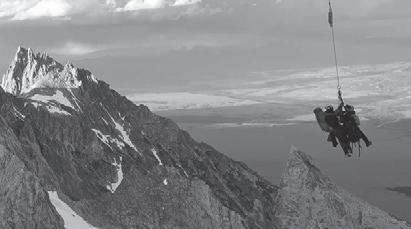
JENNY LAKE RANGERS receive state-ofthe-art gear and critical training, helping them effectively reach injured visitors and share safety information year round, including data and insight from a dedicated avalanche forecaster during winter.
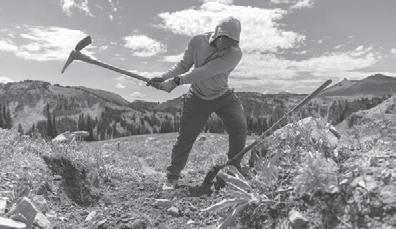
RENEWAL OF THE TETON CREST TRAIL and other popular routes is made possible through our support of trail projects and the Youth Conservation Program, where local teens maintain trails throughout the park and ensure they are sustainable.
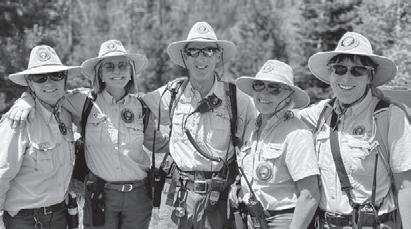
VOLUNTEER AMBASSADORS at high-traffic sites give visitors real-time guidance on how to respect wildlife, stay on trails, and care for fragile natural resources.






Together, we can welcome visitors while protecting the iconic landscape of our backyard national park for the long haul. Learn more about all of our work in partnership with Grand Teton at gtnpf.org. Thank you!


ize how much snowpack is likely to be impacted,” Shuman said.
Rising nighttime temperatures
Shuman has also been surprised that daytime temperatures in the Tetons have not warmed, keeping the region’s climate cool.
Instead, they’ve documented significant increases in nighttime temperatures that are already helping whittle the Tetons’ early summer snowpack.
Shuman and his team studying the Upper Snake are not sure why daytime temperatures aren’t changing as much as they are in the rest of the region or in other resort areas.
From a climate perspective, warming nighttime temperatures don’t matter too much in the middle of the winter, Shuman said. Jackson Hole is cold, and a few extra degrees won’t change that. But when spring rolls around, daytime temperatures rise enough that snow begins to melt. If nighttime temperatures don’t cool off enough for snow to refreeze, it melts faster.
This means that snow is “ripe” and melts early in the morning, instead of in the afternoon, said David Lee, water resources specialist at the Teton Conservation District.
“That’s what makes snowpack come off the hill fast,” Lee said.
In the future, how snow falls is also expected to change, particularly in the early and late seasons.
In the Tetons, snow is typically still accumulating in March, said Simeon Caskey, physical science branch chief at Grand Teton National Park. But as the climate warms, that snow will likely change to rain below 7,000 or 8,000 feet, but more snow may fall above 9,000 feet, where the temperatures will likely stay below freezing.


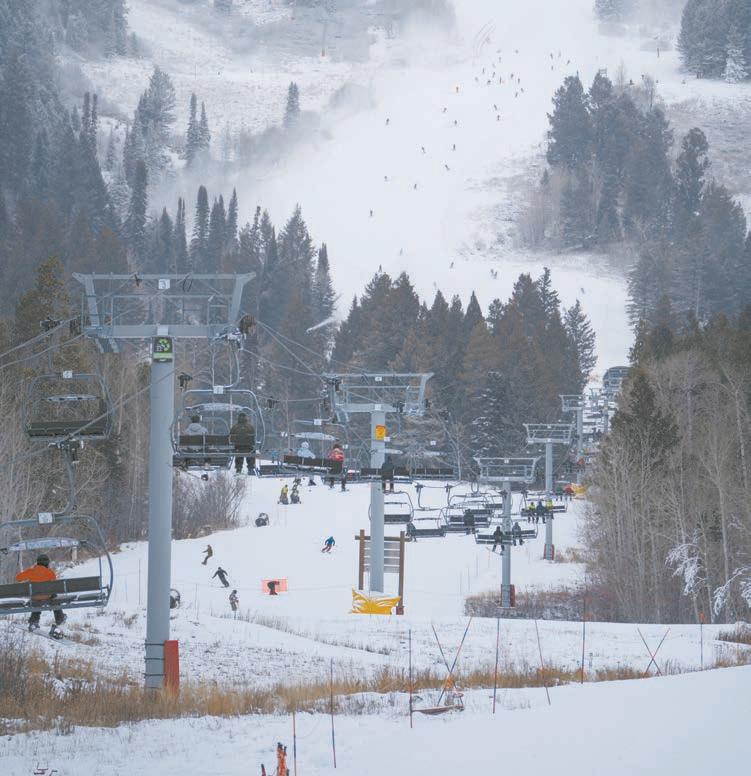
Though less snow tends to accumulate in the fall shoulder season, warmer temperatures at that time will also make it more difficult to retain any flakes that fall.
“When the faucet does turn on, we’re going to have to get that much more to get back to 100%,” Lee said.
Warmer air in the atmosphere can hold more water vapor, and produce more precipitation. At lower elevations, that will likely fall as early- and late-season rain. At higher

elevations, naturally colder air and the higher water content will help produce more snow.
When temperatures are far below freezing it typically doesn’t snow very much. But as higher elevation slopes warm, and stay below freezing, that could flip a switch.
“The closer to freezing you are, the more it can really come down,” Lee said.
The projections show that the Tetons will be wetter above 9,000 feet, Caskey said. The mountains may
also see longer gaps between heavy snow events. So, when they come, they might be bigger, Shuman said.
Resorts and county officials alike are starting to plan for a future that looks different. Newcomb, for example, is interested in the “warm refuge” scenario.
“Tourists that now can pay such close attention to where snow falls, and how much, are going to come to Jackson,” he said.
In general, the winter tourism industry will “adapt naturally” to the new conditions, Newcomb said. Other attractions — such as wildlife viewing — could help bring in tourists during the elongated shoulder season.
Jackson Hole Mountain Resort is closely monitoring regional forecasts and snowpack trends, Andriana Rogers, the resort’s communications manager, said. This informs the resort’s operational planning, snowmaking strategy and long-term infrastructure investments.
Grand Targhee Resort and Snow King did not respond to multiple requests for comment.
“Like all mountain communities, the environmental health of Jackson Hole is vital to the future of our community, our resort, and the experience we offer guests,” Rogers said. Jackson Hole Mountain Resort’s planning is rooted in promoting “resilience to evolving conditions,” she added.
For example, the resort has invested in snowmaking in the past 15 years, helping it open earlier than ever before. High temperatures, however, delayed this year’s start. Before these investments, the resort typically opened in mid-December.
The resort plans to continue to focus on winter recreation by investing in infrastructure.
Contact Christina MacIntosh at 307-732-5911 or environmental@ jhnewsandguide.com.



Marathons, youth soccer tourneys draw thousands of people to Jackson. That drives the economy, strains resources.
By Kyle Leverone SPORTS EDITOR
As Jodie Moskopf stood at the finish line of the Jackson Hole Marathon in Teton Village last September, an announcer rattled off the names of runners completing their respective races. Katherine Degerberg from Ellicott City, Maryland. Maki Ahn of Houston, Texas. Lily Johns, all the way from Sewickly, Pennsylvania. Erin Lanahan of Jersey City, New Jersey. Sophia Barnett from Ventura, California.
Some had just finished the 26.2-miler, others the half or quarter-marathon distances. More than 700 people from around the country ran across three events: the 26.2-miler, and the half- and quartermarathon. Even more came to Jackson to cheer on friends and loved ones. Over half of the marathon’s runners came from states — or other countries — outside of Wyoming and its six border states.
Some, like Moskopf, were checking off Wyoming on their 50-state, 50-half-marathons list. Others were on a family trip and decided to race. But there was an obvious reason that drew runners to Jackson Hole over other cities and towns in the West.
“The views,” Moskopf said, “I just can’t believe everywhere you look, there’s mountains. It’s insane.”
The mountains make for a scenic backdrop for races and competitions, but that’s not the sole reason for participating. Because this is one of the premier playgrounds in the entire country, if not the world, the competition is higher. Fish fight hard. Cyclists pedal for hours on end. Climbers tackle ever-tougher faces. Mushers mush for days. And sledders ride their sleds to the edge of the equipment’s capability. All that makes Jackson a premier place for athletic competition, something Teton County’s promoters try to capitalize on.
“The diversity and level of different sporting events that we have in the community bring a ton of vibrancy as well as visitors, locals,” said Chamber of Commerce communications manager Andrew Kruger. “It just continues to add to the sort of cultural atmosphere of Jackson. It’s truly special for us as a

In 2023, Becca Pizzi of Belmont, Massachusetts, takes off from the Town Square in the Jackson Hole Marathon. Pizzi finished the race as the fastest female and checked off Wyoming as her 50th state marathon.
community to be able to host these types of events.”
But not every race and event is received the same. While events like Teton Mountaineering’s annual Cache Creek to Game Creek Trail Run, the Special Olympics Wyoming Winter Games, and the annual Turkey Trot are enjoyable for Jackson Hole residents, “destination” races that attract hundreds of tourists can cause grumbles and burden the valley’s resources.
For example, last April the Grand Teton Half Marathon put on by Vacation Races out of St. George, Utah, sparked controversy after Teton County officials initially said “no” to the race. For three straight summers, 29029 Everesting came to town and rented out the entire Snow King Mountain so endurance athletes could ascend and descend the mountain 19 times, the height of Mount Everest. The Snow King event gave some local uphillers heartburn, particularly those concerned about the event’s wear and tear on trails.
These extreme events have the potential to tax local infrastructure. A man died in this year’s competition. Next year, Everesting won’t return to Jackson.
As commissioners debated the Grand Teton Half Marathon this spring, Teton County Sheriff Matt Carr said that Teton County has seen an influx of special-event permit requests, especially in the summer. Those events stretch first responders’ ability to ensure events are safe with limited resources. Carr wants to support local events, but he’s less inclined to pull out all the stops for out-oftown organizers.
“My attention is drawn to these out-of-town, forprofit events that are in the heart of the summer,” Carr said in April. “At some point we need to say ‘enough is enough.’ ”
The Jackson Hole Marathon is just one race that the Jackson Hole Chamber of Commerce and the Jackson Hole Travel and Tourism Board promote and help fund. The Turkey Trot is another. Every winter, JH Nordic hosts a free ski, fat bike and snowshoe day. Coombs Outdoors puts on Skiing with the Stars. About 3,500 youth soccer players come to Jackson every spring for the JH United Cup. All are hosted by the Travel and Tourism Board.
Some of those events are regional, drawing competitors only from Jackson, Idaho, Utah, Colorado or Montana. The big ones bring in athletes from across the globe. Comparatively few Teton County residents compete.
LOTOJA, a bike race that happens every September, starts in Logan, Utah, and finishes in Teton Village. It is the longest one-day USA Cyclingsanctioned bicycle race (207 miles) in the United States. In a typical year, it attracts 1,300 cyclists from 40 states and five foreign countries.
For 10 to 13 hours, racers climb three mountain passes in northeastern Utah, southwestern Idaho and western Wyoming, pedal through the Snake River Canyon and finish in Teton Village, facing the great Teton Range.
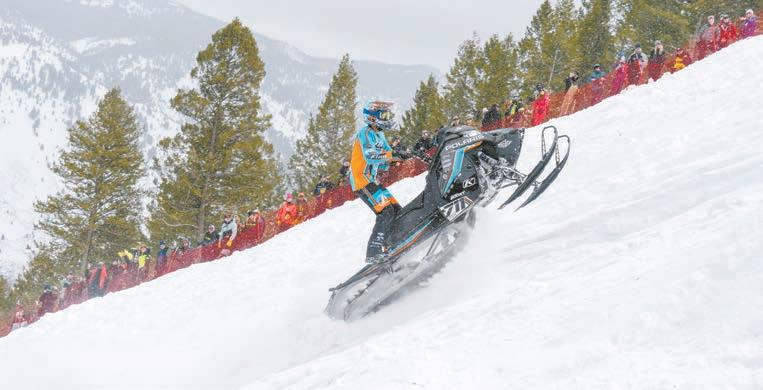
The annual World Championship Snowmobile Hill Climb occurs every spring at the conclusion of the ski season and takes place on Snow King Mountain. In its application requesting funds from the Travel and Tourism Board last year, event or-
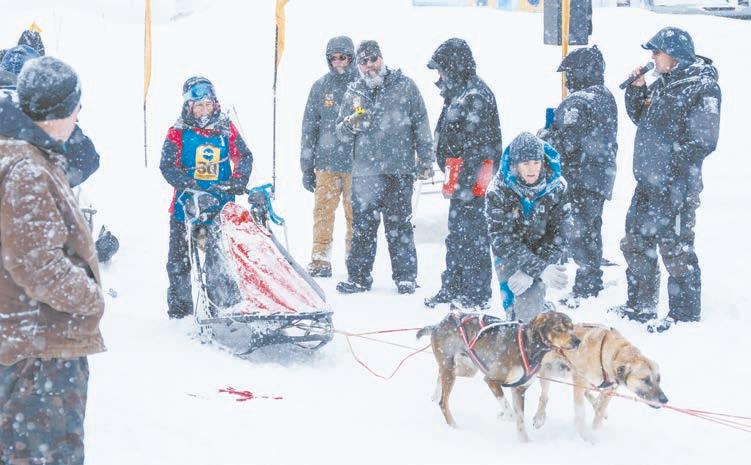
Five-time Stage Stop champion Anny Malo takes off from the starting line last February in Pinedale during the first leg of the Pedigree Stage Stop Race.
from all over, as well.
ganizers said it draws approximately 150,000 attendees. At the base, sledheads from around the country park lawn chairs and stare up at the Town Hill as snowmobiles buzz to the top.
“It’s always the pinnacle,” Trent Hansaker, a 49-year-old snowmobiler from Kamas, Utah, said in 2024.
“It’s anxiety. It’s excitement,” he added. “It’s everything you can get in racing and hill climbing and wrap it into one event. The emotions you have here, you don’t have at any other race. It’s just a whole other level.”
The Pedigree Stage Stop sled dog race is another winter event that attracts thousands of people.
According to its Travel and Tourism Board application, about 5,000 people attend the seven-stage race that has its ceremonial start in Jackson. About 75% of those attendees are visitors, organizers estimate.
The mushers who compete in the race around western Wyoming come
In this upcoming year’s race, organizers anticipate fielding 20 mushers from eight states, three countries, three Canadian provinces and one territory. Bondurant’s Alix Crittenden is so far the only musher from Wyoming.
Outside of Jackson’s signature events, even small wonders cause people to put life on hold and visit.
Last August, Houston Hornibrook trampled across the vast Elk Refuge to fish opening day on Flat Creek, which is open only from the first day in August until Oct. 31.
Coming from Bentonville, Arkansas, Hornibrook was visiting his Jackson friend Patrick Guthrie. He’s been doing so since 2021.
“The fishing is really good, it’s cool fishing a small creek and getting to watch the fish rise,” Hornibrook said on Aug. 1. “I feel like you kind of get to see stuff here on opening day that you might not the rest of the year.”
Contact Kyle Leverone at 307-7327065 or sports@jhnewsandguide.com.


PAID PARTNERSHIP WITH
Residents of Jackson Hole might have noticed ambassadors at busy trailheads, utilized the free Teton Pass Shuttle for backcountry skiing, or appreciated the comfort of a bus shelter in the dead of winter. In Cheyenne, Wyoming, locals revel in the Celtic Fest, Spanish Fest, Frozen Fury on the Plains, and the Hell on Wheels Rodeo Series. Lake Placid, N.Y. residents enjoy upgrades to the town’s 1980 Olympic facilities. Oregon’s coastal towns breathe easier behind new seawalls and stormwater systems.
All were financed, at least in part, by lodging taxes. Across the U.S., 48 states collect some form of lodging tax. These visitor-paid fees are designed to ensure that people who use a town’s amenities also help maintain them. Rules vary, but in Wyoming the system is fairly straightforward: a 5 percent statewide lodging tax generated $64 million in 2024. Sixty percent of that went to the Wyoming Office of Tourism, with the rest staying in the county where it was collected. In Teton County, that was $11.5 million back to the community.
Lodging taxes pay for what visitors use most—public safety, transportation, and sanitation. In Jackson Hole,
the police, fire/EMS, and sheriff’s department all benefit.
With the 60% distributed through the Jackson Hole Travel & Tourism Board, the community also benefits. Since 2021, more than $3 million from the JHTTB has gone to nonprofits including Friends of the BridgerTeton, Friends of Pathways, the Jackson Hole Nordic Alliance, and the Teton Backcountry Alliance.
Ambassadors stationed at trailheads answer questions, remind campers about food storage, extinguish abandoned campfires, and
pick up trash. Friends of the Bridger-Teton ambassadors alone have extinguished about 1,000 fires since 2021. In camping areas with ambassadors, there have been zero human-bear conflicts.
In an era when tourism pressures communities as much as it sustains them, lodging taxes are emerging not just as a financial tool but as a civic one—a way for resort towns to balance vibrancy with sustainability, and to make sure that locals, not just visitors, feel at home.
Through strategic allocation of Teton County’s lodging tax funds, the Jackson Hole Travel & Tourism Board stewards Jackson Hole toward a sustainable destination, where our leadership, marketing, management, and community engagement ensure the vitality of our natural and human ecosystems.
Tourism offsets resident taxes
Visitor contribution through lodging and sales taxes directly reduces what residents pay for public services. Without lodging tax collections in Teton County, each household would have to pay almost $9,000 more in taxes to maintain the same level of public services. Written by Dina Mishev, sponsored by the Jackson Hole Travel & Tourism Board
To have your business featured call 307-732-7070 or email adsales@jhnewsandguide.com